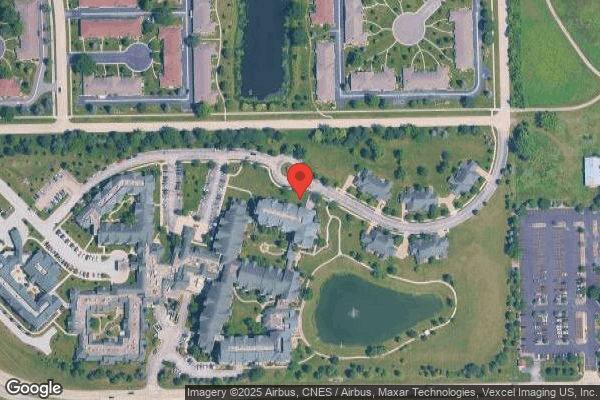




SMITH CROSSING

10501 EMILIE LANE, ORLAND PARK, IL 60467 (708) 326-2300
Non profit - Corporation 92 Beds Independent Data: November 2025
Trust Grade
35/100
#183 of 665 in IL
Last Inspection: June 2025

Inspected within the last 6 months. Data reflects current conditions.

Overview

Smith Crossing, located in Orland Park, Illinois, has a Trust Grade of F, indicating significant concerns about the care provided. With a state rank of #183 out of 665, they are in the top half of Illinois facilities, but their overall performance raises serious red flags. The facility is worsening, with the number of issues increasing from 9 in 2024 to 14 in 2025. Staffing is a strength, earning 5 out of 5 stars, though the turnover rate is 55%, which is average. However, there have been concerning incidents, such as residents suffering fractures due to improper transfer assistance and a failure to prevent the development of serious pressure ulcers, indicating potential risks to resident safety. While there is good RN coverage, the facility's overall trustworthiness is significantly undermined by these recent findings.

Trust Score
F
35/100
In Illinois
#183/665
Top 27%
Safety Record
High Risk
Review needed
Inspections
Getting Worse
9 → 14 violations
Staff Stability
⚠ Watch
55% turnover. Above average. Higher turnover means staff may not know residents' routines.
Penalties
⚠ Watch
$95,193 in fines. Higher than 86% of Illinois facilities, suggesting repeated compliance issues.
Skilled Nurses
✓ Good
Each resident gets 86 minutes of Registered Nurse (RN) attention daily — more than 97% of Illinois nursing homes. RNs are the most trained staff who catch health problems before they become serious.
Violations
⚠ Watch
32 deficiencies on record. Higher than average. Multiple issues found across inspections.
★★★★☆
4.0
Overall Rating
★★★★★
5.0
Staff Levels
★★☆☆☆
2.0
Care Quality
★★★☆☆
3.0
Inspection Score
Stable
2024: 9 issues
2025: 14 issues

The Good

  • 5-Star Staffing Rating · Excellent nurse staffing levels
  • Full Sprinkler Coverage · Fire safety systems throughout facility
  • No fines on record

Facility shows strength in staffing levels, fire safety.

The Bad

Staff Turnover: 55%

Near Illinois avg (46%)

Frequent staff changes - ask about care continuity

Federal Fines: $95,193

Well above median ($33,413)

Moderate penalties - review what triggered them

Staff turnover is elevated (55%)

7 points above Illinois average of 48%

The Ugly 32 deficiencies on record

4 actual harm
Jun 2025 10 deficiencies 1 Harm
SERIOUS (G)

Actual Harm - a resident was hurt due to facility failures

Pressure Ulcer Prevention (Tag F0686)

A resident was harmed · This affected 1 resident

**NOTE- TERMS IN BRACKETS HAVE BEEN EDITED TO PROTECT CONFIDENTIALITY** Based on observation, interview, and record review, the facility failed to prevent the development of an unstageable pressure ul...

Read full inspector narrative →
**NOTE- TERMS IN BRACKETS HAVE BEEN EDITED TO PROTECT CONFIDENTIALITY** Based on observation, interview, and record review, the facility failed to prevent the development of an unstageable pressure ulcer for a resident at moderate risk for skin breakdown. This failure led to a resident requiring skin grafting. This applies to 1 of 4 residents (R59) reviewed for pressure ulcers in a sample of 21. The findings include: On 06/17/25 at 10:14 AM, a bright-red, quarter-sized, open wound was present on R59's sacrum. R59 had an indwelling urinary catheter. R59's electronic health records showed that he was admitted on [DATE], with R59's first pressure ulcer risk assessment completed on 3/4/2025. The assessment showed R59 was at moderate risk for skin breakdown. On 06/17/25 at 10:14 AM, V27 (Wound Nurse) stated that R59 had a stage 4 pressure ulcer. V27 said that R59's stage 4 pressure ulcer started as MASD (Moisture Associated Skin Damage) to R59's sacrum and the MASD could have been avoided by providing incontinence care and frequent repositioning. V7 provided R59's sacral wound measurement note titled Skilled March 2025 that showed the pressure ulcer was 3.0 x 2.0 x 0.1 (in centimeters-cm) and staged at unstageable, and it was acquired at the facility. The note showed the MASD area with the pressure ulcer was identified on 2/4/25. V7 said that as the MASD to R59's sacrum was being treated, the Wound Doctor determined an area of the MASD was actually a stage 2 pressure ulcer. V27 stated the stage 2 pressure wound then progressed to a stage 4 pressure wound. R59's 3/6/25 wound physician notes showed the sacrum wound was unstageable due to necrosis, and the size of the wound was 3 x 2 x 0.1 cm, with 60% necrotic tissue. V7 said that the 3/6/25 wound note was the initial measurement for R59's sacral pressure wound. R59's 6/12/25 wound physician notes showed the sacrum wound had progressed to as stage 4. The same note showed Skin Substitute Application Note: During today's visit this full thickness, chronic stage 4 pressure wound sacrum wound underwent the placement of a skin substitute graft . On 06/15/25 at 12:36 PM, R59 acknowleged he had a pressure wound. On 06/17/25 at 01:33 PM, R59 said that he got the wound to his sacrum from being in his bed and chair. R59 said that staff only reposition him two or three times a day and that he is incontinent of stool. R59 said that he just waits until the staff come to change him. R59's 5/28/25 MDS (Minimum Data Set) shows that R59's cognition is intact. On 06/17/25 at 01:46 PM, V28 CNA (Certified Nurse's Assistant) stated she is familiar with R59 and his stool is soft most of the time, and when she comes in in the morning, she finds R59 incontinent of stool most of the time. On 06/17/25 at 01:05 PM, V18 (Wound Physician) said that R59's pressure ulcer would have been avoidable with proper incontinence care and repositioning. V18 said that she had to provide R59 with substitute skin grafting because R59's wound healing was delayed. R59's 5/28/2025 MDS showed he was dependent on staff for toileting hygeine, and rolling over from left to right in bed. R59's bowel incontinence care plan (revised 2/14/25) showed he was at risk for impaired skin integrity. The interventions included to check R59 every two hours and assist with toileting as needed and provide peri care after each incontinent episode. R59's stage 4 pressure ulcer care plan (initiated 3/4/2025) identified risk factors of bowel incontinence, poor mobility, aging fagile skin, and muscle wasting. Interventions showed Turn and reposition every two hours and as needed. R59's June 2025 physician's orders showed an order from 2/12/25 Turn and reposition every 2 hours and as needed. On 06/17/25 at 02:25 PM V2 DON (Director of Nursing) said that staff are to follow the physician orders, reposition every 2 hours, and do frequent rounds to check to see if the residents are soiled or not. V2 said that staff should do more frequent checks if the resident is incontinent of stool and does not let staff know. V2 said that the facility should educate the staff and resident to ensure frequent rounding is being done and to inform the resident to notify staff when he needs changing. V2 said staff should keep the resident's skin dry, change residents frequently, and frequently reposition residents. The facility did not provide a policy for prevention of pressure wounds.
CONCERN (D)

Potential for Harm - no one hurt, but risky conditions existed

Resident Rights (Tag F0550)

Could have caused harm · This affected 1 resident

Based on observation, interview, and record review, the facility failed to provide a dignified dining experience. This applies to 1 resident (R26) reviewed for dignity in a sample of 21. The findings...

Read full inspector narrative →
Based on observation, interview, and record review, the facility failed to provide a dignified dining experience. This applies to 1 resident (R26) reviewed for dignity in a sample of 21. The findings include: On 6/15/25 at 12:10 PM, in the back table, there were four residents. R21, R40, and R42 were eating their lunch, while R26 watched them eating. R26 did not get her tray at the same time as R21, R40, and R42. R26 then dozed off in front of other three residents. It was not only until at 12:34 PM, that V12 (Dietary Aide) delivered the lunch tray which consisted of chicken, pasta, sauce, and pureed veggies. R26 was unable to be interviewed. R26's MDS (Minimum Data Set) dated 4/22/25 shows that she is severely cognitively impaired. It also shows that she needs set up assistance with eating. R26's care plan dated (6/12/25) shows she is at risk for nutrition decline. On 6/16/25 at 1:53 PM, V14 (Director of Dining Services) said, Yes, theoretically residents at the same table should be served at the same time because it's a dignity issue. Facility's policy titled Resident Meal Services dated 1/25 shows the following: Meal Service and Dignity in Dining guidelines: Traditional Dining Services-Serve all residents at one table together
CONCERN (D)

Potential for Harm - no one hurt, but risky conditions existed

Deficiency F0578 (Tag F0578)

Could have caused harm · This affected 1 resident

**NOTE- TERMS IN BRACKETS HAVE BEEN EDITED TO PROTECT CONFIDENTIALITY** Based on interview and record review, the facility failed to ensure a resident's medical records were in agreement with his wish...

Read full inspector narrative →
**NOTE- TERMS IN BRACKETS HAVE BEEN EDITED TO PROTECT CONFIDENTIALITY** Based on interview and record review, the facility failed to ensure a resident's medical records were in agreement with his wishes for his advance directives. This applies to 1 of 6 residents reviewed for advance directives in a sample of 21. The findings include: On [DATE] at 09:18 AM, R54's Electronic Medical Record (EMR) did not contain a POLST form (Physician Order for Life-Sustaining Treatment) that showed he did not want CPR (cardio-pulmponary resuscitation). On [DATE] at 02:40 PM, R54's chart at the nurse's station contained an advance directive form that showed DNR (Do Not Resuscitate), dated and signed on [DATE] by R54. R54's Face Sheet showed he was a Full Code. On [DATE] at 10:06 AM, R54 said that no one from the facility asked him what his advance directives were. R54 said that he signed a DNR form 2 years ago, and he gave it to the facility, and that is his wish. R54's [DATE], MDS (Minimum Data Set) showed that R54's cognition is intact. On [DATE] at 4:55 PM, V11 (Resident Services Assistant) said that she did not use R54's DNR because it was from the state of Michigan. R54's [DATE] care plan showed a focus of Advance Directives, resident is currently a Full Code (desires full life-sustaining treatment) at this time. The goal was for the resident's advance directives wishes will be known and the intervention was to complete/update Advance Directives document. R54's [DATE] baseline Care Plan showed advanced directives will be monitored by Social Services. On [DATE] at 03:11 PM, V2 DON (Director of Nursing) said that advance directives are what the resident wants done at the end of life. V2 said that the advance directive forms should reflect the residents wishes and the forms should be in the residents' records. V2 said the form should be the same in the chart on the floor as in the resident's electronic records. V2 said that this needs to be done to ensure the staff are following the residents wishes and not deviating from it. The facilities Advanced Directive policy dated [DATE] shows that on admission staff will determine if the resident has executed an advanced directive, and if not determine whether the resident would like to formulate an advanced directive. Staff will provide the resident or representative information in the manner that is easily understood about the rights to refuse medical or surgical treatment and formulate an advanced directive. Upon admission should the resident have an advanced directive, a digital version will be uploaded and copies placed in the chart as well as communicated to staff. The social service department will periodically assess the resident for decision making abilities and approach the healthcare proxy or legal representative if the resident is determined to have decision making capacity.
CONCERN (D)

Potential for Harm - no one hurt, but risky conditions existed

Safe Environment (Tag F0584)

Could have caused harm · This affected 1 resident

Based on observation, interview, and record review, the facility failed to provide a safe and homelike environment. This applies to 2 of 2 residents (R2, R22) reviewed for environment in a sample of 2...

Read full inspector narrative →
Based on observation, interview, and record review, the facility failed to provide a safe and homelike environment. This applies to 2 of 2 residents (R2, R22) reviewed for environment in a sample of 21. The findings include: 1. On 6/15/25 at 10:40 AM, during initial tour, in R22's room, the base trim on the wall was more than halfway off and resting on the floor and it was extending into the doorway. On 6/16/25 at 10:20 AM, V19 (Director of Clinical Operations/RN-Registered Nurse) stated, EVS (Environmental Services), Housekeeping, and CNA (Certified Nursing Assistants) are supposed to do a work order to get it resolved. It's a team effort. If a CNA sees something like a loose baseboard, he or she is supposed to put in a work order. On 6/16/25 at 10:28 AM, V13 (Facilities Director) stated, whoever sees it first, be it nursing and/or housekeeping, they need to report it to me, so I can tell my staff to fix it. On 6/16/25 at 12:07 PM, R22 stated, Yes, I want that base board fixed. I don't know what happened. I don't want to fall over it. I've had a lot of falls here, but not because of that. R22's face sheet shows diagnoses of neurocognitive disorder with Lewy bodies and repeated falls. R22's MDS (Minimum Data Set) dated 4/24/25 shows she is cognitively intact. R22's care plan (6/8/25) shows she is at risk for falls related to disease process, weakness, and history of falls. R22 has poor safety awareness, and does not call for assistance at times. Intervention-R22 needs a safe environment with even floors free from spills and/or clutter. Facility's policy titled Preventative Maintenance dated (3/2025) shows: 2. Functions of maintenance personnel include, but are not limited to: a. Maintaining the building in compliance with current federal, state, and local laws, regulations, and guidelines. B. Maintaining the building in good repair and free from hazards . 2. On 06/15/25 at 12:23 PM, there was a 1 pound container of germicide wipes on R2's dresser. The instructions on the container showed: personal protection, wear appropriate barrier protectors, gloves, gowns, masks, or eye coverings. R2's diagnoses include cerebrovascular disease, Alzheimer's disease, dementia, and unspecified psychosis. On 06/17/25 at 03:21 PM, V2 DON (Director of Nursing) said that the germicide wipes should be securely stored and locked in the housekeeping designated storage area. V2 said that this should be done for patient safety, it would be harmful if the residents had contact with them, and that there is even a higher risk if the resident is confused. The facility's Accidents and Supervision policy dated May 2025 showed the resident's environment will remain as free of accident hazards as is possible. Each resident will receive adequate supervision and assisted devices to prevent accidents this includes identifying hazards and risks.
CONCERN (D)

Potential for Harm - no one hurt, but risky conditions existed

ADL Care (Tag F0677)

Could have caused harm · This affected 1 resident

Based on observation, interview, and record review, the facility failed to provide ADL (Activities of Daily Living) care to meet the needs of the residents. This applies to 3 of 3 residents (R54, R59...

Read full inspector narrative →
Based on observation, interview, and record review, the facility failed to provide ADL (Activities of Daily Living) care to meet the needs of the residents. This applies to 3 of 3 residents (R54, R59 & R60) reviewed for ADLs care in a sample of 21. The findings include: 1. On 06/15/25 at 12:04 PM, R54's nails were long and jagged. R54 said that the last time his nails were cut were when he did them himself. R54 said that he would like for staff to assist him with nail care. On 06/17/25 at 10:05 AM, R54's nails remained long and jagged. R54's 5/14/24 MDS (Minimum Data Set) showed that R54 needs partial/moderate assistance from staff for personal hygiene. R54's 05/14/25 care plan showed a focus of ADL self-care performance deficit related to weakness, disease process, and limited mobility. 2. On 06/15/25 at 12:36 PM, R59, had long hair on his face and chin. R59 said that it had bed about 10 days since he has been shaved and the long hair on his face bothers him and he wants to be shaved. On 06/16/25 at 03:05 PM, R59's long hair on his face and chin was still present. On 06/17/25 at 10:14 AM, R59's long hair on his face and chin remained and he said no one has come to shave him yet and he is still waiting. R59's 06/05/25 care plan shows a focus for ADL self-care performance deficit related to limited mobility, limited range of motion, and weakness. R59's 5/28/25 MDS shows that R54 is dependent on staff for personal hygiene. 3. On 6/15/25 at 10:38 AM, R60's hair was oily. R60's 05/22/25 MDS showed that her cognition is severely impaired, and she is dependent on staff for personal hygiene. On 06/17/25 at 02:46 PM, V2 DON (Director of Nursing) said that hair should be washed as scheduled on shower day and as needed. V2 said that residents should be shaved as frequently as needed and when they want it done. V2 said that nail care should be done as needed and at the resident's preference. The facility's Activities of Daily Living (ADLs) policy dated March 2025 showed care and services will be provided for activities of daily living including bathing, dressing, grooming, and oral care. A resident who is unable to carry out activities of daily living will receive the necessary services to maintain good nutrition, grooming, and personal and oral hygiene.
CONCERN (D)

Potential for Harm - no one hurt, but risky conditions existed

Incontinence Care (Tag F0690)

Could have caused harm · This affected 1 resident

Based on observation, interview, and record review, the facility failed to provide peri-care in a manner that would prevent urinary tract infection, and failed to ensure that urinary catheter drainage...

Read full inspector narrative →
Based on observation, interview, and record review, the facility failed to provide peri-care in a manner that would prevent urinary tract infection, and failed to ensure that urinary catheter drainage bags are not touching the floor. This applies to 4 of 4 residents (R59, R128, R227, R330) reviewed for peri-care and catheter care in the sample of 21. The findings include: 1. Face sheet shows that R128 is 77 years-old who has multiple medical diagnoses including urinary retention. R128 has indwelling urinary catheter. On 6/15/25, at 11:10 AM, R128 was resting in her recliner with her urinary catheter bag resting on the floor. 2. R330's electronic medical record shows that R330 is 88 years-old. R330's restorative nursing program evaluation dated 6/16/25 shows that R330 has weakness and limited mobility. On 6/16/25, at 9:30 AM, V21 (Nurse) and V22 (Certified Nursing Assistant/CNA) rendered peri-care to R330 who had a bowel movement. They turned R330 on her side, then V22 proceeded to clean R330's rectum and buttocks. After cleaning R330's back perineum, they turned R330 on her back. V22 just patted the outer labia lightly with wet wipes and applied the incontinence brief without cleaning the whole frontal peri-area. Facility's Policy and Procedure for Perineal Care dated March 2023 shows: Policy: It is the practice of this this facility to provide perineal care to all incontinent residents during routine bath and as needed to promote cleanliness and comfort, prevent infection to the extent possible, and to prevent and assess skin breakdown. Definition: Perineal Care refers to the care of the external genitalia and the anal area. On 6/17/25, at 11:00 AM, V2 (Director of Nursing/DON) stated, the urinary drainage bag should not be placed on the floor to prevent potential contamination, and it is a part of infection control. V2 said when staff provide incontinence care, the staff must clean every part of the perineum to ensure there is no residual fecal matter or urine left on the skin surface to prevent infection and skin breakdown. 3. On 06/15/25 at 12:37 PM, R59's was in his bed with his bed in low position and his catheter bag was on the floor. R59's diagnoses include disorders of the bladder, retention of urine, presence of urogenital implants, dementia, and benign prostatic hyperplasia of lower urinary tract system. On 06/17/25 at 02:58 PM, V2 DON (Director of Nursing) said that the catheter bag and tubing should not be on the floor for safety reasons, the resident can trip and so that the catheter is not being tugged and pulled, and for infection control. 4. On 06/15/25 at 01:48 PM, R227 was in his recliner with his walker in front of him with his catheter bag hanging from the walker. The bag and tubing were touching the floor. R227 was very confused at that time. R227's diagnoses include legally blind, chronic kidney disease stage 3, benign prostatic hyperplasia lower urinary tract system, and presence of urogenital implants. On 06/17/25 at 03:05 PM, V2 said that he expects staff to ensure proper positioning of the catheter bag, that it is off the floor and proper positioning to avoid pulling of catheter or dislodgement. The facility Catheter Care policy dated March 2025 did not show how catheter bags and tubing should be off of the floor.
CONCERN (D)

Potential for Harm - no one hurt, but risky conditions existed

Tube Feeding (Tag F0693)

Could have caused harm · This affected 1 resident

Based on observation, interview, and record review, the facility failed to obtain orders for gastrostomy tube (g-tube) flushes. This applies to 2 of 2 residents (R64, R70) reviewed for gastrostomy tu...

Read full inspector narrative →
Based on observation, interview, and record review, the facility failed to obtain orders for gastrostomy tube (g-tube) flushes. This applies to 2 of 2 residents (R64, R70) reviewed for gastrostomy tube in the sample of 21. The findings include: 1. On 6/16/25, at 12:53 PM, V16 (Nurse) administered Hydrocortisone and Midodrine tablets to R70 via g-tube. The medicines were crushed in separate cups and mixed with 30 ml of water. Prior to administration, V16 checked R70's g-tube placement by auscultating the abdomen and injecting 30 ml of air into the g-tube. V16 flushed the tube with 40 ml of water, prior to administration, in between the medications, and after administration. There was residue in both medicine cups, so V16 repeated the same cycle, mixing the residue with 30 ml of water and flushing the g-tube again with 40 ml of water prior to administration, in between medicine residue, and after administration. The water that was flushed or administered to R70 totaled to about 380 ml. When V16 completed the medication administration, V16 started setting up the g-tube feeding and stated she would program the water flushing in the g-tube pump at 165 ml every 4 hours, as ordered by the physician. On 6/17/25, at 10:48 AM, V2 (Director of Nursing/DON) stated staff should check for residual to ensure placement of the g-tube. The staff should flush the g-tube according to physician's order. The nurses should mix the crushed medication with water prior to administration. The expectation is to ensure that medication will go all the way through the tubing to the stomach for absorption and efficacy of medications. Facility's Policy and Procedure for Enteral Nutrition-Care and Treatment Feeding Tubes dated January 2025 shows: Policy: To utilize feeding tubes with interventions to prevent complications to the extent possible. Policy Explanation and Compliance Guidelines: 5. Licensed nurses will monitor and check that the feeding tube is in the right location (e.g., stomach or small intestines, depending on the tube). a. Tube placement will be verified before beginning of feeding and before administering medications. 6. Directions for staff on how to provide the following care: e. Frequency of and volume used for flushing, including flushing for medication administration, and what to do when a prescriber's order does not specify. The facility's policy does not have specific procedure on how to check placement of the g-tube. 2. On 6/15/25, at 4:09 PM, V17 (Nurse) administered Eliquis medication to R64 via g-tube. V17 checked the placement of R64's g-tube by auscultating R64's abdomen and pouring 5 milliliters (ml) of water into the tube. Then she poured the plain crushed (powdered) Eliquis into the syringe followed by 10 ml of water. V17 did not further flush the g-tube with additional water. R64's and R70's physician order summaries (POS) with regards to g-tube, have no indication that shows how much water and how often the g-tube should be flushed. R64's and R70's g-tube care plans do not have indications with regards to frequency and the amount of water to flush.
CONCERN (D)

Potential for Harm - no one hurt, but risky conditions existed

Unnecessary Medications (Tag F0759)

Could have caused harm · This affected 1 resident

Based on observation, interview, and record review, the facility failed to ensure that medications were administered as prescribed by the physician. There were 26 medication opportunities with 5 error...

Read full inspector narrative →
Based on observation, interview, and record review, the facility failed to ensure that medications were administered as prescribed by the physician. There were 26 medication opportunities with 5 errors, resulting to 19.23% error rate. This applies to 2 of the 5 residents (R19, R70) reviewed for medication administration in the sample of 21. The findings include: 1. On 6/15/25, at 4:56 PM, V15 (Nurse) administered multiple oral medications, and one eye drop solution (Genteal eye drop) to R19. The medications include, Carvedilol, Ropinirole, Duloxetine, Ferrous Sulfate EC (Enteric Coated), Polyethylene Glycol. V15 crushed all these medications prior to administration. After V15 administered these medications, V15 stated that was all R19's scheduled medications at 5 PM. R19's Medication Administration Record (MAR), shows that there were other medications scheduled for 5:00 PM, these include Docusate Sodium (liquid), Voltaren External Gel, and Lidocaine Patch. These medications were not observed given to R19. However, V15 signed it as given. On 6/16/25 at 5:20 PM, V15 confirmed that whatever medications that was observed administered to R19 on 6/15/25 were all the medications R19 received. 2. On 6/16/25, at 12:41 PM, V16 (Nurse) administered Hydrocortisone and Midodrine tablets to R70 via gastrostomy tube (g-tube). V16 crushed these medications separately and mixed them with 30 milliliters (ml) of water. By the time V16 arrived to R70's bedroom, the medications settled at the bottom of the cup. V16 poured the medications in and left a lot of medication residue at the bottom of the medicine cups. V16 proceeded to flush the g-tube and stated that she was finished with R70's medication administration. On 6/17/25, at 10:32 AM, V2 (Director of Nursing/DON) stated that nurses must follow physician order such as treatment process and medication as prescribed. All crushed medications mixed with water must be stirred completely prior to g-tube or oral administration to ensure that the full dose are given. The Ferrous Sulfate EC should not be crushed because it changes the integrity of the medication. All enteric coated medications can't be crushed.
CONCERN (E)

Potential for Harm - no one hurt, but risky conditions existed

Deficiency F0628 (Tag F0628)

Could have caused harm · This affected multiple residents

**NOTE- TERMS IN BRACKETS HAVE BEEN EDITED TO PROTECT CONFIDENTIALITY** 2. R13's progress notes show the following: On 12/30/24 at 9:14 PM at 6 PM, (R13) observed supine on floor near window. Limb sh...

Read full inspector narrative →
**NOTE- TERMS IN BRACKETS HAVE BEEN EDITED TO PROTECT CONFIDENTIALITY** 2. R13's progress notes show the following: On 12/30/24 at 9:14 PM at 6 PM, (R13) observed supine on floor near window. Limb shortening noted to LLE (Left Lower Extremity). (R13) complained of pain to RLE (Right Lower Extremity), but unable to rate pain using number scale. This nurse called 911 and notified dispatch of unwitnessed fall. Called Fire Department. EMT (Emergency Medical Technician) arrived. (R13) sent to hospital emergency room. On 12/30/24 at 11:14 PM, (R13) admitted to ICU (Intensive Care Unit) with a diagnosis of subdural hematoma. On 12/31/24 at 7:56 PM, (R13) returned from hospital with POA (Power of Attorney) at bedside via stretcher with ambulance services. On 3/21/25 at 10:12 PM, Writer was called to (R13)'s room by the CNA (Certified Nursing Assistant). Writer observed (R13) sitting on the side of the bed on the floor. (R13) was bleeding from her head. Writer then called 911 and POA and other daughter. 911 came and got resident. On 3/22/25 at 6:36 AM, (R13) returned from the emergency department at 12:50 AM accompanied by daughter. (R13) sent out to ED (Emergency Department) by PM (Evening) shift nurse due to laceration to head related to fall. Review of R13's electronic medical record doesn't show a notice of transfer/ bed hold notification for R13's transfer to the hospital on 3/21/25. On 6/16/25 at 3:10 PM, V2 (DON-Director of Nursing) stated that R13 did not need notice of transfer/bed hold form because he was in the hospital less than 24 hours. 3. R7's electronic records showed that on 4/30/25, R7 was sent to the local community hospital because of a fracture to her right femur. No documents were present in R7's electronic records showing that the discharge and bed hold policies and forms were given to R7 or R7's representative. There was also no documentation of the Ombudsmen being notified of the hospital transfer. On 06/16/25 at 04:19 PM, V11 (Resident Services Assistant) said that R7 went to the hospital on 4/30/25 and returned on 5/1/25s so she was not given notification. V11 said that the facility does not give notification if the resident is sent to the ER and then returns. On 06/17/25 at 03:15 PM, V2 DON (Director of Nursing) said that his expectations are that the staff give written notice on bed hold and discharge transfers and the reason for transfer every time a resident is sent to the hospital or discharged . 4. R76's electronic records showed that he was discharged on 3/19/25. The records did not show that the facility notified the Ombudsman of R76's discharge. On 06/17/25 at 02:54 PM, V2 DON said that the facility is to notify the Ombudsman of all our discharges and transfers within 30 days. Based on interview and record review, the facility failed to provide residents and/or their representatives the bed hold notice upon transfer, written notification of the reason for transfer to the hospital or discharge, and failed to notify the ombudsman of the hospital transfer or discharge. This applies to 4 of 4 residents (R7, R13, R75, R76) reviewed for discharge in a sample of 21. The findings include: 1. R75's Face Sheet showed R75 was admitted to the facility on [DATE]. R75 had multiple diagnoses which included malignant neoplasm of colon, myalgia, anemia, atherosclerotic heart disease, elevated white blood cell (WBC), and hypertension. R75's Lab Results Report dated 03/28/25 showed WBC 14.9 (Reference Range 3.6-11.2), Hemoglobin 7.7 (Reference Range 12.0-18.0). R75's Progress Note dated 03/28/25 at 6:35 PM, showed Primary care physician NP (Nurse Practitioner) reviewed recent lab results from 03/28/25 and ordered to send resident to hospital due to abnormal hemoglobin and WBC (White Blood Cell) results. Writer phoned (Ambulance) for transportation to (Hospital). R75's EMR (Electronic Medical Record) contained no documentation of written notice for reason of transfer to the hospital provided to R75 and/or the representative. The EMR contained no documentation of notification of the ombudsman of the hospital transfer for 03/28/25. The EMR contained no documentation of the bed hold notice given to R75 and/or the representative. The facility was unable to provide documentation for written notification of the reason for transfer to the hospital and the bed hold notice for the hospital transfer on 03/28/25 given to R75 and/or the representative. The facility provided a copy of an email that was sent to the ombudsman on 06/16/25 notifying of the facility transfers to the hospital and discharges for the months of February, March, April, and May 2025. On 06/16/25 4:41 PM, V19 (Director of Clinical Operations) stated the ombudsman should be notified monthly of the transfers or discharges. V19 stated the ombudsman was not notified of the transfers to the hospital or discharges for the months of February, March and April 2025. V19 stated the bed hold policy is only given to the resident or their POA (Power of Attorney) if they are admitted to the hospital. V19 stated the bed hold policy and written notification for the reason for transfer or discharge was not given to R75. The facility's Bed Hold Notice Upon Transfer Policy last reviewed/revised June 2024 showed, Procedure: 1. Before a resident is transferred to the hospital or goes on therapeutic leave, the facility will provide to the resident and/or the resident representative written information that specifies: a. The duration of the state bed-hold policy during which the resident is permitted to return and resume residence in the nursing facility. 2. Nursing staff shall ensure that a copy of the Notice of Transfer/Bed Hold Notification Form will be sent with residents as they are transferred to a hospital or leave the facility on therapeutic leave. In the even of an emergency transfer of a resident, the facility will provide notice of the facility's bed-hold policy within 24 hours or as soon as practicable to the resident representative. The facility's Transfer and Discharge Policy last reviewed February 2025 showed, Policy Explanation and Compliance Guidelines: 4. The facility's transfer/discharge notice will be provided to the resident and the resident's representative in a language and manner in which they can understand. The notice will include all of the following at the time it is provided: A. The specific reason and basis for transfer or discharge. 12. Emergency Transfers/Discharges- G. The Social Services Director, or designee, will provide copies of notices for emergency transfers to the Ombudsman, but they may be sent when practicable, such as in a list of residents on a monthly basis. I. In situations where the facility has decided to discharge the resident while the resident is still hospitalized , the facility will send a notice of discharge to the resident and resident representative before the discharge and must also send a copy of the discharge notice to the ombudsman.
CONCERN (E)

Potential for Harm - no one hurt, but risky conditions existed

Infection Control (Tag F0880)

Could have caused harm · This affected multiple residents

4. On 6/16/25, at 9:30 AM, R330 was resting on her bed and just had a bowel movement on the bed pan. V22 (CNA) provided peri-care with the assistance of V21 (Nurse). V22 cleaned R330's back perineum, ...

Read full inspector narrative →
4. On 6/16/25, at 9:30 AM, R330 was resting on her bed and just had a bowel movement on the bed pan. V22 (CNA) provided peri-care with the assistance of V21 (Nurse). V22 cleaned R330's back perineum, removed the bed pan, emptied the stool into the toilet, returned to R330, and continued to clean R330's frontal perineum. V21 and V22 applied a clean incontinence brief and assisted to reposition R330. V22 changed her gloves in between all these tasks without performing hand hygiene. On 6/17/25, at 11:01 AM, V2 (DON) stated the staff must perform hand hygiene and change gloves in between tasks, such as dirty to clean tasks, to prevent cross contamination and spread of infection. Facility's Policy and Procedure for Hand Hygiene dated December 2024, shows: Policy: All staff will perform proper hygiene procedures to prevent the spread of infection to other personnel, residents, and visitors. This applies to all staff working in all locations within the facility. Additional considerations: The use of gloves does not replace hand hygiene. If your task requires gloves, perform hand hygiene prior to donning gloves, and immediately after removing gloves. Based on observation, interview, and record review, the facility failed to perform hand hygiene while providing personal care for 3 residents and failed to contain biohazard garbage for 2 residents. This effects 5 of 8 residents (R330, R41, R227, R60 & R59) reviewed for infection control in a sample of 21. The findings include: 1. On 06/15/25 at 10:38 AM, V4 and V5 CNAs (Certified Nurse's Assistants) were providing incontinence care for R60. R60 was standing up in the bathroom next to the toilet and V4 with her gloved hands removed R60's soiled brief, cleaned her perineal area, and without changing her gloves or performing hand hygeine, put on a clean brief, pulled up R60's pants then grab R60's wheelchair, sat R60 in it, and then moved R60 to the sink. On 06/17/25 02:52 PM V2 DON (Director of Nursing) said that his expectations are that staff change their gloves and clean their hands when moving from a dirty area to a clean one for infection prevention and cross contamination. 2. On 06/16/25 at 03:05 PM, V25 & V26 CNAs were providing incontinence care for R59. V25 with his gloved hands transferred R59 from his wheelchair to his bed, pulled his pants down below his knees, opened R59's brief, cleaned the perineal area and catheter tubing, adjusted R59's bed, repositioned R59 in the bed, removed R59's brief, grabbed the wipes, wiped R59's buttocks, applied a clean brief, adjusted R59 in the bed, used the bed control to raise R59's head, then V25 removed R59's shoes and pants. Only at that time did V25 remove his gloves and put on new gloves, but without performing hand hygeine. Then V25 dropped R59's blanket on the floor, put heel protectors on R59's feet, put a pillow between R59's legs, and picked up R59's blanket from the floor and put it on R59, put a pillow on the right side of R59's body, adjusted the sheets on the bed, used the bed control to raise R59's head of bed, put the call light within reach, moved R59's bedside table next to his bed, and adjusted his personal items on the table, including R59's drink. After that, V25 removed his gloves and cleaned his hands. On 06/17/25 at 02:58 PM V2 DON (Director of Nursing) said that staff are to perform hand hygiene, clean their hands and change their gloves after leaving a dirty area and before putting on new gloves for infection prevention, cross contamination of surfaces, and for resident safety. The facility's Hand Hygiene policy dated December 2024 shows all staff will perform proper hand hygiene procedures to prevent the spread of infection to other personnel, residents and visitors. 3. On 06/15/25 at 01:41 PM, V10 CNA was in R227 and R41's room. V10 pulled a full red bag of trash out of the red biohazard waste container and dropped it on the floor. V10 then pulled items out of the bottom of the red container and out of the yellow biohazard container and placed them into the open red bag on the floor. V10 left the bag on the floor and went into R227 and R41's bathroom. On 06/15/25 at 01:45 PM, V10 said that she should not have dropped the bag on the floor because it could contaminate the floor. V10 said that she did it because she was getting garbage out of the containers. V10 said that she is agency staff, and she has not had any training on infection control in over 2 years. The facility's Infection Prevention and Control Program dated December 2024 showed the facility established and maintains an infection prevention and control program designed to provide a safe, sanitary, and comfortable environment and to help prevent the development and transmission of communicable diseases and infections.
May 2025 1 deficiency
CONCERN (D) 📢 Someone Reported This

A family member, employee, or ombudsman was alarmed enough to file a formal complaint

Potential for Harm - no one hurt, but risky conditions existed

Pressure Ulcer Prevention (Tag F0686)

Could have caused harm · This affected 1 resident

**NOTE- TERMS IN BRACKETS HAVE BEEN EDITED TO PROTECT CONFIDENTIALITY** Based on interview and record review, the facility failed to follow their policy to document complete assessments of pressure ul...

Read full inspector narrative →
**NOTE- TERMS IN BRACKETS HAVE BEEN EDITED TO PROTECT CONFIDENTIALITY** Based on interview and record review, the facility failed to follow their policy to document complete assessments of pressure ulcers. This applies to 3 of 3 residents (R1, R2, and R3) reviewed for pressure ulcers in the sample of 8. The findings include: 1. R1's EMR (Electronic Medical Record) showed R1 was admitted to the facility on [DATE], with multiple diagnoses including orthostatic hypotension, muscle wasting and atrophy of multiple sites, pulmonary embolism, dementia, and stage 3 pressure ulcer of sacral region. R1's pressure ulcer care plan dated January 31, 2025, showed The resident has stage 3 pressure ulcer to the right elbow and sacrum or related to immobility. The care plan continued to show multiple interventions dated January 31, 2025, including Assess/record/monitor wound healing weekly. Measure length, width and depth were (sic) possible. Assess and document status of wound perimeter, wound bed and healing progress. Report improvements and declines to the physician. On May 28, 2025, at 1:49 PM, V6 (Wound Care Nurse) said R1 was admitted to the facility on [DATE], from the local hospital with a stage 3 pressure ulcer on his sacrum. V6 said she saw R1's pressure ulcer on February 3, 2025. V6 said the wound doctor assessed R1's pressure ulcer on February 6 and February 20, 2025. V6 said the wound doctor did not see R1 on February 27, 2025, because R1 was not in his room. V6 continued to say she did not assess R1's pressure ulcer during that week either. V6 said there is no documentation of R1's pressure ulcer assessments after February 20, 2025. The facility does not have documentation to show R1's sacral pressure ulcer had a complete assessment conducted including measurements of R1's pressure ulcer and description of the pressure ulcer on admission to the facility and weekly. On May 29, 2025, at 11:18 AM, V2 (DON/Director of Nursing) said V6 should be following the facility policy and documenting in the EMR the complete pressure ulcer assessment including appearance and measurements of the pressure ulcers on admission and at least weekly. V2 said R1 did not have a complete admission wound assessment and had missing weekly wound assessments. 2. R3's EMR showed R3 was admitted to the facility on [DATE], with multiple diagnoses including fracture of right lower leg, muscle wasting and atrophy, chronic diastolic heart failure, and dementia. R3's skin impairment care plan dated May 20, 2025, showed [R3] has a fractured right leg, skin tears to the bilateral forearms, a deep tissue injury to the left heel and remains at risk for further skin integrity issues related to reduced mobility, aging fragile skin, Braden score of 14. The care plan continued to show multiple interventions dated May 20, 2025, including Follow facility protocols for treatment of injury. On May 29, 2025, at 1:36 PM, V6 (Wound Care Nurse) said R3 was admitted to the facility on [DATE], with a left heel DTI (Deep Tissue Injury). V6 said the wound care doctor was not following R3's wound because the wound was small and stable. V6 said she does not document wound assessments in the EMR. On May 29, 2025, at 11:18 AM, V2 said R3 did not have a complete admission wound assessment or weekly wound assessments. V2 said V6 should have completed and documented these assessments. The facility does not have documentation to show R3's left heel DTI had a complete assessment conducted including measurements of R3's left heel DTI and description of the pressure ulcer on admission to the facility and weekly. 3. R2's EMR showed R2 was admitted to the facility on [DATE], with multiple diagnoses including urinary tract infection, muscle wasting and atrophy, and dementia. R2's pressure ulcer care plan dated March 4, 2025, showed [R2] has stage 4 pressure injury to the sacrum and remains at risk for further skin breakdown related to bowel incontinence, poor mobility, aging fragile skin, Braden scale of 13, diagnosis of muscle wasting. The care plan continued to show multiple interventions dated March 4, 2025, including Monitor/document location, size and treatment of skin injury. Report abnormalities, failure to heal, signs and symptoms of infection, maceration etc. to physician. On May 28, 2025, at 1:40 PM, V6 said on February 20, 2025, R2 developed a sacral pressure ulcer. On May 29, 2025, at 11:18 AM, V2 said R3 did not have a complete wound assessment for the week of May 15, 2025. V2 said V6 should have documented a complete assessment. The EMR showed R2 was not seen by the wound doctor on May 15, 2025, due to R2 being out of the facility on an appointment. The facility does not have documentation to show R2's weekly pressure ulcer assessment was completed to show description of R2's pressure ulcer and measurements of the pressure ulcer. The facility's policy titled Documentation of Wound Treatments dated December 2024, showed Policy: The purpose of this policy is to provide a consistent, complete, and accurate documentation of wound assessments and treatments, including response to treatment, change in condition, and changes in treatment. Policy Explanation and Compliance Guidelines: 1. The community [NAME] maintain clinical records on each resident receiving wound treatments in accordance with accepted professional standards and practices that are: a. Complete; b. Accurate; c. Readily Accessible; d. Systemically organized . 3. Wound assessments are documented upon admission, weekly, and as needed if the resident or wound condition deteriorates. 4. The following components are documented as part of a complete wound assessment: a. Type of wound (pressure injury, surgical, etc.) and anatomical location; b. Stage of the wound, if pressure injury (stage I, II, III, IV, deep tissue injury, unstageable) or if non-pressure, the degree of skin loss (partial or full thickness); c. Measurements: height, width, depth, undermining, tunneling; d. Description of wound characteristics: i. Color of the wound bed; ii. Type of tissue in the wound bed (i.e. granulation, [NAME], eschar, epithelium); iii. Condition of the peri-wound skin (dry, intact, cracked, warm, inflamed, macerated); iv. Presence, amount, and characteristics of wound drainage/exudate; v. Presence or absence of odor; vi. Presence or absence of pain .
Apr 2025 3 deficiencies 2 Harm
SERIOUS (G) 📢 Someone Reported This

A family member, employee, or ombudsman was alarmed enough to file a formal complaint

Actual Harm - a resident was hurt due to facility failures

Quality of Care (Tag F0684)

A resident was harmed · This affected 1 resident

**NOTE- TERMS IN BRACKETS HAVE BEEN EDITED TO PROTECT CONFIDENTIALITY** Based on interviews and record review, the facility failed to ensure that a cognitively impaired resident received treatment and...

Read full inspector narrative →
**NOTE- TERMS IN BRACKETS HAVE BEEN EDITED TO PROTECT CONFIDENTIALITY** Based on interviews and record review, the facility failed to ensure that a cognitively impaired resident received treatment and care in accordance with professional standards of practice for 1 of 4 residents (R2) reviewed for nursing care and services. This failure resulted in staff pulling on R2's contracted arm while turning resident in bed that caused R2 to experience moderate to severe pain to her left arm and was subsequently diagnosed with a fracture to the left humeral head (upper arm). Findings include: R2's face sheet showed an initial admission date on 07/12/2021 with a past medical history not limited to: left humerus fracture (04/18/2025), dementia, spinal stenosis, heart failure, type 2 diabetes, hypertension and transient ischemic attack and cerebral infarction. R2's Minimum Data Set (MDS) dated [DATE] under Section C for cognitive patterns showed a Brief Interview for Mental Status (BIMS) score of 02/15 that indicates severe cognitive impairment. Section GG documented under functional limitation in range of motion, upper extremity impairment to one side and R2 is dependent on staff for showering/bathing, dressing, rolling side to side and for transfers. R2's care plan documented communication problem related to hearing and dementia and impaired visual function (last revised 11/12/2024); possible contracture to left elbow requiring splint/brace that is not worn due to not being tolerated, non-weight bearing to left upper extremity due to humerus fracture, sling to be worn at all times (last revised on 04/25/2025); acute pain related to fracture of the left humerus (last revised 04/29/2025). Undated final incident report documented that on 04/15/2025, R2 was noted to be guarding her left arm. Resident then noted complaining of pain when staff went to touch her hand and straighten her clothing. Medication administered for pain and order for x-ray to hand and arm obtained. While awaiting diagnostic company, resident noted with emesis and was sent to emergency room (ER) via emergency medical services (911) per power of attorney. While in hospital, x-ray obtained to left arm with findings of comminuted and impacted fracture involving the left humeral head. Resident was admitted to the hospital. R2's diagnostic radiology results dated 04/16/2025 showed findings of comminuted fracture and impacted involving the left humeral head. Hospital records diagnostic report electronically signed by V14 (Medical Doctor) on 04/16/2025 documented under findings and impressions that R2 has comminuted and impacted fracture involving the left humeral head. R2's active orders as of 04/29/2025 showed orders not limited to non-weight bearing to left upper extremity, follow-up ortho appointments as needed, sling to left arm to be worn at all times. On 04/29/2025 at 10:42 AM, R2 was observed in activity/dining area near her unit resting in her reclining chair with upper body covered with a blanket. R2 was alert to self but was not interviewable. On 04/29/2025 at 11:19 AM, V4 (Certified Nursing Assistant/CNA) said at approximately 06:45 AM on the morning of 04/15/2025, while V4 was trying to put a shirt on R2, she had started screaming when V4 touched R2's left hand. V4 (CNA) then indicated that R2's arm was floppy and was loose and extended when R2's arm is normally restricted and held tight to her body. V4 said she did not get anything in report about R2's arm. When asked what she did when R2 started screaming, V4 (CNA) said she stopped what she was doing and went to tell the nurse then finished dressing R2. V4 added that she saw a green colored bruise to R2's left upper arm and said she didn't know of R2 having any recent falls. On 04/29/2025 at 12:25 PM, called V8 (Medical Director) who said that R2 is an elderly patient with a history of dementia, cerebrovascular accident, chronic kidney disease, diabetes, chronic constipation and bilateral inguinal hernia. V8 (Medical Director) said that she suspects that R2 has osteoporosis and bone degeneration, but she can't confirm this without having bone density medical imaging tests done. V8 then said that R2's family doesn't want to do any surgical interventions due to the high risk of complications. V8 (Medical Director) said she had ordered an x-ray be done of R2's shoulder but resident was sent out due to other medical issues, so she was x-rayed at the hospital and that's when the fracture to her left arm was found. V8 (Medical Director) added that she cannot say exactly that the fracture happened during normal positioning or movement but is possible. It's also possible that is a pathological fracture due to her history but can't be confirmed without testing. On 04/29/2025 at 12:50 PM, V6 (Restorative Aide) said on 04/15/25 during breakfast, she placed a clothing protector on R2 and when she straightened it out, V6 had lightly touched R2's left forearm and then R2 yelled out in pain and she went and told her nurse. V6 added that she didn't notice any injury or swelling because she was fully covered by a blanket. She said that R2 always favored her left arm which is slightly contracted. V6 added that R2 is in the restorative program, and she usually sees R2 daily to perform range of motion on her bilateral upper extremities but performs less to her contracted arm. V6 then said most of the time she can stretch out R2's arm some, she is a feeder, and needs to be dressed by staff. On 04/29/2025 at 12:58 PM, V7 (Agency Aide) said she was assigned to R2 on 04/12/25. V7 said she showered R2 in the shower room then dressed her in her room with the assistance of another agency aide (V8). V7 has never worked with this aide prior. V7 has cared for R2 with facility staff previously. V7 said that she didn't notice any injury to R2's arm. V7 (Agency Aide) added that R2 normally moans when touched, and she didn't see or hear anything out of the ordinary. V7 also said that one of her arms is always close to her upper body area and she could move the other arm. V7 said R2 did not complain of pain, she had no facial grimacing. V7 (Agency Aide) then said staff told her previously that R2 doesn't like to be touched and that when she was being rolled side to side, she was making random noises that sounded like she was trying to talk. She added that R2 was making those same noises during her shower and while they were dressing her, but it did not sound like she was in pain. V7 (Agency Aide) then said someone told her it looked like the other aide pulled R2's arm when she was being rolled side to side on the video but V7 (Agency Aide) didn't recall seeing the other agency aide (V8) pulling on R2's arm. On 04/29/2025 at 01:18 PM, V8 (Agency Aide) said V7 (Agency Aide) had asked for her help with R2, so she assisted V7 transfer R2 into a shower chair with a mechanical lift. V8 said after the shower, they brought R2 back to her room and transferred her back into the bed with mechanical lift. V8 then said they dried R2's body then proceeded to roll her from side to side to get her dressed. V8 said her hands were on R2's shoulder and legs, and it did not look like R2 was in pain. V8 (Agency Aide) then said she was told by a staff member that R2's family saw her pulling on R2's arm but it looked aggressive. V8 said she worked with R2 a few times on second shift and was unaware of any limitations other than one of her arms being held close to her body. V8 (Agency Aide) didn't recall pulling on R2's arm when she was assisting V7 (Agency Aide). V8 said she was called into the office on 04/17/025 and was interviewed then in-serviced on bed mobility and positioning. On 04/29/2025 at 2:33 PM, V10 (Licensed Practical Nurse) said on 04/12/2025 during lunch, she was at her med cart when R2 yelled out in pain. V13 (Family Member) was present and said she thinks the pain is to her left arm. V10 (LPN) said R2's left arm was contracted per her baseline and there was no visible injury noted. V10 added that R2 normally screams when you touch her but when she assessed her left arm at that time, R2 didn't scream out like she normally would. V10 (Licensed Practical Nurse) proceeded to say that V13 (Family Member) told her she saw two agency staff on the camera this morning that seemed a little rougher than normal when getting [R2] ready and out of bed. V10 (Licensed Practical Nurse) said R2 had screamed when she administered her the pain medication. She added R2 had no further complaint of pain for the remainder of shift. When asked if she reported to the manager on duty what V13 (Family Member) saw on the camera that morning, V10 (Licensed Practical Nurse) said she didn't tell anyone because based on how V13 communicated it to her, V10 didn't think it was done maliciously. V10 (Licensed Practical Nurse) said she did talk to the aides (V7, V8) about what V13 (Family Member) had said and was then informed by V7 & V8 (Certified Nursing Assistants) that R2 was screaming the whole time during cares. On 04/302025 at 02:12 PM, V13 (Family Member) said there is a camera in R2's room and on the morning of 04/12/2025, she watched two agency aides (V7, V8) come into the room and transfer R2 onto a shower chair then take her out of the room. V13 (Family Member) said when they returned to R2's room, they put her back into bed then proceeded to turn her from side to side while dressing R2. V13 said at one point, she saw the aides had grabbed onto R2's contracted left arm and her left thigh then proceeded to pull on her arm and thigh to turn R2 onto her right side. V13 said at that time, R2 yelled out and said they hurt her arm. V13 then said the aides put R2 onto her back and continued to get her dressed, then picked up both arms to put deodorant on and put her arms into the sleeves of her shirt. V13 (Family Member) added that during the time these aides were getting R2 dressed, R2 was saying her arm hurt. After R2 was dressed, V7 and V8 (Agency Aides) transferred R2 into her chair, and R2 was still complaining of arm pain at that time. V13 (Family Member) said when she came at lunch time, R2 was complaining that her arm was hurting so she had asked the nurse (V10) to give R2 pain medicine. V13 then said she informed V10 (Licensed Practical Nurse) of what was seen on the camera that morning and how they had pulled on her left arm and V10 (LPN) proceeded to say to V13, oh no they shouldn't have done that. V13 (Family Member) said on the morning of 04/15/25, the facility informed her that R2 was complaining of pain to her left arm and were awaiting portable x-rays to be done. V13 added that R2 was sent to the emergency room for another medical issue and was x-rayed at the hospital which showed a fracture to R2's left arm. V13 (Family Member) said she showed the Director and Assistant Director of Nursing, another nursing supervisor and several other staff the video and pictures from the incident on 04/12/2025 and was told by them all that, they should not have ever pulled her arm to turn her, they should always use a lift shift or place their arms on her thighs and back of shoulder. Review of facility in-service on 04/17/2025 showed nursing staff were educated on bed mobility/positioning, use of draw, do not pull on [patient's limbs], position hands behind shoulder and the knee. V7 and V8 (Agency Aides) both signed the in-service log. Injury of Unknown Origin/Unexplained Injuries last reviewed/revised in August 2024 reads in part: to provide guidance to staff and a standard protocol for investigating and reporting injuries of unknown origin .Reporting and investigation procedures shall be implemented in accordance with the facility's abuse policies and procedures.
SERIOUS (G) 📢 Someone Reported This

A family member, employee, or ombudsman was alarmed enough to file a formal complaint

Actual Harm - a resident was hurt due to facility failures

Accident Prevention (Tag F0689)

A resident was harmed · This affected 1 resident

**NOTE- TERMS IN BRACKETS HAVE BEEN EDITED TO PROTECT CONFIDENTIALITY** Based on observation, interviews, and record review, the facility failed to implement effective fall interventions to minimize t...

Read full inspector narrative →
**NOTE- TERMS IN BRACKETS HAVE BEEN EDITED TO PROTECT CONFIDENTIALITY** Based on observation, interviews, and record review, the facility failed to implement effective fall interventions to minimize the risk of falls, failed to ensure current fall interventions were in place for a resident at risk for falls, and failed to provide adequate supervision to prevent repeated falls with or without significant injury for 3 of 4 residents (R1, R3, R4) reviewed for accidents and supervision in a sample size of 4. This failure resulted in R4, who is a high fall risk with repeated falls, being observed without current fall preventative interventions in place; and resulted in R1 and R3 who had repeated falls and subsequently were emergently transferred to the hospital after a fall incident for treatment of a cervical neck fracture and facial abrasion (R1) and closure of a head laceration with staples (R3). Findings include: Review of facility fall log for [DATE] and February through [DATE] showed the following: R1: with fall incidents on [DATE], [DATE] and [DATE]. R3 with fall incidents on [DATE], [DATE] and [DATE]. R4 with fall incidents on [DATE], [DATE] and [DATE]. 1. R1's face sheet showed admission date of [DATE] with a past medical history not limited to: falls, head injury, urinary tract infection, muscle wasting and atrophy, fracture of first cervical vertebrae, osteoarthritis, degenerative disease of nervous system, dementia, age-related osteoporosis, abrasion to part of the head, confusional arousals (mental confusion after awakened), disorientation, weakness, and dizziness and giddiness and palliative care. Face sheet indicated R1 discharged on [DATE] (expired). Care plan with effective date of [DATE] documented R1 was at risk for injury related to fall risk with interventions not limited to floor mats to bedside, staff to provide safety checks to ensure resident's needs are met and to assist with toileting between 3-5 AM, monitor frequently to ensure needs are met ([DATE]), ensure phone and other items are within reach ([DATE]), bed/chair alarm to alert staff to postural changes, keep resident in public areas as much as possible for increased supervision, keep bed in lowest position when in bed. R1's active physician orders for [DATE] showed orders not limited to admit to hospice ([DATE]) for chronic obstructive pulmonary disease, high fall risk-ensure all fall precautions are in place ([DATE]), wear neck collar at all times except while bathing for 3 months. R1's Minimum Data Set (MDS) dated [DATE] under Section C for cognitive patterns showed a Brief Interview for Mental Status (BIMS) score of 15/15 that indicated no cognitive impairment. Section GG documented under functional limitation in range of motion, lower extremity impairment to both sides and that R1 was dependent on staff for toileting hygiene, showering/bathing, rolling side to side, and for transfers. R1's fall risk assessment dated [DATE] documented score of 16. Assessment indicated overall score of 10 or above represents high risk. Clinical note report and fall risk assessment both documented R1 had a fall on [DATE] at 4:45 AM where she was observed on floor in her room laying on the mat. R1 was again observed on the floor mat next to the bed lying on her right side and facing the bathroom on [DATE], and on [DATE] at 02:58 PM, R1 was found on the floor on the right side of her bed. R1 stated she hit her head and was noted with a skin tear to the right side of her head and an abrasion/skin tear to the left cheek. R1 was transferred emergently to the local hospital for evaluation and was admitted with a cervical neck fracture. R1's hospital paperwork dated [DATE] at 04:48 PM (16:48) documented under discharge diagnosis, C1 cervical fracture; Dementia; Fall; Low back pain. Documented under additional discharge instructions were orders to cleanse left cheek abrasion with wound cleanser and apply [petroleum jelly] gauze and cover with 4x4 [dressing] daily. On [DATE] at 09:07 AM, V3 (Assistant Director of Nursing/ADON) said R1 was a fall risk then proceeded to say that R1 had a fall on [DATE] at 4:45 AM where she was observed on the floor in her room laying on a floor mat. V3 added that R1 was on an antibiotic for urinary tract infection at that time and was confused and that R1 fell while trying to get the call light from the room across the hall. V3 (ADON) said R1 had another fall on [DATE] at 7:55 PM where she was observed on floor in her room laying on mat. V3 said R1 was trying to get to the phone to call her daughter. Review of care plan with V3 showed no new interventions were implemented, previous intervention of keeping personal items within reach was reworded to include R1's phone. V3 (ADON) then said R1 fell again on [DATE] at 2:58 PM where she was observed on the floor in her room on the side of bed. R1 indicated that she was trying to go to the bathroom. V3 added that R1 sustained a laceration to her head, an abrasion to her cheek, and was sent to emergency room and was admitted with first cervical vertebra fracture. V3 (ADON) said that R1 had fall mats in place but thicker mats were placed after the [DATE] due to her history of attempting to self-transfer which led to the falls. V3 added that on [DATE], R1 was last rounded on at 2:00 PM and V12 (Previous Supervisor) and V11 (Activity Director) were the first staff members to respond to the fall on [DATE]. V3 (Assistant Director of Nursing) added that R1 returned to the facility, was started on hospice for chronic obstrutive pulmonary disease then expired days later. On [DATE] at 09:38 AM, V11 (Activity Director) said on [DATE], she was in her office which was across from R1's room on the skilled unit when she heard a loud thumping noise. V11 said when she got to the room, R1 was laying on her side between the side of the bed and a recliner and stated she was trying to go the bathroom. V11 didn't recall seeing any injuries. V11 (Activity Director) added that V12 (Previous Nursing Supervisor) was doing her rounds and happened to arrive after her and came in the room to assess R1. On [DATE] at 10:00 AM, attempted to call V12 (Previous Nursing Supervisor) regarding R1's fall on [DATE]. Phone number is no longer in service. 2. R3's face sheet showed initial admission date on [DATE] with a past medical history not limited to: laceration to head ([DATE]), dementia/vascular dementia with anxiety, osteoarthritis, cognitive communication deficit, weakness, depression, history of fall, left femur fracture and urinary tract infection. R3's care plan with date initiated of [DATE] indicated that R3 is risk for falls due to her personal history of falls which resulted in right hip fracture, weakness, cognitive deficits and limited mobility manifested by her attempts to get up from bed unassisted, attempts to self-transfer to toilet without assistance and attempting to get up from wheelchair without assistance and fell to the floor causing head injury (subdural hematoma) and attempted to self-propel in wheelchair and fell with last revision date of [DATE]. Care plan interventions for R3 included but are not limited to: [DATE]-when sitting in the wheelchair, ensure wheelchair is not locked so resident can self-propel. Provide education on use of wheelchair brakes with resident; [DATE]-keep resident out of room and engaged in the evening due to increased confusion during the evening hours; [DATE]-staff encouraged to keep resident's room door closed while out of room; [DATE]-monitor resident often while in room to decrease risk of falls and/or injuries; [DATE]-staff to provide incontinence care every 2 hours throughout the day/night to help decrease risk of falls and/or injuries. 9-27/24-Virtual Sense Technology (VST) alert monitoring ordered to be put in place; ensure bed is kept in lowest position, yellow star on door frame to indicate a high risk for falls; floor mats at bedside when resident is in the bed; requires extensive to total assistance with activities of daily living last revised on [DATE]. R3's fall note (day 1) dated [DATE] at 07:16 PM documented R3 was not observed in common area; was observed in her room on the floor lying on her right side next to the wheelchair and near the closed bathroom door. R3's fall note (day 1) dated [DATE] at 05:15 PM documented during rounding, resident was observed sitting on buttocks between her wheelchair and the bed .R3 on quarantine and is to stay in room with monitoring by staff. Certified Nursing Assistant (CNA) rounding every 30 minutes for resident safety . R3's fall note (day 1) dated [DATE] 10:12 PM documented R3 was observed sitting on the side of the bed on the floor and was bleeding from a laceration to her head. Emergency services (911) were called and R3 was emergently transferred to the local hospital. R3's fall risk evaluation dated [DATE] indicated R3 is at risk for falls with intervention to initiate frequent neuro checks and bleeding evaluation per facility protocol if an injury occurs. R3 care plan with date initiated of [DATE] documented R3 is at risk for falls with interventions not limited to initiate frequent neuro checks and bleeding evaluation per facility protocol if an injury occurs. Undated final incident report documented on [DATE] that R3 was observed on the floor with her head against the bed and was noted with bleeding to her scalp. R3 was transferred emergently to local hospital for further evaluation. R3 returned to facility with four staples to her head. R3's fall note (day 2) dated [DATE] 06:36 AM documented that R3 returned from hospital at 12:50 AM accompanied by her daughter .Resident sent out to emergency department by evening shift nurse due to laceration to the head related to a fall .Noted 4 staples to right side of R3's head that was open to air .Order in place to remove staples in 5-7days .Re-educated on call light use and fall precautions - resident verbalized understanding . Health Status Note dated [DATE] 08:09 PM documented post emergency room (ER) visit follow-up. R3 fell and was sent to ER for evaluation. She had parietal scalp laceration wound which was stapled .Discussed with nurse, may remove staples in one week. Health Status Note dated [DATE] at 09:18 PM documented new order per V9 (Medical Director) to remove staples from R3's head per hospital discharge instructions from ER within 5-7 days from [DATE]. R3's Minimum Data Set (MDS) dated [DATE] under Section C for cognitive patterns showed a Brief Interview for Mental Status (BIMS) score of 05/15 for R3 that indicates severe cognitive impairment. Section GG documented under functional limitation in range of motion, lower extremity impairment to one side and R3 requires substantial/maximal assistance from staff for toileting, showering/bathing, upper body dressing, dependent for lower body dressing, and moderate assistance with rolling side to side, transfers and ambulating 10 feet or less. On [DATE] at 10:40 AM, R3 was observed in the activity/dining area near her unit seated in her wheelchair and engaged in activities. At 10:43 AM, upon approaching R3's room door, noted a yellow star hung near name placard and observed a thin gray mat between R3's bed and window and a second, thicker blue mat folded up under the head of the bed. On [DATE] at 11:28 AM, V5 (Licensed Practical Nurse) showed surveyor the VST monitor above R3's television and indicated that an alert sounds when resident tries to get out of bed. At 11:39 AM, R3 was observed at a table in the dining area off of unit seated in her wheelchair. R3 was alert to self but was not interviewable at this time. On [DATE] at 2:08 PM, called V11 (Agency Nurse) regarding R3's fall on [DATE]. No answer, detailed message left. On [DATE] at 2:10 PM, V12 (CNA) said on [DATE] after dinner, there was a lot of staff movement because they were trying to put residents in bed. V12 added that lots of residents are ready to lay down after dinner, and there's usually a staff member that stays with the residents in the activity/dining room area. V12 (CNA) said she had checked on R3 a few times in between residents and she was still in the activity/dining room area in her wheelchair. V12 said she was working a double shift that day and R3's unit wasn't her usual set, but she knew R3 was a high fall risk and had a few falls prior to this incident, so that's' why she wanted to check on her often. V12 (CNA) then said she was helping another resident in his room and when she came out of his room, V12 went to check on R3 but she was not in the activity/dining room area. V12 (CNA) said she found R3 in her room with her wheelchair was on the left side of the bed and R3 was on the right side of the bed near the window. V12 said R3 was on the floor and her head was bleeding so she got the nurse and the supervisor. V12 (CNA) added that most of the fall risk residents have virtual sense technology monitors (VST) and when it goes off, it will send an alert to a tablet that staff are always supposed to have with them. V12 indicated that she did not have a tablet with her, it was at the nurse's desk. V12 (CNA) then said the facility is very strict on falls and she should really have been fired but received a written warning instead because R3 had a fall with severe injury and the lack of supervision. 3. R4's face sheet showed initial admission date on [DATE] with a past medical history not limited to: intervertebral disc degeneration, syncope and collapse, dementia, major depressive disorder, anxiety, need for assistance with personal care, fracture of lumbosacral spine and pelvis and right humerus, and fall. R4's Minimum Data Set (MDS) dated [DATE] under Section C for cognitive patterns showed a Brief Interview for Mental Status (BIMS) score of 09/15 for R4 that indicates moderate cognitive impairment. Section GG documented under functional abilities that R3 requires partial/moderate assistance with rolling side to side, sit to stand, with transfers and ambulating 10 feet or less. R4's fall note (day 1) dated [DATE] at 11:41 AM documented resident observed sitting on bathroom floor with back against wall at 0915 AM. R4's fall note (day 1) dated [DATE] at 12:23 AM documented resident was observed sitting on the floor at the foot of her bed .The resident was assisted to her [wheelchair] and was taken to the bathroom. Incontinent of small soft stool . R4's fall note (day 1) dated [DATE] at 11:52 AM documented, resident was noted sitting upright on buttocks against side of bed in her room. R4 stated she was trying to lay down. The brakes on R4's wheelchair were not activated . Facility provided incomplete fall risk evaluation for R4 dated [DATE] that does not indicate fall risk score, interventions or goals. R4's care plan documented impaired visual function without use of corrective lenses (last revised [DATE]); limited physical mobility related to decreased strength and endurance, muscle weakness and limited mobility (last revised [DATE]); risk for falls related to dementia, weakness and limited mobility and history of falls with no injury manifested by her attempts to get in bed without assistance (last revised [DATE]). R4's care plan interventions included but not limited to bed in lowest position, yellow star on door frame to indicate a high risk for falls, floor mats at bedside, last revised [DATE] (day surveyor entered). R4's active orders as of [DATE] showed orders not limited to bed in low position; close observation every shift-check hourly, toilet every 2 hours and as needed, personal necessitates and call light within easy reach; admit to hospice ([DATE]); safety-floor mats to be down when resident is in bed ([DATE]). On [DATE] at 10:46 AM, upon approaching R4's room door, noted a yellow star posted near outer doorframe and name placard. Surveyor then observed R4 sleeping in second bed (near the window) and was lying on her left side, facing the window. R4's lower legs (from shin down) were hanging off the side of the bed that was nearest the window. R4's bed was positioned at knee level and not at the lowest position or touching the floor. Surveyor noted a thin gray colored mat in place to the floor between R4's bed and the window. No other mats were observed in place. On [DATE] at 10:48 AM, V4 (CNA) was observed sitting at the desk area on unit. V4 indicated she has been employed at the facility for about a year and was last in-serviced on falls earlier in the month. V4 then said the posted yellow stars indicate those residents who are fall risks then said when residents at risk for falls are in bed, the bed should be to the ground with floor mats in place to both sides of the bed. V4 added that if fall risk resident is in their room, then staff check on them approximately every 15 minutes but do not document these frequent checks. V4 (CNA) did not indicate the last time she had last checked or toileted R4. V4 (CNA) then said that several fall risk residents have video surveillance (VST) in place which is a motion sensor monitor placed above the television that points towards the bed and alarms when the resident moves around. On [DATE] at 10:54 AM, upon approaching R4's room door, noted a yellow star hung near name placard and a sign posted next to doorframe that indicated video monitoring was in place. V4 (Certified Nursing Assistant) entered R4's room and indicted above the television where the VST monitor is normally placed. V4 the said that R4 had a monitor in place but she didn't know where the monitor was. On [DATE] at 11:25 AM, R4 was seated in her wheelchair near the bed in room resting with a wheeled tray table placed in front of resident. R4 was alert to self but was not interviewable at this time. On [DATE] at 3:12 PM, V15 (Restorative Nurse) said residents with a fall assessment score of 10 or higher indicates they are at a higher risk for falls. V15 added that yellow stars are placed on the doorframes for fall risks, floor mats are initiated for resident with prior falls due to resident trying to climb out of bed, and virtual sense technology (VST) is used for residents with frequent falls. V15 (Restorative Nurse) said her expectation of staff for residents who are at risk for falls is to do frequent rounding at least every 30 minutes, have resident in high visible areas, and to engage them in activities. V15 (Restorative Nurse) said if a fall risk resident is in bed, their bed should be in the lowest position with mats in place to prevent injury, and their call light should be within reach so the resident can utilize it if they need assistance. V15 added that floor nurses should be monitoring to ensure fall interventions are in place on every shift. V15 (Restorative Nurse) and V1 (Administrator) who was present during interview both said that the VST monitors use an infrared light to detect when a resident's a limb goes out of the bed boundary and sends a verbal alarm to the resident to wait for help, an also sends an alert to the nurse's station and the tablets. V1 (Administrator) said between these three alarms, it should alert staff of the resident's movements. V15 said she does daily rounds/audits. Bed positioning can determine number of floor mats, and previous falls indicate if resident fell out of a specific side. Fall Prevention Policy last reviewed/revised [DATE] reads in part: each resident will be assessed for fall risk and will receive care and services in accordance with their individualized level of risk to minimize the likelihood of falls .
CONCERN (D) 📢 Someone Reported This

A family member, employee, or ombudsman was alarmed enough to file a formal complaint

Potential for Harm - no one hurt, but risky conditions existed

Report Alleged Abuse (Tag F0609)

Could have caused harm · This affected 1 resident

Based on interviews and record review, the facility failed to recognize an injury of unknown origin as a suspected allegation of abuse and failed to report an allegation of abuse to the administrator....

Read full inspector narrative →
Based on interviews and record review, the facility failed to recognize an injury of unknown origin as a suspected allegation of abuse and failed to report an allegation of abuse to the administrator. This failure applies to 1 of 1 resident (R2) reviewed for abuse in a sample of 4. Findings include: R2's face sheet showed an initial admission date on 07/12/2021 with a past medical history not limited to: left humerus fracture (04/18/2025), dementia, spinal stenosis, heart failure, type 2 diabetes, hypertension and transient ischemic attack and cerebral infarction. Undated final incident report documented that on 04/15/2025, R2 was noted to be guarding her left arm. Resident then noted complaining of pain when staff went to touch her hand and straighten her clothing. Medication administered for pain and order for x-ray to hand and arm obtained. While awaiting diagnostic company, resident noted with emesis and was sent to emergency room (ER) via emergency medical services (911) per power of attorney. While in hospital, x-ray obtained to left arm with findings of comminuted and impacted fracture involving the left humeral head. Resident was admitted to the hospital. R2's diagnostic radiology results dated 04/16/2025 showed findings of comminuted fracture and impacted involving the left humeral head. Hospital records diagnostic report electronically signed by V14 (Medical Doctor) documented under findings and impressions that R2 has comminuted and impacted fracture involving the left humeral head. On 04/29/2025 at 11:19 AM, V4 (Certified Nursing Assistant) said at approximately 06:45 AM on the morning of 04/15/2025, while V4 was trying to put a shirt on R2, she had started screaming when V4 touched R2's left hand. V4 (Certified Nursing Assistant) then indicated that R2's arm was floppy and was loose and extended when R2's arm is normally restricted and held tight to her body. V4 said she did not get anything in report about R2's arm. V4 added that she saw a green colored bruise to R2's left upper arm and said she didn't know of R2 having any recent falls. On 04/29/2025 at 2:33 PM, V10 (Licensed Practical Nurse) said on 04/12/2025 during lunch, she was at her med cart when R2 yelled out in pain. V13 (Family Member) was present and said she thinks the pain is to her left arm then proceeded to tell V10 that she (V13) had seen two agency staff on the camera that morning that seemed a little rougher than normal when getting [R2] ready and out of bed. When asked if she reported to the manager on duty what V13 (Family Member) saw on the camera that morning, V10 (Licensed Practical Nurse) said she didn't tell anyone because based on how V13 communicated it to her, V10 didn't think it was done maliciously. On 04/302025 at 02:12 PM, V13 (Family Member) said there is a camera in R2's room and on the morning of 04/12/2025, she watched two agency aides (V7, V8) come into the room and transfer R2 onto a shower chair then take her out of the room. V13 (Family Member) said when they returned to R2's room, they put her back into bed then proceeded to turn her from side to side while dressing R2. V13 said at one point, she saw the aides had grabbed onto R2's contracted left arm and her left thigh then proceeded to pull on her arm and thigh to turn R2 onto her right side. V13 said at that time, R2 yelled out and said they hurt her arm. V13 (Family Member) said when she came at lunch time, R2 was complaining that her arm was hurting so she had asked the nurse (V10) to give R2 pain medicine. V13 then said she informed V10 (Licensed Practical Nurse) of what was seen on the camera that morning and how they had pulled on her left arm and V10 (LPN) proceeded to say to V13, oh no they shouldn't have done that. V13 (Family Member) said she showed the Director and Assistant Director of Nursing, another nursing supervisor and several other staff the video and pictures from the incident on 04/12/2025 and was told by them all that, they should not have ever pulled her arm to turn her, they should always use a lift shift or place their arms on her thighs and back of shoulder. On 04/30/2025 at 02:45 PM, prior to conducting exit conference with V1 (Administrator), V2 (Director of Clinical Operations) and V3 (Assistant Director of Nursing), surveyor asked V1 if she was informed of V13's (Family Member) concerns regarding what she saw on the camera on 04/12/2025 and whether there was a suspicion of abuse. V1 said she was on leave when this incident occurred, and V3 said she was made aware on the 15th, of the incident which was not viewed as abuse. At 02:50 PM, when asked if V10 (Licensed Practical Nurse) had informed V1, V2, or V3 of V13's (Family Member) statement that two agency staff were seen on camera and seemed a little rougher than normal when getting R2 ready and out of bed, V3 (Assistant Director of Nursing) said R2's incident would have been investigated as abuse. Injury of Unknown Origin/Unexplained Injuries last reviewed/revised in August 2024 reads in part: Reporting and investigation procedures shall be implemented in accordance with the facility's abuse policies and procedures. Abuse, Neglect and Exploitation policy last reviewed/revised on 08/26/2024 reads in part: It is the policy of this facility to provide protections for the health, welfare and rights of each resident by developing and implementing written policies and procedures that prohibit and prevent abuse, neglect, exploitation and misappropriation of resident property .Alleged Violation is a situation or occurrence that is observed or reported by staff, resident, relative, visitor or others but has not yet been investigated and, if verified, could be indication of noncompliance with the Federal requirements related to mistreatment, exploitation, neglect, or abuse, including injuries of unknown source, and misappropriation of resident property .Mistreatment means inappropriate treatment or exploitation of a resident .The facility will develop and implement written policies and procedures that prohibit and prevent abuse, neglect, and exploitation of residents and misappropriation of resident property .Include training for new and existing staff on activities that constitute abuse, neglect, exploitation, and misappropriate of resident property, reporting procedures, and dementia management and resident abuse prevention .The facility will provide ongoing oversight and supervision of staff in order to assure that its policies are implemented as written.
Jun 2024 9 deficiencies
CONCERN (D)

Potential for Harm - no one hurt, but risky conditions existed

Deficiency F0554 (Tag F0554)

Could have caused harm · This affected 1 resident

Based on observation, interview, and record review, the facility failed to assess whether a resident was able to administer medications independently. This applies to 1 of 1 resident (R419) reviewed f...

Read full inspector narrative →
Based on observation, interview, and record review, the facility failed to assess whether a resident was able to administer medications independently. This applies to 1 of 1 resident (R419) reviewed for self-administration of medications in a sample of 20. The findings include: On June 25, 2024 at 12:20 PM, during initial tour, R419 was in her room and a Ventolin inhaler was found on her bedside table. R419 said she took two puffs a day and had already done it earlier. On June 26, 2024 at 9:41 AM, R419's Ventolin inhaler was sitting on her bedside table. On June 26, 2024 at 1:07 PM, V8 (RN/Registered Nurse) said residents were allowed to self-administer medications if the doctor approved them to administer certain medications at the bedside. V8 said she did not believe she had any residents who were allowed to have medications at bedside. V8 said she was taking care of R419. V8 said residents who were not approved to have medications at bedside could end up doubling up on the dose or someone else could take it. V8 said if a resident wanted to self-administer, she would notify the manager, and they would do an assessment to see if they were safe to self-administer. V8 said she would then call the doctor and get a clearance and an order needed to be in the computer. V8 said even if they were allowed to self-administer, the nurses needed to be present to supervise the administration. On June 27, 2024 at 2:49 PM, V2 (DON/Director of Nursing) said the residents are allowed to have medications at the bedside if there is an order in the computer and an assessment should be found under Assessments in the EMR (Electronic Medical Record). R419's POS (Physician Order Sheet) showed an order for Ventolin two puffs to be administered every six hours; R419's POS did not have an order to self-administer medications. The facility was also unable to provide a self-administration assessment or progress notes showing R419 was safe to self-administer medications. R419's care plans were reviewed, and there was no information about whether R419 was safe to self-administer medications. The facility's Facility Responsibilities - Resident Rights policy reviewed on February 2024 showed The resident has the right to self-administer medications if the interdisciplinary team [IDT] has determined that this practice is clinically appropriate. A resident may only self-administer medications after the IDT has determined which medications may be self-administered .The resident's ability to ensure that medication is stored safely and securely.
CONCERN (D)

Potential for Harm - no one hurt, but risky conditions existed

Deficiency F0625 (Tag F0625)

Could have caused harm · This affected 1 resident

**NOTE- TERMS IN BRACKETS HAVE BEEN EDITED TO PROTECT CONFIDENTIALITY** Based on interview and record review, the facility failed to provide the facility's bed hold and bed payment policy in writing t...

Read full inspector narrative →
**NOTE- TERMS IN BRACKETS HAVE BEEN EDITED TO PROTECT CONFIDENTIALITY** Based on interview and record review, the facility failed to provide the facility's bed hold and bed payment policy in writing to a resident and their representative before transferring to the hospital. This applies to 1 of 3 residents (R66) reviewed for discharge in a sample of 20. Findings include: R66 is a [AGE] year old male admitted to the facility on [DATE] and transferred to the local community hospital on 4/5/24. R66 had diagnoses including urinary tract infection, metabolic encephalopathy, congestive heart failure, hypothyroidism, and hypertension. R66's 4/5/24 9:36 PM Nurse Practitioner progress note showed that R66 was only arousable briefly by sternum rub and was transferred to the local community hospital via 911. The notes showed that V32 (R66's wife) was at bedside. There was no documentation showing that the resident or resident's representative was given the facility's bed hold and bed payment policy. R66's 4/5/24 8:04 PM Nursing progress note did not show that R66 or his representative was given the facility's bed hold and bed payment policy at the time of transfer to local community hospital. On 06/27/24 at 10:02 AM, V2 DON (Director of Nursing) said that the facility had no proof that the bed hold policy had been given to R66 or his family, but it is the facility's policy to give it. On 06/27/24 10:21 AM V19 (Social Service Director) said that it is the facility's policy for the nurse to remind the residents of the bed hold policy when they are being transferred to the hospital. V19 said that the facility's policy only says to provide notice. V19 said that the policy doesn't say give a hard copy. On 06/27/24 at 01:20 PM, V2 said that residents and or residents' representatives receive a bed hold policy on admission and they should receive one when they are transferred to hospital. V2 said that the facility only notifies that they are being transferred to the hospital. V2 said that there was no documentation for R66 receiving the facility bed hold policy or even saying that the nurse reminded R66, or representative, of the facility's bed hold policy. The facility's Transfer and Discharge policy dated 2/24 showed under 12. Emergency Transfer/Discharge -F. Provide notice of transfer and the facility's bed hold policy to the resident and representative as indicated.
CONCERN (D)

Potential for Harm - no one hurt, but risky conditions existed

Quality of Care (Tag F0684)

Could have caused harm · This affected 1 resident

**NOTE- TERMS IN BRACKETS HAVE BEEN EDITED TO PROTECT CONFIDENTIALITY** Based on observation, interview and record review, the facility failed to provide wound dressing changes as per physician's orde...

Read full inspector narrative →
**NOTE- TERMS IN BRACKETS HAVE BEEN EDITED TO PROTECT CONFIDENTIALITY** Based on observation, interview and record review, the facility failed to provide wound dressing changes as per physician's order. This applies to 1 of 4 residents (R64) reviewed for skin conditions in a sample of 20. Finding include: R64's Face Sheet showed R64 was admitted to the facility on [DATE] with diagnoses of cerebral infarction, cellulitis of left and right lower limbs, morbid obesity, poly-osteoarthritis, muscle wasting, chronic venous hypertension with ulcer of lower extremities R64's current lower extremity dressing change physician's orders are to wash with soap and water, and dry, apply ordered cleanser to all open wounds, apply non adhering dressing, abdominal pad secure with rolled gauze. Change every other day four times per week and as needed. R64's care plan states R64 is at risk for skin break down related to fragile aging skin. Interventions include administer prescribed medications and treatments per doctor's orders. Weekly skin assessments observe for signs of infection such as redness, inflammation, drainage and notify the physician as necessary. Document wound care, wound status, healing process in accordance with facility protocol. On 06/27/24 at 11:05 AM, R64's dressing change was observed being done by V21 (Wound Nurse) and V20 (Certified Nursing Assistant-CNA). R64's right and left lower extremities were wrapped with roll gauze from knee to ankle dated 6/25/24. R64's left lower extremity dressing was completely soaked through on the back with a copious amount of yellow/pale green drainage. The right lower extremity dressing had a yellow silver dollar sized area of drainage present . R64's right and left lower extremities were covered with white crusty scaled skin. R64 had red ulcerations on both lower extremities. On 06/27/24 at 1:41 PM, V2 DON (Director of Nursing) stated nurses change dressing according to the physician order. If the wound nurse is not here, the nurse that is assigned to the resident should change the dressing if necessary. If a dressing is visibly soiled, coming apart, or no longer in place and covering the wound, it would need to be changed. The person caring for the resident or whoever notices it should notify the nurse if a dressing soiled and soaked through. If R64's dressing was soaked through, we should probably be changing it more frequently. On 06/27/24 at 3:30 PM, V21 Wound Nurse stated R64's dressing changes are done three times per week on Tuesday, Thursday, Saturday and as needed. R64's dressing change should have been done before I saw her today considering the amount of drainage that was on it. The dressing change order has been in place for the month she has been in the facility. Her leg could have become macerated sitting in a wet dressing. I only do documentation by exception I did not document any drainage or condition of the wound on just the dressing change on the treatment record. The doctor did some documentation on her wound size and description. I've done some notations somewhere but I'm not sure where it is. On 06/27/24 at 4:24 PM, V2 DON stated the wound nurse absolutely should be doing documentation describing the wound and drainage as part of her wound assessment and documentation wounds dressings. Two nursing notes were provided documenting a description of R64's lower extremity dressing changes dated 5/17/24 and 6/14/24. The facility policy Wound Treatment Management dated March 2024 states wound treatments will be provided in accordance with physician's orders, including cleansing method, type of dressing and frequency of dressing change. Dressing changes maybe provided outside the frequency parameters in certain situations: the dressing is soiled otherwise or is wet.
CONCERN (D)

Potential for Harm - no one hurt, but risky conditions existed

Accident Prevention (Tag F0689)

Could have caused harm · This affected 1 resident

**NOTE- TERMS IN BRACKETS HAVE BEEN EDITED TO PROTECT CONFIDENTIALITY** 2. On June 25, 2024 at 11:18 AM, V6 (CNA) assisted to transfer R418 from the wheelchair to the bed. V6 faced R418's wheelchair a...

Read full inspector narrative →
**NOTE- TERMS IN BRACKETS HAVE BEEN EDITED TO PROTECT CONFIDENTIALITY** 2. On June 25, 2024 at 11:18 AM, V6 (CNA) assisted to transfer R418 from the wheelchair to the bed. V6 faced R418's wheelchair at an angle to the bed, and then pulled R418 up by the waistband of her pants and pivoted her onto the bed. V6 did not apply or use a gait belt. On June 26, 2024 at 2:22 PM, V6 said she had helped R418 transfer by pulling her pants. V6 said she was supposed to use a gait belt to ensure the resident did not fall. At 2:29 PM, V7 (CNA) said the staff should be using a gait belt and walker for extra balance, and the staff should not be pulling the residents up using their pants. On June 26, 2024 at 2:12 PM, V10 (PTA/Physical Therapy Aide) said R418 was weight bearing as tolerated and required a two-person assistance to transfer at this time. V10 said the staff should be using a gait belt because R418 was a high fall risk and had poor postural control, so there should be two staff present for her transfer. V10 said the staff should not be pulling the residents by their pants and have all been trained on using a gait belt. On June 27, 2024 at 2:49 PM, V2 (DON/Director of Nursing) said the staff should be using gait belts to transfer the residents and should not be transferring the residents by holding their pants. R418's face sheet showed she was admitted to the facility on [DATE] with diagnoses including urinary tract infection, generalized anxiety disorder, acute kidney failure, Stage 3 chronic kidney disease, anemia, gastroesophageal reflux disease, glaucoma, and retention of urine. R418's MDS (Minimum Data Set) was not available as R418 was a new admission. The facility's Safe Resident Handling policy reviewed on March 2024 showed Gait (transfer) belt usage is mandatory for all residents with the exception, of bed mobility and medical contraindication. When using a gait belt, use a pivoting technique. Based on observation, interview and record review, the facility failed to store oxygen cylinders in a manner to prevent possible explosion hazards, and failed to transfer a resident using a gait belt. This applies to 4 of 4 residents (R25, R59, R64 and R418) reviewed for safety hazards in a sample of 20. Findings include: 1. On 06/25/24 at 10:54 AM, a portable oxygen cylinder was observed in R25's room. The oxygen cylinder was not in a stand or tethered. R64 and R59 are in the rooms on either side of R25's room and at risk of injury if cylinder tips over and explodes. On 06/25/24 at 12:39 PM, V33 (Certified Nursing Assistant/CNA) stated she did not know who placed the oxygen cylinder in R25's room. V33 stated the teaching she received regarding oxygen storage was it should be stored in a cool room and turned off when not in use. On 06/25/24 at 12:55 PM, V34 (Registered Nurse/RN) stated she saw the cylinder in R25's room not in a holder or tethered. V34 stated the oxygen cylinders should be kept in a holder or on the back of a wheelchair because if it tips over the cylinder can be damaged and need to be replaced. On 06/25/24 at 1:04 PM, V35 (RN Supervisor) stated oxygen cylinders should be in a holder or tethered to keep them from falling and causing injuries from an explosion. On 06/26/24 at 2:06 PM, an oxygen cylinder at 200 psi (pounds per square inch) was in R25's room. The cylinder was not in a stand or tethered. On 06/26/24 at 2:09 PM, V35 (RN Supervisor) was made aware of the oxygen cylinder in R25's room. On 06/26/24 at 5:19 PM, V2 DON (Director of Nursing) stated oxygen cylinders should not be free-standing; they should be in a holder or tethered. V2 stated oxygen is flammable. If it tips over, it could combust. It could also fall on someone's foot and cause an injury. The facility policy Oxygen Safety dated December 2023 states when small size cylinders are in use, they shall be attached to a cylinder stand or medical equipment designed to receive and hold compressed gas cylinders.
CONCERN (D)

Potential for Harm - no one hurt, but risky conditions existed

Respiratory Care (Tag F0695)

Could have caused harm · This affected 1 resident

Based on observation, interview, and record review, the facility failed to ensure a resident received oxygen therapy consistent with how the device was designed to deliver it per physician orders. Th...

Read full inspector narrative →
Based on observation, interview, and record review, the facility failed to ensure a resident received oxygen therapy consistent with how the device was designed to deliver it per physician orders. This applies to 1 of 4 residents (R15) reviewed for respiratory care in a sample of 20. On 6/25/24 at 12:14 PM, R15 was sitting at a table in the dining room with her nasal cannula crooked on her face; one nasal prong was in her right nostril and the other nasal prong was next to her right nostril on her right cheek. Her nasal cannula tubing was connected to a portable oxygen delivery device that was flashing orange with message no breathing detected, please check cannula. Surveyor counted R15's respiratory rate at 32 breaths per minute. Surveyor asked R15 if she was feeling and breathing okay and R15 did not answer. R15 was breathing fast, but she was not mouth breathing or gasping for air. At 12:19 PM, surveyor pointed out the no breathing detected message to V4 (CNA/Certified Nurse Assistant) and V4 said she did not know what the message meant and she would have to ask the nurse. V4 (CNA) then continued to feed R15 with the nasal cannula crooked on her face and the oxygen delivery device not working properly and V4 (CNA) did not notify R15's nurse. At 12:39 PM surveyor found R15's nurse, V3 (Registered Nurse/RN), and notified V3 of the no breathing detected message on the portable oxygen delivery device. At 12:41 PM, V3 (RN) switched R15's nasal cannula tubing to a portable oxygen tank and turned the dial to 3 liters. V3 did not check R15's oxygen saturation level or assess the nasal cannula to make sure it was positioned correctly in her nose. At 12:47 PM, surveyor told V4 (CNA) who was still sitting next to R15 that R15's nasal cannula prongs were not positioned in both nostrils and V4 then fixed the nasal cannula. At 12:50 PM, surveyor again assessed R15's respiratory rate and counted 24 breaths per minute. R15 appeared more comfortable. R15's Face Sheet shows admission diagnoses of chronic obstructive pulmonary disease, acute and chronic respiratory failure, pulmonary embolism, and cognitive communication deficit. R15's MDS (Minimum Data Set) dated 5/10/24 shows her cognition is severely impaired and she requires continuous oxygen therapy. R15's POS (Physician Order Sheet) shows an order dated 5/10/2024 for continuous oxygen therapy per nasal cannula. R15's Care Plan with last evaluation date of 6/28/23 states R15 will be free from any signs of respiratory distress or any signs or symptoms of chronic obstructive pulmonary disease exacerbation. Interventions include to check oxygen saturation as needed and assess R15's respiratory rate and work of breathing. On 6/27/24 at 2:32 PM, V2 (DON/Director of Nursing) said R15's portable oxygen delivery device works differently than a portable oxygen tank. V2 said R15's portable oxygen delivery device would only deliver oxygen to R15 when she would breathe in. V2 said if the device was reading no breathing detected, please check cannula she would expect the staff to follow up and fix the problem immediately. V2 said a normal respiratory rate for an adult is 16-20 breaths per minute. V2 said she would expect that both the CNA and RN would have assessed R15's nasal cannula first to make sure it was positioned correctly in her nose. V2 said it is a problem if a nasal cannula is only positioned in one nostril because then the resident is not getting the physician prescribed dose of oxygen and this can lead to increased respiratory rate and work of breathing and eventually impact the resident's mental status if the oxygen is not fixed. The facility's policy last reviewed December 2023 titled, Oxygen Administration states, Policy: To establish a policy and procedure for the administration of oxygen therapy used to treat or prevent the symptoms and manifestation of hypoxia. Oxygen is administered to residents who need it, consistent with their comprehensive person-centered care plans, and goals and preferences . Policy Explanation and Compliance Guidelines: 1. Oxygen is administered under orders of a physician .
CONCERN (E)

Potential for Harm - no one hurt, but risky conditions existed

Deficiency F0583 (Tag F0583)

Could have caused harm · This affected multiple residents

**NOTE- TERMS IN BRACKETS HAVE BEEN EDITED TO PROTECT CONFIDENTIALITY** Based on observations, interviews, and record reviews the facility failed to provide privacy during personal cares. This applie...

Read full inspector narrative →
**NOTE- TERMS IN BRACKETS HAVE BEEN EDITED TO PROTECT CONFIDENTIALITY** Based on observations, interviews, and record reviews the facility failed to provide privacy during personal cares. This applies to 4 residents (R29, R45, R117, & R418) reviewed for privacy in a sample of 20. Findings include: 1. On 06/26/24 at 1:52 PM V20 CNA (Certified Nurses' Assistant) and V21 (Nurse) were providing wound care and incontinence care for R29 while the blinds to R29's window were open, and you could see the patio area outside. During incontinence care, V21 left R29's room to get antifungal cream from the medication cart and V21 left R29's door open while R29 was in the bed with her buttocks exposed. R29 was in view of anyone walking down the hall. On 06/27/24 at 1:39 PM, the surveyor, V2 DON (Director of Nursing), & V23 ADON (Assistant Director of Nursing) went outside to the courtyard area and was able to see in R29's window. On 06/27/24 at 12:55 PM, V2 (DON) said that the staff should have closed the door and blinds while providing care to R29 for R29's dignity. V2 said that the staff doesn't know who is in the courtyard or in the hallway. The facility's Perineal Care dated March 2024 showed provide privacy by pulling privacy curtain or closing room door if a private room. 2. On 06/25/24 at 12:40 PM, during dining room observations, V5 (Nurse) walked over to R117 and picked up R117's glass of water and glass of lemonade, bringing them closer to R117 and said very loudly to R117 to drink his water and lemonade so he doesn't get another UTI (urinary tract infection). V5 then said to R117 that he gets them often. This observation was made by the surveyor while the surveyor was in the doorway between the dining room and the kitchen and R117 was sitting at the table in the dining room. R117's electronic health record showed that he is an [AGE] year old male who was admitted to the facility on [DATE] with diagnoses including UTIs, Type 2 diabetes, dementia, cerebrovascular disease, & hypertension. On 06/27/24 at 12:57 PM, V2 (DON) said that V5 should not have said that to R117 in a public place for his dignity. V2 said that it is R117's personal information. V2 said that it is in the facility's Resident's Rights policy. V2 never provided the surveyor with the facility's Residents' Rights policy. 3. On 06/26/24 at 12:34 PM to 12:55 PM, V30 (Nurse) was observed giving R45 his medications and G-tube (gastric tube) feeding while R45's bedroom door, privacy curtains and window blinds were open. During this time, R41 (roommate of R45) was present, and R45 was exposed from his waist to his lower chest. V30 was observed twice during this time talking to staff while the staff stood in R45's doorway. V30 and R45 were observed looking out the window at the maintenance worker hooking up the garden hose next to R45's window. On 06/27/24 at 01:07 PM, V2 (DON) said that V30 should have closed the door, privacy curtains, and window blinds to insure R45's privacy. The facility's March 2023 Promoting/Maintaining Resident dignity policy showed under 10. Speak respectfully to residents; Avoid discussions about residents that may be overheard. 12. maintain resident privacy. 4. On June 25, 2025 at 11:27 AM, R418 was receiving incontinence care from V6 (CNA/Certified Nurse Assistant). R418's room was on the first floor and her window blinds were open. V6 removed R418's blanket, pants, and incontinence brief while the window blinds were open. On June 26, 2024 at 2:22 PM, V6 said she needed to close the blinds and doors for incontinence care because they need to provide privacy for the resident. V6 said she would still close the blinds for residents if they were not alert or oriented. On June 26, 2024 at 2:29 PM, V7 (CNA) said if she was providing incontinence care, she would ask anyone in the room to step out, she would close the door, and close the blinds. On June 27, 2024 at 2:49 PM, V2 (DON/Director of Nursing) said the staff should close the door and blinds when providing incontinence care to residents. R418's face sheet showed she was admitted to the facility on [DATE] with diagnoses including urinary tract infection, generalized anxiety disorder, acute kidney failure, Stage 3 chronic kidney disease, anemia, gastroesophageal reflux disease, glaucoma, and retention of urine. R418's MDS (Minimum Data Set) was not available as R418 was a new admission. The facility's Promoting/Maintaining Resident Dignity policy last reviewed in March 2024 showed It is the practice of this facility to protect and promote resident rights and treat each resident with respect and dignity as well as care for each resident in a manner and in an environment, that maintains or enhances resident's quality of life by recognizing each resident's individuality .Maintain resident privacy.
CONCERN (E)

Potential for Harm - no one hurt, but risky conditions existed

Deficiency F0761 (Tag F0761)

Could have caused harm · This affected multiple residents

**NOTE- TERMS IN BRACKETS HAVE BEEN EDITED TO PROTECT CONFIDENTIALITY** Based on observations, interviews, and record reviews, the facility failed to appropriately store medications and biologicals sa...

Read full inspector narrative →
**NOTE- TERMS IN BRACKETS HAVE BEEN EDITED TO PROTECT CONFIDENTIALITY** Based on observations, interviews, and record reviews, the facility failed to appropriately store medications and biologicals safely for 6 residents (R44, R15, R18, R45, R47, R6 and R418) in a sample of 20. Findings include: 1. On 06/26/24 at 09:54 AM an observation of V5's (Nurse) medication cart was being made with V5, and R44's alprazolam 0.5mg (milligram) medication card was observed having a count of 24 medications. The number 24 medication was observed opened and retaped closed. V5 said that the medication should have been discarded. V5 said that R44 never takes the medication from her, and she did not know when it was opened and retaped or when the last time R44 received the medication. R44's controlled Drug Receipt for Alprazolam 0.5mg showed that the last time the medication was given was on 6/17/24. R44's electronic health record showed that R44 is an [AGE] year old female admitted to the facility on [DATE] with diagnoses including anxiety disorder. R44's 6/12/24 physician's order showed, Alprazolam 0.25mg (not 0.5 mg) as needed for 14 days. There was no order found for Alprazolam 0.5mg. On 06/26/24 at 10:02 AM, V2 DON (Director of Nursing) said that the medication should have been discarded because there is no evidence it is the same medication, and the medication can be contaminated if it has been touched by unclean hands or touches an unclean surface. 2-6. On 06/26/24 t 10:07 AM the facility's FH medication room refrigerator was observed with no thermometer and no temperature log. Inside the refrigerator was: 1 vial of TB (tuberculosis) vaccine, 1 E kit (Emergency Kit): containing insulins: 1 Levemir pen, 1 NPH pen, 1 NovoLog pen, 1 Lantus pen, 1 Humalog vial, 1 Humulin vial, 5 boxes and bags of Bisacodyl 10 mg suppositories for: R15, R18, R45, R47, & R6, & 2 boxes of acetaminophen 650mg suppositories for R18 & R6. On 06/26/24 at 01:35 PM, V2 verified that all the above medications were in the FH medication refrigerator. R15's EHR (electronic health record) showed that she is an [AGE] year old female admitted to the facility on [DATE]. R15's 5/9/24 physician order showed, Bisacodyl 10 mg PRN (as needed). R18's EHR showed that she is a [AGE] year old female admitted on [DATE]. R18's 10/3/23 physician order showed, Bisacodyl 10 mg suppository PRN & Acetaminophen 650 rectal suppository PRN. R45's EHR showed that he is a [AGE] year old male admitted on [DATE] to the facility. R45's 1/10/24 physician order showed, Bisacodyl 10 mg suppository PRN. R47's EHR showed she is an [AGE] year old female admitted on [DATE] to the facility. R47's 12/3/23 physician order showed, Bisacodyl 10mg suppository PRN. R6's EHR showed that she is a [AGE] year old female admitted to the facility on [DATE]. R6's 3/6/23 physicians orders showed, Bisacodyl 10 mg suppository PRN & Acetaminophen 650mg rectal suppository PRN. On 06/27/24 12:45 PM, V2 DON (Director of Nursing) said that R44's Xanax punch card should not have been taped back because of the possibility of contamination and possible drug diversion. V2 said that the facility does not know what drug is in the punch card now. V2 said that her expectations of the nurses are that if they punched it out, they are to waste it with another nurse. V2 said that there is supposed to be a thermometer inside the medication refrigerator and a temperature log. The temperatures are to be taken daily and logged by the night shift. V2 said this needs to be done because the medications need to be kept at a certain temperature and if not kept at that temperature, they are no longer able use them- it destroys the drug's integrity. V2 said that her expectations for the facility's nurses are that when there is any chance that the refrigerator is not working or they don't know if the temperature is out of range, get a new refrigerator or thermometer and call the pharmacy to see how long of a hold time is on the medications and discard anything that is not good to save. The facility's Facility Responsibilities - Resident Rights policy reviewed on February 2024 showed the facility must evaluate The resident's ability to ensure that medication is stored safely and securely. The facility's Medication Storage policy reviewed on March 2022 showed It is the policy of this facility to ensure all medications housed on our premises will be stored in the medication rooms to ensure proper sanitation, temperature, light, ventilation, moisture control, segregation, and security .All drugs and biologicals will be stored in locked compartments (i.e., medication carts, cabinets, drawers, refrigerators, medication rooms) under proper temperature controls. The facility's controlled substance Administration & Accountability policy dated March 2024 showed that it is the policy of the facility to promote safe, high quality patient care, compliant with state and federal regulations regarding monitoring the use of controlled substances. The policy showed that the facility will have safeguards in place in order to prevent loss, diversion or accidental exposure. The facility's Storage of Medication Requiring Refrigeration policy dated March 2024 showed that it is the policy of the facility to ensure proper and safe storage of medication requiring refrigeration and to prevent the potential alteration of medication by exposure to improper temperature controls. Provide safe and effective storage of all drugs and biologics in a locked storage area under proper temperature control limited access. Ensure all medications and biologics will be stored at proper temperature and other appropriate environmental controls to preserve their integrity. Refrigerated temperature maintained between 36 to 46°F. Temperatures to be monitored daily to ensure proper temperature control and documented on the temperature log with date, time, and signature of person performing the check clearly written.
CONCERN (E)

Potential for Harm - no one hurt, but risky conditions existed

Infection Control (Tag F0880)

Could have caused harm · This affected multiple residents

**NOTE- TERMS IN BRACKETS HAVE BEEN EDITED TO PROTECT CONFIDENTIALITY** Based on observation, interview, and record review, the facility failed to post and follow isolation precautions for residents u...

Read full inspector narrative →
**NOTE- TERMS IN BRACKETS HAVE BEEN EDITED TO PROTECT CONFIDENTIALITY** Based on observation, interview, and record review, the facility failed to post and follow isolation precautions for residents under isolation; failed to perform hand hygiene during meal service, toileting, wound care, and incontinence care; and failed to safely handle soiled linen. This applies to 8 of 8 residents (R23, R29, R43, R44, R45, R117, R167, R418) reviewed for infection control in a sample of 20. The findings include: 1. On June 25, 2024, R418 was under EBP (Enhanced Barrier Precautions). Outside R418's room was the EBP signage, as well as an isolation bin with gowns, gloves, and face masks. At 11:24 AM, V6 (CNA/Certified Nurse Assistant) walked into R418's room with only gloves on and assisted R418 to transfer from the wheelchair to the bed. V6 took R418's urinary catheter bag and placed it on the ground during the transfer. At 11:28 AM, V6 picked the urinary catheter bag up from the ground and placed it into the privacy bag hanging on the bed frame. At 11:29 AM, V6 began assisting R418 with incontinence cares while wearing gloves but no gown. R418 had a bowel movement and V6 cleaned R418's bowel movement. At 11:33 AM, V6 observed excoriation and redness and said she was going to get the nurse. At 11:35 AM, V6 removed her gloves and left the room without performing hand hygiene. At 11:38 AM, V6 returned to the room with gloves on and V8 (RN/Registered Nurse) applied both the gown and gloves prior to entering the room. V6 began wiping R418's perianal area with wipes to show V8 R418's broken skin. V6 told V8 it was R418's second bowel movement for the day and both had been loose. V8 said R418 had labs done yesterday and she was going to check the results and notify the wound nurse of the irritated skin. V6 continued wiping R418's perianal area, removed her gloves, and applied new gloves without any hand hygiene. V6 wiped R418's catheter tubing to remove the stool. Wearing the same soiled gloves, V6 applied a new incontinence brief, then removed her gloves and left the room and used alcohol-based hand sanitizer. At 11:54 AM, V6 and V8 returned to R418's room wearing gloves but no gowns. V6 and V8 repositioned R418 and then both removed their gloves. At 11:59 AM, V8 picked up R418's urinary catheter bag without gloves on to see how much urine was in the collection bag. At 11:59 AM, V8 used hand sanitizer inside the room, and V6 left the room without performing any hand hygiene. On June 26, 2024 at 9:27 AM, R418 was observed to under contact isolation. R418's isolation signage showed alcohol-based hand sanitizer was an appropriate hand hygiene method after exiting from R418's room. At 11:44 AM, V36 (Family Member) said R418 had tested positive for Clostridium Difficile (C. Diff.). On June 26, 2024 at 2:35 PM, V9 (CNA) entered R418's contact isolation room with a gown on and no gloves. At 2:36 PM, V9 exited R418's room after removing her gown and walked to the end of the hallway where another isolation bin was located, and grabbed an unopened package of gowns and put the package of gowns in R418's isolation bin. V9 then grabbed a new gown without performing any hand hygiene and put the gown on. V9 was observed touching her face mask and the isolation bin drawer. At 2:38 PM, V9 said R418 was on isolation for C. Diff. and the staff should be wearing a mask, gown, and gloves prior to entering the room. V9 said she did not put the gloves on, and after taking the gown off, she closed the door behind her. V9 said she did not wash her hands and should have cleansed her hands by washing them with soap and water. V9 said this was done to prevent contamination of another resident or room. On June 27, 2024 at 12:05 PM, R418 had two signs showing contact isolation, and another sign showing droplet isolation. V2 (DON/Director of Nursing) said R418 had an exposure to COVID-19 and was a PUI (Person Under Investigation). On June 27, 2024 at 11 AM, V28 (IP/Infection Preventionist) said R418 was a PUI, and the staff needed to wear an N-95, gown, gloves, and a face shield to go into her room. V28 also said a resident who is tested for C. Diff. should be under contact isolation from when they are tested to when the results come back. At 2:07 PM, V28 said the droplet precaution signage indicated a regular face mask but if they are in COVID-19 isolation, it should be an N-95. At 2:16 PM, V28 showed the surveyor a sign for contact and droplet, indicating the staff should be wearing a gown, gloves, an N-95, and face shield. V28 said the contact and droplet sign should have been outside R418's room. On June 26, 2024 at 2:22 PM, V6 (CNA) said she found out yesterday that R418 was positive for C. Diff. V6 said prior to the positive results, R418 was on isolation for the urinary catheter. V6 said the signage said she needed to wear a gown and gloves when touching the urinary catheter, but she forgot to put the gown on. V6 said she was aware she should have worn all the PPE (Personal Protective Equipment) every time she went into R418's room. V6 said R418 was tested for C. Diff. On June 26, 2024 at 2:29 PM, V7 (CNA) said R418 was on contact isolation for C. Diff., and she would wear a gown, gloves, and a mask to go in. V7 said she would also wash her hands after coming out of the room because C. Diff. does not wash off using alcohol-based hand sanitizer. V7 said when R418 was on EBP, the staff were supposed to wear a gown and gloves when handling the urinary catheter. On June 26, 2024 at 2:41 PM, V8 (RN) said R418 was first on EBP for the urinary catheter and later got the call she needed to be on contact isolation for C. Diff. V8 said they should be wearing a gown and gloves if touching the urinary catheter. V8 said this was done to prevent infection to and from the patient. V8 also said the staff should be washing their hands with soap and water and using bleach to clean the surfaces. On June 27, 2024 at 2:49 PM, V2 (DON/Director of Nursing) said if a resident was on EBP, the staff should wear a gown and gloves in the room when providing patient care. V2 also said if a resident was suspected of having C. Diff., she should have been on contact isolation when the order for collection goes into the EMR (Electronic Medical Record). V2 also said for PUI's, the staff should wear an N-95 mask, gown, gloves, and a face shield. V2 said the signage should have shown contact and droplet. V2 said the staff should not touch the urinary catheter without wearing gloves for a resident in EBP for a urinary catheter and should also not place the urinary catheter bag on the ground because it was an infection control issue. R418's face sheet showed she was admitted to the facility on [DATE] with diagnoses including urinary tract infection, generalized anxiety disorder, acute kidney failure, Stage 3 chronic kidney disease, anemia, gastroesophageal reflux disease, glaucoma, and retention of urine. R418's MDS (Minimum Data Set) was not available as R418 was a new admission. R418's progress notes were reviewed, and the following was documented: On June 23, 2024 at 10:25 PM, NP (Nurse Practitioner) ordered a stool culture for C-diff as the resident has been complaining of diarrhea. Resident is on antibiotics for UTI (Urinary Tract Infection). Stool culture orders are in for tomorrow 06/24/2023. On June 24, 2024 at 11:38 AM, 6/24 stool sample collected [rule out] CDIFF. On June 25, 2024 at 2:36 PM, Resident positive for C-Diff. [Medical Doctor]'s office (on call) message left for return call with orders. Contact isolation precaution in place. R418's POS (Physician Order Sheet) showed the following: Enhanced Barrier Precautions [related to] urinary foley catheter in place. Prevention of infection precaution. Order Date: 6/22/2024. Discontinued: 6/25/2024). Stool Culture: stool test for C-diff 06/24/2024. Order Date: 6/23/2024 Contact Precautions. Contact Isolation- Positive for C-DIFF. Order Date: 6/25/2024 The facility's Management of C. Difficile Infection (revised March 2023) showed Nurses may implement preemptive contact precautions when C. Difficile infection is suspected, pending results of testing. Once confirmed, the nurse shall obtain a physician order. Staff shall wear gloves and a gown upon entry into the resident's room and while providing care for the resident. Staff should frequently wash hands with soap and water. The facility's Coronavirus Prevention and Response policy revised March 2024 showed Empiric transmission-based precautions following close contact to be considered may include Resident is unable to be tested or wear source control as recommended for 10 days following their exposure. Resident is moderately to severely immunocompromised. Resident is residing on a unit with others who are moderately to severely immunocompromised. HCP [Health Care Professionals] who enter the room of a resident with suspected or confirmed SARS-CoV-2 infection should adhere to standard precautions and use a NIOSH-approved (National Institute for Occupational Safety and Health) particulate respirator with N95 filters or higher, gown, gloves, and eye protection. The facility's Enhanced Barrier Precautions (EBP) policy revised March 2024 showed Implementation of Enhanced Barrier Precautions - Gowns and gloves will be available upon entering resident's room. Note: face protection may also be needed if performing activity with risk of splash or spray .High-contact resident care activities include: Dressing, Bathing, Transferring, Providing hygiene, Changing linens, Changing briefs or assisting with toileting, Device care or use: central lines, urinary catheters, feeding tube, Wound care: any skin opening requiring a dressing . Enhanced barrier precautions should be used for the duration of the affected resident's stay in the facility or until the wound heals or indwelling medical device is removed. 2. On 6/25/24 at 12:02 PM, a contact precautions sign was seen on the wall outside of R43's room. R43 was not in her room and was found in the dining room sitting at a table with five other residents eating lunch. V24 (Restorative Aide) then walked up to R43 and gave her a hug and rubbed her back. Surveyor then asked V24 what R43 was in isolation for and V24 said she did not know. R43's nurse, V3 (Registered Nurse/RN) was then asked what R43 was in isolation for and V3 said ESBL (Extended Spectrum Beta-Lactamases) in the urine and R43 did not have a urinary catheter. V3 said R43 was okayed to eat in the dining room per the facility's Infection Prevention Nurse, V28. On 6/26/24 at 11:18 AM, R43 was observed in her room and contact precautions sign was still noted on the wall outside her room with PPE (Personal Protective Equipment) in a bin for staff to put in prior to going into room. The contact isolation sign reads, STOP providers and staff must clean their hands including before entering and when leaving the room. Providers and staff must also put on gloves before room entry, discard gloves before room exit, put on gown before room entry and discard gown before room exit. On 6/26/24 at 11:19 AM, V25 (Housekeeper) was seen cleaning inside R43's room wearing only gloves and mask. V25 came out of R43's room to get the broom and mop off her cart that was right outside R43's door and went back into room to sweep and mop. V25 then placed the broom and mop back on her cart and then removed her gloves. V25 then came out of R43's room and pushed her cart down the hall. V25 did not sanitize her hands or the broom and cart handles that she touched with gloves on inside R43's room. On 6/26/24 at 11:29 AM, V25 grabbed her mop off her cart with bare hands and started to mop the dining room floor. V25 then placed mop back on her cart and wheeled cart to another resident room to clean. V25 then put on a pair of gloves and entered the resident room. V25 did not sanitize her hands at any time during observation from 11:18 AM to 11:29 AM. On 6/26/24 at 11:21 AM, V26 (CNA/Certified Nurse Assistant) walked into R43's room without sanitizing her hands or putting on gown and gloves. V26 then walked out of R43's room, grabbed a water cup she had set outside R43's room on the handrail and brought that water cup into another resident's room. V26 did not perform hand hygiene. On 6/26/24 at 12:36 PM R43 was again observed eating lunch in the dining room at a table with four other residents. On 6/27/24 at 10:49 AM, a visitor was observed sitting in R43's room without any PPE on. On 6/27/24 at 10:54 AM was observed being wheeled down the hall and entering the physical therapy gym. V27 (Physical Therapy Assistant) said she knows R43 is on contact precautions, but V28 (Infection Preventionist) cleared R43 to leave her room because R43's infection is contained. R43's Face sheet shows V29 is her primary physician and she has diagnosis of urinary tract infection. R43's POS (Physician Order Sheet) shows an order dated 6/19/24 for oral antibiotic twice a day for 10 days starting on 6/20/24 to treat ESBL. R43's POS shows an order dated 6/19/24 for Contact Isolation Precautions for ESBL in the urine. R43's Care Plan last evaluated 8/31/23 shows she has urinary incontinence related to weakness, she has been diagnosed with ESBL in the urine and is receiving antibiotic therapy for urinary tract infection, and is in contact isolation precautions due to ESBL in the urine. Intervention says to inform all staff/family members/visitors of need to maintain contact precautions and wear appropriate PPE and wash hands. R43's MDS (Minimum Data Set) dated 5/14/24 shows she is frequently incontinent of urine. 3. On 6/25/24 at 12:59 PM, R23's room was observed with contact precautions sign on her door and R23 was not in her room. R23 was then observed eating lunch in the dining room sitting within 2 feet of other residents. On 6/26/24 at 12:32 PM, R23 was again observed outside her room in the dining room around other residents. On 6/27/24 at 12:58 PM, V28 (Infection Preventionist) said she thought that as long as the ESBL in the urine is contained in an incontinence brief, that the patient was allowed to come out of their room so that is what she told the bedside nurse. V28 said R23's antibiotics are completed but R43 is still receiving antibiotics to treat the ESBL. V28 said the contact precaution order is still in place, but even when the ESBL was first diagnosed for R43 and R23, the residents were not actually in contact isolation because they could always come in and out of their rooms. V28 said staff who enter R43 and R23's rooms are expected to wear gown and gloves, so the residents are only in contact precautions inside their rooms. V28 said she did not get clearance from V29 (Primary Physician) saying that R43 could come out of her room, but she thinks that V29 told R23's nurse that it was up to the Infection Preventionist whether or not R23 could come out of her room. V28 said she does not have a policy that shows a resident on contact precautions with ESBL in the urine may come out of their room. On 6/27/24 at 2:32 PM, V2 (DON/Director of Nursing) said gown and gloves are required for contact isolation, and gown and gloves are required for a resident with ESBL in the urine. V2 said a resident with ESBL in the urine can leave their room if the urine is contained. V2 said if a resident with ESBL in the urine is incontinent of urine and wears a brief, the ESBL is not contained. V2 said if staff crosses the barrier of the doorway and enters the room of a contact precaution resident, the staff needs to wear gown and gloves because if they don't wear the proper PPE, their clothes or hands can become contaminated and they can then track that bacteria to other places in the facility. V2 said housekeeping should absolutely be wearing gown and gloves while cleaning a contact precaution room because they are the staff that are coming in most contact with all of the potentially contaminated surfaces. V2 said a housekeeper should sanitize her broom and mop handles while leaving a contact precaution room so she does not potentially contaminate other surfaces she touches and cause an outbreak. On 6/27/24 at 2:28 PM, V29 (Primary Physician) said incontinent residents who are in contact isolation for ESBL in the urine need to stay in their rooms so they don't risk spreading the infection to other residents. R23's Face sheet shows V29 is her primary physician and she has diagnosis of ESBL. R23's POS shows an order dated 6/15/24 for oral antibiotic twice a day for 10 days starting on 6/16/24 to treat ESBL in the urine. R23's POS shows an order dated 6/15/24 for contact isolation precautions due to ESBL in the urine. R23's Care Plan last evaluated on 8/15/23 shows she is in contact isolation due to ESBL in the urine with a goal to not spread to other residents or staff and intervention: inform all staff/family members/visitors of need to maintain contact isolation precautions and wear appropriate PPE. R23's MDS dated [DATE] shows she is frequently incontinent of urine. The facility's policy titled, Transmission-Based (Isolation) Precautions last revised March 2024 states, Policy: It is our policy to take appropriate precautions to prevent transmission of infectious agents, based on the pathogens' modes of transmission . Policy Explanation and Compliance Guidelines: 1. Facility staff will apply Transmission-Based Precautions, in addition to standard precautions, to residents who are known or suspected to be infected or colonized with certain infectious agents requiring additional controls to prevent transmission .3. Residents on transmission-based precautions shall remain in their rooms except for medically necessary care .7. Contact Precautions-a. intended to prevent transmission of infectious agents that are spread by direct or indirect contact with the resident or the resident's environment .c. Healthcare personnel caring for residents on Contact Precautions wear a gown and gloves for all interactions that may involve contact with the resident or potentially contaminated areas in the resident's environment. d. Donning personal protective equipment (PPE) upon room entry and discarding before exiting the room is done to contain pathogens .f. Contact precautions will be used for residents infected or colonized with MDROs in the following situations: i. When a resident has wounds, secretions, or excretions that are unable to be covered or contained . 4. On 06/25/24 at 12: 40 PM, during dining observation, V5 (Nurse) was observed feeding R167, and then got up and went to R117's table and picked up his glass of water and glass of lemonade but did not clean her hands before touching them. V5 then left R117's table and walked over to the table were R23 was sitting and took R23's plate of food from V37 (Server), still with unclean hands, and then placed R23's plate in front of R23, then V5 returned to feeding R167. V5 never cleaned her hands when going from one resident to the next. On 06/27/24 at 1:00 PM, V2 DON (Director of Nursing) said that after feeding the resident, V5 should have cleaned her hands before grabbing R117's cups and then she should have cleaned her hands before touching R23's plate, and again clean her hands before returning to feed R167 for infection control and cross contamination reasons. 5. On 06/25/24 at 11:27 AM, V3 (Nurse) and V4 CNA (Certified Nurse's Assistant) were observed assisting R29 to the toilet and providing incontinence care for R29. V3 and V4 with gloved hands, removed R29's soiled brief and then sat her on the toilet. Then V4 with same gloved hands, picked up a package of wipes and a clean brief and handed them to V3 who was also still wearing the same pair of dirty gloves. V3 then provided incontinence care for R29. V3 and V4 then assisted R29 to a standing position and attached her clean brief, pulled up her pants, and adjusted her clothes with the same dirty gloved hands. On 06/25/24 at 11:35 AM V3 said We failed to clean our hands when we were going from dirty to clean. V3 said they should clean their hands after going from dirty to clean area to prevent an infection and cross contamination. V4 said, I thought we only change our gloves if we touch urine or feces. On 06/27/24 at 12:39 PM, V2 DON said that staff have to clean their hands and change their gloves after they are dirty before they go to a clean area. 6. On 06/25/24 at 11:38 AM V3 and V4 were observed toileting and providing peri care for R44. V4 was observed with gloved hands pulling R44's pants and underpants down. V3 and V4 assisted R44 to the toilet, and after R44 was done using the toilet, V3 & V4 assisted R44 to a standing position and then V4 provided incontinence care, opened a jar of skin cream, applied the cream to R44's buttocks, then V3 and V4 pulled up R44's underpants and pants. V4 did this without removing her gloves and cleaning her hands first. On 06/25/24 at 11:50 AM, V4 said that after she provided peri care, she should have removed her gloves and cleaned her hands to prevent the spread of bacteria and cross contamination. On 06/27/24 at 12:44 PM, V2 said that the staff should have performed hand hygiene. V2 said that hand hygiene should be done after removing gloves and before putting on a new pair when going from dirty to clean. 7. On 06/26/24 at 11:43 AM, V20 (CNA) & V21 (Wound Nurse) were observed providing incontinence care and wound care for R29. V21, with gloved hands, removed R29's sock and medical boot off of R29's right foot. Then V21 applied skin prep to R29's wound on her right heel. V21 did this with the same gloved hands she started with. Then V21 and V20 pulled R29's pants down. V21 then picked up the clean drape cloth she had with the wound supplies on and placed it on R29's bed, again with her dirty gloved hands. V20 and V21 then opened R29's bowel movement soiled brief. V21 then went into the bathroom for wipes, and then put the wipes on the clean drape. V21 then went into the bathroom and got new brief still with dirty gloved hands. After V21 got the clean brief, V21 removed her gloves, cleaned her hands with hand sanitizer and then went in the hall to the medication cart to get an antifungal cream. V21 then put on clean gloves and proceeded to provide incontinence care to R29. V21 used one wipe to remove stool from R29's buttocks. V21 wiped 6 times and only folding the wipe once. Wiping the skin with the same area on the wipe. Then V21 removed her gloves and put on clean gloves but did not clean her hands before putting on the clean gloves. V21 then applied a barrier cream around the outside of R29 sacrum wound. V21 then applied collagen with silver into wound and applied a 4X4 adhesive dressing. V21 then applied antifungal ointment to R29's buttocks. V21 and V20 then put a clean brief on R29. V21 did not remove her gloves and clean her hands before putting on the clean brief. V21 continued with dirty gloved hands, pulling up R29's pants putting on R29's sock and medical boot, and adjusting R29's clothing. V21 removed the dirty gloves from her hands and then opened the door and then disposed of the garbage, V21did not clean her hands until after disposing of the garbage. On 06/26/24 at 12:08 PM, V21 said that even though she had not actually cleaned her hands after removing her gloves she felt that her hands were clean. V21 said that she was not aware that she should remove her gloves and clean her hands after providing wound and before she put a clean brief on the resident. V21 said that she should have not wiped R29's buttocks several times with the same wipe. V21 said that she should have cleaned her hands after she took off her gloves and before she put on clean gloves when going from dirty to clean to avoid cross contamination and for infection control practices. 06/27/24 01:16 PM V2 (DON) said that the nurse should have cleaned her hands after going from a dirty area and before going to a clean area, and after removing her gloves and before putting on new gloves for infection control and cross contamination reasons. 8. On 06/26/24 at 12:34 PM while V30 (Nurse) was providing care to R45 in his room, a dirty sheet and blanket were observed on the floor in R45's room. On 06/27/24 at 01:28 PM V2 (DON) said that the dirty linen should not be on the floor because R45 is on EBP (enhanced barrier precautions) for his G-tube and what is on the linen, is now on the floor. V2 said the dirty linen should not be on the floor because of infection control and the bacteria that is on the linen, is now on the floor and from the floor to whoever steps on the floor and tracks it to wherever they are going. The facility's Handling Soiled Linen policy with the reviewed/revised date of March 2024 showed, the purpose of this procedure is to provide guidelines for the proper handling of soiled linen to prevent the transfer of microorganisms to residents and employees. The policy showed that soiled linen/contaminated laundry should not be allowed to touch the uniform or floor. The facility's Hand Hygiene policy dated March 2024 showed, all staff will perform proper hand hygiene procedures to prevent the spread of infection to other personnel, residents and visitors. If your task requires gloves, perform hand hygiene prior to donning gloves, and immediately after removing gloves. The facility's Clean Dressing Change policy dated March 2024 under # 9. loosen tape and remove dressing, 10. remove gloves, 11. sanitize hands and put on clean gloves, 12. clean wounds as ordered, 14. sanitize hands and put on clean gloves, and 15. apply meds as ordered. The facility's Policy Infection control March 2024 showed all staff engaged in direct patient care shall be instructed in correct techniques and be familiar with the facility's established infection control policies and procedures. 5. hand hygiene protocol: all staff shall wash their hands when coming on duty, between patient contacts after handling contaminated objects, after PPE removal, and before going off duty. For routine patient care, staff shall wash their hands with soap and water or a waterless alcohol agent before and after patient care.
CONCERN (F)

Potential for Harm - no one hurt, but risky conditions existed

Food Safety (Tag F0812)

Could have caused harm · This affected most or all residents

Based on observation, interview, and record review, the facility failed to ensure the kitchen staff performed hand hygiene before handling clean dishes, and failed to ensure staff contained their hair...

Read full inspector narrative →
Based on observation, interview, and record review, the facility failed to ensure the kitchen staff performed hand hygiene before handling clean dishes, and failed to ensure staff contained their hair during food preparation. This applies to 74 of 75 residents that consume food from the kitchen. The findings include: The facility's June 25, 2024, resident census report showed 74 residents consume food from the kitchen. 1. On June 26, 2024, at 11:31 AM, V18 (Dishwasher) loaded the dishwasher with dirty pots and utensils. Without washing hands or changing gloves, V18 went to the other end of dishwasher and removed dishes from the clean dish rack and placed the clean pans in drainer. With the same soiled hands, V18 placed the clean, dry utensils on the racks and hooks in the food preparation area, which was above the area the pureed food was being prepared. V18 then cleaned the transport cart with paper towels and was seen drying his gloved hands on a cloth towel. The facility's Hand Hygiene Policy dated March 2024 includes All staff will perform proper hand hygiene procedures to prevent the spread of infection to other personnel, residents, and visitors. This applies to all staff working in all locations within the facility . 2. On June 25, 2024, at 10:13 AM, V15 (Sous Chef) wore a cap with her hair not restrained in a hair net. V15 had hair hanging from back of the cap while preparing sauces and using the oven. On June 26, 2024, at 11:13 AM, V17 (Cook) wore a baseball cap with an unrestrained ponytail sticking out of the back of the cap. V16 (Cook) had a large, bushy beard that was not covered while preparing food. V18 (Dishwasher) also had an uncovered, large bushy beard. V12 (Food Service Manager) stated the facility did not have beard coverings available. On June 26, 2024, at 02:35 PM, V13 (Food Service Director) stated hair nets were required by everyone in the food preparation area. [NAME] covers should be worn by those staff who had facial hair while in the food preparation areas. V13 stated the facility did not have any beard covers currently available. The facility's January 2024 Uniform Dress Code policy showed .associates working with food should wear the approved hair restraints when on duty regardless of length or presence of hair It also showed associates are required to restrain all facial hair within a beard net restraint.
Aug 2023 7 deficiencies
CONCERN (D)

Potential for Harm - no one hurt, but risky conditions existed

Pressure Ulcer Prevention (Tag F0686)

Could have caused harm · This affected 1 resident

**NOTE- TERMS IN BRACKETS HAVE BEEN EDITED TO PROTECT CONFIDENTIALITY** Based on observation, interview, and record review, the facility failed to prevent, identify, and manage a residents facility ac...

Read full inspector narrative →
**NOTE- TERMS IN BRACKETS HAVE BEEN EDITED TO PROTECT CONFIDENTIALITY** Based on observation, interview, and record review, the facility failed to prevent, identify, and manage a residents facility acquired pressure ulcer. This applies to 1 of 5 residents (R17) in the sample of 20. The finding included: R17's face sheet showed R17 was admitted to the facility on [DATE] with diagnoses that included nondisplaced intertrochanter fracture of left femur, fracture of left humerus, and multiple fractures of ribs on the left side. R17's humerus fracture was not repaired until 8/9/2023 when she returned to the hospital for an ORIF (Open Reduction Internal Fixation) of her left humerus. She returned to the facility on 8/10/2023. R17's MDS (Minimum Data Set) dated 7/27/2023 showed R17 was cognitively intact. R17 required two staff extensive assistance for transfers and toilet use, two staff limited assistance for bed mobility and dressing, and one staff limited assistance for personal hygiene. R17's care plan showed facility added [R17] requires wound care due to pressure ulcer on sacrum with excoriation and a surgical incision following orthopedic repair. Interventions included staff are to document wound care, wound status, wound healing weekly, and skin assessment by the nurse weekly with start date of 8/15/2023. R17's POS (Physician Order Set) dated 7/16/2023 showed weekly skin assessment were ordered. R17's August TAR (Treatment Administration Record) from 8/1/2023 to 8/14/2023 showed there were no new skin conditions documented by the nurses. The CNA (Certified Nurse Assistant) weekly shower sheet with skin assessment dated [DATE] was provided and showed V32 (CNA) documented a new wound to R17's sacrum. The shower sheet was signed and dated 8/7/2023 by V20 (RN/Registered Nurse). R17's progress notes were reviewed. There was no wound documentation in the progress notes until R17 returned from the hospital on 8/10/2023. Progress note dated 8/11/2023 showed Stage 2 to sacrum noted. R17's hospital records from 8/9/2023 were reviewed. R17 returned to the local hospital for surgery to her left humerus. Review of surgical documentation showed there was a wound to R17's bottom. The Orthopedic Physician Consultation report dated 8/10/2023 showed a wound consult for R17's sacral wound was ordered. R17 returned to the facility on 8/10/2023. On 8/16/2023 at 11:40 PM, R17 said she did not have a sore on her bottom before coming here. She said she has one now. On 08/16/23 at 9:26 AM, V3 (DON/Director of Nursing) said the facility has been without a wound care nurse since the end of June, beginning of July. V3 said R17 was here and had to go back to hospital for surgery on her arm, she left on 8/9 and returned late on 8/10 and that is where the wound was identified as a stage 2 pressure ulcer. On 8/16/2023 at 11:48 PM, V20 (RN) showed surveyor R17's sacral wound. The dressing was ordered to be changed every three days and was last changed on 8/15/2023. V20 didn't want to remove the dressing but was able to open the dressing so the wound could be visualized. The wound was approximately 7 cm x 8 cm. V20 said as a nurse she needs to document what she sees when there is a skin condition, notify the primary physician of the skin issue, carry out any orders given, and notify the wound care physician if the primary physician gave a referral. At 3:30 PM, V3 (DON) said when a resident develops a pressure ulcer, the nurse should measure, assess and describe the wound, call the resident's PCP (Primary Care Physician) and get an order for treatment and a referral to wound care. All this information should be documented in a progress note. Facility provided a policy dated March 2023 titled, Skin Assessment that showed the facility policy is to perform a full body skin assessment as part of our systemic approach to pressure injury prevention and management 1. A full body assessment, or head to toe, skin assessment will be conducted by a licensed or practical nurse on admission/readmission, daily for three days, and weekly thereafter. The assessment may also be performed after a change of condition or after a newly identified pressure ulcer.
CONCERN (D)

Potential for Harm - no one hurt, but risky conditions existed

Tube Feeding (Tag F0693)

Could have caused harm · This affected 1 resident

Based on observation and interview the facility failed to ensure the correct placement of a gastrostomy tube before administering medication and fluids through it. This applies to 1 of 1 (R58) reside...

Read full inspector narrative →
Based on observation and interview the facility failed to ensure the correct placement of a gastrostomy tube before administering medication and fluids through it. This applies to 1 of 1 (R58) resident reviewed for gastrostomy tubes. The findings include: R58 was admitted to the facility 11/17/2021 with diagnoses including Parkinson's disease, unspecified dementia severe, endocrine pancreatic insufficiency, spinal stenosis in cervical regions, dysphagia according to his face sheet. On 8/15/23 at 12:15 PM, V11 (LPN) R58's assigned nurse was observed during the scheduled medication pass and gastrostomy tube (G-tube) feeding bolus to R58. R58 was in his room sitting upright in his wheelchair, wearing a pullover-type shirt. V11 raised R58's shirt to expose the abdominal binder securing R58's G-tube in place. The access end of the G-tube was noted clamped shut. V11 spoke to R58 and opened the clamp and placed a 60 ml (milliliter) syringe into the G-tube and inserted 60 ml of water into the tube using the syringe plunger to assist the fluid into the G-tube. V11 continued the medication administration process using four 30 ml medication cups of individual medications and eight ounces of R58's prescribed nutritional supplement. In between the instillations of medications and before and after the nutritional supplement, V11 instilled water flushes into the G-tube. V11 commented during the process that the medications had a difficult time passing through the G-tube. It was noted that at no time did V11 check for bowel sounds or check for placement of the feeding tube before placing medications or the nutritional supplement into the G-tube. When asked by the surveyor what the protocol was for administering medication or fluids via a G-tube, V11 stated, I should have auscultated for air before I put anything into the tube. I forgot. I did not even bring my stethoscope in with me. On 08/15/23 at 1:05 PM, V3 (Director of Nursing) stated G-tube placement should be checked before administering medications or fluids into the G-tube and that there were two correct ways to check for proper placement of the G-tube. V3 stated the nurse should use a syringe and auscultate air and listen with a stethoscope. V12 (RN/ Nurse Case Manager) who was present, added that checking for a residual of stomach contents by aspirating the G-tube with the syringe was another process to ensure G-tube patency and in the correct placement. V3 stated it was her expectation that the nurse check for proper placement of the G-tube before administering anything into it. R58s care plan showed a focus problem which documented R58 had a G-Tube for enteral feeding due to oropharyngeal dysphagia (swallowing problems occurring with the mouth and or throat) and weight loss, and showed an intervention, Check abdomen for bowel sounds, distention and feeding tube placement. On 08/15/23 at 02:03 PM, R58's care plan showed a focus problem that (R58) had a G-tube for enteral feeding due to oropharyngeal dysphagia (swallowing problems occurring the mouth and or throat) and weight loss, and that (R58) .will have adequate nourishment and hydration via feeding tube. The documented intervention stated, Check abdomen for bowel signs, distention and feeding tube placement. The facility provided their policy, Enteral Nutrition - Verifying Placement of Feeding Tube (dated January 2023) which documented, Policy: To ensure proper placement of feeding tubes prior to beginning, flushing the tube, or before administering medications via feeding tube. Policy Explanation and Compliance Guidelines: 1. Before beginning a feeding, flushing the tube, or administering a medication via the feeding tube, proper placement and functioning will be verified.
CONCERN (D)

Potential for Harm - no one hurt, but risky conditions existed

Deficiency F0694 (Tag F0694)

Could have caused harm · This affected 1 resident

**NOTE- TERMS IN BRACKETS HAVE BEEN EDITED TO PROTECT CONFIDENTIALITY** Based on observation, interview, and record review the facility failed to provide Peripherally Inserted Central Catheter (PICC) ...

Read full inspector narrative →
**NOTE- TERMS IN BRACKETS HAVE BEEN EDITED TO PROTECT CONFIDENTIALITY** Based on observation, interview, and record review the facility failed to provide Peripherally Inserted Central Catheter (PICC) care. This applies to 1 of 1 resident (R42) in the sample of 20. The finding included: R42's EMR (Electronic Medical Record) showed R42 was admitted to the facility on [DATE] with diagnoses that included intervertebral disc disorders with myopathy lumbar region, unspecified open wound lower back and pelvis, and intraspinal abscess and granuloma. On 7/25/2023 R42 had an MRI (Magnetic Resonance Imaging) which showed a spinal abscess that required R42 be sent back to the hospital for medical treatment. R42 was to return to the facility and required IV (Intravenous) antibiotic. R42 returned to the facility on 8/3/2023 with a PICC to right upper arm. The PICC became dislodged on 8/5/2023 and was reinserted into the right arm. On 8/12/2023 the PICC became dislodged for a second time and was reinserted into the left arm. R42's MDS (Minimum Data Set) dated 7/9/2023 showed R42 was cognitively intact and required staff assistance for all activities of daily living. R42's care plan showed PICC Line for IV (Intravenous) antibiotic for lower back surgical incision. Interventions included assess and monitor infusion site and perform infusion care. On 8/14/2023 at 11:00 AM, R42 was sitting in his room receiving an IV antibiotic through a left arm PICC line. The infusion site was not visible since it was covered with a gauze dressing. There was a clear occlusive dressing over the gauze, dated with 8/12/2023 as the last dressing change. On 8/16/2023 at 8:40 AM, V20 (RN/Registered Nurse) prepared R42's IV (intravenous) medication for administration. V20 said the dressing gets changed every 7 days. On 8/16/23 12:57 PM DON (V3) said when a resident has PICC line the nurse needs to assess the site for inflammation, infection, need to redness, and make sure catheter is not coming out. Dressings can be changed every seven days, but if a resident comes from the hospital with gauze covering the insertion site, the dressing needs to be changed right away so site can be assessed. Facility provided their policy dated January 2023 and titled, PICC/Midline/CVAD Dressing Change. Policy showed 9. Inspect the catheter and hub for any defects such as cracks or splits 12. Use a sterile measuring tape to measure external length of the catheter from the hub to skin entry to ensure that is has not migrated 17. Apply a transparent semipermeable dressing to the insertion site.
CONCERN (D)

Potential for Harm - no one hurt, but risky conditions existed

Respiratory Care (Tag F0695)

Could have caused harm · This affected 1 resident

**NOTE- TERMS IN BRACKETS HAVE BEEN EDITED TO PROTECT CONFIDENTIALITY** Based on observation and interview the facility failed to ensure that oxygen was delivered to a resident at the rate prescribed ...

Read full inspector narrative →
**NOTE- TERMS IN BRACKETS HAVE BEEN EDITED TO PROTECT CONFIDENTIALITY** Based on observation and interview the facility failed to ensure that oxygen was delivered to a resident at the rate prescribed by the physician. This applies to 1 of 1 (R23) resident reviewed for oxygen therapy. The findings include: R23 was admitted to facility on 7/25/22 according to her face sheet. R23's admitting diagnoses included pulmonary fibrosis, heart failure, respiratory failure, and hypertension. R23's most recent minimum data set (MDS) assessment dated [DATE] documented she was cognitively intact and required extensive assistance of one staff for most activities of daily living (ADLs), except supervision for eating and personal hygiene. On 08/14/23 at 11:03 AM, R23 was noted in her private room seated in the recliner, wearing a nasal cannula which was connected to a stationary oxygen concentrator. The setting of the oxygen was noted at 2 Liters (2L) rate on the dial, and this was confirmed by V24 (Registered Nurse-RN). V24 then stated the Oxygen should be set to 4 Liters. On 08/15/23 at 10:45 AM R23 was seated in room in the wheelchair with a portable oxygen concentrator hung with a strap on the back of her wheelchair. R23's nasal cannula was noted in place. R23's assigned nurse V11 (Licensed Practical Nurse/LPN) stated the concentrator shows setting 2 and stated she thinks that is 2 Liters, but that she was not sure, and added that she (V11) is not used to that type of concentrator. On 08/15/23 at 11:05 AM, V3 (Director of Nursing/DON) was asked by surveyor to confirm what setting R23's portable concentrator was on. V3 stated Setting 2 and stated that she was unsure of what rate that setting was. V3 stated that R23's oxygen was ordered at the rate of 4 Liters of oxygen. V3 then called V17 (Central Supply Clerk) to clarify the settings on the portable concentrator. V17 arrived promptly, viewed the reading on concentrator, stated it was Setting 2 and stated he believed that meant it was the equivalent of 2 Liters rate. V17 reported the supplier provided an in-service to staff regarding this oxygen concentrator, but V17 was not sure of the setting. On 08/16/23 at 10:35 AM, V17 and V4 (Registered Nurse/Infection Preventionist) clarified the portable oxygen concentrator setting. V17 explained that setting 2 is equivalent to 2 Liters of oxygen according to the local supplier of the concentrator and confirmed that the setting 2 means 2L of oxygen. V17 stated, We called (the company) and they confirmed that's the equivalency. V17 provided a 17-page printout titled, A Guide to Portable Oxygen Concentrators (produced by the American Association for Respiratory Care, attached) and highlighted section on page 16 and stated this clarified that the setting 4 is the correct setting for a prescribed 4 Liters rate. V4 explained that the expectation when the physician orders 4 Liters of oxygen, the concentrator should be set at Setting 4 on the concentrator. On 8/16/23 at 1:05 PM, V3 (DON) provided R23's physician's order sheet. V3 confirmed physician's order was changed to 2L by the primary care physician (PCP) earlier in the shift when the PCP was notified of the variance in the oxygen delivery from the original order. V3 stated the oxygen rate was previously ordered at 4 Liters by PCP. The facility assignment sheets for the first two days of the survey showed information for staff for R23, 4L (oxygen)- on concentrator when in room.
CONCERN (D)

Potential for Harm - no one hurt, but risky conditions existed

Deficiency F0805 (Tag F0805)

Could have caused harm · This affected 1 resident

Based on observation, interview, and record review the facility failed to serve pureed diet with the consistency as per policy guidance. This applies to 2 of 2 residents (R224 and R225) reviewed for p...

Read full inspector narrative →
Based on observation, interview, and record review the facility failed to serve pureed diet with the consistency as per policy guidance. This applies to 2 of 2 residents (R224 and R225) reviewed for pureed diets in the sample of 20. The findings include: On 08/14/23 at 01:03 PM, during the lunch meal service in the [NAME] Leaf wing, R224 and R225 received pureed chicken and pureed vegetables from a hot holder served by V14 (Cook). The pureed chicken was noted to have small black colored seed like items in it. These items when removed and tested in between the fingers, remained hard and unable to be mashed up. V14 stated that since the pureed meals were already plated in the facility kitchen, she does not know what these black items were. V15 (Dining Service Manager) who was present in the vicinity, also tested these black items and agreed that they were hard and unable to be mashed up. V15 was notified that the pureed chicken was not safe to serve with the unidentified black items in it. V15 stated that she will check with the kitchen to find out what they were. V15 reported back at a later time that these black colored items were sesame seeds. On 08/16/23 at 9:44 AM, V16 (Dietitian) stated that pureed items are supposed to have a blenderized smooth texture. Facility policy and procedure titled Pureed Program (Policy #C224, revised 02/19) included as follows: Policy: Provide Standardized recipes for all pureed requiring texture modification to meet pureed guidelines and to ensure palatability, flavor, texture and nutritional value. Procedure: Foods requiring modification will have a uniform mashed -potato like texture. Puree Guidelines: 1. Pureed foods should be to texture/consistency of smooth mashed potatoes. 2. a. Do not garnish with additional ingredients that are not part of the original recipe. Recipe for Puree Chicken (121562, revised 6/8/2023) 1. Make chicken broth per recipe and reserve warm. 2. Roast chicken breast to 165 degrees internal. 3. Cut the chicken into pieces and place in food processor. Run for one minute. Add Shape n Serve and run while adding the warm chicken broth. Run until you achieve a very smooth cake batter consistency. The base menu for Monday 8/14/23 included Parmesan Peppercorn Chicken Sandwich. Diet order Report printed on 08/14/23 showed that R224 and R225 were on pureed consistency diets.
CONCERN (E)

Potential for Harm - no one hurt, but risky conditions existed

Deficiency F0761 (Tag F0761)

Could have caused harm · This affected multiple residents

Based on observation, interview and record review, the facility failed to label and date medications after it was opened to determine expiration dates. This applies to 4 of 6 residents (R15, R57, R58,...

Read full inspector narrative →
Based on observation, interview and record review, the facility failed to label and date medications after it was opened to determine expiration dates. This applies to 4 of 6 residents (R15, R57, R58, R59) reviewed for labeling and storage of medications. The findings include: On 8/16/23 at 10:03 AM, an inspection on the F/J/H medication cart was conducted with V24 (Nurse) and the following medications were observed and reviewed along with the pharmacy guidelines: 1. R58's Dimesylate-Latanaprost Ophthalmic Solution was noted to be opened on 4/6/23. The pharmacy guideline showed to discard medication 6 weeks after it was opened which would have been 5/18/2023. 2. R57's Albuterol SO4 90 mcg per actuation was noted to be opened and not dated. The pharmacy guideline showed to discard medication 12 months after it was opened. 3. R15's Budesonide Glycopyrrolate and Formoterol Fumarate 160mcg/9mcg/4.8 mcg per inhale was opened and not dated. The pharmacy guideline showed to discard medication 3 months after it was opened. 4. R59's Fluticasone Propionate/ Salmeterol Diskus 500mcg/50mcg inhaler and Blink Tears 0.25% eye solution both medications were opened and not dated. The pharmacy guideline showed to discard Fluticasone Propionate/Salmeterol Diskus one month after it was opened while the artificial tears is to be discarded 90 days after it was opened. 5. A Fluticasone Propionate 100 mcg/50 mcg inhaler which was opened and not dated was in the active medication drawer. This medication belonged to a resident that had been discharged and was no longer in the facility. On 8/16/23 at 3:02 PM, V4 (Infection Control Nurse) stated that the staff should put the date on the medication once the seal is broken, because the clock starts ticking for the expiration date. On 8/17/23 at 12:56 PM, V34 (Pharmacist) stated that some medications should be discarded after a specific amount of time after it was opened. The staff should follow pharmacy recommendations on medication expiration guidelines.
CONCERN (E)

Potential for Harm - no one hurt, but risky conditions existed

Infection Control (Tag F0880)

Could have caused harm · This affected multiple residents

Based on observation, interview, and record review, the facility failed to follow standard infection control practices regarding hand hygiene and changing of gloves during provisions of peri-care. Thi...

Read full inspector narrative →
Based on observation, interview, and record review, the facility failed to follow standard infection control practices regarding hand hygiene and changing of gloves during provisions of peri-care. This applies to 4 of 20 residents (R12, R32, R57, R67) reviewed for infection control in the sample of 20. 1. On 8/14/23 at 1:38 PM, V26 (Certified Nursing Assistant/CNA) rendered peri-care to R57. V26 cleaned R57's perineum from front to back and applied a new incontinence brief while wearing the same gloves. Afterwards, V26 changed her gloves without hand hygiene. She assisted to reposition R57 and R57's indwelling urinary catheter, then placed a blanket on top of R57. 2. On 8/15/23 at 1:04 PM, V27 and V28 (Both CNAs) rendered incontinence care to R12 who was wet with urine and had a bowel movement. V27 cleaned R12's peri-area from front to back, she applied barrier cream, and applied a new incontinence brief while wearing the same gloves. V27 changed her gloves without hand hygiene. V27 and V28 transferred R12 to the recliner via a mechanical lift. V27 put the incontinence pad in the garbage, and she put away the container of the wet wipes on R12's bedside table. With the same gloves, V27 picked the garbage bag with soiled pads and brief, removed the gloves, and left the room without hand hygiene. 3. On 8/15/23 at 2:00 PM, V26 (CNA) rendered incontinence care to R32 who was wet with urine. V26 wiped R32 from front to back, then V26 placed a new incontinence brief underneath R32's buttocks. While wearing the same soiled gloves, V26 dipped her soiled gloved fingers in the Vaseline jar and applied Vaseline to R32's buttocks, then she closed the incontinence brief. 4. On 8/16/23 at 11:05 AM, V30 (Nurse) and V31 (wound CNA) rendered wound care to R67. After completing the wound care, V31 cleaned R67's perineum from front to back, applied a new incontinence brief, repositioned R67 and touched other clean surfaces while wearing the same soiled gloves. On 8/16/23 at 2:33 PM, V4 (Infection Control Nurse) stated that staff must wash hands before entering and exiting a resident's bedroom, after touching something contaminated, regardless of whether staff is wearing gloves or not. They should change gloves and perform hand hygiene from dirty to clean task. This is to prevent spread of infection and cross contamination. Facility's Hand Hygiene Policy and Procedure dated August 2015 indicates: Policy: All staff will perform proper hand hygiene procedures to prevent the spread of infection to other personnel, residents, and visitors. This applies to all staff working in all locations within the facility. 6. Additional considerations: a. The use of gloves does not replace hand hygiene. If you task requires gloves, perform hand hygiene prior to donning gloves, immediately after removing gloves. Hand Hygiene Table indicates to perform hand hygiene: - Before applying and after removing personal protective equipment (PPE). - After handling items potentially contaminated with blood, body fluids, secretions, or excretions. - When, during resident care, moving from a contaminated site to a clean body site.
Aug 2023 1 deficiency 1 Harm
SERIOUS (H) 📢 Someone Reported This

A family member, employee, or ombudsman was alarmed enough to file a formal complaint

Actual Harm - a resident was hurt due to facility failures

Accident Prevention (Tag F0689)

A resident was harmed · This affected multiple residents

**NOTE- TERMS IN BRACKETS HAVE BEEN EDITED TO PROTECT CONFIDENTIALITY** Based on observation, interview and record review the facility failed to provide safe transfer assistance. This applies to 5 of ...

Read full inspector narrative →
**NOTE- TERMS IN BRACKETS HAVE BEEN EDITED TO PROTECT CONFIDENTIALITY** Based on observation, interview and record review the facility failed to provide safe transfer assistance. This applies to 5 of 9 residents (R1-R5) reviewed for transfers in a sample of 9. This failure resulted in R1 incurring a fracture of the right femur and R3 incurring a fracture of her right humerus. Findings include: 1. R1's Face Sheet dated 8/9/2023 documents R1 as a [AGE] year old with diagnoses to include a right periprosthetic fracture around an artificial knee joint, Vascular Dementia and History of a Stroke. On 8/4/2023 12:15 PM V28 (R1's Daughter) stated she was at the facility on 7/9/2023. After lunch R1 had to use the bathroom and was transferred using a stand assist mechanical lift by V9 (Former Nursing Assistant). V28 stated V9 was the only staff member present completing R1's transfer and V9 did not have R1's legs strapped into the machine properly. V28 stated, typically the girls strap her legs in, and she was not secured against the (leg) plate like she usually is which left too much give. V28 stated the next day (7/10/2023) she adjusted R1's feet in the wheelchair and as she moved R1's right leg she yelled out in pain, and she became less responsive. V5 (Nurse) heard R1's scream, responded and called the paramedics because R1 was not responding as usual. V28 stated as the paramedics were lifting R1 from the wheelchair to the stretcher she again yelled in pain. V28 stated R1 frequently complains of knee pain but her tone and frequency was different this time. R1 continued to complain of knee pain in the emergency room and after continuing to complain of pain on 7/11/2023 in the hospital an X-ray was done, and a fracture was found. V28 stated R1 was initially admitted with pneumonia. On 8/7/2023 at 10:21 AM V9 stated on 7/9/2023 she worked 6 AM-2:30 PM and completed 2 sets of transfers using the stand assist mechanical lift with R1. V9 stated the first transfer was in the morning when she was getting her dressed and out of bed into her wheelchair. V9 stated she used the stand assist mechanical lift to transfer R1 despite being unable to get her left leg positioned on the machine correctly. V9 reported R1's right leg was where it should be, but her left leg was on the left edge of the platform, almost off and not flush. V9 further stated R1's left leg was straight, not bent at the knee so the only leg that was correctly placed was the right and all her weight was placed on her right leg as she was lifted. V9 stated after lunch V28 supervised her while she transferred R1 to the toilet then back to her chair. V9 denied any other issues during the transfers but stated R1 did say, Oh my knee, and she was more quiet and fussy during care when she is normally compliant. The facility Administrator Timeline of Events dated 7/28/2023 documents an investigation was completed, and a discrepancy was identified on a written statement completed by V9. V9 wrote in her statement she was being assisted by V19 (Nurse) for R1's transfers, called off during the investigation and also was a no call, no show causing the facility to be suspicious of V9's behavior. The facility concluded during this investigation that the likely cause of injury to R1 occurred during one of V9's stand assist mechanical lift transfers. V9 was to be terminated but resigned via text instead of reporting to the facility. On 8/4/2023 10:10 AM V3 (Outgoing Director of Nursing) stated the facility was notified of R1's fracture and an investigation was started. R1 did not have any reported falls or incidents that the facility could identify. During interviews with staff, it was identified only one staff was present, instead of the required two when V9 transferred R1 on 7/9/2023. V3 stated V9 is very petite and if R1 had fallen in any scenario V9 would require a second person and a mechanical lift to get R1 off of the floor therefore a fall from the stand assist lift was ruled out. On 8/4/2023 10:10 AM V2 (Interim Administrator) stated I suspect all signs point to something occurring on that shift with that aide (V9). R1's Final Orthopedic Consultative Report completed by V18 (Orthopedic Physician) documents R1 with diffuse bone demineralization and a transverse comminuted fracture of the distal right femur. This fracture is located around the area of a surgical artificial knee replacement completed 10/2011. V18 discussed treatment options with V28, an immobilizer was placed to the right leg and surgery was declined. On 8/9/2023 at 10:37 PM V18 documented in email correspondence R1's type of fracture typically occur from some trauma, likely the result of an injury from a fall, or a twisting mechanism in R1's osteopenic bones. On 8/8/2023 11:30 AM V15 (Physical Therapist) stated all mechanical lifts require 2 staff to be present during the transfer. V15 stated failure to have 2 staff during mechanical lift transfers creates a risk of the resident not being set up properly for the lift, to spot the resident during the transfer, and increases the risk of a fall. V15 stated proper positioning on a stand assist lift includes knees not protruding outward over the feet, body weight should be distributed properly so too much pressure is not placed on the knees, both feet have to be secured on the footboard and knees are to be placed against the leg support and buckled in properly. In addition, proper feet placement reduces the torque and pressure applied during the transfer. V15 stated R1 would not be able to cognitively comprehend to correct her feet placement and the force would have been downward onto her legs if she only had one foot correctly placed during a transfer. V15 stated proper lift technique reduces the chance of injuries and improper technique could have contributed to R1's injury and cause the fracture. On 8/4/2023 at 1:10 PM V6 and V7 (Nursing Assistants) transferred R1 to bed using a mechanical lift. R1 had an immobilizer brace that encompassed a majority of her right leg and she complained of discomfort during the transfer. R1's 5/17/2023 Restorative Nursing Program Evaluation documents R1 as a 2 person assist using a stand assist mechanical lift. R1's Minimum Data Set, dated [DATE] documents R1 with severe cognitive impairments and requiring 2 persons extensive assist for transfers. 2. R3's Face Sheet dated 8/9/2023 documents R3 as a [AGE] year old with diagnoses to include history of left patella fracture, muscle wasting and atrophy and neuropathy. R3's 5/24/2023 Final Report of Resident Injury, dated 5/24/2023, documents on 5/23/2023 R3 complained of bilateral shoulder pain and right arm pain after a stand assist mechanical lift transfer. An X-Ray was completed and showed a fractured right humerus. On 8/9/2023 at 2:08 PM V29 (Agency Nursing Assistant) stated, she transferred R3 on 5/23/2023 with no other staff assisting. V29 stated, It was an unfortunate accident. I wasn't being as cautious as I should have been. I have been a Nursing Assistant since 2008 and have done a sit to stand (stand assist mechanical lift) many times. I was by myself and didn't get the other Nursing Assistant. I didn't have her secured in there as well as I thought. I put her in and lifted her up and as I was moving her to the bathroom, I noticed her foot had slipped off and she slipped down in the lift and she started complaining her arm and shoulder hurt . On 8/7/2023 V12 (Restorative Nurse) stated V29 notified the nurse R3 had slipped during a transfer using the stand assist mechanical lift hurting her arm. R3 was found with a fracture which was consistent with the injury. V12 stated V29 is from an agency and did not have another staff member present as required. R3's Shoulder Radiology Report 5/23/2023 documents R3 with a fracture of the right humerus at the surgical neck (proximal humerus). R3's Physical Therapy Discharge summary dated [DATE] documents R3 is to transfer via a stand assist mechanical lift with 2 staff. 3. R2's Face Sheet dated 8/9/2023 admitted [DATE] with diagnoses to include a total right shoulder replacement, anxiety, and a Stroke. R2's Adverse Event Investigation report dated 6/22/2023 documents R2 lost her balance and fell while being transferred from her bed to wheelchair. Corrective actions document to use a gait belt during transfers. R2's Adverse Event Investigation report dated 7/18/2023 documents R2 lost her balance during a transfer from her bed to wheelchair and the nursing assistant was unable to prevent the fall with the gait belt causing R2 to be lowered to the floor. A Progress Note dated 7/20/2023 documents R2 as noncompliant during transfers, refuses to follow precaution cues while being transferred from bed to wheelchair and wheelchair to toilet, and as having unsteady gait. This note documents V12 (Restorative Nurse) will be notified to follow up. R2's Adverse Event Investigation report dated 7/21/2023 documents R2 lost her balance during a transfer from her wheelchair to bed and the nursing assistant was unable to prevent the fall with the gait belt causing R2 to be lowered to the floor. On 8/7/2023 at 12:11 PM V12 stated R2 is capable of a one person transfer but gets very anxious during transfers. V12 stated R2 needs to go slow and be cued every step of the way. V12 stated she last assessed R2 on 7/18/2023 and was unaware of the progress note on 7/20/2023 to re-assess R2's transfer status. V12 confirmed on 6/22/2023 the nursing assistant assisting with the transfer of R2 was not using a gait belt as required. On 8/8/2023 11:30 AM V15 (Physical Therapist) stated R2 is able to transfer with one staff member, but because of her anxiety and frequent falls, a second staff member providing assistance during her transfers would likely be able to correct or identify any problems during the transfer and possibly prevent a fall. On 8/4/2023 at 1:00 PM V8 (Nursing Assistant) completed a stand pivot transfer with a gait belt around R2's waist from a wheelchair to a recliner. R2 was slow, required cueing and was hesitant. R2's Restorative Nursing Program Evaluation dated 5/23/2023 documents R2 as a one person extensive assist for transfers. 4. On 8/7/2023 at 1:30 PM R5 was transferred using the stand assist mechanical lift. A Nurse Assistant Post Fall assessment dated [DATE] documents R5 was being assisted by V31 (Nurse Assistant) to transfer from the shower chair to the wheelchair with a stand assist mechanical lift. On 8/7/2023 at 12:11 PM V12 (Restorative Nurse) stated V31 was by herself when she assisted R5 to get dressed after a shower and transferred R5 from the shower chair to a wheelchair. R5 was not able to tolerate standing for that long in the stand assist mechanical lift and was assisted to the floor. V12 stated V31 was by herself and was supposed to have a second staff person to assist. Resident Care Assessment Summary dated 3/31/2023 documents R5 requiring 2 staff to perform a stand assist mechanical lift transfer. 5. R4's Physical Therapy Evaluation dated 6/21/2023 documents R4 was admitted [DATE] for therapy after a microdiscectomy (back surgery) completed 6/16/23. R4 was noted with bilateral lower extremity weakness and the right leg buckled while standing in this evaluation. This assessment documents R4 requiring 2 persons assistance for transfers. A Nurse Post Fall assessment dated [DATE] documents R4 fell during a transfer from the wheelchair to the recliner while being assisted by V30 (Nursing Assistant). This form documents in the future to prevent a fall 2 persons should be used during transfers. On 8/7/2023 at 12:11 PM V12 (Restorative Nurse) stated R4 was lowered to the floor while transferring with one staff member (V30). V12 stated V30 did not follow the care sheet that documented R4 as 2 staff persons assist for transfers. On 8/9/2023 at 9:03 AM V13 (Medical Director) stated she expects the facility to utilize safe transfer techniques to prevent resident injury. The policy Safe Resident Handling dated May 2022 documents staff participating in resident handling and movement shall always practice safer resident handling techniques. This policy further documents gait belts are required for all transfers and the use of a mechanical lift or stand assist lift requires 2 staff to perform the transfer. The policy Accidents and Supervision dated March 2023 documents each resident will receive adequate supervision and assistive devices to prevent accidents. This policy documents specific interventions are to be implemented to reduce a resident's fall risk, including implementation of specific interventions as part of the resident's plan of care.
Nov 2022 1 deficiency
CONCERN (D) 📢 Someone Reported This

A family member, employee, or ombudsman was alarmed enough to file a formal complaint

Potential for Harm - no one hurt, but risky conditions existed

Accident Prevention (Tag F0689)

Could have caused harm · This affected 1 resident

Based on interview and record review, the facility failed to ensure a resident's bed alarm was enabled for a resident who was at high risk for falls. This applies to 1 of 3 residents (R1) reviewed fo...

Read full inspector narrative →
Based on interview and record review, the facility failed to ensure a resident's bed alarm was enabled for a resident who was at high risk for falls. This applies to 1 of 3 residents (R1) reviewed for safety in a sample of 3. Findings include: R1's Face Sheet showed R1's diagnoses include orthopedic aftercare for a femur fracture and wrist fracture. R1's 5/17/2022 admission Fall Risk Assessment showed a score of 15 (with Overall score of 10 or above represents HIGH RISK). The Assessment also showed Fall Assessment Summary and/or Interventions: comes to us [status post] fall with left hip fracture and left scaphoid (wrist) . fracture. On 11/15/22 at 9:40 AM, V2 (Director of Nursing) stated R1 used a bed alarm. On 11/09/22 at 12:35 PM, V3 LPN (Licensed Practical Nurse) stated that during report on 5/26/2022, one of the CNAs (Certified Nursing Assistants) came to him and said R1 had fallen. V3 stated he immediately went to R1's room to assess R1. V2 stated he sent R1 to the local hospital. V2 stated that upon investigation into the fall, R1's fall alarm was not working. On 11/15/22 at 10:56 AM, V4 (CNA) stated that on 5/26/2022, she was checking her assignment when a family member approached her and told her that R1 had fallen. V4 stated she and two other CNAs went to R1's room. V4 stated we were trying to figure out how she fell . her bed alarm was off . I turned the alarm back on. R1's 5/26/22 Adverse Event Documentation showed .Patient fell during shift change while I was receiving report . Bed alarm was turned off at time of fall, so oncoming staff never had warning that [R1] had left the bed until rounding on her . The facility's Resident Alarms policy (revised February 2022) defined An 'alarm' is any physical or electronic device that monitors resident movement and alerts the staff, by either audible or inaudible means, when movement is detected . Under Policy Explanation and Compliance Guidelines, it showed 1. The use of alarms does not eliminate the need for adequate supervision of the resident Under 6. Monitoring and modification it showed ii. Verifying alarms are working properly
Understanding Severity Codes (click to expand)
Life-Threatening (Immediate Jeopardy)
J - Isolated K - Pattern L - Widespread
Actual Harm
G - Isolated H - Pattern I - Widespread
Potential for Harm
D - Isolated E - Pattern F - Widespread
No Harm (Minor)
A - Isolated B - Pattern C - Widespread

Questions to Ask on Your Visit

  • "Why is there high staff turnover? How do you retain staff?"
  • "Can I speak with families of current residents?"
  • "What's your RN coverage like on weekends and overnight?"

Our Honest Assessment

Strengths
  • • Licensed and certified facility. Meets minimum state requirements.
Concerns
  • • Multiple safety concerns identified: 4 harm violation(s), $95,193 in fines, Payment denial on record. Review inspection reports carefully.
  • • 32 deficiencies on record, including 4 serious (caused harm) violations. Ask about corrective actions taken.
  • • $95,193 in fines. Extremely high, among the most fined facilities in Illinois. Major compliance failures.
  • • Grade F (35/100). Below average facility with significant concerns.
Bottom line: Trust Score of 35/100 indicates significant concerns. Thoroughly evaluate alternatives.

About This Facility

What is Smith Crossing's CMS Rating?

CMS assigns SMITH CROSSING an overall rating of 4 out of 5 stars, which is considered above average nationally. Within Illinois, this rating places the facility higher than 99% of the state's 100 nursing homes. This rating reflects solid performance across the metrics CMS uses to evaluate nursing home quality.

How is Smith Crossing Staffed?

CMS rates SMITH CROSSING's staffing level at 5 out of 5 stars, which is much above average compared to other nursing homes. Staff turnover is 55%, which is 9 percentage points above the Illinois average of 46%. High turnover can affect care consistency as new staff learn residents' individual needs.

What Have Inspectors Found at Smith Crossing?

State health inspectors documented 32 deficiencies at SMITH CROSSING during 2022 to 2025. These included: 4 that caused actual resident harm and 28 with potential for harm. Deficiencies causing actual harm indicate documented cases where residents experienced negative health consequences.

Who Owns and Operates Smith Crossing?

SMITH CROSSING is owned by a non-profit organization. Non-profit facilities reinvest revenue into operations rather than distributing to shareholders. The facility operates independently rather than as part of a larger chain. With 92 certified beds and approximately 77 residents (about 84% occupancy), it is a smaller facility located in ORLAND PARK, Illinois.

How Does Smith Crossing Compare to Other Illinois Nursing Homes?

Compared to the 100 nursing homes in Illinois, SMITH CROSSING's overall rating (4 stars) is above the state average of 2.5, staff turnover (55%) is near the state average of 46%, and health inspection rating (3 stars) is at the national benchmark.

What Should Families Ask When Visiting Smith Crossing?

Based on this facility's data, families visiting should ask: "How do you ensure continuity of care given staff turnover, and what is your staff retention strategy?" "Can I visit during a mealtime to observe dining assistance and food quality?" "How do you handle medical emergencies, and what is your hospital transfer rate?" "Can I speak with family members of current residents about their experience?" These questions are particularly relevant given the facility's high staff turnover rate.

Is Smith Crossing Safe?

Based on CMS inspection data, SMITH CROSSING has a clean safety record: no substantiated abuse findings (meaning no confirmed cases of resident harm), no Immediate Jeopardy citations (the most serious violation level indicating risk of serious injury or death), and is not on the Special Focus Facility watch list (a federal program monitoring the lowest-performing 1% of nursing homes). The facility has a 4-star overall rating and ranks #1 of 100 nursing homes in Illinois. While no facility is perfect, families should still ask about staff-to-resident ratios and recent inspection results during their visit.

Do Nurses at Smith Crossing Stick Around?

Staff turnover at SMITH CROSSING is high. At 55%, the facility is 9 percentage points above the Illinois average of 46%. High turnover means new staff may not know residents' individual needs, medications, or preferences. It can also be disorienting for residents, especially those with dementia who rely on familiar faces. Families should ask: What is causing the turnover? What retention programs are in place? How do you ensure care continuity during staff transitions?

Was Smith Crossing Ever Fined?

SMITH CROSSING has been fined $95,193 across 1 penalty action. This is above the Illinois average of $34,031. Fines in this range indicate compliance issues significant enough for CMS to impose meaningful financial consequences. Common causes include delayed correction of deficiencies, repeat violations, or care failures affecting resident safety. Families should ask facility leadership what changes have been made since these penalties.

Is Smith Crossing on Any Federal Watch List?

SMITH CROSSING is not on any federal watch list. The most significant is the Special Focus Facility (SFF) program, which identifies the bottom 1% of nursing homes nationally based on persistent, serious quality problems. Not being on this list means the facility has avoided the pattern of deficiencies that triggers enhanced federal oversight. This is a positive indicator, though families should still review the facility's inspection history directly.