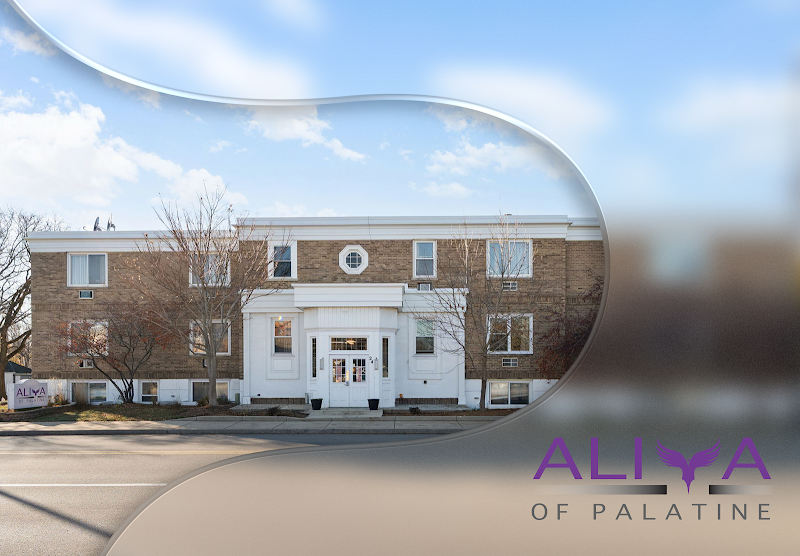
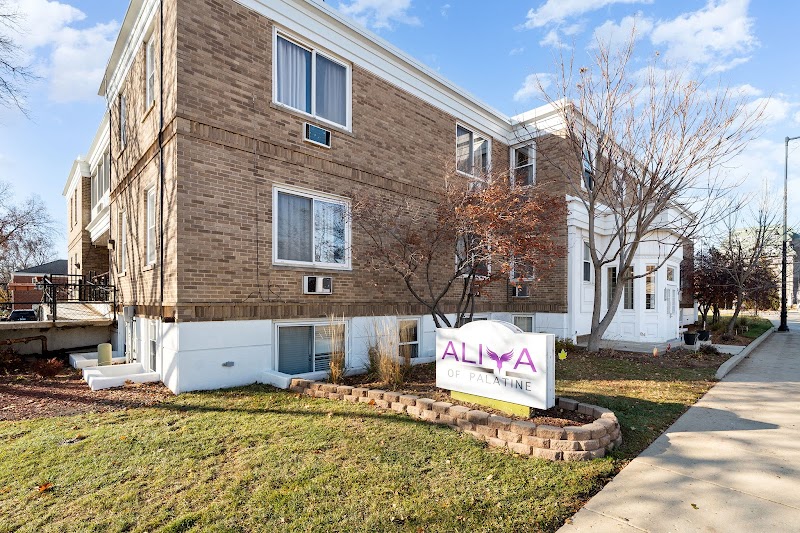
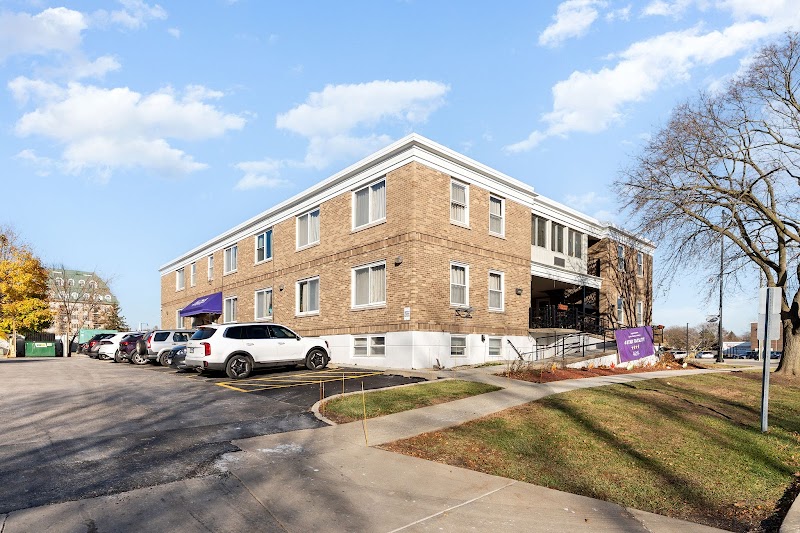
ALIYA OF PALATINE

24 SOUTH PLUM GROVE ROAD, PALATINE, IL 60067 (847) 358-0311
For profit - Corporation 69 Beds ALIYA HEALTHCARE Data: November 2025
Trust Grade
50/100
#209 of 665 in IL
Last Inspection: July 2024

Within standard 12-15 month inspection cycle. Federal law requires annual inspections.

Overview

Aliya of Palatine has a Trust Grade of C, which means it is average and sits in the middle of the pack among nursing homes. In Illinois, it ranks #209 out of 665 facilities, placing it in the top half, while in Cook County, it is #66 out of 201, indicating that there are only a few better local options. The facility is showing improvement, with issues decreasing from 9 in 2023 to just 2 in 2024. Staffing is a concern, rated at 1 out of 5 stars, but the turnover rate of 39% is better than the state average, suggesting that some staff do stay longer. Notably, there have been serious incidents, such as a resident being neglected and sent to an outside appointment in soiled clothes, which caused embarrassment and humiliation, and failure to conduct proper background checks for staff, raising safety concerns for residents. While the facility has strengths, such as no fines and good health inspection scores, these serious incidents highlight significant areas for improvement.

Trust Score
C
50/100
In Illinois
#209/665
Top 31%
Safety Record
Moderate
Needs review
Inspections
Getting Better
9 → 2 violations
Staff Stability
○ Average
39% turnover. Near Illinois's 48% average. Typical for the industry.
Penalties
✓ Good
No fines on record. Clean compliance history, better than most Illinois facilities.
Skilled Nurses
⚠ Watch
Each resident gets only 25 minutes of Registered Nurse (RN) attention daily — below average for Illinois. Fewer RN minutes means fewer trained eyes watching for problems.
Violations
⚠ Watch
24 deficiencies on record. Higher than average. Multiple issues found across inspections.
★★★☆☆
3.0
Overall Rating
★☆☆☆☆
1.0
Staff Levels
★★★★☆
4.0
Care Quality
★★★★☆
4.0
Inspection Score
Stable
2023: 9 issues
2024: 2 issues

The Good

  • 4-Star Quality Measures · Strong clinical quality outcomes
  • Full Sprinkler Coverage · Fire safety systems throughout facility
  • No fines on record
  • Staff turnover below average (39%)

    9 points below Illinois average of 48%

Facility shows strength in quality measures, fire safety.

The Bad

3-Star Overall Rating

Near Illinois average (2.5)

Meets federal standards, typical of most facilities

Staff Turnover: 39%

Near Illinois avg (46%)

Typical for the industry

Chain: ALIYA HEALTHCARE

Part of a multi-facility chain

Ask about local staffing decisions and management

The Ugly 24 deficiencies on record

2 actual harm
Jul 2024 2 deficiencies
CONCERN (F)

Potential for Harm - no one hurt, but risky conditions existed

Abuse Prevention Policies (Tag F0607)

Could have caused harm · This affected most or all residents

Based on interview and record review, the facility failed to follow its policy on conducting background checks for one (V11) of 10 employees reviewed for background checks. This failure has the potent...

Read full inspector narrative →
Based on interview and record review, the facility failed to follow its policy on conducting background checks for one (V11) of 10 employees reviewed for background checks. This failure has the potential to affect 61 residents currently residing in the facility. Findings include: Per census report, there are 61 residents currently residing in the facility. On 07/16/24 at 2:00pm V3 (Human Resources) completed background screening check for 10 employees. V3 stated, I cannot find the background check reports for V11 (Certified Nursing Assistant). V11 has been working here since 03/18/2024. V11 is missing the Illinois Sex offender and Department of Correction (DOC) sex Offender, DOC Inmate search, DOC wanted fugitive report, National Sex Offender report and Office of Inspector General (OIG) report. On 07/16/2024 at approximately 3:00 pm surveyor was provided with Illinois Sex offender and Department of Correction (DOC) sex Offender, DOC Inmate search, DOC wanted fugitive report, National Sex Offender report and Office of Inspector General (OIG) reports with search dates of 07/16/2024. On 07/17/24 at 10:15 AM V3 stated, I think I (V3) forgot to run V11's background checks. I do not have any other explanation. I am not sure how I let that slide by. I (V3) ran the background checks yesterday and provided them to you. On 07/17/24 at 10:19 AM Administrator (V1) stated, my expectation regarding background checks is that they are all completed prior to start date. On 07/17/24 at 3:41 PM V5 (Former Administrator/Administrator trainer) and (V1) Administrator stated, we do not have a background check policy. We go off the regulations. When asked what regulations they were unsure and said that they would have to check and get back to us. On 07/18/2024 at 8:23 AM (V1) provided the following link: https://www.dhs.state.il.us/page.aspx?item=48125 as what they follow for background check guidelines. This link contains PROFESSIONS, OCCUPATIONS, AND BUSINESS OPERATIONS (225 ILCS 46/) Health Care Worker Background Check Act. Which states in part: (d) On October 1, 2007 or as soon thereafter as is reasonably practical, in the discretion of the Director of Public Health, and thereafter, a health care employer who makes a conditional offer of employment to an applicant for a position as an employee shall initiate a fingerprint-based criminal history record check, requested by the Department of Public Health, on the applicant, if such a background check has not been previously conducted. Initiate means obtaining from a student, applicant, or employee his or her social security number, demographics, a disclosure statement, and an authorization for the Department of Public Health or its designee to request a fingerprint-based criminal history records check; transmitting this information electronically to the Department of Public Health; conducting Internet searches on certain web sites, including without limitation the Illinois Sex Offender Registry, the Department of Corrections' Sex Offender Search Engine, the Department of Corrections' Inmate Search Engine, the Department of Corrections Wanted Fugitives Search Engine, the National Sex Offender Public Registry, and the List of Excluded Individuals and Entities database on the website of the Health and Human Services Office of Inspector General to determine if the applicant has been adjudicated a sex offender, has been a prison inmate, or has committed Medicare or Medicaid fraud, or conducting similar searches as defined by rule; and having the student, applicant, or employee's fingerprints collected and transmitted electronically to the Illinois State Police. Health Care Worker Registry (HCWR) Clearance This clearance must be conducted at the time of hire and annually thereafter to confirm whether new hires or other employees have a criminal background check result reported to the HCWR. It will also confirm whether the person has a disqualifying criminal conviction, if criminal background check results are not reported on the HCWR for employees, they must immediately obtain a fingerprint criminal background check result using a livescan vendor approved by state agency.
CONCERN (F)

Potential for Harm - no one hurt, but risky conditions existed

Food Safety (Tag F0812)

Could have caused harm · This affected most or all residents

Based on observation, interview and record review the facility failed to: 1) follow their policy and procedures for ensuring food is prepared and served under sanitary conditions by not using PPE (per...

Read full inspector narrative →
Based on observation, interview and record review the facility failed to: 1) follow their policy and procedures for ensuring food is prepared and served under sanitary conditions by not using PPE (personal protective equipment) properly when serving food, 2) Ensure food items were labeled and dated per facility policy, 3) Ensure no expired foods, and 4) Ensure Staff wear hair restraint in kitchen area. This applies to 61 residents that receive oral nutrition and food prepared in the facility kitchen. Findings include: On 07/15/24 at 10:30 AM surveyor observed two bags of two-pound toasted oats cereal with expiration date 6/21/23. On 07/15/24 10:40 AM surveyor observed seven loaves of sliced wheat bread dated 7/10/24 in the storage with two loaves of wheat bread molded and soggy, and one loaf of sliced wheat bread molded on the table by the kitchen. On 07/15/23 at 11:00 AM surveyor observed two opened half bags of shred lettuce dated 7/10/24 brown and wilted in the refrigerated. V12 (Dietary Manager) stated, 7/10/24 is the received dates, there is no sold, consumed, or discarded dated on the bread or lettuce. On 07/15/24 at 10:45 V19 (Cook) said, expired food needs to be removed and discarded, I did not see the mold on the bread. V12 stated, it is expected that staff will check the date and remove expired food. On 07/15/24 at 12:00PM surveyor observed V12 serving food from the tray line without wearing gloves touching trays, utensils and clean plates and adjusting eye faces on her face. On 07/15/24 at 12:30 PM surveyor observed V12 helping place tickets on the trays, and receiving plates and adding bread to trays without wearing gloves and fingers were inside the clean plate with food. V12 touched her eyeglasses and touched the inside of the plates. On 07/16/24 at 11:30 PM surveyor observed V12 using hair restraints on the top of the head and hair exposed below her shoulders serving lunch to residents. On 07/16/24 at 12:05 PM surveyor observed V12 serving food on the tray line and removed her gloves and donned clean gloves on without hand hygiene. V12 moved to ticket section and receiving plate with food not wearing gloves and placing tickets on the tray and getting bread to place on the plates. V12 touched eyeglasses and plates without providing hand hygiene during. On 07/16/24 02:00 PM V12 stated, I expect staff to wear hair restraints with all the hair inside, proper hand hygiene when changing gloves and wear glove when handling food. V12 said, I did not realize I touched my eyeglasses during food preparation and when I was getting the tickets. Hand hygiene needs to be done when gloves were removed. I expect the food to be dated and the cook to check dates prior to using any food and dispose any food that is expired. Food must be dated when they get to the facility and disposed when it is expired. On 07/17/24 at 01:00PM V20 (Infection Preventionist) stated, I expect staff to perform hand Hygiene before donning gloves and after removal of gloves and when hands are contaminated. Kitchen staff are expected to wear hair restraints in the kitchen. Hair is expected to be inside of the hair restraints. On 07/17/24 at 02:00 PM V2 (Director of Nursing) stated, I expect staff to do hand hygiene before donning gloves and after removing gloves, staff must wear hairnets when they are working in the kitchen, and food must be dated and expired food disposed. On 07/17/24 at 02:09 PM V5 (Former Administrator trainer) stated, I expect staff to wear hair restraints in the kitchen and, all food to be labeled with expiration dates and expired food to be discarded. Facility Policy Titled Labeling and Dating Foods (Date Marking) dated 2020. Which reads in part (but not limited to), 2- Date marking for refrigerated storage food items Unopened cases of refrigerated food items will be dated with the date the item was received into the facility and will be stored using the first in - first out method of rotation. Once a case is opened, the individual, refrigerated food items are dated with the date the item was received into the facility and placed in/on the proper storage location utilizing the first in - first out method of rotation. Once opened, all ready to eat, potentially hazardous food will be re-dated with a use by date according to current safe food storage guidelines or by the manufacturer's expiration date. Facility Policy Titled Food Storage (Dry, Refrigerated, and Frozen) dated 2020. Which reads in part (but not limited to), a. All food items will be labeled. The label must include the name of the food and the date by which it should be sold, consumed, or discarded. b. Rotate products so the oldest are used first. Staff shall be instructed to use products with the earliest expiration date before those with a later expiration date. c. Discard food that has passed the expiration date, and discard food that has been prepared in the facility after seven days of storing under proper refrigeration. Facility Policy Titled Proper Hand Washing and Glove Use dated 2020. Which reads in part (but not limited to), 4- Employees will wash hands before and after handling foods, after touching any part of the uniform, face, or hair, and before and after working with an individual resident. 5. Gloves are to be used whenever direct food contact is required. 6. Hands are washed before donning gloves and after removing gloves. Facility Policy Hair Restraints Dated 2020. Which reads in part (but not limited to), Hair restraints shall be worn by all Dining Services staff when in food production areas, dishwashing areas, or when serving food. Procedure: 1. Staff shall wear hair restraints in all food production, dishwashing, and serving areas.
Sept 2023 6 deficiencies
CONCERN (D)

Potential for Harm - no one hurt, but risky conditions existed

Deficiency F0583 (Tag F0583)

Could have caused harm · This affected 1 resident

Based on observation, interview and record review the facility failed to provide privacy when administering an injection to a resident. This deficiency affects one (R28) of 13 residents in the sample ...

Read full inspector narrative →
Based on observation, interview and record review the facility failed to provide privacy when administering an injection to a resident. This deficiency affects one (R28) of 13 residents in the sample of 19 reviewed for privacy during medication administration. Findings include: On 9/5/23 at 4:24PM, V10 LPN (Licensed Practical Nurse) prepared medication for R28. V10 said that R28's peripheral blood sugar test is 282. V10 said that R28 has sliding scale of Humalog insulin. R28 will receive 6 units. R28 has also scheduled Humalog insulin at 10 units. R29 will receive total dose of 16 units of Humalog insulin. V10 prepared 16 units of insulin. V10 LPN administered the insulin injection subcutaneously to R28's left upper arm. V10 did not close the door or pull the curtain drape in between the room where the roommate is present and looking at V10 giving injection to R28. On 9/5/23 at 4:37PM, Informed V10 LPN of above observation. V10 said she forgot to close the door and to pull the curtain drape. V10 said she should provide privacy when giving injection to resident. On 9/6/23 at 1:01PM, Informed V2 DON (Director of Nursing) of above observation. V2 said the nurse should provide privacy when administering injection to the resident. Facility's policy on Resident Rights 1/14/2019 indicates: Purpose: To promote the exercise of rights for each resident, including any who face barriers (such as communication problems, hearing problems, and cognition limits) in the exercise of these rights. A resident, even though determined to be incompetent, should be able to assert these rights based on his or her degree of capability. Guidelines: Notice of resident rights will be provided upon admission to facility. These rights include the resident's right to: * Privacy and confidentiality. Facility's policy on Medication Administration General indicates: Policy: Medications are administered as prescribed in accordance with good nursing principles and only by persons legally authorized to do so. Personnel authorized to administered medications do so only after they have been properly oriented to the facility's medication distribution system (procurement, storage, handling and administration).
CONCERN (D)

Potential for Harm - no one hurt, but risky conditions existed

Deficiency F0687 (Tag F0687)

Could have caused harm · This affected 1 resident

**NOTE- TERMS IN BRACKETS HAVE BEEN EDITED TO PROTECT CONFIDENTIALITY** Based on observation, interview and record review the facility failed to provide foot care and treatment to resident who is tota...

Read full inspector narrative →
**NOTE- TERMS IN BRACKETS HAVE BEEN EDITED TO PROTECT CONFIDENTIALITY** Based on observation, interview and record review the facility failed to provide foot care and treatment to resident who is totally dependent. The facility also failed to carry out and implement a podiatrist recommendation order. This deficiency affects one (R43) of three residents in the sample of 19 reviewed for foot care. Findings include: On 9/6/23 at 10:10AM observed R43's feet with V2 DON (Director of Nursing) and V12 Nurse Practitioner Wound Care (NPWC). Left foot has dark discoloration scab on great toe. Toenails has dark discoloration, long and thick. The entire foot is dry and scaly. Right foot has dark discoloration thick long toenails. The second toe over [NAME] over great toe. The entire right foot is dry and scaly. V12 NPWC said R43 need to be seen by podiatrist. On 9/6/23 at 10:28AM, review of R43's medical records with V5 Resident Assessment/Care plan Coordinator. R43 was admitted on [DATE] with diagnosis listed in part but not limited to Quadriplegia, Muscle wasting and atrophy. V5 said that R43 is totally dependent with ADLs (Activity with Daily living). R43's Quarterly Minimal Date Assessment (MDS)/Resident assessment dated [DATE] indicated he is totally dependent with ADLs and Transfers. Section G: Functional Status: 1. ADL self-performance coding- 4 Total dependence; 2. ADL support provided- 3 Two+(plus) persons physical assist. No care plan addressing his needs for foot care. On 9/7/23 at 10:30AM, V1 Administrator said they don't have a policy on Podiatrist care and referral. On 9/7/23 at 11:02AM, V1 Administrator presented copy of Podiatrist notes dated 6/9/23 which indicated: This [AGE] year-old male present with calluses, toenails that are difficult to cut and skin is dry and flaky. Orthopedic Exam: Contracted digit feet bilateral, arthritis feet bilateral. Difficulty in walking, muscle weakness. Treatment: Manual debridement by use of nail clippers to debride all fungal nails to decrease pain and risk as required by medical necessity. Podiatric professional is needed to avoid possible infection. Xerosis treatment: Feet bilateral- Full exam performed. Removed skin flakes. Applied Aquaphor ointment to bilateral lower legs and feet. Recommended the use of skin protectant daily (Aquaphor or Vitamin A and D ointment) or coconut oil to bilateral lower legs and feet. Patient to see again in 2 months. R43's podiatrist notes reviewed with V1. Informed that podiatrist recommendation was not carried out and implemented by the facility. On 9/7/23 at 11:30AM, V2 DON said that after the podiatrist treated the resident, he will talk to the floor nurse about his treatment plan. The floor nurse should carry out and implement treatment ordered. Facility's policy on Foot Care indicates: Purposes: To provide comfort and prevent infection of the feet.
CONCERN (D)

Potential for Harm - no one hurt, but risky conditions existed

Deficiency F0692 (Tag F0692)

Could have caused harm · This affected 1 resident

**NOTE- TERMS IN BRACKETS HAVE BEEN EDITED TO PROTECT CONFIDENTIALITY** Based on observation, interview and record review the facility failed to monitor and record fluid intake of resident who is on p...

Read full inspector narrative →
**NOTE- TERMS IN BRACKETS HAVE BEEN EDITED TO PROTECT CONFIDENTIALITY** Based on observation, interview and record review the facility failed to monitor and record fluid intake of resident who is on push fluids as ordered due to dehydration. This deficiency affects one (R63) of three residents in the sample of 19 reviewed for ensuring proper Hydration. Findings include: On 9/5/23 at 9:03AM, observed R63 in the dining room in recliner chair. V8 LPN (Licensed Practical Nurse) said R63 is totally dependent with ADLs (Activity with daily living) and transfers. On 9/6/23 at 10:28AM, review of R63's medical records with V5 Resident Assessment/Care plan Coordinator. R63 was admitted on [DATE] with diagnosis listed in part but not limited to Traumatic hemorrhage of Cerebrum with loss of consciousness, and Dysphagia. Physician order sheet (POS) indicates he is on pureed texture, honey consistency diet. Push fluids every shift ordered on 9/1/23. No documentation found for monitoring of fluid intake. V8 said there is no documentation in R63's chart of monitoring and recording of his fluid intake. V8 said for residents with orders of push fluid, the nurses and CNAs should monitor and record the fluid intake. R63's Nurse Practitioner Cardiologist consultation dated 9/1/23 indicated: Plan: 5. AKI (Acute Kidney Injury): Recent creatinine level elevated-1.8, BUN (Blood Urea Nitrogen) elevated-42 possibly due to dehydration. Recommending push fluids. Avoid nephrotoxins. We will monitor BMP (Basic Metabolic Profile). Requested for policy on Push Fluids. On 9/6/23 at 2:00PM, R63's blood test (BMP) dated 9/6/23 results indicated: Creatinine elevated -2.0, BUN elevated- 42. Nurse Practitioner notified by staff with new orders: fluid every shift, Sodium Chloride Intravenous solution 0.45% (Sodium Chloride) use 50ml intravenously every shift for dehydration order to give 1000ml 50ml/hr. On 9/7/23 at 9:30AM, V2 DON (Director of Nursing) said they don't have a policy on Push Fluids. V2 said the nurses and CNAs should monitor and record R63's fluid intake. Facility is unable to provide policy.
CONCERN (D)

Potential for Harm - no one hurt, but risky conditions existed

Respiratory Care (Tag F0695)

Could have caused harm · This affected 1 resident

**NOTE- TERMS IN BRACKETS HAVE BEEN EDITED TO PROTECT CONFIDENTIALITY** Based on observation, interview and record review the facility failed to obtain physician's order for oxygen and tracheotomy car...

Read full inspector narrative →
**NOTE- TERMS IN BRACKETS HAVE BEEN EDITED TO PROTECT CONFIDENTIALITY** Based on observation, interview and record review the facility failed to obtain physician's order for oxygen and tracheotomy care management for a resident who has tracheostomy capped and using oxygen via nasal cannula. The facility failed to ensure that there is water in the humidifier bottle. This deficiency affects one (R43) of one resident in the sample of 19 reviewed for Respiratory care. Findings include: On 9/5/23 at 10:38AM, R43 observed lying in bed with oxygen at 3.5 LPM (Liters per minute) via NC (Nasal Cannula) connected to oxygen concentrator with V8 LPN (Licensed Practical Nurse). Noted emptied and dried humidifier bottle. Oxygen tubing is not dated. V8 said that she forgot to check this morning when she made her rounds. V8 said there should be water in the humidified bottle to prevent nasal dryness. No manual resuscitator at bedside. R43 has capped tracheostomy. On 9/6/23 at 10:58AM, review of R43's medical records with V5 Resident Assessment/Care Plan Coordinator. R43 was re-admitted on [DATE] with diagnosis listed in part but not limited to Acute Respiratory Failure, Quadriplegia, Paralysis of Vocal Cords, and larynx. No order of oxygen via nasal cannula and tracheostomy care management on the POS (Physician Order Sheet). V5 said there should be an order of oxygen in his POS and tracheostomy care management. The oxygen tubing should be dated and changed weekly. The nurse should check the level of water in the humidity bottle. On 9/6/23 at 1:01PM Informed V2 DON (Director of Nursing) of above concerns. V2 said tracheostomy care should be performed every shift. There should be an order for oxygen usage and tracheostomy care management. The nurse should check the water level in the humidifier. The oxygen tubing and humidifier bottle should be changed weekly and dated. Facility's policy on Oxygen Concentrator indicates: Purpose: To provide oxygen for therapeutic use by utilizing a concentrator that converts ambient air to a higher concentration of level of oxygen. It is commonly used to provide oxygen therapy. Oxygen concentrators are the least expensive, more convenient, and safe options to compressed oxygen in metal tanks. Equipment needed: 3) Humidifier device 4) Nasal Cannula Procedure: 1) Verify and understand the physician's order. 2) Know the flow rate and duration of use. 8) If prescribed, attach the humidifier bottle to the oxygen outlet connection, and ensure there is water in the bottle Daily Maintenance: 1) Check the water level in the humidity bottle. Change the bottle as needed or every 7 days. Facility's policy on Tracheostomy Care indicates: Policy: Tracheostomy care should be performed once per shift or as often as required to maintain patency of the airway and minimize the risk of infection. Tracheostomy tube cuffs will be continuously deflated unless otherwise ordered by the physician. When the tracheostomy tube is fenestrated, the inner cannula is to be in place during suctioning or manually ventilating. Depending upon the physician's order/feeding policy, the inner cannula should be in during feeding and for thirty minutes afterwards. A replacement tracheostomy tube is to be always kept at bedside, clearly visible.
CONCERN (D)

Potential for Harm - no one hurt, but risky conditions existed

Deficiency F0761 (Tag F0761)

Could have caused harm · This affected 1 resident

**NOTE- TERMS IN BRACKETS HAVE BEEN EDITED TO PROTECT CONFIDENTIALITY** Based on observation, interview and record review the facility failed to ensure safe and secure storage including proper tempera...

Read full inspector narrative →
**NOTE- TERMS IN BRACKETS HAVE BEEN EDITED TO PROTECT CONFIDENTIALITY** Based on observation, interview and record review the facility failed to ensure safe and secure storage including proper temperature control of medications. The facility also failed to remove the opened and expired medication in the medication cabinet. These failures have the potential to affect all residents taking medication who reside in the facility. Findings include: On [DATE] at 10:03AM, second floor medication room checked with V8 LPN (License Practical Nurse). Observed medication refrigerator unlocked. V8 said that she did not leave it unlocked. She did not check this morning the refrigerator when she came in to work. The night shift usually checks the refrigerator temperature daily. The following medications found inside the refrigerator: Morphine sulfate oral solution 100mg/5ml, rectal suppositories and (2) Tuberculin (Aplisol) vials. V8 read refrigerator temperature at 32F. V8 does not know what the normal ranges for medication refrigerator temperature is. Review of the daily refrigerator temperature log binder [DATE] incomplete daily monitoring log found inside the binder. No monitoring log for this month of September. Checked medications house stock supplies in the cabinet. Found opened, not dated, and expired Antacid medication (Geri-lanta) 12 fluid ounces expired [DATE]. V8 said she does not know who placed the opened and expired medication inside the cabinet with house stock medications. V8 said expired medication should be returned to pharmacy. She took the medication and placed in the bag labeled return to pharmacy. V8 called V2 DON (Director of Nursing). On [DATE] at 10:25AM, informed V2 DON of above observations. V2 said that nurses should lock the medication refrigerator, monitor, and record the medication refrigerator temperature daily and return the expired medication to the pharmacy. On [DATE] at 12:47PM, first floor medication room checked with V9 RN (Registered Nurse). Observed medication refrigerator unlocked. V9 said that he did not check the medication refrigerator this morning when he came to work. V9 said that the night shift is the one who checks the medication refrigerator. The following medications found inside the refrigerator: (2) morphine sulfate oral solution, (2) lorazepam oral solution, (8) pen insulins, (2) Tuberculin (Aplisol) vials, (6) eye solutions and rectal suppositories. V9 read the temperature inside the refrigerator at 31F. Noted normal refrigerator temperature ranges posted outside the refrigerator is at 36 to 46F. V9 said he cannot find the refrigerator temperature monitoring binder. V9 said the night shift is the one monitoring the daily refrigerator temperature. V9 said the medication refrigerator temperature monitoring binder should be in the medication room. V9 called V2 DON. On [DATE] at 12:59PM, Informed V2 DON of above observations. V2 tried to look for the medication refrigerator temperature monitoring binder but was unable to locate it in the med room. V2 said that the medication refrigerator temperature should be monitored daily, and the binder should be in the medication room. The Refrigerator temperature should be at 36 to 46 F. On [DATE] at 2:44PM, V2 DON presented first floor medication refrigerator temperature daily monitoring binder for 2023. Reviewed monitoring log with V2. Noted missing monitoring log for month of August, June, May, April, Incomplete log for month of July, March, February, and January. V2 said she will give in-services to her nurses regarding completion of daily medication refrigeration temperature monitoring log, securing/locking medication refrigerator and returning expired medication to pharmacy. Facility's policy on Medication Storage Revised date [DATE] indicates: Purpose: To ensure proper storage, labeling and expiration dates of medications, biologicals, syringes, and needles. Guidelines: 3. General storage procedures: Facility should store Schedule II Controlled Substances and other medications deemed by Facility to be at risk for abuse or diversion in a separate compartment 3.2 Facility should ensure that all medications and biologicals, including treatment items, are securely stored in a locked cabinet/cart or locked medication room that is inaccessible by residents and visitors. 4. Facility should ensure that medications and biologicals that: (1) have an expired date on the label; (2) have been retained longer than recommended by manufacturer or supplier guidelines; or (3) have been contaminated or deteriorated, are stored separate from other medications until destroyed or returned to the supplier. 11. Facility should ensure that medications and biologicals are stored at their appropriate temperatures according to the United States Pharmacopeia guidelines for temperature ranges. 11.2 Refrigeration: 36F to 46F or 2C to 8C 12. Controlled substance storage: 12.2 After receiving controlled substance and adding to inventory, Facility should ensure that Schedule II-V controlled substances are immediately placed into a secured storage area and double locked.
CONCERN (D)

Potential for Harm - no one hurt, but risky conditions existed

Infection Control (Tag F0880)

Could have caused harm · This affected 1 resident

Based on observation, interview and record review the facility failed to remove gloves and perform hand hygiene before exiting the isolation room. This deficiency affects one (R43) of one resident in ...

Read full inspector narrative →
Based on observation, interview and record review the facility failed to remove gloves and perform hand hygiene before exiting the isolation room. This deficiency affects one (R43) of one resident in the sample of 19 reviewed for Infection control on isolation precaution. Findings include: On 9/5/23 at 10:40AM, observed V8 LPN (Licensed Practical Nurse) came out from R43's isolation room with gloves on, tried to open the medication room and then she went back to the isolation room. R43 is on isolation set up, droplet contact precaution posted outside the door. R43 has capped tracheostomy and suprapubic catheter. On 9/5/23 at 10:45AM informed V8 LPN of above observation. V8 said that she was putting water in the humidifier oxygen of R43. V8 said she removed the isolation gown but forgot to remove her gloves and wash her hands before she left the isolation room. V8 said that R43 is on isolation precaution. R43 is currently on antibiotic (Bactrim DS) for Urinary Tract Infection. R43 has history of ESBL in wound. On 9/5/23 at 11:00AM, informed V2 DON (Director of Nursing) of above observation. V2 said staff should remove personal protective equipment such as gown, mask, gloves and perform hand hygiene when leaving the isolation room. Facility's policy on Hand Hygiene/Handwashing 1/10/2018 indicates: Definition: Hand Hygiene means cleaning your hands by using either hand washing (washing hands with soap and water), antiseptic hand wash, pr antiseptic hand rub ( i,e alcohol -based hand sanitizer including foam or gel) Guidelines: Example of When to perform hand hygiene (either alcohol-based hand sanitizer or handwashing): *After contact with inanimate objects (including medical equipment) in the immediate vicinity of the patient *After glove removal Facility's poster for isolation room indicates: Before leaving the isolation room, please make sure to: 1. Remove gloves 2. Remove Gown 3. Exit room 4. Perform hand hygiene using hand sanitizer. Facility's policy on Infection Precaution Guidelines 5/15/23 indicates: Guidelines: It is the policy of this facility to, when necessary, prevent the transmission of infections within the facility using isolation precaution. Transmission-Based Precaution will be employed for known or suspected infections for which the route of the transmission/prevention is known. The transmission-based categories are the following: *Contact *Droplet Points to remember: *Hand washing (Hand hygiene) is the single most important precaution to prevent the transmission of infection from one person to another. Wash hands with soap and water before and after each resident contact and after contact with resident belongings and equipment. Alcohol based hand rub may be used if hands are not visibly soiled. *All personal protective equipment (disposable, isolation gowns, mask, gloves, etc.) should be used once and discarded in either the trash or used linen receptacle before you leave the room Precaution signs will be utilized to alert staff and visitors to see the nurse for instructions prior to entering room.
Apr 2023 1 deficiency
CONCERN (D) 📢 Someone Reported This

A family member, employee, or ombudsman was alarmed enough to file a formal complaint

Potential for Harm - no one hurt, but risky conditions existed

Accident Prevention (Tag F0689)

Could have caused harm · This affected 1 resident

Based on observation, interview, and record review the facility failed to ensure residents did not smoke/vape in the facility. This failure applied to one (R2) of one resident reviewed for supervision...

Read full inspector narrative →
Based on observation, interview, and record review the facility failed to ensure residents did not smoke/vape in the facility. This failure applied to one (R2) of one resident reviewed for supervision. The findings include: On 4/8/23 at 8:05 AM, there was a strong smell of marijuana on the first floor upon exiting the elevator. At 1:25 PM, V6 Nurse showed this surveyor R2's vape pen stored in the medication cart. The pen was a nicotine pen and did not smell of marijuana. On 4/8/23 at 8:58 AM, V2 Director of Nursing (DON) stated we keep taking away a vape pen from a resident identified as R2. R2's nicotine vape pen smelled like marijuana, so we keep it in the nurse's cart. V2 was notified by this surveyor that the second floor smelled of marijuana at 8:05 AM today. V2 stated R2 probably has another vape pen. R3 and R7 smoke cigarettes and go outside to smoke. Smoking hours are 7-8 or 8-8. At 9:56 AM, R4 stated, It already started this morning. I smell marijuana on the first floor. R4 stated that R2 smokes in her room and sprays air freshener or opens her window. I know the smell of it. I was around it at home and used to smoke it to help with a chronic medical condition. At 10:13 AM, R5 stated there's a marijuana smell in the hall. It happens when there's no Administrator or anyone in the building. I think it comes through the air vent outside our room. R2 is doing it (mentioned her by name). She has shown it to me before. She smokes joints and smokes it out of a vape. I know the smell of pot. My son smokes it. She does not go out at smoking times. It's highly dangerous. We have oxygen on this floor, and she smokes it in her room. I told the Administrator about the concerns of marijuana smoking in the building. She said she'll look into it. Some other residents are afraid to say anything about the pot smoking bothering them. They're afraid of her (R2). At 10:21 AM, R6 stated I have trouble breathing. I use that machine at night. Just talking to R2 you can smell it (marijuana) on her breath. I can smell it in the hallway. It's offensive. It aggravates my breathing. She smokes it almost every day. V1 Administrator and V2 DON talked to her about it. R2 is the only pot smoker here. She does not go outside to smoke her pot. She should go outside to do it. At 10:36 AM, R3 stated there's only two people who go out to smoke here, me and another guy (R7). At 10:55 AM, V4 Certified Nursing Assistant (CNA) stated I smell marijuana when I work here. I usually work on the weekends, and I smelled it this morning. At 1:15 PM, V3 Certified Nursing Assistant stated R3 and R7 are the only two residents who go outside to smoke. At 1:20 PM, R7 stated he and R3 are the only two resident who go outside to smoke. R7 stated R2 has a vape and you can't smell it, so she doesn't go outside. At 1:25 PM, V6 nurse stated R2's vape pen is kept in the medication cart. R2 has not taken it all day. At 2:00 PM, V1 Administrator and V2 Director of Nursing were unable to explain why R2 never goes outside to smoke. The facility's 3/13/23 Resident Council Meeting Minutes showed a resident stated they could smell someone smoking marijuana and the smell upsets her. A 4/7/23 grievance by R4 reporting R2 had a weed smell like. R2 denied the allegation. The grievance was not substantiated. There was no evidence other residents were interviewed for the investigation. The facility's 10/24/22 Smoking Safety Policy showed a Smoking Safety Assessment will be completed to determine the level of assistance and supervision needed during smoking, the ability to carry and store smoking materials, and if a smoking apron is indicated. The plan of care shall reflect the results of this assessment. This assessment will be completed upon admission, quarterly and with significant change. If a resident chooses to smoke electronic cigarettes (e-cigarettes, vapes, vaporizers, vape pens etc.,) they must smoke them in designated smoking areas outside. A Smoking Safety Assessment will be completed to ensure that the resident is capable of safe storage, charging and use of the electronic cigarette or vaping device. Individuals who are non-compliant, potentially dangerous, exercise poor judgement, and show a lack of concern for the welfare of others will be counseled accordingly. The facility maintains the right to limit and restrict access to smoking products, matches, and lighters for persons deemed unsafe. Smoking privileges will be revoked if there is a pattern of persistent, hazardous behavior. No resident may smoke near/around oxygen. The following behaviors and/or conditions will jeopardize and/or cause revocation of the person's independent privileges: Smoking in any non-designated area, such as resident rooms .Consequences of non-compliance: Residents will be instructed, educated and counseled about their inappropriate behavior. Safe, appropriate behavior will be stressed. Documentation will be entered into the record accordingly. Further incidents of non-compliance may result in loss of independent privileges which means smoking materials will be turned over to a designated staff member., held in a secure location and the resident will only be allowed to smoke when supervised by a responsible individual (i.e , staff member, family, friend) and at the discretion of the organization. Behavior determined to be potentially harmful may jeopardize the person's ability to remain in the health care facility. The facility may exercise its right to involuntarily discharge such individuals. The facility recognizes the potential harm that may result from careless, hazardous smoking and has implemented this policy to maintain a safe living environment. Violation of this policy will be taken seriously, and appropriate action will be forthcoming.
Mar 2023 2 deficiencies 2 Harm
SERIOUS (G) 📢 Someone Reported This

A family member, employee, or ombudsman was alarmed enough to file a formal complaint

Actual Harm - a resident was hurt due to facility failures

Deficiency F0557 (Tag F0557)

A resident was harmed · This affected 1 resident

Based on interview and record review, the facility failed to ensure a resident was treated with dignity after requesting to be changed prior to outside appointment. This affected 1 of 3 residents (R2)...

Read full inspector narrative →
Based on interview and record review, the facility failed to ensure a resident was treated with dignity after requesting to be changed prior to outside appointment. This affected 1 of 3 residents (R2) reviewed for dignity. This failure resulted in R2 arriving soiled at the outside medical appointment being soiled with feces, having to be changed by outside office staff, wearing a gown because the clothes were soiled, and having feelings of embarrassment, humiliation, and powerlessness. Findings include: On 3-15-23 at 10:00 AM, R2 told surveyor about concerns of R2 asking V7 Certified Nursing Assistant (CNA) to be changed (due to bowel movement) prior to her transport to outside appointment. R2 stated the CNA refused to change her at that time because CNA said she had other residents to attend to. R2 stated she went to her outside appointment soiled with bowel movement. The office had to clean R2 up and changed R2 into a hospital gown because R2's clothes were soiled. R2 returned to the facility in a gown. R2 was noted in gown by 2nd shift nurse. V7 had already left for the day. R2 stated she felt humiliated, embarrassed, and helpless. R2 told Human Resources (HR) about this incident on Sunday. HR told R2 that she will speak to V7. R2 stated HR did not get back to R2 regarding this incident. R2 stated she would like to share this info with new Administrator and new Director of Nursing (DON). On 3-15-23 11:29 AM, V1 (Administrator-previous) stated R2 is alert, oriented times 3-4, and able to make her needs known. R2 has history of confabulation and making up stories. V1 stated HR told V1 R2 asked to be changed and transportation was there and R2 did not want to miss transportation to her appointment so R2 went to appointment dirty because she did not want to miss her ride. V1 stated she did not talk to R2 directly. V1 told HR to make sure R2 will be changed prior to all outside appointments. The facility would not send a resident out to appointment dirty or soiled. V1 stated neglect is intentionally holding back care when requested. On 3-15-23 at 1:05 PM, V12 (Administrator-new) said neglect is willfully refusing to provide care to resident who needs it. V12 stated the facility would change the resident prior to outside appointment and ensure the resident is presentable outside the facility. On 3-15-23 at 10:35 AM, V7 (CNA) stated around 9:05 AM, V7 stated she was with another resident and R2 asked V7 for another brief change. V7 stated yes but said she will finish with the resident and R2 will be next. V7 stated R2 was agreeable. V7 stated she saw R2's ride in the parking lot and said she cannot change R2 because she needs to go with transportation. V7 stated R2 will take more than 20 minutes for a change. R2 was agreeable to going to her appointment at that time. On 3-15-23 at 10:46 AM, V8 Registered Nurse (RN) stated she was aware R2 had an outside appointment. V8 stated she saw R2 wearing a hospital gown over her shirt and pants when she returned from the outside appointment. V8 asked R2 how the visit went and R2 requested a pain pill. V8 stated R2 is dependent for care and R2 can ask for help. V8 stated R2 would know when she needs to be changed. V8 stated it can take some time for R2 to be changed. R2 requires mechanical lift and two staff. V8 stated it can take almost 30 minutes or longer to change R2 depending on the situation. V8 stated if a resident asks to be changed, V8 would change resident because she is alert enough to know she needs to be changed. V8 stated neglect is something you can do but not do, like a CNA not changing a resident when needed. Abuse Prevention and Reporting- Illinois Policy reviewed 4-14-22 documents: Guidelines: The resident has the right to be free from abuse, neglect, misappropriation of resident proper, and exploitation. Definitions: Neglect is defined as the failure to provide goods and services to a resident that are necessary to avoid physical harm, pain, mental anguish, or emotional distress.
SERIOUS (G) 📢 Someone Reported This

A family member, employee, or ombudsman was alarmed enough to file a formal complaint

Actual Harm - a resident was hurt due to facility failures

Free from Abuse/Neglect (Tag F0600)

A resident was harmed · This affected 1 resident

Based on interview and record review, the facility neglected to change a resident who requested to be changed and was changed prior to an outside appointment. This affected 1of 3 residents (R2) review...

Read full inspector narrative →
Based on interview and record review, the facility neglected to change a resident who requested to be changed and was changed prior to an outside appointment. This affected 1of 3 residents (R2) reviewed for neglect. This failure resulted in R2 arriving at the outside medical appointment being soiled with an old bowel movement. R2 reflected on being embarrassed, humiliated and powerless. Findings include: On 3-15-23 at 10:00 AM, R2 told surveyor about concerns of R2 asking V7 Certified Nursing Assistant (CNA) to be changed (due to bowel movement) prior to her transport to outside appointment. R2 stated the CNA refused to change her at that time because CNA said she had other residents to attend to. R2 stated she went to her outside appointment soiled with bowel movement. The office had to clean R2 up and changed R2 into a hospital gown because R2's clothes were soiled. R2 returned to the facility in a gown. R2 was noted in gown by 2nd shift nurse. V7 had already left for the day. R2 stated she felt humiliated, embarrassed, and helpless. R2 told Human Resources (HR) about this incident on Sunday. HR told R2 that she will speak to V7. R2 stated HR did not get back to R2 regarding this incident. R2 stated she would like to share this info with new Administrator and new Director of Nursing (DON). On 3-15-23 11:29 AM, V1 (Administrator-previous) stated R2 is alert, oriented times 3-4, and able to make her needs known. R2 has history of confabulation and making up stories. V1 stated HR told V1 R2 asked to be changed and transportation was there and R2 did not want to miss transportation to her appointment so R2 went to appointment dirty because she did not want to miss her ride. V1 stated she did not talk to R2 directly. V1 told HR to make sure R2 will be changed prior to all outside appointments. The facility would not send a resident out to appointment dirty or soiled. V1 stated neglect is intentionally holding back care when requested. On 3-15-23 at 1:05 PM, V12 (Administrator-new) said neglect is willfully refusing to provide care to resident who needs it. V12 stated the facility would change the resident prior to outside appointment and ensure the resident is presentable outside the facility. On 3-15-23 at 10:35 AM, V7 (CNA) stated around 9:05 AM, V7 stated she was with another resident and R2 asked V7 for another brief change. V7 stated yes but said she will finish with the resident and R2 will be next. V7 stated R2 was agreeable. V7 stated she saw R2's ride in the parking lot and said she cannot change R2 because she needs to go with transportation. V7 stated R2 will take more than 20 minutes for a change. R2 was agreeable to going to her appointment at that time. On 3-15-23 at 10:46 AM, V8 Registered Nurse (RN) stated she was aware R2 had an outside appointment. V8 stated she saw R2 wearing a hospital gown over her shirt and pants when she returned from the outside appointment. V8 asked R2 how the visit went and R2 requested a pain pill. V8 stated R2 is dependent for care and R2 can ask for help. V8 stated R2 would know when she needs to be changed. V8 stated it can take some time for R2 to be changed. R2 requires mechanical lift and two staff. V8 stated it can take almost 30 minutes or longer to change R2 depending on the situation. V8 stated if a resident asks to be changed, V8 would change resident because she is alert enough to know she needs to be changed. V8 stated neglect is something you can do but not do, like a CNA not changing a resident when needed. Abuse Prevention and Reporting- Illinois Policy reviewed 4-14-22 documents: Guidelines: The resident has the right to be free from abuse, neglect, misappropriation of resident proper, and exploitation. Definitions: Neglect is defined as the failure to provide goods and services to a resident that are necessary to avoid physical harm, pain, mental anguish, or emotional distress.
Dec 2022 9 deficiencies
CONCERN (D)

Potential for Harm - no one hurt, but risky conditions existed

Deficiency F0558 (Tag F0558)

Could have caused harm · This affected 1 resident

Based on observation, interview and record review the facility failed to ensure that call lights were in reach and easily accessible for 3 of 6 residents reviewed for accommodation of needs in a sampl...

Read full inspector narrative →
Based on observation, interview and record review the facility failed to ensure that call lights were in reach and easily accessible for 3 of 6 residents reviewed for accommodation of needs in a sample of 18. Findings include: On 12/6/2022 at 10:40 AM R3 was observed in the bed, alert, and oriented times three with her legs out the bed and bilateral feet wrapped in bandages, stating I'm waiting for someone to help me, R3's call light was observed behind the bedside table out of reach. On 12/6/2022 at 11:00 AM V10 (Nurse) stated R3's call light should be in reach and placed the call light in her hand. R3's admission Record indicates that R3 has a diagnosis of repeated falls. A care plan dated 7/16/2022 with a revision on 9/29/2022 focus of high risk for falls related to impaired mobility, and an intervention to keep call light within resident's reach. On 12/6/2022 at 10:45 AM R37 was heard yelling into the hallway for help, R37 observed in high back chair asking to go back to bed. R37's call light was observed on the floor behind the bedside table. On 12/6/2022 at 11:05 AM V10 state R37 yells out all the time and is a fall risk, indicated by the picture of the leaf at the head of the bed on the wall and sign stating the call light should be within reach and placed the call light in R37's hand. R37's Order Summary Report dated 12/7/2022 indicated R37 has an age-related physical disability, presence of left artificial hip, Osteoarthritis, and abnormal posture. A care plan dated revision on 4/25/2022 for frequent falls. On 12/6/2022 at 10:55 AM R55 was observed in the bedroom by the door asking for help to put on a clean shirt. R55's call light was observed attached to her bed out of reach, R55 state I can't wheel myself to the bed to pull the light. On 12/6/2022 at 11:10 AM V10 stated I'll get help for R55 and wheeled R55 in reach of the call light. R55's Order Summary Report dated 12/7/2022 indicates R55 has an history of falls. A care plan dated 9/7/2022 with a focus of requiring extensive assistance to dress and an intervention to be sure to keep the call light within resident's reach. Facility Policy: Call light effective 11/28/2012, revision on 2/2/2018 Purpose: To respond to resident's requests and needs in a timely and courteous manner. Guidelines: Resident call light will be answered in timely manner. 1. All residents that can use a call light shall always have the nurse call light system available and within easy accessibility to the resident at the bedside or other reasonable accessible location.
CONCERN (D)

Potential for Harm - no one hurt, but risky conditions existed

Deficiency F0583 (Tag F0583)

Could have caused harm · This affected 1 resident

Based on observation, interview and record review the facility failed to provide privacy to residents when providing care/procedure/medication. This deficiency affects two (R11 and R30) of three resid...

Read full inspector narrative →
Based on observation, interview and record review the facility failed to provide privacy to residents when providing care/procedure/medication. This deficiency affects two (R11 and R30) of three residents in the sample of 18 reviewed for privacy. Findings include: On 12/6/22 at 9:35 AM, V6 Hospice RN observed performing assessment and vital signs on R30 in the dining room with 18 residents, one CNA and one housekeeping staff. On 12/6/22 at 9:45 AM V6 Hospice Nurse stated that she is from a hospice service and has been coming for one month to see R30. She stated that she always assesses and takes vitals of R30 in the dining room. She stated she assess the residents where they are sitting and this is how she was taught during her orientation. When surveyor asked her if she should provide privacy when assessing residents and taking vital signs, she said, I guess so. On 12/6/22 at 10:08 AM, surveyor informed V5 RN Supervisor of observation made with V6 Hospice Nurse to R30. She stated she should do the assessment and vital signs in the resident's room to provide privacy. It should not be done in the dining room where there are residents present. Surveyor requested policy on Resident's Privacy from V5. On 12/6/22 at 1:21 PM, V10 RN administered oral medication to R11. V10 did not close the curtain to provide privacy from R11's two roommates (R13 and R163). R163 wheeled himself into the room. At 1:27 PM, V10 administered Nebulizer treatment to R11 without closing R11's curtain to provide privacy from his roommates (R13, R14 and R163). On 12/7/22 at 11:03 AM, Follow up request for facility's policy on privacy as requested yesterday. V12 Nurse consultant stated that they don't have a policy on Resident's Privacy.
CONCERN (D)

Potential for Harm - no one hurt, but risky conditions existed

ADL Care (Tag F0677)

Could have caused harm · This affected 1 resident

**NOTE- TERMS IN BRACKETS HAVE BEEN EDITED TO PROTECT CONFIDENTIALITY** Based on observation, interview, and record review, the facility failed to maintain personal hygiene for one of six residents (R...

Read full inspector narrative →
**NOTE- TERMS IN BRACKETS HAVE BEEN EDITED TO PROTECT CONFIDENTIALITY** Based on observation, interview, and record review, the facility failed to maintain personal hygiene for one of six residents (R262) observed for activities of daily living (ADLs) in the sample of 18 residents. Finding Include: On 12/6/2022 at 10:45 AM, surveyor observed R262 sitting in 2nd floor dining room with V19 - CNA (Certified Nurse's Aide) assigned to R262. R262's shirt, mouth and chin were stained with food particles from breakfast food that morning. V19 stated R262's shirt should have been changed and his mouth/chin cleaned after breakfast. On 12/6/2022 at 11:00 AM, surveyor observed R262 with V7 RN (Registered Nurse) assigned to R262. R262 was still wearing the shirt with stained food particles and his mouth and chin not cleaned. V7 stated that V19 should have taken R262 to his room, cleaned him up and put a clean shirt on him. On 12/7/2022 at 2:30 PM, V12 (Nurse Consultant) stated that V7 should have cleaned R262 up and put on a clean shirt. R262 is a [AGE] year-old admitted on [DATE] with a diagnoses of Dementia, Psychotic disturbance, Mood disturbance, Anxiety, altered mental status, other abnormalities of gait and mobility. R262's care plan indicated that R262 has an ADL self-care performance deficit related to altered mental status. Facility Policy: Activities of Daily Living (ADLS) Grooming: Maintaining Personal Hygiene.
CONCERN (D)

Potential for Harm - no one hurt, but risky conditions existed

Pressure Ulcer Prevention (Tag F0686)

Could have caused harm · This affected 1 resident

**NOTE- TERMS IN BRACKETS HAVE BEEN EDITED TO PROTECT CONFIDENTIALITY** Based on observation, interview and record review the facility failed to follow manufacturer's recommendations when using low ai...

Read full inspector narrative →
**NOTE- TERMS IN BRACKETS HAVE BEEN EDITED TO PROTECT CONFIDENTIALITY** Based on observation, interview and record review the facility failed to follow manufacturer's recommendations when using low air loss mattress (LAL) for a resident who has a Stage 3 pressure ulcer. This failure affects one (R35) of three residents in the sample of 18 reviewed for Pressure Ulcer management. Findings include: R35 was admitted on [DATE] with diagnoses of Stage 3 Pressure ulcer, Parkinson's disease, Dementia, and Osteoarthritis. R35's physician order sheet indicates a low air loss mattress and a wound treatment Sacrum-Alginate and dry dressing twice daily. R35's physician wound report dated 11/21/22 indicated R35 has an unstageable pressure injury on the coccyx area since 5/13/2022 which is a stage 3 pressure injury since 8/16/22. The wound is currently as Stage III pressure ulcer on coccyx area. The wound measures 4cm x 2 cmx 0.1cm. There is a large amount of serous drainage noted. There is large (65 to 100%) pink granulation within the wound bed. The peri wound skin appearance exhibited maceration. Wound progress: worsening. On 12/6/22 at 10:46 AM, V5 RN Supervisor/Wound Coordinator and V9 Certified Nurse Assistant (CNA) observed repositioning R35 to her left side to perform wound care to R35's sacral area. Surveyor observed fitted sheet covering the LAL mattress with multiple layers of folded linen on top of the mattress. There was no wound dressing found. V9 CNA stated that she removed it when she provided incontinent care with R35 earlier. V5 RN stated that R35 has a stage 3 pressure ulcer, with moderate serous sanguineous drainage, pinkish red tissue with maceration on surrounding wound. She cleansed the wound with wound cleanser and applied calcium alginate and covered with a dry dressing. After wound dressing completed, surveyor informed V5 RN of observation. V5 stated that R35 should not have a fitted sheet covering her LAL mattress and should not have multiple layers of folded linen underneath R35 as stated in the manufacturer's recommendation. V9 CNA stated that she is not aware that R35 should not have a fitted sheet and folded linen underneath her. V9 added that no one told her. On 12/6/22 at 1:30 PM, R35 observed with fitted sheet over the LAL mattress and folded linen. V5 RN Supervisor presented in-service form dated 11/29/21 indicated that air loss mattress is used for prevention and treatment of pressure wounds and is suited for immobilized residents with lack of sensory perception or immobile. No fitted sheets should be used because they compress the air cells and restrict air flow. On 12/7/22 at 11:03 PM V12 Nurse Consultant stated that they don't have a policy on usage of low air loss mattresses. Facility unable to provide policy on low air loss mattress. Facility's policy on Pressure ulcer prevention indicates: Purpose: To prevent and treat pressure sores/pressure injury Guidelines: 9. Pressure reducing (foam) mattresses are used for all resident unless otherwise indicated. Specialty mattresses such as low air loss, alternating pressure, etc. may be used as determined clinically appropriate. Specialty mattresses are typically used for residents who have multiple stage 2 wounds or one or more stage 3 or stage 4 wounds.
CONCERN (D)

Potential for Harm - no one hurt, but risky conditions existed

Accident Prevention (Tag F0689)

Could have caused harm · This affected 1 resident

**NOTE- TERMS IN BRACKETS HAVE BEEN EDITED TO PROTECT CONFIDENTIALITY** 2. On 12/8/2022 at 2:34 PM, V7 (Registered Nurse) stated that R262 is alert times one. V7 stated that R262 is high risk for fall...

Read full inspector narrative →
**NOTE- TERMS IN BRACKETS HAVE BEEN EDITED TO PROTECT CONFIDENTIALITY** 2. On 12/8/2022 at 2:34 PM, V7 (Registered Nurse) stated that R262 is alert times one. V7 stated that R262 is high risk for falls because he is confused, impulsive, attempts to get up by himself, poor safety awareness, and requires close monitoring. V7 stated that R262 requires one person for transfers, two people if combative. V7 stated that R262 did not display any abnormal behaviors when V14 handed R262 to V20 (Registered Nurse). V7 was in the dining area. V7 heard a loud noise and saw resident on the floor from the dining room. V7 stated that R262 complained of neck pain. V7 stated that V20 said she was by the window and R262 was by the door. V7 stated that she did not inform V20 about R262's confusion and impulsive behavior. V7 stated V14 was taking care of other residents within the vicinity of resident in question. V7 stated that R262's care plan should be updated with new interventions to prevent future falls. On 12/8/202, at 3:01 PM, V4 (MDS Coordinator) stated that R262 is alert times one. V4 stated that R262 has Dementia and poor safety awareness, is impulsive, and unable to redirect due to history of Dementia. V4 stated that R262 is aggressive, confused, and tries to get up by himself and requires close monitoring. V4 stated that she would have given V20 report about the resident's mental status including R262's impulsive behaviors of trying to get up without assistance. R4 stated that there was no staff in the room with the V20 x-ray technician when the x- ray was being taken. R4 stated that V14 was in the dining room feeding other residents. On 12/9/2022 at 2022, V14 CNA (Certified Nurses' Assistant) stated R262 is high risk for falls. R262 is confused, forgetful, and not direct-able. V14 also stated that R262 has poor safety awareness, is impulsive, and will try to get up by himself. V14 state that R262 needs supervision and requires at least two person's for transfer. V7 instructed V14 to take R262 to the room for x-ray. V14 asked V20 (x-ray technician) if R262 should be transferred in bed but V20 said to leave R262 in the chair. V14 left R262 in the room with V20. V14 stated that he was in the hallway outside the door waiting for V20 to finish. V14 stated that he did not inform V20 about R262 mental status. V14 heard a sound and saw the resident on the floor. V14 notified the nurse about the fall, and the nurse called 911. On 12/9/2022 at 10:40 AM, V20 stated on 11/18/2022, she approached V7 for R262 x-ray to be taken. V20 stated that V7 told her that the CNA will bring R262 to his room. V20 stated that V7 did not give her any report regarding R262 impulsive behavior or poor safety awareness. V20 stated that V14 brought R262 in a wheelchair to the room and left the room. V20 stated that after taking the x-ray picture, she took the plate off the patient and turned towards the window to put the plate away. V20 stated she heard a sound and turned and saw R262 on the floor by the door. It was after R262's fall that she overheard the nurses saying that R262 has the habit of sliding off his wheelchair. R20 stated that if she had got report ahead of time about resident's high risk fall behaviors, she would have requested for adequate help to prevent the resident from falling. R262's MDS (ARD 10/6/2022) documents: BIMS = 3, Self-Transfer = Extensive assistance, Support Transfer = 2 persons' physical assist, Self-walking = Extensive assist, Support walking = 2 person's plus physical assist. Surface to surface transfer = Not Steady, Lower extremity = Impairment on both sides, Diagnosis: Non-Alzheimer's Dementia, Anxiety Disorder, Psychotic Disorder (other than schizophrenia), and Lack of Coordination. R262's Fall Risk Assessments (All) document AT RISK for FALL. Fall Incident Report Dated 11/18/2022 document: Resident was in room getting an x-ray done. This writer heard a loud noise coming from resident's room. Proceeded to resident's room and noted resident on the floor flat face down. Resident was voicing pain to his head neck area. Resident was kept comfortable and 911 was activated. Resident was transported to hospital via stretcher, left facility awake and verbal responsive. Care plan initiated 7/29/2022 indicates that R262 is at risk for falls related to confusion and lack of safety awareness secondary to dementia. Based on observation, interview and record review the facility failed to follow its policy on fall prevention management by failure to provide adequate supervision to prevent falls to residents who have history of multiple falls, failure to complete fall assessments after each fall incident, and failure to update fall safety care plan with new interventions after each fall incident to prevent future falls. This failure affects two (R162 and R262) of three residents in the sample of 18 reviewed for fall prevention management. Findings include: 1. R162 re-admitted on [DATE] with diagnoses listed in part not limited to history of falling, Surgical aftercare following surgery on the nervous system, Schizoaffective disorder, Epilepsy, Borderline intellectual function. R162's admission fall assessment completed on 11/14/22 indicated at risk for falls. R162's fall care plan indicates that she is at high risk for falls related to confusion, unaware of safety needs and history of falls on 11/16/22 and 12/1/22. R162 had no new care plan interventions documented after fall incidents. R162 had a mandibular fracture related to falling. R162 had a mandibular closed reduction on 11/18/22. Review R162's fall incident report to IDPH dated 11/16/22 indicated unwitnessed fall. R162 was observed lying on the floor mat in supine position next to her low bed during rounds. She was last seen by V7 RN around 11 AM and the CNA checked on her around 11:20 AM, R162 was lying in her bed. V7 did a head-to-toe assessment and vital signs with no apparent injury noted. R162 was wearing a neck collar, stable at baseline. No respiratory distress, no pain, range of motion/ROM normal on upper and lower extremities. R162's primary care physician ordered to send her to the hospital for further evaluation related to usage of Coumadin. R162's family was notified. R162 was admitted for observation. A computerized tomography/CT of maxilla facial showed left mandibular fracture. R162 prior to admission was hospitalized due to multiple falls with head injury/cervical injury and bruises noted to chin. R162 returned to the facility on [DATE] with interventions in place to include frequent rounding in place, bed in low position and floor mat in place continued education on use of call light with demonstration. Pain management in place, will refer to therapy for evaluation for bed transfer safety. Care plan will be updated accordingly. R162's hospital record dated 11/18/22 indicated ENT ( Ear, nose & Throat) consultation regarding mandibular condyle fracture: CT was concerning for possible nasal fracture, however there is no evidence on exam of fresh trauma to the nose, so suspect this is an old fracture. Review R162's fall incident dated 12/1/22 indicated unwitnessed fall. R162 was found kneeling beside her bed. Bed in lowest position and call light within reach. R162 unable to state what happened. A head-to-toe assessment completed; no apparent injury noted. R162 was sent out to the hospital for evaluation due to Coumadin usage. R162's family was notified. R162 returned from the hospital. Post fall monitoring and neuro check done as ordered. Floor mat as ordered. On 12/7/22 at 10:24 AM, R162 observed sitting on high back wheelchair in the dining room. R162 is confused and unable to interview. Both V7 RN and V13 CNA are taking care of R162. Both are not aware of R162's recent fall incident on 12/1/22. V7 stated that she was aware of R162's fall incident on 11/16/22 when she was sent out to the hospital. V7 stated she was the nurse working on that day. V13 stated that R162 is total care with ADLs and transfers with 2 person assist. V7 and V13B both stated that R162 is on low bed with floor mat. On 12/7/22 at 10:41am, V14 CNA stated that he heard that R162 rolled out from bed last Thursday (12/1/22). V14 stated that R162 can move side to side in bed and can rollout of bed. On 12/7/22 at 11:53AM, V4 MDS/Care plan coordinator stated that she updates the fall care plan after they have the IDT fall meeting after each resident's fall incident and formulates new interventions based on root cause analysis to prevent future falls. Review of R162's fall incident report and root cause analysis for incidents dated 11/16/22 and 12/1/22 indicates new fall interventions formulated was not updated in care plan. V4 stated that she should update the care plan interventions after each fall incident. V4 stated she added that she did a revision to the care plan today 12/7/22 adding dates of falls in the care plan but no new interventions based on root cause analysis. V4 did not update the care plan after R162's fall incidents. On 12/7/22 at 1:00 PM, V1 Administrator stated that V2 DON (Director of Nursing) is the fall coordinator and out sick for a week. V2 is not available for interview. Surveyor requested fall incident investigation interview competed. V1 and V4 MDS/Care Plan Coordinator stated they don't have the investigation interview done just the root case narrative report done in risk management. On 12/8/22 at 2:54 PM, V4 MDS/Care plan Coordinator stated that they did not complete the Fall risk assessment after R162 fell on [DATE] and 12/1/22. V4 stated that the floor nurse should complete the fall assessment after each fall incident. Facility's policy on fall prevention program indicates: Purpose: To assure the safety of all residents in the facility, when possible. The program will include measures which determine the individual needs of each resident by assessing the risk of falls and implementation of appropriate interventions to provide necessary supervision and assistive devices are utilized as necessary. Guidelines: The Fall prevention program includes the following components: Care plan incorporates: Interventions are changed with each fall, as appropriate. Preventive measures. Facility's policy on Comprehensive care plan indicates: Guidelines: * The care plan should be revised on an ongoing basis to reflect changes in the resident and the care that the resident is receiving. Standards: * A fall risk assessment will be performed at least quarterly and with each significant change in mental or functional condition and after any fall incident. * Accident/Incident reports involving falls will be reviewed by the Interdisciplinary team to ensure appropriate care and services were provided and determine possible safety interventions.
CONCERN (D)

Potential for Harm - no one hurt, but risky conditions existed

Pharmacy Services (Tag F0755)

Could have caused harm · This affected 1 resident

Based on observation, interview and record review the facility failed to properly administer medication to a resident. This deficiency affects one (R11) of 12 residents in a sample of 18 observed for ...

Read full inspector narrative →
Based on observation, interview and record review the facility failed to properly administer medication to a resident. This deficiency affects one (R11) of 12 residents in a sample of 18 observed for medication administration. Findings include: On 12/6/22 at 1:16 PM V10 RN prepared Benzonatate capsule 200mg 1 capsule medication for R11. V10 with gloves on, pricked the capsule with unused insulin needle and squeezed it into the apple sauce and mixed it. V10 stated that R11 has difficulty swallowing, he is on pureed diet with nectar thick liquids. At 1:21 PM, V10 RN gave the medication orally with nectar thick water using a spoon. On 12/6/22 at 4:15 PM, V5 Supervisor informed of observation made with V10 RN when she administered Benzonatate capsule with R11. V5 stated that she should not have pricked the capsule with a needle. V11 stated that she should place the capsule in apple sauce and wait until it melted or become softer before giving it to resident. On 12/7/22 at 2:17 PM, V12 Nurse Consultant stated that it is not acceptable to prick the capsule and squeeze it into apple sauce. V12 stated they don't have a policy on medication administration for residents who have difficulty swallowing. On 12/8/22 at 9:30 AM, V16 Pharmacist stated that the Benzonatate capsule is used to relieve cough. He stated that the capsule should not be pricked, and the contents squeezed into the apple sauce. The efficiency of the medication cannot be delivered in its therapeutic effect. There is an alternate form the facility can use if the resident has difficulty swallowing. The facility should call the pharmacy for recommendation. Facility unable to provide policy on Medication administration to resident who has difficulty swallowing oral medication such as capsule.
CONCERN (D)

Potential for Harm - no one hurt, but risky conditions existed

Deficiency F0761 (Tag F0761)

Could have caused harm · This affected 1 resident

**NOTE- TERMS IN BRACKETS HAVE BEEN EDITED TO PROTECT CONFIDENTIALITY** Based on observation, interview and record review the facility failed to ensure medications in the medication refrigerator are r...

Read full inspector narrative →
**NOTE- TERMS IN BRACKETS HAVE BEEN EDITED TO PROTECT CONFIDENTIALITY** Based on observation, interview and record review the facility failed to ensure medications in the medication refrigerator are routinely stored under proper temperature control and routinely monitored to ensure drug safety. This deficiency affects one of two medication rooms reviewed for medication storage. Findings include: On 12/6/22 at 10:21 AM, 2nd floor medication room checked with V7 Registered Nurse (RN). Surveyor observed the temperature binder log for the month of December, and it is not completed. Surveyor observed no temperature log from [DATE]st to 5th for the medication refrigerator monitoring. Surveyor observed the medication refrigerator thermometer reading at 32F. V7 RN stated that the normal temperature is from 30 to 40F and that the refrigerator monitoring check is done by night shift daily. Medications inside the refrigerator are the following: (3) bottles of Lorazepam, (2) vials of insulin, (2) bottles of eye drops and (1) Vitamin B12. On 12/6/22 at 10:30 AM, Surveyor Informed V5 RN Supervisor of the above observation. She stated that daily medication refrigerator temperature log is monitored by night shift. She stated that normal refrigerator temperature should be below 40F. On 12/7/22 at 2:30 PM Informed V1 Administrator and V12 Nurse Consultant of the above observation. Facility's policy on Medication storage indicates: Purpose: To ensure proper storage, labeling, and expiration dates of medications, biologicals, syringes, and needles. Guidelines: 3. General storage procedures: 11. Facility should ensure that medications and biologicals are stored at their appropriate temperatures according to the United States Pharmacopeia guidelines for temperature ranges. 11. 2 Refrigeration: 36 to 46F.
CONCERN (D)

Potential for Harm - no one hurt, but risky conditions existed

Infection Control (Tag F0880)

Could have caused harm · This affected 1 resident

**NOTE- TERMS IN BRACKETS HAVE BEEN EDITED TO PROTECT CONFIDENTIALITY** Based on observation, interview, and record review, the facility failed to minimize the risk of infection transmission by not pr...

Read full inspector narrative →
**NOTE- TERMS IN BRACKETS HAVE BEEN EDITED TO PROTECT CONFIDENTIALITY** Based on observation, interview, and record review, the facility failed to minimize the risk of infection transmission by not properly storing Continuous Positive Airway Pressure (CPAP) and Nebulizer supplies after use. The facility also failed to implement a policy on Nebulizer treatment during COVID. These failures affected 3 residents (R11, R19, R29) in a total sample of 18 reviewed for infection control. Findings include: 1. On 12-6-22 at 10:21 AM, R29, V10 (Registered Nurse/RN), and surveyor observed R29's CPAP mask and hose open to air on the floor. V10 provided a plastic bag for the CPAP mask and tubing. On 12/07/22 8:34 AM, R29's handheld nebulizer was noted open to air on the lid of the garbage can. This was observed by R29 , surveyor, and V17. On 12-7-22 at 10:52 AM, R19's CPAP mask and tubing was noted hanging on the wall closest to the head of the bed open to air as witnessed by R19, surveyor, and V10 (RN). On 12-7-22 at 10:52 AM, R19 stated staff did not store her mask after use. On 12-6-22 at 10:21 AM, R29 stated the nurse will usually put the mask in a bag. On 12-7-22 10:34 AM, R29 stated the nebulizer machine was placed on the garbage can and she received her nebulizer treatment. The nebulizer was not stored after use. On 12-6-22 at 10:56 AM, V10 (RN) stated the night shift nurse is responsible for storing CPAP supplies in plastic bags. CPAP supplies are stored in a bag to prevent germs. On 12-7-22 at 8:34 AM, V17 (RN) stated Nebulizer supplies should be stored in a plastic bag after use. On 12-7-22 at 12:15 PM, V5 (Infection Control Nurse) stated CPAP supplies should be cleaned before and after use and stored in a plastic bag. It is stored in plastic bag for to keep it clean and protect the resident and staff handling the supplies. V5 stated the Nebulizer and cord should be stored in a plastic bag after use. It is stored in a plastic bag to keep it clean and protect the resident and staff handling the equipment. On 12-8-22 at 10:39 AM, V4 (Minimum Data Set/MDS Office) stated CPAP supplies should be cleaned and stored in a labeled bag. It is stored in a bag for infection control. It should be kept open to air. Handheld Nebulizer should be cleaned and stored (not open to air) for infection control and to prevent contamination. Oxygen and Respiratory Equipment- Changing/Cleaning Policy (reviewed 1-7-19) documents: Purpose: 3. To minimize the risk of infection transmission. Handheld Nebulizer and Mask. A clean plastic bag with a zip loc or draw string will be provided with each new set up and will be marked with the date the setup was changed. 2. R11 re-admitted on [DATE] with diagnoses listed not limited to COVID-19, Muscle wasting and Atrophy, Chronic Obstructive Pulmonary Disease (COPD), Dementia/Alzheimer's, Dysphagia. R11 is on Ipratropium-Albuterol solution 0.5-2.5mg/3ml Nebulizer/inhale orally four times a day for shortness of breath. On 12/6/22 at 1:27 PM, V10 Registered Nurse (RN) was observed wearing a facial mask, donning gloves and a gown. V10 was observed administering Ipratropium-Albuterol solution 0.5-2.5mg/3ml Nebulizer treatment to R11. V10 did not draw the curtain around the resident for privacy and Nebulizer Aerosol treatment was given with 3 other residents in the room with their cubicle curtains not closed. V10 stated that she will stay in the room until the medication is completed. On 12/6/22 at 4:15 PM, V5 Supervisor state that when performing the aerosol Nebulizer treatment, the nurse should wear proper Personal Protective Equipment/PPE such as a N95 facial mask, face shield, gown and gloves. The resident should be by himself when administering the Nebulizer treatment. If the resident has roommates, all curtains must be close in each cubicle. The nurse should stay with the resident until the medication treatment is completed. Surveyor notified V5 of observation when V10 RN administered Nebulizer treatment to R11, V5 was advised V10 was observed wearing a surgical facial mask not N95, no face shield/eye protection and the curtains not closed in in R11's room which allowed R11's 4 roommates to observe the administration of the treatment. On 12/7/22 at 12:13pm, V12 Nurse Consultant stated that R162's roommate should be out of the room when he is receiving the Nebulizer treatment. The nurse should wear a N95 and face shield/eye protection, gown and gloves. Facility's policy on General Principles for Nebulizer Treatments during COVID Administering Nebulizer treatments: 1. Ideally, the resident should be in a single room. If no single rooms are available, roommates should be removed from the room if possible before administering the Nebulizer treatment to the resident. If unable to move the roommate, the curtain must be drawn between residents 5. Health care provide (HCP) should be wearing an N95 respirator and eye protection 6. [NAME] an isolation gown and gloves before entering the resident room. Close the door after entering the room. 7. Draw the curtain around the resident 8.Open or crack a window (even a small amount will help circulate air) or place a fan in the window and run it during the treatment. The fan should be facing or blowing outwards. 9. If the resident can hold and self-administer the Nebulizer treatment. The HCP may exit the room during the treatment.
CONCERN (E)

Potential for Harm - no one hurt, but risky conditions existed

Medication Errors (Tag F0758)

Could have caused harm · This affected multiple residents

**NOTE- TERMS IN BRACKETS HAVE BEEN EDITED TO PROTECT CONFIDENTIALITY** Based on observation, interview and record review the facility failed to implement its policy in monitoring resident receiving p...

Read full inspector narrative →
**NOTE- TERMS IN BRACKETS HAVE BEEN EDITED TO PROTECT CONFIDENTIALITY** Based on observation, interview and record review the facility failed to implement its policy in monitoring resident receiving psychotropic medications for medication side effects (Abnormal Involuntary Movement Scale/AIMS) . This deficiency affects all 4 (R21, R30, R35 and R39) residents in a sample of 18 reviewed for psychotropic medication usage. Findings include: R21 was admitted on [DATE] with diagnoses listed in part not limited to Dementia/Alzheimer's, Psychosis, Communication deficit, Gait abnormality, Multiple site arthritis, Atrial fibrillation, Heart failure. R21's physician order sheet indicates: Haldol Solution give 0.5mg topically in gel form apply to upper back twice daily and Lorazepam intensol concentrate 2mg/ml give 0.5mg by mouth every 4 hours as needed for anxiety. R30 was initially admitted on [DATE] and re-admitted on [DATE] with diagnoses listed in part not limited to Alzheimer's disease, Fibromyalgia, Restlessness, and agitation. R30's physician order sheet indicates: Seroquel tablet 25mg 1 tab by mouth one time a day, Seroquel 50mg 1 tab by mouth one time a day, Escitalopram oxalate 10mg 1 tab by mouth one time a day and Trazadone HCL 100mg 1 tab by mouth at bedtime. R35 was admitted on [DATE] with diagnoses listed in part not limited to Dementia, Psychotic disorder, Anxiety disorder, Major depression, Insomnia, Parkinson's disease, Lack of coordination, Gait abnormality and posture. R35's physician order sheet indicates: Clozaril 25mg 1 tab by mouth in the morning, Clozaril 75mg 1 tab by mouth in the evening and Sertraline HCL 50mg 1 tab by mouth one time a day. R39 is admitted on [DATE] with diagnosis listed in part not limited to Alzheimer's disease late onset, Psychosis, Major depressive disorder, Other specified mental disorder due to known physiological condition, Gait abnormality. R30's physician order sheet indicates: Olanzapine 2.5mg 1 tab by mouth one time a day. On 12/6/22 at 9:39 AM, V7 Registered Nurse (RN) stated that R21, R30, R35 and R39 are on psychotropic medications. All residents were observed in the dining room. On 12/7/22 at 2:30 PM V1 Administrator and V12 Nurse Consultant informed that R21, R35 and R39's last AIMS assessment was completed 4/2/22 and R30 does not have an admission AIMS assessment. All residents are on psychotropic medications. On 12/8/22 at 9:45 AM surveyor reviewed AIMS assessment records the following residents with V4 MDS/Care plan coordinator: R35, R21, R39 and R30. R35, R21 and R39's last AIMs assessment was competed on 4/2/22. No AIMS assessment was done on R30. V4 stated that V2 Director of Nursing/DON is responsible for completing the AIMS assessments for residents on psychotropic medications upon admission and quarterly. V4 stated that the former Director of Nursing (DON) did the last AIMS assessments 4/2/22. V4 stated the facility did not have DON for a while and V2 was hired last August 2022. V2 DON is not available for interview per V1 Administrator. Facility's policy on Psychotropic Medication indicates: Monitoring: Resident on anti-psychotic drug therapy will be monitored for tardive dyskinesia side effects every 6 months through the use of the AIMS scale. Facility's policy on AIMS Side Effect Monitoring indicates: Purpose: Abnormal involuntary movement scale (AIMS) records the occurrence of tardive dyskinesia (TD-a neurological disorder characterized by involuntary movements of face and jaw) of residents receiving psychotropic medications. To assess the presence of movement and non-movement side effects and to follow severity of TD over time. Guidelines: *The examination will be performed either at the time of resident's admission or when medications are initially prescribed. In addition, for residents taking psychotropic medication, AIMS examination procedures will be repeated at intervals of no less than every six (6) months. *Assessment results will be conveyed to attending psychiatrist and NP when abnormal findings or increasing in severity and side effects in noted. *The assessment will include direct observation, strict adherence to the test guidelines and medical record review.
Nov 2022 4 deficiencies
CONCERN (D) 📢 Someone Reported This

A family member, employee, or ombudsman was alarmed enough to file a formal complaint

Potential for Harm - no one hurt, but risky conditions existed

Grievances (Tag F0585)

Could have caused harm · This affected 1 resident

Based on interview and record review, the facility failed to involve the Dietary Manager to resolve food grievances for three of three residents (R1, R9, R10) reviewed for food grievances in the sampl...

Read full inspector narrative →
Based on interview and record review, the facility failed to involve the Dietary Manager to resolve food grievances for three of three residents (R1, R9, R10) reviewed for food grievances in the sample of 10. The findings include: On 11/12/22, V1 Administrator identified V8 Social Services as the facility's Grievance Official. On 11/11/22, V7 Dietary Manager stated he has been at the facility since the beginning of August 2022. V7 stated he was not made aware of the August, September or October 2022 Dietary grievances. V7 stated he can't resolve a concern if he is not made aware of it. The facility's 9/25/17 Grievances Policy showed the purpose was to ensure prompt resolution of all grievances with respect to care and treatment which has been furnished as well as that which has not been furnished and other concerns regarding their stay at this campus. All written grievances shall include the department assigned to investigate, steps taken to investigate the grievance, and a statement as to whether the grievance was confirmed or not confirmed. The August 2022 Grievance Log showed a food grievance was filed by R9 on 8/17/22. V8 Social Services/Grievance Official was assigned to investigate and follow up on the grievance. The grievance form showed Dietary was the responsible party to investigate and V7 Dietary Manager was to meet with the grievant. It was not determined if the grievance was confirmed, and no steps taken to investigate were identified. The September 2022 Grievance Log showed a food grievance was filed by R1 on 9/29/22. This grievance was assigned to Dietary according to the log. The grievance form showed V8 took the grievance in person and no responsible department or person was assigned, no steps taken to investigate were identified, and no determination of the grievance being confirmed or not were noted. The October 2022 Grievance Log showed a food grievance filed by R10 on 10/3/22, Dietary was assigned to follow up. The grievance form showed V8 took the grievance in person and dietary was the responsible department. There was no determination if the grievance was confirmed or not.
CONCERN (D) 📢 Someone Reported This

A family member, employee, or ombudsman was alarmed enough to file a formal complaint

Potential for Harm - no one hurt, but risky conditions existed

Incontinence Care (Tag F0690)

Could have caused harm · This affected 1 resident

Based on observation, interview and record review, the facility failed to obtain a physician's order for an indwelling urinary catheter for one of one residents (R3) reviewed for catheters in the samp...

Read full inspector narrative →
Based on observation, interview and record review, the facility failed to obtain a physician's order for an indwelling urinary catheter for one of one residents (R3) reviewed for catheters in the sample of 10. The findings include: On 11/12/22 at 9:44 AM, R3 was observed in a wheelchair in his room. R3 was observed with urinary drainage tubing extending from beneath his pants to a drainage bag under the chair. On 11/12/22 at 9:44 AM, R3 stated he had an indwelling urinary catheter, and he couldn't remember how long he had it. At 1:40 PM, V1 Administrator stated any indwelling catheter needs to have a doctor's order. At 1:42 PM, V2 Director of Nursing (DON) stated she could not find a physician's order with a medical indication for the urinary catheter in R3's medical record. The facility provided list of residents with urinary catheters showed R3 was the only resident with an indwelling urinary catheter. R3's physician order sheet showed no order for an indwelling urinary catheter with accompanied medical indication. The facility's 2/14/19 Urinary Catheter Care Policy showed the date of the catheter insertion shall be documented in the nurses notes and Treatment Record. R3's 9/1/22 facility assessment showed R3 had an indwelling catheter.
CONCERN (D) 📢 Someone Reported This

A family member, employee, or ombudsman was alarmed enough to file a formal complaint

Potential for Harm - no one hurt, but risky conditions existed

Respiratory Care (Tag F0695)

Could have caused harm · This affected 1 resident

**NOTE- TERMS IN BRACKETS HAVE BEEN EDITED TO PROTECT CONFIDENTIALITY** Based on observation, interview, and record review, the facility failed to ensure there was a physician order prior to oxygen ad...

Read full inspector narrative →
**NOTE- TERMS IN BRACKETS HAVE BEEN EDITED TO PROTECT CONFIDENTIALITY** Based on observation, interview, and record review, the facility failed to ensure there was a physician order prior to oxygen administration and failed to ensure oxygen tubing was not contaminated and dated for two of two residents (R2, R4) reviewed for oxygen in the sample of 10. The findings include: 1. R2's face sheet showed a [AGE] year-old male with diagnoses of chronic obstructive pulmonary disease (COPD), heart failure, dementia, anxiety disorder, chronic kidney disease Stage 2, and hypertension. On 11/12/22 at 9:35 AM, R2 was observed in his room in a wheelchair. There was a portable oxygen tank attached to the back of the wheelchair with a nasal cannula attached. R2 was sitting on the end of the cannula tubing with the nasal prongs. This tubing was not labeled. R2 had oxygen running at 3 liters per nasal cannula via a concentrator. The oxygen tubing in R2's nose was not labeled. There was no plastic bag labeled to store tubing when not in use. On 11/12/22 at 9:34 AM, R2 stated the tank on the back of his chair had been empty for two days. R2 stated he sits on the oxygen tubing (from the portable tank not in use), so it doesn't drag on the floor. R2 did not know the last time either oxygen tubing was changed. At 1:40 PM, V2 Director of Nursing (DON) stated there should be a physician's order before administering oxygen and tubing should be changed weekly. V2 stated she ensures that is done by making sure the tubing is dated and doing rounds. V2 stated it's important to replace and date tubing for infection control purposes. It's important the tubing is clear for sufficient oxygen flow for optimal use. R2's 11/3/22 facility assessment showed R2 was cognitively intact. R2's current physician orders do not show an order to administer oxygen. R2's November 2022 Medication Administration Record (MAR) showed oxygen was not administered on 11/12/22. R2's November 2022 Treatment Administration Record (TAR) showed to change out and label oxygen tubing weekly and as needed. There was no documentation on this TAR R2's oxygen tubing was changed or labeled. This TAR showed this was due to be done on 11/6/22. R2's COPD care plan showed to give oxygen at 2 liters via nasal prongs. The facility's 1/7/19 Oxygen and Respiratory Equipment- Changing/Cleaning Policy showed the policy purpose was to provide guidelines to employees for changing all disposable respiratory supplies, minimize the risk of infection transmission and ensure the safety of residents by providing maintenance of all disposable respiratory supplies. Nasal cannulas are to be changed once a week and as needed. A clean plastic bag with a zip lock or draw string etc., will be provided to store the cannula when it is not in use. It will be dated with the date the tubing was changed. Oxygen humidifiers should be changed weekly or as needed and will be dated when changed. 2. R4's face sheet showed a [AGE] year-old female with diagnoses of chronic obstructive pulmonary disease, respiratory failure with hypoxia (low blood oxygen), fractured ribs, asthma, pulmonary embolism, anxiety disorder, breast cancer, and osteoarthritis. On 11/12/22 at 10:15 AM, R4 was observed in her bed. R4 had oxygen at 2 liters per nasal cannula humidified via a concentrator. There were no dates on R4's oxygen tubing or humidifier equipment. There were no plastic storage bags labeled with dates in R4's room. On 11/12/22 at 10:15 AM, R4 stated she usually has oxygen on all the time. R4 did not know the last time the oxygen tubing was changed. R4's current physician order sheet showed to change out, date, and label oxygen (O2) tubing and humidifier tubing weekly and as needed. There was also a 11/15/21 physician order for oxygen to be administered at 2 liters per minute via nasal cannula continuously. R4's November 2022 Treatment Administration Record (TAR) showed to change out oxygen tubing and label oxygen tubing weekly.
CONCERN (F) 📢 Someone Reported This

A family member, employee, or ombudsman was alarmed enough to file a formal complaint

Potential for Harm - no one hurt, but risky conditions existed

Deficiency F0804 (Tag F0804)

Could have caused harm · This affected most or all residents

Based on observation, interview, and record review, the facility failed to ensure food was served at palatable temperatures. This failure has the potential to affect all 62 facility residents. The fin...

Read full inspector narrative →
Based on observation, interview, and record review, the facility failed to ensure food was served at palatable temperatures. This failure has the potential to affect all 62 facility residents. The findings include: The facility's 11/12/22 date sheet showed 62 residents in the facility. On 11/12/22 at 8:40 AM, there were no breakfast foods observed on the steam table in the kitchen. At 9:15 AM, V4 R7's family member entered R7 and R8's room with a plastic baggie of toast with jelly. On 11/12/22 at 8:40 AM, V3 cook stated every day he checks the temperatures of everything, except today. At 8:59 AM, R7 stated sometimes the food is hot, sometimes the food is cold and sometimes the food isn't cooked. It's turned me off completely. My daughter V4 brings my meals three times a day. At 9:08 AM, R8 stated generally food that should be served hot is served lukewarm or cold. At 9:15 AM, V4 stated she brings R7 meals three times a day as she won't eat the food here. V4 stated R7 complains the food is cold and not palatable. V4 stated R8 (R7's roommate) complained about the toast being spongy this morning. V4 stated she went home and toasted, buttered and put jelly on toast for both R7 and R8. At 9:35 AM, R2 stated hot foods are sometimes served warm, sometimes cold but never hot. At 10:15 AM, R4 stated in the evening, hot foods are served cold. On 11/12/22 V7 Dietary Manager stated there must be a different way to serve the food to ensure the food is hot or warm when it reaches the residents. We don't have the proper carts. The second floor doesn't have a warming cart. V1 Administrator and I have spoken to the higher ups to try to resolve the issue. Food temperatures should be checked when put on the serving line, and again before serving. This is done to ensure the food is safe to eat and in the safe zone. People can get sick, complaints can increase and put people at risk. There have been complaints of cold food. I entrust staff to do their job- (checking food temps) when I'm not here. The 11/12/22 food temperature log for breakfast was not filled out. From 11/3/22 to 11/8/22 there was one undated breakfast food temperature log completed. The resident council meeting minutes dated 8/24/22 showed the hot food cart is not always plugged in, and food is served cold. The 10/24/22 minutes showed a few residents stated their food is served cold when it should be hot. The facility's 2020 Guideline for Monitoring Food Temperatures for Meal Service showed food temperatures will be monitored to prevent foodborne illness and ensure foods are served at palatable temperatures. Prior to serving a meal, food temperatures will be taken and documented for all hot and cold foods to ensure proper serving temperatures. The food temperature for each food item will be recorded on the Food Temperature Log. The facility's 11/12/22 breakfast menu showed hot cereal, toast and choice of eggs.
Understanding Severity Codes (click to expand)
Life-Threatening (Immediate Jeopardy)
J - Isolated K - Pattern L - Widespread
Actual Harm
G - Isolated H - Pattern I - Widespread
Potential for Harm
D - Isolated E - Pattern F - Widespread
No Harm (Minor)
A - Isolated B - Pattern C - Widespread

Questions to Ask on Your Visit

  • "Can I speak with families of current residents?"
  • "What's your RN coverage like on weekends and overnight?"

Our Honest Assessment

Strengths
  • • No fines on record. Clean compliance history, better than most Illinois facilities.
  • • 39% turnover. Below Illinois's 48% average. Good staff retention means consistent care.
Concerns
  • • 24 deficiencies on record, including 2 serious (caused harm) violations. Ask about corrective actions taken.
  • • Grade C (50/100). Below average facility with significant concerns.
Bottom line: Mixed indicators with Trust Score of 50/100. Visit in person and ask pointed questions.

About This Facility

What is Aliya Of Palatine's CMS Rating?

CMS assigns ALIYA OF PALATINE an overall rating of 3 out of 5 stars, which is considered average nationally. Within Illinois, this rating places the facility higher than 99% of the state's 100 nursing homes. This mid-range rating indicates the facility meets federal standards but may have areas for improvement.

How is Aliya Of Palatine Staffed?

CMS rates ALIYA OF PALATINE's staffing level at 1 out of 5 stars, which is much below average compared to other nursing homes. Staff turnover is 39%, compared to the Illinois average of 46%. This relatively stable workforce can support continuity of care. RN turnover specifically is 69%, which is notably high. RNs provide skilled clinical oversight, so turnover in this role can affect medical care quality.

What Have Inspectors Found at Aliya Of Palatine?

State health inspectors documented 24 deficiencies at ALIYA OF PALATINE during 2022 to 2024. These included: 2 that caused actual resident harm and 22 with potential for harm. Deficiencies causing actual harm indicate documented cases where residents experienced negative health consequences.

Who Owns and Operates Aliya Of Palatine?

ALIYA OF PALATINE is owned by a for-profit company. For-profit facilities operate as businesses with obligations to shareholders or private owners. The facility is operated by ALIYA HEALTHCARE, a chain that manages multiple nursing homes. With 69 certified beds and approximately 62 residents (about 90% occupancy), it is a smaller facility located in PALATINE, Illinois.

How Does Aliya Of Palatine Compare to Other Illinois Nursing Homes?

Compared to the 100 nursing homes in Illinois, ALIYA OF PALATINE's overall rating (3 stars) is above the state average of 2.5, staff turnover (39%) is near the state average of 46%, and health inspection rating (4 stars) is above the national benchmark.

What Should Families Ask When Visiting Aliya Of Palatine?

Based on this facility's data, families visiting should ask: "Can you walk me through typical staffing levels on day, evening, and night shifts?" "Can I visit during a mealtime to observe dining assistance and food quality?" "How do you handle medical emergencies, and what is your hospital transfer rate?" "Can I speak with family members of current residents about their experience?" These questions are particularly relevant given the below-average staffing rating.

Is Aliya Of Palatine Safe?

Based on CMS inspection data, ALIYA OF PALATINE has a clean safety record: no substantiated abuse findings (meaning no confirmed cases of resident harm), no Immediate Jeopardy citations (the most serious violation level indicating risk of serious injury or death), and is not on the Special Focus Facility watch list (a federal program monitoring the lowest-performing 1% of nursing homes). The facility has a 3-star overall rating and ranks #1 of 100 nursing homes in Illinois. While no facility is perfect, families should still ask about staff-to-resident ratios and recent inspection results during their visit.

Do Nurses at Aliya Of Palatine Stick Around?

ALIYA OF PALATINE has a staff turnover rate of 39%, which is about average for Illinois nursing homes (state average: 46%). Moderate turnover is common in nursing homes, but families should still ask about staff tenure and how the facility maintains care continuity when employees leave.

Was Aliya Of Palatine Ever Fined?

ALIYA OF PALATINE has no federal fines on record. CMS issues fines when nursing homes fail to meet care standards or don't correct problems found during inspections. The absence of fines suggests the facility has either maintained compliance or corrected any issues before penalties were assessed. This is a positive indicator, though families should still review recent inspection reports for the full picture.

Is Aliya Of Palatine on Any Federal Watch List?

ALIYA OF PALATINE is not on any federal watch list. The most significant is the Special Focus Facility (SFF) program, which identifies the bottom 1% of nursing homes nationally based on persistent, serious quality problems. Not being on this list means the facility has avoided the pattern of deficiencies that triggers enhanced federal oversight. This is a positive indicator, though families should still review the facility's inspection history directly.