AVANTARA PALOS HEIGHTS
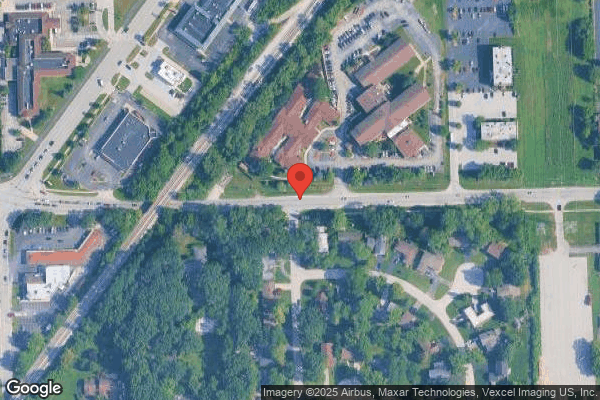
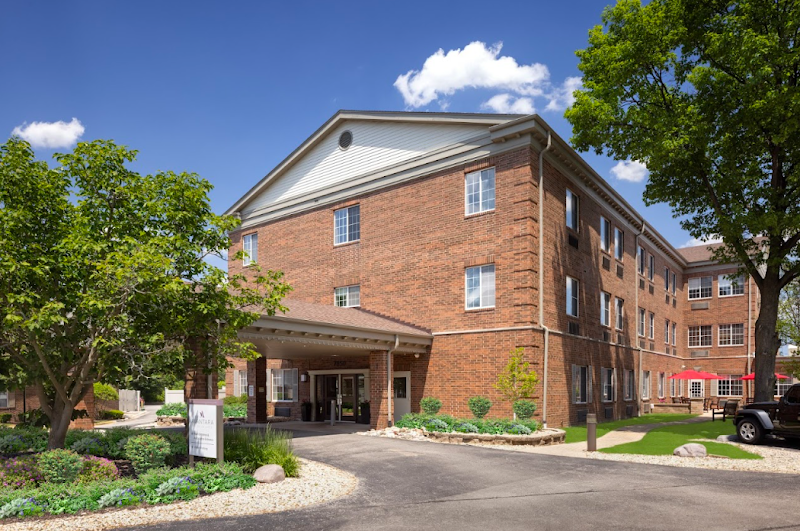
7850 WEST COLLEGE DRIVE, PALOS HEIGHTS, IL 60463 (708) 361-6990
For profit - Corporation 184 Beds LEGACY HEALTHCARE Data: November 2025
Trust Grade
35/100
#113 of 665 in IL
Last Inspection: November 2024

Within standard 12-15 month inspection cycle. Federal law requires annual inspections.

Overview

Avantara Palos Heights has a Trust Grade of F, indicating significant concerns about the facility's quality of care. Ranked #113 out of 665 nursing homes in Illinois, it performs in the top half of state facilities, but the low trust grade raises red flags. The facility is showing improvement; it reduced the number of issues from 13 in 2024 to just 2 in 2025. However, staffing is a concern with a 2/5 star rating and a turnover rate of 59%, which is higher than the state average, suggesting difficulties in retaining staff who know the residents well. Despite some strengths, such as an average level of RN coverage, there have been serious incidents reported, including a resident falling out of bed due to a lack of proper supervision and equipment usage, and another resident self-transferring, resulting in multiple fractures. Additionally, a resident reported severe pain and inadequate care for a pressure sore, highlighting ongoing care issues that families should consider. Overall, while there are signs of improvement, the facility has significant weaknesses that may impact the quality of care for loved ones.

Trust Score
F
35/100
In Illinois
#113/665
Top 16%
Safety Record
High Risk
Review needed
Inspections
Getting Better
13 → 2 violations
Staff Stability
⚠ Watch
59% turnover. Above average. Higher turnover means staff may not know residents' routines.
Penalties
✓ Good
$54,071 in fines. Lower than most Illinois facilities. Relatively clean record.
Skilled Nurses
✓ Good
Each resident gets 56 minutes of Registered Nurse (RN) attention daily — more than average for Illinois. RNs are trained to catch health problems early.
Violations
⚠ Watch
36 deficiencies on record. Higher than average. Multiple issues found across inspections.
★★★★☆
4.0
Overall Rating
★★☆☆☆
2.0
Staff Levels
★★☆☆☆
2.0
Care Quality
★★★★☆
4.0
Inspection Score
Stable
2024: 13 issues
2025: 2 issues

The Good

  • Full Sprinkler Coverage · Fire safety systems throughout facility
  • No fines on record

Facility shows strength in fire safety.

The Bad

Staff Turnover: 59%

13pts above Illinois avg (46%)

Frequent staff changes - ask about care continuity

Federal Fines: $54,071

Above median ($33,413)

Moderate penalties - review what triggered them

Chain: LEGACY HEALTHCARE

Part of a multi-facility chain

Ask about local staffing decisions and management

Staff turnover is elevated (59%)

11 points above Illinois average of 48%

The Ugly 36 deficiencies on record

4 actual harm
Jul 2025 2 deficiencies 1 Harm
SERIOUS (G) 📢 Someone Reported This

A family member, employee, or ombudsman was alarmed enough to file a formal complaint

Actual Harm - a resident was hurt due to facility failures

Accident Prevention (Tag F0689)

A resident was harmed · This affected 1 resident

**NOTE- TERMS IN BRACKETS HAVE BEEN EDITED TO PROTECT CONFIDENTIALITY** Based on observation, interviews and record reviews, the facility failed to implement intervention related to use of bed alarm; ...

Read full inspector narrative →
**NOTE- TERMS IN BRACKETS HAVE BEEN EDITED TO PROTECT CONFIDENTIALITY** Based on observation, interviews and record reviews, the facility failed to implement intervention related to use of bed alarm; and failed to follow manufacturer's recommendation for safety use of reclining chair in preventing fall for one (R1) of three residents reviewed for accidents. This deficiency resulted in R1 who is cognitively impaired fell out of bed and sustained a large bruise on the left side of neck and jaw. Findings include: R1 is a [AGE] year-old, male, originally admitted in the facility on 06/21/23 with diagnoses of Unspecified Dementia, Unspecified Severity, with Psychotic Disturbance; Psychotic Disorder with Delusions due to known Physiological Condition; and Delusional Disorders. R1's MDS (Minimum Data Set) dated 04/23/25 and 06/17/25 documented the following: Sec C - memory problem for short-term and long-term; cognitive skills for daily decision making is severely impaired. Sec GG - dependent on toileting, personal hygiene and mobility Sec J - no falls since admission/entry/reentry or prior assessment R1's fall risk evaluations documented the following: 03/25/25 - 17, high risk 05/12/25 - 17, high risk 06/22/25 - 15, high risk R1's care plans on high risk for falls related to decline in functional status, difficulty maintaining standing position, fatigue, weakness, gait problem, such as unsteady gait, even with mobility aid or personal assistance, slow gait, takes small steps, takes rapid steps, or lurching gait, impulsivity, poor safety awareness, muscle weakness, other dementia, history of falls, potential medication side effects documented the following interventions: Bed/chair alarm to alert staff when resident (R1) attempts to get out of bed unassisted, so staff can assist resident (R1) and prevent falls. Check resident (R1) frequently while in bed I would like to staff to provide me a safe environment: even floors, free from spills and/ or clutter; adequate, glare-free light; a working and reachable call light; the bed in low position at night; side rails as ordered; handrails on walls. (3/25/25) According to incident report dated 05/12/25 at approximately 10 AM, R1 was observed sitting on the floor in front of his reclining chair. R1 was being transferred to the outside patio by the CNA (Certified Nurse Aide). Staff noticed him sitting upright on the floor on his bottom as alarm was sounding. R1 was being transferred by CNA in his reclining chair and fell out of the chair when reclining chair went over the bump of the door threshold. On 06/30/25 at 3:25 PM, V5 (CNA) was asked what happened to R1 on 05/12/25. V5 stated, Around 11:00 AM after breakfast. We were putting residents out to the patio at the time. I was bringing him (R1) outside first. I grabbed the chair's push handle. I positioned myself behind the reclining chair and started to wheel it backwards. I am not tall enough to see what was going on with him while I try to pull the reclining out when the door alarm went off so loud and when I saw him, he was already sitting on the floor. Since the door alarm was so loud, I didn't hear the chair alarm. On 07/01/25 at 1:59 PM, V19 (Licensed Practical Nurse, LPN) was asked regarding R1's fall on 05/12/25. V19 stated, I do know it's towards the end of my shift. Lunch was completed, like 1 or 2 PM. We were going to take residents out of the patio. The CNA (V5) started to take him out. I didn't see him fall. When I turned around, he was on the floor already. I talked to (V2, Director of Nursing) and they reviewed the cameras. I was told that when he was taken out, when she (V5) was pulling him out, he must have grabbed the door and fell. I was there with other staff, but we were attending to other residents, and it was only her (V5) who started taking R1 outside. According to progress notes dated 06/22/25, time stamped 11:04 PM, V18 (Licensed Practical Nurse, LPN) was made aware by V4 (CNA) that R1 had a fall. R1 was observed on the floor mat lying on the right side in a fetal position. He (R1) was unable to give verbal statement. Physical assessment completed. Bowel movement at the time of fall noted. He (R1) is alert with confusion. Neuro assessment completed and log initiated. ROM (range of motion) with all extremities within normal limits. No new skin alteration. Apparent injury is not present. On 06/30/25 at 11:41 AM, R1 was observed in the dining room, attending activities. R1 was sitting in a high reclining chair. A working chair alarm was hanging at the back of his (R1) chair. R1 responded to name calling, alert with confusion. R1 speaks Spanish, was asked on how is he doing and stated he is doing very well. R1 was asked if he had fallen recently but he was unable to answer. A purplish skin discoloration was noticed on the left side of his neck and jaw, which appeared to be a bruise. R1 was asked how he got the bruise, stated I don't know. V15 (Certified Nurse Aide, CNA) was asked regarding R1's bruise. V15 stated she does not know. R1 was also observed trying to get out of his chair. R1 appeared agitated, leaning forward and backwards, attempting to stand up. Around 1:15 PM, he (R1) appeared restless, kept leaning forward with several attempts made to stand up. V15 verbalized that he (R1) gets fidgety when he is wet and needs to get changed. On 06/30/25 at 3:00 PM, incontinence care was provided to R1 by V4 and V15. Prior to putting R1 to bed, the alarm was left in the reclining chair. There was no alarm placed under R1 while in bed. On 06/30/25 at 3:15 PM, V4 was asked regarding R1's fall on 06/22/25. V4 replied, It was around 8:00 PM that I put him to bed. I changed him, he had a bowel movement. Then, I left. Then, around 8:55 PM, I came back to check on him (R1), he was sitting on the mat, his right leg was under the back wheel of his reclining chair. When I saw him, I called the nurse, V18. The nurse assessed him and then use the mechanical lift to put him back to bed. We found out he had bowel movement again. When he is wet or has bowel movement, he gets agitated. Residents are monitored every two hours. He (R1) does not know how to use call light. I was in room (next door), just next door, and providing care. V4 was asked if she heard R1's bed alarm go off. V4 verbalized, I didn't hear any alarm. It's because the batteries were not working. Any staff is responsible to check the alarm to make sure it is properly working. At this time, V4 took the alarm from R1's reclining chair and placed it under his (R1) lower back. The alarm was placed after surveyor asked about alarm. On 07/01/25 at 10:42AM, V18 was interviewed regarding R1's fall incident on 06/22/25. V18 stated, It was towards the end of my afternoon shift. I actually had just came from his room like 40 minutes ago when I checked him (R1), and he was okay. I went back to my desk, 40 minutes after, the CNA (V4) told me that he had a fall. I went in, I assessed him. He was okay. I checked his brief, and he had a bowel movement. His bed alarm didn't go off but when I checked it. It seems like it was working so I asked her (V4) to change the batteries. No bruising, vital signs were checked. I called the eye doctor, the family and supervisor. I did not hear any alarm prior to fall. R1's eye health note dated 06/22/25, time stamped 11:52 PM documented: fall without injury. Patient (R1) is at risk for falls due to the following; recurrent falls, unwitnessed fall. Rolled down to the floor from the bed/recliner. The bed is at the lowest level. Did not hit the head. No skin tears or acute pain. Not on anticoagulation. On exam, no head injury, and no overt physical signs of trauma. No reports of syncope, chest pain, nausea or vomiting. Neuro checks are being performed. Orders: assess pain per protocol; monitor with neuro-checks per facility protocol; fall precautions per facility protocol; notify a clinician of a change in condition; R1's NP (Nurse Practitioner) progress notes dated 06/23/25, time stamped 3:13 PM recorded that he (R1) was seen due to recent fall. Review of systems showed negative bruising, abrasions, skin tears, lacerations and pressure ulcers. Progress notes dated 06/25/25, time stamped 6:57 PM documented a bruise on R1's left side of neck was observed. Skin and Wound note dated 06/26/25, time stamped 1:50 PM recorded: Patient (R1) seen today at request of staff for skin alteration to left face/neck. Exam revealing for ecchymoses in late stages of healing without edema and with overlying skin intact. On 06/30/25 at 3:40 PM, V7 (Family Member) was asked about R1's bruise on the left side of his neck and jaw. V7 verbalized, He had a big bruise on the left side of his neck because of the fall last Sunday, 06/22/25. I was told that he was trying to get up and hit his neck on the chair. On 07/01/25 at 10:55 AM, V8 (Wound Care Nurse) was interviewed regarding R1's bruise on the left side of neck and jaw. V8 verbalized, I was first notified last Thursday, 06/26/25 about his bruise on neck, face and jaw, on his left side. They just wanted us to come and take a look. Bruise is not much about wound care to do something about it in terms of treatment but (V20 Wound Nurse Practitioner, NP) seen R1. We could have not given any details. I know they said that he (R1) had a fall, could be related to that. On 07/01/25 at 11:33AM, V2 (Director of Nursing/Fall Coordinator) was interviewed regarding R1 and falls. V2 stated, He is alert, oriented to self, confuse all the time, He has very advanced Dementia. He is Spanish speaking. He is combative during care and during assistance. The fall incident on 05/12/25 could possibly be prevented by making sure he did not make sudden movements and having another person to supervise during the transport. There were staff present during that time watching other residents. Because of the sudden movements by R1, staff could not get to him right away. The 06/22/25 fall incident happened around 10 PM. They observed him (R1) on the floor mat next to his bed. He (R1) was seen 15 minutes prior to fall. The bed was low, and he was positioned correctly in the center of the bed. He was not sleeping, moves around. He probably woke up, maybe he had a bowel movement and tried to go to the bathroom. There were no injuries at the time as assessed by nurse. The bruise on the neck and jaw could be related to the fall. On 07/01/25 at 12:23 PM, V9 (Nurse Practitioner) was interviewed regarding R1. V9 replied, I have been seeing him more than 3 years now. He uses a reclining chair because he always climbs up from the wheelchair. I was notified with his fall incident on 05/12/25 and saw him on 05/14/25. There was no injury. He had a fall while he was transported to the patio. This fall could be prevented by assisting the patient or making sure resident is secure in the reclining chair. He has a behavior that he appears calm then suddenly become agitated, so staff needs to hold him to prevent him from falling or injuring himself or hurting other staff. I know his behavior, staff knows his behavior also, so staff should anticipate and make sure he won't fall. With the fall incident on 06/22/25, bed alarm is part of the intervention and staff make sure it is functioning. The bruise on the left side of his neck/jaw might be from the fall. On 07/03/25 at 9:54 AM, V20 was interviewed regarding R1's bruise. V20 stated, I saw him on 06/26/25 for the bruise on left face/neck/jawline. There was ecchymosis and discoloration of yellow, purple and green indicating late stages of healing for a bruise. Looks like it's been there for a couple of days. He had a fall Sunday, 06/22/25, the bruise could be related to the fall, possibly related to fall because of the appearance of the bruise when I did the assessment. There was no edema, generally caused by hitting onto something which could be related to fall. Facility just have to follow their fall protocol. Facility's policy titled Fall Occurrence dated 7/26/24 stated in part but not limited to the following: Policy Statement: It is the policy of the facility to ensure that residents are assessed for risk for falls, that interventions are put in place, and interventions are reevaluated and revised as necessary. R1's (Name of reclining chair) Operating Manual, documented in part but not limited to the following: 2 Safety Requirements 2.5 Hazards 2.5.6 Unintended Movement - Danger of Falling or Collision We recommend (name of reclining chair) chairs for indoor use within a long-term care institution and where there is not enough slope to cause the chairs to move unaided. Chairs used where the surface is uneven or sloped are at risk of unintended movement and could become a serious danger to the resident, caregiver (s) or a third party. We recommend that (name of reclining chair) chairs are located away from stairwells, elevators, and exterior doorways within a long-term care institution. Outdoor use is appropriate only under the strict supervision and full attention of a caregiver who is physically capable of preventing any unintended movement over any surfaces that are to be traveled on. We recommend that a second caregiver assist when the chair is moved over surfaces that could cause significant unintended movement.
CONCERN (D) 📢 Someone Reported This

A family member, employee, or ombudsman was alarmed enough to file a formal complaint

Potential for Harm - no one hurt, but risky conditions existed

Incontinence Care (Tag F0690)

Could have caused harm · This affected 1 resident

**NOTE- TERMS IN BRACKETS HAVE BEEN EDITED TO PROTECT CONFIDENTIALITY** Based on observation, interviews and record reviews, the facility failed to follow their policy related to incontinence and peri...

Read full inspector narrative →
**NOTE- TERMS IN BRACKETS HAVE BEEN EDITED TO PROTECT CONFIDENTIALITY** Based on observation, interviews and record reviews, the facility failed to follow their policy related to incontinence and perineal care for one (R1) of three residents reviewed for incontinence care. This failure resulted in R1 developing incontinence associated dermatitis (IAD) on the scrotal area. Findings include: R1 is a [AGE] year-old male, admitted in the facility on 09/26/24, with diagnoses of: Unspecified Dementia, Anemia, Acute Kidney Failure, Benign Prostatic Hyperplasia, and History of Cerebral Infarction. According to R1's MDS (Minimum Data Set) dated 06/17/25, R1's BIMS was not conducted due to R1's severe cognitive impairment. According to Section GG, R1 is dependent on staff for eating, toileting and hygiene, toilet transfer, mobility. Section H indicated that R1 is always incontinent of urine, and frequently incontinent of bowel. On 06/30/25 at 11:41am, R1 was sitting in the reclining chair in front of the dining table. Alert, not interviewable. Activity on-going, however R1 doesn't appear to participate. Chair alarm and star symbol were attached to the reclining chair. R1 was observed leaning forward and touching the table. On 06/30/25 at 12:48pm, surveyor observed R1 in the same location and position at the dining table. Surveyor observed R1 mumbling Spanish words. On 06/30/25 at 1:10pm, R1 remains sitting at the same area in the dining room. At 1:15pm, before R1 had his lunch, V5 (Certified Nurse Aide, CNA) and V15 (CNA) brought R1 to the washroom which is located at the corner of the dining room area. Surveyor observed the changing process in the washroom. V5 put anti-skid socks on R1, then using the standing lift, both V5 and V15 were instructing R1 to stand up, to which R1 was not able to follow. R1 was having difficulty standing up. Attempt to transfer to toilet, and brief changing was not done. V15 brought R1 back to the dining table to have lunch, without his brief checked and changed. When V5 and V15 were asked by this surveyor as to when R1 was changed last, they said when R1 got up this morning around 8:00am. On 06/30/25 at 2:59pm, V5 and V15 brought R1 to his room to check and change R1's brief in bed. V5 and V15 pivot transferred R1 from reclining chair to the bed with scooped mattress. Brief was completely soaked with urine and feces. Scrotal lesion observed. V5 and V15 cleansed R1's perineal area with cloth towel with soap and water. On 06/30/25 at 4:00pm, V7 (Family Member) came to visit. V7 said that she visits every night and that R1 is soaking wet with double briefs almost every time she visits. V7 stated she has informed the staff about the wound on scrotal area. V7 noticed the scrotal wound when she was giving care to R1 on 6/26/25, she stated she's unsure how long the wound has been there. On 07/01/25 at 12:41pm, wound care observation with V8 (Registered nurse, RN/Wound Care Nurse) and V17 (CNA) was performed. R1's eyes were closed, non-verbal. V8 explained the process to R1. Hand Hygiene observed. V8 described the scrotal area as 100% granulation, no staging, about 0.3 x 0.2 mm (millimeters) in size full thickness. There was no bleeding or drainage. BPOC ([NAME] and [NAME] Oil)/Venelex ointment was applied after cleansing the wound area with normal saline. Sacral area observed with scar tissue. Perineal care was rendered, and brief was changed. TAR (Treatment Administration Record) showed administration of treatment per V8. On 07/01/25 at 10:55 am, interviewed V8 who has been working at this facility for 7 years, with 3 years working as the wound care nurse. When surveyor asked V8 regarding R1's skin condition, V8 said that currently he's following R1 for MASD (Moisture-Associate Skin Damage) of scrotum, this was reported to him on Friday, 6/27/25. V8 stated, I went and did my assessment, it was MASD, all measurements and pictures are through Healing Partners. We don't have access to it. There's one small area on the left side of scrotum. Venelex Treatment ointment daily was ordered by V12). When asked about other interventions and prevention of skin breakdown, V8 said Stay clean and dry, since it is moisture related, according to WNP it is MASD rather than IAD (Incontinence Associated Dermatitis). R1 has co-morbidities and fragility, also keep patient clean and dry, making sure staff are doing their check and change at least every two hours. On 7/01/25 at 12:12 PM, V2 (Director of Nursing) regarding policy on incontinent and perineal care, stated, They should check patients every 2 hours, do the rounds then check and change. We use cloth towels with soap and water for perineal care. On 7/1/25 at 12:25 PM, interviewed V9 (Nurse Practitioner, NP). I was notified about the scrotal skin tear on same day he got the skin tear, on 6/27/25. I asked the staff to apply protective cream and follow up with the resident. When surveyor asked about the cause, V9 said, Sometimes from wet briefs. (R1) has very fragile skin, moisture and incontinence, there should be protective skin care, and change brief ideally every two hours or per facility policy. For this resident (R1), should have at least two staff when changing, should be changed in bed ideally. On 7/01/25 at 3:03PM, phone interview with V12 (Wound Nurse Practitioner). When asked about wound status, she said it was the first time she saw it on 6/30/25. V12 stated, The wound nurse said the family told them about the scrotal area. I categorized it as (IAD) Incontinence Associated Dermatitis, moisture skin damage. The patient is incontinent. This is due to the repeated exposure to body fluids. When V12 was asked what her expectations are from the staff when it comes to incontinence care, V12 said she would refer to the facility policy, for the facility to follow the incontinence care protocol. Progress Notes dated 6/30/2025 per V12 reads in part: Information necessary for today's visit was obtained from nursing staff, per patient's medical record. Reason for visit: new skin and wound consult on current resident (R1). Patient unable to participate in full Review of Systems (ROS) related to altered mental status. Gastrointestinal: fecal incontinence, Genitourinary: urinary Incontinence. Musculoskeletal: Generalized weakness, multiple contractures. SKIN: warm and dry, thin, fragile, wound/skin condition noted. WOUND ASSESSMENT: Location: Scrotum Primary Etiology: Incontinence Associated Dermatitis (IAD). Stage/Severity: Partial Thickness. Wound Status: New; Odor Post Cleansing: None Size: 0 cm x 0 cm x 0 cm. Calculated area is 0 sq cm. Wound Base: 100% epithelial Exposed Tissues: Dermis Wound Edges: Attached Periwound: Dermatitis Exudate: None amount of None ASSESSMENT: Irritant contact dermatitis due to fecal, urinary or dual incontinence. PLAN: Wound # 17 Scrotum Incontinence Associated Dermatitis (IAD) Treatment Recommendations: 1. Cleanse with soap and water, pat dry. 2. apply Venelex/BPCO to base of the wound. 3. Leave open to air. 4. Daily, and PRN (as needed). PREVENTATIVE MEASURES: The resident is incontinent of bowel and bladder. Use appropriate moisture barrier creams per formulary to provide thorough skin care with each incontinent episode. Use formulary briefs when indicated to manage moisture and assess often. R1's care plan on incontinence dated/initiated on 06/29/23, reads in part: Resident has an actual impairment to skin integrity IAD to scrotum and is at risk for further skin breakdown related to recent surgery, impaired mobility, weakness, cognitively impaired, falls, anemia, and malnutrition. Interventions read in part: Call light placed within easy reach. Commonly used items placed within easy reach. The staff will check resident for incontinence episode and provide peri care as needed every shift. Kept clean and comfortable. Provide assistance with toileting needs as needed. Skin check and barrier cream applied as necessary. The facility's Incontinent and Perineal Care Policy dated 7/31/24, reads in part, It is the policy of the facility to provide perineal care to ensure cleanliness and comfort to the resident, to prevent infection and skin irritation, and to observe the resident's skin condition. Procedures include doing rounds at least every 2 hours to check for incontinence during shift. Provide privacy. Avoid unnecessary exposure of resident. If the resident refuses the procedure - inform the charge nurse. Perform hand hygiene before the procedure. Put on gloves and appropriate personal protective equipment if indicated. Maintain clean techniques. Wash the perineal area and gently dry after the procedure. Discard disposable items into designated plastic bag. Wash hands. Put on new set of clean gloves to put on clean briefs/incontinent pads, to make resident comfortable, groom and change clothing. Complete hand washing after the procedure and do after care of equipment per facility protocols.
Nov 2024 6 deficiencies
CONCERN (D)

Potential for Harm - no one hurt, but risky conditions existed

Resident Rights (Tag F0550)

Could have caused harm · This affected 1 resident

Based on observation, interview and record review, the facility failed to ensure, each resident's dignity was maintained by not placing the urinary catheter inside of his pants leg and securing it for...

Read full inspector narrative →
Based on observation, interview and record review, the facility failed to ensure, each resident's dignity was maintained by not placing the urinary catheter inside of his pants leg and securing it for 1 of 3 residents (R128) in a sample of 27 reviewed for dignity. Findings include: On 10/29/2024 at 11:50am R128 was observed with the unit manager, at the dining room table with his urinary catheter exposed and coming out the top of his pants and not secured. On 10/29/2024 at 11:55am V13 (Unit Manager) said R128's urinary catheter should be inside of his pants and secured down his leg into the privacy bag. On 10/30/2024 at 1:00pm V2 (Director of Nursing-DON) said she expects all residents with a urinary catheter to have it properly secured and not exposed. An order summary report indicates R128 has a diagnosis of urinary tract infection, a urinary catheter of 22 French for obstructive uropathy. A care plan dated 10/7/2024 indicated R128 has a potential for infection related to the indwelling catheter, and an intervention of ensure proper placement of the indwelling catheter secure lock device in place, tubing non-kinked, drainage bag below bladder and off the floor. Facility Policy: Facility unable to prevent a policy.
CONCERN (D)

Potential for Harm - no one hurt, but risky conditions existed

Quality of Care (Tag F0684)

Could have caused harm · This affected 1 resident

**NOTE- TERMS IN BRACKETS HAVE BEEN EDITED TO PROTECT CONFIDENTIALITY** Based on observation, interview and record the facility failed to follow their policy and procedures in providing safety during ...

Read full inspector narrative →
**NOTE- TERMS IN BRACKETS HAVE BEEN EDITED TO PROTECT CONFIDENTIALITY** Based on observation, interview and record the facility failed to follow their policy and procedures in providing safety during incontinence care by not providing 2 persons assist. The facility also failed to ensure reporting and documentation of the incident immediately in resident medical record. This deficient affects one (R61) of three residents reviewed for Quality of Care. Findings include: On 10/29/24 at 10:35AM, Observed R61 lying in bed with dark blue purple discoloration /bruising and swelling on facial more prominent on forehead, bilateral eyes, cheeks, and right side of neck. R13 can barely open her eyes because of the swelling. R61 said she was pushed out of the bed by CNA during providing care. She has bilateral floor mats on the sides of her bed, but her bed is not in low position. V9 LPN (Licensed Practical Nurse) said R61 is at high risk for falls due to her recent fall. V9 said R61's bed should be in the lowest position. V9 adjusted the bed to the lowest position using the bed control at the foot part of the bed. On 10/29/24 at 10:38AM, Informed V7 Restorative Nurse of above observation made. R61 was re-admitted on [DATE] with diagnosis listed, in part but not limited to, Paroxysmal Atrial Fibrillation, Gastrointestinal hemorrhage, Needs assistance with personal care, Disorder of the muscle, Muscle spasm of back, Stage 3 chronic kidney disease, Congestive heart failure, History of falling, Old myocardial infarction, Alzheimer's disease. re-admission fall assessment dated [DATE] and most recent fall assessment dated [DATE] indicated she is at high risk for fall. MDS section GG Functional abilities and goals: GG0130 Self-Care indicated Personal hygiene, Toileting hygiene and Shower/bathe were coded 01- Dependent, Helper does all of the effort. Resident does none of the effort to complete the activity or the assistance of 2 or more helpers is required for the resident to complete the activity. Comprehensive care plan indicates: She is at risk for falls related to Current medication use, Poor safety awareness, Unsteady gait, and Generalized weakness. She has ADL self-care performance deficit and impaired mobility. She has impaired cognitive function/dementia or impaired thought processes (forgetful, short term memory impairment) related to diagnosis of dementia as evidenced of BIM (brief interview for mental status) score of 9. R61's progress notes dated 10/26/24 at 6:50AM documented by V21 LPN indicated: V23 Agency CNA reported to her R61 was confused and not following commands when asked to turn on her side while changing her diaper (brief). Upon rounding, observed R61 swaying her legs out of the bed stating, CNA pushes me out of the bed. V21 LPN and V23 Agency CNA together redirected and repositioned R61, reassuring her she did not fall out of bed, safety measures are in place. Endorsed to oncoming nurse and CNA. R61's fall incident report dated 10/26/24 at 8:55AM completed by V12 Unit Manager indicated: When CNA delivered breakfast tray, R61 mentioned she has a headache and pointed to her right forehead. CNA observed some swelling and called for the nurse. R61 stated when the CNA was changing her, she was placed on her right side and slipped off the bed. R61's progress notes dated 10/26/24 at 8:55AM documented by V12 Unit Manager a change of condition form indicated: R61 stated she fell out of bed during ADL care. R61 reporting pain to right hip and headache 6/10. She has light purple bruising and swelling to right forehead. Neuro checks initiated and WNL (within normal limit). She can move all extremities without difficulty. R61 was sent to the hospital for evaluation. R61's concerns/response form dated 10/26/24 completed by V12 Unit Manager indicated: R61 stated, I was pushed out of bed, right before the sun came up, it happened. R61 said, She (V23 Agency CNA) turned me while changing me and before I knew it, I was on the floor. She went to get help and they each took a side, one at my head and one at my feet and lifted me into bed. R61's hospital record dated 10/26/24 indicated: This is a [AGE] year-old female with a history of dementia presents emergency room for fall. Patient was turned onto her side while they were changing her. Patient then apparently went over the rail, landed on her right side. She is anticoagulated. She has bruising on her forehead. She does have a history of dementia, is difficulty to obtain history from. X-rays were done, negative for fractures. CT (computed tomography) scans were done negative for intracranial hemorrhage and traumatic injury. R61 returned to facility. R61's progress notes documented by V12 Unit Manager dated 10/26/24 at 4:06PM indicated: Discussed with R61's daughter fall intervention would be she will be changed with 2 staff now, one on each side of bed, floor mat upon her return, bed to be in low position except during transfers which also be with two staff. R61 agreed. On 10/30/24 at 10:33AM, Observed R61 lying in bed still with dark blue purple discoloration /bruising and swelling on facial more prominent on forehead, bilateral eyes, cheeks, and right side of neck. Observed floor mat on bilateral side of the bed but the bed is not on low position. Called V7 Restorative nurse and showed observation made. V7 lowered the bed to the lowest position using the bed control located at the foot part of the bed. On 10/30/24 at 12:54PM, V21 LPN said she was the nurse for R61 on 10/25/24 11-7 shift. She was not aware R61 fell out of bed when V23 Agency was providing care. She said around 6:00AM, V23 Agency CNA asked her help to pull up R61 from bed. She observed R61 hanging her legs out of bed. R61 said to her, She (CNA) pushed me out of bed. V21 asked V23 what happened but denied allegation of R61. V21 said she did not notice any bruises nor swelling on her face at time. She assumed R61 is confused. She did not complete an incident report and did not notify the supervisor or DON (Director of Nursing). R61's allegation V23 Agency CNA pushed her out of bed. She endorsed it to the next shift. Then when she got home around 10:00AM, she received calls from V2 DON and V1 Administrator regarding the incident. V21 said she should notify them and complete an incident report because it is an allegation of abuse. On 10/30/24 at 12:29PM, Review R61's medical records with V2 DON. Informed V2 of concerns regarding V23 Agency CNA providing 1 person assist instead of 2 persons assist with R61 during personal hygiene/incontinence care. R61's MDS section GG Functional abilities and goals: GG0130 Self-Care indicated Personal hygiene, coded 01- Dependent, Helper does all of the effort. Resident does none of the effort to complete the activity or the assistance of 2 or more helpers is required for the resident to complete the activity. Informed V2 of fall intervention was not implemented. R61 was observed for 2 days 10/29 and 10/30/24 with bed not in low position. Informed V2 R61 reported to V21 LPN V23 Agency CNA pushed her out from bed, she did not investigate allegation made. V21 assumed R61 is confused. V12 Unit Manager started investigation when R61 complaint of pain and purplish discoloration/bruise started to occur. On 10/31/24 at 11:10AM, V2 DON said they don't have procedure guidelines in turning resident during incontinence care for dependent resident. V2 said resident should be turned towards the CNA, not away. R61 does not use side rails in bed for bed mobility. On 10/31/24 at 11:57AM, V1 Administrator said she is the abuse coordinator. She said she did not receive a call from V21 LPN about allegation of R61, but V12 Unit Manager did the investigation. Informed V1 R61 reported to V21 LPN V23 pushed her from bed. Allegation was ignored because she assumed R61 is confused. V21 documented allegation made but did not notify the supervisor. No incident report was made, and no investigation was done not until R61 presented sign and symptoms of bruising, swollen, and complaining of pain on forehead. V1 said she expected any allegation of abuse should be reported immediately. She did staff in services for timeliness of reporting and investigation. Facility's policy on Abuse and Neglect indicates revised 7/12/24 indicates: Policy statement: It is the policy of the policy of the facility to provide professional care and services in an environment is free from any type of abuse, corporal punishment, misappropriation of property, exploitation, neglect, or mistreatment. The facility follows the federal guidelines dedicated to prevention of abuse and timely and thorough investigation of allegations. These guidelines include compliance with the seven (7) federal components of prevention and investigation. V. Investigation: * Investigate all allegations of abuse, neglect, exploitation, and misappropriation of property. *Identify staff responsible for investigation. All allegations will be investigated by administrator or Designee immediately. *Interview all involved person including victim, perpetrator, witnesses and other who might have knowledge of the allegation. *Focusing on the investigation and determining if abuse, neglect, exploitation, or misappropriation of property has occurred. VII. Reporting/Response: *All allegations and or suspicions of abuse must be reported to the Administrator immediately. If the administrator is no present, the report must be made to the administrator's designee. *All allegations of abuse will be reported to IDPH immediately not exceeding 2 hours after the initial allegation is received.
CONCERN (D)

Potential for Harm - no one hurt, but risky conditions existed

Deficiency F0697 (Tag F0697)

Could have caused harm · This affected 1 resident

Based on observation, interview and record review the facility failed to ensure pain was thoroughly assessed and treated before, during and after surgical wound care for 1 of 4 resident's (R127) revie...

Read full inspector narrative →
Based on observation, interview and record review the facility failed to ensure pain was thoroughly assessed and treated before, during and after surgical wound care for 1 of 4 resident's (R127) reviewed for pain management in a sample of 27. Findings include: On 10/30/2024 at 10:40 am R127 was observed flinching during sacral wound care treatment. R127 said she had pain medication about 15 minutes ago and it was okay V14 (Wound Care Nurse) could continue. On 10/30/2024 at 11:15am V14 was asked did he apply R127 lidocaine gel to the sacral wound before starting the wound care treatment? V14 said He does not apply the lidocaine gel and he was not aware if the nurse had applied the gel. On 10/30/2024 at 12:00 noon V15 (Unit Nurse) said she did not apply the lidocaine gel to R127 surgical wound because it is for the treatment nurse and the lidocaine gel was given to V14 when it arrived from the pharmacy. On 10/30/2024 at 12:00 noon V2 (Director of Nursing) said, I expect the wound care nurses and the staff nurses to assure all residents are medicated before, during and after treatment as ordered by the physician. An order summary sheet dated 10/30/2024 indicated R127 has a diagnosis of encounter for surgical aftercare following surgery to the skin and subcutaneous tissue, an order dated 10/2/2024 for lidocaine external gel 4% apply to sacrum topically every day shift for wound care apply 15 minutes before dressing change. A care plan dated 9/18/2024 indicates R127 has a focus of risk for pain related to sacral wound, rheumatoid arthritis and osteoarthritis, and intervention to evaluate efficacy of pain management, medicate prior to therapy and treatment, observe for non-verbal signs of pain. Facility Policy: Pain management revised 8/16/2024. Policy statement: It is the policy of the facility to ensure all residents are assessed for pain in every situation where there is a potential for pain. For pain complaints and for situations incidents might result to pain (example wound care). Procedure: 2. During treatment procedure the resident will be assessed for pain. It is important pain medication will be administered to residents prior to wound.
CONCERN (D)

Potential for Harm - no one hurt, but risky conditions existed

Infection Control (Tag F0880)

Could have caused harm · This affected 1 resident

Based on observation, interview, and record review the facility failed to ensure appropriate infection control practices were followed when handling soiled linens/gown. This deficiency affects one (R6...

Read full inspector narrative →
Based on observation, interview, and record review the facility failed to ensure appropriate infection control practices were followed when handling soiled linens/gown. This deficiency affects one (R60) of three residents in the sample of 27 reviewed for Infection control during ADL (Activity of Daily Living) care. Findings include: On 10/29/24 at 10:50AM, Observed V10 Hospice CNA (Certified Nurse Assistant) providing morning care/personal hygiene to R60. Observed all soiled linen and gown were on the floor. Surveyor asked V10, why the soiled linens are on the floor. V10 said that it is okay for her to placed it on the floor because the linens are soiled. V7 Restorative Nurse corrected V10 Hospice CNA and informed her that it is not right to place the soiled linens on the floor. It should be placed in plastic bag for infection control. On 10/29/24 at 12:53PM, Informed V5 Infection Preventionist Nurse of above observation. She said V10 Hospice CNA should not place the soiled linens/gown on the floor. She should use soiled hamper linen or placed the soiled linens in plastic bag. Requested for policy. On 10/31/24 at 2:05PM, Informed V1 Administrator and V2 DON (Director of Nursing) of above concern. Facility unable to provide policy.
CONCERN (E) 📢 Someone Reported This

A family member, employee, or ombudsman was alarmed enough to file a formal complaint

Potential for Harm - no one hurt, but risky conditions existed

Accident Prevention (Tag F0689)

Could have caused harm · This affected multiple residents

**NOTE- TERMS IN BRACKETS HAVE BEEN EDITED TO PROTECT CONFIDENTIALITY** Based on observation, interview, and record review the facility failed to ensure resident safety by failure to provide 2 persons...

Read full inspector narrative →
**NOTE- TERMS IN BRACKETS HAVE BEEN EDITED TO PROTECT CONFIDENTIALITY** Based on observation, interview, and record review the facility failed to ensure resident safety by failure to provide 2 persons assist when providing incontinence care. This failure resulted in resident (R61) to fall from bed required visit to emergency hospital for evaluation due to bruising, swelling and pain on forehead. The facility also failed to ensure fall preventive measures were being implemented for residents who are at high risk for falls. This deficiency affects five (R13, R33, R61, R105, R392) residents in the sample of 27 reviewed for Fall prevention program. Findings include: R61 On 10/29/24 at 10:35AM, Observed R61 lying in bed with dark blue purple discoloration /bruising and swelling on face which is more prominent on forehead, bilateral eyes, cheeks, and right side of neck. R13 can barely open her eyes because of the swelling. R61 said she was pushed out of the bed by CNA during providing care. She has bilateral floor mats on the sides of her bed, but her bed in not in low position. V9 LPN (Licensed Practical Nurse) said R61 is at high risk for fall due to her recent fall. V9 said R61's bed should be in the lowest position. V9 adjusted the bed to the lowest position using the bed control at the foot part of the bed. On 10/29/24 at 10:38AM, Informed V7 Restorative Nurse of above observation made. R61 was re-admitted on [DATE] with diagnosis listed, in part but not limited to, Paroxysmal Atrial Fibrillation, Gastrointestinal hemorrhage, Needs assistance with personal care, Disorder of the muscle, Muscle spasm of back, Stage 3 chronic kidney disease, Congestive heart failure, History of falling, Old myocardial infarction, Alzheimer's disease. re-admission fall assessment dated [DATE] and most recent fall assessment dated [DATE] indicated R61 is at high risk for fall. MDS section GG Functional abilities and goals: GG0130 Self-Care indicated Personal hygiene, Toileting hygiene and Shower/bathe were coded 01- Dependent, Helper does all the effort. Resident does none of the effort to complete the activity or the assistance of 2 or more helpers is required for the resident to complete the activity. Comprehensive care plan indicates: R61 is at risk for falls related to Current medication use, Poor safety awareness, Unsteady gait, and Generalized weakness. She has ADL self-care performance deficit and impaired mobility. She has impaired cognitive function/dementia or impaired thought processes (forgetful, short term memory impairment) related to diagnosis of dementia as evidenced of BIM (brief interview for mental status) score of 9. R61's progress notes dated 10/26/24 at 6:50AM documented by V21 LPN indicated: V23 Agency CNA reported to V21 R61 was confused and not following commands when asked to turn on her side while changing her diaper (brief). Upon rounding, observed R61 swaying her legs out of the bed stating, CNA pushes me out of the bed. V21 LPN and V23 Agency CNA together redirected and reposition R61, reassuring her she did not fall out of bed, safety measures are in place. Endorsed to oncoming nurse and CNA. R61's fall incident report dated 10/26/24 at 8:55AM completed by V12 Unit Manager indicated: When CNA delivered breakfast tray, R61 mentioned she has a headache and pointed to her right forehead. CNA observed some swelling and called for the nurse. R61 stated when the CNA was changing her, she was placed on her right side and slipped off the bed. R61's progress notes dated 10/26/24 at 8:55AM documented by V12 Unit Manager a change of condition form indicated: R61 stated she fell out of bed during ADL care. R61 reporting pain to right hip and headache 6/10. She has light purple bruising and swelling to right forehead. Neuro checks initiated and WNL (within normal limit). She can move all extremities without difficulty. R61 was sent to the hospital for evaluation. R61's concerns/response form dated 10/26/24 completed by V12 Unit Manager indicated: R61 stated, I was pushed out of bed, right before the sun came up, it happened. R61 said, She (V23 Agency CNA) turned me while changing me and before I knew it, I was on the floor. She went to get help and they each took a side, one at my head and one at my feet and lifted me into bed. R61's hospital record dated 10/26/24 indicated: This is a [AGE] year-old female with a history of dementia presents emergency room for fall. Patient was turned onto her side while they were changing her. Patient then apparently went over the rail, landed on her right side. She is anticoagulated. She has bruising on her forehead. She does have a history of dementia, is difficulty to obtain history from. X-rays were done, negative for fractures. CT (computed tomography) scans were done negative for intracranial hemorrhage and traumatic injury. R61 returned to facility. R61's progress notes documented by V12 Unit Manager dated 10/26/24 at 4:06PM indicated: Discussed with R61's daughter fall intervention would be she will be changed with 2 staff now, one on each side of bed, floor mat upon her return, bed to be in low position except during transfers which also be with two staff. R61 agreed. On 10/30/24 at 10:33AM, Observed R61 lying in bed still with dark blue purple discoloration /bruising and swelling on facial more prominent on forehead, bilateral eyes, cheeks, and right side of neck. Observed floor mat on bilateral side of the bed but the bed is not on low position. Called V7 Restorative nurse and showed observation made. V7 lowered the bed to the lowest position using the bed control located at the foot part of the bed. On 10/30/24 at 12:54PM, V21 LPN said she was the nurse for R61 on 10/25/24 11-7 shift. She was not aware R61 fell out of bed when V23 Agency was providing care. She said around 6:00AM, V23 Agency CNA asked her help to pull up R61 from bed. She observed R61 hanging her legs out of bed. R61 told V21, She (CNA) pushed me out of bed. V21 asked V23 what happened but denied allegation of R61. V21 said, she did not notice any bruises nor swelling on her face at time. She assumed R61 is confused. V21 did not complete an incident report and did not notify the supervisor or DON (Director of Nursing) of R61's allegation that V23 Agency CNA pushed R61 out of bed. V21 endorsed it to the next shift. When V21 got home around 10:00AM, she received calls from V2 DON and V1 Administrator regarding the incident. V21 said she should notify them and complete an incident report because it is an allegation of abuse. On 10/30/24 at 12:29PM, Reviewed R61's medical records with V2 DON. Informed V2 of concerns regarding V23 Agency CNA providing 1 person assist instead of 2 persons assist with R61 during personal hygiene/incontinence care. R61's MDS section GG Functional abilities and goals: GG0130 Self-Care indicated Personal hygiene, coded 01- Dependent, Helper does all the effort. R61 does none of the effort to complete the activity and the assistance of 2 or more helpers is required for the resident to complete the activity. Informed V2 the fall intervention was not implemented. R61 was observed for 2 days 10/29 and 10/30/24 with bed not in low position. Informed V2 R61 reported to V21 LPN V23 Agency CNA pushed her out from bed. V2 did not investigate allegation made. V21 assumed R61 is confused. V12 Unit Manager started investigation when R61 complained of pain and purplish discoloration/bruise started to occur. On 10/29/24 at 10:38AM, V7 Restorative Nurse provided surveyor list of residents on high fall list on 3rd floor updated 10/17/24 with indication of fall prevention measures such as bed/chair alarm, floor mats, wide mattress, bolsters, dining room. Rounds made to the residents listed with V7. R13 On 10/29/24 at 10:40AM, Observed R13 lying in bed not in low position. Showed observation made to V7 Restorative Nurse. V7 adjusted R13 bed to lowest position using the bed control at the foot part of the bed. On 10/29/24 at 12:29PM, Reviewed R13's medical records with V2 DON. R13 was admitted on 10/24 23 with diagnosis listed, in part but not limited to, Epilepsy, Anxiety disorder, Injury of head, Abnormality of gait and mobility, Reduced mobility, Dementia, Encephalopathy, Syncope, and collapse. admission fall assessment dated [DATE] and most fall assessment dated [DATE] indicated at high risk for fall. Comprehensive care plan indicates she is at high risk for falls related to decreased strength, endurance, balance, epilepsy, anemia, dementia, cardiac issues, and possible untoward effects related to medications. R13 has multiple falls dated: 2/15/24, 3/11/24, 3/23/24 and 10/20/24. All unwitnessed fall in her room. Most recent fall dated 10/20/24 indicated she was observed lying in left lateral position near bed and nightstand with wheelchair position to the right side of the resident. R13 is unable to give description. R13 was sent to the hospital for evaluation and was admitted . Informed R105 On 10/29/24 at 10:43AM, Observed R105 lying in bed. The bed is not in low position. V7 Restorative Nurse checked for bed alarm, but no alarm was found. Facility's list of high fall risk indicated R105 is on bed alarm. V7 said R105 should have bed alarm as indicated in the list as fall preventive measures. V7 adjusted the bed to the lowest position using the bed control located at the foot part of the bed. On 10/30/24 at 10:36AM, Observed R105 lying in bed is not on low position. V7 adjusted the bed to the lowest position using the bed control located at the foot part of the bed. On 10/31/24 at 10:40AM, Review R105's medical records with V2 DON. R105 is admitted on [DATE] with diagnosis listed in part but not limited to Acute post hemorrhagic anemia, Anxiety disorder, Need for assistance, Dementia, history of transient ischemic attack and cerebral infarction. admission falls assessment and most recent assessment indicated she is at high risk for fall. Comprehensive care plan indicates she is at high risk for fall related to impaired mobility, weakness, CHF, Atrial fibrillation, and Dementia. Informed V2 DON of above observation made on 10/29/24 and 10/30/24 to R105 without bed alarm and not bed not in low position. R392 On 10/29/24 at 10:47AM, Observed R392 lying in bed is not in low position. V7 adjusted the bed to the lowest position using the bed control located at the foot part of the bed. On 10/31/24 at 10:45AM, Review R392's medical records with V2 DON. R392 is admitted on [DATE] with diagnosis listed, in part but not limited to, Myopathy, Muscle wasting and atrophy, Epilepsy, History of transient ischemic attack and Cerebral infarction. admission falls assessment and most recent fall assessment indicated she is at high risk for fall. Comprehensive care plan indicated she is at risk for falls related to Cardiac dysrhythmias, Chronic or acute condition resulting instability, Congestive heart failure pulmonary edema, decline in functional status, Use of cardiovascular medications, Use of other medications cause lethargy or confusion. Informed V2 DON of above observation made bed was not in low position. R33 On 10/29/24 at 10:54am, Observed R33 lying in bed. V7 Restorative Nurse checked for bed alarm, but no alarm was found. Facility's list of high fall risk indicated R33 is on bed alarm. V7 said R33 should have bed alarm as indicated in the list as fall preventive measures. On 10/31/24 at 10:59AM, Review R33's medical records with V2 DON. R33 is admitted on [DATE] with diagnosis listed, in part but not limited to, Dementia, Cognitive communication deficit, History of falling, Anxiety disorder, Psychosis, Chronic Obstructive Pulmonary Disease, Malignant neoplasm of bladder. admission falls assessment and most recent fall assessment indicated she is at high risk for fall. Comprehensive care plan indicates R33 is at risk for falls related to Anemia, Anxiety disorder, Arthritis, Cognitive impairment, Dementia, Gait problem, such as unsteady gait, even with mobility aid or personal assistance, slow gait, takes small steps, takes rapid steps, or lurching gait, history of falls, incontinence, pain, poor safety awareness. Informed V2 of above observation made she does not have bed alarm. On 10/31/24 at 11:10AM, V2 DON said resident who was assessed as high risk for falls was placed on fall prevention program list. Surveyor showed the high fall list on 3rd floor given by V7 Restorative Nurse. V2 said the high fall list was updated by the Fall nurse before she left. The interventions placed were individualized and not necessary in care plan. V2 said they don't have procedure guidelines in turning resident during incontinence care for dependent resident. V2 said resident should be turned towards the CNA, not away. Facility's policy on Fall Occurrence revised 7/26/24 indicated: Policy statement: It is the policy of the facility to ensure residents are assessed for risk for falls interventions are put in place, and interventions are reevaluated and revised as necessary. Facility's policy on High-risk fall identification program indicates: Purpose: This program is intended to aide nursing home staff with easy identification of residents with a heightened risk of falling. A visual identified such as yellow star, is placed close to the resident. This allow staff to be diligent with safety measures, response times and fall prevention measures for these residents. The high-risk fall identification program goes beyond the fall risk evaluation score ad identified residents in the facility with the highest risk for falling. It is important to remember many residents are at risk for falling and should have care plan interventions available accordingly, even if the resident is not on the high-risk identification program.
MINOR (C)

Minor Issue - procedural, no safety impact

Staffing Information (Tag F0732)

Minor procedural issue · This affected most or all residents

Based on observation, interview, and record review the facility failed to post an up-to-date and current daily nurse staffing information that readily accessible to the residents and visitors. This de...

Read full inspector narrative →
Based on observation, interview, and record review the facility failed to post an up-to-date and current daily nurse staffing information that readily accessible to the residents and visitors. This deficiency affects the entire residents in the facility. Findings include: On 10/29/24 at 9:40AM, Observed 24-hour daily staffing posting at the front desk dated 10/25/24. V13 said that today is 10/29/24. Informed V13 Receptionist of observation made that the staffing posted was not updated. V13 said she will inform who is responsible for updating the staffing posting. On 10/29/24 at 9:44am V1 Administrator said V8 Scheduler is responsible for posting the daily 24-hour staffing at the front desk. Showed V1 observation made that posting at the front desk still dated 10/25/24. Current date is 10/29/24, they did not update the posting for 4 days. V1 said it should be updated daily. On 10/31/24 at 10:58AM, V8 Scheduler said she does the daily 24-hour staff posting at the front desk except on weekends. The Manager on Duty should be the one updating on weekends when she is off. V8 said she forgot to update the posting on 10/28/24 (Monday) when she comes to work. Facility unable to provide policy.
Oct 2024 2 deficiencies 1 Harm
SERIOUS (G) 📢 Someone Reported This

A family member, employee, or ombudsman was alarmed enough to file a formal complaint

Actual Harm - a resident was hurt due to facility failures

Accident Prevention (Tag F0689)

A resident was harmed · This affected 1 resident

**NOTE- TERMS IN BRACKETS HAVE BEEN EDITED TO PROTECT CONFIDENTIALITY** Based on observations, interviews, and record reviews, the facility failed to prevent an accident by not ensuring R1 was adequat...

Read full inspector narrative →
**NOTE- TERMS IN BRACKETS HAVE BEEN EDITED TO PROTECT CONFIDENTIALITY** Based on observations, interviews, and record reviews, the facility failed to prevent an accident by not ensuring R1 was adequately supervised based on his history of behaviors and accidents, mobility limitations, and health status which resulted in R1 self-transferring and sustaining multiple fractures. This failure applies to one (R1) of three residents reviewed for accidents/supervision. Findings include: R1 is an [AGE] year-old male with a diagnoses history of Parkinson's Disease, Dementia, Major Depressive Disorder, Muscle Wasting and Atrophy, Psychotic Disorder with Delusions, Diverticulitis, Cardiomegaly, Atherosclerotic Heart Disease, Encephalopathy, Malignant Neoplasm of Spinal Cord, and chronic kidney disease who was admitted to the facility 01/27/2020. On 10/02/2024 at 11:21 AM Observed R1 sitting in a wheelchair in the dining room. Observed R1 wearing a sling on his right arm. Observed R1's right arm covered in bruises and observed bruises on R1's left arm. R1's progress note created by V12 (Licensed Practical Nurse) dated 9/22/2024 at 12:30 PM documents he was noted with bruising and swelling to his right upper arm, he is unable to move extremity without pain. Abuse Coordinator notified. Note created by V13 (Registered Nurse) at 1:30 PM documents writer was notified that resident has a new bruise and swelling to right upper arm. Resident noted guarding right arm, not allowing writer to assess for range of motion. Called and spoke with V27 (Physician) with new orders to send resident to the ER for evaluation. R1's progress note created on 9/22/2024 21:27:28 by V11 (Agency Licensed Practical Nurse) documents note is a late entry for 9/21/2024 21:30; and states during rounds noted resident with legs hanging over the footboard of his bed, entered the room to observe and called CNA (Certified Nursing Assistant) for assistance in repositioning. R1's hospital report dated 09/22/2024 documents he was admitted to the hospital due to suspicion of elderly abuse in light of family discovering bruising on his skin at the nursing home. There was a high suspicion for elderly abuse at nursing home after family found him in pain and were not notified of any falls drawing suspicion for abuse having received no reports of falls and found with evidence of rib fractures and humeral (upper arm) fracture. Patient was seen today by family member who noted upon hugging patient that he winced in pain and upon further evaluation family member found significant body bruising and shoulder deformity with no reported falls from nursing home which he has been residing for over 2 years. Family has high suspicion for elderly abuse at nursing home, of note he is on Eliquis for Deep Vein Thrombosis and prophylaxis (illness prevention) and has a history of falls. Patient is at his dementia baseline however seems uncomfortable due to pain. He is typically wheelchair bound and usually needs help with assistance to bathroom. Imaging revealed impacted right humeral (upper arm bone) fracture, and 10th and 11th rib fractures. R1 was observed with a small abrasion to his right knee and bruising on his right upper extremity. The facility's Final Abuse Investigation Report dated 09/27/2024 documents on 09/22/2024 while providing care staff observed bruising to R1's upper right arm. He was unable to provide any information about what the source of the bruise was. He was sent to the hospital for evaluation, and it was found via emergency room x-ray that R1 sustained an impacted right humeral (right upper arm bone) fracture, and nondisplaced fractures of the right 10th and 11th ribs; multiple interviews were taken from staff working during varying shifts from 09/21/2024 - 09/22/2024. Witness statement from V11 (Licensed Practical Nurse) dated 09/22/2024 documents on the evening of 09/21/2024 while passing medications after dinner time he observed R1 was in his room in his bed with his feet hanging over the foot of his bed. R1 was sliding down his bed and hanging his feet over the end of the bed. V11 stepped into the hallway and asked V14 (Certified Nursing Assistant) to assist him with repositioning R1. R1 denied any pain and he did not observe anything unusual during this interaction. Witness statement from V14 dated 09/22/2024 at 1 PM documents V14 was assigned to work with R1 on 09/21/2024 during the PM shift. V14 recalls assisting V11 (Licensed Practical Nurse) with repositioning R1 in bed that evening and observed R1's legs hanging off the bed when she entered the room. R1 did not exhibit any signs or indications of pain or discomfort during repositioning or throughout the remainder of her shift. Witness statement from V15 (Certified Nursing Assistant) dated 09/22/2024 at 11AM documents he worked during the day shift on 09/22/2024. V15 dressed R1 and brought him to the dining room, noticed R1 was guarding his arm but he did not show any signs of pain or distress. Witness statement from V12 (Licensed Practical Nurse) dated 09/22/2024 at 12 PM documents she was assigned to R1 on 09/22/2024. V12 was not aware of any incidents/accidents involving R1 during her shift or any other day. V12 provided R1 with his morning medications and did not notice him with any distressing or unusual behavior and did not observe him to show any signs of distress. V12 was then notified by the assigned CNA (Certified Nursing Assistant) that R1 was guarding his arm during ADL (Activities of Daily Living) care. Upon assessment R1 was found with bruising to his right upper extremity. Based on the type of injuries sustained, collected data, and staff interviews, it is believed that R1's injuries were most likely due to trauma sustained during the process of transferring himself into his bed. R1's current care plan documents he is at risk for behavior symptoms related to dementia due to Parkinson's with behavior. Continues to reach for items on the floor and has a tendency to bump into doorway frame and bed frame. He has an alteration in his self-care of Activities of Daily Living related to decreased strength, endurance, balance, Parkinson's, Dementia, and cardiac issues with interventions including ambulating him from the bed to the bathroom on day and evening shifts. Encourage and/or assist to reposition frequently. R1 has impaired mobility related to Parkinson's and Dementia with intervention including guiding him to position his legs and place safety gait belt around his waist during transfer. R1 requires assistance with activities of daily living including bed mobility and transfers. R1 is at high risk for falls related to fatigue, weakness, current medication use, poor safety awareness, unsteady gait, disease process related to Dementia, history of falls, and stroke. On 10/08/2024 at 9:15 AM V19 (Family Member) stated he and another family member usually visit R1 every Sunday morning to have breakfast with him. V19 stated when he came to the facility on Sunday 09/22/2024 around 12:30 PM he found R1 in the common room where he's always seated with other residents. V19 stated as soon as he touched R1's arm R1 screamed louder than he ever heard him scream in his life and then saw bruising on him and noticed his shoulder had swelling and bruising. V19 stated he asked the nurse in the corner of the room what happened to his father, and she said we don't know what happened to your father. V19 stated he doesn't know how they got R1 dressed that morning. V19 stated he took his father R1 out of the common room and took him to his room and performed more of an assessment of him. V19 stated that's when he noticed R1 couldn't breathe and couldn't tolerate any touch to his mid-section when he attempted to palpate him. V19 stated R1's had swelling of his neck, deformity and swelling of his clavicle (collar bone), bruising to his upper shoulder area down through his back and arm just above his elbow. R1's arm was swollen, and he could not move his arm. V19 stated R1 was holding his right arm tight to himself and was using his other hand to hold his right arm. V19 stated he also found bruising on R1's hips on the right side as well as the left and he had an open avulsion (skin tear) below his right knee. V19 stated its possible they left R1 alone and he was not supposed to be left alone. V19 contemplated whether R1 fell or did somebody drop him. V19 stated no one has ever advised us of R1 having osteoporosis or any other conditions that make his bones vulnerable to breaking. V19 stated for someone R1's age, his injuries could be life threatening. V19 stated R1 needs constant supervision, and they usually place him in bed, and he stays there until the morning. V19 stated if R1 is sitting in his wheelchair, he has Parkinson's and will sometimes attempt to reach down to the floor and pick up something. V19 stated his father hasn't gotten up on his own in years now. V19 stated during the meeting on Monday after R1's incident they told him that the nurse on duty 09/22/2024 didn't see R1 fall but noticed his feet were hanging from the bed abnormally but they didn't think anything of it. On 10/08/2024 at 9:50 AM V13 (Nurse Supervisor/Registered Nurse) stated on 09/22/2024 she was told that R1 had a new bruise and asked her if she would go look at it. V13 stated she came in around noon and she was informed a few minutes after she arrived. V13 stated she went up to see R1. V15 (Certified Nursing Assistant) was trying to show her R1's arm. V13 stated she brought R1 into his room to tried and take R1's shirt off, but R1 wouldn't allow them to really look at because he was guarding his arm. V13 stated R1 had his arm bent towards himself just as if giving a hug with one arm and he would tighten it anytime you attempted to move his shirt. V13 stated she was trying to roll up the short sleeve of R1's right arm but he was tightening it. V13 stated she was able to see bruising in front and back of R1's arm, then she left the room and started making phone calls because she could tell something was wrong. V13 stated she called V1 (Administrator) because she is the abuse coordinator, then called V17 (Physician) and called and arranged for transportation for R1 to go to the hospital. V13 stated R1 wasn't yelling in pain and had a flat affect during this incident but he was guarding his arm. V13 stated R1 had no facial expressions which was surprising to her. On 10/08/2024 from 2:02 PM - 3:20 PM V1 (Administrator) stated upon review of the facility's camera footage she observed on Saturday 09/21/2024 at 7:38 PM R1 self-propelled to his room. At 7:48 PM V11 (Agency Licensed Practical Nurse) entered R1's room. At 7:49 PM V11 called V14 (Certified Nursing Assistant) into R1's room and at 7:52 PM V11 walked out of R1's room. At 7:53 PM V14 walked out of R1's room. V1 (Administrator) stated the position R1 was found in after propelling himself to his room indicates he attempted to self-transfer. V2 (Director of Nursing) stated V11 told her he didn't really think much about the incident of how he found R1 positioned in his room. V2 stated when V13 (Nurse Supervisor/Registered Nurse) was notified of R1's bruises, she began investigating and there was no report. The morning nurse wasn't aware of any incident or accident that happened, and she looked at documentation and didn't find anything about R1. V18 (Restorative Nurse) stated a gait belt is required for transferring R1. V18 stated R1 cannot transfer himself from one surface to another and always needs someone there with him. V1 stated she didn't think at the time of R1's incident there was any communication about how R1 got into his bed. When asked by surveyor should V14 have attempted to determine how R1 got himself into his bed and in the position, V1 stated, yes, the expectation is that V11 should have done so. V14 stated on Saturday 09/21/2024 she observed R1 laying on his right side and his legs were lying across the top of the foot board of his bed. V14 stated R1's head and torso were closer toward the foot of his bed. V14 stated she did not place R1 in bed. V14 stated she did not have any concerns about how R1 got in the bed on his own. V14 stated no one else stated they placed R1 in the bed that night. V14 stated prior to V11 finding R1 in the bed he was sitting in the front of his room. V1 stated she observed R1 on the camera footage from 09/21/2024 sitting in front of his room right outside the doorway before propelling himself into his room. V14 stated R1 needs assistance transferring from one surface to another. V14 stated she wasn't concerned about how R1 got in his bed because she saw V11 with him and thought he put him to bed. V14 stated she didn't ask V11 if he put R1 in the bed and V11 did not mention to her that he found R1 in the bed already. V2 stated the position R1 was found in could put him at risk for injuries with his legs hanging across the footboard and if they were positioned that way for some time there could be some pressure. V2 stated V11 should have investigated further as to what occurred with R1 because R1 is dependent on staff, he didn't put him in the bed and no one else put him in the bed.
CONCERN (D) 📢 Someone Reported This

A family member, employee, or ombudsman was alarmed enough to file a formal complaint

Potential for Harm - no one hurt, but risky conditions existed

Quality of Care (Tag F0684)

Could have caused harm · This affected 1 resident

**NOTE- TERMS IN BRACKETS HAVE BEEN EDITED TO PROTECT CONFIDENTIALITY** Based on observations, interviews, and record reviews, the facility failed to follow their policy and procedures for proper nurs...

Read full inspector narrative →
**NOTE- TERMS IN BRACKETS HAVE BEEN EDITED TO PROTECT CONFIDENTIALITY** Based on observations, interviews, and record reviews, the facility failed to follow their policy and procedures for proper nursing care by not ensuring a resident who requires assistance with transfers was immediately assessed for injury after being found in an abnormal position and not ensuring the incident was immediately documented in the residents medical record and the physician and family were notified. This failure applies to one of three residents (R1) reviewed for quality of care. Findings include: R1 is an [AGE] year-old male with a diagnoses history of Parkinson's Disease, Dementia, Major Depressive Disorder, Muscle Wasting and Atrophy, Psychotic Disorder with Delusions, Diverticulitis, Cardiomegaly, Atherosclerotic Heart Disease, Encephalopathy, Malignant Neoplasm of Spinal Cord, and chronic kidney disease who was admitted to the facility 01/27/2020. On 10/02/2024 at 11:21 AM Observed R1 sitting in a wheelchair in the dining room. Observed R1 wearing a sling on his right arm, observed R1's right arm covered in bruises and observed bruises on R1's left arm. R1's progress note created by V12 (Licensed Practical Nurse) dated 9/22/2024 at 12:30 PM documents he was noted with bruising and swelling to his right upper arm, he is unable to move extremity without pain. Abuse Coordinator notified; note created by V13 (Registered Nurse) at 1:30 PM documents writer was notified that resident has a new bruise and swelling to right upper arm; Resident noted guarding right arm, not allowing writer to assess for range of motion. Called and spoke with V27 (Physician) with new orders to send resident to the ER for evaluation. R1's progress note created on 9/22/2024 21:27:28 by V11 (Agency Licensed Practical Nurse) documents note is a late entry for 9/21/2024 21:30; and states during rounds noted resident with legs hanging over the footboard of his bed, entered the room to observe and called CNA (Certified Nursing Assistant) for assistance in repositioning. R1's hospital report dated 09/22/2024 documents he was admitted to the hospital due to suspicion of elderly abuse in light of family discovering bruising on his skin at the nursing home. There was a high suspicion for elderly abuse at nursing home after family found him in pain and were not notified of any falls drawing suspicion for abuse having received no reports of falls and found with evidence of rib fractures and humeral (upper arm) fracture. Patient was seen today by family member who noted upon hugging patient that he winced in pain and upon further evaluation family member found significant body bruising and shoulder deformity with no reported falls from nursing home which he has been residing for over 2 years. Family has high suspicion for elderly abuse at nursing home, of note he is on Eliquis for Deep Vein Thrombosis and prophylaxis (illness prevention) and has a history of falls. Patient is at his dementia baseline however seems uncomfortable due to pain. He is typically wheelchair bound and usually needs help with assistance to bathroom. Imaging revealed impacted right humeral (upper arm bone) fracture, and 10th and 11th rib fractures. R1 was observed with a small abrasion to his right knee and bruising on his right upper extremity. The facility's Final Abuse Investigation Report dated 09/27/2024 documents on 09/22/2024 while providing care staff observed bruising to R1's upper right arm. He was unable to provide any information about what the source of the bruise was. He was sent to the hospital for evaluation, and it was found via emergency room x-ray that R1 sustained an impacted right humeral (right upper arm bone) fracture, and nondisplaced fractures of the right 10th and 11th ribs; multiple interviews were taken from staff working during varying shifts from 09/21/2024 - 09/22/2024. Witness statement from V11 (Licensed Practical Nurse) dated 09/22/2024 documents on the evening of 09/21/2024 while passing medications after dinner time he observed R1 was in his room in his bed with his feet hanging over the foot of his bed. He was sliding down his bed and hanging his feet over the end of the bed. He stepped into the hallway and asked V14 (Certified Nursing Assistant) to assist him with repositioning R1. R1 denied any pain and he did not observe anything unusual during this interaction. Witness statement from V14 dated 09/22/2024 at 1 PM documents she was assigned to work with R1 on 09/21/2024 during the PM shift. She recalls assisting V11 (Licensed Practical Nurse) with repositioning R1 in bed that evening and observed R1's legs hanging off the bed when she entered the room. R1 did not exhibit any signs or indications of pain or discomfort during repositioning or throughout the remainder of her shift. Witness statement from V15 (Certified Nursing Assistant) dated 09/22/2024 at 11AM documents he worked during the day shift on 09/22/2024. V15 dressed R1 and brought him to the dining room, noticed R1 was guarding his arm but he did not show any signs of pain or distress. Witness statement from V12 (Licensed Practical Nurse) dated 09/22/2024 at 12 PM documents she was assigned to R1 on 09/22/2024. V12 was not aware of any incidents/accidents involving R1 during her shift or any other day. V12 provided R1 with his morning medications and did not notice him with any distressing or unusual behavior and did not observe him to show any signs of distress. V12 was then notified by the assigned CNA (Certified Nursing Assistant) that R1 was guarding his arm during ADL (Activities of Daily Living) care. Upon assessment R1 was found with bruising to his right upper extremity. Based on the type of injuries sustained, collected data, and staff interviews, it is believed that R1's injuries were most likely due to trauma sustained during the process of transferring himself into his bed. R1's current care plan documents he is at risk for behavior symptoms related to dementia due to Parkinson's with behavior. Continues to reach for items on the floor and has a tendency to bump into doorway frame and bed frame. He has an alteration in his self-care of Activities of Daily Living related to decreased strength, endurance, balance, Parkinson's, Dementia, and cardiac issues with interventions including ambulating him from the bed to the bathroom on day and evening shifts. Encourage and/or assist to reposition frequently. R1 has impaired mobility related to Parkinson's and Dementia with intervention including guiding him to position his legs and place safety gait belt around his waist during transfer. R1 requires assistance with activities of daily living including bed mobility and transfers. R1 is at high risk for falls related to fatigue, weakness, current medication use, poor safety awareness, unsteady gait, disease process related to Dementia, history of falls, and stroke. On 10/08/2024 at 9:15 AM V19 (Family Member) stated he and another family member usually visit R1 every Sunday morning to have breakfast with him. V19 stated when he came to the facility on Sunday 09/22/2024 around 12:30 PM he found R1 in the common room where he's always seated with other residents. V19 stated as soon as he touched R1's arm R1 screamed louder than he ever heard him scream in his life and then saw bruising on him and noticed his shoulder had swelling and bruising. V19 stated he asked the nurse in the corner of the room what happened to his father, and she said we don't know what happened to your father. V19 stated he doesn't know how they got R1 dressed that morning. V19 stated he took his father R1 out of the common room and took him to his room and performed more of an assessment of him. V19 stated that's when he noticed R1 couldn't breathe and couldn't tolerate any touch to his mid-section when he attempted to palpate him. V19 stated R1's had swelling of his neck, deformity and swelling of his clavicle (collar bone), bruising to his upper shoulder area down through his back and arm just above his elbow. R1's arm was swollen, and he could not move his arm. V19 stated R1 was holding his right arm tight to himself and was using his other hand to hold his right arm. V19 stated he also found bruising on R1's hips on the right side as well as the left and he had an open avulsion (skin tear) below his right knee. V19 stated its possible they left R1 alone and he was not supposed to be left alone. V19 contemplated whether R1 fell or did somebody drop him. V19 stated no one has ever advised us of R1 having osteoporosis or any other conditions that make his bones vulnerable to breaking. V19 stated for someone R1's age, his injuries could be life threatening. V19 stated R1 needs constant supervision, and they usually place him in bed, and he stays there until the morning. V19 stated if R1 is sitting in his wheelchair, he has Parkinson's and will sometimes attempt to reach down to the floor and pick up something. V19 stated his father hasn't gotten up on his own in years now. V19 stated during the meeting on Monday after R1's incident they told him that the nurse on duty 09/22/2024 didn't see R1 fall but noticed his feet were hanging from the bed abnormally but they didn't think anything of it. On 10/08/2024 from 2:02 PM - 3:20 PM V1 (Administrator) stated upon review of the facility's camera footage she observed on Saturday 09/21/2024 at 7:38 PM R1 self-propelled to his room. At 7:48 PM V11 (Agency Licensed Practical Nurse) entered R1's room. At 7:49 PM V11 called V14 (Certified Nursing Assistant) into R1's room and at 7:52 PM V11 walked out of R1's room. At 7:53 PM V14 walked out of R1's room. V1 (Administrator) stated the position R1 was found in after propelling himself to his room indicates he attempted to self-transfer. V2 (Director of Nursing) stated V11 told her he didn't really think much about the incident of how he found R1 positioned in his room. V2 stated when V13 (Nurse Supervisor/Registered Nurse) was notified of R1's bruises, she began investigating and there was no report. The morning nurse wasn't aware of any incident or accident that happened, and she looked at documentation and didn't find anything about R1. V18 (Restorative Nurse) stated a gait belt is required for transferring R1. V18 stated R1 cannot transfer himself from one surface to another and always needs someone there with him. V1 stated she didn't think at the time of R1's incident there was any communication about how R1 got into his bed. When asked by surveyor should V14 have attempted to determine how R1 got himself into his bed and in the position, V1 stated, yes, the expectation is that V11 should have done so. V2 stated the position R1 was found in could put him at risk for injuries with his legs hanging across the footboard and if they were positioned that way for some time there could be some pressure. When asked by surveyor if R1 should have been checked for injuries based on the position he was found in and the fact that he can't self-transfer, V2 stated yes, V14 should have. V2 stated the observation of R1 being found in an abnormal position by V11 should have been documented right away. V2 stated yes, the standard of care is that how R1 was found was an awkward situation and should have been documented. V2 stated V11 documented his observations of R1 after being asked by V13 (Nurse Supervisor/Registered Nurse) if there were any unusual incidents or observations of R1 the night before 09/22/2024. V2 stated the concern about R1 not being examined after being found in abnormal position by V11 would be he could have been injured. V2 agreed if V11 checked R1, he may have observed redness or any fresh scratches or skin tears. V2 stated if V11 had examined R1 and found any redness, scratches, injuries or openings then he could have further investigated and notified the doctor if necessary. V2 stated according to V11 and V14 there were no reported expression of pain from R1 when he was being repositioned and he was concerned about his shoes being in the wheelchair. V2 stated V11 should have investigated further as to what occurred with R1 because R1 is dependent on staff, he didn't put him in the bed and no one else put him in the bed. V2 stated V11 never contacted her and informed her that he found R1 in an abnormal position and if he did, she would have instructed him to assess R1 for injury because that's his safety and health. V14 stated on Saturday 09/21/2024 she observed R1 laying on his right side and his legs were lying across the top of the foot board of his bed. V14 stated R1's head and torso were closer toward the foot of his bed. V14 stated she did not place R1 in bed. V14 stated she did not have any concerns about how R1 got in the bed on his own. V14 stated no one else stated they placed R1 in the bed that night. V14 stated prior to V11 finding R1 in the bed he was sitting in the front of his room. V1 stated she observed R1 on the camera footage from 09/21/2024 sitting in front of his room right outside the doorway before propelling himself into his room. V14 stated R1 needs assistance transferring from one surface to another. V14 stated she wasn't concerned about how R1 got in his bed because she saw V11 with him and thought he put him to bed. V14 stated she didn't ask V11 if he put R1 in the bed and V11 did not mention to her that he found R1 in the bed already. The facility's Notification for Change of Condition policy received 10/08/2024 states: The facility will provide care to residents and provide notification of resident change in status. Procedures 1. The facility must immediately: consult with the resident's physician; and if known, notify the resident's legal representative or an interested family member when there is: a. An accident involving the resident which results in injury and has the potential for requiring physician intervention.
Sept 2024 3 deficiencies
CONCERN (D) 📢 Someone Reported This

A family member, employee, or ombudsman was alarmed enough to file a formal complaint

Potential for Harm - no one hurt, but risky conditions existed

Quality of Care (Tag F0684)

Could have caused harm · This affected 1 resident

Based on observation, interview and record review, the facility failed to follow their skin care regimen and treatment formulary by not documenting and obtaining a physician order for a resident who w...

Read full inspector narrative →
Based on observation, interview and record review, the facility failed to follow their skin care regimen and treatment formulary by not documenting and obtaining a physician order for a resident who was identified as high risk for skin breakdown. This affected one of three residents (R2) reviewed for non-pressure wound care. This failure resulted in R2 have two small pink opened circular areas on the inner right upper thigh and right posterior thigh. Findings Include: R2's Braden scale dated 9/5/24 documents: a score of sixteen which indicates at high risk for skin breakdown. Moisture: very moist skin is often, but not always moist. Linen must be changed at least once a shift. Friction and shear: Potential Problem: Moves feebly or requires minimum assistance. During a move skin probably slides to some extent against sheets, chair, restraints or other devices. Maintains relatively good position in chair or bed most of the time but occasionally slides down. Scoring: 20 and Below = High Risk On 9/12/24 at 10:15am, during incontinence care with V6 (treatment nurse) and V5 (CNA), R2 was observed with a small boarder gauze dressing on her right upper inner leg. V6 said R2 does not have a treatment in place. V6 said he was not aware or informed R2 had any skin altercations. V6 said removed R2's dressing, R2 was observed with two small pink circular opened areas on her inner right upper thigh and right posterior thigh. V6 said someone is aware of R2 skin alteration because R2 had a dressing in place. V6 said when a resident has a new skin alterations, an assessment should be completed in the computer by the nurse which will generate an alert that would notify him of any new skin alterations/breakdown. On 9/12/24 at 1:57pm, V6 said R2's skin alteration was caused by moisture from body fluids, friction and sheering forces with she is turned and repositioned. R2 did not have a skin assessment to alert staff of a new skin altercation prior to the evaluation dated on 9/12/24. Skin/wound note dated 9/12/24 documents: Incontinence care provided with CNA. New skin alteration noted to right inner groin distal and right inner groin proximal. Wounds classified as abrasions. Measurements taken. Proximal site 0.4 length x 0.4 width x 0.0 depth cm. Distal site 1.0 x 1.0 x 0.0 cm. New orders given for xeroform dry dressing three (3x) times a week and as needed. Physician order sheet dated 9/12/24 documents: Right Inner Groin (Proximal): Clean with normal saline (NSS), apply xeroform, and cover with dry dressing three times (3x) a week and as needed. Right Inner groin (distal): Clean with NSS, apply xeroform, and cover with dry dressing 3x a week and as needed. Skin Alteration Nursing Evaluation dated 9/12/24 documents: New, right inner groin abrasion and right inner groin distal abrasion. Skin care regimen and treatment formulary dated 12/3/2015 documents: It is the policy of this facility to ensure prompt identification, documentation and to obtain appropriate treatment for residents with skin breakdown. Charge nurses must document in the electronic health record any skin breakdown upon assessment and identification. Furthermore, treatment must be obtained from the patient's physician.
CONCERN (D) 📢 Someone Reported This

A family member, employee, or ombudsman was alarmed enough to file a formal complaint

Potential for Harm - no one hurt, but risky conditions existed

Pressure Ulcer Prevention (Tag F0686)

Could have caused harm · This affected 1 resident

**NOTE- TERMS IN BRACKETS HAVE BEEN EDITED TO PROTECT CONFIDENTIALITY** Based on observation, interview and record review, the facility failed to follow one resident plan of care, who was identified a...

Read full inspector narrative →
**NOTE- TERMS IN BRACKETS HAVE BEEN EDITED TO PROTECT CONFIDENTIALITY** Based on observation, interview and record review, the facility failed to follow one resident plan of care, who was identified as high risk for skin breakdown with a stage four and stage three pressure wounds by not following the wound practitioner's treatment orders and ensuring an air loss mattress was in place. This affected one of three residents (R3) reviewed for pressure sore prevention interventions. Findings include: R3 was admitted to the facility on [DATE] with a diagnosis of pressure ulcer stage four, anemia, peripheral vascular disease, depression, psychotic disorder with delusions, unspecified dementia, and surgical amputation. R3's Braden score dated 9/5/24 documents a score of 13 which indicates high risk for skin breakdown. On 9/12/24 at 9:30AM, R3 wound care observations with V6 (wound care nurse) was conducted. R3 right buttocks (facility refers to right ischium) wound dressing removed. Area cleaned with normal saline. Silver alginate packed into the area and covered with bordered gauze. R3's wound assessment report dated 9/4/24 documents: right ischium stage four pressure sore measuring 3.0 cm length x 6.0cm width x 6 cm depth under treatment documents: cleanse with normal saline, medical grade honey. Silver alginate and bordered foam. R3's wound assessment report dated 9/11/24 documents: right ischium stage four pressure sore under treatment documents: cleanse with normal saline, medical grade honey. Silver alginate and bordered foam. On 9/12/24 at 1:24PM, V10 (Wound NP) said she would expect her treatment orders to be followed. V10 said she will put her treatment orders in her notes and verbally tell the wound care team as well. V10 confirmed that she did order Medihoney for R3's right ischium wound site to aide with cleaning the wound due to its location and R3's refusal of care. On 9/12/24 at 140pm, V6 (Wound care nurse) said V10 will send wound notes over same day that will include the orders to be placed. V6 said he will input orders in electronic medical record. V6 was shown V10 notes dated 9/4/24 and 9/11/24 that document Medi honey to ischium site. V6 said he is unsure of that order and that there is separate spreadsheet that V10 will send with orders. Surveyor requested to see this document and was never received. R3's treatment record documents for September documents for right ischium dated 9/4/24 documents: clean with normal sterile saline, pack with silver alginate and cover with dry dressing. R3's plan of care dated 7/19/24 documents: Resident has an actual impairment to skin integrity Right above the knee amputation (AKA) dehisced surgical wound stage 4 pressure injury to right ischium Deep Tissue Injury to left heel and potential for further skin breakdown related to impaired mobility, weakness, Peripheral Vascular Disease, Cerebral Vascular Accident, dementia, and recent surgery. Interventions include the following: Apply wound treatment as ordered by the physician Date Initiated: 07/19/2024. Facility policy Physician orders revised 8/16/24 documents: It is the facility policy to ensure that all residents medications, treatment and plan of care must be in accordance with the licensed physician orders. On 9/12/24 at 9:30AM, R3 was observed in room on a pressure relieving mattress. V6 confirmed that R3 was not on an air loss mattress because R3 wounds were arterial and surgical wounds. On 9/12/24 at 1:24PM, V10 (Wound NP) said R3 wounds on left heel and right ischium are pressure sores and R3 should be on an air loss mattress. On 9/12/24 at 140pm, V6 (Wound care nurse) said R3 wounds are surgical and vascular wounds. V6 was shown R3's wound notes which document areas as pressure sore to heel and ischium. V6 said he most of mixed it up. V6 said R3 should have a low air loss mattress and he had one prior and unclear why he does not have one currently. R3's plan of care dated 7/19/24 documents: Resident has an actual impairment to skin integrity right above the knee amputation (AKA) dehisced surgical wound stage 4 pressure injury to right ischium Deep Tissue Injury to left heel and potential for further skin breakdown related to impaired mobility, weakness, Peripheral Vascular Disease, Cerebral Vascular Accident, dementia, and recent surgery. Interventions include the following: Low Air Loss Mattress Date Initiated: 07/19/2024. Facility policy Skin Care Regimen and Treatment Formulary revised 1/24/24 documents: Residents with stage three and/or stage four pressure injuries will be placed on specialized air mattress like low air loss mattress with an incontinent brief if they are incontinent only.
CONCERN (E) 📢 Someone Reported This

A family member, employee, or ombudsman was alarmed enough to file a formal complaint

Potential for Harm - no one hurt, but risky conditions existed

ADL Care (Tag F0677)

Could have caused harm · This affected multiple residents

Based on observation, interview and record review, the facility failed to provide incontinence care with 2 hours for residents who were identified as dependent for staff assist for toileting/incontine...

Read full inspector narrative →
Based on observation, interview and record review, the facility failed to provide incontinence care with 2 hours for residents who were identified as dependent for staff assist for toileting/incontinence care. This affected four of four (R2, R5, R6 and R7) residents reviewed for incontinence care. This failure resulted in R2 being left soiled in urine for over fifteen hours and feeling drenched and disgusted. R5 being left soiled in urine for over eight hours feeling wet and cold with chills. R6 being left soiled in urine for sixteen hours and R7 being left soiled and saturated in urine with a strong ammonia smell for over eighteen hours. Findings Include: 1.) R2 was diagnosis with need assistance with personal care. Minimal data set section C (cognitive pattern) brief interview for mental status dated 7/25/24 documents a score of fifteen which indicates cognitively intact. Section H (bladder and bowel) dated 8/3/24 documents: urinary/bowel- always incontinent. Care plan dated 8/18/24 documents: R2 displays bowel and bladder incontinence. Intervention document: R2 would like the staff to check her for incontinence episode as scheduled and as needed. Point of care response history (system staff used to document care to residents) dated 9/11/24 documents: incontinent 18:51 (6:51pm). On 9/12/24 at 10:11 AM, R2 who was assessed to be alert and oriented to person, place and time when interviewed, said CNA changed her yesterday on the evening shift. R2 said, she was not provided incontinence care on the overnight shift or day shift. R2 said, she only saw the overnight nurse. R2 said, the night shift staff comes in around 1100PM to check on her and then will change her around 5:30/6:00AM and give medications. R2 said she was drenched and felt disgusted. R2 said her gown was wet. R2 was observed in bed with bilateral position wedges cushion on each side. V6 (treatment nurse) and V5 (CNA) assisted R2 with incontinence care. V5 said she was not R2's assigned aide, had not provided care to R2 and the amount of urine in R2's adult brief, on the wedge cushion and bed sheets took more than two hours to occur. V5 said, the wedges cushions were wet, R2's bed sheets were wet with yellow-brown rings where R2's laid. V6 said R2 should have been checked and changed every two hours or as needed. V6 said R2 has a strong smell urine with multiple dried and wet urine rings on R2's bed sheets. R2's gown, sheets and mattress were observed saturated with urine. A bordered gauze dressing was observed on R2's right inner thigh. V6 said he was unaware of any open area and R2 does not have any treatments in place. R2 was observed with two small pink circular opened areas on her inner right upper thigh and right posterior thigh. V6 said someone is aware of R2's skin alteration because there was a dressing in place. On 9/12/24 at 1:57pm, V6 said R2's skin alteration was caused by moisture from body fluids, friction and sheering forces when she was turned and repositioned. On 9/12/24 at 4:17pm, R2 said she did not refuse incontinence care. R2 said the facility will report that she refused care when she did not as an excuse not to provide care. On 9/12/24 at 4:28pm, V2 (DON) said if R2 refused care it should have been charted by the certified nursing assistance. V2 said she does not think R2 has any reason to lie about not being provided care. R2 said she does not recall, R2 making false allegations against staff. Incontinence and perineal care policy dated 12/3/15 documents: It is the policy of the facility to provide perineal care to ensure cleanliness and comfort to the resident, to prevent infection and skin irritation and to observe the resident's skin condition. 2.) R5 was diagnosed with hemiplegia and hemiparesis following a cerebral infraction affection left non-dominate side. Minimal data set section C (cognitive pattern) brief interview for mental status dated 7/17/24 documents a score of thirteen which indicates cognitively intact. Section H (bladder and bowel) dated 8/2/24 documents: urinary/bowel- always incontinent. Care plan dated 4/13/23 documents: Resident (R5) is at risk for complications related to alteration of bowel and bladder functioning. Remind, offer and assist with toileting as needed. On 9/12/24 at 10:35am, R5 who was assessed to be alert to person, place and time said, she was last provided incontinence at 2:00am. R5 said she knew what time it was because she has a digital clock on the wall near the foot of her bed. A large numbered digital clock was located on the wall directly in front of R5 displaying the correct time which could been seen from the head of R5's bed. R5 said, she felt wet and cold. R5 said, she has been having chills. R5 said, it could because she was wet. V7 (restorative nurse) provided incontinence care with another staff member. V7 said, R5 comforter and sheet was wet. V7 said R5 had brown urine rings on her bed sheet. V7 asked, R5 if she spilled coffee on herself/sheets. R5 replied, no. R5's adult brief was observed full and expanded with liquid consistent with urine. R5 also had a strong odor of urine smelled emitted with care. R5's comforter and bed sheets were observed wet. V7 said he was not sure if it would have taken more than two hours to produce urine saturate R5's comforter, brief and sheets but there should not be a brown ring on R5's sheet. [NAME] rings indicated multiple urine voids that have dried. Incontinence and perineal care policy dated 12/3/15 documents: It is the policy of the facility to provide perineal care to ensure cleanliness and comfort to the resident, to prevent infection and skin irritation and to observe the resident's skin condition. 3.) R6 was diagnosed with Dementia and hemiplegia and hemiparesis following a cerebral infraction affection left non-dominate side. Minimal data set section C (cognitive pattern) brief interview for mental status dated 8/16/24 documents a score of five which indicates severe impairment. Section H (bladder and bowel) dated 8/23/24 documents: urinary/bowel- always incontinent. Care plan dated 11/22/21 documents: Resident (R6) has alteration in urine continence. Intervention: Provide incontinent care as needed. (11/25/23) R2 has frequent bladder incontinence and is at risk for complications. Intervention: keep clean and comfortable. Provide assistance with her toileting needs as needed. Point of care response history dated 9/11/24 documents: incontinent 17:38 (5:38pm). On 9/12/24 at 10:54AM, R6 was provided incontinence care by V5 (CNA). R6 was observed in bed alert to self. V5 (CNA) said she had not provided any care to R6 that morning. R6 had two incontinence briefs on. The first incontinence brief was saturated with urine, brown in color, with the brief lining forming clumps. R6 emitted a strong smell of urine with care. The second brief was clean and dry. V5 said R6 is saturated with urine. R6 should have been checked and changed every two hours or as needed. Incontinence and perineal care policy dated 12/3/15 documents: It is the policy of the facility to provide perineal care to ensure cleanliness and comfort to the resident, to prevent infection and skin irritation and to observe the resident's skin condition. 4.) R7's minimal data set section C (cognitive pattern) brief interview for mental status dated 7/19/24 documents a score of twelve which indicates moderate impairment. Section H (bladder and bowel) dated 8/1/24 documents: urinary/bowel- always incontinent. Care plan dated 11/06/21 documents: Resident (R7) has alteration in urine continence. Intervention Provide assistance with toileting. Provide incontinence care as needed. Point of care response history dated 9/11/24 documents: incontinent 17:40 (5:40pm). On 9/12/24 at 11:04AM, R7 was provided incontinence care by V5 (CNA). R7 was observed in bed alert to self. V5 (CNA) said, she had not provided any care to R7 that morning. R7 had two incontinence briefs on. The first incontinence brief was soiled, saturated, full and expanded with yellow liquid consistent with urine that had a strong ammonia smell. V5 (CNA) said R7 is saturated with urine. V5 said resident should be checked and changed every two hours. On 9/12/24 at 140pm, V6 (wound care) said residents should be provided with incontinence care every two hours to prevent skin breakdown. V6 said residents should not be double diapered because it creates additional moisture which can lead to skin breakdown. Incontinence and perineal care policy dated 12/3/15 documents: It is the policy of the facility to provide perineal care to ensure cleanliness and comfort to the resident, to prevent infection and skin irritation and to observe the resident's skin condition.
Jun 2024 2 deficiencies
CONCERN (D) 📢 Someone Reported This

A family member, employee, or ombudsman was alarmed enough to file a formal complaint

Potential for Harm - no one hurt, but risky conditions existed

Free from Abuse/Neglect (Tag F0600)

Could have caused harm · This affected 1 resident

**NOTE- TERMS IN BRACKETS HAVE BEEN EDITED TO PROTECT CONFIDENTIALITY** Based on observation, interview, and record review the facility failed to ensure a resident was free from abuse for 1 of 7 resid...

Read full inspector narrative →
**NOTE- TERMS IN BRACKETS HAVE BEEN EDITED TO PROTECT CONFIDENTIALITY** Based on observation, interview, and record review the facility failed to ensure a resident was free from abuse for 1 of 7 residents (R2) reviewed for abuse in the sample of 9. The findings include: R2's facility assessment dated [DATE] shows she is cognitively intact, does not have behaviors, and is dependent on staff for toileting hygiene. This assessment shows R2 needs partial/moderate assistance from staff rolling side to side in bed (helper does less than half the effort) and is dependent on staff for transfers in and out of the bed. R2's admission record printed 6/23/24 shows diagnoses to include: major depressive disorder, malignant neoplasm of the colon, generalized anxiety disorder, morbid obesity, sciatica, history of TIA (cerebral infarct), disc degeneration, rheumatoid arthritis, and bilateral hearing loss. R2's Physician Order Set printed 6/23/24 shows an order for alprazolam 0.5mg every 8 hours as needed for anxiety. Hydrocodone-acetaminophen 7.5/325mg (narcotic pain medication), give one tablet by mouth at bedtime for pain, and Hydrocodone-acetaminophen 7.5/325mg 1 tablet every 6 hours as needed for moderate to severe pain. R2's care plan reviewed on 6/11/24 shows, resident requires assistance with ADL's (bed mobility, transfers, dressing, walking, personal hygiene, eating and toileting). Interventions include: [R2] uses half siderails to assist with bed mobility. Staff is to assist with bed mobility as needed .encourage participation in ADL's . R2's Abuse Report Final Form dated 5/1/24 shows, Resident is alert and oriented x3, able to make her needs known, and BIMS (Brief Interview for Mental Status) score is 13/15 (cognitively intact). This form shows on 4/25/24 [R2] reported to [V9-Nursing Supervisor] that her CNA that evening was rough when providing ADL care .Agency CNA was immediately sent home and suspended from working the facility, pending the outcome of the investigation. Full body assessment completed. No injuries noted. Responsible party and MD made aware of the allegation .Wellness checks continued. No concerns or signs of distress noted. Upon being re-interviewed, [R2] stated, that was no big deal. I already forgot about it'. She said the CNA was moving too quickly when providing care. She didn't hurt her. She just wasn't very pleasant or patient. She stated that she feels safe and comfortable in the facility. She feels the CNA would benefit from further customer service education .the CNA was interviewed. She stated that she was not rough when providing care to [R2]. She also added that she did not turn the resident too quickly. She provided the care as requested. [R2] did not tell her that she was being rough .Based on the interviews and clinical record review, abuse cannot be substantiated. [R2] stated that is 'no big deal' and she feels safe and comfortable in the facility .Additional customer service education will be provided should the CNA return to the facility . R2's Post Alteration/Alleged Abuse assessment dated [DATE] day 1/5 shows, did the resident sustain any physical injury after the incident- no. Psychosocial harm- did the resident exhibit any of the following? Check all that apply - n. None of the above. This assessment was completed day 2/5, 3/5,4/5, and 5/5. None of the above was checked all 5 days under Psychosocial Harm. R2's nurse progress note dated 4/25/24 at 9:53PM, authored by V9 shows, body audit completed. No new bruises, skin tears, or areas of redness noted. Resident with existing R buttock wound. R2's 4/26/24 at 2:30PM Social Service Note shows well-being check. Met with resident. She verbalized her thoughts and feeling about altercation. Reassured her that the CNA wouldn't be providing her care any longer. Resident expressed relief . R2's 5/1/24 at 2:34PM Social Service shows, well-being check with Admin. Resident reports that she has moved on from allegation I forgot all about it. Reports no new concerns. Feels safe. Resident thanked this writer and Admin . V9's undated, unsigned facility statement identified as being obtained by phone, shows the nurse [V30] made her aware of a concern R2 had with her CNA being rough. [R2] told me the CNA rolled her on her side to change her but was moving very quickly. She seemed like she was in a hurry and wasn't very pleasant. I did a head-to-to assessment and did not find any injuries, bruising, or skin alterations. CNA was sent home immediately pending the outcome of the investigation. V30's undated unsigned statement provided by the facility shows a phone interview was conducted. V30's statement shows [R2] informed her the CNA was rough when providing ADL care. Body assessment completed. No injuries noted. Denied pain. V25's (R2's CNA) unsigned, undated statement provided by the facility shows she was interviewed by phone. The statement states I went to change [R2], per her request. Her leg kept moving and I had to keep readjusting it. I wasn't rough at any point. She didn't tell me that I hurt her. R2's undated statement, initialed by the resident shows I already forgot all about it. It wasn't a big deal. She didn't hurt me. She was moving too fast and seemed like she didn't want to be here. I don't think she did anything intentionally wrong. My leg kept slipping and she needed to readjust it. I've never had her before. She just didn't seem very pleasant. I feel safe and comfortable here. On 6/23/24 at 10:05AM, R2 was resting in bed with a gown on. R2 had a black, soft brace to her right wrist. R2 had the bottom of her bed elevated, and her feet were raised off the bed. R2 had pillows positioned under each arm, and behind her head. R2 said weeks ago she had a problem with a staff member. She had never seen her before. When I asked her to be careful, she said real rough, do you want to be changed or not?. She was shoving me side to side like a piece of meat. I was kind of blue on my arm. She was like no other. I said you don't like your job and she said, no I don't. R2 said, no she did not think it was abusive, she just did not know her own strength. R2 said she didn't know if she meant to hurt her. It was like she was mad, shoving me around. It was really hurting me, she wouldn't stop. R2 said she is not easy to help, and she can't help them. She was rolling me in bed back and forth, and she kept bouncing me up and down. R2 said she had a couple bruises and pointed to the top of her right arm. R2 said she was knocked around onto the rail and pointed to the right-side rail. R2 had bilateral quarter side rails up. I asked her to stop, and she kept saying, do you want to be changed or not?. Like if I wasn't happy, she would just leave. On 6/23/24 at 2:32PM, R2 said, Staff here are both good and bad. It depends on who you get. Some are just here for a paycheck and will tell you they don't like their job. Do you feel safe here? Oh yeah I feel safe. On 6/23/24 at 10:21AM, V29 (Registered Nurse) said if a resident asks an aide to stop during care, they should stop and let the nurse know the patient does not want care from them. V29 said she would inform the Director of Nursing right away if a resident reported a staff member was rough during care. On 6/23/24 at 11:05AM, V30 (CNA) said R2 is alert and oriented and lets you know what she wants and doesn't want. R2 is a 2 person assist and is able to help a little bit. On 6/23/24 at 1:14PM V1 (Administrator) said she is the abuse prevention coordinator. V1 said she talked with R2 today. V1 said, She told me the same thing she did before, that it was no big deal, and the CNA was probably having a bad day. She wouldn't say it was abuse, could she have done it differently, yes. V1 said, I don't think I need to do a new investigation; her responses were consistent (with the first interview). V1 said the nursing supervisor did the initial interview and she (V1) followed up the next day with the resident. V1 said they gave the CNA a DNR- do not return notice. V1 said rough care would fall under physical abuse. The expectation is to treat residents with dignity and respect. On 6/23/24 at 1:45PM, V9 (Nursing Supervisor) said she was working the night R2 made an allegation against a CNA. V9 said R2 said the CNA was rude to her and she might have said the CNA was rough with her. V9 said she does not remember all the details. R2 was not crying or anything. V9 said, She is always like this. She gets upset easily with everyone. V9 said she sent the CNA home immediately. V9 said R2 did not report any injury. V9 said she completed the body assessment and didn't see anything on her. V9 said she does not remember if R2 gave her any specific details. V9 said, I don't think it was really anything significant because I would remember that. V9 said she thinks R2 told the nurse, and the nurse notified her of the allegation. On 6/23/23 at 2:15PM, V30 (LPN) said R2 told her, to the best of her recollection, the CNA was rough when she turned R2. V30 said, I asked her if she pushed her and she said she didn't know, she was just rough. It was an agency CNA. V30 did not recall working with her before, and she remembers she was tall. V30 reported the allegation immediately to her supervisor and the CNA was sent home. V30 said, I did go back and tell R2 the CNA was no longer at the facility. I checked her, and I didn't see any redness, skin alterations, no bruising, or scratches. I told her she looked ok. I think I asked her if she was in pain, I may have given her a pain med, I think she takes Norco. Oh, ya she [R2] was upset which is why I called the supervisor. R2 was flustered, like her face was scrunched up and she verbalized she was upset. R2 said she pushed me rough; she was rough when she turned me over. I asked if she turned her with her hand or used the draw sheet and she said I don't know, she was just rough. The CNA completely denied it. She said I didn't push her rough or rough house her. She said she pulled the draw sheet towards her to turn her over and clean her. No other residents had complaints that night about care. To my knowledge, yes, the CNA was caring for her by herself. Not sure if she is a 1 or 2 person assist. On 6/23/24 at 2:28PM, V26 (Social Service Director) said she follows up with patients after an allegation is made and would make a recommendation if needed. V26 said she met with R2 after the allegation was made. V26 said R2 thought the staff was rough. V26 said she didn't recall her exact words, but she [V26] thinks they were moving her [R2]. V26 said she recently met with R2 and discussed hearing aids. V26 said, no R2 does not have any ongoing concerns with the CNA and what happened. V26 said, She seems ok now and has not brought it up again and I have met with her since then. V26 said if a resident reported to her an allegation of rough care, she would report it immediately to the administrator. On 6/24/24 at 1:14PM, V2 (Director of Nursing) said if a patient has concerns regarding care, if a CNA or nurse was rough, they would investigate to see if it was intentional, and if the resident was in danger. V2 said they would interview the patient and if it was determined the rough handling was intentional, yes, it would be abuse. If a resident asks a CNA to stop providing care, then the CNA needs to stop. The facility Policy Abuse and Neglect effective 6/6/24 shows: It is the policy of the facility to provide professional care and services in an environment that is free from any type of abuse, corporal punishment, misappropriation of property, exploitation, neglect, or mistreatment. Abuse is the willful infliction of mistreatment, injury, unreasonable confinement, intimidation or punishment. Abuse assumes intent to harm, but inadvertent or careless behavior done deliberately that results in harm may be considered abuse. Types of abuse: 1. Physical: Physical abuse includes but not limited to infliction of injury that occur other than by accidental means and requires medical attention. Examples .roughly handling. 2. Verbal Abuse includes but is not limited to the use of oral, written or gestured language. This definition includes communication that expresses disparaging and derogatory terms to residents within their hearing/seeing distance. Examples: name calling, swearing, yelling, threatening harm, trying to frighten the resident, racial slurs, etc. 3. Mental abuse includes but is not limited to humiliation, harassment, threat of bodily harm, punishment, isolation, or deprivation to provoke fear or shame.
CONCERN (E) 📢 Someone Reported This

A family member, employee, or ombudsman was alarmed enough to file a formal complaint

Potential for Harm - no one hurt, but risky conditions existed

Resident Rights (Tag F0550)

Could have caused harm · This affected multiple residents

**NOTE- TERMS IN BRACKETS HAVE BEEN EDITED TO PROTECT CONFIDENTIALITY** Based on observation, interview, and record review the facility failed to ensure residents were treated in a dignified manner fo...

Read full inspector narrative →
**NOTE- TERMS IN BRACKETS HAVE BEEN EDITED TO PROTECT CONFIDENTIALITY** Based on observation, interview, and record review the facility failed to ensure residents were treated in a dignified manner for 5 of 7 residents (R4, R5, R6, R7, R9) reviewed for abuse/neglect in the sample 9. The findings include: 1. On 6/23/24 at 10:33AM, R5 was standing in her room. R5 had a walker at her bedside. R5 said, Ya, the staff treat her pretty good. The people during the day are beautiful. During the evening, some are good, and some can go home where they belong. Others are like, what do you want? (R5 raised her hands like claws while saying this). R5 said they are sometimes rough with her roommate (R4). R5's facility assessment dated [DATE] shows she has moderate cognitive impairment, has no behaviors, and requires supervision with showers. 2. On 6/23/24 at 10:45AM, R4 (R5's roommate) was sitting in a wheelchair in her room. R4 was propelling herself around in her room in her wheelchair. R4 was asked if she had concerns with how staff treat her. R4 said, not really, I open my mouth if I have too. I have said I would report someone, but I never really have. R4 was concerned about not getting her medications because they are short staffed. When asked if the staff usually talk nicely to her, she shook her head no and said it's mostly second and third shift. R4 was asked if she ever reported her concerns and said, I'll put it this way, what good would it be? They are short-staffed, regular people are great, most others are ok. R4's facility assessment dated [DATE] shows she is cognitively intact, has no behaviors, and requires partial to moderate assistance from staff with toileting, showering, and bathing. 3. On 6/23/24 at 11:15AM, R6 was in bed with her daughter sitting next to her. R6 said, when I need something at night you can forget about it. Everything shuts down. R6 said sometimes she never gets help. R6's daughter said she doesn't use her call light and R6 said I holler, and yell and they don't come. R6 said some are just brand new and she 'reckons' they don't know. R6 said she yells and screams for hours and gets no response. R6 was crying at times during the interview. R6's facility assessment dated [DATE] shows she has moderate cognitive impairment, does not have behaviors, and is dependent on staff for toileting, bathing, and personal hygiene. 4. On 6/23/24 at 11:33AM, R7 was sitting in a wheelchair across from the nurse station. R7 said she hasn't really had any problems with staff, but her roommate has (R9). R7 said there was an aide that was helping her roommate. R7 said, I don't think they wanted to help her. They were just telling her turn right, turn left, one word at a time. Another time the aide was a gentleman. He would not stop talking and give her a chance to speak. When I yelled please to get him to stop, he came over and started with me. He used a lot of words on me too. When asked if she felt it was abusive, she said, No, it wasn't abusive, that he wouldn't stop talking. R7 said CNAs are not instructed to listen to the patient. It's their way or not done. R7' facility assessment dated [DATE] shows she has moderate cognitive impairment and does not have behaviors. 6. On 6/23/24 at 12:28PM, R9 (R7's roommate) said, Staff can be abrupt at times. Are they having a bad day, I don't know. Are they doing anything bad to me? No, but they can be harsh. R9 said she didn't want to say anything bad about anyone. R9 said, I don't want them to mad to me. I'm here for the long haul. R9 said she does not think it's abusive when they are abrupt but some of them could find out more about the patient they are caring for. R9 said, This would help the patient and them get along better. There are so many new girls. Like a sheet about the patient that says what they like would be helpful. R9 said it's hard, and it makes her feel like they don't care about her. R9's facility assessment dated [DATE] shows she is cognitively intact, has no behaviors, and is dependent on staff for toileting and personal hygiene. On 6/23/24 at 12:38PM, V27 (Nurse Supervisor) said asking residents their preferences, ensuring privacy, and addressing questions and concerns would be examples of treating residents with dignity. How staff speak and interact with residents is part of treating residents with dignity. On 6/23/24 at 1:14PM V1 (Administrator) said the expectation is to treat residents with dignity and respect. On 6/24/24 at 1:14PM, V2 (Director of Nursing) said everyone should be treated with dignity. Their choices should be respected, and privacy provided. Yes, how staff communicate with residents is part of dignity. We always train staff to let the residents know what they are doing and to communicate with them. The facility Privacy and Dignity Policy, revised on 6/6/24 shows: It is the facility's policy to ensure that resident's privacy and dignity is respected by staff at all times. 5. Residents will not be addressed in an undignified manner by staff at all times.
Dec 2023 6 deficiencies
CONCERN (D)

Potential for Harm - no one hurt, but risky conditions existed

Resident Rights (Tag F0550)

Could have caused harm · This affected 1 resident

**NOTE- TERMS IN BRACKETS HAVE BEEN EDITED TO PROTECT CONFIDENTIALITY** Based on observation, interview, and record review the facility failed to maintain dignity by having the catheter collection vis...

Read full inspector narrative →
**NOTE- TERMS IN BRACKETS HAVE BEEN EDITED TO PROTECT CONFIDENTIALITY** Based on observation, interview, and record review the facility failed to maintain dignity by having the catheter collection visible for one resident (R142) of 31 residents reviewed for dignity in the sample of 31. Findings include: On 12/26/23 at 11:55 AM R142 was in the bed closest to the door. The catheter collection bag for R142 was visible from the hall. There was no dignity bag covering the collection. On 12/26/23 at 12:00 PM V5 (LPN-Licensed Practical Nurse) was asked if R142 should have a dignity over the catheter collection bag should have a dignity bag covering it. V5 said, Absolutely he should have one (dignity bag). He came from the hospital like that. I'll have to check to see what's in supplies. The census in R142's electronic record indicates that R142 was admitted on [DATE]. The care plan for R142 indicates; interventions, please position catheter bag and tubing below the level of the bladder and away from entrance room door. Policy: Privacy and Dignity reviewed 7/28/23 4. Urine bags will be covered with the use of privacy bags.
CONCERN (D)

Potential for Harm - no one hurt, but risky conditions existed

Deficiency F0554 (Tag F0554)

Could have caused harm · This affected 1 resident

Based on observation, interview and record review the facility failed to assess a resident for self-administration of nasal and oral medication that was kept at the bedside for 1 of 4 residents (R361)...

Read full inspector narrative →
Based on observation, interview and record review the facility failed to assess a resident for self-administration of nasal and oral medication that was kept at the bedside for 1 of 4 residents (R361) reviewed for self-administration of medications in a sample of (31). Findings include: On 12/26/2023 at 11:30am R361 was observed in bed alert and oriented times three with unopened Insulin (Humalog) at bed side in a local hospital bag a bottle of over-the-counter nasal spray opened at the bedside, a bottle of nasal spray Fluticasone Propionate Suspension 50 micrograms open at the bedside, and Albuterol Sulfate HFA solution inhaler at the bedside open. On 12/26/2023 at 11:35am R361 said, I don't know why the insulin is at my bedside I don't have any syringes and I wouldn't give myself an injection. I always have the nasal spray and the inhaler at my bedside since I've been here, I came from the hospital last night and no-one came and picked up the insulin. On 12/26/2023 at 11:40am V17(Registered Nurse-RN) observed with the writer medication at the bedside and removed all three medications. On 12/26/2023 at 11:44am V17 (Registered Nurse-RN) said the insulin should not be at the bedside at all, the inhaler and the nasal spray that has a prescription can be at the bedside with a physician order and self-administration assessment completed. On 12/27/2023 at 2:00pm V2(Director of Nursing-DON) said she expect all medications to be removed from the bedside when a resident return from the hospital and if the resident wants to keep medications at the bedside, then they must have a physician order and a self-administration of medication assessment completed. An order review report that indicates R361 has an order for Albuterol Sulfate HFA 2 puffs every four hours as needed, Fluticasone Propionate Suspension 1 spray each nostril one time a day for allergies. Humalog Kwik Pen Subcutaneous Solution given sliding scale. A care-plan with an intervention of administer medications as ordered and administer medications per sliding scale per physician's order. Facility Policy: Self-Administration of Medication 7/28/2023 Policy Statement: It is the policy of the facility to ensure that resident's right to self-administer medications is observed. A resident who requests to self-administer medications will be assessed to determine if resident is able to safely self -medicate. Procedure: 2. The resident may store the medication at bedside if there is a physician order to keep it at bedside. 5. The resident's ability to self-administer medication will be assessed regularly by the facility to coincide with MDS (Minimum Data Set) assessment or any notable change in status.
CONCERN (D)

Potential for Harm - no one hurt, but risky conditions existed

Pressure Ulcer Prevention (Tag F0686)

Could have caused harm · This affected 1 resident

**NOTE- TERMS IN BRACKETS HAVE BEEN EDITED TO PROTECT CONFIDENTIALITY** Based on observation, interview and record review the facility failed to check the Low Air Loss mattress plugged in and function...

Read full inspector narrative →
**NOTE- TERMS IN BRACKETS HAVE BEEN EDITED TO PROTECT CONFIDENTIALITY** Based on observation, interview and record review the facility failed to check the Low Air Loss mattress plugged in and functioning, failed follow manufacturer's recommendation in limiting the amount of layers on top of the mattress. This deficiency affects one (R40) of three residents in the sample of 31 reviewed for Pressure ulcer Prevention and Management. Findings include: R40 was admitted on [DATE] with diagnosis listed in part but not limited to Cirrhosis of liver, Liver cell carcinoma. Active physician order indicates pressure relieving mattress. Sacrum: Clean with NSS, apply A&D ointment and leave open to air every shift. Skin: Apply house stock incontinence barrier cream to buttock and perineal area after each incontinence episode. CNA may apply. May keep at bedside every shift and as needed daily. Skin: Apply house stock topical moisturizer. CNA may apply. May keep at bedside. Care plan indicates: She has an actual impairment to skin integrity: Incontinence associated dermatitis to sacrum. And potential for further skin breakdown related to cancer, impaired mobility, weakness, cirrhosis, and kidney failure. Intervention: Off load heels as ordered. Skin /Braden scale assessment done on 12/20/23 indicates at high risk for skin impairment. Skin report dated 12/21/23 indicates: Sacrum Incontinence associated Dermatitis. On 12/26/23 at 11:42AM, V6 Wound Care Nurse (WCN) said R40 has incontinence associated skin disorder. Observed R40 lying in bed on low air loss (LAL) mattress. Called V7 CNA (Certified Nursing Assistant) and V8 CNA to check multiple linens underneath R40's sacral area. R40 was wearing a disposable brief with fitted sheet and folded linen in quarters over the LAL mattress. Both said a resident on a LAL mattress should only be on flat sheet not fitted sheet, and no folded linens over the mattress. V7 CNA said she is the CNA assigned for R40, but she did not place the fitted sheet and folded linens, it was from the night shift. On 12/27/23 at 10:50AM, Observed R40 lying in bed. Bilateral heel protectors at bedside corner, not in placed with R40's heels. Requested V6 WCN to observe R40's Incontinence Associated Skin Disorder on the sacral area. V9 Wound Tech and V7 CNA assisted V6 WCN. Observed LAL mattress control panel off and unplugged. Observed bed, mattress flat. V7 CNA said she forgot to check this morning. Observed fitted sheet and folded linens in quarters over the LAL mattress. R40 is wearing disposable brief. V7 CNA said she forgot to check the LAL mattress panel machine if it's functioning. V7 said she also forgot to change the fitted sheet to flat sheet and to remove the folded linens over the mattress. V7 CNA said R40 should only be on flat sheet over the mattress. V10 LPN said staff should check if the LAL mattress control panel is operating properly. V10 LPN said flat sheet and cloth pad should be on LAL mattress, not fitted sheet and folded linens. There should be no multiple layers of linen over the LAL mattress. V10 said bilateral heel protectors should be in place while R40 is in bed. On 12/28/23 at 12:01PM, V2 Director of Nursing (DON) said staff, nurses and CNAs, should check the LAL mattress machine panel if its functioning. Resident on LAL mattress should be only on flat sheet and 1 cloth pad. Bilateral heel protector should be in placed when resident is in bed. Facility's policy on Skin care treatment regimen revised 7/28/23 indicates: Policy statement: It is the policy of this facility to ensure prompt identification, documentation and to obtain appropriate topical treatment for residents with skin breakdown. Facility's policy on Specialized mattress and appropriate layers padding revised 7/28/23 indicates: Procedures: 1) Limit the amount of layers on top of specialized air mattress such as Low air loss mattress according to the resident's needs and individual's condition in order to manage comfort, position, and moisture. For low airless mattress, consider 1 fitted or flat sheet on top of the bed for dignity (It is common unfounded misconception a fitted sheet interferes with the function of a LAL mattress and therefore a flat sheet is more appropriate on top of a LAL mattress). 1 cloth incontinence pad, and or 1 absorbent brief to absorb fecal and or urinary incontinence and help with repositioning and prevent fecal and urinary soiling of the entire bed and resident's skin if the resident in incontinent.
CONCERN (D)

Potential for Harm - no one hurt, but risky conditions existed

Deficiency F0688 (Tag F0688)

Could have caused harm · This affected 1 resident

Based on observation, interview and record review, the facility failed to provide restorative nursing program to paraplegic resident for one (R1) of two residents reviewed for range of motion in a sam...

Read full inspector narrative →
Based on observation, interview and record review, the facility failed to provide restorative nursing program to paraplegic resident for one (R1) of two residents reviewed for range of motion in a sample of 31. Findings include: R1's Order Summary Report dated 12/29/2023 indicated admission date of 10/25/2021 and diagnoses of not limited to unspecified osteoarthritis and paraplegia, unspecified. R1's Multidisciplinary Therapy Screen quarterly dated 7/21/2023 indicated R1 to be screened quarterly or as needed to address changes in functional mobility, ADLs (Activities of Daily Living), diet, etc. Facility was unable to provide comprehensive nursing and restorative and functional assessment for R1. On 12/27/2023 at 10:34AM R1 was observed lying on bed with limited range of motion on both lower extremities. On 12/27/2023 at 2:00PM, V2 (Director of Nursing) said R1 is not on any restorative nursing program because he is a long-term care resident. On 12/28/2023 at 12:30PM, V1 (Administrator) said restorative nursing assessment should be done quarterly. On 12/28/2023 at 1:05PM, V13 (Restorative Nurse) said R1 is not being assessed for any restorative nursing program need because R1 is able to use his fingers and hands. V13 said R1's lower extremities are non-functional so V13 does not see any need for R1 to have restorative nursing program. V13 mentioned restorative nursing program is done to maintain or improve activities of daily living (ADLs) function. V13 stated if an extremity is non-functional, it will need range-of-motion (ROM) exercises. Facility Policy: Title: Restorative Nursing Program Reviewed: 7/28/2023 Procedures: 1. Comprehensive Nursing and Restorative and Functional Assessment shall be completed on admission. 2. Appropriate nursing and restorative services consistent to the resident's functional needs must be provided. If the assessment shows the resident needs therapy, then therapy should be provided. 3. Nursing and Restorative Services may include the following: c. Contracture Prevention and Management i. PROM (passive ROM)/AROM (Active ROM) Exercises 7. The Restorative Programs shall be evaluated on a quarterly basis. 9. Resident assistance with ADLs will be based on the above functional assessment.
CONCERN (D)

Potential for Harm - no one hurt, but risky conditions existed

Accident Prevention (Tag F0689)

Could have caused harm · This affected 1 resident

**NOTE- TERMS IN BRACKETS HAVE BEEN EDITED TO PROTECT CONFIDENTIALITY** Based on observation, interview and record review the facility failed to ensure fall preventive interventions were being impleme...

Read full inspector narrative →
**NOTE- TERMS IN BRACKETS HAVE BEEN EDITED TO PROTECT CONFIDENTIALITY** Based on observation, interview and record review the facility failed to ensure fall preventive interventions were being implemented to resident who is at high risk for falls. This deficiency affects one (R74) of three residents reviewed for Fall Prevention Program in the sample of 31. Findings include: R74 is admitted on [DATE] with diagnosis listed in part but not limited to History of falling, Chronic pain, Congestive heart failure. Care plan indicates: He is at risk for falls related to decreased strength, endurance, balance, cardiac issues, chronic pain syndrome, incontinence, and history of falls. Interventions: Keep the bed in the low position for safety. Keep patient in the middle of the bed with each round and as needed when patient is on the edge of the bed. Please provide a wide bed. Propped pillows on left side to his knees for positioning to prevent from sliding out of bed. R74's fall history for 2023 indicates: 3/23/23 Unwitnessed fall. R74 found lying on the floor in his room. 3/25/23 Witnessed fall. R74 observed sliding to the floor mat in his room. 11/20/23 Unwitnessed fall. R74 observed on the floor. 12/11/23 Unwitnessed fall. R74 observed lying on the floor mat in his room. On 12/26/23 at 11:45AM, Observed R74 lying in bed leaning to his left side, with his head and pillow hanging from bed. R74's is on high position. His bed is approximately 30-32 inches from the floor. He has bilateral floor mats. The bed is regular size not wide. No propped pillows on the left side to his knees. R74 is confused. Called V10 LPN (Licensed Practical Nurse) and showed observation. V10 LPN took the bed control, which is near the foot part of the bed, away from R74's reach. V10 adjusted the bed to the lowest position. V10 said R74's bed should be on the lowest position for safety. V10 said she will get help to reposition R74 in the middle of the bed. V74 said R74 is restless and confused. On 12/27/23 at 11:05AM, Observed R74 lying in bed leaning to his left side, with his head and pillow hanging from bed. R74's is on high position. He has bilateral floor mats. His bed is approximately 30-32 inches from the floor. The bed is regular size not wide. No propped pillows on the left side to his knees. R74 is confused. The bed control is at the foot part of the bed, away from R74's reach. Called V10 LPN and V6 WCN (Wound Care Nurse) to show observation made. Informed both nurses it was the same observation made yesterday with V10 LPN. Both said R74 is restless and confused. Both said R74 needs constant supervision and monitoring. On 12/28/23 at 11:08AM, V11 (Fall Coordinator) said R74 is at high risk for falls and has had multiple falls in the facility. V11 said he is on fall prevention program. Informed V11 of above observation made for two consecutive days that R74 was observed lying in bed with his head and pillow hanging from bed. His bed on high position approximately 30-32 inches from the floor. The bed is regular size not wide and no propped pillows on the left side of his knees. All fall prevention interventions written is his care plan were not implemented. V11 said R74's fall care plan interventions should be implemented. Facility's policy on Fall occurrence Revised 7/17/23 indicated: Policy statement: It is the policy of the facility to ensure residents are assessed for risk for falls, interventions are put in place, and interventions are re-evaluated and revised as necessary. Procedure: 2. Those identified as high risk for falls will be provided fall interventions.
CONCERN (D)

Potential for Harm - no one hurt, but risky conditions existed

Deficiency F0849 (Tag F0849)

Could have caused harm · This affected 1 resident

**NOTE- TERMS IN BRACKETS HAVE BEEN EDITED TO PROTECT CONFIDENTIALITY** Based on observation, interview, and record review the facility failed to ensure coordination of care and communication between ...

Read full inspector narrative →
**NOTE- TERMS IN BRACKETS HAVE BEEN EDITED TO PROTECT CONFIDENTIALITY** Based on observation, interview, and record review the facility failed to ensure coordination of care and communication between hospice provider was in place for two (R49 and R74) of five residents reviewed for Hospice care in the sample of 31. Finding includes: On 12/26/23 at 10:30AM, V10 LPN (Licensed Practical Nurse) said R49 and R74 are both hospice residents. V10 said hospice residents have each own hospice binder where all hospice documentation is kept for communication. When hospice staff comes to visit hospice resident, they document in the hospice binder care provided to the resident. On 12/26/23 at 10:35AM, Observed R49 lying in bed with oxygen via nasal cannula. R49 is alert and oriented, able to verbalize needs to staff. On 12/26/23 at 10:40AM, Observed R74 lying in bed leaning to his left side, with his head and pillow hanging from bed. R74's is on high position. He has bilateral floor mats. He is confused. On 12/26/23 at 10:43AM, Review R49's hospice binder in the unit. No IDT (Interdisciplinary Team) progress notes found in the binder. R49's hospice IDT log indicated visits from Sept to [DATE]. R74's hospice binder cannot be found in the unit. Informed V3 ADON (Assistant Director of Nursing) of missing R49's hospice IDT visits notes from Sept to [DATE] and unable to locate R74's hospice binder. V3 checked R49's hospice binder. V3 said she cannot locate the hospice IDT notes in the binder. V3 also searched for R74's hospice binder. V3 cannot locate R49's hospice IDT notes and R74's hospice binder. On 12/26/23 at 12:46PM, Followed up with V3 (ADON) regarding R49's missing hospice IDT notes and R74's hospice binder. V3 ADON said she still unable to locate hospice documentation. V3 said she is calling the hospice provider. Called V12 SSD (Social Service Director), V3 said V12 is responsible for the coordination of care between facility and hospice provider. On 12/26/23 at 1:08PM, Informed V12 SSD of above concerns. V12 SSD and V3 ADON searched the unit and still cannot find hospice IDT notes for R49 and cannot find the hospice binder for R74. V12 SSD said she is responsible for making sure all hospice documents are in resident 's hospice binder for coordination and communication of care. The hospice binder should be accessible for the facility's staff. On 12/27/23 at 12:02PM, Informed V2 DON (Director of Nursing) of above concerns. V2 said each hospice resident has each own hospice binder where they kept all hospice documentations for coordination and communication of care. Hospice documentations should be available and accessible to the facility staff. R49 is admitted on [DATE] with diagnosis listed in part but not limited to Senile dementia of brain. Active physician orders indicate: admitted to palliative care with Hospice service dated 12/19/23. R49 was on hospice service (from another provider) from 10/28/22 to 12/20/23. Care Plan indicates: Hospice care need due to terminal illness. R74 is admitted on [DATE] with diagnosis listed in part but not limited to History of falling, Chronic pain, Congestive heart failure, Stage 4 pressure ulcer sacral region, Dilated cardiomyopathy. Active physician order indicates: admitted to hospice service dated 9/7/22. Care Plan indicates: R74 is on hospice care services. Interventions: Collaborate with hospice service team to integrate services provided by the facility and hospice service. Offer consistent interdisciplinary approaches. Invite hospice staff to share information during care conferences. Meet with resident on scheduled basis to provide supportive counseling. Hospice staff to communicate with facility staff about his needs. Nursing Facility Agreement between hospice provider dated 5/22/23 indicates: 3.2 Communication and Access: Both parties will allow each other to: 3.2.1 Access all records of hospice services rendered to hospice patients and 4.2.2 Communicating with hospice representatives and other healthcare providers participating in the provision of care for patient's terminal illness, related conditions, and other conditions to ensure quality of care for the patient and family. 4.2.4 Obtaining the following information from the hospice: a. The most recent hospice plan of care for each hospice patient. b. Hospice election form c. Physician certification of the terminal illness for each hospice patient d. Names and contact information for the hospice personnel involved in the care of each hospice patient. e. Instruction on how to access hospice 24 hour on call system. f. Hospice medication information specific to each hospice patient and g. Hospice physician and attending physician orders for each hospice patient. 4.2.5 Ensuring facility staff provides orientation to hospice staff concerning facility policies and procedures including patient rights, appropriate forms, and record keeping. 4.3 Availability of records. With respect to management of a hospice patient's terminal illness. Facility will make records of care and services to the hospice patient available to hospice. 4.9 Medical Record. Facility ad hospice will prepare and maintain complete medical records for hospice patients receiving facility services in accordance with this agreement and will include all treatments, progress notes, authorizations, physician orders and other pertinent information. Documentation of care and services provided by hospice will be filed and maintained in the facility medical records.
Sept 2023 2 deficiencies
CONCERN (D) 📢 Someone Reported This

A family member, employee, or ombudsman was alarmed enough to file a formal complaint

Potential for Harm - no one hurt, but risky conditions existed

Quality of Care (Tag F0684)

Could have caused harm · This affected 1 resident

**NOTE- TERMS IN BRACKETS HAVE BEEN EDITED TO PROTECT CONFIDENTIALITY** Based on interview and record review the facility failed to ensure a resident received the necessary care and services by not ar...

Read full inspector narrative →
**NOTE- TERMS IN BRACKETS HAVE BEEN EDITED TO PROTECT CONFIDENTIALITY** Based on interview and record review the facility failed to ensure a resident received the necessary care and services by not arranging transportation to important follow-up appointments following hospitalization. This applies to 1 of 15 resident (R5) reviewed for care and services in the sample of 15. The findings include: R5's EMR (Electronic Medical Record) reviewed on 9/1/23 shows R1 was admitted to the facility on [DATE] and discharged on 7/5/23. R5 was admitted with diagnoses including Non-traumatic Subarachnoid Hemorrhage, Obstructive Hydrocephalus, Non-traumatic Intracerebral Hemorrhage and Localization-related (focal)(partial)Symptomatic Epilepsy and Epileptic Syndromes with Simple Partial Seizures. R5's Hospital After Visit Summary dated 5/26/23-6/13/23 (provided to the facility upon R5's admission) shows R5 had a scheduled appointment on 6/27/23 at 8:00 AM for a Vascular Ultrasound Ankle Brachial Indices Lower Extremity Limited, an appointment on 6/27/23 at 9:45 AM with the Vascular Surgeon and an appointment on 6/28/23 at 9:30 AM with the Nurse Practitioner in the Neurology/Epilepsy Department. On 9/1/23 at 1:50 PM V24 (R5's daughter) stated, She never went to any of her appointments- when she left (Hospital) all of those appointments were made and she never went to any of them. I went over all of them with (V9- Assistant Director of Nursing) and they assured me they would get her to the appointments before (R5) even got there. On 9/1/23 at 11:40 AM V12 (Unit Secretary) stated, I didn't set up any appointments or transportation for (R5) while she was here. There was a post-op follow-up and I called (V24) about it and she was going to call the vascular surgeon and she never called me back with a date or time of the appointment R5's Progress Notes dated 6/27/23 state, Writer called (V24) re: post op f/u appt. writer requested a return call. While typing this note (V24) called back. She is going to call Vascular Surgery department and see what their recommendations are as far as pt. f/u appt. On 9/1/23 at 3:20 PM V9 stated, I just in serviced (V12). (V12) said she must have seen them (appointments) because she had the discharge papers but she never made any transportation arrangements for (R5). When someone is confused, we can transport them but a family member or someone has to go with them. It is in the notes that she talked to (V24) but she never made the transportation. I told her next time just make the arrangements and then we will worry about the rest later. The facility policy entitled Medical Appointments dated 7/28/23 states, Facility shall assess and make arrangements for appropriate mode of transportation based on the resident's medical and functional needs. and Nurse shall evaluate and arrange for the need of resident escort.
CONCERN (D) 📢 Someone Reported This

A family member, employee, or ombudsman was alarmed enough to file a formal complaint

Potential for Harm - no one hurt, but risky conditions existed

Pressure Ulcer Prevention (Tag F0686)

Could have caused harm · This affected 1 resident

**NOTE- TERMS IN BRACKETS HAVE BEEN EDITED TO PROTECT CONFIDENTIALITY** Based on interview, and record review the facility failed to monitor and assess R4's pressure injuries for 1 of 3 residents (R4)...

Read full inspector narrative →
**NOTE- TERMS IN BRACKETS HAVE BEEN EDITED TO PROTECT CONFIDENTIALITY** Based on interview, and record review the facility failed to monitor and assess R4's pressure injuries for 1 of 3 residents (R4) reviewed for pressure in the sample of 15. The findings include: R4's Weekly Wound Report shows R4 was admitted to the facility on [DATE]. R4's Initial Wound assessment dated [DATE] shows R4 was admitted with pressure injuries: groin- Stage 2, right trochanter (hip)- stage 4, left trochanter- suspected deep tissue injury, right buttock-stage 4, left buttock-stage 4, left lower leg- stage 3, right heel-suspected deep tissue injury, and right heel-suspected deep tissue injury. This same assessment does not include measurements for the wounds. R4's Skin and Wound Note dated 7/6/23 (6 days after admission) shows R4 has deep tissue injuries to his left hip and right heel, a venous wound to the left lateral malleolus, a medical device associated wound to the penis, and stage 4 pressure injuries to the right hip, sacral, and left ischium, and includes measurements done by the Wound Nurse Practitioner. On 9/1/23 at 11:44 AM, V22 Wound Care Coordinator said R4 was admitted to the facility with multiple pressure injuries. V22 said the facility did assessments on R4's wounds and R4 was seeing a Wound Doctor outside of the facility. On 9/1/23 at 2:20 PM, V2 Director of Nursing said there are no initial measurements on admission for R4's wounds and the facility's Wound Nurse Practitioner did not see R4 until 7/6/23 due to the holiday. V2 said there should be baseline wound measurements on admission. On 9/1/23 at 2:26 PM, V22 said wound measurements are part of the wound assessments and are done on admission and weekly. V22 said the weekly wound assessments determine if the wound is healing or not, indicated by an increase or decrease in measurements, and the need to continue or change the treatments to the wounds. On 9/1/23 at 3:30 PM, V2 Director of Nursing stated, The only measurements or assessments we have on R4 are the ones done by the Wound Nurse Practitioner on 7/6/23. There are no other measurement or assessments since then. R4 was sent to the hospital on 8/1/23. The facility's Skin Care Treatment Regimen Policy dated 7/28/23 shows, It is the policy of this facility to ensure prompt identification, documentation, and to obtain appropriate treatment for resident with skin breakdown.
Jun 2023 1 deficiency
CONCERN (D) 📢 Someone Reported This

A family member, employee, or ombudsman was alarmed enough to file a formal complaint

Potential for Harm - no one hurt, but risky conditions existed

Pressure Ulcer Prevention (Tag F0686)

Could have caused harm · This affected 1 resident

**NOTE- TERMS IN BRACKETS HAVE BEEN EDITED TO PROTECT CONFIDENTIALITY** Based on observation interview and record review, the facility failed to prevent skin breakdown in one resident (R2) who was ass...

Read full inspector narrative →
**NOTE- TERMS IN BRACKETS HAVE BEEN EDITED TO PROTECT CONFIDENTIALITY** Based on observation interview and record review, the facility failed to prevent skin breakdown in one resident (R2) who was assessed to be incontinent of bowel and bladder. This failure led to R2 developing an open wound to the sacrum. Findings include: R2 is a [AGE] year-old female originally admitted to the facility 2/17/22 with diagnoses that include Alzheimer's Disease, dementia, osteoporosis, and osteoarthritis. MDS (Minimum Data Set) dated 3/23/23 indicates R2 has substantial cognitive impairment, is incontinent of bowel and bladder and requires extensive one-person physical assistance with activities of daily living such as transferring, dressing, personal hygiene toileting and moving on and off the unit. On 6/20/23 from 11:15AM to 1:35PM, R2 was observed to be sitting in a wheelchair, located in the dining room. R2 was not repositioned or toileted by staff during this observation. Progress note written on 3/26/23 stated 'skin audit done today, noted with open skin to sacral area, no slough/no yellow tissue present, no drainage noted. Wound nurse informed with recommendation order to apply dry dressing daily.' Progress note written on 3/30/23 by The Wound Care NP (Nurse Practitioner) indicated R2 was assessed with a wound to the sacrum that was classified as MASD (Moisture Associated Dermatitis) with the following measurements: Length-9cm, Width- 7cm and no depth measured. An order was placed and carried out to apply barrier cream and leave open to air. Physician Order Sheet dated 3/12/23 includes order for barrier cream to be applied to the buttocks and sacrum every shift and as needed. This order was discontinued on 3/26/23 and a new order was written: 'Sacrum: Cleanse open skin with [Normal Saline], pat dry, cover with dry dressing daily.' An order for barrier cream was added additionally on 3/29/27. Care plan was initiated on 4/13/23 that said that R2 had an actual impairment to skin integrity: Stage I sacrum. On 6/21/23 at 9:55AM V3 Wound Care Coordinator said, When I originally assessed R2, I thought that it was a stage II pressure sore, but when the NP came to evaluate a few days later, it was assessed as MASD due to incontinence. The wound never progressed in stage, and today, the NP has resolved the wound because it is closed, and the skin is blanchable. We will continue to use the barrier cream to repel moisture due to incontinence. On 6/22/23 at 1:50PM V3 Wound Care Coordinator said, R2 was identified with a facility acquired skin alteration on 3/26/23. The wound presented as an outcome due to pressure and moisture from incontinence and wearing a brief. R2 has had a sacral wound in the past that she was treated for last year, so she would be susceptible to developing new skin alterations in that area. Progress note dated 6/22/23 written by Wound Care NP indicated the sacral wound to be resolved. Facility Policy titled Incontinent and Perineal Care revised 7/28/22 states in part; 'Policy Statement: It is the policy of the facility to provide perineal care to ensure cleanliness and comfort to the resident, to prevent infection and skin irritation, and to observe the resident's skin condition Procedures: 1. Do rounds at least every 2 hours to check for incontinence during shift.' Facility Policy titled Sin Care Treatment Regimen revised 7/28/22 states in part; Procedures: 6. Residents who are not able to turn and reposition themselves will be turned and repositioned every 2 hours unless specified in the [Physician Order Sheet]. 10b. Pressure Ulcers: i. Stage I: 1. Incontinent barrier cream.
Mar 2023 6 deficiencies 2 Harm
SERIOUS (G)

Actual Harm - a resident was hurt due to facility failures

Pressure Ulcer Prevention (Tag F0686)

A resident was harmed · This affected 1 resident

**NOTE- TERMS IN BRACKETS HAVE BEEN EDITED TO PROTECT CONFIDENTIALITY** R273 is a [AGE] year-old female who was admitted to the facility on [DATE] with past medical history including, but not limited ...

Read full inspector narrative →
**NOTE- TERMS IN BRACKETS HAVE BEEN EDITED TO PROTECT CONFIDENTIALITY** R273 is a [AGE] year-old female who was admitted to the facility on [DATE] with past medical history including, but not limited to fracture to unspecified part, type 2 diabetes, hyperlipidemia, anemia, cognitive communication deficit, depression, etc. On 02/27/23 10:48AM, R273 was observed in her room, awake and alert and was saying that she is in pain, she just came back from therapy and her neck just started hurting when she came back to the room. R273 added that she has sore on her bottom, and it is painful. She rated the pain on her neck as a 10 on a scale of 1 to 10, and an 8 for the pain to her sacrum. R273 said that she did not come in with the sore, it started here, she went to the hospital for a hip surgery and came here after that. She has been complaining of this and all the facility is doing is putting a cream on her and it doesn't help. Resident was noted to have a regular mattrass on her bed. 02/27/23 11:10AM, observed wound care for R273 with V3 (wound care nurse). Noted some redness to resident's bottom and an area about a quarter size that looked open. V3 stated that the area is not open so there is no treatment for it right now, they are just using a barrier cream but if the treatment she is currently getting is not working, he will let the nurse practitioner (NP) know and see if she can order something different. At 12:30PM, V3 approached the surveyor and said that he reached out to the NP and NP will assess the resident tomorrow. For right now NP said to use skin prep and a foam dressing three times a day. Review of resident's progress note dated 3/1/3023 showed the following documentation: Patient seen for wound rounds. Right buttock stage 3 pressure ulcer. Measurements 1.0cm x 2.0cm, with a depth of 0.1cm. Small serous sanguineous drainage noted with 100% granulation tissue. Viable wound edges with intact peri wound and no odor. Treatment order given for calcium alginate and foam dressing 3x a week and as needed. Left heel DTI, deep tissue injury. Measurements 2.0cm x 2.0cm. No drainage. 100% epithelization tissue/purple color. Attached wound edges with intact peri wound and no odor. Will continue with current treatment of skin prep daily. No further issues noted. Will continue to monitor. Braden score assessment for predicting pressure ulcer dated 2/15/2023 coded R273 with a score of 18, indicating at risk for pressure ulcer. Care plan dated 2/16/2023 stated that resident is at risk for alteration in skin integrity related to impaired mobility, incontinence, recent surgery and diabetes, Interventions include to observe skin conditions with ADL care daily, report abnormalities, provide preventive skin care routinely and as needed, barrier cream to buttocks as needed. Based on observation, interviews, and record reviews, the facility failed to conduct a thorough wound assessment, obtain wound treatment orders from physician, implement interventions and ensure proper functioning of low air loss mattress in preventing the development and deterioration of pressure ulcer for two (R13 and R273) of eight residents reviewed for pressure ulcers. This failure resulted in R13's intact skin to develop a facility acquired stage 2 pressure ulcer on the sacral area which deteriorated to unstageable pressure ulcer; and R273's intact skin to develop a facility acquired stage 3 pressure ulcer on the sacrum. Findings include: R13 is a [AGE] year-old female, initially admitted in the facility on 09/04/21 with diagnoses of Unspecified Dementia, Unspecified Severity, without Behavioral Disturbance, Psychotic Disturbance, Mood disturbance, and Anxiety; Alzheimer's Disease, Unspecified; and Pressure Ulcer of Sacral Region, Stage 2 (on 09/04/21, history). According to progress notes dated 02/22/23, R13 has an Unstageable pressure ulcer on the sacrum, treated with med honey, alginate and dry dressing daily and as needed. On 02/27/23 at 10:30 AM, R13 was observed sitting in a reclining chair in the dining room, eating breakfast without assistance. She was observed eating 90-95% of foods served. At 11:15 AM, she was still in the dining room for activities. At 1:20 PM, she was still observed in the dining room eating lunch, sitting in her reclining chair. She was not observed repositioned while in the chair. Checking and or changing of her incontinence brief was also not observed. On 02/28/23 at 9:57 AM, R13 was observed eating breakfast in the dining room, sitting in her reclining chair. At 1:30 PM, she was again observed in the dining room eating lunch. At 4:07 PM, she was still in the dining room, sitting in her reclining chair. V11 (Certified Nurse Assistant, CNA) was asked regarding R13. V11 stated that she is going to put her (R13) to bed and change her brief. There was no cushion or any pressure redistributing device observed on her (R13) wheelchair. At 4:15 PM, incontinence care was observed on R13. It was noted that she (R13) was using a regular mattress, cased with a fitted sheet and a white blanket folded into four layers placed under her lower back. An intact wound dressing on her sacral area was also observed. R13 was asked what time she is put into bed every day. R13 tried to recall the time but did not respond to the question. V11 responded, She usually sits in this reclining chair in the morning. She should be put into bed after lunch. The night shift got her up like around 6 to 6:30 AM and should be in bed after lunch. I check her brief when I bring her to bed like 3 PM and check her every two hours. R13's POS (Physician Order Sheet) dated 01/25/23 recorded: Sacrum: Clean with normal saline solution, apply med honey with calcium alginate, and cover with dry dressing daily and as needed, as needed and every day shift. On 03/01/23 at 10:00 AM, wound care was observed on R13, provided by V3 (Wound Care Nurse) assisted by V13 (Wound Care Tech). R13 was observed on a low air loss mattress (LAL) with pump on. A flat sheet was seen directly over the mattress. A white blanket folded into four layers was placed on R13's lower back. V3 was asked on why R13 was using a regular mattress the previous day. V3 replied, They might have switched it out last night or this morning. She has to be given a low air loss mattress for the pressure ulcer. There should be a flat sheet, draw sheet. This white blanket is the draw sheet. R13's progress notes documented in part but not limited to the following: 12/22/22: R13 has new wound on the sacral, Stage 2, has slough, 1 cm (centimeter) x 1.5 cm. Adhesive foam dressing applied. 12/27/22: Wound care nurse was notified that R13 has open area to sacrum. Wound care nurse to assess. 12/29/22 Wound note: R13 seen for new skin alteration to sacrum. During assessment, new wound noted. Wound is Unstageable with slough. Site cleaned, picture taken, and treatment implemented. New treatment of med honey with dry dressing daily and as needed. R13's POS dated 12/27/22 recorded: Wound care to eval/treat. R13 was seen by V3 on 12/29/22. V3 was asked on when R13's sacral wound was first identified. V3 stated, When staff first alerted me with her wound on the sacrum, it was already Unstageable. They are supposed to tell me if they identify any skin breakdown on residents. I don't recall staff informing me on 12/27/22 but on the 29th when I received it, I assessed it and provided treatment. Skin and wound evaluation dated 12/29/22 documented that R13 has Unstageable pressure ulcer on the Sacrum, in-house acquired, with measurements 3.0 cm x 1.4 cm. V12 (Wound Nurse Practitioner) was also interviewed on 03/01/23 at 10:00 AM regarding R13's pressure ulcer on the sacrum. V12 verbalized, The wound is Unstageable. She is [AGE] years old, has advanced age, has Dementia and Alzheimer's, pretty frail. Pressure ulcer prevention is to do peri care every two hours; turning and repositioning while in bed and in chair every two hours; she is okay to get up; she gets nutritional treat twice a day, supplement, and multivitamin with minerals. Her sacral wound was identified on 12/29/22 as Unstageable. I saw her since she was admitted for skin issues. She had history of MASD (moisture associated skin damage) prior to her pressure ulcer. Her history of MASD puts her at risk to develop pressure ulcer. Peri care every two hours and repositioning should be implemented. R13's progress notes also recorded the following: 05/11/22: Wound Progress Notes - MASD to sacrum, wound bed is 100% epithelial tissue, current treatment is a (skin barrier ointment); measurement: 3.9 cm x 3.6 cm x 0.1 cm. 06/15/22: Wound Progress Notes - MASD to sacrum is closed. Progress notes dated 03/01/23 documented that R13 has Unstageable pressure wound to sacrum measuring length 0.5 cm x width 0.5 cm. Moist exudate, 80% slough 20% epithelization tissue. On 03/01/23 at 11:01 AM, V2 (Director of Nursing) was asked regarding expectations on staff in prevention of pressure ulcers. V2 stated, I give them in-services regarding skin care and peri-care. Peri care is done as needed when patient is soiled. Upon arising, every two hours that they have to check them and change when needed or if they need to go to the bathroom; showers - two times a week if soiled and when requested; moisture barrier cream application for prevention. For excoriations, zinc is available and nurses has to apply it; turning and repositioning every two hours and as needed while in bed or even sitting in a chair; hydration is also important for skin care; nutrition; we need to put cushions on wheelchair for high-risk residents; the use of low air loss mattress. The high risk and those residents with pressure ulcers need to have the low air loss mattress. We have two types, the regular air mattress for high risk; which has also a pump. The low air loss mattress is for residents with pressure ulcers. For LAL mattress, fitted sheet is to be used or just one flat sheet. R13's care plans regarding pressure ulcer to sacrum related to impaired mobility and generalized weakness dated 12/29/22 documented: Interventions: incontinence management; repositioning during ADLs (activities of daily living). R13's care plan regarding risk for alteration in skin integrity related to lack of mobility, incontinence, indwelling catheter, respiratory issues, impaired cognition, and possible untoward effects related to medications, revised date 01/22/22 also documented: Encourage to reposition as needed; use assistive devices as needed; pressure redistributing device on bed and chair; provide preventative skin care routinely and prn (when needed); use pillows/repositioning devices as needed. On 03/02/23 at 10:02 AM, V3 was asked why R13 had no cushion or any pressure redistributing device on chair. V3 stated, I just put the chair cushion this morning. She should have one before. Facility's policy titled Skin Care Treatment Regimen revised date 7/28/22 stated in part but not limited to the following: Policy Statement: It is the policy of this facility to ensure prompt identification, documentation and to obtain appropriate topical tx for residents with skin breakdown. Procedures: 1. Charge nurses must document in the nurse's notes and /or the Wound Report form any skin breakdown upon assessment and identification. Furthermore, topical skin treatment must be obtained from the patient's physician. 5. Refer any skin breakdown to the skin care coordinator for further review and management as indicated. 6. Residents who are not able to turn and reposition themselves will be turned and repositioned every two hours unless specified in the POS. 10. Topical treatment protocol: Unless otherwise indicated by the attending physician. Topical agents based on cost effectiveness, immediate availability, and insurance preferred topical formularies. Examples of these treatment medications are: b. Pressure ulcers ii. Stage 2: Xenaderm ointment, Aloe Vesta Cream, A and D Cream or Ointment, Xeroform Dressing daily, Foam dressings (Hydrocolloid and Alginate dressings to fill the wound base daily and PRN), Hydrogel Gauze or gel. iii. Stage 3 and 4: 1. Clean wound base: Ca Alginate, Hydrocolloid Gauze/gel daily, Xeroform Gauze 2. Necrotic areas: Santyl ointment daily 3. Radiation Sites: Wet to Dry Dressings 4. Use of Low Air Loss Mattress/Alternate Pressure Mattress LAL mattress manufacturer's guidelines documented in part but not limited to the following: Nursing procedures: To ensure the system is operating correctly, the mattress and control unit should be checked during patient repositioning, scheduled per facility protocol. Recommended Linen: Based upon the patient's specific needs, the following may be utilized: Draw or slide sheet to aid in positioning and to further minimize friction and shearing Incontinence barrier pad for urine and/or stool and patients with heavily draining wounds Top sheet, blanket, and/or bedspread as needed for patient comfort Minimal padding between the patient and the surface to provide optimum performance.
SERIOUS (G)

Actual Harm - a resident was hurt due to facility failures

Accident Prevention (Tag F0689)

A resident was harmed · This affected 1 resident

**NOTE- TERMS IN BRACKETS HAVE BEEN EDITED TO PROTECT CONFIDENTIALITY** Based on interview and record review, the facility failed to have effective interventions in place to adequately supervise a res...

Read full inspector narrative →
**NOTE- TERMS IN BRACKETS HAVE BEEN EDITED TO PROTECT CONFIDENTIALITY** Based on interview and record review, the facility failed to have effective interventions in place to adequately supervise a resident with a diagnosis of dementia and a history of wandering and falls. This failure resulted in one resident (R98) having a fall that resulted in (R98) sustaining a subdural hemorrhage. The facility also failed to transfer a resident in a safe manner, consistent with the assessed needs of the resident. This failure applied to one (R59) of one resident and resulted in (R59) sustaining a fracture to the left clavicle after being transferred to bed. Findings include: R98 is a [AGE] year-old female who was originally admitted to the facility on [DATE] with multiple diagnoses including but not limited to the following: COVID-19, depression, anxiety disorder, traumatic subarachnoid hemorrhage, laceration of scalp, scoliosis, dementia, and history of falling. It is to be noted that R98 sustained multiple falls since admitting to the facility including on 12/3/22, 12/12/22, 1/10/23, 2/3/23, and 2/23/23. Facility general progress note written on 12/12/22 states in part but not limited to the following: Heard a boom sound and ran to the area where the noise came from. R98 was lying on the floor face down bleeding heavily on the right side of the forehead above the eye. R98 admitted to the hospital for fall and laceration to the forehead and loss of consciousness. Facility incident report dated 12/12/22 states in part but not limited to the following: Description of incident: R98 was going to the bathroom when she fell face down and hit her forehead, bleeding. Hospital discharge paperwork from 12/14/22 states in part but not limited to the following: Chief complaint: laceration, closed head injury, and fall. Clinical impression: Subarachnoid hemorrhage, laceration of scalp, and history of dementia. History of present illness: R98 fell out of bed and hit the right side of her head. She has a laceration with staples. Summary of admission: R98 presents with dementia, frequent falls, presenting from SNF after unwitnessed fall. Possibly multifactorial due to poor safety awareness, dementia, and chronic imbalance. History obtained by V19 (family member) who states that R98 has had multiples falls, as she loses her balance when ambulating without assistance. V19 says it is always a mechanical fall and tripping. On 2/28/23 at 11:00 AM, R98 and V19 (family member) were interviewed regarding care within the facility. V19 says R98 has had multiple falls since admitting to the facility and she feels as if they do not provide her with adequate supervision. R98 is ambulatory and has wandered off the unit and gotten on the elevator without anyone seeing her on multiple occasions. Due to the fall on 12/12/23, she now must wear a helmet. She has fallen and hit her head on multiple different occasions. On 3/1/23 at 9:45 AM, V15 (Nurse Supervisor) was interviewed regarding R98. V15 says R98 tends to go to the washroom on her own, not use her call light, and leave her walker behind when ambulating. We have attempted to educate her on using her call light and ask for assistance on multiple occasions. However, she does not follow assistance and is impulsive. There have been multiple times where she has left the unit and went to the second floor. She will get on the elevator and has made it to activities on a different floor without anyone seeing her get on the elevator. Attempted to interview V19 x 4, however was unable to get a hold of during the survey. Facility care plan with creation date of 12/14/22 states in part but not limited to the following: Focus: Resident is noncompliant with use of walker when ambulating. Goal: Resident will use walker for ambulating with assistance through next review. Interventions: Monitor resident every hour for safety and toilet as needed; Provide resident with walker and assist resident as needed for safety. Facility care plan with creation date of 1/20/23 states in part but not limited to the following: Focus: Exit seeking / elopement i.e., risk going on elevator related to cognitive impairment. Goal: Will not leave center unattended. Interventions: Accompany to meals and scheduled activities; calmly redirect to an appropriate area. Facility care plan with creation date of 11/28/22 states in part but not limited to the following: Focus: At risk for falls due to muscle weakness and potential medication side effects. Goal: Minimize risk for falls. Interventions: Call light within each reach and close patient monitoring; provide assistance to transfer and ambulate as needed. Facility policy titled Fall Occurrence with last revision date of 5/17/22 states in part but not limited to the following: Policy statement: It is the policy of the facility to ensure that residents are assessed for risk for falls, interventions are put in place, and interventions are reevaluated and revised as necessary. R59 is a [AGE] year-old female who originally admitted to the facility on [DATE] with multiple diagnoses including but not limited to the following: Cardiomyopathy, tachycardia, syncope, left clavicle fracture, type II DM, history of falling, pain in right knee, repeated falls, CHF, muscle weakness, anxiety, and osteoarthritis. Facility progress note dated 2/11/23 states in part but not limited to the following: R59 complained of pain to left shoulder after being transferred via sit to stand from wheelchair to bed. Range of motion to extremity not tolerated well. Orders received for x-ray of left shoulder. Facility progress note dated 2/12/23 states in part but not limited to the following: Acute fracture involving left distal clavicle with modest displacement on X-Ray. On 02/27/23 at 12:30 PM, R59 was interviewed regarding incident on 2/11/23. R59 said she was being transferred back to bed using the sit-to-stand machine and on the way down, she felt something crack in her shoulder. R59 said she does not feel comfortable in the sit-to-stand machine. She feels smooshed while using the machine and cannot put pressure on her leg because she has is in pain and has a blood clot. On 3/1/23 at 9:45AM, V15 (Nurse Supervisor) was interviewed regarding incident with R59 on 12/11/23. V15 says he was notified of the incident afterwards. Says the family requested to get her out of bed. The patient requested to go back to bed during shift change. V24 (Certified Nursing Assistant) went in to assist her. It is to be noted that V15 said V24 was the only employee present at time of transfer. R59 expressed to V24 after the transfer that her neck/shoulder area was in pain. R59 has only been out of bed one time since the incident and that was to go to an appointment. She is now fearful of the sit-to-stand machine. On 2/28/23 at 12:00 PM, V17 (Certified Nursing Assistant) and V18 (Certified Nursing Assistant) were observed doing a sit-to-stand transfer. V17 said there should always be two CNA's present during a mechanical transfer. At 11:15 AM, V21 (Director of Rehab) was interviewed regarding R59 and transfers. V21 said R59 was admitted as private pay and was not screened by therapy upon admission. The nursing staff did a functional assessment to determine her status. V21 said if a resident has a recommendation for stand and pivot: total assistance, this typically means two person transfer if they can bear weight on their legs. If they cannot bear weight, typically a device would be recommended for that transfer. A sit-to-stand would be recommended if they can hold on with both of their hands and bear weight on their legs. If a resident is fearful of the device, we will not recommend it. If a resident cannot bear weight on both legs and hold on to the device, a mechanical lift would be recommended. Facility Care Plan with creation date of 2/23/23 states in part but not limited to the following: Focus: Requires assistance/potential to restore function for transferring from one position to another; Goal: Will be able to transfer with assistance of device; Interventions: Therapy evaluation and treatment as ordered; Use gait belt to facilitate safe transfer. Minimum Data Set, dated [DATE], Functional Status and Functional Abilities and Goals state in part but not limited to the following: Transfer- How resident moves between surfaces including to or from: bed, chair, wheelchair, standing position: Self Performance: Extensive assistance; Support: Two+ persons physical assist; Functional Limitation in Range of Motion: Upper extremity: Impairment on one side; Lower extremity: Impairment on both sides; Mobility: Sit to stand: the ability to come to a standing position from sitting in a chair, wheelchair, or on the side of the bed: Not attempted due to medical condition or safety concerns. Facility Patient Transfer Worksheet dated 2/9/23 states in part but not limited to the following: Patient is able to tolerate bearing weight on legs: No Skilled Nursing Facility discharge paperwork dated 2/8/23 states in part but not limited to the following: Physical Medicine Rehabilitation Evaluation dated 2/1/23: Patient states that she still has the lower left extremity pain below her knee. States when she gets out of bed her left leg buckles. Currently in therapy the patient is stand and pivot total assistance.
CONCERN (D)

Potential for Harm - no one hurt, but risky conditions existed

Grievances (Tag F0585)

Could have caused harm · This affected 1 resident

On 2/27/23 at 11:15 AM, R86 was interviewed regarding care in the facility. R86 said previously this morning she expressed a concern to V15 (Nurse Supervisor) regarding her medication. On 2/28/23 at 1...

Read full inspector narrative →
On 2/27/23 at 11:15 AM, R86 was interviewed regarding care in the facility. R86 said previously this morning she expressed a concern to V15 (Nurse Supervisor) regarding her medication. On 2/28/23 at 11:00 AM, R98 and V19 (Family Member) were interviewed regarding care within the facility. V19 said she has expressed multiple concerns to V2 (Director of Nursing) and V15 since R98 admitted here on 11/28/22. Reviewed grievance documents from March 2022-February 2023. It is to be noted that no grievances were filled out regarding R86 and V19's concerns. On 3/1/23 at 9:45AM, V15 was interviewed regarding R86 and V19's concern. V15 said I did not file a grievance or fill out a concern form, I just addressed these concerns with the nurse on duty. Based on interviews and record reviews the facility failed to follow their policy and procedures addressing grievances by not ensuring that residents were notified of the grievance process and not formally documenting and maintaining reported grievances. This failure affected three (R60, R86, and R98) of seven residents reviewed for grievances. Findings include: R60's February 2023 Physician Order Sheet documents an active order effective 02/16/23 to 03/06/23 for 2 grams of antibiotic to be administered intravenously, one time a day for knee infection with spacer related to infection and inflammatory reaction due to internal left knee prosthesis until 03/06/2023; Active order effective 02/23/23 for 1000 MG/200ML Intravenous Solution antibiotic use 1 gram intravenously every 12 hours for knee revision. On 02/27/23 at 10:40 AM R60 stated on one occasion while when she was in a room on the second floor, the agency nurse was late administering her antibiotics and when she asked for antibiotics the nurse replied in a nasty manner, I couldn't give it you from home. R60 stated she reported this to V21 (Rehabilitative Services Director). R60 stated another agency nurse let her IV drip beep for 3 hours and when a CNA (Certified Nursing Assistant) informed the nurse at 9:30 AM that it had been beeping, the nurse told the CNA to stay in her lane, You're just a CNA. R60 stated she reported all this to V21. On 02/27/23 at 1:33 PM V21 (Rehabilitative Services Director) stated when R60 was first admitted to the facility she did express concerns to him about how staff made her feel and it was difficult getting help when she needed it. V21 stated these issues involved contract staff and that R60 reported they were disrespectful to her. V21 stated R60 also reported that she had to wait for a long period of time to have her IV changed. V21 stated concerns that residents bring to his attention are documented on a plain sheet of paper and discussed during morning meetings with the interdisciplinary team which includes the administrator and department managers. V21 stated the facility's grievance process includes notifying the administrator of any concerns reported by the residents then the appropriate department managers will take direct action to follow up on the issue. The facility's Grievances from October 2022 - February 2023 do not include concerns about medication administration, staff behavior. On 03/01/23 at 03:50 PM V2 (Director of Nursing) stated a formal grievance should be completed if patient brings any concerns to any staff members attention. V2 stated an incident management report was being used for any reported grievances and is no longer available. V2 stated the facility does use grievances to monitor trends on any issues in the facility. The facility's Grievance Policy reviewed 03/02/2023 states: The facility will notify the resident individually or through postings in prominent location of the facility the right to file grievance orally, in writing or anonymously. The notification will include the name, address, and phone number of the grievance official, a reasonable time frame to investigate the grievance, and the resident's right to obtain a copy. All written grievance decisions will include the date the grievance was received, a summary statement of the resident's grievance, the steps taken to investigate the grievance, a summary of the pertinent findings or conclusions regarding the resident's concerns (s), a statement as to whether the grievance was confirmed or not confirmed, any corrective action taken or to be taken by the facility as a result of the grievance, and the date the written decision was issued.
CONCERN (D)

Potential for Harm - no one hurt, but risky conditions existed

Unnecessary Medications (Tag F0759)

Could have caused harm · This affected 1 resident

Based on observation, interview, and record review, the facility failed to have a five percent (5%) or lower medication error rate. There were nine medication errors out of 28 medication opportunities...

Read full inspector narrative →
Based on observation, interview, and record review, the facility failed to have a five percent (5%) or lower medication error rate. There were nine medication errors out of 28 medication opportunities, resulting in a 32.14% medication error rate. This failure applied to three (R23, R33, R82) of four residents observed during medication administration. Findings include: On 2/27/23 at 10:48AM, V14 LPN was observed administering medications to R82. V14 said, 'R82 has a gastric tube and usually takes medication by mouth or gastric tube.' 3 Medications (amlodipine 10mg, acetaminophen 500mg and aspirin chew 81mg) were given crushed in applesauce by mouth. Surveyor noted some medication left in the cup after V14 administered. At 11:03 AM V14 said, I should have just given the medications one by one in the individual cups to make sure R82 took all the medicine. On 3/1/23 at 10:36AM V2 Director of nursing said, the nurse should always follow the physician order as written when administering medication. February 2023 Medication Administration Record was reviewed and stated amlodipine 10mg, acetaminophen 500mg and aspirin chew 81mg were ordered to be given by gastric tube. Calcitonin Nasal Solution 200 units- 1 spray Alternating nostrils one time a day for Hypercalcemia. At 11:11AM V5 LPN was observed to administer medications to R33. One medication (lansoprazole 30mg) was not available to be given and was omitted, and one tablet of furosemide 20mg was given when the order was for 2 tablets (40mg). When V5 administered insulin to R33, the hub of the insulin pen was not disinfected prior to placing the needle for administration. At 11:44AM V5 LPN was observed preparing medication to R23. Polyethylene glycol powder was omitted. Baclofen 10mg 1 tab was administered when the order was for 2 tablets for a total of 20mg. at 11:55AM, while administering medications to R23, a pill fell onto the bedside table and V5 was observed picking up the medication with her bare hands and returning the medication to the cup. 03/01/23 10:36 AM V2 DON said, 'The nurses should recognize the 5 rights-right patient, right medication, right route, right dose and right time.' Medications were reconciled with the February 2023 Medication Administration Record. Facility Policy titled Medication Pass revised 7/28/22 states in part; it is the policy of the facility to adhere to all Federal and State regulations with medication pass procedures. 7. PO (oral) meds: Crushed medications must now be done separately. Each pill is crushed in an individual cup, applesauce added and given to the resident. The cup must be completely clean out or it is considered an incomplete dose.
CONCERN (E)

Potential for Harm - no one hurt, but risky conditions existed

Deficiency F0658 (Tag F0658)

Could have caused harm · This affected multiple residents

**NOTE- TERMS IN BRACKETS HAVE BEEN EDITED TO PROTECT CONFIDENTIALITY** R47 is a [AGE] year-old male who was admitted to the facility 12/8/22 with diagnoses that include Schizoaffective Disorder, Femu...

Read full inspector narrative →
**NOTE- TERMS IN BRACKETS HAVE BEEN EDITED TO PROTECT CONFIDENTIALITY** R47 is a [AGE] year-old male who was admitted to the facility 12/8/22 with diagnoses that include Schizoaffective Disorder, Femur fracture and Chronic Pain. On 2/27/23 at 10:18AM, R47 told surveyor that the staff has told him on several occasions that his pain medication was not refilled from the pharmacy in a timely manner and because of this he has missed several doses. Medication Administration Record for February (MAR) 2023 reviewed which included Hydromorphone HCL oral tablet 4mg- give 1 tablet by mouth every 4 hours for pain. 10 entries noted that this medication was not given on the following dates and times: 2/13/23- 8AM and 12PM 2/19/23-4AM, 8AM, 12PM 2/21/23- 8PM 2/22/23- 12AM, 4AM, 8AM, 12PM Medication MS /Contin oral Tablet 30mg- Give 30 mg by mouth two times a day for pain. 4 entries noted on February 2023 MAR were not documented as being given for the following dates and times: 2/3/23- 8:30AM 2/23/23-8:30PM 2/24/23- 8:30AM and 8:30PM Progress notes written: 2/13/22 at 11:01AM, Hydromorphone HCL oral tablet 4mg on order. 2/13/23 11:08; medication is on re-order. 2/19/23 at 7:06AM Hydromorphone HCL 4mg - on order. 2/22/23 at 12:19AM- medication is on order. R22 is a [AGE] year-old female admitted to the facility 11/9/21 with diagnoses that include Disorders of muscle, Fracture of thoracic vertebra, lumbar vertebra and osteoarthritis. On 02/27/23 at 10:20 AM R22 expressed to the surveyor that her biggest concern is that her pain medication (hydrocodone) is not ordered on time and the facility runs out of the medication. R22 said, she experiences a lot of pain and when she isn't given her pain medication it is a 10/10 and makes it difficult for her to sleep or get comfortable. MAR reviewed for January and February 2023. R22 has an order for Hydrocodone-acetaminophen- give 1 tablet by mouth four times a day for Pain. January and February MAR reviewed with 7 occasions medication was not given as follows: 1/7/23- 5PM, 9PM 1/8/23- 8:30AM, 12:30PM 2/2/23- 8:30AM, 12:30PM 2/14/23- 5PM On 3/2/23 at 2:51PM V2 Director of Nursing said, I was not aware that any residents were having an issue with receiving medications timely. When the nurse notes a 9 in the MAR, they usually write a note that explains why the medication was not given. Sometimes the medication is not available and they have to reorder it. A delay would be caused if the prescription is not sent on time. If the providers are here in the facility, we get a live script, and it doesn't take long for the medication to be renewed. It is usually sent to the pharmacy the same day or on the next delivery pending the cut off. We use a tele health company after hours and on the weekend to give a temporary supply. Facility policy titled Ordering and Receiving Non-Controlled Medications (No revision date) was presented during the survey which states in part; 2a. Reorder medication based on the reorder date on the Pharmacy RX label, to assure an adequate supply is on hand. Policy titles Reordering, Changing, and Discontinuing Orders revised 10/31/16 states in part; Schedule II Controlled substances may not be refilled. Medications that have exhausted the number of refills remaining may not be refilled and require a new order and /or prescription. Based on interviews and record reviews the facility failed to follow their policies and procedures for medication administration and reordering medications by not ensuring medications were available to be given as ordered and failing to administer ordered medications. This failure affected four of four residents (R22, R47, R60, and R109) reviewed for medication administration. Findings include: R60 is a [AGE] year-old female with a diagnosis history of Type 2 Diabetes Mellitus who was admitted to the facility 01/22/2023. On 02/27/23 at 10:40 AM observed R60 with a strong cough. R60 stated she has been coughing a lot lately and about a week ago asked the nurse for medication. R60 stated the nurse advised she would call pharmacy but never provided any cough medication. R60 stated the cough keeps her up at night and because she hasn't been given any cough medication to relieve the cough, she has been using R109's cough drops. On 02/28/23 at 12:37 PM R60 stated she supplies and administers her own insulin. R60 stated she has an insulin pump attached to her body that monitors her insulin and blood sugar levels. Observed R60 with insulin monitoring machine. Observed R60 with a partially used vial of insulin in her belongings. R60 stated she came to the facility with four vials of insulin, already used two, has one in use, and another one stored in the facility. R60 stated none of the staff have ever asked her if she has insulin or about her pump or seems to know anything about it. R60 stated it would alleviate some of her stress if the facility assisted her with the use of her pump. R60 stated when her supply of insulin runs out, she will have to have someone go to her house and get more. R60 stated if the facility could supply her with insulin without it costing her any extra income, she would use it. R60 stated with the insulin pump her blood sugar markers are in a normal range and if she was relying on the facility to provide her with insulin her levels would be extreme. R60 stated she is concerned that she won't get insulin timely from the facility. R60 stated V23 (Registered Nurse) who no longer works for the facility wanted to place her on a sliding scale insulin, but she did not want to do that. R60 stated she is sometimes tired because her cough keeps her up at night. R60 stated she was coughing so much they thought she had COVID and gave her a COVID test. R60's February 2023 Physician Order Sheet documents an active order effective 02/21/2023 for 10ml expectorant for mucus and chest congestion by mouth every 6 hours as needed for cough; does not include orders for insulin. R60's February 2023 Medication Administration Record documents she did not receive any cough medication nor insulin. R60's progress note dated 2/21/2023 documents Patient said she has been coughing for the last 4 days. Writer observed zero cough from patient. Nurse Practitioner notified. New order for COVID -19 test, and a chest X-Ray received. Order noted and was carried out. COVID rapid test provided. Patient tested negative. Waiting for technicians. Endorsed. On 02/28/23 at 3:05 PM V22 (Registered Nurse) stated R60's physician ordered cough medication was not located on the medication cart, however if she needs it the facility has an in-house supply. V22 stated she has been off duty for a couple of weeks and is not aware if R60 has asked for any cough medication. On 03/01/23 at 03:50 PM V2 (Director of Nursing) stated if a resident has an order for insulin the facility should be supplying the insulin. V2 stated R60 should have an order for insulin if she requires insulin. On 03/02/23 at 9:50 AM V2 (Director of Nursing) stated R60's insulin pump requires that she goes to an outside provider to supply insulin and therefore wouldn't be supplied by the facility. On 03/02/23 at 10:12 AM with V2 (Director of Nursing) present with surveyor, R60 stated her insulin pump requires an insulin refill every two days. R60 explained that she has been refilling her insulin pump with her own supplied insulin. R60 also stated she asked multiple nurses for cough medication and never received any. R60 stated whatever staff gave her a COVID test because of her cough could confirm this. On 03/02/23 at 10:22 AM V2 (Director of Nursing) stated she did not realize R60 was using an insulin pump that can be refilled at the facility. V2 stated the facility is willing to reimburse R60 for the insulin that she has had to supply for herself. R109 is a [AGE] year-old female with a diagnoses history of Infection and Inflammation, Hyperlipidemia, and Type 2 Diabetes Mellitus who was admitted to the facility 01/26/2023. On 02/27/23 at 10:40 AM R109 stated on a couple of occasions the facility forgot her steroid medication and over the weekend. R109 stated when she did not receive her steroid medication it made her weak and unable to get out of bed. R109 stated she doesn't believe the facility's pharmacy keeps up with her medications. On 02/28/2023 at 12:37 PM R109 stated she is taking a steroid medication that raises her blood sugar and it is very important she receives her antidiabetic medication. R109 stated when she didn't have her steroid medication, she felt extremely weak and couldn't get out of bed. R109 stated a couple of times they didn't have her antidiabetic medication. R109 stated her blood sugar level was at 500 yesterday. R109 stated her blood sugar level was so high yesterday it didn't even register on the glucometer, and she felt sick all day and extremely week. R109 stated she also worries about getting her insulin from the facility because sometimes they don't have it. R109's Current Physician Order Sheet documents an active order effective 02/08/23 for Insulin Subcutaneous Solution Pen-injector 100 units per ml 20 units to be injected subcutaneously three times a day for diabetes mellitus after meals, hold blood sugar levels under 120 and add sliding scale; for Insulin Solution 100 units per ml to be injected subcutaneously with meals for diabetes mellitus, add to schedule of 20 units to be given subcutaneously per physician order (for instructions refer to medication administration record) per sliding scale: if 200 - 250 = 3 units; 251 - 300 = 5 units; 301 - 350 = 7 units; 351 - 400 = 9 units for blood sugar levels under 70, give glucose gel 71-199 0 units for blood sugar levels above 400 give 9 units and call physician; for Insulin 100 Pen {3 ML} 25 units to be injected subcutaneously twice daily for diabetes mellitus, hold for blood sugar levels under 100; and an active order effective 02/16/23 for 500 MG antidiabetic medication Oral Tablet Extended Release to be given 2 tablet by mouth once daily with breakfast, hold for blood sugar levels under 100; an active order effective 02/24/2023 for 20mg steroid oral tablets to be given by two tablets by mouth once daily for inflammation for 7 days. R109's medication administration progress note dated 2/4/2023 at 08:29 AM documents no administration of her ordered steroid medication. R109's medication administration progress note dated 2/7/2023 at 12:35 PM documents R109's ordered steroid medication was not available in the emergency medication supply. Pharmacy to send. R109's Nurse Practitioner note dated 2/19/2023 documents: patient reports feeling tired since having her steroid stopped. Patient says she has not taken her steroid medication in 2 days due to medication not being available at facility. R109's progress note dated 2/21/2023 documents R109's scheduled insulin medication was on order. R109's progress note dated 2/25/2023 documents: Patient informed writer she had not received her two 20mg steroid tablets today, but she did receive it yesterday and was concerned about missing it. Writer pulled missing medication from emergency medication supply and gave to assigned floor nurse to administer. Writer phoned pharmacy and spoke with staff, was made aware medication needed to be re-transmitted as it was discontinued on their end. R109's progress note dated 2/27/2023 documents scheduled antidiabetic medication is out of stock; she did not receive her scheduled Insulin medication due to not being able to read her levels. Will recheck. R109's medical records document her blood sugar measurements on 02/21/23 ranged from 218 - 286, and on 02/27/23 ranged from 214 - 301. R109's February 2023 Medication Administration Record documents R109's steroid medication was not administered as ordered on 02/04/23 and 02/07/23, 02/19/23 and 02/24/23; R109's scheduled Insulin medication was not administered as ordered on 02/21/23 and 02/27/23 for unknown blood sugar level; R109's scheduled antidiabetic medication was not administered as ordered 02/27/23 for blood sugar level of 214. The facility's Pharmacy Manifest for January and February 2023 documents R109's 20mg steroid tablet and 50mg tablet was shipped to the facility on [DATE]; 50mg steroid to be Given 50 mg by mouth once daily for Anti Inflammatory until 02/24/2023 was shipped to the facility on [DATE]. On 03/01/23 at 03:50 PM V2 (Director of Nursing) stated if antidiabetic medication or other medications are out of stock the physician will be notified and will provide an alternative.
CONCERN (E)

Potential for Harm - no one hurt, but risky conditions existed

Infection Control (Tag F0880)

Could have caused harm · This affected multiple residents

On 02/27/23 11:55 AM V5 (LPN) was administering medication to R23 when a pill fell on table. V5 picked it up with hand, put back in cup and gave it to R23. On 02/27/23 at 11:35 V5 (LPN) was observed p...

Read full inspector narrative →
On 02/27/23 11:55 AM V5 (LPN) was administering medication to R23 when a pill fell on table. V5 picked it up with hand, put back in cup and gave it to R23. On 02/27/23 at 11:35 V5 (LPN) was observed preparing and administering insulin pen to one resident, R33. Surveyor noted that V5 did not wipe off the insulin pen prior to attaching the needle. V2 Director of Nursing was interviewed on 3/1/23 at 10:36am and said, the nurses should wipe the top of the pen before placing the needle, because there is a potential for infection. The nurses need to wash their hands when preparing or administering medications. They can also wear gloves and should not ever be touching medications with their bare hands. There is a potential of absorbing medications through hands or skin. That is also infection control. If a medication is already on the table, it is contaminated. Facility provided insulin single patient use pen instructions (no revised date) which states in part; Preparing your Pen: Step 1: Wipe the Rubber seal with an alcohol swab. On 02/27/23 10:10AM, R269 was observed in his room awake and alert and stated that R269 is doing okay. R269 said that he came on the 5th from the hospital, had fluid in his lungs. R269 was noted to be on oxygen. No date was noted on the oxygen tubing or water concentrator. CPAP machine noted in a chair in the room, breathing mask open to air and on top of other personal items on the chair, not contained. On 2/28/2023 at 11:20AM, R269 was observed again in his room, awake, alert and oriented and stated that R269 is doing okay. CPAP machine noted on a chair by the bedside with the attached breathing mask on top of other items and not contained. On 2/28/2023 at 11:30AM, surveyor presented this observation to V3 (LPN) and V3 said, The breathing mask is not supposed to be exposed like that, it should be bagged up. I will go and find a bag to put it in right now. A document presented by V2 (DON) titled respiratory equipment use with a revision date of 07/28/2022 stated in the policy statement that it is the facility's policy to ensure that oxygen and nebulizer equipment use is compliant with the acceptable standards of practice. Under procedure, the document stated in part that all oxygen equipment including nasal cannula, will not be reused. Once opened, this equipment will be dated and discarded after seven days of use, whether used continuously or on a prn (as needed) basis. Based on observation, interviews, and record reviews, the facility failed to follow its policy related to hand hygiene and handwashing during meal assistance and medication administration and failed to ensure that respiratory equipment is dated and contained while not in use. This failure applied to seven (R2, R12, R23, R33, R80, R100 and R269) of seven residents reviewed for infection control. Findings include: On 02/27/23 at 01:20 PM, during lunch observation in the memory care unit, V8 (Certified Nurse Assistant, CNA) was observed distributing lunch trays to residents. V8 went to the tray cart and took R2's lunch tray. V8 brought the tray to R2; with bare hands, V8 took a slice of bread and started to spread some butter on it. V8 took the other slice of bread and put it on top of the other. V8 then grabbed the sandwich and cut it diagonally into half, put it into the plate and served to R2. No hand hygiene or handwashing observed before and after assisting R2. V8 went to the tray cart again, took R80's lunch tray. Again, with bare hands, V8 repeated the procedure of grabbing the slice of bread, put the butter, took the other slice of bread to make a sandwich and cut into two. No hand hygiene or handwashing observed before and after procedure. Subsequently, she (V8) did the same procedure when she served and assisted R100 and R12, with bare hands, with no hand hygiene or hand washing performed before and after meal assistance. On 03/01/23 at 11:01 AM, V2 (Director of Nursing) was interviewed regarding proper handling of residents' foods during meal assistance. V2 stated, During meal assistance, staff cannot touch foods with bare hands. We do have gloves to use when touching bread or any ready to eat foods. As much as possible, we use the spoon and fork, knives. If foods need to be touched, not with bare hands, staff need to wear gloves. Prior to serving foods and after, hand hygiene and handwashing should be performed. Facility's policy titled Hand Hygiene revised date 7/28/22 stated in part but not limited to the following: Policy Statement Hand hygiene is important in controlling infections. Hand hygiene consists of either hand washing or the use of alcohol gel. The facility will comply with the CDC (Centers for Disease Control) Guidelines in regard to hand hygiene. Procedures: 1. Hand hygiene using alcohol-based hand rub is recommended during the following situations: d. Before and after assisting a resident with meals. 2. Hand washing with soap and water for at least 20 seconds is recommended during the following situations: a. When hands are visibly soiled.
Feb 2023 2 deficiencies
CONCERN (D) 📢 Someone Reported This

A family member, employee, or ombudsman was alarmed enough to file a formal complaint

Potential for Harm - no one hurt, but risky conditions existed

Quality of Care (Tag F0684)

Could have caused harm · This affected 1 resident

**NOTE- TERMS IN BRACKETS HAVE BEEN EDITED TO PROTECT CONFIDENTIALITY** Based on interview and record review, the facility failed to follow physician orders by not administering two consecutive doses ...

Read full inspector narrative →
**NOTE- TERMS IN BRACKETS HAVE BEEN EDITED TO PROTECT CONFIDENTIALITY** Based on interview and record review, the facility failed to follow physician orders by not administering two consecutive doses of an opioid pain medication (methadone) for a resident on hospice. This affected one of three residents (R1) reviewed for medication administration. Findings Include: R1 is a [AGE] year-old with the following diagnosis: heart failure, cardiomyopathy, prostate cancer, chronic kidney disease, and chronic obstructive pulmonary disease. R1 admitted to the facility on [DATE]. On 2/14/23 at 1:58PM, V3 (Family member) stated the family was told when R1 was leaving the hospital that R1 was going to be on morphine (opioid pain medication) every four hours and methadone every 12 hours. R1 was not given any methadone the first night of admission. R1 missed the first two doses. The family wrote down which times R1 was given medication, and methadone was not given the first night. On 2/14/23 at 2:15PM, V4 (Nurse Manager) stated when a resident is admitted , staff clarifies any medication orders with the doctor and puts them into the computer system. V4 stated, The floor nurse put those orders in. There was a step that was skipped in the computer system, so the orders kept saying pending for this situation. We had cleared all the pending orders and put the orders correctly into the computer system so they will show up in the MAR the next day. I didn't talk to anyone about methadone. I don't remember anyone saying they gave that the first night. On 2/14/23 at 3:08PM, V6 (Agency Nurse) stated R1 came around 4:30 PM. V6 stated, I never gave any methadone that night. If there was an order for that medication, I did not give it. On 2/15/23 at 11:11AM, V2 (DON) stated, I don't know if the methadone was in the facility. I know it started being given on the evening of 2/4. If it is not in-house and still pending on the orders, and the pharmacy will not deliver it until we confirm it. On 2/15/23 at 1:48PM, V7 (Executive Director of Operations of Hospice) stated it is the facilities responsibility to put the medications that are ordered in their system. V7 stated. Hospice coordinates the care. Hospice doesn't have any access to their MAR. We don't administer any medications. The facility has a locked med cart that we don't have access to either. We don't bring any packages with us that contain medication. I know in this case we only brought morphine because that was under the agreement with the family. When R1 left the hospital, the orders were in place for what R1 would be getting at the facility. Methadone was ordered at 2.5 mg every 12 hours. admission note dated 2/3/23, documents R1 was admitted from the hospital at 4:25 PM. The physician was notified of the admission and a medication reconciliation was done with the physician. R1 was signed up with hospice and the hospice nurses came to the facility to assess R1. The Hospice admission Report dated 2/3/23, documents the following medications were ordered, active medications for R1 upon arrival to the facility: methadone 2.5 mg by mouth every 12 hours scheduled and morphine 5 mg by mouth every four hours scheduled. The Controlled Substance Proof of Use dated 2/4/23 for methadone does not show any documentation that this medication was given before 2/4/23 at 6 PM. The Physician Order Summary dated 2/14/23, documents methadone has an order date of 2/3/23 but are pending confirmation. Active orders for methadone were ordered on 2/4/23. The Medication Administration Record (MAR) dated 02/2023 documents there is an order for methadone 2.5 mg by mouth 2 times a day that is pending confirmation. No doses were given of this medication. The order was discontinued on 2/4/23 at 9:06 AM. The same order for this medication was again placed on 2/4/23, and the first dose of the medication was given on 2/4/23 at 6 PM. Methadone should have been given at 12AM and 6AM on 2/4/23 since R1 arrived at the facility on 2/3/23 at 4:45PM, but those two doses were missed. The policy titled, Physicians Orders, dated 7/28/22 documents Policy Statement- It is the policy of the facility to ensure that all resident/patient medications, treatment and plan of care must be in accordance with the license physicians orders. The facility shall ensure to follow physician orders as it is written in the POS. Procedures - .7. Medication orders entered in the POS shall be reflected accurately in the MAR .
CONCERN (D) 📢 Someone Reported This

A family member, employee, or ombudsman was alarmed enough to file a formal complaint

Potential for Harm - no one hurt, but risky conditions existed

Deficiency F0760 (Tag F0760)

Could have caused harm · This affected 1 resident

**NOTE- TERMS IN BRACKETS HAVE BEEN EDITED TO PROTECT CONFIDENTIALITY** Based on interview and record review, the facility failed to follow the medication pass policy and document how many doses of an...

Read full inspector narrative →
**NOTE- TERMS IN BRACKETS HAVE BEEN EDITED TO PROTECT CONFIDENTIALITY** Based on interview and record review, the facility failed to follow the medication pass policy and document how many doses of an opioid pain medication (morphine) was administered. This affected one of three residents (R1) reviewed for documenting medication administered. Findings Include: R1 is a [AGE] year-old with the following diagnosis: heart failure, cardiomyopathy, prostate cancer, chronic kidney disease, and chronic obstructive pulmonary disease. R1 admitted to the facility on [DATE]. On 2/14/23 at 1:58PM, V3 (Family member) stated the family was told when he was leaving the hospital that he was going to be on morphine every four hours and methadone every 12 hours. V3 stated, I was in the room when they gave R1 the morphine twice. The nurse (V6) gave morphine at 2:15 AM on February 4. V6 then gave morphine and an anti-nausea medication at 6:20 AM. V6 gave morphine again at 6:55 AM because R1 was still in pain. One dose of morphine was given with both the hospice nurse and facility nurse. That was probably around 8 PM. The nurse on the night shift couldn't really explain to me why those medications were not being given like we were told. I did call hospice myself to let them know what issues we were having so a nurse did come up to help me talk with the facility. I found out that R1 wasn't in the computer system all night long and the nurse was just giving medication without signing them. I found out that R1 first got entered into the computer system at 10:45 AM. The hospice nurse said 'I've got everything settled with the facility' They blamed it on the agency nurse, V6 did something wrong in the computer so R1 wasn't in the system yet. On 2/14/23 at 2:15PM, V4 (Nurse Manager) stated a hospice nurse gave the morphine at 4 PM and 8 PM when R1 was admitted . V4 stated, The hospice only gave morphine. The nurse from the facility (V6) gave an anti-nausea medication over Haldol. The family was upset about that. I did not see any documentation from the floor nurse on what medications were given. We called the hospice nurse to confirm what medications were given when she was here. When the resident is admitted , you clarify any medication orders with the doctor and put them into the computer system. The floor nurse put those orders in. There was a step that was skipped in the computer system, so the orders still kept saying pending. We had cleared all the pending orders and put the orders correctly into the computer system so they will show up in the MAR. There's a place to sign where we give it and our name goes along with the medication that we get. I don't know how the medications should be signed off if they aren't in the MAR. A medication should not be given without it being signed off. When we sign them off in the MAR, we are able to tell exactly what they get and when they get it for that shift and any previous shifts. In this case, I had to call and interview the hospice nurse and the floor nurse to see what was given. When I talked to the hospice nurse, she reported that two doses of morphine were given at 4 and 8 PM. The floor nurse (V6) reported that V6 gave an anti-nausea medication and morphine. I don't have the dosage amount or times he gave those. On 2/14/23 at 3:08PM, V6 (Agency Nurse) stated R1 came around 4:30 PM. V6 stated, The hospice nurse came with the morphine. I know she gave one dose around 8 PM. There was an order for morphine for every two hours. I don't remember the dose. The orders came on a piece of paper that the hospice nurse brought. There was no allergy listed in the computer system so I could not get into the chart. There was nobody else there to help me. The only other nurse that was downstairs was agency so they also could not help me. There was a paper that I signed and gave to the next nurse showing what medication I gave. I remember the order said every two hours, so that's what I gave the morphine. The other residents I had that night were giving their medication based off of what was in the MAR. I was able to chart on them in that system because they were already in the computer. After I gave the medication, I signed them off in the MAR, but I could not do that with this resident. I don't remember exactly how many doses of morphine I gave. On 2/15/23 at 11:11AM, V2 (DON) stated that when R1 was admitted , the hospice nurse was in the building and was able to give anti-nausea medication and morphine when she was here. We have a narcotic count sheet to keep track of what is given and how much we have left of the medication. The agency nurse was documenting it on a different sheet. We cannot find it. It has to also be documented in the MAR. It was not documented in there either because we could not confirm the orders for the medication because no allergy was documented. Once we were able to confirm the allergy, all the orders that we had showed up in the MAR. On 2/15/23 at 1:48PM, V7 (Executive Director of Operations of Hospice) stated, We met R1 at the facility. When the patient is admitted , we will have a coordination of care meeting with the facility. We will get their medication set up and go over a plan of care. It is the facilities responsibility to put the medications that are ordered in their system. We just coordinate the care. We don't have any access to their MAR. We don't administer any medications. The facility has a locked med cart that we don't have access to either. We don't bring any packages with us that contain medication. I know in this case we only brought morphine because that was under the agreement with the family. All the following medications are delivered by the pharmacy to the facility. Again, we collaborate with them, but it is their responsibility for ordering the medication, notifying us of any changes, and giving the medication. We have our narcotic sheets to see how much medications we have used in a 24-hour period to determine if we need an increase or to stay where we are at. That is the only way we are able to see what is given because we don't have any access to their system. When R1 left the hospital, the orders were in place for what R1 would be getting at the facility. Morphine was ordered at 5 mg every four hours. We have no documentation of when any medications were given. An admission note dated 2/3/23, documents R1 was admitted from the hospital at 4:25 PM. The physician was notified of the admission and a medication reconciliation was done with the physician. R1 was signed up with hospice and the hospice nurses came to the facility to assess R1. The Hospice admission Report dated 2/3/23 documents two doses of morphine were given on 2/3/23 after R1 arrived at the facility but no times are documented. The following medications were active medications for R1 upon arrival to the facility: methadone 2.5 mg by mouth every 12 hours scheduled and morphine 5 mg by mouth every four hours scheduled. The Controlled Substance Proof of Use dated 2/4/23 for morphine sulfate does not show any documentation that this medication was given before 2/4/23 at 11 AM. The Physician Order Summary dated 2/14/23 documents methadone and morphine sulfate have an order date of 2/3/23 but are pending confirmation. Active orders for morphine sulfate and methadone were ordered on 2/4/23. The Medication Administration Record (MAR) dated 02/2023 documents there is an order for morphine sulfate 5 mg by mouth every four hours that is pending confirmation. This order was discontinued on 2/4/23 at 9:06AM. No doses were documented as being given of this medication. The same order for this medication was again placed on 2/4/23. The first documented dose of this medication being given is on 2/4/23 at 12 PM. The policy titled, Physicians Orders, dated 7/28/22 documents Policy Statement- It is the policy of the facility to ensure that all resident/patient medications, treatment and plan of care must be in accordance with the license physicians orders. The facility shall ensure to follow physician orders as it is written in the POS. Procedures - .7. Medication orders entered in the POS shall be reflected accurately in the MAR . The policy titled, Medication Pass, dated 7/28/22 documents, Policy Statement- It is a policy of the facility to adhere to all federal and state regulations with medication pass procedures . Procedures- . 7. PO Meds: . e. After medication is administered to each resident, sign, the MAR that it was given.
Jan 2023 4 deficiencies
CONCERN (D) 📢 Someone Reported This

A family member, employee, or ombudsman was alarmed enough to file a formal complaint

Potential for Harm - no one hurt, but risky conditions existed

Free from Abuse/Neglect (Tag F0600)

Could have caused harm · This affected 1 resident

Based on observation, interview, and record review, the facility failed to ensure a resident was free from physical abuse from another resident. This failure applied to two (R4 and R5) of eight reside...

Read full inspector narrative →
Based on observation, interview, and record review, the facility failed to ensure a resident was free from physical abuse from another resident. This failure applied to two (R4 and R5) of eight residents reviewed for abuse in the sample of 14. Findings include: The Facility Reported Incident (FRI) sent to the state agency as final dated 12/28/22 show, date of incident, 12/22/22. Conclusion: Based on investigation, both patients (R4 and R5) were having disagreement on keeping the door open or closed and escalated to R4 hitting R5 in the head. R5 is alert and oriented x3 and can express her needs and preferences. R4 is confused and has mild anxiety which contributed to the altercation. Both parties were separated immediately and R4 was transferred to a different room .staff were educated on patient to patient altercations and abuse and neglect process. A facility Incident Description and Investigation report dated 12/22/22 7:08 AM. Description of Incident, patient's roommate (R4) punched (R5) on the head . On 1/27/23 at 9:25 AM, R5 was sitting in bed. R5 stated She (R4) hit me hard here, pointing to her right upper arm and top of her head. R5 said her roommate wanted the door closed but she wanted the door open. R5 said she was trying to explain to R4 why their room door needed to be opened. R5 said R4 then attacked her. R4 hit R5 in her right upper arm and her head. R5 stated I was yelling, stop hitting me, stop .then I yelled for help. R5 said she was hit hard and it hurt. R5 said she did not deserve being hit. No one should be treated like that. On 1/27/23 at 9:25 AM, R4 was in bed. R4 said she used to fight with someone. R4 said she's now in a new house. R4's Physician progress notes dated 12/22/22 by V11 (Physician-NP) show, Seen per administrator and nurse manager request for psychiatric and medication management for recent altercation with roommate. Patient was witnessed punching her roommate (R5) in the face in the early morning. A written statement by V12 (Registered Nurse-RN) undated showed, While staff was sitting at nursing station staff hears (R5) yelling . Staff ran to room where patient (R4) was observed sitting in wheelchair behind the room door. R5 was observed yelling at R4. Staff was observed R4 leave from behind the door and hit R5 in the head. On 1/27/23 at 10 AM, V8 (Social Service) said on 12/22/22 she heard R5 screaming. V8 said she followed the nurse to the room. R4 wanted the door closed but R5 wanted the door open. R4 struck R5 in the arm and head. V8 said R4 and R5 were separated and now in different rooms. V8 said residents should be safe and free from any kind of abuse. On 1/27/23 at 9:35 AM, V9 (RN) said she was the day nurse working on 12/22/22. V9 said she heard in report that R4 hit R5 in the head and arm. V9 said Social Service spoke to R4 and R5. V9 said when a resident hits another resident, it is considered physical abuse. On 1/27/23 at 11 AM, V2 (Director of Nursing-DON) said she was notified of the incident of R4 hitting R5 the morning of 12/22/22. Both residents (R4 and R5) were now separated and in different rooms. V2 (DON) said anytime a resident hits another resident, that is abuse. V2 said staff have been in-serviced again about abuse, kinds of abuse, when to report, when to investigate and to always notify her as the Abuse Designee Coordinator or the Administrator (Abuse Coordinator) of any facility incidents. The facility's policy entitled Resident Protection dated 11/2021 shows, The resident has the right to be free from abuse, neglect, misappropriation of resident's property and exploitation. This includes but is not limited to freedom from corporal punishment, involuntary seclusion and physical or chemical restraint not required to treat the residents medical symptom.
CONCERN (D) 📢 Someone Reported This

A family member, employee, or ombudsman was alarmed enough to file a formal complaint

Potential for Harm - no one hurt, but risky conditions existed

ADL Care (Tag F0677)

Could have caused harm · This affected 1 resident

**NOTE- TERMS IN BRACKETS HAVE BEEN EDITED TO PROTECT CONFIDENTIALITY** Based on observation, interview, and record review, the facility failed to ensure that incontinence care was performed in a time...

Read full inspector narrative →
**NOTE- TERMS IN BRACKETS HAVE BEEN EDITED TO PROTECT CONFIDENTIALITY** Based on observation, interview, and record review, the facility failed to ensure that incontinence care was performed in a timely manner for a resident assessed to need extensive assistance with Activities of Daily Living (ADLs). This failure applied to one (R13) of three residents reviewed for ADLs in the sample of 14. Findings include: R13's Minimum Data Set assessment dated [DATE] shows that he requires extensive assistance with bed mobility and toileting and is frequently incontinent of urine and stool. On 1/27/23 at 12:03 PM, V16, Certified Nursing Assistant (CNA) and V19, Registered Nurse (RN) went into R13's room to provide incontinence care. R13 was lying in bed and there was a strong smell of urine in the room. R13's incontinence brief was removed. The back side of the incontinence brief was saturated and there was a large amount of loose stool present. R13's gown was wet and his bed sheets were wet and had a large urine ring on them. R13's dressing on his sacrum was soiled as well. On 1/27/23 at 12:03 PM, R13 said that he is not always able to tell when he has a bowl movement or urinates. R13 said that he does not remember when the last time that he was changed. At 12:15 PM, V16 (CNA) said that R13 needs to be checked for incontinence every couple of hours. V16 said she checked R13 around 9:00 AM and his incontinence brief appeared dry. V16 stated, I uncovered him and checked to see if the blue line (indicating wetness) was on the diaper and I didn't see anything. V16 said that she did not open the brief or turn him to see if there was any stool present. On 1/27/23 at 1:25 PM, V18 (CNA) said that all incontinent resident should be checked and changed every two hours or as needed. V18 said that if a resident is in bed, the staff should open the brief and see if it is wet and then turn the resident to the side to see if there is stool present. R13's Incontinence Care Plan shows, Provide incontinence care as needed. The facility's Urinary Incontinence Management Practice Guide dated 3/2012 shows, Care and Comfort Implementation steps for care and comfort can include checking the patient for incontinence, changing incontinence care products as needed and using products that will contain urine and protect the skin.
CONCERN (D) 📢 Someone Reported This

A family member, employee, or ombudsman was alarmed enough to file a formal complaint

Potential for Harm - no one hurt, but risky conditions existed

Pressure Ulcer Prevention (Tag F0686)

Could have caused harm · This affected 1 resident

**NOTE- TERMS IN BRACKETS HAVE BEEN EDITED TO PROTECT CONFIDENTIALITY** Based on observation, interview, and record review, the facility failed to ensure that pressure ulcer dressings were changed as ...

Read full inspector narrative →
**NOTE- TERMS IN BRACKETS HAVE BEEN EDITED TO PROTECT CONFIDENTIALITY** Based on observation, interview, and record review, the facility failed to ensure that pressure ulcer dressings were changed as ordered for two (R2 and R13) of three residents reviewed for pressure ulcers in the sample of 14. Findings include: 1. R13's Wound Progress Note dated 1/25/23 shows that he has a stage 3 pressure ulcer on his sacrum. On 1/27/23 at 12:03 PM, R13 had a soiled dressing on his sacrum. R13's dressing was removed. R13 had a pressure ulcer on his sacrum that was approximately 1 centimeter (cm) x 1 cm. The skin around the pressure ulcer appeared reddened. R13's January Treatment Administration Record (TAR) shows an order for, Sacrum: Cleanse with NSS (Normal Saline), apply calcium alginate with med honey, and cover with dry dressing daily and as needed every day shift. The dressing was not signed out that it was done on 1/5/23. This order was discontinued on 1/11/23 and a new order was implemented on 1/12/23 for, Sacrum: Cleanse with NSS, apply Silvasorb, and cover with dry dressing and as needed. Every day shift. This dressing was not signed out that it was done on 1/16, 1/17 and 1/22/23. R13's Pressure Ulcer Care Plan shows, Administer treatment per physician orders. 2. R2's Face Sheet shows that she was admitted to the facility on [DATE]. R2's Skin assessment dated [DATE] shows that she admitted with an unstageable pressure wound to her right buttock measuring 5.1 cm x 1.9 cm. R2's Skin assessment dated [DATE] shows the wound was measuring 8.6 cm x 4.4 cm. R2's Skin Assessment on 11/23/22 shows the wound was measuring 9.6 cm x 8.1 cm. R2's November TAR shows an order for, Right buttock: Cleanse with NSS, apply med honey, and cover with dry dressing daily and as needed. Every day shift. The dressing was not signed out that it was done on 11/12 and 11/13/22. This order was discontinued on 11/16/22. A new order was implemented for, Right buttock: Clean with NSS, apply med honey w/calcium alginate, and cover with dry dressing daily and as needed. Every day shift. The dressing was not signed out that it was done on 11/18/22. R2's Skin assessment dated [DATE] shows that she was admitted with a deep tissue injury on her right heel measuring 3.3 cm x 2.9 cm. R2's Skin Assessment on 11/23/22 shows that it was measuring 3.8 cm x 3.1 cm. R2's November TAR shows an order for, Right heel: Apply skin prep daily every day shift. The dressing was not signed out that it was done on 11/13 and 11/18/23. On 1/27/23 at 1:18 PM, V19 (Registered Nurse) said that pressure ulcer dressings are done by the wound nurse and if the wound nurse is not working, the day shift nurse should change the dressing as ordered. V19 said that once a dressing is performed, it should be signed out on the electronic TAR. V19 said that if it is not signed out, it is assumed that it was not done. V19 said that if a dressing is not changed as ordered it could lead to the dressing being dirtier or wetter and that could lead to deterioration of the wound or an infection. The facility's Pressure Injury Prevention, Long-Term Care Policy revised on 2/18/2022 shows, Pressure injuries can become infected or necrotic if left untreated. Advancing infection or cellulitis can lead to septicemia. The facility was unable to provide a policy on Pressure Ulcer Treatments during this survey.
CONCERN (D) 📢 Someone Reported This

A family member, employee, or ombudsman was alarmed enough to file a formal complaint

Potential for Harm - no one hurt, but risky conditions existed

Safe Environment (Tag F0921)

Could have caused harm · This affected 1 resident

Based on observation, interview, and record review, the facility failed to provide a clean and sanitary room and bathroom for one (R11) of six residents reviewed for environment in the sample of 14. F...

Read full inspector narrative →
Based on observation, interview, and record review, the facility failed to provide a clean and sanitary room and bathroom for one (R11) of six residents reviewed for environment in the sample of 14. Findings include: On 1/27/23 at 9:52 AM, R11 was in her wheelchair propelling down the hallway, toward her room. Outside of R11's room was a strong stool odor. R11's room had smears and small puddles of stool from the bed to the bathroom and all over the toilet and the floor around the toilet. R11 attempted to go into her room and was stopped by V6 Registered Nurse (RN). On 1/27/23 at 9:55 AM, V5 Certified Nursing Assistant said when she started her shift at 6:30 AM, she found R11 covered in stool. V5 said R11's colostomy had leaked and the nurse fixed the colostomy. V5 said she gave R11 a shower and got her dressed. V5 said the nurse was going to call and have the room cleaned. On 1/27/23 at 10:00 AM, V6 RN said she told housekeeping earlier about R11's room. On 1/27/23 at 10:04 AM, R11 was at the other end of the hall in her wheelchair. R11 stated, I have been out of my room all morning. I'm tired, I want to go to bed. On 1/27/23 at 12:25 PM, V2 Director of Nursing, said resident rooms should be cleaned daily and as needed. V2 said she would expect stool to be cleaned up right away. R11's Minimum Data Set shows R11 is cognitively intact. The facility's Resident Room and Bathroom, Daily Cleaning Policy dated 7/15/20 shows housekeeping staff will maintain a high level of appearance with sanitary conditions.
Understanding Severity Codes (click to expand)
Life-Threatening (Immediate Jeopardy)
J - Isolated K - Pattern L - Widespread
Actual Harm
G - Isolated H - Pattern I - Widespread
Potential for Harm
D - Isolated E - Pattern F - Widespread
No Harm (Minor)
A - Isolated B - Pattern C - Widespread

Questions to Ask on Your Visit

  • "Why is there high staff turnover? How do you retain staff?"
  • "Can I speak with families of current residents?"
  • "What's your RN coverage like on weekends and overnight?"

Our Honest Assessment

Strengths
  • • Licensed and certified facility. Meets minimum state requirements.
Concerns
  • • Multiple safety concerns identified: 4 harm violation(s), $54,071 in fines, Payment denial on record. Review inspection reports carefully.
  • • 36 deficiencies on record, including 4 serious (caused harm) violations. Ask about corrective actions taken.
  • • $54,071 in fines. Extremely high, among the most fined facilities in Illinois. Major compliance failures.
  • • Grade F (35/100). Below average facility with significant concerns.
Bottom line: Trust Score of 35/100 indicates significant concerns. Thoroughly evaluate alternatives.

About This Facility

What is Avantara Palos Heights's CMS Rating?

CMS assigns AVANTARA PALOS HEIGHTS an overall rating of 4 out of 5 stars, which is considered above average nationally. Within Illinois, this rating places the facility higher than 99% of the state's 100 nursing homes. This rating reflects solid performance across the metrics CMS uses to evaluate nursing home quality.
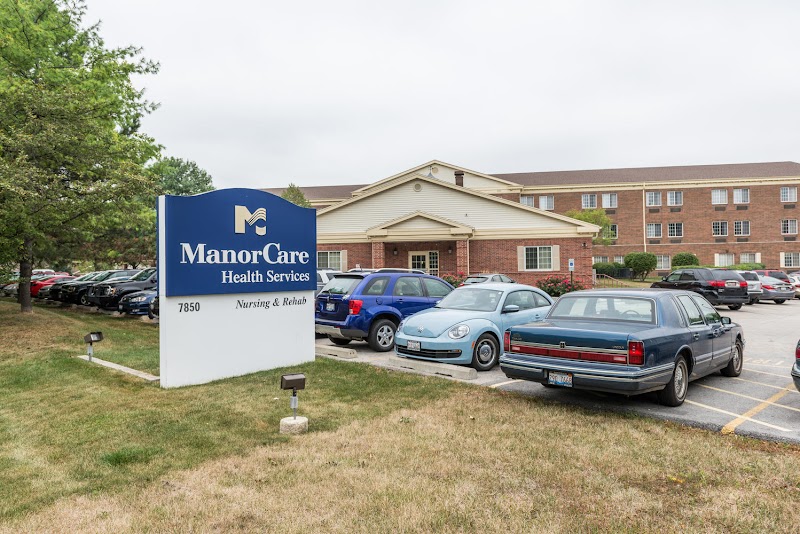
How is Avantara Palos Heights Staffed?

CMS rates AVANTARA PALOS HEIGHTS's staffing level at 2 out of 5 stars, which is below average compared to other nursing homes. Staff turnover is 59%, which is 13 percentage points above the Illinois average of 46%. High turnover can affect care consistency as new staff learn residents' individual needs. RN turnover specifically is 57%, which is notably high. RNs provide skilled clinical oversight, so turnover in this role can affect medical care quality.

What Have Inspectors Found at Avantara Palos Heights?

State health inspectors documented 36 deficiencies at AVANTARA PALOS HEIGHTS during 2023 to 2025. These included: 4 that caused actual resident harm, 31 with potential for harm, and 1 minor or isolated issues. Deficiencies causing actual harm indicate documented cases where residents experienced negative health consequences.

Who Owns and Operates Avantara Palos Heights?

AVANTARA PALOS HEIGHTS is owned by a for-profit company. For-profit facilities operate as businesses with obligations to shareholders or private owners. The facility is operated by LEGACY HEALTHCARE, a chain that manages multiple nursing homes. With 184 certified beds and approximately 145 residents (about 79% occupancy), it is a mid-sized facility located in PALOS HEIGHTS, Illinois.
How Does Avantara Palos Heights Compare to Other Illinois Nursing Homes?

Compared to the 100 nursing homes in Illinois, AVANTARA PALOS HEIGHTS's overall rating (4 stars) is above the state average of 2.5, staff turnover (59%) is significantly higher than the state average of 46%, and health inspection rating (4 stars) is above the national benchmark.

What Should Families Ask When Visiting Avantara Palos Heights?

Based on this facility's data, families visiting should ask: "How do you ensure continuity of care given staff turnover, and what is your staff retention strategy?" "Can you walk me through typical staffing levels on day, evening, and night shifts?" "Can I visit during a mealtime to observe dining assistance and food quality?" "How do you handle medical emergencies, and what is your hospital transfer rate?" These questions are particularly relevant given the facility's high staff turnover rate and the below-average staffing rating.

Is Avantara Palos Heights Safe?

Based on CMS inspection data, AVANTARA PALOS HEIGHTS has a clean safety record: no substantiated abuse findings (meaning no confirmed cases of resident harm), no Immediate Jeopardy citations (the most serious violation level indicating risk of serious injury or death), and is not on the Special Focus Facility watch list (a federal program monitoring the lowest-performing 1% of nursing homes). The facility has a 4-star overall rating and ranks #1 of 100 nursing homes in Illinois. While no facility is perfect, families should still ask about staff-to-resident ratios and recent inspection results during their visit.

Do Nurses at Avantara Palos Heights Stick Around?

Staff turnover at AVANTARA PALOS HEIGHTS is high. At 59%, the facility is 13 percentage points above the Illinois average of 46%. Registered Nurse turnover is particularly concerning at 57%. RNs handle complex medical decisions and coordinate care — frequent RN changes can directly impact care quality. High turnover means new staff may not know residents' individual needs, medications, or preferences. It can also be disorienting for residents, especially those with dementia who rely on familiar faces. Families should ask: What is causing the turnover? What retention programs are in place? How do you ensure care continuity during staff transitions?

Was Avantara Palos Heights Ever Fined?

AVANTARA PALOS HEIGHTS has been fined $54,071 across 2 penalty actions. This is above the Illinois average of $33,620. Fines in this range indicate compliance issues significant enough for CMS to impose meaningful financial consequences. Common causes include delayed correction of deficiencies, repeat violations, or care failures affecting resident safety. Families should ask facility leadership what changes have been made since these penalties.

Is Avantara Palos Heights on Any Federal Watch List?

AVANTARA PALOS HEIGHTS is not on any federal watch list. The most significant is the Special Focus Facility (SFF) program, which identifies the bottom 1% of nursing homes nationally based on persistent, serious quality problems. Not being on this list means the facility has avoided the pattern of deficiencies that triggers enhanced federal oversight. This is a positive indicator, though families should still review the facility's inspection history directly.