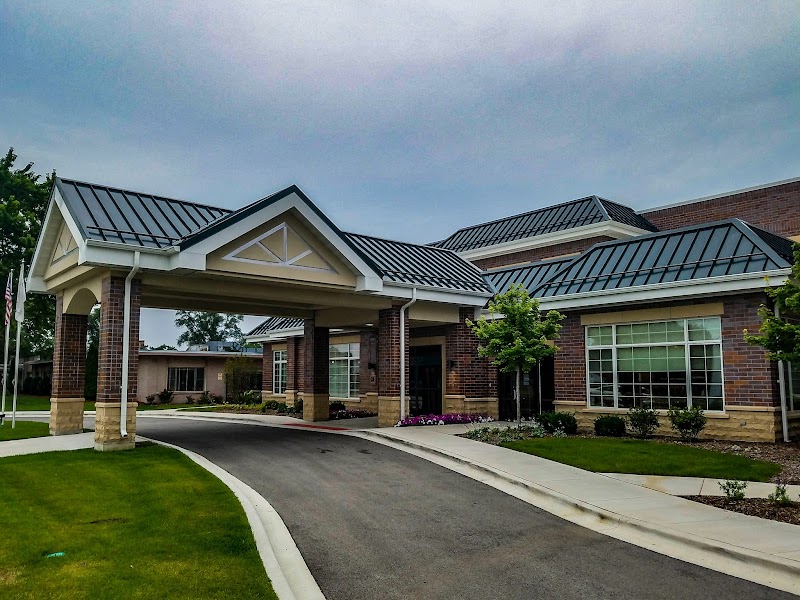
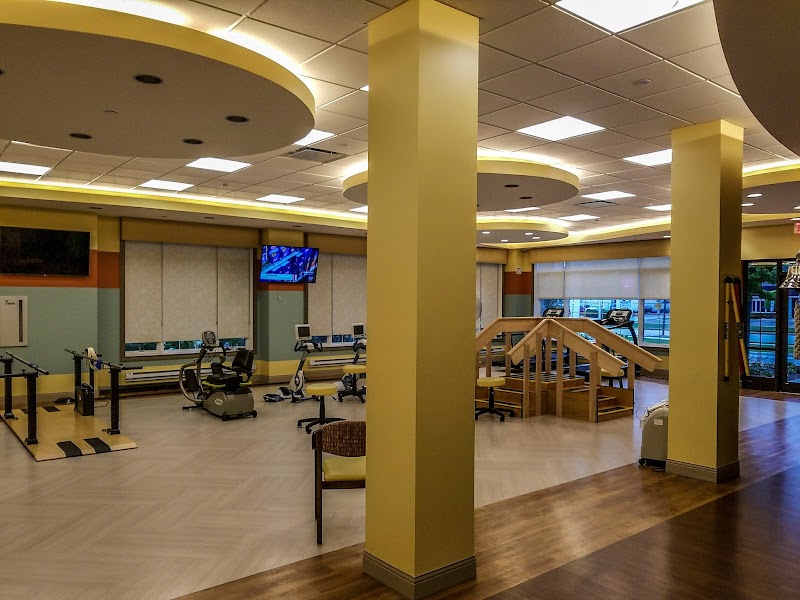
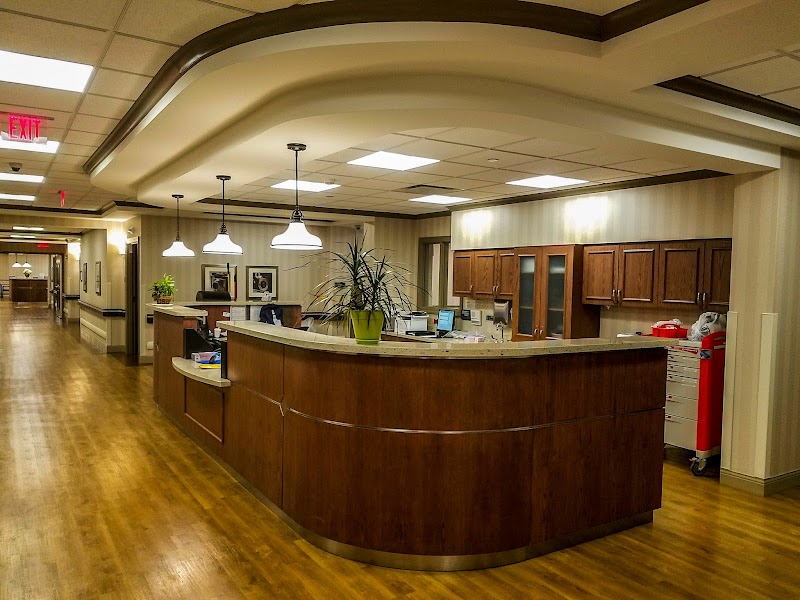
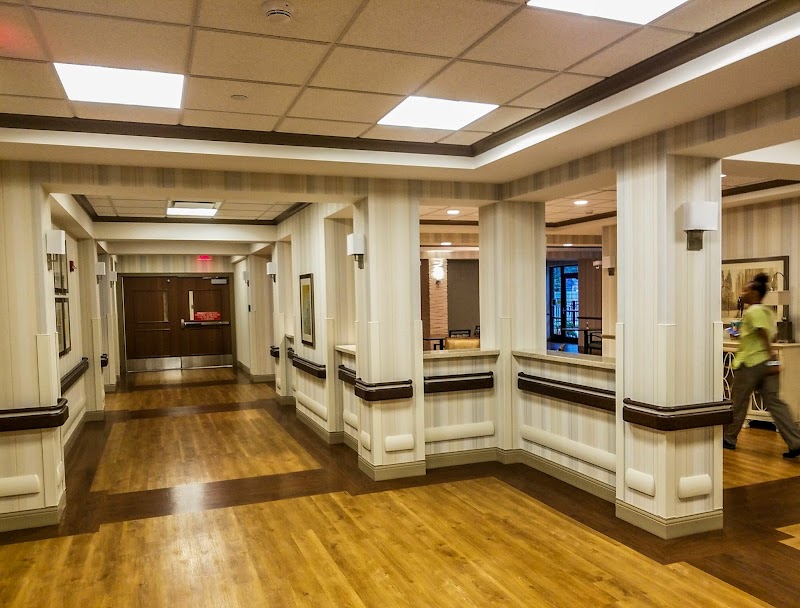
Nexus at Palos

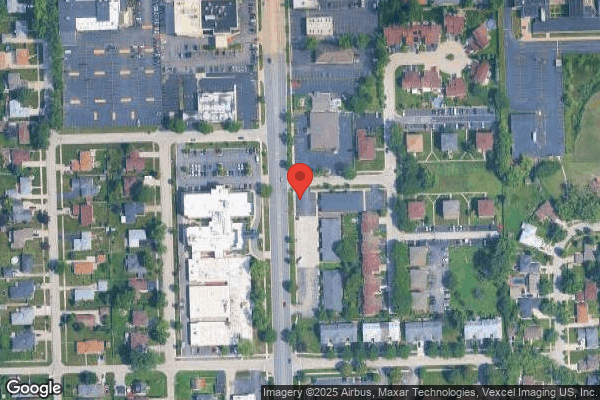
10426 SOUTH ROBERTS, PALOS HILLS, IL 60465 (708) 598-3460
For profit - Limited Liability company 207 Beds BRIA HEALTH SERVICES Data: November 2025 1 Immediate Jeopardy citation
Trust Grade
0/100
#591 of 665 in IL
Last Inspection: May 2025

Inspected within the last 6 months. Data reflects current conditions.

Overview

Nexus at Palos has received a Trust Grade of F, indicating significant concerns about the quality of care provided at this facility. It ranks #591 out of 665 nursing homes in Illinois, placing it in the bottom half of all facilities in the state, and #181 out of 201 in Cook County, meaning there are only a few local options that are worse. Although the trend shows improvement, with issues decreasing from 32 in 2024 to 22 in 2025, the facility still faces serious challenges. Staffing is a major concern, with a low rating of 1 out of 5 stars and a turnover rate of 62%, which is significantly higher than the Illinois average of 46%. The facility has accumulated $254,253 in fines, indicating ongoing compliance problems. There is also less RN coverage than 75% of Illinois facilities, which could impact the quality of care. Specific incidents include a critical failure to provide necessary respiratory care for a resident, resulting in their death, and instances of neglect in providing incontinence care, leading to a resident being soiled and distressed. Overall, while there are some signs of improvement, the facility has serious weaknesses that families should carefully consider.

Trust Score
F
0/100
In Illinois
#591/665
Bottom 12%
Safety Record
High Risk
Review needed
Inspections
Getting Better
32 → 22 violations
Staff Stability
⚠ Watch
62% turnover. Above average. Higher turnover means staff may not know residents' routines.
Penalties
✓ Good
$254,253 in fines. Lower than most Illinois facilities. Relatively clean record.
Skilled Nurses
○ Average
Each resident gets 39 minutes of Registered Nurse (RN) attention daily — about average for Illinois. RNs are the most trained staff who monitor for health changes.
Violations
⚠ Watch
79 deficiencies on record. Higher than average. Multiple issues found across inspections.
★☆☆☆☆
1.0
Overall Rating
★☆☆☆☆
1.0
Staff Levels
★★☆☆☆
2.0
Care Quality
★☆☆☆☆
1.0
Inspection Score
Stable
2024: 32 issues
2025: 22 issues

The Good

  • Full Sprinkler Coverage · Fire safety systems throughout facility
  • No fines on record

Facility shows strength in fire safety.

The Bad

1-Star Overall Rating

Below Illinois average (2.5)

Significant quality concerns identified by CMS

Staff Turnover: 62%

16pts above Illinois avg (46%)

Frequent staff changes - ask about care continuity

Federal Fines: $254,253

Well above median ($33,413)

Significant penalties indicating serious issues

Chain: BRIA HEALTH SERVICES

Part of a multi-facility chain

Ask about local staffing decisions and management

Staff turnover is elevated (62%)

14 points above Illinois average of 48%

The Ugly 79 deficiencies on record

1 life-threatening 18 actual harm
Sept 2025 2 deficiencies 1 Harm
SERIOUS (G) 📢 Someone Reported This

A family member, employee, or ombudsman was alarmed enough to file a formal complaint

Actual Harm - a resident was hurt due to facility failures

Accident Prevention (Tag F0689)

A resident was harmed · This affected 1 resident

**NOTE- TERMS IN BRACKETS HAVE BEEN EDITED TO PROTECT CONFIDENTIALITY** Based on interview and record review the facility failed to ensure two staff member were at bedside during incontinence care for...

Read full inspector narrative →
**NOTE- TERMS IN BRACKETS HAVE BEEN EDITED TO PROTECT CONFIDENTIALITY** Based on interview and record review the facility failed to ensure two staff member were at bedside during incontinence care for one resident who was high risk for falls and required two person assistance with turning and repositioning. This affected one of three residents (R4). This resulted in R4 sustaining a fall, being transferred to the local hospital with a diagnosis of scalp hematoma. Findings include:R4 was admitted to the facility on [DATE] with a diagnosis of end stage renal disease, weakness, and difficulty walking. R4 fall risk evaluation dated 7/29/25 documents a score of 10. Facility fall prevention policy dated 8/2024 documents a score of 10 or greater indicates resident is at high risk for falls. R4'sR4's incident report dated 8/7/25 documents while receiving Activities of daily living (ADL) care patient slid out of bed.R4's functional ability and goals assessment dated [DATE] documents under toileting: Hygiene and roll left to right substantial/maximal assistance which indicates helper does more than half the effort. Helper lifts or holds trunk or limbs and provides more than half the effort.R4's task list date 7/30/25 documents turn and reposition resident two person assist at all times.On 9/4/25 4:49pm V2 (DON) said she was present during the fall for R4. V2 said she was assisting V19 (CNA) with R4's care. V2 was on one side of the bed and V19 (CNA) was on the other side of the bed. V2 said she stepped away from the resident to move or get the garbage can at the same time V19 (CNA) wiped R4 causing her to jerk and start to slide off the bed. V2 said she was unable to stop R4 from falling. On 9/5/25 at 3:43PM, V19 (CNA, Certified nursing assistant) said she was assisting V2 (DON) with incontinence care for R4. V19 said R4 is total care and requires two people for all care. V19 said R4 was on her side and was cleaning her buttocks. V2 (DON) was on the other side and went to get the garbage can by the door when R4 starting to go forward because she could hold her weight. R4 fell to the ground.On 9/4/25 at 4:30PM, V16 (restorative nurse) said R4 requires two staff members be present during care for safety. V16 said staff should never leave the bedside when providing care and all items should be at bedside prior. V16 said staff should have never left the resident bedside during care. V16 said she provided reeducation to staff about ensuring all items are at bedside prior to starting care. R4's progress note dated 8/7/25 documents: While receiving ADL care patient slid to floor, head to toe and ROM assessed without deformities or complaints of pain, patient positioned back to bed with 2 person assist using a mechanical lift, lump to left frontal lobe noted, pain medication administered by mouth for pain, ice pack applied to head. Doctor and nurse notified, new order: send to hospital for evaluation and treat. R4's hospital discharge paperwork dated 8/7/25 indicates fall with scalp hematoma.
CONCERN (D) 📢 Someone Reported This

A family member, employee, or ombudsman was alarmed enough to file a formal complaint

Potential for Harm - no one hurt, but risky conditions existed

ADL Care (Tag F0677)

Could have caused harm · This affected 1 resident

Based on interview and record review, that facility failed to provide incontinence care for a resident who was identified as dependent on staff for toileting for over four hours. This affected one of ...

Read full inspector narrative →
Based on interview and record review, that facility failed to provide incontinence care for a resident who was identified as dependent on staff for toileting for over four hours. This affected one of three residents (R2) reviewed for incontinence care. Findings include:R2's minimal data set (MDS) section GG (functional abilities) dated 6/7/25 documents: toilet hygiene dependent. Section H (bladder and bowel) documents: always incontinent with urinary and bowel continence. Care plan dated 5/16/25 documents: Check R2 as required for incontinence.On 9/2/25 at 12:10pm, R2 was observed sitting in his wheelchair, urinating on the floor with his clothes on while attempting to eat his lunch tray. R2's jogging pants were observed with wet pants in between his legs.On 9/2/25 at 12:15pm, V8 (restorative) said, R2's jogging paints were wet in between his leg. V8 said, R2 was soiled and saturated with urine.On 9/2/25 at 1:05pm, V6 (CNA) said, she last provided incontinence care for R2 at 8am.On 9/2/25 at 3:04pm, V6 (CNA) said, resident are supposed to be changed every two hours.Incontinence Care dated 5/2015 documents: Incontinence care is provided to keep resident as dry, comfortable an odor free as possible.
Sept 2025 1 deficiency 1 IJ
CRITICAL (J) 📢 Someone Reported This

A family member, employee, or ombudsman was alarmed enough to file a formal complaint

Immediate Jeopardy (IJ) - the most serious Medicare violation

Respiratory Care (Tag F0695)

Someone could have died · This affected 1 resident

**NOTE- TERMS IN BRACKETS HAVE BEEN EDITED TO PROTECT CONFIDENTIALITY** Based on interview and record review, the facility failed to implement respiratory care interventions including ensuring the app...

Read full inspector narrative →
**NOTE- TERMS IN BRACKETS HAVE BEEN EDITED TO PROTECT CONFIDENTIALITY** Based on interview and record review, the facility failed to implement respiratory care interventions including ensuring the application of hand mitten restraint as ordered, and to maintain patency of trach tubes due to resident history of chronic pulling of tracheostomy tube according to the plan of care for 1 of 3 (R4) residents reviewed for tracheostomy care. As a result of the facility's noncompliance with mittens not being applied and monitored by staff, R4 was able to reach her tracheostomy tubing and self-decannulated which led to her expiring. Findings Include:Based on interview and record review, the facility failed to implement respiratory care interventions including ensuring the application of hand mitten restraint as ordered, and to maintain patency of trach tubes due to resident history of chronic pulling of tracheostomy tube according to the plan of care for 1 of 3 (R4) residents reviewed for tracheostomy care. As a result of the facility's noncompliance with mittens not being applied and monitored by staff, R4 was able to reach her tracheostomy tubing and self-decannulated which led to her expiring.The Immediate Jeopardy began on [DATE]. V1 (Administrator) was notified on [DATE] at 2:31 PM of the Immediate Jeopardy. The facility presented an initial removal plan of [DATE]. The plan was accepted, and on [DATE] the surveyor conducted an onsite record reviews and interviews to confirm the removal plan was implemented. V1 was informed the Immediate Jeopardy was removed on [DATE].Although the immediacy was removed, the facility remains out of compliance at severity level II until the facility can evaluate the effectiveness of the removal plan and maintain substantial compliance with this regulation.R4 is a [AGE] year-old with the following diagnosis: aphasia following cerebral infarction, acute respiratory failure with hypercapnia, tracheostomy status, dependence on supplemental oxygen. R4 admitted on [DATE] and expired in the facility on [DATE].On [DATE], R4 was found unresponsive with the tracheostomy pulled out and later pronounced expired in facility by paramedics. On [DATE] at 9:44 AM, V1 (Administrator) and V2 (Assistant Director of Nursing) informed surveyor that their electronic medical records (EMR) were down from [DATE] until the morning of [DATE]. All clinical documents were produced manually during this time. However, a completed progress note was not provided because it was not done as confirmed by V2. There was also no documented incident report of [DATE] provided to the surveyor.A police report from [NAME] Hills Police Department was obtained pertaining to the death incident of R4 on [DATE]. Report indicate V17 (Agency Nurse) informed V3 ([NAME] Hills Police) that she was the nurse for R4. According to report on [DATE], between the times of 5:55AM and 6:05AM, V17 was in the room assisting another resident when V17 observed R4's trach tube not in place and R4 was unresponsive. Police interview of V11 (Respiratory Therapist/RT) indicated that he was the respiratory therapist of R4 and approximately at 4:45 AM of [DATE], V11 was in the room of R4 assisting with trach care. V11 stated R4 is supposed to wear glove restraints (identified as mittens) to prevent her from removing her trach tube as she has history of removing her trach tube. Report indicated that V11 stated he did not observe R4 wearing glove restraints while in the room. Report indicated an interview with V16 (Nursing Supervisor) was also completed. V16 stated R4 was supposed to always wear the glove restraints according care plan. V17 stated that it was her first time working with R4 and was unaware that glove restraints were to be in place. Additionally, V17 reported that the facility online medical records database of R4 for physician orders and plan of care were inaccessible and V17 was not provided with updates, information or paperwork pertaining to R4 by the prior shift nurse. V16 informed V3 that there should be a binder at nurse station with R4's plan of care information. Report indicated V3 checked the binder and did not appear to be properly filled out.On [DATE] at 10:25AM, V3 ([NAME] Hills Police Department) stated he arrived at facility with R4 unresponsive and 911 paramedics working on her. Staff were interviewed and nurse on duty/ Agency nurse told V3 at approximately 5:55A - 6:05A R4 was observed with trach not in place (pulled out). V3 said while in the facility he did not observe R4's mittens in placed. V3 said employee informed him that electronic access to chart was down from a week to a week and half. V17 stated she did not get report from outgoing nurse regarding R4's mitten needs to be in placed at all times and V17 has no knowledge of facility restraint policy. V3 stated he believed there was neglect on facility as staff do not know their restraint policy and there was no hand off report from nurse to nurse according to his interview with agency nurse who was on duty.On [DATE] at 11AM, in separate interviews, V2 and V4 (Restorative Nurse) both stated R4 should have mittens on at all times to maintain trach patency because R4 has a history of pulling on trach tubes.On [DATE] at 10:28AM, V7 (Attending Physician/AP), stated he is the AP in facility only and not R4's community doctor. V7 said the last time R4 was seen was Friday, [DATE]. R4 was stable. He was aware that R4 has history of pulling on trach tube and the plan was to apply restraint (mitten) to prevent R4 from pulling trach. There was an order for mittens to be on at all times, staff to monitor, and may remove only when there is staff present and working with resident. V7 signed off on the Death certificate with cause of death, Respiratory Failure (not complete list). V7 stated the immediate cause of death was possibly R4's trach being pulled out since there was no oxygen being received by R4.On [DATE] at 11:34 AM, V8 (Certified Nursing Assistant/CNA) stated she work 11-7 shift on 8/23 thru 8/24 and was assigned to R4. V8 said she rounded on R4 every 2 hours and at 5:00AM she provided incontinence care. V8 said she did not visibly saw the mittens being on during her entire shift. V8 said no one communicated to her about R4's need of mittens. V8 stated she do not know the facility restraint policy and only received education today in the morning. V8 further state that during police investigation and interview with staff she was present and heard the nurse did not know anything about R4 needing mittens. V8 said there is no CNA to CNA shift to shift report or endorsement.On [DATE] at 1:42 PM, V11 (Respiratory Therapist/RT) stated he was the RT working with R4 on 8/23 -[DATE]. V11's shift is 7p - 7a. On [DATE] at 6:15AM nurse called stated R4 trach was out. When he went to the room V11 said R4 did not look like she was breathing and there was no pulse. V11 stated he do not re-call seeing R4's mittens on. V11 said there was an order for mittens as R4 have the history of self-decannulating behavior. V11 rounded 6X on R4 during his shift and at one point he reported to the nurse that mitten needs to be applied, however, V11 said he was unsure if nurse went to the room to check after acknowledging he was heard.On [DATE] at 10:25 AM, V14 (R14's Daughter) stated the incident of her mother pulling on tracheostomy tube occurred 3x since admission to facility. Stated facility was aware before admission that her mother was on restraints from another facility because of behavior. Requested for restraint but was told initially by V13 (Regional Nurse Consultant/ Interim DON) that facility is restraint free and that they do not use restraint in the building, but later it was decided that R4 needed it after the 2nd attempt and upon return from hospital. During this investigation, multiple call attempts to V17 (Agency Nurse) for an interview was done with no success of a call back.Review of R4's medical records indicate an admission date of [DATE] with diagnosis information of aphasia following cerebral infarction, tracheostomy status and dependence on supplemental oxygen (not a complete list). Comprehensive assessment of MDS Section O, dated [DATE], indicated R4 with tracheostomy care, Section C, [DATE], indicated Brief Interview for Mental Status (BIMS) was not conducted. Order Summary Report, start date [DATE], read: Monitor left hand mitt for circulation, motion, sensation, PAIN, ROM. Every 2 hours for monitoring remove mitt for 10-15 period, CMS/ADL/ROM. Care Plan Report, date initiated [DATE] read: Focus- Physical Restraints: Requires physical restraint r/t pulling on mechanical equipment. Interventions include Check and remove restraints as per policy. Keep resident close to areas that are supervised. Provide hazard free environment. Special Instructions read: Apply MITT to LEFT hand to maintain patency of trach tubes due to patient chronic pulling of tubing. Ventilator/Aerosol Flowsheet indicated Trach care was done by V11 on [DATE] at 8:30 PM where trach inner cannula was changed. Consent for Use of Restraint/Device, effective date [DATE] read: 2. Benefits, a. Based on the resident's individual needs, restraints may be beneficial for the following. 2. Prevention of injury to self or other. Progress Notes, Effective Date: [DATE] 15:39 Type: Nurses Notes: Note Text: @ 0910 Pt., was observed by this nurse with her trach out, immediately RT was called to pt's room by CNA. 2 RT put the trach back in and SPO2 97 HR 66. Progress Notes, Effective Date: [DATE] 23:59 Type: Nurses Notes: Note Text: A Shiley 5XLTD decannulation occurred. Nurse notified the RT. Despite multiple attempts, the trach wouldn't reinsert. DON was notified. RT applied a 4x4 gauze over the stoma and a non-rebreather mask. R4 was stable at 95% oxygen saturation and 82 b/m HR. Ambulance left with her not in distress. Progress Note, Effective date [DATE] 20:08 Type: Nurses Notes: Note Text: Writer called resident daughter to inquire / inform of the use of hand restrain, daughter verbalized that she is aware of such order from the hospital and gave verbal Consent for the use of the hand mitten to restrain resident from pulling out her trach again. Nurse on Duty made aware. Facility did not provide progress note or completed incident report for [DATE] self-decannulation incident. Review of Illinois Certificate of Death read Cause of Death, Immediate Cause a. Nontraumatic Intracerebral Hemorrhage, b. Acute Respiratory Failure, c. Type 2 Diabetes. Certificate was signed and certified by the Attending Physician/Physician in Charge on [DATE]. Policy and ProcedureGuideline: Physical Restraint/Device, Review date 10/2021General: To provide guidance on the assessment for the use and documentation of physical devices including, but not limited to, position change alarms, bed rails, furniture positioning, concave mattress, reclining chairs, cushions such as wedge shaped, hand mitts, abdominal binders, etc. A physical restraint is any manual method, physical or mechanical device/equipment or material that limits a resident's freedom of movement and cannot be removed by the resident in the same manner as it was applied by staff.Guideline:2. If is determined that the physical device is a restraint: a. A physician order will be obtained. b. Education will be provided to the resident/resident representative regarding the risks and benefits of the physical device. c. Informed consent will obtain from the resident/resident representative using the Consent for use of Restraint/Device Form3. If a resident or resident representative request the use of a restraint, then the facility will evaluate the appropriateness of the request and consult with the physician/NP to determine if resident has a medically necessary reason for the restraint.6. the effectiveness of physical device in treating the medical symptoms or as a therapeutic intervention and any negative impact on the resident shall be assessed by the facility throughout the period of time the physical device is being used and documented in the progress note.7. The behavior incident that prompted the use of the physical device will be documented in the progress note.8. The date and time the physical device was applied and released will be documented in the progress note.9. the name and title of the person responsible for the application and supervision of the physical device will be documented in the progress note. On [DATE] the surveyor verified by interview and record review that the facility implemented the following to remove the immediacy:Immediate Actions:The facility took the following actions to address the citation and prevent any additional residents from suffering an adverse outcome. All residents with tracheostomies were reviewed by DON/Unit managers. Completed on [DATE]. The review was done to ensure special instructions which includes mittens or other physical restraints were in place per physician orders and resident care plans. There was one resident to was identified with a physical restraint. No other concern was identified related to use of physical restraints during the review.The DON/Unit Managers provided education to nursing staff (nurses and nursing assistants), RT's (respiratory therapists) including Agency staff on special instructions such as use/application of mittens and other physical restraints for residents with Tracheostomy, following care plans and physician orders. Completion date: [DATE].The DON/Nurse Managers provided education to the nurses, including nurse agency staff, on change of shift reporting. The training also included notifying nursing assistants of any new special instructions at the start of the shifts. Completion date: [DATE].All nursing staff (nurses and nursing assistants) and RT's (respiratory therapists), including agency staff, who are not available and/or currently on vacation will also receive the same education upon their return to work. The DON/Unit Managers will provide the same training. Ongoing. Additional Interventions:The DON/Unit Managers will continue to audit new admissions with Tracheostomy to ensure that orders for physical restraints are care planned and are communicated with the nursing staff and RT's. Initiated on [DATE].The DON, Administrator, Unit Managers reviewed the policies and procedures related to physical restraints, tracheostomy, nursing rounds, care plan and following physician orders. There is no revision necessary. Completion date: [DATE].The QAPI committee held an Ad-Hoc QAPI meeting to discuss R4, and action actions described in this plan of removal. Completion date: [DATE].The DON/Unit Managers will conduct audit and observation of all residents with tracheostomy weekly for four (4) weeks to ensure compliance with special instructions, such use if mittens and physical restraints are being implemented, physician orders and care plan interventions are followed. Ongoing.The results of the audit/observation will be reviewed by the QAPI committee weekly for four (4) weeks. The QAPI committee will determine if additional corrective actions are necessary to maintain compliance. Ongoing.The facility asserts the likelihood for serious harm no longer exists on [DATE].
Aug 2025 2 deficiencies
CONCERN (D) 📢 Someone Reported This

A family member, employee, or ombudsman was alarmed enough to file a formal complaint

Potential for Harm - no one hurt, but risky conditions existed

Deficiency F0602 (Tag F0602)

Could have caused harm · This affected 1 resident

**NOTE- TERMS IN BRACKETS HAVE BEEN EDITED TO PROTECT CONFIDENTIALITY** Based on the interview and record review, the facility failed to follow its abuse policy by having residents lose their bank car...

Read full inspector narrative →
**NOTE- TERMS IN BRACKETS HAVE BEEN EDITED TO PROTECT CONFIDENTIALITY** Based on the interview and record review, the facility failed to follow its abuse policy by having residents lose their bank cards and state IDs. This applies to 3 of 3 residents reviewed (R3, R4, and R2) for misappropriation of resident property in a sample of 9 residents.The Findings include: Findings include:1.R3 is a [AGE] year-old female admitted on [DATE] with cognition intact as per the MDS dated [DATE].On 8/6/25 at 3:00 PM, V1 (Administrator/Abuse Coordinator) stated, R3 came up with bed bugs, and we collected her belongings to freeze them. We found money (approximately $ 40) and a state ID. There were no bank cards. When we spoke with the power of attorney (POA), she said she doesn't want to get anything back and trash everything. The housekeeping might have trashed everything. We reimbursed her money, but we couldn't locate her state ID.A review of the nurse's note dated 7/10/25 documents that the family couldn't locate R3's purse, and the facility was made aware of R3's missing purse upon discharge.On 8/7/25 at 1:40 PM, V18 (R3's concerned party) stated, R3 had her state ID with her. They couldn't find her state ID upon discharge.2.R4 is an [AGE] year-old female admitted on [DATE] and having cognition intact as per the Minimum Data Set, dated [DATE].On 8/6/25 at 9:20 AM, R4 stated, I had my bank cards in my bag here in my room. I am missing those cards, and I don't know who took them. I told my son (V10), who is my POA, and he told the administrator and then reported to the police.On 8/6/25 at 8:50 AM, V10 stated, My mom had three bank cards in her bag and was missing. When I reported it, they found one. The two cards that belong to my mom are still missing. It was stolen and used for unauthorized transactions but was declined. The card was suspended, and luckily, we didn't lose any money, and it could have been worse.A review of the reportable document for the facility-initiated investigation on missing bank cards on 7/27/25. The reportable document that V10 was claiming R4's credit card was missing, and the facility returned the debit card found in the laundry.On 8/6/25 at 1:55 PM, V11 (Registered Nurse) stated, On Sunday, 7/27/25, V10 told me that he is missing his mom's bank card. There was a card on V2's (Assistant Administrator) desk that we found from the laundry, and R4 was refusing to accept that card as she was saying it was not hers. When we returned that card to V10 on Monday, 7/28/25, he was saying his mom is missing two more cards.On 8/6/25 at 1:30 PM, V1 stated, V10 reported to me on 7/27/25 that his mom (R4) was missing her bank card. On Monday, 7/28/25, when I returned one card to V10, he was saying another card was missing. We didn't know about the second card until Monday (7/28/25). All residents have the right to be free from misappropriation of their belongings.On 8/6/25 at 2:10 PM, V1 added, The police officer told me that they are reviewing the video from the store where R4's card was used unauthorized, and they couldn't recognize the person making an unauthorized transaction using R4's bank card.3.R2 is a [AGE] year-old female admitted to the facility on [DATE] and was discharged home on 7/27/2025 in stable condition. A review of the police report filed by V12 (R2's concerned party) on 7/29/2025 on a theft complaint. V12 noticed several unauthorized ATM cash withdrawals totaling $3,809.50 from R2's account. All the unauthorized withdrawals occurred during R2's stay in the facility. R2 was in the facility between 7/12/2025 and 7/27/2025, and cash debit card ATM withdrawals occurred on 7/21, 7/22 and 7/23/25.A phone interview was conducted with V12 on 8/5/2025, 2:02 PM. V12 stated that they were not aware of the unauthorized withdrawals from his mom's account until R2 was discharged from the facility. V12 said he filed a police report on 7/29/2027 at 8:40 AM, two days after R2 went home. V12 stated R2 has a habit of writing her PIN on a piece of paper with her debit card.On 8/6/25 at 2:00 PM, V1 stated she is unaware of any missing debit card of R2. On 8/7/2025 at 1:09 PM, V1 added that she reached out to V12 today via a phone call to get further information about the unauthorized withdrawals. V1 said V12 told her that all the withdrawals happened while R2 was in their facility.On 8/7/25 at 11:00 AM, V1 stated, We don't know someone from our facility is stealing resident belongings. Since there are two more residents involved with theft, our guardian angels are making rounds and calling family members to see if the resident is missing any of their belongings. The residents should have a theft-free environment.The facility presented the abuse policy (reviewed 9-2017) document: This facility affirms the right of our residents to be free from abuse, neglect, exploitation, misappropriation of property, or mistreatment. This facility, therefore, prohibits abuse, neglect, exploitation, misappropriation of property, and mistreatment of residents.
CONCERN (D) 📢 Someone Reported This

A family member, employee, or ombudsman was alarmed enough to file a formal complaint

Potential for Harm - no one hurt, but risky conditions existed

Accident Prevention (Tag F0689)

Could have caused harm · This affected 1 resident

**NOTE- TERMS IN BRACKETS HAVE BEEN EDITED TO PROTECT CONFIDENTIALITY** Based on observation, interview, and record review, the facility failed to follow its Fall Prevention and Management Guidelines ...

Read full inspector narrative →
**NOTE- TERMS IN BRACKETS HAVE BEEN EDITED TO PROTECT CONFIDENTIALITY** Based on observation, interview, and record review, the facility failed to follow its Fall Prevention and Management Guidelines by not implementing fall prevention interventions in place for high-risk fall residents. This applies to 2 of 2 residents (R1 and R5) reviewed for fall. The findings include:1. R1 is a [AGE] year-old female admitted on [DATE] with severely impaired cognition as per MDS dated [DATE]. A review of the fall log indicates that R1 had a fall on 4/8/25 and 5/5/25 with no injury.The record review on fall risk assessment dated [DATE] documents that R1 is at high risk for falls. On 8/5/25 at 1:45 PM, R1 was observed in her bed with floor padding not in place. Surveyor instructed R1 to push the call light but R1 was unable to use the call light. V15 (Minimum Data Set/MDS Nurse) requested R1 to push the call light but R1 was unable to use the push button call light. On 8/5/25 at 1:47 PM, in response to the writer's request, V15 pushed the call light button, and it was not working. Observed V15 push hard the call light chord to the wall and was working then. On 8/5/25 at 1:50 PM, V15 stated, The resident should have an alternate way, like a touch pad call light, to call if they can't push the call button to call. The floor padding should be placed at the bedside, instead of leaning against the wall.A review of R1's fall care plan document interventions, including floor mats will be placed on the side of the patient's bed to help prevent falls.2.R5 is a [AGE] year-old male admitted on [DATE]. On 5/8/25 at 10:40 AM, R5 was observed in his bed in an elevated position with floor padding 2 feet away from the bed. A review of the initial fall risk assessment dated [DATE] documents that the facility identified R5 as at high risk for falls.The facility presented a fall care plan that includes interventions, including floor mats while in bed and bed to the lowest position.On 8/7/25 at 11:50 AM, V4 stated, The residents with a score greater than 10 are at high risk for falls. R1 and R5 are at high risk for falls and fall care plan interventions should be in place.The facility presented the Fall Prevention and Management Guidelines document:A resident at risk for falls will have fall risk identified on the plan of care with interventions implemented to minimize fall risk.
May 2025 13 deficiencies 4 Harm
SERIOUS (G) 📢 Someone Reported This

A family member, employee, or ombudsman was alarmed enough to file a formal complaint

Actual Harm - a resident was hurt due to facility failures

Free from Abuse/Neglect (Tag F0600)

A resident was harmed · This affected 1 resident

**NOTE- TERMS IN BRACKETS HAVE BEEN EDITED TO PROTECT CONFIDENTIALITY** Based on interview and record review, the facility neglected to follow their policy and procedure to ensure staff provided incon...

Read full inspector narrative →
**NOTE- TERMS IN BRACKETS HAVE BEEN EDITED TO PROTECT CONFIDENTIALITY** Based on interview and record review, the facility neglected to follow their policy and procedure to ensure staff provided incontinence care at least every two hours for a resident identified as dependent on staff for toileting. This affected one of three (R131) residents reviewed for neglectful care and services. This failure resulted in R131 being exposed, soiled with feces, crying, verbally distraught, begging for help and feeling uncomfortable. Findings Include: R131 was diagnosis with mixed/urinary incontinence, rash and other nonspecific skin eruption, malignant neoplasm of vulva and obesity. Minimal Data Set (MDS) section C (cognitive patterns) dated 5/8/25 brief interview for mental status documents a score of thirteen which indicates cognitively intact. Section GG (functional abilities) documents R131 was dependent with toilet hygiene (helper does all of the effort). Resident does none of the effort to complete the activity or the assistance of two (2) or more helpers is required for the resident to complete the activity. Care Plan initiated on 1/31/25 and 5/8/25 documents: R131 has a self-care deficit in bed mobility related to decrease ability to position or reposition self in bed and turn from side to side without staff assist. At risk for abuse and neglect. On 5/13/25 at 4:53pm, R131 who was assessed to be alert to person, place and time said, she was left in her feces from 2am until the police arrived. R131 said, she called V37 to report staff was not answering her call light and she needed to be cleaned up after a bowel movement. R131 said, her vaginal area was exposed and there was so much diarrhea. R131 said, she felt bad and just wanted some help while starting to tear up. R131 said, she was falling in and out of sleep due to her nightly medication and was not provided incontinence care until the police arrived. Facility provide statement for R131 dated 5/14/25 documents: I woke up. I had a mess on my hands because I was in diarrhea. I pressed the call light to be changed. No one was coming so I called my son and V37. I just remember being uncomfortable and needing to be changed. On 5/15/25 at 10:03am, V37 (family) said, R131 called him crying, upset, verbally distraught begging for help early Monday morning at 2am complaining of staff not answering her call light on the night shift. Not changing her after she had a bowel movement. R131 has a wound from radiation in her groin. V37 said, R131 called him back multiple time between 3am -5am to report staff still hadn't come to her change/provide incontinence care. V37 said, he called the facility with no answer. V37 said, after the multiple calls from R131 due to her not receiving care, he called the police for a well check. R131 was left soiled and saturated in urine and feces for four hours. The facility tried to say R131 tore of her adult brief. R131 does not have any behaviors. Facility provided concern form dated 5/12/25 (9:37am) documents: V37 stated he had concerns regarding care. Wasn't able to reach anyone. Stated he called police. All parties notified. Facility provide statement for V37 dated 5/14/25 (2:41pm and 4:08pm): V37 said, that he received a phone call from R131 early Monday morning and that she mentioned she was waiting for someone to come and change her. V37 also mentioned that he called the police because he said he [NAME] like R131 was being mistreated. Police Report dated/time report 5/12/25 at 6:31am documents: Last known secure 5/12/25 at 3:00am. On 5/12/25 at 6:52am, police responded to nursing home in reference to a citizen assist complaint. V37 informed them that he was requesting a well-being check on his wife, R131. V37 stated that he tried calling the facility several times and no one was answering. Additionally, V37 informed Southwest Central Dispatch (S.W.C.D) that he spoke with R131 who stated she was sitting in her own feces and had open wound. V37 explained that he was unhappy with the care R131 was getting. Upon police arrival, police observed a female subject standing behind a nurse's cart, dressed in scrubs. In the hallway for two hundred rooms. Police inquired, if she was the nurse for the wing, at which point she informed police she was and assisted police with the location of R131's room. Upon entering R131's room, police could smell the strong odor of feces. Police then observed a female subject, later identified as R131, lying on the bed closest to the entry door of the room. R131 did not have any undergarments on, was lying on her back, and her vaginal area and groin area appeared to have a large amount of feces on it. R131 was holding a bed sheet that also appeared to have feces on it. Police spoke with R131, who explained the following in summary but not verbatim: She/R131 had been lying in that condition since May 12 2025 between the hours of 2:00am -3:00am. R131 further advised that she called her husband to report the condition and also her son. Police asked, R131 if she had a call button located near her, to contact staff. R131 informed police there was call button beside her bed, but no one had come to assist her. Police relocated back into the hallway and spoke with the female subject standing behind the nurse cart, dressed in scrubs. Police informed her of R131's condition, at which time the female subject standing behind a nursing cart, dressed in scrubs advised that she was not a CNA (certified nurse's assistant). Police relocated to the administrative area and knocked on the doors. Police was met by a male subject, dressed in what appears to be a doctor coat. Police informed him of R131 condition and what the female subject standing behind a nurse cart, dressed in scrubs explained to police. The male subject dressed in what appears to be a doctor's coat immediately relocated to R131 room and then contacted another individual. Upon the arrival of a second female staff member, she did not enter R131's room and began working on her schedule paperwork. Police inquired with the female staff member if she needed police assistance getting another staff member to assist her, due to R131 sitting in her feces since 2:00am. After some time had passed a third female staff member arrived at the location where the second female staff member was. The third female staff member explained that she was gathering an undergarment adult brief for R131. Police inquired with the third female staff why R131 did not have an undergarment on at this moment. The second female staff member answered and advised that it was due to R131 having behavioral problems. Upon the second/third female staff entering R131's room, the second female staff member began question R131 about her notifying the police and who she contacted about her condition. Police advised R131 that she did not have to answer the questions, at which time the second female staff member became agitated and informed police that R131 was obligated to answer her questions, due to the second female staff member being in charge of the floor. Police advised the second staff member that R131 had been lying in her feces for some time and that assisting R131, prior to question R131, would be her best interest. On 5/15/2025 at 11:27am, V28 (social service) said R131 did not have any behaviors related to refusing incontinence care nor is any charted in the care plan with seventeen pages. V28 said, she would assume R131 would want to be changed after a bowel movement like anyone else. On 5/15/2025 at 3:15pm V35 (nurse) said, she was assigned to R131's unit on the night shift (11pm -7am) for 5/11/25. V35 said, she was an agency nurse and had never worked with R131 before. V35 said, there wasn't an evening (3pm -11pm) nurse on R131's unit to get report from. V35 said, when she started her shift at 11pm, there were two certified nursing aides that introduced themselves to her. V35 said, she thought those two aids were assigned to her unit. V35 said, two hours into her shift she realized a lot of call light were going off. V35 assumed the aides were in other resident's room providing care. V35 said, R131's family called to complaint that R131 was soiled. V35 said, she went into R131's room at 1:00am. V35 said, R131 was soiled with feces and needed to be changed. V35 said, she needs another staff member to assist with R131 due to her size. V35 said, she did not have any staff to assist her with R131 incontinence care. V35 said, there wasn't any aides on her unit. V35 said, she started to check all of her assigned resident to make sure they were alive. V35 said, she called V10 (manager on duty/nurse) and informed her that there was no CNAs on her shift and only one nurse on the opposite unit. V35 said, residents were soiled and neglected. V35 said, the facility put her licensed and the residents at risk. On 5/15/25 at 5:06pm, V10 (IP Nurse) said, she worked upstairs on the second floor on the 3-11 shift. V10 said, she was the manager on call from Sunday night (5/11/25). V10 said, she was short staff on the night shift of 5/11/25 going into the early morning of 5/12/25 on R131's unit. V10 said, on R131's unit there was only one nurse and one certified nursing assistant working on the 11-7am for the long term care unit/R131's unit. V10 said, two (2) nurse and (4) four CNA are needed for the long term care unit. One nurse and two CNA should have been on R131's unit. On 5/16/25 at 1:16pm, V48 (CNA) said, she was short staffed on the night shift on (5/11/25) Sunday night. V48 said, she worked with V47 (CNA), and they provided incontinence care for R131 two to three times that night with the last time being around 4:30am- 5:00am. V48 said, she did not see the police. V48 said, she did not chart the care provide to R131. Facility provided witness statement from V47 dated 5/14/25 documents: V47 was a CNA on the night 5/11/25. V47 was not assigned to R131. V47 did not take care of R131 on 5/11 night shift. Statement given by V47 via phone on 5/15/25 at 11:20am. On 5/16/25 at 4:20pm, V9 (nurse) said, she was the nurse on the south unit. V9 said she worked the day and evening shift on 5/11/25. V9 said, she was in the facility charting until 1:30am -1:45am because she sent a resident to the hospital. V9 said, at the end of her double shift she was not providing any patient care. On 5/16/25 at 12:13pm, V2 (Administrator) said, if staff was aware that R131 needed incontinence care and failed to provide it, that failure is neglect. V2 said, residents should be changed every two hours and as needed. V2 said, she did not view the camera to determine if staff responded to R131's call light. Surveyor requested to view the video footage of staff entering and exiting R131's room. V2 did not present any video footage for review during the survey. On 5/16/25 at 1:47pm, V4 (ADON) said, she came into the facility on 5/12/25 at 2:00am, that morning. V4 said she was informed around 11:45pm that a nurse was needed on the south unit on long term care side. V4 said, she spoke agency nurse, who informed her that the south unit nurse had just left. The nurses are not supposed to leave without being relived or giving report to another nurse. The long term care unit had two nurses when she reported for work, ideally it should be three nurses assigned to the long term care unit. V4 said, she did not interact with the police. Abuse policy dated 9/2017 documents: This facility affirms the right of our resident to be free from abuse, neglect, exploitation, misappropriation of property or mistreatment. Neglect means the failure of the facility, it employees or service providers to provide goods and service to a resident that are necessary to avoid physical harm, pain or mental anguish or emotional distress. Further, neglect means a facility's failure to provide or willful withholding of adequate medical care, mental health treatment, psychiatric rehabilitation, personal care or assistance with activities of daily living that is necessary to avoid physical harm, mental anguish, or mental illness of a resident.
SERIOUS (G) 📢 Someone Reported This

A family member, employee, or ombudsman was alarmed enough to file a formal complaint

Actual Harm - a resident was hurt due to facility failures

Pressure Ulcer Prevention (Tag F0686)

A resident was harmed · This affected 1 resident

**NOTE- TERMS IN BRACKETS HAVE BEEN EDITED TO PROTECT CONFIDENTIALITY** 2. R111 diagnoses include but are not limited to fracture of lumbar vertebra, diabetes, protein calorie malnutrition, and attent...

Read full inspector narrative →
**NOTE- TERMS IN BRACKETS HAVE BEEN EDITED TO PROTECT CONFIDENTIALITY** 2. R111 diagnoses include but are not limited to fracture of lumbar vertebra, diabetes, protein calorie malnutrition, and attention to gastrostomy. R111 is not verbally or physically responsive when spoken to or while staff providing care. On 05/14/25 at 10:35 AM V15, CNA, said, I check and change R111 every 2 hours. We check and change everyone every 2 hours. On 05/14/25 at 12:53 PM V30, wound nurse, accompanied surveyor to see R111. R111 in his bed laying mostly on his right side. R111's right ear was resting on his shoulder and pillow. A visible 4x4 foam dressing was over his left ear. V30 said R111 has deep tissue injuries to his left ear, elbows, sacrum, ischium, feet, and left lateral neck/head areas, skin tears and lacerations over his right hand. V30 said interventions for pressure relief include a horse shoe shaped neck pillow, heel boots, and an air mattress set to his weight. The neck pillow was not on R111 neck and was at the top of the mattress. V30 said interventions include turn every 2 hours for all residents who can't reposition themselves. V30 did not make any movement or response during observations and conversations at this time. On 5/15/25 at 1:55PM V30, Wound care, said R111's right ear wound was identified on 5/1/25 and present on readmission. V30 said the wound was unstageable. On 5/12/25 the right ear measured 0.7 x 1.0 x 0.1 deep, and at stage 3. V30 was asked specifically what intervention were put in place for V30's ear pressure ulcer. V30 said interventions include turn and reposition, every 2 hours, wedges in his room help him be elevated off his sides and bottom, and an air mattress, protein supplements were added. V30 said these wounds were present since before his readmission. V30 said R111 has always had an air mattress originally delivered on 12/26/24. V30 said interventions are appropriate for R111. V30 said they are repositioning R111 enough. The surveyor asked if the facility completed a tissue tolerance test for R111. V30 said a tissue tolerance test has not been done to V30's knowledge. The surveyor asked V30 if R111's care plan includes the use of his neck pillow. V30 said it's not on there. V30 was asked if bolsters are on the care plan and V30 said they are not on there. V30 said they have heel boots and turn and reposition every 2 hours on the care plan. V30 said R111 has about 18 skin impairments (without counting). V30 said we complete unavoidable documents we fill them out and the nurse practitioner reviews and signs them. V30 said R111 has unavoidable documentation for his sacrum and left ear but not the right ear because it did not develop in the facility. On 5/16/25 at 11:42 AM V32, MDS Nurse, said the purpose of the care plan is how they know what care and services to provide to the residents. V32 said the action part of the care plan is the interventions, what we are doing. V32 said the care plan is individualized based on resident needs and preferences. V32 said anyone providing care to the resident has access to the care plan. On 5/16/25 at 11:52AM V44, Doctor, said R111's prognosis is poor. R111 is a bedbound patient. R111 said interventions for pressure relief should be followed. The surveyor discussed the unavoidable assessment completed by the facility for R111's ear with the intervention for heel protectors. R111 said, I don't see that applying to an ear wound. V30 provided a list with R111 skin impairments including left ear unstageable pressure ulcer acquired in house and right ear stage 3 pressure ulcer. There are 18 impairments on the list for R111. On 5/16/25 at 11:46AM V30 said we use Braden scale for everyone. V30 said R111 is at high risk for pressure ulcers. Review of R111 wound progress notes date 5/12/25 identify sacrum pressure ulcer, right knee, right hand, right lateral foot, and left leg vary from pressure to venous. Wounds on bilateral ears and left side of head and breakdown on various sites of body. Right ear pressure ulcer stage 3 size 0.7 x 1 x0.1, peri wound skin is fragile. Left ear pressure unstageable size 2.8 x 1.9 x 0.1 granulation and eschar present. Peri wound fragile. Pictures include in document of left ear. Care plan provided to the surveyor by the facility for R111 reviewed and does not include use of wedge/bolster, neck pillow. There is no intervention for turning or repositioning or frequency. There is no intervention specific to R111 left and right ear to relieve pressures, except for treatment. An Unavoidability/Avoidability Determination for R111 ulcer site left ear, unstageable onset 4/21/25. Diagnosis identified Severe PVD, Urinary and Bowel incontinence, and history of pressure ulcers. Interventions include moisture barrier after each incontinent episode, pressure relief mattress, low air loss, turn and reposition every 2 hours, supplements, and tube feeding. The policy for Skin Management: Treatment/General Wound Treatment dated 4/2024 states, in part, treatment guidelines have been developed to serve as a general protocol for selecting the type of treatment or dressing to be used. The facility recognizes that the selection of treatment protocol is individualized based on the resident condition and practice patterns .implement prevention protocol according to resident needs. Mobility: turn and reposition as needed using a person centered approach. Based on interview and record review, the facility failed to prevent one resident with a tracheostomy, who was identified as high risk for skin breakdown and dependent on staff for care, from acquiring a wound, and failed to follow their policy to develop and implement interventions individualized based on the resident's condition for one resident at high risk for skin breakdown with 18 impaired skin areas. This affected two of three residents (R111, R122) reviewed for pressure sore. This failure resulted in R122 sustaining an open wound to the left side of the neck measuring 7 cm x 1cm x 0.5 cm at the tracheostomy collar. Findings include: 1. R122 was admitted to the facility on [DATE] with a diagnosis of respiratory failure, type II diabetes, abnormal posture and tracheostomy status. R122's Minimum Data Set, dated [DATE] documents R122 is dependent on staff for rolling left to right and for all activities of daily living. R122's Braden scale for predicting pressure sore risk documents score of 8. A score of 9 or below indicates very high risk for skin breakdown. On 5/15/25 and 5/16/25 at 10:46 AM, R122 was observed in bed with head leaning to left side. R122 had tracheostomy collar in place. A tracheostomy collar is a soft, clear mask that fits over the tracheostomy tube to deliver oxygen that has a green thin strap that goes around the neck. R122's skin and wound evaluation dated 5/4/25 documents in house acquired laceration to left side of neck measuring length 6.5 (centimeters, CM) x 0.7 CM). R122's wound assessment report dated 5/6/25 documents: Resident was in bed for wound evaluation. Resident has Respiratory Failure, and Cerebral Infarction. Resident is status trach/vent, incontinent, and poor bed mobility. Resident has laceration injury to the neck due to trach collar. Injury was picked up and is being treated. Primary Etiology: Skin Tear/Laceration. Stage/Severity: Stage 3. Size: 7 cm x 1 cm x 0.5 cm R122's wound note dated 5/13/25 documents: Resident has laceration injury to the neck due to trach collar. Injury was picked up and is being treated. Primary Etiology: Skin Tear/Laceration Stage/Severity: chronic On 5/16/25 at 12:27PM, V43(Wound NP) said R122's wound was classified as a laceration due to the shape of wound being straight and linear. The opening was caused from resident moisture causing the skin to became softer and easier for foreign force to cause breakdown. R122 trach collar was determined to be the cause of opening along with moisture. V43 said it was classified as laceration and skin tear which are the one in the same and can be used interchangeable. V43 said the wound stage three on initial note was done in error. On 5/16/25 at 10:59AM, V3 8(Respiratory Manager) said R122's had a wound to left neck which could have been caused by friction from the trach collar. V38 said staff are supposed to ensure the strap is placed on pad the to ensure it does not irritate the skin. On 5/15/25 at 2:20 PM, V30 (wound nurse) said R122's wound is a laceration from the tracheostomy collar. Laceration is a cut in the skin from trauma like friction from the tracheostomy collar. Facility policy reviewed 9/23 Pressure injuries documents: to prevent or reduce the incidence of pressure injuries, standards of practice should be implemented. A pressure injury may be defined as any lesion caused by unrelieved pressure that results in damage to the underlying tissue, although friction and shear are not primary causes of pressure injuries, friction and shear are important contributing injuries to pressure Injuries. A pressure injury is localized damage to the skin and or underlying tissue usually over a bony prominence or related to a medical or other device. The injury occurs as a result of intense and or prolonged pressure or pressure in combination with shear. The tolerance of soft tissue for pressure and shear may also be affected by microclimate, nutrition, perfusion, co-morbidities and condition of the soft tissue. [NAME] l device related pressure injury. Use staging system to stage. This describes the etiology of the injury. Medical device related pressure injuries result from the sue of devices designed and applied for diagnostic or therapeutic purposes. The resultant pressure injury generally conforms to the pattern or shape of the device. The injury should be staged using the staging system.
SERIOUS (G) 📢 Someone Reported This

A family member, employee, or ombudsman was alarmed enough to file a formal complaint

Actual Harm - a resident was hurt due to facility failures

Accident Prevention (Tag F0689)

A resident was harmed · This affected 1 resident

**NOTE- TERMS IN BRACKETS HAVE BEEN EDITED TO PROTECT CONFIDENTIALITY** 2. R59 has diagnoses with Dementia, history of falling and unspecified fracture of left humerus shaft with routine healing. Brie...

Read full inspector narrative →
**NOTE- TERMS IN BRACKETS HAVE BEEN EDITED TO PROTECT CONFIDENTIALITY** 2. R59 has diagnoses with Dementia, history of falling and unspecified fracture of left humerus shaft with routine healing. Brief interview for mental status dated 3/6/25 documents a score of eight which indicates moderate cognitive impairment. Fall risk evaluation 2/27/25 documents score of twelve. Scoring a ten of higher makes resident high risk for falls. Minimal data set dated [DATE] documents: roll to left and right; R59 requires substantial/maximal assistance (helper does more than half the effort), lying to sitting on side of bed: R59 is dependent. On 5/14/25 at 3:15pm, R59 who was alert to self only said, she fell out of bed but could not elaborate on the events prior to the fall. On 5/14/25 at 3:22pm, V22 (nurse) said R59 had two unwitnessed falls from the bed. R59 was observed on the floor face down both times. V22 said she was not sure how R59 fell. V22 said she got report that R59 did not move. V22 said R59 did not have any injuries the first fall. The second fall R59 complained of arm pain. V22 said R59 was sent to the hospital both times. On 5-15-25 at 1:54pm, V46 (restorative directive) said R59 was high risk for falls. R59 was dependent on staff for repositioning in bed. R59 was unable to turn and reposition herself. V46 said she is not sure how R59 fell since she was unable to reposition self without staff assistance. V46 said R59's fall intervention was ineffective to prevent her from falling out of the bed. R59 was given a fall mat after the first fall which was an ineffective because R59 had a second fall from the bed. Fall mats do not prevent falls from the bed. Fall mats decrease the chance for injuries if the resident falls onto the floor. V46 said R59 sustained abrasion to the scalp and left toe with the second fall. V46 said she does not know what R59 hit to obtain the abrasions nor is it documented. Nursing note dated 4/8/25 document: Resident (R59) observed laying in a prone position (flat on their stomach, with their face downward or turned to one side), on the floor next to the bed. Resident states, I fell out the bed. Left upper extremity edema, no visible injures, bed was at the lowest position and call light still attached to the resident. Fall incident dated 4/8/25 documents: R59 has poor bed mobility, positioning and requires assistance from staff. R59 has old left arm fracture with routine healing. Will maintain be in the lowest position. Floor mat given. Round at a minimum of every two hours and prompt or assist for change in position, toilet, offer fluids and ensure resident is warm and dry. Hospital after visit summary dated 4/8/25 documents: fall from bed. Nursing Note dated 5/5/2025 documents: Resident (R59) observed laying prone position on the floor near bed. R59 states, I rolled out bed. Left upper extremity edema, abrasion to left top of head. Complains of pain 8/10. Fall event dated 5/5/25 documents: During rounds, the nurse on duty observed the resident laying prone position on the floor on the floor mat. Injury: Abrasion top of scalp and left third toe. Hospital paperwork dated 5/25 documents: Resident presented to the emergency department at this time for evaluation after experiencing a fall out of her bed. According to the patient, the patient was sitting on the edge of the bed and fell off of the bed. R59 has a history of dementia. Physical Exam Finding: Left upper extremity with diffuse swelling, contracted, sling. Closed head injury, Abrasion of scalp. Fall Prevention and Management Policy dated 5/2015 documents: The facility will identify and evaluate those residents at risk for falls, plan for preventive strategies, and facilitate as safe an environment as possible. Based on interview and record review the facility failed to provide effective supervision for a resident with a diagnosis of right-side hemiplegia, lack of coordination, abnormal posture, displaying agitation while in dining room, and failed to ensure effective interventions to include supervision and monitoring were implemented to prevent a resident from falling out of bed. This affected two of three residents (R59, R65) reviewed for safety, supervision, and falls. This resulted in R65 falling from the wheelchair, R65 was sent to the local hospital for treatment of a clavicle fracture, and resulted in R59 sustaining a closed head injury, abrasion to the top of the scalp and left upper extremity (arm) with diffuse swelling. Findings include: 1. R65 face sheet shows diagnosis of hemiplegia and hemiparesis following non traumatic subarachnoid, type 2 diabetes, aphasia, lack of coordination, abnormal posture, unspecified dementia. R65 incident report dated 3/13/2025 denotes in-part fall, date of incident 3/13/25, location dining room, during lunch resident was in the dining room while his room was being cleaned. Resident became agitated and he reached for the door and fell. Resident unable to give description. Was this incident with incident witnessed, N documented. Description took vital signs, informed Doctor, and family. Neuro check initiated with normal findings. The resident initially denied pain, but after 30 minutes c/o (complain of) pain to left arm. MD was updated and ordered Xray of left shoulder, arm, and elbow. Pain level -one. Mental status- confused/ fearful, orientated to person. Non complaint to safety guidance. Resident had a misunderstanding with his sister who was visiting and was agitated and hard to redirect. On 5/14/25 at 2:17pm V21 (LPN) said she was the Nurse for R65 on 3/13/25 when R65 fell in the dining room. V21 said on this day, R65 room was being deep cleaned and R65 had to get up from bed and come to the dining room until the room was finished being cleaned. V21 said R65 was in a manual wheelchair. V21 said R65 usually stays in his room and watch his movies. V21 said R65's sister did visit that day, and during that visit R65 was agitated because he wanted to go back to his room. V21 said R65 sister was upset that R65 was agitated. V21 said R65 sister was not in the dining room when R65 fell, she was lingering in the hallway. V21 said she asked several times if she could put R65 back in his bed because of the agitation. V21 said R65 reached for the door in the dining room, to open the door and that's when he fell from the wheelchair. V21 said the Director of Nursing at that time allowed her to watch the video and she observed what happened on the video. V21 said she watched the video, but she can't recall if someone was in the dining room when R65 fell. V21 said she does recall that she observed two aides in the hallway. V21 said staff are supposed to monitor the dining room. Facility presented assignment sheet for 3/13/25 (day of R65's fall). V52 (CNA) was identified as one of the aides that was standing in the hallway. On 5/14/25 V52 said herself and V54 were in the hallway, and the other aides were setting up for lunch services. V52 said she thinks a nurse was in the dining room when R65 fell, but she doesn't recall. V52 said R65 was having behaviors because he wanted to go back to his room. V52 said you could hear R65 banging on the door. V52 said herself and the other aide were planning to put R65 back to the bed, but he had the fall prior to them putting back to bed. V52 said R65 does not usually get out of bed, he prefers to be in his room and watch his movies. V52 said staff are supposed to monitor the dining room when residents are in there. 5/16/25 at 1:42pm V53 (CNA) said she was not in the dining room when R65 fell, she was taking her 15 minute break. V53 said the dining room supposed to be monitored, she thought it was. V53 said she doesn't know who was monitoring the dining room. 5/16/25 at 2:14pm V9 (LPN) said she was not in the dining room when R65 fell, she was passing medications. R65's emergency room after visit summary dated 3/14/25 denotes you was seen diagnosis clavicle fracture. Upon exit of this survey the facility failed to identify who was monitoring the dining room when R65 fell from the wheelchair. Facility fall policy prevention management policy with last review date 8/2024 denotes in-part this facility is committed to maximizing each resident physical. Mental and psychosocial well-being. While preventing all falls is not possible, the facility will identify and evaluate those residents at risk for falls, plan for prevention strategies, and facilitate as safe an environment as possible. All falls shall be reviewed, and the residents existing plan of care shall be modified as needed.
SERIOUS (G)

Actual Harm - a resident was hurt due to facility failures

Deficiency F0692 (Tag F0692)

A resident was harmed · This affected 1 resident

**NOTE- TERMS IN BRACKETS HAVE BEEN EDITED TO PROTECT CONFIDENTIALITY** Based on observation, interview and record review, the facility failed to monitor and implement effective interventions for one ...

Read full inspector narrative →
**NOTE- TERMS IN BRACKETS HAVE BEEN EDITED TO PROTECT CONFIDENTIALITY** Based on observation, interview and record review, the facility failed to monitor and implement effective interventions for one resident at risk for malnutrition. This affected one of three residents (R113) reviewed for weight loss. This failure resulted in R113 sustaining a 34.8 percent unplanned weight loss in less than 6 months. Findings include: R113 was admitted to the facility on [DATE] with a diagnosis of diabetes, muscle wasting, dysphagia, seizures and gastrostomy status. R113 's Minimum Data Set, dated [DATE] documents substantial/maximal assistance with eating. On 5/15/25 at 2:00PM, R113 weight was taken via mechanical weight lift by staff. Weight scale was set to 0 prior to weighing. Resident weight was 133 pounds. R113's weight on 12 /25/24 documents 201 pounds; 2/5/25 documents weight of 199 pounds, 2/19/25 documents 132.2 pounds; 3/5/25 documents 132.8 pounds, 3/7/25 document 132.8 pounds; 4/1/25 documents 131.6 pounds; 5/6/25 document 129 pounds, 5/14/25 documents 129 pounds R113's 12/20/24 dietary note documents: R113 receiving continuous feeding with nothing by mouth status. R113's eternal feed order dated 1/16/25 documents eternal feeding 1.2 bolus 250 ml two times a day. (900 calories, 40 grams of protein) R113's dietary note dated 2/23/25 documents: enteral feeding 250 ml bid bolus (nutrient content 900 calories, 40.5 gm protein, 363 ml free water and water flush 250 ml four times a day. (total water 1363 ml) excluding oral intake. has puree 1:1 pleasure feeding order intake 50-75%. Weight history: 2.5.25 199, 12.9.24 201, 11.6.24= 199, 10.9.24 = 200 Height 59 Body Max Index 40.2 estimated Kcals needs: 1420-1704 adjusted BW (25-30); estimated protein needs: 54-65 (1.0-1.2); estimated fluid needs: 1420-1704 (25-30 ml); Skin: intact; Plan: Continue Enteral Nutrition and water flush as ordered. Monitor tolerance to Tube Feeding and follow up as needed. R113 dietary evaluation documents high risk for malnutrition. Question accuracy of 199 weight on 2/5/25. Estimated caloric needs 1510-1812 calories. Under intake variable intake 50- 75 % is fed by staff. Under comments: significant change continues, artificial nutrition with no new orders or interventions documented. R113's dietary note dated 4/26/25 documents: EN: feeding 250 ml bid bolus (nutrient content 900 calories, 40.5 gm protein, 363 ml free water and water flush 250 ml Four times a day. (total water 1363 ml) excluding oral intake. has puree 1:1 pleasure feeding order intake 50-75%. Weight t history: 4.1.25= 131.6, 2.7.25= 132.8, 2.5.25 199, 12.9.24 201, 11.6.24= 199, 10.9.24 = 200 Height 59 inches Body Max Index 29.6. Weight loss 34% in 180 days discussed in Nutrition at Risk meeting 4.9.25 and 3.12.25 and secondary to acute kidney failure estimated. Kcals needs: 1495-1794 kcal; estimated protein needs: 54-65 gm (1.0-1.2); estimated fluid needs: 1495-1794 cc; Skin: intact; Plan: Continue Enteral Nutrition and water flush as ordered. monitor tolerance to Tube Feeding and follow up as needed. On 5/16/25 at 10:09 AM, V45 (dietician) said R113 had a significant weight loss of 34 percent based on weight of 199 pounds to 131 pounds. V45 said R113 was on continuous artificial feeding and orders was changed in January to receive feeding twice a day which is about half of her caloric intake due to R113 eating by mouth. V45 said in February she questioned the weight and asked for reweight which indicate same weight. V45 said she begin to question the accuracy of all R113 weight from august 2024 through January 2025 saying she was unsure if R113 ever weighed 200 pounds and was always around 130. After a significant weight change depending on resident, we will monitor weights weekly, implement supplements or caloric counts. V45 was unable to provide any additional information related to any interventions or monitoring down for R113 weight and requesting to review her notes. At 11:29AM, V45 was not able to present any new information related to R113, except that she reviewed her hospital weights which did not match but said they do not use hospital weights calculate weight changes. V45 said R113's weight was stable at 130 pounds and no further interventions were placed. On 5/16/25 at 1:09PM, V50 (Nurse Practitioner) said he was not able to recall any concerns related to R113 having a significant weight loss. V50 recalls receiving reports of R113 not eating good possible to mood. V50 was shown R113 weights and was unable to explain the change or any interventions put in place. Facility weight management policy reviewed 6/24 documents: to establish a policy for the consistent, timely monitoring and reporting of resident's weights. Weekly weights will also be done with a significant change of condition, food intake decline or with physician order. The director of nursing will forward dietary recommendations to the physician or nurse practitioner will follow up with recommendations within 24- 48 hours.
CONCERN (D)

Potential for Harm - no one hurt, but risky conditions existed

Notification of Changes (Tag F0580)

Could have caused harm · This affected 1 resident

**NOTE- TERMS IN BRACKETS HAVE BEEN EDITED TO PROTECT CONFIDENTIALITY** Based on interview and record review, the facility failed to follow their change of condition policy by not immediately notifyin...

Read full inspector narrative →
**NOTE- TERMS IN BRACKETS HAVE BEEN EDITED TO PROTECT CONFIDENTIALITY** Based on interview and record review, the facility failed to follow their change of condition policy by not immediately notifying the physician or nurse practitioner of a white patches in the mouth and on the tongue for one resident for two days. This affected for one of three (R352) residents reviewed for notification. Findings include: R352 was admitted to the facility on [DATE] with a diagnosis of chronic respiratory failure, tracheostomy status, weakness and lack of coordination. R352 Minimum Data Set, dated [DATE] documents a brief interview for mental status score of 12/15 which indicate cognitively intact. Under oral hygiene documents R352 requires supervision or touching assistance which indicate helper provides verbal cues and or touching and or contact guard. On 5/13/25 at 12:20PM, Surveyor observed yellow mucous and raised white/ yellow patches on R352 tongue and roof of mouth. R352 said he has not had any oral care in two weeks. V7 (nurse) was made aware of concern during observation and confirmed observation. On 5/15/25 at 3:38PM, V41 (Infectious disease nurse practitioner) said she was notified today (5.15.25) of concern related to R352's mouth. V41 said R352 is dependent on staff to assist with oral care and at higher risk for oral infection due to medications and tracheostomy. V41 said R352 required prescription mouth wash for infection and would have expected to be notified when first observed. On 5/16/25 at 11:47AM, V44 (Medical doctor) said he was not made aware of any concerns related to R352's mouth until he saw him today (5/16/25). V44 said he would expect to be notified of changes to R352. If he was notified, he would have ordered medication immediately for R352. V44 said he agrees with the treatment V41 ordered. Facility policy revised 10/24 titled Change in Resident condition documents: it is the policy of the facility except in medical emergency to alert the resident, resident physician and resident responsible party of a change in condition. Nursing will notify the residents physician or nurse practitioner when there is a significant change in the residents physical, mental or emotional status.
CONCERN (D)

Potential for Harm - no one hurt, but risky conditions existed

PASARR Coordination (Tag F0644)

Could have caused harm · This affected 1 resident

**NOTE- TERMS IN BRACKETS HAVE BEEN EDITED TO PROTECT CONFIDENTIALITY** Based on interview and record the facility failed to refer a resident with serious mental illness for preadmission screening lev...

Read full inspector narrative →
**NOTE- TERMS IN BRACKETS HAVE BEEN EDITED TO PROTECT CONFIDENTIALITY** Based on interview and record the facility failed to refer a resident with serious mental illness for preadmission screening level 2 for two of two residents (R29 and R83) reviewed for appropriate PASRR screening. Findings include: 1. R29 face sheet shows diagnosis of anxiety, depression, schizophrenia, and bipolar, R29 MDS dated [DATE] section I for mood disorders shows diagnosis of anxiety, depression, schizophrenia, and bipolar. Section A1500 denotes is the resident currently considered by the state level II PASRR process to have serious mental illness and/or intellectual disability or a related condition? No is checked. Request was made to review R29 PASRR level 2 assessment. During this survey the facility failed to provide a PASRR level 2 for R29. On 5/16/25 at 2:14pm V28 (social service) said R29 has diagnosis of serious mental illness, R29 should have been referred for a PASRR level 2. 2. R83 face sheet shows diagnosis of anxiety, and major depression, R83 MDS dated [DATE] section I for mood disorders shows diagnosis of anxiety, and depression. Section A for identification information, A1500 denotes is the resident currently considered by the state level II PASRR process to have serious mental illness and/or intellectual disability or a related condition? No is checked. Request was made to review R83 PASRR level 2 assessment. V28 (social services) presents a level one PASRR for R83 dated May 13, 2024. During this survey the facility failed to provide a PASRR level 2 for R83. On 5/16/25 at 2:14pm V28 (social service) said R83 has diagnosis of serious mental illness, R29 should have been referred for a PASRR level 2. Facility PASRR review policy presented by V2 (Administrator) denotes in-part preadmission screening resident review, to prevent inappropriate placement of persons with serious mental illness, intellectual disability or other development disability and ensure that all nursing facility applicants and residents regardless of payor source are identified, evaluated, and determined to be appropriate for admission of continued stay and provide with specified services, if needed. Level 1 identify all applicants to a Medicaid- certified Nursing facility, regardless of payor source, who possibly have MI, ID/DD and identify all persons for a level 2 screening.
CONCERN (D) 📢 Someone Reported This

A family member, employee, or ombudsman was alarmed enough to file a formal complaint

Potential for Harm - no one hurt, but risky conditions existed

Deficiency F0676 (Tag F0676)

Could have caused harm · This affected 1 resident

**NOTE- TERMS IN BRACKETS HAVE BEEN EDITED TO PROTECT CONFIDENTIALITY** 2. On 05/13/25 at 11:21AM R148 said, I haven't' had a shower since before being in the hospital. I would really like a shower. I...

Read full inspector narrative →
**NOTE- TERMS IN BRACKETS HAVE BEEN EDITED TO PROTECT CONFIDENTIALITY** 2. On 05/13/25 at 11:21AM R148 said, I haven't' had a shower since before being in the hospital. I would really like a shower. I had my hair washed by the beauty shop, nearly 2 weeks ago. R148 looks oily and clumped together. R148 said, I would like a shower, I would not refuse one. V55, R148's son, present during interview and said she could be bathed or washed more or better. R148 cognition assessment dated [DATE] identifies a score of 15, cognitively intact. 5/15/25 at 11:47AM V56, CNA, was asked if she gave R148 a shower. R148 said, I don't really remember who she is, I don't work that side often. If they refuse a shower, we document it. I may have given a bed bath. We document bed bath or shower and give the shower sheet to the nurse. 5/15/25 11:51 am V57, CNA, said, We know who our shower is by the green binder. Showed the surveyor the binder. V57 said R148's showers are on Thursday and Saturday evenings. Shower sheets for R148 dated 4/24- 5/10 do not indicate a shower was given, not if a bed bath or refusal was provided. Shower sheets dated 5/1 and 5/13/25 identify a bed bath was given. On 5/13/25 11:48AM V39, CNA, said therapy got her R148 today. V39 said, I changed her. Her pad was soiled after her therapy and then she wanted to be changed again now. I washed her up now. R148 is in the bed, fully dressed. On 05/15/25 at 12:11 PM V46, Restorative Nurse, said, I don't do anything with showers. The Unit manager or maybe wound care is in charge of that. It is not restorative job to determine if the patient can receive a shower or bed bath. On 05/15/25 at 12:34 PM V39, CNA, said, I gave R148 a bed bath on 5/13. That is what R148 wanted. I have given R148 bed baths before. On 5/15/25 at 12:36PM V6, Unit Manager, said unless an order is written that a resident is not safe to have showers, then the resident is considered to be safe to have a shower. V6 said, Showers are offered three times per week. If the resident refuses, the CNA is to notify the nurse, the nurse will speak with the resident, and if not resolved then I will be notified the resident is refusing to shower. The shower sheet should be marked refused. The nurse will attempt to determine if the resident is refusing because they have preferences for a different time, date, or something. We should then documents this in the progress notes. I am not sure if the shower preferences get care planned, but it could be helpful. No one has reported that R148 has refused showers. It could be they see the bed bath as the same as a shower. A bed bath is not the same as a shower. Even if a patient is on contact isolation, they can get showers in their rooms. R148's room has a private shower. R148 would need 1 person to assist her with showers. The facility shower schedule identified R148 to be showered on Tuesday, Thursday, and Saturday evenings. R148's functional ability assessment dated [DATE] identifies she requires substantial to maximal assistance with showers and assistance with transfers for showers. No documentation was presented as evidence that R148 has been offered a shower or that she refused. No documentation of R148 bathing/shower preferences was provided or found in the records reviewed. The care plan for R148 does not address bathing/shower and level of assistance required. The facility policy for Activities of Daily Living dated 9/24 states in part a program of ADL is provided to prevent disability and return or maintain residents at their maximal level of function based on their diagnosis. a program of assistant and instructions in ADL skills is care plan and implemented. Showers or baths are scheduled, and assistance is provided when required. The facility Bathing policy dated 9/24 states all residents are offered a bath or shower at least once per week. Based on observation, interview and record review, the facility failed follow their policy and offer a shower at least weekly and failed to ensure effective oral care was provided. This affected two of three residents R148, R352 reviewed for activities of daily living. This failure resulted in R352 to be observed with yellow mucus and patches on the tongue area. Findings include: 1. R352 was admitted to the facility on [DATE] with a diagnosis of chronic respiratory failure, tracheostomy status, weakness and lack of coordination. R352 Minimum Data Set, dated [DATE] documents a brief interview for mental status score of 12/15 which indicate cognitively intact. Under oral hygiene documents R352 requires supervision or touching assistance which indicate helper provides verbal cues and or touching and or contact guard. On 5/13/25 at 12:20PM, Surveyor observed yellow mucous and raised white/ yellow patches on R352 tongue and roof of mouth. R352 said he has not had any oral care in two weeks. On 5/13/25 at 12:33PM, V7(nurse) said she observed what appeared to be thrush (yellow or white patches) in R352's mouth. On 5/13/25 at 12:48PM, V38 (respiratory director) said all staff are responsible for providing oral care to the residents. V38 said she observed yellow raised spot on R352's tongue. V38 provided oral care to R352 with sponge. R352 upper mouth had large yellow pieces of what appeared to be mucous removed from his mouth. On 5/15/25 at 3:38pm, V41 (Infectious disease nurse) said she was notified today of concern related to R352 mouth. V41 said R352 is dependent on staff to assist with oral care and at higher risk for infections due to medications and tracheostomy. V41 said R352 required prescription mouthwash at this time to help with the infection.
CONCERN (D) 📢 Someone Reported This

A family member, employee, or ombudsman was alarmed enough to file a formal complaint

Potential for Harm - no one hurt, but risky conditions existed

ADL Care (Tag F0677)

Could have caused harm · This affected 1 resident

Based on interview and record review, the facility failed to follow the plan of care for assistance with hygiene for a dependent resident. This affected one of three residents (R57) reviewed for activ...

Read full inspector narrative →
Based on interview and record review, the facility failed to follow the plan of care for assistance with hygiene for a dependent resident. This affected one of three residents (R57) reviewed for activities of daily living for dependent residents. Findings Include: On 5/13/25 at 10:44am R57 was observed resting in bed, alert. R57 observed with long beard hair, unkept. R57 said the staff is always busy, so he has been shaved. R57 said he would like his beard shaved. R57 said he does not want his hair cut. R57 said he does not know when the last time he was shaved. R57 said his nails needs to be cut down also. R57 said they staff are too busy. R57 said he cannot shave himself. On 5/14/25 at 10:56am R57 observed with long beard hair, unshaved. On 5/15/25 at 10:30am R57 observed with long beard hair, unshaved, and nails observed long and unclean. 5/15/25 Vx (CNA) said she was R57 aide, and she didn't notice anything about R57 needing to be shaved. R57 care plan dated with initiated date of 11/15/2023 denotes in-part ADL (Activity of Daily living: R57 requires assist with daily care needs r/t limited ROM (range of motion) and mobility he has a dx (diagnosis) of L ( left) Hemiparesis. He has weakness r/t (related to) HTN and COPD he requires rest periods. Total assist of two person assists for transfers, extensive assist x two with dressing, bed mobility, hygiene and bathing. Limited assist of one with eating. Interventions denotes, one assist dressing, bed mobility, hygiene and bathing. R57 MDS dated 4/2025, section GG for functional abilities requires substantial/maximal assist. Facility policy activities of daily with last review date 9/2024 denotes in-part resident self-image is maintained. Facility policy title comprehensive care plan with last review date of 3/2024 denotes in-part the facility must develop a comprehensive person-centered plan for each resident. The care plan will include focus measurable goal, and interventions specific to the residents medical nursing, mental and psychosocial needs.
CONCERN (D)

Potential for Harm - no one hurt, but risky conditions existed

Quality of Care (Tag F0684)

Could have caused harm · This affected 1 resident

Based on observation, interview and record review, the facility failed to follow physician orders and provide a Bipap machine for 5 days for a resident diagnosed with obstructive sleep apnea, and chro...

Read full inspector narrative →
Based on observation, interview and record review, the facility failed to follow physician orders and provide a Bipap machine for 5 days for a resident diagnosed with obstructive sleep apnea, and chronic respiratory failure for one of one resident (R13) reviewed for following physician orders. Findings include: On 5/13/25 at 12:15pm R13 said the Nurse keeps telling her that the face mask is broken for her CPAP machine. R13 said she did not have her CPAP placed on her last night (5/12/25) before she went to bed. A gray face mask, connected to a clear tube, was observed on R13's nightstand. V6 was made aware that R13 said her CPAP machine was broken. During a follow up interview, V6 said she did not check to see if R13 machine was broken. At 3:10p during a tour of R13 room with V6 (Unit manager) to identify R13 CPAP machine, V6 looked in all the drawers, and on the nightstand in R13's room, there was no CPAP machine noted. V6 said she did not remove any machine from R13's room. V6 said she informed respiratory therapy that R13 said her CPAP machine was broken. V6 said she did not have any further information. On 5/14/25 during survey tour with V51 to assess R13's skin, V51 observed R13 not easily arousable, R13 was observed with her eyes closed, not easily arousable. R13 did not have on her CPP/ BIPAP machine. A white machine was observed on the nightstand at R13 bedside. 5/14/25 V38 (Respiratory Director) said R13 uses a BIPAP machine not a CPAP machine. V38 said she after she was made aware yesterday (5/13/25), she retrieved R13's BIPAP machine from the storage room (the machine was placed in storage after R13 last hospital stay on 5/5/25). V38 said R13 had another BIPAP machine from the hospice company prior to her placing the machine in R13's room on 5/13/25. V38 said R13's BIPAP machine should be applied as ordered. R13's BIPAP machine was inspected with V38. V38 identified the machine was new, never used, no water had been placed in the machine for set up. V38 said she worked with R13 on another unit and R13 did not refuse to wear her BIPAP. V38 said she would expect the machine to be set up with water inside. V38 reviewed the serial number on the BIPAP machine and the delivery paperwork for R13. V38 said the BIPAP machine settings are specific to R13, and the company set up the settings specific to the resident orders. On 5/14/25 at 3:14pm V49 (Sanctuary Hospice Rep) said the hospice company picked up their BIPAP machine up from previous facility on 5/8/25 that was being used for R13. R13 was discharged from hospice services. R13 physician order sheet shows orders for AVAPS: TV 400, F 18, PS 10-15, EPAP +7 with full face mask. Patient to utilize it at night. Can utilize prn during the day. Staff to assist patient with applying it at night and removing in AM. (On at 9pm and off at 7am), every day and night shift for OSA (Obstructive Sleep Apnea). 5/16/25 11:11am V32 (Care plan Coordinator) said R13 does not have a plan of care in place for obstructive sleep apnea, or use of BIPAP machine. V32 said she initiated the refusal care plan for R13 on 5/14 when she was made aware that R13 refuses the machine. V32 said she did not conduct an assessment of R13 to inquire if R13 is refusing her BIPAP machine. V32 said she is not aware that R13 did not have a BIPAP in place for her to use for 5 days from 5/8/25 to 5/12/25. V32 said R13 should have a care plan in place for obstructive sleep apnea and use of BIPAP machine and the plan of care should have been reevaluated if R13 was reusing the machine. V32 said R13 plan of care should be individualized to her. R13 care plan was reviewed, R13 does not have a plan of care in place for use of BIPAP machine and medical diagnosis of obstructive sleep apnea. Facility policy titled Physician Orders with last revision date 1/2023 denotes in-part physician orders may be written by the provider or received by telephone by a licensed nurse or other licensed or registered healthcare specialist who are legally authorized to do so.
CONCERN (D)

Potential for Harm - no one hurt, but risky conditions existed

Safe Environment (Tag F0921)

Could have caused harm · This affected 1 resident

Based on observation, interview and record review the facility failed to provide a safe home like environment and ensure that a power strip was not resting in the bed for one of one resident (R57), re...

Read full inspector narrative →
Based on observation, interview and record review the facility failed to provide a safe home like environment and ensure that a power strip was not resting in the bed for one of one resident (R57), reviewed for safe home environment. Findings include: R57 face sheet shows diagnosis of hemiplegia and hemiparesis. 05/13/25 10:44 AM R57 observed resting in bed, a white power cord was observed resting in the bed, down towards the foot of the bed. R57 was not able to reach the power cord or any of the items that was plugged in the power strip. 5/13/25 at 10:50am V33 CNA said the power strip should not be in the bed. V33 identified the power strip was on (red light illuminating). V33 repositioned the power strip between the mattress and the wall. The power strip was still resting on the bed sheets. V33 identified that R57's hearing aides were also plugged in the power strip. On 5/15/25 at 2:04 pm R57's power strip was observed resting in the bed, down toward the foot of the bed. There were multiple items plugged into the power strip. The red light was illuminated on the power strip, indicting it was in the on position. V34 said the power strip should not be in the bed; it is a safety hazard. Policy for titled hazards and supervision with last revision date denotes the facility shall establish and utilize a systemic approach to address resident risk and environment hazard to minimize the likelihood of accidents.
CONCERN (E) 📢 Someone Reported This

A family member, employee, or ombudsman was alarmed enough to file a formal complaint

Potential for Harm - no one hurt, but risky conditions existed

Deficiency F0761 (Tag F0761)

Could have caused harm · This affected multiple residents

Based on observations, interviews, and record reviews, the facility failed to discard expired intravenous fluid, house stock and resident specific medications; failed to ensure open date and expiratio...

Read full inspector narrative →
Based on observations, interviews, and record reviews, the facility failed to discard expired intravenous fluid, house stock and resident specific medications; failed to ensure open date and expiration dates were labeled on multi-dose insulin and tuberculin vials; and failed to ensure residents medications were stored per policy in the medication room, medication cart and medication refrigerator. This affected four of four residents (R4, R74, R75, R452) reviewed for medication storage and labeling. Findings include: On 05/13/25 10:00 AM, the medication storage room on the long term west nursing unit was checked with V4 ADON (assistant director of nursing). There were (2) one liter bags of intravenous fluids, D5.45, that expired April 2025 and (1) 1 liter bag of intravenous fluids, D5, that expired January 2025. There was one intravenous catheter kit that expired on 5/1/25. The refrigerator contained: (1) small container of vanilla pudding that was not labeled or dated. (2) containers of applesauce that were not labeled or dated. (32) Dulcolax suppositories with an expiration date of 06/2024. (1) opened 1ml (milliliter) vial tuberculin solution that was not labeled with date opened or expiration date. (1) Humulin R multi-dose vial opened that was not labeled with date opened or expiration date. (1) bottle of Ready Care dairy milk -- 32 ounces with an expiration date of 11/6/24. R4's medication, atropine 1%, administer sublingual with an expiration date of 4/23/24. On the floor near the refrigerator were individual packets of residents' medication and house stock medication: R452 -- (3) gabapentin 300mg tablets (1) glipizide 5mg tablet (1) clopidogrel bisulfate 75mg R74 -- (1) clonidine 0.3mg tablet (1) clopidogrel bisulfate 75mg R75 -- (3) metoprolol tartrate 25mg (1) opened 1ml vial tuberculin solution that was not labeled with date opened or expiration date. On 5/13/25 at 10:30 AM, the medication room on the vent nursing unit was checked with V4. There were (2) 30 ounce bottle of UTI-STAT (supplement for the management of urinary tract health) with an expiration date of 2/28/25. On 5/13/25 at 10:45 AM, the medication room on the first floor nursing unit was checked with V4. There was an opened container of house stock medication, mucus relief, 400mg tablets with an expiration date on 12/24. On 5/13/25 at 11:30 AM, the second floor nursing unit medication cart was checked with V6 (unit manager). There was an opened house stock container of cetirizine 10mg (milligrams) tablets. Above the expiration date of 01/25 the nurse noted date opened 5/1/25. It is a 300 tablet container with 294 tablets remaining. On 5/13/25 at 10:45 AM, V4 ADON stated that the intravenous fluids should have been returned to the pharmacy. V4 stated the pudding and applesauce should have been labeled with date placed in the refrigerator. V4 stated the nurse is responsible for checking the medication refrigerator for any expired medications and returning them to the pharmacy. V4 stated multi-dose vials should be labeled with date opened and expiration date. V4 stated residents' medications should not be on the floor. On 5/13/25 at 11:50 AM, V4 ADON was questioned about the date opened and expiration date on the bottle of cetirizine, V4 stated that maybe the nurse did not see the expiration date. On 5/14/25 at 1:55 PM, V5 DON (interim director of nursing) stated the nurses are responsible for checking for expired medications. The facility's medication storage policy, reviewed 06/2024, notes refrigerated medications are to be stored separate from applesauce and other foods used in administering medications. Outdated drugs will be immediately withdrawn from stock by the facility. They will be disposed of according to drug disposal procedures, and reordered from the pharmacy if a current order exists. Medication storage areas are kept clean, well lit, and free of clutter.
CONCERN (E) 📢 Someone Reported This

A family member, employee, or ombudsman was alarmed enough to file a formal complaint

Potential for Harm - no one hurt, but risky conditions existed

Infection Control (Tag F0880)

Could have caused harm · This affected multiple residents

Based on interviews, observations, and records reviewed the facility failed to implement their policy for contact isolation precautions for residents with positive multidrug resistant organisms and fa...

Read full inspector narrative →
Based on interviews, observations, and records reviewed the facility failed to implement their policy for contact isolation precautions for residents with positive multidrug resistant organisms and failed to clean the Glucometer between resident use for blood sugar checks. This affected ten residents (R13, R52, R99, R123, R148, R152, R153, R48, R133, R154) in the total sample all reviewed for infection control practices in the sample. Findings include: On 5/13/25, R13, R99, R123, and R153 were observed to have contact isolation signs and an over-the-door hanging isolation container on their doors. On 5/13/25 at 3:45 PM, V19 CNA (certified nurse aide) was observed entering a contact isolation room. No hand hygiene was performed, or PPE (personal protective equipment) donned prior to entering R13's room with a non-disposable portable blood pressure machine and obtain R13's vital signs. A staff member was observed at R13's room and informed V19 to don PPE due to the State Surveying Agency staff were in the facility. V19 was observed exiting R13's room, no hand hygiene performed; V19 donned gown and gloves and re-entered R13's room went to R99's bed, obtained vital signs. R13's privacy curtains were closed. At 3:55 PM, V19 removed gown, pushed open R13's privacy curtains and threw gown in R13's garbage can next to her bed. V19 exited room, no hand hygiene performed and placed blood pressure cuff on the nurse's medication cart without disinfecting. R13's POS (physician order sheet) does not note an order for contact isolation. R99's POS, dated 5/9/25, notes an order contact isolation precautions for infection or suspected infection with C. Auris. On 5/13/25 at 3:50 PM, V25 (restorative aide) was observed carrying two floor mats and enter R152's contact isolation room. No hand hygiene was performed, and no PPE donned prior to entering R152's room. V25 was observed moving equipment in room to place the floor mats on each side of R152's bed. V25 was observed touching R152's television remote and assisting R152 with the buttons. At 3:57 PM, V25 was observed exiting R152's room, no hand hygiene was performed. V25 was observed asking V17 LPN (licensed practical nurse) what R152 was in isolation for and V17 responded that she did not know. On 5/13/25 at 4:10 PM, visitors were observed in R123's contact isolation room and R153's isolation room, no PPE donned, or hand hygiene performed before entering or after exiting rooms. On 5/13/25 at 4:20 PM, V17 LPN (licensed practical nurse) was observed checking R48's blood sugar level with glucometer. V17 did not clean the glucometer after its use. On 5/13/25 at 4:35 PM, V17 LPN was observed checking R133's blood sugar level with glucometer. V17 did not clean the glucometer after its use. On 5/13/25 at 4:45 PM, V17 LPN was observed checking R154's blood sugar level with glucometer. V17 did not clean the glucometer after its use. V17 placed glucometer in medication cart. On 5/14/25 at 8:10 AM, R52 was observed to be on enhanced barrier precautions. R52's POS, dated 5/13/25, notes an order for vancomycin 125mg (milligrams) via gastrostomy tube two times a day for C-Diff (clostridium difficile) positive. On 5/14/25 at 10:45 AM, V10 (infection prevention nurse) stated that residents with the same multidrug resistant organism can reside in the same room. V10 stated residents with C-Diff infection are placed in a room by his or herself. V10 stated residents are immediately placed in contact isolation if C-Diff infection is suspected. V10 stated staff should don gown, gloves, and mask prior to entering a contact isolation room. V10 stated staff are expected to perform hand hygiene before and after contact with residents. V10 stated staff should perform hand washing for residents in contact isolation for C-Diff. V10 stated disposable stethoscope and vital sign equipment should be kept at bedside for residents in contact isolation. V10 stated if non-disposable equipment is used, it should be cleaned with bleach wipes between each resident usage. V10 stated that for residents on EBP (enhanced barrier precautions), staff should don gown, gloves, and mask when providing care. V10 stated staff do not have to wear gown or mask if not providing direct resident care for residents in contact isolation. V10 stated obtaining a resident's vital signs is not direct resident care. V10 stated staff are expected to clean the glucometers with disinfecting wipes between each resident usage. On 5/14/25 at 1:55 PM, V5 DON (interim director of nursing) stated staff are expected to perform hand hygiene before and after resident contact. V5 stated staff are expected to don gown and gloves before entering a contact isolation room. V5 stated staff are expected to don gown and gloves when providing direct resident care in EBP rooms. V5 stated obtaining a resident's vital signs is providing direct resident care. V5 stated the off-going nurse should be informing the oncoming nurse of the reason a resident is in isolation. V5 stated the nurse is responsible for knowing what type of isolation and the reason for it for assigned residents. V5 stated staff are expected to clean the glucometers with disinfecting wipes between each resident usage. This facility's transmission based precautions policy, revised 03/2024, notes contact precautions are used for residents with suspected or known infections of colonized microorganisms that can be transmitted by direct contact with the resident or indirect contact. Examples of such illnesses includes but is not limited to clostridium difficile. Also includes, but not limited to: infections or colonization with multidrug resistant organisms, KPC, CREs. Gloves are to be worn when entering the room and gloves must be changed after contact with materials that contain high concentrations of microorganisms. Gowns are to be worn when entering the resident's room if direct care is to be provided or when potential for clothing to be contaminated exists. Resident care equipment should be dedicated to the use of a single resident or cohort of residents infected or colonized with the same pathogen. Common equipment needs to be cleaned and disinfected before each use. CDI: isolate residents who are actively infected, having diarrhea. CDI: do not require re-culturing to discontinue isolation. Isolation precautions will be discontinued once diarrhea has fully stopped for 3 consecutive days. On 5/13/25 at 11:21AM R148 was in her room, no contact isolation sign on the door. R148 said she has been incontinent of stool. At 11:48AM V39, Certified aid, was in the room with basin on bedside table with water and foam from soap, towels on the table, and R148 in bed. V39 not wearing gown. V39 said, I just gave her a bed bath and I had changed her brief after therapy this morning. On 05/14/25 at10:25 AM R148's room observed with sign for Enhanced barrier precautions on the entry door. On 05/14/25 at 10:29 AM V13, RN, said R148 is on isolation for C-diff. On 05/14/25 at 10:35 AM V15, CNA, contact precaution sign on door room for R13. V15, certified aid, was in the room with no gown or gloves on. V15 said, I didn't do patient care. I don't need the equipment and I answered the call light while I was in the room. V15 said when entering contact isolation room, if you are not doing patient care there is no need for gown and gloves. On 05/14/25 at 10:44 AM nurse V16, Nurse, said for isolation rooms, we gown and glove only with patient care. On 05/14/25 at 10:49 AM V10, Infection Preventionist, said, I get informed if we need isolation by staff notifying me and I can run a report. For Contact Precaution every time they, staff, enter the room, they should gown, glove and mask. When entering they should don the personal protective equipment. Per the policy, staff should at least don gloves when entering the room of a person on contact precautions. Anyone with active infections, such as CRE, VRE, and C-Diff, those types of bugs, are placed on contact isolation precautions. R148 came in over the weekend and she just got positive for c-diff. On 05/14/25 at 12:25 PM V40, Doctor, came out of room R152's and into R13, no hand hygiene performed and no gloves. R152 has contact isolation sign on her door as does R13. V40 said, I am doing resident reviews, which includes a face to face visit. No one told me about the signs (contact isolation). I don't know if they have any infections. I was seeing R13 in her room. On 5/14/25 at 12:30PM V12, CNA, entered R102's room with contact isolation sign on the door. V12 did not don PPE upon entering. V12 remained in the room assisting with R102's meal. At 12:44PM V2, Administrator, entered R102 room, donning gloves and gown. V2 said V12 should be wearing a gown. Surveyor said to V2 that staff reported they only need to wear PPE when providing cares. V2 said that is false. On 05/14/25 at 01:25 PM V10 said when we suspect c-diff the staff should have put the contact isolation sign up. V10 said they should have put R148 on isolation on 5/9/25. On 5/16/25 at 11:00AM V10 said if staff is not following isolation precautions the risk is contaminating themselves and residents. V10 said if staff is not cleaning equipment between resident use the risk is cross contamination. V10 said if staff is not washing their hands or performing hand hygiene the risk is cross contamination to residents. R148'sl ab results collection date 5/10/25 with results reported 5/12/25 positive for C. Difficile antigen. R148s' order summary report dated 5/13/25 notes contact isolation precautions for infection with c-diff. R148's care plan for infections last updated 4/25/24 do not include interventions or focus for c-diff, multidrug resistant organism, or contact isolation precautions.
MINOR (B)

Minor Issue - procedural, no safety impact

Assessment Accuracy (Tag F0641)

Minor procedural issue · This affected multiple residents

**NOTE- TERMS IN BRACKETS HAVE BEEN EDITED TO PROTECT CONFIDENTIALITY** Based on interviews and records review the facility coded the MDS inaccurately by submitting a resident was discharged to the ho...

Read full inspector narrative →
**NOTE- TERMS IN BRACKETS HAVE BEEN EDITED TO PROTECT CONFIDENTIALITY** Based on interviews and records review the facility coded the MDS inaccurately by submitting a resident was discharged to the hospital instead of documenting the resident was discharged home. The facility failed to document accurate assessment information for PASRR identification. This affected five of five residents (R149, R3, R29, R65. R83,) reviewed for accuracy of assessments. Findings include: 1. On 5/15/25 at 1:33PM V32, MDS Nurse, said R149 MDS section A says she was discharged to short term hospital. V32 said R149's progress notes say she went home. V32 said it is a conflict. V32 said we will do a correction of this MDS. MDS assessment dated [DATE] section states R149 was discharged to short term general hospital (acute hospital). Progress notes dated 2/26/25 states R149 was discharged with family. 2. R3's face sheet shows diagnosis of anxiety, and major depression. R3 MDS dated [DATE] section I for mood disorders shows diagnosis of anxiety, and depression. Section A for identification information, A1500 denotes is the resident currently considered by the state level II PASRR process to have serious mental illness and/or intellectual disability or a related condition? No is checked. 3. R83's face sheet shows diagnosis of anxiety, and major depression. R83 MDS dated [DATE] section I for mood disorders shows diagnosis of anxiety, and depression. Section A for identification information, A1500 denotes is the resident currently considered by the state level II PASRR process to have serious mental illness and/or intellectual disability or a related condition? No is checked. 4. R65 face sheet shows diagnosis of anxiety, and major depression. R65 MDS dated [DATE] section I for mood disorders shows diagnosis of anxiety, and depression. Section A for identification information, A1500 denotes is the resident currently considered by the state level II PASRR process to have serious mental illness and/or intellectual disability or a related condition? No is checked. 5. R29 face sheet shows diagnosis of anxiety, depression, schizophrenia, and bipolar. R29 MDS dated [DATE] section I for mood disorders shows diagnosis of anxiety, depression, schizophrenia, and bipolar. Section A1500 denotes is the resident currently considered by the state level II PASRR process to have serious mental illness and/or intellectual disability or a related condition? No is checked. Facility PASRR review policy presented by V2 (Administrator) denotes in-part preadmission screening resident review, to prevent inappropriate placement of persons with serious mental illness, intellectual disability or other development disability and ensure that all nursing facility applicants and residents regardless of payor source are identified, evaluated, and determined to be appropriate for admission of continued stay and provide with specified services, if needed. Level 1 identify all applicants to a Medicaid- certified Nursing facility, regardless of payor source, who possibly have MI, ID/DD and identify all persons for a level 2 screening.
Mar 2025 1 deficiency
CONCERN (D) 📢 Someone Reported This

A family member, employee, or ombudsman was alarmed enough to file a formal complaint

Potential for Harm - no one hurt, but risky conditions existed

Quality of Care (Tag F0684)

Could have caused harm · This affected 1 resident

**NOTE- TERMS IN BRACKETS HAVE BEEN EDITED TO PROTECT CONFIDENTIALITY** Based on observation, interview, and record review, the facility failed to administer medications in a timely manner and ensure ...

Read full inspector narrative →
**NOTE- TERMS IN BRACKETS HAVE BEEN EDITED TO PROTECT CONFIDENTIALITY** Based on observation, interview, and record review, the facility failed to administer medications in a timely manner and ensure a resident's linens were clean. These failures affect one of three (R8) residents reviewed for quality of care in total sample of eight residents. Findings include: R8 is a [AGE] year-old male. R8's diagnoses are but not limited to critical illness myopathy, type 2 diabetes with diabetic neuropathy, chronic obstructive pulmonary disease, dysphagia, weakness, hypothyroidism, polyneuropathy, atherosclerosis, chronic atrial fibrillation, peripheral vascular disease, end stage renal disease, presence of aortocoronary bypass graft, long term use of anticoagulants, and long-term use of insulin. R8's BIMS (Brief Interview for Mental Status) dated 3/23/2025, notes R8 is alert. R8 was admitted to the facility on [DATE]. R8's care plan notes R8 have potential for difficulty in breathing due to chronic obstructive pulmonary disorder and obstructive sleep apnea. R8 requires the use of statin medication due to hyperlipidemia. R8 has a potential for altered cardiac function due to atrial fibrillation, coronary artery disease, and a history of coronary artery bypass graft surgery. R8's POS (Physician Order Statement) notes Atorvastatin Calcium Oral Tablet 40 mg; give one tablet by mouth one time a day for pure hypercholesterolemia. Cinacalcet Bisulfate Oral Tablet 30 mg; given by mouth one time a day for nutritional support. Clopidogrel Bisulfate Oral Tablet 75 mg; given by mouth one time a day related to presence of aortocoronary bypass graft. Lidocaine External Patch 4%; apply to lower back topically one time a day for pain. Renal-Vite Oral Tablet 0.8 mg; given by mouth one time a day related to end stage renal disease. Senna Oral Tablet 8.6 mg; give two tablets by mouth two times a day for constipation. Fluticasone-Salmeterol 250-50 mcg/act aerosol powder; 2 puffs inhale orally two times a day related to chronic obstructive pulmonary disease. Gabapentin Oral Tablet 100 mg; give one capsule by mouth three times a day related to polyneuropathy. On 3/23/2025, at 11:14 AM, R8 stated, I have been here for a week and a day. I think the nurse did give me medication this morning. I have a problem with my memory. My sheets were changed two days ago. I am ready for them to change them today. On 3/23/2025, at 11:16 AM, R8 pulled back the blankets on his bed. There were dried, dark colored stains on R8's sheets. On 3/23/2025, at 11:42 AM, V11 (Registered Nurse) stated, I have not given (R8) his medication today. There are too many residents. I got here before 7:00 AM. Morning medication pass starts after I get report. I have 18 residents. All of them have gotten their medication except for (R8). When it is in red it means it is overdue. There are some medications I have not given him. Cinacalcet, atorvastatin, gabapentin, and some stool softeners were all supposed to be given at 9:00 AM. Medication is supposed to be given one hour before or one hour after administration time. On 3/23/2025, at 11:44 AM, V11 showed R8's electronic MAR (Medical Administration Record). R8's MAR was all red. V11 stated this means his medications are late. On 3/23/2025, at 11:50 AM, V12 (Assistant Director of Nursing) stated, When my nurses are passing medications, I expect them to follow to the medication rights. They are passed an hour before or after the time frame of when they are due. I expect my nurses to assess the patient, notify the provider for recommendations, and the family to let them know what is going to happen and if there is going to be monitoring, etc. The medications that are late for R8 are: Cinacalcet 30mg (milligrams) is a supplement for dialysis patients, Eliquis 5mg, is an anticoagulant, Atorvastatin 40mg, for his cholesterol, Clopidogrel 75 mg, is an anti-platelet, Fluticasone inhaler, for his lungs, Gabapentin 100mg, for neuropathy, Lidocaine patch for pain, renal vitamins, senna, a stool softer, and an Accu-Chek, for his blood sugar monitoring. All these medications are late because they are red. I expect the aides to change the sheets every shower or if visibly soiled. Resident Council Meeting Minutes dated January 29, 2025; notes residents have concerns about not receiving their medications on time. Resident council meeting minutes dated February 28th, 2024; notes linens need to be changed more often. Facility policy titled Medication Administration, dated 4/2024, notes all medications are administered safely and appropriately to aide residents to overcome illness, relieve, and prevent symptoms, and help in diagnosis. Verify that the medication is being administered at the proper time. Facility policy titled Bedmaking, dated 9/2022, notes to provide a clean, wrinkle-free bed for the comfort of the resident. Complete bed changes are done on shower/bath days and as needed. Bed linens are changed when wet or soiled.
Feb 2025 1 deficiency
CONCERN (D) 📢 Someone Reported This

A family member, employee, or ombudsman was alarmed enough to file a formal complaint

Potential for Harm - no one hurt, but risky conditions existed

Quality of Care (Tag F0684)

Could have caused harm · This affected 1 resident

**NOTE- TERMS IN BRACKETS HAVE BEEN EDITED TO PROTECT CONFIDENTIALITY** Based on interview and record review the facility failed to prevent skin breakdown for a resident that drools for 1 of 3 residen...

Read full inspector narrative →
**NOTE- TERMS IN BRACKETS HAVE BEEN EDITED TO PROTECT CONFIDENTIALITY** Based on interview and record review the facility failed to prevent skin breakdown for a resident that drools for 1 of 3 residents (R2) reviewed for quality of care in the sample of 5. The findings include: On 2/24/25 at 10:22 AM, V27 (R2's family member) said R1 on 1/18/25 was with the agency RT (Respiratory Therapist - V18). V27 said R1 had wounds to the left side of her neck and the center of her neck just (just below her tracheostomy tube). V27 said R2 drools a lot, and the staff must not have been keeping her dry enough. V27 said R2 can't move and is unable to remove the drool herself. V27 said the staff knows they must keep R2 dry, but they didn't do it and her skin opened up. V27 said she took pictures of the wounds and notified the facility staff. R2's Facesheet dated 2/24/25 showed diagnoses to include, but not limited to: demyelinating disease of the Central Nervous System, tracheostomy (airway opening in the neck), heart failure, surgical repair of an aortic dissection (2022), oxygen dependent, quadriplegia, need for assistance, and dysphagia. R2's Care Plan revised 1/24/25 showed R2 had skin lesions to her left neck and anterior neck. There are no interventions related to R2's frequent drooling and protecting the skin on her neck. R2's Care Plan revised 11/28/22 showed she is at risk for complications related to trach placement. R2's facility assessment dated [DATE] showed she had long and short-term memory problems and was dependent on staff assistance for ADLs (Activities of Daily Living). R2's Braden Scale dated 2/4/25 showed R2 was high risk for skin breakdown. R2's 1/18/25 Wound Care Progress Note showed R2 had new skin issues to her neck. The notes showed R2 had an open area on the left rear side of her neck and in the front of her neck under her stoma. The note showed writer alerted RT of trach collar changes and to ensure trach collar ties are not too tight. The writer placed an ABD barrier and treatment to the open areas. No measurements were documented in the progress notes. R2's Skin and Wound Note by V25 (Wound NP (Nurse Practitioner) dated 1/21/25 showed R2 had mechanical device associated wounds to her neck anteriorly and on the left side. R2's left neck skin lesion measured 4.5 cm x 0.8 cm x 0.2 cm; had moderate drainage, and the skin around the wound was fragile. (This would be linear in nature and lines up with a trach collar contacting R2's neck). R2's anterior neck skin lesion measured 0.5 cm x 2 cm x 0.2 cm; had a moderate amount of drainage; and the skin around the wound was fragile. This note showed to continue preventative measures per facility policy to decrease the risk of further skin breakdown. On 2/22/25 at 12:49 PM, V14 (RT) said she was familiar with R2. V14 said R2 was nonverbal and dependent on the staff for all care. V14 said R2 had a contracture to her neck, so her head leaned to the left side. V14 said R2's neck was pretty tight, and she always leaned toward the left. V14 said R2 drooled a lot, so the moisture would get trapped on her neck. V14 said V27 (R2's family member) had bought Velcro bibs to collect the moisture and those seemed to be helping some. V14 said the trach ties should be loose enough that the therapist can fit two fingers underneath them. V14 said R2 did have a couple wounds to her neck, near the trach ties (left neck) and under the trach (upper chest). On 2/22/25 at 2:04 PM, V16 (LPN/Treatment Nurse) said if the staff find a new skin issue, then they complete Risk Management, perform an assessment, and notify the physician, family, and Wound Care Team. V16 said the Wound Care Team performs the dressing changes and rounds with the Wound Care NP. V16 said R2 was dependent for all care, her neck was contracted toward the left side, and she had areas that would open off and on. V16 said R2's wounds were classified by the Wound NP as moisture associated, not pressure. V16 said R2 drooled frequently, and moisture is hard on the skin. V16 said the skin becomes fragile and can easily open. V16 she was notified on 1/18/25 that R2 had a linear open area to their left neck (closer to the rear of her neck) and another wound in the left, front of her chest, right under the trach opening. V16 explained R2's neck was always leaning to the left side, the moisture from drooling, and the tie laying on the fragile skin of the left side of her neck caused it to open. V16 said there was a combination of contributing factors. V16 said she was unsure how the wound to the front of R2's neck had opened. V16 stated, All I know is she was constantly drooling, and it made the skin fragile. On 2/24/25 at 11:10 AM, V17 said R2 was dependent for care, her neck bent to the left, and she drooled a lot. V17 said R2 was frequently wet around her neck and trach area. V17 said R2's family had bought Velcro bibs and those were helping some with the moisture. On 2/24/25 at 12:46 PM, V25 (Wound Care NP) said he had classified R2's wounds as skin lesions because they were MASD (Moisture Associated Skin Damage). V25 said R2's wounds didn't present as pressure ulcers and that's why he classified them as moisture associated. V25 said R2 drooled frequently, and her neck was contracted to the left. V25 said the position of R2's neck caused moisture (drool) to be trapped around the trach/neck area. V25 said R2's skin became very fragile and opened. V25 said R2 had a wound to her left neck (along the trach ties) and to the anterior neck (near the trach opening). V25 said R2 was at a high risk for skin breakdown due to the trapped moisture and any aggravating factor (such as the trach ties, trach collar) rubbing on the skin could cause combined damage. V25 said to prevent the skin from opening it was important to keep that area as dry as possible. V25 said they started placing an ABD (thicker foam dressing) between the trach ties and R2's skin to prevent further breakdown. V25 said the treatment was started after R2's developed open areas to her left neck and anterior neck. The facility's Skin Care Prevention Policy reviewed 2/2024 showed, All residents will receive appropriate care to decrease the risk of skin breakdown . 9. Clean skin at time of soiling and at routine intervals.
Jan 2025 2 deficiencies
CONCERN (D) 📢 Someone Reported This

A family member, employee, or ombudsman was alarmed enough to file a formal complaint

Potential for Harm - no one hurt, but risky conditions existed

Deficiency F0558 (Tag F0558)

Could have caused harm · This affected 1 resident

**NOTE- TERMS IN BRACKETS HAVE BEEN EDITED TO PROTECT CONFIDENTIALITY** Based on observations, interviews, and records reviewed the facility failed to follow their policy to answer resident call light...

Read full inspector narrative →
**NOTE- TERMS IN BRACKETS HAVE BEEN EDITED TO PROTECT CONFIDENTIALITY** Based on observations, interviews, and records reviewed the facility failed to follow their policy to answer resident call lights and provide assistance as soon as possible, including toileting and hygiene needs. This affected three (R8-R10) of three residents reviewed for call lights. This resulted in R8 waited 29 minutes after her request to be changed. The findings include: On 1/15/25 at 12:44 PM R8's call light was activated, lit and beeping. V4, Certified Nursing Assistant (CNA), was in the hall with meal trays, near R8's room. V4 then went to other side of the hall to continue with the meal trays. On 1/15/25 between 12:44 PM and 1:04 PM R9 said they take too long, referring to staff assisting her. R9 said, I use the call light for various things, they (staff) take a long time. On 1/15/25 between 12:44 PM and 1:04 PM R10 said staff take too long at night. R10 said, I call for help to use the bathroom or empty the bottle (urinal). The surveyor observed a clear bag with white linens on the floor of R10's room. No staff was in the room and the bed has no sheets on it. R10 was sitting in a wheelchair. On 1/15/25 at 1:07 PM V6, CNA, answered R8's call light. V6 heard saying you want to be changed. V6 came out of the room in about 1 minute and walked to the opposite side of the hall. On 1/15/25 at 1:20 PM V6 and V4 were standing in the hallway talking near R8's room. R8's call light was lit and beeping. V7, Assistant Director of Nursing, asked V4 or V6 to answer the call light. At 1:21 PM V4 entered R8's room and then came out, less than 1 minute later carrying a meal tray. As V4 was walking away from R8's room V4 said, no, it's just the work. On 1/15/25 at 1:28 PM R8 said, I've been waiting for them to change and bathe me. I was damp, a little wet, and I peed a bit ago. I put the light on because I need to be changed. They haven't given me a reason why they haven't changed me. I asked them if they were short staffed, they said no. On 1/15/25 at 1:30 PM V4 said, All my people have been washed and dressed. (R8) is a 2 person assist. On 1/15/25 at 1:36 PM V7 (Assistant Director of Nursing) said, No one reported anything about (R8) not getting care to me. V4 was walking into R8's room carrying a brief when the surveyor approached V7. R8's call light was initially observed on at 12:44 PM and V6 answered the call light at 1:07PM. The surveyor remained in the hall during this time. Thirteen minutes passed and R8's call light was activated again. At 1:36PM V4 entered R8's room to provide care. A total of 52 minutes passed since R8's call light was first seen by the surveyor. A total of 29 minutes passed since V6 acknowledged R8's request to be changed. On 1/15/25 at 1:53 PM V8, Director of Nursing, said everyone should answer call lights, including housekeeping and dietary. V8 said staff should answer lights as soon as possible. V8 said if 2 call lights are on the staff should stop and answer the call light. Review of R8's records note a cognitive assessment dated [DATE] a score of 12, moderately impaired. The facility Call light Response Police dated 9/2023 states, in part, answer the call as soon as possible. Listen to the request. Do what the resident ask. If you are uncertain as to whether or not a request can be fulfilled or if you cannot fulfill the request, ask for assistance. If assistance is needed when you enter the room, summon help to the room. After meeting the needs, turn off the call light.
CONCERN (D) 📢 Someone Reported This

A family member, employee, or ombudsman was alarmed enough to file a formal complaint

Potential for Harm - no one hurt, but risky conditions existed

Infection Control (Tag F0880)

Could have caused harm · This affected 1 resident

Based on observations, interviews and records reviewed the facility failed to follow their transmission based isolation precautions and enhanced barrier precautions for one resident with a multidrug r...

Read full inspector narrative →
Based on observations, interviews and records reviewed the facility failed to follow their transmission based isolation precautions and enhanced barrier precautions for one resident with a multidrug resistant organism by not wearing a gown while administering medication via gastric tube. This failure affected one of three (R4) residents reviewed for transmission based precautions. The findings include: R4's diagnosis include, but are not limited to, Encephalopathy, Moderate Protein - Calorie Malnutrition, Resistance to Multiple Antimicrobial Drugs (C. Auris), Gastrostomy Status, Need for Assistance with Personal Care, and Quadriplegia. On 1/14/25 at 11:22AM R4's door has hanging bin with gloves, mask, and eye shields, but no gowns. On 1/14/25 at 11:43AM V2, Licensed Practical Nurse (LPN), was standing outside R4's room preparing medications, not wearing a gown. There were no gowns on the door bin and a sign on the door read all staff to wear gown and gloves. V2 entered the room and the door remained open. V2 was not wearing a gown when V2 entered the room or coming out of the room. The surveyor was in view of R4's room with the door open. On 1/14/25 at 11:52AM V2 came out of R4's room. V2 said, I was in the room giving medications to R4. V2 said R4 takes medication by gastric tube. V2 said, I administered them to her now. On 1/14/25 at 12:38PM V1, infection Prevention Nurse, said the facility has Enhanced Barrier Precautions, droplet precautions, and respiratory precautions. V1 said the staff will see the signs on the resident door and there is a list with isolation names in it. V1 said staff has been in serviced on Personal Protective Equipment (PPE) and types of isolation used. V1 said PPE includes gowns, gloves, mask and eye protection. V1 said residents on isolation have a bin on the door or a bin is on the unit with supplies. V1 said C. Auris, ESBL, COVID, VRE, and MRSA all require isolation. V1 said we use Enhanced Barrier Precautions (EBP) for patients with tracheostomy, vents, foley, wounds, IVs, and gastric tubes. V1 said staff is made aware by the lists kept at each nurses' station and signs on the door. V1 said EBP requires staff wear gowns and gloves when entering the room. V1 said for gastric tubes staff should wear eye shields, gowns, mask, and gloves. V1 said the purpose of EBP is for protection, incase stuff splashes back. V1 said for resident with true isolations, have organisms that are easily spread that is why we use contact precautions. Record review of R4's Care Plan includes R4 has active infection (C. Auris of the skin) and Tube feeding used. A copy of R4's care plan was requested on 1/16/25 and on 1/17/25 and not provided to the surveyor. R4's Progress notes dated 1/4/25 states, in part, wound culture results received, positive for ESBL and MRSA. Infectious disease NP made aware. New order to start Meropenem 1G BID X10 days, Linezolid 600mg BID X10 days and Probiotic BID X14 days. Progress notes dated 1/5/24 states has a history of CVAs with functional quadriplegia. She (R4) also has dysphagia that required the insertion of the gastrostomy tube. 1/7/24 progress note states wound Infection MRSA/ESBL. Infectious Disease following. On IV meropenem and linezolid through 1/15/2025. Midline intact. On 1/11/24 R4 is receiving IV meropenem every 12 hours for wound infection X 10 days. Isolation maintained. All medication given via g-tube. R4's Medication Administration Record (MAR) January 2025 instructs Linezolid and Probiotic be given via g tube. Contact isolation precautions: C Auris every shift. R4's Order Summary Report dated January 2025 includes contact isolation for C. Auris. Medications Linezolid was completed on 1/14/25 and Probiotic does not appear on Order Summary. Facility provided a Daily Isolation Report that includes R4 as contact isolation for C. Auris. Order Summary and MAR include order for meropenem IV. According to interview with V1, reasons to use enhanced barrier precautions include IVs and gastric tubes. V1 said C. Auris requires isolation. V1 said EBP and isolation require staff don a gown for care. V1 provided EBP Attestation Statement in part states EBP includes wearing a gown and gloves with all high contact activity. High contact activities include device care or use. The facilities Enhanced Barrier Precautions policy dated 10/16/23 states, in part, enhanced barrier precautions are indicated for residents with any of the following: an indwelling medical device regardless of MDRO status. Process: staff utilize gown and gloves for high contact resident care activities which may include device care, use of central line or feeding tube. Ensure PPE including gowns and gloves are available outside of the resident's room. The facilities Transmission Based Isolation precautions policy dated 3/24 includes contact precautions. Contact precautions are used for residents with suspected or known infections of colonized microorganisms that can be transmitted by direct contact with the patient or resident or indirect contact. Also includes infections or colonization with multi drug resistant organisms such as MRSA. Contact precautions are used along with standard precautions and include the following standard precautions. Gloves are to be worn when entering the room. Gowns are to be worn when entering the resident's room if direct care is to be provided or when potential for clothing to be contaminated exist.
Dec 2024 5 deficiencies 1 Harm
SERIOUS (G) 📢 Someone Reported This

A family member, employee, or ombudsman was alarmed enough to file a formal complaint

Actual Harm - a resident was hurt due to facility failures

Pressure Ulcer Prevention (Tag F0686)

A resident was harmed · This affected 1 resident

Based on interview and record review, the facility failed to prevent one resident (R3) who was admitted to the facility with healed scar tissue to sacrum and identified as moderate risk for skin break...

Read full inspector narrative →
Based on interview and record review, the facility failed to prevent one resident (R3) who was admitted to the facility with healed scar tissue to sacrum and identified as moderate risk for skin breakdown from developing a facility acquired pressure ulcer measuring 2 centimeters (cm) length X 1.5cm width x 0.3cm depth within three days after admission for one of three residents reviewed for wounds. Findings Include: R3 diagnoses include paraplegia, moderate protein-calorie malnutrition, diabetes and osteomyelitis in the left foot. Brief interview for mental status dated 9/13/24 documents a score of fourteen which indicates cognitively intact. R3's face sheet documents: admission date 9/6/24. On 12/03/24 at 11:16am, R3, who was assessed to be alert and oriented to person place and time, said she was left soiled with stool on the overnight shift twice when she was admitted which caused her to have an open wound on her buttock. R3 said she did not have an open wound on her buttock upon admission. R3 said she was devastated. She said she never thought she would be left soiled in feces. Wound care note dated 9/7/24 documents: admission: R3 was admitted to facility with admitting diagnosis of rehabilitation related to Osteomyelitis. Head to toe skin assessment completed by wound team: Resident noted with healed scar tissue to sacrum. Barrier cream applied/initiated. Resident is incontinent of bowel and bladder, needing assistance with turning and repositioning. Resident may have a chair cushion, heel boots and will be turned/repositioned. Although interventions will be in place resident will continue to be at risk for further skin breakdowns due to unidentified factors. Pulmonary initial evaluation dated 9/10/24 documents: R3 was also found to have osteomyelitis of her foot. On 12/06/24 at 11:11am, V35 (treatment nurse) said she completed R3's skin assessment on 9/7/24. R3 had a healed scar tissue on her sacrum area. R3 was given barrier cream at that time. R3 did not have an unavoidability charting upon admission. Unavoidability charting is completed when the resident has a change in condition or worsened wound. R3 did not acquired unavoidability charting because she did not have any issues with her sacrum wound. R3 was found to have a facility acquired wound during rounds on 9/9/24 by V36 (treatment nurse) and V37 (wound doctor). Skilled Wound Expert Skin and Wound Note date of service 9/9/24 documents: Wound: 2, Location: sacrum, Primary Etiology: Pressure, Stage/Severity: Stage 3 Wound Status: Present on Admission, Odor Post Cleansing: None, Size: 2 cm x 1.5 cm x 0.3 cm. calculated area is 3 sq cm. Wound Base: 75-99% granulation, 25-49% slough Wound Edges: Attached, Peri wound: Intact, Fragile, Exudate: None amount of None. On 12/06/24 at 1:30pm, V36 (treatment nurse) said, R3 had a facility acquired a wound that was notice during round on 9/9/24 with V37. R3 was at moderate risk for skin breakdown to being very moist and incontinent of bowel and bladder. R3 was alert and able to report if she had any issues or concerns. Braden Scale for predicting pressure sore risk dated 9/6/24 documents a score of thirteen with indicates: Moderate risk related to very moist: Skin is often, but not always moist. Unavoidability/ Avoidability Determination dated 9/19/24 document: R3's wounds were unavoidable. Unavoidability/Avoidability Determination dated 10/28/24 document: R3's wound were avoidable. Facility policy Skin Care Prevention revised 9/2023 documents: Resident will receive appropriate care to decrease the risk of skin breakdown. Clean skin at time of soiling and at routine intervals.
CONCERN (D) 📢 Someone Reported This

A family member, employee, or ombudsman was alarmed enough to file a formal complaint

Potential for Harm - no one hurt, but risky conditions existed

Report Alleged Abuse (Tag F0609)

Could have caused harm · This affected 1 resident

Based on interview and record review, the facility failed to follow their abuse policy by not reporting one resident's (R1) final abuse investigation results within five days to the Illinois departmen...

Read full inspector narrative →
Based on interview and record review, the facility failed to follow their abuse policy by not reporting one resident's (R1) final abuse investigation results within five days to the Illinois department of public health for one of three residents reviewed for abuse. Findings include: R1's initial abuse reportable dated 10/29/24 documents: R1 reported CNA hit him in the mouth with bed remote control when putting him back to bed. On 12/6/24 at 9:30AM, V1 (administrator) said they were unable to locate or provide documentation of R1's final abuse reportable being sent to the Illinois department of public health. On 12/5/24 at 4:06PM, V1(Administrator) said they need to send a final report to the Illinois department of public health within five working days. Facility abuse policy reviewed 9/2017 documents under final investigation report: The administrator or designee will review the report and a final written report of the results of the investigation will be forwarded to the Illinois department of public health within five working days of the reported incident.
CONCERN (D) 📢 Someone Reported This

A family member, employee, or ombudsman was alarmed enough to file a formal complaint

Potential for Harm - no one hurt, but risky conditions existed

Accident Prevention (Tag F0689)

Could have caused harm · This affected 1 resident

**NOTE- TERMS IN BRACKETS HAVE BEEN EDITED TO PROTECT CONFIDENTIALITY** Based on interview and record review, the facility failed to follow their mechanical lift policy by not utilizing two staff memb...

Read full inspector narrative →
**NOTE- TERMS IN BRACKETS HAVE BEEN EDITED TO PROTECT CONFIDENTIALITY** Based on interview and record review, the facility failed to follow their mechanical lift policy by not utilizing two staff member to transfer one resident (R1) with a mechanical lift. This failure resulted in R1 hitting his head on the mechanical lift causing facial swelling around right eye for one of three reviewed for transfers. Findings include: R1 was admitted to the facility on [DATE] with a diagnosis of hemiplegia and hemiparesis affecting right side, lack of coordination, weakness, muscle weakness, anxiety, depressive disorder, contractures of right shoulder, left shoulder, right knee and left knee. R1's brief interview for mental status score dated 11/30/24 documents a score of 14/15 which indicates cognitively intact. R1's plan of care revision dated 12/11/23 documents under Activities of daily Living (ADL) R1 requires assist with daily care needs related to hemiplegia and hemiparesis affecting right dominant side. Resident is total assist of two staff members for transfers and toileting. Resident is extensive assist of two staff members for bed mobility. Under interventions documents: mechanical lift with 2 person assist with date initiated 10/14/16. R1 progress note dated 10/16/24 documents: On 10/16/2024 around 9:00 am, R1 informed writer of the following incident. On 10/15/2024, around 9:00 PM, Assigned V4 (Certified nursing aide, CNA) began to transfer resident from his power wheelchair to his bed. Resident asked the CNA to give him a moment to adjust his power wheelchair. The CNA did not allow resident time to adjust his power wheelchair. CNA proceeded to move the mechanical lift closer to the resident, which caused the top of the mechanical lift to hit resident on the front of his head, above his right eye. R1's skin screen dated 10/16/24 documents: Face slight swelling above right eye, no bruising or open area noted. Facility reportable documents: V4 (CNA) interview: V4 said I did transfer R1 from wheelchair to bed on 10/15/24. R1 cursed at me. When asked why the resident cursed at her, V4 said R1 bumped his head and blamed me. When asked how was R1 transferred, V4 said with a mechanical lift. V4 was asked who helped with the transfer, V4 reported she was alone with transfer. Under conclusion, facility documents the incident was substantiated. Based on the investigation, V4 (CNA) did not follow facility policy when using mechanical lift. Per facility policy, two staff members should be present when transferring residents with mechanical lift. This caused the top of mechanical lift to hit resident on upper right side of face and sustain mild swelling. V4 employee report dated 10/18/24 documents discharge due to procedure/rule violation. Under description, V4 transferred R1 using a mechanical lift without a second person/staff assist. This resulted in R1 hitting his forehead against the machine. This in violation against transfer protocol at the facility which is to have two person assist during a mechanical lift transfer. On 12/5/24 at 12:36 PM, V2(Director of nursing, DON) said it's the facility policy to have two staff members to assist with any mechanical lift. Two staff persons are needed to ensure safety. One staff to move the lift and other staff to assist with body positioning. V4 (CNA) did not follow this policy and was terminated. Facility mechanical lift policy reviewed 10/2023 documents: one caregiver is to focus on the resident's head and body positioning while the other is operating the lift.
CONCERN (D) 📢 Someone Reported This

A family member, employee, or ombudsman was alarmed enough to file a formal complaint

Potential for Harm - no one hurt, but risky conditions existed

Medication Errors (Tag F0758)

Could have caused harm · This affected 1 resident

Based on interviews and record reviews, the facility failed to follow its psychotropic medication policy and obtain informed consent from the resident and/or resident's family member prior to initiati...

Read full inspector narrative →
Based on interviews and record reviews, the facility failed to follow its psychotropic medication policy and obtain informed consent from the resident and/or resident's family member prior to initiating a psychotropic medication. This failure affected one resident (R4) out of four reviewed for medications in a sample of 12. Findings include: On 12/5/24 at 9:51AM, V2 DON (director of nursing) stated that upon admission the nurse is expected to obtain information regarding any medication allergy, type of reaction, and level of severity of reaction (mild, moderate, or severe). V2 stated that the nurse is expected to notify physician of medication allergy and reaction. V2 stated that the outside pharmacy will flag a medication order and nurse will call physician to discuss, depending on severity. V2 stated that the medication allergy, reaction, and severity of reaction should be documented in the resident's progress notes by the physician and nurse. V2 stated R4's bupropion medication was prescribed from hospital stay on 10/4/24. V2 stated R4's allergy tab in R4's electronic medical record states reaction unknown. On 12/5/24 at 1:06 PM, V15 NP (nurse practitioner) stated he saw R4 on 10/3/24. V15 stated R4 was sad. V15 stated he was aware R4 had allergy to bupropion but reaction unknown. V4 stated he asked R4 and R4 denied an allergy to bupropion. V15 stated he should have documented in his note regarding medication allergy and discussion with R4. On 12/5/24 at 1:45 PM, V2 reviewed the signature on R4's psychotropic medication consent form signed on 10/5/24 with R4's signature on admission contract signed on 10/8/24. V2 stated the signature on the psychotropic consent form does not match the signature on R4's admission contract. V2 reviewed three of R4's signatures on R4's admission contract and stated that these signatures all match, none match the signature on the psychotropic consent. On 12/5/24 at 4:00 PM, V1 (administrator) reviewed the signature on R4's psychotropic medication consent form signed on 10/5/24 with R4's signature on admission contract signed on 10/8/24. V1 stated the signature on the psychotropic consent form does not match the signature on R4's admission contract. R4's medical record, dated 3/8/24 (prior admission to this facility), notes R4 with allergy to bupropion medication. R4's reaction to this medication is hallucinations; severity of reaction is not documented. R4's pre-admission hospital record, dated 9/20/24, notes R4 with allergy to bupropion medication. V15 NP (nurse practitioner) note, dated 10/3/24, notes R4 with allergy to bupropion medication, unknown reaction. V15 initiated bupropion 100mg (milligrams) by mouth twice daily. There is no documentation found in R4's medical record noting physician/nurse practitioner evaluated R4's allergy to bupropion or the severity of the reaction or discussed with R4 the risks of taking this medication. R4's medical record, dated 9/21/24, notes a consent form for memantine 10mg twice daily. The consent form is not signed by R4 or R4's family member or the nurse. R4's MAR (medication administration record), dated September and October 2024, notes R4 received memantine twice daily 9/21-10/2, once on 10/3 AM, once on 10/4 PM, 10/5 PM, twice on 10/6, 10/7 PM-10/23 AM. R4's family signed a consent to administer memantine twice daily on 10/28/24. R4's medical record, dated 10/5/24, notes a signed a consent for bupropion 100mg daily. This consent form was not signed by a nurse. The signature on this consent does not match R4's signature on his admission contract dated 10/8/24. R4's MAR, dated October 2024, notes R4 received bupropion twice daily 10/5-10/16 AM, 10/17-10/21 AM, and 10/22-10/23 AM. R4's progress notes, dated 10/28/24, V38 (former DON) noted she spoke with R4's family member to notify of R4's arrival to the facility and to obtain consent for the psychotropic medications. R4's family member stated to hold off on the bupropion because R4 is allergic to it. R4's family is not aware on what the severity of allergic reaction is to this medication. R4's family member gave consent for the administration of memantine 10 mg twice daily. This facility's psychotropic medication program policy, revised 01/2019, notes if a new order for a psychotropic medication is obtained, the resident, resident's representative, or power of attorney must be informed of the risks and benefits of the medication. The facility must obtain an informed consent.
CONCERN (D) 📢 Someone Reported This

A family member, employee, or ombudsman was alarmed enough to file a formal complaint

Potential for Harm - no one hurt, but risky conditions existed

Medical Records (Tag F0842)

Could have caused harm · This affected 1 resident

Based on interviews and record reviews, the facility failed to follow its medication administration policy and notify the physician of a medication not available from the outside pharmacy, failed to o...

Read full inspector narrative →
Based on interviews and record reviews, the facility failed to follow its medication administration policy and notify the physician of a medication not available from the outside pharmacy, failed to obtain an alternative medication to prevent a resident from missing any scheduled medication dosages, and failed to accurately document the medication was not administered in the resident's MAR (medication administration record). This failure affected one resident (R4) out of four residents reviewed for accuracy of documentation in the resident's electronic medical record in a sample of 12. Findings include: On 12/5/24 at 9:51AM, V2 DON (director of nursing) reviewed R4's medical record. V2 stated tolvaptan was ordered 9/21-9/29 and 10/10-10/28. V2 stated if the medication was not here, the nurse should have called the outside pharmacy to check on when the medication will be delivered and request an urgent delivery. V2 stated this facility has a convenience box that contains some medications. V2 stated the nurse should check the convenience box to see if tolvaptan medication is stocked in there. V2 stated the nurse is expected to notify the resident's physician if the resident is going to miss a dose day and ask if alternative medication should be given. V2 stated there should be a note in the resident's electronic medical record regarding medication not available, physician notified, and any orders given. V2 stated she will check the convenience box to see if tolvaptan is stocked there. V2 stated the nurse noted tolvaptan was unavailable on 9/22, 9/23, 9/24, or 9/28 but there is no documentation noting the nurse notified the physician tolvaptan was unavailable. On 12/5/24 at 3:15PM, V2 stated tolvaptan is not stored in the facility's convenience box. On 12/5/24 at 4:00PM, V2 stated a check mark in the resident's MAR (medication administration record) indicates that the medication was administered to the resident. V2 stated if the medication is not available from pharmacy or stocked in the facility's convenience box, the nurse is expected to notify the physician regarding missed dose and should enter chart code 9 (other/see nurses notes) in the MAR and document in the resident's progress notes reason medication not administered, the name of the physician/nurse practitioner notified, and any orders received for alternative medication. R4's POS (physician order sheet), dated 9/21/24, notes an order for tolvaptan 30mg (milligram) tablets, give 60mg by mouth one time a day for hyponatremia (low sodium level). This medication was discontinued on 9/29/24. On 10/10/24, tolvaptan 30mg was re-ordered to give two tablets by mouth one time a day for low sodium level. This order was discontinued on 10/28/24. R4's MAR (medication administration record), dated September and October 2024, notes tolvaptan 30mg tablets, give 60mg by mouth one time a day. On 9/25, 9/26, 9/27, 9/29, 10/11, 10/12, 10/13, 10/14, 10/15, 10/19, and 10/20 the nurse documented medication administered. R4's physician order audit report for tolvaptan medication notes this medication is on order. The outside pharmacy never sent this medication to the facility. On 12/6/24 at 11:44AM, V2 presented a photo of R4's tolvaptan medication showing ten tablets were delivered to this facility on 9/23/24. V2 presented a second photo of two tablets removed from the bingo card. V2 stated on 9/25/24 at 4:00PM V2 took a photo of R4's tolvaptan medication and sent to V33 (pharmacist). V2 stated on 9/29/24 V2 spoke with R4's physician regarding alternative medication, sodium chloride tablets. V2 stated R4's tolvaptan medication was discontinued on 9/29/24 after discussion with physician. V2 stated R4's bingo card shows two tablets removed indicating R4 received one dose of this medication. V2 is unsure which day, 9/25, 9/26, 927, or 9/29 medication was administered to R4. V2 is unsure why R4 did not receive the other four doses of this medication. The facility's medication administration policy, reviewed 04/2024, notes if medication is not given as ordered, document the reason on the MAR and notify the healthcare provider. If medication is ordered, but not present, check to see if it was misplaced and then call the pharmacy to obtain the medication. If available obtain it from the convenience box. If the physician's order cannot be followed for any reason, the physician should be notified in a timely manner and a note should reflect the situation in the resident's medical record.
Nov 2024 3 deficiencies 3 Harm
SERIOUS (G) 📢 Someone Reported This

A family member, employee, or ombudsman was alarmed enough to file a formal complaint

Actual Harm - a resident was hurt due to facility failures

Resident Rights (Tag F0550)

A resident was harmed · This affected 1 resident

**NOTE- TERMS IN BRACKETS HAVE BEEN EDITED TO PROTECT CONFIDENTIALITY** 1. Based on observation, interview, and record review, the facility failed to find appropriate roommates for R1, appropriately n...

Read full inspector narrative →
**NOTE- TERMS IN BRACKETS HAVE BEEN EDITED TO PROTECT CONFIDENTIALITY** 1. Based on observation, interview, and record review, the facility failed to find appropriate roommates for R1, appropriately notify R1 of room change and consider room preferences and follow up with R1's discharge planning. This resulted in R1 being placed in a room with two residents (R11 and R12) that have behaviors and are severely cognitively impaired causing R1 to lose sleep and experience mental distress. Findings include: R1 is a [AGE] year-old female who originally admitted to the facility on [DATE] and moved to the long-term care side of the facility on 10/4/2024. R1 continues to reside in the facility. R1 has multiple diagnoses including but not limited to the following: surgical amputation, type II DM, need for assistance with personal care, HTN, heart failure, CKD V, and left BKA. Per Minimum Data Set (MDS) dated [DATE] shows R1 has a Brief Interview for Mental Status (BIMS) score of 12 meaning resident is cognitively intact. On 10/23/24 at 12:50PM, R1 was interviewed regarding roommates and discharge planning. R1 said the facility staff moved her to the long-term care side of the facility without getting her consent or being acclimated to the room or roommates. R1 said she did not want to come to this side of the building and would have rather transferred to another facility instead. R1 said, I told the staff I did not want to move rooms, but they transferred me here anyway. I have not spoken with a social worker since moving to the long term care side of the building, and even before that I barely saw any social workers. R1 said, I have two roommates that are severely cognitively impaired. R1 said R11 will talk all night saying things like 'do not touch me', 'give me my whiskey', and 'where is my food stamp card'. R1 said R11 is constantly saying things that does not make sense and sounds as if she is hallucinating. R1 said R12 will constantly yell out all day and night and scream bloody murder. R1 said, The staff will move (R12) into the dining room during the day, so I try and sleep during the day when she is out of the room. R1 said both of these residents prevent R1 from sleeping. R1 said, The staff is aware that I do not want to be in the room with (R11) and (R12). The staff does not care, they get to go home at night, but I am stuck in this room with (R11) and (R12) that scream all night. It is to be noted that during observation on 10/23/24, resident's eyes were puffy. R1 was in bed cuddled up with blanket at 12:50PM and was sleeping when this surveyor entered the room. On 10/24/24 at 12:17PM, R1 was observed to be sleeping in bed. R1's name was called twice but was in a deep sleep and did not respond back to surveyor. At 12:40PM, R1 was interviewed again. R1 said she is not getting any sleep because of R11 and R12 screaming all night. R1 was observed to have puffy eyes and to be upset about loss of sleep. On 10/28/24 at 1:15PM, R1 told this surveyor that on 10/25/24 R1 had a care plan meeting with the interdisciplinary team where R1 let them know R1's concerns with R1 roommates and discharge planning. R1 observed to have wet eyes talking to this surveyor about having a hard time sleeping. R1 said R1 met V6 (Social Worker) for the first time on 10/23/24 after speaking with this surveyor. It is to be noted that during the course of this survey, 10/23/24-10/30/24, R1 was visited on four different occasions and each time R1 expressed that she cannot sleep due to R11 and R12 yelling all night. R1 was observed to look tired and distraught on all visits from surveyors. On 10/23/24 at 2:10PM, V1 (Administrator) and V2 (Director of Nursing) were interviewed regarding social services. V1 said, We recently had a lot of changes in the social service department. All the social service workers are very new. On 10/23/24 at 3:30PM, V6 (Social Service Worker) was interviewed regarding R1. V6 said, I have not spoken with (R1) since I started working here and I am unaware of her discharge goals and plans. Per social service progress notes, it is to be noted that prior to 10/24/24, the last time discharge planning was discussed with R1 was on 7/25/24. R1's care plan states in part but not limited to the following: R1's tentative plan is for the resident to return home upon completion of skilled services. As necessary, meet with the R1 on a regular basis to help with preparation for discharge. It is to be noted that at no point in R1's care plan does it show R1's plan of care is to move to long-term care within the facility. It is also to be noted that on 10/30/2024, R1 was observed to still be in room with R11 and R12. Room change notification form shows R1 was notified of the room change on 10/4/2023 at 11:30AM, which is the same day R1 moved to the long-term care side of the facility. Resident Rights policy dated 8/1/2022 with revision date of 2/2024 states in part but not limited to the following: The objective of the accommodation of resident needs and preferences is to create an individualized, home-like environment to maintain and/or achieve independent functioning, dignity, and well-being to the extent possible in accordance with the residents own needs and preference. Room Change/Transfer within Facility policy dated 12/2017 with review date of 12/2023 states in part but not limited to the following: To assure that residents are appropriately notified of room transfers. When a resident is being moved to a new room at the request of the facility, the resident shall receive an explanation in writing of why the move is required. The resident will be provided the opportunity to see the new location, meet the new roommate, and ask questions about the move. 2. Based on interview and record review, the facility failed to ensure timely signing of a Certificate of Death. This failure applies to one resident (R7) who expired in the facility 9/17/24 and resulted in mental anguish to R7's family and delay of funeral services for R7. Findings include: R7 admitted to the facility 5/30/24 and had diagnoses that included pneumonia, severe protein-calorie malnutrition, and multiple pressure ulcers. According to progress notes, on 9/17/24 R7 went into cardiac arrest while participating in resident activities. Emergency Medical Services were called to the facility to provide advanced life saving measures, however R7 was unable to be revived and was pronounced deceased without transfer. On 10/30/24 at 1:58pm, V33 (Funeral Home Staff) said when R7 expired in the nursing facility, the funeral home recovery team reported to the facility and requested R7's face sheet that included R7's demographics such as name, birthdate and physician's contact information. The funeral home reached out to R7's Primary care Physician (V29) to have the Death Certificate signed within 24 to 72 hours of V7's transfer. V33 said when the Funeral home called V29, V29 refused to sign the Death Certificate because V29 said they were not the primary physician. V33 called V34 Pulmonology Consultant as listed on the face sheet and V34 said they could not sign the Death Certificate because they were not the primary physician for R7. V33 mentioned notifying R7's family and made several calls to the facility regarding the issue. On 11/4/24 at 9:52am V34 said a few weeks ago, the Funeral Home contacted V34 to sign the death certificate, however V34 explained that because V34 only saw V7 in the facility under pulmonology consultation, it was not appropriate to sign the death certificate. V34 said V33 was angry and offered to assist with reaching out to V29 (primary physician) however V33 mentioned that they had previously reached out to V29 but refused to sign. During the interview, V33 said they called the facility several times since R7 was transferred leaving several messages for the administrative staff and did not get any response. Finally, V33 called the facility on 10/17/24 and spoke with the receptionist (V35) and informed V35 that the Funeral Home had been attempting to get a physician to get the death certificate signed. V33 notified V35 that the family would be filing a formal complaint. Later that day, the signed death certificate was received dated 10/17/24. V33 said that the delay in signing the death certificate also delayed proceeding with funeral arrangements for R7's family. On 10/29/24 at 11:13am, V36 (Family Member of R7) said that when V33 informed them of the delay in getting the death certificate signed, several messages were left with administrative staff, however no one returned their calls. V36 said regarding this issue, It took a mental toll on all of us because it was like we couldn't even get the process of grieving, or the funeral arrangements made without the death certificate. On 10/30/24 at 2:23pm V35 (Receptionist) said they received a call from a family member of R7 who was upset and mentioned suing the facility for refusing to sign the death certificate. V35 transferred the call to an administrative staff member but could not recall who. V35 said later, the funeral home called the facility, relaying the same concern and then V35 notified V2 Director of Nursing directly. On 10/30/24 at 2:23pm V2 Director of Nursing said, the funeral home reached out to the facility a few weeks ago, saying V29 had been refusing to sign the death certificate. V2 spoke with V29 and got it signed later that day. On 10/30/24 at 10:30am V29 said they were notified at the time V7 expired in the facility and signed the death certificate when the facility called. The death certificate was reviewed and was noted to be signed by V29 on 10/17/24, 30 days after V7 expired in the facility. V29 provided a fax confirmation that the signed death certificate was sent to the funeral home on [DATE].
SERIOUS (G) 📢 Someone Reported This

A family member, employee, or ombudsman was alarmed enough to file a formal complaint

Actual Harm - a resident was hurt due to facility failures

Quality of Care (Tag F0684)

A resident was harmed · This affected 1 resident

**NOTE- TERMS IN BRACKETS HAVE BEEN EDITED TO PROTECT CONFIDENTIALITY** C. Based on interview and record review, the facility failed to immediately assess and call 911 for transfer of a resident with ...

Read full inspector narrative →
**NOTE- TERMS IN BRACKETS HAVE BEEN EDITED TO PROTECT CONFIDENTIALITY** C. Based on interview and record review, the facility failed to immediately assess and call 911 for transfer of a resident with active seizures to the hospital. This failure affected one (R4) of three residents reviewed for change in condition and resulted in R4 having active seizure activity for three hours before 911 was called for resident to receive emergency treatment. Findings include: R4 is [AGE] years old who was admitted to the facility on [DATE] with the diagnoses history of seizures, atrial fibrillation status post [NAME] 03/2024, cerebral vascular accident pulmonary embolism, hypertension, respiratory failure and dependent on ventilator and required tracheostomy, tube feeding placement, pneumonia, and proctitis. On 10/29/2024 at 09:56AM V18 (Agency Registered Nurse) said that she worked on 10/3/24 and started at 3:00PM and provided care to R4. V18 said that R4 started having seizures at 05:30PM; a respiratory therapist called her and notified that R4 was having jerky movement. When V18 got to the room, R4 was having head jerking movement initially and then hand movements. R4 was having seizures continuously but V18 did not recall why she did not chart when it started, duration, and vital signs during seizures. V18 said, she notified the charge nurse V23 (Assistant Director of Nursing) and gave R4's scheduled medication and called Telehealth physician with V23's assistance. After scheduled medication was given to R4, he was still having seizures and was sent to the hospital via 911. On 10/29/2024 at 3:31PM V23 (ADON/Assistant Director of Nursing) said, on 10/03/2024 she was doing her rounds on the long-term unit when V18 (Agency Registered Nurse) called for assistance and R4 was having seizures. When V23 got to the unit V18 was at the door of R4's preparing his scheduled medication. When V23 went to the room with V18, R4 was having head jerking movements, and V23 assisted the nurse with calling Telehealth physician. V23 used her computer to communicate with the physician. After 7:00PM the facility uses Telehealth answering service for the primary physicians. V23 observed V18 giving R4's scheduled medication and waited 30 minutes after medication given. R4 continued to have seizures on and off. V23 called 911 and sent the resident the local hospital. V23 said If V18 had notified her sooner that resident was having continuous seizures longer than 30 minutes, V23 would have called 911 right away. V23 said she instructed V18 to monitor resident's seizures, vital signs, and complete documentation on R4's condition. V23 called report to the hospital and completed the discharge paperwork for V18. V23 said she expects staff to follow instructions and complete assessments, charting and report change of condition timely. On 10/30/2024 at 11:24PM V24 (Respiratory therapist) was interviewed. V24 said, on 10/02/2024, during the 7:00PM to 7:00AM shift, R4 exhibited signs of seizure activity. V24 communicated this assessment to the nurse on duty. R4 was noted having shakes in the upper torso, face and head when V24 was obtaining vital signs and said the movements didn't appear to be a respiratory issue. V24 was unaware if the nurse on duty provided any interventions and noted R4 was not transferred out of the facility during the shift. V24 said, I asked the nurse a few times whether (R4) was going or staying, and the nurse said they were [waiting] to get the DON's (Director of Nursing) decision. R4's electronic health record was reviewed, and V24 completed Ventilator/Aerosol Flowsheet assessment on 10/02/2024 at 10:10PM and included Ambu bag present bedside, resumption of convulsions unseen. Progress notes and Ventilator flowsheets available to review did not indicate when V24 initially assessed R4 to be noted with abnormal movements. No progress notes or physician notification was documented until 10/03/2024 when V23 (ADON) and V18 (Registered Nurse) called telehealth and received orders to transfer R4 to the hospital for evaluation. Hospital records of 10/3/24 indicated R4 was admitted for seizures. R4's 911 emergency services records documents: chief complaint of seizures with three hours of duration. 911 was called at 8:54PM and Telehealth called at 8:42PM and nurse reported R4 having seizures since 6:30PM to telehealth physician and resident left the facility at 9:19PM. Medication administration audit report reviewed, and scheduled medication was signed out at 8:02 PM. On record review Ventilator/Aerosol Flowsheet assessment was not completed for 10/03/2024 on the 07:00PM shift and Respiratory therapist was in the room assisting the 911 emergency services and disconnected R4 from the ventilator to be transferred to the hospital at 9:19PM. R4's hospitalization records reviewed and R4 was admitted for seizures and required Neurologist consultation and Electroencephalogram on from 10/04/2024 to 10/07/2024 under sedation and was also treated for pneumonia, urinary tract infection, and chronic sacrum wound osteomyelitis. On 10/31/2024 at 11:54 AM V2 (Director Nursing) said she expects her nurses to assess resident, take vitals, chart, check laboratory test results, and call physician with change of condition such as check low blood sugar, low oxygen saturation, or low blood pressure or seizures. If a resident continues to have active seizures to call 911 and send the resident to the hospital. On 10/30/2024 at 1:30PM V 26 (Medical Director) said he expects the facility to call 911 and send resident to the hospital when residents are having active seizures. The goal is to stabilize residents, obtain vital signs, blood glucose levels, and then transfer out to the hospital. There are medications that can only be given at the hospital. On 10/29/2024 at 2:42PM V2 (Administrator) provided facility policy titled Change of Condition reviewed dated 11/2023, Which reads: 1. Nursing will notify the resident's physician or nurse practitioner when: B-There is a significant change in the resident's physical, mental, or emotional status. E-It is deemed necessary or appropriate in the best interest of the resident. B. Based on interview and record review, the facility failed to appropriately transcribe an IV antibiotic order for one (R8) of three residents reviewed for medication administration. Findings include: R8 is a [AGE] year-old male who originally admitted to the facility on [DATE] and continues to reside in the facility. It is to be noted that R8 was transferred to the hospital on 8/14/2024, 9/25/2024, and 10/2/2024. R8 has multiple diagnoses including but not limited to the following: Cerebral infarction, type II DM, respiratory failure, ESRD and dependence on renal dialysis, right AKA, left BKA, pneumonia, and TIA. Per hospital after visit summary dated 9/28/2024, R8 returned to the facility with a chief complaint of left arm swelling. Discharge medications list states in part but not limited to the following: Cefepime in dextrose 5% 2 gram/50 ml piggyback IVPB - 50 ml by IVPB route every other day. Given Monday, Wednesday, and Friday with dialysis, dose of 2000 mg. It is to be noted that the medication of Cefepime was never transcribed as a physician order upon facility admission of 9/28/24. On 10/28/24 at 10:45AM, V5 (Nursing Unit Manager) was interviewed regarding admitting residents from the hospital. V5 said the nurses are made aware of any IV antibiotics in report from the nurse at the hospital and on the discharge paperwork when the resident arrives to the facility. At 2:22PM, V2 (Director of Nursing) was interviewed regarding R8 and transcribing medication orders. V2 said when we admit a new resident, we contact the physician to verify and reconcile the orders. The nurse that is admitting the resident then will put in the medications into the physician orders. The night nurse then checks double checks the orders and the nursing manager the following day triple checks them again. It is to be noted that R8 was never started on the IV antibiotic of cefepime during their stay in the facility from 9/28/24-10/2/24. Per hospital records 10/2/24-10/25/24 shows that R8 only received part of his antibiotics in the nursing facility despite all IV antibiotics being on his discharge paperwork. R8 now has some drainage from his stump. Admission/re-admission Policy dated 9/28/22 states in part but not limited to the following: Physician order sheet should reflect any standing orders specific to the resident as well as medications and treatments that are ordered throughout the stay. A. Based on interview and record review the facility 1.) failed to implement effective interventions to prevent accidental removal of tracheostomy cannula and accidental extubation for a ventilator dependent resident; 2.) failed to follow their Hypoglycemia Policy and procedure by not initiating intravenous access to provide intravenous fluids and failed to call 911 immediately upon determining that intervention for hypoglycemia was not effective. These failures applied to one (R3) of three residents reviewed for nursing care and resulted in R3 being found decannulated and in cardiac arrest on 10/2/24 and on 10/23/24 when R3 was assessed as deceased and in rigor mortis (irreversible sign of death) by paramedics. Findings include: 1.) Respiratory progress notes dated 10/2/24 at 2:04am showed that R3 was found decannulated and without pulse. On 10/30/24 at 11:24pm V24 Respiratory Therapist said they worked the night shift 10/1/24 from 7pm to 7am. V24 said towards the beginning their shift, V24 received in report that R3 was fidgeting and pulling the tubing attaching the tracheostomy to the ventilator machine. Because of this, the ventilator alarmed many times during the previous shift. V24 said this behavior was noted to start at least a week prior. V24 said when this was noted and the ventilator alarm sounded, V24 would go into R3's room, try to calm R3 and notified the nurse of the behavior. On 10/2/24, V24 responded to an alarm at approximately 1:45am and found R3 with the tracheostomy cannula removed from R3's neck. V24 explained that the cannula is the tubing that is placed in the neck of an individual who is unable to breathe independently, and the ventilator mechanically provides breathing support. Since the cannula was completely removed, R3 was not getting any oxygen or assisted breathing support. When V24 replaced the cannula, R3 was noted to be without a pulse. V24 said this assessment took about 30 seconds. V24 said there were no nurses on the unit at the time, as both nurses were on break. V24 said it took about two minutes to leave the room, called code blue (medical emergency) to the overhead speaker and grab the emergency cart to bring into the room. V24 said when going back into the room, V24 attached the automated defibrillator pads, started compressions, and waited for help to arrive. V24 said there was one nurse who responded from the next unit over. V24 and the nurse (V30) performed cardiopulmonary resuscitation until the paramedics arrived. On 10/29/24 at 11:40am V10 Respiratory Therapist and Respiratory Manager said R3 was known to occasionally pull on the tracheostomy and ventilator tubing. V10 said when residents display this behavior, interventions to address this may include using a 1:1 sitter or a psych consult for agitation and adding medications to treat the agitation. V10 could not recall any of these interventions being placed for R3. R3 received care in the facility on the dialysis/ventilator unit. Interviews from nursing staff on duty at the time R3 was found unresponsive revealed that both nurses (V31 and V32) assigned to the unit had left the facility for break between 1am and 2am. According to the working schedule for night shift 10/1/24 11pm to 7am, seven nurses were on duty. Only one nurse (from long-term care) responded to the emergency and provided CPR (cardiopulmonary resuscitation) with V24 prior to paramedic arrival. When the paramedics arrived, the nurse assigned to R3 (V31) was outside of the facility on break and did not return until after paramedics transferred R3 out of the facility. Ventilator flow sheets document R3 pulling and disconnecting ventilator tubing on 9/27/24, 10/1/24 and 10/2/24. On 9/27/24 at 10:27pm V24 wrote patient disconnected couple of times, vitals stable. On 10/1/24 at 7:11pm R24' note included, (R3) frequently disconnected his ventilator circuit over 10 times the first hour. (R3) calmed down with (as needed) nursing meds and has desisted. On 10/2/24 at 1:08AM V24 wrote, (R3) had a major reduction of self-circuit disconnection. Just one incident tonight in the 7-12 interval where 15 incidents occurred in recent shifts from 7-12. (Respiratory Therapist) noted no new distress presentation. On 10/31/24 at 4:01pm V2 Director of Nursing said, V2 was unaware of R3 exhibiting behaviors that included removal of tracheostomy cannula or ventilator tubing and R3 did not have any care plans for these behaviors. V2 said for R3 and other residents that exhibit this behavior, the facility is able to initiate the use of soft restraints, medications and more frequent observation which is prompted by an increased frequency of ventilator alarms. V2 said if they had known that R3 had these behaviors, interventions would have been ordered and documented on the care plan. V2 was also unaware that the unit was left without nursing supervision at the time R3 was found unresponsive. Provider and Nursing progress notes were reviewed for R3 from September 2024 to October 2024, and did not include assessments by providers or nurses that addressed Respiratory Therapy's observations of R3 disconnecting tubing and removing the tracheostomy cannula. An interview was attempted on 11/4/24 at 2:34pm to V37 (R3's Primary Physician). V37 refused to answer questions related to R3 due to being out of the country. A care plan for R3 was initiated for ventilator dependence on 8/2/24. Interventions included (8/2/24): Prevent accidental extubating by taping tube securely, checking every 2 hours and restraining/sedating as needed. Care Plan was also initiated 8/2/24 for trach (tracheostomy): at risk for complications (related to) tracheostomy placement secondary to respiratory failure. Interventions included replace trach immediately if removed. Physician Order sheet reviewed during R3's admission did not include any interventions for preventing accidental decannulation or extubation. 2.) R3 was admitted to the facility 4/22/24 with diagnoses that included but are not limited to cerebral infarction, type II diabetes mellitus, chronic obstructive pulmonary disease, tracheostomy, and dependence on ventilator. On admission and according to the MDS (Minimum Data Assessment) R3 had severe cognitive impairment, was non-verbal and unable to follow commands. According to the physician's order sheet and care plan, R3 was considered full code which indicates all life saving measures should be performed in the event of cardiac arrest. Fire Department run sheet dated 10/23/24 notes the facility called the fire department at 1:13am. Fire department crew reported to the bedside for assessment of R3 at 1:18am and noted R3 lying in bed on a ventilator, and unresponsive. Crew's assessment as stated in the report said R3 was deceased on arrival as evidenced by cold to touch, no palpable pulse, rigor mortis setting in, and asystole (no heart rhythm) on cardiac monitor. The Crew obtained report from the nurse as documented: 'Nurse stated that while doing rounds R3 was noticed to have low blood sugar. The nurse gave glucagon twice, but the blood sugar kept dropping to the 30's. Per the fire department run sheet, no resuscitation measures were performed by the facility staff or fire department crew, and fire department contacted the local hospital for orders. The hospital physician on-call pronounced R3's time of death at 1:30am. Facility Policy Hypoglycemia (6/2015, no revision) states in part; 1. Hypoglycemia is defined as a blood glucose of less than 70. If the resident has any symptoms of hypoglycemia including pallor, clammy skin, restless sleep, hunger fatigue, headache confusion, irritability or sweatiness notify the physician. (3.) If semi-conscious, uncooperative, unable to swallow or is NPO (nothing by mouth): a. Administer 50 milliliters of D50W (Dextrose 50% in Water) (1 amp) slow IV (intravenous) push and start IV D5W (Dextrose IV solution) at 100 milliliters/hour. B. If NO IV access: Glucagon 1 milligram Subcutaneously or IM then establish an IV access and start IV D5W at 100 milliliters/hour. C. Repeat glucose check and treatment every 15 minutes until greater than 70. D. Once greater than 70, repeat blood glucose check every one hour for 3 hours to monitor for recurrence. According to R3's electronic health record, R3 did not have intravenous access prior to the incident. Progress notes do not indicate the nurse on duty called a Registered Nurse for assistance to start intravenous access at any time during this incident. On 11/6/24 at 2:37pm V38 LPN (Licensed Practical Nurse) said they were about 15 minutes late reporting for the 11pm to 7am shift on 10/22/23. V38 said after getting report, V38 completed visual rounds on the unit and saw R3 in bed on the ventilator, noted rise and fall of the chest and R3 did not appear to be in distress. V38 did not perform any physical assessment during this initial round. V38 said they returned to R3's bedside at approximately 12:30am to give medications which included insulin. When V38 took R3's blood sugar, it was noted to be low. According to V38's progress note, R3's blood sugar was 52. V38 said they gave R3 a dose of glucagon injection to increase the blood sugar and took vital signs. Vital signs as written in the progress note: Blood Pressure: 145/75, Pulse: 78 (beats per minute), Respirations: 18 (breaths per minute) and Temperature 97.5F. V38 said R3 did not have an active order for glucagon at the time, however it was standard protocol that in the event of low blood sugar, the glucagon medication should be given and an order from the physician would be obtained after administration. V38 said R3's primary physician was called, but V38 did not receive an answer. V38 said they could have called the telemedicine service but didn't, because it often takes a long time for a provider to answer the call. V38 said after giving the glucagon injection, no additional interventions were initiated while waiting for R3's physician to respond. V38 also said they did not ask any staff for assistance and did not call any other providers for guidance. In the progress note, V38 wrote after about 15 minutes giving the glucagon injection, R3's blood sugar increased to 65, however, R3's pulse increased to 99 beats per minute, and R3 was noted to be diaphoretic (excessive sweating) and short of breath. During the interview, V38 said R3's physician didn't respond within the 15 minutes of reassessment, so V38 called 911. V38 did not stay at the bedside of R3 and was outside of the room with the paramedics arrived. V38 said when the paramedics arrived, they attached the heart monitor to R3. V38 was unaware R3 did not have a pulse until V38 was notified by the paramedics. 11/7/24 at 1:51pm, V2 Director of Nursing said, according to the progress notes, when V38 reassessed R3's condition had not improved after giving glucagon, 911 should have been called right away. According to the facility policy Hypoglycemia, glucagon should be given and then IV access should be established as to administer IV fluids to increase blood sugar. V2 said R3 did not have an IV access, and that considering R3 is a hard stick (difficult to establish IV access), 911 should have been notified immediately after giving glucagon. The facility's Medical Director (V26) was interviewed 11/7/24 at 5:42pm. V26 said when a nurse assesses the blood sugar of a patient to be significantly low (less than 70), it is expected that the nurses do their best to stabilize the patient by giving food, or intramuscular glucagon to immediately increase the blood sugar. V26 said at that time, the nurses should call 911 right away rather than wait because a continuous decrease in blood sugar could result in the resident going into a diabetic ketoacidosis, which could be potentially life threatening. 911 should be called immediately, because in the nursing facility, dextrose intravenous solution is not usually immediately on-hand. V26 was unsure if the nurses were experienced enough to provide this acute intervention. V26 said they had not been notified of this particular situation until this interview. V26 explained that in emergency cases such as this, if the primary physician was not available, V26 should be called as an alternate for immediate guidance, although V26 would prefer the nurses to use proper judgement in calling 911 during an emergency and then notifying the physician after.
SERIOUS (G) 📢 Someone Reported This

A family member, employee, or ombudsman was alarmed enough to file a formal complaint

Actual Harm - a resident was hurt due to facility failures

Deficiency F0725 (Tag F0725)

A resident was harmed · This affected 1 resident

**NOTE- TERMS IN BRACKETS HAVE BEEN EDITED TO PROTECT CONFIDENTIALITY** Based on interview and record review, the facility failed to ensure a ventilator care unit had uninterrupted nursing supervision...

Read full inspector narrative →
**NOTE- TERMS IN BRACKETS HAVE BEEN EDITED TO PROTECT CONFIDENTIALITY** Based on interview and record review, the facility failed to ensure a ventilator care unit had uninterrupted nursing supervision on [DATE]. Due to this failure, the unit was left in the care of unlicensed staff and (R3) experienced cardiac arrest while the two assigned nurses were on break outside of the facility. Findings include: R3 was admitted to the facility [DATE] with diagnoses that included but are not limited to cerebral infarction, type II diabetes mellitus, chronic obstructive pulmonary disease, tracheostomy, and dependence on ventilator. On admission and according to the MDS (Minimum Data Assessment) R3 had severe cognitive impairment, was non-verbal and unable to follow commands. Respiratory progress notes dated [DATE] at 2:04am said R3 was found decannulated and without pulse. On [DATE] at 11:24pm V24 Respiratory Therapist said they worked the night shift [DATE] from 7pm to 7am. On [DATE], V24 responded to an alarm at approximately 1:45am and found R3 with the tracheostomy cannula removed from R3's neck. V24 explained that the cannula is the tubing that is placed in the neck of an individual who is unable to breathe independently, and the ventilator mechanically assists with breathing. Since the cannula was completely removed, R3 was not getting any oxygen or assisted breathing support. When V24 replaced the cannula, R3 was noted to be without a pulse. V24 said this assessment took about 30 seconds. V24 said there were no nurses on the unit at the time, as both nurses were on break. V24 said it took about two minutes to leave the room, called code blue (medical emergency) to the overhead speaker and grab the emergency cart to bring into the room. V24 said when going back into the room, V24 attached the automated defibrillator pads, started compressions, and waited for help to arrive. V24 said there was one nurse who responded from the next unit over. V24 and the nurse (V30) performed cardiopulmonary resuscitation until the paramedics arrived. On [DATE] at 8:03am, V30 LPN (Licensed Practical Nurse) said on [DATE], V30 was charting at the nurse's station on the long term care unit, when an agency CNA (Certified Nursing Assistant) came to notify V30 of the active emergency regarding R3. V30 said that they had not heard a code blue called over the speaker prior to this notification. V30 said they announced the code overhead to get help to respond and called 911. V30 said the CNA only communicated the room number because they were from agency and did not know the name of the resident. V30 said after calling 911, V30 ran to the room which was right outside of the long term care unit and took over compressions with V24. V30 said there were two agency CNAs in the room and with V24, they took turns alternating the breathing bag and compressions. V30 said, they were getting tired from the exertion of compressions as they continued and no other staff from the building responded. V30 said the fire department paramedics arrived at the bedside, after letting themselves in the building. It wasn't until the paramedics took over that staff from other units reported to the room. On [DATE] at 11:56am V31 (agency nurse on duty) was asked about the emergency code blue for R3 and V31 said the RT (Respiratory Therapist) took care of it. V31 said they were outside taking a break in the car when a staff nurse came to inform V31 that R3 was coding in the building. V31 couldn't recall what time they left the building and did not know that they were required to tell any staff that they were leaving the unit or the building for break. V31 said they did not punch out or record any time leaving or re-entering the facility. V31 said they were aware the other nurse on the unit was on break at this time. During this interview, V31 repeatedly insisted they were unable to complete their break, due to being interrupted by staff because of the emergency with R3. When V31 said when they returned to the facility, the emergency had been cleared- meaning paramedics had already transported R3 to the hospital. V31 said, they couldn't recall when R3 was last assessed prior to going on break. On [DATE] at 2:10pm V32 LPN said, on [DATE], they notified the CNAs and V31 they would be leaving the building for break around 1am. V32 left their cell phone number to the CNAs and V31 because they were from agency and in case of emergencies. V32 said they did not punch out or record time leaving or re-entering the facility. V32 said once they arrived at the restaurant, an agency CNA called to notify V32 that an active emergency was taking place on the unit. V32 drove back to the facility and found that paramedics had already arrived. V24, V30 and CNAs were continuing CPR and other nurses were outside of the room. The paramedics were asking, 'who is the nurse' and no one responded. V32 then asked the staff where is the nurse? to no one in particular. According to the fire department run sheet, 911 was notified at 1:51am. Paramedics responded to the bedside of R3 at 1:57am. When paramedics arrived, they found V24 providing bag ventilation to R3's tracheostomy and another staff member doing CPR. Automated Defibrillator pads had been placed and advised no shock. R3 was assessed and was not breathing and did not have a pulse. The staff in the room did not know how long R3 had been unresponsive when asked by paramedics. R3 regained a pulse with resuscitative efforts from the paramedics, however, on transport to the hospital, R3 went into cardiac arrest again. Assessments maintain that R3 did not exhibit any eye movement or motor response. R3 was resuscitated in the emergency department and admitted to the Intensive Care Unit. On [DATE] at 4:01pm V2 Director of Nursing said, V2 was unaware that the unit was left without nursing supervision at the time R3 was found unresponsive. V2 said that when nurses go on break, they should communicate with one another to ensure the unit always has a nurse available in any event, but particularly during emergencies. Facility employee handbook (no revision) states in part; You are not permitted to leave the facility grounds during personal breaks. If you leave facility grounds at any time, you must punch out. Your supervisor will assign meal and break times. Meal and break times will be staggered among employees in order to provide adequate staffing at all times to meet resident needs. During emergencies it may not be possible to allow personal break periods.
Oct 2024 2 deficiencies
CONCERN (D) 📢 Someone Reported This

A family member, employee, or ombudsman was alarmed enough to file a formal complaint

Potential for Harm - no one hurt, but risky conditions existed

Abuse Prevention Policies (Tag F0607)

Could have caused harm · This affected 1 resident

**NOTE- TERMS IN BRACKETS HAVE BEEN EDITED TO PROTECT CONFIDENTIALITY** Based on interview and record review the facility failed to implement abuse prevention protocol by failure to investigate and re...

Read full inspector narrative →
**NOTE- TERMS IN BRACKETS HAVE BEEN EDITED TO PROTECT CONFIDENTIALITY** Based on interview and record review the facility failed to implement abuse prevention protocol by failure to investigate and report allegation of resident mental abuse by an employee. This deficiency affects one (R1) of three residents reviewed for Abuse Prevention Program. Findings include: On 10/8/24 at 11:08AM, V4, Family member, said that on 8/25/24, V7 Agency Nurse questioned R1's ethnicity/color stating that V7 did not know how R1 got his last name. On 10/8/24 at 1:22PM, V1 Administrator informed of Mental abuse complaint allegation of V4 that on 8/25/24, V7 Agency Nurse questioned R1's ethnicity/color stating V7 did not know how R1 got his last name. V1 said V4 presented these concerns when they had IDPH surveyor in the facility last 9/19/24. V1 said V4 presented copy of the concern/grievance form she claimed she gave to V14 Assistant Administrator last 8/27/24. V1 said she did the investigation and but did not complete an abuse investigation incident because V4 presented grievance/concern, not abuse allegation. Review R1 progress notes with V1 and requested copy of the facility's proposed plan of action to address her alleged concerns as indicated in the chart. Review R1's written concerns documented by V4 Family member obtained by V1 on 9/19/24 indicated: On 8/25/24 at V7 Agency nurse asked V4 Family member/R1's daughter a very inappropriate question of race of R1. V4 indicated this was the second employee that question and seek R1's race/ethnicity. V4 indicated exact word asked by V7, Where did he get his last name from? R1 progress notes dated 9/20/24 documented by V1 Administrator indicated: V4 Family member called back and is now more than willing to clarify source of her concerns. V4 agreed to the facility's proposed plan of action to address her alleged concerns. V4 is not alleging abuse and confirmed that resident is safe in the facility. V4 is provided with V1's cell phone number for more efficient communication mode. Social services to monitor. V1 Administrator unable to provide documentation of proposed plan of action to address V4 Family member concerns. On 10/9/24 at 11:32AM, Review concern/grievance form for R1 dated 8/27/24 but received by V1 Administrator on 9/19/24 with V14 Assistant Administrator. V14 said the concern V4 Family member presented was an abuse reportable. Requested for Abuse incident report done. On 10/9/24 at 12:08PM, V1 Administrator said she did not do an abuse investigation because V4 Family member presented grievance/concerns, not an abuse allegation. On 10/10/24 at 10:24AM, Surveyor asked V1 for the initial abuse investigation for allegations of mental abuse of R1 by V7 Agency nurse presented by V4 Family member on 10/8/24. V1 said she did not do abuse allegation investigation. V1 said when they have allegation of abuse, they should initiate initial abuse allegation incident report and submitted to IDPH. They must complete the investigation within 5 working days an submitted the final report to IDPH. V1 said that V7 Agency Nurse is no longer worked in the facility. R1 was initially admitted on [DATE] and re-admitted on [DATE]. R1 has diagnosis listed in part but not limited to Enterocolitis due to Clostridium Difficile, Cerebral infarction, Chronic osteomyelitis, Chronic respiratory failure, Type 2 Diabetes Mellitus with other circulatory complications, Cardiac arrest, Functional quadriplegia, Paraplegia, Stage 4 pressure ulcers, Personal history of infectious disease. R1 was sent to the hospital due to abnormal labs. R1 was admitted with diagnosis of hyperkalemia. Facility's policy on Abuse policy and prevention program 2022 indicates: Abuse policy: This facility affirms the right of our resident to be free form abuse, neglect, exploitation, misappropriation of property, deprivation of goods and services by staff or mistreatment. The following definitions are based on federal and state laws, regulations, and interpretative guidelines: Mental abuse includes but not limited to humiliation, harassment, threats of punishment or deprivation. IV Establishing a resident sensitive environment. Concern identification and follow up: Resident and family concern will be documented, reviewed, addressed, and responded to using the facility's concern identification or grievance procedures. Residents and families will be informed of the facility's concern identification or grievances procedures. An essential element of customer satisfaction in a timely response back to the family or resident to concerns expressed. Resident assessment: As part of the resident's life history on the admission assessment, comprehensive care plan and MDS assessments, staff will identify resident with increased vulnerability for abuse, neglect, exploitation, mistreatment, history of trauma or misappropriation of resident property, who have needs, triggers and behaviors that might lead to conflict. Through care planning process, staff will identify any problems, goals, and approaches, which would reduce the chances of abuse, neglect, exploitation, mistreatment, or misappropriation of resident property for these residents. Staff will continue to monitor the goals and approaches on a regular basis and update as necessary. V. Internal Reporting requirements and identification of allegations. All residents, visitors, volunteers, family members or others are encouraged to report their concerns or suspected incidents of potential abuse, neglect, exploitation, mistreatment, or misappropriation of resident property to the administrator or an immediate supervisor who must then immediately report it to the administrator or the designated individual in the administrator's absence. VII. Internal Investigation 1. All incidents will be documented, whether or not abuse, neglect, exploitation, mistreatment, or misappropriation of resident property occurred, was alleged or suspected. 2. Any incident or allegation involving abuse, neglect exploitation, mistreatment or misappropriation of resident property will result in an investigation. 4. Investigation Procedures. The appointed investigator will at a minimum, attempt to interview the person who reported the incident, anyone likely to have direct knowledge of the incident and the resident, if interview able. Any written statements that have been submitted will be reviewed, along with any pertinent medical records or other documents. Residents to whom the accused has regularly provided care, and employees with whom the accused has regularly worked, will be interviewed. 8. Final investigation. The investigator will report the conclusion of the investigation in writing to the administrator or designee within 5 working days of the reported incident. VIII. External Reporting 1. Initial reporting of allegations. When an allegation of abuse, exploitation, neglect, mistreatment, or misappropriation of resident property has been made, the administrator or designee shall notify Department of Public Health's regional office immediately by telephone of fax. Public Health shall be informed that an occurrence of potential abuse, neglect, exploitation, mistreatment, or misappropriation of resident property has been reported to the administrator and is being investigated.
CONCERN (D) 📢 Someone Reported This

A family member, employee, or ombudsman was alarmed enough to file a formal complaint

Potential for Harm - no one hurt, but risky conditions existed

Pharmacy Services (Tag F0755)

Could have caused harm · This affected 1 resident

**NOTE- TERMS IN BRACKETS HAVE BEEN EDITED TO PROTECT CONFIDENTIALITY** Based on interview and record review the facility failed to administered medication in accordance with the written orders of the...

Read full inspector narrative →
**NOTE- TERMS IN BRACKETS HAVE BEEN EDITED TO PROTECT CONFIDENTIALITY** Based on interview and record review the facility failed to administered medication in accordance with the written orders of the attending physician. The facility failed to complete a medication error incident report for an omitted antibiotics medication. This deficiency affects one (R1) of three residents reviewed for Administration of Medications. Findings include: On 10/8/24 at 11:08AM, V4 Family member said medications are not administered properly to R1. On 10/8/24 at 1:06PM, V6 Infection Coordinator said R1's had delayed in intravenous (IV) antibiotics treatment because of omitted IV antibiotics medications. V6 said she noted extra IV antibiotics of R1 in the medication room when she is doing her antibiotics audit. V6 questioned the floor nurses and found out R1's medications were not given on the weekend. V6 said she did medication error incident report and called R1's physician and V4 Family member. Review R1's MAR (medication administration record) with V6. V6 said marked code of 9 on the following dates: 9/6/24 at 8:00AM, 9/8/24 at 8:00AM and 9/8/24 at 4:00PM indicated that medications were not given. R1 was initially admitted on [DATE] and re-admitted on [DATE]. R1 has diagnosis listed in part but not limited to Enterocolitis due to Clostridium Difficile, Cerebral infarction, Chronic osteomyelitis, Chronic respiratory failure, Type 2 Diabetes Mellitus with other circulatory complications, Cardiac arrest, Functional quadriplegia, Paraplegia, Stage 4 pressure ulcers, Personal history of infectious disease. R1 was sent to the hospital due to abnormal labs on 10/1/24. R1 was admitted with diagnosis of hyperkalemia. R1's September Medication Administration Record (MAR) for Cefepime HCl IV solution reconstituted 2 gm (Cefepime HCl) Use 2 gram IV every 8 hours for sepsis related to unspecified open wound right hip order date 8/30/24 indicated that medication was not given on the following dates: 9/6/24 at 8:00AM, 9/8/24 at 8:00AM and 9/8/24 at 4:00PM. R1's medication error report dated 9/9/24 completed by V6 Infection Coordinator indicated: Nurse on duty failed to give Intravenous Piggy bag (IVPB) medications to R1. Nurse on duty did not states she didn't see the medication. R1 requiring IVPB antibiotic therapy for osteomyelitis. The IV medication was in the bag from the pharmacy which is in the medication room at the time of administration. The agency nurse did not look in the bag and assumed that the medication was not available at midnight. On 10/10/24 at 10:32AM, Review of R1's August MAR with V2 ADON for Vancomycin HCl oral suspension 50g/ml give 2.5ml via G-tube every 6 hours for C. Diff for 10 days order date on 8/22/24 indicated that medication was not given on the following dates: 8/23/24 at 12:00AM, 8/23/24 at 6:00AM and 8/23/24 at 12:00PM. V2 said no medication error incident report was completed. V2 said they should completed medication error incident report because of the medication omission. Faculty's policy on Drug Administration-General Guidelines: Policy: Medications are administered as prescribed, in accordance with good nursing principles and practices and only by legally person to do so. Personnel authorized to administer medications do so after sufficient information regarding the resident's condition and expected outcomes of medication therapy is known. The licensed nurse is aware of an indication for the resident receiving medications, usual dose, parameters and routes, contraindications, allergies, precautions, and side effects. Procedures: 2. Medications are administered in accordance with written orders of the attending physician. If an unusual dose is ordered, considering the resident's age and condition or a medication order seems to be unrelated to the resident's current diagnosis or condition; the physician is contacted for clarification prior to the administration of the medication. The pharmacist is also available for consultation for drug therapy concerns or questions. This interaction with the physician is documented in the nursing notes and elsewhere in the medical records as appropriate. Facility's policy on Medication error reviewed on 9/2023 indicates: General: An incident report is completed immediately after an error is discovered to ensure proper resident follow up.
Sept 2024 1 deficiency
CONCERN (D) 📢 Someone Reported This

A family member, employee, or ombudsman was alarmed enough to file a formal complaint

Potential for Harm - no one hurt, but risky conditions existed

Pressure Ulcer Prevention (Tag F0686)

Could have caused harm · This affected 1 resident

**NOTE- TERMS IN BRACKETS HAVE BEEN EDITED TO PROTECT CONFIDENTIALITY** Based on observation, interview and record review, the facility failed follow sacrum treatment orders as prescribed, and failed ...

Read full inspector narrative →
**NOTE- TERMS IN BRACKETS HAVE BEEN EDITED TO PROTECT CONFIDENTIALITY** Based on observation, interview and record review, the facility failed follow sacrum treatment orders as prescribed, and failed to follow their plan of care for turning and repositioning and not placing an extra linen under residents. This affected one of three residents (R5) reviewed for pressure ulcer prevention. This failure resulted in R5 sitting a dialysis chair for over eight hours in pain, getting upset, feeling angry despite his request to be placed back in bed, this also resulted in R5 laying on a mechanical lift sling for over two hours. Findings Include: R5 was admitted to the facility on [DATE] with a diagnosis of cerebral infarction, type II diabetes, acquired absence of left leg below the knee and right leg above the knee amputations. R5's Braden score dated 9/11/24 documents a score of 14 which indicates moderate risk for skin breakdown. R5's Minimum Data Set, dated [DATE] under section G roll left to right documents dependent. R5 progress notes dated 9/10/24 documents: R5 entered facility via paramedics from hospital. R5 alert and oriented times x3. R5 able to make needs known. R5 has foam dressings in place to right lower flank and sacral area. R5's skin and wound evaluation dated 9/11/24 documents a stage three pressure sore to right lower back measuring 1.2x 0.7cm and unstageable pressure sore to R5's skin and wound note dated 9/12/24 documents an unstageable pressure sore to sacrum 1.5 x 1.8 x 0.1 cm. On 9/20/24 at 11:22AM, R5 who was assessed to be alert and orient to person, place and time, said he went to dialysis on 9/13/24 and was not taken out of the dialysis chair for nine hours (3 hours at dialysis and 6 hours after). R5 was asked how he knew the time and he said he checked his cell phone. R5 said he hollered and begged staff to please take him out of the chair because his butt was sore. R5 said he was in so much pain. R5 said staff came into the room multiple times but did not reposition him, place pillows behind him to off load him in the chair or put him in bed no matter how many times he begged. R5 said he was upset, angry and in pain. On 9/19/24 at 2:38PM, V23 (CNA) said she was the assigned Aide to R5 on 9/13/24. V23 said she picked up R5 from dialysis unit and transported him back to his room. At that time, staff were filling up air mattress. V23 said the nurse reported to her not to put R5 back in bed because he was going to be transferred to another room. V23 said R5 was requesting to be put back into bed. V23 said R5 was in the dialysis chair until end of her shift (300pm) and was still in the dialysis chair when she left. On 9/20/24 at 11:08AM, V24 (nurse) said she was the assigned nurse to R5 on 9/13/24. V24 said R5 room was being serviced for the mattress and air conditioning and was not able to go back in the bed. V24 said she was informed by another staff (unable to recall) that R5 would be moving to another room. V24 (Nurse) said she did inform the aide to not transfer R5 from dialysis chair back to bed because he was being moved to another room. V24 said she does recall R5 saying he wanted to go into the bed. V24 said she saw staff taking R5 to the new room around 1:00pm but unsure of exact time. V24 said R5 was moved before the change of shift at 3:00PM. On 9/20/24 at 12:30PM, V7 (ADON) said residents should not be in the dialysis chair for extended period of time because it puts them at greater risk for skin breakdown. If a resident request to be put in bed, staff should honor that request. R5's dialysis treatment information dated 9/13/24 documents: Treatment started at 5:35AM and ended 8:37AM. Care plan dated 8/7/24 documents: R5 has an actual skin complication related to impaired mobility, bowel and bladder incontinence and the presence of multiple comorbidities. admitted with sacrum -unstageable pressure sore. Interventions: Assist and encourage resident to turn and reposition to turn and reposition every one to two hours and as needed. R5's point of care charting dated 9/13/24 under chair/bed to chair transfer documents: 13:40 not applicable and 20:32 dependent. No other entries for 9/13/24. On 9/18/24 at 11:57AM, R5 was observed in his room in his bed on air mattress. R5 had incontinence product on, a sheet on the bed and body was under a mechanical lift sling. On 9/18/24 at 2:16PM, V7 (ADON) confirmed R5 was observed on incontinence product, a sheet on the bed and mechanical lift sling. V7(ADON) said R5 should not have the sling under him because it can affect the air mattress. On 9/19/24 1:08PM, V14(wound care nurse) said R5 should not have mechanical sling left under him with a sheet because it disrupts the air flow of the mattress and makes surface hard which can cause skin breakdown. On 9/20/24 at 11:32AM, R5 observed in bed alert and oriented. R5 said his dressing was soiled and removed after dialysis during incontinence care. V22 (CNA) confirmed R5 did not have a dressing on sacral area and was not in incontinence brief. V21(nurse) applied a new dressing to site. On 9/20/24 at 12:53PM, V6 (CNA) who was assigned aide to R5 on 9/20/24 said he did not recall seeing any dressing on R5 from the start of his shift. V6 said he was unsure if R5 needed a dressing to sacral area and did not tell anyone. R5' s physician orders dated 9/19/24 documents: sacrum and buttocks with normal saline, apply Zinc Oxide and cover with a bordered foam dressing. Change as needed if soiled or removed. Facility skin care prevention policy reviewed 9/2023 documents: All residents will receive appropriate care to decrease the risk of skin breakdown.
Aug 2024 5 deficiencies 2 Harm
SERIOUS (G) 📢 Someone Reported This

A family member, employee, or ombudsman was alarmed enough to file a formal complaint

Actual Harm - a resident was hurt due to facility failures

Pressure Ulcer Prevention (Tag F0686)

A resident was harmed · This affected 1 resident

**NOTE- TERMS IN BRACKETS HAVE BEEN EDITED TO PROTECT CONFIDENTIALITY** Based on interview and record review, the facility failed to monitor one high risk for skin breakdown resident (R1) with a histo...

Read full inspector narrative →
**NOTE- TERMS IN BRACKETS HAVE BEEN EDITED TO PROTECT CONFIDENTIALITY** Based on interview and record review, the facility failed to monitor one high risk for skin breakdown resident (R1) with a history of pressure sores who was admitted to the facility with skin intact for blanchable redness to sacrum. This affected one of three resident (R1) reviewed for pressure sores. This failure led to R1 developing an unstageable wound measuring 4 x 3cm within 12 days of being admitted to the facility. Findings include: R1 was admitted to the facility on [DATE] with a diagnosis of severe protein calorie malnutrition, atrial fibrillation, pressure ulcer of sacral area stage three (dated 2/2/24), adult failure to thrive, vascular dementia and Parkinson's. R1's Braden score dated 2/10/24 documents a score of 12 which indicates high risk for skin breakdown. R1's progress note dated 2/11/24 documents: Head to toe assessment was completed by wound team. Resident noted with red dark but blanchable discoloration to sacrum. Barrier cream applied/initiated. Resident noted with healed scratches to left and right rear thigh. Resident noted with healed surgical scar to left hip. Otherwise, skin intact. Resident is incontinent of bowel and bladder, has foley catheter in place, able to assist with turning and repositioning, Resident may have heel boots, chair cushion, treatment orders in place for redness and will be turned and repositioned. Although interventions will be in place, resident may continue to be at risk for further breakdowns due to unidentified factors. Wound care will continue the plan of care. R1's progress note dated 2/12/24 documents: Reason for visit: The resident is being evaluated today for a comprehensive skin assessment. SKIN: warm and dry, intact, no open wound. Blanchable redness to sacrum. The patient is at an increased risk of skin breakdown. Recommend good hygiene and skin care to prevent skin breakdown. Recommend continuing with moderate assistance with ADLs as needed. Recommend application of emollients daily. No open wounds on today's skin assessment; please keep the patient's skin clean and dry, apply barrier cream as necessary to prevent skin breakdown, and avoid pressure on any bony prominence by adhering to turning protocols and floating heels as applicable. R1's skin assessment dated [DATE] in progress documents: Moisture Associated Skin Damage (MASD) to sacrum inhouse acquired new. No measurements documented. No other documentation of this area. R1's skin assessment dated [DATE] in progress documents: Moisture Associated Skin Damage (MASD) to sacrum inhouse acquired new. Measuring 6.4 length and 2.1 width cm. R1's February medication and treatment records do not document any weekly skin assessments. R1's medical record did not document any skin assessments from 2/12/24 until 2/22/24. R1's care plan dated 2/12/24 documents R1 is at risk for skin complications related to bowel/bladder incontinence, impaired bed mobility, impaired nutrition, impaired circulation, impaired cognition, depression. Interventions dated 2/12/24 include: skin assessment weekly. R1's progress note dated 2/26/24 documents: SKIN: warm and dry, wound/skin condition noted. See wound assessment below. Wound: 1 Location: coccyx Primary Etiology: Pressure Stage/Severity: Unstageable Wound Status: New Odor Post Cleansing: None. Size: 4 cm x 3 cm x 0 cm. Calculated area is 12 sq cm. Wound Base: 0% epithelial, 0% granulation , 100% slough , 0% eschar Wound Edges: Unattached Peri wound: Fragile, Erythema Exudate: None amount of None Wound Pain at Rest: 0 Surgical Wound Debridement Location: coccyx Pre-Debridement Measurement: 4 x 3 x 0 cm . Calculated area is: 12 sq cm. Post-Debridement Measurement: 4 x 3 x 0 Percent of Wound Debrided: 100 Indications: Removal of necrotic tissue. On 8/28/24 at 10:47AM, V14 (wound care) said R1 was admitted to the facility with skin intact but had a dark red blanchable area to her sacrum. Floor nurses will do a weekly skin assessment on all residents without wounds and document in the medication or treatment record to monitor the area. On 8/28/24 at 1:06PM, V2 (DON) said facility monitors residents skin for breakdown by having assigned floor staff conduct weekly skin checks that is documented in the medication or treatment record for residents without wounds. Facility policy Skin Care Prevention revised 9/2023 documents: Resident will receive appropriate care to decrease the risk of skin breakdown.
SERIOUS (G) 📢 Someone Reported This

A family member, employee, or ombudsman was alarmed enough to file a formal complaint

Actual Harm - a resident was hurt due to facility failures

Accident Prevention (Tag F0689)

A resident was harmed · This affected 1 resident

**NOTE- TERMS IN BRACKETS HAVE BEEN EDITED TO PROTECT CONFIDENTIALITY** Based on interview and record review, the facility failed to implement new and effective fall interventions after a fall for one...

Read full inspector narrative →
**NOTE- TERMS IN BRACKETS HAVE BEEN EDITED TO PROTECT CONFIDENTIALITY** Based on interview and record review, the facility failed to implement new and effective fall interventions after a fall for one high fall risk resident (R11) with a diagnosis of dementia and history of falls. This affected one of three residents (R11) reviewed for fall and fall prevention. This failure resulted in R11 sustaining another unwitnessed fall a week later that required a hospital stay with 6 staples to the left side of the head. Findings include: R11 was diagnosis with Dementia, Alzheimer, and repeated falls. Minimal data set section C (cognitive patterns) dated 8/9/24 documents a score of six which indicates severe cognitive impairment. Fall risk evaluation dated 8/2/24 documents a score of twenty-six. Scoring a ten or higher makes resident high risk for falls. Mentation: Impaired memory or judgement. History of fall in the past one to six months. Interim baseline care plan dated 8/2/24 documents: Impaired cognition related to a decline in cognitive functioning. Use task segmentation to support short-term memory deficits. Fall Interventions: Call light within reach, provide clutter-free environment, encourage use of assistive device and provide proper, well maintained footwear. Care plan dated 8/3/24 documents: resident is at risk for falls. Anticipate and meet the resident's care and safety needs. Educate the resident/family/caregivers about safety reminders and what to do if a fall occurs. Care plan dated 8/7/24 documents be sure residents call light is within reach and encourage to use it for assistance as needed. Nursing note dated 8/7/24 documents: Patient (R11) was found on the floor on the side of her bed. Bed was in lowest position with the rails up; call light was within reach, and table was within reach. Assessment was completed, skin check was completed. Vitals were completed when patient was on the floor, when the CNA and I transferred her to the bed and when we transferred her to her wheelchair. Skin is intact. No complaints of pain, vitals within normal limits. Neuro checks in progress. Fall report dated 8/7/24 documents: Mental status: confused/forgetful, not oriented. Predisposing Physiological factors: noncompliant with safety guidance, impaired memory, recent illness and weakness/fainted. Predisposing situation factors: Ambulating without assist. Notes: resident had a change in plane. Resident was observed sitting next to bed on buttocks. Resident stated she was okay she was just trying to get up. Encourage resident to keep call light within reach and use it for assistance. On 8/27/24 at 3:29pm, V36 (nurse) said, she was not given report that R11 was a fall risk. R11 would not remember to use the call light related to her cognition/Dementia. R11 was alert to self. R11 did not have any fall intervention in place. The bed was not low it was approximately a foot off the ground. V36 said, she went to give R11 her medication, and R11 was reaching over trying to get out of bed. R11 was repositioned and place in bed. V36 said she left the room to find the aide to help transfer R11 to wheelchair to bring to common. Aide went to get another resident to help transfer resident and that's when R11's roommate put on the call light. V36 said, when she entered R11's room. R11 was on the floor. On 8/27/24 at 1:54Pm, V2(DON) said R11 is alert to self and has periods of confusion. Intervention implemented after first fall was to be sure residents call light is within reach and encourage to use it for assistance as needed. Call light in reach was also documented in baseline care plan as well so the new intervention should have said to reeducate R11 on call light use. Nursing note dated 8/14/24 documents: At 5:50 pm-6pm, I (V36) gave the resident (R11) her scheduled medications. Call light was within reach; however, the resident did not utilize it and was attempting to exit the bed without assistance. Redirection and reorientation to surroundings was provided. At 6:45pm the resident was observed on the floor by the CNA. I was notified. The resident was conscious and alert. Gauze was applied to the site. Writer interviewed patient's roommate re: this incident. According to the roommate, she heard a loud thud that sounds like a chair that fell off. Roommate is uncertain about what time it happened, but roommate said she pressed the call light right away. Roommate did not hear anything else aside from the loud thud. Staff is able to answer the call light promptly per roommate's report and roommate only found out that the patient has fallen when she saw the nurse coming in immediately, and after a while, she heard the nurse saying, Let's put her back to bed. Fall report dated 8/14/24 documents: Injury type: Laceration, Injury Location: Back of head. Mental status: Confused/forgetful not oriented. Predisposing Physiological factors: Confused, noncompliant with safety guidance, impaired memory, recent illness and weakness/fainted. Predisposing situation factors: Ambulating without assist. Notes: R11 was alert to self only. R11 is mod assist times one with activities of daily living and transfers. It was determined that the fall was unavoidable. Root cause: unassisted transfer. Floor mats given and to be used when resident is in bed. After care visit dated 8/14/24 documents: revisit for visit: fall/ head laceration. Diagnosis head injury, Dementia Facility reportable dated 8/15/24 documents: R11 admitted on [DATE]. R11 is alert to self only. R11 sent to hospital and returned to six staples to left side of her head. Fall prevention and management policy dated 5/2015 documents: The facility will identify and evaluate those residents at risk for fall, plan for preventive strategies and facilitate as safe an environment as possible. Care plan to be updated with a new intervention based on root cause analysis after each fall occurrence.
CONCERN (D) 📢 Someone Reported This

A family member, employee, or ombudsman was alarmed enough to file a formal complaint

Potential for Harm - no one hurt, but risky conditions existed

Free from Abuse/Neglect (Tag F0600)

Could have caused harm · This affected 1 resident

Based on interview and record review, the facility failed to prevent an incident of staff to resident abuse for a resident assessed to be at risk for abuse. This affected one of three residents (R4) r...

Read full inspector narrative →
Based on interview and record review, the facility failed to prevent an incident of staff to resident abuse for a resident assessed to be at risk for abuse. This affected one of three residents (R4) reviewed for abuse. This failure resulted in V6 (certified aid) calling R4 a mother f**cker and pushing R4 onto the bed and R4 bumping his head on the wall. Using a reasonable person concept, R4 would have felt scared, victimized, intimidated and unsafe. Findings Include: R4 was diagnosis with anxiety and depression. R4 care plan dated 2/16/24 documents: patient is at risk for abuse and neglect related to being in a skilled rehab facility. Minimal data set section C (cognitive patterns) dated 5/14/24 documents a score of eight which indicated moderately impaired. On 8/21/24 at 3:27 pm, V5 (CNA) said, the incident with V6 (CNA) and R4 started in the dining room. V6 wanted R4 to speak to R12 his new roommate. R4 would not. V6 became upset. V6 told R4, R12 spoke to him, and he did say anything. R4 replied, he didn't have to say anything. R4 was a peaceful resident who avoids confrontation. R4 asked if he could leave the dining room. R4 went back to his room. V6 went into R4's room and called R4 a mother**cker. R4 jumped up, asked V6 what did you call me? V6 (CNA) replied, she was talking to staff, not R4. R4 was in V6's face. V5 said, she witnessed V6 put her hands on R4's shoulders and forcible pushed R4 on his bed causing R4 to hit his head on the wall. V5 said, if staff wants R4 to sit down all they have to do is ask. On 8/21/24 at 3:45pm, V15 (CNA) said, R4 was in the dining room when V6 came in and informed R4 that he was getting a new roommate (R12) and don't be messing with R12. V6 was initially playing/joking with R4 about not messing with R12. V6 kept repeating herself. V6 stopped joking and got serious. V6 stood with her legs apart, hands crossed in front of her body, a few feet away from R4 and said, don't mess with my resident (R12). R4 replied to V6 stating, 'why you are bothering me? It's intimidating'. V6 informed R4 that he was intimidating her. R4 was mad, he got up from his seat and walked away. V15 said, when V6 took her stance, it was threatening. It was not a joking matter anymore. V15 said V6 took it too far. V15 said he is not sure what happen after R4 and V6 left the dining room. On 8/21/24 at 3:55pm, R4 who just woke up, was assessed to be alert and oriented to person, place and time said, the incident started in the dining room with V6. R4 said, he stumbled backward and hit the wall. R4 wasn't able to recall the events that occurred in the dining room or the event that led to him hitting the wall. R4 said, the incident happen so long ago he can't remember all the details. On 8/23/24 at 1:43pm, V2 (DON) said, verbal abuse is yelling, screaming at the resident and calling the resident names. V6 was not assigned to R4 and should have walked away when R4 became agitated. Facility reportable dated 7/21/24 documents: R4 was allegedly pushed by staff to his bed and hit his head on the wall during de-escalation of resident's aggressive behavior. (7/26/24) documents: V5 was interviewed and stated, V5 observed V6 arguing with R4. Witnessed statement undated written by V5 documents: V6 came in the room behind me/(V5) and said, this ignorant motherf**cker. R4 got up and said, what did you call me? They (V6/R4) were going back and forth. That's when the nurse (V7) came in and said what's going on? V7 said, R4 sit down. V6 said, get out my face R4. She (V6) grabbed R4 and pushed him down and he (R4) hit his head on the wall. V5 did not intervene. Facility abuse policy and prevention program 2022 dated 10/22 documents: The facility affirms the right of our residents to be free from abuse, neglect, exploitation, misappropriation of property, deprivation of goods and services by staff or mistreatment. The purpose of this policy is to assure that the facility is doing all that is within its control to prevent occurrences of abuse. Abuse means any physical or mental injury or sexual assault inflicted upon a resident other than by accidental means. Abuse is the willful infliction of injury, unreasonable confinement, intimidation or punishment with resulting physical harm, pain or mental anguish to a resident. Physical abuse is the infliction of injury on a resident that occurs other than by accidental means and that requires medical attention. Physical abuse includes hitting, slapping, pinching and kicking. Verbal abuse is the use of oral, written or gestured language that willfully includes disparaging and derogatory terms to resident and families or within hearing distance regardless of an individual's age, ability to comprehend or disability. Examples include, but not limited to, threat of harm, saying things to frighten a resident. Mental abuse includes but not limited to humiliation, harassment, threats of punishment and deprivation.
CONCERN (D) 📢 Someone Reported This

A family member, employee, or ombudsman was alarmed enough to file a formal complaint

Potential for Harm - no one hurt, but risky conditions existed

ADL Care (Tag F0677)

Could have caused harm · This affected 1 resident

**NOTE- TERMS IN BRACKETS HAVE BEEN EDITED TO PROTECT CONFIDENTIALITY** Based on observation, interview and record review, the facility failed to provided incontinence care for one resident(R9) who wa...

Read full inspector narrative →
**NOTE- TERMS IN BRACKETS HAVE BEEN EDITED TO PROTECT CONFIDENTIALITY** Based on observation, interview and record review, the facility failed to provided incontinence care for one resident(R9) who was identified as dependent on staff for toileting for more than 2 and half hours for one of three residents reviewed for incontinence care. Findings include: R9's was admitted on [DATE] with a diagnosis of multiple sclerosis, weakness, needed for assistance with personal care, neuromuscular dysfunction of bladder. R9's Minimum Data Set, dated [DATE] documents under brief interview for mental status documents a score of 15/15 which indicates cognitively intact. Under toileting hygiene: The ability to maintain perineal hygiene, adjust clothes before and after voiding or having a bowel movement. documents dependent (Helper does all of the effort. Resident does none of the effort to complete the activity. Or the assistance of 2 or more helpers is required for the resident to complete the activity). Under urinary incontinence it documents a score of 3. A score of 3 indicates always incontinent. On 8/22/24 at 12:04PM, V13 (Nurse) verified on facility call light monitoring screen located at nursing station that R9's call light was pulled at 9:41AM and was still on. R9's call light in room was still illuminated above door and in the room. On 8/22/24 at 12:08 PM, R9 who was alert and oriented x3 said he pushed his call light this morning after breakfast because he needed assistance with incontinence care. R9 said the nurse did come into the room to administer medications but was trying to complete all her tasks and does not recall if he informed her about care needed. On 8/22/24 at 12:15PM V12(CNA) provided incontinence care to R9. R9 incontinence brief was saturated in urine and confirmed with V12 (CNA). There was a strong urine smell observed by surveyor and R9. R9's gown was observed to be wet. Facility incontinence care policy revised 9/2023 documents: incontinence care is provided to keep residents dry, comfortable and odor free as possible, it also helps in preventing skin breakdown. Facility call light response policy revised 9/2023 documents: answer the patient call light as soon as possible.
CONCERN (D) 📢 Someone Reported This

A family member, employee, or ombudsman was alarmed enough to file a formal complaint

Potential for Harm - no one hurt, but risky conditions existed

Quality of Care (Tag F0684)

Could have caused harm · This affected 1 resident

**NOTE- TERMS IN BRACKETS HAVE BEEN EDITED TO PROTECT CONFIDENTIALITY** Based on interview and record review, the facility failed to follow hospital discharge medication order and ensure that Temozolo...

Read full inspector narrative →
**NOTE- TERMS IN BRACKETS HAVE BEEN EDITED TO PROTECT CONFIDENTIALITY** Based on interview and record review, the facility failed to follow hospital discharge medication order and ensure that Temozolomide (TMZ, Chemotherapy Medication) was discontinued on 02/22/2023. This affects one resident of three residents (R7) reviewed for hospital discharge instructions. This failure resulted in R7 receiving 8 additional dosages of a chemotherapy (Temozolomide) medication. Findings Include: R7 was with diagnoses of but not limited to non-Hodgkin lymphoma, extra [NAME] and solid organ sites. admitted in the facility on 2/22/23. R7 has an order of Temozolomide 140mg by mouth one time a day along with Temozolomide (TMZ, Chemotherapy Medication) 180mg for a total of 320mg, with an order date of 2/22/23 and start date of 2/23/23. Medication Administration Record shows that R7 received Temozolomide 320mg on 2/23/23, 2/26/23, 2/27/23, 2/28/23, 3/1/23, 3/3/23, 3/4/23 and 3/5/23 for a total of 8 dosages. Hospital discharged record for hospital stay of 1/25/23 to 2/22/23. After visit shows R7 has a primary diagnosis of Lymphoma of Central Nervous System. Future appointments 3/2/23 for Neuro Oncology. Medication list Temozolomide 140 mg with 180 mg for total of 320mg by mouth daily. Neuro Oncologist team will provide instructions on taking your next cycle of Temozolomide. Added Temozolomide 5 days per month as new chemotherapy. On 8/23/24 at 12:10 V22 (R7 complainant) stated R7 had a fall in the facility and V22 believes after V22's own investigation that the fall was due to R7 receiving the chemo medication when R7 was not supposed to be given it in the facility. The medication was already given in the hospital, 5 day cycle and was supposed to be restarted in 23 days. V22 found out about R7 receiving the medication in the facility when she was doing her own investigation and reviewed the 'My Chart'. V22 noted that V41 (Attending Physician) had asked V42 (Oncologist) how much TMZ should be in upon discharge and V42 said to take R7 off (stop the medication). V22 said, that is when V22 knew R7 received the medication in the facility. V22 tried calling V3 (ADON), but no return call. On discharged day V22 spoke to V41 and nothing was said to V22 about R7 getting TMZ while in the facility. V22 spoke to Oncologist nurse (V20) and confirmed that R7 was not supposed to get any TMZ in the facility and that the next cycle is not until after 23 days. V20 informed V22 that they will conduct an investigation. On 8/23/24 at 11AM. V20 (Nurse) from V42 oncologist clinic that R7 received the extra dose of Temodar. V20 stated R7 had already received the set of medication while in the hospital. The plan was to restart in a month. V42 confirmed with V20 that R7 was given extra dose in the facility and R7 was not supposed to receive during her stay in the facility. R7 already completed her cycle during her hospital stay. The plan was after a month from the last cycle of 2/21/23. Plan if for the resident to resume the medication after discharged . Nursing Home Visit note dated 2/2/23 by V41 (Attending Physician) reads in part: Recommendation was ibrutinib and TMZ. R7 received inpatient 2/17/23 through 2/21/23. R7 will needs follow-up outpatient for further treatment recommendations and palliative care was consulted. Nursing Home Visit note dated 3/2/23 by V41, reads in part: Treated with TMZ 2/17/23 through 2/21/23. Follow up neuro-oncology for further treatment regimen today. V20 (nurse from Oncology) provided documentation dated 3/9/23 that reads in part: Discussed the oral chemo TMZ, the extra doses R7 received. TMZ 5 doses at hospital and 9 doses at the facility (2/23/23 to 3/6/23). Documentation dated 3/7/23. Reads in part: Communicated with V43 (NP) in the facility where R7 will be discharged from today. According to their records R7 received TMZ 320mg/day from 2/23/23 to 3/6/23 but 2 days were missed so R7 received 9 doses today this cycle. Order Audit Report reviewed and on 3/6/23 Temozolomide 320mg was discontinued, ordered by V43. Reason for this order stated therapy completed per oncology order. On 8/27/24 at 9:00AM, V2 (DON) stated that the unit manager and/or manager assigned in PAN program should review the medication list from hospital discharge paperwork after admission in the facility to triple check the admission assessments and medication list. V2 stated that V2 was not yet an employee during the stay of R7 in the facility. On 8/27/24 at 12:50PM, V3 (ADON) stated that the next on coming nurse will review the admission process and after the three checks it goes to management for follow up review. V3 said, I can't remember if I checked R7's admission, but I assumed I did review R7's admission order, because most likely I would review PAN (short term stay) patient. While R7 was here I probably found out that R7 was in the chemo medication. But I do not recall exactly if did, but if I was made aware I would have helped the nurse in making corrections and calling doctors and family. I do not recall having conversation with the attending physician or NP about chemo medication that she was receiving in the facility. Admission/re-admission policy dated 4/2024, reads in part: All medication should be reconciled with the resident and verified with the primary physician or nurse practitioner. Physician order sheet should reflect any standing orders specific to the resident as well as medication and treatment that are ordered throughout the stay.
Jul 2024 6 deficiencies
CONCERN (D) 📢 Someone Reported This

A family member, employee, or ombudsman was alarmed enough to file a formal complaint

Potential for Harm - no one hurt, but risky conditions existed

Deficiency F0557 (Tag F0557)

Could have caused harm · This affected 1 resident

**NOTE- TERMS IN BRACKETS HAVE BEEN EDITED TO PROTECT CONFIDENTIALITY** Based on observations, interviews, and record reviews the facility failed to follow their policy and procedure for ensuring resi...

Read full inspector narrative →
**NOTE- TERMS IN BRACKETS HAVE BEEN EDITED TO PROTECT CONFIDENTIALITY** Based on observations, interviews, and record reviews the facility failed to follow their policy and procedure for ensuring residents are cared for with dignity by not communicating to residents while providing care and not replacing a resident's mattress that was visibly soiled and smelling of urine. This failure applied to two of five residents (R7 and R11) reviewed for dignity. Findings include: 1. R7 is a [AGE] year-old female with a diagnoses history of Partial Paralysis due to Stroke, Acute and Chronic, Respiratory Failure, Moderate Protein Calorie Malnutrition, Chronic Kidney Disease, and Trach Status who was admitted to the facility 07/13/2024. On 07/23/2024 at 8:19 AM Observed V34 (Certified Nursing Assistant) and V32 (Agency Nurse) enter R7's room. Observed V34 assist V32 with repositioning R7. Observed V32 adjust R7's trach, pillow, and gown, and reposition R7's call light without communicating what was being done while care was being provided. Observed V34 finish assisting V32 and leave without saying anything to R7. Observed V32 ask R7 if she could reach her call light then leave the room without saying anything else to her. 2. R11 is a [AGE] year-old female with a diagnoses history of Dementia, Metabolic Encephalopathy, COVID 19 (06/19/2024), Schizophrenia, Bipolar Disorder, Recurrent Major Depressive Disorder, Pressure Ulcer of Sacral Region (10/06/2023), Stage 3 Chronic Kidney Disease, Dysphagia, Fall on Same Level without Injury, and Gastrostomy who was admitted to the facility 10/06/2023. On 07/23/2024 at 8:50 AM Observed R11 in her room lying in bed in a gown with V37 (Certified Nursing Assistant) taking her blood pressure with a portable cuff. V37 did not communicate what V37 was doing while taking R11's blood pressure and removing the cuff. Observed V37 leave R11's room without saying anything to R11. On 07/23/2024 at 2:13 PM Observed V39 (Certified Nursing Assistant) and V47 (Certified Nursing Assistant) preparing R11 for a bed bath without communicating to her what they were doing. On 07/23/2024 at 11:37 AM V3 (Director of Nursing) stated it's best practice to communicate with residents what care and services are being provided to them throughout the process and explaining to them what is being done such as saying, 'I'm giving you a bath'. 3. R13 is a [AGE] year-old male with a diagnoses history of Schizoaffective Disorder, Mood Disorder, Anxiety Disorder, Recurrent Major Depressive Disorder, and Acquired Absence of Left Foot who was readmitted to the facility 09/21/2020. On 07/22/2024 at 3:10 PM Observed R13 in his room sitting in a wheelchair next to his bed. Observed a strong odor when entering R13's room. Observed a large round stain in the middle of his bed with a strong urine odor. R13 stated they keep telling him he'll get a new bed, but it's been about five years. On 07/23/2024 at 10:43 AM Observed R13 in his room sitting in his wheelchair next to his bed. Observed R13's mattress uncovered with the large stain with a strong urine odor still present. Observed gnats flying around the room. On 07/25/2024 at 2:05 PM V3 (Director of Nursing) stated the expectation is that if a resident has an observable stain on their mattress and an odor coming from it that it would be cleaned or replaced for dignity and infection control.
CONCERN (D) 📢 Someone Reported This

A family member, employee, or ombudsman was alarmed enough to file a formal complaint

Potential for Harm - no one hurt, but risky conditions existed

Deficiency F0692 (Tag F0692)

Could have caused harm · This affected 1 resident

**NOTE- TERMS IN BRACKETS HAVE BEEN EDITED TO PROTECT CONFIDENTIALITY** Based on interviews and record reviews the facility failed to follow their policy and procedures for hydration by not ensuring f...

Read full inspector narrative →
**NOTE- TERMS IN BRACKETS HAVE BEEN EDITED TO PROTECT CONFIDENTIALITY** Based on interviews and record reviews the facility failed to follow their policy and procedures for hydration by not ensuring fluid intake was consistently monitored for a resident with Stage Five Chronic Kidney Disease. This failure applies to one of three residents (R8) reviewed for hydration. Findings include: R8 is a [AGE] year-old female with a diagnoses history of Epilepsy, Severe Calorie Malnutrition, Dysphagia, Vascular Dementia, Cocaine Abuse, and chronic kidney disease who was admitted to the facility 04/17/2024 and discharged [DATE]. R8's nursing progress note dated 4/18/2024 documents an order was placed by the nurse practitioner for her to receive IV fluids. R8's nursing progress note dated 4/19/2024 documents writer was informed by the on-call team that a nurse will come out to the facility this morning to insert medical equipment for R8 to receive IV fluids for hydration. R8's Point of Care reports for Amount of Food Eaten and Fluid Intake from 04/17/2024 - 04/31/2024 documents Fluid Intake for only one shift on five different days and no Fluid Intake information for two days and missing information for multiple shifts for amount of food eaten; R8's Point of Care reports for Amount of Food Eaten and Fluid Intake from 05/01/2024 - 05/31/2024 documents missing information for fluid intake, and missing information for multiple shifts for amount of food eaten from 05/01/2023 - 05/05/2024, and fluid intake was monitored from 05/06/2024 - 05/25/2025 when R8 was not in the facility. R8's Point of Care reports for Amount of Food Eaten and Fluid Intake from 06/01/2024 - 06/25/2024 documents missing information for multiple shifts and no information on multiple days for fluid intake and missing information for multiple shifts and on multiple days for amount of food eaten. On 07/23/2024 3:30 AM V3 (Director of Nursing) stated R8 was initially admitted on [DATE] and on 04/18/2024 her Blood labs showed abnormal Blood Urea Nitrogen Labs and High Creatinine levels. V3 stated R8 was on IV fluid for hydration. V3 stated R8's blood lab work was redrawn on 05/03/04 and it showed abnormal Blood Urea Nitrogen Labs and High Creatinine levels. On 07/25/2024 at 6:22 PM V3 (Director of Nursing) stated R8's fluid intake was being monitored due to her kidney status. V3 stated missing documentation of fluid intake indicates the care or monitoring was not done. V3 stated documentation of care is to show that the patient was care for. On 07/29/2024 at 10:35 AM V3 (Director of Nursing) stated fluid intake should be documented each shift. V3 stated R8 received IV fluids for hydration on 04/18/2024 through 04/19/2024. V3 stated R8 was not on fluid restrictions and her fluid intake was being monitored to ensure adequate hydration. The facility's Hydration Policy received 07/24/2024 states: This policy allows for each resident to be provided with sufficient fluid intake to maintain proper hydration and health. This is done through an evaluation to identify risk factors that may lead to dehydration, and, if present. Nursing will routinely observed the resident's consumption of fluids to determine if individual residents have reduced fluid intake. Pertinent observation will be recorded in the resident's medical record. The intake record may be used for this purpose.
CONCERN (D) 📢 Someone Reported This

A family member, employee, or ombudsman was alarmed enough to file a formal complaint

Potential for Harm - no one hurt, but risky conditions existed

Medical Records (Tag F0842)

Could have caused harm · This affected 1 resident

**NOTE- TERMS IN BRACKETS HAVE BEEN EDITED TO PROTECT CONFIDENTIALITY** Based on interview and record review, the facility failed to properly document a change in resident condition, including vital s...

Read full inspector narrative →
**NOTE- TERMS IN BRACKETS HAVE BEEN EDITED TO PROTECT CONFIDENTIALITY** Based on interview and record review, the facility failed to properly document a change in resident condition, including vital signs taken and administration of PRN (as needed) blood pressure medication in the resident's medical record. This failure affected one resident (R2) of three residents reviewed for change in condition. Findings include: R2 is a [AGE] year-old female admitted to the facility on [DATE] with past medical history of: Anoxic brain damage not elsewhere classified, acute respiratory failure with hypoxia, type 2 diabetes with unspecified diabetic retinopathy without macular edema, cardiac arrest, cause unspecified, dependence on renal dialysis, end stage renal disease, pneumonia, encounter for attention to tracheostomy, etc. R2 was sent to the hospital on 4/30/2024 for abnormal vital signs. Progress note documented by V9 (LPN) marked as a late entry on 5/1/2024 states the following: patient blood pressure elevated, gave patient PRN hydralazine 25MG. rechecked patient in 30 min bp went down to 138/76. The following blood pressure readings were documented for R2 in the vital section of the medical record: 4/30/2024 16:23 175 / 101 mmHg Lying l/arm (Manual) 4/30/2024 11:08 189 / 105 mmHg Lying r/arm 4/30/2024 11:07 134 / 69 mmHg Sitting l/arm (Manual). Medication administration record (MAR) for R2 showed the following: Hydralazine HCl Oral Tablet 25 MG (Hydralazine HCl) Give 1 tablet via PEG-Tube every 8 hours as needed for HTN, give if systolic BP greater than 160 call provider if need more than 2 doses per day -Order Date-04/18/2024 2234. The only documentation that the medication was administered was entered on 4/30/2024 at 16:38 by a different nurse, (V10). 4/30/2024 18:03:18, V10 (LPN) documented, upon shift change, AM nurse reported that R2 had fever on her shift and was given PRN meds with effective results, saw NP doing her rounds and inquired if she was aware about the morning situation. NP denied knowledge and went to assess R2 and after ordered stat meds which writer carried out then later ordered for R2 to be sent out to ER d/t Neuro storm signs and symptoms. Writer the called 911 and within minutes they arrive to take R2 out to the nearest hospital. POA notified. 7/24/2024 at 12:04PM, V9 (LPN) said that she still works at the facility, works AM and PM and floats to all the units. V9 said she does not remember R2 and could not recall giving R2 any PRN blood pressure medicine even after the surveyor read her progress note to her. V7 was asked what she would do as a nurse if a resident had a change in condition. V9 said she would notify the doctor and follow the order if any, will give PRN (as needed) medication if available, will continue to monitor resident and will document the whole thing in resident's medical record. 7/24/2024 at 12:16PM, V10 (LPN), said that she recalls R2, she has seizure and heart problem. V10 received a report from the outgoing nurse regarding resident's elevated blood pressure and heart rate, he wanted to read the progress note but there was no documentation. V10 then brought it to the attention of the nurse practitioner who stated that she was not aware of any incident involving the resident. The NP assessed the resident and ordered a stat dose of blood pressure medicine, V10 administered the ordered medicine but it was not effective, he then got an order and sent the resident out. V10 added that the situation was a clear change in condition for the resident and critical due to resident's health condition. V10 also said that the resident should have been sent out before he came to work. 7/25/2024 at 3:31PM, V3 (DON) said a change in condition is a deviation from resident's norms, like fever, shortness of breath, altered mental status, or abnormal vitals. Nurses are supposed to assess the resident, call the doctor and the family. The nurse that took care of R2 did take her blood pressure but did not document. The nurse documented it as a late entry on 5/1/2024. V3 added that the nurse is not supposed to notify the doctor or NP because the resident has an order that said to give 2 PRN doses if needed and to notify MD if more than 2 PRN doses is needed. Both surveyor and V3 verified that the only as needed blood pressure given to the resident was by the afternoon shift nurse, there was no documentation that the morning nurse gave the resident any as needed blood pressure medication. V3 said, I give up, the nurse did not do her job and will have to defend herself. Job description for nurses and LPNs (undated) provided by V3 (DON) documents the essential duties of nurses and LPNs to include Administer prescribed medications and treatments according to policy and procedures; evaluate treatment effectiveness on a continuing basis. Recognize significant changes in the condition of residents and take necessary action. Document nursing care rendered, resident response, and all other pertinent and necessary data as outlined in facility's policies and procedures. Facility changes in resident's condition policy revised 9/2017 states that it is the policy of the facility, except in a medical emergency, to alert the resident, resident's physician, and resident's responsible party of a change in condition. Nursing will notify the resident's physician or nurse practitioner when there is a significant change in the resident's physical, mental or emotional status.
CONCERN (E) 📢 Someone Reported This

A family member, employee, or ombudsman was alarmed enough to file a formal complaint

Potential for Harm - no one hurt, but risky conditions existed

Safe Environment (Tag F0584)

Could have caused harm · This affected multiple residents

**NOTE- TERMS IN BRACKETS HAVE BEEN EDITED TO PROTECT CONFIDENTIALITY** Based on observations, interviews, and record reviews the facility failed to follow their policy and procedures for adequate hou...

Read full inspector narrative →
**NOTE- TERMS IN BRACKETS HAVE BEEN EDITED TO PROTECT CONFIDENTIALITY** Based on observations, interviews, and record reviews the facility failed to follow their policy and procedures for adequate housekeeping by not ensuring resident rooms and medical equipment were cleaned thoroughly and in a timely manner, not ensuring resident's rooms were free of clutter, not ensuring a resident's mattress was replaced when heavily soiled, and not ensuring a resident's meal tray was removed timely. This failure applied to six of seven residents (R1, R7, R11, R13, R14, and R21) reviewed for environment. Findings include: 1. R7 is a [AGE] year-old female with a diagnoses history of Partial Paralysis due to Stroke, Acute and Chronic, Respiratory Failure, Moderate Protein Calorie Malnutrition, Chronic Kidney Disease, and Trach Status who was admitted to the facility 07/13/2024. On 07/22/2024 at 11:11 AM V30 (Family Member) reported R7 only has mobility on her left side due to paralysis. Observed some items cluttered on R7's bedside table and on her nightstand near her bed. V30 and R7 informed they would like R7's room decluttered. 2. R11 is a [AGE] year-old female with a diagnoses history of Dementia, Metabolic Encephalopathy, Schizophrenia, Bipolar Disorder, Recurrent Major Depressive Disorder, Stage 3 chronic kidney disease, and who was admitted to the facility 10/06/2023. On 07/22/2024 at 12:47 PM Observed an extremely strong odor upon entering R11's room. Observed in R11 and R21's room trash on the floor in various areas, a large area of spillage underneath and around the garbage bin next to R11's bed and observed the garbage bin dirty and without a bag inside. Observed R11's feeding tube machine and pole with spatter and extremely heavy buildup at the base of the pole. Observed spatter on R11's window seal, and trash on the dresser next to R11's bed. On 07/23/2024 at 8:50 AM Observed R11's floor and feeding tube equipment still heavily soiled. On 07/23/2024 at 11:15 AM Observed R11 and her roommate R21's privacy curtains with multiple stains. 3. R13 is a [AGE] year-old male with a diagnoses history of Schizoaffective Disorder, Mood Disorder, Anxiety Disorder, Recurrent Major Depressive Disorder, and Acquired Absence of Left Foot who was readmitted to the facility 09/21/2020. On 07/22/2024 at 3:10 PM Observed R13 in his room sitting in a wheelchair next to his bed. Observed a strong odor when entering R13's room. Observed a large round stain in the middle of his bed with a strong urine odor. R13 stated they keep telling him he'll get a new bed, but it's been about five years. Observed R13's room floor to be sticky and with particles in various places. Observed gnats flying around R13's room. Observed the dresser in front of R13's bed with a lot of clutter and unfolded clothes. Observed V40 (Certified Nursing Assistant) place a clean sheet on top of R13's mattress that was stained and with a strong urine odor. R13's roommate R1 stated the privacy curtains are unclean and there are flies in the room. Observed R1's privacy curtain stained. Observed R1 and R13's room with multiple gnats flying and with urine and body odor. R1 stated his room is cleaned daily but not thoroughly. Observed a pair of used gloves underneath the television across from R1's bed. Observed corner near R1's bed cluttered full of items including adult briefs, clothes, pillows, and mats. R1 stated he would like these things straightened up. On 07/23/2024 at 10:43 AM Observed R13 in his room sitting in his wheelchair next to his bed. Observed R13's mattress uncovered with the large stain with a strong urine odor still present. Observed gnats flying around the room. On 07/23/2024 at 11:10 AM Observed gnats flying in R1 and R13's room. Observed a partially covered meal tray from breakfast with orange juice and open condiment packets sitting on a chair in front of the window of near R1's bed with gnats flying near it. 4. R14 is a [AGE] year-old female with a diagnoses history of Spinal Stenosis, Unspecified Psychosis, Depression, Cerebrovascular Disease, Age Related Physical Debility, Repeated Falls, and Fracture of the Foot and Neck who was admitted to the facility 02/08/2024. On 07/22/2024 at 2:52 PM Observed R14 in her room lying in her bed. Observed R14's floor to be sticky, with trash and particles in various spots. Observed clothes in the chair and on the dresser next to R14's bed, a full garbage bin next to her bed, and a large bug on the floor near the foot of R14's bed. R14 stated she sees little bugs all the time. On 07/23/2024 at 11:16 AM Observed R22 and R14's privacy curtains with multiple stains. The facility's May 2024 Resident Council Meeting Report documents nursing concerns with a resident's room needing to be cleaned better. The facility's June 2024 Resident Council Meeting Report documents residents are concerned regarding housekeeping needing to clean better. On 07/23/2024 at 11:21 AM V51 (Housekeeper) stated he refills the mop buckets daily with cleaning solution. V51 stated if the floors are sticky after being cleaned, they should be gone over again and if there is a buildup of residue on the floor after mopping it should be scrubbed again. V51 stated daily cleaning duties include changing the garbage, sweeping and mopping the floors, cleaning the toilets, and room cabinets. On 07/25/2024 at 2:05 PM V3 (Director of Nursing) stated all staff are responsible for ensuring residents rooms are kept free of clutter. The nursing staff can fold clothes and put items away and keep their rooms tidy. V3 stated if the resident requires assistance, then whomever assisted them with their meal should remove their breakfast trays from their room as soon as possible after their done to prevent flies/insects and for infection control. V3 stated the expectation is that if a resident has an observable stain on their mattress and an odor coming from it that it would be cleaned or replaced for dignity and infection control. V3 stated once privacy curtains are stained, they should be pulled down and taken to laundry to be cleaned. V3 stated housekeeping should be cleaning the feeding tube poles. V3 stated the stickiness of the floors could be a buildup of the solution that the housekeepers are using and may be addressed by using another round of water to rinse the floor. On 07/29/2024 10:35 AM V3 (Director of Nursing) stated resident council and grievance forms are sources of information for inadequate housekeeping. The facility's Daily Patient Room Cleaning Procedures received 07/24/2024 states: Change solution in buckets and pails every three rooms. Empty Trash. Wipe basket and if necessary, replace liner. Spot clean all vertical surfaces. Dust mop floor. Use dust mop to gather all trash and debris on the floor.
CONCERN (E) 📢 Someone Reported This

A family member, employee, or ombudsman was alarmed enough to file a formal complaint

Potential for Harm - no one hurt, but risky conditions existed

ADL Care (Tag F0677)

Could have caused harm · This affected multiple residents

**NOTE- TERMS IN BRACKETS HAVE BEEN EDITED TO PROTECT CONFIDENTIALITY** Based on observations, interviews, and record reviews the facility failed to follow their policy and procedure for providing ass...

Read full inspector narrative →
**NOTE- TERMS IN BRACKETS HAVE BEEN EDITED TO PROTECT CONFIDENTIALITY** Based on observations, interviews, and record reviews the facility failed to follow their policy and procedure for providing assistance with activities of daily living by not ensuring a resident's nails were cut, not ensuring resident's received timely incontinence care, not ensuring resident's call lights were answered timely and were always accessible, not ensuring resident's consistently received bathing or showers and are free of odors, and not ensuring a resident who is dependent on staff for assistance was cleaned, dressed, and gotten out of bed. This failure applies to seven of eight residents (R1, R6, R7, R8, R11, R13, and R14) reviewed for activities of daily living. Findings include: 1. R7 is a [AGE] year-old female with a diagnoses history of Partial Paralysis due to Stroke, Acute and Chronic, Respiratory Failure, Moderate Protein Calorie Malnutrition, Chronic Kidney Disease, and Trach Status who was admitted to the facility 07/13/2024. On 07/22/2024 at 11:11 AM V30 (Family Member) stated between 12AM and 3AM in the morning, R7 requested assistance multiple times because of the pain in her abdomen and the nurse did not come to check on her. V30 stated the call light responses can be 30 minutes or longer. V31 (Family Member) reported that the nurse will respond to the call light but won't change R7 stating this is the certified nursing assistant's responsibility. V31 reported one morning she was on facetime from 5:30 AM - 12:00 PM with R7 and the call light was pulled, and no one came in to check on her. V30 stated during a care conference on 07/15/2024 these issues were reported. V30 stated on the day R7 was admitted to the facility R7's call light was pressed requesting pain medication and there was no response to R7's call light for over 30 minutes. 2. R8 is a [AGE] year-old female with a diagnoses history of Epilepsy, Severe Calorie Malnutrition, Dysphagia, Vascular Dementia, Cocaine Abuse, and chronic kidney disease who was admitted to the facility 04/17/2024 and discharged [DATE]. R8's Point of Care reports for Incontinence Care and Bathing/Showering from 04/17/2024 - 04/31/2024 documents incontinence care for only one shift on 7 different days. R8's Point of Care Incontinence Care and Bathing/Showering reports from 05/01/2024 - 05/31/2024 documents missing information for multiple shifts and no information on multiple days for incontinence care from 05/01/2024 - 05/05/2024 and from 05/26/2024 - 05/31/2024; and documents incontinence care and showering/bathing was provided for R8 from 05/06/2024 - 05/25/2025 when she was not in the facility. R8's Point of Care reports for Incontinence Care and Bathing/Showering from 06/01/2024 - 06/25/2024 documents missing information for multiple shifts and no information on multiple days for incontinence care. 3. R11 is a [AGE] year-old female with a diagnoses history of Dementia, Metabolic Encephalopathy, Schizophrenia, Bipolar Disorder, Recurrent Major Depressive Disorder, Pressure Ulcer of Sacral Region, Stage 3 chronic kidney disease, and Dysphagia who was admitted to the facility 10/06/2023. On 07/22/2024 at 12:47 PM Observed an extremely strong odor upon entering R11's room. Observed R11 lying in her bed on her back wearing a gown with a body odor and with her hair unkempt. On 07/22/2024 at 2:14 PM Observed R11's room with the same extremely strong odor, observed R11 lying in the same position wearing a gown and with a body odor. On 07/23/2024 at 8:50 AM Observed R11 in her room lying in her bed with a strong odor in the area around R11 and with a body odor and urine smell. Observed crust on R11's eyes, around her nostrils, on her upper lip. On 07/23/2024 at 10:36 AM V39 (Certified Nursing Assistant) stated she started work at 8AM and she would change R11 when she is done assisting another resident. V39 stated the nurse wants to be with her when she changes R11. On 07/23/2024 at 11:32 AM V39 (Certified Nursing Assistant) stated she was getting ready to give R11 a shower and change her. On 07/23/2024 at 1:51 PM V39 (Certified Nursing Assistant) stated she still hadn't changed R11, she had to complete her online training but was about to shower her. V38 (Licensed Practical Nurse) stated R11 needs to get out of her room and mainly is out of her room when she is showered. V38 stated there is no reason R11 can't be taken out of her room into and out in the common areas. On 07/23/2024 at 2:13 PM Observed V39 (Certified Nursing Assistant) and V47 (Certified Nursing Assistant) preparing R11 for a bed bath. Observed R11 still lying in her bed in her gown with body and urine odors. V38 (Licensed Practical Nurse) stated R11's brief was full of urine. R11's incontinence care reports from 07/08/2024 - 07/23/2024 document missing information for multiple shifts; R11's point of care bathing/showering reports from 07/01/ 2024 - 07/23/2024 documents no bathing/showering activity was provided from 07/16/2024 - 07/23/2024 and did not document any refusals of incontinence care or showering/bathing. 4. R13 is a [AGE] year-old male with a diagnoses history of Schizoaffective Disorder, Mood Disorder, Anxiety Disorder, Recurrent Major Depressive Disorder, and Acquired Absence of Left Foot who was readmitted to the facility 09/21/2020. On 07/22/2024 3:10 PM Observed R13 in his room sitting in a wheelchair next to his bed wearing a gown. Observed a strong odor when entering R13's room. R13 stated when agency staff are working, he may have to wait for hours for a response to his call light. R13 stated he receives showers at least once a week, but he doesn't receive them often enough and hasn't received a shower since last Tuesday 07/16/2024. R13's roommate R1 stated it can take 2-3 hours for a response to his call light. Observed R1's call light on the floor underneath his bed. R1 stated his call light is left on the floor often and he can't reach it. R13's point of care bathing/showering reports from 06/25/2024 - 07/23/2024 documents no bathing/showering activity was provided from 07/16/2024 - 07/23/2024 and did not document any refusals. R13's progress notes from 07/15/2024 - 07/24/2024 did not document refusing showers or bathing. 5. R14 is a [AGE] year-old female with a diagnoses history of Spinal Stenosis, Unspecified Psychosis, Depression, Cerebrovascular Disease, Age Related Physical Debility, Repeated Falls, and Fracture of the Foot and Neck who was admitted to the facility 02/08/2024. On 07/22/2024 at 2:52 PM Observed R14 in her room lying in her bed in a gown. R14 stated she is not checked on often and her it takes hours for her call light to be responded to. On 07/23/2024 at 8:44 AM Observed R14 in her room lying in her bed wearing a gown. Observed a urine odor in R14's room. R7 stated she was supposed to have her nails cut yesterday but nothing was done. Observed R7's nails to be long. Grievances from February - June 2024 document multiple concerns regarding call light response, showering/bathing, incontinence care, and a concern in June regarding getting a resident cleaned and dressed for the day. June 2024 Resident Council Meeting Report documents concerns regarding call light response time. On 07/25/2024 at 09:30 AM V12 (Agency Licensed Practical Nurse) reported to fellow surveyor that she provided cared to R6 on 06/23/24 during the day shift. V12 reported to fellow surveyor that she made rounds on R6 in the beginning her morning shift and while providing him care observed him to be heavily soiled and soaked. V12 reported to fellow surveyor that she asked a certified nursing assistant to change him however she was she was busy assisting another resident. On 07/25/2024 at 2:05 PM V3 (Director of Nursing) stated 30 minutes is too long to wait for a call light response time. V3 stated the expectation is to answer the call light as soon as possible. V3 stated if a resident is in distress, and they are waiting for the call light for 20 minutes that could be a life-threatening situation. V3 stated if multiple call lights are going off at the same time any available staff including the housekeeper can answer the call light. V3 stated bathing is documented in the electronic health record in the point of care reports. V3 stated it should be documented in point of care reports if residents refused showering. V3 stated residents should have received a shower between 07/16/2024 and 07/23/2024 because that would be a week without it. V3 stated there is no reason that R11 cannot be raised out of bed, and she had been placed on limited chair times due to wounds that have healed as of the first week of July. V3 stated R11 can get up every day and she will reinstate having her up and out of bed. V3 stated if a resident smells like urine they are wet and should be changed as soon as their certified nursing assistant is aware that they are wet. V3 stated R11 should have been changed before lunch was served on 07/23/2024. On 07/25/2024 6:22 PM V3 (Director of Nursing) stated R8 was in the hospital from [DATE] - 05/25/2024. V3 the concern with R8's May 2024 point of care reports including bathing/showering, and incontinence care when she was not actually in the facility would be improper documentation and not ensuring the nursing staff are documenting care when it is being provided. V3 agreed that if care is documented improperly, it could indicate residents are not receiving care or not receiving care timely. V3 stated missing documentation of bathing/showering and incontinence care indicates the care or monitoring was not done. V3 stated documentation of care is to show that the patient was cared for. On 07/29/2024 10:35 AM V3 (Director of Nursing) stated incontinence care should be documented each time it is provided to the resident. V3 stated if residents require incontinence care CNA's (Certified Nursing Assistants), Restorative Nursing Assistants, Nurses including Wound Nurses, Wound Techs, and Unit Managers can provide it. V3 stated inadequate incontinence care may also be reported by family members and members of the IDT (Interdisciplinary Team). V3 stated resident council and grievance forms are also sources of information for inadequate incontinence care, activities of daily living, bathing/showering, call response time. The facility's Call Light Policy received 07/24/2024 states: Ensure call light is within resident's reach at all times. Answer the patient or resident's call light as soon as possible.
CONCERN (E) 📢 Someone Reported This

A family member, employee, or ombudsman was alarmed enough to file a formal complaint

Potential for Harm - no one hurt, but risky conditions existed

Infection Control (Tag F0880)

Could have caused harm · This affected multiple residents

**NOTE- TERMS IN BRACKETS HAVE BEEN EDITED TO PROTECT CONFIDENTIALITY** Based on observations, interview, and record review the facility failed to perform hand hygiene between gloves changes, during w...

Read full inspector narrative →
**NOTE- TERMS IN BRACKETS HAVE BEEN EDITED TO PROTECT CONFIDENTIALITY** Based on observations, interview, and record review the facility failed to perform hand hygiene between gloves changes, during wound care; failed to change PICC line dressing weekly; failed to change suction canister weekly; failed to date oxygen tubing; and failed to use personal protective equipment during care for a resident on contact isolation. This failure applied to three (R7, R15, and R16) out 10 residents observed for infection prevention and control. Findings include: R7 is a [AGE] year-old female admitted to the facility 7/12/24 with diagnoses including but not limited to respiratory failure with mucous plugging, recurrent aspiration pneumonia with tracheostomy, Cerebral infarction with the right sided hemiplegia/hemiparesis with G-Tube placement. On 07/22/24 at 10:30 Observed R7's PICC line dressing dated 07/05/24, Tracheostomy without a dressing, suction canister dated 07/13/24 and oxygen tubing not dated. R7 has an order for contact isolation for Candida Auris dated 07/12/24 without signage on the door. On 07/22/2024 at 11:11 AM another surveyor observed R7's room with a PPE bin hanging on her door and no isolation sign. At 11:49 AM observed V50 (Certified Nursing Assistant) respond to R7's call light and enter her room with gloves and a mask on but no gown and raise the head of R7's bed for her. 07/23/2024 8:19 AM Another surveyor observed the PPE bin outside of R7's room empty of PPE. Observed V33 (Certified Nursing Assistant) enter R7's room without a gown on and adjust the head of her bed. R15 is [AGE] year-old female, admitted to the facility 06/06/24 with diagnoses including but not limited to subarachnoid hemorrhage with sequelae of left-sided weakness and aphasia, end stage renal disease, liver cirrhosis, dysphagia, and anemia. On 07/24/2024 at 10:29 observed V16 (Wound Nurse) changing R15 's sacrum wound dressing. V16 Wound Nurse washed her hands, donned gloves and removed soiled dressing, doffed dirty. Wound Nurse donned gloves without providing hand hygiene and continued to cleanse wound and change gloves to obtain Medi honey to apply to the wound and did not provide hand hygiene. V16 Wound nurse removed gloved and washed her hands. On 07/24/2024 at 10:45AM observed V16 wound nurse change dressing for R15. First V16 washed her hands donned gloves and removed soiled dressing from the right elbow. V16 wound nurse doffed gloves and donned clean gloves and started to cleanse wound without providing hand hygiene after removing glove. V16 Wound Nurse said, I changed gloves, and I didn't realize I did not clean my hands. I was supposed to perform hand hygiene every time I change my gloves. R16 is a [AGE] year-old male admitted [DATE] to the facility with the diagnosis including but not limited to aspiration, Dementia, MS, Parkinson disease, Pneumonia, Seizure disorder, Multiple sclerosis, chronic respiratory failure with tracheostomy on ventilator. On 07/23/24 at 11:29 AM Observed V18 (Respiratory Therapist) providing Tracheostomy care to R16 without out using PPE (Personal Protective Equipment). R16 is on contact isolation for Candida Auris. V18 said, I know that R16 is on isolation for Candida Auris, and I know I was supposed to use PPE, but I did not use it. On 07/23/24 at 11:25 V15 (Infection Preventionist) said, I expected the nursed to follow use proper PPE while caring for resident on Isolation. Change PICC line dressing weekly, and change respiratory supplies such suction canister weekly, and oxygen tubing weekly. Respiratory therapist is expected to use gown, gloves and shield and mask when providing tracheostomy care. Tracheostomy dressing change to every shift or as needed. R7 is supposed to have signage on the door R7 has an active order for contact isolation for Candida Auris with no signage. On 07/25/24 at 02:30PM V3 (Director of Nursing) said, I expect nurses and staff to follow the facility policy to use personal protective equipment while providing care for residents under isolation precaution and while providing tracheostomy care. Tracheostomy dressing to be changed every shift and as needed. PICC lines to be changed weekly, respiratory suction canister and oxygen tubing to be changed weekly. Residents on isolation are expected to have signage on the door as soon as the resident get to the facility. On 07/24/24 at 09:30AM V3 presented, Facility Policy Title: Equipment Change Scheduled, dated 04/2019, which documents: 1-Oxygen: a) Oxygen tubing nasal cannula and masks are dated every month and PRN. 2- Tracheostomy: d)Dressing change and stoma care every shift and PRN. 6-Suction Supplies: a) Suction canister and connection tubing are changed every week and PRN. On 07/24/24 at 0930AM V3 presented, Facility Policy Title: Central Venous Catheter Maintenance, review date 10/23, which includes: 5-Proper procedure will be used for catheter site dressing monitoring/changes. Apply dressing every 7 days or more frequently if soiled, damp or loose. On 07/24/24 at 0930AM V3 presented, Facility Policy Title: Hand hygiene, review date 01/2024, which includes: 1-Hand hygiene is done before and after resident contact, before and after procedure, after using Kleenex or restroom, before eating, or handling food, when hands are obviously soiled and regardless of gloves use. On 07/24/24 at 0930AM V3 presented, Facility Policy Title: Transmission Based Isolation Precaution, review date 03/2024, which documents: c-Contact Precaution: are used for residents with suspected or known infections colonized microorganism that can be transmitted by direct contact with the patient or resident or indirect contact. On 07/24/24 at 0930AM V3 presented, Facility Policy Title: Personal Protective Equipment, review date 01/2024, which documents: 3-Don PPE when entering the room as indicated and before contact with the resident in a following order: a. Gown b. Mask c. Goggles/face shield d. Gloves
Jun 2024 1 deficiency 1 Harm
SERIOUS (G) 📢 Someone Reported This

A family member, employee, or ombudsman was alarmed enough to file a formal complaint

Actual Harm - a resident was hurt due to facility failures

Quality of Care (Tag F0684)

A resident was harmed · This affected 1 resident

**NOTE- TERMS IN BRACKETS HAVE BEEN EDITED TO PROTECT CONFIDENTIALITY** Based on interview and record review, the facility failed to properly assess a resident's change in condition after showing sign...

Read full inspector narrative →
**NOTE- TERMS IN BRACKETS HAVE BEEN EDITED TO PROTECT CONFIDENTIALITY** Based on interview and record review, the facility failed to properly assess a resident's change in condition after showing signs of respiratory distress, changes in oxygen saturation, and a low blood pressure. This affected one of three (R1) residents reviewed for quality of care and assessments. This failure resulted in R1 suffering a delay in being sent to the hospital, having a critically low blood pressure, and being tachycardic upon the paramedics' arrival. Findings Include: R1 is a [AGE] year old with the following diagnosis: hemiplegia affecting the right side following a cerebral infarction, type 2 diabetes, chronic respiratory failure with tracheostomy status, gastrostomy status, and dysphagia. A Nursing note dated 2/11/24 at 8:39AM documents upon arriving for the morning shift, R1 was very lethargic and weak. Vital were stable (no actual vital signs were charted at this time just that they were stable) but family was concerned R1 was not in a normal state. The physician was called and ordered to send R1 to the hospital. A Nursing note dated 2/11/24 at 9:36AM documents R1 had a change in condition per the family. R1 seems to be in distress with trying to breath and isn't talking to family. Oxygen saturations are at 93% on the trach. The physician was contacted again and ordered to send R1 to the hospital. There is no documentation a respiratory assessment or vital signs were completed at this time when a change of condition was noticed. There is also no documentation that respiratory therapists were not notified of R1's change in condition to assist. A Nursing note dated 2/11/24 at 7:27PM documents R1 was admitted to the intensive care unit for diabetic ketoacidosis. The Ambulance Run Sheet dated 2/11/24 documents the ambulance was called at 9:34AM for a resident having a breathing problem. Upon assessment, R1 was on 5L of humidified oxygen and the crew placed a non-rebreather at 15L oxygen to the trach site. Family reported R1 was not acknowledging their presence at today visit when R1 is usually alert to them. R1's blood pressure was low at 70/46 (normal is 120/80), pulse was 140 (normal is 60-100), and respirations were 26 (normal is 12-20). The oxygen level was 90% while on the 15L of oxygen. The Hospital Record dated 2/11/24 documents R1 was brought to the hospital for hypotension and hypoxia after the family noticed a change in mental status. R1 is toxic appearing and tachypneic. R1 is on 15L via nonrebreather mask at the trach site and there is an increased work of breath. Upon arrival the blood pressure was very low at 50/22 (normal is 120/80) and the temperature was 94.7 degrees Fahrenheit indicating hypothermia. R1 had a white blood cell count of 41.5 indicating infection in the body. Possible infection source was listed as urine vs, lungs vs abdomen. R1 was given 3L of IV fluid in the emergency room to increase the blood pressure. R1's blood sugar was 1196 mg/dL (normal is 60-100 mg/dL). R1 was in diabetic ketoacidosis likely caused by the septic shock. R1 was placed on an insulin drip for the elevated blood sugar, placed on Iv antibiotics for the septic shock, and continued with aggressive IV fluid resuscitation. R1 was admitted to the intensive care unit. On 5/29/24 at 1:07PM, V3 (Nurse) stated R1's family was in R1's room after V3 received report just after 7AM. V3 reported the family was thinking R1 was acting different so V3 took a set of vital signs and went back to the nurse's station to look at R1's medical record. V3 stated R1's oxygen level was at 93% on the trach collar. V3 denied calling a respiratory therapist to come assess R1. V3 reported the family then reported R1 had a difficult time breathing but V3 disagreed with the family and thought R1 was fine. V3 reported calling 911 based on what the family requested. V3 was not able to recall what R1's vital signs were when R1 was transported to the hospital. On 5/30/24 at 2:50PM, V13 (Agency CNA) stated V13 only peeked into R1's room that morning to check in R1. V13 reported the family was concerned and got the nurse. V13 stated R1 got sent out to the hospital for shortness of breath. On 5/31/24 at 11:48AM, V21 (Respiratory Therapist) stated residents get assessed twice a shift at 9PM and 3AM. V21 reported at the 9PM assessment R1 reported shortness of breath but the oxygen level was noted to be still above 90%. V21 stated if a resident is having shortness of breath, then the nurse should call the respiratory therapist into the room to assist. V21 reported rounding on R1 during the night but none of those assessments are documented to check in with R1 after R1 reported begin short of breath. On 5/31/24 at 12:43PM, V23 (Nurse) stated V23 has no recollection of R1 having any issues breathing the night before going out to the hospital. V23 reported R1 had no issues over night and was last seen around 5:30AM for the morning blood glucose check. On 5/31/24 at 12:57PM, V24 (CNA) stated during the second shift (3-11PM), V24 took R1's vital signs and R1's blood pressure was low and R1 felt cool to touch. V24 was unable to remember what the temperature or blood pressure were but remembers then being low. V24 reported R1 was also moaning. V24 noted this was different because R1 could normally talk even with a trach. V24 stated V24 told the V23 what was happening with R1 and V23 told V24 that R1 would be assessed. V24 reported V24 was pulled to a different unit so V24 could not check on R1 the remainder of the night. V23 was interviewed again at 1:11PM to confirm V23's previous interview and to ask questions regarding V24's interview. V23 did not deviated from the original statement of R1 being fine. V23 stated if something was wrong with R1 then V23 would have sent R1 out via 911. On 6/12/24 at 11:37AM, V59 (Nurse Practitioner) stated if a resident is having a change of condition, then staff should notify the physician or nurse practitioner immediately so new orders can be given. V59 reported when someone is septic, they tend to have a low blood pressure, a fever, and have tachycardic. V59 also noted there could also be some respiratory issues involved if that is the system that is infected. V59 stated if staff notice it changing condition with the resident or a family is saying that there has been a change then V59 would expect the nurse to get a set of accurate vital signs and assess the resident so V59 can know more of what is going on with the resident. V59 reported hypothermia would be a later stage of sepsis. V59 said, I can't really say exactly when it occurs, but I can say that blood pressure and fever along with tachycardia usually present first and then overtime the body will develop hypothermia in order to compensate for whatever infection. V59 reported telling the nurses to notify V59 immediately if something's going on and make sure they chart it so we can be getting a basis or a trend going and what's happening. V59 stated if an accurate set of vitals aren't obtained then staff can't accurately let anyone know what's going on. V59 reported, The patient might look OK on the outside, but if they're vital signs are showing something different than they need to be sent out immediately. V59 reported if a resident isn't sent out immediately when it changes are noticed then the sepsis is likely to get worse. V59 stated any indication of a resident being septic V59 would order at minimum a chest x-ray and urine with possible labs. V59 reported if the resident is in anyway unstable then call 911. On 6/12/24 at 1:43PM, V2 (DON) stated a resident needs to be assessed and the vitals should be done if there is a change in condition. V2 reported the next step is to call to notify the doctor and administer oxygen if needed. V2 stated if the resident is in the vent unit, then respiratory therapy is called for additional support. V2 reported if a resident is having respiratory issues, then 911 should be called immediately. The Ventilator Flowsheet dated 2/10/24 documents R1 was noted using accessory muscles with inspiratory breaths. R1 was suctioned with noted improvement. The oxygen level increased to 96% after suctioning. R1's breath sounds were diminished on both sides. There is no documentation what the oxygen level was before being suctioned. There is no documentation from the respiratory therapist that R1 was assessed again after experiencing labored breathing during the first assessment. The vital signs were reviewed for 02/2024. Vital signs (blood pressure and heart rate only) are charted for 2/11/24 at 11:10AM after R1 had left the facility. There is no documented respiratory rate or oxygen saturation level the morning of 2/11/24. The Care Plan that is not dated documents R1 has a potential for difficulty breathing related to COPD and acute respiratory failure. Interventions include: assess respiratory status to include rate, depth, pattern, and skin color; monitor vital signs and lung sounds; and observe for changes in breathing pattern. The policy titled, Emergency Management, dated 09/2017 documents, General: Emergency guidelines refer to actions given to residents with urgent and critical needs. When emergency situation arises, emergency procedures are initiated, which includes sending the resident to the closest emergency room. Policy: 1. The object of the emergency management of a resident is to administer necessary care until the paramedics arrive . 5. Monitor and treat as much as possible the following areas: f. Take vital signs and provide reassurance to the resident. Vital signs should be taken every 10-15 minutes based on resident need until the resident is stable or transferred . Guidelines for specific medical emergencies: 1. Acute respiratory distress . c. Take record, vital signs, including pulse oximetry . g. Document events in the medical record.
Feb 2024 9 deficiencies
CONCERN (D)

Potential for Harm - no one hurt, but risky conditions existed

Resident Rights (Tag F0550)

Could have caused harm · This affected 1 resident

**NOTE- TERMS IN BRACKETS HAVE BEEN EDITED TO PROTECT CONFIDENTIALITY** Based on observation, interview, and record review, the facility failed to provide feeding assistance to a resident in a timely ...

Read full inspector narrative →
**NOTE- TERMS IN BRACKETS HAVE BEEN EDITED TO PROTECT CONFIDENTIALITY** Based on observation, interview, and record review, the facility failed to provide feeding assistance to a resident in a timely manner, which resulted in the resident attempting to feed themselves and spilling their lunch tray all over themselves and the bed. This failure applied to one of one (R362) resident reviewed for resident rights. Findings include: R362 is an [AGE] year old female who originally admitted to the facility on [DATE] and continues to reside in the facility. R362 has multiple diagnoses including but not limited to the following: multiple fractures, severe protein calorie malnutrition, respiratory failure, adult failure to thrive, dysphagia, dementia, and Parkinson's disease. On 2/13/24 at 12:10PM, V22 (Certified Nursing Aide) was observed passing lunch trays. R362 was observed lying on back in bed with tray table over resident. Observed V22 set R362's lunch tray onto her tray table directly above residents lap. V22 said 'R362 is a feeder and I will come back and assist her once I am done passing the other trays.' This surveyor observed V22 and V23 (Nursing Unit Manager) pass out remaining lunch trays. At 12:30PM, this surveyor observed R362 to have her lunch tray on her bed and lap with red drink and food items turned over on to bed and floor. V23 said R362 was trying to feed herself but she needs assistance. V22 should have passed all the other trays prior to R362's and past her tray when she was available to provide her with meal assistance. Dietary Evaluation dated 2/11/24 shows R362 needs extensive/total assistance with eating. Facility policy titled meal service with last revision date of 10/2017 states in part but not limited to the following: Residents are encouraged to eat by all facility staff. If a resident needs to be assisted, the resident's plan of care is followed by staff.
CONCERN (D)

Potential for Harm - no one hurt, but risky conditions existed

Deficiency F0558 (Tag F0558)

Could have caused harm · This affected 1 resident

Deficiency Text Not Available

Read full inspector narrative →
Deficiency Text Not Available
CONCERN (D)

Potential for Harm - no one hurt, but risky conditions existed

Pressure Ulcer Prevention (Tag F0686)

Could have caused harm · This affected 1 resident

**NOTE- TERMS IN BRACKETS HAVE BEEN EDITED TO PROTECT CONFIDENTIALITY** Based on interview and record review, the facility failed to provide a low air loss mattress upon admission for a resident with ...

Read full inspector narrative →
**NOTE- TERMS IN BRACKETS HAVE BEEN EDITED TO PROTECT CONFIDENTIALITY** Based on interview and record review, the facility failed to provide a low air loss mattress upon admission for a resident with two community acquired pressure ulcers: unstageable to the sacrum and a deep tissue injury (DTI) to the left heel. This failure applied to one of one (R125) resident reviewed for pressure ulcers. Findings include: R125 is a [AGE] year-old male who recently admitted to the facility on [DATE] and continues to reside in the facility. R125 has multiple diagnoses including but not limited to the following: muscle wasting, type II DM, difficulty in walking, CHF, HTN, pneumonia, and UTI. On 2/13/24 at 10:40AM, R125 was interviewed regarding care in the facility. R125 said he has a wound on his backside and one on his left foot. R125 said he had been requesting a low air loss relieving mattress since he admitted but has not received one yet. This surveyor observed R125 to be laying on a regular mattress. On 2/15/24 at 12:25PM, R125 said, Yesterday (2/14/24) was the first time the facility offered me a low air loss mattress. However, I am discharging tomorrow (2/16/24) and it felt like a hassle and unnecessary to receive the low air loss mattress now. I have requested the low air loss mattress on multiple occasions from multiple staff members. R125 said, If it was offered to me prior to 2/14/24, I would have accepted it. I wanted the mattress and even requested for it prior to admission when I was in the hospital. At 2:26PM, V7 (Wound Care Coordinator) was interviewed regarding pressure ulcer policy and R125. V7 said any resident with multiple stage II pressure ulcers or one single pressure ulcer including a stage III, stage IV, DTI, or an unstageable pressure ulcer, it my expectation that they are on a low air loss mattress. R125 has two pressure ulcers, and I would like him to be on a low air loss mattress. V7 said if we are aware that a resident has pressure ulcers and needs a low air loss mattress, they will have a low air loss mattress upon admission or within 24 hours. We were aware that he had these wounds prior to admission. Physician Order for R125 dated 2/4/24 states, 'May have low air loss mattress.' Facility policy titled, 'Skin Management: Pressure Injury Treatment' with last reviewed dated of 06/2023 shows stage III pressure ulcers or greater should utilize a pressure redistribution device for the bed and/or chair.
CONCERN (D) 📢 Someone Reported This

A family member, employee, or ombudsman was alarmed enough to file a formal complaint

Potential for Harm - no one hurt, but risky conditions existed

Incontinence Care (Tag F0690)

Could have caused harm · This affected 1 resident

**NOTE- TERMS IN BRACKETS HAVE BEEN EDITED TO PROTECT CONFIDENTIALITY** Based on observation, interview and record review, the facility failed to ensure staff provide proper and timely incontinence ca...

Read full inspector narrative →
**NOTE- TERMS IN BRACKETS HAVE BEEN EDITED TO PROTECT CONFIDENTIALITY** Based on observation, interview and record review, the facility failed to ensure staff provide proper and timely incontinence care for dependent residents and failed to ensure staff follow facility incontinence care guideline and facility's Certified Nurse's Aide (CNA) job description while providing care to residents. This failure affected two (R462 and R37) of six residents reviewed for activities of daily living. Findings include: 1. R462 is a [AGE] year old female who was recently admitted to the facility on [DATE], with past medical history of traumatic subarachnoid hemorrhage with loss of consciousness of unspecified duration - subsequent encounter, adjustment disorder with anxiety, chronic venous hypertension (idiopathic) with other complications of bilateral lower extremity, gastro-esophageal reflux disease without esophagitis, adjustment insomnia, hypertension, hyperlipidemia, unspecified, history of falling, displaced intertrochanteric fracture of left femur - subsequent encounter for closed fracture with routine healing, other forms of scoliosis - lumbar region, etc. 02/13/24 10:36 AM R462 observed in bed in gown and brief appears to be clean. R462's family member V20 was present in room providing ensure drink to R462 with straw. R462 was reaching out and making noises verbally or short one-word answers. Per V20, R462 was transferred here from another facility and has been here since Thursday. V20 stated she is here every day in and out. On Friday, V20 stated she found resident naked on mattress with no sheet with feces and urine head to toe. V20 stated the following day she found R462 with head upside down in bed, but R462 did have a clean brief on. V20 reported a certified nurse assistant (C.N.A) told her they had no wipes to clean R462 with. 02/14/24 10:58 AM Observed R462 lying in bed with dirty gown on top right shoulder area. R462's brief was visibly soaked. R462's roommate stated R462 is wet now, but no one is around to change her. V19 (C.N.A) noted to be at nurses' station and was asked by surveyor to come and see if R462 needed to be changed. V19 came to room with supplies but stated stock of supplies is an issue. V19 had a gown and brief that was too big for R462. V19 stated there are none of the right size available. R462's brief was changed into bigger brief but old brief was visibly soaked with urine and was noted to be brownish in color. When cleaning R462, V19 used wipes to clean peri area front to back with a gloved hand. R462 was not dried after cleansing with a wipe. No barrier cream was applied. Gown was changed but was too big. The sheet on the bed and disposable pad underneath resident also needed replacing due to being wet and was replaced by the V19. V19 stated the last time she checked and changed R462's brief was about 07:30 AM before breakfast. Review of medical records showed the following: physician order dated 2/9/2014 states: Cleanse SACRUM/BUTTOCKS with soap, warm water, apply Vitamin A & D ointment every shift. Care plan initiated 2/09/24, ADL: Resident requires assist with daily care needs r/t Chronic Venous Hypertensive with Complication of BLE, Anxiety Disorder, Schizophrenia, Insomnia, and GERD. Interventions include Keep clean and dry after each incontinent episode. SKIN: At risk for skin complications r/t impaired mobility. Interventions include Provide skin care after each incontinent episode and use commercial moisture barrier. 2. R37 is a [AGE] year-old female who has resided at the facility since 10/06/2023, with past medical history including, but not limited to major depressive disorder, chronic kidney disease, falls, respiratory failure, gastrostomy status, pressure ulcer of sacral region, etc. 02/13/24 11:40 AM R37 was observed in her bed. The room was noted with a strong foul smell. There is a notable smell of urine and feces in the room and garbage was littered all over the floor. 02/14/24 11:00AM, R37 was observed in bed lying on her back, foul smell remains in the room and there was a strong urine smell noted in the room. At 11:45AM, V19 (C.N.A) was observed providing incontinence care to the resident, noted the adult brief R37 was wearing was visibly soaked with urine and brown in color. V19 was asked the last time she changed the R37. V19 said before breakfast, probably around 7:00AM. V19 removed resident's brief and wiped her with a wet wipe. V19 did not have any soap or water for the incontinence care. V19 did not apply any barrier cream on R37. Surveyor asked V19 what supplies they use when providing incontinence care. V19 stated they only use wipes. Physician's order dated 10/07/2023 stated the following: apply moisture barrier after each incontinent episode, CNA may apply every shift for Prophylaxis. Facility minimum data set (MDS) assessment section GG (Functional abilities and goals) coded R37 as requiring substantial/maximal assistance with all activities of daily living (ADLs). Care plan initiated 10/09/2023 states the following: resident has, bladder incontinence r/t impaired mobility d/t dx/he of Metabolic encephalopathy, type 2 dm, dementia, CKD. Interventions include Check resident every 2hrs and as required for incontinence. Wash, rinse, and dry perineum. Change clothing PRN after incontinence episodes. 02/16/24 02:20 PM, V2 (ADON) stated staff should be using soap and water while providing incontinence care, not just the wipes. V2 added staff are supposed to observe and report any skin alterations, as well as apply barrier cream after each incontinence episode to maintain skin integrity. Facility Incontinence Care Guideline Revised 9/2023 states incontinence care is provided to keep residents as dry, comfortable and odor free as possible. It also helps in preventing skin breakdown. Under guideline, the policy states: 5. Clean peri area with appropriate cleanser and dry. Appropriate cleanser can mean soap and water, peri wash, etc. cleansing should always be from front to back. Facility Certified Nurse's Aide Job Description Revised: 4/11/07, listed essential duties to include: 5. Keep incontinent residents clean, dry and odor free: check every two hours to maintain. 8. Keep residents dry, changing clothes and gowns when wet or soiled. 9. Make beds and change bed linens when soiled.
CONCERN (D)

Potential for Harm - no one hurt, but risky conditions existed

Unnecessary Medications (Tag F0759)

Could have caused harm · This affected 1 resident

Based on observation, interview, and record review, the facility failed to achieve a medication error rate below 5%. Medication error rate was 27.59% and affected one (R32) of four residents reviewed ...

Read full inspector narrative →
Based on observation, interview, and record review, the facility failed to achieve a medication error rate below 5%. Medication error rate was 27.59% and affected one (R32) of four residents reviewed during medication administration task. Findings include: On 2/24/23 at 8:58AM, V13 LPN (Licensed Practical Nurse) was observed providing 9:00AM medication for R32. During this observation, eight medications were omitted which included: Imatinib 400mg Rifaximin 550mg, Lidoderm Patch 5%, Thiamine 100mg, lidocaine Cream 4%, Calcium 500+D 500- 200mg-unit, Lactulose Oral Solution 20GM/30ML- 30ml by mouth two times a day for elevated ammonia levels, Neurontin 100mg twice daily for neuropathy. At the time of this observation, V13 said they were agency and that these medications were not available in the medication cart at the time. V14 Nurse Practitioner for R32 was present and standing nearby at the nurse's station. V13 explained to V14 that the medication was missing. V14 said the medication Imatinib was especially important to reorder from the pharmacy because it is used to treat cancer. The Medication Administration observation was reconciled with the Medication Administration Record and the above-mentioned medications were signed off with notation of 9- see nurses notes. Progress notes dated 2/14/23 for each missing medication stated the medication was not available. On 2/15/24 at 4:15PM V2 ADON (Assistant Director of Nursing) said V13 was an agency nurse, and V2 would have to follow-up with why the medications were not available. Facility policy titled Medication Administration revised 5/2017 states in part, General: All medications are administered safely and appropriately to aid residents to overcome illness, relieve and prevent symptoms and help in diagnosis. Guideline: 26. If medication is ordered, but not present, check to see if it was misplaced and then call the pharmacy to obtain the medication. If available, obtain from the contingency or convenience box. 27. If the physician's order cannot be followed for any reason, the physician should be notified in a timely manner (depending on the situation), and a note should reflect the situation in the resident's medical record.
CONCERN (E) 📢 Someone Reported This

A family member, employee, or ombudsman was alarmed enough to file a formal complaint

Potential for Harm - no one hurt, but risky conditions existed

Safe Environment (Tag F0584)

Could have caused harm · This affected multiple residents

Based on observation, interview, and record review, the facility failed to provide an environment was clean and free of pervasive odor of urine and failed to provide adequate housekeeping services. Th...

Read full inspector narrative →
Based on observation, interview, and record review, the facility failed to provide an environment was clean and free of pervasive odor of urine and failed to provide adequate housekeeping services. This failure affected six of six residents (R8, R17, R22, R37, R94 and R117) reviewed for environment and has the potential to affect all 47 residents currently in the 300 sections of the long-term care unit. Findings include: 02/13/24 at 10:10AM while conducting resident observation, a very strong urine odor was noted as soon as surveyor entered the 300 unit of the long-term care section of the facility. The hallways were noted to be very dirty with dried up spills noted all over the unit. 02/13/24 11:10 AM, R8 was observed in her room in bed, awake and alert and stated she has been at the facility for about 2 years, she came from the hospital. Resident's room was noted to be disorganized with lots of garbage all over the floor, residents floor mat was noted with some brownish stain, used tissue paper was noted by the bed. R8 was asked if staff comes to clean her room and she said, sometimes, I think they cleaned it yesterday but not sure. At 11:30AM, surveyor observed R22 and R94 in their room, awake and alert and stated they are doing okay. The room was noted with a large spill on the floor by bed 2 that was dried up, garbage was littered all over the room. Surveyor asked when last their room was cleaned and R94 said, Someone just left here with a broom. 02/13/24 11:40 AM, surveyor entered a room occupied by R17, R37 and R117, all three residents were in bed dressed in hospital gowns, the room was noted with a strong foul smell, there is also a notable smell of urine and feces in the room, garbage were littered all over the floor, there was a used adult brief in the garbage can by the R117. 02/13/24 11:44 AM, V4 (LPN) who was the assigned nurse for the room was called into the room by the surveyor and was asked what was wrong with the room. V4 looked around and stated the room could be more organized and cleaned, V4 also acknowledged the strong foul smell in the room, he was asked if the residents have been changed and he said he is not sure but will find the assigned certified nurse assistant (CNA). 02/13/24 11:50 AM, V5 (CNA) stated the smell in the room is coming from bed R117, she has something going on medically and refuses care all the time. V5 said she has not changed R117 today because R117 refused to be changed. V5 was presented with the dirty adult brief in the garbage can and she said, I did not do that, I don't know who left it there. 02/15/24 at 10:26AM, V35 (Housekeeping Director) said two housekeepers are scheduled in the long-term care unit, they have the same number of housekeepers on weekdays and weekends and there is always a supervisor on the weekend. Surveyor presented the condition of the rooms in the long-term care unit on 2/13/2024 to V35. V35 said, I know what room you are talking about, the residents in room eat all the time. V35 was informed there were several rooms noted to be filthy, not just one. V35 said, The rooms are not supposed to be filthy, I know what happened on 2/13/2024, some of the staff were late and they were bouncing back and forth trying to help. Facility residents' right policy revised 10/2023 states under general: The objective of the accommodation of resident needs and preferences is to create an individualized, home-like environment to maintain and/or achieve independent functioning, dignity, and well-being to the extent possible in accordance with the resident's own needs and preference. Under policy the same document states: It is the policy of the facility to identify and provide reasonable accommodation of resident needs and preferences except when to do so would endanger the health or safety of the resident or other residents. Residents have the right to retain and use personal possessions to promote a homelike environment and to support each resident in maintaining their independence. The facility will provide a safe, clean, comfortable, and homelike environment, allowing the resident to use his or her personal belongings to the extent possible.
CONCERN (E)

Potential for Harm - no one hurt, but risky conditions existed

Deficiency F0725 (Tag F0725)

Could have caused harm · This affected multiple residents

Based on observations, interviews, and record reviews, the facility failed to follow their policy and procedures for adequate staffing by not ensuring there are enough staff to meet the resident's nee...

Read full inspector narrative →
Based on observations, interviews, and record reviews, the facility failed to follow their policy and procedures for adequate staffing by not ensuring there are enough staff to meet the resident's needs. This failure applies to five (R136, R146, R213, R214, R215) of 40 residents reviewed for staffing and has the potential to affect all 141 residents currently in the facility. Findings include: Facility completed CMS Form 671 and documented current census as 141 residents. On 02/14/24 at 10:16 AM V34 stated there are not enough staff, and R136 has had to wait for assistance when pressing the call light. V34 stated R136 may have to wait for an hour or more. V34 stated last weekend there was one CNA (Certified Nursing Assistant) and one nurse and that was the nurse manager who had to stay over because they don't have adequate help. V34 stated passing trays takes precedence over all other care including incontinence and medications etc. On 02/13/24 at 10:56 AM R214 stated the facility needs more staff and she sometimes must wait half an hour to one hour for a response to her call light. R214 stated this happens more often on nights and weekends. On 02/13/24 at 11:09 AM R215 stated last night at around 9 PM it took around 40 minutes for the nurse to come and run his IV and change his catheter bag. R215 stated he pressed his call light at 11:30 PM and it took half hour to forty minutes for the nurse to bring him Tylenol for his right knee pain. On 02/13/24 at 11:36 AM R213 stated there are not enough staff and she sometimes has had to wait up to an hour for her bed pan and you can't wait an hour for the bed pan. On 02/14/24 at 11:38 AM R146 stated expressed concerns to fellow surveyor regarding weekend staffing and call light response time. On 02/15/24 at 03:58 PM V1 (Administrator) acknowledged to fellow surveyor that the facility has a staffing issue. V1 stated use of agency staff had improved but then worsened during the holidays. V1 stated the facility has some bad luck with nurses due to accidents, etc. V1 stated there were two nurses involved in accidents. Resident Council Meeting Report dated 09/27/2023 documents concern regarding call light response time evening and overnight shifts, CNA's (Certified Nursing Assistants) and nurses needing customer service training. Resident Council Meeting Report dated 10/25/2023 documents concern regarding quality of agency staff CNA's and nurses, call light response time evening and overnight shifts (ongoing). Resident Council Meeting Report dated 12/28/2023 documents concern regarding call light response time or not being answered at all. Resident Council Meeting Report dated 01/24/2024 documents concern regarding call light response not being answered on evening shift. Grievances/Concern forms from September 2023 - February 2024 include concerns regarding staff not responding to call lights (09/6/2023), concerns regarding being repositioned every two hours and receiving complete bed baths on shower days (09/07/2023), concerns regarding always having gown on (09/11/2023), concerns regarding not having showers or hair washed, long call light response time, staff attitudes (09/13/2023), concerns regarding incontinence care (09/18/2023), concerns regarding overnight incontinence care (09/20/2023), (10/06/2023), concerns regarding showers, family requested resident be bathed (10/09/2023), concerns regarding call light response, family reported not being able to get a hold of night staff overnight (11/07/2023), concerns regarding resident calling for help and no one coming until family called the nurses station, incontinence care issues overnight (12/06/2023), concerns regarding showers (12/18/2023), concerns regarding resident grooming (12/26/2023), concerns regarding breakfast tray remaining in room until lunch time (12/29/2023), concerns regarding family request for resident to be showered (1/11/2024), concerns regarding incontinence care, showers (02/06/2024), concerns regarding family report of not being satisfied with care (02/01/2024). The facility's Staffing Policy received 02/15/2024 states: General Purpose is To have appropriate numbers of staff available to meet the needs of the residents.
CONCERN (E) 📢 Someone Reported This

A family member, employee, or ombudsman was alarmed enough to file a formal complaint

Potential for Harm - no one hurt, but risky conditions existed

Infection Control (Tag F0880)

Could have caused harm · This affected multiple residents

On 02/13/24 at 11:15 AM, V3 (Housekeeper) was observed coming out of R102's room who was on contact isolation, with a long broom. V3 stated he is a floor tech covering for the housekeeper who is on br...

Read full inspector narrative →
On 02/13/24 at 11:15 AM, V3 (Housekeeper) was observed coming out of R102's room who was on contact isolation, with a long broom. V3 stated he is a floor tech covering for the housekeeper who is on break. V3 was observed not wearing any personal protective equipment. In response to surveyor asking V3 what type of isolation was R102's room which he just came out of, V3 said, I don't know. V3 proceeded with the same broom from R102's room and entered R22 and R94's room who are not on isolation and started cleaning their room. On 02/13/24 at 11:50 AM, V6 (Licensed Practical Nurse) said she was assigned to the isolation room. R102 was on isolation for C. Auris, but the isolation should be over and will be discontinued. On 02/14/24 at 11:50AM during random observation in the unit, observed isolation set up with signs for contact precaution on R102's room door at 11:30AM. V9 (Infection Prevention Nurse) said that she put back the isolation set up for R102's room last night but was about to remove it because they just received confirmation of a negative result for R102 and therefore the isolation will be discontinued. On 02/14/24 at 11:50 AM, observed lunch set up in the South dining room in the long-term care section of the facility. V33 (Dietary aide) was observed taking temperature of the various food items on the steam table wearing a pair of gloves. V33 was observed wiping the thermometer with an alcohol wipe and placing the wipes on the steam table. Observed V33 finished checking the food temperatures, cleaned out the garbage and started serving food for the residents without changing her gloves or performing any type of hand hygiene. V33 was observed serving food for the residents and grabbing garlic toast with the same gloved hand. Observed V33 completed serving resident's food without changing her gloves or performing any hand hygiene. On 02/14/24 at 12:05PM, V33 (Dietary aide) was presented with this observation, and she said, I am sorry, I was supposed to use a tong to pick up the bread and I should have changed my gloves and washed my hands. On 02/15/24 at 2:03PM, V27 (Dietary Manager) said that bread/toast should be dished with a tong and staff should have washed her hands after cleaning out the garbage. The facility's Daily Isolation Report dated 02/13/2024 documents R102 is on contact isolation for C. Auris and R219, R220, and R221 are on contact/droplet isolation for COVID. The facility's Transmission Based Isolation Precautions Policy received 02/15/2024 states: It is the policy of this facility to follow and implement isolation precautions according to the recommendations of the Center for Disease Control and Prevention (CDC) in order to aid in the prevention and transmission of pathogens. For Droplet Precautions Goggles/Eye Protection should be worn when working within 6 feet of a resident with a risk of body fluid splashing. For Contact Precautions Gloves are to be worn when entering the room; Gowns are to be worn when entering the resident's room when potential for clothing to be contaminated exists. The facility's Respiratory-CPAP Machine Routine Cleaning Policy received 02/15/2024 does not contain instructions regarding proper storage. The facility's Hand Washing Policy received 02/15/2024 states: Hand washing is an integral part of an effective infection control program. Purpose is To reduce the risk of food borne illness and cross contamination. Hands should be washed after disposing of trash, after handling dirty dishes, and at any other time deemed necessary. Based on observations, interviews, and record reviews, the facility failed to follow their policy and procedures for infection control by not wearing PPE (Personal Protective Equipment) in isolation rooms as required, by not properly cleaning, storing, and dating respiratory care equipment, and by not practicing hand hygiene while preparing residents meal trays. This failure applied to nine (R22, R94, R102, R212, R213, R214, R219, R220, R221) of 40 residents reviewed for infection control and has the potential to affect all 141 residents currently in the facility. Findings include: Facility completed CMS Form 671 and documented current census as 141 residents. On 02/13/24 at 10:56 AM Observed R214's humidifier bottle on her oxygen machine and her oxygen cannula and tubing without a date indicating when they were last changed. Observed R214's Bipap breathing machine mask sitting on a table next to the Bipap machine base uncovered. In response to the surveyor asking R214 if her Bipap mask is usually sanitized and covered, R214 asked if it was supposed to be sanitized and covered. R214 stated she uses the Bipap machine at night and it is never covered/contained when not in use. Observed R214's oxygen humidifier bottle, cannula, and tubing without a date for when they were last changed. On 02/13/24 at 11:36 AM Observed R213's oxygen humidifier bottle, cannula, and tubing without a date for when they were last changed. On 02/13/2024 from 12:00 PM - 12:40 PM Observed R219's, R220, and R221's room door with transmission-based contact and droplet isolation precaution signs. Observed V32 (Certified Nursing Assistant) enter R221's room, deliver and set up a meal tray without donning a gown, gloves, or face shield. Observed V32 then deliver a tray to R213's room who is not on isolation. Observed V32 enter R220's room and deliver a meal tray without donning a gown, gloves, or face shield then deliver a meal tray to R212's room who is not on isolation and set up her tray. Observed V32 then enter R219's room and deliver a meal tray without donning a gown, gloves, or face shield. Observed V32 collect the meal tray from R220's room without donning a gown, gloves, or face shield. On 02/15/24 at 01:21 PM V2 (Assistant Director of Nursing/Registered Nurse) stated staff are required to wear gown, gloves, an N95 mask, and a face shield in rooms with contact and droplet precautions. V2 stated staff are required to wear all required PPE (Personal Protective Equipment) when entering rooms on contact or droplet precautions. V2 stated Bipap equipment masks should be cleaned, and the tubing replaced if needed then stored inside of a case or bag when not in use. V2 stated if these procedures are not followed the concern would be infection control. V2 stated oxygen equipment should be dated to indicate when the accessories have been changed. V2 stated if this these procedures are not followed the concern would be infection control. V2 stated it's important to know when respiratory equipment was originally brought to the patient.
CONCERN (F)

Potential for Harm - no one hurt, but risky conditions existed

Food Safety (Tag F0812)

Could have caused harm · This affected most or all residents

Based on observations, interviews, and record reviews, the facility failed to follow their policies and procedures for preparing food under sanitary conditions by not wearing hair restraints properly,...

Read full inspector narrative →
Based on observations, interviews, and record reviews, the facility failed to follow their policies and procedures for preparing food under sanitary conditions by not wearing hair restraints properly, not performing hand washing when required, and not storing food in clean containers. This failure has the potential to affect all 141 residents currently receiving food items from the facility kitchen. Findings include: Facility completed CMS Form 671 and documented current census as 141 residents. On 02/13/24 at 10:18 AM Observed V28 (Prep Cook) with hair exposed from the sides and back of his hairnet while preparing food. Observed V30 (Dietary Aide) walking through the kitchen with his hairnet covering only the top of his hair. Observed V27 (Dietary Manager) walking through the kitchen with hairs exposed from the back of her hairnet. Observed the flour and sugar bins with spatter on the boarder underneath the lead. V27 stated the bins are cleaned when they are refilled. V27 stated when spatter or spillage is observed on the bins, she would wipe them. On 02/14/24 at 10:57 AM Observed V28 (Prep Cook) handling raw meat patties with his bare hands, wipe his hands on his apron, then remove gloves from a box and don new gloves without performing hand hygiene and begin handling seasonings for food prep. Observed V28 remove those gloves and don a new pair without performing hand hygiene. Observed V29 (Cook) don gloves without performing hand hygiene after handling meal prep equipment, remove the glove from his left hand and answer the phone, remove a new glove from a box, don a new glove on his left hand then begin cutting and preparing garlic bread for lunch. Observed V31 (Dietary Aide) remove and don gloves multiple times while entering in and out of the cooler and handling packaged foods without performing hand hygiene. Observed V27 (Dietary Manager) pick up a package of bread that fell to the floor, place it on a meal cart, continue handling multiple bread packages on the bread rack, place the package of bread that had fallen on a food prep table, place another package of bread on the bread rack then wash her hands. Observed V31 with hair exposed from the sides and back of her hairnet enter the kitchen without performing hand hygiene, grab a clean pitcher with her bare hands, walk through the kitchen, then leave the kitchen with the pitcher. On 02/15/24 at 01:52 PM V27 (Dietary Manager) stated there should not be any hair exposed from underneath hairnets. V27 stated the sugar and flour bins shouldn't have any spillage or spatter due to risk of contamination. V27 stated after handling raw meat hands should be washed prior to donning gloves. V27 stated any time a staff member removes glove hands should be washed prior to donning a new pair. V27 stated when staff enter the kitchen they should place on a hairnet and wash their hands. V27 stated after handling a package of bread that falls on the floor, the bread package should be thrown away and the staff should wash their hands. The facility's Staff Attire Policy received 02/15/2024 states: All employees wear approved attire for the performance of their duties. All staff members will have their hair confined in a hair net or cap. The facility's Hand Washing Policy received 02/15/2024 states: Hand washing is an integral part of an effective infection control program. Purpose To reduce the risk of food borne illness and cross contamination. Hands should be washed after handling raw meats, after picking anything up from the floor and at any other time deemed necessary. The facility's Food Storage: Dry Goods Policy received 02/15/2024 states, All packaged food items will be kept clean.
Sept 2023 1 deficiency
CONCERN (D) 📢 Someone Reported This

A family member, employee, or ombudsman was alarmed enough to file a formal complaint

Potential for Harm - no one hurt, but risky conditions existed

Accident Prevention (Tag F0689)

Could have caused harm · This affected 1 resident

**NOTE- TERMS IN BRACKETS HAVE BEEN EDITED TO PROTECT CONFIDENTIALITY** Based on observations, interviews, and record review the facility failed to implement the plan of care with interventions to red...

Read full inspector narrative →
**NOTE- TERMS IN BRACKETS HAVE BEEN EDITED TO PROTECT CONFIDENTIALITY** Based on observations, interviews, and record review the facility failed to implement the plan of care with interventions to reduce and/or prevent the risk of falling to include placing non-skid socks or shoes on one resident This failure affected one (R5) of three residents reviewed. The findings include: R5's diagnosis includes but not limited to Weakness, Unsteadiness on Feet, Psychosis, Depressive Disorder, and Atrial Fibrillation. On 9/12/23 at 10:28AM during unit tour the surveyor observed R5 in a wheelchair, sitting in the hallway outside of his room, feet swollen and no shoes, socks, or antiskid socks on. On 9/13/23 at 2:03PM V13, Licensed Practical Nurse (LPN), said, R5 always refuses to wear skid socks. V13 said I did not see the fall; it was reported to me. V13 said R5 is supposed to use the call light for assistance, we are supposed to check on him frequently. V13 said R5 is continent and takes himself to the bathroom. On 9/14/23 at 1:05PM V16, CNA, said I saw R5 fall from his chair and slide to the floor. V16 said R5 was reaching for a water bottle on the floor. V16 said R5 was wearing shorts and no shoes or socks on his feet. V16 said R5 is not a fall risk and he does a lot of stuff on his own, like dressing, getting to bed, and using the bathroom. R5's Functional Status assessment dated [DATE] notes he requires limited assistance of one person for bed mobility, transfers, dressing, and toilet use. R5's balance assessment indicates R5 not steady and only able to stabilize with staff assistance. Review of R5's incident reports as follows: 7/3/23 R5 observed sitting on the floor, next to the toilet, with feces present on the floor. Root cause self-transfer without staff assistance, lost his balance and fell to the floor. 8/3/23 R5 attempting to pull his pants up, slipped and fell to the floor. Root cause R5 self-transferring onto the toilet without staff assistance. R5 stood up and lost balance. 9/12/23 R5 sitting on the floor. R5 trying to pick up a water bottle on the floor and slid to the floor from his wheelchair. R5's care plan initiated on 5/18/22 notes he is at high risk for falls related to weakness. R5 is impulsive with poor safety awareness and non-compliant with safety measures. Interventions include, ensure appropriate footwear (i.e., non-skid socks or gym shoes). The facility policy dated 9/22 states a score on the fall risk evaluation of 10 or more indicates at high risk for falls.
Aug 2023 6 deficiencies 1 Harm
SERIOUS (G) 📢 Someone Reported This

A family member, employee, or ombudsman was alarmed enough to file a formal complaint

Actual Harm - a resident was hurt due to facility failures

Pressure Ulcer Prevention (Tag F0686)

A resident was harmed · This affected 1 resident

**NOTE- TERMS IN BRACKETS HAVE BEEN EDITED TO PROTECT CONFIDENTIALITY** Based on observation, interview, and record review, the facility failed to implement interventions to prevent pressure ulcer dev...

Read full inspector narrative →
**NOTE- TERMS IN BRACKETS HAVE BEEN EDITED TO PROTECT CONFIDENTIALITY** Based on observation, interview, and record review, the facility failed to implement interventions to prevent pressure ulcer development for residents assessed at risk for alteration in skin integrity upon admission and failed to provide ongoing skin assessments for residents who are dependent on staff for care. This failure affected three (R1, R9 and R14) of four residents reviewed for pressure ulcers and resulted in R14 developing a facility-acquired stage 4 pressure ulcer to the right ear; R9's wound progressing to stage 4 on the sacrum, which required hospitalization for sepsis and an unstageable pressure ulcer to left hip; and R1 developing a stage 2 sacral pressure ulcer. Findings include: 1. R14 is a [AGE] year-old female admitted to the facility on [DATE] with past medical history of hemiplegia and hemiparesis following cerebrovascular disease affecting left non dominant side, dysphagia, difficulty walking, generalized weakness, essential primary hypertension, etc. Braden score assessment dated [DATE] scored R14 as a 9, MDS assessment dated [DATE] section G (functional) coded R14 as total dependence with two staff physical assist for bed mobility and transfers, and total dependence with one to two staff physical assist for all other ADLs. Section H of the same assessment coded R14 as always incontinent for bowel and bladder, review of physician orders shows an order for oxygen 2 liters via nasal canula, and weekly skin screen ordered 6/6/2023. ADL care plan initiated 6/19/2023 states that R14 requires assistance with daily care needs, interventions include but not limited to assist to turn and reposition every 2 hours, keep clean and dry after each incontinence episode, monitor skin integrity during routine care and report abnormal findings etc. 08/09/2023 10:41AM, R14 was observed in her room, awake but could not respond to interview questions. Floor mats were on each side of R14's bed. R14 was lying on her bed on her right side and was receiving oxygen via nasal canula. R14 had a bandage on her right ear. There was not an ear cushion between the oxygen tubing and R14's skin. V19 (Registered Nurse) stated R14 has a wound on her right ear. 08/14/2023 11:25 AM observed R14 lying in her bed on her right side. The assigned nurse was asked to remove the bandage on R14's ear. A large area of abrasion to R14's right ear was noted. R14 had oxygen via nasal canula. Oxygen tubing observed rubbing the skin, no ear cushion was in use. Wound assessment dated [DATE] documented a stage 4 pressure ulcer to the right ear measuring 2.2 x2.5 x 0.3cm, light serosanguineous exudate, less than 5 days, and an unstageable DTI to the left ear measuring 1.7 x 1.4 and unmeasurable depth. 08/14/2023 at 3:00PM, V39 (Wound Care Nurse/LPN) stated R14's pressure wound to her right ear was first reported to her 06/29/2023 and R14's wound is healing. Ear cushions were placed on R14 on 06/29/2023. R14 typically leans her head to the right side and is supposed to be repositioned from right to left to relieve some pressure off her ear. V39 stated if R14 was turned and repositioned every 2 hours it is possible the pressure wound on her ear could have been prevented. V39 stated R14 cannot move on her own and must be repositioned to a different side. Interventions in place for R14's pressure wound to her ear are ear cushions, daily treatment, and turning and repositioning. 08/21/2023 1:26 PM, V2 (Director of Nursing) stated residents who require repositioning every two hours are supposed to be repositioned from left to right or to back. V2 stated R14 has a stage 4 pressure wound on her right ear so she should be repositioned to her back to relieve pressure on her ears. V2 stated R14 should be gotten out of bed on Mon, Wed, and Fri by restorative staff. R14 is normally located in the dining room when she is gotten out of bed. 8/21/2023 at 2:53PM, V2 (DON) said R14 favors her right side but she should have foam behind her ears to prevent the oxygen tubing from rubbing on the skin. V2 stated they just in-serviced all staff and made sure everyone has the foam cushion available for R14's ear. 2. R1 is a [AGE] year-old male who was admitted to the facility 4/27/2023, with past medical history of fatigue, other symptoms and signs concerning food and fluid intake, dysphagia pharyngoesophageal phase, unsteadiness on feet, other abnormalities of gait and mobility, need for assistance with personal care, dementia, etc. R1 was not at the facility during the investigation and could not be observed or interviewed. Per record review, R1 was sent to the hospital on 5/27/2023 per family request. Facility Braden scale assessment dated [DATE] scored R1 as 15 at risk for skin breakdown. Minimum data set assessment (MDS) section G (Functional) documented R1 requires extensive assistance with two staff physical assist for bed mobility and transfers, requires extensive assistance with one or two staff physical assists for all other activities of daily living (ADLS). Wound care admission assessment dated [DATE] documented a DTI to right heel. Wound care note dated 5/10/2023, documented a healed skin condition to the sacrum, scar tissue noted to the area. Wound care note on 5/16/2023, documented healed scar tissue to sacrum opened. Interim/baseline care plan dated 4/27/2023 documented alteration in skin integrity goal: resident will show sign of healing through next review. Interventions include inspect skin daily, keep skin clean and dry, peri care after each incontinence episode, etc. Review of facility wound assessment dated [DATE] documented a stage 2 pressure ulcer to the sacrum measuring an area of 0.69cm squared, length 1.84cm and width 0.58cm, new-minutes old, acquired in-house. Wound evaluation on 5/23/2023 documented stage 2 pressure ulcer to the sacrum measuring 1.05 cm squared, length 1.61cm and width of 0.87cm. R1 was not placed on an air loss mattress until 5/16/2023, after the scar tissue in his sacrum opened. Review of physician orders for R1 show an order for weekly skin screen every day shift on Tuesdays and resident to be turned and repositioned every two hours or as tolerated every shift (order date 5/26/2023). Hospital record dated 5/27/2023 for R1 documented a pressure injury of left heel and a sacral -coccyx stage 3 pressure ulcer present upon admission. 8/14/2023 at 3:15PM, V39 (LPN/Wound care) said R1 acquired a stage 2 pressure ulcer to his sacrum but was admitted with a DTI to his left heel. Surveyor pointed out that there are several documentations of deep tissue injury (DTI) to right heel and questioned if resident had 2 facility acquired pressure ulcers. V39 said, I am sorry, he (R1) only had issue with the left heel, there was nothing on the right heel. We documented the wrong heel. V39 stated R1's pressure ulcer to the sacrum was a stage 2 before he left the facility. V39 stated, if interventions are put in place nut they are not implemented, then they are of no use. 3. R9 is an 81year-old female originally admitted to the facility on [DATE] with past medical history of adult failure to thrive, hemiplegia and hemiparesis, dysphagia oropharyngeal phase, weakness, pressure induced deep tissue damage of right heel, aftercare following joint replacement surgery, essential primary hypertension, etc. On 8/7/2023 during the complaint investigation R9 was sent to the hospital for complaints of chest pain, was admitted to the hospital and was found to have sepsis related to sacral wound vs UTI as documented in hospital record dated 8/7/2023. R9 was readmitted to the facility on [DATE]. R9 was observed in her room on 8/16/2023 around 10:30AM with V39 (wound care nurse), awake and alert. R9 stated she is doing okay but just wanted to be left alone. Braden scale dated 6/6/2023 scored R9 as a 9, indicating a very high risk for skin breakdown. MDS dated [DATE] section G (functional coded R9 as requiring extensive and 2-person physical assist for bed mobility, total dependence with persons physical assist for transfer and total to extensive assist with one to person assist for all other ADLs. Section H (bowel and bladder) of the same assessment documented R9 is frequently incontinent of bowel and bladder. R9 has an order for weekly skin screen dated 6/25/2023, ADL care plan initiated 6/27/2023 stated R9 requires assist with daily care needs. Interventions include to encourage and assist with turning and repositioning, keep lean and dry after each incontinent episode, etc. Per record review, R9 was admitted to the facility originally on 5/15/2023 with a DTI to left heel and healed pink scar tissue on the left/right buttocks and sacrum as documented in new admission head to toe assessment dated [DATE]. Wound care note dated 5/23/2023 shows, the scar tissue at the sacrum was documented to have an opening. R9 was discharged home on 6/5/2023 with a facility acquired stage 2 pressure ulcer to the sacrum. Wound care instruction and supplies given to the family. R9 was re-admitted to the facility on [DATE], DTI to left heel resolved, wound to sacrum remained. On 7/5/2023, facility identified an unstageable pressure ulcer to R9's left hip as documented in wound care notes. Resident currently has an unstageable pressure ulcer to left hip and stage 4 pressure ulcer to the sacrum per wound report dated 8/1/2023. 8/14/2023 at 3:15PM, V39 (LPN/Wound care) said R9's unstageable pressure ulcer to the left hip was identified on 7/5/2023. The dressing was being changed daily with Dakin's, then it was changed to three times a week. V39 said R9 is completely dependent on staff and R9 requires mechanical lift to be turned and repositioned. 8/16/2023 at 12:45PM, V33 (Wound Doctor) said he is not sure when R9 got the air loss mattress. The facility has their own preventative measures and V33 cannot tell them how to implement them. V33 stated he is just in the facility to follow-up after the wound is identified. V33 stated if an intervention is not being implemented it will not be beneficial. Skin care prevention policy presented by V1 (Administrator) with a revision date of 1/2023 states that all residents will receive appropriate care to decrease the risk of skin breakdown. Under guidelines, item 2 states in part that all dependent residents will be assessed during care for any changes in skin condition including redness (non-blanching erythema) and this will be reported to the nurse. The nurse is responsible for alerting health care provider. 5. All residents unable to reposition themselves will be repositioned as needed based on person-centered approach (minimum of 2 hours). Pressure injury policy revised 9/2017 states in part under guidelines to implement preventive protocol according to resident needs. Moisture: avoid prolonged periods of wetness, apply moisture barrier with each incontinent episode, etc. Activity: turn at least every two hours, provide appropriate pressure distributing devices, teach resident to weight shift if appropriate, ensure proper body alignment.
CONCERN (D) 📢 Someone Reported This

A family member, employee, or ombudsman was alarmed enough to file a formal complaint

Potential for Harm - no one hurt, but risky conditions existed

Safe Environment (Tag F0584)

Could have caused harm · This affected 1 resident

**NOTE- TERMS IN BRACKETS HAVE BEEN EDITED TO PROTECT CONFIDENTIALITY** Based on interviews and record reviews, the facility failed to follow their policy and procedures for reporting abuse allegation...

Read full inspector narrative →
**NOTE- TERMS IN BRACKETS HAVE BEEN EDITED TO PROTECT CONFIDENTIALITY** Based on interviews and record reviews, the facility failed to follow their policy and procedures for reporting abuse allegations by not reporting an allegation of abuse provided by a resident's representative to the state agency. This failure applied to one (R18) of three residents reviewed for abuse. Findings include: R18 is a [AGE] year-old female with a diagnoses history of Multiple Sclerosis, Neuromuscular Dysfunction of Bladder, Contracture of Right and Left Ankle's, Epilepsy, Functional Quadriplegia, Recurrent Major Depressive Disorder, and History of Urinary Tract Infections who was admitted to the facility 04/08/2015. On 08/16/2023 at 12:41 PM V30 (Family Member) stated when V30 expressed concerns regarding threatening behavior of V32 (Certified Nursing Assistant) towards R18 and R19, V30 was told by facility V32 would be moved to another unit which caused V30 to think, so she (V32) can continue to do this to other people? V30 stated he reported to V1 (Administrator) around 08/08/2023 that R19 reported V32 threatened R19 saying, if you make trouble for me (V32) we're going to make things difficult for you (R19). V30 stated he sent the facility an email regarding this issue because it can be difficult to get a hold of facility. V30 stated V1 did follow up with him (V30) after receiving email on same day and informed him (V30) that V32 would be moved to another unit. V30 stated R19 expressed several concerns but this one really alarmed him. V30 stated he also sent an email approximately a month ago to V1 regarding an allegation from a couple of years ago that R18 reported being sexually assaulted by another resident. V30 stated V1 did not acknowledge and instead discussed money owed to the facility. Email communication dated 07/15/2023 from V30 (Family Member) to V1 (Administrator) documents concerns regarding R18 being sexually assaulted by a former resident. V1's email response did not address the sexual abuse allegation and discussed debt owed to the facility. Email communication dated 08/08/2023 from V30 (Family Member) to V1 (Administrator) documents R19 expressed concerns regarding V32 (Certified Nursing Assistant) making threatening comments towards her suggesting that V32 will make things miserable for her and R18 if she continued to complaint about her. R19 was afraid to even tell V30 about this which is highly alarming. V1 replied that she will follow up. The facility's abuse investigation reports from May - August 2023 do not include any allegations of verbal threats made by V32 (Certified Nursing Assistant) towards R18 or R19. On 08/16/2023 from 2:30 PM - 2:39 PM R19 stated whenever you report concerns about staff the facility becomes upset and retaliates against you. On 08/16/2023 at 3:32 PM V1 (Administrator) stated she did not report the allegation she received in an email from V30 (Family Member) because when she followed up with R19, she (R19) did not report the same information that V30 reported. V1 stated V30 is R19's representative. V1 stated she did conduct interviews with R19, residents, and staff regarding V30's allegation that R19 experienced threats from V32 (Certified Nursing Assistant) about making her (R19) and R18's life miserable. V1 stated R19 did not report this allegation and therefore there was no reason to report the allegation to the state agency. V1 stated the only concerns she received from R19 about V32 was that R18 was not showered. V1 stated she did not consider the allegations reported by V30 reportable because after conducting interviews with staff it was determined V32 would have had no reason to have any interaction with R18 or R19 during the alleged event because she was assigned to a different area. V1 stated it was not possible R19 would be afraid to report this allegation to the facility because she is normally very vocal about her concerns. V1 stated it is her responsibility as the administrator to investigate and determine if there is an allegation of abuse, and there was no allegation of abuse reported by R19 when conducting interviews regarding V30's allegations. V1 stated the abuse policy does not specify whether an abuse allegation must be received from a resident or their representative to be investigated. Surveyor requested employee statements and all other documentation from investigation regarding allegation of threats made by V32. On 08/21/2023 at 4:53 PM V1 (Administrator) stated the sexual assault allegation that was investigated for R18 involved a staff member. V1 stated she would have to follow up on whether there was an investigation done for the allegation of resident sexual assault against R18 reported by V30 (Family Member) in email 07/15/2023. Surveyor requested the full investigation report for the allegation of resident sexual assault against R18. The facility's Abuse Policy reviewed 08/22/2023 states: This facility affirms the right of our residents to be free from abuse. This facility therefore prohibits abuse. In order to do so, the facility has attempted to establish a resident sensitive and resident secure environment. The purpose of this policy is to assure that the facility is doing all that is within its control to prevent occurrences of abuse. This will be done by - Implementing systems to promptly and aggressively investigate all reports and allegations of abuse, filing accurate and timely investigative reports. This facility is committed to protecting our residents abuse by anyone. Definitions of verbal abuse include is the use by a employee of oral or gestured language that willfully includes disparaging and derogatory terms to residents. Examples of verbal abuse include threats of harm saying things to frighten a resident. All incidents will be documented whether or not abuse was alleged or suspected. Any allegation involving abuse will result in an investigation. Initial Reporting of Allegations include - When an allegation of abuse has been made, the administrator, or designee shall notify Department of Public Health's regional office immediately by telephone or fax. Public Health shall be informed that an occurrence of potential abuse is being investigated. This report shall be made immediately. As used herein, the term immediately in relation to reporting abuse shall be defined as following management of the immediate risk to the resident, including establishing the safety of the resident involved or not later than 24 hours if the events that cause suspicion do not result in serious bodily injury. Final Investigation Reporting include - The investigator will report the conclusions of the investigation in writing to the administrator or designee. The administrator or designee in the administrator's absence will review the report and a final written report of the results of the investigation will be forwarded to the Illinois Department of Public Health within five working days of the reported incident. At the conclusion of this survey the facility did not provide a final investigation report for the allegation of resident sexual assault against R18 made by V30 (Family Member) 07/15/2023 by email, nor the allegation of staff abuse towards R18 and R19 made by V30 on 08/08/2023 by email.
CONCERN (D) 📢 Someone Reported This

A family member, employee, or ombudsman was alarmed enough to file a formal complaint

Potential for Harm - no one hurt, but risky conditions existed

Report Alleged Abuse (Tag F0609)

Could have caused harm · This affected 1 resident

**NOTE- TERMS IN BRACKETS HAVE BEEN EDITED TO PROTECT CONFIDENTIALITY** Based on interviews and record reviews, the facility failed to follow their policy and procedures for reporting abuse allegation...

Read full inspector narrative →
**NOTE- TERMS IN BRACKETS HAVE BEEN EDITED TO PROTECT CONFIDENTIALITY** Based on interviews and record reviews, the facility failed to follow their policy and procedures for reporting abuse allegations by not reporting an allegation of abuse provided by a resident's representative to the state agency. This failure applied to one (R18) of three residents reviewed for abuse. Findings include: R18 is a [AGE] year-old female with a diagnoses history of Multiple Sclerosis, Neuromuscular Dysfunction of Bladder, Contracture of Right and Left Ankle's, Epilepsy, Functional Quadriplegia, Recurrent Major Depressive Disorder, and History of Urinary Tract Infections who was admitted to the facility 04/08/2015. On 08/16/2023 at 12:41 PM V30 (Family Member) stated when V30 expressed concerns regarding threatening behavior of V32 (Certified Nursing Assistant) towards R18 and R19, V30 was told by facility V32 would be moved to another unit which caused V30 to think, so she (V32) can continue to do this to other people? V30 stated he reported to V1 (Administrator) around 08/08/2023 that R19 reported V32 threatened R19 saying, if you make trouble for me (V32) we're going to make things difficult for you (R19). V30 stated he sent the facility an email regarding this issue because it can be difficult to get a hold of facility. V30 stated V1 did follow up with him (V30) after receiving email on same day and informed him (V30) that V32 would be moved to another unit. V30 stated R19 expressed several concerns but this one really alarmed him. V30 stated he also sent an email approximately a month ago to V1 regarding an allegation from a couple of years ago that R18 reported being sexually assaulted by another resident. V30 stated V1 did not acknowledge and instead discussed money owed to the facility. Email communication dated 07/15/2023 from V30 (Family Member) to V1 (Administrator) documents concerns regarding R18 being sexually assaulted by a former resident. V1's email response did not address the sexual abuse allegation and discussed debt owed to the facility. Email communication dated 08/08/2023 from V30 (Family Member) to V1 (Administrator) documents R19 expressed concerns regarding V32 (Certified Nursing Assistant) making threatening comments towards her suggesting that V32 will make things miserable for her and R18 if she continued to complaint about her. R19 was afraid to even tell V30 about this which is highly alarming. V1 replied that she will follow up. The facility's abuse investigation reports from May - August 2023 do not include any allegations of verbal threats made by V32 (Certified Nursing Assistant) towards R18 or R19. On 08/16/2023 from 2:30 PM - 2:39 PM R19 stated whenever you report concerns about staff the facility becomes upset and retaliates against you. On 08/16/2023 at 3:32 PM V1 (Administrator) stated she did not report the allegation she received in an email from V30 (Family Member) because when she followed up with R19, she (R19) did not report the same information that V30 reported. V1 stated V30 is R19's representative. V1 stated she did conduct interviews with R19, residents, and staff regarding V30's allegation that R19 experienced threats from V32 (Certified Nursing Assistant) about making her (R19) and R18's life miserable. V1 stated R19 did not report this allegation and therefore there was no reason to report the allegation to the state agency. V1 stated the only concerns she received from R19 about V32 was that R18 was not showered. V1 stated she did not consider the allegations reported by V30 reportable because after conducting interviews with staff it was determined V32 would have had no reason to have any interaction with R18 or R19 during the alleged event because she was assigned to a different area. V1 stated it was not possible R19 would be afraid to report this allegation to the facility because she is normally very vocal about her concerns. V1 stated it is her responsibility as the administrator to investigate and determine if there is an allegation of abuse, and there was no allegation of abuse reported by R19 when conducting interviews regarding V30's allegations. V1 stated the abuse policy does not specify whether an abuse allegation must be received from a resident or their representative to be investigated. Surveyor requested employee statements and all other documentation from investigation regarding allegation of threats made by V32. On 08/21/2023 at 4:53 PM V1 (Administrator) stated the sexual assault allegation that was investigated for R18 involved a staff member. V1 stated she would have to follow up on whether there was an investigation done for the allegation of resident sexual assault against R18 reported by V30 (Family Member) in email 07/15/2023. Surveyor requested the full investigation report for the allegation of resident sexual assault against R18. The facility's Abuse Policy reviewed 08/22/2023 states: This facility affirms the right of our residents to be free from abuse. This facility therefore prohibits abuse. In order to do so, the facility has attempted to establish a resident sensitive and resident secure environment. The purpose of this policy is to assure that the facility is doing all that is within its control to prevent occurrences of abuse. This will be done by - Implementing systems to promptly and aggressively investigate all reports and allegations of abuse, filing accurate and timely investigative reports. This facility is committed to protecting our residents abuse by anyone. Definitions of verbal abuse include is the use by a employee of oral or gestured language that willfully includes disparaging and derogatory terms to residents. Examples of verbal abuse include threats of harm saying things to frighten a resident. All incidents will be documented whether or not abuse was alleged or suspected. Any allegation involving abuse will result in an investigation. Initial Reporting of Allegations include - When an allegation of abuse has been made, the administrator, or designee shall notify Department of Public Health's regional office immediately by telephone or fax. Public Health shall be informed that an occurrence of potential abuse is being investigated. This report shall be made immediately. As used herein, the term immediately in relation to reporting abuse shall be defined as following management of the immediate risk to the resident, including establishing the safety of the resident involved or not later than 24 hours if the events that cause suspicion do not result in serious bodily injury. Final Investigation Reporting include - The investigator will report the conclusions of the investigation in writing to the administrator or designee. The administrator or designee in the administrator's absence will review the report and a final written report of the results of the investigation will be forwarded to the Illinois Department of Public Health within five working days of the reported incident. As of the conclusion of this survey the facility did not provide a final investigation report for the allegation of resident sexual assault against R18 made by V30 (Family Member) 07/15/2023 by email, nor the allegation of staff abuse towards R18 and R19 made by V30 08/08/2023 by email.
CONCERN (D) 📢 Someone Reported This

A family member, employee, or ombudsman was alarmed enough to file a formal complaint

Potential for Harm - no one hurt, but risky conditions existed

Investigate Abuse (Tag F0610)

Could have caused harm · This affected 1 resident

**NOTE- TERMS IN BRACKETS HAVE BEEN EDITED TO PROTECT CONFIDENTIALITY** Based on interviews and record reviews, the facility failed to follow their policy and procedures for investigating abuse allega...

Read full inspector narrative →
**NOTE- TERMS IN BRACKETS HAVE BEEN EDITED TO PROTECT CONFIDENTIALITY** Based on interviews and record reviews, the facility failed to follow their policy and procedures for investigating abuse allegations by not formally investigating an allegation of abuse provided by a resident's representative. This failure applied to one (R18) of three residents reviewed for abuse. Findings include: R18 is a [AGE] year-old female with a diagnoses history of Multiple Sclerosis, Neuromuscular Dysfunction of Bladder, Contracture of Right and Left Ankle's, Epilepsy, Functional Quadriplegia, Recurrent Major Depressive Disorder, and History of Urinary Tract Infections who was admitted to the facility 04/08/2015. On 08/16/2023 at 12:41 PM V30 (Family Member) stated when V30 expressed concerns regarding threatening behavior of V32 (Certified Nursing Assistant) towards R18 and R19, V30 was told by facility V32 would be moved to another unit which caused V30 to think, so she (V32) can continue to do this to other people? V30 stated he reported to V1 (Administrator) around 08/08/2023 that R19 reported V32 threatened R19 saying, if you make trouble for me (V32) we're going to make things difficult for you (R19). V30 stated he sent the facility an email regarding this issue because it can be difficult to get a hold of facility. V30 stated V1 did follow up with him (V30) after receiving email on same day and informed him (V30) that V32 would be moved to another unit. V30 stated R19 expressed several concerns but this one really alarmed him. V30 stated he also sent an email approximately a month ago to V1 regarding an allegation from a couple of years ago that R18 reported being sexually assaulted by another resident. V30 stated V1 did not acknowledge and instead discussed money owed to the facility. Email communication dated 07/15/2023 from V30 (Family Member) to V1 (Administrator) documents concerns regarding R18 being sexually assaulted by a former resident. V1's email response did not address the sexual abuse allegation and discussed debt owed to the facility. Email communication dated 08/08/2023 from V30 (Family Member) to V1 (Administrator) documents R19 expressed concerns regarding V32 (Certified Nursing Assistant) making threatening comments towards her suggesting that V32 will make things miserable for her and R18 if she continued to complaint about her. R19 was afraid to even tell V30 about this which is highly alarming. V1 replied that she will follow up. The facility's abuse investigation reports from May - August 2023 do not include any allegations of verbal threats made by V32 (Certified Nursing Assistant) towards R18 or R19. On 08/16/2023 at 3:32 PM V1 (Administrator) stated she did conduct interviews with R19, residents, and staff regarding V30's (Family Member) allegation that R19 experienced threats from V32 (Certified Nursing Assistant) about making her and R18's life miserable. V1 stated it is her responsibility as the administrator to investigate and determine if there is an allegation of abuse and there was no allegation of abuse reported by R19 when conducting interviews regarding V30's allegations. Surveyor requested employee statements and all other documentation from investigation regarding allegation of threats made by V32. On 08/21/2023 at 4:53 PM V1 (Administrator) stated the sexual assault allegation that was investigated for R18 involved a staff member. V1 stated she would have to follow up on whether there was an investigation done for the allegation of resident sexual assault against R18 reported by V30 (Family Member) in email 07/15/2023. Surveyor requested the full investigation report for the allegation of resident sexual assault against R18. The facility's Abuse Policy reviewed 08/22/2023 states: This facility affirms the right of our residents to be free from abuse. This facility therefore prohibits abuse. In order to do so, the facility has attempted to establish a resident sensitive and resident secure environment. The purpose of this policy is to assure that the facility is doing all that is within its control to prevent occurrences of abuse. This will be done by - Implementing systems to promptly and aggressively investigate all reports and allegations of abuse, filing accurate and timely investigative reports. This facility is committed to protecting our residents abuse by anyone. Definitions of verbal abuse include is the use by a employee of oral or gestured language that willfully includes disparaging and derogatory terms to residents. Examples of verbal abuse include threats of harm saying things to frighten a resident. All incidents will be documented whether or not abuse was alleged or suspected. Any allegation involving abuse will result in an investigation. Initial Reporting of Allegations include - When an allegation of abuse has been made, the administrator, or designee shall notify Department of Public Health's regional office immediately by telephone or fax. Public Health shall be informed that an occurrence of potential abuse is being investigated. This report shall be made immediately. As used herein, the term immediately in relation to reporting abuse shall be defined as following management of the immediate risk to the resident, including establishing the safety of the resident involved or not later than 24 hours if the events that cause suspicion do not result in serious bodily injury. Final Investigation Reporting include - The investigator will report the conclusions of the investigation in writing to the administrator or designee. The administrator or designee in the administrator's absence will review the report and a final written report of the results of the investigation will be forwarded to the Illinois Department of Public Health within five working days of the reported incident. As of the conclusion of this survey the facility did not provide a final investigation report for the allegation of resident sexual assault against R18 made by V30 (Family Member) 07/15/2023 by email, nor the allegation of staff abuse towards R18 and R19 made by V30 08/08/2023 by email.
CONCERN (E) 📢 Someone Reported This

A family member, employee, or ombudsman was alarmed enough to file a formal complaint

Potential for Harm - no one hurt, but risky conditions existed

ADL Care (Tag F0677)

Could have caused harm · This affected multiple residents

**NOTE- TERMS IN BRACKETS HAVE BEEN EDITED TO PROTECT CONFIDENTIALITY** Based on observations, interviews, and record reviews the facility failed to follow their policy and procedures for assistance w...

Read full inspector narrative →
**NOTE- TERMS IN BRACKETS HAVE BEEN EDITED TO PROTECT CONFIDENTIALITY** Based on observations, interviews, and record reviews the facility failed to follow their policy and procedures for assistance with activities of daily living by not ensuring call light response is timely, not repositioning dependent residents as required, and not ensuring a dependent resident was showered as needed. This failure applied to four of four residents (R6, R7, R14, and R18) reviewed for activities of daily living. Findings include: 1. R6 is a [AGE] year-old female with a diagnoses history of Bladder related Cancer, Severe Protein Calorie Malnutrition, Adult Failure to Thrive, Cachexia, Anorexia, Weakness, Peripheral Autonomic Neuropathy, Schizoaffective Disorder, Anxiety Disorder, Major Depressive Disorder, and COVID 19 (02/27/2023) who was admitted to the facility 11/14/2022. On 08/07/2023 from 12:23 PM - 12:35 PM R6 stated sometimes she must wait an hour or two for a call light response. 2. R7 is a [AGE] year-old male with a diagnoses history of Bacteremia (07/23/2023), Chest Pain (07/23/2023), Heart Failure, Kidney related Cancer, End Stage Renal Disease, Dependence on Renal Dialysis, COPD, Acute Respiratory Failure, and Need for Assistance with Personal Care who was admitted to the facility 02/06/2020. On 08/07/2023 from 12:16 PM - 12:23 PM R7 stated last night it took staff an hour to respond to his call light. R7 stated this was reported to the charge nurse. R7 stated he had to wait an hour and a half the night before last for help going to the bathroom. 3. R14 is a [AGE] year-old female with a diagnoses history of Generalized Muscle Weakness, Partial Paralysis related to Cerebrovascular Disease, Encephalopathy, Dysphagia, Epilepsy, and Encounter for Attention to Gastrostomy who was admitted to the facility 06/06/2023. On 08/09/2023 10:41 AM - 10:10:50 AM, observed R14 lying in her bed on her right side. On 08/14/2023 11:25 AM, observed R14 lying in her bed on her right side. Fellow surveyor observed R14's pressure wound on her right ear. R14's Current care plan documents she requires assist with daily care needs related to a diagnoses history of Hemiplegia and hemiparesis that affect left- non dominant side, encephalopathy, Hypertension, Dysphagia, Epilepsy, and Muscle weakness; R14 requires the total assistance of two staff members for bed mobility, with interventions including assist with turning and repositioning every two hours and as needed; R14 has an stage 4 wound to right ear related to favoring her right side, Anemia, Bed Bound, Hemiplegia with interventions including assist and encourage resident to turn and reposition every one to two hours and as needed. R14's admission Minimum Data Set assessment dated [DATE] documents she requires total dependence on two-person assistance with bed mobility including how resident moves to and from lying position, turns side to side, and positions body while in bed or alternate sleep furniture. R14's Care Plan Meeting Report dated 06/13/2023 documents family expressed concerns regarding sitting in room and not being repositioned. R14's Point of Care reports for Bed Mobility from 07/23/2023 - 08/11/2023 document multiple missed entries for multiple days. On 08/14/2023 from 3:00 - 3:15 PM V39 (Wound Care Nurse/LPN) stated R14 typically leans her head to the right side and is supposed to be repositioned from right to left to relieve some pressure off her ear. V39 stated if R14 was turned and repositioned every 2 hours it is possible her pressure wound on her ear could have been prevented. V39 stated R14 cannot move on her own and must be repositioned in order to be relocated to a different side. V39 stated interventions in place for R14's pressure wound to her ear was ear cushions, daily treatment, and turning and repositioning. 4. R18 is a [AGE] year-old female with a diagnoses history of Multiple Sclerosis, Neuromuscular Dysfunction of Bladder, Contracture of Right and Left Ankle's, Epilepsy, Functional Quadriplegia, Recurrent Major Depressive Disorder, and History of Urinary Tract Infections who was admitted to the facility 04/08/2015. On 08/16/2023 from 9:46 AM - 10:07 AM, observed R18 lying in her bed on her back. On 08/16/2023 from 2:30 PM - 2:39 PM, observed R18 to be in her bed lying on her back in the same position as observed in the morning. R19 stated R18 is unable to reposition herself and staff had not repositioned her. R19 stated R18 can only move her arms but cannot move her feet and legs. R18's current care plan documents she requires assist with daily care needs related to a diagnoses history of MS, Functional quadriplegia, dementia, metabolic encephalopathy, Bilateral Lower Extremity foot drop, Bilateral Lower Extremity contractures of ankles, osteoarthritis. R18 requires the use of mechanical lift machine and two person assistance to safely transfer with interventions including assist with turning and repositioning every two hours and as needed. R18 has a self-care deficit in bed mobility related to a diagnoses history of MS, Functional quadriplegia, dementia, metabolic encephalopathy, Bilateral Lower Extremity foot drop, Bilateral Lower Extremity contractures of ankles, osteoarthritis with interventions including Position and reposition resident in bed for comfort, joint support and skin integrity. Email communication dated 06/14/2023 from V30 (Family Member) to V1 (Administrator) documents concerns regarding R18 being left in a chair for multiple hours and not turned and repositioned regularly. R18's Annual Minimum Data Set, dated [DATE] documents she is totally dependent on two-person physical assistance for bed mobility. R18's Point of Care Bed Mobility Reports from 07/24/2023 - 08/14/2023 indicating how resident moves to and from lying position, turns side to side, and positions body while in bed or alternate sleep documents missing entries for multiple shifts. Employee statement dated 08/07/2023 documents V43 (Agency Certified Nursing Assistant) did not provide R18 a shower due to the time she came back from the hospital being 1:30PM between finishing rounds. Writer was not able to complete the task and did not speak with R18 concerning the task. R18's progress note dated 8/8/2023 5:41 PM documents Late Entry: writer spoke with V30 (Guardian) regarding a complaint about a certified nursing assistant. Per R19, a particular certified nursing assistant refused to give resident a shower. Writer explained to guardian that the certified nursing assistant that he was pertaining to was not the certified nursing assistant for that room and was not expected to give a shower. Writer addressed shower days and writer assured him that certified nursing assistant will no longer take care of resident. Email communication dated 08/15/2023 from V30 (Family Member) to V13 (Assistant Director of Nursing) documents concerns regarding R18 not being showered. On 08/16/2023 at 3:32 PM V1 (Administrator) stated during the time of interviewing staff regarding an allegation of inappropriate staff behavior towards R18 and R19, V43 (Agency Certified Nursing Assistant) who was assigned to R18 during the alleged events acknowledged that R18 was not given a shower because she had just returned from the hospital. On 08/21/2023 from 3:58 PM - 4:11 PM V1 (Administrator) stated she is unsure of the circumstances of R18 being left in her chair for several hours on multiple days as reported in email by V30. Concern Forms from March - August 2023 documents concerns on 03/18/2023 regarding call light response time; concerns on 04/05/2023 regarding room being dirty, call light response time, and dirty laundry not being returned; concerns on 05/04/2023 regarding receiving more water and more fluid with meals, and call light response time; concerns on 05/16/2023 regarding request for resident to be repositioned often; concerns on 05/30/2023 regarding call light response time; concerns on 06/05/2023 regarding room cleanliness and call light response times; concerns on 06/08/2023 regarding call light response time, and concerns on 06/27/2023 regarding call light response time. Resident Council Meeting Reports from April - July 2023 reviewed. Resident Council Meeting Report dated 04/26/2023 documents concern of housekeeping needing to clean more sufficiently; Resident Council Meeting Report dated 05/31/2023 documents concern regarding call light response time; Resident Council Meeting Report dated 07/26/2023 documents concern regarding CNA's (Certified Nursing Assistants) needing to do more rounding in the evening time, and nursing call light response time. On 08/21/2023 from 1:26 PM - 3:15 PM V2 (Director of Nursing) stated all residents have scheduled showers. V2 stated showers should be given when scheduled unless the resident refuses. V2 stated she instructs staff to ask residents who refuse at least three times including one offer of a bed bath and if they continue to refuse notify the nurse who would notify family that the residents refuse. V2 stated if residents or family express concerns regarding receiving showers this may indicate they are not receiving showers. V2 stated steps would be taken to confirm whether this is true. V2 stated when it is reported a resident has not received a shower, the resident will be offered a shower. V2 stated residents can receive showers daily if they prefer and their care plans would be updated to include their preferences. V2 stated she was not aware there were complaints from V30 (Family Member) regarding R18 receiving showers. V2 stated call lights should be answered as soon as possible depending on the availability of the staff. V2 stated if staff are busy assisting other residents, they may not be able to determine who's call light was on first. V2 stated all call lights should be answered timely. V2 stated all staff are obligated to answer the call lights including therapy and housekeeping. V2 stated an hour would be too long to respond to any call light. V2 stated R14 has a stage 4 on her right ear so she should be repositioned to her back to relieve pressure on her ears. V2 stated R18 should be turned and repositioned every 2 hours. The facility's Call Light Response Policy reviewed 08/22/2023 states: Answer the patient or resident's call as soon as possible.
CONCERN (E) 📢 Someone Reported This

A family member, employee, or ombudsman was alarmed enough to file a formal complaint

Potential for Harm - no one hurt, but risky conditions existed

Quality of Care (Tag F0684)

Could have caused harm · This affected multiple residents

**NOTE- TERMS IN BRACKETS HAVE BEEN EDITED TO PROTECT CONFIDENTIALITY** Based on interviews and record reviews, the facility failed to ensure a resident received her seizure and urinary tract infectio...

Read full inspector narrative →
**NOTE- TERMS IN BRACKETS HAVE BEEN EDITED TO PROTECT CONFIDENTIALITY** Based on interviews and record reviews, the facility failed to ensure a resident received her seizure and urinary tract infection medications as ordered. This failure applied to one (R18) of three residents reviewed for medication administration. Findings include: R18 is a [AGE] year-old female with a diagnoses history of Multiple Sclerosis, Neuromuscular Dysfunction of Bladder, Contracture of Right and Left Ankle's, Epilepsy, Functional Quadriplegia, Recurrent Major Depressive Disorder, and History of Urinary Tract Infections who was admitted to the facility 04/08/2015. On 08/15/2023 from 9:46 AM - 10:07 AM R19 (Family Member) stated many times the facility doesn't have R18's seizure medication and as a result R18 has ended up in the hospital. R19 stated R18 needs her seizure medication. R18's Current care plan documents she is at risk for seizure activity related to a diagnosis of Epilepsy with interventions including Medication as ordered. R18's May 2023 Medication Administration Record documents four missed medication administrations from 05/13/2023 - 05/19/2023 of 100mg Lacosamide (Anticonvulsant) Tablet ordered to be Given from 05/12/2023 - 05/22/2023 by mouth two times a day related to Epilepsy from for administration. R18's June 2023 Medication Administration Record documents one missed medication administration on 06/27/2023 of one 300 MG Cranberry Tablet ordered to be Given from 06/27/2023 - 07/03/2023 by mouth two times a day for UTI suppression. R18's July 2023 Medication Administration Records documents she missed 3 scheduled doses of 200 mg Lacosamide (Anticonvulsant) to be given every 12 hours for epilepsy on 07/30/2023 and 07/31/2023. R18's progress note dated 5/13/2023 11:55 AM documents her Two 100mg Lacosamide (Anticonvulsant) Tablets to be given by mouth two times daily related to Epilepsy is on order. R18's progress note dated 5/13/2023 5:42 PM documents her Two 100mg Lacosamide (Anticonvulsant) Tablets to be given by mouth two times daily related to Epilepsy is on order. R18's progress note dated 5/15/2023 12:53 AM documents her Two 100mg Lacosamide (Anticonvulsant) Tablets to be given by mouth two times daily related to Epilepsy is on order. R18's progress note dated 6/27/2023 9:23 PM documents her one antibiotic oral tablet to be given by mouth every 12 hours for UTI suppression treatment is on order; and her one 300mg Cranberry Tablet to be given by mouth twice daily for UTI suppression is unavailable. R18's progress note dated 7/31/2023 08:22 AM documents her 200mg Lacosamide (anticonvulsant) oral tablet to be given by mouth every 12 hours related to epilepsy is awaiting delivery from pharmacy; resident, physician, and family aware; 6:22 PM faxed script for Lacosamide to pharmacy; awaiting delivery. Email communication dated 06/18/2023 from V30 (Family Member) to V1 (Administrator) documents concerns regarding R18 not receiving her seizure medications. Email communication dated 08/05/2023 from V30 (Family Member) to V1 (Administrator) documents concerns regarding R18 not receiving her seizure medications and having to be hospitalized as a result. Facility Statement dated 08/15/2023 documents during care plan meeting 07/05/2023. V30 (Family Member) also made aware that nurses cart will be checked weekly for seizure medication. On 08/21/2023 from 1:26 PM - 3:15 PM V2 (Director of Nursing) could not provide an explanation as to why R18 missed her seizure medications in May, June, and July but acknowledged she should have received them. V2 stated R18's cranberry medication for her UTI is part of the facility's in house stock so there was no reason for her not to receive it in June.
Jun 2023 8 deficiencies 2 Harm
SERIOUS (G) 📢 Someone Reported This

A family member, employee, or ombudsman was alarmed enough to file a formal complaint

Actual Harm - a resident was hurt due to facility failures

Free from Abuse/Neglect (Tag F0600)

A resident was harmed · This affected 1 resident

**NOTE- TERMS IN BRACKETS HAVE BEEN EDITED TO PROTECT CONFIDENTIALITY** Based on interview, and record review the facility failed to lock and secure a resident's personal belongings after being sent t...

Read full inspector narrative →
**NOTE- TERMS IN BRACKETS HAVE BEEN EDITED TO PROTECT CONFIDENTIALITY** Based on interview, and record review the facility failed to lock and secure a resident's personal belongings after being sent to the hospital. This affects one (R7) of three residents reviewed for misappropriation of property. This failure resulted in R7 having his wallet and credit cards stolen. R7 expressed feelings of being violated, angry, and frustrated. Findings include: R7 was admitted on [DATE] with diagnosis listed in part to: End stage renal disease, Acute respiratory failure, Pressure ulcer of sacral region. R7 is alert and oriented x 3, able to verbalize needs to staff. Care plan indicated that R7 is at risk for abuse and neglect related to his medical diagnosis/condition. On 5/31/23 at 10:11am, observed R7 lying in bed. R7 is alert and oriented x 3, able to verbalize needs to staff. R7 said his wallet was stolen while he was in the hospital and fraudulent activities occurred in his credit cards. R7 said his former roommate took his wallet and distribute it to other residents and used it for their personal needs. R7 wanted to file a case against them, but the police and facility discouraged him. They said that these residents are old, indigent and they don't have anywhere to go. They said that R7 has poor chances of winning the case and advised R7 to go after the bank to refund his money and dispute the charges. R7 said he felt violated, angry, and frustrated. R7 said that he does not have lock drawer that he can keep his valuables. On 5/31/23 at 1:26pm, review of R7's incident report of misappropriation of property with V1 Administrator dated 5/1/23 indicated: Upon R7's returning to the facility from the hospital this afternoon, R7 stated that he is missing his wallet containing credit cards and insurance cards and a black cellphone. Facility searched R7's room and did not locate the items. Facility assisted resident with contacting credit card companies to lock cards and alert for fraudulent activities. Facility initiated investigated. Local police department called and reported incident to Officer. No police report was generated. Reported to IDPH and Ombudsman. It was discovered fraudulent charges were incurred while R7 was at the hospital. R7 is not sure if there is a connection between his wallet and phone missing because he believed the phone may have been misplaced while he was being provided incontinent care. Follow up investigation: Alleged Perpetrator: 1. R11 - R11 stated that R11 got the wallet (R7's) because he thought the resident (R7) was not returning from the hospital. R11 then gave the cards to 3 other residents (R8, R9 and R10) to purchase items for him. R11 stated that other residents used the cards for their own items, and he did not tell them to do that. When he heard that R7 returned from the hospital, he asked the other residents for the cards back and informed SW of the wallet's location. R11 apologized and stated the situation got out of hand. 2. R8 - R8 stated R8 was asked by R11 to go to the store on 4/30/23 using the cards that R8 thought was given to R11 by R11's family. R8 ran the errands and purchased the items for R11 and gave R11 back the cards. R8 stated that on 5/1/23 people in the facility were talking about missing cards and R8 realized he used credit cards that did not belong to R11' R8 asked R11 why R11 would give R8 cards that weren't his (R11) or his (R11) family's. R8 apologized and stated he wouldn't have used the cards if R11 told him it didn't belong to R11's family. 3. R9 - R9 stated R9 was given credits cards by R11, and R11 asked R9 to run errands for R11. R9 stated R11 gave R9 the cards again to order items from Amazon for R10. R9 stated R11 asked R9 to use the cards again to order pizza. R9 stated R9 had no idea where the cards came from until 5/2/23 when R9 heard the facility is looking for missing credit cards. R9 was apologetic and wanted to make a personal apology to R7 for using his cards. 4. R10 - R10 stated that R9 came to the room and got the cards. R10 stated R10 ordered a shirt for R10 but cancelled the order. R10 stated R9 tried to give R10 the cards but R10 refused since R10 did not know how to use the cards. Staff on the units were interviewed and stated they did not hear or witness anyone who may have taken the items from the resident's room while R7 was in the hospital. On 6/7/23 at 9:58am, review of R7's Police Report with V1 Administrator indicated: Police report dated 5/1/23. Nature: Citizen assist. Theft. Called by V1 Administrator. Wallet and cell phone missing. Spoke with subject (R7) who explained that his wallet and black cellphone were stolen between 4/21/23 to 5/1/23. His wallet contained 3 credit cards, Illinois driver's license and a link card. There was no cash inside the wallet, His credit one credit card had 4 fraudulent charges in the sum of approximately $1000.00. He (R7) contacted all 3 credit cards companies and cancelled all his accounts. No complaint wants to be signed. He (R7) just wants his incident documented for now. V1 has launched an internal investigation regarding this matter. Nothing further. A couple days after this incident the facility contacted me and advised me that they located the subjects missing items with another resident. The items have been returned to the subject. 5/10/23, The subject (R7) contacted me and left me a voice message explaining he wanted to sign complaints against the resident that had his items. 5/11/23, I called the subject back and advised him (R7) that since his items have returned and the credit card companies will eventually reimburse him for the fraudulent charges, charges should not be filed at the time. Advised subject to call me back if a problem occurs with the credit card companies. On 6/2/23 at 12:08pm, V3 DON said the nursing staff pack the belongings of resident when he/she is admitted to the hospital and will keep it in storage for safe keeping. On 6/8/23 at 10:15am V1 said that R7's personal belongings were not packed when R7 went to the hospital. They were kept in R7's room until R7 returned from the hospital. V1 said, nursing staff should have packed R7's belongings when R7 was discharged from the facility. The facility has storage to keep the belonging of the discharged residents. On 6/8/23 at 10:30am, V1 Administrator and this surveyor went to R7's room, observed bedside drawer with key inserted in the drawer. V1 opened the drawer and observed electric razor inside. Cell phone was located on top of the bedside table. R7's wallet and laptop were inside the unlocked drawer on the other side of R7's bed. Facility's policy on Abuse Prevention Program indicates: This facility affirms the right of our residents to be free from abuse, neglect, exploitation, misappropriation of property or mistreatment. This facility therefore prohibits abuse, neglect, exploitation, misappropriation of property and mistreatment of residents. In order to do so, the facility has attempted to establish a resident sensitive and resident secure environment. The purpose of this policy is to assure that the facility is doing all that is within its control to prevent occurrences of abuse, neglect, exploitation, misappropriation of property and mistreatment of residents. This will be done by: *Establishing an environment that promotes resident sensitivity, resident security and prevention of mistreatment. *Identifying occurrences and patterns of potential mistreatment *Immediately protecting residents involved in involved in identified reports of possible abuse, neglect, exploitation, mistreatment and misappropriation of property. Definition: Misappropriation of resident property: means deliberately misplacement, exploitation or wrongful temporary or permanent use of resident belonging's or money without the resident's consent. Facility's policy on Personal Belongings-inventory indicates: Procedure: 6. Upon discharge to the hospital, the resident's belongings are packed and sent to the storage.
SERIOUS (G) 📢 Someone Reported This

A family member, employee, or ombudsman was alarmed enough to file a formal complaint

Actual Harm - a resident was hurt due to facility failures

Accident Prevention (Tag F0689)

A resident was harmed · This affected 1 resident

**NOTE- TERMS IN BRACKETS HAVE BEEN EDITED TO PROTECT CONFIDENTIALITY** Based on interview and record review the facility failed to provide safety by not utilizing two-person assistance while providin...

Read full inspector narrative →
**NOTE- TERMS IN BRACKETS HAVE BEEN EDITED TO PROTECT CONFIDENTIALITY** Based on interview and record review the facility failed to provide safety by not utilizing two-person assistance while providing resident care during bed bath. This affected 1 of 3 residents (R20) reviewed for safety. This failure resulted in R20 falling from the bed while under staff direct care sustaining a subarachnoid hemorrhage, and right-sided frontal scalp hematoma. Finding include: R20 is an [AGE] year-old female admitted on [DATE]. Care plan review dated 3/13/2023 documents R20 as high risk for falls related to impaired cognition due to diagnosis of encephalopathy. Minimum Data Set (MDS) section G with ARD/Target Date of 5/25/2023 documents: A. Bed mobility - Two plus persons physical assist. B. Transfer - Two plus persons physical assist. On 6/8/2023 at 09:30 am, R20 was observed lying on her bed with bruises on her face and forehead. R20 said that she fell. R20 recalled standing at the edge of the bed for a second when she fell and hit her face on the dresser. R20 said there was one staff assisting her to stand up. R20 said usually its only one person assisting her. On 6/8/2023 at 09:40 am, R21 (R20's roommate) said she witnessed R20 fall. R21 said a CNA (V33) was giving R20 a bed bath. The CNA (V33) turned R20 to her right side when R20 started to fall and the CNA (V33) pulled the sheet underneath to try to prevent R20 from falling but R20 fell and hit her face on the air conditioner. On 6/7/2023 at 11:04 AM, V32 (Registered Nurse - RN) said she was charting on the computer when V33 (CNA) started yelling out for help from R20's room. V32 said when she got to R20's room, she saw R20 on the floor. R20 said she hit her head on the floor and was in pain. V32 called 911. V32 said she knows R20 is a two-person assist for transfer but is not sure if R20 requires 2 persons assist for turning. V32 said she didn't check if R20 is a 2 person assist for turning because she assumed that V33 knows her since she works with R20 often. On 6/7/2023 at 2:00 PM, V33 said after giving R21 (R20's roommate) a bed bath, V33 checked R20's incontinent brief which was soiled and her skin was flaky so V33 decided to give R20 a bed bath. V33 said she gathered supplies for R20's bed bath and noticed there were no other CNA's on the unit. V33 said she told R20 she will proceed to give R20 a bed bath without any other CNA's assistance, and R20 said OK. V33 said as she turned R20 to her side, R20 started leaning to reach out to the window. V33 said she started pulling R20 back but R20 fell with face forward. V33 said she yelled out for help for a while before the nurse came in and the other 3 CNA's working on the unit returned. V33 said she has been working with R20 since the last 2 months. V33 said that R20 needs 2 persons assist with mobility/transfer, but V33 proceeded to give R20 a bed bath without the 2nd assist. V33 said she thought R20's bed was locked, but it was not. On 6/8/2023 at 2:00 PM, V3 (Director of Nurses - DON) said R20 was receiving a bed bath from CNA (V33) when R20 started to fall from the bed. V33 CNA tried to try to pull R20 back with the sheet but couldn't and R20 continued to fall. R20 fell to the floor and stated she hit her head on the floor. R20 was sent to the hospital for evaluation and diagnosed with subdural hemorrhage. V3 said R20 is 2 persons assist and should have two people providing the bed bath. Facility Fall Prevention Management Review Date 9/2022 General: This facility is committed to maximizing each resident's physical, mental and psychosocial well-being. While preventing all falls is not possible, the facility will identify and evaluate those residents at risk for falls, plan for preventive strategies, and facilitate as safe an environment as possible. All resident's falls shall be reviewed, and the resident's existing plan of care shall be evaluated and modified as needed.
CONCERN (D) 📢 Someone Reported This

A family member, employee, or ombudsman was alarmed enough to file a formal complaint

Potential for Harm - no one hurt, but risky conditions existed

Deficiency F0557 (Tag F0557)

Could have caused harm · This affected 1 resident

Based on observation, interview, and record review the facility failed to ensure a resident's dignity by not providing a clean clothing and allowing urine-stained pants to hang in the closet. This aff...

Read full inspector narrative →
Based on observation, interview, and record review the facility failed to ensure a resident's dignity by not providing a clean clothing and allowing urine-stained pants to hang in the closet. This affected one (R1) of three residents reviewed for dignity. Findings include: On 5/30/23 at 8:34am, V18 (Family friend) said R1 does not have any clean pants. They are not washed after R1 accidentally urinates while wearing them. R1 has gone through 6 pairs. Staff is telling R1 that he must wash them himself. R1 can barely stand. On 5/30/23 at 11:44am observed R1 eating in the dining room. R1 is wearing a dirty t-shirt and pants stained with food. R1 appears untidy, hair not combed, not shaved and with foul smelling odor from urine. R1 has language barrier. He is alert, confused and difficulty to understand despite an interpreter. R1 speaks Spanish and Arabic. On 5/30/23 at 11:50am, observed R1's closet with V1 Administrator with only 2 pairs of pants inside the closet with foul smelling odor from urine stained. No other clothing inside his room. V12 CNA said other clothes were probably sent to the laundry to be washed. V12 said she did not send R1's clothes to the laundry, she just assumed it was sent because he does not have clothes in his closet/room. On 5/30/23 at 11:56am, V6 Laundry Director said they took R1's clothing to be washed this morning. They will be bringing his clothing back after washing it. On 5/30/23 at 12:57pm, V14 Social Service Director said if a resident does not have enough clothing, they will contact the family to bring more cloths. If no family is involved, they will provide clothing for the resident from the donated clothes in the facility. On 5/30/23 at 2:02pm, V1 Administrator said that R1 does not have personal belonging/clothing inventory list upon admission. V1 said it was probably missed upon admission. V1 said when a resident is admitted to the facility the CNA should complete the resident personal belongings/clothing list and update it whenever the family brings in clothing. V1 said nursing staff should notify social services when resident does not have enough clothing. On 5/30/23 at 2:37pm, V15 Social Service Coordinator said if a resident does not have enough clothing, they will call the family to bring more clothes. If there is no family involved, the facility will provide clothing from the donated clothes. On 5/31/23 at 12:08, V3 DON said upon admission the CNA completes the resident personal belonging/clothing list. The personal belongings list is updated when family brings in clothes to the resident. If the resident does not have enough clothes, the social worker will contact the family to bring clothes for the resident. If the resident does not have family, the social worker will provide clothes for the resident from the donation's clothes. Resident should have clean pair of clothes and be well-groomed and clean. On 5/31/23 at 1:29pm upon follow up, V6 said they do not have R1's clothes in the laundry. V6 said she just assumed that R1's clothes were in the laundry since he does not have clothes in his closet. V6 said the CNAs collected the dirty/soiled laundry, place it mesh bag and bring to laundry bin on daily basis. R1's care plan indicated that R1 requires assistance with daily care needs related to post COVID 19 condition, diabetes, weakness, acute kidney disease, hypertensive heart, and heart failure. R1 has dressing and grooming self-care deficit. Facility's policy on resident rights indicates that residents have a right to be treated with respect and dignity. The residents have the right to a safe, clean, comfortable, and homelike environment. Facility's policy on Laundry indicates: This facility has an in-house laundry and does not contract with an outside service. 7. Patient's clothing shall be washed according to the laundry schedule. Facility's Personal belongings- inventory indicates: General: to record belongings brought to the facility by or for the resident. Procedure: 1. Check and record all belongings brought to the facility on admission.
CONCERN (D) 📢 Someone Reported This

A family member, employee, or ombudsman was alarmed enough to file a formal complaint

Potential for Harm - no one hurt, but risky conditions existed

Abuse Prevention Policies (Tag F0607)

Could have caused harm · This affected 1 resident

**NOTE- TERMS IN BRACKETS HAVE BEEN EDITED TO PROTECT CONFIDENTIALITY** Based on interview and record review the facility failed to follow and implement their abuse prevention policy by not completing...

Read full inspector narrative →
**NOTE- TERMS IN BRACKETS HAVE BEEN EDITED TO PROTECT CONFIDENTIALITY** Based on interview and record review the facility failed to follow and implement their abuse prevention policy by not completing a criminal background check on new resident within 24 hours after admission and failed to update/revise the abuse care plan after an incident of theft. This affects two (R7, R8) of three residents reviewed for abuse policy and procedure. Findings include: A) R7 was admitted on [DATE] with diagnosis listed in part to: End stage renal disease, Acute respiratory failure, Pressure ulcer of sacral region. R7 is alert and oriented x 3, able to verbalize needs to staff. Care plan indicates that R7 is at risk for abuse and neglect. Care plan was not updated/revised after an incident of theft. R7's incident report of misappropriation of property dated 5/1/23 indicated: Upon R7 returning to the facility from the hospital this afternoon, R7 stated that he is missing his wallet containing credit cards and insurance cards and a black cellphone. Facility searched R7's room and did not locate the items. Facility assisted resident with contacting credit card companies to lock cards and alert for fraudulent activities. Facility initiated investigated. Local police department called and reported incident to Officer. No police report was generated. Reported to IDPH and Ombudsman. It was discovered fraudulent charges were incurred while he was at the hospital. R7 is not sure if there is a connection between his wallet and phone missing because he believed the phone may have been misplaced while he was being provided incontinent care. Follow up investigation: Alleged Perpetrator: 1. R11 - R11 stated that R11 got the wallet (R7's) because he thought the resident (R7) was not returning from the hospital. R11 then gave the cards to 3 other residents (R8, R9 and R10) to purchase items for him. R11 stated that other residents used the cards for their own items, and he did not tell them to do that. When he heard that R7 returned from the hospital, he asked the other residents for the cards back and informed SW of the wallet's location. R11 apologized and stated the situation got out of hand. 2. R8 - R8 stated R8 was asked by R11 to go to the store on 4/30/23 using the cards that R8 thought was given to R11 by R11's family. R8 ran the errands and purchased the items for R11 and gave R11 back the cards. R8 stated that on 5/1/23 people in the facility were talking about missing cards and R8 realized he used credit cards that did not belong to R11' R8 asked R11 why R11 would give R8 cards that weren't his (R11) or his (R11) family's. R8 apologized and stated he wouldn't have used the cards if R11 told him it didn't belong to R11's family. 3. R9 - R9 stated R9 was given credits cards by R11, and R11 asked R9 to run errands for R11. R9 stated R11 gave R9 the cards again to order items from Amazon for R10. R9 stated R11 asked R9 to use the cards again to order pizza. R9 stated R9 had no idea where the cards came from until 5/2/23 when R9 heard the facility is looking for missing credit cards. R9 was apologetic and wanted to make a personal apology to R7 for using his cards. 4. R10 - R10 stated that R9 came to the room and got the cards. R10 stated R10 ordered a shirt for R10 but cancelled the order. R10 stated R9 tried to give R10 the cards but R10 refused since R10 did not know how to use the cards. Staff on the units were interviewed and stated they did not hear or witness anyone who may have taken the items from the resident's room while R7 was in the hospital. R7's Police Report indicated: Police report dated 5/1/23. Nature: Citizen assist. Theft. Called by V1 Administrator. Wallet and cell phone missing. Spoke with subject (R7) who explained that his wallet and black cellphone were stolen between 4/21/23 to 5/1/23. His wallet contained 3 credit cards, Illinois driver's license and a link card. There was no cash inside the wallet, His credit one credit card had 4 fraudulent charges in the sum of approximately $1000.00. He (R7) contacted all 3 credit cards companies and cancelled all his accounts. No complaint wants to be signed. He (R7) just wants his incident documented for now. V1 has launched an internal investigation regarding this matter. Nothing further. A couple days after this incident the facility contacted me and advised me that they located the subjects missing items with another resident. The items have been returned to the subject. 5/10/23, The subject (R7) contacted me and left me a voice message explaining he wanted to sign complaints against the resident that had his items. 5/11/23, I called the subject back and advised him (R7) that since his items have returned and the credit card companies will eventually reimburse him for the fraudulent charges, charges should not be filed at the time. Advised subject to call me back if a problem occurs with the credit card companies. On 5/31/23 at 1:26pm reviewed R7's care plan with V1 Administrator. Informed V1 that his abuse prevention care plan was not updated/revised after an incident of theft to prevent from reoccurrence. V1 said that social service should update the care plan and V1 will talk to them. B) On 6/2/23 at 10:12am, V3 DON said that Criminal Background Check (CBC) is done for all residents prior to admission. On 6/2/23 at 11:31am, V1 Administrator said that no CBC check was done for R8 upon admission. V1 said that R8 was admitted on [DATE]. V1 does know what happened. V1 said that a CBC should be done prior to admission as part of abuse screening for the resident. Facility's policy on Abuse Prevention Program indicates: This facility affirms the right of our residents to be free from abuse, neglect, exploitation, misappropriation of property or mistreatment. This facility therefore prohibits abuse, neglect, exploitation, misappropriation of property and mistreatment of residents. In order to do so, the facility has attempted to establish a resident sensitive and resident secure environment. The purpose of this policy is to assure that the facility is doing all that is within its control to prevent occurrences of abuse, neglect, exploitation, misappropriation of property and mistreatment of residents. This will be done by: *Establishing an environment that promotes resident sensitivity, resident security and prevention of mistreatment. *Identifying occurrences and patterns of potential mistreatment *Immediately protecting residents involved in involved in identified reports of possible abuse, neglect, exploitation, mistreatment and misappropriation of property. Definition: Misappropriation of resident property means deliberately misplacement, exploitation or wrongful temporary or permanent use of resident belonging's or money without the resident's consent. II Pre-admission Screening of potential residents This facility shall check the criminal background on any resident seeking admission to the facility in order to identify previous criminal convictions. The facility will: *Request a Criminal Background Check within 24 hours after admission of a new resident IV Establishing a resident sensitive environment Resident assessment: As part of the resident's life history on the admission assessment, comprehensive care plan and MDS assessment, staff will identify residents with increased vulnerability for abuse, neglect, exploitation, mistreatment, or misappropriation of resident property or who have needs and behaviors that might lead to conflict. Through the care planning process, staff will identify any problems, goals and approaches which would reduce the chances of abuse and neglect, exploitation, mistreatment, or misappropriation of resident property for these residents. Staff will continue to monitor the goals and approaches on a regular basis and update as necessary.
CONCERN (D) 📢 Someone Reported This

A family member, employee, or ombudsman was alarmed enough to file a formal complaint

Potential for Harm - no one hurt, but risky conditions existed

Transfer Notice (Tag F0623)

Could have caused harm · This affected 1 resident

Based on interview and record review the facility failed to notify the resident family representative of a hospital transfer. This deficiency affects one (R16) of three residents reviewed for hospital...

Read full inspector narrative →
Based on interview and record review the facility failed to notify the resident family representative of a hospital transfer. This deficiency affects one (R16) of three residents reviewed for hospitalization. Findings include: On 6/8/2023 at 1:30pm V1 (Administrator) said the nurses should chart in their notes and on the check off list that the family was notified of the hospital transfer with date and time. V1 was unable to provide documentation of family notification for R16. On 6/8/2023 at 1:45pm V3 (Director of Nursing - DON) said the nurses should document when a resident is transferring out to the hospital or any change in condition. V3 was unable to provide documentation of family notification for R16. A resident progress notes dated May 27, 2023, indicated that R16 was transferred to the local hospital for Gastronomy-tube re-insertion. A progress noted dated May 28, 2023, that indicated R16 was admitted to the hospital for complications of the gastronomy -tube. Facility Policy: Change in Resident Condition, review date 9/2022 General: It is the policy of the facility, except in a medical emergency, to alert the resident, resident's physician, and resident's responsible party of a change in condition. Responsible Party: RN, LPN, Social Services Policy: 2. Once the physician has been notified and a plan developed, the nursing or social service staff will alert the resident and family of the issue and any physician orders.
CONCERN (D) 📢 Someone Reported This

A family member, employee, or ombudsman was alarmed enough to file a formal complaint

Potential for Harm - no one hurt, but risky conditions existed

ADL Care (Tag F0677)

Could have caused harm · This affected 1 resident

Based on observation, interview and record review the facility failed to follow their feeding assistance policy by failing to encourage, instruct and assist dependent resident in eating. This deficien...

Read full inspector narrative →
Based on observation, interview and record review the facility failed to follow their feeding assistance policy by failing to encourage, instruct and assist dependent resident in eating. This deficiency affects one (R18) of three residents reviewed for activities of daily living. Findings include: On 6/7/2023 at 10:15am R18 was observed in bed with his breakfast tray on the bedside table of pears and lemonade. R18 said, I did not know my breakfast was there. I need help eating my food. I guess I will eat because I have not had dinner for two nights. On 6/7/2023 at 10:50am V34 (Certified Nursing Assistant - CNA) said R18 does not eat breakfast because it's pureed. V34 said she should have offered R18 his food and assisted him to eat. On 6/7/2023 at 11:00am V3 (Director of Nursing - DON) observed with the writer, R18's breakfast tray on the bedside table. V3 said R18 should have been made aware his tray was available and been assisted to eat. A resident information sheet indicated R18 has a diagnosis of mild protein-calorie malnutrition, dysphagia, oropharyngeal phase. An order summary report that indicates a diet order on 5/5/2023 of regular diet mechanical soft texture, nectar thick liquids consistency no fish. A dining room menu that indicates R18 is a 1:1 feeder assists and a pleasure feeder. A care plan focus that indicates R18 had a recent unplanned weight loss. An intervention that indicates R18's diet is to provide as ordered. Facility Policy: Feeding Assistance Revision on 10/2022 General: To try to provide adequate nutrition to a resident unable to feed themselves by hand feeding them. Responsible Party: RN (Registered Nurse), LPN (Licensed Practical Nurse-LPN), Speech therapy, Certified Nursing Assistants. Guideline: 1. Residents who are unable to feed themselves are encouraged, instructed, assisted and/or fed by a qualified staff member.
CONCERN (D) 📢 Someone Reported This

A family member, employee, or ombudsman was alarmed enough to file a formal complaint

Potential for Harm - no one hurt, but risky conditions existed

Pressure Ulcer Prevention (Tag F0686)

Could have caused harm · This affected 1 resident

**NOTE- TERMS IN BRACKETS HAVE BEEN EDITED TO PROTECT CONFIDENTIALITY** Based on observation, interview, and record review the facility failed to implement effective measures to prevent a facility acq...

Read full inspector narrative →
**NOTE- TERMS IN BRACKETS HAVE BEEN EDITED TO PROTECT CONFIDENTIALITY** Based on observation, interview, and record review the facility failed to implement effective measures to prevent a facility acquired stage 2 pressure ulcer and failed to identify open areas of skin breakdown. This affected two (R3, R7) of three residents reviewed for Prevention of Skin breakdown and Development of Pressure ulcers. Findings include: R3 was admitted on [DATE] with diagnosis list in part: Alzheimer's disease with late onset, Dementia. Braden scale/skin assessment dated [DATE] indicated R3 is at risk for skin impairment. No care plan formulated for prevention of skin impairment. Physician order sheet for May 2023 indicated: Cleanse right lower back (blister) with normal saline apply skin prep every day shift ordered on 5/19/23. Cleanse right lower back (blister) with normal saline (NS) apply skin prep, cover with foam dressing every day shift every Tues, Thurs, Saturday and as needed or if dressing is off or soiled, ordered on 5/22/23. R3 was discharged from the facility on 5/24/23. On 5/31/23 at 10:04am, V11 Wound Care Manager (WCM) said she creates/updates the wound /skin care plan for the residents. If there is a new skin impairment, V11 will create a skin incident report with a root cause analysis and update the care plan. V11 does the weekly wound report for residents who have skin impairments and/or wound dressings. On 5/31/23 at 11:10am, review of R3's skin wound report with V19 Wound Care Nurse (WCN) indicated: 5/19/23- Blister on right lower back, in-house acquired, measures 2.4cm x 1.4cm. No wound bed description. 5/22/23-1. Right buttocks, Moisture Associated Skin Disorder (MASD), other moisture associated damage, in-house acquired, measures 5.1cm x1.6cm, No wound bed description. 2. Blister, right lower back, in-house acquired, measures 2.5cm x1.7cm, no wound bed description, Not signed. V19 WCN said R3 was admitted with skin intact. R3 developed a blister (stage 2) on his mid back on 5/19/23. The floor nurse did the risk management, completed the skin incident report, notified the physician to obtain treatment order and informed the family. V19 provided the treatment order of cleansing blister with NS and keep it open to air. On 5/22/23, the blister opened. Wound measurement increased and new treatment ordered of foam dressing after cleansing with NS. MASD on right buttocks with excoriated skin with redness. This surveyor informed V19 that R3's skin assessment on 5/19/23 and 5/22/23 were incomplete. There was no description of wound bed, no documentation of physician, family were not notified and no signature on assessment. Review R3's comprehensive care plan with V19, showed no care plan formulated upon admission for prevention of skin impairment. R3's care plan was not updated/revised when R3 developed stage 2 and MASD. V19 confirmed R3 does not have a care plan in place for skin/wound prevention and management. V19 said V11 WCM is the one who formulates the Skin/wound care plan and updates of the resident. V19 said she will inform V11 WCM about this. __ R7 was admitted on [DATE] with diagnosis listed in part but not limited to pressure ulcer of sacral region, End stage renal disease, Acute respiratory failure. R7's care plan indicates R7 has an unstageable wound to sacrum and arterial wounds to left 1st and 2nd toe, venous wound right leg, left leg related to incontinence, vascular dialysis. ADL: R7 requires assist with daily needs. Bed mobility: R7 has self-care deficit. On 5/31/23 at 10:11am, while V19 WCN proving wound care to Stage 3 pressure ulcer on sacrum, observed 2 open wounds on left inner gluteal/buttocks and 1 open wound on right inner gluteal/buttocks. Both V11 WCM and V19 WCN said this were newly acquired open wounds they did not see it yesterday when changing R7's wound dressing. V19 cleansed all wounds and took measurement by taking pictures of the wound. On 5/31/23 at 11:30am review of R7's Skin and wound report with V19 WCN indicated: 5/31/23- MASD, other moisture associated damage, Right gluteus, in-house acquired, New, measures 1.8cmx1.2cm, no description of wound bed, Peri wound- erythema: redness of skin, New, Nurse Practitioner and Responsible party notified. 5/31/23- MASD, other moisture associated damage, left gluteus, in-house acquired, New, measures 1.1cmx 0.7cm, no description of wound bed, Peri wound- erythema: redness of skin, New, Nurse Practitioner and Responsible party notified. V19 said that left gluteus has 2 open wounds, but the camera captures measurement of 1 wound only. On 6/2/23 at 10:12am, informed V3 DON of above concerns for R3 and R7. Facility's policy on Skin care prevention indicates: General: All residents will receive appropriate care to decrease the risk of skin breakdown. Guideline: 1. The nursing department will review all new admissions to put a plan in place for prevention based on the resident's activity level, comorbidities. Mental status, risk assessment and other pertinent information. 2. Dependent residents will be assessed during care for any changes in skin condition including redness (non-blanching erythema) and this will be reported to the nurse. The nurse is responsible for alerting the healthcare provider. 3. All residents will be evaluated for changes in their skin condition. Facility's policy on Skin and wound management indicates: General: All residents will receive appropriate care to decrease the risk of skin breakdown Guidelines: admission or readmission 4. Initiate care plan for identified wound. Ensure support surfaces are in place if needed. New Facility Acquired wounds Nursing Management 1. Assist with communication regarding the new wound development with resident and or family Additional oversight and management 7. Ensure resident at high risk for skin breakdown are receiving daily skin checks and they are completed.
CONCERN (D) 📢 Someone Reported This

A family member, employee, or ombudsman was alarmed enough to file a formal complaint

Potential for Harm - no one hurt, but risky conditions existed

Tube Feeding (Tag F0693)

Could have caused harm · This affected 1 resident

Based on observation, interview and record review the facility failed to follow their policy of tube feeding by failing to flush and clamp the feeding tube when not in use. This deficiency affects one...

Read full inspector narrative →
Based on observation, interview and record review the facility failed to follow their policy of tube feeding by failing to flush and clamp the feeding tube when not in use. This deficiency affects one (R19) of three residents reviewed for tube feeding management. Findings include: On 6/2/2023 at 10:50am R19 was observed in bed with feeding tube machine off and feeding tube attached to gastrostomy tube of R19. On 6/2/2023 at 10:55am V35 (Registered Nurse - RN) observed with writer R19 tube feeding connected to R19 gastrostomy tube. On 6/2/2023 at 10:56am, V35 said once the tube feeding is complete the gastrostomy tube should be flushed and clamped. On 6/2/2023 at 1:30pm V3 (Director of Nursing - DON) said once a feeding is complete the feeding tube and bottle should be removed and the gastrostomy tube should be flushed and clamped. An Order Summary Report dated 4/28/2023 to flush enteral feed order every six hours with 200ml. Facility Policy: Tube Feeding, Review 9/2022 General: Nasogastric, gastrostomy and jejunostomy tubes are used when an alternate method of nutrition is needed. Response Party: RN, LPN Guideline: 3. Feeding tube is flushed and clamped when not in use.
Feb 2023 1 deficiency
CONCERN (D) 📢 Someone Reported This

A family member, employee, or ombudsman was alarmed enough to file a formal complaint

Potential for Harm - no one hurt, but risky conditions existed

Pharmacy Services (Tag F0755)

Could have caused harm · This affected 1 resident

Based on interview and record review the facility failed to ensure a medication was administered and failed to notify the physician that a medication was unavailable for 1 of 7 residents (R3) reviewed...

Read full inspector narrative →
Based on interview and record review the facility failed to ensure a medication was administered and failed to notify the physician that a medication was unavailable for 1 of 7 residents (R3) reviewed for medications in the sample of 17. The findings include: R3's Medication Administration Record (MAR) dated 12/1/22 through 12/31/22 shows an order for Acyclovir 200mg. Give 1 capsule by mouth two times a day. Order date 12/30/22. This MAR shows a 9 in the medication administration box for 12/30/22 and 12/31/22 at 9:00PM. The MAR shows a code box indicating 9=Other/See Nurse Notes. This code box shows a check mark indicates the medication was administered. There were no check marks for the 9:00PM doses scheduled on 12/30/22 and 12/31/22. R3's MAR dated 1/1/2023 through 1/31/2023 shows an order for Acyclovir 200mg Give 1 capsule by mouth two times a day . Order date 12/30/2022. This MAR shows a 9 in the administration box for 1/1/23 at 9:00PM, 1/2/23 at 9:00AM, 1/3/23 at 9:00AM and 9:00PM, and 1/4/23 for 9:00AM and 9:00PM. There were no check marks in these boxes to show the medication was administered. R3's Pharmacy Communication Memo dated 1/4/23 shows, We partially filled the prescription. We sent a quantity of 3 and will send the balance of 15 as soon as possible. On 2/5/23 at 11:31AM, V16 (Registered Nurse-RN) said they occasionally have issues getting medications from the pharmacy. If the medication is not accessible, they would call the pharmacy and find out what the problem is. V16 said they may have to hold the medication until it is available. If it's held for a period of time, they would notify the doctor. On 2/5/23 at 12:10PM, V3 (Licensed Practical Nurse-LPN) said if they need a medication right away, they can order it stat from the pharmacy. If the pharmacy can't get a mediation, they will call the facility or send a fax. V3 said if the medication was not available it would be documented on MAR. On 2/5/23 at 12:20PM, V11 (LPN) said pharmacy medications usually come in a timely manner. V11 said if a medication is not delivered, or a dose is missed, the nurse should call the doctor. On 2/5/23 at 2:35 PM, V2 (Director of Nursing) said the pharmacy only sent a partially filled order of the Acyclovir. V2 said prior to 1/4/23, the pharmacy was out of stock of the medication and did not notify them (facility) that the medication was unavailable. The first the facility was aware was with the pharmacy communication form (dated 1/4/22). V2 said the nurses should have notified the management team and R3's physician that the medication was not given. They did not do that. V2 said the pharmacy should have been able to get the medication from another source. On 2/5/23 at 3:16PM, V2 verified the Acyclovir was never delivered to the facility until 1/4/23. V2 said the doses on the MAR from 12/30/22-1/4/23 that had administration check marks were not given as the medication was never in the building at that time. Review of the December 2022 and January 2023 MAR show R3 missed 11 doses of the Acyclovir. The April 2018, facility policy Ordering Medication (Electronic) shows: -If not available in the convenience or emergency box and the medication must be administered before the next delivery fax a STAT request to the pharmacy Medications that are temporarily unavailable form the pharmacy - [Pharmacy] will first check back up pharmacies for the medication availability. -If a particular medication is not available from the pharmacy, the licensed nurse should call the patient's physician to let him/her know that the ordered medication is not available. The physician can then decide whether to hold the medication until it is available or change the medication to one that is readily available in the convenience box. The original medication that was ordered will be sent as soon as it becomes available.
Nov 2022 9 deficiencies 3 Harm
SERIOUS (G) 📢 Someone Reported This

A family member, employee, or ombudsman was alarmed enough to file a formal complaint

Actual Harm - a resident was hurt due to facility failures

Quality of Care (Tag F0684)

A resident was harmed · This affected 1 resident

**NOTE- TERMS IN BRACKETS HAVE BEEN EDITED TO PROTECT CONFIDENTIALITY** Based on observations, interviews, and record reviews the facility failed to inform a physician of the onset of a resident's cha...

Read full inspector narrative →
**NOTE- TERMS IN BRACKETS HAVE BEEN EDITED TO PROTECT CONFIDENTIALITY** Based on observations, interviews, and record reviews the facility failed to inform a physician of the onset of a resident's change of condition (R227), failed to monitor a resident's vitals as ordered (R227), failed to monitor blood sugars levels for residents with diabetes (R220 and R227). This failure affected 2 of 52 sampled residents. As a result, R227 was unable to be aroused by staff for over 5 hours (6:38AM-12:26PM) and experienced decreased oxygen levels before nursing/medical interventions were given. Findings include. 1. According to a face sheet, R227 is an [AGE] year-old male with diagnoses of history of Diabetes Mellitus, Myocardial Infarction, Dementia with Behavioral Disturbance, Atrial Fibrillation, Peripheral Vascular Disease, and chronic kidney disease, who was originally admitted to the facility 10/27/2022. R227's physician progress note dated 10/31/2022 12:37PM documents: pulmonary follow-up: he was sitting in a recliner chair at the nursing station, Full Code status, patient recovering after heart attack related to partial blood vessel blockage and has underlying blood flow restriction related cardiomyopathy (heart muscle disease), diabetes and hyperlipidemia. Does not offer new symptoms today, Vital signs remained stable, Oxygen saturation is good. Examined to be awake and confused. R227's current physician order sheet documents he is full code and documents an active order effective 10/27/2022 for vital signs (blood pressure, temperature, pulse, respirations, and oxygen saturation) to be measured every shift daily. R227's current care plan included the following: Transfer to hospital and/or intensive care unit if indicated; R227 is at risk for signs/symptoms including Hypoglycemia, Hyperglycemia, or Uncontrolled diabetic status related to diagnosis of Diabetes Mellitus with interventions including blood sugar measurements as ordered. Administer medication as ordered. Monitor vital signs during routine care and notify physician of abnormal findings; R227 has potential risk for altered cardiac function related to diagnosis of Atrial Fibrillation, Coronary Artery Disease, Hyperlipidemia, and Ischemic Cardiomyopathy with interventions including. Give meds for hypertension and document response to medication. Monitor blood pressure. Notify physician of any abnormal readings; R227 is at risk for complications including fluid volume overload related to diagnosis of Stage 3 Chronic Kidney Disease with interventions including: Monitor changes in mental status - Lethargy; Somnolence; Fatigue. Monitor for signs and symptoms of fluid overload or fluid loss. Monitor vital signs as ordered. Monitor/document/report to physician the following signs and symptoms: difficulty breathing (Dyspnea); increased heart rate (Tachycardia); elevated blood pressure (Hypertension); skin temperature; peripheral pulses; level of consciousness. On 11/01/22 from 11:21 AM - 11:45 AM the surveyor observed V22 (Agency Certified Nursing Assistant - CNA) enter R227's room to provide care. R227 was noted to be non-responsive to several attempts from V22 to stimulate him by calling his name, touching his arms, legs, and repositioning him for incontinence care. R227 did not open his eyes during these activities and move his arms very little when firmly touched. V22 stated R227 did not rouse when she took his vitals earlier in the morning. V22 repositioned R227 and provide incontinence without rousing him. V22 stated she doesn't even think R227 ate breakfast because he could not be roused. V22 stated she's not sure how R227 even received medication in his current condition. V22 stated R227 had been unresponsive since she started working at 6:38AM and didn't even rouse when she took his blood pressure earlier in the morning. On 11/01/22 at 12:26 PM V25 (Registered Nurse) entered R227 room. V25 reported she gave R227 medication this morning and he opened his eyes for her. V25 stated she called his name multiple times, but he won't rouse. At the time of the observation, V25 reported R227's oxygen levels were at 64 and fluctuating and he needed oxygen. V25 left R227's and return to the room with an oxygen tank. V26 (Nurse Manager) came into R227's room to measure his oxygen levels with the fingertip oxygen measuring device. On 11/01/22 at 12:34 PM while in R227's room, V25 (Registered Nurse) and V26 (Nurse Manager) administer oxygen to R227. V25 stated R227's oxygen levels are going back up. V25 stated R227 was lethargic this morning. V25 stated she was trying to get ahold of the physician. V25 stated V26 called the doctor for instructions, we'll wait five minutes for her to call back and if she doesn't respond in that time frame, we'll call 911. V25 stated she was informed by V22 (Certified Nursing Assistant - CNA) this morning R227 was not able to be roused. Observed R227 to remain unresponsive to stimuli while receiving oxygen. On 11/01/22 at 12:52 PM the surveyor observed R227 to remain unresponsive to stimuli while being taken by paramedics to the hospital. V25 (Registered Nurse) reported R227's oxygen saturation was fluctuating between 50-64% when she initially assessed him at 12:26PM. On 11/01/22 at 01:02 PM V22 (Agency Certified Nursing Assistant) stated at 10:51 this morning (15-20 minutes before encountering the surveyor) she informed V25 (Registered Nurse) that R227 could not be roused when she took his blood pressure earlier in the morning. On 11/01/22 at 01:13 PM V25 (Registered Nurse) stated R227's initial oxygen levels were at 94 and his respirations at 17 when she assessed him in the morning while giving him medication between 8:30 AM - 9:00 AM. V25 stated she was alarmed by that oxygen level because she prefers it to be at least 95 and over so she wrote down all R227's other oxygen levels. V25 stated V22 informed her twice that R227 was lethargic and didn't want to get up. V25 stated because of what was reported to her by V22, she checked in on R227 multiple times, entered his room at least twice and rubbed the center of his chest firmly to rouse him and he would open his eyes. V25 stated when giving R227 medications in the morning he opened his eyes and turned his head although he didn't say much. V25 stated when V22 informed her the 2nd time about not being able to rouse R227, she then went in his room to check on him. V25 stated she did not inform the physician about the difficulty arousing R227 and wishes she would have. V25 stated she didn't notify the physician because R227's blood pressure and heart rate were normal. V25 stated she assumed R227 was not responding to her attempts to rouse him by calling his name because he was hard of hearing. V25 stated it's not normal to have to firmly rub an individual's chest to rouse them regardless of whether they are hard of hearing or not. R227's vital measurement reports from 10/28/2022 - 11/01/2022 document the following: -no oxygen saturation, respirations, or temperature measurements for 10/29/22 and 10/31/22, one oxygen saturation, respiration, temperature measurement 10/28/22 and 10/30/22, no pulse measurement 10/29/2022, one pulse, and one blood pressure measurement 10/28/22, 10/30/22, and 10/31/22. -from 10/28/22 - 10/30/22 low - normal blood pressure levels, and on 10/31/22 elevated blood pressure level of 132/67. -on 11/01/22 at 07:45AM a 94% oxygen saturation level with room air, pulse rate of 98 beats per minute (noted as not applicable), blood pressure rate of 139/77; at 12:27PM a 64% oxygen saturation level with room air, pulse rate of 88 beats per minute (noted as unable to determine), and blood pressure level of 164/79. R227's progress note dated 11/1/2022 12:25PM (created at 5:08PM) documents: Writer observed resident unresponsive, color ashen, lips bluish tinged, oxygen saturation 64% room air. Manager notified. Oxygen via nonrebreather applied at 6L, oxygen saturation increased to 99% within 2-3 mins. Physician notified per manager. Received order to send resident out via emergency medical services. R227's progress note dated 11/1/2022 12:32 (created at 6:06PM) documents: order received by physician to transfer him to hospital emergency room via 911 emergency medical transportation. R227's progress note dated 11/1/2022 12:45 (created at 5:11PM) documents: Paramedics here, resident sent to hospital emergency room with appropriate paperwork. R227's progress note dated 11/2/2022 12:56AM documents: patient admitted to the hospital with diagnose of Urinary Tract Infection (note not provided by facility). On 11/03/22 at 03:51 PM V35 (Medical Director) stated when a resident who is alert and oriented has a change in condition the nurse should notify either the Director of Nursing, Assistant Director of Nursing, or their physician. V35 stated if a resident was alert and interactive and becomes unresponsive to a sternal rub then there is a change of condition and their vital measurements such as pulse, oxygen saturation, and blood sugar should be assessed. V35 stated in a change of condition such as this there are many ways to determine the possible causes of their change in condition. On 11/04/2022 from 2:46PM - 3:25PM V2 (Director of Nursing) stated R227's vitals should be taken every shift and include blood pressure, respirations, pulse, temperature, and oxygen saturation. V2 stated R227's blood pressure on 10/30/22 was elevated compared to previous days. V2 stated R22's 7:45 AM and 12:27PM blood pressure levels on 11/01/22 was elevated compared to his previous ones. V2 stated R227's blood oxygen saturation 11/01/22 at 12:27PM was abnormal at 64%. V2 stated there is an issue with not following orders to monitor changes in R227's vital signs by not ensuring his vitals were measured each shift daily. V2 stated since R227 was still not responding to stimuli when his oxygen levels increased while receiving oxygen, there should have been an emergency transfer. V2 stated responsiveness would include eyes opening and responding appropriately to stimuli such as responding to his name being called or to touch. V2 stated emergency transfers would include calling 911 while performing interventions which is part of the facility's emergency management policy. V2 stated as soon as V22 (Agency Certified Nursing Assistant) notified V25 (Registered Nurse) of R227's change in condition of non-responsiveness he should have been immediately assessed by the nurse which would have included taking all his vital signs and checking his responsiveness to his name being called and being touched. V2 stated it is not normal to have to firmly rub a resident's chest to rouse them. 2. R220 is an [AGE] year-old male with a diagnosis of Diabetes Mellitus with Diabetic Neuropathy, Metabolic Encephalopathy, Acquired Absence of Left Leg Above Knee, Gangrene, and Sepsis with Septic Shock who was originally admitted to the facility 10/27/2022. R220's current care plan does not include diabetic care. On 10/31/22 at 11:25 AM V27 (Family Member) reported R220 is supposed to receive morning insulin. V27 stated R220s's blood sugar levels during breakfast were measured by a student nurse to be at 272. V27 stated at around 8:30AM R220 ate a muffin, oatmeal and drank apple juice for breakfast and hasn't received insulin. R220's current physician order sheet documents an active order effective 10/27/2022 for injection of 34 units insulin under skin daily at bedtime for diabetes mellitus, an active order effective 10/30/2022 for insulin injection underneath skin before meals and at bedtime per sliding scale blood sugar measurements for diabetes mellitus due to underlying condition with diabetic neuropathy; no blood sugar measurements included in orders. R220's October 2022 Medication Administration Record documents he did not receive ordered 34 units insulin injection at bedtime on 10/28/22 as ordered; did not receive ordered insulin injection administration per sliding scale blood sugar measurement in the late afternoon/evening and at bedtime on 10/28/22 as ordered; in the late afternoon/evening on 10/30/22, and in the morning and afternoon on 10/31/2022. R220's blood sugar measurements from 10/28/22 - 10/31/2022 documents multiple measurements of 200's to 300; no blood sugar measurements in the late afternoon/evening or at bedtime 10/28/2022; blood sugar levels of 358 on 10/28/2022 at 11:31AM, 271 on 10/30/2022 at 5:19PM, 172 on 10/31/2022 at 9:40AM, 322 on 10/31/2022 at 11:14AM. On 11/03/22 at 11:34 AM V2 (Director of Nursing) reported that there were two missed blood sugar reading documentations for R220 on 10/28/2022. Next, according to the face sheet R227 is an [AGE] year-old male with a diagnosis of a history of Diabetes Mellitus., R227 was originally admitted to the facility 10/27/2022. R227's current physician order sheet documents had an active order effective 10/27/22 for injecting 16 units of insulin every 12 hours for diabetes - notify physician if blood sugar levels are below 60 and over 300; an active order effective 10/29/22 for injecting 16 units of insulin before meals and at bedtime for diabetes - notify physician if blood sugar levels are below 80 or over 200. No orders were included for blood sugar measurements. R227's progress note dated 10/29/2022 5:30PM documents: Physician in facility today with new orders for blood sugar measurements 4 times per day. Orders carried out. R227's blood sugar measurements from 10/28/22 - 10/31/22 documents one blood sugar measurement from 10/29/22 - 10/31/22, blood sugar levels of 272 on 10/28/2022 at 8:39AM, 222 on 10/28/2022 at 11:35PM, 286 on 10/30/2022 at 5:45AM, 239 on 10/31/2022 at 6:25PM. On 11/04/2022 from 2:46PM - 3:25PM V2 (Director of Nursing) was interviewed. The information included but not limited to the following: V2 reported, she did not see an order for R220's for blood sugar measurements and does not see one for R227. V2 stated they R220 and R227 should have orders for blood sugar measurements, however they should have blood sugar checked each time they receive their insulin. V2 stated if blood sugars are not measured as ordered for residents there is no way to appropriately assess changes in levels so the physician can be notified to address the changes. V2 stated, R220 not receiving insulin as ordered could result in altered blood sugar levels which could contribute to high blood sugar levels.
SERIOUS (G) 📢 Someone Reported This

A family member, employee, or ombudsman was alarmed enough to file a formal complaint

Actual Harm - a resident was hurt due to facility failures

Pressure Ulcer Prevention (Tag F0686)

A resident was harmed · This affected 1 resident

**NOTE- TERMS IN BRACKETS HAVE BEEN EDITED TO PROTECT CONFIDENTIALITY** 2. R377 was a [AGE] year old female admitted to the facility [DATE] with diagnoses that included Dementia, Hypertension, Cerebra...

Read full inspector narrative →
**NOTE- TERMS IN BRACKETS HAVE BEEN EDITED TO PROTECT CONFIDENTIALITY** 2. R377 was a [AGE] year old female admitted to the facility [DATE] with diagnoses that included Dementia, Hypertension, Cerebral Infarction and Dysarthria and Anarthria. According to Minimum Data Set (dated [DATE]), R377 had mild cognitive impairment with a BIMS score of 10. R377 had a functional assessment requiring extensive 2 person physical assistance with transferring and toileting; required extensive 1 person assist with bed mobility and was incontinent of bowel and bladder function. Timeline according to progress notes and physician order sheets: [DATE]: R377 developed Moisture Associated Skin Dermatitis (MASD) to sacral area. Order placed for Zinc Oxide barrier cream to the sacrum three times daily and as needed. This order was later discontinued [DATE] [DATE]: V36 Wound care coordinator noted shearing MASD to Sacrum. New order placed to clean sacrum with normal saline, pat dry and apply zinc oxide barrier cream and applu foam dressing three times weekly and as needed. [DATE]: NP ordered Augmentin suspension for 7 days due to elevated [NAME] Blood Count of 12.04 and multiple blisters presenting over axilla and breast. [DATE]: Nurse charted no new skin concerns during bathing [DATE] Assessed by V36 Wound Care coordinator with MASD with intact blister to sacrum. No new orders placed with continued use of Zinc barrier cream. [DATE]: Nurse noted blister to sacrum ruptured and notified wound care team. [DATE]: V36 wound care coordinator assessed sacrum with ruptured blister, slough tissue, and granulation tissue with odor. Placed orders for air loss mattress and wound care consult. Treatment orders placed to cleanse with normal saline, apply honey and cover with foam dressing three times weekly and as needed. [DATE]: Seen by Wound care MD; assessed sacrum wound as unstageable. Debridement and culture taken at the bedside. Augmentin antibiotic ordered by Infectious Disease Nurse Practitioner for multiple blisters. Does not address sacral wound within progress notes. Nursing staff note that resident accepts antibiotic and supplement despite refusing other meds per baseline behavior. V36 Wound care coordinator revised order to cleanse with Dakin's Solution, rinse with normal saline and apply honey with foam dressing three times weekly and as needed. [DATE]: No treatments administered to the sacrum according to Treatment Administration Record. No further wound care notes or observations identified in resident chart [DATE]: Seen by V38 Nurse Practitioner who ordered CBC and CMP to be collected in the AM. V37 Wound coordinator ordered Dakin's solution soak to sacral wound with dry dressing daily. 11:41AM Nurse received orders to send Resident to the hospital for sacral wound infection debridement. 1:15PM Resident transferred via ambulance to hospital. Did not return to the facility. Expired on [DATE] at hospital with primary diagnoses of sacral osteomyelitis. On [DATE] at 12 30PM V2 Director of Nursing said, R377 was at risk of developing pressure wounds but did not have a history of any pressure related wounds prior to this one. There are no skin assessments available that depict the worsening of the sacral wound. There are no measurements documented after the wound was identified and I would have expected the nursing staff to communicate with the nurse practitioner or the primary doctor any progression of the wound. There was a time where the facility did not have a Wound Care Coordinator, Nurse or provider due to staffing issues. On [DATE] at 1:45PM V36 said, I was alerted by the nursing staff that the rash on R377's sacrum was progressing after the blister ruptured. I was not following her prior to this because she didn't have any wounds. I usually expect for MASD to be resolved with barrier ointment, but for residents who are incontinent, it may take longer to heal because they are always sitting or lying in bed. I placed an order for honey and did the treatment and expected to round with the wound care doctor the following day. The next day, the wound care doctor identified the wound as unstageable because it contained some necrotic tissue with some slough and drainage. We debrided the wound to obtain a culture, and I placed orders for low air loss mattress and updated the treatment order. R377 did not have an air mattress in place at the time. We suspected that the wound may be infected based on how it presented. I abruptly ended my employment shortly after that and was not able to complete an investigation as to how the wound progressed. On [DATE] at 12:56PM V37 Wound Care nurse said, I began working at the facility [DATE] and there was no wound care team in place. I came in and found that dressings and assessments were not being done and some residents didn't have wound orders or they weren't updated. The first time I was able to assess R377, she was in a lot of pain associated with the wound while I was providing care. I placed orders but decided that she needed to go to the hospital because the wound was beyond the level of care that we could provide in the facility. I asked the primary nurse at the time to contact Infectious Disease Nurse Practitioner and I told them that this wound was beyond our care. I felt that R377 needed quick antibiotics intravenously and a debridement because it was so bad. The wound care doctor wasn't expected to come for another week, and I didn't think we could wait that long. The wound was red, draining and necrotic. On [DATE] at 1:56PM V38 Nurse Practitioner (NP) said, I am the house NP and am in the facility 3 days a week. The nurses did not inform me of the sacral wound, and I did not review the progress notes from nursing or wound care that were in the chart. I did not discuss the sacral wound with the Infectious Disease Nurse either. R377's primary physician was not available to interview during this survey. V35 Medical Director interviewed on [DATE] at 3:35PM. V35 said, osteomyelitis is an infection of the bone that can spread to the bloodstream. This can be caused by a wound or a pressure sore and requires extensive IV antibiotics usually at a minimum of 6 weeks. If a wound is infected and has some necrotic tissue it requires debridement to discover what is underneath. Osteomyelitis is hard to miss without an x-ray to determine the diagnosis. For a resident with a sacral wound, osteomyelitis can be caused when bacteria is introduced such as episodes of incontinence. Facility policy titled Skin Care Prevention states in part; Dependent residents will be assessed during care for any changes in skin condition including redness, and this will be reported to the nurse. The nurse is responsible for alerting the Health Care Provider. For residents who are bed or chair bound, provide a chair cushion and pressure reducing mattress. Facility policy titled Monitoring of wounds and documentation states in part; General Monitoring Guidelines: With each dressing change or at least weekly (and more often when indicated by wound complications or changes in wound characteristics), an evaluation of the Pressure Ulcer/Pressure Injury) should be documented. At minimum, documentation shoild include the date observed and : Location and staging; size; exudate; pain; wound bed; and description of wound edges and surrounding tissue. If a wound shows no signs of healing after three weeks, a reevaluation of the treatment plan including determining whether to continue or modify the current interventions is done. If the decision is made to retain the current regimen, documentation of the rationale of continuing the current plan will occur. R377's progress notes reviewed, and it was noted that no admitting diagnosis was documented. Hospital records requested which were not received during the survey conclusion. Death Certificate dated [DATE] lists primary cause of death as Sacral Osteomyelitis. Based on observation, interview and record review, the facility failed to implement interventions to prevent and treat pressure ulcer/pressure injury (PU/PI) development for residents who were at increased risk for PU/PI development, failed to provide ongoing skin assessments for the residents, failed to provide proper treatment to prevent worsening of pressure ulcers or infection and provide appropriate pain management. These failures affected four of four residents (R39, R228, R269 and R377) identified with issues concerning pressure ulcer or injury. As a result, R269 and R377 were admitted without pressure ulcers and developed infected pressure ulcers while at the facility. In addition, R377 death was linked to sacral osteomyelitis. Findings include: 1. R269 is a [AGE] year-old male who was admitted to the facility on [DATE] with past medical history including, but not limited to unspecified protein-calorie malnutrition, metabolic encephalopathy, nonchronic ulcer of unspecified part of unspecified lower leg with unspecified severity, urinary tract infection. [DATE] at 12:45PM, resident's son came to the dining room during lunch and stated that he would like to speak to someone regarding his father, R269. V4 (Family member) stated that he thinks his father is being neglected, he does not like the condition he found him in. Surveyor went to the room with V4 and V6 (nurses). Upon entering R269's room, the surveyor noted a strong smell of urine and feces. R269 had indwelling catheter draining via gravity and some dark yellowish colored urine. R269 was lying on a regular mattress and did not have any heel boot applied, contracture noted to R269's left hand that was placed on a pillow. V6 (nurse) said that the urine is more yellow in color than the last time she saw the resident, she will call the doctor and let him know. V5 (C.N.A/certified nurse aide) was called to the room and she said that she is the assigned C.N.A for the resident but she has not had the time to check him today. V6 was asked to pull the blanket on the resident and resident was noted with a big bowel movement stuck to his butt and on the bed cover. R269 not have any adult brief. R269 also noted to have wound dressing on the buttocks that was saturated with drainage and brown in color. [DATE] at 9:15AM, the surveyor observed dressing change for R269 with V7 (wound care nurse). V7 said that R269 has two pressure ulcers and both are facility acquired. She described them as an unstageable pressure ulcer to the left buttocks and a Deep Tissue Injury (DTI) to the right hip. V7 said that she became aware of the pressure ulcers on [DATE]. V7 removed the dressing on the left buttock and there was a large area of excoriation with greenish brown drainage that has a foul smell. V7 said that the wound care doctor has not seen the resident. V7 added that she will ask the nurse to call and get some antibiotics for the resident because the wound looks like it is infected. On the resident's right hip is a large area of breakdown that is brownish ping in color. V7 said that she will change the current treatment and use collagen with foam dressing, the current treatment is peeling off his skin. Surveyor asked V7 if they can just change the order without calling the doctor and she said that she is just using her judgement and she will call the doctor and inform him, when he makes rounds, he can change the treatment again if needed. V7 added that she ordered an air loss mattress and foam boots for resident. Resident was placed on oral antibiotics for wound infection as indicated in physician order dated [DATE] that shows an order for Augmentin Tablet 875-125 MG (Amoxicillin-Pot Clavulanate) give 1 tablet by mouth two times a day for wound for 7 Days. Braden scored assessment dated [DATE] coded R269 as a 13, moderate risk for pressure sores. Nursing admission assessment dated [DATE] documented pain to the right lower leg and toe, and pain to the left lower leg and toe. Skin condition was documented as normal, with old scabs and dryness to the lower extremities. Physician order dated [DATE] shows the following weekly skin screen (Complete skin screen form if new alteration is present) every day shift every Tue, Thu, Sat. Activities of Daily Living (ADL) care plan dated [DATE] reads: Resident requires assist with daily care needs r/t dx/hx of AMS, HTN, CKD, Glaucoma, HTN, benign prostatic hyperplasia with lower UTI. Resident is a total assist of two staff members for bed mobility, toileting and transfers Interventions include: Assist resident with ADLs, encourage/ assist with turning and repositioning every two hours and as needed, Hoyer lift with two assists for transfers. Review of records did not show any care plan or interventions in place for alteration in skin integrity for the resident. R269 Minimum Data Set (MDS) dated [DATE] coded R269 as 4/3 indicating total dependence with 2 persons physical assist for bed mobility and transfer, 3/3 (Extensive assist with one- person physical assist for dressing, toilet use and personal hygiene and 2-person physical assist for bathing. Section H of the same assessment coded resident as always incontinent of bowel. [DATE] at 3:34PM, V35 (Medical Director) said that that he is not aware of the increased number of facilities acquired pressure ulcers. V35 stated the staff should be doing skin assessment on residents as ordered by the physician and the attending physicians should be rounding on the residents. V35 was asked how often the attending physicians are expected to see residents and he said that it varies and depends on cases. He added that the resident's nutritional status should also be monitored as that can also affect wound healing. V35 said that preventive measure like turning and repositioning, daily skin assessment during showers/baths and air loss mattress could help to avoid development of pressure ulcer. V35 stated he will discuss with the DON to see how to deal with the issue. Facility skin care prevention policy with a review date of 1/2022 presented by V2 (DON) stated in part that all residents will receive appropriate care to decrease the risk of skin breakdown. Under guideline the same document states that the nursing department will review all new admissions/readmissions to put a plan in place for prevention based on resident's activity level, comorbidities, mental status, risk assessment and other pertinent information. For residents who are bed or chair bound, provide a chair cushion and pressure reducing mattress. Another document presented by V2 (DON) titled skin management, monitoring of wounds and documentation dated 01/2022 states: it is important that the facility have a system in place to assure that the protocols for daily monitoring and for periodic documentation of measurements, terminology, frequency of assessment, and documentation are implemented consistently throughout the facility. 3. R39 is a [AGE] year-old male with a diagnoses history of Moderate Protein Calorie Malnutrition, Type 2 Diabetes Mellitus with Diabetic Polyneuropathy, Hemiplegia and Hemiparesis (Partial Paralysis) due to Cerebral Infarction (Stroke), Need for Assistance with Personal Care, and Peripheral Vascular Disease who was readmitted to the facility [DATE]. On [DATE] at 12:31 Observed R39 in his bed sleeping in a gown with his lunch meal at bedside. On [DATE] at 11:21 AM V22 (Agency Certified Nursing Assistant - CNA) reported R39 stated his but hurt when she informed him she was going to get him up out of bed. V22 stated she was going to give R39 a shower, but staff advised her not to because of his wound. V22 stated she was told by the nurses and CNA's not to get the residents dressed and out of bed. V22 stated a staff reported to her she had never seen R39 in clothes and never seen him up. V22 stated R39's bottom was raw and red. V22 stated multiple residents beds are worn out and sunken in and that's why they have wounds. Observed R39's mattress was tattered and sunken in the middle. Observed R39's mattress was not a pressure relieving mattress. V22 stated when she began providing care to R39 she observed him to be in a gown with a large amount of dried feces which means he was likely in that condition for a long time. Observed R39's removed gown with a large amount of dried feces on it. On [DATE] at 11:58 AM Observed R39 sitting in his wheel chair in his room. R39 stated he has wounds on his butt and legs and they hurt. No offloading booties observed on feet. On [DATE] at 1:36 PM R39 lying in his bed. R39 wearing socks on both feet with no off-loading items on him or in his bed. During this time, V23 remove (Wound Nurse) R39's socks to reveal a dime sized wound on his left heel. V23 (Wound Nurse) was presented at the time. V23 reported R39 has a foam dressing for his left heel wound. V23 also reported, R39's left heel wound is from pressure, and he should have heel protectors. R39's heel wound is open, draining and reaches past the first skin layer. V23 stated R39's heel is treated three times per week. Surveyor observed V23 applied barrier cream to R39's buttock wound without cleaning the area. V7 (Wound Nurse/Licensed Practical Nurse) stated R39's left heel wound is a vascular wound. V7 reported the following: R39's wound was noted in his medical records as a diabetic wound and possibly he has diabetes. V7 stated a pressure wound would be open. She would label R39's heel wound as unstageable due to not being able to fully observe the depth of the wound and having slough on the surface. V7 stated R39's heel wound should be treated with med honey and she will update his treatments and have the physician update the stage of his wound. V7 stated the wound physician was aware of his heel wound and he is on a list to be seen tomorrow. R39 has had a stage 3 wound to his left and right buttocks which he has had for a couple of weeks. V7 believes those wounds have resolved and the treatments for that area should be changed to a barrier cream. V7 stated R39 does not have a pressure relieving mattress. She believes R39 has developed a fungal rash around his buttock area due to moisture and it requires barrier cream. Observed R39's buttock area to with red, scaly, irritated skin. V7 stated R39's buttock wound was not as red when she last observed it during treatment. V7 stated R39's sunken mattress wound hinder his wound from healing because the cushion is compromised and no longer providing protection for his skin. V7 stated R39 needs a new mattress or a pressure relieving mattress. V7 stated she began working for the facility [DATE], went on vacation [DATE] and returned from vacation on [DATE] during which time she began working as the wound coordinator. V7 stated she oriented with the previous wound coordinator for a few days before going on vacation then when she returned began providing wound care on her own. R39's current care plan documents he has MASD (Moisture Associated Skin Damage) to sacral area; diabetic left heel wound. R39 has potential for further skin impairment related to Disease processes of Immobility and history of pressure injuries with interventions including: Anticipate and meet the resident's, care and safety needs. Be sure the resident's, call light is within reach and encourage to use it for assistance as needed. R39 has, an ADL (Activities of Daily Living) Self Care Performance Deficit related to diagnoses history of Anxiety, Type 2 diabetes mellitus, Glaucoma, cerebral infarction and requires an extensive assist of one staff member for bed mobility, toileting and transfers. R39's current physician order sheet documents an active order effective [DATE] for a pressure reduction mattress, reposition every 2 hours, offload heels. R39's wound care progress notes dated [DATE] documents: R39 is noted as [AGE] year old male admitted with a diagnoses history of Type 2 Diabetes Mellitus, Congestive Heart Failure, and Nonrheumatic Aortic Stenosis; patient noted with skin warm, dry with stage 3 wound to Left Buttock and Right Buttock, skin tear to Left Posterior Thigh and diabetic ulcer to Left Heel with slough tissue present; patient noted with risk for further skin integrity conditions due to sensory deficit, limited mobility and decreased cognition; preventative skin integrity measures initiated upon admission, air loss mattress ordered at this time. R39's initial wound evaluation report dated [DATE] documents he was examined with newly developed one day old stage 3 pressure wounds of the left and right buttocks with interventions including: house barrier cream every shift for 30 days, off load wound, Low air loss mattress, Turn side to side and front to back in bed every 1-2 hours if able; newly developed one day old diabetic left heel wound with interventions including: medicated honey apply three times per week for 30 days, Gauze dressing applied three times per week for 30 days, Float heels in bed; Off-load wound; Sponge boot. R39's wound care progress note dated [DATE] 3:24PM documents resident was assessed by wound team. Wounds to left and right buttock noted resolved no open area noted, but buttocks noted with bright red redness with white patches (Fungal) orders updated. Resident may have an air loss mattress, Heel boots worn while in bed. 4. R228 is a [AGE] year-old male with a diagnoses history of Unstageable Pressure Wound of Sacral Region, Difficulty in Walking, and Weakness who was originally admitted to the facility [DATE]. On [DATE] at 12:50 PM Observed R228 in a gown in his bed receiving feeding assistance by V28 (Certified Nursing Assistant). On [DATE] at 11:21 AM V22 (Agency Certified Nursing Assistant - CNA) reported that she observed R229's adult brief to be heavily soiled while providing incontinence care to him earlier and she couldn't place a new brief on him because of the condition of his wound. V22 stated R228's wound was in such poor condition that the wound nurse expressed frustration with the condition of his wound. On [DATE] from 1:11 PM - 1:30 PM V7 (Wound Nurse/Licensed Practical Nurse) stated R228 receives wound care on Tuesdays, Thursdays, and Saturdays. R228 has an unstageable sacral (between his lower back and tailbone area) wound. V7 stated R228's sacral wound has 50% dead tissue slough which is a result of pressure. The frequency of the med honey treatment helps to eat away the dead tissue. V7 stated R228's wound bandaging was last changed yesterday. V7 stated R228's wound is treated with med honey and foam during scheduled treatments and as needed. V7 stated R228's back condition appears to be a rash. V7 stated R228's back should be treated with barrier cream and moisturizer during daily care. V23 (Wound Nurse) stated R228 appears to have moisture associated yeast around his groin area and if left untreated the skin will break down. At the time of the interviews, the surveyor observed R228's sacral area to be raw and show deep skin injury and a large area of reddened skin on his back. During the wound treatment, R228 yelled loudly in pain when being repositioned for skin assessment and when treatment was applied by V23 to his sacral wound. V23 applied cream to R228's groin area without cleaning the area. V23 stated R228's current care plan documents he requires assist with daily care needs related to chronic kidney disease, Pressure ulcer of sacral region unstageable hypertension, afibrillation, Obstructive sleep apnea, pulmonary fibrosis, retention of urine, low back pain. Resident is a total assist of two staff members for transfers and toileting. Resident is an extensive assist of two staff members for bed mobility; with interventions including: Encourage/ Assist with turning and repositioning every two hours and as needed. R228's current physician order sheet documents an active order effective [DATE] for Reposition every two hours. R228's point of care bed mobility reports from [DATE] to [DATE] document he was provided extensive assistance once on multiple days and twice on multiple days; once on [DATE] and once in the morning and night shift on [DATE] and [DATE]. R228's point of care bed bowel incontinence reports from [DATE] to [DATE] document he was checked for bowel incontinence once during the afternoon on [DATE] at 2:59PM and once [DATE] at 6:41AM and once during the night at 9:45PM. On [DATE] from 3:25PM - 3:40PM V2 (Director of Nursing) stated it is not documented in the medical records if residents are repositioned. V2 stated resident's incontinence status should be checked and changed every 2 hours and as needed and incontinence checks and changes are documented in the residents medical records. V2 stated the only way to confirm that a resident is being repositioned every 2 hours would be for it to be observed and monitored by the Certified Nursing Assistants and the Nurses. V2 stated the only way for administrative staff to monitor if residents are being repositioned every 2 hours would be to observe them repositioned. V2 stated she is not conducting rounds every 2 hours to monitor whether residents are being repositioned every 2 hours. V2 stated if R228's wound has worsened since it was developed, and the wound nurse indicated pressure as a contributing factor to the wounds current condition, it could potentially be due to not being turned and repositioned every 2 hours. V2 stated wound areas should be cleaned prior to applying barrier cream and if this is not being done there is a risk of holding moisture or irritation to the skin. V2 stated if R39 had an order for foam boots and pressure relieving mattress it should have been provided for him. V2 stated not having these interventions in place could cause R39's heel wound to worsen and his sacral wound to redevelop.
SERIOUS (G)

Actual Harm - a resident was hurt due to facility failures

Deficiency F0688 (Tag F0688)

A resident was harmed · This affected 1 resident

**NOTE- TERMS IN BRACKETS HAVE BEEN EDITED TO PROTECT CONFIDENTIALITY** Based on observation, interviews and record reviews, the facility failed to prevent further decline of a contracture on bilatera...

Read full inspector narrative →
**NOTE- TERMS IN BRACKETS HAVE BEEN EDITED TO PROTECT CONFIDENTIALITY** Based on observation, interviews and record reviews, the facility failed to prevent further decline of a contracture on bilateral hands for one (R78) of one resident reviewed for restorative program. This deficiency resulted in R78's range of motion on left wrist deteriorated from normal to moderate loss/50% of norm and on the right hand from normal to mild loss/75% of norm. Findings include: R78 is a [AGE] year old female, admitted in the facility on 02/12/22 with diagnoses of Primary Generalized (Osteo) Arthritis; Muscle Weakness, Generalized and Weakness. On 10/31/22 at 11:30 AM, R78 was observed in bed, alert and verbal. Her hands are both contracted, fist like position, fingers were curled inward and tight. R78 stated she cannot move her hands. There was no splint, or any devices applied on both hands. On 10/31/22 at 2:59 PM, V21 (Family Member) was visiting R78. V21 verbalized that he is concerned about R78's hands. He (V21) further stated that she (R78) used to wear a splint on both hands, but it was not applied anymore. On 11/01/22 at 12:47 PM, R78 was observed asleep on bed. No splints observed on both hands. On 11/01/22 at 12:50 PM, V15 (Restorative Nurse) was asked regarding R78s splint. V15 stated, She is on restorative nursing. She wears splint during the day and into the night. V16 (Restorative Aide) was also asked on 11/01/22 at 12:53 PM if R78 needs to wear a splint on both hands. V16 replied, She has a splint that she wears every day to prevent hands from contracting further. Facility's Nursing Rehab Standard Task documentation dated 05/18/22 for R78 documented: Standard Task: Nursing Rehab - Assistance with splint or brace Description: Assistance with bilateral splints. Should be applied during the day into the night. V15 was asked on when was the last time R78's splint was applied. V15 stated, She is on the program for a splint, it is in the rehab plan of care but it was not scheduled. That is why it is not in the system. She was not wearing it probably because the Aide (V16) did not see it in POC (point of care). V16 is a new Aide, been here for two and a half months. The treatment for wearing the splint did not pop up in the POC task. She does not have any logs to be signed when splint is applied. When I put it in POC, I did not put the shift that is why it did not populate. There were no documentation or logs on R78's medical records regarding application of bilateral splints. There was no care plan for restorative related to R78's bilateral splints application prior to 11/01/22. V15 was asked on 11/02/22 at 1:16 PM regarding R78's care plan for splint. V15 stated, I formulated the care plan for splint only yesterday, but OT referral is for her to wear splints. I guess, I oversight it. I did not do a care plan for the bilateral splints. A care plan for R78, dated 11/01/22 documented: Splint: Requires the use of bilateral splints to her hands related to contractures. (R78) doesn't like to wear her splints that often due to her stating they cause her pain. Interventions: Encourage resident (R78) to assist with applying and removing brace. encourage resident to demonstrate ability to apply the brace and praise participation with program and improvements. Observe skin for complications related to brace usage every shift and each time it is removed. Provide proper cleaning of brace on residents (R78) specific shower days and PRN (when necessary) when soiled. Provide verbal cues as to proper placement of brace when applying. Splint to be on during the AM (morning) and off at PM (evening) up to eight hours as tolerated. On 11/02/22 at 10:54 AM, V14 (Director of Rehab, Long-Term Care) was asked regarding R78. V14 replied, She was evaluated for OT on 08/02/22 for three times a week for four weeks. The goal is for her to wear her splint bilaterally for two hours every day. Her hands are both contracted, in fist position, tight and painful for her when fingers are straightened out. During therapy, she improved from not wearing the splint to wearing it for two hours as tolerated. She was discharged from OT on 08/29/22, she met his goals for wearing the splint and able to perform other set goal tasks. She was referred to Restorative Nursing to continue wearing the splint. R78's OT DC summary 08/29/22: Summary since eval (evaluation)/SOC (start of care): Patient response - patient has reached maximum potential with skilled services; Discharge status and recommendations: Restorative Nursing Program On 11/03/22 at 1:15 PM, V2 (Director of Nursing) was interviewed regarding R78 and splint application. V2 stated, Splints should be applied according to doctor's orders. For R78, there should be an order obtained for her splint at the time that splint was recommended. I am not sure what happened. Restorative Department is the one responsible for the orders and the application of splints or braces. R78's OT evaluation dated 11/03/22 documented in part: Range of Motion (ROM) Goniometric Measurements: Joints - Shoulder = impaired; Elbow/Forearm = impaired; Wrist = impaired; Shoulder = impaired; Elbow/Forearm = impaired; Wrist = impaired R78's Range of Joint Motion Screen dated 09/28/22 documented: A. Evaluation 6. Left wrist and fingers (flexion and extension) 1. Within normal limits 7. Right wrist and fingers (flexion and extension) 1. Within normal limits R78's Range of Joint Motion Screen dated 11/02/22 documented: A. Evaluation 6. Left wrist and fingers (flexion and extension) 3. Moderate loss/50% of norm. 7. Right wrist and fingers (flexion and extension) 2. Mild loss/75% of norm. On 11/03/22 at 1:54 PM, V34 (Physician) was interviewed regarding R78 and use of splint. V34 stated, She is a long-term patient. Been taking care of her for five to six months now. She had history of stroke before, has contracture on both hands due to inability to move them. Use of splints can help in preventing further decline in contractures. Facility's policy titled, Splints review date 10/2021 stated in part but not limited to the following: Guideline: 1. Residents will be evaluated for the use of a splint based on their assessed deformity or contracture. 2. A physician's order will be obtained for any needed splint.
CONCERN (D) 📢 Someone Reported This

A family member, employee, or ombudsman was alarmed enough to file a formal complaint

Potential for Harm - no one hurt, but risky conditions existed

Deficiency F0657 (Tag F0657)

Could have caused harm · This affected 1 resident

**NOTE- TERMS IN BRACKETS HAVE BEEN EDITED TO PROTECT CONFIDENTIALITY** Based on interview and record review, the facility failed to provide an updated care plan which provided goal and interventions ...

Read full inspector narrative →
**NOTE- TERMS IN BRACKETS HAVE BEEN EDITED TO PROTECT CONFIDENTIALITY** Based on interview and record review, the facility failed to provide an updated care plan which provided goal and interventions of a facility acquired pressure wound. This failure affects 1 of 4 residents (R377) who were reviewed for care plans related to pressure injury. R377 was a [AGE] year old female admitted to the facility 9/17/2018 with diagnoses that included Dementia, Hypertension, Cerebral Infarction and Dysarthria and Anarthria. According to Minimum Data Set (dated 8/28/22), R377 had mild cognitive impairment with a BIMS score of 10. R377 had a functional assessment requiring extensive 2 person physical assistance with transferring and toileting; required extensive 1 person assist with bed mobility and was incontinent of bowel and bladder function. On 11/03/22 at 12 30PM V2 Director of Nursing said, R377 was at risk of developing pressure wounds but did not have a history of any pressure related wounds prior to this one. There are no skin assessments available that depict the worsening of the sacral wound. There was a time where the facility did not have a Wound Care Coordinator, Nurse or provider due to staffing issues. The wound care coordinator and nurse are responsible and expected to update the skin risk assessments and care plan on admission, quarterly and when new wounds are assessed. My guess is that these documents were not completed due to them being overwhelmed with the duties of the wound care department. I was aware of this and tried to provide help when I could. Ultimately, I am responsible for supervising that all documentation was completed. R377 does not have an updated careplan documented that identified she was being treated for a pressure wound. On 11/04/22 at 1:45PM V36 Wound Care Coordinator said, when the wound care nurse stepped down, I was working alone and overwhelmed by the amount of wounds that needed to be treated and the high turnover rate of the rehabilitative unit. I informed the DON of this and recived minimal to no help in the department. I wasn't able to complete all of the documentation that was needed. R377's care plan reviewed and was not updated to identify treatment of sacral wound. Facility Wound Care Nurse duties reviewed.
CONCERN (E) 📢 Someone Reported This

A family member, employee, or ombudsman was alarmed enough to file a formal complaint

Potential for Harm - no one hurt, but risky conditions existed

Deficiency F0558 (Tag F0558)

Could have caused harm · This affected multiple residents

Based on interview and record review, the facility failed to follow their policy and procedure to ensure the call light was answered in a timely manner for 9 of 147 residents (R2, R18, R75, R77, R85, ...

Read full inspector narrative →
Based on interview and record review, the facility failed to follow their policy and procedure to ensure the call light was answered in a timely manner for 9 of 147 residents (R2, R18, R75, R77, R85, R97, R371, R379, R380) in the facility. Findings Include: On 10/31/22 at 11:00am, R371 was interviewed and said it takes the staff a very long time to respond to his call light. On 10/31/22 at 11:32 AM, R379 was interviewed and said it sometimes takes 20-25 minutes for staff to respond to call lights because they are short staffed. On 10/31/22 at 1:42 PM, R380 stated he has had to wait for someone to respond to his call light for 2-2.5 hours. One time he had to wait this long with poop in his pants to be changed. R380 stated he must wait long periods of time because they're understaffed. On 11/01/22 11:21 AM, V22 (Agency Certified Nursing Assistant - CNA) stated a CNA that had been working since 2 pm yesterday to 7 am this morning wouldn't respond to a female resident's call light. This same CNA said she was not going to deal with that lady because her call light has been on all night. V22 stated the CNA had to work so many hours because they're short staffed. V22 stated the clinical staff that works here reported nurses take two-hour breaks and are on their cell phones instead of responding to call lights. On 11/1/22 at 1:30pm, resident council meeting was held. R85, R2, R18, R77, R97, and R75 all said that sometimes it takes the staff a long time to respond to their call light. R75 said that it at times takes the staff over an hour to respond to the call light and they feel as if they need to start yelling out to get their attention. Facility concern form dated 05/03/2022 states in part but not limited to the following 'Nature of Concern: The patient's daughter stated that she is concerned about the timeliness of patient's call light being answered'. Facility concern form dated 08/16/2022 states in part but not limited to the following 'Nature of Concern: Call light response time'. Facility concern form dated 09/14/2022 states in part but not limited to the following 'Nature of Concern: Family reports that the call light response time is not to their preference.' Facility concern form dated 09/30/2022 states in part but not limited to the following 'See attached (noted e-mail attached). E-mail states in part but not limited to the following: Service simply SUCKS! Patients wait over 45 minutes for a nurse or CNA (Certified Nursing Assistant) when called. Facility concern form dated 10/20/2022 states in part but not limited to the following 'Nature of Concern: Resident has concern about call light response time.' It is to note that all concerns are from all units located within the facility. Facility policy titled 'Call Light Response' with revision date of 9/2022 states in part but not limited to the following: General: To provide the staff with guidance on responding to resident's request and needs. Protocol: 6. Answer the patient or resident's call as soon as possible.
CONCERN (E)

Potential for Harm - no one hurt, but risky conditions existed

Deficiency F0761 (Tag F0761)

Could have caused harm · This affected multiple residents

**NOTE- TERMS IN BRACKETS HAVE BEEN EDITED TO PROTECT CONFIDENTIALITY** Based on observations, interviews, and record review, the facility failed to label insulin pens with the date open and the expir...

Read full inspector narrative →
**NOTE- TERMS IN BRACKETS HAVE BEEN EDITED TO PROTECT CONFIDENTIALITY** Based on observations, interviews, and record review, the facility failed to label insulin pens with the date open and the expiration day, failed to refrigerate insulin and/or injectable medications upon the receipt from the pharmacy, failed to accurately reconcile controlled substance, failed to keep external medications in a treatment cart or in a separate drawer, failed to removal outdated medication from refrigerated medication storage and failed to prevent the maintenance of unlabeled/unknown medication in a cup within the medication cart; which prohibited the facilitation of safe precautions and safe administration of these drug and biological medications. This applies to 10 of 32 residents (R20, R39, R108, R113, R121, R122, R123, R124, R125, R220) residents reviewed for medication storage and labeling during the inspection the of the first and second floor medication room & cart. Findings include: 1. On [DATE] at 11:06 AM, surveyor entered second floor med storage room with V30 (Registered Nurse). V30 opened medication refrigerator and observed a bottle of vancomycin 25mg/ml for R20 on door shelf that showed opened date of [DATE], and discard date of [DATE] on medication label. At 11:12 AM, V30 (Registered Nurse) then said that she hasn't signed out 2 narcotics which she administered this morning but should have signed out after they were administered. At 11:13 AM, V30 opened the first drawer of her med cart and observed 2 pills in a clear and unlabeled medication cup. V30 said the pills were for someone who has not returned yet, then threw the cup of pills in the garbage can attached to the side of her cart. -Surveyor also observed an opened Humalog (Lispro) insulin pen for R108 with received date of [DATE], that showed no open or discard date listed on insulin pen. Reviewed active physician's orders for R20 with no active order for vancomycin found. Reviewed discontinued medication orders provided by facility on [DATE] that showed R20's vancomycin 25mg/ml is discontinued. Reviewed active physician's orders for R108 that showed Insulin Lispro Solution, inject 11 units subcutaneously before meals related to Diabetes Mellitus. 2. On [DATE] at 11:15 AM, reconciled controlled substance log with V30 (Registered Nurse) on second floor med cart and observed R121's Tramadol 50mg narcotic count sheet showed 30 tablets, bubble card showed 29 tablets with received date of [DATE]; -R122's Oxycodone 10-325mg narcotic count sheet showed 3 tablets, bubble card showed 2 tablets with received date of 10/2022; R123's Hydrocodone-Acetaminophen 5-325mg narcotic count sheet showed 26 tablets, bubble card showed 25 tablets with received date of [DATE]; -R39's Pregabalin 25mg narcotic count sheet showed 19 capsules, bubble card showed 18 capsules with received date of [DATE]. Reviewed active physician's orders for R39 that showed pregabalin capsule 25mg, 1 capsule by mouth every 12 hours. Reviewed active physician's orders for R121 that showed Tramadol HCl tablet 50mg, 1 tablet by mouth two times a day for Pain. Reviewed active physician's orders for R122 that showed oxycodone-acetaminophen 10-325mg, 1 tablet by mouth every 4 hours as needed for pain take 1/2 to 1 tablet 4 times a day. Reviewed active physician's orders for R123 that showed Norco 5-325mg (hydrocodone-acetaminophen) 1 tablet by mouth two times a day for Pain and 1 tablet by mouth every 6 hours as needed for Pain. 3. On [DATE] at 11:21 AM, reviewed medication cart with V25 (Registered Nurse) on second floor med cart and observed R124's bottle of nystatin powder with received date of [DATE], next to several oral medications within 3rd drawer of med cart. V25 said it should not be in the med cart and should be kept in the treatment cart. -At 11:25 AM, observed R220's unopened Trulicity injection pen with received date of [DATE], within pharmacy bag with blue sticker that indicated refrigerate until opened in the 4th drawer. V25 said it should not be in the med cart until use and should be stored in the fridge. Reviewed active physician's orders for R124 that showed Nystatin Powder, apply to under breast topically four times a day for redness, rash. Reviewed active physician's orders for R220 that showed Trulicity pen-injector 0.75mg/0.5ml, Inject 0.75 mg subcutaneously one time a day every Tuesday. 4. On [DATE] at 11:28 AM, reconciled controlled substance log with V25 (Registered Nurse) on second floor med cart and observed R125's Tramadol 50mg narcotic count sheet showed 20 tablets, bubble card showed 19 tablets with received date of [DATE]. Reviewed active physician's orders for R125 that showed Tramadol HCl 50mg, 1 tablet by mouth four times a day for Pain. 5. On [DATE] at 11:37 AM, reviewed V31's (Licensed Practical Nurse) first floor med cart. Observed unopened Humalog pen for R113 within pharmacy bag with blue sticker that indicated to refrigerate until opened. V31 said then I should put it in the fridge. Reviewed active physician's orders for R113 that showed Humalog pen-injector 100unit/ml (Insulin Lispro) Inject as per sliding scale subcutaneously before meals for Diabetes. On [DATE] at 3:34 PM, interviewed V2 (Director of Nursing) who said her expectations of nursing staff when opening insulin is to date when opened and discard date, if insulin is unopened then should be stored in fridge until opened for use. V2 added that loose medications should not be stored in a med cup within the med cart at any time. V2 (Director of Nursing) said when signing out controlled substances, nurses should document on narcotic count sheet when removed from bubble card and document on electronic medication record as well. She also said an expired medication should be discarded as specified on pharmacy label and should not be kept in the fridge. Reviewed Medication Storage in the Facility policy last reviewed 12/2021 that showed, medications and biologicals are stored safely, securely, and properly following the manufacture or supplier recommendations; drugs for eternal use are keep separate from externally used medications; external medications including ointments for skin irritations and medication for application to wounds should be kept in a treatment cart, or in a separate drawer in the medication cart which is labeled as such; medication requiring refrigeration are kept in a refrigerator; outdated drugs will be immediately withdrawn from stock by the facility. Reviewed Insulin Pen Usage policy last reviewed [DATE] that showed, insulin pens should be dated with the date open and the expiration day.
MINOR (B) 📢 Someone Reported This

A family member, employee, or ombudsman was alarmed enough to file a formal complaint

Minor Issue - procedural, no safety impact

Safe Environment (Tag F0584)

Minor procedural issue · This affected multiple residents

Based on observation, interviews and record reviews, the facility failed to follow its policy related to changing of bed linens when wet or soiled for six of seven residents (R15, R43, R82, R111, R119...

Read full inspector narrative →
Based on observation, interviews and record reviews, the facility failed to follow its policy related to changing of bed linens when wet or soiled for six of seven residents (R15, R43, R82, R111, R119 and R169) identified with issues for clean and comfortable home-like environment. Findings include: On 10/31/22 at 11:00 AM during initial tour and residents' interviews, the following were observed: R169's bed linens were wrinkled and appeared soiled. One of R119's pillow does not have a cover. R119 stated that the pillowcase was wet. R119 stated, I told staff about it and still don't have it. Her blanket was observed crumpled, with black stains. R111 was asked on how often bed linens are changed. R111 verbalized, My bed linens are not changed every day, only if it gets soiled and requested. R15 also stated that bed linens are changed when soiled, I have to tell them about it. It was observed that she is using pink sheets and pink pillowcases, both crumpled and appeared soiled; bed was not made. R82's bed linens were wrinkled, comforter/blanket appeared soiled, looked flat and limp. R82 stated, Bed sheets are not changed regularly. V19 (Certified Nurse Assistant, CNA) was asked on 10/31/22 at 11:25 AM regarding frequency of changing residents' bed linens. V19 stated, When I do my rounds daily, I check the linens and I will change it if residents want me to do it. Later in the afternoon, I again do my rounds and check if there is a need to change the sheets or not. V13 (CNA) also stated in an interview that bed linens are changed every day. On 11/01/22 at 12:40 PM, the following were again observed: R169's bed sheets were wrinkled. A small basin, a black leather jacket and plastic bag were observed placed on top of bed sheets. Red stains were observed on R119's fitted sheet. Flat sheet had reddish black stains and sheet was crumpled, one pillow still had no case cover. R82 had dirty pillowcases and blanket had dirt stains. R43's blanket was crumpled; pillowcases were wrinkled and almost slipping off from pillows. On 11/01/22 at 2:46 PM, V8 (Licensed Practical Nurse, LPN) was asked regarding bed linens. V8 replied, Bed sheets need to be changed each time it gets soiled. CNAs change the bed sheets. On 11/02/22 09:39 AM, V2 (Director of Nursing) was interviewed on when bed linens should be change. V2 stated, The CNAs or the nurses are responsible for changing bed sheets/linens. We change them as needed and with shower schedules. We also change bed linens when it gets soiled: when its visibly dirty, becomes wet. Staff needs to check bed sheets throughout the day making sure there are no wrinkles or linen bunch. Basins or used clothes should not be on the bed. Facility's policy titled Bedmaking, review date 09/2022 stated in part but not limited to the following: General: To provide a clean, wrinkle-free bed for the comfort of the resident. Responsible Party: Certified Nursing Assistant Policy: 1. Complete bed changes are done on shower/bath days and prn. 3. Bed linens are changed when wet or soiled.
MINOR (B)

Minor Issue - procedural, no safety impact

Deficiency F0645 (Tag F0645)

Minor procedural issue · This affected multiple residents

**NOTE- TERMS IN BRACKETS HAVE BEEN EDITED TO PROTECT CONFIDENTIALITY** Based on interview and record review, the facility failed to screen residents and failed to provide documentation of level 1 PAS...

Read full inspector narrative →
**NOTE- TERMS IN BRACKETS HAVE BEEN EDITED TO PROTECT CONFIDENTIALITY** Based on interview and record review, the facility failed to screen residents and failed to provide documentation of level 1 PASAR screening for residents. This failure affected four residents (R1, R59, R66 and R78) of seven residents reviewed for PASRR screening. Findings Include: R1 is a [AGE] year-old male who was admitted to the facility on [DATE]. Review of medical record did not show any documentation of a PASRR screening for the resident. Facility presented a document with a screening date of 11/02/2022. R59 is a [AGE] year-old male who was admitted to the facility on [DATE]. Review of medical record did not show any documentation of a PASRR screening for the resident. R66 is a [AGE] year-old female admitted to the facility on [DATE]. Review of medical record did not show any documentation of a PASRR screening for the resident. Facility presented a document with a screening date of 11/02/2022. R78 is a [AGE] year-old female who was admitted to the facility on [DATE].Review of medical record did not show any documentation of a PASRR screening for the resident. 11/02/22 at 1:02PM, V12 (Social services) was interviewed, and she said that she is responsible for screening the residents upon admission, the residents that are being screened today were just missed, they were supposed to be screened upon admission and she never checked. V12 said that all residents are supposed to be screened upon admission, the facility does not have any policy on PASRR screening. Requested for facility policy on PASRR screening and none was provided.
MINOR (C) 📢 Someone Reported This

A family member, employee, or ombudsman was alarmed enough to file a formal complaint

Minor Issue - procedural, no safety impact

Deficiency F0925 (Tag F0925)

Minor procedural issue · This affected most or all residents

Based on observation, interview and record review the facility failed to properly prevent and treat infestation of flying gnats and cockroaches in resident care areas. This failure affects all the res...

Read full inspector narrative →
Based on observation, interview and record review the facility failed to properly prevent and treat infestation of flying gnats and cockroaches in resident care areas. This failure affects all the residents living in the facility. During the survey, small flying insects were observed by all surveyors in resident care areas. On 11/03/22 at 4:45PM V18 Maintenance Director said, the exterminator comes twice monthly and as needed. We still have an ongoing issue with flies, beetles, and roaches on both the Long Term Care side and the Rehabilitation unit. Because we are still undergoing construction, it disrupts the walls where bugs would be living and allows them to come in from the outside. There have been sightings in both sides of the building. Pest Control log reviewed 5/4/22 which indicated activity of roaches in resident rooms 301-325. Grievance log reviewed which indicated residents had made complaints about bugs in her room and on the mattress. Pest Control policy reviewed which stated in part: This facility maintains an on-going pest control program to ensure that the building is kept free of insects and rodents.
Understanding Severity Codes (click to expand)
Life-Threatening (Immediate Jeopardy)
J - Isolated K - Pattern L - Widespread
Actual Harm
G - Isolated H - Pattern I - Widespread
Potential for Harm
D - Isolated E - Pattern F - Widespread
No Harm (Minor)
A - Isolated B - Pattern C - Widespread

Questions to Ask on Your Visit

  • "What changes have you made since the serious inspection findings?"
  • "What safeguards are in place to prevent abuse and neglect?"
  • "Why is there high staff turnover? How do you retain staff?"
  • "Can I speak with families of current residents?"
  • "What's your RN coverage like on weekends and overnight?"

Our Honest Assessment

Strengths
  • • Licensed and certified facility. Meets minimum state requirements.
Concerns
  • • Multiple safety concerns identified: Federal abuse finding, 1 life-threatening violation(s), 18 harm violation(s), $254,253 in fines, Payment denial on record. Review inspection reports carefully.
  • • 79 deficiencies on record, including 1 critical (life-threatening) violation. These warrant careful review before choosing this facility.
  • • $254,253 in fines. Extremely high, among the most fined facilities in Illinois. Major compliance failures.
  • • Grade F (0/100). Below average facility with significant concerns.
Bottom line: This facility has a substantiated abuse finding. Extreme caution advised. Explore alternatives.

About This Facility

What is Nexus At Palos's CMS Rating?

CMS assigns Nexus at Palos an overall rating of 1 out of 5 stars, which is considered much below average nationally. Within Illinois, this rating places the facility higher than 0% of the state's 100 nursing homes. A rating at this level reflects concerns identified through health inspections, staffing assessments, or quality measures that families should carefully consider.

How is Nexus At Palos Staffed?

CMS rates Nexus at Palos's staffing level at 1 out of 5 stars, which is much below average compared to other nursing homes. Staff turnover is 62%, which is 16 percentage points above the Illinois average of 46%. High turnover can affect care consistency as new staff learn residents' individual needs. RN turnover specifically is 60%, which is notably high. RNs provide skilled clinical oversight, so turnover in this role can affect medical care quality.

What Have Inspectors Found at Nexus At Palos?

State health inspectors documented 79 deficiencies at Nexus at Palos during 2022 to 2025. These included: 1 Immediate Jeopardy (the most serious level, indicating potential for serious harm or death), 18 that caused actual resident harm, 56 with potential for harm, and 4 minor or isolated issues. Immediate Jeopardy findings are rare and represent the most serious regulatory concerns. They require immediate corrective action.

Who Owns and Operates Nexus At Palos?

Nexus at Palos is owned by a for-profit company. For-profit facilities operate as businesses with obligations to shareholders or private owners. The facility is operated by BRIA HEALTH SERVICES, a chain that manages multiple nursing homes. With 207 certified beds and approximately 146 residents (about 71% occupancy), it is a large facility located in PALOS HILLS, Illinois.

How Does Nexus At Palos Compare to Other Illinois Nursing Homes?

Compared to the 100 nursing homes in Illinois, Nexus at Palos's overall rating (1 stars) is below the state average of 2.5, staff turnover (62%) is significantly higher than the state average of 46%, and health inspection rating (1 stars) is much below the national benchmark.

What Should Families Ask When Visiting Nexus At Palos?

Based on this facility's data, families visiting should ask: "What changes have been made since the serious inspection findings, and how are you preventing similar issues?" "What safeguards and monitoring systems are in place to protect residents from abuse or neglect?" "How do you ensure continuity of care given staff turnover, and what is your staff retention strategy?" "Can you walk me through typical staffing levels on day, evening, and night shifts?" These questions are particularly relevant given the facility's Immediate Jeopardy citations, the substantiated abuse finding on record, the facility's high staff turnover rate, and the below-average staffing rating.

Is Nexus At Palos Safe?

Based on CMS inspection data, Nexus at Palos has documented safety concerns. The facility has 1 substantiated abuse finding (meaning confirmed case of resident harm by staff or other residents). Inspectors have issued 1 Immediate Jeopardy citation (the most serious violation level indicating risk of serious injury or death). The facility has a 1-star overall rating and ranks #100 of 100 nursing homes in Illinois. Families considering this facility should ask detailed questions about what corrective actions have been taken since these incidents.

Do Nurses at Nexus At Palos Stick Around?

Staff turnover at Nexus at Palos is high. At 62%, the facility is 16 percentage points above the Illinois average of 46%. Registered Nurse turnover is particularly concerning at 60%. RNs handle complex medical decisions and coordinate care — frequent RN changes can directly impact care quality. High turnover means new staff may not know residents' individual needs, medications, or preferences. It can also be disorienting for residents, especially those with dementia who rely on familiar faces. Families should ask: What is causing the turnover? What retention programs are in place? How do you ensure care continuity during staff transitions?

Was Nexus At Palos Ever Fined?

Nexus at Palos has been fined $254,253 across 4 penalty actions. This is 7.1x the Illinois average of $35,621. Fines at this level are uncommon and typically indicate a pattern of serious deficiencies, repeated violations, or failure to correct problems promptly. CMS reserves penalties of this magnitude for facilities that pose significant, documented risk to resident health or safety. Families should request specific documentation of what issues led to these fines and what systemic changes have been implemented.

Is Nexus At Palos on Any Federal Watch List?

Nexus at Palos is not on any federal watch list. The most significant is the Special Focus Facility (SFF) program, which identifies the bottom 1% of nursing homes nationally based on persistent, serious quality problems. Not being on this list means the facility has avoided the pattern of deficiencies that triggers enhanced federal oversight. This is a positive indicator, though families should still review the facility's inspection history directly.