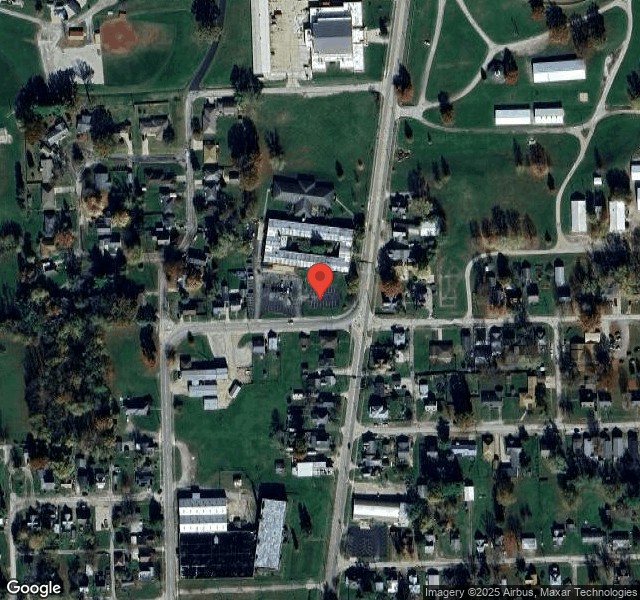

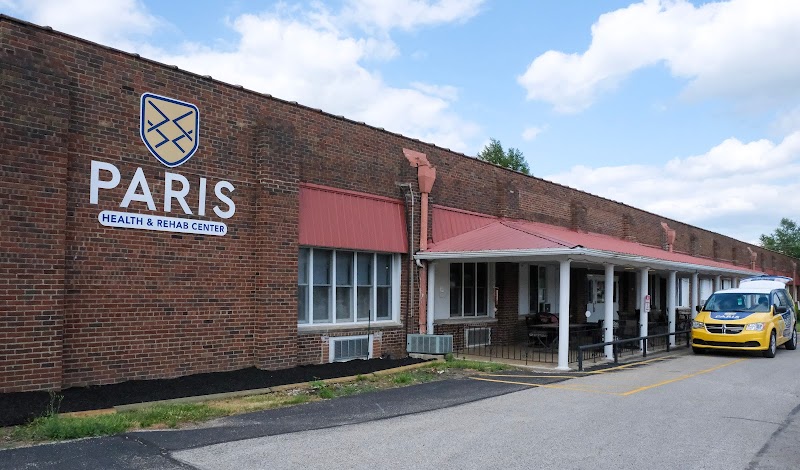
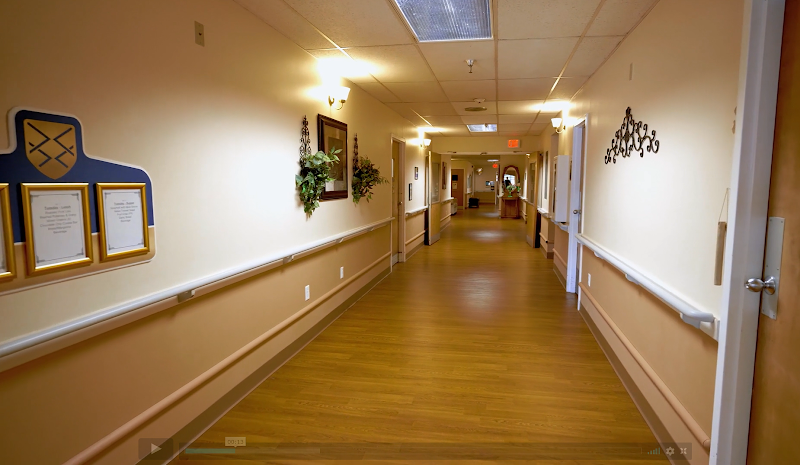
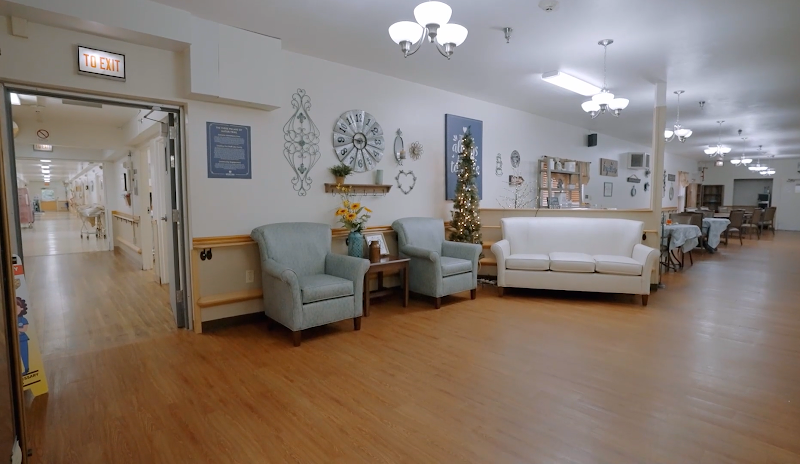
The Haven of Paris

1011 NORTH MAIN STREET, PARIS, IL 61944 (217) 465-5376
For profit - Corporation 128 Beds CREST HEALTHCARE CONSULTING Data: November 2025 3 Immediate Jeopardy citations
Trust Grade
0/100
#659 of 665 in IL
Last Inspection: July 2024

Within standard 12-15 month inspection cycle. Federal law requires annual inspections.

Overview

The Haven of Paris has received a Trust Grade of F, indicating significant concerns about the quality of care, placing it in the poor category. It ranks #659 out of 665 facilities in Illinois, meaning it falls within the bottom tier of care options available in the state. The facility is reportedly improving, with the number of issues decreasing from 45 in 2024 to 22 in 2025. However, staffing is a concern, with a poor rating of 1 out of 5 and a high turnover rate of 58%, which is above the state average. Additionally, the facility has faced $309,695 in fines, indicating repeated compliance issues that are higher than 91% of Illinois facilities. Specific incidents of concern include the failure to prevent fire hazards by using portable space heaters in resident rooms and improperly labeling emergency exit doors, along with a critical medication safety issue where a resident was found with an unattended bottle of Morphine, leading to an emergency intervention. Furthermore, there were serious incidents of mental abuse involving staff members engaging in inappropriate behavior in front of residents. While the facility shows signs of improvement, these serious deficiencies and the concerning staffing situation highlight significant risks that families should carefully consider.

Trust Score
F
0/100
In Illinois
#659/665
Bottom 1%
Safety Record
High Risk
Review needed
Inspections
Getting Better
45 → 22 violations
Staff Stability
⚠ Watch
58% turnover. Above average. Higher turnover means staff may not know residents' routines.
Penalties
✓ Good
$309,695 in fines. Lower than most Illinois facilities. Relatively clean record.
Skilled Nurses
○ Average
Each resident gets 33 minutes of Registered Nurse (RN) attention daily — about average for Illinois. RNs are the most trained staff who monitor for health changes.
Violations
⚠ Watch
89 deficiencies on record. Higher than average. Multiple issues found across inspections.
★☆☆☆☆
1.0
Overall Rating
★☆☆☆☆
1.0
Staff Levels
★☆☆☆☆
1.0
Care Quality
★☆☆☆☆
1.0
Inspection Score
Stable
2024: 45 issues
2025: 22 issues

The Good

  • Full Sprinkler Coverage · Fire safety systems throughout facility
  • No fines on record

Facility shows strength in fire safety.

The Bad

1-Star Overall Rating

Below Illinois average (2.5)

Significant quality concerns identified by CMS

Staff Turnover: 58%

12pts above Illinois avg (46%)

Frequent staff changes - ask about care continuity

Federal Fines: $309,695

Well above median ($33,413)

Significant penalties indicating serious issues

Chain: CREST HEALTHCARE CONSULTING

Part of a multi-facility chain

Ask about local staffing decisions and management

Staff turnover is elevated (58%)

10 points above Illinois average of 48%

The Ugly 89 deficiencies on record

3 life-threatening 7 actual harm
Aug 2025 8 deficiencies
CONCERN (E) 📢 Someone Reported This

A family member, employee, or ombudsman was alarmed enough to file a formal complaint

Potential for Harm - no one hurt, but risky conditions existed

Notification of Changes (Tag F0580)

Could have caused harm · This affected multiple residents

Based on interview and record review, the facility failed to notify residents Family Representatives/Power of Attorney of Physical Abuse allegations for five of nine residents (R3 - R7) reviewed for a...

Read full inspector narrative →
Based on interview and record review, the facility failed to notify residents Family Representatives/Power of Attorney of Physical Abuse allegations for five of nine residents (R3 - R7) reviewed for abuse on the sample list of 18. Findings include:1. R'4s/R3's IDPH resident to resident physical abuse investigation report dated 7/5/25 documents R3 smacked R4's face, and the Power of Attorney was notified, as the facility abuse prevention policy directs.On 8/22/25 at 10:13 am, V24, R3's Power of Attorney (POA)/Family Member reported the facility did call V24 on 7/5/25 and made it sound like another resident (R4) and R3 were just arguing. V24 said there was no mention of anything physical in that call.2. R4/R5 IDPH resident to resident physical abuse investigation report dated 6/21/25 documents R4 swatted R5's back, and the Power of Attorney was notified, as the facility abuse prevention policy directs. On 8/21/25 at 12:35 pm V28, R4's POA/Family Member had great difficulty hearing each question regarding R4's resident to resident altercations. V28, repeated the question regarding the resident to resident altercations back to surveyor correctly, and stated he was unaware of the facility calls about R4's involvement in resident to resident abuse allegations. 3. R4/R6 IDPH resident to resident physical abuse (second) investigation report dated 6/18//25 documents R4 grabbed R6's wrist, and the Power of Attorney was notified, as the facility abuse prevention policy directs.On 8/21/25 at 12:35 pm V28, R4's POA/Family Member had great difficulty hearing each question regarding R4's resident to resident altercations. V28, repeated the question regarding the resident to resident altercations back to surveyor correctly, and stated he was unaware of the facility calls about R4's involvement in resident to resident abuse allegations.On 8/22/25 at 10:20 am V23, R6's POA/Family Member stated she was never called by the facility about resident-to-resident physical abuse of R6. V23, POA stated R6 herself told V23 regarding another resident grabbing R6's wrist. She only knew about it. because R6 told V23 herself. V23 said R6 told V23 it was the same resident that laid in her bed previously and had a bowel movement (R4). V23, also said R6 told V23 that the resident (R4) came in her room, as she does with other resident rooms. V23 said R6 told V23 that R4 grabbed R6's wrist when R6 told (R4) to get out of her room. R6 told V23 that nurses were in the hall, came in the room, and took the other resident (R4) out of R6's room right away. 4. R7's IDPH report dated 8/19/25 documents R7 was handled roughly by an unidentified nursing staff causing a bruise to R7's arm, and the Power of Attorney was notified, as the facility abuse prevention policy directs. On 8/22/25 at 10:07 am V26, R7's Family Member (second emergency contact) said he was never contacted by the facility and V25 (R7's POA), would have told V26 if R7 had made an allegation of staff providing rough care/abuse. On 8/22/25 at 3:08 pm V25 (R7's POA) said she had not been informed by the facility that R7 had made an allegation of rough care by a staff person. V25 said there was no mention of that abuse/rough care allegation, when the facility called V25, and all V25 was told was R7 had a new bruise on her arm. V25 said the facility did not know how the bruise happened. and she expects the facility to tell her the whole story.All of the above reports were documented by V1, Administrator/ Abuse Prevention Coordinator. Each of the above reports document that the Power of Attorney was notified, as the facility abuse prevention policy directs.On 8/22/25 at 12:40 pm V1 Administrator/Abuse Prevention Coordinator said the nurses should be documenting accurately if they aren't getting a hold of a family and the doctor. The nurses are to report to the families about any resident-to-resident altercations/abuse. The facility Abuse Policy dated as revised 01/09/24 documents the following: The Facility will report all allegations of abuse immediately to the Administrator and timely, to the proper authorities to include IDPH (Illinois Department of Public Health), Ombudsman, Local P.D (Police Department), POA (Power of Attorney), and M.D. (Physician) in a timely manner.
CONCERN (E) 📢 Someone Reported This

A family member, employee, or ombudsman was alarmed enough to file a formal complaint

Potential for Harm - no one hurt, but risky conditions existed

Free from Abuse/Neglect (Tag F0600)

Could have caused harm · This affected multiple residents

**NOTE- TERMS IN BRACKETS HAVE BEEN EDITED TO PROTECT CONFIDENTIALITY** Based on interview and record review, the facility failed to protect residents' right to be free from witness, resident to resid...

Read full inspector narrative →
**NOTE- TERMS IN BRACKETS HAVE BEEN EDITED TO PROTECT CONFIDENTIALITY** Based on interview and record review, the facility failed to protect residents' right to be free from witness, resident to resident physical abuse. This failure affects four of nine residents (R3, R4, R5 and R6), reviewed for abuse on the sample list of 18.Findings include:1.) R3's Minimum Data Set (MDS) dated [DATE] documents the following: R3's Brief Interview of Mental Status score of 00 (zero) out of a possible score of 15, which indicates severe cognitive impairment. The same MDS documents R3 has had Verbal behaviors directed towards others (e.g. screaming at others, threatening others, and cursing at others). These verbal behaviors occurred four to six days a week of the lookback period of the MDS assessment.The same MDS documents R3 also had other Behavioral symptoms not directed towards others: (e.g., smearing physical food or symptoms bodily such wastes, as or hitting or verbal/vocal scratching symptoms self, pacing, like rummaging , public sexual acts, disrobing in public, throwing or smearing food or bodily waste, or verbal/vocal symptoms like screaming and disruptive sounds). These other behaviors occurred daily during the lookback period of the MDS assessment.R3's Care Plan dated as last revised 01/22/24 with a target date of 01/10/25 documents the following, (R3) has the potential for abuse/neglect due to invading other's space and property, rummaging through belongings or wandering in and out of other's spaces. She has a history of being physically abused, psychiatric diagnosis or manifestations, including delusions, paranoia and hallucinations, Underlying factors that increase vulnerability; including such as dementia, confusion, poor judgment, wandering and giving away personal property. (R3) will experience no present/future problems related to abuse/mistreatment/violation. Revision on: 01/22/2024, Target Date: 01/10/2025. R4's MDS dated [DATE] documents the following: R4's Brief Interview of Mental Status score of eight out of a possible score of 15, which indicates moderate cognitive impairment . The same MDS documents R4 has had Physical (e.g. Hitting, kicking pushing, scratching, grabbing or abusing others sexually) and verbal behaviors directed towards others (e.g. screaming at others, threatening others, and cursing at others), and Behavioral symptoms not directed towards others: (e.g., smearing physical food or symptoms bodily such wastes, as or hitting or verbal/vocal scratching symptoms self, pacing, like rummaging , public sexual acts, disrobing in public, throwing or smearing food or bodily waste, or verbal/vocal symptoms like screaming and disruptive sounds). These behaviors of verbal and physical, and others behaviors occurred one to three days during the lookback period of the MDS assessment.R4's Care Plan dated as last revised 7/7/25 documents the following: (R4) has a DX (diagnosis) anxiety disorder, unspecified, DX: Dementia in other diseases, unspecified severity, with other behavioral disturbances. The resident is/has potential to be physically aggressive (hitting, kicking, pinching) r/t (related/to) Dementia, History of harm to others, Poor impulse control. The facility's Illinois Department of Public Health initial and final investigation report dated 07/05/25 documents the following: Brief description of the incident/event: It was reported that resident (R4) grabbed resident (R3) by the arm/shirt sleeve. As resident (R3) was trying to get her arm away, she made contact with (R4's) cheek area. The same investigation report documents: Summary of Investigative findings through discussions with Individuals with direct knowledge and review of the resident clinical record, include the report of incident and post-occurrence IDT (Interdisciplinary Team) walking rounds. A comprehensive investigation was initiated, review of video, and found that on 7/5/25 resident (R4) and (R3) were seated next to each other. Resident (R3) had a verbal outburst with a loud noise, which is her baseline. This appeared to startle (R4) and she (R4) was observed to grab (R3's) forearm and then (R3's) shirt sleeve. The staff member did intervene quickly and while attempting to separate the 2 (two) residents, (R3) was flailing her (R3's) arm/hand about, trying to get (R4) to let go of her (R3's) shirt. With this movement (R3's) hand did make contact with (R4's) cheek. Both residents were immediately assessed with no injuries noted. The incident did not appear to be malicious in any manner and more of a matter of the loud verbal outbursts startling(R4) and (R3) not wanting (R4) to be holding/grabbing her arm/shirt. A root cause was identified, and an appropriate intervention has been put into place. Resident (R4) was provided close supervision and the residents were kept separated. Neither resident could recall the incident, and neither resident shows any signs of mental anguish. The facility finds the allegation of willful abuse unsubstantiated related to there being no malicious intent with one resident trying to get the other resident's hand off of her. Follow-Up Actions Taken: The resident plan of care was updated as needed (as noted above R3's and R4's Care Plan were not updated to reflect this report intervention to increase supervision).The same report documents the physician, the power of attorney, police department, and the ombudsmen were notified (confirmed in interviews with V3, Medical Director, V24, Power of Attorney, V9, Supervisor Police Department and V20, Ombudsman that they had not been notified).R3's Occurrence Note dated 7/5/25 at 1:33 pm documents the following: Note Text: Incident Note: Resident (R3) to resident (R4) altercation abuse protocol initiated. When this writer (V32, Licensed Practical Nurse) was inside of the med (medication) room two CNAs (V5 and V6, Certified Nursing Assistant/CNA) witnessed another resident have a hold of this resident's(R3) shirt.(R3) then grabbed a hold of the other resident's left arm. CNA was attempting to separate them, and (R3) had slapped the other resident (R4) in the left side of their face and walked away. No injuries noted/reported. No c/o (complaint/of) pain or discomfort. Resident unable to relay what had happened. Attempted to get VS (Vital Signs measurement) on resident but resident was uncooperative and refused. On call has been notified, Administrator (V1, Abuse Prevention Coordinator) notified, POA notified, and Dr. notified. NNO (No new orders) at this time.On 8/19/25 at 3:00 pm V5, CNA started she worked the day (7/5/25) when R3 slapped R4. V5,CNA said R3 and R4 were seated just on the other side of the nurse's station. V5, CNA points to several other residents and R3 seated in front of the nurses station. R3 was expressing unintelligible words, loudly. V5,CNA stated R4 grabbed the sleeve of R3's shirt in response to R3 making loud sounds. R5 was not really saying anything. V5 stated this is R3's normal. V5 said V5 stood up to come around the nurse's station to separate the residents. V5 said by then, R3 had grabbed R4's shirt. V5 said V5 watched R3 pulled back her other hand, and deliberately swung at R4 face. V5 said it was a full smack. V5 said she saw it, and she heard it. V5 said R4, walked away from R3. We increased supervision of both residents. V5 said V5 reported all of this immediately to V1, Administrator/Abuse Prevention Coordinator after V5 made sure the residents were both separated and safe. V5 said V6, Certified Nursing Assistant was working and helped keep R3 and R4 separated.2.) R4's MDS dated [DATE] documents the following: R4's Brief Interview of Mental Status score of eight out of a possible score of 15, which indicates moderate cognitive impairment . The same MDS documents R4 has had Physical (e.g. Hitting, kicking pushing, scratching, grabbing or abusing others sexually) and verbal behaviors directed towards others (e.g. screaming at others, threatening others, and cursing at others), and Behavioral symptoms not directed towards others: (e.g., smearing physical food or symptoms bodily such wastes, as or hitting or verbal/vocal scratching symptoms self, pacing, like rummaging , public sexual acts, disrobing in public, throwing or smearing food or bodily waste, or verbal/vocal symptoms like screaming and disruptive sounds). These behaviors of verbal and physical, and others behaviors occurred one to three days during the lookback period of the MDS assessment.R4's Care Plan dated as last revised 7/7/25 documents the following, (R4) has a DX (diagnosis) anxiety disorder, unspecified, DX: Dementia in other diseases, unspecified severity, with other behavioral disturbances. The resident is/has potential to be physically aggressive (hitting, kicking, pinching) r/t (related/to) Dementia, History of harm to others, Poor impulse control.R5's MDS dated [DATE] documents R5's BIMS score of 00 out of a possible 15 indicating severe cognitive impairment. The same MDS documents R5 has had no behaviors during the lookback period of this assessment.R5's Care Plan dated as last revised 1/6/25 documents R5 is at times physically aggressive related to dementia. R5 will not harm self or others through the review date. Target Date for review: 05/06/2025. R5 will have fewer episodes of physical aggression through the review date.The facility's Illinois Department of Public Health investigation report dated 06/21/25 documents the following: Summary of Investigative findings through discussions with Individuals with direct knowledge and review of the resident clinical record, include the report of incident and post-occurrence IDT (Interdisciplinary Team) walking rounds. A comprehensive investigation was initiated and found that on 6/21/25 resident (R4) swatted (R5's) back, as she was walking past her. A staff member was immediately present with another resident ( unidentified) and very quickly intervened and redirected. Both residents were immediately assessed with no injury. The incident did not appear to be malicious in any manner and more of a matter of attempt to get the other resident's attention. A root cause was identified, and an appropriate intervention has been put into place. Neither resident could recall the incident, and neither resident shows any signs of mental anguish. The facility finds the allegation of willful abuse unsubstantiated related to there being no malicious intent with One resident trying to get the other resident's attention. The same investigation report documents the plan of care was updated as needed. The facility will continue to monitor residents as needed: resident post incident assessment will continue.The same investigation report above also documents Power of Attorney, Physician and Ombudsman were notified. Interviews conducted with R4 and R5's POA, V3, Medical Director, and V20, Ombudsman stated they were not notified.On 8/19/25 at 3:00 pm V5, Certified Nursing Assistant (CNA) said R4 had an altercation with R5, on the same day as an incident with R4 and R6. V5, CNA said R4 did not walk very fast. R5 hit R4 in the back, and left a ‘full-red hand print on R4's low back V5, CNA also stated as soon the altercation occurred V5 called the on-call number and talked to V1 Administrator/Abuse Prevention Coordinator.3.) R4's Minimum Data Set (MDS) dated [DATE] documents the following: R4's Brief Interview of Mental Status (BIMS) score of eight out of a possible score of 15, which indicates moderate cognitive impairment . The same MDS documents R4 has had Physical (e.g. Hitting, kicking pushing, scratching, grabbing or abusing others sexually) and verbal behaviors directed towards others (e.g. screaming at others, threatening others, and cursing at others), and Behavioral symptoms not directed towards others: (e.g., smearing physical food or symptoms bodily such wastes, as or hitting or verbal/vocal scratching symptoms self, pacing, like rummaging , public sexual acts, disrobing in public, throwing or smearing food or bodily waste, or verbal/vocal symptoms like screaming and disruptive sounds). These behaviors of verbal, physical, and others' behaviors occurred one to three days during the lookback period of the MDS assessment.R4's Care Plan dated as last revised 7/7/25 documents the following, (R4) has a DX (diagnosis) anxiety disorder, unspecified, DX: Dementia in other diseases, unspecified severity, with other behavioral disturbances. The resident is/has potential to be physically aggressive (hitting, kicking, pinching) r/t (related/to) Dementia, History of harm to others, Poor impulse control. R6's MDS dated [DATE] documents R6' has a BIMS score of 11 out a possible 15, indicating moderate cognitive impairment. The same MDS documents that R6 has had no physical or verbal behaviors directed at herself or others during the look back period of this assessment.R6's Care Plan dated 12/26/24 with a target date for review/revise of 1/10/25. R6's care plan documents R6 has impaired function/dementia or impaired thought process related to Dementia. R6's Medication Administration Record dated June1-30, 2025 documents R6 had pain on 6/18/25 ( the same day R4 grabbed R6's wrist and left fingernail indentations), twice, at a level of eight (indicating moderate-high) on a scale of 1-10. R6 required a combination medication; Hydrocodone (narcotic analgesic) -Tylenol (analgesic) 5 milligrams-325 milligrams, one by mouth every six hours as needed for pain. R6 was administered one dose at of Hydrocodone - Tylenol at 12:25 pm and again at 6:01 pm. There was no other doses recorded as administered, between 6/16/25 start date of the order, and 6/30/25.The facility's initial Illinois Department of Public Health (IDPH) investigation report dated 06/18/25 at 12:45 pm documents R4 and R5 (not R4 and R6) were involved in a resident-to-resident altercation and was witnessed by V5, Certified Nursing Assistant. That report goes on to documents R6's initials and states that the altercation occurred while (R6's initials and R4 initials) walking in the hallways from the dining room, when R4 (indicated by initials) grabbed R6's (indicated by initials) shirt. V1 Administrator interview below said they are related to R4 and R6, not R4 and R5 and she would resubmit to IDPH an updated report.The second report to IDPH dated 06/18/25 at 12:45 pm (the same date as above) documents a resident-to-resident altercation and that was witnessed by V7, Certified Nursing Assistant. This report documents R4 grabbed R6's shirt as leaving the dining room (not in R6's room documented on the third investigation below). The initial and final investigation does not document R6's wrist was grabbed in the altercation and there is no mention R4 coming into R6's room (as documented on the third investigation initial and final report below). The third IDPH initial and final investigation report also dated 6/18/25 at 12:45 pm, documents a resident-to-resident altercation between R4 and R6 that was witnessed by V5, Certified Nursing Assistant and V12, Licensed Practical Nurse. This third report documents the following: Summary of Investigative findings through discussions with Individuals with direct knowledge and review of the resident clinical record including the Report of Incident and the post occurrence IDT Walking Rounds: A comprehensive investigation was initiated and found that on 6/18/25 resident (R4) entered resident (R6's) room. Resident (R6) asked resident to leave but she declined to do so. Resident (R4) was then observed to hold other resident's (R6) wrists. A root cause was identified, and an appropriate intervention has been put into place. (R4) was transported to (local named -Hospital Emergency Room) on 6/19 due to behavioral issues and sent to (Private Psychiatric hospital on 6/22/25). Resident (R6) recalled that ‘She (R6) just grabbed my wrist when I wanted to leave my room. Neither resident shows any signs of mental anguish. The facility finds the allegation of willful abuse unsubstantiated related to there being no malicious intent as it appeared that (R4) thought she was in her own room, in her own bed, when resident (R6) startled her.On 8/19/25 at 3:00 pm V5, Certified Nursing Assistant (CNA) witnessed the resident-to-resident altercation between R4 and R6. V5, CNA said R4 had an altercation with R6. V5, CNA said the incident occurred the same weekend in June, as when R4 got smacked on the back by R5 (see above Saturday, 6/21/25 (which is documented as 6/18/25 on the three investigation above). V5, CNA said R4 went into R6's room and grabbed R6's wrist and it left fingernail marks on R6 wrist. V5, CNA said she was able to take R4's hand off R6's wrist easily. V5, CNA also said you could see R4 had to have held onto R6's wrist firmly to leave fingernail marks On 8/19/25 at 3:20 pm R6, said the lady (identified as R4 in above, V5 interview) that wanders, came into my room and tried to lay down in my roommates bed. I told her she needed to leave our room. The lady (R4) grabbed my (R6) wrist. (R6) held up her left wrist. Her left wrist had a knotted deformity on the lateral wrist. R6 also said This was the wrist, but she didn't cause the bump. I fracture that a long time ago and the doctor said they could not fix it. When she (V4) grabbed my wrist, it hurt. I knew not to pull away or she would have grabbed it harder. I told her to let go. I said it loud, and a Nurse (unidentified) and CNA (V5, Certified Nursing Assistant) came in and had her (R4) let go. I have not been mistreated any other time.On 8/22/25 at 8:40 am V1, Administrator/Abuse Prevention Coordinator V1 stated that the 6/18/25 abuse allegations above was not R5 and R4. V1 said V1 fixed the report and gave it (the second report) to this surveyor the day before. V1 said the investigation was the altercation between R4 and R6 and V1 has not sent an updated report to IDPH. V1 said she 'should probably do that'. V1 said V12, Licensed Practical Nurse did the skin assessment and said there was no injury to R6's skin. On 8/22/25 at 9:25 am V1, Abuse Prevention Coordinator/ Administrator provided the third resident to resident investigation report. V1 said all three of the abuse investigation reports dated 6/18/25 regarding R4 and R6 provided on survey, are the same occurrence. The last one included that R4 did grabbed R6's wrist and That should have been in the investigation report to begin with. Each of the IDPH abuse investigations reports dated 6/18/25 document the Ombudsman, and POA, were notified.R6's Nursing Note dated 6/18/2025 at 2:46 pm documents the following: Note Text: Upon responding to alarm sounding in room across the hall from resident; a staff member observed this resident standing from W/C (wheelchair) and grasping another female resident by both wrists. Staff immediately separated the residents and notified the appropriate supervisor and abuse coordinator. Placed a phone call to (V28, R4's Healthcare Power of Attorney/HPOA) and informed of the observation of resident having ahold of another female (R6) by both wrists and that per protocol was also reported to PCP (Primary Care Provider) and all appropriate IDT (Interdisciplinary Team) members. HPOA expressed understanding and appreciation for the call and stated will not be coming to visit today due to the inclement weather but plans to come tomorrow. HPOA has no concerns or other questions. The facility abuse policy dated 1/9/24 document the following: This facility affirms the right of our residents to be free from abuse, neglect, misappropriation of resident property, and exploitation, which includes, but is not limited to, freedom from corporal punishment, involuntary seclusion and any physical or chemical restraint not required to treat the resident's medical symptoms. This facility therefore prohibits mistreatment, exploitation, neglect or abuse of its residents, and has attempted to establish a resident sensitive and resident secure environment.
CONCERN (E) 📢 Someone Reported This

A family member, employee, or ombudsman was alarmed enough to file a formal complaint

Potential for Harm - no one hurt, but risky conditions existed

Abuse Prevention Policies (Tag F0607)

Could have caused harm · This affected multiple residents

Based on interview and record review, the facility failed repeatedly to operationalize their abuse prevention policy by failing to notify the Ombudsman of abuse allegations. This failure affected seve...

Read full inspector narrative →
Based on interview and record review, the facility failed repeatedly to operationalize their abuse prevention policy by failing to notify the Ombudsman of abuse allegations. This failure affected seven of nine residents (R3 -R7) reviewed for abuse on the sample list of 18. Findings include:1. R'4s/R3's IDPH resident to resident physical abuse investigation report dated 7/5/25 documents R3 smacked R4's face, and the Ombudsman was notified, as the facility abuse prevention policy directs.2. R4/R5 IDPH resident to resident physical abuse investigation report dated 6/21/25 documents R4 swatted R5's back, and the Ombudsman was notified, as the facility abuse prevention policy directs. 3. R4/R6 IDPH resident to resident physical abuse investigation report dated 6/18//25 documents R4 grabbed R6's wrist, and the Ombudsman was notified, as the facility abuse prevention policy directs. 4. R7's IDPH report dated 8/19/25 documents R7 was handling rough by an unidentified nursing staff named ( V11, Nursing staff) causing a bruise to R7's arm, and the Ombudsman was notified, as the facility abuse prevention policy directs. All of the above reports were documented by V1, Administrator/ Abuse Prevention Coordinator. Each of the above reports document that the Ombudsman was notified of the alleged abuse.On 8/21/25 at 11:13 AM V20, Ombudsman discussed the the above alleged abuse investigation reports with the corresponding dates. V20 said V20 reviewed all V20's correspondence with the facility over this time frame and associated dates. V20, Ombudsman stated he was not notified by the facility of any of the above allegations. V20, said V20 reviewed his notes, emails and phone calls. V20 also stated he was in the facility last week and was present during the facility Resident Council Group meeting. V20 stated the facility did not notify V20 in person, of any of the abuse/injury of unknown allegations documented above.The facility Abuse Policy dated as revised 01/09/24 documents, The Facility will report all allegations of abuse immediately to the Administrator and timely to the proper authorities to include IDPH ( Illinois Department of Public Health), Ombudsman, Local P.D (Police Department), POA ( residents Power of Attorney), and M.D. (Physician) in a timely manner.
CONCERN (E) 📢 Someone Reported This

A family member, employee, or ombudsman was alarmed enough to file a formal complaint

Potential for Harm - no one hurt, but risky conditions existed

Report Alleged Abuse (Tag F0609)

Could have caused harm · This affected multiple residents

Based interview and record review, the facility failed to report allegations of resident to resident physical abuse, staff to resident physical abuse, and injuries of unknown origin to the police depa...

Read full inspector narrative →
Based interview and record review, the facility failed to report allegations of resident to resident physical abuse, staff to resident physical abuse, and injuries of unknown origin to the police department and physician, in accordance with the facility policy. This failure affected five of nine residents (R3-R7) reviewed for abuse on the sample list of 18.Findings include: 1. R'4s/R3's IDPH resident to resident physical abuse investigation report dated 7/5/25 documents R3 smacked R4's face, and the local police department and physician were notified. 2. R4/R5 IDPH resident to resident physical abuse investigation report dated 6/21/25 documents R4 swatted R5's back, and the local police department and physician were notified. 3. R4/R6 IDPH resident to resident physical abuse investigation report dated 6/18//25 documents R4 grabbed R6's wrist, and the local police department and physician were notified. 4. R7's IDPH report dated 8/19/25 documents R7 was handling rough by an unidentified nursing staff causing a bruise to R7's arm, and the local police department and physician were notified. All of the above reports were documented by V1, Administrator/ Abuse Prevention Coordinator. Each of the above reports document that the local police department and the physician were notified, as the facility abuse prevention policy directs.On 8/21/25 at 10:20 AM, V19, Supervisor, Local Police Department stated the police department has no records, reports or dispatch calls of the facility contacting them regarding any of the above report.On 8/22/25 at 1:10 PM, V3, Medical Director/Physician (MD) reviewed V3, MD's records, facsimiles and phone calls on each of the above allegations of abuse. V3 said had not been notified of any of the above allegations. V3,MD also said that on-call physicians report all events in the facility to V3, MD. V3 said he does not see any evidence from the on-call providers that reflects they were notified of the above abuse investigations.On 8/22/25 at 12:40 pm V1 Administrator/Abuse Prevention Coordinator stated I called the police, and they asked if I wanted them to come out and I said no. I have nothing to show that I called and I don't keep my phone calls on my cell phone. I have no proof. I will have to get proof from now on. I will get a name or report number from the Police. V1 also stated As far as family and the physician, the nurses should be documenting accurately if they aren't getting a hold of a family and the doctor. That is what I go by in my investigation. I know I talked to (V23 Power of Attorney/R6's Family) about other things. The nurses are to report to the families about any resident-to-resident altercation. I guess I can't prove that either.The facility Abuse Policy dated as revised 01/09/24 documents the following: investigation has been complete. The Facility will report all allegations of abuse immediately to the Administrator and timely to the proper authorities to include IDPH ( Illinois Department of Public Health), Ombudsman, Local P.D (Police Department), POA ( residents Power of Attorney), and M.D. (Physician) in a timely manner.
CONCERN (E) 📢 Someone Reported This

A family member, employee, or ombudsman was alarmed enough to file a formal complaint

Potential for Harm - no one hurt, but risky conditions existed

Investigate Abuse (Tag F0610)

Could have caused harm · This affected multiple residents

Based on interview and record review, the facility failed to complete a thorough investigation by failing to interview families that are frequently in the facility, and other residents residing in the...

Read full inspector narrative →
Based on interview and record review, the facility failed to complete a thorough investigation by failing to interview families that are frequently in the facility, and other residents residing in the facility, that may have knowledge of alleged abuse. This failure had the potential to affect five of nine residents (R3- R7) reviewed for abuse on the sample list of 18. Findings include:R'4s/R3's IDPH resident to resident physical abuse investigation report dated 7/5/25 documents R3 smacked R4's face. The facility investigation determined this allegation to be unfounded, though no families or other residents were interviewed. 2. R4/R5 IDPH resident to resident physical abuse investigation report dated 6/21/25 documents R4 swatted R5's back. The facility investigation determined this allegation to be unfounded, though no families or other residents were interviewed. 3. R4/R6 IDPH resident to resident physical abuse investigation report dated 6/18//25 documents R4 grabbed R6's wrist. The facility investigation determined this allegation to be unfounded, though no families or other residents were interviewed. 4. R7's IDPH report dated 8/19/25 documents R7 was handling rough by an unidentified nursing staff causing a bruise to R7's arm. The facility investigation determined this allegation to be unfounded, though no families or other residents were interviewed. On 8/22/25 at 8:40 am V1, Administrator confirmed the abuse investigation ( R3-R7) provided throughout the survey (8/19/25 - 8/22/25) are complete. V1 then confirmed she did not interview families that visit the facility frequently, or other residents who may have knowledge of alleged abuse incidents. The facility's Abuse Policy dated as revised 01/09/24 documents the following, The facility immediately and thoroughly investigates all allegations of abuse to include but not limited to interviews of residents and staff, visitors, vendors.
CONCERN (E) 📢 Someone Reported This

A family member, employee, or ombudsman was alarmed enough to file a formal complaint

Potential for Harm - no one hurt, but risky conditions existed

Deficiency F0657 (Tag F0657)

Could have caused harm · This affected multiple residents

Based on interview and record review, the facility failed to timely review and revise care plans for four of nine residents ( R3, R4, R5, and R6) reviewed for abuse on the sample list of 18. Findings ...

Read full inspector narrative →
Based on interview and record review, the facility failed to timely review and revise care plans for four of nine residents ( R3, R4, R5, and R6) reviewed for abuse on the sample list of 18. Findings include: R'4s/R3's final IDPH resident to resident physical abuse investigation report dated 7/5/25 documents R3 smacked R4's face. The same report documents R3 and R4's care plan was reviewed/revised. R3's Care Plan dated as last revised 01/22/24 (twenty- four) with a target date of 01/10/25 (twenty -five) documents the following: (R3) has the potential for abuse/neglect due to invading other's space and property, rummaging through belongings or wandering in and out of other's spaces. She has a history of being physically abused, psychiatric diagnosis or manifestations, including delusions, paranoia and hallucinations, Underlying factors that increase vulnerability; including such as dementia, confusion, poor judgment, wandering and giving away personal property. (R3) will experience no present/future problems related to abuse/mistreatment/violation. Revision on: 01/22/2024, Target Date: 01/10/2025. There are no review or revision on R3's Care Plan as indicated above in the investigation report.R4's re-admission Care Plan dated as last revised 7/7/25 documents the following: (R4) has a DX (diagnosis) anxiety disorder, unspecified, DX: Dementia in other diseases, unspecified severity, with other behavioral disturbances. The resident is/has potential to be physically aggressive (hitting, kicking, pinching) r/t (related/to) Dementia, History of harm to others, Poor impulse control. R4's same care plan does not document R4's care plan was reviewed or revised, related to abuse, in a timely manner on 7/5/25 , as documented on the abuse investigation report above. 2. R4/R5 final IDPH resident to resident physical abuse investigation report dated 6/21/25 documents R4 swatted R5's back. The same report documents R4 and R5's care plan was reviewed/revised. R4's re-admission Care Plan dated as last revised 7/7/25 documents the following: (R4) has a DX (diagnosis) anxiety disorder, unspecified, DX: Dementia in other diseases, unspecified severity, with other behavioral disturbances. The resident is/has potential to be physically aggressive (hitting, kicking, pinching) r/t (related/to) Dementia, History of harm to others, Poor impulse control. R4's same care plan does not document R4's care plan was reviewed or revised related to abuse, in a timely manner on 6/21/25, as documented on the abuse investigation report above. R5's Care Plan dated as last revised 01/6/25 documents R5 is at times physically aggressive related to dementia. R5 will not harm self or others through the review date. Target Date for review: 05/06/2025. R5 will have fewer episodes of physical aggression through the review date. R4's same care plan does not document R5's care plan was reviewed or revised, on 6/21/25, as documented on the abuse investigation report above. 3. R4/R6 final IDPH resident to resident physical abuse (second) investigation report dated 6/18//25 documents R4 grabbed R6's wrist. The same report documents R4 and R6's care plan was reviewed/revised. R4's re-admission Care Plan dated as last revised 7/7/25 documents the following: (R4) has a DX (diagnosis) anxiety disorder, unspecified, DX: Dementia in other diseases, unspecified severity, with other behavioral disturbances. The resident is/has potential to be physically aggressive (hitting, kicking, pinching) r/t (related/to) Dementia, History of harm to others, Poor impulse control. R4's same care plan does not document R4's care plan was reviewed or revised related to abuse, on 6/18/25, as documented on the abuse investigation report above. R6's Care Plan dated 12/26/24 with a target date for review/revise of 1/10/25. R6's care plan documents R6 has impaired function/dementia or impaired thought process related to Dementia. The same care plan does not document R4's care plan was reviewed or revised in a timely manner on 6/18/25 as documented on the abuse investigation report above. On 8/21/25 at 3:05 pm V16, Regional Administrator/Licensed Professional Nurse reviewed R3-R7's Care Plans and confirmed R3- R7's care plans have not been updated as they were supposed to be and new interventions should have been documented after each of the abuse allegations.The facility's Abuse Policy dated as revised 01/09/24 documents the following: Implementing systems to promptly and aggressively investigate all reports and allegations of abuse, neglect, exploitation, misappropriation of property and mistreatment, and making the necessary changes to prevent future occurrences.
CONCERN (E) 📢 Someone Reported This

A family member, employee, or ombudsman was alarmed enough to file a formal complaint

Potential for Harm - no one hurt, but risky conditions existed

Medical Records (Tag F0842)

Could have caused harm · This affected multiple residents

Based on interview and record review, the facility failed repeatedly to maintain complete and accurate medical records for one of nine residents ( R6) reviewed for abuse/injury of unknown origin on th...

Read full inspector narrative →
Based on interview and record review, the facility failed repeatedly to maintain complete and accurate medical records for one of nine residents ( R6) reviewed for abuse/injury of unknown origin on the sample list of 18.Findings include:R6's Physician Adult Health Exam, Routine Nursing Home Follow-Up. notes dated 2/20/25, 4/10/25, 4/17/25, 6/19/25 and 7/10/25 document R6 was assessed by V3, Medical Director (Physician). These notes were signed by V3, Medical Director. V3, MD documented R6 'Integumentary (skin)' assessments indicates R6 had left cheek and left, lower rib cage bruises on each of these assessment. On 8/22/25 at 1:10 PM V3, Medical Director reviewed R6's medical record documentation and said he now recognized his documentation was not accurate in V3, MD Nursing home visit notes that he documented on 2/20/25, 4/10/25, 4/17/25, 6/19/25 and 7/10/25. V3 confirmed R6 had a fall in December 2024 and continued with bruises in January but did not have bruising on the above mentioned dates. V3, MD acknowledged this was a documentation error. V3, MD also said V3, MD will add an addendum to each of those progress notes.R6's revised Progress notes dated 2/20/25, 4/10/25, 4/17/25, 6/19/25 and 7/10/25 have the following addendum signed by V3, MD: C: PHC NH (Point Click Care Nursing Home) Addendum: Integumentary: Bruising noted to left cheek and left lower ribs was added to chart due to documentation error. ZOO.DO: Encounter for general adult medical examination without abnormal findings.
CONCERN (F) 📢 Someone Reported This

A family member, employee, or ombudsman was alarmed enough to file a formal complaint

Potential for Harm - no one hurt, but risky conditions existed

Deficiency F0727 (Tag F0727)

Could have caused harm · This affected most or all residents

Based on observation, interview, and record review, the facility failed to provide a full-time director of nurses to oversee and coordinate nursing services provided within the facility. This failure ...

Read full inspector narrative →
Based on observation, interview, and record review, the facility failed to provide a full-time director of nurses to oversee and coordinate nursing services provided within the facility. This failure has the potential to affect all 83 residents residing in the facility.Findings include:During the survey 8/19/25 through 8/22/25 there was no Director of Nursing (DON) in the building.On 8/19/25 at 10:10 am V1, Administrator/Abuse Prevention Coordinator stated V2, previous Director of Nursing's last day employed for the facility was Friday 8/15/25. V1 stated she has not hired a Registered Nurse for the DON position, nor does the facility have an Acting DON to provide oversite of the nursing services.The facility resident roster dated 8/19/25 documents 83 residents reside in the facility.
Jul 2025 2 deficiencies 1 Harm
SERIOUS (G) 📢 Someone Reported This

A family member, employee, or ombudsman was alarmed enough to file a formal complaint

Actual Harm - a resident was hurt due to facility failures

Quality of Care (Tag F0684)

A resident was harmed · This affected 1 resident

**NOTE- TERMS IN BRACKETS HAVE BEEN EDITED TO PROTECT CONFIDENTIALITY** Based on record review and interview the facility repeatedly failed to report changes in condition to a provider, for a resident...

Read full inspector narrative →
**NOTE- TERMS IN BRACKETS HAVE BEEN EDITED TO PROTECT CONFIDENTIALITY** Based on record review and interview the facility repeatedly failed to report changes in condition to a provider, for a resident with hypotension. These repeated failures resulted in a delay in treatment and hospitalization to stabilize residents blood pressure. This failure affected one of three residents (R1) reviewed for a change in condition on the sample list of three. Findings include:R1's Current Diagnoses List includes the following: Type II Diabetes with Other Specified Complications, Type II Diabetes With Other Diabetic Neurological Complications, Chronic Ischemic Heart Disease, Unspecified, Hypertensive Heart Disease With Heart Failure Presence Of Automatic Implantable Cardiac Defibrillator, Peripheral Vascular Disease Unspecified, Atherosclerotic Heart Disease Of Native Coronary Artery Without Angina Pectoris, Non-rheumatic Tricuspid Insufficiency, Acute Kidney Disease, Essential Hypertension, Chronic Obstructive Pulmonary Disease, Unspecified Dementia, Unspecified Severity Without Behavioral Disturbance, Mood Disturbance and Anxiety, Encounter for Orthopedic Aftercare Following Surgical Amputation, Gangrene, Not Elsewhere Classified, Acquired Absence Of Left Great Toe, and Chronic Osteomyelitis Left Ankle and Foot.R1's Minimum Data Set, dated [DATE] documents R1's Brief Interview of Mental Status score of five out of a possible 15 indicating severe cognitive impairment.R1's Current Physician Order Sheet (POS) documents the following: Cipro (antibiotic) Oral Tablet 500 MG (milligrams) (Ciprofloxacin HCI), Give 1 tablet by mouth, two times a day related to GANGRENE, NOT ELSEWHERE CLASSIFIED, (administer) until 08/02/2025 . Start date 06/02/25.R1's same POS documents: Entresto (combination heart failure medication that relaxes blood vessels, and prevents blood vessels from constricting which helps lower blood pressure), Oral Tablet 24-26 MG (Sacubitril-Valsartan) Give 1 tablet by mouth two times a day for Congestive Heart Failure. Start dated 05/16/25.R1's Nurses Note dated 6/5/2025 at 11:51 am, documents the following: Note Text: Resident was seen today by (the) wound clinic. It was noted that resident had (an) allergy to Cipro. (V8, Wound Physician ) requested clarification from (V9, Medical Director's) office to hold Entresto while on Cipro. (V9) did not want to hold Entresto. Per (V8, Wound Physician) since resident is tolerating medication well, monitor blood pressure every shift. Will continue to monitor (the) resident.R1's same POS above, documents: Monitor blood pressure every shift for antibiotic while on antibiotic therapy. Start date 6/05/25, End date 6/27/25.R1's Electronic Vital Sign medical record includes blood pressure measurements. The same Electronic medical record indicates an alert to the nursing staff, when the measurement is outside the normal range. R1 ‘s Electronic Vital Sign record documents the following, out of normal range, blood pressure measurements:On 6/5/2025 at 10:09 pm R1's blood pressure measured 107 (systolic)/ 59 (diastolic) mm/ Hg (millimeters of mercury), Sitting (position the resident was in when the blood pressure was measured), Rt (Right) arm (location on the residents body where the reading was obtained). Alert was triggered as follows Diastolic Low of 60 exceeded.On 6/6//2025 at 10:44 am R1's blood pressure measured 118/59 mm/ Hg. Sitting, lt (left) arm. Alert was triggered as follows: Diastolic Low of 60 exceeded.On 6/6//2025 at 9:35 pm R1's blood pressure measured 105/49 mm/ Hg. Sitting, rt (right) arm. Alert was triggered as follows: Diastolic Low of 60 exceeded.On 6/7//2025 at 8:28 am R1's blood pressure measured 112/54 mm/ Hg . Sitting, rt arm. Alert was triggered as follows: Diastolic Low of 60 exceeded.On 6/7//2025 at 5:19 pm R1's blood pressure, again, measured 112/54 mm/ Hg. Sitting, rt arm. Alert was triggered as follows: Diastolic Low of 60 exceeded.On 6/10/2025 at 11:26 am R1's blood pressure measured 112/52 mm/ Hg. Sitting, lt arm. Alert was triggered as follows: Diastolic Low of 60 exceeded.On 6/11/2025 at 12:23 pm R1's blood pressure measured 126/54 mm/ Hg . Sitting, lt arm. Alert was triggered as follows: Diastolic Low of 60 exceeded.On 6/12/2025 at 12:33 pm R1's blood pressure measured 116/54 mm/ Hg . Sitting, rt arm. Alert was triggered as follows: Diastolic Low of 60 exceeded.On 6/12/2025 at 8:04 pm R1's blood pressure measured 96/43 mm/ Hg. Sitting, lt arm. Alert was triggered as follows: Diastolic Low of 60 exceeded.On 6/14/2025 at 8:23 pm R1's blood pressure measured 101/45 mm/ Hg. Sitting, rt arm. Alert was triggered as follows: Diastolic Low of 60 exceeded.On 6/15/2025 at 7:48 pm R1's blood pressure measured 108/56 mm/ Hg. Sitting, lt arm. Alert was triggered as follows: Diastolic Low of 60 exceeded.On 6/21/2025 at 9:03 pm R1's blood pressure measured 82/66 mm/ Hg. Sitting, rt arm. A new alert was triggered for R1's systolic measurement as follows: Systolic Low of 90 exceeded.On 6/22/2025 at 9:43 am R1's blood pressure measured 86/42 mm/ Hg . Sitting, lt arm. A double alert triggered which included both systolic and diastolic blood pressure measurement as follows: Systolic Low of 90 exceeded. and Diastolic Low of 60 exceeded.On 6/22/2025 at 1:15 pm R1's blood pressure again measured 86/42 mm/ Hg . (does not indicate what position R1 was in, or what location on R1's body R1's blood pressure was measured). A double alert again, was triggered which included both systolic and diastolic blood pressure measurement as follows: Systolic Low of 90 exceeded. and Diastolic Low of 60 exceeded.R1's Occurrence Note dated 6/22/2025 at 9:30 pm documents the following: Note Text: Incident Note: called to residents' room by CNA (Certified Nursing Assistant, unidentified) upon entering room resident (R1) was sitting on floor on his coccyx, left arm resting on his recliner. When asked what happened (R1) stated I fell trying to get back in my chair. Asked if he hit his head he said no. Asked if he was hurting he said my left elbow a little. Thorough assessment of resident completed no injures noted but small abrasion to left elbow cleaned and band aid applied. Neuros (neurological assessment) initiated . VS (Vital signs) T97.2 (Temperature) P75 (Pulse) B/P 92/56 (Blood /Pressure) R 20 (Respirations) sat 97% (blood oxygen measurement of saturation) on RA (room air). (Full-body, mechanical lift transfer) with assist of two (staff) off floor and back into his chair. Currently sitting at nurses station. Notified the Nurse supervisor (V2, Director of Nursing) for the facility of the fall, notified his (R1's,Family Member/ Power of Attorney) and physician (unidentified) . No c/o (complaints/of) any voiced at this time.As documented above, in this occurrence note 6/22/25 at 9:30 pm, R1's blood pressure measured 92/56 mm/hg indicating R1's diastolic measurement was low due to a measurement below 60.As noted above on the Vitals Log above, R1 sustained a low blood pressure measurement for 24 hours and 27 minutes prior to the fall documented on the above occurrences report.Post R1's fall 6/22/25 at 9:30 pm documented in the occurrence note, R1 continued with abnormal blood pressure measurements after the fall as follows:On 6/22/25 at 9:45 pm R1's blood pressure measured 97/56 mm/ Hg . Sitting, lt arm. Alert was triggered as follows: Diastolic Low of 60 exceeded.On 6/22/25 at 9:53 pm eight minutes after the previous measurement R1's blood pressure was measured again at 96/56 mm/ Hg. Sitting, lt arm. Alert was again triggered as follows: Diastolic Low of 60 exceeded.On 6/22/25 at 11:22 pm one hour and 29 minutes after the previous measurement R1's blood pressure was measured again at 95/56 mm/ Hg . Sitting, lt arm. Alert was again triggered as follows: Diastolic Low of 60 exceeded.On 6/23/25 at 9:42 am R1's blood pressure measured 99/58 mm/ Hg. Sitting, lt arm. Alert was triggered as follows: Diastolic Low of 60 exceeded.On 6/23/25 at 7:44 pm R1's blood pressure measured 100/56 mm/ Hg . Sitting, lt arm. Alert was triggered as follows: Diastolic Low of 60 exceeded.There was no documentation in R1's medical record that a nurse practitioner or physician was notified of the 19 abnormal blood pressure measurements documented above. The fall occurrence note documents an unknown physician was notified of the fall 6/22/25. ( V9, Medical Director clarified in the interview documented below that he was notified of the fall but was not notified of the blood pressure drop.R1's Nurses Note date 6/25/25 at 1:36 pm documents the following: Note Text: Resident OOF (out f facility) via (by way of) the facility van to go to the wound center for routine visit. Paperwork sent with the transporter and family will meet at the clinic. Resident (R1) was reported to have been up all night when shift change done this AM and obtained a new skin tear to an upper extremity that the previous nurse covered with a dressing.R1's Nurses Note dated 6/25/25 at 2:45 pm documents the following: Note Text: Transporter returned from the wound clinic with progress report from (V8, Wound Physician) and reported to this nurse that resident is currently in the emergency department per family wishes due to not acting like self. Noted in the report that per the RN (unidentified); resident left the appointment (wound clinic) in no pain via W/C (wheelchair) with transport assist and will RTC (Return to see the wound clinic) in 1 week for F/U (follow-up). Plan to follow up with ED (Hospital, emergency department) on resident's status prior to leaving the facility today.R1's Nurse's Note dated 6/25/25 at 8:50 pm documents the following: Note Text: Placed a call the ED and was informed that resident was noted to be hypotensive (low blood pressure) and hypothermic (low body temperature, sometimes exacerbated by hypotension) upon arrival in ER. Awaiting the hospitalist (unidentified, hospital physician) decision as to which hospital (R1) will be the admitting facility for inpatient stay for treatment and family in hopes that resident will remain in (name of local hospital) for their visitation convenience. Requested that the local hospital please call back to let the current nurse on duty know what was decided. Notified the on- call nursing supervisor (V2, Director of Nursing) of the above and resident current status.R1's Hospital Discharge Summary report dated 6/30/25 at 12:12 pm, signed by V9, Facility Physician/ Medical Director documents the following: Discharge Diagnoses: -Systemic Inflammatory Response Syndrome (serious inflammatory response, over reaction to stressors such infection, trauma, surgery) - Primary. Hospital CourseSpecified (age) year-old male with a medical history significant for coronary artery disease status post CABG (Coronary Artery Bypass Grafting surgery), cardiomyopathy status post PM/ICD (Pacemaker Implantable Cardioverter Defibrillator) placement with associated heart failure, peripheral artery disease, peripheral neuropathy, non-insulin-dependent diabetes mellitus, COPD, questionable dementia, and recent bout of left foot osteomyelitis (May 2025) (prior to facility admission), presented to the emergency room with chief complaint of altered mental status for several days. Patient's clinical picture was highly suspicious for septic shock. Patient was hypotensive (low blood pressure) and pressor (type of medication to increase blood pressure) dependent. He was started on broad-spectrum antibiotics. Patient has some baseline dementia. No clear source of infection but has history of chronic osteomyelitis of the left foot. Patient responded well to pressers, fluids and broad-spectrum antibiotics although no definitive source of infection was found. Patient has autonomic dysfunction which probably lead to hypothermia and hypotension. His cultures have so far remained negative. He was discharged (from the hospital 5/16/25) last admission to nursing home on IV (intravenous) antibiotics but he kept pulling his lines (IV catheters) out so podiatry (wound clinic) changed him to oral antibiotics for chronic (osteomyelitis). I again rechecked with lab and his blood cultured have panned out to be negative. At this point he is ready for discharge back to nursing home. He can continue oral antibiotics at the nursing home as he was previously taking. R1's General Note dated 6/30/25 at 5:01 pm documents R1 return to the facility from the hospital after a five day hospitalization. Note Text: documents a new physician ordered medication for Midodrine (that works by constricting blood vessels, thereby raising the blood pressure). The same General note documents R1 returned to the facility with vital signs within normal limits as follows: Vitals (measurements): (B/P) 120/70, (R)18, (02 saturation) 98%, (P) 80, (T) 97.7 (all vital signs measurement are within normal limits).On 7/16/25 at 2:20 pm V9, Medical Director (MD) reviewed R1's electronic medical records. V9, MD confirmed R1's Blood pressure readings were out of normal range and should have been reported. V9, MD stated The diastolic below 60 were not as concerning, until the measurement dropped below 50. Systolic readings below 90 should have been reported. The repeated low readings are the concern. Not necessarily a one- time event. Either way I should have been notified. V9, MD stated Myself or a Nurse Practitioner would have evaluated (R1) on day shift, had we been notified. (R1's) medications would have been reviewed and adjusted accordingly. On evening or night shift, the on-call provider should have been notified. They would have sent (R1) to the hospital for an evaluation and treatment. V9, MD stated (R1's) low blood pressure could have resulted in that fall. It is hard to know at this point. The potential for harm would be a fall with a fracture. That did not happen. The potential for great harm due to the fall is a [NAME]. Though this was a possibility. V9 also stated I was notified of the fall. I was not told of (R1's) blood pressure drop. I was told this was a no injury fall. V9, MD also stated I had previously been (R1's) physician. I know his family well. I explained in detail to the family (R1) was not in septic shock. It was necessary to rule this out. (R1) was hospitalized to identify the origin of (R1s) hypotension. Initially Septic Shock was considered. After all diagnostics were completed, (R1's) diagnosis is Orthostatic Hypotension. He has a history heart failure and multiple other co-morbidities. I adjusted his medication. He is now taking Midodrine for hypotension. Had the adjustment been made in the nursing home, a hospital admission may have been avoided. Of course, that is the best-case scenario. The facility policy Change of Condition date 1/23/23 documents the following: PURPOSE:To provide facility guidance when a change of condition occurs with a resident.POLICY: This facility shall identify and treat residents with acute change of conditions.POLICY INTERPRETATION AND IMPLEMENTATION:1, The interdisciplinary team, with the assistance of the physician, will help identify individuals with a significant risk for having acute changes of condition during their stay.2. Direct care staff, including nursing assistants, will be trained in recognizing subtle but significant changes in the resident and how to communicate these changes to the Nurse.The same policy documents:5. The physician will help identify medications and medication combinations that are associated with adverse consequences that could cause significant changes in condition.6. Before contacting a physician about someone with an acute change of condition, the nursing staff will collect pertinent details to report to the physician, for example, the history of present illness and previous and recent test results for comparison. a. Phone calls to the attending or on-call physician should be made by an adequately prepared nurse who has collected and organized pertinent information including the resident/patient's current symptoms and status, history, current medications etc.7. The nursing staff will contact the physician based on the urgency of the situation. For emergencies they will call or page the physician and request a prompt response.8. The attending physician (or a practitioner providing backup coverage) will respond in a timely manner to notification of problems or changes in condition and status.a. The nursing staff will contact the medical director for additional guidance and consultation if they do not receive a timely or appropriate response.9. The nurse and physician will discuss and evaluate the situation.a. The physician should request information to clarify the situation10. The staff and the physician will discuss possible causes of the change in condition based on factors including resident/patient history, current symptoms, medication regimen, and diagnostic test results.a, If necessary, the physician will order diagnostic tests and evaluate the patient directly.11. As needed, the physician will discuss with the staff and resident/patient and/or family the pros and cons of diagnosing and managing the situation in the facility or the need for hospitalization.a. Many acute changes of condition can be managed effectively in nursing facilities with outcomes that are comparable to those of hospitalization.b. This discussion should consider the patient's overall condition, prognosis, and wishes (either direct or as conveyed by a substitute decision-maker).
CONCERN (E) 📢 Someone Reported This

A family member, employee, or ombudsman was alarmed enough to file a formal complaint

Potential for Harm - no one hurt, but risky conditions existed

Notification of Changes (Tag F0580)

Could have caused harm · This affected multiple residents

**NOTE- TERMS IN BRACKETS HAVE BEEN EDITED TO PROTECT CONFIDENTIALITY** Based on record review and interview the facility failed repeatedly, to notify a provider of blood pressure measurements, that w...

Read full inspector narrative →
**NOTE- TERMS IN BRACKETS HAVE BEEN EDITED TO PROTECT CONFIDENTIALITY** Based on record review and interview the facility failed repeatedly, to notify a provider of blood pressure measurements, that were below normal range, for one of three resident (R1) reviewed for change in condition on the sample list of three.Findings include:R1's Current Diagnoses List includes the following: Type II Diabetes with Other Specified Complications, Type II Diabetes With Other Diabetic Neurological Complications, Chronic Ischemic Heart Disease, Unspecified, Hypertensive Heart Disease With Heart Failure Presence Of Automatic Implantable Cardiac Defibrillator, Peripheral Vascular Disease Unspecified, Atherosclerotic Heart Disease Of Native Coronary Artery Without Angina Pectoris, Non-rheumatic Tricuspid Insufficiency, Acute Kidney Disease, Essential Hypertension, Chronic Obstructive Pulmonary Disease, Unspecified Dementia, Unspecified Severity Without Behavioral Disturbance, Mood Disturbance and Anxiety, Encounter for Orthopedic Aftercare Following Surgical Amputation, Gangrene, Not Elsewhere Classified, Acquired Absence Of Left Great Toe, and Chronic Osteomyelitis Left Ankle and Foot.R1's Minimum Data Set, dated [DATE] documents R1's Brief Interview of Mental Status score of five out of a possible 15 indicating severe cognitive impairment.R1's Current Physician Order Sheet (POS) documents the following: Cipro (antibiotic) Oral Tablet 500 MG (milligrams) (Ciprofloxacin HCI), Give 1 tablet by mouth, two times a day related to GANGRENE, NOT ELSEWHERE CLASSIFIED, (administer) until 08/02/2025. Start date 06/02/25.R1's same POS documents: Entresto (combination heart failure medication that relaxes blood vessels, and prevents blood vessels from constricting which helps lower blood pressure), Oral Tablet 24-26 MG (Sacubitril-Valsartan) Give 1 tablet by mouth two times a day for Congestive Heart Failure. Start dated 05/16/25.R1's Nurses Note dated 6/5/2025 at 11:51 am, documents the following: Note Text: Resident was seen today by (the) wound clinic. It was noted that resident had (an) allergy to Cipro. (V8, Wound Physician ) requested clarification from (V9, Medical Director's) office to hold Entresto while on Cipro. (V9) did not want to hold (R1's) Entresto. Per (V8, Wound Physician) since resident is tolerating medication well, monitor blood pressure every shift. Will continue to monitor (the) resident.R1's same POS above, documents: Monitor blood pressure every shift for antibiotic (sic) while on antibiotic therapy. Start date 6/05/25, End date 6/27/25.R1's Electronic Vital Sign medical record includes blood pressure measurements. The same Electronic medical record indicates an alert to the nursing staff, when the measurement is outside the normal range. R1 ‘s Electronic Vital Sign record documents the following, out of normal range, blood pressure measurements:On 6/5/2025 at 10:09 pm R1's blood pressure measured 107 (systolic)/ 59 (diastolic) mm/ Hg (millimeters of mercury), Sitting (position the resident was in when the blood pressure was measured), Rt (Right) arm (location on the residents body where the reading was obtained). Alert was triggered as follows Diastolic Low of 60 exceeded.On 6/6//2025 at 10:44 am R1's blood pressure measured 118/59 mm/ Hg. Sitting, lt (left) arm. Alert was triggered as follows: Diastolic Low of 60 exceeded.On 6/6//2025 at 9:35 pm R1's blood pressure measured 105/49 mm/ Hg. Sitting, rt (right) arm. Alert was triggered as follows: Diastolic Low of 60 exceeded.On 6/7//2025 at 8:28 am R1's blood pressure measured 112/54 mm/ Hg . Sitting, rt arm. Alert was triggered as follows: Diastolic Low of 60 exceeded.On 6/7//2025 at 5:19 pm R1's blood pressure, again, measured 112/54 mm/ Hg. Sitting, rt arm. Alert was triggered as follows: Diastolic Low of 60 exceeded.On 6/10/2025 at 11:26 am R1's blood pressure measured 112/52 mm/ Hg. Sitting, lt arm. Alert was triggered as follows: Diastolic Low of 60 exceeded.On 6/11/2025 at 12:23 pm R1's blood pressure measured 126/54 mm/ Hg . Sitting, lt arm. Alert was triggered as follows: Diastolic Low of 60 exceeded.On 6/12/2025 at 12:33 pm R1's blood pressure measured 116/54 mm/ Hg . Sitting, rt arm. Alert was triggered as follows: Diastolic Low of 60 exceeded.On 6/12/2025 at 8:04 pm R1's blood pressure measured 96/43 mm/ Hg. Sitting, lt arm. Alert was triggered as follows: Diastolic Low of 60 exceeded.On 6/14/2025 at 8:23 pm R1's blood pressure measured 101/45 mm/ Hg. Sitting, rt arm. Alert was triggered as follows: Diastolic Low of 60 exceeded.On 6/15/2025 at 7:48 pm R1's blood pressure measured 108/56 mm/ Hg. Sitting, lt arm. Alert was triggered as follows: Diastolic Low of 60 exceeded.On 6/21/2025 at 9:03 pm R1's blood pressure measured 82/66 mm/ Hg. Sitting, rt arm. A new alert was triggered for R1's systolic measurement as follows: Systolic Low of 90 exceeded.On 6/22/2025 at 9:43 am R1's blood pressure measured 86/42 mm/ Hg . Sitting, lt arm. A double alert triggered which included both systolic and diastolic blood pressure measurement as follows: Systolic Low of 90 exceeded. and Diastolic Low of 60 exceeded.On 6/22/2025 at 1:15 pm R1's blood pressure again measured 86/42 mm/ Hg . (does not indicate what position R1 was in, or what location on R1's body R1's blood pressure was measured). A double alert again, was triggered which included both systolic and diastolic blood pressure measurement as follows: Systolic Low of 90 exceeded. and Diastolic Low of 60 exceeded.On 6/22/25 at 9:45 pm R1's blood pressure measured 97/56 mm/ Hg . Sitting, lt arm. Alert was triggered as follows: Diastolic Low of 60 exceeded.On 6/22/25 at 9:53 pm eight minutes after the previous measurement R1's blood pressure was measures again at 96/56 mm/ Hg . Sitting, lt arm. Alert was again triggered as follows: Diastolic Low of 60 exceeded.On 6/22/25 at 11:22 pm one hour and 29 minutes after the previous measurement R1's blood pressure was measures again at 95/56 mm/ Hg . Sitting, lt arm. Alert was again triggered as follows: Diastolic Low of 60 exceeded.'On 6/23/25 at 9:42 am R1's blood pressure measured 99/58 mm/ Hg. Sitting, lt arm. Alert was triggered as follows: Diastolic Low of 60 exceeded.On 6/23/25 at 7:44 pm R1's blood pressure measured 100/56 mm/ Hg . Sitting, lt arm. Alert was triggered as follows: Diastolic Low of 60 exceeded.There was no documentation in R1's medical record that a nurse practitioner or physician was notified of the 19 abnormal blood pressure measurements documented above.On 7/16/25 at 10:40 am V2, Director of Nursing (DON) reviewed R1's medical records. V2, DON stated R1's abnormal systolic and diastolic blood pressure readings should have been called to the doctor as standard of practice. They should have been notified. I am not seeing anything that either doctors or a nurse practitioners were notified.On 7/16/25 at 2:20 pm V9, Medical Director (MD) reviewed R1's electronic medical records. V9, MD confirmed R1's Blood pressure readings were out of normal range and should have been reported to V9 or another provider so the drop in blood pressure could be reviewed for medication changes and addressed.On 7/16/25 at 4:16 pm V8, Wound Physician confirmed she had not been notified by the facility nurses of R1's abnormal blood pressure measurement.The facility policy Change of Condition date 1/23/23 documents the following: PURPOSE:To provide facility guidance when a change of condition occurs with a resident.POLICY: This facility shall identify and treat residents with acute change of conditions.POLICY INTERPRETATION AND IMPLEMENTATION:5. The physician will help identify medications and medication combinations that are associated with adverse consequences that could cause significant changes in condition.The same policy directs the nursing staff to l contact the physician for changes in resident conditions or contact the on-call physician based on the urgency of the situation.
Jun 2025 2 deficiencies
CONCERN (D) 📢 Someone Reported This

A family member, employee, or ombudsman was alarmed enough to file a formal complaint

Potential for Harm - no one hurt, but risky conditions existed

Report Alleged Abuse (Tag F0609)

Could have caused harm · This affected 1 resident

**NOTE- TERMS IN BRACKETS HAVE BEEN EDITED TO PROTECT CONFIDENTIALITY** Based on interview and record review the facility failed to report an Injury of Unknown Origin timely for one (R4) resident out ...

Read full inspector narrative →
**NOTE- TERMS IN BRACKETS HAVE BEEN EDITED TO PROTECT CONFIDENTIALITY** Based on interview and record review the facility failed to report an Injury of Unknown Origin timely for one (R4) resident out of three residents reviewed for Injuries of Unknown Origin in a sample list of seven residents. Findings include: R4's undated Face Sheet documents medical diagnoses as Dementia without behaviors, Diabetes Mellitus Type II, Peripheral Vascular Disease (PVD), Heart Failure, Cardiac Arrhythmia's, and bilateral hearing loss. R4's Minimum Data Set (MDS) dated [DATE] documents R4 as severely cognitively impaired. This same MDS documents R4 requires set up assistance for eating, supervision for oral hygiene, bed mobility, moderate assistance for personal hygiene, dressing, bathing, toileting, and transfers. R4's Notification to Physician dated 5/24/25 documents R4 was observed to have a 31.0 centimeter (cm) wide by 7.0 cm deep dark purple/pink bruise to Left Lower Abdomen. This same report documents (R4) is unable to say what happened. No fall or injury noted to area. R4's Initial Report to the State Agency dated 5/28/25 documents R4 had bruising to her abdomen. R4's Incident Investigation dated 5/28/25 documents V15 CNA first observed R4's abdominal bruise on 5/24/25 and reported this to V16 LPN. On 5/31/25 at 3:30 PM V15 Certified Nurse Aide (CNA) stated V15 first observed R4's abdominal bruise at 5:30 AM on 5/24/25. V15 CNA stated R4's bruise was 'deep, dark purple and black colored from (R4's) belly button to her Left back'. V15 CNA stated she immediately reported R4's bruise to V16 Licensed Practical Nurse (LPN) who told V2 Director of Nursing (DON). On 5/31/25 at 8:45 AM V2 Director of Nursing (DON) stated V21 Registered Nurse (RN) called V2 at 8:00 AM on 5/24/25 to report that R4 had a large bruise on her Left Lower Quadrant (LLQ). V2 DON stated she reported R4's large dark purple abdominal bruise to V1 on 5/24/25. On 6/1/25 at 1:15 PM V1 Administrator stated R4's abdominal bruise should have been reported to the State Agency on 5/24/25. V1 stated she thought there was an origin for R4's bruise and stated R4 met the criteria for her bruise to be considered an Injury of Unknown Origin so it should have been reported immediately. The facility policy titled Abuse Policy and Procedures revised 9/26/2022 documents an initial report to the Stage Agency shall be made immediately after the resident has been assessed. The initial report shall include the name of the resident allegedly harmed, when the allegation was received, the time and date of the alleged incident, who was notified and when and the steps the facility has taken and a copy of this report shall be maintained.
CONCERN (D) 📢 Someone Reported This

A family member, employee, or ombudsman was alarmed enough to file a formal complaint

Potential for Harm - no one hurt, but risky conditions existed

Investigate Abuse (Tag F0610)

Could have caused harm · This affected 1 resident

**NOTE- TERMS IN BRACKETS HAVE BEEN EDITED TO PROTECT CONFIDENTIALITY** Based on interview and record review the facility failed to complete a thorough investigation of an Injury of Unknown Origin for...

Read full inspector narrative →
**NOTE- TERMS IN BRACKETS HAVE BEEN EDITED TO PROTECT CONFIDENTIALITY** Based on interview and record review the facility failed to complete a thorough investigation of an Injury of Unknown Origin for one (R4) resident out of three residents reviewed for Injuries of Unknown Origin in a sample list of seven residents. Findings include: R4's undated Face Sheet documents medical diagnoses as Dementia without behaviors, Diabetes Mellitus Type II, Peripheral Vascular Disease (PVD), Heart Failure, Cardiac Arrhythmia's and bilateral hearing loss. R4's Minimum Data Set (MDS) dated [DATE] documents R4 as severely cognitively impaired. This same MDS documents R4 requires set up assistance for eating, supervision for oral hygiene, bed mobility, moderate assistance for personal hygiene, dressing, bathing, toileting, and transfers. R4's Medication Administration Record (MAR) dated May 2025 documents R4 was administered Insulin subcutaneously in her Left Lower Quadrant (LLQ) six times out of the last 30 administrations. The other injection sites included Right Lower Quadrant (RLQ) and bilateral upper arms. R4's Shower Sheet dated 5/23/25 does not document any bruising to R4's abdominal area. R4's Notification to Physician dated 5/24/25 documents R4 was observed to have a 31.0 centimeter (cm) wide by 7.0 cm deep dark purple/pink bruise to Left Lower Abdomen. This same report documents (R4) is unable to say what happened. No fall or injury noted to area. On 5/31/25 at 8:45 AM V2 Director of Nursing (DON) stated V21 Registered Nurse (RN) called V2 at 8:00 AM on 5/24/25 to report that R4 had a large bruise on her Left Lower Quadrant (LLQ). V2 DON stated she reported R4's large dark purple abdominal bruise to V1 on 5/24/25. On 5/31/25 at 11:45 AM V21 Registered Nurse (RN) stated she was assisted R4 to the bathroom on the morning of 5/25/25 and noticed R4's Left Lower Quadrant (LLQ) bruise then. V21 RN stated R4's bruise was new looking and dark purple in color. V21 RN stated she completed R4's daily skin check on 5/24/25 dayshift and remembers R4 did not have any type of bruising on her abdomen at that time. V21 RN stated she heard V15 CNA had already reported R4's bruise to V16 LPN but did not know for certain so V21 reported to V2 Director of Nursing (DON) on the morning of 5/25/25. On 5/31/25 at 3:30 PM V15 Certified Nurse Aide (CNA) stated V15 first observed R4's abdominal bruise at 5:30 AM on 5/24/25. V15 CNA stated R4's bruise was 'deep, dark purple and black colored from (R4's) belly button to her Left back'. V15 CNA stated she immediately reported R4's bruise to V16 Licensed Practical Nurse (LPN) who told V2 Director of Nurses (DON). On 6/1/25 at 1:45 PM V2 DON confirmed R4's investigation of her large abdominal bruise was not thorough due to abuse was not ruled out. On 6/1/25 at 1:15 PM V1 Administrator confirmed V2 DON did not complete a thorough investigation on R4's etiology of her abdominal bruise due to not reviewing important information such as shower sheets, daily skin assessments and location of Insulin administrations. V1 Administrator stated V2 DON did not rule out abuse as a possible source of R4's bruise. V1 stated V2 DON is being educated on how to complete a thorough investigation. The facility policy titled Abuse Policy and Procedures revised 9/26/2022 documents An injury of unknown source are injuries for which both of the following conditions are met: 1. The source of the injury was not observed by any person or the source of the injury could not be explained by the resident AND 2. The injury if suspicious because of the extent or location of the injury, the number of injuries observed at one point in time, or the incidence of injuries over time.
Apr 2025 3 deficiencies 1 Harm
SERIOUS (G) 📢 Someone Reported This

A family member, employee, or ombudsman was alarmed enough to file a formal complaint

Actual Harm - a resident was hurt due to facility failures

Quality of Care (Tag F0684)

A resident was harmed · This affected 1 resident

Based on interview and record review the facility failed to notify a resident's physician of signs of a potential wound infection subsequently delaying treatment resulting in Cellulitis of the wound. ...

Read full inspector narrative →
Based on interview and record review the facility failed to notify a resident's physician of signs of a potential wound infection subsequently delaying treatment resulting in Cellulitis of the wound. This failure affected one of three residents (R1) reviewed for Wound Treatments on the sample list of three. Findings Include: The Acute Change of Condition policy dated 1/23/23 documents the facility will identify and treat residents with an acute change of condition. The nursing staff will collect pertinent details to report to the physician. The nursing staff will contact the physician based on the urgency of the situation. The physician will help identify and authorize appropriate treatments. R1's Medical Diagnosis List dated April 2025 documents R1 is diagnosed with Atherosclerotic Heart Disease, Diabetes Mellitus Type II, Dementia, and Local Infections of the Skin and Subcutaneous Tissue. R1's Physician Order Sheet (POS) dated April 2025 documents an order placed on 2/20/25 for staff to complete a daily foot check related to a history of skin impairment/ulcer, current skin impairments/ulcers, color, temperature, edema, and pedal pulses and notify the physician with any changes. R1's POS dated 3/20/25 documents V6 Vascular Wound Physician ordered Bactrim (Antibiotic) 800/160 milligrams twice per day for seven days for Cellulitis. R1's current Care Plan dated April 2025 documents R1 has current vascular wounds and staff should monitor, document, and report any signs or symptoms of infection and consult the wound physician as needed. R1's Nurses Progress Note dated 3/16/25 documents V5 Licensed Practical Nurse (LPN) noted a change in R1's right second toe wound. The toe was noted to be edematous (swollen) and red. R1 winced when her toe was touched to clean the area. V5 documented she notified the facility wound nurse (V3) about the change. On 4/24/25 at 3:35 PM V3 Wound Nurse confirmed she was notified on 3/16/25 by V5 LPN about changes concerning R1's right second toe wound. However, a physician was not notified. V3 stated she had planned to notify someone the following day. However, forgot that R1's wounds were being treated by V6 Vascular Wound Physician. V3 confirmed V6 should have been notified concerning the wound changes on 3/16/25. V3 confirmed no treatment for potential infection was put into place until R1's previously scheduled appointment with V6 on 3/20/25. On 3/20/25 R1 returned to the facility with an order for an antibiotic for cellulitis of R1's right second toe. V3 confirmed physician notification should have been done right away to see if any treatment could have been started prior to R1's wound clinic visit on 3/20/25. V3 also confirmed R1's right second toe was diagnosed with Cellulitis and treated for the infection with antibiotics. On 4/25/25 at 1:30 PM V9 Medical Physician confirmed the facility staff should have contacted a provider on 3/26/25 to get treatment orders (antibiotics -if wound looked infected) until R1 could have been seen for the change in wound condition. V9 confirmed R1's wound did end up with an infection which was determined by V6 Vascular Wound Physician and antibiotics were eventually ordered by V6 on 3/20/25. V9 confirmed R1's wound could have gotten much worse or caused further issues due to R1's co-morbidities and the four-day delay in treatment. V9 confirmed this delay put R1 at risk for complications.
CONCERN (D) 📢 Someone Reported This

A family member, employee, or ombudsman was alarmed enough to file a formal complaint

Potential for Harm - no one hurt, but risky conditions existed

Notification of Changes (Tag F0580)

Could have caused harm · This affected 1 resident

Based on interview and record review the facility failed to notify a resident's physician of signs of a wound infection. This failure affected one of three residents (R1) reviewed for Physician Notifi...

Read full inspector narrative →
Based on interview and record review the facility failed to notify a resident's physician of signs of a wound infection. This failure affected one of three residents (R1) reviewed for Physician Notification on the sample list of three. Findings Include: The Acute Change of Condition policy dated 1/23/23 documents the facility will identify and treat residents with an acute change of condition. The nursing staff will collect pertinent details to report to the physician. The nursing staff will contact the physician based on the urgency of the situation. The physician will help identify and authorize appropriate treatments. R1's Medical Diagnosis List dated April 2025 documents R1 is diagnosed with Atherosclerotic Heart Disease, Diabetes Mellitus Type II, Dementia, and Local Infections of the Skin and Subcutaneous Tissue. R1's Physician Order Sheet dated April 2025 documents an order placed on 2/20/25 for staff to complete a daily foot check related to a history of skin impairment/ulcer, current skin impairments/ulcers, color, temperature, edema, and pedal pulses and notify the physician with any changes. R1's Nurses Progress Note dated 3/16/25 documents V5 Licensed Practical Nurse (LPN) noted a change in R1's right second toe wound. The toe was noted to be edematous (swollen) and red. R1 winced when her toe was touched to clean the area. V5 documented she notified the facility wound nurse (V3) about the change. On 4/24/25 at 3:35 PM V3 Wound Nurse confirmed she was notified on 3/16/25 by V5 LPN about changes concerning R1's right second toe wound. However, a physician was not notified. V3 stated she had planned to notify someone the following day. However, V3 forgot that R1's wounds were being treated by V6 Vascular Wound Physician. V3 confirmed V6 should have been notified concerning the wound changes on 3/16/25. V3 confirmed no treatment for potential infection was put into place until R1's previously scheduled appointment with V6 on 3/20/25. On 3/20/25 R1 returned to the facility with an order for an antibiotic for cellulitis of R1's right second toe. V3 confirmed physician notification should have been done right away to see if any treatment could have been started prior to R1's wound clinic visit on 3/20/25.
CONCERN (D) 📢 Someone Reported This

A family member, employee, or ombudsman was alarmed enough to file a formal complaint

Potential for Harm - no one hurt, but risky conditions existed

Pressure Ulcer Prevention (Tag F0686)

Could have caused harm · This affected 1 resident

Based on interview and record review the facility failed to complete weekly pressure wound assessments/measurements for one of three residents (R1) reviewed for Wound Assessments on the sample list of...

Read full inspector narrative →
Based on interview and record review the facility failed to complete weekly pressure wound assessments/measurements for one of three residents (R1) reviewed for Wound Assessments on the sample list of three. Findings Include: The Pressure Ulcer policy dated 8/31/23 documents it is the responsibility of the Charge Nurse or Designee to measure and document on the pressure areas weekly, monitor for healing progress, and ensure appropriate treatments are in use. Documentation of the pressure ulcer must occur upon identification and at least once a week until healed. The assessment is to include wound characteristics, presence of granulation tissue or necrotic tissue, treatment and response to treatment, prevention techniques used, and any updated for the physician or resident/family of any regression of the wound. The Director of Nursing or Designee is responsible to maintain a weekly wound log. R1's Medical Diagnosis List dated April 2025 documents R1 is diagnosed with Atherosclerotic Heart Disease, Diabetes Mellitus Type II, Dementia, and Local Infections of the Skin and Subcutaneous Tissue. R1's March and April Treatment Administration Record documents nursing continued to provide daily wound treatments to R1's pressure wounds on her buttocks. There is no documentation of weekly wound assessments for R1's pressure wounds on her buttocks since 3/21/25 when the wounds were deemed healed. On 4/24/25 at 10:10 AM V3 Wound Nurse confirmed R1's pressure wound on her buttocks had been deemed healed on 3/21/25 and she was not made aware by staff that the wound had reopened and treatments on the wound never stopped. V3 confirmed that because she was not aware of R1's ongoing buttocks wound, she had not been completing weekly wound assessments for that wound for the last four weeks.
Apr 2025 3 deficiencies
CONCERN (D) 📢 Someone Reported This

A family member, employee, or ombudsman was alarmed enough to file a formal complaint

Potential for Harm - no one hurt, but risky conditions existed

Free from Abuse/Neglect (Tag F0600)

Could have caused harm · This affected 1 resident

Based on interview and record review the facility failed to ensure that two (R4, R5) of three residents reviewed for physical abuse were free from physical abuse from a total sample list of 31 residen...

Read full inspector narrative →
Based on interview and record review the facility failed to ensure that two (R4, R5) of three residents reviewed for physical abuse were free from physical abuse from a total sample list of 31 residents. Findings include: The facility abuse policy dated 1/9/24 documents that residents in the facility are to remain free from abuse, neglect, exploitation, misappropriation of property, deprivation of goods and services by staff, or mistreatment. R4's progress notes dated 3/11/25 documents an altercation between R4 and another unidentified resident documenting that R4 took that resident's walker away from them, requiring intervention by staff R4's progress notes dated 3/30/25 document an altercation between R4 and R5, both residents of the dementia unit. On 4/1/25 at 10:30AM, V1 Administrator confirmed that an initial reportable incident form had been submitted to the state agency on 3/30/25. On 4/1/25 at 11:00AM, V9 Certified Nursing Assistant (CNA) stated that she was at the facility working on 3/30/25 when R4 and R5 had their altercation. V9 CNA stated that she heard R4 and R5 yelling and when she walked around the corner of the dementia unit, she saw R4 purposefully shove R5. On 4/1/25 at 11:09 V12 Assistant Director of Nursing ( ADON) stated that she was notified this weekend of the altercation between R4 and R5. V12 was told that R5's walker got into R4's way and that is why R4 pushed R5. On 4/1/25 at 10:57AM, V11 CNA stated that R4 can be aggressive toward other residents and has to have a close eye kept on her. On 4/1/25 at 11:09AM, V12 ADON stated that the dementia unit needs more staff and they are going to be adding another CNA to the unit, especially since we don't have a dementia unit coordinator right now. On 4/1/25 at 3:00PM, V1 Administrator confirmed that the dementia unit needs more staff.
CONCERN (E) 📢 Someone Reported This

A family member, employee, or ombudsman was alarmed enough to file a formal complaint

Potential for Harm - no one hurt, but risky conditions existed

Safe Environment (Tag F0584)

Could have caused harm · This affected multiple residents

Based on observation, interview and record review the facility failed to ensure a safe, clean and homelike environment for 28 (R1, R2, R3, & R7-R31) of 28 residents reviewed for a homelike environment...

Read full inspector narrative →
Based on observation, interview and record review the facility failed to ensure a safe, clean and homelike environment for 28 (R1, R2, R3, & R7-R31) of 28 residents reviewed for a homelike environment from a total sample list of 31 residents. Findings include: On 4/1/25 at 9:23AM the south shower hall anti-room floor was sloping from the entry into the shower room to the exit door. When stood on, this floor was mushy in feel and it felt as though it could cave in or one could slide off of it, leaving one unsteady and at risk for falling. Additionally, the transition piece from old floor to new was not attached to the floor creating a potential trip hazard. On 4/1/25 at 9:35AM, V7 Certified Nursing Assistant was using the south shower to provide care to a resident. On 4/1/25 at 2:45PM, V2 Director of Nursing confirmed that south hall shower is used for south hall residents R1, R2, R3, & R7-R31. On 4/1/25 at 9:30AM, V3 Maintenance Director observed the south shower room and ante-room floors and stated that they are in need of repair and that the do not represent a safe or homelike environment. V3 stated that he did not realize the floor was in such poor condition and that he did not think if safe for residents or staff and that he would repair it. The undated facility provided job description for V3 Maintenance Director documents that the primary duty of V3 and the Maintenance Department is to ensure the facility is well-maintained in a safe and comfortable manner.
CONCERN (F) 📢 Someone Reported This

A family member, employee, or ombudsman was alarmed enough to file a formal complaint

Potential for Harm - no one hurt, but risky conditions existed

Deficiency F0925 (Tag F0925)

Could have caused harm · This affected most or all residents

**NOTE- TERMS IN BRACKETS HAVE BEEN EDITED TO PROTECT CONFIDENTIALITY** Based on interview and record review the facility failed to follow their bedbug prevention policy to ensure the identification a...

Read full inspector narrative →
**NOTE- TERMS IN BRACKETS HAVE BEEN EDITED TO PROTECT CONFIDENTIALITY** Based on interview and record review the facility failed to follow their bedbug prevention policy to ensure the identification and removal of bedbugs from the facility. This failure has the potential to affect all 82 residents who reside in the facility. Findings include: The facility provided bed board dated 4/1/25 documents 82 residents reside in the facility. The facility provided bedbug prevention and management of infestations policy dated 6/22/23 documents that if evidence of bedbugs is found, a specimen is to be collected and the pest control company notified. The Terminex Inspection Report dated 2/27/25 documents treatment for bed bugs in room [ROOM NUMBER]. On 4/1/25 at 9:00AM, V5 Licensed Practical Nurse stated that she recently saw a bedbug in room [ROOM NUMBER] and reported it to V12 Assistant Director of Nursing. On 4/1/25 9:15AM, V6 Certified Nursing Assistant (C.N.A.) stated that she was aware that someone had found bed bugs in R1 and R2's room, but did not believe that their room had been sprayed for bedbugs. On 4/1/25 at 9:29AM, V3 Maintenance Director stated that he had been told last week that a bedbug was found in room [ROOM NUMBER]. If it is just one bug, we don't spend the $270 to spray the room. On 4/1/25 at 10:30AM, V8 Terminex Representative stated that each month he comes to the facility to spray the usual points of entry, including doors and windows and check the bait traps. I don't go into rooms unless the facility notifies me of a specific problem. Even if they see just one bedbug, they need to call me so that I can check it out. If the one bug has just laid eggs, they could have an outbreak. I was there February 27, 2025 to spray room [ROOM NUMBER] for bedbugs, but I was not notified of or have sprayed for any bedbugs in room [ROOM NUMBER] .
Feb 2025 3 deficiencies 1 IJ
CRITICAL (J) 📢 Someone Reported This

A family member, employee, or ombudsman was alarmed enough to file a formal complaint

Immediate Jeopardy (IJ) - the most serious Medicare violation

Deficiency F0761 (Tag F0761)

Someone could have died · This affected 1 resident

Based on observation, interview, and record review, the facility failed to store a Schedule II Controlled medication (Morphine Sulfate) in a locked location by leaving the medication on top of the med...

Read full inspector narrative →
Based on observation, interview, and record review, the facility failed to store a Schedule II Controlled medication (Morphine Sulfate) in a locked location by leaving the medication on top of the medication cart in plain view, unsupervised, and readily accessible to wandering residents on a dementia care unit. This failure resulted in facility staff observing R1 at the medication cart with the bottle of Morphine placed to R1's lips, when staff removed the bottle, no medication remained in the bottle and then staff later observed R1 unresponsive with a decreased respiration rate followed by staff administering Narcan (an emergency medication that rapidly reverses life-threatening opioid overdoses) and sending R1 to the hospital emergency room for evaluation and treatment. This failure affects one resident (R1) of four reviewed for medication storage in the sample list of ten The Immediate Jeopardy began on 1/28/2025 when a bottle of liquid Morphine was left unattended on top of a medication cart and staff found R1 with the bottle up to R1's lips. V1 (Administrator) was notified of the Immediate Jeopardy on 2/19/2025 at 10:57AM. The surveyor confirmed by observation, interview, and record review that the Immediate Jeopardy was removed on 1/28/2025 and the deficient practice corrected on 1/29/2025 prior to the start of the survey and was therefore Past Noncompliance. Findings include: R1's Medical Diagnosis list (printed 2/14/2025) documents R1 diagnoses include: Dementia with Psychotic Disturbance, Major Depressive Disorder, and Other Conduct Disorders (a mental health condition characterized by persistent and severe antisocial and aggressive behaviors that violate social norms and rules). R1's Clinical Census sheet (printed 2/20/2025) documents R1 has resided on the facility's Dementia care unit since admission to the facility. R1's comprehensive assessment (1/8/2025) documents R1 does not require staff assistance for eating or drinking, does not use any mobility devices (such as a cane, walker, or wheelchair), and has daily wandering behavior in the facility. On 2/11/2025 at 1:55PM, the nurses' station at the facility Dementia care unit consisted of chest-height countertops and cabinetry arranged in an oval shape in the center of the care unit. Standard swinging doors the same height as the countertops were located at each end (East and West) of the station for staff to enter the work area. Standard lever style door handles were located at the top of each door. Numerous residents (unidentified) were congregating around the station and a medication cart was also stored inside of the station in plain view. R1's nursing care plan in effect on 1/28/2025 (printed 2/20/2025) documents R1 walks independently and also wanders in the facility. The same record documents the focus area Potential Risk of Elopement Cognitive deficit, History of wandering, Walks about aimlessly w/o (without) purpose with the goal (R1) will remain safely in facility through review date with a target date of 5/6/2025. The plan lists the following facility interventions/tasks to achieve the goal: Monitor whereabouts regularly, recognize any unsafe conditions or escalating patterns, and provide re-direction and diversion as needed. On 2/11/2025 at 1:55PM, V3 (Licensed Practical Nurse) reported R1 has a history of wandering and will wander into the nurses' station if the doors at each end are open. V3 reported R1 had previously drank from staff beverages located inside of the nurses' station. V3 reported R1 also recently drank fingernail polish remover during an activity on 1/19/2025 and coughed all over getting the solution on R1's shirt and staff had to call the Poison Control telephone hotline for emergency medical instructions to care for R1. V3 reported R6 is another resident who wanders and will attempt to manipulate the door handles located at each door leading into the nurses' station and other residents also will sometimes reach over the top of the doors to attempt to unlock the handles. On 2/13/2025 at 11:11AM, V4 (Licensed Practical Nurse) reported R1 does wander in the Dementia care unit and reported R1 has a history of getting inside of the nurses' station on the unit. V4 reported the unit has several residents who like to wander and residents will pull on and shake the doors at the nurses' station. V4 stated Residents will shake the doors, we need more secure doors because of the wandering residents and the (door) handle on the East side doesn't lock and it doesn't have a sliding lock anymore. V4 reported if staff leave a soft drink beverage at the nurses' station, R1 will absolutely drink it. V4 reported R1 does not normally spill any drinks on R1's self when R1 is drinking a beverage. On 2/11/2025 at 2:15PM, V5 (Certified Nurse Aide) reported R1 does not normally spill any liquids when drinking and is not normally messy when drinking. On 2/11/2025 between 1:50-2:05PM, a medication cart remained stored inside of the Dementia care unit nurses' station. R1 was present and ambulating independently outside of the station in a random pattern before sitting down on a nearby chair. Facility staff then handed R1 an insulated water bottle with a flip top and R1 began drinking independently from the water bottle. R1 did not dribble or spill any of the water when R1 was taking sips from the bottle. When the surveyor attempted to speak to R1, R1 began screaming and was unable to coherently answer any questions. The facility incident investigation (undated) documents on 1/28/2025, V4 (Licensed Practical Nurse) accidentally left a bottle of liquid morphine (an opiate medication used to treat moderate to severe pain) out in the open and V7 (Certified Nurse Aide) and V10 (Certified Nurse Aide) observed R1 with the bottle in R1's hand and then up to R1's mouth. The same record documents V7 retrieved the bottle of liquid Morphine from R1 and observed the bottle was empty. On 2/23/2025 at 11:11AM, V4 (Licensed Practical Nurse) reported accidentally leaving a bottle of liquid morphine out on top of the medication cart on the facility Dementia care unit on the late afternoon of 1/28/2025. V4 reported opening a new bottle of liquid Morphine Sulfate (30 milliliters total volume at a concentration of 10 milligrams/5 milliliters) at around 3:05-3:06PM and administering 0.25 milliliters to R3 and then replacing the bottle and remaining Morphine (29.75 milliliters of remaining liquid equating to 59.5 milligrams of medication) back inside of the locked medication cart. V4 reported later retrieving the bottle of Morphine and placing the bottle into a small biohazard bag because the bottle was not contained in a cardboard box as is usual when the medication was received from the facility pharmacy provider. V4 reported then placing the bag containing the Morphine bottle on top of the medication cart at about 5:00PM, with the cart located in the Dementia care unit nurses' station, followed by V4 leaving the Dementia care unit. R3's Physician Orders (printed 2/11/2025) document an order for Morphine Sulfate, 0.25 ml by mouth every 4 hours as needed for severe pain with a start date of 1/25/2025 and end date of 2/3/2025. R3's Medication Administration Record (1/28/2025) documents V4 administered 0.25 milliliters of Morphine Sulfate to R3 at 3:07PM. R3's Controlled Drug Administration Record (January 2025) documents the facility received a 30 milliliter bottle of Morphine Sulfate (10 milligram/5 milliliter solution) and V4 administered 0.25 milliliters to R3 on 1/28/2025 at 3:07PM leaving 29.75 milliliters of solution remaining in the bottle. The facility incident investigation (undated) documents on 1/28/2025 V5 (Certified Nurse Aide) was walking to the dining room on the Dementia unit to help serve resident supper meals and observed R1 with a bottle of something in R1's hand. The investigation documents V7 and V10 were serving resident meals in the dining room at the time and V7 observed R1 in a common area with a bottle up to R1's mouth. The record documents V7 then grabbed the bottle away from R1 and observed the bottle was empty and then asked V5 what was in the bottle and V5 reported the bottle contained Morphine and contacted V4 (Licensed Practical Nurse) who was located outside of the Dementia care unit on a break to report the concern (R1 having potentially drank Morphine Sulfate from an unsecured medication bottle). The record documents V4 then immediately returned to the unit and staff called emergency medical services to transport R1 to the hospital emergency room for evaluation and treatment. The investigation documents the incident was a Medication Incident and documents Medication (Morphine Sulfate) as Administered Dose 59.5mg (milligrams) and Medication as Administered Name (R1). On 2/11/2025 at 2:15PM, V5 (Certified Nurse Aide) reported standing at the entrance of the Dementia unit dining room adjacent to the nurse's station on the evening of 1/28/2025 and observing R1 standing beside the medication cart which was located inside of the nurse's station. V5 reported observing R1 with something in R1's hand that V5 initially thought was a candy bar and then realizing R1 had a bottle in R1's hand and then asked nearby staff (V7 Certified Nurse Aide) what R1 had in R1's hand. V5 reported staff then realized R1 had a bottle of Morphine in R1's hand and the bottle was empty and R1 just had the bottle up to R1's mouth. V5 reported V7 then called V4 (Licensed Practical Nurse) back to the Dementia care unit. V5 reported staff did not see any spilled liquid Morphine on R1 anywhere and did not see any spilled Morphine on the medication cart and also looked at nearby surfaces including the interior of a nearby trash can to see if R1 poured or spilled the Morphine out and they did not find any evidence of the Morphine in the environment and concluded R1 drank the entire bottle of Morphine. On 2/13/2025 at 11:11AM, V4 (Licensed Practical Nurse) reported receiving a call from V5 on 1/28/2025 informing V5 that staff found R1 with a bottle of Morphine Sulfate up to R1's mouth on the Dementia unit. V4 reported V5 stated please tell me this (Morphine) bottle was empty (prior to staff observing R1 placing the bottle to R1's lips). V4 reported returning to the Dementia care unit after receiving the call and helping staff look around to see if R1 had spilled instead of drank the liquid Morphine. V4 stated We looked around and went to trash can and didn't find any moisture anywhere (to indicate R1 spilled part or all of the Morphine instead of ingesting the contents of the bottle). The facility Physician Notifications form (a facsimile sent to R1's attending medical provider, V12, after the incident on 1/28/2025) documents R1 was sent to the hospital emergency room after accidentally ingesting another residents liquid morphine. R1's Progress Notes (1/28/2025 at 5:15PM) document: Incident Note: Medication error occurred. Resident refused V/S. Only able to obtain respiratory rate. Facility protocol followed. The facility Medication Incident report (undated) documents the facility sent R1 to the hospital emergency room on 1/28/2025 at 5:50PM. The emergency medical services (EMS) Patient Care Report (0263) documents facility staff called EMS on 1/28/2025 to transport R1 to the hospital emergency room due to R1 possibly ingesting 29.75 milliliters of liquid Morphine. The report documents the dispatch reason as Overdose/Poisoning/Ingestion and documents R1 was not cooperative and would not walk to the EMS cot to be transported by ambulance to the hospital so EMS staff carried R1 by R1's extremities to the cot. The report documents R1 had constricted pupils at the time of transportation to the hospital. The report documents R1 was taken to the hospital emergency room at 5:37PM. The hospital emergency department report (1/28/2025) documents R1 arrived at the hospital awake and irritated and V27 (Registered nurse) at the emergency room contacted the facility to get information about R1. The report documents V31 (former Director of Nursing) reported to V27 that R1 got 29.75ml (milliliters) of morphine at 1715 and the bottle was completely empty when the nurse found it and she called 911. The same report documents the bottle of Morphine had a concentration of 2 milligrams per milliliter and was sitting on top of the medication cart unattended (at the nursing home). The report documents R1 arrived at the hospital emergency room via ambulance with a chief complaint of accidental overdose, was evaluated, and then sent back to the nursing home with the medication Narcan (an emergency medication that rapidly reverses life-threatening opioid overdoses) and printed patient care instructions titled Opioid Overdose: Care Instructions. The report does not document the hospital emergency room attempted to obtain any laboratory specimens from R1 at the time of R1's visit to the emergency room to directly screen for Morphine (opiate) ingestion. The report documents V28 (emergency room physician) signed R1's discharge instructions at 6:32PM. Progress notes (1/28/2025) document R1 returned to the facility from the hospital at 7:09PM via emergency medical services. On 2/7/2025 at 2:43PM, V6 (Registered Nurse) reported starting a work shift at 6PM on 1/28/205 on the Dementia care unit where R1 resided. V6 reported R1 had already been sent to the emergency room at the hospital and V4 (Licensed Practical Nurse) had reported to V6 during shift change report that R1 had gotten ahold of some Morphine that facility staff left unsupervised and staff were not sure if R1 drank or spilled the Morphine but staff could not find evidence the Morphine was spilled. V6 reported the hospital called emergency room called V6 around 6:30-6:45PM about sending R1 back to the facility. V6 reported emergency medical services brought R1 back to the facility and R1 was at R1's baseline but a bit more lethargic. V6 reported around 10:00PM, R1's oxygen saturation fell off to around 88% and R1's respiration rate started becoming lower and lower and R1 was less responsive. V6 reported when R1 is normally in R1's room, staff can not go into R1's room without R1 screaming and V6 stated you certainly can't check her vitals (without R1 screaming). V6 reported when V6 was in R1's room taking R1's blood pressure, R1 looked at V6 but was silent. V6 reported a Certified Nurse Aide (unidentified) was doing a fifteen minute check on R1 later and reported to V6 that R1's respiration rate was at 13 and so V6 went to R1's room immediately. V6 reported observing R1's respiration rate decrease to 10 and that R1 does not have any history of having a low respiration rate. V6 reported then calling 911 to get emergency medical services to transport R1 to the hospital emergency room a second time and then administering 4mg (milligrams) of Narcan to R1 as R1 seemed less and less responsive. Progress Notes (1/28/2025) document R1 was sent back to the emergency room at 10:41PM due to decreased respirations. The emergency medical services (EMS) Patient Care Report (0265) documents facility staff called EMS on 1/28/2025 to transport R1 to the hospital emergency room due to a report of a resident who is unresponsive, but breathing and Respirations down to 11. 1 dose of Narcan has been administered and Staff reports that during their assessment they found pt's (patient's) respirations to be between 11-13 breaths per minute. After noting this change in pt (patient) condition staff administered 4mg (milligrams) of nasal Narcan. EMS assessed pt respirations and found them to be at 18 breaths per minute. The report documents the dispatch reason as Breathing Problem. The report documents R1 was taken to the hospital emergency room at 10:48PM. The hospital emergency department report (1/28-1/29/2025) documents R1 presented to the hospital emergency department due to the chief complaint of possible overdose and R1 was uncooperative and yelling at hospital staff in the emergency department. The record documents nursing home staff reported completing fifteen minute checks on R1 when R1 was found unresponsive with a respiration rate of 11 and an oxygen saturation of 88% followed by nursing home staff administering Narcan to R1. The emergency department report documents R1 received an intravenous catheterization in R1's arm at 11:30PM on 1/28/2025 which R1 pulled out of R1's arm at 11:47PM followed by the notes bleeding controlled at this time and ER MD notified. The same report documents hospital staff inserted a second intravenous catheter into R1's arm at 12:10AM on 1/29/2025. The report also documents hospital emergency room staff performed a urinary catheterization on R1 at 11:27PM on 1/28/2025 to obtain a urine specimen for a urinary drug screen and at 11:47PM, the screen resulted positive for the presence of Morphine (an opiate) in R1's urine. The emergency department notes document on 1/28/2025 at 11:50PM, V28 (Emergency department physician) stated R1's urine drug screen was positive for opiates but R1 did not currently have any opiates on R1's medication list and that V29 (Hospitalist) was concerned R1's positive urine drug screen may be an actual (Morphine) ingestion and the hospital will observe R1 in the Emergency Department overnight. On 2/13/2025 at 11:45AM, V9 (facility Quality Assurance Pharmacist) looked at R1's medication records and reported R1 was opiate naïve prior to the incident (had not been taking any opiates recently) and if R1 had ingested the bottle of liquid Morphine containing 59.5 milligrams, V9 would expect to see traditional signs of opioid overuse, especially respiration rate depression and mental status changes. V9 reported additional signs would include lethargy and trouble concentrating. V9 reported expecting the onset of liquid Morphine to be within 30-60 minutes but possibly longer. V9 reported it would be reasonable for R1 to not show signs of opiate overdose for some time after ingestion depending on food in R1's stomach and other factors. V9 reported death is possible with opioid overdose and other possible outcomes include temporary or permanent harm. On 2/14/2025 at 11:26AM, V9 reported typical dosing for Morphine Sulfate at a concentration of 2 milligrams/milliliter is as low as a few milligrams for an opiate naive patient and reported standard dosing for a patient without previous use would be 5 milligrams or lower per dose. R1's Medication Administration record (January, 2025) does not document R1 was taking any opiate medications at the time of the incident on 1/28/2025. On 2/14/2025 at 12:21PM, V12 (R1's attending medical provider at the facility) reported if R1 was positive for opiates on a urinary drug screen, then R1 must have ingested some of the liquid Morphine. V12 reported facility staff leaving the Morphine out on the medication cart unsupervised was a high risk for residents. V12's (R1's attending medical provider in the facility) Progress Note (1/30/2025) documents V12 discussed in great detail with nursing home staff that they should not leave any medication unattended to prevent future incidents with any resident. The note documents V12 recommended to provide all staff necessary education and discussed this with V1 (Administrator) and V31 (former Director of Nursing) and they agreed. The Immediate Jeopardy that began on 1/28/2025 was removed on 1/28/2025 when the facility removed the bottle of Morphine Sulfate from R1's possession and sent R1 to the hospital emergency room for evaluation. The deficient practice was corrected on 1/29/2025 after the facility took the following actions: 1. R1 was evaluated and sent to the Local emergency room for evaluation on 1/28/25 at 5:50p.m. When EMS personnel arrived, they attempted to administer Narcan to R1 prior to transferring R1 to the local emergency room. 2. V4, Licensed Practical Nurse, was suspended on 1/28/2025 pending a comprehensive investigation of the incident. 3. Upon Return to the facility on 1/28/25, R1 was placed on 15-minute checks and increased assessment and monitoring with hourly vital signs/Level of Consciousness for eight hours and then every shift times two days. 4. Upon Return to facility, R1 had a change in condition. V6, Registered Nurse, administered Narcan to R1, called 911, and sent R1 back to the Local emergency room for Evaluation at 10:41p.m. 5. R1 returned from the hospital on 1/29/25 at 7:35a.m. Upon return to the facility, R1 was placed on 15-minute checks and increased assessment and monitoring with every 4 hour vital signs for 2 days. 6. All licensed nursing staff were educated on Storage of Controlled Substances, Medication Administration, Accidents and Incidents, and Change of Condition Policies prior to their next scheduled shift either in person or via phone by V31 (former Director of Nursing), V2 (former Nurse and current Director of Nursing), (former Registered Nurse and current Director of Nursing), and V36 (Licensed Practical Nurse) completed 1/29/25. 7. V2 (former Registered Nurse and current Director of Nursing) contacted V37 (R1's Power of Attorney) for notification on 1/28/25 at 6:01p.m. 8. V2 (former Registered Nurse and current Director of Nursing) contacted V12 (R1's Physician) for notification on 1/28/25 at 7:15p.m., V31 (former Director of Nursing), and the facility pharmacy provider on 1/29/25 for assistance with Medication Audits. 9. V30 (Maintenance Director) completed a sweep of the Dementia Unit to ensure that all items that are liquid and hazardous products were locked up or put away out of reach on 1/28/25. 10. The Facility Corporate team (V32 Chief Nursing Officer, V33 Regional Clinical Consultant, V34 Chief Executive Officer, V35 Regional Director of Operations) reviewed and revised policies and procedures related to Medication Administration, Medication Storage, Accidents and Incidents, and Change of Condition. (Completed 1/29/25) 11. The Director of Nursing or designee will complete audits three times weekly for a period of 8 weeks in the following categories: (Initiated 1/29/25) Medication Administration Policy, Storage of controlled substances, Accidents and Incidents, and Change of Condition. Results of the above reviews will be discussed at a weekly quality assurance meeting for a period of 4 weeks and will provide additional education as needed and implement interventions for improvement until resolution.
CONCERN (D) 📢 Someone Reported This

A family member, employee, or ombudsman was alarmed enough to file a formal complaint

Potential for Harm - no one hurt, but risky conditions existed

Deficiency F0808 (Tag F0808)

Could have caused harm · This affected 1 resident

**NOTE- TERMS IN BRACKETS HAVE BEEN EDITED TO PROTECT CONFIDENTIALITY** Based on observation, interview and record review, the facility failed to follow two (R4, R9) residents physician ordered diets,...

Read full inspector narrative →
**NOTE- TERMS IN BRACKETS HAVE BEEN EDITED TO PROTECT CONFIDENTIALITY** Based on observation, interview and record review, the facility failed to follow two (R4, R9) residents physician ordered diets, and failed to initiate a nutritional careplan for one resident (R4) out of three residents reviewed for Dietary Services in a sample list of ten residents. Findings include: R4's undated Face Sheet documents R4 admitted to the facility on [DATE] with medical diagnoses of Diabetes Mellitus Type II, Dementia, Pubis Fracture, Thyrotoxicosis, Hearing Loss, Lumbar Vertebrae Compression Fracture , Localized Skin Infection and Atherosclerotic Heart Disease. R4's Minimum Data Set (MDS) dated [DATE] documents R4 as moderately cognitively impaired. This same MDS documents R4 requires supervision with oral hygiene and eating. R4's Hospital Record dated 1/21/25 documents discharge instructions for R4 to receive a Diabetic diet. R4's Physician Order Sheet (POS) dated January 2025 documents a physician order starting: -1/22/25 and ending 2/17/25 for R4 to receive a Regular diet, Full Liquids texture, Thin/Regular (TNO) consistency. -2/17/25 and ending 2/20/25 for R4 to receive a Diabetic Consistent Carbohydrate (CCHO) diet, Full Liquids texture, Thin/Regular (TNO) consistency. -2/20/25 with no end dated for R4 to receive a Diabetic Consistent Carbohydrate (CCHO) diet, Regular (RG7) texture, Thin/Regular (TNO) consistency. R4's Dietary Profile dated 1/23/25 documents R4 is on a regular diet. On 2/19/25 at 1:20 PM V21 Certified Dietary Manager (CDM) stated R4 was admitted to the facility on [DATE] with orders from the hospital to be placed on a Diabetic diet. V21 stated the nurse on duty (V4) Licensed Practical Nurse (LPN) submitted a diet slip to the dietary department that instructed the dietary department to serve a regular diet with regular texture and thin liquids. V21 CDM stated the dietary department has been serving R4 a regular diet, not a diabetic nor a carbohydrate controlled diet as ordered since her admission on [DATE]. On 2/21/25 at 3:00 PM V12 Physician stated R4 should have been on a Diabetic diet and/or Carbohydrate controlled diet to help manage her Diabetes. 2. R9's undated Face Sheet documents medical diagnoses as Wedge Compression Fracture of First Lumbar Vertebrae, Diabetes Mellitus Type II, Dementia, Heart Failure, Dysphagia, Anemia and Cardiac Pacemaker. R9's Minimum Data Set (MDS) dated [DATE] documents R9 as severely cognitively impaired. This same MDS documents R9 requires set up assistance for eating meals. R9's Care plan intervention dated 3/8/2022 instructs staff to serve R9 her diet as ordered by her Physician. R9's Physician Order Sheet (POS) dated February 2025 documents a physician order starting 2/13/25 with no end date for R9 to receive Consistent Carbohydrate (CCHO) diet, Pureed texture, Thin/Regular consistency. On 2/20/25 at 11:56 PM V15 Certified Nurse Aide (CNA) served R9 her lunch. R9's meal ticket included on her lunch tray documents Diet: Regular, Texture: Pureed, Iced Tea: One cup. R9's meal was pureed breaded catfish, pureed mixed vegetables, pureed rice pilaf and pureed pear crisp. R9's dish of pureed pear crisp was a full portion. V15 CNA sat with R9 to assist R9 in eating her lunch. R9 ate approximately 75% of her main meal and 100% of her dessert. On 2/20/25 at 11:40 AM V26 Agency Registered Nurse (RN) stated R9 has a physician order for a pureed Carbohydrate controlled diet with thin liquids. V26 stated R9 has Diabetes Mellitus and should be on a Diabetic diet. V26 RN confirmed R9 had a full cup of dessert. On 2/20/25 at 2:00 PM V24 Regional Registered Dietician (RD) stated V20 Regional Dietician is unavailable for interview this week. V24 stated every resident who is admitted to the facility should have a physician ordered diet. V24 stated R4's diet was documented in R4's hospital discharge orders as a diabetic diet. V24 stated there was a transcription error as the facility entered the wrong diet into the Electronic Medical Record (EMR) and then also wrote R4's diet incorrectly on the diet communication form that the nursing department submits to the dietary department. R24 stated the diet communication form documented R4 was to be on a regular diet with regular textures and thin liquids. R24 stated R4's EMR documents R4's diet as a full liquid diet. V24 stated the nursing department should have transcribed the hospital discharge orders correctly and the dietary department should have ensured the orders the nursing department submitted were correct. V24 Regional RD stated R9's diet order entered into R9's EMR is correct as listed : Carbohydrate controlled, pureed texture and thin liquids. V24 stated the facility should serve the residents the physician ordered diets. V24 stated serving R4 and R9 a regular diet could have caused high blood sugar, hospitalization, diabetic coma or even death. On 2/19/25 at 1:40 PM V2 Director of Nurses (DON) stated R4's physician order for a full liquid diet was entered incorrectly. V2 DON stated R4 has been receiving a diet with regular textured foods since admission. V2 DON stated R4's order should have been entered as written from R4's hospital discharge records. V2 DON stated R9's diet order was transcribed correctly into R9's EMR but the dietary department served R9 the wrong diet. V2 DON stated serving R4 and R9 who both have Diabetes Mellitus Type II a regular diet instead of their physician ordered Diabetic diets could cause either resident (R4, R9) to have high blood sugar, require additional Insulin or even hospitalization.
CONCERN (E) 📢 Someone Reported This

A family member, employee, or ombudsman was alarmed enough to file a formal complaint

Potential for Harm - no one hurt, but risky conditions existed

Deficiency F0760 (Tag F0760)

Could have caused harm · This affected multiple residents

**NOTE- TERMS IN BRACKETS HAVE BEEN EDITED TO PROTECT CONFIDENTIALITY** Based on interview and record review the facility failed to administer one (R4) resident's physician ordered Insulin for eight d...

Read full inspector narrative →
**NOTE- TERMS IN BRACKETS HAVE BEEN EDITED TO PROTECT CONFIDENTIALITY** Based on interview and record review the facility failed to administer one (R4) resident's physician ordered Insulin for eight days and failed to notify R4's Physician of medication error out of three residents reviewed for Quality of Care in a sample list of ten residents. Findings include: R4's undated Face Sheet documents R4 admitted to the facility on [DATE] with medical diagnoses of Diabetes Mellitus Type II, Dementia, Pubis Fracture, Thyrotoxicosis, Hearing Loss, Lumbar Vertebrae Compression Fracture, Localized Skin Infection and Atherosclerotic Heart Disease. R4's Minimum Data Set (MDS) dated [DATE] documents R4 as moderately cognitively impaired. R4's Physician Order Sheet (POS) dated January 2025 documents a physician order starting 1/21/25 and ending 1/28/25 to administer Levemir 100 units/milliliter (ml) give 18 units subcutaneously every bedtime for Diabetes Mellitus Type II (DM). This same POS documents a physician order starting 1/22/25-2/18/25 to monitor R4's blood glucose three times daily. This same POS documents a physician order starting 1/29/25 and ending on 2/18/25 to administer Lantus Insulin Pen-injector 100 units/ml Insulin Inject 18 unit subcutaneously at bedtime related to Diabetes Mellitus Type II. R4's Medication Administration Record (MAR) dated January 2025 documents R4's physician ordered Levemir 18 units every bedtime was ordered from 1/21/25-1/28/25 but was not administered from 1/21-1/28/25 due to 'medication not available'. R4's MAR documents blood glucose levels ranging from 166-562 during that same timeframe. R4's Physician Notification Form dated 1/27/25 documents V12 Physician was informed that Levemir Insulin will need addressed by (V12) Physician due to Levemir is not manufactured any longer since December 2024. This same form is signed by V12 Physician with a note that reads Change it to Lantus with same dose on 1/28/25. R4's Nurse Progress Notes dated 1/21/25-1/28/25 do not document notification of V12 Physician of Levemir Insulin not being administered. On 2/21/25 at 1:00 PM V2 Director of Nurses stated R4's Levemir Insulin was not administered from 1/21/25-1/28/25 due to Levemir is no longer being manufactured. V2 DON stated the facility pharmacy notified the facility on 1/27/25, to inform V12 Physician that Levemir is not long being manufactured. On 2/21/25 at 3:15 PM V12 Physician stated the facility should have notified him of R4's Levemir not being available so that he could have changed R4's Insulin order more timely. V12 Physician stated the facility nursing staff should inform the Director of Nurses (V2 DON) if a medication like Insulin is not available so that V2 can make the proper calls to the Physician and pharmacy to adjust the resident's Diabetic management accordingly. The facility policy titled Non-Controlled Medication Orders effective September 2018 documents the prescriber is contacted by nursing for direction when the medication is not or will not be available for administration in accordance with facility policy. The facility policy titled Medication Error Policy/Procedure revised July 16, 2023 documents medication errors shall be documented as required. A medication error shall be defined as any variation in administration of medication from the physicians' orders and/or facility policy. It is the responsibility of the nursing personnel to report and record any and all medication errors. It is the responsibility of nursing to assure Physician and Power of Attorney are notified of medication errors. It is the responsibility of the Director of Nurses to follow up on any suspected or reported medication errors.
Jan 2025 1 deficiency
CONCERN (D) 📢 Someone Reported This

A family member, employee, or ombudsman was alarmed enough to file a formal complaint

Potential for Harm - no one hurt, but risky conditions existed

Deficiency F0658 (Tag F0658)

Could have caused harm · This affected 1 resident

Based on interview and record review, the facility failed to report a resident's change of condition to the nurse prior to obtaining a COVID-19 test and failed to ensure qualified staff conducted COVI...

Read full inspector narrative →
Based on interview and record review, the facility failed to report a resident's change of condition to the nurse prior to obtaining a COVID-19 test and failed to ensure qualified staff conducted COVID 19 testing for one of three residents (R2) reviewed for a change in condition in the sample list of four. Findings include: R2's undated diagnoses list, documents a diagnosis of COVID-19. Per R2's Nursing Progress notes, on 12/25/24 at 1:42 PM, V10 Licensed Practical Nurse (LPN), documented R2's temperature as 98.2 degrees Fahrenheit. Per these same notes, on 12/25/24 at 9:00 PM, V8 LPN documented writer (V8) was notified by (a) CNA (Certified Nursing Assistant) (V11) that she (V11) COVID tested this resident (R2) because she (R2)was not acting right. Per CNA (V11) resident (R2) is COVID positive. CNA (V11) reported she (V11) notified on call nursing manager (V6). Writer (V10) notified on call provider of results at this time. These same nursing notes document on 12/25/24 at 9:36 PM, V8 LPN documented R2's temperature being 101.4 degrees Fahrenheit. On 1/9/25 at 11:37 AM, V8 LPN stated a positive COVID test was left on the medication cart and V8 asked the staff whose test it was. V8 stated V8 found it was R2's COVID test. V8 stated it is not within a CNA's scope of practice to conduct a COVID test on a resident without telling the nurse about the resident's change in condition so the nurse can assess the resident. V8 LPN stated this was not done. On 1/9/25 at 11:53 AM, V6 Director of Nursing (DON) (interim) stated it is not appropriate for a CNA to collect a COVID test without letting the nurse know what is going on so the nurse can assess first. V6 also stated that CNA's should not be doing COVID tests on the residents. The facility's Acute Change of Condition Policy dated Revised 1/23/23, documents the purpose of the policy is to provide facility guidance when a change of condition occurs with a resident. This policy also documents nursing assistants will be trained to recognize changes with a resident and how to communicate these changes to the nurse.
Dec 2024 8 deficiencies 3 Harm
SERIOUS (G) 📢 Someone Reported This

A family member, employee, or ombudsman was alarmed enough to file a formal complaint

Actual Harm - a resident was hurt due to facility failures

Resident Rights (Tag F0550)

A resident was harmed · This affected 1 resident

**NOTE- TERMS IN BRACKETS HAVE BEEN EDITED TO PROTECT CONFIDENTIALITY** Failures at this level required more than one deficient practice statement. A. Based on observation, interview and record review...

Read full inspector narrative →
**NOTE- TERMS IN BRACKETS HAVE BEEN EDITED TO PROTECT CONFIDENTIALITY** Failures at this level required more than one deficient practice statement. A. Based on observation, interview and record review the facility failed to protect a resident's right to be free from restricted access from areas of the facility without clinical justification. These failures affect one (R9) out of three residents reviewed for seclusion in a sample list of 16 residents. These failures resulted in R9 expressing fear of being yelled at by staff and threats of room move to a locked down Dementia unit if R9 walked the length of her own hallway. Findings include: The facility policy titled Abuse Policy revised 1/9/24 documents the Administrator and/or designee is the Abuse Coordinator for this facility. Mental Abuse includes, but is not limited to, humiliation, harassment, threats of punishment. It is the responsibility of all facility staff to ensure that all residents remain to be free from abuse, including injuries of unknown origin, neglect, exploitation, misappropriation of property, deprivation of goods and services by staff or mistreatment. Unreasonable confinement or Involuntary Seclusion means the separation of a resident from other residents or from his/her room or confinement to his/her room against the resident's will, or the will of the resident's legal representative. Emergency or short term monitored separation from other residents will not be considered involuntary seclusion and may be permitted if used for a limited period of time as a therapeutic intervention to reduce agitation until professional staff can develop a plan of care to meet the resident's needs. R9's undated Face Sheet documents medical diagnoses as Cerebral Infarction, Peripheral Vascular Disease, History of Right Artificial Hip Joint, Seizures, Intellectual Disabilities, Alzheimer's Disease, Psychosis, Pulmonary Hypertension, Intervertebral Disc Degeneration, and Congestive Heart Failure. R9's Minimum Data Set (MDS) dated [DATE] documents R9 as cognitively intact and uses a walker for ambulation. On 12/13/14 at 1:20 PM, R9 walked the entire length of North Hall in the facility, rounded the corner to walk the length of the back hall and then turned around when she reached the end of the South Hall where R14 resides. R9 then retraced her steps down the back hall and back down the North Hall. R9 stated I can't go down there, or I will get into trouble with that mean lady Administrator (V1). I don't want to get yelled at anymore. On 12/12/24 at 1:00 PM, V1, Administrator, stated V1 told R9 to not walk down the back half of R9's hallway due to a complaint that R9 was standing in the hallway staring in (R14's) room. V1 stated I absolutely told (R9) to not walk down her hallway. (R9) could go to the nurse's station but no further. What am I supposed to do when there is a family member complaining about (R9) staring in (R14's) doorway? (V55) (R14's) Power of Attorney (POA) is just going to keep complaining so I made it clear to (R9) she can't go down there anymore. On 12/12/24 at 9:35 AM, V16, Certified Nursing Assistant (CNA) stated (R9) can only walk to the nurse's station and not any farther per (V1). I am not sure why but (R9) never walks down the rest of the hall. (R9) walks all around the halls but not down the other half of her own hall. On 12/12/24 at 10:35 AM, V2, Director of Nurses (DON), stated a family member of another resident (R14) complained that R9 would walk by R14's room and stare in. V2 stated V2 was not aware if R9 ever entered R14's room but would stop and stare in. V2 stated the staff are busy down R9's hall and do not have time to monitor R9 to make sure she is not staring into someone else's room so V1 told R9 that she cannot walk down that half of the hall. V2 stated R9 and R14 live on opposite ends of the same hallway. V2 stated V1 stated R9 was allowed to walk to the nurse's station on her hall but not any further. On 12/12/24 at 10:45 AM, V4, Social Service Director (SSD), stated on 12/6/24 at lunch time V1 asked V2 and V4 to witness a conversation with R9. V4 stated V23 Director of Business Development was already sitting in the conference room working for the day. V4 stated V1 yelled at R9 until she cried. V4 stated V4 could see R9 become visibly upset when V1 was yelling at her. V1 asked R9 if she wanted to live in the Dementia unit again and R9 replied No! I hated it back there! V1 Administrator then told R9 You better get your act together or you will be moving back to the Dementia unit. V4 stated after this incident was over R9 walked back to her room with V4. V4 stated once R9 got to her room, she began sobbing saying Why does (V1) talk so mean to me? (V1) yelled at me about walking down my own hallway. I won't ever walk down that part of the hall again! On 12/12/24 at 1:10 PM, R9 stated V1 had come to R9 and told R9 that she was not supposed to walk past the nurse's station on her own hallway due to R14's wife complained that R9 was staring into R14's room. R9 stated R9 didn't think anything of that so she continued to walk all around the facility including past R14's room. R9 stated R9 might have stopped in front of R14's room but did not recall staring in at anyone, just admiring the room. R9 stated R14's room has a private bathroom and more space than her room and would like to move into R14's room. R9 stated (V1) called me into that room by (V1's) office (conference room) to yell at me. (V1) threatened to move me back to the Dementia unit. I lived there once before, and it was awful. You are locked up back there. (V1) told me if I don't behave, she was sending me back there. I remember crying in that room and I was very upset. I went back to my room and had a good cry. I am never going down that hall again! I don't ever want to be treated like that again! On 12/13/24 at 12:45 PM, V23 Registered Nurse (RN), stated R9 walks from the nurse's station on South Hall where R9 resides, past her room, past the front offices, down North Hall and the back hall and then turns around when R9 reaches the other end of South Hall. V23 stated R9 will not walk by R14's room. V23 stated R9 has followed that same path every time for the last few weeks. On 12/18/24 at 1:45 PM, V43, Medical Director, stated V43 is very familiar with R9. V43 stated R9 walks up and speaks to V43 every time he visits the facility. V43 stated R9 has a fragile demeanor due to her Intellectual Disability and Mental Health history. V43 stated R9 should be walking around the entire perimeter of the facility in order to maintain her current mobility. V43 stated R9 had a Right total hip replacement in May 2024, and it is imperative to her recovery. V43 stated there is no reason why R9 cannot walk down the length of her own hallway and every hallway in the facility. V43 stated I am not sure why the facility thought restricting (R9's) access to open areas would help resolve the issue. The last I checked, this is a free country. (R9) has every right to all of the resident designated areas in that facility. If you restrict that access, you are basically secluding the resident. We should never do that unless it's in case of an emergency. B. Based on observation, interview and record review the facility failed to ensure one (R6) resident was assisted to smoke breaks out of three residents reviewed for smoking in a sample list of 16 residents. Findings include: The facility policy titled Resident Rights revised 7/11/22 documents employees shall treat all residents with kindness, dignity and respect. R6's undated Face Sheet documents medical diagnoses as Dementia with Agitation, Chronic Obstructive Pulmonary Disease (COPD), Macular Degeneration, Systolic Heart Failure, Non ST Elevation R6's Minimum Data Set (MDS) dated [DATE] documents R6 as severely cognitively impaired. R6's Smoking assessment dated [DATE] documents R6 requires supervision while smoking. R6's Careplan initiated 7/22/24 does not document a focus area, goal nor intervention for R6 smoking. On 12/12/24 at 9:52 AM, a sign was posted on the wall at the nurses station that reads smoking times are at 9:00 AM, 1:00 PM, 4:00 PM and 7:00 PM. This same sign stated that Certified Nurse Aides (CNA) and Activity staff are not responsible for assisting residents to designated smoking area and that residents had to get to the designated smoking on their own or they would not be allowed to smoke. On 12/13/24 at 2:23 PM R6 was laying in his bed in his room. R6 stated he would like to have a cigarette but no one has asked him to go outside today. R6 stated I wouldn't stay long because it is cold but I could go out for a few minutes. On 12/12/24 at 10:13 AM, R6 stated he smokes outside with staff. R6 stated the facility allows him to smoke four times per day having two cigarettes each time. R6 stated the staff ask him twice per day and not the four times like they should. R6 stated sometimes it is too cold out but the staff still only ask him if he wants to smoke twice per day and not four times per day. R6 stated I would rather have one cigarette four separate times than have two cigarettes two times. Then I have to wait all night to have another one. That is a very long wait! On 12/12/24 at 2:42 PM, R6 stated he has not been asked to go outside to smoke today. R6 stated I would like a cigarette. I haven't had one since yesterday afternoon. On 12/13/24 at 1:40 PM, V27 Activity Director, stated the residents are allowed to smoke two cigarettes with staff supervision at 9:00 AM, 1:00 PM, 4:00 PM and 7:00 PM. V27 stated there are two residents (R6, R7) who reside on the Dementia unit who smoke. V27 stated the Dementia unit staff are responsible for making sure (R6, R7) get their smoke breaks. On 12/13/24 at 1:50 PM, V25, Dementia Unit Coordinator, stated R7 is always escorted up front to smoke with the other group from the main part of the facility. V25 stated R6 has had behavioral problems with some of those other smokers so R6 smokes with supervision but not in a group of residents. V25 stated R6 should be offered smoking times as scheduled like everyone else but sometimes there is a problem getting staff from the main building to help out when they can. V25 stated if the Dementia unit staff are busy providing cares to other residents and no one else steps in to supervise R6 while he smokes, then R6 doesn't get to smoke. V25 stated that is not fair to R6. On 12/13/24 at 8:30 AM, R6 stated I sure would like a cigarette. I haven't had one in two days. On 12/17/24 at 9:45 AM, R6 was sitting up in his wheelchair next to the nurses station. R6 stated I would like to go smoke. It's cold out so I will only stay outside for one cigarette. I haven't had a cigarette in five or six days. No one will take me out. On 12/17/24 at 1:55 PM, V2, Director of Nurses (DON), stated the facility is a smoking facility and every resident who wants to smoke should be allowed to at the designated times. V2 DON stated sometimes the staff might not be able to get to take R6 out to smoke at the exact moment R6 wants to go but there should be staff available within a short amount of time to supervise R6 smoking. V2 stated R6 should be offered alternate times to smoke. V2 stated anyone [AGE] years of age or older can supervise a resident smoking. V2 DON stated allowing R6 to smoke could help alleviate behaviors and was an intervention to a prior incident.
SERIOUS (G) 📢 Someone Reported This

A family member, employee, or ombudsman was alarmed enough to file a formal complaint

Actual Harm - a resident was hurt due to facility failures

Free from Abuse/Neglect (Tag F0600)

A resident was harmed · This affected 1 resident

**NOTE- TERMS IN BRACKETS HAVE BEEN EDITED TO PROTECT CONFIDENTIALITY** Based on interview and record review the facility failed to protect one (R9) resident's right to be free from mental abuse by a ...

Read full inspector narrative →
**NOTE- TERMS IN BRACKETS HAVE BEEN EDITED TO PROTECT CONFIDENTIALITY** Based on interview and record review the facility failed to protect one (R9) resident's right to be free from mental abuse by a staff member (V1) out of three residents reviewed for mental abuse in a sample list of 16 residents. This failure resulted in R9 being yelled at and threatened by staff, crying, expressing humiliation, and fear of participating in activities. Findings include: The facility policy titled Abuse Policy revised 1/9/24 documents the Administrator and/or designee is the Abuse Coordinator for this facility. Mental Abuse includes, but is not limited to, humiliation, harassment, threats of punishment. It is the responsibility of all facility staff to ensure that all residents remain to be free from abuse, including injuries of unknown origin, neglect, exploitation, misappropriation of property, deprivation of goods and services by staff or mistreatment. It is all staff's responsibility to report any allegation or witnessed abuse immediately to the Administrator (Abuse Coordinator). The facility will report all allegations of abuse timely to the proper authorities to include State Agency, Ombudsman, Power of Attorney (POA) and Physician. R9's undated Face Sheet documents medical diagnoses as Cerebral Infarction, Peripheral Vascular Disease, History of Right Artificial Hip Joint, Seizures, Intellectual Disabilities, Alzheimer's Disease, Psychosis, Pulmonary Hypertension, Intervertebral Disc Degeneration, and Congestive Heart Failure. R9's Minimum Data Set (MDS) dated [DATE] documents R9 as cognitively intact and uses a walker for ambulation. On 12/12/24 at 10:35 AM, V2, Director of Nurses (DON), stated V1, Administrator, asked V2 to be present for a conversation with R9. V2 stated V4, Social Service Director (SSD), was also present. V2 stated V1 did raise her voice at R9. V2 stated V1 was not cursing or screaming at R9. V2 stated R9 looked upset while V1 was raising her voice at R9. V2 stated a family member of another resident (R14) complained that R9 would walk by R14's room and stare in. V2 stated Sometimes you have to be stern with these residents. You have to set firm boundaries. (V1) said to (R9) I don't want to have to put you back on the Dementia unit. Do you like your freedom? V2 stated (R9) replied yes and was upset. V2 stated (R9) cries all the time when she gets in trouble, so I don't know if she was crying that day. (R9) could have been crying. I don't really remember because (R9) is so sensitive she cries a lot anyway. On 12/12/24 at 10:45 AM, V4, Social Service Director (SSD), stated on 12/6/24 at lunch time, V1 asked V2 and V4 to witness a conversation with R9. V4 stated V23, Director of Business Development, was already sitting in the conference room working for the day. V4 stated V1 yelled at R9 until she cried. V4 stated V4 could see R9 become visibly upset when V1 was yelling at her. V1 asked R9 if she wanted to live in the Dementia unit again and R9 replied No! I hated it back there! V1 then told R9 You better get your act together or you will be moving back to the Dementia unit. V4 stated after this incident was over R9 walked back to her room with V4. V4 stated once R9 got to her room, she began sobbing saying Why does (V1) talk so mean to me? (V1) yelled at me about walking down my own hallway. I won't ever walk down that part of the hall again! On 12/12/24 at 10:50 AM, V45, Anonymous, stated V1 yells at residents. V45 stated V1 has a loud voice naturally but the yelling is not meant for residents due to hearing impairment, V1 just yells at everyone. V45 stated V1 will slam her fist down on a table, yell from her office out into the hallway or just yell down the hall at staff in front of residents. V45 stated I heard (V1) yelling at (R9) the day (12/6/24) (V1) brought (R9) into the conference room. I heard (R9) crying outside the conference room door when it was done. (V1) was yelling so loud you could hear her in the dining room down the hall. The residents in the dining room were looking around like who is yelling like that? On 12/12/24 at 1:10 PM, R9 stated V1 had come to R9 and told R9 that she was not supposed to walk past the nurse's station on her own hallway due to R14's wife complained that R9 was staring into R14's room. R9 stated R9 didn't think anything of that so she continued to walk all around the facility including past R14's room. R9 stated R9 might have stopped in front of R14's room but did not recall staring in at anyone, just admiring the room. R9 stated R14's room has a private bathroom and more space than her room and would like to move into R14's room. R9 stated (V1) called me into that room by (V1's) office (conference room) to yell at me. (V1) yelled so loud everyone could hear it. (V1) did not use any curse language. (V1) was yelling at me because I walked down my own hallway. (R14) lives on my hallway too. I don't mean to bother (R14), I just like his room. (V1) threatened to move me back to the Dementia unit. I lived there once before, and it was awful. You are locked up back there. (V1) told me if I don't behave, she was sending me back there. I don't know why (V1) had to yell at me in front of all those people. That was humiliating. I remember crying in that room and I was very upset. I went back to my room and had a good cry. (V4) was there with me. (V4) was very kind and helped me calm down. I am never going down that hall again! I don't ever want to be treated like that again! On 12/13/24 at 3:00 PM, V28, Registered Nurse (RN), stated R9 used to attend activities all of the time and has recently stopped going. V28 stated V28 has encouraged R9 to participate in activities but R9 declines stating she doesn't want to get into trouble. On 12/13/24 at 3:15 PM, V27 stated V27 was walking in the hallway adjacent to the conference room '30 feet' away. V27 stated V27 heard V1 yelling inside the conference room. V27 stated V27 did not know until later that a resident (R9) was in the conference room with V1, V2 , V4 and V23. On 12/18/24 at 1:52 PM, V43, Medical Director, stated staff should never raise their voices when talking to residents. V43 stated Verbal and Mental abuse is a very serious issue. (V1) should have addressed the issue of where (R9) can walk or not in a better way. (V1) should never have raised her voice at (R9). There is no need to use a firm tone with (R9) or any other resident. (R9) will not respond to that. (R9's) temperament can be fragile and the facility staff should be trained on how to address issues without abusing residents.
SERIOUS (G) 📢 Someone Reported This

A family member, employee, or ombudsman was alarmed enough to file a formal complaint

Actual Harm - a resident was hurt due to facility failures

Deficiency F0603 (Tag F0603)

A resident was harmed · This affected 1 resident

**NOTE- TERMS IN BRACKETS HAVE BEEN EDITED TO PROTECT CONFIDENTIALITY** Based on observation, interview and record review the facility failed to protect a resident's right to be free from restricted a...

Read full inspector narrative →
**NOTE- TERMS IN BRACKETS HAVE BEEN EDITED TO PROTECT CONFIDENTIALITY** Based on observation, interview and record review the facility failed to protect a resident's right to be free from restricted access from areas of the facility without clinical justification. These failures affect one (R9) out of three residents reviewed for seclusion in a sample list of 16 residents. These failures resulted in R9 expressing fear of being yelled at by staff and threats of room move to a locked down Dementia unit if R9 walked the length of her own hallway. Findings include: The facility policy titled Abuse Policy revised 1/9/24 documents the Administrator and/or designee is the Abuse Coordinator for this facility. Mental Abuse includes, but is not limited to, humiliation, harassment, threats of punishment. It is the responsibility of all facility staff to ensure that all residents remain to be free from abuse, including injuries of unknown origin, neglect, exploitation, misappropriation of property, deprivation of goods and services by staff or mistreatment. Unreasonable confinement or Involuntary Seclusion means the separation of a resident from other residents or from his/her room or confinement to his/her room against the resident's will, or the will of the resident's legal representative. Emergency or short term monitored separation from other residents will not be considered involuntary seclusion and may be permitted if used for a limited period of time as a therapeutic intervention to reduce agitation until professional staff can develop a plan of care to meet the resident's needs. R9's undated Face Sheet documents medical diagnoses as Cerebral Infarction, Peripheral Vascular Disease, History of Right Artificial Hip Joint, Seizures, Intellectual Disabilities, Alzheimer's Disease, Psychosis, Pulmonary Hypertension, Intervertebral Disc Degeneration, and Congestive Heart Failure. R9's Minimum Data Set (MDS) dated [DATE] documents R9 as cognitively intact and uses a walker for ambulation. On 12/13/14 at 1:20 PM, R9 walked the entire length of North Hall in the facility, rounded the corner to walk the length of the back hall and then turned around when she reached the end of the South Hall where R14 resides. R9 then retraced her steps down the back hall and back down the North Hall. R9 stated I can't go down there, or I will get into trouble with that mean lady Administrator (V1). I don't want to get yelled at anymore. On 12/12/24 at 1:00 PM, V1, Administrator, stated V1 told R9 to not walk down the back half of R9's hallway due to a complaint that R9 was standing in the hallway staring in (R14's) room. V1 stated I absolutely told (R9) to not walk down her hallway. (R9) could go to the nurse's station but no further. What am I supposed to do when there is a family member complaining about (R9) staring in (R14's) doorway? (V55) (R14's) Power of Attorney (POA) is just going to keep complaining so I made it clear to (R9) she can't go down there anymore. On 12/12/24 at 9:35 AM, V16, Certified Nursing Assistant (CNA) stated (R9) can only walk to the nurse's station and not any farther per (V1). I am not sure why but (R9) never walks down the rest of the hall. (R9) walks all around the halls but not down the other half of her own hall. On 12/12/24 at 10:35 AM, V2, Director of Nurses (DON), stated a family member of another resident (R14) complained that R9 would walk by R14's room and stare in. V2 stated V2 was not aware if R9 ever entered R14's room but would stop and stare in. V2 stated the staff are busy down R9's hall and do not have time to monitor R9 to make sure she is not staring into someone else's room so V1 told R9 that she cannot walk down that half of the hall. V2 stated R9 and R14 live on opposite ends of the same hallway. V2 stated V1 stated R9 was allowed to walk to the nurse's station on her hall but not any further. On 12/12/24 at 10:45 AM, V4, Social Service Director (SSD), stated on 12/6/24 at lunch time V1 asked V2 and V4 to witness a conversation with R9. V4 stated V23 Director of Business Development was already sitting in the conference room working for the day. V4 stated V1 yelled at R9 until she cried. V4 stated V4 could see R9 become visibly upset when V1 was yelling at her. V1 asked R9 if she wanted to live in the Dementia unit again and R9 replied No! I hated it back there! V1 Administrator then told R9 You better get your act together or you will be moving back to the Dementia unit. V4 stated after this incident was over R9 walked back to her room with V4. V4 stated once R9 got to her room, she began sobbing saying Why does (V1) talk so mean to me? (V1) yelled at me about walking down my own hallway. I won't ever walk down that part of the hall again! On 12/12/24 at 1:10 PM, R9 stated V1 had come to R9 and told R9 that she was not supposed to walk past the nurse's station on her own hallway due to R14's wife complained that R9 was staring into R14's room. R9 stated R9 didn't think anything of that so she continued to walk all around the facility including past R14's room. R9 stated R9 might have stopped in front of R14's room but did not recall staring in at anyone, just admiring the room. R9 stated R14's room has a private bathroom and more space than her room and would like to move into R14's room. R9 stated (V1) called me into that room by (V1's) office (conference room) to yell at me. (V1) threatened to move me back to the Dementia unit. I lived there once before, and it was awful. You are locked up back there. (V1) told me if I don't behave, she was sending me back there. I remember crying in that room and I was very upset. I went back to my room and had a good cry. I am never going down that hall again! I don't ever want to be treated like that again! On 12/13/24 at 12:45 PM, V23 Registered Nurse (RN), stated R9 walks from the nurse's station on South Hall where R9 resides, past her room, past the front offices, down North Hall and the back hall and then turns around when R9 reaches the other end of South Hall. V23 stated R9 will not walk by R14's room. V23 stated R9 has followed that same path every time for the last few weeks. On 12/18/24 at 1:45 PM, V43, Medical Director, stated V43 is very familiar with R9. V43 stated R9 walks up and speaks to V43 every time he visits the facility. V43 stated R9 has a fragile demeanor due to her Intellectual Disability and Mental Health history. V43 stated R9 should be walking around the entire perimeter of the facility in order to maintain her current mobility. V43 stated R9 had a Right total hip replacement in May 2024, and it is imperative to her recovery. V43 stated there is no reason why R9 cannot walk down the length of her own hallway and every hallway in the facility. V43 stated I am not sure why the facility thought restricting (R9's) access to open areas would help resolve the issue. The last I checked, this is a free country. (R9) has every right to all of the resident designated areas in that facility. If you restrict that access, you are basically secluding the resident. We should never do that unless it's in case of an emergency.
CONCERN (D) 📢 Someone Reported This

A family member, employee, or ombudsman was alarmed enough to file a formal complaint

Potential for Harm - no one hurt, but risky conditions existed

Deficiency F0557 (Tag F0557)

Could have caused harm · This affected 1 resident

**NOTE- TERMS IN BRACKETS HAVE BEEN EDITED TO PROTECT CONFIDENTIALITY** Based on observation, interview and record review the facility failed to provide privacy for one (R5) resident during incontinen...

Read full inspector narrative →
**NOTE- TERMS IN BRACKETS HAVE BEEN EDITED TO PROTECT CONFIDENTIALITY** Based on observation, interview and record review the facility failed to provide privacy for one (R5) resident during incontinence care out of three residents reviewed for incontinence care in a sample list of 16 residents. Findings include: The facility policy titled Resident Rights revised 7/11/22 documents employees shall treat all residents with kindness, dignity and respect. R5's undated Medical Diagnosis List documents R5's medical diagnoses as Hemiplegia and Hemiparesis following Cerebral Infarction affecting Left Non-dominant side, Parkinson's disease, Paroxysmal Atrial Fibrillation, Seizures and Vascular Dementia. R5's Minimum Data Set (MDS) dated [DATE] documents R5 as severely cognitively impaired. This same MDS documents R5 is dependent of staff for toileting, dressing, bathing, personal hygiene and requires maximum assistance for bed mobility and transfers. On 12/12/24 at 1:30 PM, V8, Certified Nursing Assistant (CNA), assisted R5 to the toilet. V8 applied gloves and walked R5 from his wheelchair to the toilet in the bathroom (several feet). V8 pulled down R5's pants and incontinence brief leaving R5 exposed from the waist to ankles. V8 did not close the bathroom door, the room door nor did V8 pull the privacy curtain between R5 and his roommate (R11). R11 was sitting in his wheelchair in their (R5, R11) shared room when V8 was assisting R5 to the toilet. R14 walked by in the hallway, paused to look over into R5's bathroom and kept walking down the hallway. V12, CNA, walked into R5's room, stood in the area just outside R5's bathroom as R5 was fully exposed. V12 stood there for several minutes watching V8 assist R5 to the bathroom. V12 then stated to V8 I just wanted to tell you, I am done with my break and left R5's room. V8 did not change gloves during the entire procedure. On 12/12/24 at 1:42 PM, V8 stated V8 should have provided privacy to R5 when assisting R5 to the toilet. On 12/12/24 at 2:40 PM, V2, Director of Nursing (DON), stated staff should always provide privacy when providing perineal care. V2 stated V8, CNA, should have closed the bathroom door and/or the room door and changed her gloves during the procedure. V2 stated V12, CNA, should not have walked into R5's room unannounced. V2 stated That would be embarrassing. Our staff know better. That is 101 of CNA care. Privacy is one of the basic things everyone learns. I will start some training on this right away.
CONCERN (D) 📢 Someone Reported This

A family member, employee, or ombudsman was alarmed enough to file a formal complaint

Potential for Harm - no one hurt, but risky conditions existed

Deficiency F0578 (Tag F0578)

Could have caused harm · This affected 1 resident

**NOTE- TERMS IN BRACKETS HAVE BEEN EDITED TO PROTECT CONFIDENTIALITY** Based on observation, interview and record review the facility failed to honor two (R11, R16) resident's right to refuse treatme...

Read full inspector narrative →
**NOTE- TERMS IN BRACKETS HAVE BEEN EDITED TO PROTECT CONFIDENTIALITY** Based on observation, interview and record review the facility failed to honor two (R11, R16) resident's right to refuse treatment out of three residents reviewed for electronic monitoring device systems in a sample list of 16 residents. Findings include: The facility policy titled Wandering/Elopement Policy revised 3/13/24 documents the facility will not use an (electronic monitoring device) on a resident who is able to give consent based on cognitive level without further assessment to protect the resident's right to personal autonomy. 1.) R11's undated Face Sheet documents R11 as his own responsible party. This same face sheet documents R11's medical diagnoses as Hemiplegia and Hemiparesis following Cerebral Infarction affecting Right dominant side, Diabetes Mellitus Type II, Asthma, Vascular Dementia without behaviors, Bipolar Disorder, Anxiety, Depression, Seizures and Adjustment Disorder with Depressed Mood. R11's Minimum Data Set (MDS) dated [DATE] documents R11 as cognitively intact. This same MDS documents R11 requires moderate assistance with bathing, dressing, personal hygiene, is independent in walking ten feet and requires supervision with walking 50 feet and 150 feet. R11's Physician Order Sheet (POS) dated December 2024 documents a physician order starting 7/30/24 for staff to check the (electronic monitoring device) placement every shift. R11's Elopement Risk assessment dated [DATE] documents R11 as a high risk for elopement. This same assessment documents If Interdisciplinary Team (IDT) determines a (electronic monitoring device) is appropriate, complete physical restraint assessment and obtain consent. (R11) wears a (electronic monitoring device), there is an alarm on his door to notify staff when he leaves his room. R11's Nurse Progress Note dated 11/22/24 at 2:58 PM documents (R11) kindly asked this nurse to cut off (electronic monitoring device). Explained to (R11) that I cannot cut that off and that it needs to stay on for safety precautions. (R11) unhappy with response and said ok and went back to room. On 12/11/24 at 2:50 PM, R11 was sitting in his wheelchair in his room. R11 had an electronic monitoring device bracelet applied to his Right Ankle. On 12/17/24 at 3:00 PM, R11 is sitting in his room in his wheelchair wearing an electronic monitoring device on his Right Ankle. R11 stated I don't want to wear this thing (pointing to his electronic monitoring device). This place is like a concentration camp. I can't do anything. All I want to do is go outside and get some fresh air. I walked outside this morning and was told to get back inside or they (facility) would call the police on me. Just for walking outside! Tell me that isn't imprisonment! 2.) R16's undated Face Sheet documents R16 as his own responsible party. R16's Minimum Data Set (MDS) dated [DATE] documents R16 as cognitively intact. This same MDS documents R16 as independent in transfers and walking up to 150 feet. R16's Nurse Progress Notes dated 12/10/24 at 5:10 PM documents (Electronic monitoring device) not in place. (R16) had cut it off and it was in his bedside table cabinet. Spoke to (R16) about keeping it on for safety. Applied new band to sensor and reapplied on (R16's) Right Ankle R16's Care plan intervention dated 4/6/23 documents an electronic sensor was placed to alert staff of exit attempt. R16's undated Electronic Medical Record (EMR) does not document a Physical Restraint Assessment nor Consent for the use of an electronic monitoring device. On 12/17/23 at 2:15 PM, R16 stated They (facility) put this G****** f******(expletives) on me. I want it off. I am not an animal. They (facility) treats me like a dog on a chain. If I want to leave, I should be able to. I really don't want to leave, I just want to go outside. They (facility) won't let me go outside. I take this d*** (expletive) thing off (showing electronic monitoring device on his Right ankle) every chance I get but they (facility) just keeps putting it back on. On 12/18/24 at 10:30 AM, V38, Regional Clinical Nurse, stated R11 and R16 are both alert, oriented and ambulatory. V38 stated This facility only has one door that has the electronic monitoring device system. That is the front door. There is no reason for (R11, R16) to wear such a device. I can't find a Physical Restraint Assessment nor a consent. Both (R11, R16) wanted them removed and so they were removed.
CONCERN (D) 📢 Someone Reported This

A family member, employee, or ombudsman was alarmed enough to file a formal complaint

Potential for Harm - no one hurt, but risky conditions existed

Report Alleged Abuse (Tag F0609)

Could have caused harm · This affected 1 resident

**NOTE- TERMS IN BRACKETS HAVE BEEN EDITED TO PROTECT CONFIDENTIALITY** Based on interview and record review the facility failed to report an allegation of mental abuse of one (R9) resident by a staff...

Read full inspector narrative →
**NOTE- TERMS IN BRACKETS HAVE BEEN EDITED TO PROTECT CONFIDENTIALITY** Based on interview and record review the facility failed to report an allegation of mental abuse of one (R9) resident by a staff member to the Physician, Ombudsman and State Agency timely. These failures affect one (R9) out of three residents reviewed for abuse in a sample list of 16 residents. Findings include: The facility policy titled Abuse Policy revised 1/9/24 documents the Administrator and/or designee is the Abuse Coordinator for this facility. Mental Abuse includes, but is not limited to, humiliation, harassment, threats of punishment. It is the responsibility of all facility staff to ensure that all residents remain to be free from abuse, including injuries of unknown origin, neglect, exploitation, misappropriation of property, deprivation of goods and services by staff or mistreatment. It is all staffs responsibility to report any allegation or witnessed abuse immediately to the Administrator (Abuse Coordinator). The facility will report all allegations of abuse timely to the proper authorities to include State Agency, Ombudsman, Power of Attorney (POA) and Physician. R9's undated Face Sheet documents medical diagnoses as Cerebral Infarction, Peripheral Vascular Disease, History of Right Artificial Hip Joint, Seizures, Intellectual Disabilities, Alzheimer's Disease, Psychosis, Pulmonary Hypertension, Intervertebral Disc Degeneration, and Congestive Heart Failure. R9's Minimum Data Set (MDS) dated [DATE] documents R9 as cognitively intact and uses a walker for ambulation. The Final Report and Conclusion of Incident dated 12/15/24 documents R9 was involved in a staff (V1) Administrator to resident (R9) allegation of mental abuse. On 12/12/24 at 10:50 AM, V4 Social Service Director (SSD), stated on 12/6/24 R9 was mentally abused by V1 when V1 escorted R9 into the facility conference room and proceeded to yell at R9. V4 stated R9 was visibly upset over being yelled at. V4 stated V4 did not report V1 yelling at R9. V4 stated V4 would normally report to V1 but V1 was doing the yelling. V4 stated I had no idea who to tell. If the person in charge is the one yelling at a resident who do I call? (V2, Director of Nursing/DON) was also in the room and did not report anything. So all I did was help (R9). On 12/12/24 at 1:02 PM, V1, Administrator, stated this incident was never reported to the State Agency. On 12/17/24 at 2:00 PM, V2, DON, stated V2 should have made a report of staff to resident abuse after witnessing V1 raise her voice to R9 on 12/6/24 in the conference room. V2 stated Once I look at it from (R9's) perspective, it is pretty clear. (R9) was upset because (V1) was using such a firm tone and did raise her voice. This should have been reported immediately. I would have just called (V24, Regional Clinical Nurse). On 12/18/24 at 1:50 PM, V43, Medical Director, stated V43 was not notified of any allegation of staff to R9 abuse from 12/6/24. On 12/18/24 at 2:25 PM, V42, Ombudsman, stated V42 is the regular Ombudsman assigned to this facility. V42 stated V42 was not notified of any allegation of abuse regarding R9 or any other resident.
CONCERN (D) 📢 Someone Reported This

A family member, employee, or ombudsman was alarmed enough to file a formal complaint

Potential for Harm - no one hurt, but risky conditions existed

Incontinence Care (Tag F0690)

Could have caused harm · This affected 1 resident

**NOTE- TERMS IN BRACKETS HAVE BEEN EDITED TO PROTECT CONFIDENTIALITY** Based on observation, interview and record review the facility failed to prevent cross contamination during incontinence care an...

Read full inspector narrative →
**NOTE- TERMS IN BRACKETS HAVE BEEN EDITED TO PROTECT CONFIDENTIALITY** Based on observation, interview and record review the facility failed to prevent cross contamination during incontinence care and failed to provide timely incontinence care for one (R12) resident out of three residents reviewed for incontinence care in a sample list of 16 residents. Findings include: The undated facility policy titled Handwashing/Hand Hygiene documents staff will use an alcohol based hand rub before moving from a contaminated body site to a clean body site during resident care. R12's undated Face Sheet documents medical diagnoses of Aphasia following Cerebral Infarction, Adult Failure to Thrive, Hypertension and Right Hand Contractures. R12's Minimum Data Set (MDS) dated [DATE] documents R12 as severely cognitively impaired. This same MDS documents R12 as being dependent on staff for transferring, bed mobility, toileting, dressing bathing and personal hygiene. On 12/13/24 at 11:15 AM, V31, Certified Nursing Assistant (CNA) assisted R12 to R12's dining room table. On 12/13/24 from 11:15 AM-12:50 PM, R12 sat in her wheelchair in the dining room. On 12/13/24 from 12:50 PM -2:40 PM, R12 sat in her wheelchair outside her room with no staff interventions. On 12/13/24 at 1:13 PM and 2:03 PM R12 called out to staff saying I hurt. I want to lay down. On 12/13/24 at 2:41 PM, V31, CNA, provided R12 with incontinence care. R12's incontinence brief was thoroughly saturated with yellow/brown substance with a foul odor. The absorbent material inside R12's incontinence brief had broken apart forming three large clumps saturated with urine. R12's buttocks were dark red with lines from where R12 had been sitting on the incontinence brief. V31 did not change gloves throughout the entire procedure. V31 washed R12's perineal area with gloved hands, pulled the garbage bag back away from the garbage can to retrieve a new garbage bag, opened the garbage bag, placed the soiled washcloth inside the garbage bag and then proceeded to clean R12's perineal area without changing gloves or using any kind of hand hygiene. V31 did not provide any barrier cream for R12's reddened buttocks. On 12/13/24 at 3:00 PM, V31 stated V31 should have changed her gloves after reaching into the garbage can for a garbage bag. V31 stated cross contaminating R12's perineal area could cause an infection. On 12/13/24 at 3:30 PM, V2 Director of Nurses (DON), stated staff should always wash their hands and change gloves when they are contaminated during incontinence care. V2 stated residents who are incontinent should be provided incontinence care at least every two hours. V2 stated V2 will start educating floor staff to be sure this doesn't happen again.
CONCERN (D) 📢 Someone Reported This

A family member, employee, or ombudsman was alarmed enough to file a formal complaint

Potential for Harm - no one hurt, but risky conditions existed

Room Equipment (Tag F0908)

Could have caused harm · This affected 1 resident

**NOTE- TERMS IN BRACKETS HAVE BEEN EDITED TO PROTECT CONFIDENTIALITY** Based on observation, interview and record review, the facility failed to maintain safe functioning equipment. These failures af...

Read full inspector narrative →
**NOTE- TERMS IN BRACKETS HAVE BEEN EDITED TO PROTECT CONFIDENTIALITY** Based on observation, interview and record review, the facility failed to maintain safe functioning equipment. These failures affect two residents (R3, R5) out of three residents reviewed for equipment in a sample list of 16 residents. Findings include: 1.) R3's undated Face Sheet documents medical diagnoses of Morbid Obesity, Chronic Respiratory Failure, Diabetes Mellitus, Chronic Pain, Combined Systolic and Diastolic Heart Failure, and Chronic Obstructive Pulmonary Disease (COPD). R3's Minimum Data Set (MDS) dated [DATE] documents R3 as cognitively intact. This same MDS documents R3 is dependent on staff for transfers using a total body mechanical lift. On 12/13/24 at 2:10 PM, V29 and V30 Certified Nursing Assistant (CNA) assisted R3 from her wheelchair to her bed using a total body mechanical lift. V30 CNA exited R3's room stating the total body mechanical lift broke during R3's transfer. V30 stated R3 was in the sling and had been raised up in the air over R3's bed when the total body mechanical lift would not lower R3 into her bed. V30 stated V30 had to use the emergency release knob to get the machine to lower R3. V30 stated We (V29, V30) got (R3) into bed but she still had to drop from the sling onto the bed. That machine (total body mechanical lift) just stopped working again. On 12/11/24 at 11:42 AM, R3 stated the remote control to her bed was broken so the staff put duct tape around it to hold it together. It would spark sometimes. I am on oxygen and if that would spark around my oxygen, I am a goner. The maintenance man (V3) ordered me a new one and replaced it when the new one came in but I had to live for a few weeks wondering if every time I moved my bed up and down I would catch fire. On 12/11/24 at 2:10 PM, V13, Maintenance Assistant, stated R3's bed remote was not working as it should. V13 stated the facility ordered a new one because the old bed remote was not repairable. V13 stated (V3) Maintenance Director had a hard time finding one online that would work due to the age of R3's bed being older. V13 state R3 did have to wait weeks for a replacement bed remote. On 12/11/24 at 11:45 AM, V5, Registered Nurse (RN), stated each hall has their own (total body mechanical lift). V5 stated there was a day when the staff tried to use the total body mechanical lift on R3 and it threw a wrench symbol and did not move up or down and the legs would not move outwards. R5 stated the problems with that total body mechanical lift were noticed prior to having a R5 in it and the machine was placed in the back hall for maintenance to fix with a note on it. V5 stated staff borrowed another lift to use that day. On 12/13/24 at 2:30 PM, R3 stated See what I mean? This place has a lot of equipment that doesn't work. It needs replaced. I could have fallen. I was scared wondering how the staff were going to get me out of that d*** (expletive) thing. 2.) R5's undated Medical Diagnosis List documents R5's medical diagnoses as Hemiplegia and Hemiparesis following Cerebral Infarction affecting Left Non-dominant side, Parkinson's disease, Paroxysmal Atrial Fibrillation, Seizures and Vascular Dementia. R5's Minimum Data Set (MDS) dated [DATE] documents R5 as severely cognitively impaired. This same MDS documents R5 is dependent of staff for toileting, dressing, bathing, personal hygiene and requires maximum assistance for bed mobility and transfers. R5's Careplan intervention dated 2/13/24 documents R5's siderails should be assessed quarterly and as needed (PRN). On 12/11/24 at 1:30 PM, V8, CNA, confirmed through demonstration that R5's siderail was stuck in the up position. On 12/11/24 at 12:29 PM, V11 (R5's) wife stated R5's siderail on his bed has been stuck in the up position since August. V11 stated R5 was sent to the hospital in August with Pneumonia and when the Emergency Medical Technicians (EMT's) came, they had to move R5's bed 180 degrees to be able to transfer R5 out of his bed onto the gurney due to R5's siderail would not go down. V11 stated V11 has asked several people to get it fixed and it is still broke. V11 stated They (facility) should have fixed it a few months ago. On 12/11/24 at 1:33 PM, V8, CNA, stated R5 attempts to get out of bed by himself using the siderail as a tool to get up. V8 stated R5 forgets to ask for help. V8 stated R5's siderail not functioning properly could result in an injury for R5. On 12/12/24 at 9:00 AM, V1, Administrator, stated there have been no reports of R5's broken siderail to V1. V1 stated That is important. We (facility) will get that fixed right away.
Oct 2024 3 deficiencies
CONCERN (D) 📢 Someone Reported This

A family member, employee, or ombudsman was alarmed enough to file a formal complaint

Potential for Harm - no one hurt, but risky conditions existed

Pressure Ulcer Prevention (Tag F0686)

Could have caused harm · This affected 1 resident

**NOTE- TERMS IN BRACKETS HAVE BEEN EDITED TO PROTECT CONFIDENTIALITY** Based on observation, interview and record review the facility failed to complete skin assessments and provide hygienic wound ca...

Read full inspector narrative →
**NOTE- TERMS IN BRACKETS HAVE BEEN EDITED TO PROTECT CONFIDENTIALITY** Based on observation, interview and record review the facility failed to complete skin assessments and provide hygienic wound care for one of three residents (R1) reviewed for wound care from a total sample list of eight residents. Findings include: The facility provided Pressure Ulcer Policy dated 8/31/23 documents that nurses are to complete skin assessments daily for residents deemed high risk for skin breakdown. When a pressure ulcer is identified, the area will be assessed, a skin assessment completed and physician's orders will be obtained. The physician is to be notified when a pressure ulcer develops, when there is lack of improvement of the wound over time, and when there are signs of wound deterioration. R1's skin assessment dated [DATE] documents R1 is at high risk for skin breakdown. R1's October medical record does not document daily skin assessments. R1's Physician Order dated 10/15/24 documents instructions for staff to cleanse R1's sacrum wound with normal saline, pat dry, and apply foam and a wound vacuum At 125mm/HG (millimeters of Mercury) continuous every day shift every Monday, Wednesday and Friday for wound care. On 10/24/24 at 9:50AM, V5 Wound Nurse prepared to complete R1's sacral wound treatment. V5 gloved and removed the outer dressing from R1's wound and then wearing the same soiled gloves, V5 attempted to remove the sponge from inside R1's stage four tunneling wound by placing her soiled, gloved fingers in the wound. When unsuccessful, V5 took scissors from R1's bedside table and attempted to use the sharp end of the unsanitized scissors to remove the sponge and again could not remove the sponge from the wound. V5 then asked V2 Director of Nursing (DON) to assist. V2 DON used clean tweezers to remove the sponge and stated, I saw this wound on Friday and it has significantly deteriorated. It is deeper and there is tunneling that wasn't there before. On 10/24 24 at 2:25PM, V2 Director of Nursing stated that putting fingers or a pair of scissors in a wound like R1's could cause infection or damage to the wound. V2 stated We need some education.
CONCERN (D) 📢 Someone Reported This

A family member, employee, or ombudsman was alarmed enough to file a formal complaint

Potential for Harm - no one hurt, but risky conditions existed

Accident Prevention (Tag F0689)

Could have caused harm · This affected 1 resident

Based on observation, interview, and record review the facility failed to provide a working resident room call light, resulting in a fall for one (R5) of three residents reviewed for falls from a tota...

Read full inspector narrative →
Based on observation, interview, and record review the facility failed to provide a working resident room call light, resulting in a fall for one (R5) of three residents reviewed for falls from a total sample list of eight residents. Findings include: The facility Accidents and Incidents Policy dated 9/7/23 documents that the facility will complete an investigation to determine the root cause of a fall and then implement appropriate interventions to prevent future falls. R5's incident report dated 10/11/24 at 10:25PM documents that R5 was witnessed getting up to go to the bathroom and lost his balance and fell. The root cause was documented as resident impulsivity, drowsiness and gait imbalance. Resident was reminded to use his call light and to use a urinal instead of getting up. The intervention was bed pads placed on the floor next to R5's bed. On 10/17/24 at 11:00AM, R5 stated, I keep falling because my call light doesn't work half the time and I get tired of waiting! I told them when I fell that it didn't work. On 10/17/24 at 11:02AM, R5's call light was pressed three times and lit up once. Additionally, the call light was not in reach of the resident. On 10/24/24 at 1:00PM R5's call light was pressed three times and lit up three time. The button appeared to be a different call light button than the one observed on 10/17/24. On 10/24/24 at 1:25PM, V16 Maintenance Assistant stated that R5's call button wasn't working and he changed it out on 10/21/24. On 10/24/24 at 2:30PM, V2 Director of Nursing stated that the call lights should work at all times and that she did not know why this was not addressed as the intervention sooner.
CONCERN (D) 📢 Someone Reported This

A family member, employee, or ombudsman was alarmed enough to file a formal complaint

Potential for Harm - no one hurt, but risky conditions existed

Incontinence Care (Tag F0690)

Could have caused harm · This affected 1 resident

Based on observation, interview and record review the facility failed to provide hygienic perineal and catheter care for one (R1) of three residents reviewed for perineal and catheter care from a tota...

Read full inspector narrative →
Based on observation, interview and record review the facility failed to provide hygienic perineal and catheter care for one (R1) of three residents reviewed for perineal and catheter care from a total sample list of eight residents. Findings include: The facility provided, undated, Perineal Care Procedure documents that woman's perineal cleansing begins separating the labia and washing downward, front to back and if the resident has an indwelling catheter, to gently wash the juncture of the tubing from the urethra down the catheter about three inches. After cleaning the front, then wash and dry the rectal area. The facility provided, Indwelling Catheter Care policy dated 10/7/22 documents that the facility shall maintain and care for urinary catheters to prevent catheter-associated urinary tract infections and adhere to the best nursing practice standards. R1's care plan dated 8/23/24 documents that R1 is at high risk for urinary tract infections due to an indwelling urinary catheter and a stage four wound on her sacrum. R1's progress notes document three urinary tract infections since admission. One on 7/24/24, the second on 9/6/24 and the third on 10/8/24. All of which required antibiotic treatment. On 10/24/24 at 9:50AM, V8 Certified Nursing Assistant, assisted by V8 Minimum Data Set Nurse and V5 Wound Nurse, began providing perineal/catheter care for R1 and V8 CNA began at R1's rectal area. V8 cleaned R1's catheter moving from the bottom toward the body and then stated that she was done. When asked about cleaning the front perineal area, V8 CNA stated that she couldn't reach it and that she doesn't usually clean R1's front area, only her backside. On 10/24/24 at 2:00PM, V5 Wound Nurse stated, The pericare and catheter care weren't done correctly. We had done education on making sure that they were wiping the front, but I didn't know that they had gone back to cleaning from the back. They will be educated on this again. It could cause infection.
Oct 2024 1 deficiency
CONCERN (D) 📢 Someone Reported This

A family member, employee, or ombudsman was alarmed enough to file a formal complaint

Potential for Harm - no one hurt, but risky conditions existed

Comprehensive Care Plan (Tag F0656)

Could have caused harm · This affected 1 resident

Based on interview and record review the facility failed to develop a pressure ulcer care plan for one (R1) of four residents reviewed for pressure ulcers on the sample list of four. Findings include...

Read full inspector narrative →
Based on interview and record review the facility failed to develop a pressure ulcer care plan for one (R1) of four residents reviewed for pressure ulcers on the sample list of four. Findings include: R1's Nursing Note dated 9/15/2024 at 2:23 PM, documents R1 has an open area to the left buttock. This note documents the pressure ulcer as superficial with a measurement of 1.2 centimeters (cm) in length. R1's Wound Assessment written by V3 Nurse Practitioner dated 9/25/24 documents an assessment of R1's pressure ulcers. This assessment documents a stage three pressure ulcer to the left buttock measuring 0.9 cm by 0.3 cm by 0.2 cm., a stage three pressure ulcer to the right buttock measuring 0.3 cm by 0.3 cm by 0.2 cm, and moisture associated skin damage to the intergluteal cleft. This assessment documents the start date of these areas as 9/15/24. This assessment documents instructions to offload as tolerated. R1's care plan with a start date of 4/28/24 does not document a care plan for R1's pressure ulcers. On 10/4/24 at 2:20 PM, V2 Director of Nursing stated that R1's care plan should include a plan of care for R1's pressure ulcers. V2 stated V2 would expect interventions to heal the pressure ulcers to be a part of R1's care plan.
Aug 2024 2 deficiencies 1 Harm
SERIOUS (G) 📢 Someone Reported This

A family member, employee, or ombudsman was alarmed enough to file a formal complaint

Actual Harm - a resident was hurt due to facility failures

Pressure Ulcer Prevention (Tag F0686)

A resident was harmed · This affected 1 resident

**NOTE- TERMS IN BRACKETS HAVE BEEN EDITED TO PROTECT CONFIDENTIALITY** Based on observation, interview and record review the facility failed to monitor and prevent a wound from worsening, failed to p...

Read full inspector narrative →
**NOTE- TERMS IN BRACKETS HAVE BEEN EDITED TO PROTECT CONFIDENTIALITY** Based on observation, interview and record review the facility failed to monitor and prevent a wound from worsening, failed to prevent new wounds from developing, failed to implement pressure reducing interventions and failed to complete treatments as ordered for three of three residents (R1, R2, R3) reviewed for pressure ulcers in the sample list of three. This failure resulted in R1 requiring hospitaliztion. for a maggot infestation of R1's wound. Findings include: The facility's Pressure Ulcer Prevention, Identification and Treatment policy with a revised date of 8/31/23 documents, Purpose: To v guidelines that will assist nursing staff in prevention, identification, and appropriate treatment of pressure ulcers. The facility will initiate an aggressive treatment program for those resident who have pressure ulcers. Responsibility: It is the responsibility of the Charge Nurse/Designee to care for pressure areas, and provide treatments as ordered. It is the responsibility of the Charge Nurse/Designee to measure and document on the pressure areas weekly. It is the responsibility of the Charge Nurse/Designee to monitor for healing progress, and ensure appropriate treatment are in use. It is recommended that D.O.N. (Director of Nursing)/Designee make frequent pressure ulcer rounds with the charge nurse. It is the responsibility of the CNA (Certified Nursing Assistant) to report any skin conditions to the charge nurse immediately upon identification. Procedure: 1. All residents will have a Pressure Ulcer Risk Assessment (Braden Assessment) completed weekly for 4 weeks upon admission. Assessments shall continue at least quarterly thereafter and with any significant change of status. 2. Nurses are to complete skin assessments daily on resident deemed 'High Risk' for skin breakdown (Scoring 12 or lower on Braden Scale). Skin assessments shall be done at least weekly on all other residents. 3. Support services shall be utilized in the prevention of wound development, including, but not limited to: Redistributing pressure (repositioning, off-loading, etc. {etcetera}), minimizing exposure to moisture, providing appropriate pressure-redistributing, non-irritating support surfaces and evaluation/maintenance of proper nutrition and hydration. 4. When a pressure ulcer is identified, whether in-house or upon a resident's admission, the area will be assessed using the Skin & Wound assessment, a skin inspection assessment shall be completed, and initial treatment started per physician's orders. Daily skin checks shall be initiated initiated on residents with a pressure wound to provide increased monitoring from nursing staff. Resident may be referred to wound physician for evaluation and treatment (where applicable). The physician is to be notified when A) pressure ulcer develops, B) when there is a noted lack of improvement after a reasonable amount of time, C) and/or upon signs of deterioration. 1.) R1's Order Summary Report Osteomyelitis, Type 2 Diabetes Mellitus with Hyperglycemia, Pressure Ulcer of Right Heel Unstageable, Hemiplegia and Hemiparesis Following Cerebral Infarction Affecting Left Non-dominant Side, Chronic Pain and Acquired Absence of Other Left Toes. This Order Summary documents R1 was readmitted to the facility on [DATE]. R1's electronic census documents R1 was originally admitted to the facility on [DATE]. R1's Care Plan with a revised date of 6/24/24 documents R1 has an actual pressure ulcer on the Right Heel with interventions dated 2/24/24 of daily skin checks, float heels, monitor for signs and symptoms of infection daily - increased warmth of surrounding tissue, redness, swelling, pain, purulent drainage, foul odor, notify physician if identified, assess pressure ulcer weekly by a licensed nurse and provide off loading of ulcer site. R1's Treatment Administration Record (TAR) dated 7/1/24 through 7/31/24 documents an order to cleanse wound on right heel with wound cleanser, apply collagen to wound bed and cover with an abdominal pad and rolled gauze every day and as needed every evening shift with an order start date of 4/16/24 and discontinue date of 7/17/24. The treatment order was not signed off as completed on 7/15/24. This TAR documents an order with a start date of 7/17/24, may change clear dressing to right heel as needed. Do not remove anything below clear dressing. Will be done by wound Nurse Practitioner weekly as needed for wound care. This order is not signed off as completed from 7/17/24 through 7/27/24. V3 Wound Nurse Practitioner's note dated 7/17/24 documents R1's wound on the right heel measured 4.1 cm (centimeters) x (by) 2.5 cm x 0.1 cm with a treatment of a skin graft, apply normal saline moistened gauze, oil emulsion dressing, super absorbent dressing covered with a bordered gauze dressing. Secure with a transparent medical dressing, monitor and change daily every one time a week and as needed. R1's Nurse's Note dated 7/23/24 at 11:52 AM, V11 Licensed Practical Nurse (LPN) documented V11 called and spoke with V3 Wound Nurse Practitioner in regards to R1's right heel not having the clear under dressing on the heel and gave a one time order to clean with normal saline/wound cleanser apply collagen to wound bed and cover with dry bordered gauze until follow up with V3 tomorrow 7-24-24. V3's wound note dated 7/24/24 documents R1's right heel wound measured 4 cm x 2.5 cm x 0.1 cm with the same treatment as 7/17/24. R1's Nurse's Notes dated 7/28/24 at 11:23 AM by V11 documents V11 could not find the clear film of R1's dressing and R1's wound dressing was slipping down, V11 reinforced the dressing with foam gauze dressings. There is no documentation that V3 Wound Nurse Practitioner was notified. R1's Nurse's Notes dated 7/30/24 at 10:08 AM by V11 documents the wound Nurse Practitioner (V3) will do the wound treatment tomorrow. R1's Nurse's Notes with an effective date of 7/31/24 at 11:00 AM and an entered date of 8/1/24 at 3:55 PM by V2 Director of Nursing documented an SBAR (Situation Background Assessment Recommendation) for a change in condition of a skin wound/ulcer. This note documents R1's wound on the right heel has had increased drainage and odor with recommendations to send to the emergency room. R1's Nurse's Notes dated 7/31/24 entered at 4:06 PM documents effective at 11:00 AM by V5 Licensed Nurse Practitioner V3 here to see R1 for wound on the right heel. V3 noted wound to have foul smell and had deteriorated. Wound culture was done and V5 requested R1 be sent to the emergency room to be evaluated for Osteomyelitis. POA (Power of Attorney) contacted and was agreeable with plan. V3's Wound assessment dated [DATE] documents a Right Heel Pressure Injury with declining status measuring 4.4 cm x 3.3 cm x 0.1 cm with a large amount of exudate and odor. This Wound Assessment also documents, Strong odor and new wound beneath dressing when removed. Increased measurements. Wound declined with unstable eschar noted within wound bed. Wound culture obtained. Wound nurse and DON (V2 Director of Nursing) present in room and aware of changes. Ordered to send R1 to emergency room for evaluation to rule out Osteomyelitis and Sepsis. V3 documents a Wound Assessment of the new wound on the right medial foot as pressure injury, measuring 4.4 cm x 2.4 cm and 100% eschar. V3 documents a strong odor and red streaking observed to periwound measuring 8.5 cm x 8 cm. R1's Nurse's Notes dated 7/31/24 at 4:07 PM, R1 admitted to the hospital, on IV (Intravenous) antibiotic, wound consult tomorrow. R1's hospital records dated 7/31/24 documents R1 has had on ongoing wound involving the right heel and was receiving wound care at the nursing facility and reportedly maggots were expressed from the wound along with malodorous material. Plain films do not show any obvious bony destruction. There is some surrounding erythema and a dark eschar overlying the wound along with some other traction types of abrasion around the Calcaneus. R1's MRI (Magnetic Resonance Imaging) results dated 8/1/24 documents recent debridement after maggots were present on plantar wound. Impression: soft tissue ulcer in the plantar subcutaneous tissues inferior to the posterior calcaneal bone associated with both cellulitis and Osteomyelitis. R1's hospital physical exam note dated 8/4/24 documents wound cultures from 8/2/24 demonstrate Proteus Mirabilis and R1 will require 6 weeks of Daptomycin and Ceftriaxone (antibiotics) and a PICC (Peripherally Inserted Central Catheter) line has been placed for IV antibiotic administration. R1's Nurse's Progress notes dated 8/4/24 at 6:30 PM documents R1 returned to the facility with a diagnoses of Osteomyelitis. On 8/5/24 at 9:45 AM, R1 stated that the Wound Nurse Practitioner was trying a skin graft on his wound on his foot. R1 stated that the dressing was supposed to stay on for 7 days. R1 stated that the wound was smelling but staff didn't do anything except agree that it smelled. R1 stated when they went to remove the dressing on 7/31/24 there were maggots on the wound. At this time R1 is laying in his bed with his heels laying on the bed. R1 has foam rings around both calves but they are not keep his heels off the bed. There are two different types of heel cushions on R1's wheelchair but are not being used. On 8/5/24 at 11:40 AM, R1's heels are laying directly on the bed. On 8/5/24 at 2:17 PM, R1's heels are laying directly on the bed. On 8/5/24 at 2:57 PM, V5 Licensed Practical Nurse (LPN) stated on 7/31/24 that V3 Wound Nurse Practitioner and V8 Business Office Manager went in to change R1's dressing and V3 came out and told her that the wound had maggots on it and V3 wanted R1 sent to the hospital for evaluation. V5 stated that she did notice an odor outside of R1's room earlier that morning when she was passing medications but did not address it. On 8/6/24 at 10:06 AM, V11 LPN stated R1's dressing was coming off and she could not find the transparent dressing so she just reinforced what was already on there. V11 stated that they were told not to touch the wound dressing. V11 stated that she informed V8 since she assists the Wound Nurse Practitioner. V11 stated that on 7/30/24 the shower aide (V9) told V11 that R1's odor was really bad and thought she was going to throw up from the smell. V11 stated she informed V8 regarding the strong odor but did not document anything about it or notify the Wound Nurse Practitioner. On 8/6/24 at 10:26 AM, V8 stated that V8 is a Licensed Nurse in another stated but not here so she cannot practice as a nurse but goes with the Wound Nurse Practitioner on her rounds to get things for her. V8 stated that on 7/31/24 she was rounding with V3. V8 stated that V3 pulled the top of R1's dressing back and said Oh my gosh and put the dressing back in place. V8 stated there was a very strong odor. V8 stated that they went to get more supplies to clean the wound. V8 stated that on 7/30/24 someone told her that there was an odor but V8 stated V3 Wound Nurse Practitioner told them there would be some odor since the graft was a living thing. V8 confirmed that she did not assess the odor or report the odor to V3. V8 confirmed there was a new pressure area under the dressing and confirmed there were maggots present along with the strong odor. On 8/6/24 at 10:58 AM, V2 Director of Nursing confirmed V2 was present in the room when R1's dressing was being changed on 7/31/24 and confirmed there was a new pressure area and confirmed there were maggots present and there was a strong odor. V2 stated that the nurses should have been going in and visually inspecting the dressing and V2 stated that if the nurses noticed an odor that strong they should have notified the Wound Nurse Practitioner. On 8/6/24 at 11:09 AM, V9 Certified Nursing Assistant/Shower Aide stated on 7/30/24 that R1's odor was awful and there was drainage soaking through the dressing. V9 stated that there was also drainage on R1's bed sheet. V9 stated that she reported the odor and drainage to V11 and V8. V9 stated that it was the worst smell she had every smelled. On 8/6/24 at 11:59 AM, V3 Wound Nurse Practitioner stated that R1's wound had previously been treated with collagen and it had stalled out so she discussed trying a skin graft with R1 and he was willing to try it. V3 stated that the skin graft needed to try to stay in place for 7 days at a time. V3 stated she placed the skin graft over the wound and used tape strips to hold it in place then covered with a dressing and then a secondary dressing that the nurses could change if needed. V3 stated that the nurses should have been monitoring the secondary dressing everyday. V3 stated on 7/31/24 there was a strong odor coming from R1's foot and confirmed there were maggots present on his wound when she removed the dressing. V3 stated that the dressing must have had a break in the seal and it would have only taken one fly to get inside the dressing. V3 stated that R1 was mobile in his chair throughout the facility and went outside frequently so it is no surprise that the maggots were present. V3 confirmed that she was not made aware of the strong pungent smell coming from R1's wound and should have been made aware. V3 stated R1 has a history of Osteomyelitis so she wanted him evaluated and had him transferred to the hospital right away on 7/31/24. On 8/6/24 at 1:12 PM, V12 LPN stated V12 worked night shift 6:00 PM to 6:00 AM on 7/29/24 and confirmed that there was an odor to R1's wound. V12 stated that the day shift nurse V11 was aware of the odor. On 8/6/24 at 1:17 PM, V13 Certified Nursing Assistant (CNA) confirmed taking care of R1 7/29/24 and 7/3024 and confirmed there was an awful odor coming from R1. V13 stated that she told the nurses and they thought it was coming from the skin graft. On 8/6/24 at 1:33 PM, V14 CNA stated that there was an odor outside of R1's room on either 7/30/24 or 7/31/24 and stated that she changed R1's bedding after they cleaned up his wound and confirmed there were a couple of maggots on the sheets after the dressing change. On 8/6/24 at 1:40 PM, V15 CNA stated that she could smell the odor outside of R1's room on 7/30/24 and V15 stated that she reported it to the nurse V11. On 8/6/24 at 3:27 PM, V16 CNA stated that she worked on 7/29/24 and 7/30/24 and remembers that on 7/29/24 she let the nurse know that the odor was bad and stated that R1 told her that the odor was coming from his foot. On 8/6/24 at 1:54 PM, V11 completed a dressing change on R1's right foot. There was a large wound on R1's heel that was pink and was clean and there were two other areas in the arch of the foot that were open and red with some scabbed areas on them. 2.) R2's Treatment Administration Record (TAR) dated 7/1/24 through 7/31/24 documents diagnoses including Type 2 Diabetes Mellitus, Severe Morbid Obesity and Extended Spectrum Beta Lactamase (ESBL) Resistance. This TAR documents an order dated 7/18/24 for the Coccyx wound to cleanse with wound cleanser or normal saline, pack with bleach solution soaked gauze, cover with a bordered foam dressing two times a day. This TAR documents this treatment was not signed off as completed on 7/18/24 at 8:00 AM, 7/20/24 at 8:00 PM and 7/24/24 at 8:00 PM. 3.) R3's Treatment Administration Record dated 7/1/24 through 7/31/24 documents diagnoses including Type 2 Diabetes Mellitus with Diabetic Polyneuropathy, Personal History of Traumatic Fracture, Crohn's Disease, Severe Protein Calorie Malnutrition, Pressure Ulcer of Sacral Region Stage 4, Adult Failure to Thrive and Extended Spectrum Beta Lactamase (ESBL) Resistance. This TAR documents a treatment order for the Coccyx with a start date of 7/19/24 to cleanse the area with normal saline, apply skin protectant to the periwound, apply collagen dressing to wound bed and cover with a bordered gauze daily. This treatment is not signed out as completed on 7/19/24, 7/21/24, 7/27/24 and 7/28/24. R3's TAR dated 8/1/24 through 8/31/24 documents an order dated 7/24/24 for the Right Heel to cleanse with normal saline, pat dry, apply Betadine to the wound bed and leave open to air daily and as needed. This treatment is not signed off as completed on 8/1/24, 8/2/24 and 8/3/24. This TAR documents an order dated 7/30/24 for the Sacrum to cleanse with normal saline, apply skin protectant to the periwound, apply a collagen dressing to the wound bed and cover with a bordered gauze daily. This treatment is not signed off as completed on 8/2/24 and 8/3/24. This TAR documents an order to float R1's heel every shift. On 8/5/23 at 11:43 AM R3 was laying in bed with his feet directly on the bed. R3 did not have any heel protectors on or any device to float his heels. On 8/6/24 at 9:23 AM, R3 is in bed laying on his right side and he did not have any heel protectors on and did not have any device in place to float his heels. R3's feet were laying directly on the bed. On 8/5/24 at 1:40 PM, V6 Registered Nurse stated that R3 should have heel protectors on his feet and did not know where they were. On 8/6/24 at 10:58 AM, V2 Director of Nursing stated that the nurses are supposed to sign off the treatments on the Treatment Administration Record when they are completed and confirmed there were days that were not signed off as completed for R1, R2 and R3.
CONCERN (D) 📢 Someone Reported This

A family member, employee, or ombudsman was alarmed enough to file a formal complaint

Potential for Harm - no one hurt, but risky conditions existed

Infection Control (Tag F0880)

Could have caused harm · This affected 1 resident

Based on observation, interview and record review the facility failed to prevent potential cross contamination during a pressure ulcer dressing change for R2 and R3 and failed to complete effective ha...

Read full inspector narrative →
Based on observation, interview and record review the facility failed to prevent potential cross contamination during a pressure ulcer dressing change for R2 and R3 and failed to complete effective hand washing in a contact isolation room for two of two residents (R2, R3) reviewed for infection control in the sample list of three. Findings include: The facility's undated Handwashing/Hand Hygiene policy documents, This facility considers hand hygiene the primary means to prevent the spread of infections. Hand hygiene products and supplies (sinks, soap, towels, alcohol-based hand rub, etc. {etcetera}) shall be readily accessible and convenient for staff use to encourage compliance with hand hygiene policies. The facility's undated Hand Washing Procedure documents, Washing Hands 1. Wet hands first with water, then apply an amount of product recommended by the manufacturer to hands. 2. Rub hands together vigorously for at least 15 seconds, covering all surfaces of the hands and fingers. 3. Rinse hands with water and dry thoroughly with a disposable towel. 4. Use towel to turn off the faucet. The Centers for Disease Control (cdc.gov) documents 2007 Guideline for Isolation Precautions: Preventing Transmission of Infectious Agents in Healthcare Settings Part III: Precautions to Prevent Transmission of Infectious Agent III.B.1. Contact precautions. Contact Precautions are intended to prevent transmission of infectious agents. Healthcare personnel caring for patients on Contact Precautions wear a gown and gloves for all interactions that may involve contact with the patient or potentially contaminated areas in the patient ' s environment. Donning PPE (Personal Protective Equipment) upon room entry and discarding before exiting the patient room is done to contain pathogens, especially those that have been implicated in transmission through environmental contamination. 1.) R2's Treatment Administration Record (TAR) dated 7/1/24 through 7/31/24 documents diagnoses including Type 2 Diabetes Mellitus, Severe Morbid Obesity and Extended Spectrum Beta Lactamase (ESBL) Resistance. This TAR documents an order dated 7/18/24 for the Coccyx wound to cleanse with wound cleanser or normal saline, pack with bleach solution soaked gauze, cover with a bordered foam dressing two times a day. R2's Order Summary Report dated 8/5/24 documents an order for Contact Isolation due to VRE (Vancomycin Resistant Enterococci) in the Sacral Wound. R2's Nurse's Notes dated 7/31/24 document ESBL in the urine. On 8/5/24 at 2:57 PM V4 Minimum Data Set Nurse and V5 Licensed Practical Nurse prepared to perform R2's pressure ulcer dressing change. V5 washed her hands in the bathroom and there were no paper towels in the bathroom. V5 used a wash cloth to dry her hands. After V5 removed the old dressing on R2's Coccyx she removed her gloves and went to the bathroom to wash her hands, still with no paper towels to dry her hands and no more clean wash cloths to dry her hands. V5 donned gloves and continued the dressing change. V5 cleaned the pressure ulcer and then removed her gloves and went to the bathroom to wash her hands still with no paper towels to dry her hands. V5 donned another pair of gloves and completed the dressing change and removed her gloves and went to the bathroom and washed her hands still with no paper towels or cloth towels to dry her hands. V5 donned a new pair of gloves and moved to the abdominal wound treatment. V5 completed that treatment and washed her hands with no paper towels or cloth towels to dry her hands. V5 confirmed there were no paper towels in the bathroom and nothing to dry her hands off after washing them. During R2's dressing change V6 donned a pair of gloves and handed treatment items to V5. After V5 completed R2's Coccyx wound treatment, V6 removed her gloves and never donned another pair of gloves. V6 carried a clear plastic bag with dirty dressings in it to the garbage can and then held open the garbage can for V5 with no gloves on. V6 slid a disposable pad underneath R2 with bare hands. 2.) R3's Treatment Administration Record dated 7/1/24 through 7/31/24 documents diagnoses including Type 2 Diabetes Mellitus with Diabetic Polyneuropathy, Personal History of Traumatic Fracture, Crohn's Disease, Severe Protein Calorie Malnutrition, Pressure Ulcer of Sacral Region Stage 4, Adult Failure to Thrive and Extended Spectrum Beta Lactamase (ESBL) Resistance. This TAR documents a treatment order for the Coccyx with a start date of 7/19/24 to cleanse the area with normal saline, apply skin protectant to the periwound, apply collagen dressing to wound bed and cover with a bordered gauze daily. On 8/5/24 at 1:40 PM, V6 Registered Nurse prepared to perform the pressure ulcer treatment for R3's Coccyx. V6 had placed the collagen dressing inside the wound with a cotton tipped swab and turned to pick up the bordered gauze and the collagen dressing fell out. V6 prepared a new piece of collagen but did not have a clean cotton tipped swab so V6 used her gloved fingers to push the collagen inside the wound and then placed the bordered gauze dressing over the wound. V6 confirmed she should have gotten a new cotton swab to pack the wound instead of her gloved fingers.
Jul 2024 19 deficiencies
CONCERN (D)

Potential for Harm - no one hurt, but risky conditions existed

Resident Rights (Tag F0550)

Could have caused harm · This affected 1 resident

Based on observation, interview, and record review the facility failed to promote dignity following meals for one of 28 residents (R132) reviewed for dignity in the sample list of 29. Findings includ...

Read full inspector narrative →
Based on observation, interview, and record review the facility failed to promote dignity following meals for one of 28 residents (R132) reviewed for dignity in the sample list of 29. Findings include: On 7/21/24 at 9:07 AM R132 was lying in bed with a washcloth on R132's chest. R132's washcloth had a half dollar sized brown lump of pureed food and R132's mouth was covered in dried food debris. R132's dentures showed a red food/drink substance between R132's teeth and on R132's chin. On 7/21/24 at 9:10 AM R132 stated R132 did not like to be in this condition and R132 needed staff help to get cleaned up. On 7/23/24 at 12:13 PM R132 was sitting in the dining room being fed by staff. R132 had white whipped cream dripped down R132's shirt. On 7/23/24 at 12:48 PM R132 was sitting in a wheelchair in R132's room wearing the same soiled shirt. On 7/23/24 at 1:52 PM R132 was in bed wearing the same shirt which contained smears of whipped cream. R132's ongoing diagnoses list includes Dementia, right sided Hemiparesis/Hemiplegia, and Lymphedema. R132's Care Plan dated 7/9/24 documents R132 requires staff assistance for Activities of Daily Living. On 7/23/24 at 2:11 PM V2 Director of Nursing confirmed V2 expects staff to treat residents with dignity and confirmed R132 having food debris on the chest and mouth following meals is not dignified. V2 stated the staff should provide oral care after meals, changed R132's shirt, and cleaned up R132 when in that state. The facility's policy on dignity and resident rights was requested on 7/24/24. V1 Administrator provided The Illinois Long Term Care Ombudsman Program Resident Rights for People in Long Term Care Facilities dated November 2018 which documents Your facility must treat you with dignity and respect and must care for you in a manner that promotes your quality of life.
CONCERN (D)

Potential for Harm - no one hurt, but risky conditions existed

Deficiency F0582 (Tag F0582)

Could have caused harm · This affected 1 resident

Based on interview and record review, the facility failed to provide required Medicare Beneficiary Notices to residents whose Medicare Part A coverage was ending. This failure affects two residents (R...

Read full inspector narrative →
Based on interview and record review, the facility failed to provide required Medicare Beneficiary Notices to residents whose Medicare Part A coverage was ending. This failure affects two residents (R78 and R384) out of three reviewed for beneficiary notices on a sample list of 29. Findings include: 1. R78's Beneficiary Protection Notification Review form (undated) documents R78 was admitted to the facility under Medicare Part A coverage on 4/16/24. This same form documents R78's last day of coverage under Medicare Part A was 5/14/24. R78's Nurses Progress Notes dated 5/6/24 documents, IDT (Interdisciplinary Team) met with (R78), husband, and daughter. Discussed care and no issues and (R78's) progress in healing and going home. Family would like (R78) to be discharged on May 14th (5/14/24). R78's Beneficiary Protection Notification Review did not include any type of a notice for Medicare non-coverage (NOMNC). On 7/23/24 at 1:17 PM, V25, Business Office Manager, stated, (R78) left the facility to go home voluntarily so I didn't give her any notice. I am not the person who normally would be giving out these notices but we didn't have a Social Services person at that time so I was just filling in. I wasn't present at the IDT meeting where they decided (R78) would be going home on 5/14/24. 2. R384's Beneficiary Protection Notification Review form (undated) documents R384 was admitted to the facility under Medicare Part A coverage on 4/24/24. This same form documents R384's last day of coverage under Medicare Part A was 7/1/24. The facility's current 802 Resident Matrix dated 7/21/24 documents R384 remained as a resident of the facility after her Medicare Part A coverage ended. R384's Beneficiary Review did not include an Advance Beneficiary Notice (ABN) to allow R384 the option to choose to continue skilled therapy coverage, or not, and to chose if this therapy service would continue with the bill submitted to Medicare, or at personal expense if declined by Medicare, and the amount of charges that would be incurred for the therapy. On 7/23/24 at 1:17 PM, V25 stated, I have given these notices at other facilities and never gave the ABN, just the NOMNC, and I have never gotten a tag (citation) for it.
CONCERN (D)

Potential for Harm - no one hurt, but risky conditions existed

Deficiency F0604 (Tag F0604)

Could have caused harm · This affected 1 resident

**NOTE- TERMS IN BRACKETS HAVE BEEN EDITED TO PROTECT CONFIDENTIALITY** Based on observation, interview, and record review the facility failed to implement restraint reduction interventions, and faile...

Read full inspector narrative →
**NOTE- TERMS IN BRACKETS HAVE BEEN EDITED TO PROTECT CONFIDENTIALITY** Based on observation, interview, and record review the facility failed to implement restraint reduction interventions, and failed to have consents and assessments for the use of body pillow restraints, for one of one resident (R61) reviewed for restraints in the sample list of 29. Findings include: On 7/23/24 at 10:12 AM, 10:30 AM and 10:45 AM R61 was seated in a wheelchair outside, participating in a group activity. A soft lap cushion was across R61's lap and threaded through the arm rests of R61's wheelchair. There there were no foot pedals on R61's wheelchair. On 7/23/24 at 11:40 AM V19, Certified Nursing Assistant (CNA) pushed R61 in a wheelchair from R61's hallway, into the dining room and up against a table. R61's soft lap cushion was in place. At 11:43 AM V19 confirmed V19 was R61's assigned CNA. V19 stated V19 had not provided any cares for R61 prior to transporting R61 to the dining room. V19 stated R61 was with R61's spouse earlier this morning and then has been outside participating in activities. V19 stated R61 uses the soft lap cushion and (seat cushion with raised center) because R61's knees are bent upward which causes R61 to slide down in R61's wheelchair. On 7/23/24 at 11:57 AM R61 was sitting at the dining room table with the soft lap cushion in place. On 7/23/24 at 12:13 PM V36 CNA was feeding R61 and R61's soft lap cushion remained in place. On 7/23/24 at 12:45 PM and from 12:51 PM until 1:01 PM R61 was sitting in R61's room with the lap cushion in place. On 7/23/24 at 1:04 PM-1:17 PM V18 and V19 CNAs entered R61's room and transferred R61 with a full mechanical lift from the wheelchair into bed. R61's wheelchair seat was rear tilted and contained a seat cushion with a raised center. R61's incontinence brief was wet with urine. V18 and V19 provided R61's incontinence care and placed a body pillow on each side of R61, which were underneath of the fitted sheet and between R61 and R61's raised edge mattress. R61's bed contained bilateral half siderails in the upright position. V18 and V19 lowered R61's bed to the floor and placed a mat on the floor. R61 was lying on R61's back and R61 made rocking movements. V18 stated R61 used a different lap cushion and a foot board prior to this cushion, and every ten minutes R61 would slide down in the wheelchair underneath of the lap cushion and R61 kicked off the footboard. V18 stated so, now we use this lap cushion. V18 and V19 both confirmed R61 is unable to self remove the lap cushion. V18 stated V18 transferred R61 out of bed around 9:30-10:00 AM and applied R61's lap cushion at that time. V18 and V19 both stated R61 uses the lap cushion all day once R61 is up in R61's wheelchair and confirmed R61 had not been toileted or transferred out of the wheelchair since R61 got out of bed this morning. V18 and V19 stated R61 usually lays down after lunch and sometimes after breakfast depending on if R61 is awake and participating in activities. V18 and V19 both stated the body pillows are used to prevent R61 from rolling out of bed and R61 is unable to remove the pillows. R61's Minimum Data Set (MDS) dated [DATE] documents R61 has severe cognitive impairment. R61's Care Plan dated 5/22/23 documents R61 uses a (seat cushion with raised center) and soft lap cushion related to positioning and sliding out of the wheelchair. This care plan includes interventions to remove the lap cushion for incontinence cares and lay R61 down in the afternoon; the seat cushion and lap cushion are restraints that are to be released every two hours when in use and per facility policy. R61's Care Plan dated 12/1/22 documents R61 is at risk for falls and includes an intervention dated 5/25/23 to use a body pillow at the edge of R61's bed to increase R61's safety awareness. Body pillow at edge of bed to increase (R61) safety awareness. This Care Plan documents R61's diagnoses includes Alzheimer's Disease and left sided Hemiplegia/Hemiparesis following Cerebral Infarction. R61's electronic medical record does not contain a physician's order, assessment, or consent for the use of body pillow restraints, and contains only two restraint assessments dated 5/18/24 and 6/20/24 for the lap cushion and seat cushion restraints. On 7/23/24 at 1:20 PM V2 Director of Nursing stated restraint assessments are done quarterly. V2 stated staff should release R61's restraints for repositioning between meals, every two hours, and when laid down after meals. V2 stated there have been changes in management staff and confirmed assessments have not been completed timely. V29 MDS/Care Plan Coordinator confirmed R61 does not have an assessment for R61's body pillows. V29 stated V29 did not consider the body pillows as a restraint since sometimes R61 is found with feet out of the bed and the body pillows out of place. On 7/23/24 at 1:50 PM V2 confirmed there is no consent for R61's body pillow restraints. The facility's Restraint Policy dated 8/23/22 documents Restraints shall only be used to treat the resident's medical symptom(s) and never for discipline or staff convenience, or for the prevention of falls. Note: When the use of restraints is indicated, the least restrictive alternative will be used for the least amount of time necessary, and the ongoing re-evaluation for the need for restraints will be documented. If the resident cannot remove a device in the same manner in which the staff applied it given that resident's physical condition (i.e (for example), side rails are put back down, rather than climbed over), and this restricts his/her typical ability to change position or place, that device is considered a restraint. Prior to placing a resident in restraints, there shall be a pre-restraining assessment and review to determine the need for restraints. The assessment shall be used to determine possible underlying causes of the problematic medical symptom and to determine if there are less restrictive interventions (programs, devices, referrals, etc (etcetera)) that may improve the symptoms. Restraints shall only be used upon the written order of a physician and after obtaining consent from the resident and/or representative (sponsor). The opportunity for motion and exercise is provided for a period of not less than ten (10) minutes during each two (2) hours in which restraints are employed. Restrained individuals shall be reviewed regularly (at least quarterly) to determine whether they are candidates for restraint reductions for restraint reduction, less restrictive methods of restraints, or total restraint elimination.
CONCERN (D)

Potential for Harm - no one hurt, but risky conditions existed

Deficiency F0661 (Tag F0661)

Could have caused harm · This affected 1 resident

Based on interview and record review, the facility failed to document a resident's required discharge summary and recapitulation of stay. This failure affects one resident (R78) out of one reviewed fo...

Read full inspector narrative →
Based on interview and record review, the facility failed to document a resident's required discharge summary and recapitulation of stay. This failure affects one resident (R78) out of one reviewed for discharge on a sample list of 29. Findings include: R78's Nurses Progress Notes dated 4/16/24 documents R78 was admitted to the facility on this date (4/16/24). R78's Nurses Progress Notes dated 5/14/24 document R78 was discharged to home from the facility on this date (5/14/24). R78's electronic medical record did not include a discharge summary nor a recapitulation of stay. On 7/23/24 at 10:00 AM, V1, Administrator, looked through R78's computer record and stated, There is a form available in system but I do not see one was made (completed) for (R78). On 7/24/24 at 2:50 PM, V2, Director of Nursing, after searching the electronic and paper medical records for R78 stated, There was no discharge summary.
CONCERN (D)

Potential for Harm - no one hurt, but risky conditions existed

Incontinence Care (Tag F0690)

Could have caused harm · This affected 1 resident

Based on observation, interview and record review the facility failed to prevent tension to male urethra during urinary catheter care by failing to remove the catheter tubing from a residents leg moun...

Read full inspector narrative →
Based on observation, interview and record review the facility failed to prevent tension to male urethra during urinary catheter care by failing to remove the catheter tubing from a residents leg mounted anchor during care and failed to stabilize catheter tubing during cleansing for one of one resident (R73) reviewed for catheter care in the sample list of 29. Finding include: The facility's Indwelling Catheter Care policy with a revised date of 10/7/22 documents, Purpose: To provide guidance to facility staff on the care of residents with an indwelling (urinary) catheter within the facility to prevent catheter-associated urinary tract infections. R73's Order Summary Report dated 7/22/24 documents diagnoses including Hydronephrosis with Renal and Ureteral Calculous Obstruction, Obstructive and Reflux Uropathy, Dementia, Alzheimer's and Unspecified Urethral Stricture. This Order Summary does not document orders for Urinary Catheter Care. On 7/23/24 at 10:30 AM, V27 and V28 Certified Nursing Assistants (CNAs) prepared to perform Urinary Catheter care for R73. R73 was laying in bed with the Urinary Catheter tubing attached to the right thigh with a thigh anchor. V27 did not remove the tubing from the anchor prior to cleaning R73's penis, catheter enter site. As V27 cleaned around the head of the penis the tubing pulled taut. R73 flinched and moaned. When V27 cleaned the catheter tubing, V27 did not hold the tubing at the penis to avoid pulling on the tubing. V27 pulled the wash cloth away from the penis and pulled on the urinary catheter tubing. R73 flinched as this was being done. On 7/23/24 at 1:25 PM, V2 Director of Nursing stated that the CNA's should remove the Urinary Catheter tubing from the thigh anchor prior to performing catheter care and they should hold the tubing at the penis while cleaning the tubing to prevent from tugging on the tubing.
CONCERN (E)

Potential for Harm - no one hurt, but risky conditions existed

Deficiency F0552 (Tag F0552)

Could have caused harm · This affected multiple residents

**NOTE- TERMS IN BRACKETS HAVE BEEN EDITED TO PROTECT CONFIDENTIALITY** Based on interview and record review the facility failed to obtain consent for psychotropic medication use for five of five resi...

Read full inspector narrative →
**NOTE- TERMS IN BRACKETS HAVE BEEN EDITED TO PROTECT CONFIDENTIALITY** Based on interview and record review the facility failed to obtain consent for psychotropic medication use for five of five residents (R46, R55, R44, R36, R68) reviewed for psychotropic medications in the sample list of 29. Findings include: 1.) R46's Order Summary Report dated 7/23/24 documents orders for Abilify (antipsychotic) 10 milligrams (mg) by mouth once daily, started 6/1/24 and Clonazepam (antianxiety) 0.5 mg by mouth three times daily, started 6/20/24. There are no documented consents for these medication dosages in R46's electronic medical record (EMR). R46's EMR only contains Informed Consent for Psychotropic Medication forms dated 4/15/24 for Abilify 2 mg daily and 5/5/23 for Clonazepam 0.5 mg daily. On 7/24/24 at 10:45 AM-11:15 AM V2 Director of Nursing confirmed R46's Abilify and Clonazepam dosages were increased in May and June 2024. V2 stated the floor nurses are responsible for obtaining and documenting psychotropic medication consents upon admission, with new orders, and with any increase in dose or frequency of these medications. V2 confirmed R46 does not have documented consents for Abilify 10 mg daily or Clonazepam 0.5 mg three times daily. 2.) R55's Minimum Data Set, dated [DATE] documents R55 has severe cognitive impairment. R55's Order Summary Report dated 7/23/24 documents orders for Buspirone Hydrochloride (antianxiety) 5 mg three times daily, started on 2/24/24 and Lexapro (antidepressant) 20 mg by mouth daily, started on 1/3/24. There are no documented consents for these medications in R55's EMR. On 7/24/24 at 10:45-11:15 AM V2 confirmed R55 does not have documented consents for Buspirone and Lexapro. 3.) R68's Medication Administration Record (MAR) dated 7/1/24 through 7/31/24 documents diagnoses including Personal History of Traumatic Brain Injury, Brief Psychotic Disorder, Other Seizures, Hemiplegia and Hemiparesis Following Cerebral Infarction Affecting Left Non-Dominant Side, Parkinsonism and Vascular Dementia Unspecified Severity With Agitation. This MAR documents orders for Mirtazapine (antidepressant) oral tablet 15 mg (milligram) give 1 tablet by mouth one time a day for Depression/appetite with an order date of 10/25/23, Trazodone HCL (Hydrochloride) (antidepressant) oral tablet 100 mg give 1 tablet by mouth one time a day related to Vascular Dementia with an order date of 11/29/2023 and Risperdal (antipsychotic) oral tablet 0.5 mg give 1 tablet by mouth two times a day for Irritability with an order date of 2/7/2024. R68's medical record does not contain a psychotropic medication consent for Mirtazapine and Trazodone. R68's Informed Consent for Psychotropic Medications for Risperdal 0.5 mg twice a day dated 2/12/24 has a hand written note on it that documents, Verbal Consent 2/12/24 0807 (R68) self. This consent does not indicate a diagnosis for this medication. R68's Minimum Data Set, dated [DATE] documents a BIMS (Brief Interview of Mental Status) score of 0/15. R68's Medication Administration Record (MAR) dated 5/1/24 through 5/31/24 documents an order for Rexulti (antipsychotic) 1 mg once a day for Mood with an start date of 5/22/24 and end date of 5/23/24 and an order for Rexulti 0.5 mg one time a day for 7 days with a start date of 5/22/24. This MAR documents R68 received Rexulti 0.5 mg from 5/23/24 to 5/29/24 and Rexulti 1 mg on 5/22/24, 5/23/24, 5/30/24 and 5/31/24. R68's Informed Consent for Psychotropic Medications documents for Rexulti 1 mg is dated 5/22/24 and V42, R68's family signed this consent form and wrote on it, would have appreciated a phone call to know and the consent form for the Rexulti 0.5 mg documents the same note by V42 and no date by V42's signature. On 7/21/24 at 1:00 PM, V42 stated that the facility started R68 on the Rexulti without her knowledge. V42 stated that she would have told them that he would have a bad reaction as he has not done well with antipsychotics in the past. On 7/24/24 at 2:00 PM, V2 confirmed that R68's consent for the Rexulti was not signed prior to starting the medication. V2 stated that she remembers he did not react good to that medication. 4.) R36's Order Summary Report dated 7/23/24 documents diagnoses including Senile Degeneration of Brain, Major Depression Disorder, Vascular Dementia with Behaviors and Generalized Anxiety Disorder. This Order Summary documents an order for Xanax oral tablet 0.5 mg, give 1 tablet by mouth at bedtime for Anxiety with a start date of 9/8/23. R36's medical record does not document a psychotropic medication consent for Xanax. On 7/24/24 at 2:00 PM, V2 confirmed there is not consent form signed for R36's Xanax. 5.) R44's Order Summary Report dated 7/22/24 documents diagnoses including Insomnia, Major Depressive Disorder and Chronic Respiratory Failure. This Order Summary Report documents an order for Xanax (antianxiety) Oral Tablet 0.5 mg, give 1 tablet by mouth at bedtime for Anxiety, with a start dated of 6/25/24, and an order for Xanax Oral Tablet 0.5 mg, give 1 tablet by mouth every 24 hours as needed for Anxiety with a start date of 6/26/2024. R44's medical record does not document a consent for Xanax scheduled or as needed. On 7/24/24 at 2:00 PM, V2 Director of Nursing confirmed there is no consent signed for R44's Xanax. The facility's Psychotropic Medications Chemical Restraints policy with a Revised date of 5/26/22 documents, In accordance with federal and state regulations, it is this facility's policy that residents will not be given unnecessary medications. Psychotropic/psychoactive medications will not be prescribed without the informed consent of the resident, the resident's guardian, or other authorized representative.
CONCERN (E)

Potential for Harm - no one hurt, but risky conditions existed

Free from Abuse/Neglect (Tag F0600)

Could have caused harm · This affected multiple residents

**NOTE- TERMS IN BRACKETS HAVE BEEN EDITED TO PROTECT CONFIDENTIALITY** Based on observation, interview and record review the facility failed to protect the resident rights' to be free from verbal abu...

Read full inspector narrative →
**NOTE- TERMS IN BRACKETS HAVE BEEN EDITED TO PROTECT CONFIDENTIALITY** Based on observation, interview and record review the facility failed to protect the resident rights' to be free from verbal abuse by a visitor and another resident. These failures affect five of seven residents (R17, R55, R31, R40, R77) reviewed for abuse on the sample list of 29. Findings include: 1.) R17's Minimum Data Set (MDS) dated [DATE] documents R17's Brief Interview of Mental Status (BIMS) score as 15 out of a possible 15, indicating no cognitive impairment. R55's MDS dated [DATE] documents R55's BIMS score as two out of a possible 15, indicating severe cognitive impairment. R17's Allegation of Abuse Note dated 07/21/24 at 2:58 pm documents the following: Resident was observed to yell out spontaneously in the dining room. This was noted to be loud and little alarming. Resident Description: This resident responded to another resident who yelled out loudly in the dining room. This resident was observed to loudly state shut the hell up. Resident did state that yes I did say that to him. When asked about stating I'll kick your f****** (expletive) ass, he did not remember saying this. On 07/21/24 at 12:25 pm during dining observations, in a full dining room, R17 was seated at a table eating. R55 was seated at the next table, approximately 10 feet away from R17. As R55 sat at the his designated table, R55 was making loud noises and talking to himself. Immediately, R17 started yelling at R55. R17 stated Shut up, or I will shut you up. You wanna fight me, shut the hell up. R17 also stated You better shut the h*** (expletive) up or I'll slap the p*** (expletive) out of you. V41, Certified Nursing Assistant (CNA) approached (R17) and whispered to R17. You can not threaten people. R17 stated Okay, I won't threaten him, I will just kick his b*** (expletive) . At that time R17 was taken out of the dining room. V1, Administrator/ Abuse Prevention Coordinator was just outside the entryway of the dining room. V1 sat down at R55's table to comfort R55. V1, Abuse Coordinator stated to V41, CNA I reported (the verbal abuse) to myself. On 7/21/24 at 1:11 PM, V1 Administrator stated The residents do not deserve to hear that kind of language. We (facility) are going to have to come up with another plan for (R17). (R17) gets upset quickly and yells profanities sometimes. That could definitely be considered verbal abuse. On 7/21/24 at 12:48 PM, V9, (R68's) Power of Attorney (POA) was seated in the dining room during meal service, and within hearing distance of R17 and R55. V9 stated There is no reason for (R17) to be yelling profanities like that. These residents do not need to hear that kind of language. There are residents who yell profanities sometimes, but they don't know what they are saying. (R17) knows what he is doing. On 7/23/24 at 10:20 am R17 stated That guy (R55) in the dining room the other day, that I (R17) yelled at, I (R17) just got aggravated with him (R55) because he was yelling out. He makes no sense at all. I got louder, because he would not shut up while I was trying to eat. They need to put that guy somewhere else when he eats. I have heard him do that before. I don't know what he is even saying. Staff have gone to him and reminded him to be quiet while everybody eats. They can usually get him something to eat, so he shuts up. I don't think staff understand what he (R55) is saying either. On 7/24/24 at 10:50 am, in review of the facility abuse prevention policy, and abuse reports and investigations, V1, Administrator / Abuse Coordinator, and V22, Regional Nurse Consultant/Regional Director of Operations acknowledged according to the facility policy, abuse means a willful act and it is not necessary for there to be an intent to harm a resident to be considered abuse. V1 and V22 confirmed R17 intentional and willfully yelled at R55 to shut up, therefore verbal abuse occurred. V22 also stated All residents in the facility are vulnerable, and therefore at risk for abuse. 2.) R31's MDS dated [DATE] documents R31's BIMS score as zero out of a possible 15, indicating severe cognitive impairment. R40's MDS dated [DATE] documents R40's BIMS score as eight out of a possible 15, indicating moderate cognitive impairment. On 07/21/24 at 1:45 pm V10, R40's Family Member stated (R40) has had two roommates (R31 and R77), over the past couple weeks. The first one I think was (R31), but don't quote me on that. The second one was moved in and out (of R40's room) the same day, and I have no idea what her (later identified as R77) name was. The first roommate (R31) was yelling at my wife (R40) and me (V10, Family Member). I was putting some stuff, I brought for my (R40) in her drawer. That woman (R31) just kept yelling. I told her to shut up a couple of times. She then threw a glass of water at me. (R40) was not phased really. She does not understand what is going on most of the time. The nurse (unidentified), I don't remember names half the time, came from the nurses station came down here (to R40's room), and told me I had to leave. I was leaving anyway so that was fine. There was a man (unidentified) in the doorway, so I think he was just there for added security or something. I am not usually loud. I am known to get a long with people. Easy going, until it comes to mistreating my (Family Member, R40). They moved that first lady (R31) out right away. Then moved the second lady in. I was not here at the time of the second situation (R40 verbal abuse by R77), but somebody (unidentified) from here called me and said that second lady was telling (R40)e to shut up and yelling. They moved her (R77) out of here too. The Final Report and Conclusion of Incident dated 7/18/24 documents through the investigation that facility recognized V10 willfully and intentionally (as defined in the facility policy as verbal abuse) yelled shut up at R31. The Final Report and Conclusion of Incident documents: It was noted that R40's visitor, V10 entered R40 and R31 shared room. R31 made a comment to the visitor, V10, that was unclear what R31 said to the visitor. V10 was reportedly observed (unidentified) to tell R31 to shut up or be quiet. R31 then threw a glass of water at V10, getting R40 wet. Residents were separated, and a permanent room move was made immediately. The visitor was asked to leave immediately pending investigation. On 7/24/24 at 10:50 am, in review of the facility abuse prevention policy, and abuse reports and investigations, V1, Administrator / Abuse Coordinator, and V22, Regional Nurse Consultant/Regional Director of Operations confirmed according to the facility policy, R31 was verbally abused by V10 because it was a willful deliberate act for V10 to yell shut up to R31. V22 also stated All residents in the facility are vulnerable, and therefore at risk for abuse. 3.) R77's, Minimum Data Set (MDS) dated [DATE] documents R77's Brief Interview of Mental Status (BIMS) score as 15 out of 15 indicating R77 has no cognitive impairment. R40's, MDS dated [DATE] documents R40's BIMS score as eight out of a possible 15, indicating moderate cognitive impairment. The facility report Verbal Aggression Initiated date 7/18/24 documents: Nursing Description: CNA (V18, Certified Nursing Assistant) heard resident (R77) tell roommate (R40) to shut up. Resident Description: 'I told her 3-4 times to be quiet and then I told here (sic) (R40) to shut up'. On 7/23/24 at 9:57 am V18, Certified Nursing Assistant (CNA) stated (R40) screams out a lot during care. Her body is really stiff and we have to be really careful. She has to be transferred with the (mechanical lift). We (V18, and an unidentified staff member) had just transferred her (R40) to bed and changed (provided incontinence care) her. She (R40) usually calms down soon after care. We try to talk about something outside. She is not much for TV (television) but likes to look out her window. She (R40) calmed down and we left the room. That night, she started yelling again. I popped my head in her room, as I was going to answer another call light. Her TV was on and I told (R40) I would be back in a minute. I knew she was clean and dry and went to take care of another resident. About 10 minutes later, I could hear (R40's) roommate (R77) at the time, say please be quite twice to (R40). (R40) was screaming kind of like a siren. She has some Dementia and does that sometimes without any words. I then heard (R77) yell at (R40) to 'just shut up'. We immediately moved (R77) to the room she is in now, by herself. On 7/23/24 at 10:13 am, R77 stated R77 did get mad at R40 for yelling and told R40 to shut up. R77 then stated I was mad and she would not stop yelling out. I was very happy when they moved me to this other room. On 7/23/24 at 10:25 am V20, Unit Assistance stated (R40) was yelling and (V18, CNA) seemed to calm her down after providing (R40's) care. (R40) kept yelling. (R40's) roommate, (R77) 'could be heard from down the hall, asking (R40) to be quite. Then (R77) got loud and told (R40) to 'just shut up'. We took her (R77) to another room and told the nurse (unidentified), and the administrator (V1 Administrator/Abuse Prevention Coordinator), because she is the abuse coordinator. On 7/24/24 at 10:50 am, in review of the facility abuse prevention policy, and abuse reports and investigations, V1, Administrator / Abuse Coordinator, and V22, Regional Nurse Consultant/Regional Director of Operations confirmed according to the facility policy, R40 was verbally abused by R77 because this was a willful, deliberate act for R77 to yell shut up at R40. V22 also stated All residents in the facility are vulnerable, and therefore at risk for abuse. The facility Abuse Policy dated as revised 01/09/24 documents the following: PURPOSE To provide guidance and Procedures to the facility and staff to assure the residents remain to be free from abuse, neglect, exploitation, misappropriation of property, deprivation of goods and services by staff or mistreatment. RESPONSIBILITY The administrator and/or designee is the facility abuse coordinator for the facility. It is the responsibility of all facility staff to assure that all residents remain to be free from abuse, including injuries of unknown origin, neglect, exploitation, misappropriation of property, deprivation of goods and services by staff or mistreatment. It is all staff responsibility report any allegation or witnessed abuse Immediately to the Administrator ( Abuse Coordinator ) ABUSE POLICY This facility affirms the right of our residents to be free from abuse, neglect, exploitation, misappropriation of property, deprivation of goods and services by staff or mistreatment. This facility therefore prohibits abuse, neglect, exploitation, misappropriation of property, and mistreatment of residents. The purpose of this policy is to assure that the facility is doing all that is within its control to prevent occurrences of abuse, neglect, exploitation, misappropriation of property, deprivation of goods and services by staff and mistreatment of residents. The facility same policy documents: DEFINITIONS The following definitions are based on federal and state laws, regulations, and interpretive guidelines. -Abuse: Abuse means any physical or mental injury or sexual assault inflicted upon a resident other than by accidental means (210 ILCS 45/1-103). Abuse is the willful infliction of injury, unreasonable confinement, intimidation, or punishment with resulting physical harm, pain, or mental anguish to a resident (42 CFR 483.5). This also includes the deprivation by an individual, including a caretaker, of goods or services that are necessary to attain and/or maintain physical, mental, and psychosocial well-being. This assumes that all instances of abuse of residents, even those in a coma, cause physical harm or pain or mental anguish (42 CFR 483.12 Interpretive Guidelines). The term willful in the definition of abuse means the individual must have acted deliberately, not that the individual must have intended to inflict injury or harm. (42 CFR 483.5). -Verbal Abuse is the use of oral, written, or gestured language that willfully includes disparaging and derogatory terms to residents or families, or within their hearing distance, regardless of an individuals' age, ability to comprehend, or disability. Examples of verbal abuse include, but are not limited to, threats of harm, saying things to frighten a resident, such as telling a resident that he/she will never to be able to see his/her family again (42 CFR 483.12 Interpretive Guidelines).
CONCERN (E)

Potential for Harm - no one hurt, but risky conditions existed

Pressure Ulcer Prevention (Tag F0686)

Could have caused harm · This affected multiple residents

**NOTE- TERMS IN BRACKETS HAVE BEEN EDITED TO PROTECT CONFIDENTIALITY** Based on observation, interview, and record review the facility failed to transcribe pressure ulcer treatment orders onto the Tr...

Read full inspector narrative →
**NOTE- TERMS IN BRACKETS HAVE BEEN EDITED TO PROTECT CONFIDENTIALITY** Based on observation, interview, and record review the facility failed to transcribe pressure ulcer treatment orders onto the Treatment Administration Record, document wound dressing changes, notify the physician of a dislodged wound graft, implement pressure relieving interventions, assess wounds weekly, and prevent cross contamination during wound treatment administration for residents. Theses failures affect three of three residents (R14, R46, R230) reviewed for pressure ulcers in the sample list of 29. Findings include: The facility's Pressure Ulcer Identification, Prevention and Treatment policy dated 8/31/23 documents the charge nurse/designee is responsible for pressure ulcer and document pressure ulcer measurements weekly. This policy includes the use of support services to prevent pressure ulcers including pressure redistribution/offloading. The weekly pressure ulcer assessments should include characteristics, tissue type, treatment, preventative measures, and physician and resident representative notification of wound regression. 1.) R14's Order Summary Report dated 7/1/24-7/31/24 documents an order with a discontinued date of 7/17/24 to cleanse right heel wound, apply collagen, cover with abdominal pad and wrap with gauze, daily and as needed. This Order Summary includes an order dated 7/17/24, may change clear dressing to right heel as needed, do not remove anything below the clear dressing as this will be done weekly by (V23 Wound Nurse Practitioner). R14's Wound Assessment and Plan dated 7/17/24, and recorded by V23, Wound Nurse Practitioner documents R14's right heel stage three pressure ulcer measured 4.1 centimeters (cm) long by 2.5 cm wide, and V23 applied a wound graft, saline moistened gauze, oil emulsion dressing, and clear dressing to R14's right heel wound. This note documents nurses and R14 were instructed not to disturb the wound graft. R14's Wound Assessment and Plan dated 7/24/24 documents R14's right heel wound measured 4 cm by 2.5 cm and a wound graft treatment was reapplied. There is no documentation that R14's, 7/17/24 right heel treatment order was transcribed onto R14's July 2024 Treatment Administration Record (TAR). There is no documentation in R14's electronic medical record that R14's right heel dressing was changed on 7/23/24 or that V23 was notified that the right heel wound graft was dislodged on 7/23/24. On 7/23/24 at 9:42 AM V15 Registered Nurse stated R14's right heel wound is not healed and the treatment order recently changed to a wound graft that is covered with a clear dressing. V15 stated the night nurse (V16, Licensed Practical Nurse) changed R14's wound dressing last night, because drainage had seeped through. V15 confirmed R14's right heel treatment order dated 7/17/24 was entered incorrectly, therefore the order was not transcribed onto R14's TAR. V15 stated the order entered will need to be corrected to populate to the TAR. On 7/23/24 11:03 AM V20, Unit Aide lifted R14's right foot. A gauze wrap dressing dated 7/23 was on R14's right heel. [NAME] drainage seeped through to the outer portion of wound dressing. R14 was not wearing heel protectors and R14's heels were not floated to prevent pressure. On 7/23/24 at 11:15 AM V15 administered R14's right heel wound treatment. R14's right heel was wrapped with a gauze dressing dated 7/23/24 with brown drainage seeping through. V15 removed the outer dressing and abdominal pad that was covering R14's right heel wound. The wound did not contain the wound graft, saline soaked gauze, oil emulsion dressing as ordered,and confirmed by V15. V15 cleansed the open, red/pink wound and applied an abdominal pad and gauze wrap. R14 stated R14's dressing had drainage that soaked through and last evening, and was the first time the dressing had been changed since it was applied the week prior by V23. V15 stated she questions if V16 did not realize that the wound graft was dislodged, and V15 will need to report this to V23. V15 confirmed V23 should be notified any time the graft is dislodged/removed. V23 stated physician notification should be documented in the nursing notes. On 7/23/24 at 11:59 AM V15 stated V15 notified V23 who gave a one time order to cleanse the wound with normal saline and apply collagen until V23 re-evaluates the wound tomorrow. 2.) R230's Order Summary Report dated 7/24/24 documents diagnoses including Type 2 Diabetes Mellitus, Severe Protein Calorie Malnutrition and Pressure Ulcer of Sacral Region Stage 4. This Order Summary documents an order for a wound treatment to the Coccyx one time a day to cleanse area with normal saline/wound cleanser, apply antifungal powder to periwound, brush off excess, pat with skin protectant, apply collagen to wound bed followed by 1/4 (inch) pale yellow packing strip, cover with an abdominal dressing and secure with tape dated 7/19/24. R230's Skin Risk assessment dated [DATE] documents R230 is at moderate risk for skin impairment. R230's Wound Assessment and Plan of Care dated 5/8/24 documents a stage 4 pressure ulcer to the Sacrum with an onset date of 12/20/23 measuring 1.9 cm (centimeters) x (by) 1.3 cm x 0.1 cm with undermining from 6 o'clock to 7 o'clock. The next measurements documented for R230 are as follows: 5/22/24, 14 days later, of 2 cm x 1 cm x 0.4 cm with undermining from 11 o'clock to 1 o'clock. 6/5/24, 14 days later, of 1.9 cm x 1 cm x 0.2 cm with undermining from 11 o'clock to 1 o'clock. R230's measurements on 6/12/2 4 are documented as 2.0 cm x 0.9 cm x 0.2 cm. 6/26/24, 14 days later, of 1.9 cm x 0.9 cm 0.2 cm with undermining from 5 o'clock to 6 o'clock. There are no further measurements as R230 was in the hospital. On 7/23/24 at 1:35 PM, V8 Registered Nurse completed the dressing change for R230's Sacral wound. R230 was lying in bed with slipper socks on. R230's pressure relieving boots were on the dresser. On 7/24/24 at 9:55 AM, V2 Director of Nursing confirmed R230 should have heel protectors on when he is in bed. V2 could not explain why there were not weekly wound measurements for R230. 3.) R46's Minimum Data Set (MDS) dated [DATE] documents R46's Brief Interview of Mental Status score as 15 out of a possible 15, indicating no cognitive impairment. The same MDS, Section M, B. Stage 2: Partial thickness loss of dermis presenting as a shallow open ulcer with a red or pink wound bed, without slough. May also present as an intact or open/ruptured blister. B-1 documents R46 has one Stage II pressure Ulcer. The same MDS Section, M-1200 documents R46 has a pressure reducing device for her chair. R46's Care Plan revised 06/04/24 documents the following: Problem, Actual Pressure Ulcer; Site (s): Rear left thigh. Interventions include: W/C (wheelchair) Pressure redistribution cushion. On 07/21/24 09:47 AM, R46 is lying in a bariatric bed, on an air mattress. R46 stated My problem now is, I can't get an air cushion or a good pressure relief cushion in my wheelchair. I have asked OT (Occupational Therapy) and PT (Physical Therapy). They say my insurance won't pay for it. I (R46) only get up, out of bed, once a day for a couple hours. You can see my wheelchair only has a bed pillow in it. It is not comfortable. It feels like I am setting on pebbles or something. R46 points to R46's bariatric wheelchair in the corner of R46's room. R46's wheelchair has a flat bed pillow but no pressure relief device/cushion. At this time, V44, and V41, Certified Nursing Assistants (CNA) entered R46's room with the full-body mechanical lift and transferred R46 to R46's wheelchair with the flat bed pillow. V41 and V44, CNA's lowered R46 into the wheelchair without adding a pressure relief cushion. On 7/23/24 at 10:45 am R46's was laying in bed. R46's wheelchair continued to have a flat bed pillow. R46's had no pressure relief cushion present in the wheelchair. V15, Registered Nurse (RN) gathered supplies, provided minimal assistance in positioning R46 in a full side lying position to administer R46's pressure ulcer treatment. R46's left upper posterior leg/buttocks crease had a Stage II pressure ulcer. R46 had a quarter size Stage II pressure ulcer that appeared to have new skin down the center with two dime size raw-beefy red open areas. V15, RN completed R46's pressure ulcer treatment, as ordered by V23, Wound Nurse Practitioner. V15, RN confirmed there is no pressure relief cushion in R46's wheelchair. R46 stated There had been (pressure relief cushion in the wheel chair) but not for months. On 7/23/24 at 11:00 V17, Director of Therapy Services/ Certified Occupational Therapy Assistant confirmed R46 had no pressure relief cushion in R46's wheelchair, in her room, or in R46's closet. V17 stated R46 insurance does not cover the cost, but the facility will have to pay for a new cushion for R46's wheelchair. On 7/23/24 at 11:17 am V22, Nurse Consultant/Regional Director of Operations stated We will order a specific bariatric pressure relief cushion for (R46). She should have had one, since she has a pressure ulcer.
CONCERN (E)

Potential for Harm - no one hurt, but risky conditions existed

Accident Prevention (Tag F0689)

Could have caused harm · This affected multiple residents

**NOTE- TERMS IN BRACKETS HAVE BEEN EDITED TO PROTECT CONFIDENTIALITY** B. Based on observation, interview, and record review the facility failed to appropriately store personal items, smoking materia...

Read full inspector narrative →
**NOTE- TERMS IN BRACKETS HAVE BEEN EDITED TO PROTECT CONFIDENTIALITY** B. Based on observation, interview, and record review the facility failed to appropriately store personal items, smoking materials, and develop a smoking care plan for a resident. This failure affects one of one resident (R37) reviewed for smoking in the sample list of 29. Findings include: b). On 7/21/24 at 10:50 AM R37's loose tobacco was sitting on a small table in his room. R37's bedroom door was open. R37's lighter was sitting on his dresser. R37 stated They (facility) let me keep my lighter as long as I roll my own cigarettes. They (facility) told me that if I stop rolling my own, then I will have to give up my lighter. They told me about a month after I moved in that I had to wear an apron when I smoke. On 7/22/24 at 10:45 AM R37 was sitting in his wheelchair in his room with a bag of loose tobacco, a pocket knife in the open position and a cigarette lighter on his dresser. On 7/22/24 at 10:47 AM R37 stated They (staff) know I have had my lighter. I need it to light my cigarettes. They also know that I have my pocket knife. It always sits out ready to be used, on top of my dresser. I use it to open the bag of tobacco. I roll several cigarettes and keep them in my cup. (R37 showed six rolled cigarettes in a plastic drinking cup). When I go out to smoke, I roll my cigarettes up in a washcloth. When I get done smoking, whatever (tobacco) I have left in the last cigarette, I bring back inside. I empty out the remainder of the loose tobacco, out of the used cigarette butt and throw it back in the bag of loose tobacco. I just take the paper from the cigarette and the butt and throw that in the garbage. (R37 shows a small garbage can lined with a plastic garbage bag with several used cigarette butts inside). R37 closed the pocket knife and then took both the pocket knife and lighter and placed them in the third drawer of his dresser. R37's Minimum Data Set, dated [DATE] documents R37 as cognitively intact. R37's Care Plan does not include a problem, goal, or interventions for R37's smoking prior to 7/22/24 ( during this survey). On 7/22/24 at 10:50 AM V12 Licensed Practical Nurse (LPN) confirmed R37 had a cigarette lighter, rolled cigarettes and a pocket knife in an open position laying on R37's dresser and table in his room. On 7/22/24 at 12:30 PM V1 Administrator stated R37 should not have had a pocket knife or lighter. V1 stated the pocket knife and lighter have been confiscated by the facility. V1 stated the facility has a policy that prohibits residents from keeping lighters and/or weapons in their rooms. On 7/24/24 between 10:45 AM and 11:15 AM V2 Director of Nursing stated residents who smoke should have a smoking care plan. V2 confirmed R37 did not have a smoking care plan prior to 7/22/24. The facility policy titled 'Smoking Policy' revised 3/11/24 documents residents may not store their own smoking materials. Smoking materials for residents will be stored in a designated location within the facility. Failures at this level required more than one deficient practice statement. A. Based on interview and record review the facility failed to implement fall prevention interventions to prevent falls/injuries for one of three residents (R39) reviewed for falls in the sample list of 29. Findings include: a. The facility's Fall - Clinical Protocol with a revised date of March 2018 documents, A comprehensive assessment (Fall Risk Assessment) will be completed on each resident at Admission, Readmission, Quarterly, after a suspected change in condition and after an incident of concern. R39's Care Plan with an initiated date of 10/19/21 documents diagnoses including Cerebral Infarction without Residual Deficits, Hemiplegia and Hemiparesis, Paraplegia and Vascular Dementia. This Care Plan documents R39 has a self care deficit as evidenced by needing extensive assistance with ADLs (Activities of Daily Living) related to CVA (Cerebral Vascular Accident), Impaired Decision Making, Pain and Weakness with an intervention for bed mobility of two person physical assistance required dated 7/24/21. R39's Fall Risk assessment dated [DATE] documents R39 is at high risk for falls. The facility's Accident/Incident log provided on 7/22/24 documents R39 sustained a fall on 2/18/24 but R39's Nurse's Notes do not document any information regarding this fall. The facility's Fall Investigation Report dated 2/18/24 documents V37 Agency Certified Nursing Assistant (CNA) yelled out for the nurse. V15 Registered Nurse (RN) entered R39's room and R39 was on the floor on his back. This report documents after assessing R39, V37 and V15 assisted R39 back to bed with the full mechanical lift. This report also documents that staff were educated to always have two persons when rolling/providing care to R39. This report documents that R39 stated the CNA was cleaning him. This report documents V37 was changing bed linens and R39 rolled out of bed on the opposite side of the CNA. This report documents there was a small scrapped area measuring 2 cm (centimeters) X (by) 2 cm with bruising noted on R39's right elbow. A portable x-ray was ordered. On 7/23/24 at 11:02 AM, V15 stated regarding R39's fall on 2/18/24 that she was alerted by the Agency CNA (V37) and when she entered the room R39 was on the floor. V15 stated that V15 had positioned R39 in the center of the bed before she rolled him over. V15 confirmed there were no siderails up. V15 stated that R39 was sent to the emergency room for evaluation because he was complaining of elbow pain but there was no fracture. V15 confirmed that there was just one CNA providing R39's care when he rolled out of bed. On 7/24/24 at 9:55 AM, V2 Director of Nursing confirmed that R39's Care Plan documented that there should have been two staff providing cares for R39 when he rolled out of bed on 2/18/24.
CONCERN (E)

Potential for Harm - no one hurt, but risky conditions existed

Drug Regimen Review (Tag F0756)

Could have caused harm · This affected multiple residents

Based on interview and record review the facility failed to develop a policy for medication regimen reviews (MRRs), repeatedly failed to maintain pharmacy recommendation documentation, and follow up o...

Read full inspector narrative →
Based on interview and record review the facility failed to develop a policy for medication regimen reviews (MRRs), repeatedly failed to maintain pharmacy recommendation documentation, and follow up on pharmacy recommendations for three of five residents (R46, R55, R70) reviewed for unnecessary medications in the sample list of 29. Findings include: 1.) R46's Electronic Medical Record (EMR) includes MRRs dated 3/18/24 and 4/24/24 that document recommendations were made by the pharmacist. There is no documentation in R46's EMR, as of 7/24/24, what specific recommendations were made or that these recommendations were reported to R46's physician. R46's Pharmacist Recommendation form dated 12/29/23 documents: Resident (R46) hospitalized recently with AMS (altered mental status), Confusion and Lethargy and is receiving the following narrow therapeutic index medication (last Valporic Acid Level on file dated 3-2023; no Ammonia Level on file): Divalproex DR Tablet 500 mg (milligrams) PO (by mouth) BID (twice daily) for Bipolar. Recommend drawing Valporic Acid and Ammonia Levels to monitor therapy. Thank you, Response: ( ) Draw Valporic Acid and Ammonia Levels ____ _ ( ) Repeat Valporic Acid and Ammonia Levels every __ Months ( ) No changes as benefits outweigh the risks There is no documentation that the R46's 12/29/23 recommendation was reported to R46's physician or that Valporic Acid and Ammonia levels were drawn after this date until April 2024. On 7/24/24 at 10:45-11:15 AM V2 Director of Nursing stated V2 receives pharmacy recommendations by electronic mail at the end of each month. V2 then distributes these forms to the floor nurses to follow up with the physician. V2 stated these forms aren't always returned, and V2 has had difficulty keeping up with the pharmacy recommendations. V2 confirmed R46's Depakote and Ammonia levels were not drawn after the 12/29/23 recommendation until April 2024. 2.) R55's EMR includes MRRs dated 2/26/24, 4/24/24, and 5/27/24 that document recommendations were made by the pharmacist. There is no documentation in R55's EMR as of 7/24/24, as to what specific recommendations were given on these dates or that the recommendations were reported to R55's physician. R55's Pharmacist Recommendation form dated 4/24/24 documents: Resident (R55) experienced a recent fall, and receives the following medications that may increase the risk of falling: Omeprazole (associated with bone loss and fractures) Escitalopram (may cause drowsiness) Quetiapine, Zyprexa (high anticholinergic burden that may lead to falling; may cause orthostatic hypotension) Please reevaluate continued use of these medications at current doses. Consider a trial discontinuation of low dose SeroqueI and/or discontinuing Omeprazole. Please consider periodic checks for possible orthostatic hypotension, take BP reclining and then standing. A drop of 20 points In systolic or 10 points in diastolic pressure indicates orthostatic hypotension which may cause and/or contribute to falls. This form documents V40 Nurse Practitioner signed the form on 7/24/24. 3.) R70's EMR includes MRRs dated 1/30/24, 4/24/24, and 6/25/24 that document recommendations were made by the pharmacist. There is no documentation in R70's EMR as of 7/24/24, as to what specific recommendations were given on these dates or that the recommendations were reported to R70's physician. R70's Pharmacist Recommendation form dated 4/24/24 documents R70 has received Donepezil 20 mg daily and to consider changing the order to 23 mg daily or reduce to 20 mg daily. This form documents V40 signed the form on 7/24/24. On 7/23/24 R46's, R55's, and R70's pharmacy recommendations for the MRRs listed were requested. On 7/24/24 the facility's policy regarding pharmacy reviews/recommendations was requested. On 7/24/24 at 10:20 AM V22 Regional Director of Operations/Consultant Nurse provided R70's Pharmacy Recommendation form dated 6/25/24 to consider dose reduction for Seroquel, Hydroxyzine, or Aricept. V22 stated that was the only pharmacy recommendation that V22 was able to locate for R46's, R55's, and R70's requested MRRs. V22 stated this is V22's first week in the facility and moving forward pharmacy recommendations will be given to V22, V1 Administrator and V2 Director of Nursing. V22 stated the pharmacy recommendations should be followed up with the provider ideally within 72 hours and uploaded into the resident's EMR. V22 stated V22 is unsure what pharmacy recommendations were made (for R46, R55, and R70 on the dates listed), and V22 has requested the forms from the facility's consulting pharmacy. On 7/24/24 at 12:40 PM V1 Administrator stated the facility does not have a policy regarding pharmacy reviews/recommendations.
CONCERN (E)

Potential for Harm - no one hurt, but risky conditions existed

Medication Errors (Tag F0758)

Could have caused harm · This affected multiple residents

**NOTE- TERMS IN BRACKETS HAVE BEEN EDITED TO PROTECT CONFIDENTIALITY** Based on interview and record review the facility failed to complete psychotropic medication assessments, ensure appropriate dia...

Read full inspector narrative →
**NOTE- TERMS IN BRACKETS HAVE BEEN EDITED TO PROTECT CONFIDENTIALITY** Based on interview and record review the facility failed to complete psychotropic medication assessments, ensure appropriate diagnosis or behaviors to warrant the use of an antipsychotic, attempt gradual dose reductions (GDRs), and identify/track specific targeted behaviors for five of five residents (R55, R70, R36, R46, R68) reviewed for psychotropic medications in the sample list of 29. Findings include: 1.) R46's Order Summary Report dated 7/23/24 documents orders for Abilify (antipsychotic) 10 milligrams (mg) by mouth once daily started 6/1/24, Clonazepam (antianxiety) 0.5 mg by mouth three times daily started 6/20/24, Geodon (antipsychotic) 40 mg twice daily started 6/16/24, and Divalproex Sodium (mood stabilizer) 500 mg twice daily started 9/1/23 for Bipolar. There are no documented psychotropic medication assessments for these medications in R46's electronic medical record prior to 7/23/24. R46's May and June 2024 Medication Administration Records (MARs) document Abilify was increased from 2 mg daily to 5 mg daily on 5/21/24 and then to 10 mg daily on 5/31/24. These MARs document Clonazepam was increased from 0.25 mg three times daily to 0.5 mg three times daily on 6/21/24. There is no documentation in R46's electronic medical record (EMR) of increased behaviors that occurred during this time and the unsuccessful nonpharmacological interventions that were attempted prior to increasing these medications. R46's Minimum Data Set (MDS) dated [DATE] documents there have been no reduction attempts for R46's antipsychotic medications. R46's EMR does not document GDRs for Abilify, Clonazepam, or Divalproex Sodium or documented clinical rational from a provider stating why a GDR would be contraindicated. R46's Nursing Notes document the following: R46 was treated for a urinary tract infection from 5/15/24-5/17/24. On 6/16/24 R46 cursed at staff and refused to allow staff to provide toileting assistance after R46 urinated on the floor. R46 would not answer staff's questions and R46 told staff, R46 was a government spy and that someone tried to kill R46 earlier. R46 called emergency services and reported R46 was having a baby. R46 was unable to be redirected (does not specify interventions attempted). R46 was transferred to the emergency room and orders were given for Geodon 40 mg twice daily. On 7/24/24 at 10:45-11:15 AM V2 Director of Nursing (DON) stated V2, and V29, MDS Coordinator oversee psychotropic medication monitoring. V2 stated psychotropic medication assessments should be completed quarterly and documented under the assessments section of the resident's EMR. V2 stated R46 has a diagnosis of Bipolar and behaviors include being accusatory, hallucinations including that R46 is giving birth, making telephone calls trying to give R46's money away. V2 stated R46's behaviors have improved and only occur occasionally. V2 stated V2 was unsure if there have been any GDRs for R46's Abilify, Clonazepam, and Divalproex. V2 confirmed R46's increase in Abilify and Clonazepam in May and June 2024. V2 was unable to say what behaviors supported the increase of these medications. V2 reviewed R46's nursing notes and stated on 6/16/24 R46 believed R46 was having a baby, staff were unable to redirect R46, and R46 was transferred to the emergency room. V2 confirmed staff did not document what nonpharmacological interventions were attempted to respond to R46's behavior. V2 stated the Certified Nursing Assistants should document behaviors and interventions on the behavior tracking forms. On 7/24/24 at 2:50 PM V2 stated V2 was unable to locate documentation for GDRs for R46's psychotropic medications. V2 stated V2 had no other documentation to provide, other than R46's behavior tracking reports, to support the Abilify and Clonazepam increases. 2.) R55's MDS dated [DATE] documents R55 has severe cognitive impairment and there have been no antipsychotic reduction attempts. R55's Care Plan revised 6/8/24 documents R55's behaviors include aggression towards staff during cares, refusing medications and staff assistance with Activities of Daily Living, physical aggression/threatening behavior towards staff/residents, yelling/verbal noises, throwing walker and other objects, delusions, hallucinations, and believing items are stolen. Making accusatory comments is the only identified targeted behavior listed on R55's ongoing behavior tracking. R55's May-July 2024 behavior tracking is vague and does not identify R55's specific behaviors and specific nonpharmacological intervention to use to respond to each behavior. R55's Order Summary Report dated 7/23/24 documents orders for Seroquel (Antipsychotic) 25 mg daily initiated 4/5/23, Lexapro (antidepressant) 20 mg daily initiated 1/4/24, and Buspirone Hydrochloride 5 mg three times daily initiated 2/24/24, and Zyprexa (antipsychotic) 5 mg three times daily initiated 2/24/24 for persistent mood disorder, post traumatic stress disorder, and chronic anxiety. R55's January 2024 MAR documents Lexapro 20 mg daily since 1/3/24, Buspirone 5 mg three times daily since 1/3/24, Zyprexa 5 mg three times daily since 1/3/24, and Seroquel 25 mg daily since 4/4/23 R55's Psychotropic Medication Review/GDR Review dated 1/3/24 is the only documented assessment for Zyprexa. R55's Psychotropic Medication Review/GDR Review dated 1/8/24 is the only documented assessment for Seroquel. There are no other documented psychotropic medication assessments in R55's EMR. R55's Nursing Note dated 7/21/2024 at 12:59 PM documents R55 was involved in a verbal altercation with another resident, R55 was yelling out and the other resident yelled to shut the h*** (expletive) up. On 7/24/24 at 10:45-11:15 AM V2 stated R55 has diagnoses of Post Traumatic Stress Disorder and Dementia with Mood Disturbances and behaviors that are mainly anger and yelling out. V2 confirmed the January 2024 psychotropic medication assessments are the only documented assessments for R55. V2 confirmed R55's behavior tracking only identifies accusatory statements as R55's targeted behavior. V2 confirmed R55's behavior tracking is vague and it does not include R55's other behaviors and specific nonpharmacological interventions to respond to each behavior. Documentation for R55's GDRs was requested at this time. On 7/24/24 at 2:50 PM V2 stated V2 was unable to locate documentation for R55's GDRs. 3.) R70's MDS dated [DATE] documents R70 has severe cognitive impairment and no antipsychotic reductions have been attempted. R70's ongoing census documents R70 admitted to the facility on [DATE]. R70's Care Plan revised on 7/22/24 documents R70's behaviors include throwing objects, resisting cares, anxiety, and aggression. Throwing objects is the only identified behavior noted on R70's ongoing behavior tracking. R70's ongoing behavior tracking is vague and does not identify R70's other behaviors as targeted behaviors and specific/personalized nonpharmacological interventions to respond to each behavior. R70's Order Summary Report dated 7/24/24 documents orders for Fluoxetine Hydrochloride (antidepressant) 20 mg daily as of 9/7/23, Seroquel 100 mg twice daily as of 9/6/23, Hydroxyzine Pamoate 50 mg three times daily as of 2/24/24 for depression and anxiety related to dementia with mood disturbances. There is no documentation regarding GDRs for these medications in R70's EMR, besides a pharmacy recommendation dated 6/25/24. This pharmacy recommendations documents R70 had a recent fall; consider GDR for Seroquel, Hydroxyzine, and Aricept; consider periodic checks for possible orthostatic hypotension which can contribute to falls. This form is signed by V40 Nurse Practitioner who declined the recommendation and notes patient is stable. V40 did not document a clinical rational as to why this GDR would be contraindicated. There are no psychotropic medication assessments in R70's EMR. On 7/24/24 at 10:45-11:15 AM V2 was asked what behaviors and diagnoses R70 has to support the use of antipsychotic medication. V2 stated R70 has Dementia with Mood Disturbance, Anxiety, and Depression; R70 doesn't want staff in R70's room, R70 is verbally abusive towards staff, and yells loudly. V2 confirmed R70 does not have behaviors that involve risk for self harm or harming others to support the use of antipsychotic medication. V2 confirmed R70's behavior tracking is not personalized and does not include all of R70's targeted behaviors and nonpharmacological interventions to respond to these behaviors. V2 confirmed psychotropic medication assessments have not been completed for R70. Documentation for R70's GDRs was requested. On 7/24/24 at 2:50 PM V2 stated V2 was unable to locate documentation for R70's GDRs. On 7/24/24 at 10:20 AM V22 Regional Director of Operations/Consultant Nurse confirmed the providers should document a clinical rational for contraindications to GDR request. 4. R36's Order Summary dated 7/23/24 documents diagnoses including Senile Degeneration of Brain, Major Depressive Disorder, Vascular Dementia Unspecified Severity with Other Behavioral Disturbance and Generalized Anxiety Disorder. This Order Summary documents orders for Abilify (antipsychotic) Oral Tablet 10 MG (milligrams), give 10 mg by mouth one time a day for Depression with a start date of 7/8/23, Remeron (antidepressant) Oral Tablet 30 MG, give 1 tablet by mouth one time a day for Insomnia with a start date of 4/15/24, Sertraline HCL (Hydrochloride) Tablet (antidepressant) 100 MG, give 2 tablets by mouth in the evening for Depression with a start date of 6/19/24 and Xanax (antianxiety) Oral Tablet 0.5 MG, give 1 tablet by mouth at bedtime for Anxiety. R36's Minimum Data Set (MDS) dated [DATE] documents an admission date of 8/30/22. This MDS documents R36 has received antipsychotic medication since the most recent admission/reentry and has not received a gradual dose reduction. This MDS documents that R36 has had no behaviors. The only psychotropic medication assessments in R36's medical record were those developed on 7/23/24 (during the survey). R36's medical record does not document any evidence of a gradual dose reduction attempt for any of the psychotropic medications. R36's Behavior documentation does not document targeted behaviors for monitoring and there are no behaviors documented in the R36's medical record. On 7/24/24 at 2:00 PM V2 Director of Nursing (DON) confirmed there are no Gradual Dose Reduction attempts for R36 and confirmed V2 could not find any behavior tracking for R36. 5. R68's Medication Administration Record (MAR) dated 7/1/24 through 7/31/24 documents diagnoses including Personal History of Traumatic Brain Injury, Brief Psychotic Disorder, Other Seizures, Hemiplegia and Hemiparesis Following Cerebral Infarction Affecting Left Non-Dominant Side, Parkinsonism and Vascular Dementia Unspecified Severity With Agitation. This MAR documents orders for Mirtazapine (antidepressant) oral tablet 15 mg (milligram) give 1 tablet by mouth one time a day for Depression/appetite with an order date of 10/25/23, Trazodone HCL (Hydrochloride) (antidepressant) oral tablet 100 mg give 1 tablet by mouth one time a day related to Vascular Dementia with an order date of 11/29/2023 and Risperdal (antipsychotic) oral tablet 0.5 mg give 1 tablet by mouth two times a day for Irritability with an order date of 2/7/2024. R68's Minimum Data Set (MDS) dated [DATE] documents an admission date of 10/25/23. This MDS documents R68 has received antipsychotic medication since the most recent admission/reentry and has not received a gradual dose reduction. This MDS documents R68 does have verbal, physical and other behaviors. R68's medical record documents one psychotropic medication assessment for Rexulti dated 6/20/24 and does not document any other psychotropic medication assessments for R68's other psychotropic medications since admission. On 7/24/24 at 2:00 PM, V2 DON confirmed there are no gradual dose reduction attempts and no psychotropic medication assessments for R68.
CONCERN (E)

Potential for Harm - no one hurt, but risky conditions existed

Deficiency F0760 (Tag F0760)

Could have caused harm · This affected multiple residents

**NOTE- TERMS IN BRACKETS HAVE BEEN EDITED TO PROTECT CONFIDENTIALITY** Based on interview and record review the facility repeatedly failed to administer an antibiotic as ordered for one of one reside...

Read full inspector narrative →
**NOTE- TERMS IN BRACKETS HAVE BEEN EDITED TO PROTECT CONFIDENTIALITY** Based on interview and record review the facility repeatedly failed to administer an antibiotic as ordered for one of one resident (R73) reviewed for following Physician's Orders in the sample list 29. Findings include: The facility's Physician Medication Orders policy with a revised date of April 2010 documents, Medications shall be administered only upon the written order of a person duly licensed and authorized to prescribe such medications in this state. On 7/21/24 at 12:09 PM, V43 R73's family stated that the facility did not administer R73's Vancomycin as it was ordered by the hospital. V43 stated that they gave the wrong dose of Vancomycin and then switched to a lower dose too soon. R73's hospital discharge orders dated 7/4/24 documents orders for Vancomycin (antibiotic) 50 mg (milligrams)/ml (milliliters) oral solution, take 10 mls (500 mg total) by mouth every 6 hours for 1 day. Then Vancomycin 100 mg/ml oral solution, take 5 mls (500 mg total) by mouth every 6 hours for 10 days, start on 7/5/24. Then Vancomycin 125 mg capsule by mouth 4 times a day for 7 days, start on 7/15/24. R73's Minimum Data Set (MDS) dated [DATE] documents R73 was readmitted to the facility on [DATE]. R73's Medication Administration Record (MAR) dated 7/1/24 through 7/31/24 documents orders for Vancomycin 50 mg/ml, give 5 ml every 6 hours for 10 days (250 mg total). This MAR documents that this incorrect dose was not started until 7/5/24 at 12:00 PM and R73 only received two doses on 7/5/24 of the Vancomycin 250 mg. This incorrect dose, was administered for four and a half more days, 7/6/24 through 7/10/24 at 6:00 AM. This MAR documents an order for Vancomycin 50 mg/ml, give 10 mls (500 mg total) every 6 hours for 5 days with a start date of 7/10/24. This dose was started on 7/10/24 at 12:00 PM and was given again at 6:00 PM then continued for four and a half more days, 7/11/24 through 7/15/24 at 6:00 AM. This Vancomycin dose (500 mg) should have been administered from 7/5/24 through 7/14/24 four times a day. This MAR documents an order for Vancomycin 25 mg/ml, give 5 mls (125 mg total) every 4 hours for 7 days. This MAR documents this dose was started on 7/15/24 at 8:00 PM and was given on 7/16/24 through 7/21/24 6 times a day and was given 5 times on 7/22/24 instead of the 4 times that was ordered by the hospital on discharge. On 7/24/24 at 2:00 PM, V2 Director of Nursing confirmed R73's Vancomycin was not administered as ordered by the Physician from the hospital discharge orders.
CONCERN (E)

Potential for Harm - no one hurt, but risky conditions existed

Deficiency F0883 (Tag F0883)

Could have caused harm · This affected multiple residents

Based on interview and record review, the facility failed to offer residents Influenza and Pneumococcal immunizations annually or upon admission and failed to provide educational material and consents...

Read full inspector narrative →
Based on interview and record review, the facility failed to offer residents Influenza and Pneumococcal immunizations annually or upon admission and failed to provide educational material and consents for these vaccinations. This failure has the potential to affect all 85 residents residing in the facility. Findings include: R17 has no documented Influenza, Pneumococcal, or COVID vaccines being offered or given, no consents, and no documented pre-vaccine education. R18 has no documented Influenza, Pneumococcal, or COVID consents and no documented pre-vaccine education. R21 has no documented vaccinations given or offered, no consent forms, and no documented pre-vaccine education. R49 has no consents for Influenza, Pneumococcal, or COVID vaccines and no documented pre-vaccine education. R56 has no documentation given or offered for Influenza, Pneumococcal, and COVID vaccines and no documented pre-vaccine education. On 7/23/24 at 10:30 AM, V2 Director of Nursing/Infection Preventionist, stated V2 does not have the information requested regarding updated immunization information, consents not completed for all residents, vaccines not offered to all residents, historical documented on some vaccines with no evidence of trying to obtain current information, no documentation of residents receiving educational immunization information regarding vaccines, and consent forms not being up to date. The facility's The Long Term Care Facility Application for Medicare and Medicaid dated 7/22/24 documents there are 85 residents residing in the facility.
CONCERN (F)

Potential for Harm - no one hurt, but risky conditions existed

Food Safety (Tag F0812)

Could have caused harm · This affected most or all residents

Based on observation, interview, and record review, the facility failed to prevent the potential for cross-contamination and foodborne illness, by failing to maintain the facility commercial can opene...

Read full inspector narrative →
Based on observation, interview, and record review, the facility failed to prevent the potential for cross-contamination and foodborne illness, by failing to maintain the facility commercial can opener and commercial plate warmer/storage wells in a sanitary manner, free of food-like debris and rust. The facility also failed to maintain dishware and glassware in a clean, sanitary manner free from dust, paint and caulking chips. The facility also failed to wear hair covering while preparing food. These failure affects all 85 residents residing in the facility. Findings include: 1.) On 07/21/24 at 07:55 am, during the initial kitchen tour of the facility, V4, Cook/ Dietary Assistant was plating residents food. V4 had a full, thick, black beard. V4 did not have on a beard/hair cover on. V4 stated I did not know I was suppose to cover my beard. 2.) On 07/21/24 at 8:05 am, during the same initial kitchen tour, in the dishwasher area of kitchen, there were four trays, with approximately 36 plastic drink glasses on each tray. The drink glasses on each of the four trays were stuck together in stacks and visibly wet. There was a metal electrical tube-like bar attached to the wall that spanned approximately four feet across and above the dishwasher area for clean dishes. The metal tube-like bar was covered in dark gray dust-like particles and dangled in one inch strings of dust from the metal tube-like bar. There was loose, chipped, chunks of caulking and paint chips on the wall above the clean dish area of the dishwashing station. V5, Dietary Assistant/Cook confirmed the glasses were wet when stacked. V5 stated Those glasses are suppose to be dried separated on trays. We have a new dish machine and it needs to be calibrated to dry the dishes faster. V5, Dietary Assistant/Cook also confirmed the hanging strings of dust, chipped caulking and paint chips above the clean end of the dishwasher station. V5 stated This needs to be fixed. 3.) On 7/22/24 at 1:25 pm on the follow-up tour of the kitchen with V6, Dietary Manager (DM), the facility's table-top commercial can opener had rust build-up and a dark brown grease-like substance in the gears. The same can opener had the silver veneer peeling off half way up the one and a half inch blade. The blade tip silver veneer was completely off and exposed bare metal. V6, DM stated I see it. I will take care of that now. 4.) On 7/22/24 at 1:35 pm during the same tour of the kitchen, there was multiple storage racks of clean dishes up against a wall. The wall was approximately eight feet long by eight feet high. The paint was buckled and chipping in a four foot by four foot section, above the clean dish racks. There was an accumulated strings of gray dust-like substance dangling from a trim board approximately four feet up the same wall with clean dish racks. 5.) On 7/22/24 at 1:40 pm during the same tour of the kitchen with V6, DM there was a commercial (approximately) three foot wide, by three and a half feet tall, two- well plate warmer at the end of the cooks line. The two-well plate warmer contained presumably clean plates in one of the plate warmer wells. Each well had springs that expand and retract as plates are added or removed. The plate well springs were corroded with rust and a thick brown grease-like substance. The plate wells shared the bottom of the double well plate warmer. There was a soiled bath sized towel with a brown substance, bunched up on the left side of the well. The right side bottom of the well, had large three to four inch pieces and fragment approximately one inch pieces of two large dinner size broken glass plates. The bottom of the well was corroded with rust and a brown grease-like substance. V5, Dietary Assistant/Cook stated We don't use the warmer on the plate warmer, but we use (plate warmer) it daily, to hold the clean plates as we serve the meals. V6, Dietary Manager stated We need to just get rid of that all together. We will get something else to hold the plates for meal service. The facility Manual FNS Quick Resource Tool, Cleaning, Sanitizing and Proper Hair Restraint revised 09/01/21 documents the following: STANDARD: Food contact surfaces are properly cleaned and sanitized before and after use, in order to help prevent food-borne illness and minimize bacterial growth. Non-food contact surfaces are cleaned per individual facility cleaning schedule to maintain optimal cleanliness of kitchen equipment. Employees must wear a hair restraint in food preparation areas. Cleaning of kitchen equipment is done as needed and checked weekly per kitchen audit. Done monthly by the facilities dietician. The facility form Long-Term Care Facility Application For Medicare and Medicaid dated 7/22/24 documents 85 residents reside in the facility.
CONCERN (F)

Potential for Harm - no one hurt, but risky conditions existed

Deficiency F0838 (Tag F0838)

Could have caused harm · This affected most or all residents

**NOTE- TERMS IN BRACKETS HAVE BEEN EDITED TO PROTECT CONFIDENTIALITY** Based on interview and record review, the facility failed to have the required documentation in their Facility Assessment. This ...

Read full inspector narrative →
**NOTE- TERMS IN BRACKETS HAVE BEEN EDITED TO PROTECT CONFIDENTIALITY** Based on interview and record review, the facility failed to have the required documentation in their Facility Assessment. This failure has the potential to affect all 85 residents residing in the facility. Findings include: The facility's Facility assessment dated [DATE], does not include the following required documentation: types of diseases listed for services, department and job structure listed,overall acuity listed, competencies to provide the level and types of care needed for residents, ethnic cultural factors that may affect care, and personnel and the education and/or training and any other competencies related to resident care. On 7/24/24, at 11:38 AM, V1 Administrator stated this is what we have (for the Facility Assessment) (which did not include the above listed information). The facility's The Long Term Care Facility Application for Medicare and Medicaid dated 7/22/24, documents there are 85 residents residing in the facility.
CONCERN (F)

Potential for Harm - no one hurt, but risky conditions existed

Infection Control (Tag F0880)

Could have caused harm · This affected most or all residents

Based on interview and record review the facility failed to trend the facility's monthly infections. This failure has the potential to affect all 85 residents residing in the facility. Findings inclu...

Read full inspector narrative →
Based on interview and record review the facility failed to trend the facility's monthly infections. This failure has the potential to affect all 85 residents residing in the facility. Findings include: The facility did not provide an Infection Control Surveillance and Monitoring Policy and no documents were provided for how the facility trends monthly infections to prevent further infection throughout the facility. The facility's Resident Infection Control and Antimicrobial Log dated 1/15/24 - 7/16/24, does not document the summary for total number of infections or the type of infections. There is no doucmented log for the identified pattern/trend and interventions. This log does not document a summary for the infections during these months. On 7/23/24 at 10:30 AM, V2 Director of Nursing/Infection Preventionist, stated V2 has not completed the trending for the facility's infections for this time frame. The facility's The Long Term Care Facility Application for Medicare and Medicaid dated documents there are 85 residents residing in the facility.
CONCERN (F)

Potential for Harm - no one hurt, but risky conditions existed

Antibiotic Stewardship (Tag F0881)

Could have caused harm · This affected most or all residents

Based on interview and record review, the facility failed to development and implement a facility-wide antibiotic stewardship program. This failure has the potential to affect all 85 residents residin...

Read full inspector narrative →
Based on interview and record review, the facility failed to development and implement a facility-wide antibiotic stewardship program. This failure has the potential to affect all 85 residents residing in the facility. Findings include: On 7/22/24, the facility was asked to provide their Antibiotic (ATB) Stewardship Policy and program. On 7/23/24 at 10:30 AM, V2 Director of Nursing (DON) stated V2 does not have the information requested regarding an Antibiotic Stewardship Program which includes standards, policies and procedures, that are current and based on the facility assessment and national standards. V2 also stated there is no log for staff who have infections or illnesses, there is no documentation of ongoing analysis of surveillance data and documentation of follow-up activity in response, and no ongoing review for ATB stewardship program. The facility's The Long Term Care Facility Application for Medicare and Medicaid dated 7/22/24 documents there are 85 residents residing in the facility.
MINOR (C)

Minor Issue - procedural, no safety impact

Deficiency F0575 (Tag F0575)

Minor procedural issue · This affected most or all residents

Based on observation and interview, the facility failed to post the required name, addresses, and telephone numbers for the state Protection and Advocacy Network in the facility. This failure has the ...

Read full inspector narrative →
Based on observation and interview, the facility failed to post the required name, addresses, and telephone numbers for the state Protection and Advocacy Network in the facility. This failure has the potential to affect all 85 residents residing in the facility. Findings include: On 7/23/24 and 7/24/24, there was no posting for the state Protection and Advocacy Network (Equip for Equality) inside the facility in any of the halls, lounge areas, common areas, activity areas, nursing stations, nor office areas. On 7/24/24 at 9:56 AM, V1, Administrator, stated, I think it was up at one time because they used to send us a poster. Let me go look in the lounge. V1 returned and stated, There is a poster all nice and framed down in the lounge between the north and south halls, on the left side as you walk towards the north hall. On 7/24/24 at 10:00 AM, there was a bright purple Ombudsman poster in the location described by V1. When asked to clarify, V1 stated, Oh yes, that's what I meant, Ombudsman. So Equip for Equality, I will get one put up right now. The facility form Long-Term Care Facility Application For Medicare and Medicaid dated 7/22/24 documents 85 residents reside in the facility.
MINOR (C)

Minor Issue - procedural, no safety impact

Staffing Information (Tag F0732)

Minor procedural issue · This affected most or all residents

Based on observation and interview, the facility failed to post their required daily nurse staffing information. This failure has the potential to affect all 85 residents residing in the facility. Fin...

Read full inspector narrative →
Based on observation and interview, the facility failed to post their required daily nurse staffing information. This failure has the potential to affect all 85 residents residing in the facility. Findings include: On 7/23/24 there was not a posting containing the required nurse staffing information. On 7/23/24 at 3:36 PM, V22, Regional Consultant, stated, I don't know about the posting but I will ask (V1, Administrator), she is in a meeting right now. At 345 PM, V22 stated, According to (V1) it turns out they do not have the staffing posting but they will get it up right now. On 7/24/24 at 9:46 AM, V1, Administrator, stated, (V22) did tell me about the staffing posting yesterday and we are going to get one up right outside the office there. The facility form Long-Term Care Facility Application For Medicare and Medicaid dated 7/22/24 documents 85 residents reside in the facility.
May 2024 3 deficiencies
CONCERN (D) 📢 Someone Reported This

A family member, employee, or ombudsman was alarmed enough to file a formal complaint

Potential for Harm - no one hurt, but risky conditions existed

Notification of Changes (Tag F0580)

Could have caused harm · This affected 1 resident

**NOTE- TERMS IN BRACKETS HAVE BEEN EDITED TO PROTECT CONFIDENTIALITY** Based on interview and record review the facility failed to report a resident incident to the physician for one (R1) of three re...

Read full inspector narrative →
**NOTE- TERMS IN BRACKETS HAVE BEEN EDITED TO PROTECT CONFIDENTIALITY** Based on interview and record review the facility failed to report a resident incident to the physician for one (R1) of three residents reviewed for skin injuries in the sample list of six. Findings include: On 5/14/24 at 9:41 AM R1 stated there used to be sandpaper textured nonskid strips on the floor of R1's room. R1 stated this past Friday (5/10/24) V5 Certified Nursing Assistant (CNA) was helping R1 to transfer and get ready for R1's shower. R1 stated V5 rushed R1 and did not apply R1's shoes before the transfer. R1 stated the dressing on R1's foot slid down and R1's right heel wound rubbed against the nonskid floor strips causing the wound to bleed. R1 stated the nurse had to put a new dressing on it. R1's Minimum Data Set (MDS) dated [DATE] documents R1 as cognitively intact. R1's Wound Assessment and Plan dated 5/8/24 documents R1's right heel Stage Three pressure ulcer measured 3 centimeters (cm) long by 2.4 cm wide by less than 0.1 cm deep, had 100% granulation tissue, and minimal drainage. There is no documentation in R1's medical record of R1's incident on 5/10/24 or that R1's physician was notified. There is no documentation that R1's right heel wound was evaluated by a physician after 5/8/24. On 5/14/24 at 10:45 AM V5 CNA stated last week V5 transferred R1 into the wheelchair for R1's shower. V5 stated there was a dressing on R1's foot during the transfer and sometimes the dressing slides. V5 stated V5 did not realize until after seeing blood on the floor that R1's dressing got caught on the nonskid floor strips during R1's transfer. V5 stated V5 reported this right away to the nurse who applied a new dressing to R1's foot. On 5/14/24 at 11:44 AM V4 Licensed Practical Nurse recalled R1's incident. V4 stated R1 said R1's heel wound rubbed against the nonskid floor strips, R1's wound was bleeding, and V4 cleansed and redressed the wound. V4 stated the wound has good profusion so it's going to bleed easily. V4 stated the wound has never been covered by a scab since reopening a few months ago. On 5/14/24 at 12:20 PM V1 Administrator and V3 MDS Coordinator confirmed there is no documentation that R1's incident on 5/10/24 was reported to the physician. On 5/14/24 at 12:30 PM V2 Director of Nursing stated last week R1 told V2 that R1 scraped R1's foot on the nonskid floor strips. V2 stated the nurse should have documented a note on this and notified R1's physician. V2 stated V9 Nurse Practitioner evaluates R1's wound weekly and confirmed V9 last evaluated the wound on 5/8/24. The facility's Accidents and Incidents policy dated 9/7/23 documents accidents and incidents should be reported to the resident's physician.
CONCERN (D) 📢 Someone Reported This

A family member, employee, or ombudsman was alarmed enough to file a formal complaint

Potential for Harm - no one hurt, but risky conditions existed

Accident Prevention (Tag F0689)

Could have caused harm · This affected 1 resident

**NOTE- TERMS IN BRACKETS HAVE BEEN EDITED TO PROTECT CONFIDENTIALITY** Based on interview and record review the facility failed to properly transfer a resident (R1). R1 is one of six residents review...

Read full inspector narrative →
**NOTE- TERMS IN BRACKETS HAVE BEEN EDITED TO PROTECT CONFIDENTIALITY** Based on interview and record review the facility failed to properly transfer a resident (R1). R1 is one of six residents reviewed for accidents/incidents in the sample list of six. Findings include: On 5/14/24 at 9:41 AM, R1 stated there used to be sandpaper textured nonskid strips on the floor of R1's room. R1 stated this past Friday (5/10/24) V5 Certified Nursing Assistant (CNA) was helping transfer R1 and get R1 ready to shower. R1 stated V5 rushed R1 and did not apply R1's shoes. R1 stated the dressing on R1's foot slid down, R1's right heel wound rubbed against the nonskid floor strips causing the wound to bleed, and the nurse had to put a new dressing on it. R1's Minimum Data Set (MDS) dated [DATE] documents R1 as cognitively intact and R1 requires partial/moderate staff assistance when moving from sitting to standing and for bed to chair transfers. R1's Care Plan dated 6/16/23 documents R1 has a self care deficit related to Cerebrovascular Accident diagnoses and requires assistance of two staff for transfers. R1's Care Plan dated 8/16/23 documents R1 has manipulative behaviors, yells, and makes accusatory statements towards staff of not receiving care. R1's Care Plan dated 6/24/23 documents at times R1 is physically and verbally aggressive towards staff during cares. There is no documentation in R1's medical record of the incident on 5/10/24. On 5/14/24 at 10:45 AM V5 CNA stated last week V5 transferred R1 into the wheelchair for R1's shower. V5 stated there was a dressing on R1's foot during the transfer and sometimes the dressing slides. V5 stated V5 did not realize until after seeing blood on the floor that R1's dressing got caught on the nonskid floor strips during R1's transfer. V5 stated V5 reported this right away to the nurse who applied a new dressing to R1's foot. At 10:55 AM V5 stated R1 transfers with one staff person, and V5 guides R1's weak side as R1 takes a few steps to the wheelchair. On 5/14/24 at 11:44 AM V4 Licensed Practical Nurse recalled R1's incident. V4 stated R1 said R1's heel wound rubbed against the nonskid floor strips, R1's wound was bleeding, and V4 cleansed and redressed the wound. V4 stated the wound has good profusion so it's going to bleed easily. V4 confirmed V5 was the CNA who transferred R1 at that time. On 5/14/24 at 12:20 PM V1 Administrator stated staff are told to use two staff when providing R1's cares due to R1's behaviors. On 5/14/24 at 12:30 PM V2 Director of Nursing stated the CNAs should look at the [NAME] (electronic record pulled from the care plan) to determine a resident's transfer status. V2 confirmed R1's care plan documents to transfer with assistance of two staff and two staff should be used for R1's transfers. The facility's Transfer policy dated 5/19/22 documents Follow Plan of Care to ensure the use of proper transfer technique.
CONCERN (D) 📢 Someone Reported This

A family member, employee, or ombudsman was alarmed enough to file a formal complaint

Potential for Harm - no one hurt, but risky conditions existed

Infection Control (Tag F0880)

Could have caused harm · This affected 1 resident

Based on observation, interview and record review the facility failed to implement Enhanced Barrier Precautions (EBP) for one (R1) of three residents reviewed for skin injuries in the sample list of s...

Read full inspector narrative →
Based on observation, interview and record review the facility failed to implement Enhanced Barrier Precautions (EBP) for one (R1) of three residents reviewed for skin injuries in the sample list of six. Findings include: R1's Physician Order dated 4/16/24 documents to cleanse the right heel wound, apply Collagen, cover with an abdominal pad, and wrap with gauze every evening shift. R1's Physician Order dated 1/11/24 documents EBP due to wound. R1's Wound Assessment and Plan dated 5/8/24 documents R1's right heel Stage Three pressure ulcer measured 3 centimeters (cm) long by 2.4 cm wide by less than 0.1 cm deep, had 100% granulation tissue, and minimal drainage. On 5/14/24 at 9:41 AM there was a sign posted on R1's doorway that instructed Enhanced Barrier Precautions and to wear a gown and gloves when providing high contact cares. There was a cart outside of R1's doorway that contained Personal Protective Equipment. On 5/14/24 at 11:27 AM V7 Licensed Practical Nurse entered R1's room without applying a gown. V7 applied gloves and removed R1's right heel wound dressing that had a moderate of bloody drainage. R1 had an open, red, oval shaped wound. V7 cleansed the wound and administered the treatment as ordered without wearing a gown. On 5/14/24 at 1:16 PM V1 Administrator stated R1 is on EBP for R1's wound. V1 confirmed staff should wear gown and gloves during R1's care and wound treatment. The facility's undated Enhanced Barrier Precautions Protocol documents EBP includes the use of gown and gloves during high contact resident care activities which provide opportunities for the spread of Multi-Drug Resistant Organisms. This policy documents a sign for EBP should be placed outside of the resident's room to assist in educating on appropriate personal protection, and a gown and gloves should be worn when providing wound care.
Jan 2024 3 deficiencies 1 IJ
CRITICAL (J) 📢 Someone Reported This

A family member, employee, or ombudsman was alarmed enough to file a formal complaint

Immediate Jeopardy (IJ) - the most serious Medicare violation

Free from Abuse/Neglect (Tag F0600)

Someone could have died · This affected 1 resident

**NOTE- TERMS IN BRACKETS HAVE BEEN EDITED TO PROTECT CONFIDENTIALITY** Based on interview and record review the facility failed to prevent staff to resident mental abuse and failed to immediately sus...

Read full inspector narrative →
**NOTE- TERMS IN BRACKETS HAVE BEEN EDITED TO PROTECT CONFIDENTIALITY** Based on interview and record review the facility failed to prevent staff to resident mental abuse and failed to immediately suspend alleged perpetrators in order to prevent further staff to resident mental abuse. This failure affects three of four residents (R2, R3, R4) reviewed for abuse. This failure resulted in R2, R3, and R4 being subjected to mental abuse by two Certified Nurses Assistants (CNAs) (V9, V14) engaging in sexual behavior in residents' rooms. The Immediate Jeopardy began on 12/15/23 when V9 CNA and V14 CNA engaged in sexual groping in front of R4. V1 Administrator was notified of the Immediate Jeopardy on 1/09/24 at 2:20 PM. The surveyor confirmed by interview and record review that the Immediate Jeopardy was removed on 1/10/24, but noncompliance remains at Level Two because additional time is needed to evaluate the implementation and effectiveness of the in-service training. Findings Include: 1. On 1/7/24 at 1:00 PM V11 Certified Nurse's Assistant (CNA) stated on 12/15/23 at approximately 9:20 AM V11 observed V14 CNA standing right behind V9 CNA, rubbing on V9's bottom when V9 was assisting R4 with a shower. V11 is unsure if R4 understood what was going on but V11 stated R4 could see both V9 and V14. V11 stated she did not report this to V1 Administrator. R4's Medical Diagnoses List dated January 2024 documents R4 is diagnosed with Intellectual Disabilities, Alzheimer's Disease, Psychosis, and Parkinson's Disease. R4's Minimum Data Set (MDS) dated [DATE] documents R4 is cognitively intact however when interviewed R4 was not answering questions appropriately and appeared confused. R4's same MDS documents R4 requires maximum staff assistance for showering. R4's Care Plan dated 10/26/23 documents R4 is at risk for abuse/neglect do to vulnerable physical condition. 2. On 1/7/24 at 11:06 AM V4 Registered Nurse (RN) stated on 1/2/24, V5 CNA and V11 CNA called her to R3's room. R3 reported to V4 that two female CNAs had been kissing in his room and doing sexual things in front of him on three different occasions. V4 stated R3 appeared very upset and uncomfortable with the situation. V4 stated she immediately reported R3's allegations to V1 Administrator. V4 stated V1 told her the situation was being handled, she shouldn't believe rumors and asked V4 to talk to R3 and encourage him to not discuss it further with anyone. V4 stated she was never interviewed and never asked to make a statement regarding R3's allegations. On 1/9/24 at 11:30 AM R3 stated two girl Certified Nurses Assistants (CNAs) (V9, V14) came into his room to care for him. Three times last week, they kissed each other in front of him. Twice they went into the bathroom. Once with the door closed. R3 stated he could not see but could hear what he described as loud sexual noises. R3 stated they went into the bathroom a second time with the door open and R3 could see the one of them push the other one against the wall and get down to her knees with her head in the others pelvis. R3 stated there was a lot of sexual noises and moaning. (R3 started tearing up) R3 stated he hates to talk about it. It makes him so uncomfortable. He does not want to see other people engaging in sexual/intimate things in front of him. R3 stated nobody wants to see that kind of stuff. R3 stated those things should be done in private. R3 stated he told some other staff (CNAs) (V5, V11) and his nurse (V4 Registered Nurse) and his daughter (V17). R3's Medical Diagnoses List dated January 2024 documents R3 is diagnosed with Pubis Fracture, Heart Failure, Cancer History, and Skin Infection. R3's Minimum Data Set, dated [DATE] documents R3 is cognitively intact. R3 has a history of a Stroke and requires staff assistance for toileting, transferring, bed mobility, and personal hygiene. R3's Care Plan dated 12/18/23 documents R3 is at risk for abuse/neglect do to vulnerable physical condition. 3. On 1/7/24 at 12:14 PM V12 CNA stated on 1/4/24 she witnessed V9 CNA and V14 CNA making out in R2's personal bathroom while R2 sat on the edge of his bed. The bathroom door was open and R2 was approximately ten feet away. V12 stated she immediately reported this to V1 Administrator. V12 stated she made V1 Administrator aware that V9 and V14 were scheduled together again the following day (1/5/24). V12 stated she was never asked for a statement or interview regarding an investigation. V12 stated both V9 and V14 did work together again the next day - 1/5/24. R2's Medical Diagnoses List dated January 2024 documents R2 is diagnosed with Alzheimer's Disease, Mood Disorder, Post-Traumatic Stress Disorder, and Anxiety. R2's Minimum Data Set (MDS) dated [DATE] documents R2 is severely cognitively impaired. R2's same MDS documents R2 requires staff assistance for toileting, transferring, bed mobility, and personal hygiene. R2's Care Plan dated 12/8/23 documents R2 is at risk for abuse/neglect do to vulnerable physical and mental condition. On 1/7/24 at 2:40 PM V1 Administrator confirmed the 12/15/23 allegation was never reported to her. V1 Administrator confirmed both the 1/2/24 and 1/4/24 allegations were reported to her however she did not identify potential abuse and did not complete an abuse investigation regarding either incident. V1 confirmed both V9 CNA and V14 CNA were not suspended until the afternoon of 1/7/24 after the state survey agency investigation already began. V1 confirmed sexual interactions between staff members while at work was inappropriate and not acceptable. On 1/7/24 at 5:15 PM V2 Director of Nurses confirmed both alleged perpetrators (V9 and V14) were allowed to continue to work after allegations were reported and worked shifts on 1/2/24, 1/3/24, 1/4/24, 1/5/24, and 1/7/24. V9 CNA was working on 1/7/24 when this survey began. V2 Director of Nurses confirmed both V9 and V14 had access to all residents in the facility when they worked. On 1/10/24 at 2:39 PM V3 Regional Consultant confirmed sexual interactions between staff are not appropriate while in the facility and if done in front of a resident, the action could be considered mental abuse. V3 confirmed the expectation is for staff, including V1 Administrator, to follow the facility abuse policy by thoroughly investigating all allegations of potential abuse, suspending alleged perpetrators, and reporting alleged abuse to required entities in the correct timeframe. On 1/5/24 both V9 CNA and V14 CNA were given Written Corrective Action for the incident on 1/4/24. Corrective Action form documents this was their second warning of inappropriate behavior, sexual in nature, in the workplace. A verbal and written warning were given for prior inappropriate sexual behavior in the workplace for an incident that occurred on 12/18/23 where V9 and V14 were observed kissing in a residents (R1's) bathroom. R1 was not present at the time. These details were confirmed by V1 Administrator on 1/10/24 at 2:09 PM. The facility's Abuse Policy date 9/15/23 documents the purpose of the policy is to provide guidance and procedures to the facility and staff to assure residents remain free from abuse. The policy documents the facility is to designate an Abuse Coordinator and all staff are responsible to report any allegation or witnessed abuse immediately to the Abuse Coordinator (Administrator). The facility is to do everything within it's control to prevent occurrences of abuse. Part of this process is to establish an environment that promotes resident sensitivity, resident security, and prevention of mistreatment; immediately protecting residents involved in identified reports of possible abuse; implementing systems to promptly and aggressively investigate all reports and allegations of abuse and mistreatment and make necessary changes to prevent future occurrences; as well as filing accurate and timely investigative reports. The policy documents any staff member or person suspected of abuse will be escorted by staff out of the facility and will not be permitted back in the facility until the investigation has completed. The facility will report all allegations of abuse immediately to the Administrator and timely to the proper authorities, including the State Surveying Agency, Ombudsman, Resident's Power of Attorney, and Physician. The facility will immediately and thoroughly investigate all allegations of abuse to include but not limited to interviews with residents, staff, visitors, and vendors. The policy defines Abuse as any physical or mental injury or sexual assault inflicted upon a resident other than by accidental means. Abuse is a willful act that causes physical harm, pain, or mental anguish. The term willful in the definition of abuse means the individual must have acted deliberately not that the individual must have intended to inflict injury or harm. The Immediate Jeopardy that began on 12/15/23 was removed on 1/10/24 when the facility took the following actions to remove the immediacy: 1. On 1/7/24 V1 Administrator initiated abuse investigation concerning V9 CNA and V14's CNA sexually inappropriate behavior and V9 and V14 were suspended from further work until investigation 2. On 1/7/24 all facility staff were in-serviced by V1 Administrator and V3 Regional Consultant regarding the facility Abuse Policy and immediately reporting suspected abuse. 3. On 1/8/24 R3 was discharged from the facility due to physical decline. 4. On 1/9/24 R2 and R4 were assessed by V13 Social Service Director and had no psychosocial needs noted. 5. On 1/9/24 V20 [NAME] President of Quality Assurance reviewed and updated the facility Abuse Policy to ensure that staff to resident mental abuse is clearly defined with guidance for staff to identify abuse and initiate investigations. 6. On 1/9/24 V3 Regional Consultant was in-serviced regarding the updated Abuse Policy by V20 [NAME] President of Quality Assurance. 7. On 1/9/24 V1 Administrator and V2 Director of Nurses were in-serviced regarding the updated Abuse Policy and how to report allegations and conduct investigations by V3 Regional Consultant. 8. On 1/10/24 V9 and V14 were terminated. 9. Moving forward, V1 Administrator will be monitoring 24/72-Hour Report during morning clinical meeting for any documentation that reflects possible abuse allegations. 10. V3 Regional Consultant will review all abuse allegations weekly for eight weeks to ensure thorough investigations are completed and include interviews with residents and staff. The facility presented an abatement plan to remove the immediacy on 1/9/24. The survey team reviewed the abatement plan and was unable to accept the plan to remove the immediacy. The abatement plan was returned to the facility for revisions. The facility presented a revised abatement plan on 1/10/24, and the survey team accepted the abatement plan on 1/10/24.
CONCERN (D) 📢 Someone Reported This

A family member, employee, or ombudsman was alarmed enough to file a formal complaint

Potential for Harm - no one hurt, but risky conditions existed

Report Alleged Abuse (Tag F0609)

Could have caused harm · This affected 1 resident

Based on interview and record review the facility failed to report one incident of potential mental abuse immediately to the Administrator and failed to report two incidents of potential mental abuse ...

Read full inspector narrative →
Based on interview and record review the facility failed to report one incident of potential mental abuse immediately to the Administrator and failed to report two incidents of potential mental abuse to the State Survey Agency. This failure affects three of four residents (R2, R3, R4) reviewed for abuse in the sample of four. Findings Include: 1. On 1/7/24 at 1:00 PM V11 Certified Nurse's Assistant (CNA) stated on 12/15/23 at approximately 9:20 AM V11 observed V14 CNA standing right behind V9 CNA, rubbing on V9's bottom when V9 was assisting R4 with a shower. V11 is unsure if R4 understood what was going on but V11 stated R4 could see both V9 and V14. V11 stated she did not report this to V1 Administrator. 2. On 1/7/24 at 11:06 AM V4 Registered Nurse (RN) stated on 1/2/24, V5 CNA and V11 CNA called her to R3's room. R3 reported to V4 that two female CNAs had been kissing in his room and doing sexual things in front of him on three different occasions. V4 stated R3 appeared very upset and uncomfortable with the situation. V4 stated she immediately reported R3's allegations to V1 Administrator. V4 stated V1 told her the situation was being handled, she shouldn't believe rumors and asked V4 to talk to R3 and encourage him to not discuss it further with anyone. 3. On 1/7/24 at 12:14 PM V12 CNA stated on 1/4/24 she witnessed V9 CNA and V14 CNA making out in R2's personal bathroom while R2 sat on the edge of his bed. The bathroom door was open and R2 was approximately ten feet away. V12 stated she immediately reported this to V1 Administrator. On 1/7/24 at 2:40 PM V1 Administrator confirmed the 12/15/23 allegation was never reported to her. V1 Administrator confirmed both the 1/2/24 and 1/4/24 allegations were reported to her however she did not identify potential abuse and did not complete an abuse investigation or report either allegation to the State Survey Agency. V1 confirmed sexual interactions between staff members while at work was inappropriate and not acceptable. On 1/10/24 at 2:39 PM V3 Regional Consultant confirmed sexual interactions between staff are not appropriate while in the facility and if done in front of a resident, the action could be considered mental abuse. V3 confirmed the expectation is for staff, including V1 Administrator, to follow the facility abuse policy by thoroughly investigating all allegations of potential abuse, suspending alleged perpetrators, and reporting alleged abuse to required entities in the correct timeframe. The facility's Abuse Policy date 9/15/23 documents the purpose of the policy is to provide guidance and procedures to the facility and staff to assure residents remain free from abuse. The policy documents the facility is to designate an Abuse Coordinator and all staff are responsible to report any allegation or witnessed abuse immediately to the Abuse Coordinator (Administrator). The facility is to do everything within it's control to prevent occurrences of abuse. Part of this process is to establish an environment that promotes resident sensitivity, resident security, and prevention of mistreatment; immediately protecting residents involved in identified reports of possible abuse; implementing systems to promptly and aggressively investigate all reports and allegations of abuse and mistreatment and make necessary changes to prevent future occurrences; as well as filing accurate and timely investigative reports. The policy documents any staff member or person suspected of abuse will be escorted by staff out of the facility and will not be permitted back in the facility until the investigation has completed. The facility will report all allegations of abuse immediately to the Administrator and timely to the proper authorities, including the State Surveying Agency, Ombudsman, Resident's Power of Attorney, and Physician. The facility will immediately and thoroughly investigate all allegations of abuse to include but not limited to interviews with residents, staff, visitors, and vendors. The policy defines Abuse as any physical or mental injury or sexual assault inflicted upon a resident other than by accidental means. Abuse is a willful act that causes physical harm, pain, or mental anguish. The term willful in the definition of abuse means the individual must have acted deliberately not that the individual must have intended to inflict injury or harm.
CONCERN (F) 📢 Someone Reported This

A family member, employee, or ombudsman was alarmed enough to file a formal complaint

Potential for Harm - no one hurt, but risky conditions existed

Investigate Abuse (Tag F0610)

Could have caused harm · This affected most or all residents

Based on interview and record review the facility failed to thoroughly investigate alleged mental abuse and failed to suspend alleged perpetrators. This failure has the potential to affect all 74 resi...

Read full inspector narrative →
Based on interview and record review the facility failed to thoroughly investigate alleged mental abuse and failed to suspend alleged perpetrators. This failure has the potential to affect all 74 residents residing in the facility. Findings Include: 1. On 1/7/24 at 1:00 PM V11 Certified Nurse's Assistant (CNA) stated on 12/15/23 at approximately 9:20 AM V11 observed V14 CNA standing right behind V9 CNA, rubbing on V9's bottom when V9 was assisting R4 with a shower. V11 is unsure if R4 understood what was going on but V11 stated R4 could see both V9 and V14. V11 stated she did not report this to V1 Administrator. 2. On 1/7/24 at 11:06 AM V4 Registered Nurse (RN) stated on 1/2/24, V5 CNA and V11 CNA called her to R3's room. R3 reported to V4 that two female CNAs had been kissing in his room and doing sexual things in front of him on three different occasions. V4 stated R3 appeared very upset and uncomfortable with the situation. V4 stated she immediately reported R3's allegations to V1 Administrator. V4 stated V1 told her the situation was being handled, she shouldn't believe rumors and asked V4 to talk to R3 and encourage him to not discuss it further with anyone. V4 stated she was never interviewed and never asked to make a statement regarding R3's allegations. 3. On 1/7/24 at 12:14 PM V12 CNA stated on 1/4/24 she witnessed V9 CNA and V14 CNA making out in R2's personal bathroom while R2 sat on the edge of his bed. The bathroom door was open and R2 was approximately ten feet away. V12 stated she immediately reported this to V1 Administrator. V12 stated she made V1 Administrator aware that V9 and V14 were scheduled together again the following day (1/5/24). V12 stated she was never asked for a statement or interview regarding an investigation. V12 stated both V9 and V14 did work together again the next day - 1/5/24. On 1/7/24 at 2:40 PM V1 Administrator confirmed the 12/15/23 allegation was never reported to her. V1 Administrator confirmed both the 1/2/24 and 1/4/24 allegations were reported to her however she did not identify potential abuse and did not complete an abuse investigation regarding either incident. V1 confirmed both V9 CNA and V14 CNA were not suspended until the afternoon of 1/7/24 after the state survey agency investigation already began. V1 confirmed sexual interactions between staff members while at work was inappropriate and not acceptable. On 1/7/24 at 5:15 PM V2 Director of Nurses confirmed both alleged perpetrators (V9 and V14) were allowed to continue to work after allegations were reported and worked shifts on 1/2/24, 1/3/24, 1/4/24, 1/5/24, and 1/7/24. V9 CNA was working on 1/7/24 when this survey began. V2 Director of Nurses confirmed both V9 and V14 had access to all residents in the facility when they worked. V2 confirmed the facility's census of 74 residents. On 1/10/24 at 2:39 PM V3 Regional Consultant confirmed sexual interactions between staff are not appropriate while in the facility and if done in front of a resident, the action could be considered mental abuse. V3 confirmed the expectation is for staff, including V1 Administrator, to follow the facility abuse policy by thoroughly investigating all allegations of potential abuse, suspending alleged perpetrators, and reporting alleged abuse to required entities in the correct timeframe. The facility's Abuse Policy date 9/15/23 documents the purpose of the policy is to provide guidance and procedures to the facility and staff to assure residents remain free from abuse. The policy documents the facility is to designate an Abuse Coordinator and all staff are responsible to report any allegation or witnessed abuse immediately to the Abuse Coordinator (Administrator). The facility is to do everything within it's control to prevent occurrences of abuse. Part of this process is to establish an environment that promotes resident sensitivity, resident security, and prevention of mistreatment; immediately protecting residents involved in identified reports of possible abuse; implementing systems to promptly and aggressively investigate all reports and allegations of abuse and mistreatment and make necessary changes to prevent future occurrences; as well as filing accurate and timely investigative reports. The policy documents any staff member or person suspected of abuse will be escorted by staff out of the facility and will not be permitted back in the facility until the investigation has completed. The facility will report all allegations of abuse immediately to the Administrator and timely to the proper authorities, including the State Surveying Agency, Ombudsman, Resident's Power of Attorney, and Physician. The facility will immediately and thoroughly investigate all allegations of abuse to include but not limited to interviews with residents, staff, visitors, and vendors. The policy defines Abuse as any physical or mental injury or sexual assault inflicted upon a resident other than by accidental means. Abuse is a willful act that causes physical harm, pain, or mental anguish. The term willful in the definition of abuse means the individual must have acted deliberately not that the individual must have intended to inflict injury or harm.
Jan 2024 6 deficiencies 1 IJ (1 facility-wide)
CRITICAL (L) 📢 Someone Reported This

A family member, employee, or ombudsman was alarmed enough to file a formal complaint

Immediate Jeopardy (IJ) - the most serious Medicare violation

Accident Prevention (Tag F0689)

Someone could have died · This affected most or all residents

⚠️ Facility-wide issue

**NOTE- TERMS IN BRACKETS HAVE BEEN EDITED TO PROTECT CONFIDENTIALITY** Based on observation, interview, and record review, the facility failed to prevent the potential for fire and burn hazards by in...

Read full inspector narrative →
**NOTE- TERMS IN BRACKETS HAVE BEEN EDITED TO PROTECT CONFIDENTIALITY** Based on observation, interview, and record review, the facility failed to prevent the potential for fire and burn hazards by installing portable space heaters in resident rooms throughout the facility and intentionally labeling working emergency exit doors with signs declaring the doors do not open, are out of order, and should not be used to discourage or prevent use by exit-seeking residents. These failures affect all 74 residents residing in the facility. These failures resulted in an Immediate Jeopardy. The Immediate Jeopardy began on 11/28/2023 when facility staff first placed portable space heaters in resident rooms throughout the facility. V1 (Administrator) was notified of the Immediate Jeopardy on 12/29/2023 at 3:43PM. The surveyor confirmed by observation and interview that the Immediate Jeopardy was removed on 12/29/2023 but noncompliance remains at Level Two because additional time is needed to evaluate the implementation and effectiveness of the in-service training. Findings include: 1. On 12/28/2023 portable electric space heaters were observed throughout the facility in the following resident rooms: -at 11:55AM, an operating space heater was located in R74's room and the front radiating surface of the heater was positioned approximately four inches away from R74's wooden dresser at the perimeter of R74's room. -at 11:56AM, an operating space heater was located in R73's room and the front radiating surface of the heater was positioned approximately three inches away from R73's adjacent privacy curtain at the perimeter of R73's room. -at 11:56AM, an operating space heater was located in R71 and R72's shared room. -at 11:56AM, an operating space heater was located in R69 and R70's shared room. -at 11:58AM, an operating space heater was located in R67 and R68's shared room. The front radiating surface of the heater was located approximately two inches away from R67's wooden dresser. -at 11:58AM, an operating space heater was located in R62's room. -at 11:45AM, an operating space heater was located in R15's room with the heating elements of the heater glowing orange in color. The front radiating surface of the heater measured 370 degrees Fahrenheit by the State Agency thermometer. -at 1:45PM, an operating space heater was located in R1's room. - at 1:52PM, an operating space heater was located in R4's room. R4 reported the heater had been in place for two months. -at 2:25PM, an operating space heater was located in R5's room. -at 2:26PM, an operating space heater was located in R8's room facing R8's bed and immediately in the pathway where R8's privacy curtain would be positioned when closed. The heating elements of the heater were glowing orange in coloration. Wheels were attached to the bottom of the heater which was easily movable when lightly touched. R8 was present in bed and reported facility staff keep pushing R8's privacy curtains back away from the heater (to prevent the potential for accidental fire.) R8 reported some staff automatically reposition the curtains when they are in R8's room, but R8 has to request other staff to reposition the curtains to avoid contact with the heater. A warning label was attached to the space heater stating: WARNING Risk of Fire - Keep Combustible material such as furniture, papers, clothes, and curtains as least 3 feet (0.9M) away from the front of the heater and away from the sides and rear. -at 3:44PM, the front radiating surface of R8's space heater measured 440 degrees Fahrenheit by the State Agency thermometer. -at 2:28PM, an operating space heater was located in R9's room and positioned approximately eight inches away from R9's bed. -at 2:32PM a space heater (turned off) was located in R10 and R11's shared room. -at 2:34PM, an operating space heater was located in R12's room. -at 2:40PM, an operating space heater was located in R62's room. -at 2:52PM, a space heater (turned off) was located in R63 and R64's shared room. -at 2:54PM, an operating space heater was located in R67 and R68's shared room. -at 2:54PM, an operating space heater was located in R69 and R70's shared room. -at 2:55PM, an operating space heater was located in R71 and R72's shared room. -at 2:55PM, an operating space heater was located in R73's room and the front radiating surface of the heater measured 227 degrees Fahrenheit by the State Agency thermometer. -at 2:55PM, an operating space heater was located in R74's room. -at 3:51PM, an operating space heater was located in R59 and R60's shared room towards the perimeter of their room. Both R59 and R60 were resting in bed. The heating elements of the heater were glowing orange in coloration and the front radiating surface of the heater measured 380 degrees Fahrenheit by the State Agency thermometer. A winter coat was resting on the ground approximately four inches away from the front radiating surface of the heater. An upholstered chair was located approximately six inches away from the front of the heater on the opposite side from the coat. A warning label was attached to the space heater stating WARNING - TO REDUCE THE RISK OF FIRE, KEEP COMBUSTIBLE MATERIAL SUCH AS FURNITURE, PAPERS, CLOTHES, AND CURTAINS AT LEAST 3 FEET (0.9M) FROM THE FRONT OF THE HEATER AND AWAY FROM THE SIDES AND REAR. On 12/28/2023 at 2:44PM, V9 (Licensed Practical Nurse) reported the facility's main heating system had failed and the facility has used alternate main heat sources ducted into hallways for over a month and residents have also received space heaters by request for additional resident room heat. V9 reported the space heaters the facility supplied to the residents are supposed to be positioned in the middle of their rooms and not towards the perimeter of their rooms or against any potentially combustible items. On 12/29/2023 at 11:09AM, V5 (Registered Nurse) reported the winter coat placed beside the space heater in R59 and R60's room on 12/28/2023 was definitely a fire hazard. On 12/29/2023 at 12:31PM, V6 (Maintenance Director) reported the facility's heating system was not functional at the beginning of [NAME] so the facility has used outdoor heat exchangers ducted into the hallways for a temporary heat supply while individual resident heaters are permanently installed in each resident room. V6 reported the facility placed space heaters in resident rooms at the same time the heat exchangers were installed, and both have been in place for about one and a half months. V6 reported all space heaters in the facility are facility supplied and not resident property and reported instructing staff to keep the space heaters away from combustible items in resident rooms. V6 was asked about the winter coat located immediately adjacent to R59 and R60's operating space heater on 12/28/2023 and V6 stated I believe it's (the resident coat near the glowing hot front surface of the space heater) an issue. V6 was asked if V6 thought the resident space heaters were a burn hazard and V6 replied I do. V6 was asked if V6 thought the space heaters in resident rooms were a fire hazard and V6 stated they (the heaters) are always a concern with anybody. 2. On 12/28/2024 at 11:44AM, an 8.5x11 horizontal sign stating, Door does not open!!! out of order!! was taped to the dementia unit East hallway emergency exit door. A second yellow-colored octagonal sign approximately six inches in size was attached to the door and stated, STOP TURN AROUND. A third octagonal sign was also present on the door stating STOP. On 12/28/2023 at 11:47AM, an 8.5x11 horizontal sign stating Door does not open!! Out Of Order!! was taped to the dementia unit [NAME] hallway emergency exit door. A second red-colored octagonal sign stating STOP TURN AROUND was also taped to the door. On 12/28/2023 at 11:49AM, V3 (Licensed Practical Nurse) reported the emergency exit doors on the dementia unit do work properly and are not out of order but the facility placed the signs to discourage exit seeking residents from exiting through the doorways. The above East and [NAME] hallway emergency exit doors are the only doorways providing emergency egress on the dementia unit. On 12/28/2023 at 11:58AM, a red-colored octagonal sign stating Stop was attached above the door handle on the North hallway emergency exit door at the East end of the hallway. This doorway is the only emergency exit located on the East end of the North hallway. On 1/5/2024 at 3:02AM, V8 (Regional Nurse Consultant) reported the facility began placing space heaters in resident rooms on November 28, 2023. On 1/5/2024 at 3:17PM, V14 (Business Development) reported the above dementia unit door signs have been in place for a couple weeks. The facility Midnight Census Report (12/29/2023) documents R1, R5, R11, R13, R15, R16, R17, R19, R21, R23, R25, R26, R27, R51, R53, R55, R58, R59, R60, R61, R63, R64, R65, R66, R67, R68, R69, R70, R72, R73, and R74 are cognitively impaired. The same record documents R11, R12, R14, R15, R16, R20, R23, R62, R63, R64, R65, R67, R68, and R74 are dependent on staff for mobility. The Immediate Jeopardy that began on November 28, 2023, was removed on 12/29/2023 when the facility took the following actions to remove the immediacy: 1. On 12/28/2023 all space heaters were removed from resident areas by the facility Interdisciplinary Team. 2. On 12/29/2023 V1 (Administrator), V8 (Regional Nurse Consultant), and V14 (Business Development) removed all Stop and Out of Order signage from the three designated fire exit doors. 3. On 12/29/2023 V6 (Maintenance Director), V1 (Administrator), and V8 (Regional Nurse Consultant) evaluated the alternate sources of heat and adjusted/moved the sources to ensure maximum heat coverage. 4. On 12/28/2023 hourly room temperature checks were initiated on North/South halls by nursing staff and the leadership team - Maintenance Director, Director of Business Development, Housekeeping supervisor, and Administrator. 5. The facility staff (Maintenance Director and Regional Maintenance team) are currently installing PTAC's (Type of Heater). 6. On 12/28/2023 V8 (Regional Nurse Consultant) in-serviced V6 (Maintenance Director) and V1 (Administrator) on not utilizing space heaters in resident areas. 7. On 12/28/2023 and 12/29/2023, V8 (Regional Nurse Consultant) in-serviced facility staff on not utilizing space heaters in resident rooms and not posting stop signage at fire exit doors. 8. Facility Maintenance Director/Administrator or designee will monitor facility for no space heater use in resident areas daily x 8 weeks or until permanent heat source is completed. 9. Department managers will monitor exit doors daily x 8 weeks to ensure no stop signage is posted on fire exit doors. 10. The results of #7 and #8 audits will be discussed in the monthly Quality Assurance Committee Meeting with any trends tracked and recommendations made as needed. The facility presented an abatement plan to remove the immediacy on 12/29/2024 at 4:44 PM. The survey team reviewed the abatement plan and were unable to accept the plan to remove the immediacy. The abatement plan was returned to the facility for revisions on 1/2/2024 at 11:00AM. The facility presented a revised abatement plan on 1/2/2024 at 11:58AM, and the survey team accepted the revised abatement plan on 1/2/2024 at 1:28PM.
CONCERN (D) 📢 Someone Reported This

A family member, employee, or ombudsman was alarmed enough to file a formal complaint

Potential for Harm - no one hurt, but risky conditions existed

Safe Environment (Tag F0584)

Could have caused harm · This affected 1 resident

**NOTE- TERMS IN BRACKETS HAVE BEEN EDITED TO PROTECT CONFIDENTIALITY** Based on observation, interview, and record review the facility failed to maintain a resident's room at a comfortable temperatur...

Read full inspector narrative →
**NOTE- TERMS IN BRACKETS HAVE BEEN EDITED TO PROTECT CONFIDENTIALITY** Based on observation, interview, and record review the facility failed to maintain a resident's room at a comfortable temperature. This failure affected one of three residents (R62) reviewed for comfortable room temperatures on the sample list of 74. Findings Include: R62's Medical Diagnoses list dated January 2024 documents R62 is diagnosed with Acute and Chronic Respiratory Failure, Chronic Obstructive Pulmonary Disease, Bipolar Disorder, Heart Failure, Anemia, Anxiety, and Pain. R62's Minimum Data Set, dated [DATE] documents R62 is completely cognitively intact. R62's Transfer Evaluation dated 12/5/23 documents R62 requires a mechanical lift and staff assistance for transfers and mobility. R62's Care Plan dated 11/29/23 documents R62 requires assistance with transferring, toileting, dressing, personal hygiene, bathing, and bed mobility. On 1/3/24 at 2:30 PM R62's room temperature measured between 61 - 65 degrees Fahrenheit by the State Agency thermometer. R62 was sitting in the hallway in her wheelchair across from the North Hall nurse's station. The hallway across from the North Hall nurses station registered at 66 degrees Fahrenheit. R62 had a sweater over the front of her body and a scarf around her neck. R62 also held gloves in her hands. On 1/3/24 at 2:35 PM R62 stated she has been chilly but had just come from therapy and was feeling a bit warmer now. R62 also stated her room has been pretty cold lately and in order to sleep well, she has had to put on three blankets and stay tucked under the covers. R62 confirmed when staff provide perineal care or provide assistance with dressing her, she does get chilly being exposed to the cold air. On 1/3/24 at 2:15 PM V2 Director of Nurses confirmed 61 - 65 degrees Fahrenheit is too cold of a temperature for a resident's room and R62's room needed to be warmed up somehow.
CONCERN (D) 📢 Someone Reported This

A family member, employee, or ombudsman was alarmed enough to file a formal complaint

Potential for Harm - no one hurt, but risky conditions existed

ADL Care (Tag F0677)

Could have caused harm · This affected 1 resident

**NOTE- TERMS IN BRACKETS HAVE BEEN EDITED TO PROTECT CONFIDENTIALITY** Based on observation, interview, and record review the facility failed to provide showers to dependent residents. This failure a...

Read full inspector narrative →
**NOTE- TERMS IN BRACKETS HAVE BEEN EDITED TO PROTECT CONFIDENTIALITY** Based on observation, interview, and record review the facility failed to provide showers to dependent residents. This failure affected three of three residents (R8, R9, R62) reviewed for showers on the sample list of 74. Findings Include: The facility's Bathing Policy dated 4/25/22 documents showers must be offered per resident preference at least twice per week and documented when completed. On 1/3/24 at 1:50 PM the North Hall shower room's temperature measured 56 degrees Fahrenheit by the State Agency thermometer. On 1/3/24 at 1:52 PM the South Hall shower room's temperature measured 51 degrees Fahrenheit by the State Agency thermometer. 1. R8's Medical Diagnoses list dated January 2024 documents R8 is diagnosed with Cerebral Palsy, Autonomic Neuropathy Disease, Post Traumatic Stress Disorder, Anxiety, Insomnia, Pain in Right Knee, and Chronic Pain. R8's Minimum Data Set, dated [DATE] documents R8 is completely cognitively intact. R8's Transfer Evaluation dated 12/28/23 documents R8 requires a mechanical lift and staff assistance for transfers and mobility. R8's Care Plan dated 12/31/23 documents R8 requires staff assistance with personal hygiene and bathing. On 1/3/24 at 1:00 PM R8 was in her bed under five blankets. R8 stated she is supposed to get two showers per week. R8 stated yesterday (1/2/23-Tuesday) she was told by staff that residents are not able to get showers due to how cold the shower rooms are, and she would have to get a bed bath if she wanted cleaned up. R8 stated she preferred showers and if it was up to her, she would get a shower every other day. R8 denied ever being offered to be taken over to another unit with a warmer shower room. 2. R9's Medical Diagnoses list dated January 2024 documents R9 is diagnosed with Alzheimer's Disease, Lung Cancer, Anxiety, Heart Disease, and Osteoarthritis. R9's Minimum Data Set, dated [DATE] documents R9 is completely cognitively intact. R9's Transfer Evaluation dated 8/1/23 documents R9 requires staff assistance with cueing for transfers and mobility. R9's Care Plan dated 1/2/24 documents R9 requires staff assistance with personal hygiene and bathing. On 1/3/24 at 1:30 PM R9 was in her room in her recliner. R9 stated she was cold, and it has been cold in the facility for over a month. R9 stated she has been freezing for the past few days. R9 has on two blankets and is curled into a ball on her left side. R9 stated she has not had a shower this week and was told yesterday (1/2/23-Tuesday) that they aren't able to give showers because the shower rooms are too cold. R9 stated she is usually offered a shower on her shower days but not this week. R9 stated they were using a portable heater in the shower room to keep it bearable, but it has been removed. R9 denied ever being offered to be taken over to another unit with a warmer shower room. R9 stated her preference is to have at least two showers per week. 3. R62's Medical Diagnoses list dated January 2024 documents R62 is diagnosed with Acute and Chronic Respiratory Failure, Chronic Obstructive Pulmonary Disease, Bipolar Disorder, Heart Failure, Anemia, Anxiety, and Pain. R62's Minimum Data Set, dated [DATE] documents R62 is completely cognitively intact. R62's Transfer Evaluation dated 12/5/23 documents R62 requires a mechanical lift and staff assistance for transfers and mobility. R62's Care Plan dated 11/29/23 documents R62 requires assistance with personal hygiene and bathing. On 1/3/24 at 2:35 PM R62 stated she usually gets two showers a week. R62 stated this week she was told by staff that no one was able to get showers due to how cold the shower rooms were, and residents would have to have bed baths instead. R62 stated she prefers showers. R62 denied ever being offered to be taken over to another unit with a warmer shower room. On 1/3/24 at 1:45 PM V12 Registered Nurse confirmed the North and South Hall shower rooms have been extremely cold and staff are unable to give residents showers in the shower rooms. V12 stated staff have the option of taking residents over to the other unit that has a warmer shower room however it is always busy, and staff are unable to take the time to get residents over there when it is available. On 1/3/24 at 2:15 PM V2 Director of Nurses confirmed North and South Hall shower rooms are too cold for staff to use with residents. V2 stated staff should be making every effort to get residents their showers and should not be just telling residents that they cannot have a shower and only offer bed baths as a replacement. V2 confirmed residents are to receive two showers per week.
CONCERN (F) 📢 Someone Reported This

A family member, employee, or ombudsman was alarmed enough to file a formal complaint

Potential for Harm - no one hurt, but risky conditions existed

Food Safety (Tag F0812)

Could have caused harm · This affected most or all residents

Based on observation, interview, and record review, the facility failed to properly store nutritional supplement. This failure has the potential to affect all 74 residents residing in the facility. F...

Read full inspector narrative →
Based on observation, interview, and record review, the facility failed to properly store nutritional supplement. This failure has the potential to affect all 74 residents residing in the facility. Findings include: On 12/28/2023 at 11:35AM, eight cases of nutritional supplement were stacked on the floor against the East hallway wall across from a bathroom entrance. Two boxes were opened, and one bottle of supplement was resting on top of the stacked boxes. The East hallway is a common corridor open to all staff, resident, and visitor use. The hallway is not under visual supervision by staff. On 12/29/2023 at 11:05AM, the above nutritional supplement remained on the floor of the East hallway of the facility. On 1/4/2023 at 2:02PM, V9 (Licensed Practical Nurse) reported the facility maintenance staff delivered the above nutritional supplement to the nursing floors and nursing staff hadn't placed the boxes into the nursing storage room yet. On 1/5/2024 at 2:12PM, V9 reported the nutritional supplement stored in the East hallway on 12/28/2023 and 12/29/2024 is available for any resident to use. The facility Midnight Census Report (12/29/2023) documents 74 residents reside in the facility.
CONCERN (F) 📢 Someone Reported This

A family member, employee, or ombudsman was alarmed enough to file a formal complaint

Potential for Harm - no one hurt, but risky conditions existed

Deficiency F0868 (Tag F0868)

Could have caused harm · This affected most or all residents

Based on interview and record review, the facility failed to ensure required personnel attended the facility's Quality Assessment and Assurance (QAA) committee meetings. This failure has the potential...

Read full inspector narrative →
Based on interview and record review, the facility failed to ensure required personnel attended the facility's Quality Assessment and Assurance (QAA) committee meetings. This failure has the potential to affect all 74 residents in the facility. Findings include: On 1/4/2024 at 2:21PM, V14 (Business Development) provided four attendance sheets (January 9, 2023; April 10, 2023; June 26, 2023; September 25, 2023) documenting attendees at the facility's quarterly QAA meetings during the previous year. The June 26, 2023, and September 25, 2023, attendance sheets do not document the facility Medical Director (V16) was present for those QAA meetings. V14 reported the facility has had difficulty getting V16's schedule to work with attending the facility's QAA meetings. V14 denied V16 attended the June or September QAA meeting remotely. The facility QAA attendance sheet (June 26, 2023) documents: (V16) - phone review - unable to attend. The facility Midnight Census Report (12/29/2023) documents 74 residents reside in the facility.
MINOR (C) 📢 Someone Reported This

A family member, employee, or ombudsman was alarmed enough to file a formal complaint

Minor Issue - procedural, no safety impact

Abuse Prevention Policies (Tag F0607)

Minor procedural issue · This affected most or all residents

Based on observation, interview, and record review, the facility failed to implement their abuse prevention and employee background check policies by not performing and documenting any employee backgr...

Read full inspector narrative →
Based on observation, interview, and record review, the facility failed to implement their abuse prevention and employee background check policies by not performing and documenting any employee background screening. This failure has the potential to affect all 74 residents in the facility. Findings include: The facility Abuse Policy (9/15/23) documents the facility will conduct pre-employment screening of employees to ensure residents remain free from abuse, neglect, exploitation, misappropriation of property, deprivation of goods and services by staff or mistreatment. On 12/28/2023 and 12/29/2023, V7 Maintenance Supervisor was working throughout the facility during first and second shifts. On 1/2/2024 at 2:40PM, V7's employee file did not contain any background checks of any type. The file documented V7 signed a background check authorization on 8/3/2023. The same record documents V7 began working in the facility on 12/3/2023. On 1/3/2024 at 4:34PM, V14 (Business Development) reported the facility did not have any documented background checks for V7. V14 reported being unaware if V7 had any healthcare worker registry information in the Illinois Department of Public Health Care Worker Registry. The facility Background Check Policy and Procedure (undated) documents background checks will be conducted on all employment candidates prior to employment with the facility. The same record documents background checks will include the following: I9/Social Security verification, prior employment verification, personal and professional reference checks, education verification, license verification, review of criminal convictions and probation, and review of substantiated findings of physical or sexual abuse or neglect or financial exploitation. The Procedure documents Human Resources/Payroll will order a background check upon receipt of the signed release form, and Human Resources/Payroll staff will review results of the background checks prior to hiring the candidate.
Nov 2023 1 deficiency
CONCERN (E) 📢 Someone Reported This

A family member, employee, or ombudsman was alarmed enough to file a formal complaint

Potential for Harm - no one hurt, but risky conditions existed

Deficiency F0565 (Tag F0565)

Could have caused harm · This affected multiple residents

Based on record review and interviews the facility failed to provide Resident Council with responses, actions, and rationale taken regarding their concerns for the months of August, September, and Oct...

Read full inspector narrative →
Based on record review and interviews the facility failed to provide Resident Council with responses, actions, and rationale taken regarding their concerns for the months of August, September, and October 2023. This failure affects five residents (R4-R8) reviewed for lack of staff. Findings include: Resident Council Meeting minutes document the following: -August 17, 2023, documents the meeting was called to order at 10:30 AM. Resident Council Minutes discuss old business, new business, and all departments of the facility. The department about CNA's (certified nursing assistant) state the residents have concerns with call lights not being answered and concerns with not receiving showers timely. -September 20, 2023, documents the meeting was called to order at 11:10 AM. All departments were discussed. Council members stated Nursing department concerns are with medication pass times and receiving medication. The CNA department once again states they have an issue in receiving showers. -October 25, 2023, documents the meeting was called to order at 11:05 AM. In discussing the individual departments, New Business was When will we get more CNAs. It takes a while to get lights answered. CNA's need trained on how to make a bed. They are always lumpy. The CNA department concerns are the same issues as the prior two months: Call lights not being answered and concern with their showers. On 11/7/23 at 2:13 PM to 2:21 PM, R4 thru R8 all stated more staff is needed, residents do not get call lights answered timely and they don't receive their showers on time. V1, Administrator stated on 11/7/23 at 1:30 PM I will have to gather the responses to the Resident Council meeting concerns. I don't have them at this time. The facility did not provide responses to resident concerns documented at Resident Council Meetings on August, September, and October 2023.
Oct 2023 1 deficiency
CONCERN (D) 📢 Someone Reported This

A family member, employee, or ombudsman was alarmed enough to file a formal complaint

Potential for Harm - no one hurt, but risky conditions existed

Accident Prevention (Tag F0689)

Could have caused harm · This affected 1 resident

Based on interview and record review, the facility failed to provide adequate supervision in conducting and documenting visual checks of a resident with a known history to initiate an unwitnessed exit...

Read full inspector narrative →
Based on interview and record review, the facility failed to provide adequate supervision in conducting and documenting visual checks of a resident with a known history to initiate an unwitnessed exit from the facility. This failure affects one resident (R1) out of a sample of three reviewed for a risk of unwitnessed exits. Findings include: R1's Census Detail dated 10/4/23 documents R1 was admitted to the facility 5/6/22. R1's Nursing Progress Notes dated 4/26/23 documents R1 had received placement of an (electronic alarm monitoring device) on his right ankle. R1's Elopement Risk Assessments dated 4/26/23 document R1 had a change in status from not being a risk for elopement to a moderate risk beginning 4/26/23. Subsequent Elopement Risk Assessments dated 5/8/23 and 5/31/23 document R1 continued as a moderate risk for elopement. On 10/4/23 at 11:55 am, V11, Social Services Director, stated, Around April (2023) (R1) started verbalizing to me that he wanted out of here, and that kind of statement triggers me to do a new elopement assessment. R1's Nursing Progress Notes dated 5/3/23 document R1 had ripped off his (electronic alarm monitoring device), requiring a new one to be placed. R1's Nursing Progress Notes dated 7/4/23 document R1 was noted to be outside without staff. This same Nursing Progress Note documents R1 was placed on 15-minute visual checks to continue for 72 hours. R1's Elopement Risk Assessments dated 7/4/23, 8/8/23, and 9/26/23 document R1 was a high risk for elopement. R1's (behavioral) Nursing Progress Noted dated 7/14/23 documents R1 opened an exterior door from the dining room but turned back when the alarm sounded. R1's (Social Service) Nursing Progress Note dated 7/17/23 documents R1 made statements to V11 about wanting to get out of here and get an apartment, but unable to describe how he would manage this financially. This note documents R1 was placed on 15-minute visual checks. R1's Nursing Progress Note dated 7/18/23 documents R1 exhibiting anxious behavior and wanting to exit, staff checking to ensure the (electronic alarm monitoring device) was in place every 6 hours, and the 15-minute visual checks continued. R1's Nursing progress Notes dated 9/26/23 documents the facility interdisciplinary team held a meeting to discuss R1's desire to leave the facility and statements of having a countdown of days. This Note documents R1 continues with the (electronic alarm monitoring device), staff checking the device every 6 hours, and initiation of visual checks every 15 minutes. R1's 15-minute visual check documentation sheets recorded in R1's Electronic Medical Record were dated 7/4/23, 7/17/23, 7/18/23, 7/25/23 through 8/19/23, and 9/2/23 through 9/9/23. The visual check documentation sheets were absent for the dates 9/26/23 through 9/29/23. R1's Nursing Progress Notes dated 9/29/23 document that V1, Administrator, had been notified at 8:00 AM that (R1) was seen out of the building, returned to facility at 8:03 AM, nursing assessment with no injuries. On 10/4/23 at 9:20 AM, R1 stated, I went to (name brand department store) because my phone wasn't working, and I had to get it fixed. I had to wait outside for them to open but then my number was different so that 3 hours was wasted for nothing. When I was on my way back, a lady who works here picked me up. R1 retraced his path out of the facility through the facility's activity room door. R1 stated, I already know the codes for the door. On 10/4/23 at 10:20 AM, V5, Certified Occupational Therapy Assistant, stated, It was just before 8 am when I saw (R1) walking, I turned around and went back to pick him up and when I talked to him, I could tell he recognized me. I said I work at the nursing home and he said, 'I know.' He did kind of second guess himself at one point and was a little hesitant about getting into my car. V5 continued, (R1) was a little sweaty and a little short of breath, and his shoes were wet from walking in the dew, but he seemed uninjured. I brought him back to the nursing home right at 8:03 AM. On 10/4/23 at 12:20 pm, V2 Director of Nursing, stated, When a resident makes statements about going out of the building, we initiate the 15-minute checks. At 1:50 PM, V2 stated, (R1) was supposed to have been on the 15-minute visual checks at the time (R1) went out of the building on 9/29/23. The checks were initiated on 9/26/23 so (R1) should have still been on the checks. On 10/4/23 at 1:52 PM, V1, Administrator, stated, If we feel that a resident is at risk as far as making a statement about leaving the building, or we know that there is some kind of plan to act on leaving, we initiate the 15-minute checks. V1 confirmed, (R1) was supposed to have been on the 15-minute checks at the time when (R1) left the building, but somebody dropped the ball and the checks weren't done so the staff were not aware that (R1) was out of the building until (R1) was brought back. V1 continued, (R1) had been last seen in the building around 4:45 am on 9/29/23 by (V10) CNA (Certified Nursing Assistant). (R1) was brought back to the facility by (V5, Certified Occupational Therapy Assistant). On 10/4/23 at 4:00 PM, while driving a vehicle, the (name brand department store) was 2.5 miles from the facility.
Jul 2023 1 deficiency
CONCERN (F) 📢 Someone Reported This

A family member, employee, or ombudsman was alarmed enough to file a formal complaint

Potential for Harm - no one hurt, but risky conditions existed

Deficiency F0727 (Tag F0727)

Could have caused harm · This affected most or all residents

Based on interview and record review the facility failed to provide the services of a Registered Nurse (RN) for eight consecutive hours seven days a week. This failure has the potential to affect all ...

Read full inspector narrative →
Based on interview and record review the facility failed to provide the services of a Registered Nurse (RN) for eight consecutive hours seven days a week. This failure has the potential to affect all residents residing in the facility. Findings Include: The resident roster dated 7/12/23 documents 73 residents reside at the facility. The facility's nursing working hours from 6/13/23 until 7/11/23 documents on 6/27/23 there are no RN hours. Since the census is over 60 residents the hours clocked by the Director of Nursing cannot be counted in this total. On 7/4/23 the total RN hours documented totals six hours and fifteen minutes. The facility census and conditions report dated 7/12/23 documents the facility population includes residents with various complex physical and behavioral needs. On 7/12/23 at 2:00PM V1 Administrator verified the documentation on the working hours provided was an accurate record of RN coverage. The facility assessment (not dated) documents Daily staffing is determined by nursing administration and administrative leadership utilizing various reports to analyze the number of patients, velocity of expected admissions and discharges, diagnoses, the type of tasks and services required of nursing, nursing assistants, and other ancillary personnel. Staff assignments are driven by burden of care, patient location, and acuity and the availability of staff. The Care and Services portion of the facility assessment which would project acuity of residents and staffing needs is blank in the document provided. No policy was provided to address RN coverage.
Jun 2023 10 deficiencies 1 Harm
SERIOUS (G)

Actual Harm - a resident was hurt due to facility failures

Accident Prevention (Tag F0689)

A resident was harmed · This affected 1 resident

**NOTE- TERMS IN BRACKETS HAVE BEEN EDITED TO PROTECT CONFIDENTIALITY** Based on observation, interview, and record review the facility failed to follow resident care plan fall interventions for three...

Read full inspector narrative →
**NOTE- TERMS IN BRACKETS HAVE BEEN EDITED TO PROTECT CONFIDENTIALITY** Based on observation, interview, and record review the facility failed to follow resident care plan fall interventions for three (R10, R48, R59) residents. The facility also failed to provide safe feeding assistance for one (R23) resident on swallowing precautions while eating and facility failed to securely store a pressurized Oxygen tank for one resident (R6). These failures affect five residents (R6, R10, R23, R48, R59) out of eight residents reviewed for Accidents. These failures resulted in R10 sustaining a Right front of scalp Hematoma and R59 sustaining Right sided 10th, 11th Rib Fractures and a Hematoma. Findings include: 1.) On 6/13/23 at 2:15 PM R59 observed sitting in a wheelchair next to the nurse's station. On 6/15/23 at 3:00 PM V22 observed Certified Nurse Aide (CNA) assist R59 in wheelchair from end of hallway to nurse's station. On 6/15/23 at 11:55 AM V26 Physical Therapy Assistant (PTA) stated I will remember that day forever. I felt so bad that I caused that fall. (R59) was in a therapy session with me in the therapy gym. The therapy gym was full of people that day. I was assisting (R59) with walking. (R59) was using his walker heading towards the end of the line to meet his goal. I forgot to put (R59's) wheelchair at the end of the line so when we (V26, R59) got down there, I had to reach around to pull his wheelchair so that it was positioned in front of him. When I was getting the wheelchair, (R59's) pants were too loose so he took his hand off of the walker to hold up his pants. That is when (R59) lost balance and fell. (R59) ricocheted off of the padded table onto the floor. (R59) hit his Right torso on the padded table and then landed on his Left side on the floor. That is how (R59) hit his head and got the big goose egg and Hematoma. I caused that poor man to fall. If I would have had my eyes on him, if I would have thought ahead to position (R59's) wheelchair ahead of time or if I hadn't taken my hands off of him, he would not have fallen. After (R59) fell, V18 Certified Occupational Therapy Assistant (COTA) got him up with a gait belt. (R59) did complain of a backache. I bet (R59's) back did hurt as hard as he fell. We (V18, V26) were educated afterwards on how to prevent that fall and to always use a total body mechanical lift to reposition someone after a fall. On 6/16/23 at 11:30 AM V30 Nurse Practitioner stated R59's fall could have been prevented if (V26) PTA would have not let go of (R59) or if (V26) would have got the wheelchair in position prior to having him walk away from it. V30 stated This facility absolutely caused harm to (R59) by causing the Right 10th and 11th rib fractures. This could affect (R59's) ability to take deep breaths which could cause him to get Pneumonia. (R59's) mobility has also decreased because of the fall due to (R59) is using his wheelchair more now than when he did prior to falling. This facility has a lot of falls and they (facility) need to get a handle on them. R59's undated Face Sheet documents R59's medical diagnoses as Cerebral Infarction, Aspers Disease, Spinal Stenosis, Abnormality of Gait and Mobility, Left Ear Sensorineural Hearing Loss with restricted hearing on the Right side, Dizziness, Dementia and Cognitive Communication Deficit. R59's Minimum Data Set (MDS) dated [DATE] documents R59 as severely cognitively impaired. This same MDS documents R59 requires extensive assistance of two people for transfers and extensive assistance of one person for walking in room and corridor, locomotion on and off unit. R59's Fall Risk assessment dated [DATE] documents R59 as a high fall risk. R59's Nurse Progress Note dated 4/19/23 at 11:15 AM documents Went to therapy and seen (R59) laying on left side of body. (V26) Physical Therapy Assistant (PTA) said (R59) was walking with walker and (V26) was locking wheelchair brakes and (R59) took hand off walker to fix his shorts and lost balance backwards and hit left side of head. Small Hematoma noted to left side of forehead. No other bruising noted at this time. (R59) did complain of headache. R59's Physician Order Sheet (POS) dated June 1-30, 2023, documents a physician order dated 4/20/23 of Immediate (STAT) unilateral Right Hip with pelvis X-Ray due to signs and symptoms of pain, and swelling after recent fall portable due to limited mobility R59's X- Ray of Right Chest report dated 4/19/23 documents Fractures of the anterior Right 10th and 11th ribs are noted. 2.) On 6/14/23 at 2:15 PM R10 observed sitting in wheelchair with traditional socks on. (R10) was observed without non-skid socks in place. On 6/15/23 at 1:45 PM V1 Administrator stated We (facility) did not report (R10's) fall on 5/26/23 which resulted in a major injury to the state agency. V1 Administrator confirmed R10 was supposed to be wearing non-skid socks per previous care plan intervention and was not wearing non-skid socks at time of fall. V1 Administrator stated R10 may not have fallen if R10 was wearing the non-skid socks. On 6/16/23 at 11:30 AM V30 Nurse Practitioner stated (R10's) fall could have been prevented if staff would have put on her nonskid socks. The facility caused a major injury of a Hematoma to (R10) by not following basic fall interventions. This facility has a lot of falls and they (facility) need to get a handle on them. R10's undated Face Sheet documents medical diagnoses of Dementia, Legal Blindness and Dysphagia following Cerebral Infarction. R10's Minimum Data Set (MDS) dated [DATE] documents R10 as severely cognitively impaired. This same MDS documents R10 as requiring extensive assistance of two people for transfers, bed mobility and toileting. R10's Fall Risk assessment dated [DATE] documents R10 as a high fall risk. R10's Fall investigation dated 5/26/23 documents R10 had an unwitnessed fall on 5/26/23 at 7:33 AM. This same report documents R10 has decreased safety awareness, impaired memory and gait imbalance. This same report documents (R10) was found face forward on the floor in front of (R10's) wheelchair. Injury type: Right hand bruise, face bruise, top of scalp laceration, Right Knee bruise and top of scalp Hematoma. R10's Hospital Record dated 5/26/23 documents diagnoses as Closed Injury of Head and Accident due to Fall. R10's Computerized Tomography (CT) of Head and Cervical Spine without Contrast dated 5/26/23 documents Acute pathology is a large Right Frontal Scalp Hematoma. R10's Nurse Progress Note dated 6/13/23 at 3:08 PM documents (R10) had un-witnessed fall this AM at the nurse's station. (R10) was face forward on the floor in front of her wheelchair. Large Hematoma noted to center of (R10's) forehead with small laceration. (R10) complained of pain in her head. (R10) sent to emergency room. R10's Nurse Progress Notes dated 5/26/23 at 11:18 AM documents (R10) returned from emergency room (ER). Computerized Tomography (CT) scan results state large right frontal scalp Hematoma. (R10) has 1 cm laceration on Hematoma. R10's Fall Care Plan Intervention dated 3/10/23 instructs staff to apply nonskid socks while in the wheelchair. This same care plan documents a fall intervention for staff to anticipate needs. 4. On 6/13/23 at 10:05 AM, there was an unsecured/unrestrained/ free-standing E-type (680 liter, 24.96 cubic feet, capacity of compressed oxygen) metal oxygen cylinder in the corner of R6's room in the direct path of the bathroom door swing area. On 6/13/23 at 10:06 AM, V8, Licensed Practical Nurse, stated, Our oxygen tanks are supposed to be stored in our enclosed room. V8 then stated, Oh you have got to be kidding me right now, those tanks are not supposed to be sitting around standing on the floor. On 6/13/23 at 11:40 AM, V3, Regional Clinical Nurse, provided the facility's oxygen policy and stated, I had to contact the oxygen supplier company to make sure you have the most current up to date policy. The facility's policy Storage (undated) documents, The following oxygen cylinder storage requirements are relative to the National Fire Protection Association Standards 99 Health Care Facilities. The Joint Commission has adopted these requirements and will measure for them during surveys. Cylinders must be secured in racks or by chains. This statement is repeated twice in this policy, once for oxygen storage in any room or alcove, and again for larger quantities of oxygen stored in special designated rooms. 5. On 6/14/23 at 3:39 PM, R48 was seated in a recliner in R48's own room. There was not a reacher/ grabber instrument in R48's room to assist R48 with hard-to-reach items. There was not a sign in R48's room to remind R48 to call for assistance with toileting. There was not a card on R48's walker seat to remind R48 to lock the walker wheels. On 6/14/23 at 3:44 PM, V16, Licensed Practical Nurse, searched throughout R48's room, drawers, and closet, then stated, I am not seeing a grabber and I don't think I have ever seen (R48) use one. There is no reminder sign on the wall, and there is no sign on (R48's) walker except one under the seat with (R48's) name and room number but no reminder. R48's Care Plan focus area At risk for falls and injuries r/t (related to) Medications: Narcotics, Medical Factors: dementia, dated 9/4/22 documents nursing interventions including, 11/22/22-resident will be given grabber to assist with hard to reach items, 3/6/23-Place sign in room to remind resident to call for assistance with toileting, and 5/2/23-Card placed on walker seat to remind resident to lock his walker wheels. R48's Nursing Notes document R48 had experienced 8 falls, one each on 11/21/22, 12/26/22, 12/28/22, 3/6/23, 5/2/23, 5/23/23, 6/2/23, and 6/12/23. These same nurses' notes document on 11/21/22 R48 slid off the bed while picking something up from the floor. On 12/26/22 R48 fell while standing up from a seated walker with the walker brake unlocked. On 12/28/22 R48 unwitnessed fall and was found on the floor in R48's own room. On 3/6/23 R48 fell by slipping in R48's own urine in R48's own room. On 5/2/23 R48 was found on the floor of R48's own room in front of the walker while the walker brake was unlocked. On 5/23/23 R48 fell in front of staff while ambulating back from a supervised smoking period. On 6/2/23 R48 fell outside the facility while exiting an activity door. On 6/12/23 R48 unwitnessed fall in R48's own room. 3.) On 06/13/23 between 12:05 PM - 12:45 PM, during continuous observation, R23 sat in a high back wheelchair, in the Dementia Unit full dining room. R23 was eating a pureed meal without assistance or verbal cues. V9, Certified Nursing Assistant (CNA) and V23, CNAs were feeding other residents (unidentified) at back table. R23's sat with R23's back towards V9, CNA and V23, CNA. R23's table was approximately 25 feet away from where V9, CNA and V23 CNA were seated. V9, CNA and V23 did not provide R23 physical or verbal assistance with dining. On 6/15/23 at 11:55 AM, R23 sat in a high back wheelchair, in the dementia unit full dining room. R23 was eating a pureed meal without assistance or verbal cues. V9, CNA and V22, CNA were feeding residents (unidentified) at the back table, approximately 25 feet away from R23's table. On 6/15/23 at 12:17 PM, R23 continued to attempt to eat on R23's own, without physical or verbal assistance. R23 consumed a half portion of pureed broccoli that set on the plate closest to the resident. R23 had not eaten the pureed chicken fried steak, or mashed potatoes on the far side of R23's plate. R23 had not eaten the pureed pie, in a bowl on the opposite side of resident plate. V9, CNA and V22, CNA did not offer physical or verbal assistance with dining. On 6/15/23 at 12:25, V22, CNA removed R23's food tray from R23's table to place on the food cart. V22, CNA confirmed R23 had not eaten anything but R23's pureed broccoli. V22, CNA stated We never help (R23). (R23) eats on his own. (R23) didn't eat much today, sometimes (R23) doesn't. I don't know what it says on his care plan, I did not know we needed to help him. On 6/15/23 at 12:40 PM, V21, Speech Therapist reviewed R23's Speech Therapy notes. V21, Speech Therapist stated (R23) has Dysphagia (swallow disorder). In March 2023, I (V21, Speech Therapist) clarified his (R23's) order (physician order) and completed a bed-side swallow (evaluation). The swallow study documents, sips, lidded cup and to alternate food. I think staff need to provide (R23) assistance. (R23) requires rate modification, which indicates feeding assistance which should be slow, in bolus, which means small amounts, and alternate liquids and solids. R23's Speech Therapy SLP Evaluation and Plan of Treatment dated 3/24/23 - 4/06/23 confirms V21, Speech Therapist interview and also documents the following: Supervision, how often does patient require supervision/assistance at mealtime d/t (due to) swallow safety? = (equals) 91-100% (percent) of the time. R23's Physician Order Summary Sheet (POS), dated 6/15/23 documents the following: Unspecified Dementia with Unspecified Severity, Parkinson's Disease and Dysphagia Oropharyngeal Phase and Unspecified Protein Calorie Malnutrition. The same POS documents the following diet order: Regular diet Pureed, Thin/Regular. R23's Minimum Data Set (MDS) dated [DATE] documents the following: R23's Brief Interview of Mental Status score of four, out of a possible 15, indicates severe cognitive impairment. The same MDS documents R23 requires extensive physical staff assistance with eating. The same MDS document: Swallowing Disorder: C. Coughing or choking during meals or when swallowing medications is checked marked, yes.
CONCERN (D)

Potential for Harm - no one hurt, but risky conditions existed

Resident Rights (Tag F0550)

Could have caused harm · This affected 1 resident

**NOTE- TERMS IN BRACKETS HAVE BEEN EDITED TO PROTECT CONFIDENTIALITY** Based on observation, interview, and record review the facility failed to ensure the dignity of one (R26) resident was maintaine...

Read full inspector narrative →
**NOTE- TERMS IN BRACKETS HAVE BEEN EDITED TO PROTECT CONFIDENTIALITY** Based on observation, interview, and record review the facility failed to ensure the dignity of one (R26) resident was maintained by not providing timely incontinence care, grooming/personal hygiene, and bed linens for a resident. This failure affects one (R26) resident reviewed for dignity in a sample list of 34 residents. Findings include: On 6/13/23 at 10:30 AM R26 observed with two-inch-long chin whiskers walking in hallway on Dementia Unit. On 6/13/23 at 12:10 PM R26 observed sitting at dining room table eating lunch meal. R26 observed with dozens of two-inch-long grey hairs on chin. R26 observed taking a bite of mashed potato that dropped onto chin whiskers. R26 observed trying to pull a piece of potato out of R26's chin hair. On 6/14/23 at 9:30 AM R26 observed walking in hallway with other residents nearby. R26 observed with dozens of two-inch-long chin hairs. On 6/15/23 at 12:05 PM R26 observed to have dozens of two-inch-long chin hairs while eating lunch with other residents who shared the same dining table. On 6/15/23 at 12:10 PM observed large wet area on R26's front and rear perineal area. V29 Dementia Unit Coordinator observed escorting R26 back to R26's room without offering to assist in shaving or toileting R26. V29 observed escorting R26 to R26's door of room. V29 then return to nurse's station. On 6/15/23 at 12:30 PM R26 observed laying on back on bare mattress in R26's room. R26 did not have any sheets or incontinence pads on bed. R26 with same large wet area on front perineal area of pants. On 6/15/23 at 1:45 PM R26 observed laying on back on bare mattress in room with same large wet area on front perineal area of pants. On 6/14/23 at 2:30 PM V9 Certified Nurse Aide (CNA) stated (R26) sometimes refuses to let us (staff) shave her. But those (chin hairs) are out of control. That is more like a beard. That looks awful. On 6/15/23 at 1:50 PM V29 Dementia Unit Coordinator stated The staff are busy toileting residents. I should have assisted (R26) earlier but just didn't have time to do it right then. We (staff) will get (R26) changed and put some linens on her bed right now. On 6/16/23 at 9:00 AM V29 Dementia Unit Coordinator stated (R26) is a difficult resident at times due to her personal history she does not like to be assisted with cares and at the same time she doesn't get herself clean like she should. No resident should have to walk around in soiled pants or lay on a bare mattress. R26's undated Face Sheet documents medical diagnoses of Dementia with Psychotic Disturbance, Psychosis, Major Depressive Disorder, Conduct Disorders and Bilateral Hearing Loss. R26's Minimum Data Sheet (MDS) dated [DATE] documents R26 as moderately cognitively impaired. This same MDS documents R26 requires supervision of staff for personal hygiene and toileting.
CONCERN (D)

Potential for Harm - no one hurt, but risky conditions existed

Deficiency F0583 (Tag F0583)

Could have caused harm · This affected 1 resident

**NOTE- TERMS IN BRACKETS HAVE BEEN EDITED TO PROTECT CONFIDENTIALITY** Based on observation, interview and record review, the facility failed to provide privacy during a resident's Insulin administra...

Read full inspector narrative →
**NOTE- TERMS IN BRACKETS HAVE BEEN EDITED TO PROTECT CONFIDENTIALITY** Based on observation, interview and record review, the facility failed to provide privacy during a resident's Insulin administration. This failure affected one of 13 residents (R219) reviewed for privacy during medication administration on the sample list of 34. Findings include: On 6/14/23 at 5:10 PM, R219 observed laying in the first bed closest to the opened bedroom door. R219 was in full view of co-resident, staff, and visitors. V15, Registered Nurse (RN) raised R219's shirt, exposing R219's full abdomen. V15, RN administered Insulin Lispro Injection Solution Pen 100 units per milliliter, 17 units subcutaneous into R219's left lower abdomen. On 6/14/23 at 5:17 PM, R219 stated I like the door closed. I didn't like that when she (V15, RN) left it (bedroom door) wide open like that. She did it so fast, I didn't have time to say anything. On 6/14/23 at 5:40 PM V15, RN stated I should have closed his (R219) door, before I gave the insulin. I don't know why I left it open like that. Just being watched by a surveyor makes me nervous. R219's Minimum Data Set, dated [DATE] documents R219's Brief Interview of Mental Status score of 13 out of a possible 15, indicating no cognitive impairment. R219's Physician Order Summary sheet (POS) documents the following diagnoses: Morbid (severe) Obesity due to Excess Calorie, and Type II Diabetic Mellitus. The facility policy Resident Rights Guidelines for All Nursing Procedures dated as revised October 2010 documents the following: Purpose - To provide general guidelines for resident rights while caring for the resident. General Guidelines 1. For any procedure that involves direct resident care, follow these steps: a. Knock and gain permission before entering the resident's room. b. If the resident is sleeping, and the procedure is not urgent or scheduled, return when the resident is awake. c. Verify the identity of the resident. d. Introduce yourself to the resident if he/she is unfamiliar with you, or if he/she may not recognize you due to memory loss. e. If visitors are present, ask them to wait outside unless the resident requests that they remain in the room. f. Close the room entrance door and provide for the resident's privacy.
CONCERN (D)

Potential for Harm - no one hurt, but risky conditions existed

Comprehensive Care Plan (Tag F0656)

Could have caused harm · This affected 1 resident

Based on observation, interview, and record review the facility failed to develop a Comprehensive Care Plan for two of twenty residents (R43, R49) reviewed for Comprehensive Care Plans in the sample l...

Read full inspector narrative →
Based on observation, interview, and record review the facility failed to develop a Comprehensive Care Plan for two of twenty residents (R43, R49) reviewed for Comprehensive Care Plans in the sample list of 34. Findings include: 1. On 6/13/23 at 12:20 PM R43 was sitting in her wheelchair in her room eating pureed food. On 6/13/23 at 12:20 PM R43 stated she just started eating solid food again last month after a year of being solely on tube feedings after her stroke. R43 stated sometimes she feels the food gets stuck because she eats too fast and sometimes she gets choked up but she always gets it down. On 6/16/23 at 1:24 PM V3 Regional Clinical Nurse confirmed Care Plans need to be updated and be specific to each resident's needs. V3 confirmed R43 has Dysphagia and was recently switched from tube feedings to pureed food. V3 confirmed Dysphagia and related diet order and eating precautions/interventions should be on R43's Care Plan. R43's Physician Order Sheet (POS) dated June 2023 documents R43 is diagnosed with Cerebral Infarction, Dysphagia, and Protein Calorie Malnutrition. The same POS documents R43 is to be up in wheelchair with call light in reach for all meals. R43 has an order for a regular diet, pureed texture, and thin liquids. R43's Care Plan does not address her Dysphagia, Pureed Diet or Eating Precautions. 2. On 6/16/23 at 1:24 PM V3 Regional Clinical Nurse confirmed Care Plans need to be updated and be specific to each resident's needs. V3 confirmed R49 is currently prescribed an Antianxiety medication, an Antidepressant medication, and an Antipsychotic medication. V3 confirmed all R49's Psychotropic Medications should be addressed in R49's Care Plan. R49's Physician Order Sheet (POS) dated June 2023 documents R49 is diagnosed with Dementia with Agitation and Major Depression Disorder with Severe Psychotic Symptoms. The same POS documents R49 is prescribed Xanax (Antianxiety) Tablet 0.25 milligrams (MG) daily, Risperidone (Antipsychotic) Tablet 0.25 MG two times a day, and Sertraline (Antidepressant) Tablet 25 MG daily. R49's Care Plan does not address the use of any of her prescribed Psychotropic medications.
CONCERN (D)

Potential for Harm - no one hurt, but risky conditions existed

Quality of Care (Tag F0684)

Could have caused harm · This affected 1 resident

Based on observation, interview, and record review, the facility failed to ensure wound treatments and dressing changes were completed as ordered per the physician and per the resident's plan of care ...

Read full inspector narrative →
Based on observation, interview, and record review, the facility failed to ensure wound treatments and dressing changes were completed as ordered per the physician and per the resident's plan of care for a resident with Lymphedema and open skin wounds. This failure affects one resident (R6) out of two reviewed for skin conditions on the sample list of 34. Findings include: On 6/13/23 at 10:00 AM, R6 was laying in bed supine with gauze dressing wraps on both legs from the toes to the knees. On 6/13/23 at 10:00 AM, R6 stated, I do have some wounds because I have Lymphedema. My legs are supposed to be wrapped on Wednesdays and Saturdays but sometimes the nurses aren't doing it. On 6/15/23 at 11:18 AM, V20, Registered Nurse, stated, (R6) has not refused any care from me and I have not heard of (R6) refusing any cares. V20 further stated, (R6's) leg wraps get changed on Wednesdays and Saturdays after (R6's) bed bath on evening shift because (R6) is adamant about getting the wraps changed after (R6's) bed bath. V20 continued stating, It really isn't possible to overlook or ignore the treatments in the computer. Our treatments are all listed on the computer in white boxes, then when the timeframe comes an hour before the treatment is scheduled and we can administer the treatment, the box turns yellow, then when the timeframe ends an hour after the scheduled time it is late being administered, the box turns pink. The box turns pink stays pink, and you can go back to look at it if you enter the date and the shift. On 6/15/23 at 11:23 AM, V20, Registered Nurse, displayed the computer screen and entered the date 6/7/23 and selected the evening shift (6:00 PM through 6:00 AM) and the box for R6's leg wrap treatment was displayed in pink. R6's Electronic Medical Diagnoses List (undated) includes Hereditary Lymphedema, and Chronic Kidney Disease Stage 3. R6's current Electronic Physician Order Sheet documents a treatment order dated 5/3/23, Unna-Flex Elastic Unna Boot Miscellaneous: Wound Dressings, Apply to BLE (bilateral lower extremities) topically one time a day every Wednesday & Saturday for wound care, cleanse areas with NS (normal saline)/or WC (wound cleanser), pat dry, apply collagen to open areas, cover with xeroform, wrap with UNNA boot toe to knee, wrap with coban toe to knee one time a day 2x/week and PRN (as needed). R6's historical Electronic Physician Order Sheet documents R6's Unna Boot leg wraps were ordered to be completed on Tuesdays and Saturdays during the time period of 4/22/23 through 5/3/23. R6's historical Electronic Physician Order Sheet documents R6's Unna Boot leg wraps were ordered to be completed on Mondays and Fridays during the time period from 10/18/22 through 4/22/23. R6's Care Plan Focus Area for Potential for skin problems due to Lymphedema to lower extremities, dated 12/7/21, documents nursing interventions as Treatment to lower limbs as ordered. R6's Treatment Administration Record (TAR) dated for March 2023 documents R6's leg wrap treatment was not completed (absence of nurses' initials) on Friday 3/3/23, Monday 3/6/23, Friday 3/10/23, Monday 3/13/23, Friday 3/17/23, and Monday 3/20/23. R6's TAR dated for April 2023 documents R6's leg wrap treatment was not completed on Friday 4/7/23, Monday 4/10/23, and Monday 4/17/23. R6's TAR dated for May 2023 documents R6's leg wrap treatment was not completed on Wednesday 5/24/23. R6's TAR dated for June 2023 documents R6's leg wrap treatment was not completed on Wednesday 6/7/23. R6's Nurses Notes dated from 3/1/23 through 6/15/23 do not document any refusals by R6 for care of any kind including the leg wrap treatment. R6's Electronic Census page (undated) documents R6 resided in the facility during the period of 3/1/23 through 6/15/23 with one exception on 5/7/23 when R6 went to the hospital for a medical evaluation.
CONCERN (D)

Potential for Harm - no one hurt, but risky conditions existed

Deficiency F0806 (Tag F0806)

Could have caused harm · This affected 1 resident

**NOTE- TERMS IN BRACKETS HAVE BEEN EDITED TO PROTECT CONFIDENTIALITY** Based on observation, interview, and record review the facility failed to provide palatable protein during breakfast and failed ...

Read full inspector narrative →
**NOTE- TERMS IN BRACKETS HAVE BEEN EDITED TO PROTECT CONFIDENTIALITY** Based on observation, interview, and record review the facility failed to provide palatable protein during breakfast and failed to have a substitute available for resident consumption. This failure affects one on five residents (R49) reviewed for nutrition on the sample list of 34. Findings include: On 6/15/23 at 8:40 AM, V15, Registered Nurse (RN) entered R49's room. R49 voiced a complaint (R49) hard sausage, that is burnt, (R49) can't even cut it. V15, RN confirmed R49's sausage was burnt when V15, RN unsuccessfully attempted to cut R49's charred sausage with a fork. V19, Certified Nursing Assistant (CNA) stated The kitchen said the facility is completely out of sausage. V15, RN directed V19, CNA to check with the kitchen on alternate menu items available. On 6/15/23 at 8:44 AM V19, CNA returned from the kitchen stated to V15, RN that V19, CNA was told by the kitchen staff (unidentified), there is no more sausage and there are no alternatives to replace the sausage served. V19, CNA then entered R49's room and explained to R49 there are no substitute menu items available for the sausage. On 6/15/23 at 8:45 AM V15, RN stated This happens 50 percent of the time. Residents complain of issues with the food and want something different. Kitchen tells us there is no substitutes, so the residents go without. On 6/15/23 at 8:49 AM V4, Dietary Manager stated I think the cook (V7) probably threw it away with the toast. They should really be keeping it until 9:00 AM, so it is available for the residents. On 6/14/23 at 9:15 AM V7, Dietary [NAME] stated When I was asked for sausage, the last two pieces I had already thrown away. They were burnt. I did not have a substitute, cooked. I should have cooked fresh sausage or bacon. R49's Minimum Data Set, dated [DATE] documents R49 has a Brief Interview of Mental Status score of 13 out of a possible 15, indicating no cognitive impairment. The facility protocol Manual Food and Nutrition Services dated 9/21/21 documents the following: Guideline 7. Meal alternates of similar nutritional value for at least the entree and vegetable are available and offered to residents. An ala carte alternate menu may be utilized. Staff and resident are informed of alternate selections. Always available menu is communicated.
CONCERN (E)

Potential for Harm - no one hurt, but risky conditions existed

Deficiency F0761 (Tag F0761)

Could have caused harm · This affected multiple residents

**NOTE- TERMS IN BRACKETS HAVE BEEN EDITED TO PROTECT CONFIDENTIALITY** Based on observation, interview and record review, the facility failed to label and date residents' medications when opened. Thi...

Read full inspector narrative →
**NOTE- TERMS IN BRACKETS HAVE BEEN EDITED TO PROTECT CONFIDENTIALITY** Based on observation, interview and record review, the facility failed to label and date residents' medications when opened. This failure affects four residents (R13, R30, R38, R41) reviewed during medication storage on the sample list of 34. Findings include: 1.) On 6/14/23 at 12:58 PM, V15, Registered Nurse (RN) opened the top drawer of the south hall medication cart. V15, RN confirmed the medication cart drawer contained two opened, undated, Insulin cartridge pens that belong to R30. R30's opened Lispro and Lantus Insulin cartridge pens were not dated when they were opened. R30's Physician Order Summary Report (POS) sheet dated 6/16/23 documents the following active order: Insulin Lispro (1 Unit Dial) Solution Pen-injector 100 UNIT/ML (milliliter) Inject 10 unit subcutaneous before meals for DM II (Diabetes Mellitus Type II) hold for BS (blood glucose level) < (less then) 90, call office if s/s (signs or symptoms of) hypoglycemia. The same POS documents the following: Lantus SoloStar Subcutaneous Solution Pen-injector 100 UNIT/ML (Insulin Glargine) Inject 15 units, subcutaneous two times a day for DM. 2.) On 6/14/23 at 12:58 PM, V15, Registered Nurse (RN) opened the top drawer of the south hall medication cart. V15, RN confirmed the medication cart drawer contained an opened, undated, Soliqua Insulin cartridge pens that belongs to R41. R41's opened Soliqua Subcutaneous Solution Pen-injector cartridge pens was not dated when opened. R41's, Physician Order Summary Report dated 6/15/23 documents the following active order: Soliqua Subcutaneous Solution Pen-injector 100-33 UNT-MCG/ML (Insulin Glargine-Lixisenatide) Inject 18, unit subcutaneous one time a day for DM II On 6/14/23 at 1:00 PM, V15, Registered Nurse stated the following: I think Insulin is only good for 30 days, it (Insulin) should have been dated when it was opened. 3.) On 6/14/23 at 1:25 PM, V13, Licensed Practical Nurse (LPN) opened the top drawer of the [NAME] Lane medication cart. V13, LPN confirmed the medication cart drawer contained an R38's opened, undated, Azelastine HCl Ophthalmic Solution 0.05 % eye drops. R38's Physician Order Summary Report sheet documents the following active order: Azelastine HCl Ophthalmic Solution 0.05 %, Instill 1 drop in right eye two times a day for red, itchy eye. V13, LPN confirmed R38's eye drops did not have an open date and stated the following: Yep, I have no idea when that was opened. 4.) On 6/14/23 at 1:25 PM, V13, Licensed Practical Nurse (LPN) opened the top drawer of the [NAME] Lane medication cart. V13, LPN confirmed the medication cart drawer contained an unlabeled, open, undated cartridge of Insulin, Apart Flex Pen, three milliliter (ml) 100 units per ml. V13, LPN stated the Insulin pen has been administered to R13. V13, LPN also stated I had gotten it out of back-up refrigerator stock. It has been less than 28 days, but I don't remember when. I should have put his name on it and dated it that day I opened it. R13 Physician Order Summary Report sheet dated 6/15/23 documents the following: Insulin Aspart Solution 100 UNIT/ML Inject as per sliding scale: if 0 - 89 = 0; 90 - 400 = 3, subcutaneous before meals related to Type II Diabetes Mellitus Without Complications. Do not administer until resident is eating. Notify provider for any blood sugar below 60 or above 400. On 6/16/23 at 7:25 AM V3, Regional Clinical Nurse stated the facility's expectation is nurses follow the standard of practice when labeling medication. When nurses open the resident's medication, the residents name and date should be included with the physician directions and pharmacy information.
CONCERN (E)

Potential for Harm - no one hurt, but risky conditions existed

Deficiency F0883 (Tag F0883)

Could have caused harm · This affected multiple residents

**NOTE- TERMS IN BRACKETS HAVE BEEN EDITED TO PROTECT CONFIDENTIALITY** Based on interview and record review the facility failed to offer, administer and/or obtain declinations for Pneumococcal Conjug...

Read full inspector narrative →
**NOTE- TERMS IN BRACKETS HAVE BEEN EDITED TO PROTECT CONFIDENTIALITY** Based on interview and record review the facility failed to offer, administer and/or obtain declinations for Pneumococcal Conjugate Vaccination (PCV) 13, 15 or 20 and/or Pneumococcal Polysaccharide Vaccine (PPSV) 23 for four residents (R26, R28, R33, R60) out of five residents reviewed for Vaccinations in a sample list of 34 residents. Findings include: The facility policy titled 'Pneumococcal Vaccine' revised October 2019 documents all residents will be offered Pneumococcal vaccines to aide in preventing Pneumonia/Pneumococcal infections. Prior to or upon admission, residents will be assessed for eligibility to receive the Pneumococcal vaccine series, and when indicated, will be offered the vaccine series within thirty days of admission to the facility unless medically contraindicated or the resident has already been vaccinated. Residents/representatives have the right to refuse vaccination. If refused, appropriate entries will be documented in each resident's medical record indicating the date of the refusal of the Pneumococcal vaccination. 1.) On 6/16/23 at 9:00 AM R60 observed sitting in recliner chair occasionally coughing. R60 stated When I came in here (facility), they (staff) asked me about that shot (Pneumococcal vaccination). I told them (staff) that I wanted it. I don't think I ever got it. I would like to have it, so I don't get this Pneumonia again. That was awful. I lost a lot of strength because of that Pneumonia. On 6/15/23 at 10:50 AM V17 Infection Preventionist (IP)/Licensed Practical Nurse (LPN) stated (R60) was on Transmission Based Precautions (TBP) for Pneumonia. (R60) just came off of isolation precautions today for his Pneumonia. V17 stated (R60) had an X-Ray completed on 6/9/23 that verified he had Pneumonia. V17 stated (R60) may have been at higher risk for Pneumonia since he did not have the vaccination. R60's undated Face Sheet documents an admission date of 3/15/23. This same face sheet documents R60's medical diagnoses as Pneumonia, Cerebral Infarction, Parkinson's Disease and Cerebrovascular Disease. R60's Minimum Data Set (MDS) dated [DATE] documents R60 as moderately cognitively impaired. R60's Electronic Medical Record (EMR) does not document a PCV 13, 15, 20 or PPSV 23 being offered, administered nor declined. 2.) R26's undated Face Sheet documents an admission date of 2/23/21. This same face sheet documents R26's medical diagnoses of Dementia with Psychotic Disturbance, Psychosis, Major Depressive Disorder, Conduct Disorders and Bilateral Hearing Loss. R26's Minimum Data Sheet (MDS) dated [DATE] documents R26 as moderately cognitively impaired. This same MDS documents R26 requires supervision of staff and partial moderate assist of one person showering, personal hygiene and toileting. R26's Electronic Medical Record (EMR) does not document a PCV 13, 15, 20 or PPSV 23 being offered, administered nor declined. 3.) On 6/13/23 at 11:50 AM R28 stated If I was supposed to get a Pneumonia vaccination, I sure has hell didn't. I need it. I don't want to get sick. R28's undated Face Sheet documents an admission date of 1/18/23. This same face sheet documents R28's medical diagnosis of Hemiplegia and Hemiparesis. R28's Minimum Data Sheet (MDS) dated [DATE] documents R28 as cognitively intact. R28's Electronic Medical Record (EMR) does not document a PCV 13, 15, 20 or PPSV 23 being offered, administered nor declined. 4.) R33's undated Face Sheet documents an admission date of 4/11/23. This same face sheet documents R33's medical diagnosis of Dementia. R33's Minimum Data Sheet (MDS) dated [DATE] documents R33 as moderately cognitively impaired. R33's Electronic Medical Record (EMR) does not document a PCV 13, 15, 20 or PPSV 23 being offered, administered nor declined. On 6/16/23 at 8:45 AM V17 Infection Preventionist (IP)/Licensed Practical Nurse (LPN) stated I was not aware that every time a new resident admitted to the facility, I needed to investigate whether they had their Pneumococcal vaccinations or not. (V25) Social Service Director completes the admission paperwork and there is a part of that admission packet that tells whether the Pneumococcal vaccination is wanted or not. (R60) admitted to facility on 3/15/23. According to (R60's) admission paperwork, it looks like he did want the Pneumococcal vaccination. I reviewed his Electronic Medical Record (EMR) this morning and was able to determine that (R60) had Pneumococcal Conjugate Vaccination (PCV) 13 on 5/28/15 and had previously had the Pneumococcal Polysaccharide Vaccine (PPSV) 23 in 2004. (R60) would be due to get the PCV 20 when he admitted but did not. (R60) was never given the Pneumococcal vaccination at this facility. We (facility) have a lot to work on here. These Pneumonia vaccinations will be at the top of my list to get straightened up.
CONCERN (F)

Potential for Harm - no one hurt, but risky conditions existed

Food Safety (Tag F0812)

Could have caused harm · This affected most or all residents

Based on observation, interview, and record review, the facility failed to store frozen foods in an order to protect from cross-contamination, failed to maintain kitchen equipment in a sanitary manner...

Read full inspector narrative →
Based on observation, interview, and record review, the facility failed to store frozen foods in an order to protect from cross-contamination, failed to maintain kitchen equipment in a sanitary manner, and failed to maintain a kitchen appliance to operate as designed for sanitation. These failures have the potential to affect all 69 residents residing in the facility. Findings include: 1. On 6/13/23 at 10:05 AM, inside the facility's chest style freezer, there was a re-sealable plastic bag of raw/uncooked chicken breast fillets stored directly on top of a cardboard box containing cheese ravioli. This raw chicken was also over the top of a cardboard box of bread dough. On 6/13/23 at 10:05 AM, V4, Dietary manager, stated, (V5, Dietary Aid) just put those (chicken fillets) in there this morning because the reach-in freezer wasn't getting cold enough. V4 picked up the bag of frozen chicken and placed it off to the side of the freezer chest among other bags of meats. 2. On 6/13/23 at 10:09 AM, inside the facility's reach-in freezer, there was a plastic bag of raw/ uncooked pork sausage stored on the top shelf directly above plastic bags of french fries, and health shakes (nutritional supplement). This reach-in freezer was being maintained at a temperature of 22 degrees Fahrenheit. 3. On 6/13/23 at 10:10 AM, inside the facility's 3-door and 2-door refrigerators, were multiple serving trays full of individual servings of cake with a yellow pudding topping. All of these trays full of individual servings were uncovered/open to air, and stored underneath multiple and various cardboard boxes, drink pitchers, and plastic containers of leftover foods. On 6/13/23 at 10:10 AM, V5, Dietary Aid, stated, I just put those in there because there isn't room for them out here (in the service preparation areas). V4, Dietary Manager, then stated, Those are scheduled to be served at lunch in about 45 minutes. The facility-provided (undated) Mealtimes documents lunch is scheduled to be served at 11:30 am daily. 4. On 6/13/23 at 10:14 AM, V5, Dietary Aid, used the facility's commercial can opener to open a canned item of food. This can opener had an accumulation of brown and black adhered gummy substance on the piercing tip (food contact surface). V4, Dietary Manager, stated to V5, Dietary Aid, Make sure to clean that can opener. 5. On 6/14/23 at 11:07 AM, there were two large bed blankets on the floor surrounding the commercial dishwasher in the kitchen's dishwashing room. V4, Dietary Manager, stated, At times, the water pressure gets down to where the soap is and comes out on the floor, but it doesn't happen all the time. 6. On 6/14/23 at 11:10 AM, the facility's commercial can opener remained as previously described with brown and black adhered gummy substance, and at this time also some paper debris on the piercing tip. On 6/14/23 at 12:02 PM, V4, Dietary Manager, stated, We have re-arranged our freezer storage, we plugged in our other freezer chest. What I like to have is one freezer for meats, one for veggies, and one for ice cream, breads, and cookies. V4 continued to state, I know the can opener looks bad, and I know (V5, Dietary Aid) was opening a can of corn or something yesterday when we looked at the can opener, and I do know that (V7, Dietary Aid) was opening cans this morning. At 12:08 PM, V5, Dietary Aid, confirmed, What I opened yesterday was a can of cream corn. The facility's Quick Reference Tool: Safe Storage of Food dated 9/1/21 documents, All time/ temperature control for safety (TCS) foods, frozen and refrigerated, will be appropriately stored in accordance with guidelines of the FDA (Food and Drug Administration) food code. Freezer temperatures will be maintained at a temperature of 0 F (Fahrenheit) or below. All foods will be stored wrapped or in covered containers, labeled and dated, and arranged in a manner to prevent cross-contamination. The facility's Kitchen Small Appliance Monthly Maintenance dated (printed) 6/15/23 documents, Test functionality of appliances and proper operation of all controls. The facility's Resident Census and Conditions of Residents dated 6/14/23 documents 69 residents reside in the facility, all of whom consume food prepared in the facility kitchen.
CONCERN (F)

Potential for Harm - no one hurt, but risky conditions existed

Deficiency F0868 (Tag F0868)

Could have caused harm · This affected most or all residents

Based on interview and record review, the facility failed to conduct one of four required quarterly Quality Assurance Committee meetings and failed to include required members such as the Director of ...

Read full inspector narrative →
Based on interview and record review, the facility failed to conduct one of four required quarterly Quality Assurance Committee meetings and failed to include required members such as the Director of Nursing and the Infection Preventionist. These failures have the potential to affect all 69 residents residing in the facility. Findings include: The Center for Medicare and Medicaid Services [NAME] Report 003D Provider History Profile dated 6/7/23 documents the facility's most recent prior annual survey was conducted 4/15/22. The facility's Quality Assurance (QA) quarterly meeting sign-in sheets, provided by V1, Administrator, on 6/13/23 document three QA meetings held by the facility since the most recent prior annual survey. These meetings were held at the facility on 10/3/22, 1/9/23, and 4/10/23. These meeting sign-in sheets did not include the signatures of the facility's Director of Nursing nor Infection Preventionist. On 6/14/23 at 12:57 PM, V1 Administrator reviewed the three QA sign-in sheets and confirmed there was not a Director of Nursing nor Infection Preventionist in attendance at any of the three QA meetings. V1 also confirmed there should have been a fourth QA meeting and a corresponding sign-in sheet around the July 2022 time frame and stated, I will have to look for that. As of 6/16/23 at 1:00 PM, V1 did not provide any additional QA meeting evidence. The facility's Resident Census and Conditions of Residents dated 6/14/23 documents 69 residents reside in the facility.
Jan 2023 1 deficiency
CONCERN (E) 📢 Someone Reported This

A family member, employee, or ombudsman was alarmed enough to file a formal complaint

Potential for Harm - no one hurt, but risky conditions existed

Safe Environment (Tag F0584)

Could have caused harm · This affected multiple residents

**NOTE- TERMS IN BRACKETS HAVE BEEN EDITED TO PROTECT CONFIDENTIALITY** Based on observation, interview and record review the facility failed to follow their Cold Weather Emergency policy for four of ...

Read full inspector narrative →
**NOTE- TERMS IN BRACKETS HAVE BEEN EDITED TO PROTECT CONFIDENTIALITY** Based on observation, interview and record review the facility failed to follow their Cold Weather Emergency policy for four of six residents (R1, R2, R3 and R5) reviewed for comfortable environment in a sample list of six residents. Findings include: The facility's policy Severe Cold Weather Procedures (not dated) states Check residents temperatures and vital signs every 4-6 hours. This policy also states Monitor air temperature at least every two hours between 8 AM and 10 PM in resident areas. This policy also states Inform the department of health that measures for severe cold are being implemented, and follow instructions given. On 1/10/22 at 10:00 AM V2, Director of Nursing stated It was cold on the South Hall from 12/23/22 until 12/26/22 when the outside temperature went back up. The wind was blowing hard and the temperature outside was low. It was snowing. We put our cold weather procedure in place. We got several new space heaters and checked the room temperatures. We moved some residents to warmer areas of the building. We did not notify the health department A handwritten room temperature log dated from 12/23/22 to 12/24 records room temperatures were obtained in four random rooms on 12/23/22 at 10:12 AM, 12:21 PM, 6:07 PM, 9:30 PM, and 11:30 PM. The lowest temperature recorded is in a room on South Hall at 11:30 PM at 50 (degrees Fahrenheit). Temperatures are recorded for 12/24/22 at 4:00 AM, 8:00 AM, 10:30 AM, and 2:06 PM. Space heaters are documented as put in place at 9:00 AM on 12/24/22. There are no room temperatures recorded for 12/25/22 or 12/26/22. The National Weather Service web site records temperatures from December 22,2002 to December 24, 2022, as 21-37 (degrees Fahrenheit) and temperatures from December 25-26, 2022, as 20-36 (degrees Fahrenheit). On 1/10/22 at 11:00 AM V4, Maintenance Director stated, we did get the boiler checked and there was no problem except that it was so cold and windy the heat just couldn't keep up. We used space heaters and took the temps in the rooms on South Hall where it was coldest. We did not take room temperatures every two hours. R1's Care Plan reviewed 9/15/22 includes the following diagnoses: Hypothyroidism, Pulmonary Fibrosis, Chronic Obstructive Lung Disease, Emphysema, Oxygen Dependent, Peripheral Vascular Disease, and Dementia. R1's Minimum Data Set (MDS) dated [DATE] documents R1 as severely cognitively impaired, requiring two or more staff assistance for Activities of Daily Living (ADLs), and dependent on a wheelchair for mobility. R1's hospital emergency room record dated 12/26/22 documents (R1) was at a local extended care facility. (R1) presents Hypothermic possibly from exposure as there is no heat at her nursing home facility currently due to mechanical issues. (R1's) core temperature was 95.1(degrees Fahrenheit) upon arrival. R1's ambulance transport narrative dated 12/26/22 at 9:30 AM documents (R1's) outer layer was wet unsure of cause. (R1) was cool in extremities with temperature of 98.3 (degrees Fahrenheit). On 1/11/23 at 7:53 AM V12, Registered Nurse, emergency room Manager stated (R1) was cold to the touch when (R1) arrived in the emergency room. (R1's) rectal temperature was 95 (degrees Fahrenheit). We became aware that there was an issue with the heat at the nursing home. We reached out to offer to supply emergency heat to the nursing home, but they declined. R1's Temperature Summary printed 1/10/22 documents R1's temperatures from 12/23/22 to 12/26/22 were as follows: 12/26/2022 8:04 AM 97.3 °F (Fahrenheit) Forehead, 12/25/2022 8:38 PM 97.6 °F Temporal Artery, 12/24/2022 8:50 PM 97.8 °F, 12/24/2022 1:37 AM 97.9 °F Temporal Artery, and 12/23/2022 9:09 PM 97.5 °F Temporal Artery. There is no documentation of vital signs every 4-6 hours as per policy. R2's Minimum Data Set (MDS) dated [DATE] documents R2 is mildly cognitively impaired. On 1/10/23 at 2:00 PM R2 stated For a few days around Christmas it was really cold. You could feel the wind coming in around the windows. I just put on more clothes and blankets and that helped, but there are some people who can't do that, and it was hard on them. R2's Temperature Summary printed 1/10/22 documents R2's temperatures from 12/23/22 to 12/26/22 were as follows: 12/24/2022 9:42 PM 97.2 °F, 12/24/2022 2:31 PM 97.6 °F, 12/24/2022 12:56 PM 97.6 °F, 12/24/2022 12:28 PM 97.0 °F, and 12/24/2022 10:15 AM 98.4 °F. There is no documentation of vital signs every 4-6 hours as per policy. R3's Minimum Data Set (MDS) dated [DATE] documents R3 is cognitively intact. On 1/10/23 at 2:00 PM R3 stated It was 12/23/22 to 12/26/22. This room was cold. Like (R2) stated we could put on more clothes and blankets, and they did offer to move us, but it was uncomfortable. They had some space heaters I think Christmas eve and that helped some. It was the worst on this hall. R3's Temperature Summary printed 1/10/22 documents R3's temperatures from 12/23/22 to 12/26/22 were as follows: 12/24/2022 9:42 PM 98.2 °F, 12/24/2022 2:31 PM 97.6 °F, 12/24/2022 12:56 PM 97.5 °F, 12/24/2022 12:28 PM 97.0 °F, 12/24/2022 10:15 AM 97.6 °F, 12/24/2022 1:56 AM 98.4 °F, and 12/22/2022 1:34 PM 97.8 °F. There is no documentation of vital signs every 4-6 hours as per policy. R2 and R3 are roommates. On 1/10/23 at 2:00 PM a window air conditioning unit was mounted in the window of their room. Two large cracks to the outdoors approximately 3 inches by 1/2 inch were observed under the air conditioner. A constant flow of cold air could be felt though these cracks. R5's Minimum Data Set (MDS) dated [DATE] documents R5 is minimally cognitively impaired. On 1/11/22 at 10:00 AM R5 stated For a few days around Christmas it was pretty cold in here. The day after Christmas I had to go to the emergency room for the Flu. When I got back, I had to put on a lot of blankets. I was short of breath with the Flu and the cold didn't help. R5's Temperature Summary printed 1/10/22 documents R5's temperatures from 12/23/22 to 12/26/22 were as follows: 12/25/2022 8:38 PM 98.2 °F, 12/24/2022 8:50 PM 97.4 °F, 12/24/2022 1:37 AM 97.7 °F, and 12/23/2022 9:09 PM 97.3 °F. There is no documentation of vital signs every 4-6 hours as per policy.
Apr 2022 8 deficiencies
CONCERN (D)

Potential for Harm - no one hurt, but risky conditions existed

Transfer Notice (Tag F0623)

Could have caused harm · This affected 1 resident

**NOTE- TERMS IN BRACKETS HAVE BEEN EDITED TO PROTECT CONFIDENTIALITY** Based on record review and interview, the facility failed to provide a written notice of transfer to notify a resident and the r...

Read full inspector narrative →
**NOTE- TERMS IN BRACKETS HAVE BEEN EDITED TO PROTECT CONFIDENTIALITY** Based on record review and interview, the facility failed to provide a written notice of transfer to notify a resident and the resident's representative of the transfer and the reason for the transfer. This failure affects one resident (R24) out of two reviewed for transfers and discharges on the sample list of 32. Findings include: R24's Nurses Notes dated 9/17/21 document, Resident (R24) transferred to (sister facility) via facility van. R24's Minimum Data Set, dated [DATE] documents R24 was discharged from this facility with a return anticipated. R24's Electronic Medical Record did not include a transfer sheet for R24's transfer to (sister facility) for this transfer on 9/17/21. On 4/14/22 at 11:20 am, V2, Director of Nursing, stated, I can not attest that (R24) was issued a written transfer notice for 9/17/21. There is not one in the computer. V2 did demonstrate the process by which a transfer sheet is initiated and recorded into the medical record. V2 did display the computer screen where the transfer notices were displayed but there was not a transfer notice displayed for 9/17/21 nor any date around that date.
CONCERN (D)

Potential for Harm - no one hurt, but risky conditions existed

Deficiency F0625 (Tag F0625)

Could have caused harm · This affected 1 resident

**NOTE- TERMS IN BRACKETS HAVE BEEN EDITED TO PROTECT CONFIDENTIALITY** Based on record review and interview, the facility failed to provide written information to a resident, or the resident represen...

Read full inspector narrative →
**NOTE- TERMS IN BRACKETS HAVE BEEN EDITED TO PROTECT CONFIDENTIALITY** Based on record review and interview, the facility failed to provide written information to a resident, or the resident representative before being transferred, to specify the state and facility bed-hold policies. This failure affects one resident (R24) out of two reviewed for discharges and transfers on the sample list of 32. Findings include: R24's Nurse's Notes dated 9/17/21 documents, Resident transferred to (sister facility) via facility van. R24's Minimum Data Set, dated [DATE] documents R24 was discharged with a return anticipated. R24's Electronic Medical Record did not include a bed-hold notice for R24's transfer to (sister facility) for this transfer on 9/17/21. On 4/14/22 at 11:20 am, V2 Director of Nursing, stated, I can not attest that (R24) was issued a bed-hold notice. There is not one in the computer. V2 demonstrated the computer process by which a bed-hold notice is generated and documented in the computer. V2 displayed the computer screen which the bed-hold notices are saved but there was not a bed-hold notice for this transfer on 9/17/21 nor any date in proximity to 9/17/21. V2 further stated, I am sure there was a plan to get (R24) back here after this transfer. On 4/15/22 at 12:55 pm, V1, Administrator, stated, (R24) did go to (sister facility) 9/17/21 because we were doing some remodeling on our North Hall. We had a group of about 8 residents who went to (sister facility).
CONCERN (D)

Potential for Harm - no one hurt, but risky conditions existed

Medical Records (Tag F0842)

Could have caused harm · This affected 1 resident

Based on record review and interview, the facility failed to accurately record a resident's weight in the resident's medical record. This failure affects one resident (R30) out of three reviewed for n...

Read full inspector narrative →
Based on record review and interview, the facility failed to accurately record a resident's weight in the resident's medical record. This failure affects one resident (R30) out of three reviewed for nutrition on the sample list of 32. Findings include: R30's Electronic Medical Record documents R30 was admitted to the facility 1/22/22 with medical diagnoses including Dementia, Diabetes, Malnutrition, Iron Deficiency Anemia, Hyperlipidemia, Hypertension, and Dysphagia. R30's Weight Record documents R30 weighed 150 pounds on 1/25/22. This same Weight Record documents R30 weighed 204.5 pounds on 2/7/22, 2/11/22, and 2/19/22. This same Weight Record documents R30 weighed 162 pounds on 2/26/22, and 158 pounds on 2/28/22. This same Weight Record documents R30 weighed 157 pounds on 3/28/22 and also 149 pounds on 3/28/22. On 4/14/22 at 10:24 am, V2, Director of Nursing, stated, Our weight program has not been the best. We have had a lot of inconsistencies with the way residents get weighed, either standing, or in a wheelchair, or with a (mechanical lift). Something like this should have been caught and re-weighed, and it wasn't. What this looks like (going from 150 to 204 pounds) is someone weighed (R30) in a wheelchair and didn't take out (subtract) the weight of the wheelchair.
CONCERN (E)

Potential for Harm - no one hurt, but risky conditions existed

Free from Abuse/Neglect (Tag F0600)

Could have caused harm · This affected multiple residents

Based on interview and record review, the facility failed to prevent resident to resident physical abuse. This failure resulted in R7 and R54 striking R33 in the face and neck areas during two separat...

Read full inspector narrative →
Based on interview and record review, the facility failed to prevent resident to resident physical abuse. This failure resulted in R7 and R54 striking R33 in the face and neck areas during two separate incidents. R7, R33,and R54 were three residents of three reviewed for abuse in the sample list of 32. Findings include: The facility Abuse Prevention Policy (undated) documents: Residents have the right to be free from abuse, neglect, exploitation, misappropriation of property or mistreatment. This includes but is not limited to corporal punishment, involuntary seclusion, and any physical or chemical restraint not required to treat the resident's medical symptoms. The same policy documents: The facility prohibits abuse, neglect, misappropriation of property, and exploitation of its residents, including verbal, mental, sexual or physical abuse; corporal punishment; and involuntary seclusion. 1.) R33's Face Sheet (4/14/2022) documents diagnoses including: Alzheimer's dementia, Generalized Anxiety Disorder, and Major Depressive Disorder. R33's Care Plan (4/14/2022) documents R33 is at high risk for abuse related to invading other's spaces and property, wandering into other's spaces, and frailty/weakness. The same record documents underlying factors increasing R33's vulnerability to abuse including dementia, confusion, poor judgement, and wandering. R33's interventions for Dementia include cueing, reorientation, and supervision as needed. R7's Care Plan (4/14/2022) documents R7 is at risk for abuse. The facility Incident Report (3/29/2022) documents V6 (Housekeeper) observed R33 in the room of R7 and R7 then striking R33 in the face. On 4/14/2022 at 10:28AM, V1 (Administrator) reported R33 had wandered into R7's room and R7 had struck R33 on each side of the face, with one hand hitting each side of R33's face. V1 reported R33 had a history of constant wandering and did not have direct one-to-one supervision at the time of the incident. On 4/14/2022 at 2:00PM, V6 reported working across the hall from R7's room, hearing a commotion, then observing R33 in R7's room and R7 striking R33 with two hands. V6 reported R33 began crying after being assaulted by R7 and (R7) got (R33) pretty good. V6 reported R33 wanders and V6 did not observe R33 doing anything (touching anything) in R7's room at the time of the incident. 2.) R54's Face Sheet (4/14/2022) documents diagnoses including: Alzheimer's Disease, Anxiety Disorder, Major Depressive Disorder. R54's Care Plan (4/14/2022) documents R54 is at risk for abuse. The facility Incident Report (4/10/2022) documents R33 entered the room of R54 and threw lemonade onto R54. The same record documents R54 then placed R33 in a bear hug and staff entered R54's room and separated R33 and R54. The report documents R54 then struck R33 in the upper back/neck area. The same record documents V1's interview with R54 and reports: (R33) came in my (R54's) room. It isn't (R33's) room. (R33) poured my (R54's) drink on me (R54). I (R54) was scared. I (R54) yelled out and people came in. The same record documents R54 grabbed V19's (Certified Nurse Aide) arm when V19 responded to the incident in R54's room. V19 reported R54 stated R54 grabbed V19's arm because R54 was scared and upset R33 threw lemonade onto R54. On 4/14/2022 at 2:06PM, R54 recalled the incident with R33 on 4/10/2022 and reported R33 threw lemonade in (R54's) face and (R54) was scared and hit (R33).
CONCERN (E)

Potential for Harm - no one hurt, but risky conditions existed

Quality of Care (Tag F0684)

Could have caused harm · This affected multiple residents

Based on observation, interview and record review, the facility failed to use proper hand hygiene during incontinence care and medication administration. These failures have the potential to affect fi...

Read full inspector narrative →
Based on observation, interview and record review, the facility failed to use proper hand hygiene during incontinence care and medication administration. These failures have the potential to affect five residents (R1, R8, R26, R44 and R58) reviewed for infection control in the sample list of 32. Findings include: 1.) On 4/12/22 at 2:00PM V12 Certified Nursing Assistant (CNA) provided incontinence care for R1. V12 CNA wiped R1's soiled perineal area both in the front and back and did not perform hand hygiene before, during or until after leaving R1's room. During the procedure, V12 did not change gloves and V12 CNA's dirty gloves were used to apply a clean brief and touched R1's clothing and person. 2.) On 4/13/22 at 3:30PM, V11 Certified Nursing Assistant (CNA) provided incontinence care for R44. V11 CNA did not wash hands before or after providing incontinence care and did not change gloves after wiping the soiled perineal area. V11 CNA applied barrier cream to R44's coccyx with an open area using the same soiled gloves and then brushed R44's hair and changed R44's clothing wearing the same soiled gloves from incontinence care. V11 then threw the dirty cloths and incontinence brief on the floor by R44's bed. 3.) On 4/13/22 during medication administration, V2 Director of Nursing failed to use hand hygiene before administering medications to R8 at 8:56AM, R26 at 8:45AM and R58 at 10:30AM. On 4/14/22 at 2:00pm, V2 Director of Nursing stated, I would expect hand hygiene to be performed during pericare (perineal care) and when passing meds (medications). On 4/15/22 at 1:35PM, V17 Regional Clinical Director of Nursing stated that incontinence care and medication administration should both include hand hygiene between clean and dirty procedures and between every resident.
CONCERN (E)

Potential for Harm - no one hurt, but risky conditions existed

Respiratory Care (Tag F0695)

Could have caused harm · This affected multiple residents

Based on record review, observation and interview, the facility failed to replace and update oxygen supplies in a timely manner for four ( R17, R22, R47 and R310) of four residents reviewed for oxygen...

Read full inspector narrative →
Based on record review, observation and interview, the facility failed to replace and update oxygen supplies in a timely manner for four ( R17, R22, R47 and R310) of four residents reviewed for oxygen in the sample of 32. Findings include: On 4/13/22 at 10:45 AM R47 was sitting in her wheelchair, oxygen was running at 4 liters per minute via nasal cannula. There was a humidifier bottle attached to R47's oxygen concentrator and the bottle was half full. R47's family was visiting and he stated I changed the humidifier bottle. I had to ask them to give me a new bottle because it was empty and cracked. R47's tubing had no date on it as to when it was last changed and neither did the humidifier bottle. R47's Physician Order Sheet (POS) dated April 2022 includes the following diagnoses: Pulmonary Fibrosis, Chronic Obstructive Pulmonary Disease and Dependence on Supplemental Oxygen. The April 22 POS had an order for R47's Oxygen at 4 liters per minutes per Nasal Cannula and change and label O2 (oxygen) tubing, humidifier weekly. R47's care plan states change oxygen tubing and humidifier per facility policy. R17 on 4/13/22 at 12:45 PM was lying in bed and had his oxygen on 3 liters. There was a humidifier bottle attached which was empty. There was no dates on the tubing or humidifier bottle acknowledging the date it was applied. R17's POS dated April 22 lists the following diagnoses: Chronic Obstructive Pulmonary disease and Acute and Chronic Respiratory Failure. The April POS also has the following orders: Oxygen at 3 liters continuously, Change oxygen tubing weekly and PRN (whenever necessary) if soiled. R17's care plan does not document when to change tubing or humidifier bottle. R22 was sitting on a large chair at 12:53 PM with oxygen per nasal cannula running at 3 liters continuously. R22's humidifier bottle was attached and there was no date on the humidifier bottle or the tubing. R22 's POS lists the following diagnoses : Acute Respiratory Failure with Hypoxia and Pneumonia due to Covid 19. The POS also has the order to change oxygen tubing weekly and to run the oxygen at 3 liters continuously. On 4/14/22 at 9:00AM R310's oxygen concentrator was empty of water and the tubing was undated. At 9:15AM V13 , CNA (Certified Nurse Aide) stated, There is no date on the tubing and the water is empty. There is supposed to be water in the concentrator and the tubing is supposed to be labeled. They are supposed to do it on evenings. The April POS for R310 lists the following diagnoses: Heart Failure, Malignant Neoplasm of Prostate and Chronic Pulmonary Edema. The April POS also orders oxygen at 3liters per nasal cannula three times a day. On 4/14/22 at 2:15PM V2 DON (Director of Nursing) stated, They should be labeling the tubing at least weekly, I think Sunday nights. On 4/15/22 at 10:59 AM V18, RN (Registered Nurse) stated They should be labeling the tubing when they changed it, which would be as needed. Yes the humidifer bottle should be labeled also. Did not know the policy stated there was a certain time for changing I thought as needed. The facility policy dated 9/15/2019 titled Oxygen Administration states at bullet point number 15 I. Label humidifier with date and time opened. Tubing will be changed as needed.
CONCERN (E)

Potential for Harm - no one hurt, but risky conditions existed

Medication Errors (Tag F0758)

Could have caused harm · This affected multiple residents

Based on interview and record review, the facility failed to complete initial psychotropic medication assessments in four (R1, R39, R44 and R310) of seven residents reviewed for unnecessary medication...

Read full inspector narrative →
Based on interview and record review, the facility failed to complete initial psychotropic medication assessments in four (R1, R39, R44 and R310) of seven residents reviewed for unnecessary medications in the sample list of 32 residents. Findings include: R1's physician order sheet dated 3/30/22 documents Quietapine 25 milligrams to be given daily for hallucinations and R1's physician order sheet dated 4/6/22 documents Citalopram 20 milligrams to be given daily for depression. R39's physician order sheet dated 1/12/22 documents Buspirone 15 milligrams daily for depression and R39's physician order sheet dated 3/28/22 documents Bupropion Hydrochloride Extended Release 150 milligrams daily for anxiety. R44's physician orders sheet dated 3/30/22 documents Zoloft 100 milligrams daily for depression and R44's physician order sheet dated 4/1/22 documents Risperdone 1.25 milligrams to be given before bed for Schizophrenia R310's physician order sheet dated 4/4/22 documents Haloperidol 5 milligrams every four hours as needed for agitation. Methadone 10 milligrams twice a day for pain. Morphine 5 milligrams every two hours as needed for pain and on 4/6/22, Oxycodone 5 milligrams every six hours as needed and R310's physician order sheet dated 4/6/22 documents Remeron 15 milligrams daily for insomnia. On 4/13/22 at 3:45 PM V2 Director Of Nursing (DON) stated I don't even think that we do assessments on psychotropics. On 4/15/22 at 1:30 PM V17 Director of Clinical Operations stated that V17 was opening assessments on R1, R39, R44 and R310 because they had not had psychotropic medication assessments completed. The facility Psychotropic Medication Protocol dated 9/15/19 documents that psychotropic and psychoactive medications will not be prescribed without a signed informed consent and assessments will be completed for all prescribed psychotropic medications.
CONCERN (E)

Potential for Harm - no one hurt, but risky conditions existed

Unnecessary Medications (Tag F0759)

Could have caused harm · This affected multiple residents

Based on observation, interview and record review the facility failed to administer medications as ordered to keep the medication error rate below five percent (5%). There were two doses of insulin th...

Read full inspector narrative →
Based on observation, interview and record review the facility failed to administer medications as ordered to keep the medication error rate below five percent (5%). There were two doses of insulin that were supposed to be given before meals and two blood sugar levels that were supposed to be checked prior to meals. This resulted in four errors out of 34 opportunities resulting in a 11.76% error rate. These failures affected R8, R53, R312 and R313 who are four of eight residents reviewed for medications on the sample list of 32. Findings include: On 4/12/22 at 8:25AM V2 Director of Nursing (DON) stated that R8, R53, R312 and R313 all ate their breakfast this morning before their sliding scale blood sugars were obtained and before insulin was administered. At 8:30AM V2 DON stated, They should get insulin before they eat. R8's 11/29/21 Lispro Insulin order documents, Inject 10 units subcutaneously before meals for Diabetes Mellitus Type Two. R8's 4/13/22 Medication Administration Record documents 10 units of Lispro Insulin given at 8:55AM. R312's 4/9/22 Humalog Insulin order documents, Humalog 100 units per milliliter. Inject 25 units subcutaneously before meals for Diabetes. R312's 4/13/22 Medication Administration Record documents 25 units of Humalog scheduled at 8:00AM and given at 10:37AM. R53's 3/23/22 Humalog Insulin order documents, Humalog Solution 100 units/milliliter. Inject sliding scale insulin subcutaneously before meals for Diabetes. R53's 4/13/22 8:00AM Medication Administration Record documents no sliding scale obtained prior to R53 eating breakfast. R313's Humalog Insulin order dated 4/8/22 documents, Inject Humalog Insulin subcutaneously per sliding scale before meals for Diabetes. R313's Medication Administration Record dated 4/13/22 documents that the blood sugar check with sliding scale Humalog insulin was scheduled at 8:00AM and not obtained prior to R313 eating breakfast, nor was any insulin given. The undated facility policy, Administering Medications details, Medication must be administered in accordance with the orders, including any required time frame.
Understanding Severity Codes (click to expand)
Life-Threatening (Immediate Jeopardy)
J - Isolated K - Pattern L - Widespread
Actual Harm
G - Isolated H - Pattern I - Widespread
Potential for Harm
D - Isolated E - Pattern F - Widespread
No Harm (Minor)
A - Isolated B - Pattern C - Widespread

Questions to Ask on Your Visit

  • "What changes have you made since the serious inspection findings?"
  • "What safeguards are in place to prevent abuse and neglect?"
  • "Why is there high staff turnover? How do you retain staff?"
  • "Can I speak with families of current residents?"
  • "What's your RN coverage like on weekends and overnight?"

Our Honest Assessment

Strengths
  • • Licensed and certified facility. Meets minimum state requirements.
Concerns
  • • Multiple safety concerns identified: Federal abuse finding, 3 life-threatening violation(s), Special Focus Facility, 7 harm violation(s), $309,695 in fines, Payment denial on record. Review inspection reports carefully.
  • • 89 deficiencies on record, including 3 critical (life-threatening) violations. These warrant careful review before choosing this facility.
  • • $309,695 in fines. Extremely high, among the most fined facilities in Illinois. Major compliance failures.
  • • Grade F (0/100). Below average facility with significant concerns.
Bottom line: This facility has a substantiated abuse finding. Extreme caution advised. Explore alternatives.

About This Facility

What is The Haven Of Paris's CMS Rating?

CMS assigns The Haven of Paris an overall rating of 1 out of 5 stars, which is considered much below average nationally. Within Illinois, this rating places the facility higher than 0% of the state's 100 nursing homes. A rating at this level reflects concerns identified through health inspections, staffing assessments, or quality measures that families should carefully consider.

How is The Haven Of Paris Staffed?

CMS rates The Haven of Paris's staffing level at 1 out of 5 stars, which is much below average compared to other nursing homes. Staff turnover is 58%, which is 12 percentage points above the Illinois average of 46%. High turnover can affect care consistency as new staff learn residents' individual needs. RN turnover specifically is 69%, which is notably high. RNs provide skilled clinical oversight, so turnover in this role can affect medical care quality.

What Have Inspectors Found at The Haven Of Paris?

State health inspectors documented 89 deficiencies at The Haven of Paris during 2022 to 2025. These included: 3 Immediate Jeopardy (the most serious level, indicating potential for serious harm or death), 7 that caused actual resident harm, 76 with potential for harm, and 3 minor or isolated issues. Immediate Jeopardy findings are rare and represent the most serious regulatory concerns. They require immediate corrective action.

Who Owns and Operates The Haven Of Paris?

The Haven of Paris is owned by a for-profit company. For-profit facilities operate as businesses with obligations to shareholders or private owners. The facility is operated by CREST HEALTHCARE CONSULTING, a chain that manages multiple nursing homes. With 128 certified beds and approximately 83 residents (about 65% occupancy), it is a mid-sized facility located in PARIS, Illinois.

How Does The Haven Of Paris Compare to Other Illinois Nursing Homes?

Compared to the 100 nursing homes in Illinois, The Haven of Paris's overall rating (1 stars) is below the state average of 2.5, staff turnover (58%) is significantly higher than the state average of 46%, and health inspection rating (1 stars) is much below the national benchmark.

What Should Families Ask When Visiting The Haven Of Paris?

Based on this facility's data, families visiting should ask: "What changes have been made since the serious inspection findings, and how are you preventing similar issues?" "What safeguards and monitoring systems are in place to protect residents from abuse or neglect?" "How do you ensure continuity of care given staff turnover, and what is your staff retention strategy?" "Can you walk me through typical staffing levels on day, evening, and night shifts?" These questions are particularly relevant given the facility's Immediate Jeopardy citations, the substantiated abuse finding on record, the facility's high staff turnover rate, and the below-average staffing rating.

Is The Haven Of Paris Safe?

Based on CMS inspection data, The Haven of Paris has documented safety concerns. The facility has 1 substantiated abuse finding (meaning confirmed case of resident harm by staff or other residents). Inspectors have issued 3 Immediate Jeopardy citations (the most serious violation level indicating risk of serious injury or death). The facility is currently on the Special Focus Facility watch list (a federal program monitoring the lowest-performing 1% of nursing homes nationwide). The facility has a 1-star overall rating and ranks #100 of 100 nursing homes in Illinois. Families considering this facility should ask detailed questions about what corrective actions have been taken since these incidents.

Do Nurses at The Haven Of Paris Stick Around?

Staff turnover at The Haven of Paris is high. At 58%, the facility is 12 percentage points above the Illinois average of 46%. Registered Nurse turnover is particularly concerning at 69%. RNs handle complex medical decisions and coordinate care — frequent RN changes can directly impact care quality. High turnover means new staff may not know residents' individual needs, medications, or preferences. It can also be disorienting for residents, especially those with dementia who rely on familiar faces. Families should ask: What is causing the turnover? What retention programs are in place? How do you ensure care continuity during staff transitions?

Was The Haven Of Paris Ever Fined?

The Haven of Paris has been fined $309,695 across 6 penalty actions. This is 8.6x the Illinois average of $36,176. Fines at this level are uncommon and typically indicate a pattern of serious deficiencies, repeated violations, or failure to correct problems promptly. CMS reserves penalties of this magnitude for facilities that pose significant, documented risk to resident health or safety. Families should request specific documentation of what issues led to these fines and what systemic changes have been implemented.

Is The Haven Of Paris on Any Federal Watch List?

The Haven of Paris is currently an SFF Candidate, meaning CMS has identified it as potentially qualifying for the Special Focus Facility watch list. SFF Candidates have a history of serious deficiencies but haven't yet reached the threshold for full SFF designation. The facility is being monitored more closely — if problems continue, it may be added to the official watch list. Families should ask what the facility is doing to address the issues that led to this status.