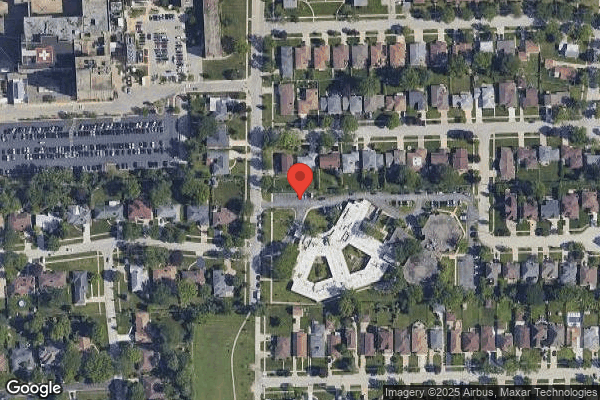



AVANTARA PARK RIDGE

1601 NORTH WESTERN AVENUE, PARK RIDGE, IL 60068 (847) 825-5531
For profit - Corporation 154 Beds LEGACY HEALTHCARE Data: November 2025
Trust Grade
35/100
#114 of 665 in IL
Last Inspection: April 2024

Within standard 12-15 month inspection cycle. Federal law requires annual inspections.

Overview

Avantara Park Ridge has a Trust Grade of F, indicating significant concerns regarding the quality of care provided. While the facility ranks #114 out of 665 nursing homes in Illinois, placing it in the top half, its overall scores suggest room for improvement. The trend is improving, with the number of serious issues decreasing from four in 2024 to two in 2025. However, staffing is a weakness, rated at 2 out of 5 stars, with a turnover rate of 52%, which is higher than the state average. The facility has incurred $86,896 in fines, which is average but still raises concerns about compliance. Notably, there is an average level of RN coverage, which is important for catching problems that other staff may miss. Specific incidents include failures to ensure adequate fall prevention measures, leading to residents suffering serious injuries, such as fractures. Another resident developed a severe pressure ulcer due to a lack of proper care planning and monitoring. While there are strengths in overall quality measures, the serious deficiencies in care highlight significant areas for improvement.

Trust Score
F
35/100
In Illinois
#114/665
Top 17%
Safety Record
High Risk
Review needed
Inspections
Getting Better
4 → 2 violations
Staff Stability
⚠ Watch
52% turnover. Above average. Higher turnover means staff may not know residents' routines.
Penalties
✓ Good
$86,896 in fines. Lower than most Illinois facilities. Relatively clean record.
Skilled Nurses
✓ Good
Each resident gets 47 minutes of Registered Nurse (RN) attention daily — more than average for Illinois. RNs are trained to catch health problems early.
Violations
⚠ Watch
19 deficiencies on record. Higher than average. Multiple issues found across inspections.
★★★★☆
4.0
Overall Rating
★★☆☆☆
2.0
Staff Levels
★★★★☆
4.0
Care Quality
★★★★☆
4.0
Inspection Score
Stable
2024: 4 issues
2025: 2 issues

The Good

  • 4-Star Quality Measures · Strong clinical quality outcomes
  • Full Sprinkler Coverage · Fire safety systems throughout facility
  • No fines on record

Facility shows strength in quality measures, fire safety.

The Bad

Staff Turnover: 52%

Near Illinois avg (46%)

Higher turnover may affect care consistency

Federal Fines: $86,896

Well above median ($33,413)

Moderate penalties - review what triggered them

Chain: LEGACY HEALTHCARE

Part of a multi-facility chain

Ask about local staffing decisions and management

The Ugly 19 deficiencies on record

6 actual harm
May 2025 1 deficiency
CONCERN (D) 📢 Someone Reported This

A family member, employee, or ombudsman was alarmed enough to file a formal complaint

Potential for Harm - no one hurt, but risky conditions existed

Deficiency F0602 (Tag F0602)

Could have caused harm · This affected 1 resident

**NOTE- TERMS IN BRACKETS HAVE BEEN EDITED TO PROTECT CONFIDENTIALITY** Based on interview and record review, the facility failed to follow their policy to provide professional care and services in an...

Read full inspector narrative →
**NOTE- TERMS IN BRACKETS HAVE BEEN EDITED TO PROTECT CONFIDENTIALITY** Based on interview and record review, the facility failed to follow their policy to provide professional care and services in an environment free from misappropriation of property from one (R2) of three residents reviewed for misappropriation of property. This failure resulted to R2 missing her money in the sum of $50.00. Findings include: On 5/30/2025 at 1:37 PM, V4 (CNA) said that occasionally R2 is assigned to (V4). V4 said that R2 mentioned to her once that R2 told her that, someone stole something from her purse, it looks like $50.00 dollars. V4 said that V4 could not imagine how that could be possible because R2 always carry her purse even when V4 is giving R2 a shower. V4 said that she did not report to anyone that R2 told her that someone stole her money because V4 did not think that can be possible. V4 said that should have reported it to the administrator. On 5/30/2025 at 3:38 PM, V8 (Assistant Director of Nursing) said that V4 notified the management today that R2 complained to her that R2 lost her money. V8 said that V4 did not notify the management on a timely manner. V8 said that the facility frequently gives in - services on abuse including other topics. V8 said that the facility is immediately investigating and filing police report. V8 said that her expectation is for staff to report residents' complaint especially any form of abuse to the administrator immediately because theft is a form of abuse. On 5/30/2025 at 4:38 PM, V2 (Director of Nursing) said that it was news today to her that R2 lost her money. V2 said that V2 has called a police department to investigate. V2 said that her expectation is for staff to report immediately to the abuse coordinator. On 5/30/2025 at 4:55 PM, V1 said that as soon as she was made aware that there is an allegation of missing item, that she followed up immediately by filing a police report. V1 said that the expectation is for staff to report any allegation immediately to the administrator who is the abuse coordinator, so that investigation can be initiated promptly. V1 said the facility has initiated investigation and police department have been notified. R2 is a an [AGE] year-old female admitted on [DATE]. R2 had a BIMS score of 14. On 5/30/2025 at 11:45 AM, R2 said that she had $50.00 dollars stolen from her wallet. R2 said that she always carries her bag because she had things stolen from her before. R2 said that she told the social worker and everybody. R2 said that everybody knew about it, and she even mentioned it to the big boss upstairs. R2 said that 2 or 3 weeks ago, she walked down the hall without carrying her purse. R2 said that she saw the CNA walked towards her room. R2 said that when she returned to her room and brought out her wallet, she noticed that the wallet was not closed all the way. R2 said that when she opened the wallet, she noticed that her money was missing. R2 said that it must have been the CNA that stole her money. R2 said that $50.00 is a lot of money to her because she has no one helping her out financially. Facility Policy Name: Abuse and Neglect Revised: 4/24/25 Policy Statement: It is the policy of the facility to provide professional care and services in an environment that is free from any type of abuse, corporal punishment, misappropriation of property exploitation, neglect, or mistreatment. The facility follows the federal guidelines dedicated to prevention of abuse and timely and thorough investigations of allegations.
Jan 2025 1 deficiency
CONCERN (D) 📢 Someone Reported This

A family member, employee, or ombudsman was alarmed enough to file a formal complaint

Potential for Harm - no one hurt, but risky conditions existed

Pharmacy Services (Tag F0755)

Could have caused harm · This affected 1 resident

**NOTE- TERMS IN BRACKETS HAVE BEEN EDITED TO PROTECT CONFIDENTIALITY** Based on observation, interview, and record review the facility failed to ensure medications were administered within one hour o...

Read full inspector narrative →
**NOTE- TERMS IN BRACKETS HAVE BEEN EDITED TO PROTECT CONFIDENTIALITY** Based on observation, interview, and record review the facility failed to ensure medications were administered within one hour of their scheduled administration time for 3 of 6 residents ( R11, R12, and R13) reviewed for medication administration in the sample of 14. The findings include: On 1/12/25 at 11:15 AM, V4 RN (Registered Nurse) was passing morning medications to residents. V4 said she was late with medications because this was her first day working in the facility because she is agency. V4 said there were 6 residents left to receive their scheduled morning medications. R11's face sheet showed she was admitted to the facility on [DATE] with diagnoses to include nonrheumatic aortic valve stenosis, multiple myeloma, pantocytopenia, hyperlipidemia, generalized anxiety disorder, essential hypertension, cerebral infarction, centrilobular emphysema, chronic obstructive pulmonary disease, chronic respiratory failure with hypoxia, spinal stenosis, and urinary tract infection. R11's January 2025 eMAR showed an order for Acyclovir 400 mg twice daily for chemotherapy treatments and Gabapentin 300 mg three times daily for nerve pain. Both of these medications were scheduled to be given at 9:00 AM. On 1/12/25 at 11:15 AM, R11 was still waiting for her 9:00 AM medications to be administered. R12's face sheet showed she was admitted to the facility on [DATE] with diagnoses to include concussion with loss of consciousness, hyperlipidemia, depression, anxiety disorder, obstructive sleep apnea, hypertension, heart failure, and pneumonia. R12's January 2025 eMAR showed an order for colace 100 mg two times daily for constipation. On 1/12/25 at 11:15 AM, R12 was still waiting to receive her 9:00 AM medications to be administered. R13's face sheet showed she was admitted to the facility on [DATE] with diagnoses to include malignant neoplasm of breast, anemia, Type 2 Diabetes, glaucoma, paroxysmal atrial fibrillation, chronic congestive heart failure, thoracoabdominal aortic aneurysm, muscle wasting and atrophy, trochanteric bursitis, chronic kidney disease, wedge compression fracture of fifth lumbar vertebra, and macular degeneration. R13's January 2025 eMAR showed an order for Eliquis 5 mg two times daily for anticoagulant to be given at 9:00 AM, Gabapentin 100 mg two times daily for pain to be given at 9:00 AM, and Tylenol 500 mg two times a day for pain to be given at 8:00 AM. On 1/12/25 at 11:15 AM, R12 was still waiting for her 8:00 AM and 9:00 AM scheduled medications to be administered. On 1/12/25 at 3:38 PM, V7 LPN (Licensed Practical Nurse) said, Usually we expect the medications to be given on time of course. We have 3 hours to pass medications, one hour before and one hour after. We had a call off today so we put a call in to the agency group. She arrived at about 8:00 AM. Then I had to do the required orientation which took additional time and then she had to receive report from the other nurse . The facility's policy and procedure with revision date of 8/16/24 showed, Medication Pass . it is the policy of the facility to adhere to all Federal and State regulations with medication pass procedures .
Sept 2024 1 deficiency 1 Harm
SERIOUS (G) 📢 Someone Reported This

A family member, employee, or ombudsman was alarmed enough to file a formal complaint

Actual Harm - a resident was hurt due to facility failures

Accident Prevention (Tag F0689)

A resident was harmed · This affected 1 resident

**NOTE- TERMS IN BRACKETS HAVE BEEN EDITED TO PROTECT CONFIDENTIALITY** Based on observation, interview and record review, the facility failed to a.) ensure (R3's) fall risk assessment was accurate b....

Read full inspector narrative →
**NOTE- TERMS IN BRACKETS HAVE BEEN EDITED TO PROTECT CONFIDENTIALITY** Based on observation, interview and record review, the facility failed to a.) ensure (R3's) fall risk assessment was accurate b.) failed to implement fall prevention interventions and failed to provide supervision for two ( R2, R3) of four residents reviewed for falls. These failures resulted in the following: R2 fell on [DATE] and on 7/06/24. R3 fell on [DATE] (fall without injury) and R3 also fell on 7/04/24 (7 days later) and sustained a subdural hemorrhage (bleeding inside the head). Findings include: R2's face sheet dated 09/15/2024 documents that R2 is a [AGE] year-old resident with diagnoses not limited to: mild cognitive impairment of uncertain or unknown etiology, anxiety disorder, unspecified, unspecified fracture of t9-t10 vertebra, subsequent encounter for fracture with routine healing, metabolic encephalopathy, acute on chronic systolic (congestive) heart failure, insomnia, unspecified, type 2 diabetes mellitus with hyperglycemia, age-related osteoporosis. R2's MDS section GG dated 8/20/2024 documents R2's interim assessment affirms R2 requires partial/moderate assistance with transfers form bed to chair, toilet transfers, and to walk 10 feet: Once standing, the ability to walk at least 10 feet in a room, corridor, or similar space. The facility fall log affirms R2 fell on [DATE] (fall without injury) and on 7/06/24 (fall without injury). R2's fall risk evaluation dated 06/20/2024 documents R2 just had a fall and that R2 is a high fall risk. R2's fall risk evaluation dated 06/29/2024 documents R2 just had a fall and that R2 is a high fall risk. R2's care plan documents in part that R2 is at risk for falls related to weakness, fibromyalgia, chronic T8 com fracture, right shoulder pain, debility. Interventions: chair Alarm in place to alert staff when R2 reattempt to standup unassisted. Educated R2 the importance of calling staff if she needs assistance in anyway. Date Initiated: 02/15/2023. 09/15/2024 11:30 AM V4 (Registered Nurse) provided surveyor with a copy of the fall risk prevention list. Facility document dated 09/14/2024 titled Fall Risk Prevention List documents in part that R2 is marked for bed alarm, chair alarm, and floor mats; R4 is marked for bed alarm and chair alarm. 09/15/2024 11:51 AM observed R2 in her room, sitting on a recliner chair with two pillows behind her, observed bedside table in front of R2, observed R2 wearing her own clothes and gym shoes on. Observed R2 wearing glasses. Observed carpet flooring. Observed bed alarm, and observed chair alarm on a wheelchair that was against R2 ' s room wall. No observation of a chair alarm under R2 or around the recliner chair that R2 was sitting on. R2 states that she has had falls here. R2 states that she last fell out of her bed, R2 states now there is pad on the floor when she is in bed. R2 states that she has had 3 episodes that they have taken her to the hospital because R2 states that she has been sick. R2 states she honestly cannot remember what happened. R2 states that another fall she had, R2 states that it was pure accident, R2 states that her leg just buckled. 09/15/2024 12:16 PM surveyor questioned V3 (Director of Nursing) which CNA was assigned to care for R2. Observed V3 review the assignment sheet. V3 states that V6 is assigned to R2. 09/15/2024 12:20 PM V8 (Certified Nursing Assistant/CNA) states that if an alarm is not placed under a resident that is supposed to have bed or chair alarm, V8 states that the resident could have a fall. V8 states that it is a split second that a fall can happen. V8 states that the bed and chair alarms do not prevent a fall, but it is just alerting staff that the resident is moving out of the chair, V8 states or they are probably uncomfortable in the chair, V8 states they could probably need to go to the bathroom, V8 states or they can be reaching for something, want water. V8 states that staff can switch the chair alarm to the recliner. V8 states that the chair alarm is connected to a pad that will be triggered with movement. 9/15/2024 12:55 PM V6 (CNA) states that she is not sure which CNA has R2. V6 states that she thinks it was V7 (CNA) who was assigned to R2. V6 states that V7 walked out of the facility. V6 states that V7 said it was too much work and walked out of the facility. V6 states that the supervisors are aware. V7 states that she is not familiar with R2's care. V6 states that she would have to go to the nurse's station to review R2's care plan and V6 states to find out how R2 transfers, if R2 is a fall risk. V6 states that the chair alarm and bed alarm are pads and are motion sensor. V6 states that the pads should be under the resident. V6 states that the chair alarms are not built in the wheelchairs. V6 states that the chair alarm should be placed under any type of seating that the resident is sitting on. V6 states that she has never worked with R1 and R3 before. 09/15/2024 12:58 PM V6 states that the change in assignment must have just happened. V6 states that she has not seen R2 today. V6 states that she was not made aware that she was just assigned to R2. R3's face sheet dated 09/15/2024 documents that R3 is a [AGE] year-old resident with diagnoses not limited to: disorder of brain, unspecified, traumatic subdural hemorrhage without loss of consciousness, subsequent encounter, unspecified fall, subsequent encounter, Parkinson's disease without dyskinesia, orthostatic hypotension, primary generalized (osteo)arthritis, benign prostatic hyperplasia with lower urinary tract symptoms, anxiety disorder, unspecified. R3's MDS/Minimum Data Set, dated [DATE] documents that R3 has a BIMS/Brief Interview for Mental Status score of 15/15, indicating that R3 is cognitively intact. R3's MDS/Minimum Data Set, dated [DATE] (post R3's falls) documents that R3 has a BIMS/Brief Interview for Mental Status score of 10/15, indicating that R3 is moderately cognitively impaired. R3's MDS section GG dated 4/24/2024 documents R3's annual assessment affirms R3 requires partial/moderate assistance with transfers form bed to chair, toilet transfers, and to walk 10 feet: Once standing, the ability to walk at least 10 feet in a room, corridor, or similar space. The facility fall log affirms R3 fell on [DATE] (documents fall without injury) and on 7/04/24 (documents fall without injury). R3's fall risk evaluation dated 06/27/2024 documents R3 did not have a fall and that R3 is a high fall risk. R3's fall risk evaluation dated 07/04/2024 documents R3 just had a fall and that R3 is a high fall risk. R3's care plan documents in part that R3 is at risk for falls related to Parkinson disease, orthostatic hypotension, past fall, lack of coordination and abnormalities of gait. Interventions: staff should anticipate and frequently round. Date initiated 04/14/2023. 09/15/2024 2:03pm V9 (Fall preventionist/RN) states that she has been working for the facility for almost 2 years. V9 states that she has been the fall coordinator for a year and 4 months. V9 states that she completes the residents' fall risk care plans. V9 states that she inputs the fall risk care plan interventions too. Surveyor inquired how V9 determines that the chair and bed alarm interventions should be put in place. V9 states that if the resident has had history of falls, diagnosis of dementia, pain, UTI, or upon admission assessment, V9 states that it determines if the residents need to have bed and/or chair alarm. V9 states that she completes assessments upon admission. V9 states that also if the residents have weakness. V9 states that the bed and chair alarm intervention can help prevent residents from falling, V9 states that the chair alarm should be placed on whatever chair the resident is sitting on. V9 states that R2 fell on June 20th, V9 states that R2 said that she wanted to get out of bed, V9 states that R2's bed was in a low position. V9 states that R2 was found at the side of her bed at 1:00 am. V9 states that R2 did not suffer any injuries. V9 states that this fall could have been prevented if R2 would have used her call light. V9 states that R2 had another fall on June 29th, in the morning shift. V9 states that R2 said that she was trying to ambulate to the washroom, V9 states that R2 said that she lost her balance and fell. V9 states that for this fall, she would have to say that the same still applies, V9 states that R2 is a retired nurse, and V9 states that she encouraged R2 to use the call light. V9 states that R2 can use her walker and V9 states that R2 can go by herself to the washroom unsupervised. Surveyor inquired as to why did R2 had a chair alarm and bed alarm if she is able to go by herself to the washroom unsupervised. V9 states that that she wanted to discuss the previous fall R2 had, V9 states that R2 had an infection when she had her first fall on June 20th, V9 states that to prevent R2 from falling, R2 and her family were ok with R2 having a bed and chair alarm. V9 states that R2 still wants to have the alarms in place. V9 states that she feels that it is safer for R2 to have the bed and chair alarm, V9 states because R2 has had multiple falls, and V9 states that the root cause of R2 falling is that R2 is not calling for her. V9 states that staff need to anticipate R2's needs. V9 states that staff need to make rounds and anticipate needs. V9 states that she does not do reportables. V9 states that her director does the reportables. V9 states that R3 was a long-term care resident, and V9 states that R3 was declining. V9 states that R3 fell on June 27th, V9 states that R3 didn't call for help. V9 states that R3 had refused to go to the hospital the first time that R3 fell. V9 states that after his fall on June 27th, V9 states that she revised R3's care plan and implemented chair alarm, and R3 was reeducated to call for help. V9 states that R3 did not suffer any injuries from his fall on 06/27/2024. V9 states that R3 did not have bed and chair alarms in place prior to his fall on 06/27/2024, V9 states because R3 became very strong, and it had resolved. V9 states that prior to R3 having a fall on 06/27/2024, V9 states that R3 wasn't much of a fall risk, V9 states that R3 could do things by himself, V9 states that R3 went out by himself, V9 states R3 was independent. V9 states that R3 was this way for 9 to 10 months. V9 states that she noticed a decline in R3. V9 states that R3 had lab work done and no new orders were given. V9 states And we continued neuro check in house after fall on 27th. Why did he fall on June 27th, he said he wanted to use the washroom, I usually have, and he tripped going past the bedside table, it was in his way, and then he fell. And he verbalized that he didn't hit his head, and didn't have any pain, and that was the fall that he refused to go to the hospital. V9 states that R3 fell again on 7/4/24. V9 states that the nursing assistant found R3 on the floor. V9 states that prior to this fall, staff saw R3 watching T.V. (television), sitting on his recliner chair. V9 states that R3 didn't call for help. V9 states that R3 fell in front of his recliner. V9 states that R3 wanted to get up. V9 states that at that time, R3 couldn't engage a lot in conversation, V9 states that R3 didn't say where he was going, V9 states that R3 had denied any pain and denied hitting his head. V9 states that she insisted that R3 needed to go to the hospital. V9 states that she was concerned that R3 was declining. V9 states that he didn't look too good. V9 states that when R3 returned to the facility from being in the hospital, V9 states I put back the floor mats, and low position, after that he returned under hospice. V9 states that she does in-services regarding fall precautions every day, V9 states that she encourages staff and reminds staff about fall precautions in place, to check that fall precautions are in place every day, V9 states that she also reminds staff to review and understand the fall precautions in place for the residents from the care book binder, V9 states that she also reminds staff to rounds and anticipate residents' needs while rounding. 09/16/24 4:01pm via telephone V12 (Nurse Practitioner) states that if a resident falls and hits their head, the resident can have Subdural hematoma, V12 states which is bleeding in the brain. V12 states that for older residents, if they have a fall, V12 states that they can potentially suffer many complications with a fall, V12 states they can break their bone, lacerations, fat embolism. Facility document dated 07/26/2024 titled Fall occurrence documents in part It is the policy of the facility to ensure that residents are assessed for risk for falls, that interventions are put in place, and interventions are reevaluated and revised as necessary.
Apr 2024 3 deficiencies
CONCERN (D)

Potential for Harm - no one hurt, but risky conditions existed

ADL Care (Tag F0677)

Could have caused harm · This affected 1 resident

**NOTE- TERMS IN BRACKETS HAVE BEEN EDITED TO PROTECT CONFIDENTIALITY** Based on observations, interviews, and record reviews the facility failed to follow their policy and procedures for activities o...

Read full inspector narrative →
**NOTE- TERMS IN BRACKETS HAVE BEEN EDITED TO PROTECT CONFIDENTIALITY** Based on observations, interviews, and record reviews the facility failed to follow their policy and procedures for activities of daily living by not ensuring a resident received assistance with feeding and personal hygiene as required, and by not ensuring residents who require incontinence care were changed in a timely manner. This failure applies to three of four residents (R93, R121, and R135) reviewed for ADL (Activities of Daily Living) care. Findings include: 1. R93 is a [AGE] year-old female with a diagnoses history of Partial Paralysis Due to Stroke who was admitted to the facility 08/27/2020. On 04/15/24 at 11:33 AM Observed R93 lying in her bed with a towel on her chest. Observed food residue and particles left on R93's mouth and towel on her chest. R93 nodded yes when asked if she fed herself. R93's current Care Plan Initiated: 09/03/2020 documents she has an ADL (Activities of Daily Living) Self Care Performance Deficit and Impaired Mobility related to diagnoses and past medical history of Morbid obesity, hypertension, and stroke with interventions including: requiring total staff participation to eat; and requires 2 staff participation with personal hygiene. On 04/17/24 at 12:24 PM V2 (Director of Nursing) stated, if R93 was fed by staff on 04/15/2024 staff should have cleaned her up. V2 stated, if R93 fed herself and staff collected her tray they should have cleaned her up. V2 stated, if the nursing staff leaves R93 unclean it is a dignity issue. 2. R121 is a [AGE] year-old female with a diagnoses history of Partial Paralysis due to Stroke who was admitted to the facility 10/14/2022. On 04/15/24 at 11:35 AM R121 gestured that she needed her adult brief changed and pulled on her diaper. Observed most of the bottom of R121's foot resting near her adult brief was smeared with feces. V11 (Certified Nursing Assistant) stated, she last changed R121 at 7AM when she started her shift. R121's current care plan Initiated 10/14/2022 documents she requires assistance with ADL's (Activities of Daily Living) including bed mobility, transfers, dressing, walking, personal hygiene, and toileting; R121 displays bowel and bladder incontinence related to medication side effect, decreased mobility with interventions including: Nursing staff to check R121 for incontinence episode every 2 hours. On 04/17/24 12:27 PM V2 (Director of Nursing) stated it's neglectful to find a resident with an overflow of feces and having not been changed from 7AM - 11:35 AM. 3. R135 is a [AGE] year-old female with a diagnoses history of Multiple Cervical Spine Injuries and Gastrostomy Status who was admitted to the facility 10/30/2023. On 04/18/24 at 12:37 PM surveyor observed R135 with a strong urine odor. R135 stated, she was last changed at 5AM. V10 (Certified Nursing Assistant) stated he started work at 7AM and had not changed R135 yet because he was working with residents he was assigned in another area. V10 stated, R135's brief is full. Observed R135's brief to be heavily soiled with urine. V10 stated there is a need for more CNA's (Certified Nursing Assistants). V10 stated there used to be 6 CNA's on the unit he is assigned to but now there are five which increased the amount of residents that he has to care for and he has to get residents changed, dressed, and bathed. R135 current care plan initiated 11/01/2023 documents she requires assistance with ADL's (Activities of Daily Living) including bed mobility, transfers, dressing, walking, and personal hygiene; R135 displays bowel and bladder incontinence related to medication side effect, decreased mobility with interventions including: Nursing staff to check R135 for incontinence episode every 2 hours. The facility's General Care Policy received/reviewed 04/18/2024 states: It is the facility's policy to provide care fore every resident to meet their needs. The facility will assist the resident to meet these needs, unless it shows that the resident's needs cannot be met in the facility.
CONCERN (D)

Potential for Harm - no one hurt, but risky conditions existed

Unnecessary Medications (Tag F0759)

Could have caused harm · This affected 1 resident

Based on Observations and Interview and Record Review the facility failed to have a five percent (5 %) or lower medication error rate. There were eight (8) medications error out of 31 opportunities, r...

Read full inspector narrative →
Based on Observations and Interview and Record Review the facility failed to have a five percent (5 %) or lower medication error rate. There were eight (8) medications error out of 31 opportunities, resulting in a 25. 81% medication error rate. These failures affected four (R46, R105, R136, R203) residents observed for medications not administered as ordered. Our findings include: On 04/16/24 at 04:29 PM V6 RN (Registered Nurse) was observed administering medications. When passing medications to R136, V6 omitted Diclofenac Sodium External Gel 1 % Apply to 4GM (grams) to affected area topically four times a day for pain. Administered medications were reconciled against the current (April 2024) Medication Records (MAR). Physician Order: Diclofenac Sodium External Gel 1 % Apply to 4GM TO AFFECTED AREA topically four times a day for PAIN-Scheduled to be given at 5:00 PM. On 04/16/24 at 05:00 PM For R203, V6 held (did not administer) medication Senna-Plus Tablet 8.6-50 milligrams Give 1 tablet via G-Tube two times a day times, scheduled for 5:00 PM. Administered medications were reconciled against the current (April 2024) Medication Records (MAR), Medication was omitted during medication administration. Physician Order: Senna-Plus Tablet 8.6-50 milligrams Give 1 tablet via G-Tube two times a day times for constipation. Scheduled to be given at 05:00 PM. On 04/17/24 at 9:06AM. V7 LPN (Licensed Practical Nurse) was observed during medication administration, when administering to R46, V7 held (did not give) order for Metoprolol Succinate Extended Release 25mg tablet- Give one tablet by mouth one time a day for hypertension and Lisinopril Oral Tablet 5mg- Give 1 tablet by mouth one time a day for hypertension for a blood pressure result of 101/52. Administered medications were reconciled against the current (April 2024) Medication Records (MAR) and the Progress notes, care plan and physician's orders sheets were reviewed and there was no indication that the physician was notified, and no interventions were in place after holding medications. V7 administered Polyethylene Glycol 3350 Powder ordered as- Give 17 grams by mouth one time a day for constipation, however V7 was observed to measure less than 17grams when preparing the medication. Physician Order: Metoprolol Succinate ER 25 MG Tablet extended release 24 HR GIVE 1 TABLET BY MOUTH ONE TIME A DAY FOR hypertension. (Active 01/20/2024). Lisinopril Oral Tablet 5 MG (Lisinopril) Give 1 tablet by mouth one time a day for hypertension (Active 01/20/2024). GlycoLax Powder Give 17 gram by mouth one time a day for constipation (Active 02/26/2024). V7 was next observed administering medications to R105. V7 held (did not give) order for Metoprolol Tartrate Tablet 25mg- Give 1 tablet by mouth every 12 hours related to essential hypertension. V7 also held (did not give) Losartan Potassium Tablet 50 MG- Give 1 tablet by mouth one time a day related to essential hypertension for blood pressure of 99/62. Additionally, V7 was observed to give Calcium Vitamin D 600mg/400 units 1 tablet, however the order was for Calcium-Vitamin D 500mg/400mg-unit. Administered medications were reconciled against the current (April 2024) Medication Records (MAR) with discrepancies. Progress notes, care plan and physician's orders sheets were reviewed and there was no indication that the physician was notified, and no interventions were in place after holding medications. Physician Order: Metoprolol Tartrate Tablet 25 MG Give 1 tablet by mouth every 12 hours related to ESSENTIAL (PRIMARY) HYPERTENSION. (Active 07/20/2021). Losartan Potassium Tablet 50 MG Give 1 tablet by mouth one time a day related to ESSENTIAL (PRIMARY) HYPERTENSION (Active 07/21/2021): Calcium-Vit D 500mg/400mg-unit 1 tab by mouth two times a day. Supplement. (Active 07/07/2022) On 04/18/24 2:22PM V2 DON (Director of Nursing) stated, when residents have vital signs (blood pressures) that are high or low and you don't have parameters to hold or give medications, they are expected to call the provider right away. On 4/18/24 at 2:40PM V2 DON stated, there were no parameters documented or ordered for the blood pressure medications to be held. V2 said that V6 and V7 did not call the physician at the time they held the medications, nor did they document the reason the medication was held in the electronic medical record. Additionally, V7 gave the wrong dose of Calcium and will be in serviced accordingly. The facility provided a list of house stock medications, which included Calcium 500mg/400units was available and ordered by the facility. Facility Policy Titled: Medication administration General Guidelines (Pharmascript) Policy # 7.2. 6) Five Rights- Right resident, right medication, right dose, and right time, are applied for each medication being administered. A triple check of these 5 rights is recommended at three steps in the process of preparation of the medication for administration. (1) when the medication is selected, (2) when medication is removed from the container, and finally when (3) just after the dose is prepared and the medication is put away.
CONCERN (E)

Potential for Harm - no one hurt, but risky conditions existed

Deficiency F0761 (Tag F0761)

Could have caused harm · This affected multiple residents

Based on observation, interview and record review, the facility failed to remove expired medications for three (R1, R90, R121) residents from first floor medication carts and house stock medication re...

Read full inspector narrative →
Based on observation, interview and record review, the facility failed to remove expired medications for three (R1, R90, R121) residents from first floor medication carts and house stock medication refrigerator, failed to ensure multi-dose vials and eye drop medications for four (R28, R29, R80, R138) residents were dated upon opening and, failed to remove medications for one (R205) expired resident from the medication cart. These failures have the potential to affect all 66 residents receiving medication from the 1st floor medication carts and Medication room. Findings include: On 04/17/24 at 09:30 AM The following medications were observed for storage and labeling Sunshine Medication Cart one with V7 Licensed Practical Nurse. R121 - Tramadol 50mg tablets expired 3/38/24 verified with V7 Licensed Practical Nurse. Physician order: Tramadol 50mg 1 tab every 8 hours as need for pain. Brimonidine Tartrate 0.2% eye drops for R80 open and not labeled verified with Licensed Practical Nurse. Physician order: Brimonidine Tartrate ophthalmic solution 0.2% (Brimonidine tartrate instill 1 drop in both eye two times a day for glaucoma. First floor Medication Room Sunshine Refrigerator: Two Tuberculin multi dose house stock vials opened and not labeled in the refrigerator. Five Bisacodyl 10mg suppositories which expired 6/20/23. On 04/17/24 at 09:45 AM Sunshine Medication Cart two on the first floor: Verified with V8 Licensed Practical Nurse. R1-Pantoprazole liquid 2mg/ml expired 3/31/24. Physician order: Pantoprazole (Protonix) suspension 2mg/ml, give 20ml by mouth one time a day for GERD. R205 - Hospice patient expired 9/25/23- Hospice kit containing Benadryl/Decadron/Reglan 2 syringes. Scopolamine 25mg/ml gel 2 syringes and Bisacodyl 10mg 3 suppository observed in the medication refrigerator. R28 artificial tears eye drops opened and not labeled. R90 Hydrocodone-Acetaminophen Tablet 5-325 MG5/325mg 16 tabs expired 03/07/24. Physician order: Hydrocodone-Acetaminophen Tablet 5-325 MG5/325mg Give 1 tab by mouth every 8 hours as needed for pain. V8 stated that Norco medication is expired and should be discarded per facility protocol, and she will give to the ADON (Assistant Director of Nursing) on the floor. On 04/17/24 at 11:30 AM The following medications were observed for storage and labeling Friendship Medication Cart 1: V9 LPN R29 Olopatadine 0.2% - opened and not labeled. Physician order: Pataday Ophthalmic solution (Olopatadine HCL) Instill 1 drop in both eyes on time a day. R138 artificial tears eye drops opened and not labeled. Physician order: Refresh Tears Ophthalmic solution 5 % (Carboxymethylcellulose Sodium instill one drop in the right every 8 hours as need for redness in the right eye. V9 LPN said that medication should be labeled when opened, and she will discard medication on hand and order new medications. On 04/17/24 at 11:52 AM V2 DON (Director of Nursing) said that when residents discharge from the facility, the medications should be sent with them and or removed from the medication cart. We either send the medications with the resident or they are destroyed. Nurses are supposed to label bottles when they are opened and date it. Any open bottle without a date should be discarded. Facility provided pharmacy policy titled Storage of Medications (No revision date) states in part: Medications and biologicals are stored safely, securely, and properly, following manufacturer's recommendations or those of the supplier. The medication supply is accessible only to licensed nursing personnel, pharmacy personnel, or staff members lawfully authorized to administer medications. Procedures: 3. All medications dispensed by the pharmacy are stored in the container with the pharmacy label 7. outdated, contaminated, or deteriorated medications and those in containers that are cracked, soiled, or without secure closures are immediately removed from inventory, disposed of according to procedures for medication disposal and reordered from the pharmacy, if a current order exists. Expiration Dating (Beyond- use dating): 1. Expiration dates (beyond-use date) of dispensed medications shall be determined by the pharmacy at the time of dispensing. 4b: Drugs dispensed in the manufacturer's original container will carry the manufacturer's expiration date. Once opened, these will be good to use until the manufacturer's expiration date is reached unless the medication is: i. in a multi-dose injectable vial, ii. An ophthalmic medication, iii. An item for which the manufacturer has specified a useable life after opening. 5. When the original seal of the manufacturer's container or vial is initially broken, the container or vial will be dated. a. The nurse shall place a date opened sticker on the medication and enter the date opened. b. If a vial or container is found without a date opened, the date opened will automatically default to the date dispensed and the expiration date will be calculated accordingly. 6. The nurse will check the expiration date of each medication before administering it. 7. No expired mediation will be administered to a resident. 8. All expired medications will be removed from the active supply ad destroyed in the facility, regardless of amount remaining, the medication will be destroyed in the usual manner.
Nov 2023 1 deficiency 1 Harm
SERIOUS (G) 📢 Someone Reported This

A family member, employee, or ombudsman was alarmed enough to file a formal complaint

Actual Harm - a resident was hurt due to facility failures

Accident Prevention (Tag F0689)

A resident was harmed · This affected 1 resident

**NOTE- TERMS IN BRACKETS HAVE BEEN EDITED TO PROTECT CONFIDENTIALITY** Based on observations, interviews and records reviewed the facility failed to follow fall prevention interventions to include su...

Read full inspector narrative →
**NOTE- TERMS IN BRACKETS HAVE BEEN EDITED TO PROTECT CONFIDENTIALITY** Based on observations, interviews and records reviewed the facility failed to follow fall prevention interventions to include supervision/monitoring and use of assistive/safety devices to prevent the risk of falling. This affected three of three residents (R1-R3) reviewed for falls and fall prevention interventions. This failure resulted in R1 being involved in a fall incident sustaining a fracture of the L4 and L5, Lumbar Spine, and R3 being involved in a fall incident resulting in an Oblique Fracture of the Left Fifth Metatarsal and of the Neck of the Right Radius. Findings include: A.R3's diagnosis include but are not limited to Spinal Stenosis, Anemia, Dementia, Osteoarthritis, Difficulty in Walking, Age Relate Physical Debility, Altered Mental Status, Lumbago with Sciatica, Right Side, and Radiculopathy - Lumbar Region. R3's Cognitive assessment dated [DATE] indicates mildly impaired. On 10/29/23 at 2:49PM The surveyor observed a star on the door, near R3's name, door closed. V3, Restorative Aid, in the room with the roommate. V3 sitting a chair near roommate. R3 opened the door and greeted the surveyor. R3 walking in the room then to sink to finish washing. R3 hanging washcloth on towel rack and then stumbled while turning, but regained balance, loud squeaking sound from shoe, before sitting on his bed. R3 said yes, I fell I was up alone in my room. R3 said I did not call for help. R3 said I was ashamed and did not call for help. R3 said I don't call for help when I need to use the bathroom or get something. No alarms sounding with the resident in the room. On 10/29/23 at 3:15PM V3, Restorative Aid, said I was in R3's room working with R3's roommate. V3 said I work with R3 for range of motion. V3 said R3 can walk with a standby. V3 said R3 was using the washroom I was in the room. V3 said I did not see him stumble. V3 said I would not have gotten to R3 from where I was if he was falling. V3 said R3 does not have alarms on and he should. V3 said I did not [NAME] R3's alarms off when I went in the room. On 10/30/23 at 9:52AM V9, Fall Nurse, said R3 is a fall risk. R3's diagnosis include Spinal Stenosis, Arthritis, Debility, Lack of Coordination, and Altered Mental Status. V9 said R3 had one fall on 10/17/23. V9 said R3 should be supervision for ambulation. V9 said this means R3 should have a person in the room while ambulating. V9 said R3 is not stand by assist for ambulation. V9 said Staff should be standing when supervising residents. V9 said staff don't need to sit so they can move faster for staff. V9 said R3 complained about the alarms being too loud so I stopped them. V9 said R3 is alert and can call for assist with the call light. V9 said she was unsuccessful in reaching the night shift agency staff to interview about R3's fall. V9 said it is unknown if the alarm was answered or if the alarm was in place and on at the time of R3's fall. V9 said R3 sustained a fracture on right foot. On 10/30/23 at 11:30AM V11, Therapy Director, said R3 is currently supposed to be walking with a walker and supervision, including yesterday. V11 said prior to R3's fall on 10/17/23 R3 required supervision for ambulation. V11 said supervision means staff should be in eyesight during ambulation. R3's Fall Risk Evaluation dated 10/17/23 score is 13, high risk. R3's care plan dated 9/15/23 identifies R3 at risk for falls related to Spinal Stenosis with Radiculopathy, Right Hip, Osteoarthritis, Altered Mental Status, Dementia, Depression, and Debility. Interventions dated 9/15/23 include bed alarm and chair alarm. R3's care plan for Activity of Daily Living and Fall Risk do not address R3's ambulation ability/status. R3's Functional Status dated 9/21/23 indicates he needs staff assistance during transfers and was not ambulating at the time. Incident Report dated 10/17/23 documents R3 notified staff he fell during the night and did not report or call for help. Resident statement, in part, reads I was trying to use the rest room and fell. The facility Incident Report dated 10/18/23 documents after hospital evaluation R3 findings include Oblique Fracture of the Fifth Metatarsal and of the Neck of the Right Radius - initial encounter. R3's hospital record dated 10/17/23 states oblique fracture through the fifth metatarsal shaft. Closed non-displaced fracture of fifth metatarsal bone of left foot and closed non-displaced fracture of neck of right radius. B. R1's diagnosis include but are not limited to Fracture of Left Femur, Anemia, and Hypertension. On 10/29/23 at 1:27PM V2, Licensed Practical Nurse, said R1 fell because he had a Urinary Tract Infection and may have had a behavior change. V2 said R1 could not walk. V2 said I was called to the room and saw R1 on the floor. V2 said I don't know what CNA was assigned to him. V2 said I was not assigned to R1. On 10/29/23 at 2:08PM V12, Nurse Supervisor said on 9/11/23 when I went to R1's room I saw him on the floor. V12 said R1 either pulled the light or the alarm sounding. V12 said R1 did not know he was on the floor. V12 said when I asked R12 about the fall, he said oh, I'm on the floor. V12 said I am not sure of R1's his mental status at the time. V12 said R1 was on isolation at the time and his room door was closed. V12 said R1 was on his back. He was right next to the bed. V12 said R1 was not a fall risk. V12 said I did not see him fall and I do not know what he was trying to do. On 10/30/23 at 9:52AM V9, Fall Nurse, said V5,Nurse, and V13, CNA, were interviewed and said R1 tried to transfer without assistance. V13 said she did not see the fall, V13 said to V9 I was providing care to another resident. V9 said V5, Nurse, said V12, Nurse Supervisor, called me and said R1 was on the floor. V9 said she was told V12 was rounding and saw the call light on and when he entered the room R1 was on the floor. V9 said R1 is always in bed, he had not tried to get up. V9 said R1 was on antibiotic and could have been confused causing him to fall. V9 said R1's baseline was incontinent of urine. V9 said I don't know what R1 was trying to do when he fell. V9 said R1 required a mechanical lift for transfer, and he was not strong enough to stand. V9 said R1's door was closed for isolation. V9 said there was no other cnas involved in R1's care, V13 was the assigned CNA. V9 had no additional interviews for R1's fall. While reviewing R1's incident report/investigation with V9, she was unable to say when R1 was last turned, repositioned, or received incontinent care. V9 was unable to say who assisted in repositioning R1 during the shift. On 10/29/23 at 11:32AM V8, R1's wife, said R1 had fractures of the L4 and L5 in his back he did not have those before the fall. R1's care plan dated 2/18/2023 states R1 is at risk for falls related to left femur fracture status post surgery, anemia, abnormal gait and mobility. Interventions for R1 include bed alarm in place chair alarm in place, requires two staff participation to reposition and turn in bed. Incident report for R1 dated 9/11/2023 reads R1 verbalized pain to the right leg and facial grimacing was noted level of pain is 6 out of 10. Review of R1's medication administration record and physician orders for September 2023 do not include treatment of urinary tract infection. Physical therapy Discharge summary dated [DATE] documents R1 to require partial/moderate assistance with sitting to standing. Transfers from chair to bed require partial/moderate assistance. Substantial/Maximal assistance for toilet use and patient was unable to ambulate. The facility's incident report to IDPH on 9/11/23 reveals R1 was transferred to the hospital on 9/11/23. R1 was admitted to the hospital with lower back trauma. A CT of the spine revealed L4 and L5 compression deformities that are new compared to 9/25/2022 and represent acute fractures. C.R2's diagnosis include but are not limited to Fall, Compression Fracture of Vertebra, Anemia, Difficulty in Walking, Weakness, and Osteoporosis. On 10/29/23 at 10:33 AM R2 called for the nurse in the dining room and asked V2, LPN, to check his blood sugar. V2 said in 2 minutes I will be there. The surveyor remained monitoring R2 until 10:45AM and V2 did not return him. On 10/29/23 at 1:27PM V2, LPN, said R2 is very alert but we must help him. V2 said R2 requires 2 person assistance to get from wheelchair to the bed we use the mechanical lift. On 10/29/23 at 3:32PM V4, Registered Nurse, said R2 used the call light around 6:45AM. V4 said R2 said he wanted to get up and sit in the wheelchair. I asked him to wait for the CNA. V4 said R2 called again, he said I want to get up, I just need some help, he did not want to wait. V4 said on the third time R2 called I helped him to get up. V4 said I helped him lower his feet from the bed, I held his arms, he was helping, but then his feet were shaking, he got weak. V4 said I was about to fall. V4 said the safest thing to do was to put him on the floor. V4 said this was my first time working with the resident. The surveyor asked V4 how she knows the transfer status of the residents she is assigned to. V4 was unable to answer. V4 said R2 is 1 assist. V4 said R2 said he is going to help me, and he said he can help. On 10/30/23 at 9:52AM V9, Fall Nurse, said R2 is high risk for falls because he has fractures in the spine, lack of coordination weakness, and history of falls. V9 said R2 is a 2 person assist with a mechanical lift for transfers. V9 said to use the commode R2 is a 2 person assist. V9 said R2 has required 2 person since his admission. V9 said the cause of the fall on 10/12/23 was related to R2 asking to transfer out of bed. V9 said the Staff Care Binder is used to notify staff of resident transfer status. V9 said the V4 can look at the binder to know what care to provide. V9 said R2 is cooperative with the mechanical lift. Incident report dated 10/12/23 reads R2 requested to get out of bed and into his wheelchair. This writer, V4, told him to wait for his CNA. Report reads I still want to sit in my wheelchair. At 7:00AM writer attempted to transfer R2 from bed to wheelchair. R2's legs began to shake and R2 became unsteady. R2 assisted to the floor. Review of R2's Incident Reports identify falls on 9/16/23; 9/29/23; and 10/12/23. R2's care plan dated 9/18/23 states R2 require 2 staff participation with mechanical lift transfers to prevent fall. On 10/30/23 at 9:52 AM V9, Fall Nurse, said a resident's diagnosis can increase the risk for falls such as Hypertension, Diabetes, Parkinson's, Impaired Memory, Dementia, Alzheimer's, Weakness, Debility, Seizure, and Syncope. V9 said the Root Cause Analysis is what led to the fall. V9 said the plan is developed from the cause. On 10/30/23 at 2:32PM V15, MDS Coordinator, said the purpose of the care plan is so the nurses can find the intervention for the plan of care of the resident. V15 said I expect the nurses to follow the careplan. V15 said when an intervention is no longer needed we do review and update the care plan. V15 said we can add and remove interventions or resolve them. The facility fall prevention program guidelines dated December 5th 2022 states fall prevention program guidelines shall be implemented to promote safety of all residents in the facility. safety interventions shall be initiated and implemented for each resident identified at risk for fall. All assigned nursing personnel and facility staff shall be responsible for ensuring ongoing precautions are put into place and consistently maintained. All file incidents shall be monitored, analyzed, root causes identified. The facility Fall Occurrence policy dated 7/17/23 reads it is the policy of the facility to ensure that residents are assessed for risk for falls, that interventions are put in place, and interventions are reevaluated and revised as necessary. If a resident has fallen, the resident is automatically considered as high risk for falls. The falls coordinator will add the intervention in the residence care plan. The interventions will be reevaluated and revised as necessary.
Jun 2023 2 deficiencies 2 Harm
SERIOUS (G) 📢 Someone Reported This

A family member, employee, or ombudsman was alarmed enough to file a formal complaint

Actual Harm - a resident was hurt due to facility failures

Pressure Ulcer Prevention (Tag F0686)

A resident was harmed · This affected 1 resident

**NOTE- TERMS IN BRACKETS HAVE BEEN EDITED TO PROTECT CONFIDENTIALITY** Based on interview and record review the facility failed to prevent a facility acquired pressure ulcer from developing, failed t...

Read full inspector narrative →
**NOTE- TERMS IN BRACKETS HAVE BEEN EDITED TO PROTECT CONFIDENTIALITY** Based on interview and record review the facility failed to prevent a facility acquired pressure ulcer from developing, failed to develop and implement a care plan with pressure relieving interventions to prevent a pressure ulcer from developing, failed to develop and implement a care plan with interventions to address a pressure ulcer once developed, and failed to do skin checks for one of three residents (R4) reviewed for pressure ulcers in the sample of five. These failures resulted in R4, who was admitted to the facility without pressure ulcers, developing a stage two pressure ulcer to the right heel that progressed to an unstageable infected pressure ulcer that required R4 to be hospitalized and treated with intravenous antibiotics. Findings include: The facility's Wound Care Program policy dated 7-1-22 documents, It is the policy of this facility to ensure that residents whose clinical conditions and medical diagnosis potentiate the risk for skin breakdown and development of pressure ulcers are properly identified, assessed, and managed according to current regulatory guidelines and standard of care. Procedures: 1. Timely identification of residents assessed to be at risk for skin breakdown. Each risk factor and potential causes identified with the Braden scale (wound risk assessment) should be reviewed individually and addressed into the resident's care plan. Facility shall develop a plan of care and implement interventions according to the resident's Braden score and/or identified individual risk factors. Prevention of skin breakdown: Inspection of the skin every shift with care for signs of breakdown. Activity, Mobility, and Positioning: Establish an individualized turning and repositioning schedule of the resident if immobile or with impaired physical functioning. The resident's care plan shall be evaluated and revised based on resident's response to treatment, treatment goals and outcomes. Pressure Ulcer Treatment: Initiate wound care treatment upon identification of the wound with physician's order. Develop a care plan with appropriate interventions. R4's admission Record documents R4 was admitted to the facility on [DATE] with the diagnoses of Spinal Stenosis, Need for Assistance with Personal Care, Weakness, Lack of Coordination, and Mild Intellectual Disabilities. R4's Progress Notes dated 9-28-22 document R4 was discharged to the hospital on 9-28-22 and did not return to the facility. R4's MDS (Minimum Data Set) assessment dated [DATE] documents R4 was a [AGE] year-old admitted to the facility on [DATE]. This same MDS documents R4 was moderately cognitively impaired, required extensive assistance of one staff for bed mobility, transfers, dressing, and toileting. R4's admission Skin Evaluation dated 8-19-22 documents R4 was admitted with normal, warm skin and had no pressure ulcers upon admission. This same evaluation documents R4 had a non-pressure skin condition to the right great toe, is assessed to be at risk for pressure sore development related to fragile skin, incontinence, and impaired mobility, and should have heels offloaded with pillow while in bed. R4's Wound Risk assessment dated [DATE] and 8-27-22 documents R4 is at risk for developing pressure ulcers. R4's Wound Summary and Wound Assessment Details Report dated 8-25-22 through 9-27-22 documents R4 developed a partial thickness pressure ulcer to the right heel on 8-25-22 that measured 5.0 cm (centimeters) by 3.0 cm by an unknown depth and had a scant amount of sero-sanguineous (clear pinkish) exudate (drainage). R4's Progress Notes dated 8-26-22 and signed by V31 (LPN/Licensed Practical Nurse) documents, Writer spoke to (V32/R4's Power of Attorney) to give them an update on resident's skin integrity and wound care consultant visit from 8-25-22. Writer also addressed right heel blister that was noted on 8-25-22. (V32) was made aware. Writer will continue to monitor resident. R4's Care Plan dated 8-19-22 through 9-8-22 (hospital admission) does not include a plan of care to address R4's pressure ulcer to the right heel identified on 8-25-22. This same Care Plan does not include pressure relieving interventions to prevent the development of a pressure ulcers before the development of R4's pressure ulcer to the right heel on 8-25-22. R4's Electronic Health Record does not include documentation of skin checks being performed every shift by the nurses or CNAs (Certified Nursing Assistants) as directed by the facility policy and does not include documentation of daily or weekly skin checks being performed by the nurses. R4's Physician's Order Sheet and Treatment Administration Records dated 8-19-22 (Admission) through 8-31-22 document R4 did not receive an order, or a treatment for the right heel until 8-27-22 (two days after discovery). R4's Physician's Order dated 8-27-22 documents, Right heel: Cleanse with normal saline, pat dry, apply bacitracin plus xeroform and cover with border gauze every day shift every Tuesday, Thursday, and Saturday. R4's Arterial Duplex Scan Radiology Results Report of the lower bilateral extremities dated 9-2-22 documents Clinical Information: Right lower extremity wound to the right heel. Impressions: No evidence of hemodynamically significant luminal stenosis (narrowing of the blood vessels) in visualized vessels. R4's Hospital History and Physical dated 9-9-22 and signed by V30 (R4's Hospital Physician) documents, (R4) is sent to the emergency room because of wound on the right foot with infection there. Leukocytosis (high white blood count) admitted with antibiotics for right lower extremity wound infection and wound care on consult. admitted for further evaluation and treatment. (R4) given IV (Intravenous Meropenem/Antibiotic) in the emergency department. Assessment and Plan: Unstageable pressure ulcer right heel. Recommend betadine dressing changes twice a day per nursing. In addition to foam offloading boots, would keep pillows under his calf to float the heel. On 6-16-23 at 12:15 PM V32 (R4's Power of Attorney) stated, (The facility) did nothing to prevent (R4's) pressure ulcer to the heel. Every time I would go to the facility, staff would not re-position (R4) or do anything for (R4). That is why I had (R4) move to a different facility and had (R4) sent to the hospital. When (R4) went to the facility he did not have any pressure ulcers. On 6-16-23 at 5:35 PM V14 (Nurse Consultant) stated, (R4's) pressure ulcer to the right heel was facility acquired. On 6-16-23 at 6:00 PM V2 (Director of Nursing) stated that CNAs are supposed to do skin checks every shift and document them on the residents. V2 stated R4 does not have skin checks documented every shift and did not have a plan of care for pressure relieving interventions developed or implemented prior to R4 developing the pressure ulcer to his right heel, and R4 did not have a care plan implemented with interventions to address and treat R4's pressure ulcer once developed.
SERIOUS (G) 📢 Someone Reported This

A family member, employee, or ombudsman was alarmed enough to file a formal complaint

Actual Harm - a resident was hurt due to facility failures

Accident Prevention (Tag F0689)

A resident was harmed · This affected 1 resident

**NOTE- TERMS IN BRACKETS HAVE BEEN EDITED TO PROTECT CONFIDENTIALITY** Based on interview, observation, and record review the facility failed to use an appropriate mechanical lift sling per manufactu...

Read full inspector narrative →
**NOTE- TERMS IN BRACKETS HAVE BEEN EDITED TO PROTECT CONFIDENTIALITY** Based on interview, observation, and record review the facility failed to use an appropriate mechanical lift sling per manufacturer's instructions during a transfer and failed to transfer a resident safely, as directed by the facility's policy, using a mechanical lift for one of three residents (R3) reviewed for falls in the sample of five. These failures resulted in a mechanical lift tipping over with R3 during a transfer from the bed to the wheelchair, resulting in the mechanical lift falling on R3's left arm, fracturing the left radial head (knobby area of the radius where it meets the elbow) of R3's left arm. Findings include: The facility's Mechanical Lift Transfers policy dated 1-14-13 documents, Procedures: 1. Follow manufacturer's guidelines on how to operate machine. 4. Use sling compatible with mechanical lift and appropriate size. 5. There will always be two staff to assist resident. One staff will control the lift as the other will guide resident and support back and neck to transfer surface. 11. Lift resident up from the chair using lift with one person operating the machine while the other staff removes the resident's wheelchair/recliner out of the way while resident is suspended in the air. For a brief second, the second staff won't be able to put hands on the sling as staff removes the wheelchair or recliner. 12. The second staff will guide resident and sling as resident is transferred and lowered back to bed. 14. When lifting resident from bed to chair, one staff will also operate the machine while one staff guides the sling. The (Manufacturer's) User Manual for the Mechanical Lift Model dated 10-1-18 documents, Ensure the legs of the lift with patient in the sling are in the open position. Press the legs open button until maximum open position. Do not use slings and patient lifts of different manufacturers. Slings are made specifically for use with mechancial lifts. Injury or damage may occur. Warning: When using an adjustable base lift, the legs must be in the maximum opened/locked position before lifting the resident. R3's MDS (Minimum Data Set) assessment dated [DATE] documents R3 is at [AGE] year-old that is cognitively intact. This same MDS also documents R3 requires extensive assistance of two plus physical assist of staff for bed mobility and requires total assistance of two plus staff for transfers. R3's Incident Note dated 1/24/2023 at 2:42 PM and signed by V3 (LPN/Licensed Practical Nurse) documents, Incident Summary: Prior to the incident 11:50 AM, resident (R3) was in bed. Around 1:50 PM two CNAs (Certified Nursing Assistants) were transferring (R3) from the bed to the wheelchair with Hoyer lift (mechanical lift). CNAs called for help and three other staff went in to assist in re-positioning (R3) upright in the wheelchair. (R3) alert and oriented times three. (R3) was asked what happened and resident stated the (mechanical) lift was toppling over and l hit my left arm to the (mechanical lift). Body assessment done. No apparent injuries noted. No swelling noted to the arm. Resident complained of mild pain to the left arm. Tylenol 650 mg (milligrams) given. No other complaints. V17 (Nurse Practitioner) was notified with an order for x-ray to left arm/hand. R3's Left Elbow X-Ray report dated 1-25-23 documents, Impression: Small left elbow effusion, Cortical step-off of radial head, concerning for non-displaced left radial head fracture. V21 and V20's (Agency CNAs) Statement Forms dated 1-24-23 document around 12:15 PM on 1-24-23 both V20 and V21 were transferring R3 from the bed to the wheelchair using the (mechanical lift). During the transfer the mechanical lift toppled over and V20 and V21 supported R3 to the wheelchair. R3 landed in the wheelchair leaning toward the left. On 6-16-23 at 9:45 AM R3 was lying in a bariatric bed. R3 was holding his left arm. R3 stated, On (1-24-23) two agency staff were transferring me from my wheelchair to the bed. The two staff did not know what they were doing and were moving the Hoyer (mechanical lift) to fast and was jerking the lift. The lift tipped over with me in it and I fell hard into my wheelchair. The (mechanical lift) fell on top of me, hitting my left arm and my head. The lift broke my left arm. It hurt for a little while. The staff tipped the lift over on me sometime last year also. The lift tipped forward while I was in the wheelchair and pinned me against the wall, scratching my face. On 6-16-23 at 10:30 AM V15 (CNA/Certified Nursing Assistant) and V16 (CNA) transferred R3 from the bed to the wheelchair using a bariatric mechanical lift and sling labeled with another manufacturer name. During the transfer V16 raised R3 off of the bed with the mechanical lift and transferred, R3 with the mechanical lift from the bed to the wheelchair that was located 10 feet from the bed. R3 was suspended in the air, without staff support behind his back, head, or neck during the transport from the bed to wheelchair. V15 was standing beside R3's wheelchair during the transfer from the bed to wheelchair. On 6-16-23 at 12:48 PM V3 (LPN) stated, The (mechanical lift) was toppling over and fell on (R3), hitting (R3) on the shoulder. Two CNAs were transferring (R3). I assessed (R3) and he had some pain in his left shoulder. We got an order for an x-ray, and they found (R3's) arm was fractured. On 6-16-23 at 12:56 PM V23 (Building Maintenance Director) stated, I have always ordered 'Drive' brand mechanical lift slings for the mechanical lifts. I thought 'Drive' slings were compatible to use with the lifts. On 6-16-23 at 1:55 PM V21 (Agency CNA) stated, On (1-24-23) me and V20 (Agency CNA) were transferring (R3) from the bed to the wheelchair. During the transfer, the (mechanical lift) started to tip over, and the back wheel came off of the floor. We had to hold (R3) up and get him into the wheelchair. (R3) had hit his arm on the (mechanical lift) when the (mechanical lift) started to topple over. I am not sure why the (mechanical lift) tipped. On 6-16-23 at 4:00 PM V24 (Mechanical Lift Manufacturer's Representative) stated, (The Manufacturer) cannot guarantee the safety of residents during a transfer with our (mechanical lift) model unless the facility uses our manufacturer's slings. Any other manufacturer's slings are not guaranteed to be safe. On 6-16-23 at 4:05 PM V2 (Director of Nursing) stated, Two staff should do a mechanical lift transfer. While the resident is suspended in the air and being transferred to the wheelchair from the bed, so one will control the lift and the other staff will support the resident behind the resident's head and neck until they get the resident close to the wheelchair. One staff will then lower the resident with the lift, while the other maneuvers the resident into the wheelchair. I know (R3) got fracture to the left arm from the (mechanical lift) tipping over on him.
Jan 2023 1 deficiency 1 Harm
SERIOUS (G) 📢 Someone Reported This

A family member, employee, or ombudsman was alarmed enough to file a formal complaint

Actual Harm - a resident was hurt due to facility failures

Accident Prevention (Tag F0689)

A resident was harmed · This affected 1 resident

Based on interview and record review, the facility failed to ensure a resident was properly seated in her wheelchair during wheelchair transport. This affected 1 of 3 residents R2 reviewed for safety ...

Read full inspector narrative →
Based on interview and record review, the facility failed to ensure a resident was properly seated in her wheelchair during wheelchair transport. This affected 1 of 3 residents R2 reviewed for safety while transporting in a wheelchair. This failure resulted in R2 falling forward while being pushed in the wheelchair by facility staff, this fall incident resulted in R2 falling onto R2's face sustaining a facial laceration a treated at the local hospital with stitches. Findings include: On 12-27-22 at 12:00 PM, surveyor observed R2 in dining room during lunch meal under staff supervision. R2 was seated in her reclining high-back wheelchair with leg rests and footboard in place. R2 is confused and unable to carry conversation with surveyor. R2 was noted with resolving discoloration below her left eye. R2 was not showing any attempts to get up by herself. On 12-27-22 at 1:43 PM,V2 (Director of Nursing) said R2 is a fall risk. R2 had dementia and confusion. R2 is not directable due to cognitive deficits. R2 has poor safety awareness due to dementia and confusion. When CNA was bringing R2 back to her room via wheelchair, CNA stated R2 leaned forward. CNA was unable to prevent R2 from falling forward and sustaining facial laceration requiring stitches. Fall coordinator in-serviced CNA on safely transporting wheelchair residents. On 12-27-22 at 3:37 PM, V13 (CNA) said R2 is confused and forgetful. R2 is unable to make her needs known. R2 has poor safety awareness and will lean forward in wheelchair. During a transport to R2's room via wheelchair, R2 leaned forward and fell from the wheelchair. V13 said R2 hit her head on the floor and V13 saw R2's blood on the floor. The nurse came immediately. Nurse cleaned the blood, placed towel under the head, and called 911. On 12-27-22 at 2:59 PM, V12 (LPN) said R2 is alert and oriented x1 with confusion and forgetfulness. R2 is unable to make her needs known. R2 has poor safety awareness because she is impulsive and tries to get up by herself. R2 has to be re-directed and monitored. R2 needs to be re-directed several times. V12 said after dinner (after 6:00 PM), V13 was transporting R2 to her room via wheelchair. V12 was at nursing station and heard a crash and chair alarm. In dining room, V12 saw R2 in the floor in front of the wheelchair. V12 saw blood on the floor. V12 left R2 on the floor to lessen any trauma and V12 called 911. V12 saw blood on the bridge of R2's nose on the side where R2 was laying. 911 came right away and transported to the hospital. R2 had no indication of pain. The hospital records indicated fracture to nose R2's nose was treated with steri-strips. R2 had 5-6 stitches on the side of her forehead. R2 returned to facility that same night. R2 is a fall risk. On 12-27-22 at 2:51 PM, V11 (RN) said R2 is alert, oriented x 1-2, and mostly unable to make her needs known. R2 is confused and forgetful. R2 has no safety awareness. R2 is impulsive, will try to get up by herself, and takes multiple times for re-direction. V11 has seen R2 leaning forward in her wheelchair during transport in the past. On 12-27-22 at 2:43 PM, V10 (CNA) said R2 is confused and forgetful. R2 is unable to make her needs known and carry conversation. R2 requires feeding assistance most of the time. R2 is a high falls risk. R2 has chair alarm, bed alarm, floor mat, reclining high back wheelchair, and foot board. R2 will attempt to get up by herself and R2 is not able to be re-directed. V10 said she sees R2 leaning forward in her wheelchair. V10 says she will ensure R2's back is upon the back of the wheelchair. CNA will not transport R2 unless her back is up on the back of the wheelchair. V10 will do this several times as needed. Initial State Reportable dated 12-1-22 documents: Description of what happened: On 11-30-22 prior to fall, resident was up in her wheelchair in dining area and around 6:12 PM, assigned nurse stated the CNA was wheeling resident to her room and resident tipped forward and landed on the floor with face down. No loss of consciousness. Neuro checks was done and no deficit. Resident was noted with scant bleeding from right forehead and sustained a cut to the right forehead and superficial skin tear was noted to the bridge of the nose. Range of motion to all extremities were within resident's baseline. Resident unable to relay the cause of the fall due to cognitive impairment. Vital signs were with resident's baseline. 911 was called. Nursing supervisor was notified. Resident was sent to ED for further evaluation and returned to facility same day with stitches to forehead and steri-strips to the bridge of the nose. Final State Reportable dated 12-6-22 documents: Final Investigation/Conclusion: Imaging done in ED as follows: CT Facial bone without contrast: Mildly comminuted fractures of the tip of the nasal bone without significant displacement. Resident Care Plan has been reviewed and updated upon returning to the facility. Hospital Record dated 11-30-22 documents: Reason For Exam: facial laceration/nasal bone contusion/ laceration. Impression: Mildly comminuted fractures of the tip of the nasal bone without significant displacement. Fall Risk Assessments (dated 1-10-22, 2-11-22, 5-12-22, 11-9-22, and 12-15-22) document: R2 is high fall risk.
Dec 2022 3 deficiencies 1 Harm
SERIOUS (G)

Actual Harm - a resident was hurt due to facility failures

Accident Prevention (Tag F0689)

A resident was harmed · This affected 1 resident

**NOTE- TERMS IN BRACKETS HAVE BEEN EDITED TO PROTECT CONFIDENTIALITY** Based on observation, interview and record review the facility failed to implement resident specific fall prevention interventio...

Read full inspector narrative →
**NOTE- TERMS IN BRACKETS HAVE BEEN EDITED TO PROTECT CONFIDENTIALITY** Based on observation, interview and record review the facility failed to implement resident specific fall prevention interventions for a resident with severe cognitive impairment for 1 (R6) of 5 residents reviewed for falls in the sample of 42. This failure resulted in R6 being transferred to the hospital's emergency department where he was diagnosed with a hip fracture and had subsequent hip surgery. Findings include: R6 is a [AGE] year-old male admitted to the facility on [DATE] with diagnosis including but not limited to Chronic Obstructive Pulmonary Disease, Unspecified Asthma, Hypertension, Alzheimer's Disease, Major Depressive Disorder, and Dementia. According to MDS (Minimum Data Set) dated 05/18/2022 under section C, R6 has BIMS (Brief Interview of Mental Status) score of 4 indicating severely impaired cognition. According to MDS (Minimum Data Set) dated 05/18/2022 under section G, all shows R6's functional status for transfers requires extensive assistance with one-person staff assist to transfer, walk in the room, and toilet use. Fall risk assessment dated [DATE] shows R6's fall risk evaluation score of 12, indicating very high risk for falls. On 12/12/22 at 01:17 PM Surveyor observed R6 in his room. Bed placed against the wall, fall mat present on the right side of the bed. Bed in the lowest position with upper side rails up. Call light within R6's reach. R6's speech unintelligible, surveyor unable to conduct interview. On 12/14/22 at 11:51 AM Surveyor interviewed V16 (Registered Nurse/ fall preventionist), V16 stated, One of the reasons why R6 suffered multiple falls withing this year (2022) is that R6 has gait imbalances and is very impulsive. R6 is often displaying unpredictable behaviors, like trying to remove his clothes while being assisted to the bathroom. R6 was evaluated for urinary tract infections several times; however, all came back with negative result. V16 stated, When R6 was on the initial unit, he was placed right across from the nursing station. Additionally, R6 was encouraged to participate in day-care program to keep him occupied with multiple activities throughout the day. V19 (Psychiatrist) and the family were also involved in R6's care. Evenings and nights appeared to be the culprit of R6's fall problem. R6 had 12 fall incidents from the beginning of 2022. The hip fracture was suffered during one of his episodes of impulsiveness on 06/14/2022. R6 was attempting to get up without assistance. V17 (Certified Nursing Assistant) just rounded on R6 and offered toileting; around 1:50am V17 (CNA) and V18 (Licensed practical Nurse) found him on the floor. V16 stated, R6 would ask at times to take him to the bathroom, and he used his call light, but it was inconsistent. V16 further indicated that R6 was transferred to secured memory care unit for more effective monitoring. On 12/14/22 at 12:54 PM Surveyor interviewed V14 (LPN/ secured memory care unit staff), V14 stated, R6 was transferred to the secured memory care unit about six months ago. R6 is on fall preventions that include bed in lowest position, fall mats, upper side rails up, frequent monitoring, at least every 2 hours but with him it's usually every 45 minutes to 1 hour, bed and chair alarm in place, and call light within reach. Additionally, R6 resides in the room right across from the nursing station. On 12/14/22 at 12:54 PM Surveyor interviewed V15 (Certified Nursing Assistant/ secured memory care unit staff), V15 stated, R6 is on fall precautions. I check on him every 10 min, the door to his room is almost always open, so we can look at him pretty much constantly. R6 has fall mat beside his bed and chair alarm and bed alarm are in place. Fall care plan dated 03/10/2020 reads in part, R6 is at risk for falls, with interventions: educate R6 of the importance of calling staff if he needs assistance, create signs with instruction reminding R6 to use call light for assistance, keep call light within reach, remind R6 to ask for assistance. Resisting Care care plan dated 09/16/2020 reads in part, R6 exhibits symptoms of resisting care which is manifested by: getting up to go to the bathroom, with interventions: educate and remind resident to utilize call light, remind resident to ask for assistance form staff. Per record review, R6 fell on [DATE], 02/18/2022, 03/10/2022, 03/14/2022. 04/28/2022, 05/07/2022, 05/13/2022, 06/10/2022, 06/14/2022 while in the initial unit. R6 suffered hip fracture during 06/14/2022 fall incident. Additionally, R6 fell on [DATE], 07/22/2022, and 10/10/2022 while in the secured memory care unit. Per record review, hospital records dated 06/14/2022 at 01:01 PM reads in part, [R6] sustained mechanical fall at nursing home earlier today resulting in left hip fracture. Orthopedic surgery has been consulted and plan is for operative repair later today. On 12/15/2022 at 09:49 AM, 10:54 AM, and 12:44 PM Surveyor attempted to interview V17 (Certified Nursing Assistant) via phone, no answer, voicemail left. On 12/15/2022 at 09:51 AM, 10:56 AM, and 12:46 PM Surveyor attempted to interview V18 (Licensed Practical Nurse) via phone, no answer, voicemail left. On 12/15/2022 at 09:53 AM Surveyor attempted to interview V19 (Psychiatrist), message left with receptionist, waiting for a call back. On 12/15/2022 at 10:16 AM Surveyor received call back from V19 (Psychiatrist), V19 stated, R6 is not cognitively appropriate to respond to fall preventions such as [but not limited to] educating of the importance of calling staff if he needs assistance, creating signs with instruction reminding to use call light for assistance, or reminding to ask for assistance. R6 is not cognitively aware and cannot retain information and process through what's appropriate and what's not. Legacy Healthcare Fall Occurrence Policy dated August 3, 2016, reads in part, It is the policy of the facility to ensure that residents are assessed for risk for falls, that interventions are put in place, and interventions are reevaluated and revised as necessary. Ultimately, the Falls Coordinator may change the interventions provided by the nurse if the Falls Coordinator's investigation identifies a more appropriate intervention for the individual fall. The interventions will be reevaluated and revised as necessary.
CONCERN (E)

Potential for Harm - no one hurt, but risky conditions existed

Deficiency F0761 (Tag F0761)

Could have caused harm · This affected multiple residents

**NOTE- TERMS IN BRACKETS HAVE BEEN EDITED TO PROTECT CONFIDENTIALITY** Based on observation, interview, and record review, the facility failed to follow pharmacy medication labeling policy by not not...

Read full inspector narrative →
**NOTE- TERMS IN BRACKETS HAVE BEEN EDITED TO PROTECT CONFIDENTIALITY** Based on observation, interview, and record review, the facility failed to follow pharmacy medication labeling policy by not noting and implementing open date labels. This applies to 8 of 54 (R6, R27, R40, R51, R54, R68, R266, and R318) residents' medications in four of five medication carts during the medication storage and labeling task. Findings Include: On [DATE] at 03:00 PM Surveyor conducted inspection of medication cart (1-9) on Friendship unit. Surveyor observed opened and undated or dated inappropriately medications for: R54 - Ventolin HFA Aerosol Solution 108 (90 Base) MCG/ACT (Albuterol Sulfate) - open date 03/28 (no year) R27 - ProAir HFA Inhalation Aerosol Solution 108 (90 Base) MCG/ACT (Albuterol Sulfate) - no open date R51 - Albuterol Sulfate HFA Aerosol Solution 108 (90 Base) MCG/ACT - no open date On [DATE] at 03:50 PM Surveyor conducted inspection of medication cart on Love Pod unit. Surveyor observed opened and undated or dated with expired date medications for: R40 - Breo Ellipta Inhalation Aerosol Powder Breath Activated 100-25 MCG/ACT (Fluticasone Furoate - Vilanterol) - No open date Insulin Glargine Solution 100 UNIT/ML vial no open date - [NAME] R266 R68 - HumaLOG KwikPen Subcutaneous Solution Pen-injector 100 UNIT/ML - dated [DATE]-[DATE] (expired) and Lantus SoloStar Subcutaneous Solution Pen-injector 100 UNIT/ML - no open date On [DATE] at 12:02 PM Surveyor conducted inspection of medication cart on Pathways unit. Surveyor observed opened and undated medications for: R318 - Anoro Ellipta Inhalation Aerosol Powder Breath Activated 62.5-25 MCG/ACT (Umeclidinium-Vilanterol) - no open date On [DATE] at 12:16 PM Surveyor conducted inspection of medication cart on Faith Place unit inspected. Surveyor observed opened and undated medications for: R6 - Albuterol Sulfate HFA Aerosol Solution 108 (90 Base) MCG/ACT - no open date On [DATE] at 12:37 PM Surveyor interviewed V14 (Licensed Practical Nurse), V14 stated, Medications like insulin should be dated upon opening because there is a limited time to use it, for insulin it is 28 days. I'm not sure about inhalers and other medications. On [DATE] at 09:24 AM Surveyor interviewed V2 (Director of Nursing), V2 stated, Open dates should be placed on medications because we don't always use expiration dates as a guide to dispense those medications. One of the examples would be insulin; insulin is good for 28 days. If medication is used past its approved use date, it can lose its potency. Nurses should not administer medications that go beyond approved use date. Other medications, like inhalers, may have different time windows to use them, for example, it could be 30, 45, or 60 days. My expectation for the nurses is to date medications upon opening. Medications with Shortened Expiration dates policy dated [DATE] reads in part, Fluticasone propiante inhalation powder should be discarded 2 months (100- and 250- strengths) after removal from moisture-protective overwrap pouch. Albuterol [should be discarded] 12 months after removal from protective pouch. Insulin lispro injection KwikPen expires 28 days after first use or removal from refrigerator. Insulin Glargine injection - Lantus vial expires 28 days after first use or removal from refrigerator. Insulin Glargine injection - SoloStarPen expires 28 days after first use or removal from refrigerator. The opened date should be noted on each container/vial of medication known to have a shortened beyond use date or expiration date.
CONCERN (F)

Potential for Harm - no one hurt, but risky conditions existed

Food Safety (Tag F0812)

Could have caused harm · This affected most or all residents

FACILITY Based on observations and interview, the facility failed to safely maintain proper freezer and food temperatures, failed to follow facility policy and department regulations for safe food tem...

Read full inspector narrative →
FACILITY Based on observations and interview, the facility failed to safely maintain proper freezer and food temperatures, failed to follow facility policy and department regulations for safe food temperatures to prevent food-born illness. This failure has the potential to affect all 134 residents who reside at the facility. Findings include: On 12/12/22 at 10:54 AM, observed temperature log on freezer labeled ice cream freezer for December 2022 that showed from 12/1-12/8, the logged AM and PM temperatures were all above 0 degrees Fahrenheit, and the AM temperature logged on 12/13/2022 showed 10 degrees F. Temperature log also showed acceptable freezer temps as below 0 degrees F. Also observed a Temperature Requirements For Potentially Hazardous Foods that showed for Hot Food Holding, temperature of 135 degrees F and freezing temperatures of 0 degrees F. At 10:56 AM, V6 opened ice cream freezer door and said the internal freezer temperature read 18 degrees F. Surveyor began checking food items within freezer and noted 2 opened boxes of ice cream cups that were soft to touch and not frozen. V6 then said he will have maintenance look at the freezer and/or thermometer. On 12/12/22 at 11:05 AM, food temperatures for lunch meal items on steam table were checked with V8 (Dietary Supervisor) as follows: Pan of roast beef temperature showed 140.6 degrees F. V8 said the temperature should be 160 degrees F. V8 then said there was a temperature issue with a second pan of roast beef which was previously placed back in the oven. On 12/13/22 at 10:42 AM, V6 (Temporary Dietary Manager) said the ice cream freezer has a compressor issue and he is awaiting a quote to repair/replace from the outside vendor. Freezer temperature at this time read 16 degrees F. V6 then said he had an in-service that morning with V8 (Dietary Supervisor) regarding previous day food temperatures. On 12/13/2022 at 11:00 AM, lunch food items were temped again with V8 (Dietary Supervisor) that showed honey ham temperature at 202.5 degrees F. At 12:22 PM, test tray plated by V8 and placed on the unit cart. At 12:31 PM, the test tray left the kitchen and taken to the unit per caregiver. At 12:43 PM, test tray temped by V8 (Dietary Supervisor) that read 131.3 degrees F (holding temperature). Per V8, holding temperature for the honey ham should be at 135 degrees F. Reviewed kitchen policy last revised 07/28/22 provided by V6 (Temporary Dietary Manager) that showed under policy statement, the facility will comply with state and federal regulations in operating facility's kitchen. Under procedures, policy showed, food storage: frozen food frozen and hard. Under food temperature, policy showed, hot food temperature should be 135 degrees F and above.
Nov 2022 2 deficiencies
CONCERN (D) 📢 Someone Reported This

A family member, employee, or ombudsman was alarmed enough to file a formal complaint

Potential for Harm - no one hurt, but risky conditions existed

Comprehensive Care Plan (Tag F0656)

Could have caused harm · This affected 1 resident

**NOTE- TERMS IN BRACKETS HAVE BEEN EDITED TO PROTECT CONFIDENTIALITY** Based on interview and record review, the facility failed to implement their fall and ADL (activities of daily living) care plan...

Read full inspector narrative →
**NOTE- TERMS IN BRACKETS HAVE BEEN EDITED TO PROTECT CONFIDENTIALITY** Based on interview and record review, the facility failed to implement their fall and ADL (activities of daily living) care plans to prevent 1 (R1) of 3 residents in the sample from falling. Findings include: R1 is an [AGE] year old, cognitively impaired resident with diagnosis of Alzheimers disease, dementia, physical debility, and with a history of multiple falls. R1's fall care plan dated 5/9/22 reads in part, (R1) has an ADL (Activities of Daily Living) self care performance deficit and impaired mobility related to diagnoses:: hypertension, Alzheimer's disease, anxiety disorder, falls, osteoporosis, cerebral infarction, osteopenia lumbar spine, basal cell and squamous cell skin cancer, Left wrist fracture status post ORIF (surgical operation). Goal: R1will remain free of complications related to immobility, including contractures, skin-breakdown, fall related injury through next review date. Interventions: Transfer: (R1) requires 2 staff participation with a sit to stand for transfers. On 10/16/22 V12 (Agency LPN) wrote in the progress notes that read (in part), 10/16/2022 08:40 AM Incident Summary: Resident received AM care in her room prior to incident. Approximately at 8:40 AM writer alerted to residents room by V13 (CNA/Certified Nursing Aide). Writer immediately went to residents room.Upon entering residents room, observed resident lying on the floor on the left side of the bed on her left side.V13 (CNA) stated when she was done transferring resident in the wheelchair, she turned her head for a second so she could grab her leg rest to place on the wheelchair and she tipped over. Per V13 (CNA) she couldn't react fast enough to catch her while falling. Per V13 (CNA), resident did not hit her head. Resident unable to state why this happened due to cognitive impairment.Resident assessed from head to toe with no injuries noted. vital signs assessed. Neurocheck initiated with no deficit. No shortening of either lower extremity noted. No facial grimacing noted. Order to send emergency room for evaluation. MDS ([NAME] Data Set) assessment dated [DATE] shows R1 requiring extensive assistance with a minimum 2-person assist to transfer from bed to wheelchair. On 10/16/22 V13 (Agency CNA) was the only staff member present in the room when transferring R1, turned around to obtain wheelchair device, and R1 fell face forward to the ground. Several efforts to contact V13 (Agency CNA) on 10/5/22 and 10/6/22 but could not be reached for interview. Per V1 (administrator) V13 had not taken a shift since the 10/16/22 fall incident involving R1. On 11/5/22 at 9:50 AM, V12 (Agency LPN) stated, The day R1 fell was the first time I was scheduled there. I'm an agency nurse and I did conduct some orientation before my shift but it was just forms I filled out and initialed. No one really told me anything about that unit. It was their dementia unit I think. Asked whether she was informed specifically abour R1's care needs or fall risk status, V12 stated, Not really. I think they all were fall risk in there (referring to the unit). Surveyor asked whether there were any other aides that assisted V13 to transfer R1 from bed to wheelchair, V12 stated, I don't know. I just know that it was only V13 because she was the one that called me and said R1 was on the ground.
CONCERN (D) 📢 Someone Reported This

A family member, employee, or ombudsman was alarmed enough to file a formal complaint

Potential for Harm - no one hurt, but risky conditions existed

Accident Prevention (Tag F0689)

Could have caused harm · This affected 1 resident

**NOTE- TERMS IN BRACKETS HAVE BEEN EDITED TO PROTECT CONFIDENTIALITY** Based on observation, interview and record review, the facility failed to follow their fall prevention protocols, failed to foll...

Read full inspector narrative →
**NOTE- TERMS IN BRACKETS HAVE BEEN EDITED TO PROTECT CONFIDENTIALITY** Based on observation, interview and record review, the facility failed to follow their fall prevention protocols, failed to follow the functional assessments for transfers for 1 (R1) of 3 residents in the sample. Findings include: R1 is an [AGE] year old, cognitively impaired resident with diagnosis of Alzheimers disease, dementia, physical debility, and with a history of multiple falls. On 11/4/22 at 10:50 AM, R1 was observed on a wheelchair in the center of the unit with other residents watching television. V5 (activity aide) was seated several feet away and stated to surveyor, I'm here to watch the residents. Surveyor asked about R1, V5 stated, She fell not long ago so we have to watch her a lot and we put alarm on her so she don't fall. Attached to R1's wheelchair was an wheelchair alarm that was blinking green. V5 stated, That means it is on. She (R1) can't tell you anything, she's really confused. On 11/4/22 at 11:00 AM, V4 (LPN/Licensed Practical Nurse) stated, This is the dementia unit. Everyone here is pretty much a fall risk. Surveyor asked what interventions were done for residents at risk to fall, V4 stated, We put alarms on them, keep their call light within reach, and we monitor them a lot, bed at low position. Surveyor asked about R1, V4 stated, I think she's in her room. (V4 unaware that R1 was in the center of the unit and not currently in her room contraditicting her monitoring). On 10/16/22 V12 (Agency LPN) wrote in the progress notes that read (in part), 10/16/2022 08:40 AM Incident Summary: Resident received AM care in her room prior to incident. Approximately at 8:40 AM writer alerted to residents room by V13 (CNA/Certified Nursing Aide). Writer immediately went to residents room.Upon entering residents room, observed resident lying on the floor on the left side of the bed on her left side.V13 (CNA) stated when she was done transferring resident in the wheelchair, she turned her head for a second so she could grab her leg rest to place on the wheelchair and she tipped over. Per V13 (CNA) she couldn't react fast enough to catch her while falling. Per V13 (CNA), resident did not hit her head. Resident unable to state why this happened due to cognitive impairment.Resident assessed from head to toe with no injuries noted. vital signs assessed. Neurocheck initiated with no deficit. No shortening of either lower extremity noted. No facial grimacing noted. Order to send emergency room for evaluation. MDS ([NAME] Data Set) assessment dated [DATE] shows R1 requiring extensive assistance with a minimum 2-person assist to transfer from bed to wheelchair. On 10/16/22 V13 (Agency CNA) was the only staff member present in the room when transferring R1, turned around to obtain wheelchair device, and R1 fell face forward to the ground. R1's fall care plan dated 5/9/22 reads in part, (R1) has an ADL (Activities of Daily Living) self care performance deficit and impaired mobility related to diagnoses:: hypertension, Alzheimer's disease, anxiety disorder, falls, osteoporosis, cerebral infarction, osteopenia lumbar spine, basal cell and squamous cell skin cancer, Left wrist fracture status post ORIF (surgical operation). Goal: R1will remain free of complications related to immobility, including contractures, skin-breakdown, fall related injury through next review date. Interventions: Transfer: (R1) requires 2 staff participation with a sit to stand for transfers. On 11/5/22 at 9:50 AM, V12 (Agency LPN) stated, The day R1 fell was the first time I was scheduled there. I'm an agency nurse and I did conduct some orientation before my shift but it was just forms I filled out and initialed. No one really told me anything about that unit. It was their dementia unit I think. Asked whether she was informed specifically abour R1's care needs or fall risk status, V12 stated, Not really. I think they all were fall risk in there (referring to the unit). Surveyor asked whether there were any other aides that assisted V13 to transfer R1 from bed to wheelchair, V12 stated, I don't know. I just know that it was only V13 because she was the one that called me and said R1 was on the ground. Several efforts to contact V13 (Agency CNA) on 10/5/22 and 10/6/22 but could not be reached for interview. Per V1 (administrator) V13 had not taken a shift since the 10/16/22 fall incident involving R1.
Mar 2021 4 deficiencies
CONCERN (D)

Potential for Harm - no one hurt, but risky conditions existed

Unnecessary Medications (Tag F0759)

Could have caused harm · This affected 1 resident

Based on observation, interview, and record review, the facility failed to maintain a medication error rate below 5% by failing to administer medications on time as ordered. There were 26 opportunitie...

Read full inspector narrative →
Based on observation, interview, and record review, the facility failed to maintain a medication error rate below 5% by failing to administer medications on time as ordered. There were 26 opportunities with 3 errors resulting in a 11.5% error rate. This applied to one ( R54) resident observed during the medication pass. Findings include: On 3/2/21 at 11:08AM, V11 administered Tinazidine HCl 4 mg tablet, two capsules of Gabapentin 100 mg and Amitiza (Lubiprostone) 24 microgram(mcg) to R54. R54's MAR indicated that Tinazidine and Gabapentin were to be administered at 9:00am, 1:00PM and 5:00PM, while Amitiza was to be administered at 9:00AM and 5:00PM. R54's Physician Order reads: Tinazidine HCl 4 mg. Give 1 tablet by mouth three times a day related to muscle spasm. Lubiprostone capsule 24 mcg. Give 1 capsule two times a day for constipation. Gabapentin Capsule 100 mg. Give 2 capsules by mouth three times a day for pain. Facility's Medication Pass times were the following: 6:00AM, 9:00AM, 1:00PM, 5:00PM, and 9:00PM. 3/3/21 at 2:02PM, V2 (Director of Nursing) said that she expects medications to be passed on time, which is an hour before or one hour after the scheduled medication pass time.
CONCERN (D)

Potential for Harm - no one hurt, but risky conditions existed

Deficiency F0808 (Tag F0808)

Could have caused harm · This affected 1 resident

**NOTE- TERMS IN BRACKETS HAVE BEEN EDITED TO PROTECT CONFIDENTIALITY** Based on observation, interview, and record review, the facility failed to follow a physician order for resident to be on NPO (N...

Read full inspector narrative →
**NOTE- TERMS IN BRACKETS HAVE BEEN EDITED TO PROTECT CONFIDENTIALITY** Based on observation, interview, and record review, the facility failed to follow a physician order for resident to be on NPO (Nothing by Mouth) status by continuing to provide a resident with an oral food diet. This failure affected one resident (R117) reviewed for therapeutic diets. Findings include: R117 is a [AGE] year old female who was originally admitted to the facility on [DATE], with past medical history including, but not limited to cerebral infarction due to unspecified occlusion or stenosis of right middle artery, Hemiparesis and Hemiplegia following cerebral infarction affecting left dominant side, dysphagia, gastrostomy status, etc. R117 was sent to the hospital on 2/23/2021 and was readmitted to the facility on [DATE], a health status note dated 2/26/2021 at 19:52 reads; Hospital called to clarify previous diet order. Patient is to remain NPO until further evaluation by speech, continue tube feeding as ordered. Nurse's admission summary dated [DATE] @21:40 reads; resident is on NPO, peg tube in place, Osmolite 1.5 50cc/hr., and 225ml free water flush every 6 hours. Nutrition/Dietary note dated 2/28/2021 at 20:19 reads in part, resident returned from hospital with an NPO diet order. G-tube feeding is her sole source of nutrition ---------------, resident was previously on dual feedings, RD to adjust tube feeding as appropriate pending SPL follow up. Physician Order Summary (POS) dated 2/24/2021 has a dietary order of enteral feed, every shift osmolite 1.5 at 50ml/hour, there is no physician order for an oral diet in resident's medical record. The POS further reads, Speech therapy evaluate and treat, patient is NPO till evaluated by speech. Records received from the dietary department shows that resident has received 17 oral meals from 2/26/2021 to 3/3/2021. On 03/01/21 at 11:39AM, R117 was observed in her room, awake and alert but nonverbal, able to nods yes or no to questions. Resident on G-Tube feeding with Osmolite 1.5 at 50ml/hr. On 3/2/2021 at 11:55AM, resident was observed again receiving G-tube feeding, but there was a lunch tray by the bedside. Surveyor asked resident if she receive oral diet and she nodded yes. On 3/3/2021 at 12:02PM, resident was observed again with a lunch tray and V10 (C.N.A) was in the room feeding her with a pureed diet, resident also had a carton of milk on tray. Surveyor asked staff if resident is on thickened liquid, V10 said no, just regular liquid. At 12:15PM, V16 (LPN), the assigned nurse for R117 stated that resident receives oral diet. Surveyor presented the fact that resident's diet order in her medical record is nothing by mouth, V16 reviewed the order with surveyor and stated, I cannot find an order for an oral diet, and I don't know why she is receiving it. 03/03/21 at 12:37PM, V2 (DON) stated that prior to hospitalization, R117 was on G-Tube.
CONCERN (F)

Potential for Harm - no one hurt, but risky conditions existed

Deficiency F0761 (Tag F0761)

Could have caused harm · This affected most or all residents

Based on observation, interview, and record review, the facility failed to properly dispose of debris and loose medications in the medication cart, failed to ensure that medications are stored with pr...

Read full inspector narrative →
Based on observation, interview, and record review, the facility failed to properly dispose of debris and loose medications in the medication cart, failed to ensure that medications are stored with proper label, and failed to remove expired medications from the medication cart. This failure has the potential to affect all 132 residents currently receiving medications from the facility. Findings include: On 03/02/21 at 10:45AM, review of the 1 medication cart and 1 medication room with V18 (RN) and noted 1 box of glycerin suppository with an expiration date of 10/2020,1 ophthalmic solution for R116 with an expiration date of 2/5/2021, 10 loose pills of different colors and sizes, 1 half pill and 1 lancet. V18 was unable to identify the pills and not sure if the lancet was used or not. On 3/2/2021 at 11:00AM, checked one medication cart in the Hope section of the facility with V19 (RN) and noted one open insulin bottle with an open date but no discard date, 1 bottle of fleet Enema with an expiration date of January 2021 and 3 loose pills of various shapes and colors. There was also a shortage in the narcotic count for one resident, which V19 stated, she had given to the resident but forgot to sign it out. The cart was also missing the verification sheet for narcotic count by nurses for the month of March. Surveyor presented V19 with this observation and asked her how she verified the narcotic count with the outgoing nurse if there is no signature sheet, V19 said, It was here this morning, maybe the night shift nurse pulled it out, I will try to find it. Document presented by V1 (Administrator) titled Medication Storage and Labeling with a revision date of 8/5/2020 states that it is the facility's policy to comply with federal regulations in storage and labeling medications. Under procedures, item #3 states that medications will be stored safely under appropriate environmental controls.
CONCERN (F)

Potential for Harm - no one hurt, but risky conditions existed

Food Safety (Tag F0812)

Could have caused harm · This affected most or all residents

Based on observations, interview, and record review, the facility failed to properly monitor the dishwashing machine to ensure correct functioning, failed to follow their policy to maintain the cleanl...

Read full inspector narrative →
Based on observations, interview, and record review, the facility failed to properly monitor the dishwashing machine to ensure correct functioning, failed to follow their policy to maintain the cleanliness and sanitation of the kitchen and food service equipment, and failed to follow their policy and procedures on dented cans. This failure applies to 132 residents currently in the facility. Findings include: On 03/01/21 11:27 AM Observed multiple 6 pound cans with dents at the lip area, ranging in size from a small finger width to multiple finger width, in the dry storage area stocked with non dented cans. V14 (Dietary Manager) stated cans are considered dented if the top of the can is raised and bacteria can be observed growing inside the can. V14 stated dented cans are kept in her office and returned to the vendor. Six pound can of tropical fruit with dented lip area, sitting on the sink in the kitchen , with 2 other 6 pound cans of tropical salad for preparation to be served for the dinner meal. V15 (Dietary Aide/Dishwasher) stated he does not use temperature testing strips to monitor the dishwashing machine temps and relies on the temperature gauges. V14 (Dietary Manager) stated temperature testing strips are not used to monitor the dish machine's temperatures unless necessary and relies on the temperature gauges. V14 stated the functioning of the temperature gauges and overall functioning is determined by observations from staff who are familiar with how the machine works, such as when staff may notice a change in the sound of the dish machine. V14 stated the functioning of the dish machines temperature gauges and overall functioning may also be determined based on if the dishes do not appear clean or feel warm after being washed. Observed 2 food collection carts that contained food and beverage items collected from the residents rooms during lunch were extremely soiled. V14 (Dietary Manager) and V22(Dietitian) acknowledged the food collection were heavily soiled and should be clean when in use. V14 stated the food collection carts needed to be replaced as well due to being worn which causes them to appear unclean. Observed ceiling in kitchen to have food spatter and cracked paint in various areas. Observed the tile grout on the floor throughout the kitchen to have significant buildup of food and debris. V14 stated ceiling in the dry storage area is also extremely soiled. V14 stated the ceilings in the kitchen and dry storage area needed to be cleaned and the floor regrouted to address the buildup to ensure the kitchen is clean and sanitary. V22(Dietitian) stated the CCHO meals are prepared for diabetic residents and intended to maintain consistent blood sugar levels. V22 stated CCHO meals are modified if necessary such as if a breaded meat is being served for a meal the CCHO meat will be replaced with a non breaded grilled meat. V22 stated if the residents physician requires a more restrictive diet the kitchen will follow the doctors orders for that resident and modify their meals accordingly. The facility's kitchen policy received 03/03/21 states: Cans with dents you can lay a finger to should be returned and not used. Dented cans will be returned to the food company and will not be used prior to expiration. Food trays should be clean and in good condition. Kitchen should be kept clean in general. The facility's dinner menu for Tuesday 03/02/2021 lists tropical fruit cup. The operational requirements for the dishwasher received 03/03/21 states: Minimum washing temperature is 150°, the pumped rinse tank minimum temperature is 160°, and the minimum final sanitizing rinse temperature is 180°. The facility did not have a dishwasher temperature log that included temperature testing strips and could not provide evidence of any other method for determining if the dishwashing machine is functioning properly during the time of the survey. The facility did not provide a cleaning schedule for the kitchen as requested 03/03/21 at 12:15PM. The facility's list of residents who receive nothing by mouth dated 03/03/21 lists 8 residents.
Understanding Severity Codes (click to expand)
Life-Threatening (Immediate Jeopardy)
J - Isolated K - Pattern L - Widespread
Actual Harm
G - Isolated H - Pattern I - Widespread
Potential for Harm
D - Isolated E - Pattern F - Widespread
No Harm (Minor)
A - Isolated B - Pattern C - Widespread

Questions to Ask on Your Visit

  • "Can I speak with families of current residents?"
  • "What's your RN coverage like on weekends and overnight?"

Our Honest Assessment

Strengths
  • • Licensed and certified facility. Meets minimum state requirements.
Concerns
  • • Multiple safety concerns identified: 6 harm violation(s), $86,896 in fines, Payment denial on record. Review inspection reports carefully.
  • • 19 deficiencies on record, including 6 serious (caused harm) violations. Ask about corrective actions taken.
  • • $86,896 in fines. Extremely high, among the most fined facilities in Illinois. Major compliance failures.
  • • Grade F (35/100). Below average facility with significant concerns.
Bottom line: Trust Score of 35/100 indicates significant concerns. Thoroughly evaluate alternatives.

About This Facility

What is Avantara Park Ridge's CMS Rating?

CMS assigns AVANTARA PARK RIDGE an overall rating of 4 out of 5 stars, which is considered above average nationally. Within Illinois, this rating places the facility higher than 99% of the state's 100 nursing homes. This rating reflects solid performance across the metrics CMS uses to evaluate nursing home quality.

How is Avantara Park Ridge Staffed?

CMS rates AVANTARA PARK RIDGE's staffing level at 2 out of 5 stars, which is below average compared to other nursing homes. Staff turnover is 52%, compared to the Illinois average of 46%.

What Have Inspectors Found at Avantara Park Ridge?

State health inspectors documented 19 deficiencies at AVANTARA PARK RIDGE during 2021 to 2025. These included: 6 that caused actual resident harm and 13 with potential for harm. Deficiencies causing actual harm indicate documented cases where residents experienced negative health consequences.

Who Owns and Operates Avantara Park Ridge?

AVANTARA PARK RIDGE is owned by a for-profit company. For-profit facilities operate as businesses with obligations to shareholders or private owners. The facility is operated by LEGACY HEALTHCARE, a chain that manages multiple nursing homes. With 154 certified beds and approximately 136 residents (about 88% occupancy), it is a mid-sized facility located in PARK RIDGE, Illinois.

How Does Avantara Park Ridge Compare to Other Illinois Nursing Homes?

Compared to the 100 nursing homes in Illinois, AVANTARA PARK RIDGE's overall rating (4 stars) is above the state average of 2.5, staff turnover (52%) is near the state average of 46%, and health inspection rating (4 stars) is above the national benchmark.

What Should Families Ask When Visiting Avantara Park Ridge?

Based on this facility's data, families visiting should ask: "Can you walk me through typical staffing levels on day, evening, and night shifts?" "Can I visit during a mealtime to observe dining assistance and food quality?" "How do you handle medical emergencies, and what is your hospital transfer rate?" "Can I speak with family members of current residents about their experience?" These questions are particularly relevant given the below-average staffing rating.

Is Avantara Park Ridge Safe?

Based on CMS inspection data, AVANTARA PARK RIDGE has a clean safety record: no substantiated abuse findings (meaning no confirmed cases of resident harm), no Immediate Jeopardy citations (the most serious violation level indicating risk of serious injury or death), and is not on the Special Focus Facility watch list (a federal program monitoring the lowest-performing 1% of nursing homes). The facility has a 4-star overall rating and ranks #1 of 100 nursing homes in Illinois. While no facility is perfect, families should still ask about staff-to-resident ratios and recent inspection results during their visit.

Do Nurses at Avantara Park Ridge Stick Around?

AVANTARA PARK RIDGE has a staff turnover rate of 52%, which is 6 percentage points above the Illinois average of 46%. Moderate turnover is common in nursing homes, but families should still ask about staff tenure and how the facility maintains care continuity when employees leave.

Was Avantara Park Ridge Ever Fined?

AVANTARA PARK RIDGE has been fined $86,896 across 3 penalty actions. This is above the Illinois average of $33,948. Fines in this range indicate compliance issues significant enough for CMS to impose meaningful financial consequences. Common causes include delayed correction of deficiencies, repeat violations, or care failures affecting resident safety. Families should ask facility leadership what changes have been made since these penalties.

Is Avantara Park Ridge on Any Federal Watch List?

AVANTARA PARK RIDGE is not on any federal watch list. The most significant is the Special Focus Facility (SFF) program, which identifies the bottom 1% of nursing homes nationally based on persistent, serious quality problems. Not being on this list means the facility has avoided the pattern of deficiencies that triggers enhanced federal oversight. This is a positive indicator, though families should still review the facility's inspection history directly.