PARK RIDGE HEALTHCARE CENTER
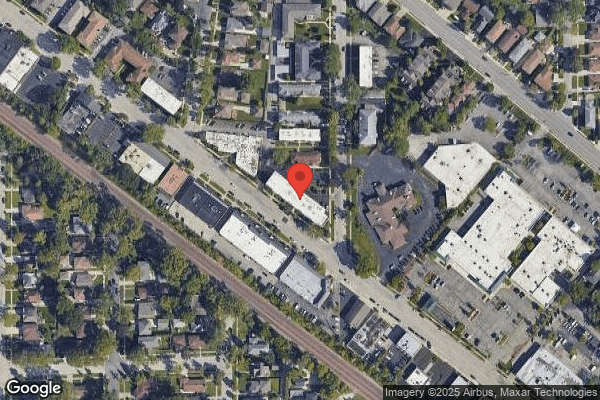
665 BUSSE HIGHWAY, PARK RIDGE, IL 60068 (847) 825-5517
For profit - Limited Liability company 46 Beds APERION CARE Data: November 2025
Trust Grade
95/100
#73 of 665 in IL
Last Inspection: May 2025

Inspected within the last 6 months. Data reflects current conditions.

Overview

Park Ridge Healthcare Center has received a Trust Grade of A+, indicating it is considered an elite facility, performing at a very high level. It ranks #73 out of 665 nursing homes in Illinois, placing it in the top half statewide, and #24 out of 201 in Cook County, suggesting it is one of the better local options. The facility is improving, with reported issues decreasing from 3 in 2024 to just 1 in 2025. Staffing is a concern, as it received a 2/5 rating, although the turnover rate is low at 12%, which is significantly better than the state average. While there have been no fines recorded, recent inspections revealed issues, such as dietary staff lacking proper food handling certifications and inadequate measures to prevent Legionella in the water systems, which could affect residents' safety.

Trust Score
A+
95/100
In Illinois
#73/665
Top 10%
Safety Record
Low Risk
No red flags
Inspections
Getting Better
3 → 1 violations
Staff Stability
✓ Good
12% annual turnover. Excellent stability, 36 points below Illinois's 48% average. Staff who stay learn residents' needs.
Penalties
✓ Good
No fines on record. Clean compliance history, better than most Illinois facilities.
Skilled Nurses
⚠ Watch
Each resident gets only 29 minutes of Registered Nurse (RN) attention daily — below average for Illinois. Fewer RN minutes means fewer trained eyes watching for problems.
Violations
○ Average
10 deficiencies on record. Average for a facility this size. Mostly minor or procedural issues.
★★★★★
5.0
Overall Rating
★★☆☆☆
2.0
Staff Levels
★★★★☆
4.0
Care Quality
★★★★★
5.0
Inspection Score
Stable
2024: 3 issues
2025: 1 issues

The Good

  • 4-Star Quality Measures · Strong clinical quality outcomes
  • Low Staff Turnover (12%) · Staff stability means consistent care
  • Full Sprinkler Coverage · Fire safety systems throughout facility
  • No fines on record
  • Staff turnover is low (12%)

    36 points below Illinois average of 48%

Facility shows strength in quality measures, staff retention, fire safety.

The Bad

Chain: APERION CARE

Part of a multi-facility chain

Ask about local staffing decisions and management

The Ugly 10 deficiencies on record

Feb 2025 1 deficiency
CONCERN (D) 📢 Someone Reported This

A family member, employee, or ombudsman was alarmed enough to file a formal complaint

Potential for Harm - no one hurt, but risky conditions existed

Deficiency F0692 (Tag F0692)

Could have caused harm · This affected 1 resident

**NOTE- TERMS IN BRACKETS HAVE BEEN EDITED TO PROTECT CONFIDENTIALITY** Based on interviews and record review, the facility failed to provide sufficient fluid intake to maintain proper hydration for o...

Read full inspector narrative →
**NOTE- TERMS IN BRACKETS HAVE BEEN EDITED TO PROTECT CONFIDENTIALITY** Based on interviews and record review, the facility failed to provide sufficient fluid intake to maintain proper hydration for one of four (R1) residents reviewed for therapeutic diets in the sample of four. Findings include: R1 was admitted to the facility with diagnoses including but not limited to Anemia; Hyperkalemia; Pressure Ulcer of Sacral Region, stage 4; Personal History of Immunosuppression Therapy; Other Reduction Deformities of Brain; Kidney Transplant Status; Gastrostomy Status; Severe Intellectual Disabilities; Hyperosmolality and Hypernatremia; Unspecified Severe Protein-Calorie Malnutrition; and Chronic Kidney Disease, stage 3a. On 2/10/2025 at 10:02 AM, R1 was sitting in the specialty chair in her room. R1 had a calm disposition, was clean, appropriately dressed, and well-groomed. Non-interviewable. R1 does not appear neglected. R1 appears thin. R1 observed wearing a left leg stabilizing boot. No tube feeding set up observed at this time. R1's gastrostomy tube site clean, dressing changed with date 02/10/2025. On 2/10/2025 at 11:21 AM V4 (Family Member) said, From what I heard, it seemed like after one of R1's hospitalizations, the tube feed water flush order was entered wrong. I brought it up to the nurse's attention, don't remember the name, during one of the feedings, and the facility took care of it. On 2/10/2025 at 11:43 AM V2 (Director of Nursing) said, R1 was hospitalized on [DATE] for anemia and discharged the next day (12/31/2024). First page of the hospital record (provided to the surveyor by V2) is a form that the facility nurse uses to take verbal hand-of-report, before resident is readmitted to the facility. V5 (Licensed Practical Nurse/LPN) wrote on R1's hand-off-report form that R1 should receive 200 ml (milliliters) water flush QID (four times a day). V5 (LPN) did not include that water flushes are to be done four times a day before and after each meal. The report is verbal, not always detailed, and not final. The actual discharge hospital record was supposed to be reviewed thoroughly after R1 was readmitted to the facility. R1's discharge hospital record showed that R1 is to receive increased free water flush to 200 ml QID before and after meals. The nurse on duty transcribes all new orders to electronic medical record upon residents' return to the facility. V6 (LPN) was the one who put in all new orders upon R1's readmission on [DATE]. V6 (LPN) transcribed inaccurate order. V6 (LPN) put it in an order as: water flush 200 ml/four times a day instead of 200 ml four times a day before and after meal. Nurses' assumption was to flush feeding tube with 100 ml of water before and 100 ml of water after each of R1's four meals. When in fact, it was supposed to be 200 ml water flush before and after meals four times a day. R1 was hospitalized again on 1/2/2025, and that's when the hospital called me and asked how many flushes R1 is getting. We told the hospital staff the mistake was on our part. On 2/10/2025 at 12:27 PM V7 (Medical Director) said, R1 has a history of kidney transplant from 2010. Nephrology manages R1 for the most part, but dialysis is no longer an option. R1 has not been able to manage electrolyte balance since she was admitted to the facility (11/27/2024). It seems like R1's kidney started to fail before she was admitted to the facility; however, we were not aware of that. There was no long term negative outcome from the inaccuracy of the water flush order. On 2/10/2025 at 9:33 PM V6 (LPN) said, I readmitted R1 on 12/31/2024. I entered water flush order as 200 ml (milliliters) QID (four times a day) based on what V5 (LPN) told me, but I might have not caught it correctly. I misinterpreted it. I don't remember now what the correct order was. It's important to transcribe physician orders accurately to ensure the order corresponds with physician's ordered treatment for residents' ongoing condition. R1's physician order dated 12/31/2024 11:07 PM reads in part, Enteral Feed Order four times a day Enteral - Flush Tubing with 200 ml water QID. Discontinued on 01/04/2025 at 12:13 AM. R1's January 2025 Medication Administration Record shows that R1 received two 200 ml and one 150 ml water flushes on 01/01/2025, two 200 ml water flushes on 01/02/2025, and one 200 ml water flush on 01/03/2025. R1 was hospitalized from [DATE] 05:20 PM to 01/03/2025 10:00 PM. Hospital record 12/31/2024 reads in part, Discharge Instructions: increase FWF (free water flushes) to 200 ml (milliliters) before and after meals. Hospital record 01/03/2025 reads in part, Admitting diagnosis: Hypernatremia. Hospital course: It was discovered that (R1) was only receiving 200 ml (milliliters) FWF (free water flush) with meals (not BOTH before & after meals). Absent are any care plans related to R1's fluid imbalance dated prior to 01/04/2025. The facility Enteral Nutrition policy (no date) reads in part, Enteral feedings provide nutrients and fluids using the gastrointestinal tract. The choice of enteral feeding depends on the medical and nutritional needs of the individual as assessed by the Registered Dietitian and physician. Enteral Nutrition Feeding Orders should include: [a., b., c., d., e.] f. The amount of water flushes per 24 hours. The facility admission of Resident policy (no date) reads in part, Purpose: To facilitate smooth transition into a health care environment. To gather comprehensive information as a basis for planning individualized therapeutic care. [ .] Complete and submit diet orders.
Apr 2024 3 deficiencies
CONCERN (E)

Potential for Harm - no one hurt, but risky conditions existed

Resident Rights (Tag F0550)

Could have caused harm · This affected multiple residents

**NOTE- TERMS IN BRACKETS HAVE BEEN EDITED TO PROTECT CONFIDENTIALITY** Based on observation, interview and record review, the facility failed to ensure six (R5, R13, R23, R26, R32 R37) residents righ...

Read full inspector narrative →
**NOTE- TERMS IN BRACKETS HAVE BEEN EDITED TO PROTECT CONFIDENTIALITY** Based on observation, interview and record review, the facility failed to ensure six (R5, R13, R23, R26, R32 R37) residents rights were maintained. This failure affected six (R5, R13, R23, R26, R32 and R37) of six residents reviewed for resident rights out of a total sample of 22. Finding include: R23 is a [AGE] year-old resident most recent admission to the facility on [DATE] with diagnoses of but not limited to severe intellectual disabilities, down syndrome, and Alzheimer's dementia. On 04/15/24 at 10:03AM, during random observation, R23 was in TV area with activity staff. R23 was observed sleeping in geriatric chair with mechanical lift sling visible underneath resident. On 04/15/24 at 10:34 AM R23 was observed in room sleeping in geriatric chair and mechanical lift sling visible underneath resident. R5 is a [AGE] year-old resident admitted to facility on 09/16/20 with diagnoses of but not limited to Alzheimer's disease, dementia and down syndrome. On 04/15/24 at 10:06 AM, R5 was observed in geriatric chair in TV area with activity staff V3. R5 was observed sleeping in geriatric chair with mechanical lift sling visible underneath resident. On 04/15/24 at 10:24 AM, R5 was observed awake in TV area watching television with mechanical lift sling visible underneath resident. R32 is a [AGE] year-old resident re-admitted to facility on 04/14/2023 with diagnoses including but not limited to profound intellectual disability, Alzheimer's disease, autism, dementia, and down syndrome. R13 is a [AGE] year-old resident admitted to facility on 07/15/2022 with diagnoses including but not limited to Alzheimer's disease and down syndrome. R26 is a [AGE] year-old resident admitted to facility on 06/07/2022 with diagnoses including but not limited to down syndrome and Alzheimer's disease. R37 is a [AGE] year-old resident admitted to facility on 09/13/2023 with diagnoses including but not limited to bipolar disorder, down syndrome, profound intellectual disability, and Alzheimer's disease. On 04/17/24 at 09:27 AM R5, R13, R23, R26, R32, and R37 identified by V3 (Social Services) were all observed in small activity room. R5, R13, R23, R26, R32, and R37 were sitting in geriatric chairs with mechanical lift slings visible beneath them in the chair. On 04/17/24 at 11:34 AM, V2 (Director of nursing) stated, mechanical lift slings being left in geriatric chair underneath residents is typical practice here. The reason is because it would be hard to lift them and replace the sling and cause friction and shearing to residents. V2 agreed mechanical lift slings being left under residents and visible could be a dignity issue as well. Anyone who walks through this facility can see the resident is transferred using a mechanical lift by seeing the sling. On 04/17/24 at 1:37 PM, V4 (Licensed Practical Nurse) stated, mechanical lift slings being left under patients is typical practice here. Our patients have osteoporosis, weakness and are cognitively impaired residents so I feel this is a safer practice. We leave the mechanical lift slings underneath residents for ease of staff to transfer our residents. Resident rights policy dated 08/23/2017 states: Purpose: To promote the exercise of rights for each resident, including any who face barriers (such as communication problems, hearing problems and cognition limits) in the exercise of these rights. A resident, even though determined to be incompetent, should be able to assert these rights based on his or her degree of capability. Guidelines: Notice of resident rights will be provided upon admission to the facility. These rights include the resident's right to: Privacy and confidentiality Exercising rights means that residents have autonomy and choice, to the maximum extent possible, about how they wish to live their everyday lives and receive care, subject to the facility's rules as long as those rules do not violate a regulatory requirement.
CONCERN (F)

Potential for Harm - no one hurt, but risky conditions existed

Deficiency F0801 (Tag F0801)

Could have caused harm · This affected most or all residents

Based on interview and record review, the facility failed to ensure that dietary staff are properly certified for food handling. This failure has the potential to affect all 37 residents who receive f...

Read full inspector narrative →
Based on interview and record review, the facility failed to ensure that dietary staff are properly certified for food handling. This failure has the potential to affect all 37 residents who receive food by mouth from the kitchen. Facility census provided by V1 (Administrator) upon entrance is 38 minus 1 resident that gets nothing by mouth (NPO). Findings include: On 04/16/24 at 11:30AM, conducted a second visit in the kitchen and requested the certification for all dietary staff from V5 (Dietary manager). V5 presented 3 food handing certificates for the dietary aides. Review of facility employee list showed 6 dietary aides currently work at the facility. V5 stated, three dietary staff that are missing the food handling certificate are working at another place and are going to send V5 their certificates. V5 later presented certificates for 2 additional staff, stating the remaining staff (V9) is still looking for his own and will send it over. On 04/17/24 at 1:177PM, V5 stated, he did not receive the food handling certificate. The staff could not find it and is taking the test right now and he will send over the certificate after completion. V5 added, V9 has worked at the facility for months now, he had a certificate in another place before he started working at the facility but could not find. On 04/17/24 at 3:00PM, V1 (Administrator) said, V9 has worked at the facility for about one year. V1 was told that V9 had a certificate that expired and is now taking the test again. V1 stated, V9 works part time for a couple of hours a week but should still have a current food handling certificate on file. Surveyor requested the expired copy of V9's license. V1 stated that they could not find it, and the facility does not have any policy regarding required qualifications for dietary staff. Illinois Food Handling Regulation Enforcement Act (410 ILCS 625) amended by SB1495, (in part) requires all food handlers in Illinois to receive training in basic food safety concepts from an ANAB-Accredited provider. Food Handlers must complete a food safety training within 30 days of beginning of employment.
CONCERN (F)

Potential for Harm - no one hurt, but risky conditions existed

Infection Control (Tag F0880)

Could have caused harm · This affected most or all residents

Based on interview and record review, the facility failed to have measures in place to minimize the risk of Legionella and other opportunistic pathogens in building water systems and failed to have co...

Read full inspector narrative →
Based on interview and record review, the facility failed to have measures in place to minimize the risk of Legionella and other opportunistic pathogens in building water systems and failed to have corrective actions for temperature variances outside control limits. This failure has the potential to affect all 38 residents residing at the facility. Findings include: Facility census provided by administrator upon entrance was 38. On 4/16/2024 at 2:32PM, V2 (DON) said he is the infection prevention nurse and has worked at the facility for about 25 years. V2 stated she does not know anything about facility water management or Legionella prevention, the administrator and maintenance director takes care of that. On 04/16/24 at 3:02PM. V1 (administrator) stated, the facility does not do any testing for Legionella disease. If they did any testing it was in the past. V1 has been at the facility for 5 years and they have not done any testing. The facility only takes temperatures and do routine flushing. V1 stated the only time they will do any testing is if there is an indication of legionella or during construction, otherwise they are not required to test. On 04/17/24 at 10:13 AM, V1 presented documentation for the facility's Legionella prevention temperature log from July 2023 to April 2024. Documents show the temperature in the water heater storage tank and the circulating water exiting the mixing valve does not meet the temperature parameters. The section of the documents for corrective action taken for variance outside parameters were left blank. V1 was presented with this observation and V1 stated, We don't have any corrective action, we do not take any measures unless there is an indication of a problem. On 04/17/24 at 10:13 AM, V7 (Maintenance Director) who was present during the interview stated, he just started at the facility about 6 months ago and has never done any testing at the facility or in his previous job. V7 just checks the temperatures and does not do anything additional for temperatures that do not meet stated range. On 04/17/24 at 11:30 AM, V1 stated, she told the maintenance director to change the temperature setting in the water heater to match the parameter. V1 stated, V7 was supposed to do the testing today and the reading from today is okay. Water management policy revised 12/28/2017 stated its purpose as to identify and reduce the risk of Legionella growth and spread. Under guidelines, the policy states that preventive maintenance will be performed ss applicable, including, but not limited to hot water temperatures to be obtained at the domestic hot water boiler and at the mixing valve at least 5 times a week. Environmental services will monitor the identified areas of risk per guidelines above and implement corrective action as indicated. Additional monitoring or actions may need to be implemented for the following: Data shows control measures are persistently outside of control limits.
Nov 2023 2 deficiencies
CONCERN (D) 📢 Someone Reported This

A family member, employee, or ombudsman was alarmed enough to file a formal complaint

Potential for Harm - no one hurt, but risky conditions existed

Deficiency F0604 (Tag F0604)

Could have caused harm · This affected 1 resident

Based on interview and record review the facility failed to protect the resident right to be free from use of physical restraints for 1 of 3 residents (R1), a resident with diagnosis of down syndrome,...

Read full inspector narrative →
Based on interview and record review the facility failed to protect the resident right to be free from use of physical restraints for 1 of 3 residents (R1), a resident with diagnosis of down syndrome, anxiety and major depression. On 10.27.23 R1 observed by hospice aide to be wrapped inside a bed sheet and the sheet was tied around R1 legs restricting free movement of R1. Findings include: R1 face sheet R1 has diagnosis of down syndrome, major depressive disorder, and anxiety. Facility investigation dated 10.27.23 denotes in-part on 10.27.23, RN case manager told DON (director of nursing) and Administrator the CNA ( certified nursing aide) had found the sheets of R1 positioned around her legs in a way R1 would not be able to move them. V4 stated she was taking care of R1 morning and R1's sheets kept falling off her so she wrapped the sheets around R1 so they would not slide off and her legs would stay covered. On 11.18.23 at 8:45 am R1 observed sleeping in bed. At 9:28am V7 (CNA- Certified Nursing Aide) and V8 (CNA- Certified Nursing Aide) observed to provide care to R1. V8 said she often works with R1 and R1 likes to put her legs out of the bed. V8 said R1 moves around in the bed a lot. V8 said R1 is a fall risk. R1's bed observed in the high position. R1's top bed rails observed in the up position bilaterally. R1's air mattress observed to have 4 boasters, 2 at the upper and 2 at the lower part of the bed. V8 turned R1, R1 did not participate in holding the bed rails during care. R1 did not communicate with the staff during care. R1 did not follow directives. On 11.18.23 at 11:59am V4 (CNA- Certified Nursing Aide) said she wrapped R1 in a sheet when she worked on 10.27.23 because R1 put her hand inside her adult brief. V4 explained she wrapped R1 like you wrap the babies, cradle wrapping the sheet around the body. V4 said the facility gave her an in-service and told her she cannot wrap R1 up like, it's a restraint. V4 said R1 could not remove the sheet she wrapped R1 up inside. On 11.18.23 at 1:46pm V2 (Director of Nursing) said the facility does not use restraints. V2 said she was made aware of 10.27.23 incident when V1 (case manager of hospice company) arrived at the facility and informed her and V3 (Administrator). V6 observed R1 legs tied in a sheet. V2 said she did not see the picture presented by V1 but V3 (Administrator) saw the picture. V2 said she immediately went to assess R1. R1 noted with no injuries. V2 said V3 initiated an investigation. V2 said she interviewed V4 (CNA-certified nursing aide) and V4 informed her V4 wrapped a sheet around R1 so R1 was comfortable because R1 kicks off her sheet at night. V2 said R1 has behaviors of touching her face, messing wither adult brief, putting her legs out of the bed, and fidgeting. V2 said she asked V4 to demonstrate how she wrapped the sheet around R1. V2 demonstrated for surveyor. V2 put the sheet around her upper body/waist, tied the sheet at the upper body area, leaving the lower part of the sheet to be open freely. V2 was shown the picture presented to surveyor. V2 said R1 should not be wrapped in the sheets like that, it a was a restraint. V2 said the sheet should not be tied around R1 legs. V2 said R1 has a right to move freely. V2 explained the facility has removed the rails off their beds because they don't use restraints. V2 described when the bed rails are in the up position it's considered a restraint (if the resident is not assessed for bed rails use and approved). V2 was made aware surveyor observed bed rails in the up position on R1 bed. V2 said R1 should not have the bed rails in the up position. V2 explained R1's bed was provided by the hospice company but staff knows how to put the bed rails in the down position and they should put the bed rails in the down position. V2 said R1 has down syndrome and has dementia. V2 explained R1 is a fall risk, R1 has boosters on her mattress for fall prevention intervention and R1 bed should be in a low position. V2 made aware R1 bed was not in the low position when observed by the surveyor at 8:45am. On 10.18.23 at 10:49am V6 (Hospice Aide) said she is the hospice aide was assigned to R1 care on 10.27.23. V6 said she visited R1 on 10.27.23 and observed R1 to be cradled in a bedsheet from upper body down to legs and at the legs the sheet was tied. R1 did not appear to be in distress at time. V6 said she had to literally unwrap R1 body from the sheets. V6 said she called her supervisor at the hospice company to inform them. V6 said she did not mention this to facility because she didn't know how to manage the situation with the facility. V6 said she took picture to show her supervisor. V6 said she untied R1 and provided care to R1. V6 said she did not see any bruises on R1. V6 said the facility has asked her not to return because she expressed concerns about the clients she was assigned to at the facility. On 11.18.23 at 10:49am V1 (case manager hospice company) said it was reported to her by V6 that V6 observed R1's legs tied up in a sheet on 10.27.23. V1 said the hospice company had a previous episode with R1 being restrained at the facility in April 2023. V1 said she asked V6 not to talk to the facility and she would inform the facility. V1 said she informed V3 on 10.27.23 of the issue and she showed V3 the photo image also. On 11.18.23 at 11:18am V3 (Administrator) V3 said it was reported to her on 10.27.23 by V1 that R1 was observed with the bed sheet tied around her legs. V3 said V1 showed V3 the picture of R1 but V3 couldn't recall what V3 observed in the picture because the angle was not clear. V3 said she interviewed staff and V4 reported that V4 wrapped R1 up in a sheet. At 2:15pm V3 was showed the photo of R1 wrapped in a bed sheet and the sheet was tied around R1 legs. V3 said the sheet should not be tied around R1 legs. V3 said the facility does not use restraints. Review of the photo presented by V1 shows a resident observed, resident has a ring on (R1 observed wearing ring on 11.18.23), the white bed sheet is around the resident body tightly, the sheet comes down to the legs and at the legs the sheet is tied. Facility concern form dated 10.27.23 denotes in-part, R1 name, report taken by V3, concern- hospice CNA stating resident's sheet is wrapped too tightly around her legs. Summary of pertinent findings- not substantiated, staff positioned sheet around legs so they would stay on comfortable. V4 notice of corrective action form dated 10.27.23 denotes in-part on 10.27.23, the employee stated during an investigation she wrapped a blanket around a resident in order to keep the blanket on. Those could be considered a restraint and all restraints must be approved by the IDT (interdisciplinary team). Using a restraint without approval is against the policy of the facility. Facility records of in-service dated 5/18-5/23/23, topic- restraint free facility, side rails, summary of the presentation denotes: no side rails without orders, anything is attached to resident body and prevents them from free movement is a restraint. V4 name is noted on in-service report. R1 physician order sheet for the month of October 2023, does not reflect any order for use of restraints. Review of R1 care plan presented by V3 as the most recent plan, target date of 02.24.23, 20 pages, there is not a plan of care denoting the use of restraints for R1, there is not plan of care denoting to tie bed sheets around R1 legs, there is no care plan denoting to cradle R1 inside a bed sheet because she touches her adult brief. Facility policy titled restraints with revision date on 4.24.18 denotes in part to ensure each resident is to attain and maintain his/her practicable well-being in an environment prohibits the use of restraints for discipline or convivence and limits restraint use to circumstance in which the resident has medical symptom warrant the use of restraints. Definitions: physical restraints are any manual method, or physical or mechanical device, material or equipment attached or adjacent to the resident body the individual cannot remove easily which restricts freedom of movement to normal access to one body. Physical restraints may include but are not limited to leg restraints, arm restraints, hand mitts, soft ties or vest, lap cushions, and lap trays the resident cannot remove easily. The resident right for the people living in long term care denotes your facility must treat you with dignity and respect and must care for you in a manner promotes your quality of life. You have a right to be free from physical or chemical restraints.
CONCERN (D) 📢 Someone Reported This

A family member, employee, or ombudsman was alarmed enough to file a formal complaint

Potential for Harm - no one hurt, but risky conditions existed

Report Alleged Abuse (Tag F0609)

Could have caused harm · This affected 1 resident

Based on interview and record review the facility failed to follow their abuse prevention policy and report and allegation of abuse of using a physical restraint to the department for 1 of 1 resident ...

Read full inspector narrative →
Based on interview and record review the facility failed to follow their abuse prevention policy and report and allegation of abuse of using a physical restraint to the department for 1 of 1 resident (R1) for 22 days. Findings include: R1 face sheet R1 has diagnosis of down syndrome, major depressive disorder, and anxiety. On 11.18.23 at 11:18am V3 (Administrator) said V3 did not report the allegation of the sheets being tied around R1's legs to the department because V1 (case manager of hospice company) said she did not think it was done with ill intent. V3 said it was reported to V3 on 10.27.23 by V1 that R1 was observed with the bed sheet tied around her legs. V3 said V1 showed V3 the picture of R1 but V3 couldn't recall what V3 observed in the picture because the angle was not clear. V3 said she interviewed staff and V4 reported that V4 wrapped R1 up in a sheet. At 2:15pm V3 was showed the photo of R1 wrapped in a bed sheet and the sheet was tied around R1 legs. V3 said the sheet should not be tied around R1 legs. V3 said the facility does not use restraints. V3 presented initial report to department on 11.18.23 for physical abuse, denoting in-part it was reported to her (V3) that R1's blanket was secured around her (R1) legs. Facility policy tiled abuse prevention and reporting with last revision date 10.24.22 denotes in-part, external reporting, when allegation of abuse, exploitation, neglect, mistreatment, or misappropriation of resident property has occurred, the resident representative and department of public health regional office shall be informed by telephone or fax. Public health shall be informed that an occurrence of potential abuse, neglect, exploitation, mistreatment, or misappropriation of resident property has been reported and is being investigated. If there is reasonable suspicion that a crime has been committed that is not listed above and does not involve serious bodily injury, then a report to local law enforcement and department of public health as soon as possible but within 24 hours of when the suspicion was formed.
Jun 2023 2 deficiencies
CONCERN (D)

Potential for Harm - no one hurt, but risky conditions existed

Deficiency F0657 (Tag F0657)

Could have caused harm · This affected 1 resident

**NOTE- TERMS IN BRACKETS HAVE BEEN EDITED TO PROTECT CONFIDENTIALITY** Based on interview and record review, the facility failed to follow their policy and update resident's fall care plan with new i...

Read full inspector narrative →
**NOTE- TERMS IN BRACKETS HAVE BEEN EDITED TO PROTECT CONFIDENTIALITY** Based on interview and record review, the facility failed to follow their policy and update resident's fall care plan with new interventions to prevent one resident (R6) who was a risk for falls, from falling and hitting her head on 1/23/23. This failure effects 1 resident of 3 residents reviewed for falls in a sample of 12. Findings include: R6 post fall occurrence forms document three falls 11/21/22, 12/8/22, and 1/23/23. R6's fall-initial occurrence report for 11/21/2022 documents R6 tried to get up but slid off the bed. R6 was found sitting on the floor with legs outstretched on the side of her bed. R6's fall-initial occurrence report for 12/8/2022 documents R6 was found face down on the floor, resident stated she lost her balance and fell, and precipitating factors: resident needed to void and forgets to use the call light and is on an anticoagulant. R6's Fall initial occurrence report for 1/23/23 documents R6 was found on the floor in her room lying on her back and head on the floor. R6 stated she was trying to go to the restroom. R6's Progress note dated 12/8/2022 documented a bruise to the forehead and was sent to the hospital. R6's hospital records dated 12/8/2022 document diagnosis as fall and traumatic hemorrhage of cerebrum. Resident was readmitted to the facility on [DATE]. There are no new interventions documented on the fall risk care plan after 7/13/22 until 1/23/23. Therefore, no new interventions after the 11/21/22 fall or the 12/8/22 fall with injury. 6/07/23 01:22 PM V2 (DON) stated after resident's fall, the facility came up with interventions and updated the resident's care plan with new interventions. The facility's Comprehensive Care Plan policy dated 11/17/17 documents the following: to develop a comprehensive care plan that directs the care team and incorporates the resident's highest practicable physical, mental, and psychosocial well-being. The facilities fall prevention program policy documents the care plan interventions are changed with each fall, as appropriate.
CONCERN (D)

Potential for Harm - no one hurt, but risky conditions existed

Quality of Care (Tag F0684)

Could have caused harm · This affected 1 resident

Based on observation, interview and record review, the facility failed to provide treatment and care for a resident with seizures for one (R14) of four residents reviewed for seizures in a sample of 1...

Read full inspector narrative →
Based on observation, interview and record review, the facility failed to provide treatment and care for a resident with seizures for one (R14) of four residents reviewed for seizures in a sample of 12. Findings include: On 06/06/23 at 10:06 AM during observation, R14 was observed sitting on a Geri-chair in the dining room when she started presenting with jerking body movements, eyelids fluttering, and eyes rolling back. V6 (Certified Nursing Assistant) noticed R14, checked her, and informed V3 (Licensed Practical Nurse). V3 checked R14 and stayed with her. R14's jerking movements stopped after approximately 15 seconds, but eyelids and eyes remained the same. After approximately another 10 seconds, R14's eyelids and eyes started to relax. V3 was observed taking R14 to her room. On 06/07/23 at 10:48 AM, V3 said she brought R14 to room to decrease stimuli and make her comfortable. V3 stated she didn't think that when R14 had the jerking movements and eyes rolling backwards she was having a seizure. V3 said she did not check R14's vital signs or call the doctor. On 06/07/23 at 10:52 AM, V2 (Director of Nursing) stated that R14 has diagnosis of seizure disorder and she might've been having seizures at that time. V2 added that R14 is on seizure medication but cannot locate any laboratory results for R14 to check therapeutic levels. On 06/08/2023 at 1:12PM, V2 said if a resident had a seizure, she expects the nurses to assess the resident including the vital signs, provide care as needed, and then notify the doctor and/or family. On 06/07/23 at 11:00 AM, V6 said he saw R14 having jerking body movements, so he checked on R14 and informed V3. R14's order summary report dated 6/7/23 indicated admission date of 10/23/2019, diagnoses including other seizures and other sequelae of cerebral infarction, and order for Levetiracetam 250 milligrams (mg) by mouth in the morning and 500mg by mouth in the evening with start date of 7/12/2022. Care plan revised 7/22/2022 indicated R14 is at risk for seizures, Levetiracetam with interventions including monitor lab values for therapeutic levels of anticonvulsant medications and report to MD (Doctor of Medicine). Review of physician orders from 7/12/2022 to 06/06/2023 did not show any current or previous laboratory order to check therapeutic levels of Levetiracetam. Facility unable to provide policy on change in condition.
May 2023 2 deficiencies
CONCERN (D) 📢 Someone Reported This

A family member, employee, or ombudsman was alarmed enough to file a formal complaint

Potential for Harm - no one hurt, but risky conditions existed

Free from Abuse/Neglect (Tag F0600)

Could have caused harm · This affected 1 resident

**NOTE- TERMS IN BRACKETS HAVE BEEN EDITED TO PROTECT CONFIDENTIALITY** Based on interview and record review, the facility failed to keep a resident free from physical abuse from another resident. Thi...

Read full inspector narrative →
**NOTE- TERMS IN BRACKETS HAVE BEEN EDITED TO PROTECT CONFIDENTIALITY** Based on interview and record review, the facility failed to keep a resident free from physical abuse from another resident. This failure applied to two of two (R3, R4) residents reviewed for abuse. Findings include: R3 is a [AGE] year-old male, originally admitted to the facility on [DATE] with diagnoses that include: Down Syndrome, Alzheimer's disease with early onset, bipolar disorder, weakness, and need for assistance with personal care. R3's care plan focus dated 12/10/22 reads that R3 has the potential to be physically aggressive related to diagnosis of bipolar. Interventions include: Analyze times of day, places, circumstances, triggers, and what de-escalates behavior and document; modify environment: reduce noise, dim lights, place familiar objects in room, keep door closed, etc.; remove resident from crowded situation; observe resident when in company of peers (initiated on 9/9/22). R4 is a [AGE] year-old female, originally admitted to the facility on [DATE] with diagnoses that include: Down Syndrome, Alzheimer's disease, dementia, muscle weakness, and anxiety disorder. R4's care plan focus dated 8/18/22 reads that R4 can be non-compliant/resistive to care with screaming/yelling/pushing staff away. I don't like to hear noise; I get agitated and will start to scream. Focus area dated 9/9/22 reads that R4 has impaired communication: expressive problems, receptive problems, speech problems, specify: mumbling to non-verbal related to: dementia, expressive aphasia. Interventions include: Leave resident alone and re-approach later as needed (initiated on 8/21/22); Be conscious of resident position when in groups, activities, dining room to promote proper communication with others (initiated on 9/9/22). Facility provided incident report describing incident on 4/6/23 between R3 and R4. Report reads: The CNA stated that he was bringing a resident into the dining room when he observed R3 hit R4. He immediately removed R4 from the area and then alerted the nurse. The nurse, while not witnessing this incident herself, she immediately assessed both R4 and R3 for any signs of injuries and/or pain. There was some discoloration on R4's left lower face as well as an open area on her lip . Summary of investigators findings: After a review of the staff and resident interviews as well as medical record review, it was determined that R3 hit R4. R3 and R4 were seated next to each other. R3 became agitated due to noises in the dining room and this is what likely caused him to react in such a way. Nurse progress note dated 4/6/202316:18, written by V3 (LPN) reads: Narrative: V4 (CNA) witnessed (R3) using his right closed fist to punch (R4) on her face. CNA immediately interfered and separated both residents. Writer heard the commotion and assisted CNA to separate both residents. (Facility Medical Director) here, seen resident with order to send resident to ER via 911.Local Authorities notified and arranged for 911 transport. ( Correction on the time above of People/Agencies notified. Incident happened at 15:00.MD notified at 15:10 DON notified at 15:01Administrator notified at 15:12. Interview with V3 (LPN) on 5/6/23 at 1:22PM, V3 stated that she was at the nurses station right across from the small dining room (during 4/6/23 incident) so she heard the commotion. V3 stated, I don't think there was any staff in there at the time, but I am right here (nurses station is approximately less than 15 feet from the dining room) and V4 (CNA) separated them quickly. R4 is very confused and disoriented. R3 is usually redirectable and calm throughout the day. On 5/6/23 at 4:02PM, V3 confirmed that V4 (CNA) reported the incident to her, just as she had charted and that R3 has a history of aggressive behaviors with loud environments. During interview with V4 (CNA) on 5/6/23 at 12:24PM, V4 stated that he was bringing a resident (on 4/6/23) into the dining room when he saw the incident. R4 likes to yell and R3 doesn't like loud noises. R4's lip was open a little at the bottom. At the time (of incident) we were in the middle of shift change and sometimes they might be alone momentarily. 5/6/23 at 1:36PM V2 (DON) was interviewed about the incident between R3 and R4 and stated that there should be staff in the dining room (with residents) and confirmed that R4 is confused and can get agitated which is not new for R4. V2 stated, staff try to keep R4 away from loud noises and if R4 is loud, they keep R4 away too and try to keep R4 in a calm environment. V2 added that she (V2) did not consider this incident abuse based on the residents' impaired cognition and intellectual disability and added that she did not think that R3 intended to harm R4. They both have Alzheimer's. 5/6/23 at 3:19PM, V1 (Administrator) was interviewed about the incident between R3 and R4 and stated that they (R3 and R4) were sitting in the dining room together and R3 hit R4. When R3 went to the hospital (after incident), they determined R3 had a UTI (urinary tract infection), and was treated with antibiotics. V1 stated. He's (R3) not normally aggressive. With his cognition, I don't believe that (R4) really knows because if you go back and ask him, he doesn't recall what happened. V1 confirmed that she did not substantiate abuse for this incident. Facility provided document titled, Abuse Prevention and Reporting- Illinois (last revised 10-24-22), which includes: .Definitions: Abuse: Abuse means any physical or mental injury or sexual assault inflicted upon a resident other than by accidental means (210 ILCS 45/1-103). Abuse is the willful infliction of injury, unreasonable confinement, intimidation, or punishment with resulting physical harm, pain, or mental anguish to a resident (42 CFR 483.5). This also includes the deprivation by an individual, including a caretaker, of goods or services that are necessary to attain and/or maintain physical, mental, and psychosocial well-being. This assumes that all instances of abuse of residents, even those in a coma, cause physical harm or pain or mental anguish (42 CFR Interpretive Guidelines). The term willful in the definition of abuse means the individual must have acted deliberately, not that the individual must have intended to inflict injury or harm. (42 CF R 483.5). An example of a deliberate (willful) action would be a cognitively impaired resident who strikes out at a resident within his/her reach, as opposed to a resident with a neurological disease who has involuntary movements (e.g., muscle spasms, twitching, jerking, writhing movements) and his/her body movements impact a resident who is nearby. Having a mental disorder or cognitive impairment does not automatically preclude a resident from engaging in deliberate or non-accidental actions. Physical Abuse is the infliction of injury on a resident that occurs other than by accidental means and that requires medical attention (77 Ill. Adm. Code 300.330). Physical abuse includes hitting, slapping, pinching, kicking, and controlling behavior through corporal punishment (42 CFR 483.12 Interpretive Guidelines) . Resident-to-Resident Abuse (any type): A resident-to-resident altercation should be reviewed as a potential situation of abuse.
CONCERN (D) 📢 Someone Reported This

A family member, employee, or ombudsman was alarmed enough to file a formal complaint

Potential for Harm - no one hurt, but risky conditions existed

Deficiency F0604 (Tag F0604)

Could have caused harm · This affected 1 resident

Based on interview and record review the facility failed to follow its policy for using restraints and failed to prevent a physical restraint from being used for staff convenience for one resident (R1...

Read full inspector narrative →
Based on interview and record review the facility failed to follow its policy for using restraints and failed to prevent a physical restraint from being used for staff convenience for one resident (R1) in a sample of five residents reviewed for restraints. Findings include: On 5-6-2023 at 3:10pm V8 (R1's Family member) said, on 4-23-2023 I came at 11:00am to see my family member (R1), she was in bed with a facility gown that was tied to the bed side rail and holding both legs next to each other, unable to move her legs freely. R1 was restrained. On 5-6-2023 at 11:00am V5 (Certified Nurse Assistant) said, on Sunday 4-23-2023 I was working here, I went to R1's room about 10:00 am and I provided morning care and since she likes to play with her feces, I folded the gown under her knees to avoid for her to reach her incontinence under garment. I should have never done that because it can be consider a restraint On 5-6-2023 at 1:25pm V2 (Director of Nursing) said, tied a gown under the knees is consider a restraint because R1's will not be able to move her legs freely. We consider that as a restraint. 3:30p V1 (Administrator) said, a gown tied at the knee level is consider a restraint, we are not supposed to restraint any residents. V1 presented: Restraints policy dated: 11-28-2012. Reads: The use of side rails as restraints is prohibited.
Understanding Severity Codes (click to expand)
Life-Threatening (Immediate Jeopardy)
J - Isolated K - Pattern L - Widespread
Actual Harm
G - Isolated H - Pattern I - Widespread
Potential for Harm
D - Isolated E - Pattern F - Widespread
No Harm (Minor)
A - Isolated B - Pattern C - Widespread

Questions to Ask on Your Visit

  • "Can I speak with families of current residents?"
  • "What's your RN coverage like on weekends and overnight?"

Our Honest Assessment

Strengths
  • • Grade A+ (95/100). Above average facility, better than most options in Illinois.
  • • No major safety red flags. No abuse findings, life-threatening violations, or SFF status.
  • • No fines on record. Clean compliance history, better than most Illinois facilities.
  • • 12% annual turnover. Excellent stability, 36 points below Illinois's 48% average. Staff who stay learn residents' needs.
Concerns
  • • No significant concerns identified. This facility shows no red flags across CMS ratings, staff turnover, or federal penalties.
Bottom line: Generally positive indicators. Standard due diligence and a personal visit recommended.

About This Facility

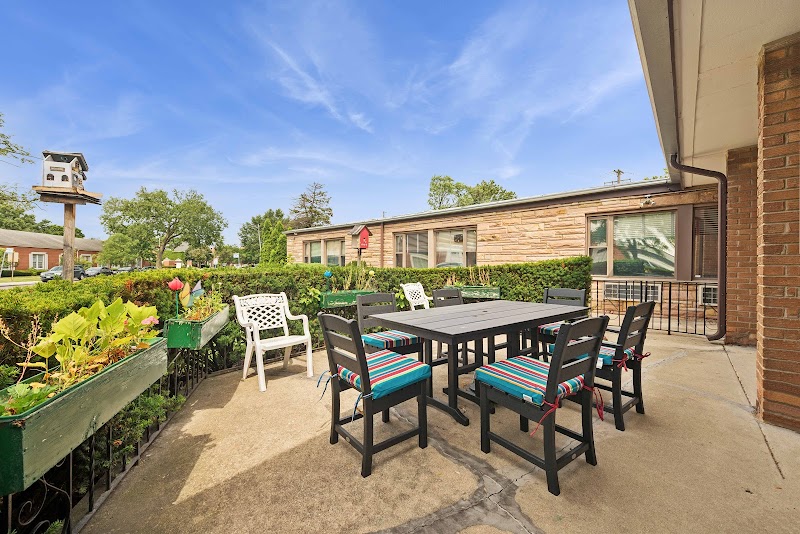
What is Park Ridge Healthcare Center's CMS Rating?

CMS assigns PARK RIDGE HEALTHCARE CENTER an overall rating of 5 out of 5 stars, which is considered much above average nationally. Within Illinois, this rating places the facility higher than 99% of the state's 100 nursing homes. This rating reflects solid performance across the metrics CMS uses to evaluate nursing home quality.
How is Park Ridge Healthcare Center Staffed?

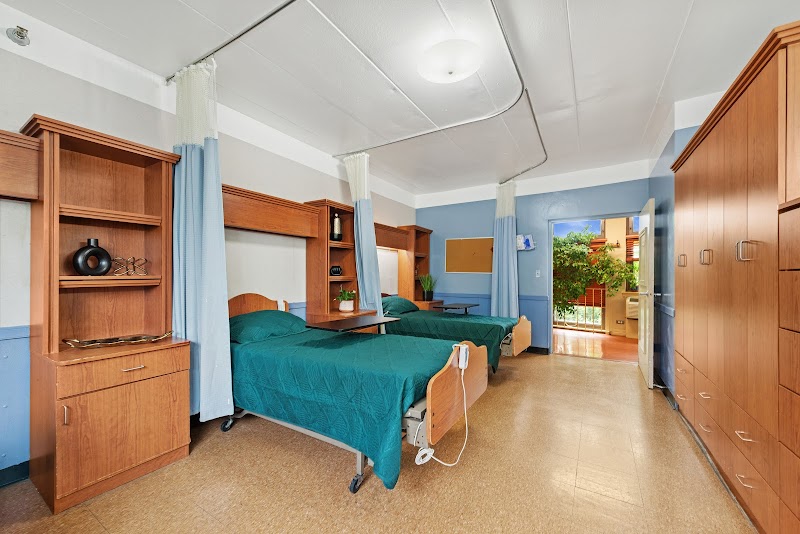
CMS rates PARK RIDGE HEALTHCARE CENTER's staffing level at 2 out of 5 stars, which is below average compared to other nursing homes. Staff turnover is 12%, compared to the Illinois average of 46%. This relatively stable workforce can support continuity of care.

What Have Inspectors Found at Park Ridge Healthcare Center?

State health inspectors documented 10 deficiencies at PARK RIDGE HEALTHCARE CENTER during 2023 to 2025. These included: 10 with potential for harm.
Who Owns and Operates Park Ridge Healthcare Center?

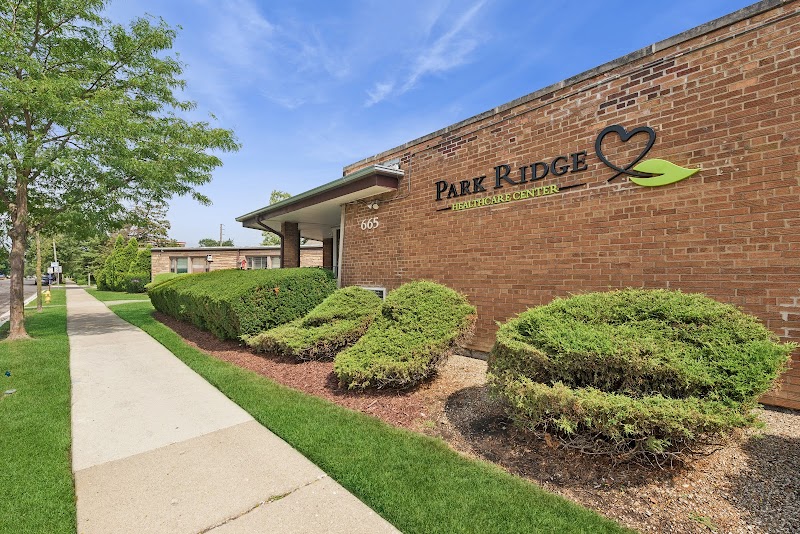
PARK RIDGE HEALTHCARE CENTER is owned by a for-profit company. For-profit facilities operate as businesses with obligations to shareholders or private owners. The facility is operated by APERION CARE, a chain that manages multiple nursing homes. With 46 certified beds and approximately 43 residents (about 93% occupancy), it is a smaller facility located in PARK RIDGE, Illinois.
How Does Park Ridge Healthcare Center Compare to Other Illinois Nursing Homes?

Compared to the 100 nursing homes in Illinois, PARK RIDGE HEALTHCARE CENTER's overall rating (5 stars) is above the state average of 2.5, staff turnover (12%) is significantly lower than the state average of 46%, and health inspection rating (5 stars) is much above the national benchmark.

What Should Families Ask When Visiting Park Ridge Healthcare Center?

Based on this facility's data, families visiting should ask: "Can you walk me through typical staffing levels on day, evening, and night shifts?" "Can I visit during a mealtime to observe dining assistance and food quality?" "How do you handle medical emergencies, and what is your hospital transfer rate?" "Can I speak with family members of current residents about their experience?" These questions are particularly relevant given the below-average staffing rating.

Is Park Ridge Healthcare Center Safe?

Based on CMS inspection data, PARK RIDGE HEALTHCARE CENTER has a clean safety record: no substantiated abuse findings (meaning no confirmed cases of resident harm), no Immediate Jeopardy citations (the most serious violation level indicating risk of serious injury or death), and is not on the Special Focus Facility watch list (a federal program monitoring the lowest-performing 1% of nursing homes). The facility has a 5-star overall rating and ranks #1 of 100 nursing homes in Illinois. While no facility is perfect, families should still ask about staff-to-resident ratios and recent inspection results during their visit.

Do Nurses at Park Ridge Healthcare Center Stick Around?

Staff at PARK RIDGE HEALTHCARE CENTER tend to stick around. With a turnover rate of 12%, the facility is 34 percentage points below the Illinois average of 46%. Low turnover is a positive sign. It means caregivers have time to learn each resident's needs, medications, and personal preferences. Consistent staff also notice subtle changes in a resident's condition more quickly.

Was Park Ridge Healthcare Center Ever Fined?

PARK RIDGE HEALTHCARE CENTER has no federal fines on record. CMS issues fines when nursing homes fail to meet care standards or don't correct problems found during inspections. The absence of fines suggests the facility has either maintained compliance or corrected any issues before penalties were assessed. This is a positive indicator, though families should still review recent inspection reports for the full picture.

Is Park Ridge Healthcare Center on Any Federal Watch List?

PARK RIDGE HEALTHCARE CENTER is not on any federal watch list. The most significant is the Special Focus Facility (SFF) program, which identifies the bottom 1% of nursing homes nationally based on persistent, serious quality problems. Not being on this list means the facility has avoided the pattern of deficiencies that triggers enhanced federal oversight. This is a positive indicator, though families should still review the facility's inspection history directly.