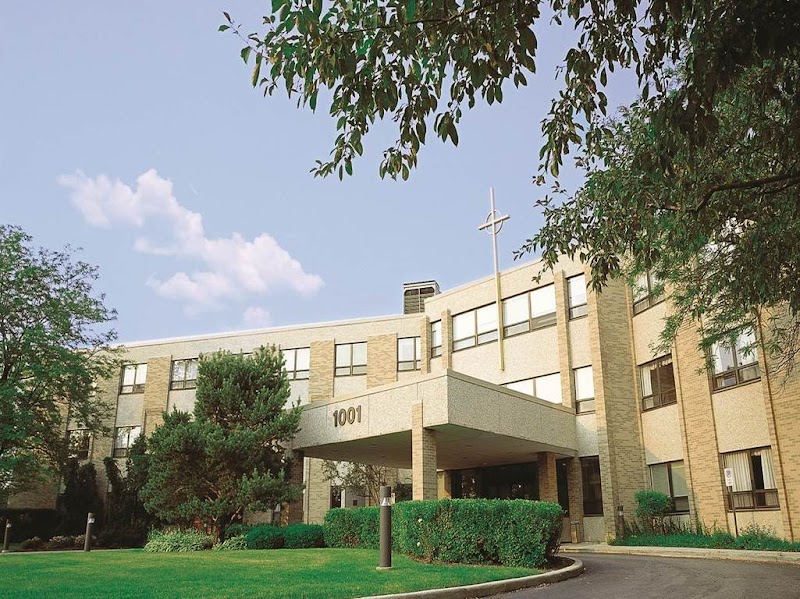
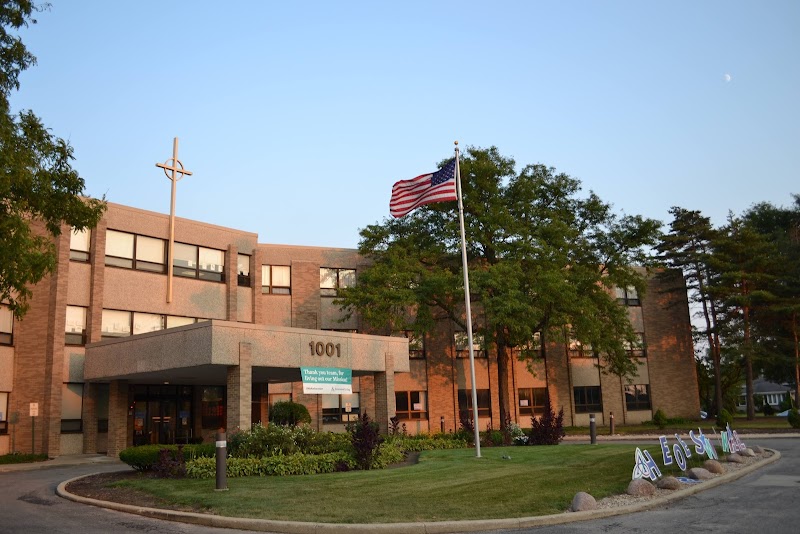
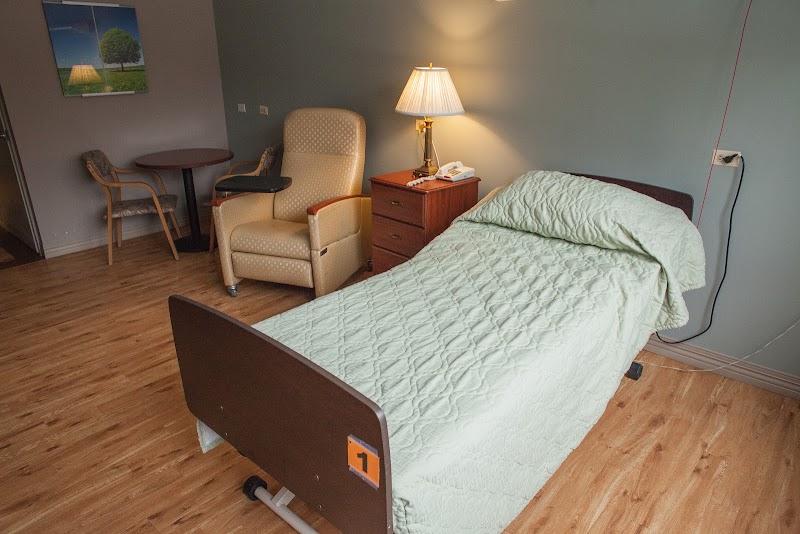
Resurrection Place

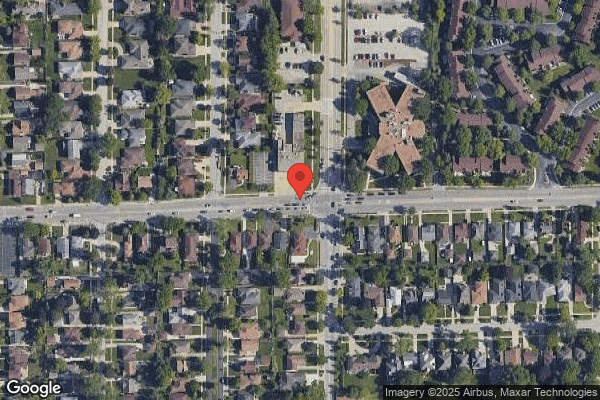
1001 NORTH GREENWOOD AVENUE, PARK RIDGE, IL 60068 (847) 692-5600
For profit - Limited Liability company 296 Beds PRIME HEALTHCARE Data: November 2025
Trust Grade
0/100
#625 of 665 in IL
Last Inspection: March 2025

Within standard 12-15 month inspection cycle. Federal law requires annual inspections.

Overview

Resurrection Place has received a Trust Grade of F, indicating significant concerns about the quality of care provided. Ranking #625 out of 665 facilities in Illinois places it in the bottom half, and it is #195 of 201 in Cook County, meaning there are very few local options that are worse. The facility trend is improving, with issues decreasing from 16 in 2024 to 12 in 2025, but it still has a long way to go. Staffing is a relative strength with a 0% turnover rate, which is much better than the state average, and they offer more RN coverage than 98% of Illinois facilities. However, there are serious concerns, including incidents where residents were not assisted properly during transfers, leading to falls and injuries, and a lack of protection against abuse from staff. Additionally, several residents experienced significant weight loss due to inadequate monitoring and assistance during meals, which raises further alarms about overall care quality.

Trust Score
F
0/100
In Illinois
#625/665
Bottom 7%
Safety Record
High Risk
Review needed
Inspections
Getting Better
16 → 12 violations
Staff Stability
○ Average
Turnover data not reported for this facility.
Penalties
✓ Good
$244,058 in fines. Lower than most Illinois facilities. Relatively clean record.
Skilled Nurses
✓ Good
Each resident gets 87 minutes of Registered Nurse (RN) attention daily — more than 97% of Illinois nursing homes. RNs are the most trained staff who catch health problems before they become serious.
Violations
⚠ Watch
52 deficiencies on record. Higher than average. Multiple issues found across inspections.
★☆☆☆☆
1.0
Overall Rating
★★☆☆☆
2.0
Staff Levels
★☆☆☆☆
1.0
Care Quality
★★☆☆☆
2.0
Inspection Score
Stable
2024: 16 issues
2025: 12 issues

The Good

  • Full Sprinkler Coverage · Fire safety systems throughout facility
  • No fines on record

Facility shows strength in fire safety.

The Bad

1-Star Overall Rating

Below Illinois average (2.5)

Significant quality concerns identified by CMS

Federal Fines: $244,058

Well above median ($33,413)

Significant penalties indicating serious issues

Chain: PRIME HEALTHCARE

Part of a multi-facility chain

Ask about local staffing decisions and management

The Ugly 52 deficiencies on record

10 actual harm
Jun 2025 1 deficiency
CONCERN (D) 📢 Someone Reported This

A family member, employee, or ombudsman was alarmed enough to file a formal complaint

Potential for Harm - no one hurt, but risky conditions existed

Report Alleged Abuse (Tag F0609)

Could have caused harm · This affected 1 resident

**NOTE- TERMS IN BRACKETS HAVE BEEN EDITED TO PROTECT CONFIDENTIALITY** Based on observation, interview, and record review the facility failed to implement its abuse prevention policy by failure to re...

Read full inspector narrative →
**NOTE- TERMS IN BRACKETS HAVE BEEN EDITED TO PROTECT CONFIDENTIALITY** Based on observation, interview, and record review the facility failed to implement its abuse prevention policy by failure to report injury of unknown origin. This deficiency affects one (R3) of three residents reviewed for abuse prevention policy. Findings include: On 6/18/25 at 4:15PM, R3 was assessed by V4 (Restorative Nurse) and V2 (Director of Nursing) and surveyor present. R3 was observed with discoloration to bilateral side of breasts. On 6/18/25 at 4:30PM, V2 (Director of Nursing) said staff is aware to report any injuries of unknown origin to Administrator to complete an investigation and report to IDPH in a timely manner. V2 said it was not reported to IDPH. On 6/18/25 at 4:30PM, V4 (Restorative Nurse) said any unknown injury is reported immediately for follow up. On 6/21/25 at 10:44AM, V1 said she did not send the initial report to IDPH in a timely manner for an unknown injury incident. V1 said staff is aware to report immediately to V1 for follow up and investigation. V1 said she did not think it was an abuse case, however per facility policy failed to follow protocol. R3 was admitted on [DATE] with diagnosis in part but limited to cerebral infarction, other coronavirus, anemia, type 2 diabetes mellitus, hyperlipidemia, heart failure, essential hypertension. Progress note dated 6/13/25 indicates observation of bruising. Initial report of incident dated 6/18/25 reported to IDPH. Abuse Investigation and Reporting Policy Revised 11/2023. Policy Statement: All reports of resident abuse, neglect, exploitation, misappropriation of resident property, mistreatment, electronic mail, social media, videotaping, photographing, and other imaging of residents, and/or injuries of unknown source (abuse) shall be promptly reported to local, state and federal agencies (as defined by current regulations) and thoroughly investigated by community management. Conclusions of investigations will also be reported, as defined by the Ascension Living Abuse Prevention policy. Reporting: A. All alleged violations involving abuse, neglect, exploitation, or mistreatment, including injuries of an unknown source and misappropriation of property will be reported to the Administrator or designee and to the following other officials or agencies: 1. The State licensing/certification agency responsible for surveying/licensing the community; 2. Other officials in accordance with State Law, including to Adult Protective Services where state law provides for jurisdiction in long term care facilities; 3. The Resident's Representative (Sponsor) of Record; 4. The resident's Attending Physician; and 5. The community Medical Director. B. Alleged violations involving abuse, neglect, exploitation or mistreatment (including injuries of unknown source and misappropriation of resident property) will be reported: 1. Abuse or Serious Bodily Harm - Immediately but not later than 2 hours. * If the alleged violation involves abuse or results in serious bodily injury. 2. No Serious Bodily Injury - As soon as practical, but not later than 24 hours*. If the alleged violation involves neglect, exploitation, mistreatment, or misappropriation of resident property; does not result in serious bodily injury.
Jun 2025 1 deficiency 1 Harm
SERIOUS (G) 📢 Someone Reported This

A family member, employee, or ombudsman was alarmed enough to file a formal complaint

Actual Harm - a resident was hurt due to facility failures

Accident Prevention (Tag F0689)

A resident was harmed · This affected 1 resident

**NOTE- TERMS IN BRACKETS HAVE BEEN EDITED TO PROTECT CONFIDENTIALITY** Based on interview, and record review the facility failed to ensure resident safety by failure to provide 2 persons assist when ...

Read full inspector narrative →
**NOTE- TERMS IN BRACKETS HAVE BEEN EDITED TO PROTECT CONFIDENTIALITY** Based on interview, and record review the facility failed to ensure resident safety by failure to provide 2 persons assist when transferring resident using a mechanical lift. This affected one resident (R1) of three residents reviewed for falls. This failure resulted in resident (R1) falling from mechanical lift and sustaining a left displaced femoral neck fracture. Findings include: R1 was admitted on [DATE] with diagnosis listed in part but not limited to Displaced fracture of base of neck of left femur, unspecified osteoarthritis, encounter for other specified surgical aftercare, hypothyroidism, hemiplegia, unspecified affecting left nondominant side, unspecified dementia, unspecified severity without behavioral disturbance, difficulty in walking, unspecified fall, subsequent encounter. Admission/Baseline care plan dated 2/14/23 indicated at risk for falls with interventions monitor residents' position when changing in bed, falling star program. ADL care plan dated 2/17/22 indicates requires assistance partial to substantial assist with Activities of Daily Living due to decreased strength and endurance, decrease balance, decrease mobility, unsteady gait, h/o Left sided weakness, CVA's, Dementia interventions include transfer with mechanical lift and 2 persons assist. admission functional mobility assessment dated [DATE] indicated that he needs Dependent assistance with chair/bed-to-chair transfer, sit to stand, toilet transfer. On 6/11/25 at 12:35 PM, R1 observed in dining room, in wheelchair, proper footwear in place, R1 said he does not recall what happened when he fell on 5/23/25. On 6/11/25 at 12:42PM, V8 (Certified Nurse Aide) said she was the certified nurse aide assigned to R1 and was transferring him to bed using the mechanical lift. V8 said she noticed that R1's left foot was not on the base of mechanical lift, and she bent over to place it on the base when R1 let go from the grab bar with his right hand and slid off to the floor. V8 said she assisted R1 back to the bed. V8 said she was the only certified nurse aide in the room with R1. V8 said she is aware that R1 is a two person assist and that when using any mechanical lift two-person assist is also required. V8 said that the other staff were busy and could not get any help. On 6/11/25 at 1:09PM, V9 (Registered Nurse) said he saw call light on and went to R1's room and saw R1 in bed already. V9 asked V8 if she needed any help because the call light was on and V8 said that R1 was a little restless and had assisted R1 to bed. V9 said he assessed R1, and no injuries noted. R1 denied any pain. V9 said V8 was the only certified nurse aide in the room. On 6/11/25 at 1:49PM, V10 (Restorative Nurse) said she is familiar with R1 and R1 is a two person assist with activities of daily living and transfers. When using any Mechanical lift machine for transfers staff should be a two person assist. V10 said it is the facility policy when using a mechanical lift that two-person assist is implemented. V10 said all staff gets training prior to working the floor with residents upon hire and agency staff is trained as well. On 6/11/25 at 3:07PM, V11 (Evening Registered Nurse Supervisor) said V9 had called him to assess R1 after R1 falling. V11 said, When I entered the room, R1 was already in bed and no injuries were observed. R1 denied pain. R1 is somewhat confused. V11 said V8 told him R1 had slid off the mechanical lift and had assisted him back to bed, V8 was the only one transferring R1. V11 said when transferring with a mechanical lift the staff are supposed to have a two person assist. On 6/11/25 at 3:15PM, V2 (Director of Nursing) said her expectations of staff are to follow the residents care plan for fall interventions. V2 said that when using a mechanical lift, the standard of care should be a two person assist. The staff is trained during orientation prior to start of working the floor. The interventions are in the resident's profile the CNAs and nurses can access them. They also have the Kardex at the nurse's station for the transfer status. On 6/11/25 at 3:20PM, V1 (Administrator) said her expectations when staff is using a mechanical lift should always be a two person assist per facility policy. V1 said she was unaware that only one certified nurse aide was transferring R1, V1 said she knew about the fall incident. R1's fall incident documented by V11 (Evening Registered Nurse Supervisor) on 5/23/25 at 9:30PM indicated: V8 (Agency Certified Nurse Aide) reported to the nurse that the resident was assisted to bed and at that time V8 instructed the resident to use the grab bar to help him ease himself down to the bed. V8 observed the residents' left foot was on the floor. V8 was unable to give support to put the resident back into bed. Assessment at the time of the fall indicated no injury. The staff monitored resident post-fall for any injuries. No signs of injury and no complaints of any pain until 5/24/25, when resident complained of pain to his left hip. X-ray to hip and pelvis showed a fracture to the left femoral neck. Resident was transferred to the hospital for further evaluation. His vital signs at the time of discharge were observed as follows: BP 160/78 mmHg, pulse 72 bpm, temp 97.5 F, RR 18 breaths/min, and O2 sat rate at 94% on room air. R1 fall incident initial report was sent to IDPH on 5/25/25 at 5:19PM. Final report was submitted to IDPH on 5/30/25 at 3:33PM indicated: On 5/23/2025 a CNA reported to the nurse that R1 was put to bed, and at that time the CNA instructed the resident to use the grab bar to help him ease himself down to the bed. The CNA observed R1's right hand had let go of the grab bar, which caused the resident to slide off of the bed. The CNA observed his left foot was on the floor. CNA was able to give support to put the resident back into bed. Assessment at the time of the fall indicated no injury. The staff monitored the resident post-fall for any signs of injuries. No signs of injury and no complaint of any pain until 05/24-/2025, when R1 complained of pain to his left hip. X-ray to hip and pelvis showed a fracture to the left femoral neck. R1 was transferred to the hospital for further evaluation. His vital signs at the time of discharge were as follows: BP 160/78 mmHG, pulse 72bpm, temperature 97.5F. respiratory rate 18 breaths/min, and oxygen saturation rate 94% on room air. R1's hospital emergency department records dated 5/25/25 to 5/30/25 discharge summary indicated: Left femoral neck fracture, surgical intervention on 5/27/25, no weight bearing to lower left extremity. Patient had called his wife and said that he was dropped into his bed and then after that was complaining of hip pain. Due to dementia, he is a poor historian. Per wife patient has been non ambulatory at the nursing home, they use a mechanical lift for mobility in and out of bed. Patient was discharged to nursing home facility on 5/30/25 for skilled therapy. Facility Policy on Mechanical Lifts revised 1/2024. Policy Statement- It is the policy of Ascension Living to use mechanical lift(s) according to current standards of practice and keeping with manufacturer's guidelines. B. The use of the mechanical equipment is considered either as a full body lift or sit to stand lift that aids the resident and associate in transfer and/or care procedures. G. Education shall be provided on the proper use of the assistive mechanical lifting equipment prior to the use. Facility Policy on Falls revised 1/2024. Purpose-To prevent and/or reduce the number of falls by providing an individualized, person-centered care approach with Communities managing fall risk through the process of assessment, planning, implementation, and evaluation (APIE). B. Residents who are at risk for falls will have an individualized care plan developed which identifies interventions to reduce fall risk. Facility Policy on Fall Prevention revised 7/2023. Policy Statement- The intent of this policy is to provide an environment that is free from accidents hazards, over which there is control, and provide supervision and intervention to residents to prevent avoidable accidents.
May 2025 1 deficiency
CONCERN (D) 📢 Someone Reported This

A family member, employee, or ombudsman was alarmed enough to file a formal complaint

Potential for Harm - no one hurt, but risky conditions existed

Accident Prevention (Tag F0689)

Could have caused harm · This affected 1 resident

**NOTE- TERMS IN BRACKETS HAVE BEEN EDITED TO PROTECT CONFIDENTIALITY** Based on interview and record review, the facility failed to provide adequate supervision on a resident who has significant risk...

Read full inspector narrative →
**NOTE- TERMS IN BRACKETS HAVE BEEN EDITED TO PROTECT CONFIDENTIALITY** Based on interview and record review, the facility failed to provide adequate supervision on a resident who has significant risk for falls for one of three residents (R3) reviewed for accidents. Findings include: During record review, R3's incident report dated 05/04/2025 with time of incident at 6:15PM indicated that a resident from another wing alerted V7 (Licensed Practical Nurse) that R3 was sitting on the floor. It indicated a CNA (Certified Nursing Assistant) was in the dining room with R3 sitting by the window and watching on her phone. V7 asked V15 (CNA) what happened when V15 started yelling and screaming at V7 for no reason. On 05/15/2025 at 1:12PM V2 (Director of Nursing) stated staff members should not be on their phones when they are on the unit and when supervising residents in the common area to ensure adequate supervision is provided to the residents. Review of R3's CNA Post Fall Report dated 05/04/2025 indicated R3 was last visually seen at 5:30PM, last toileted at 4:25PM, and given food and fluids at 5:30PM. Review of R3's Fall Risk assessment dated [DATE] indicated R3 had a total score of 43 which indicates significant risk for falls. Review of R3's Fall Care Plan with problem onset date of 05/29/2022 indicated R3 a had a recent fall due to decreased safety awareness most likely attributed to her dementia, impaired standing balance and activity tolerance resulting in unsteadiness, hx (history) of multiple falls, presents with co-morbidities to include DM (Diabetes Mellitus, TIA (Transient Ischemic Attack, dementia, hx of angioplasty with graft, anemia, usage of psychotropic med (medication), BP meds, hypoglycemic agent, (+) with impulsivity, gets up and walks abruptly without assistance, inconsistent with call lights, and approaches including to anticipate toileting needs and offer toileting after dinner, offer to toilet after dinner with date 09/07/2023, and offer to toilet after dinner with date 01/20/2023. Review of V8's Compliments, Suggestions, and Concerns Form dated 05/05/2025 written by V4 (Director of Social Services) indicated V8's concern on the care provided to R3 in the dining area on 05/04/2025. V15 was attending to her cellphone, and V15 was unaware of R3 sliding off the wheelchair. Review of facility's policy entitled Fall Prevention last revised 07/2023 indicated the following: Policy Statement: The intent of this policy is to provide an environment that is free from accident hazards, over which there is control, and provide supervision and intervention to residents to prevent avoidable accidents. I. Fall Risk Evaluation - Residents shall be evaluated by the licensed nurse during the admission process, routinely and as indicated; to identify potential risk for fall. If the resident scores a higher risk for falls, the resident shall be placed on the Falling Star Program. II. Fall Risk Intervention - The Interdisciplinary Team shall identify individualized interventions to reduce risk of falls. If a systematic evaluation of a resident's fall risk identifies several possible interventions, the associates may choose to prioritize interventions (i.e., to try one or a few at a time, rather than many at once).
Apr 2025 3 deficiencies 1 Harm
SERIOUS (G) 📢 Someone Reported This

A family member, employee, or ombudsman was alarmed enough to file a formal complaint

Actual Harm - a resident was hurt due to facility failures

Free from Abuse/Neglect (Tag F0600)

A resident was harmed · This affected 1 resident

Based on interview and record review, the facility failed to protect a resident from allegedly being roughly handled, threatened, punched, and intimidated by an agency staff person; failed to assess r...

Read full inspector narrative →
Based on interview and record review, the facility failed to protect a resident from allegedly being roughly handled, threatened, punched, and intimidated by an agency staff person; failed to assess resident of any injuries; and failed to train staff on screening, abuse prevention and investigation. This failure affected 1 (R1) of 3 residents reviewed for abuse from the sample of 3 and resulted in R1 abruptly ending her rehabilitation to discharge home due to the resident feeling unsafe and distressed for fear of agency staff's return. Findings include: R1 is an alert and cognitively intact resident with diagnoses listed in part with chronic kidney disease, spinal stenosis, hypertension and hyperlipidemia. On 4/4/25 at 11:25 AM, R1 stated upon interview, It was about 4 AM and I had to go to the bathroom, so I did it myself because it seemed there was no one around. No one was at the nursing station when I peeked outside my door plus the hallway was dark and a lot of the lights were turned off. I couldn't get my diaper back on so I put a clean diaper on the bed to lay it down. I went to sit on it but couldn't put it on. I put my call light on so I could get help and a woman (with a winter hat and coat on) came barging in without a word, and just takes my diaper that I was sitting on and angrily rips it into shreds and then walks out of the room and then came back in with another diaper. She pushed me and took her fist and punched me twice in my back. I told her to stop, and I tried to grab the rail because I almost fell. I screamed because I was afraid of what this person was going to do to me. She said to me scream all I want but that that nobody was around. I tried to get her name, but she would not tell me, and I said please don't do that again and she told me to turn around and kept punching me while she tried to get my diaper on me. I said stop punching me or I'm going to call somebody. She said go ahead nobody is here. I was scared to death, and I didn't yell again because I did not see anyone anyway and I was afraid if I did scream again, she may have punched me harder again or even pull out a knife. When this nurse V4 (RN) finally came in it was around 6 in the morning, I was crying, my back hurt where she punched me, and I told him what happened. He said he'd take care of it, and he called in another nurse V5 (LPN supervisor) because he was in charge of the building, and he said that the woman isn't coming back. I didn't understand what that meant and was frustrated that they weren't around all night and now they tell me that woman is gone now, so their words were not assuring to me. That was the reason I left because I was scared and didn't know if she would retaliate against me for telling on her. A written statement by R1 provided to V1 (Administrator) dated 3/7/25 at 3:45 AM, reads in part, I got myself up and went to the bathroom and had bowel movement and took off my pull-ups as it was soiled and I cleaned myself up and came out and got a new diaper to put on, but I could not, so I laid it on the bed and sat on it. I pressed call button at 4:15 (AM) and a woman came in with her winter coat on and was yawning and I told her about my diaper and told me to sit on it again. She started pulling and ripped it to shreds. She left and came back with another one and said turn over and she put her fist and pushed me so hard I said stop you're going to push me on the floor. Then she turned me to the other side and pushed me again and I said stop and take blanket off me and then she left. I asked her name 3 times, and she would not tell me. So, 10 minutes later I put call button and said I want someone else here. She says no and I said I want to tell them you're about to push me off the bed. She says you're still on the bed, I said, oh you're now getting smart with me and she leaves and on her way out she says Do not put call button on, so I did anyway because I thought maybe someone else was on duty but she did not come back for 1/2 hours . On 4/4/25 at 11:00 AM, V10 (family member) stated that she never received a call pertaining to the incident involving the CNA V8 but rather was only informed to come in to the facility to sign papers about her mom receiving continued therapy and to obtain payer information. V10 stated when she came in to the facility around 1:30 PM on 3/7/25 her mom started crying to her and informed her that some staff person pushed her while in bed, punched her in the back, and then threatened her to not use the call light. V10 said she immediately went to tell the nurse to call the police and that was when V1 administrator came in to talk to her about the incident. V10 said she was upset that no one told her about what had happened to her mother until she came in to visit and that V1 appeared very nonchalant and indicated she would handle the situation after she had her lunch. V10 said, My mom said she wanted to go home because she didn't feel safe and that no one was around all night to protect her, so I took her home. On 4/4/25 at 12:30 PM, V4 (RN) stated upon telephone interview, What happened was I was drawing blood for the whole house when I received (R1) she was in her chair next to her bed. She looked very distraught and was crying. It was about 5 or 6 in the morning because I was drawing every body's blood and I started around that time. The resident was trying to explain to me what happened, and she looked very guarded, almost as if she was in shock. She explained that V8 CNA on duty told her she should not ring the bell until the end of her shift or until she left. The resident is very alert, so she came across very credible, so I let the charge nurse V5 know when I saw him walk by and told him that we have a situation here and told him to come into the room. I told him because he was the supervisor at night. I have never seen this agency CNA before as there's been so much Agency staff lately. (R1) identified the CNA and I saw her just sitting by the couch near the nurses station. She had her stuff with her already like bags, notebooks and she had her winter coat on. We actually asked her to leave about 20 minutes to 7 AM after we called the administrator. Initially (V1-Administrator) didn't pick up but then she eventually called the facility back and said to write a statement later and so I did that and left. Surveyor asked if V4 did anything else with the resident to determine if she had any visible injuries or felt safe. V4 said, I don't recall and I'm not familiar with the policy in that facility because I'm mostly PRN (as needed) and I don't get involved in the whole thing like this. Surveyor asked if V4 called the police. V4 said, No I didn't call the police because I'm not familiar with their policies here. I just called the nurse in charge, and he called the administrator. Surveyor asked if V4 assessed the resident for any injuries. V4 stated, I don't know, everything went so fast, and I probably should have but no I didn't. A written statement signed by V4 dated 3/7/25 reads, This morning when arrived to (R1) room, I noticed she (R1) was in tears and when I asked her why, she stated that she was scared. I asked her why she was scared. She (R1) responded that the CNA threatened her to not pull the call light. She also mentioned that she almost fell because the CNA was pushing her. She described what the CNA looked like, and it matched what she described. Supervisor (V5) informed and reassured her the event will be handled. Kept her safe. Signed by V4. (Absent from this statement is any physical assessment of any injuries or psychosocial assessment of the resident's well-being) There was no written statement taken by V1 (Administrator and abuse prohibition coordinator) for V5 (LPN night supervisor) who was directly involved during R1's initial reporting of allegation of abuse. Surveyor however was able to interview V5. On 4/4/25 at 12:40 PM, telephone interview with V5 (LPN night supervisor) said, There was an incident where an agency CNA was assisting a patient (R1). The nurse on duty (V4) called my attention to R1's room about a concern that the patient was scared about an Agency CNA. R1 described the CNA as African American, tall, wearing coat. I asked V4 what happened, and he described what the patient told him. What I can get from the nurse was that when the patient was being changed, she had a feeling she was going to fall from the bed during a diaper change. I guess she was being pushed too far at end of the bed and she was scared of the CNA and while being changed was pushed or hit by the CNA. When this all happened, I guess I was basically on 2nd floor doing rounds. I've been here since 2005 and this is the first time this has ever happened. The patient is very alert and is not confused at all. She was here for rehab. When I saw R1, she appeared very frightened and shaken up by the whole thing I could tell. Surveyor asked V5 if there was any assessment conducted. V5 said, No I don't recall doing that. We got so busy getting information from her and we called the administrator and left a message for her and by the time she called back, it was may have been about a quarter to 7 and the CNA (V8) was going home soon anyway but yes, I should have made sure V4 assessed her to see she was uninjured. Surveyor clarified if there was any nursing assessment conducted as V1's abuse incident report indicated that there was one done. V5 stated, No I don't recall that. Surveyor asked if the physician or family was notified of the incident. V5 said, No I didn't call the family or doctor, we just called the administrator. I'm just supposed to call the administrator and I haven't encountered this situation before, so I didn't know what to do. On 4/4/25 at 10:40 AM, V9 (Human resource director) said, I don't handle agency staff paper work or trainings, just our own. We don't screen agency staff; they do the screening for us. Surveyor asked if agency staff screenings were reviewed by her, V9 said, No I don't review any of their staff that they send, I didn't know I had to. Surveyor requested to have V8's hire records and trainings provided to her by her agency, but no records were provided during the investigation. V8 (agency CNA) could not be reached for interview during this investigation after several attempts were made. V12 (NP) and V13 (Doctor) could not be reached for interviews during this investigation after several attempts were made. Facility interdisciplinary notes showed no assessments were conducted on R1 to determine any injuries after alleged incident and no efforts were made or documented to reach family, physician or medical director. Policy dated 9/27/24 titled Abuse Investigation and Reporting reads in part, All reports of resident abuse, neglect, mistreatment shall be promptly reported to local, state and federal agencies and thoroughly investigated. Conclusions of investigations will also be reported, as defined by the facility policy. The individual conducting the investigation will, at a minimum: Review the completed documentation forms; Review the resident's medical record to determine events leading up to the incident; Interview the person (s) reporting the incident; Interview any witnesses to the incident; Interview the resident (as medically appropriate); Interview the resident's attending physician as needed to determine the resident's current level of cognitive function and medical condition; Interview associates members (on all shifts) who have had contact with the resident during the period of the alleged incident; Interview other residents to whom the accused employee provides care or services; Review events leading up to the alleged incident. Witness reports will be obtained in writing, either the witness will write his/her statement and sign and date it, or the investigator may obtain a statement, read it back to the member and have him/her sign and date it. Examine the alleged victim for any sign of injury, including physical examination and/or psychosocial assessment, if needed.
CONCERN (D) 📢 Someone Reported This

A family member, employee, or ombudsman was alarmed enough to file a formal complaint

Potential for Harm - no one hurt, but risky conditions existed

Report Alleged Abuse (Tag F0609)

Could have caused harm · This affected 1 resident

Based on interview and record review, the facility failed to thoroughly investigate and interview staff; failed to interview potential residents that may have been affected by the alleged abuser in th...

Read full inspector narrative →
Based on interview and record review, the facility failed to thoroughly investigate and interview staff; failed to interview potential residents that may have been affected by the alleged abuser in the investigation; and failed to assess resident for any obvious injuries after the alleged abuse for 1 (R1) of 3 residents reviewed for abuse in the sample of 3. Findings include: R1 is an alert and cognitively intact resident with diagnoses listed in part with chronic kidney disease, spinal stenosis, hypertension and hyperlipidemia. An initial and final report dated 3/7/25 written by V1 (administrator/abuse prohibition coordinator) reads in part, Allegation of abuse and internal investigation: At 6:00 AM when the night nurse went into the resident's room, she informed the nurse she was upset because she felt the CNA assigned to her was inappropriate with her verbally and treated her roughly when helping her to turn in bed during incontinence care. When she put her call light on at around 4:00 AM, the CNA entered the room and said, What do you want? Then, while providing incontinence care, the resident felt the CNA was pushing her over too hard and this made her concerned she was going to roll off the bed onto the floor when she was turned. After the incontinence care, the CNA then told the resident to not press the call light again and left the room. The resident asked the CNA three times if she could have her name, but the CNA refused to answer that question. This was the only time she interacted with the CNA. Immediately after the resident reported the incident to the nurse, the nurse notified the Executive director (V1) The executive director directed the nurse to have the CNA leave the facility immediately. A Body check was done, and there was no redness or bruising noted. The resident's physician was notified. The resident is alert and oriented and declined the executive director notifying her family, because she stated she wanted to inform them herself. A comprehensive internal review, including resident reviews, yielded no evidence of abuse. The local police were notified of the allegation and came to the facility at approximately 3:30 PM to interview the executive director, the resident and her daughter who was present during their visit to the facility. Surveyor's interviews of staff and nursing records provided are not consistent with V1's initial and final report of abuse allegation: On 4/4/25 at 1:40 PM, V1 (Administrator and abuse prohibition coordinator) stated, I didn't interview or get statements from V5 night supervisor, but I did speak to both (V5) and (V4) the nurse on duty because they both called me together on the phone, but I guess I should have gotten a statement/interview from V5 himself. I didn't interview any other staff because they were on different assignments but you're correct, I could have done that to see if they heard anything. Surveyor asked if she tried to interview V8 who was involved in the incident, V1 stated, No I did not interview the agency CNA. On 4/4/25 at 11:15, V7 (Staffing Agency manager) said, I was only reported by the facility to not send (V8) to go back to the same place is what I do. We DNR (Do Not Return) the staff person and report that there was an allegation of abuse and ensure to block them from picking up at any of V1's other facilities. We did not interview the CNA in question, we just remove them from picking up shifts. We do not investigate situations like this nor report it to the CNA registry. We leave that to the facility reporting the allegation. On 4/4/25 at 11:25 AM, V3 (Facility staffing scheduler) provided surveyor with list of residents on each unit where V8 worked the night of the incident and on previous shifts and units that V8 had worked on. A review of the V1's internal investigation showed 5 other residents interviewed but were not within the same unit as R1 where V8 had worked. There were no other staff members interviewed who were working during V8's shift. On 4/4/25 at 11:55 AM, V2 (DON Director of Nursing) said, I am the interim DON and have been here since last December and what should happen is usually, I would be informed of incidents like this and especially pertaining to allegations of abuse. However, I was not, and I should have been. I had no involvement in the investigation whatsoever, but yes these nurses do fall under my direction, and I should be kept informed however unfortunately I was not. A written statement signed by V4 (RN nurse on duty) dated 3/7/25 reads, This morning when arrived to (R1) room, I noticed she was in tears and when I asked her why she stated that she was scared. I asked her why she was scared. She responded that the CNA threatened her to not pull the call light. She also mentioned that she almost fell because the CNA was pushing her. She described what the CNA looked like, and it matched what she described. Supervisor (V5) informed and reassured her the event will be handled. Kept her safe. Signed by V4. (Absent from this statement is any physical assessment of any injuries or psychosocial assessment of the resident's well-being) Facility interdisciplinary notes provided to surveyor during this investigation showed no assessments were conducted on R1 to determine any injuries after alleged incident and no efforts were made or documented to reach family, physician or medical director. V8 (agency CNA) could not be reached for interview during this investigation after several attempts were made. V12 (NP) and V13 (Doctor) could not be reached for interviews during this investigation after several attempts were made. Policy dated 9/27/24 titled Abuse Investigation and Reporting reads in part, All reports of resident abuse, neglect, mistreatment shall be promptly reported to local, state and federal agencies and thoroughly investigated. Conclusions of investigations will also be reported, as defined by the facility policy. The individual conducting the investigation will, at a minimum: Review the completed documentation forms; Review the resident's medical record to determine events leading up to the incident; Interview the person (s) reporting the incident; Interview any witnesses to the incident; Interview the resident (as medically appropriate); Interview the resident's attending physician as needed to determine the resident's current level of cognitive function and medical condition; Interview associates members (on all shifts) who have had contact with the resident during the period of the alleged incident; Interview other residents to whom the accused employee provides care or services; Review events leading up to the alleged incident. Witness reports will be obtained in writing, either the witness will write his/her statement and sign and date it, or the investigator may obtain a statement, read it back to the member and have him/her sign and date it. Examine the alleged victim for any sign of injury, including physical examination and/or psychosocial assessment, if needed.
CONCERN (D) 📢 Someone Reported This

A family member, employee, or ombudsman was alarmed enough to file a formal complaint

Potential for Harm - no one hurt, but risky conditions existed

Investigate Abuse (Tag F0610)

Could have caused harm · This affected 1 resident

Based on interview and record review, the facility failed to thoroughly investigate and interview staff; failed to interview potential residents that may have been affected by the alleged abuser in th...

Read full inspector narrative →
Based on interview and record review, the facility failed to thoroughly investigate and interview staff; failed to interview potential residents that may have been affected by the alleged abuser in the investigation; and failed to assess resident for any obvious injuries after the alleged abuse for 1 (R1) of 3 residents reviewed for abuse in the sample of 3. Findings include: R1 is an alert and cognitively intact resident with diagnoses listed in part with chronic kidney disease, spinal stenosis, hypertension and hyperlipidemia. An initial and final report dated 3/7/25 written by V1 (administrator/abuse prohibition coordinator) reads in part, Allegation of abuse and internal investigation: At 6:00 AM when the night nurse went into the resident's room, she informed the nurse she was upset because she felt the CNA assigned to her was inappropriate with her verbally, and treated her roughly when helping her to turn in bed during incontinence care. When she put her call light on at around 4:00 AM, the CNA entered the room and said What do you want? Then, while providing incontinence care, the resident felt the CNA was pushing her over too hard and this made her concerned she was going to roll off the bed onto the floor when she was turned. After the incontinence care, the CNA then told the resident to not press the call light again, and left the room. The resident asked the CNA three times if she could have her name, but the CNA refused to answer that question. This was the only time she had interaction with the CNA. Immediately after the resident reported the incident to the nurse, the nurse notified the Executive director (V1) The executive director directed the nurse to have the CNA leave the facility immediately. A Body check was done, and there was no redness or bruising noted. The resident's physician was notified. The resident is alert and oriented and declined the executive director notifying her family, because she stated she wanted to inform them herself. A comprehensive internal review, including resident reviews, yielded no evidence of abuse. The local police were notified of the allegation, and came to the facility at approximately 3:30 PM to interview the executive director, the resident and her daughter who was present during their visit to the facility. Surveyor's interviews of staff and and nursing records provided are not consistent with V1's initial and final report of abuse allegation: On 4/4/25 at 1:40 PM , V1 (administrator and abuse prohibition coordinator) stated, I didn't interview or get statements from V5 night supervisor but I did speak to both (V5) and (V4) the nurse on duty because they both called me together on the phone, but I guess I should have gotten a statement/interview from V5 himself. I didn't interview any other staff because they were on different assignments but you're correct, I could have done that to see if they heard anything. Surveyor asked if she tried to interview V8 who was involved in the incident, V1 stated, No I did not interview the agency CNA. On 4/4/25 at 11:15, V7 (Staffing Agency manager) said, I was only reported by the facility to not send (V8) to go back to the same place is what I do. We DNR (Do Not Return) the staff person and report that there was an allegation of abuse and ensure to block them from picking up at any of V1's other facilities. We did not interview the CNA in question, we just remove them from picking up shifts. We do not investigate situations like this nor report it to the CNA registry. We leave that to the facility reporting the allegation. On 4/4/25 at 11:25 AM, V3 (facility staffing scheduler) provided surveyor with list of residents on each unit where V8 worked the night of the incident and on previous shifts and units that V8 had worked on. A review of the V1's internal investigation showed 5 other residents interviewed but were not within the same unit as R1 where V8 had worked. There were no other staff members interviewed who were working during V8's shift. On 4/4/25 at 11:55 AM,.V2 (DON Director of Nursing) said, I am the interim DON and have been here since last December and what should happen is usually I would be informed of incidents like this and especially pertaining to allegations of abuse, however I was not and I should have been. I had no involvement in the investigation whatsoever, but yes these nurses do fall under my direction and I should be kept informed however unfortunately I was not. A written statement signed by V4 (RN nurse on duty) dated 3/7/25 reads, This morning when arrived to (R1) room, I noticed she was in tears and when I asked her why she stated that she was scared. I asked her why was she scared. She responded that the CNA threatened her to not pull the call light. She also mentioned that she almost fell because the CNA was pushing her. She described what the CNA looked like and it matched what she described. Supervisor (V5) informed and reassured her the event will be handled. Kept her safe. Signed by V4. (Absent from this statement is any physical assessment of any injuries or psychosocial assessment of the resident's well-being) Facility interdisciplinary notes provided to surveyor during this investigation showed no assessments were conducted on R1 to determine any injuries after alleged incident and no efforts were made or documented to reach family, physician or medical director. V8 (agency CNA) could not be reached for interview during this investigation after several attempts were made. V12 (NP) and V13 (doctor) could not be reached for interviews during this investigation after several attempts were made. Policy dated 9/27/24 titled Abuse Investigation and Reporting reads in part, All reports of resident abuse, neglect, mistreatment shall be promptly reported to local, state and federal agencies and thoroughly investigated. Conclusions of investigations will also be reported, as defined by the facility policy. The individual conducting the investigation will, at a minimum: Review the completed documentation forms; Review the resident's medical record to determine events leading up to the incident; Interview the person (s) reporting the incident; Interview any witnesses to the incident; Interview the resident (as medically appropriate); Interview the resident's attending physician as needed to determine the resident's current level of cognitive function and medical condition; Interview associates members (on all shifts) who have had contact with the resident during the period of the alleged incident; Interview other residents to whom the accused employee provides care or services; Review events leading up to the alleged incident. Witness reports will be obtained in writing, either the witness will write his/her statement and sign and date it, or the investigator may obtain a statement, read it back to the member and have him/her sign and date it. Examine the alleged victim for any sign of injury, including physical examination and/or psychosocial assessment, if needed.
Mar 2025 6 deficiencies 1 Harm
SERIOUS (G)

Actual Harm - a resident was hurt due to facility failures

Deficiency F0692 (Tag F0692)

A resident was harmed · This affected 1 resident

**NOTE- TERMS IN BRACKETS HAVE BEEN EDITED TO PROTECT CONFIDENTIALITY** Based on observation, interviews, and a review of records, the facility failed to follow its weight monitoring policy to prevent...

Read full inspector narrative →
**NOTE- TERMS IN BRACKETS HAVE BEEN EDITED TO PROTECT CONFIDENTIALITY** Based on observation, interviews, and a review of records, the facility failed to follow its weight monitoring policy to prevent or reduce the risk of residents experiencing unplanned significant weight loss. This failure affected three of ten residents (R17, R28, and R61) who were reviewed for weight monitoring and weight loss as part of a sample of 40 residents. As a result, R17 experienced an unplanned weight loss of 6.15% over a 30-day period, R28 experienced a 15.3% weight loss over six months, and R61 experienced an 11.2% weight loss during a six-month period. Findings include: 1) On 3/11/25 at 10:15 AM, R17 was observed to be on a pureed diet with nectar thick liquids. R17 was observed attempting to self-feed breakfast. R17 was observed to have only consumed 20% of breakfast. Staff were not observed assisting R17 with meal or encouraging R17 to eat. On 3/12/25 12:27 PM, Staff were not observed assisting R17 with meal or encouraging R17 to eat. On 3/12/25 at 10:45 AM, V8 RD (registered dietitian) reviewed R17's documented weights. R17 had an 8.8-pound weight loss in one month. V8 stated residents on a pureed diet should be eating in the dining room so staff can monitor them. V8 stated there is no re-weight documented. V8 stated that residents with a weight change of 5 pounds or more in one month should be re-weighed to verify the accuracy of the weight. V8 stated R17 will be re-weighed today. V8 stated V8 was not made aware of R17's weight loss. On 3/12/25 at 11:30 AM, V8 RD stated that V8 spoke with R17 and discussed food preferences. V8 stated V8 also spoke with staff to ensure R17 is in dining room for all meals so R17 can be monitored for amount eaten. As of 3/12/25 at 4:00 PM, R17 had not been re-weighed. R17's medical record notes on 3/6/25, R17's weight was 134.2 pounds. On 2/5/25, R17's weight was 143 pounds. R17 had a 6.15% weight loss in one month. There is no documentation found in R17's medical record noting R17's physician was notified of R17's weight loss. This facility's weight monitoring policy, revised 01/2023, notes residents with a weight change of five pounds or greater shall be re-weighed to determine an accurate weight. The registered dietitian should make recommendations for nutritional interventions. A nursing or nutrition associate should notify the health care provider of any significant weight change. This facility's weighing and measuring the resident policy, revised 09/2022, notes report significant weight loss to the nurse supervisor. The threshold for significant unplanned and undesired weight loss will be based on 1 month - 5% weight loss is significant; greater than 5% is severe. 2) R61 was admitted to the facility on [DATE] with a diagnosis of muscle weakness, transient cerebral accident, dementia, hypertension, type II diabetes and heart disease. R61's weight documented on hospital transfer form dated 2/27/25 documents 59 kilograms which equals 124 pounds upon readmission. On 3/14/25 at 11:34Am, V21 (certified nursing aide, CNA) assisted R61 in her wheelchair that measured 38.8 pounds to the wheelchair scale. Scale was balanced to zero prior to weight taken and measured at 151.2 pounds. R61 weight was 112.4 pounds. R61's physician order dated 2/27/25 documents to weigh daily x3 days and weigh weekly x 4 weeks. Review of R61's medical record does not document any weights for R61. V19 (nursing supervisor) on 3/13/24 said there were no other weights recorded for R61 except for a written weight taken on 3/12/25 that documented 110 pounds that was just documented into the electronic record. R61's facility weight documents weight in October: 131. Pounds and November 124.4 pounds. There were no other weights presented for R61 for this survey. On 3/13/25 at 3;38PM, V8 (dietician) said she was made aware of R61 change in appetite on 3/5/24. There were no weights documented since November 2024. R61 had a significant weight loss of 11.2 % based on weights documented. V8 said weekly weights help to ensure weight is remaining stable, to monitor if any additional weight loss and if interventions are effective. R61's nutrition risk assessment dated [DATE] documents under type of assessment: significant change. Under anthropometric data documents: height 60 inches, current weight 110 pounds, usually body weight 124 pounds, body mass index (BMI) 21.5 which indicates underweight. Under comments: Resident had significant weight loss over the past 6 months 11.2%. R61 plan of care dated 3/4/25 documents poor PO intake with the following interventions: monitor weekly and monthly weights; monitor and record meal intakes, obtain food preferences, instruct family about dietary modifications for resident; praise resident attempts to follow diet, feed resident slowly. Weight Monitoring Policy dated 12/2016 documents: appropriate nutritional care shall be provided to resident who have a significate weight change. Each resident should be weighed daily for the first three days of admission, weekly for the first four week and monthly thereafter. Weighing and measuring the resident dated 12/2016 documents: The threshold for significant unplanned and undesired weight loss/gain will be based on the following criteria. 1 month -5% weight loss is significantly greater than 5% is severe ;3 months -7.5% weight loss is significantly greater than 7.5% is severe;6 months 10% weight loss is significantly greater than 10% is severe. 3) R28 was diagnosis with malignant neoplasm of endometrium. R28's care plan dated 1/11/25 documents: R28 has compromised nutritional status related to the diagnosis of sepsis, malignant neoplasm of endometrium, type one diabetes, hyperlipidemia and major depression; (2/27/25) significate weight change. Dietician note dated 2/27/25 documents: unintentional weight loss related to variable by mouth intakes as evidenced by resident with 17.3% weight loss times six months. Dietician note dated 11/29/24 documents: Unintentional weight loss related to variable by mouth intake as evidence by resident (R28) with 23 pound (lbs.) 15% weight loss in three months and 15lbs (10.3%) weight loss in one month. R28's significant weight change notification dated 11/29/24 documents: R28 had a significant weight loss of 15.3 % in three months. Plan of care: One carton of nutritional supplement once a day. Dietary recommendation/communication form dated 11/29/24 documents: reason for recommendation: significant weight loss. On 3/12/25 at 3:41PM, R28 who was alert and orient to person, place, said she was a picky eater. R28 said, she eats very little. On 3/13/25 at 12:36PM, R28 did not eat lunch. R28's family was at the bedside. R28's family put R28's uneaten tray on the dirty cart. R28's family said he brought food from home. V25 (CNA) said R28's family brings in food every day and feeds R28. On 3/13/25 at 2:48pm, V25 (CNA) said R28 only likes Polish food. R28 does not drink a nutritional supplement every day. On 3/13/25 at 4:02pm, V8 (dietitian) said, R28 had a 15.5% significant weight loss in six months. On 3/13/25 at 5:00pm, V3 (unit manager) said R28's nutritional supplement should be signed out on the medication administration record (MAR). V3 said R28's dietitian recommendation was not on the MAR. R28's family does not come every day to feed R28. On 3/14/25 at 10:17am, V2 (DON) said R28's recommendation for a nutritional supplement once daily was not implemented on 11/29/24 and it is not on the current MAR. V2 said the nutritional supplement should have been placed on the medication administration record. It was recommended to promote weight gain. On 3/14/25 at 11:34am, V20 (restorative nurse) said R28's nutritional supplement was added today. On 3/14/25 at 11:39am, V28 (nurse practitioner) said she was aware R28 was losing weight. R28 does not like the facility food. R28 has a history of malignant neoplasm of endometrium. R28 had surgery a few years ago and everything was removed. A nutritional supplement is a high calorie protein supplement that will aid in weight gain. V28 said she expected the dietitian recommendations to be implemented. R28's weight report documents: 3/13/25 - 122.2 pounds 2/5/25 - 124.8 pounds 1/8/25 - 126.8 pounds 11/7/24- 130.0 pounds 10/9/24- 145.0 pounds Weight Monitoring Policy dated 12/2016 documents: appropriate nutritional care shall be provided to resident who have a significate weight change. Weighing and measuring the resident dated 12/2016 documents: The threshold for significant unplanned and undesired weight loss/gain will be based on the following criteria. 1 month -5% weight loss is significantly greater than 5% is severe. 3 months -7.5% weight loss is significantly greater than 7.5% is severe. 6 months 10% weight loss is significantly greater than 10% is severe.
CONCERN (D)

Potential for Harm - no one hurt, but risky conditions existed

Resident Rights (Tag F0550)

Could have caused harm · This affected 1 resident

Based on observations, interviews, and record reviews, the facility failed to ensure residents were able to communicate with staff with their preferred language and failed to maintain privacy and dign...

Read full inspector narrative →
Based on observations, interviews, and record reviews, the facility failed to ensure residents were able to communicate with staff with their preferred language and failed to maintain privacy and dignity for residents with a gastrostomy tube and indwelling catheter. This affected three residents (R5, R33, and R55) reviewed for residents rights, privacy and dignity in the sample of 40 residents. Findings include: On 3/11/25 at 10:00 AM, R33 was observed with an indwelling catheter bag secured to bed frame, but not in a privacy bag. On 3/11/25 at 10:30 AM, R5 was observed with an indwelling catheter bag dangling on the left side of R5's bed without a privacy bag. On 3/11/25 at 1:05 PM, this surveyor noted R55 is Bulgarian speaking only. This surveyor communicated with R55 via an interpreter on speaker phone in the presence of V3 (nursing supervisor) and V6 SSD (social services director). R55 stated that since R55's admission to this facility, this is the first time an interpreter has been used to speak with R55. R55 stated that R55 can't get out of bed, can't walk, R55 feels like a living cadaver waiting to go to the other side. This facility's translation and/or interpretation of community services policy, revised 12/2017, notes information will be provided in a language understandable to the resident. Competent oral translation of information that is not available in written translation shall be provided in a timely manner through a telephone interpretation service or contracted interpreter service. Associates shall be educated on process to provide language access services to limited English proficiency residents. This facility's resident rights policy, revised 07/2018, notes our ministry will make every effort to assist the resident in exercising his/her rights and to assure that the resident is always treated with respect, kindness, and dignity.
CONCERN (D) 📢 Someone Reported This

A family member, employee, or ombudsman was alarmed enough to file a formal complaint

Potential for Harm - no one hurt, but risky conditions existed

Report Alleged Abuse (Tag F0609)

Could have caused harm · This affected 1 resident

**NOTE- TERMS IN BRACKETS HAVE BEEN EDITED TO PROTECT CONFIDENTIALITY** Based on interview and record review, the facility failed to follow their Abuse Investigation and Reporting policy. Facility fai...

Read full inspector narrative →
**NOTE- TERMS IN BRACKETS HAVE BEEN EDITED TO PROTECT CONFIDENTIALITY** Based on interview and record review, the facility failed to follow their Abuse Investigation and Reporting policy. Facility failed to submit initial report timely to IDPH (Illinois Department of Public Health) of an allegation of abuse. This deficient practice affects two residents (R51 and R327) of three residents reviewed for Abuse investigation and reporting in a total sample of 40 residents. Findings include: R51 was admitted to the facility on [DATE] with a diagnosis pneumonia, acute respiratory failure, chronic obstructive pulmonary disease and anemia. On 3/12/25 at 10:15 AM, R51 who was alert and oriented at time of interview said there was an incident on the second floor with another resident (R62). R51 said R62 hit him in his foot and knocked coffee out of his hand, spilling it on himself. R51 said he called the police and filed a report. R51's progress notes document 2/26/25: On 2/25/25 around 9:50PM, police showed up informing writer that R51 called them to report that he was assaulted by another resident on second floor around 6:30PM, his right leg was kicked and slapped his hand. No injuries observed. On 3/13/25 at 1:27PM, V2(Director of nursing, DON) said she was not aware of the incident between residents until the following day. V2 said she is not the abuse coordinator, but the incident should have been reported to Illinois department of public health (IDPH) and was not reported. On 3/14/25 at 11:56AM, V1 (Administrator) said she was unable to recall when she made aware of the allegation and referred to the nursing documentation. V1 said if a resident called the police to report assault we would report the allegation to the state. V1 said the allegation was not fully communicated to her and was not reported to the state due to V1 not being aware there was an allegation of assault. Facility reported incident for abuse allegation by R327 and with date of occurrence of 3/7/25 at 6:00AM. Facility provided fax report confirmation that Initial and Final report was submitted on 3/10/25 at 11:02AM. Facility unable to provide any other confirmation report that an initial report was sent to IDPH. On 3/12/25 at 1:15PM, V1 (Administrator) stated the initial and the final was reported the same day on March 10. V1 stated she did not report it right away because V1 was still conducting the investigation. V1 stated that V1 was busy investigating, calling the police and forgot to report the initial on that day (3/7/25). V1 stated, If it says in our policy to report abuse within 2 hours then it should have been reported within our facility policy timeframe. However, we followed our policy and investigated the allegation. Alleged staff was escorted out the facility by a nurse and reported to Agency Company for this staff to return in the facility. Abuse Investigating and Reporting with a revised date of 11/23, reads in part: All reports of resident abuse, neglect, exploitation, misappropriation of resident property, mistreatment, electronic mail, social media, videotaping, photographing, and other imaging od residents, and/or injuries of unknown source (Abuse) shall be promptly reported to local. Stated and federal agencies (As defined by current regulation) and thoroughly investigated by the community management. Conclusions of investigation will also be reported, as defined by the ascension living Abuse Prevention policy. All alleged violations involving abuse, neglect, exploitation, or mistreatment, including injuries of an unknown source and misappropriation of property will be reported to the Administrator or designees and to the following other officials or agencies: The state licensing/certification agency responsible for surveying/licensing the community. Other officials in accordance with State Law, including to Adult Protective Services where state law provides for jurisdiction in long term care facilities. The resident's representative of record. The residents Attending Physician and the community medical director. Alleged violations involving abuse, neglect, exploitation or mistreatment (including injuries of unknown source and misappropriation of resident property) will be reported: Abuse or serious bodily harm-immediately but not later than 2 hours. If the alleges violation involved abuse or results in serious bodily injury. No serious bodily injury -as soon as practical, nut not later than 24 hours. If the alleged violation involves neglect, exploitation, mistreatment, or misappropriation of resident property; does not result in serious bodily injury. Verbal/written notices to agencies may be submitted via special carrier, fax, email, or by telephone. The Administration or his/her designee, will provide the appropriate agencies or individuals listed above with a written report of the findings of the investigation within (5) working days of the occurrence of the incident.
CONCERN (D)

Potential for Harm - no one hurt, but risky conditions existed

Deficiency F0697 (Tag F0697)

Could have caused harm · This affected 1 resident

Based on observations, interviews, and record reviews, the facility failed to accurately assess one resident's (R55) pain, implement interventions, and monitor for the effectiveness of the interventio...

Read full inspector narrative →
Based on observations, interviews, and record reviews, the facility failed to accurately assess one resident's (R55) pain, implement interventions, and monitor for the effectiveness of the interventions out of 3 residents reviewed for pain management in a sample of 29. Findings include: On 3/11/25 at 1:05 PM, this surveyor noted R55 is Bulgarian speaking only. This surveyor communicated with R55 via an interpreter on speaker phone in the presence of V3 (nursing supervisor) and V6 SSD (social services director). R55 stated that R55 receives medications but does not know what they are for. R55 stated nearly every day R55 has a headache in the morning. R55 stated today R55 has a migraine. R55 stated when R55 has a headache at night, R55 has difficulty sleeping and tosses and turns all night. R55 stated R55 points to head when in pain. R55 stated R55 does not know if the nurse is administering any pain medication to R55. R55 stated since R55's admission to this facility, this is the first time that an interpreter has been used to speak with R55. R55 stated R55 can't get out of bed, can't walk, R55 feels like a living cadaver waiting to go to the other side. On 3/11/25 at 1:15 PM, V3 (nursing supervisor) stated V3 will inform R55's nurse of R55's migraine. This facility's medication administration policy, revised 01/2025, notes in part, the facility staff will review the current/active medication list with the resident.
CONCERN (D)

Potential for Harm - no one hurt, but risky conditions existed

Infection Control (Tag F0880)

Could have caused harm · This affected 1 resident

Based on observations, interviews, and record reviews, the facility failed to follow its infection control policy for enhanced barrier precautions and don the appropriate PPE (personal protective equi...

Read full inspector narrative →
Based on observations, interviews, and record reviews, the facility failed to follow its infection control policy for enhanced barrier precautions and don the appropriate PPE (personal protective equipment) prior to providing direct resident care. This failure affected two residents (R33 and R39) out of three residents reviewed for infection control in a sample of 40. Findings include: On 3/11/25 at 10:00 AM, during initial tour, enhanced barrier precaution signage was observed at R33 and R39's rooms. On 3/11/25 at 11:05 AM, V10 (Registered Nurse) was observed providing gastrostomy tube care for R33. V10 was not wearing appropriate PPE (personal protective equipment); V10 did not don a gown. On 3/11/25 11:30 AM, V11 CNA (Certified Nurse Aide) was observed removing a package of wipes from another resident's room and bringing into this R39's room to provide incontinence care. V10 assisted R39 with dressing and transferring R39 to wheelchair. V11 was observed not donning appropriate PPE prior to entering R39's room; V11 did not don a gown. On 3/12/25 at 2:00 PM, V15 IP Nurse (Infection Prevention Nurse) stated enhanced barrier precautions are implemented for residents with wounds, gastrostomy tubes, devices, and indwelling catheters. V15 stated staff are expected to wear gown and gloves when providing direct patient care for residents on enhanced barrier precautions. On 3/12/25 at 3:00 PM, V10 RN (Registered Nurse) stated if the resident is on enhanced barrier precautions, the staff need to don gloves prior to providing care. V10 stated if the staff member thinks there will be spillage, then he/she should wear a gown also. The enhanced barrier precautions signage posted outside R33 and R39's rooms notes all healthcare personnel must wear gloves and gown for the following high-contact resident care activities: dressing, bathing/showering, transferring, providing hygiene, changing briefs or assisting with toileting, device care or use (intravenous line, urinary catheter, ostomy, feeding tube (gastrostomy), and tracheostomy), and wound care.
CONCERN (E)

Potential for Harm - no one hurt, but risky conditions existed

Respiratory Care (Tag F0695)

Could have caused harm · This affected multiple residents

Based on observation, interview and record review, the facility failed to follow their Oxygen Administration and CPAP (Continuous Positive Airway Pressure) and BiPAP (Bilevel Positive Airway Pressure)...

Read full inspector narrative →
Based on observation, interview and record review, the facility failed to follow their Oxygen Administration and CPAP (Continuous Positive Airway Pressure) and BiPAP (Bilevel Positive Airway Pressure) support policy. The facility failed to ensure that humidifier bottle is with label and dated, failed to follow physician's order for oxygen administration and failed to obtain physician orders for the CPAP. This deficient practice affects four residents (R39, R66, R108 and R111) of four residents reviewed for respiratory care in a total sample of 40. Findings Include: On 3/11/25 at 10:00 AM, R39 was observed to have oxygen 2 liters via nasal cannula. There was no signage on R39's door noting oxygen in use. On 3/11/25 at 10:55 AM, oxygen in use signage was placed on R39's door. R39's physician order sheet reviewed and noted oxygen order at 2L/min via nasal cannula dated 2/13/25. On 3/11/25 at 10:00AM, observed R111's oxygen concentrator machine with humidifier bottle with no label and date written on it. No oxygen in use signage. CPAP machine on top of the bedside cabinet. Per R111, she's been in the facility for 3 weeks, she has been using it every night, and placed it on herself. She's been using CPAP machine at home also for 15 years now. Confirmed and verified with V3 (Nurse) that there is no date and signage, and CPAP machine is on the bedside cabinet at 10:25AM. R111's physician order sheet reviewed and noted an order for oxygen at 2L/min per NC (Nasal Cannula) dated 2/16/25. No orders for CPAP machine set up and flow. On 3/11/25 at 10:20AM, observed R66's room. R66 in bed with oxygen on at the rate of 4L oxygen via nasal cannula. Humidifier not dated. Confirmed and verified with V3 that there is no label and date in the humidifier bottle, and that R66 is receiving 4L/min per NC at t 10:28AM. V3 also confirmed the order for R66's oxygen order as 2-3L/min continuous. R66's physician order sheet reviewed and noted an order for oxygen at 2-3L/min via NC dated 2/28/24. On 3/11/25 at 11:15AM observed R108 in bed, and on 3L/min oxygen via NC. Humidifier not dated and at 11:22AM confirmed and verified with V3 that there is no label and date in the humidifier bottle and R108 is on oxygen via NC. R108's physician order sheet reviewed and noted that there is no order for oxygen administration for R108. On 3/13/25 at 10:45AM. V2 (DON) stated that oxygen in use signage need to be displayed by the resident's door if a resident is on oxygen and even PRN (as needed) oxygen orders needs to signage by the door because they can use oxygen at any time. Humidifier needs to be dated, so we know when to change it. We need to have physician's order for oxygen administration and to follow the order; And CPAP machine with setting. CPAP/BIPAP support policy with a revised date of 9/2019, reads in part: To provide spontaneous breathing resident with continuous positive airway pressure with or without supplemental oxygen. To improve arterial oxygenation (Pa02) in residents with respiratory insufficiency obstructive sleep apnea or restrictive/obstructive lung disease. To promote resident comfort and safety. Under preparation: A qualified and properly trained nurse or respiratory therapist should administered oxygen through a CPAP mask Review the physician's order to determine the oxygen concentration and flow, and the PEEP pressure (CPAP, IPAP and EPAP) for the machine. Under Procedure: Set mode, CPAP, IPAP and EPAP settings on the machine as prescribed. Oxygen Administration policy with a revised date of 10/2018, reads in part: The purpose of this procedure is to provide guidelines for safe oxygen administration. Verify that there is a physician's order for this procedure. Review the physician's orders or community protocol for oxygen administration. No Smoking/Oxygen in Use signs, as required by state and federal requirements. Place an Oxygen in Use sign on the outside of the room entrance door, per state and federal requirements. Label and date the humidifier bottle and oxygen tubing.
Dec 2024 1 deficiency 1 Harm
SERIOUS (G) 📢 Someone Reported This

A family member, employee, or ombudsman was alarmed enough to file a formal complaint

Actual Harm - a resident was hurt due to facility failures

Accident Prevention (Tag F0689)

A resident was harmed · This affected 1 resident

**NOTE- TERMS IN BRACKETS HAVE BEEN EDITED TO PROTECT CONFIDENTIALITY** Based on interview and record review, facility staff V3 (Certified nursing assistant, CNA) failed to report a fall to the nurse ...

Read full inspector narrative →
**NOTE- TERMS IN BRACKETS HAVE BEEN EDITED TO PROTECT CONFIDENTIALITY** Based on interview and record review, facility staff V3 (Certified nursing assistant, CNA) failed to report a fall to the nurse for one resident (R2). This failure resulted in R2 being transferred back into bed with no nurse assessment for over 10 hours. R2 was transferred to the hospital for a left ear laceration requiring eleven sutures and broken ribs for one of three residents reviewed for falls. Findings include: R2 was admitted to the facility on [DATE] with a diagnosis of Covid 19, urinary tract infection, Parkinson's and overactive bladder. R2 Minimum Data Set, dated [DATE] documents R2 required substantial/maximal assistance (helper does more than half the effort) with sit to stand, chair to bed transfer, and toilet transfers. R2's fall risk assessment dated [DATE] documents: R2 is moderate risk for falls. On 12/26/24 at 3:37PM, V21(former unit manager) said R2 was alert and oriented with periods of confusion. V21 said she went to R2's room around 4:00pm per family's request and daughter showed her R2's ear which had a cut. V21 said she asked R2 what happened and R2 reported the same story 3 different times, that she fell in the middle of night around 1-2 AM. R2 said she was trying to get water and fell. R2 said she hit her head hard on something but unsure what. R2 said a male staff member picked her up and put her back in bed. R2 reported that same male staff told her she did not need a nurse. On 12/26/24 4:26PM, V2 (Director of nursing, DON) said family wanted to speak to V2 about a cut on R2's ear around 4:00PM on 12/11/24. R2 reported she was thirsty and wanted water that was on the bedside table around 1-2AM. R2 said she spilled the water, got up from bed and fell. R2 was unsure what she hit her head on, but R2 said a male staff picked her up and put her back to bed. R2 did not report fall to anyone. R2 may have been fearful. V2 said they found a towel on the floor in the bathroom with dried blood. V2 said staff must have used the towel because R2 needs assistance to get to bathroom and would not be able to get towel herself. V2 is unsure why no other staff observed the towel. V2 said staff should stay with a resident if they fall and get the nurse to assess the resident before moving the resident. On 12/26/24 at 5:02PM, V1 (Administrator) said through his investigation it was determined V3 did not follow facility protocol by not reporting a fall or change in condition to the nurse. V1 said V3's interview did not add up based on other interviews conducted and injuries observed. V1 said staff did not feel like R2 could get up unassisted and if a resident is found on the floor, staff should stay with resident and call for nurse. R2's hospital record dated 12/11/24 at 5:30PM: Under Emergency department physician note: R2 alert and oriented x3. R2 who presents with laceration on the back of the left ear. R2 reports that she fell last night around 2AM when she was attempting to pick up a fallen tray. She slipped and fell, an event that went unnoticed by staff. R2 denied any neck or back pain but reports pain in left clavicle, shoulder, and forearm, under physical exam. Ear left with transverse laceration through the superior third auricle through the lateral edge there is exposed cartilage but its intact. Lateral edge of wound is macerated. Laceration repair: length 6 centimeter (CM), depth 8 Millimeters (MM). eleven sutures placed. Under chest x-ray documents: possible six and seven posterior rib fractures. Correlate with point of tenderness. V3's employee file record documents: V3 terminated due to violation of code of conducts. Facility fall policy revised 7/23 documents if a resident sustains a fall or is found on the floor without a witness to the event, associates shall evaluate for possible injuries and provide first aide treatment as indicated. A licensed nurse shall observe clinical status for 72 hours after an observed or suspected fall and document findings in clinical record.
Sept 2024 1 deficiency
CONCERN (D) 📢 Someone Reported This

A family member, employee, or ombudsman was alarmed enough to file a formal complaint

Potential for Harm - no one hurt, but risky conditions existed

Investigate Abuse (Tag F0610)

Could have caused harm · This affected 1 resident

**NOTE- TERMS IN BRACKETS HAVE BEEN EDITED TO PROTECT CONFIDENTIALITY** Based on interview and record review the facility failed to complete a thorough investigation of a resident's bruise of unknown ...

Read full inspector narrative →
**NOTE- TERMS IN BRACKETS HAVE BEEN EDITED TO PROTECT CONFIDENTIALITY** Based on interview and record review the facility failed to complete a thorough investigation of a resident's bruise of unknown origin and failed to notify the family member of the investigation outcome. These failures apply to one resident (R1) reviewed for injury of unknown origin in the sample of three. Findings include: R1 is a [AGE] year-old male originally admitted on [DATE] with medical diagnoses that include and are not limited to, chronic obstructive pulmonary disease, anemia, and atrial fibrillation. According to Minimum Data Set (MDS) dated : 6-27-2024 reads; BIMS (Brief Interview for Mental Status) result of 3/15 indicating a severe cognitive impaired. Section GG reads: maximal assistant of staff for all activities of daily leaving. On 9-7-2024 at 9:20 am R2 (Quality Nursing Director), Presented a reportable incident and said, I was not involved in the investigation. The one that completed the investigation was V1 (Administrator). According to the facility-reported incident dated: 8-5-2024 at 5:00pm reads: R1's family member reported skin alterations to R1's left inner ear and left cheekbone. On 9-7-2024 at 8:00am V12 (R1's Family Member) said, R1 is almost [AGE] year-old, on 8-5-2024 R1 had some bruises to his left ear and left eye after a staff person roughly handled him. V12 said, We called the police, and we had a police report and we told (V1) administrator. V1 told us an investigation would be done but never told us what the investigation findings were, we still waiting. On 9-7-2024 at 12:48 V2 said, I do not see any statements from any nurses or certified nurse assistants in the reportable folder. The facility policy indicates that we need to interview all staff members in contact with R1 on the day of the incident and the shifts prior (72 hours), but we failed to do it, and the investigation was not done according to our policy. On 9-7-2024 at 9:00 pm, V8 (Licensed Practical Nurse) said, I worked on 8-4-2024 during 11-7 shift no one talked/interviewed me on how the shift was. I was never asked to write any statements in regard to R1's bruises. On 9-8-2024 at 12:20 pm (Certified Nurse Assistant) said, I worked on 8-5-2024 on 7-3 and 3-11 with R1, I never talked to the administrator or the director of nursing about R1's bruises, I was never asked/ interviewed. I do not know who they are. On 9-8-2024 at 1:30 pm V14 (Registered Nurse) said, I worked on 8-4-2024 and 8-5-2024 during 11-7 shifts. I was the nurse for R1. No one reported to me any bruises. No one from the facility administration talked to/asked me about R1's bruises, and no one called me from administration. 9-8-2024 at 1:05 pm V13 (Director of Nursing) said V1 (Administrator) is responsible for completing the investigation. V13 said, I did not participate in the investigation. I expect for us to follow the abuse policy. We need to interview the staff members who worked with residents for the last 72 hours and make sure no other resident is affected. We are responsible for informing the family member of the results of the investigation. I did not talk to the family after the investigation was completed. On 9-7-2024 at 11:55 am V1 (Administrator) said, I expect that the staff reports immediately if they see any skin discoloration. I am not sure why they did not report R1's bruises to the left ear and the left eye. Part of the investigation is we need to interview staff members who took care of R1 for 72 hours before the incident. I do not have any documentation that interviews were done. I do not know if R1's family members were contacted to let them know the results of the investigation. I cannot determine the reason of the bruise, but it was unsubstantiated. V1 presented a policy titled: Abuse Investigation and Reporting dated: 11-2023, which reads in part: all reports of resident injuries of unknown source shall be thoroughly investigated. The Administrator or designee will keep the resident and his/her representative informed of the progress of the investigation. The investigator interview associates members (on all shifts) who have had contact with the resident during the period of the alleged incident. Witness reports will be obtained in writing. Either the witness will write his/her statement and sign and date it, or the investigator may obtain a statement, read it back to the member and have him/her sign and date it. The resident and/or representative will be notified of the outcome immediately upon the conclusion of the investigation.
Jun 2024 1 deficiency 1 Harm
SERIOUS (G) 📢 Someone Reported This

A family member, employee, or ombudsman was alarmed enough to file a formal complaint

Actual Harm - a resident was hurt due to facility failures

Accident Prevention (Tag F0689)

A resident was harmed · This affected 1 resident

**NOTE- TERMS IN BRACKETS HAVE BEEN EDITED TO PROTECT CONFIDENTIALITY** Based on interview and record review, the facility failed to adequately supervise one (R2) resident at risk for falls, a total a...

Read full inspector narrative →
**NOTE- TERMS IN BRACKETS HAVE BEEN EDITED TO PROTECT CONFIDENTIALITY** Based on interview and record review, the facility failed to adequately supervise one (R2) resident at risk for falls, a total assist resident and dependent on staff supervision/assistance with all ADL's (Activities of Daily Living); failed to provide assistive device of foot rests on a geriatric wheelchair to prevent sliding/falling; and failed to maintain functionality of bed in order to lower close to the ground. This failure affected one resident (R2) of 9 residents reviewed for accidents/hazards/supervision and resulted in R2 being transferred to the emergency department after a fall from a geriatric wheelchair and diagnosed with a right tibial fracture; and transferred again 11 days later to the emergency department after another fall from a malfunctioning bed. Findings include: R2 is a [AGE] year-old-male with diagnoses including but not limited to hemiplegia, diabetes, neoplasm of prostate, and epilepsy. On 6/11/24 at 10:30 AM, V2 (director of nursing) stated that on 5/23/24 at 2:00 PM, R2 was in the dining area attending an activity program when R2 slid down from his high-back geriatric chair and bent/twisted his right leg in the process. According to interview on 6/11/24 at 10:50 AM with V3 (activity aide), V3 did not see R2 slide down because V25 (CNA) in charge of monitoring R2, left the dining area at the time of the incident. V3 called for help and two CNAs (V4, V6) came to lift the resident back up from the geriatric chair. Per V4 (CNA) and V6 (CNA) R2 was supposed to have leg rests on his wheelchair which would have prevented the resident from sliding down, however there were no leg rests that were attached as they should have been. The nurse on duty at the time (V8-RN), assessed R2 but did not report the incident of a fall because at the time, V8 did not consider the incident a fall. The following day, V7 (CNA) reported to the nurse on duty that R2 had pain and swelling on the right knee so the resident was sent to the emergency department for evaluation where he was diagnosed with the tibial fracture. On 6/5/24, R2 was found on the floor beside his bed at 4:50 AM but was last observed in bed at 2:50 AM sleeping. On 6/12/24 at 11:50 AM, V2 (director of nursing) stated, (R2)'s second fall on 6/5/24 happened on the night shift when the nurse (V29) found him on the floor on kneeling position. According to the 3-11 shift CNA (V30), around 4:15 PM, V30 noticed the remote was not working on the bed so V30 could not lower the bed to the lowest position. V30 told the nurse (V29) but didn't do anything about it. The next day V29 was no call-no show and quit. Regarding the bed functioning properly, V2 stated, We're supposed to keep his (R2) bed in the lowest position to keep him safe and (V29) knew that. She (V29) should've informed someone that the bed was not working because otherwise (R2) may not have fallen from the bed. Interviews of staff are as follows: On 6/11/24 at 10:30 AM, V2 (director of nursing) stated, (R2) was in the dining room attending an activity when one of the residents alerted the activity aide (V3) that the resident was on the bottom of the reclining chair. He (R2) slid there but it is still considered a fall. On 5/23/24 at 2:00 PM was when the activity was going on. V8 (RN) was the nurse but did not report this as a fall because she thought because the resident did not hit the ground that it wasn't a fall. I in serviced her (V8) about falls after this. So, the 3-11 shift nurse was not aware of any bruising that day until the night shift CNA (V7) reported to the nurse the next morning that she saw swelling on the resident. The resident's (R2) leg was under his right leg, and it got bent or caught somewhere. If there was a foot rest that could have prevented him from sliding down. On 6/11/24 at 10:50 AM, V3 (activity aide) stated, (R2) is one of our residents that goes to activities, and he does not walk and only uses his left hand. He is on a recliner chair. He comes to activities by a CNA bringing him to the activity room. He is very friendly to staff and does not have any behaviors. He is slightly confused. He's Spanish speaking only. So, when he fell, I was doing activities and one of the residents called out to me and said that (R2) is sitting near the foot of his recliner chair and his right foot was angled like a figure four and it was under his left knee. The CNA that was supposed to be monitoring the residents left the room when R2 fell, and she was supposed to stay there or get someone else to watch if she had to leave. Surveyor asked how many residents were attending the activity at the time, V3 stated, It was around 25 residents. On 6/11/24 at 11:45 AM, V4 (CNA) stated, I came to the dining room where they were having activities and V6 (CNA) called me over to help get a resident back up from his recliner. She (V6) told me the patient (R2) was near the ground, so I helped boost him back up. His leg was twisted under his other leg and looked like it got caught under the chair and he didn't have a leg protector or leg rest on him form keeping him from sliding which he should have had. We told the nurse what happened, and she came and assessed the resident (R2). On 6/11/24 at 11:50 AM, V6 (CNA) stated, I was not (R2)'s aide that day, I was just the one helping (V4-CNA) pull the resident up. His leg was bent because he slid down to the bottom of this recliner chair. He didn't have a foot rest, so he slid down and he got his leg caught from under the chair. Surveyor asked V6 to accompany surveyor to R2's room to look at the chair used. V6 pointed to the recliner which appeared more like a high back wheelchair. V6 pointed to the foot rest now resting on top of the chair. V6 stated, That was not on the chair at the time we scooted him up from the bottom of the chair and it should have been put there otherwise he wouldn't have slid down and bent his leg. On 6/12/24 at 10:55 AM, V8 (RN) stated, (R2) was sitting in the dining room around after 1:00 PM but I was on my break when the activity aide (V4) came and told me that the resident slid down on his knees to the reclining chair with his right knee bent backward. I assessed the patient and checked for pain, redness or edema. (R2) nodded he was in pain, so I gave Tylenol. We took him with mechanical lift to bed, but I didn't notify anyone that it was a fall, but I know now it was because the DON (V2) told me. Later on, the morning time the night shift found edema on the resident so they called the doctor and so they sent the patient out to the hospital, and they found the right leg or ankle was fractured. He came back. he was non weight bearing. He was total assist, but he was a low fall risk. Surveyor asked what fall preventative measures were taken to keep R2 safe, V8 stated, We do the rounds, and we keep him in bed at the lowest position and checking on the patients' needs. He's incontinent and knows how to pull the call light. He's nonverbal and alert and oriented times two. (R2) came back from the hospital after 4 or 5 days in the hospital then he fell from the bed because the bed could not be lowered, I guess due to mechanical failure I was told. On 6/12/24 at 12:05 PM, V25 (CNA) stated, He's (R2) very quiet patient and he is a 2-person assist with a mechanical lift. He needs help with feeding and incontinence, and right sided paralysis. We get him up every day on recliner chair. I put him in the dining room, but he was not a fall risk. I was supposed to be in dining room watching the residents, but I had to help another CNA, so I left, but I should have asked somebody to come to sit and watch. Hospital record dated 5/24/24 12:53 PM, written by emergency room doctor (V26) reads in part, (R2) is a [AGE] year old male who is being seen for right leg pain. Per nurse, he is confused at baseline. He is Spanish speaking. He lives at nursing home and was brought here for evaluation of his right leg. It is currently in a post mold. Indication: trauma (fracture). Findings: Comminuted fractures of the proximal tibia and fibula are identified. Hospital record for the second fall and emergency room visit dated 6/5/24 reads in part, Patient is a [AGE] year old male presenting to the emergency department from a musing home after being found down. Per EMS patient is currently at his baseline. Patient mumbles, does not answer questions, does not follow commands. No acute intracranial process or significant interval change when compared to prior CT head dated 5/24/24 (previous admission). Stable subdural hematomas bilaterally, right greater than left. Policy revised on 7/2023 titled Fall Prevention reads in part, The intent of this policy is to provide an environment that is free form accident hazards, over which there is control, and provide supervision and intervention to residents to prevent avoidable accidents. Residents shall be evaluated by a licensed nurse during the admission process, routinely and as indicated to identify potential risk of fall. The interdisciplinary team shall identify individualized interventions to reduce the risk of falls.
May 2024 8 deficiencies 1 Harm
SERIOUS (G)

Actual Harm - a resident was hurt due to facility failures

Accident Prevention (Tag F0689)

A resident was harmed · This affected 1 resident

**NOTE- TERMS IN BRACKETS HAVE BEEN EDITED TO PROTECT CONFIDENTIALITY** Based on interview and record review, the facility failed to adequately supervise one (R73) resident who has a history of falls ...

Read full inspector narrative →
**NOTE- TERMS IN BRACKETS HAVE BEEN EDITED TO PROTECT CONFIDENTIALITY** Based on interview and record review, the facility failed to adequately supervise one (R73) resident who has a history of falls and required staff supervision/assistance with all Activities of Daily Living (ADLs). This failure affected one resident (R73) of seven residents reviewed for accidents and resulted in R73 being diagnosed with a displaced nasal bone fracture. Findings include: R73 is a [AGE] year-old- female who was admitted to the facility on [DATE]. Past medical history includes, but not limited to, progressive supranuclear, dystonia, hyperlipidemia, unsteadiness on feet, need for assistance with personal care, anxiety, essential primary hypertension, etc. R73 has had three falls since January 2024. On 1/16/2024, R73 had an unwitnessed fall while at the nursing station. On 2/16/2024, R73 was found face down while at the nursing station and sustained some injuries on both knees, fall was unwitnessed. On 3/10/2024, R73 was found on the floor in activities room, was sent to the hospital and was treated for a minimally displaced nasal bone fracture. On 4/29/2024, R73 was observed in her room, awake and alert, but unable to answer any questions. Bilateral floor mats noted in the room. Oxygen concentrator noted at bedside but not connected toR73. No broader chair or Geri-chair noted in the room. On 4/30/2024 at 9:50AM, R73 was observed again in bed on a concave mattrass. R73 was lying on her back with floor mats on the floor. There was no wheelchair, broader chair or Geri chair noted inR73's room. Fall care plan dated 3/26/2023 stated R73 is at risk for fall related to decreased safety awareness. Interventions include closely monitor when in room, offer her to sit in recliner after lunch (6/24/2023), try to keep near nurses' station and keep her involved in things she likes. Minimum data set assessment (MDS) section GG (functional status) indicated R73 requires partial/moderate assistance to substantial/ maximal assistance from staff for all ADL needs. MDS section C: 2/6/2024 BIMS - 10 indicating cognitive impairment. Facility reported incident dated 3/15/2024 documented R73 was found on the floor on 3/10/2024 at 2PM. Upon head-to-toe assessment, R73 was having nose bleeding, first aid was provided, andR73 was sent to the emergency room and returned to the facility with a diagnosis of nose fracture, facility started an investigation. CT facial bones without contrast from the hospital dated 3/10/2024 showed a minimally displaced nasal bone fracture. Review of all staff statements indicated that no one witnessed the fall except the activity aide. On 05/01/24 at 11:25 AM, surveyor observed R73 in bed with the assigned nurse and V12 (R73's POA) at the bedside. V12 stated, she is usually at the facility every day and has a lot of issues with the care the R73 is receiving. V12 (POA) said, R73 had so many falls because the facility always put her in the activities room or the nursing station. V12 said, R73 likes to stay in her room and watch TV, but facility stated they do not have enough staff to watch her, and they do not provide 1:1 supervision. V12 said, she has consistently asked the facility to put R73 in a broader chair when she is out of bed instead of a regular wheelchair. The facility provided a broader chair for a while, and it disappeared. V12 said, the last fall R73 had with a nose fracture happened because the staff in activities room did not want to watch R73 and told the nurse to take R73 with her. V12 said the facility stated R73 jumped out of her wheelchair but R73 has unsteady feet and weakness in her lower extremity and there is no way she can jump out of her chair. On 05/01/24 at 2:33 PM, V2 (DON) said she is familiar with R73. R73 is unsteady, a high fall risk and requires 24 hours seven days a week 1:1 supervision. V2 said, one of the interventions the facility has in place for R73 is for her to be monitored closely. R73 is always at the nursing station or activities, but for some reason, R73 always falls when the staff is not looking. V2 said The staff can turn around and the next thing, R73 is on the floor. V2 added, R73 is not able to jump out of her wheelchair but tries to slide out of her chair. On 5/2/2024 at 10:13AM, V19 (C.N.A) said that she is familiar with R73, she is calm and sometimes tries to crawl out of bed. V19 said R73 is a fall risk and requires constant supervision. V19 stated R73 had three different fall incidents on 3/10/2024. The first time she slid out of her wheelchair to the floor while in the hallway. The second time, an activity staff saw R73 slid out of her wheelchair to the floor while at the nursing station and the third time R73 was found in the floor face down in the dining room. V19 added R73 was in a regular wheelchair for all the three incidents. On 05/02/24 at 10:26AM, V16 (Activity aide) said, she was in the activity room on 3/10/2024 when R73 fell and sustained an injury. V16 was watching R73 in activity and told the nurse that V16 could not watch R73. V16 said the nurse was leaving the room, R73 followed the nurse in her wheelchair and before V16 could reach R73, she fell face down from her wheelchair. V16 added, there were 20 to 25 residents in the activities room, and V16 cannot watch all of them. Fall policy provided by V2 (DON) with a revision date of 01/2026 states in its policy statement that the purpose of this procedure is to provide guidelines for evaluation of a resident in the event a fall occurred and to assist associates in identification of potential causes of the fall. Under policy details, the document states in part that the fall risk assessment form (or similar fall risk evaluation) should be utilized to complete the evaluation of the resident's potential for falls during the admission process. A licensed nurse shall observe clinical status for 72 hours after an observed or suspected fall, and document findings in the resident's clinical record. The falls should be reviewed at the daily stand- up meeting following the fall for identification of additional individualized interventions to reduce the risk of falls.
CONCERN (D)

Potential for Harm - no one hurt, but risky conditions existed

Report Alleged Abuse (Tag F0609)

Could have caused harm · This affected 1 resident

**NOTE- TERMS IN BRACKETS HAVE BEEN EDITED TO PROTECT CONFIDENTIALITY** Based on interview and record review, the facility failed to report an allegation of abuse in accordance with facility policy an...

Read full inspector narrative →
**NOTE- TERMS IN BRACKETS HAVE BEEN EDITED TO PROTECT CONFIDENTIALITY** Based on interview and record review, the facility failed to report an allegation of abuse in accordance with facility policy and procedure. The facility staff failed to report an allegation of abuse made by one resident (R52) to the abuse coordinator. Findings Include: R52 is a [AGE] year old female who resides in the facility with multiple diagnoses including but not limited to the following: disorder with mixed anxiety and depressed mood and dementia. Progress note dated 3/2/24 written by V17 (Registered Nurse) states in part but not limited to the following: R52 is alert and verbally responsive. R52 is complaining of the evening certified nursing assistant (CNA) removing her clothes, grabbing her, and walking with her. Informed to V1 (Administrator). Total body assessment done. No injuries noted. New order for urinalysis with culture sensitivity. On 4/29/24 at 3:35PM, V2 (Director of Nursing) said, there are no Facility Reported Incidents of abuse for R52 over the last three months. Facility Reported Incidents were reviewed dated October 2023-4/29/24. It is to be noted that no facility reported incidents for R52 were identified at this time. On 4/30/24 at 9:35AM, V1 told this surveyor that at no point was he made aware by V17 that R52 had alleged abuse on 3/2/24 and this is the first he is hearing about this incident. It is to be noted that V1 provided this surveyor with a facility reported incident dated 4/29/24 with an alleged abuse date of 3/2/24. Facility policy titled Abuse Investigation and Reporting with last revision dated of 07/2022 states in part but not limited to the following: All reports of resident abuse shall be promptly reported to local, state, and federal agencies and thoroughly investigated by community management. Facility policy titled Abuse Prevention with revision date of 06/2020 states in part but not limited to the following: Associates or person affiliated with this community who has witnessed or who believes that a resident has been a victim of mistreatment, abuse, neglect, or any other criminal offense shall immediately report suspected abuse or incidents of abuse to the Administrator or designee.
CONCERN (D)

Potential for Harm - no one hurt, but risky conditions existed

Investigate Abuse (Tag F0610)

Could have caused harm · This affected 1 resident

**NOTE- TERMS IN BRACKETS HAVE BEEN EDITED TO PROTECT CONFIDENTIALITY** Based on interview and record review, the facility failed to follow their abuse policy by failing to immediately suspend a staff...

Read full inspector narrative →
**NOTE- TERMS IN BRACKETS HAVE BEEN EDITED TO PROTECT CONFIDENTIALITY** Based on interview and record review, the facility failed to follow their abuse policy by failing to immediately suspend a staff accused of physical abuse to a resident pending investigation. This failure affected one (R85) of two residents, who were reviewed for staff to resident abuse. Findings include: R85 is [AGE] years old male admitted to the facility on 10/20/ 2023 with the diagnosis of right femur fracture, ribs fractures, T5-T6, T7-T8 vertebra fracture, Scapula and right shoulder fracture, Respiratory failure and history of Traumatic brain injury. Facility Reported Incident documents on 04/27/2024 around 11:40 am, V27 Resident Representative of R85 notified the nurse on duty that R85 informed them that one of the therapists hit R85 on their head while providing care on 04/22/2024. On 05/01/2024 at 9:55 AM R85 said, V14 (Physical Therapy Assistant) hit me on the back of the head. R85 said, I don't remember who I reported the incident to. On Saturday 04/27/2024, (V27) came to visit me and I reported the incident to her, and she reported to the facility. On 05/01/24 at 1:18 PM V14 (Physical Therapy Assistant) was interviewed regarding the 04/27/24 abuse allegation. V14 said, I was notified of the abuse allegation on 04/27/2024 afternoon. On 04/22/24, R85 was independently using therapy equipment in the gym and was listening to the television loudly. I was working in the gym with another patient 1-2 yards away from R85 and I asked him to lower the TV. I came to the building to meet with V2 (Director of Nursing) and provide my interview on 4/28/24 at 9:00AM. The next day 04/29/2024 I (V14) worked from 7:30 AM and left at 2:30 PM. On 05/01/2024 at 3:00PM V2 Director of Nursing said, I received a phone call at 12:00 PM on 04/27/2024 regarding the abuse allegation and immediately called V1 Administrator and notified him. I spoke with the nurse and gave directions to conduct a physical assessment for R85. I called V14 and I met her in front of the building on 04/28/2024 at 9:00AM. I interviewed V14 and received a written statement regarding the allegation. After the interview I sent V14 home and told her she was suspended until the end of the investigation. On 04/30/2024 At 02:58 PM V18 (Director of the Rehabilitation) provided the Facility In-Out (time sheet) for V14. V14 worked 04/29/2024 from 07:29 AM - 02:47 PM. V1 presented Policy Titled: Abuse Investigation and Reporting, dated 07/2024, reads: D. The Administrator or designee will suspend immediately any employee who has been accused. of resident abuse, pending the outcome of the investigation.
CONCERN (D)

Potential for Harm - no one hurt, but risky conditions existed

Deficiency F0688 (Tag F0688)

Could have caused harm · This affected 1 resident

**NOTE- TERMS IN BRACKETS HAVE BEEN EDITED TO PROTECT CONFIDENTIALITY** Based on observation, interview, and record review, the facility failed to provide two residents (R22, R77) who were assessed wi...

Read full inspector narrative →
**NOTE- TERMS IN BRACKETS HAVE BEEN EDITED TO PROTECT CONFIDENTIALITY** Based on observation, interview, and record review, the facility failed to provide two residents (R22, R77) who were assessed with limited range of motion with restorative nursing services. This failure has the potential to affect all residents within the facility who are not receiving skilled therapy services. Findings Include: 1. R22 is a [AGE] year old male who resides in the facility with multiple diagnoses including but not limited to the following: anxiety depression, HTN, seizure disorder. On 4/29/24 at 11:15AM, R22 was interviewed regarding restorative therapy. R22 said, I barely ever get out of bed anymore and never receive any restorative therapy. My left leg is contracted and I never get any range of motion to this leg. I have never received any restorative therapy at all much less regarding my contractures. I would love to get out of bed more often but when I do get out of bed and into my chair, I have to sit there for upwards of eight hours. There is not enough staff to put me back to bed at a reasonable time and I have to sit in my chair for upwards of eight hours. This causes me to be extremely uncomfortable and causes me to have a lot of pain. 2. R77 is an [AGE] year old male who resides in the facility with multiple diagnoses including but not limited to the following: HTN, unsteady gait, developmental delay, dysphagia On 4/29/24 at12:05PM, R77 was observed sitting in wheelchair in hallway. R77 noted to be anxious and upset. R77 said he is upset because he is constantly just sitting in his chair, and he wants to walk. R77 said, he has discharged from therapy and since then, he is not doing anything. R77 said he is always in this 'dang chair' and wants to get out. R77's last day of therapy was 4/19/24. On 4/30/24 at 2:20PM, V2 (Director of Nursing) said, we currently do not have a restorative program at this time. On 5/1/24 at 12:26PM, V8 (Certified Nursing Assistant) says there is currently no restorative program within the facility. V8 said, the last time we had a restorative program was about six years ago. V8 said, Years ago I did actively work as a restorative aide, but I have transitioned to a regular CNA over the last six years since the restorative program has been non-existent in the facility. On 5/2/24 at 11:20AM, V18 (Director of Rehab) was interviewed regarding expectations of nursing staff after a resident discharges from therapy. V18 said, when a resident is discharged from therapy, the therapist typically recommends for restorative services. V18 said, Unfortunately, we do not currently have a restorative program within the facility. It would be the responsibility of the restorative program to ensure these residents did not have any decline in their functional status. Facility policy titled Restorative Nursing with last review date of 12/2022 states in part but not limited to the following: Restorative nursing services are provided, per the resident's care plan, which promotes the resident's ability to adapt and adjust to living as independently and safely as possible, by enabling residents to attain and maintain their highest practicable level of physical, mental, and psychosocial functioning.
CONCERN (D)

Potential for Harm - no one hurt, but risky conditions existed

Deficiency F0692 (Tag F0692)

Could have caused harm · This affected 1 resident

**NOTE- TERMS IN BRACKETS HAVE BEEN EDITED TO PROTECT CONFIDENTIALITY** Based on observations, interviews, and record reviews the facility failed to follow their policy and procedures for feeding assi...

Read full inspector narrative →
**NOTE- TERMS IN BRACKETS HAVE BEEN EDITED TO PROTECT CONFIDENTIALITY** Based on observations, interviews, and record reviews the facility failed to follow their policy and procedures for feeding assistance by not ensuring feeding assistance was provided for a resident at risk for weight loss who required extensive feeding assistance. This failure applies to one of four residents (R104) reviewed for nutrition. Findings include: R104 is a [AGE] year-old female with a diagnoses history of Malignant Pancreatic Cancer, Protein Calorie Malnutrition, and Need for Assistance with Activities of Daily Living who was readmitted to the facility 04/23/2024. On 04/29/2024 at 11:57 AM, observed R104 in her room lying in her bed sleeping. When asked by surveyor if she was ok or needed anything from the facility, R104 stated she needs a lot of things. V21 (Family Member) stated the staff just sits R104's meal tray down, leave it and walk away. V21 stated they never offer R104 meals at all or offer assistance with her meals. On 04/29/2024 from 12:09 PM - 1:27 PM Observed V8 (Certified Nursing Assistant) deliver R104's lunch tray and collect her breakfast tray. Observed R104's breakfast meal of hash browns, scrambled eggs, toast, Jello, oatmeal untouched. Observed R104's carton of 2% milk untouched. Observed R104's coffee cup empty. Observed V8 leave the room with R104's breakfast tray with no offer to assist her with her meal. Observed no CNA's offered to assist R104 with her lunch tray. Observed V21 begin assisting R104 with her lunch meal. On 04/30/2024 at 7:53 AM Observed 104 sleeping in her room with no breakfast meal tray present. On 04/30/2024 at 7:56 AM V21 (Family Member) stated, R104 has to leave for Chemotherapy in a half an hour. On 04/30/2024 at 8:02 AM Observed V19 (Certified Nursing Assistance) deliver R104's lunch meal tray to her room. Observed V19 greet R104 while she was lying on her side in bed and ask her if she would like to eat breakfast. Observed V19 ask V21 (Family Member) if R104 needs a new shirt, then begin raising her up out of bed. At 8:11 AM Observed V21 complain that R104 has a Chemo appointment she must leave for at 8:30 AM and she hasn't eaten yet. Observed V19 transfer R104 to her wheelchair with assistance from V22 (Certified Nursing Assistance). Observed V19 standing in front of R104s wheelchair adjusting R104's clothes while in her wheelchair and attempting to make sure she is dressed for her appointment. Observed R104's meal tray sitting on her bedside table a few inches to the right side of her wheelchair and to V19's left. When questioned by surveyor V19 stated she was instructed to have R104 ready by 8:30 because she has an appointment. At 8:20 AM Observed V19 ask R104 while standing over her in her wheelchair and placing on her sweater, if she wanted to eat some because she has about 10 minutes left before she is supposed to be picked up for her chemo appointment. Observed R104 say no. Observed R104 then ask for something to drink. Observed V19 state to R104 that she has some water then give it to her. Observed V19 did not offer R104 her meal again, not attempt to sit down with R104 while offering her a meal, not offer her other alternatives, and not offer her supplements. At 8:23 AM Observed V19 inform R104 her transportation had arrived for to take her for her appointment, but she can have them wait until 8:30 if she wants to. Observed V21 state to V10 (Nurse Manager) that R104 is not getting service or eating and now he has to come back and make sure she eats something. Observed R104 leave with transportation for her chemo appointment without eating her meal. On 05/01/2024 at 11:15 AM V19 (Certified Nursing Assistant) stated, R104 does need assistance with her meals and will let you know if she wants to eat. V19 stated, R104 doesn't usually want to eat but her family feels she should be provided feeding assistance if she declines to eat. V19 stated if R104 declines eating she knows it means she doesn't want to eat because she will eat if she wants to. V19 stated she has participated in workshops on how to provide feeding assistance which include demonstrations. V19 stated she is instructed to monitor the amount of food eaten and any refusals and document this information. V19 stated she is also instructed to inform the nurse if the resident declines to eat. V19 stated she is trained that if a resident declines eating, they should wait a few minutes and reapproach them and if they continue to refuse offer them supplements or a protein drink. R104's current physician orders document an active order for a mechanical soft diet, and weekly weights. R104's baseline care plan dated 04/23/2024 documents dietary orders for prevention of weight loss with a goal of maintaining her current weight and she requires one person assistance with eating and instructions to record amount of food intake every meal. R104's nutritional risk assessment dated [DATE] documents she requires extensive assistance with feedings with potential risk factors of unintended weight loss due to inadequate oral intake; requires feeding assistance per registered nurse and recommendation of 1:1 feeding assistance to improve oral intake. R104's meal intake reports document she ate 20% of her breakfast 04/29/2024 and 50% of her breakfast 04/30/2024. On 05/02/2024 at 10:24 AM V2 (Director of Nursing) stated, she is responsible for ensuring the CNA's (Certified Nursing Assistant) are providing feeding assistance correctly to residents. V2 stated, residents are added to a list when they need feeding assistance. V2 stated, the unit manager on the 1st floor ensures residents who require feeding assistance are receiving it. V2 stated if a patient/resident needs assistance with setting up trays all CNAs are expected to set up their tray open lids and dishes etc., and if necessary to notify kitchen of cold food or wrong meal options. V2 stated, if a resident is fully dependent on staff to provide them with feeding assistance, then the CNA must sit down with them and face them and then make sure they feed the resident according to order that is provided. V2 stated the CNA must make sure the right diet is provided to the right patient/resident. V2 stated, the CNA needs to ensure the resident is propped up to a 45-degree position and make sure they are comfortable and have privacy. V2 stated, if the patient/resident is on a pureed or mechanical diet the expectation of the CNA is for them to ensure the correct diet is offered. V2 stated if the CNA is not sitting and facing the resident when initiating feeding assistance with a meal this will affect the patient/resident's willingness to participate in eating and staff were trained not to stand and attempt to initiate feeding assistance. V2 stated, if a patient/resident requires feeding assistance the expectation is to for the CNA to offer and assist with meals in a sufficient amount of time before an appointment especially if they require extensive assistance. V2 stated, you must feed the patient/resident before getting them ready for the appointment and must give them time and not rush them. V2 stated the CNA should plan accordingly and find time to feed R104 before getting her dressed for an appointment. V2 stated, if in the beginning of initiating feeding assistance, the patient/resident declines eating the CNA still needs to offer them the meal again and explain the importance of eating before going out for an appointment because you can't be sure how long the appointment will take and it's important for them to eat. V2 stated, if the patient/resident continues to refuse the CNA should notify the nurse, and the expectation is for nurse to educate the patient/resident of the importance of eating. V2 stated, when a patient/resident did not eat, the expectation should be that this would have been reported to the nurse. V2 stated, we want to make sure R104 eats because of potential side effects of Chemo therefore it's important for these patients to eat. V2 stated, she is not sure if V19 (Certified Nursing Assistant) notified the nurse that R104 declined eating during the surveyor's observations. V2 stated, when a patient/resident who requires feeding assistance declines to eat when initially offered a meal, the CNA should offer the meal again and other alternatives as well as ask if they would prefer a nutritional drink and make effort to get that. V2 stated, if R104's meals were untouched we cannot report that she ate 25%. V2 stated, she has given a presentation on how to calculate meal percentages, so the aides know how to properly document the meal intakes. V2 stated, we are relying on the staff to document the meal intakes accurately to ensure there is no unplanned weight loss. V2 stated, especially for R104 with her being on Chemo which puts her at risk for weight loss. During the survey, the facility was unable to provide protocol or procedure for feeding resident that require assistance.
CONCERN (E)

Potential for Harm - no one hurt, but risky conditions existed

Infection Control (Tag F0880)

Could have caused harm · This affected multiple residents

Based on observation, interview and record review, the facility failed to follow its enhanced barrier precaution policy by failing to place any signage with informational material on resident's doors ...

Read full inspector narrative →
Based on observation, interview and record review, the facility failed to follow its enhanced barrier precaution policy by failing to place any signage with informational material on resident's doors or making personal protective equipment (PPE) available inside or outside resident's room. This failure affected 9 residents on the first floor and 17 residents on the second floor who are currently receiving wound care, have an indwelling urinary catheter/ IV line/ G-tube at the facility, and have the potential to affect all 104 residents at the facility. Findings include: On 04/30/24 at 10:05AM, during random observation on the second floor, V4 (Unit Scheduler) was observed putting enhanced barrier isolation signs on several doors on the floor. Surveyor asked V4 why she was putting signs on the doors. V4 said she was asked to put signs in front of certain rooms, she is not actually sure, but she can find out. V4 returned later and said she is putting up the signs because those patients have special wounds, and the infection prevention person asked her to put up the signs. On 04/30/24 at 10:07AM, V5 (RN) was observed in a resident's room assisting V5 with oral care. V5 stated, resident has never been on any type of isolation, and V5 has been here for a long time. V5 said, the signs were just put up this morning. V5 said, If they want a resident to be on isolation, then they should have set up the personal protective equipment. V5 added when she suctioned resident yesterday, she did not use any PPE, just her googles. On 04/30/24 at 10:10AM, V5 (RN) was observed educating V6 and V7 (CNAs) who were about to provide incontinence care to a resident. V5 stated, she is the charge nurse, and she is providing the in-service to the staff because the facility has not completed any in-services on enhanced barrier precautions before. On 04/30/24 at 10:20AM, V11 (RN) stated, enhanced barrier precaution signs were put up this morning. Residents with the signs are those with special care like wounds and JP drains. V11 said, the isolation bins are supposed to be outside of the rooms and stocked with masks, gowns, and gloves. V11 said, the isolation bin in the hallway only has gown and gloves and was just placed there by the maintenance staff. On 04/30/24 at 11:31AM, V3 (Interim ADON/IP) stated, she started working as an interim ADON and IP since March after the IP left. V3 has provided in-services on hand hygiene, personal protective equipment, enhanced barrier precaution. V3 stated, she started in-services on enhanced barrier precaution the first week in April. Survey asked V3 why the signs for enhanced barrier precaution were just being placed on the floors today. V3 said, I am just going to tell the truth, we just started the in-services today. I am not sure of how many residents that were affected. I have to see the list, but the residents affected are those with ostomy, wounds, G-tube, etc. V3 said, they posted the signs today and started the in-services because she consulted with the corporate director of quality assurance. V3 was asked what the implication of those residents could be not being on isolation. V3 stated, the goal is to prevent infection, staff should use gown and gloves when providing direct care and goggles if they expect any splashes during care. A document provided by V3 (ADON) titled enhanced barrier precautions in skilled nursing communities stated in part that each community will fully implement enhanced barrier precautions (EBP) in accordance with CMS regulatory requirements for F880. EBP in addition to standard and contact precautions, shall be implemented during high-contact resident care activities when caring for residents that have an increased risk for acquiring and/or transmitting multi drug resistant organism (MDRO), such as residents with wounds, indwelling medical devices and residents with colonization with an MDRO. Under purpose, the policy states in part, 2. EBP are indicated (when contact precautions do not otherwise apply) for residents with any of the following: Wounds or indwelling medical devices, regardless of MDRO colonization status. Infection or colonization with a CDC targeted MDRO.
CONCERN (F)

Potential for Harm - no one hurt, but risky conditions existed

Food Safety (Tag F0812)

Could have caused harm · This affected most or all residents

Based on observations, interviews, and record reviews the facility failed to follow their policy and procedures for food service and sanitation by not ensuring dishes were cleaned and sanitized at the...

Read full inspector narrative →
Based on observations, interviews, and record reviews the facility failed to follow their policy and procedures for food service and sanitation by not ensuring dishes were cleaned and sanitized at the appropriate temperatures, not ensuring kitchen staff performed hand hygiene when required, and not ensuring kitchen staff wore hair coverings appropriately. This failure applies to all 98 residents in the facility receiving meals from the kitchen. Findings include: On 04/30/2024 from 9:43 - 11:00 AM Observed V23 (Food Service Worker) wearing her hair net half way and her hair exposed from the sides and back of her head. Observed V28 (Dietary Manager) run two temperature test strips through the high temp dishwasher while it was actively in use without them changing to an orange color to indicate the final rinse temp to be 180 degrees. Observed both test strips to have a faded dark color after being run through the machine. V28 stated the test strip should turn orange if the final rinse temp is 180 degrees. Observed the temperature gage on the dishwashing machine with no display. V28 stated the temperature gage works for a few days after it's worked on then goes out again. V28 stated she has had to have the techs come out and fix the dishwasher temperature display multiple times. Observed V28 place an irreversible maximum registering thermometer in the dish machine twice to determine the water temperatures. Observed the irreversible maximum registering thermometer would not display the temperature both times after being removed from the dishwasher. V28 stated if it is not possible to determine if the dish machine water temps are adequate, she would need to place a work order to have the machine serviced and switch to disposable dishware. V28 stated V23's hair net is half way on, and this could lead to hair falling in food. Observed V25 (Cook) remove gloves, grab a loaf of bread and set it on a rack, grab a clean dish pan from the dish rack where the clean pans are stored, then don new gloves without performing hand hygiene. Observed V25 again remove and don gloves in between tasks without performing hand hygiene. Observed V28 present a regular thermometer she had run through the dishwasher displaying 202 degrees. When asked by the surveyor why a test strip is used to monitor dishwashing machine temperatures instead of a regular thermometer, V28 stated the test strips are used instead of a regular thermometer to ensure accuracy. V25 stated if the industrial blender lid is not rinsed at a final temperature of 180 degrees when ran through the dishwasher, the industrial blender will not run when the lid is place back on it. Observed the industrial blender worked when placing the lid on after being ran through the dishwasher. Observed V26 (Food Service Worker) wash his hands, touch his face, then dry his hands with paper towels, don a facemask, then grab dry napkins and wipe the meal tray line and proceed to handle clean lids and cups for preparing meal trays. V28 stated food service staff should wash their hands in between glove use. After touching their face, or after putting on a mask. Observed V28 did not have the kitchen staff switch to using disposable dishware for serving the residents their lunch meal. Observed all the lunch meal trays for the residents were prepared with the regular dishes cleaned in the dishwashing machine by the kitchen staff. Instructions for single use Dishwasher Temperature test strips documents if the color bar has turned bright orange, the dishwasher is maintaining the proper temperature. In Service Training Logs dated 04/30/2024 documents blue strip should turn orange for correct temperature. The facility's Sanitation and Infection Prevention/Control Dish Machine Temperature Policy reviewed/received 05/01/2024 states: Dish machine wash and rinse water should be maintained at temperatures that meet the guidelines established by the Food and Drug Administration. For a High Temperature Dish Machine, Once a day, run a 160 degree test strip through the dish machine to verify the surface temperature of a dish. Alternatively use an irreversible maximum registering thermometer. The facility's Disposable Glove Use Policy received/reviewed 05/01/2024 states: Hands must be washed before putting on and after removing disposable gloves when working in the kitchen. The facility's Hand Hygiene Policy received/reviewed 05/01/2024 states: Before handling clean utensils/dishes/equipment. Hands are washed with soap and water at the following times: Before putting on gloves. After touching skin or clothing. After removing gloves. The Instructions for the Industrialized Blender received/reviewed 05/01/2024 does not include any features of a being able to detect if the lid has been washed and sanitized at the appropriate water temperatures.
CONCERN (F)

Potential for Harm - no one hurt, but risky conditions existed

Deficiency F0925 (Tag F0925)

Could have caused harm · This affected most or all residents

Based on observations, interviews, and record reviews the facility failed to have a policy for pest control and failed to implement effective pest control treatments and interventions. This failure ap...

Read full inspector narrative →
Based on observations, interviews, and record reviews the facility failed to have a policy for pest control and failed to implement effective pest control treatments and interventions. This failure applies to all 98 residents in the facility receiving meals from the kitchen. Findings include: On 04/30/2024 from 9:43 - 11:00 AM, Observed multiple gnats throughout the kitchen area. V28 (Dietary Manager) stated she does see the gnats in the kitchen and the concern is they could land on or in food. Observed V24 (Maintenance/Housekeeping Director) remove the cover from the temperature booster underneath the dishwashing machine. Multiple roach like insects of varying sizes were crawling around the booster. V24 stated, they looked like some kind of roach. V24 stated, there is a small leak in that area that was just discovered. V24 stated, the pest control company comes out 2-3 time monthly. V28 stated, the concern with the presence of insects in the kitchen is that they may come in contact with the food. On 05/01/2024 at 12:16 PM V28 (Dietary Manager) stated, the local health inspector had come out to inspect the kitchen and observed more than the allowed number of 2-3 gnats and therefore required a follow up visit on 04/23/2024. V28 stated, the kitchen is near the back door, and this is the season for fruit flies and gnats. V28 stated, the gnats and fruit flies likely come in when they receive deliveries. Food Establishment Inspection Report dated 04/23/2024 documents follow up inspection for fruit fly activity observed in the kitchen. The facility's Pest Control Invoices from February - April 2024 document observations of trash and debris under dishwasher attracting fruit fly activity and treatments for fruit flies provided 02/01/2024. Pest treatments in the kitchen area provided 02/24/2024. Observations of roach activity in the kitchen dishwashing area and treatment for roaches provided 02/21/2024, Treatment for German roaches and Fruit Fly in the kitchen 03/01/2024. Treatment for German Roaches in the kitchen 03/04/2024. Observations of German roaches in the kitchen and treatment for them 03/18/2024. Observations of heavy German Roach activity in the kitchen dishwashing room and treatment provided 04/01/12024. Treatment for Gnats in the kitchen 04/15/2024. Observations of Gnats and treatment provided 04/17/2024. Observations of Gnat activity reported by kitchen staff and treatment provided for them, and observations of German roach activity and treatment provided for them on 04/19/2024. The facility's Pest Control Invoice dated 05/01/2024 documents observations of multiple German roach nymphs around the dishwashing area with all activity concentrated in the dishwashing room. The facility did not provide a pest control policy as requested on 05/01/2024 and reported 05/03/2024 they did not have a pest control policy.
Feb 2024 2 deficiencies 1 Harm
SERIOUS (G) 📢 Someone Reported This

A family member, employee, or ombudsman was alarmed enough to file a formal complaint

Actual Harm - a resident was hurt due to facility failures

Free from Abuse/Neglect (Tag F0600)

A resident was harmed · This affected 1 resident

**NOTE- TERMS IN BRACKETS HAVE BEEN EDITED TO PROTECT CONFIDENTIALITY** Based on observations, interviews, and record reviews the facility failed to follow their policy and procedures for abuse preven...

Read full inspector narrative →
**NOTE- TERMS IN BRACKETS HAVE BEEN EDITED TO PROTECT CONFIDENTIALITY** Based on observations, interviews, and record reviews the facility failed to follow their policy and procedures for abuse prevention by not ensuring an agency staff received a thorough criminal background check, not identifying a resident's behaviors that increase their risk for abuse, and not ensuring an abuse risk or behavior care plan was developed for a resident with a history of refusing care. This failure applied to one of one (R1) resident reviewed for abuse and resulted in R1 being physically and verbally abused and sustaining physical and psychosocial harm. Findings include: R2 is an [AGE] year-old female with a diagnoses history of Cerebral Infarction, Aphasia, Partial Paralysis due to Cerebral Infarction, Dysphagia, and Adult Failure to Thrive, and Major Depressive Disorder who was admitted to the facility 07/08/2020. On 02/26/2024 from 2:38 PM - 2:55 PM Observed R2 in her room sitting up in her bed with her head down in front of a meal tray laying on a bedside table over her bed. Observed R2 could not communicate verbally. Observed R2 to communicate through gestures, nods, and sounds. Observed R2 push her tray towards surveyor not wanting to eat it. Observed R2 to be agitated and nearly knocking her tray to the floor before surveyor caught it. Surveyor handed R2's tray to V25 (Agency Certified Nursing Assistant). V25 stated R2 is not interested in eating her meal. V25 stated R2 is highly agitated and is often that way. Observed R2 exhibit agitation in the form of pulling her call light button and bed remote aggressively towards her chest and gesturing and making sounds indicating refusal of V25's offers when attempting to adjust her bedside table and ask what her needs were. Observed V25 plug back in R2's call light. V25 stated R2 pulls out her call light. Observed R2 press her call light multiple times. Observed V10 (Unit Secretary) respond to R2's call light. Observed V10 redirect R2 not to try and get out of her bed. Observed R2 respond to V10 with head nods and pointing in an agitated manner when being redirected. V10 stated she had been to R2's room at least 8 times because she keeps pressing the call light. R2's social service progress note dated 10/13/2023 documents upon notification of immediate care concern social services contacted V29 (Family Member) regarding nature of concerns. V29 reports that V29 understands R2 does refuse care at times and can be a little tough to deal with since her stroke. R2's Full Care Plan does not include refusal of care or behaviors. R2's Care plan initiated 05/23/2023 documents R2 is experiencing new symptoms of depression without a description of what those new symptoms of depression are with interventions including observe R2 for changes in mood status. Incident Investigation report dated 10/13/2023 documents on 10/13/2023 two student CNA's (Certified Nursing Assistant) who were at the facility notified their instructor they witnessed a CNA being rude to R2 while giving her care. The instructor notified the DON (Director of Nursing) around 2:30 PM. The alleged CNA V19 (Agency CNA) was interviewed by the Director of Nursing and Administrator and denied hitting R2. During a head-to-toe assessment R2 was observed with a fading light purplish skin discoloration on the right wrist with a surrounding yellow hue, a dried scab was also noted on R2's right forearm. R2 is unable to communicate verbally, has right sided partial paralysis due to stroke. R2 is interviewable and through non-verbal communication indicated V19 hit her on the arm and began to cry. An order for x-ray of right wrist was given and was negative for fracture or dislocation. The two CNA students who witnessed the incident were interviewed by the administrator and the director of nursing along with the clinical instructor. V21 (Student Certified Nursing Assistant) reported he observed CNA strike R2 multiple times on R2's forearm and observed the CNA asking R2, why are you always like this. Do you want me to leave you?. V21 stated V21 observed the CNA laughing at the resident causing her to cry. V20 (Student Certified Nursing Assistant) reported he did not observe the CNA hitting R2. The CNA did not assist R2 with getting out of the toilet and used force to make her get up. Law enforcement was notified, and a report was made. It was concluded that based on R2's interview and witness interviews from V20 and V21, the facility can substantiate physical abuse by V19 and V19 is no longer working at the facility. Witness statement dated 10/13/2023 from V20 (Student Certified Nursing Assistant) documents he observed the CNA be very rude towards R2 including laughing at her when she struggled on the toilet, not helping her properly transfer from toilet, using force to make her get up, continuing to force her to get up while she screamed in pain. R2 was very upset after all that occurred. Witness statement dated 10/13/2023 from V21 (Student Certified Nursing Assistant) documents the CNA struck R2 multiple times on her forearm, insulted her stating, Why are you always like this?, and threatened R2 stating Do you want me to leave you? Serious Injury Incident Report dated 10/13/2023 documents R2 was the victim of alleged abuse, Agency Certified Nursing Assistant V19 was terminated. V19's (Agency CNA) Personnel file reviewed 02/28/2023 does not include IDOC (Illinois Department of Correction) criminal background check, or Fingerprinting background check. On 02/29/2024 at 9:44 AM V1 (Administrator) stated agencies complete background screens but not fingerprints for their staff. V1 stated the facility does not have a policy for screening agency staff. V1 stated the staffing coordinator reaches out to agencies for staffing and there is a coordination with leadership to bring in the right staffing to the building. V1 stated most of the agencies have a platform where you can find background information for all the staff who have been screened and credentialed. V1 stated all the screening information available from the agency for V19 was in his personnel file. On 02/29/2024 at 11:26 AM V1 (Administrator) stated social services handles completing abuse risk assessments for residents. V1 stated if a resident is determined to be at risk for abuse, they should be care planned for abuse risk. V22 (Director of Quality Control/Registered Nurse) stated the facility educates staff regarding abuse and neglect so he doesn't believe there is anything further that could have been done to prevent the abuse incident for R2. V22 and V3 (RN/Nurse Manager) stated they conducted a background check on V19 (Certified Nursing Assistant) and there is no way to tell if a staff member is going to be abusive to residents. On 02/29/2024 at 12:08 PM V26 (Social Services Director) stated there are no assessments to determine if residents are at risk for abuse. V26 stated if we determine a case of abuse took place on site social services would do a screening to determine if any other residents were at risk for abuse. V26 stated abuse risk assessments are performed as needed. V26 stated risk factors that would increase a resident's likelihood of being abused include a psychiatric history of being abused, history of substance use, any behaviors such as anxiety, anger, fear, withdrawn behavior. V26 stated all the social factors that involve a history of abuse would be the same social factors that would potentially increase a resident's risk of being abused especially if there are changes in a resident's behavior. V26 stated agitation would not necessarily be a risk factor of abuse. V26 stated if a resident has an indicator of agitation which is a comorbidity of mental illness that would not necessarily be a risk factor for abuse. V26 stated R2 has periods of refusing care, can be agitated at times, and has a diagnosis of major depressive disorder. V26 stated when R2 is agitated she refuses care at times, presents with a sad affect, exhibits anxiety all of which are part of her mental status and would not necessarily be an indicator or risk factor for abuse. V26 stated when R2 refuses care it presents as agitation, combativeness, not wanting to be bothered, pushing things away if you try to hand them out to her, sometimes she pretends to sleep. V26 stated these have been her personal observations of R2. V26 stated she doesn't want to believe that R2's behaviors could lead to abuse because that would be very concerning. V26 stated a behavior care plan is developed for resistance to care. V26 stated one instance of exhibiting these behaviors would not warrant a care plan, multiple observations would be required before it is care planned. V26 stated if there is a care plan missing regarding R2's refusal of care it would possibly be because she is still under observation for those behaviors, and we complete quarterly updates to care planning. V26 stated within that quarter there would need to be at least three observations of this behavior before it is care planned. V26 stated behavior observations can be communicated verbally or in writing. On 02/29/2024 at 2:06 PM V29 (Family Member) stated R2 had a stroke and has these seizures and there's times where she can be mean which is usually during the times seizures come. V29 stated R2's been this way a number of years. V29 stated R2 had a stroke 23 years ago. V29 stated the facility has reported to him periodically that R2 refuses care at times and one of the most recent reports of this was three or four months ago. V29 stated he would say R2's refused care a few times over the course of the years she's been there. V29 stated he used to be able to have some influence over this behavior and calm her down when he was able to visit her more consistently. V29 stated he would redirect R2 not to behave that way. The facility's Abuse Prevention Policy received/reviewed 02/28/2024 states: Our residents have the right to be free from abuse. The objective of the abuse policy is to comply with the seven step approach to abuse detection and prevention. The community's goal is to achieve and maintain an abuse-free environment. As part of the resident abuse prevention program, the administration will provide a safe resident environment and protect the residents from abuse by anyone including, but not limited to: community associates, associates from other agencies. It is the policy of this community to screen employees and volunteers prior to working with residents. Screening components include verification of references, certification and verification of license and criminal background check. Will not knowingly employ or otherwise engage any individual who has: Been found guilty of abuse or mistreatment by a court of law; Had a finding entered into the State nurse aide registry concerning abuse or; Had a disciplinary action in effect against his or her professional license by a state licensure body as a result of a finding of abuse or mistreatment of residents. The community will provide training for associates at new hire orientation and through ongoing programs that include, but not limited to, such topics as: Understanding behavioral symptoms of residents that may increase the risk of abuse and neglect and how to respond. These symptoms, include, but are not limited to, the following: a. Aggressive reactions of residents; c. Resistance to care.
CONCERN (D) 📢 Someone Reported This

A family member, employee, or ombudsman was alarmed enough to file a formal complaint

Potential for Harm - no one hurt, but risky conditions existed

Deficiency F0692 (Tag F0692)

Could have caused harm · This affected 1 resident

**NOTE- TERMS IN BRACKETS HAVE BEEN EDITED TO PROTECT CONFIDENTIALITY** Based on interviews and record reviews the facility failed to follow their policy and procedures to ensure a resident who was at...

Read full inspector narrative →
**NOTE- TERMS IN BRACKETS HAVE BEEN EDITED TO PROTECT CONFIDENTIALITY** Based on interviews and record reviews the facility failed to follow their policy and procedures to ensure a resident who was at risk for and exhibiting signs of malnutrition was receiving nutrition supplements and snacks as ordered. This failure applied to one of three residents (R1) reviewed for nutrition. Findings include: R1 was a [AGE] year-old male with a diagnoses history of Alzheimer's Disease, Dementia, Adult Failure to Thrive, Peripheral Vascular Disease, Chronic Kidney Disease, and Gastrostomy who was admitted to the facility 09/03/2020. R1's Current Care Plan initiated 01/03/2023 documents R1 was on a regular pureed nectar thick liquid diet, had a fair appetite, BMI (Body Mass Index) is underweight, has a nutrition assessment score of 8 indicating he is at risk for malnutrition. As of 08/2023, V13 (Family Member) has a goal for him to gain weight with interventions including; Protein nutrition supplement twice daily, frozen nutrition supplement twice daily; Interventions effective 08/03/2023 include increase protein nutrition supplement and frozen nutrition supplement to one can three times daily. Intervention effective 08/30/2023 includes snacks between meals. R1's September and October 2023 Medication Administration Record documents missing information for dinner time frozen nutrition supplement administration on multiple days, missing information for pureed peanut butter and jelly sandwich bedtime snack on multiple days, missing information for frozen nutrition supplement twice daily administration on multiple days, and missing information for administration of protein/nutrition supplement on multiple days. R1's November 2023 Medication Administration Record documents missing information for administration of dinner time frozen nutrition supplement, pureed peanut butter and jelly sandwich bedtime snack, frozen nutrition supplement twice daily administration, and protein/nutrition supplement on multiple days from 11/01/2023 - 11/19/2023. R1's Hospital Record dated 11/22/2023 documents he presented to the emergency room from the facility due to a fall. V13 (Family Member) reported to the nurse that R1 has been losing a lot of weight recently. It's unclear if R1 has been eating or drinking appropriately. R1's weight in bed was at 96 pounds, 5.5 ounces (43.7kg); appears underweight. According to V13, R1 has been having weight loss as well as failure to thrive. On 02/28/2024 at 3:01 PM V18 (Registered Dietitian) stated if the nurses notice a decline in meal intake, they usually notify her. V18 stated she does review meal intake notes if available and there were none available for R1 from October - November 2023. V18 stated she had not received any reports of a decline in R1's oral intake prior to November 2023. V18 stated R1 did have an extensive diagnoses history which included dysphagia. On 02/29/2024 at 4:11 PM V22 (Director of Quality Control/Registered Nurse) stated it's difficult to identify the cause of the missing information in R1's Medication Administration Records from September - November 2023. V22 stated it is possible the areas on R1's medication administration with missing information could indicate the items were not administered however it's hard to say. V22 stated if R1 was not receiving his nutrition supplements and bedtime snacks consistently as ordered during the months of September - November 2023 that could be a contributing factor to his malnutrition while in the hospital in November. V22 stated it is the facility's responsibility to follow up on any discrepancies in the resident's medical records. V22 stated it's hard to answer as to whether the facility adequately monitored R1's medication administration records from September - November 2023 to ensure R1 was receiving his nutrition supplement and diet interventions as ordered. V1 and V22 stated they believe the facility tried it's best to monitor R1's medication administration records to ensure R1 was receiving his supplements and snacks as ordered in spite of all the challenges working with agency staff.
Jan 2024 3 deficiencies 1 Harm
SERIOUS (G) 📢 Someone Reported This

A family member, employee, or ombudsman was alarmed enough to file a formal complaint

Actual Harm - a resident was hurt due to facility failures

Deficiency F0697 (Tag F0697)

A resident was harmed · This affected 1 resident

**NOTE- TERMS IN BRACKETS HAVE BEEN EDITED TO PROTECT CONFIDENTIALITY** Based on interview and record review, the facility failed to administer physician ordered pain medication consistent with profes...

Read full inspector narrative →
**NOTE- TERMS IN BRACKETS HAVE BEEN EDITED TO PROTECT CONFIDENTIALITY** Based on interview and record review, the facility failed to administer physician ordered pain medication consistent with professional standards of practice for a terminally ill resident (R1) of 3 residents reviewed for pain management. This failure resulted in R1 crying and yelling out in extreme pain. The facility also failed to administer pain medications after an unwitnessed fall after showing signs of pain (moaning) and led to adverse consequence of transfer to an acute hospice facility. Findings include: R1 is an [AGE] year-old hospice resident with diagnosis of acute cerebral hemorrhage, congestive heart failure, chronic obstructive pulmonary disease, and chronic back pain. On 1/19/24 at 11:50 AM, V2 (Director of Nursing) was asked for R1's care plans. A review of care plans received from V2 did not have a care plan specific to pain management. Surveyor verified with V2 whether all care plans were received as requested, V2 stated, Yes. I gave you everything. Surveyor asked if pain management was part of the facility's and/or hospice responsibilities, V2 indicated that hospice's goal was for palliative care and to keep residents as pain-free as possible. R1's Physician orders dated 1/11/24 shows in part, Admit to hospice. No hospitalization. Comfort care medications: 1. Tylenol every 4 hours PRN (as needed), Morphine 5 mg or 0.25 ML every hour as needed for pain. 2. Morphine 10 mg or 0.5 ML every hour as needed for increased pain. 3. Lorazepam 0.5 mg or 0.25 ML every 2 hours as needed for anxiety (sign of pain). 4. Lorazepam 1 Mg or 0.5 ML for increased anxiety. 5. May give Lorazepam 0.5 mg or 0.25 ML for sleep as needed. 6. Screen for pain every shift and record using 0-10 scale; Monitor for occurrences of anxiety; Monitor for side effects of anti-anxiety every shift. On 1/19/24 at 2:45 PM, V6 Hospice RN stated, I'm the hospice nurse and when I accessed (R1) she was crying and yelling out and very agitated. I asked the nurse on duty at the time (V15) if she had given R1 anything for agitation or for pain, V15 indicated she had given R1 morphine in the morning around 10:30 but hadn't given it on an hourly basis as needed. V15 wasn't even aware the patient had an order for Lorazepam until I asked her to give it to the resident. From what V15 told me, they didn't seem to be giving the patient any anti-anxiety medications at all since R1 was admitted . I don't think they were even accessing her pain as ordered. Surveyor asked what the signs of pain were, V6 stated, Increased agitation would be a clear sign that the resident was in pain. Efforts to reach V15 were met with no return calls to speak with surveyor. Hospice clinical notes dated 1/14/24 at 4:36 PM authored by V6 (Hospice RN) shows in part, Received patient in highly agitated state. Patient yelling out and crying. Requested that staff administer Lorazepam and Morphine. Patient is confused continuously. Non-verbal. Son reports that patient has not been eating in more than eighteen days. Little fluid ingestion. Oxygen 2 liters by nasal cannula. Patient is combative during assessment. Pushing writer away. Writer unable to redirect patient. Contacted doctor for orders to transfer patient to the acute hospice facility for agitation exacerbation. Facility not administering medication as ordered. Patient was highly agitated this AM. Staff at facility reports that patient had an unwitnessed fall where she was found face down on the floor at the side of her bed. Staff is unaware how long the patient was in that position and did not notify hospice primary care triage that patient had fallen. Son reports that patient has been highly agitated for days. Staff at the facility was asking son what medications (R1) patient was to receive. Pain Assessment score 7/10. Lorazepam (for agitation): No administration today or yesterday. Morphine Sulfate 0.25 ml 1 time today and 1 time yesterday. On 1/19/24 at 1:15 PM, V16 (family) stated, I'm currently at my mom's funeral so I can't talk long. If you speak with the hospice nurse (V6), she can tell you the problems I had when I came to visit my mom. I was very upset with the home because no one seemed to be managing (R1) very well. She was very agitated and screaming out and no one seemed to notice or care. When I got there the first day, the nurse didn't seem to know what to do or what to give my mom. I called the hospice agency right away to get over there to ensure that home knew what they were doing. On 1/19/24 at 1:22 PM, interview with V3 (LPN) was asked about R1's fall incident and interventions. V3 stated, I work night shifts and I was passing my medications which I started at 5 in the morning, when I got to R1's room around 6:15 AM, I didn't see R1 in bed and I heard moaning so I went in the room and she was face down on the floor next to her bed. The last time I saw her was around midnight when I assisted the CNA (V4) to turn her so she could be changed. Surveyor asked if R1 was at risk for falls, R1 indicated she was not aware of her fall risk status. V3 stated, I just know that she is on a specialty air mattress for her skin, so I guess that could cause her to fall. Surveyor asked if she was considered a fall risk, what fall precautions the facility would use, V3 stated, I'm not sure, I didn't have her long. Surveyor asked if she was provided any specific instructions on how to care for R1, V3 stated, I didn't get special instructions, I just know that she is hospice. Surveyor asked V3 if she was certain she last saw R1 around midnight, V3 stated, Yes it was either 12 or near that time. Surveyor asked what the standard would be to monitor residents, V3 stated, Well it's every two hours but I'm the only nurse at night on the floor and I only have one CNA. Surveyor asked if she had given R1 anything for pain since R1 was found on the floor face down and moaning, V3 stated, No. I didn't give her anything. A review of R1's MAR (medication administration record) affirmed V3's statement and showed no pain medications or anti-anxiety medication were provided throughout V3's shift to the resident either before or after R1's fall. R1's medication administration records during her stay at the facility showed Lorazepam given once by V15 (RN) when the hospice nurse asked her to give it to the resident. Morphine pain medication was administered on the last day of R1's stay (1/14/24) and on the previous day (1/13/24) but given only once for the entire 24 hours. There were no other administration of pain medications including Tylenol being administered for R1 to keep the resident comfortable and pain free. Hospice policy dated 12/2017 titled Hospice Program reads in part, Hospice providers who contract with this community are held responsible for meeting the same professional standards and timeliness of service. When a resident participates in the hospice program, a coordinated plan of care between the community, hospice agency and resident/resident representative will be developed and shall include directives for managing pain and other uncomfortable symptoms. Pain Policy dated 12/17 titled Pain Assessment and Management reads in part, The purpose of this procedure is to help the staff identify pain in the resident and to develop interventions that are consistent with the resident's goals and needs and that addresses the underlying causes of pain. Pain management is a multidisciplinary care process that includes the following: Evaluating the potential pain; Effectively recognizing the presence of pain; Identifying the characteristics of pain; Addressing the underlying causes of the pain. Recognizing pain: Verbal expressions such as groaning, crying, screaming.
CONCERN (D) 📢 Someone Reported This

A family member, employee, or ombudsman was alarmed enough to file a formal complaint

Potential for Harm - no one hurt, but risky conditions existed

Accident Prevention (Tag F0689)

Could have caused harm · This affected 1 resident

**NOTE- TERMS IN BRACKETS HAVE BEEN EDITED TO PROTECT CONFIDENTIALITY** Based on observation, interview and record review, the facility failed to provide a safe environment free from accidental hazard...

Read full inspector narrative →
**NOTE- TERMS IN BRACKETS HAVE BEEN EDITED TO PROTECT CONFIDENTIALITY** Based on observation, interview and record review, the facility failed to provide a safe environment free from accidental hazards to prevent falls and injuries for 3 (R1, R2, R3) of 3 residents reviewed for accident/hazards; failed to assess fall risk and provide fall interventions; failed to monitor R1 who was found face first in between a dresser drawer and bed for an undetermined amount of time. Findings include: 1. R1 is an [AGE] year-old hospice resident with diagnosis of acute cerebral hemorrhage, congestive heart failure, chronic obstructive pulmonary disease, and chronic back pain. On 1/19/24 at 10:30 AM, Surveyor requested all accidents and falls from V1(Agency Administrator) and V2 (Director of Nursing). At 11:30 AM, facility presented a fall log of falls that occurred in the last 30 days. Surveyor asked V2 if all fall incidents were presented to surveyor as requested, V2 stated, Yes I gave you everything. At 11:50 AM, surveyor asked V2 directly about R1 and about a fall that occurred on 1/14/24 involving the resident. V2 stated, Oh yes, I didn't give you that one because there were no injuries. Surveyor asked if an investigation was conducted and to explain the outcome of her investigation, V2 stated, I was told by the nurse on duty (V3-LPN) that R1 was found face down on the floor in between her dresser and the side of the bed. We determined that there were no injuries, so we didn't report it to your department. Surveyor asked what had happened to R1, V2 stated, I was told she was sent to acute inpatient hospice unit the same day she fell. Surveyor asked if R1 was considered a fall risk, V2 stated, I was not able to see the resident because she was admitted during a holiday weekend. After she was found on the floor, we would then consider her a fall risk. Surveyor asked what fall interventions are generally utilized for residents such as R1, V2 stated, We should have a fall mat on the floor, close monitoring, frequent rounding at minimum every 2 hours especially for a hospice patient. Facility incident report dated 1/14/24 written by V3 (LPN) reads, Found resident on floor next to her bed. During med pass heard moaning, checked resident and observed lying on floor next to her bed, bed was on low position with head of bed elevated. On 1/19/24 at 1:22 PM, interview with V3 (LPN) was asked about R1's fall incident. V3 stated, I work night shifts and I was passing my medications which I started at 5 in the morning, when I got to R1's room around 6:15 AM, I didn't see R1 in bed and I heard moaning, so I went in the room and she was face down on the floor next to her bed in between the bedside table. The last time I saw her was around midnight when I assisted the CNA (V4) to turn her so she could be changed. Surveyor asked if R1 was at risk for falls, R1 indicated she was not aware of her fall risk status. V3 stated, I just know that she is on a specialty air mattress for her skin, so I guess that could cause her to fall. Surveyor asked if she was considered a fall risk, what fall precautions the facility would use, V3 stated, I'm not sure, I didn't have her long. Surveyor asked if she was provided any specific instructions on how to care for R1, V3 stated, I didn't get special instructions, I just know that she is hospice. Surveyor asked V3 if she was certain she last saw R1 around midnight, V3 stated, Yes it was either 12 or near that time. Surveyor asked what the standard would be to monitor residents, V3 stated, Well it's every two hours but I'm the only nurse at night on the floor and I only have one CNA. On 1/14/24 at 1:30 PM, interview with V4 (CNA) stated to surveyor that she was told by the nurse V3 (LPN) that the resident R1 was found on the floor face first. V4 stated, I helped turn her over so the nurse could assess her. I saw her last around 12 AM when I was changing the resident and I asked the nurse (V3 LPN) to help me turn her because she was heavy. Surveyor asked if she knew whether R1 was at risk for falls, V4 stated, I didn't know much about her because I only took care of her one other time. Surveyor asked if she gets any endorsements from the previous shift or from the nurse about residents she directly cared for, V4 stated, We don't get that here. Sometimes when I come in, the previous CNA is already gone, and the nurse doesn't tell us anything. A fall risk assessment dated [DATE] and created after R1's unwitnessed fall of the same day, showed R1 scoring a 21 for very high risk for falls. A hospice note dated 1/12/24 authored by V12 (Hospice Doctor) reads in part, This is an [AGE] year-old who suffered an acute cerebral hemorrhage 12/27 with right thalamic infarct who received intensive conventional medical interventions including KCENTRA (blood coagulant) and ICU care with stroke neurology team. Unfortunately, she remains encephalopathic and failed her swallowing evaluation. After reviewing all records available to me, I believe this patient has a life expectancy of 6 months or less if the disease follows its expected trajectory. On 1/19/23 at 3:35 PM V13 (primary physician) stated, I don't recall this patient at all because I did not get a chance to admit her yet. Surveyor asked if he knew anything about the resident or if he was informed the resident was sent out to an acute care hospice unit, V13 stated, No. I did not get a call. Fall policy dated 7/2023 titled Falls Prevention reads in part, The intent is to provide an environment that is free from accident hazards, over which there is control, and provide supervision and intervention to residents to prevent avoidable accidents. Fall Risk evaluation: Residents shall be evaluated by a licensed nurse during the admission process, routinely and as indicated; to identify potential risk of fall. If the resident scores a higher risk for falls, the resident shall be placed on the falling star program. Fall risk intervention: The interdisciplinary team shall identify individualized interventions to reduce the risk of falls. If a systematic evaluation of a resident's fall risk identifies several possible interventions, the associates may choose to prioritize interventions. The falling star program. Residents identified as members of the falling star program shall have a star placed next to the nameplate outside the room. The documentation of the identified interventions should be maintained in the resident clinical record and available to the direct care associates (Nurses and CNA's). If falling recurs despite initial interventions, associate shall implement additional, different interventions, or indicate reason the current approach remains relevant. A general tour of the facility on 1/19/24 at 10:15 AM showed: 2. R3 is a hospice resident that currently resides in the same room R1 previously occupied prior to her discharge. An interim care plan dated 1/22/24 reads in part, Resident will remain free of injuries and falls. Keep call bell in reach. Orthostatic hypotension precautions; Encourage use of call light; Instruct resident on safety measures. On 1/19/24 at 10:45 AM, R3 was observed in bed half asleep lying on her back in slanted manner with left leg hanging over the bed. The resident appeared confused, uncomfortable, and agitated as resident was tossing and turning in bed. R3 was half naked wearing a dingy colored pale green hospital gown and with both her breasts exposed. A call light lay on the floor away from R3's reach. On R3's right side of the bed were 1 chair and 1 wheelchair propped up against the bed. To the left of the resident was a reclining chair that was propped up against the other of the bed creating a makeshift barrier. At 11:00 AM V10 (agency CNA) entered the room. Surveyor asked V10 about R3 and about the chairs and recliner that were on both sides of the resident, V10 stated, She likes to climb out of bed, so we put that there, so she doesn't fall out. Surveyor asked what other fall preventative measures she followed since she mentioned R3 climbs out of bed, V10 stated, I don't know, I just know we check on her a lot. Surveyor asked if she'd taken care of R3 before, V10 stated, Yes I've been here several times and we always keep her this way. Surveyor pointed to the call light on the floor, V10 stated, She's confused, and her call light should be next to her but she doesn't know to use it anyway. On 1/19/24 at 1: 20 PM R3 was again observed in a similar position but fully clothed with a call light clipped to the bed. R3 remained without any fall preventative measures including a low bed, or floor mats on the ground to prevent injury if she fell from the bed. At 3:15 PM, V2 (director of nursing) went into R3's room with surveyor. V2 stated, This was R1's previous room when she was here. The setup is the same with the bed on the same side and that is the dresser/bedside table where R1 was found next to. Surveyor asked about R3, V2 stated, I'm not that familiar with this resident but I know she is on hospice. Surveyor asked if she knew whether R3 was considered a fall risk, V2 stated, I'm not sure but I would say she is. Surveyor asked what fall precautions would be in place for R3 if considered a fall risk, V2 stated, We would try to keep the bed in the lowest position when the resident is in bed, put the call light within reach, fall mats and frequent monitoring. Surveyor asked if the bed was currently in the lowest position and if she saw any fall mats, V2 stated, No. I will make sure to in-service the CNA's again and will get fall mats to put on the floor for R3.
CONCERN (D) 📢 Someone Reported This

A family member, employee, or ombudsman was alarmed enough to file a formal complaint

Potential for Harm - no one hurt, but risky conditions existed

Deficiency F0849 (Tag F0849)

Could have caused harm · This affected 1 resident

**NOTE- TERMS IN BRACKETS HAVE BEEN EDITED TO PROTECT CONFIDENTIALITY** Based on observation, interview and record review, the facility failed to provide end of life hospice services in accordance wit...

Read full inspector narrative →
**NOTE- TERMS IN BRACKETS HAVE BEEN EDITED TO PROTECT CONFIDENTIALITY** Based on observation, interview and record review, the facility failed to provide end of life hospice services in accordance with professional standards of practice and hospice agreement by failing to administer medications as ordered and failed to notify hospice of a significant fall. This failure affected 1 (R1) of 3 residents reviewed for hospice. Findings include: R1 is an [AGE] year-old hospice resident with diagnosis of acute cerebral hemorrhage, congestive heart failure, chronic obstructive pulmonary disease, and chronic back pain. R1's Physician orders dated 1/11/24 shows in part, Admit to hospice. No hospitalization. Comfort care medications: 1. Tylenol every 4 hours PRN (as needed), Morphine 5 mg or 0.25 ML every hour as needed for pain. 2. Morphine 10 mg or 0.5 ML every hour as needed for increased pain. 3. Lorazepam 0.5 mg or 0.25 ML every 2 hours as needed for anxiety (sign of pain). 4. Lorazepam 1 Mg or 0.5 ML for increased anxiety. 5. May give Lorazepam 0.5 mg or 0.25 ML for sleep as needed. 6. Screen for pain every shift and record using 0-10 scale; Monitor for occurrences of anxiety; Monitor for side effects of anti-anxiety every shift. Hospice clinical notes dated 1/14/24 at 4:36 PM authored by V6 (Hospice RN) shows in part, Received patient in highly agitated state. Patient yelling out and crying. Requested that staff administer Lorazepam and Morphine. Patient is confused continuously. Non-verbal. Son reports that patient has not been eating in more than eighteen days. Little fluid ingestion. Oxygen 2 liters by nasal cannula. Patient is combative during assessment. Pushing writer away. Writer unable to redirect patient. Contacted doctor for orders to transfer patient to the acute hospice facility for agitation exacerbation. Facility not administering medication as ordered. Patient was highly agitated this AM. Staff at facility reports that patient had an unwitnessed fall where she was found face down on the floor at the side of her bed. Staff is unaware how long the patient was in that position and did not notify hospice primary care triage that patient had fallen. Son reports that patient has been highly agitated for days. Staff at the facility was asking son what medications (R1) patient was to receive. Pain Assessment score 7/10. Lorazepam (for agitation): No administration today or yesterday. Morphine Sulfate 0.25 ml 1 time today and 1 time yesterday. On 1/19/24 at 1:22 PM, interview with V3 (LPN) was asked about R1's fall incident and interventions. V3 stated, I work night shifts and I was passing my medications which I started at 5 in the morning, when I got to R1's room around 6:15 AM, I didn't see R1 in bed and I heard moaning so I went in the room and she was face down on the floor next to her bed. The last time I saw her was around midnight when I assisted the CNA (V4) to turn her so she could be changed. Surveyor asked if R1 was at risk for falls, R1 indicated she was not aware of her fall risk status. V3 stated, I just know that she is on a specialty air mattress for her skin, so I guess that could cause her to fall. Surveyor asked if she was considered a fall risk, what fall precautions the facility would use, V3 stated, I'm not sure, I didn't have her long. Surveyor asked if she was provided any specific instructions on how to care for R1, V3 stated, I didn't get special instructions, I just know that she is hospice. Surveyor asked V3 if she was certain she last saw R1 around midnight, V3 stated, Yes it was either 12 or near that time. Surveyor asked what the standard would be to monitor residents, V3 stated, Well it's every two hours but I'm the only nurse at night on the floor and I only have one CNA. Surveyor asked if she had given R1 anything for pain since R1 was found on the floor face down and moaning, V3 stated, No. I didn't give her anything. Surveyor asked if the hospice agency was contacted pertaining to the fall incident, V3 stated, No. A review of R1's MAR (medication administration record) affirmed V3's statement and showed no pain medications or anti-anxiety medication were provided throughout V3's shift to the resident either before or after R1's fall. R1's medication administration records during her stay at the facility showed Lorazepam given once by V15 (RN) when the hospice nurse asked her to give it to the resident. Pain medication of morphine was administered on the last day of R1's stay (1/14/24) and on the previous day (1/13/24) but given only once for the entire 24 hours. There was no other administration of pain medications including Tylenol being administered for R1 to keep the resident comfortable and pain free. On 1/19/24 at 11:50 AM, surveyor asked if an unwitnessed fall investigation was conducted regarding R1 and to explain the outcome of her investigation, V2 stated, I was told by the nurse on duty (V3-LPN) that R1 was found face down on the floor in between her dresser and the side of the bed. We determined that there were no injuries, so we didn't report it to your department. Surveyor asked what had happened to R1, V2 stated, I was told she was sent to acute inpatient hospice unit the same day she fell. Surveyor asked if R1 was considered a fall risk, V2 stated, I was not able to see the resident because she was admitted during a holiday weekend. On 1/19/23 at 3:35 PM V13 (physician) I don't recall this patient at all because I did not get a chance to admit her yet. Surveyor asked if he knew anything about the resident or if he was informed that the resident was sent out to acute care hospice unit, V13 stated, No. I did not get a call. Hospice policy dated 12/2017 titled Hospice Program reads in part, Hospice providers who contract with this community are held responsible for meeting the same professional standards and timeliness of service as any contracted individual or agency associated with the community. When a resident has been diagnosed as terminally ill, the director of nursing or designee will contact the hospice agency and request that a visit/interview with the resident/family be conducted to determine the resident's wishes relative to participation in the hospice program. When a resident participates in the hospice program, a coordinated plan of care between the community, hospice agency and resident/resident representative will be developed and shall include directives for managing pain and other uncomfortable symptoms. The care plan shall be revised and updated as necessary to reflect the resident's current status.
Oct 2023 3 deficiencies 2 Harm
SERIOUS (G) 📢 Someone Reported This

A family member, employee, or ombudsman was alarmed enough to file a formal complaint

Actual Harm - a resident was hurt due to facility failures

Quality of Care (Tag F0684)

A resident was harmed · This affected 1 resident

**NOTE- TERMS IN BRACKETS HAVE BEEN EDITED TO PROTECT CONFIDENTIALITY** Based on interview and record review, the facility failed to provide care and services in a timely manner for residents with sus...

Read full inspector narrative →
**NOTE- TERMS IN BRACKETS HAVE BEEN EDITED TO PROTECT CONFIDENTIALITY** Based on interview and record review, the facility failed to provide care and services in a timely manner for residents with suspected injuries, who had orders for x-rays and resulted in delay of treatment for injuries. This failure applied to two (R2, R3) of three residents reviewed for resident injury and resulted in R2 and R3 waiting over 24 hours after injury to be transferred to hospital for further evaluation and treatment of fractures. Findings include: 1. R2 was admitted to the facility with diagnoses that include: Parkinson ' s Disease, difficulty walking and gastrostomy tube. Facility provided incident report for incident on 7/28/23, which documented the following: (R2) is AxO (Alert and Oriented) x0. BIMS score of 99. On 7/28/23 around 12:15pm, the resident's daughter notified the nurse that her mother (R2) was yelling when she grabbed her right ankle. Nurse immediately assessed the resident's right ankle and notified the Nurse Practitioner who ordered an Xray of the right ankle. The X Ray results came back on 07/29/23 which showed acute right ankle fracture and marked osteopenia and DJD of the right ankle. Resident's PCP was notified, and he gave orders to send the patient to (local hospital) for further evaluation and treatment .Facility immediately started an investigation. R2 returned from hospital the same day with orders for CAM Boot to the right foot and recommendations for non-weight bearing of the right lower extremity, and to follow up with an orthopedic clinic in 1 week. As a part of the investigation, we interviewed staff and residents, and conducted a chart review. Staff interviews revealed no noticeable changes to patients' right ankle while providing care prior to 7/28/23. However, staff did note that R2 is impulsive and restless in bed all the time with multiple attempts to exit from the bed .Conclusion: Based on the patient's diagnosis of primary osteoarthritis of right ankle and foot, disorder of bone density and structure of right ankle and foot, X-ray results from 7/28/23 indicating marked osteopenia and DJD of right ankle, and calcium level of 8.2 on 7/19/23, (R2) is at a higher risk for pathological fractures. Based on the investigation, staff and resident interviews, the facility could not substantiate any type of abuse or neglect . Nursing Progress Notes document the following: 7/29/2023 7:55 PM Nursing Notes for R2: LATE ENTRTY 7/28/23: At 12:15pm Patient's daughter approached this charge nurse on duty at nursing station to say that patient is yelling when right ankle is grabbed. Ankle was assessed, at the time no redness, discoloration or swelling noted on ankle. Informed and NP ordered a STAT ray of the right ankle to be performed. Called (x-ray company) portable to put in new order for x ray. Relayed information to nurse taking care of patient and Manager on duty notified. 7/29/2023 10:03 PM Nursing Notes for R2: LATE ENTRY, at 7:45 am. X-ray technician came and did x ray to her (R2) right angle. Her vitals are stable (BP-123/78 MMHG, P 76B/M, R 18b/m, temp 98f. At 11am her son came and put her in the wheelchair with the help of the CNA. The POA went to the small dining room with her and fed her lunch . After two hours (R2) was put back to the bed. The x-ray result came through fax (approx. 1:00 pm 7/29/23). The supervisor paged doctor to inform of the X-ray result, but no response. After that, supervisor called the doctor's phone and informed her of result. Send to the ER for further evaluation. Informed the manager on call and DON by supervisor. Ambulance took her (R2) to (hospital). ER (according to the paramedic she has hypotension on the way to ER) informed the POA also regarding the hospital transfer. The writer gave the report to the ER doctor also. 7/29/2023 11:09 PM Nursing Notes for R2: At 6 pm the writer and supervisor assessed the resident's right ankle. There is no redness or swelling in the right ankle. Informed the on-call manager and DON also. 7/30/2023 1:47 PM Nursing Notes for R2: The resident came from (hospital) at 11.15 am via ambulance. Vitals checked (bp 135/80 mmhg, P 81b/m, R 20 b/m, TEM 98 F). Fed lunch, ate 70%. Gave due medication and started the feeding . She is sleeping in the bed. Boot on the right leg. She has a follow up appointment on 8/6/2023 with her orthopedic surgeon. X-ray report for R2 date of service 7/29/23 documents impression findings of closed acute fractures of the distal tibia and lateral malleolus and marked osteopenia and DJD of the ankle. 2. R3 was admitted to the facility with diagnoses that include: multiple sclerosis, obesity, overactive bladder, and insomnia. Facility provided incident report and investigation documenting that on 9/22/23, R3 was involved in an incident that resulted in a right ankle fracture. Per CNA (V15), that was involved in the incident, on 9/22/23 at approximately 8 PM, while assisting R3 transfer from toilet to wheelchair, the resident had to be lowered to the ground because she was too heavy for V15 to transfer alone and R3 was no longer able to sustain herself while standing. After being placed in bed, R3 notified V15 that she was experiencing pain to her right foot. When V18 (RN) assessed R3's foot, V18 identified pain and swelling. V18 notified the doctor, who ordered an x-ray to be taken. Facility investigation concluded that based on the investigation, it was noted that (R3) was eased to the floor while she was assisted during transferring from the toilet to the wheelchair. During the process of transfer, she may have twisted her ankle which may have resulted in the right ankle fracture. The facility couldn't substantiate any form of abuse or neglect. Nursing Progress Notes regarding R3 document the following: 9/23/2023 12:47 AM LATE ENTRY 9/22/23 9:30 PM Resident lying in bed complained of pain on right ankle. Resident states she might have twisted her ankle. No bruise, or redness, swelling is more than the left ankle. Doctor was paged with order to do x-ray of the right ankle and Tylenol 650mg po every 6 hours as needed for pain. 9/23/2023 7:28 AM 11PM- 7AM shift late entry: Patient noted with swelling and tenderness on the right ankle. She verbalized that it is painful when she moves it. No redness, skin intact. Pain/discomfort is alleviated with rest and keeping her leg still. X-ray of right ankle scheduled to be done today. Endorsed to oncoming nurse. 9/24/2023 11:29 AM 1025AM: Followed-up with (x-ray company rep) for right ankle x-ray result. 1040AM: Right ankle X-ray result received with impression acute, displaced trimalleolar fractures with ankle malalignment. Orthopedic consultation is recommended. Relayed to Doctor with order to send to (local hospital) ED for further evaluation and treatment. 10:42AM: Informed resident and she is amenable to be sent to (hospital) ED. 10:47AM: Attempted to call daughter, but phone is not accepting any calls. 10:48AM: Called (ambulance services) - ETA between 20-30 minutes 11:10AM: Called local hospital ED c/o (staff name) - gave report. 11:30AM: EMS 2 persons arrived to pick up resident. 11:40AM: (R3) Left the unit. Addendum 9/24/23 2:16 PM 01415PM: Followed up with (hospital) ED c/o (staff name) - resident admitted with diagnosis of right trimalleolar fracture, closed. X-ray report for R3 has date of service as 9/23/23 and documents that R3 had an acute, displaced trimalleolar fracture with ankle malalignment of the right ankle; orthopedic consult was recommended. Notation on report reads, 9/24/23 @ 10:40am, Relayed MD send to (local hospital) for eval and treatment. Interview with V18 (RN) on 9/29/23 at 4:11PM, V18 re-affirmed what she documented in her statement and added that the CNA (V15) transferred the resident from the toilet to the wheelchair by herself and that she couldn't do it because the patient is heavy. V18 stated, There should be two CNA's; (R3) has MS (multiple sclerosis) and uses a wheelchair. (R3) was given pain medication. V18 was asked if x-ray was ordered STAT (immediately). V18 responded that she did ask the doctor to do the x-ray in the morning since it was late, but that it should be done in the morning since the resident was in pain. Surveyor asked if it was reasonable for the injury to have occurred on 9/22 but the resident not sent out to the hospital until 9/24. V18 said she only works weekends and doesn't know when the resident was finally x-rayed or sent out but that it is not practical to wait two days to get the x-ray and send the resident to the hospital. V18 stated, If the resident complains of pain and x-rays are not done yet, we can call the doctor and get the resident sent to the hospital. Interview with V2 (Nurse Manager) on 9/29/23 at 3:45 PM, V2 stated, Normally, if residents have symptoms, we will let the doctor know what is going on so they can order the x-ray STAT. If there is pain and swelling upon assessment, we usually get a STAT x-ray. Otherwise, I think it's two days to get the x-ray. Interview with V1 (Director of Nursing) on 9/30/23 at 2:40PM, V1 stated, My expectation is that a STAT x-ray should be done at least within four hours but (x-ray company that facility uses) has told us that their time frame for a STAT x-ray is 12 hours. I will call them first thing Monday morning and let them know that it is unacceptable. I will have to continue to educate my nurses and let them know that if a fracture is suspected that they cannot wait over four hours and will have to call the doctor back and request for the resident to be sent to the hospital. I'm not sure what the policy is but it is my expectation that the nurses would call the doctor and send the resident to the hospital if they need an x-ray. I will discuss this with Corporate as well. Interview with V16 (Medical Director) on 10/01/23 at 3:37PM, V16 stated he has not been made aware of any issues with the facility obtaining x-rays for residents and that he regularly attends quality assurance meetings with the facility. V16 added that since COVID there have been more delays, maybe because of lack of staff or something. Regarding x-rays, V16 said, In this setting I understand that we have to wait for someone to get to the facility and such, but I would expect it (STAT x-ray) to be done within about two to three hours. If the patient is having symptoms like pain and there is an obvious fall, we can send them to the ER if we think or know that there will be a delay in getting the x-ray. If the person is in extreme pain, then we would not wait and just send them to the ER. If this is a problem that is happening, then I will follow up with the Director of Nursing personally because this shouldn't be happening. Facility provided contract from x-ray company, which did not have any indication of the expected time frame for services. Facility provided policies: Fall Policy dated 07/2023 reads: Policy Statement/Overview The purposes of this procedure is to provide guidelines for evaluation of a resident in the event a fall occurred and to assist associates in identification of potential causes of the fall. Policy Detail 1. The [NAME] Fall Risk Assessment form (or similar fall risk evaluation) should be utilized to complete the evaluation of the residents' potential for falls during the admission process. The [NAME] Fall Risk Assessment form (or similar fall risk evaluation) should be completed quarterly, with significant change MDS Assessment and after every fall. 2. If a resident sustains a fall or is found on the floor without a witness to the event, associates shall evaluate for possible injuries and provide first aid or treatment as indicated. Direct care associates shall evaluate the area where the fall occurred for possible contributors. A Licensed Nurse shall notify the resident's Attending Physician and Resident Representative of the event. The Licensed Nurse shall document the fall in the resident's clinical record. The documentation of the identified interventions should be maintained in the resident clinical record and available to the direct care associates. A Licensed Nurse shall observe clinical status for 72 hours after an observed or suspected fall, and document findings in the resident clinical record. The falls should be reviewed at the Daily Stand - up Meeting following the fall for identification of any additional individualized interventions to reduce the risk of falls. An incident report shall be completed for resident falls by a Licensed Nurse after the fall occurs.
SERIOUS (G) 📢 Someone Reported This

A family member, employee, or ombudsman was alarmed enough to file a formal complaint

Actual Harm - a resident was hurt due to facility failures

Accident Prevention (Tag F0689)

A resident was harmed · This affected 1 resident

**NOTE- TERMS IN BRACKETS HAVE BEEN EDITED TO PROTECT CONFIDENTIALITY** Based on interview and record review, the facility failed to follow residents' plan of care by not monitoring a resident (R1) at...

Read full inspector narrative →
**NOTE- TERMS IN BRACKETS HAVE BEEN EDITED TO PROTECT CONFIDENTIALITY** Based on interview and record review, the facility failed to follow residents' plan of care by not monitoring a resident (R1) at all times and keeping the resident free from injury; and failed to conduct a proper resident transfer by utilizing only one staff member for a resident (R3) assessed to require two staff members for transfers. These failures applied to two (R1, R3) of three residents reviewed for resident injury and resulted in R1 having an unwitnessed fall in room and obtaining a left wrist fracture and R3 obtaining a right ankle fracture during improper transfer. Findings include: 1. R1 was admitted to the facility with diagnoses that include: cerebral infarction, heart failure, Parkinson's disease, difficulty in walking, and need for assistance. R1 is no longer in the facility and expired on [DATE]. R1's current care plan documents the following: Problem Onset: [DATE] - (R1) is at risk for falls due to decreased safety awareness, decreased strength and endurance, decreased mobility, impaired balance, unsteady gait, h/o CAD, HTN, CHF, DM, dyspepsia, hypocalcemia, carotid stenosis with hx of carotid endarterectomy, anemia, a-fib, GI bleed, CVA, Parkinson's, arthritis, thyroidectomy, s/p hosp for non-radiating left chest pain at rest, associated SOB Approaches include: Orient resident/significant other to environment and how to call for assistance, keep equipment within reach (i.e., call bell, phone, urinal, etc.), and educate resident and family regarding safety issues and risks for falls. Other care plan interventions include: assign staff to account for resident whereabouts at all times. On [DATE], R1 had a fall in the facility in her room. Facility submitted final incident report that reads: On [DATE] around 5:45 pm, the roommate of the resident (R1) alerted the nurse on duty (NOD) that (R1) was found on the floor. The NOD immediately rushed to the room and noted (R1) sitting on the floor in her room against the wall with her hands embracing her body. The NOD immediately performed a head-to-toe assessment and noted some swelling to her left wrist. (R1) agreed to having pain to her left wrist when palpated. No bruises or skin tears noted on the exam. First aid was provided and (R1) was transferred to her bed with 1 person assistance. (R1) was made comfortable, fall precautions maintained and care plan updated. MD notified with orders to send (R1) to the ER. Daughter made aware. (R1) was transferred to (local) hospital ER via ambulance transfer on [DATE] at 5:55pm. (R1) was discharged from the ER on [DATE] and was admitted back to the facility at around 9am on [DATE] with a diagnosis of left wrist closed fracture. (R1) has a posterior mold applied to her left wrist. Facility immediately started an investigation. Conclusion: Based on the investigation, chart review and staff interviews, it was determined that the fracture had resulted from the fall. Care plan was updated with new fall interventions in place. All staff were educated on fall prevention. The NOD on [DATE] was V10 (RN). (V10) was interviewed and per (V10), (R1's) son visited R1 on [DATE] around 4pm, left (R1) in her bedroom alone in a wheelchair and left the building without informing any staff. The last time (V10) saw (R1) prior to the incident was when R1 was with her son and (V10) thought (R1) was with her son. Incident witness statement dated [DATE], written by V10 (RN), reads: When I am passing the medication in the hallways, one of my residents called me to her room. When I went to her room, the resident was on the floor in a sitting position. Leg extended and her hand braced her body. I called other nurse to put her in the bed. Head to assessment done. Noticed left hand wrist swelling. Informed doctor. Sent to (local hospital). [sic] Root cause analysis for incident dated [DATE] at 5:45PM, completed by V10 (RN) documents, Resident (R1) was trying to stand from wheelchair and trying to walk to her room and fell near chair and was in wheelchair; intervention most appropriate is listed as close supervision. [DATE] at 9:50AM, V1 (DON) stated, I don't know too much about (R1), but I do know that she was a frequent faller. We tried to keep her near the nurses station and monitor her at all times. She should have been monitored every hour; we don't document that anywhere. There are assigned CNA's when they are in the dining room to keep an eye on the residents. In this instance, it does look like she fell by trying to get up from her wheelchair. Even if we would tell her not to stand up by herself, she would do it anyway. 2. R3 was admitted to the facility with diagnoses that include: multiple sclerosis, obesity, overactive bladder, and insomnia. Per MDS dated [DATE] and [DATE], R3 requires extensive assistance, one-person physical assist. Interview with V14 (RN/Restorative) on [DATE] at 12:50 PM, confirmed the MDS was coded as one person assist in error. V14 provided copy of R3's care card (undated) that shows resident is two person assist for transfers and bed mobility; but since she fell, now she requires a mechanical lift. V14 added that moving forward the care cards should be dated. R3's current care plan documents the following: Problem Onset: [DATE] - (R3) requires extensive assist with ADL's, due to decreased strength and endurance, decreased balance, decreased mobility, unsteady gait, h/o overactive bladder, insomnia, MS, mood disorder, T12 and L3, compression fx, resident transferred to [NAME] from another SNF due to onset of progressive weakness secondary to MS. Approaches include: 5-7-23, 2 staff members to assist with transfers, and 5-19-23 educate patient 'to call, don't fall' (sign on the wall), and toilet patient before and after meal; offer to use toilet before going to bed. On [DATE], R3 had a fall in the facility in her room bathroom. Facility submitted final incident report that reads: (R3) complained of right ankle pain and swelling on [DATE]. MD was notified with orders for an X-ray of the right ankle. The X-ray was taken on [DATE] and the results were received on [DATE] which showed acute displaced trimalleolar fractures with ankle malalignment. MD was notified of X Ray results. MD gave orders to send (R3) to (local hospital) ER and the resident got admitted at the (hospital) on [DATE] with right trimalleolar fracture. Family was notified. The facility immediately started an investigation. Investigation: (R3) is alert and oriented X4. (R3) has multiple sclerosis and has right lower extremity weakness. As a part of the investigation, we conducted staff interviews and chart review. The CNA (V15) who took care of the resident on [DATE] was interviewed. Per (V15), the resident asked her to help her with changing and preparing her for bedtime around 8pm. (R3) indicated that she would like to use the restroom prior to going to her bed. (V15) assisted (R3) to transfer her to the toilet. After (R3) used the toilet, she informed (V15) that she was finished. (V15) assisted (R3) to get up from the toilet with (R3) holding on to the railing. (R3) informed (V15) that she was feeling fatigued and was not able to continue standing and needed to sit down. (V15) offered (R3) assistance to transfer her to the wheelchair that was placed next to her but (R3) remained immobile and verbalized her concerns of falling. (V15) immediately lowered (R3) to the floor in a sitting position and called for assistance. With the assistance of another CNA, (V15) safely transferred (R3) to the wheelchair and returned her back to her bed. (V15) immediately notified the nurse on duty (NOD) about what had happened. The NOD completed an assessment and (R3) complained of having right ankle pain and swelling. Upon interview, (R3) told the NOD I did not fall but I may have twisted my ankle when I moved, I am not sure. The NOD immediately provided first aid to (R3) and notified the MD. The MD gave orders for an Xray of the right ankle and pain management with Tylenol. The X Ray was taken on [DATE] and the results were received on [DATE] which showed acute displaced trimalleolar fracture with ankle misalignment. The MD was notified of X Ray results with orders to send (R3) to (local hospital) for further evaluation and treatment. Family was notified. (R3) got admitted at local hospital on [DATE] and had a right ankle open reduction and internal Fixation (ORIF) done on [DATE]. (R3) returned back to the facility on [DATE] with orders for non-weight bearing to the right foot. (R3) will follow up with MD (ortho surgeon) in 2 weeks on [DATE]. Conclusion: Based on the investigation, it was noted that (R3) was eased to the floor while she was assisted during transferring from the toilet to the wheelchair. During the process of transfer, she may have twisted her ankle which may have resulted in the right ankle fracture. The facility couldn't substantiate any form of abuse or neglect. Incident witness statement dated [DATE] written by V18 (RN) documented, V18 did not witness fall but that around 9:30PM CNA approached her that resident was complaining of right ankle pain. V18 documented, resident (R3) complained of pain to touch (ankle). Per CNA, resident was lowered to the floor during transfer because she was heavy, then CNA had to call for help. Incident witness statement dated [DATE], written by V15 (CNA) reads: On Friday, [DATE], during my 3-11 shift at Ascension Living Resurrection Place, I provided care to (R3) at approximately 8 PM. (R3) expressed her desire to retire to her room for the night. Consequently, I accompanied her to her room to assist with changing and preparing her for bedtime. Upon arriving in her room, (R3) indicated that she needed to use the restroom. In response to my inquiry, she affirmed her ability to stand for a brief period. I proceeded to assist her in transferring to the toilet, which involved helping her stand, lowering her pants, and seating her on the toilet. She spent approximately 2 minutes on the toilet before informing me that she was finished. I assisted her once again in rising from the toilet, providing support as she held onto the railing. It was at this point that (R3) expressed fatigue and an inability to continue standing, stating that she needed to sit down. In response, I suggested that we turn her toward her wheelchair so she could sit on it, reassuring her that I was holding her securely. However, (R3) remained immobile, reiterating her inability to support herself and her fear of falling. Despite my efforts, I was unable to lift her due to her weight. In light of the situation, I suggested that she sit on the restroom floor while I sought assistance from another CNA to aid in her return to the wheelchair. After carefully placing (R3) on the restroom floor, I promptly summoned the assistance of another CNA to facilitate her safe transfer back into the wheelchair. Once (R3) was comfortably seated in her wheelchair, I assisted her in returning to her bed. Before leaving her room, I inquired about her well-being, to which she responded in the affirmative. Subsequently, I provided her with the call light in the case she may require any further assistance. I subsequently reported the incident to the nurse responsible for the wing, who acknowledged the information. A few minutes later, (R3) utilized her call light to request assistance with her foot, which she stated was hurting. I inquired about the cause of the discomfort, and she mentioned that she believed she had twisted it. I promptly informed the nurse, who conducted an examination to assess (R3's) condition. [sic] Nursing Progress Notes document the following: [DATE] 12:47 AM LATE ENTRY [DATE] 9:30 PM Resident lying in bed complained of pain on right ankle. Resident states she might have twisted her ankle. No bruise, or redness, swelling is more than the left ankle. Doctor was paged with order to do x-ray of the right ankle. And Tylenol 650 mg po every 6 hours as needed for pain. [DATE] 7:28 AM 11PM- 7AM shift late entry: Patient noted with swelling and tenderness on the right ankle. She verbalized that it is painful when she moves it. No redness, skin intact. Pain/discomfort is alleviated with rest and keeping her leg still. x-ray of right ankle scheduled to be done today. Endorsed to oncoming nurse. [DATE] 11:29 AM 1025AM: Followed-up with (x-ray company rep) for right ankle x-ray result. 1040AM: Right ankle X-ray result received with impression acute, displaced trimalleolar fractures with ankle malalignment. Orthopedic consultation is recommended. Relayed to Doctor with order to send to (local hospital) ED for further evaluation and treatment. 10:42AM: Informed resident and she is amenable to be sent to (hospital) ED. 10:47AM: Attempted to call daughter, but phone is not accepting any calls. 10:48AM: Called (ambulance services) - ETA between 20-30 minutes 11:10AM: Called local hospital ED c/o (staff name) - gave report. 11:30AM: EMS 2 persons arrived to pick up resident. 11:40AM: Left the unit Addendum [DATE] 2:16 PM On [DATE] at 4:11PM, V18 (RN) re-affirmed what she documented in her statement and added that the CNA (V15) transferred the resident from the toilet to the wheelchair by herself and that she couldn't do it because the patient is heavy. There should be two CNA's; R3 has MS (multiple sclerosis) and uses a wheelchair. R3 was given pain medication. Review of x-ray report for R3 dated [DATE] documents R3 had an acute, displaced trimalleolar fracture with ankle malalignment of the right ankle; orthopedic consult was recommended. Facility provided policies: Fall Policy dated 07/2023 reads: Policy Statement/Overview The purposes of this procedure is to provide guidelines for evaluation of a resident in the event a fall occurred and to assist associates in identification of potential causes of the fall. Policy Detail 1. The [NAME] Fall Risk Assessment form (or similar fall risk evaluation) should be utilized to complete the evaluation of the residents' potential for falls during the admission process. The [NAME] Fall Risk Assessment form (or similar fall risk evaluation) should be completed quarterly, with significant change MDS Assessment and after every fall. 2. If a resident sustains a fall or is found on the floor without a witness to the event, associates shall evaluate for possible injuries and provide first aid or treatment as indicated. Direct care associates shall evaluate the area where the fall occurred for possible contributors. A Licensed Nurse shall notify the resident's Attending Physician and Resident Representative of the event. The Licensed Nurse shall document the fall in the resident's clinical record. The documentation of the identified interventions should be maintained in the resident clinical record and available to the direct care associates. A Licensed Nurse shall observe clinical status for 72 hours after an observed or suspected fall, and document findings in the resident clinical record. The falls should be reviewed at the Daily Stand - up Meeting following the fall for identification of any additional individualized interventions to reduce the risk of falls. An incident report shall be completed for resident falls by a Licensed Nurse after the fall occurs. Falls Prevention dated 07/2023 reads: Policy Statement The intent of this policy is to provide an environment that is free from accident hazards, over which there is control, and provide supervision and intervention to residents to prevent avoidable accidents. 1. Fall Risk Evaluation Residents shall be evaluated by a licensed nurse during the admission process, routinely and as indicated; to identify potential risk of fall. If the resident scores a higher risk for falls, the resident shall be placed on the Falling Star Program. II. Fall Risk Intervention the Interdisciplinary Team shall identify individualized interventions to reduce the risk of falls. If a systematic evaluation of a resident's fall risk identifies several possible interventions, the associates may choose to prioritize interventions (i.e., to try one or a few at a time, rather than many at once). 1. Falling Star Program Residents identified as members of the Falling Star Program shall have: a. A star placed next to the nameplate outside the resident room. b. The documentation of the identified interventions should be maintained in the resident clinical record and available to the direct care associates. c. If falling recurs despite initial interventions, associate shall implement additional, different interventions, or indicate reason the current approach remains relevant. This documentation should be maintained in the clinical record. 2. Graduation from the Falling Star Program a. The interdisciplinary team may identify residents who previously scored at a higher fall risk to consider if there is a benefit of maintaining the resident on the Falling Star Program. To be considered for graduation: 1. The resident should not have a fall within 6 months of the evaluation or no change in Psychotropic Medications in past 90 days or no orthostatic hypotension within 6 months of evaluation. it. Previous indicators identified as High Risk for a fall may be resolved or identified interventions are effective. b. Interdisciplinary Team shall review residents current status and determine whether graduation from program is indicated c. Interdisciplinary Team shall review care plan interventions to be maintained post-graduation.
CONCERN (E) 📢 Someone Reported This

A family member, employee, or ombudsman was alarmed enough to file a formal complaint

Potential for Harm - no one hurt, but risky conditions existed

Deficiency F0658 (Tag F0658)

Could have caused harm · This affected multiple residents

**NOTE- TERMS IN BRACKETS HAVE BEEN EDITED TO PROTECT CONFIDENTIALITY** Based on interview and record review, the facility failed to document administration of Parkinson's Medication as ordered for on...

Read full inspector narrative →
**NOTE- TERMS IN BRACKETS HAVE BEEN EDITED TO PROTECT CONFIDENTIALITY** Based on interview and record review, the facility failed to document administration of Parkinson's Medication as ordered for one (R2) of three residents reviewed for documentation of medication administration. Findings include: R2 is an [AGE] year-old female admitted originally on 02-25-2022 with most recent readmission on [DATE] with medical diagnoses that include and are not limited to: Parkinson's Disease, difficulty walking and gastrostomy tube. Per physician order sheet R2 had an order for Rytary ER 48.7mg-195 mg capsules, to give three capsules a day via gastrostomy tube. R2's Medication Administration Record (MAR) had a total of five undocumented medication orders for the month of April 2023; 11 times for May 2023; 17 for the June 2023; 6 undocumented medications for July 2023; 9 for August 2023; and 7 to September 14, 2023. On 9-29-2023 at 3:00pm V2 (Nursing Manager) said the floor nurses are responsible to follow the doctor's orders and to document in the patient's record the administration of the medications. The Medication Administration Record (MAR) needs to be sign after the medications are given and no blank/ open spaces should observe. On 9-30-2023 at 9:45am V12 (Registered Nurse/ Nursing Supervisor) said V12's expectation is for the nurse to follow the doctor's orders and sign the administration of the medication as soon as is given. It is unacceptable to have any open areas in the MAR. On 9-30-2023 at 1:00pm V1 (Director of Nursing) said, V1's expectation is for the nurse to follow the doctor's orders. They need to follow the parameters prior to give the medication. R2's MAR for April has five doses of the Rytary ER 48.7mg-195 mg capsules not documented as given, this medication is used to treat Parkinson's Disease. R2's MAR for May 2023 has nine doses not documented as given. R2's MAR for June 2023 has nineteen doses not documented as given. R2's MAR for July 2023 has six doses not documented as given. R2's MAR for August 2023 has eight doses not documented as given and R2's MAR for September 2023 has fifteen doses not documented as given. V1 said, V1's expectation is that the documentation should be available and complete in the patient's records. 10/01/23 at 3:37PM V16 (Medical Director) said, if there is a problem with getting a medication or carrying out an order, they should call V16, and V16 can make changes if needed. Otherwise, V16 expects for the medication orders to be carried out as prescribed. On 9-30-2023 V1 presented policy titled: Documentation of medication administration dated: 12-2019 reads: The community shall maintain a medication administration record to document medications administered. Administration of medication to be documented after it is given.
Mar 2023 1 deficiency
CONCERN (D) 📢 Someone Reported This

A family member, employee, or ombudsman was alarmed enough to file a formal complaint

Potential for Harm - no one hurt, but risky conditions existed

Deficiency F0657 (Tag F0657)

Could have caused harm · This affected 1 resident

Based on interview and record review, the facility failed to develop/revise an effective plan of care for a resident with the behavior of placing self on the floor or sliding to the floor to reduce or...

Read full inspector narrative →
Based on interview and record review, the facility failed to develop/revise an effective plan of care for a resident with the behavior of placing self on the floor or sliding to the floor to reduce or prevent the risk of falls with injury. This affected 1 of 3 residents (R1) reviewed for effective plan of care Findings include: On 3-3-23 at 9:12 AM, V3 (LPN) said R1 is a high fall risk with behaviors of sliding down from chair. R1 had multiple falls with no injury and this is R1's common behavior. The facility would keep R1 at the nurse station where staff could observe. R1 attends activities and is supervised by staff. R1 is always in plain sight. Staff would round on R1 every 2 hours. On 3-3-23 at 9:35 AM, V4 (CNA) said R1 is a high fall risk. R1 is weak and unsteady gait. CNA is unsure if R1 had a stroke. R1 was unable to walk. R1 had behaviors of sliding down from wheelchair. R1 was switched to a reclining Geri chair instead of wheelchair. Restorative aides were assigned to watch all high risk fall residents in the dining room. V4 was not aware of R1 having injury from sliding himself down from chair. R1 has poor safety awareness because he was un-directable. V4 said the facility was responsive to R1's needs. The facility worked as a team. V4 believes R1's nursing needs were met. Family did not voice concerns of nursing care. On 3-3-23 at 9:53 AM, V5 (Fall Nurse) said R1 is a high fall risk. R1 has decreased safety awareness. R1 will attempt to get up from bed by himself and would slide himself off the chair. R1 is kept in the public eye when up to his chair. R1 requires frequent monitoring every hour. R1's fall on 1-21-23 was unwitnessed fall at 3:15 AM. CNA found R1 on the floor next to bed on top of floor mat with pillow under his head. R1 did not complain of pain or any visible injury. CNA told nurse and nurse did head to toe assessment, neuro check, vital signs and skin assessment. R1 was transferred back to bed. MD was updated. R1 was observed. Family was updated at 7:05 AM. No apparent injury. No findings in 72-hour post fall. On 3-3-23 at 1:40 PM, V6 (NP) said R1 is alert and oriented x 2-3 at times. R1 has periods of confusion. R1 has impaired safety awareness and was re-directable at times. V6 said R1 was a high fall risk and she was aware of R1 attempting to get up from bed by himself and sliding himself down from the wheelchair. V6 said POA is aware of his behaviors. On 3-8-23 at 12:16 PM, V8 (RN) said is alert oriented x2 and able to make basic needs known. V8 said R1 can carry a simple conversation. R1 is high fall risk and has a room close to nurse station, low bed in place, and checked every 30 min or sooner. V8 said the CNA informed V8 of R1 on the floor and V8 went immediately to R1's room. V8 said this was an unwitnessed fall. MDS (ARD 12-29-22) documents: Should Brief Interview for Mental Status be Conducted? No (resident is rarely/never understood), Bed Mobility (self-performance): 3.(extensive assistance), Bed Mobility (support):2.(One-person physical assist), Transfer (self-performance):3. (extensive assistance), Transfer (support): 3.(two+ person physical assistance). Moving from seated to standing position: 2. (not steady, only able to stabilize with staff assistance). Surface to surface transfer: 2. (not steady, only able to stabilize with staff assistance). Upper Extremity: 1. (impairment on one side). Lower Extremity: 1. (impairment on one side). Active Diagnoses: (not limited to) Stroke, Non-Alzheimer's Dementia, Hemiplegia or Hemiparesis, Anxiety Disorder, Depression, Polyneuropathy, Contracture left hand, Primary osteoarthritis right shoulder, Other chronic pain. Any Falls Since admission: 1. Yes, Number of Falls Since admission: No Injury: 2. Two or more. Fall Risk Assessments (dated 10-6-22, 10-17-22, 10-25-22, 11-3-22, and 11-10-22) document R1 as High Risk (for falls). Resident Incident Reports (dated 10-6-22, 10-17-22, 10-25-22, 11-3-22, 11-29-22, 12-11-22, 12-24-22, and 1-21-23) documents unwitnessed falls at the facility. Behavior Care Plan and Fall Care Plan were reviewed and noted with new interventions in place after each fall incident. Resident Incident Report dated 1-21-23 documents: Narrative of incident and description of injuries: Unwitnessed fall. Resident was reported to be on the floor by CNA at 3:15 AM. Writer observed R1 lying in a supine position by his bedside on the floor mat. Pillow was underneath his head. Bed was in lowest position. Resident's alertness was at baseline. He was unable to state what happened. Neuro checks initiated. VS obtained/ Head to toe assessment performed. Skin assessment performed. No apparent injuries. Immediate Action Taken: Head to toe assessment. Skin assessment. Neuro checks initiated. Vital signs obtained. Transferred back to bed by blanket lifting 4. Maintained bed in lowest position. Floor mat in place. Call light placed within reach. Physician and family notified.
Feb 2023 4 deficiencies
CONCERN (D) 📢 Someone Reported This

A family member, employee, or ombudsman was alarmed enough to file a formal complaint

Potential for Harm - no one hurt, but risky conditions existed

ADL Care (Tag F0677)

Could have caused harm · This affected 1 resident

**NOTE- TERMS IN BRACKETS HAVE BEEN EDITED TO PROTECT CONFIDENTIALITY** Based on interviews and record review facility failed to shower and/or complete bed baths for residents dependent on staff assis...

Read full inspector narrative →
**NOTE- TERMS IN BRACKETS HAVE BEEN EDITED TO PROTECT CONFIDENTIALITY** Based on interviews and record review facility failed to shower and/or complete bed baths for residents dependent on staff assistance. This failure affected three residents (R1, R2, R3) out of three reviewed for ADLs (activities of daily living) in a sample of 3. Findings include: On 2/7/23 at 2:30pm, V2 interim DON (director of nursing) stated that V2 was unable to find any shower sheets for R1 since 9/1/22. V2 stated that he found some for R2 and one for R3 during same time period. On 2/8/23 at 3:00pm, V11 (clinical support) stated that residents are scheduled to receive two showers/complete bed baths weekly. V11 stated that residents can also receive showers as needed. On 2/8/23 at 1:00pm, V8 CNA (certified nurse aide) stated that V8 works for an staffing agency and this is V8's first day working at this facility. V8 stated that at the beginning of his shift, the charge nurse showed V8 his assignment sheet and his assigned showers for today. V8 stated that V8 was informed he needs to fill out a shower sheet afterwards and give to the resident's nurse. 1. R1: On 2/7/23 at 10:22am, V12 (R1's family member) stated that R1 was not receiving showers weekly. V12 stated that R1 had a stroke with left sided weakness and needed staff assistance with showers. Review of R1's medical record notes R1 with diagnoses including: stroke with left sided hemiplegia, high blood pressure, anemia, diabetes, heart disease, bilateral cataracts, left hand contracture, and vascular dementia. Review of R1's MDS (minimum data sheet), dated 12/29/22, notes R1 requires extensive assistance of 1-2 staff members for bed mobility, transfers, dressing, toileting, and hygiene. R1 has range of motion impairments to both upper and lower extremities. During the 7 days look back period, R1 did not receive a shower/complete bed bath. Review of R1's BIMS (brief interview of mental status) score, dated 12/29/22, notes R1's score was 6 out of 15. R1's medical record notes R1 was alert and oriented x 1-2. Review of R1's medical record notes R1's family has expressed concerns in the past regarding R1 not receiving showers and/or having hair washed. R1's medical record from 9/1/22 until discharge on [DATE] was reviewed. There is no documentation found noting R1 received a shower/complete bed bath. 2. R2: Review of R2's medical record notes R2 with diagnoses including: Alzheimer's disease, diabetes, adult failure to thrive, and generalized muscle weakness. Review of R2's MDS, dated [DATE], notes R2 requires extensive assistance of one staff member for bed mobility, transfers, dressing, toileting, and hygiene. During the 7 days look back period, R2 did not receive a shower/complete bed bath. Review of R2's BIMS (brief interview of mental status) score, dated 1/3/23, notes R2's score is 3 out of 15. R2's medical record notes R2 is alert and oriented x 1. Review of R2's medical record from 9/1/22 through 2/7/23 notes R2 received a shower on 9/9/22, 9/23, 10/7, 10/14, 11/8, and 11/15. R2 refused a shower on 11/4 and 1/13/23. On 11/4 R2 did not want to take a shower then; no interventions were attempted. On 1/13/23, there is no documentation noting reason R2 refused shower or interventions attempted. 3. R3: Review of R3's medical record notes R3 was admitted to this facility on 9/13/22 with diagnoses including: chronic wound to right dorsal foot, chronic right knee infection, heart failure, high blood pressure, dementia, depression, and osteoarthritis. Review of R3's MDS, dated [DATE], notes R3 requires extensive assistance of one staff member for bed mobility, transfers, dressing, toileting, and hygiene. During the 7 days look back period, R1 did not receive a shower/complete bed bath. Review of R3's BIMS (brief interview of mental status) score, dated 12/12/22, notes R3 has moderately impaired cognitive status for daily decision-making. R3's medical record notes R3 is alert and oriented x 1. Review of R3's medical record from 9/13/22 through 2/7/23 notes R3 received a shower on 10/5/22. Review of this facility's shower/tub bath policy, last reviewed 01/2022, notes the following information should be recorded on the resident's ADL record and/or in the resident's medical record: the date and time the shower/bath was performed, all assessment data obtained during shower/bath, how resident tolerated, if the resident refused the shower/bath, the reason why and the intervention taken, and the signature and title of the person recording the data.
CONCERN (D) 📢 Someone Reported This

A family member, employee, or ombudsman was alarmed enough to file a formal complaint

Potential for Harm - no one hurt, but risky conditions existed

Quality of Care (Tag F0684)

Could have caused harm · This affected 1 resident

Based on interviews and record reviews, this facility failed to follow its skin identification, evaluation, and monitoring policy, last reviewed 11/2022, and consistently and accurately assess residen...

Read full inspector narrative →
Based on interviews and record reviews, this facility failed to follow its skin identification, evaluation, and monitoring policy, last reviewed 11/2022, and consistently and accurately assess resident's skin, monitor for any changes in skin, implement interventions, and evaluate the effectiveness of interventions for three residents that developed rashes (R1, R2, and R3) out of three reviewed for weekly skin assessments in a sample of 3. This failure resulted in R1 who had a generalized rash since 9/5/22, not being diagnosed with scabies infestation until 1/18/23. Findings include: On 2/7/23 at 12:25pm, V2 interim DON (director of nursing) stated that three residents have been diagnosed with scabies in past month, R1, R2, and R3. V2 stated that all three residents resided in the same room. V2 stated that on 1/19/23, V2 conducted full skin assessments on all residents. V2 stated that R2 were and R3 noted to have rashes and were seen by V5 NP (nurse practitioner). V2 stated that staff are expected to document weekly skin assessments on residents' shower sheets and/or residents' progress notes. At 2:30pm, V2 stated that he was unable to find any shower sheets/skin assessments for R1 since 9/1/22. V2 stated that he found some documentation for R2 and one for R3 during that same time period. On 2/8/23 at 11:05am, V10 (housekeeper) stated that R1 could communicate a little bit in English. V10 stated that R1's primary language was Spanish. V10 stated that she was asked to interpret to assist staff with communicating with R1. V10 stated that she observed R1 scratching self many times when she worked. On 2/8/23 at 9:30am, V5 NP (nurse practitioner) stated that V5 is familiar with R1. V5 stated that V5 did a head-to-toe assessment for R1's rash. V5 stated that R1's rash comes and goes, self resolves sometimes, sometimes R1 received treatment. V5 stated that R1's rash looked questionable for scabies in November 2022. V5 stated that R1 denied itching. V5 stated that she spoke with R1's family member and was informed that R1 has had rashes in past. V5 stated that when V5 saw R1 the second time, R1's rash was dried up/crusted and did not look as bad as the first time. V5 stated that rash came back a third time and looked as it did the first time. V5 stated that R1's rash was mostly on R1's abdomen and thigh areas. V5 stated that it looked like scabies and that is why she wanted dermatologist to look at R1's rash. V5 stated that it was her understanding of V14's (dermatologist) note that R1's rash identified previously in September was scabies. V5 stated that R2 and R3, R1's roommates, complained of itching the following day, 1/19/23. V5 stated that R1, R2, and R3 were placed in isolation on 1/19/23 and treatment started. When questioned why R1 did not receive permethrin cream to treat what V5 thought was scabies, V5 replied she wanted a dermatologist to see rash. V5 acknowledged that V5 did not discuss with V14 (dermatologist) or V13 (attending physician) ordering permethrin cream for R1. On 2/8/23 at 9:45am, V6 (wound care nurse) stated that resident weekly skin assessments are the responsibility of the floor nurse. V6 stated that if the nurse observes any skin breakdown, the nurse will notify V6. V6 stated that the nurses are responsible for identifying any bruising or rashes and notifying the resident's physician for treatment orders. When asked to clarify V6's skin inspection report noting 'skin intact' for R1, R2, and R3, V6 stated that there were no skin breakdown/open areas; it does not refer to skin conditions such as rashes or bruises. V6 stated that V6 did not assess R1's rash until 1/19/23. V6 stated that R1's rash was all over his body and R1 asked V6 for cream for itching. 1. R1: Review of R1's medical record notes diagnoses including: stroke with left sided paralysis, left hand contracture, and diabetes with polyneuropathy (simultaneous malfunction of many peripheral nerves throughout the body caused by diabetes). Review of R1's medical record notes on 9/5/22, R1 was alert and oriented x 2. Several small bumps on trunk and both arms. R1 denied pain or itching. Team health advised to monitor. On 1/5/23, R1's family member states R1's rashes are getting worse. There is no further documentation found in R1's medical record noting the nursing staff assessed R1's skin rash or monitored rash for signs of improvement or decline or notified R1's physician of rash. Review of V5's NP note, dated 12/12/22, notes per nursing, R1 has had this same rash multiple times in the past and a steroid cream was used for weeks with relief and then the same rash reappeared after months later. There is no documentation found in R1's medical record that R1 was seen by V13 (attending physician) or nurse practitioner in October to monitor R1's rash. R1's progress notes since R1's admission to this facility on 4/8/2018 until last note on 2/2/23 were reviewed. There is no documentation found noting R1 had any rashes or received any treatment for rashes prior to 9/5/22. Review of V14's (dermatologist) consult note, dated 1/18/23, notes R1's chief complaint is a very itchy and red rash on R1's right leg and trunk for months. Physical assessment noted itching on R1's left dorsal middle finger joint, back of right hand, abdomen, left upper middle of back, left front thigh, right front thigh, left palm, and right palm. R1 received a corticosteroid intramuscular injection during office visit. R1 was diagnosed with pruritis (itching) and scabies infestation. Permethrin topical cream medication was recommended, apply neck down to feet x 8 hours and repeat in one week. Ivermectin (oral medication) prescribed. R1 was informed scabies is an infestation of mites that is very contagious, any contacts should be treated. Review of R1's POS (physician order sheet) does not note orders for permethrin topical cream to applied x 2, one week apart. There are no orders found noting R1 received any treatment for scabies prior to 1/19/23. 2. R2: Review of R2's POS (physician order sheet), dated 10/6/22, notes an order for weekly skin assessment (fill out the skin inspection in wound assessment manager). On 1/19/23, there is an order for contact isolation for scabies. Review of R2's progress notes from 10/6/22 - 1/18/23, does not note any documentation of weekly skin assessments were completed. Review of R2's wound assessment, dated 1/19/23, notes R2 with rash on thighs/legs. There are no further skin assessments found. 3. R3: Review of R3's POS, dated 10/6/22, notes an order for weekly skin assessment (fill out the skin inspection in wound assessment manager). On 1/19/23, there is an order for contact isolation for scabies. Review of R3's progress notes from 10/6/22 - 1/18/23, does not note any documentation of weekly skin assessments were completed. Review of R3's wound assessment, dated 1/19/23, notes R3 with pinpoint, red, scattered, circular rash on left thigh and bilateral lower legs. There are no further skin assessments found. Review of this facility's skin identification, evaluation, and monitoring policy, last reviewed 11/2022, notes the licensed nursing associate will complete a physical skin evaluation weekly and document findings. If a skin condition is present, notify the health care provider of findings and for further treatment orders. Review of the CDC (centers for disease control and prevention) website notes permethrin cream 5% is approved by the US Food and Drug Administration (FDA) for the treatment of scabies. Permethrin is safe and effective when used as directed. Permethrin kills the scabies mite and eggs. Permethrin is the drug of choice for the treatment of scabies. Two (or more) applications, each about a week apart, may be necessary to eliminate all mites. Evidence suggests that oral ivermectin may be a safe and effective treatment for scabies; however, ivermectin is not FDA-approved for this use. Oral ivermectin should be considered for patients who have failed treatment with or who cannot tolerate FDA-approved topical medications for the treatment of scabies.
CONCERN (D) 📢 Someone Reported This

A family member, employee, or ombudsman was alarmed enough to file a formal complaint

Potential for Harm - no one hurt, but risky conditions existed

Deficiency F0712 (Tag F0712)

Could have caused harm · This affected 1 resident

Based on interviews and record reviews, this facility failed to ensure the attending physician conducted face-to-face visits with residents at least every 60 days. This affected 1 to 3 (R1) residents ...

Read full inspector narrative →
Based on interviews and record reviews, this facility failed to ensure the attending physician conducted face-to-face visits with residents at least every 60 days. This affected 1 to 3 (R1) residents reviewed for physician care. Findings include: On 2/7/23 at 3:00pm, V1 (administrator), V2 interim DON (director of nursing), and V11 (clinical support) acknowledged that the attending physicians are required to conduct face-to-face visits with residents every 60 days. Review of R1's medical record, dated 9/1/22 through 1/25/23, notes V13 (attending physician) visited with R1 on 12/6/22. There is no further documentation noting any other visits took place. Review of V13's progress note, dated 12/6/22, does not note V13 assessed R1 for presence of rash and/or itching. Review of V15's NP (nurse practitioner) progress notes, dated 9/13/22, notes V15 was asked by R1's family to examine R1 for body rash that is mostly on left arm, bilateral groin area, and flank areas for the past few days with itching. Assessment noted micropapillary rashes (a rash with both flat and raised parts) to left arm, bilateral groin and flank areas. On 9/13/22, 9/19, and 9/30 visits, V15 noted R1's plan of care discussed with nursing staff and R1's family. There is no documentation found noting V15 communicated with V13 (attending physician) regarding R1's medical status. Review of V5's NP progress notes, dated 11/3/22, 11/30, 12/12, 12/21, 1/9, and 1/19, does not note V5 communicated with V13 regarding R1's medical status.
CONCERN (D) 📢 Someone Reported This

A family member, employee, or ombudsman was alarmed enough to file a formal complaint

Potential for Harm - no one hurt, but risky conditions existed

Deficiency F0745 (Tag F0745)

Could have caused harm · This affected 1 resident

Based on interviews and record reviews, this facility failed to provide services in a timely manner to assist residents with scheduling outside physician appointments and providing a staff member to e...

Read full inspector narrative →
Based on interviews and record reviews, this facility failed to provide services in a timely manner to assist residents with scheduling outside physician appointments and providing a staff member to escort the resident. This failure affected one resident (R1) out of three residents reviewed for outside physician appointments in a sample of 3. Findings include: On 2/7/23 at 12:45pm, V3 (appointment scheduler) stated that R1 had a dermatology appointment ordered on 12/12/22. V3 stated that an appointment was scheduled for December but R1's family member wanted appointment rescheduled because nobody could go with R1 on that date. V3 stated facility sends a staff member to escort residents if family is unable to attend outside appointments. V3 stated R1's family members are very involved with R1's care and wanted to go to appointment. V3 denied that R1's family was informed that facility staff could escort R1 and the importance of keeping appointment. V3 stated that she does not have any documentation noting R1's dermatology appointment was scheduled in December or that R1's family requested appointment be rescheduled. On 2/7/23 at 1:15pm, V11 (clinical support) stated that V11 was unable to locate any documentation noting R1's dermatology appointment was originally made for December and then rescheduled to 1/18/23. On 2/8/23 at 9:30am, V5 NP (nurse practitioner) stated that R1's rash looked like scabies and that is why V5 wanted a dermatologist to look at it. Review of R1's medical record notes diagnoses: pruritis (9/30/22), dermatitis (9/30/22), and scabies (1/18/23). Review of R1's POS (physician order sheet) notes an order, dated 12/12, for a dermatology consult, diagnosis: skin rash. Review of V14's (dermatologist) consult note, dated 1/18/23, notes R1's chief complaint is a very itchy and red rash on R1's right leg and trunk for months. Physical assessment noted itching on R1's left dorsal middle finger joint, back of right hand, abdomen, left upper middle of back, left front thigh, right front thigh, left palm, and right palm. R1 received a corticosteroid intramuscular injection during office visit. R1 was diagnosed with pruritis (itching) and scabies infestation and topical cream medication recommended and oral medication prescribed. R1 was informed scabies is an infestation of mites that is very contagious, any contacts should be treated.
Jan 2023 2 deficiencies
CONCERN (D) 📢 Someone Reported This

A family member, employee, or ombudsman was alarmed enough to file a formal complaint

Potential for Harm - no one hurt, but risky conditions existed

Report Alleged Abuse (Tag F0609)

Could have caused harm · This affected 1 resident

Based on interview and record review, the facility failed to follow the Abuse Investigation and Reporting Policy (revised 7-22) by not reporting allegation or investigating employee to resident abuse....

Read full inspector narrative →
Based on interview and record review, the facility failed to follow the Abuse Investigation and Reporting Policy (revised 7-22) by not reporting allegation or investigating employee to resident abuse. This failure affected 1 (R1) resident of 3 reviewed for implementing the abuse policy. Findings include: On 1-17-23 at 2:45 PM, V12 (concerned party) said R1 expressed concern that unknown nurse and unknown CNA were rough in handling her. No names or physical description were given. V12 said she told admission staff about this incident and was told this would be investigated. V12 said she does not believe anything was done about this concern. On 1-18-23 at 9:54 AM, V1 (Administrator) said no current staff was aware of the employee to resident abuse allegation regarding R1. V1 said the facility did not report R1's allegation of employee to resident abuse to state agency when told by surveyor on 1-17-23 however, the facility began its own investigation on 1-17-23. The facility did not begin its own investigation on 1-11-23 when allegation was received by clinical liaison. V1 said he is not aware of abuse investigation for R1 dated 1-11-23. On 1-18-23 at 9:08 AM, V11 (Clinical Liaison) said case worker at hospital said resident (R1) expressed concerns of staff being aggressive when turning her and that resident (R1) had incidents of staff yelling at her. No names were mentioned. V11 said previous Administrator, previous DON, and quality director were notified on 1-11-23, the same day allegation was made by case worker at hospital. V11 said V1 and V2 were not currently working at the facility on 1-11-23. V2 was acting as clinical support nurse at that time. Previous administrator acknowledged receipt of concerns from email. Abuse Binder was reviewed and did not document any employee to resident abuse allegation reportable dated 1-11-23 or 1-17-23 nor any abuse investigation dated 1-11-23. Abuse Investigation and Reporting Policy (revised 7-22) documents: Policy Statement: All reports of resident abuse, neglect, exploitation, misappropriation of resident property, mistreatment, electronic mail, social media, videotaping, photographing, and other imaging of residents, and/or injuries of unknown source (abuse) shall be promptly reported to local, state and federal agencies (as defined by current regulations) and thoroughly investigated by community management. Conclusions of investigations will also be reported, as defined by the Ascension Living Abuse Prevention policy.
CONCERN (D) 📢 Someone Reported This

A family member, employee, or ombudsman was alarmed enough to file a formal complaint

Potential for Harm - no one hurt, but risky conditions existed

Investigate Abuse (Tag F0610)

Could have caused harm · This affected 1 resident

Based on interview and record review, the facility failed to follow the Abuse Investigation and Reporting Policy (revised 7-22) by not reporting allegation or investigating employee to resident abuse....

Read full inspector narrative →
Based on interview and record review, the facility failed to follow the Abuse Investigation and Reporting Policy (revised 7-22) by not reporting allegation or investigating employee to resident abuse. This failure affected 1 (R1) resident of 3 reviewed for reporting allegation of abuse. Findings include: On 1-17-23 at 2:45 PM, V12 (concerned party) said R1 made concern of unknown nurse and unknown CNA were rough in handling her. No names or physical description were given. V12 said she told admission staff about this incident and was told this would be investigated. V12 said she does not believe anything was done about this concern. On 1-18-23 at 9:54 AM, V1 (Administrator) said no current staff was aware of the employee to resident abuse allegation regarding R1. V1 said the facility did not report R1's allegation of employee to resident abuse to state agency when told by surveyor on 1-17-23. However, the facility began its own investigation on 1-17-23. The facility did not begin its own investigation on 1-11-23 when allegation was received by clinical liaison. V1 said he is not aware of abuse investigation for R1 dated 1-11-23. On 1-18-23 at 9:08 AM, V11 (Clinical Liaison) said case worker at hospital said resident (R1) expressed concerns of staff being aggressive when turning her (R1) and resident had incidents of staff yelling at her. No names were mentioned. V11 said previous Administrator, previous DON, and quality director were notified on 1-11-23 same day allegation was made by case worker at hospital. V11 said V1 and V2 were not currently working at the facility on 1-11-23. V2 was acting as clinical support nurse at that time. Previous administrator acknowledged receipt of concerns from email. Abuse Binder was reviewed and did not document any employee to resident abuse allegation reportable dated 1-11-23 or 1-17-23 nor any abuse investigation dated 1-11-23. Abuse Investigation and Reporting Policy (revised 7-22) documents: Policy Statement: All reports of resident abuse, neglect, exploitation, misappropriation of resident property, mistreatment, electronic mail, social media, videotaping, photographing, and other imaging of residents, and/or injuries of unknown source (abuse) shall be promptly reported to local, state and federal agencies (as defined by current regulations) and thoroughly investigated by community management. Conclusions of investigations will also be reported, as defined by the Ascension Living Abuse Prevention policy.
Nov 2022 14 deficiencies
CONCERN (D)

Potential for Harm - no one hurt, but risky conditions existed

Deficiency F0558 (Tag F0558)

Could have caused harm · This affected 1 resident

**NOTE- TERMS IN BRACKETS HAVE BEEN EDITED TO PROTECT CONFIDENTIALITY** Based on observation, interview and record review the facility failed to ensure call lights were placed within reach for 1 (R5) ...

Read full inspector narrative →
**NOTE- TERMS IN BRACKETS HAVE BEEN EDITED TO PROTECT CONFIDENTIALITY** Based on observation, interview and record review the facility failed to ensure call lights were placed within reach for 1 (R5) out of 6 residents reviewed in a total sample of 27 residents reviewed for call lights. Findings include: On 11/15/22 at 12:09 PM, surveyor observed R5 lying in bed with R5's call light clipped to the privacy curtain out of R5's reach. R5 stated that she (R5) usually uses the call light to alert staff if she (R5) needs help or assistance. R5 stated that she (R5) cannot reach the call light right now because it is clipped behind her on the privacy curtain. R5 stated, That's too far for me to reach. I could press it (the call light) if it was near me and I'd have to scream otherwise to get someone's attention that I need help. On 11/15/22 at 12:14 PM, V40 (Registered Nurse) entered R5's room and observed R5's call light out of reach and stated that since R5's call light was out of reach she (R5) cannot call staff to alert them that she (R5) needs assistance. On 11/15/22 at 12:16 PM, V41 (Certified Nursing Assistant) stated that she (V41) does not know why R5's call light is clipped on the privacy curtain out of reach of R5. V41 stated that she (V41) did not clip the call light on the privacy curtain and that is must have been done by the night shift. V41 stated that she (V41) did not notice the call light clipped to the privacy curtain when she (V41) provided care to R5 this morning but that it must have been there. V41 stated, I usually clip the call light to R5's gown or sheet so R5 can reach it. On 11/16/22 at 2:06 PM, V2 (Director of Nursing) stated that all residents should have access to call lights to keep the residents safe. V2 stated that if a resident did not have access to their call light staff would not be able to attend to their needs and residents could potentially fall trying to reach the call light. V2 stated call lights should not be clipped to privacy curtains. R5 was admitted to the facility on [DATE] with diagnosis which included but not limited to: Multiple Sclerosis, Neuromuscular Dysfunction, Acquired Absence of Right Leg Above Knee, Epilepsy, Peripheral Vascular Disease. R5's MDS (Minimum Data Set) from 10/11/22 BIMS (Brief Interview for Mental Status) score is 09 indicating moderate cognitive impairment. R5's MDS from 10/11/22 section G (Functional Status) documents in part extensive assistance for bed mobility and total dependence for transfer. R5's care plan for restorative bed mobility dated 12/10/22 documents in part, R5 presents with functional deficit in bed mobility due to decreased endurance/strength, cognitive/memory deficit, limited range of motion, decreased trunk mobility/control, diagnosis Multiple Sclerosis, Dementia and approaches include to keep call light cord within reach. R5's care plan dated 12/10/22 documents in part, R5 is at risk for falls, and call light within reach at all times. Facility policy titled, Answering the Call Light dated 12/2021 documents in part, the purpose is to respond to the resident's request and needs, and when the resident is in bed be sure the call light is within reach of the resident.
CONCERN (D)

Potential for Harm - no one hurt, but risky conditions existed

Deficiency F0685 (Tag F0685)

Could have caused harm · This affected 1 resident

**NOTE- TERMS IN BRACKETS HAVE BEEN EDITED TO PROTECT CONFIDENTIALITY** Based on observation, interview and record review, facility failed to follow their policy to ensure a resident was wearing his h...

Read full inspector narrative →
**NOTE- TERMS IN BRACKETS HAVE BEEN EDITED TO PROTECT CONFIDENTIALITY** Based on observation, interview and record review, facility failed to follow their policy to ensure a resident was wearing his hearing aids and document refusal and interventions taken instead, for 1 (R81) out of 1 resident reviewed for communication and sensory. Findings include: On 11/15/22 at 10:53 AM, surveyor observed R81's hearing aids sitting on the nightstand. R81 stated he (R81) cannot hear. On 11/16/22 at 9:30 AM, surveyor observed R81's hearing aids still sitting on his (R81) nightstand. When asked if R81 would like his (R81) hearing aids in his (R81) ear, he (R81) stated yes. He (R81) stated no one offered it to him. On 11/16/2022 at 2:30 PM, V16 also stated that she did not offer R81 his (R81) hearing aids on 11/15/2022 and 11/16/2022 and that she (V16) should have. On 11/17/2022 at 10:51 AM, V2 (Director of Nursing) stated, We find out at admission if they are hard of hearing and see if they have hearing aids. If the family says the resident has trouble hearing and then social worker is notified and they schedule an appointment with the company who comes in to test the resident for hearing. If the audiologist from this company suggests hearing aids the resident is expected to wear it. The nurse and CNA should offer the hearing aids to the resident. If the resident refuses, there should be some type of documentation that they refused. Appropriate post refusal interventions would include offer encouragement, ask why they don't want to wear it, is it a fitting issue? If it is reach back out to the company and maybe re-size. Education on how the hearing aids are important and then offer it later on in the day. If the resident is not offered the hearing aids, they will not be able to hear, causing miscommunication, frustration because they cannot hear and they will not be able to communicate their needs. Reviewed R81's full care plan, physician order sheets and progress notes from admission [DATE]) to 11/16/2022. No documentation of refusal in progress notes and appropriate interventions in care plan or in progress notes. Facility's Care of Hearing Aid policy (12/2017) documents in part: If the resident refused, the reason why and interventions taken. Signature and title of the person recording.
CONCERN (D)

Potential for Harm - no one hurt, but risky conditions existed

Incontinence Care (Tag F0690)

Could have caused harm · This affected 1 resident

**NOTE- TERMS IN BRACKETS HAVE BEEN EDITED TO PROTECT CONFIDENTIALITY** Based on observation, interview and record review the facility failed to properly secure the urinary catheter tubing to the thig...

Read full inspector narrative →
**NOTE- TERMS IN BRACKETS HAVE BEEN EDITED TO PROTECT CONFIDENTIALITY** Based on observation, interview and record review the facility failed to properly secure the urinary catheter tubing to the thigh to prevent pulling for 1 (R96) of 6 (R5, R36, 53, R80, R372) residents reviewed for catheter care in a sample of 27. Findings Include: R96 was admitted to the facility on [DATE] with diagnosis not limited to Malignant Neoplasm of Prostate, Obstructive and Reflux Uropathy, Metabolic Encephalopathy, Weakness, History of Urinary Tract Infection and Essential Primary Hypertension. MDS (Minimum Data Set) Section C Cognitive Pattern BIMS (Brief Interview Mental Status) score of 14 indicating cognitively intact. Physician Orders dated 10/28/22 document in part: Urinary Catheter change as needed catheter size 16 Balloon size 30 ml (Milliliter). Care Plan dated 05/03/22 Problem/Need; document in part: Potential for injury related to presence of indwelling catheter. Potential for UTI (Urinary Tract Infection) related to presence of urinary catheter, Urinary Catheter F (French) 18 balloon 18 ml (Milliliter) DX: (Diagnosis) Obstructive Uropathy. Care Plan dated 05/09/22 Problem/Need; document in part: R96 uses an indwelling catheter related to -urinary Cath (Catheter) secondary to obstructive uropathy. Approaches: Secure tubing to R96's thigh to prevent pulling. Care Plan dated 05/13/22 Problem/Need; document in part: R96 requires extensive assist with ADL's (Activities of Daily Living). Care Plan dated 05/13/22 Problem/Need; document in part: R96 has a urinary catheter and is incontinent of bowel due to decreased strength and endurance, decreased mobility, impaired mobility. MDS assessment of the bowel and bladder identified the use of an indwelling urinary catheter. On 11/15/22 at 11:26 AM R96 was observed lying in bed. R96 stated, The urinary catheter is not taped, and they have been looking for tape for a day but haven't found any tape. I don't want the catheter to get pull out again and cause more problems. On 11/15/22 at 11:31 AM V4 (Agency Registered Nurse) entered R96 room and stated, I have your tape for your catheter. R96 responded it is about time; you are the 5th person I have asked since last night. On 11/16/22 at 10:51 AM V17 (R96 Family Member) stated, R96's catheter got pulled out once, that is why they tape it. On 11/17/22 at 12:43 PM V2 (Director of Nursing) stated, Urinary catheters should be taped to the thigh to prevent pulling because it can cause trauma. When an order is changed the care plan should be updated so that we know the current status of the resident. Care plan should be revised immediately. Policy: Titled Procedure: Foley Catheter Insertion, Male Resident last approved 01/22 document in part: The purpose of this procedure is to provide guidelines for the aseptic insertion of a urinary catheter. Steps in the procedure: Y. Attach catheter to drainage tubing. Tape catheter to top of thigh or lower abdomen.
CONCERN (D)

Potential for Harm - no one hurt, but risky conditions existed

Tube Feeding (Tag F0693)

Could have caused harm · This affected 1 resident

Based on observation, interview, and record review, the facility failed to ensure gastrostomy tube (g-tube) feeding supplies were labeled and dated for 1 (R102) of 3 (R18, R47) residents reviewed for ...

Read full inspector narrative →
Based on observation, interview, and record review, the facility failed to ensure gastrostomy tube (g-tube) feeding supplies were labeled and dated for 1 (R102) of 3 (R18, R47) residents reviewed for g-tubes in a sample of 27. R102 has diagnosis not limited to Parkinson's Disease, Adult Failure to Thrive, Weakness, Dysphagia and Moderate Protein - Calorie Malnutrition. Physician Orders document in part: Jevity 1.2 at 55 ml (Milliliters) per Hour x 20 hours via PEG tube. Care Plan dated 08/29/22 document in part: R102 has weakness, Failure to Thrive, need assistance with personal care needs. Care Plan dated 08/15/22 document in part: R102 requires a g- (Gastric) tube for adequate nutrition intake. On 11/15/22 at 12:40 PM R102 was observed in bed in a semi-Fowler_position with the PEG tube feeding infusing at 55 ml/hr. G tube feeding bag was observed with no label. On 11/15/22 at 12:43 PM V40 (Registered Nurse) stated, The label to R102 feeding bag may have fallen off. The feeding bag should be labeled when it is hung. On 11/17/22 at 12:43 PM V2 (Director of Nursing) stated, The G-tube (Gastric) bag should be labeled and dated when it is hung. The bag should have the date, time hung, signature, type of feeding and rate. Policy: Titled Enteral Feeding - Safety Precautions last approved 12/21 document in part: To ensure safe administration of enteral nutrition. Preventing errors in administration. B. On formula label document initials, date, and time the formula was hung/administered, and initial that the label was checked against the order.
CONCERN (D)

Potential for Harm - no one hurt, but risky conditions existed

Deficiency F0760 (Tag F0760)

Could have caused harm · This affected 1 resident

Based on observation, interviews, and record reviews the facility failed to ensure medications were administered as ordered by the residents' physician for 1 (R101) of 1 resident is a sample of 27. Fi...

Read full inspector narrative →
Based on observation, interviews, and record reviews the facility failed to ensure medications were administered as ordered by the residents' physician for 1 (R101) of 1 resident is a sample of 27. Findings include: On 11/15/22 at 12:04 PM, 2nd floor C wing medication cart was inspected with V5 (Registered Nurse). When surveyor opened R101's medications cubicle, loose pills were found inside a medication cup and were not inside the individual medication strips. V5 immediately called V6's (Agency Registered Nurse) attention. V6 was the nurse in charge for R101. V6 stated, Those are (R101's) meds. I didn't give (R101) 9am meds yet. He (R101) was walking around and I was busy passing other residents' meds. V6 verified with this surveyor that R101's electronic medication administration record (EMAR) has not been signed for R101's scheduled 8:00 AM and 9:00 AM medications yet, indicating that R101's medications have not been administered as scheduled. The following 8:00 AM and 9:00 AM medications were found in the medication cup that were not administered to R101: Aspirin (antiplatelet), Lisinopril (anti-hypertensive), Memantine, Vitamin B12, Ascorbic Acid, Zinc Sulfate, Xarelto (anticoagulant), and Metformin (antidiabetic). On 11/16/22 at 2:11 PM, an interview conducted with V2 (Director of Nursing). V2 stated medications should be administered to the residents according to their physician orders. V2 stated that after administering medications nurses are to sign off in the EMAR or manually in the paper MAR indicating medications were given. V2 stated if medications are not administered as ordered, the nurse needs to document, follow up with the physician or nurse practitioner, and adjust the medications or the scheduled times. V2 stated an anticoagulant is a high-risk medication that has a potential for adverse reaction such as bleeding and if not given to the resident as ordered can cause clotting. V2 stated other high-risk medications that require close monitoring are anti-hypertensives, opioids, psychotropics, diuretics, and antidiabetic medications. V2 stated that these types of medications need to be administered to the residents as scheduled per physician orders. A record review of R101s' physician orders sheet (POS) documents that R101 has diagnoses not limited to: Type 2 diabetes mellitus, other disorder of circulatory system, essential (primary) hypertension, hyperlipidemia, peripheral vascular disease, and unspecified protein-calorie malnutrition. R101s' November 2022 POS documents in part the following orders: Xarelto 2.5 mg tablet. Take one tablet by mouth twice daily with meals Metformin HCL 500 mg take one (1) tablet by mouth two times per day Aspirin 81 mg tablet. Take one tablet by mouth daily Lisinopril 20 mg tablet. Take one tablet by mouth daily Memantine HCL 5 mg tablet. Take one tablet by mouth daily Vitamin B-12 500 mcg tablet take one tablet by mouth once a day Ascorbic Acid 500 mg tablet take 1 tab by mouth daily Zinc Sulfate 220 mg capsule take 1 cap by mouth daily A record review of R101's progress note dated 11/15/22 at 1:30 PM written by V6 documents R101's medications were administered but does not indicate which medications were given to R101 and does not document if medication schedules were adjusted and if R101's physician was notified. A record review of R101's comprehensive care plan printed on 11/16/22 at 2:40 PM documents the following: - R101 has labile blood sugars related to Type II diabetes mellitus. One approach reads in part, Administer (R101's) oral hypoglycemic agents as ordered. - R101 has Potential for alteration in blood pressure related to diagnosis of hypertension, and hyperlipidemia. One approach reads in part, Medications as ordered and monitor side effects. - R101 has Alteration in blood clotting related to use of anticoagulant, antiplatelet medications. At risk for bleeding and bruising. One approach reads in part, Administer anticoagulants per MD orders. Closely monitor PT/INR and other labs as ordered. Inform physician for dosage changes. - R101 has Potential for hypo/hyperglycemia related to diagnosis of diabetes with or without insulin use or antidiabetic medication. One approach reads in part, Medications as ordered and monitor for side effects. Surveyor requested R101's time stamped EMAR for the month of November 2022 on 11/16/22 and 11/17/22 but facility did not provide. A record review of the facility's policy titled; Adverse Effects and Medication Errors last approved on 12/2021 reads in part: Policy Statement: The Interdisciplinary Team evaluates medication usage in order to prevent and detect adverse effects and medication-related problems such as adverse drug reactions (ADRs), medication events and other side effects. Adverse effects shall be reported to the Attending Physician and to the Pharmacist and federal agencies as appropriate. Policy Interpretation and Implementation A. Residents receiving medication(s) that have a potential for an adverse effect shall be monitored to identify such effects are promptly identified and reported. D. Associates and the Health Care Provider(s) shall strive to minimize adverse effects by: 1. Following relevant clinical guidelines and manufacturer's specifications for use, dose, administration, duration, and monitoring of the medication; E. A medication error is defined as the preparation or administration of drugs or biological which is not in accordance with physician's orders, manufacturer specifications, or accepted professional standards and principles of the professional(s) providing services. F. Examples of medications errors include: 1. Omission - a drug is ordered but not administered; 7. Wrong time
CONCERN (D)

Potential for Harm - no one hurt, but risky conditions existed

Deficiency F0761 (Tag F0761)

Could have caused harm · This affected 1 resident

Based on observations, interviews and record reviews, the facility failed to (a) properly date opened multi-dose insulin vial for 1 resident (R92); (b) properly discard multi-dose eye drops 42 days of...

Read full inspector narrative →
Based on observations, interviews and record reviews, the facility failed to (a) properly date opened multi-dose insulin vial for 1 resident (R92); (b) properly discard multi-dose eye drops 42 days of opening for 1 resident (R195); and (c) properly date opened multi-dose eye drops for 1 resident (R64) from three of three medication carts inspected for medication storage and labeling. Findings include: On 11/15/22 at 12:04 PM, 2nd floor C wing medication cart inspected with V5 (Registered Nurse). The following was found: - R92's Levemir insulin vial without the date opened written on the label. Label says discard 42 days after opening. At 12:18 PM, 2nd floor D wing medication cart inspected with V5. The following was found: - R95's Latanoprost eye drops with date opened on 9/25 and discard on 11/6 written on the label. V5 interviewed and stated expired medications should be discarded and should not be kept inside the medication cart. V5 stated the efficacy of the medication is not guaranteed if given to the resident expired. On 11/16/22 at 11:57 AM, 1st floor annex medication cart inspected with V8 (Registered Nurse). The following was found: - R64's Latanoprost eye drops without the date opened written on the label. Label says discard after 42 days after opening. V8 stated eye drops should be dated when opened. At 2:11 PM, an interview conducted with V2 (Director of Nursing). V2 stated that insulin vials/pens and eye drops should be dated when it's opened and to be discarded on expiration date. V2 stated that expired medications should not be kept inside the medication cart. V2 stated expired medications should be removed from the medication cart and not be given to the resident. A review of the facility's policy titled; Storage of Medications last approved on 12/2021 reads in part: Policy Statement The community shall store all drug and biologicals in a safe, secure, and orderly manner. Policy Interpretation and Implementation D. The community shall not use discontinued, outdated, or deteriorated drugs or biologicals. A review of the facility's pharmacy guidelines shows that Levemir vial expires 42 days after first use or removal from refrigerator, whichever comes first. These guidelines also show that Latanoprost ophthalmic solution may be stored at room temperature up to 77 degrees Fahrenheit for 6 weeks once a bottle is opened for use.
CONCERN (D)

Potential for Harm - no one hurt, but risky conditions existed

Antibiotic Stewardship (Tag F0881)

Could have caused harm · This affected 1 resident

**NOTE- TERMS IN BRACKETS HAVE BEEN EDITED TO PROTECT CONFIDENTIALITY** Based on observations, record reviews and interviews the facility failed to follow policy on antibiotic stewardship for 2 out of...

Read full inspector narrative →
**NOTE- TERMS IN BRACKETS HAVE BEEN EDITED TO PROTECT CONFIDENTIALITY** Based on observations, record reviews and interviews the facility failed to follow policy on antibiotic stewardship for 2 out of 2 residents (R43 and R113) reviewed for infection and antibiotic monitoring for a total sample of 27. Findings include: R43 is [AGE] years old with medical diagnosis of urinary tract infection (UTI) and Methicillin-Resistant Staphylococcus Aureus (MRSA). R43 has an order for Bactrim DS (double strength) dated 11/4/2022 to be given every 12 hours daily for 7 days until 11/11/2022. On 11/15/2022 at 10:34 AM R43 was observed inside her room. In the hall outside of R43's room was a set of personal protective equipment in a cabinet. V28 (Registered Nurse) stated R43 has Methicillin-Resistant Staphylococcus Aureus (MRSA) infection of her urine and is on contact precaution. R113 is [AGE] years old with medical diagnosis per progress notes with pneumonia. R113 was re-admitted on [DATE] with physician order dated 11/13/2022 for Cefepime HCl 1 gram vial to inject intravenous every 6 hours for 4 days until 11/17/2022. On 11/15/2022 at 11:30 AM R113 was alert and verbally able to express his thoughts during conversation. R113 has an intravenous line on mid left arm. At R113's bedside was an intravenous machine with plastic transparent bag hanging that reads R113's name and Cefepime HCl 1 gram on the sticker. R113 said that he was receiving intravenous medication every day. On 11/16/2022 at 10:09 AM V15 (Infection Control Preventionist Corporate) was reminded that September, October, and November infection and antibiotic log were requested. V15 was requested to bring documentations of tracking that includes assessment tool used to assess residents to start and monitor antibiotic therapy. V15 returned with 3 months of infection log and resident's assessments. V15 was asked to show if these 2 residents (R113 , R43) were included on the log: R113 was taking Cefepime HCL 1 Gram from 11/13/2022 to 11/17/2022 per physician's order and R43 Bactrim DS Q12H 11/4/2022 to 11/11/2022 per physician's order. V15 stated that these 2 residents cannot be found on the log. After checking all assessment documents, V15 said, R113 and R43 are not included on the log and had no assessments. Yes, we follow McGeer Criteria Assessment. Both residents (R113 and R43) do not have any assessment. It is important to assess and monitor residents with antibiotic use. To make sure of effectiveness, adverse and side effect of antibiotics. Yes, our policy should include monitoring and assessment of antibiotic use by residents. Those 2 residents (R43 and R113) should be included. V19 (Registered Nurse/Clinical Operations Director) stated R43 has history of taking antibiotic for urinary tract infection (UTI). Per facility Antibiotic Stewardship policy, dated 6/2022, in part reads: For appropriate indications for use of antibiotic providers and staff use the Revised McGeer Criteria to determine if symptoms meet the surveillance definition of infection. Facility policy for Antibiotic Stewardship dated 6/2022 as approved, in part reads: The facility Antibiotic Stewardship Program's goal is to promote the appropriate use of antimicrobials (including antibiotics), improves patient outcomes, reduce microbial resistance, and decrease spread of infections caused by multidrug-resistant organisms. Misused and overused of antimicrobials is one of the world's most pressing public health problems. Infectious organisms adapt to the antimicrobials designed to kill them, making the drugs ineffective. Improving the utilization of antimicrobials will lead to the best clinical outcomes for the treatment or prevention of infections while minimizing adverse events and the emergence of resistance. All resident antibiotic regimens, including those ordered at time of admission, will be documented in MatrixCare or other approved antibiotic surveillance tracking form. Facility policy for Surveillance for Infection dated 1/2022 as approved, in part reads: The Infection Preventionist will conduct ongoing surveillance for Health-Associated Infections (HAIs) and other epidemiologically significant infections that have substantial impact on potential resident outcome and that may require transmission-based precautions and other preventative interventions. Infections that will be included in routine surveillance include those with: Clinically significant morbidity or mortality associated infection (Pneumonia, and UTIs).
CONCERN (E)

Potential for Harm - no one hurt, but risky conditions existed

Deficiency F0688 (Tag F0688)

Could have caused harm · This affected multiple residents

**NOTE- TERMS IN BRACKETS HAVE BEEN EDITED TO PROTECT CONFIDENTIALITY** On 11/15/22 at 12:19 PM, observed R53 feeding self lunch using R53's right hand in main dining room with left hand resting limp ...

Read full inspector narrative →
**NOTE- TERMS IN BRACKETS HAVE BEEN EDITED TO PROTECT CONFIDENTIALITY** On 11/15/22 at 12:19 PM, observed R53 feeding self lunch using R53's right hand in main dining room with left hand resting limp on lap. R53 unable to open and close left hand. R53 was not wearing a left hand splint. On 11/16/22 at 1:35 PM, V14 (Restorative Nurse) stated that there is one Restorative Aide however the Restorative Aide has been working on the floor as a Certified Nursing Assistant (CNA) due to staffing shortages. V14 stated that because of the staffing shortages the staff CNAs are expected to implement the restorative programs and that the CNAs document the actual restorative minutes provided into the electronic health records. V14 stated that skilled therapy evaluations would recommend a splint if needed and that the splints would then become part of the restorative program. V14 stated use of a splint would also be included on the resident's Restorative Assessment and care plan. V14 stated that the CNAs and Registered Nurse or Licensed Practical Nurse oversee making sure the splints are being put on the residents. V14 stated that the purpose of the splints is to provide support and prevention of contractures. V14 stated that if the splint is not applied the contracture would get worse. On 11/17/22 at 8:55 PM, V14 provided requested documentation for restorative program minutes for R53 over the past 14 days. Surveyor reviewed form provided and there were no restorative minutes documented including splint/brace assistance, passive range of motion. V14 stated that she (V14) thinks restorative nursing programs for R53 were done during this time, however she (V14) has no proof of it being done because nothing was filled out by nursing. On 11/17/22 at 9:30 AM. R53 observed sitting in main dining room with no splint on left hand. R53 stated that he (R53) did not have on a splint and that the staff does not put it on him. R53 stated, I would allow them to put it on me if they wanted to. R53 stated the staff does not put on his splint during the day or at night. On 11/17/22 at 9:35 AM, V4 (Registered Nurse) stated that R53 is not wearing a hand splint today. V4 stated that she (V4) did not know if he (R53) was supposed to be wearing one or not. On 11/17/22 at 10:44 AM, V24 (Doctor of Rehabilitation Therapy) stated that R53 needs assistance for all Activities of Daily Living (ADL) due to history of a stroke with left sided weakness. V24 stated that R53 was compliant with participation during skilled therapy and that now R53 has been transitioned to Restorative Therapy for exercises for range of motion. V24 stated that a splint is used to prevent contractions and decreased range of motion but V24 does not know if the Occupational Therapist recommended for R53 to use a hand splint or not. R53's diagnosis includes but not limited to hemiplegia and hemiparesis following cerebral infarction affecting left non dominant side, Epilepsy. R53's MDS (Minimum Data Set) section C dated 10/07/22 score is 08 indicating moderate cognitive impairment. R53's MDS section O (Special Treatments, Procedures, and Programs) dated 10/07/22 documents in part that there were zero number of days for restorative nursing programs provided including passive range of motion, active range of motion, and splint or brace assistance. R53's Restorative Care plan dated 11/25/21 documents in part, R53 needs to wear resting hand splint to his left hand, with goal for R53 to wear the resting hand splint to his left arm 4-8 hours daily. R53's Restorative Care plan dated 07/20/22 documents in part, R53 has impaired mobility as evidenced by resident unable to move extremities related to left upper and lower extremity weakness, and presence of contractures in left upper and lower extremity with interventions including passive range of motion exercises to left upper and lower extremity. Care plan last updated on 07/06/21 for refusing to wear left hand resting splint and left leg brace reviewed. Intervention is that staff will ask and encourage R94 to wear left hand resting splint and left leg brace daily. R53's Physician Orders for the month of November documents in part, may participate in restorative nursing program. R53's Restorative Range of Motion assessment dated [DATE] completed by V14 documents in part, problem of decreased range of motion to left upper and lower extremity, with goal to minimize decline in joint mobility with approaches including use of left resting hand splint and passive range of motion exercises to left and right upper extremity. On 11/15/22 at 11:13 AM, R76 observed lying in bed alert and able to verbalize needs. R76 was noted with left arm paralysis and left-hand contractures with no assistive device in place. R76 stated staff is not applying R76's left hand splint. R76 stated does not remember the last time splint was applied. At 11:41 AM, observed R91 sitting on his wheelchair in the 2nd floor dining room. R91 was noted with left hand contracture with no assistive device in place. R91 was non-interviewable. On 11/16/22 at 12:07 PM, a second observation conducted for R76. R76 was observed in the dining room sitting on his wheelchair with no splint in place on R76's left hand. At 1:37 PM, an interview conducted with V14 (Restorative Nurse). V14 stated splints are part of restorative programs and the Certified Nursing Assistants (CNAs) can apply the splints. V14 stated that nurses and CNAs are responsible in making sure splints are applied. V14 stated the purpose of the splints is to prevent a resident to have further contractures. V14 further stated that splints are also used for support of an extremity during transfer. V14 stated that if splints are not applied as recommended, the resident's contracture can become worse. A record review of R76's clinical record shows a re-admission date of 6/4/19 with listed diagnoses not limited to hemiplegia following cerebral infarction affecting left nondominant side, vascular dementia, and polyneuropathy. R76's Minimum Data Set (MDS) with assessment reference date (ARD) of 10/6/22 shows R76 is cognitively impaired, has impairments on both upper and lower extremities, and requires extensive one staff assist with dressing. R76's comprehensive care plan printed by the facility on 11/15/22 at 5:19 PM shows R76 is on Restorative Splint program due to left sided weakness with one intervention that reads, Apply (L) resting hand splint in AM as tolerated and off at HS. May remove for ADL's, skin checks and ROM exercises. A record review of R91's clinical record shows a re-admission date of 10/17/21 with listed diagnoses not limited to other abnormalities of gait and mobility and difficulty walking. R91'a MDS with ARD of 10/25/22 shows R91 is cognitively impaired, has one side impairment on upper extremity, and requires extensive one staff assist with dressing. R91's physician order sheet (POS) reads in part, NURSING TO APPLY RESTING HAND SPLINT LEFT HAND 24 HRS TO MAINTAIN FUNCTIONAL POSITION, TO BE REMOVED FOR CLEANING AS NEEDED. A review of the facility's policy titled, Clinical Protocol: Restorative Nursing - Splint/Brace Assistance Program approved on 12/2021 reads in part: Policy Statement Residents who have been fitted for a splint or brace are assessed by Nursing and/or Therapy for a Restorative Nursing Splinting/Bracing program to promote independence and quality of life by maintaining or improving a resident's correct alignment through application of splint/brace. Based on observation, interview and record review the facility a.) failed to ensure anti-contracture devices were applied as ordered and failed to provide range of motion exercises for 1 (R18) of 4 (R53, R76, R91) residents reviewed for range of motion, contractures and positioning, b.) failed to follow therapy and restorative assessment recommendations to ensure R53's left resting hand splint was applied daily c.) failed to follow R76's care plan and ensure R76's left resting hand splint was applied and in place, and d.) failed to follow R91's physician order and ensure R91's left resting hand splint was applied and in place. Findings Include: R18 was admitted to the facility on [DATE] and readmitted on [DATE] with diagnosis not limited to Anoxic Brain Damage, Seizures, Muscle Spasms and Quadriplegia. Physician order dated 03/24/22 document in part: Nurse to fill out log for braces twice daily. Need leg braces on twice daily when out of bed for 4 hours. PROM (Passive Range of Motion) to BUE/BLE (Bilateral Upper Extremities/Bilateral Lower Extremities) Restorative do for optimal functional maintenance. MDS (Minimum Data Set) Section C Cognitive Pattern indicate severely impaired. Physician order dated 03/25/22 document in part: PROM (Passive Range of Motion) to BUE's (Bilateral Upper Extremities) and BLE's (Bilateral Lower Extremities) every AM and PM. Up in W/C (Wheelchair) with leg braces every AM and PM. Care Plan undated document in part: Restorative R18 requires total assistance for all ADL's (Activities of Daily Living) due to contractures bilateral upper and lower extremities. Care Plan dated 10/14/13 document in part: Restorative: Impaired mobility as resident had limited joint range of motion related to; presence of contractures in BUE and BLE. Diagnosis: Quadriplegia/Anoxic Brain Injury/Contractures. Repeat each exercise to each extremity 5-10 times and/or as tolerated. Perform PROM exercise on BUE and BLE as planned. R18 presently has contractures on BUE and BLE. Limited ROM (Range of Motion) on BUE and BLE. Loss of Function Cognitive Impairment. R18 requires assistance with splint/brace. R18 presently has contractures on BUE and BLE. Limited ROM on BUE and BLE. Loss of function, Cognitive impairment. Provide PROM to affected extremity. Apply splint/brace/orthosis to affected extremity according to schedule and assess response to splint or brace. Remove during ADL's, ROM checks and circulation. On 11/15/22 at 11:41 AM R18 was observed lying in bed on a low air loss mattress. R18 was observed with severe contracture to both hands with no hand splints in place. On 11/16/22 at 10:43 AM V24 (Director of Rehab) stated, R18 is not on our case load and has no skilled therapy. I think they are using splints to the hands and legs to prevent further contractures and maintain current range of motion. R18 is getting restorative. If R18 is not wearing the splints, there is a potential for increased contractures and not maintaining the current range of motion. On 11/16/22 at 10:53 AM R18 was observed with bilateral hand splints in place. R18 roommate R79 stated, This is the first day that R18 has had the hand splints on since he (R18) was fitted for them. On 11/16/22 at 10:58 AM V4 (Agency Registered Nurse) stated, R18 did not have the hand splints on yesterday. The hand splints were probably put on R18 after you (Surveyor) left. On 11/16/22 at 02:51 PM V18 (Family Member of R18) stated, R18 is supposed to be wear wrist and leg braces. The doctor ordered for R18 to be up in a wheelchair twice a day. In November of 2019 custom wrist braces were made for R18 and they never put them on R18 so now they no longer fit. R18 wrist became more contracted and new wrist braces were made for R18. The wrist braces are to be worn day and night only to remove at mealtime and bathing. I put a letter in the administrator mailbox on Friday 11/04/22 with concerns including R18 wrist braces not being put on. R18 got the new wrist splints on 10/26/22 and I spoke with the restorative nurse. Today is the first day that I have seen R18 with the wrist splints on. On 11/17/22 at 09:35 AM V14 (Restorative Nurse) stated, R18 is total care and is contracted. R18 has upper and lower braces. The lower braces are to be on for 4 hours when in the wheelchair and twice a day passive range of motion. R18 just got new braces for the upper extremities, and I just found out about them on Tuesday 11/15/22. I think the family gave something to the administrator. I am putting the hand splints on right now 4 hours a day for now. I talked to the nurse practitioner, and she agreed. They will be on for four hours a day in the morning and next week 4 hours in the morning and pm. The other hand braces that R18 had did not fit correctly so we were doing passive range of motion. This is the paper I ended up with at one point. (Referring to the document titled Grip Splint II and Grip Splint II Long was presented to the surveyor by the restorative nurse as well as pictures displaying how the hand splints should be applied.) We were using the resident restorative table that shows the amount of time and minutes R18 was up in the wheelchair and the leg brace. It is a form that we made up if the agency staff could not document electronically. The splint schedule is just for leg braces. On 11/17/22 at 09:47 AM V1 (Administrator) stated, The letter written by V18 (R18 Family Member) had concerns of positioning and picture of how the hand splint was to be positioned in the hand. It was in my mailbox about a week ago. I have not followed up and I did not see restorative people. On 11/17/22 at 10:10 AM V1 (Administrator) stated, I may be mistaken when I got the letter from R18 mother, I don't recall when I got it. I gave it to the restorative nurse. On 11/17/22 at 11:39 AM V14 (Restorative Nurse) stated, I received the letter that R18 wrote on Monday 11/14/22 night when I asked for it. The pictures of how to apply the hand splints was included. One of the nurses mentioned R18 had gotten new hand braces but I cannot recall who the nurse was. R18 having the hand braces on day and night removing at mealtime and bathing is what we are supposed to build up to. I can't take orders from ortho because they are not on staff here at the facility. R18 has not worn splints to the hands in a while. I do not recall how long. On 11/17/22 at 12:43 PM V2 (Director of Nursing) stated, The biggest part is charting, if they do not have assess to get in the computer, they use a paper. If it is not documented in the computer, it should be documented on the paper for R18 range of motion and splints. If it is not documented, it is not done. If R18 splints are not applied there is a potential that R18 contractures could get worst and more limited mobility. My expectations for Restorative in charge is to make sure the objectives and goals are reached, educate staff on the documentation, where to find and how often the nurse should document. The nurse should have called the doctor to verify the order for R18 hand splints and talk to the attending so that the order can be entered. I was made aware that R18 has new braces. R18 roommate R79 made the same comment about this is the first time that R18 has had the hand splints on. When an order is changed the care plan should be updated so that we know the current status of the resident. Care plan should be revised immediately. On 11/17/22 at 01:18 PM V35 (Admissions Director) stated, We do have a book with the scheduled appointments and times. We arrange transportation but R18 mom goes with R18. R18 had an appointment on 10/26/22 at 01:00 PM. Document titled Grip Splint II and Grip Splint II Long was presented to the surveyor by the restorative nurse as well as pictures displaying how the hand splints should be applied. MDS Section O Restorative Nursing Program dated 07/01/22 - 11/17/22 was presented to the surveyor with multiple blank and missed passive range of motion documentation. Document titled Functional Limitation in Range of Motion dated 07/28/22 document in part: Resident Problem: Decreased Range of Motion to Bilateral Upper Extremities and Bilateral Lower Extremities. Resident Goal: Prevent Further decline. Approaches: Continue Restorative Passive Range of Motion to Bilateral Upper Extremities and Bilateral Lower Extremities. Document titled Functional Limitation in Range of Motion dated 10/20/22 document in part: Resident Problem: Decreased Range of Motion. Resident Goal: Prevent Further decline. Approaches: Continue Restorative Passive Range of Motion. Document Titled Resident Restorative Table: dated July 2022 was blank, August 2022, September 2022 and October 2022 has multiple blank entries. Document Titled Splint Schedule dated April 2022, May 2022 and June 2022 has multiple blank entries. Policy: Titled Restorative Nursing last approved 11/20 document in part: A. To provide restorative nursing services which promote the resident's, ability to adapt and adjust to living as independently and safely as possible, by enabling residents to attain or maintain their highest practicable level of physical, mental, and psychosocial functioning. B. A resident may be started on a restorative nursing program when he or she is admitted to the facility with restorative needs, but is not a candidate for formalized rehabilitation therapy, or when restorative needs arise during the course of a longer-term stay. F. Residents who receive restorative nursing has a care plan with individualized, measurable goals and interventions. H. Specific Restorative Nursing Programs include 1. Range of motion (passive and active) 2. Splint or brace assistance. I. 2. Actual minutes provided of each RNP (Restorative Nurse Programs) are recorded in the resident medical record. Restorative Maintenance is based on the achievement of highest functional level and prevention of functional decline.
CONCERN (E)

Potential for Harm - no one hurt, but risky conditions existed

Deficiency F0883 (Tag F0883)

Could have caused harm · This affected multiple residents

**NOTE- TERMS IN BRACKETS HAVE BEEN EDITED TO PROTECT CONFIDENTIALITY** Based on observations, interviews and review of records the facility failed to follow their policy on Pneumococcal and Influenza...

Read full inspector narrative →
**NOTE- TERMS IN BRACKETS HAVE BEEN EDITED TO PROTECT CONFIDENTIALITY** Based on observations, interviews and review of records the facility failed to follow their policy on Pneumococcal and Influenza Vaccination for 4 out of 5 residents (R270, R104, R81, R113) reviewed for vaccinations. Findings include: R104, R81, R113 and R270 were reviewed for influenza and pneumococcal vaccinations. On 11/16/2022 at 09:19 AM, V15 (Infection Preventionist Corporate) was asked to locate immunization record on the electronic Health Record. V15 stated that immunization records cannot be located on the electronic Health Record but can be found on each resident's paper chart at the Nurse's Station where chart binders are located. V15 and writer then went to Nurse's station to review paper charts in the binder. V15 was asked to review R270's immunization record and testing. V15 took R270's chart binder and presented documentation of R270 refusal for both influenza and pneumococcal vaccines. V15 then checked all sections of the chart binder but was not able to find documentation that R270 was educated as to the risk and benefits of influenza and pneumococcal vaccinations. V15 said, Yes, staff must document education of the risk and benefit of vaccines. V15 stated that there should be documentation of education in the chart under resident's notes. Upon checking R270's chart, V15 stated that she cannot find any documentation that health teaching or education was done to R270 regarding benefits and risk of both influenza and pneumococcal vaccination. V15 said, I agree education should have been provided before refusal. For the resident to have an educated decision. R270 is [AGE] years old with medical diagnosis of Covid-19 infection initially admitted on [DATE]. R270 does not have physician orders for any vaccination and no order for Covid-19 testing. R270's Vaccine History and Consent documents that resident refused both influenza and pneumococcal vaccination. R104 is [AGE] years old with diagnosis of Acute Respiratory Failure initially admitted on [DATE]. R104 does not have physician orders for any vaccination. R104's Vaccine History and Consent documents that resident refused both influenza and pneumococcal vaccination. R81 is [AGE] years old with medical diagnosis of chronic obstructive pulmonary disease (COPD) initially admitted on [DATE] and re-admitted on [DATE]. R81's Vaccine History and Consent documents that resident does not remember receiving influenza and refused pneumococcal vaccination. R113 is [AGE] years old with medical diagnosis per progress notes with pneumonia. R113 was re-admitted on [DATE] with physician order dated 11/13/2022 for Cefepime HCl 1 gram vial to inject intravenous every 6 hours for 4 days until 11/17/2022. R113's Vaccine History and Consent documents that resident was blank on 11/15/2022. On 11/17/2022 facility submitted a different form dated 11/16/2022 for R113 documenting R113 wished to receive PCV20 (Pneumococcal Conjugate Vaccine 20-valent). However the facility did not provide documentation the vaccine was administered to the resident. After multiple requests, the facility was not able to provide documentation as to the person, time and date R270, R104, R81, R113 and R370 were given education on the benefits and risks of receiving influenza and pneumococcal vaccines. Facility policy on Vaccination of residents (Pneumococcal and Influenza) dated 6/2021 as approved in part reads: Residents will be offered vaccines that aid in preventing infectious diseases unless the vaccine is medically contraindicated, or the resident has already been vaccinated. Resident will be offered vaccines in accordance with CDC and attending physician recommendations that aid in preventing infectious diseases unless medically contraindicated or the resident has already been vaccinated. Prior to receiving vaccinations, the resident or resident representative will be provided information and education regarding the benefits and potential side effects of vaccinations. Provision of such education shall be documented in the resident's medical record. Residents/resident representatives will sign a consent/refusal form for vaccinations. New residents will be assessed for current vaccination status upon admission. Refusals of any immunizations offered will be documented in the medical record indicating the date of refusal. The resident's Attending Physician must provide a separate written order for any vaccination, and such order shall be recorded in the resident's medical record.
CONCERN (E)

Potential for Harm - no one hurt, but risky conditions existed

Deficiency F0886 (Tag F0886)

Could have caused harm · This affected multiple residents

**NOTE- TERMS IN BRACKETS HAVE BEEN EDITED TO PROTECT CONFIDENTIALITY** Based on observations, interviews and review of records the facility failed to follow Covid-19 testing policy for staff and 5 ou...

Read full inspector narrative →
**NOTE- TERMS IN BRACKETS HAVE BEEN EDITED TO PROTECT CONFIDENTIALITY** Based on observations, interviews and review of records the facility failed to follow Covid-19 testing policy for staff and 5 out of 5 residents (R270, R371, R372, R369, R370) that are newly admitted residents. These failures have the potential to affect all 104 residents in preventing Covid-19 transmission. Findings include: On 11/16/2022 at 09:19 AM, V15 (Infection Preventionist Corporate) was asked to locate immunization record on the electronic Health Record. V15 stated that immunization records cannot be located on the electronic Health Record but can be found on each resident's paper chart at the Nurse's Station where chart binders are located. V15 and writer then went to Nurse's station to review paper charts in the binder. V15 was asked to review R270's immunization record and testing. V15 was also informed that R270 was not quarantine when seen. V15 stated that facility stopped quarantine for new admission but are testing residents for Covid-19 upon admission and Covid-19 testing orders must be placed on the physician order upon admission. V15 was informed that R270 and R371 were admitted [DATE] and no order for Covid-19 testing was found. V15 said that she will check R371 and R270 binder chart for testing. Upon review of each section of both R270 and R371 charts, V15 stated I cannot find that both residents (R270 and R371) were tested for Covid-19 from admission until now.V15 stated that Covid-19 testing must be included in the Physician Orders. Facility policy on Covid-19 Testing dated 10/2022 as approved in part reads: Newly admitted resident and residents who have left the facility for 24 hours, regardless of vaccination status will be tested. On 11/16/2022 11:23 AM, near Nurse's Station there were 2 female visitors conversing. One of visitor said, Receptionist said, they have 1 resident positive of Covid-19 on the first floor. V26 (Receptionist) said, A resident in (R270's room) is positive of Covid-19. You can ask the nurse. Writer found R270 occupying the room with an isolation set up outside in the hallway. V37 (Registered Nurse and V8 (Registered Nurse) were asked about R270's Covid-19 status. V8 said, R270 was transferred to this room because when he went to the hospital he was tested to be positive with Covid-19. Further review of R371 initially admitted on [DATE], R372 initially admitted [DATE], R369 initially admitted on [DATE] and R370 initially admitted on [DATE]. All residents did not have physician orders for Covid-19 testing. Facility policy on Covid-19 Testing dated 10/2022 as approved in part reads: For associates/staff and residents, facility shall coordinate testing with identified Medical Director, and obtain the orders from the Medical Director, or designee. On 11/17/2022 facility was reviewed for proper testing of staff after R270 was identified on 11/16/2022 to be Covid-19 positive. Upon further review multiple staff testing forms does not have any results whether they are negative or positive with Covid-19. Those staff are as follows: V16 (Registered Nurse) V29 (Registered Nurse) V30 (Registered Nurse) V31 (Certified Nursing Assistant) V32 (Registered Nurse) V33 (Physical Therapy) V34 (Physical Therapy) On 11/17/2022 at 11:02 AM. V13 said, Yes, I agree since facility have 1 Covid-19 resident positive. This matter needs to be taken seriously. V2 said, Those Rapid Covid-19 testing forms need to indicate whether staff test results positive or negative for Covid-19. I take responsibility, it is my fault. Per facility CMS form 672 there are 104 residents present at the time of review.
CONCERN (E)

Potential for Harm - no one hurt, but risky conditions existed

Deficiency F0887 (Tag F0887)

Could have caused harm · This affected multiple residents

Based on interview and review of records the facility failed to follow their policy on Covid-19 Vaccination for 4 out of 4 residents (R75, R369, R371, R370) reviewed for vaccination status. Findings ...

Read full inspector narrative →
Based on interview and review of records the facility failed to follow their policy on Covid-19 Vaccination for 4 out of 4 residents (R75, R369, R371, R370) reviewed for vaccination status. Findings include: Per facility Covid-19 Vaccination tracking log R75, R369, R371, and R370 Covid-19 vaccination status was either blank or no information. On 11/17/2022 at 09:54 AM, V15 (Infection Control Preventionist Corporate) was asked why the tracking log for Covid-19 Vaccination for R75, R369, R371, and R370 did not have any information. V15 said, I am not sure, but I will look into it and provide you documentation as to those residents Covid-19 vaccination status. Yes, I will include notes that they were given education as to risks and benefits of Covid-19 vaccination. V15 provided documentation but it did not include notes or documents that will determine R75, R369, R371, and R370 vaccination status. Facility policy on Vaccination of residents (Covid-19) dated 6/2021 as approved in part reads: Residents will be offered vaccines that aid in preventing infectious diseases unless the vaccine is medically contraindicated, or the resident has already been vaccinated. Resident will be offered vaccines in accordance with CDC and attending physician recommendations that aid in preventing infectious diseases unless medically contraindicated or the resident has already been vaccinated. Prior to receiving vaccinations, the resident or resident representative will be provided information and education regarding the benefits and potential side effects of vaccinations. Provision of such education shall be documented in the resident's medical record. Residents/resident representatives will sign a consent/refusal form for vaccinations. New residents will be assessed for current vaccination status upon admission. Refusals of any immunizations offered will be documented in the medical record indicating the date of refusal. The resident's Attending Physician must provide a separate written order for any vaccination, and such order shall be recorded in the resident's medical record.
CONCERN (F)

Potential for Harm - no one hurt, but risky conditions existed

Food Safety (Tag F0812)

Could have caused harm · This affected most or all residents

Based on observations, interviews, and record reviews the facility failed to follow their policy and procedure for food and supply storage to ensure foods in the main cooler were discarded after the e...

Read full inspector narrative →
Based on observations, interviews, and record reviews the facility failed to follow their policy and procedure for food and supply storage to ensure foods in the main cooler were discarded after the expiration dates; failed to follow their policy and procedure on proper thawing of frozen meats; and failed to take food temperatures before placing pureed food on the plates for consumption. These failures have the potential to affect 100 residents in the facility who are receiving oral diet. Findings include: On 11/15/2022 at 10:02 AM, during the initial kitchen tour with V7 (Director of Dining Services) the following were observed: inside the main cooler there was a container of diced chicken with a good through 11/14/22 written on the label. V7 stated, Those will be used for the chicken soup on this week's menu. Surveyor pointed out to V7 that it was already passed the expiration date. V7 then took the container out the main cooler and stated, These should have been discarded yesterday then. Also found inside the main cooler two boxes of spinach, one box of tomatoes, and one box of potatoes written on the labels todays date 10/28 good through 11/11. V7 also took those boxes out and stated that expired vegetables need to be thrown out. After inspecting the main cooler, surveyor headed to the food preparation sink and observed three rolls of ground meat and two packs of hotdogs submerged in water with no running water coming from the faucet. V25 (Cook) interviewed and stated that he (V25) was thawing the frozen meats. At 10:45 AM, interviewed V7 and stated that the ground meat will be used on Thursday for the meatloaf, and it should not be thawing under water, but should be thawing in the refrigerator. V7 stated the hotdogs are part of the alternative menu tonight, but it should not be thawing under water as well. On 11/16/22 at 11:01 AM, V25 finished preparing the pureed food and started placing them on the plates. V25 did not take food temperatures before plating the pureed foods. Surveyor asked V7 for the food temperature log and the logs were still blank for 11/16/22 lunch. V7 stated that food temperatures need to be taken before placing them on the plates. V7 stated it was an oversight. At 11:35 AM, an interview conducted with V9 (Registered Dietitian). V9 stated that per facility's policy there are different options to thaw the frozen meat and that includes running water on it or under refrigeration. V9 stated that the facility also does first in first out which means that whatever comes in first should be used before whatever comes in after. V9 stated facility uses labeling system and good through means up to the date that the facility can use it to. V9 stated that any food should not be used or served after the good through date, and for the safety of the residents, it should be thrown out to prevent any molding and harm to residents like food born illness. V9 also stated that food temperatures should be taken before placing on the plates to make sure the food is with safe temperatures because out of range temperatures could cause foodborne illnesses. Facility policy on THAWING & SLACKING dated 10/01/22 reads in part: Proper thawing and slacking prevents microbial growth to unsafe levels in TCS (Time/Temperature Control for Safety) foods. Standard Frozen TCS foods may only be thawed using one of the following approved methods: Under refrigeration that maintains the food temperature at 41degreesF or less. Completely submerged under potable running water of 70degreesF or below, with sufficient velocity to agitate and float off loose particles into an overflow, and for a period of time that does not allow the thawed portions of the food to rise above 41degreesF. Process must not exceed 4 hours. As part of a cooking process as long as the food is frozen is cooked to the required minimum internal cooking temperature. In a microwave oven as long as the food is immediately cooked, with no interruption in the process. Frozen TCS foods must be served or sold for immediate consumption within 24 ours following thawing. Facility policy for FOOD AND SUPPLY STORAGE revised on 1/22 reads in part: Most, but not all, products contain an expiration date. The words sell-by, best-by, enjoy-by, or use-by should precede the date. Foods past the use by, sell-by, best-by, or enjoy-by date should be discarded. Facility policy for MEAL QUALITY AND TEMPERATURE revised on 1/22 reads in part: Food and drinks are palatable, and served at a safe and appetizing temperature to ensure residents' satisfaction and to meet nutrition and hydration needs. Production Kitchen: All menu will be temped with an accurate thermometer and documented on the log. The facility's roster documents 104 residents in the facility with 4 residents who are NPO (Nothing By Mouth).
CONCERN (F)

Potential for Harm - no one hurt, but risky conditions existed

Infection Control (Tag F0880)

Could have caused harm · This affected most or all residents

**NOTE- TERMS IN BRACKETS HAVE BEEN EDITED TO PROTECT CONFIDENTIALITY** Based on observations, interviews and review of records the facility failed to follow policy on Covid-19 Infection and Preventio...

Read full inspector narrative →
**NOTE- TERMS IN BRACKETS HAVE BEEN EDITED TO PROTECT CONFIDENTIALITY** Based on observations, interviews and review of records the facility failed to follow policy on Covid-19 Infection and Prevention Guidelines for 1 out of 1 resident (R270) in a sample of 27 residents. These failures have the potential to affect all 104 residents in the facility in preventing the spread of Covid-19 infections. Findings include: R270 is [AGE] years old with medical diagnosis of positive Covid-19 infection initially admitted on [DATE]. R270 currently has physician order for Cephalexin 500 MG antibiotic every 6 hours for 7 days (From 11/13/2022 to 11/20/2022). On 11/15/2022 at 10:34 AM at the Nurses Station with V28 (Registered Nurse) and V37 (Registered Nurse). V28 stated that there were no Covid-19 positive residents in the facility. On 11/15/2022 at 12:03 PM R270 was seen inside his room with a visitor at bedside. R270 alert and able express thoughts clearly. R270 said he was admitted on [DATE] and had post hip surgery. On 11/16/2022 at 09:19 AM V15 (Infection Preventionist Corporate) was asked to locate immunization record on the electronic Health Record. V15 stated that immunization records cannot be located on the electronic Health Record but can be found on each resident's paper chart at the Nurse's Station where chart binders are located. V13 and writer then went to Nurse's station to review paper charts in the binder. V13 was asked to review R270's immunization record and testing. V13 was also informed that R270 was not in quarantine. V13 stated the facility stopped quarantine for new admission but are testing residents for Covid-19 upon admission and that Covid-19 testing orders must be placed on the physician order upon admission. V13 was informed that R270 and R371 were admitted [DATE] and no order for Covid-19 testing was found. V13 said that she will check R371's and R270's binder chart for testing. Upon review of each section of both R270 and R371 charts, V13 stated that V13 could not find that both residents (R270 and R371) were tested for Covid-19 from admission until now. V13 stated Covid-19 testing must be included in the Physician Orders. Facility policy on Covid-19 Testing dated 10/2022 as approved in part reads: Newly admitted resident and residents who have left the facility for 24 hours, regardless of vaccination status will be tested. On 11/16/2022 11:23 AM near Nurse's Station there were 2 female visitors conversing. One of visitor said, Receptionist said, they have 1 resident positive for Covid-19 on the first floor. V26 (Receptionist) said, A resident (in R270's room) is positive of Covid-19. You can ask the nurse. Writer went to the room and found R270 occupying the room with isolation set up outside the hallway. V37 (Registered Nurse and V8 (Registered Nurse) was asked related to R270 Covid-19 status. V8 said, R270 was transferred to this room because he went to the hospital and was tested to be positive with Covid-19. On 11/17/2022 at 09:54 AM V13 (Registered Nurse) was asked about facility's effort to prevent spread of Covid-19 infection due to R270 being positive for Covid-19. V13 said that residents and staff were tested for Covid-19. V13 said, We did contact tracing, facility staff and residents were tested. V13 was asked to provide documentation of testing by staff. V13 replied, V2 (Director of Nursing) was in charge of all the testing. V13 and writer went to V2's office. V2 presented a bundle of documents. V2 stated the bundle of documents she was holding are the complete staff Covid-19 testing information. V2 stated it was the complete Covid-19 testing forms. V2 verified that no other Covid-19 testing documents related to contact tracing were available. Review of facility full testing for SARS-CoV-2 Form are as follows: V27 (Registered Nurse) who was working on both 11/15/2022 and 11/16/2022 in the same area where R270 was located does not have Covid-19 testing document. V2 was informed that V27 was seen working as an orientee on the 1st Floor for both 11/15/2022 and 11/16/2022 as an orientee. V8 (Registered Nurse) who was working on 11/16/2022 and 11/17/2022 in the same area where R270 was located with testing form but does not have any result showing if V8 is negative or positive with Covid-19. Upon further review multiple staff test forms do not have any results whether they are negative or positive with Covid-19. Those staff are as follows: V16 (Registered Nurse) V29 (Registered Nurse) V30 (Registered Nurse) V31 (Certified Nursing Assistant) V32 (Registered Nurse) V33 (Physical Therapy) V34 (Physical Therapy) On 11/17/2022 at 11:02 AM. V13 (Registered Nurse) said, Yes, I agree since facility has 1 Covid-19 positive resident. This matter needs to be taken seriously. V13 said, Those Rapid Covid-19 testing forms need to indicate whether staff test results positive or negative for Covid-19. I take responsibility, it is my fault. V13 was asked why facility did not update surveying team that facility has Covid-19 positive resident. V13 said, I thought you already knew. Per R270 progress notes dated 11/16/2022 by V42 (Registered Nurse) reads: At 6:35 AM R270 back in the facility. Covid positive test done at the hospital. Facility policy on Procedure: Covid-19 Infection and Prevention Guidelines dated 10/2022 in part reads: Under responding to a newly identified SARS-CoV-2 infected health Care Personnel (HCP) or resident. A single new case of SARS-CoV-2 infection in any HCP or resident is evaluated to determine if others in the facility could have exposed (outbreak investigation). The approach to an outbreak investigation involves either contact tracing or a broad-based approach; however, a broad-based approach is used if all potential contacts cannot be identified or managed with contact tracing or if contact fails to halt transmission. Testing is performed for all residents and HCP identified as close contact or on the affected unit(s) if using a broad-based approach, regardless of vaccination status. Per facility CMS form 672 there are 104 residents present at the time of review.
CONCERN (F)

Potential for Harm - no one hurt, but risky conditions existed

Deficiency F0888 (Tag F0888)

Could have caused harm · This affected most or all residents

Based on observations, record review and interviews the facility failed to follow their policy for Health Care Personnel Safety - Covid-19 Vaccine Policy for determining vaccination status for healthc...

Read full inspector narrative →
Based on observations, record review and interviews the facility failed to follow their policy for Health Care Personnel Safety - Covid-19 Vaccine Policy for determining vaccination status for healthcare personnel (HCP) performing direct care to residents. These failures have the potential to affect all 104 residents living in the facility. Findings include: On 11/16/2022 at 10:09 AM, V15 (Infection Control Preventionist Corporate) submitted facility list of Covid-19 Staff Vaccination Status. Per V15, the document represents the facility matrix of the facility. On the matrix are the following groups: 20 Registered Nurses, 8 Rehab Staff, 23 Kitchen Staff, 16 Certified Nursing Assistants, 30 Support Staff for a total of 97 staff. On 11/17/2022 at 09:54 AM, V15 was asked if physicians or doctors were included on the matrix she submitted yesterday. V15 said, Based on the staff matrix, I don't see that physicians or doctors were included on the matrix. But based on the facility policy physicians must be included. Yes, physicians and doctors are performing direct care to residents. Covid-19 vaccination is also important to them to prevent Covid infection. V15 was asked to submit list of vaccination status of nurses and nursing assistants that are contracted or agency working on the floor. V15 stated the facility does not have a list but just based it on contract between facility and the agency. Facility schedule dated from 11/13/2022 to 11/17/2022 submitted by V19 (Registered Nurse/Clinical Operations Director) shows there are more agency nurses and nursing assistants working on the floor compared to facility employed nurses. V19 said that names of that have indicators inside parenthesis are agency nurses. Facility policy for Health Care Personnel Safety Covid-19 Vaccine dated 9/2021 as approved in part reads: The facility is committed to providing a safe environment for associates, resident/participants, and visitors. As such, the facility requires all members of the workforce to receive the Covid-19 vaccination. The goal of this policy is to protect the facility workforce and patients from Covid-19 by maximizing the receipt of vaccination. Workforce includes employed associates, including those employed by subsidiaries and partners, physicians and advanced practice providers, whether employed or independent, medical students and residents, and students, faculty and volunteers entering facilities who are required to receive a Covid-19 vaccination.
Understanding Severity Codes (click to expand)
Life-Threatening (Immediate Jeopardy)
J - Isolated K - Pattern L - Widespread
Actual Harm
G - Isolated H - Pattern I - Widespread
Potential for Harm
D - Isolated E - Pattern F - Widespread
No Harm (Minor)
A - Isolated B - Pattern C - Widespread

Questions to Ask on Your Visit

  • "What safeguards are in place to prevent abuse and neglect?"
  • "Can I speak with families of current residents?"
  • "What's your RN coverage like on weekends and overnight?"

Our Honest Assessment

Strengths
  • • Licensed and certified facility. Meets minimum state requirements.
Concerns
  • • Multiple safety concerns identified: Federal abuse finding, 10 harm violation(s), $244,058 in fines, Payment denial on record. Review inspection reports carefully.
  • • 52 deficiencies on record, including 10 serious (caused harm) violations. Ask about corrective actions taken.
  • • $244,058 in fines. Extremely high, among the most fined facilities in Illinois. Major compliance failures.
  • • Grade F (0/100). Below average facility with significant concerns.
Bottom line: This facility has a substantiated abuse finding. Extreme caution advised. Explore alternatives.

About This Facility

What is Resurrection Place's CMS Rating?

CMS assigns Resurrection Place an overall rating of 1 out of 5 stars, which is considered much below average nationally. Within Illinois, this rating places the facility higher than 0% of the state's 100 nursing homes. A rating at this level reflects concerns identified through health inspections, staffing assessments, or quality measures that families should carefully consider.

How is Resurrection Place Staffed?

CMS rates Resurrection Place's staffing level at 2 out of 5 stars, which is below average compared to other nursing homes.

What Have Inspectors Found at Resurrection Place?

State health inspectors documented 52 deficiencies at Resurrection Place during 2022 to 2025. These included: 10 that caused actual resident harm and 42 with potential for harm. Deficiencies causing actual harm indicate documented cases where residents experienced negative health consequences.

Who Owns and Operates Resurrection Place?

Resurrection Place is owned by a for-profit company. For-profit facilities operate as businesses with obligations to shareholders or private owners. The facility is operated by PRIME HEALTHCARE, a chain that manages multiple nursing homes. With 296 certified beds and approximately 117 residents (about 40% occupancy), it is a large facility located in PARK RIDGE, Illinois.

How Does Resurrection Place Compare to Other Illinois Nursing Homes?

Compared to the 100 nursing homes in Illinois, Resurrection Place's overall rating (1 stars) is below the state average of 2.5 and health inspection rating (2 stars) is below the national benchmark.

What Should Families Ask When Visiting Resurrection Place?

Based on this facility's data, families visiting should ask: "What safeguards and monitoring systems are in place to protect residents from abuse or neglect?" "Can you walk me through typical staffing levels on day, evening, and night shifts?" "Can I visit during a mealtime to observe dining assistance and food quality?" "How do you handle medical emergencies, and what is your hospital transfer rate?" These questions are particularly relevant given the substantiated abuse finding on record and the below-average staffing rating.

Is Resurrection Place Safe?

Based on CMS inspection data, Resurrection Place has documented safety concerns. The facility has 1 substantiated abuse finding (meaning confirmed case of resident harm by staff or other residents). The facility has a 1-star overall rating and ranks #100 of 100 nursing homes in Illinois. Families considering this facility should ask detailed questions about what corrective actions have been taken since these incidents.

Do Nurses at Resurrection Place Stick Around?

Resurrection Place has not reported staff turnover data to CMS. Staff turnover matters because consistent caregivers learn residents' individual needs, medications, and preferences. When staff frequently change, this institutional knowledge is lost. Families should ask the facility directly about their staff retention rates and average employee tenure.

Was Resurrection Place Ever Fined?

Resurrection Place has been fined $244,058 across 4 penalty actions. This is 6.9x the Illinois average of $35,519. Fines at this level are uncommon and typically indicate a pattern of serious deficiencies, repeated violations, or failure to correct problems promptly. CMS reserves penalties of this magnitude for facilities that pose significant, documented risk to resident health or safety. Families should request specific documentation of what issues led to these fines and what systemic changes have been implemented.

Is Resurrection Place on Any Federal Watch List?

Resurrection Place is not on any federal watch list. The most significant is the Special Focus Facility (SFF) program, which identifies the bottom 1% of nursing homes nationally based on persistent, serious quality problems. Not being on this list means the facility has avoided the pattern of deficiencies that triggers enhanced federal oversight. This is a positive indicator, though families should still review the facility's inspection history directly.