EDEN VISTA PROSPECT HEIGHTS
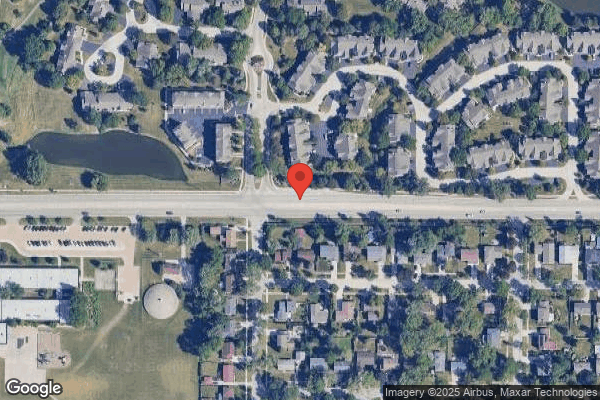
700 EAST EUCLID AVENUE, PROSPECT HEIGHTS, IL 60070 (847) 797-2700
For profit - Corporation 30 Beds Independent Data: November 2025
Trust Grade
75/100
#29 of 665 in IL
Last Inspection: August 2024

Within standard 12-15 month inspection cycle. Federal law requires annual inspections.

Overview

Eden Vista Prospect Heights has a Trust Grade of B, indicating it is a good facility and a solid choice for care. It ranks #29 out of 665 nursing homes in Illinois, placing it in the top half of state facilities, and #9 out of 201 in Cook County, meaning only eight local options are better. The facility has a stable trend with only one reported issue in both 2024 and 2025, indicating consistency in care. Staffing is a strong point, with a 5-star rating and a turnover rate of 41%, which is below the state average, and it has more registered nurse coverage than 97% of Illinois facilities, ensuring quality oversight. However, there have been serious incidents, including a resident developing a Stage 4 pressure ulcer due to inadequate care and another resident suffering a femur fracture due to insufficient fall prevention measures. Additionally, there were concerns regarding food safety practices that could potentially affect all residents, highlighting some areas for improvement alongside the facility's strengths.

Trust Score
B
75/100
In Illinois
#29/665
Top 4%
Safety Record
Moderate
Needs review
Inspections
Holding Steady
1 → 1 violations
Staff Stability
○ Average
41% turnover. Near Illinois's 48% average. Typical for the industry.
Penalties
✓ Good
No fines on record. Clean compliance history, better than most Illinois facilities.
Skilled Nurses
✓ Good
Each resident gets 148 minutes of Registered Nurse (RN) attention daily — more than 97% of Illinois nursing homes. RNs are the most trained staff who catch health problems before they become serious.
Violations
⚠ Watch
16 deficiencies on record. Higher than average. Multiple issues found across inspections.
★★★★★
5.0
Overall Rating
★★★★★
5.0
Staff Levels
★★☆☆☆
2.0
Care Quality
★★★★★
5.0
Inspection Score
Stable
2024: 1 issues
2025: 1 issues

The Good

  • 5-Star Staffing Rating · Excellent nurse staffing levels
  • Full Sprinkler Coverage · Fire safety systems throughout facility
  • No fines on record
  • Staff turnover below average (41%)

    7 points below Illinois average of 48%

Facility shows strength in staffing levels, fire safety.

The Bad

Staff Turnover: 41%

Near Illinois avg (46%)

Typical for the industry

The Ugly 16 deficiencies on record

2 actual harm
Feb 2025 1 deficiency
CONCERN (D) 📢 Someone Reported This

A family member, employee, or ombudsman was alarmed enough to file a formal complaint

Potential for Harm - no one hurt, but risky conditions existed

Pressure Ulcer Prevention (Tag F0686)

Could have caused harm · This affected 1 resident

**NOTE- TERMS IN BRACKETS HAVE BEEN EDITED TO PROTECT CONFIDENTIALITY** Based on interview and record review, the facility failed to follow their pressure injury prevention and wound care management p...

Read full inspector narrative →
**NOTE- TERMS IN BRACKETS HAVE BEEN EDITED TO PROTECT CONFIDENTIALITY** Based on interview and record review, the facility failed to follow their pressure injury prevention and wound care management policy for one resident who was at moderate risk for skin breakdown by not implementing an air loss mattress, delay in evaluation by wound care doctor, failing to document skin assessments on admission/weekly, failure to obtain physician orders and document treatments. This affected one of three residents (R1) reviewed for wound care. Findings include: R1 was readmitted to the facility on [DATE] with a diagnosis of Alzheimer's disease, anemia, gastrointestinal hemorrhage, hypertension, and heart disease. R13's Braden scale dated 2/13/25 documents moderate risk for skin breakdown. R1's admission screener dated 1/30/25 document under skin coccyx tiny skin opening. R1's progress note dated 1/31/25 documents: Readmit from skilled unit. Seen by V5 (MD),orders verified and noted. Skin check done. With skin discoloration [greenish ] in back of right hand, with brownish skin discoloration in left upper thigh. Scattered aged brownish spots on back. With redness in both heels, applied heel protectors. R1's progress note dated 2/7/25 documents: Noted two open skin in sacral area, measures #1 1.5 centimeters (cm) x 1 cm #2 1cm x1 cm. Also open skin on right hip 1 cm x 1 cm applied dry dressing and barrier cream to surrounding area. MD notified, refer to Home Health for wound care. R1's physician orders dated 2/7/25 created date 2/9/25 documents: Right buttock open skin cleanse with wound cleanser, pat dry, apply bacitracin then foam dressing twice a day until seen by home health. On 2/13/25 order hold transfer to skilled. R1's physician orders dated 2/7/25 created date 2/9/25 documents: Open skin sacrum cleanse with wound cleanser ,pat dry, apply bacitracin and cover with foam dressing twice a day until seen by home health. On 2/13/25 order hold transfer to skilled. There was no documentation of any home health visits from 2/7/25-2/13/25. R1's progress note dated 2/13/25 documents: Resident moved to skilled unit for rehab/ post hospitalization. Medications endorsed to nurse; verbal report given. R1's skilled progress notes do not document any admission note or completed skin assessment on 2/13/25. R1's medical record did not document any skin or wound assessment until 2/18/25. R1's wound evaluation dated 2/18/25 documents: pressure stage 3 to coccyx measuring length 2.57 centimeters (CM) x 0.96 cm width x 0.3 CM depth. Present on admission. R1's wound evaluation dated 2/19/25 documents MASD_ incontinence associated dermatitis to left gluteus measuring 3.66 CM length x 2.52CM width x 0.2 cm depth. Inhouse acquired. R1's physician orders do not document any wound or treatment orders when transferred to skilled unit on 2/13/25. R1's medication and treatment record do not document any treatments to R1 on 2/13/25 until 2/18/25. R1's physician order dated 2/18/25 with start date of 2/19/25. Coccyx cleanse with normal saline. Pat dry. Apply Medi honey and cover with bordered dressing every day. Discontinued 2/19/25. R1's physician order dated 2/14/25: Wound consult On 2/25/25 at 3:38PM, V2(DON) said skin assessment are done weekly by staff. On memory care if there was a wound reported it would be referred to home health for treatment. V2 said a referral was sent to home health but unsure what happened. V2 was requested to provide documentation of referral but none provided during the survey. V2 said home health did not evaluate R1's wounds and he was moved to skilled unit for treatment and therapy. V2 said staff should conduct a skin assessment when moving to another unit and was unable to find or locate any documentation of R1's skin assessment on 2/13/25. V2 said residents should have a treatment in place and documented in the medical record. V2 was unable to find, present or locate any documentation of treatment orders or administration of treatment for R1 from 2/13/25 through 2/18/25. V2 said R1 was expected to have an air loss mattress when he moved to skilled because of the wounds. V2 was unable to recall if he was provided an air loss mattress. On 2/26/25 at 9:35AM, V2(DON) said R1 was not seen by wound doctor on 2/14/25. V2 said regular wound doctor was not here and a replacement doctor was sent but did not see all the residents, including R1. On 2/26/25 253pm V6 (wound care MD) said he saw R1 on 2/19/25 for initial visit. V6 said he was unsure why R1 was not seen on 2/14/24. R1 was on group one mattress which is a pressure relieving mattress not an air loss mattress. V6 said he put in orders for air loss mattress after visiting due to wound being a stage three pressure sore. V6 said he would have expected some treatment to be in place for wounds to prevent infection prior to visit. V6 said staff can call him with any concerns or new wounds and does not recall any calls or concerns related to R1. On 2/26/25 at 1:03PM, V5(MD) said she would expect an order for any treatment for a open wound and all orders to be followed as ordered. Initial wound evaluation by V6(wound MD) dated 2/19/25 documents support surface group 1. Under wounds stage three pressure sore measuring 2.5 centimeters (CM) length x 3.5 CM width x 0.1cm depth. Under recommendations air loss mattress. Wound two moisture associated skin damage measuring 5.5 CM length x 4.5 CM width x o.1cm depth R1's mattress delivery order submitted 2/19/25 and delivered stat on 2/19/25. R1's physician order dated 2/18/25: may use air loss mattress. Please verify it's in good working condition. Facility pressure injury prevention and wound care management policy revised 3/4/24 documents: the purpose of the policy is to provide healthcare staff with the standards of care and the processes to be followed by all residents. To identify factors that places the resident at risk for development of pressure injuries and to implement appropriate interventions to prevent the development of clinically avoidable wounds, to promote systematic approach and monitoring process for the care of residents with existing wounds and those who are at risk for skin breakdown, to promote healing of existing pressure injuries and wounds. It is the policy of this facility that each resident receives the necessary care and services to attain or maintain the highest practicable physical, mental and psychosocial wellbeing, with comprehensive assessment and plan of care. A resident who has a pressure injury will receive care and services to promote healing and to prevent additional ulcers. Skin impairments including pressure injuries should be assessed and documented weekly.
May 2023 5 deficiencies 2 Harm
SERIOUS (G)

Actual Harm - a resident was hurt due to facility failures

Pressure Ulcer Prevention (Tag F0686)

A resident was harmed · This affected 1 resident

**NOTE- TERMS IN BRACKETS HAVE BEEN EDITED TO PROTECT CONFIDENTIALITY** Based on observation, interview, and record review, the facility failed to implement interventions according to resident's plan...

Read full inspector narrative →
**NOTE- TERMS IN BRACKETS HAVE BEEN EDITED TO PROTECT CONFIDENTIALITY** Based on observation, interview, and record review, the facility failed to implement interventions according to resident's plan of care in preventing the development of a pressure ulcer for one (R13) of two residents in the sample of 21 reviewed for pressure ulcers. This failure resulted in R13's intact skin developing moisture associated skin damage on the left buttock which progressed to a Stage 4 pressure ulcer. Findings include: R13 is an [AGE] year-old female, admitted in the facility on 09/30/22 with diagnoses of Pressure Ulcer of Sacral, Stage 4, Neurocognitive Disorder with Lewy Bodies and Unspecified Dementia, Unspecified Severity, Without Behavioral Disturbance, Psychotic Disturbance, Mood Disturbance and Anxiety. R13's POS (Physician Order Sheet) dated 04/14/23 recorded: Left buttock: Apply skin prep to surrounding skin. Cleanse with normal saline. Pat dry. Hypochlorous Acid Solution 0.05% and cover with gauze island with border dressing once daily one time a day for Stage 4 pressure wound of the left buttock. R13's Wound Notes documented the following: 08/19/22 - Non pressure wound of the Left Buttock full thickness Etiology: Moisture Associated Skin Damage (MASD) Wound size - 2.5 x 3.0 x 0.1 cm (centimeters) Recommendations: Return to bed after every meal to limit sitting time and facilitate wound healing. 10/06/22 - Unstageable (due to necrosis) of the left buttock full thickness Etiology: Pressure Wound size - 3.0 x 4.0 x not measurable cm. Wound progress: Deteriorated. Additional Wound Detail: Wound originally due to moisture associated skin damage. Deteriorated and found to have MRSA (Methicillin-resistant Staphylococcus aureus). Now Unstageable. Recommendation: Keep patient out of chair until wound improves. 11/18/22 - Stage 4 pressure wound of the left buttock full thickness Etiology: pressure Wound size - 3.0 x 3.3 x 2.0 cm. Recommendation: Keep patient out of chair until wound improves. On 05/15/23 at 11:00 AM, R13 was observed sitting in her wheelchair in the dining room. R13 is alert, verbal but unable to state if she has wound on the lower back when asked. She was observed in the dining room until 1:50 PM when she was put back into bed. At 4:50 PM until 6:00 PM, she was again observed up in her wheelchair in the dining room, eating dinner. On 05/17/23 at 12:49 PM, R13 was observed in the dining room sitting in her wheelchair. V8 (Certified Nurse Assistant/CNA) was asked regarding R13. V8 stated, I am her regular CNA. She has pressure ulcer on the left buttock and on the sacrum. She is usually up in the wheelchair at 7:30 AM until 10:00 AM, then to bed. She stayed in bed for two hours. She is up again at 11:30 AM for lunch and put to bed around 1-1:30 PM. This is her routine. She is wearing incontinent brief and uses the toilet. I check her for incontinence every two to two and a half. At 1:17 PM, R13 was brought to the bathroom by V8 for incontinence care. R13's incontinent brief was observed moderately soaked with urine. V8 stated that she changed her (R13) brief at 10 AM. V8 used disposable wipes to clean R13's peri area and buttocks then put on her brief. V8 did not apply any skin protective cream on R13's peri area and buttocks prior to securing her (R13) brief. Subsequently, she (R13) was transferred back to bed. On 05/17/23 at 1:25 PM, wound care was observed on R13 provided by V6 (Registered Nurse, RN). Her (R13) pressure ulcer on the left buttock is like the size of a dime, wound bed appeared red to purplish in color, with measurements of 1.4 cm x 2 cm x 1.3 cm. According to V6, She acquired her left buttock pressure ulcer in the facility on 08/19/22, started as MASD due to her being wet often. She needs to be checked and changed three to four times in the morning, like every two hours. Her MASD became Stage 4. Interventions in preventing pressure ulcer are repositioning; frequent toileting; wheelchair cushion; incontinence care every two hours. She should be sitting up for meals and put to bed after meals. On 05/17/23 at 9:48 AM, V3 (Acting Director of Nursing) was interviewed regarding R13 and pressure ulcer on the left buttock. V3 verbalized, She has a pressure ulcer on the left buttock, Stage 4, facility acquired, was identified on 08/19/2022, as non-pressure wound due to MASD. On 10/06/22, the left buttock MASD became Unstageable due to necrosis. On 11/18/22, the Unstageable left buttock pressure ulcer became Stage 4. It started as MASD caused by wet diaper or not applying moisture skin barrier. Staff has to check residents for incontinence care at least every two hours, more often. Change incontinent brief when needed. She always sits in the wheelchair, eats breakfast in the dining room, if she is on therapy, therapy takes her. She eats lunch in the dining room. She needs repositioning; offload wounds. V11 (Wound Doctor) was interviewed on 05/17/23 at 02:17 PM regarding R13. V11 stated, It was an acquired pressure ulcer on the left buttock, started as MASD, now its Stage 4. Cause is moisture from incontinence. In providing incontinence care, clean resident in a timely manner, follow whatever protocol in place, turn in a timely manner. Apply protective barrier cream which could be a part of incontinence care. Keep her out of chair since wound is improving. Weekly wound round documentation dated 05/11/23 recorded R13's left buttock Stage 4 pressure ulcer measures 1.5 x 1.3 x 1.4 cm, undermining/tunneling at 2.5 cm at 1 o'clock 5. Progression/Interventions: 6a. Additional information: Keep patient out of chair until wound improves; offload wound; turn side to side in bed every 1-2 hours if able. R13's care plan related to current medical/physical status. Pressure ulcer on sacrum on admission. 08/19/22 - pressure ulcer on left buttock Interventions/Tasks: Offload the buttocks, put her back to bed after meals on her sides as much as possible (02/06/23). Incontinence care with incontinent brief changes-apply skin protective cream to peri area and buttocks after toileting (02/06/23). Facility's policy titled Pressure Ulcer/Skin Integrity revision date 4/2022 documented in part but not limited to the following: Policy: Based on the comprehensive assessment of a resident, (name of group communities) will ensure: A resident receives care, consistent with professional standards of practice, to prevent pressure ulcers and does not develop pressure ulcers unless the individual's clinical condition demonstrates that they were unavoidable; and A resident with pressure ulcers receives necessary treatment and services, consistent with professional standards of practice, to promote healing, prevent infection and prevent new ulcers from developing.
SERIOUS (G)

Actual Harm - a resident was hurt due to facility failures

Accident Prevention (Tag F0689)

A resident was harmed · This affected 1 resident

**NOTE- TERMS IN BRACKETS HAVE BEEN EDITED TO PROTECT CONFIDENTIALITY** Based on observation, interview, and record review, the facility failed to follow their policy and procedures for fall preventio...

Read full inspector narrative →
**NOTE- TERMS IN BRACKETS HAVE BEEN EDITED TO PROTECT CONFIDENTIALITY** Based on observation, interview, and record review, the facility failed to follow their policy and procedures for fall prevention by not consistently assessing risks for falls, not ensuring fall interventions were implemented, not implementing effective fall interventions for residents experiencing multiple falls, and not providing adequate supervision for high risk fall residents who required increased supervision. This failure applied to two (R122 and R274) of four residents reviewed for falls and resulted in R274 sustaining a left femur fracture. Findings include: R274 is a [AGE] year-old male who originally admitted on [DATE] and currently resides in the facility. R274 has multiple diagnoses including but not limited to the following: left femur fracture, respiratory failure, CHF, COPD, need for assistance with personal care, unsteadiness on feet, difficulty in walking, and HTN. Per hospital discharge records dated 1/27/23, R274 was admitted to the skilled nursing side of the facility from assisted living due to weakness and gait abnormalities secondary to COVID-19 pneumonia. Per facility incident report dated 2/10/23 states in part but not limited to the following: Assisted living nurse reported that resident was found in front of his former room in assisted living lying on the floor. Writer immediately went to check on resident, noted resident lying on left side. Assisted to wheelchair with two staff. Asked resident what happened, I was trying to get my keys to open the door and I lost my balance. Noted skin tear on left knee and verbalized pain on the left hip. Resident sent out to hospital with the paramedics. Mobility: ambulatory with assistance. Summarize the post-fall findings: Resident lost his balance while opening his assisted living room. Left the skilled unit without notifying staff. New fall prevention interventions to be implemented as a result of the assessment: notify staff if needing to leave the unit. Per hospital records with admission date of 2/10/23 show R274 was admitted with a left hip fracture. On 5/15/23 at 10:15AM, it was observed that R274's room is down the hall, multiple rooms away from the nursing station. On 05/17/23 at 10:23AM, V6 (Registered Nurse/RN) was interviewed regarding R274's functional status and care. V6 said R274 was a previous resident of our assisted living side and came here for therapy. R274 is currently in a wheelchair and can move independently in his wheelchair. He needs assistance with ambulating and transferring because he is unsteady. He does attempt to get up unassisted especially when he needs to go to the bathroom. We try and keep him in a common area because he needs increased supervision. He has periods of confusion, and sometimes he's hard to understand. It is to be noted that R274 had a fall on 4/12/23 and 4/28/23 in his room. At 2:59PM, V3 (Director of Nursing/DON) was interviewed regarding R274 fall on 2/10/23. V3 said R274 ambulated with his walker to his old apartment on the assisted living side of the facility. The nurse covering the assisted living side found him on the floor outside of his old apartment. He walked off the unit without informing anyone or anyone noticing him. R274 is confused and forgetful and did need increased supervision at the time of his fall. The intervention put in place at this time was for R274 to notify the staff when leaving the unit. Attempted to interview V19 (former employee) and V20 (Certified Nursing Assistant/CNA) on multiple occasions but was unable to get a hold of during course of survey. R274's care plan with initiation date of 1/27/23 states, in part but not limited to the following: Focus: Actual/at risk/ and/or potential for complications with or falls r/t current medical/physical status. Has medications/diagnoses that can affect fall risk. Patient with unsteady gait. Goals: Will be free of serious injuries r/t falls through next review date. Will have reduced risk for falls with stated interventions through next review date. Interventions: Frequent checks and toilet him if needed, encourage fluids, encourage him to stay in common area if not sleeping date initiated 4/28/23. Check for unmet needs: pain, toileting, hunger, thirst, temperature- date initiated 2/10/23. Reinforce need to use call light to request assistance- date initiated 2/10/23. Frequent checks in the afternoon, offer different seating positions, encourage fluid intake during all interactions- date initiated 4/13/23. R274 MDS (Minimum Data Set) dated 2/10/23 states, in part but not limited to the following: Staff assessment for mental status: short term memory indicated a memory problem. Activities of daily living assistance: limited assistance with transferring and walking in corridor. Facility policy titled Accidents/Falls with revision date of 10/2022 states, in part but not limited to the following: Policy: the facility strives to promote safety, dignity, and overall quality of life for its residents by providing an environment that is free from any hazards for which the facility has control and by providing appropriate supervision and interventions to prevent avoidable accidents. Procedure: 3. An immediate/initial care plan for fall risk will be developed for any newly admitted residents whose assessment indicated that the resident was at risk for falls/accidents. This plan of care is communicated to all appropriate staff. 5. Resident care plans should be evaluated and updated with each fall with a new and applicable intervention based on root cause. The focus is to be on prevention and maintaining a safe environment. 7. Any episode of a fall should be documented within the electronic health record within risk management/incidents. Each incident/accident or fall must be investigated and/or assessed to determine the root cause of the episode to prevent any further injury. The interdisciplinary team will review all incident/accident. 9. A post fall assessment will be conducted following any fall episode. R122 is an [AGE] year-old female with diagnoses history including Dementia, Alzheimer's, Restlessness and Agitation, Bipolar Disorder, Anxiety Disorder, Difficulty in Walking, Unsteadiness on Feet, Need for Assistance with Personal Care, and Chronic Congestive Heart Failure who was admitted to the facility 03/16/23. On 05/15/23 from 10:55 AM - 11:02 AM, observed R122 lying in her bed in her room with no clothes or socks on attempting multiple times to get out of bed. R122 stated, Can I get out of here? Observed there were no staff in or near R122's room. On 05/15/23 at 12:24 PM, observed R122 was placed next to the nurse's station in her wheelchair and given an activity book. Observed R122 appeared agitated and sat book down on a chair next to her. Observed R122 was not engaged in activities with staff or residents. V6 (Registered Nurse/RN) stated R122 is a high fall risk. On 05/15/23 at 02:26 PM, V17 (Family Member) stated she received a call from the facility today notifying her that R122 had fallen by the nurse's station earlier in the morning and then received another call later that she had rolled out of bed. V17 stated unfortunately, R122 does fall often. R122's progress note dated 3/26/2023 10:00 AM documents she was observed sitting on the floor near her bed. Initial Abuse Reportable reviewed 05/16/23 documents on 03/28/23 at approximately 2:30 PM R122 was reported to have a fall and her left-hand fingers showed signs of swelling. R122's progress note dated 3/29/2023 3:27 PM documents R122's left middle finger is swollen, discolored and immobile. Physician was notified. R122's progress note dated 3/31/2023 9:54 AM documents writer went to check on R122, and she was observed on the floor on her knees in a crawling position in her room. R122 was wet and wanted to go to the bathroom. R122 has full range of motion in her lower extremities but complains of pain to her left leg. R122 does not remember how she fell. R122's progress note dated 4/3/2023 3:45 AM documents she became restless, screaming for her family, and trying to get up by herself, attempted to calm her down but was unsuccessful. Placed R122 on close watch, she is a high risk for fall. R122's progress note dated 4/4/2023 6:23 PM documents a Certified Nursing Assistant passed by R122's room and saw her on the floor. Writer went to check, noted resident sitting on the floor, wearing nonskid socks, with her wheelchair behind her. Asked R122 what happened, per R122 I don't know. R122's progress note dated 4/4/2023 06:19 AM documents she had episodes of on and off screaming, attempted to get up, able to redirect. Continuous monitoring done. R122's fall risk assessment dated [DATE] documents she has impaired mobility, severely impaired cognition, poor safety awareness, is becoming restless and increased anxiety always attempting to get up from chair or roll out of bed; Requires one-on-one sitter. R122's progress note dated 5/15/2023 3:18 PM documents she was noted to be on the ground by writer, Certified Nursing Assistant and two therapists. The facility's fall log from 11/15/22 to 05/15/23 documents R122 had 15 unwitnessed falls from 03/28/23 - 05/15/23. There were no post fall/fall risk assessments completed for R122's falls occurring 03/26/23, 03/28/23, 03/31/23, 04/05/23, and 04/08/23. R122's medical records did not include progress notes or incident reports for 10 of her falls. The facility could not provide incident reports for 14 of her falls. R122's current care plan initiated 03/16/23 documents she is at risk for falls and/or has the potential for complications with or falls related to current medical/physical status. R122 has medications and diagnoses that can/may affect fall risk. R122 fell 3/26/2023, 3/31/2023, 3/28/2023, 4/2/2023, 4/4/2023, 4/7/2023,5/13/2023, and 5/15/2023 with interventions including - frequent checks (initiated 03/28/23); toilet her after lunch and dinner, encourage her to stay in common area if not sleeping, Involve her in activities (initiated 5/15/2023); Provide individualized AM activities (initiated 4/10/2023); Check for unmet needs: pain, toileting, hunger, thirst, temperature (initiated 3/29/2023); Continue frequent checks, toilet before meals, Put resident close to nurses station/common area, nonskid socks, Keep in common before meals area when awake (initiated 3/31/23, revised 4/07/23). R122's fall care plan did not include any initiated or revised interventions for falls occurring 03/26/23, 04/02/23, 04/04/23, 04/05/23, 04/06/23, 04/08/23, 05/10/23, or 05/13/23. On 05/17/23 at 11:09 AM, V3 (Director of Nursing/DON) stated floor nurses complete incident reports and post-fall reviews. V3 usually stated the next day in the clinical meeting the Director of Nursing and the clinical [NAME] review these reports, and a new intervention is implemented and added to the care plan. On 05/17/23 at 01:22 PM, V3 (DON) stated if post fall reports are not completed, it could prevent care plan interventions from being implemented. V3 agreed if post-fall assessments are not completed, this may prevent identification of potential contributing factors of falls. On 05/17/23 at 03:07 PM, V3 (DON) she was informed by V18 (Registered Nurse/RN) that R122 needs constant supervision, and if you turn your head from her for even a moment she'll fall. V3 stated R122 requires constant monitoring while in her room. V3 stated she doesn't believe the facility can provide one-on-one care for R122 unless there is an emergency or under certain circumstances. V3 stated R122's room is not necessarily close to the nurse's station but somewhat close. V3 stated R122 was closer to the nurse's station. V3 stated a room close to the nurse's station would be close enough to the nurse's station so that you can respond within seconds if an issue arises. V3 stated if R122 does move around, her room is not close enough to the nurse's station for staff to respond in seconds. V3 stated the facility does not currently use any devices to detect a resident's movement. V3 stated R122 has a habit of trying to get out of her bed. V3 stated when R122 is awake, she is in the common area.
CONCERN (D)

Potential for Harm - no one hurt, but risky conditions existed

Comprehensive Care Plan (Tag F0656)

Could have caused harm · This affected 1 resident

**NOTE- TERMS IN BRACKETS HAVE BEEN EDITED TO PROTECT CONFIDENTIALITY** Based on observation, interview, and record review, the facility failed to follow their policy and procedures for fall preventi...

Read full inspector narrative →
**NOTE- TERMS IN BRACKETS HAVE BEEN EDITED TO PROTECT CONFIDENTIALITY** Based on observation, interview, and record review, the facility failed to follow their policy and procedures for fall prevention by not comprehensively assessing risks for all falls and not ensuring fall interventions were implemented for a resident who is at high risk of falls. This failure applied to one (R122) of four residents reviewed for falls. Findings include: R122 is an [AGE] year-old female with diagnoses history including Dementia, Alzheimer's, Restlessness and Agitation, Bipolar Disorder, Anxiety Disorder, Difficulty in Walking, Unsteadiness on Feet, Need for Assistance with Personal Care, and Chronic Congestive Heart Failure who was admitted to the facility 03/16/23. The facility's fall log from 11/15/22 to 05/15/23 documents R122 had 15 unwitnessed falls from 03/28/23 - 05/15/23. There were no post fall/fall risk assessments completed for R122's falls occurring 03/26/23, 03/28/23, 03/31/23, 04/05/23, and 04/08/23. R122's medical records did not include progress notes or incident reports for 10 of her falls. The facility could not provide incident reports for 14 of her falls. R122's current care plan initiated 03/16/23 documents she is at risk for falls and/or has the potential for complications with or falls related to current medical/physical status. R122 has medications and diagnoses that can/may affect fall risk. R122 fell 3/26/2023, 3/31/2023, 3/28/2023, 4/2/2023, 4/4/2023, 4/7/2023,5/13/2023, and 5/15/2023 with interventions including - frequent checks (initiated 03/28/23); toilet her after lunch and dinner, encourage her to stay in common area if not sleeping, Involve her in activities (initiated 5/15/2023); Provide individualized AM activities (initiated 4/10/2023); Check for unmet needs: pain, toileting, hunger, thirst, temperature (initiated 3/29/2023); Continue frequent checks, toilet before meals, Put resident close to nurses station/common area, nonskid socks, Keep in common before meals area when awake (initiated 3/31/23, revised 4/07/23). R122's fall care plan did not include any initiated or revised interventions for falls occurring 03/26/23, 04/02/23, 04/04/23, 04/05/23, 04/06/23, 04/08/23, 05/10/23, or 05/13/23. On 05/17/23 at 11:09 AM, V3 (Director of Nursing/DON) stated floor nurses complete incident reports and post fall reviews. V3 stated usually the next day in the clinical meeting the Director of Nursing and the clinical [NAME] review these reports and a new intervention is implemented and added to the care plan. On 05/17/23 at 01:22 PM, V3 (DON) stated if post fall reports are not completed, it could prevent care plan interventions from being implemented. V3 agreed if post fall assessments are not completed this may prevent identification of potential contributing factors of falls. The facility's Accidents/Falls Policy reviewed 05/18/23 states: Resident care plans should be evaluated and updated with each fall with a new applicable intervention based on root cause. The focus is prevention and maintaining a safe environment. Any episode of a fall should be documented within the electronic health record within risk management/incidents. Each incident/accident or fall must be investigated and/or assessed to determine the root cause of the episode to prevent any further injury. The interdisciplinary team will review all incident/accident A post fall assessment will be conducted following any fall episode.
CONCERN (E)

Potential for Harm - no one hurt, but risky conditions existed

Deficiency F0761 (Tag F0761)

Could have caused harm · This affected multiple residents

**NOTE- TERMS IN BRACKETS HAVE BEEN EDITED TO PROTECT CONFIDENTIALITY** Based on observation, interview, and record review, the facility failed to ensure that multidose vials and insulin pens are lab...

Read full inspector narrative →
**NOTE- TERMS IN BRACKETS HAVE BEEN EDITED TO PROTECT CONFIDENTIALITY** Based on observation, interview, and record review, the facility failed to ensure that multidose vials and insulin pens are labeled with dates opened; and discontinued medications are disposed of per policy. This failure affected two (R2 and R122) of two residents reviewed for medication storage and labeling. Findings include: Per facility matrix dated [DATE], current census is 18 residents. On [DATE] at 10:36 AM during inspection of medication room and medication carts, the following were observed: Three multidose vials of Tubersol, opened and undated as to its first use were observed stored in the refrigerator in the medication room. V6 (Registered Nurse, RN) was asked if the vials should be dated when opened. V6 stated, We're supposed to label it with date opened, expiry date and our initials. Inside medication cart number 2, R2's and R122's Insulin Glargine pens were observed opened and used but not dated. V6 verbalized, We have to date the insulin pens when opened, because it is only good for 30 days from the date it was opened. V3 (Acting Director of Nursing) was interviewed on [DATE] at 01:09 PM regarding medications labeling. V3 replied, When we open medications, we put the date opening and store according to the instructions on the bottle or bingo card on where to keep it when opened. Tubersol multidose vials need to be dated when we opened it because after four weeks, we have to discard it. For Insulin pens, we also have to date it when first used because it is good for 28 days. On [DATE] at 2:55 PM, V4 (Pharmacist) was also interviewed regarding labeling of Tubersol and Insulin pens. V4 verbalized, Tubersol multidose vials - when opened, it should be dated because it is only good for 30 days when opened. We have to date insulin pens when opened because it is only good for 28 days. Tubersol Purified Protein Derivative Package Insert documented the following in part: Storage A vial of Tubersol which has been entered and in use for 30 days should be discarded. Do not use after expiration date. Insulin Glargine Package Insert documented the following in part: 16.2 Storage Storage conditions are summarized in the following table: 3ml (milliliter) single-patient-use prefilled pen: In use (opened) - 28 days (room temperature only). Facility's policy titled Medications Labeling and Storage revision date 11/2022 stated in part but not limited to the following: Procedure: 2. Label includes the resident's name, drug name, dose, frequency, route instructions for us, and expiration date. R122's Insulin Glargine was discontinued on [DATE] according to POS (Physician Order Sheet) but was still stored in the cart. Facility's Pharmacy Policy titled 5.3 Storage and Expiration Dating of Medications, Biologicals revision date [DATE] documented in part but not limited to the following: Procedure: 5. Once any medication or biological package is opened, Facility should follow manufacturer/supplier guidelines with respect to expiration dates for opened medications. Facility should record the date opened on the primary medication container (vial, bottle, inhaler) when the medication has a shortened expiration date once opened or opened. 5.1 Facility staff may record the calculated expiration date based on date opened on the primary medication container. 5.3 If a multi dose via of an injectable medication has been opened or accessed (e.g. example, needle-punctured), the vial should be dated and discarded within 28 days unless the manufacturer specified a different (shorter or longer) date for that opened vial. 16. Facility should destroy or return all discontinued, outdated/expired or deteriorated medications or biologicals in accordance with Pharmacy return/destruction guidelines and other Applicable Law, and in accordance with policy 8.2 (Disposal/Destruction of Expired or Discontinued Medication).
CONCERN (F)

Potential for Harm - no one hurt, but risky conditions existed

Food Safety (Tag F0812)

Could have caused harm · This affected most or all residents

Based on observation, interview, and record review, the facility failed to follow their policy and procedures for preparing and storing food under sanitary conditions by not ensuring food was stored t...

Read full inspector narrative →
Based on observation, interview, and record review, the facility failed to follow their policy and procedures for preparing and storing food under sanitary conditions by not ensuring food was stored to prevent contamination, not ensuring all dishware, food storage containers, and kitchen equipment were properly cleaned, not ensuring kitchen employees and facility staff practiced appropriate hygiene in the kitchen area, and not performing safe food thawing practices. This failure has the potential to affect all 18 residents who currently reside in the facility and receive food from the kitchen. Findings include: On 05/15/23 from 09:50 AM - 10:05AM, observed a whole turkey thawing in a sink under sitting water. V12 (Dietary Manager) stated the turkey should be thawed under running water. Observed ice machine scoop stored in the ice machine in contact with ice. V12 stated the ice machine originally came with an internal storage piece for the scoop, however, the scoop is usually stored outside the ice machine in a holder. Observed V12 and V13 (Cook/Mentor) with their hairnets not completely covering their hair and a significant portion of their hair exposed on the sides and back of their heads while walking through and working in the kitchen. Observed lid of storage bin containing breadcrumbs partially open. V12 stated the breadcrumbs are not used much. V12 stated the storage bin should be completely closed. Observed the storage bins containing thickener, sugar, and breadcrumbs to be covered in dust and soiled with some food spillage. V12 stated the storage bins need to be free of dust and food particles to prevent contamination. On 05/16/23 from 11:36 AM - 12:00 PM, observed V12 (Dietary Manager) and V13 (Cook/Mentor) with their hairnets not completely covering their hair and a significant portion of their hair exposed on the sides and back of their heads while walking through and working in the kitchen. Observed V14 (Cook) with a large portion of hair exposed from the sides and back of her hairnet while preparing meal trays in the kitchen. Observed V15 (Cook) with hair exposed from the sides and back of his hairnet while prepping food in the kitchen. V12 stated if hair falls in food, it will be contaminated. V12 asked how should hairnets be worn in the kitchen and what about eyebrows? Observed a large rack full of cleaned dishes with heavy dust build up on all racks, observed multiple cleaned dishes with particles and substances on the surface. V12 confirmed the cleaned dishes were not free of particles and substances. V12 stated the dish racks are cleaned every other week. V12 stated if the dish racks are not free of dust or substances, they could contaminate the cleaned dishes. Observed V16 (Receptionist) enter the kitchen without donning a hairnet or performing hand hygiene, grab a bowl from the kitchen, and then leave. On 05/16/23 at 12:05 PM, V16 (Receptionist) stated she entered the kitchen to get a bowl for herself and asked if she needed to don a hairnet or perform hand hygiene if she only enters the kitchen to get a bowl for herself. Per facility matrix dated 05/15/23, current census is 18 residents. The facility's Employee Sanitary Practices Policy reviewed 05/18/23 states: Wear hair restraints (hairnet, hat) to prevent hair from contacting exposed food. The facility's Personal Hygiene and Health Reporting Policy reviewed 05/18/23 states: Hair restraints must be worn around exposed foods, in the kitchen or food service areas. The facility's Cleaning Dishes/Dish Machine Policy reviewed 05/18/23 states: All flatware, serving dishes, and cookware will be cleaned, rinsed, and sanitized after each use. The facility's Handling Clean Equipment and Utensils Policy reviewed 05/18/23 states: Clean equipment and utensils will be stored in a clean, dry location in a way that protects them from splashes, dust, or other contamination. Stationary equipment will also be protected from contamination. The facility's Food Storage Policy reviewed 05/18/23 states: Food will be stored in an area that is clean, dry, and free from contaminants. Food will be stored by methods designed to prevent contamination. Plastic containers with tight-fitting covers must be used for storing grain products, sugar, and broken lots of bulk foods. The facility's General Food Preparation and Handling Policy reviewed 05/18/23 states: The kitchen surfaces and equipment will be cleaned and sanitized as appropriate. Meats and poultry will be defrosted using safe thawing practices: In the sink submerging the item under cold water that is running fast enough to agitate and float off loose ice particles. The facility's Food Safety: Ice Policy reviewed 05/18/23 states: Ice scoop will not be stored in the ice machine unless a scoop holder is installed in the machine by the manufacturer. The facility's Production, Storage and Dispensing of Ice Policy reviewed 05/18/23 states: Ice scoops will be stored outside of the ice dispenser in a closed, clean container or in the ice machine in the scoop storage container provided by the manufacturer.
Aug 2022 10 deficiencies
CONCERN (D)

Potential for Harm - no one hurt, but risky conditions existed

Resident Rights (Tag F0550)

Could have caused harm · This affected 1 resident

Based on observation, interview and record review the facility failed to provide privacy by not closing the privacy curtains and room door during activity of daily living (ADL) care for one of four re...

Read full inspector narrative →
Based on observation, interview and record review the facility failed to provide privacy by not closing the privacy curtains and room door during activity of daily living (ADL) care for one of four residents (R26) reviewed for dignity in a sample of 15. Findings include: On 8/17/2022 at 10:30am R26 was observed in bed yelling for assistance, V14 (Registered Nurses-RN) walked into the room and assisted R26 with her clothes and onto her wheelchair then took her into the washroom without closing the privacy curtain or the room door. On 8/17/2022 at 10:40am V14 was asked should she have provided privacy for R26, V14 said yes, I should have closed the privacy curtain and the room door. On 8/17/2022 at 1:45pm V2(Director of Nursing-DON) said I expect all staff to provide privacy for residents. R26's Care-Plan dated 7/30/2022 indicates R26 needs Actual/Risk and Potential for complications with Deficits with Activity of Daily Living, related to impaired mobility. Facility Policy: May 2020 Dignity Quality of Life General Policy In full recognition of his or her individuality, the facility promotes care for residents in a manner and in an environment that maintains or enhances each resident's dignity and respect. This includes staff: Respecting private space and property
CONCERN (D)

Potential for Harm - no one hurt, but risky conditions existed

Deficiency F0583 (Tag F0583)

Could have caused harm · This affected 1 resident

Based on observation, interview and record review the facility failed to ensure privacy curtains were available for one of four residents reviewed for privacy, in a sample of 15. Findings include: On ...

Read full inspector narrative →
Based on observation, interview and record review the facility failed to ensure privacy curtains were available for one of four residents reviewed for privacy, in a sample of 15. Findings include: On 8/17/2022 at 10:50am R23 was observed in bed and V14 (Registered Nurse-RN) was administering wound care without a privacy curtain to close. R23 has a roommate that was present at the time of the observation (R26). On 8/17/2022 at 10:55am V14 said she doesn't have a privacy curtain; she should have one. On 8/17/2022 at 11:10am V16 (Maintenance Director) said it should be privacy curtains in all the residents' room that have a roommate. On 8/17/2022 at 11:12am V2(Director of Nursing-RN) said all residents that have a roommate should have a privacy curtain. On 8/19/2022 at 10:33am A care plan dated 7/19/2022 indicates that R23 needs assistance with activity of daily living care. Facility Policy- Revised May 2020 Policy Resident's rooms are designed and equipped for adequate nursing care, comfort, and privacy of residents. -Bedrooms are designed or equipped to assure full visual privacy for each resident.
CONCERN (D)

Potential for Harm - no one hurt, but risky conditions existed

Deficiency F0657 (Tag F0657)

Could have caused harm · This affected 1 resident

Based on observation, interview, and record review, the facility failed to update and implement the fall and care plan for two (R11, R14) of two residents in a sample of 15 reviewed for care plan revi...

Read full inspector narrative →
Based on observation, interview, and record review, the facility failed to update and implement the fall and care plan for two (R11, R14) of two residents in a sample of 15 reviewed for care plan revision and implementation. Findings include: 1. On 08/16/22 at 11:25AM during observation, R14's bed was observed with regular mattress on the bed frame. On 08/18/22 at 11:40AM, V2 (Director of Nursing) said that R14 should have a winged mattress on. A post fall review for R14 dated 05/28/22 indicated a new fall prevention intervention to be implemented as a result of the assessment was a winged mattress. Current care plan printed indicates safety/falls intervention of winged mattress. On 08/16/22 at 11:40AM, R11's order summary report dated 08/16/22 indicated admission date of 03/01/22 and diagnoses of age-related osteoporosis, unsteadiness on feet and repeated falls. Incident progress note dated 03/26/22 indicated that at 10:55AM on 03/26/22 CNA alerted nurse that R11 was on the floor in her room. It also stated that R11 stated she tried to get up by herself to go to the bathroom and slid off her bed onto the floor. On 08/17/22 at 9:29AM, V2 stated that after a fall, full body assessment should be done, an incident report and post fall review investigation should be completed, and the care plan should be updated. She also said that there was no post fall review done for the fall incident of R11 on 03/26/22 and the care plan was not updated. Facility policy: Policy Title: Accidents/Falls - HDGR Revision Date: May 2020 Definitions: The definition of a fall extends to include the following factors: - When a resident is found on the floor, a fall is considered to have occurred Procedure: 10. The resident's individualized care plan is to be updated with any changes or new interventions post fall/incident/accident, communicated to appropriate staff, and implemented.
CONCERN (D)

Potential for Harm - no one hurt, but risky conditions existed

ADL Care (Tag F0677)

Could have caused harm · This affected 1 resident

Based on observation, interview and record review the facility failed to shave facial hair of a resident who is dependent with personal hygiene and grooming. This deficiency affects one ( R19) of thre...

Read full inspector narrative →
Based on observation, interview and record review the facility failed to shave facial hair of a resident who is dependent with personal hygiene and grooming. This deficiency affects one ( R19) of three residents in the sample of 15 reviewed for Activity of Daily Living (ADL). Findings include: On 8/16/22 at 10:15am, Observed R19 with facial hair on her chin and cheek area. On 8/16/22 at 10:38am, V7 CNA (Certified Nurse Assistant) said that she is the CNA assigned for R19 and she needs total care with her ADLs. On 8/17/22 at 10:25am, Observed R19 still with facial hair on her chin and cheek area. V7 said she is the CNA assigned for R19. She said she did not shave the facial hair of R19 because she is a hospice resident. V7 said that the hospice CNA came yesterday but she did not do it. The hospice CNA should shave the facial hair of R19. Informed and showed observation to V14 RN (Registered Nurse) that R19 was observed for 2 days (yesterday and today) with facial hair. V14 said that part of morning care and daily personal hygiene and grooming performed by CNA to resident is to shave facial hair. On 8/17/22 at 10:47am, V2 DON and V3 MDS/ Care Plan Coordinator said that shaving resident facial hair is done by CNA during shower/bed bath or as needed when performing personal hygiene and grooming as part of daily ADLs. Review R19's medical records indicated that she has diagnosis to include Cerebral Atherosclerosis, Traumatic Subdural Hemorrhage. R19 care plan indicates that she has self care deficit due to medical/physical status- impaired mobility, weakness. Facility's policy on Activity of Daily Living (ADL) indicates: A resident who is unable to carry out activities of daily living receives the necessary services to maintain good nutrition, grooming and personal hygiene.
CONCERN (D)

Potential for Harm - no one hurt, but risky conditions existed

Quality of Care (Tag F0684)

Could have caused harm · This affected 1 resident

3. On 8/17/2022 at 11:20am R26 was observed with a dressing on her right hand and a dressing on her left buttocks. V14 (Registered Nurse-RN) said I don't have an order for the right hand or the left b...

Read full inspector narrative →
3. On 8/17/2022 at 11:20am R26 was observed with a dressing on her right hand and a dressing on her left buttocks. V14 (Registered Nurse-RN) said I don't have an order for the right hand or the left buttocks I will notify the physician now. On 8/18/2022 at 10:30am V2 (Director of Nursing-DON) said if a resident has any type of dressing applied then it should be a physician order. On 8/18/2022 at 12:00pm A Physician order dated 8/17/2022 indicates an order for Right back of hand cleanse area with normal saline apply bacitracin cover with dry dressing every night shift for skin tear. A Physician order dated for 8/17/2022 for Left buttocks moisture associated skin damage apply mupirocin Ointment 2 % topically every night shift. A care- plan dated 8/8/2022 for skin integrity, intervention to Observe skin in AM/PM care and with toileting for redness, rashes, open areas, pian, swelling, and report them to team leader and weekly skin check. Facility Policy: Revision September 2011, October 2016, November 2016 Pressure Injury/Skin Integrity/Wound Management-HDGR Policy A system is in place for the prevention, identification, treatment, and documentation of pressure injuries and non-pressure wounds. Procedure 1. Wound Assessment b. Weekly: I. A weekly skin check will be conducted and documented for at risk residents. 3. Treatment/Management a. Residents with risk for or who have a loss of skin integrity will receive the appropriate treatment/services, and residents who are determined to ne at risk for or who have loss of skin integrity will receive the appropriate treatment/services which may include. x. Assessment/care to prevent infections: and or b. All interventions and treatments should be evaluated for efficacy and modified/changed as needed. 4. Documentation a. Assessment: I. Assessment information should identify specific factors that might increase the risk of pressure injury development or affect healing of a pressure injury such as. 8. Incontinence Based on observation, interview and record review the facility failed to provide treatment and care in accordance with physician orders. The facility also failed to identify and assess the resident's skin impairment and obtain appropriate treatment order from the physician. This deficiency affects all three (R1, R19 and R26) residents in the sample of 15 reviewed for Quality of Care. Findings include: 1. On 8/16/22 at 10:38am, Observed R19 right arm dressing soiled with blood. Showed observation to both V7 CNA (Certified Nurse Assistant) and V8 CNA who are providing incontinence care to R19. Both said that V10 RN is the assigned nurse for R19. On 8/16/22 at 2:24pm, Observed R19 right arm dressing is undone, and loose. Right elbow open wound is exposed with dried blood. V10 said that V7 CNA did not tell her that R19's right arm dressing was soiled with blood this morning. V10 RN (Registered Nurse) cut the bandage dressing on R19's with scissors. R19 removed the non-adherent dressing on left upper arm. No dressing covering the right elbow wound. V10 cleansed the wound on right upper arm and right elbow with wound cleanser. V10 applied 4x4 gauze to both wound on upper arm and elbow, then wrapped with bandage dressing. Review wound treatment of R19 to right upper arm and elbow with V10 RN. R19 has treatment order of Mepelix (Foam dressing) for right upper arm, But no order for right elbow. Informed V10 that she applied 4x4 gauze dressing to right upper arm and wrapped it with bandage. V10 apologize and said that she should apply the Mepilex dressing and follow the physician order. V10 said that the CNA did not inform her this morning that R19's right arm is soiled with blood. On 8/17/22 at 10:25am Observed R19's right arm dressing is undone and loose. R elbow wound is exposed. Observed V14 RN performed right upper arm and right elbow wound care to R19. V14 said that right arm wound is from skin tear. When V7 and V14 repositioned R19 to her right side, observed huge purple blister at the back of right calf. Both V7 and V14 said that this is new. V14 said that there are no treatment orders for right elbow wound and purple blister on right calf. V14 said that changes in resident skin condition should be called to physician for treatment order. On 8/18/22 at 10:47am, V2 DON (Director of Nursing) said that CNA who observed changes in skin condition or dressing soiled or wound dressing undone should report to the nurse. The nurse will then assess and call the physician for treatment order. Review R19's medical records indicated that she has diagnosis to include Cerebral Atherosclerosis, Traumatic Subdural Hemorrhage. R19 is a hospice resident. R19's care plan indicates that she has self-care deficit due to medical/physical status- impaired mobility, weakness. She has actual skin impairment due to current medical/physical status. 2. On 8/16/22 at 10:30am, R1 is up in wheelchair in the dining room with group activity. She is not wearing compression stocking. Review R1's medical records indicates that she has diagnosis of Congestive Heart Failure, Hypertension. She has order of compression stockings for edema apply in AM (morning), off at HS (bedtime). On 8/16/22 at 3:16pm Observed R1 lying in bed still with not wearing compression stocking. On 8/16/22 at 3:19pm Asked V12 Agency CNA and V11 RN if R1 is using compression stocking. Both said they did not know because it usually applied in the morning shift. On 8/17/22 at 9:18am Informed V2 DON of observation made yesterday for R1 and R19. V2 said that they should follow and implement physician order. Facility's policy on Implementing Physician order indicates: to ensure physician orders are implemented. This policy applies to nurse, therapists, medication aides and any other individuals who provide care, treatment or other services for the center and or its patients. Plan: 1. Physician/provider orders will be implemented as written. 5. Physician/Provider orders received will be implemented by persons with qualifications to administer the specific order. Facility's policy on Notification to physician/Family/Resident representative of change in resident health status indicates: The facility will consult the resident's physician, nurse practitioner or physician assistant and notify the resident representative or an interested family member when there is: *Acute illness or a significant change in the resident's physical. Mental or psychosocial status (deterioration in health, mental or psychosocial status in either life threatening conditions or clinical complications). *Need to alter treatment significantly (need to discontinue or change an existing form of treatment due to adverse consequences or to commence a new form of treatment) Facility's policy on Pressure injury/Skin integrity/Wound management indicates: A system is in place for the prevention, identification, treatment and documentation of pressure injuries and non-pressure wounds. A resident with pressure ulcer will received treatment and services consistent with professional standards of practice to promote healing and prevent infection and prevent new pressure injuries from developing. Procedure: C. Routine/ongoing documentation: i. Daily and or routine ongoing documentation should be conducted by the licensed nurse related to the resident's skin condition and the resident's response to the care and treatment of the skin. This includes non-pressure wounds as well.
CONCERN (D)

Potential for Harm - no one hurt, but risky conditions existed

Pressure Ulcer Prevention (Tag F0686)

Could have caused harm · This affected 1 resident

Based on observation, interview and record review the facility failed to follow manufacturer recommendation in usage of low air loss mattress to enhance wound healing. The facility also failed to iden...

Read full inspector narrative →
Based on observation, interview and record review the facility failed to follow manufacturer recommendation in usage of low air loss mattress to enhance wound healing. The facility also failed to identify and assess the resident's skin impairment and obtain appropriate treatment order from the physician. This deficiency affects two (R1 and R19) of three residents in the sample of 15 reviewed for Wound care management. Findings include: 1. On 8/16/22 at 10:38am, Observed R19 lying in low air loss mattress with fitted sheet, disposable pads and cloth pads over the mattress. R19 wears disposable brief. V7 CNA (Certified Nurse Assistant) and V8 CNA said that there should be only fitted sheet and disposable pads not cloth pad. Observed black discoloration on left heel and non-blanchable redness on right heel. On 8/17/22 at 10:25am V14 RN said that she is the nurse for R19. She is not aware that R19 has black discoloration on her left heel and non-blanchable redness on her right heel. V7 CNA said that she forgot to inform V10 RN yesterday ( 8/16/22) when she observed left heel black discoloration and right non-blanchable redness on right heel while providing incontinence care with R19 observed by surveyor on 8/16/22. V7 CNA and V14 RN repositioned R19 to her right side. Observed huge purple blister at the back of right calf. Both V7 and V14 said that this is new. Observed foam dressing on sacral area. V14 said that last Friday (8/12/22) when she did wound care to R19 she has MASD (moisture associated skin disorder) but today the wound worsens and progress to Stage 3 with slough formation and dark discoloration on wound bed. V14 RN said that there are no treatment orders for black discoloration on left heel, non-blanchable redness on right heel and purple blister on right calf. V14 said that changes in resident skin condition should be called to physician for treatment order. Review R19's medical records indicated that she has diagnosis to include Cerebral Atherosclerosis, Traumatic Subdural Hemorrhage. R19 is a hospice resident. R19's care plan indicates that she has self-care deficit due to medical/physical status- impaired mobility, weakness. She has actual skin impairment due to current medical/physical status. Care plan intervention indicated usage of low air loss mattress. Review R19's Wound care physician wound report dated 8/5/22 indicates that she has unstageable (due to necrosis) sacrum Pressure ulcer full thickness, duration - 3 days ago, measures 1.6x1.2x0.1cm, moderate serous exudate, 15% necrotic, 25% slough and 60% granulation. Other diagnosis Moisture Associated Dermatitis. On 8/17/22 at 9:18am, Informed observation to V2 DON (Director of Nursing), she said that resident on low air loss mattress should only flat sheet over the mattress. On 8/18/22 at 10:47am, V2 DON (Director of Nursing) said that CNA who observed changes in skin condition or dressing soiled or wound dressing undone should report to the nurse. The nurse will then assess and call the physician for treatment order. 2. On 8/16/22 at 3:19pm, Observed R1 lying in low air loss mattress with fitted sheet, folded linen/sheet and cloth pad. R1 wearing disposable adult brief. Showed observation to V11 RN. V11 said that ideally it should only be flat sheet over the mattress. Observed V11 performed wound care to R1 to left buttocks. V11 said that R11 has pressure ulcer that became infected. Review R1's medical records indicated that she has diagnosis of Congestive Heart Failure, Rheumatic disorders of valve, Dementia. Wound care physician report dated 8/12/22 indicated Left upper buttocks, etiology- infection, measures 1x1.3x1.1 cm, moderate serous exudate, 5% slough and 95% granulation. Low air loss manufacturer recommendation given by V2 DON indicated: Special consideration: Make sure you don't place unnecessary equipment between the patient's skin and the surface which would block the beneficial effects of the mattress. Facility's policy on Pressure injury/Skin integrity/Wound management indicates: A system is in place for the prevention, identification, treatment and documentation of pressure injuries and non-pressure wounds. A resident with pressure ulcer will received treatment and services consistent with professional standards of practice to promote healing and prevent infection and prevent new pressure injuries from developing. Procedure: C. Routine/ongoing documentation: i. Daily and or routine ongoing documentation should be conducted by the licensed nurse related to the resident's skin condition and the resident's response to the care and treatment of the skin. This includes non-pressure wounds as well.
CONCERN (D)

Potential for Harm - no one hurt, but risky conditions existed

Accident Prevention (Tag F0689)

Could have caused harm · This affected 1 resident

Based on observation, interview and record review the facility failed to implement fall care plan interventions to residents who are high risk of falls. The facility also failed to follow its policy i...

Read full inspector narrative →
Based on observation, interview and record review the facility failed to implement fall care plan interventions to residents who are high risk of falls. The facility also failed to follow its policy in investigation of a fall incident occurrence. This deficiency affects two (R1 and R11) of three residents in the sample of 15 residents reviewed for Fall prevention management. Findings include: On 8/16/22 at 2:30pm, Observed R1 lying in bed, with 2 floor mats folded and placed at the corner of her room. Floormats were not placed on bilateral sides of the bed. On 8/16/22 at 3:16pm, V11RN (Registered Nurse) said that R1 is on fall precautions due to her risk of falling. Informed V11 of observation made. V11 said that floor mats should be on both side of R1's bed when she is lying on bed. Review R1's medical records indicated she has diagnosis of Macular Degeneration, History of Falling, Abnormality of Gait, Dementia, Unsteadiness on feet. R1's care plan indicates she is at risk for fall due to current medical/physical status-poor safety awareness, unsteady gait and balance. R1 has multiple falls incident at the facility. R1 fell on 2/14/22, 2/24/22, 5/8/22, 5/29 and 5/30/22. Most recent fall assessment done on 5/30/22 indicated that she is at high risk for fall. Fall intervention indicates fall mat on the floor near to bed- standard on both sides. On 8/17/22 at 10:47am V2 DON (Director of Nursing) said that floor mat should be on the floor when the resident is in bed as indicated in care plan. Facility's policy on Accidents/Falls indicates: The facility strives safety, dignity and overall quality of life for its resident by providing an environment that is free from any hazards for which the facility has control and providing appropriate supervision and interventions to prevent avoidable accidents. 2. On 08/17/22 at 9:29AM, V2 stated that after a fall, full body assessment should be done, an incident report and post fall review investigation should be completed, and care plan should be updated. She also said that there was no post fall review done for the fall incident of R11 on 03/26/22. R11's order summary report dated 08/16/22 indicated admission date of 03/01/22 and diagnoses of age-related osteoporosis, unsteadiness on feet and repeated falls. Incident progress note dated 03/26/22 indicated that at 10:55AM on 03/26/22 CNA alerted nurse that R11 was on the floor in her room. It also stated that R11 stated she tried to get up by herself to go to the bathroom and slid off her bed onto the floor. Facility policies: Policy Title: Accidents/Falls - HDGR Revision Date: May 2020 Definitions: The definition of a fall extends to include the following factors: When a resident is found on the floor, a fall is considered to have occurred Procedure: 7.Each incident/accident or fall must be investigated and/or assessed to determine the cause of the episode to prevent any further injury. 9. A post fall assessment will be conducted following any fall episode within 24 hours post fall. 10. The resident's individualized care plan is to be updated with any changes or new interventions post fall/incident/accident, communicated to appropriate staff, and implemented.
CONCERN (D)

Potential for Harm - no one hurt, but risky conditions existed

Deficiency F0761 (Tag F0761)

Could have caused harm · This affected 1 resident

Based on observation, interview, and record review, the facility failed to dispose expired medications of R8, R11 and R19 from low side medication cart. This observation was made in one of one medicat...

Read full inspector narrative →
Based on observation, interview, and record review, the facility failed to dispose expired medications of R8, R11 and R19 from low side medication cart. This observation was made in one of one medication carts observed for expired medications. Findings include: On 08/16/22 at 10:40AM during observation, low side medication cart was observed with the following: 1. R19's Travoprost 0.004% indicating an open date of 7/9/22. Label reads Discard 28 days after first use. 2. R8's Systane lubricant eye drops indicated open date 7/23/22 with expiration date of 5/2022 3. R11's Magnesium oxide 400mg tab with expiration date 7/31/22 4. R11's Omeprazole DR 20mg capsule with expiration date 7/31/22 On 08/16/2022 at 11:15AM, V10 (Registered Nurse) observed with surveyor the expiration dates of the above-mentioned medications. She said that all medications should be checked for expiration and be removed from the cart and placed in the bin inside the medication room for disposal. On 08/16/2022 at 11:23AM, V2 (Director of Nursing) said that there should not be any expired medications in the carts. She added that all nurses are expected to check the carts for expired medications and remove them for disposal. Facility policies: Policy Title: 5.3 Storage and Expiration Dating of Medications, Biologicals Revision Date: 01/01/2022 Procedure: 4. Facility should ensure that medications and biologicals that: (1) have an expired date on the label; (2) have been retained longer than recommended by manufacturer or supplier guidelines; . are stored separate from other medications until destroyed or returned to the pharmacy or supplier. Policy Title: 8.2 Disposal/Destruction of Expired or Discontinued Medication Revision Date: 01/01/2022 Procedure: 4. Facility should place all discontinued or outdated medications in a designated, secure location which is solely for discontinued medications .
CONCERN (D)

Potential for Harm - no one hurt, but risky conditions existed

Deficiency F0849 (Tag F0849)

Could have caused harm · This affected 1 resident

Based on observation, interview and record review the facility failed to communicate and collaborate with hospice services regarding changes in resident's skin condition. The hospice services failed t...

Read full inspector narrative →
Based on observation, interview and record review the facility failed to communicate and collaborate with hospice services regarding changes in resident's skin condition. The hospice services failed to provide facility the documentation to promote communication between facility and hospice service to coordinate resident care. This deficiency affects one (R19) of three residents in the sample of 15 reviewed for Hospice services. Findings include: On 8/16/22 at 10:38am Observed R19 lying in bed in her room, with O2 via NC at 2LPM. R19 is on low air loss mattress with floor mat on the right side of the bed. On 8/16/22 at 11:10am, V9 Medical Record said that resident who is on hospice care usually have a binder with all documents from hospice including- admission notes, consent, plan of care and discipline notes. V9 searched for the binder at the nursing station's cabinet but unable to find it. V9 looked for the R19's paper chart but found have the 1-page admission assessment from hospice care service signed by hospice staff. Surveyor called V2 DON (Director of Nursing). V2 DON said that usually the V6 Social Worker (SW) is the one responsible for hospice documents. V2 said that they don't have social service in the building but she's calling V6 to come in. V2 said that V6 only works interim. V2 said she does not know what hospice information should be available in the facility. Surveyor called V1 Administrator. On 8/16/22 at 11:25am, V1 Administrator said that there should be a binder for the hospice service records or in R19's chart such as consent for admission, care plan of care, frequency of visits, IDT visit notes. Informed V1 that no hospice records available in resident 's paper chart and e-chart. R21 was admitted to Journey care hospice on 7/12/22. V1 searched the cabinets in the nursing station and asked the DON to search for the hospice documents for R19. Both V1 and V2 could not find it. V1 called V3 Care plan Coordinator to help look for R19's hospice documents. Both V1 and V3 again searched the cabinets and R21's chart in the nursing station. Both still cannot find it. V2 said that she will call the hospice service. Discussed concern with V1 Administrator and V2 DON regarding concern of hospice service provision of information to promote communication between facility and hospice service in coordinating and collaborating R19's medical needs and care. V6 Social Worker did not come to the facility and unable to interview. On 8/17/22 at 10:47am, Follow with V2 DON and V3 Care Plan coordinator for R19's hospice records. V3 showed faxed copies from hospice services of R19's hospice records dated 8/17/22 at 9:34am. Documents included Physician certification of terminal illness, physician justification of hospice services, Medication report, Episode summary report and Plan of care. No Interdisciplinary team (IDT) calendar of visits and notes included. Asked V3 for hospice nurses and CNAs visit and notes from admission date of 7/12/22. V3 said she will call again the hospice service to fax the IDT visit notes. No hospice nurses and CNA visits notes provided to surveyor. On 8/16/22 at 10:38am, Observed R19 with black discoloration/necrotic on left heel and non-blanchable redness on right heel. On 8/16/22 at 2:24pm, Observed V10 RN performed wound care on right arm- right upper arm and right elbow. No treatment order for wound on right elbow. On 8/17/22 at 10:25am Observed V14 RN and V7 CNA performed wound care on sacral area. Observed huge purple blister at the right calf. Both V7 and V14 said that this is new. V14 said that last Friday (8/12/22) when she did wound care to R19 she has MASD (moisture associated skin disorder) but today the wound worsens and progress to Stage 3 with slough formation and dark discoloration on wound bed. V14 RN and V10 RN said that she is not aware that R19 has black discoloration/necrotic on her left heel and non-blanchable redness on her right heel. V14 said that there is no treatment order for wound on right elbow, black discoloration/necrotic on left heel ,non-blanchable redness on right heel and purple blister on right calf. Informed V2 DON of above wound care observation. V2 said that any changes in resident condition should be notified to hospice services. Requested to interview with hospice service personnel in charge of R19. Unable to interview hospice personnel. On 8/19/22 at 11:01am Follow up with V15 Nurse consultant, requested interview with hospice nurse in charge of R19. She said she will try again. V15 said failed to provide informational records for R19 as indicated in their contract. Review R19's medical records indicated that she has diagnosis to include Cerebral Atherosclerosis, Traumatic Subdural Hemorrhage. R19 is admitted to hospice care on 7/12/22. Facility's contract with Hospice service provider indicates: Responsibility of facility: e. Coordination of care. f. Notification of change in condition. The facility shall immediately inform hospice of any changes in the condition of hospice patient. Responsibility of Hospice: e. Provision of information. Hospice shall promote open and frequent communication with facility and shall provide facility with sufficient information so that the provision of facility services under this agreement is in accordance with each hospice patient's hospice plan of care, assessments, treatment planning and care coordination. i. Hospice plan of care, medications and orders- the most recent hospice plan of care, medication information and physician orders specific to each hospice patient residing at facility. ii Election form-Hospice election form and any advance directives iii Certifications- Physician certification and recertifications of terminal illness. iv. Contact information-Names and contact information for hospice personnel involved in providing hospice services
CONCERN (D)

Potential for Harm - no one hurt, but risky conditions existed

Infection Control (Tag F0880)

Could have caused harm · This affected 1 resident

Based on observation, interview and record review the facility failed to implement appropriate hand hygiene, disinfecting of medical equipment and implementing proper perineal care for female resident...

Read full inspector narrative →
Based on observation, interview and record review the facility failed to implement appropriate hand hygiene, disinfecting of medical equipment and implementing proper perineal care for female resident. This deficiency affects all three (R1, R19 and R21) residents in the sample of 15 reviewed for infection control during resident care and wound care. Findings include: On 8/16/22 at 10:45am, V7 CNA (Certified Nurse Assistant) and V8 CNA performed incontinence care to R19. V7 removed the fecal matter from R19's rectal area with wipes. V7 removed her right-hand glove and applied new glove without performing hand and hygiene. She applied barrier cream and removed right- hand glove and applied new glove without performing hand hygiene. Informed V7 CNA of above observation made. V7 said that she forgot to wash her hand after removed her glove. V7 said hand washing is done before putting on gloves and after removing it. On 8/16/22 at 11:08am, V2 DON (Director of Nursing) said that hand hygiene, hand washing or hand sanitizer, is done before and after donning gloves. On 8/16/22 at 2:24pm, V10 RN (Registered Nurse) placed all the prepared wound dressing in plastic tray. V10 placed the plastic tray on R19's bedside tray table. V10 cut the bandage dressing on R19's right arm with scissors. V10 cleansed the wound on left upper arm and left elbow with wound cleanser. V10 did not change gloves. V10 applied 4x4 gauze to both upper arm and elbow, then wrapped with bandage dressing. V10 use same gloves for the entire wound dressing. V7 placed back the plastic tray on top of the treatment cart without disinfecting it. V7 placed back the scissors and wound cleanser bottle inside the treatment cart without disinfecting it. V7 also return remaining gauze dressing inside the treatment cart. On 8/16/22 at 2:55pm, V10 RN placed all the dressing supplies for wound care on right heel on plastic tray. V10 placed the plastic tray on R21's chair. V10 cleansed the right heel wound with minimal serous drainage with NSS. V10 did not change gloves after cleaning. V10 applied calcium alginate covered with foam dressing. She used same gloves for the entire wound care. V10 placed the plastic tray on top on the treatment cart without disinfecting it. V10 returned all the remaining gauze dressing inside the treatment cart. Informed V10 RN of wound observation made on 2 residents. V10 said that she forgot to change gloves after removing the dressing and cleansing wound. V10 said she should don new gloves when applying clean dressing. V10 said she forgot to disinfect plastic tray and scissors after each resident use. On 8/16/22 at 3:19pm, V12 Agency CNA and V11 RN provided incontinence care with R1. V11 said that R1 is soiled with urine. V12 provided incontinence care by wiping R1's rectal area to urethral area. V12 did not change gloves after cleaning. V12 applied clean disposable brief and dressed R1. V12 used the same gloves for the entire incontinence care. Informed V12 Agency CNA of above observation during incontinence care. V12 said that he should wipe from front to back when cleaning perineal of R1 during incontinence care. V12 added that he forgot to change his gloves. V12 said he should change gloves after wiping and before applying clean disposable brief. On 8/16/22 at 3:41am, V11 RN said that V12 Agency CNA should wipe from front to back instead of back to front when providing incontinence care to R1. V12 should also change glove after wiping peri care and before applying clean disposable brief. On 8/17/22 at 9:18am, V2 DON said that plastic tray and scissors should be disinfected after each resident use. Hand hygiene should be performed after in contact with body fluids such as during incontinence care and wound care. V2 said that when providing incontinence care to female resident it should be wipe from front to back (from urethra to rectal area). Facility's policy on Hand washing/hygiene indicates: This facility considers hand hygiene the primary means to prevent the spread of infections. Procedures: 2. All personnel shall follow the handwashing/hand hygiene procedures to help prevent the spread of infections to other personnel, residents and visitors. 5. Employees must wash their hands for at least 20 seconds using antimicrobial or non antimicrobial soap and water under the following conditions: b. When hands are visibly soiled (Hand washing with soap and water) c. Before and after direct resident contact h. Before and after assisting a resident with personal care. k. Before and after changing a dressing. u. After removing gloves or aprons Facility's policy on Perineal care indicates: Resident will be provided with perineal care to promote adequate skin integrity to ensure clean, dry skin and to control odor. Procedures: 10. For female, spread labia. Clean with warm soap and water. Wash from urethral area toward rectum and then aspect of thighs. Facility's policy on cleaning resident equipment/medical device indicates: This policy applies to all employees, applicants, contract staff, students, trainees, volunteers, non-employed licensed practitioners and any other individual who provide care, treatment or other services for the community. Plan B. Blood pressure cuffs, stethoscopes and medical devices will be wiped down by the nursing staff using an EPA ( Environmental protection agency) approved disinfectant.
Understanding Severity Codes (click to expand)
Life-Threatening (Immediate Jeopardy)
J - Isolated K - Pattern L - Widespread
Actual Harm
G - Isolated H - Pattern I - Widespread
Potential for Harm
D - Isolated E - Pattern F - Widespread
No Harm (Minor)
A - Isolated B - Pattern C - Widespread

Questions to Ask on Your Visit

  • "Can I speak with families of current residents?"
  • "What's your RN coverage like on weekends and overnight?"

Our Honest Assessment

Strengths
  • • No fines on record. Clean compliance history, better than most Illinois facilities.
  • • 41% turnover. Below Illinois's 48% average. Good staff retention means consistent care.
Concerns
  • • 16 deficiencies on record, including 2 serious (caused harm) violations. Ask about corrective actions taken.
Bottom line: Generally positive indicators. Standard due diligence and a personal visit recommended.

About This Facility

What is Eden Vista Prospect Heights's CMS Rating?

CMS assigns EDEN VISTA PROSPECT HEIGHTS an overall rating of 5 out of 5 stars, which is considered much above average nationally. Within Illinois, this rating places the facility higher than 99% of the state's 100 nursing homes. This rating reflects solid performance across the metrics CMS uses to evaluate nursing home quality.

How is Eden Vista Prospect Heights Staffed?

CMS rates EDEN VISTA PROSPECT HEIGHTS's staffing level at 5 out of 5 stars, which is much above average compared to other nursing homes. Staff turnover is 41%, compared to the Illinois average of 46%. This relatively stable workforce can support continuity of care.

What Have Inspectors Found at Eden Vista Prospect Heights?

State health inspectors documented 16 deficiencies at EDEN VISTA PROSPECT HEIGHTS during 2022 to 2025. These included: 2 that caused actual resident harm and 14 with potential for harm. Deficiencies causing actual harm indicate documented cases where residents experienced negative health consequences.

Who Owns and Operates Eden Vista Prospect Heights?

EDEN VISTA PROSPECT HEIGHTS is owned by a for-profit company. For-profit facilities operate as businesses with obligations to shareholders or private owners. The facility operates independently rather than as part of a larger chain. With 30 certified beds and approximately 19 residents (about 63% occupancy), it is a smaller facility located in PROSPECT HEIGHTS, Illinois.

How Does Eden Vista Prospect Heights Compare to Other Illinois Nursing Homes?

Compared to the 100 nursing homes in Illinois, EDEN VISTA PROSPECT HEIGHTS's overall rating (5 stars) is above the state average of 2.5, staff turnover (41%) is near the state average of 46%, and health inspection rating (5 stars) is much above the national benchmark.

What Should Families Ask When Visiting Eden Vista Prospect Heights?

Based on this facility's data, families visiting should ask: "Can I visit during a mealtime to observe dining assistance and food quality?" "How do you handle medical emergencies, and what is your hospital transfer rate?" "Can I speak with family members of current residents about their experience?"

Is Eden Vista Prospect Heights Safe?

Based on CMS inspection data, EDEN VISTA PROSPECT HEIGHTS has a clean safety record: no substantiated abuse findings (meaning no confirmed cases of resident harm), no Immediate Jeopardy citations (the most serious violation level indicating risk of serious injury or death), and is not on the Special Focus Facility watch list (a federal program monitoring the lowest-performing 1% of nursing homes). The facility has a 5-star overall rating and ranks #1 of 100 nursing homes in Illinois. While no facility is perfect, families should still ask about staff-to-resident ratios and recent inspection results during their visit.

Do Nurses at Eden Vista Prospect Heights Stick Around?

EDEN VISTA PROSPECT HEIGHTS has a staff turnover rate of 41%, which is about average for Illinois nursing homes (state average: 46%). Moderate turnover is common in nursing homes, but families should still ask about staff tenure and how the facility maintains care continuity when employees leave.

Was Eden Vista Prospect Heights Ever Fined?

EDEN VISTA PROSPECT HEIGHTS has no federal fines on record. CMS issues fines when nursing homes fail to meet care standards or don't correct problems found during inspections. The absence of fines suggests the facility has either maintained compliance or corrected any issues before penalties were assessed. This is a positive indicator, though families should still review recent inspection reports for the full picture.

Is Eden Vista Prospect Heights on Any Federal Watch List?

EDEN VISTA PROSPECT HEIGHTS is not on any federal watch list. The most significant is the Special Focus Facility (SFF) program, which identifies the bottom 1% of nursing homes nationally based on persistent, serious quality problems. Not being on this list means the facility has avoided the pattern of deficiencies that triggers enhanced federal oversight. This is a positive indicator, though families should still review the facility's inspection history directly.