QUINCY HEALTHCARE & SR LIVING
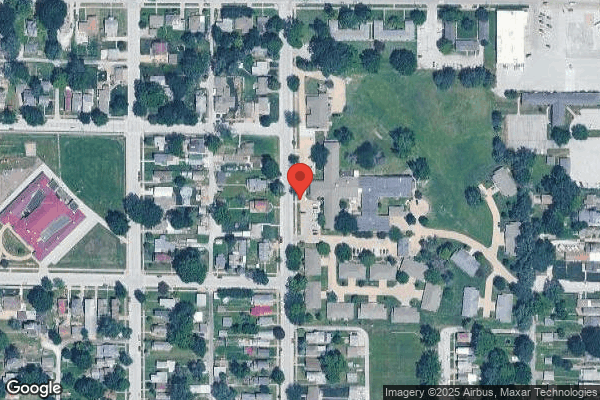

1440 NORTH 10TH STREET, QUINCY, IL 62301 (217) 224-3780
For profit - Limited Liability company 89 Beds POINTE MANAGEMENT Data: November 2025
Trust Grade
15/100
#614 of 665 in IL
Last Inspection: August 2024

Within standard 12-15 month inspection cycle. Federal law requires annual inspections.

Overview

Quincy Healthcare & Senior Living has a Trust Grade of F, which indicates significant concerns regarding care quality and resident safety. In the state of Illinois, it ranks #614 out of 665 facilities, placing it in the bottom half, and #5 out of 6 in Adams County, showing that there are only a few local options that are better. While the facility is improving, decreasing its issues from 20 in 2024 to 6 in 2025, the current situation still raises alarms. Staffing is rated as below average with a turnover rate of 48%, which is about the state's average, suggesting that staff stability is not a strong point. There are also concerning incidents, such as a resident waiting too long for toileting assistance, leading to emotional distress, and another resident sustaining a serious leg injury during a transfer that required emergency care. Overall, while there are areas of improvement, families should be cautious and weigh these serious issues when considering this facility.

Trust Score
F
15/100
In Illinois
#614/665
Bottom 8%
Safety Record
High Risk
Review needed
Inspections
Getting Better
20 → 6 violations
Staff Stability
⚠ Watch
48% turnover. Above average. Higher turnover means staff may not know residents' routines.
Penalties
✓ Good
$35,848 in fines. Lower than most Illinois facilities. Relatively clean record.
Skilled Nurses
✓ Good
Each resident gets 48 minutes of Registered Nurse (RN) attention daily — more than average for Illinois. RNs are trained to catch health problems early.
Violations
⚠ Watch
33 deficiencies on record. Higher than average. Multiple issues found across inspections.
★☆☆☆☆
1.0
Overall Rating
★★☆☆☆
2.0
Staff Levels
★☆☆☆☆
1.0
Care Quality
★★☆☆☆
2.0
Inspection Score
Stable
2024: 20 issues
2025: 6 issues

The Good

  • Full Sprinkler Coverage · Fire safety systems throughout facility
  • No fines on record

Facility shows strength in fire safety.

The Bad

1-Star Overall Rating

Below Illinois average (2.5)

Significant quality concerns identified by CMS

Staff Turnover: 48%

Near Illinois avg (46%)

Higher turnover may affect care consistency

Federal Fines: $35,848

Above median ($33,413)

Moderate penalties - review what triggered them

Chain: POINTE MANAGEMENT

Part of a multi-facility chain

Ask about local staffing decisions and management

The Ugly 33 deficiencies on record

4 actual harm
Apr 2025 5 deficiencies 1 Harm
SERIOUS (G) 📢 Someone Reported This

A family member, employee, or ombudsman was alarmed enough to file a formal complaint

Actual Harm - a resident was hurt due to facility failures

Resident Rights (Tag F0550)

A resident was harmed · This affected 1 resident

Based on observation, interview and record review, the facility failed to ensure a resident's call light was answered timely to provide toileting assistance for one of three residents (R1) reviewed fo...

Read full inspector narrative →
Based on observation, interview and record review, the facility failed to ensure a resident's call light was answered timely to provide toileting assistance for one of three residents (R1) reviewed for call lights in the sample of three. This failure resulted in R1 soiling herself while waiting for assistance and sitting for several hours and causing her emotional distress. Findings include: The facility's Resident Rights policy, dated 2/2021, documents Employees shall treat all residents with kindness, respect, and dignity. Federal and state laws guarantee certain basic rights to all residents of this facility. These rights include the resident's right to: a dignified existence; be treated with respect, kindness, and dignity. The facility's Dignity policy, dated 2/2021, documents Each resident shall be cared for in a manner that promotes and enhances his or her sense of well-being, level of satisfaction with life, and feelings of self-worth and self-esteem. Demeaning practices and standards of care that compromise dignity are prohibited. Staff are expected to promote dignity and assist residents; for example: promptly responding to a resident's request for toileting assistance. The facility's Resident's Call System policy, dated 9/2022, documents Residents are provided with a means to call staff for assistance through a communication system that directly calls a staff member or a centralized work station. Each resident is provided with a means to call staff directly for assistance from his/her bed, from toileting/bathing facilities and from the floor. Calls for assistance are answered as soon as possible, but no later than 5 minutes. Urgent requests for assistance are addressed immediately. R1's current electronic medical record documents R1 has diagnoses of Urinary Tract Infection, Chronic Diastolic (congestive) Heart Failure, Acute and Chronic Respiratory Failure, Morbid obesity and Chronic Kidney Disease stage 3. R1's current Care Plan, dated 4/24/25, documents (R1) will remain in homelike atmosphere at (the facility) and continue to have her needs met. (R1) will be continually monitored for safety and assisted so that her needs are met. R1's Toileting assessment, dated 4/21/25, documents R1 requires assistance of one staff for toileting. R1's current Brief Interview for Mental Status assessment (BIMS), dated 4/7/25, documents R1 has a BIMS of 14 indicating R1 is cognitively intact. On 4/25/25 at 12:45 PM, R1 was sitting in her room in a wheelchair. R1 stated sometimes she has to wait a while for her call light to be answered. R1 stated I need assistance to get up and when using the toilet. Last night I had to go to the bathroom and a CNA (Certified Nursing Assistant, unknown) came in at supper time and I told her that I needed to use the toilet. The CNA said she would go get someone to help her transfer me, but she never came back. I hit my call light, but I didn't see anyone until 11:30 PM. I had already soiled myself because I couldn't hold it that long. I can't transfer safely because my legs get wobbly, so I need help with going to the bathroom, so I just had to sit in the mess and wait. When the staff came in at 11:30 PM, they helped get me cleaned up. I don't know if it was a staffing problem or what. While waiting for someone to come I just felt very dirty. I was so upset that it happened, and I wish it didn't. On 4/25/25 at 12:55 PM, V8 (Certified Nursing Assistant) confirmed she is working on R1's hall. V8 stated (R1) was very upset this morning when I came in the see her. She said first thing when I entered her room that last night, she had a CNA (unknown) that told her she would come back and help her but never did. She said she ended up wetting herself and that she didn't receive help with getting cleaned up for several hours. (R1) is a nice resident and rarely pushes her call light because she doesn't want to bother. I felt bad for her because I could tell it made her so upset and she had it on her mind throughout the night. I am not sure how many were here at that time yesterday, but she needed assistance to the bathroom and was upset that she couldn't hold it. On 4/26/25 at 2:45 PM, V1 (Administrator in Training) stated he is handling nursing and nursing assistant concerns right now due to the facility not having a Director of Nursing or Interim director in that role, currently. V1 stated he was unaware that R1 waited several hours for toileting assistance or that she had an incontinent accident as a result. V1 confirmed waiting even one hour to receive assistance is not acceptable.
CONCERN (F) 📢 Someone Reported This

A family member, employee, or ombudsman was alarmed enough to file a formal complaint

Potential for Harm - no one hurt, but risky conditions existed

Deficiency F0725 (Tag F0725)

Could have caused harm · This affected most or all residents

Based on observation, interview and record review, the facility failed to ensure that direct resident care staffing hours are adequate to meet the needs of residents in the facility. This failure has ...

Read full inspector narrative →
Based on observation, interview and record review, the facility failed to ensure that direct resident care staffing hours are adequate to meet the needs of residents in the facility. This failure has the potential to affect all 75 residents residing in the facility. Findings include: The facility's Facility Assessment, dated 4/15/25, documents the facility has an average daily census of 77. This assessment documents Assuming our normal average level of acuity our staffing levels are set per the table (for daily staffing). Any new admit with higher level medical and care needs will result in a review and assessments of the current staffing ratios to ensure appropriate coverage to ensure resident comfort and ability to meet needs timely. The staffing will be adjusted as needed based on changes to the resident population. Resident PDPM (Patient Driven Payment Model) categories will assist with determining staffing needs based on acuity. Direct care staff, residents, resident representatives, and others' feedback is considered when allocating direct care staff hours. This same assessment documents a table to include expected staffing hours Day-shift (6 AM-2 PM) CNA (Certified Nursing Assistant) hours total 92 hours. Evening shift (2 PM-10 PM) CNA hours total 56 hours. Night shift (10 PM-6 AM) CNA hours total 48 hours (expected 196 Certified Nursing Assistant hours in a 24 hour time frame.) The facility's Resident's Call System policy, dated 9/2022, documents Residents are provided with a means to call staff for assistance through a communication system that directly calls a staff member or a centralized work station. Each resident is provided with a means to call staff directly for assistance from his/her bed, from toileting/bathing facilities and from the floor. Calls for assistance are answered as soon as possible, but no later than 5 minutes. Urgent requests for assistance are addressed immediately. The facility's Assistance with Meals policy, dated 3/2022, documents Residents shall receive assistance with meals in a manner that meets the individual needs of each resident. Dining Room Residents: All residents will be encouraged to eat in the dining room. Facility staff will serve resident trays and will help residents who require assistance with eating. Residents who cannot feed themselves will be fed with attention to safety, comfort and dignity. The facility's Resident Council minutes, dated 2/4/25, documents eleven residents were present at the meeting. These minutes also document resident concerns Residents stated that beds are not being made, and sheets are not getting changed is still an issue, and call lights being answered in a timely manner. Then residents stated that when they ask for help, they have been told no. The facility's Resident Council minutes, dated 4/1/25, documents eight residents were present at the meeting. These minutes also document resident concerns Residents down 300/400 call lights are not being answered in a timely manner, bed sheets are not being changed. R1's Toileting assessment, dated 4/21/25, documents R1 requires assistance of one staff for toileting. R1's current Brief Interview for Mental Status assessment (BIMS), dated 4/7/25, documents R1 has a BIMS of 14 indicating R1 is cognitively intact. On 4/25/25 at 12:45 PM, R1 was sitting in her room in a wheelchair. R1 stated sometimes she has to wait a while for her call light to be answered. R1 stated I need assistance to get up and when using the toilet. Last night I had to go to the bathroom and a CNA (Certified Nursing Assistant, unknown) came in at supper time and I told her that I needed to use the toilet. The CNA said she would go get someone to help her transfer me, but she never came back. I hit my call light, but I didn't see anyone until 11:30 PM. I had already soiled myself because I couldn't hold it that long. I can't transfer safely because my legs get wobbly, so I need help with going to the bathroom, so I just had to sit in the mess and wait. When the staff came in at 11:30 PM, they helped get me cleaned up. I don't know if it was a staffing problem or what. R2's current Care Plan, dated 9/17/24, documents R2 has a diagnosis of Dementia. This care plan also documents I need setup help and feeding assist since my hospitalization on 9/16/24. I will require limited/extensive/total assistance with eating due to dementia and weakness. I receive a regular diet with regular consistency per my physician orders. I am able to feed myself but will tell staff I am not able to feed myself and want them to feed me. My appetite varies due to behaviors, and I refuse to eat. I will act as if I am sleeping at the table, and when staff attempts to encourage me or wake me, I will yell out at them. I need encouragement to eat, and reminders to finish my meal. R2's Eating/Toileting assessment, dated 1/26/25, documents R2 requires physical assistance of one person for eating. On 4/25/25 at 12:20 PM, R2 was sitting in the facility's dining room at a table. R2 was leaning forward and had his eyes closed at the table. R2's lunch plate contained uneaten fish, rice, brussel sprouts and a roll. R2 had consumed zero percent of his meal. R3's current care plan, dated 6/3/2020, documents I need set up assistance with verbal cues and supervision with eating. Please set my meal up for me and encourage me to eat. Assist me with eating if I am not feeding myself. On 4/25/25 at 12:22 PM, R3 was in the facility's (feeding assitance) dining room sitting at a table by herself and sleeping. R3's plate contained a full serving of uneaten fish, rice, brussel sprouts, a roll and dessert. Less than 25% of R3's entire meal was eaten. At this time no Certified Nursing Assistants or resident care staff were in the dining area. On 4/25/25 at 12:25 PM, V11 (Dietary Aide/Dishwasher) was in the (feeding assitance) dining room and stated he is just filling the hall cart. V11 stated Usually we have nursing assistant staff in here to help residents with eating. This dining room is meant for a lower noise level and less distractions. We did have a couple aides in here, but I am not sure where they went. On 4/25/25 at 12:35 PM, several residents in the (feeding assitance) dining room remain without any facility staff members present. R2 and R3 continued sitting at tables with full plates of food in front of them. R2 was awake and yelled out occasionally. R3 continued to be sleeping at her table. On 4/25/25 at 12:40 PM, V8 (Certified Nursing Assistant) stated I am the only CNA on the 500 hall today. I have multiple residents who are (mechanical) lift transfers or require assistance of two staff with getting transferred. Residents who need help with eating are in the dining room. It seems like we don't have enough staff to keep up with all that needs done. I would say the past month it has gotten way worse. We don't have enough scheduled sometimes and then other times we have call offs, and they don't get covered. We will get texts on our days off, but it might only be thirty minutes before the shift starts and I can't just come in at that short notice. On 4/25/25 at 11:15 AM, V3 (Licensed Practical Nurse) stated It's a mess here. I have two aides (in my hall) today but typically I will only have one. It's just really bad here and staffing isn't enough. I don't know how we're still going like this. On 4/25/25 at 1:05 PM, V1 (Administrator In Training) stated The (feeding assitance) dining room is considered the assisted dining room and residents who eat in there need less distractions and staff to help with meals. On 4/26/25 at 1:55 PM, V2 (Human Resources/ Scheduler) confirmed she is the one who completes schedules for nurses and CNAs. V2 stated I know recently we've had a lot of call-ins. When staff call in last minute it's not easy to find people to cover those gaps. I don't know that we have been below state minimums, but I don't know what those are. We currently do not have a DON (Director of Nursing) or ICP (Infection Control Preventionist) and we do not have anyone interim in those positions Staff will sometimes complain to me that they don't want to work extra or pick up extra days and it's because they are burnt out. I get that. We are trying to incentive people to pick up overtime hours and work extra but they don't want to, and I don't really have an answer to make it better. The facility's Daily staff posting, dated 4/25/25, documents on 4/25/25 (of the expected 196 CNA hours based on the Facility Assessment) the facility was staffed with 116 CNA hours in the 24 hour time frame. The facility's Resident Census Report, dated 4/25/25 and provided by V1, documents the facility has 75 residents residing in the facility.
CONCERN (F) 📢 Someone Reported This

A family member, employee, or ombudsman was alarmed enough to file a formal complaint

Potential for Harm - no one hurt, but risky conditions existed

Deficiency F0727 (Tag F0727)

Could have caused harm · This affected most or all residents

Based on interview and record review the facility failed to provide services of a full time Director of Nursing. This failure has the potential to affect all 75 residents residing in the facility. Fin...

Read full inspector narrative →
Based on interview and record review the facility failed to provide services of a full time Director of Nursing. This failure has the potential to affect all 75 residents residing in the facility. Findings include: The facility's Facility Assessment, dated 4/15/25, documents the facility has an average census of 77 residents. This assessment also documents the facility will provide nursing services that include one full-time Director of Nursing. The facility's Director of Nursing job description, dated 1/2011, documents The Director of Nursing (DON) will plan, organize, develop and direct the facility's nursing services in accordance with all current federal, state and corporate standards, regulations, and guidelines to assure the highest degree of quality care. The Director of Nursing is responsible for the nursing services provided within the facility twenty-four (24) hours a day, seven days a week, including ensuring proper staffing & supervision at all times. This encompasses the development & implementation of patient care programs, nursing policies & procedures, nursing service objectives, standards of practice & all aspects of plans of care. On 4/25/25 at 11:35 AM, V1 (Administrator in Training) stated We had a large number of management positions step down all on the same day. Our (former) DON (V5) came to me, I believe on 4/9/25 and went back to only working as a floor nurse on 4/13/25. When someone calls off the nurse managers have to cover the floor. That is a lot of why my managers stepped down. V1 confirmed the facility does not have anyone filling the Director of Nursing role for the interim time. The facility's Resident Census Report, dated 4/25/25 and provided by V1, documents the facility has 75 residents residing in the facility.
CONCERN (F) 📢 Someone Reported This

A family member, employee, or ombudsman was alarmed enough to file a formal complaint

Potential for Harm - no one hurt, but risky conditions existed

Deficiency F0882 (Tag F0882)

Could have caused harm · This affected most or all residents

Based on interview and record review the facility failed to provide services of a Infection Control Preventionist. This failure has the potential to affect all 75 residents residing in the facility. F...

Read full inspector narrative →
Based on interview and record review the facility failed to provide services of a Infection Control Preventionist. This failure has the potential to affect all 75 residents residing in the facility. Findings include: The facility's Facility Assessment, dated 4/15/25, documents the facility has an average census of 77 residents. This assessment also documents the facility will provide nursing services that include a Infection Preventionist. The facility's Quality/Infection Control job description, dated 1/1/25, documents As directed and counseled by the DON (Director of nursing), will supervise and direct the care provided to the residents, with a focus on attaining clinical outcomes established by the physician and in the care plan. Communicates with physicians and families any time there is a significant change in the resident's condition. Further duties include: monitoring patient care by reviewing start of care and resumption of care documentation, assessing patient clinical outcomes, analyzing the processes and procedures used in patient care, and ensuring all patients receive care based on these standards. This description also documents Maintains a consistent presence on the floor and makes rounds several times during the work day to ensure residents' care is being provided according to standard-of-care and polices. Ensure residents' needs for daily living are met, and advise and instruct floor staff of residents' needs. Ensure the clinical outcomes that physicians want to see are carried out to the best of our abilities. Ensure tasks are completed timely, always informing floor nurse of any problems to help with completion of these tasks. Meet with all shifts to ensure residents' needs are observed, and any issues are addressed on each shift along with the DON. Responsible for monitoring that isolation and infection control protocols are being followed. Assist in and observe the dining rooms as feasible. Ensure residents are given choices and any problems with intake or dietary issues are addressed to Dietary Supervisor and DON. On 4/25/25 at 11:35 AM, V1 (Administrator in Training) stated We had a large number of management positions step down all on the same day. Our (former) Assistant Director of Nursing/ Infection Control Preventionist (V6) stopped working here about two weeks ago. V1 confirmed the facility does not have anyone filling the Infection Preventionist role for the interim time. The facility's Resident Census Report, dated 4/25/25 and provided by V1, documents the facility has 75 residents residing in the facility.
MINOR (C) 📢 Someone Reported This

A family member, employee, or ombudsman was alarmed enough to file a formal complaint

Minor Issue - procedural, no safety impact

Staffing Information (Tag F0732)

Minor procedural issue · This affected most or all residents

Based on observation, interview and record review, the facility failed to ensure the daily staffing postings document the number of licensed nurses and nursing assistants in the facility for a 24 hour...

Read full inspector narrative →
Based on observation, interview and record review, the facility failed to ensure the daily staffing postings document the number of licensed nurses and nursing assistants in the facility for a 24 hour period. This failure has the potential to affect all 75 residents residing in the facility. Findings include: The facility's daily staffing posted sheets, dated 3/25/25-4/25/25, do not document the total number of Certified Nursing Assistant (CNA) hours, Registered Nurse (RN) hours or Licensed Practical Nurse (LPN) hours. On 4/25/25 at 11:40 AM, the facility's daily staff posting was hanging next to the employee time punch clock at the entrance of the facility. This staff posting does not document the number of hours for LPN, RN and CNAs in a 24 hour period. On 4/25/25 at 11:55 AM, V1 (Administrator In Training) provided 30 days of daily staffing sheets from 3/25/25-4/25/25 and all sheets did not include the total number of hours for each licensed nurse and nursing assistant. V1 confirmed the staffing sheets provided for the last 30 days are the actual daily staffing sheets that the facility uses for a daily staff posting. On 4/26/25 at 1:55 PM, V2 (Human Resources/ Scheduler) stated The daily staffing sheets that we post are typically two pages and lists the employees working that day. We post those in two common areas next to time clocks. They do not total the hours for nurses and nursing assistants. They are printed from out of our scheduling system, and I don't think it offers that breakdown. We don't list out RN, LPN and CNA hours. It is just by a number of who's on the shift for nursing. On 4/26/25 at 2:45 PM, V1 stated I have been in the building since 10/30/24. I have worked other places, and we used to fill out the daily staff posting that listed the total RN, LPN and CNA hours. Our (facility) sheets that we post are just printed from the program we use for scheduling, but it doesn't provide the hours totaled. It was like this before I came so it's just been continued that way. The facility's Resident Census Report, dated 4/25/25 and provided by V1, documents the facility has 75 residents residing in the facility.
Mar 2025 1 deficiency
CONCERN (D) 📢 Someone Reported This

A family member, employee, or ombudsman was alarmed enough to file a formal complaint

Potential for Harm - no one hurt, but risky conditions existed

Accident Prevention (Tag F0689)

Could have caused harm · This affected 1 resident

**NOTE- TERMS IN BRACKETS HAVE BEEN EDITED TO PROTECT CONFIDENTIALITY** Based on interview and record review the facility failed to prevent a fall for one resident (R2) of 3 residents reviewed for tra...

Read full inspector narrative →
**NOTE- TERMS IN BRACKETS HAVE BEEN EDITED TO PROTECT CONFIDENTIALITY** Based on interview and record review the facility failed to prevent a fall for one resident (R2) of 3 residents reviewed for transfers in the sample of 3. Finding include: The Lifting Machine, Using a Mechanical Lift policy dated 7/2017 documents Purpose: The purpose of this procedure is to establish the general principles of safe lifting using a mechanical lift device. It is not a substitute for manufacturers training or instructions. General Guidelines: 1. At least 2 (two) nursing assistants are needed to safely move a resident with a mechanical lift. R2's Face Sheet documents R2 is a [AGE] year-old female admitted to the facility on [DATE] with diagnoses which included End Stage Renal Disease, Chronic Kidney Disease Stage 4, Type 2 Diabetes Mellitus with Diabetic Polyneuropathy, Cerebral Infarction, Transient Cerebral Ischemic Attack, Varicose Veins of Left Lower Extremity with Ulcer of Unspecified Site, Chronic Diastolic Heart Failure, Essential (Primary) Hypertension, Type 2 Diabetes Mellitus with Diabetic Neuropathy, and Vitamin Deficiency. R2's MDS (Minimum Data Set) assessment dated [DATE] documents R2's Brief Interview for Mental Status/BIMS is 15 (cognition intact). R2 uses a wheelchair and is dependent for transfers. R2's Nursing Note written by V6 (Licensed Practical Nurse/LPN) dated 3/4/25 at 12:00 PM, documents This Nurse was informed at 11:00 AM (R2) had slid on the floor from her wheelchair. CNA (Certified Nursing Assistant) stated resident was not all the way back in her wheelchair and slid to the floor. Upon arrival resident was sitting on her buttocks. No injuries noted. R2's Fall Investigation written by V1 (Administrator) dated 3/4/25 documents that at approximately 10:45 AM V1 was notified that R2 had been involved in a fall from a mechanical sit-to-stand lift. When V1 responded to the scene of the fall, R2 was lying on the floor in front of her wheelchair and the sit-to-stand lift was placed to the side of R2. V4 (Previous Certified Nursing Assistant/CNA) was standing behind the sit-to-stand lift, and V6 (LPN) was kneeling next to R2 performing an assessment. V1 asked V4 what had happened and V4 told V1 that as she was lifting R2 with the sit-to-stand lift, R2 slid forward out of the chair. V1 asked V4 to go to V1's office. In the office V1 asked V4 for a statement regarding R2's fall. V4 stated she was transferring R2 from R2's wheelchair to take R2 to the bathroom. V1 asked V4 who else had assisted with the transfer, and V4 replied no one helped V4 because they were all busy. V4's Separation Information dated 3/10/25 at 3:31 PM, documents V4's last day worked was 3/4/25. V4 was discharged Failed to Follow Instructions/Policy/Contract. (V4) was performing a resident transfer by herself, and it resulted in a resident fall. Facility policy requires two people to operate lifts for all resident transfers. (V4) has previously been disciplined over the same issue, compromising resident safety, and retrained on the issue. Prior Incident 1/10/25 (V4) was performing a two-person resident transfer by herself. 1/27/25 (V4) was given a final written warning for unsafe resident transfers and was also assigned just in time training of safe resident transfers. On 3/27/25 at 11:28 AM, V1 (Administrator) stated I fired (V4) because (V4) was transferring (R2) with a sit-to-stand lift by herself. It is in our policy that there are to be two staff for all sit-to-stand and (mechanical lift) transfers. On 3/27/25 at 1:08 PM, V2 (Director of Nursing) stated (V4/CNA) was doing a bad transfer. (V4) was using a sit-to-stand lift without help. (R2) was not put far enough back in her wheelchair and slipped off to the floor. On 3/27/25 at 1:45 PM, V6 (LPN) stated I was the nurse taking care of (R2) when (R2) fell. (V4) said that (R2) fell out of her chair. (V4) was transferring (R2) with a mechanical lift and didn't have anyone help her with the transfer. On 3/29/25 at 8:47 AM, R2 stated I had a fall when a CNA was transferring me with a sit-to-stand. When the CNA was lowering me to the wheelchair the chair was not under me far enough and I slid to the floor. I didn't get hurt. R2 also stated There was only one CNA doing the transfer.
Sept 2024 1 deficiency
CONCERN (D) 📢 Someone Reported This

A family member, employee, or ombudsman was alarmed enough to file a formal complaint

Potential for Harm - no one hurt, but risky conditions existed

Resident Rights (Tag F0550)

Could have caused harm · This affected 1 resident

Based on interview and record review, the facility failed to ensure call lights were answered in a reasonable amount of time for three of three residents (R1, R2, and R3) reviewed for call lights in t...

Read full inspector narrative →
Based on interview and record review, the facility failed to ensure call lights were answered in a reasonable amount of time for three of three residents (R1, R2, and R3) reviewed for call lights in the sample of three. Findings include: The facility's Resident Call System policy, dated 9/2022, document's Policy Interpretation and Implementation: 1. Each resident is provided with a means to call staff directly for assistance from his/her bed, from toileting/bathing facilities and from the floor. 6. Calls for assistance are answered as soon as possible, but no later than five minutes. Urgent requests for assistance are addressed immediately. 1. R1's MDS (Minimum Data Set) Assessment, dated 9/16/24, documents R1 is cognitively intact. On 9/27/24 at 9:05 AM R1 stated, Sometimes the call lights have taken longer to be answered, around 30 minutes to an hour. I have had to wait a long time, several times, for someone to answer my call light and I don't like that. Especially when I need help. The facility's Alarm Response Report dated 9/20/24 through 9/27/24, documents R1 waited on 9/20/24- 53 minutes 7 seconds and 56 minutes 1 second, 9/21/24- 37 minutes 25 seconds and 1 hour 57 minutes 23 seconds, and 27 minutes 54 seconds, 9/22/24 - 31 minutes 53 seconds, 50 minutes 27 seconds, and 38 minutes 13 seconds, 9/23/24 - 22 minutes 23 seconds, 9/24/24 -47 minutes 58 seconds, and 29 minutes 49 seconds, 9/25/24 - 1 hour 40 seconds and 44 minutes 51 seconds, and 9/26/24 - 28 minutes 13 seconds. 2. R2's MDS Assessment, dated 7/15/24, documents R2 has moderate cognitive impairment. On 9/27/24 at 9:20 AM R2 stated he does use his call light at times, and it usually takes staff around 10 to 15 minutes to answer his light, but sometimes it's over 30 minutes for staff to answer his call light. R2 stated, It doesn't bother me to wait 10 to 15 minutes, but I don't like waiting 30 minutes or longer. The facility's Alarm Response Report dated 9/20/24 through 9/27/24, documents that on 9/24/24 R2 waited 34 minutes 25 seconds and 9/26/24 -30 minutes 51 seconds. 3. R3's MDS Assessment, dated 9/23/24, documents R3 is cognitively intact. On 9/27/24 at 11:28 AM R3 stated, I do use my call light and it takes the staff anywhere from 15 minutes to 2 hours to answer my call light. I do not like waiting that long, I don't know why they don't answer it. The facility's Alarm Response Report, dated 9/17/24, documents R3 waited 50 minutes and 40 seconds, 37 minutes 36 seconds, 43 minutes 27 seconds, and 1 hour 47 minutes 4 seconds. The facility's Alarm Response Report, dated 9/20/24 through 9/27/24, documents R3 waited on 9/20/24 - 55 minutes 16 seconds, 9/21/24 - 28 minutes 9 seconds, 30 minutes, 2 hours 53 minutes 49 seconds, 42 minutes 8 seconds, 9/22/24 - 40 minutes 8 seconds, 27 minutes 50 seconds, 44 minutes 46 seconds, 9/23/24 - 46 minutes 6 seconds, 9/25/25 - 27 minutes 30 seconds, and 9/26/24 - 29 minutes 26 seconds. On 9/27/24 at 2:17 PM, V15/Ombudsman stated that he has had complaints about call lights taking a long time to be answered. V15 also stated I know that the facility recently lost their Director of Nursing so the call lights not being answered may be because of lost leadership. On 9/28/24 at 8:05 AM, V1/Interim Administrator stated, At each nurse's station and on the halls, there is a screen that shows when a resident's call light is going off. If there are multiple call lights going off, the screen goes through each call light going off. The call lights do not sound and the screen at the nurse's desk does not sound, so it is sometimes difficult for the staff to know when call lights are going off. I think that is part of the problem with call light wait times. On an extremely busy day residents should not wait any longer than 20 minutes for their call light to be answered.
Aug 2024 14 deficiencies
CONCERN (D)

Potential for Harm - no one hurt, but risky conditions existed

Deficiency F0582 (Tag F0582)

Could have caused harm · This affected 1 resident

Based on interview and record review the facility failed to provide the Beneficiary Notice to two (R232, R329) of three residents reviewed out of a sample of 38 residents. Findings: The document, Medi...

Read full inspector narrative →
Based on interview and record review the facility failed to provide the Beneficiary Notice to two (R232, R329) of three residents reviewed out of a sample of 38 residents. Findings: The document, Medicare Advance Beneficiary and Medicare Non-Coverage Notices, dated 9/2022, states, Residents are informed in advance when changes will occur to their bills. The facility issues the Skilled Nursing Facility Advance Beneficiary Notice Central Management System) CMS form 10055 for the following triggering events: A. Initiation - In the situation in which the director of admissions or benefits coordinator believes Medicare will not pay for extended care items or services that a physician has ordered, Skilled Nursing Facility Advance Beneficiary Notice of Non-Coverage (SNFABN) is issued to the beneficiary before those non-covered extended care items or services are furnished to the beneficiary. B. Reduction - In the situation in which the facility proposes to reduce a beneficiary's extended care items or services because it expects that Medicare will not pay for a subset of extended care items or services, or any items or services at the current level and/or frequency of care that a physician has ordered, the SNFABN is issues to the beneficiary before items or services to the beneficiary are reduced. C. Termination - In the situation in which the facility proposes to stop furnishing all extended care items or services to a beneficiary because it expects that Medicare will not continue to pay for the items or services to a beneficiary that a physician has ordered and the beneficiary would like to continue receiving the care, the SNFABN is issues to the beneficiary before such extended care items or services are terminated. If the resident's Medicare covered Part A stay is ending, a Notice of Medicare Non-Coverage (CMS 10123) is issues to the resident at least two calendar days before benefits end. The Notice of Medicare Non-Coverage informs the resident of the pending termination of coverage and of his/her right to an expedited review by a Quality Improvement Organization. The facility will file a claim (demand bill) when requested by the resident/beneficiary. The resident/beneficiary is not charged during the demand bill process. On 8/28/24 at 2:15 PM, V22, Accounts Receivable, stated, I do not have the documentation of the Skilled Nursing Facility Advance Beneficiary Notice of Non-Coverage for R232 or R329. I do not know when or what these residents were told when their (Medicare A) coverage was going to (terminate).
CONCERN (D)

Potential for Harm - no one hurt, but risky conditions existed

PASARR Coordination (Tag F0644)

Could have caused harm · This affected 1 resident

**NOTE- TERMS IN BRACKETS HAVE BEEN EDITED TO PROTECT CONFIDENTIALITY** Based on record review and interview the facility failed to obtain a level II PASRR (Pre-admission Screening and Resident Review...

Read full inspector narrative →
**NOTE- TERMS IN BRACKETS HAVE BEEN EDITED TO PROTECT CONFIDENTIALITY** Based on record review and interview the facility failed to obtain a level II PASRR (Pre-admission Screening and Resident Review) screening for two of three residents (R32, R34) reviewed for Level II PASRR screening with the diagnosis of Mental Illness in the sample of 38. Findings include: The facility's admission Criteria policy dated March 2019 documents, Policy Statement: Our facility admits only residents who's medical and nursing care needs can be met. Policy Interpretation and Implementation 9. All new admissions and readmissions are screened for mental disorders (MD), intellectual disabilities (ID) or related disorders (RD) per the Medicaid Pre-admission Screening and Resident Review (PASARR) process. a. The facility conducts a Level I PASARR screen for all potential admissions, regardless of payer source, to determine if the individual meets the criteria for MD, ID, or RD. b. If the level I screen indicates that the individual may meet the criteria for a MD, ID, or RD, he or she is referred to the state PASARR representative for the Level II (evaluation and determination) screening process. (1) The admitting nurse notifies the social services department when a resident is identified as having a possible (or evident) MD, ID, or RD. (2) The social worker is responsible for making referrals to the appropriate state-designated authority. c. Upon completion of the Level II evaluation, the state PASARR representative determines if the individual has a physical or mental condition, what specialized or rehabilitation services he or she needs, and whether placement in the facility is appropriate. d. The state PASARR representative provides a copy of the report to the facility. e. The interdisciplinary team determines whether the facility is capable of meeting the needs and services of the potential resident that are outlined in the evaluation. f. Once a decision is made, the state PASARR representative, the potential resident and his or her representative are notified. 1. R32's Face Sheet documents R32 was admitted to the facility on [DATE]. R32's Physician's Progress Notes dated 2-16-24 and signed by V19 (Physician) document, Suicidal Risk Assessment. Assessment: Schizoaffective Disorder. R32's Medical Record does not include evidence of a level II PASRR screening being obtained after R32 was diagnosed with Schizoaffective Disorder. On 08/28/24 at 11:15 AM V2 (Director of Nursing/DON) stated, There was no PASRR level II requested once (R32) was diagnosed with Schizophrenia. 2. R34's PASRR Level I Screen Outcome dated 1-4-24 documents, PASRR Level I Determination: Refer for Level II Onsite. Suspected or confirmed PASRR condition: Mental Health Disability. Current diagnoses: Schizophrenia, Anxiety Disorder, and Depressive Disorder. R34's Medical Record does not include evidence of a level II PASRR screening being obtained since R34's PASRR Level I Screen dated 1-4-24 indicated R34 needed a PASRR Level II to be completed onsite. On 08/28/24 at 11:15 AM, V2 (DON) stated, (R34) has not had a level II PASRR screening done. On 08/28/24 at 11:17 AM, V1 (Administrator-In-Training) stated, We (the facility) are not sure when to request level II PASRR Assessments.
CONCERN (D)

Potential for Harm - no one hurt, but risky conditions existed

Deficiency F0676 (Tag F0676)

Could have caused harm · This affected 1 resident

**NOTE- TERMS IN BRACKETS HAVE BEEN EDITED TO PROTECT CONFIDENTIALITY** Based on observation, interview, and record review the facility failed to provide therapy or restorative services to prevent a f...

Read full inspector narrative →
**NOTE- TERMS IN BRACKETS HAVE BEEN EDITED TO PROTECT CONFIDENTIALITY** Based on observation, interview, and record review the facility failed to provide therapy or restorative services to prevent a functional decline for one of one resident (R46) reviewed for Activities of Daily Living decline in the sample of 38. Findings include: Facilities' policy Activities of daily Living (ADLs), Supporting dated 3/2018, documents Residents will be provided with care, treatment and services to ensure that their activities of daily living (ADLs) do not diminish unless the circumstances of their clinical condition demonstrate that diminishing ADLs are unavoidable. Residents will be provided with care, treatment and services as appropriate to maintain or improve their ability to carry out ADLs. R46's current Care Plan documents that R46 became a non-weight bearing mechanical lift on 1/12/24. Prior to R46's care plan dated 1/12/24, R46's Care Plan documented R46's transfer status was sit-to-stand lift with two staff assistance. R46's Minimum Data Set (MDS) assessment dated [DATE], 4/14/24 and 7/13/24 documents R46 has not received therapy or restorative services. On 08/26/24 at 1:30 PM, R46 stated she does not stand, and staff transfer her with a mechanical lift. On 8/28/24 at 8:30 AM, R46 stated that its harder now to transfer with the mechanical lift and R46 feels she can't do as much physically as she once could. R46 stated she would like to be able to do exercises to get stronger so she can stand. R46 stated that she has been using mechanical lift for transfers for six months. R46 stated she has not had physical therapy. R46 stated the facility hasn't provided her with therapy or exercises and would like the facility to provide them to her. On 8/27/24 at 9:40 AM, V8 (Licensed Practical Nurse) and V21 (Certified Nursing Assistant) transferred R46 with a mechanical lift from the bed to the wheelchair for an appointment. On 8/27/24 at 12:15 PM, V2 (Director of Nursing) stated R46 was made a mechanical transfer March 2024. V2 stated R46 was a sit to stand prior but she is unsure why she was changed to a mechanical lift. On 8/27/24 at 1:05 PM, V12 (Physical Therapist/ Director of Rehab) stated R46 was evaluated by Physical Therapy on 12/13/23 for weakness after a local hospital stay. Prior to hospitalization R46 was a sit to stand transfer. V12 stated R46 was not picked up by Physical Therapy due to altered mental status and unable to follow cues. V12 stated there were no orders for any other discipline to evaluate. V12 stated R46 was evaluated again by Physical Therapy on 12/29/23 for muscle weakness, decline and functional ability and V12 felt she was still unable to participate in therapy. V12 stated her plan was to monitor R46 until she was able to participate in therapy. V12 stated she was going to daily Interdisciplinary Team (IDT) meetings but V12's supervisor said it was affecting productivity so V12 was unable to attend (IDT) until about a month ago. V12 stated, If we (therapy) were having the daily meetings, we could have added (R46) to our case load once she felt better and prevented her decline. On 8/28/24 at 11:20 AM, V20 (Certified Nursing Assistant) stated the main decline that she notices about R46 is that she is unable to stand and bear weight to transfer and now uses a non-weight bearing mechanical lift. R46's medical record from 1/12/24 until 8/28/24 does not include an IDT meeting note reviewing R46's functional decline or therapy needs.
CONCERN (D)

Potential for Harm - no one hurt, but risky conditions existed

Pressure Ulcer Prevention (Tag F0686)

Could have caused harm · This affected 1 resident

**NOTE- TERMS IN BRACKETS HAVE BEEN EDITED TO PROTECT CONFIDENTIALITY** Based on observation, interview, and record review the facility failed to perform weekly skin checks, obtain a treatment once a ...

Read full inspector narrative →
**NOTE- TERMS IN BRACKETS HAVE BEEN EDITED TO PROTECT CONFIDENTIALITY** Based on observation, interview, and record review the facility failed to perform weekly skin checks, obtain a treatment once a pressure ulcer was identified, and develop and implement pressure relieving interventions to prevent the development of pressure ulcers for one of seven residents (R41) reviewed for pressure ulcers in the sample of 38. Findings include: The facility's Prevention of Pressure Injuries policy dated April 2020, documents Purpose The purpose of this procedure is to provide information regarding identification of pressure injury risk factors and interventions for specific risk factors. Preparation Review the resident's care plan and identify the risk factors as well as the interventions designed to reduce or eliminate those considered modifiable. Skin Assessment 3. Inspect the skin on a daily basis when performing or assisting with personal care or ADLs (Activities of Daily Living). e. Reposition resident as indicated on the care plan. Mobility/Repositioning 1. Reposition all residents with or at risk of pressure injuries on an individualized schedule, as determined by the interdisciplinary care team. 2. Choose a frequency for repositioning based on the resident's risk factors and current clinical practice guidelines. 3. Teach residents who can change positions independently the importance of repositioning. Provide support devices and assistance as needed. Remind and encourage residents to change positions. Monitor 1. Evaluate, report and document potential changes in the skin. 2. Review the interventions and strategies for effectiveness on an ongoing basis. R41's MDS (Minimum Data Set) assessment dated [DATE] documents R41 is moderately cognitively impaired. R41's Braden Scale assessment dated [DATE] documents R41 was a moderate risk of developing pressure ulcers. R41's Skin Integrity Care Plan dated 6-21-24 documents, I am at mild risk for skin breakdown. Please help me to reposition frequently to help relieve pressure to my skin. R41's Treatment Administration Records (TARs) dated 8-1-24 through 8-31-24 document, Weekly Skin Assessment every Monday between 6:00 PM through 6:00 AM. These same TARs document R41's skin assessment was not completed on Monday (8-19-24). R41's Wound assessment dated [DATE] documents, Type: Pressure Ulcer. Site: Left buttock. Length 0.5 cm (centimeters) by 0.5 cm width by zero depth. Stage II. R41's Nursing Home Encounter Note dated 8-26-24 and signed by V15 (Nurse Practitioner) documents, (R41) is a [AGE] year-old who is evaluated today for report of new wound (to) buttock. Left buttock new wound, Area is somewhat tender. (R41) sleeps in recliner. History of pressure injuries. Assessment/Plan open wound left buttock stage II decubitus. Pressure injury prevention; reposition every one to two hours, shift weight or tilt in chair every 15-30 minutes. Cushion in wheelchair. Apply zinc oxide barrier twice daily until healed. R41's Medical Record and TARs dated 8-1-24 through 8-31-24 do not include a treatment being administered to R41's left buttock pressure ulcer until 8-27-24 (four days after the pressure ulcer was identified). On 08/27/24 from 9:00 AM to 11:30 AM, R41 was sitting in a wheelchair in the hallway. R41 was sitting with pressure directly on both buttock during this time and was not re-positioned during this time. On 08/27/24 at 1:36 PM, V4 (Agency LPN/Licensed Practical Nurse) assisted R41 off the toilet to a standing position and cleansed R41's left buttock pressure ulcer with wound cleanser. R41's left buttock pressure ulcer was approximately 0.8 cm by 0.5 cm by 0.2 cm depth and pink in color. V4 then proceeded to apply a moisture barrier cream to R41's left buttock pressure ulcer. On 08/27/24 at 1:40 PM, V13 (CNA/Certified Nursing Assistant) stated, I did not know (R41) had an order to re-position every one to two hours or shift weight or tilt her chair every 15-30 minutes. I took care of (R41) today and did not shift (R41's) weight while she was in the wheelchair. (R41's) wheelchair does not tilt. On 08/27/24 at 1:47 PM, V14 (CNA) stated, I did not reposition or shift (R41's) weight today while she was in the wheelchair. I did not know I was supposed to. On 08/28/24 at 10:40 AM, V2 (Director of Nursing) stated, (R41's) pressure ulcer to the left buttock was facility acquired and was caused by pressure. (R41's) weekly skin check was not completed on 8-19-24 and (R41) did not have a treatment applied to the left buttock pressure ulcer until 8-27-24.
CONCERN (D)

Potential for Harm - no one hurt, but risky conditions existed

Deficiency F0688 (Tag F0688)

Could have caused harm · This affected 1 resident

**NOTE- TERMS IN BRACKETS HAVE BEEN EDITED TO PROTECT CONFIDENTIALITY** Based on observation, interview, and record review the facility failed to develop and implement services to maintain and/or impr...

Read full inspector narrative →
**NOTE- TERMS IN BRACKETS HAVE BEEN EDITED TO PROTECT CONFIDENTIALITY** Based on observation, interview, and record review the facility failed to develop and implement services to maintain and/or improve range of motion limitations for one of one resident (R49) reviewed for limitations in range of motion in the sample of 38. Findings include: The facility's Restorative Nursing Services policy dated 07/2017 documents, Residents will receive restorative nursing care as needed to help promote optimal safety and independence. Restorative goals and objectives are individualized and resident-centered and are outlined in the resident's plan of care. Restorative goals may include but are not limited to supporting and assisting the resident in adjusting or adapting to changing abilities, developing, maintaining, or strengthening his/her phycological and psychological resources, maintaining his/her dignity, independence, and self-esteem, and participating in the development and implementation of his/her plan of care. R49's Physician's Orders dated 8-27-24 document R49 has the diagnoses of Hemiplegia following a Cerebral Infarction affecting the right dominant side and Muscle Wasting. R49's MDS (Minimum Data Set) assessment dated [DATE] documents R49 is cognitively intact, has functional limitations in range of motion to one of the upper extremities, and does not receive passive or active range of motion restorative programs or therapy. R49's current Care Plan does not address R49's limitations in range of motion to the upper extremity. On 08/26/24 at 11:15 AM, R49 was sitting on the edge of the bed. R49 was unable to open his right hand completely. R49 stated, I have arthritis and my hands gets stiff. I do not get any exercises from staff. On 08/27/24 at 02:42 PM, V16 (Restorative Aide) stated, (R49) does not receive range of motion exercises and is not on a restorative program to receive range of motion.
CONCERN (D)

Potential for Harm - no one hurt, but risky conditions existed

Deficiency F0698 (Tag F0698)

Could have caused harm · This affected 1 resident

Based on interview, observation and record review, the facility failed to provide ongoing communication with the dialysis center, monitor a dialysis access site, document observations post-dialysis, a...

Read full inspector narrative →
Based on interview, observation and record review, the facility failed to provide ongoing communication with the dialysis center, monitor a dialysis access site, document observations post-dialysis, and ensure a care plan was implemented regarding monitoring, care, and emergency management of a dialysis access site for one of two residents (R25) reviewed for dialysis in the sample of 38. Findings Include: The facility's Hemodialysis Catheters-Access and Care Of policy, dated 2/2023, documents Care of AVFs (arteriovenous fistula) and AVG (arteriovenous graft): 3. Care involves the primary goals of preventing infection and maintaining patency of the catheter (preventing clots). 4. To prevent infection and/or clotting: a. Keep the access site clean at all times. d. Check for signs of infection (warmth, redness, tenderness, or edema) at the access site when performing care at regular intervals. h. check patency of the site at regular intervals. Palpate the site to feel the thrill, or use a stethoscope to hear the whoosh or bruit of blood flow through the access. Care Immediately Following Dialysis Treatment: 2. If dressing becomes wet, dirty, or not intact, the dressing shall be changed by a licensed nurse trained in the procedure. (Note: Check with state nurse practice act to determine licensure and competency requirements.) 3. Mild bleeding from site (post-dialysis) can be expected. Apply pressure to insertion site and contact dialysis center for instructions. 4. If there is major bleeding from site (post-dialysis), apply pressure to insertion site and contact emergency services and dialysis center. Verify that clamps are closed on lumens. This is a medical emergency. Do not leave resident alone until emergency services arrive. Documentation: The nurse should document in the resident's medical record every shift as follows: 1. Location of catheter. 2. Condition of dressing (interventions if needed). 3. If dialysis was done during shift. 4. Any part of report from dialysis nurse post-dialysis being give. 5. Observations post-dialysis. The facility's End-Stage Renal Disease, Care of a Resident with policy, dated 9/2010, documents Policy Statement: Residents with End-Stage Renal Disease (ESRD) will be care for according to currently recognized standards of care. Policy Interpretation and Implementation. 5. The resident's comprehensive care plan will reflect the resident's needs related to ESRD/dialysis care. The facility's Dialysis Transfer Agreement, dated 3/11/10, documents Facility shall ensure that all appropriate medical, social, administrative and other information accompany all designated residents at the time of transfer to (dialysis) Center. This information shall include, but is not limited to, where appropriate, the following: Appropriate medical records, including history of the designated resident's illness, including laboratory and x-ray findings; Treatment presently being provided to the designated resident, including medications and any changes in a patient's condition (physical or mental), change of medication, diet or fluid intake; Any other information that will facilitate the adequate coordination of care, as reasonably determined by the center. This policy also documents Center will develop a written protocol governing specific responsibilities, policies, and procedures to be used in rendering dialysis services to designated residents at Center, including but not limited to, the development and implementation of a designated resident's care plan relative to the provision of dialysis services. Facility will provide for the interchange of information useful or necessary for the care of the designated resident and will inform Center of a contact person at facility whose responsibilities oversight of provision of dialysis services by Center to the designated residents of the facility. R25's POS (Physician Order Sheet), dated 8/28/24, documents R25's diagnoses to include End Stage Renal Disease and Dependence of Renal Dialysis. R25's current care plan has no interventions in place regarding monitoring, care, or emergency management of R25's dialysis access site in her left upper arm. R25's electronic medical record does not document communication with the dialysis center is being done every Tuesday, Thursday, and Saturday. R25's electronic medical record does not document any pre or post dialysis monitoring or observations to R25's access site. This record also does not contain any documentation of communication between the facility and R25's dialysis administration center. On 8/28/24 at 11:00AM, R25 was sitting in her recliner in her room watching television. R25 stated she attends hemodialysis at a local dialysis facility on Tuesday, Thursday, and Saturdays. R25 pointed at her left upper arm and stated that dialysis staff are individuals that monitor and care for her access site located in her left upper arm. R25 stated, (the facility) staff never look at my access site. On 8/28/24 at 10:20 AM, V4/Agency Licensed Practical Nurse stated she is not aware of any dialysis communication between the dialysis center and the facility on R25. V4 stated, I was not aware we needed to monitor (R25's) access site or document post-dialysis in (R25's) medical record. I have not been doing this. On 8/28/24 at 11:20 AM, V2/Director of Nursing stated (the facility) does not send any communication plan to dialysis and they do not send any forms back. V2/Director of Nursing verified there is no evidence of documentation in R25's electronic medical record of staff monitoring R25's dialysis access site or staff documenting on R25 post dialysis. V2 confirmed R25's care plan does not include specifics regarding monitoring or emergency care of R24's dialysis access site.
CONCERN (D)

Potential for Harm - no one hurt, but risky conditions existed

Medication Errors (Tag F0758)

Could have caused harm · This affected 1 resident

**NOTE- TERMS IN BRACKETS HAVE BEEN EDITED TO PROTECT CONFIDENTIALITY** 2. R27's current Face Sheet documents R27 has an admission date of 10/4/22. R27's Physician Orders dated 9/28/23 documents an o...

Read full inspector narrative →
**NOTE- TERMS IN BRACKETS HAVE BEEN EDITED TO PROTECT CONFIDENTIALITY** 2. R27's current Face Sheet documents R27 has an admission date of 10/4/22. R27's Physician Orders dated 9/28/23 documents an order for Seroquel (ant-psychotic medication) 37.5mg (milligrams) by mouth at bedtime for the diagnosis of Major Depressive Disorder and Dementia with other behavior disturbance. R27's MDS (Minimum Data Set) assessment dated [DATE] documents R27 is moderately cognitively impaired and has no behavioral symptoms that impact the resident or others, cause significant risk of injury to herself or others, or interfered with R27's cares. R27's current Care Plan does not include the targeted behaviors or non-pharmacological interventions to address targeted behaviors for the use of R27's Seroquel. R27's Behavior Tracking Reports dated 5/1/24 to 8/26/24 document to monitor R27 for behaviors of anxiety and depression. These same Behavior Tracking Reports document R27 has had no behaviors. R27's Medical Record does not include any anti-psychotic medication assessments or evaluations or documentation of IDT meetings, as directed by the facility policy, to discuss whether or not other causes for symptoms have been ruled out, the signs and symptoms are clinically significant enough to warrant medication therapy, whether a particular medication is clinically indicated to manage the symptoms or condition, or whether or not the actual or intended benefit of the medication is understood by the resident/representative. On 8/26/24 at 1:28 PM, R27 was sitting in R27's wheelchair in the assisted dining room. R27 was preparing to eat lunch. R27 had no behaviors at this time. On 8/27/24 from 10:00 AM to 10:20 AM, R27 was observed lying in her bed. R27 had no behaviors observed during this time. On 8/27/24 at 12:33PM, V16/Restorative Aide stated, I have worked here for 10 years, so I have taken care of (R27) since she has been here. I have not witnessed any behaviors from (R27) except maybe some anxiousness, but not often. 8/27/24 at 12:35PM, V3/Registered Nurse stated, I have not witnessed or have known of any behaviors from (R27). On 8/27/24 at 11:00 AM, V2/Director of Nursing stated, (R27's) Care Plan does not include targeted behaviors for the use of Seroquel. (R27's) diagnoses of Major Depressive Disorder and Dementia with other Behavioral Disturbance is not appropriate diagnoses for the use of an anti-psychotic. I haven't even witness (R27) have behaviors. Typically, antipsychotics should be used for residents with a psychotic diagnoses like Schizophrenia. R27 verified the facility does not do anti-psychotic drug assessments or evaluations. 8/27/24 at 11:25 PM, V17/Social Service Director Assistant and V18/Social Service Director stated they are the ones who develop the behavior tracking programs. V17 and V18 verified R25 does not have targeted behaviors on her behavior tracking logs for the use of Seroquel (anti-psychotic). V18 stated, I only put to monitor for Anxiety symptoms and Depression symptoms on (R25's) behavior tracking. Based on observation, interview, and record review the facility failed to document targeted behaviors and diagnoses to justify the use of antipsychotic medications, perform antipsychotic evaluations and assessments, and perform gradual dose reductions of scheduled antipsychotic medications for two of two residents (R27 and R41) reviewed for the use of antipsychotic medications with the diagnosis of Dementia in the sample of 38. Findings include: The facility's Psychotropic Medication Use policy dated July 2022, documents Residents will not receive medications that are not clinically indicated to treat a specific condition. Policy Interpretation and Implementation 1. A psychotropic medication is any medication that affects brain activity associated with mental processes and behavior. 3. Residents, families and/or the representative are involved in the medication management process. Psychotropic medication management includes a. indications for use; b. dose (including duplicate therapy); c. duration; d. adequate monitoring for efficacy and adverse consequences; and e. preventing, identifying, and responding to adverse consequences. 5. Use of psychotropic medications (other than antipsychotics) are not increased when efforts to decrease antipsychotic medications are being implemented. 10. Non-pharmacological approaches are used (unless contraindicated) to minimize the need for medications, permit the lowest possible dose, and allow for discontinuation of medications when possible. 11. Residents on psychotropic medications receive gradual dose reductions (coupled with non-pharmacological interventions), unless clinically contraindicated, in an effort to discontinue these medications. Resident Evaluations 1. Situations which may prompt an evaluation or re-evaluation of the resident include a. admission or re-admission; b. a clinically significant change in condition/status; c. a new, persistent, or recurrent clinically significant symptom or problem; d. a worsening of an existing problem or condition; e. an unexplained decline in function or cognition; f. a new medication order or renewal of orders; or g. an irregularity identified in the pharmacist's medication regimen review. 2. The evaluation may include (for example): a. an evaluation of resident status (co-morbid conditions, symptoms, psychiatric diagnosis; etc. (etcetera); b. resident goals and preferences; c. allergies and potential medication or food interactions; d. history of medication use; and e. need for palliative or end of life support. 3. When determining whether to initiate, modify, or discontinue medication therapy, the IDT (Interdisciplinary Team) conducts an evaluation of the resident. The evaluation will attempt to clarify whether: a. other causes for symptoms (including symptoms that mimic a psychiatric disorder) have been ruled out; b. signs and symptoms are clinically significant enough to warrant medication therapy; c. a particular medication is clinically indicated to manage the symptoms or condition; and d. the actual or intended benefit of the medication is understood by the resident/representative. 4. Residents (and/or representatives) have the right to decline treatment with psychotropic medications. a. the staff and physician will review with the resident/representative the risks related to not taking the medication as well as appropriate alternatives. The facility's Tapering Medications and Gradual Drug Dose Reduction policy dated July 2022 documents, Policy Statement 1. After medications are ordered for a resident, the staff and practitioner shall seek an appropriate dose and duration for each medication that also minimizes the risk of adverse consequences. 2. All medications shall be considered for possible tapering. Tapering that is applicable to psychotropic medications are referred to as gradual dose reductions (GDR). 3. Residents who use psychotropic medications shall receive gradual dose reductions and behavioral interventions, unless clinically contraindicated, in an effort to discontinue these drugs. Policy Interpretation and Implementation 4. The staff and practitioner will consider tapering under certain circumstances, including when: a. the resident's clinical condition has improved or stabilized; b. the underlying causes of the original target symptoms have resolved; c. non-pharmacological interventions, including behavioral interventions, have been effective in reducing symptoms; or d. a resident's condition has not responded to treatment or has declined despite treatment. 6. The physician will order appropriate tapering of medications, as indicated. 10. Residents who use psychotropic medications shall receive gradual dose reductions, unless clinically contraindicated, in an effort to discontinue the use of such drugs. Pertinent behavioral interventions will also be attempted. (Behavioral interventions refer to non-pharmacological attempts to influence an individual's behavior, including environmental alterations and staff approaches to care.) 11. Within the first year after a resident is admitted on a psychotropic medication or after the resident has been started on a psychotropic medication, the staff and practitioner shall attempt a GDR in two separate quarters (with at least one month between the attempts), unless clinically contraindicated. After the first year, the facility shall attempt a GDR at least annually, unless clinically contraindicated. 1. R41's Physician's Orders dated 2-1-24 through 4-29-24 document, Quetiapine (Seroquel/Anti-Psychotic Medication) 50 mg (milligrams) twice daily for the diagnosis of Dementia with Delusional Disorder. R41's Progress Notes dated 4-29-24 and signed by V15 (Nurse Practitioner) document, Diagnoses: Acute Confusion. Dysuria. Moderate Dementia with Psychotic Disturbance. New orders: Urinalysis clean catch. Complete Metabolic Profile. Increase Seroquel to 75 mg twice daily for Dementia with Psychosis. R41's Progress Notes dated 8-26-24 and signed by V15 document, Diagnoses: Open wound left buttock stage II Decubitus. Incontinence bowel and bladder. Dementia with Psychosis/Delusion, Arthritis joint pain, history of repeated falls, and history of urinary tract infections. New Orders: Increase Seroquel 100 mg twice daily for Dementia with Psychosis/Delusion. CT (Computed Tomography) head and brain due to altered mental status and Dementia. R41's MDS (Minimum Data Set) Assessments dated 5-1-24 and 8-1-24 document R41 is moderately cognitively impaired, has had no behaviors that cause a risk of harm to self or others and does not have any physical, verbal, or other behaviors. This same MDS documents R41 received an antipsychotic medication that has not had a GDR and does not have physician documentation as to why a GDR (Gradual Dose Reduction) is clinically contraindicated. R41's Medical Record does not include any antipsychotic medication assessments or evaluations or documentation of IDT (Inter-Disciplinary) meetings, as directed by the facility policy, to discuss whether or not other causes for symptoms have been ruled out, the signs and symptoms are clinically significant enough to warrant medication therapy, whether a particular medication is clinically indicated to manage the symptoms or condition, or whether or not the actual or intended benefit of the medication is understood by the resident/representative. R41's current Care Plan does not include documentation of the targeted behaviors for the use of R41's Seroquel. On 08/26/24 at 11:31 AM, R41 was sitting in her recliner in her room sleeping. On 08/27/24 at 9:00 AM and 11:30 AM, R41 was sitting in a wheelchair in the hallway, sleeping. On 08/26/24 at 11:29 AM, V9 (CNA/Certified Nursing Assistant) stated, (R41's) only behavior is that she yells out at times. (R41) is easily re-directed when we take her on walks or get her a snack. On 08/26/24 at 11:32 AM, V10 (CNA) stated, (R41) only yells out sometimes that someone is on her back. (R41) is easily re-directed. (R41) sleeps a lot. On 08/27/24 at 11:30 AM, V2 (Director of Nursing) stated, (R41's) Care Plan does not include (R41's) targeted behaviors to justify the use of (R41's) Seroquel and (R41) was not assessed for underlying conditions prior to increasing (R41's) Seroquel. (R1's) Seroquel has been increased twice in the prior year. No GDR attempt has been made. On 08/27/24 at 2:16 PM, V1 (Administrator-In-Training) stated, We (the facility) did not have IDT meetings to discuss (R41's) behaviors or to rule out underlying conditions prior to increasing (R41's) Seroquel twice. The facility does not do anti-psychotic drug assessments or evaluations.
CONCERN (E)

Potential for Harm - no one hurt, but risky conditions existed

Resident Rights (Tag F0550)

Could have caused harm · This affected multiple residents

Based on interview and record review, the facility failed to answer the residents' call light system in a reasonable amount of time for six of six residents (R7, R32, R40, R42, R55, R69) reviewed in a...

Read full inspector narrative →
Based on interview and record review, the facility failed to answer the residents' call light system in a reasonable amount of time for six of six residents (R7, R32, R40, R42, R55, R69) reviewed in a sample of 38 residents. Findings include: The document, Resident Call Light, dated 9/2022, states, Residents are provided with a means to call staff for assistance through a communication system that directly calls a staff member or a centralized workstation. Each resident is provided with a means to call staff directly for assistance from his/her bed, from toileting/bathing facilities and from the floor. Calls for assistance are answered as soon as possible, but no later than five minutes. Urgent requests for assistance are addressed immediately. Call light response times are reviewed as part of the Quality Assurance Performance Improvement. The Alarm Response Report, for the week of 8/18/24 through 8/24/24, documents that two call lights took over two hours before answered: one 2 hours 25 minutes and one 2 hours 36 minutes; seven call lights took one hour or more before answered: one 1 hour 57 minutes; one 1 hour 48 minutes; one 1 hour 37 minutes; one 1 hour 20 minutes; one 1 hour 5 minutes; two 1 hour 3 minutes; nine over 50 minutes; eight over 40 minutes; 14 over 30 minutes and 25 over 20 minutes. On 8/27/24 at 10:00 AM, during the Group Meeting, R7, R32, R42, R69 stated that they have waited for their call lights to be answered for over an hour or longer. R7 stated, I don't know what they are doing that they can't come into my room. Sometimes a Certified Nursing Assistant (CNA) will come in and turn off the light and tell me she'll be back, and it doesn't happen, or it takes a long time. R42 stated, It's frustrating when you really need help, and no one comes. R69 stated, I think the CNAs are nice, but where are they when I need one? R40 and R55 agreed that they also have waited long periods before their call light has been answered. R40 stated, I think 20 minutes wouldn't be too long to wait, but over that seems too much. On 8/28/24 at 11:40 AM, V2, Director of Nursing, stated, Call lights are to be answered in a reasonable amount of time. I don't know why they are not.
CONCERN (E)

Potential for Harm - no one hurt, but risky conditions existed

Transfer Notice (Tag F0623)

Could have caused harm · This affected multiple residents

**NOTE- TERMS IN BRACKETS HAVE BEEN EDITED TO PROTECT CONFIDENTIALITY** 4. R46's medical record documents that R46 was hospitalized on [DATE]. No evidence of a facility notification of transfer/discha...

Read full inspector narrative →
**NOTE- TERMS IN BRACKETS HAVE BEEN EDITED TO PROTECT CONFIDENTIALITY** 4. R46's medical record documents that R46 was hospitalized on [DATE]. No evidence of a facility notification of transfer/discharge or ombudsman notification was present on R46's chart. 5. R66's medical record documents that R66 was transferred to a local hospital on 8/15/24. No evidence of a facility notification of a transfer/discharge or ombudsman notification was present on R66's chart. On 8/27/24 at 2:19 PM, V6/Business Office Manager stated she is in charge of keeping track of the residents notice of transfers and bed holds when a resident is sent out to the hospital. V6 verified that the facility was unable to provide documentation that R18, R46, R66, and R75 or their representative was provided with a written notice of transfer/discharge when R18, R46, R66, and R75 was sent out to the hospital. 8/28/24 at 9:28AM, V18/Service Director stated she is in charge of sending the ombudsman a monthly list of discharges from the facility. V18 stated, I only send the local Ombudsman a monthly list of residents who discharge from our facility. I do not include resident transfers to the hospital on the monthly Ombudsman list. I didn't know I needed to. V18 verified she had not sent notification to the local Ombudsman of R18, R46, R66, and R75's discharges to the Hospital. Based on interview and record review the facility failed to notify the facility Ombudsman, of Facility Discharges/Transfers, monthly and failed to provide the resident and resident representative with a written notice of transfer for five residents (R18, R33, R46, R66, and R75) of five residents reviewed for transfer/discharges in the sample of 38. Findings include: Transfer or Discharge Documentation policy dated December 2016, documents Policy Statement When a resident is transferred or discharged , details of the transfer or discharge will be documented in the medical record and appropriate information will be communicated to the receiving health care facility or provider. Policy Interpretation and Implementation 4. When a resident is transferred or discharged from the facility, the following information will be documented in the medical record: b. That an appropriate notice was provided to the resident and/or legal representative. 1. R18's Nursing Note dated 5/21/24 at 1:55 AM documents R18 admitted to the hospital with the diagnosis of congestive heart failure, and urinary tract infection. There was no evidence in the medical record of a facility notification of a transfer/discharge to the family or ombudsman. R18's Nursing Note dated 5/29/24 at 1:49 PM documents R18 will be returning this afternoon to the facility after a hospital stay for Congestive Heart Failure, Urinary Tract Infection, Pneumonia, Bilateral Lower Extremity Swelling, and Fluid Overload. 2. R33's hospital transfer dated 8/20/24 at 12:16 PM documents R33 was discharged to the hospital. There was no evidence in the medical record of a facility notification of a transfer/discharge to the family or ombudsman. R33's Nursing Note dated 8/20/24 at 7:51 PM documents R33 was sent to the emergency room by ambulance with possible Dyspnea/Aspiration Pneumonia and Acute Renal Insufficiency. R33 Nursing Note dated 8/22/24 at 1:06 PM documents that R33 was admitted to the hospital on [DATE] with shortness of breath due to being COVID-19 (Coronavirus) positive, and a Urinary Tract Infection. 3. R75's Nursing Note dated 7/12/24 at 2:53 PM documents R75 was admitted to the hospital for Leukocytosis. There was no evidence in the medical record of a facility notification of a transfer/discharge to the family or ombudsman. R75's Nursing Note dated 7/15/24 at 12:28 PM documents R75 returned to the facility at 12:15 PM.
CONCERN (E)

Potential for Harm - no one hurt, but risky conditions existed

Deficiency F0625 (Tag F0625)

Could have caused harm · This affected multiple residents

**NOTE- TERMS IN BRACKETS HAVE BEEN EDITED TO PROTECT CONFIDENTIALITY** 4. R46's medical record documents that R46 was hospitalized on [DATE]. R46's medical record does not contain documentation of wr...

Read full inspector narrative →
**NOTE- TERMS IN BRACKETS HAVE BEEN EDITED TO PROTECT CONFIDENTIALITY** 4. R46's medical record documents that R46 was hospitalized on [DATE]. R46's medical record does not contain documentation of written notice to R46 or R46's resident representative, of the facility bed hold policy. 5. R66's medical record documents that R66 was hospitalized on [DATE]. R66's medical record does not contain documentation of written notice to R66 or R66's resident representative, of the facility bed hold policy. On 8/27/24 at 2:19 PM V6/Business Office Manager stated she is in charge of keeping track of the residents notice of transfers and bed holds when a resident is sent out to the hospital. V6 verified that the facility was unable to provide documentation that R18, R33, R46, R66, and R75 or their representative was provided with a bed hold policy when R18, R33, R46, R66, and R75 were sent out to the hospital. Based on interview and record review the facility failed to provide a bed hold notification to the resident or resident representative for five of five residents (R18, R33, R46, R66, and R75) reviewed for hospital transfers in the sample of 38. Findings include: The Bed-Holds and Returns policy dated March 2022, documents Policy Statement Residents and/or representatives are informed (in writing) of the facility and state (if applicable) bed-hold policies. Policy Interpretation and Implementation 1. All residents/representatives are provided written information regarding the facility bed-hold policies, which address holding or reserving a resident's bed during periods of absence (hospitalization or therapeutic leave). Residents are provided written information about these policies at least twice: a. well in advance of any transfer (e.g.(example), in the admission packet); and b. at the time of transfer (or, if the transfer was an emergency, within (twenty-four) 24 hours). Transfer or Discharge Documentation policy dated December 2016, documents Policy Statement When a resident is transferred or discharged , details of the transfer or discharge will be documented in the medical record and appropriate information will be communicated to the receiving health care facility or provider. Policy Interpretation and Implementation 4. When a resident is transferred or discharged from the facility, the following information will be documented in the medical record: b. That an appropriate notice was provided to the resident and/or legal representative. 1. R18's Nursing Note dated 5/21/24 at 1:55 AM documents R18 admitted to the hospital with the diagnosis of congestive heart failure, and urinary tract infection. There was no evidence in the medical record of a bed hold notification given to the resident or residents representative. R18's Nursing Note dated 5/29/24 at 1:49 PM documents R18 will be returning this afternoon to the facility after a hospital stay for Congestive Heart Failure, Urinary Tract Infection, Pneumonia, Bilateral Lower Extremity Swelling, and Fluid Overload. 2. R33's hospital transfer dated 8/20/24 at 12:16 PM documents R33 was discharged to the hospital. There was no evidence in the medical record of a bed hold notification given to the resident or residents representative. R33's Nursing Note dated 8/20/24 at 7:51 PM documents R33 was sent to the emergency room by ambulance with possible Dyspnea/Aspiration Pneumonia and Acute Renal Insufficiency. R33 Nursing Note dated 8/22/24 at 1:06 PM documents that R33 was admitted to the hospital on [DATE] with shortness of breath due to being COVID-19 (Coronavirus) positive, and a Urinary Tract Infection. 3. R75's Nursing Note dated 7/12/24 at 2:53 PM documents R75 was admitted to the hospital for Leukocytosis. There was no evidence in the medical record of a bed hold notification given to the resident or residents representative. R75's Nursing Note dated 7/15/24 at 12:28 PM documents R75 return to the facility at 12:15 PM.
CONCERN (E)

Potential for Harm - no one hurt, but risky conditions existed

Respiratory Care (Tag F0695)

Could have caused harm · This affected multiple residents

**NOTE- TERMS IN BRACKETS HAVE BEEN EDITED TO PROTECT CONFIDENTIALITY** 2. R69's Physician orders dated 8/27/24 documents to change weekly tubing and mask change. On 08/26/24 at 10:07 AM, R69's oxygen...

Read full inspector narrative →
**NOTE- TERMS IN BRACKETS HAVE BEEN EDITED TO PROTECT CONFIDENTIALITY** 2. R69's Physician orders dated 8/27/24 documents to change weekly tubing and mask change. On 08/26/24 at 10:07 AM, R69's oxygen tubing, nebulizer tubing, and nebulizer mask were undated. R69's nebulizer mask was also unbagged. 3. On 08/27/24 at 12:00 PM, oxygen tubing was lying on the floor in R330's room undated. Nasal cannula was uncovered lying on R330's floor. R330's humidification bottle was attached to the concentrator and was undated. On 8/26/24 at 10:15 AM, V8 (Licensed Practical Nurse) stated she was unaware that oxygen and nebulizer tubing needed to be dated. On 8/26/24 at 10:15 AM, V8 confirmed that the oxygen tubing, nebulizer tubing, and nebulizer mask was undated and unbagged and R330's nasal canula was lying on the floor and R330's humidification bottle was undated. 4. R27's current POS (Physician Order Sheet) documents a Physician order for Albuterol Sulfate Solution 0.63 milligram/3 milliliter inhale one applicatorful by inhalation route four times per day as needed. On 08/26/24 at 10:30 AM, R27's nebulizer mask and tubing were lying on R27's nightstand unbagged and undated. On 8/26/24 at 10:55 AM, V3/Registered Nurse verified R27's nebulizer mask and tubing were undated and unbagged. V3 stated, The night shift should change and date the nebulizer masks and tubing every seven days and the nebulizer mask should be bagged in a brown bag when not in use. Based on observation, interview, and record review the facility failed to place an oxygen sign for one resident (R18), failed to ensure a nebulizer mask and nebulizer tubing was changed every seven days and stored in a bag between uses for one resident (R27), and failed to date oxygen tubing/humidifier bottles per facility policy for three residents (R18, R69, and R330) of four residents reviewed for respiratory care, in the sample of 38. Findings Include: The Respiratory Therapy Prevention of Infection policy dated November 2011, documents The purpose of this procedure is to guide prevention of infection associated with respiratory therapy tasks and equipment, including ventilators, among residents and staff. General Guidelines 1. Distilled water used in respiratory therapy must be dated in an initialed when opened and discarded after twenty-four (24) hours. Infection Control Considerations Related to Oxygen Administration 3. [NAME] bottle with date and initials upon opening and discard after twenty-four (24) hours. The Oxygen Administration policy dated October 2010 documents the purpose of this procedure is to provide guidelines for safe oxygen administration. Equipment and Supplies 4. No Smoking/Oxygen in Use signs. Steps in the Procedure 2. Place an Oxygen in Use sign on the outside of the room entrance door. Close the door. 3. Place an Oxygen in Use sign in its designated place on or over the resident's bed. Administering Medications through a Small Volume (Handheld) Nebulizer policy dated October 2010 documents The purpose of this procedure is to safely end aseptically administer aerosolized particles of medication into the resident's airway. Steps in the procedure 30. Change equipment and tubing every seven days, or according to facility protocol. 1. On 8/26/24 at 10:50 AM, R18 was sitting in his wheelchair wearing oxygen. There was no date on the oxygen tubing or humidifier bottle. V4/Agency Licensed Practical Nurse/LPN verified the tubing and bottle were not dated. On 8/28/24 at 12:20 PM, R18 was sitting in his room wearing oxygen. V23/LPN verified there was no oxygen sign on R18's door or in his room. V23 also stated there should be an oxygen sign on the door for all residents that use oxygen. R18's current electronic Medical Record documents R18 was re-admitted to the facility on [DATE] with the following, but not limited to, diagnoses: Chronic Obstructive Pulmonary Disease, Acute Respiratory Failure with Hypoxia, and Essential (Primary) Hypertension. R18's Physician Order dated 7/2/24 documents, oxygen at 2 (two) liters per minute by nasal cannula continuously. On 8/27/24 at 12:10 PM, V2/Director of Nursing stated that the humidification bottle attached to oxygen concentrator and oxygen tubing are supposed to be marked with the date they are changed.
CONCERN (E)

Potential for Harm - no one hurt, but risky conditions existed

Pharmacy Services (Tag F0755)

Could have caused harm · This affected multiple residents

Based on observation, interview, and record review the facility failed to obtain physician ordered scheduled medications from the pharmacy for four of four residents (R15, R53, R63, and R76) reviewed ...

Read full inspector narrative →
Based on observation, interview, and record review the facility failed to obtain physician ordered scheduled medications from the pharmacy for four of four residents (R15, R53, R63, and R76) reviewed for pharmacy services in the sample of 38. Findings include: The facility's Pharmacy Services Overview policy dated April 2019 documents, Policy Statement: The facility shall accurately and safely provide or obtain pharmaceutical services, including the provision of routine and emergency medications and biologicals, and the services of a licensed consultant pharmacist. 1. Pharmaceutical services consist of processes of receiving and interpreting prescriber's orders, acquiring, receiving, storing, controlling, reconciling, compounding (e.g. (example), intravenous antibiotics), dispensing, packaging, labeling, distributing, administering, monitoring responses to, using and/or disposing of all medications, biologicals, chemicals. 2. The facility shall contract with a licensed consultant pharmacist to help get, obtain, and maintain timely and appropriate pharmacy services that support resident's needs, are consistent with current standards of practice, and meet state and federal requirements. 3. Pharmacy services are available to residents 24 (twenty-four) hours a day, seven days a week. 4. Residents have sufficient supply of their prescribed medications and receive medications (routine, emergency or as needed) in a timely manner. 5. Nursing staff communicate prescriber orders to the pharmacy and are responsible for contacting the pharmacy if a resident's medication is not available for administration. 1. R53's Physician's Orders dated 8-26-24 document, Order date 6-18-24: Levothyroxine 50 mcg (micrograms) one tablet daily for the diagnosis of Hypothyroidism. R53's Medication Administration Record (MAR) dated 8-1-24 through 8-26-24 documents R53's Levothyroxine 50 mcg was not administered as scheduled on 8-26-24 due to the medication being unavailable. On 08/26/24 at 9:15 AM, V4 (Agency LPN/Licensed Practical Nurse) was administering R53's scheduled medications. R53's Levothyroxine 50 mcg was not available in the medication cart. V4 stated, (R53's) Levothyroxine 50 mcg tablet is not available. We (the facility) have been having problems with the pharmacy getting the facility medications. 2. R15's Physician's Orders dated 8-26-24 document, Order date 5-28-24: Spiriva 18 mcg by inhalation once daily at 8:00 AM for the diagnosis of Chronic Obstructive Pulmonary Disease. R15's MAR dated 8-1-24 through 8-26-24 documents R15's Spiriva 18 mcg was not administered as scheduled on 8-26-24 at 8:00 AM due to the medication being unavailable. On 08/26/24 at 9:32 AM, V4 was administering R15's scheduled medications. R15's scheduled Spiriva 18 mcg (micrograms) inhaler was not available in the medication cart. V4 stated, I am not able to give (R15) her Spiriva inhaler. It is not available. I will have to order it from the pharmacy and hope it comes in tomorrow. 3. R76's Physician's Orders dated 8-26-24 document, Order date 5-23-24 Metoprolol Succinate ER (Extended Release) 100 mg (milligrams) 1.5 tablets daily at 8:00 AM for the diagnosis of Hypertension. Order date 5-23-24: Finasteride five mg one tablet daily at 8:00 AM for the diagnosis of Benign Prostatic Hyperplasia, 5-23-24 Order date: Eliquis five mg (0.5 tablet) twice daily for the diagnosis of Chronic Atrial Fibrillation, Order date 7-26-24: Juven seven grams two times daily for the diagnosis of a Stage Two Pressure Ulcer, Order date 5-29-24: Potassium Chloride ER 10 meq (milliequivalent) daily for the diagnosis of Hypokalemia, and Order date 8-14-24: Allopurinol 100 mg two tablets daily for the diagnosis of Gout. R76's MAR dated 8-1-24 through 8-26-24 documents R76's Metoprolol Succinate ER 100 mg (1.5 tablets), Finasteride five mg one tablet, Eliquis five mg (0.5 tablet), Juven seven grams, Potassium Chloride ER 10 meq, and Allopurinol 100 mg two tablets were not administered as scheduled at 8:00 AM on 8/26/24 due to the medications being unavailable. On 08/26/24 at 09:53 AM, V4 stated, I was unable to give (R76) his Metoprolol Succinate ER 100 mg tablet, Finasteride five mg tablet, Eliquis five mg tablet, Juven seven-gram powder, Potassium Chloride ER 10 meq tablet, or Allopurinol 100 mg (two tablets) this morning as the medications were unavailable. 4. R63's Physician's Orders dated 8-27-24 document, Order date 3-22-24: Furosemide 20 mg one tablet daily at 12:00 PM for the diagnosis of Localized Edema. R63's MAR dated 8-1-24 through 8-26-24 documents R63's Furosemide 20 mg one tablet was not administered as scheduled on 8-26-24 at 12:00 PM due to the medication being unavailable. On 08/27/24 at 9:35 AM, V4 stated, (R63's) Furosemide 20 mg was not available on 8-26-24 at noon. I had to re-order it (Furosemide 20 mg) from pharmacy.
CONCERN (E)

Potential for Harm - no one hurt, but risky conditions existed

Deficiency F0809 (Tag F0809)

Could have caused harm · This affected multiple residents

Based on interview and record review, the facility failed to offer snacks to residents; failed to ensure resident preferences were met while eating in rooms (due to COVID in the building); failed to e...

Read full inspector narrative →
Based on interview and record review, the facility failed to offer snacks to residents; failed to ensure resident preferences were met while eating in rooms (due to COVID in the building); failed to ensure that resident meals were complete including beverages when served; failed to deliver ice water to the residents during each shift for six of six residents (R7, R32, R40, R42, R55, R60) reviewed for snacks and meals in a sample of 38. Findings include: The document, Frequency of Meals, dated 7/2024, states, Each resident will receive three meals daily, in accordance with resident needs, preferences, requests and plan of care. Alternative meals will be offered to residents. Residents will also be offered nourishing snacks. Nourishing snacks will be available for residents who need or desire additional food between meals. Evening snacks will be offered routinely to all residents. The facility will choose the snacks that are served at bedtime. However, the dietician and food services manager will solicit input from the residents and/or the resident council. The document, Snacks (Between Meal and Bedtime), Serving, dated 9/2010, states, The purpose is to provide the resident with adequate nutrition. Document any special request(s) made by the resident concerning his or her eating time or food likes and dislikes. Report information in accordance with facility policy and professional standards of practice. The 8/06/24 Resident Council Minutes state, Nursing: Residents stated they are not getting fresh ice water regularly, memorandum filled out and turned into the Director of Nursing and the Administrator. On 8/27/24 at 10:00 AM, during the Group Meeting, R60 stated, I don't get snacks in the evening. When I first came here, they told me that I would get snacks of my choice. At first, I did. Now I don't get any. R32 stated, I wish we could get snacks; I get hungry in the evening. R40 stated, We have to eat in our rooms because of COVID. If there's something missing on my tray or I don't like what is served, it's too bad because they won't get me anything else. There's been several meals that I didn't get any beverages at all. R42 stated, I would like to get ice water more often. I think they are supposed to bring us ice water during each of the shifts but sometimes I don't get any at all or just once a day. All six residents, R7, R32, R40, R42, R55, and R60, agreed with the above statements. R7 commented, I think all of us get frustrated when we get the wrong (food item) or not what we ordered (for the meal). I also think it's bad that we aren't getting beverages at meals like we do in the dining room or ice water. I can ask for things but some of the residents don't. On 8/27/24 at 11:30 AM, V27, Dietary Manager, stated, I had not heard that residents were not getting snacks, getting beverages at meals or that they haven't been getting what they wanted to eat for meals. I'll need to check into this. We don't give snacks like we used to - I have staff send cookies or graham crackers or something like that. Residents requested too many different things for snacks, so we made it simpler. On 8/27/24 at 10:40 AM, V2, Director of Nursing stated, Yes, residents should be getting fresh ice water during each shift or more often. I don't know why they aren't.
MINOR (C)

Minor Issue - procedural, no safety impact

Deficiency F0847 (Tag F0847)

Minor procedural issue · This affected most or all residents

Based on interview and record review, the facility failed explain the arbitration agreement to the resident, or their representative in a form or manner they could understand, state in the arbitration...

Read full inspector narrative →
Based on interview and record review, the facility failed explain the arbitration agreement to the resident, or their representative in a form or manner they could understand, state in the arbitration agreement that the agreement can be rescinded within 30 days of signing it, and failed to have the resident, or their representative acknowledge if they understood the agreement. This had the potential to affect all residents residing in the facility. Findings include: The Binding Arbitration Agreements dated November 2023 documents Residents (or representatives) are informed of the nature and implications of any proposed binding arbitration agreements so as to make informed decisions on whether to enter into such agreements. Policy interpretation and implementation 5. The terms and conditions of a binding arbitration agreement are explained to the resident (or representative) in a way that ensures his or her understanding of the agreement, including that the resident may be giving up his or her right to have a dispute decided in a court proceeding (i.e. (example), litigation). 6. The terms and conditions of a binding arbitration agreement are explained to the resident (or representative) in a form and manner that he or she understands, taking into consideration the resident's (or representative's) language, literacy, and stated preference for learning. 7. After the terms and conditions of the agreement are explained, the resident or representative must acknowledge that he or she understands the agreement before being asked to sign the document. a. A signature alone is not sufficient acknowledgement of understanding. b. The resident (or representative) must verbally acknowledge understanding, and the verbal acknowledgment documented by the staff member who explains the agreement. 8. Residents (or representatives) are provided 30 days after signing to fully review and rescind any agreement not understood at the time of admission. The process for withdrawing from the agreement is included in the agreement, including the timeframe for withdrawal, the contact person or department for communicating intent to withdrawal, and what the resident (or representative) should expect to receive as confirmation that the agreement has been terminated. The Contract Between Resident and (the facility) not dated documents Section XI. Dispute Resolution Resident shall select one of the following dispute resolution options: A. Binding Arbitration. Except as prohibited by applicable law, the Resident agrees that any action, dispute, claim, or controversy related to the quality of health care services provided pursuit to this Contract (e.g.(example), whether in contract or in tort, statuary for common law, legal or equitable, or otherwise) now existing or hereafter arising between Resident and (the facility), any past, present or future incidents, omissions, acts, errors, practices or occurrences causing injury to either party whereby the other party or its agents, employees or representatives may be liable, in whole or in part, or any other aspect of the past, present or future relationships between the parties shall be resolved by binding arbitration administered by a neutral arbitrator approved by both Resident and (the facility). The cost of the arbitration will be divided equally between Resident and (the facility). The decision of the arbitrator will be final. The site of the arbitration shall be at the following location mutually agreed to by the parties: (not filled in) This arbitration contract is made pursuant to the transaction in Interstate commerce and shall be governed by the Federal Arbitration Act. The parties voluntarily and knowingly waive any right they have to a jury trial. The parties also agree that neither will have the right to participate as a representative or member of any class or claimants pertaining to a claim subject to arbitration under this Contract. Or B. Legal Proceedings. Except as prohibited by applicable law, the Resident agrees that any action, dispute, claim or controversy related to the quality of health care services provided pursuant to the Contract (e.g., whether in contrast or in tort, statuary or common law, legal or equitable, or otherwise) now existing or hereafter arise between Resident and (the facility), any past, present or future incidents, omissions, acts, errors, practices or occurrences causing injury to either party whereby the other party or its agents, employees or representatives may be liable, in whole or in part, or any other aspect of this of the past, present, or future relationships between the parties shall be resolved by maintaining a civil suit in court, provided that any such suit shall be filed in a State or Federal Court of competent jurisdictions located in Illinois. Nothing, however, shall prevent the parties from agreeing at the time the dispute, claim or controversy arises, to proceed with arbitration. On 8/26/24 at 9:50 AM, V25 Marketing/Admissions stated that there are two choices a resident or their representative has when it comes to dispute resolutions. They (resident/resident representative) can either choose to use an arbitrator (option A) or can choose to get their own lawyer (option B). V7 does not tell them (resident/representative) they are giving up there right to sue the facility if they sign the arbitration agreement. V7 tells them to read the choices and they can decide which one they want to sign. V7 also stated that he has been doing this job for about four months and V25 thinks there has only been one resident/representative that chose to use an arbitrator. On 8/27/24 at the Resident Council Meeting there were six residents in attendance R7, R32, R40, R42, R55, and R60. All six stated they have not been told anything about an arbitration agreement and they do not know what it is. None of the residents knew if they or their representative had signed it. On 8/28/24 at 8:55 AM, V26/R73's Power of Attorney stated that she was not told she was giving up R73's rights to litigation through the courts. V26 stated she would have liked to have known that information and would not have made the choice to use arbitration for any disputes. On 8/28/24 at 9:10 AM, V25/Marketing/Admissions stated that it is not in the Arbitration part of the contract that the resident can rescind the arbitration agreement in 30 days. There is also not a place for the resident or resident's representative to acknowledge if they understand the arbitration agreement. R73's Contract Between Resident and (the facility) dated 5/8/24, documents that V26/R73's Power of Attorney chose option A and signed the binding arbitration agreement. The facility's CMS (Centers for Medicare and Medicaid Services) Long Term Care Facility Application for Medicare and Medicaid Form 671 dated 8/26/24 and signed by V1/Administrator in Training documents 76 residents currently reside within the facility.
Jun 2024 2 deficiencies
CONCERN (D) 📢 Someone Reported This

A family member, employee, or ombudsman was alarmed enough to file a formal complaint

Potential for Harm - no one hurt, but risky conditions existed

Pressure Ulcer Prevention (Tag F0686)

Could have caused harm · This affected 1 resident

Based on observation, record review and interview the facility failed to provide pressure ulcer treatments as ordered for one resident (R3) reviewed for pressure areas in the sample of three. Findings...

Read full inspector narrative →
Based on observation, record review and interview the facility failed to provide pressure ulcer treatments as ordered for one resident (R3) reviewed for pressure areas in the sample of three. Findings include: An October 2010 policy titled Wound Care documents the steps in the procedure of changing a wound dressing include: 4. Put on exam gloves. Loosen tape and remove dressing. 5. Pull glove over dressing and discard into appropriate receptacle. Wash and dry your hands thoroughly. R3's Physician Order Sheet (POS) documents a treatment of heel protectors on at all times. The order documents, Schedule: Every day at 6:00 AM - 6:00 PM; 6:00 PM - 6:00 AM. Protocol: As tolerated, (R3) does not like the heel protectors and often prefers pillow instead for offloading. R3's POS documents an order dated 05/09/24 for a 0.25% sodium hypochlorite solution to be applied to R3's right heel with moist gauze only over eschar area (cut to fit), apply barrier around the wound, cover with an abdominal pad and gauze wrap, change daily. On 06/04/24 at 3:55 PM a progress note written by V3, Nurse Practitioner, documents R3 has a right heel unstageable pressure ulcer with suspected deep tissue injury. On 06/04/24 at 11:39 AM, V2, Director of Nursing entered R3's room, asked if R3 was having pain and proceeded to remove R3's blankets from the end of his bed exposing R3's feet which were in socks. R3's heels were not elevated using offloading boots or pillows. V2 stated to R3, We need to get your heel protectors on you. V2 removed R3's sock from his right foot which showed a soiled foam bordered dressing on his inner heel with writing on it that documented, 05/30/ (2024). V2 was asked what date was on R3's right heel dressing. V3 stated, 05/30. V2 stated, They're good for three to five days. V2 was asked how often the sodium hypochlorite dressing was to be applied. V2 stated it was to be changed daily but nursing can just peel back the foam bordered gauze and replace it. Manufacturer's instructions of the foam bordered dressing document, If reused, performance of the product may deteriorate, cross contamination may occur. On 06/04/24 at 2:12 PM, V2 confirmed R3's order was for the sodium hypochlorite on moist gauze (cut to fit eschar area only), followed by an abdominal pad and gauze wrap. This dressing was to be changed daily. V2 confirmed that nursing was peeling back and reusing the foam bordered gauze for the six days it was in place.
CONCERN (E) 📢 Someone Reported This

A family member, employee, or ombudsman was alarmed enough to file a formal complaint

Potential for Harm - no one hurt, but risky conditions existed

Infection Control (Tag F0880)

Could have caused harm · This affected multiple residents

Based on observation, record review and interview the facility failed to implement enhanced barrier precautions to protect vulnerable residents for 16 residents (R1, R2, R3, R4, R5, R8, R9, R10, R11, ...

Read full inspector narrative →
Based on observation, record review and interview the facility failed to implement enhanced barrier precautions to protect vulnerable residents for 16 residents (R1, R2, R3, R4, R5, R8, R9, R10, R11, R12, R14, R15, R16, R18, R19, R20) reviewed for infection control. Findings include: Enhanced Barrier Precautions policy dated August 2022 documents, 1. Enhanced barrier precautions (EBP's) are utilized to prevent the spread of multi-drug resistant organisms (MDRO's) to residents. 2. EBP's employ targeted gown and glove use during high contact resident care activities when contact precautions do not otherwise apply. 3 Examples of high-contact resident care activities requiring the use of gown and gloves for EBPs include: a. dressing; b. bathing/showering; c. transferring; d. providing hygiene; e. changing linens; f. changing briefs or assisting with toileting; g. device care or use and h. wound care (any opening requiring a dressing). 4. EBS's are indicated (when contact precautions do not otherwise apply) for residents infected or colonized with the following: a. Pan-resistant organisms; b. Carbapanemase-producing carbapenem-resistant Enterobacterales; c. Carbapenemase-producing carbapenem-resistant Pseudomonas; d. Carbapenemase-producing carbapenem-resistant Acinetobacter baumannii; e. Candidia auris; f. Methicillin-resistant Staphylococcus aureus (MRSA); g. ESBL-producing Enterobacterales; h. Vancomycin-resistant Enterococci (VRE); i. Multidrug-resistant Pseudomonas aeruginosa; and j. Drur-resistant Streptococcus pneumonia. 5. EBP's are indicated (when contact precautions do not otherwise apply) for residents with wounds and/or indwelling medical devices regardless of MDRO status. V1, Administrator, provided an undated list of residents requiring enhanced barrier precautions. R1, R2 and R8 have wounds. R4, R5, R9, R10, R11, R12, R14, R15, R18, R19, R20 have indwelling catheters. R3 has an indwelling catheter and wounds. R16 has a feeding tube. R2's Physician order dated 04/04/24 documents a treatment order for R2's right buttock stage two pressure ulcer to cleanse wound with mild soap and water. Gently pat dry. Apply thin layer of ointment around the wound to protect it. Apply a silver product, cover with dry gauze, an abdominal pad and secure with tape. Change daily. On 06/04/24 at 11:10 AM, V5 and V6 (Certified Nursing Assistants), assisted R2 with perineal care and changed R2's undergarment. V4, Registered Nurse then performed wound care for R2's right buttock wound. No gowns or enhanced barrier precautions were worn by V4, V5 or V6. There was no enhanced barrier precaution sign or equipment near R2's room. On 06/04/24 at 11:33 AM, V4 was asked if he utilizes enhanced barrier precautions. V4 stated, What's that? I haven't heard of that until you just said it. On 06/04/24 at 11:43 AM, V1, Administrator stated the facility has an enhanced barrier policy formulated and she will have the infection control coordinator gather a list of individuals who require enhanced barriers. E1 confirmed the enhanced barrier policy for the facility has not been implemented as of today's date.
Apr 2024 2 deficiencies
CONCERN (D) 📢 Someone Reported This

A family member, employee, or ombudsman was alarmed enough to file a formal complaint

Potential for Harm - no one hurt, but risky conditions existed

Pharmacy Services (Tag F0755)

Could have caused harm · This affected 1 resident

Based on observation, interview and record review the Facility failed to safely dispense medications to three of four Residents (R2, R3 and R4) reviewed for medication administration in a sample of fo...

Read full inspector narrative →
Based on observation, interview and record review the Facility failed to safely dispense medications to three of four Residents (R2, R3 and R4) reviewed for medication administration in a sample of four. Findings include: Facility Administering Oral Medications Policy, undated, documents: the purpose of this procedure is to provide guidelines for the safe administration of oral medications; and remain with the Resident until all medications have been taken. 1. R2's Physician Order Sheet, dated 4/27/24, document R2's diagnoses including: Parkinsonism, Congestive Heart Failure, Muscle Weakness, Hypertension, Cerebrovascular Disease, Tremor, Dementia, Chronic Obstructive Pulmonary Disease, Centilobular Emphysema, Chronic Kidney Disease Stage Three, Peripheral Vascular Disease, Major Depressive Disorder an Anxiety. R2's Medication Administration Record, dated 4/27/24 at 8:00 am, documents that R2 was administered scheduled 8:00 am medication (Atenolol 50 milligram/mg tablet, Torsemide 10 mg tablet, Senna Lax 8.6 mg tablet, Aspirin 81 mg chewable tablet, Carbidopa 10 mg/Levadopa 100 mg tablet, Gabapentin 100 mg tablet, Acetaminophen Extened Release 650 mg tablet, Losartan 100 mg tablet, Folic Acid 1 mg tablet, Cyanocobalamin 100 microgram/mcg tablet and Pantoprazole 40 mg tablet). On 4/27/24 at 9:15 am, 9:40 am, and 10:01 am, R2 was laying in bed sleeping. A medication cup that contained Atenolol 50 milligram/mg tablet, Torsemide 10 mg tablet, Senna Lax 8.6 mg tablet, Aspirin 81 mg chewable tablet, Carbidopa 10 mg/Levadopa 100 mg tablet, Gabapentin 100 mg tablet, Acetaminophen Extened Release 650 mg tablet, Losartan 100 mg tablet, Folic Acid 1 mg tablet, Cyanocobalamin 100 microgram/mcg tablet and Pantoprazole 40 mg tablet was on R2's beside table. On 4/27/24 at 10:40 am, V7 (Licensed Practical Nurse) stated, I just put (R2's) 8:00 am medications in her room and she takes them after she wakes up and eats breakfast. I probably should not be doing that. 2. R3's Physician Order Sheet/POS, dated 4/27/24, document R2's diagnoses including: Sepsis, Cellulitis of Lower Limb, Pressure Ulcer Left Heel, Osteoarthritis, Diabetes Mellitus, Hypertension, Atrial Fibrillation, Transient Cerebral Ischemic Attack, Morbid Obesity, Bronchitis and Chronic Kidney Disease. R3's POS documents a medication order for Polyethylene Glycol Powder at 8:00 am. On 4/27/24 at 9:35 am, V7 (Licensed Practical Nurse) delivered R3's 8:00 am medications and V7 left R3's medication (Polyethylene Glycol Powder/Metamucil) in a cup at R3's bedside. R3 stated, Just leave my medicine here and I will take it when I am done eating. V7 then left the medicine and walked out of R3's room. On 4/27/24 at 10:40 am, V7 (Licensed Practical Nurse) stated, I am just going to leave that with him (R3), he is just going to drink that after he finishes his breakfast. 3. R4's Physician Order Sheet/POS, dated 4/27/24, document R4's diagnoses including: Chronic Obstructive Pulmonary Disease, Hypertensive Heart Disease with Heart Failure, Heart failure, Protein-Calorie Malnutrition, Anorexia, Emphysema, Severe Hypertension, Palpitations, Major Depressive Disorder, Osteoarthritis, Anemia, Hypothyroidism, Hyperlipidemia, Urgency of Urination; Hypokalemia, Macular Degeneration and Dry Eye Syndrome. R4's POS also documents medication orders for Symbicort 160 mcg-4.5 mcg/actuation aerosol inhaler inhale two puffs by inhalation route two times per day at 8:00 am, Complete Multivitamin-Multimineral 18 milligram/mg-400 microgram/mcg tablet, give 1 tablet by oral route once daily with food every day at 8:00 am, Spiriva with HandiHaler 18 mcg and inhalation capsules inhale the contents of one capsule (18 mcg) using two inhalations by inhalation route once daily via handihaler every day at 8:00 am, Ascorbic Acid (Vitamin C) 500 mg tablet give 1 tablet by oral route once daily at 8:00 am, Ferrous Sulfate 325 mg (65 mg iron) tablet give one tablet (325 mg) by oral route once daily with breakfast at 8:00 am, Docusate Sodium 100 mg capsule give one capsule (100 mg) by oral route two times per day as needed, PreserVision one mg capsule give by oral route at 8:00 am, Cholecalciferol (Vitamin D3) 50 mcg (2,000 unit) tablet give one tablet by oral route at 8:00 am, Metoprolol Succinate Extended Release 25 mg 24 hour give one tablet (25 mg) by oral route once daily at 8:00 am, Citalopram 40 mg tablet give one tablet (40 mg) by oral route once daily at 8:00 am. On 4/27/24 at 9:10 am, 10:01 am and 11:50 am, a plastic medication cup that contained tablets/capsules and three inhalation medications (Spiriva, Albuterol and Symbicort) were on R4's bedside table. On 4/27/24 at 11:50 am, R4 stated, I was going to take those medications after I ate my breakfast. R4 stated, I think that cup has some iron, potassium, eye medicine and my anti-depressant, I am not really sure what else is in there. They usually just leave them sitting there (on the bedside table) for me to take when I am done eating. On 4/27/24 at 11:50 am, V3 (Licensed Practical Nurse) stated, I cannot believe that (R4) did not take her pills or inhalers yet. She usually takes them with her breakfast. I know it is probably not a good idea to leave them in (R4's) room. That medicine cup had Metoprolol, Eye Vitar, Vitamin C, Ducosate Sodium, Mutlivitamin and Citalopram in it and those inhalers are Symbicort and Spiriva. (R4) also likes to keep her rescue inhaler by her at all times also because she gets anxious. On 4/27/24 at 12:00 pm, V2 (Director of Nursing) stated, The nurses should not be leaving medicine in the rooms without watching the Residents take them, they should be staying with the Residents until they take them.
CONCERN (D) 📢 Someone Reported This

A family member, employee, or ombudsman was alarmed enough to file a formal complaint

Potential for Harm - no one hurt, but risky conditions existed

Deficiency F0760 (Tag F0760)

Could have caused harm · This affected 1 resident

Based on observation, interview, and record review the Facility failed to timely administer medications as ordered by the Physician for one (R3) of four Residents reviewed for Medication Administratio...

Read full inspector narrative →
Based on observation, interview, and record review the Facility failed to timely administer medications as ordered by the Physician for one (R3) of four Residents reviewed for Medication Administration in a sample of four. Findings include: Facility Administering Oral Medications (Version 1.2), undated, documents: purpose is to provide guidelines for the safe administration of oral medications; verify that there is physician's medication order for this procedure; follow the medication guidelines in the policy; use Medication Administration Record; check the label on the medication and confirm name and dose with the Medication Administration Record; make sure all documentation is completed in a timely manner; responsible for administering all medications following the policies and standards of practice; monitor and assist in developing safety measures to provide a safe environment at all times; and promote safe practices at all times. R3's Physician Order Sheet/POS, dated 4/27/24, document R2's diagnoses including: Sepsis, Cellulitis of Lower Limb, Pressure Ulcer Left Heel, Osteoarthritis, Diabetes Mellitus, Hypertension, Atrial Fibrillation, Transient Cerebral Ischemic Attack, Morbid Obesity, Bronchitis and Chronic Kidney Disease. R3's POS documents Physician Orders for Humalog KwikPen sliding scale at 7:00 am. The POS also documents Physician Orders for 8:00 am medications (Allopurinol 100 milligram/mg two times a day, Carvedilol 25 mg tablet daily, Farxiga 5 mg tablet daily, Hydrocodone 5mg/Acetaminophen 325 mg two times a day, Losartan 50 mg daily, Pregabalin 150 mg two times a day, Ranexa 500 mg every twelve hours, Vitamin D3 25 micrograms/mcg daily, Acidophilus capsule daily, Psyllium Husk 2.6 mg moral powder daily, Lidocain Pain Relief Patch on at 8:00 am and off at 8:00 pm, Multivitamin daily, Lantus Solostart Insulin 40 units once daily, Humalog KwikPen 15 units daily, Levaquin 500 mg daily and Polyethlene Glycol 17 gram powder daily. Facility Medication Administration Times, undated, documents medication pass times at 5:00 am, 8:00 am, 12:00 pm, 5:00 pm and 8:00 pm. On 4/27/24 at 9:13 am, R3's breakfast tray was delivered and at 9:35 am, R3 had completed the breakfast meal. R3 stated I am almost done, I just cannot eat as much as I used to before I went to the hospital. On 4/27/24 at 9:35 am, V7 (Licensed Practical Nurse) prepared and administered R3's scheduled 7:00 am medications (Humalog KwikPen sliding scale) and 8:00 am medications (Allopurinol 100 milligram/mg two times a day, Carvedilol 25 mg tablet daily, Farxiga 5 mg tablet daily, Hydrocodone 5mg/Acetaminophen 325 mg two times a day, Losartan 50 mg daily, Pregabalin 150 mg two times a day, Ranexa 500 mg every twelve hours, Vitamin D3 25 micrograms/mcg daily, Acidophilus capsule daily, Psyllium Husk 2.6 mg moral powder daily, Lidocain Pain Relief Patch on at 8:00 am and off at 8:00 pm, Multivitamin daily, Lantus Solostart Insulin 40 units once daily, Humalog KwikPen 15 units daily, Levaquin 500 mg daily and Polyethlene Glycol 17 gram powder daily). On 4/27/24 at 9:35 am, V7 (Licensed Practical Nurse) stated, (R3) just got back from the Hospital a day or so ago and is still on an antibiotic (Levaquin) for an infection and (R3) also takes a lot of insulin, (R3) will be getting four extra units of Humalog for his blood sugar (Accucheck) for his sliding scale. V7 verified that R3 received medication, including insulin, after the scheduled Physician ordered times and received insulin after R3 had finished the breakfast meal. On 4/27/24 at 12:00 pm, V2 (Director of Nursing) stated, They should be getting their medicine at their scheduled times, especially insulin, that should not normally be given after a meal.
Feb 2024 1 deficiency
CONCERN (D) 📢 Someone Reported This

A family member, employee, or ombudsman was alarmed enough to file a formal complaint

Potential for Harm - no one hurt, but risky conditions existed

Deficiency F0558 (Tag F0558)

Could have caused harm · This affected 1 resident

**NOTE- TERMS IN BRACKETS HAVE BEEN EDITED TO PROTECT CONFIDENTIALITY** Based on interview and record review, the facility failed to provide at least one shower per week and per resident's preference ...

Read full inspector narrative →
**NOTE- TERMS IN BRACKETS HAVE BEEN EDITED TO PROTECT CONFIDENTIALITY** Based on interview and record review, the facility failed to provide at least one shower per week and per resident's preference for one of three residents (R1) reviewed for showers in the sample of three. Findings include: The facility policy, provided by V1 (Administrator) on 1/14/24, states B) Each resident shall have at least one complete bath and hair wash weekly and as many additional baths and hair washes as necessary for satisfactory personal hygiene. R1's Minimum Data Set assessment dated [DATE], documents R1 is cognitively intact with a Brief Interview for Mental Status of fourteen out of fifteen and R1 requires assistance with all activities of daily living. R1's Skin Assessment sheets that are completed with a shower, document R1 had showers on the following days: 1/15/24, 1/18/24, 1/25/24, 1/29/24, 2/8/24 (9 days without a shower), and 2/14/24. R1's medical record does not document that R1 has refused showers or requested only bed baths. On 2/15/24 at 2:30 p.m., V1 stated all residents are scheduled for two showers per week but there are times the showers are not done. V1 stated the residents should receive a minimum of one shower per week but two is expected. V1 stated she did not find any documentation of R1 refusing showers. V1 stated to her knowledge R1 should be getting showers on Mondays and Thursdays per the shower schedule. V1 stated if that is what R1 prefers then that is what she is expected to get. On 2/15/24 at 10:41 a.m., V2 (Director of Nursing) stated R1 is scheduled to receive showers on Mondays and Thursday. V2 stated she is not aware of R1 refusing showers. V2 stated that should be documented if she is refusing them. V2 stated R1 can voice her wishes/preferences. On 2/14/24 at 10:17 a.m., V9 (R1's family member) stated R1 likes to get a shower and staff are supposed to be giving her two showers a week. V9 stated R1 is not getting one shower a week at times. V9 stated V9 called the nursing staff on 2/12/24 and 2/13/24 and told them that R1 needed a shower. V9 stated even after calling them she did not get a shower. V9 stated that is not acceptable and she should get a shower as requested. On 2/14/24 at 1:50 p.m., R1 stated she prefers to take at least two showers per week. R1 stated she is not getting even one shower a week at times. R1 stated she has not received assistance with a shower since 2/8/24. R1 stated she has not refused to take a shower.
Nov 2023 3 deficiencies 1 Harm
SERIOUS (G)

Actual Harm - a resident was hurt due to facility failures

Accident Prevention (Tag F0689)

A resident was harmed · This affected 1 resident

**NOTE- TERMS IN BRACKETS HAVE BEEN EDITED TO PROTECT CONFIDENTIALITY** Based on observation, interview, and record review, the facility failed to remove a resident's wheelchair pedals during a sit to...

Read full inspector narrative →
**NOTE- TERMS IN BRACKETS HAVE BEEN EDITED TO PROTECT CONFIDENTIALITY** Based on observation, interview, and record review, the facility failed to remove a resident's wheelchair pedals during a sit to stand transfer from the wheelchair to the recliner for one of four resident (R52) reviewed for accidents in the sample of 33. This failure resulted in R52 hitting her left outer calf on the wheelchair pedal during the transfer, resulting in R52 sustaining a seven cm (centimeter) long full thickness, painful, gaping laceration of the left, lower leg requiring R52 to be transferred to the emergency room to received internal and external sutures of the laceration. Finding include: The facility's Using a Mechanical Lifting Machine policy dated July 2017, states The purpose of this procedure is to establish the general principles of safe lifting using a mechanical lifting device. This same policy states 4. Prepare the environment: a. Clean an unobstructed path for the lift machine; b. Ensure there is enough room to pivot. R52's Minimum Data Set assessment dated [DATE], documents R52 is cognitively intact with a Brief Interview for Mental Status of fifteen out of fifteen. R52's Plan of Care dated 8/31/23, states My (R52) transfer status is to stand lift with two staff assist. R52's Plan of Care also documents R52 is on anticoagulant therapy and staff are to use caution to avoid bumping or scraping (R52's) skin. On 10/30/23 at 11:40 a.m., R52 had a 4 inch by 4 inch bandage on her left outer calf. R52 stated she had a laceration on her left outer calf that had 15 stitches on the outside and two on the inside. R52 stated this laceration resulted from staff not removing the foot pedal from her wheelchair before transferring her with the sit to stand mechanical lift. R52 stated when the injury occurred there were large puddles of blood and R52 sent to the local emergency room. R52 stated It hurt like crazy. R52's Accident Report dated 10/24/23 at 4:15 p.m., documents Outcome-Deep Laceration. R52's nurse was called into R52's room by two Certified Nurse Aides (V8 and V9) due to a laceration on R52's left lower extremity caused by the wheelchair pedals during a transfer. R52's nurse noted a moderate amount of bleeding coming from R52's laceration to lower left leg. Pressure was applied to laceration and area cleansed the best possible to assess the wound. R52 was sent to the local Emergency Department for evaluation and treatment. This same report documents Contributing Factors: Wheelchair pedals were not removed from wheelchair prior to (sit to stand mechanical lift transfer). Corrective Actions Taken: Education was provided to both (V8 and V9) Certified Nurse Aides involved regarding the importance of removing the wheelchair pedal prior to transfers. V8's Statement dated 10/24/23, states (V9/Certified Nurse Aide) and I were transferring (R52) with sit to stand lift from wheelchair to recliner when her left leg caught on her wheelchair foot pedal. We noticed bleeding and I went to get the nurse. The local Hospital Emergency Department Note dated 10/24/23 at 6:38 p.m., states (R52) presents with a 7 centimeter long full thickness, stellate gaping laceration of the left, lower leg. The area was draped and prepped per norm. Closure was achieved with two 3.0 running (2 running stitches, approximately 15 total tosses) Ethilon sutures in the skin. On 11/1/23 at 1:30 p.m., V7 (Infection Preventionist) removed the bandage from R52's laceration/wound on the left outer calf area. Under the outer bandage was another type of dressing that was sticking to R52's sutures. V7 was able to count multiple stitches but did not want to pull on the bandage that was stuck to the sutures. V7 stated the facility's Nurse Practitioner is scheduled to remove R52's sutures early next week. V7 stated R52's laceration was caused when R52's wheelchair pedals were not removed prior to a sit to stand mechanical transfer when the pedal caught her leg. R52 stated the staff were educated the staff should always remove the pedals. On 11/1/23 at 2:00 p.m., V1 (Administrator) stated R52's laceration to her lower left leg was caused by the staff (V8 and V9) not removing the wheelchair pedals prior to transferring R52 from her wheelchair to the recliner. V1 stated V8 and V9 were educated to always remove wheelchair pedals prior to transferring residents to prevent injuries.
CONCERN (D)

Potential for Harm - no one hurt, but risky conditions existed

Medication Errors (Tag F0758)

Could have caused harm · This affected 1 resident

Based on observation, interview and record review, the facility failed to document a medical diagnosis and behaviors to warrant the use of an antipsychotic medication, attempt a gradual dose reduction...

Read full inspector narrative →
Based on observation, interview and record review, the facility failed to document a medical diagnosis and behaviors to warrant the use of an antipsychotic medication, attempt a gradual dose reduction, document justification for the use of dual antipsychotics and assess for underlying conditions prior to increasing both antipsychotic medications for two of four residents (R9, R70) reviewed for Antipsychotics in the sample of 33. Findings include: The facility's Antipsychotic Medication Use policy dated 07/2022 documents, Residents will not receive medications that are not clinically indicated to treat a specific condition. Antipsychotic medications will be prescribed at the lowest possible dosage for the shortest period of time and are subject to gradual dose reduction and re-review. Residents will only receive antipsychotic medications when necessary to treat specific conditions for which they are indicated and effective. A clinician in conjunction with the interdisciplinary team must evaluate and documented the situation (exacerbation of symptoms) within seven days, to identify and address any contributing and underlying cause of the acute psychiatric condition and verify the continuing needs for antipsychotic medication. The facility's Tapering Medications and Gradual Drug Dose Reduction (GDR) policy, dated 7/2022, documents Residents who use psychotropic medications shall receive gradual dose reductions and behavioral interventions, unless contraindicated, in an effort to discontinue these drugs. Within the first year after a resident is admitted on a psychotropic medication or after the resident has been started on psychotropic medication, the staff and practitioner shall attempt a GDR in two separate quarters (with at least one month between the attempts), unless clinically contraindicated. 1. R9's Physician Order Sheet, dated 10/31/23, documents R9 has diagnoses of Alzheimer's disease and Unspecified Dementia without behaviors and has an order for Aripiprazole (antipsychotic medication) two milligrams (MG), give half tablet (1 MG) by mouth every day at 8:00 PM. This order has a start date of 3/21/23. R9's Consent for use of Psychotropic Medications, dated 3/21/23, documents consent was obtained for Aripiprazole one milligram daily for target behaviors of depression/adjustment disorder. On 10/30/23 at 11:25 AM R9 was in her room sitting in recliner chair sleeping with her mouth open. On 10/30/23 at 11:36 AM V10 (Registered Nurse) went into R9's room for her insulin administration. R9 slept during the insulin administration. R9 awoke slightly after administration and then quickly fell back to sleep. At this time V10 stated (R9) is always sleeping. That is normal for her. (R9's) behaviors are mostly anxiety. She has hypochondriac tendency but doesn't have issues with other residents. She's not a harm to them or herself. She sleeps frequently through the day. On 10/31/23 at 10:30 AM, R9 was in her room sleeping in recliner chair with a blanket. No behaviors observed. On 11/1/23 at 1:55 PM, R9 was in her room sitting in recliner chair with a blanket sleeping. No behaviors observed. R9's behavior tracking sheets dated June 2023 through October 2023, document R9 is being tracked for behaviors of Hoarding related to diagnosis of unspecified dementia which may result in indecisiveness, and behaviors of anxiety and sadness. All of these behavior tracking sheets document that R9 exhibited zero episodes of behaviors each month. R9's current medical record does not document that any gradual dose reductions (GDR) have been attempted for R9's Aripiprazole since the medication was started. R9's current care plan, dated 9/22/23 documents I have a diagnosis of: depression, anxiety and mood disorder. I take medications to help manage my symptoms. I am currently not having any symptoms at this time. My last GDR recommendation for Abilify (Aripiprazole) from pharmacy was declined per (V6/R9's physician) on 7/5/23. On 11/01/23 at 12:00 PM, V1 (Administrator) confirmed there has not been a GDR for R9's antipsychotic medication Aripiprazole. V1 stated I am not sure why. On 11/01/23 at 1:40 PM, V2 (Director of Nursing) confirmed R9 does not have a diagnosis or behaviors that are psychotic in nature. V2 stated R9 has had no behaviors that have been witnessed by me in the two months I have been here. 2. R70's Physician's Orders document R70 was on Seroquel (Quetiapine/ anti-psychotic medication) 25 mg (milligrams) two times daily from 5-17-23 through 8-23-23 for the diagnosis of Dementia without behaviors. R70's Physician's Orders document R70 was on Risperdal (anti-psychotic medication) 0.5 mg daily at bedtime from 5-17-23 through 8-23-23 for the diagnosis of Vascular Dementia. R70's Nursing Home Encounter Progress Notes dated 8-23-23 and signed by V5 (Nurse Practitioner) documents, (R70) evaluated today for increased agitation related to severe dementia. (R70) became aggressive with a nurse and CNA (Certified Nursing Assistant) last evening, 08/22/23. He also grabbed another resident's arm, but I am told it did not cause injury. 1. Increase Seroquel to 75 mg twice daily. 2. Increase Risperdal to 0.75 mg every morning and one mg at bedtime. R70's Physician Order Activity Detail Report dated 10-30-23 documents, Quetiapine 25 mg (milligrams) three tablets (75 mg) by mouth two times daily since 8-23-23. Diagnosis: Dementia. Risperidone one mg daily at bedtime and 0.75 mg daily in the morning since 8-23-23. Diagnosis: Severe Vascular Dementia. R70's Medical Record and current Care Plan do not include documentation for the justification of the use of dual anti-psychotic use, or an assessment to determine if R70 had underlying conditions prior to increasing R70's Seroquel and Risperdal. On 11/01/23 at 01:36 PM V2 (Director of Nursing) stated, The facility should have assessed for underlying conditions causing (R70's) behaviors with staff. There is no evidence in (R70's) medical record that the facility assessed (R70) prior to increasing both of (R70's) anti-psychotic medications, or documentation of the justification of use of dual antipsychotics.
CONCERN (E)

Potential for Harm - no one hurt, but risky conditions existed

Deficiency F0761 (Tag F0761)

Could have caused harm · This affected multiple residents

Based on observation, interview, and record review the facility failed to ensure opened multi-dose diabetic insulin pens were labeled with the date opened for three of 33 residents (R32, R47, R431) re...

Read full inspector narrative →
Based on observation, interview, and record review the facility failed to ensure opened multi-dose diabetic insulin pens were labeled with the date opened for three of 33 residents (R32, R47, R431) reviewed for storage and labeling of medications in a sample of 33. Findings include: The facility's Administering Medications policy dated 04/2019 documents, 12. Ensure when opening a multi-dose container, the date opened is recorded on the container. On 10/31/23 at 12:03 PM V3 (Registered Nurse/RN) was standing at the medication cart passing medications on her hallway. V3 opened the top medication drawer where residents' vials of opened insulin injector-pens were stored. In this drawer R32's Basaglar insulin 100 units/1(ml) milliliter vial injector-pen was opened without a label indicating the date opened and R47's Novolog 100 units/ml vial injector-pen was opened without a label indicating the date opened. On 10/31/23 at 12:05 PM V3 verified R32's and R47's insulin pens were opened and had not been labeled with the date the insulin pens were opened. On 11/1/23 at 11:15 AM V4 (RN) was standing at the medication cart passing medications on his hallway. V4 opened the top drawer where residents' vials of opened insulin injector-pens were stored. In this drawer R431's Lantus 100 units/ml insulin multi-dose pen was open and without a label indicating the date opened. V4 verified R431's insulin pen had no label with the date opened. On 11/1/23 at 11:58 AM V2 (Director of Nursing) stated, All insulin pens should be labeled with the date the insulins are opened.
Aug 2023 1 deficiency
CONCERN (D) 📢 Someone Reported This

A family member, employee, or ombudsman was alarmed enough to file a formal complaint

Potential for Harm - no one hurt, but risky conditions existed

Accident Prevention (Tag F0689)

Could have caused harm · This affected 1 resident

**NOTE- TERMS IN BRACKETS HAVE BEEN EDITED TO PROTECT CONFIDENTIALITY** Based on interview and record review the facility failed to prevent a fall for one resident (R4) of 4 residents reviewed for tra...

Read full inspector narrative →
**NOTE- TERMS IN BRACKETS HAVE BEEN EDITED TO PROTECT CONFIDENTIALITY** Based on interview and record review the facility failed to prevent a fall for one resident (R4) of 4 residents reviewed for transfers in the sample of 6. Findings include: R4's Face Sheet documents that R4 was originally admitted to the facility on [DATE] and readmitted on [DATE] with diagnoses which included, wedge compression fracture of second lumbar vertebrae, subsequent encounter for fracture with routine healing, calculus of kidney, hypertension, anxiety, and muscle weakness. R4's MDS (Minimum Data Set) assessment dated [DATE] documents R4 has a BIMS (Brief Interview of Mental Status) of 13 (cognitively intact) with lower extremity impairment on one side. R4 requires extensive assist of two staff for transfers, extensive assist of two staff for bathing, and is not steady, only able to stabilize with staff assistance. R4's Care Plan dated 8/25/23 at 2:55 PM, documents effective 3/7/19, R4 requires assistance with her Activities of Daily Living. 3/8/19, R4 needs help from two staff transferring in/out of tub/shower. 6/6/23, Restorative Rehab Transfer- R4 requires limited/extensive assist to transfer with assist of two staff with front wheeled walker. R1's Accident Report dated 8/25/23 at 10:59 AM, documents on 8/1/23 at 11:15 AM, (R4) was lowered to the floor when (R4) complained of sliding in the shower when transferring. (R4) was lowered to the floor by (V8/Certified Nursing Assistant) in shower. Measures to Prevent Recurrence Assist of 2 (two) for transferring in the shower. On 8/23/23 at 12:45 PM, V7 (Licensed Practical Nurse) stated that she was told that V8 had to lower R4 to the floor in the shower because V8 could not hold R4. On 8/25/23 at 10:00 AM, V2 stated that V8 (Certified Nursing Assistant) was giving R4 a shower. R4 was sitting on the shower bench and thought she was sliding off. V8 could not lift R4 by herself and lowered R4 to the floor. On 8/25/23 at 12:40 PM, V6 (Registered Nurse) stated that she was by her med cart and heard V8 (Certified Nursing Assistant) yell for help. V8 was giving R4 a shower in R4's bathroom. When V6 got to the shower V8 was trying to hold R4 up. R4's feet were not directly under her and V8 could not lift R4. R4 was resting against V8. From the position V8 and R4 were there was no room for V6 to get to the other side of V6 to help lift R4. V6 told V8 to slide R4 to the floor. On 8/25/23 at 1:40 PM, R4 stated that V8 (Certified Nursing Assistant) was giving her a shower. R4 was sitting on the shower bench. R4 thought she was sliding off the bench. V8 was there and had a hold of R4. V8 could not lift R4 by herself. V8 yelled for help. V8 lowered R4 to the floor. On 8/25/23 at 7:28 PM, V8 (Certified Nursing Assistant) stated that she had R4 in the shower sitting on the shower bench. She got ready to stand R4 up and R4's foot twisted. R4 was a one assist stand pivot transfer. V8 yelled for help and V6 (Registered Nurse) came and told V8 to lower R4 to the floor instead of trying to hold her up. V7 (Licensed Practical Nurse) then came in to assess R4 and said V8 should not have lowered R4 to the floor that V6 should have helped V8 lift R4. V8 was asked why she thought R4 was a one assist and V8 stated that it was her first time to shower R4 and she cannot remember who she asked but was told R4 was a one assist. The information is in the computer of how a resident transfers, but the computer was busy so V8 asked someone. V8 also stated I always get (R4) up by myself, but I think (R4) should be an assist of two. The Safe Lifting and Movement of Residents policy dated 7/2017, documents In order to protect the safety and well-being of staff and residents, and to promote quality care, this facility uses appropriate techniques and devices to lift and move residence. 1. Resident safety, dignity, comfort and medical condition will be incorporated into goals and decisions regarding the safe lifting and moving of residence. 12. Safe lifting and moving of residence is part of an overall facility employee health and safety program, which: a. involves employees in identifying problem areas and implementing workplace safety and injury prevention strategies; d. Continually evaluate the effectiveness of workplace safety and injury- prevention strategies. On 8/26/23 at 11:40 AM, V1 (Administrator) stated that the Certified Nursing Assistants are supposed to look in the computer to see how residents transfer. The information in the computer should be the same as what is on the Minimum Data Set assessment.
Jul 2023 1 deficiency 1 Harm
SERIOUS (G) 📢 Someone Reported This

A family member, employee, or ombudsman was alarmed enough to file a formal complaint

Actual Harm - a resident was hurt due to facility failures

Deficiency F0726 (Tag F0726)

A resident was harmed · This affected 1 resident

**NOTE- TERMS IN BRACKETS HAVE BEEN EDITED TO PROTECT CONFIDENTIALITY** Based on interview and record review the facility failed to ensure staff were knowledgeable about an implanted urinary sphincter...

Read full inspector narrative →
**NOTE- TERMS IN BRACKETS HAVE BEEN EDITED TO PROTECT CONFIDENTIALITY** Based on interview and record review the facility failed to ensure staff were knowledgeable about an implanted urinary sphincter device, assessing for low urine output, sudden weight gain, and development of edema for one of three (R1) residents reviewed for competent nursing staff in a sample of three. These failures resulted in R1 requiring hospitalization where R1 was diagnosed with not having R1's bladder drained enough, with 2 (two) liters of urine found on ultrasound in R1's bladder, a weight gain of 35 pounds in four days, Congestive heart Failure (CHF) and small pleural effusions. Findings include: An admission Criteria policy dated as revised 3/2019 states, Our facility admits only residents who's medical and nursing care needs can be met. A RN/LPN (Registered Nurse/Licensed Practical Nurse) job description policy dated 4/2022 summarizes a nurse's job as, provides direct nursing care to the resident and supervises the day-to-day activities performed by CNAs (Certified Nurse Aides) in accordance with current Federal, States, and local standards-of-care and as required by the DON (Director of Nurses). This policy also includes in the nurses' duties, Provide treatments as necessary and appropriate, and Communicate with direct care staff the needs of the residents, and Monitor significant weight loss/gain, alerting the physician and family as appropriate. In addition, this policy states that nursing staff must have, the ability to take initiative, make independent judgements, and promote teamwork is required to successfully fulfill this job's responsibilities. An admission Assessment and Follow up: Role of the Nurse policy dated as revised 9/2012 states, The purpose of this procedure is to gather information about the resident's physical, emotional, cognitive, and psychosocial condition upon admission for the purposes of managing the resident, initiating the care plan, and completing required assessment instruments, including the MDS (Minimum Data Set). In addition, this policy instructs nurses to, Notify the supervisor and the Attending Physician of immediate needs that the resident may have, and Report other information in accordance with facility policy and professional standards of practice. A Weight Assessment and Intervention policy dated as revised 3/2022 states, Resident weights are monitored for undesirable or unintended weight loss or gain. R1's hospital Discharge Orders and Summary dated 7/14/23, which was in R1's facility medical records, describes R1's hospital course as having been admitted to the hospital following a fall at home and was found to have had a Myocardial Infarction (Heart Attack) with Acute on Chronic systolic heart failure (CHF). This summary includes that R1 was admitted with an artificial urethral sphincter for emptying urine from R1's bladder because of urinary incontinence. This summary documents R1 was assessed for dementia and scored as moderately cognitively impaired. R1's physician's orders dated 7/14/23 document R1 has diagnoses including Acute on chronic systolic (congestive) heart failure, non-st elevation Myocardial Infarction. These same orders include instructions for R1 to be weighed daily between the hours of 6:00a.m.- 2:00p.m., and to be administered the diuretic Spironolactone 25mg (milligrams) once daily. R1's admission referral from the hospital record dated as printed 7/13/23 by V2 (Director of Nurses) documents R1 was accepted for admission to the facility by V1 (Administrator) as of 7/12/23. This same referral record includes a physician's progress note that documents R1's most recent hospital recorded weight at the time of the referral was 209lbs and 14 oz (ounces) and that R1 had medical history of Type 2 Diabetes Mellitus, Prostate Cancer with Prostatectomy, and Neuropathy. In addition, R1's hospital physician's progress note dated 7/12/23 documents that R1 had no swelling or peripheral edema. R1's nursing progress notes dated 7/14/23 at 5:43p.m. documents the facility received a nursing report on R1's condition prior to R1's admission which included that R1 had a prosthetic urinary sphincter in place. This nursing progress note does not indicate R1 was admitted with any edema. R1 does not have any other nursing progress notes documented until 7/16/23 at 7:13p.m which state, (R1's) Family came to this nurse with concerns regarding resident's current weight of 232.8lbs. Family stated (R1's) abdomen is more distended than normal and has some swelling to his feet and legs. This nurse assessed (R1). (R1) reported he wasn't having any pain. Heart and lungs WNL (within normal limits). Obtained 80ml of yellow urine. Abdomen non-tender but distended. Bowel sounds normal. (R1's family) requested that (R1) be sent to ER for evaluation and would not like to hold the bed. At 7:32p.m. R1's nursing progress note documents that R1 was transferred via ambulance to the hospital. R1's care plan does not include interventions to address how to care for R1's implanted urinary sphincter. R1's hospital emergency room physician's progress note dated 7/16/23 at 7:48p.m. states, (R1) presents to the ED (emergency department) c/o (complaining of) edema onset a few days. (R1) was just admitted to (the Facility's) acute rehab. (R1) reports sx (symptoms) of LE (lower extremity) edema and sits in a chair for prolonged periods without feet elevated. (R1) has a prosthetic urinary sphincter and reports that the nursing home staff was not assisting with draining his bladder. This same progress note documents that upon the emergency room physician's assessment of R1's genitourinary area they found that R1 had lower abdomen tenderness and distention. R1's emergency room physician's emergency department course progress note dated 7/16/23 states, (R1) presents to the emergency department for severe edema, not having his bladder drained enough, concerning for fluid overload with potential for acute renal failure secondary to obstructive uropathy. Bedside ultrasound performed by me had approximately 2L of urine in the bladder. (R1) has mild AKI (Acute Kidney Injury) and mild evidence of CHF with fluid overload including small pleural effusions (fluid around the lungs). (R1) would be admitted for IV (intravenous) diuresis (increasing urine production to rid body of excess fluid) and will require frequent manual decompression of the bladder with his prosthetic sphincter. On 7/24/23 at 9:51a.m. V9 (R1's Family) stated that R1 was admitted to the facility for therapy after he fell at home and had some cardiac issues. V9 stated that R1 has a prosthetic urinary sphincter which must be manually released for R1 to urinate. R1 stated that because R1 was on a diuretic, he had received a large amount of fluids in the hospital, had new onset heart issues, and because he had to have his prosthesis manually released to urinate, R1 was supposed to receive daily weights and be closely monitored by nursing staff. V9 stated nurses did not assess R1 after he was initially admitted on [DATE] until V9 complained to CNA staff that R1 was not being weighed daily or having his urine output monitored. V9 stated that on 7/16/23 during the late afternoon, she asked R1's CNA (Certified Nurse Aide) if R1 had been weighed for the day yet. V9 stated the CNA said R1 had not been weighed yet and that there was no documentation that R1 had been weighed the previous day. V9 stated that facility nurses and CNAs were not familiar with R1's prosthetic sphincter and did not know how to care for it or engage it manually as it was supposed to be. V9 stated that when R1 was initially admitted to the hospital, the hospital nurses were not familiar with the type of prosthetic sphincter that R1 has, so those nurses looked on the internet to learn about how the sphincter works and how to care for it. V9 stated that none if the facility's nursing staff were knowledgeable about R1's prosthetic sphincter. V9 stated that the CNA's were the ones caring for R1's prosthetic sphincter and she does not believe they knew how to care for it appropriately. V9 stated that she was shocked and upset when she came to the facility to visit R1 on 7/16/23 and noted he had severe swelling to his legs and feet and his abdomen was also swollen. V9 stated that when the CNA weighed R1 he weighed 232 pounds. V9 stated that given R1's extreme weight gain, nursing staff could not have been properly assessing R1 for edema, weight, or urine output. V9 stated that on the afternoon of 7/16/23, when R1 had such a dramatic weight gain, she insisted that R1's nurse send R1 to the hospital for evaluation. V9 stated that the nurse tried to convince her that R1 should stay at the facility and be evaluated by the facility's physician the next day on Monday. V9 stated that she insisted R1 go to the emergency room. V9 stated that once R1 was in the emergency room, the physician performed an ultrasound on R1's bladder and found that R1's bladder was in danger of rupturing because it contained 2 liters of urine. V9 stated the emergency room physician stated that R1's bladder could not have been emptied appropriately for it to contain that much fluid. V9 stated the 2 liters of urine were removed from R1's bladder and R1 was admitted to the medical floor of the hospital for treatment. On 7/24/23 at 10:59a.m. V1 (Administrator) stated that if a resident is admitted to the facility and requires an unusual treatment or has an unusual appliance, the facility has education staff and an education consulting group who can train nursing staff on how to manage the care of that resident. V1 stated that the facility's nursing staff are very vocal about when they need education. V1 stated, We haven't' had to do any training for an unusual appliance or unusual resident needs recently, or for any new resident. On 7/24/23 at 12:31p.m. V4 (Registered Nurse/RN) stated that he was R1's nurse on 7/15/23 and 7/16/23 day shift. V4 stated that, (R1) had some sort of urinary sphincter device, but that V4 didn't know anything about it. V4 stated, The CNA's took care of it. V4 stated he did not know if R1 was supposed to have his urine output monitored but that R1's weight was supposed to be checked every day. V4 stated that he was planning to look up some information on how to care for R1's urinary sphincter device the next time he was R1's nurse, but R1 was discharged before V4 worked again. V4 stated it was V5 (Certified Nurse Aide/ CNA) who knew how to take care of R1's urinary sphincter. V4 stated that R1 was somewhat confused and became more confused as the day went on. V4 stated that R1 did not have very much urine output when he cared for R1. V4 stated he did not think R1 ever emptied his own bladder by manually engaging R1's urinary sphincter. V4 stated he didn't think R1 could urinate without the sphincter button being pushed. V4 stated, Why did they (facility) admit someone with something like that if no one knows how to use it? Did they know he had that when they admitted him? On 7/24/23 at 12:52p.m. V5 stated she was one of R1's CNAs from 8:30a.m to 9: 00a.m on 7/15/23. V5 stated she had never been taught how to use a manual urinary sphincter device. V5 stated nursing staff did not instruct her on how to empty R1's urine using this device. V5 stated R1 showed her how to push an area on the left side of R1's scrotum which opened the sphincter and allowed urine to empty from the bladder. V5 stated that R1 instructed her to push on the area again to re-engage the sphincter so urine didn't leak out. V5 stated that was the only time she cared for R1 but also stated she demonstrated to V6 (CNA) how to use the device since V6 was one of R1's day shift CNAs. On 7/23/23 at 1:00p.m. V6 (CNA) stated that she took care of R1 on 7/15/23 and 7/16/23 during the day shift. V6 stated she did not open R1's urinary sphincter to empty urine from R1's bladder during her shift. V6 stated that V5 was the only CNA to empty R1's bladder. V6 stated there was no schedule for emptying R1's bladder and that CNA staff only went into R1's room when he used his call light. V6 stated, But he could urinate around it (sphincter). V6 stated she knew he could urinate around the sphincter because she could hear some urine dribble into the toilet when she took R1 into the bathroom for a bowel movement. V6 stated she had never heard of a device like R1's urinary sphincter before. On 7/24/23 at 1:43p.m. V2 (Director of Nurses) stated she did not know about R1's implanted urinary sphincter which required manual manipulation to empty R1's bladder until today. V2 stated she reviewed R1's nursing documentation from the day R1 was admitted [DATE] and noted that the nurse who took report from the hospital documented R1 had this device. V2 stated she would have expected nursing staff to relieve R1's bladder on a schedule to make sure R1's bladder was appropriately emptied. V2 stated she does not believe residents have their output monitored unless they have the diagnosis of CHF or other similar diagnosis. On 7/24/23 at 2:10p.m. V1 (Administrator) stated that she is also a nurse, and it was V1 who accepted R1 as a new resident at the facility. V1 stated that she did not know R1 had an implanted urinary sphincter which required staff to manually open the sphincter to drain R1's urine from R1's bladder. V1 stated she does not know much about this device. V1 stated that when R1 was admitted , R1's nurses should have informed her they did not know how to manage R1's sphincter device. On 7/24/23 at 2:51p.m. V7 (Licensed Practical Nurse/LPN/ Evening Supervisor) stated that on 7/16/23 she was working as a floor nurse on another hall when staff told her that R1's family had concerns about R1's feet being swollen. V7 stated that R1 had only one compression stocking because the other stocking was cut off at the hospital. V7 stated that she gave R1 a new compression stocking so he would have one for each leg. V7 stated that R1's family mentioned R1 had a urinary sphincter device. V7 stated, I said we would make sure the nurses would show the CNAs how to care for it. I told V4 to show the CNAs how to use it at around 11:30a.m. on that date. V7 stated that V4 told her V4 knew how to use the device. V7 stated that the CNAs told V7 that R1 knew how to use the device himself. V7 stated that later in the day, V8 (LPN) told her that R1's family wanted R1 sent to the hospital because of R1's edema. V7 stated that V8 told her R1 had no signs of CHF exacerbation and that V8 thought R1's edema was no different from when he was first admitted . V7 stated that she and V8 went to R1's room and attempted to empty R1's bladder by pushing on R1's sphincter device. V7 stated that V8 was only able to get around 100ml of urine to drain from R1's bladder. V7 stated she and V8 did not attempt to open R1's sphincter a second time to see if more urine would drain out. V7 stated that she didn't know anything about how R1's urinary sphincter worked. V7 stated, I didn't read up on it and I'm not sure if (V8) did. On 7/24/23 at 4:39p.m. V8 stated she took care of R1 only one time from approximately 2:30p.m.-6:00p.m. on 7/16/23. V8 stated she was not R1's admitting nurse and didn't know anything about R1 before 7/16/23. V8 stated she had never used a urinary sphincter device before and did not know anything about how it worked. V8 stated she did not receive any instruction from the facility on how to manage this device. V8 stated that at first R1 seemed a little confused but she thought he may not have understood what she was asking him when she asked about the sphincter device. V8 stated that she initially checked on R1 because R1's family was concerned that R1's weight had not been monitored and they did not believe the weight the CNA recorded for that day was accurate. V8 stated she reweighed R1 and the weight V8 recorded was within 0.2 pounds of the CNAs weight. V8 stated she looked through R1's medical records and could not find documentation that R1 had been weighed the day before. V8 stated that when she and V7 attempted to empty R1's sphincter device, only 80ml of urine drained from R1's bladder. V8 stated R1 was visibly edematous to his legs and his abdomen. V8 stated R1's bladder was firm. V8 stated she and V7 did not attempt to drain R1's bladder a second time to ensure it was empty. V8 stated R1 was sent to the hospital shortly after she drained the 80ml of urine from R1's bladder.
Aug 2022 2 deficiencies 1 Harm
SERIOUS (G)

Actual Harm - a resident was hurt due to facility failures

Pressure Ulcer Prevention (Tag F0686)

A resident was harmed · This affected 1 resident

**NOTE- TERMS IN BRACKETS HAVE BEEN EDITED TO PROTECT CONFIDENTIALITY** Based on observation, interview and record review, the facility failed to identify risk factors and implement measures to preven...

Read full inspector narrative →
**NOTE- TERMS IN BRACKETS HAVE BEEN EDITED TO PROTECT CONFIDENTIALITY** Based on observation, interview and record review, the facility failed to identify risk factors and implement measures to prevent the development of pressure ulcers for one of four residents (R26) reviewed for pressure ulcers in a sample of 25. These failures resulted in R26 developing an unstageable pressure ulcer to the left heel and a stage two pressure ulcer to the coccyx. Findings include: A Prevention of Pressure Injuries policy dated as revised 4/2020 states, The purpose of this procedure is to provide information regarding identification of pressure injury risk factors and interventions for specific risk factors. This policy instructs to, Conduct a comprehensive skin assessment upon (or soon after) admission, with each risk assessment, as indicated according to the resident's risk factors, and prior to discharge, and Reposition all residents with or at risk of pressure injuries on an individualized schedule, as determined by the interdisciplinary team, and Choose a frequency for repositioning based on the resident's risk factors and current clinical practice guidelines. R26's Minimum Data Set (MDS) assessment dated [DATE] documents R26 is moderately cognitively impaired with inattention and an altered level of consciousness. In addition, R26's MDS assessment documents R26 requires extensive assistance of two people for bed mobility, transfers, toilet use, personal hygiene, and is unable to walk. In addition, R26's MDS assessment documents R26 is at risk for developing pressure ulcers and has had a weight loss of 5% (percent) or more in the last month or a loss of 10% or more in the last six months. R26's Braden Risk for pressure ulcer development dated 4/19/22 documents R26 is at moderate risk for developing a pressure ulcer because R26 has very limited sensory perception, is chairfast, probable inadequate nutrition, is occasionally moist and has the potential for skin breakdown related to friction and shear. R26's Wound assessment dated [DATE] to 8/7/22 documents R26 developed an unstageable pressure ulcer to the left heel which measured 6 cm (centimeters) long x 6cm wide which was white in appearance on 7/2/22. This same assessment documents that over the course of the next four weeks R26's left heel wound increased in size measuring 7.4 cm long x 6.8 cm wide when last measured on 8/7/22. R26's Wound assessment dated [DATE] to 8/6/22 documents R26 developed a stage two pressure ulcer to the coccyx on 7/24/22 measuring 1.4 cm long x 1cm wide x 0.2cm deep which had a pink center with scant drainage. R26's Nurse Practitioner's (NP) Progress Note (dated 4/22/22), the first practitioner's assessment since R1's admission, documents R26 had a red area to her buttocks at the time of the assessment. This note also states that R26 was confused and weak; had a poor appetite and would spit out food. R26's Clinical Monitoring Detail Report dated 4/18/22 to 8/2/22 documents R26's admission weight was 232 lbs. (pounds). This same report documents that over the course of the next 10 weeks following R26's admission to the facility she suffered a 20.13% (percent) weight loss. On 4/25/22, R26's weight dropped to 223.6lbs, a 3.62% weight loss. On 4/29/22, R26's weight dropped to 217.6, a 6.21% weight loss. On 5/24/22, R26's weight dropped to 201.4lbs, an 11.47% weight loss. On 6/7/22, R26's weight dropped to 202.4lbs, a 12.76% weight loss. On 6/14/22 R26's weight dropped to 197, a 15.09% weight loss. On 6/21/22, R26's weight dropped to 196.7 lbs, a 15.17% weight loss. On 6/28/22 R26's weight dropped to 190.4 lbs, a 17.93% weight loss. On 7/2/22, R26's weight dropped to 185.3lbs, which is a 20.13% weight loss. R26's care plan dated 4/19/22 documents one of the focus areas of R26's care plan is for skin integrity concerns and states, I am at high risk for skin breakdown. This same care plan includes interventions dated 4/19/22 which instruct, Please help me to reposition frequently to help relieve pressure to my skin, and Please ensure I have a pressure relieving mattress on my bed, and cushion in my wheelchair, and Apply preventive barrier cream to my skin after cleansing me, and as needed. This care plan does not include any revisions for the prevention of skin integrity issues, such as pressure ulcers, until 7/5/22 which is after R26 developed the unstageable pressure ulcer to her left heel. R26's care plan intervention dated 7/5/22 states, Apply heel protectors to both my feet and off load my heels when I lay down. This care plan does not include any additional interventions were added after 7/5/22 until 8/2/22, which is after R26 developed the stage 2 pressure ulcer to her coccyx on 7/24/22. R26's care plan intervention added as of 8/2/22 states, I take high protein supplements to help my skin heal. On 8/9/22 at 10:30a.m. R26 was seated in a recliner in her room with her feet elevated on a footrest. There were fabric quilted boots on R26's feet with cut out areas in the heels leaving the heels exposed. R26's heels were resting on the footrest of the recliner without any part of the boot protecting R26's heels. R26's left foot appeared to be bent abnormally forward indicating R26 had foot drop. R26 was also seated directly on her buttocks/coccyx without a pressure relief cushion in place. There was a high-backed wheelchair in the corner of R26's room which also did not have a pressure relieving cushion in place. V3 (Certified Nurse Aide/CNA) and V4 (CNA) entered R26's room and proceeded to transfer R26 to the bed using a mechanical lift. Once R26 was lowered to the bed, V3 and V4 provided total assistance to turn R26 from side to side while they performed a skin observation and incontinence care. V3 verified R26 did not have a pressure relief cushion in her recliner stating that R26 has never had a cushion in her recliner since R26's admission to the facility. V3 also verified R26 did not have a cushion to her wheelchair stating that R26 currently does not sit in her wheelchair anyway. R26 had an open wound without a dressing to the top of R26's left buttock which was approximately 1.5cm long x 0.8cm wide x 0.2 cm deep with a pale pink wound bed. R26's left heel was covered with a gauze dressing. V3 and V4 completed R26's incontinence care, and without applying protective cream to R26's buttocks area, V3 and V4 reapplied R26's incontinence brief and covered R26 with a blanket. Before leaving the room V3 placed a pillow under R26's feet. R26's legs weighed down the pillow making R26's left heel rest on the mattress. V3 stated R26 was not able to move very much when she was first admitted to the facility but is now able to move her right leg and foot. V3 stated R26 is not able to move her left foot very well and that R26's left foot has a foot drop. V3 and V4 left R26's room, with R26's left heel wound resting on the mattress and R26 laying on her back with R26's weight on her coccyx wound. At 11:10a.m. V5 (Registered Nurse) entered R26's room to perform dressing changes to R26's left foot and left buttock wound. V5 stated R26's left buttock wound is considered a stage 2 coccyx pressure ulcer and R26's left heel is considered an unstageable pressure ulcer. When V5 removed the soiled dressing from R26's left heel, R26's entire heel, approximately the size of a baseball, was covered in black/brown tissue. On 8/9/22 at 12:36p.m. and on 8/11/22 at 2:25p.m. V1 (Administrator) stated she is a member of the interdisciplinary team (IDT) and a nurse. V1 stated that all residents are turned and repositioned every two hours. V1 stated that the facility and IDT did not assess R26's tissue tolerance to see if her individualized turning and repositioning schedule should be more frequently than every two hours. V1 verified that no additional pressure ulcer prevention measures were put into place after the initial interventions were added 4/19/22 until after R26 developed a left heel unstageable pressure ulcer on 7/2/22. V1 verified no new pressure ulcer preventive measures were added after R26 developed her left heel pressure ulcer and before she developed the stage 2 pressure ulcer to her coccyx 7/24/22. V1 stated that R26's weight loss was addressed by the facility's Registered Dietitian, but no new pressure relief interventions were implemented based on R26's increased risk for the development of pressure ulcers as a result of significant weight loss. V1 verified that R1's pressure relief boots were not implemented until after R1 developed the unstageable pressure ulcer to her left heel. V1 stated that R26 did not use a pressure relief cushion in her recliner because it made R26 sit too high and increased her fall risk.
CONCERN (D)

Potential for Harm - no one hurt, but risky conditions existed

Medication Errors (Tag F0758)

Could have caused harm · This affected 1 resident

**NOTE- TERMS IN BRACKETS HAVE BEEN EDITED TO PROTECT CONFIDENTIALITY** Based on observation, interview and record review, the facility failed to provide appropriate indications for the use of an anti...

Read full inspector narrative →
**NOTE- TERMS IN BRACKETS HAVE BEEN EDITED TO PROTECT CONFIDENTIALITY** Based on observation, interview and record review, the facility failed to provide appropriate indications for the use of an antipsychotic medication for one of two residents (R37) reviewed for antipsychotic medications in a sample of 25. Findings include: An Antipsychotic Medication Use policy dated as revised 12/2016 states, Antipsychotic medications may be considered for residents with Dementia but only after medical, physical, functional, psychological, emotional psychiatric, social and environmental causes of behavioral symptoms have been identified and addressed. This policy also states, Residents will only receive antipsychotic medications when necessary to treat specific conditions for which they are indicated and effective. Residents who are admitted from the community or transferred from the hospital and who are already receiving antipsychotic medications will be evaluated for the appropriateness and indications for use. In addition, this policy states that antipsychotic medications will be used for specific conditions which includes Schizophrenia, Schizoaffective disorder, Schizophreniform disorder, Delusional disorder, Mood disorders such as Bipolar Disorder and Depression with psychotic features, Psychosis in the absence of Dementia, Medical illnesses with psychotic symptoms and /or treatment-related psychosis or mania such as those related to high-dose steroid use. R37's Physician's Orders Sheet (POS) documents R37 has diagnoses to include Unspecified Dementia without behavioral disturbance, Altered Mental Status, Anxiety disorder. In addition, R37's POS documents R37 was prescribed the antipsychotic medication Quetiapine 25mg (milligrams) once daily at bedtime for the diagnosis of Anxiety disorder. R37's Assessment of Psychopharmacologic Medication Use dated 5/23/22 and signed by V2 (Licensed Practical Nurse) documents R37 was assessed to have the target behavior of Anxiousness at night and throughout the day as justifying the use of the antipsychotic medication Quetiapine. This same form documents that no changes were recommended to R37's Quetiapine dose at that time because R37 was new to the facility. R37's Assessment of Psychopharmacologic Medication Use dated 8/4/22 and signed by V2 documents that R37's anxious behaviors were stable at that time and no changes were recommended to R37's Quetiapine dose. R37's behavior tracking log dated 5/24/22 to 7/31/22 document R37 has not had any behaviors during that time. R37's current Care Plan focus for Anxiety states, I have a history of anxiety exhibited by episodes/signs and symptoms of anxiety demonstrated by: repeating and asking where is my husband and worrying about his health. R37's Care Plan does not document R37 has exhibited any psychotic symptoms. R37's Minimum Data Set (MDS) assessment dated [DATE] documents R37 does not have any behaviors. On 8/8/22 at 11:19a.m. R37 was sitting up in bed. R37 was pleasantly confused but able to answer simple questions. R37 did not display any behavioral symptoms including anxiousness at that time. On 8/9/22 at 1:00p.m. V3 (Certified Nurse Aide/CNA) stated that she is one of R37's usual daytime CNAs. V3 stated that V3 has never witnessed R37 have any adverse behaviors. 08/11/22 10:52 AM V2 stated she monitors psychoactive medication orders for residents in the facility. V2 stated that R37's indication for the use of the antipsychotic medication , Quetiapine, is Anxiousness. V2 stated that R37 does not have any of the diagnoses listed in the facility's Antipsychotic Medication Use policy as indications to necessitate the use of an antipsychotic medication. V2 stated that R37 does have the diagnosis of Dementia without behavior symptoms.
Understanding Severity Codes (click to expand)
Life-Threatening (Immediate Jeopardy)
J - Isolated K - Pattern L - Widespread
Actual Harm
G - Isolated H - Pattern I - Widespread
Potential for Harm
D - Isolated E - Pattern F - Widespread
No Harm (Minor)
A - Isolated B - Pattern C - Widespread

Questions to Ask on Your Visit

  • "Can I speak with families of current residents?"
  • "What's your RN coverage like on weekends and overnight?"

Our Honest Assessment

Strengths
  • • Licensed and certified facility. Meets minimum state requirements.
Concerns
  • • Multiple safety concerns identified: 4 harm violation(s), $35,848 in fines, Payment denial on record. Review inspection reports carefully.
  • • 33 deficiencies on record, including 4 serious (caused harm) violations. Ask about corrective actions taken.
  • • $35,848 in fines. Higher than 94% of Illinois facilities, suggesting repeated compliance issues.
  • • Grade F (15/100). Below average facility with significant concerns.
Bottom line: Trust Score of 15/100 indicates significant concerns. Thoroughly evaluate alternatives.

About This Facility

What is Quincy Healthcare & Sr Living's CMS Rating?

CMS assigns QUINCY HEALTHCARE & SR LIVING an overall rating of 1 out of 5 stars, which is considered much below average nationally. Within Illinois, this rating places the facility higher than 0% of the state's 100 nursing homes. A rating at this level reflects concerns identified through health inspections, staffing assessments, or quality measures that families should carefully consider.
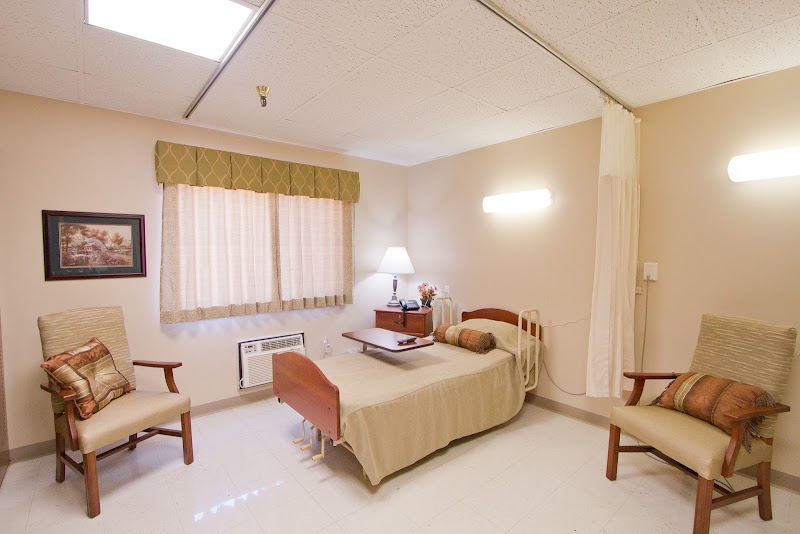
How is Quincy Healthcare & Sr Living Staffed?

CMS rates QUINCY HEALTHCARE & SR LIVING's staffing level at 2 out of 5 stars, which is below average compared to other nursing homes. Staff turnover is 48%, compared to the Illinois average of 46%.

What Have Inspectors Found at Quincy Healthcare & Sr Living?

State health inspectors documented 33 deficiencies at QUINCY HEALTHCARE & SR LIVING during 2022 to 2025. These included: 4 that caused actual resident harm, 27 with potential for harm, and 2 minor or isolated issues. Deficiencies causing actual harm indicate documented cases where residents experienced negative health consequences.

Who Owns and Operates Quincy Healthcare & Sr Living?

QUINCY HEALTHCARE & SR LIVING is owned by a for-profit company. For-profit facilities operate as businesses with obligations to shareholders or private owners. The facility is operated by POINTE MANAGEMENT, a chain that manages multiple nursing homes. With 89 certified beds and approximately 71 residents (about 80% occupancy), it is a smaller facility located in QUINCY, Illinois.
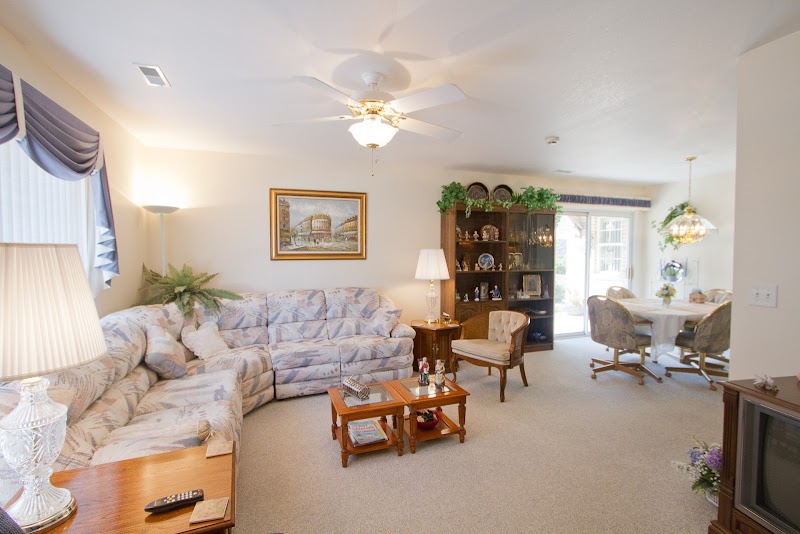
How Does Quincy Healthcare & Sr Living Compare to Other Illinois Nursing Homes?

Compared to the 100 nursing homes in Illinois, QUINCY HEALTHCARE & SR LIVING's overall rating (1 stars) is below the state average of 2.5, staff turnover (48%) is near the state average of 46%, and health inspection rating (2 stars) is below the national benchmark.

What Should Families Ask When Visiting Quincy Healthcare & Sr Living?

Based on this facility's data, families visiting should ask: "Can you walk me through typical staffing levels on day, evening, and night shifts?" "Can I visit during a mealtime to observe dining assistance and food quality?" "How do you handle medical emergencies, and what is your hospital transfer rate?" "Can I speak with family members of current residents about their experience?" These questions are particularly relevant given the below-average staffing rating.

Is Quincy Healthcare & Sr Living Safe?

Based on CMS inspection data, QUINCY HEALTHCARE & SR LIVING has a clean safety record: no substantiated abuse findings (meaning no confirmed cases of resident harm), no Immediate Jeopardy citations (the most serious violation level indicating risk of serious injury or death), and is not on the Special Focus Facility watch list (a federal program monitoring the lowest-performing 1% of nursing homes). The facility has a 1-star overall rating and ranks #100 of 100 nursing homes in Illinois. While no facility is perfect, families should still ask about staff-to-resident ratios and recent inspection results during their visit.

Do Nurses at Quincy Healthcare & Sr Living Stick Around?

QUINCY HEALTHCARE & SR LIVING has a staff turnover rate of 48%, which is about average for Illinois nursing homes (state average: 46%). Moderate turnover is common in nursing homes, but families should still ask about staff tenure and how the facility maintains care continuity when employees leave.

Was Quincy Healthcare & Sr Living Ever Fined?

QUINCY HEALTHCARE & SR LIVING has been fined $35,848 across 2 penalty actions. The Illinois average is $33,437. While any fine indicates a compliance issue, fines under $50,000 are relatively common and typically reflect isolated problems that were subsequently corrected. Families should ask what specific issues led to these fines and confirm they've been resolved.

Is Quincy Healthcare & Sr Living on Any Federal Watch List?

QUINCY HEALTHCARE & SR LIVING is not on any federal watch list. The most significant is the Special Focus Facility (SFF) program, which identifies the bottom 1% of nursing homes nationally based on persistent, serious quality problems. Not being on this list means the facility has avoided the pattern of deficiencies that triggers enhanced federal oversight. This is a positive indicator, though families should still review the facility's inspection history directly.