
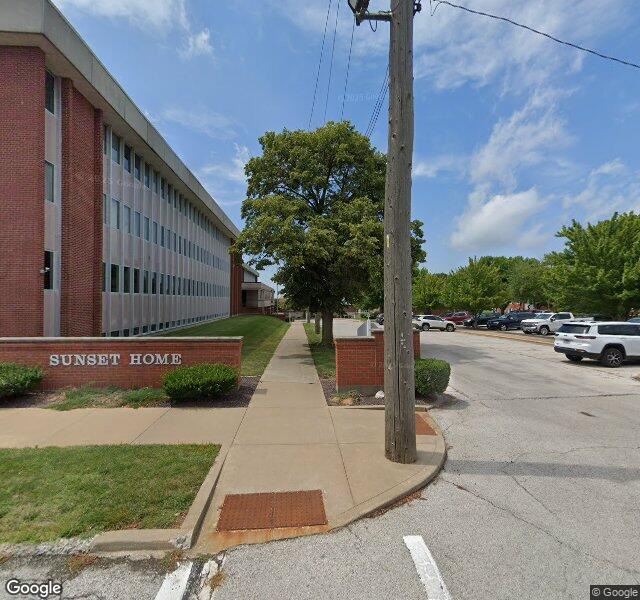
SUNSET HOME

418 WASHINGTON STREET, QUINCY, IL 62301 (217) 223-2636
Non profit - Corporation 132 Beds Independent Data: November 2025 3 Immediate Jeopardy citations
Trust Grade
0/100
#642 of 665 in IL
Last Inspection: October 2024

Within standard 12-15 month inspection cycle. Federal law requires annual inspections.

Overview

Sunset Home in Quincy, Illinois has received a Trust Grade of F, indicating significant concerns about the care provided, which is among the poorest ratings. It ranks #642 out of 665 nursing homes in Illinois, placing it in the bottom half, and #6 out of 6 in Adams County, meaning there are no better local options available. The facility's trend is improving, with a reduction in issues from 14 in 2024 to 9 in 2025, but it still has a high number of serious incidents. Staffing is rated as average with a turnover rate of 54%, which is concerning but close to the state average. However, the facility has incurred $243,058 in fines, indicating compliance problems that are higher than 84% of Illinois facilities. Specific incidents include a critical finding where a licensed nurse was found sleeping during her shift, failing to attend to residents, including one who was actively dying and another needing insulin. Additionally, a resident with severe cognitive impairment was able to leave the facility unsupervised due to staff not responding to door alarms. Lastly, there was an incident involving bed rails that led to a resident becoming entrapped, highlighting serious safety concerns. While there are strengths in staffing levels and some improvement in compliance, these critical incidents and the overall low trust score raise substantial red flags for families considering this nursing home.

Trust Score
F
0/100
In Illinois
#642/665
Bottom 4%
Safety Record
High Risk
Review needed
Inspections
Getting Better
14 → 9 violations
Staff Stability
⚠ Watch
54% turnover. Above average. Higher turnover means staff may not know residents' routines.
Penalties
○ Average
$243,058 in fines. Higher than 53% of Illinois facilities. Some compliance issues.
Skilled Nurses
○ Average
Each resident gets 33 minutes of Registered Nurse (RN) attention daily — about average for Illinois. RNs are the most trained staff who monitor for health changes.
Violations
⚠ Watch
61 deficiencies on record. Higher than average. Multiple issues found across inspections.
★☆☆☆☆
1.0
Overall Rating
★★★☆☆
3.0
Staff Levels
★★☆☆☆
2.0
Care Quality
★☆☆☆☆
1.0
Inspection Score
Stable
2024: 14 issues
2025: 9 issues

The Good

  • Full Sprinkler Coverage · Fire safety systems throughout facility
  • No fines on record

Facility shows strength in fire safety.

The Bad

1-Star Overall Rating

Below Illinois average (2.5)

Significant quality concerns identified by CMS

Staff Turnover: 54%

Near Illinois avg (46%)

Higher turnover may affect care consistency

Federal Fines: $243,058

Well above median ($33,413)

Significant penalties indicating serious issues

The Ugly 61 deficiencies on record

3 life-threatening 6 actual harm
May 2025 2 deficiencies
CONCERN (D) 📢 Someone Reported This

A family member, employee, or ombudsman was alarmed enough to file a formal complaint

Potential for Harm - no one hurt, but risky conditions existed

Report Alleged Abuse (Tag F0609)

Could have caused harm · This affected 1 resident

Based on interview and record review, the facility failed to report an injury of unknown origin to the state agency for one of three residents (R1) reviewed for bruises in a sample of three. Findings ...

Read full inspector narrative →
Based on interview and record review, the facility failed to report an injury of unknown origin to the state agency for one of three residents (R1) reviewed for bruises in a sample of three. Findings include: The facility's Abuse and Neglect Policy, dated 7/2023, documents Identifying and Recognizing signs and symptoms of abuse: a. The following are examples of actual abuse/neglect and signs and symptoms of abuse/neglect which should be promptly reported. This listing is not all inclusive. Other signs and symptoms or actual abuse/neglect may be apparent. When in doubt, reported immediately. i. Signs of/actual physical abuse: 1. Welts or bruises. State Agencies: Purpose- to assure all serious bodily injuries and reasonably suspected crimes against resident's, resulting in serious bodily injuries, are reported to IDPH (Illinois Department of Public Health) immediately, all serious incidents and accidents, and allegations of abuse, including injuries of unknown sources, and reasonably suspicion of a crime against a resident are reported to IDPH in an appropriate fashion immediately with a final report sent to the department within five days. R1's Progress Note, dated 2/25/25 and signed by V4/LPN (Licensed Practical Nurse), documents During transfer from wheelchair to stretcher this nurse observed a large circular red/purple bruise to (R1's) left mid back. Emergency Medical Technicians were made aware that (R1) has been on Eliquis (blood thinning medication) but it was placed on hold per (V6/Nurse Practitioner) and that (R1) experienced no recent falls that this nurse was aware of other than the one on 2/7/25. This same progress note documented V4 notified V2/DON (Director of Nursing) of the bruise located to R1's left mid back. On 5/2/25 at 2:15PM V4/LPN stated she observed a large purplish/red bruise approximately six inches in diameter to R1's left mid back for the first time when sending R1 out to the hospital. V4 stated she was unable to measure the bruise to R1's back because R1 was being transferred out to the local hospital. V4 stated, I reported the bruise to (V2/Director of Nursing) because it had appeared overnight, and I did not know what caused it. I let (V2) know I did not believe it was due to (R1's) fall, because the fall had occurred two to three weeks prior to the bruise appearing. There was no rhyme or reason to the bruise appearing to (R1's) back. As of 5/2/25, the facility's reports to the local State Agency did not contain documentation of R1's 2/25/25 injury of unknown origin as being reported. On 5/2/25 at 2:28 PM V2/DON stated V4 did report R1's bruise (injury of unknown origin) to V2. V2 stated R1's injury of unknown origin was not reported to the local State Agency and should have been. On 5/3/25 at 10:03 AM V1/Administrator verified the bruise to (R1's) left mid back was not reported to the local State Agency and should have been.
CONCERN (D) 📢 Someone Reported This

A family member, employee, or ombudsman was alarmed enough to file a formal complaint

Potential for Harm - no one hurt, but risky conditions existed

Investigate Abuse (Tag F0610)

Could have caused harm · This affected 1 resident

Based on record review and interview, the facility failed to ensure a thorough investigation was completed following a bruise of unknown origin for one of three residents (R1) reviewed for bruises in ...

Read full inspector narrative →
Based on record review and interview, the facility failed to ensure a thorough investigation was completed following a bruise of unknown origin for one of three residents (R1) reviewed for bruises in a sample of three. Findings include: The facility's Abuse and Neglect Policy, dated 7/2023, documents an injury should be classified as an injury of unknown source when the injury was not observed by any person, could not be explained, and the injury is suspicious because of the extent of the injury or the location. This same policy also states, VI. Abuse Investigations. All reports of resident abuse, neglect, and injuries of unknown origin shall be promptly and thoroughly investigated by the organization management. c. The individual conducting the investigation will, at a minimum: i. review the resident's medical record to determine events leading up to the incident. ii. Interview the person(s) reporting the incident. iii. Interview any witnesses of the incident. iv. Interview the resident (as medically appropriate). v. Interview the resident's attending physician to determine the resident's current mental status. vi. Interview staff members (on all shifts) who have had contact with the resident during the period of the alleged incident. vii. Interview the resident's roommate, family members, and visitors. viii. Interview other residents to whom the accused employee provides cares or services and ix. Review all events leading up to the alleged incident. k. The results of the investigation will be documented. R1's Progress Note, dated 2/25/25 and signed by V4/LPN (Licensed Practical Nurse), documents During transfer from wheelchair to stretcher this nurse observed a large circular red/purple bruise to (R1's) left mid back. Emergency Medical Technicians were made aware that (R1) has been on Eliquis (blood thinning medication) but it was placed on hold per (V6/Nurse Practitioner) and that (R1) experienced no recent falls that this nurse was aware of other than the one on 2/7/25. This same progress note documented V4 notified V2/DON (Director of Nursing) of the bruise located to R1's left mid back. On 5/2/25 at 2:15PM V4/LPN stated she observed a large purplish/red bruise approximately 6 inches in diameter to R1's left mid back for the first time when sending R1 out to the hospital. V4 stated she was unable to measure the bruise to R1's back because R1 was being transferred out to the local hospital. V4 stated, I reported the bruise to (V2/Director of Nursing) because it had appeared overnight, and I did not know what caused it. I let (V2) know I did not believe it was due to (R1's) fall, because the fall had occurred like two to three weeks prior to the bruise appearing. There was no rhyme or reason to the bruise appearing to (R1's) back. As of 5/2/25, the facility's investigations for allegations of abuse did not contain documentation that R1's 2/25/25 injury of unknown origin was investigated as potential abuse. On 5/2/25 at 2:28 PM V2/DON stated V4 did report R1's bruise (injury of unknown origin) to V2. V2 stated an investigation was never initiated for the bruise/injury of unknown origin located on R1's left mid back and should have been. On 5/3/25 at 10:03 AM V1/Administrator verified an investigation was never initiated for the bruise/injury of unknown origin to R1's left mid back and should have been.
Mar 2025 5 deficiencies 2 Harm
SERIOUS (G) 📢 Someone Reported This

A family member, employee, or ombudsman was alarmed enough to file a formal complaint

Actual Harm - a resident was hurt due to facility failures

Pressure Ulcer Prevention (Tag F0686)

A resident was harmed · This affected 1 resident

**NOTE- TERMS IN BRACKETS HAVE BEEN EDITED TO PROTECT CONFIDENTIALITY** Based on interview and record review the facility failed to follow treatments as ordered by the physician and failed to implemen...

Read full inspector narrative →
**NOTE- TERMS IN BRACKETS HAVE BEEN EDITED TO PROTECT CONFIDENTIALITY** Based on interview and record review the facility failed to follow treatments as ordered by the physician and failed to implement pressure relieving interventions for one resident (R5) of four residents reviewed for pressure ulcers in the sample of nine. These failures resulted in R5 developing a facility acquired stage 4 pressure ulcer to her coccyx that became infected and caused R5 pain. Findings include: The Prevention of Pressure Injuries policy dated 4/2020 documents The purpose of this procedure is to provide information regarding identification of pressure injury risk factors and interventions for specific risk factors. Review the resident's care plan and identify the risk factors as well as the interventions designed to reduce or eliminate those considered modifiable. Mobility/Repositioning 1. Reposition all residents with or at risk of pressure injuries on an individualized schedule, as determined by the interdisciplinary care team. 2. Choose a frequency for repositioning based on the resident's risk factors and current clinical practice guidelines. The Administering Medications policy not dated documents that medications shall be administered in a safe and timely manner, and as prescribed. 3. Medications must be administered in accordance with the orders, including any required time frame. 18. If a drug is withheld, refused, or given at a time other than the scheduled time, the individual administering the medication shall initial and circle the MAR (Medication Administration Record) space provided for that drug and dose. 19. The individual administering the medication must initial the resident's MAR on the appropriate line after giving each medication and before administering the next ones. 21. Topical medications used in treatments must be recorded on the resident's treatment record (TAR) (Treatment Administration Record). 28. If a medication error is noted to have occurred, immediately assess the resident for adverse reactions and notify the physician for any additional orders. Place the resident on the 24-hour report book, notify the POA (Power of Attorney) and fill out a medication error form and turn into the nursing office. R5's Face Sheet documents R5 was a [AGE] year-old female admitted to the facility on [DATE] with the diagnoses which included Spinal Stenosis, Lumbar Region without Neurogenic Claudication, Prolapsed Uterus, Essential (Primary) Hypertension, Unspecified Urinary Incontinence, Vitamin D Deficiency, Other Abnormalities of Gait and Mobility, Chronic Diastolic (Congestive) Heart Failure, Weakness, and Chronic Kidney Disease, Stage Three. R5's Progress Notes dated 12/21/24 at 12:48 AM document that R5 passed away on 12/20/24. R5's Brief Interview for Mental Status/BIMS dated 11/20/24 documents a BIMS of 10 (moderate cognition). R5's MDS (Minimum Data Set) assessment dated [DATE] documents R5 required substantial assist for bed mobility, was dependent on staff for toileting and transfers, R5 had an indwelling urinary catheter, and R5 was always incontinent of bowel. R5's Care Plan dated 12/5/24 documents that R5 had impaired skin integrity related to Immobility and a Prolapsed Uterus and a Pressure Ulcer to the Coccyx dated 12/5/24. Interventions Administer treatments as ordered and monitor for effectiveness. Avoid positioning (R5) on coccyx. Follow facility policies/protocols for the prevention and treatment of skin breakdown. This same Care Plan documents R5 had ADL (activities of daily living) self-care needs, was dependent on staff for bed mobility, and required one staff to turn and reposition R5 in bed. R5's Nursing Note written by V2/Director of Nursing dated 9/18/24 at 3:00 PM, documents that R5 has two new pressure ulcers. Skin issue # (number) 1 is a stage one pressure injury on R5's left buttock that measures 0.7 cm/centimeters x 0.8 cm x 0.1 cm. Skin issue # 2 is a stage two pressure ulcer on R5's coccyx that measures 1.1 cm x 1 cm x 0.1 cm. There is no wound odor or tunneling on either wound. R5's Physician Order dated 9/18/2024 documents Cleanse coccyx open area with NS (Normal Saline) and apply calcium alginate and (absorbent foam dressing) daily. Start date 9/18/2024. Cleanse open area to L (left) buttocks with NS and apply (moisture barrier ointment) TID (three times a day) and PRN (as needed). Start date 9/18/24. R5's Physician Order dated 10/19/2024 documents Cleanse coccyx and R (right) buttock open areas with NS and apply calcium alginate four x (by) four gauze and (absorbent foam dressing) daily until healed. Start date 10/19/24. R5's Braden Evaluation dated 11/20/24 at 3:52 PM, documents Sensory Perception: very limited. Moisture: Constantly moist. Activity: Chair fast. Resident is Very Limited: Makes occasional slight changes in body or extremity position but unable to make frequent or significant changes independently. Nutrition: Probably inadequate. Braden score of 10 (High Risk). R5's Progress Notes written by V4/Nurse Practitioner/NP for 12/2/24 service, documents R5 is a [AGE] year-old female who is seen today due to worsening wound to the coccyx. Last week the on-call NP was paged with concerns for progression of the wound. The wound measures 2.5 cm/centimeters by 3.5 cm by 1.2 cm with tunneling, sloth, and foul odor (indicates infection). Orders were given for Santyl, calcium alginate and dressing, change daily. I (V4) am following up today. At my previous visit in early November, wounds to the coccyx and right buttocks were superficial without any slough tissue, depth, or tunneling. The area is painful for (R5). Wound care to coccyx: Cleanse with 1/4 (Diluted sodium hypochlorite solution) 0.125% (percent) solution. Apply Santyl to slough tissue in wound bed. Pack with (Diluted sodium hypochlorite solution) soaked four X four gauze, ensuring packing extends through the tunneling. When removing old dressings, MUST be sure old gauze is removed!!! This dressing must be changed daily. Start Oxycodone 2.5 mg/milligrams oral daily; give 30 minutes prior to wound care in the AM. Turn every 2 (two) hours while in bed. (Pressure relieving) cushion at all times when in wheelchair. R5's Physician Order dated 12/3/2024 documents (Diluted sodium hypochlorite solution) (1/4 strength) External Solution 0.125 % (Sodium Hypochlorite) Apply to coccyx topically one time a day for wound care. Cleanse wound with (Diluted sodium hypochlorite solution), apply Santyl to slough tissue in wound bed. Pack with (Diluted sodium hypochlorite solution) soaked four X four gauze, ensure packing extends through tunneling. Upon removal make sure old gauze is removed. Dressing must be changed daily. Start date 12/4/24. Oxycodone HCI Oral Tablet 5 MG (milligrams) Give 0.5 tablet by mouth every night shift for wound prior to wound care. Start date 12/3/24. R5's Nursing Note written by V6/LPN dated 12/3/24 at 1:57 PM, documents Per (V4/Nurse Practitioner) on 12/3/24 at 1:00 PM: Orders for wound care as follows: Cleanse with 1/4 (Diluted sodium hypochlorite solution) 0.125% solution. Apply SANTYL to slough tissue in wound bed. Pack with (Diluted sodium hypochlorite solution) soaked 4x4 gauze, ensuring packing extends through the tunneling. When removing old dressings, MUST be sure old gauze is removed!!! This dressing must be changed daily. Currently waiting on (Diluted sodium hypochlorite solution) from the pharmacy. Faxed pharmacy to ensure (Diluted sodium hypochlorite solution) is delivered tonight. R5's Medication Administration Note written by V6/Licensed Practical Nurse/LPN dated 12/3/24 at 2:41 PM, documents (Diluted sodium hypochlorite solution) (1/4 strength) External Solution 0.125 % Apply to coccyx topically one time only for Wound care for 1 (one) Day 1 dose No supplies available from pharmacy at this time. R5's Physician Order dated 12/5/2024 documents (Diluted sodium hypochlorite solution) (1/4 strength) External Solution 0.125 % (Sodium Hypochlorite) Apply to coccyx topically every day and night shift for wound care. Cleanse wound with (Diluted sodium hypochlorite solution), apply Santyl to slough tissue in wound bed. Pack with (Diluted sodium hypochlorite solution) soaked four x four gauze, ensure packing extends through tunneling. Upon removal make sure old gauze is removed. Dressing must be changed daily. Start date 12/5/24. Turn every two hours while in bed, side to side, avoid laying on back. Must use pillows between knees. Every shift to prevent further breakdown. Start 12/5/24. R5's Progress Notes written by V4/NP for 12/13/24 service, documents that R5 is a [AGE] year-old female who is seen today for follow up wound care to the coccyx. Physical Exam Stage four, now with deep tissue injury to surrounding tissue at 12 O'clock. Wound bed: 2.5 cm x 3.5 cm x 1.2 cm with slough/foul odor (indicated in fection) and tunneling at 5-6 O'clock, approx. 3 of tunneling. Cleanse with 1/4 (Diluted sodium hypochlorite solution) 0.125% solution. Apply Santyl to slough tissue in wound bed. Pack with (Diluted sodium hypochlorite solution) soaked 4 x 4 gauze, ensuring packing extends through the tunneling. When removing old dressings, MUST be sure old gauze is removed!!! Changed dressings twice daily. Turn every two hours while in bed, side to side, avoid laying on back. Must use pillows between knees to prevent further breakdown. R5's Medication Administration Note written by V17/Licensed Practical Nurse dated 12/17/24 at 4:52 AM, documents (Diluted sodium hypochlorite solution) (1/4 strength) External Solution 0.125 % Apply to coccyx topically every day and night shift for wound care Cleanse wound with (Diluted sodium hypochlorite solution), apply Santyl to slough tissue in wound bed. Pack with (Diluted sodium hypochlorite solution) soaked 4x4 gauze, ensure packing extends through tunneling. Upon removal make sure old gauze is removed. Dressing must be changed daily. Unable to complete due to there being no (Diluted sodium hypochlorite solution) available to complete this treatment. R5's Skin Check dated 12/18/24 at 5:38 AM, documents that R5 has a Stage four Pressure Ulcer, full thickness skin and tissue loss on her right coccyx that was acquired in-house. R5 is unable to describe pain. R5 says It hurts during dressing change. Length 7 cm/centimeters, width 5.5 cm, depth 3 cm, with undermining and tunneling. Granulation 50 % (percent), slough 50 %, with purulent heavy exudate and moderate odor after cleansing. Skin issue 2, left breast Excoriation Pressure ulcer staging: Stage 2 Pressure ulcer/injury - partial thickness skin loss with exposed dermis. Wound acquired in-house. Length 6 cm, Width 1.3 cm, Depth 1.2 cm. Skin issue 3, Right medial forefoot, Eschar Pressure ulcer staging: Stage 2 Pressure ulcer/injury - partial thickness skin loss with exposed dermis. Wound acquired in-house. Other pain description: Unable to describe, says It hurts when doing dressing change. Length 1.5 cm, Width 1.6 cm, Depth 1.2 cm, Area 9.3 cm. R5's Treatment Administration Records/TAR for September 2024 through December 2024 documents Cleanse coccyx open area with NS (normal saline) and apply calcium alginate and (absorbent foam dressing) daily. This same TAR documents R5's treatment was not signed as being done on 9/22, 9/23, 9/24/24. Cleanse open area to L (left) buttocks with NS and apply (moisture barrier ointment) TID (three times a day) and PRN (as needed) every shift for Wound care. This same TAR documents R5's treatment was not signed as being done on day shift 10/5, 10/20, 11/7, evening shift 9/20, 9/21, 9/24, 9/29, 11/6, 11/12, 11/26, 11/27, 11/28/24, and night shift 9/22, 9/23, and 9/24, 10/21, 10/23, 11/22, 11/24 Cleanse coccyx and R (right) buttock open area with NS and apply calcium alginate four x four gauze and (absorbent wound dressing) daily until healed. This same TAR documents R5's treatment was not signed as being done on 11/6, 11/22, and 11/24/24. (Diluted sodium hypochlorite solution) (1/4 strength) External Solution 0.125 % (Sodium Hypochlorite) Apply to coccyx topically every day and night shift for wound care. Cleanse wound with (Diluted sodium hypochlorite solution), apply Santyl to slough tissue in wound bed. Pack with (Diluted sodium hypochlorite solution) soaked 4 X 4 gauze, ensure packing extends through tunneling. Upon removal make sure old gauze is removed. Dressing must be changed daily. This same TAR documents R5's treatment was not signed as being done on days 12/10/24 and nights 12/11/24. Turn every 2 (two) hours while in bed, side to side, avoid laying on back. Must use pillows between knees. Every shift to prevent further breakdown. This same TAR documents R5's treatment was not signed as being done on the evening of 12/12/24. On 3/13/25 at 11:20 AM, V4/NP stated, I took care of (R5) for five years. For most of that time (R5) was stable with advanced Dementia. (R5) was up to activities then started having age related decline that led to her being bed bound. (R5) was not getting up at all at that time. (R5's) wound were caused by pressure. (R5's) wounds started out simple and treatments were ordered. From what I knew the treatments were working for (R5's) wounds and they were getting better. Then I was notified that I needed to look at (R5's) wound. I was totally floored by how huge it was. It was foul smelling and infected. It looked like there was also a deep tissue injury. I told (R5's) family that unfortunately this wound is bad, and we can't do surgery and all we can do is to try to manage pain and odor because the odor was so bad. We were doing symptom control until the end of (R5's) life. Once bed bound, (R5) should have been turned, and I should not have to explain it to staff and put that in the orders. It is nursing 101 that a resident should be turned and repositioned. (R5's) wound was nasty. I don't think (R5's) wound care was being done as ordered. I do the treatments at times and the supplies are not always available. I have had to request that they (the facility) get supplies that I have ordered. If treatments are not done as ordered the wound will get worse. On 3/13/25 at 4:51 PM V3/Previous MDS Coordinator stated There are a lot of reasons that (R5's) pressure ulcer got worse. (R5) was not turned like she should have been. The staff are not good about turning and repositioning the residents. (R5) had a small pressure ulcer that healed then (R5) got another one. The dressings were not changed like it should have been either because we would run out of supplies. On 3/14/25 at 11:34 AM, V16/R5's Power of Attorney/POA stated I came to the facility about once a week and talk to (R5) every day. (R5) had dementia but she knew what was going on. I went in more once (R5) was moved to the fourth floor from the first floor. The care just wasn't as good on the fourth floor. Most of the time (R5) was laying on her back. There was a sign in her room that (R5) was to be on her side. (V4/NP) made it known that (R5) should be on her side. I am putting the blame on the aids not all of them but some. (R5) had no use of her legs and could not move herself. (R5) was dependent on staff. I saw the wound and it was disgusting. I wish I had never seen it. It had a bad smell and was nasty. (V4/NP) had been brought in to take care of it. (V4) told me that inside the wound was bigger than the outside. It was on (R5's) lower back towards the buttock. On 3/15/25 at 1:23 PM, V12/LPN stated that she took care of R5. R5 did have a pressure ulcer that got worse and had a bad odor to it. There were times there were no supplies to do the dressing. R5 was supposed to be kept off her back while in bed but that didn't always happen. On 3/15/25 at 1:36 PM, V13/LPN stated I am not at the facility often because I work as needed. The first time I saw the skin issue on (R5) it looked like a bruise. About a week later the area had opened and had a foul smell to it. On 3/15/25 at 3:59 PM, V15/Registered Nurse/RN stated (R5) had a pressure ulcer that got worse from laying on her back. The CNAs (Certified Nursing Assistants) don't turn the residents like they are supposed to. On 3/17/25 at 1:43 PM, V1/Administrator verified that according to R5's TAR, R5's dressings were not done daily as ordered. V1 stated If it is not marked it is not done. On 3/18/25 at 10:18 AM, V4/NP stated R5 was a high risk for developing a pressure ulcer but the severity of the wound did not need to happen. Better care would have minimalized the severity of it.
SERIOUS (G) 📢 Someone Reported This

A family member, employee, or ombudsman was alarmed enough to file a formal complaint

Actual Harm - a resident was hurt due to facility failures

Deficiency F0760 (Tag F0760)

A resident was harmed · This affected 1 resident

**NOTE- TERMS IN BRACKETS HAVE BEEN EDITED TO PROTECT CONFIDENTIALITY** Based on interview and record review the facility failed to transcribe a physician's order accurately, administer the correct ph...

Read full inspector narrative →
**NOTE- TERMS IN BRACKETS HAVE BEEN EDITED TO PROTECT CONFIDENTIALITY** Based on interview and record review the facility failed to transcribe a physician's order accurately, administer the correct physician's ordered insulin for 45 days, and notify the physician once a residents' blood sugar dropped below normal parameters for one resident of three residents (R1) reviewed for significant medication errors in the sample of nine. These failures resulted in R1 experiencing hypoglycemia and lethargy on two occasions that required glucagon injections. Findings include: The Administering Medications policy not dated documents that medications shall be administered in a safe and timely manner, and as prescribed. 3. Medications must be administered in accordance with the orders, including any required time frame. 18. If a drug is withheld, refused, or given at a time other than the scheduled time, the individual administering the medication shall initial and circle the MAR (Medication Administration Record) space provided for that drug and dose. 19. The individual administering the medication must initial the resident's MAR on the appropriate line after giving each medication and before administering the next ones. 21. Topical medications used in treatments must be recorded on the resident's treatment record (TAR) (Treatment Administration Record). 28. If a medication error is noted to have occurred, immediately assess the resident for adverse reactions and notify the physician for any additional orders. Place the resident on the 24-hour report book, notify the POA (Power of Attorney) and fill out a medication error form and turn into the nursing office. R1's current computerized medical record documents R1 is a [AGE] year-old male admitted to the facility on [DATE] with diagnoses which include Type 2 Diabetes Mellitus without Complications, Atherosclerotic Heart Disease of Native Coronary Artery without Angina Pectoris, Trifascicular Block, Occlusion and Stenosis of Unspecified Carotid Artery, Lymphoid Leukemia, Unspecified Not Having Achieved Remission, Hyperlipidemia, Essential (Primary) Hypertension, Presence of Cardiac Pacemaker, Acute Diastolic (Congestive) Heart Failure, and Chronic Kidney Disease, Stage 3. R1's Brief Interview for Mental Status/BIMS dated 12/25/24 documents a BIMS of 2 (cognitively impaired). R1's current Care Plan documents that R1 has Diabetes Mellitus. Interventions Diabetes medication as ordered by doctor. R1's Physician's Notes/Orders written by V31/R1's Physician dated 11/4/24, documents Subjective: Clarify Orders (Sliding scale insulin needs addressed as (V28/R1's Power of Attorney/POA) states (R1) is bottoming out. Prescription has been updated. Insulin Aspart, w (with)/Niacinamide, (Fiasp) 100 UNIT/ML Inject 6-8 units into the skin 3 (three) times daily after meals. Inject per sliding scale: 100-150 2 units, 151-199 4 units, 200-250 6 units, 251-400 8 units. Lantus SoloStar 100 UNIT/ML SOPN Injection-pen Inject 30 (thirty) units 3 ML into the skin daily. Plan: Follow up in 6 (six) months (around 5/4/2025). R1's Nursing Note written by V20/Agency Licensed Practical Nurse/LPN dated 11/4/24 at 1:25 PM documents (R1) returned from doctors' appointment with some new orders. Please see MAR (Medication Administration Record) for the orders. R1's Medication Administration Record dated 11/1/24 - 12/19/24 documents Insulin Glargine-yfgn Subcutaneous Solution Pen Injector 100 UNIT/ML (Insulin Glargine-yfgn) Inject as per sliding scale. Start date 11/4/24 at 4:00 PM. R1's Nursing Note written by V25/Registered Nurse/RN dated 12/13/24 at 7:05 AM, documents Glucagon Emergency Injection Kit 1 (one) MG Inject 1 vial subcutaneously as needed for hypoglycemia. Blood sugar 44. R1's Medication Administration Note written by V3/LPN dated 12/18/24 at 7:52 AM, documents Glucagon Emergency Injection Kit 1 MG (milligram) Inject 1 vial subcutaneously as needed for hypoglycemia. R1's Nursing Note written by V3/LPN dated 12/18/24 at 7:54 AM, documents Blood sugar 37. Glucagon 1 mg given in left thigh. R1's Progress Notes written by V4/Nurse Practitioner/NP dated 12/19/25 at 4:35 PM documents (R1) is an [AGE] year-old male who is evaluated today for follow-up hypoglycemic episode. The nurse tells me (R1) required an injection of Glucagon again yesterday. Sugars are occasionally low in the morning. I reviewed (R1's) sugars and medication orders. I wrote previous orders about (R1's) sliding scale insulin although it appears these orders were not carried out when reviewing the MAR (Medication Administration Record). I also noted that the order for SSI (Sliding Scale Insulin) is entered as Basaglar, which is Glargine, which is incorrect. This is a long-acting insulin. STOP the incorrect order for sliding scale Basaglar. START insulin Aspart (Novolog) 100 units/ml and give according to the sliding scale. R1's Nursing Note written by V2/Director of Nursing/DON dated 12/19/24 at 2:37 PM, documents Clarified orders from (V4/NP) at this time. (V4) ordered to stop sliding scale of Basaglar which is (R1's) insulin Glargine-yfgn per insurance. (V4) is ok with using the current long-acting insulin. Start Aspart insulin which (R1) has Fiasp and (V4) is ok with continuing using that short acting insulin. R1's Medication Administration Record dated 12/19/24 - 12/31/24 documents Fiasp Flex Touch Subcutaneous Solution Pen- Injector 100 UNIT/ML (Insulin Aspart (with Niacinamide) Inject as per sliding scale. Start date 12/19/24 at 4:00 PM. R1's Progress Notes written by V4/NP for 12/16/24 service, documents, Labs reviewed. (R1) is awake and alert this morning. Labs show (R1's) sugar was 24 this morning. Glucometer read in the 50's. By late in the morning (R1) was in the 200 range. On call NP or myself was not notified of the Glucometer reading this morning. On 3/13/25 at 11:20 AM, V4/NP stated I was notified by nursing staff that (R1's) blood sugars had dropped for the second time in a week that required Glucagon to be given. It prompted a visit from me. I was like what is happening. I looked through the medical record and found the problem. I notified (V2/DON) that the incorrect insulin was being given. The order given on 11/4/24 was ordered by (V31/R1's Physician). I just looked the order up and the order from (V31) was correct. They were giving long-acting insulin as the sliding scale instead of the short acting and (R1) was bottoming out. I brought it to (V2/DON) to fix the order. (R1) didn't die but he was hypoglycemic, and I believe he bottomed out a couple of times and Glucagon needed to be used so I would say yes it did (R1) harm. I witnessed (R1) extremely lethargic from hypoglycemia. On 3/13/25 at 1:31 PM, V2/DON stated that R1's insulin order was changed on 11/4/24 and the new order got put in incorrectly. (V4/NP) asked me to check to see what happened. I found that the order was put in wrong. I don't remember how long it was wrong. It may have been a couple of weeks. On 3/13/25 at 4:51 PM V3/Previous Minimum Data Set/MDS Coordinator stated (V4/NP) asked me to check to see what insulin (R1) was getting. I sent a picture to (V4) then took the bottle to (V4). (R1) was not getting the correct insulin. (R1) was supposed to be getting fast acting insulin for sliding scale but instead was getting a slow acting insulin. (V20/Agency LPN) put the order in wrong for (R1). (R1) got the wrong medication for over a month. I was working on 12/18/24 when R1's blood sugar dropped so low that he passed out and I had to give (R1) Glucagon. On 3/14/25 at 10:28 AM V2/DON stated (R1) had his insulin corrected on 12/19/25. (R1) took a sliding scale fast acting insulin and a slow acting insulin. (R1's) order was changed and when (V20/Agency LPN) made the change on 11-4-24, (V20) transcribed the order wrong and put in the wrong insulin order to the pharmacy and on (R1's) MAR. (R1) took the wrong insulin from 11/4/24 - 12/19/24. On 3/14/25 at 12:29 PM, V22/Pharmacist stated The insulin that was ordered on 11/4/25 for (R1) was a long-acting insulin. The insulin that (R1) should have got is completely different then what (R1) got. It was to be given before meals and that should have been questioned back to the doctor to see if that was correct because it is not usually given like that. That was not a normal order. Hypoglycemia is very serious, and you don't want that to happen. It could be very dangerous especially for the elderly. On 3/15/25 at 3:07 PM, V2/DON stated The pharmacy filled what we ordered for (R1) on 11/4/24 and that insulin was given until 12/19/24. Then on 12/19 (V4/NP) thought there was a problem with (R1's) insulin because (R1's) blood sugar had bottomed out. (V4) asked me to look into what was happening. I then realized that the wrong insulin had been ordered. (R1) was getting a slow acting insulin for sliding scale instead of the fast-acting insulin. (V4) doesn't usually give a verbal order. The order should have been double checked. On 3/18/25 at 1:23 PM, V1/Administrator stated, When that insulin order was put in for (R1) we (the facility) did not have checks in place to make sure the orders were correct.
CONCERN (D) 📢 Someone Reported This

A family member, employee, or ombudsman was alarmed enough to file a formal complaint

Potential for Harm - no one hurt, but risky conditions existed

Notification of Changes (Tag F0580)

Could have caused harm · This affected 1 resident

**NOTE- TERMS IN BRACKETS HAVE BEEN EDITED TO PROTECT CONFIDENTIALITY** Based on interview and record review the facility failed to notify a resident's family of a medication error and failed to notif...

Read full inspector narrative →
**NOTE- TERMS IN BRACKETS HAVE BEEN EDITED TO PROTECT CONFIDENTIALITY** Based on interview and record review the facility failed to notify a resident's family of a medication error and failed to notify the physician of a change in condition for one resident of three residents (R1) reviewed for insulin in the sample of 9. Findings include: The Administering Medications policy not dated documents Medications shall be administered in a safe and timely manner, and as prescribed. 3. Medications must be administered in accordance with the orders, including any required time frame. 28. If a medication error is noted to have occurred, immediately assess the resident for adverse reactions and notify the physician for any additional orders. Place the resident on the 24-hour report book, notify the POA (Power of Attorney) and fill out a medication error form and turn into the nursing office. R1's current computerized medical record documents R1 is a [AGE] year-old male admitted to the facility on [DATE] with the diagnoses which included Type 2 Diabetes Mellitus without Complications, Atherosclerotic Heart Disease of Native Coronary Artery without Angina Pectoris, Trifascicular Block, Occlusion and Stenosis of Unspecified Carotid Artery, Lymphoid Leukemia, Unspecified Not Having Achieved Remission, Hyperlipidemia, Essential (Primary) Hypertension, Presence of Cardiac Pacemaker, Acute Diastolic (Congestive) Heart Failure, and Chronic Kidney Disease, Stage 3. R1's Progress Notes written by V4/Nurse Practitioner/NP for 12/16/24 service, documents (R1) is a [AGE] year-old male who is evaluated today for follow-up edema/blistering to the legs. Labs show (R1's) sugar was 24 this morning. Glucometer read in the 50's. By late in the morning (R1) was in the 200 range. On call NP or myself was not notified of the Glucometer reading this morning. On 3/14/25 at 10:28 AM V2/Director of Nursing stated (R1) had his insulin corrected on 12/19/25. (R1) took a sliding scale fast acting insulin and a slow acting insulin. (R1's) order was changed and when (V20/Agency Licensed Practical Nurse) made the change she put in the wrong insulin. I think that (V20) discontinued the right medication but then added the wrong medication. The correct medication is a short acting insulin Fiasp and the incorrect insulin was Glargine-yfgn. (R1) took the wrong medication from 11/4/24 - 12/19/24. On 3/17/25 at 10:56 AM, V1/Administrator stated I don't find any documentation that (V28/R1's Power of Attorney) was notified of the medication error for (R1). They should have been. On 3/18/25 at 10:27 AM, V4/NP stated I was reviewing (R1's) medical records and saw that (R1's) blood sugar had dropped. I was not notified when the incident happened. It is important I'm notified of a significant change when it happens instead of finding out about it later from reviewing medical records. On 3/19/25 at 1:02 PM, V1/Administrator stated that she does not have a specific policy about physician notification or family notification. V1 also stated (V4/NP) should have been told about (R1's) drop in blood sugar.
CONCERN (D) 📢 Someone Reported This

A family member, employee, or ombudsman was alarmed enough to file a formal complaint

Potential for Harm - no one hurt, but risky conditions existed

Quality of Care (Tag F0684)

Could have caused harm · This affected 1 resident

**NOTE- TERMS IN BRACKETS HAVE BEEN EDITED TO PROTECT CONFIDENTIALITY** Based on interview and record review the facility failed to take vitals or do a resident's assessments in a timely manner for on...

Read full inspector narrative →
**NOTE- TERMS IN BRACKETS HAVE BEEN EDITED TO PROTECT CONFIDENTIALITY** Based on interview and record review the facility failed to take vitals or do a resident's assessments in a timely manner for one resident of four residents (R3) reviewed for vitals and assessments in the sample of 9. Findings include: The Admitting the Resident: Role of the Nursing Assistant dated 9/2013, documents The following information should be recorded in the resident's medical record: 4. The resident's vital signs. 5. The resident's height and weight. The admission Assessment and Follow Up: Role of the Nurse dated 9/2012, documents The purpose of this procedure is to gather information about the resident's physical, emotional, cognitive, and psychosocial condition upon admission for the purpose of managing the resident, initiating the care plan, and completing required assessment instruments, including the MDS (Minimum Data Set). 9. Conduct supplemental assessments following facility forms and protocol including a. Activity level; b. Pain assessment; c. Fall risk assessment; d. Neurological assessment; e. Skin assessment; f. Functional assessment ability to perform ADLs; and g. Behavioral assessment. The following information should be recorded in the resident's medical record: 3. Assessment data obtained during the procedure. R3's current computerized medical record documents R3 is a [AGE] year-old male admitted to the facility on [DATE] with the diagnoses which included Secondary Malignant Neoplasm of Other Parts of Nervous System, Malignant Neoplasm of Right Kidney, Except Renal Pelvis, Acute Embolism and Thrombosis of Unspecified Deep Veins of Lower Extremity, Bilateral, Other Pulmonary Embolism without Acute Cor Pulmonale, Thrombocytopenia, Other Pancytopenia, Chronic Systolic (Congestive) Heart Failure, Cardiac Arrhythmia, Dehydration, Secondary Malignant Neoplasm of Bone, Shortness of Breath, Hyperlipidemia, Spondylosis without Myelopathy or Radiculopathy, Lumbar Region, Acute Embolism and Thrombosis of Deep Veins of Left Upper Extremity. R3's electronic Medical Record documents R3's assessments were done on 12/10/24 as follows: Elopement Evaluation at 6:41 AM, Braden Scale (Pressure Ulcer Risk) Evaluation at 2:24 PM, Skin Check at 2:26 PM, AIMS (Abnormal Involuntary Movement Scale) Evaluation at 3:17 PM, and Fall Risk Evaluation at 3:18 PM. R3's Weight and Vitals Summary dated 3/14/25 at 2:54 PM for 12/6/24 -12/20/24, documents the first vitals for R3 were recorded on 12/10/24 at 10:05 AM, four days after admission. On 3/13/24 at 1:33 PM V2/Director of Nursing/DON verified that R3 was admitted to the facility on [DATE] and there were no vitals recorded on the vitals log until 12/10/24. V2 stated I have no idea what happened. The vitals should have been taken and recorded. No idea why there are no vitals. The nurses are supposed to put them in the they put a lot on paper, and it doesn't always get recorded in the system. On 3/15/25 at 3:07 PM, V2/DON stated 'The assessments are the same for everybody. It doesn't matter if they are Private Pay, Medicare, or Medicaid. When a resident is first admitted vitals should be done every shift for at least the first three days to get a baseline. On 3/19/25 at 1:02 PM, V1/Administrator stated I can't find that any of the required assessments for (R3) were done when (R3) admitted on [DATE]. On 12/10/24 the Elopement Assessment, Skin Assessment, Fall Assessment, AIMS Assessment, and Braden Evaluation were all done but they should have been done sooner. V1 also stated I can't find a policy that clearly defines when vitals should be done.
CONCERN (D) 📢 Someone Reported This

A family member, employee, or ombudsman was alarmed enough to file a formal complaint

Potential for Harm - no one hurt, but risky conditions existed

Deficiency F0761 (Tag F0761)

Could have caused harm · This affected 1 resident

**NOTE- TERMS IN BRACKETS HAVE BEEN EDITED TO PROTECT CONFIDENTIALITY** Based on interview and record review the facility failed to send the correct medication on a home visit for one resident of thre...

Read full inspector narrative →
**NOTE- TERMS IN BRACKETS HAVE BEEN EDITED TO PROTECT CONFIDENTIALITY** Based on interview and record review the facility failed to send the correct medication on a home visit for one resident of three residents (R2) reviewed for home medications in the sample of 9. Findings include: The Administering Medications policy (not dated) documents Medications shall be administered in a safe and timely manner, and as prescribed. 3. Medications must be administered in accordance with the orders, including any required time frame. The Dispensing Medications to Residents on Leave/Pass dated 4/2007, documents The facility shall provide residents with necessary medication(s) when they leave the facility temporarily. 1. Residents who are away from the facility during medication passes will be given scheduled and essential PRN (as needed) medication(s) to take with them. They will only be given the amounts and dosages needed for the length of the anticipated absence. R2's current computerized medical record documents R2 is a [AGE] year-old female admitted to the facility on [DATE] with diagnoses which include Essential (Primary) Hypertension, Fibromyalgia, Spondylosis, Chronic Obstructive Pulmonary Disease, Hyperlipidemia, Unspecified Atrial Fibrillation, Hypertensive Chronic Kidney Disease, Type 2 Diabetes Mellitus with Diabetic Polyneuropathy, and Peripheral Vascular Disease. R2's MDS (Minimum Data Set) assessment dated [DATE] documents R2 has a Brief Interview for Mental Status/BIMS of 15 (cognition intact). R2 requires set up help for eating, supervision for bed mobility, and is dependent on staff for transfers. R2's Care Plan documents I have Diabetes Mellitus. Intervention Administer diabetes medication as ordered by doctor. R2's Nursing Note written by V8/Unit Coordinator dated 12/21/24 at 10:49 AM, documents (R2) went out with family Noon meds and 7 PM med's sent with (R2). (R2) is planning to return around 7 PM this evening. On 3/13/25 at 10:56 AM, V1/Administrator stated that she remembers a conversation about R2 going on a home visit and having the wrong insulin with her. Either R2 or her family were called and told it was the wrong insulin and for R2 not to take it. V1 does not know whose medication it was or why R2 was given it. On 3/13/25 at 4:51 PM V3/Previous MDS Coordinator stated (R2) was going on a home visit and (V7/Unit Coordinator) got (R2's) medication ready to send with (R2). When it was time for (R2) to leave (V6/Previous Licensed Practical Nurse/LPN) gave the medication to (R2). Later (V7) said that (V6) gave (R2) the wrong insulin. (R2) and her family were called and told the insulin was wrong and not to take it. On 3/14/25 at 1:42 PM, V1 stated (V7/Previous Unit Coordinator) got (R2's) medication ready for (R2) to take on her home visit and had them in the medication cart. (V7) then left the floor. While (V7) was gone (R2) was ready to leave the facility. (V6/Previous LPN) gave (R2) the insulin syringe that was in the cart with (R2's) other med's that were ready. Then (V7) returned to the floor and (V6) told (V7) that (R2) had left with her insulin and medication. (V7) told (V6) that was not (R2's) insulin. V1 also stated I have no idea of whose insulin that was. I don't know who it would have been for. On 3/14/25 at 1:50 PM, V2/Director of Nursing stated, There was no insulin that was supposed to go home with (R2). I don't know why the nurse had a syringe with insulin in it laying in the med cart. That shouldn't have happened. On 3/14/25 at 3:07 PM, R2 stated I went on a home visit on 12/21/24. I was gone from about 10:30 AM to 6:30 PM. Shortly after leaving the facility, I got a call and was told not to take the insulin the facility had sent with me because it was not my insulin. On 3/19/25 at 12:44 PM, V1/Administrator stated We do not have a policy on medication storage that I can find. I know the insulin should not have been left in the drawer like that.
Feb 2025 2 deficiencies
CONCERN (D) 📢 Someone Reported This

A family member, employee, or ombudsman was alarmed enough to file a formal complaint

Potential for Harm - no one hurt, but risky conditions existed

Quality of Care (Tag F0684)

Could have caused harm · This affected 1 resident

Based on Observation, Interview and Record Review, the facility failed to ensure nursing assistants provided a resident at risk for falling with supervision, failed to provide residents with dining as...

Read full inspector narrative →
Based on Observation, Interview and Record Review, the facility failed to ensure nursing assistants provided a resident at risk for falling with supervision, failed to provide residents with dining assistance, and failed to document meal and fluid intakes and episodes of incontinence for three of three residents (R1, R2, R3) reviewed for nursing care in the sample of four. Findings include: The facility's Assistance with Meals policy, dated 3/2022, documents Residents shall receive assistance with meals in a manner that meets the individual needs of each resident. All residents will be encouraged to eat in the dining room. Facility staff will serve resident trays and will help residents who require assistance with eating. Residents who cannot feed themselves will be fed with attention to safety, comfort and dignity, for example: not standing over residents while assisting them with meals; keeping interactions with other staff to a minimum while assisting residents with meals. The facility's Certified Nursing Assistant job description, dated 4/16/20, documents The primary purpose of your job position is to provide your assigned residents with routine daily nursing care procedures, and as may be directed by your supervisors. Record all entries on flow sheets, notes, charts, etc. (etcetera), in an informative and descriptive manner. Use the Care Plan to identify residents before serving meals, transferring, etc., as necessary. Create and maintain an atmosphere of warmth, personal interest and positive emphasis, as well as a calm environment throughout the unit and shift. Maintain intake and output records as instructed. Keep incontinent residents clean and dry. Serve food trays. Assist with feeding as indicated (example; cutting foods, feeding, assist in dining room supervision, etc.). Assist residents with identifying food arrangements (example; informing residents with sight problems, what foods are on the tray, where it is located, if it is hot/cold, etc.). Record the residents' food/fluid intake. Report changes in the resident's eating habits. The facility's Behavioral Programs and Toileting Plans for Urinary incontinence policy, dated 10/2010, documents The purpose of this procedure is to provide guidelines for the initiation and monitoring of behavioral interventions and/or a toileting plan for the resident with urinary incontinence. Monitor, record and evaluate information about the resident's bladder habits, and continence or incontinence, including: voiding patterns (frequency, volume, time, quality of stream, etc.); associated pain or discomfort; type of incontinence (stress, urge, mixed, overflow, functional, etc.); level of incontinence; and response to specific interventions. If the resident does not respond and does not try to toilet, or for those with such severe cognitive impairment that they cannot either point to an object or say their own name, staff will use a check and change strategy. A check and change strategy involves checking the resident's continence status at regular intervals and using incontinence devices or garments. The primary goals are to maintain dignity and comfort and to protect the skin. R1's current Care Plan, dated 1/30/25, documents R1 has diagnoses including but not limited to Glaucoma, Dry Eye Syndrome, Dysphagia and Muscle Weakness. This Care Plan documents I have vision impairment and require glasses. ADL (Activities of Daily Living) self care needs; Eating, (R1) requires set up assistance by one staff to eat. I am incontinent of bladder related to Impaired Mobility, Loss of peritoneal tone, Poor toileting habits. Staff manage my urinary incontinence, and I am able to alert them to my wants/needs. I have impaired skin integrity related to immobility and bowel and bladder incontinence. Monitor nutritional status. Serve diet as ordered, monitor intake and record. R1's Weight Summary, dated 2/11/25, documents R1's weight on 1/7/25 was 129.8 pounds. This same record documents R1's weight on 2/4/25 was 121.8 pounds, indicating R1 has suffered a six percent weight loss in one month. R2's current Care Plan, dated 11/13/24, documents I have impaired cognitive function/dementia or impaired thought processes related to Alzheimer's. ADL (Activities of Daily Living) self care needs; Eating, (R1) requires extensive assistance by one staff to eat. (R2) is approaching end of life. Family has decided to enroll him in (Hospice Program). He has a diagnosis of Alzheimer's Disease with calorie malnutrition. R2's Minimum Data Set assessment, dated 1/1/25, documents R2 has severe cognitive impairment and is frequently incontinent of bowel and bladder. R3's current Care Plan, dated 12/4/24, documents (R3) is incontinent of bladder (related to) Confusion, Dementia, Impaired Mobility, Loss of peritoneal tone. The resident uses disposable briefs. Change per schedule and PRN (as needed). Anticipate and meet the resident's needs. (R3) is High risk for falls related to Deconditioning, Gait/balance problems. (R3) has had an actual fall: 3/21/23 no injury, 3/31/23 no injury, 8/5/23 lowered to floor, 9/10/24 slid out of wheelchair, 9/13/24 fall no injury, 12/12/24 lowered to floor no injury, 1/12/25 lowered to floor no injury. On 2/10/25 at 12:05 PM, R3 was observed in the entry way to the fourth floor River-view dining room. R3 was slouched down in her wheelchair and appeared to have slid far enough that she could not reposition herself. R3 stated Can you help me? at which time V13 (Certified Nursing Assistant, CNA) was observed walking from the hallway into the dining room towards R3. At this same time V10, V11 and V12 (CNAs) were all observed sitting together, side by side at a table in the fourth floor dining room. V10 was eating a container with deli meat, crackers and cheese and was drinking a carbonated beverage. V10 confirmed she is a CNA who works in the facility and is not on break. V11 got up from the table at this time. V10 and V12 both stood from the table and began removing trays from the dining tables. Several residents remained in the dining room at this time including R1 and R2 who both were seated at the table where V10, V11 and V12 were just sitting. R1 was staring forward and took an occasional bite of his cake. Less than 25% of his noon meal had been consumed, approximately half of his cake and no more than two bites of a grilled sandwich were eaten. R1's vegetables and sides were untouched. R1 did not engage in conversation and was not observed being encouraged to eat any more than he had consumed. R2 was sitting at the other end of the table and was sleeping upright in his wheelchair. Less than 50% of his meal was eaten. R1 and R2's trays were both collected by 12:15 PM, without any further consumption or encouragement of consumption from staff. On 2/10/25 at 12:30 PM, V14 (Registered Nurse) confirmed that R3 does have a history of falling and has fallen from her wheelchair by sliding out of it before. V14 then stated Typically, CNA staff do not eat in the dining room during resident meals because they are in there to watch and assist residents. On 2/10/25 at 12:35 PM, V12 (CNA) stated If we (nursing assistants) do incontinence care or turning and positioning, we just put it on a paper. We don't chart in the computer. I guess the nurse enters that in the computer, I don't know. On 2/11/25 at 11:00 AM, V1 (Administrator) stated CNAs should not be eating in the dining room during resident mealtimes. They should be assisting residents and supervising the meal, especially not sitting all together. R1, R2 and R3's medical records do not document meal intake percentages, incontinence cares provided or incontinent urinary output recordings. On 2/11/25 at 1:30 PM, V3 (Assistant Director of Nursing) stated We do not have anywhere that we document meal intakes in R1, R2 or R3's records. (R2) falls asleep during meals a lot, so he sometimes just needs cues. I did see where (R1) just triggered this month for weight-loss. CNAs don't chart intakes of meals anywhere though. (R3) does fall from her wheelchair sometimes. It sounds like (nursing assistant) staff yesterday were not doing what they're supposed to be. The expectation of CNA's assisting at mealtimes is much more than what was being done. They should not all be sitting at the same table together when residents are in there for supervision and meal assistance. On 2/11/25 at 2:20 PM, V3 confirmed R1, R2 and R3 have not had bladder incontinent episodes documented in their medical records for the past two months. V3 stated I do not have documentation to show if (R1, R2 or R3) had any episodes of incontinence or output with urination. CNAs should be documenting the incontinent episodes so that they can prove it was done and taken care of. I don't have any other place for them to chart (besides paper) and we no longer have them chart in the computer. The last of the paper incontinence charting I can find is from October 2024. On 2/12/25 at 2:40 PM, V1 confirmed there is a lack in CNA charting and stated these are all things that are going to have to change. V1 stated There's no way to prove they (residents) are or are not receiving incontinence care if they are not documenting it.
CONCERN (F) 📢 Someone Reported This

A family member, employee, or ombudsman was alarmed enough to file a formal complaint

Potential for Harm - no one hurt, but risky conditions existed

Food Safety (Tag F0812)

Could have caused harm · This affected most or all residents

Based on Observation, Interview and Record Review, the facility failed to keep the kitchen and resident dining areas free from cockroaches. This failure has the potential to affect all 96 residents re...

Read full inspector narrative →
Based on Observation, Interview and Record Review, the facility failed to keep the kitchen and resident dining areas free from cockroaches. This failure has the potential to affect all 96 residents residing in the facility. Findings include: The facility's Sanitation policy, dated 11/2022, documents The food service area is maintained in a clean and sanitary manner. All kitchens, kitchen areas and dining areas are kept clean, free from garbage and debris, and protected from rodents and insects. All utensils, counter, shelves and equipment are kept clean, maintained in good repair and are free from breaks, corrosions, open seams, cracks and chipped areas that may affect their use or proper cleaning. Seals, hinges and fasteners are kept in good repair. The facility's Pest Control policy, dated 5/2008, documents Our facility shall maintain an effective pest control program. This facility maintains an on-going pest control program to ensure that the building is kept free of insects and rodents. The facility's pest control Service Slip/ Invoice, dated 11/6/24, documents the facility's kitchen and surrounding areas were treated for roaches (cockroach insects). The facility's pest control Service Slip/ Invoices, dated 12/27/24, 1/10/25, 1/24/25, documents on each of these dates' areas of the facility, including the kitchen, dining halls, interior walls and basement were treated for cockroaches. The facility's pest control Service Slip/ Invoice, dated 1/31/25, documents the facility's kitchen, ice machine and third and fourth floor dining hall areas were treated. This invoice documents Four river (dining hall) was showing a lot of roaches. The facility's pest control Service Slip/ Invoice, dated 2/7/25, documents the facility was treated in the basement and the kitchen for cockroaches. On 2/10/25 at 11:40 AM, V8 (Certified Nursing Assistant, CNA) stated she worked in the facility's fourth floor Riverside hall on 1/27/25 and saw cockroaches in the dining area. V8 stated I did see roaches on resident trays in the fourth floor dining room. The counter by the sink and the ice machine is where they seem to be. They (staff) will put trays up there and that is where the roaches were seen. One of the aides (unknown), told me the ice had roaches in the past too. I have heard there have been issues with roaches for a long time. On 2/10/25 at 12:15 PM, a live cockroach was observed crawling on the floor beneath the sink and counter in the Riverside fourth floor dining area. A non-living cockroach was observed on the microwave stand above the dining room's sink. At this time V10 (CNA) confirmed the insect on the floor was a live cockroach and stated They (pest control) usually come spray to treat them. I've seen maybe a couple lives ones today, but nothing big. At this time the counter near the sink and microwave contained a plastic container with loaves of bread inside. This container had a broken piece of lid which created an approximate three inch hole in the container's top lid. A resident tray was sitting on the counter with food under a warmed lid. This same counter also contained three column containers with holes in them which each stored forks, knives and spoons. V11 (CNA) confirmed that the silverware in the columns on this counter is clean and for resident use. On 2/10/25 at 12:45 PM, V15 (Dietary Assistant) stated I mostly work in the main dining room, outside of the kitchen area. I am not in the kitchen as much. I have seen roaches in the main dining room. This morning, I opened the cabinet under the juice machine and there were several live roaches. The only things stored in that cabinet is bags of sealed coffee. They (cockroaches) are usually less than an inch in size. I have killed larger ones myself too. This issue of roaches has been going on for several months. We get sprayed but it never seems to help or work fully. On 2/10/25 at 12:50 PM, V16 (Dietary Manager) confirmed the facility has cockroaches in the kitchen and dining areas. V16 stated They are better, but I still see them occasionally but it's usually just one or two. I have seen them on counters, and we wipe down the area and then I send a work order to maintenance when I see them. About six months ago we did a deep clean of the entire kitchen and food storage, one time. Then a new pest control company took over and it's gotten better since then, but not all the way gone. On 2/11/25 at 9:55 AM, V17 (Director of Housekeeping) confirmed the facility has had infestation issues with cockroaches. V17 stated Housekeeping cleans the dining rooms three times a day on each floor. But when they clean, they are not responsible for removing trays. That is dietary's responsibility. Roaches used to be found in all of the dining rooms. We still see them in dining room on fourth floor. Staff are leaving the food sitting on the counter overnight. No matter how much we clean, we still see them. Everything needs deep cleaned more often. Trays of food get left on the counter would be what's feeding the bugs. Dietary should be taking all the trays back, not leaving them in the dining area. There was a big tray with food and bowls from last night's supper or lunch on the counter this morning in the fourth floor dining room. Then in the sink there was about eight plates, some cups and bowls, all with food on them. When I lifted the tray this morning, there was one live roach and I killed it. I have seen them around the ice machine in the past, not today. On 2/11/25 at 11:00 AM, V1 (Administrator) confirmed the facility has been having pest control visits to address cockroaches in the facility's kitchen and dining areas. V1 stated The problem has gotten better but they are still present. They (pest control) just came last Friday but I am not sure if there has been further investigation as to the source or location of the infestation. A resident room roster dated 2/10/25 and provided by V3 (Assistant Director of nursing), documents there are 96 residents residing in the facility.
Oct 2024 9 deficiencies
CONCERN (D)

Potential for Harm - no one hurt, but risky conditions existed

Deficiency F0558 (Tag F0558)

Could have caused harm · This affected 1 resident

**NOTE- TERMS IN BRACKETS HAVE BEEN EDITED TO PROTECT CONFIDENTIALITY** 3. On 10/21/24 at 9:40 AM R64 was sitting in her room in a high back wheelchair. R64's call light was hanging over R64's bedside...

Read full inspector narrative →
**NOTE- TERMS IN BRACKETS HAVE BEEN EDITED TO PROTECT CONFIDENTIALITY** 3. On 10/21/24 at 9:40 AM R64 was sitting in her room in a high back wheelchair. R64's call light was hanging over R64's bedside table on her left side out of reach. R64 stated that most of the time the call light is out of reach, and she cannot always get help when needed. On 10/21/24 at 9:45 AM V6/Certified Nursing Assistant verified R64's call light was out of reach. V6 stated, The call light should be attached to (R64) or (R64's) wheelchair when she is in it, not laying on her bedside table. (R64) is dependent with cares, so she would not be able to get to her call light if it is out of reach. On 10/23/24 at 11:03 AM V2 (Director of Nursing) stated, All calls lights should be placed within reach at all times. 2. R30's current computerized medical record, documents R30 was admitted to the facility on [DATE] with diagnoses which included Spinal Stenosis, Lumbar Region with Neurogenic Claudication, Essential (Primary) Hypertension, Acute Respiratory Failure with Hypoxia, and Localization-Related (Focal) (Partial) Symptomatic Epilepsy and Epileptic Syndromes with Simple Partial Seizures, Not Without Status Epilepticus. R30's MDS (Minimum Data Set) dated 8/21/24 documents a BIMS (Brief Interview for Mental Status) Score of 3/15, indicating (severe cognitive impairment). R30 requires partial assistance for activities of daily living and transfers. R30 is frequently incontinent of bowel and bladder. On 10/21/24 at 10:32 AM R30's was sitting in her wheelchair in her room without a call light. The call light was clipped to the recliner and not in reach. On 10/21/24 at 10:32 AM R30 stated I use the call light, but I don't know where it is. On 10/21/24 at 11:50 AM V1, R30's Power of Attorney, stated that R30 uses her call light. Based on observation, interview, and record review the facility failed to ensure call lights were placed within reach for three of 18 residents (R30, R37, and R64) reviewed for accommodation of needs in the sample of 36. Findings include: The Call Light Policy (undated) documents All residents of (the facility) should have a working and reachable call light. Call Lights are available for residents to request assistance for a wide variety of reasons. Call lights are to be placed within reach no matter where the resident is located in their rooms. Examples of where call lights can be placed include clipped to the recliner, clipped around side rails (if the resident uses them), placed over bedside table as long as bed side table is in reach of the resident. 1. R37's MDS (Minimum Data Set) assessment dated [DATE] documents R37 is severely cognitively impaired, requires staff assistance for activities of daily living, and has a high risk for falls. On 10/22/24 from 9:45 AM through 10:40 AM R37 was lying in bed on her left side sleeping. R37's call light was on the top of her side table, out of R37's reach, during this time. On 10/22/24 at 10:40 AM V11 (CNA/Certified Nursing Assistant) verified R37 uses a call light and that her call light was not in reach.
CONCERN (D)

Potential for Harm - no one hurt, but risky conditions existed

Deficiency F0688 (Tag F0688)

Could have caused harm · This affected 1 resident

Based on Observation, Interview and Record review the facility failed to ensure a physician ordered hand splint was in place daily and a resident's limitations in range of motion were care planned for...

Read full inspector narrative →
Based on Observation, Interview and Record review the facility failed to ensure a physician ordered hand splint was in place daily and a resident's limitations in range of motion were care planned for one of two residents (R73) reviewed for limitations in range of motion in the sample of 36. Findings include: The facility's (undated) Rehabilitation/Restorative Programs policy documents Upon admission or onset of a decline in Activities of Daily Living functions, a resident will be evaluated for individual status, and as potential candidate for Rehabilitation/Restorative program developed specifically for that individual. The goal/approaches of the individual's care plan shall be re-evaluated at least quarterly for any necessary revisions or modifications. R73's Minimum Data Set assessment, dated 9/4/24, documents R73 has Range of Motion impairments on one side for both upper and lower extremities. R73's Physician Order Sheet, dated 10/22/24, documents Patient to wear left upper extremity splint during daytime hours. Splint wear schedule: Donn (apply) with AM (morning) care, can wear up to 8 hours. This order has a start date of 3/8/24. R73's current care plan does not include a plan of care addressing R73's limits in range of motion or the use of a splint for R73's left hand. On 10/21/24 at 11:15 AM, R73 was sitting in a wheelchair in his room. R73's left hand was balled into a tight fist contracture and resting on the wheelchair. V18 (R73's Power of Attorney) stated that R73 is not currently in therapy and hasn't been since about April. V18 stated (R73) is supposed to have a splint on that left hand but they (facility) never put it on him. He has not had any device, wash cloth or splint placed in his left hand since being here. He went out of the facility and got (injectable neurotoxins) in that hand about three weeks ago. The nurse who went to give the injection had to clean his hand and remove yeast growth on his skin, from the tight contracture. On 10/22/24 at 12:15 PM, R73 was in the dining room sitting at table. R73 did not have a splint on his left hand which was resting in his lap. On 10/22/24 at 12:20 PM V13 (Licensed Practical Nurse/Restorative Nurse) confirmed R73 has an order for a left-hand splint. V13 stated He sometimes wears a splint, also he refuses a lot. The use of his splint isn't documented on an administration record. We might sometimes document refusals on the behavior tracking sheets. R73's Restorative Care logs dated September 2024 and October 2024 do not document any administration or refusals of R73's splint being worn/offered. R73's October 2024 Behavior Management Program does not document any refusals of wearing the hand splint and only documents 10/14/24- No Behaviors. On 10/23/24 at 10:30 AM, V2 (Director of Nursing) stated I wasn't aware that (R73) had a splint. (R73's) care plan does not reflect his limits in range of motion or the order for his splint. It should be on there so that staff are also aware of the need to address his deficits.
CONCERN (D)

Potential for Harm - no one hurt, but risky conditions existed

Accident Prevention (Tag F0689)

Could have caused harm · This affected 1 resident

Based on Observation, Interview and Record review, the facility failed to ensure a resident with a diagnosis of Dementia and a history of falling was adequately supervised to prevent a fall for one of...

Read full inspector narrative →
Based on Observation, Interview and Record review, the facility failed to ensure a resident with a diagnosis of Dementia and a history of falling was adequately supervised to prevent a fall for one of three residents (R51) reviewed for Falls in the sample of 36. Findings include: The facility's Falls Management Program policy, dated 7/21/23, documents Fall prevention takes a combination of medical treatment, rehabilitation, and environment changes. Prevention tools may include assessments, education, medication reviews, environmental changes, and the use of fall mats and alarms. In order to maintain a successful falls prevention program, all staff members are responsible for seeking out, removing, and reporting potential fall hazards. This policy also documents Psychotropic Drugs: Know which residents take a benzodiazepine (antianxiety medication) or an antipsychotic (medication). Watch residents who are on these drugs for side effects such as confusion, drowsiness, dizziness, changes in gait (walking), loss of balance, and changes in mental status. On 10/21/24 at 11:30 AM R51 was observed in the dining room, sleeping in her wheelchair. R51's wheelchair contained a string pull alarm attached to the chair and R51's shirt. R51's current care plan, dated 10/22/24, documents R51 has diagnoses including but not limited to, Dementia, Anxiety, Parkinson's Disease, Complete Traumatic Amputation at level Between Right Hip and Knee, Phantom Limb Syndrome with Pain, and Communication Deficit. This same care plan documents R51 takes Risperidone (antipsychotic medication) and a care plan for falls that document I am high risk for falls related to impaired cognition, poor safety awareness, poor vision and a history of falls. 5/1/19 (R51) fell trying to put herself to bed. This care plan also documents R51 suffered falls on 9/29/19, 1/16/2020, 7/17/2020, 7/9/21, 7/22/21, 9/10/21,1/17/22 and 7/23/24. R51's Fall Investigation, dated 7/23/24, and signed by V2 (Director of Nursing) documents (R51) was found outside of the building lying in the front drive. (R51) appeared to have tried to go off the curb and the wheelchair tipped. On 10/23/24 at 10:00 AM, V16 (Activity Aide) confirmed she was the one who took R51 to the lobby on 7/23/24. V16 stated When we have an outdoor activity no one is allowed to go outside without staff. So, we put residents in the lobby and gather other residents. We (activity staff) put (R51) in the lobby that day and went to gather other residents. The other staff member was (V17, activity aide). No one from activities was down there when (R51) was able to go out behind another staff member without their knowledge. When (activity aides) came back down they were bringing (R51) back in from outside. This wasn't out of the normal for her to act in that way. (R51) can be strong willed and if she wants to do something she will. If I would've known she was having a bad day I wouldn't have left her unattended. On 10/23/24 at 10:28 AM V2 (Director of Nursing) confirmed that on 7/23/24, R51 was left in the facility lobby with other residents and was not being supervised by trained staff when she got out of the building and fell. V2 stated We knew with (R51's) fall that an employee had went out the door and (R51) had gotten through before the alarm would sound. I am not positive who the employee was, I believe it was someone working in maintenance. The receptionist down there was (V20) and she saw (R51) slip out the door and called the nursing office. By the time I got down there (R51) had already gotten herself off of the curb and fallen.
CONCERN (D)

Potential for Harm - no one hurt, but risky conditions existed

Incontinence Care (Tag F0690)

Could have caused harm · This affected 1 resident

Based on observation, interview, and record review the facility failed to ensure an indwelling urinary catheter drainage bag was covered for one of one resident (R6) reviewed for indwelling urinary ca...

Read full inspector narrative →
Based on observation, interview, and record review the facility failed to ensure an indwelling urinary catheter drainage bag was covered for one of one resident (R6) reviewed for indwelling urinary catheters in a sample of 36. Findings include: The Catheter Care Procedure (undated) documents Performed By: Licensed Staff, CNA (Certified Nursing Assistant). Procedure: 16. Be sure catheter drainage bag is inside a cloth dignity bag and catheter tubing and dignity bag is not touching the floor. R6's current care plan documents the following, (R6) has a supra pubic urinary catheter. On 10/21/24 at 10:13 AM R6 was sitting in his room in his wheelchair. R6's catheter bag was secured to the bottom of his wheelchair with no privacy bag covering R6's urinary catheter drainage bag. On 10/21/24 at 11:10 AM R6 was sitting across from the fourth unit nursing station in his wheelchair. R6's catheter drainage bag was secured to the bottom of his wheelchair with no privacy bag. On 10/21/24 at 11:13 AM V5/Agency Licensed Practical Nurse verified R6's urinary catheter drainage bag was uncovered with no privacy bag. V5 stated, (R6) should have a privacy bag covering his urinary catheter bag. I am not sure why he does not.
CONCERN (D)

Potential for Harm - no one hurt, but risky conditions existed

Deficiency F0698 (Tag F0698)

Could have caused harm · This affected 1 resident

**NOTE- TERMS IN BRACKETS HAVE BEEN EDITED TO PROTECT CONFIDENTIALITY** Based on interview and record review the facility failed to follow a physician order for a daily weight for one of one resident ...

Read full inspector narrative →
**NOTE- TERMS IN BRACKETS HAVE BEEN EDITED TO PROTECT CONFIDENTIALITY** Based on interview and record review the facility failed to follow a physician order for a daily weight for one of one resident (R45) reviewed for dialysis in the sample of 36. Findings include: The policy for Residents Receiving Hemodialysis (undated) documents Residents receiving dialysis will be weighed daily. Increases in weight will be monitored and reported as appropriate. R45's current computerized medical record, documents R45 was admitted to the facility on [DATE] with diagnoses which included End Stage Renal Disease, Hypertensive Chronic Kidney Disease with Stage 5 Chronic Kidney Disease or End Stage Renal Disease, Heart Failure, and Hypertensive Heart Disease with Heart Failure. R45's MDS (Minimum Data Set) dated 8/14/24 documents a BIMS (Brief Interview for Mental Status) Score of 15/15, indicating (cognitively intact). R45's Care Plan documents that R45 receives hemodialysis related to End Stage Renal Disease. Obtain weight daily. R45's Physician Order documents to weigh daily and call physician if more than five-pound increase in three days one time a day for post-surgery, start date 8/3/24. R45's Weight and Vitals Summary documents R45 was not weighed on 9/1, 9/5, 9/8, 9/11, 9/15, 9/16, 9/19, 9/22, 9/23, 9/28, 9/29, 10/5, 10/6, 10/8, 10/14, and 10/19/24. On 10/21/24 at 2:34 PM, R45 stated that she is supposed to be weighed every day, but it does not get done daily. On 10/23/24 at 9:03 AM, V2/Director of Nursing stated that R45 goes to dialysis three times a week and is to be weighed daily. V2 verified R45's weights were not getting done daily as ordered.
CONCERN (D)

Potential for Harm - no one hurt, but risky conditions existed

Medication Errors (Tag F0758)

Could have caused harm · This affected 1 resident

**NOTE- TERMS IN BRACKETS HAVE BEEN EDITED TO PROTECT CONFIDENTIALITY** 2. On 10/21/24 at 11:30 AM, R51 was sitting in the dining room in a wheelchair, sleeping. R51 was not displaying any behaviors. ...

Read full inspector narrative →
**NOTE- TERMS IN BRACKETS HAVE BEEN EDITED TO PROTECT CONFIDENTIALITY** 2. On 10/21/24 at 11:30 AM, R51 was sitting in the dining room in a wheelchair, sleeping. R51 was not displaying any behaviors. On 10/22/24 at 12:15 PM and 12:30 PM, R51 was sitting in the dining room in a wheelchair and then was assisted back to her bedroom by facility staff. R51's eyes opened and shut slowly and frequently giving the appearance of being drowsy. R51 was not displaying any behaviors. R51's Physician Order Sheet, dated 10/23/24, documents R51 has an order for Risperidone (antipsychotic medication) tablet 0.25 milligrams (MG). Give one tablet by mouth two times a day for dementia with behaviors related to Dementia with Lewy Bodies. R51's current Care Plan, dated 10/22/24, documents R51 has diagnoses including but not limited to Parkinson's disease, Anxiety and Dementia without behaviors. This care plan documents Repetitive verbalizations. (R51) has impaired recall and decision-making skills secondary to Lewy Body dementia. At times, (R51) has chanted, Oh God or other verbalizations repeatedly. Receives Risperdal (Risperidone) for behaviors related to Lewy Body dementia. Hallucinations (R51) has diagnosis of Lewy Body Dementia. She seen a baby while in unit dining room, there was no baby. Hallucinations occur 1 time in 3 months. Receives Risperdal for dementia. R51's Behavior Management Program tracking sheets dated June 2024- October 2024, documents R51 is being tracked for behaviors of Hallucinations of cats, people, and Repetitive verbalizations. These same sheets document R51 displayed no behaviors from June through September 2024 and displayed behaviors of Repeating the same thing over and over again two times on 10/14 and 10/15/24. R51's Psychotropic assessment, dated 6/27/24, documents R51 displays behaviors of restless and agitation two to six days a week in the afternoon. R51's Pharmacy recommendation for dose reduction of R51's Risperidone, dated 5/30/24, documents the Gradual Dose Reduction (GDR) was denied by V15 (R51's Nurse Practitioner) but does not list clinical rational and evidence to support the denial. On 10/22/24 at 12:20 PM, V13 (Licensed Practical Nurse) stated (R51) does have some behaviors at times. She will yell out sometimes, curse and refuse medications. (R51) is not harmful to herself or other residents. (R51) can sometimes forget her limitations with her amputated leg and try to get up so she wears an alarm for that. On 10/22/24 at 12:30 PM, V14 (Certified Nursing Assistant) stated (R51) has mostly behaviors of sundowners (confusion in the evening). Around evening she will yell out and sometimes rocks back and forth. (R51) isn't harmful to other residents or herself. On 10/23/24 at 10:28 AM, V2 (Director of Nursing) confirmed R51 does not have a diagnosis or Behaviors that warrant the use of an antipsychotic medication. V2 stated (R51) has behaviors but they're more verbal and not physical to my knowledge. (R51) has been on Risperidone for a long time. The GDR was denied by the nurse practitioner (V15) for (R51's) Risperidone. I am aware it wasn't at all decreased in the past year and that she is on it for a diagnosis of Dementia. Based on observation, interview, and record review the facility failed to document behaviors and diagnoses to justify the use of antipsychotic medications, perform psychotropic assessments quarterly, and perform gradual dose reductions of scheduled antipsychotic medications for two of three residents (R37 and R51) reviewed for the use of anti-psychotic medications with the diagnosis of Dementia in the sample of 36. Findings include: The Psychotropic Drug Use policy (undated) documents A psychotropic drug is any that affects brain activities associated with mental processes and behavior. These drugs include, but are not limited to, drugs in the following categories: a) Anti-psychotic Psychotic medications may be considered for residents with dementia but only after medical, physical, functional, psychological, emotional psychiatric, social, and environmental causes of behavioral symptoms have been identified and addressed. Psychotropic medications will be prescribed at the lowest possible dosage for the shortest period of time and are subject to gradual dose reduction and re-review. Policy Interpretation and Implementation 1. Residents will only receive psychotropic medications when necessary to treat specific conditions for which they are indicated and effective. 2. The Attending Physician and other staff will gather and document information to clarify a resident's behavior, mood, function, medical condition, specific symptoms, and risks to the resident and others. 7. Psychotropic medications shall generally be used only for the following conditions/diagnoses as documented in the record, consistent with the definition(s) in the Diagnostic and Statistical Manual of Mental Disorders (current or subsequent editions): a. Schizophrenia; b. Schizo-affective disorder; c. Schizophreniform disorder; d. Delusional disorder; e. Mood disorder (e.g. (example) bipolar disorder, depression with psychotic features, and treatment refractory major depression); f. Psychosis in the absence of dementia; g. Medical illnesses with psychotic symptoms and/or treatment-related psychosis or mania (e.g high-dose steroids); h. Tourette's Disorder; i. Huntington Disease; j. Hiccups (not induced by other medications); or k. Nausea and vomiting associated with cancer or chemotherapy. 8. Diagnosis alone do not warrant the use of psychotropic medication. In addition to the above criteria, psychotropic medications will generally only be considered if the following conditions are also met: a The behavioral symptoms present a danger to the resident or others; AND: (1) The symptoms are identified as being due to mania or psychosis (such as auditory, visual, or other hallucinations; delusions, paranoia or grandiosity); or (2) Behavioral interventions have been attempted and included in the plan of care, except in emergency. 11. Psychotropic medications will not be used if the only symptoms are one or more of the following: a. wandering; b. Poor self-care; c. Restlessness; d. Impaired memory; e. Mild anxiety; f. Insomnia; g. Inattention or indifference to surroundings; h. Sadness or crying alone that is not related to depression or other psychiatric disorders; i. Fidgeting; j. Nervousness; or k. Uncooperativeness. R37's Physician's Orders dated 10-22-24 document, Order date 5-23-24: Risperidone 0.25 mg (milligrams) two times daily for the diagnosis of Dementia with Behaviors. R37's MDS (Minimum Data Set) Assessments dated 1-31-24, 5-1-24, and 7-24-24 document R37 is severely cognitively impaired and has no behaviors except for wandering. These same MDS Assessments document R37 takes anti-psychotic medication on a routine basis, has not had a GDR (Gradual Dose Reduction) attempt within the last year, and does not have a physician documented clinical rationale as to why a GDR has not been attempted. R37's Psychotropic assessment dated [DATE] documents R37 only has one behavior of restless. R37's Medical Record does not include evidence of completion of a psychotropic drug assessment since 9-23-23. R37's Behavior Management Program Logs dated 7-1-24 through 10-23-24 document R37 has had no behaviors within this timeframe. On 10-22-24 from 9:45 AM through 10:40 AM R37 was lying in bed on her left side sleeping. R37 had no behaviors during this time. On 10-22-24 from 11:50 AM through 12:45 PM R37 was sitting in a wheelchair in the dining room. R37 has no behaviors during this time. On 10-22-24 at 9:55 AM V11 (CNA/Certified Nursing Assistant) stated, (R37) does not have any behaviors. On 10-22-24 at 10:20 AM V12 (CNA) stated, (R37) does not have any behaviors that I am aware of. On 10-22-24 at 11:15 AM V5 (Agency LPN/Licensed Practical Nurse) stated, (R37) only has a behavior of wandering around in her wheelchair. (R37) does not have any other behaviors. On 10-22-24 at 1:26 PM V2 (Director of Nursing) stated, (R37) has not had a psychotropic drug assessment performed since 9-13-23. Psychotropic drug assessments are supposed to be completed quarterly. (R37) should have had an annual GDR. (R37) does not have behaviors to justify the use of Risperidone. The diagnosis of Dementia does not justify the use of Risperidone. (R37's) only behavior is wandering.
CONCERN (E)

Potential for Harm - no one hurt, but risky conditions existed

Respiratory Care (Tag F0695)

Could have caused harm · This affected multiple residents

Based on observation, interview, and record review the facility failed to ensure oxygen tubing and humidification bottles were dated and oxygen tubing was stored in a bag between uses for four of four...

Read full inspector narrative →
Based on observation, interview, and record review the facility failed to ensure oxygen tubing and humidification bottles were dated and oxygen tubing was stored in a bag between uses for four of four residents (R64, R140, R147, and R290) reviewed for respiratory care in a sample of 36. Findings include: The facility's Oxygen administration Policy/Procedure by Nasal Cannula/Mask (un-dated) documents Purpose: To deliver a low to moderate concentration of oxygen when oxygen use is indicated. Action To Be Performed By: Licensed medical personnel as designated in their job description. 3- Assemble equipment: Oxygen cylinder, tank, or canister. Cannula/Mask & (and) tubing (Change tubing/mask Q (every) 7 days & PRN (as needed). 1. R64's current POS (Physician Order Sheet) documents an order to change oxygen tubing, date oxygen tubing, and place in a bag when not in use one time a day every Sunday for oxygen protocol. This same POS also documents an order for oxygen at one liter as needed for dyspnea. On 10/21/24 at 9:40 AM R64 was sitting in a high back wheelchair in her room. R64's nasal cannula oxygen tubing was laying on the floor and undated and unbagged. R64's oxygen humidification bottle was also undated. 2. R290's current POS documents an order for three liters of oxygen per nasal cannula continuous. On 10/21/24 at 10:02 AM R290 was sitting in her recliner with oxygen flowing at three liters via nasal cannula. R290's oxygen tubing and humidification bottle was undated. On 10/21/24 at 10:04 AM V5/Agency Licensed Practical Nurse verified R64 and R290's oxygen tubing and humidification bottles were undated and R64's oxygen tubing were not placed in a bag while not in use. 3. On 10/22/24 at 12:13 PM R140's oxygen nasal cannula tubing was lying on top of R140's oxygen concentrator. R140's oxygen nasal cannula tubing was not labeled with the date or stored within a bag and R140's humidifier bottle was not labeled with the date. 4. On 10/21/24 at 10:36 AM R147's oxygen nasal cannula tubing was hanging on R147's right side rail. R147's oxygen tubing was not labeled with the date and was placed within a bag while not in use. On 10/23/24 at 11:03 AM V2 (Director of Nursing) stated, All oxygen tubing and humidifier bottles should be dated and stored in plastic bags when not in use.
CONCERN (E)

Potential for Harm - no one hurt, but risky conditions existed

Infection Control (Tag F0880)

Could have caused harm · This affected multiple residents

**NOTE- TERMS IN BRACKETS HAVE BEEN EDITED TO PROTECT CONFIDENTIALITY** Based on observation, interview, and record review the facility failed to implement Enhanced Barrier Precautions (EBP) for resid...

Read full inspector narrative →
**NOTE- TERMS IN BRACKETS HAVE BEEN EDITED TO PROTECT CONFIDENTIALITY** Based on observation, interview, and record review the facility failed to implement Enhanced Barrier Precautions (EBP) for residents with open wounds and indwelling urinary catheters for 10 of 10 residents (R1, R6, R20, R29, R49, R50, R54, R73, R81, and R143) reviewed for EBP in the sample of 36. Findings include: The facility's EBP (Enhanced Barrier Precaution) policy, undated, documents Policy Statement: EBPs are utilized to prevent the spread of MDROs (multi-drug resistant organisms) to residents. Policy Interpretation and Implementation: 1. EBPs are used as an infection prevention and control intervention to reduce the spread of (MDROs) to residents. 2. EBPs employ targeted gown and glove use during high contact resident care activities when contact precautions do not otherwise apply. A. gloves and gown are applied prior to performing the high contact resident care activity (as opposed to before entering the room). b. PPE (Personal Protective Equipment) is changed before caring for another resident. C. Face protection may be used if there is also a risk of splash or spray. 3. Examples of high-contact resident care activities requiring the use of gown and gloves for EBPs include: a. dressing; b. bathing/showering; c. transferring; d. providing hygiene; e. changing linens; f. changing briefs or assisting with toileting; g. device care or use (central line, urinary catheter, feeding tube, tracheostomy/ventilator, etcetera); and h. wound care (any skin opening requiring a dressing). 5. EBPs are indicated (when contact precautions do not otherwise apply) for residents with wounds and/or indwelling medical devices regardless of MDRO colonization. 6. EBPs remain in place for the duration of the resident's stay or until resolution of the wound or discontinuation of the indwelling medical device that places them at increased risk. 10. Signs are posted in the door or wall outside the resident room indicating the type of precautions and PPE required. 11. PPE is available outside of the resident rooms. On 10/21/24 from 9:25 AM to 9:40 AM a tour was done of the facility. During this tour, no EBP signs were on any resident's door indicating they were in EBP. On 10/21/24 at 10:13 AM R6 was in his room sitting in his wheelchair with a urinary catheter bag attached underneath R6's wheelchair. No EBP sign was observed on R6's door or inside of R6's room, nor any PPE was noted inside or outside of R6's room. R6 stated, The staff do not wear gowns when provided catheter care to me or at any time. On 10/21/24 at 9:57 AM R49 was in her wheelchair in her room with a catheter bag secured underneath R49's wheelchair. No EBP sign was observed on R49's door or inside of R49's room, nor any PPE was observed inside or outside of R49's room. R54's current computerized medical record, documents R54 was admitted to the facility on [DATE] with a diagnosis of Urinary Tract Infection and Neuromuscular Dysfunction of Bladder. R54's MDS (Minimum Data Set) dated 7/31/24 documents a BIMS (Brief Interview for Mental Status) Score of 15/15, indicating (cognitively intact). R54 has an indwelling catheter. On 10/21/24 at 1:00 PM, V10/Licensed Practical Nurse/LPN stated that there is no-one on the second floor that requires Personal Protective Equipment/PPE to be worn when entering a resident's room or providing care. On 10/21/24 at 1:07 PM, there was no Enhanced Barrier Precaution/EBP sign on R54's door or inside of R54's room. There was no PPE available inside or outside of R54's room. On 10/21/24 at 1:07 PM, R54 stated that the staff do not wear any gowns when they do catheter care. On 10/21/24 at 10:54 AM R1 was in his room and had an indwelling urinary catheter draining yellow urine into a bag attached to the bottom of his wheelchair. R1 did not have EBP signs on his door, nor any PPE was noted inside or outside of R1's room. R1 stated, The staff do not ever wear a mask or gown when they are cleaning my catheter. On 10/23/24 at 10:18 AM V4/ADON/Infection Preventionist provided a list of residents who should have been placed in EBPs but were not. The list included the following residents: R1, R6, R20, R29, R49, R50, R54, R73, R81, and R143. V4 stated, None of these residents were placed on EBP on 10/21/24. On 10/23/24 at 10:25 AM V3/Assistant Director of Nursing (ADON)/Infection Preventionist stated she has been attempting to implement EBP for the past couple of months but has not been ensuring the EBPs are being implemented to residents who require EBP. V3 stated, I should be monitoring at least weekly residents who require EBP to ensure the signs are being put up, PPE is available inside or outside of the resident's rooms, and that staff are following the EBPs. I have not been doing this.
CONCERN (F)

Potential for Harm - no one hurt, but risky conditions existed

Food Safety (Tag F0812)

Could have caused harm · This affected most or all residents

Based on observation, interview and record review, the facility failed to ensure a chemical dishwasher was monitored for safe sanitizer concentration, failed to ensure opened bags of freezer kept food...

Read full inspector narrative →
Based on observation, interview and record review, the facility failed to ensure a chemical dishwasher was monitored for safe sanitizer concentration, failed to ensure opened bags of freezer kept food items were labeled with dates of opening, and failed to record cool down temperatures for soups that were prepared ahead and stored in the freezer for future use. This failure has the potential to affect all 87 residents living in the facility. Findings include: The facility Dishwashing Machine Use policy, dated 3/2010, documents Food Service staff required to operate the dishwashing machine will be trained in all steps of dishwashing machine use by the supervisor or a designee proficient in all aspects of proper use and sanitation. Dishwashing machine chemical sanitizer concentrations and contact times will be as follows: Quaternary Ammonium- minimum concentration 150-200 parts per million (PPM). Concentrations will be recorded in a facility approved log. If hot water temperatures or chemical sanitation concentrations do not meet requirements, cease use of dishwashing machine immediately until temperature or PPM are adjusted. On 10/21/24 at 10:30 AM, V7 (Dietary Manager) performed a test to check concentration of the dishwasher's chemical level during a cycle. V7 stated the facility uses a chemical dishwasher and the sanitation checks should be completed twice daily. Once in the morning and once in the evening. V7 stated the concentration should fall between 100-200 PPM with a testing strip for measurement and the facility staff should document the checks on the Dish Machine Sanitizer log. The facility's Dish Machine-PPM Sanitizer Record log dated September 2024 documents the dish machine sanitation checks were not completed on three mornings and not completed on 17 evenings throughout the month of September. This same record also documents October 1-21st 2024 checks were not completed on two mornings and 18 evening sanitation checks were not completed. The facility's Refrigerators and Freezers policy, dated 12/2014, documents This facility will ensure safe refrigerator and freezer maintenance, temperatures, and sanitation, and will observe food expiration guidelines. All food shall be appropriately dated to ensure proper rotation by expiration dates. Received dates (dates of delivery) will be marked in cases and on individual items removed from cases for storage. Use by dates will be competed with expiration dates on all prepared food in refrigerators. Expiration dates on unopened food will be observed and use by dates indicated once food is opened. The facility's Food Preparation and Service policy, dated 10/2017, documents Food and nutrition's services shall prepare and serve food in a manner that complies with safe food handling practices. The danger zone for food temperatures is between 41 degrees and 135 degrees Fahrenheit. This temperature range promotes the rapid growth of pathogenic microorganisms that cause foodborne illness. Potentially hazardous foods include meats, poultry, seafood, cut melon, eggs, milk, yogurt and cottage cheese. This policy also documents Rapid Cooling. Potentially hazardous foods should be cooled rapidly. This is defined as cooling from 135 degrees Fahrenheit to 70 degrees within two hours and then to a temperature of below 41 degrees Fahrenheit within the next four hours. The total cooling time between 135 degrees and 41 degrees is not to exceed six hours. Large or dense foods may need special interventions in order to meet the time and temperature requirements for cooling. On 10/21/24 at 10:20 AM, the facility's walk-in freezer contained several opened plastic bags on shelves. These bags contained frozen french fries, onion rings, pork fritters and chicken strips. All four bags were without label indicating a date opened or a use by date. V7 (Dietary Manger) stated the kitchen staff should be putting those bags back in the boxes they came in and conformed they should all be labeled with dates for expiration purposes. This same freezer also contained multiple quart sized bags of frozen soup with various October dates on them. V7 confirmed the variety of soups were made in the kitchen this month and then frozen and will be used for the facility's Fall menu options. On 10/21/24 at 10:45 AM V7 provided the facility's October 2024 cool down logs for food prepared in the kitchen that needed cooling. This log did not document any cool down temperatures for the soups in the facility's freezer. On 10/21/24 at 10:50 AM, V9 (Cook) confirmed she made the soups that are in the freezer and stated, I didn't even think about doing cool down logs for those. On 10/21/24 at 10:52 AM, V7 confirmed V9 made the following soups that are stored in the freezer: Vegetable on 10/15/24, Potato on 10/17/24, Chili on 10/15/24, Broccoli Cheese on 10/16/24, and Taco Soup on 10/15/24. V7 also confirmed that V8 (Assistant Dietary Manager) made Oriental Soup on 10/18/24 and stored in the freezer. V7 verified she has no documentation to show temperatures of the soups during their cool down process and stated Cool down temperatures should have been done and documented. I will discard the bags of soup today. The facility's Long Term Care Application for Medicare and Medicaid dated 10/21/24 and signed by V1 (Administrator) documents 87 residents reside in the facility.
Aug 2024 3 deficiencies
CONCERN (D) 📢 Someone Reported This

A family member, employee, or ombudsman was alarmed enough to file a formal complaint

Potential for Harm - no one hurt, but risky conditions existed

Grievances (Tag F0585)

Could have caused harm · This affected 1 resident

Based on record review and interview the facility failed to document and address a grievance for one resident (R3) of three reviewed for resolution of grievances in the sample of seven. Findings Incl...

Read full inspector narrative →
Based on record review and interview the facility failed to document and address a grievance for one resident (R3) of three reviewed for resolution of grievances in the sample of seven. Findings Include: The Facility's undated Grievance/Concern Policy documents the purpose of the policy is to provide an opportunity for residents and/or family to present concerns or grievance to the proper authorities at the facility and to receive responses to the issues raised. The Grievance/Concern policy documents, It is the responsibility of the Department Directors to follow-up on the concerns and to ensure appropriate resolution. A copy of Concerns Forms must be sent to the Administrator for signature. Complaints may be presented to any staff member who should then report the issue to his/her supervisor and/or Social Services as soon as possible. Social Services will be responsible for completing the necessary documentation and to follow up with the resident and/or resident representative to assure a resolution. Social Services will maintain the Concern/Grievance Log. The Concern/Grievance forms and log will be kept for a minimum of 2 years. The Facility's Grievance Log had no grievances listed for May, June, July or August 2024. On 8/9/24 at 11:00 AM, V5 (R3's Health Care Power of Attorney) stated I had a lot of concerns regarding (R3), she wasn't getting a treatment done on her foot like she should, she kept getting regular liquids, and I had a lot of concerns regarding the CNAs (Certified Nursing Assistants) not having access to Electronic Medical Records. I spoke with (V1/Administrator) twice and she promised me both times that she was going to address my concerns, so I gave her time. She did nothing to address any of it. On 8/10/24 at 10:00 AM, V1 (Administrator) confirmed that V5 had come to her two times regarding concerns. V1 stated, She had a whole list of things she was not happy about. I think most of it was the wound on (R3's) foot, something about (R3)'s water, and that no one knew what they were doing. V1 confirmed that she had no documentation of any grievances put forth by V5. V1 could not state what she had done to address these concerns. I accept that I dropped the ball on that (addressing V5's concerns).
CONCERN (D) 📢 Someone Reported This

A family member, employee, or ombudsman was alarmed enough to file a formal complaint

Potential for Harm - no one hurt, but risky conditions existed

Quality of Care (Tag F0684)

Could have caused harm · This affected 1 resident

Based on observation, interview, and record review, the facility failed to complete wound assessment documentation and perform wound care for (R4) and failed to provide thickened water in between meal...

Read full inspector narrative →
Based on observation, interview, and record review, the facility failed to complete wound assessment documentation and perform wound care for (R4) and failed to provide thickened water in between meals for (R3 and R7) for three of three residents (R3, R4, and R7) reviewed for quality of care in the sample of seven. Findings Include: 1. The Facility's undated Skin Care Ulcers policy documents good skin care is important to maintain good health and prevent pressure areas. The integrity of skin should be maintained as the first line of defense against infections and pressure ulcers. Documentation will be done on all types of skin ulcers. Licensed staff and CNA will be responsible for providing nursing interventions for those residents with ulcers. Treatments for all ulcers will be ordered by the Physician. Licensed staff will be responsible for providing the treatment ordered by the physician. R4's current MDS (Minimum Data Set) Assessment documents R4's BIMS (Brief Interview for Mental Status) score as 15 out of 15, indicating R4 is cognitively intact. R4's Physician Order Sheet for July 2024 documents Silvadene External Cream 1% (percent), apply to right lower extremity at bedtime for redness/discoloration. R4's Treatment Administration Record does not contain documentation that this treatment was done on 7/5/24,7/15/24 or 7/16/24. R4's Medical Record does not contain any description, measurements, onset date, or what type of wound R4's wound on R4's right lower extremity is. R4's Physician Order Sheet for July 2024 documents Skin abrasion to right knee area. Cleanse with normal saline and apply calcium alginate and cover with border dressing, change daily until healed. R4's Treatment Administration Record does not contain documentation that this treatment was done on 7/4/24-7/7/24, 7/11/24, 7/12/24, 7/15/24,7/16/24,7/21/24 and 7/23/24-7/25/24. On 8/11/24 at 9:30 AM, R4 stated None of my treatments get done all of the time. It usually depends on who is working and if they are busy. I have asked multiple times for the cream to be left at my bedside because I could just do them myself. On 8/11/24 at 11:00AM, V2 (Director of Nursing) confirmed that there was no documentation regarding the description, size or source of R4's wounds in her medical record. V2 Also confirmed that there was no documentation of the listed days that R4's treatments were done. If it isn't signed off then I cannot prove that it was done. It should have been signed off by the nurse. 2. The Facility's undated Thickening Liquids policy documents, Residents who have swallowing difficulties will be screened/evaluated by the speech therapist. A Physician order for thickened liquids will be obtained upon the recommendation of the speech therapist. The nursing staff will offer the resident thickened liquids between meals. R3's Physician Order Sheet dated July 2024 documents that R3 should receive Nectar thick- mildly thick liquids. On 8/9/24 at 11:00 AM, V5 (R3's Health Care Power of Attorney) stated, They (staff) kept giving (R3) regular unthickened liquids instead of thickened liquids like the doctor said to do. I came in on multiple occasions to find regular water at (R3's) bedside instead of thickened. I would dump the regular water out and ask for thickened water. On 8/9/24 at 1:00 PM, V7 (Certified Nurse Aide) confirmed that she had once been alerted by R3's family member that R3 had received regular water on the previous shift so V7 had to pour out the regular water and provide thickened water. On 8/11/24 at 11:00 AM, V1 (Administrator) confirmed that V5 (R3's Health Care Power of Attorney) had voiced complaints to V1 about R3 not getting thickened liquids as ordered two times since R3 was admitted . R3 was not present during this survey and was unable to be interviewed/observed. 3. R7's Physician Order Sheet dated July 2024 documents that R7 should receive Nectar thick-mildly thick liquids. On 8/10/24 at 9:30 AM on R7's bedside table there was a water pitcher with a straw in it. The pitcher contained unthickened water. On 8/10/24 at 9:35 AM, V11 (Registered Nurse) confirmed that R7's water pitcher was full of unthickened water and that R7 should not have been given regular water because R7 should have thickened liquids.
CONCERN (D) 📢 Someone Reported This

A family member, employee, or ombudsman was alarmed enough to file a formal complaint

Potential for Harm - no one hurt, but risky conditions existed

Pressure Ulcer Prevention (Tag F0686)

Could have caused harm · This affected 1 resident

Based on record review and interview, the facility failed to obtain physician orders for treatment of a pressure ulcer wound in a timely manner and failed to document weekly pressure ulcer wound asses...

Read full inspector narrative →
Based on record review and interview, the facility failed to obtain physician orders for treatment of a pressure ulcer wound in a timely manner and failed to document weekly pressure ulcer wound assessments for one of three residents (R3) reviewed for wounds in the sample of seven. Findings Include: The Facility's undated Skin Care/Ulcers policy documents Good skin care is important in order to maintain good health and prevent pressure area. The integrity of the skin should be maintained as the first line of defense against infections and pressure ulcers. Documentation will be done on all types of skin ulcers. The unit coordinator will document when and where the ulcer developed, and interventions used in the nursing notes. The condition of the area including size, appearance, drainage, odor and progress will be documented on the weekly pressure ulcer healing assessment on a weekly basis using the following guidelines. 1. Be specific with the location of the wound. 2. Note the condition of the skin around the area 3. Note the size of the wound. Measure accurately. If unable to measure, compare the size to something else, i.e. nickel or quarter. 4. Note any drainage and odor 5. Note color 6. state the stage of the wound as defined. The Facility's Skin Care/Ulcer policy documents Licensed staff and CNA (Certified Nursing Assistants) will be responsible for providing nursing interventions for those residents with ulcers. Treatments for all ulcers will be ordered by the physician. On 8/9/24 at 11:00 AM, V5 (R3's Health Care Power of Attorney) stated, I told multiple staff members, including (V1/Administrator) and (V2/Director of Nursing) that (R3) had an open area on her heel, and no one did anything about it. R3's Skin Only Evaluation dated 7/23/24 at 7:06 PM documents New Issue Type: Pressure Ulcer/Injury. Location: Left Heel measuring 2 cm/centimeters by 2 cm and described as open. This same note does not contain documentation of physician notification or that treatment orders were received. R3's Nurse's notes do not include any further documentation regarding R3's left heel pressure ulcer. R3's Treatment Administration Record for July 2024 documents Calcium Alginate with Silver to left heel every day shift for wound care, Cleanse area with Normal Saline, Apply Calcium Alginate with Silver cover with (waterproof) dressing. The start date for this order was listed as 7/30/24. The Treatment Administration Record showed documentation of 5: Hold/See Nurse's Notes for 7/30/24 and 7/31/24. On 8/9/24 at 12:45 PM, V2 (Director of Nursing) confirmed R3's pressure ulcer to her left heel was discovered on 7/23/24 and she was not sure why there was no doctor notification or treatment ordered on 7/23/24. V2 also confirmed that the two days marked 5: Hold/See Nurse's Notes did not have any corroborating nurse's notes as to why the treatment wasn't completed. V2 stated, It shows that it was not done but does not say why. That nurse no longer works here, so I do not know why R3 went so long with no orders or why it wasn't done when we did have orders. V2 also confirmed no further wound measurements of R3's left heel pressure ulcer were obtained after 7/23/24.
Apr 2024 2 deficiencies 1 IJ
CRITICAL (J) 📢 Someone Reported This

A family member, employee, or ombudsman was alarmed enough to file a formal complaint

Immediate Jeopardy (IJ) - the most serious Medicare violation

Accident Prevention (Tag F0689)

Someone could have died · This affected 1 resident

**NOTE- TERMS IN BRACKETS HAVE BEEN EDITED TO PROTECT CONFIDENTIALITY** Based on observation, interview, and record review, the facility failed to provide supervision to a resident with severely impai...

Read full inspector narrative →
**NOTE- TERMS IN BRACKETS HAVE BEEN EDITED TO PROTECT CONFIDENTIALITY** Based on observation, interview, and record review, the facility failed to provide supervision to a resident with severely impaired cognition and a known wanderer, failed to respond to door alarms at the door and at the main alarm panel, and failed to thoroughly investigate an elopement for one of three residents (R1) reviewed for accidents in the sample of ten. These failures resulted in R1, a severely cognitively impaired resident with a diagnosis of Dementia, eloping from her unit through an open double door that is normally closed, approximately 80 feet, to an unoccupied area of the building, getting through an alarmed door that leads to a stairway and being found on a landing after descending 8 steps. R1's wheelchair was tipped backwards in front of her on the landing. These failures resulted in an Immediate Jeopardy. While the immediacy was removed on 4/2/24, the facility remains out of compliance at a severity Level II as additional time is needed to evaluate the implementation and effectiveness of their Removal plan and Quality Assurance monitoring. Findings include: The Facility's Safety of Residents/Procedure for Missing Residents policy (undated), states A light panel on 2 Riverview Nursing station will indicate if a door alarm has been activated. This includes internal doors with alarms as well as outside doors with alarms. A staff member will be dispatched to check out the alarm. After staff member reaches the alarmed door and assesses the situation, they will return to the unit to discuss with charge nurse or house supervisor. The alarm is to stay on until staff has checked the reason for the door alarm. On 3/29/24 at 11:10 a.m., R1 was observed up in her wheelchair and independently propelling the wheelchair with her feet. R1 was confused and visiting with peers and staff. R1's current electronic medical record, documents R1 is an [AGE] year-old that was admitted to the facility on [DATE] with diagnoses which included but not limited to, Dementia without behavioral disturbances, History of Falls with Fractures, Age-Related Osteoporosis, Hypertension, Long-Term use of Anticoagulants, Major Depressive Disorder, and Protein-Calorie Malnutrition. R1's Minimum Data Set assessment dated [DATE], documents R1 has severely impaired cognition; has a behavior of wandering on a daily basis; requires substantial/maximal assistance with transfers; is unable to ambulate; and propels wheelchair independently with supervision. R1's current Care Plan states, (R1) moves about the unit in her (wheelchair) at times going in and out of other's rooms; this occurs daily most of the time; (R1) is usually easily redirected; (R1) has dementia and will get self-up and down from chair, bed, etcetera, repeatedly at times. She does not remember to ask for assist. Restless movements occur daily. On 3/29/24, R1's Care Plan had not been updated to reflect R1's elopement on 2/23/24 or R1's increased risk for elopement and interventions. R1's Incident Report dated 2/23/24 at 5:00 p.m., completed by V6 (Licensed Practical Nurse/LPN) states (V6) came up to the nurse's station to pass 4:00 p.m. medications around 4:35 p.m. (R1) was wandering around the nurse's station and talking to others. (V6) noticed around 4:50 p.m. (that R1) was no longer around and I had medication to give her. (V6) asked the (Certified Nurse Aides/CNA's) if they knew where (R1) was and they said, she was just right here and that they didn't know where she was. (V6) checked the dining room and resident's room, (R1) was not present. (V6) alerted other staff on unit that (R1) was missing. Between myself (V6), CNAs, and other nurse on duty we looked in all of the other resident's rooms and bathrooms, the shower room, dining room and 4 City View (adjoining unit that is not occupied). (R1) was not in any of those places. We continued to look for (R1). (V6) returned to the nurse's station. (V5/LPN) called the (second floor nurse's station) to ask if any of the stairwell alarms had gone off recently and was told 'no.' (V5) went to continue searching for (R1). (V5) returned to (R1's unit/4 River View) only a couple of minutes later and said that she needed help and that she found (R1). This nurse (V6) immediately followed (V5) and told the CNAs to call 911. (R1) was observed at the bottom of the stairs on 4 (City View South). (R1) was sitting on the bottom stair and wheelchair was to her right and the wheelchair was tipped over on its back wheels. (R1) denied injury but stated her left leg hurt. (R1) was attempting to move herself and get up. (V6 and V5) advised (R1) to not move. (R1) could not say how she got there. The facility's investigation of R1's Elopement dated 2/28/24, does not document any information regarding the staffs' lack of response to the door alarm sounding where R1 exited from or the main door alarm panel at the time of R1's elopement on 2/23/24. R1's medical record does not document an updated Elopement Risk Assessment was completed after R1's elopement on 2/23/24. On 3/28/24 at 10:10 a.m., V2 (Director of Nursing) stated on 2/23/24, R1's nurse could not find R1 to give her 4:00 p.m. medications. V2 stated all staff immediately started searching for R1. V2 stated there was a period of approximately 10-15 minutes when R1's location was not known. V2 stated staff found R1 and her wheelchair in a stairwell on the south side of the adjoining unit. V2 stated I have no idea how she got down that set of steps. Her wheelchair was next to her tipped over. V2 stated an alarm has been added to the set of double doors that leads to R1's adjoining unit. V2 stated R1 had a small bruise above her left eye but was sent to the local hospital for evaluation and returned with no new injuries. V2 stated R1 has a history of falls with fractures, and she was shocked that R1 had no fractures from this incident on 2/23/24. On 3/28/24 at 1:44 p.m., V8 (Certified Nurse Aide) stated she was working the evening that R1 was missing and found at the bottom of the stairwell. V8 stated R1 was found on the fourth floor on the unit 4 City instead of R1's unit 4 Riverview. V8 stated 4 City View is unoccupied and no one was in that area at the time of R1's elopement on 2/23/24. V8 stated R1 was on the move (2/23/24) and wanting to go somewhere. V8 stated She wanders constantly when she is in her wheelchair, but she stays close to us because she likes to visit. She thought there was dinner that needed to be cooked. She had increased behaviors that day. She thought the kids were waiting on her. She wanders up and down the halls and goes in other resident rooms, so we have to keep an eye on her. We try to keep her occupied with food and activities. I'm not sure who saw her last. I wasn't on the floor when they realized she was missing. When I came back up, they said they couldn't find (R1). I don't think it was very long before they missed her. We are always watching for her. She can walk short distances if she is in the right mood. When I went to the stairwell, I saw the wheelchair at the bottom flipped backwards and she was sitting on the bottom step trying to get herself up. She kept saying she wasn't hurt; she was just trying to get up. (R1) had no injuries other than a small bump over her eye. No bleeding or obvious fractures. On 3/29/24 at 9:10 a.m., V5 (Licensed Practical Nurse) stated she was working on R1's unit (4 Riverview) on 2/23/24 when R1 eloped from the unit. V5 stated she did not hear any alarm sound on the door that R1 opened and descended to the bottom of the stairs to the first landing. V5 stated I had just talked to (R1) up by the nurse's station and then went on to finish my medication pass. I heard staff looking for (R1) and I immediately assisted in the search. We looked everywhere on the unit and then went over to 2 City View (the adjoining unit that is not occupied) and also sent staff to other floors to look for her. I finally went to the 4 south stairwell and found her and went to get help. After we got (R1) sent to the emergency department for evaluation, I called down to the nurse on second floor V14/Licensed Practical Nurse) that has the door alarm panel for the entire facility. At first, she told me that she silenced an alarm that she thought was the back door. I proceeded to inform her that (R1) had gotten down the 4 south stairwell and we did not hear an alarm and ask her why she didn't call us to see what was going on. (V14) then changed her story and said she had not silenced any alarms. The door alarm was working so I know that is what happened. We just couldn't hear the alarm. Had she called to check on the door alarm we would have found (R1) quicker. I did not have anyone from administration question me about the door alarms. On 3/29/24 at 9:30 a.m., V1 (Administrator) stated she was aware of R1's elopement on 2/23/24 but she did not assist V2 with the investigation or know of any issues with the alarms being silenced at the main panel. On 3/29/24 at 9:40 a.m., V6 (Licensed Practical Nurse) stated she was R1's nurse on 2/23/24. V6 stated I remember seeing (R1) sometime between 4:30-4:45 p.m. after the (Certified Nurse Aides) got her out of her recliner and into her wheelchair for supper. We had a resident on the unit that was actively dying, and I had gone to check on that resident. When I came back up by the nurse's station (R1) wasn't up there. My first thought was the staff must have already taken (R1) to the dining room for supper. I continued to pass more medications. I remember asking a couple of the (Certified Nurse Aides) if (R1) was in the dining room and they told me she was not in the dining room. I started checking other resident rooms because it is not uncommon for (R1) to go into other resident rooms. She was nowhere to be found. We checked 4 City View (adjoining unoccupied unit) because the double doors that separates the two units had been open all day. Those double doors are usually shut. All staff on unit were searching the entire facility for her. We did not receive any calls from second floor staff to say we had an alarm sounding that needed to be checked. (V5) finally found (R1) down the first set of stairs of the 4-south stairwell. The alarm was working when we went to go assess her. I have no idea how (R1) got down those stairs, but she had no major injuries. Her wheelchair was sitting on its back in front of her, so I believe it went down first. I don't think she was in it, or she wouldn't have been sitting on the stairs. She couldn't have climbed over the wheelchair. She can't walk much but I wonder if she held on to the railing and scooted or walked down the steps. We will never know because she has no memory of the incident. She had a small bruise over her eye and no other noted injuries, but we kept her there until the ambulance came to get her in case, she had internal injuries or fractures. She came back with no major injuries noted at the emergency room. No one from administration interviewed me about this elopement. No one asked anything about the door alarms. On 3/29/24 at 10:15 a.m., V14 (Licensed Practical Nurse) stated she was working on 2/23/24 when R1 went missing and was later found in the stairwell. V14 stated the main panel for all facility door alarms, is located at the second-floor nurse's station. V14 stated when an alarm is activated it sounds on the panel and the location of the door is identified. V14 stated usually staff clear the door and the alarm panel shuts off with no action from second floor staff. V14 stated if for any reason a door alarm continues to sound the second-floor staff are supposed to call the identified unit on the alarm panel and tell them there is an alarm sounding and ask if all residents are accounted for. V14 verified that the second-floor staff are not supposed to turn the alarm on the panel off until they receive an all clear from the unit assessing the door alarm. V14 stated around the time that R1 went missing on 2/23/24, V14 recalls an alarm going off for 5-10 minutes and she was trying to listen for her own unit residents, so she silenced the alarm on the main panel. V14 stated I thought it was the back door that was going off, so I didn't call anyone. Once the alarm is silenced the door will reset and stop alarming. V14 stated after R1's staff had found R1, one of the nurses on R1's unit called and asked about the alarm sounding but I couldn't see for sure what door was alarming. V14 stated No one from administration interviewed me or in-serviced me on door alarms and elopement. On 3/29/24 at 11:33 a.m., V9 (Certified Nurse Aide) stated V9 was working R1's unit when she eloped on 2/23/24. V9 stated R1 is usually around the nurse's station and talking to everyone. V9 stated I had gotten everyone down to the dining room for supper and we all realized (R1) was not in sight. We searched everywhere for her. 4 City View is the unit adjoining 4 Riverview (R1's unit) and it is currently not occupied. The double doors that separate these two units are always kept closed but it is not alarmed. For some reason, it was open on day shift. I don't know who opened them up. They are able to stay open with the magnets on the wall. Finally, one of us said we needed to check the stairwells. I did not hear an alarm sound but the alarm on the door she went through was working because it sounded when we went through it to find her. The staff from the second floor have the main panel for all the alarms. They are supposed to call us if we have an alarm sounding and they didn't do that. I think it was shut off on the second floor, so we never did hear it. On 3/29/24 at 11:40 a.m., V2 (Director of Nursing) stated through her investigation of R1's elopement on 2/23/24, she did not identify any issues regarding door alarms. V2 stated she did not educate/in-service staff on elopement or door alarms. The Immediate Jeopardy was identified to have started on February 23, 2024, when the facility failed to provide adequate supervision to R1 to prevent her from eloping from her unit and failed to respond to door alarms heard at the main alarm panel around 4:45 p.m., resulting in R1 being found approximately 80 feet away from her unit, to a unoccupied area of the building, getting through an alarmed door that leads to a stairway and being found on a landing after descending 8 steps. V2 (Director of Nursing/DON) was notified of the Immediate Jeopardy on 4/1/24 at 12:45 p.m. The surveyor confirmed through observation, interview, and record review that the facility took the following actions to remove the Immediate Jeopardy: 1. All facility staff were educated by V2 on the facility's Safety of Residents policy and the facility's door alarm system including the importance of not silencing/shutting off the alarm at the main panel until the alarm has been assessed by staff and clearance is received to shut the alarm off. 2. V2 (Director of Nursing) submitted an addendum to the investigation report regarding R1's elopement after a more thorough investigation was completed. 3. V1 (Administrator) and V2 (Director of Nursing) were in-serviced by V46 (Human Resources) on completing a thorough investigation. 4. V2 (Director of Nursing) updated R1's elopement risk/interventions and updated R1's elopement care plan. 5. All residents currently assessed at high risk for elopement risk were reviewed for Care Planned interventions and identifying information in the elopement binder. All newly assessed high risk individuals will be added to the facility elopement binder and have this risk addressed in their Care Plans. 6. The facility will complete ongoing monitoring through the quarterly QAPI process.
SERIOUS (G) 📢 Someone Reported This

A family member, employee, or ombudsman was alarmed enough to file a formal complaint

Actual Harm - a resident was hurt due to facility failures

Notification of Changes (Tag F0580)

A resident was harmed · This affected 1 resident

**NOTE- TERMS IN BRACKETS HAVE BEEN EDITED TO PROTECT CONFIDENTIALITY** Based on interview and record review, the facility failed to notify the physician of a significant change in condition for one o...

Read full inspector narrative →
**NOTE- TERMS IN BRACKETS HAVE BEEN EDITED TO PROTECT CONFIDENTIALITY** Based on interview and record review, the facility failed to notify the physician of a significant change in condition for one of three residents (R4) reviewed for change in condition in the sample of ten. These failures resulted in R4 being diagnosed with a Severe Urinary Tract Infection (UTI), Sepsis, and being hospitalized for five days. Findings include: The Facility's Change in a Resident's Condition or Status policy dated 12/18/23, states Our facility shall promptly notify the resident, his or her Attending Physician, and representative (sponsor) of changes in the resident's medical/mental condition and/or status. 1. The Nurse Supervisor/Charge Nurse will notify the resident's Attending Physician or On-Call Physician in a timely manner when there has been: a. An accident or incident involving the resident; b. A discovery of injuries of an unknown source; c. A reaction to medication; d. A significant change in the resident's physical/emotional/mental condition; e. A need to alter the resident's medical treatment significantly; f. Refusal of treatment or medications (two or more consecutive times); g. A need to transfer the resident to a hospital/treatment center; h. A discharge without proper medical authority; and/or i. Instructions to notify the physician of changes in the resident's condition. 2. A significant change of condition is a decline or improvement in the resident's status that: a. Will not normalyl resolve itself without intervention by staff or by implementing standard disease-related clinical interventions. 3. Unless otherwise instructed by the resident, the Nurse Supervisor/Charge Nurse will notify the resident's family or representative when: b. There is a significant change in the resident's physical, mental, or psychosocial status. 4. Except in medical emergencies, notifications will be made within twenty-four (24) hours of a change occurring in the resident's medical/mental condition or status. 6. The Nurse Supervisor/Charge Nurse will record in the resident's medical record information relative to changes in the resident's medical/mental condition/status. R4's electronic medical record documents R4 was admitted to the facility on [DATE] and discharged to the hospital on 3/15/24. R4 was admitted with diagnoses which included but not limited to, Nontraumatic Intracerebral Hemorrhage, Dementia with Altered Mental Status, History of Urinary Tract Infections, and Urinary Retention. R4's Minimum Data Set assessment dated [DATE], documents R4 had severely impaired cognition and was frequently incontinent of bowel and bladder. R4's admission Progress Note dated 2/7/24, documents R4 was admitted to the facility on an antibiotic medication for a diagnosis of Urinary Tract Infection (UTI). R4's Progress Note dated 3/9/24 at 1:49 p.m., written by V20 (Licensed Practical Nurse/LPN), documents 600 milliliters (ml) of urine was drained via straight catheterization; R4's urine had a foul odor and had mucus discharge. R4's Progress Notes dated 3/9/24 do not document that R4's physician was notified of her abnormal urinary symptoms. R4's Progress Notes dated 3/10/24 at 4:14 p.m., written by V20, states Straight cathed (catheterized) (R4) per sterile technique, 500 (milliliters) immediate return of foul-smelling urine. At the end of draining again was thick mucus, foul strong odor, so thick it had difficulty draining through the tube. R4's Progress Note dated 3/15/24 at 12:12 p.m., states (V27/R4's family) called insisting that (R4) is sent to the (Emergency Room) for potassium. (V27) stated he has seen this before and she is need of this. This same progress note documents R4's physician/nurse practitioner was notified, and orders were received to send R4 to the hospital via ambulance. R4's Hospital Records dated 3/15/24, document R4 was admitted to the hospital with diagnoses of Severe Urinary Tract Infection, Sepsis, and Metabolic Encephalopathy. These same hospital records document R4 was discharged to another facility on 3/20/24. On 4/2/24 at 10:57 a.m., V27 (R4's family) stated he had noticed R4 had a decline in her overall condition a week or so before she was sent to the hospital (on 3/15/224). V27 stated he would try to talk to staff about R4's condition and they blew me off and thought I didn't know what I was talking about. V27 stated I had even talked to (V18/Physical Therapist) on 3/14/24 and V18 thought R4 was being treated with an antibiotic for a UTI. Come to find out she was not on an antibiotic and that is how she ended up so sick and hospitalized on [DATE]. If they had reported her symptoms and decline sooner, she wouldn't have gotten so bad. V27 stated on 3/15/24, he went to visit R4 before lunch and she didn't respond to V27 like she normally would. V27 stated he lifted her head up while she was sitting in her wheelchair, and it was limp. V27 stated one of the staff members sitting in the dining room stated R4 had just gotten up and was not in a good mood. V27 stated he was so upset at the lack of concern for R4's poor condition that he had to leave the building and go sit in his truck and call R4's nurse to tell her to send R4 to the hospital. V27 stated I think it was (V20/LPN) that I told about (R4) needing to go to the hospital because something was wrong. (R4) has had potassium level issues in the past and has acted like she was that day. I knew she wasn't right, and they were just acting like she was just tired. I told (V20) that I wanted to talk to the Unit Coordinator (V17) so I could tell her what was going on and that no one was doing anything for (R4). It wasn't a few minutes later that I received a text message from (V17) telling me they called an ambulance to take (R4) to the hospital. She was so sick by the time she got to the hospital with a UTI that she had become septic and had metabolic Encephalopathy. If they had treated her sooner with an antibiotic, she wouldn't have been so sick. On 4/2/24 at 2:35 p.m., V2 (Director of Nursing) stated there is no documented evidence that R4's physician or nurse practitioner were notified of R4's abnormal urine (foul odor and mucous) that was first documented on 3/9/24. V2 stated R4's physician should have been notified of that change in condition. V2 stated R4 ended up hospitalized with diagnoses of UTI, Sepsis, and Metabolic Encephalopathy. On 4/3/24 at 10:09 a.m., V20 (Licensed Practical Nurse) stated R4's progress notes dated 3/9/24 and 3/10/24 were both shifts that V20 noticed R4's abnormal urine output during a straight catheterization procedure. V20 stated she recalls the urine having a foul odor and very thick mucus. V20 stated V20 did not notify R4's physician or nurse practitioner according to R4's progress notes. V20 stated I was working on 3/15/24 when (V27) called and said R4 needed to be sent to the hospital because he thought she needed some potassium by the decline in her condition. I reported this information to (V17/Unit Coordinator) who took over from there and had R4 sent to the emergency room. (R4) ended up being septic from a UTI if I remember correctly. On 4/3/24 at 11:13 a.m., V36 (R4's Nurse Practitioner) stated Anytime we get a call or fax from a nursing home our secretaries put a note in our computer system so we can see what is going on with the residents at all times. There is nothing documented in (R4's) record that we were notified of foul odor or purulent drainage in (R4's) urine. She was feisty with the staff during cares, but she had moments that she was alert and would eat or drink. I personally witnessed the family giving her food and drinks when they visited. If I would have been notified of R4's signs of a UTI I would have ordered a UA (Urinalysis) and started her on an antibiotic while we waited on the culture results. I am confident that (V37/Nurse Practitioner) would have ordered a urinalysis and antibiotic if she knew about (R4's) signs and symptoms of a UTI. If (R4) had been treated when her infection symptoms first started, it's very unlikely that she would have been admitted to the hospital with a severe UTI and sepsis.
Dec 2023 3 deficiencies
CONCERN (D) 📢 Someone Reported This

A family member, employee, or ombudsman was alarmed enough to file a formal complaint

Potential for Harm - no one hurt, but risky conditions existed

Notification of Changes (Tag F0580)

Could have caused harm · This affected 1 resident

Based on record review and interview the facility failed to notify the physician of a resident's (R1's) significant decline in condition and of a resident (R2) not receiving a physician ordered IV (In...

Read full inspector narrative →
Based on record review and interview the facility failed to notify the physician of a resident's (R1's) significant decline in condition and of a resident (R2) not receiving a physician ordered IV (Intravenous) antibiotic medication for two of three residents (R1 and R2) reviewed for notification of changes in the sample of six. Findings include: The facility's Change in a Resident's Condition or Status policy (undated) documents, Our facility shall promptly notify the resident, his or her attending physician, and representative of changes in the resident's medical/mental condition and or status. 1. The nurse supervisor will notify the resident's attending physician or on-call physician in a timely manner when there has been: d. A significant change in the resident's physical/emotional/mental condition. e. A need to alter the resident's medical treatment significantly. f. Refusal of treatment or medications (two or more consecutive times). g. A need to transfer the resident to a hospital/treatment center. 2. A significant change of condition is a decline or improvement in the resident's status that: a. Will not normally resolve itself without intervention by staff or by implementing disease-related clinical interventions. On 12-1-23 at 11:40 AM V26 (LPN/Licensed Practical Nurse) stated, I worked on 11-11-23 from 6:00 AM through 6:30 PM and (R1) was declining, and unable to take his medications or eat this entire time. I did not notify the family or physician. I do not know why I did not think to notify them. On 12-1-23 at 11:20 AM V24 (RN/Registered Nurse Unit Coordinator) stated, I met with (V8/R1's Power of Attorney), (V16/R1's Family Member) and (V25/R1's Family Member) on Tuesday (11-14-23) at the facility. (V8, V16, and V25) were upset and wanted to know why they and the physician were not notified of (R1's) decline in condition. What do you say for something like this? I told them I was very sorry and did not have an answer. I do not know why the nurses did not notify anyone of (R1's) decline. The physician and (R1's) family should have been notified. On 12-1-23 at 1:50 PM V9 (R1's Primary Physician) stated, According to the record, (R1) passed away approximately 28 hours later (11-11-23 at 9:15 PM) after starting to decline and needing oxygen, if (R1) was not taking his medication, eating, or drinking and had declined to becoming bedridden, I would have most definitely wanted to be notified and was not. On 12-1-23 at 3:30 PM V16 (R1's Daughter-In-Law) stated, it was very upsetting to hear (R1) had been unresponsive since Friday night and nobody notified me, (V8), or (V25/R1's Family Member). I called (V24/RN Unit Coordinator) and requested a meeting as to why (R1's Family) was not notified of (R1) being unresponsive for 24 hours and nobody being notified. Me, (V8), and (V25) met with (V24) on Tuesday (11-14-23). All (V24) could say to us is she is very sorry that we nor (R1's Physician/V9) were not notified of (R1's) decline. 2. R2's Medication Administration Records dated 8-16-23 through 9-30-23 document R2 did not receive her physician ordered Cefepime HCL (Hydrochloride) two grams and Daptomycin 640 mg (milligrams) on six occasions (8-21-23 at 9:00 AM, 9-5-23 at 9:00 AM, 9-15-23 at 7:00 AM and 1:00 PM, 9-16-23 at 5:00 AM, and 9-18-23 at 5:00 AM). R2's Medical Record dated 8-16-23 through 9-30-23 does not include documentation of R2's physician being notified of the missed does of R2's Cefepime HCL and Daptomycin 640 mg. On 12-1-23 at 1:28 PM V22 (Assistant Director of Nursing) stated, (R2) did not get her IV medications on six different scheduled occasions. (R2's) physician was not notified of (R2's) missed does of the IV medications and should have been.
CONCERN (D) 📢 Someone Reported This

A family member, employee, or ombudsman was alarmed enough to file a formal complaint

Potential for Harm - no one hurt, but risky conditions existed

Quality of Care (Tag F0684)

Could have caused harm · This affected 1 resident

**NOTE- TERMS IN BRACKETS HAVE BEEN EDITED TO PROTECT CONFIDENTIALITY** Facility failures resulted in two deficient practices. A. Based on record review and interview the facility failed to document a...

Read full inspector narrative →
**NOTE- TERMS IN BRACKETS HAVE BEEN EDITED TO PROTECT CONFIDENTIALITY** Facility failures resulted in two deficient practices. A. Based on record review and interview the facility failed to document and assess for an underlying condition and seek medical treatment after a significant change in status for over 24 hours for one of three (R1) residents reviewed for timely care after a change in status in the sample of six. B. Based on record review and interview the facility the facility failed to perform a treatment to a diabetic heel ulcer as ordered by the physician for one of three residents (R2) reviewed for altered skin conditions in the sample of six. Findings include: A. The facility's Change in a Resident's Condition or Status policy (undated) documents, Our facility shall promptly notify the resident, his or her attending physician, and representative of changes in the resident's medical/mental condition and or status. 1. The nurse supervisor will notify the resident's attending physician or on-call physician in a timely manner when there has been: d. A significant change in the resident's physical/emotional/mental condition. e. A need to alter the resident's medical treatment significantly. f. Refusal of treatment or medications (two or more consecutive times). g. A need to transfer the resident to a hospital/treatment center. 2. A significant change of condition is a decline or improvement in the resident's status that: a. Will not normally resolve itself without intervention by staff or by implementing disease-related clinical interventions. b. Impacts more than one area of the resident's health status. 6. The nurse supervisor/charge nurse will record in the resident's medical record information relative to changes in the resident's medical/mental condition or status. If a significant change in the resident's physical or mental condition occurs, a comprehensive assessment of the resident's condition will be conducted as required by current OBRA (Omnibus Budget Reconciliation Act) regulations governing resident assessments. R1's Hospital Discharge Orders and Summary dated 11-8-23 documents, Plan of care: Recent acute hospitalization. Goal: Progress towards most independent level of healthy living. Instructions: Refer to discharge instructions provided. Admitting Diagnoses: TIA (Transient Ischemic Attack) and Dementia. Rehab (Rehabilitation) Potential: Good. PT (Physical Therapy), OT (Occupational Therapy), and ST (Speech Therapy) evaluate and treat. R1's admission Record documents R1 was a [AGE] year-old that was admitted to the facility from the hospital with the diagnoses of Transient Cerebral Ischemic Attack, Dementia with Mood Disturbance, Encephalopathy, and Heart Disease. R1's Baseline Care Plan dated 11-8-23 (Admission) documents R1 communicates and understands staff easily, requires one assist of staff for eating, personal hygiene, toilet use, dressing, and bathing, and requires two assists of staff for bed mobility, and transfers. This same Baseline Care Plan documents R1 was alert, ate in the dining room, used a wheelchair for locomotion, and R1's physical goal was to improve functional status and discharge back to an assisted living facility. R1's Progress Notes dated 11-10-23 at 5:26 PM and signed by V27 (LPN/Licensed Practical Nurse) document R1's vital signs were normal and R1 continued to participate in therapy as ordered, took morning medications, would open his eyes when his name was called, was up in a wheelchair at the desk, had some shortness of breath and oxygen was applied at two liter per nasal cannula, and V10 (Nurse Practitioner) and R1's family was notified of V27 applying oxygen to R1. R1's Progress Notes and Medical Record does not include any further assessments or documentation by the nurses or physicians until 27 hours and 39 minutes later on 11-12-23 at 9:15 PM (R1's death). R1's Progress Notes dated 11-12-23 and signed by V11 (Licensed Practical Nurse/LPN) document, (R1) passed away at 21:15 (9:15 PM). This nurse entered (R1's) room while doing the HS (night) medication pass and came upon the resident in an unresponsive state. There were no signs of life. VS (Vital Signs) checked. All VS ceased. Pupils were fixed and dilated. Respirations had ceased. I (V11) was unable to auscultate or palpate pulses or heart rate. This was verified by a second nurse (V12/LPN). Skin color was pale. Cool to touch. Hands and feet were mottled. (V2/Director of Nursing) notified at this time. (V8/R1's Son) was notified at 9:26 PM and physician notified. V13 (Physician) returned call at 9:35 PM and gave the order to release the body to the funeral home. V14 (Coroner) notified at 9:49 PM and stated ok to release the body to the funeral home. Also stated there was no need to have an autopsy. Both of (R1's) sons and respective partners present. (R1) sent to funeral home and family took belongings. R1's Medication Administration Records dated 11-8-23 (Admission) to 11-11-23 document R1 took all of his medications except for on 11-11-23 from 7:00 AM through 8:00 PM. These same MAR's document R1 was unable to take his scheduled medications on 11-11-23 from 7:00 AM through 8:00 PM. On 12-2-23 at 8:20 AM V27 (LPN/Licensed Practical Nurse) stated, I worked 11-10-23 from 6:00 AM through 6:30 PM. (R1) was in a wheelchair that day and ate breakfast and lunch in the dining room. At 9:00 (R1) was sitting in the wheelchair at the nurses' desk and was deep breathing and I put oxygen on him to make him more comfortable. (R1's) pulse ox (oximetry) was around 92 percent before applying oxygen. I charted that I notified (V10/Nurse Practitioner) of putting (R1) on oxygen because I saw (V10) in the building and thought she had saw (R1). I later found out that (V10) did not see (R1) and had only done a medication review of (R1). I know I called the family that I applied oxygen. Everything else was ok with (R1). (R1) was able to sit up ok and would open eyes when I would say his name. I went into (R1's) room around 6:30 PM (R1) was up in the wheelchair and was still responsive. I did not notice anything different or a change in condition at that time. I never saw him after (R1). On 12-1-23 at 11:40 AM V26 (LPN/Licensed Practical Nurse) stated, I worked on 11-11-23 from 6:00 AM through 6:30 PM. I got report from (V23/Agency LPN) that (R1) had been unresponsive all night the night before. (R1) was sleepy and would not wake up all day on 11-11-23. (R1) was in bed all day and not responsive. At one point (R1) felt hot and I put a washcloth on his head. (R1) did not have a fever. (R1) did not eat or drink anything all day and was not able to take any of his medications all day. Prior to this day when I cared for (R1), (R1) would go down in his wheelchair to the dining room and would eat and drink. I did not notify (R1's Family) or (R1's Physician) regarding (R1's) decline or about (R1) not being able to eat or take medications. I guess I did not think about it. I did not document anything about (R1's) condition on 11-11-23 in (R1's) nursing notes. On 12-1-23 at 3:20 PM V19 (CNA/Certified Nursing Assistant) stated, I worked from 6:00 AM to 6:00 PM on 11-11-23. I could tell (R1) was dying that day. (R1) did not eat or drink all day and was breathing heavy. Before this day, (R1) would get up in the wheelchair and eat and drink just fine. It was a big change for (R1). On 12-1-23 at 3:30 PM V20 (CNA) stated, I worked from 6:00 AM to 6:30 PM on 11-11-23. (R1) did not eat or drink all day and was not responsive. (R1) was moaning most of the day and started to have labored breathing around 3:30 PM. I could tell (R1) was actively dying. On 12-1-23 at 3:50 PM V21 (CNA) stated, I worked 11-10-23 from 2:00 PM to 11-11-23 at 2:30 AM. Around 4:00 PM (R1) started to have labored breathing and did not eat or drink anything that night. (R1) was bedridden and unable to get up. I just thought everyone knew that (R1) was dying. Before this (R1) was up and about and ate. On 12-1-23 at 11:10 AM V11 (LPN/Licensed Practical Nurse) stated, I came on 11-11-23 at 6:00 PM and got report from (V26/LPN). I was only told that (R1) was on oxygen. I started my shift and did not see (R1) until around 8:20 PM. I walked into (R1's) room and found (R1) dead. (R1) had no respirations and no pulse. I had to wait for (V12/LPN) to verify (R1's) death with me as we have to have a nurse verify when someone passes. I called (R1's) family to report (R1's) death. (V8/R1's Power of Attorney), (V16/R1's Family Member) and (V25/R1's Family Member) all came to the facility and were crying and devastated that they had no idea (R1) had a decline and had been unresponsive and not eating since the night before (11-10-23). On 12-1-23 at 11:20 AM V24 (RN/Registered Nurse Unit Coordinator) stated, On 11-9-23 during the day (R1) was up and active when I had last saw him. I got a call on Monday (11-13-23) that (R1's Family) wanted to meet with me about them not being notified about (R1's) change in condition. I met with (V8/R1's Power of Attorney), (V16/R1's Family Member) and (V25/R1's Family Member) on Tuesday (11-14-23) at the facility. (V8, V16, and V25) were upset and wanted to know why they and the physician were not notified of (R1's) decline in condition. What do you say for something like this? I told them I was very sorry and did not have an answer. I do not know why the nurses did not notify anyone of (R1's) decline. The physician and (R1's) family should have been notified. I spoke to the nurse (V26) that had taken care of (R1) on 11-11-23 and she said (R1) had not ate or took his medications all day on 11-11-23 and was unable to move out of bed all day. The physician should have been notified. (V26) did not know why she did not notify anyone or chart anything in (R1's) record. I could not find any assessments or charting in (R1's) record after (V27) had applied oxygen on 11-10-23. The nurses should have been documenting and calling the physicians once (R1) had a condition change. On 12-1-23 at 11:50 AM V10 (Nurse Practitioner) stated, I was not notified of (R1) needing oxygen Thursday night (11-10-23), becoming unresponsive, or being unable to eat or take his medications. The only time I was asked to look at (R1's) medical record was to review his medications. On 12-1-23 at 1:50 PM V9 (R1's Primary Physician) stated, I read (R1's) medical record and it looks like (V10/Nurse Practitioner) was notified on 11-10-23 around 5:30 PM that (R1) had some shortness of breath and oxygen was applied. According to the record, (R1) passed away approximately 28 hours later (11-11-23 at 9:15 PM) and no medical treatment or physician was notified of (R1) declining. If (R1) was not taking his medication, eating, or drinking and had declined to becoming bedridden, I would have most definitely sent (R1) to the emergency room for medical treatment. I would have wanted to know if (R1) had an underlying condition such as sepsis, urinary tract infection, or dehydration we could have treated that condition and it most certainly could have prolonged his life. On 12-1-23 at 3:30 PM V16 (R1's Daughter-In-Law) stated, (R1) lived in an assisted living prior to admission to the nursing home. (R1) was requiring more assistance with ambulation and had a fainting spell that sent him to the hospital. Tests were run of (R1's) brain and everything was negative. (R1) had to be admitted to a skilled nursing facility due to needing assistance with ambulation after that. (R1) was admitted to the nursing home for therapy to rehabilitate him to go back to the assisted living facility. When (R1) was admitted he was able to walk and knew his name. (R1) had Dementia. (R1) was admitted to the facility on a Wednesday (11-8-23) for therapy. On Friday (11-10-23) night (V8/R1's Power of Attorney) got a phone call that (R1's) pulse ox (oximetry) was low, and the nurses applied oxygen. We (R1's Family) did not hear anything from the nursing home again until on 11-11-23 at 9:15 PM when (V11/LPN Unit Coordinator) called (V8) and told (V8) that (R1) was gone. We (R1's Family) were devastated. We went to the nursing home and asked (V8) what had happened. (V8) told me (R1) had been unresponsive since Friday night (11-10-23). It was very upsetting to hear (R1) had been unresponsive since Friday night and nobody notified me, (V8), or (V25/R1's Family Member). I called (V24/RN Unit Coordinator) and requested a meeting as to why (R1's Family) was not notified of (R1) being unresponsive for 24 hours and nobody being notified. Me, (V8), and (V25) met with (V24) on Tuesday (11-14-23). All (V24) could say to us is she is very sorry that we nor (R1's Physician/V9) were not notified of (R1's) decline. (V8) lived with (R1) for years and was very close to (R1). (V8) was devastated. Me, (V8), and (V25) would have definitely had (R1) sent to the emergency room to get medical treatment for whatever was going on to cause (R1) to become unresponsive and had a decline Friday night (11-10-23). We would have at least wanted to sit with (R1) and hold his hand if he was dying and nothing could have been done. I feel like (V8) was cheated out of that. B. The facility's Dressing Change policy (undated) documents, Dressing are changed by licensed staff according to physician order. R2's BIMS (Brief Interview of Mental Status) dated 11-22-23 documents R2 is cognitively intact. R2's Progress Notes dated 11-29-23 document R2 was discharged to home. R2's Progress Notes dated 8-16-23 document R2 was admitted to the facility with diabetic wound ulcer to the right heel. R2's Progress Notes dated 8-17-23 document R2 was admitted to the facility on [DATE] after being treated at the hospital for a diabetic wound ulcer with osteomyelitis (bone infection) to right calcaneus (right heel) and would require six more weeks of IV antibiotics with dressing changes daily. R2's Physician's Order Sheets dated 8-17-23 through 10-2-23 document, Wound care to right heel: Dakin's (mixture of sodium hypochlorite and boric acid) solution wet-to-dry gauze with Dakin's to the wound bed, wrap with gauze, and secure with tape change twice daily. R2's Care Plan dated 8-28-23 documents, (R2) has a diabetic ulcer on the foot she was admitted with. Interventions Treat wound as per facility policy. R2's Treatment Administration Records dated 8-1-23 through 9-30-23 documents R2's treatment to the right heel were not performed as ordered on nine occasions within this time frame (8-17-23, 8-20-23, 8-30-23, 9-5-23, 9-7-23, 9-13-23, 9-18-23, 9-24-23, and 9-30-23). On 12-1-23 at 10:30 AM R2 stated, I had a wound to my right heel that was supposed to be treated daily. There were several times the nurses did not do the treatment. I do not know why. It could have been really bad on me since my heel was already infected. On 12-1-23 at 9:15 AM V3 (LPN/Licensed Practical Nurse) stated, I know one day I took over for (V11/LPN) who was caring for (R2). I took over around 6:00 PM.(V11) reported to me that she did not have time to do (R2's) treatment. I did not get time to do (R2's) treatment either. On 12-1-23 at 1:28 PM V22 (Assistant Director of Nursing) stated, (R2) did not get her treatment to the right heel completed on nine different occasions between 8-1-23 through 9-30-23. (R2) should have got her treatments done as ordered. There is no documentation in (R2's) record as to why (R2's) right heel treatments were not done as scheduled.
CONCERN (D) 📢 Someone Reported This

A family member, employee, or ombudsman was alarmed enough to file a formal complaint

Potential for Harm - no one hurt, but risky conditions existed

Deficiency F0760 (Tag F0760)

Could have caused harm · This affected 1 resident

**NOTE- TERMS IN BRACKETS HAVE BEEN EDITED TO PROTECT CONFIDENTIALITY** Based on record reviews and interviews the facility failed to infuse a physician ordered IV (Intravenous) antibiotic as ordered ...

Read full inspector narrative →
**NOTE- TERMS IN BRACKETS HAVE BEEN EDITED TO PROTECT CONFIDENTIALITY** Based on record reviews and interviews the facility failed to infuse a physician ordered IV (Intravenous) antibiotic as ordered for one of three residents (R2) reviewed for significant medication errors in the sample of six. Findings include: The facility's (undated) Medications Errors policy documents All medication errors will be documented on a medication error report and given to the charge nurse on duty at the time the error was found. Some examples of medication errors would be: 4. Medication not given at appropriate time. R2's BIMS (Brief Interview of Mental Status) dated 11-22-23 documents R2 is cognitively intact. R2's Progress Notes dated 11-29-23 document R2 was discharged to home. R2's Progress Notes dated 8-16-23 document R2 was admitted to the facility with diabetic wound ulcer to the right heel. R2's Progress Notes dated 8-17-23 document R2 was admitted to the facility on [DATE] after being treated at the hospital for a diabetic wound ulcer with osteomyelitis (bone infection) to the right calcaneus (right heel) and would require six more weeks of IV antibiotics with dressing changes daily. R2's Care Plan dated 8-28-23 documents, (R2) is a new admit to the facility. (R2) is here for skilled therapy and IV antibiotic therapy. R2's Physician's Orders dated 8-16-23 through 9-6-23 document, Ceftriaxone Sodium (antibiotic medication) Intravenous Solution two grams one time daily for wound infection. R2's Physician's Orders dated 9-6-23 through 9-20-23 document, Cefepime HCL (Hydrochloride) two grams/100 ml (milliliters) IV three times daily for wound infection. R2's Physician's Orders dated 8-17-23 through 11-15-23 document, Daptomycin (antibiotic medication) 640 mg (milligrams) by IV every 24 hours. R2's Medication Administration Records dated 8-16-23 through 9-30-23 document R2 did not receive the Cefepime HCL two grams and Daptomycin 640 mg on six occasions (8-21-23 at 9:00 AM, 9-5-23 at 9:00 AM, 9-15-23 at 7:00 AM and 1:00 PM, 9-16-23 at 5:00 AM, and 9-18-23 at 5:00 AM). R2's Medical Record dated 8-16-23 through 9-30-23 does not include a medication error report or documentation of the missed IV antibiotic doses. On 12-1-23 at 10:30 AM R2 stated, I had a wound to my right heel that was infected. I had to have IV antibiotics for six weeks. That is why I had to go to the facility. There were numerous times that I did not get my IV. I was not a happy camper about it, and no one could give me an explanation. On 12-1-23 at 9:15 AM V3 (LPN/Licensed Practical Nurse) stated, I know there were several times (R2) did not get her IV antibiotic. I think the RN's (Registered Nurses) must have forgot to do it. On 12-1-23 at V15 (LPN) stated, (R2) did not get her IV antibiotic sometimes. An RN would have to do the IV and no RN would come up to the floor to do (R2's) IV. I did not fill out a medication error report when (R2) did not get her IV antibiotic. On 12-1-23 at 1:28 PM V22 (Assistant Director of Nursing) stated, (R2) did not get her IV medications on six different scheduled occasions and should have. The nurses should have let us know (R2's) IV antibiotic was missed and why. I have no idea why the doses were missed and why I was not told. I am the person the staff should have reported (R2's) missed IV antibiotic doses to. Missing (R2's) IV antibiotic is significant because (R2) had an infection of the right heel wound. There was not a medication error report filled out for any of the missed doses. On 12-4-23 at 9:45 AM V2 (Director of Nursing) stated, A medication error report was not filled out for (R2's) missed IV antibiotic doses. There should be a medication error report filled out for all missed doses. I am not sure why (R2's) IV antibiotic was not administered as ordered.
Nov 2023 15 deficiencies
CONCERN (D)

Potential for Harm - no one hurt, but risky conditions existed

Deficiency F0557 (Tag F0557)

Could have caused harm · This affected 1 resident

Based on interview and record review the facility failed to allow choices for one resident (R79) of nineteen residents reviewed for choices in a total sample of 67. Findings Include: The undated Illi...

Read full inspector narrative →
Based on interview and record review the facility failed to allow choices for one resident (R79) of nineteen residents reviewed for choices in a total sample of 67. Findings Include: The undated Illinois Long-Term Care Ombudsman Resident's Rights booklet documents Your facility must be safe, clean, comfortable and homelike and You may keep or use your own property, R79's Progress Notes dated 11/07/23 at 1:29 PM documents (R79) wants own curtains that are Viking sport themed, and others taken down. Explained to him that due to regulations and privacy, etcetera this was not allowable. He did call his mother and she called me. I did check other staff to make sure I wasn't necessarily mistaken and then explained it to her about regulations but said she understood. I did go back and talk the (R79) again and this time said he understood. On 11/13/23 at 8:00 AM R79 stated My mom wanted to get me curtains for my room, but they told her no that the state doesn't allow that. I can understand (the privacy curtain) because not everyone likes the same sports, but she even said no to the window in my room. On 11/15/23 at 10:00 AM V17 (Social Service Aide) confirmed that she told resident that he could not have curtains because they had to be flame retardant. V17 stated she did not ask anyone in Housekeeping/Laundry or Administration prior to telling the resident no. V17 stated she was sure it was in the state regulations somewhere that says, what they can have and what they can't. V17 confirmed she did not read any state regulation regarding resident not being able to hang their own curtains. On 11/16/23 at 9:00 AM V12 (Maintenance Director) stated I have never been asked by anyone if a resident could bring in their own curtains. I would need to see them and make sure they have flame retardant properties. V12 agreed that most curtains sold at (most stores) are flame retardant.
CONCERN (D)

Potential for Harm - no one hurt, but risky conditions existed

Deficiency F0561 (Tag F0561)

Could have caused harm · This affected 1 resident

Based on observation, interview and record review the facility failed to deliver cares in a dignified manner for one resident (R74) during a routine tour of the building in a total sample of 67. Find...

Read full inspector narrative →
Based on observation, interview and record review the facility failed to deliver cares in a dignified manner for one resident (R74) during a routine tour of the building in a total sample of 67. Findings Include: The Facility's undated Cell Phone Use Policy documents Employees may use cell phone/ electronic communication devices during lunch or break periods or as authorized in private space away from all patient care area and common work areas. Other than described, personal cell phones/electronic communication devices are to be turned off and stored during working hours and are not to be kept on person, in patient treatment areas or nursing stations unless authorized. On 11/16/23 at 10:30 AM V23 (Certified Nurse Aide) could be overheard speaking No, I told her to quit calling me about your business I don't want to be involved. Then V23 turned the corner and was observed on her cell phone in her left hand, with one hand loosely under the gait belt around R74. When V23 saw this surveyor, she immediately hung-up mid-sentence and began asking the resident how her day has been. On 11/16/23 at 10:35 V23 stated she normally would not walk a resident while talking on the phone. On 11/16/23 at 10:36 R74 stated You do it all the time. Any further attempts to question R74 were met with silence which is normal for her according to her current care plan. R74's MDS (Minimum Data Set) dated 8/28/23 documents a 15/15 BIMS (Brief Interview for Mental Status) score which indicates R74 is cognitively intact.
CONCERN (D)

Potential for Harm - no one hurt, but risky conditions existed

Deficiency F0578 (Tag F0578)

Could have caused harm · This affected 1 resident

Based on record review and interview the facility failed to formulate Advance Directives for one resident (R203) of 19 reviewed for Advanced Directives in a total sample of 67. Findings Include: The...

Read full inspector narrative →
Based on record review and interview the facility failed to formulate Advance Directives for one resident (R203) of 19 reviewed for Advanced Directives in a total sample of 67. Findings Include: The Facility's Statement of Facility Policy Regarding Advanced Directives and Life-Sustaining Treatment documents Federal law requires (this facility), as well as other health care facilities participating in certain federal programs, to distribute information regarding the right of adults to participate in medical treatment decisions. It is the policy of (the facility) to comply with Illinois court decisions and statutes regarding individual surrogate participation in medical treatment decisions and implementation of Advanced Directives. R203's medical record did not contain any information regarding whether the resident wished to be a full code or a do not resuscitate. On 11/14/23 V26 (Licensed Practical Nurse) confirmed that there was no advance directive information in R203's medical record. V26 stated that information is usually on the banner of the electronic medical record, on the MAR (Medical Administration Record) and on the care plan.
CONCERN (D)

Potential for Harm - no one hurt, but risky conditions existed

Safe Environment (Tag F0584)

Could have caused harm · This affected 1 resident

Based on observation, interview, and record review, the facility failed to ensure a resident's room was free of urine odors for one of one resident (R44) reviewed for ADL (Activities of Daily Living) ...

Read full inspector narrative →
Based on observation, interview, and record review, the facility failed to ensure a resident's room was free of urine odors for one of one resident (R44) reviewed for ADL (Activities of Daily Living) in the sample of 67. Findings include: R44's MDS (Minimum Data Set), dated 10/25/23, documents in Section H Bladder and Bowel that R44 is always incontinent of urine and occasionally incontinent of her bowels. On 11/13/23 at 07:26 a.m., R44 was alert reclined in her recliner in her room. R44's room had a foul significant urine odor. On 11/16/23 at 10:45 a.m., R44's room had a foul urine odor. On 11/16/23 at 11:15 a.m., V9 (Unit Coordinator) stated, (R44) is occasionally incontinent of urine, and the staff should be assisting her with that care as needed. I'm not sure why her room would smell of urine, but it shouldn't. On 11/16/23 at 11:30 a.m. V24 (Housekeeper) was standing outside of R44's room. V24 confirmed that R44's room had a strong urine smell. On 11/16/23 at 11:32 a.m. V25 (Licensed Practical Nurse), stated, (R44) is incontinent of urine a lot, and her room smells like urine all the time.
CONCERN (D)

Potential for Harm - no one hurt, but risky conditions existed

Report Alleged Abuse (Tag F0609)

Could have caused harm · This affected 1 resident

Based on interview and record review the facility failed to report one allegation of neglect for one resident (R79) of one reviewed for abuse in a total sample of 67. Findings Include: The Facility's...

Read full inspector narrative →
Based on interview and record review the facility failed to report one allegation of neglect for one resident (R79) of one reviewed for abuse in a total sample of 67. Findings Include: The Facility's undated Abuse and Neglect Policy documents It is the policy of (this facility) to provide each resident with an environment free from abuse, neglect, corporal punishment, involuntary seclusion, misappropriation of resident property, exploitation and physical or chemical restraint not required to treat the residents' symptoms, as defined below. (This facility) shall follow the procedure for reporting and investigation of alleged resident abuse and neglect as outlined. The Facility's undated Abuse and Neglect Policy defines neglect refers to the failure to provide goods and/or services necessary to avoid physical harm, mental anguish, or mental illness. The Facility's undated Abuse and Neglect Policy documents It is the responsibility of all employees, consultants, attending physicians, family members, visitors, etc., to immediately report any incident, suspected incident, or allegation of neglect or resident abuse, including injuries of unknown origin, and theft on of resident or misappropriation of resident property to the administrator. The Facility's undated Abuse and Neglect policy documents All reports of resident abuse, neglect, and injuries of unknown origin shall promptly and thoroughly be investigated by the organization management, including resident to resident contact. The administrator shall be notified immediately but not later than 2 hours after the allegation is made. If the events that cause the allegation involve abuse or result in serious bodily injury, or not later than 24 hours if the events that cause the allegation do not involve abuse and do not result in serious bodily injury, to the administrator along with the state agency and adult protective services if necessary. If the administrator is unavailable, the director of nursing services should be contacted using the same timeframe. R79's Behavior Management Program dated 9/1/23 V27 (Certified Nurse Aide, CNA) documented (R79) was upset over not getting changed and had called (his) mom. Explained to both I had just gotten to the floor and as soon as I got the rest of report, he will be the first one taken care of. On 11/16/23 at 9:15 AM V18 (Minimum Data Set Nurse) stated The entry on 9/1/23 by V27 is not a behavior, it is an allegation of neglect. You need to speak to (V2/Director of Nursing) about any information about investigations. On 11/16/23 at 10:29 V2 (Director of Nursing) stated The entry on 9/1/23 by (V27 CNA) shows that (R79) was alleging neglect. This is the first I am seeing this. No investigation has been done on this. Either (V27/CNA) or the nurse working that day should have immediately notified me. On 11/14/23 at 9:15 AM R79 stated (the staff) habitually tell me to quit complaining. I try not to get my mom involved because she can get pretty mad. I do not feel like I get care here, they (staff) avoid me. I don't care if they need to bring two people because they say I'm a liar, then bring two people, just please change me.
CONCERN (D)

Potential for Harm - no one hurt, but risky conditions existed

Quality of Care (Tag F0684)

Could have caused harm · This affected 1 resident

Based on observation, interview, and record review, the facility failed to wear gloves while cleansing a diabetic ulcer and perform hand hygiene during wound care for one of one resident (R47) reviewe...

Read full inspector narrative →
Based on observation, interview, and record review, the facility failed to wear gloves while cleansing a diabetic ulcer and perform hand hygiene during wound care for one of one resident (R47) reviewed for diabetic ulcers in the sample of 67. Findings include: The facility's Handwashing/Hand Hygiene policy, no date available, documents, This facility considers hand hygiene the primary means to prevent the spread of infections. All personnel shall follow the handwashing/hand hygiene procedure to help prevent the spread of infections to other personnel, residents and visitors. Employees must wash their hands for at least fifteen seconds using antimicrobial or non-antimicrobial soap and water under the following conditions: After handling soiled or used linens, dressings, bedpans, catheters, and urinals; After removing gloves. When to use Alcohol-Based hand rub: Before moving from a contaminated body site to a clean body site during resident care; After handling used dressings, contaminated equipment, etc; After removing gloves. The facility's Dressings, Soiled/Contaminated policy, no date available, documents, Gloves must be worn when changing a dressing and/or when handling items contaminated with blood, body fluids, or potentially infective materials. R47's Physician's orders, dated 11/14/23, documents an order for R47 to receive Daptomycin (antibiotic) 640 mg (milligrams) intravenously one time a day for a wound infection, and a treatment order to apply a Dakin's (antiseptic)solution wet to dry dressing to R47's right heel daily. R47's care plan, dated 8/28/23, documents, R47 has a diabetic ulcer on the foot she was admitted with. Intervention: Treat wound as per facility policy. R47's Physician progress note, dated 8/31/23, documents, There is a foul odor in the room. Dressing is saturated to the right heel. Wound bed itself with 90% granulation, 10% (yellow tissue). Previously, podiatry had recommended bone debridement given the osteomyelitis. R47 presented to the hospital with concerns of worsening redness and swelling to the right lower extremity. She notes that the wound on her right plantar heel has been present for approximately six months. She has not had issues with the wound in this region in the past. The wound does probe down to level of bone that is concerning for bone infection. She had radiographs show soft tissue emphysema tracking from the wound to the plantar aspect of the calcaneus with some erosive changes near the medial tubercle consistent with osteomyelitis. Assessment/Plan: Diabetic foot ulcer with osteomyelitis right calcaneus. On 11/14/23 at 10:20 AM, V20 (Licensed Practical Nursing) removed R47's ace bandage and gauze wrap from R47's right foot. Then, V20 removed a light yellow saturated gauze from the bottom of R47's right foot. R47 had a round opening in the middle of her sole with undermining at 5:00. V20 removed her gloves, and, without sanitizing or applying a new pair of gloves, held a piece of gauze with her left hand underneath of the wound while using her right hand to spray the wound with wound cleanser in a spray bottle. Then, V20 used a clean piece of gauze and her bare right hand to wipe off the wound. V20 applied a new pair of gloves, and packed the wound with a dakins soaked gauze and covered it with a dry gauze. Then, V47 wrapped R47's right foot with a gauze roll and ace bandage. On 11/14/23 at 10:42 AM, V20 confirmed that she did not perform hand hygiene during R47's wound care, and she did not wear gloves while cleansing R47's diabetic ulcer.
CONCERN (D)

Potential for Harm - no one hurt, but risky conditions existed

Incontinence Care (Tag F0690)

Could have caused harm · This affected 1 resident

**NOTE- TERMS IN BRACKETS HAVE BEEN EDITED TO PROTECT CONFIDENTIALITY** Based on interview, observation, and record review the facility failed to document a diagnosis to warrant the use of an indwelli...

Read full inspector narrative →
**NOTE- TERMS IN BRACKETS HAVE BEEN EDITED TO PROTECT CONFIDENTIALITY** Based on interview, observation, and record review the facility failed to document a diagnosis to warrant the use of an indwelling urinary catheter, ensure an indwelling urinary catheter drainage bag was kept below the level of the bladder and off of the floor, secure indwelling urinary catheter tubing, and complete a scheduled urinary catheter change for three of five residents (R27, R71, R91) reviewed for indwelling urinary catheters in the sample of 67. Findings include: The facility's Catheter and Incontinence Care Management Policy (undated) documents, Policy: In accordance with regulatory requirements and professional practice standards, the facility will ensure that: 1. A resident who enters the facility without an indwelling catheter is not catheterized unless the resident's clinical condition demonstrations that catheterization is necessary; justification. Appropriate indications for continuing use of an indwelling catheter beyond 14 days may include i. Urinary retention that cannot be treated or corrected medically or surgically, for which alternative therapy is not feasible, and which is characterized by (a) Documented post void residual (PVR) volumes in a range over 200 ml (milliliters) (b) Inability to manage the retention/incontinence with intermittent catheterization, and (c) Persistent overflow incontinence, symptomatic infections, and /or renal dysfunction. ii. Contamination of Stage III or IV pressure ulcers with urine which has impeded healing, despite appropriate personal care for the incontinence, and iii. Terminal illness or severe impairment, which makes positioning or clothing changes uncomfortable, or which is associated with intractable pain. An indwelling catheter for which continuing use is not justified will be discontinued as soon as clinically warranted. Services will be provided to restore or improve normal bladder function to the extent possible, after the removal of the catheter. The facility's Catheter Care Procedure, no date available, documents, Make sure the catheter has leg band on. The tubing should be properly coiled, and the drainage bag should be below the level of the bladder. When a resident is up in chair, be sure catheter bag is inside a cloth bag and catheter tubing is not touching the floor. 1. R27's current POS (Physician Order Sheet) documents R27 has an admission date of 1-03-2023. This same form documents R27 has an order dated 2-12-2023 for an indwelling urinary catheter. R27's medical record including the POS and care plan do not include a medical diagnosis for the use of R27's indwelling urinary catheter. On 11/13/23 at 09:17 AM R27 was observed sitting in R27's wheelchair with a urinary catheter that was flowing into a bag attached to the bottom of R27's wheelchair. R27 stated that R27 cannot stand up on her own to use the restroom so a urinary indwelling catheter was put in. On 11/15/23 at 1:40 PM V2 DON (Director of Nursing) confirmed there is no justifiable diagnosis in R27's medical record for the use of R27's indwelling catheter. 2. R71's current electronic medical record documents R71 has a history of diagnosed Urinary Tract Infections with the last diagnosed on [DATE]. On 11/15/23 at 10:30 AM, R71 was in her room sitting in a recliner chair. R71 stated she has had a urinary catheter for about a year and a half. R71's Physician order sheet, dated 11/15/23, documents R71 has an order to Change 16F (french catheter size) urinary catheter every 30 days, every night shift every 30 days for urinary catheter. The original start date on the order for the catheter to be changed every 30 days was 3/1/23. R71's Medication Administration record, dated 7/1/23-7/31/23, documents R71's Urinary catheter was not changed for the month of July. This same record documents nine on 7/29/23 which indicates to see the nursing progress notes. R71's Nursing progress notes for July 2023 do not document the urinary catheter was changed for R71 or any rational for why it was not completed on 7/29/23. R71's Nursing Progress notes, dated 8/9/2023 at 5:00 PM, document Resident urine is yellow with some odor. R71's Nursing Progress notes, dated 9/28/2023 at 6:07 AM, and signed by V28 (Licensed Practical Nurse) documents (R71) was due to have (indwelling urinary) catheter changed on overnights, this nurse waited until this am to change 16F (french) (indwelling urinary catheter) was changed easily via sterile technique, immediate clear urine return was noted, resident tolerated procedure well, she had 800 (milliliters of urine) out this AM, some scant hematuria (blood in urine) noted with catheter change, foul smell noted but could be because it was missed last month for its changing. On 11/16/23 at 10:26 AM V2 (Director of Nursing) stated I wasn't aware that changing it (R71's urinary catheter) was ever missed. Nursing and unit coordinators should be making sure things like that get transcribed to the Treatment Administration record so that they aren't missed. (R71's) was on her Medication Administration record but still has times that it's not been completed and signed off. 3. On 11/14/23 at 10:00 AM, R91 was alert sitting up in her wheelchair with her indwelling urinary catheter drainage bag in a privacy bag underneath of her wheelchair. V21 and V22 (Both Certified Nursing Assistants) applied a gait belt to R91. V21 removed the catheter drainage bag from the privacy bag and laid the bag on the floor. Then, V21 picked up the drainage bag, holding it at her waist level, and cloudy yellow urine refluxed in the tubing. V21 hooked the drainage bag on her pants leg. The drainage bag was resting against her pants. V21 and V22 transferred R91 to her bed. Then, V21 laid R91's drainage bag on the floor while V21 and V22 provided indwelling urinary catheter care. Throughout cares, R91 did not have an indwelling urinary catheter securement device in place. V21 confirmed that R91 did not have a securement device. On 11/14/23 at 10:12 AM, V21 stated, I normally hang the catheter bag on my pant legs during a transfer, and then I lay it on the bed during cares. The catheter bag should be below the level of the bladder. On 11/16/23 at 11:12 AM, V9 (Unit Coordinator) stated, All residents should have a catheter securement device. During transfers and cares the drainage bag should never be above the level of the bladder or on the floor. Staff should not be hanging the drainage bag from their clothing.
CONCERN (D)

Potential for Harm - no one hurt, but risky conditions existed

Respiratory Care (Tag F0695)

Could have caused harm · This affected 1 resident

Based on observation, interview and record review the facility failed to ensure a nebulizer mask and nebulizer tubing was dated and stored in a bag between uses for one of two residents (R40) reviewed...

Read full inspector narrative →
Based on observation, interview and record review the facility failed to ensure a nebulizer mask and nebulizer tubing was dated and stored in a bag between uses for one of two residents (R40) reviewed for respiratory care in a sample of 67. Findings include: The facility's Nebulizer Administration Policy (undated) documents, Nebulizer Administration: When equipment is completely dry, store in a plastic bag with the resident's name and the date on it. Change equipment and tubing every seven days, or according to the facility protocol. R40's current POS (Physician Order Sheet) documents an order for Ipratropium-Albuterol Inhalation Solution 0.5-2.5 (3) mg(milligram)/3 ml(milliliter) one vial inhale orally four times a day and every four hours PRN (as needed). On 11/13/2023 at 7:50 AM R40's nebulizer tubing and nebulizer mask were laying on R40's floor un-bagged and undated. On 11/13/23 at 8:40 AM V9 RN (Registered Nurse) confirmed R40's nebulizer tubing and nebulizer mask were undated and un-bagged. V9 stated, Nebulizer masks and nebulizer tubing should be put in a plastic bag and dated at least every seven days.
CONCERN (D)

Potential for Harm - no one hurt, but risky conditions existed

Deficiency F0744 (Tag F0744)

Could have caused harm · This affected 1 resident

Based on interview and record review, the facility failed to develop a Dementia plan of care for one of three residents (R8) reviewed for Dementia in the sample of 67. Findings include: The facility's...

Read full inspector narrative →
Based on interview and record review, the facility failed to develop a Dementia plan of care for one of three residents (R8) reviewed for Dementia in the sample of 67. Findings include: The facility's Care Plan Procedure, no date available, documents, The Interdisciplinary Team will review the attending physician's order (e.g., dietary needs, medications, and routine treatment, etc.), and implement a nursing care plan to meet the resident's immediate care needs. An individualized comprehensive care plan that includes measurable objectives and timeline to meet the resident's medical, nursing, mental, and psychological needs is developed for each resident. Our facility's Care Planning/Interdisciplinary Team, in coordination with the resident, his/her family or representative (sponsor), develops and maintains a comprehensive care plan for each resident that identifies the highest level of functioning the resident may be expected to attain. R8's Medication Review Report, dated 11/14/23, documents that R8 has a diagnosis of unspecified Dementia. R8's Current Care plan, provided on 11/15/23, has no documentation of a comprehensive care plan addressing R8's diagnosis of Dementia. On 11/16/23 at 10:56 AM, V9 (Unit Coordinator) confirmed that R8 does not have a comprehensive plan of care addressing his diagnosis of Dementia.
CONCERN (D)

Potential for Harm - no one hurt, but risky conditions existed

Medication Errors (Tag F0758)

Could have caused harm · This affected 1 resident

2. R79's Current Physician Order Sheet dated November 2023 documents R79 currently takes Lorazepam (anti-anxiety medication) 0.5 mg (Milligrams) three times a day as needed. R79's Lorazepam order does...

Read full inspector narrative →
2. R79's Current Physician Order Sheet dated November 2023 documents R79 currently takes Lorazepam (anti-anxiety medication) 0.5 mg (Milligrams) three times a day as needed. R79's Lorazepam order does not include a stop date. Quetiapine (antipsychotic medication) 200 mg every night for insomnia, Duloxetine (antidepressant medication) 60 mg daily for depression, Melatonin (sleep aide) 20 mg every night for insomnia. R79's current care plan dated 10/31/23 documents (R79) has a history of becoming anxious and impatient when needs are not met soon to his liking, has been known to call his mother to complain about staff not helping him. R79's Behavior Management Program September, October and November 2023 document multiple entries of staff members being irritated with R79 but the only behavior on R79's part was noted on 10/4/23 when R79 was found crying in the dining room and was taken back to his room. No further documentation regarding why R79 was upset or what nonpharmacologic interventions attempted other than removing resident from the dining room were noted. R79 had no current or correct medication consents for Lorazepam, Quetiapine, Duloxetine, Buspar or melatonin were found in R79's medical record. On 11/16/23 at 10:00 AM V18 (Minimum Data Set Coordinator) confirmed there were no psychotropic medication consents in R79's medical record. V18 also stated she could see that staff are documenting when R79 complains about anything but not documenting any nonpharmacological interventions to help with his anxiety or depression. 3. R28's Current Physician Order Sheet dated November 2023 documents R28 takes Citalopram Hydrobromide (antidepressant medication) 20 mg (milligrams) every day for depression. R28 had 2 psychotropic consents in her medical record for Citalopram. One consent documented that verbal consent was given, but not by whom and it was never signed. One consent had no date and only V2 (Director of Nursing)'s signature and R28's signature. On 11/16/23 at 10:00 AM V18 (MDS/Psychotropic Nurse) stated No one should have even asked (R28) to sign a consent for anything, she is not cognitively able to understand what any of this means. The one that says verbal consent should say from who, when and two nurses should have signed it and mailed the original and put a copy in the chart. R28's MDS (Minimum Data Set) dated 8/23/23 documents a BIMS (Brief Interview for Mental Status) score of 5/15 indicating R28 is severely cognitively impaired. Based on observation, interview, and record review, the facility failed to document a diagnosis and behaviors to warrant the use of an antipsychotic, ensure a resident was free of dual psychotropic medication therapy, obtain an informed consent for the use of a psychotropic, and obtain a stop physician order for a PRN (as needed) psychotropic medication for three of five residents (R28, R45, R79) reviewed for psychotropics in the sample of 67. Findings include: The facility's Psychotropic Drug Use policy, no date available, documents, Residents will only receive psychotropic medications when necessary to treat specific conditions for which they are indicated and effective. The Attending Physician and other staff will gather and document information to clarify a resident's behavior, mood, function, medical condition, specific symptoms, and risks to the residents and others. Diagnoses alone do not warrant the use of psychotropic medications. In addition to the above criteria, psychotropic medications will generally only be considered if the following conditions are met: The behavioral symptoms present a danger to the resident or others: AND: The symptoms are identified as being due to mania or psychosis (such as auditory, visual, or other hallucinations, delusions, paranoia or grandiosity); or Behavioral interventions have been attempted and included in the plan of care. The policy also documents, Residents will not receive PRN doses of psychotropic medications unless that medication is necessary to treat a specific condition that is documented in the clinical record. The need to continue PRN orders for psychotropic medications beyond 14 days requires that the practitioner document the rationale for the extended order. The duration of the PRN order will be indicated in the order. 1. R45's Medication Review Report, dated 11/14/23, documents that R45 has an order to receive Risperidone (antipsychotic) 0.25 mg (milligrams) by mouth two times a day for the diagnosis of Dementia with behaviors (5/23/23). R45's Behavior Care plan, dated 11/2/23, documents, R45 moves about the unit in her wheelchair at times going in and out of other's rooms this occurs daily most of the time. R45 is usually easily redirected. Currently taking Lexapro diagnosis depression, Risperidone for Dementia with behaviors. R45's Informed Consent for Psychiatric Medications, dated 10/16/23, documents phone consent for R45 to receive Risperidone 0.25 mg by mouth twice a day for the behaviors of wandering, agitation, restlessness, and resisting cares. The consent has no documentation of a diagnosis for the use of the Risperidone. R45's Behavior Management Program tracking, dated 8/23, 9/23 and 10/23, document that R45 is being monitored for restlessness movements and agitation. The tracking also document that R45 had no occurrences of behaviors during this time period. On 11/13/23 at 09:19 AM, R45 was lying back in a recliner in the main sitting area sleeping. On 11/14/23 at 10:30 AM, R45 was sitting up in her wheelchair sleeping with her head bent over in the main sitting area. On 11/16/23 at 10:48 AM, V25 (Licensed Practical Nurse) stated, (R45's) behaviors are wandering and going into other resident rooms. None of her behaviors are psychotic or cause her or others any harm. On 11/16/23 at 10:50 AM, R45 was sleeping in a recliner in the main seating area. On 11/16/23 at 10:58 AM, V9 (Unit Coordinator) stated, (R45) is on the Risperdal for the behaviors of fidgeting, restless, wandering, can't sit still, and verbal aggression towards staff. She's really anxious and moving constantly. No risk for her harming herself or others with her behaviors. The Risperdal needs evaluated to see if it's actually appropriate for those behaviors. The diagnosis for the use of the Risperdal is Dementia with behaviors.
CONCERN (D)

Potential for Harm - no one hurt, but risky conditions existed

Deficiency F0761 (Tag F0761)

Could have caused harm · This affected 1 resident

Based on observation, interview, and record review the facility failed to ensure an opened multi-dose diabetic insulin pen was labeled with the date opened for one of 67 residents (R2) reviewed for st...

Read full inspector narrative →
Based on observation, interview, and record review the facility failed to ensure an opened multi-dose diabetic insulin pen was labeled with the date opened for one of 67 residents (R2) reviewed for storage and labeling of medications in a sample of 67. Findings include: The facility's Administering Medications policy (undated) documents, Policy Statement: Medications shall be administered in a safe and timely manner, and as prescribed. When opening a multi-dose container, the date opened shall be recorded on the container. Date opened will be recorded on the pen (insulin pen). On 11/14/23 at 9:25 AM V14 (RN/Registered Nurse) was standing at the medication cart passing medications on her hallway. V14 opened the top drawer of the medication cart where residents' vials of opened insulin injector-pens were stored. In this drawer R2's Humalog 100 units/ml (milliliter) insulin multi-dose pen was open and without a label indicating the date opened. V14 verified R2's insulin pen had no label with the date opened. On 11/14/23 at 11:30 AM V2 (Director of Nursing) stated, All insulin pens should be dated when opened.
CONCERN (D)

Potential for Harm - no one hurt, but risky conditions existed

Infection Control (Tag F0880)

Could have caused harm · This affected 1 resident

Based on observation, interview and record review the facility failed to wash their hands and to transport linen in an effective manner to avoid contaminating items for three residents (R27, R38 and R...

Read full inspector narrative →
Based on observation, interview and record review the facility failed to wash their hands and to transport linen in an effective manner to avoid contaminating items for three residents (R27, R38 and R91) in a total sample of 67. Findings Include: The Facility's undated Handwashing Policy documents This facility considers handwashing the primary means to prevent the spread of infections. The Facility's Handwashing Policy also documents All personnel shall follow the handwashing/hand hygiene procedures to help prevent the spread of infections to other personnel, and visitors. Employees must wash their hands for at least fifteen (15) seconds using antimicrobial or non-antimicrobial soap and water under the following conditions. B. when hands are visibly soiled (hand washing with soap and water. C. before and after direct resident contact (for which hand hygiene is indicated by acceptable professional practice. H. Before and after assisting a resident with personal care (e.g., oral care, bathing.) N. Before and after assisting a resident with toileting (hand washing with soap and water.) R. After handling soiled or used linens, dressings, catheters, and urinals. After removing gloves. The Facility's undated Personal Protective Equipment-Gloves Policy documents Gloves must be worn when handling blood, body fluids, secretions, excretions, mucous membranes and/or non intact skin. The Facility's undated Personal Protective Equipment-Gloves Policy documents The use of disposable gloves is indicated a. when it is likely that the employee's hands will come in contact with blood, bodily fluids, secretions. The Facility's undated Personal Protective Equipment-Gloves policy documents wash your hands after removing gloves. The facility's Laundry and Bedding, Soiled Policy dated 3-6-2021 documents, Policy Statement: Soiled laundry/bedding shall be handled in a manner that prevents gross microbial contamination of the air and persons handling the linen. Policy Interpretation and Implementation: 1. Soiled laundry and bedding (e.g., personal clothing, uniforms, scrub suits, gowns, bed sheets, blankets, towels, etc.) contaminated with blood or other potentially infection materials must be handled as little as possible and with a minimum of agitation. 2. Place contaminated laundry in a bag or container at the location where it is used and do not sort or rinse at the location of use. 3. Place and transport contaminated laundry in bags or containers in accordance with established policies governing the handling and disposal of contaminated. 4. Anyone who handles soiled laundry must wear protective gloves and other appropriate protective equipment (e.g., gowns if soiling of clothing is likely.) 1. On 11/14/2023 at 9:45 AM R27 was lying in bed with an indwelling urinary catheter draining yellow urine into a bag. V10 CNA (Certified Nursing Assistant, CNA) provided urinary catheter care with gloves on. After V10 completed urinary catheter care V10 then placed the dirty washcloths, used during R27's catheter care, in R27's sink. V10 then removed V10's gloves, then without washing V10's hands or applying new gloves V10 pulled up R27's depends, pulled up R27's pants, pulled down R27's shirt, opened R27's door and got V19 CNA and V5 LPN (Licensed Practical Nurse) to assist V10 to transfer R27. V19 then assisted V10 to transfer R27 to wheelchair from bed with a mechanical lift. V10 handed R27's catheter bag to V5 using un-gloved hands. V10 transferred R27 via mechanical lift to R27's wheelchair. Upon completion of R27 being transferred, V10 then grabbed the dirty linen from the sink with un-gloved hands and walked out of R27's room carrying dirty linen (that was un-bagged) to the soiled utility room. On 11/14/23 at 1:40 PM V10 CNA verified she should have washed her hands after performing catheter care and before transferring or performing any other care on R27. V10 CNA also verified she should have bagged the soiled linen before bringing it into the hallway and putting it in the soiled utility room. 2. On 11/14/23 at 12:27 PM R38 was toileted with assistance by V23(Certified Nurse Aide) who had gloves on upon entrance to the bathroom. R38 had toilet paper ready and handed it to V23 and then stood up. V23 wiped the resident and dropped toilet paper in the toilet and pulled up residents absorbent undergarment, underwear and pants. V23 then adjusted resident's sweater and put both gloved hands on resident's wheelchair arms and steered her backwards out of the bathroom. R38 then asked to have a wipe to wash her own hands V23 provided wipes and then removed her gloves and washed her hands. On 11/16/23 at 9:00 AM V3 (Assistant Director of Nursing) stated After (V23/CNA) wiped R38 she should have removed her gloves and either washed her hands or used hand sanitizer before touching anything else with dirty gloves. 3. On 11/14/23 at 10:00 AM, V21 and V22 (both Certified Nursing Assistants) transferred R91 to her bed. V21 proceeded to provided indwelling urinary catheter care. Then, V21 and V22 rolled R91 to her right side. R91 was incontinent of a bowel movement. Incontinent care was provided by V21. V21 removed her gloves, and without sanitizing her hands, applied a new pair of gloves. V21 and V22 applied an adult incontinent brief on R91 and redressed her. Then, R91 was repositioned in her bed by V21 and V22. On 11/14/23 at 10:12 AM, V21 stated, I don't sanitize my hands until when I'm done with everything.
CONCERN (E)

Potential for Harm - no one hurt, but risky conditions existed

Comprehensive Care Plan (Tag F0656)

Could have caused harm · This affected multiple residents

6. R27's current POS (Physician Order Sheet) documents R27 has an admission date of 1-03-2023. This same form documents R27 has an order dated 2-12-2023 for an indwelling urinary catheter. R27'S curre...

Read full inspector narrative →
6. R27's current POS (Physician Order Sheet) documents R27 has an admission date of 1-03-2023. This same form documents R27 has an order dated 2-12-2023 for an indwelling urinary catheter. R27'S current care plan does not include a plan of care to address R27's indwelling urinary catheter. On 11/13/23 at 09:17 AM, R27 was observed sitting in R27's wheelchair with a urinary catheter that was flowing into a bag attached to the bottom of R27's wheelchair. On 11/15/23 at 11:15 AM, V2 DON (Director of Nursing) verified there is no indwelling catheter care plan in place for R27. 5. R21's current Physician Order Sheet, dated 11/16/23, documents R21 has an order for Doxycycline (antibiotic medication) 100 milligrams to take by mouth daily for prophylaxis. R21's current care plan, dated 11/16/23, does not document a plan of care for R21's prophylactic antibiotic use. On 11/16/23 at 11:46 AM, V2 (Director of Nursing) stated (R21) has the order for a prophylactic antibiotic because of her history of urinary tract infections and she is seen by infectious disease specialists. V2 confirmed R21's antibiotic use is not on her care plan and stated that it should be. Based on observation, interview, and record review, the facility failed to develop a comprehensive care plan for an indwelling urinary catheter, prophylactic antibiotic, the use of insulin, the use of an anticoagulant, and bowel/bladder incontinence for 6 of 22 residents (R8, R21, R27, R44, R45, R91) reviewed for care plans in the sample of 67. Findings include: The facility's Care Plan Procedure, no date available, documents, The Interdisciplinary Team will review the attending physician's order (e.g., dietary needs, medications, and routine treatment, etc.), and implement a nursing care plan to meet the resident's immediate care needs. An individualized comprehensive care plan that includes measurable objectives and timeline to meet the resident's medical, nursing, mental, and psychological needs is developed for each resident. Our facility's Care Planning/Interdisciplinary Team, in coordination with the resident, his/her family or representative (sponsor), develops and maintains a comprehensive care plan for each resident that identifies the highest level of functioning the resident may be expected to attain. The facility's Catheter & Incontinence Care Management policy, no date available, documents, Based upon the results of the identification and assessment process, resident specific care plan interventions will be developed, documented in the care plan, consistently implemented, monitored for effectiveness and revised as indicated by resident response. 1. On 11/13/23 at 09:18 AM, R8 was alert sitting in recliner. R8 had an indwelling urinary catheter drainage bag attached to his recliner with clear yellow urine present in the tubing and drainage bag. R8's Medication Review Report, dated 11/14/23, documents that R8 has an order for an indwelling urinary catheter for the diagnosis of spinal stenosis and Multiple Sclerosis, and to receive Humalog 100 unit/ml (milliliter) per sliding scale subcutaneously before meals and at bedtime and Lantus 100 unit/ml 20 units subcutaneously daily for the diagnosis of Diabetes Mellitus. R8's Current Care plan, dated 11/14/23, has no documentation of a comprehensive care plan addressing R8's use of Insulin and having an indwelling urinary catheter. On 11/16/23 at 10:56 AM, V9 (Unit Coordinator) confirmed that R8 does not have a comprehensive care plan addressing his indwelling urinary catheter, nor his use of insulin. 2. R44's MDS (Minimum Data Set), dated 11/14/23, documents in Section H Bladder and Bowel that R44 is always incontinent of urine and occasionally incontinent of her bowels. On 11/13/23 at 07:26 AM, R44 was alert reclined in her recliner in her room. R44's room had a foul urine odor in her room. On 11/16/23 at 11:32 V25 (Licensed Practical Nurse), stated, (R44) is incontinent of urine a lot. R44's current care plan, dated 11/14/23, has no documentation of a comprehensive care plan addressing R44's bowel and bladder incontinence. On 11/16/23 at 11:15 a.m., V9 (Unit Coordinator) confirmed that R44's care plan has no documentation of a comprehensive care plan addressing R44's bowel and bladder incontinence. 3. R45's Medication Review Report, dated 11/14/23, documents that R45 has an order to receive Eliquis (anticoagulant) 2.5 mg (milligrams) by mouth two times a day for the diagnosis of Atrial Fibrillation. R45's current care plan, dated 11/14/23, has no documentation of a comprehensive care plan addressing R45's use of an anticoagulant. On 11/16/23 at 10:58 AM, V9 (Unit Coordinator) confirmed that R45 did not have a comprehensive care plan addressing her use of an anticoagulant. 4. On 11/14/23 at 10:00 AM, R91 was alert sitting up in her wheelchair with indwelling urinary catheter tubing coming out of her left pant leg that had cloudy yellow urine present in the tubing. R91's current care plan, dated 11/14/23, has no documentation of a comprehensive care plan addressing R91's indwelling urinary catheter. On 11/16/23 at 11:12 AM, V9 (Unit Coordinator) confirmed that R91 did not have a comprehensive care plan addressing R91's indwelling urinary catheter.
CONCERN (E)

Potential for Harm - no one hurt, but risky conditions existed

Deficiency F0909 (Tag F0909)

Could have caused harm · This affected multiple residents

Based on observation, interview, and record review, the facility failed to measure potential zones of entrapment for 54 of 54 residents (R1, R3, R4, R5, R7, R8, R10, R11, R19, R21, R23, R24, R25, R27,...

Read full inspector narrative →
Based on observation, interview, and record review, the facility failed to measure potential zones of entrapment for 54 of 54 residents (R1, R3, R4, R5, R7, R8, R10, R11, R19, R21, R23, R24, R25, R27, R28, R30, R36, R37, R38, R39, R40, R41, R43, R44, R45, R47, R52, R58, R59, R60, R61, R62, R64, R66, R68, R69, R70, R71, R76, R78, R79, R80, R82, R83, R85, R86, R87, R89, R91, R93, R95, R153, R154, R155) reviewed for siderails in the sample of 67. Findings include: The facility's Bed Safety Policy (undated) documents, Policy Statement: Our facility shall strive to provide a safe sleeping environment for the resident. Policy Interpretation and Implementation 2. To try to prevent death/injuries from the beds and related equipment (including the frame, mattress, side rails, headboard, footboard, and bed accessories), the facility shall promote the following approaches: a. Inspection by maintenance staff of all beds and related equipment quarterly as part of our regular bed safety program to identify risks and problems including potential entrapment risks. b. Review that gaps within the bed system are within the dimensions established by the FDA (Federal Drug Administration) (Note: The review shall consider situations that could be caused by the resident's weight, movement or bed position). 14. Residents may become entrapped when using side rails. This may be a minor or serious entrapment. Entrapment in side rails has been shown to cause death and or injury. The FDA's (Food and Drug Administration) Guidance for Industry and FDA Staff, Hospital Bed System Dimensional Assessment Guidance to Reduce Entrapment dated 3/10/06, documents, Potential Zones of Entrapment: This guidance describes seven zones in the hospital bed system where there is a potential for patient entrapment. Entrapment may occur in flat or articulated bed positions, with the rails fully raised or in intermediate positions. Descriptions of the seven entrapment zones appears on page 15 - 21 in the guidance. Zone 6 is the space between the end of the side rail and the side edge of head or footboard. (Zone 6) may present a risk of either neck entrapment or chest entrapment. In addition, any V- shaped opening between the end of the rail and the head of the footboard may present a risk of entrapment due to wedging. This space may change when raising or lowering the head of the foot section of the bed. This space may increase, decrease, become less accessible, or disappear entirely. Thus, in some positions, the potential for entrapment may exist when the deck is articulated. FDA recognizes this area as a potential for entrapment and encourages facilities and manufacturers to report entrapment events at this zone. R5's Maintenance Bed Rail Assessment, dated 7-6-23, documents that the facility only measured the distance between the mattress and bed rail for the left and the right side. The maintenance assessment has no documentation of any other rail or zone measurements. On 11/13/23 at 7:37 AM R27's three quarter sized bed side rails were up on bilateral sides of R27's bed. On 11/13/23 at 7:47 AM R5's half bed side rails were up on bilateral sides of R5's bed. On 11/13/23 at 9:10 AM, R64's was sitting in her room in a wheelchair. R64's bed contained quarter side rails on the upper portion of her bed. On 11/13/23 at 9:00 AM, R76 was in his room sitting in a wheelchair. R76's bed contained quarter side rails at the top of R76's bed. On 11/15/2023 at 10:40 AM, V16 (Lead Maintenance Technician) confirmed he is responsible for measuring the side rails on the resident beds that have side rails. V16 stated, I only measure the left and right side of the mattress, between the bed rails. That's all I was told to do. I do not measure any zone areas. We only measure the gaps between the bed rail and the mattress upon admission, if they get a different mattress, or if they switch a bed. V16 confirmed the Maintenance Bed Rail Assessment was the only form they use for measuring bed rails. The facility's Resident bed list dated 11-15-23 and provided by V2 (Director of Nursing), documents that the following 54 residents utilize side rails; R1, R3, R4, R5, R7, R8, R10, R11, R19, R21, R23, R24, R25, R27, R28, R30, R36, R37, R38, R39, R40, R41, R43, R44, R45, R47, R52, R58, R59, R60, R61, R62, R64, R66, R68, R69, R70, R71, R76, R78, R79, R80, R82, R83, R85, R86, R87, R89, R91, R93, R95, R153, R154, and R155. On 11/13/23 at 07:26 AM, R44 was alert reclined in her recliner in her room. R44 had bilateral 1/3 side rails in the upright position on her bed. On 11/14/23 at 10:00 AM, indwelling urinary catheter care was provided for R91. Then, R91 was positioned in bed. R91's bed had bilateral 1/3 side rails in an upright position.
CONCERN (F)

Potential for Harm - no one hurt, but risky conditions existed

Food Safety (Tag F0812)

Could have caused harm · This affected most or all residents

Based on observation, interview, and record review the facility failed to ensure disinfectant used on all food preparation surfaces and all dining room tables were within the proper concentration peri...

Read full inspector narrative →
Based on observation, interview, and record review the facility failed to ensure disinfectant used on all food preparation surfaces and all dining room tables were within the proper concentration perimeters. This failure has the potential to affect all 94 residents within the facility. Findings include: The facility's Daily Census Sheet dated 11-13-23 documents 94 residents currently reside within the facility. The facility's Sanitization policy dated 08/2008 documents, All equipment, food contact surfaces and utensils shall be washed to remove or completely loosen soils by using the manual or mechanical means necessary and sanitized using hot water and/or chemical sanitizing solutions. Sanitizing of environmental surfaces must be performed with one of the following solutions: a. 50-100 ppm (parts per million) chlorine solution. b. 150-200 ppm quaternary ammonium compound (QAC). c. 12.5 ppm iodine solution. Between uses, cloths and towels used to wipe kitchen surfaces will be soaked in containers filled with approved sanitizing solution. Sanitizing solution will be changed at least once per shift or if solution becomes cloudy. On 11/14/23 at 12:24 PM V13 (Dietary Manager) tested the quaternary sanitizing solution bucket, that was used to wipe the preparation table and steam table down in the kitchen, for appropriate levels of sanitizing solution. V13 took a test strip and dipped it in the concentration and compared it to the graph on the test strip bottle. The strip read zero ppm. V13 then refilled the sanitation bucket and re-tested using a new test strip which also read at zero ppm. V13 then noticed the automatic distributing device used to distribute the sanitizing solution was broke. V13 stated, The solutions in the buckets have no sanitizer in them and should have 200 ppm. The sanitizing machine must be broken. I do not know how long the sanitizing machine has been broke. We do not document anywhere that we check the sanitizer. The sanitizing buckets are used to wipe down all surfaces in the kitchen and dining room.
Jul 2023 2 deficiencies
CONCERN (D) 📢 Someone Reported This

A family member, employee, or ombudsman was alarmed enough to file a formal complaint

Potential for Harm - no one hurt, but risky conditions existed

Deficiency F0726 (Tag F0726)

Could have caused harm · This affected 1 resident

Based on observation, interview and record review the facility failed to ensure physician's orders were followed for blood glucose monitoring and insulin administration for one of three residents (R1)...

Read full inspector narrative →
Based on observation, interview and record review the facility failed to ensure physician's orders were followed for blood glucose monitoring and insulin administration for one of three residents (R1) reviewed for competent nursing staff in a sample of seven. Findings include: An Administering of Medications policy (undated) states, Medications shall be administered in a safe and timely manner, and as prescribed. An Obtaining a Fingerstick Glucose Level policy (undated) states, The purpose of this procedure is to obtain a blood sample to determine the resident's blood glucose level. In addition, this policy states, 1. Verify that there is a physician's order for this procedure. 2. Review the resident's MAR (Medication Administration Record) and provide for any special needs of the resident. R1's list of current diagnoses include Type 2 Diabetes Mellitus with Diabetic Nephropathy. R1's current physician's medication orders (POS) as of 7/12/23 document R1 was prescribed the medication Humalog Insulin 100units/ml (milliliters) sliding scale injected subcutaneously (under the skin) four times daily, before meals and at hour of sleep, with R1's dose based on the following blood glucose reading which should also be performed before meals and before bed. R1's currently sliding scale is as follows: 0-150 = 0 units, 151-200 = 6 units, 201-250 = 8 units, 251-300 = 10 units, 301-350 = 12 units, greater than or equal to 351 = call provider. This POS also documents R1 was prescribed a once daily dose of Lantus Solostar Solution Pen-injector of 50 units injected subcutaneously (sq). A review of R1's insulin orders from 5/2023 to 7/2023 documents R1's insulin orders, including timing and dosages, has been adjusted several times during that time period. R1's physician order dated 9/20/22 states, Find (R1) if he is not on unit for his insulin(s). Every shift related to Type 2 Diabetes Mellitus without complications. This same POS includes an order written 4/4/23 which states, Be sure (R1) gets his insulin EVERY TIME. The nurse needs to find him check his blood sugar and give him his insulin. It's the nurse's responsibility. R1's MAR dated 5/2023 documents R1 did not have his blood glucose monitored as ordered and was not administered his 11:00a.m. dose of Humalog Sliding Scale Insulin because R1 was absent from home on 5/3/23, 5/4/23, 5/9/23, 5/10/23, 5/18/23, 5/19/23, 5/23/23, 5/27/23, 5/28/23. This same MAR documents R1 did not have his blood glucose monitored or was not administered his 4:00p.m. dose of Humalog Sliding Scale insulin on 5/28/23. All these sliding scale omissions were documented by V5 (Licensed Practical Nurse/LPN). In addition, V5 documented on 5/28/23 R1 was not administered his 4:00p.m. scheduled dose of Lispro Insulin 12 units sq because R1 was absent from home. Further, this same MAR documents V5 did not administer R1's Humalog Insulin 6 units sq scheduled for 11:00a.m./12:00p.m. on nine different occasions including 5/3/23, 5/4/23, 5/9/23, 5/10/23, 5/18/23, 5/19/23, 5/23/23, 5/27/23, 5/28/23 because R1 was absent from home. R1's MAR dated 5/28/23 shows V5 did not administer R1's 4:00p.m. dose of Humalog Insulin 10 units sq scheduled which was ordered starting 5/18/23 because R1 was absent from home. R1's MAR dated 6/2023 documents R1 did not have his blood glucose monitored and was not administered his dose of Sliding Scale Insulin because he was absent from home at 7:00a.m. on 6/6/23; at 11:00a.m. on 6/5/23, 6/11/23, 6/13/23, 6/14/23, 6/16/23, 6/21/23, 6/22/23, 6/25/23; and at 4:00p.m. on 6/6/23, 6/19/23, 6/26/23. This MAR documents R1 was not administered his Humalog Insulin 6 units scheduled at 7:00a.m on 6/6/23 or at 11:00a.m. on 6/5/23, 6/11/23, 6/13/23, 6/14/23, 6/16/23, 6/22/23, 6/25/23; or R1's Humalog 10 units sq scheduled at 4:00p.m. on 6/6/23, 6/19/23, 6/26/23 because R1 was absent from home. In addition, R1's MAR documents R1 was not administered his Lispro Insulin 12 units scheduled for 4:00p.m. on 6/6/23, 6/19/23, 6/26/23; or R1's 70 units of Lantus Insulin scheduled for 7:00a.m. on 6/6/23 because R1 was absent from home. R1's MAR dated 7/2023 documents R1 was not administered his dose of Humalog Insulin 10 units sq scheduled for 7:00a.m. on 7/1/23; or R1's Lispro Insulin 12 units scheduled dose for 4:00p.m. 7/1/23. In addition, this MAR documents R1 did not have his blood glucose monitored or have R1's Humalog Sliding Scale Insulin dose administered scheduled for 4:00p.m. on 7/1/23 because R1 was absent from home. On 7/12/23 at 10:15a.m. and on 7/17/23 at 12:30p.m. V7 (Registered Nurse) was standing next to the medication cart next to the nurse's station. V7 stated that until recently she was the unit manager on the unit where R1 lives. V7 stated that R1 likes to go to one of the lower floors in the building where the main dining room is located for his meals and likes to stay on that floor for most of the day participating in the activities program. V7 stated that R1 has Diabetes Mellitus and is supposed to have blood glucose monitoring and insulin administration before breakfast, lunch, dinner, and before bed. V7 stated staff do not go look for R1 to do his blood glucose monitoring or administer his insulin. V7 stated that R1 is cognitively intact and knows when he is supposed to return to the floor to have his blood glucose checked and have his insulin administered. V7 stated that if he doesn't come back to his own unit, R1 doesn't get his blood glucose checked or his insulin administered. V7 stated that all the nurses in the facility work together and the nurses on the floor where R1 stays all day will encourage R1 to return to his unit for blood glucose monitoring. V7 stated that nurses document on R1's MAR that R1's blood glucose monitoring was not performed and that R1's insulin was not administered by marking a code giving the reason. V7 stated that she usually just marks a 9 on R1's MAR which means other/See nurses notes. V7 stated that other nurses may mark a different code. On 7/12/23 at 10:20a.m. and on 7/17/23 at 12:30p.m. V5 stated that she is also one of R1's nurse's on R1's unit. V5 stated R1 had a problem with his blood sugars being high. V5 stated R1 usually leaves his unit to go to another unit for activities and won't come back when it is time for his blood glucose monitoring or his insulin injections. V5 stated that when R1 leaves his unit, We don't chase him down because he is cognitive enough to know to come back. The whole building knows about him and staff on other floors would tell him to come back for his blood sugars and insulin. Sometimes he will come back but usually he won't. V5 stated when she has been R1's nurse and has not administered his insulin because he is on another unit, she usually marks the code 3, meaning absent from home, on R1's MAR. V5 verified that R1's POS instructs nursing staff to Find (R1) if he is not on unit for his insulin(s). Every shift related to Type 2 Diabetes Mellitus without complications. V5 stated she thought another nurse wrote that order after V8 (R1's Nurse Practitioner) was angry with her that R1's blood glucose was very high late in the day. V5 stated she did not think it was meant as a real physician's order. On 7/17/23 at 3:00p.m. V2 (Assistant Administrator) stated that she is not only an Assistant Administrator but a Registered Nurse and a former nursing school instructor. V2 stated that she expects facility nurses to understand that they need to monitor R1's blood glucose and administer R1's insulin as ordered by R1's physician, including V8 (R1's Nurse Practitioner). V2 stated that V8 contacted V2 a couple of months ago with her concerns that nurses were not making sure R1 had his blood glucose levels monitored and that R1 was administered his insulin doses as ordered. V2 stated she assured V8 that nurses would find R1 was when he was not on his unit at the time his blood glucose levels, and insulin were due. V2 stated that she instructed V3 (Director of Nurses) to post a sign on R1's nurses' medication carts instructing them that it was their responsibility to ensure blood glucose monitoring was to be performed as per physician orders and within one hour of that order as per facility regulations require. V2 stated that this note also instructed for nurses to administer residents' insulin as per physician's orders. V2 stated this note was not just for R1's blood glucose monitoring and insulin but for all residents with those physician's orders. On 7/17/23 at 3:40p.m. V4 (Assistant Director of Nurses) walked over to the two medication carts located on R1's nursing unit. On one cart was a note attached to the top of the cart with tape which said, BS (blood sugars) must be checked at the time they are ordered or within the hour per regulation. If the resident is off the unit, it is your responsibility to either go find the resident or call another unit and ask them to check the BS. Insulin must be given accordingly and per physician orders. The other medication cart did not have the same note in place. V7 was seated at the nurse's station at that time and indicated that she was aware of the note and its instructions stating that the note had been on the other medication cart previously but was removed when it became soiled. On 7/17/23 at 2:19p.m. V8 stated she is R1's medical practitioner at this facility. V8 stated that nursing staff have not been monitoring R1's blood glucose or administering R1's insulin as ordered. V8 stated that the nurses complain that R1 likes to go to another floor where the activities room is and that R1 will spend his entire day there. V8 stated the nurses aren't following her orders for R1 because they don't want to leave the floor to look for R1. V8 stated the nurses are supposed to go where the residents are to administer their medications. V8 stated that because R1 is not on his unit when his insulin doses are due, nursing staff are just omitting those doses instead of looking for R1 to administer this medication. V8 stated that these nurses have a license to care for residents needing long term care and she does not understand why they don't understand the significance of monitoring R1's blood glucose and administering his insulin. V8 stated that administering R1's insulin doses as ordered is very important to keep R1's blood glucose levels normalized to prevent further complications from R1's Diabetes Mellitus. V8 stated that because of R1 not receiving his insulin as ordered, R1 has had multiple late evening high blood glucose readings of 500 or greater which could potentially require hospitalization to get R1's blood glucose under control.
CONCERN (D) 📢 Someone Reported This

A family member, employee, or ombudsman was alarmed enough to file a formal complaint

Potential for Harm - no one hurt, but risky conditions existed

Deficiency F0760 (Tag F0760)

Could have caused harm · This affected 1 resident

Based on observation, interview and record review the facility failed to ensure insulin prescribed for Type 2 Diabetes Mellitus was administered as per physician orders for one of three residents (R1)...

Read full inspector narrative →
Based on observation, interview and record review the facility failed to ensure insulin prescribed for Type 2 Diabetes Mellitus was administered as per physician orders for one of three residents (R1) reviewed for significant medication errors in a sample of seven. Findings include: An Adverse Consequences and Medication Errors policy (undated) states, 5. A 'medication error' is defined as the preparation or administration of drugs or biological which is not in accordance with physician's orders, manufacturer specifications, or accepted professional standards and principals of the professional(s) providing services. 6. Examples of medications errors include: a. Omission-drug is ordered but not administered. R1's list of current diagnoses include Type 2 Diabetes Mellitus with Diabetic Nephropathy. R1's current physician's medication orders (POS) as of 7/12/23 document R1 was prescribed the medication Humalog Insulin 100units/ml (milliliters) sliding scale injected subcutaneously (under the skin) four times daily, before meals and at hour of sleep, with R1's dose based on the following blood glucose reading: 0-150 = 0 units, 151-200 = 6 units, 201-250 = 8 units, 251-300 = 10 units, 301-350 = 12 units, greater than or equal to 351 = call provider. This POS also documents R1 was prescribed a once daily dose of Lantus Solostar Solution Pen-injector of 50 units injected subcutaneously (sq). A review of R1's insulin orders from 5/2023 to 7/2023 documents R1's insulin orders, including timing and dosages, has been adjusted several times during that time period. R1's physician order dated 9/20/22 states, Find (R1) if he is not on unit for his insulin(s). Every shift related to Type 2 Diabetes Mellitus without complications. This same POS includes an order written 4/4/23 which states, Be sure (R1) gets his insulin EVERY TIME. The nurse needs to find him check his blood sugar and give him his insulin. It's the nurse's responsibility. R1's Medication Administration Records (MAR) dated 5/2023 documents R1 was not administered his 11:00a.m. dose of Humalog Sliding Scale Insulin because R1 was absent from home on 5/3/23, 5/4/23, 5/9/23, 5/10/23, 5/18/23, 5/19/23, 5/23/23, 5/27/23, 5/28/23. This same MAR documents R1 was not administered his 4:00p.m. dose of Humalog Sliding Scale insulin on 5/28/23. All these sliding scale omissions were documented by V5 (Licensed Practical Nurse/LPN). In addition, V5 documented on 5/28/23 R1 was not administered his 4:00p.m. scheduled dose of Lispro Insulin 12 units sq because R1 was absent from home. Further, this same MAR documents V5 did not administer R1's Humalog Insulin 6 units sq scheduled for 11:00a.m./12:00p.m. on nine different occasions including 5/3/23, 5/4/23, 5/9/23, 5/10/23, 5/18/23, 5/19/23, 5/23/23, 5/27/23, 5/28/23 because R1 was absent from home. R1's MAR dated 5/28/23 shows V5 did not administer R1's 4:00p.m. dose of Humalog Insulin 10 units sq scheduled which was ordered starting 5/18/23 because R1 was absent from home. R1's MAR dated 6/2023 documents R1 was not administered his dose of Sliding Scale Insulin because he was absent from home at 7:00a.m. on 6/6/23; at 11:00a.m. on 6/5/23, 6/11/23, 6/13/23, 6/14/23, 6/16/23, 6/21/23, 6/22/23, 6/25/23; and at 4:00p.m. on 6/6/23, 6/19/23, 6/26/23. This MAR documents R1 was not administered his Humalog Insulin 6 units scheduled at 7:00a.m on 6/6/23 or at 11:00a.m. on 6/5/23, 6/11/23, 6/13/23, 6/14/23, 6/16/23, 6/22/23, 6/25/23; or R1's Humalog 10 units sq scheduled at 4:00p.m. on 6/6/23, 6/19/23, 6/26/23 because R1 was absent from home. In addition, R1's MAR documents R1 was not administered his Lispro Insulin 12 units scheduled for 4:00p.m. on 6/6/23, 6/19/23, 6/26/23; or R1's 70 units of Lantus Insulin scheduled for 7:00a.m. on 6/6/23 because R1 was absent from home. R1's MAR dated 7/2023 documents R1 was not administered his dose of Humalog Insulin 10 units sq scheduled for 7:00a.m. on 7/1/23; or R1's Lispro Insulin 12 units scheduled dose for 4:00p.m. 7/1/23; or R1's Humalog Sliding Scale Insulin dose scheduled for 4:00p.m. on 7/1/23 because R1 was absent from home. On 7/12/23 at 10:15a.m. and on 7/17/23 at 12:30p.m. V7 (Registered Nurse) was standing next to the medication cart next to the nurse's station. V7 stated that until recently she was the unit manager on the unit where R1 lives. V7 stated that R1 likes to go to one of the lower floors in the building where the main dining room is located for his meals and likes to stay on that floor for most of the day participating in the activities program. V7 stated that R1 has Diabetes Mellitus and is supposed to have blood glucose monitoring and insulin administration before breakfast, lunch, dinner, and before bed. V7 stated staff do not go look for R1 to do his blood glucose monitoring or administer his insulin. V7 stated that R1 is cognitively intact and knows when he is supposed to return to the floor to have his blood glucose checked and have his insulin administered. V7 stated that if he doesn't come back to his own unit, R1 doesn't get his blood glucose checked or his insulin administered. V7 stated that all the nurses in the facility work together and the nurses on the floor where R1 stays all day will encourage R1 to return to his unit for blood glucose monitoring. V7 stated that nurses document on R1's MAR that R1's blood glucose monitoring was not performed and that R1's insulin was not administered by marking a code giving the reason. V7 stated that she usually just marks a 9 on R1's MAR which means other/See nurses notes. V7 stated that other nurses may mark a different code. On 7/12/23 at 10:20a.m. and on 7/17/23 at 12:30p.m. V5 stated that she is also one of R1's nurse's on R1's unit. V5 stated R1 had a problem with his blood sugars being high. V5 stated R1 usually leaves his unit to go to another unit for activities and won't come back when it is time for his blood glucose monitoring or his insulin injections. V5 stated that when R1 leaves his unit, We don't chase him down because he is cognitive enough to know to come back. The whole building knows about him and staff on other floors would tell him to come back for his blood sugars and insulin. Sometimes he will come back but usually he won't. V5 stated when she has been R1's nurse and has not administered his insulin because he is on another unit, she usually marks the code 3, meaning absent from home, on R1's MAR. V5 verified that R1's POS instructs nursing staff to Find (R1) if he is not on unit for his insulin(s). Every shift related to Type 2 Diabetes Mellitus without complications. V5 stated she thought another nurse wrote that order after V8 (R1's Nurse Practitioner) was angry with her that R1's blood glucose was very high late in the day. V5 stated she did not think it was meant as a real physician's order. On 7/17/23 at 2:19p.m. V8 stated she is R1's medical practitioner at this facility. V8 stated that nursing staff have not been administering R1's insulin as ordered. V8 stated that the nurses complain that R1 likes to go to another floor where the activities room is and that R1 will spend his entire day there. V8 stated the nurses are supposed to go where the residents are to administer their medications. V8 stated that because R1 is not on his unit when his insulin doses are due, nursing staff are just omitting those doses instead of looking for R1 to administer this medication. V8 stated that administering R1's insulin doses as ordered is very important to keep R1's blood glucose levels normalized to prevent further complications from R1's Diabetes Mellitus. V8 stated that because of R1 not receiving his insulin as ordered, R1 has had multiple late evening high blood glucose readings of 500 or greater which could require hospitalization to get R1's blood glucose under control.
Jul 2023 8 deficiencies 2 IJ (1 affecting multiple)
CRITICAL (J) 📢 Someone Reported This

A family member, employee, or ombudsman was alarmed enough to file a formal complaint

Immediate Jeopardy (IJ) - the most serious Medicare violation

Deficiency F0700 (Tag F0700)

Someone could have died · This affected 1 resident

**NOTE- TERMS IN BRACKETS HAVE BEEN EDITED TO PROTECT CONFIDENTIALITY** Based on record review and interview, the facility failed to obtain an order for use of bed rails, assess bed rails for safety w...

Read full inspector narrative →
**NOTE- TERMS IN BRACKETS HAVE BEEN EDITED TO PROTECT CONFIDENTIALITY** Based on record review and interview, the facility failed to obtain an order for use of bed rails, assess bed rails for safety when used with a low air loss mattress, obtain informed consent and review risks/benefits of bed rail use with the resident's representative for one of one resident reviewed for bed rails in a sample of 32. The facility failed to develop a system for notifying Maintenance of mattress changes when bed rails are being used, so a new Entrapment Risk Assessment could be completed to ensure safety prior to resident use. This failure resulted in R1 rolling out of her bed on 6/08/23 and her head becoming entrapped between the mattress and the bed rail. Facility staff continued to use R1's bed rails in the upright position after R1 became entrapped. On 6/10/23, R1 was found with her upper body hanging over the side of the bed against the bed rails. R1 continued to have bed rails on her bed until she discharged to home on hospice 6/10/23. These failures resulted in Immediate Jeopardy. The Immediate Jeopardy began on 6/06/23 when V11 failed to have Maintenance conduct an entrapment risk assessment to ensure R1 was safe to have bed rails with the installation of a new mattress. V1 (Acting Administrator) and V2 (Director of Nursing) were notified of the Immediate Jeopardy on 11:26 am on 7/06/23. While the immediacy was removed on 07/07/2023, the facility remains out of compliance at a Severity Level 2 as the facility continues to audit resident records for the completion of bed rail assessments, according to residents' Minimum Data Set assessment schedule, going forward. V24 (Minimum Data Set Coordinator) will ensure that the assessments are completed timely and consistent with the residents' current medical status. V24 will also make sure that there is a physician's order and consent for all bed rail use. V24 will track any discrepancies found and report quarterly to QAPI committee. Findings include: The Recommendations for Health Care Providers Using Adult Bed Rails by the United States Food and Drug Administration (https://www.fda.gov/medical-devices/adult-portable-bed-rail-safety/recommendations-health-care-providers-using-adult-portable-bed-rails) include the following, When installing and using bed rails: Select an appropriate bed rail for age, size and weight of the person using the bed rail. Be aware that not all bed rails, mattresses, and bed frames are interchangeable and not all bed rails fit all beds. Check with the manufacturers to make sure the bed rails, mattress, and bed frame are compatible. Follow the health care facility's procedures and manufacturer's recommendations and specifications for installing and maintaining bed rails for the particular bed frame and bed rails used. If the bed rail includes a safety strap or bed rail retention system, ensure these are attached to the rail and secured to the bed frame according to the manufacturer's instructions. Use caution when using bed rails with a soft mattress as this may increase risk of entrapment between the mattress and bed rail. Inspect and regularly check the mattress and bed rails to make sure they are still installed correctly and for areas of possible entrapment and falls. Regardless of mattress width, length, and depth, the bed frame, bed rail, and mattress should leave no gap wide enough to entrap a patient's head or body. Regularly assess that bed rails remain appropriately matched to the equipment and to the patient's needs, considering all relevant risk factors. Inspect, evaluate, maintain, and upgrade equipment (beds, mattresses, and bed rails) to identify and remove potential fall and entrapment hazards. Re-assess the person's needs and re-evaluate the equipment if an episode of entrapment or near-entrapment occurs, with or without serious injury. This should be done immediately because fatal 'repeat' events can occur within minutes of the first episode. Be aware that gaps can be created by movement or compression of the mattress which may be caused by patient weight, patient movement or bed position, or by using a specialty mattress, such as an air mattress, mattress pad or waterbed. When in doubt, call the manufacturer of the bed rails for assistance. The facility policy, titled Policy and Procedure for Safe Use of Bedrails (no date) documents, The purpose of this guidance is to provide a uniform set of recommendations for caregivers in Sunset Home care settings to use when assessing their patients' need for possible use of bed rails. Bed rails can facilitate turning and repositioning within the bed or transferring in or out of a bed. Procedures: 1. The use of bed side rails must first be evaluated for their appropriateness upon admission in relation to the resident's condition. 2. The request for half or full bed rails must be made by either the Physician/resident &/or POA (Power of Attorney) and clearly documented in the service plan. The facility must obtain a physician's order which needs to be kept on file in the resident's chart. 3. The resident &/or POA must be advised of the risks of bed side rails, including the possible dangers associated with their use prior to the implementation. 4. The continued use of bed side rails must be assessed for appropriateness quarterly as part of updating the resident's service plan, or more often as necessary, with significant changes. R1's electronic medical record documents R1 was admitted to the facility on [DATE] and has the current diagnoses of Chronic Pain, Type II Diabetes Mellitus with Hyperglycemia, History of Diabetic Ketoacidosis, Muscle Weakness, Muscle Wasting and Atrophy. A Consent for Use of Side Rails form was signed by R1 on 10/06/21 and a Maintenance Bed Rail Assessment was documented as being completed that same day. Bed Rail evaluations, on 1/09/23 and 4/13/23, document R1 as a fall risk, that bed rails would only provide R1 with a sense of security, and that bed rails were not indicated at that time as neither R1 or R1's family was requesting the use of bed rails. R1's current Plan of Care documents, I am high risk for falls (related to) gait/balance problems and instructs staff to provide a working and reachable call light, the bed in low position at night; personal items within reach. R1's current Physician's orders, dated 6/01/23, do not contain an order for the use of bed rails. Per interview with V3 (Assistant Director of Nursing), on 6/29/23 at 2:41 pm, R1's mattress was changed to a Low Air Loss Mattress due to her decline in health, with no change in R1's bed frame. Hospice admission documentation, dated 6/08/23, indicates R1 was placed on Hospice Services due to a physical decline related to malnutrition and cites R1 has experienced increased confusion over the last six months. R1's Hospice Plan of Care, dated 6/08/23, documents under Mobility/Safety that R1/Caregivers will demonstrate safe, effective use of equipment. Interventions: Instruct Patient/Caregiver on fall prevention and safety precautions. (R1) requires assistance of two for transfer but has not been out of bed for 2 days prior to Hospice enrollment. Patient is (a) fall risk. Education to keep bed in low position and call light within reach. On 6/26/23 at 3:04 pm, V12 (Family) stated that R1 has a video camera in her room that is triggered to record with motion or movement. According to V12, on 6/10/12 at 5:25 am, she could see Mom (R1) dangling over the side of the bed. I tried calling there (facility) to notify the staff and no one answered, it rang and rang. I only live 10 minutes away, so I just drove over there. When I got to Mom's floor, it was a ghost town. There were no staff to be seen. I went into her room, and she was still hanging over the side of the bed and her call light was on the floor. So, I went running down the hall looking for someone to help. The Aides came into her room and set her upright. Mom is not waking up and is lethargic. V12 indicated she went back and reviewed video footage to try to determine how long R1 had been hanging over the side of the bed or if she had any other issues, like a fall. V12 stated on 6/08/23 she observed video surveillance of R1's lower body sliding off the bed and her head getting stuck between bed rail and the mattress. V12 concluded, No one ever called me to even tell me that (had occurred). V12 was asked if the facility had ever informed her of the risk and benefits of using bed rails prior to installing them on R1's bed and V12 stated a discussion about bed rails was never had with anyone at the facility. Video surveillance from R1's room, dated 6/08/23 at 10:38 am captured the following on 6/08/23 at 10:38 am: R1 is lying on her left side, positioned on the far left side of the bed. R1 is on a low air loss mattress with both 1/4 bed rails in the upright position. R1's legs begin to slowly slide off the left side of the bed towards the ground, pulling her upper body into the bed rail. R1 attempts to sit up, but her lower body is over the side of the bed, this brings her head and upper body and further into the space between the mattress and bed rail. R1 is in this position for approximately 25 seconds, when V13 (Certified Nursing Assistant) enters R1's room and says toward the hallway, Get the Nurse. She's (R1) on the floor. V13 attempts to move R1 by herself but is unsuccessful. At 10:41 am, V15 (Certified Nursing Assistant) enters the room to assist V13 and V13 states, Her (R1) head's stuck between there. V11 (Licensed Practical Nurse/Unit Coordinator) enters the room and lowers the head of the bed, which allows the staff to get R1 out of the space between the mattress and bed rail and R1 is then fully lowered to the ground. V11 briefly assesses R1 and then V11 and V13 assist R1 back to bed. R1's Electronic Medical Record contains no documentation (Nursing Progress Note, Care Plan Revision, Incident Report, Physician Notification, etc.) of R1 sliding out of bed on 6/08/23, causing her head to become entrapped between the mattress and bed rail. On 6/28/23, V1 (Acting Administrator) and V2 (Director of Nursing) were asked if they had any incident reports for R1 from June 2023, and they both indicated they did not. On 6/29/23 at 12:49 pm, V13 (Certified Nursing Assistant) stated she just happened to be walking by R1's room (on 6/08/23), doing rounds, and saw R1 hanging from the bed. V13 stated, I was the first one in the room. (R1's) head and shoulder was wedged between the air mattress and side rail. (R1's) legs were on the ground. I could see (R1's) face was pressing up against the side rail. It took three staff to get (R1) out and lower her to the ground. V13 stated R1's bed rails were not lowered for her safety after the incident. On 6/29/23 at 12:10 pm, V11 (Licensed Practical Nurse) stated she was called in to help V13 after R1 had slid out of the bed and onto her knees. V11 stated she didn't see R1 by the bed rail or entrapped between the bed rail and the mattress. V11 stated R1 was not injured or complaining of pain. V13 stated (R1) typically doesn't try to get out of bed and she always uses her call light. After that happened, I had a tab alarm placed on (R1) and told the aides to put foam noodles on both sides of the bed. V11 stated she did not discontinue R1's bed rails. V11 stated she did a report in Risk Watch to tell management what happened with the fall and myself or the MDS (Minimum Data Set) Coordinator would have been responsible for updating R1's care plan with fall interventions. V11 stated she was working when R1 received the new air loss mattress (6/06/23) and stated R1 had a regular mattress prior to that. V11 stated she did not think there was any reason why R1 couldn't have bed rails with the low air loss mattress. V11 then concluded, The Maintenance Department does routine entrapment risk assessments on all beds with side rails. But I didn't request a new one from Maintenance when (R1's) new mattress was put in place (on 6/06/23). On 6/29/23 at 10:15 am, V1 (Acting Administrator) confirmed again that Management had not been notified of R1 experiencing any recent falls from bed or that R1 had become entrapped in the bed rails. At that time, the video of R1 on 6/08/23 falling was reviewed with V1. After reviewing the full video of R1's incident, V1 agreed that it should have been investigated as a fall from bed with entrapment. V1 stated R1 should have had a physician's order for the side rails and an accurate bed rail risk assessment completed prior to using bed rails with the low air loss mattress. On 7/06/23, V2 (Director of Nursing) she was unaware of R1 had slid off the bed or become entrapped between the bed rail and mattress until it was brought to their attention during the survey. V2 stated the Maintenance Department is to be doing Entrapment Risk Assessments, which included gap measurements, on all beds with bed rails, quarterly and they do monthly rounds to check for any residents that might be new and using bed rails. V2 stated there is no policy or routine practice of staff requesting maintenance to measure for entrapment risk when a resident has a mattress change. V2 indicated she had reviewed R1's Bed Rail evaluations from 1/09/23 and 4/13/23 and noted that those assessments did not support R1's use of bed rails and that R1 did not have a physician's order for the use of bed rails. V2 stated, (R1) was at one point alert and oriented enough to use (bed rails) for mobility and transfers, but I'm not sure about the end when she had declined. V2 then stated, V11 had completed a paper Incident Report on 6/08/23, but V11 never entered the information into the computer for V1 to be notified of what had occurred. V2 stated V11 should have completed a Nursing Note in the electronic medical record, which would have notified Risk Management, but that information wasn't entered, which is why she wasn't alerted to do an investigation. At that time, V2 provided the paper Incident Report completed by V11 on 6/08/23. This Resident Incident Report, dated 6/08/23 at 10:00 am, by V11 documents R1 was found at 9:15 am on 6/08/23 and Describe: found (R1) sliding out of bed. The report documents R1 sustained no injury, was assessed and returned to bed. The report also documents V12 and V16 (Nurse Practitioner) as being notified of the incident. This report fails to document that R1's head was between the bed rail and mattress. Additional video surveillance was reviewed and on 6/10/23 from 5:26 am and 5:46 am R1 can be seen with her head over the right side of the bed towards the ground and both bed rails are in the upright position. R1's upper body is partially against the bed rail. R1 is motionless and R1's call light is on the floor. At 5:46 am (6/10/23), V12, V5 (Certified Nursing Assistant) and V10 (Certified Nursing Assistant) enter R1's room and she is assisted to an upright position. On 7/07/23 at 7:53 am, V16 (Nurse Practitioner) stated she was not notified of R1's 6/08/23 fall and entrapment and indicated she was on vacation that week. V16 stated she did not find out about the incident until after R1 had passed away. V16 stated, if she had been notified of the incident immediately after it happened, she would have told staff to discontinue using the bed rails. The surveyor confirmed through interview and record review that the facility took the following actions to remove the Immediate Jeopardy: 1. A new Bed Safety Policy has been created, effective 7/06/23. 2. All staff will receive an in-service on the dangers of using bed rails and entrapment risk using the updated Bed Safety Policy. Nurses will be educated on how to appropriately fill out the bed rail assessment for residents needing them and the orders and measurements required for use. If Hospice or any other agency gives an order for a mattress change or bed rails, facility's updated policy must be followed. This education/in-service will be completed by V1, V2 and V3 by end of day 7/7/2023. 3. V11 and V14 will receive in-servicing on the facility's fall policy and change in resident condition policy. V2 will provide the in-service by end of day 7/7/2023. 4. V2 and V3 will review bed rail assessments for all residents in the facility to ensure they are up to date and correct. Any discrepancies will be addressed as they are found by the end of the day 7/07/23. 5. Maintenance technicians will conduct entrapment measurements on all beds with bed rails by end of day 7/7/2023. 6. V24 (Minimum Data Set Coordinator) will monitor for completion of side rail assessments according to residents' Minimum Data Set schedule going forward. V24 will ensure that the assessments are complete and accurately reflect the current medical condition of the resident. V24 will monitor records to ensure there is a physician's order and consent for bed rail use. V24 will track any discrepancies found and report quarterly to the QAPI committee.
CRITICAL (K) 📢 Someone Reported This

A family member, employee, or ombudsman was alarmed enough to file a formal complaint

Immediate Jeopardy (IJ) - the most serious Medicare violation

Free from Abuse/Neglect (Tag F0600)

Someone could have died · This affected multiple residents

**NOTE- TERMS IN BRACKETS HAVE BEEN EDITED TO PROTECT CONFIDENTIALITY** Based on record review and interview, the facility failed to ensure the licensed nurse provided care and services to the 32 resi...

Read full inspector narrative →
**NOTE- TERMS IN BRACKETS HAVE BEEN EDITED TO PROTECT CONFIDENTIALITY** Based on record review and interview, the facility failed to ensure the licensed nurse provided care and services to the 32 residents residing on the 3rd floor, when V4 (Licensed Practical Nurse) was found sleeping during her shift from approximately 9:15 pm on [DATE] to 5:00 am on [DATE]. V5 and V10 (Certified Nursing Assistants) observed V4 sleeping throughout the night and were unable to wake her. V5 and V10 failed to report to Administrative Staff that V4 had been sleeping, until 4:40 am on [DATE], despite having a resident (R3) actively dying on Hospice, a resident (R2) requesting pain medication and another resident (R1) on Hospice that was experiencing a decline in her health. V4 failed to administer R1's nighttime dose of insulin and staff failed to monitor and assess R1 every two hours during the night. This resulted in V12 (R1's Family) finding R1 at 5:45 am on [DATE], with her head hanging over the side of the bed, verbally non-responsive and experiencing a hyperglycemic episode. Video surveillance confirms that staff did not go into R1's room between 9:09 pm on [DATE], when V4 obtained R1's blood glucose level, and 5:45 am on [DATE]. These failures resulted in an Immediate Jeopardy and had the potential to affect all 32 residents residing on the 3rd floor. The Immediate Jeopardy began on [DATE] when V4 failed to provide nursing care to residents of the 3rd floor of the facility, including two residents on Hospice (R1, R3) and in the end stages of life, because she was sleeping for approximately eight hours of her shift. V1 (Acting Administrator) and V2 (Director of Nursing) were notified of the Immediate Jeopardy on [DATE] at 11:00 am. While the immediacy was removed on [DATE], the facility remains out of compliance at a Severity Level 2 as the facility continues to investigate the events of [DATE]-[DATE] to determine if any other residents were affected by the events on those days, in-service staff regarding identifying potential neglect and proper procedures and timeframes for reporting it. Findings include: The facility Abuse and Neglect Policy (revised [DATE]), documents Policy: It is the policy of Sunset Home to provide each resident with an environment free from abuse, neglect, corporal punishment, involuntary seclusion, misappropriation of resident property, exploitation and physical or chemical restraint not required to treat the resident's symptoms, as defined below. Sunset Home shall follow the procedure for reporting and investigation of alleged resident abuse and neglect as outlined below, and in accordance with Skilled Nursing and Intermediate Care Facilities Code (77 Ill. Adm. Code 300.3240). Purpose and Scope: The purpose and scope of this policy and procedure is to inform all individuals of the proper protocol for preventing, reporting and investigating allegations of abuse and neglect as specified in the corporate policy above. The facility policy documents, 'Neglect refers to the failure to provide goods and/or services necessary to avoid physical harm, mental anguish, or mental illness. The Staff Nurse Job Description (Revised [DATE]) documents, The primary purpose of your job position is to provide direct nursing care to the residents, and to supervise the day-to-day nursing activities performed by nursing assistants. Such Supervision must be in accordance with the current Federal, State, and local standards, guidelines and regulations that govern our facilities, and as may be required by the Director of Nursing or Charge Nurse to ensure that the highest degree of quality care is maintained at all times. The Job Description includes, under Major Duties and Responsibilities: Direct the day to day function of the nursing assistants in accordance with current rules, regulations and guidelines that govern the long-term care facility. Ensure that the nursing procedures manual is followed rendering nursing care. The policy advises that the licenses nurse is to, Chart nurses' notes in an informative and descriptive manner that reflects the care provided to the resident, as well as the residents' response to the care. Give/receive the nursing report upon beginning and ending shift duty hours. Provide leadership to nursing personnel assigned to your unit/shift. Under Nursing Care Functions, it documents that the Staff Nurse is to Make periodic checks to assure that prescribed treatments are being properly administered by nursing assistants and to evaluate the resident's physical and emotional status. Administer professional services such as: catheterization, tube feeding, suction, applying and changing dressings/bandages, packs, colostomy care, range of motion exercises, care of the dead/dying, etc., as required, within the Nurse Practice Act for the State of Illinois. Provide and/or assist other staff with nursing care including performing the duties listed in the Certified Nursing Assistant job description as necessary. Monitor seriously ill residents. On [DATE] at 4:47 pm, V2 (Director of Nursing) provided a Resident Bedsheet to reflect the midnight census on [DATE], which was 32 residents (R1-R32). A Resident Bed Sheet, dated [DATE], was provided by V2 (Director of Nursing) on [DATE] at 4:47 pm. V2 confirmed that was the accurate midnight census of [DATE] and it identifies 32 residents 1. R1's electronic medical record documents R1 was admitted to the facility on [DATE] and has the current diagnoses of Chronic Pain, Type II Diabetes Mellitus with Hyperglycemia, History of Diabetic Ketoacidosis, Acute Ischemic Heart Disease, Muscle Weakness, Muscle Wasting and Atrophy, Chronic Obstructive Pulmonary Disease, Chronic Kidney Disease and was placed on Hospice on [DATE]. R1's current Plan of Care documents R1 has chronic back pain with instructions for staff to monitor for signs/symptoms of pain and administer Percocet (Narcotic) four times a day. R1's current Plan of Care also documents, I am high risk for falls (related to) gait/balance problems and instructs staff to provide a working and reachable call light, the bed in low position at night; personal items within reach, and Be sure my call light is within reach and encourage me to use it for assistance when needed. A Minimum Data Set assessment dated [DATE] documents R1 had a BIMS (Brief Interview of Mental Status) of 14, which indicates no cognitive impairment. However, Hospice admission documentation, dated [DATE], indicates R1 was placed on Hospice Services due to a physical decline related to malnutrition and cites R1 has experienced increased confusion over the last six months. R1's Hospice Plan of Care, dated [DATE], documents under Mobility/Safety that R1/Caregivers will demonstrate safe, effective use of equipment. Interventions: Instruct Patient/Caregiver on fall prevention and safety precautions. (R1) requires assistance of two for transfer but has not been out of bed for 2 days prior to Hospice enrollment. Patient is (a) fall risk. Education to keep bed in low position and call light within reach. R1's Nursing Progress Notes document no Nursing Assessments/Notes from [DATE] through [DATE] by the facility's licensed nursing staff. The next documented Nursing Note is on [DATE] at 6:15 am and reads (R1) is not opening eyes or responding to staff at this time. Upon checking the blood sugar, it is reading high. (V14/Medical Director) called and order received to give 20 (Units) Humalog now. After this, blood sugar came down 495, hospice called again. At this time the hospice nurse informed me she has heard from the daughters, and they are planning on taking (R1) out of here (as soon as possible) today. Discharge paperwork gathered, medications gathered, and (medical supply company) will be delivering her bed at noon today, ambulance to be scheduled once bed is delivered. Nursing documentation indicates R1 left the faciity on [DATE] at 12:43 pm with her family in the care of Hospice services. On [DATE] at 3:04 pm, V12 (Family/Healthcare Power of Attorney) stated that R1 has a video camera in her room that is triggered to record with motion or movement. According to V12, on [DATE] at 5:25 am, she could see Mom (R1) dangling over the side of the bed. I tried calling there (facility) to notify the staff and no one answered, it rang and rang. I only live 10 minutes away, so I just drove over there. When I got to Mom's floor, it was a ghost town. There were no staff to be seen. I went into her room, and she was still hanging over the side of the bed and her call light was on the floor. So, I went running down the hall looking for someone to help. The Aides came into her room and set her upright. Mom is not waking up and is lethargic. The Aides left and I tried to get (R1) to drink some water. Around 6:00 am, I started thinking that maybe (R1's) blood sugar was off, she's a Diabetic, so I went to find a nurse. The nurse tried to get a reading of her blood sugar, but it just registered high. The nurse called the doctor, and she got some fast acting insulin in (R1), but she still wasn't responsive. The nurse said they could send to (R1) the hospital, but she would have to come off of Hospice if they did. I looked at the video footage and saw that no one had been in (R1's) room since 9:09 pm ([DATE]). The nurse came in then to check her blood sugar and I can see Mom's call light on the floor then. The nurse says (R1's) blood sugar is over 200 and she needs insulin. The nurse never came back in (R1's) room. I could see at 1:13 am (on [DATE]), Mom raises the head of her bed up with the button on the bed rail and her call light is still on the floor. I couldn't tell what (R1) was trying to do then. Nobody comes in her room at all after 9:09 pm ([DATE]). I was so upset, I just had them discharge her to my house on Hospice. This was not something we planned, but I could not leave her there. Mom died two days later. I heard the nurse working was escorted out of the building for not checking on residents that night. On [DATE] at 7:40 am, V12 stated, Not sure how you put a price on time with a loved one, but I sure wish there was a way to quantify that, as we should have had more time with our mom (R1). I personally moved to [NAME] on [DATE]st to spend more time with her, though I got an amazing 2 months with her, I definitely thought I would have more, we all did. Video surveillance of R1's room, submitted by V12, from [DATE] and [DATE] was reviewed. The videos from R1's room are in segments, due to the surveillance camera being utilized only records when motion is detected in the room. The video surveillance recorded the following: On [DATE] at 9:09 pm, V4 (Licensed Practical Nurse) is at R1's bedside with her back to the camera. R1 is lying in bed and the call light is hanging from the wall, over the nightstand and on the floor. V4 states, Your accucheck is 291. I'm going to grab your insulin. I'll be back. V4 turns off the light as she leaves the room. Motion is not detected in R1's room again until [DATE] at 1:13 am. At that time, R1 is positioned on her right side in bed, facing the right bed rail. R1's call light remains on the floor in the same spot. R1 raises the head of the bed with the button on the bed rail to approximately a 70-degree angle. At 5:25 am, (Which was when V12 woke up and checked on R1 through the video camera. This allowed V12 to save the footage she had just viewed even though there was no motion at that time.) R1's head of the bed is in the same upright position, two pillows are on top of R1's lower to mid back, and R1's head is over the right side of the bed towards the ground. R1's upper body is partially against the bed rail. R1 is motionless and R1's call light is still on the floor in the same position. Between 5:26 am and 5:45 am, R1 remained in the same position over the right side of the bed. R1's left arm can be seen moving on two occasions and muffled, inaudible noises are coming from R1. At 5:46 am, V12, V5 (Certified Nursing Assistant) and V10(Agency Certified Nursing Assistant) enter R1's room, R1 is in the same position over the right side of the bed. V5 lowers the head of R1's bed and V10 assists V5 to get R1 positioned back to the center of the bed on her back. V12 is crying and states, Why has nobody been in here? V5 responds, I have been. I walked by all night checking on her. I promise. V12 replies, She's been like this since one in the morning. It's on camera. By 6:25 am, a licensed nurse has yet to be in R1's room to assess her and V12 remained at R1's bedside. R1 remains unresponsive. V12 states to R1 that she is going to go get a nurse to check R1's blood sugar. At 6:26 am, V7 (Licensed Practical Nurse) enters R1's room to obtain R1's blood sugar. V12 clearly tells V7 that staff have not been in R1's room since 9:00 pm (on [DATE]). V7 responds, Yeah, that's horrible. The Director of Nursing will be down to talk to you. V7 then tells V12 that R1's blood sugar reading was high, so off the charts. At 6:29 am, V12 can be seen showing V7 video surveillance of R1 from the night before and V7 questions V12 if she observed R1 in any distress. At 6:44 am, V3 (Assistant Director of Nursing) enters R1's room as V12 remains at R1's bedside to administer R1's insulin. V12 states to V3, She (R1) hasn't been responsive since I've been here. That was about five something, but no one has been in here since 9:00 (pm). I got up after 5:00 (am). I'll show you the picture of the snapshot of the camera of how (R1) was and I called up here and no one answered, and I came over here. V12 then showed V3 video footage of R1 on her phone. At 6:45 am, V3 states to V12, The nurse down here was escorted out of the building last night. V12 replies, Because of this, or because of something else? V3 then stated, Just kind of in general. She's been here more than once. She's not one of our employees, but that doesn't mean anything, because she's not coming back. I apologize, also. I had not gotten report since she wasn't here, and I was not aware she went home. On [DATE] at 1:05 pm, V5 (Certified Nursing Assistant) stated the early morning of [DATE], she heard someone running and yelling down the hallway. V5 indicated she was in a resident room at the time, so she came out and saw V12 was who was yelling. V12 told her R1 had fallen. V5 stated she and V10 (Certified Nursing Assistant) immediately went into R1's room, where she saw R1 slumped over, the head of the bed was really high up, like at a 70-80 degree angle. Part of (R1) was leaning into the bed rail, but she was not on the floor. I didn't notice where her call light was, but she didn't use it all night. It should have been clipped to her or tied to the rail. We got (R1) upright into bed and she wasn't really awake but seemed ok. I told the girls in report what happened. (V12) was really upset and said nobody had been in to check on (R1) all night. (R1) was already in bed when I came on shift at 6:00 pm ([DATE]). Around 7:00 pm was the first time I saw her, and she was resting. They told me she had just went on Hospice. I went by her room again around 2:30 am ([DATE]) and she was lying flat in the bed, not with her head of the bed way up like we found her. I just peeked into her doorway; I didn't step into the room. We were really busy that night. The Nurse on the floor had been sleeping all night. From around 9:00 pm to 2:00 am, (V4/Licensed Practical Nurse) was sleeping at the nurses' station. Then (V4) got up, went into the common area and slept there from 2:15 am until 5:15 am ([DATE]). I tried to let her know when residents needed something, but she wouldn't wake up. V5 indicated the closer it got to 5:00 am and she could not get V4 to wake up, she knew she needed to notify someone. V5 stated, I had called (V6/Licensed Practical Nurse) just before 5:00 am, because (V6) was the House Supervisor, but she was working on another floor. I knew the 5:00 am meds were going to need to be passed and I could not get (V4) to wake up. (V6) came up and had to shake (V4) to get her to come around. V5 was questioned as to why she didn't notify management earlier that V4 had slept through the majority of her shift and V5 stated I didn't want to get anyone in trouble. On [DATE] at 5:50 pm, V10 (Agency Certified Nursing Assistant) stated she started her 12 hour shift on [DATE] at 6;00 pm. V10 stated V4 was late coming in to start the shift and as soon as V4 got there, she sat down at the nurses' station and ate her dinner. V10 stated, After that, (V5) left to get (V4) something from the gas station. (V4) passed her evening (medication) and after that she went to sleep. It was probably around 9:00 - 9:15 pm, she went to sleep at the nurses' station. (V5) and I split up the residents to do their check and change every two hours. I did help (V5) with (R3), just to reposition him. (R3) was in the process of dying that night, his breathing had changed, and he was making some sounds. (V5) and I did our last rounds around 4:00 am. (V4) was sleeping in another spot, in a chair then. I never saw (R4) go into a resident room after she did her 9:00 pm med (medication) pass. Near the end of the shift, (R1's) daughter was yelling in the hallway that (R1) was on the floor. (V5) and I went into (R1's) room right away. (R1) was hanging halfway off the bed with her head towards the floor. The head of the bed was way high up and the bed was in the highest position. I don't know how it go that way; I didn't go into to her room that night. (V5) and I got (R1) up in the bed, but she seemed asleep. I don't know (R1) well, so I wasn't sure if that was how she normally was. I've worked with (V4) before and she tends to sleep during her shift and not help, but CNAs (Certified Nursing Assistants) do their thing and Nurses do theirs. On [DATE] at 12:15 pm, V6 (Licensed Practical Nurse) stated on [DATE] at about 4:40 am, V5 called her and said the nurse on the 3rd floor was sleeping. V6 indicated she finished her tasks on her floor and got to the 3rd floor about 5:00 am. V6 stated, I found (V4) sleeping in the chair and out cold. I tried to wake her and shook her by her shoulders. She finally came around. I got her keys and asked her to leave the building. (V5) told me that (V4) had been sleeping all night. I was concerned because there were two residents on Hospice that hadn't been checked on by a Nurse throughout the night. It was (R1) and a male resident (R3). V6 stated she called V3 (Assistant Director of Nursing) after V4 left the building and informed V3 she had to make a nurse leave for sleeping while on duty. V6 stated, (V5) called because the morning meds (medication) needed passed, but I was more concerned about checking the two residents dying (R1 and R3). V6 stated, around 5:45 am, I heard (R1's) daughter in the hall, very upset saying her Mom was on the floor or almost on the floor. I called (V3) again and told her (R1) daughter was upset. (V3) was walking into the building at that time and said she would check on (R1). There were some other residents on that floor I was concerned about, ones that need nursing attention during the night. (R1) is a very brittle diabetic and a fall risk, so she was one. (R4) needs a lot of attention at night, too. I had heard on occasion from day shift staff that (V4) would do her morning med pass late, like she would still be doing it when they came in at 6:00 am, but I didn't' witness that so I never reported it. On [DATE] at 2:06 pm, V3 (Assistant Director of Nursing) stated she was on call the weekend of [DATE]. V3 indicated she received a call on [DATE] at approximately 4:30 am from V6, who advised her there was an issue on the 3rd floor and she sent the nurse (V4) home for sleeping on duty. V3 stated, (V6) told me the Aides tried to wake (V4) and couldn't, so she went to the floor and had to physically shake (V4) to wake her up. I was coming in to work the floor at 6:00 am and I wasn't sure what (V4) had done or had not done the prior shift. I just knew another nurse was covering the morning med pass. When I got to the floor, (V7/Licensed Practical Nurse) said she had checked (R1's) blood sugar, which was just reading high. I called (V14/Medical Director) who ordered 20 (Units) of fast acting insulin. After giving it, (R1's) blood sugar was 495. I contacted the on call doctor and the Hospice staff, but the hospice staff informed me (R1's) family was taking her home that day. I know the daughter was upset with her mom's care during the night and said staff didn't monitor her as they should have. The aides should have been checking on R1 at least every two hours. We did apologize and advised (V4) would not be returning to work there. (V5) told me that (R1's) family thought (R1) had fallen on the floor, but she hadn't. (V5) told me she checked in on (R1) between 3:30 and 4:00 am ([DATE]). I did question (V6) why (V4) was left to sleep for so long. (V6) said the CNAs (Certified Nursing Assistants) were very frustrated with the fact that they couldn't get the nurse to function, but they reported it was essentially a normal night. I was told (V4) showed up late and had a pillow and blankets where she was sleeping. V3 was questioned if (V4) sleeping throughout the night on her shift could have led to a neglectful situation and V3 stated she did not consider resident neglect at that time, so it wasn't reported as such to the Administration. V3 concluded that if resident's didn't get medication or assessed properly during the night, it would be neglect. On [DATE] at 1:47 pm, V7 (Licensed Practical Nurse) stated she was on day shift [DATE]. V7 stated when she started the shift, I was asked to check (R1's) blood sugar because she was lethargic. When I saw (R1), she wasn't talking, but she was awake. (R1) had a blank stare and definitely was not as alert as usual. The Aides told me to let (V3) know, since she was her actual nurse for the day. (V3) told R1's daughter they could not send (R1) to the ER (Emergency Room) because she was on Hospice. I was told that (V4) had slept all night and didn't check on the residents. I heard the Aides tried to wake her that night and couldn't and (V6) had to actually shake (V4) to get her to wake up. I've worked as an Agency nurse with (V4) at other facilities. (V4's) been known to sleep on the job and has been caught using drugs in the bathroom while working other places. (V4) sleeps on shift all of the time and she's done it at numerous facilities. When she's on the schedule, she's a body and that's all. On [DATE] at 7:53 am, V16 (Nurse Practitioner) stated R1 had been progressing downhill medically. V16 stated, On [DATE]st (2023), (V12) expressed to me she was having issues with staff not toileting (R1) routinely. So, I told (V6/Licensed Practical Nurse) that I wanted someone checking on her (R1) every two hours. (R1) should have been on a every two hour check and change. (R1) was a brittle Diabetic and was not the most compliant, but (V4) not returning to give (R1) her insulin is a huge problem. Staff not checking on (R1) every two hours is a huge problem. Someone should have been in that room during the night. 2. The Electronic Medical Record documents R3 was admitted to the facility on [DATE] for Hospice services related to Malignant Neoplasm of the Colon. A [DATE] Pain Evaluation documents R3 as experiencing daily moderate pain in his back related to metastatic cancer and he receives narcotics. R3's Hospice Care Plan, dated [DATE], documents R3 was experiencing a significant decline and identifies the following: Goal is for pain to be controlled with R1's desired comfort level, Initiate comfort medications for symptom management, Staff are to collaborate with the Primary Nurse regarding R1's condition and Ensure and coordinate provision of care and services meet R1's needs. On [DATE], Physician's Orders document Hospice changed R3's medication orders to the following: Lorazepam 0.5 mg every four hours for end stage restlessness, Atropine Sulfate 1% two drops orally every two hours for oral secretions, Morphine 20mg/ml 0.75 ml (milliliters) every four hours for pain and instructed staff to continue to assess and document R3's pain level twice per day on day shift and night shift. On [DATE] at 8:49 am, Nursing Progress Notes document, Sponge bath given in bed, area to hips cleaned with (normal saline) all even covering. (R3) actively dying, turned every couple hours, air mattress on bed, area on feet and shoulders pinkish in color not open at this time. There are no documented Nursing Progress Notes for R3 during the afternoon or night of [DATE] or the morning of [DATE]. On [DATE] at 5:50 pm, V10 (Agency Certified Nursing Assistant) stated (V4) passed her evening (medication) and after that she went to sleep. It was probably around 9:00 - 9:15 pm, she went to sleep at the nurses' station. (V5) and I split up the residents to do their check and change every two hours. I did help (V5) with (R3), just to reposition him. (R3) was in the process of dying that night, his breathing had changed, and he was making some sounds. (V5) and I did our last rounds around 4:00 am. On [DATE] at 12:50 pm, V5 (Certified Nursing Assistant) stated she was aware the evening of [DATE] that R3 was on Hospice and in the end stages of life. V5 stated, We did turn (R3) every two hours as much as we could. He had a wound that he needed to stay off of. (R3) was on Hospice and actively dying that night, so we focused on keeping him comfortable. He had a lot of stuff in and around his mouth, so we tried to clean that up. I never saw (V4) go into his room during the night. Like I said, she was sleeping the whole time. On [DATE] at 12:15 pm, V6 (Licensed Practical Nurse) stated on [DATE], at about 4:40 am, V5 called her and said the nurse on the 3rd floor was sleeping throughout the night. V5 indicated she was aware that there were Hospice patients on the 3rd floor, and she was concerned they hadn't been checked on by a Nurse throughout the night. V6 stated, (V5) called because the morning meds (medication) needed passed, but I was more concerned about checking the two residents dying (R1 and R3). I went to the gentleman's room first (R3). The gentleman passing (R3) was having extreme air hunger and lots of oral secretions. His eyes were fixed, and he seemed to be just hanging on. I wouldn't want to die like that. I immediately gave him Atropine, Morphine and Ativan. I had another nurse pass the morning meds. At that time, V6 was questioned regarding a documented Pain Assessment in R3's Medication Administration Record on the evening of [DATE], where V6 initialed R3's pain was at a 7 on a scale of 1-10. V6 confirmed at that time, she back dated that pain assessment on R3 to [DATE] and that was actually R3's level of pain when she arrived to his room on [DATE] at approximately 5:15 am. On [DATE] at 12:30 pm, V3 (day shift Nurse/Assistant Director of Nursing) stated V5 did report to her the morning of [DATE] that R3 had increased secretions throughout the night and V6 did not pass on any information regarding the condition she found R3 in that morning ([DATE]). Medication Administration Records document V4 charted she administered Lorazepam 0.5 mg and Morphine 0.75 ml to R3 at midnight on [DATE], when V5 and V10 had observed V4 to be sleeping all night. On [DATE] at 7:53 am, V16 (Nurse Practitioner) stated a patient on Hospice and near the end of life should be assessed by the Licensed Nurse frequently, we want these people to be comfortable, oral care needs to be given, assessed for pain. The nurse (V4) not checking on (R3), making sure his medical needs are met in the dying stages is 100% neglect. The next Nursing Progress Note is on [DATE] at 5:26 pm, Family has been here with (R3) most of the day, Hospice nurse was just in and (saw) resident, she doesn't feel like he will transition over tonight, our goal is to keep him comfortable, he keeps his lips pierced together when giving morphine and Ativan, but this nurse was able to administer it, turned and repositioned often, fingers are cool to touch, his feet are mottling somewhat, will continue to monitor and note changes accordingly. Nursing Progress Notes document R3 expired on [DATE] at 9:33 am. 3. The Electronic Medical Record documents R2 has the current diagnoses of Low Back Pain, Pain in the Left Hip and Repeated Falls. R2's Current Plan of Care documents, I have chronic pain (related to) Low Back Pain. (Complaint of) pain even after scheduled pain meds, this occurs almost daily. The Plan of Care advises staff of the following: Nursing is to anticipate need for pain relief and respond immediately to any complaint of pain, (R1's) pain is alleviated/relieved by as needed Tylenol, Evaluate the effectiveness of pain interventions every shift, R2 is able to call for assistance when in pain, ask for medication, tell you how much pain is experienced, Nursing staff is to monitor/document for side effects of pain medication, monitor/record pain characteristics every shift and as needed, and monitor/record/report to Nurse R2's complaints of pain or requests for pain treatment. R2's current physician orders, dated [DATE] document R2 can received Tylenol 500 mg (milligrams) every 6-8 hours for breakthrough pain and instructs staff to assess R2's pain in the morning and at night. A Minimum Data Assessment, dated [DATE], documents R2 has a BIMS (Brief Interview of Mental Status) of 11, suggesting R2 has moderate cognitive impairment, but is able to make her needs known. On [DATE] at 1:05 pm, V5 (Certified Nursing Assistant) stated she recalled R2 asking for pain medication during the night of [DATE]. V5 stated she could not recall what kind of pain R2 was having, but she tried to notify V4 (Licensed Practical Nurse) of R2's request for pain medication; however, V4 would not wake up at that time. V5 stated I know (R2) didn't' get it (pain medication). On [DATE] at 10:52 am, R2 was questioned about her pain and if she had recently gone without pain medication after requesting it. Due to R2's cognition, she was unable to cite anything specific, but stated, There are times it gets missed. R2 stated she will often ask for additional pain medication during the night because she had pain in her hip. R2 stated, I get pain there (pointing to her hip) when I lay in bed, it's like an ache and the Tylenol will help me go back to sleep. The Electronic Medication Administration Record documents staff failed to assess R2's pain level on the night of [DATE] and R2 did not receive any PRN (as needed) Tylenol 500 mg on [DATE] or [DATE]. On [DATE] at 2:30 pm, V2 (Director of Nursing) stated V3 and V1 (Assistant Administrator) were in charge of the building that weekend, as she was off. V2 stated she didn't find out anything about what happened that weekend until Monday ([DATE]). V2 indicated she heard (R1's) Daughter was upset over her Mom's care and (V3) was handling it. I'm just now hearing the whole story. V2 stated she would have expected the Aides to let someone know well before 4:40 am that V4 had been sleeping on shift. V2 concluded, if residents were not getting proper care or receiving medication that night, she would consider that patient neglect. On [DATE] at 2:42 pm, V1 (Acting Administrator) stated the only thing she was notified of that weekend, was on the evening of [DATE]. V1 stated she was told a Hospice patient was going home with family and that very early in the morning staff had found an Agency Nurse sleeping and she was immediately sent home. V1 stated, I was told nothing more. On Monday, I contacted the Staffing Agency and told them (V4) was found sleeping and was difficult to arouse. I asked for (V4) to be put on a Do Not Return list for our facility. V1 was unaware if anyone in management had offi[TRUNCATED]
SERIOUS (G) 📢 Someone Reported This

A family member, employee, or ombudsman was alarmed enough to file a formal complaint

Actual Harm - a resident was hurt due to facility failures

Quality of Care (Tag F0684)

A resident was harmed · This affected 1 resident

**NOTE- TERMS IN BRACKETS HAVE BEEN EDITED TO PROTECT CONFIDENTIALITY** Based on record review and interview, the facility failed to ensure resident care was delivered in a manner that met the residen...

Read full inspector narrative →
**NOTE- TERMS IN BRACKETS HAVE BEEN EDITED TO PROTECT CONFIDENTIALITY** Based on record review and interview, the facility failed to ensure resident care was delivered in a manner that met the resident's physical and emotional needs after experiencing a decline in health and follow the comprehensive individualized care plan when delivering care, for two of three residents (R1, R3) reviewed for nursing care, in a sample of 32. This failure resulted in R3 experiencing physical distress during the end stages of life. Findings include: The Staff Nurse Job Description (Revised [DATE]) documents, The primary purpose of your job position is to provide direct nursing care to the residents, and to supervise the day-to-day nursing activities performed by nursing assistants. Such Supervision must be in accordance with the current Federal, State, and local standards, guidelines and regulations that govern our facilities, and as may be required by the Director of Nursing or Charge Nurse to ensure that the highest degree of quality care is maintained at all times. The Job Description includes, under Major Duties and Responsibilities: Direct the day to day function of the nursing assistants in accordance with current rules, regulations and guidelines that govern the long-term care facility. Ensure that the nursing procedures manual is followed rendering nursing care. The policy advises that the licenses nurse is to, Chart nurses' notes in an informative and descriptive manner that reflects the care provided to the resident, as well as the residents' response to the care. Give/receive the nursing report upon beginning and ending shift duty hours. Provide leadership to nursing personnel assigned to your unit/shift. Under Nursing Care Functions, it documents that the Staff Nurse is to Make periodic checks to assure that prescribed treatments are being properly administered by nursing assistants and to evaluate the resident's physical and emotional status. Administer professional services such as: catheterization, tube feeding, suction, applying and changing dressings/bandages, packs, colostomy care, range of motion exercises, care of the dead/dying, etc., as required, within the Nurse Practice Act for the State of Illinois. Provide and/or assist other staff with nursing care including performing the duties listed in the Certified Nursing Assistant job description as necessary. Monitor seriously ill residents. The Job Description indicates, under Specific Requirements that staff Must have patience, tact, cheerful disposition and enthusiasm, as well as the willingness to handle difficult residents. Must be able to relate information concerning a resident's condition. Must be willing to seek out new methods and principles and be willing to incorporate them into existing practices and Must function independently, have flexibility, personal integrity, and the ability to work effectively with residents, personnel and support agencies. Must be in good general health and demonstrate emotional stability. Must be able to relate to and work with ill, disabled, elderly, emotionally upset and at times hostile people within the facility. The facility policy titled Quality of Life (no date), documents Each resident shall be cared for in a manner that promotes and enhances quality of life, dignity, respect and individuality. Policy Interpretation and Implementation: 1. Residents shall be treated with dignity and respect at all times. 2. 'Treated with dignity' means the resident will be assisted in maintaining and enhancing his or her self-esteem and self-worth. The policy also documents, 9. Staff shall speak respectfully to residents at all times and 13. Demeaning practices and standards of care that compromise dignity are prohibited. Staff shall promote dignity and assist residents as needed by: Promptly responding to the resident's request for toileting assistance. 1. The Electronic Medical Record documents R3 was admitted to the facility on [DATE] for Hospice services related to Malignant Neoplasm of the Colon. A [DATE] Pain Evaluation documents R3 as experiencing daily moderate pain in his back related to metastatic cancer and he receives narcotics. R3's Hospice Care Plan, dated [DATE], documents R3 was experiencing a significant decline and identifies the following: Goal is for pain to be controlled with R1's desired comfort level, Initiate comfort medications for symptom management, Staff are to collaborate with the Primary Nurse regarding R1's condition and Ensure and coordinate provision of care and services meet R1's needs. On [DATE], Physician's Orders document Hospice changed R3's medication orders to the following: Lorazepam 0.5 mg every four hours for end stage restlessness, Atropine Sulfate 1% two drops orally every two hours for terminal/oral secretions, Morphine 20mg/ml 0.75 ml (milliliters) every four hours for pain and instructed staff to continue to assess and document R3's pain level twice per day on day shift and night shift. On [DATE] at 8:49 am, Nursing Progress Notes document that R3 is actively dying. There are no further documented Nursing Progress Notes or nursing assessments for R3 during the afternoon or night of [DATE] or the morning of [DATE]. On [DATE] at 12:15 pm, V6 (Licensed Practical Nurse) stated on [DATE], at about 4:40 am, V5 (Certified Nursing Assistant) called her and said the nurse (V4/Licensed Practical Nurse) on the 3rd floor was sleeping throughout the night. V5 indicated she was aware that there were Hospice patients on the 3rd floor, and she was concerned they hadn't been checked on by a Nurse throughout the night. V6 stated, (V5) called because the morning meds (medication) needed passed, but I was more concerned about checking the two residents dying (R1 and R3). I went to the gentleman's room first (R3). The gentleman passing (R3) was having extreme air hunger and lots of oral secretions. His eyes were fixed, and he seemed to be just hanging on. I wouldn't want to die like that. I immediately gave him Atropine, Morphine and Ativan. I had another nurse pass the morning meds. V6 confirmed that R3's pain was at a 7 on a scale of 1-10, when she arrived to R3's room that morning. On [DATE] at 5:50 pm, V10 (Agency Certified Nursing Assistant) stated (V4) passed her evening (medication) and after that she went to sleep. It was probably around 9:00 - 9:15 pm, she went to sleep at the nurses' station. (V5) and I split up the residents to do their check and change every two hours. I did help (V5) with (R3), just to reposition him. (R3) was in the process of dying that night, his breathing had changed, and he was making some sounds. (V5) and I did our last rounds around 4:00 am. On [DATE] at 12:50 pm, V5 (Certified Nursing Assistant) stated she was aware the evening of [DATE] that R3 was on Hospice and in the end stages of life. V5 stated, We did turn (R3) every two hours as much as we could. He had a wound that he needed to stay off of. (R3) was on Hospice and actively dying that night, so we focused on keeping him comfortable. He had a lot of stuff in and around his mouth, so we tried to clean that up. I never saw (V4) go into his room during the night. Like I said, she was sleeping the whole time. Medication Administration Records document V4 charted she administered Lorazepam 0.5 mg and Morphine 0.75 ml to R3 at 8:00 pm and midnight on [DATE], when V5 and V10 had observed V4 to be sleeping all night. Documentation indicates R1 did not receive any Atropine Sulfate 1% for terminal/oral secretions on [DATE] or [DATE]. However, On [DATE] at 2:40 pm, V2 (Director of Nursing) stated she completed a narcotic count as a part of her investigation into resident neglect due to V4 sleeping throughout her shift on [DATE]-[DATE]. V2 stated she was able to confirm that V4 did not administer Lorazepam 0.5 mg and Morphine 0.75 ml to R3 at midnight on [DATE], even though V4 documented in the Medication Administration Record that she did. On [DATE] at 7:53 am, V16 (Nurse Practitioner) stated a patient on Hospice and near the end of life should be assessed by the Licensed Nurse frequently, we want these people to be comfortable, oral care needs to be given, assessed for pain. The nurse (V4) not checking on (R3), making sure his medical needs are met in the dying stages is 100% neglect. V16 stated she would expect the nurse to be completing and charting ongoing pain assessment and if the medications being administered at the end of life are being effective or not. V16 stated, if R3 did not receive medication as ordered at midnight on [DATE], that could account for why he was experiencing air hunger and pain when V6 assessed him after 5:00 am on [DATE]. Nursing Progress Notes document R3 expired on [DATE] at 9:33 am. 2. R1's electronic medical record documents R1 was admitted to the facility on [DATE] and has the current diagnoses of Chronic Pain, Type II Diabetes Mellitus with Hyperglycemia, History of Diabetic Ketoacidosis, Acute Ischemic Heart Disease, Muscle Weakness, Muscle Wasting and Atrophy, Chronic Obstructive Pulmonary Disease, Chronic Kidney Disease and was placed on Hospice on [DATE]. R1's current Plan of Care also documents, I am high risk for falls (related to) gait/balance problems and instructs staff to provide a working and reachable call light, the bed in low position at night; personal items within reach, and Be sure my call light is within reach and encourage me to use it for assistance when needed. R1's current Care Plan also documents R1 is an Extensive assist of one (person) with a gait belt and roller walker when transferring and R1 requires the extensive assistance of one staff member to move between surfaces and to toilet. A Minimum Data Set assessment, dated [DATE], documents R1 requires the extensive assistance of one staff member for Activities of Daily Living, including toileting, is only occasionally incontinent of urine, and has a BIMS (Brief Interview of Mental Status) of 14, indicating R1 has minimal cognitive impairment. Video surveillance from R1's room on [DATE] at 7:13 pm recorded the following: V17 (Licensed Practical Nurse) enters R1's room, responding to R1's call light being on. R1 is sitting in her recliner. V17 states to R1, Your call light was on. What do you need? R1 states something inaudible. V17 then states, No, that's not your medicine. What do you need? I came to answer your call light. What do you need? R1 replies, I need to go to the bathroom. V17 stated, Well, I'll have someone come and take you in a little bit, OK? V17 leaves the room before R1 responds. Thirteen minutes later, at 7:26 pm, V17 enters R1's room, accompanied by V18 (Certified Nursing Assistant). V17 states to R1, OK. (R1) you know how to go to the bathroom. I have this aide that's gonna help you to the bathroom. (R1 remains sitting in recliner and says nothing) Please let her help you. Stand up. You know how to stand up. Put your hands on this and stand up. (R1 has the wheeled walker in front of her but is struggling to stand independently. Neither V17 or V18 have a gait belt or are assisting R1 to stand) Show her how you can do it. On the count of three, STAND UP. (R1 can be seen still struggling to stand up independently and is unsure of where to put her hands to help herself stand. R1 is not verbalizing anything and appears confused.) You gotta help yourself, OK? You stand up for those therapists, you can stand up for us. You know how to do it. Push up on the chair and stand up. (R1 continues to struggle with no assistance from V17 or V18) Do you need to go to the bathroom now? Or do you want to wait? (No response from R1 who is sitting and still appears confused) I'm not gonna force you to do this. Do you need help to go to the bathroom? (V17 does not wait for R1 to respond) Do you need to go to the bathroom? R1 quietly states, no. V17 then states, YOU DON'T? Alright. You don't need to go to the bathroom, obviously. Alright (inaudible). Now if you have to go, I have this aide to help you to go to the bathroom. When you need to go, press your call light and we'll come help you. I have to say, you told me you needed to go to the bathroom. I said I was gonna go set some help. She was going to help you. Did you change your mind. R1 responds something that is too quiet to be heard and V17 and V18 leave the room without assisting R1 to the toilet. Video surveillance from R1's room on [DATE] at 8:42 pm recorded the following: V17 enters R1's room as R1 is sitting in her recliner. V17 states, Yes, what do you need (R1)? R1 replies, I need to go to the bathroom. V17 states, (R1) you're gonna have to wait for a little bit. I'm sorry. (V17 then turns off R1's call light) I'm the only person on the floor at the moment. I got a few more people to do and I'll help you to the bathroom. V17 leaves R1's room and no one returns until 10:05 pm, when V17 enters to check R1's blood sugar. Video surveillance with audio indicates R1's blood sugar was low at that time and V17 requests a health shake for R1 to drink. At 10:09 pm, V17 pours a health shake into a cup and gives it to R1, who appears to be lethargic. V17 tells R1 she will be back to recheck R1's blood sugar in 30 minutes. Video surveillance shows R1 alone in her room, sipping on the health shake and at 11:01 pm R1 is slowly slumping towards the left side of the recliner, spilling her drink. V17 does not return to R1's room until 11:07 pm. V17 states R1's name three times and then, Wake up. Really. You need to wake up. You should let them put you to bed. If you are that worse ., do you want me to send you to the hospital? (R1 is not responsive) You gotta wake up. I'm not mad at you, but something is wrong. Did you even drink that stuff? I'm not mad, I'm just worried about you. V17 leaves the room to get R1 a Glucagon injection. By 11:36 pm, R1's blood sugar is back to normal. V17 states to R1, Ok, we are going to get you up in bed now and change you (referring to her incontinence brief). R1 was never toileted after her initial request at 8:42 pm. Video surveillance from R1's room on [DATE] at 8:30 pm recorded the following: V21 (Certified Nursing Assistant) enters R1's room. R1 states, I've had my call light on for an hour. V21 replies, I'm sorry, but I'm the only one running the floor right now. R1 states, Well, the thing is, I don't know what I'm doing. I have to go to the bathroom. V21 states, Do you need to go? R1 replies, Yes, well there's no green pads in here. V21 states, I'll have to go to another unit to get some. V21 leaves without toileting R1 and does not return. On [DATE] at 12:29 pm, V2 (Director of Nursing) reviewed the video surveillance from [DATE], [DATE] and [DATE]. V2 stated R1 seemed defeated in the [DATE] video, after staff repeatedly told her to get up on her own without assistance when she needed to toilet. V2 indicated it was as if R1 gave up on trying to be toileted. V2 stated she expects more from the staff, that staff clearly need education on customer service and not making residents wait to toilet. On [DATE] at 7:53 am, V16 (Nurse Practitioner) stated It doesn't matter where staff are in their education, they can do things for the residents, like pass ice and toilet them, get them what they need. V16 stated V12 (R1's Healthcare Power of Attorney) had expressed to her on [DATE] that she was having issues with staff not toileting R1. V16 stated she informed V6 (Licensed Practical Nurse) that same day that she wanted staff checking on R1 every two hours to either be toileted or see if she needed incontinence care. V16 concluded that R1 had been progressing downhill and staff often don't understand that residents decline and can't do the things they used to do for themselves independently anymore.
CONCERN (D) 📢 Someone Reported This

A family member, employee, or ombudsman was alarmed enough to file a formal complaint

Potential for Harm - no one hurt, but risky conditions existed

Deficiency F0558 (Tag F0558)

Could have caused harm · This affected 1 resident

Based on record review and interview, the facility failed to ensure the resident's call light was within reach and respond to resident requests when using the call light for one of three residents (R1...

Read full inspector narrative →
Based on record review and interview, the facility failed to ensure the resident's call light was within reach and respond to resident requests when using the call light for one of three residents (R1) reviewed for call lights in a sample of 32. Findings include: The Certified Nursing Assistant Job Description (revised 4/15/21), documents under Safety and Sanitation, Keep the call light within easy reach of the resident. R1's current Plan of Care also documents, I am high risk for falls (related to) gait/balance problems and instructs staff to provide a working and reachable call light, the bed in low position at night; personal items within reach, and Be sure my call light is within reach and encourage me to use it for assistance when needed. A Minimum Data Set assessment, dated 4/12/23, documents R1 requires the extensive assistance of one staff member for Activities of Daily Living and a BIMS (Brief Interview of Mental Status) of 14, indicating R1 minimal cognitive impairment. Video Surveillance from R1's room, dated 5/15/23 at 7:17 pm recorded V17 (Licensed Practical Nurse) responding to R1's call light. V17 stated the following, What do you need (R1), because I gotta go down to the other side and pass medicine. (V17 does not allow R1 to answer and keeps talking) I'm the only nurse and they're (Certified Nursing Assistants) in a room with someone else. What do you need (R1)? R1 stated, Ice. V17 then states, When I go down, I'll bring you some ice back, OK? I'm the only nurse right now and I've got two aides. They are in with somebody else. (R1), when I go down and pass my meds (medications), I'll bring you some ice back, OK? (V17 has not paused for R1 to even respond) You are looking at me like I'm not gonna do it. I KNOW. I always do it. OK? When I go down, I'm gonna get you some ice and bring it back, OK? And I'm going to pass my medicine on that side while I'm down there, OK? You have to wait, because I'm the only nurse with 32 people now, OK? You will be fine. Don't .unless it's an emergency, don't get on that call light for a few minutes. OK? I will bring you your ice. OK? I'm begging you. V17 then leaves the room. There is no video surveillance of V17 returning with R1's ice. Video surveillance from R1's room, dated 5/18/23 at 12:53 pm, recorded R1 sitting in her recliner, saying Help, help! R1's call light is on the floor next to her bed and R1 is located across the room. The staff member can be heard saying from the hallway, out of view of the camera, What do you need, (R1)? R1 states, I don't have my call light. V22 (Certified Nursing Assistant) enters R1's room. R1 states to V22 You didn't give me my call light. V22 walks over to the bed to get R1's call light and stated, It wasn't me! So, don't say 'you', because I didn't get you off the toilet. V22 pulls the call light across the room and drapes it over R1's bedside table that sits in front of her recliner and leaves the room. R1 can be seen in the video struggling to clip the call light to something so it doesn't fall, as the cord is pulled tight all the way across the room. Video surveillance of R1's room from 6/09/23 and 6/10/23 was reviewed. On 6/09/23 at 9:09 pm, V4 (Licensed Practical Nurse) is at R1's bedside obtaining R1's blood sugar reading. R1 is lying in bed and the call light is hanging from the wall, over the nightstand and on the floor. V4 states, Your accucheck is 291. I'm going to grab your insulin. I'll be back. V4 does not give R1 her call light and turns off the light as she leaves the room without returning. Motion is not detected in R1's room again until 6/10/23 at 1:13 am. At that time, R1 raises the head of the bed and R1's call light remains on the floor in the same spot. R1 raises the head of the bed with the button on the bed rail to approximately a 70-degree angle. At 5:25 am, R1's head of the bed is in the same upright position, two pillows are on top of R1's lower to mid back, and R1's head is over the right side of the bed towards the ground. R1's upper body is partially against the bed rail. R1 is motionless and R1's call light is still on the floor in the same position. Between 5:26 am and 5:45 am, R1 remained in the same position over the right side of the bed. R1's left arm can be seen moving on two occasions and muffled, inaudible noises are coming from R1 as her call light lies on the floor out of her reach. On 6/28/23 at 2:42 pm, V1 (Acting Administrator) stated the R1's call light should have been in her hand or clipped to something close to her hand and R1 was capable of using the call light. V1 concluded that V17's approach on 5/15/23 could have been better and she should have just went to get R1 what she requested.
CONCERN (D) 📢 Someone Reported This

A family member, employee, or ombudsman was alarmed enough to file a formal complaint

Potential for Harm - no one hurt, but risky conditions existed

Notification of Changes (Tag F0580)

Could have caused harm · This affected 1 resident

Based on record review and interview, the facility failed to notify family and attending physician/nurse practitioner of a resident fall with entrapment in bed rails, for one of three residents review...

Read full inspector narrative →
Based on record review and interview, the facility failed to notify family and attending physician/nurse practitioner of a resident fall with entrapment in bed rails, for one of three residents reviewed for falls in a sample of 32. Findings include: The facility policy, titled Change in a Resident's Condition or Status (no date) documents, Our facility shall promptly notify the resident, his or her attending physician and representative of changes in the resident's medical/mental condition and/or status. Policy Interpretation and Implementation. 1. The Nurse Supervisor/Charge Nurse will notify the resident's Attending Physician or On-Call Physician in a timely manner when there has been: a. An accident or incident involving the resident. The policy further documents, 3. Unless otherwise instructed by the resident, the Nurse Supervisor/Charge Nurse will notify the resident's family or representative when: a. The resident is involved in any accident or incident. The facility Falls Management Program (revised 11/17/22) documents, The resident's family, primary physician or nurse practitioner on call will be notified as soon as possible by the charge nurse (when a fall has occurred). Video surveillance from R1's room on 6/08/23 at 10:38 am, recorded R1 sliding off of her bed and her upper body and head become entrapped between the mattress and bed rail. In the video, V13 (Certified Nursing Assistant) can be heard saying Get the Nurse. She's (R1) on the floor and Her (R1) head's stuck between there (mattress and bed rail). On 6/29/23 at 12:49 pm, V13 (Certified Nursing Assistant) stated she just happened to be walking by R1's room (on 6/08/23) and saw R1 hanging from the bed. V13 stated, (R1's) head and shoulder was wedged between the air mattress and side rail. (R1's) legs were on the ground. I could see (R1's) face was pressing up against the side rail. A Resident Incident Report, dated 6/08/23 at 9:15 am, by V11 (Licensed Practical Nurse) documents R1 was found (R1) sliding out of bed. The report also documents V12 and V16 (Nurse Practitioner) as being notified of the incident. On 6/26/23 at 3:04 pm, V12 (R1's Health Care Power of Attorney) stated on 6/10/23 she had been reviewing some video surveillance from the camera in R1's room, and just happened to come across the 6/08/23 video of R1 sliding off the bed and becoming entrapped by the bed rail. V12 concluded, No one ever called me to even tell me that (had occurred). On 7/07/23 at 7:53 am, V16 (Nurse Practitioner) stated she was not notified of R1's 6/08/23 fall and entrapment and indicated she was on vacation the week it occurred. V16 stated she did not find out about the incident until after R1 had passed away on 6/12/23.
CONCERN (D) 📢 Someone Reported This

A family member, employee, or ombudsman was alarmed enough to file a formal complaint

Potential for Harm - no one hurt, but risky conditions existed

Accident Prevention (Tag F0689)

Could have caused harm · This affected 1 resident

**NOTE- TERMS IN BRACKETS HAVE BEEN EDITED TO PROTECT CONFIDENTIALITY** Based on record review and interview, the facility failed to ensure a fall that resulted in entrapment between the bed rail and ...

Read full inspector narrative →
**NOTE- TERMS IN BRACKETS HAVE BEEN EDITED TO PROTECT CONFIDENTIALITY** Based on record review and interview, the facility failed to ensure a fall that resulted in entrapment between the bed rail and mattress was reported and investigated to determine root cause, develop appropriate post fall safety interventions, follow the facility policy for post fall assessments and reporting and utilize a gait belt to ensure a safe transfer, for one of three residents (R1) reviewed for falls in a sample of 32. Findings include: The facility Falls Management Program (revised 11/17/22) documents, Fall prevention takes a combination of medical treatment, rehabilitation and environmental changes. Prevention tools may include assessments, education, medication reviews, environmental changes and the use of fall mats and alarms. Exercise programs can be utilized to improve balance, strength, walking ability and physical functioning among nursing home residents. Definition: A 'fall' refers to unintentionally coming to rest on the ground, floor or other lower lever, but not as a result of an overwhelming external force. An episode where a resident lost his/her balance and would have fallen, if not for staff intervention, is considered a fall. A fall without injury is still a fall unless there is evidence suggesting otherwise. When a resident is found on the floor, a fall is considered to have occurred. The policy further documents, under Post Fall Management, All falls will be logged by the clinical supervisor or authorized person and reviewed regularly by the IDT (Interdisciplinary Team) and Incident reporting procedure: An incident report form in risk management in (electronic medical record) will be completed any time there is a fall. The resident's family, primary physician or nurse practitioner on call will be notified as soon as possible by the charge nurse. The physician will be notified immediately if an injury has occurred. If there was no injury, the provider may be notified by fax or phone call. The charge nurse will also notify the restorative nurse and therapy department about the fall. The DON (Director of Nursing) or ADON (Assistant Director of Nursing) will track all falls for each individual and investigate the initial cause of the fall(s). The incident committee team will discuss the falls on a regular basis and confer about the potential preventative fall measures and measures to minimize injuries from falls. The IDT will review and/or revise the current care plan as well as fall interventions and mobility status. The facility policy, titled Gait Belt Usage (no date) documents, It is mandatory in this facility to use gait belts for the safety of residents and staff; therefore, all licensed and CNA (Certified Nursing Assistant) staff are to use gait belts when transferring residents. R1's electronic medical record documents R1 was admitted to the facility on [DATE] and has the current diagnoses of Chronic Pain, Type II Diabetes Mellitus with Hyperglycemia, History of Diabetic Ketoacidosis, Muscle Weakness, Muscle Wasting and Atrophy. Bed Rail evaluations, on 1/09/23 and 4/13/23, document R1 as a fall risk. R1's current Plan of Care documents, I am high risk for falls (related to) gait/balance problems and instructs staff to provide a working and reachable call light, the bed in low position at night; personal items within reach. R1's current Care Plan documents R1 is an Extensive assist of one (person) with a gait belt and roller walker when transferring. Hospice admission documentation, dated 6/08/23, indicates R1 was placed on Hospice Services due to a physical decline related to malnutrition and cites R1 has experienced increased confusion over the last six months. R1's Hospice Plan of Care, dated 6/08/23, documents under Mobility/Safety that R1/Caregivers will demonstrate safe, effective use of equipment. Interventions: Instruct Patient/Caregiver on fall prevention and safety precautions. (R1) requires assistance of two for transfer but has not been out of bed for 2 days prior to Hospice enrollment. Patient is (a) fall risk. Education to keep bed in low position and call light within reach. Video surveillance from R1's room, dated 5/08/23 at 11:12 pm, captured the following: V19 (Certified Nursing Assistant) is assisting R1 as she is slowly ambulating out of the bathroom with her wheeled walker. V19 does not have a gait belt around R1. R1 is moving, very slow but steady towards the bed and V19 is behind R1. V19 then forces herself between the bathroom door and R1, bumping into R1 and causing her to become unsteady. V19 does not wait for R1 to ambulate to a position close to the bed so she could set herself down. V19 then gets directly behind R1 and pulls her to the bed by placing her arms underneath R1's armpits. R1 lands abruptly on to the edge of the bed and V19 pulls R1's right arm to pull her body to a more centered position. Video surveillance from R1's room, dated 6/08/23 at 10:38 am captured the following: R1 is lying on her left side, positioned on the far left side of the bed. R1 is on a low air loss mattress with both 1/4 bed rails in the upright position. R1's legs begin to slowly slide off the left side of the bed towards the ground, pulling her upper body into the bed rail. R1 attempts to sit up, but her lower body is over the side of the bed, this brings her head and upper body and further into the space between the mattress and bed rail. R1 is in this position for approximately 25 seconds, when V13 (Certified Nursing Assistant) enters R1's room and says toward the hallway, Get the Nurse. She's (R1) on the floor. At 10:41 am, V15 (Certified Nursing Assistant) enters the room to assist V13 and V13 states, Her (R1) head's stuck between there (mattress and bed rail). V11 (Licensed Practical Nurse/Unit Coordinator) enters the room and lowers the head of the bed, which allows the staff to get R1 out of the space between the mattress and bed rail and R1 is then fully lowered to the ground. V11 briefly assesses R1 and then V11 and V13 assist R1 up, without utilizing a gait belt. V11 and V13 hook their arms under R1's arms and lift her onto her feet and set her on the bed. No vital signs were taken by V11. R1's Electronic Medical Record contains no documentation (Nursing Progress Note, Care Plan Revision, Incident Report, Physician Notification, etc.) of R1 sliding out of bed on 6/08/23. On 6/28/23, V1 (Acting Administrator) and V2 (Director of Nursing) was asked if they had any incident reports, specifically related to falls/accidents, for R1 from June 2023, and they both indicated they did not. On 6/29/23 at 12:49 pm, V13 (Certified Nursing Assistant) stated she just happened to be walking by R1's room (on 6/08/23), doing rounds, and saw R1 hanging from the bed. V13 stated, (R1's) head and shoulder was wedged between the air mattress and side rail. (R1's) legs were on the ground. I could see (R1's) face was pressing up against the side rail. It took three staff to get (R1) out and lower her to the ground. On 6/29/23 at 12:10 pm, V11 (Licensed Practical Nurse) stated she was called in to help V13 after R1 had slid out of the bed and onto her knees. V11 stated she didn't see R1 by the bed rail or entrapped between the bed rail and the mattress. V11 stated R1 was not injured or complaining of pain. V11 stated (R1) typically doesn't try to get out of bed and she always uses her call light. After that happened, I had a tab alarm placed on (R1) and told the aides to put foam noodles on both sides of the bed. V11 stated she did not discontinue R1's bed rails. V11 stated she did a report in Risk Watch to tell management what happened with the fall and myself or the MDS (Minimum Data Set) Coordinator would have been responsible for updating R1's care plan with fall interventions. On 6/29/23 at 10:15 am, V1 (Acting Administrator) confirmed again that Management had not been notified of R1 experiencing any recent falls from bed or that R1 had become entrapped in the bed rails. At that time, the video of R1 on 6/08/20 falling was reviewed with V1. After reviewing the full video of R1's incident, V1 agreed that it should have been investigated as a fall from bed with entrapment. On 7/06/23, V2 (Director of Nursing) she was unaware of R1 had slid off the bed or become entrapped between the bed rail and mattress until it was brought to their attention during the survey. V2 then stated, V11 had completed a paper Incident Report on 6/08/23, but V11 never entered the information into the computer for V2 to be notified of what had occurred. V2 stated V11 should have completed a Nursing Note in the electronic medical record, which would have notified Risk Management, but that information wasn't entered, which is why she wasn't alerted to do a fall investigation. At that time, V2 provided the paper Incident Report completed by V11 on 6/08/23. This Resident Incident Report, dated 6/08/23 at 10:00 am, by V11 documents R1 was found at 9:15 am on 6/08/23 and Describe: found (R1) sliding out of bed. The report documents R1 sustained no injury, was assessed and returned to bed. This report fails to document that R1's head was between the bed rail and mattress. On 7/10/23 at 12:29 pm, V2 reviewed the video surveillance of V19's transfer with R1 on 5/08/23. After watching the video, V2 stated V19 should have been using a gait belt and performed an unsafe transfer. V2 stated, if V19 had given R1 more time, R1 could have positioned herself so her back legs were against the bed and she could have sat on the bed on her own, rather than pulling R1 onto the mattress. On 7/07/23 at 7:53 am, V16 (Nurse Practitioner) stated she was not notified of R1's 6/08/23 fall and entrapment and indicated she was on vacation that week. V16 stated she did not find out about the incident until after R1 had passed away. V16 stated, if she had been notified of the incident immediately after it happened, she would have told staff to discontinue using the bed rails as an immediate intervention.
CONCERN (D) 📢 Someone Reported This

A family member, employee, or ombudsman was alarmed enough to file a formal complaint

Potential for Harm - no one hurt, but risky conditions existed

Deficiency F0800 (Tag F0800)

Could have caused harm · This affected 1 resident

**NOTE- TERMS IN BRACKETS HAVE BEEN EDITED TO PROTECT CONFIDENTIALITY** Based on record review and interview, the facility failed to ensure a resident received dinner in a timely manner, honored a res...

Read full inspector narrative →
**NOTE- TERMS IN BRACKETS HAVE BEEN EDITED TO PROTECT CONFIDENTIALITY** Based on record review and interview, the facility failed to ensure a resident received dinner in a timely manner, honored a resident request for an alternative menu item and provided meal set up assistance, for one of two residents(R1) reviewed for dining in a sample of 32. Findings include: The facility policy, titled Food and Nutrition Services (updated 10/17) documents, Each resident is provided with a nourishing, palatable, well-balanced diet that meets his or her daily nutritional and special dietary needs, taking into consideration the preferences of each resident. Policy Interpretation and Implementation: 1. The multidisciplinary staff, including nursing staff, the attending physician, and the dietitian will assess each resident's nutritional needs, food likes, dislikes and eating habits, as well as physical, functional, and psychosocial factors that affect eating and nutritional intake and utilization. 2. A resident-centered diet and nutrition plan will be based on this assessment. 3. Meals and or nutritional supplements will be provided within 45 minutes of either resident request or scheduled mealtime, and in accordance with the resident's medication requirements. 4. Reasonable efforts will be made to accommodate resident choices and preferences. 5. The food and nutrition staff will be available and adequately staffed to assist residents with eating as needed. Nurses' aides and feeding assistants will provide support to enhance the resident experience but not as a critical component to the functioning of the department. 6. Nursing staff will ensure that assistive devices are available to residents as needed. 7. Food and Nutrition services staff will inspect food trays to ensure that the correct meal is provided to each resident, the food appears palatable and attractive, and it is served at a safe and appetizing temperature. a. If an incorrect meal is provided to a resident, or a meal does not appear palatable, nursing staff will report it to the Food Service Manager so that a new food tray can be issued. b. Foods that are left without a source of heat (for hot foods) or refrigeration (for cold foods) longer than 2 hours will be discarded. The Frequency of Meals Policy (revised 7/17) documents, 2. Meals will be served four to six hours apart to help assure that residents receive nutritional requirements. The following mealtimes have been established by our facility for residents. Breakfast 7:00 am - 9:00 am; Lunch 11:00 am - 1:00 pm; Dinner 4:30 pm to 6:00 pm. R1's electronic medical record documents R1 was admitted to the facility on [DATE] and has the current diagnoses of Type II Diabetes Mellitus with Hyperglycemia, History of Diabetic Ketoacidosis, Muscle Weakness, Muscle Wasting and Atrophy. The Physician's Orders document R1 had been on a low concentrated sugar, regular texture diet since 10/28/21. R1's current Plan of Care documents R1 is a nutritional risk related to Type II Diabetes and instructs staff to encourage appropriate intake of food and fluids, offer substitutes for dislikes. A Minimum Data Set assessment, dated 4/12/23, documents R1 requires the oversight, encouragement or cueing of one staff member when eating, dining set up assistance, and has a BIMS (Brief Interview of Mental Status) of 14, indicating R1 has minimal cognitive impairment. Video surveillance from R1's room, dated 5/15/23 at 6:49 pm recorded the following: V20 (Certified Nursing Assistant) enters R1's room with a meal tray, as R1 sat up in her recliner with a bedside table in front of her. V20 states, I warmed it up for you and takes the lid off of R1's dinner plate. The plate had what appeared to be a bowl of soup, some vegetables and a sandwich on a bun. R1 then states, pointing to the sandwich, I do need this cut up and I need my punch. V20 states OK and leaves the room, without cutting up R1's food. Ten minutes later, at 6:59 pm, R1 can be seen trying to cut up her sandwich with a spoon. V17 (Licensed Practical Nurse) enters the room to answer R1's call light. V17 states, Yes. What can I do for you? R1 states something inaudible. V17 replies, Well, you're going to have to eat that. It's all we got. They were supposed to have brought it down earlier, but one of my Aides just sat it on a table and I didn't realize who's it was. You just eat that for right now. What else can I get you? R1 responds, I need my fruit punch. V17 states, Is it sugar free? (R1 is not given a chance to respond) I haven't worked for three days. Last time I heard you were getting sugar free. So, I don't know if they go sugar free fruit punch or not. R1 then states, Well, they always bring me something. V17 replies, I don't know. Like I said, I haven't been here all weekend, ok? They didn't tell me nothing about that, ok? V17 does not wait for a response from R1 and leaves the room. R1's sandwich is still not cut up. At 7:11 pm, V17 returns to R1's room with a bottle of water. V17 states to R1, Next time you see a spoon (only on your tray), tell them you need a fork, OK? I'm the only nurse and I didn't catch it, OK? R1 replies, I didn't see it until I moved this (pointing to her plate). V17 then states, Well, next time just remember, when you see something like that you need to automatically (tell someone) .OK? We'll rectify the situation, OK? R1 then replied, I did (tell someone). V17 then states, Are you done with you food? Yes, or No? At this point, nothing has been consumed on R1's dinner tray, R1's sandwich was never cut up and R1 did not receive her fruit punch as requested. R1 then states, Yes. V17 leaves R1's room with the meal tray. On 7/10/23 at 12:29 pm, V2 (Director of Nursing) reviewed the video surveillance form 5/15/23. V2 stated it was clear that R1 did not eat her dinner and did not get the assistance with dining she needed. V2 stated dinner is typically served between 5:00 pm and 5:30 pm on the third floor where R1 resided. V2 stated V17 should have offered R1 something else to eat, as she requested, and that the kitchen always has substitutes for meals. V2 concluded the staff need to work on their customer service skills and assist the resident with what they request.
CONCERN (E) 📢 Someone Reported This

A family member, employee, or ombudsman was alarmed enough to file a formal complaint

Potential for Harm - no one hurt, but risky conditions existed

Report Alleged Abuse (Tag F0609)

Could have caused harm · This affected multiple residents

**NOTE- TERMS IN BRACKETS HAVE BEEN EDITED TO PROTECT CONFIDENTIALITY** Based on record review and interview, the facility staff failed to notify V1 (Acting Administrator) of resident neglect, when th...

Read full inspector narrative →
**NOTE- TERMS IN BRACKETS HAVE BEEN EDITED TO PROTECT CONFIDENTIALITY** Based on record review and interview, the facility staff failed to notify V1 (Acting Administrator) of resident neglect, when the licensed nurse (V4/Licensed Practical Nurse) failed to provide care and services to the 32 residents residing on the 3rd floor, because she was sleeping during her shift from approximately 9:15 pm on [DATE] to 5:00 am on [DATE]. This failure has the potential to affect all 32 residents living on the 3rd floor of the facility. Findings include: The facility Abuse and Neglect Policy (revised [DATE]), documents, 'Neglect refers to the failure to provide goods and/or services necessary to avoid physical harm, mental anguish, or mental illness. The policy indicates, under Identifying and Recognizing Signs and Symptoms of Abuse: a.) The following are examples of actual abuse/neglect and signs and symptoms of abuse neglect which should be promptly reported and includes improper use/administration of medication, inadequate provision of care, and being left alone, but needs supervision. The policy later documents, under Reporting Abuse, It is the responsibility of all employees, consultants, attending physicians, family members, visitors, etc., to immediately report any incident, suspected incident or allegation of neglect or resident abuse, including injuries of unknown origin, and theft or misappropriation of resident property to the Administrator. On [DATE] at 4:47 pm, V2 (Director of Nursing) provided a Resident Bedsheet to reflect the midnight census on [DATE], which was 32 residents (R1-R32). On [DATE] at 3:04 pm, V12 (R1's Health Care Power of Attorney) was interviewed due to concerns she had regarding R1's lack of nursing care on the night of [DATE], into the morning of [DATE]. V12 stated, because of video surveillance in R1's room that she monitors, she knew staff had not been in R1's room between 9:09 pm on [DATE] to 5:46 am on [DATE]. V12 was concerned because R1 had just been placed on Hospice and has uncontrolled Diabetes Mellitus. V12 stated she expressed her concern over no one checking in on R1 throughout the night to multiple staff the morning of [DATE]. Due to the lack of care provided to R1 during that night, V12 indicated she requested R1 discharged to her home on Hospice Services. V12 stated, I was so upset, I just had them discharge her to my house on Hospice. This was not something we planned, but I could not leave her there. Mom died two days later. I heard the nurse working was escorted out of the building for not checking on residents that night. Video surveillance of R1's room, submitted by V12, from [DATE] and [DATE] was reviewed. The videos from R1's room are in segments, due to the surveillance camera being utilized only records when motion is detected in the room. The video surveillance recorded the following: On [DATE] at 9:09 pm, V4 (Licensed Practical Nurse) is at R1's bedside with her back to the camera. R1 is lying in bed and the call light is hanging from the wall, over the nightstand and on the floor. V4 states, Your accucheck is 291. I'm going to grab your insulin. I'll be back. V4 turns off the light as she leaves the room and does not return. Motion is not detected in R1's room again until [DATE] at 1:13 am. At that time, R1 is positioned on her right side in bed, facing the right bed rail. R1's call light remains on the floor in the same spot. R1 raises the head of the bed with the button on the bed rail. At 5:25 am, (Which was when V12 woke up and checked on R1 through the video camera. This allowed V12 to save the footage she had just viewed even though there was no motion at that time.) R1's head of the bed is in the upright position, two pillows are on top of R1's lower to mid back, and R1's head is over the right side of the bed towards the ground. R1's upper body is partially against the bed rail. R1 is motionless and R1's call light is still on the floor in the same position. Between 5:26 am and 5:45 am, R1 remained in the same position over the right side of the bed. R1's left arm can be seen moving on two occasions and muffled, inaudible noises are coming from R1. At 5:46 am, V12, V5 (Certified Nursing Assistant) and V10 (Certified Nursing Assistant) enter R1's room, R1 is in the same position over the right side of the bed. V5 lowers the head of R1's bed and V10 assists V5 to get R1 positioned back to the center of the bed on her back. V12 is crying and states, Why has nobody been in here? V5 responds, I have been. I walked by all night checking on her. I promise. V12 replies, She's been like this since one in the morning. It's on camera. By 6:25 am, a licensed nurse has yet to be in R1's room to assess her and V12 remained at R1's bedside. R1 remains unresponsive. V12 states to R1 that she is going to go get a nurse to check R1's blood sugar. At 6:26 am, V7 (Licensed Practical Nurse) enters R1's room to obtain R1's blood sugar. V12 clearly tells V7 that staff have not been in R1's room since 9:00 pm (on [DATE]). V7 responds, Yeah, that's horrible. The Director of Nursing will be down to talk to you. V7 then tells V12 that R1's blood sugar reading was high, so off the charts. At 6:29 am, V12 can be seen showing V7 video surveillance of R1 from the night before and V7 questions V12 if she observed R1 in any distress during the night. At 6:44 am, V3 (Assistant Director of Nursing) enters R1's room as V12 remains at R1's bedside to administer R1's insulin. V12 states to V3, She (R1) hasn't been responsive since I've been here. That was about five something, but no one has been in here since 9:00 (pm). I got up after 5:00 (am). I'll show you the picture of the snapshot of the camera of how (R1) was and I called up here and no one answered, and I came over here. V12 then showed V3 video footage of R1 on her phone. At 6:45 am, V3 states to V12, The nurse down here was escorted out of the building last night. V12 replies, Because of this, or because of something else? V3 then stated, Just kind of in general. She's been here more than once. She's not one of our employees, but that doesn't mean anything, because she's not coming back. I apologize, also. I had not gotten report since she wasn't here, and I was not aware she went home. On [DATE] at 1:05 pm, V5 (Certified Nursing Assistant) stated The Nurse (V4) on the floor had been sleeping all night ([DATE] to [DATE]). From around 9:00 pm to 2:00 am, (V4/Licensed Practical Nurse) was sleeping at the nurses' station. Then (V4) got up, went into the common area and slept there from 2:15 am until 5:15 am ([DATE]). I tried to let her know when residents needed something, but she wouldn't wake up. V5 indicated the closer it got to 5:00 am and she could not get V4 to wake up, she knew she needed to notify someone. V5 stated, I had called (V6/Licensed Practical Nurse) just before 5:00 am, because (V6) was the House Supervisor, but she was working on another floor. I knew the 5:00 am meds were going to need to be passed and I could not get (V4) to wake up. (V6) came up and had to shake (V4) to get her to come around. V5 was questioned as to why she didn't notify management earlier that V4 had slept through the majority of her shift and V5 stated I didn't want to get anyone in trouble. V5 was interviewed again, on [DATE] at 12:50 pm, over concerns that other resident needs, besides R1, had not been met during the night V4 slept through her shift. V5 stated R3 was on Hospice and in the end stages of life. V5 stated, We did turn (R3) every two hours as much as we could. He had a wound that he needed to stay off of. (R3) was on Hospice and actively dying that night, so we focused on keeping him comfortable. He had a lot of stuff in and around his mouth, so we tried to clean that up. I never saw (V4) go into his room during the night. Like I said, she was sleeping the whole time. V5 added that R2 had requested pain medication during the night that she knew V4 didn't administer because she couldn't get V4 to wake up. On [DATE] at 5:50 pm, V10 (Agency Certified Nursing Assistant) stated she started her 12 hour shift on [DATE] at 6:00 pm. V10 stated V4 was late coming in to start the shift and as soon as V4 got there, she sat down at the nurses' station and ate her dinner. V10 stated, After that, (V5) left to get (V4) something from the gas station. (V4) passed her evening (medication) and after that she went to sleep. It was probably around 9:00 - 9:15 pm, she went to sleep at the nurses' station. (V5) and I split up the residents to do their check and change every two hours. I did help (V5) with (R3), just to reposition him. (R3) was in the process of dying that night, his breathing had changed, and he was making some sounds. (V5) and I did our last rounds around 4:00 am. (V4) was sleeping in another spot, in a chair then. I never saw (R4) go into a resident room after she did her 9:00 pm med (medication) pass. On [DATE] at 12:15 pm, V6 (Licensed Practical Nurse) stated on [DATE] at about 4:40 am, V5 called her and said the nurse on the 3rd floor was sleeping. V6 indicated she finished her tasks on her floor and got to the 3rd floor about 5:00 am. V6 stated, I found (V4) sleeping in the chair and out cold. I tried to wake her and shook her by her shoulders. She finally came around. I got her keys and asked her to leave the building. (V5) told me that (V4) had been sleeping all night. I was concerned because there were two residents on Hospice that hadn't been checked on by a Nurse throughout the night. It was (R1) and a male resident (R3). V6 stated she called V3 (Assistant Director of Nursing) after V4 left the building and informed V3 she had to make a nurse leave for sleeping while on duty. V6 stated, (V5) called because the morning meds (medication) needed passed, but I was more concerned about checking the two residents dying (R1 and R3). I went to the gentleman's room first (R3). The gentleman passing (R3) was having extreme air hunger and lots of oral secretions. His eyes were fixed, and he seemed to be just hanging on. I wouldn't want to die like that. I immediately gave him Atropine, Morphine and Ativan. I had another nurse pass the morning meds. V6 stated, around 5:45 am, I heard (R1's) daughter in the hall, very upset saying her Mom was on the floor or almost on the floor. I called (V3) again and told her (R1) daughter was upset (over R1's lack of care). (V3) was walking into the building at that time and said she would check on (R1). There were some other residents on that floor I was concerned about, ones that need nursing attention during the night. (R1) is a very brittle diabetic and a fall risk, so she was one. (R4) needs a lot of attention at night too. On [DATE] at 2:06 pm, V3 (Assistant Director of Nursing) stated she was on call the weekend of [DATE]. V3 indicated she received a call on [DATE] at approximately 4:30 am from V6, who advised her there was an issue on the 3rd floor and she sent the nurse (V4) home for sleeping on duty. V3 stated, (V6) told me the Aides tried to wake (V4) and couldn't, so she went to the floor and had to physically shake (V4) to wake her up. I was coming in to work the floor at 6:00 am and I wasn't sure what (V4) had done or had not done the prior shift. I just knew another nurse was covering the morning med pass. When I got to the floor, (V7/Licensed Practical Nurse) said she had checked (R1's) blood sugar, which was just reading high. I called (V14/Medical Director) who ordered 20 (Units) of fast acting insulin. After giving it, (R1's) blood sugar was 495. I contacted the on call doctor and the Hospice staff, but the hospice staff informed me (R1's) family was taking her home that day. I know the daughter was upset with her mom's care during the night and said staff didn't monitor her as they should have. The aides should have been checking on R1 at least every two hours. We did apologize and advised (V4) would not be returning to work there. (V5) told me that (R1's) family thought (R1) had fallen on the floor, but she hadn't. (V5) told me she checked in on (R1) between 3:30 and 4:00 am ([DATE]). I did question (V6) why (V4) was left to sleep for so long. (V6) said the CNAs (Certified Nursing Assistants) were very frustrated with the fact that they couldn't get the nurse to function, but they reported it was essentially a normal night. I was told (V4) showed up late and had a pillow and blankets where she was sleeping. V3 was questioned if (V4) sleeping throughout the night on her shift could have led to a neglectful situation and V3 stated she did not consider resident neglect at that time, so it wasn't reported as such to the Administration. V3 concluded that if a resident didn't get medication or assessed properly during the night, it would be considered neglect. On [DATE] at 2:30 pm, V2 (Director of Nursing) stated V3 and V1 (Assistant Administrator) were in charge of the building that weekend, as she was off. V2 stated she didn't find out anything about what happened that weekend until Monday ([DATE]). V2 indicated she heard (R1's) Daughter was upset over her Mom's care and (V3) was handling it. I'm just now hearing the whole story. V2 stated she would have expected the Aides to let someone know well before 4:40 am that V4 had been sleeping on shift. V2 stated, if residents were not getting proper care or receiving medication throughout that night, she would consider that patient neglect. On [DATE] at 2:42 pm, V1 (Acting Administrator) stated the only thing she was notified of that weekend, was on the evening of [DATE]. V1 stated she was told a Hospice patient was going home with family and that very early in the morning staff had found an Agency Nurse sleeping and she was immediately sent home. V1 stated, I was told nothing more. On Monday, I contacted the Staffing Agency and told them (V4) was found sleeping and was difficult to arouse. I asked for (V4) to be put on a Do Not Return list for our facility. V1 was unaware if anyone in management had officially spoken with or interviewed the CNAs that found V4 sleeping that night. V1 stated, I am just learning all of the details from that night and had I been aware, it would have been looked into for Neglect. On [DATE] at 10:15 am, V1 confirmed that there had been no abuse or neglect allegations reported to her or management regarding the night in question.
Mar 2023 3 deficiencies 1 Harm
SERIOUS (G) 📢 Someone Reported This

A family member, employee, or ombudsman was alarmed enough to file a formal complaint

Actual Harm - a resident was hurt due to facility failures

Accident Prevention (Tag F0689)

A resident was harmed · This affected 1 resident

**NOTE- TERMS IN BRACKETS HAVE BEEN EDITED TO PROTECT CONFIDENTIALITY** Based on interview and record review the facility failed to ensure a resident was properly transferred which affected one of thr...

Read full inspector narrative →
**NOTE- TERMS IN BRACKETS HAVE BEEN EDITED TO PROTECT CONFIDENTIALITY** Based on interview and record review the facility failed to ensure a resident was properly transferred which affected one of three residents (R1) reviewed for accidents/incidents in a sample of three. This failure resulted in R1 being lowered to the floor during an improper transfer causing significant bruising, a hematoma, and requiring hospitalization in the Intensive Care Unit for a contusion of unspecified front wall of thorax and a large left anterior chest wall hematoma. Findings include: R1's list of current diagnoses includes Dementia, Psychotic Disturbance, Anxiety, Morbid (Severe) Obesity, and General Muscle Weakness. R1's Minimum Data Set (MDS) assessment dated [DATE] documents that R1 is totally dependent on two staff for transfers, does not walk, and uses a wheelchair for mobility. In addition, this MDS documents that when R1 goes from a sit to stand position, meaning R1's ability to come to a standing position from sitting in a chair, wheelchair, or the side of the bed, R1 is dependent on staff to do all the effort where R1 does none of the activity or requires two or more staff to assist R1 to complete the activity. R1's care plan dated 1/19/23 documents that R1 requires the use of a full mechanical lift (A device to transfer a resident who is laying down) with two people for transferring but may use a sit stand mechanical lift, where R1 must hold on to handles, stand, and maintain body weight on his legs during the transfer, for toileting. In addition, R1's care plan documents R1 is at high risk for falls because of incontinence, and gait and balance problems. This same fall care plan documents for staff to use the full mechanical lift due to R1's inability to stand for long. R1's fall prevention focus dated 3/15/23 documents that R1 was lowered to the floor on that date and that the intervention of staff reeducated on appropriate lift use for resident's level of care was added. R1's Investigation Report Form with interviews dated 3/21/23 documents that on 3/15/23 at 5:30a.m. V4 (Certified Nurse Aide/CNA) and V5 (CNA) entered R1's room to get R1 up for the day. V4 and V5 noted that R1's full mechanical lift sling was wet, so they obtained a sit/stand mechanical lift and sling then proceeded to stand R1. While pulling up R1's pants, R1's knees began to buckle at which time V4 and V5 lowered R1 to the floor with no injuries noted at that time. This investigation documents that during the night of 3/15/23, R1 began complaining of pain to R1's left upper arm and a large bruise was found upon R1's assessment. On 3/18/23 R1 was sent emergently to the hospital because R1's bruising had increased in size and because R1 was experiencing increased pain. In V4's written statement, V4 explained that V4 and another CNA were attempting to get R1 up for the day but were unable to find a full mechanical lift sling to transfer R1. V4 stated that she and the other CNA used a sit/stand mechanical lift, where the sling fits around R1's chest and lifts R1 into a standing position, to stand R1 up to transfer. V4 stated that while the CNAs were pulling up R1's pants, R1's legs gave out and R1 was lowered by the CNAs to the floor. In V5's written statement, V5 explained that V5 and another CNA were getting R1 up for the day. V5 stated that R1's full mechanical lift sling was soiled from urine from the previous night and the CNAs could not find another sling to use for R1. V5 stated that she and the other CNA decided to use the sit/stand mechanical lift to stand R1 because R1 was on their list of residents who needed to get up during their shift. V5 explained, The (other) aide and I decided to use the (sit/stand) lift. At times, day shift and other night shift aides have used the (sit/stand) lift on (R1) due to no clean slings in (R1's) room or even on the unit. V5 continued to explain that once V4 and V5 stood R1, R1 became weak, and his knees began to buckle so V4 and V5 lowered R1 to the floor. In addition, R1's fall investigation documents that V4 and V5 were interviewed by V6 (Human Resources) who documented that, Both of them was put (through) transfer training and received a final warning. On 3/27/23 at 1:24p.m. V5 verified that R1 was lowered to the floor on 3/15/23 when V4 and V5 used the sit/stand standing mechanical lift to transfer R1 instead of the full mechanical lift. V5 stated that she and V4 used a regular sit/stand sling around R1 but that R1 is a very large resident who should have a larger sling to fit him. V5 stated that during R1's transfer on 3/15/23, she and V4 placed the sit/stand sling around R1's chest below his breast area so it would stay in place. V4 stated that when R1's knees began to buckle, the sit/stand sling began to slide up as R1's arms went up in the air and that's when V4 and V5 lowered R1 to the floor. R1's progress note dated 3/15/23 at 5:30a.m., late entry, documents that R1's legs became weak during a mechanical lift transfer and was lowered to the floor. R1's progress note dated 3/16/23 at 2:03a.m. documents that R1 complained of pain to his left upper arm at which time a large dark blue bruise was noted. Upon further inspection, the nurse noted R1's bruise was becoming firm to the touch. R1's progress note dated 2/16/23 at 9:27a.m. documents R1's left chest bruise was hard to the touch and that R1 was anxious and yelling out for staff, which this note states, is unusual for (R1) during the day. This same note documents that R1 complained that he Hurt all over, and was administered as needed Acetaminophen for pain which was not effective. R1's progress note dated 3/18/23 at 3:26a.m. documents R1's bruising to his front left chest had spread around to R1's left back at which time R1 was sent to the ER for treatment. R1's progress note dated 3/18/23 at 1:33p.m. documents that R1 was admitted to the Intensive Care Unit of the hospital for close monitoring for active bleeding. R1's hospital emergency room (ER) physician's note dated 3/18/23 states, Started having spontaneous bruising. Eliquis discontinued couple of days ago. May have fallen out of (mechanical) lift recently. Comes in today with significant soft tissue (Hematoma/pooling of blood under the skin due to injury). Large chest wall bruise on the left side. Left leg is swollen. This same note documents under assessment and plan that the hospital physicians would be addressing concerns including soft tissue hematoma, traumatic from fall, and Anemia from acute blood loss. On 3/19/23 R1's Complete Blood Count laboratory (Lab) findings document that R1's HGB (hemoglobin) was extremely low with a reading of 6.8 g/dL (grams per deciliter) with the normal range listed as 12.5 - 16.9 g/dl and R1's HCT (hematocrit) was also low with a reading of 24.2 % (percent) with the normal range listed as 38.0 - 50.0%. As a result of R1's low blood count, R1 was ordered to be transfused with 1 (one) unit of blood. R1's Computed Tomography (CT) angiogram report dated 3/18/23 states, There is a large hematoma in the anterior left chest wall. Large component deep to the left pectoralis major muscle measures 14.9 cm (centimeters) x 10.2 cm x 8.3 cm. There is also intramuscular component of the left pectoralis major muscle which measures approximately 12.3 cm x 1.8 cm x 5.7 cm there is also a smaller hematoma in the inferior left anterior chest wall at the inferior lateral aspect of the pectoralis major muscle which measures approximately 5.8 cm x 3 0.6 cm x 4.1 cm x 2.2 cm x 1.5 cm. No extravasation of contrast is seen to suggest active hemorrhage. Note the extreme lateral aspect of the hematomas are excluded from the image. On 3/27/23 at 9:55a.m., 2:12p.m. and 2:25p.m. V3 (Director of Nurses) stated that she investigates falls and reports falls with injuries to the State Agency. V3 verified that R1 fell during a transfer using the sit/stand mechanical lift instead of the full mechanical lift on 3/15/23. V3 also verified that because of that fall, R1 developed a large bruise and hematoma to the left chest which continued to increase in size. V3 stated that R1 was sent emergently to the hospital for treatment for that bruise and hematoma on 3/18/23 where R1 remains as of this date, 3/27/23.
CONCERN (D) 📢 Someone Reported This

A family member, employee, or ombudsman was alarmed enough to file a formal complaint

Potential for Harm - no one hurt, but risky conditions existed

Report Alleged Abuse (Tag F0609)

Could have caused harm · This affected 1 resident

**NOTE- TERMS IN BRACKETS HAVE BEEN EDITED TO PROTECT CONFIDENTIALITY** Based on interview and record review the facility failed to report an injury of unknown origin for one of one resident (R1) rev...

Read full inspector narrative →
**NOTE- TERMS IN BRACKETS HAVE BEEN EDITED TO PROTECT CONFIDENTIALITY** Based on interview and record review the facility failed to report an injury of unknown origin for one of one resident (R1) reviewed for abuse in a sample of three. Findings include: An Abuse and Neglect for the prevention, identification, investigation, and reporting of abuse and neglect policy dated 5/2022 states under the section titled Identifying and Recognizing Signs and Symptoms of Abuse, The following are examples of actual abuse/neglect and signs and symptoms of abuse/neglect which should be promptly reported. This list is not all inclusive. Other signs and symptoms or actual abuse may be apparent. When in doubt, REPORT IT IMMEDIATELY. This list of reportable signs and/or symptoms includes bruises. Further this policy states, All reports of resident abuse, neglect, and injuries of unknown origin (such as bruises) shall be promptly and thoroughly investigated by the organization management. R1's Minimum Data Set (MDS) assessment dated [DATE] documents that R1 is moderately cognitively impaired, does not walk, is dependent on one to two staff for most activities of daily living (ADLs), and is always incontinent of bowel and bladder. R1's care plan dated 1/19/23 documents that, (R1) hollers out 'Help and other things when in bed at night. When staff go in, he sometimes tells them why he is hollering, but most times, states he doesn't know what he wants. This happens nightly. R1's nursing progress notes dated 2/17/23 at 8:09am state, Skin: Skin warm & dry, skin color WNL (within normal limits), mucous membranes moist, turgor normal. No current skin issues noted at this time. Shower taken house cream applied to buttock. R1's next nursing progress note on the same date at 11:50a.m. states, Spoke with (V11/ Nurse Practitioner) to see if she could look at (R1) regarding significant bruising to left breast. R1's nursing progress note dated 2/19/23 at 10:27a.m. states, Bruise remains to L (left) chest/side. Denies pain or disc (discomfort) at rest, voices it is tender when touched or bumped. Dark blue/purple in color. Will continue to monitor. On the same date at 2:25p.m. R1's nursing note states, (R1) has a large dark purple bruise from sternum and extends left chest to under axillary (under arm). R1's nursing progress note dated 2/20/23 at 9:15a.m. states, Bruising now healing yellow in color. R1's nursing progress notes do not document the cause of R1's significant bruising to the left chest or that this bruising was reported as an injury of unknown origin to facility management. V11's progress note dated 2/17/23 states, (R1) is evaluated today at the request of nursing staff due to concerns for bruising involving the left lateral chest; significant bruising noted extending to the sternum. No other areas of bruising or petechiae. Takes Eliquis due to (history of) A fib (Atrial Fibrillation/heart rhythm problems). Staff report when transporting (R1) a few days ago, the (sit/stand mechanical lift) was used and he apparently was lifted out of his chair with the device for a prolonged period of time. On 3/27/23 at 2:12p.m. and 2:25p.m. V3 (Director of Nurses) stated that any resident with an injury of unknown origin/source (IUS), such as a bruise, is supposed to be reported to V3. V3 stated that once the IUS is reported, V3 begins an investigation to see if the facility can determine if the bruise is the result of abuse/neglect or another cause. V3 stated she just recently gave all nursing staff an in-service regarding when to report and who to report to about any resident incidents including new bruises. V3 stated that as soon as a staff member noted the new bruise to R1's chest, it should have been reported to facility management for investigation.
CONCERN (D) 📢 Someone Reported This

A family member, employee, or ombudsman was alarmed enough to file a formal complaint

Potential for Harm - no one hurt, but risky conditions existed

Investigate Abuse (Tag F0610)

Could have caused harm · This affected 1 resident

Based on observation, interview, and record review the facility failed to ensure an injury of unknown source/origin was investigated for one of one resident (R1) reviewed for abuse investigations in a...

Read full inspector narrative →
Based on observation, interview, and record review the facility failed to ensure an injury of unknown source/origin was investigated for one of one resident (R1) reviewed for abuse investigations in a sample of three. Findings include: An Abuse and Neglect for the prevention, identification, investigation, and reporting of abuse and neglect policy dated 5/2022 states under the section titled Identifying and Recognizing Signs and Symptoms of Abuse, Other signs and symptoms or actual abuse may be apparent. When in doubt, REPORT IT IMMEDIATELY. This list of reportable signs and/or symptoms includes bruises. Further this policy states, All reports of resident abuse, neglect, or injuries of unknown origin shall be promptly and thoroughly investigated by the organization management. R1's nursing progress notes dated 2/17/23 at 8:09am state, Skin: Skin warm & dry, skin color WNL (within normal limits), mucous membranes moist, turgor normal. No current skin issues noted at this time. Shower taken house cream applied to buttock. R1's next nursing progress note on the same date at 11:50am states, Spoke with (V11/ Nurse Practitioner) to see if she could look at (R1) regarding significant bruising to left breast. R1's nursing progress note dated 2/19/23 at 10:27am states, Bruise remains to L (left) chest/side. Denies pain or disc (discomfort) at rest, voices it is tender when touched or bumped. Dark blue/purple in color. Will continue to monitor. On the same date at 2:25pm R1's nursing note states, (R1) has a large dark purple bruise from sternum and extends left chest to under axillary (under arm). R1's nursing progress note dated 2/20/23 at 9:15am states, Bruising now healing yellow in color. R1's nursing progress notes do not document the cause of R1's significant bruising to the left chest or that this bruising was investigated as an injury of unknown origin as required by the Facility's abuse policy. V11's progress note dated 2/17/23 states, (R1) is evaluated today at the request of nursing staff due to concerns for bruising involving the left lateral chest; significant bruising noted extending to the sternum. No other areas of bruising or petechiae. Takes Eliquis due to (history of) A fib (heart rhythm problems). Staff report when transporting (R1) a few days ago, the (sit/stand mechanical lift) was used and he apparently was lifted out of his chair with the device for a prolonged period of time. On 3/27/23 at 2:12pm and 2:25pm V3 (Director of Nurses) stated that any resident with an injury of unknown origin/source (IUS), such as a bruise, is supposed to be reported to V3. V3 stated that once the IUS is reported, V3 begins an investigation to see if the facility can determine if the bruise is the result of abuse/neglect or another cause. V3 stated that there was no investigation into R1's left chest bruising to determine if R1 may have been abused.
Feb 2023 1 deficiency
CONCERN (D) 📢 Someone Reported This

A family member, employee, or ombudsman was alarmed enough to file a formal complaint

Potential for Harm - no one hurt, but risky conditions existed

Notification of Changes (Tag F0580)

Could have caused harm · This affected 1 resident

Based on observation, interview, and record review the facility failed to notify a physician/practitioner or Power of Attorney of a change in condition for one of three residents (R1) reviewed for cha...

Read full inspector narrative →
Based on observation, interview, and record review the facility failed to notify a physician/practitioner or Power of Attorney of a change in condition for one of three residents (R1) reviewed for change in condition in a sample of three. Findings include: A Change in a Resident's Condition or Status policy (undated) states, Our facility shall promptly notify the resident, his or her Attending Physician, and representative (sponsor) of changes in the resident's medical/mental condition and/or status. R1's electronic Medical Record (EMAR) documents that V9 is R1's Power of Attorney for Healthcare and emergency contact. R1's physician's orders (POS) dated 12/29/22 document R1 is not to be hospitalized . R1's Practitioner's Order for Life-sustaining Treatment (POLST) form dated 10/6/21 with V10's (Certified Nurse Practitioner/CNP) signature as the ordering practitioner dated 10/7/21 documents R1 chose to be a Do Not Attempt Resuscitation/DNR, Selective Treatment with the primary goal of treating medical conditions with selected medical measures including intravenous (IV) fluids and IV medications as medically appropriate and consistent with R1's preferences. R1's nursing progress note dated 2/11/23 at 12:11p.m. and entered by V7 (Licensed Practical Nurse/LPN) documents, (R1) had lethargic slow to respond episode this a.m. prior to having (extra) large stool. Has been sleeping comfortably after shower. (Family) requested we not wake him. Repositioning (R1) every two hours will respond when moving (R1). Will continue to monitor. This note does not include documentation that R1's physician/practitioner (V10) or R1's Power of Attorney/POA (V9) were notified of R1's change in condition. On 2/23/23 at 11:07a.m. V9 verified that she is R1's POA for healthcare. V9 stated that as R1's POA the facility and R1's physician notifies V9 with any changes in R1's condition, falls, medication changes, or need for changes in treatment so she can make an informed decision about R1's care. V9 stated that the facility did not notify her when R1 had an episode of lethargy or any other changes in his condition on 2/11/23. V9 stated she did not know R1 had taken a decline until she arrived at the facility on Monday 2/13/23. On 2/23/23 at 11:33a.m. and 12:00p.m. R1 was lying in bed with his eyes closed. R1 did not respond or open his eyes when spoken too. On 2/23/23 at 11:40a.m. V10 stated she manages most of R1's care in the facility on a day-to-day basis for V12 (R1's Physician). V10 stated that R1 is a DNR with an order to Do Not Hospitalize as of 12/29/22. V10 stated that she would be notified if there are any changes in R1's condition. V10 stated that she was not notified when R1 had a change in condition on Saturday 2/11/23 and did not realize R1's condition had deteriorated until 2/13/23. V10 stated that even though R1 is a DNR with a Do Not Hospitalize order, at the time of his change in condition, R1's family had not decided to make R1 a Hospice resident. V10 stated that had the nurse notified her or V12 with R1's change in condition when it first occurred on 2/11/23, V10 could have started discussions with V9 about end -of-life care or Hospice for R1. V10 stated that instead, this decision ended up being delayed until 2/13/23. V10 stated that R1 is now on Hospice end-of-life care with comfort measures. On 2/23/23 at 12:44p.m. V4 (Certified Nurse Aide/CNA) stated she was one of R1's CNAs on 2/11/23 when he had a change in condition. V4 stated that R1 was not acting right. V4 stated that R1 could hardly hold on to the sit/stand mechanical lift for transfer to the shower chair. V4 stated that she took R1's blood pressure (BP) reading at that time which was 78/48 mmHg (millimeters of mercury). V4 stated she thought R1 should be hospitalized so she approached R1's nurse, V7, to report R1's change in condition and his current BP. V4 stated that V7 told V4 that R1's medical record says that R1 is comfort measures and has a Do Not Hospitalize order. V4 stated that R1's condition remained the same for the remainder of the day and again when she worked the next day. V4 stated that R1's nurse was V7 again on 2/12/23. V4 stated that when she went to work on 2/13/23, R1 was still in the same condition, but this time, R1's family and nurses were calling R1's physician to notify him of R1's condition and to request orders. On 2/23/23 at 12:25p.m. V7 verified she was R1's nurse on 2/11/23 when R1 had a change in condition. V7 stated that on 2/11/23 the CNAs informed her that R1 was not acting right. V7 stated that when she assessed R1, R1 was lethargic and was not comprehending as usual. V7 stated that normally R1 will answer her and recognize her face. V7 stated that on that day, R1 didn't act as though he recognized her. V7 stated that R1 was acting really tired and leaning to the left side in his recliner. V7 stated that R1 slept the rest of her shift. V7 stated she did not notify R1's physician or R1's Power of Attorney with R1's change in condition because V7 knew R1's physician would not send R1 into the hospital. V7 stated that R1's spouse, who is also a resident at the facility, was in the room at the time V7 assessed R1. V7 stated, She calls the shots on R1's care. V7 stated that normally she would call a physician or Nurse Practitioner with any change in a resident's condition or level of consciousness.
Oct 2022 6 deficiencies 1 Harm
SERIOUS (G)

Actual Harm - a resident was hurt due to facility failures

Accident Prevention (Tag F0689)

A resident was harmed · This affected 1 resident

**NOTE- TERMS IN BRACKETS HAVE BEEN EDITED TO PROTECT CONFIDENTIALITY** Based on interview and record review the facility failed to ensure a fall prevention pressure alarm was in working order for one...

Read full inspector narrative →
**NOTE- TERMS IN BRACKETS HAVE BEEN EDITED TO PROTECT CONFIDENTIALITY** Based on interview and record review the facility failed to ensure a fall prevention pressure alarm was in working order for one of four residents (R86) reviewed for falls in a sample of 29. This failure resulted in R86 sustaining a fall with a fractured left hip when R86's pressure alarm failed to sound and alert staff that R86 was ambulating without assistance. Findings include: A Falls Management Program dated 7/2017 states, Interdisciplinary Team: An interdisciplinary team will meet on a regular basis to discuss individuals who have had a history or are at high risk of falling and develop a plan to lower the risk potential for future falls. This policy states, Prevention tools may include assessments, education, medication reviews, environmental changes, and the use of fall mats and alarms. An Alarm Reduction Program policy states, Alarms may malfunction, be removed, or lose their effectiveness over time. 1. R86's 8-3-22 Minimum Data Set (MDS) assessments documents R86 is moderately cognitively impaired and requires extensive assistance of one person for bed mobility, transfers, walking in room, dressing, toileting, and personal hygiene. R86's Fall Risk assessment dated [DATE] documents R86 is at risk for falls. R86's care plan for transfers dated 7/26/22 documents R86 requires the extensive assistance of one person with a transfer belt and a wheeled walker. R86's fall investigation report dated 8/20/22 to 8/23/22 documents that on 8/20/22 while R86 was in her room sitting in a chair, R86 stood up without calling for assistance, walked to the door without using her walker, then turned around to walk back when R86 fell to the floor causing her left leg to rotate out. This report documents that R86 was using a pressure alarm in her chair to alert staff when R86 gets up without assistance, however, on 8/20/22 this pressure alarm was not functioning, and staff were not alerted. The report documents that staff did not know R86 was ambulating without assistance until after R86 fell and was heard yelling for help. This report documents R86 was sent emergently to the hospital where she was diagnosed with a fractured left hip. R86's hospital X-ray report dated 8/20/22 documents R86 sustained a Comminuted mildly angulated intertrochanteric fracture of the proximal left femur. On 10/25/22 at 12:24 PM V4 (Unit Manager) stated that R86 has a history of falls. V4 stated that as a fall prevention measure, the IDT placed a pressure alarm in R86's chair which alarms each time R86 gets up without assistance. V4 stated if R86's alarm sounds, staff rush to R86's room to make sure they assist R86, so she doesn't fall. V4 verified that on 8/20/22, R86's pressure alarm did not sound when R86 got up from the chair to walk around her room. V4 stated there is no documentation for when staff last verified that R86's pressure alarm was properly functioning. V4 stated the facility did not have a policy for staff to regularly check the functioning of residents' pressure alarms on a per shift or even a daily basis.
CONCERN (D)

Potential for Harm - no one hurt, but risky conditions existed

Comprehensive Care Plan (Tag F0656)

Could have caused harm · This affected 1 resident

Based on interview and record review the facility failed to complete a comprehensive care plan addressing Hospice care for one of one resident (R56) reviewed for hospice in a sample of 29. Findings in...

Read full inspector narrative →
Based on interview and record review the facility failed to complete a comprehensive care plan addressing Hospice care for one of one resident (R56) reviewed for hospice in a sample of 29. Findings include: The facility's Care Plans-Comprehensive Policy undated, documents, An individual comprehensive care plan that includes measurable objective and timetables to meet the resident's medical nursing, mental and psychological needs is developed for each resident. Assessments of resident's are ongoing and care plans are revised as information about the resident and the resident's condition change. The Care Planning/Interdisciplinary Team is responsible for the review and updating of care plans: a. When there has been a significant change in the resident's condition, b. When the desired outcome is not met, c. When the resident has been readmitted to the facility from a hospital stay, and d. At least quarterly. R56's current POS/Physician Order Sheet documents, 10/10/22, admitted to Hospice. On 10/27/22, R56's current Comprehensive plan of care did not address Hospice care with interventions. On 10-27-22 at 1:37pm., V5/Unit Coordinator stated, (R56) is on Hospice and no (R56) does not have a Hospice plan of care and should have one.
CONCERN (D)

Potential for Harm - no one hurt, but risky conditions existed

Deficiency F0657 (Tag F0657)

Could have caused harm · This affected 1 resident

2. R87's current care plan, dated 10/26/22, documents I am high risk for falls related to confusion, deconditioning, gait/balance problems, incontinence, poor communication/comprehension, psychoactive...

Read full inspector narrative →
2. R87's current care plan, dated 10/26/22, documents I am high risk for falls related to confusion, deconditioning, gait/balance problems, incontinence, poor communication/comprehension, psychoactive drug use, unaware of safety needs, wandering. This same fall care plans most recent intervention is dated 1/18/22. R87's electronic medical record documents R87 suffered witnessed and unwitnessed falls on 1/18/22, 3/9/22, 4/20/22, 5/17/22, 6/18/22, and 6/20/22. On 10/27/22 at 11:30 AM V4 (Registered Nurse, Unit Coordinator) confirmed R87 has had multiple falls and her care plan interventions have not been updated since January. V4 stated She has fallen a lot. We do meet as a team and then I am responsible for placing the new interventions on the care plan. I don't see new interventions or updated interventions after the January 2022 fall. Based on observation, interview, and record review the facility failed to revise care plans to address locations of pressure ulcers, pressure ulcer preventive measures or fall prevention interventions for two of 18 residents (R86, R87) reviewed for care plans in a sample of 29. Findings include: The facility's Care Plans-Comprehensive Policy undated, documents, An individual comprehensive care plan that includes measurable objective and timetables to meet the resident's medical nursing, mental and psychological needs is developed for each resident. Assessments of resident's are ongoing and care plans are revised as information about the resident and the resident's condition change. The Care Planning/Interdisciplinary Team is responsible for the review and updating of care plans: a. When there has been a significant change in the resident's condition, b. When the desired outcome is not met, c. When the resident has been readmitted to the facility from a hospital stay, and d. At least quarterly. 1. R86's current care plan, dated as last reviewed 8/21/22, documents, I had an actual fall with No injury r/t (related to) Poor balance 10/16/21 fall with no injury, actual fall no injury 12/16/21. This same fall care plan's most recent fall prevention intervention is also dated 10/16/21. R86's same care plan also documents R86 has a Documented Pressure Ulcer, but does not document where this pressure ulcer is located, what stage it is, or what individualized pressure ulcer relief interventions have been developed. R86's fall investigation dated 8/23/22 documents that on 8/20/22 R86 fell in her room sustaining a fractured left hip when her pressure alarm malfunctioned and did not alert staff that R86 was walking in her room without assistance. R86's weekly nursing skin assessments between 8/25/22 to 10/27/22 document that, during that time, R86 has developed multiple stage 2 right buttock pressure ulcers, a stage 2 left buttock pressure ulcer, and a stage 2 left heel pressure ulcer. On 10/24/22 at 12:58p.m. V4 (Unit Manager) entered R86's room while CNA staff (Certified Nurse Aide) were transferring R86 from the commode to the recliner using a standing mechanical lift. V4 proceeded to examine R86's buttocks for wounds. On the lower edge of R86's right buttocks was a purplish raised area approximately five centimeters (cm) long. Within that purple discolored area was a round open wound approximately 0.3cm wide with the wound bed obscured by a tan/grey discolored tissue. On 10/27/22 at approximately 1:15p.m. V4 entered R86's room and stated that R86 has a stage 2 pressure ulcer to her left heel which is being treated with an absorbent foam adhesive dressing to be changed every three days. V4 proceeded to remove R86's left pressure relief boot, then pointed to an absorbent foam dressing covering R86's left heel. V4 proceeded to lift the dressing to examine R86's wound. R86 had a wound across the back of her left heel measuring approximately 2.54 cm long x 1.27cm wide. The depth of the wound could not be determined because the wound bed was obscured by a moist appearing tan tissue. On 10/27/22 at approximately 2:00p.m. V4 (Unit Coordinator) stated she revises care plans for her unit which includes R86. V4 verified that R86's care plan only stated R86 has a documented pressure ulcer and does not address R86's current pressure ulcers. V4 also verified that R86 had a fall sustaining a fractured left hip on 8/20/22.
CONCERN (D)

Potential for Harm - no one hurt, but risky conditions existed

Pressure Ulcer Prevention (Tag F0686)

Could have caused harm · This affected 1 resident

**NOTE- TERMS IN BRACKETS HAVE BEEN EDITED TO PROTECT CONFIDENTIALITY** Based on observation, interview and record review the facility failed to perform pressure ulcer risk assessments, accurately ass...

Read full inspector narrative →
**NOTE- TERMS IN BRACKETS HAVE BEEN EDITED TO PROTECT CONFIDENTIALITY** Based on observation, interview and record review the facility failed to perform pressure ulcer risk assessments, accurately assess pressure wounds, develop, and implement individualized pressure ulcer prevention interventions based on pressure ulcer risk, or have a consistent method for tracking the improvement or decline of pressure ulcers for one of three residents (R86) reviewed for pressure ulcers in a sample of 29. Findings include: A Pressure Ulcer Prevention Policy and Procedure (undated) states, Health(y), intact skin will be promoted. and Visually assess all bony prominences (heels, ankles, hips, sacrum, occiput, ears, shoulders, elbows) at least daily, and Assess mobility and activity. This policy states, Reduce or eliminate pressure, shear, friction, and moisture, and prevent skin breakdown. In addition, this policy states that interventions to prevent pressure ulcers should include, Use devices such as pillows or padding to prevent direct contact between bony prominences, and Relieve pressure to heels with pillows, or other devices and support legs with pillows if indicated, and Place pressure reduction device on the bed, chair, or wheelchair if appropriate. A Staging: Pressure Injury Only policy (undated) documents that a stage 2 pressure ulcer is a Partial-thickness loss of skin with exposed dermis. The wound bed is stable, pink or red, moist, and may also present as an intact or ruptured serum-filled blister. This policy also indicates a stage 2 pressure ulcer wound bed does not contain slough (dead tissue) or eschar (non-viable tissue). This same policy documents an Unstageable Pressure Injury is a wound that is, Full thickness skin and tissue loss in which the extent of tissue damage within the ulcer cannot be confirmed because it is obscured by slough or eschar. If slough or eschar is removed, a stage 3 or stage 4 pressure injury will be revealed. A Wound Care treatment policy dated 3/2019 recommends treatments for partial and full thickness pressure ulcers which have dry to minimal drainage includes a high-water content dressing containing a hydrophilic polymer to accelerate healing. This policy documents recommended treatments for full thickness pressure ulcers should include dressings and products containing calcium alginate, collagen, silver with hydrophilic polymer or silver with calcium alginate. R86's Minimum Data Set (MDS) assessments dated 8/3/22 and 10/23/22 document R86 requires extensive assistance of one person for transfers, bed mobility, dressing, toileting, and personal hygiene. R86's most recent Braden Scale for Predicting Pressure Ulcer Risk dated 5/3/22 documents R86 is at risk for developing pressure ulcers. R86's current Care plan has an undated care plan entry which states that R86 has a pressure ulcer. This care plan entry includes general pressure ulcer prevention measures such as encourage R86 to reposition. R86's care plan does not identify where R86's pressure ulcers are located, how many there are, what stage they are or whether any individualized pressure relieve measures have been implemented such as pressure relief devices such as a cushion. On 10/24/22 at 11:00a.m. V4 (Unit Manager) stated she was the nurse caring for R86 for that day. V4 stated that she knows R86 well and is regularly her bedside nurse in addition to being the manager of R86's unit. V4 stated that R86 had a small stage 2 pressure ulcer to R86's buttocks area which is now healed. V4 stated R86 has no other wounds. At 12:58p.m. V4 proceeded to enter R86's room while CNA staff (Certified Nurse Aide) were transferring R86 from the commode to the recliner using a standing mechanical lift. V4 proceeded to examine R86's buttocks for wounds. On the lower edge of R86's right buttocks was a purplish raised area approximately five centimeters (cm) long. Within that purple discolored area was a round open wound approximately 0.3cm wide with the wound bed obscured by a tan/grey discolored tissue. V4 stated R86's wound was healed the last time V4 had looked at it. V4 stated that she did not know when R84's pressure ulcer had reopened. On 10/25/22 at 12:24p.m. R86 was seated in a recliner in her room. The recliner did not have any pressure relieving devices or cushions in place. At 2:00p.m. R86 was, again, seated in her recliner without any pressure relieving cushions or devices under R86. On 10/27/22 at 11:30a.m. V4 stated that R86 did not have any wounds to her heels, only the one pressure ulcer to her right buttock which was found to have reopened upon exam on 10/24/22. V4 stated that R86's does have a pressure relief cushion but it is only used in R86's wheelchair. V4 stated that R86 only uses the wheelchair when she leaves her room, otherwise, R86 sits in her recliner and prefers to sleep in her recliner instead of lying in the bed. V4 stated that the facility tried to put a pressure relief cushion in R86's recliner but it made R86 sit too high, and it also made R86 scoot forward in the chair. V4 stated that she is trying to get R86 scheduled to see a wound nurse from the hospital to come evaluate and treat R86's wound but that V4 needs to get permission from the hospice nurse first. V4 stated that R86 has not been scheduled to see the wound nurse because she is on Hospice and Hospice does not pay for treatment provided by the wound clinic's nurse. V4 stated that instead, when R86 develops a wound, including the newly opened wound on her right buttock, V4 notifies V86's Hospice nurse for treatment orders. At approximately 1:00p.m. V4 entered R86's room and stated that R86 did not have any wounds on her heel. V4 proceeded to removed R86's right padded boot and demonstrated that R86's right heel was a little reddened but had no wounds. At 1:15p.m. V4 returned to R86's room and stated that R86 does have a stage 2 pressure ulcer to her left heel which is being treated with an absorbent foam adhesive dressing to be changed every three days. R86 was seated in a recliner without any pressure relief device on the recliner to relieve the pressure on R86's buttocks. R86 was wearing pressure relief boots at that time. V4 proceeded to remove R86's left pressure relief boot, then pointed to an absorbent foam dressing covering R86's left heel. V4 proceeded to lift the dressing to examine R86's wound. R86 had a wound across the back of her left heel measuring approximately 2.54 cm long x 1.27cm wide. The depth of the wound could not be determined because the wound bed was obscured by a moist appearing tan tissue. V4 verified the condition of R86's wound by restating that the wound was considered a stage 2 pressure ulcer and that the wound bed was covered with slough. V4 stated the only treatment that has been ordered for R86's buttocks wounds has been butt paste which V4 stated is a compound cream with zinc oxide, an antifungal/anti yeast cream and some other ingredients mixed together. A review of R86's nursing progress notes including weekly nursing skin assessments from 7-12-22 to 10-27-22 shows that on 7/14/22, 7/28/22, 8/4/22, and 8/11/22 R86 was assessed to have no skin breakdown on R86's weekly nursing skin assessments. On 8/25/22 R86 was assessed to have a pressure ulcer measuring 1cm long x 1 cm wide to R86's left buttock. This progress note does not document R86's physician was notified, what stage the wound was, any pressure ulcer prevention measures that were put into place, or what treatments were ordered. R86's nursing skin assessment dated [DATE] documents R86's left buttock wound remained 1cm wide x 1 cm long and with no other wound description including stage or condition of R86's wound bed. This note did include clinical suggestions to include, (R86) advised to frequently shift weight and raise buttocks while sitting in chair. R86's 9/8/22 nursing skin assessment documents, No current skin issues at this time. R86's nursing skin assessment dated [DATE] documents on that date R86 had developed a stage 2 partial thickness skin loss pressure ulcer to the right buttock measuring 1cm long x 0.7cm wide x 0.1 cm deep and a second stage 2 partial thickness skin loss pressure ulcer to the right buttock measuring 0.5 cm long x 0.3cm wide x 0.1cm deep. This same note documents barrier cream was applied but does not document R86's physician was called for new orders. R86's weekly nursing skin assessment dated [DATE] documents R86 had a pressure ulcer to R86's buttocks but does not describe whether there are still two wounds or if the condition of the wounds is improving. R86's weekly nursing skin assessment dated [DATE] documents R86 had a stage two partial thickness skin loss pressure ulcer to R86's buttocks but does not indicate how many wounds R86 has or whether this wound is located on the right or the left buttock. R86's weekly nursing skin assessment dated [DATE] documents R86 had a pressure ulcer to R86's left heel measuring 2.5cm long x 1.5cm wide. This note does not indicate what stage this wound is or if it is a partial or full thickness tissue loss. This same note does not indicate what treatment orders were obtained for this wound or what pressure ulcer relief interventions were put into place. R86's weekly nursing skin assessment dated [DATE] documents R86 had a stage 2 partial thickness pressure ulcer to one of R86's buttocks but does not provide measurements for the wound or the exact location of the wound. This same note documents R86 also had a stage 2 partial thickness skin loss to R86's left heel measuring 2cm long x 1cm wide 0.2cm deep. R86's weekly nursing skin assessment dated [DATE] documents R86 had a stage 2 partial thickness skin loss to R86's left heel measuring 2cm long x 2cm wide x 0.2cm deep with R86's wound bed covered in slough. This same note does not document whether R86 still had the stage 2 buttock wound nor does it document whether R86's physician was notified for new treatment orders. R86's weekly nursing skin assessment dated [DATE] documents that R86 had a stage 2 partial thickness skin loss pressure ulcer to the left buttock, again, which measured 0.5cm long x 0.5cm wide x 0.1cm deep. This same wound note does not address the condition of R86's left heel wound or whether R86 still has this wound. None of the nursing progress notes from 8/25/22 to 10/27/22 include daily skin assessments. R86's Treatment Administration Records (TAR) for 8/2022, 9/2022, and 10/1/22 to 10/27/22 documents R86 was prescribed a House Compound cream to open areas on (R86's) buttocks two times daily and as needed for wound care from 7/29/22 to 8/24/22 at which time it was discontinued prior to R86's documented development of a stage 2 pressure ulcer on 10/25/22. R86's TAR dated 9/1/22 to 9/30/22 does not show any documented wound treatment to R86's pressure ulcers. R86's TAR dated 10/1/22 to 10/27/22 do not show any documented treatments to R86's buttocks wounds but as of 10/8/22 documents R86's left heel treatment order for a foam dressing to be reapplied every three days. R86's nursing progress notes dated 10/26/22 at 11:23a.m., Spoke with (Hospice Nurse) to discuss wound on buttocks will continue butt paste. On 10/27/22 at approximately 2:00p.m. V4 stated she thinks R86's right buttock wound developed a few weeks ago but was not sure, even after looking through R86's medical records, V4 could not determine with certainty what date R86's right buttocks wound was first found or what date R86's left heel wound was first found. V4 stated that she could not be certain when R86's pressure relief boots and pressure relief cushion were ordered but stated she knows for certain it was not until after R86's right buttock wound and left heel wound developed because, Hospice won't pay for that until after there is already a wound. V4 stated that she noticed today that R86 had not been assessed for pressure ulcer risk since 5/3/22. V4 stated that R86 should have had a Braden Pressure Ulcer Risk assessment 8/2022.
CONCERN (D)

Potential for Harm - no one hurt, but risky conditions existed

Medication Errors (Tag F0758)

Could have caused harm · This affected 1 resident

2. R73's POS/Physician Order Sheet dated 10/26/22 documents an order for Risperidone (Antipsychotic) 0.25 mg (milligrams) daily related to anxiety disorder. R73's POS dated 10/26/22 also documents R73...

Read full inspector narrative →
2. R73's POS/Physician Order Sheet dated 10/26/22 documents an order for Risperidone (Antipsychotic) 0.25 mg (milligrams) daily related to anxiety disorder. R73's POS dated 10/26/22 also documents R73 has a Diagnosis of Dementia with agitation. R73's current Behavior plan of care documents, Yelling, trying to bite staff and curses during care. Becomes quite angry at staff any time they attempt to check and change her, bathe her, toilet her, etc. Yells at them to leave her alone. Screams and yells that they are mistreating her, or she feels left alone or uncared for. Episodes of yelling, crying, and cursing occur daily. Receives Risperidone for agitation/restlessness. These episodes occur three days a week. R73's Behavior tracking Sheets dated 7/1/22 through 9/1/22, document R73 is receiving Risperdal for restlessness/agitation and behaviors tracked consists of screams, yells, cries, cursing at staff during ADL/Activities of Daily Living care. Biting, and pinching during care. These same Behavior Tracking sheets for July, August, and September 2022, document a total of 5 episodes of crying/yelling in the three months. R73's current medical records do not include any documentation of R73 having behaviors of harming herself or other residents and do not include any Psychotropic Assessments. On 10/26/22 at 12:38 pm., R73 was sitting in her wheelchair in the hallway. R73 was pleasant and displayed no behaviors. On 10/26/22 at 12:35 pm., V8 (CNA/Certified Nursing Assistant) stated, No, (R73) is not a threat or harm to other residents or to herself. On 10/27/22 at 11:14 AM, V5 (Unit Coordinator) stated, R73 is on an antipsychotic due to behaviors of crying and yelling out. V5 stated, Oh no (R73) is not a harm to other residents or to herself. V5 also verified there is no Psychotropic Assessments for R73. Based on observation, interview and record review the facility failed to ensure a resident prescribed antipsychotic medications was assessed for clinical indications for use, appropriate diagnoses, and adverse target behaviors to warrant the use of antipsychotic medications for two of five residents (R49, R73) reviewed for unnecessary medications in a sample of 29. Findings include: A Psychotropic Drug Use policy (undated) states, A psychotropic drug is any drug that affects brain activities associated with mental processes and behavior. This policy states that psychotropic drugs include Antipsychotic medications. In addition, this policy states, Psychotropic medications shall generally be used only for the following conditions/diagnoses as documented in the record, consistent with the definition(s) in the Diagnostic and Statistical Manual of Mental Disorders (current or subsequent editions): a. Schizophrenia; b. Schizo-affective disorder; c. Schizophreniform disorder; d. Delusional disorder; e. Mood disorders (e.g. bipolar disorder, depression with psychotic features, and treatment refractory major depression); f. Psychosis in the absence of dementia; g. Medical illnesses with psychotic symptoms and/or treatment-related psychosis or mania (e.g., high-dose steroids); h. Tourette's Disorder; i. Huntington Disease; j. Hiccups (not induced by other medications); or k. Nausea and vomiting associated with cancer or chemotherapy. 1. R49's Physician's Orders (POS) dated 5/19/22 document R49 was prescribed the antipsychotic medication Seroquel 25mg (milligrams) one-half tablet at bedtime for dementia. This same POS lists R49's diagnoses to include Unspecified Dementia with Behavioral Disturbance. R49's Behavior Management Program sheets for behavior tracking dated 6/2022 to 8/2022 document the facility has been monitoring R49 for the behaviors of restlessness, yelling, calling staff names. The facility could not provide documentation for 9/2022 or 10/2022. A Note to Attending Physician/Prescriber pharmacy recommendation sheet dated 9/29/22 recommends for R49 to have a gradual dose reduction of R49's Seroquel, however, this recommendation has not been addressed by R49's physician. On 10/25/22 at 9:30a.m. R49 was seated in a recliner in his room. R49 was mildly anxious and complained of neck pain. R49 stated he did not live at the facility, and he was planning to go home. On 10/25/22 at 9:31a.m. V10 (Licensed Practical Nurse) and V12 (Certified Nurse Aide/ CNA) were seated at the nurses' desk. V10 stated she did not know R49 very well but that he was anxious and agitated that morning and complained of having some neck pain while sitting in the chair. V10 stated CNA staff repositioned him and V10 thought that R49 was feeling better. V12 stated that that she is one of R49's regular CNAs and knows him well. V12 stated that R49 does not usually have any behaviors. On 10/26/22 at 11:16a.m. V4 (Unit Manger) stated that she is the Unit Manager where R49 lives and frequently works as R49's bedside nurse. V4 stated that R49's physician/Nurse Practitioner prescribed the antipsychotic Seroquel for R49 because R49 was agitated and had the diagnosis Dementia with behaviors. V4 stated that R49 used to be more anxious until R49's family member moved to the assisted living part of the facility. V4 stated that since that occurred, R49 has been able to see that family member every day which has greatly improved R49's anxiousness and agitation. V4 stated that staff also try to keep R49 involved in activities or seated near the desk with other residents where they can socialize.
CONCERN (D)

Potential for Harm - no one hurt, but risky conditions existed

Deficiency F0760 (Tag F0760)

Could have caused harm · This affected 1 resident

Based on observation, interview and record review, the facility failed to ensure a resident received the correct dosage of Keppra (anticonvulsant medication) and complete a medication error report for...

Read full inspector narrative →
Based on observation, interview and record review, the facility failed to ensure a resident received the correct dosage of Keppra (anticonvulsant medication) and complete a medication error report for the 65 wrong dose administrations for one of 24 residents (R62) reviewed for medications in the sample of 29. Findings include: The facility's Medication Errors policy, dated 3/3/04, documents All medication errors will be documented on a Medication Error Report and given to the charge nurse on duty at the time the error was found. The nurse discovering the error fills out the Incident Report of Medication Error Report. Some examples of medication errors would be: Improper amount of medication given to a resident. The facility's (undated) Administering Medications documents Medications shall be administered in a safe and timely manner and as prescribed. If a dosage is believed to be inappropriate or excessive for a resident, or a medication has been identified as having potential adverse consequences for the resident or is suspected of being associated with adverse consequences, the person preparing or administering the medication shall contact the resident's attending Physician or the facility's Medical Director to discuss the concerns. If a medication error is noted to have occurred, immediately assess the resident for adverse reactions and notify the physician for any additional orders. Place the resident on the 24 hour report book, notify the Power of Attorney and fill out a medication error form and turn into the nursing office. On 10/25/22 at 10:50 AM R62 was sitting in a reclined chair in his room. R62 was staring forward with little to no eye contact and no response to conversation. V7 (R62's family member) was sitting in his room. At this time V7 stated (R62) had an incident recently when he was receiving too much of his seizure medication. A new order was written, and the old order was never stopped and so (R62) was being overdosed with his Keppra (anticonvulsant medication). R62's Physician Order sheet, dated 9/13/22 and signed by V11 (Nurse Practitioner) documents Levetiracetam (Keppra) 500 milligrams by mouth two times daily for seizures. R62's Medication Administration Record (MAR) dated 9/1/22-9/30/22, documents R62 received Levetiracetam 250 milligrams two times a day the entire month. This medication order has a start date of 11/12/21. This same MAR documents R62 received Levetiracetam 500 milligrams two times a day from 9/14/22-9/30/22. R62's Medication Administration Record (MAR) dated 10/1/22-10/31/22, documents R62 received Levetiracetam 250 milligrams and 500 milligrams two times a day from 10/1/22-10/18/22 for a total of 65 wrong dose administrations. On 10/26/22 at 12:10 PM V3 (Assistant Director of Nursing) Confirmed that if a new order for a medication is written it will take the place of an old order. V3 stated It (Keppra 250 milligram) should have been discontinued when the new order was given. On 10/26/22 at 12:30 PM V4 (Registered Nurse, Unit Coordinator) stated (V6, Nurse Practitioner) is the one who caught the medication error. She contacted Hospice and Hospice contacted me. There was not a medication error report done, due to it being caught by the provider. I don't have any further investigation or notes on the matter. On 10/27/22 at 10:45 AM V4 stated I don't know that it was an error, but the order wasn't clarified when it was written, and it should have been. The nurse should have asked if the old order was to be stopped or if they (Keppra 250 milligrams and Keppra 500 milligrams) were to be given together. That would've prevented him getting the wrong dose so many times.
Understanding Severity Codes (click to expand)
Life-Threatening (Immediate Jeopardy)
J - Isolated K - Pattern L - Widespread
Actual Harm
G - Isolated H - Pattern I - Widespread
Potential for Harm
D - Isolated E - Pattern F - Widespread
No Harm (Minor)
A - Isolated B - Pattern C - Widespread

Questions to Ask on Your Visit

  • "What changes have you made since the serious inspection findings?"
  • "Can I speak with families of current residents?"
  • "What's your RN coverage like on weekends and overnight?"

Our Honest Assessment

Strengths
  • • Licensed and certified facility. Meets minimum state requirements.
Concerns
  • • Multiple safety concerns identified: 3 life-threatening violation(s), 6 harm violation(s), $243,058 in fines. Review inspection reports carefully.
  • • 61 deficiencies on record, including 3 critical (life-threatening) violations. These warrant careful review before choosing this facility.
  • • $243,058 in fines. Extremely high, among the most fined facilities in Illinois. Major compliance failures.
  • • Grade F (0/100). Below average facility with significant concerns.
Bottom line: This facility has 3 Immediate Jeopardy findings. Serious concerns require careful evaluation.

About This Facility

What is Sunset Home's CMS Rating?

CMS assigns SUNSET HOME an overall rating of 1 out of 5 stars, which is considered much below average nationally. Within Illinois, this rating places the facility higher than 0% of the state's 100 nursing homes. A rating at this level reflects concerns identified through health inspections, staffing assessments, or quality measures that families should carefully consider.

How is Sunset Home Staffed?

CMS rates SUNSET HOME's staffing level at 3 out of 5 stars, which is average compared to other nursing homes. Staff turnover is 54%, compared to the Illinois average of 46%. RN turnover specifically is 57%, which is notably high. RNs provide skilled clinical oversight, so turnover in this role can affect medical care quality.

What Have Inspectors Found at Sunset Home?

State health inspectors documented 61 deficiencies at SUNSET HOME during 2022 to 2025. These included: 3 Immediate Jeopardy (the most serious level, indicating potential for serious harm or death), 6 that caused actual resident harm, and 52 with potential for harm. Immediate Jeopardy findings are rare and represent the most serious regulatory concerns. They require immediate corrective action.

Who Owns and Operates Sunset Home?

SUNSET HOME is owned by a non-profit organization. Non-profit facilities reinvest revenue into operations rather than distributing to shareholders. The facility operates independently rather than as part of a larger chain. With 132 certified beds and approximately 95 residents (about 72% occupancy), it is a mid-sized facility located in QUINCY, Illinois.

How Does Sunset Home Compare to Other Illinois Nursing Homes?

Compared to the 100 nursing homes in Illinois, SUNSET HOME's overall rating (1 stars) is below the state average of 2.5, staff turnover (54%) is near the state average of 46%, and health inspection rating (1 stars) is much below the national benchmark.

What Should Families Ask When Visiting Sunset Home?

Based on this facility's data, families visiting should ask: "What changes have been made since the serious inspection findings, and how are you preventing similar issues?" "Can I visit during a mealtime to observe dining assistance and food quality?" "How do you handle medical emergencies, and what is your hospital transfer rate?" "Can I speak with family members of current residents about their experience?" These questions are particularly relevant given the facility's Immediate Jeopardy citations.

Is Sunset Home Safe?

Based on CMS inspection data, SUNSET HOME has documented safety concerns. Inspectors have issued 3 Immediate Jeopardy citations (the most serious violation level indicating risk of serious injury or death). The facility has a 1-star overall rating and ranks #100 of 100 nursing homes in Illinois. Families considering this facility should ask detailed questions about what corrective actions have been taken since these incidents.

Do Nurses at Sunset Home Stick Around?

SUNSET HOME has a staff turnover rate of 54%, which is 7 percentage points above the Illinois average of 46%. Moderate turnover is common in nursing homes, but families should still ask about staff tenure and how the facility maintains care continuity when employees leave.

Was Sunset Home Ever Fined?

SUNSET HOME has been fined $243,058 across 4 penalty actions. This is 6.8x the Illinois average of $35,509. Fines at this level are uncommon and typically indicate a pattern of serious deficiencies, repeated violations, or failure to correct problems promptly. CMS reserves penalties of this magnitude for facilities that pose significant, documented risk to resident health or safety. Families should request specific documentation of what issues led to these fines and what systemic changes have been implemented.

Is Sunset Home on Any Federal Watch List?

SUNSET HOME is not on any federal watch list. The most significant is the Special Focus Facility (SFF) program, which identifies the bottom 1% of nursing homes nationally based on persistent, serious quality problems. Not being on this list means the facility has avoided the pattern of deficiencies that triggers enhanced federal oversight. This is a positive indicator, though families should still review the facility's inspection history directly.