LANDMARK OF RICHTON PARK REHAB & NSG CTR
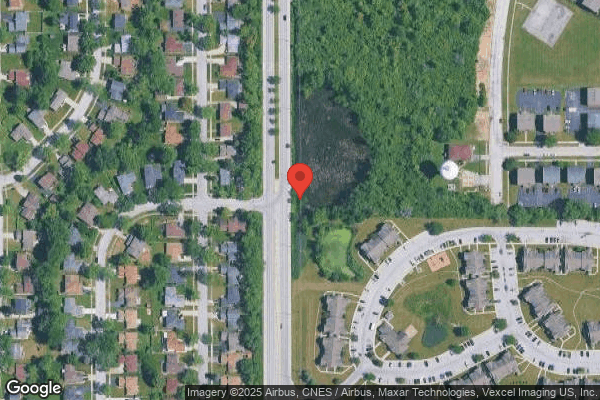

22660 SOUTH CICERO AVENUE, RICHTON PARK, IL 60471 (708) 747-6120
For profit - Limited Liability company 294 Beds INFINITY HEALTHCARE CONSULTING Data: November 2025
Trust Grade
0/100
#375 of 665 in IL
Last Inspection: March 2025

Within standard 12-15 month inspection cycle. Federal law requires annual inspections.

Overview

Landmark of Richton Park Rehab & Nursing Center received a Trust Grade of F, indicating significant concerns about the facility's quality of care. Ranked #375 out of 665 in Illinois and #121 out of 201 in Cook County, it falls within the bottom half of nursing homes in the area. Although the facility is showing signs of improvement, with a decrease in issues from 19 in 2024 to 12 in 2025, the staffing situation is troubling with a low rating of 1 out of 5 stars and a high turnover rate of 70%, which is significantly above the state average. The facility has also accumulated $589,797 in fines, which is concerning and suggests ongoing compliance issues. Specific incidents include a failure to monitor critical blood glucose levels for residents, leading to dangerously high readings, and a lack of timely care for a resident at risk for skin impairment, resulting in a deep tissue injury. Overall, while there are areas of RN coverage that are better than many facilities, the weaknesses raise red flags for families considering this nursing home.

Trust Score
F
0/100
In Illinois
#375/665
Bottom 44%
Safety Record
High Risk
Review needed
Inspections
Getting Better
19 → 12 violations
Staff Stability
⚠ Watch
70% turnover. Very high, 22 points above average. Constant new faces learning your loved one's needs.
Penalties
✓ Good
$589,797 in fines. Lower than most Illinois facilities. Relatively clean record.
Skilled Nurses
✓ Good
Each resident gets 49 minutes of Registered Nurse (RN) attention daily — more than average for Illinois. RNs are trained to catch health problems early.
Violations
⚠ Watch
53 deficiencies on record. Higher than average. Multiple issues found across inspections.
★★☆☆☆
2.0
Overall Rating
★☆☆☆☆
1.0
Staff Levels
★★★★☆
4.0
Care Quality
★★★☆☆
3.0
Inspection Score
Stable
2024: 19 issues
2025: 12 issues

The Good

  • 4-Star Quality Measures · Strong clinical quality outcomes
  • Full Sprinkler Coverage · Fire safety systems throughout facility
  • No fines on record

Facility shows strength in quality measures, fire safety.

The Bad

2-Star Overall Rating

Below Illinois average (2.5)

Below average - review inspection findings carefully

Staff Turnover: 70%

24pts above Illinois avg (46%)

Frequent staff changes - ask about care continuity

Federal Fines: $589,797

Well above median ($33,413)

Significant penalties indicating serious issues

Chain: INFINITY HEALTHCARE CONSULTING

Part of a multi-facility chain

Ask about local staffing decisions and management

Staff turnover is very high (70%)

22 points above Illinois average of 48%

The Ugly 53 deficiencies on record

13 actual harm
Sept 2025 2 deficiencies 1 Harm
SERIOUS (G) 📢 Someone Reported This

A family member, employee, or ombudsman was alarmed enough to file a formal complaint

Actual Harm - a resident was hurt due to facility failures

Free from Abuse/Neglect (Tag F0600)

A resident was harmed · This affected 1 resident

**NOTE- TERMS IN BRACKETS HAVE BEEN EDITED TO PROTECT CONFIDENTIALITY** Based upon interview and record review the facility failed to follow policy procedures, failed to implement care plan interventi...

Read full inspector narrative →
**NOTE- TERMS IN BRACKETS HAVE BEEN EDITED TO PROTECT CONFIDENTIALITY** Based upon interview and record review the facility failed to follow policy procedures, failed to implement care plan interventions, failed to obtain physician orders for blood glucose monitoring/sliding scale insulin, failed to receive blood glucose parameters for physician notification, failed to follow physician orders, failed to ensure that medication was administered/documented within regulatory requirements, and/or failed to ensure that (critical) blood glucose levels were addressed by a physician/nurse practitioner for two of four residents reviewed for change in condition. These failures resulted in R1 sustaining critical blood glucose levels ranging from 413-500 (without intervention) for a total of 8 days within 1 month. These failures also resulted in R2 sustaining a critical blood glucose level of 400 (without prescribed sliding scale insulin) for 11 hours.Findings include:On 8/21/25, IDPH (Illinois Department of Public Health) received neglect allegations due to facility staff refusing to contact a doctor when resident blood sugars were elevated.R1 was admitted to the facility on [DATE] with diagnoses which include but not limited to morbid obesity due to excess calories and type II diabetes mellitus. R1 was discharged on 7/2/24 (prior to this survey).R1's (6/5/24) care plan includes potential for complications of metabolic functioning as evidenced by hyper/hypoglycemia, interventions: monitor blood sugars as ordered and cover as ordered per sliding scale. Report abnormal blood sugars to Medical Doctor. R1's (6/1/24) POS (Physician Order Sheets) include check blood glucose before each meal and at bedtime [parameters for physician notification are excluded]. Glargine (insulin) inject 85 units every morning and at bedtime. Humalog (Insulin) inject 50 units before meals. [Sliding scale insulin is excluded].On 9/3/25 at 1:19pm, surveyor inquired if any residents were recently sent out to the hospital due to blood sugar concerns V2 (DON/Director of Nursing) stated We haven't had anybody go out for hyperglycemia or hypoglycemia recently, not that I'm aware of. Surveyor inquired if any residents or family members recently reported concerns regarding blood sugars V2 responded No. Surveyor inquired when R1 was discharged from the facility V2 replied He (R1) has been gone a while, he discharged I wanna say back in 2024. He (R1) was short term stay; I (V2) don't believe he was sent out for blood sugar. I (V2) do remember him (R1) having issues with his blood sugar because the wife (V3) was bringing in all the wrong foods. She (V3/Wife) brought him (R1) whatever he wanted, and we (staff) had to have a meeting with her (V3) about it. She was educated on his diet. We (staff) also found out that she (V3) was giving insulin to him when she was here, and we have that care planned. R1's progress notes state (6/2/24) 9:22am, upon entering resident room, writer noted resident wife with a filled syringe in her hand about to administer it to resident but stopped when I entered the room. Writer made appropriate parties aware [R1's 6/2/24 blood glucose was 330 at 7:30am and 339 at 11am per MAR/Medication Administration Record]. (6/5/24) 3:47pm, Staff reports resident's wife was observed with a vial of insulin to administer to the resident [R1's 6/5/24 blood glucose was 202 at 4pm per MAR]. R1's (June 2024) MAR also affirms that blood glucose levels were (critical) high on the following dates: 6/1: 413. 6/7: 432. 6/15: 500. 6/18: 419. 6/20: 469. 6/23: 450. 6/24: 430. 6/27: 419 however R1's (June 2024) Nurses Notes exclude critical high blood glucose levels and physician notification of resident change in condition. On 9/4/25 at 1:01pm, surveyor inquired about resident blood glucose monitoring V6 (Medical Director) stated, If someone's uncontrolled we (staff) would probably be checking that with meals. Surveyor inquired what parameters should be inclusive for hyperglycemia V6 responded We have about 3 different options; it would be 350 or 400. Surveyor inquired about staff requirements if a resident's blood glucose is 400 or above V6 replied It should be whatever the order is [R1's Physician orders exclude sliding scale insulin] and affirmed the physician should be contacted. Surveyor inquired about potential harm to a resident with a blood glucose level that's 400 or above V6 stated Medical comorbid conditions associated with hyperglycemia which could be infection, DKA (Diabetic Ketoacidosis), or hyperosmolarity.On 9/4/25 at 2:20pm, surveyor inquired if there was any documentation in R1's EMR (Electronic Medical Records) regarding notification for R1's (6/15/24) critical blood glucose level of 500 - per MAR V2 (DON/Director of Nursing) reviewed R1's EMR and stated No, there's no documentation that she (Nurse) called the Physician or Nurse Practitioner for the 15th. Surveyor inquired if there was any documentation that R1's Physician was notified for any of R1's (June 2024) critical blood glucose levels V2 reviewed the EMR to no avail and responded They (staff) were giving the insulin that was ordered but nobody thought about a sliding scale. He (R1) had no sliding scale the entire time he was here, everybody missed it [R1 resided at the facility for over 1 month]. __R2's diagnoses include diabetes mellitus with hyperglycemia however the (9/3/25) facility glucose monitoring log - excludes R2's name. R2's POS includes (8/27/25) Lispro (Insulin) 25 units before meals. Glargine (Insulin) 50 units two times daily. (8/29/25) Lispro inject per sliding scale 150-199 = 2 units, 200-249 = 4 units, 250-299 = 6 units 300-349 =8 units, 350-399 = 10 units at bedtime. [Blood Glucose Monitoring is excluded].R2's (11/7/18) care plan states resident has hyperglycemia related to disease process, interventions: monitor for signs/symptoms of hyperglycemia, report to Nurse and Physician as needed. R2's (7/31/25) BIMS (Brief Interview Mental Status) determined a score of 10 (moderate impairment).On 9/3/25 at 4:09pm, surveyor inquired if R2 has any facility concerns that she would like to discuss R2 responded No, I've always been with the Santa Clause therefore not appropriate for interview. R2's (9/2/25) MAR affirms the following: blood glucose level was 486 (at 5:00pm) and 9 (see nurse note) was documented. R2's blood glucose level was 400 (at 9:00pm) and 9 was documented. [R2's blood sugar was not rechecked until 8am the following day - 11 hours later]. On 9/4/25 at 9:19am, surveyor inquired what 9 indicates on the MAR V2 (DON) stated If they (staff) didn't give it for whatever reason they'll put in a 9 and put in a nurses note. Surveyor presented R2's (September 2025) MAR and inquired if R2 received insulin on 9/2 when the blood glucose was 400 and above V2 responded Let me (V2) see, I'll have to see if the Nurses made any note and did anything with that. The sliding scale only goes up to 399 so she (V5/Registered Nurse) should have called the doctor. They (staff) should know you follow the sliding scale, if the blood sugar is higher than what it is, you reach out to the physician and find out if they (Physician) want to give insulin. R2's (9/2/25) Medication Administration Note states (10:33pm) medicated with 25 units Lispro insulin for blood sugar of 486 per Nurse Practitioner (V7). (10:40pm) Medicated with 10 units Lispro insulin per (V7) however R2 was prescribed sliding scale insulin at 5pm and 9pm - therefore not administered within regulatory requirements (1 hour before or after the scheduled time). On 9/4/25 at 2:16pm, surveyor inquired why V5 (Registered Nurse) documented on 9/2/25 that R2 received Lispro (25 units) at 10:33pm and Lispro (10 units) at 10:40pm (7 minutes later) per electronic Medication Administration Note V2 (DON) responded She (V5) should have put it was given at 5pm or whenever it was given. On 9/4/25 at 3:23pm, surveyor inquired if the Physician was notified of R2's critical blood glucose levels on 9/2/25 V5 (Registered Nurse) stated The Nurse Practitioner (V7) gave the orders to the ADON (Assistant Director of Nursing/V8) she (V7) said to give the 25 units when she (R2) was 486 and then I (V5) gave the 25 units. She (V7) said recheck in 30 minutes, call her (V7) back and it was 400. She (V7) said follow the sliding scale and affirmed that R2 received Lispro 10 units at that time [R2's sliding scale only covers a blood glucose level up to 399 - therefore the sliding scale was not followed]. Surveyor inquired what time R2 received the 25 units and 10 units of Lispro on 9/2/25 V5 responded It was about 5pm but I didn't sit down to chart it then. Surveyor inquired if insulin was administered to R2 on 9/2/25 (at 9pm) as prescribed V5 replied She (R2) gets Lantus at night, so I gave her the Lantus [Sliding scale Lispro - scheduled for 9pm administration was excluded]. Surveyor inquired if V7 was notified of R2's (9/2/25) critical blood glucose level (at 9pm) V5 replied I called her (V7) twice (at 5pm and a half hour later) and during the 9pm, I didn't call her because she (R2) was within the limits to give her a sliding scale. At 9pm, I covered her with the sliding scale because she was under 400. For the 9pm, I just give her the insulin I didn't make a note [R2's blood sugar at 9pm was 400 - therefore not within sliding scale parameters and 9 was documented on the MAR which affirms Lispro was NOT administered as ordered]. Surveyor inquired (again) which insulin was administered to R2 on 9/2/25 at 9pm (due to inconsistent statements) V5 responded I gave her Lantus. The (undated) blood glucose monitoring policy states blood sugars found to be below 70 or above 400 will be reported immediately to the physician and the resident's representative. Any orders received from the physician will be implemented. Notify physician if blood glucose is outside resident's parameters for blood glucose as ordered by their physician. Nursing interventions for treatment of hyperglycemia: follow the sliding scale parameters for fast acting insulin and any additional orders received from the physician. Immediately notify the physician and the resident's representative any time the resident's blood sugar is outside the ordered parameter range as well as any interventions taken to address a hypoglycemic or hyperglycemic event. Complete all appropriate documentation.
CONCERN (D) 📢 Someone Reported This

A family member, employee, or ombudsman was alarmed enough to file a formal complaint

Potential for Harm - no one hurt, but risky conditions existed

Notification of Changes (Tag F0580)

Could have caused harm · This affected 1 resident

Based upon interview and record review the facility failed to follow policy procedures, failed to implement care plan interventions, and failed to notify the physician and responsible party regarding ...

Read full inspector narrative →
Based upon interview and record review the facility failed to follow policy procedures, failed to implement care plan interventions, and failed to notify the physician and responsible party regarding critical blood glucose levels for two of four residents (R1, R2) reviewed for change in condition.Findings include:On 8/21/25, IDPH (Illinois Department of Public Health) received allegations that facility staff refused to contact a doctor when resident blood sugars were elevated.R1's diagnoses include type II diabetes mellitus. V3 (Family) is listed as the emergency contact on R1's face sheet.R1's (6/5/24) care plan interventions state report abnormal blood sugars to Medical Doctor. R1's (June 2024) MAR (Medication Administration Record) affirms blood glucose levels were (critical) high on the following dates: 6/1: 413. 6/7: 432. 6/15: 500. 6/18: 419. 6/20: 469. 6/23: 450. 6/24: 430. 6/27: 419. R1's (June 2024) Nurses Notes exclude (critical) high blood glucose levels and physician/responsible party notification of resident change in condition. On 9/4/25 at 2:20pm, surveyor inquired if there was any documentation in R1's EMR (Electronic Medical Records) regarding notification for R1's (6/15/24) critical blood glucose level of 500 - per MAR V2 (DON/Director of Nursing) reviewed R1's EMR and stated No, there's no documentation that she (Nurse) called the Physician or Nurse Practitioner for the 15th. Surveyor inquired if there was any documentation that R1's Physician and/or Family were notified for any of R1's (June 2024) critical blood glucose levels V2 reviewed the EMR to no avail and affirmed that notification was not documented. __R2's diagnoses include diabetes mellitus with hyperglycemia.V9 (Family) is listed as the emergency contact on R2's face sheet.R2's (11/7/18) care plan interventions state monitor for signs/symptoms of hyperglycemia, report to Nurse and Physician as needed. R2's (9/2/25) MAR affirms blood glucose level was 486 (at 5:00pm) and 9 (see nurse note) was documented. R2's blood glucose level was 400 (at 9:00pm) and 9 was documented. R2's (9/2/25) Medication Administration Note states (10:33pm), medicated with 25units Lispro insulin for blood sugar of 486 per Nurse Practitioner (V7). (10:40pm), Medicated with 10 units Lispro insulin per Nurse Practitioner (V7). [Family notification was excluded]. On 9/4/25 at 3:23pm, surveyor inquired if V7 (Nurse Practitioner) or Physician were notified (on 9/2/25) of R2's critical blood glucose levels at 5pm and 9pm V5 (Registered Nurse) stated I called her (V7) twice (at 5pm and a half hour later) and during the 9pm, I didn't call her then affirmed that the (9/2/25) Medication Administration Notes were referring to (5pm) insulin administrations - however entered later in the shift. The (6/9/25) facility guidelines for notification of change in resident's condition/status/treatment states notification is provided to the physician to facilitate continuity of care and to obtain input from the physician about appropriate interventions/changes which can include additions to, or discontinuation of, current care/treatments - related to the notification. Notification is provided to the resident's responsible party/POA (Power of Attorney). Requirements for notification of resident, their attending physician, and the residents responsible party/POA: a significant change in the resident's physical, mental, or psychosocial status. A significant change includes deterioration in health, mental, or psychosocial status in either life-threatening conditions or clinical complications. Document the notifications and record any new orders received from the physician in the resident's medical record. When a change of condition occurs - the nurse will perform an appropriate assessment of the resident as well as then making the required notifications. The assessment and the notifications will be documented. Examples of situations/circumstances when the physician must be immediately notified: any critical lab value.
Mar 2025 10 deficiencies 1 Harm
SERIOUS (G)

Actual Harm - a resident was hurt due to facility failures

Pressure Ulcer Prevention (Tag F0686)

A resident was harmed · This affected 1 resident

**NOTE- TERMS IN BRACKETS HAVE BEEN EDITED TO PROTECT CONFIDENTIALITY** Based on observation, interview, and record review the facility failed to ensure ongoing assessment is done to identify new skin...

Read full inspector narrative →
**NOTE- TERMS IN BRACKETS HAVE BEEN EDITED TO PROTECT CONFIDENTIALITY** Based on observation, interview, and record review the facility failed to ensure ongoing assessment is done to identify new skin impairment, document and notify physician for appropriate treatment in a timely manner to a resident who is at high risk for skin impairment. The facility failed to formulate wound/pressure care plan and implement LAL (Low air loss) mattress manufacturer's recommendation in prevention and management of wound care. These failures resulted R54 to develop DTI (Deep tissue injury) on right heel. This deficiency affects all five residents (R28, R36, R45, R54 and R59) in the sample of 17 reviewed for Wound/Pressure ulcer prevention and treatment management. Findings include: On 3/4/25 at 8:07AM, Observed R28 sleeping in a LAL (low air loss) mattress bed with V10 Family member at bedside. V10 said that R28 is totally dependent with ADLs (Activity of Daily Living). V10 said that last week Friday (2/28/25), R28 re-opened her sacral pressure ulcer. V10 said she noticed it when she assisted the CNA (Certified Nurse Assistant) in performing incontinence care and they applied wound dressing. V10 said she notified the ADON (Assistant Director of Nursing), and V5 Wound Care Coordinator (WCC) came to see R28, both were aware of R28's re-opened sacral pressure ulcer. Observed R28 has fitted sheet covered the LAL mattress and a cloth pad over the mattress. R28 wears disposable brief. On 3/4/25 at 8:11AM, Observed R59 lying in LAL mattress bed with flat sheet folded in half and cloth pad over the mattress. R59 wears disposable adult brief. V11 CNA said that R59 should only have flat sheet over the LAL mattress. The night shift CNA is the one who did apply the multi layers of linen over the mattress. On 3/4/25 at 8:20AM, Observed R36 lying in LAL mattress bed with V11 CNA. Observed R36 has flat sheet and cloth pad over the mattress. R36 wears disposable brief. On 3/4/25 at 8:25AM, Observed R54 lying in LAL mattress bed with V5 WCC. Observed flat sheet and cloth pad over the mattress. R54 wears disposable brief. V5 said that R54 should only have flat sheet over the mattress. No multi-layer of linens as manufacturer's recommendation. On 3/4/25 at 8:30AM, Observed R45 lying in LAL mattress bed with V5 WCC. Observed flat sheet and cloth pad over the mattress. R45 wears disposable brief. V5 said that R45 should only have flat sheet over the mattress. No multi-layer of linens. Informed V5 of above observation made to R28, R36 and R59 with multi layers of linen over the LAL mattress. V5 said that residents on LAL mattress should only be on flat sheet so it will not affect the purpose of LAL mattress. On 3/4/25 at 10:04AM, V5 WCC said that she is responsible for wound assessment and treatment for resident with pressure ulcers and other skin conditions. She said, resident who is admitted with skin impairment or open wound should have skin assessment with measurement done by the floor nurse or herself. The physician will be notified to obtain appropriate treatment and care plan will be updated. V5 presented list of residents with skin impairment/pressure ulcers in the facility. The list did not indicate R28 and R54. On 3/4/25 at 10:21AM, Informed V5 WCC of V10 Family member reported that R28 has re-opened her sacral pressure ulcer last Friday (2/28/25). V5 said that she is not aware, and this is her first time hearing this report. V10 Family member denied statement of V5 and reminded her that she came to see R28 on 2/28/25 after she reported to ADON about R28's re-opened sacral wound. V10 added that V5 did not see the wound because the floor nurse applied wound dressing, but she reported to her. V5 said, she probably forgot about it. V5 then started preparing to perform wound assessment and treatment. She wears only gloves, she opened R28's disposable brief then she repositioned R28 to her left side and removed her brief. The brief is clean, but the wound dressing is contaminated with black fecal matters. Observed R28 has fitted sheet and cloth pad over the LAL mattress. R28 has sign posted at her door indicated Enhanced Barrier Precaution. V5 cleansed open sacral wound with normal saline solution (NSS). V5 said, R28 has stage 2 pressure ulcer. Observed clean pinkish tissue and whitish color (maceration) at peri wound. V5 measured sacral wound and obtained 0.5cm x 0.4cm x0.1cm. V5 said that she will call R28's physician to obtain treatment order. On 3/4/25 at 10:41AM, Observed R54 lying in LAL mattress bed. He has tracheostomy tube connected to ventilator. He has gastrostomy tube connected to feeding bag. He is awake and non-verbal. V5 assisted with V8 Restorative Nurse to remove R54's bilateral heel protectors. Observed R54 dressing on the following: Left dorsal foot, left lateral ankle, right inner/medial lower leg, and right heel. Wound dressing dated 3/2/25. V5 said that she was not aware of this wound dressing because there is no order in his chart. V5 removed all wound dressing and cleansed with NSS then did measurement. Left dorsal foot has 1.5cm x1.5cm dry necrotic scab. Left lateral ankle pressure ulcer measures 2.5cm x 1.3cm with 50% pinkish tissue and 50% necrotic dry scab. Right inner/medial lower leg measures 1.5cm x 0.5cm. Observed bleeding granulating, reddish tissue, full thickness. Right heel DTI measures 4.5cm x 6cm, 35% necrotic tissue, 10% red tissue exposure, 65% maroon discoloration. V5 painted betadine to all wounds and covered with bordered dressing. V5 said that she calls the physician to obtain treatment orders to all new identified skin impairments for R54. On 3/4/25 at 11:19AM, Observed R45 lying in LAL mattress bed. He is alert, responsive but with episodes of confusion. V5 WCC assisted with V18 CNA preparing R45 for wound care. V18 open his disposable brief. He as morbid obese abdomen. Surveyor requested to check for underneath his abdominal folds. R45 screams for pain as V18 lifted his abdomen. Observed MASD (Moisture associated skin disorder) underneath the abdominal folds with fluids. Both V5 and V18 said that the fluid from his urine (due to anatomical position of his genital/penis). R45 continues to scream for pain as V18 and V5 cleansed the abdominal folds. Surveyor asked V5 if R45 has scheduled pain medication. Both said that R45 always complains of pain even just touching him. V5 said that she is not aware of this MASD, and this is new for her. V5 applied barrier cream. Then V18 positioned R45 to his left side. V5 said that R45 has Stage 4 sacral pressure ulcer. She applied collagen sheet and covered with foam dressing. V5 said that she will call R45's physician about MASD on abdominal folds. On 3/6/25 at 10:03AM, Reviewed R28, R54, R45, R36 and R59 medical records with V5 WCC. R28 is re-admitted on [DATE] with diagnosis listed in part but not limited to Type 2 Diabetes Mellitus, Dementia, Contractures on right and left ankle, left and right hand, Gastrostomy, Chronic Kidney disease. Active physician order sheet indicates: Weekly skin checks for wound prevention. Moisture barrier ointment apply to buttocks and peri area topically every shift for skin protection secondary to incontinence. No wound treatment addressing to re-opened sacral wound on 2/28/25. Comprehensive care plan indicated she has as alteration in skin integrity and is at risk for additional and or worsening of skin integrity issues related to impaired cognition related to dementia, impaired mobility, and other medically related diagnosis. Intervention: Skin will be checked during routine care daily and during weekly bath/shower schedules. Any skin integrity issues /concerns will be conveyed to the charge nurse for further evaluation and or treatment changes/new interventions and the physician will be called as needed. Pressure reducing/relieving mattress. Informed V5 that Physician was not notified of re-opened sacral wound, did not obtain appropriate treatment intervention, care plan was not implemented and updated not until the surveyor addressed the concerns during survey. Informed V5 that wound assessment done with surveyor on 3/4/25 was dated 3/3/25, it was signed on 3/5/25. R54 is admitted on [DATE] with diagnosis listed in part but not limited to Encephalopathy, Respiratory failure, Emphysema, Chronic obstructive pulmonary disease, paralytic syndrome following cerebral infarction bilateral, Tracheostomy status, Gastrostomy status, Muscle wasting and atrophy. Braden scale/skin assessment upon admission [DATE]) and most recent (3/2/25) indicated that He is at very high risk for developing pressure sore. No admission wound assessment and measurement was done. admission notes dated 2/11/25 indicated open areas multiple, scrotum under red, right outer leg open, back open area, multiple scabs back, back upper open area, back middle open area, toenails thick, top right great toe bruise, left hand callus, right ball foot scab, heel right red area, right inner lower leg red open area, left leg multiple scars, right lower leg scars. Active physician order indicated No treatment orders addressing the identified skin impairment upon admission. V5 did not complete skin assessment after admission. Wound care physician initial wound assessment dated [DATE] indicated: 1) Diaper dermatitis on perineal and buttocks. Treatment recommended- moisture barrier or zinc oxide, 2) Venous stasis on left big toe. Treatment - betadine paint. 3) Open blister on left mid back. Treatment- zinc oxide or Vit A& D. Treatment ordered were written in physician order sheet and not carried out not until the surveyor addressed the concerns. V5 write the treatment recommended by wound care physician on 2/17/25 not until 3/4/25 during survey. R54 physician order sheet and Treatment administration record indicated that treatment orders recommended by wound care physician was only documented on 3/4/25. Informed V5 WCC that they failed to implement its policy and procedure on prevention and treatment management of pressure and non-pressure wounds. They failed to ensure ongoing assessment is done to identify new skin impairment, document and notify physician for appropriate treatment in a timely manner to resident who is at high risk for skin impairment. R54 developed DTI on right heel, open wound on lateral ankle and open wound on right medial lower leg. It was not identified, documented, and did not obtain appropriate treatment from the physician not until the surveyor identified it during survey. No comprehensive care plan was developed upon admission to address the skin impairment and prevention of developing pressure ulcer. V5 said that the previous MDS/Care plan coordinator was the one responsible for developing wound/pressure ulcer care plan. V5 submitted all new identified wounds with assessment and measurement done with surveyor on 3/4/25, signed and dated on 3/6/25. R45 is re-admitted on [DATE] with diagnosis listed in part but not limited to Type 2 Diabetes Mellitus, Senile degeneration of brain, Chronic obstructive pulmonary disease, Hemiplegia, and hemiparesis following cerebral infarction affecting left non dominant side, Vascular dementia, Muscle wasting and atrophy. Most recent Braden scale/skin assessment (1/24/25) indicated that he is at high risk for skin impairment. Active physician order indicated Sacrum: cleanse with NSS, apply collagen sheet or puracol, zinc oxide around then cover with foam silicone dressing daily and as needed. Weekly skin assessment. Moisture barrier ointment apply to buttocks and peri area topically every shift for skin protectant secondary to incontinence. No treatment order for MASD abdominal folds that was identified on 3/4/25 with surveyor. Comprehensive care plan indicated that he has an alteration in skin integrity and is at risk for additional and or worsening of skin integrity issues. Interventions: Skin will be checked during routine care on daily basis and during weekly bath /shower. Any skin integrity issues/concerns will be conveyed to the charge nurse for further evaluation and or treatment changes new interventions and the physician will be called as needed. Pressure reducing/relieving mattress (low air loss mattress). Informed V5 WCC that they failed to implement its policy and procedure on prevention and treatment management of pressure and non-pressure wounds and implement care plan interventions. They failed to ensure ongoing assessment is done to identify new skin impairment, document and notify physician for appropriate treatment in a timely manner to resident who is at high risk for skin impairment. R36 is re-admitted on [DATE] with diagnosis listed in part but not limited to Parkinson, Dementia, Muscle wasting and atrophy, Stage 3 sacral region pressure ulcer. Active physician order sheet indicates: Low air loss mattress. Treatment sacrum: Apply protective dressing as needed for skin protective dressing. Comprehensive care plan indicated she is at risk for alteration in skin integrity. Most recent Braden scale assessment dated [DATE] indicated at risk for developing pressure ulcer sore. Informed V5 WCC of multilayers of linens over the mattress on 3/4/25. R59 is re-admitted on [DATE] with diagnosis listed in part but not limited to Sequelae of cerebral infarction, Senile degeneration of brain, Metabolic encephalopathy, Subarachnoid hemorrhage, Vascular dementia. Comprehensive care plan indicated she is at risk for alteration in skin integrity related to impaired cognition, incontinence of bladder and bowel and impaired mobility. Intervention: Pressure relieving/reducing mattress. Informed V5 WCC of multilayers of linens over the mattress on 3/4/25. On 3/6/25 at 12:51PM, Informed V24 Medical Director of above concerns identified that the facility failed to ensure ongoing assessment is done to identify new skin impairment, document and notify physician for appropriate treatment in a timely manner to residents who are at high risk for skin impairment. The facility failed to develop wound/pressure care plan and implement LAL (Low air loss) mattress manufacturer's recommendation in prevention and management of wound care. V24 said that they should follow and implement the facility's policy and procedures in prevention, treatment and management of wound/pressure ulcers. Facility's policy on Wound Assessment indicates: It is the policy of this facility to complete a systematic, ongoing assessment of all wounds that will provide a consistent means of wound evaluation to determine the response to treatment modalities and to facilitate continuity of care and communication among staff and healthcare providers on an ongoing basis. Procedure: I. The presence of wounds, injuries and or other skin abnormalities will be identified upon admission/readmission or identification of a new wound, pressure injury, or other skin abnormality. A. The staff will complete a complete skin and wound assessment upon admission/readmission, identify any wounds, pressure injuries or other skin abnormality and document it in the medical records. B. The wound team will complete a skin and wound assessment and document the presence of any wound assessment in the medical record. C. Any wound, pressure injury or other skin abnormality identified during the resident's stay will be documented in the same manner as when identified upon admission/re/admission. II. Wounds are measured weekly by the wound team or designee A. The status of the wound is documented in the medical record B. Wound status is also monitored with each dressing change C. Any changes in the wound are documented at the time identified and the physician and family are notified. Facility's policy and procedures on Treatment/services to prevent /heal pressure and non-pressure wounds revised 11/2/23 indicated: Policy: It is the policy of the facility to ensure it identifies and provides needed care and services that are resident centered in accordance with the resident's preferences, goals for care and professional standards of practice that will meet each resident's physical, mental and psychosocial needs. Procedure: 1. The facility will ensure that based on the comprehensive assessment of a resident: 1a. A resident receives care, consistent with professional standards of practice to prevent pressure and non-wounds and does not develop pressure or non-pressure wounds unless the individual's clinical condition demonstrates that they were unavoidable as documented by the wound care specialist. 1b. A resident with pressure ulcers or non-pressure wounds received necessary treatment and services, consistent with professional standards of practice, to promote healing, prevent infection and prevent new wounds from developing. 2. Upon admission, the resident will receive a head-to-toe skin check to identify any skin issues. 3. Interventions will be implemented by the nurse in the resident's plan of care to prevent pressure sore development when the resident has no areas of concern. 4. When the resident is admitted with a pressure or non-pressure wounds the admitting nurse or wound care nurse will document the size, location, odor, drainage, and current treatment ordered. 5. Interventions will be implemented in the resident's plan of care to prevent deterioration and promote healing of the pressure and non-pressure wound. 6. The admitting nurse will notify the attending physician as well as the resident and or resident's representative of the condition of the wounds that were observed on admission. 7. The pressure and non-pressure wounds will be evaluated weekly by the wound care nurse and or the wound care specialist. 8. If the wound care specialist changes any treatment or indicates other interventions the wound care nurse will put these orders in the resident's electronic medical record. 9. The nurse will notify the resident and or the resident's representative of any changes related to the improvement, deterioration and or treatment changes on an ongoing basis. Facility's policy Guidelines for Low Air Loss Mattress use dated 7/18/23 indicated: Purpose: To provide the features of a support system for the resident that provides a flow of air in managing the heat and humidity (microclimate) of the skin. Procedure: 8). A single non fitted sheet may need to be utilized on the mattress for assistance in positioning and repositioning the resident. Fitted sheets are not recommended. Quilted reusable pads and incontinent briefs tend to block the airflow and trap moisture against the skin. Disposable, air permeable incontinence pads designed for low air loss mattresses should be used instead.
CONCERN (D)

Potential for Harm - no one hurt, but risky conditions existed

Resident Rights (Tag F0550)

Could have caused harm · This affected 1 resident

Based on observation, interview, and record review the facility failed to protect and promote resident rights of a vulnerable resident. This deficiency affects one (R59) of three residents in the samp...

Read full inspector narrative →
Based on observation, interview, and record review the facility failed to protect and promote resident rights of a vulnerable resident. This deficiency affects one (R59) of three residents in the sample of 17 reviewed for Resident's right. Findings include: On 3/5/25 at 8:19AM, Observed R59 in recliner chair wearing sweater with multiple large food stained in front of her sweater. She is alert but confused and totally dependent with ADLs (Activity of daily Living). V11 CNA (Certified Nurse Assistant) said that her sweater is clean, but they cannot remove the food stained. V11 added that the facility does her laundry. On 3/4/25 at 11:14AM, Informed V6 Social Service Director of above observation. V6 said that they have to treat resident with dignity. R59 should be wearing clean and neat clothing. The CNA should change R59's sweater and dress her with clean and neat clothing. Facility's policy on Resident's right indicated: At a minimum, federal law specifies that nursing home must protect and promote the following rights of each resident. You have the right to: * Be treated with Respect: You have the right to be treated with dignity and respect.
CONCERN (D)

Potential for Harm - no one hurt, but risky conditions existed

Deficiency F0558 (Tag F0558)

Could have caused harm · This affected 1 resident

**NOTE- TERMS IN BRACKETS HAVE BEEN EDITED TO PROTECT CONFIDENTIALITY** Based on observation, interview, and record review the facility failed to ensure resident call light is within reach. This defic...

Read full inspector narrative →
**NOTE- TERMS IN BRACKETS HAVE BEEN EDITED TO PROTECT CONFIDENTIALITY** Based on observation, interview, and record review the facility failed to ensure resident call light is within reach. This deficiency affects 1 (R47) of 3 residents in the sample of 17 reviewed for Accommodation of needs. Findings include: On 03/04/25 at 07:57 AM, R47 observed in bed, call light behind bed on floor. R47 said he cannot find the call light, he looked for it but could not find it. On 03/04/25 at 08:08 AM, V14 (Certified Nurse Aide) said that call light should be within reach, said she is not sure why call light is not next to him. On 03/06/25 at 10:09 AM, V2 (Director of Nursing) said that all residents should have call light within reach to ask for assistance, call lights should not be behind bed or on floors. R47 is admitted on [DATE] with diagnosis in part but not limited to HTN, chronic respiratory failure with hypoxia, Pneumonia, PVD, Left lower extremity osteomyelitis status post left above knee amputation and right below knee amputation, Cerebrovascular disease. A focus care plan I require partial/moderate assist with one staff. Intervention dated 6/6/23 Keep call light in reach. Facility's policy on Guidelines for Call light revisions 3/4/24. Policy: It is the policy of the facility to have a system in place to allow the staff to respond promptly to resident's call for assistance and to ensure that the call system is in proper working order. The call system will be available in the resident's room as well as in the resident's bathroom. Procedure: 9.) Always be sure that the resident has a functioning call light that is the easiest type for them to use. Always place the call light in an accessible location to where the resident is located in their room. Tell the resident where it is. Be sure they know how to use it. Call light cords are not to be wrapped around bed rails or bed frames which could cause them to be pulled out of the wall within movement of the bed or rail.
CONCERN (D)

Potential for Harm - no one hurt, but risky conditions existed

PASARR Coordination (Tag F0644)

Could have caused harm · This affected 1 resident

Based on record review and interview the facility failed to submit for a PASRR level 11 (Preadmission screening resident review-PASRR) for 2 of 3 residents (R22 and R39) reviewed for PASRR level 11 in...

Read full inspector narrative →
Based on record review and interview the facility failed to submit for a PASRR level 11 (Preadmission screening resident review-PASRR) for 2 of 3 residents (R22 and R39) reviewed for PASRR level 11 in a sample of 17. Findings include: On 3/5/2025 at 11:30am R22 said I don't think I'm in a program for mental health. On 3/5/2025 at 12:30pm V 6(Social Services Director) said I was not aware that R22 had an order for psychological services or a change in her medication I will submit for a PASRR level 11 and make sure that if a program is prompted that it is the correct program. On 3/6/2025 at 10:00am V1 (Administrator) said the social services department is responsible for submitting for a PASRR level 11 the information would come from the psychotropic nurse, I'll make sure the social service department is aware of that information to assure that the resident's are in the correct program. An order summary report indicated that R22 had a gradual dose reduction for Risperdal 1 mg on 1/29/2025 order on 5/17/2024 for resident to receive psychological services as needed, psychiatrist consult as needed, physiatrist consult as needed, may do random drug testing as needed. On 3/5/2025 R39 has an order summary report dated 3/6/2025 that indicated on 2/18/2025 R39 may receive psychological services. On 3/5/2025 at 1:00pm V6 said I was not aware that R22 had an order for psychological services, I submitted for a PASRR LEVEL 11 screening on today and I will ensure she's in the correct program. On 3/6/2025 at 10:30am V1 said I will ensure that all resident's that need a PASRR level 11 screening receive it. Facility policy: Guidelines for PASRR PROCESS PASRR is a federally mandated process that requires all states to pre-screen all residents regardless of their payer source or age who are seeking admission to a Medicaid funded nursing facility. PASRR has 3 goals. 3. To ensure people, (resident's), receive the required services for mental illness and or IDD.
CONCERN (D)

Potential for Harm - no one hurt, but risky conditions existed

Accident Prevention (Tag F0689)

Could have caused harm · This affected 1 resident

**NOTE- TERMS IN BRACKETS HAVE BEEN EDITED TO PROTECT CONFIDENTIALITY** On 3/4/25 at 8:19AM, Observed V11 CNA (Certified Nurse Assistant) transferring R59 by herself, lifting from bed to recliner chai...

Read full inspector narrative →
**NOTE- TERMS IN BRACKETS HAVE BEEN EDITED TO PROTECT CONFIDENTIALITY** On 3/4/25 at 8:19AM, Observed V11 CNA (Certified Nurse Assistant) transferring R59 by herself, lifting from bed to recliner chair. R59 is awake but confused. V11 said that she will bring her to dining room for breakfast. V11 said that R59 needs total care with her ADLs (Activity of Daily Living), and she is on hospice care. R59 is re-admitted on [DATE] with diagnosis listed in part but not limited to Sequelae of Cerebral infarction, Senile degeneration of brain, Metabolic encephalopathy, Vascular dementia, Unsteadiness on feet, Dizziness and Giddiness, Abnormality of gait and mobility. re-admission fall assessment (4/10/24) and most recent fall assessment (1/25/25) indicated that R59 is at high risk for fall. R59 's history of fall incidents on the following dates: 1/25/25, 8/6/24, 6/11/24, 4/6/24 and 3/1/24. MDS/Resident assessment dated [DATE] Section GG Functional abilities GG0170 mobility coded (1) dependent for chair/bed to chair transfer. Helper does all the effort. Resident does none of the effort to complete the activity or the assistance of 2 or more helpers is required for the resident to complete the activity. Comprehensive care plan indicated that she is at risk for falls as evidenced by the following risk factors and potential contributing diagnosis: Cognitive impairment, decreased strength and endurance, general weakness, use of psychotropic medications. She demonstrated cognitive impairment. She required total assistance with 2 staff members to operate mechanical lift to complete the transfer. Intervention: The facility will follow the mechanical lift policy and procedure to ensure and correct procedure with use of equipment. She will be transferred with 2 persons transfer when using a mechanical lift. On 3/5/25 at 12:12PM, Review R59's medical records with V8 Restorative Nursing. Informed V8 of above observation made to R59 transferring by V11 CNA from bed to recliner chair by herself. V8 said that R59 should be transferred from bed to recliner chair by mechanical lift with 2 persons assist for safety as indicated in her care plan. Facility's policy on Guidelines for Mechanical lift transfer/Usage indicates: Intent: The nursing department will complete an ADL assessment to determine the transfer needs of all residents upon admission, re-admission, quarterly and as indicated due to a change in the resident's condition. These assessments are completed, in part, to promote resident safety and to main the highest practicable level of ADL function for all residents. Many residents who require 2 persons transfer will need to be transferred using a mechanical lift to include a floor based, full body sling lift- overhead full body sling lift as well as a sit to stand lift. This type of transfer must be the safest method based on the resident's assessed ability to safely assist in their own transfer. The 2 staff members are required when a mechanical lift is used. There must be a complete/detailed physician order for mechanical lift transfers. The use of mechanical lift must be documented in the resident's plan of care. Facility's policy on Resident handling policy limited lift indicates: The resident handling policy exits to ensure a safe working environment for resident handlers. The policy is to be reviewed and signed by all staff that perform or may perform resident handling. This policy will be reviewed annually with changes made accordingly. *Initial screening will be performed on all residents to assess transfer and ambulation status. *Resident transfers will be designated into one of the following categories: M=Mechanical lift transfer- Full lift/Hoyer (2 Caregivers). Facility's policy on Safety Program revised August 2022 indicated: It is the policy of the organization to promote a safe environment for resident. Visitors and employees through the safety program. Based on observation, interview, and record review the facility failed to follow side rail physician order and care plan. The facility also failed to implement safety transfer to a dependent resident who is high risk for fall affecting 2 of 3 (R37, R59) residents reviewed for Accident Hazards in a total sample of 17. Findings include: On 3/4/2025 at 9:15 AM, R37 in bed with three side rails up. R37 said she doesn't know why those rails were up and that she did not request it. On 3/4/2025 at 9:17 AM, V3 (Assistant Director of Nursing) stated R37 should have two side rails up but V3 said not sure of the policy. On 3/4/2025 at 11:11 AM, V8 (Restorative Nurse) stated there should only be two side rails up while in bed. V8 said one of the side rails was zipped tight today. On 3/5/2025 at 8:50 AM, V2 (Director of Nursing) stated side rail assessment is completed by Restorative at least quarterly for mobility, there should be a physician order, and no more than two side rails up. Review of R37 Medical Records read: admission Record dated 1/13/2025 with Diagnosis Information of Unilateral Primary Osteoarthritis, Left Hip, Cerebral Infarction, Unspecified. Order Summary Report dated 2/11/2025, R37 May use Bilateral ¼ Side Rails when in bed for repositioning every shift. Care Plan Report: Focus: R37 could benefit from use of Non-Restrictive Side Rail(s); Bilateral, 1/4 Side Rail (s), date initiated 10/14/2024. Side Rail Review dated 1/23/2025: Recommendations, two side rails. Policy and Procedure for Use of Side Rail/Grab Bars as an Enabler for Bed Mobility, 2/28/19 It is the intent of the facility to provide the licensed medical staff with a process for the evaluation, documentation needs and necessary interventions relating to Side Rails/Enabler bars evaluation and utilization. Side Rail/Grab bar will be used to enable and promote the highest practicable level of independence in terms of turning/repositioning (Bed Mobility) and psychosocial well-being in relation to client's medical condition. A side rail/Grab bar will not be utilized for purposes of facility/family's convenience. Procedure: 2. Side Rail/Grab bar assessment will be completed by staff member and deemed if the use of Side Rail/Grab bar is appropriate to maintain the highest level of functioning of the client. 3. Staff to obtain physician order for the use of Side Rail/Enabler Bar as enabler to assist client in turning and repositioning. 6. Staff to evaluate client every quarter and PRN for the need of Side Rail/Enabler bar. 9. The facility will develop a plan of care to address the use of Side Rail/Enabler Bar.
CONCERN (D)

Potential for Harm - no one hurt, but risky conditions existed

Tube Feeding (Tag F0693)

Could have caused harm · This affected 1 resident

Based on observation, interview and record review the facility failed to ensure the gastrotomy tube placement was checked prior to administering medication for 1 of 1 resident (R49) reviewed for enter...

Read full inspector narrative →
Based on observation, interview and record review the facility failed to ensure the gastrotomy tube placement was checked prior to administering medication for 1 of 1 resident (R49) reviewed for enteral feeding in a sample of 17. Findings include: On 3/4/2025 at 8:30am V12 (Licensed Practical Nurse-LPN) was observed by this writer administering medication and did not check for placement before administering, V12 was asked how the facility checks for feeding tube placement. On 3/4/2025 at 8:33am V12 said we check for gastric residual, I guess I forgot. On 3/4/2025 at 1:00pm V1 (Director of Nursing-DON) said the nurses should check for feeding tube placement by pulling up gastric residual and by listening to gastric sounds via stethoscope. A review of R49 admission Record indicates that R49 has a diagnosis of gastrostomy status, dysphagia. A care plan dated 3/12/2024 that indicates R49 has an intervention to assess/check for gastric residual volume per facility policy and procedeure. Facility Policy: The facility was unable to present a feeding tube placement policy.
CONCERN (D)

Potential for Harm - no one hurt, but risky conditions existed

Food Safety (Tag F0812)

Could have caused harm · This affected 1 resident

**NOTE- TERMS IN BRACKETS HAVE BEEN EDITED TO PROTECT CONFIDENTIALITY** On 3/4/25 at 8:07AM, Observed R28 sleeping in bed with V10 Family member at bedside. V10 said that she brings food and beverages...

Read full inspector narrative →
**NOTE- TERMS IN BRACKETS HAVE BEEN EDITED TO PROTECT CONFIDENTIALITY** On 3/4/25 at 8:07AM, Observed R28 sleeping in bed with V10 Family member at bedside. V10 said that she brings food and beverages from home for R28. Observed R28's personal refrigerator filled with bottled water, juices, and supplemental drinks. Observed daily monitoring log sheet is for cooler not for resident's personal refrigerator. The log indicated date starting at March 3 (Monday) 40F, no monitoring was done on March 1 (Saturday) and 2 (Sunday). On 3/4/25 at 10:30AM, Informed V3 ADON (Assistant Director of Nursing) of above observation, showed monitoring log and requested for copy. On 3/4/25 at 10:35AM, V17 Housekeeping and Laundry Supervisor said that she checked /monitored and recorded resident's personal refrigerator thermometer reading daily. She said that she does R28's daily refrigerator temp monitoring. Surveyor showed R28's refrigerator's March monthly temperature monitoring initiated on March 3, no March 1 and 2 was done. She said that she was off on those days. V17 said she does not know the acceptable temperature ranges for the refrigerator and was referred to Maintenance department. Informed V17 that the monitoring log that she used is for cooler not for resident's refrigerator monitoring form. Requested for policy. On 3/5/25 at 9:58AM, Rounds made with V3 ADON to R28's room. Observed no refrigerator's daily temperature monitoring form. V3 read inside refrigerator temperature reading at 44F. V3 said she's not familiar with acceptable temperature ranges. On 3/5/25 at 11:01AM, Informed both V21 Maintenance Assistant and V22 Regional property manager of above observation and concern. The facility unable to provide policy. Based on observation, interview, and record review the facility failed to ensure resident refrigerators have recorded temperature log affecting 2 of 3 (R28, R29) residents reviewed for resident refrigerator in a sample of 17. Findings include: On 03/04/25 at 08:03 AM, Observed R29 personal refrigerator with 8 soda cans, 2 juice bottles, 1 container of [NAME] slaw salad not dated, the temperature log last updated on 2/3/25. No March 2025 log available. On 03/04/25 at 08:03 AM, R29 said that the staff usually comes in everyday to check the refrigerator temp log, they have not been in here yet. On 03/04/25 at 12:04 PM, R29 said that staff has not come in yet, not sure why. On 03/05/25 at 12:04 PM, V5 said that housekeeping logs the temperature every day to monitor refrigerator for temperatures and food. On 03/06/25 at 10:52 AM, V1 (Administrator) said that housekeeping monitors resident personal refrigerators daily and records logs, V1 said they are unable to find personal refrigerator policy. Facility's Policy on Food Brought into Facility by Friends/Family/Others (Outside Sources) for Residents Policy revised 11/28/2016. Policy: Special circumstance, such as persistent weight loss or specific preferences or special events may require/indicated that food be brought into the facility from an outside source (friends/family/others). Due to the potential for foodborne illness or interference with nutritional treatment, family members and or friends/others who bring in food/drink in from the outside will be educated on safe food handling practices as well as the importance of diet order compliance. Foods or beverages brought in from the outside will be monitored by nursing staff for spoilage, contamination and safety. Procedure: 4. Facility staff will monitor resident rooms, resident personal refrigerators, unit pantries as well as facility refrigerators and freezers for food and beverage disposal needs for safety. 6. All refrigerators in use in the facility have an internal thermometer to monitor temperature. All refrigerators have their internal temps recorded daily. Any refrigerators are found to have an internal temperature that is outside of the accepted safe parameters of temperatures will be immediately addressed by maintenance and will be taken out of service if the internal temperature cannot be corrected within a reasonable time frame to maintain food safety. Any affected food/beverages will be discarded.
CONCERN (E)

Potential for Harm - no one hurt, but risky conditions existed

ADL Care (Tag F0677)

Could have caused harm · This affected multiple residents

**NOTE- TERMS IN BRACKETS HAVE BEEN EDITED TO PROTECT CONFIDENTIALITY** Based on observation, interview, and record review the facility failed to provide nail care and foot care to dependent resident....

Read full inspector narrative →
**NOTE- TERMS IN BRACKETS HAVE BEEN EDITED TO PROTECT CONFIDENTIALITY** Based on observation, interview, and record review the facility failed to provide nail care and foot care to dependent resident. This deficiency affected all four (R36, R45, R54, and R59) residents in the sample of 17 reviewed for Activity of Daily Living (ADL) Program. Findings include: On 3/4/25 at 8:19AM, Observed R59 in recliner chair with long dirty fingernails with V11 CNA (Certified Nursing Assistant). On 3/4/25 at 8:20AM, Observed R36 lying in bed with V11 CNA with dirty long fingernails. On 3/4/25 at 10:41AM, Observed R54 lying in LAL (Low air loss) mattress with V8 Restorative Nurse. He has tracheostomy connected to ventilator. He is totally dependent with ADLs care. Observed R54 has long dirty fingernails. Observed black matter underneath the fingernails. V8 said that CNAs (Certified Nurse Assistant) are responsible for providing nail care to resident during ADLs care. Observed R54's long thickened and discolored toenails. V8 said that CNAs should report to nurse when observed resident with long thickened toenails, so they can refer to podiatrist. Informed V8 that R36 and R59 were observed to have dirty and long fingernails. R54 is admitted on [DATE] with diagnosis listed in part but not limited to Encephalopathy, Respiratory failure, Chronic Obstructive Pulmonary disease, Cerebral infarction, Dependent of respirator/ventilator, Tracheostomy status, Gastrostomy status. Comprehensive care plan indicates that he has a self-care deficit, and he requires assistance with ADLs to maintain highest possible level of functioning. Intervention: Personal hygiene: require total assistance and 1 staff personal hygiene (Totally dependent on staff). On 3/4/25 at 11:19AM, Observed R45 with V5 Wound Care Coordinator and V18 CNA preparing to provide wound care. Observed bilateral hands with long and dirty fingernails. Observed black matters underneath the fingernails. Observed long thickened and discolored toenails. V5 said that CNAs (Certified Nurse Assistant) are responsible for providing nail care to resident during ADLs care. V5 said that CNAs should report to nurse when observed resident with long thickened toenails, so they can refer to podiatrist. R45 is re-admitted on [DATE] with diagnosis listed in part but not limited to Senile degeneration of brain, Hemiplegia and hemiparesis following cerebral infarction affecting left non-dominant side, Vascular dementia, Type 2 Diabetes Mellitus. Comprehensive care plan indicated he has a self-care deficit, and he requires assistance with ADLs to maintain highest possible level of functioning. Intervention: Personal hygiene: require total assistance and 1 staff personal hygiene (Totally dependent on staff). On 3/4/25 at 11:30AM, Informed above observation to V2 DON (Director of Nursing) and requested policy. On 3/5/25 at 10:06AM, Observed R59 in recliner in the dining room with V3 ADON. Observed R59's bilateral hands still with dirty long fingernails. Observed black matter underneath her fingernails. Informed V3 that R59 was observed with long dirty fingernails since yesterday morning. V3 said that she will ask CNA provide nail care to R59. R59 is re-admitted on [DATE] with diagnosis listed in part but not limited to Sequelae of Cerebral infarction, Senile degeneration of brain, Metabolic encephalopathy, Vascular dementia, Section GG Functional abilities GG0130 Self-care coded (1) dependent for Personal hygiene. Helper does all the effort. Resident does none of the effort to complete the activity or the assistance of 2 or more helpers is required for the resident to complete the activity. Comprehensive care plan indicated that she has a self-care deficit and require total assistance with ADLs to maintain highest possible level of functioning. She demonstrated cognitive impairment. R36 is re-admitted on [DATE] with diagnosis listed in part but not limited to Dementia, Parkinson, Muscle wasting and atrophy, Pressure ulcer of sacral stage 3. Comprehensive care plan indicated she has self-care deficit and require assistant to maintain the highest level of functioning. Intervention: Personal hygiene: usually require substantial/maximal assistance. On 3/5/25 at 11:14AM, V6 Social Service Director said that he schedules resident for podiatrist visit/consult if the nursing staff notified him. V6 said that he was not aware that R54 needed to be seen by podiatrist until yesterday. V6 said that R54 is already scheduled for podiatrist for this month. Facility's policy on Activities of Daily Living (ADL) (Routine Care) indicates: Policy: Residents are given routine daily care and HS (Bedtime care by a CNA (Certified Nurse Assistant) or a nurse to promote hygiene, provide comfort and provide a homelike environment. ADL care is provided throughout the day, evening, and night as care planned and or as needed. ADL care is coordinated between the resident and the care givers with emphasis on resident preference as much as possible. ADL care of the resident includes: *Assisting the resident in personal care such as bathing, showering, dressing, eating, hair care, oral care, nail care, appropriate skin care (as indicated and as per care plan) as well as encouraging participation in physical, social, and recreational activities. Facility's policy on Guidelines for Nail care dated 3/27/23 indicates: Purpose: it is policy of the facility to provide personal hygiene needs and to promote health, safety, and the prevention of infection. This includes clean, smooth nails at a safe length acceptable to the residents. Facility's policy on Guidelines for Podiatrist Services dated 5/24/23 indicates: Policy: The goal is for the residents to maintain as much mobility as possible and to experience good foot health. Procedure: 5. Residents will have foot care completed as part of the bathing/showering and nail care policies on a routine basis as part of their ADL care. Any observations on the feet from the above list observed by any caregivers will be immediately reported to the charge nurse for further assessment and appropriate reporting to the attending physician and follow up. 7. The Social Services Director will assist in coordinating/scheduling the podiatrist visit.
CONCERN (E)

Potential for Harm - no one hurt, but risky conditions existed

Infection Control (Tag F0880)

Could have caused harm · This affected multiple residents

**NOTE- TERMS IN BRACKETS HAVE BEEN EDITED TO PROTECT CONFIDENTIALITY** Based on observation, interview, and record review the facility failed to ensure appropriate infection control practices for res...

Read full inspector narrative →
**NOTE- TERMS IN BRACKETS HAVE BEEN EDITED TO PROTECT CONFIDENTIALITY** Based on observation, interview, and record review the facility failed to ensure appropriate infection control practices for residents on enhanced barrier precaution and during ADL (Activity of Daily Living) care. This deficiency affects all four (R28, R47, R49 and R59) reviewed for Infection Control Program. Findings include: R59 On 3/4/25 at 8:19 AM, After V11 CNA (Certified Nurse Assistant) transferred R59 from bed to recliner chair, she gathered all soiled linens with gloves on from the bed closer to her chest/upper body. The soiled linens touching her clothes and both arms. Then she placed the linen on top of the mattress. Informed V11 CNA of observation made. She said that she should gather the linen away from her and placed it in a plastic bag. On 3/4/25 at 9:58AM, Informed V2 DON (Director of Nursing) of above observation. V2 said that the CNA should gathered the soiled linen from the bed away from her body and placed it in a plastic bag. R28 On 3/4/25 at 10:11AM, Observed V16 CNA and V10 Family member performing incontinence care to R28. V16 wearing gloves and V10 wearing gloves and cloth mask. R28 has sign posted at her door indicated that she is on Enhanced Barrier Precaution (EBP). On 3/4/25 at 10:21AM, V5 WCC (Wound Care Coordinator) came into R28's room to perform wound assessment and treatment. She is only wearing gloves. After wound care, surveyor informed V5 of observation made that appropriate infection control practices are not being implemented during direct care to the resident such as incontinence and wound care. V5 said that she forgot to wear proper PPE when performing wound care to resident on EBP. She should be wearing gown and gloves during the procedure. V5 said that the CNA should also wear gloves and gown during incontinence care. V10 Family Member said, she saw the EBP posting, but staff did not tell her to wear gown and gloves when providing direct care to R28. On 3/4/25 at 10:39AM, Informed V3 ADON/Infection Preventionist of above observation. V3 said that staff should wear gown and gloves when providing direct care to R28 who is on EBP. R28's active physician order sheet indicated that she is on Enhanced Barrier Precautions (EBP): Everyone must clean their hands, including before entering and when leaving the room. Providers and staff must also: wear gloves and a gown for the following high contact resident care activities: Providing hygiene, Wound care .Comprehensive care plan indicated that she is on EBP for feeding tubes. Interventions: Follow EBP guidelines when providing care. ` Facility's policy on Guidelines for Enhanced Barrier Precautions (EBP), An extension of Personal Protective Equipment (PPE) reviewed/revised [DATE] indicates: Policy: it is the policy of the facility to ensure that additional and appropriate PPE is utilized, when indicated, to prevent the spread of Multidrug-resistant organism also known as MDROs. EBPs are defined as the use of PPE (gowns and gloves) during high contact resident care activities that generate opportunities for transfer on MDROs in the form of blood or body fluids onto the hands and or clothing of the rendering caregiver. EBP is to be used when contact precautions do not otherwise apply and where there is a diagnosis of a MDROs or a colonized MDRO. Examples of High contact resident care activities at which time EBP is to be practiced are: d)Providing hygiene- ADLs e) Changing linen g)Device care or use to include: *Wound care ( any related device) Procedure: 1) When engaging in any of the afore mentioned High contact resident care activities with a resident who has a known MDRO or a colonized MDRO or who would be at a high risk to contract a MDRO-use gloves and gowns (EBP) with the same technique/practice as in contact precaution use. This includes all required hand hygiene before and after donning/doffing glove and gowns. On 3/4/2025 at 8:30am V12 (Licensed Practical Nurse-LPN) was observed by this writer administering medication to R49 via a feeding tube with only gloves. On 3/4/2025 at 8:35am V12 said I should have on my gown, I forgot. On 3/4/2025 at 1:00pm V2 (Director of Nursing-DON) said I expect the staff who's doing direct patient care to have, full enhanced barrier protection not just gloves. A review of R49 admission Record indicates that R49 has a diagnosis of gastrostomy status, dysphagia, a order summary report dated 3/4/2025 that indicates R49 has a medication order for Bactrim DS 800-160mg and Flagyl 500mg for infection for 14 days, a care plan updated on 3/4/2025 a focus of antibiotics and is at risk for adverse reactions, an intervention to follow universal precautions to prevent cross contamination and spread of infection, and a intervention to follow enhanced barrier precautions when providing care including feeding tube. On 03/04/25 at 07:23 AM, upon floor observation, R47 room observed with Enhanced Barrier Precautions sign posted next to room, but no isolation bin set up next to room or in the hallway. On 03/04/25 at 12:48 PM V5 (Wound Care Coordinator) made aware of above findings and also observed no isolation bin set up outside of room or in the hallway and said that usually the isolation set bin is placed outside the room, V5 said she is unsure what happened to the isolation bin it is not outside the room. On 03/06/25 at 10:15 AM, V2 (Director of Nursing) said that the enhanced barrier precaution signage is posted outside of room and the isolation set up is usually laced under sign, each room is assigned an isolation bin set up. Staff should wear appropriate PPE as indicated. R47 is admitted on [DATE] with diagnosis in part but not limited to HTN, chronic respiratory failure with hypoxia, Pneumonia, PVD, Cerebrovascular disease, Osteomyelitis, Coronary artery disease, Neuropathy, Lymphedema, Osteoarthritis, spondylosis, sacral ulcers, anemia. A focus care plan I am on enhanced barrier precautions for Wounds or skin openings requiring a dressing. Intervention dated 10/09/24 Set up isolation per facility protocol. Follow the enhanced barrier precautions guidelines.
MINOR (C)

Minor Issue - procedural, no safety impact

Staffing Information (Tag F0732)

Minor procedural issue · This affected most or all residents

Based on observation, interview and record review the facility failed to follow their policy on posting direct care daily staffing numbers. This failure has the potential to affect 69 residents receiv...

Read full inspector narrative →
Based on observation, interview and record review the facility failed to follow their policy on posting direct care daily staffing numbers. This failure has the potential to affect 69 residents receiving care in the facility. Findings include: On 03/06/2025 at 11:30am this surveyor along with V23 (Scheduler) did not observe the daily staffing posting anywhere upon entrance into the facility. V23 was made aware that the daily staffing posting was not observed by this surveyor since 3/4/2025. V23 said that the daily staffing posting should have been posted at a designated area by the front desk. On 03/06/2025 at 11:45 AM, V2 (Director of Nursing-DON) said that the daily staffing posting should have been posted. BIPA Staffing Posting Requirement Policy: It is the policy of the facility, in cooperation with Medicare/Medicaid Services, (CMS), to comply with the requirement of daily posting of nursing staff in the facility. Procedure: 1) SNFs and NFs must post daily, at the beginning of each shift, the facility specific shift schedule for the 24-hour period, the number and category of nursing staff employed or contracted by the facility for each 24 hour period, as well as the total number of hours worked by licensed nursing staff who are directly responsible for resident care.
Sept 2024 6 deficiencies 3 Harm
SERIOUS (G) 📢 Someone Reported This

A family member, employee, or ombudsman was alarmed enough to file a formal complaint

Actual Harm - a resident was hurt due to facility failures

Resident Rights (Tag F0550)

A resident was harmed · This affected 1 resident

**NOTE- TERMS IN BRACKETS HAVE BEEN EDITED TO PROTECT CONFIDENTIALITY** Based on interviews and records reviewed the facility failed to treat one resident with respect and dignity by placing him in th...

Read full inspector narrative →
**NOTE- TERMS IN BRACKETS HAVE BEEN EDITED TO PROTECT CONFIDENTIALITY** Based on interviews and records reviewed the facility failed to treat one resident with respect and dignity by placing him in the hallway tied to a wheelchair and having pictures taken.This failure affected one of one resident (R5) reviewed for dignity. Using the reasonable person concept it is reasonable to conclude that R5 felt cold, uncomfortable, and dehumanized when he was sitting in a wheelchair, in the hallway, with a sheet, no shoes, no socks. The findings include: On 8/29/23 an image of identified resident R5 obtained. Image is of a male, with disheveled, long, black hair, and long facial hair. R5 sitting in a room, in a wheelchair, no socks or shoes, in a hospital issued gown, with a face mask on, below his chin. A second image of a male, dark skinned, sitting in a wheelchair, in the hallway, leaning forward, back exposed, no hospital gown is seen in the picture. R5 appears to be covering his face or head with a white sheet. Image matches with the identified hallway of the facility hallway, outside of the elevator to the left, in front of the dining room door, below sprinkler device. R5 sitting across from nurses' station desk with the back of the computer monitor. The floor pattern and wallpaper match to the facility décor. No face for the resident is visible and his feet are exposed, no shoes or socks. Additionally, the picture shows R5 tied with a white sheet to the wheelchair and two knots in the back. A gait belt is visible around the back of the wheelchair. A blue scrub pant is visible in the lower corner of the image. A camera is observed in the vicinity directly in the line of sight where the resident in the picture is sitting. R5 is [AGE] years old with diagnosis including, but not limited to Convulsions, Alcohol Abuse with Alcohol Induced Anxiety Disorder, Depressive Episodes, Schizoaffective Disorder, Dementia, Acute Cystitis, and Bacterial Pneumonia. R5 was admitted to the facility on [DATE] around 2:00PM - 2:30PM (per DON). At 6:02PM R5 was ordered a psychiatric transfer, and transferred to the hospital on 7/27/24 at 12:25AM. R5 was admitted to the hospital. On 9/10/24 at 9:46AM V24, CNA, said V19 told her was going to take pictures of the situation with R5. V24 said I didn't report it because I wasn't in the facility. On 9/10/24 at 10:40AM V18, Scheduler said she heard V19 talking about R5 on the phone and say I'm going to take pictures and send them. V19 said staff taking pictures of resident is a HIPPA violation. On 8/30/24 at 12:29PM V5, DON, said she had seen V19 on his phone while on duty and told him to get off the phone. V5 said another staff heard V19 talking on the phone about R5. V19 said talking about the patient to someone else is a HIPPA violation. On 9/3/24 at 3:20PM V5, DON, said V18 called me and told me V19 was on the phone talking to someone about R5 and about how bad he is and something about pictures. V5 said, V18 and V24 should have reported V19. On 9/10/24 at 12:07PM V25, Administrator, said V19 probably should not have completed the shift on 7/26/24. V25 said if I had been there, V19 would not have been allowed to return to the floor after walking out. V25 said I did not know anything occurred with R5 until V5 spoke with me after she spoke with the surveyor. On 9/12/24 at 11:50AM V26, Infection Preventionist, said when a resident comes out of the room, to a common area they should have clothing on, no gown, be clean, face washed, and have their walker or wheelchair. V26 said for footwear we use non skid socks if they don't have shoes or slippers. V26 said we can use donated clothing from laundry that they can wear, or we can double gown to cover their front and back. V26 said we would double gown to give them some privacy. V26 said if they are out in a common area not dressed or with a their back exposed they could most definitely feel uncomfortable and maybe a little cold. The facility abuse prevention dated 1/2019 states during orientation of new employees the facility will cover the following topics sensitivity of resident rights and resident needs, staff obligations to prevent and report abuse, neglect, exploitation, mistreatment, any kind of crime against the resident, theft and how to distinguish theft from lost items and willful abuse from insensitive staff actions. Dementia management and resident abuse prevention. What constitutes abuse, neglect, exploitation, mistreatment, and misappropriation of resident property. This prohibitions against taking, using, keeping, distributing photographs, recording of residents. The facility desires to prevent abuse, neglect, exploitation, misappropriation, and a crime against a resident by establishing a resident sensitive and resident secure environment. Staff taking or using a photograph or recording of a resident in a manner that demeans or humiliate a resident, regardless of the residents cognitive status, is strictly prohibited and will be handled as an allegation of abuse.
SERIOUS (G) 📢 Someone Reported This

A family member, employee, or ombudsman was alarmed enough to file a formal complaint

Actual Harm - a resident was hurt due to facility failures

Free from Abuse/Neglect (Tag F0600)

A resident was harmed · This affected 1 resident

**NOTE- TERMS IN BRACKETS HAVE BEEN EDITED TO PROTECT CONFIDENTIALITY** Based on interviews and records reviewed the facility failed to follow their abuse policy to prevent unauthorized photos of a re...

Read full inspector narrative →
**NOTE- TERMS IN BRACKETS HAVE BEEN EDITED TO PROTECT CONFIDENTIALITY** Based on interviews and records reviewed the facility failed to follow their abuse policy to prevent unauthorized photos of a resident restrained to a wheel chair in the hallway. This affected one of three residents R5 reviewed for mental abuse. This failure resulted in R5 having unauthorized photos taken of him restrained to a wheelchair which is demeaning, and humiliating. Findings include: On 8/29/24 at 11:21AM V19, Certified Nursing Assistant (CNA), said on 7/26/24 I saw R5 had a gait belt around him. V19 said I was assigned to be R5's one to one, monitoring him. V19 said I talked to V11, LPN, and V5, DON, and the scheduler. V19 said I told V5 about the gait belt around R5 before she left like at 4:30PM. V19 said they said if you don't want to watch the patient, then go home. V19 said I left the floor and then I came back up to the floor around 6:00PM or 7:00PM and R5 had the sheet around him. V19 said I got fired because of this. V19 said I saw R5 with the sheet tied with two knots around his stomach and he was sitting on a regular wheelchair, he also had the gait belt on. V19 said I documented it, V19 provided pictures to IDPH from his personal phone. On 8/29/23 an image of identified resident R5 obtained. Image is of a male, with disheveled, long, black hair, and long facial hair. R5 sitting in a room, in a wheelchair, no socks or shoes, in a hospital issued gown, with a face mask on, below his chin. A second image of a male, dark skinned, sitting in a wheelchair, leaning forward, back exposed, no hospital gown is seen in the picture. Image matches with the identified hallway of the facility hallway, outside of the elevator to the left, in front of the dining room door, below sprinkler device. R5 sitting across from nurses' station desk with the back of the computer monitor. The floor pattern and wallpaper match to the facility décor. No face for the resident is visible and his feet are exposed, no shoes or socks. A blue scrub pant is visible in the lower corner of the image. A camera is observed in the vicinity directly in the line of sight where the resident in the picture is sitting. R5 is [AGE] years old with diagnosis including, but not limited to Convulsions, Alcohol Abuse with Alcohol Induced Anxiety Disorder, Depressive Episodes, Schizoaffective Disorder, Dementia, Acute Cystitis, and Bacterial Pneumonia. R5 was admitted to the facility on [DATE] around 2:00PM - 2:30PM (per DON). At 6:02PM R5 was ordered a psychiatric transfer, and transferred to the hospital on 7/27/24 at 12:25AM. R5 was admitted to the hospital. On 9/10/24 at 9:46AM V24, CNA, said on 7/26/24 around 5:00PM - 5:30PM I was at home when V19 called me, he said they stuck him with a one to one monitor. V24 said V19 said they were restraining the resident. V24 said V19 was going to document by taking pictures. V24 said I don't think V19 took pictures of R5's face, just the restraint. V24 said I didn't report to anyone because I felt V19 had it under control and I didn't see it because I wasn't in the facility. On 9/10/24 at 10:40AM V18, Scheduler, said I heard V19 on the phone when I was walking in the hallway, after dinner between 5:15-5:30. V18 said I heard V19 telling someone, this resident he doesn't sit down, he is getting on my nerves. V18 said I don't know who V19 was talking to. V18 said I asked V19 if he was taking pictures and he said no he was not. V18 said I told V5 I heard V19 say I'm going to take pictures and send them. V19 said V24 mentioned V19 told her he was going to send the pictures. V18 said I told V19 you can't take pictures. V18 said I didn't see V19 take pictures. The surveyor asked V18 do you have to see abuse happen to report it? V18 said no. V18 said I felt I needed to call V5 to see if V19 needed to be sent home, because he was on the phone. V18 said V19 stayed with R5 until the end of his shift. V18 said staff are not allowed to take pictures of the residents because it is a HIPPA (Health Insurance Portability and Accountability Act) violation. V18 said staff are not supposed to be on the phone while on duty with a resident. V18 said staff are not to be on the phone while assigned one to one monitoring with residents. On 8/30/24 at 12:29PM V5, Director of Nursing, said V19 was terminated for being on his cell phone, twice. V5 said on 7/26/24 I told him to get off the phone when I saw him. V5 said another staff observed V19 on the cell phone and heard V19 talking about R5 and how bad R5 was and R5 did not need to be here. V5 said that same night V19 was mad and said he was leaving, he was upset about having to do the one to one. V5 said when I spoke to V18 by phone, it may have been 9:00PM or 10:00PM. V5 said V19 did not finish his shift, we got someone else to monitor R5. V5 said taking resident pictures is a HIPPA violation. V5 said I told V18 to take V19 off the schedule until I speak with him on Monday. On 9/3/24 at 3:20PM V5, said V18, Scheduler, called me while I was at home and said when she walked in R5's room and saw V19 on the phone. V5 said V18 reported V19 was on the phone talking to someone about how bad R5 is and something about pictures. V5 said V18 said she asked V19 if he was taking pictures. V5 said V19 was the only CNA assigned to R5. V5 said after the surveyor spoke with me (on 8/30/24) I spoke with my staff and V24 said V19 called me and said he was going to take pictures of the resident. V5 said V24 said she didn't report it because it didn't involve me and she didn't want to get involved. V5 said V18 and V24 should have both reported V19 on 7/26/24. On 9/10/24 at 12:07PM V25, Administrator, said V19 probably should not have completed the shift on 7/26/24. V25 said V19 talking about R5 on the phone violates policy. V25 said if I had been there, V19 would not have been allowed to return to the floor after walking out. V25 said I did not know anything occurred with R5 until V5 spoke with me after she spoke with the surveyor. V19 employee file notes his hire date is 7/10/24. Review of V19's employee file conducted. V19's HIPPA Quiz dated 7/10/24 has no responses for the questions. On 7/10/24 V19 signed I acknowledge that I have received and read the facilities abuse prevention program policy and procedure. I have received and read the social media policy. I understand the requirements of the social media policy represents the standards and policies of the facility. The facility provided two Personnel Change Forms for V19, both dated 7/29/24. One notes termination is voluntary Employee left on his own accord. Last day worked 7/29/24. The second form notes termination is Involuntary violation of facility policy. No last day worked is noted. IDPH received three pictures of R5 on 8/29/24 at 11:49AM. The last time V19 worked with R5 was on 7/26/24. R5 retained the pictures in his phone for 34 days. The facility abuse prevention program policy and procedure dated 1/2019 states during orientation of new employees the facility will cover at least the following topics prohibitions against taking, using, keeping, or distributing photographs, recordings of residents or a resident's personal space, as described in section below. The facility defined mental abuse includes taking or using photographs or recordings in any manner that would demean or humiliate the resident. This includes taking unauthorized photographs or recordings of residents in any state of dress or undress using any type of equipment (cameras, smart phones, and other electronic ) devices and/or keeping or distributing them through multimedia messages or on social media networks.
SERIOUS (G) 📢 Someone Reported This

A family member, employee, or ombudsman was alarmed enough to file a formal complaint

Actual Harm - a resident was hurt due to facility failures

Deficiency F0604 (Tag F0604)

A resident was harmed · This affected 1 resident

**NOTE- TERMS IN BRACKETS HAVE BEEN EDITED TO PROTECT CONFIDENTIALITY** Based on interviews and records reviewed the facility failed to ensure one resident was not physically restrained by being tied ...

Read full inspector narrative →
**NOTE- TERMS IN BRACKETS HAVE BEEN EDITED TO PROTECT CONFIDENTIALITY** Based on interviews and records reviewed the facility failed to ensure one resident was not physically restrained by being tied into a wheelchair with a gait belt and a bed sheet. This failure affects one of three residents (R5) reviewed for restraint use. This failure resulted in R5 having his freedom of movement inhibited and ongoing agitation, aggression, and anxiety. It is reasonable to conclude that R5 felt embarrassed and dehumanized. The findings include: On 8/29/24 at 11:21AM V19, Certified Nursing Assistant (CNA), said on 7/26/24 R5 was on one to one monitoring, he was a lunatic. V19 said R5 was trying to throw himself on the floor. V19 said I saw R5 had a gait belt around him and I told them, I don't feel comfortable with the belt on him. V19 said I talked to V11, LPN, and V5, DON, and the scheduler. V19 said I told V5 about the gait belt around R5, before she left like at 4:30PM. V19 said I didn't say anything about the sheet. V19 said they said if you don't want to watch the patient, then go home. V19 said I left the floor and then I came back up to the floor around 6:00PM or 7:00PM and R5 had the sheet around him. V19 said I got fired because of this. V19 said I saw R5 with the sheet tied with two knots around his stomach and he was sitting on a regular wheelchair, he also had the gait belt on. V19 said I documented it, V19 provided documentation to IDPH. R5 is [AGE] years old with diagnosis including, but not limited to Convulsions, Alcohol Abuse with Alcohol Induced Anxiety Disroder, Depressive Episodes, Schizoaffective Disorder, Dementia, Acute Cystitis, and Bacterial Pneumonia. R5 was admitted to the facility on [DATE] around 2:00PM - 2:30PM (per DON). At 6:02PM R5 was ordered a psychiatric transfer, and transferred to the hospital on 7/27/24 at 12:25AM. R5 was admitted to the hospital. On 8/29/24 at 1:18PM V10, Registered Nurse (RN), said I did the admission for R5. V10 said R5 was a little aggressive and he was not verbal. V10 said when I spoke with R5 he understands a little and was alert times 1-2. V10 said R5 was not mobile, he was not steady, he liked to grab at people. V10 said R5 was a complete assist, he needs staff assistance for everything. V10 said R5 was a fall risk. V10 said I had to call for someone to sit with him. V10 said R5 was constantly trying to get up and he was aggressive. V10 said R5 sat in a regular wheelchair. V10 said we got a sitter for him in the evening. V10 gave a description of R5, she said he was an African American male, about 110 pounds, 5'3 - 5'2, thin, and he had a gastric tube when he first came to us. V10 described R5's hair as not well kept and he had a thin beard. V10 was shown a picture of a male, sitting in a chair, in a room and V10 said that is him identifying R5. On 8/29/24 1:33PM V11, Licensed Practical Nurse (LPN), said we needed a one to one for R5. V11 said R5 had behaviors. V11 said R5 would throw things at staff, use verbal profanity, and he would not stay seated for 2 seconds. V11 said the assigned monitors reported R5 was hitting them and he would urinate wherever he was. V11 said R5 sat in a wheelchair. On 8/29/24 at 2:25PM V14, CNA, said I used to take R5 outside to try and calm him down, in a wheelchair. V14 said I know V19, CNA, was assigned as one to one monitor for R5 on 7/26/24. V14 said I saw V19 standing outside of R5's room, and not in the room like he should have been. V14 said at one point, R5 was brought out to the nurses station, he was in a gown, in a wheelchair. V14 said R5 was always trying to stand up. V14 said I had seen R5 leave urine on the floor. On 8/30/24 at 10:09AM V16, CNA, said on 7/26/24 V19 got pulled to monitor R5. V16 said R5 was really anxious, he tried to get up, and his legs go weak. V16 said we kept coming back to check on V19 because R5 was anxious, he was in the wheelchair rolling everywhere. V16 said at first V19 was nervous with R5, I had to pull him out the room and talk to V19 about how to address R5's behavior. V16 said R5 and V19 were in the hallway and in the room. V16 said I think V19 had blue scrubs on that day. V16 said V19 said R5 was throwing feces. V16 said R5 was in a wheelchair. V16 said V19 was having a panic attack after R5 was throwing feces and urinating. V16 said V19 came to the nurses' station, and he said this is too much, I can't deal with this and R5 was in the room. V16 said I told V19 you need relief for a one to one. V16 said V19 was belligerent, he was not listening and having a panic attack, and V19 went down the stairwell. V16 said V19 ended up coming back to the floor, he was gone like 10 minutes. V16 said V19 was doing this around 5:30PM, mealtime. V16 said R5 had tried to throw himself out of the chair or lean forward. V16 said V18, Scheduler, tried to do education with V19 about how to care for R5. V16 said the shift ends at 11:00PM, and V19 sat with R5 until 11:00PM. On 8/30/24 11:10AM V5, Director of Nursing (DON), said we issue gait belts to the CNAs and we expect them to use them for transfers. V5 said they have the gait belts on them, they are expected to carry them while at work. V5 said R5 was all over the place he kept getting up from his wheelchair. V5 said we assigned a one to one monitor because we were afraid R5 was going to fall. V5 said R5 was standing, difficult to redirect, pulling at his gastric-tube, reaching and grabbing for the CNAs. V5 said we got a wheelchair for R5 and sat him at the nurses' station because he kept trying to stand. V5 said V19 was pulled to monitor R5. V5 said R5 was at risk for falls, not redirectable, not listening, and not interested in anything. At 12:29 V5 said V19 was terminated for being on his cell phone twice on 7/26/24 while he was assigned the one to one with R5. V5 said a CNA observed V19 on the cell phone, and heard him talking about R5 and how bad he was and he did not need to be here. V19 said that same shift V19 said he was mad and he was leaving. V5 said V19 was upset about having to do the one to one. V5 said a physical restraint would be to tie a resident down in bed or a chair using a gait belt or a sheet. V5 said a restraint would be anything used to keep a resident from getting up. The surveyor asked V5 does a restraint inhibit freedom of movement, can it cause anxiety, agitation, and aggression? V5 responded yes to all. V5 said the use of physical restraint is considered abuse. 9/10/24 9:46AM V24, CNA, said I was at home when V19 called me on 7/26/24. V24 said V19 said they stuck him with a one to one. V24 said V19 said they were restraining R5. V24 said V19 said that R5 was restrained to a chair. V24 said it was around 5:00-5:30PM when V19 called me. 9/10/24 10:40AM V18, Scheduler, said as I walking in the hallway, I heard V19 telling someone on the phone this resident he doesn't sit down, he is getting on my nerves. V18 said I don't know who V19 was talking to. V19 said when I went in R5's room V19 was standing behind R5 holding him down. V18 said I told V19 it could be intimating to be behind him. On 9/3/24 at 3:20PM V5 said V19 was assigned to R5 and from the start he was mad and upset because he did not have the option to refuse. V5 said one of the CNAs I spoke to said V19 called me and said he felt uncomfortable taking care of this patient because the resident was restrained. V5 said V18 called me on 7/26/24, after I had gone home, and said when she walked in R5's room V19 had R5 in a choke hold in the wheelchair, trying to hold him down, and talking on the phone. V5 said, V18 said V19 was on the phone talking to someone about how bad R5 is. On 9/10/24 at 11:51am V15, Assistant Director of Nursing, said there are no restraint use assesmsents because we are a restraint free facility. On 9/10/24 at 12:07PM V25, Administrator, said during orientation I say no restraints, unless notified otherwise, and then we would assess the resident on an as needed bases. V25 said I spoke with V19 yesterday (9/9/24) and all he could tell me is that when he got to the floor R5 had a gait belt on the chair. V25 said I asked if the ambulance had left him like that, V19 said he didn't know. The surveyor asked V25 if the ambulance transfers residents to them in wheelchairs, V25 said typically they don't come in with a wheelchair. V25 said the camera only shows the hallway. V25 said the camera looks down towards the dining room. V25 said there is only one camera, it can see the nurses' station, elevator, towards the dining room, and the entrace to the dining room. V25 said it is very blurry I can't make out a whole lot. On 8/29/24 an image of identified resident R5 obtained. Image is of African American, dark-skinned male, with disheveled, long, black hair, and long facial hair. R5 sitting in a room, in a wheelchair, no socks or shoes, in a hospital issued gown, with a face mask on, below his chin. A second image of a male, dark skinned, sitting in a wheelchair, leaning forward, back exposed. Image matches with the identified hallway of the facility hallway, outside of the elevator to the left, in front of the dining room door, below sprinkler device. R5 sitting across from nurses' station desk with the back of the computer monitor. The floor pattern and wallpaper match to the facility décor. A white with beige, red, and blue striped gait belt is visible with a long tail portion off the lower back of the wheelchair. A white linen, possibly bed sheet, is visible tied around the resident, left and right side of wheelchair have the same linen and 2 knots with a visible loop is present on the back of the wheelchair. No face for the resident is visible, but he is in a hospital gown and feet exposed, no shoes or socks. A blue scrub pant is visible in the lower corner of the image. A camera is observed in the vicinity directly in the line of sight where the resident in the picture is sitting. On 8/30/24 at 12:15PM V20, Human Resources, said V19 worked 7/26/24 3:00PM-11:00PM with a 30 minute lunch from 9:01PM- 9:30PM. V20 provided V19's time card. On 8/30/24 at 12:57PM V5 provided two samples of gait belts given to CNAs for use in the facility. One sample is beige with three stripes, blue, red, blue and metal clip. This belt is similar to the one seen in the picture used on R5. Review of R5's careplan and assessments. No risk of abuse assessment is in R5's chart. No restraint use assessment is in R5's chart. Facility provided Restraint Policy and Procedure dated 1/15/21 states physical restraint is any manual method, or physical, or mechanical device, material, or equipment attached or adjacent to the individual's body that the individual cannot remove easily, which restricts freedom of movement or access to his or her body. Any resident that has restraint will have it removed during activities, meals, one to one and activities of daily living (ADLs) when and if staff can safely monitor the resident. Any resident requiring a physical restraint will be assessed prior to application to determine the least restrictive restraint used. A verbal consent at minimum will be obtained prior to the physical restraint application. A plan of care will be developed for all residents with chemical and physical restraints.
CONCERN (D) 📢 Someone Reported This

A family member, employee, or ombudsman was alarmed enough to file a formal complaint

Potential for Harm - no one hurt, but risky conditions existed

Report Alleged Abuse (Tag F0609)

Could have caused harm · This affected 1 resident

**NOTE- TERMS IN BRACKETS HAVE BEEN EDITED TO PROTECT CONFIDENTIALITY** Based on interviews and records reviewed the facility failed to follow their policy to report potential abuse violations to the ...

Read full inspector narrative →
**NOTE- TERMS IN BRACKETS HAVE BEEN EDITED TO PROTECT CONFIDENTIALITY** Based on interviews and records reviewed the facility failed to follow their policy to report potential abuse violations to the abuse coordinator for one (R5) resident reported to be restrained, pictures were taken, and details of his care/condition were shared over the phone to unknown persons. This failure affected 1 of 3 residents reviewed. This failure resulted in perpetrator remaining with R5 to provide one on one care for the duration of his shift. The findings include: R5 is [AGE] years old with diagnosis including, but not limited to Convulsions, Alcohol Abuse with Alcohol Induced Anxiety Disorder, Depressive Episodes, Schizoaffective Disorder, Dementia, Acute Cystitis, and Bacterial Pneumonia. R5 was admitted to the facility on [DATE] around 2:00PM - 2:30PM (per DON). At 6:02PM R5 was ordered a psychiatric transfer, and transferred to the hospital on 7/27/24 at 12:25AM. R5 was admitted to the hospital. On 8/29/24 at 11:21AM V19, Certified Nursing Assistant (CNA), said on 7/26/24 I saw R5 had a gait belt around him. V19 said I was assigned to be R5's one to one, monitoring him. V19 said I talked to V11, LPN, and V5, DON, and the scheduler about the belt. V19 said I told V5 about the gait belt around R5 before she left like at 4:30PM. V19 said they said if you don't want to watch the patient, then go home. V19 said I left the floor and then I came back up to the floor around 6:00PM or 7:00PM and R5 had the sheet around him. V19 said I got fired because of this. V19 said I documented it, V19 provided pictures to IDPH from his personal phone. On 9/10/24 at 9:46AM V24, CNA, said on 7/26/24 around 5:00PM - 5:30PM I was at home when V19 called me, he said they stuck him with a one to one monitor. V24 said V19 said they were restraining the resident. V24 said I told V19 to tell V18 and to call the Administrator. V24 said V19 was going to document by taking pictures. V24 said I didn't report to anyone because I felt V19 had it under control and I didn't see it because I wasn't in the facility. On 9/10/24 at 10:40AM V18, Scheduler, said I heard V19 on the phone when I was walking in the hallway, after dinner between 5:15-5:30. V18 said I heard V19 telling someone this resident he doesn't sit down, he is getting on my nerves. V18 said I asked V19 if he was taking pictures and he said no he was not. V18 said I told V5, Director of Nursing, I heard V19 say I'm going to take pictures and send them. V18 said V24 mentioned V19 told her he was going to send pictures. V18 said I didn't see V19 take pictures. The surveyor asked V18 do you have to see abuse happen to report it? V18 said no. V18 said V19 stayed with R5 until the end of his shift. V18 said staff are not allowed to take pictures of the residents because it is a HIPPA (Health Insurance Portability and Accountability Act) violation. V18 said staff are not supposed to be on the phone while on duty with a resident. V18 said staff are not to be on the phone while assigned one to one monitoring with residents. On 8/30/24 at 12:29PM V5, Director of Nursing, said V19 was terminated for being on his cell phone, twice. V5 said on 7/26/24 I told him to get off the phone when I saw him. V5 said another staff observed V19 on the cell phone and heard V19 talking about R5 and how bad R5 was and R5 did not need to be here. V5 said when I spoke to V18 by phone, it may have been 9:00PM or 10:00PM. V5 said V19 did not finish his shift, we got someone else to monitor R5. V5 said taking resident pictures is a HIPPA violation. V5 said I told V18 to take V19 off the schedule until I speak with him on Monday. On 9/3/24 at 3:20PM V5, said V18, Scheduler, called me while I was at home and said when she walked in R5's room and saw V19 on the phone. V5 said V18 reported V19 was on the phone talking to someone about how bad R5 is and something about pictures. V5 said V18 said V19 had R5 in a choke hold in the wheelchair, trying to hold him down, and talking on the phone. V5 said after the surveyor spoke with me (on 8/30/24) I spoke with my staff and V24 said V19 called me and said he was going to take pictures of the resident. V5 said V24 said she didn't report it because it didn't involve me and she didn't want to get involved. V5 said V18 and V24 should have both reported V19 on 7/26/24. V5 said V19 was assigned to R5 and from the start he was mad and upset because he did not have the option to refuse. V5 said one of the CNAs I spoke to said V19 called her and said he felt uncomfortable taking care of this patient because the resident was restrained. On 8/30/24 at 12:15PM V20, Human Resources, said V19 was terminated for being overheard talking on the phone about a resident while on one to one monitoring with a resident. V20 said V19 was terminated on 7/29/24. At 12:57PM V20 presented V19's time card and said he had no actual punches, I had to manually enter his time. V20 said on V19's time card the entry for 7/29/24 should be his time for 7/26/24. V29 said V19 worked 7/26/24 3:00PM -11:00PM with a 30 minute lunch from 9:01pm- 9:30PM. V20 said we don't use miss punch forms, I enter the hours based on the schedule that V18 gives me. V20 presented a schedule and said it shows V19 worked 3:00PM - 11:00PM on 7/26/24. On 9/10/24 at 12:07PM V25, Administrator, said V19 probably should not have completed the shift on 7/26/24. V25 said V19 talking about R5 on the phone violates policy. V25 said if I had been there, V19 would not have been allowed to return to the floor after walking out. V25 said I did not know anything occurred with R5 until V5 spoke with me after she spoke with the surveyor. V19 employee file notes his hire date is 7/10/24. Review of V19's employee file conducted. V19's HIPPA Quiz dated 7/10/24 has no responses for the questions. On 7/10/24 V19 signed I acknowledge that I have received and read the facilities abuse prevention program policy and procedure. I have received and read the social media policy. I understand the requirements of the social housing policy represents the standards and policies of the facility. V19's time card indicates he worked 7/26/24 3:00PM - 11:00PM and was not sent home as V5 said during her interview. IDPH received three pictures of R5 on 8/29/24 at 11:49AM. According to V19's time card, the last time V19 worked was on 7/26/24. R5 retained the pictures in his phone for 34 days. The facility abuse prevention program updated 01/2019 states employees are required to immediately report any incident, allegation or suspicion of potential abuse, neglect, exploitation, misappropriation of resident property, mistreatment, or a crime against a resident they observe, hear about, or suspect to the administrator if available or an immediate supervisor who must immediately report to the administrator. If you suspect abuse separate the alleged perpetrator and assure all residents safety. Do not leave the building until above is completed. Fax report to IDPH immediately. All incidents, allegations or suspicion of abuse, neglect, exploitation, misappropriation of property, crime against a resident will be documented and result in an abuse investigation. Staff members who are suspected of abuse or misconduct shall immediately (regardless of time left on shift) be barred from any further contact with residents of the facility and suspended from duty, pending the outcome of the investigation, prosecution, disciplinary action against the employee.
CONCERN (D) 📢 Someone Reported This

A family member, employee, or ombudsman was alarmed enough to file a formal complaint

Potential for Harm - no one hurt, but risky conditions existed

Accident Prevention (Tag F0689)

Could have caused harm · This affected 1 resident

**NOTE- TERMS IN BRACKETS HAVE BEEN EDITED TO PROTECT CONFIDENTIALITY** Based on interviews and records reviewed the facility failed to de-escalate a verbal altercation that escalated to physical alte...

Read full inspector narrative →
**NOTE- TERMS IN BRACKETS HAVE BEEN EDITED TO PROTECT CONFIDENTIALITY** Based on interviews and records reviewed the facility failed to de-escalate a verbal altercation that escalated to physical altercation, R6 hit R7 with a cane. This affected 2 of 2 residents (R6, R7) reviewed for supervision. Findings include: Facility final report to the department with date of incident of 8/19/24 denotes in-part, R6 and R7. Brief description of incident: above residents were out on patio for supervised smoke break. R6 asked R7 a question, when R6 didn't receive anticipated response, he swung his cane and hit R7. R7 became upset and picked up chair and hit R6. Nurse on duty was immediately called to area, residents were separated. Nurse performed assessment of both residents, with no new areas of concern noted. Physician (psychiatrist) for both residents was called with orders to send R6 to nearest emergency room and to monitor R7. 1:1 supervision provided to both residents pending discharge of R6. Facility room change will be initiated upon R6 return. Conclusion: abuse is the willful intent to inflict harm to a person. The facility has conducted a thorough investigation and cannot substantiate abuse. R6, resident #,1 is a [AGE] year-old B/M (black male) who is A/O (alert and orient) x 2. He has a BIMS of 11 and is moderately impaired. He has a h/o hallucinations and delusional thinking. He believes that he hears things and when staff tells him that what he is hearing and saying is not true, he tends to get agitated, angry, and upset. R7, resident # 2, is a [AGE] year-old H/M (Hispanic male) that is A/O x 3. He has a BIMS of 14 and is cognitively intact. Both residents were outside on the patio area for smoke break. R6 was hallucinating and asked R7 if he knew a particular woman. R7 said No. R6 continued to accuse R7 of knowing the woman. They began arguing when R6 hit R7 with his cane. R7 then picked up a chair and hit R6, to defend himself. Staff immediately separated them. The nurse assessed both residents. There were no obvious signs of injury. The physician, who is the Psychiatrist for both residents, ordered R6 to be sent to the ER (emergency room) for eval/Tx (treatment). He was transported to (hospital initials), by ambulance in stable condition, evaluated, and returned to the facility. Families/POA, DON, Administrator were notified. All staff who cared for R6 reports that he does hallucinate and has delusions and can be difficult to redirect. All staff who cared for R7 states he is calm and does not bother anyone. R6 has DX (diagnosis) of bipolar disorder and paranoid schizophrenia. At times, he is unaware or unable to control his thoughts or actions when he is hallucinating and is unaware of how his actions can be interpreted by other residents. Abuse is the willful intent to inflict harm to a person. The facility has conducted a thorough investigation and cannot substantiate abuse. Upon his return to the facility, R6 was immediately transferred off the unit to a new room on the 2nd floor. The family was notified of the room change. He remains at his baseline for mood and behavior. R6 care plan was updated accordingly. All assessments were updated. R7 remains at his baseline for mood and behavior. R7 care plan was updated accordingly. All assessments were updated. R6 face sheet shows R6 has diagnosis of bipolar, and paranoid schizophrenia, R6 MDS (minimum data set) dated 8/2/24 shows R6 is 224 pound and 69 inches tall, section C for cognition shows R6 BIMs score is 15 (cognitively intact), section E for behaviors shows delusions and hallucinations box is checked and there is number one denoting verbal behavior symptoms directed towards others, behavior of this type occurs 1 to 3 times day. On 9/10/24 at 11:08am, R6 observed alert to person, place, time. R6 said R7 owed him some money, R6 said his family gave (unknown female) his money and (unknown female) gave it to R7. R6 said (unknown female) gave R7 one million dollars of his money. R6 said he was on the patio, he asked R7 did he know (unknown female), and R7 said no. R6 said R7 picked up a chair and he blocked the chair with his cane and the chair only hit his wrist. R6 denied that he had any injuries. R6 said he went to the hospital afterwards, but he returned to the facility the same day. R6 said he is suing the other facility that he was living in. R6 said he wrote the (popular TV show) back in the 60's and the (broadcast station name) stole his idea. R6 said R7 owes him one million dollars. R6 said he feels safe at the facility. On 9/10/24 at 11:31am, R7 observed alert to person, place, and time. R7 said R6 asked him something about a female, he told R6 that he did not know that person, R7 said R6 went on and on. R7 said R6 got mad and hit him with his cane. R7 said he picked up the chair so that R6 does not keep hitting him, R7 said he didn't throw the chair at R6 intentionally, he was trying to block R6 from hitting him. R7 said R6 hit his own arm on the chair when he was trying to hit him with the cane. R7 said R6 is always bothering everyone, asking them stuff. R7 said he feels safe at the facility. On 9/10/24 at 11:26am, V14 (CNA) said she was on the smoking patio monitoring when R6 asked R7 did he know (unknown female), R7 told R6 that he did not know who that was. V14 said R7 asked R6 to leave him alone. V14 said R6 hit R7 with his cane, V14 said R7 picked up the chair blocking R6. During a follow up interview on 9/11/24, V14 said both residents were throwing chairs. V14 said she could not stand between the resident and the chair, she is small and can't handle those male residents. V14 said R6 has delusions that someone has his check, that someone is on the 4th floor with his wife, and he keep asking do we know (unknown female), he said he wrote the (popular TV show). On 9/11/24 at 10:14am, V12 (social worker) said there was an incident with R6 hitting R7 with his cane, R7 picking up the chair to defend himself from R6, V12 said R7 was not the instigator. V12 said R6 thinks his wife is on the 4th floor having sex, he keeps saying someone got his check, he says he wrote the (popular TV show). V12 said R6 had stopped taking his medications and his delusions increased during that time. R7 MDS shows R7 is 133 pounds and 65 inches tall. Section C shows BIMS score of 14 (Cognitively intact). V14 and V12 said the name (unknown female) is not known to the facility.
CONCERN (D) 📢 Someone Reported This

A family member, employee, or ombudsman was alarmed enough to file a formal complaint

Potential for Harm - no one hurt, but risky conditions existed

Deficiency F0776 (Tag F0776)

Could have caused harm · This affected 1 resident

Based on interviews and records reviewed the facility failed to ensure a STAT order for a chest x-ray for new chest bruising was carried out within 4 hours. This affected one of one (R1) residents rev...

Read full inspector narrative →
Based on interviews and records reviewed the facility failed to ensure a STAT order for a chest x-ray for new chest bruising was carried out within 4 hours. This affected one of one (R1) residents reviewed for radiology orders. The findings include: On 8/28/24 at 2:10PM, V2 Registered Nurse said, a STAT order means as soon as possible. On 8/28/24 at 1:59PM, V3 LPN said, on 7/29/24 when I came on shift, I was told we were waiting for an x-ray on R1. V3 said they said would get there. V3 said, then during my 5:00PM medication pass I was notified that R1 was not breathing. I assessed him, felt for a pulse, he was cold, not breathing, I called a code blue, and called 911. On 8/30/24 at 11:10AM, V5 DON said, on 7/29/24 R1 had yellowish and purplish bruising, right under the breast area. V5 said, we asked the nurse practitioner to assess him. V5 said, she ordered labs and x-rays. V5 said, we were waiting on diagnostic company to come in, then R1 had a change in condition, and he was sent out. V5 said, STAT means right away, the expectation is they are in the facility within 4 hours. V5 said, the nurses are to call within 4 hours and get estimated time of arrival and update. V5 said, R1 left to the hospital between 5:00PM- 6:00PM. V5 said, we obtained the x-ray orders in the morning between 10:30AM- 11:00AM. V5 said, the Diagnostic company took longer than the 4 hours. At the end of the interview the surveyor requested the diagnostic company contract with the facility. On 9/3/24 at 11:13PM, V23 Nurse Practitioner said, I ordered STAT labs on R1 to see if he was bleeding or if something was broken. V23 said, there was a lot of bruising that was concerning. V23 said, I expect a STAT order to be done in 2 hours and call and notify me of results. V23 said, they did not notify me the x-ray was not done. V23 said, without the x-ray we can't know if R1 had a fracture. V23 said, bruising can be a sign of fracture, and pain is not necessarily a sign. V23 said, a fracture can be present without pain. V23 said, I ordered the x-ray to be sure there was no fracture, and it is normal protocol. On 9/3/24 at 12:25PM, V5 said, I'm still waiting on corporate to send the Diagnostic contract and the Stat Orders policy. The facility's Final report dated 8/2/24 to IDPH states R1 observed with ecchymosis extending across the chest wall. At approximately 9:45AM the nurse practitioner was notified of the bruising. Order for STAT labs and chest x-ray was given. At approximately 6:30PM the resident had a change of conditions and was transported to the hospital. Progress notes dated 7/29/24 4:31PM notes writer followed up with STAT order. Company states they will be out today. The facility provided the Physician Order policy date 12/2014. This policy does not address STAT orders. The facility did not present a Diagnostic contract to the surveyor.
May 2024 11 deficiencies
CONCERN (D)

Potential for Harm - no one hurt, but risky conditions existed

Resident Rights (Tag F0550)

Could have caused harm · This affected 1 resident

**NOTE- TERMS IN BRACKETS HAVE BEEN EDITED TO PROTECT CONFIDENTIALITY** Based on observation, interview, and record review, the facility failed to follow their policy to ensure that a resident dignity...

Read full inspector narrative →
**NOTE- TERMS IN BRACKETS HAVE BEEN EDITED TO PROTECT CONFIDENTIALITY** Based on observation, interview, and record review, the facility failed to follow their policy to ensure that a resident dignity is maintained for one of three (R90) observed for dignity in a sample of 20. Finding includes: On 4/30/2024 at 11:35 AM, R90 was observed with V2 (Director of Nursing) from the hall way. R90 was lying in his bed. R90 has an indwelling catheter and the drainage bag was half filled with urine. R90 drainage bag was not put in the dignity bag. On 4/30/2024 at 11:45 AM, this writer observed with V6 (Licensed Practical Nurse) from the hall way R90 drainage bag with urine. V6 said that the drainage bag should have been in the dignity bag. On 4/30/2024 at 11:35 AM, V2 said that the drainage bag should have been in the dignity bag. R90 is a [AGE] year-old male admitted on [DATE] with a diagnosis not limited to quadriplegia, tracheostomy, depression, and flaccid neuropathic bladder. Facility Policy: DIGNITY As an extension of appropriate interactions between staff and residents, the following will be practices of the facility: Note: Depending on scope and severity; what appears to be a dignity issue often can be interpreted and even meet the criteria for abuse. Misc. Dignity Concerns 9.) Urinary drainage bags will be covered unless residents are in their rooms, at which time the bag will be placed so as not be visible from the hall if at all possible.
CONCERN (D)

Potential for Harm - no one hurt, but risky conditions existed

Safe Environment (Tag F0584)

Could have caused harm · This affected 1 resident

**NOTE- TERMS IN BRACKETS HAVE BEEN EDITED TO PROTECT CONFIDENTIALITY** Based observation, interview and record review the facility failed to ensure clean resident room, bed, linens, and equipment are...

Read full inspector narrative →
**NOTE- TERMS IN BRACKETS HAVE BEEN EDITED TO PROTECT CONFIDENTIALITY** Based observation, interview and record review the facility failed to ensure clean resident room, bed, linens, and equipment are maintained. This deficiency affects one (R153) of three residents in the sample of 20 reviewed for providing Resident clean environment. Findings include: On 4/30/24 at 7:40AM, Observed R153 lying in bed with dirty bed sheet and pillows. The bed siderails, enteral feeding machine, IV pole and floor are dirty with stains of enteral feedings spillage. Called V8 Registered Nurse (RN) and showed observation. V8 said that house keeping is going to clean the room. On 4/30/24 at 9:43AM, V13 Housekeeping Aide (HA) said that he cleans the resident's room where R153 resides. Showed above observation made to V13 HA. V13 said that he already cleans the room, but he cannot remove the stains from the floor. V13 said that it has been like this since yesterday and he informed his supervisor. V13 said that the Certified Nurse Assistant (CNA) is responsible for cleaning the bed siderails and IV pole. On 4/30/24 at 9:46AM, Called V3 Infection Preventionist and showed observation made. V3 said that she will address the concerns presented. V3 said that they should provide clean environment to resident. On 4/30/24 at 10:19AM, Showed above observation made to V16 Housekeeping Director and requested for policy. R153 is admitted on [DATE] with diagnosis listed in part but not limited to Hemiplegia and hemiparesis following cerebral infarction affecting left non-dominant side, Dysphagia, Gastrostomy status. Active physician order sheet indicates enteral feeding of Jevity 1.5 cal @ 65cc/hour x 24 hours until 1540 ml has infused via pump. Facility's policy on General cleaning policies and procedures Resident Room indicates: Procedure: 6. Clean and disinfect the room furnishings: a. Clean all furnishings in the resident's room including the bedrails, IV poles, doorknobs, wheelchair, walkers, and all other high contact surfaces. 14. Dust mop the resident room and bathroom floors 15. Wet mop the resident room and bathroom floors.
CONCERN (D) 📢 Someone Reported This

A family member, employee, or ombudsman was alarmed enough to file a formal complaint

Potential for Harm - no one hurt, but risky conditions existed

Free from Abuse/Neglect (Tag F0600)

Could have caused harm · This affected 1 resident

**NOTE- TERMS IN BRACKETS HAVE BEEN EDITED TO PROTECT CONFIDENTIALITY** Based on interview and record review the facility failed to ensure the resident is free from verbal and physical abuse from anot...

Read full inspector narrative →
**NOTE- TERMS IN BRACKETS HAVE BEEN EDITED TO PROTECT CONFIDENTIALITY** Based on interview and record review the facility failed to ensure the resident is free from verbal and physical abuse from another resident. This deficiency affects one (R42) of three residents reviewed for resident-to-resident abuse in a sample of 20. Findings include: On 4/30/2024 at 8:00am, R42 said that on 4/1/2024 in the evening she was having a conversation with the nurse and walked out of the room yelling and slammed the door on her way out, R62 was walking past and started yelling and verbally abusing her, then pushed her to the floor calling her bad names. The nurse came out the room, helped R42 off the floor, R42 called the police stating that R62 was yelling at every one all day and nothing was done about it. R42 said that she is afraid of R62 and does not want him around her. R42 said that R62 returned to her room twice yelling and using profanity, and that she went to her friends room and sat with him, because I did not want to be in my room alone with him walking around the floors. On 5/2/2024 at 11:00am V30 (Nurse Practitioner-NP) said that R62 is delusional, becomes aggressive and paces the floor constantly and will wonder into other resident's rooms and become aggressive. On 5/3/2024 at 9:45am V29 (Licensed Practical Nurse-LPN) said that R42 is alert and oriented times three and uses a rolling walker to ambulate. On 4/1/2024, R42 was upset that she had to move out of her room and began yelling, walking out of her room with her walker slamming the door. V29 said she then heard yelling from two people outside the room, she ran out of the room and observed R42 laying on her right side on the floor. R62 was observed standing over R42 yelling and using profanity, he was immediately sent to his room. R62 is alert times one with delusions and very easily agitated and paces the floor all the time and had been pacing all evening that day. R42 refused to be assessed and was assisted up to her walker. V29 said that R42 called the police because she wanted him sent out of the facility. The nurse for R62 was notified and R62 was given an as needed medication to calm him down and was monitored by staff the rest of the shift. On 5/3/2024 at 10:25am, V2 (Director of Nursing-DON) said that she was informed of the incident between the two residents and that, R62 is alert times one with delusions, agitation, aggressiveness, and he also paces the floor constantly and does get into altercations with other residents. The evening of the altercation R62 was placed in his room and given an as needed medication to calm him down and was not sent out for an evaluation. R42 is alert and oriented times three, uses a rolling walker to ambulate, R42 was moved to her new room the next morning instead of that night. I was not aware that R42 was afraid to stay in her room that night, I would have moved R42 that night. From my understanding R62 was monitored the remaining shift. On 5/3/2024 at 12:00pm, V1 (Administrator-Abuse Coordinator) stated, R42 is alert and oriented times three ambulates with a rolling walker. R62 is alert confused, delusional and paces constantly, V1 said I thought R62 was petitioned out to the hospital, or they gave him medication to calm him down and R42 was immediately the next day moved to another room not that night. An admission record indicates that R42 is [AGE] years old and has a diagnosis of Chronic Obstructive Pulmonary Disease, an order summary report indicates that R42 is on Hospice since 10/14/2023. A care-plan dated 10/19/2023 focus of a history of suspected abuse and or neglect or factors that may increase susceptibility to abuse and neglect. Interventions to observe the resident for signs of fear and insecurity during delivery of care. Take steps to calm the resident and help the resident to feel safe. An admission record for R62 indicates a diagnosis of Unspecified psychosis not due to a substance or known physiological condition, unspecified dementia with behavioral disturbance, psychotic disturbance, mood disturbance and anxiety, psychoactive substance use, psychoactive substance induced persisting dementia, schizoaffective disorder, and cognitive communication. A care-plan not updated for incident of 4/1/2024, for displaying behavioral symptoms on 8/14/2022. R62 involved in altercation with a co-peer, on 3/7/2023 verbal aggression towards peer. Interventions for to staff intervene, place on 1:1 monitoring, social service to follow up, well being checks x 3, redirect. A care-plan dated 7/11/2019 and 10/23/2019 wandering into a resident's room and becomes aggressive. A facility incident report form indicates that R42 has a police report number completed on 4/1/2024. An incident on 4/18/2024 that indicates R62 had an altercation with a female peer where R62 and the peer was sent out for evaluation. Facility policy: Abuse Prevention Program, Revised 01/2019 Policy It is the policy if this facility to prohibit and prevent resident abuse, neglect, exploitation, mistreatment and misappropriation of resident property and a crime against a resident in the facility. The facility will take steps to prevent mistreatment while the investigation is underway. Resident who allegedly mistreated another resident will be immediately removed from contact with that resident during course of the investigation. The accused resident's condition shall be immediately evaluated to determine the most suitable therapy, care approaches and placement, considering his of her safety, as well as the safety of the other resident and employees of the facility. Prevention: The facility desires to prevent abuse, neglect, exploitation, misappropriation, and a crime against a resident by establishing a resident -sensitive and resident -secure environment.
CONCERN (D)

Potential for Harm - no one hurt, but risky conditions existed

Abuse Prevention Policies (Tag F0607)

Could have caused harm · This affected 1 resident

**NOTE- TERMS IN BRACKETS HAVE BEEN EDITED TO PROTECT CONFIDENTIALITY** Based on observation, interview and record review the facility failed to implement abuse prevention policy by failure to update ...

Read full inspector narrative →
**NOTE- TERMS IN BRACKETS HAVE BEEN EDITED TO PROTECT CONFIDENTIALITY** Based on observation, interview and record review the facility failed to implement abuse prevention policy by failure to update Abuse assessment and formulate care plan after resident abuse incident occurred. This deficiency affects one (R81) of three residents in the sample of 20 reviewed for Abuse Prevention Program. Findings include: On 4/30/24 at 2:00PM, Observed R81 ambulatory, alert and oriented, and can verbalize needs to staff. R81 is admitted on [DATE] with diagnosis of Dementia, Opioid abuse, and weakness. Most recent Abuse/trauma screening done was on 4/28/23. No abuse care plan. R81's facility incident report dated 4/13/24 indicated: V6 Licensed Practical Nurse witnessed R81 and V21 Certified Nurse Assistant talking in the hallway. V21 CNA noted making inappropriate comment to R81. V6 LPN immediately separated the two and escorted V21 CNA out of the building. Social services will provide support follow up post incident. R81 was re-assessed and will continue to receive care in accordance with the individualized plan of care. V21 CNA was terminated due to nurse overhearing her comment. Social service following up with resident to ensure no negative outcome from this incident. On 5/1/24 at 12:30PM, V10 Assistant Social Service Director said that Abuse /Trauma assessment is done upon admission, quarterly and as needed when an abuse incident allegation occurred. V1 said that resident abuse care plan is formulated or updated when an allegation of abuse incident occurred. Informed V10 that R81 has recent employee to resident verbal abuse incident that occurred on 4/13/24. The Abuse/trauma assessment not updated, and no abuse care plan was formulated after the incident. V10 said that he is not aware of the abuse incident. Requested for Abuse/Trauma screening/assessment policy. On 5/2/24 at 10:14AM, V1 Administrator said that she is the abuse coordinator in the facility. She said that she discussed the abuse incident to the interdisciplinary team (IDT) to determine new intervention to prevent re-occurrence of abuse. V1 said that resident's abuse assessment and care plan will be updated. Informed V1 that R81 has recent employee to resident verbal abuse incident that occurred on 4/13/24. The Abuse/trauma assessment not updated, and no abuse care plan was formulated after the incident. On 5/2/24 at 10:53AM, V20 Social Service Director said that she just completed the abuse/trauma assessment and abuse care plan for R81 yesterday when she learned about the abuse incident. Facility's policy on Abuse Prevention Program Revised 1/2019 indicates: Policy: to prohibit and prevent resident abuse, neglect, exploitation, mistreatment and misappropriation of resident property and a crime against a resident in the facility. The following procedures shall be implemented when an employee or agent becomes aware of abuse or neglect of a resident, or of an allegation of suspected abuse or neglect of a resident by a 3rd party. Procedure: VII Prevention *As part of the social history evaluation and MDS (Minimum Data Set) assessments, staff will identify residents with increased vulnerability for abuse, neglect, exploitation, mistreatment or who have needs and behaviors that might lead to conflict. Through the care planning process, staff will identify any problem, goals and approaches which would reduce the chances of mistreatment for these residents. Staff will continue to monitor the goals and approaches on a regular basis.
CONCERN (D)

Potential for Harm - no one hurt, but risky conditions existed

Quality of Care (Tag F0684)

Could have caused harm · This affected 1 resident

Based on interview and record review, the facility failed to perform pacemaker check as ordered and obtain a copy of hospice plan of care for two of four residents (R63, R66) reviewed for quality of c...

Read full inspector narrative →
Based on interview and record review, the facility failed to perform pacemaker check as ordered and obtain a copy of hospice plan of care for two of four residents (R63, R66) reviewed for quality of care in a sample of 20. Findings include: 1. On 04/30/2024 at 1:30PM, during record review, R63's electronic health records indicated presence of cardiac pacemaker and orders indicated pacemaker check every 3 months. There is no documentation of pacemaker check that can be located on R63's electronic health records. On 05/01/2024 at 1:19PM, during interview with V2 (Director of Nursing), V2 stated that she contacted the pacemaker company managing R63's pacemaker to ask for documentation of pacemaker check and she was informed that the last time R63's pacemaker was checked was in June of 2020. V2 stated that R63's pacemaker check should have been done every three months as ordered. Review of R63's face sheet indicated initial admission date of 11/18/2020. Review of R63's Order Summary Report dated 05/01/2024 indicated order for pacemaker check every 3 months with order date of 03/13/2023. Review of R63's care plan revised on 10/02/2023 indicated R63 has a pacemaker and interventions include pacemaker checks every 3 months as ordered. Review of facility's policy entitled Pacemaker Management created on 12/2014 indicated the following: Policy: It is the policy of this facility that residents with a pacemaker be managed for safe operation and equipment functionality. Procedure 5. Conduct trans-telephonic pacemaker monitoring, according to manufacturer's instructions and as ordered. Document scheduled monitoring completion in the medical record and/or MAR (Medication Administration Record). 2. On 05/01/2024 at 11:25AM during record review with V10 (Assistant Social Service Director), V10 cannot locate R66's plan of care from hospice. On 05/01/2024 at 11:25AM during interview with V10, V10 stated that the facility should have a copy of R66's plan of care from hospice in the hospice binder that was provided by hospice. Review of R66's Order Summary Report dated 05/01/2024 indicated admission date of 11/12/2023, diagnoses including cerebral infarction, and order to admit to hospice with order date of 12/27/2023. Review of facility and hospice company agreement indicated agreement was made on May 26, 2022, and under Section II: Services to be Furnished by the Hospice, it indicated that The Hospice shall furnish a copy of the Plan of Care for such resident to the Nursing Facility at the time of the resident's admission into the Hospice program. The Interdisciplinary Group will review the Plan of Care at regular intervals, and modify the Plan of Care as necessary. Review of facility's policy entitled Hospice Services Facility Agreement created 11/17 indicated the following: Policy: It is the policy of this facility to provide and/or arrange for hospice services in order to protect a resident's right to a dignified existence, self-determination, and communication with, and access to, persons and services inside and outside the facility. Policy Explanation and Compliance Guidelines: 11. The designated member if the facility working with hospice representative will be responsible for: d. Obtaining the following information from the hospice: i. The most recent hospice plan of care specific to each resident 12. The facility will under a written agreement must ensure that each resident's written plan of care includes both the most recent hospice plan of care and a description of the services furnished by the facility to attain or maintain the resident's highest practicable physical, mental, and psychological well-being.
CONCERN (D)

Potential for Harm - no one hurt, but risky conditions existed

Pressure Ulcer Prevention (Tag F0686)

Could have caused harm · This affected 1 resident

**NOTE- TERMS IN BRACKETS HAVE BEEN EDITED TO PROTECT CONFIDENTIALITY** Based on observation, interview and record review the facility failed to prevent worsening of acquired moisture associated skin ...

Read full inspector narrative →
**NOTE- TERMS IN BRACKETS HAVE BEEN EDITED TO PROTECT CONFIDENTIALITY** Based on observation, interview and record review the facility failed to prevent worsening of acquired moisture associated skin disorder to resident who is at high risk for developing skin impairment. The facility also failed to follow up wound care physician recommendation. This deficiency affects one (R16) of three residents in the sample of 20 reviewed for Pressure ulcer prevention and treatment management. Findings include: On 4/30/24 at 7:35AM, Observed R16 lying in bed with oxygen via nasal cannula. She is alert and oriented, can verbalized needs to staff. She said that she has bed sore, and her buttock hurts. She said that sometimes it takes time for them to answer her call light when she needs to be changed. R16 is admitted on [DATE] with admitting diagnosis listed in part but not limited to Morbid obesity, Type 2 Diabetes Mellitus, Spinal stenosis, Muscle wasting and atrophy. Braden scale for predicting pressure sore risk dated 3/4/24 indicated at moderate risk. Active physician orders indicate: Apply A&D ointment and Zinc oxide-based barrier cream as directed to the entire bilateral buttocks/diaper area every shift and as needed for irritant dermatitis. Weekly skin checks for wound prevention. Derma fungal external ointment 2% (Miconazole nitrate) topical apply to buttocks, perineal every shift and as needed for MASD (Moisture associated Skin disorder) /dermatitis. Care plan indicates R16 has an alteration in skin integrity as evidenced by irritant dermatitis. Interventions: Skin will be checked during routine care. CNA will report any new concerns to the charge nurse for further evaluation and or treatment changes or interventions. The charge nurse or treatment nurse will report any new skin integrity issues/concerns to the physician as needed. R16's wound assessment dated [DATE] indicated bilateral buttocks/diaper area, Skin irritant dermatitis/MASD date identified 4/9/24, multiple small skin openings, pink/red color, 100% dermis. No measurements of the affected area. Treatment: Vit A&D ointment and Zinc oxide-based barrier cream after each incontinent care. On 5/1/24 at 10:29AM, V12 Wound Care Physician (WCP) said that he has been treating R16 for the last 2 weeks. His last wound assessment was on 4/23/24. R16 has 1. left buttocks caused by Moisture Associated Skin Disorder (MASD), measures 0.5cm x 0.7cm x0.1cm, light serous exudate, open areas exposed dermis. 2. right buttock caused by MASD measures 1.0cm x 3.2cm x 0.1cm, light serous exudate, open areas with exposed dermis. Treatment: Zinc ointment every shift for both left and right buttocks. Recommendations: Off load wound, reposition per facility protocol On 5/1/24 at 10:38AM, Observed R16 lying in bariatric bed. Observed V14 Wound Care Nurse (WCN) providing wound treatment to R16. V14 said that R16 is not on low air loss (LAL) mattress because she has only MASD/dermatitis. V14 said LAL mattress is only given to resident with stage 3 or stage 4 pressure ulcer. V12 WCP did skin /wound assessment and measurement. V12 said that right buttocks MASD worsened. Measures 26cm x 9.2cm x 0.1cm, surface area 239.20cm, cluster wound-open ulceration area of 23.92cm, light serous exudate, dermis- open areas with exposed dermis, skin 90%, wound progress- exacerbated due to incontinence. V12 WCP said that contributory factor for complicating wound healing are incontinence and immobility/repositioning. V12 WCP said that he will recommend LAL mattress/Group-2 mattress. R16's wound care assessment completed by V12 WCP dated 4/30/24 indicated Right buttock MASD measures 26cm x 9.2cm x0.1cm, surface area 239.20 cm, cluster wound open ulceration area of 23.92cm, light serous exudate, open areas exposed dermis, 90% skin, exacerbated due to incontinence. Left buttocks MASD measures 0.5cm x 0.6cm x 0.1cm, surface area 0.30cm, light serous exudate, open areas with exposed dermis. Recommendations: reposition per facility protocol, limit sitting to 60 minutes, Group 2 mattress (Low air loss mattress). On 5/1/124 at 1:02PM, Discussed with V14 WCN nurse's note dated 3/13/24 indicated that R16 requested for Low air loss (LAL) mattress. V14 said that R16 is not qualified for LAL mattress because she has only MASD, LAL mattress is indicated for stage 3 or 4 pressure ulcer. On 5/2/24 at 9:50AM, V2 Director of Nursing (DON) said that any changes /worsening of resident's skin condition should be reported to Wound care nurse to be referred to wound care physician. V2 said that wound care physician 's recommendation should be carried out. On 5/2/24 at 10:31AM, V8 Registered Nurse (RN) said that wound treatment of R16 is provided by floor nurse and wound care nurse. V8 said that any changes /worsening of resident's skin impairment should be reported to V14 WCN. On 5/2/24 at 10:54AM, V14 WCN said that he only sees R16 every Tuesday when he makes round with the wound care physician. The floor nurses are the one providing treatment to R16. V14 said that the CNAs and Nurses should notified him if they observed resident's worsening of wound or skin impairment. Review R16's medical records with V14 WCN. Informed V14 WCN that V12 WCP ordered zinc oxide for both right and left MASD, but the facility was applying multiple treatments such as Vit and D ointment and derma fungal ointment to the same site. The nurses nor CNAs did not notify him of R16's worsening MASD right buttocks. V12 WCP recommended LAL in is wound care assessment yesterday but not carried out. Informed him of the facility's failure to ensure on going assessment to monitor, implement and evaluate intervention in place. Facility's policy on Prevention/Treatment of Pressure ulcer injuries indicates: Purpose: It is the intent of the facility to recognize the following information and to act on it such a way to practice evidenced based recommendations for the prevention/treatment of pressure injuries to the residents who reside in the facility. Objectives: In accordance with federal regulations and based on the resident assessment, the facility will ensure: 1. A resident receives care, consistent with professional standards of practice; to prevent pressure ulcers and does not develop pressure ulcers unless the individual's clinical condition demonstrate that they were unavoidable and 2. A resident with pressure ulcer receives necessary treatment and services, consistent with professional standards of practice, to promote healing, prevent infection and prevent new ulcers from developing
CONCERN (D) 📢 Someone Reported This

A family member, employee, or ombudsman was alarmed enough to file a formal complaint

Potential for Harm - no one hurt, but risky conditions existed

Incontinence Care (Tag F0690)

Could have caused harm · This affected 1 resident

**NOTE- TERMS IN BRACKETS HAVE BEEN EDITED TO PROTECT CONFIDENTIALITY** Based on observation, interview and record review the facility failed to implement catheter care to resident with suprapubic cat...

Read full inspector narrative →
**NOTE- TERMS IN BRACKETS HAVE BEEN EDITED TO PROTECT CONFIDENTIALITY** Based on observation, interview and record review the facility failed to implement catheter care to resident with suprapubic catheter. This deficiency affects one (R153) of three residents reviewed for Catheter care management. Findings include: On 4/30/24 at 7:40AM, Observed R153 lying in bed. Observed brownish sediments attached inside the entire catheter tubing draining dark yellow orange urine. Called V8 Registered Nurse and showed observation made. V8 said that R153 has suprapubic catheter. V8 said that they monitor the catheter every shift for sediments and change catheter tubing/bag as needed. On 4/30/24 at 8:59AM, Informed V2 Director of Nursing (DON) of above observation. V2 said that they should monitor catheter every shift, catheter flush as needed and change catheter tubing and bag as needed. On 4/30/24 at 9:51AM, Observed V14 Wound Care Nurse (WCN) providing wound care to R153. Observed plastic wrapped around the urinary tubing approximately 10 inches from the catheter site. R153 said he did not know where the plastic came from. V14 WCN removed the plastic wrapped around the catheter tubing. V14 said it was probably from the food wrapper. V14 said that R153 is on pleasure feeding. Showed to V14 brownish sediments attached inside the catheter tubing. V14 said that the floor nurse is responsible for resident's catheter care. R153 is admitted on [DATE] with diagnosis listed in part but not limited to Hemiplegia and hemiparesis following cerebral infarction affecting left nondominant side, Urinary tract infection. Active physician order indicates Diagnosis for Suprapubic urinary catheter, flaccid neurogenic bladder. Suprapubic catheter 16 FR and 10cc balloon. Suprapubic catheter bag changes every night shift starting on the 1st and ending on the 1st every month for maintenance. Monitor and record amount and color of urine with supplemental documentation for yellow, amber, dark, bloody and monitor and record clarity, clear, cloudy, sediment, pus every shift. Care plan indicates that he is at risk for complications related to catheter use related to neurogenic bladder. Interventions: Monitor indwelling catheter and change catheter bag as needed. Monitor urine for increase sediment, cloudy urine, odor, blood, and output- alert nurse with concerns- call MD with concern. R153 has history of UTI (Urinary tract infection). Urine culture reported date 2/16/24 indicated Morganella morganii bacteria, he was treated with antibiotics. Most recent urinalysis reported 3/22/24 indicated protein trace in urine. Facility's policy on Suprapubic catheter care indicates: Procedure purpose: To maintain catheter patency. To facilitate frequent bladder irrigations. To facilitate instillation of drugs as ordered. To evacuate blood clots and as hemostatic agent. To keep area clean and prevent infection.
CONCERN (D)

Potential for Harm - no one hurt, but risky conditions existed

Drug Regimen Review (Tag F0756)

Could have caused harm · This affected 1 resident

**NOTE- TERMS IN BRACKETS HAVE BEEN EDITED TO PROTECT CONFIDENTIALITY** 2. On 05/02/2024 at 11:30AM, during record review with V2 (Director of Nursing), a pharmacy recommendation was made for R63 on 0...

Read full inspector narrative →
**NOTE- TERMS IN BRACKETS HAVE BEEN EDITED TO PROTECT CONFIDENTIALITY** 2. On 05/02/2024 at 11:30AM, during record review with V2 (Director of Nursing), a pharmacy recommendation was made for R63 on 03/04/2024. On 05/02/2024 at 11:30AM during interview with V2, V2 stated that the pharmacy comes in the facility monthly to check on all medications of all the residents and makes recommendations if she finds any irregularities. V2 also stated that all pharmacy recommendations are left for the physician on their mailboxes for them to review the next time they come in the facility. V2 stated that she has not received any response from the physician or psych nurse practitioner for R63's pharmacy recommendation regarding gradual dose reduction. V2 also stated that pharmacy recommendations should be followed up as soon as possible but stated that she was not able to follow up on R63's. Review of R63's pharmacy recommendation dated 03/04/2024 indicated recommendation for gradual dose reduction of a psychotropic medication. Review of R63's order summary report dated 05/01/2024 indicated order for Quetiapine fumarate 200mg 2 tablets by mouth at bedtime with order date of 03/03/2023. Review of R63's psychiatric progress notes from February 2024 to April 2024 did not indicate any attempt of gradual dose reduction or documentation of why gradual dose reduction attempt is clinically contraindicated. Based on observation, interview and record review the facility failed to follow up with pharmacy recommendation for physician response. This deficiency affects two (R16 and R63) of three residents in the sample for 20 reviewed for Pharmacy medication review. Findings include: 1. On 4/30/24 at 7:35AM, Observed R16 lying in bed with oxygen via nasal cannula. She is alert and oriented, can verbalized needs to staff. R16 is admitted on [DATE] with diagnosis listed in part but not limited to Major depression, Anxiety disorder, Opioid dependence. Active physician order sheet indicates Trazadone HCl oral tablet 50mg give 1 tablet by mouth at bedtime for prophylaxis; Atorvastatin calcium oral tablet 20mg give 1 tablet by mouth at bedtime for prophylaxis; Cyclobenzaprine HCl oral tablet 5mg give 1 tablet by mouth at bedtime for prophylaxis; Duloxetine HCl oral capsule delayed released particles 60mg give 1 capsule by mouth one time a day for prophylaxis; Latanoprost ophthalmic solution 0.005% instill 1 drop in both eyes at bedtime for prophylaxis; Moisture barrier ointment apply to affected area topically every 6 hours as needed for prophylaxis; and Pregabalin oral capsule 25mg give 1 capsule by mouth two times a day for prophylaxis. Pharmacy recommendation dated 3/4/24 indicated newly admitted resident has several medication orders with no appropriate indication for use. Please review chart and update prophylaxis is not an acceptable indication. On 5/2/24 at 9:50AM, V2 Director of Nursing (DON) said that pharmacist comes to the facility monthly to review resident's medications. List of pharmacy recommendations were given to DON. V2 said that she reviews and address the recommendation, call the physician, or make any changes based on recommendations. V2 said that they will follow up with the pharmacist recommendation as soon as possible. Informed V2 of pharmacy recommendations dated 3/4/24 that was not followed up. Requested for policy. Facility's policy on Medication regimen review indicates: Policy: The consultant pharmacist will provide pharmaceutical care consultation including a medication regimen review on a monthly basis for each resident residing in a certified area of a long-term care facility. For residents residing in the long-term care facilities licensed for the developmentally disabled, pharmaceutical care consultation including regimen review will be conducted as required by federal/state laws. Procedure: 1. The consultant pharmacist will review the medication regimen of each resident in sufficient detail to determine if any apparent irregularities exist. Federally mandated standards of care as well as other applicable standards serve as the basis for the review. 3. If the consultant pharmacist identifies a concern or irregularity in the resident's medication regimen that requires urgent action, the consultant pharmacist will immediately notify the Director of Nursing of the potential for negative outcome. 4. In addition to the written communication to the attending physician, the director of nursing and medical director on a consultant pharmacist progress report form, a medication regimen review log will be maintained in the resident's clinical record. The log will include whether any apparent irregularities were found. Pharmacist's signature and date the review was performed. 6. The consultant pharmacist is available to consult with the prescribing physicians or the nursing staff regarding recommendations resulting from medication regimen reviews. It is the responsibility of the facility to assure that each recommendation results in a written response by either the physician or nurse as appropriate.
CONCERN (D)

Potential for Harm - no one hurt, but risky conditions existed

Infection Control (Tag F0880)

Could have caused harm · This affected 1 resident

**NOTE- TERMS IN BRACKETS HAVE BEEN EDITED TO PROTECT CONFIDENTIALITY** Based on observation, interview and record review the facility failed to clean and cover a nebulizer mask after each use. This d...

Read full inspector narrative →
**NOTE- TERMS IN BRACKETS HAVE BEEN EDITED TO PROTECT CONFIDENTIALITY** Based on observation, interview and record review the facility failed to clean and cover a nebulizer mask after each use. This deficiency affects one (R16) of three residents in the sample of 20 reviewed for Infection control protocol. Findings include: On 4/30/24 at 7:30AM, Observed R16 lying in bed with oxygen via nasal cannula at 2.5LPM. Observed nebulizer mask dirty and exposed, connected to machine placed on bedside table next to opened container of zinc oxide cream, 2 opened tubes of vit A and D ointments, empty pudding container and used spoon. R16 said that the nurse provides her nebulizer treatment when she has problem with breathing. On 4/30/24 at 8:43AM, Observed R16 lying in bed with oxygen via nasal cannula at 2.5LPM. She just finished eating breakfast. The dirty and uncovered nebulizer mask connected to machine still placed on bedside table, next to breakfast tray with the opened container of zinc oxide cream, 2 opened tubes of vit A and D ointments, empty pudding container and used spoon. Called V8 Registered Nurse and showed observation. V8 said that the nebulizer mask should be clean and placed in the plastic bag and kept in the bedside drawer after use. V8 said that she did not give the nebulizer treatment, the night shift nurse did. V8 said the barrier cream and ointment should be closed and kept inside the bedside drawer after each use. These items should not be next to the meal tray of the resident for infection control. On 4/30/24 at 8:59AM, Informed V2 Director of Nursing (DON) of above observation. V2 said that the nebulizer mask should be cleaned and covered after each use. The barrier ointments and cream should be kept in treatment cart after using not at bedside. On 4/30/24 at 9:46AM, Informed V3 Infection Preventionist of above observation and requested for policy. R16 is admitted on [DATE] with diagnosis listed in part but not limited to Chronic obstructive pulmonary disease, Pneumonia, Pulmonary hypertension, Obstructive sleep apnea. Active physician order sheet indicates Ipratropium-albuterol solution 0.5-2.5 (3)mg/3ml inhale every 6 hours as needed for shortness of breathing or wheezing via nebulizer. Facility's policy on administering nebulizer therapy indicates: Purpose: to provide accurate and safe administration of medications requiring nebulization to residents. Medications requiring nebulization for inhalation therapy will be administered via individual nebulizer machines by licensed nurses. Procedure: 2. Each resident requiring nebulized medication will have a nebulizer machine at the bedside with individual connecting tubing with mask or mouthpiece. The connecting tubing will be changed on a weekly basis and will be cleaned and covered after each use.
CONCERN (E)

Potential for Harm - no one hurt, but risky conditions existed

Food Safety (Tag F0812)

Could have caused harm · This affected multiple residents

Based on observation, interview and record review, the facility failed to discard potentially hazardous food (PHF) items by the use-by date. This failure has the potential to affect 15 residents who w...

Read full inspector narrative →
Based on observation, interview and record review, the facility failed to discard potentially hazardous food (PHF) items by the use-by date. This failure has the potential to affect 15 residents who would receive the sandwiches from the kitchen. Findings include: On 04/30/2024 at 7:21AM, during observation with V25 (Dietary Aide), the cooler was observed with 15 prepared cold cut sandwiches placed in a pan with use by date of 4/24/2024. On 04/30/2024 at 7:21AM, during interview with V25, V25 stated that the 15 prepared cold cut sandwiches should have been discarded on 04/24/2024. On 05/01/2024 at 10:27AM, during interview with V28 (Food Service Director), V28 stated that the any prepared cold cut sandwiches should have been discarded on the date indicated on the label. Review of facility policy with section entitled Food Safety and Sanitation, policy on Dating and Labeling developed on 04/2017 indicated the following: Policy: The facility will follow safe handling and storage of PHF (potentially hazardous foods)/TCS (Time-Temperature Control for Safety) foods Procedure: - PHF/TCS foods will be stored, dated and labeled in the refrigerator held at 41F for a maximum of 7 days. The count begins on the day that the food was prepared or a commercial container was opened.
MINOR (B)

Minor Issue - procedural, no safety impact

MDS Data Transmission (Tag F0640)

Minor procedural issue · This affected multiple residents

**NOTE- TERMS IN BRACKETS HAVE BEEN EDITED TO PROTECT CONFIDENTIALITY** Based on interview and record review, the facility failed to transmit assessments within 14 days of completion for three of thre...

Read full inspector narrative →
**NOTE- TERMS IN BRACKETS HAVE BEEN EDITED TO PROTECT CONFIDENTIALITY** Based on interview and record review, the facility failed to transmit assessments within 14 days of completion for three of three residents (R11, R43, R75) reviewed for resident assessment in a sample of 20. Findings include: On 05/02/2024 at 12:10PM, during record review with V26 (Minimum Data Set [MDS]/Care Plan Coordinator), R75's annual assessment dated [DATE] and R43's annual assessment dated [DATE] were not submitted yet. During this review with V26, R11's quarterly assessment dated [DATE] and completed on 04/05/2024 was submitted on 04/30/2024. On 05/02/2024 at 12:18PM, during interview with V26, V26 stated that the facility just completes all the assessments but V27 (MDS Consultant) reviews it and signs off on it to complete then she is the one that submits it. On 05/02/2024 at 2:08PM, during interview with V27, V27 stated that R75's annual assessment dated [DATE] with completion date of 04/16/2024 should have been submitted on 04/30/2024. V27 also stated that R43's assessment dated [DATE] with completion date of 04/08/2024 should have been submitted on 04/22/2024. V27 stated that R11's assessment date 03/22/2024 with completion date of 04/05/2024 should have been submitted on 04/18/2024 instead of 04/30/2024. Review of R75's MDS assessment dated [DATE] indicated 04/16/2024 as date assessment was signed by the person completing care plan decision. R75's MDS Final Validation Report indicated target date of 03/26/2024, message of record submitted late, and the submission date is more than 14 days after 04/16/2024. Review of R43's MDS assessment dated [DATE] indicated 04/15/2024 as date assessment was signed by the person completing care plan decision. R43's MDS Final Validation Report indicated target date of 03/25/2024, message of record submitted late, and the submission date is more than 14 days after 04/15/2024. Review of R11's MDS assessment dated [DATE] indicated 04/09/2024 as Date RN (Registered Nurse) Coordinator signed assessment as complete. R11's MDS Final Validation Report indicated target date of 03/22/2024, message of record submitted late, and the submission date is more than 14 days after 04/05/2024.
Mar 2024 2 deficiencies 2 Harm
SERIOUS (G) 📢 Someone Reported This

A family member, employee, or ombudsman was alarmed enough to file a formal complaint

Actual Harm - a resident was hurt due to facility failures

Free from Abuse/Neglect (Tag F0600)

A resident was harmed · This affected 1 resident

**NOTE- TERMS IN BRACKETS HAVE BEEN EDITED TO PROTECT CONFIDENTIALITY** Based on interview and record review, the facility failed to prevent an incident of physical abuse during a resident to resident...

Read full inspector narrative →
**NOTE- TERMS IN BRACKETS HAVE BEEN EDITED TO PROTECT CONFIDENTIALITY** Based on interview and record review, the facility failed to prevent an incident of physical abuse during a resident to resident verbal altercation for one resident (R4) of five reviewed for abuse in a total sample of 11. This failure resulted in R4 being physically attacked by R5 suffering from a bruised face and bleeding from the mouth after being hit in the face by R5. Findings Include: R4 is a [AGE] year old with the following diagnosis: schizoaffective disorder, psychosis, post traumatic stress disorder, and subdural hematoma. R5 is a [AGE] year old with the following diagnosis: Alzheimer's disease. A Nursing note dated 1/13/23 documents around 2 AM the nursing staff responded to a call from R4. Upon arrival to the room, R5 was observed assaulting R4. A general assessment on R4 was remarkable for left lower eye bruising/swelling and minimal buccal bleeding. On 3/1/24 at 12:26PM, R4 denied remembering getting into a fight with any other residents in the facility. R4 denied any having any problems with any other residents in the facility. This surveyor assessed cognition and R4 was only able to state name and a location of Chicago. R4 was not able to state the date, president, or what kind of place R4 was living in. On 3/1/24 at 12:39PM, R5 denied getting into a fight with anyone at the facility. R5 was unable to recall if R5 was called a racial slur by anyone at the facility. R5 was unable to respond to questions with answers that made sense due to cognition. This surveyor assessed cognition and R5 was only able to state R5's name. When asked other questions, R5 would respond with an answer that was unrelated to the question asked. On 3/1/24 at 6:31PM, V6 (CNA) stated staff heard R4 screaming and when they entered the room, R5 was punching and slapping R4 in the face. V6 reported R4 was lying in bed and R5 was standing over R4 and hitting R4. V6 stated R5 was using open and closed fists when hitting R4. V6 denied hearing R4 using any racial slurs before hearing R4 call for help. V6 reported R4 had bruising on the face and R4's lip was bleeding. V6 stated this would be considered physical abuse. On 3/5/24 at 11:09AM, V9 (Nurse) stated staff notified V9 of the altercation between R4 and R5 and both residents were separated by the time V9 came into the room. V9 reported R4 had bruising and possibly some bleeding but V9 able to recall where. V9 stated this would be physical abuse. V9 reported R4 is not able to walk and could only lie in bed and defend R4's self. On 3/5/24 at 11:34AM, V1 (Administrator) stated while investigating this altercation, it was believed that R4 called R5 a racial slur and R5 proceeded to hit R4 after being called the N-word. V1 stated both residents are confused and did not remember the altercation but R5 did report being called the N-word by R4. The Hospital Transfer Form dated 1/13/24 documents R4 was being sent to the hospital for left lower eye swelling and bruising. The Hospital Transfer Form dated 1/13/24 documents R5 was sent to the hospital for an evaluation after a physical altercation. The Police Report dated 1/13/24 documents the police were dispatched to the facility for an assault occurring between residents. When the police arrived, V9 told police two mentally deficient residents were involved in a physical altercation. V9 told the police that R5 physically assaulted R4 by hitting R4 in the face. The Hospital Records dated 1/13/24 documents R4 was brought to the emergency department after an altercation with another resident. R4 was punched in the face by another resident, and was struck around the eye. Upon assessment, R4 has minimal bruising noted around the left orbit and scattered abrasions over the left lower leg. R4 had a discharge diagnosis of facial trauma. The Hospital Records dated 1/13/24 documents R5 was brought to the emergency room for aggressive behavior toward another resident. R5 was confused with disorganized thoughts. The Facility Incident Report Form dated 1/13/24 documents the nurse heard R4 yelling and entered the room. R5 was observed hitting R4 in the face. R4 was noted to have swelling to the left lower eye and scant amount of bleeding to R4's mouth. R4 is noted to call R5 racist names. R5 does not remember the incident. When asked about the incident, R4 just said, Oh, that n*gger. The Care Plan dated 4/17/20 documents R4 demonstrates behavioral distress as manifested by verbally abusive behavior, use of profanity, verbal threats, and yelling, racial slurs. R4 also exhibits physically, abusive behavior when agitated by attempting to push, shove, scratch, or harm another person. R4 was involved in altercations on 4/16/20, 8/10/20, 9/5/21, 1/29/22, and 1/13/23. The Care Plan dated 12/14/20 documents R4 has a history that reveals a previous suspected abuse and/or neglect or factors that may increase susceptibility to abuse/neglect. R4 demonstrates behavioral symptoms and difficulty in adjustment with mood. The Minimum Data Set (MDS) dated [DATE] documents a Brief Interview for Mental Status score as eight (moderate cognitive impairment). Section E of the MDS documents R4 has not had any physical or verbal behavioral symptoms directed towards others since the last assessment. The Care Plan dated 1/13/24 documents R5 displays conflictual, difficult behavior as manifested by complaints about roommate and unprovoked expressions of anger towards staff and peers. R5 was the aggressor in an altercation with a roommate. The Minimum Data Set (MDS) dated [DATE] documents a Brief Interview for Mental Status score as six (severe cognitive impairment). The policy titled, Abuse Prevention Program, dated 01/2019 documents, It is the policy of the facility to prohibit and prevent resident abuse, neglect, exploitation, mistreatment, and misappropriation of resident property and a crime against a resident in the facility . This facility will not tolerate resident abuse or mistreatment or crimes against a resident by anyone, including staff members, other residents, consultants, volunteers, and staff of other agencies, family members, legal guardians, friends, or other individuals . For the purpose of this policy and to assist staff members in recognizing abuse, the following definition shall pertain: 1. Abuse: The willful inflection of injury, unreasonable confinement, intimidation, or punishment with resulting physical harm or pain or mental anguish, or deprivation by an individual, including a caretaker, of goods or services that are necessary to attain or maintain physical, mental, psychosocial well-being. Willful, as used in this definition of abuse, means the individual must have acted deliberately, not that the individual must have intended to inflict injury or harm .4. Physical Abuse: Hitting, slapping, pinching, kicking, etc. It also includes controlling behavior through corporal punishment.
SERIOUS (G) 📢 Someone Reported This

A family member, employee, or ombudsman was alarmed enough to file a formal complaint

Actual Harm - a resident was hurt due to facility failures

Pressure Ulcer Prevention (Tag F0686)

A resident was harmed · This affected 1 resident

**NOTE- TERMS IN BRACKETS HAVE BEEN EDITED TO PROTECT CONFIDENTIALITY** Based on interview and record review, the facility failed to perform dressing changes as ordered by the wound physician for one ...

Read full inspector narrative →
**NOTE- TERMS IN BRACKETS HAVE BEEN EDITED TO PROTECT CONFIDENTIALITY** Based on interview and record review, the facility failed to perform dressing changes as ordered by the wound physician for one resident (R6) of three reviewed for wound care in a total sample of 11. This failure resulted in R6's wound(s) declining by increasing in size on two separate occasions. Findings Include: R6 is a [AGE] year old with the following diagnosis: paraplegia, osteomyelitis, pressure ulcer of the sacral region stage four, pressure ulcer of the right buttocks stage four, and pressure ulcer of the right hip stage 4. On 3/5/24 at 3:13PM, R6 stated, there is one full time wound nurse (V13) and one part time wound nurse (V12). R6 stated V13 left the country for over a month and the only time R6's dressings would be changed was when V12 was in the facility. R6 reported telling V2 (DON) the dressing changes weren't being changed and V2 reported having a conversation with the nurses about doing the dressing changes. R6 admitted the nurses continued to not change the dressing for about two weeks until R6 went to the hospital. R6 stated when R6 got back from the hospital V13 had returned to work and the dressing changes now take place as ordered. R6 reported nurses told R6 they refused to do the dressing changes because they were not certified for that care. R6 was unaware how many dressing changes were missed and was not aware if the wounds declined or not. On 3/7/24 at 10:21AM, V12 (Wound Care Nurse) stated staff nurses are responsible for completing the ordered wound treatment when V12 or V13 (Wound Care Coordinator) are not in the building. V12 reported if a wound has a decline then the wound could get larger in size, have more necrotic tissue, or develop foul odor. V12 stated all wound treatments should be completed as ordered and there is no reason the treatments should not be completed. V12 stated R6 has mentioned to V12 that the staff nurses have not been completing the wound treatments but V12 was unsure of how many. V12 denied checking the Treatment Administrator Record to see if the wound treatments were being completed on R6 and denied notifying the physician or management about the missed wound treatments. V12 reported residents who have wound treatments are round on by the wound doctor weekly. V12 stated a staff nurse should round with the wound physician if V12 or V13 are not in the building so residents can still receive the weekly wound assessment. On 3/7/24 at 11:04AM, V13 stated, V13 was out of the country from 01/01/24 through the second week of 02/2024. V13 reported V12 and V13 normally take care of the dressing cares but in their absence staff nurse need to complete the wound treatments. V13 stated the orders for what treatments to provide are in the TAR and that can be accessed by the nurses. V13 stated residents are rounded on by the wound physician weekly. V13 was unaware that the wound physician was not able to assess resident wounds in the facility on one or two occasions and reported a staff nurse should have rounded with the physician so the wounds could have been assessed. V13 stated the importance of the wound physician seeing residents each week is to observe and document any changes to the wound and changes treatment as necessary. V13 reported if dressing changes are not completed then a wound could have a decline. V13 defined a decline in a wound as the wound growing in size or developing a smell. V13 stated all wound treatments in the TAR should be documented as completed and if they are not documented then it is considered not done. On 3/7/24 at 11:35AM, V2 (DON) denied R6 reporting wound treatments were not being completed when V13 was out of town. V2 stated R6 has a habit of refusing wound treatments but the refusal should be documented in a progress note if R6 refuses. V2 reported staff nurses are responsible for completing the wound treatments when V12 and V13 are not in the building. V2 denied there being a reason an ordered treatment should not be completed. V2 reported the nurses might have completed the treatments on the days that the TAR are empty but understands if the treatment is not charted then it is considered not completed. V2 stated the wound physician sees residents with wounds on a weekly basis to assess the wounds to see if there are any changes in the wounds. V2 recalled maybe two occasions when the wound physician had to cancel weekly visits because no one was able to round with the physician. On 3/7/24 at 1:08PM, V14 (Wound Physician) stated V14 visits the facility weekly to round on the residents. V14 reported on two occasions staff was not available to round with V14 so those weeks the rounds were not completed. V14 stated the residents were not seen until the following week due to V14 going to other facilities. V14 reported having no staff to round with to V2. V14 stated per the wound company's regulations V14 has to have a staff member round with V14. V14 reported V14 assesses the wounds weekly because it is part of the residents wound care plan. V14 denied being made aware by staff that R6's wound treatments were not being completed as ordered. V14 stated that unless clinically contradicted then the wound treatments should be completed as ordered. V14 did not recall R6 refusing any wound treatments. V14 reported wounds can possibly get worse if the dressing changes aren't done. V14 defined getting worse as increasing in size or developing an infection/more necrosis. On 3/7/24 at 4:12PM, V16 (Nurse) stated if a resident refuses a wound treatment then it is documented on the TAR as refused. V16 reported if the TAR is empty a nurse could have forgotten to chart the treatment was completed, but stated if it is not charted then there is no way to prove the treatment was completed. V16 reported R6 did report to V16 that nurses were not doing the wound treatment but V16 did not follow up with R6's statement by notifying V2 or V14. V16 stated if the wound treatments are not completed then the wound can get worse by getting bigger or becoming infected. The Treatment Administration Record (TAR) dated 01/2024 has orders for a treatment to the sacrum, right hip, and right ischium that are ordered to be completed every day shift. R6 missed a total of six treatments for each wound from 01/19/24 through 1/31/24. The TAR dated 02/2024 has an order for a treatment to the sacrum, right hip, and right ischium that are ordered to be completed every dayshift. R6 missed a total of one treatment for each of these wounds on 2/9/24. There is no documentation that R6 refused wound care treatments on any of the days the treatments were not completed. The Wound Physician note dated 1/9/24 documents R6 has a stage four sacrum measures 3.3 cm 3.5 cm x 1 cm. The stage 4 wound to the right ischium that measure 6 cm x 6 cm x 1.5 cm. The stage four to the right hip measures 5.5 cm x 6 cm x 1.5 cm. The Wound Physician note dated 1/16/23 documents the stage four to the sacrum measures 3.1 cm 3.2 cm x 1 cm. Wound is documented as improved as evidence by decreased service area. The stage four wound to the right ischium measures 6.4 cm x 7.5 cm x 1.5 cm. This wound is documented as not at goal. The stage four to the right hip measures 5 cm x 5.5 cm x 1 cm and is documented as improved as evidence by decreased surface area. The Physician Wound note dated 1/23/24 documents R6's visit has been rescheduled due to facility staffing for rounds. There is no documentation of any assessments of the wounds for this day. The Wound Physician note dated 1/30/24 documents the stage four wound to the sacrum measures 3.1 cm x 3.3 cm x 1 cm. The wound is documented as not goal. The stage four to the right ischium measures 6.5 cm x 6.5 cm x 1.5 cm. This is documented as improved as evidenced by decreased surface area. The stage four to the right hip measures 6 cm x 5.7 cm x 1 cm. This wound is documented as not at goal. This wound increased in size from 1/16/24 to 1/30/24. Weekly wound evaluations are completed in 01/2024 on 1/09/24, 1/16/24, and 1/30/24 (the measurements of the wounds and other documentation coincide with the wound physician notes). There is no weekly wound evaluation for the week of 1/21/24 through 1/27/24. R6 left the faciity on 1/31/24 and returned from the hospital on 2/8/24. The physician did not see R6 on the day R6 was readmitted , but a weekly wound evaluation completed for R6. The Weekly Wound Evaluation dated 2/8/24 documents R6 has a right hip wound that is a stage four that measures 5 cm x 5 cm x 0.5 cm. The right ischium stage four measure 5.8 cm x 6.8 cm x 1.5 cm. The stage four to the sacrum measures 3.2 cm 3.2 cm 1.0 cm. No weekly wound evaluation was completed the week of 2/11/24 through 2/17/24. The next weekly wound evaluation was completed on 2/20/24 when the wound physician rounded at the facility. There are no wound physician notes in 02/2024 until 2/20/24. The following measurements are for 2/20/24. The stage four to the sacrum measures 3 cm x 3.5 cm x 1 cm and is documented not at goal. The stage four to the right ischium measures 6.9 cm x 7.3 cm x 1 cm and is documented as not at goal. The stage four to the right hip measures 6 cm x 6.2 cm x 1.3 cm and is documented not at goal. All three of these wounds suffered a decline by increasing in size from the last time they were measured and assessed on 2/8/24. There are no documented measurements of the wounds from 2/8/24 through 2/20/24. The Care Plan dated 8/19/22 documents R6 has an alteration and skin integrity and is it risk for additional and/or worsening of skin integrity issues related to comorbidities. Interventions include: Administer wound care treatments per physician orders. See the TAR for current orders. The Braden Scale for Predicting Pressure Sores dated 3/1/24 documents score of 12 indicating R6 is a high risk for developing pressure ulcers. The policy titled, Skin Integrity - Care and Prevention Policy, dated 8/27/18 documents, Purpose: To ensure that based on the comprehensive assessment of a resident, a resident that enters the facility without pressure sores does not develop pressure sores unless the individual's clinical condition demonstrates that they were unavoidable and a resident having pressure sores receives necessary services to promote healing, prevent infection, and prevent new sores from developing. Procedure: .Monitor and evaluate the impact of the interventions and revise as appropriate .c. Wound care nurses will assess and measure wounds weekly and document. d. Wound care nurses will track pressure ulcer/wound progression on weekly wound log.
Dec 2023 4 deficiencies 2 Harm
SERIOUS (G) 📢 Someone Reported This

A family member, employee, or ombudsman was alarmed enough to file a formal complaint

Actual Harm - a resident was hurt due to facility failures

Quality of Care (Tag F0684)

A resident was harmed · This affected 1 resident

**NOTE- TERMS IN BRACKETS HAVE BEEN EDITED TO PROTECT CONFIDENTIALITY** Based on observation, interview and record review the facility failed to follow their practice to confirm and follow physician o...

Read full inspector narrative →
**NOTE- TERMS IN BRACKETS HAVE BEEN EDITED TO PROTECT CONFIDENTIALITY** Based on observation, interview and record review the facility failed to follow their practice to confirm and follow physician orders to monitor blood glucose and administer insulin per sliding scale as prescribed for a resident diagnosed with type 2 diabetes with hyperglycemia. This affected one of three (R8) residents reviewed for physician orders. This failure resulted in 13 missed opportunities for blood sugar checks and 13 opportunities for insulin administration, R8 was sent to hospital, evaluated and treated for diabetic ketoacidosis, R8's blood glucose 658mg/dl. Findings include: R8's face sheet shows diagnosis of type 2 diabetes mellitus with hyperglycemia. On 12/8/23 at 10:23 pm, V19 (R8 family) said when she visited R8 on 11/16/23 around 11:30am-11:45am, R8 was observed in the dining room slumped over in his wheelchair, V19 said she called out to R8 and R8 replied help me V19 said she informed the nurse of R8's condition. V19 said the Nurse checked R8's blood sugar and she informed her that it was reading high. V19 said the facility gave R8, 8 units of insulin a couple of times but the reading remained high. V19 said while in the hospital R8's blood sugar was over 600 mg/dl. V19 said when R8 recovered days later R8 told her he was not getting his insulin like he should have been. On 12/8/23 at 12:20 pm V20 (LPN) said she was informed that R8 was in the dining room and R8 was experiencing a change in condition. V20 said she checked R8's blood glucose at that time and it was reading high. V20 said she had not check R8's blood sugar prior to the change in condition, she did not administrator insulin prior to the change in condition. V20 said she did not check R8's blood sugar that morning before breakfast, she did not administrator insulin to R8 before breakfast. V20 said she does not know if R8 is a type 2 diabetic or type 1 diabetic. V20 said she just follows the orders on the M.A.R- (medication administration record). V20 said if there was not an order for blood glucose monitoring then she did not check R8's blood sugar. Follow up interview with V20, V20 said she administered R8 insulin on 11/16/23 from an insulin pen that R8 had from a previous insulin order. On 12/8/23 at 11:27 am, V9 (Director of Nursing) said R8's Humalog insulin had not arrived at the facility by 11/16/23. V9 said the order was pending in the electronic system. V9 explained that the pharmacy has authority to change a medication as appropriate, V9 said that's a therapeutic interchange. V9 said the original medication will be discontinued and the new medication would be started, pharmacy will enter the order. V9 said the nurses are supposed to check for pending orders and confirm orders so that the pharmacy can send the medication. V9 said she was made aware on 11/16/23 that R8 was having a change in condition and so she checked R8's orders. V9 said she noticed that R8 had a pending order for Humalog insulin. V9 said she confirmed the order on 11/16/23 as R8 was being transferred to the hospital for the change in condition. V9 said R8's Humalog had not arrived before he was sent to the hospital. V9 said she checked the electronic records and there are no blood glucose results for R8 outside of 11/10/23 date. V9 said the nurse should check the blood glucose level before administering insulin. V9 said the blood glucose results are attached to the insulin orders. V9 said the nurse should follow the physician orders for monitoring the blood glucose levels. V9 was asked how the facility ensures that the resident with diabetes mellitus continue to receive blood glucose monitoring when the insulin order is in a pending status. V9 said the policy for blood glucose must be reviewed, V9 said she can't answer that. V9 said assessing the blood glucose is basic nursing practice, the nurse should know to check the blood glucose before administering insulin. V9 was asked if R8 received blood glucose monitoring before being given insulin at nighttime. V9 restated that she cannot find any blood glucose results outside of the 11/10/23 date. V9 presents glucometer used by facility, V9 said the glucometers will give blood glucose up to 600 mg/dl (milligrams/decaliters). V9 said any blood glucose results after 600mg/dl will read hi on the glucometer. V9 said the nurses have been in-serviced on checking the electronic records for pending orders. V9 omitted if staff was in-serviced /trained on monitoring the blood glucose for diabetic residents when the blood glucose order are in pending status with the insulin orders. V9 continued to say assessing blood glucose is basic nursing practice. V9 explained that the letters BS noted on the MAR refers to blood glucose results, V9 said to administer insulin sliding scale the nurse must check the blood glucose. V9 explained that the blood glucose results should be documented to the MAR and signed off by the nurse that checked the blood glucose and administered the insulin. V9 said the pending order is an active order. On 12/12/23 at 2:12 pm, V22 (Medical Doctor) said he was not aware that R8 missed 13 opportunities for accu-checks and 13 opportunities for insulin administration. V22 said he was not aware that R8's blood glucose was reading was over 600mg/dl. V22 said the facility informed him today (12/12/23) of the situation. V22 said he does have a Nurse Practitioner that sees his residents and that the NP sent R8 out to hospital on [DATE], but she should have informed him. V22 said R8 is diabetic and should have his blood glucose monitored before meals, and R8 should be administered insulin per sliding scale. V22 said the blood glucose monitoring order and insulin order should not be attached together, V22 said there should be 2 orders. V22 said there should be 2 orders to ensure that the blood glucose is continued to be monitored. V22 said the facility needs to correct this. V22 said R8 did not need blood glucose monitoring for the 9:00 pm insulin but R8 did need to have his blood sugar monitored before meals. V22 said the nurse should have notice that R8 was not receiving accu-checks before 11/11/23- 11/16/23. On 12/12/23 at 2:46 PM, V24 (Pharmacy Rep) said R8's insulin was delivered to the facility on [DATE] at 12:30 according to his report. On 12/12/23 at 3:04 PM during observation tour of medication room on second floor with V23 (LPN), there was 2 insulin pens to be returned to pharmacy labeled with R8's name, dated 11/10/23, one pen was labeled Humalog, and the other pen was labeled Novolin. V23 said those medications were removed from the medication cart and will be returned to pharmacy. V9 (DON- Director of Nursing) arrived at the unit to observe insulin pens for R8 that remained in facility on 12/12/23. V9 said she can see that R8 has insulin pens, and they are to be returned to pharmacy. V9 reviewed the label on the pens and verified date of 11/10/23, V9 verified there was medication inside both insulin pens, V9 said she does not know how much medication is inside the Humalog insulin pen. V9 said the Novolin insulin pen had 250 units of insulin inside. R8's progress notes dated 11-16-23 completed by nurse practitioner, denotes lethargic, change in mental status, HPI: R8 is a [AGE] year-old male seen today at the request of nursing due to change in condition, including lethargy, hyperglycemia. Resident seen lying in bed. Nursing reports that he slumped over in the dining room. He was found to have blood glucose reporting high on the glucometer and taken to his room. His wife had come to have lunch with him and was at his bedside. Nurse had administered 8 units of lispro before lunch. Resident did not eat lunch, ordered 8 more units of lispro. BP 99/59, HR 56, T 96.6F, SpO2 95% RA. BGM (blood glucose monitoring) 15 minutes later was still high on glucometer. Ordered administration of an additional 8 units lispro. Resident was alert and oriented x2. Reporting abdominal pain, discomfort, asking for help, stating his sugar was high. Resident not answering questions, anxious facial expression. Resident had facial symmetry, however, left side flaccid. About 10 minutes, resident raised hand to his wife, previous flaccidity may have been attributed to not following instructions, still ambulance was made aware of possible stroke alert. Per wife, resident had a TIA during his last episode of severe hyperglycemia. Writer and nursing management with resident until EMTs arrived. Resident was transported to the ED. R8's physician order sheet dated 11/11/23 denotes orders for Humalog Kwik pen 100 units/ML (milliliters) solution pen injector, inject as per sliding scale: if 120-150=3 units, 151-200=6 units, 201-250= 9 units, 251-350=12units, subcutaneously before meals related to type 2 diabetes mellitus with hyperglycemia. Novolin N subcutaneous suspension 100 unit/ ML (insulin NPH (human) (isopheal) inject 12 units subcutaneously at bedtime for diabetes. Review of R8's (MAR- medication administration record) dated 11/11/23 at 4:00 pm, there is no blood sugar results or initials by staff denoting blood glucose was completed or insulin was administrated. 11/12/23 at 7:30am, 11:00am, and 4:00pm there is no blood sugar results or initials by staff denoting blood glucose was completed or insulin was administrated. 11/13/23 at 7:30am, 11:00am, and 4:00pm there is no blood sugar results or initials by staff denoting blood glucose was completed or insulin was administrated. 11/14/23 at 730am, 11:00am, and 400pm there is no blood sugar results or initials by staff denoting blood glucose was completed or insulin was administrated. 11/15/23 at 7:30am, 11:00am, and 4:00pm there is no blood sugar results or initials by staff denoting blood glucose was completed or insulin was administrated. 11/16/23 at 7:30am, and 11:00am there is no blood sugar results or initials by staff denoting blood glucose was completed or insulin was administrated. The facility missed 13 opportunities out of 13 opportunities to monitor R8 blood sugar and administrator insulin as prescribed between the dates 11/11/23 through 11/16/23. R8's emergency room records dated 11/16/23 denotes in-part R8, [AGE] year-old male past medical history on dialysis, CVA, DM, L tibia fracture, presents to ED via EMS from nursing home for altered mental status. Wife found patient at noon with altered mental status, ambulance was not called by, and mark for over an hour, reason unknown. Per EMS he was very hyperglycemic with readings high s/p (status post) 10 units prior to arrival and remains hypotensive s/p 500 bolus in transit. He was not given insulin today prior to incident. Comprehensive metabolic panel denotes in-part glucose results 658mg/dl, reference range is 70-99 mg/dl. Active problem list denotes in-part diabetic ketoacidosis. Facility physician order policy, no date noted denotes in-part it is the policy of the facility to follow orders of the physician. At the time of admission, the facility must have physician orders for the resident's immediate care. The facility will have orders to provide essential care to the resident, consistent with the residents mental and physical admission. Facility policy titled Blood Glucose Monitoring no dated noted, denotes in part it is the facility policy to ensure that residents who require blood sugar monitoring due to hyperglycemia or hypoglycemia secondary to diabetes or for any reason deemed necessary by the physician receives this monitoring. All glucose monitoring will be ordered at the direction of the resident's physician except in emergency situations. High and low parameters will be determined by the physician to maintain residents blood sugar within normal limits. Blood sugar found to be below 70 or above 400 will be reported immediately to the physician and the resident's representative. Any orders received from the physician will be implemented. Explain procedures to resident, clean finger, perform finger stick, place blood on accu-check strip and obtain a reading, record accu-check reading on the facility blood glucose monitoring tool, administer insulin to include sliding scale insulin per physician order.
SERIOUS (G) 📢 Someone Reported This

A family member, employee, or ombudsman was alarmed enough to file a formal complaint

Actual Harm - a resident was hurt due to facility failures

Accident Prevention (Tag F0689)

A resident was harmed · This affected 1 resident

**NOTE- TERMS IN BRACKETS HAVE BEEN EDITED TO PROTECT CONFIDENTIALITY** Based on observation, interview and record review the facility failed to have an effective policy for contraband material to ens...

Read full inspector narrative →
**NOTE- TERMS IN BRACKETS HAVE BEEN EDITED TO PROTECT CONFIDENTIALITY** Based on observation, interview and record review the facility failed to have an effective policy for contraband material to ensure that contraband is not brought into the facility. This affected two of two residents (R5 and R15), this failure resulted in R5 found unresponsive sent to hospital, tested positive for opioids on 9/6/23 and 10/31/23, R15 sent to hospital for chest pain and diagnosis with marijuana use. Findings include: 1. On 12/6/23 at 11:35 am, R5 observed alert to person, place, time and situation. R5 said on 9/6/23 he got heroin from someone in the facility, then R5 said he received heroin from someone that delivered the drugs to him. R5 said he was outside the front of the facility and someone in a car pulled up and dropped it off to him. R5 said he took too much heroin that day he overdosed. R5 would not say if he received deliveries of street drugs on any other day. V9 (Administrator) made aware of R5 alleged he got heroin from someone in the facility, then stating he got heroin from someone outside the facility. On 12/14/23 at 12:12 pm, V25 (Assistant Director of Nursing) said on 9/6/23 R5 was found on the first floor unresponsive, R5 was given Narcan and responded to the Narcan, 911 was called, escorted R5 to hospital and R5 returned with diagnosis of drug overdose. V25 said she does not know where R5 retrieved the drugs from. V25 said R5 was readmitted back to the facility the same night. On 12/14/23 at 12:19 pm, V11 (social services) said on 9/6/23 he saw R5 prior to R5 being found unresponsive outside visiting with someone in a black vehicle. V11 said about an hour later there was a code blue announcement for R5. V11 said he did not see anything in R5 hand when R5 return to the facility. V11 omitted to searching R5 upon return to the facility. V11 said R5 will not tell him or staff in the facility where he retrieved the drugs from. V11 said the resident's food and packages are opened in front of the staff. R5's hospital records dated 9/6/23 denotes in-part R5 is a [AGE] year-old male who presents today for concerns for a drug overdose. Urine drug screen positive for amphetamine, and opiates. R5 progress notes dated 10/31/23 denotes in-part contacted hospital to inquire on residents' status, resident admitted to room xx with opioid overdose accidental or intentional. 2. On 12/13/23 at 11:58 am, R15 observed alert to person, place, time and situation. R15 said he had a seizure on 10/18/23, he doesn't know about using marijuana. R15's progress notes dated 10/18/23 denotes resident went out via ambulance x4 assist to hospital. Resident stable and alert. Resident complains of chest pain and n/v (nausea/ vomiting). Vitals b/p=110/76 O2=98 pulse=69 temp=98.1. Resident reports pain level of 4. Writer spoke with MD (medical doctor). MD ordered to send resident out to hospital. Orders carried out. Writer spoke with sister. Sister satisfied transfer. DON (director of nursing) made aware. ADON (Assistant Director of nursing) made aware. No s/s of distress noted. Bed hold policy in place. Resident returned from hospital via stretcher per ambulance service. Accompanied x 2 attendants. Alert and oriented x 2-3. DX (diagnosis) marijuana use, Vomiting. No C/O chest pain. T 98.6 p76 R 18 b/p 130/78 pulse ox 98% to room air. Family made aware DON (Director of Nursing) made aware. On 12/13/23 at 11:07am V9 (Director of Nursing) said R15 did not have an independent pass privilege on 10/18/23, V9 said she does not know where R15 retrieved the marijuana from. On 12/14/23 at 12:19 pm, V11 (social services) said he does not know where R15 retrieved marijuana from, V11 said R15 won't tell him when asked. Review of R15 physician order sheet, there is no orders noted for use of marijuana. Facility policy titled contraband material, no date noted, denotes the facility reserves the right to check individuals and conduct room inspections if there is reason to believe resident or visitors are harboring contraband materials. Contraband material includes, but not limited to alcohol, illicit or street drugs, weapons including any sharp objects, smoking material (if a resident is a safety risk). Rooms may also be searched for lost or stolen property. These processes will only occur when the administrator, director of nursing or mental health practitioner suspects a resident or residents are harboring contraband materials. The search of an individual or rooms will be conducted with privacy and dignity.
CONCERN (E) 📢 Someone Reported This

A family member, employee, or ombudsman was alarmed enough to file a formal complaint

Potential for Harm - no one hurt, but risky conditions existed

Resident Rights (Tag F0550)

Could have caused harm · This affected multiple residents

**NOTE- TERMS IN BRACKETS HAVE BEEN EDITED TO PROTECT CONFIDENTIALITY** Based on interviews and records reviewed the facility failed to offer an alternative plan to promote resident rights for indepen...

Read full inspector narrative →
**NOTE- TERMS IN BRACKETS HAVE BEEN EDITED TO PROTECT CONFIDENTIALITY** Based on interviews and records reviewed the facility failed to offer an alternative plan to promote resident rights for independent residents with community passes and the facility failed to follow their policy for Outside Community Pass Privileges before preventing the residents with independent passes from leaving the facility. This failure has affected 21 residents out of 21 (R10-R14, and R16- R31) reviewed for independent passes. The findings include: On 12/6/23 at 10:22AM V12, Activity Director, said she has been invited to Resident Council meetings. V12 said the only issue that has not been resolved is the changes to the outside passes. V12 said V8, Administrator, changed the policy and is under review. 1. R13 is [AGE] years old with diagnosis that include, but are not limited to Pulmonary Edema, Asthma, Diabetes, End Stage Renal Disease, Diabetes, and Obesity. R13's Cognitive assessment dated [DATE] notes a score of 14, intact. R13's Community Survival Skills assessment dated [DATE] documents R13 appears to be capable of unsupervised outside pass privileges. R13's Order Summary Report start date 11/17/23 may go out on LOA with meds (leave of absence). R13's care profile report instructions green pass. R13's care plan does not indicate the level of pass R13 has been assessed for. On 12/8/23 at 11:36 AM, R13 said they are not letting us out of the facility. R13 said V8, Administrator, decided no one is going out anymore. R13 said this started a few months ago. R13 said you can only leave the facility, if you have someone come to pick you up. R13 said I don't have anyone to come and get me. R13 said I have been in the facility since March of 2023 and have not had any issues going out. R13 said I take my phone and I dress appropriately. R13 said when I go out, I meet friends that live nearby, go shopping, or to restaurants. R13 said I can get to the main road by one of two routes and one route has a sidewalk and goes by the police and fire departments 2. R11 is [AGE] year old with diagnosis including, but not limited to Heart Failure, Atrial Fibrillation, and Chronic Obstructive Pulmonary Disease. R11's Cognitive assessment dated [DATE] notes a score of 14, intact. R11's Community Survival Skills assessment dated [DATE] documents R11 appears to be capable of unsupervised outside pass privileges. R11's Order Summary Report order start date 1/20/23 May go out on pass. R11's care profile report instructions green pass. R11's care plan does not indicate current level of pass R11 has been assessed for. On 12/12/23 at 10:08 AM, R11 said it used to be if you were found to be competent then you could go out independently on pass. R11 said then out of the blue they say you need a family or friend to pick you up. R11 said I'm stuck here. R11 said in the past I could use a cab or the city trolly to pick me up. R11 said the activity staff had helped me set up the trolley to take me to the store and then pick me up and bring me back to the facility, I can't do that no more. R11 said I used to go to the store or the restaurant. R11 said I used to take the sidewalk to the park, just a few blocks. R11 said they never gave us any warnings, they just took the pass away. R11 said we should have the right to go out. 3. R10 is [AGE] years old with diagnosis including but not limited to Bronchitis and Diabetes. R10's Cognitive assessment dated [DATE] notes a score of 14, intact. R10's Community Survival Skills assessment dated [DATE] documents R10 appears to be capable of unsupervised outside pass privileges. (There is no assessment prior to 12/12/23, R10 was admitted on [DATE].) R10's Order Summary Report start date 7/12/23 may go out on LOA with meds (leave of absence). R10's care profile report instructions green pass. R10's care plan does not indicate the level of pass R10 has been assessed for. R10's care plan is dated 12/12/23. On 12/12/23 at 10:29 AM, R10 said I am supposed to go out by myself, but they won't let me. R10 said they did not give me a warning before they took my pass away. R10 said I wear appropriate clothing when I go out, a coat and hat to be outside. R10 said no alternatives to going out have been offered. R10 said I run out of pop or snacks and can't get more until family comes to take me. I can see the store from here, but I can't go. 4. R12 is [AGE] years old with diagnosis including but not limited to Rheumatoid Arthritis, Hypertension, Schizoaffect Disorder, and Depressive Disorder. R12's Cognitive assessment dated [DATE] notes a score of 13, intact. R12's Community Survival Skills assessment dated [DATE] documents R12 appears to be capable of unsupervised outside pass privileges. R12's Order Summary Report start date 8/25/23 may go out on LOA with meds (leave of absence). R12's care profile report instructions green pass. R12's care plan does not indicate the level of pass R12 has been assessed for. On 12/12/23 at 11:34 AM, R12 said if I want to go in a cab to a restaurant, I can't go. R12 said part of my pass has been taken away, I can only go out if family picks me up. R12 said I have not been in trouble when I go out. R12 said I had a green pass, that means I can go out independently, I know how to get back and I know how to call for help if something happens. On 12/8/23 at 11:12 AM V11, Social Service, said a pass privilege assessment is completed. V11 said a [NAME] pass means the resident can go out alone, Yellow pass the resident requires someone to assist, and red pass can only go out with family. V11 said everyone can go out accompanied, we don't restrict anyone from going out. V11 said the computer shows the resident pass status. The surveyor reviewed the pass policy with V11 and asked if the pass revocation section is utilized following first, second, third, and fourth offenses. V11 said we used to go in the order of the offenses and then a red pass was issued. V11 said a pass could be reassessed at a later time and the pass status could change. V11 said the residents would go on pass to the local stores. V11 said I was told over a month ago that no one could leave alone by V8. V8 said basically walking away independently from the facility is temporarily on hold, I don't know how long temporarily means. V11 said V8 said she was concerned for the residents leaving on the main highway. V11 said the resident can leave on the other side of the facility, there is a sidewalk that leads to the same locations as the highway. V11 said I have not been instructed to discuss another route with the residents. V11 said I have not discussed another route with the residents. On 12/8/23 at 12:40 PM V14, Ombudsman, said the resident passes have been held since October. V14 said I have had meetings with V8 to try and settle this. V14 said V8 said the passes are being held because it is a safety issue. V14 said residents can leave, but only with supervision. V14 said V8 said because there is no sidewalk for the residents to use on the highway, they are endangering their lives. V14 said I have been coming to this facility for over 20 years, and there has never been any incidents. V14 said the residents told V8 they will use the sidewalks but V8 still said no. V14 said the residents' have the right to their own decisions. On 12/12/23 at 9:30 AM V8, Administrator, said I stopped the passes for the residents' safety. V8 said I don't want someone getting hurt on the highway because I let them leave. V8 said there is probably no record of resident violations documented. V8 said an alternative route, such as using the sidewalks on the east side of the building were not discussed with the residents. On 12/12/23 at 1:28 PM V21, Minimum Data Set Nurse, said a cognitive score between 13-15 indicates the resident is cognitively intact, they are able to make their own decisions, they are sound of mind. On 12/12/23 at 3:03 PM V11 said Community Survival Skills assessments are done quarterly or if there is a problem while the resident is out on pass in the community. The surveyor asked if everyone should have been reassessed for pass status when the pass were put on hold? V11 said I don't know if they should have been reassessed at that time. V11 said we don't have any behavior contracts for pass violations. V11 said if a pass is revoked, the resident should be re-evaluated for pass status after 2 weeks. On 12/13/23 at 12:39 PM V8, said the independent passes were placed on hold around the second week of October 2023. V8 said the policy was not updated and it should have been updated. V8 said we discussed it but we never put it in writing to give to the residents V8 said I am unsure if the medical director was aware of the new changes to hold resident independent passes. Resident Council meeting notes dated 10/26/23 states V14, Ombudsman was invited to attend. Notes further state, question and answer session was held with V8 to discuss passes. V8 informed residents that at this time, for safety reasons adjustments have been made. Resident Council meeting notes dated 11/30/23 states V14, Ombudsman was invited to attend. Notes further state, V14 discussed resident rights and notified residents if anyone had any issues she is available to assist them. On 12/12/23 the facility provided a list of [NAME] Passes with a total of 21 resident names listed , including R10-14 and R16-R29. Undated Outside Community Pass Privileges Policy reviewed. Once the resident is assessed, he/she will be placed on a pass status. Green, Yellow, Red pass. [NAME] pass resident may go out in the community independently. Pass revocation offense are indicated up 4 offenses when the resident may be placed on red pass and no longer appropriate for outside pass.
CONCERN (E) 📢 Someone Reported This

A family member, employee, or ombudsman was alarmed enough to file a formal complaint

Potential for Harm - no one hurt, but risky conditions existed

Deficiency F0657 (Tag F0657)

Could have caused harm · This affected multiple residents

**NOTE- TERMS IN BRACKETS HAVE BEEN EDITED TO PROTECT CONFIDENTIALITY** Based on interviews and records reviewed the facility failed to develop individual care plan interventions to reflect residents'...

Read full inspector narrative →
**NOTE- TERMS IN BRACKETS HAVE BEEN EDITED TO PROTECT CONFIDENTIALITY** Based on interviews and records reviewed the facility failed to develop individual care plan interventions to reflect residents' community pass status and to reassess residents for community passes if issues arise that compromise the residents' safety for 21 residents (R10-R14 and R16-R31) out of 21 reviewed for independent passes. The findings include: On 12/6/23 at 10:22AM V12, Activity Director, said she has been invited to Resident Council meetings. V12 said the only issue that has not been resolved is the changes to the outside passes. V12 said V8, Administrator, changed the policy and is under review. 1. R13's Community Survival Skills assessment dated [DATE] documents R13 appears to be capable of unsupervised outside pass privileges. R13's Order Summary Report start date 11/17/23 may go out on LOA with meds (leave of absence). R13's care profile report instructions green pass. R13's care plan does not indicate the level of pass R13 has been assessed for. On 12/8/23 at 11:36 AM R13 said they are not letting us out of the facility. R13 said V8, Administrator, decided no one is going out anymore. R13 said this started a few months ago. R13 said you can only leave the facility, if you have someone come to pick you up. R13 said I don't have anyone to come and get me. R13 said I have been in the facility since March of 2023 and have not had any issues going out. R13 said I take my phone and I dress appropriately. R13 said when I go out, I meet friends that live nearby, go shopping, or to restaurants. R13 said I can get to the main road by two routes and one route has a sidewalk and goes by the police and fire departments. 2. R11's Cognitive assessment dated [DATE] notes a score of 14, intact. R11's Community Survival Skills assessment dated [DATE] documents R11 appears to be capable of unsupervised outside pass privileges. R11's Order Summary Report order start date 1/20/23 May go out on pass. R11's care profile report instructions green pass. R11's care plan does not indicate current level of pass R11 has been assessed for. On 12/12/23 at 10:08 AM, R11 said it used to be if you were found to be competent then you could go out independently on pass. R11 said then out of the blue they say you need a family or friend to pick you up. R11 said I'm stuck here. R11 said in the past I could use a cab or the city trolly to pick me up. R11 said I used to go to the store or the restaurant. R11 said I used to take the sidewalk to the park, just a few blocks. R11 said they never gave us any warnings, they just took the pass away. R11 said we should have the right to go out. 3. R10's Cognitive assessment dated [DATE] notes a score of 14, intact. R10's Community Survival Skills assessment dated [DATE] documents R10 appears to be capable of unsupervised outside pass privileges. (There is no assessment prior to 12/12/23, R10 was admitted on [DATE].) R10's Order Summary Report start date 7/12/23 may go out on LOA with meds (leave of absence). R10's care profile report instructions green pass. On 12/12/23 at 10:29 AM R10 said I am supposed to go out by myself, but they won't let me. R10 said they did not give me a warning before they took my pass away. R10 said no alternatives to going out have been offered. 4. R12's Cognitive assessment dated [DATE] notes a score of 13, intact. R12's Community Survival Skills assessment dated [DATE] documents R12 appears to be capable of unsupervised outside pass privileges. R12's Order Summary Report start date 8/25/23 may go out on LOA with meds (leave of absence). R12's care profile report instructions green pass. R12's care plan does not indicate the level of pass R12 has been assessed for. On 12/12/23 at 11:34 AM R12 said I have not been in trouble when I go out. R12 said I had a green pass, that means I can go out independently, I know how to get back and I know how to call for help if something happens. On 12/8/23 at 11:12AM V11, Social Service, said a pass privilege assessment is completed. V11 said a [NAME] pass means the resident can go out alone. V11 said I was told over a month ago that no one could leave alone by V8. V11 said V8 said walking away independently from the facility is on hold. V11 said V8 said she was concerned for the residents leaving on the main highway. On 12/8/23 at 12:40 PM V14, Ombudsman, said the resident passes have been held since, I think, October. V14 said I have had meetings with V8 to try and settle this. V14 said V8 said the passes are being held because it is a safety issue. V14 said V8 said because there is no sidewalk for the residents to use on the highway, they are endangering their lives. On 12/12/23 at 9:30 AM V8, Administrator, said I stopped the passes for the residents' safety. V8 said I don't want someone getting hurt on the highway because I let them leave. V8 said there is probably no record of resident violations documented. On 12/12/23 at 1:28 PM V21, Minimum Data Set Nurse, said a cognitive score between 13-15 then the resident is cognitively intact, they are able to make their own decisions, they are sound of mind. V21 said we update care plans when things come up, the care plan is ongoing. V21 said when completing the MDS we make sure to update the care plan. V21 said information from the assessments should be on the care plan. V21 said pass status should be on the care plan. V21 said careplans are specific to individual resident needs. V21 said if there is a pass restriction then it should be on the care plan. V21 reviewed R13's care plan with the surveyor and said it says he can leave with family, that is different than independent. On 12/12/23 at 3:03 PM V11 said Community Survival Skills assessments are done quarterly or if there is a problem while the resident is out on pass in the community. The surveyor asked if everyone should have been reassessed for pass status when the residents' passes were put on hold? V11 said I don't know if they should have been reassessed at that time. V11 said if a pass is revoked, the resident should be re-evaluated for pass status after 2 weeks. V11 said R10 did not have a community survival skill assessment completed. I did one for R10 on 12/12/23. On 12/13/23 at 12:39 PM V8, said the independent passes were placed on hold around the second week of October 2023. V8 said the policy was not updated and it should have been updated. V8 said we discussed it but we never put it in writing to give to the residents. Resident Council meeting notes dated 10/26/23 states V14, Ombudsman was invited to attend. Notes further state, question and answer session was held with V8 to discuss passes. V8 informed residents that at this time, for safety reasons adjustments have been made. On 12/12/23 the facility provided a list of [NAME] Passes with a total of 21 resident names listed, including R10-R14 and R16-R31. Review of R10-R14 and R16-R31 records showed [NAME] Pass status. No Community Survival Skills Assessment were found in October of 2023, when V8 said the policy was changed for R11-R13, R16-R24, R26-R30. No assessment was available for R31, who was admitted to the facility on [DATE]. R11's last assessment is dated 5/30/22. R10's assessment was completed on 12/12/23, the day the surveyor requested a copy of it. No community pass care plan was found for R14, R18, R26-R28, and R30-R31. Undated Outside Community Pass Privileges Policy reviewed. Once the resident is assessed, he/she will be placed on a pass status. [NAME] pass resident may go out in the community independently. The observation period includes current residents, those returning from a hospital stay, those who have a condition that needs 24 hour monitoring, or issues that compromise the safety of the resident. Pass revocation offense are indicated up 4 offense when the resident may be placed on red pass and no longer appropriate for outside pass.
Jun 2023 2 deficiencies
CONCERN (D) 📢 Someone Reported This

A family member, employee, or ombudsman was alarmed enough to file a formal complaint

Potential for Harm - no one hurt, but risky conditions existed

Free from Abuse/Neglect (Tag F0600)

Could have caused harm · This affected 1 resident

**NOTE- TERMS IN BRACKETS HAVE BEEN EDITED TO PROTECT CONFIDENTIALITY** Based on interview and record review, the facility failed to keep residents free from physical abuse from other residents. This ...

Read full inspector narrative →
**NOTE- TERMS IN BRACKETS HAVE BEEN EDITED TO PROTECT CONFIDENTIALITY** Based on interview and record review, the facility failed to keep residents free from physical abuse from other residents. This failure applied to four (R2, R3, R4, and R5) of four residents reviewed for abuse. Findings include: 1. Facility reported incident dated 5/21/23 noted R2 and R3 were witnessed by staff hitting each other from their wheelchairs while on the elevator. R2 is a [AGE] year old male originally admitted to the facility 2/22/21 with diagnoses that include Encephalopathy, Anxiety Disorder, and Major Depressive Disorder. R2 Uses motorized wheelchair for mobility. During this survey, R2 was observed mobilizing around the facility independently, and going outside in wheelchair unsupervised. On 6/6/23 at 5:00 PM, R2 said, I came in the elevator with R3 who my roommate was years ago. We had verbal altercations before. When I was on the elevator, he snatched my glasses off. We got onto the elevator on the first floor, he was coming from the smoking break, and I was just down there. I was going to hit him, but then the elevator door opened, and the staff came in. I wasn't hurt and didn't go to the hospital. Care Plan initiated for R2 on 12/7/23 includes '[R2] displays conflictual, difficult behavior as manifested by Covert/Open conflict with or repeated criticism of staff; Complaints/Concerns about roommate or other residents; Conflict/Anger toward family/friends; Unprovoked expressions of anger toward staff and peers. These behaviors are related to: A difficult time adjusting, attempting to cope by believing superior to peers.' Care Plan initiated on 5 /21/23: [R2] separated by staff, counseled, and redirected by [Social Services] staff; [Social Services/Social Service Director] to follow up on well-being checks x3, [police] informed, family and psych doctor notified. R3 is a [AGE] year old male originally admitted to the facility 9/15/21 with diagnoses that include Hemiplegia and Hemiparesis following cerebral infarction affecting left non-dominant side, and bipolar disorder. On 6/6/23 at 4:33 PM, R3 was observed sitting in bed, alert and oriented. R3 said, about a month ago, I got into it with [R2] and it's not the first time. We used to be roommates before. When we were roommates, we got into it about some pillows that he took from my bed. I couldn't walk at the time, but I was able to transfer myself from the wheelchair. I went down to smoke, and he claimed that I took two pillows from his bed but really, I had to ask the CNA to give me extra pillows and I got them from her. When I came back to the room, he claimed I took two pillows from him and he picked up his season salt, threw it and hit me in the head with it. At that time, they changed his room. Last month when we were eating in the dining room, he was antagonizing me at the table, staring at my food, like he was going to take it. He was very aggressive, saying that he was going to run me over in his motor wheelchair. I told the administrator about it and the social worker got back to me, saying that it is being handled. I don't know what they did about it. The most recent incident we were at the elevator on the first floor coming from smoking, and I was on my way upstairs because I had to urinate. I got on the elevator, [R2] pulls up and came in beside me before the doors closed. I asked him to let me off, because we were told not to be around each other due to the other altercations we've had in the past. He wouldn't get off and he was blocking my way. I was in my wheelchair, and when I tried to roll around him, he slammed me up against the elevator wall and I was trapped so we started fighting. The elevator opened on the third floor, and they pulled us off each other. I wasn't hurt and I didn't have to go to the hospital. Care plan initiated 2/23/22 for R3 includes documentation that R3 displays conflictual, difficult behavior as manifested by Covert/Open conflict with or repeated criticism of staff; Complaints/Concerns about roommate or other residents; Conflict/Anger toward family/friends; Unprovoked expressions of anger toward staff and peers. These behaviors are related to: Attempting to cope by believing superior to peers, Depressive disorder/mood distress, History of substance abuse, Psychiatric Illness. Care plan initiated 1/18/22 indicated that R3 displays behavioral symptoms related to: Mental illness 1/18/2022: [R3] (receiver) involved in verbal altercation with co peer. Interventions included intervene when any inappropriate behavior is observed. (R3) received room change. reminded to assist staff when having disagreement with co peer. To follow up on well-being checks. On 6/5/23 at 3:06 PM, V4 CNA (Certified Nursing Assistant) said, I was sitting at the desk on the 3rd floor and the elevator opened and they (R2 and R3) were throwing blows at each other. I ran over and I asked them to stop. I was getting in between the punches. They were hitting each other from their wheelchairs. Neither of them got hurt. They were frustrated because they couldn't get back to each other like they wanted because they were sitting down. The Nurse, hearing the commotion came around the corner and helped pull them apart and helped calm the situation down. [R2] was instructed to come out first because he was last to go in and closer to the door. I think the nurse reported it to the administrator. On 6/7/23 at 1:29 PM, V1 Administrator said R2 and R3 got entangled on the elevator. The incident was witnessed by staff. Both residents have short fuses and they happened to get in the elevator at the same time. When the door opened and they were seen fighting, staff separated them, and they were not seriously injured. 2. Facility reported incident dated 4/24/23 indicated R4 got into a physical altercation with R5. R4 is a [AGE] year old male admitted to the facility 2/14/23 with diagnoses that include Major Depressive Disorder and Bipolar Disorder. On 6/6/23 at 4:24 PM, R4 was observed lying in bed, alert and oriented. R4 said, a little while ago I punched [R5] in the stomach because he was threatening me and I got scared. I was in my wheelchair, and he was in my room. He didn't hit me back and the staff came right after. According to R4's electronic health record, progress notes indicated that R4 was exhibiting psychiatric behaviors a day prior to this incident. Progress note written on 4/23/2023 by Social Services noted: 'Resident was displaying agitation and aggression towards staff. Resident also called 911 due to the fact that he couldn't get his way. Writer discussed with resident that is not appropriate way to get the results he wants.' On 4/24/23, nursing progress note stated: 'It was alleged [R4] made physical contact with [another resident]. Residents were immediately separated. Head to toe assessment performed. [Vital signs taken], skin intact, no redness, bruising or swelling noted. MD, family and police notified. On 6/7/23 at 4:21 PM, V10 CNA was observed sitting outside of R4's room. V10 said, I am sitting with R4 because he is on 1:1 observation due to his behaviors. I haven't witnessed him getting into fights with other residents, but I've heard about them. R4 often gets confused sometimes, but he is alert. R5 is a [AGE] year old male admitted to the facility 3/24/23 with diagnoses that include Hemiplegia and Hemiparesis Following Cerebral Infarction, seizures, and weakness. R5 was observed on 6/7/23 at 4:14 PM, sitting on bed, watching television. R5 said, R4 came into my room and hit me in between my neck and my shoulder. I had never met him before that incident, and he was calling me the N word and yelling. A CNA was just in the hallway, I don't know her name and pulled him out of the room. It hurt but it was nothing serious that I needed to go to the hospital for- it was just sore. I didn't hit him back because I didn't want to hurt him. On 6/7/23 at 1:29 PM, V1 Administrator said, R4 has behavior issues. R4 and R5 were roommates and apparently R4 and R5 wanted to use the bathroom at the same time. [R4] got up and pushed [R5] while [R5] was going into the bathroom. [R5] wasn't hurt. After the incident, I believe [R4] went out (to the hospital) and got a medication adjustment. Usually, the aggressor gets sent out. Since returning, R4 has been fine ever since. They are no longer roommates. Nothing like this has happened between the two of them before and since. Facility Abuse Prevention Program revised 01/2019 states in part; It is the policy of this facility to prohibit and prevent resident abuse, neglect, exploitation, mistreatment, and misappropriation resident property and a crime against a resident in the facility. Prevention- The facility desires to prevent abuse, neglect, exploitation misappropriation, and a crime against a resident by establishing a resident-sensitive and resident-secure environment. This will be accomplished by a comprehensive Quality Assurance Performance Improvement approach. - As part of the social history evaluation and MDS (Minimum Data Set) assessments, staff will identify residents with increased vulnerability for abuse, neglect, exploitation, mistreatment, or who have needs and behaviors that might lead to conflict. Through the care planning process, staff will identify any problems, goals and approaches which would reduce the chances of mistreatment for these residents. Staff will continue to monitor the goals and approaches on a regular basis. 1. Abuse: The willful infliction of injury, unreasonable confinement, intimidation or punishment with resulting physical harm or pain or mental anguish or deprivation by an individual, including a caretaker, of goods or services that are necessary to attain or maintain, physical, mental psychosocial well-being. Willful, as used in their definition of abuse, mean the individual must have acted deliberately, not that the individual must have intended to inflict injury or harm. 4. Physical Abuse: Hitting, slapping, pinching, kicking, etc It also includes controlling behavior through corporal punishment.
CONCERN (D) 📢 Someone Reported This

A family member, employee, or ombudsman was alarmed enough to file a formal complaint

Potential for Harm - no one hurt, but risky conditions existed

Pressure Ulcer Prevention (Tag F0686)

Could have caused harm · This affected 1 resident

**NOTE- TERMS IN BRACKETS HAVE BEEN EDITED TO PROTECT CONFIDENTIALITY** Based on interview and record review, the facility failed to document a thorough skin assessment and obtain wound care orders fo...

Read full inspector narrative →
**NOTE- TERMS IN BRACKETS HAVE BEEN EDITED TO PROTECT CONFIDENTIALITY** Based on interview and record review, the facility failed to document a thorough skin assessment and obtain wound care orders for one resident (R1) who was newly admitted to the facility with an existing pressure ulcer. This failure applied to one (R1) of one resident reviewed for pressure ulcers. Findings include: R1 is a [AGE] year old female who admitted to the facility 5/9/23 from a local hospital with hospital acquired wounds of the buttocks which were identified on 4/23/23 and 4/26/23. R1 has diagnoses that include cellulitis of left and right lower limb, Chronic obstructive pulmonary disease, chronic respiratory failure with hypoxia, Type II Diabetes Mellitus, Morbid Obesity, Chronic Congestive Heart Failure, hypertension, and weakness. Hospital documentation upon transfer did not include treatment orders for wound care. R1's Physicians Order Sheet (POS), Medication Administration Record (MAR) and Treatment Administration Record (TAR) was reviewed for admission and did not include orders for wound care. Orders for wound care were not obtained and documented in the electronic health record until 5/12/23. On 6/5/23 at 12:23 PM, V3 WCC (Wound Care Coordinator) was interviewed and said, I was the Wound Care Coordinator at this facility for two years previous and left the facility for a period between March and May this year. I returned to the facility in the same role, but part time on 5/12/23. When a new resident is admitted , we complete a wound assessment, call the primary physician, and ask for treatment orders. If the resident has an existing wound, we put plans in place to prevent further breakdown. The Wound Care Doctor rounds on Tuesdays and R1 was admitted after rounds had been completed so she did not see the doctor. The wound care team has 72 hours to complete the wound care assessment and it is usually done the following day, however, the admitting nurse can ask the primary physician for orders to be placed until the wound care team completes the assessment. On 5/12/23, I assessed R1 and sought orders from the primary physician that we would implement until the Wound Care Doctor rounded the following Tuesday. I completed the dressing but did not document it. The following Monday 5/15/23, however, the facility received word from the Wound Care Company that a new Physician would be starting a week later on 5/23/23. On 6/7/23 at 12:04 PM, V2 DON (Director of Nursing) said, when new residents are admitted , generally, they may have initial treatments that are ordered, provided by the primary care physician. When the wound care physician comes, the WCC will collaborate with the wound MD to change treatment orders. We had a transition period where the WCC went on leave, and I was training a new wound care nurse. At the same time, the wound care company we contract with made changes to the wound care provider. R1 did not have any orders in the electronic health record until V3 placed them on 5/12/23. Facility Policy Titled Wound Cleansing and Dressings revised 5/19/17 states in part: It is the policy of this facility to perform wound dressing changes as ordered by the physician using clean technique on all chronic or contaminated wounds. A moist wound environment is most favorable for optimal wound healing. III Dressing changes- A. Dressings require a physician order. 1. Physician's order is written for each wound. 2. The physician's order may include: a. Date and time of the order and name of physician giving the order b. Wound location c. Cleansing agent d. Topical, contact layers, dressing, and/or cover dressing as appropriate e. Frequency of dressing change Skin Care and Early Treatment Skin Assessment Complete Skin Assessment - The complete skin assessment is an integral part of the Pressure Injury Prevention Program. It is through these inspections that early skin problems can be identified and interventions implemented. The complete skin assessment begins on admission to identify pre-existing signs suggesting that deep tissue damage has already occurred and additional deep tissue loss may occur. Deep tissue damage may be identified as purple or dark area that is surrounded by redness, edema, or induration (see Suspected Deep Tissue Injury). This deep tissue damage may lead to the appearance of an unavoidable Stage III or Stage IV pressure injury or the progression of a Stage I injury to an injury with eschar or exudates within days of admission. Accurate Documentation Accurate documentation is needed to ensure continuity of care. The plan of care should address efforts to stabilize, reduce, or remove underlying risk factors; monitor the impact of the interventions; and modify the interventions as appropriate. The care plan should specifically address risk factors including pressure points, under-nutrition, hydration deficits, and the impact of moisture.
May 2023 2 deficiencies
CONCERN (D) 📢 Someone Reported This

A family member, employee, or ombudsman was alarmed enough to file a formal complaint

Potential for Harm - no one hurt, but risky conditions existed

ADL Care (Tag F0677)

Could have caused harm · This affected 1 resident

Based on interview and record review the facility failed to provide a shower or bed bath to one resident (R5) of three residents reviewed for Activities of Daily Living in the sample of 12 residents. ...

Read full inspector narrative →
Based on interview and record review the facility failed to provide a shower or bed bath to one resident (R5) of three residents reviewed for Activities of Daily Living in the sample of 12 residents. Findings include: On 5/2/23 at 10:35 am, R5 stated that he has received only one shower since he has been in the facility. R5 stated that he can clean his face and brush his teeth. On 5/3/23 at 11:15 am, V7 (LPN) stated that R5 has not complained of not getting a shower. V7 stated CNAs (Certified Nursing Assistants) provide showers to the residents. On 5/4/23 at V11(CNA) stated that, R5 gets showered twice a week or when he asks. V11 stated that R5 Goes to dialysis 3 times a week and gets a shower before he goes. V11 stated that R5 did not get a shower on the days with no date. Last shower was given 4/25/23. Shower sheets indicates that R5 got a shower on 3/31, 4/4, 4/19 and 4/25/23. R5 did not get a shower on 4/6, 4/11, 4/13, 4/18, 4/21 and 4/28/23 based on the twice a week shower schedule. The skin condition Report for R5 dated 3/31/23 at 9pm indicates R5 received a shower. The Documentation Bath and skin report for R5 indicates the following: April 14th shower, April 19th shower, and April 25th shower. Facility's policy titled Activities of Daily Living (Routine Care) undated reads; Policy: Residents are given routine daily care and HS by a CNA or a nurse to promote hygiene, provide comfort and provide homelike environment. Assisting the resident in personal care such as bathing, showering, dressing, eating, hair care, oral care, nail care appropriate skin care (as indicated and as per care plan). Do all required ADL documentation as required per policy and regulations .
CONCERN (D) 📢 Someone Reported This

A family member, employee, or ombudsman was alarmed enough to file a formal complaint

Potential for Harm - no one hurt, but risky conditions existed

Pressure Ulcer Prevention (Tag F0686)

Could have caused harm · This affected 1 resident

Based on observation interview and record review the facility failed to follow their skin integrity care plan and ensure one resident's (R4) air loss mattress was operating on 2 occasions while the re...

Read full inspector narrative →
Based on observation interview and record review the facility failed to follow their skin integrity care plan and ensure one resident's (R4) air loss mattress was operating on 2 occasions while the resident was in the bed. This failure effected one resident (R4) of 3 residents reviewed for wound care in a total sample of 12. Findings include: Review of R4's wound notes dated 5/2/2023 documents 6 pressure ulcers identified on (4/11/23, 4/15/23 and 4/16/23): Left Ischium - unstageable (4/11/2023) Coccyx-Unstageable (4/16/2023) Left upper Medial Buttock- Stage III - (4/11/2023) Right Ischium - Suspected Deep Tissue injury (4/16/2023) Left Heal - Suspected Deep Tissue injury ( 4/15/2023) Right Heal -Suspected Deep Tissue injury - (4/15/2023) On 5/2/2023 at 10:42 AM -11:30 AM observed V8 (Wound Care Nurse) and V9 (Wound Care Doctor) performing R4's wound care. During wound care R4 was in the bed and the low air loss mattress was not on at any time during care. V10 states R4 is wheelchair bound and up with whole body mechanical lift. On 5/2/2023 at 3:28 PM R4's lying in bed and her air mattress is again not on. On 5/3/2023 at 11:09 AM V8 (Wound Care Nurse) states that R4's air loss mattress should be on at all times when R4 is in the bed. . On 5/4/2023 3:03 PM V2 (DON) states that R4's low air loss mattress should be on when R4 is in the bed. V2 states the air loss mattress should be on whether they are doing patient care or not. R4's Skin Care plan has not been updated since 5/13/2022 and documents the following: R4 has an alteration in skin integrity and is at risk for additional and or worsening of skin integrity issues related to Diabetes. Interventions: Pressure reducing/relieving mattress and wheel chair cushion as needed. Date initiated 5/13/2022. Review of last Braden scale before wounds were identified (4/11/2023) is dated 2/17/2023 and documents resident is at risk for pressure ulcers. On 5/3/2023 at 11:24 AM with V8 (Wound care nurse) looked at R4's bed. R4 is not in her bed. The air loss mattress is not on. Surveyor asks V8 if she could check the air mattress to see if it works. V8 first looked at the machine and it did not come on. V8 checked that it was plugged in and it was. V8 looked around the bed and came back to the machine at the end of the bed. V8 pushed the cord into the machine and turned the machine on. Screen then illuminated light blue with dark blue/gray letters. The setting on the screen now shows the pressure is set at 34 mmhg. The facility's Wound Management Program 051917 documents the following: Pressure relieving/reduction mattresses: All residents assessed to be at risk for skin breakdown should be placed on a pressure reducing bed or mattress.
Mar 2023 12 deficiencies 3 Harm
SERIOUS (G)

Actual Harm - a resident was hurt due to facility failures

Pressure Ulcer Prevention (Tag F0686)

A resident was harmed · This affected 1 resident

**NOTE- TERMS IN BRACKETS HAVE BEEN EDITED TO PROTECT CONFIDENTIALITY** 2. R74 is a [AGE] year-old male who is a long-term resident of the facility, with past medical history including, but not limite...

Read full inspector narrative →
**NOTE- TERMS IN BRACKETS HAVE BEEN EDITED TO PROTECT CONFIDENTIALITY** 2. R74 is a [AGE] year-old male who is a long-term resident of the facility, with past medical history including, but not limited to schizophrenia, bipolar disorder, cognitive communication deficit, hyperlipidemia, major depressive disorder, weakness, etc. 03/14/23 9:15AM, observed wound care for resident with V3 (wound care nurse) and noted a large area of excoriation at the resident's sacrum with a big hole in the middle packed with dressing that is saturated and brownish in color. Per wound care doctor, area is measuring 3.4 x 3.8 x 0.9, and still a stage 4. Per V3, (wound care nurse) resident was admitted with no skin issues, not sure if he was on air loss mattress, resident usually do not get an air loss mattress unless they have stage 3 or 4. Per record review, admission assessment dated [DATE] documented no skin abnormalities under skin and foot observation. Braden score assessment dated [DATE] coded resident with a score of 9, placing him at a high risk for skin alteration. A focused wound exam dated 6/14/2022 documented a stage 3 pressure wound to the sacrum measuring 3.0 x 9.0 x 0.1cm, duration >than 1 day. Weekly wound evaluation dated 6/28/2022 documented a stage 4 pressure ulcer, in house acquired, to the sacrum measuring 3.0 x 3.3 x 0.2 identified on 6/14/2022 with moderate serous exudate described as thin watery. Wound evaluation dated 3/14/2023 documented a stage 4 pressure ulcer to the sacrum measuring 3.4 x 3.9 x 0.9 cm with moderate serous exudate. No previous skin assessments provided to confirm that resident skin was being monitored to prevent skin breakdown prior to new wound being identified. Care plan initiated 3/24/2021 stated that resident has a self-care deficit and requires assistance with ADLs to maintain the highest possible level of functioning, resident is total dependence x2 person assist for toileting, total assist x1 for eating, total assist x2 person for bed mobility, total assist x1 staff for locomotion on and off unit, total assist x 2 with mechanical lift for transfers. Incontinent care plan initiated 1/31/2022 stated that resident is incontinent of bowel and bladder due to diagnosis of hemiplegia and hemiparesis. Interventions include to toilet resident at regular intervals throughout the day, check and change at minimum of every 2-3 hours. Report any new skin integrity issue to nursing. Facility Minimum Data Set (MDS) assessment dated [DATE] coded resident in section H (Bowel and Bladder) as always incontinent. Review of physician order summary showed an order for air loss mattress dated 10/18/2022. On 3/15/2023 at 11:37AM, V6 (wound care nurse) said that resident's pressure ulcer was first identified as a stage 3 and then it progressed to a stage 4, the wound deteriorated at one point but is improving now, resident is incontinent of bladder and bowel and is dependent on staff for all ADL care. V6 added that the certified nurse assistants (CNAs) are trained to report any skin alterations or discoloration to the nurse, who in turn will notify the doctor to get an order and notify the family. Residents that are at risk for alteration in skin integrity are supposed to be turned and repositioned frequently, other risks for pressure ulcer development will include proper nutrition and making sure resident are not sitting on soiled incontinent briefs for a long time. Based on observation, interview and record review, the facility failed to conduct daily skin assessment, follow physician's treatment orders and implement interventions in preventing the development and reopening of a pressure ulcer for two (R14 and R74) of four residents reviewed for pressure ulcers. This failure resulted in R14's healed pressure ulcer on the sacral area reopening and being classified as a facility acquired unstageable deep tissue injury and R74's intact skin developed a facility acquired Stage 3 pressure ulcer on the sacrum. Findings include: 1. R14 is an 89-year- old, female, originally admitted in the facility on 06/24/22 with diagnosis of Unspecified Dementia, Unspecified Severity, without Behavioral Disturbance, Psychotic Disturbance, Mood Disturbance and Anxiety. According to Wound Evaluation and Management Summary dated 03/14/23, R14 has a Stage 4 pressure ulcer on the sacrum. R14's current POS (Physician Order Sheet) dated 03/07/23 documented: Calcium Alginate - Apply to sacrum topically as needed for soiled dressing change. Cleanse wound with saline solution, apply calcium alginate and cover with gauze island dressing. And apply to sacrum topically everyday shift for wound care. On 03/14/23 10:09 AM, wound care was observed on R14. It was observed that there was no covered dressing noted on her sacral area. V6 (Wound Care Director) was asked regarding R14's wound dressing. V6 stated, During incontinence care, if the wound dressing is soiled, the nurse has to replace it with a new dressing if wound care team is not here. Never leave the wound uncovered. V6 was also asked regarding her (R14) sacral pressure ulcer. V6 verbalized, When she came here she had a healed open area on the sacrum, then it reopened and healed, then it opened again. R14's Wound Evaluation and Management Summary documented the following: 07/26/22: Stage 3 pressure ulcer, sacrum - resolved 12/20/22: Unstageable DTI (deep tissue injury) sacrum, measurement: 3.0 cm (centimeters) x 2.0 cm x not measurable cm 12/27/22: Stage 3 pressure ulcer sacrum R14's progress notes recorded the following: 12/06/22 - R14 was admitted in the hospital due to COVID (Coronavirus Disease) positive. 12/16/22 - received resident (R14) via stretcher via ambulance, accompanied by two attendants. Resident (R14) is alert and verbally responsive. Resident (R14) requires assistance with all ADLs (activities of daily living), old scars that are heal from previous wound on buttocks, also noted old scar of left eyebrow. 12/20/22 - Skin/Wound note: sacral wound noted to have re-open during regular routine rounds with the wound doctor. This site was noted healed in the recent time; resident has history of wound on same site as observed during the assessment at the time of original admission to the facility. It was recorded as closed scar upon admission, now re-opened. On 03/15/23 at 11:24 AM, V6 was interviewed regarding R14's sacral pressure ulcer. V6 stated, Prior to 12/20/22, I don't see any documentation pertaining to any skin alterations. On 12/20/22, it was seen as Unstageable DTI sacrum. Basically, the site was still fragile, so there is a possibility that it may open up again. It had become a facility acquired pressure ulcer. The only reason for reopening was the site was still fragile. Immobility, poor nutrition and incontinence could also be some of the predisposing factors. We maintain the use of low air loss mattress, foam pad on the sacrum, staff does the weekly skin checks and should report it to me if there is a skin issue. According to R14's Bath and Skin Report from November to December 2022, there were no skin concerns documented. On 12/18/22 report, there was a check mark indicating normal/redness but no wound assessment was completed. There was also no documentation that nurse or wound care team was notified of any skin concerns even prior to 12/20/22 when the sacral wound reopened. V13 (Wound Doctor) was asked during wound care regarding R14. V13 replied, Any pressure ulcer resolved makes it risky for resident to have pressure ulcers again. She (R14) has Dementia, has chronic disease, likely bowel and bladder incontinent, immobility. In preventing the occurrence of pressure ulcers, interventions should be implemented based on the facility's policy and regulations. On 03/15/23 at 1:21 PM, V2 (Director of Nursing) was asked regarding pressure ulcer management and prevention. V2 stated, Repositioning every two hours, use of low air loss mattress; notifying the doctor for any skin changes; making sure residents are provided with meals; document any change in condition; staff needs to do skin checks during shower days and notify doctor and wound care team for any skin changes and document. R14's Care plan dated 07/05/2022 regarding Alteration in skin integrity and is at risk for additional and/or worsening of skin issues documented: Interventions: Skin will be checked during routine care on a daily basis and during the weekly/biweekly bath or shower schedule Precautions for prevention of pressure ulcers will be completed: Good pericare and drying of the skin, Apply protective barrier cream, Reposition resident (R14) frequently when in bed/chair/reclining chair and/or wheelchair, offload heels PRN (when needed), CNA (Certified Nurse Assistant) showers/skin observations to be reported to nurse for any unusual findings/changes in residents skin integrity Administer Wound Care (Treatments) per MD (medical doctor) orders. Facility's policy titled Wound Management Program dated 05-19-17 stated in part but not limited to the following: Risk and Skin Assessment Policy: Intact skin is the body's first line of defense. It is the policy of this facility to assess all residents for factors that place them at risk for developing pressure injuries. It is also the policy of this facility to monitor the skin integrity of our residents for the development of wounds or other skin conditions. These assessments will begin upon admission and continue throughout the resident's stay in our facility. Procedure II. All residents will have a visual inspection of their skin B. Skin checks are completed weekly by the nurse. C. Skin check is completed on each shower day by nursing assistant staff 1. Shower sheet may be used to document the skin check. 2. If an area is identified, the nurse is notified and the Stop and Watch tool may be used to communicate this information. 3. Appropriate measures will be instituted. D. The nursing assistant visually inspects the skin daily and with care. 1. If an area is identified, the nurse is notified and the Stop and Watch tool may be used to communicate this information. 2. Appropriate measures will be instituted. Pressure Injury Prevention Skin Care and Early Treatment Skin Assessment Complete Skin Assessment - The complete skin assessment is an integral part of the Pressure Injury Prevention Program. It is through these inspections that early skin problems can be identified and interventions implemented. Observations should continue daily for residents at risk for skin breakdown. Monitor skin condition for color, moisture, temperature, integrity, and turgor with close attention to the bony prominences. Also observe skin areas around medical devices such as oxygen cannulas, catheters, collars and braces. A weekly assessment should be completed on all residents. This can be completed by the nurse or the nursing assistant and should be documented in the medical record. Special attention should be given to bony prominences and skin folds. Wound Cleansing and Dressings Policy: It is the policy of this facility to perform wound dressing changes as ordered by the physician using clean technique on all chronic or contaminated wounds. A moist wound environment is most favorable for optimal wound healing.
SERIOUS (G)

Actual Harm - a resident was hurt due to facility failures

Accident Prevention (Tag F0689)

A resident was harmed · This affected 1 resident

**NOTE- TERMS IN BRACKETS HAVE BEEN EDITED TO PROTECT CONFIDENTIALITY** Based on interview and record review, the facility failed to adequately assess residents for a fall risk, failed to have appropr...

Read full inspector narrative →
**NOTE- TERMS IN BRACKETS HAVE BEEN EDITED TO PROTECT CONFIDENTIALITY** Based on interview and record review, the facility failed to adequately assess residents for a fall risk, failed to have appropriate fall interventions in place, failed to ensure that staff are familiar with residents fall risk status and fall interventions and failed to provide appropriate and sufficient supervision for residents assessed as requiring staff assistance and supervision for Activities of Daily Living (ADLs). This failure affected two ( R15 and R62) of 14 residents reviewed for falls. This failure resulted in R62 falling in her room, being sent to the hospital where she was found to have a left hip fracture and required a surgical procedure; this failure also resulted in R15 falling, while walking outside, in the facility's smoking patio, without the use of assistive device, which resulted in a left foot fracture. Findings include: 1. R62 is a [AGE] year-old female who is a longtime resident with past medical history including, but not limited to acute respiratory failure with hypoxia, weakness, peripheral vascular disease, generalized muscle weakness, unspecified dementia unspecified severity without behavioral disturbance, essential primary hypertensin, etc. On 03/13/23 11:47 AM, during observation on the second floor, R62 was observed in her room, awake and alert with some confusion, resident was sitting in a wheelchair, no floor mats noted in the room. 03/15/23 10:30 AM, R62 was observed again in her room sleeping, bed not very low, no floor mats were noted on either side of the bed. Review of resident's progress note dated 1/24/23 showed the following: Around 2120 resident observed on floor in Lt side lying position near foot of bed. Resident stated, I was trying to go to the bathroom and my legs went down. Resident complained of pain 5/10 to LLE. LLE immobilized and immediately assessed head to toe for injury, then assisted back to bed for further assessment. No bruising or swelling noted. Neuro checks initiated, LOC within baseline limitations. Orders given for PRN pain medication. Medication tolerated well. Voicemail left for POA to call facility. DON, and MD notified of incident. Orders given to send resident hospital for further evaluation. Resident departed facility via 911 with RPFD with 2 attendees in route to hospital. On 1/25/2023, a nurse documented, Resident admitted at Hospital with dx- hip fracture. Nursing care plan dated 1/31/2023 stated that 27 staples to the left hip removed per PCP order. Site noted closed, no drainage or sign of dehiscence observed. Resident in stable condition, remains alert and oriented x3. Doctor's progress note dated 2/13/2023 documented the following: HISTORY OF PRESENT ILLNESS: Patient is a [AGE] year-old female, long-term resident of the facility, who was sent to the hospital because of fall when she fell to her left side sustained left hip pain. The patient was evaluated in the ER. She was found to have left hip fracture. She was evaluated by ortho service. She was found to have displaced intertrochanteric fracture of the left hip. The patient was evaluated by cardiology service, and she was cleared for surgery. She was taken to the OR and underwent open reduction internal fixation. Postoperatively, the patient was admitted to the ortho floor. She was started on physical therapy and occupational therapy and transferred back to the facility. She is currently in rehabilitation. Hospital record dated 1/28/2023 stated in part, Resident is a [AGE] year-old female with past medical history .transferred from an outside hospital for surgical management of a left sided intertrochanter femur fracture after a mechanical fall. Patient had a left sided head trauma as well and lost consciousness for an undetermined amount of time. Fall risk assessment dated [DATE] scored resident as 14, indicating a high risk for falls, another fall risk assessment dated [DATE] was incomplete and documented as to be determined, resident did not have any other fall assessment from 1/1/2022 till the fall on 1/24/2023. ADL care plan initiated 2/11/2018 stated in part that resident has an ADL self-care deficit, requires assistance with ADLs to maintain .following limitations and potential contributing diagnosis of respiratory failure, CHF, muscle weakness and lack of coordination, bed mobility - extensive x1, toileting extensive x1, transferring extensive x1, dressing and personal hygiene extensive x1. Fall risk care plan initiated 3/15/2021stated that resident is at risk for falls characterized by history of falls/injury, multiple risk factors due to impaired balance, unstable health condition, unsteady gait, etc. Interventions includes staff to make frequent rounds when resident is in a room alone, assist her up from bed when she is not feeling tired and keep her in common areas in easy view of staff when up. Minimum data set assessment (MDS) section G coded a resident as requiring extensive assistance with one-person physical assist for all ADL care, section H (bowel and bladder) coded resident as frequently incontinent. 3/14/2023 at 4:10 PM, V2 (DON) said that she completed resident's fall incident, resident self-propels, needs assistance with transfer, is considered a fall risk but she is not sure of any interventions at the top of her head. V2 added that fall assessment is done on residents upon admission and quarterly and when there is any incident. 3/15/2023 at 3:03 PM, V20 (C.N.A) said that she works on the second floor and is familiar with resident, prior to the fall, resident is independent, uses wheelchair, goes to the bathroom by herself but sometimes require staff assistance. V20 said that she is not sure if resident is a fall risk, she does not have any fall interventions that she can recall, she is not sure of the exact time of the fall, she was covering for the assigned C.N.A who was on break. V20 said that she saw resident on the floor, she went and got the nurse, she was not sure how long resident was on the floor, she continued with her assignment after she notified the nurse. 3/16/2023 at 11:52 AM, V37 (MDS) said that fall risk assessment is done upon admission, change in condition, quarterly and after a fall. V37 added that she did not find any fall risk assessment for resident from 1/1/2022 until the fall on 1/24/2023. At 1:05 PM, V38 (LPN) said that she is familiar with the resident and was assigned to her the day she had a fall. The C.N.A found resident on the floor around 9PM on her left side on her buttocks. Resident stated that she was trying to go to the bathroom, resident was assessed, she was complained of pain to her left leg, neuro check was initiated, doctor was called, and order received to sent resident to the hospital for further evaluation. V38 said that prior to the fall resident mostly required supervision and requires limited assistance with ADLs, resident goes in and out, is not a fall risk and V38 said that she does not recall if resident had any fall interventions. She added that residents who are fall risk sometimes have sign on the door and they are also listed on the fall binder located at the nursing station. The fall binder contains the fall interventions for those residents, she does not recall R62 being on that binder or having any listed fall interventions. CT lower extremity w/o contrast stated that there is a nondisplaced fracture extending obliquely from the greater trochanter superiorly the medial of the base femoral neck/intertrochanteric region no lytic or destructive lesion. Facility falls prevention policy undated presented by V2 (DON), stated that the facility is committed to safety and maximizing each resident's physical, mental, and psychosocial well-being. The document further states in part that the purpose of the fall prevention and management program is to provide residents with an interdisciplinary approach to assess risks for falls, provide appropriate interventions, etc. 2. R15 is a [AGE] year old male with a diagnoses history including Stroke, Partial Paralysis, Unspecified Convulsions, Lack of Coordination, Generalized Muscle Weakness, Unspecified Abnormalities of Gait and Mobility effective 2/13/2015, Epilepsy effective 4/7/2015, Foot Drop Left Foot effective 8/1/2018, Other Abnormalities of Gait and Mobility effective 9/21/2018, Weakness effective 12/20/2020 who was admitted to the facility 02/13/2015. The facility's Fall log from 10/01/22 - 03/13/23 documents R15 had falls on 11/30/22, 12/18/22, 12/28/22, Per the facility's Matrix Reviewed 03/13/23 R15 had a fall with a major injury. On 03/14/23 at 11:46 AM Observed R15's with a brace on his left lower leg. R15 stated he fractured his foot during his most recent fall at the facility. R15 stated he fell outside during smoke break while walking to the garbage can to dispose of his cigarette butt. R15's Incident report dated 11/30/22 documents prior to the incident he was returning from smoking. Staff was called to the room per staff, and he was noted on his back. Resident was assisted to feet by three staff. Resident stated he was returning from smoking and was going to sit on his bed and missed the bed because it was dark in his room. R15's Incident report dated 12/18/22 documents prior to the incident R15 was outside smoking. Staff informed the writer that R15 fell outside. R15 stated he was coming back from smoking and tripped over a bottle cap. R15's Incident report dated 12/28/22 documents writer was notified by staff that R15 was observed losing his balance and falling to ground while outside on patio during smoke break. Residents stated that he lost his balance and fell. Final Incident Investigation Report dated 01/03/2023 documents on 12/28/22 R15 was observed with a sudden loss of balance where staff attempted to intervene and was unable to reach him which resulted in him falling to the ground on his buttocks. R15 stated he was walking back to return from smoking when he lost his balance and fell to the ground. R15 is non-compliant with the use of his cane. It was determined that he was ambulated at a faster pace than usual when he lost his balance suddenly and fell to the ground. R15 complained of mild pain to left ankle. X-ray revealed closed fracture of left ankle. 03/14/23 04:13 PM V2 (Director of Nursing) stated fall risk assessments are completed on admission, after a fall and quarterly. V2 stated the admitting nurse completes an initial fall risk assessment then restorative completes a follow up assessment. V2 stated R15 is a fall risk. V2 she will have to follow up with information on R15's initial fall risk and any current fall risks. R15's Current Care plan documents he is high risk for falls related to stroke with left side partial paralysis, Seizure diagnoses and a history of falls; non-compliance with use of cane (4/30/20) - [Date Initiated: 01/08/2019, and Created on: 02/26/2015] with interventions including: Physical therapy to screen and treat, Re-educate the importance of utilizing cane while Ambulating, [Date Initiated: 12/19/2022]; was encouraged to use his cane while ambulating.(2/26/19) [Date Initiated: 02/26/2019]; Encourage to comply with using cane. Therapy to screen resident for ambulation and safety. (4/30/2020); Staff to assist with sitting, and cue R15 to sit in high back chair in dining room (2/3/2020); Review information on past falls and attempt to determine cause of falls. Record possible root causes. Alter remove any potential causes as possible. Educate resident/family/caregivers/interdisciplinary team as to causes. [Date Initiated: 01/08/2019]; Be sure R15's call light is within reach and encourage him to use it for assistance as needed. [Date Initiated: 01/08/2019]. R15's progress note dated 11/9/2022 documents Resident received sitting on side of the bed, alert and oriented to person, place, and situation; Resident is ambulatory, gait is unstable due to left-sided weakness. Resident continues to refuse to use his cane. Continue to educate on the purpose of the cane. Resident continues to refuse. Will continue to monitor. R15's Progress note dated 11/24/2022 documents resident returned back to the facility from family visit, sister called and said resident fell at her house, on his buttock, nursing assessment was performed, denies any pain or discomfort, no apparent injury or bruises noted. R15's Progress note dated 11/30/2022 documents The Change In Condition/s reported on this Evaluation are/were: Falls Nursing observations, evaluation, and recommendations are: Resident had a fall in the room no apparent injuries were noted, and the room was dark. Bedside light was turned on so resident will be able to see in the room; Prior to the incident, the resident was coming back from smoking. Staff was called to the room per staff, and the resident was noted on back. Resident stated he was coming back from smoking he was going to sit on his bed and missed the bed because it was dark in the room. R15's Progress note dated 12/18/2022 documents The Change In Condition/s reported on this Evaluation are/were: Falls Nursing observations, evaluation, and recommendations are: Prior to the incident, the resident was outside smoking. Staff informed the writer that the resident fell outside; Prior to the incident, the resident was outside smoking. Staff informed the writer that the resident fell outside. R15's Progress note dated 12/19/2022 documents well being check. Staff reported that he fell. Writer met with resident to check on his wellbeing. Writer discussed why he doesn't use the cane despite counsel. Resident reported that he doesn't like. Writer encouraged him to use it. R15's Progress note dated 12/28/2022 documents The Change In Condition/s reported on this Evaluation are/were: Falls; While resident was outside on patio during smoke break staff observed resident losing his balance and falling to the ground landing on his buttocks. Staff was unable to catch resident before the fall. Writer and certified nursing assistant assisted resident into wheelchair and resident bought back to unit due to safety reasons via wheelchair. Upon further assessment writer observed minimal swelling to left ankle. Resident complained of pain to area when applying pressure. Resident reminded that he should use his cane while ambulating. Resident is being seen by Physical Therapy. R15's Quarterly Fall risk review dated 7/2/2021 documents a High Risk for Fall score of 10 with risk factors including medications, needing assistance with ambulation, Gait Imbalances including requiring use of assistive device, and status of 3 or more health conditions. No Fall Risk review was located in R15's medical records from 07/02/2021 - 11/30/22. R15's Fall risk review dated 11/30/22 documents a High Risk for Fall score of 10 with risk factors including falls within the last 3 months; medications, and status of 3 or more health conditions; ambulation noted as independent, noted as having normal gait/balance. R15's Fall risk review dated 12/18/22 documents a High Risk for Fall score of 11 with risk factors including falls within the last 3 months; medications, balance problem with standing and walking, and status of 3 or more health conditions; ambulation noted as independent. R15's Fall risk review dated 12/28/22 documents a High Risk for Fall score of 13 with risk factors including falls within the last 3 months; medications, balance problem with standing and walking, and status of 1-2 health conditions; ambulation noted as independent. On 03/15/23 at 01:35 PM V2 (Director of Nursing) stated a fall risk review is completed depending on the reason and circumstances of a fall. V2 stated a fall risk review should have been conducted when his family member reported he had a fall while out of the facility on 11/24/22. V2 stated that incident could have indicated an increase in his fall risk. V2 stated R15 uses a cane that he is not compliant with. V2 stated R15 can walk independently with a cane, but without cane can his balance is not stable when walking. V2 stated the way that the fall risk assessment is completed affects the fall risk score. V2 stated the higher the fall risk score the higher risk for falls. V2 stated if fall risk reviews are not completed accurately it can potentially contribute to their risk of falls. V2 stated she cannot explain why R15's fall risk assessments did not indicate he had more than 3 conditions that contribute to fall risk and why the information regarding his gait and balance did not reflect his gait imbalance. V2 stated a root cause analysis of falls is conducted and interventions are updated based on the interdisciplinary teams findings. V2 stated based on R15's non-compliance with the use of his cane he would benefit from increased monitoring.
SERIOUS (G)

Actual Harm - a resident was hurt due to facility failures

Dental Services (Tag F0791)

A resident was harmed · This affected 1 resident

**NOTE- TERMS IN BRACKETS HAVE BEEN EDITED TO PROTECT CONFIDENTIALITY** Based on observation, interview, and record review, the facility failed to follow their policy and procedures for providing dent...

Read full inspector narrative →
**NOTE- TERMS IN BRACKETS HAVE BEEN EDITED TO PROTECT CONFIDENTIALITY** Based on observation, interview, and record review, the facility failed to follow their policy and procedures for providing dental care for residents by not identifying dental care needs and not ensuring dental services were provided for residents. This failure applies to four (R19, R27, R36, R55) of four residents reviewed for dental care and resulted in (R55) being hospitalized due to a dental infection and facial cellulitis. Findings include: 1. R55 is a [AGE] year old male who originally admitted to the facility on [DATE] and still resides in the facility. R55 has multiple diagnoses including but not limited to the following: COPD, Type II DM, ESRD, moderate protein calorie malnutrition, HTN, anemia, dependence on renal dialysis, aphasia, abnormalities of gait and mobility. Facility progress note dated 3/7/23 states in part but not limited to the following: Upon rounds this morning, observed resident face swollen on both sides. Received orders to send to emergency room. Hospital records dated 3/8/23 state in part but not limited to the following: Patient presented to emergency department from nursing facility secondary to external facial swelling, likely secondary to poor dental hygiene. Patient admits to mouth pain but information limited due to patient's baseline mentation. Multiple significant dental carries with missing maxillary incisors. Multiple periapical lucencies are seen at the maxillary and mandibular teeth. Thrush noted. Preorbital soft tissue edema extending to the nasal bridge. Dental consultation is recommended. Facility progress note date 3/10/23 states in part but not limited to the following: Resident re-admitted to the facility from hospital with facial swelling, tooth pain, and infection. On 3/14/23 at 10:53AM, V14 (Social Service Director) was interviewed regarding the dentist and dental hygienist visits. V14 says the dentist or dental hygienist comes once a month. They rotate their schedule. They provide cleanings, exams, and mouth care. We provide them with a list of residents to see while in the facility. The list includes new admissions and any resident that wants or requests to have dental services at that time. R55 has not been seen by the dentist or dental hygienist since he admitted on [DATE]. This surveyor asked if the CNA's (certified nursing assistants) are required to be providing daily maintenance such as brushing their teeth and identifying any concerns in which V14 said yes. On 3/15/23 at 12:20PM, V2 (Director of Nursing) was interviewed regarding dental services. V2 said all residents should be seen on a monthly basis by the dentist or the dental hygienist and CNA's should be providing residents with daily dental hygiene as needed. On 3/16/23 at 11:10AM, V2 was interviewed again. V2 says it is my expectation that the CNA's assist the residents with dental hygiene and report any concerns to their nurse. The nurses should be assessing the resident's oral hygiene every time they do an assessment. If the nurse's recognize a concern, they should be notifying the doctor. R55's admitting diagnosis was swelling of the face and he came back on an antibiotic due to an infection. Per facility care plan dated 11/3/22 states in part but not limited to the following: Focus: I have a self-care deficit and I require assistance with ADL's to maintain the highest possible level of functioning. Desired Outcome: I will maintain my current level of ADL functioning without significant decline unless the disease process causes unavoidable deterioration. Interventions: Personal hygiene and oral care: I require total assistance and one staff for personal hygiene and oral care. (Total dependent on staff). Physician order sheet shows the following orders: dental consult as needed with order date of 3/11/2023; clindamycin HCl capsule 300 mg- Give 1 capsule by mouth one time a day every Tuesday, Thursday, Saturday for tooth infection until 3/21/2023; Metronidazole tablet 500 mg- Give 1 tablet by mouth three times a day for oral infection until 3/20/2023. It is to be noted that a dental consultation has not been scheduled or conducted at this time. Per facility policy titled Oral Hygiene and Denture Care states in part but not limited to the following: It is the policy of the facility to assist the residents as much as necessary to see that they have good oral hygiene. 2. On 03/14/23 at 1:16 PM, V28 stated she believes R19 may have an infection in his mouth. V28 stated the facility is not providing any oral hygiene for him or and he is taking care of himself and no one at the facility is managing that. V28 stated R19 had a mouth full of rotten teeth since he's been at the facility and now they're gone. On 03/14/23 at 4:31 PM, Observed R19 with no visible teeth in his mouth. R19's Current care plan does not include dental care. R19's Current Physician Orders document an active order effective 12/20/22 for Dental Consult As Needed. 3. On 03/14/23 at 12:26 PM, R27 stated she needs to see a dentist and hasn't seen one in quite a while. R27 stated she believes you have to be put on a list to be seen. R27 stated she forgets after she informs staff she would like to be seen because she doesn't receive any follow up. Observed R27 missing teeth in front of her mouth. R27's Current care plan does not include dental care. 4. On 03/14/23 at 12:07 PM, Observed R36 with crooked teeth, missing teeth, and dark build up on bottom row of teeth. R36 stated he needs dentures. R36 stated it's been a long time since he has seen the dentist. R36's Current care plan does not include dental care. The facility's Dental Reports indicating residents that were seen for dental services from September 2022 - February 2023 does not document that R36 was seen for dental services. The facility's Dental Reports indicating residents that were seen for dental services from September 2022 - February 2023 does not document that R19, R27, or R36 were seen for dental services. On 03/16/23 at 11:00 AM, V2 (Director of Nursing) stated nursing staff would identify the need for dental services and social services would assist with being seen by the dentist. V2 stated the nurse should assess residents for dental service needs each time they see the resident. On 03/16/23 1:05 PM, V37 (MDS/Care Plan/Restorative LPN) stated dietary is responsible for developing dental care plans and did not identify any dental care planning needs for R27 or R36. The facility's Dental Services Policy reviewed 03/16/23 states: It is the policy of the facility to provide medically related social services to attain or maintain the highest practicable physical, mental and psychosocial wellbeing of each resident. This includes meeting any need for dental/denture care to include routine as well as emergency indicated services. A licensed nurse will conduct a comprehensive, accurate, standardized assessment of each resident's functional capacity to include dental status. These assessments will be conducted initially upon admission, quarterly, annually and when there is a significant change in the resident's condition that affects the oral cavity. The assessing nurse will ask the resident if they are experiencing any difficulties with chewing. The assessing nurse will physically inspect the resident's mouth (oral cavity) for any abnormalities. The assessing nurse will monitor for: broken or loose fitting full or partial dentures; chipped, cracked, unable to be cleaned, or loose fitting dentures/partial(s); no natural teeth-or only tooth fragments; darkness on a tooth (likely decay) or broken natural teeth.
CONCERN (D)

Potential for Harm - no one hurt, but risky conditions existed

Deficiency F0554 (Tag F0554)

Could have caused harm · This affected 1 resident

**NOTE- TERMS IN BRACKETS HAVE BEEN EDITED TO PROTECT CONFIDENTIALITY** Based on observation, interview and record review, the facility failed to follow its policy related to medication self-administr...

Read full inspector narrative →
**NOTE- TERMS IN BRACKETS HAVE BEEN EDITED TO PROTECT CONFIDENTIALITY** Based on observation, interview and record review, the facility failed to follow its policy related to medication self-administration for one (R13) of one resident reviewed for medications. Findings include: R13 is a [AGE] year-old, female, originally admitted in the facility on 12/24/2021 with diagnoses of Spina Bifida, Unspecified; Hydrocephalus, Unspecified; Unspecified Asthma, Uncomplicated and Mild Intellectual Disabilities. Per MDS (Minimum Data Set) dated 01/23/23 under Section C, R13 has a BIMS (Brief Interview for Mental Status) score of 13 which means little to no impairment in cognition. On 03/13/23 at 10:30 AM during inspection of medication cart on the third floor in the facility, it was observed that R13's Ventolin inhaler is not in the cart. V5 (Licensed Practical Nurse, LPN) was asked regarding R13's inhaler. V5 replied, R13 has the inhaler in her room. Surveyor and V5 went to R13's room and found the inhaler placed in her (R13) backpack. The inhaler was still connected to its chamber. V5 verbalized, It should be left with the chamber and with her. It is PRN (when needed). R13 also stated, It is in my backpack, I use it when I need it. According to R13's POS (Physician Order Sheet) dated 03/11/2023, Albuterol Sulfate Aerosol Powder Breath Activated 108 (90 Base) 2 puffs inhale orally every six hours as needed for shortness of breath was ordered. However, there was no order for R13 to self-administer the inhaler. There was also no self-medication administration assessment conducted on R13 for the inhaler. On 03/15/23 at 1:21 PM, V2 (Director of Nursing) was asked regarding self-administration of medications. V2 stated, For medication self-administration, we call the doctor to get an order. Resident is provided with assessment and education if doctor agreed. The order is placed in the electronic health records. For R13, there is no order for her to self-administer the Albuterol and no assessment done as well. Staff needs to call doctor to obtain an order for medication self-administration and do an assessment to see if resident is able to do the self-administration. She (R13) should be assessed and an order should be obtained. Facility's policy titled, Policy and Procedure Medication Self-Administration, undated, documented in part but not limited to the following: Purpose: To provide procedures for determining if the resident can safely self-administer and store medications in their room. Policy: 1. Residents who request to self-administer drugs will be assessed at the time of admission or thereafter to determine if the practice is safe, based on the results of the Resident Assessment-Self-administration Tool. 2. The assessment results will be discussed with the attending physician and an order obtained to self-administer if appropriate. 3. Bedside storage of prescription and non-prescription drugs is permitted when the assessment demonstrates the practice is safe. Facility's policy titled, 5.1 Drug Administration-General Guidelines, undated, stated in part but not limited to the following: Procedure: 3. Residents are allowed to self-administer medications when specifically authorized by the attending physician and in accordance with facility procedures for self-administration of medications.
CONCERN (D)

Potential for Harm - no one hurt, but risky conditions existed

Deficiency F0561 (Tag F0561)

Could have caused harm · This affected 1 resident

**NOTE- TERMS IN BRACKETS HAVE BEEN EDITED TO PROTECT CONFIDENTIALITY** Based on observation, interview, and record review, the facility failed to provide community pass privileges to one of one resid...

Read full inspector narrative →
**NOTE- TERMS IN BRACKETS HAVE BEEN EDITED TO PROTECT CONFIDENTIALITY** Based on observation, interview, and record review, the facility failed to provide community pass privileges to one of one resident (R302) reviewed for residents rights. Findings include: R302 was admitted to the facility 2/20/2023 with diagnoses that include Paraplegia, Bipolar Disorder, Schizoaffective Disorder and Major Depressive Disorder. MDS dated [DATE] assessed R302 to have a BIMS 14 which indicates is cognitively intact. On 3/13/23 R302 stated, I haven't been out on pass, since I've been here. A few weeks ago, my uncle came to visit with me and take me out on pass and when he arrived I was denied . The Social Service person told me that I couldn't go because I was in the facility's wheelchair, not my own which I was unaware of. I was very furious, pissed and let the staff know about it. I keep trying to be calm but it infuriates me that I cannot go outside of this place. But they just said, it's policy. No one has followed up with me about getting my own wheelchair and I would like to know when I can go out. I was not informed of the pass policy. Social Service Note dated 3/1/2023 stated, Resident was noted with staff manipulation in relation of going out on pass with a friend. Resident was counseled about the pass policy with either independently or going out with family/friends. Resident was counsel on his manipulative behaviors, and the it not warranted. Writer encourage resident to allow staff to assist him. Progress Note dated 3/7/2023 stated, Resident at PRSD office being educated on out side pass information. Staff did ask if everything ok. Resident smiled and said it will be. Staff to document any changes. Nurses Notes dated 3/14/2023 stated, MD here resident asked MD if he could go out on pass MD stated as long as he goes with someone, he can go. Social Service Note dated 3/15/2023, Per resident request outside pass. Staff and resident did review pass policy, completed community survival assessment. Therapy approved resident in community using wheelchair. Resident understands policy and procedures. MD notified and approved outside pass with friends/family. Staff to assist as warranted. Resident pleased, saying I'm going to do great, you guys won't have any problems. Thank You. Facility presented Community pass screening dated 3/15/23 and Community Pass policy signed and dated by R302 on 3/15/23.
CONCERN (D)

Potential for Harm - no one hurt, but risky conditions existed

ADL Care (Tag F0677)

Could have caused harm · This affected 1 resident

**NOTE- TERMS IN BRACKETS HAVE BEEN EDITED TO PROTECT CONFIDENTIALITY** Based on observation, interview, and record review, the facility failed to follow their policy and procedures for providing assi...

Read full inspector narrative →
**NOTE- TERMS IN BRACKETS HAVE BEEN EDITED TO PROTECT CONFIDENTIALITY** Based on observation, interview, and record review, the facility failed to follow their policy and procedures for providing assistance with activities of daily living by not ensuring dependent residents receive care and services to maintain good hygiene and grooming. This failure applied to three of three residents (R19, R27, and R69) reviewed for improper nursing care. Findings include: 1. On 03/14/23 at 12:55 PM, V28 (Family Member) stated she was here about a week ago and R19 was not clean. V28 stated the facility reports that R19 declines showers. V28 stated she observed R19's clothes to be soaked with urine. On 03/14/23 at 4:31 PM, Observed R19 to appear unkempt. Observed R19's pants to be stained with a large area dried urine and stored with his clean clothes in a large pile in his closet. R19's Current care plan documents he has an Alteration in grooming and hygiene secondary to poor self-care motivation. This problem is manifested by [Refusing/Resisting bathing; Refusing/Resisting wearing clean clothes; An offensive odor; A messy, unkempt appearance; A need for frequent reminders to remove soiled clothes and put on clean clothes]. This problem appears related to: Alteration in perception skills, Mental illness/Psychiatric disorder (Date Initiated: 11/23/2018) with interventions including assign a CNA (Certified Nursing Assistant) who has a close relationship with the resident to work with the individual in a non-threatening manner. The resident is less likely to feel scared, threatened, and overwhelmed if instructions, cues, and reminders come from this staff member (Date Initiated: 11/23/2018.) R19's Progress notes from December 2022 - March 2023 does not note any shower refusals. On 03/15/23 at 1:52 PM, V25 (Certified Nursing Assistant) stated R19 will take a shower if he is approached correctly. The facility's Shower List documents he is scheduled for bathing Wednesday mornings and Saturday Evenings. R19's March 2023 Bath and Skin report from documents one bathing entry on 03/01/23 from 03/01/23 - 03/15/23. 2. R27 is a [AGE] year-old female with a diagnoses history of Cerebrovascular Event, Partial Paralysis Following Cerebrovascular Disease, Malignant Neoplasm of Endometrium, Lack of Coordination and Weakness who was admitted to the facility 09/29/2015. On 03/14/23 at 12:17 , Observed R27's right foot toe nails to be long and discolored. R27 stated she has requested to see the podiatrist. R27 stated her left foot big toe was bleeding the other day. R27 stated the podiatrist comes once every three months. R27's Current Care Plan documents she has a Self-Care Deficit; Requires extensive and up to total assist with ADL's to maintain highest possible level of functioning as evidenced by the following limitations and potential contributing diagnosis; cerebral infarction, hemiplegia affecting left dominant side, osteoarthritis, and cataract; Requires Total two person staff assist using mechanical lift for Grooming/Hygiene: (Date Initiated: 10/29/2019). The facility's Podiatry Reports from September 2022 - March 2023 document R27 was last seen by the podiatrist 09/25/22, 01/04/2023. On 03/16/23 at 11:00 AM, V2 (Director of Nursing) stated either CNA's (Certified Nursing Assistants) or nurses can identify podiatry care needs and if any acute foot issues develop the physician would be notified. V2 stated the podiatrists comes to the facility monthly. V2 stated she will follow up on whether there were any reported issues for R27's toes or feet. 3. On 03/13/23 at 10:14 AM, Observed R69 with a strong odor of feces. R69 stated she pooped and needed to be changed. R69 pulled her call light and V5 (Licensed Practical Nurse) responded. V5 informed R69 she would get her some assistance and left the room. On 03/13/23 at 10:25 AM Observed R69 was still waiting to be changed. On 03/13/23 at 10:34 AM Observed R69 was still waiting to be changed. On 03/13/23 at 10:45 AM Observed R69 was still waiting to be changed. R69 stated she has wet has diarrhea and it feels wet. On 03/13/23 at 10:48 AM V9 (Certified Nursing Assistant) stated she is assigned to approximately 19 residents. V9 stated she had just finished up with another resident and is was on her way to change R69. R69's Current Care Plan Documents she has bladder and bowel incontinence related to impaired mobility: Neoplasm of brain, abnormalities of gait and mobility, and paralysis. (Date Initiated: 02/13/2020) with interventions including: Check and change every 2-3 hours and as required for incontinence; She has a Self-Care Deficit; Requires extensive assist with ADL's (Activities of Daily Living) to maintain highest possible level of functioning as evidenced by the following limitations and potential contributing diagnosis; Neoplasm of brain, and abnormalities of gait and mobility. Requires extensive one person assistance with Toileting (Date Initiated: 02/12/2020). On 03/16/23 at 12:20 PM, V2 (Director of Nursing) stated when residents inform staff they need to be changed they should be changed immediately. V2 stated any available nursing staff including nurses can provide incontinence care. V2 stated residents should not have to wait for long periods of time to receive incontinence care and may only experience waiting for incontinence care for more than a reasonable amount of time when there is an emergency situation occurring during the time they need incontinence care. The facility's Activities of Daily policy reviewed 03/16/23 states: Residents are given routine daily care and bedtime care by a CNA or a nurse to promote hygiene, provide comfort. ADL care is coordinated between the resident and the care givers. ADL care of the resident includes: Assisting the resident in personal care such as bathing, showering, dressing, nail care, and appropriate skin care (as indicated and as per care plan); Monitoring for any physical changes in the resident.
CONCERN (D)

Potential for Harm - no one hurt, but risky conditions existed

Quality of Care (Tag F0684)

Could have caused harm · This affected 1 resident

**NOTE- TERMS IN BRACKETS HAVE BEEN EDITED TO PROTECT CONFIDENTIALITY** Based on observation, interview, and record review, the facility failed to ensure nursing staff received education to provide ca...

Read full inspector narrative →
**NOTE- TERMS IN BRACKETS HAVE BEEN EDITED TO PROTECT CONFIDENTIALITY** Based on observation, interview, and record review, the facility failed to ensure nursing staff received education to provide care for a resident with a new laryngectomy and failed to transcribe orders as written on transfer documents. This failure affected one (R304) out of 10 residents reviewed as new admissions. Findings include: R304 is an [AGE] year old male admitted to the facility 3/10/23 with diagnoses that include: Neoplasm of the larynx and presence of artificial larynx. R304 was transferred to the facility from a local hospital after undergoing a surgical laryngectomy and grafting on 3/3/2023. During the hospital stay, R304 subsequently received a gastric tube to provide nutrition due to having a Physician order of not receiving anything by mouth. On 3/13/23 at 10:19 AM, R304 was observed to be lying flat in bed. Other observations included suction tubing on the floor, Laryngoscopy was not capped, tube had crusty, brown secretions and hanging to the right side of the stoma. R304 has 3 bulb drainage tubes- one to the left and right neck and one to the left arm. The drainage tube to the right neck was noted to not be holding suction and had some tan colored liquid inside. R304 was alert and oriented, and able to communicate effectively with surveyor by mouthing and using hand gestures as well as utilizing pen and clipboard. R304 indicated that he had not received care to the laryngectomy or suctioned yet during the shift or the previous night. R304 said he felt hungry and thirsty and wanted to know when he could eat. At 03/13/23 at 10:29 AM, V24 LPN was observed at the bedside and said, R304 has been here less than 72 hours. We don't have respiratory therapists in the facility so the nurses are responsible for administering any kind of tracheostomy care. I didn't do any trach care for this resident today. He refused his breakfast this morning. I don't know much about him and I don't have much experience with this type of trach. I don't see anything that I should change at the moment except for the suction tubing because it was on the floor. On 3/14/23 at 12:35 PM, V24 LPN said, one of 304's suction bulbs came out, and the doctor wants him to go to the hospital just in case there is fluid collecting at the site. The night nurse told me that it came out sometimes during the night shift and the doctor is just now returning the call in response to this issue. The nurses document lines and tubes in the progress notes. We don't have any separate assessment sheet. Progress notes dated 3/13/2023 at 13:58 written by V24 stated, JP drains intact with small amount serosanguineous fluids draining. Wounds noted with clean dry bandage. On 3/14/2023 at 10:16, V24 wrote a progress note: JP drains noted with one dislodged. MD paged awaiting orders. R304 was sent out to the hospital on 3/14/23 for further evaluation. Physician Order Sheet was reviewed. There were no orders in place to monitor and care for bulb drains until 3/15/23. Hospital transfer records dated 3/10/23 provided post surgical care instructions: Stoma Care: You should continue routine stoma care as you were receiving in the hospital, including suctioning with red rubber catheters/saline bullets as needed and changing the HME daily. You should clean the laryngectomy tube every 8 hours to make sure it remains clean and open. The Heat and Moisture Exchanger (HME) is to be changed daily and when visibly soiled. The HME is not reusable and cannot be rinsed. The HME is to be used 24/7, even while sleeping. On 3/16/23 at 11:04 AM, V2 Director of Nursing (DON) said, I am not sure what an HME valve is. At 12:02 PM, V2 said we have the HME valves at the bedside and we are able to supply them when they are out. Facility was asked to provide a policy for the care of the laryngostomy and failed to provide one during the course of this survey. Hospital transfer records dated 3/10/23 were reviewed. Orders included home tube feeding instructions: Provide 1.5 cartons (or 375 ml) at 8am, 12pm, 4pm, 8pm over 20-60 minutes or as tolerated. Goal Tube Feeding Provides: 2330 calories, 124 grams of protein, 2326 ml (78.6 oz or 9.8 cups) water. Facility Physician Order Sheet dated 3/11/23 included order for two times a day Jevity 1.5 Cal 2 cans twice daily which is less than what the transfer order prescribed. Dietary Progress Note dated 3/13/2023 included recommendations for: feeding bolus Jevity 1.5 2 cans (474 ml) every 6 hours with 30ml water flush pre/post bolus. Water flush 300ml every shift to provide 2844 calories; 121 g protein; 2580 cc total free fluids. The Physician Order sheet was updated 3/13/23 to reflect these recommendations. Based on interview and record review, the facility failed to follow their policy and procedures for resident safety by not reporting and not investigating reports of unsafe resident behavior of drinking to intoxication in the facility. This failure applied to one of one resident (R36) reviewed for quality of care. Findings include: On 03/14/23 at 2:06 PM, V32 (Anonymous Staff) reported R36 gets drunk with a Certified Nursing Assistant every night. V32 stated V30 (Anonymous Staff) witnessed this being reported to V2 (Director of Nursing). V32 stated R36 drinks a pint to a pint and a half at night with staff. On 03/14/23 at 4:21 PM, R36 stated he used to be a heavy drinker. R36 stated he wishes he had someone to drink alcohol with on the 11-7 shift and he'd be even happier. On 03/15/23 at 1:58 PM, V30 (Anonymous Staff) stated they were aware of R36 drinking alcohol with staff and that alcohol bottles were found in his room. V30 stated pictures of the alcohol bottles were provided to V15 (CNA Supervisor/Scheduler). V30 stated when staff report these concerns to facility management an employee statement form is completed as well. On 03/15/23 from 3:55 PM - 4:22 PM, V15 (Certified Nursing Assistant Supervisor/Scheduler) stated yesterday on 03/14/23 she overheard staff in the morning speaking at the 3rd floor nurses station amongst themselves about someone in the facility drinking. V15 stated later that day while riding the elevator she overheard staff speaking amongst themselves about someone on the 3rd floor using a substance. V15 stated she interjected and asked the staff were they speaking about alcohol. V15 stated one of the staff who is a female CNA (Certified Nursing Assistant) reported that alcohol bottles have been found in R36's room and everyone knows about it. V15 stated she responded that she was not aware of it. V15 stated the CNA stated she informed a nurse about this but did not provide the nurses name she reported it to. V15 stated when she receives this type of information from staff, she would report it to V2 (Director of Nursing). V2 stated she did not receive this information from V15. V2 stated she did not become aware of any suspicion of R36 drinking in the facility until yesterday evening when a male CNA informed her that a surveyor approached him and asked if he heard of either a staff or resident drinking in the facility. V1 (Acting Administrator) stated he did not receive a report from V15 about R36 possibly drinking in the facility. V1 stated he was not aware of a resident or employee being intoxicated and if he received any information of this occurring, he would follow up on it. V1 stated he had been previously told a bottle was found in R36's room and was shown some pictures of a bottle or some other item in a drawer but didn't know why he was being shown the photos. V1 stated he doesn't even recall who showed him the photos and didn't think anything of it when they were shown to him. V1 stated he investigates credible reports and there was nothing about the photos or information that seemed credible. V1 stated he was just being showed a picture on a phone in passing which was not a concern. V1 stated he asked the person who showed him the photos if they had seen a resident or staff intoxicated and they said no and therefore he did not look into it any further. V1 stated he spoke with social services about the information, and they did not know of it either. V1 stated he has never seen residents or staff intoxicated since he's been at the facility. V1 stated if there are reports of residents or staff being intoxicated he would investigate it. V1 stated if a resident is drinking and taking medications it could pose a risk due to medication interaction with alcohol. V1 stated any suspicion of a resident drinking or being intoxicated would be reported to the physician and the physician would decide if medications needed to be held. V1 stated if a resident presents as being intoxicated and exhibited behavior consistent with being intoxicated, they would be sent out to the hospital for evaluation. V1 stated the report of R36 drinking in the facility will be investigated. There were no investigation reports located in R36's medical records or the facility's records of R36 drinking alcohol in the facility as of 03/15/2023. The Facility's Contraband Materials Policy reviewed 03/16/23 states: The facility reserves the right to check individuals and/or conduct room inspections if there is reason to believe residents or visitors are harboring contraband materials. Contraband materials include, but are not limited to, alcohol. These processes will only occur when the Administrator, Director of Nursing or Mental Health Care Practitioner suspects a resident or residents are harboring contraband materials.
CONCERN (D)

Potential for Harm - no one hurt, but risky conditions existed

Infection Control (Tag F0880)

Could have caused harm · This affected 1 resident

Based on observation, interview, and record review, the facility failed to adhere to infection control standards while administering injectable medications. This failure applied to one (R30) of six re...

Read full inspector narrative →
Based on observation, interview, and record review, the facility failed to adhere to infection control standards while administering injectable medications. This failure applied to one (R30) of six residents reviewed for infection control during medication administration observation. Findings include: On 03/13/23 at 5:07 PM, V21 LPN was observed administering evening medications to R30. V21 prepared 1mg/1ml heparin injection and did not perform hand hygiene before or after preparation. V21 then administered the heparin medication to R30's upper left abdominal quadrant without the use of gloves. V21 was asked if they usually give heparin injections without the use of gloves and he said, this is the only resident that I will be touching and giving medication to at this time so it is ok. V21 used hand sanitizer after administration. Facility policy titled Heparin Subcutaneous Injection Administration (No revision date) states in part; Procedure: 3. Proper hand washing before and after administration. 4. Apply gloves. 6. Draw up the medication as ordered.
CONCERN (E)

Potential for Harm - no one hurt, but risky conditions existed

Deficiency F0761 (Tag F0761)

Could have caused harm · This affected multiple residents

Based on observation, interviews, and record reviews, the facility failed to follow its policy related to medication storage and labeling. This deficiency affected three (R41, R66, and R82) of three r...

Read full inspector narrative →
Based on observation, interviews, and record reviews, the facility failed to follow its policy related to medication storage and labeling. This deficiency affected three (R41, R66, and R82) of three residents reviewed for medications and has the potential to affect the 55 residents currently residing on the third floor in the facility. Findings include: Per facility matrix dated 03/15/23, current census on the third floor is 55 residents. On 03/13/23 at 10:14 AM, during inspection of medication rooms and medication carts, the following were observed: Second floor medication cart number 2: Three medicine cups with six pills in each cup were observed stored in the medication cart. One medicine cup was labeled with R66's last name. The other two medicine cups were not labeled. V12 (Licensed Practical Nurse, LPN) stated, This one is labeled for R66. This one is for R41. It was not given because he (R41) just came back from dialysis. This cup is for R82 who just came down to smoke. V12 was asked on when medications should be administered once prepared. V12 replied, When we prepare the medications, we have to give it right away. I was just getting ready to give it. Third floor medication room: Inside the refrigerator, Tubersol 5 ml (milliliter) multidose vial was opened but not dated. Third floor cart #1: Unlabeled medicine cup with one red pill, unlabeled. On 03/14/23 at 1:29 PM, V2 (Director of Nursing) was interviewed regarding medications storage and labeling. V2 replied, During medication administration, we prepare and give the medications right away. If patient wants to take the medications at a later time, toss the prepared medications and prepare a new one. The tubersol is a multi-dose vial and needs to be dated when opened. V19 (Pharmacist) was also interviewed on 03/15/23 at 1:26 PM regarding multi dose vials. V19 verbalized, Tubersol is a multidose vial and should be dated when opened. Once opened, it is good for 30 days. Facility's policy titled, 5.1: Drug Administration-General Guidelines, undated, stated in part but not limited to the following: Procedure: 4. Medications that require preparation by the nurse are administered at the time they are prepared. Medications are not pre-poured unless the nurse is using a med card specifying the resident's name, the medication, dose and frequency. 13. For residents not in their rooms or otherwise unavailable to receive medications on the pass, the MAR (medication administration record) is flagged per facility protocol. After completing the medication pass, the nurse returns to the missed resident to administer the medication. Facility's policy titled, Medication Storage In The Facility, undated, documented in part but not limited to the following: Policy: Medications and biological are stored safely, securely, and properly following the manufacturer or supplier recommendations. The medication supply is accessible only to licensed nursing personnel, pharmacy personnel, or staff members lawfully authorized to administer medications. Procedures: 18. Facility staff will assure that the multidose via is stored following manufacturer's suggested storage conditions (as indicated by name of pharmacy) and that aseptic technique is used by staff accessing the drug product. The nursing staff will inspect the solution prior to each use for unusual cloudiness, precipitation, or foreign bodies. The rubber stopper is inspected for deterioration.
CONCERN (F)

Potential for Harm - no one hurt, but risky conditions existed

Deficiency F0727 (Tag F0727)

Could have caused harm · This affected most or all residents

Based on interview and record review, the facility failed to ensure a Registered Nurse was working at least 7 days a week, 8 hours a day. This failure has the potential to affect all 104 residents cur...

Read full inspector narrative →
Based on interview and record review, the facility failed to ensure a Registered Nurse was working at least 7 days a week, 8 hours a day. This failure has the potential to affect all 104 residents currently residing in the facility reviewed for nursing care. Findings include: On 3/13/23 at 3:15PM, V15 (Nursing Scheduler) was interviewed regarding nursing schedules. V15 said V2 (Director of Nursing), V3 (Assistant Director of Nursing), and V6 (Wound Care Director/Registered Nurse) all work Monday through Friday. V10 (Registered Nurse) does work every other weekend. On 3/14/23 at 12:00PM, V10 was interviewed regarding staffing. V10 said he is the only registered nurse that typically works the floor. Says he works every other weekend. Reviewed nursing schedule for 2/25/23-3/18/23. Noted dates 3/4/23 and 3/5/23 to not have any Registered Nurse scheduled or working. Noted 3/18/23 to not have any Registered Nurse scheduled. Per facility Employee List states in part but not limited to the following: V2 (Director of Nursing), V3 (Assistant Director of Nursing), and V6 (Wound Care Director/Registered Nurse), and V10 are the only Registered Nurses within the facility. Per Facility Assessment Tool states in part but not limited to the following: Landmark of Richton Park Nursing & Rehabilitation Center Workforce Profile: Direct Care Staff: Registered Nurse: 3-6 required per day.
CONCERN (F)

Potential for Harm - no one hurt, but risky conditions existed

Food Safety (Tag F0812)

Could have caused harm · This affected most or all residents

Based on observations, interviews, and record reviews, the facility failed to follow their policy and procedures for preparing food under sanitary conditions by not ensuring the kitchen environment an...

Read full inspector narrative →
Based on observations, interviews, and record reviews, the facility failed to follow their policy and procedures for preparing food under sanitary conditions by not ensuring the kitchen environment and food preparation equipment was thoroughly cleaned, failed to ensure the food preparation area was free of personal equipment, and failed to wear hair restraints properly. This failure has the potential to affect all 105 residents currently in the facility. Findings include: On 03/14/23 from 08:46 AM - 11:20 AM Observed V36 (Cook) with her hair exposed from underneath hairnet on sides and back while meal prepping and cooking in the kitchen. Observed a large area of chipped paint on multiple ceiling vents above food prep sink, steam table, and clean dish rack. Observed rust stains and spatter on various ceiling areas in the kitchen. Observed multiple ceiling vents with heavy buildup of dust and dirt particles. Observed sides of stoves with heavy grease build up. Observed kitchen cart with heavy grease buildup. Observed serving spoons and food/storage bin with residue on them stored with clean dishes. V35 (Dietary Manager) stated the dietary aide didn't clean the serving spoons well and possibly someone or something with food residue came into contact with the food storage bin stored in the clean dish area. V35 stated the clean stored dishes should be completely clean. Observed ear buds and a watch being charged on the meal prep table. V35 stated there should be no personal items in the kitchen area and asked V36 to remove the items. V35 stated the sides of the stove have probably not been cleaned in a while. V35 stated the ceilings are cleaned and maintained by maintenance. V35 stated the ceilings should be kept clean and free from cracked and peeling paint to prevent contamination of food or harm. V35 stated the stoves are scheduled to be deep cleaned once a week and to be cleaned daily by dietary staff as well. V35 stated the stove should be cleaned to ensure kitchen sanitation and prevent contamination. V35 stated the dishes should be kept cleaned for infection control as well as the kitchen and to prevent attracting pests. V35 stated personal items should not be kept in the kitchen to maintain infection control. V35 stated hair should be completely covered by their hair nets for infection control purposes. 03/15/23 10:42 AM V26 (Maintenance Director) stated maintenance is responsible for maintaining the cleanliness and maintenance of kitchen ceilings. V26 stated in the past maintenance has cleaned the vents and painted in the ceiling. V26 stated he took a look at the kitchen ceilings yesterday and observed stains from food spatter over stove area, and the vents to be rusty and need some attention. V26 stated it's been awhile since he observed the kitchen ceilings. V26 stated the kitchen areas are reviewed if he receives complaints. The facility's Employee Health and Personal Hygiene Policy reviewed 03/16/23 states: Food service employees shall maintain good personal hygiene and free from communicable illnesses and infections. Hair restraints must be worn at all times. The facility's Equipment Cleaning & Sanitizing Policy reviewed 03/16/23 states: The facility will follow and maintain acceptable parameters of cleaning and sanitizing food service equipment to prevent or reduce the risk of food borne illness. Surfaces of equipment that does not come in contact with food will be free of dust, dirt, food particles, grease and other debris. The facility's Sample Cleaning Schedule reviewed 03/16/23 states: Dishes are cleaned after every use. Exterior of appliances cleaned daily. Vacuum, dust back of appliances monthly. Ceilings and Walls Refer to housekeeping.
CONCERN (F)

Potential for Harm - no one hurt, but risky conditions existed

Safe Environment (Tag F0921)

Could have caused harm · This affected most or all residents

**NOTE- TERMS IN BRACKETS HAVE BEEN EDITED TO PROTECT CONFIDENTIALITY** Based on observation, interview, and record review the facility failed to follow their policy and procedures for maintaining a c...

Read full inspector narrative →
**NOTE- TERMS IN BRACKETS HAVE BEEN EDITED TO PROTECT CONFIDENTIALITY** Based on observation, interview, and record review the facility failed to follow their policy and procedures for maintaining a clean environment by not ensuring resident's rooms are thoroughly cleaned, not ensuring resident's furnishings and medical care equipment are cleaned, maintained, and in good working condition, not ensuring residents clothing items are laundered as needed, and not ensuring shower rooms are thoroughly clean and in good repair. This failure applied to six residents (R10, R15, R19, R27, R36, R96) as well as the third floor shower room and has the potential to affect all 105 residents currently residing in the facility. Findings include: On 03/13/23 10:26 AM, Observed R10's bed with dirt build up on rails. On 03/13/23 at 10:55 AM, Observed R15's bed frame with dirt build up. R15 stated he would like his bed frame to be cleaned. On 03/14/23 at 11:52 AM, Observed R15's room area with several bags of clothes in various places. R15 stated he could use another cabinet to store his belongings. On 03/13/23 at 11:43 AM, Observed R19's bed frame with heavy buildup. On 03/14/23 at 4:31 PM, Observed a white pair of pants with a large area stained with urine stored in R19's clothes closet in a pile along with his clean clothes. V31 (Certified Nursing Assistant) stated staff have to assist R19 with laundering his clothes by checking in consistently to see if he needs clothes laundered because he is unable to maintain his own laundry. On 03/14/23 at 1:15 PM, V28 (Family Member) stated R19's room is fairly clean but has been bad a couple of times. V28 stated R19's bed often has no sheets and needs cleaning. V28 stated another relative was at the facility visiting and stated R19's bed was soiled. On 03/14/23 at 12:12 PM, Observed R27's room with items piled up on three bedside tables, on night stand and all around R27's bed area. R27 stated activities staff was helping her store items. R27 stated the staff brought in all these holiday items and left them in her room. R27 stated she can't get up to put things away. Observed R27 to be bed bound. R27 stated there is no place in her room to store things. R27 stated the facility has been promising her a plastic bin for belongings for years. On 03/14/23 at 11:59 AM, R36 stated the housekeeping staff clean when they feel like it. R36 stated when they do come in he has to ask them where have they been. Observed underneath R36's bed with a lot of trash on floor. Observed heavy buildup on the boarder of the bathroom and closet floor area in R36's room. Observed R36's lamp with stains. Observed R36's night [NAME] cluttered with items. Observed R36's pressure relieving machine with buildup. Observed foot of R36's bed with dried particles. Observed R36's walls behind his bed with spatter. Observed R36's room vent with warped paint and exposed insulation type material underneath. On 03/13/23 at 10:14 AM, Observed R96's feeding tube equipment with spillage on it. On 03/14/23 at 11:38 AM, Observed R96's floor underneath her bed with a large amount of trash. Observed R96's bed frame with residue on it, observed R96's foot board panel broken and with buildup, observed R96's pressure relieving machine with red residue. On 03/14/23 from 4:25 - 04:55 PM Observed 3rd floor shower room ceiling with paint peeling and warped in multiple areas. On 03/15/23 at 12:12 PM, Observed brown buildup around base of first and second shower stall of 3rd floor shower room. Observed light cover with a large crack. V26 (Maintenance Director) stated the light cover will be replaced. V26 stated housekeeping is responsible for making sure the showers are cleaned. Observed V26 remove brown build up with a wet towel. V26 stated the buildup can be removed. On 03/16/23 09:27 AM, V17 (Housekeeping Director) stated housekeeping staff would note broken or badly stained furniture of any kind on a daily log and inform maintenance who would document this on their maintenance logs. V17 stated housekeeping is responsible for the cleaning of residents beds and maintenance is responsible for ensuring the beds are in good condition. V17 stated if a resident's bed is not restorable it would be exchanged for a new bed. V17 stated he is aware R27 has a lot of clutter. V17 stated housekeeping is responsible for cleaning around residents belongings. V17 stated CNA's (Certified Nursing Assistants) are responsible to ensure that residents items are stored and rooms are not cluttered. V17 stated housekeeping maintain residents clothing, and wash their clothes and make sure they are hanging back up in their room. V17 stated, some residents are resistant to having their clothing laundered and when this happens housekeeping does inform social services director to assist. V17 stated if a residents lamp shade is stained housekeeping should attempt to clean it and notify the housekeeping director if can't be cleaned so it can be replaced. V17 stated the CNA's are responsible for cleaning the pressure relieving machines and tube feeding machines to avoid disrupting the functioning of the machine. V17 stated maintenance would be responsible for fixing any broken furniture. V17 stated if privacy curtains are observed to be stained, they are changed out immediately by housekeeping. V17 stated CNA's are responsible for placement of urinals. V17 stated urinals sitting on the garbage can pose a lot of exposure to germs and could cause urine spillage in the garbage can, which would need to be cleaned. V17 stated there should not be stains on the floors or heavy buildup of any kind. V17 stated he had maintenance helping to maintain floors for last couple of weeks since the person responsible for floors has left the facility. V17 stated the facility is currently in the process of scrubbing and waxing floors which are done yearly. V17 stated housekeeping staff clean the floors daily. V17 stated sometimes housekeeping will ask CNA's for assistance with cleaning. V17 stated housekeeping does wipe the top of radiators and window ledges in resident's rooms. V17 stated maintenance dusts the vents once a year. V17 stated residents bed linens are changed daily and preferably when they are out of bed will remove linen and clean mattress and bed frames. Grievance forms dated 02/24/23 documents concern regarding rooms not being cleaned properly; housekeeping not cleaning room adequately; 3rd floor shower room needs to be cleaned and disinfected more often. The Environmental/Housekeeping Policy reviewed 03/15/2023 states: Survey the area and pick up loose trash. Remove General Waste from the residents room. Dust mop the resident room and bathroom floors. Wet mop the resident room and bathroom floors. Damp dust. Clean the floor. Remove stubborn black stains. 03/14/23 9:10 AM , observed two residents in room [ROOM NUMBER], bed 1 was sleeping and bed 2 was in bed, awake with some confusion. Room noted to be very dirty with garbage all over the floor, there was a large area covered with dry liquid that was was glazy, staff noted in the room and stated that she is about to get bed 2 up. The staff V27(C.N.A) was asked why the room was that dirty and what the spill was and she said , That is urine, both residents pee on the floor and it has always been an issue for this room. At 10:00 AM, V17 (Housekeeping Director) was presented with the condition of the room and he said that the room looks disgusting, someone could have notified him or the housekeeper on the floor of the condition of the room. V17 added that the housekeeper is here now and is going to clean the room. The housekeeper was observed throwing away the garbage from the room and that included some dirty incontinence briefs, V17 was asked if those were supposed to be disposed of in the rooms and he said no, and the CNAs know better not to do that. 3/14/2023 at 9:05 AM, while conducting random observation on the second floor, noted room to be dirty with garbage all over the floor, bed B was not made and linens very dirty with garbage and paper towels all over the bed. 3/14/2023 at 4:27 PM, during a random observation on the floor, noted some dark sticky material under bed 2 in room [ROOM NUMBER]. V16 (C.N.A) entered the room and the surveyor asked her if she was the assigned C.N.A for the room and she said yes. Surveyor asked her what the black material on the floor was and she said, I am not sure but I can get it up.
Feb 2023 2 deficiencies 1 Harm
SERIOUS (G) 📢 Someone Reported This

A family member, employee, or ombudsman was alarmed enough to file a formal complaint

Actual Harm - a resident was hurt due to facility failures

Accident Prevention (Tag F0689)

A resident was harmed · This affected 1 resident

Based on interview and record review, the facility failed to develop an effective plan that includes supervision, and intervention to reduce or prevent the risk of falling for 1 of 3 residents (R3) re...

Read full inspector narrative →
Based on interview and record review, the facility failed to develop an effective plan that includes supervision, and intervention to reduce or prevent the risk of falling for 1 of 3 residents (R3) reviewed for fall prevention, This failure resulted in R3 having four falls within 8 days which resulted in a Right Acute Subarachnoid Hemorrhage and Right Subdural Hematoma, bruising to the face and a Left Subdural Hematoma. Findings include: R3 had the diagnosis of Hemiplegia and Hemiparesis following Cerebral Infraction affecting the left dominant side, Convulsion, reduce mobility, history of falling, lack of coordination, weakness and Syphilis. Brief interview for mental status dated 12/3/22 documents a score of twelve which indicates moderate impairment. Section G (functional status) documents: R3 needs extensive assistance with one person physical assist with bed mobility, transfers walking in room/corridor, locomotion on/off unit and toilet use. Balance during transitions and walking: R3 was not steady, only able to stabilize with staff assistance (moving from seated to standing position, walking, turning around and surface to surface transfers) Functional limitation in range of motion: R3 had upper/lower extremity impairment on one side. Fall review dated 1/25/23 documents a score of 14 which indicated as a high risk for falls. Care plan initiated 11/5/21 documents: R3 was a risk for fall related to history of falls, left hemiparesis and alcohol abuse. (2/1/23 fall) On 2/15/23 at 1:00pm, R3 was observed not positioned upright in his broader chair. R3's buttock was observed in the middle of the chair seat, slid down from the back of the chair. On 2/15/23 at 1:05pm, R3 who was assessed to be alert and oriented to person, place and time said, my first fall, I stood up to get a snack, I dropped that fell under my bed. I fell when I bent over and hit the right side of my eye brow on the floor. R3 pointed to his right eye brow. I was discharged to the hospital. On 2/15/23 at 1:38pm, V3 (asst. social service director) said, R3 is alert and oriented to person, place and time now. R3 is coming back to himself today. R3 was so confused when R3 was falling. On 2/15/23 at 2:13pm, V7 (restorative nurse/mds) said, R3 was found on the floor in his room in a sitting positon beside his bed. R3 reported trying to get some hot sauce from under the bed. R3 had an opening to the right eye brow. R3 was discharged to the hospital. We provided R3 a Reacher. On 2/16/23 at 12:38pm, V7 said, giving a R3 a Reacher when nothing was found on the floor was not an ineffective intervention. On 2/16/23 at 2:32pm, V9 (CNA) said, I was called in to reposition R3 in the chair. I had to pull R3 up in the chair. Nursing note dated 2/1/2023 documents: 5am-during routine rounding, observed R3 sitting on the floor on his buttocks near his bed. R3 was observed small open area noted to right brow. R3 stated, I was trying to pick my hot sauce from off the floor. R3 had on non-slip sock and lock wheelchair was beside the bed. 911 called. Incident dated 2/1/23 documents: R3 (A0X3) was found on the floor, beside the bed in a seated position with a small open area to the right brow. Predisposing physiological factors- gait imbalance. R3 stated, he was trying to pick up my hot sauce from the floor. There wasn't any food or hot sauce on the floor in R3's room. Upon further assessment wheelchair observed unlocked. Hospital paperwork dated 2/1/23 documents: R3 came in from a fall at the nursing home found to have a right acute subarachnoid hemorrhage and a right subdural hematoma. R3 overestimates/forget limitation. Final reportable dated 2/6/23 documents: R3 was transferred to the hospital, CT scan revealed subarachnoid hemorrhage. R3 stated that he was trying to pick up some hot sauce when he got out of bed without calling for assistance. It was determined that R3 was attempting to ambulate without assistance while bending down. Reacher provided to R3 with teaching on use with a safe and accurate return demonstration. (2/5/23 fall) On 2/15/23 at 1:05pm, R3 said, my second fall was due to me attempting to walk to my dresser to get a snack. On 2/16/23 at 12:43pm, V7 said, education and reminders to lock the wheelchair and sit down slowly are not effective interventions for R3 who was only orientated and alert to self. Nursing note dated 2/5/2023 documents: R3 was in the hallway like 50 feet from writer (V16 nurse). Writer (V16) observed R3 attempting to stand up out of his chair, writer (V16) tried running to catch R3 before fall with no success. R3 chair was unlocked. R3 fell on his buttock. R3 has an unstable gait. On 2/15/23 at 2:13pm - V7 (restorative nurse/mds) said, R3 had a fall on 2/5/23. R3 stood up from his wheel chair, to put his coat that R3 was sitting on, on the back of his wheelchair. When R3 attempted to sit back down, the wheelchair moved. R3 was educated and reminded to lock wheelchair and sit down slowly, physical therapy to evaluate for transfer and gait, to ensure wheelchair is clutter free. On 2/15/23 at 3:30pm, V12 (CNA) said, R3 has two falls on 2/5/23. R3 had a fall before, I started my shift. I was informed by V16 (nurse). Ten minutes into my shift, I heard a boom-flesh/skin hitting the floor. I entered R3's room. R3 keep stating, I have to use the bathroom. R3 had a urinal on the side of R3's wheelchair. R3 was confused. I guess R3 felt the need to stand up to void. I helped R3 to the bathroom. On 2/16/23 at 12:43 pm, V7 said, it is possible to educate a resident (R3) who was only alert to self. R3 was very confused. As team, we should of came up with something else for R3 and needed to review the full picture of R3 to determine interventions. Incident dated 2/5/23 documents: Mental status: R3 was alert to person. Predisposing physiological factor: gait imbalance. Predisposing situation factors: admitted with in the last 72 hours, ambulating without assist and recent room change. (2/6/23 fall) On 2/15/23 at 1:05pm. R3 said, I don't recall this fall. Nursing note dated 2/6/2023 documents: R3 was observed on floor mat near bedside in left side lying position. R3 was unable to give description of what happened. Floor mats in place. All safety precautions in place. Resident to be sent to hospital for CT scan. Incident dated 2/6/23 document: R3 was oriented to person. Injuries observed at the time is the incident: bruise to face. Care plan created on 2/6/23 documents: low bed, medication review, labs, and urinalysis. Hospital paperwork dated 2/6/23 documents: CT scan (2/7/23) documents: Right subdural hematoma has not changed significantly is approximately 8mm thick, mildly enlarged when compared to 2/1/23. Left subdural hematoma is also new since 2/1/23. (2/8/23 fall) On 2/15/23 at 1:05pm. R3 said, I don't recall this fall On 2/15/23 at 2:13pm, V7 (restorative nurse/mds) said, R3 had a fall in the dining room. R3 slid from wheelchair onto his buttock. Care planed intervention for R3 to take a nap after lunch was not an effective intervention. R3 should have cushion, if R3 was in the wheelchair. On 2/15/23 at 3:48pm, V14 (physical therapy) said, R3 was not at baseline, could not sit up or stand. R3 was a high fall risk who could maintain his balance. R3 was not considered for a lap buddy, seat belt or wedge cushion. R3 was given a broad-chair. On 2/16/23 at 1:00pm, V18 (activity aide) said, it was around 4:00pm in dining room. I was the only staff in the dining room. Activities had started at 1:00pm ended at 300pm. R3 was sleeping during the activity time and after the activity. R3 was in bigger chair like a geri-chair. R3 was sitting up in chair. One Resident yelled, he (R3) is moving. R3 was observed half way up out of the chair on the right side. I went to go get R3 but R3 was on the floor. I was about three tables away. R3 had raised his body up over the side and R3 hit the floor. I was collecting items from the residents at the tables prior to R3's fall. V18 said, she yelled for someone. R3 was just looking at me. R3 was alert but did not respond, not at his baseline. R3 unable to say what happened. R3 will sometimes sleep while in the dining room. Usually the fall risk residents need to be monitored in the dining room. When asked how long residents can sleep in the dining room, V18 said, fall risk resident have to be monitored and usually will not go back to the room. Nursing note dated 2/8/2023 documents: At approximately 4:30pm, writer (V17 nurse) was called to the dining room by staff. R3 was observed trying to get up from his chair. Staff attempted to intervene but was unable to catch R3. R3 was observed on the floor on his butt. R3 stated 'I slid from my chair. Incident dated 2/8/23 documents: R3 was oriented to person. Wheelchair bound. Witnessed statement documents: V18 (CNA) said, I was in the dining room during activities, R3 suddenly woke up from his sleep and began trying to get up. I immediately attempted to intervene but was unable to reach R3. R3 fell to the floor. It was determined R3 was observed on the floor lying on left side. R3 was unable to state what happen. Care plan intervention dated 2/8/23 documents: offer R3 to take a nap after lunch. Incident/Accident/Fall policy not dated did not apply.
CONCERN (D) 📢 Someone Reported This

A family member, employee, or ombudsman was alarmed enough to file a formal complaint

Potential for Harm - no one hurt, but risky conditions existed

Free from Abuse/Neglect (Tag F0600)

Could have caused harm · This affected 1 resident

**NOTE- TERMS IN BRACKETS HAVE BEEN EDITED TO PROTECT CONFIDENTIALITY** Based on interview and record review the facility failed to follow their abuse policy by not protecting a resident-to-resident i...

Read full inspector narrative →
**NOTE- TERMS IN BRACKETS HAVE BEEN EDITED TO PROTECT CONFIDENTIALITY** Based on interview and record review the facility failed to follow their abuse policy by not protecting a resident-to-resident incident of physical abuse. This affected 2 of 3 residents (R1, R2) reviewed for abuse. Findings include: R2 was admitted to the facility on [DATE] with a diagnosis of paranoid schizophrenia, diabetes, bipolar disorder, pseudobular affect and psychosis. On 2/15/23 at 12:09PM, R2 who was alert and oriented at time of interview said, R1 hit the top of head two times, once in the common area in front of elevator and once in the elevator. R2 said she did not sustain any injury, but R1 should not put his hands on her. R2 said she took the hit as a threat and that next time it would be worse. On 2/15/23 at 3:34PM, V13(CNA) said he was by the nursing station when he heard R1 and R2 yelling at each other as they got off the elevator on second floor. V13(CNA) said he heard R2 say that R1 hit her, and R1 said he hit R2. On 2/16/23 at 9:45AM, V15 (CNA) said she observed R1 and R2 coming off the elevator onto the second floor. R2 was yelling at R1, Don't hit me again. Keep your hands off of me. He hit me twice V15 said R1 was aggressive and got into R2 face and said, I'll do it again. You need to learn to shut you F******mouth. On 2/15/23 at 3:41PM, V10 (Social Service Director) said R1 was interviewed about incident, and R1 said he hit R2 in the back of her ear because R2 was talking crazy to R1. V10 said other times she interviewed R1 he would deny incident. On 2/16/23 at 10:04AM, V11 (social service) said he received report from staff about incident between R1 and R2. V11 said he interviewed R2 who said she was hit in the head two times by R1. R1 story kept changing upon interview, one time he would admit to hitting R2 and then deny it. Staff reported they heard R1 say, I'll hit you again. Facility final reportable dated 2/9/23 documents under conclusion: Both residents reported they had a verbal disagreement while on the elevator. R1 stated that he made contact towards R2 with no injuries noted. Staff immediately separated both residents. R1 received room change. R2's Minimum Data Set, dated [DATE] documents a brief interview for mental status score 12/15 which indicates cognitively intact. Facility abuse policy revised 3/1/21 documents: It is the policy of this facility to prohibit and prevent resident abuse, neglect, exploitation, mistreatment and misappropriation of property and a crime against a resident in the facility. Abuse is the willful infliction of injury, intimidation or punishment with resulting harm or pain or mental anguish or deprivation by an individual of goods and services that are necessary to attain or maintain physical, mental psychosocial well-being. Physical abuse: hitting, slapping, pinching, kicking etc.
Understanding Severity Codes (click to expand)
Life-Threatening (Immediate Jeopardy)
J - Isolated K - Pattern L - Widespread
Actual Harm
G - Isolated H - Pattern I - Widespread
Potential for Harm
D - Isolated E - Pattern F - Widespread
No Harm (Minor)
A - Isolated B - Pattern C - Widespread

Questions to Ask on Your Visit

  • "Why is there high staff turnover? How do you retain staff?"
  • "Can I speak with families of current residents?"
  • "What's your RN coverage like on weekends and overnight?"

Our Honest Assessment

Strengths
  • • Licensed and certified facility. Meets minimum state requirements.
Concerns
  • • Multiple safety concerns identified: 13 harm violation(s), $589,797 in fines, Payment denial on record. Review inspection reports carefully.
  • • 53 deficiencies on record, including 13 serious (caused harm) violations. Ask about corrective actions taken.
  • • $589,797 in fines. Extremely high, among the most fined facilities in Illinois. Major compliance failures.
  • • Grade F (0/100). Below average facility with significant concerns.
Bottom line: Trust Score of 0/100 indicates significant concerns. Thoroughly evaluate alternatives.

About This Facility

What is Landmark Of Richton Park Rehab & Nsg Ctr's CMS Rating?

CMS assigns LANDMARK OF RICHTON PARK REHAB & NSG CTR an overall rating of 2 out of 5 stars, which is considered below average nationally. Within Illinois, this rating places the facility higher than 0% of the state's 100 nursing homes. A rating at this level reflects concerns identified through health inspections, staffing assessments, or quality measures that families should carefully consider.

How is Landmark Of Richton Park Rehab & Nsg Ctr Staffed?

CMS rates LANDMARK OF RICHTON PARK REHAB & NSG CTR's staffing level at 1 out of 5 stars, which is much below average compared to other nursing homes. Staff turnover is 70%, which is 24 percentage points above the Illinois average of 46%. High turnover can affect care consistency as new staff learn residents' individual needs. RN turnover specifically is 85%, which is notably high. RNs provide skilled clinical oversight, so turnover in this role can affect medical care quality.

What Have Inspectors Found at Landmark Of Richton Park Rehab & Nsg Ctr?

State health inspectors documented 53 deficiencies at LANDMARK OF RICHTON PARK REHAB & NSG CTR during 2023 to 2025. These included: 13 that caused actual resident harm, 38 with potential for harm, and 2 minor or isolated issues. Deficiencies causing actual harm indicate documented cases where residents experienced negative health consequences.

Who Owns and Operates Landmark Of Richton Park Rehab & Nsg Ctr?

LANDMARK OF RICHTON PARK REHAB & NSG CTR is owned by a for-profit company. For-profit facilities operate as businesses with obligations to shareholders or private owners. The facility is operated by INFINITY HEALTHCARE CONSULTING, a chain that manages multiple nursing homes. With 294 certified beds and approximately 68 residents (about 23% occupancy), it is a large facility located in RICHTON PARK, Illinois.

How Does Landmark Of Richton Park Rehab & Nsg Ctr Compare to Other Illinois Nursing Homes?

Compared to the 100 nursing homes in Illinois, LANDMARK OF RICHTON PARK REHAB & NSG CTR's overall rating (2 stars) is below the state average of 2.5, staff turnover (70%) is significantly higher than the state average of 46%, and health inspection rating (3 stars) is at the national benchmark.

What Should Families Ask When Visiting Landmark Of Richton Park Rehab & Nsg Ctr?

Based on this facility's data, families visiting should ask: "How do you ensure continuity of care given staff turnover, and what is your staff retention strategy?" "Can you walk me through typical staffing levels on day, evening, and night shifts?" "Can I visit during a mealtime to observe dining assistance and food quality?" "How do you handle medical emergencies, and what is your hospital transfer rate?" These questions are particularly relevant given the facility's high staff turnover rate and the below-average staffing rating.

Is Landmark Of Richton Park Rehab & Nsg Ctr Safe?

Based on CMS inspection data, LANDMARK OF RICHTON PARK REHAB & NSG CTR has a clean safety record: no substantiated abuse findings (meaning no confirmed cases of resident harm), no Immediate Jeopardy citations (the most serious violation level indicating risk of serious injury or death), and is not on the Special Focus Facility watch list (a federal program monitoring the lowest-performing 1% of nursing homes). The facility has a 2-star overall rating and ranks #100 of 100 nursing homes in Illinois. While no facility is perfect, families should still ask about staff-to-resident ratios and recent inspection results during their visit.

Do Nurses at Landmark Of Richton Park Rehab & Nsg Ctr Stick Around?

Staff turnover at LANDMARK OF RICHTON PARK REHAB & NSG CTR is high. At 70%, the facility is 24 percentage points above the Illinois average of 46%. Registered Nurse turnover is particularly concerning at 85%. RNs handle complex medical decisions and coordinate care — frequent RN changes can directly impact care quality. High turnover means new staff may not know residents' individual needs, medications, or preferences. It can also be disorienting for residents, especially those with dementia who rely on familiar faces. Families should ask: What is causing the turnover? What retention programs are in place? How do you ensure care continuity during staff transitions?

Was Landmark Of Richton Park Rehab & Nsg Ctr Ever Fined?

LANDMARK OF RICHTON PARK REHAB & NSG CTR has been fined $589,797 across 11 penalty actions. This is 15.1x the Illinois average of $38,977. Fines at this level are uncommon and typically indicate a pattern of serious deficiencies, repeated violations, or failure to correct problems promptly. CMS reserves penalties of this magnitude for facilities that pose significant, documented risk to resident health or safety. Families should request specific documentation of what issues led to these fines and what systemic changes have been implemented.

Is Landmark Of Richton Park Rehab & Nsg Ctr on Any Federal Watch List?

LANDMARK OF RICHTON PARK REHAB & NSG CTR is not on any federal watch list. The most significant is the Special Focus Facility (SFF) program, which identifies the bottom 1% of nursing homes nationally based on persistent, serious quality problems. Not being on this list means the facility has avoided the pattern of deficiencies that triggers enhanced federal oversight. This is a positive indicator, though families should still review the facility's inspection history directly.