FAIRHAVEN CHRISTIAN RET CENTER
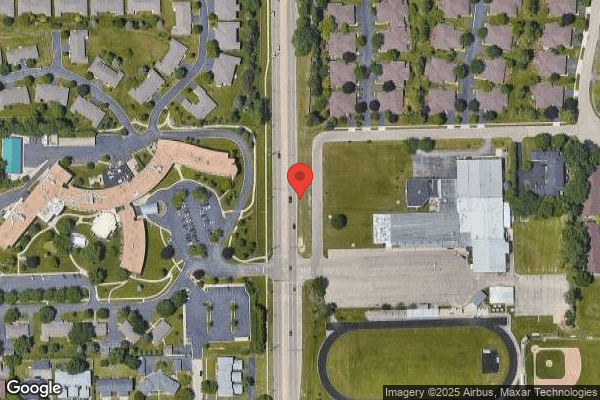
3470 NORTH ALPINE ROAD, ROCKFORD, IL 61114 (815) 877-1441
Non profit - Church related 96 Beds Independent Data: November 2025
Trust Grade
65/100
#34 of 665 in IL
Last Inspection: January 2025

Within standard 12-15 month inspection cycle. Federal law requires annual inspections.

Overview

Fairhaven Christian Retirement Center has a Trust Grade of C+, indicating it is slightly above average, which means it is decent but not exceptional. In Illinois, it ranks #34 out of 665 facilities, placing it in the top half, and it is the best option among the 15 nursing homes in Winnebago County. However, the facility is experiencing a worsening trend, increasing from 4 issues in 2024 to 5 in 2025, which raises concerns about the quality of care. Staffing is a strong point with a 5-star rating and a turnover rate of 41%, lower than the state average, suggesting that staff members are familiar with the residents and their needs. On the downside, the facility has accumulated $120,225 in fines, which is higher than 75% of Illinois facilities, indicating some compliance challenges. Additionally, there have been serious incidents, such as a resident suffering a fractured hip due to improper transfer methods that violated their care plan. There were also concerns about medication management, including a failure to label opened medication vials and monitor refrigerator temperatures, which could potentially affect all residents. While there are strengths in staffing and overall star ratings, families should weigh these against the concerning fines and incidents noted in the inspector's findings.

Trust Score
C+
65/100
In Illinois
#34/665
Top 5%
Safety Record
High Risk
Review needed
Inspections
Getting Worse
4 → 5 violations
Staff Stability
○ Average
41% turnover. Near Illinois's 48% average. Typical for the industry.
Penalties
⚠ Watch
$120,225 in fines. Higher than 99% of Illinois facilities. Major compliance failures.
Skilled Nurses
✓ Good
Each resident gets 42 minutes of Registered Nurse (RN) attention daily — more than average for Illinois. RNs are trained to catch health problems early.
Violations
⚠ Watch
16 deficiencies on record. Higher than average. Multiple issues found across inspections.
★★★★★
5.0
Overall Rating
★★★★★
5.0
Staff Levels
★★★☆☆
3.0
Care Quality
★★★★☆
4.0
Inspection Score
Stable
2024: 4 issues
2025: 5 issues

The Good

  • 5-Star Staffing Rating · Excellent nurse staffing levels
  • Full Sprinkler Coverage · Fire safety systems throughout facility
  • No fines on record
  • Staff turnover below average (41%)

    7 points below Illinois average of 48%

Facility shows strength in staffing levels, fire safety.

The Bad

Staff Turnover: 41%

Near Illinois avg (46%)

Typical for the industry

Federal Fines: $120,225

Well above median ($33,413)

Significant penalties indicating serious issues

The Ugly 16 deficiencies on record

1 actual harm
Jan 2025 5 deficiencies
CONCERN (D)

Potential for Harm - no one hurt, but risky conditions existed

ADL Care (Tag F0677)

Could have caused harm · This affected 1 resident

**NOTE- TERMS IN BRACKETS HAVE BEEN EDITED TO PROTECT CONFIDENTIALITY** Based on observation, interview, and record review the facility failed to ensure ADL (Activities of Daily Living) assistance was...

Read full inspector narrative →
**NOTE- TERMS IN BRACKETS HAVE BEEN EDITED TO PROTECT CONFIDENTIALITY** Based on observation, interview, and record review the facility failed to ensure ADL (Activities of Daily Living) assistance was provided for two of 16 residents (R54, R27) reviewed for ADL care in the sample of 16. The findings include: 1. R54's Face sheet shows she was admitted to the facility on [DATE] with diagnoses including dementia, anxiety disorder, delusional disorder, restlessness and agitation. R54's Care Plan dated June 12, 2023 shows R54 was frequently incontinent of bladder and bowel. I need staff assistance with incontinence cares and my hygiene needs. Observe me for verbal and non verbal cues that I need to use the toilet. R54's MDS (Minimum Data Set) dated December 2, 2024 shows R54 is not cognitively intact, R54 required partial/moderate assistance with toilet hygiene, and was dependent on staff for toilet transfers. R54 is occasionally incontinent of bowel and bladder. On January 6, 2025 at 8:47 AM, R54 was observed sitting in the television room in her wheel chair. R54 was observed in the same spot until 9:19 AM. At 9:19 AM, V17 and V7 CNAs (Certified Nursing Assistants) used a stand lift to transfer R54 into a gray recliner. R54 was observed continuously from 9:41 AM-11:44 AM. During this time, R54 was observed being restless: leaning forward in the recliner, trying to get up from the recliner, and removing her blankets multiple times. At 10:41 AM, V7 gave R54 a snack. At 10:43 AM, another staff member asked R54 where she was going and told R54 she had to stay in the recliner. At 10:47 AM, another staff member went to R54 and asked R54 where she was going and covered R54 back with the blanket. R54 was mumbling non sensical words. At 10:55 AM, V7 sat with R54. At 11:18 AM, V7 went to lunch. Another staff member check in with R54 at 11:27 AM. At 11:44 AM, R54 was attempting to stand up again. R54 was transferred into her wheel chair at 11:44 AM. At 11:50 AM, V10 and V11 (CNAs) transferred R54 onto the toilet in her room. V11 removed R54's incontinence brief. R54's incontinence brief was saturated with dark urine from front to back of the brief. R54's buttocks was reddened and had creases in it. 2. R27's Face Sheet shows she was admitted to the facility on [DATE] with diagnoses including Parkinson's disease, dementia, urinary tract infection, dysuria, delusional disorders, restless legs syndrome, muscle weakness, overactive bladder, and major depressive disorder. R27's Care Plan dated November 22, 2017 shows, Provide toileting assistance as needed. R27's MDS (Minimum Data Set) dated December 16, 2024 shows R27 is not cognitively intact, requires substantial/maximal assistance with toileting, and is dependent on staff for toilet transfers. R27 is occasionally incontinent of bowel and bladder. On January 6, 2025 at 8:48 AM, R27 was observed in a high back wheeled recliner feeding herself breakfast. At 9:07 AM, R27 was moved into the television room. At 9:15 AM, R27 was transferred into a recliner. At 9:40 AM, R27 was observed sleeping in the same recliner until 11:45 AM when R27 was transferred into her wheelchair. At 11:47 AM, R27 was brought into the dining room for lunch. At 12:04 PM, R27 was being fed lunch. At 12:53 PM, R27 was placed back into the television room. At 1:01 PM, V10 (CNA) said she was not sure when she was going to perform peri care for R27. At 1:17 PM, V9 and V10 (CNAs) transferred R27 onto the toilet. R27's incontinence brief had urine in it. V10 said that R27 is usually continent. On January 8, 2025 at 9:04 AM, V2 (DON-Director of Nursing) said that incontinence care/toileting should be performed at least every two hours, unless the resident is cognitive enough to tell staff when they have to use the bathroom. The facility's Perineal Management-Peri Care policy dated January 24, 2007 show perineal care is done to promote cleanliness and comfort and to reduce infection potential by removing irritating secretions or excretions, microorganisms, and offensive odors.
CONCERN (D)

Potential for Harm - no one hurt, but risky conditions existed

Deficiency F0688 (Tag F0688)

Could have caused harm · This affected 1 resident

Based on observation, interview, and record review the facility failed to ensure a splint was placed for a resident with limited range of motion for 1 of 2 residents (R51) reviewed for range of motion...

Read full inspector narrative →
Based on observation, interview, and record review the facility failed to ensure a splint was placed for a resident with limited range of motion for 1 of 2 residents (R51) reviewed for range of motion in the sample of 16. The findings include: A facility assessment done on 11/18/24 showed R12 had limited range of motion to his upper extremity. On 01/06/25 at 08:51 AM, there was a sign above R51's bed. The sign indicated that a splint was to be placed on R51's right hand in the mornings. The initial wear time was 1-2 hours and progressing to wearing the split all day. The sign was dated 11/29/24. There was a blue splint sitting in the chair next to R51's bed. On 01/06/25 at 10:49 AM, R51 was in bed. There was no splint on R51's right hand. The splint remained sitting on the chair. R51's right hand was in a closed fist. R51 was asked if he could open his right hand. R51 could not open his right hand. On 01/06/25 at 1:12 PM and 2:27 PM, the splint remained off. On 01/07/25 at 9:10 AM, R51 was sitting in the common area in a chair. R51 did not have a splint on. On 01/07/25 at 9:10 AM, V3 (Certified Nursing Assistant- CNA) said she was familiar with R51. V3 said she was not sure if R51 used a splint and referred the surveyor to V4 (CNA assigned to V51). On 01/07/25 at 9:15 AM, V4 said restorative was responsible for placing the splint on R51's right hand. On 01/07/25 at 9:41 AM, V5 (Restorative CNA) said R51 was not on any restorative programs and restorative was not putting R51's splint on. On 01/07/25 at 9:44 AM, V6 (Rehabilitation Director) said occupational therapy was seeing R51 two times a week for a contracted right hand. According to V6, the last time occupational therapy worked with R51 was 12/31/24 (7 days ago). V6 said R51 was on a splinting program. V6 added that the floor CNAs or restorative staff were responsible for placing the splint on the days occupational therapy did not see R51. R51's Progress Note dated 11/21/24 showed occupational therapy plan of care was for splinting of R51's right wrist to maintain joint mobility. R51's Progress Note dated 12/02/24 showed occupational therapy updates was for R51's splint to be placed on the right hand in the morning with an initial wear time 1-2 hours and to progress to all day wear. R51's Care Plan with a start date of 12/2/24 showed R51 required a right hand splint daily.
CONCERN (D)

Potential for Harm - no one hurt, but risky conditions existed

Deficiency F0760 (Tag F0760)

Could have caused harm · This affected 1 resident

**NOTE- TERMS IN BRACKETS HAVE BEEN EDITED TO PROTECT CONFIDENTIALITY** Based on interview and record review, the facility failed to ensure a significant medication error did not occur for one of one ...

Read full inspector narrative →
**NOTE- TERMS IN BRACKETS HAVE BEEN EDITED TO PROTECT CONFIDENTIALITY** Based on interview and record review, the facility failed to ensure a significant medication error did not occur for one of one resident (R28) reviewed for significant medication error in the sample of 16. The findings include: R28's Face Sheet shows she was admitted to the facility on [DATE] with diagnoses of congestive heart failure, urinary tract infection, diabetes mellitus, generalized anxiety disorder, edema, atrial fibrillation, supraventricular tachycardia, cardiac pacemaker and hypotension. R28's Progress Note dated November 28, 2024 at 12:00 PM shows, Resident was given wrong medication by agency nurse this am. Writer informed DON (Director of Nursing) and on call nurse practitioner (NP) about this situation. NP ordered vitals every 30 minutes for two hours, then every hour for four hours. Give midodrine if blood pressure (BP) drops below 90. Resident started to exhibit symptoms of low BP. Writer checked BP and then administered midodrine as directed. Residents BP has since gone up to normal ranges. 3:17 PM, Writer couldn't keep resident BP up, NP said to send resident to emergency room . R28's Vital Results dated November 28, 2024 at 8:38 AM, shows her blood pressure was 123/67. At 10:17 AM, R28's blood pressure was 75/42. At 10:42 AM, R28's blood pressure was 87/52. At 11:10 AM, R28's blood pressure was 109/60. At 1:12 PM, R28's blood pressure was 75/43 and at 1:40 PM, R28's blood pressure was 77/51. R28's After Visit Summary from the local emergency room dated November 28, 2024 shows R28 was seen in the emergency room for a medication overdose. The facility's Medication Error Report dated November 28, 2024 shows, Description of error (include name of medication, dose, route, and time administered. Amlodipine (high blood pressure medication) 2.5 mg + 5 mg to equal a total of 7.5 mg, aspirin 81 mg, calcium D3 500 mg, hydralazine (high blood pressure medication) 50 mg, losartan (high blood pressure medication) 100 mg, magnesium 400 mg, omeprazole 20 mg, potassium 10 meq, vitamin E, and Vitamin B complex. Outcome of resident: BP 75/42 heart rate 75. Received orders for midodrine 10 mg is BP drops <90. Corrective action taken: Sent to emergency room to be evaluated and update power of attorney. On January 8, 2025 at 9:47 AM, V2 (DON-Director of Nursing) said an agency nurse was looking for R44 in order to administer R44's medications. The agency nurse asked V15 (LPN-Licensed Practical Nurse) who R44 was and V15 pointed to who R44 was. V2 said that the agency nurse gave R44's medications to R28. V2 said that R28 and R44 sit at the same table for meals. V2 said that the nurses have pictures of the residents on their computers which should be checked prior to administering medications. V2 said staff should be verifying resident names, picture, medication, right person, right dose, right time, and right route prior to administering medications. On January 8, 2025 at 10:10 AM, V15 (LPN) said she was working with an agency nurse when that nurse asked V15 who R44 was. V15 said she pointed to R44. V15 said the nurse acknowledged who R44 was. V15 said a dietary aide came to V15 and asked why R28 had thickened liquids in front of R28. V15 said that R44 is the one that should have thickened liquids in front of her so V15 said Oh my gosh, she gave the wrong medications. V15 said the nurses are the ones that provide the thickened liquids. V15 said she went up to R28 and asked R28 if the agency nurse gave her medicine and R28 said yes. V15 said that R28 is cognitively intact. V15 said she ran to the medication cart and told the agency nurse that she gave the medications to the wrong resident. V15 said she notified the doctor and the Director of Nursing. V15 said the nurse practitioner said it was ok to not give R28 her regular scheduled medications. V15 said that R28's blood pressure was dropping. (R28 received high blood pressure medications that were not ordered for her). V15 said she was monitoring R28 frequently. V15 said the nurse practitioner gave orders to give R28 a medication to increase her blood pressure if her blood pressure decreases, so V15 did that and R28's blood pressure increased. V15 said there was staff sitting with R28 offering her fluids. V15 said that R28 reported to V15 that she was feeling funny so V15 ran in and took R28's blood pressure again and R28's blood pressure had dropped again so V15 notified the nurse practitioner again. The nurse practitioner told V15 to lay R28 in bed and to elevate R28's feet. V15 said that R28 told her that R28's vision was blurry. V15 said R28 was more lethargic and more dizzy than normal. V15 said that at this time, R28's blood pressure only went up a little bit so V15 was told to send R28 to the local emergency room. R28's Progress Notes dated November 29, 2024 at 1:39 AM shows, R28 returned from the local hospital at approximately 7:30 PM (November 28, 2024). R28's blood pressure was within normal limits. R28 stated she was feeling better. The facility's Medication Incident/Event Policy and Procedures dated 2023 shows, Purpose: To safeguard the resident and provide emergency care as necessary. The facility must ensure that its residents are free of any significant medication errors.
CONCERN (E)

Potential for Harm - no one hurt, but risky conditions existed

Infection Control (Tag F0880)

Could have caused harm · This affected multiple residents

**NOTE- TERMS IN BRACKETS HAVE BEEN EDITED TO PROTECT CONFIDENTIALITY** 3. On 1/6/25 at 8:30 AM, R10 and R45's room was closed with a sign on the door of droplet and contact precautions. V12 (License ...

Read full inspector narrative →
**NOTE- TERMS IN BRACKETS HAVE BEEN EDITED TO PROTECT CONFIDENTIALITY** 3. On 1/6/25 at 8:30 AM, R10 and R45's room was closed with a sign on the door of droplet and contact precautions. V12 (License Practical Nurse) said both R10 and R45 were on isolation due to positive for Covid 19. R10's result detail show R10 is positive for Covid 19. R45's result detail show R45 is positive for Covid 19. At 9:15 AM, V14 (Certified Nursing Assistant-CNA) was in the room with gown, gloves and surgical mask on and brought R10 and R45 their breakfast. V14 stayed in the room to monitor both residents while eating their breakfast. At 1:15 PM, V14 (CNA) said while she was in R10 and R45's room, she applied an N95 mask over her surgical mask when she realized she was only wearing a surgical mask. V14 said she removed the N95 mask before she exited the room. On 1/7/25 at 8:35 AM, V13 (CNA) said she was the Covid CNA today. V13 was in R10 and R45's room with no PPE (no gown, no N95 mask and no eye protector). V13 said she removed her surgical mask and N95 mask, gown and faceshield while she was still in the Covid positive room since she was planning to leave the room shortly. On 1/8/25 at 11:15 AM, V2 (DON-Director of Nursing) said the facility is on Covid 19 outbreak. All staff providing care to Covid 19 positive residents should wear gown, gloves and N95 mask. Staff cannot put a surgical mask under the N95 mask. The facility policy on Preventing the spread of Covid 19 show, the facility will implement al three types of transmission based precaution-contact, droplet and airborne. PPE use will include:gloves, gown and N95 respirators and eye protection. 4. R54's Face sheet shows she was admitted to the facility on [DATE] with diagnoses including dementia, anxiety disorder, delusional disorder, restlessness and agitation. R54's Care Plan dated June 12, 2023 shows R54 was frequently incontinent of bladder and bowel. R54 needs staff assistance with incontinence cares and her hygiene needs. Observe R54 for verbal and non verbal cues that I need to use the toilet. On January 6, 2025 at 11:50 AM, V10 and V11 (CNAs-Certified Nursing Assistants) provided peri care for R54. R54's incontinence brief was saturated from front to back with dark urine. V11 removed R54's soiled incontinence brief, place a new brief onto R54, and then proceeded to pull R54's pants up above R54's knees. V11 did not change her gloves or perform hand hygiene when going from touching dirty items to clean. V11 placed a new set of gloves on, wiped a stool smear from R54's buttocks and then pulled R54's pants all the way up. V11 did not change her gloves or perform hand hygiene prior to touching R54's pants. 5. R27's Face Sheet shows she was admitted to the facility on [DATE] with diagnoses including Parkinson's disease, dementia, urinary tract infection, dysuria, delusional disorders, restless legs syndrome, muscle weakness, overactive bladder, and major depressive disorder. R27's Care Plan dated November 22, 2017 shows, Provide toileting assistance as needed. R27's MDS (Minimum Data Set) dated December 16, 2024 shows R27 is not cognitively intact, requires substantial/maximal assistance with toileting, and is dependent on staff for toilet transfers. R27 is occasionally incontinent of bowel and bladder. On January 6, 2025 at 1:17 PM, V10 and V9 (CNAs) transferred R27 onto the toilet. V10 removed R27's soiled with urine incontinence brief and then placed a new clean brief onto R27. V10 wiped R27's peri area and put skin protectant cream onto R27's buttocks. V10 did not removed her gloves nor perform hand hygiene when going from dirty to clean items. On January 7, 2025 at 11:08 AM, V16 (Infection Control Nurse) said gloves should be changed each time they are soiled. Gloves should be changed when going from dirty to clean items. The facility's Proper Use of Gloves policy revised November 12, 2024 shows, Take gloves off an perform hand hygiene in the following scenarios: When your contact with blood or bodily fluid is complete. Based on observation, interview, and record review the facility failed to ensure staff used the required personal protective equipment (PPE) when entering COVID-19 isolation rooms and failed to ensure N95 masks were not worn over a surgical mask. The facility also failed to ensure gloves were changed to prevent cross contamination. This applies to 5 of 16 residents (R12, R10, R45, R54, and R27) reviewed for infection control in the sample of 16. The findings include: 1. R12's progress note dated 01/06/25 indicated R12 was on isolation for COVID-19. On 01/06/25 at 8:35 AM, there were signs on R12's room door indicating R12 was on airborne isolation, droplet isolation, and contact isolation. On 01/06/25 at 12:29 PM, V8 (Housekeeper) put PPE on to enter R12's room. V8 entered R12's room with gloves, gown, and a surgical mask on. V8 did not have on a N95 mask or eye protection. On 01/06/25 at 12:42 PM, V8 exited R12's room and stated she cleaned the room. V8 said she knows what PPE to wear when entering an isolation room based on the signs on the door. The signs on R12's door indicated a N95 mask and eye protection were required. On 01/07/25 at 10:04 AM, V16 (Infection Control Nurse) said the required PPE for entering a resident's room on isolation for COVID-19 was gown, glove, N95 mask, and goggles. 2. On 01/06/25 at 8:35 AM, V7 (Certified Nursing Assistant) had R12's meal tray and placed on PPE to enter R12's room. V7 had a surgical mask on under a N95 mask when entering R12's room. On 01/07/25 at 10:04 AM, V16 said a surgical mask should not be worn under a N95 mask.
CONCERN (F)

Potential for Harm - no one hurt, but risky conditions existed

Deficiency F0761 (Tag F0761)

Could have caused harm · This affected most or all residents

Based on observation, interview and record review the facility failed to ensure a multidose vial was labeled and dated when opened. This failure has the potential to affect all residents at the facili...

Read full inspector narrative →
Based on observation, interview and record review the facility failed to ensure a multidose vial was labeled and dated when opened. This failure has the potential to affect all residents at the facility. The findings include: On 1/7/25 at 8:38 AM, this surveyor and V2 (Director of Nursing-DON) checked the 2nd floor medication room in the Healthcare Services Unit. A multidose vial of Tubersol (tuberculin (TB) testing solution) was noted in the refrigerator opened but not labeled with the date of opening. The preprinted date labeled on the vial was 9/16/24. V2 (DON) said this (vial) is months old, it should have been disposed of after 28-30 days. V2 said the Tubersol vial was used to all residents including new admits and any residents needing yearly TB testing including staff. V2 said any multidose vial should be dated and labeled once opened. The facility Policy titled Multi dose vial medication management dated 11/10/24 shows, 3. When a multi dose vial is opened, the nurse is required to complete sticker with the following- date of opening the vial, expiration date 28 days from opening or the manufacturer's expiration date whatever is sooner. Nurse initials when placing the sticker. The CMS report dated 1/6/25 show there were 63 residents residing at the facility.
Feb 2024 4 deficiencies
CONCERN (D)

Potential for Harm - no one hurt, but risky conditions existed

Quality of Care (Tag F0684)

Could have caused harm · This affected 1 resident

Based on observation, interview, and record review the facility failed to follow orders written by the Nurse Practitoner regarding a resident's skin condition. This applies to 1 of 3 residents (R22) ...

Read full inspector narrative →
Based on observation, interview, and record review the facility failed to follow orders written by the Nurse Practitoner regarding a resident's skin condition. This applies to 1 of 3 residents (R22) reviewed for skin conditions in a sample of 19. The findings include: R22's undated Facesheet shows his diagnoses to include Type 2 Diabetes Mellitus, open wound to buttocks, irritant contact dermatitis due to contact with body fluids, dementia, psychotic disturbances and muscle weakness. R22's 2/13/24 wound care notes shows he had MASD (Moisture Associated Skin Damage) with an onset date of 2/10/24. On 02/15/24 at 10:13 AM, V15 CNA (Certified Nursing Assistant) and 2 other CNA's changed R22's adult brief. When removing the soiled brief an extra liner was noticed under R22's adult brief. R22 has an order from V13 Wound Nurse practitioner written on 2/13/24 to avoid the use of a liner in R22's brief. When the CNA was ready to put a new brief on R22 she asked him if he wanted a liner placed inside the brief, and R22 said what are my options? The CNA said, you can have the liner with the brief, or just the brief by itself. R22 said, might as well put the liner in there, and she did. V15 said R22 would be checked again before lunch (in two hours). On 02/15/24 at 10:06 AM, V6 LPN (Licensed Practical Nurse) said, R22 is a heavy wetter and insist upon having the extra padding. V6 said, R22's CNA's are aware of the order for no extra liner. V6 said, V13 writes that same order for all residents with wounds because she thinks it will hold moisture against the skin. On 02/15/24 at 11:00 AM, V14 (Wound Nurse) said, we don't want an extra liner in the diaper because it will hold moisture and possibly cause MASD. V14 said R22 already has MASD so we don't want to make it worse. V14 said, she will talk to the CNA's and to R22 to re-educate them why we don't want an extra liner in his brief. On 02/15/24 at 11:13 AM, V13 (Wound Nurse Practitioner) said, she wrote that order for R22 because he had MASD on his right upper buttocks and the extra liner will hold moisture to the affected area. V13 said she would expect the CNA's to follow her order and educate R22 on why it's important. R22's 2/13/24 Wound Care weekly assessment (done by V13) shows he has MASD to his right upper buttocks measuring 5.7 cm (centimeters) x 4.8 cm x 0.1 cm MASD. V13 made a note that R22 was double diapered during her assessment which is noted to hold moisture against the skin. V13 noted R22 to be obese and non-ambulatory.
CONCERN (D)

Potential for Harm - no one hurt, but risky conditions existed

Accident Prevention (Tag F0689)

Could have caused harm · This affected 1 resident

**NOTE- TERMS IN BRACKETS HAVE BEEN EDITED TO PROTECT CONFIDENTIALITY** Based on Interview and Record Review the facility failed to ensure a resident's side rail was working properly for 1 of 4 resid...

Read full inspector narrative →
**NOTE- TERMS IN BRACKETS HAVE BEEN EDITED TO PROTECT CONFIDENTIALITY** Based on Interview and Record Review the facility failed to ensure a resident's side rail was working properly for 1 of 4 residents (R64) reviewed for safety and supervision in the sample of 19. The findings include: The Progress Notes dated 2/9/24 at 11:35 PM for R64 showed, at 8:00 PM the CNA (Certified Nursing Assistant) called my attention that the resident fell in her room. When I entered the room, the resident was kneeling on the floor near her bed. The CNA narrated that when she was transferring the resident from wheelchair to bed, she stood up holding the bed rails. The rail went down. The CNA was holding R64, she was wobbling and ended up kneeling on the floor. Assessment was done. On 2/11/24 at 3:17 PM - The Resident continues on post fall vitals Resident complained of mild back pain today, so as needed Tylenol was given. On 2/11/24 at 11:30 PM - Post fall follow-up. Resident alert and verbally responsive. Complaints of back pain. As needed pain medication was administered. On 2/12/24 at 8:37 AM, R64 had a fall this weekend. Found on her knees next to her bed, assisted up, no injury. The left bed rail is not working, will not lock in place when brought to stay up. Spoke to V4 ADON (Assistant Director of Nursing), she is aware and a work order is in place. Message left for the Housekeeping Supervisor to follow up. On 2/12/24 at 11:06 AM, Residents bed was evaluated by the resident technicians and checked by this writer; it is working correctly at this time. On 2/14/24 at 10:58 AM, R64 was not in her room and there were 1/4 side rails near the head of the bed that were in place. V9 RA (Resident Aide) stated R64's bedrail (side rail) was broke but has been fixed. V9 stated it did not lock in place. She stated if she found something like that then she would report it to the housekeeping supervisor right away so it can be fixed. On 2/14/24 at 12:32 PM, V5 LPN (Licensed Practical Nurse) stated, All I know is what I was told in report. They told me that she (R64) was lowered to the ground. R64's side rail was up, they went to get her out of bed, R64 was using the side rail to lift herself up and the side rail ended up going down. R64 lost her balance and the CNA lowered her to the ground. It was a broken side rail. We usually call maintenance and they will look at it. If maintenance cant fix it they will replace it with a different bed that is working. One of the aides will tell us if the bed is not working or broke. On 2/14/24 at 12:41 PM, V10 (Unit Clerk) stated, someone told me Thursday (2/8/24) or Friday (2/9/24) that R64's side rail was broken. I called down to maintenance to tell them it was broken. They were aware it was broken before this fall happened. On Monday (2/12/24) when I came in someone told me R64's side rail was broken. V10 stated she told the person that she new that. V10 stated she called maintenance and told them the rail was broke, R64 fell, and the side rail needed to be fixed. It is important to fix it right away because R64 fell. V10 stated she didn't know if the first message she sent did not get to them or what. On 2/14/24 at 1:30 PM, V11 (Maintenance Director) stated, when there is problem with the bed/side rail they call 1400 and enter a work order that goes to the maintenance shop. Someone will take the work order to check it out. We usually try to fix it the same day. If they call maintenance after hours we do have an on call person. I am not sure if the on call person comes in for side rails. They would get the work order the next morning. If there is a message on the answering machine after hours then the work order will be entered the next morning. At 1:46 PM V11 stated, I have two maintenance reports for the bed rail being broken. The first report was 2/6/24 and the rail on the left side of the bed was fixed. The second report was on 2/12/23 for the side rail. They took it apart, cleaned it, put some grease on it and put it together. There was nothing really wrong with it. The side rail could fall if it is not completely engaged. On 2/15/24 at 10:35 AM, V3 DON (Director of Nursing) stated, It sounds like her (R64) side rail went down when she was holding onto it during a transfer. If you don't push back on the side rail it won't lock in place. I don't know if it was broke or not. I know someone looked at it. I don't think the side rail was locked and it should have been for safety. The Care Plan dated 2/8/24 for R64 showed, Problem: I am at risk for falls due to poor safety awareness and I have a history of falls. I am a stand by assist with gait belt (SBA/GB) for my transfers. I have balance deficits that I need staff to help me correct at times. I use a wheelchair with one staff assistance for my locomotion on the unit. I continue to receive restorative nursing services and physical therapy. I have a PSA (personal safety alarm) on myself at all times for staff awareness to my self-transfer status and for safety/fall prevention. I have a yellow safety/fall star on my wheelchair and above the door of my room for staff awareness of my fall/safety risk. Last Fall : 2/9/24 witnessed fall while transferring resident. Bed rail broke during transfer. No injuries. I will follow safety interventions/approaches that are in place to reduce risk of fall with injury. Monitor me for unsteady gait, unsteady balance, poor posture, leaning, tilting, dizziness, fatigue, poor/double vision and proper footwear. Please walk with my wheelchair behind me when I am ambulating with my walker. The Face Sheet dated 2/14/24 for R64 showed diagnoses including osteoarthritis, hypertension, rheumatoid arthritis, anxiety disorder, urinary tract infection, right knee effusion, generalized edema, dizziness and giddiness, bilateral knee pain, vitamin deficiency, type 2 diabetes mellitus, diarrhea, hypokalemia, hyperlipidemia, and disorders of electrolyte and fluid balance. The Minimum Data Set, dated [DATE] for R64 showed partial/moderate assistance needs for transfers and moderate cognitive impairment. The Side Rail assessment dated [DATE] for R64 showed she is not ambulatory, has poor safety awareness, has a history of falls, and does use the side rails for positioning or support. The facility's Bed Rail Policy (2017) showed it is the policy of this facility to identify and reduce safety risks and hazards commonly associated with bed rail use. A duo-faceted approach will be used to achieve sustainable quality outcomes, including 1) regular bed maintenance and 2) individual bed rail evaluations. In response to the requirement of providing for a safe, clean, comfortable, and homelike environment, the facility's regular maintenance program will include regular inspection of all bed systems (e.g. rails, frames, and mattresses, and operational components) to ensure they are clean, comfortable and safe. The facility's priority is to ensure safe and appropriate bed rail use.
CONCERN (D)

Potential for Harm - no one hurt, but risky conditions existed

Infection Control (Tag F0880)

Could have caused harm · This affected 1 resident

Based on observation, interview and record review the facility failed to follow infection control practices while administering medication to 1 of 5 residents (R18) in the sample of 19. The findings i...

Read full inspector narrative →
Based on observation, interview and record review the facility failed to follow infection control practices while administering medication to 1 of 5 residents (R18) in the sample of 19. The findings include: On 2/13/24 at 12:17 PM, V12 (RN - Registered Nurse) sat an empty medication cup on top of the medication cart. Then opened the medication cart and narcotic box to retrieve R18's medication sheet containing Norco 5-325 mg tablets. V12 used her thumb to push the Norco out of the medication sheet into her bare hand. V12 dropped the Norco into the medication cup from her bare hand. R18's Face Sheet 2/15/24 showed diagnoses to include, but not limited to: sacral back pain, polyarthritis, chronic pain, major depressive disorder, chronic fatigue, and psoriasis. R18's Physician Order Sheet dated 2/15/24 showed an order for Norco (hydrocodone-acetaminophen) 5-325 mg tablet three times a day (1200, 1700, 2000). R18's February 2024 Medication Administration Record showed V12 (RN) administered R18's noon dose of Norco. On 2/15/24 at 9:55 AM, V2 (DON - Director of Nursing) said the nurses should not touch the resident medications with their bare hands for infection control purposes. V2 said the Norco should have been pushed directly into the medication cup. The facility's Medication Administration Policy dated 2017 showed, Medications will be administered to residents as prescribed and by persons lawfully authorized to do so in a manner that consistent with good infection control and standards of practice.
CONCERN (F)

Potential for Harm - no one hurt, but risky conditions existed

Deficiency F0761 (Tag F0761)

Could have caused harm · This affected most or all residents

Based on observation, interview, and record review, the facility failed to monitor temperatures in two medication refrigerators, failed to ensure a refrigerator with a controlled drug was double locke...

Read full inspector narrative →
Based on observation, interview, and record review, the facility failed to monitor temperatures in two medication refrigerators, failed to ensure a refrigerator with a controlled drug was double locked, failed to administer a medication when prepared, failed to label an insulin vial when opened, and failed to discard an open insulin pen after 28 days. These failures have the potential to affect all 70 facility residents. The findings include: The facility's 2/13/24 application for Medicare and Medicaid showed 70 residents in the facility. On 02/13/24 at 11:51 AM, the second-floor long hall medication cart had a plastic medication cup with a round white tablet inside. V5 Licensed Practical Nurse (LPN) said it belonged to R30 and identified it as his blood pressure medication. V5 said she was waiting to see if he was going to come to the dining room. R30's medication administration record (MAR) showed V5 administered this medication at 9:00 AM. At 12:00 PM, the second-floor medication room was checked. There was no log of the refrigerator temperature being checked. V5 said it's usually right here (pointing to the refrigerator door). The temperature gets checked every shift. This refrigerator contained numerous medications for individual resident and stock use. At 12:37 PM, V5 said she found the temperature log. I guess night shift checks it. This temperature log showed no temperatures were checked 2/3-2/7/24. On 02/13/24 at 12:15 PM, the third-floor long hall medication cart was checked. There was an insulin pen with an opened date on the label showing 1/11/24. There was an opened insulin vial with no open date on it. Both insulins were in a bag designated for R22. V6 LPN said she gave both insulins to R22 with the insulin in the vial administered twice her shift. V6 was unable to determine when the vial was opened. V6 said insulin can be used for 30 days after opening. R22's MAR showed he received both insulins this date with the insulin in the vial administered twice. The third-floor medication room was checked, and the medication refrigerator was unlocked. Inside the door of the refrigerator was a bottle of Ativan (Schedule IV controlled drug) with R42's name on it. This refrigerator contained numerous medications for individual resident and stock use. V6 said yes the refrigerator should be locked and the insulin pen and vial should be dated when opened. There was no temperature log on the refrigerator. The log was in a drawer at the nurse's station. V6 said the night shift checks the temperatures. The last temperature check recorded was dated 2/8/24. On 02/15/24 at 09:00 AM, V3 Director of Nursing (DON) said its important medications are stored at certain temperatures. If we don't ensure the meds are stored correctly, the meds might not serve their purpose and lose its efficacy. Medications should be administered when prepared and not stored outside their labeled package in the medication cart. Controlled substances should be double locked to prevent diversion. An insulin pen dated 1/11/24 should have been discarded. The insulin vial should have been dated when opened. They're only good for 28 days after opening so you must know when you opened it, so you know when to discard it. The facility's 5/16/2022 Medication Storage Policy showed medications administered to individuals will be stored under proper conditions of sanitation, temperature, light, humidity, and security. Schedule II through Schedule IV narcotics shall be stored in a separate compartment under double lock and key. The Director of Nursing and Site Supervisors shall periodically inspect medication storage areas to ensure that medications are stored under proper conditions. The facility's 4/21/23 Management of the Unit Medication Refrigerator Policy showed all unit refrigerators will be managed and maintained according to the procedure outlines below to ensure security, segregation, and environmental control at all storage locations. Medications shall be stored under proper conditions of security, segregation, and environmental control at all storage locations. The inside temperature of the refrigerator in which drugs are stored shall be maintained within a 36-to-46-degree Fahrenheit range and be monitored and logged each day on night shift. The facility's 2017 Medication Administration Policy showed medications will be administered to residents in a manner consistent with standards of practice. Medications are administered at the time they are prepared. Medications are not pre-poured. The facility's Insulin Storage Recommendations posting showed NovoLog insulin pens are good for 28 days after opening. The facility's second floor med room refrigerator temperature log showed no temperatures were checked on 2/3-2/7/24. The facility's third floor med room refrigerator temperature log showed temperatures were not checked daily and there were no records of a temperature check since 2/8/24.
Apr 2023 6 deficiencies
CONCERN (D)

Potential for Harm - no one hurt, but risky conditions existed

Resident Rights (Tag F0550)

Could have caused harm · This affected 1 resident

**NOTE- TERMS IN BRACKETS HAVE BEEN EDITED TO PROTECT CONFIDENTIALITY** Based on observation, interview, and record review, the facility failed to treat a resident with dignity for 1 of 1 residents (R...

Read full inspector narrative →
**NOTE- TERMS IN BRACKETS HAVE BEEN EDITED TO PROTECT CONFIDENTIALITY** Based on observation, interview, and record review, the facility failed to treat a resident with dignity for 1 of 1 residents (R4) reviewed for dignity in the sample of 19. The findings include: R4's electronic face sheet printed on 4/20/23 showed R4 has diagnoses including Alzheimer's disease, repeated falls, anxiety disorder, and cerebrovascular disease. R4's facility assessment dated [DATE] showed R4 has severe cognitive impairment and requires assistance from staff for eating. R4's care plan dated 4/11/23 showed, I have been experiencing gradual weight loss. I can feed myself with some set up and supervision, needs assist at times. Encourage me to eat and drink well at meals. R4's nursing progress notes dated 4/9/23 showed, Resident's daughter is here. States that she has noticed resident coughing when drinking liquids at both lunch and dinner. Resident is on honey thick liquids. Note sent to physician requesting a swallow evaluation. On 4/19/23 at 9:19AM, V7 (Certified Nursing Assistant) was sitting next to R4 at the breakfast table. V7 was looking at her personal cell phone and not providing feeding assistance to R4. When V7 noticed this surveyor was in the dining room she quickly put her cell phone away and resumed feeding R4. V7 stated staff are not allowed to be on their personal cell phones unless they are on break per facility policy. On 4/20/23 at 11:06AM, V2 (Director of Nursing) stated, We have had a problem with (V7) being on her phone during resident care. She has been written up for this a little over a month ago. This is against our facility policy and is a dignity concern. The facility's undated policy titled, Cell Phone Policy showed, If an employee is noted to be neglecting resident care, accessing phone excessively, or accessing phone in resident care areas or for purposes other than scheduling, disciplinary action may occur.
CONCERN (D)

Potential for Harm - no one hurt, but risky conditions existed

Pressure Ulcer Prevention (Tag F0686)

Could have caused harm · This affected 1 resident

**NOTE- TERMS IN BRACKETS HAVE BEEN EDITED TO PROTECT CONFIDENTIALITY** Based on observation, interview, and record review the facility failed to identify a pressure injury prior to it becoming unstag...

Read full inspector narrative →
**NOTE- TERMS IN BRACKETS HAVE BEEN EDITED TO PROTECT CONFIDENTIALITY** Based on observation, interview, and record review the facility failed to identify a pressure injury prior to it becoming unstageable. This applies to 1 of 6 (R71) residents reviewed for pressure in the sample of 19. The findings include: R71's face sheet showed an admission date of 4/8/22 with diagnoses to include: Alzheimer's disease, Pressure induced deep tissue injury of left heel, and heart failure. On 4/18/23 at 12:26 PM, V4 Advanced Practice Nurse/Nurse Practitioner removed a dressing to R71's left foot/heel. R71 had a wound to her left heel that was approximately 1 centimeter long by 0.5 centimeters. The wound was not actively draining and the wound bed was a deep red/maroon color. The wound was located more to the arch of the foot versus the back of the heel. R71's 11/22/22 Progress Notes from 9:19 AM showed the morning Certified Nursing Assistant (CNA) noted a wound to R71's left heel. R71's Left heel wound assessment showed a 4 centimeter by 4.2 centimeter necrotic (dead tissue) wound. (Documented by V5 Registered Nurse/Wound Care Nurse) R71's Right heel wound assessment (documented in error by V4 for several weeks) showed she had a suspected deep tissue injury (sDTI) which was dark fluid filled blister and was mushy to touch. On 4/20/23 at 8:57 AM, V5 stated if R71's heel wound was present the night of 11/21/22 it should have been identified when R71 was put to bed. V5 stated the deep tissue injury is unstageable when first identified then when R71's wound bed was visible it was a stage III pressure injury. V5 stated she believed the wound developed due to R71's behavior of digging her heels into the bed and her wheelchair. V5 stated there were no pressure reduction interventions in place prior to this wound developing. V5 stated, R71's wound is probably the worse facility acquired wound I have ever seen at this facility. On 4/20/23 at 10:03 AM, V4 stated It is important to identify DTI's as soon as possible to begin treatment and limit the wound progression. V4 stated, A deep tissue injury wound will have redness, soft boggie (mushy type) wound or maroon skin. I would expect the CNAs to check her heels whenever they are providing care; when they are taking her socks off at night and getting her up in the morning. On 4/20/23 at 2:45 PM, V2 Director of Nursing stated R71's wound should have been identified prior to it becoming unstageable. The National Pressure Injury Advisory Panel website titled Evolution of a Deep Tissue Pressure Injury (January 8, 2021) showed the typical progression of a tissue injury is 48 hours of the pressure event the skin will become discolored ([NAME]). Then next stage is a blistering, which occurs 24 to 48 hours after the skin discoloration. The International Wound Journal article titled Differential Diagnosis of Suspected Deep Tissue Injury (published August 2016) showed, Patients with light skin tones (R71 is Caucasian) present with classic skin discoloration of purple or maroon tissue. In the authors' clinical experience, the epidermis lifts about 24-48 hours after the purple tissue is seen. The facility's Pressure Injury Care Policy and Procedure (Updated 8/3/2016) showed, Daily monitoring of skin surfaces shall be done by the CNA staff while given care. Any signs of redness, rashes, skin tears or bruising shall be reported by the CNA to the nurse who will then assess and follow-up with the physician notification.
CONCERN (D)

Potential for Harm - no one hurt, but risky conditions existed

Accident Prevention (Tag F0689)

Could have caused harm · This affected 1 resident

**NOTE- TERMS IN BRACKETS HAVE BEEN EDITED TO PROTECT CONFIDENTIALITY** Based on observation, interview, and record review, the facility failed to provide fall prevention measures for 1 of 5 residents...

Read full inspector narrative →
**NOTE- TERMS IN BRACKETS HAVE BEEN EDITED TO PROTECT CONFIDENTIALITY** Based on observation, interview, and record review, the facility failed to provide fall prevention measures for 1 of 5 residents (R49) reviewed for safety and supervision in the sample of 19. The findings include: R49's electronic face sheet printed on 4/20/23 showed R49 has diagnoses including but not limited to dementia without behaviors, major depressive disorder, hypertension, and insomnia. R49's facility assessment dated [DATE] showed R49 has severe cognitive impairment. R49's care plan dated 3/17/23 showed, I am a fall risk having poor safety awareness and dementia and I have a diagnosis of muscle weakness. I am unsteady and am unable to correct. I need total assist of two staff with a (mechanical lift) and my primary mode of mobility is a (reclining chair). I have an alarm as a fall intervention. Provide resident with safety device/appliance: personal safety alarm, hi/low bed. Encourage me to call for assistance, keep my call light within reach, and keep my room clutter free. On 4/18/23 at 11:49AM, R49 was lying in bed with her call light underneath her bed, out of her reach. On 4/18/23 at 2:33PM, R49 was lying in her bed that was raised up in the high position. R49's fall mat was folded up and placed behind the head of her bed and her call light was laying on the floor, underneath her bed. V8 (Certified Nursing Assistant) entered R49's room and stated that R49 is a fall risk and her bed should be lowered to the floor with the fall mat on the floor by her bed. V8 stated all residents call lights should be accessible to them regardless if they have the ability to use them or not so that they can call if they need assistance and don't try to get up on their own. On 4/19/23 at 10:09AM, V7 (Certified Nursing Assistant) provided incontinence care to R49, repositioned her in bed and left the room without putting R49's fall mat next to her bed. R49's fall mat remained folded up behind the head of her bed. On 4/20/23 at 11:06AM, V2 (Director of Nursing) stated, Fall mats should be in place at all times and call lights always available for fall prevention measures. If we have a resident that should have their bed low to the floor then the bed should be kept in that position at all times when the resident is in bed unless staff are providing cares to that resident. The facility's policy titled, Fall Risk and Prevention dated 01/2017 showed, Preventing falls is an ongoing process that requires thorough staff focus and commitment.T he purpose of fall risk assessments is to identify who is at highest risk of falling and implement appropriate interventions to prevent falls.
CONCERN (D)

Potential for Harm - no one hurt, but risky conditions existed

Deficiency F0760 (Tag F0760)

Could have caused harm · This affected 1 resident

Based on observation, interview, and record review, the facility failed to ensure a resident was free of a significant medication error. This applies to 1 of 5 residents (R44) reviewed for medication ...

Read full inspector narrative →
Based on observation, interview, and record review, the facility failed to ensure a resident was free of a significant medication error. This applies to 1 of 5 residents (R44) reviewed for medication errors in the sample of 19. The findings include: R44's electronic face sheet printed on 4/20/23 showed R44 has diagnoses including but not limited to type 2 diabetes, insomnia, congestive heart failure, depressive episodes, and acute pericarditis. R44's medication administration record for April 2023 showed R44 is to receive fluticasone propion-salmeterol 100-50mcg/dose and insulin glargine 20 units at 8AM and 8PM, insulin aspart 100unit/ml 8 units insulin aspart 100unit/ml per sliding scale at 8AM, 12PM, and 5PM. On 4/18/23 at 9:47AM, V9 administered R44's fluticasone propion-salmeterol 100-50mcg/dose, Insulin glargine 20 units, insulin aspart 8 units, and insulin aspart 1 unit per sliding scale (1 hour and 47 minutes past the scheduled administration time). On 4/18/23 at 9:30AM, V9 stated, The morning medication pass is very heavy and very hectic. I will be passing medications until lunchtime when I'll turn around and start passing the lunch medications. That's all I do all shift is pass medications. I'm not even halfway done with my medication pass and I started it at 6:30AM today. Medications are considered late if given over an hour after the scheduled administration time. There's really nothing I can do about it so I just keep going. On 4/20/23 at 11:06AM, V2 (Director of Nursing) stated, Medications are to be given one hour before or one hour after the scheduled administration time or else it is considered a medication error. I would consider giving insulin over one hour late a significant medicaiton error. The morning medication pass is a nightmare and we are talking to pharmacy to maybe change our packaging to see if that will make it easier. I don't know what the solution is right now but I have done the morning medication pass and I don't get done until around 10:30AM so I know it's hard. The facility's policy titled, Medication Administration dated 2017 showed, Medications will be administered to residents as prescribed and by persons lawfully authorized to do so in a manner consistent with good infection control and standards of practice. The facility has sufficient staff to allow administering of medications without unnecessary interruptions. 2. Medications are administered in accordance with written orders of the attending physician or physician extender. 10. Medications are administered within one hour before or one hour after the scheduled time, except before or after meal orders, which are administered based on mealtimes.
CONCERN (E)

Potential for Harm - no one hurt, but risky conditions existed

Unnecessary Medications (Tag F0759)

Could have caused harm · This affected multiple residents

Based on observation, interview, and record review, the facility failed to administer medications at ordered times. There were 30 opportunities with 15 errors resulting in a 50% medication error rate....

Read full inspector narrative →
Based on observation, interview, and record review, the facility failed to administer medications at ordered times. There were 30 opportunities with 15 errors resulting in a 50% medication error rate. This applies to 6 of 6 residents (R16,R22,R34,R40,R44,R51) observed in the medication pass. The findings include: 1) R16's electronic face sheet printed on 4/20/23 showed R16 has diagnoses including but not limited to dementia without behaviors, depression, Alzheimer's disease, and anxiety disorder. R16's medication administration record for April 2023 showed R16 is to receive Lisinopril 20mg at 8AM and 8PM. On 4/18/23 at 9:24AM, V9 (Licensed Practical Nurse) administered R16's Lisinopril 20mg. (1 hour 24 minutes a past the scheduled administration time). On 4/18/23 at 9:30 AM, V9 stated, The morning medication pass is very heavy and very hectic. I will be passing medications until lunchtime when I'll turn around and start passing the lunch medications. That's all I do all shift is pass medications. I'm not even halfway done with my medication pass and I started it at 6:30 AM today. Medications are considered late if given over an hour after the scheduled administration time. There's really nothing I can do about it so I just keep going. On 4/20/23 at 11:06AM, V2 (Director of Nursing) stated, Medications are to be given one hour before or one hour after the scheduled administration time or else it is considered a medication error. The morning medication pass is a nightmare and we are talking to pharmacy to maybe change our packaging to see if that will make it easier. I don't know what the solution is right now but I have done the morning medication pass and I don't get done until around 10:30AM so I know it's hard. The facility's policy titled, Medication Administration dated 2017 showed, Medications will be administered to residents as prescribed and by persons lawfully authorized to do so in a manner consistent with good infection control and standards of practice .The facility has sufficient staff to allow administering of medications without unnecessary interruptions .2. Medications are administered in accordance with written orders of the attending physician or physician extender .10. Medications are administered within one hour before or one hour after the scheduled time, except before or after meal orders, which are administered based on mealtimes. 2) R22's electronic face sheet printed on 4/20/23 showed R22 has diagnoses including but not limited to chronic diastolic congestive heart failure, hypertension, intestinal obstruction, and osteoarthritis. R22's medication administration record for April 2023 showed R22 is to receive Senna S 8.6mg/50mg and Sodium 1gm at 8AM and 6PM. On 4/18/23 at 9:40AM, V9 administered R22's Senna S 8.6/50mg and Sodium 1gm (1 hour and 40 minutes past the scheduled administration time). At this time, V9 stated she still had 18 residents left to pass medications to. 3) R34's electronic face sheet printed on 4/20/23 showed R34 has diagnoses including but not limited to atrial fibrillation, wedge compression fracture of lumbar vertebrae, chronic pain, and constipation. R34's medication administration record for April 2023 showed R34 is to receive Norco 5/325mg at 8AM, 12PM, 4PM, and 8PM. On 4/18/23 at 9:26AM, V9 administered R34's Norco 5/325mg (1 hour and 26 minutes past the scheduled administration time). 4) R40's electronic face sheet printed on 4/20/23 showed R40 has diagnoses including but not limited to hypertension, dementia with behaviors, and chronic obstructive pulmonary disease. R40's medication administration record for April 2023 showed R40 is to receive clonazepam 0.25mg and Symbicort 160-4.5mcg/actuation at 8AM and 6PM. On 4/18/23 at 9:32AM, V9 administered R40's clonazepam 0.25mg and Symbicort 160-4.5mcg/actuation (1 hour and 32 minutes past the scheduled administration time). 5) R44's electronic face sheet printed on 4/20/23 showed R44 has diagnoses including but not limited to type 2 diabetes, insomnia, congestive heart failure, depressive episodes, and acute pericarditis. R44's medication administration record for April 2023 showed R44 is to receive fluticasone propion-salmeterol 100-50mcg/dose and insulin glargine 20 units at 8AM and 8PM, insulin aspart 100unit/ml 8 units insulin aspart 100unit/ml per sliding scale at 8AM, 12PM, and 5PM. On 4/18/23 at 9:47AM, V9 administered R44's fluticasone propion-salmeterol 100-50mcg/dose, Insulin glargine 20 units, insulin aspart 8 units, and insulin aspart 1 unit per sliding scale (1 hour and 47 minutes past the scheduled administration time). 6) R51's electronic face sheet printed on 4/20/23 showed R51 has diagnoses including but not limited to Parkinson's disease, generalized anxiety disorder, retention of urine, and chronic rhinitis. R51's medication administration record for April 2023 showed R51 is to receive bethanechol chloride 10mg at 8AM, 2PM, and 8PM, carbidopa-levodopa 25-250mg at 8AM and 6PM, famotidine 20mg at 8AM, fluticasone propionate 50mcg/actuation at 8AM and 6PM and midodrine 5mg at 8AM and 2PM. On 4/18/23 at 9:46AM, V9 administered R51's bethanechol chloride 10mg, carbidopa-levodopa 25-250mg, fluticasone propionate 50mcg/actuation, and midodrine 5mg (1 hour and 46 minutes past the scheduled administration time). R51's famotidine 20mg was unavailable for administration.
CONCERN (E)

Potential for Harm - no one hurt, but risky conditions existed

Infection Control (Tag F0880)

Could have caused harm · This affected multiple residents

**NOTE- TERMS IN BRACKETS HAVE BEEN EDITED TO PROTECT CONFIDENTIALITY** Based on observation, interview, and record review, the facility failed to perform hand hygiene and glove changes during inconti...

Read full inspector narrative →
**NOTE- TERMS IN BRACKETS HAVE BEEN EDITED TO PROTECT CONFIDENTIALITY** Based on observation, interview, and record review, the facility failed to perform hand hygiene and glove changes during incontinence care to prevent cross contamination for 4 residents (R3, R50, R49, R34). These failures apply to 4 of 4 residents reviewed for incontinence care in the sample of 19. The findings include: 1) R3's electronic face sheet printed on 4/20/23 showed R3 has diagnoses including but not limited to pressure ulcers, dementia without behaviors, history of falls, congestive heart failure, and weakness. R3's facility assessment dated [DATE] showed R3 has no cognitive impairment and requires 1 staff assist for toileting assistance. R3's care plan dated 3/15/23 showed, I am continent of bladder and bowel. I need staff assistance with continence care and my hygiene needs. On 4/18/23 at 2:25PM, R3 was assisted with perineal care by V8 (Certified Nursing Assistant). V8 applied clean gloves, cleansed R3's buttocks after a bowel movement, and then proceeded to put his clean incontinence brief and clean clothing on him without changing her gloves. V8 removed her gloves after putting R3's clean clothing on and applied clean gloves without performing hand hygiene between glove changes. R3 stated she should be removing her soiled gloves and performing hand hygiene when moving from a dirty to clean task. R3 stated she knows she should have done this and is unsure of why she didn't. On 4/20/23 at 11:06AM, V2 (Director of Nursing) stated, We drill this concept into our staff about hand hygiene and incontinence care. The staff know they are to change their gloves and perform hand hygiene when going from a dirty to clean task. This should be common sense for them at this point and is a major part of infection control when caring for these residents. The facility's policy titled, Proper Use of Gloves dated 7/8/11 showed, Gloves are used to reduce the contamination of hands with blood or other body fluids. Gloves are used to reduce the risk of spreading germs to the environment and transmission to others. The use of gloves does not replace the need for handwashing. 3. When wearing gloves, change or remove gloves during resident care if moving from a contaminated body site to either another body site (including non-intact skin, mucous membrane, or medical device) within the same patient or environment. 2) R49's electronic face sheet printed on 4/20/23 showed R49 has diagnoses including but not limited to dementia without behaviors, major depressive disorder, hypertension, and insomnia. R49's facility assessment dated [DATE] showed R49 has severe cognitive impairment, requires 1 staff assist with personal hygiene, and is always incontinent of bowel and bladder. R49's care plan dated 3/17/23 showed, I am completely incontinent of bowel and bladder related to my diagnosis of dementia, mobility deficits and may not be able to sense the need to void. Staff assists with my hygiene needs. Provide incontinence care, preventative skin care and incontinence products as needed. On 4/19/23 10:09 AM, V7 (Certified Nursing Assistant) provided incontinence care to R49. V7 removed R49's incontinence brief that had urine and feces in it. V7 cleansed R49's perineal area and cleansed feces from R49's rectal area. V7 then applied a clean incontinence brief, clean pants, and a clean blanket to R49 without changing her gloves or performing hand hygiene. V7 then removed her soiled gloves and applied clean gloves to remove the soiled linen and trash from R49's room and did not perform hand hygiene between glove changes. 3) R50's electronic face sheet printed on 4/20/23 showed R50 has diagnoses including but not limited to secondary parkinsonism, overactive bladder, retention of urine, UTI, anxiety disorder, and type 2 diabetes. R50's facility assessment dated [DATE] showed R50 has no cognitive impairment, requires 2+ staff assist for toilet use, and is always incontinent of bowel and bladder. R50's care plan dated 4/20/23 showed, I am always incontinent of bladder and of bowel. I need staff assistance for my continence care and hygiene needs. I take medication that could affect my continence. Check my clothing frequently and assist with changing as needed, provide incontinence care, preventative skin care and incontinence products as needed. I wear pull-ups. Follow a familiar routine for toileting, in the am, before and after meals, at bedtime and as needed. On 4/18/23 at 2:11PM, V8 (Certified Nursing Assistant) provided incontinence care to R50. V8 stated the last time R50 received incontinence care was around 11AM today before lunch (3 hours prior). R50's incontinence pad in her wheelchair was wet with urine with a light yellow ring around it. R50 stated she felt like her skirt was wet in the back and the mechanical lift sling was wet with urine. V8 removed R50's soiled incontinence brief and cleansed her perineal area and her rectal area that had feces on it. V8 then applied a clean incontinence brief and powder without changing her gloves. V8 then removed her gloves and applied clean gloves without performing hand hygiene in between glove changes. 4. R34 was admitted to the facility on [DATE] with diagnoses to include atrial fibrillation, influenza, history of COVID 19, pleural effusion, Type 2 Diabetes, and hypertension. R34's facility assessment showed she has no cognitive impairment and requires extensive assistance of two staff members for cares. On 4/18/23 at 10:04 AM, V5 (Wound Care Nurse) was providing incontinence care for R34. V5 was wearing gloves which she had donned during wound care she was assisting with just prior to incontinence care being provided. V5 wore the gloves from the bedside into the bathroom to get wash clothes prepared to perform incontinence care. Prior to starting incontinence care, V5 removed the bag of garbage from the garbage can and put in a new garbage bag wearing the same gloves. V5 then provided incontinence care from start to finish with the same gloves. Once incontinence care was complete, V5 wore the same gloves while she replaced R34's incontinence brief, touched R34's clothing, straightened her bed pad, repositioned her pillow, touched R34's call light, bed control, books, and bedside table. On 04/20/23 at 11:02 AM, V6 (Infection Control Nurse) said, gloves should be changed when going from anything dirty to clean and hand hygiene performed. Depending on whether the resident is safe in their bed I would either pull the gloves off and go wash my hands or at least take the gloves off and use hand sanititizer before putting on new gloves.
Mar 2023 1 deficiency 1 Harm
SERIOUS (G) 📢 Someone Reported This

A family member, employee, or ombudsman was alarmed enough to file a formal complaint

Actual Harm - a resident was hurt due to facility failures

Accident Prevention (Tag F0689)

A resident was harmed · This affected 1 resident

**NOTE- TERMS IN BRACKETS HAVE BEEN EDITED TO PROTECT CONFIDENTIALITY** Based on observation, interview and record review the facility failed to transfer a resident in a safe manner using a mechanical...

Read full inspector narrative →
**NOTE- TERMS IN BRACKETS HAVE BEEN EDITED TO PROTECT CONFIDENTIALITY** Based on observation, interview and record review the facility failed to transfer a resident in a safe manner using a mechanical lift for 1 of 3 residents (R1) reviewed for safety during mechanical lift transfers in the sample of 5. This failure resulted in R1 sustaining a fractured hip. The findings include: The resident face sheet for R1 shows she was admitted to the facility on [DATE] and re-admitted on [DATE] with multiple diagnoses including disorientation, nontraumatic subdural hemorrhage, and fractured hip. The 12/9/22 facility annual assessment documents R1 to have severe cognitive impairment. The same assessment shows she was dependent on two staff for transfers between surfaces including to or from bed and wheelchair. R1's 12/28/18 care plan for falls shows she is at risk for falls due to poor safety awareness and a history of falls. She uses a wheelchair for mobility and mechanical lift for transfers with two staff assist. The care plan was updated with a fall on 2/12/23 and notes she fell during a mechanical lift transfer and fractured her left hip. The 2/12/23 nursing progress notes for R1 document the nurse was called to R1's room and observed her lying on her right side with her legs lying across the leg of the mechanical lift, and her head resting on the other leg of the lift. Blood was noted on the right side of her head and the left hip was observed to be hyper-flexed. R1 stated the left hip hurt when touched. The note documents R1 was sent out to the emergency room and diagnosed with a left hip fracture. The notes show she returned to the facility on 2/16/23. The 2/12/23 facility incident report shows R1 was being transferred via mechanical lift from the wheelchair to the bed when she began to lean to the right side and fell from the lift sling unto the floor. On 3/7/23 at 10:10 AM, V6 CNA (Certified Nursing Assistant) said she was walking in the hallway when she heard a big boom. She opened the door to R1's room and found V3 CNA in the room, and R1 was on the floor. She said V3 was the only person in the room, and was saying she fell, I always ask for help. V6 said V3 appeared to be shock and really scared. V6 said V3 never called for assistance to transfer R1, the staff have radios and can easily call for help with transfers. V6 said she remembers R1 way lying across the legs of the mechanical lift and had blood near her head. The sling for the mechanical lift was still hanging from the bar above R1, and the leg part of the sling was criss-crossed. V6 said she believes R1 fell out the side of the sling. V6 said it is the policy of the facility to use 2 people for mechanical lift transfers, for safety. V6 said V2 DON (Director of Nursing) had an in-service on resident safety and transfers on 1/31/23. V6 said there was no reason for V3 to transfer R1 by herself, she should have asked for help. On 3/7/23, calls to V3 were not returned. Her written statement for the 2/12/23 facility incident report documents she hooked the sling to the mechanical lift and started transferring R1 from the wheelchair to the bed. R1 began to lean to the right side and fell from the lift sling. She tried to catch her but could not. On 3/7/23 at 10:00 AM, V5 CNA said R1 was a mechanical lift transfer, and there are always 2 staff members required for the transfer. She said one staff drives the lift and controls the up and down transfer. She said the second staff keeps their hands on the resident and keeps them safe. She said if a second staff is present, they would be able to catch the resident leaning and prevent them from falling. It is dangerous to do it (transfer) alone. On 3/7/23 at 12:15 PM, V2 said she had an in-service on 1/31/23 regarding safe transfers, and the facility policy to always use 2 staff when using the mechanical lift. She said V3 did not follow the policy, and as a result R1 fell about 4 feet from the sling and sustained a fractured hip when she landed on the floor. V2 said the fracture was complicated and non-repairable with surgery. V2 said when she interviewed V3, she admitted to transferring R1 alone with the mechanical lift. When R1 returned to the facility, she was on bed rest and pain management. She was placed on comfort measures and did not return to the quality of life she had prior to the fall. The facility's 1/8/08 policy and procedure for limited lift program documents the purpose of the policy is to determine safe handling and transferring of residents. The procedure: 6. Two (2) staff persons must be present for all mechanical aided transfers.
Understanding Severity Codes (click to expand)
Life-Threatening (Immediate Jeopardy)
J - Isolated K - Pattern L - Widespread
Actual Harm
G - Isolated H - Pattern I - Widespread
Potential for Harm
D - Isolated E - Pattern F - Widespread
No Harm (Minor)
A - Isolated B - Pattern C - Widespread

Questions to Ask on Your Visit

  • "Can I speak with families of current residents?"
  • "What's your RN coverage like on weekends and overnight?"

Our Honest Assessment

Strengths
  • • 41% turnover. Below Illinois's 48% average. Good staff retention means consistent care.
Concerns
  • • Multiple safety concerns identified: 1 harm violation(s), $120,225 in fines. Review inspection reports carefully.
  • • 16 deficiencies on record, including 1 serious (caused harm) violation. Ask about corrective actions taken.
  • • $120,225 in fines. Extremely high, among the most fined facilities in Illinois. Major compliance failures.
Bottom line: Mixed indicators with Trust Score of 65/100. Visit in person and ask pointed questions.

About This Facility

What is Fairhaven Christian Ret Center's CMS Rating?

CMS assigns FAIRHAVEN CHRISTIAN RET CENTER an overall rating of 5 out of 5 stars, which is considered much above average nationally. Within Illinois, this rating places the facility higher than 99% of the state's 100 nursing homes. This rating reflects solid performance across the metrics CMS uses to evaluate nursing home quality.

How is Fairhaven Christian Ret Center Staffed?

CMS rates FAIRHAVEN CHRISTIAN RET CENTER's staffing level at 5 out of 5 stars, which is much above average compared to other nursing homes. Staff turnover is 41%, compared to the Illinois average of 46%. This relatively stable workforce can support continuity of care.

What Have Inspectors Found at Fairhaven Christian Ret Center?

State health inspectors documented 16 deficiencies at FAIRHAVEN CHRISTIAN RET CENTER during 2023 to 2025. These included: 1 that caused actual resident harm and 15 with potential for harm. Deficiencies causing actual harm indicate documented cases where residents experienced negative health consequences.
Who Owns and Operates Fairhaven Christian Ret Center?

FAIRHAVEN CHRISTIAN RET CENTER is owned by a non-profit organization. Non-profit facilities reinvest revenue into operations rather than distributing to shareholders. The facility operates independently rather than as part of a larger chain. With 96 certified beds and approximately 68 residents (about 71% occupancy), it is a smaller facility located in ROCKFORD, Illinois.

How Does Fairhaven Christian Ret Center Compare to Other Illinois Nursing Homes?

Compared to the 100 nursing homes in Illinois, FAIRHAVEN CHRISTIAN RET CENTER's overall rating (5 stars) is above the state average of 2.5, staff turnover (41%) is near the state average of 46%, and health inspection rating (4 stars) is above the national benchmark.

What Should Families Ask When Visiting Fairhaven Christian Ret Center?

Based on this facility's data, families visiting should ask: "Can I visit during a mealtime to observe dining assistance and food quality?" "How do you handle medical emergencies, and what is your hospital transfer rate?" "Can I speak with family members of current residents about their experience?"

Is Fairhaven Christian Ret Center Safe?

Based on CMS inspection data, FAIRHAVEN CHRISTIAN RET CENTER has a clean safety record: no substantiated abuse findings (meaning no confirmed cases of resident harm), no Immediate Jeopardy citations (the most serious violation level indicating risk of serious injury or death), and is not on the Special Focus Facility watch list (a federal program monitoring the lowest-performing 1% of nursing homes). The facility has a 5-star overall rating and ranks #1 of 100 nursing homes in Illinois. While no facility is perfect, families should still ask about staff-to-resident ratios and recent inspection results during their visit.

Do Nurses at Fairhaven Christian Ret Center Stick Around?

FAIRHAVEN CHRISTIAN RET CENTER has a staff turnover rate of 41%, which is about average for Illinois nursing homes (state average: 46%). Moderate turnover is common in nursing homes, but families should still ask about staff tenure and how the facility maintains care continuity when employees leave.

Was Fairhaven Christian Ret Center Ever Fined?

FAIRHAVEN CHRISTIAN RET CENTER has been fined $120,225 across 1 penalty action. This is 3.5x the Illinois average of $34,281. Fines at this level are uncommon and typically indicate a pattern of serious deficiencies, repeated violations, or failure to correct problems promptly. CMS reserves penalties of this magnitude for facilities that pose significant, documented risk to resident health or safety. Families should request specific documentation of what issues led to these fines and what systemic changes have been implemented.

Is Fairhaven Christian Ret Center on Any Federal Watch List?

FAIRHAVEN CHRISTIAN RET CENTER is not on any federal watch list. The most significant is the Special Focus Facility (SFF) program, which identifies the bottom 1% of nursing homes nationally based on persistent, serious quality problems. Not being on this list means the facility has avoided the pattern of deficiencies that triggers enhanced federal oversight. This is a positive indicator, though families should still review the facility's inspection history directly.