FOREST CITY REHAB & NRSG CTR
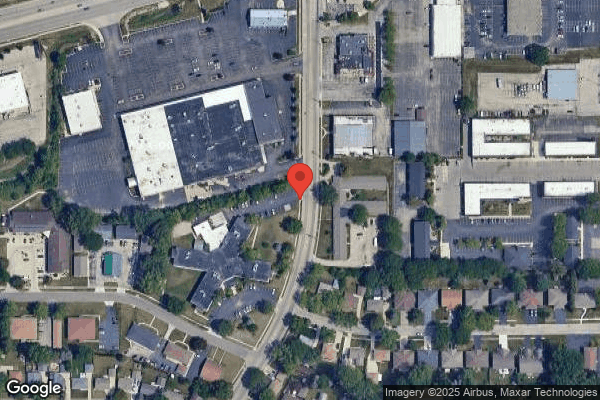
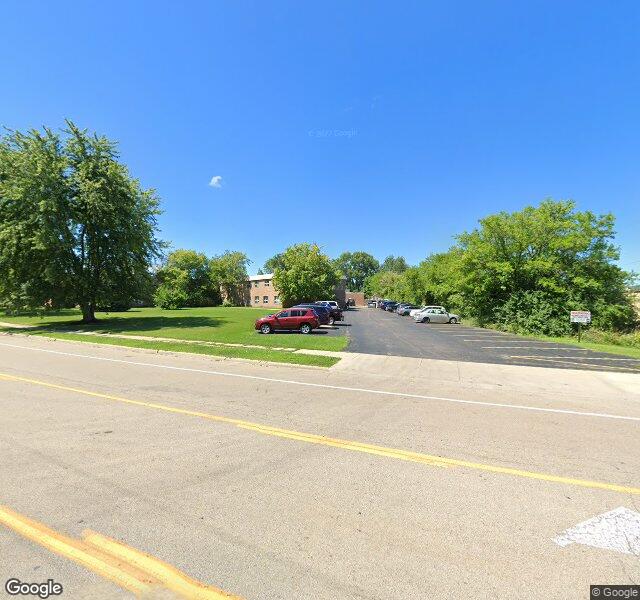
321 ARNOLD AVENUE, ROCKFORD, IL 61108 (815) 397-5531
For profit - Limited Liability company 213 Beds SABA HEALTHCARE Data: November 2025 1 Immediate Jeopardy citation
Trust Grade
0/100
#524 of 665 in IL
Last Inspection: October 2024

Within standard 12-15 month inspection cycle. Federal law requires annual inspections.

Overview

Forest City Rehab & Nursing Center has received an F Trust Grade, indicating a poor level of care and significant concerns. Ranked #524 out of 665 facilities in Illinois, they are in the bottom half of the state, and #13 out of 15 in Winnebago County, meaning only two local options are worse. Although the facility is improving, having reduced serious issues from 22 in 2024 to 7 in 2025, it still reports concerning incidents, including a critical failure to administer prescribed anticoagulants, which led to a resident's hospitalization and eventual death. Staffing is below average with a 2/5 rating and a 42% turnover rate, which is slightly better than the state average, while RN coverage is average, suggesting some level of oversight. They have incurred $208,636 in fines, which is a significant amount that raises questions about compliance with care standards.

Trust Score
F
0/100
In Illinois
#524/665
Bottom 22%
Safety Record
High Risk
Review needed
Inspections
Getting Better
22 → 7 violations
Staff Stability
○ Average
42% turnover. Near Illinois's 48% average. Typical for the industry.
Penalties
○ Average
$208,636 in fines. Higher than 67% of Illinois facilities. Some compliance issues.
Skilled Nurses
⚠ Watch
Each resident gets only 29 minutes of Registered Nurse (RN) attention daily — below average for Illinois. Fewer RN minutes means fewer trained eyes watching for problems.
Violations
⚠ Watch
70 deficiencies on record. Higher than average. Multiple issues found across inspections.
★☆☆☆☆
1.0
Overall Rating
★★☆☆☆
2.0
Staff Levels
★☆☆☆☆
1.0
Care Quality
★☆☆☆☆
1.0
Inspection Score
Stable
2024: 22 issues
2025: 7 issues

The Good

  • Full Sprinkler Coverage · Fire safety systems throughout facility
  • No fines on record
  • Staff turnover below average (42%)

    6 points below Illinois average of 48%

Facility shows strength in fire safety.

The Bad

1-Star Overall Rating

Below Illinois average (2.5)

Significant quality concerns identified by CMS

Staff Turnover: 42%

Near Illinois avg (46%)

Typical for the industry

Federal Fines: $208,636

Well above median ($33,413)

Significant penalties indicating serious issues

Chain: SABA HEALTHCARE

Part of a multi-facility chain

Ask about local staffing decisions and management

The Ugly 70 deficiencies on record

1 life-threatening 6 actual harm
Jun 2025 3 deficiencies
CONCERN (D) 📢 Someone Reported This

A family member, employee, or ombudsman was alarmed enough to file a formal complaint

Potential for Harm - no one hurt, but risky conditions existed

Abuse Prevention Policies (Tag F0607)

Could have caused harm · This affected 1 resident

Based on interview and record review the facility failed to follow their abuse policy by not immediately reporting, investigating and protect residents while and investigation is underway for 1 of 3 r...

Read full inspector narrative →
Based on interview and record review the facility failed to follow their abuse policy by not immediately reporting, investigating and protect residents while and investigation is underway for 1 of 3 residents (R1) reviewed for abuse in the sample of 9. The findings include: The facility's Abuse Prevention Program Facility Policy and Procedure dated 10/2023 shows, Employees are required to report any incident, allegation or suspicion of potential abuse, neglect, exploitation, mistreatment or misappropriation of resident property they observe, hear about or suspect to the administrator immediately or to an immediate supervisor who must then immediately report it to the administrator .Upon learning of the report, the administrator or a designee shall initiate an incident investigation .The facility will take steps to prevent potential abuse while the investigation is underway Employees of the facility who have been accused of abuse will be removed from resident contact immediately until the results of the investigation have been reviewed by the administrator .The investigator will attempt to interview the person who reported the incident, anyone likely to have direct knowledge of the incident and the resident, if interviewable When an allegation of abuse .has occurred, the resident's representative and the Department of Public Health's regional office shall be informed by telephone or fax .This report shall be made immediately, but not later than two hours after the allegation is made, if the events that cause the allegation involve abuse On 6/23/25 at 11:35 AM, V1 (Administrator/Abuse Coordinator) said that the facility follows their Abuse Prevention Policy. V1 said that all allegations should be reported to him immediately and he then sends an initial report to IDPH within two hours. V1 said that if a staff member is an alleged perpetrator, they are immediately sent home until the investigation is completed. V1 said that an investigation is started and the resident, any involved witnesses, other staff and other residents are interviewed to try and determine if abuse occurred. V1 said that he did not hear about R1's allegations of assault until he came in on the morning of 6/16/25. V1 said that the nurse did text him but she should have called him to report the allegation. V1 said that he did start an investigation that day by talking with V15 (Licensed Practical nurse) about the incident and asking who, where, when but V15 was unable to provide any additional information. V1 said that he did not speak to R1 about the incident. V1 said that the day got busy and he knew he was already late for reporting to IDPH so he did not send in a report on 6/16/25. V1 said that he heard later in the day that V11 (Certified Nursing Assistant) was the alleged perpetrator and was sent home. R1's Care Plan shows, [R1] is at risk for abuse and/or neglect due to her mental illness and hx (history) of abuse .Follow facility policy for all suspected or reported instances of abuse and/or neglect. Take all reports seriously . R1's Hospital After Visit Summary dated 6/15/25 shows, Patient does not like this facility and she keeps trying to elope. She stated that staff started to restrain and fight with her so she fought back .Adult Protective Services being notified . R1's Nursing Notes dated 6/15/25 at 11:47 PM shows, Resident returned via stretcher accompanied per [Ambulance Company] Attendants(2) while taking resident to bedroom,resident replied,Look my favorite person,the one that assaulted me. [Attendant's Name] intervened/re-directed.false belief On 6/17/25 at 10:50 AM, V11, Certified Nursing Assistant (CNA) said that R1 returned from the hospital around 11:30 PM on 6/15/25. V11 said that upon her return, R1 looked at her and said, That is my favorite person who assaulted me. V11 said that upon R1's return the nurse told her to keep an eye on R1 due to her behaviors of trying to elope prior to going to the hospital. V11 said that she got a table and chair and sat in front of R1's doorway from the time that she returned from the hospital until about 1:10 AM. V11 said that R1 came out of her room one time asking for a bag of chips but did not have enough money so she returned to her room. V11 said that the nurse wanted her to stay until 4:00 AM but R1 was sleeping around 1:00 AM so she felt it was ok to leave. V11's Time Card printed on 6/17/25 shows that she worked on 6/15/25 from 1:14 PM to 1:15 AM and worked again on 6/16/25 from 9:08 PM to 5:52 AM. On 6/18/25 at 8:18 AM, V15 (Licensed Practical Nurse) said that upon R1's return from the hospital, V11 told her that R1 stated, You're the one that assaulted me. V15 said that she did not hear R1 make the statement but she was told by V11 about it about 5 minutes after R1 readmitted . V15 said that she then text V1 (Administrator/Abuse Coordinator) around 12:30 AM to let him know but V1 did not respond to her. V15 said that she did not interview R1 to get additional details about what she had said. R1's Initial Abuse Investigation Report was sent to IDPH on 6/17/25 and the Final Abuse Investigation Report was sent on 6/20/25.
CONCERN (D) 📢 Someone Reported This

A family member, employee, or ombudsman was alarmed enough to file a formal complaint

Potential for Harm - no one hurt, but risky conditions existed

Report Alleged Abuse (Tag F0609)

Could have caused harm · This affected 1 resident

Based on interview and record review the facility failed to immediately report an allegation on abuse to the state survey agency for 1 of 3 residents (R1) reviewed for abuse reporting in the sample of...

Read full inspector narrative →
Based on interview and record review the facility failed to immediately report an allegation on abuse to the state survey agency for 1 of 3 residents (R1) reviewed for abuse reporting in the sample of 9. The findings include: R1's Care Plan shows, [R1] is at risk for abuse and/or neglect due to her mental illness and hx (history) of abuse .Follow facility policy for all suspected or reported instances of abuse and/or neglect. Take all reports seriously . R1's Hospital After Visit Summary dated 6/15/25 shows, Patient does not like this facility and she keeps trying to elope. She stated that staff started to restrain and fight with her so she fought back .Adult Protective Services being notified . R1's Nursing Notes dated 6/15/25 at 11:47 PM shows, Resident returned via stretcher accompanied per [Ambulance Company] Attendants(2) while taking resident to bedroom,resident replied,Look my favorite person,the one that assaulted me. [Attendant's Name] intervened/re-directed.false belief On 6/17/25 at 10:50 AM, V11, Certified Nursing Assistant (CNA) said that R1 returned from the hospital around 11:30 PM on 6/15/25. V11 said that upon her return, R1 looked at her and said, That is my favorite person who assaulted me. On 6/18/25 at 8:18 AM, V15 (Licensed Practical Nurse) said that upon R1's return from the hospital, V11 told her that R1 stated, You're the one that assaulted me. V15 said that she did not hear R1 make the statement but she was told by V11 about it about 5 minutes after R1 readmitted . V15 said that she then text V1 (Administrator/Abuse Coordinator) around 12:30 AM to let him know but V1 did not respond to her. On 6/23/25 at 11:35 AM, V1 (Administrator) said that when he arrived to work on 6/16/25, V15 came to him and notified him of an allegation of abuse involving R1. V1 said that V15 should have called him immediately after she heard of the allegation. V1 said that V15 should not have just text him in the middle of the night. V1 said that the day got busy and he knew he was already late on reporting so it was not reported that day. V1 said that all allegations of abuse should be reported to him immediately via phone call if he is not in the building and an initial report should be sent to Illinois Department of Public Health (IDPH) within 2 hours of the allegation. On 6/17/25 at 11:10 AM, V2 (Director of Nursing) said that she can not find that a report was sent to IDPH regarding R1's allegation of assault. At 12:16 PM, V2 said that they are sending the initial report right now and she is not sure why it was not sent earlier.
CONCERN (D) 📢 Someone Reported This

A family member, employee, or ombudsman was alarmed enough to file a formal complaint

Potential for Harm - no one hurt, but risky conditions existed

Investigate Abuse (Tag F0610)

Could have caused harm · This affected 1 resident

**NOTE- TERMS IN BRACKETS HAVE BEEN EDITED TO PROTECT CONFIDENTIALITY** Based on interview and record review the facility failed to immediately investigate an allegation of abuse and failed to immedia...

Read full inspector narrative →
**NOTE- TERMS IN BRACKETS HAVE BEEN EDITED TO PROTECT CONFIDENTIALITY** Based on interview and record review the facility failed to immediately investigate an allegation of abuse and failed to immediately suspend the alleged perpetrator while the investigation was in process for 1 of 3 residents (R1) reviewed for abuse in the sample of 9. The findings include: R1's Hospital After Visit Summary dated 6/15/25 shows, Patient does not like this facility and she keeps trying to elope. She stated that staff started to restrain and fight with her so she fought back .Adult Protective Services being notified . R1's Nursing Notes dated 6/15/25 at 11:47 PM shows, Resident returned via stretcher accompanied per [Ambulance Company] Attendants(2) while taking resident to bedroom,resident replied,Look my favorite person,the one that assaulted me. [Attendant's Name] intervened/re-directed.false belief On 6/17/25 at 10:50 AM, V11, Certified Nursing Assistant (CNA) said that R1 returned from the hospital around 11:30 PM on 6/15/25. V11 said that upon her return, R1 looked at her and said, That is my favorite person who assaulted me. V11 said that upon R1's return the nurse told her to keep an eye on R1 due to her behaviors of trying to elope prior to going to the hospital. V11 said that she got a table and chair and sat in front of R1's doorway from the time that she returned from the hospital until about 1:10 AM. V11 said that R1 came out of her room one time asking for a bag of chips but did not have enough money so she returned to her room. V11 said that the nurse wanted her to stay until 4:00 AM but R1 was sleeping around 1:00 AM so she felt it was ok to leave. V11 said that before she left, she wrote a statement of what R1 had said earlier in the evening and gave it to the nurse and told her to make sure that she charted what happened. V11's Time Card printed on 6/17/25 shows that she worked on 6/15/25 from 1:14 PM to 1:15 AM and worked again on 6/16/25 from 9:08 PM to 5:52 AM. V11's Written Statement shows, [R1] was trying to leave out the facility. I saw V14 (LPN) helping I helped her keep the young lady from going outside, she didn't like that I was in front of her, and that she told me not to touch her as I went to go outside and have a smoke break she followed me. V12 (CNA) and V14 came out with me got her back in me and V12 had her stay in her room until [local hospital] came and got her she kept charging at us to get out the door and me and V12 asked her not to touch us and we moved her back from being against us. She hit us threw food at us and V14 and V17 (RN) came walking down there as she was pushing against us, and then [local hospital] showed up. She believes we assaulted her and wouldn't let her leave she stated that as the paramedics brought her back as I was still down 400 hall and [NAME] that bout me. On 6/18/25 at 8:18 AM, V15 (Licensed Practical Nurse) said that upon R1's return from the hospital, V11 told her that R1 stated, You're the one that assaulted me. V15 said that she did not hear R1 make the statement but she was told by V11 about it about 5 minutes after R1 readmitted . V15 said that she then text V1 (Administrator/Abuse Coordinator) around 12:30 AM to let him know but V1 did not respond to her. V15 said that she did not interview R1 to get additional details about what she had said. On 6/23/25 at 11:35 AM, V1 (Administrator) said that when he arrived to work on 6/16/25, V15 came to him and notified him of an allegation of abuse involving R1. V1 said that he started asking who, when, where questions but no one had any additional information. V1 said that he did not speak to R1 about the allegation. V1 said that he had learned later in the day that V11 was the alleged perpetrator and was sent home. V1 said that all allegations of abuse should be investigated immediately and the alleged perpetrator should be sent home pending the results of the allegation. V1 said that the resident, other residents and all staff involved are interviewed during an investigation On 6/17/25 at 11:10 AM, V2 (Director of Nursing) said that she had no involvement with R1's allegation of abuse and it was all done by V1. V2 said that all allegations of abuse are immediately investigated. V2 said that if there is an alleged staff member, they are sent home immediately until the investigation is complete. V2 said that it is important to investigate all allegations of abuse to make sure that all residents are safe. R1's Care Plan shows, [R1] is at risk for abuse and/or neglect due to her mental illness and hx (history) of abuse .Follow facility policy for all suspected or reported instances of abuse and/or neglect. Take all reports seriously . R1's Initial Abuse Allegation Investigation was sent to IDPH on 6/17/25 and Final Abuse Allegation Investigation was sent to IDPH on 6/20/25.
Jun 2025 1 deficiency
CONCERN (D) 📢 Someone Reported This

A family member, employee, or ombudsman was alarmed enough to file a formal complaint

Potential for Harm - no one hurt, but risky conditions existed

Report Alleged Abuse (Tag F0609)

Could have caused harm · This affected 1 resident

Based on interview and record review the facility failed to report an allegation of alleged sexual abuse within the required timeframe to the Illinois Department of Public Health (IDPH). This applies ...

Read full inspector narrative →
Based on interview and record review the facility failed to report an allegation of alleged sexual abuse within the required timeframe to the Illinois Department of Public Health (IDPH). This applies to 1 of 3 residents (R1) reviewed for abuse in the sample of 10. The findings include: R1's progress notes dated June 1, 2025 shows, R1 was discharged home on May 31, 2025 after being out on pass with her daughter (V11). V11 R1's Daughter decided to keep her home and not bring her back to the facility. On June 5, 2025 at 9:55 AM, V11 R1's daughter stated, after she removed her mom from the facility R1 told her that someone raped her while she was the facility. She reported that to V3 Admissions. On June 5, 2025 at 10:45 AM, V3 Admissions stated, V11 R1's daughter called her on Monday or Tuesday (June 2nd/June 3rd) to report a missing cell phone. During the phone call V11 stated, R1 told her that someone sexually abused her while she was the facility. She reported that information to V1 Administrator. On June 5, 2025 at 1:00 PM, V1 Administrator stated, V3 Admissions did report to him that R1's daughter (V11) was saying that she was sexually abused at the facility. He did not report the allegation of abuse to Illinois Department of Public Health. He thought since R1 was no longer a resident at the facility it did not need to be reported like normal abuse allegations. The facility's report to IDPH regional office dated June 5, 2025 shows, Date of occurrence: June 3, 2025. Resident Name: R1. Description of occurrence: On June 3, 2025, V11 R1's daughter contacted our facility between 11:00 AM - 12:00 PM regarding her mother's missing cell phone. During the call, she casually mentioned- without providing specific details or names- that her mother alleged being sexually assaulted during her stay Date sent to IDPH regional office: 6/5/2025 (2 days after initial allegation). The facility's abuse prevention program facility policy and procedure dated October 2023 shows, VIII: External Reporting: 1. Initial reporting of allegations- When an allegation of abuse, exploitation, neglect, mistreatment or misappropriation of resident property has occurred, the resident's representative and the Department of Public Heath's (IDPH) regional office shall be informed by telephone or fax. Public Health shall be informed that an occurrence of potential abuse, neglect, exploitation, mistreatment or misappropriation of resident property has been reported and is being investigated This report shall be made immediately, but not later than two hours after the allegation is made, if the events that cause the allegation involve abuse or resulted in serious bodily injury; or not less than 24 hours if the events that cause the allegation do not involve abuse and did not involve abuse and did not result in serious bodily injury.
Feb 2025 2 deficiencies
CONCERN (E) 📢 Someone Reported This

A family member, employee, or ombudsman was alarmed enough to file a formal complaint

Potential for Harm - no one hurt, but risky conditions existed

Deficiency F0804 (Tag F0804)

Could have caused harm · This affected multiple residents

**NOTE- TERMS IN BRACKETS HAVE BEEN EDITED TO PROTECT CONFIDENTIALITY** Based on observation, interview, and record review the facility failed to ensure food was served at a temperature to meet reside...

Read full inspector narrative →
**NOTE- TERMS IN BRACKETS HAVE BEEN EDITED TO PROTECT CONFIDENTIALITY** Based on observation, interview, and record review the facility failed to ensure food was served at a temperature to meet resident satisfaction for 4 of 4 residents (R1, R2, R3, and R13) reviewed for food temperatures in the sample of 13. The findings include: R1's face sheet showed he was admitted to the facility on [DATE]. R1's facility assessment dated [DATE] showed he has no cognitive impairment. On 2/18/25 at 12:10 PM, R1 said the food is always cold. R1 said he was told by V8 (Dietary Manger) that the temperature meets state requirements but that by the time it is served its cold. R2's face sheet showed he was admitted to the facility on [DATE]. R2's facility assessment showed he has no cognitive impairment. On 2/18/25 at 12:27 PM, R2 said, The food is not hot most of the time. I have to go heat it up in the microwave a lot. R3's face sheet showed he was admitted to the facility on [DATE]. R3's facility assessment dated [DATE] showed he has no cognitive impairment. On 2/18/25 at 12:30 PM, R3 said the food is usually cold. R3 said, I just eat it anyway but I would like it better warm. R13's face sheet showed he was admitted to the facility on [DATE]. R13's facility assessment dated [DATE] showed he has moderate cognitive impairment. On 2/18/25 at 12:32 PM, R13 said, Usually by the time we get the food it is cold . there is a microwave we can take it to but if everyone has to warm it up the line would be a mile long. On 2/18/25 at 11:46 AM, there was regular texture shredded chicken, regular texture rice, regular texture corn, creamed corn, and two divided plates that had already been served with pureed chicken, pureed rice, and pureed corn on the second floor steam table. V5 (Dietary Aide) said they check temperatures on the steam table prior to serving on the second floor but she had forgotten the thermometer. V5 retrieved the thermometer and proceeded to check temperatures. The regular texture chicken was 117 degrees, the regular rice was 129 degrees, the mechanical soft chicken was 125 degrees, the pureed chicken was 106 degrees, the pureed rice was 118 degrees, and the pureed corn was 104 degrees. The facility's policy and procedure with revision date of 9/18/23 showed, Food Safety and Sanitation . Hot food prepped for serving will maintain a minimum temperature of greater than or equal to 135 degrees Fahrenheit when on the steam table and prior to being served to the residents.
CONCERN (E) 📢 Someone Reported This

A family member, employee, or ombudsman was alarmed enough to file a formal complaint

Potential for Harm - no one hurt, but risky conditions existed

Food Safety (Tag F0812)

Could have caused harm · This affected multiple residents

**NOTE- TERMS IN BRACKETS HAVE BEEN EDITED TO PROTECT CONFIDENTIALITY** Based on observation, interview, and record review the facility failed to ensure food was held at required temperatures on the s...

Read full inspector narrative →
**NOTE- TERMS IN BRACKETS HAVE BEEN EDITED TO PROTECT CONFIDENTIALITY** Based on observation, interview, and record review the facility failed to ensure food was held at required temperatures on the second floor steam table and failed to ensure food was served in a manner to prevent cross contamination. This applies to all 94 residents residing on the second floor. The findings include: The facility provided a resident roster on 2/18/25 showing 94 residents residing on the second floor. 1. On 2/18/25 at 11:46 AM, there was regular texture shredded chicken, regular texture rice, regular texture corn, creamed corn, and two divided plates that had already been served with pureed chicken, pureed rice, and pureed corn on the second floor steam table. The regular texture chicken was 117 degrees, the regular rice was 129 degrees, the mechanical soft chicken was 125 degrees, the pureed chicken was 106 degrees, the pureed rice was 118 degrees, and the pureed corn was 104 degrees. R1's face sheet showed he was admitted to the facility on [DATE]. R1's facility assessment dated [DATE] showed he has no cognitive impairment. R2's face sheet showed he was admitted to the facility on [DATE]. R2's facility assessment showed he has no cognitive impairment. R3's face sheet showed he was admitted to the facility on [DATE]. R3's facility assessment dated [DATE] showed he has no cognitive impairment. R13's face sheet showed he was admitted to the facility on [DATE]. R13's facility assessment dated [DATE] showed he has moderate cognitive impairment. On 2/18/25 at 12:10 PM, R1 said the food is always cold. R1 said he was told by V8 (Dietary Manager) that the temperature of the food meets state requirements but that by the time it is served its cold. On 2/18/25 at 12:27 PM, R2 said, The food is not hot most of the time. I have to go heat it up in the microwave a lot. On 2/18/25 at 12:30 PM, R3 said the food is usually cold. R3 said, I just eat it anyway but I would like it better if it was warm. On 2/18/25 at 12:32 PM, R13 said, Usually by the time we get the food it is cold . there is a microwave we can take it to but if everyone has to warm it up the line would be a mile long. On 2/18/25 at 11:40 AM, V5 (Dietary Aide) said they check temperatures on the steam table prior to serving on the second floor but she had forgotten the thermometer. (V5 retrieved the thermometer from the first floor and checked temperatures with the surveyor.) On 2/18/25 at 2:19 PM, V8 (Dietary Manager) said she was unsure what the holding temperatures of hot foods on the steam table should be. V8 said she was not aware that staff were taking the temperatures of the foods on the steam table on the second floor. V8 said there is no temperature log for the second floor steam table. The facility's policy and procedure with revision date of 9/18/23 showed, Food Safety and Sanitation . Policy: The facility will follow sanitary practices in food preparation and cooking to keep food safe. Identification of potential hazards in the food preparation process and adhering to critical control points can reduce the risk of food contamination and thereby prevent foodborne illness . Hot food prepped for serving will maintain a minimum temperature of greater than or equal to 135 degrees Fahrenheit when on the steam table and prior to being served to the residents. If the food is below 135 degrees Fahrenheit, the staff must reheat the food to 165 degrees Fahrenheit to assure time and temperature control. 2. On 2/18/25 at 11:50 AM, V4 (Dietary Aide) and V5 (Dietary Aide) were behind the steam table in the second floor dining room serving resident meals. V4 was wearing gloves. V4 was opening the container with cheese slices, opening the container with meat slices, touching the bag of bread, touching the handle of a spoon he was using to serve up individual containers of sour cream to put on resident plates, and touching the steam table. V4 then used the same gloved hands to take the lunch meat out of the container, the bread out of the bag, and the cheese out of the container and make a sandwich for a resident. V4 did not change his gloves and perform hand hygiene. V4 then went back to touching the containers and the steam table prior to retrieving more cheese out of the container for a resident. On 2/18/25 at 2:19 PM, V8 (Dietary Manager said, Gloves should be changed between touching items and hand hygiene completed and tongs should be used for picking up meat and cheese to prevent cross contamination. The facility's policy and procedure with revision date of 9/21/23 showed, Food Safety and Sanitation . Handwashing . Policy: Employees with use proper hand washing techniques to prevent the spread of infection, cross contamination, and germs . Employees are required to wash hands: . b. Before starting any task j. Anytime hands are soiled k. After handling soiled dishes and utensils .
Jan 2025 1 deficiency 1 Harm
SERIOUS (G) 📢 Someone Reported This

A family member, employee, or ombudsman was alarmed enough to file a formal complaint

Actual Harm - a resident was hurt due to facility failures

Pressure Ulcer Prevention (Tag F0686)

A resident was harmed · This affected 1 resident

**NOTE- TERMS IN BRACKETS HAVE BEEN EDITED TO PROTECT CONFIDENTIALITY** Based on interview and record review, the facility failed to assess a resident's pressure injuries in a timely manner and failed...

Read full inspector narrative →
**NOTE- TERMS IN BRACKETS HAVE BEEN EDITED TO PROTECT CONFIDENTIALITY** Based on interview and record review, the facility failed to assess a resident's pressure injuries in a timely manner and failed to implement pressure injury treatment interventions for 1 of 3 residents (R1) reviewed for pressure injuries. These failures resulted in R1's pressure injuries deteriorating from two Stage 2 pressure injuries into one unstageable pressure injury. The findings include: R1's admission Record dated 1/27/25 shows R1 was admitted to the facility on [DATE] with the following diagnoses: sepsis, diabetes mellitus type 2, pressure ulcer of right buttock, stage 2, pressure ulcer of left buttock, stage 2, high cholesterol (hyperlipidemia), a right below knee amputation, congestive heart failure, methicillin resistant staphylococcus aureus infection, gastroesophageal reflux disease (GERD), osteomyelitis, hyperglycemia, and bacteremia (blood stream infection). R1's After Hospital Care Plan (printed 12/20/24) shows orders for R1's Stage II pressure injuries of his right and left buttocks which were to be treated twice a day. R1's Order Recap Report dated 1/27/25 shows orders dated 12/20/24 for R1 to receive wound treatment to his left and right buttocks twice a day, every day beginning 12/20/24. R1's Wounds record (printed 1/27/25) for 12/1/24-12/31/24 shows R1 did not receive 16 of 19 treatments between 12/20/24 and 12/30/24. No documentation was provided showing R1 had refused any of those wound treatments. The facility's Pressure Wound Report provided by the facility on the morning of 1/27/25 with a reporting date of 1/21/25, shows R1 has an unstageable pressure ulcer of his sacrum (upper buttocks area) and does not have a statement signed by the physician to indicate it is unavoidable. As of 1/28/25 at 10:26 AM, there was no Unavoidable Disruption in Skin Integrity statement for R1, nor were there any documented refusals of wound care treatment for R1. R1's current care plan provided by the facility marked care plan closed date 1/27/25 reason for close: discharge, shows R1 has a self care deficit related to weakness, impaired balance, limited range of motion, pain, and physical inactivity and requires extensive to total assistance with mobility related tasks and dressing. R1 needs two staff assistance with turning/repositioning and transferring with a mechanical lift, he is non-ambulatory, and his primary mode of locomotion is via a wheelchair. The same care plan shows a focus that R1 (as of initiation date of 12/22/24) is at increased risk for alteration in skin integrity as evidenced by mechanical factors, pressure over bony prominences, moisture, impaired circulation, and alteration in sensation. R1's Admission/readmission Screener dated 12/20/24 at 4:55 PM, under the question, Does the resident currently have any skin abnormalities (i.e. bruising, skin tears, pressure injuries, etc)? There is no pressure injury listed. R1's Wound and Skin Alteration Review (Wound Nurse) dated 12/27/24 at 10:59 AM shows R1 has a nonstageable (NS) sacral (upper buttocks area) pressure injury measuring 7.2 by 8 by 0.1 centimeters with 90 percent slough. Under number 7. Healing Process, New Wound is marked. This same document shows a Stage 2 Pressure Injury is partial thickness loss of dermis presenting as a shallow open ulcer with a red/pink wound bed, without slough and an Unstageable Pressure Injury is full thickness tissue loss in which the base of the ulcer is covered by slough (yellow, tan, gray, green, or brown, and/or eschar (tan, brown, or black) in the wound bed. On 1/27/25 at 11:50 AM, V3, Wound Care Nurse, said residents' wounds are supposed to be assessed within 24 hours of being admitted . V3 said R1's initial wound assessment was not done until 12/27/24; the admitting nurse did not identify R1's buttock wounds upon admission (on 12/20/24). V3 said R1's admitting diagnoses show R1 was admitted with Stage 2 pressure wounds of his right and left buttock, but when he assessed R1's wounds he saw overlapping wounds and classified the wound as an unstageable pressure wound of the sacrum. V3 said R1 was admitted with wound treatment orders on 12/20/24 to be done twice a day, every day of the week to the right and left buttocks. V3 said R1's wounds should have been assessed upon admission and treatments completed as ordered. V3 said the purpose of wound treatment is to try to help heal the wound, prevent infection, and to prevent it from deteriorating and getting worse. V3 said without wound treatment, wounds can deteriorate and get worse. On 1/27/25 at 12:46 PM, V2, Director of Nursing (DON), said R1 was admitted to the facility on [DATE] and she entered R1's wound treatment orders from his discharge orders from the hospital which should have been started that same day, as per physician orders. V2 said if the wound care nurse is in facility, when a resident is admitted , they do the admission skin/wound assessment, otherwise the admitting nurse does it. They should measure open wounds, but, some floor nurses are not comfortable staging them, a full wound assessment should be done optimally within 24 hours of admission. V2 said V4, Licensed Practical Nurse (LPN), was covering the wound care position on 12/18/24, 12/19/24, and 12/20/24 while V3 was on vacation. On 1/28/25 at 8:33 AM, V4 LPN said she was covering the wound care position on 12/18/24, 12/19/24, and 12/20/24 while V3 was on vacation. V4 said her responsibilities as wound care nurse included everything the wound nurse would do, such as wound treatments and (skin/wound) assessments of any new admissions. V4 said new admission assessments are done within the first hour or two after residents arrive. If the wound care nurse is not in the facility, he/she would do it the following day, but the admitting nurse would do a skin assessment, although they would probably not stage a pressure ulcer (pressure injury), they would document it and some nurses would measure and document the wound characteristics. V4 said the wound nurse would do the full assessment which includes identifying the type of wound, measurements, what the wound/peri wound looks like, any odor, any drainage, any characteristics, any pain, location, and she would stage a pressure ulcer. V4 said R1 was admitted on a Friday after she had already left, so she never saw him or his wound. V4 said the admitting nurse needs to look at the orders and put them in the computer as the floor nurses are responsible for wounds on the weekends. V4 said it would not be ok to do the initial wound assessment a week after a resident was admitted . V4 said a wound could deteriorate during that time. V4 said wound treatments are done per physician orders. The nurse looks at the TAR (treatment administration record), the MAR (medication administration record), and the Wound tabs to see what treatments need to be administered. If a day(s) was crossed out on those tabs, the nurse would not do the treatment. The responsible nurse signs off the day once the treatment is done. V4 said she does not know if R1's primary care provider (PCP) would have seen R1's wound but said if the PCP is giving the treatment orders for a wound, she would think they are evaluating or have evaluated the wound. On 1/28/25 at 9:04 AM, V5, Nurse Practitioner (NP), said the facility needs to do wound treatments as ordered. If a resident refuses, they need to document that. V5 said R1 should have been seeing the wound care doctor and she did not look at his pressure wounds when she saw him in the facility. V5 said a wound can deteriorate in a week and lack of wound treatments could contribute to a wound deteriorating. On 1/27/25 at 11:01 AM, V6, LPN, said the wound care nurse does the wound care treatments except for on the weekends. The floor nurse would look under the Wound tab to see if there are any wounds requiring treatment and carry out the orders. Once the treatment is completed, the treatment is signed off as being done; if the treatment is not signed off, it was not done. V6 said the purpose of wound care treatment is to keep wounds clean and healing. The facility's Wound Policy (reviewed 11/2022) shows the purpose is to promote a systematic approach and monitoring process for the care of residents with existing wounds and to promote healing of existing pressure ulcers. The goals of wound treatment include protecting the ulcer from contamination and promoting healing. The policy shows that current standards of Clinical Practice will be utilized.
Dec 2024 1 deficiency
CONCERN (D) 📢 Someone Reported This

A family member, employee, or ombudsman was alarmed enough to file a formal complaint

Potential for Harm - no one hurt, but risky conditions existed

Pharmacy Services (Tag F0755)

Could have caused harm · This affected 1 resident

Based on observation, interview, and record review the facility failed to ensure a resident had his prescribed medication when leaving the facility on a pass home overnight for 1 of 3 residents review...

Read full inspector narrative →
Based on observation, interview, and record review the facility failed to ensure a resident had his prescribed medication when leaving the facility on a pass home overnight for 1 of 3 residents reviewed for medications in the sample of 3. The findings include: The Nurse's Notes dated 11/28/24 for R1 did not show that he left the building on a pass with his power of attorney. A handwritten note given to R1's POA (Power of Attorney) on 11/28/24 showed, R1 does not have medication strip to provide his mother while out on pass. The note was signed by V4 LPN (Licensed Practical Nurse). The MAR (Medication Administration Record) dated November 2024 for R1 showed on 11/28/24 R1 received his morning medications. R1's evening medications for 11/28/24 were latanoprost opthalmic 0.005%, melatonin 3mg, benztropin mesylate 1mg, depakote 250 mg, depakote 500mg, lorazepam 0.5 mg, pepcid 20 mg, risperidone 0.25 mg. R1's morning medications for 11/29/24 were: aripirazole 5mg, atenolol 50 mg, furosemide 20 mg, spironolactone 50 mg, benztropine mesylat 1 mg, depakote 250 mg, depakote 500 mg, lorazepam 0.5 mg, pepcid 20 mg, risperidone 0.25 mg. R1's MAR dated 11/29/24 had a 1 documented for his morning medications which meant away from the facility with meds. On 12/12/24 at 9:10 AM, V2 DON (Director of Nursing) stated if a resident is going out for a morning appointment medications are given before the resident leaves. V2 stated if the resident is coming back after their appointment then medications would not be sent with the resident. V2 stated the nurse will ask when the resident is returning and if they are going to be out to dinner, shopping etc then the nurse sends the evening medications with the resident. If the resident is going home overnight or for a few days there are tiny envelopes with lines on them to put medications in. They write the name of the medication and when it is due on the envelope. They need to send medications with them. On 12/12/24 at 11:49 AM, V4 LPN stated, R1 was getting ready to leave and his strip of medications were not in the medication cart. V7 (R1's POA - Power of Attorney) was here and it was explained to her. V4 stated V7 was upset and asked why his medications were not there. V4 stated she did not know why. V4 stated she told V6 LPN and she showed her how to order medications. V4 stated they had some of his medications but not all of them. V4 stated she did not know which specific medications went with R1. V4 stated she knew the medication strip containing pills wasn't there. What was available was given is small envelopes that were labeled. V4 stated she did not know which medications were given. V4 stated she did not have access to the medication machine and she did not look to see if the medications were in there. On 12/12/24 at 11:54 AM, the 2300 hall medication cart had R1's medications inside. The medications that were in a strip (medication in long plastic cover that were individually packaged and labeled) benztropine mesylate 1mg, famotidine 20 mg, risperidone 0.25 mg, aripiprazole 5mg, atenolol 50 mg, and furosemide 20mg. The Care Plan dated 10/30/24 for R1 showed he has a history of exhibiting behaviors of moderate anger related to psychotic symptoms due to his delusions. Administration of psychoactice medications as ordered by physician and monitor adverse side effects R1 has diagnoses that include schizophrenia. R1 has orders for psychotropic medications as ordered. Administartion of psychoactive medications as ordered by physician R1 is on diuretic therapy related to hypertension. Administer medication as ordered. R1 is at risk of developing elevate blood pressure due to essential (primary) hypertension. Medications s ordered per medical doctor. R1 has been diagnosed with geralized anxiety disorder and schizophrenia necessitating the use of psychotropic medication to help manage and alleviate symptoms associated with anxiety and schizophrenia. Carry out medication management regiment as prescribed. R1 is at risk for complications and abdominal discomfort related to astroesophageal reflux disease. Administer medications as ordered per medical doctor. The facilities Guidebook (9/2024) showed, all residents/family/responsible party are expected to sign out at the door when you are leaving. When signing out for an extended period of time with family, you will also be asked to check in/out with your nurse for medications. The Policy & Procedure Administering Medications (1/1/2020) medications shall be administered in physician's written/verbal orders upon verification of the right medication, dose, route, time, and positive verification of the resident's identity when no contraindications are identified and the medication is labeled according to accepted standards.
Oct 2024 1 deficiency
CONCERN (D) 📢 Someone Reported This

A family member, employee, or ombudsman was alarmed enough to file a formal complaint

Potential for Harm - no one hurt, but risky conditions existed

Report Alleged Abuse (Tag F0609)

Could have caused harm · This affected 1 resident

Based on interview and record review the facility failed to report an allegation of abuse to the administrator of the facility for 1 of 3 residents (R1) reviewed for abuse in the sample of 9. The find...

Read full inspector narrative →
Based on interview and record review the facility failed to report an allegation of abuse to the administrator of the facility for 1 of 3 residents (R1) reviewed for abuse in the sample of 9. The findings include: On 10/30/24 at 10:00AM, V1 Administrator said, I was not informed about an alleged incident between R1 and V3 CNA-Certified Nursing Assistant, I will investigate the allegation immediately. On 10/30/24 at 2:27PM, V5 Scheduler said, I received a report from R1's daughter that R1 received a ham sandwich. She reported that someone pushed her. I did not tell V1. On 10/30/24 at 1:00PM, V1 stated he reviewed the video footage regarding the alleged incident. V3 made no contact with R1. On 10/30/24 at 12:07PM, V3 CNA said, if an abuse like allegation was reported to me, I would contact V1 Administrator immediately, I would not worry about chain of command. I would report to my nurse also but V1 first. The facility's Abuse Prevention policy dated 11/18/2016 shows, employees are required to report any incident, allegation or suspicion of potential abuse, neglect, exploitation, mistreatment, or misappropriation of resident property they observe, hear about or suspect to the administrator immediately .
Oct 2024 12 deficiencies 1 IJ
CRITICAL (J) 📢 Someone Reported This

A family member, employee, or ombudsman was alarmed enough to file a formal complaint

Immediate Jeopardy (IJ) - the most serious Medicare violation

Deficiency F0760 (Tag F0760)

Someone could have died · This affected 1 resident

**NOTE- TERMS IN BRACKETS HAVE BEEN EDITED TO PROTECT CONFIDENTIALITY** Based on interview, and record review the facility failed to ensure a resident with a history of embolic strokes (R167) received...

Read full inspector narrative →
**NOTE- TERMS IN BRACKETS HAVE BEEN EDITED TO PROTECT CONFIDENTIALITY** Based on interview, and record review the facility failed to ensure a resident with a history of embolic strokes (R167) received physician ordered anticoagulants. This failure resulted in R167 requiring emergency transport to the hospital for an acute embolic stroke. R167 was hospitalized until [DATE], when he passed away. The facility also failed to ensure an anticoagulant medication was administered as ordered for R116 for 2 of 8 residents (R167 & R116) reviewed for significant medication error in the sample of 33. The Immediate Jeopardy began on [DATE] when R167 was re-admitted to the facility and the facility failed to ensure the physician prescribed anticoagulant medication was obtained from pharmacy. V1 (Administrator) was notified of the Immediate Jeopardy on [DATE] at 1:02 PM. The surveyor confirmed by observation, interview, and record review that the Immediate Jeopardy was removed on [DATE], but noncompliance remains at a Level Two because additional time is needed to evaluate the implementation and effectiveness of the process changes and in-service training. The findings include: 1. R167's Facesheet dated [DATE] showed diagnoses to include, but not limited to: stroke due to embolism, nicotine dependence, encephalopathy, hypertension, deep vein thrombosis, chronic obstructive pulmonary disease, unsteadiness on feet, repeated falls, weakness, and long-term use of anticoagulants and antithrombotics/antiplatelets. This document showed R167's original admission to the facility was [DATE]. R167's Physician Order Sheet printed [DATE] showed an order for Xarelto 15 mg (milligrams) twice a day for stroke due to embolism. This order was entered on [DATE]. R167's MAR (Medication Administration Record) showed he R167's was scheduled to received Xarelto 15 mg in the morning and the evening, starting [DATE]. R167's MAR showed there were entries for [DATE], [DATE] and [DATE] that showed the medication was on order from pharmacy or a progress note was entered. (According to pharmacy, R167's Xarelto was delivered to the facility on [DATE]. R167's should have received 6 doses of the medication during that time.) R167's Progress Note dated [DATE] at 4:02 PM, showed R167 had returned to the facility from a facility initiated transfer. R167's Progress Note [DATE] at 11:05 PM, showed This writer just spoke with [consulting pharmacist] regarding the status of atorvastatin and xarelto. Atorvastatin will be delivered tonight. Xarelto is not covered by resident's insurance. Asked pharmacist what would be covered as an alternative and he reports it is not in the notes, billing department will know that and they will be in tomorrow morning at 0600. [V12-NP] informed. R167's Progress Note dated [DATE] showed he lost his balance, pushing his wheelchair and fell on the dining room floor. There were no injuries noted. R167's Progress Notes dated [DATE] at 9:15 PM, showed, Residents family have been here with resident most of the PM shift. Resident has had no changes in baseline mental status. Resident's niece states at 9:10 PM, I'm scared my uncle might have had a stroke earlier when we were taking to him, but I really don't know. CNA [Certified Nursing Assistant] reports she just assisted resident back to bed and that his behavior was fine, he was speaking to her, and had no abnormalities. This RN [Registered Nurse] did neuro assessment and no signs that resident had a stroke . R167's Progress Notes dated [DATE] at 5:50 PM, showed At approximately 5:50 PM resident started having seizure in the dining room that lasted 2 minutes. Staff immediately notified nursing - accucheck 168. Pulse oximetry 73% on room air . 911 called while nursing helped resident in the dining room . 23:00PM resident admitted with stroke diagnosis. R167's Xarelto prescription dated [DATE] showed the medication was to be administered twice a day. R167's Xarelto Manifest showed it was delivered to the facility on [DATE] at 8:00 PM. R167's emergency room records dated [DATE] showed he had a history of strokes, had a seizure prior to arrival. The facility reported the patient had a two minute seizure in the dining room. The records showed the family reported an episode of aphasia yesterday, which as resolved. These notes showed R167's was admitted to the hospital on [DATE] for an embolic stroke. R167's Neurology Progress Note dated [DATE] showed R167 had recurrent bi-hemispheric embolic strokes. R167's Hospital Discharge summary dated [DATE] showed R167 died. R167's Death Certificate showed he died on [DATE] and the primary cause was recurrent emobilic strokes. On [DATE] at 2:15 PM V2 (Director of Nursing/DON) said when a resident is admitted from the hospital the discharge medication list is used to order the resident's medications at the facility. V2 said the nurse will enter the orders when the resident is admitted . V2 said when the order is entered, the order is sent to pharmacy to fill the medication. V2 said sometimes there is an issue with the insurance and pharmacy will send an authorization notice. V2 said if the medication isn't available for more than a shift and a half, then I get involved. V2 said she expects the nurses to report any medication that has not been received from pharmacy to her. V2 stated, I know I was in contact with the pharmacy about [R167's Xarelto]. I told them to send it. V2 said she isn't sure if Xarelto is in the automated medication dispensing system, but stated, It should be. V2 said she thought the issue was taken care of because the nurses hadn't reported any issues to her. V2 said she doesn't know if R167 received his scheduled Xarelto prior to [DATE]. V2 said she doesn't know why the Xarelto was documented as administered by some nurses. V2 said she had no idea how a nurse would give a medication that wasn't available because they aren't supposed to borrow medications from another resident. (R167's Xarelto was delivered on [DATE] at 8:00 PM.) V2 said the automated medication dispensing system was changed six months ago and there are a few nurses that still don't have access to it. V2 said Xarelto is a blood thinner and is used to prevent clot formation and decrease the risk for stroke. V2 said she wasn't sure what happened to R167. V2 reviewed R167's Electronic Medical Record (EMR) and said it looked like he had seizure activity and was sent to the emergency room. At 3:28 PM, V2 accessed the automated medication dispensing system. The automated medication dispensing system was small, the size of a mini-refrigerator and across the room there was a plastic storage container, with a padlock affixed to it. V2 said if the medication isn't inside the smaller automated medication dispensing system, then a key will be obtained to open the lock on the plastic container. V2 checked for Xarelto and was unable to obtain it from the automatic dispensing system. V2 stated, I'll have to sign out the key and check over there. V2 signed out the key and opened the plastic storage container to expose multiple small, divided containers. V2 picked up a small plastic container and stated, Look at this. There isn't even a label on this to tell me what is inside. I just have to look at each separate medication. This system is ridiculous. I hate it. V2 stopped and stated, This will take forever. Do we have to go through each one? Can I just get the list from pharmacy that shows what medications are available. V2 locked the cabinet and returned the keys to the automated dispensing system. On [DATE] at 1:10 PM, V6 (Licensed Practical Nurse/LPN) said she wasn't sure if Xarelto was available in the automated medication dispensing system. V6 said she didn't have access to the system. V6 said the system was changed about 6 months ago and there were still nurses that didn't have access. On [DATE] at 4:03 PM, V9 (LPN) said she doesn't remember R167 or any specific information regarding him. V9 said she does not have access to the facility's automated medication dispensing system. V9 said she would have to ask another nurse to access, but stated, She hasn't come across anyone that had access to it while I was working. On [DATE] at 7:59 AM, V12 (Nurse Practitioner/NP) said R167 was admitted from the hospital after he had a stroke. V12 said the nurse reviews the medications and enters the orders into the EMR. V12 said she expects the medications to be administered as ordered. V12 said R167 was on Xarelto because he had a stroke caused by a blood clot. V12 said it was important R167 received the medication as it was ordered to prevent blood clot development and reduce the risk of stroke. V12 said missing 6 doses of the Xarelto could have contributed to R167 having an acute embolic stroke on [DATE]. V12 said she didn't order an alternative blood thinner because she was under the understanding that insurance issue was addressed promptly. V12 said she would expect the facility to obtain R167's medications in a timely manner. On [DATE] at 9:08 AM, V11 (Pharmacy Consultant) said Xarelto is an anticoagulant medication that is prescribed to prevent blood clots and strokes. V11 said R167 could be at an increased risk of stroke if multiple doses were missed. V11 said Xarelto was not a medication stocked in the automated medication dispensing system. V11 stated, Today [V2-DON] called and we will be adding Xarelto to the stock. At 10:34 AM, V11 said R167's Xarelto order was entered on [DATE] at 11:48 PM; the pharmacy sent a message to the facility that authorization was needed on [DATE] at 7:49 AM; the facility responded to the authorization message on [DATE] at 8:17 AM; and the medication was delivered to the facility on [DATE] (at 8:00 PM). 2. R116's face sheet showed he was admitted to the facility on [DATE] with diagnoses to include chronic systolic congestive heart failure, atrial flutter, stage 3 chronic kidney disease, cardiomyopathy, anemia in chronic kidney disease, and cirrhosis of liver. R116's [DATE] Physician Order Sheet showed an order for an anticoagulant dated [DATE] for Rivaroxaban (Xarelto) 20 mg daily for atrial flutter. R116's [DATE] eMAR (electronic Medication Administration Record) showed an order for warfarin (anticoagulant) was discontinued [DATE] and a new order for Rivaroxaban (anticoagulant) was started [DATE]. R116's eMAR showed his warfarin was not administered [DATE] or [DATE] due to being on order with pharmacy. The same eMAR showed R116's Rivaroxaban was not administered [DATE], [DATE], and [DATE] due to not being delivered by pharmacy. R116 went without an anticoagulant for a 5 days. R116's Late Entry Nursing Note entered on [DATE] at 1:18 PM (after an Immediate Jeopardy was declared related to anticoagulant therapy not being administered) but dated for [DATE] at 5:15 PM showed, Received new order from [R116's Physician]. New order processed for Xarelto (Rivaroxaban) d/t abnormal EKG for Atrial flutter. Ok to start when arrives from pharmacy. The facility provided a list of medications available in the automated medication dispensing system on [DATE]. Xarelto was not a medication listed. There was a handwritten note attached to the list that stated, Have already requested that Xarelto be stocked in the cubex. The facility's Administering Medications Policy and Procedure dated [DATE] showed, To ensure safe and effective administration of medication in accordance with physician orders and state/federal regulations. Procedure: .3. Medications shall be administered in physician's written/verbal orders upon verification of the right medication, dose, route, time and positive verification of the resident's identity 6. Medications should be administered within one hour of the prescribed times . The facility's Physician's Order Policy dated 12/2013 showed, All resident medications and treatments must be ordered by a licensed physician or nurse practitioner . The facility's undated Ordering Medications Policy showed, Policy: Medications and related products are ordered from [contracted pharmacy] on a timely basis. Procedure: New medication order requests can be faxed to the pharmacy's main fax number, sent via electronic health records, EHR system, electronically prescribed by the prescriber, and/or called in by the appropriate personnel according to State laws and regulations . The Immediate Jeopardy that began on [DATE] was removed on [DATE] when the facility took the following actions to remove the immediacy. R167 no longer resides in the facility; expired in the hospital All licensed nursing staff have been re-educated to ensure residents admitted have medications available, are aware of the process in place to ensure commonly prescribed medications are readily available, are aware of the steps to take when medications are not available. Education includes an emphasis on the importance of securing medications, such as blood thinners/anticoagulants. Education conducted by Administrator/DON/MDS/or clinical management directors. The Administrator re-educated licensed clinical management nursing staff on the process to follow-up with pharmacy when authorization is required. This was completed on 10.23.2024 via in person education. - A system is in place to ensure commonly available medications are available through pharmacy, back up pharmacy and the backup medication dispensing system. - Education initiated 10.23.2024 and completed on 10.23.2024 - Re-education is completed by Administrator/DON/MDS/clinical management directors. All licensed nursing staff have been contacted via phone by the Administrator/DON/MDS/or clinical management directors and prior to the beginning of the next shift worked and will sign education sheets ensuring the licensed nursing staff was re-educated to ensure residents admitted have medications available, are aware of the process in place to ensure commonly prescribed medications are readily available, are aware of the steps to take when medications are not available. Education includes an emphasis on the importance of securing medications, such as blood thinners/anticoagulants. On 10.23.2024 a house audit was completed which consisted of the Director of Nursing ensuring that all residents prescribed blood thinners are receiving the prescribed medications, per physician orders. New licensed nursing staff hired on or after 10.23.2024 are educated to ensure residents admitted to the facility have medications available, are aware of the process in place to ensure commonly prescribed medications are readily available, are aware of the steps to take when medications are not available. Education includes an emphasis on the importance of securing medications, such as blood thinners/anticoagulants medication administration, medication availability and steps to take when medications are not available. The newly hired licensed nursing staff will sign that the education was completed. The Administrator/DON/MDS/or clinical management directors are conducting the education on hire, prior to the new licensed nursing staff member working the floor. On the spot education for licensed nursing staff is being conducted to ensure residents admitted have medications available, are aware of the process in place to ensure commonly prescribed medications are readily available, are aware of the steps to take when medications are not available. Education includes an emphasis on the importance of securing medications, such as blood thinners/anticoagulants. Education conducted by Administrator/DON/MDS/or clinical management directors. Education to be completed by the start of next scheduled shift. A weekly audit of 5 residents will continue for four months to ensure residents have all medications are available, including blood thinners and all medications are received in a timely manner, per physician orders. The DON or designee perform QAPI audits of 5 residents a week for 4 months to ensure medications are administered as prescribed. An analysis of the audits are presented through QAPI quarterly QAPI Audits are completed using direct observation, resident interview and medical record review . A root cause analysis was completed on [DATE] to determine process breakdown, barriers and process improvement. The root cause analysis was completed by the IDT which included the Administrator, clinical management licensed staff, pharmacy representation, corporate clinical staff and the medical director. All QAPI audits will be analyzed and reviewed in quarterly QAPI. This is overseen by the medical director and administrator. QAPI will determine if further audits will continue after the completion of 4 months.
SERIOUS (G)

Actual Harm - a resident was hurt due to facility failures

Pressure Ulcer Prevention (Tag F0686)

A resident was harmed · This affected 1 resident

**NOTE- TERMS IN BRACKETS HAVE BEEN EDITED TO PROTECT CONFIDENTIALITY** Based on observation, interview and record review the facility failed to follow up a report of a stage 1 pressure injury resulti...

Read full inspector narrative →
**NOTE- TERMS IN BRACKETS HAVE BEEN EDITED TO PROTECT CONFIDENTIALITY** Based on observation, interview and record review the facility failed to follow up a report of a stage 1 pressure injury resulting in the progression of the injury,and not being identified and treated until it became a stage 3, and failed to implement interventions to prevent the development of a pressure injury for 2 of 3 residents (R90, R122) reviewed for pressure injuries in the sample of 33. The findings include: 1. R90's admission record shows he was admitted to the facility on [DATE]. The 9/30/24 resident assessment and care screening documents R90 to have severe cognitive impairment and is dependant on staff for his personal hygiene needs and mobility. The same assessment shows he is at risk of developing pressure ulcers/injuries and had one stage 4 pressure injury present. The bowel and bladder assessment shows he is always incontinent. The October 2024 bath and shower sheet shows on 10/10/24 a reddened area was noted by V31 (CNA/Certified Nursing Assistant) during his bed bath. The nursing progress notes were reviewed for skin check and assessment related to the reddened area and none were found. On 10/23/24 at 9:30 AM, R90 was observed in bed, he had a dressing to his right hip. The wound on his right hip was noted to be irregular in shape and just larger than a quarter. The surface of the wound was covered with white tissue and the edges were slightly reddened. R90 was not able to provide any information or voice concerns due to his cognitive status. On 10/23/24 at 10:00 AM, V25 (RN/Registered Nurse) said (R90) acquired the pressure wound to the right hip in the facility. He said the new wound was initially identified at a stage 3 after it was reported by a CNA about 2 weeks ago. V25 said it is ideal to find wounds prior to becoming stage 3. He said he completed an assessment after it was reported to him. The wound and skin alteration reviews for October 2024 show on 10/9/24, R90 had wounds to his sacrum and right buttocks. The 10/16/24 weekly skin assessment completed by V25, shows a stage 3 pressure injury measuring 3.0 x 2.0 x 0.2 cm (centimeters) on the right hip. The area was documented as a new wound. The actions taken were orders received and carried out. The family notification was not marked and not documented in the comments of the report or in the nursing progress notes. On 10/24/24 at 10:29 AM, V30 (CNA) said residents get showers twice a week and if they refuse it is reported to the nurse. When residents are incontinent they are changed and care is provided every 2 hours, and skin is checked at that time. V30 said (R90) does refuse his showers and gets bed baths. He is also incontinent of bowel and bladder so staff has to change him every 2 hours and do his skin checks. If there is any reddened areas or spots, they are reported to the nurse and V25. If found during a bath, it is marked on the shower sheet by circling the area. V30 said the shower sheets are then turned into the Director of Nursing. On 10/24/24 at 9:39 AM, V16 (LPN/Licensed Practical Nurse) and former wound nurse said skin checks done with showers twice weekly. If they refuse showers we will just ask to see their skin. It is important to make sure there is no skin breakdown if any skin breakdown is starting it is important to get interventions started to prevent any further breakdown. If a CNA finds reddened areas, it should be reported to the floor nurse and the wound nurse. Nurses should be documenting in the progress notes when any skin issue is identified or reported. The initial assessment should be completed by whoever finds it and include measurements and location of the skin issue. She said notifications are done to the wound physician, V2 (DON/Director of Nursing), V25, and the POA (Power of Attorney)/Guardian. and NP (Nurse Practitioner). V16 said skin breakdown/wounds should be identified prior to becoming a stage 3. She said there would be signs such as redness before it becomes a stage 3. The facility 7/2022 policy for wounds shows 3. Upon identification of the development of a wound, the wound assessment will be documented. 5. Residents should be examined thoroughly at least weekly by a licensed nurse to identify existing pressure ulcers. 6. Nurse Aides should complete a shower sheet on all residents when they are bathed or showered and given to the charge nurse. b. After review by the charge nurse, the shower sheet should be given to the wound nurse, or designee for appropriate follow up. The 2/1/22 policy for change in resident's condition documents it is the policy of the facility, except in a medical emergency, to alert the resident's physician/NP (Nurse Practitioner) and resident's responsible party of a change in condition. 2. On 10/23/24 at 9:13 AM, V25 (RN/Registered Nurse/Wound Care Nurse) and V22 (LPN/Licensed Practical Nurse) went into R122's room to provide care and dressing change for her pressure injuries. R122 was laying on her back in bed. V25 removed the blanket from R122's legs and feet. R122's off loading boot was not in place to her right foot. V25 stated he did not remove R122's offloading boot before coming in to provide wound care. V25 stated R122 has a deep tissue injury to her right heel and came back from the hospital with the wounds. V25 had gloves on and applied skin prep to R122's right heel. The right heel had a large dark purple/black area present. The Wound Care Physician's Initial Wound Evaluation & Management Summary dated 10/15/24 for R122 showed, deep tissue injury of the right heel. Float heels in bed; off-load wound; reposition per facility protocol; turn side to side every 1-2 hours if able. The Care Plan dated 10/18/24 for R122 showed, documented pressure ulcer to right heel and left lateral foot, unstageable deep tissue injuries related to mechanical forces, pressure over bony prominence's, impaired circulation, and psychogenetic factors manifested by being dependent for activities of daily living/mobility, generalized weakness, diagnoses of dementia, epilepsy, and subdural hemorrhage. Right heel measures 3.5 x 5.7 cm. Maintain off-loading heel boots. The Face Sheet dated 10/23/24 for R122 showed diagnoses including transient cerebral ischemic attack, dementia, cardiac arrhythmia, hypertension, traumatic subdural hemorrhage, hyperlipidemia, and epilepsy. The Pressure Ulcer and Skin Condition Assessment policy (10/2011) showed, the resident's care plan will be revised as appropriate, to reflect alteration of skin integrity, approaches, and goals for care. The policy did not address pressure ulcer prevention.
SERIOUS (G) 📢 Someone Reported This

A family member, employee, or ombudsman was alarmed enough to file a formal complaint

Actual Harm - a resident was hurt due to facility failures

Deficiency F0692 (Tag F0692)

A resident was harmed · This affected 1 resident

**NOTE- TERMS IN BRACKETS HAVE BEEN EDITED TO PROTECT CONFIDENTIALITY** Based on observation, interview, and record review, the facility failed to ensure a resident with their last known weight of 1/2...

Read full inspector narrative →
**NOTE- TERMS IN BRACKETS HAVE BEEN EDITED TO PROTECT CONFIDENTIALITY** Based on observation, interview, and record review, the facility failed to ensure a resident with their last known weight of 1/2024 showing a significant weight loss, failed to conduct, monitor weights and record, failed to ensure a resident with significant weight loss had a quarterly nutritional assessment by a dietician, and failed to ensure a resident with significant weight loss had interventions implemented to prevent further weight loss for 1 of 6 residents (R103) reviewed for nutrition in the sample of 33. These failures resulted in R103 not being weighed or seen by a dietician for 9 months after a significant weight loss occurred. The findings include: R103's face sheet showed a [AGE] year-old male with diagnosis of schizophrenia, major depressive disorder, and anxiety disorder. On 10/23/24 at 9:30 AM, R103 was in his bed supine. R103 was pale, cachectic and lying on an unmade bed (no linens or pillows). R103 had clear speech and said he eats his meals in his room. R103 was calm and not interviewable. At 12:23 PM, R103's lunch tray was untouched on a bedside table in his room. The table was not within reach of the resident. R103 was in bed covered with a coat. The room was dark. The lights were off, and the window coverings were closed. At 10:00 AM, V19 (Licensed Practical Nurse/LPN) said meal intakes for R103 are hit or miss. Sometimes he will throw his tray into hallway. It's just however he feels. V19 said restorative monitors resident weights. They do monthly weights. Maybe dietary does it too. At 10:50 AM, V16 (Assistant Director of Nursing/ADON) was asked what nutritional approach performed meant on R103's physician order sheet and medication administration record (MAR). V16 said she wasn't sure and would find out. At 11:08 AM, V16 said it meant it was verified that the resident was served the correct diet. At 12:25 PM, V19 (LPN) was asked what nutritional approach provided meant. V19 said she didn't know. V19 was asked if she monitored that the residents received the correct diet ordered and she said The kitchen should be serving the correct diet and if not the CNA (Certified Nursing Assistant) will let me know if the wrong diet is served. I do not go around checking each residents tray. At 12:31 PM, V38 (Restorative Nurse) said, We do monthly weights. Some refuse and if they refuse, I try to remember to document that. V38 said, We seldom catch (R103) 'in a good mood'.The other day he was receptive to me. (R103's) last recorded weight was in January and was 138.8 pounds. The dietitian looks at the weights after we record them. On 10/24/24 at 8:54 AM, V32 (Dietary Manager) said R103 is on Med Pass (nutritional shake). V32 confirmed after reviewing R103's record with this surveyor that no nutritional dietary assessment was done by a dietitian since January 2024. V32 said a nutritional assessment should be done quarterly. If weights and dietitian assessments are not done weight loss can continue. V32 said there was no documentation or care plan interventions to increase calorie intake, diet compliance or encourage PO (oral) intakes. V32 said, Any interventions would be implemented after a discussion between the Dietician and me and there is no documentation that occurred. Any new interventions should be care planned. Evidence of dietary interventions was requested, and none were received. At 9:39 AM, V21 (Dietitian) said she had been at the facility for 2 to 3 months and was not aware of any concerns regarding R103. V21 said it was concerning he hasn't had any weights done. V21 said she speaks to the facility weekly and looks at everyone with a significant weight loss. V21 said, If a resident refuses to be weighed they should be reapproached when they're having a good day and should be followed up. If there isn't a monthly weight documented, they should do a re-weigh. Residents are weighed monthly to make sure they're on track. A weight loss or gain would trigger us to see and assess them. Residents whose weights are not monitored could continue to lose weight. Interventions might include extra portions, supplements, add foods based on their preferences and snacks. I do think more could have been done. Due to behaviors, if a resident refused weights or interventions, I would request staff to reapproach on another day the resident was more receptive. R103's 8/15/24 showed severe cognitive impairment. R103's nutritional risk reviews (done by V32 Dietary Manager) dated 2/23/24, 5/20/24, and 8/15/24 showed current weights of 138.8 pounds. All three reviews showed meal intakes of 26-75% independently with in-direct supervision. R103's weight record showed his 12/6/23 weight was 151.2 pounds. R103's last recorded weight was on 1/18/24 at 138.8 pounds (an 8.20% weight loss in one month). R103's physician order sheet showed a general diet order with mechanical soft texture, regular thin liquid consistency, and a room tray. A 7/23/24 order showed nutritional approach performed every day and evening shift for monitoring. There were no current orders for nutritional supplements (Med Pass) or appetite stimulants. There were no orders for a snack, pudding, or double portions. R103's 10/22/2020 care plan interventions included to weigh the resident monthly and make a referral to the doctor/Registered Dietician if there is a 5% weight loss over 30 days. There have been no care plan interventions in 2024 to increase caloric intake, improve diet compliance, increase appetite, or encourage oral intake. R103's medication administration record (MAR) showed V19 (Licensed Practical Nurse/LPN) provided nutritional approach 18 times (as indicated by her initials). R103's restorative notes showed monthly weights were refused in May, June, August, and September 2024. There were no documented refusals for February, March, April, July, or October 2024. R103's 1/15/24 dietitian note showed to add resident to weekly weights and perform a medication review for appropriateness of an appetite stimulant. This note showed a 7.8-pound weight loss in one month and recent significant weight loss months prior. The facility's 1/2024 Weight Assessment and Interventions Policy showed the purpose was to ensure that residents are monitored for undesirable weight loss or gain so appropriate interventions can be put in place in a timely manner. Weigh the resident upon admission and weekly for a total of four weeks. Monthly weights will be done thereafter if no issues are identified. Weights will be entered in the resident's medical record. The dietician will review the weight record to identify and address weight issues. Significant weight changes are defined as 5% weight gain/loss in 30 days. The dietician will document desirable and undesirable weight changes and will discuss with the interdisciplinary team to identify possible approaches/interventions. If a resident refuses to participate in weight interventions, the dietician will document the resident's wishes.
CONCERN (D)

Potential for Harm - no one hurt, but risky conditions existed

Deficiency F0578 (Tag F0578)

Could have caused harm · This affected 1 resident

Based on observation, interview, and record review the facility failed to ensure a resident's advanced directive was accurate for 1 of 1 resident (R153) reviewed for advanced directives in the sample ...

Read full inspector narrative →
Based on observation, interview, and record review the facility failed to ensure a resident's advanced directive was accurate for 1 of 1 resident (R153) reviewed for advanced directives in the sample of 33. The findings include: On 10/22/24 at 3:35 PM, R153's electronic medical record was reviewed and showed in the banner under his name that his advanced directive was DNR (Do Not Resuscitate). The Physician Orders for R153 showed on 4/17/24 and order for DNR; this was the only active code status order. The POLST (Practitioner Order For Life-Sustaining Treatment) form dated 9/13/24 for R153 showed he was a full code. The Face Sheet for R153 dated 10/23/24 showed, Advance Directive - Do Not Resuscitate. On 10/23/24 at 8:07 AM, V22 (LPN/Licensed Practical Nurse) stated she knows what a resident's code status is by looking at their wristband and MAR (Medication Administration Record). The wristband will tell you if the resident is a DNR. V22 stated in the resident's chart (electronic medical record) it says a residents code status at the top (by resident name). V22 stated she can also look at a resident's orders for the code status. V22 stated the physician orders and the POLST form are supposed to match. V22 opened R153's electronic medical record and stated he is a DNR. V22 looked at his POLST form dated 9/13/24 and it said full code. V22 stated what is documented in his chart and on the POLST form should match. On 10/23/24 at 9:29 AM, V2 (DON/Director of Nursing) reviewed R153's electronic medical record and stated his advanced directives showed he is a DNR. V2 reviewed R153's physician orders for code status and stated he had an order dated 4/17/24 for DNR. V2 reviewed R153's POLST form dated 9/13/24 and said the POLST form says he is a full code. V2 stated social services is to notify nursing when there is a change in code status. V2 stated the POLST form has to match the orders and what is listed as code status. The facility's Advance Directives policy (9/19) showed, it is the responsibility of the resident, or their representative, to notify attending physician of each advanced directive(s). An authorized facility employee shall provide assistance to the resident or their representative in communicating with the physician. A written physician's order is required in response to the resident's advanced directive(s). Orders regarding life-sustaining measures will be reviewed and re-signed by the attending physician at the time of the periodic review of orders. A resident, their legal representative or authorized health care representative may rescind their advance directive(s) at any time, whole or in part, through oral statement or revocation, and /or signed and dated written notice to a licensed nurse, licensed administrator, or attending physician. The facility shall honor such revocations upon facility and physician notification of the revocation action.
CONCERN (D) 📢 Someone Reported This

A family member, employee, or ombudsman was alarmed enough to file a formal complaint

Potential for Harm - no one hurt, but risky conditions existed

Transfer Notice (Tag F0623)

Could have caused harm · This affected 1 resident

**NOTE- TERMS IN BRACKETS HAVE BEEN EDITED TO PROTECT CONFIDENTIALITY** Based on interview and record review the facility failed to notify a resident's representative of an involuntary transfer to the...

Read full inspector narrative →
**NOTE- TERMS IN BRACKETS HAVE BEEN EDITED TO PROTECT CONFIDENTIALITY** Based on interview and record review the facility failed to notify a resident's representative of an involuntary transfer to the hospital for 1 of 3 residents (R167) reviewed for notifications in the sample of 33. The findings include: R167's Facesheet dated 10/22/24 showed diagnoses to include, but not limited to: stroke due to embolism, nicotine dependence, encephalopathy, hypertension, deep vein thrombosis, chronic obstructive pulmonary disease, unsteadiness on feet, repeated falls, weakness, and long-term use of anticoagulants and antithrombotics/antiplatelets. This document showed V27 was listed as Emergency Contact #1. R167's facility assessment dated [DATE] showed he had severe cognitive impairment. R167's Social Service Note dated 9/27/24 at 6:27 PM, showed R167 was admitted from the hospital at 2:30 PM. R167 was alert and disoriented with no psychiatric diagnosis at the time of admission. R167 is not oriented to place/time/situation. This note showed shortly after admission, R167 wanted to leave the facility AMA (Against Medical Advice). R167 was not oriented to time/place/situation and was not considered safe for AMA. Education was met with disorientation and refusal. Social Services coordinated with nursing to send R167 to the local emergency room for evaluation and treatment. The patient would be a risk to himself in the community if he was to leave AMA. R167 was sent out to the hospital at approximately 6:00 PM. (This note does not show that V27 (R167's spouse) was notified of R167's involuntary transfer to the hospital). R167's Progress Notes were reviewed. There was not a nursing note that showed that V27 (R167's spouse) was notified of his involuntary transfer to the hospital. R167's Involuntary Transfer Petition completed 9/27/24 showed the petition was initiated by reason of: Emergency inpatient admission by certificate. The Respondent is currently detained in a mental health facility or hospital .I assert that [R167] is a person with mental illness who; because of his or her illness is reasonably expected, unless treated on an inpatient basis, to engage in conduct placing such person or another in physical harm or in reasonable expectation of being physically harmed. (Is) a person with mental illness who. refuses treatment or is not adhering adequately to prescribed treatment; because of the nature of his or her illness is unable to understand his or her need for treatment; and if not treated on an inpatient basis, is reasonably expected based on his or her behavioral history, to suffer mental or emotional deterioration and is reasonably expected, after such deterioration, to meet the criteria of either paragraph one or two. (Is) in need of immediate hospitalization for prevention of such harm . [R167] is presenting with elopement risk, unsteady gait and disorientation. He is alert and disoriented to time/place/situation. He is not receptive to staff education regarding safety. Resident refusing to accept facility admission. He is at risk to himself due to disorientation and confusion that will put him at risk in the community. He is need of hospitalization for safety. This form was completed by V2 (DON/Director of Nursing) and V4 (PRSC/Psychiatric Rehab Services Coordinator). This form did not list V27 (R167's spouse) as a responsible party and did not indicate that V27 was aware of the transfer. R167's Physician Certificate for Surrogate Decision Making dated 9/28/24 showed V27 (R167's spouse) was identified as R167's surrogate decision maker. On 10/22/24 at 2:00 PM V3 (Social Services Assistant Director) said she assisted with R167's involuntary transfer because the assigned staff had to leave. V3 said shortly after R167 arrived at the facility he was threatening to leave AMA. V3 said R167 was alert, but disoriented and appeared to be in the early stages of dementia or Alzheimer's. V3 said R167 had disorganized thinking, seemed disoriented, and couldn't stand or walk. V3 said it was reported that R167 didn't recognize his wife. V3 said the facility did not feel it was safe to allow R167 to leave AMA, and the decision was made with nursing that R167 would be involuntarily transferred. V3 said she did not call V27 (R167's spouse). V3 said social services assists with the petition paperwork, but the nursing staff are responsible for notifying the family/resident representatives. V3 said, There should be a progress note to show that (R167's) family/resident representative was notified, but I don't see one. On 10/22/24 at 2:15 PM, V2 (DON) said R167 was admitted to the facility on [DATE]. The surveyor asked why R167 was an involuntary transfer back to the hospital within hours of his admission to the facility. V2 said she would have to review his notes. V2 said there's a social services note that he was wanting to leave AMA and he was sent out to the hospital at 6:00 PM. V2 said the notes don't show if [V27 (R167's spouse)] was notified of his transfer. V2 said she didn't notify V27 (R167's spouse). V2 stated, If [V3/Social Services Assistant Director] wrote it (this progress note), I can guarantee [V27] was notified of the transfer. The surveyor asked her how she knows it was done? V2 replied, There's no note, so I guess I don't know. V2 said the family/resident representative notification should be part of the progress notes because the emergency contacts need to be updated on their loved one. On 10/23/24 at 1:35 PM, V5 (LPN/Licensed Practical Nurse) said she was assigned to R167 on 9/27/24. V5 said R167 was confused. V5 said completed an assessment and helped unpack his belongings. V5 said he was in his room for a few hours, then came to the nurses' station and said someone was going to pick him up from the gas station. V5 said she reported this to the DON and ADON (Assistant Director of Nursing). V5 said they tried to talk him out of it and he calmed down for a little bit, then he started up again. V5 said R167 couldn't walk, he wasn't safe to leave AMA. V5 said the DON and ADON were handing it. V5 said she did not notify V27 (R167's spouse) that he was involuntarily transferred to the hospital. V5 stated, I thought they (ADON/DON) took care of that. The facility's Change in Resident Condition Policy reviewed 2/1/22 showed, It is the policy of the facility, except in a medical emergency, to alert the resident, resident's physician/NP [Nurse Practitioner] and resident's responsible party of a change in condition. Responsible Party: RN, LPN, Social Services. Policy: 1. Nursing will notify the resident's physician or nurse practitioner when: a. The resident is involved in an accident or incident. b. There is a significant change in the resident's physical, mental or emotional status. c. There is a pattern of refusing treatment or medication. d. The resident wants to be discharged or leaves AMA. e. It is deemed necessary or appropriate in the best interest of the resident. 2. Appropriate assessment and documentation will be completed based on the resident's change in condition or indication. 3. Once the physician/NP has been notified and a plan developed, the nursing or social service staff will alert the resident and family of the issue and any physician orders. 4. The communication with the resident and their responsible party as well as the physician/NP will be documented in the resident's medical record or appropriate documents .
CONCERN (D)

Potential for Harm - no one hurt, but risky conditions existed

Quality of Care (Tag F0684)

Could have caused harm · This affected 1 resident

**NOTE- TERMS IN BRACKETS HAVE BEEN EDITED TO PROTECT CONFIDENTIALITY** Based on observation, interview, and record review the facility failed to ensure treatment orders were in place for a resident w...

Read full inspector narrative →
**NOTE- TERMS IN BRACKETS HAVE BEEN EDITED TO PROTECT CONFIDENTIALITY** Based on observation, interview, and record review the facility failed to ensure treatment orders were in place for a resident with a new drain site, failed to ensure the ordered dressings were in place for a resident with wounds, and failed to do initial wound assessments for a resident for 2 of 2 residents (R521, R45) reviewed for wounds in the sample of 33. The findings include: 1. R521's face sheet showed she was admitted to the facility on [DATE] with diagnoses to include bipolar disorder, pleural effusion, anxiety disorder, insomnia, ileostomy, and major depressive disorder. R521's complete care plan was reviewed and showed no evidence of R521's accordion drain for her liver abscess. R521's care plan initiated 10/4/24 showed, . Change midline dressing every Friday . On 10/22/24 at 2:08 PM, R521 was lying in her bed. R521 showed this surveyor her liver drainage site to her right upper abdomen. There was an undated dressing over the site. R521 said the dressing was placed at the hospital and has not been changed here at the facility. R521's Acute Care Hospital Discharge Instructions dated 10/4/24 showed, . Right upper quadrant drain care . Midline care per policy . R521's October 2024 Physician Order Sheet showed an order dated 10/4/24, 12 French Closed/Suction Accordion Drain to RUQ (right upper quadrant) . R521's Physician Order Sheet showed no evidence of monitoring the drainage site or changing the dressing to the liver drain. The same physician order sheet showed an order dated 10/4/24, PICC (peripherally inserted central catheter) dressing change, luer lock cap change, and measurements every Friday . R521's October 2024 eMAR (electronic Medication Administration Record) showed R521's PICC line dressing change documented as NA on 10/11/24 and left blank on 10/18/24. R521's October eMAR and eTAR (electronic Treatment Administration Record) showed no evidence of dressing changes to her liver drain site. R521's 10/18/24 Nursing Progress Note entered at 8:50 PM showed, Zero supply of PICC line dressing change kits, [pharmacy] called and ordered . On 10/24/24 at 10:00 AM, V19 (LPN/Licensed Practical Nurse) said they have to flush the liver drain once a shift and empty the bag. V19 said she is not sure if the drain site should have dressing changes. V19 said V25 (Wound Care Nurse) would know if there should be dressing changes. On 10/24/24 at 10:08 AM, V2 (DON/Director of Nursing) said R521 was readmitted to the hospital with abdominal pain. V2 said R521 came back to the facility on IV antibiotics and with the liver drain in place. V2 said R521 has an accordion drain in place that is emptied every shift. V2 said there aren't dressing changes to the site and that she has a gauze dressing on it and that was it. V2 said V25 (Wound Care Nurse) would be following R521 and the surveyor should follow up with V25 regarding treatments for R521. On 10/24/24 at 11:26 AM, V25 (Wound Care Nurse) said, I don't do anything with her drains, the bedside nurse does stuff like flush it every shift but there are no dressing changes. We had no PICC dressing change kits in the facility. I asked her and she said it had recently been changed. On 10/24/24 at 11:45 AM, V2 (DON) said she has no answer regarding how R521's drainage site is being monitored if the dressing is not being changed. V2 said V25 was notified of the drains and he should be following that. The facility's policy and procedure with issue date of February 2016 showed, . Post Operative Drains . Purpose: To establish guidelines for the management of post operative drainsto prevent complications, promote patient safety, and ensure effective drainage post operatively . 1. Assessment . Assess the surgical site and surrounding tissue for signs of infection, swelling, or increased pain . Clean the insertion site with an antiseptic solution as per facility protocol . Apply a dressing if indicated . The facility's policy and procedure with revision date of January 2012 showed, . Dressing change, Peripherally Inserted Central Catheter . The catheter insertion site is a potential entry site for bacteria that may cause catheter related infection . Dressing changes using transparent dressings are performed . every 7 days . 2. R45's face sheet showed a [AGE] year-old female with diagnosis of mild intellectual disabilities, attention deficit hyperactivity disorder, anxiety disorder, schizoaffective disorder, bipolar type. On 10/22/24 at 11:54 AM, R45 had a white gauze dressing wrapped around her left second toe. On 10/23/24 at 8:57 AM, V25 (Wound Care Nurse) removed R45's open toed shoes and nonskid socks. R45 did not have any dressings covering the wound to the left second toe or the right dorsal foot wound. V25 said both wounds were skin tears, and he was not sure how she got them. V25 said the wounds were healed after the wound doctor treated them and recently reopened. The wounds were classified by the wound doctor as due to an injury or trauma. V25 said R45's current left toe dressing order was for a hydrocolloid not a gauze dressing. V25 said it's important to have wound dressings in place to help manage the wound and promote healing. If dressings come off the nurse should be replacing them. On 10/23/24 at 8:57 AM, R45 sat on the side of her bed. R45 was pale and said diabetes runs in her family but was otherwise not interviewable and talked to herself. R45's left second toe had a small circular open area to the top surface. There was no drainage or odor. The wound itself was light pink and the surrounding tissues were fleshtone. R45's wound to the dorsum (top) of her right foot was circular, pink in color and without redness, drainage or odor. On 10/24/24 at 8:41 AM, V25 said R45's toe and foot wounds reopened one to two weeks ago. V25 said I never did an assessment on the right dorsal foot. You're supposed to do a wound assessment when a new wound is found. At 9:16 AM, V2 (DON) said if wound dressings are ordered, there should be dressings on the wounds. This is important to promote wound healing, for infection control, and to prevent worsening of the wound. A wound assessment should be done so you have a baseline for comparison to measure improvement or worsening. R45's 8/1/24 facility assessment showed severely impaired cognitive skills for daily decision making. R45's 10/14/24 physician order sheet showed to cleanse both wounds with wound cleanser, apply a yellow occlusive dressing, and cover with a gauze island dressing daily. R45's initial wound assessments were requested. Wound assessments dated 10/23/24 were received. R45's right dorsal foot wound was described as a skin tear which measured 0.4 centimeters (cm) X 0.3 cm X 0.1. R45's left second toe wound was described as a skin tear measuring 0.5 X 0.4 cm X 0.2. R45's care plan does not address her history of a right dorsal foot wound or the left second toe foot wound. The facility's 7/2022 Wound Policy showed the purpose was to identify factors that places the residents at risk for the development of pressure ulcers and to implement appropriate interventions to prevent the development of clinically avoidable wounds; to promote a systematic approach and monitoring process for care of residents with existing wounds and for those who are at risk for skin breakdown; and to promote healing of existing pressure and non-pressure ulcers. Upon identification of the development of a wound, the wound assessment will be documented. Documentation should cover all pertinent characteristics of existing ulcers, including location, size depth, maceration, color of the ulcer and surrounding tissues, and a brief description of any drainage, eschar, necrosis, odor, tunneling, or undermining, if warranted.
CONCERN (D)

Potential for Harm - no one hurt, but risky conditions existed

Incontinence Care (Tag F0690)

Could have caused harm · This affected 1 resident

Based on observation, interview, and record review the facility failed to ensure a resident had a catheter secure device in place for 1 of 3 residents (R49) reviewed for indwelling urinary catheters i...

Read full inspector narrative →
Based on observation, interview, and record review the facility failed to ensure a resident had a catheter secure device in place for 1 of 3 residents (R49) reviewed for indwelling urinary catheters in the sample of 33. The findings include: On 10/24/24 at 9:34 AM, R49 was laying on his back in bed. V28 (CNA/Certified Nursing Assistant) and V29 (CNA) were giving R49 a bed bath. R49 did not have catheter secure device in place for his catheter tubing. R49's catheter tubing was pulled tightly to the left and his drainage bag was secured to the lower part of the bed frame. V28 and V29 stated they did not realize he did not have a catheter secure device in place. V28 stated she wasn't aware of R49's catheter coming out. R49 nodded yes that his catheter has come out and put up two fingers. R49 was asked if his catheter came out twice and he nodded yes to confirm. R49 is able to make hand gestures and nod yes/no for communication. R49 was asked if he would let the facility put a device on to hold his catheter tubing in place to try and prevent any trauma and he nodded yes. On 10/24/24 at 9:39 AM, V2 (DON/Director of Nursing) stated the facility uses catheter secure devices to secure catheter tubing. V2 stated the deices should be offered for all residents with catheters. V2 stated some residents have irritation from the catheter secure device and when that happens staff can use paper tape or a band to keep the tubing secure. The Physician Orders dated 10/24/24 for R49 showed catheter care every shift. The Face Sheet dated 10/24/24 for R49 showed diagnoses including hemiplegia and hemiparesis of right side, dysphagia, morbid obesity, peripheral vascular disease, retention of urine, benign prostatic hyperplasia, hypertension, anxiety, bipolar disorder, major depressive disorder, neuromuscular dysfunction of bladder, and edema. The Care Plan dated 9/17/24 for R49 showed, R49 is at risk for complications related to catheter use. The catheter size is 18 with 5 mm balloon. Render catheter care every shift. Good peri care - being careful not to pull tubing. The care plan did not show the use of a catheter secure device or refusal of use of the device. The facility's Catheter Care policy and procedure (10/31/18) showed indwelling catheter will be secured to prevent trauma and tension.
CONCERN (D)

Potential for Harm - no one hurt, but risky conditions existed

Respiratory Care (Tag F0695)

Could have caused harm · This affected 1 resident

**NOTE- TERMS IN BRACKETS HAVE BEEN EDITED TO PROTECT CONFIDENTIALITY** Based on observation, interview, and record review the facility failed to store respiratory equipment in a manner to prevent con...

Read full inspector narrative →
**NOTE- TERMS IN BRACKETS HAVE BEEN EDITED TO PROTECT CONFIDENTIALITY** Based on observation, interview, and record review the facility failed to store respiratory equipment in a manner to prevent contamination and failed to date respiratory equipment when changed for 2 of 2 residents (R144, R126) reviewed for oxygen in the sample of 33. The findings include: 1. R144's face sheet showed a [AGE] year-old male with diagnosis of chronic obstructive pulmonary disease, acute and chronic respiratory failure, anxiety disorder, and hypertension. On 10/22/24 at 11:02 AM, R144 was in his room in a wheelchair. R144 was alert and oriented X3 and had oxygen running at 2 liters per nasal cannula via a portable oxygen concentrator. There were no markings on the oxygen tubing to indicate when it was started. At 11:17 AM, there was an oxygen concentrator in the room turned on and running. There was oxygen tubing in contact with the floor and the end of the cannula was on the bed. There was a CPAP (continuous positive airway pressure) mask connected to a machine on the bedside table. The facemask was hanging from a knob of a drawer on the table. The concentrator tubing and the CPAP tubing were uncovered and had no markings to indicate when they were initiated. On 10/24/24 at 9:16 AM, V2 (Director of Nursing/DON) said, Respiratory masks and tubing should be stored in a baggie when not in use. It's important so the equipment does not become contaminated. We change our tubing weekly on Sunday night and prn (as needed). Tubing changes are documented in the TAR (Treatment Administration Record) for night shift. If our policy showed respiratory equipment should be dated, then it should be dated. It should be change to make sure it doesn't grow a bunch of bacteria, it's moist. It could cause an infection if grew bacteria. R144's physician orders had no orders for the CPAP machine or care of the equipment orders. The facility's 8/2014 Oxygen Equipment Policy showed the policy objective was to administer oxygen in conditions in which infection control is maintained. The facility will use disposable nasal cannula and facemasks. Equipment will be changed weekly and prn (as needed) and dated. Oxygen tubing/nebulizer masks will be changed and dated weekly and prn. Oxygen tubing/nebulizer masks will be covered when not in use. 2. R126's face sheet showed a [AGE] year-old male with diagnosis of chronic obstructive pulmonary disease, obstructive sleep apnea, schizoaffective disorder, hallucinations, and hypertension. On 10/22/24 at 11:24 AM, R126 was sitting on the edge of his bed receiving a breathing treatment via a nebulizer machine. The nebulizer mask and tubing had no markings to indicate how old the equipment was. There was a CPAP facemask, tubing, and machine on the bedside table. The face mask was uncovered and on top of the machine. R126 was alert and oriented X3. His color was fleshtone and he was in no distress. On 10/24/24 at 9:16 AM, V2 (DON) reviewed R126's medical record. V2 said there were no orders to change his tubings so there was no documentation it was done. R126's 10/10/24 physician's order showed to administer a medicated nebulizer treatment every 8 hours.
CONCERN (D)

Potential for Harm - no one hurt, but risky conditions existed

Pharmacy Services (Tag F0755)

Could have caused harm · This affected 1 resident

**NOTE- TERMS IN BRACKETS HAVE BEEN EDITED TO PROTECT CONFIDENTIALITY** 2. R153's admission Record (Face Sheet) showed he was type 2 diabetic. R153's Order Summary Report (dated 10/23/24) showed an ac...

Read full inspector narrative →
**NOTE- TERMS IN BRACKETS HAVE BEEN EDITED TO PROTECT CONFIDENTIALITY** 2. R153's admission Record (Face Sheet) showed he was type 2 diabetic. R153's Order Summary Report (dated 10/23/24) showed an active order for fast acting insulin to be given four times a day. The order showed the insulin dosage was based on blood sugar levels. The order showed 8 units of insulin should be given for a blood sugar reading between 301 and 350. On 10/23/24 at 10:54 AM, V6 (Licensed Practical Nurse/LPN) measured R153's blood sugar to be 338. V6 then attached a needle to R153's fast acting pre-filled insulin pen. V6 dialed in 8 units of insulin, entered R153's room, and wiped the back of his right arm with an alcohol wipe. V6 then pressed the needle into R153's arm, depressed the plunger button, and held the button for less than 3 seconds. V6 did not wipe the pen tip with alcohol prior to attaching the needle and she did not prime the insulin pen. On 10/23/24 at 12:57 PM, V2 (Director of Nursing) stated, V6 should have wiped the tip of the insulin pen prior with alcohol prior to attaching the needle to prevent cross-contamination. V2 stated, V6 should have also primed the insulin pen prior to injecting the insulin. V2 stated the purpose of priming the insulin pen is to fill the needle with insulin so the resident receives the full dose of insulin. V2 stated failure to prime the needle would mean less insulin was given than ordered. V2 stated V6 should have also held the plunger button, while the need was inserted in R153, for several seconds. V2 said holding the plunger ensures the full dose of insulin is injected. V2 said the facility and nurses follow manufacturer's instructions for insulin pens. The manufacturer's instructions for the quick acting insulin show the rubber tip should be wiped with alcohol prior to attaching the needle, the pen should be primed with 2 units of insulin, and after the needle is inserted into the skin the button should be held for a slow 5 count. Based on observation, interview, and record review the facility failed to administer an injectable medication per manufacturer instructions and failed to ensure a medication was available for 2 of 2 residents (R62, R153) reviewed for medications in the sample of 33. The findings include: 1. R62's face sheet showed she was admitted to the facility on [DATE] with diagnoses to include anxiety disorder, Type 2 Diabetes, emphysema, bipolar disorder, and hypertension. R62's facility assessment dated [DATE] showed she has no cognitive impairment. R62's Physician Order Sheet showed an order started 5/15/24 for Dulaglutide Subcutaneous Solution Pen-Injector 0.75 mg (milligrams)/0.5ml (milliliters) (Trulicity) to be administered once weekly on Wednesdays. On 10/22/24 at 12:53 PM, R62 said she was out of her diabetic medication, Trulicity, in September and missed several doses. R62's September 2024 eMAR (electronic Medication Administration Record) showed she did not receive her Trulicity as scheduled on 10/18/24 or 10/25/24 due to it not being sent by pharmacy. On 10/24/24 at 12:37 PM, V38 (LPN/Licensed Practical Nurse) said if a medication is not available for administration they should call the pharmacy to check to see what the reason is that they didn't send it. V38 said they should call the doctor if its an insurance issue they should call the doctor to see if a partial prescription can be sent into the local pharmacy. On 10/24/24 at 10:18 AM, V2 (DON/Director of Nursing) said R62's Trulicity is being ordered today. R62 said she let R62's physician know and he said to give it when it comes in from pharmacy. V2 said she was not aware that R62 missed her Trulicity in September. The facility's undated Ordering Medications Policy showed, Policy: Medications and related products are ordered from [contracted pharmacy] on a timely basis. Procedure: New medication order requests can be faxed to the pharmacy's main fax number, sent via electronic health records, EHR system, electronically prescribed by the prescriber, and/or called in by the appropriate personnel according to State laws and regulations .
CONCERN (D)

Potential for Harm - no one hurt, but risky conditions existed

Deficiency F0761 (Tag F0761)

Could have caused harm · This affected 1 resident

Based on observation, interview, and record review the facility failed to date opened insulin pens. This applies to 2 of 2 residents (R153, R166) reviewed for medication storage in the sample of 33. T...

Read full inspector narrative →
Based on observation, interview, and record review the facility failed to date opened insulin pens. This applies to 2 of 2 residents (R153, R166) reviewed for medication storage in the sample of 33. The findings include: 1. On 10/24/24 at 10:45 AM, The 200-hall medication cart was reviewed with V9 (Licensed Practical Nurse/LPN). R153's fast-acting insulin pen had a yellow sticker with three areas for documentation. The areas were Date Open, Date Expire, and Initials; all three areas were blank. R153's insulin pen showed no handwritten dates elsewhere on the pen. The pen had a red tamper seal around the pen cap, which was damaged, indicating the pen had been opened. R153's fast-acting insulin pen also had coarse milliliter graduations which showed some insulin had been dispensed. V9 stated she had given R153 insulin from that pen earlier in her shift. V9 said whoever opens the pen is supposed to date the pen. R153's Order Summary Report (dated 10/23/24) showed an active order for fast-acting insulin to be given four times a day. On 10/24/24 at 11:16 AM, V2 (Director of Nursing/DON) stated the insulin pens are supposed to be dated when they are opened. V2 said after 28 days the potency of the insulin begins to degrade. V2 said, I just in-serviced the staff on this (dating and labeling insulin pens and vials). The facility's in-service showed all open insulin pens expire after 28 days. 2. On 10/24/24 at 10:45 AM, the 200-hall medication cart was reviewed with V9 (LPN). R166's long acting and fast-acting insulin pens had a yellow sticker with three areas for documentation. The areas were Date Open, Date Expire, and Initials; all three areas were blank. The two insulin pens had no other dates documented on the pen indicating either an open or expiration date. The insulin pens had tape covering the seals between the pen cap and the pen, which were damaged, indicating the pens had been opened. V9 stated she had given R166 his long-acting insulin that day from the undated pen. V9 stated the pens should have been dated when they were opened. R166's Order Summary Report (dated 10/24/24) showed and active order to inject 15 units of fast-acting insulin three times a day and to inject 44 units of long-acting insulin once a day. On 10/24/24 at 11:16 AM, V2 (DON) stated the insulin pens are supposed to be dated when they are opened. V2 said after 28 days the potency of the insulin begins to degrade. V2 said, I just in-serviced the staff on this (dating and labeling insulin pens and vials). The facility's in-service showed all open insulin pens expire after 28 days.
CONCERN (E)

Potential for Harm - no one hurt, but risky conditions existed

Food Safety (Tag F0812)

Could have caused harm · This affected multiple residents

Based on observation, interview, and record review the facility failed to handle food in a manner to prevent cross-contamination. This failure has the potential to affects all residents residing on th...

Read full inspector narrative →
Based on observation, interview, and record review the facility failed to handle food in a manner to prevent cross-contamination. This failure has the potential to affects all residents residing on the first floor. The findings include: The facility resident census, provided on 10/22/24, showed 81 residents out of 164 residents, reside on the first floor. On 10/22/24 at 9:49 AM, V32 (Dietary Manager) stated the noon meal was open face turkey sandwich and alternatives included but not limited to hamburgers, grilled cheese sandwiches, and cold meat sandwiches. On 10/22/24 at 11:37 AM, V33 (Cook) began lunch service on the first floor. During the lunch service, V33 grabbed the hamburger patties from the container with her gloved hand after she had touched potentially contaminated surfaces such as handles, bags, food containers, and horizontal surfaces. V33's did not change gloves and her gloves developed a layer of grease on them. V33 would then grab a slice of bread for the open face turkey sandwich with the same greasy glove. V33's fingers also contacted the top of the plates leaving a grease streak on the plate. This process of alternating between hamburgers and the open face turkey sandwiches continued for the entire lunch service; V33 did not change her gloves. On 10/23/24 at 2:09 PM, V32 stated V33 should have used tongs or changed her gloves prior to and after handling the hamburger patties, especially after touching potentially contaminated surfaces. V32 said this to prevent cross-contamination. The facility Food Safety and Sanitation policy: Glove Use (revised 9/20/23) showed, The facility will practice safe food handling and avoid cross contamination through proper use of gloves. The Food and Nutrition Department Manager or designee will ensure that employees practice proper use of gloves .Single use gloves need to be changed: As soon as they become dirty or torn. Before beginning a different task .
CONCERN (F)

Potential for Harm - no one hurt, but risky conditions existed

Infection Control (Tag F0880)

Could have caused harm · This affected most or all residents

Based on observation, interview, and record review the facility failed to ensure enhanced barrier precautions were in place for a resident with a pressure injury. The facility failed to ensure soiled ...

Read full inspector narrative →
Based on observation, interview, and record review the facility failed to ensure enhanced barrier precautions were in place for a resident with a pressure injury. The facility failed to ensure soiled linen was not discarded on the floor and gloves were changed after care and before touching other contact surfaces to prevent cross contamination for 2 of 2 residents (R122 & R151) reviewed for infection control in the sample of 33. The findings include: 1. The Nurse's Notes dated 10/11/24 at 3:56 PM for R122 showed, resident admitted from the hospital via ambulance stage two on coccyx area at this time. The Nurse's Note dated 10/18/24 at 1:13 PM for R122 showed, R122 is alert, disoriented, but can follow simple instructions; has difficulty making needs known. R122 needs mechanical lift (2 person assist) for transfers, eating with total assistance, dressing/hygiene with total assist, and is incontinent of urine, is incontinent of bowel. Resident is non-verbal due to previous CVA (cerebral vascular accident), with hemiplegia, she is dependent on staff for all ADL's (activities of daily living) and her meals. She is dependent on staff for meals, turning and repositioning. She was admitted with pressure injury on her coccyx, and DTI's (deep tissue injuries) bilateral heels; treatment in place. On 10/22/24 at 2:25 PM, R122 was laying on her back in bed while V24 (Hospice CNA/Certified Nursing Assistant) was in the room giving R122 and bath and applying lotion to her skin. V24 had gloves on but did not have a gown on. V24 turned R122 onto her right side and R122 had a dressing in place to her coccyx. V24 stated she was told in report that R122 had a dressing to her coccyx but she did not know if the wound was open or not. There wasn't an enhanced barrier precaution sign on R122's door or an isolation cart in the hallway. On 10/23/24 at 9:13 AM, V25 (RN/Registered Nurse/Wound Care Nurse) was at R122's bedside to provide care to her pressure injuries. V25 removed the dressing from R122's coccyx and she had an open area present. V25 stated R122 had a stage III pressure injury to her coccyx. V25 stated R122 was on enhanced barrier precautions for her wounds. On 10/23/24 at 9:29 AM, V2 (DON/Director of Nursing) stated, EBP (enhanced barrier precautions) is for anyone with a catheter, wounds, infections, tubes etc. We post a sign on the door and put an isolation cart in hall. When care is provided staff should wear a gown and gloves. It is important so they don't contaminate themselves when providing care and so they don't spread anything to others. The Face Sheet dated 10/23/24 for R122 showed diagnoses including transient cerebral ischemic attack, dementia, cardiac arrhythmia, hypertension, traumatic subdural hemorrhage, hyperlipidemia, and epilepsy. The facility's Enhanced Barrier Precautions policy (8/15/24) showed, enhanced barrier precautions require the use of gown and glove during high contact resident care activities. High contact resident care activities include: dressing, bathing/showering, transferring, providing hygiene, changing linens, changing briefs or assisting with toileting, device care or use of an indwelling medical device Wound care: any skin opening requiring a dressing 2. On 10/22/24 at 11:19 AM, V23 (CNA) was providing incontinence care for F151. There was a soiled washcloth on the floor. V23 towel dried R151, removed the incontinence pad from under R151, and threw the linen on the floor. V23 removed R151's her pants that were at her ankles. V23 took R151's pants and grabbed the soiled linen from the floor. V23 went to the door, opened the door, and went into the hall with his gloves and gown on while carrying soiled the soiled linen. R151 pushed the door open more when he returned to the room with the gloves and gown still on. V23 assisted R151 out of bed and into her wheelchair. R151 then removed his gloves and gown. On 10/24/24 at 9:39 AM, V2 (DON) stated, Linen should be bagged up and there are bins for soiled linen. Dirty linen should not be on the floor for infection control reasons and it is disgusting. Gloves are to be changed after providing care. They should wash their hands and put on gloves before they touch anything else so they don't contaminate anything else. Its for infection control. R151's Face Sheet dated 10/23/24 showed diagnoses including Wernicke's encephalopathy, conversion disorders with seizures or convulsions, hepatic encephalopathy, cirrhosis of liver, and insomnia. The Care Plan dated 9/27/24 showed, R151 is frequently incontinent related to general weakness, requiring assistance with toileting, and due to the use of anticholinergics and diuretics. Staff will check and change resident per facility protocol and as needed for incontinence. The facility's Linen Handling policy (no date) showed, every effort will be made to ensure that soiled linens or clothing does not come in contact with uniforms, furniture, or other areas deemed clean. Soiled linen shall not be placed on the floor. Soiled linens shall be carefully removed from beds, rolled inward, and placed directly into plastic bag or soiled linen containers, at the location of use and not transported openly through corridors (unless in plastic bags). The facility's Perineal and Genital Care policy (no date) showed hands are to be washed and gloves put on before care. The procedure for incontinence care was given. The policy stated after providing the care, Assist resident to comfortable position. Empty basin, clean and dry. Place soiled cloths in linen hamper bag. Remove gloves and wash hands.
Jul 2024 1 deficiency
CONCERN (E) 📢 Someone Reported This

A family member, employee, or ombudsman was alarmed enough to file a formal complaint

Potential for Harm - no one hurt, but risky conditions existed

Accident Prevention (Tag F0689)

Could have caused harm · This affected multiple residents

**NOTE- TERMS IN BRACKETS HAVE BEEN EDITED TO PROTECT CONFIDENTIALITY** Based on observation, interview, and record review, the facility failed to provide safe feeding recommendations for 4 of 10 resi...

Read full inspector narrative →
**NOTE- TERMS IN BRACKETS HAVE BEEN EDITED TO PROTECT CONFIDENTIALITY** Based on observation, interview, and record review, the facility failed to provide safe feeding recommendations for 4 of 10 residents (R2,R3,R6,R9) reviewed for safety and supervision in the sample of 10. The findings include: 1) R2's electronic face sheet printed on 7/1/24 showed R2 has diagnoses including but not limited to dysphagia (oropharyngeal phase), bipolar disorder, dementia without behaviors, and schizophrenia. R2's facility assessment dated [DATE] showed R2 has mild cognitive impairment and receives a mechanically altered diet. R2's care plan dated 7/26/17 (Revision 6/11/24) showed, (R2) has a general, pureed texture, nectar thickened liquids diet . R2's speech therapy recommendations dated 6/5/24 showed, Mechanical soft, thin liquids, slow rate, small bites and sips, alternate solids & liquids, upright position. R2's local hospital records dated 4/29/24 showed, Patient is a resident of (facility) and was sent to the emergency department with concerns of acute encephalopathy/altered mental status. Patient at baseline is supposedly alert and oriented x 2 but was noted to be very altered earlier today. She was noted to have cyanotic lips with oxygen saturation 93% was still placed on oxygen at the rehab facility. She was also noted to have a temperature of 100.5 this morning. She was noted to have food in her mouth with concern for possible aspiration, no vomiting or cough reported at the facility. On 6/30/24 at 11:34AM, R2 was sitting up in her wheelchair in the dining room and requested a bag of chips from the vending machine. V3 (Assistant Director of Nursing) obtained a bag of ruffled potato chips from the vending machine, opened the bag, and placed them in front of R2. V3 stated R2 has a regular diet and is able to eat unsupervised. On 7/1/24 at 11:54AM, V7 (Speech Therapist) stated, (R2) should not be given potato chips as she is on a mechanical soft diet. Potato chips are considered a regular diet item. (R2) just came off of swallow therapy and was originally on a pureed diet and was just advanced to a mechanical soft diet. She does still need to be supervised as she continues to have difficulty swallowing at times. 2) R3's electronic face sheet printed on 7/1/24 showed R3 has diagnoses including but not limited to hemiplegia and hemiparesis, dysphagia (oropharyngeal phase), morbid obesity, and bipolar disorder. R3's facility assessment dated [DATE] showed R3 has no cognitive impairment and receives a mechanically altered diet. R3's physician's orders dated 6/20/24 showed, Pureed diet, honey thickened liquids, pleasure feed 1:1 assist w/ feeding. R3's care plan dated 6/11/24 showed, (R3's) current diet is general, pureed texture, honey thickened liquids. On 6/30/24 at 11:37AM, R3 received potato chips from R2 and placed them on his table and began eating them in the dining room. R3 was leaning back in his reclining wheelchair feeding himself potato chips and drinking a can of regular cola with no staff near him. R3 was served a regular diet for lunch that consisted of canned apples and a cheeseburger. R3 consumed his entire lunch without any staff near him. At 11:41AM, V3 stated, (R3) is on a regular diet. He has no restrictions. On 7/1/24 at 11:54AM, V7 stated, (R3) is on hospice now so he can receive pleasure feedings. He used to be NPO (nothing by mouth) when he was receiving speech therapy due to his oral and pharyngeal dysphasia. He definitely needs to be supervised and a 1:1 assist if he is eating a regular diet due to his probability for choking. 3) R6's electronic face sheet printed on 7/1/24 showed R6 has diagnoses including but not limited to dysphagia following cerebral infarction, hemiplegia and hemiparesis affecting right dominant side, epilepsy, and visuospatial deficit and spatial neglect. R6's facility assessment dated [DATE] showed R6 has mild cognitive impairment and receives a mechanically altered diet. R6's physician's orders dated 7/10/23 showed, No Added Salt (NAS) diet Pureed texture, Nectar Thick liquids consistency, slow rate, small bites and sips, alternate solids and liquids, upright position, upright position 30 min after intake, check pocketing/oral residue after each bite, 1:1 supervision and cueing for swallowing safety. R6's speech therapy recommendations dated 4/29/24 showed, Solids = Puree consistencies Liquids = Nectar thick liquids. On 6/30/24 at 12:11PM, R6 was feeding himself a pureed diet at a rapid pace, not ensuring proper swallowing between bites, not taking in any liquids in between bites of food. R6 stated staff do not sit with him when he eats or ensure his mouth is clear after meals. R6 shook his head no when asked if staff wait to serve his tray until they are able to sit with him. On 7/1/24 at 11:54AM, V7 stated, Someone should be sitting with (R6) when he is eating due to him being a 1:1 supervision. They don't need to feed him but he needs frequent reminders to slow down when eating and to take drinks between bites of food. He has oral and pharyngeal dysphasia and has lack of mastication (chewing). He is a risk of aspiration and choking. 4) R9's electronic face sheet printed on 7/1/24 showed R9 has diagnoses including but not limited to chronic bronchitis, chronic obstructive pulmonary disease, dependent personality disorder, and schizoaffective disorder, bipolar type. R9's facility assessment dated [DATE] showed R9 has no cognitive impairment and receives a mechanically altered diet. R9's physician's orders dated 5/18/23 showed, General diet Pureed texture, Regular Thin Liquids consistency, feeding assistance needed for diet. R9's care plan dated 5/13/24 showed, (R9) has a general, pureed, thin liquids diet. On 6/30/24 at 12:33PM, R9 was laying in his bed at an approximate 45 degree angle feeding himself a whole sandwich. R9's meal tray had a half of a sandwich, cottage cheese, and canned apples on it. None of the items were pureed and no staff were assisting or supervising R9. R9's meal ticket showed, General/Pureed 1:1 hand feed. R9 stated nobody ever helps him eat and he can eat whatever he wants and eats in be the majority of the time. On 7/1/24 at 11:54AM, V7 stated, I never had (R9) on my case load but if a resident's orders and diet ticket specify what diet they are to receive then that is what they should be receiving. (R9) obviously has some sort of difficulty swallowing or chewing and needs an altered diet so that is what he should be getting. On 6/30/24 at 1:58PM, V2 (Director of Nursing) stated, All residents on altered diet need some level of supervision, whether it be 1:1 or intermittent depends on their needs and is indicated on their diet ticket. Whatever those tickets say is what staff should be doing to prevent any resident from choking. Residents that are 1:1 should have staff with them at all times when they have food. They should not be served their tray of food until staff are ready to sit with them. It is not appropriate to serve their tray and be available in the dining room. That is not 1:1 supervision. The facility's undated policy titled, Explanation of Diets: Pureed showed, The Pureed Diet is designed for those individuals who have difficulty swallowing or cannot chew foods of the mechanical soft consistency. The facility's undated policy titled, Explanation of Diets: Mechanical Soft showed, This consistency modified diet is for individuals with limited or difficulty in chewing regular textured foods. This diet may also be used by a Speech Language Pathologist (SLP) in the treatment of dysphagia and needs to be individualized for specific food tolerances and modified, as needed, per recommendations from the SLP. This diet should be individualized to meet the resident's needs and chewing abilities. The diet consists of food of nearly regular textures but eliminates very hard, sticky, crunchy or hard to chew foods.
Apr 2024 2 deficiencies 1 Harm
SERIOUS (G) 📢 Someone Reported This

A family member, employee, or ombudsman was alarmed enough to file a formal complaint

Actual Harm - a resident was hurt due to facility failures

Pressure Ulcer Prevention (Tag F0686)

A resident was harmed · This affected 1 resident

**NOTE- TERMS IN BRACKETS HAVE BEEN EDITED TO PROTECT CONFIDENTIALITY** Based on interview and record review, the facility failed to identify, assess, and implement pressure wound treatment and preven...

Read full inspector narrative →
**NOTE- TERMS IN BRACKETS HAVE BEEN EDITED TO PROTECT CONFIDENTIALITY** Based on interview and record review, the facility failed to identify, assess, and implement pressure wound treatment and prevention interventions for 1 of 3 residents (R1) reviewed for pressure wounds in the sample of 3. These failures contributed to R1 developing an additional Stage 2 pressure wound and worsening of his other wounds. The findings include: R1's hospital Nursing Discharge/Transfer Communication dated 12/5/23 shows R1 has wounds on his coccyx and heels. R1's Census List dated 4/9/24 shows R1 was admitted to the facility on [DATE]. R1's current Care Plan (Review last completed on 12/18/23) provided by the facility shows R1 is at increased risk for alteration in skin integrity and was admitted on [DATE] with a stage 3 pressure wound to the left heel and a wound to the sacrum. The same care plan shows no treatment or prevention interventions for R1's increased risk for alteration in skin integrity and only shows nursing staff are to check R1's skin during routine care and during his weekly bath/shower. No new interventions were ever added to R1's care plan. R1's Order Summary Report dated 4/9/24 shows R1 never had any wound treatment orders until 12/13/23. R1's Wounds Treatment Administration Record for 12/1/23-12/31/23 show R1 did not receive any wound care treatments to his sacrum and left heel from his admission date of 12/5/23 until 12/27/23. R1's Census List dated 4/9/24 shows R1 left the faciity on 1/3/24 and returned on 1/16/24. R1's Order Summary Report dated 4/9/24 shows R1 did not have treatment orders for his left heel and sacral wounds until 1/24/24. R1's Wounds Treatment Administration Record for 1/1/24 to 1/31/24 show R1 did not receive any wound care from his return to the facility, on 1/16/24, and 1/24/24. The facility was unable to provide any documentation which shows a complete wound assessment was completed by the facility for R1's wounds, between 12/5/23 and 12/26/23, including the type of wound, site, size, stage, odor, drainage, description, and date and the name/credentials of the person performing the assessment. V6's, Wound Care Physician, Wound Evaluation & Management Summary for R1 dated 12/19/23 shows R1 has a Stage 3 pressure wound of the left heel, a Stage 4 pressure wound of the sacrum, and a Stage 2 pressure wound of the left, medial buttock. R1's left heel and sacral wound were both exacerbated or worse and the buttock wound was new as indicated by a duration of greater than three days with no documentation under Wound Progress as is included with the two other wounds referenced above. The facility was unable to provide a Wound Care Physician, Wound Evaluation & Management Summary for R1 for the prior week (12/12/23). V6's Wound Evaluation & Management Summary for R1 dated 12/26/23 shows R1's sacral pressure wound was worse compared to the prior evaluation. V6's Wound Evaluation & Management Summary for R1 dated 1/2/24 shows R1's left heel and sacral pressure wounds were worse compared to the prior evaluation. V6's Wound Evaluation & Management Summary for R1 dated 1/23/24 shows R1's sacral wound was worse compared to the prior assessment. On 4/9/24 at 10:30 AM, V4, Wound Care Nurse, said the admitting nurse does an initial skin assessment when a resident is admitted to the facility. If there are any skin issues, she does her own assessment, and consults the wound doctor to see the resident. V4 said she will contact the wound doctor and get wound treatment orders which begin right away. V4 said she charts when she completes the wound treatment on the Wound Administration tab. V4 said she does all the wound care treatments Monday through Friday, unless she is not at work, and on the weekends. V4 said the floor nurses do the wound treatments when she is gone, on the weekends, and if the dressing comes off or becomes soiled. V4 said if a resident refuses treatments or treatment interventions, such as wound care or repositioning, the nurses should chart the refusals. On 4/11/24 at 11:09 AM, V4 said she was not doing the wound assessments on the resident's EMR (electronic medical record). V4 said her weekly wound assessment is V6's wound assessment. On 4/9/24 at 1:41 PM, V2, Director of Nursing (DON), said when a resident is admitted , the wound nurse does the initial skin assessment if she is in the facility, otherwise, the admitting nurse does it. If skin issues are found, then they have standing orders for the resident to see the wound care physician. V2 said some residents come with wound treatment orders which they follow until the wound care physician sees them. If there are no wound care orders, they will call the physician to get them. The nurse will put the orders in and act on them right away. The nurses chart on the Nurse's Notes or the Admission/readmission screening. V2 said every time they do a treatment, they chart it on the Wound TAR (treatment administration record). V2 said if residents refuse care, it should be documented. V2 said if a resident refused a wound treatment, a box opens up where narrative can be typed to explain what happened. On 4/9/24 at 4:08 PM, V2 said she cannot account for the lack of wound care on R1's Wound TAR. V2 said she would have to assume if it's not documented, it's not done. V2 said she cannot explain why R1 does not have wound treatment orders upon admission and readmission. On 4/11/24 at 9:30 AM, V2, Director of Nursing (DON), said the resident's wound assessment notes are supposed to be a part of their record, it should not be done on shower sheets. On 4/9/24 at 2:58 PM, V5, Licensed Practical Nurse, said R1 never refused wound care. V5 said R1 could be a bit resistive at first, but once you eased into his care and explained what you were going to do, he was cooperative. V5 said R1 did not have behaviors (of refusing care). On 4/9/24 at 5:40 PM, V6, Wound Care Physician, said R1 did not refuse wound care when he saw R1 in the facility. V6 said it is important to do the wound care treatments, especially for R1's sacral wound. V6 said a lack of wound care treatments and non-compliance with the wound treatment plan is the perfect recipe for wounds to deteriorate. On 4/11/24 at 12:12 PM, V7, Care Plan Coordinator, said the purpose of the care plan is so everyone knows the care the resident requires. V7 for a resident with pressure wounds, there should be more interventions to treat and prevent new and/or worsening wounds. V7 said the care plan should include seeing the wound care physician, wound care treatment, a turning/repositioning schedule, if appropriate, and probably a special mattress. V7 said only checking the resident's skin weekly and with daily care is not adequate for someone with pressure wounds. The facility's Pressure Ulcer and Skin Condition Assessment Policy (revised 10/17/2020) shows pressure ulcers will be assessed and measured at least every seven days by a licensed nurse and recorded on the facility approved Wound Assessment Form. The purpose of the policy is to establish guidelines for assessing, monitoring, and documenting the presence of skin breakdown, pressure and other ulcers and assuring interventions are implemented. An individual Wound Assessment Form will be initiated when pressure and/or other ulcers are identified by the wound nurse or licensed nurse. This form is a permanent clinical record. The Wound Care Nurse will measure and stage pressure ulcers. Wound assessments will be documented in the medical record for each identified ulcer area and will include: site, size (length by width by depth), stage of pressure ulcer, odor, drainage, description, date and initials of the individual performing the assessment per electronic record. A notation will be made in the nurse notes, TAR, or on weekly bath sheet when NO skin problems are observed. The resident's care plan will be revised to reflect alteration of skin integrity, approaches and goals for care. Physician ordered treatments shall be initialed by the staff on the TAR AFTER each administration. Other nursing measures not involving medications shall be documented in the progress notes. The treatment nurse is responsible for completing the Director of Nursing's Weekly Pressure Ulcer Report on the day assigned by facility.
CONCERN (D) 📢 Someone Reported This

A family member, employee, or ombudsman was alarmed enough to file a formal complaint

Potential for Harm - no one hurt, but risky conditions existed

Notification of Changes (Tag F0580)

Could have caused harm · This affected 1 resident

**NOTE- TERMS IN BRACKETS HAVE BEEN EDITED TO PROTECT CONFIDENTIALITY** Based on interview and record review, the facility failed to ensure resident's family/Power of Attorney were informed of their c...

Read full inspector narrative →
**NOTE- TERMS IN BRACKETS HAVE BEEN EDITED TO PROTECT CONFIDENTIALITY** Based on interview and record review, the facility failed to ensure resident's family/Power of Attorney were informed of their change in condition and hospitalization for 1 of 3 residents (R1) reviewed for change in condition in the sample of 3. The findings include: On 4/9/24 at 11:45 AM, V5, Licensed Practical Nurse (LPN), said if a resident goes to the hospital, the POA/family is notified. V5 said the nurse documents who was informed and when they were informed of the resident's change in condition/status in the resident's Nurse's Notes. On 4/9/24 at 12:07 PM, V9, LPN, said the nurse informs a resident's family/POA/Guardian when a resident goes to the hospital and documents when they are informed in Nurse's Notes. On 4/9/24 at 1:24 PM, V10, R1's family/POA, said she is R1's POA and she was not informed by the facility that R1 was unresponsive and being sent to the hospital (on 1/3/24). V10 said she got a phone call from someone at the hospital asking her if she knew her loved one (R1) was in the hospital. V10 said the facility never told her. On 4/11/24 at 2:15 PM, V8, Registered Nurse, said R1's primary nurse was on break when staff came to get her to help R1 (on 1/3/24). V8 said R1 was lethargic and moaning, but was not responding verbally. V8 said she thought R1 was septic. V8 said someone called 911 and she prepared R1 to go to the hospital. V8 said R1's primary nurse returned and she left the rest to him. V8 said she hopes someone called R1's family to notify them of his change and condition and that he was sent to the hospital. V8's Nursing Progress Note for R1 dated 1/3/24 at 3:49 PM shows V8 was asked to replace R1's sacral dressing by a CNA (certified nursing assistant). V8 observed R1 to be lethargic, his mental status was altered, his heart rate was elevated and his oxygen levels were low. Emergency Medical Services (EMS) was called and arrived to transport R1 to the emergency department. There are no other notes documenting R1's family/POA, V10, was notified of R1's change in condition or that he was sent to the hospital. No further documentation was added to R1's Progress Notes until he returned to the facility on 1/16/24. R1's Census List dated 4/9/24 shows R1 left the faciity on 1/3/24 and was readmitted on [DATE]. The facility's Change in Resident's Condition Policy (reviewed 2/1/22) shows the nursing or social service staff will alert the family of a resident's change in condition and the communication will be documented in the resident's medical record.
Mar 2024 3 deficiencies
CONCERN (D) 📢 Someone Reported This

A family member, employee, or ombudsman was alarmed enough to file a formal complaint

Potential for Harm - no one hurt, but risky conditions existed

ADL Care (Tag F0677)

Could have caused harm · This affected 1 resident

**NOTE- TERMS IN BRACKETS HAVE BEEN EDITED TO PROTECT CONFIDENTIALITY** Based on observation, interview and record review the facility failed to provide shower to a resident that needs extensive assis...

Read full inspector narrative →
**NOTE- TERMS IN BRACKETS HAVE BEEN EDITED TO PROTECT CONFIDENTIALITY** Based on observation, interview and record review the facility failed to provide shower to a resident that needs extensive assist with Activities of Daily Living (ADL's) to 1 of 3 residents reviewed for ADLs in the sample of 12. The findings include: R1's facility assessment dated [DATE] show R1 has no cognitive impairment. On 3/27/24 at 8:45 AM, R1 was in the dining room. R1 said she does not get her shower consistently. R1 said she had a shower 3 days ago but prior to that, R1 said she did not get a shower for at least a week. R1 said she tried to request a shower at that time but she felt ignored. R1 said she told her sister in law. On 3/27/24 at 9:30 AM, V17 (R1's sister in law) said R1 called her and told her that R1 was wanting shower but no one had offered a shower to her for more than a week. V17 said R1 needs a shower at least twice a week to make sure R1 was clean due to R1 being a bigger lady and needs her skin folds and creases be cleaned well. V17 said she called the facility management but did not receive a call back. R1's shower sheets provided by the facility show R1 had showers on 3/7/24, 3/14/24 and 3/24/24. R1's shower sheet did not show that R1 had received a shower from 3/15/24 to 3/23/24 (approximately 9 days). On 3/27/24 at 9AM, V5 (Certified Nursing Assistant-CNA) said she is R1's regular CNA. R1 used to received showers on day shift Monday and Thursdays but then R1's shower had been moved to PMs and she was not sure what happened then. V5 said all residents were offered shower twice a week. R1's careplan show R1 has self care deficit due to diagnoses of multiple sclerosis, morbidly obese, osteoarthritis of the hip and requires extensive assistance from staff with ADL's with intervention to include assist with hygiene task. On 3/27/24 at 1:18 PM, V7 (Wound Nurse) said she oversees the shower schedule of residents at the facility. V7 said residents should be given showers twice a week for hygiene purposes and to maintain cleanliness. The facility policy entitled Bath/Showers dated 9/2020 a bath or shower will be given to each resident by a Certified Nurse Assistant one time per week as scheduled.
CONCERN (D) 📢 Someone Reported This

A family member, employee, or ombudsman was alarmed enough to file a formal complaint

Potential for Harm - no one hurt, but risky conditions existed

Deficiency F0760 (Tag F0760)

Could have caused harm · This affected 1 resident

2. R5's March 2024 medication administration record (MAR) shows, humalog (fast acting insulin) kwikpen 100 unit/ml (milliters) solution pen-injector, inject as per sliding scale The insulin is schedul...

Read full inspector narrative →
2. R5's March 2024 medication administration record (MAR) shows, humalog (fast acting insulin) kwikpen 100 unit/ml (milliters) solution pen-injector, inject as per sliding scale The insulin is scheduled to be given at 8:00 AM, 11:00AM, 4:00 PM and 9:00 PM. The MAR dated March 26, 2024 shows, he received his 8:00 AM insulin at 9:29 AM (a half hour late) and his 11:00 AM insulin at 11:40 AM (2 hours after receiving his AM dose). On March 27, 2024 R5's MAR shows, he received his 8:00 AM insulin at 10:19 AM (an hour and 19 minutes late) and his 11:00 AM insulin at 11:18 AM (an hour after his AM dose). On March 27, 2024 at 1:30 PM, V4 Licensed Practical Nurse (LPN) stated, you have an hour before and hour after the scheduled time to give medications. The facility policy entitled Medication Pass Process and Procedure dated 9/20/20 show, Medication will be administered in accordance with a physician order. Based on interview and record review the facility failed to ensure residents were free from significant medication errors. This applies to 2 of 4 residents (R1 & R5) reviewed for medications in the sample of 12. The findings include: 1. On 3/27/24 at 8:40 AM, R1 was wheeling herself back to her room and said she just had breakfast. R1's electronic medication administration record (EMAR) show R1 has an order of Insulin Lispro Solution- rapid acting insulin, inject 10 units subcutaneously with meals related to diabetes to be given at 8AM, 12PM and 6PM. The same document show on 3/27/24, R1 received her 8AM dose of 10 units Insulin Lispro at 10:07 AM ( 2 hours late and was also given 2 hours after breakfast.) On 3/27/24 at 12:30 PM, R1 was served lunch in her room. R1 said she already received her insulin before lunch. R1's EMAR show R1 received her 12PM dose of Insulin Lispro at 11:14 AM (just an hour from receiving the AM Lispro insulin dose and more than an hour before lunch) On 3/27/24 at 1 PM, V13 (Wound Nurse) said residents medications including should be administered at the right time and with meals as ordered particularly insulin to prevent episodes of hypoglycemia ( low blood sugar).
CONCERN (F) 📢 Someone Reported This

A family member, employee, or ombudsman was alarmed enough to file a formal complaint

Potential for Harm - no one hurt, but risky conditions existed

Safe Environment (Tag F0921)

Could have caused harm · This affected most or all residents

Based on observation and interview the facility failed to ensure the shower room was kept clean and sanitary. This applies to all 168 residents residing in the facility. The findings include: The fac...

Read full inspector narrative →
Based on observation and interview the facility failed to ensure the shower room was kept clean and sanitary. This applies to all 168 residents residing in the facility. The findings include: The facility data sheet dated March 27, 2024 shows there are 168 residents residing in the facility. On March 27, 2024 at 9:15 AM, the first floor shower room on the 200 hall had a black like substance in the grout lining the far wall in the shower. The black like substance extends up the corner of the wall approximately 12 inches long. The black like substance was in both corners of the shower. On March 27, 2024 at 9:29 AM, V16 Maintenance Director stated, the black like substance was a housekeeping issue. If they couldn't get the substance off then he would get involved to re-tile the shower. On March 27, 2024 at 9:43 AM, V14 Housekeeper stated, she was aware of the black like substance in the shower. She tried to clean it off with bleach but it would not come off. She needs better cleaner. On March 27, 2024 at 9:46 AM, V10 Environmental Director stated, V17 Housekeeper told him a week ago about the black like substance in the shower room. V16 Maintenance Director told him if the bleach did not work then he would cut it out and re-tile the shower. He also stated, the shower room is not vented so the moisture stays in the shower room. On March 27, 2024 at 11:15 AM, V10 Environmental Director showed this surveyor the shower room again. The maintenance department had covered the black like substance with new grout. There was still some black like substance around the grout and was not completely gone. V10 stated, once the grout dried he would try to clean it again even though they tried with bleach before and was not able to remove the black like substance. The facility's housekeeping guidelines (no date) shows, Purpose: To provide guidelines to maintain a safe and sanitary environment for residents, facility staff and visitors. Standards: .6. Housekeeping personnel shall adhere to daily cleaning and assignments developed so to maintain the facility in a clean and orderly manner 9. The Administrator and Environmental Services Director will routinely make visual quality control observations to ensure that a high level of sanitation is maintained .
Mar 2024 1 deficiency
CONCERN (D) 📢 Someone Reported This

A family member, employee, or ombudsman was alarmed enough to file a formal complaint

Potential for Harm - no one hurt, but risky conditions existed

Deficiency F0696 (Tag F0696)

Could have caused harm · This affected 1 resident

Based on observation, interview, and record review the facility failed to ensure a resident received new prosthetics for 1 of 1 residents (R2) reviewed for prostheses in the sample of 4. The findings ...

Read full inspector narrative →
Based on observation, interview, and record review the facility failed to ensure a resident received new prosthetics for 1 of 1 residents (R2) reviewed for prostheses in the sample of 4. The findings include: On 3/14/24 at 9:41 AM, R2 was sitting in bed. R2 had amputations to both legs below the knee. R2 stated I'm trying to get new prostheses so I can walk again and get out of here. Those are my old ones over there (pointed to prostheses on floor by the wall of his room) and one of them the metal on top is broke so I can't wear them. Once I get new prostheses I can work with therapy. A vendor came once last June or July of 2023 and did measurements and that's it, I don't know what's going on with it. On 3/14/24 at 10:00 AM, V1 Administrator and V2 Director of Nursing said a vendor came out and measured R2 for new prostheses and sent forms to V6 MD to fill out and submit to the insurance. V2 said the insurance company denied R2 due to non-compliance per V6. On 3/14/24 at 11:43 AM, V2 said the insurance forms were not filled out by V6 due to R2 not being compliant with restorative therapy and other requirements, so V6 did not fill out the forms. On 3/14/24 at 12:32 PM, V7 Case Manager from R2's insurance said every time she comes to visit with R2, he has requested new prosthetics including her most recent visit. V7 said the facility doesn't seem to be following through. V7 said the facility got orders for new prosthetics back in October of 2022 and has not submitted the paperwork and records needed to process the claim. V7 said the claim has not been approved or denied because it has never been submitted. V7 said R2 was having issues going to an outside vendor for measurements for the prosthetics so she set up a vendor to come to him at the facility. V7 said that was over 6 months ago. V7 said she followed up with the vendor who had closed the case due to no response from V6 for the insurance form and medical records to be sent to them in order to submit all documents required by insurance to process the claim. V7 said the vendor had made multiple attempts to get the needed information. V7 said it doesn't make sense to get the order for R2 and then not follow through with the needed requirements. On 3/14/24 at 11:50 AM, V6 MD said his office was unable to find the paperwork for R2's prostheses. V6 said R2 is non compliant with care and has had other requests denied by insurance due to his non compliance, but could not recall if the paperwork was submitted to the vendor. On 3/14/24 at 1:00 PM, V1 Administrator said he was not sure who was following up at the facility to make sure R2's prosthetics request was being handled. V1 said Restorative should be. On 3/14/24 at 1:16 PM, V8 Restorative Nurse said he was not aware of the vendor for the prosthetics coming in June or July 2023 or the status of R2's prosthetics. R2's Care Plan dated 11/17/23 shows R2 has amputation of: Right Below the Knee and Left Below the Knee. R2 has bilateral prosthetic devices. R2 would like new prosthetic legs. On 3/14/24 at 2:13 PM, V2 said the facility does not have a prosthesis policy.
Feb 2024 1 deficiency
CONCERN (D) 📢 Someone Reported This

A family member, employee, or ombudsman was alarmed enough to file a formal complaint

Potential for Harm - no one hurt, but risky conditions existed

Pharmacy Services (Tag F0755)

Could have caused harm · This affected 1 resident

**NOTE- TERMS IN BRACKETS HAVE BEEN EDITED TO PROTECT CONFIDENTIALITY** Based on interview and record review the facility failed to ensure physician ordered medications were administered as prescribed...

Read full inspector narrative →
**NOTE- TERMS IN BRACKETS HAVE BEEN EDITED TO PROTECT CONFIDENTIALITY** Based on interview and record review the facility failed to ensure physician ordered medications were administered as prescribed for 1 of 1 resident (R1) reviewed for medication administration in the sample of 3. The findings include: R1's face sheet printed on 2/27/24 showed diagnoses including but not limited to diabetes mellitus, schizoaffective disorder, bipolar type, dementia, insomnia, and auditory hallucinations. R1's facility assessment dated [DATE] showed no cognitive impairment. On 2/27/24 at 8:40 AM, V5 (R1's insurance coordinator) stated she was reviewing R1's file and noted documentation related to R1 being sent to the local emergency room for a medication error. V5 said she asked R1 about the incident and he relayed the event did occur. R1 said he received another resident's medications and felt dizzy afterward. V5 stated R1 reported a headache, stomach ache, and nausea as well. On 2/27/24 at 11:00 AM, R1 stated he received the wrong pills a few weeks ago. R1 said it made him feel stressed out and weak. R1 said he went to the local emergency room for several hours and returned to the facility the same day. R1 did not know the exact date or specific medications. R1's progress notes were reviewed and showed documentation by V3 (Licensed Practical Nurse) dated 2/8/24 at 7:40 PM. The notes stated R1 received another resident's medications consisting of one dose each of Clozaril 300 mg (milligrams), mucus relief 400 mg, Haldol 2 mg, and Trazadone 50 mg. The note showed R1's nurse practitioner was notified, vitals were obtained, and R1's evening medications were held as ordered. Progress notes showed R1 complained of drowsiness, stomach ache, and headache approximately 1.5 hours later. R1's nurse practitioner was notified and an order to send to the local emergency room was received. Progress notes showed V3 called the local emergency room for an update and received notification that R1 was fine and being sent back to the facility in 1-2 hours. R1's February 2024 physician order report was reviewed and there were no orders for the four medications incorrectly given to R1. On 2/27/24 at 11:20 AM, V3 (Licensed Practical Nurse) stated he was passing resident medications on the evening shift of 2/8/24 and mistakenly gave R1 the medications prescribed for R2. V3 dispensed R2's medications into a cup and went into R2's room. R2 was not in his room so V3 put the cup back into the medication cart and inadvertently placed it in the slot for R1's medications. V3 said he continued with the medication pass and when he got to R1 he grabbed the cup out of the drawer, thinking it was R1's medication. V3 said he realized the error when he went back to give R2 his evening medications. V3 said he immediately notified the nurse practitioner and was told to continue to monitor R1. V3 said an hour or so later, R1 began to complain of feeling tired and the nurse practitioner said to send him to the emergency room. V3 said R1 did return a few hours later and with no new orders. V3 said he filled out a medication error report and was re-educated by V2 (DON) on proper medication administration. On 2/27/24 at 9:41 AM, V2 (DON-Director of Nurses) stated V3 called her immediately when he realized R1 was given R2's medications. V2 relayed the same specifics on how the error occurred. V2 said R1 was cleared to leave the local hospital 1-2 hours after arrival. V2 said she worked the floor the next day and R1 was on her hall. R1 was fine, had no side effects, or further complaints. V2 said V3 should not have left any medications open and not given in the medication cart. Once the medicine is dispensed into the cup, it should be given right away. Leaving them in the cart increases the likely hood of medication errors. R1's local emergency room after visit summary dated 2/28/24 showed a diagnosis of error in administration of medication. The summary showed ongoing stable vital signs and no new orders given. The facility's Medication Administration Policy dated 10/2021 states: Medications must be administered in accordance with a physician's order, e.g., the right resident, right medication, right dosage, right route, and right time. Medications supplied to one resident may not be administered to another resident.
Dec 2023 11 deficiencies 1 Harm
SERIOUS (G)

Actual Harm - a resident was hurt due to facility failures

Accident Prevention (Tag F0689)

A resident was harmed · This affected 1 resident

**NOTE- TERMS IN BRACKETS HAVE BEEN EDITED TO PROTECT CONFIDENTIALITY** Based on observation, interview and record review the facility failed to ensure fall prevention interventions were implemented f...

Read full inspector narrative →
**NOTE- TERMS IN BRACKETS HAVE BEEN EDITED TO PROTECT CONFIDENTIALITY** Based on observation, interview and record review the facility failed to ensure fall prevention interventions were implemented for 1 of 2 residents (R5) reviewed for safety in the sample of 32. This failure resulted in R5 falling out of bed while being provided personal care and recieving a laceration requiring stitches to his head. The findings include: R5's Face Sheet shows diagnoses of: hemiplegia affecting the left side, schizoaffective disorder, dementia, epilepsy, osteoporosis and traumatic brain injury. R5's Minimum Data Set assessment dated [DATE] shows that he is dependent on staff to roll from left to right. On 12/5/23 at 9:43 AM, R5 was sitting in his room in a high back wheelchair. R5 had a laceration above his right eyebrow. On 12/6/23 at 10:39 AM, R5 was provided incontinence care. R5's body was contracted and rigid with spastic movements at times. No fall mats were observed in R5's area of the room. R5's Final Fall Incident Report dated 11/28/23 shows R5 fell out of bed on 11/24/23 at 8:30 PM. The report shows, Resident rolled out of bed during hygiene care. Blood noted to right eyebrow area. An order was obtained from [Nurse Practitioner] to send resident to [local Emergency Room] for evaluation and treatment Resident returned with 8 sutures CNA (Certified Nursing Assistant) were educated to always perform care with [R5] with 2 staff members to ensure safety. R5's Nursing Notes dated 11/24/23 at 8:30 PM shows, Resident rolled out of bed while CNA were cleaning him up during bed check rolled off bed has a gash above his right eye .called 911 D/T (due to) resident getting head injury . resident transported 8:45 PM to [local hospital]. On 12/6/23 at 3:05 PM, V24 (Certified Nursing Assistant/CNA) said that she provided care to R5 on 11/24/23. V24 said that she provided care to R5 by herself. V24 said that she was located on R5's left side of the bed during the care. V24 said that she turned R5 to his right side and all of a sudden, he just fell onto the floor. V24 said that he fell directly onto the floor and there was no floor mats on the floor. V24 said that he was bleeding from his head. On 12/6/23 at 11:06 AM, V23 (CNA) said that she had asked V24 (CNA) to help her provide care to R5 since she was not familiar with him and staff had told her that he needed two people for cares. V23 said that when she entered R5's room, V24 was already providing care to R5 so she started providing care to his room mate. V23 said that R5 was turned to his right side and V24 was putting his brief on when he fell. V23 said that R5 was fidgeting and all of a sudden she saw him fall to the floor and hit his head on the floor. V23 said that she was standing on the roommate's right side of the bed so she was not close to R5 when he fell. On 12/7/23 at 11:59 AM, V2 (Director of Nursing) said that R5 needs two persons for cares and should have had two people providing care on the day that he fell out of bed. V2 said that R5 requires the use of fall mats as well. V2 verified that R5's area of the room did not have fall mats in it. V2 said that pair care means that the staff should always do care with 2 staff member for resident and/or staff safety. On 12/6/23 at 2:52 PM, V25 (Nurse Practitioner) said that she received a call that R5 had fallen out of bed and sustained an injury and was being sent to the Emergency Room. V25 said that the injury was directly related to his fall. R5's emergency room After Visit Summary dated 11/24/23 shows diagnoses of: closed head injury and forehead laceration. R5's emergency room notes dated 11/24/23 shows, Patient reportedly rolled out of bed. He did strike his head .laceration length: 4 cm (centimeters) Number of sutures: 8 R5's CT of the Head dated 11/24/23 shows, Right frontal scalp hematoma. R5's Fall Care Plan shows, Always provide pair care with resident with an initiation date of 10/2/23. The Fall Care Plan also shows, Floor mats on both side of the bed with an initiation date of 3/30/16.
CONCERN (D)

Potential for Harm - no one hurt, but risky conditions existed

Deficiency F0554 (Tag F0554)

Could have caused harm · This affected 1 resident

**NOTE- TERMS IN BRACKETS HAVE BEEN EDITED TO PROTECT CONFIDENTIALITY** Based on observation, interview, and record review the facility failed to implement its policy for self-administration of medica...

Read full inspector narrative →
**NOTE- TERMS IN BRACKETS HAVE BEEN EDITED TO PROTECT CONFIDENTIALITY** Based on observation, interview, and record review the facility failed to implement its policy for self-administration of medications when a resident (R40) was allowed to keep nebulizer treatments at the bedside. This applies to 1 of 1 (R40) residents reviewed for self-administration of medications. The findings include: R40's admission Record (Face Sheet) showed she was admitted to the facility on [DATE] with diagnoses to include Chronic Obstructive Pulmonary Disease, Schizoaffective disorder, anxiety, and personality disorder. R40's 10/24/23 Annual Minimum Data Set (MDS) showed she was cognitively intact with a score of 13 out of 15. R40's December 2023 Medication Administration Record showed an order for Ipratropium-Albuterol (medications used to open a person's airway) to be given three times a day. The order does not state to be left at the bedside. On 12/05/23 at 1:17 PM R40 stated she had just finished a nebulizer treatment. On R40's bedside table was a sealed plastic vial labeled Ipratropium/Albuterol. R40 asked if the vial was full because she could not see well, then stated she needed another nebulizer treatment. R40 opened the vial then began to load the medication into her nebulizer (only minutes after completing a nebulizer treatment.) At that time, V6 Registered Nurse entered the room and stopped R40, informing R40 she had just completed a nebulizer. R40 asked V6 to leave her a supply of nebulizer treatments so she can administer the treatments herself. R40 stated the other nurse's leave the medication at her bedside. V6 declined. R40 stated she does her nebulizers herself as needed every 3-4 hours. On 12/05/23 at 1:26 PM, V6 RN stated I don't know where she got the vial from. She hoards things. I did not give her that vial. She had just finished a nebulizer treatment. She is very hard of seeing so we have to help her with those nebulizers . On 12/06/23 at 2:33 PM, V2 Director of Nursing stated no residents in the facility are not allowed to self-administer medication except for a few ointments and creams. V2 said the Ipratropium/Albuterol is a combination medication one of which is a steroid. V2 said it is possible to overdose on a nebulizer and an overdose of steroid could lead to heart racing and palpitations. V2 said residents are not allowed to keep a supply of nebulizer medication at their bedside. R40's Care Plan did not show an intervention for her to self-administer her nebulizer. R40's Physician Orders for her Ipratropium/Albuterol did not show an order to keep them at the bedside. The facility's Self-Administration of Medications Procedure (dated 9/2020) showed, Residents have the right to self-administer their medications if they have the cognitive, physical, and visual ability . The policy showed, Drugs in the room shall be written on the medication record as may keep at bedside and the expiration date .a care plan indicates the resident's self-administering of medications.
CONCERN (D)

Potential for Harm - no one hurt, but risky conditions existed

Deficiency F0558 (Tag F0558)

Could have caused harm · This affected 1 resident

**NOTE- TERMS IN BRACKETS HAVE BEEN EDITED TO PROTECT CONFIDENTIALITY** Based on observation, interview, and record review the facility failed to provide a resident with a bariatric bed for 1 of 1 res...

Read full inspector narrative →
**NOTE- TERMS IN BRACKETS HAVE BEEN EDITED TO PROTECT CONFIDENTIALITY** Based on observation, interview, and record review the facility failed to provide a resident with a bariatric bed for 1 of 1 resident (R139) reviewed for accommodation of needs in the sample of 32. The findings include: R139's face sheet showed he was admitted to the facility on [DATE] with diagnoses to include Schizoaffective Disorder, Generalized Anxiety Disorder, Morbid (Severe) Obesity, Type 2 Diabetes Mellitus, and Peripheral Vascular Disease. R139's Weights and Vitals Summary showed his weight to be 431.2 lbs on 11/7/23. On 12/05/23 at 1:07 PM, R139 was laying in his bed. R139 said he could use a bigger bed. R139 had a regular twin size bed. The front and back legs of the bed were both pushing significantly outward due to the weight of R139's body. On 12/07/23 at 9:56 AM, V22 Restorative LPN (Licensed Practical Nurse) said he assesses the residents for adaptive equipment and monitors resident weights monthly. V22 said if a resident needs a bariatric bed they would be able to get a bariatric bed but it is a little challenging to get them to the second floor because they do not fit on the elevator well. V22 said he does not know what staff would determine if a resident needed a bariatric bed if it did not show on the initial referral from the hospital when a resident is admitted . V22 said R139 had a bariatric bed when he was residing downstairs but they could not get his bed upstairs when they moved him to the second floor. V22 said he saw the bed the previous night when he was working the floor and passing medications. V22 said R139's bed is not an appropriate bed for him. On 12/07/23 at 11:21 AM, V2 DON (Director of Nursing) said it is important for a bariatric resident to have a bariatric bed for safety, comfort, and to prevent skin issues. The facility's undated Statement of Resident Rights showed, . Respect and dignity. The resident has a right to be treated with respect and dignity, including: . The right to reside and receive services in the facility with reasonable accommodation of resident needs and preferences except when to do so would endanger the health of resident of the resident or other residents .
CONCERN (D)

Potential for Harm - no one hurt, but risky conditions existed

Pressure Ulcer Prevention (Tag F0686)

Could have caused harm · This affected 1 resident

**NOTE- TERMS IN BRACKETS HAVE BEEN EDITED TO PROTECT CONFIDENTIALITY** Based on observation, interview, and record review, the facility failed to offload pressure for a resident with a Stage 4 pressu...

Read full inspector narrative →
**NOTE- TERMS IN BRACKETS HAVE BEEN EDITED TO PROTECT CONFIDENTIALITY** Based on observation, interview, and record review, the facility failed to offload pressure for a resident with a Stage 4 pressure injury for 1 of 3 residents (R135) reviewed for pressure in the sample of 32. The findings include: R135's face sheet showed a [AGE] year-old male with diagnosis of an unstageable pressure ulcer to the left heel, Type 2 Diabetes, major depressive disorder, anxiety disorder, and presence of cardiac and vascular implant and graft. , On 12/05/23 at 11:32 AM, R135 was in bed with both heels touching the bottom sheet of the bed. There was a dressing to the left heel with moderate thin brown drainage noted to the dressing and bottom sheet. All R135's toes were absent, and he was able to lift both feet off the bed with effort when asked. R135 was alert and oriented X3. At 1:58 PM, R135 was in the same position as earlier, both heels were resting on the bed and the wound drainage remained present. On 12/06/23 at 09:07 AM, R135 was in bed with both heels resting on the mattress. There was a pillow under his lower legs positioned high enough to still allow the heels contact with the mattress. There was a plastic plate cover (lid) at the foot of his bed under his sheets. R135 said they put a pillow under his legs to keep his heels off the bed and only his left heel needs to be off the bed. At 10:31 AM, R135's heels were resting on the bed. The plastic plate cover remains under the covers. At 1:19 PM, R135 was in bed with both heels resting on the bed sheets. On 12/7/23 at 9:10 AM, V10 Wound Nurse said she did R135's dressing this morning. V10 accompanied this surveyor to R135's room and confirmed both heels were not offloaded and in contact with the bed. V10 said it's important to offload pressure from both heels to prevent further decline in the wound and to prevent additional pressure injuries. R135's 10/12/23 pressure injury risk assessment showed he was at moderate risk for developing pressure injuries. This assessment showed he was bedfast and completely immobile. R135's 3/3/23 physician order showed to ensure both heels are always floating off the bed. R135's 12/5/23 wound physician note showed a Stage 4 pressure injury to the left heel measuring 5.0 centimeters (cm) X 4.6 cm X 0.3 cm. This note showed the wound was debrided and to offload the wound and float heels while in bed. The facility's 7/2022 Wound Policy showed pressure reduction surfaces should be provided on beds and chairs for at-risk residents, unless intolerance or lack of need is noted and documented.
CONCERN (D)

Potential for Harm - no one hurt, but risky conditions existed

Respiratory Care (Tag F0695)

Could have caused harm · This affected 1 resident

**NOTE- TERMS IN BRACKETS HAVE BEEN EDITED TO PROTECT CONFIDENTIALITY** Based on observation, interview, and record review the facility failed to store a resident's nebulizer mask in a clean area. Thi...

Read full inspector narrative →
**NOTE- TERMS IN BRACKETS HAVE BEEN EDITED TO PROTECT CONFIDENTIALITY** Based on observation, interview, and record review the facility failed to store a resident's nebulizer mask in a clean area. This applies to 1 of 1 residents (R40) reviewed for respiratory services in the sample of 32. The findings include: R40's admission Record (Face Sheet) showed she was admitted to the facility on [DATE] with diagnoses to include Chronic Obstructive Pulmonary Disease, Schizoaffective disorder, anxiety, and personality disorder. R40's Order Summary Report (Physician Order Sheet) showed an order for two types of nebulizers: a combination nebulizer with Ipratropium/Albuterol to be given three times a day and an as needed nebulizer of only Albuterol. (Medications to open a person's airway.) R40's Physician Orders showed an order for levofloxacin (antibiotic) to start on 11/22/23 daily for 14 administrations for lung infiltrates. On 12/05/23 at 1:17 PM, R40 had just finished a nebulizer treatment and her nebulizer mask was sitting on her bedside table. R40's bedside table had several large, moist, and sticky drink stains. R40's nebulizer machine was also covered in, what appeared to be, tape residue and dried drink stains. R40's nebulizer mask was laying on her bedside table in the drink residue. On 12/5/23 at 1:17 PM, V6 Registered Nurse entered R40's room with a new nebulizer mask. R40 attempted to put the mask behind R40's pillow; R40 refused. V6 placed the new mask on the same stained bedside table. V6 did not place the mask in protective bag. V6 then exited the room. V6 did not clean the bedside table or the nebulizer machine. On 12/05/23 at 1:26 PM, V6 stated R40 was currently being treated with antibiotics for pneumonia. On 12/06/23 at 2:33 PM, V2 Director of Nursing stated, The [nebulizer] mask should be kept hanging on the bedside and in an ideal world the mask should be put back in the bag. She was just on [levofloxacin] for an upper respiratory infection. The reason to store the nebulizer mask properly is to keep bacteria for getting in the mask and then to keep the resident from breathing in the bacteria. [R40] would probably not let us keep the mask in a bag. [R40] is very protective of her belongings. I don't know that she would allow the staff to hold onto her nebulizer mask and then give it to her when it is time for a treatment. I don't think we have tried that though. V2 said the facility's policy is to clean the nebulizer machine when the nebulizer mask is changed.
CONCERN (D)

Potential for Harm - no one hurt, but risky conditions existed

Pharmacy Services (Tag F0755)

Could have caused harm · This affected 1 resident

Based on observation, interview, and record review the facility failed to ensure medications were not borrowed from another resident during medication administration for 2 of 4 residents (R155, R101) ...

Read full inspector narrative →
Based on observation, interview, and record review the facility failed to ensure medications were not borrowed from another resident during medication administration for 2 of 4 residents (R155, R101) reviewed for medication administration in the sample of 32. The findings include: On 12/6/23 at 7:57 AM, V11 (Registered Nurse - RN) obtained R155's blood sugar. R155's blood sugar was 252, requiring V11 to administered regular insulin per a sliding scale. V11 looked through the top right drawer of the medication cart. V11 was unable to locate regular insulin for R155. V11 stated, I float, so I'm at the mercy of this cart. I'm going to have to borrow insulin for [R155]. V11 picked up a plastic bag labeled with R101's name on it. There was an unopened, vial of regular insulin with R101's pharmacy label affixed to the vial. V11 removed the vial cap and drew up 6 Units of regular insulin to administer to R155. V11 returned R101's regular insulin vial to the top right drawer with R101's label remaining on the vial (V11 just used this vial to draw insulin for R155). V11 did not go to the medication room to check the automated medication delivery system for the regular insulin. V11 entered R155's room and administered R101's insulin. V11 said insulin is usually ordered through the pharmacy, but she was going to have to check on it. V11 said she can check the computer to make sure there was insulin ordered for R155. V11 was standing at the medication cart, in front of the attached lap top. V11 stated, I don't have time to check the computer right now. V11 made no attempts to check the EMR (Electronic Medical Record). V11 stated, [R155] had gone home, over the weekend, and took her meds with her. She must not have brought her insulin back. The surveyor asked what the facility had been doing for R155's insulin, as today was Tuesday. V11 shrugged and stated, I don't know? V11 said insulin and other resident medications can be ordered through the EMR. On 12/6/23 at 1:54 PM, there was no regular insulin labeled for R155 and R101's labeled remained on the vial that V11 used to administered R155's sliding scale insulin. V11 stated, I didn't take [R101's] label off the insulin vial. I'm not supposed to borrow medications, but I didn't have a choice. The surveyor asked regular insulin was kept in a convenience stock at the facility. V11 stated, They aren't very good at stocking the convenience box here and I don't have access to it. (V11 did not mention an automated medication dispensing system.) [V2] the DON (Director of Nursing) and some of the nurses that have been here for a long time have keys (to the convenience box), I think. I would think insulin should be in there, if it was stocked right. V11 said her shift was almost over and she normally leaves the building at 3:30 PM. V11 said she had not ordered or notified pharmacy of the need for regular insulin for R101 or R155 yet. R155's Physician Order Sheet dated 12/6/23 showed R155 had an order to administer regular insulin, following a sliding scale, subcutaneously two times a day. On 12/6/23 at 2 PM, V2 (DON) said the facility does not have a convenience box. V2 said we use an automated medication delivery system and all nurses have access to it. V2 stated, The nurses have keys to the med room and all they need is their fingerprint to access the (automated medication delivery system). There should be regular insulin in there, but I would have to check. V2 said if R155's insulin was missing, then V11 should have checked the automated medication delivery system to administer R155's sliding scale dose. V2 said V11 should not have borrowed R101's insulin for R155. V2 stated, First of all that belongs to [R101]. And two that's just a bad idea and shouldn't be done. At 2:15 PM, V2 (DON) opened the automated medication delivery system with her fingerprint and there were regular insulin vials and pens present. The surveyor informed V2 (DON) that V11 had administered R101's insulin to R155 and returned the vial with R101's label to the med cart. The surveyor informed V2 that V11 had not addressed this issue and there was a concern. V2 stated, I will go take care of that situation right away. At 3:45 PM, V2 notified the surveyor that she had taken care of the insulin issue with R101 and R155. The facility's Ordering Medications Policy dated 2/2022 showed, Medications and related products are ordered from (pharmacy) on a timely basis. The facility's Medication Administration Policy dated 10/2021 showed, II Administration of Medications: Medications must be administered in accordance with a physician's order, e.g. the right resident, right medication, right dosage, right route, and right time . Medications supplied to one resident may not be administered to another resident .
CONCERN (D)

Potential for Harm - no one hurt, but risky conditions existed

Deficiency F0883 (Tag F0883)

Could have caused harm · This affected 1 resident

**NOTE- TERMS IN BRACKETS HAVE BEEN EDITED TO PROTECT CONFIDENTIALITY** Based on interview and record review the facility failed to administer pneumonia vaccinations to 2 of 5 residents (R37, R94) rev...

Read full inspector narrative →
**NOTE- TERMS IN BRACKETS HAVE BEEN EDITED TO PROTECT CONFIDENTIALITY** Based on interview and record review the facility failed to administer pneumonia vaccinations to 2 of 5 residents (R37, R94) reviewed for immunizations in the sample of 32. The findings include: 1. R37's face sheet showed a [AGE] year-old male with diagnosis of chronic obstructive pulmonary disease, dementia, legal blindness, schizophrenia, bipolar disorder, hypertension, and Type 2 Diabetes. R37's face sheet showed admission to the facility on 9/26/2005. On 12/07/23 at 11:08 AM, V17 Infection Preventionist (IP) said R37 had not received a pneumonia vaccination since the 2009 dose. V17 was unable to specify what vaccine variant R37 received in 2009. R37's physician order sheet showed a 7/29/2014 order for pneumonia vaccine every 5 years for over 65 (years of age) unless refused or contraindicated. R37's 10/12/23 pneumonia vaccine consent showed consent for the vaccination was given by his health care surrogate. This same consent form showed R37's last pneumonia vaccine was given on 11/16/09. The specific vaccine administered was not noted. R37's immunization record showed no pneumonia vaccination while a resident of the facility. The Centers for Disease Control and Prevention (CDC) 2/8/23 guidelines showed for adults aged 65 and older additional doses should be administered at 1 or 5 years after depending on the dose previously administered. The facility's 10/2023 Pneumococcal Vaccination Policy showed it is reasonable to expect administration and documentation of pneumococcal vaccine by the first quarterly assessment or patient discharge whichever comes first. Nurse will administer the vaccine when indicated. Use of standing order for pneumococcal vaccine is allowed. 2. R94's face sheet showed a [AGE] year-old male with diagnosis of chronic obstructive pulmonary disease, chronic kidney disease, dementia, bipolar disorder, personality disorder, heart failure, bilateral below the knee amputations, morbid obesity, and hypertension. R94's face sheet showed admission to the facility on 1/18/2019. On 12/07/23 at 11:08 AM, V17 Infection Preventionist (IP) said R94 had not received a pneumonia vaccination since the 2019 dose. V17 was unable to specify what vaccine variant R94 received in 2019. R94's physician order sheet showed a 5/1/23 order for pneumonia vaccination per CDC (Centers for Disease Control and Prevention) guidelines unless refused or contraindicated. R94's pneumonia vaccine consent form showed his last pneumonia vaccine was given 9/3/19. The specific vaccine administered was not noted. This form showed consent for the pneumonia vaccine was given verbally on 10/12/23 by his guardian/power of attorney. R94's immunization record showed the only pneumonia vaccine documented was on 9/3/2019. The 2/8/23 CDC guidance showed adults aged 19-64 with specified immunocompromising conditions (including kidney failure) should receive a vaccine at one or five years after initial doses are administered (depending on which vaccine were previously administered).
CONCERN (D)

Potential for Harm - no one hurt, but risky conditions existed

Deficiency F0887 (Tag F0887)

Could have caused harm · This affected 1 resident

**NOTE- TERMS IN BRACKETS HAVE BEEN EDITED TO PROTECT CONFIDENTIALITY** Based on interview and record review, the facility failed to provide COVID-19 vaccinations after consent was received for 2 of 5...

Read full inspector narrative →
**NOTE- TERMS IN BRACKETS HAVE BEEN EDITED TO PROTECT CONFIDENTIALITY** Based on interview and record review, the facility failed to provide COVID-19 vaccinations after consent was received for 2 of 5 residents (R37, R94) reviewed for immunizations in the sample of 32. The findings include: 1. R37's face sheet showed a [AGE] year-old male with diagnosis of chronic obstructive pulmonary disease, dementia, legal blindness, schizophrenia, bipolar disorder, hypertension, and Type 2 Diabetes. R37's face sheet showed admission to the facility on 9/26/2005. On 12/07/23 at 11:08 AM, V17 Infection Preventionist (IP) said the facility was in a COVID outbreak status from 9/29/23-11/15/23. V17 said R37 had not received a COVID booster after consent had been obtained on 12/1/23. R37's immunization record showed the last COVID vaccine administered was on 11/15/22. A facility COVID Vaccination Policy was requested twice. V17 confirmed the 5/23 Vaccination and Reporting Policy was all the facility utilized. This one page, three lined procedure showed the purpose of the policy was to ensure all residents are afforded the opportunity to receive vaccinations for preventable diseases. Facilitate vaccination administration. Encourage residents to remain up to date with COVID-19 vaccination, including all eligible booster doses. 2. R94's face sheet showed a [AGE] year-old male with diagnosis of chronic obstructive pulmonary disease, chronic kidney disease, dementia, bipolar disorder, personality disorder, heart failure, bilateral below the knee amputations, morbid obesity, and hypertension. R94's face sheet showed admission to the facility on 1/18/2019. On 12/07/23 at 11:08 AM, V17 Infection Preventionist (IP) said R94 had not received a COVID booster after consent had been obtained on 12/1/23. R94's immunization record showed the last COVID vaccine administered was on 11/15/22.
CONCERN (F) 📢 Someone Reported This

A family member, employee, or ombudsman was alarmed enough to file a formal complaint

Potential for Harm - no one hurt, but risky conditions existed

Deficiency F0725 (Tag F0725)

Could have caused harm · This affected most or all residents

Based on interview and record review the facility failed to provide sufficient staff to meet the needs of residents. This had the potential to effect all 158 residents. The findings include: The facil...

Read full inspector narrative →
Based on interview and record review the facility failed to provide sufficient staff to meet the needs of residents. This had the potential to effect all 158 residents. The findings include: The facility's 12/5/23 application for Medicare and Medicaid showed 158 residents in the facility. On 12/05/23 11:38 AM, R141 said there isn't enough staff here. I can't walk, and I've laid in a soiled bed for 3 days. I have a clear mind. Weekends are the worst. On 12/06/23 at 09:07 AM, R135 said there's not enough staff. Sometimes there is no aide in my hall. It takes a while to get care. I have sat soiled for 4-5 hours waiting for help. It makes me feel like I'm being ignored and not getting what I'm paying for. At 10:51 AM, V8 CNA said, No there's not enough staff to care for residents. We split hallways and work doubles. Staff are assigned 1 1/2 hallways. Residents wait longer for help. I have worked when there were only 3 CNAs and 3 nurses on duty. I started in April 2023. It's better now than then. At 01:23 PM, V6 CNA Scheduler said we currently have 6 CNA vacancies. I schedule at least 11 CNAs for the first and second shifts and 6 for the night shift. Around March or April of this year we were short staffed. On 12/07/23 at 08:55 AM, V2 Director of Nursing (DON) said we like to have 9-11 CNAs for day and evening shifts. At night, the minimum staffing is 5 CNAs. Staffing is adequate now and we don't utilize agency staff. We struggle sometimes. At 11:37 AM, R108 (Resident Council President) said there aren't enough CNAs upstairs especially on the weekends. Sometimes there are no CNAs. If you're not independent, stuff doesn't get done i.e., showers, passing trays, replenishing bedding and incontinence supplies. Activities aren't done because they are pulled to help with pass trays and stuff. At 11:33 AM, R27 there's not enough CNAs at night and on the weekends. I had hip and knee surgery and need help getting my sock on sometimes. I must ask other residents to help me because I can't find any staff to help. At 11:28 AM, R26 said sometimes there aren't any aides upstairs. The activity staff must help the residents. The facility's April 1-June 30, 2023, Payroll Based Journal (PBJ) Staffing Report showed excessively low weekend staffing. The facility's 12/17/22 Facility Assessment showed 7-10 Nurse Aides (per shift). The 6/26/23 Resident Council Meeting Minutes showed weekends were challenging as they were short staffed. The facility's April 1 -June 30, 2023, assignment sheets showed : 6 Certified Nursing Assistants (CNAs) worked the day shift on 4/1, 4/2, 4/16, 5/7, and 6/18/23, 6 CNAs worked the evening shift on 4/30, 5/14, 5/21, 5/27, and 5/28/23. 5 CNAs worked the evening shift 4/1, 4/16, 4/23, 5/6, 5/7, and 6/11/23. 5 CNAs worked the day shift 4/15 and 4/22/23. 5 CNAs worked the night shift on 4/30, 5/6, 6/11, 6/17, and 6/25/23. 4 CNAs worked the night shift on 4/23/23. 3 CNAs worked the night shift on 4/22, 5/7, 5/20, 5/21, 6/4, and 6/18/23. A facility policy for staffing was requested and not received.
CONCERN (F)

Potential for Harm - no one hurt, but risky conditions existed

Deficiency F0761 (Tag F0761)

Could have caused harm · This affected most or all residents

Based on observation, interview, and record review the facility failed to maintain a medication refrigerator in manner to safely store medications. This affects all residents residing in the facility....

Read full inspector narrative →
Based on observation, interview, and record review the facility failed to maintain a medication refrigerator in manner to safely store medications. This affects all residents residing in the facility. The findings include: The CMS 671 Form dated 12/5/23 showed the facility census was 158. On 12/6/23 at 2:00 PM, V2 (DON - Director of Nursing) said the facility does not have a convenience box. V2 said we use an automated medication delivery system and all nurses have access to it. V2 said there is only one automated medication delivery system for the entire facility at this time. V2 said the automated medication delivery system is used by the nurses to obtain common medications for residents that may be missing a medication or a new admission that needs a dose before the pharmacy delivery. At 2:15 PM, V2 opened the first floor medication room. Inside there was an automated medication delivery system with a locked, mini-refrigerator attached. The mini-refrigerator had a lock panel across the front that was released when medications stored in the refrigerator are accessed. On the outside of the mini-refrigerator was a silver, electronic box with green numbers that read 74. The surveyor asked V2 (DON) what 74 meant; was it the temperature? V2 replied, I have no idea. The pharmacy monitors the mini-refrigerator remotely, we don't do anything with it. V2 accessed the mini-refrigerator via the automated medication delivery system and the door popped open. Upon opening the mini-refrigerator door there was no coolness to the air and there were multiple vials and pen injectors of short and long acting insulin. V2 attempted to close the mini-refrigerator door. The surveyor stopped her and asked if there was a thermometer inside the mini-refrigerator. V2 said she did not see one, but stated, We don't monitor the temperatures on this one, pharmacy handles that. The surveyor pointed out the wet, misshapen boxes containing vials of insulin, located on the bottom of the mini-refrigerator. The surveyor pointed out the puddles of water inside the refrigerator, pooling under boxes and bags containing insulin vials and pens. V2 stated, I'm not sure why it's like that. Everything should be fine. The pharmacy was just out here doing the November audit, they do those monthly. The surveyor pointed to the black, furry patches under the wet, insulin boxes and light gray splotches on the inner door of the refrigerator and asked what that was. V2 said it looked like mold and there shouldn't be mold growing in a properly functioning medication refrigerator. The surveyor asked V2 what was wrong with the medication refrigerator and V2 replied, I have no idea. The surveyor asked if it was plugged in. V2 pulled the stand, containing the mini-refrigerator forward slightly, located the power cord, and lifted the cord from behind the refrigerator. V2 held the refrigerator plug in her hand and stated, I have no idea why anyone would unplug this refrigerator. It makes no sense. (V2 plugged the refrigerator in and the motor hummed.) Obviously, it needs to be plugged in to work, but I don't understand why the pharmacy didn't get an alert that there was an issue. The electronic box, attached to the outside of the refrigerator now read 75. V2 stated, That's probably the temperature. I'll have to throw out all this insulin and call the pharmacy to restock and check the refrigerator. There was no temperature monitoring log affixed or near this mini-refrigerator. On 12/7/23 at 11:10 AM, V13 (Consultant Pharmacist) said V12 (Consultant Pharmacist) is the person that handles the issues with the facility's automated medication delivery system, but she was on vacation. V13 said she would answer the questions to the best of her ability. V13 said the mini-refrigerator is attached to the automated medication delivery system and will unlock when the nurse accessed a medication stored in the refrigerator. V13 said the pharmacy does monitor the temperature of the refrigerator and when the refrigerator is accessed remotely. V13 said if the temperature is out of range, then V12 will be alerted. V13 said she wasn't aware if V12 had received an alert, but would review the records. V13 said there should not be puddles of water or mold in any refrigerator storing medications. At 12:28 AM, V13 emailed the surveyor. This email showed the pharmacy performed a restock/audit of the automated medication delivery system on 11/23/23 and they had not received any alerts regarding the facility's mini-refrigerator in the past week. The facility's undated Medication Storage in the Facility Policy showed, Policy: Medications and biologicals are stored safely, securely, and properly following the manufacturer or supplier recommendations. The medication supply is accessible only to licensed nursing personnel, pharmacy personnel, or staff members lawfully authorized to administer medications . Procedure: .11. Medications requiring refrigeration or temperature between 36 degrees Fahrenheit and 46 degrees Fahrenheit are kept in a refrigerator. Medications requiring storage in a cool place are refrigerated unless otherwise indicated on the label. 12. A thermometer must be kept in the refrigerator containing medications to allow proper temperature monitoring . 14. Outdated, contaminated, or deteriorated drugs are those in containers, which are cracked, soiled, or without secure closures will be immediately withdrawn from stock by the facility. They will be disposed of according to drug disposal procedures, and reordered from the pharmacy if a current order exists. 15. Medication storage areas are kept clean, well lit, and free of clutter. 16. Light sensitive and temperature sensitive drugs will be properly packages at the pharmacy and will be properly stored at the facility .
CONCERN (F)

Potential for Harm - no one hurt, but risky conditions existed

Food Safety (Tag F0812)

Could have caused harm · This affected most or all residents

Based on observation, interview, and record review the facility failed to ensure dietary staff were wearing hair nets to prevent cross-contamination. This has the potential to affect all the residents...

Read full inspector narrative →
Based on observation, interview, and record review the facility failed to ensure dietary staff were wearing hair nets to prevent cross-contamination. This has the potential to affect all the residents residing in the facility. The findings include: The CMS 671 Form dated 12/5/23 showed the facility census was 158. On 12/5/23 at 9:07 AM, V14 (Dietary Aide) was loading dirty dishes into the dishwasher. V14 was wearing gloves and an apron, but no hair net. V14 was moved about the dish room, kitchen, and dry storage room during the initial kitchen tour. At 11:07 AM, V14 passed the kitchen prep area. Spaghetti noodles were cooking on the stove in two large pans. There were cookie sheets of parmesan, garlic toast sitting on the prep table. V14 walked passed the bread to obtain a tray of drinks from the walk-in cooler. V14 did not have a hair net on. V14 took the tray of drinks into dining room. V14 returned to the kitchen and obtained items from the cooler. V14 returned to the kitchen and walked past the food prep and back into the walk-in cooler. V14 moved about the kitchen and steam table area with no hair net until 11:24 AM. At 11:24 AM, V14 entered the kitchen with a hair net in place. On 12/5/23 at 11:30 AM, V4 (Dietary Manager) said anyone in the kitchen should be wearing a hair net to prevent hair falling in the food. V4 said V14 should have been wearing a hair net when she was in the food prep, walk-in cooler, and steam table areas. V4 said there are plenty of hair nets available to anyone in the kitchen. The facility's Employee Health & Personal Hygiene Policy dated 4/2017 showed, Food service employees shall maintain good personal hygiene and free from communicable illnesses and infections while working in the facility. Procedure: .Hair restraints will be worn at all times .
Nov 2023 1 deficiency
CONCERN (E) 📢 Someone Reported This

A family member, employee, or ombudsman was alarmed enough to file a formal complaint

Potential for Harm - no one hurt, but risky conditions existed

Pharmacy Services (Tag F0755)

Could have caused harm · This affected multiple residents

**NOTE- TERMS IN BRACKETS HAVE BEEN EDITED TO PROTECT CONFIDENTIALITY** Based on interview and record review, the facility failed to administer and document medications for 4 of 5 residents (R1, R2, R...

Read full inspector narrative →
**NOTE- TERMS IN BRACKETS HAVE BEEN EDITED TO PROTECT CONFIDENTIALITY** Based on interview and record review, the facility failed to administer and document medications for 4 of 5 residents (R1, R2, R4, and R5) reviewed for medications in the sample of 5. The findings include: On 11/21/23 at 2:09 PM, R1 said the nurses are inconsistent about giving him his medications. R1 said sometimes they come and give you medications and sometimes you have to go find them to get your medications. On 11/21/23 at 11:13 AM, R2 said she receives her medications about 95 percent of the time. R2 said she supposes they didn't have a nurse available to give them during the times she did not receive them. R2 said she doesn't have life threatening meds and can make it without receiving them. On 11/21/23 at 2:21 PM, R4 said she has missed getting her medications a couple of times. On 11/21/23 at 2:57 PM, R5 was in his room repeatedly throwing eating utensils up to the ceiling. R5 appeared very agitated and was not approached for an interview. On 11/21/23 at 2:00 PM, V3, Licensed Practical Nurse (LPN), said she signs off the medications on the EMAR (Electronic Medication Administration Record) after administering them to the resident. V3 said if the medication is not signed off, then it has not been given. On 11/21/23 at 1:04 PM, V2, Director of Nursing, said they liberalized the medication times. Morning medications can be given between 7:00 AM and 11:00 AM, Afternoon medications can be given between 11:00 AM and 2:00 PM, Evening medications can be given between 4:00 PM and 8:00 PM, and Bedtime medications can be given between 8:00 PM and midnight. R1's Minimum Data Set (MDS) dated [DATE] shows R1 is cognitively intact. R1's Order Summary Report (OSR) printed 11/21/23 shows he has orders for Entacapone 200 milligrams (mg) three times a day for Parkinson's, Mirapex 1.5 mg three times a day for Parkinson's, and Sinemet 25/100 mg, two tablets, three times a day for Parkinson's. R1's EMAR for 11/1/23-11/30/23 shows R1 did not receive his Entacapone or Mirapex at BED time on 11/16/23 or at MORN time on 11/17/23 and he did not receive his Sinemet at 12:00 PM on 11/17/23. R2's MDS dated [DATE] shows R2 is cognitively intact. R2's OSR printed 11/21/23 shows she has orders for Aricept 5 mg once a day, Levothyroxine 112 micrograms (mcg) once a day, a Multivitamin once a day, Calcium 600 Tablet two times a day, Lasix 20 mg two times a day, and Potassium Chloride ER 10 milliequivalent (mEq) two times a day. R2's EMAR for 11/1/23-11/30/23 shows she did not receive her Aricept at BED time on 11/16/23 and R2 did not receive her Levothyroxine, Multi Vitamin, Calcium, Lasix, or Potassium at MORN time on 11/7/23 or on 11/17/23. R4's MDS dated [DATE] shows R4 is cognitively intact. R4's OSR printed 11/21/23 shows she has orders for Famotidine 20 mg two times a day, Ferrous Sulfate 325 mg two times a day, Flonase 1 spray in both nostrils once a day, Gabapentin 100 mg three times a day, Hydralazine 25 mg three times a day, Lispro (insulin) 10 units with meals, Lantus (insulin) 40 units in the morning, Lasix 40 mg in the morning, Lidoderm patch 5% apply in the morning, Losartan 100 mg in the morning, Metformin 1000 mg once a day, Nystatin powder apply two times a day, Potassium Chloride ER 20 mEq in the morning, Pravastatin 40 mg daily, Sertraline 150 mg in the morning, Spironolactone 25 mg in the morning, and Trazodone 50 mg (give 150 mg) at bedtime. R4's EMAR for 11/1/23-11/30/23 shows she did not receive her Pravastatin, Trazodone, Gabapentin, or Hydralazine at BED time on 11/16/23. R4's EMAR for 11/1/23-11/30/23 shows she did not receive her Flonase, Lantus, Lasix, Lidoderm patch, Losartan, Metformin, Potassium Chloride ER, Sertraline, Spironolactone, Famotidine, Ferrous Sulfate, Nystatin Powder, Gabapentin, or Hydralazine at MORN time and did not receive her Lispro at 8:00 AM or 12:00 PM on 11/17/23. R5's MDS dated [DATE] shows R5 is cognitively intact. R5's OSR printed 11/21/23 shows her has orders for Incruse Ellipta Aerosol Powder Breath Activated 62.5 mcg (micrograms)/inhalation once a day, Olanzapine 20 mg at bedtime, and Trazodone 50 mg at bedtime. R5's EMAR for 11/1/23-11/30/23 shows he did not receive his Incruse Ellipta Aerosol Powder Breath Activated, Olanzapine, or Trazodone at BED time on 11/16/23. The facility's Medication Pass: Process and Procedure Policy (dated 9/2020) shows the following: Documentation of medication administration is recorded on the EMAR.
Oct 2023 2 deficiencies
CONCERN (D) 📢 Someone Reported This

A family member, employee, or ombudsman was alarmed enough to file a formal complaint

Potential for Harm - no one hurt, but risky conditions existed

Free from Abuse/Neglect (Tag F0600)

Could have caused harm · This affected 1 resident

Based on interview and record review, the facility failed to ensure 2 of 3 residents (R1 and R3) were free of resident to resident abuse in the sample of 3 reviewed for abuse. The findings include: O...

Read full inspector narrative →
Based on interview and record review, the facility failed to ensure 2 of 3 residents (R1 and R3) were free of resident to resident abuse in the sample of 3 reviewed for abuse. The findings include: On 10/5/23 at 3:11 PM, V1, Administrator, said he watched the video from 9/7/23. V1 said the video showed R1 walking down the hall carrying his cup of coffee. R1 and R2 passed each other in the hall, and R2 turned and hit R1. V1 said R2 hit R3 while he was asleep in his chair on 9/28/23. On 10/10/23 at 12:20 PM, V1 said he reviewed video from 9/28/23. V1 said the video showed R2 coming out of the elevator. R2 walked right up to R3 and hit him on the shoulder. V1 said it was an easy investigation because it was witnessed. V1 said he acknowledges both incidents happened and were inappropriate. On 10/5/23 at 3:01 PM, R1 said R2 hit him a couple of times and he has no idea why. R1 said he got a bump on his cheek, but did not have any other injuries R1 said he feels OK now, but would not feel safe if R2, got that way again. On 10/5/23 at 2:36 PM, V5, Social Services (SS) Director, said R2 hit R1 last month on 9/7/23. V5 said staff was monitoring R2 every day, then she hit R1 again on 9/12/23 and they sent out a referral for R2 to go to a psychiatric hospital. R2 was sent out on 9/13/23 (to a psychiatric hospital) because of her aggression and did not return to the facility until 9/26/23. V5 said R2 slapped a different resident, R3, on 9/29/23 and nursing witnessed and documented the incident. On 10/10/23 at 8:48 AM, V7, Licensed Practical Nurse (LPN), said R3 had been asleep in his wheelchair (on 9/28/23) and R2 walked up and hit R3 with a closed fist. V7 said R2 had her other fist raised to punch R3 again, but she (V7) was not even a foot away and she blocked R3 from R2's view and told R2 she cannot hit others. R1's Social Service Note dated 9/7/23 at 8:58 AM shows R1 was hit by another resident earlier that morning. R2's Social Service Note dated 9/7/23 at 9:08 AM shows R2 hit another resident. R2's Social Service Note dated 9/28/23 at 8:16 PM shows SS was informed R2 was near the second floor elevator and hit a male resident as she was passing him. R2's Nursing Progress Note dated 9/29/23 at 12:07 AM shows the nurse was standing near the second floor elevator when R2 walked by and punched a male resident in his left shoulder. The facility's Final Report to IDPH (Illinois Department of Public Health) Regional Office sent on 9/11/23 shows R2 hit R1 at approximately 5:10 AM on 9/7/23. The facility's Final Report to IDPH (Illinois Department of Public Health) Regional Office sent on 10/2/23 shows R2 hit R3 at approximately 7:30 PM on 9/28/23.
CONCERN (D) 📢 Someone Reported This

A family member, employee, or ombudsman was alarmed enough to file a formal complaint

Potential for Harm - no one hurt, but risky conditions existed

Investigate Abuse (Tag F0610)

Could have caused harm · This affected 1 resident

Based on interview and record review, the facility failed to investigate an allegation of resident to resident abuse for 1 of 3 residents (R1) in the sample of 3 reviewed for abuse. The findings inclu...

Read full inspector narrative →
Based on interview and record review, the facility failed to investigate an allegation of resident to resident abuse for 1 of 3 residents (R1) in the sample of 3 reviewed for abuse. The findings include: On 10/5/23 at 3:11 PM, V1, Administrator, said he watched the video from 9/7/23. V1 said the video showed R1 walking down the hall carrying his cup of coffee. R1 and R2 passed each other in the hall, and R2 turned and hit R1. V1 said R2 hit R3 while he was asleep in his chair on 9/28/23. V1 said those were the only two abuse allegations he investigated in September 2023. On 10/10/23 at 12:20 PM, V1 said he investigates every allegation of abuse. V1 said an abuse investigation includes separating the residents, finding out where it happened, and reviewing video if there are cameras in the area. V1 said he interviews the residents involved and asks them if they want to notify the police, interviews residents in the vicinity, and the nurses notify family and the doctor and assess the residents for injuries. V1 said he makes a determination of was it an accident or on purpose. V1 said he would believe it if R1 told him a resident hit him, even if it was not on video. On 10/5/23 at 3:01 PM, R1 said R2 hit him a couple of times and he has no idea why. R1 said he got a bump on his cheek, but did not have any other injuries R1 said he feels OK now, but would not feel safe if R2, got that way again. On 10/5/23 at 2:36 PM, V5, Social Services (SS) Director, said R2 hit R1 last month on 9/7/23. V5 said staff was monitoring R2 every day, then R2 hit R1 again on 9/12/23. On 10/10/23 at 8:48 AM, V7, Licensed Practical Nurse (LPN), said she does not know any details, but on 9/12/23, R1 came out of his room and told her R2 just came in his room and hit him. V7 said SS and another nurse were right there, and she relayed what R1 had just told her and she let them handle it from there. On 10/5/23 at 2:21 PM, V4, Psychiatric Rehab Services Coordinator (PRSC), said she just charted what V7 told her regarding R1's statement about being hit by R2 on 9/12/23. V4 said she brought R1 to her office on 9/12/23 and R1 told her R2 hit him out of the blue on his cheek. V4 said she tried to talk to R2 about it. V4 said R2 was ignoring her and not answering questions, but R2 did admit that she hit R1. R2 denied being abused during the incident with R1. V4 said V7 told her she notified V1. V4 said whoever witnesses an incident will inform V1. On 10/10/23, V6, LPN, said staff is to notify V1 of any allegations of abuse so he can investigate. R2's Social Service Note dated 9/12/23 at 7:43 AM shows V7 told SS that R2 went in to a resident's room as he was laying in his bed and struck him on the left cheek. The note shows that V7 stated that she had informed all management of the incident when it occurred. All abuse investigations were requested and reviewed for August and September of 2023. No investigation was provided for abuse allegations of 9/12/23. The facility's Abuse Prevention Program Facility Policy and Procedure (last reviewed 1/4/19) shows supervisors shall immediately inform the administrator or their designee of all allegations of abuse. Upon learning of the allegations, the administrator or designee shall initiate an incident investigation.
Aug 2023 1 deficiency 1 Harm
SERIOUS (G) 📢 Someone Reported This

A family member, employee, or ombudsman was alarmed enough to file a formal complaint

Actual Harm - a resident was hurt due to facility failures

Free from Abuse/Neglect (Tag F0600)

A resident was harmed · This affected 1 resident

**NOTE- TERMS IN BRACKETS HAVE BEEN EDITED TO PROTECT CONFIDENTIALITY** Based on interview and record review, the facility failed to ensure a resident was free from abuse for one of six residents (R1)...

Read full inspector narrative →
**NOTE- TERMS IN BRACKETS HAVE BEEN EDITED TO PROTECT CONFIDENTIALITY** Based on interview and record review, the facility failed to ensure a resident was free from abuse for one of six residents (R1) reviewed for abuse in the sample of six. This failure resulted in R1 experiencing a fractured nose. The findings include: R1's admission Record shows he was admitted to the facility on [DATE] with diagnoses including heart failure, generalized anxiety disorder, major depressive disorder, emotional lability, and history of falling. R2's admission Record shows he was admitted to the facility on [DATE] with diagnoses of schizoaffective disorder, generalized anxiety disorder, and morbid obesity. The facility's Initial Incident Report dated August 13, 2023 shows, Staff reported that they heard resident [R1] yelling at resident [R2] in the back of the dining room. Staff reports that's resident [R2] then stood up and hit resident [R1] in the face. Residents separated immediately. [R1] was assessed for injuries. A small amount of bleeding from bridge of nose and bleeding from nose noted. [R1] did not want the police notified and initially refused to go to the hospital. After education and encouragement, [R1] did agree to be seen at the hospital for evaluation. [R2] placed on 15 minute checks. Both residents were educated to seek out staff assistance when needed. R1's After Visit Summary dated August 13, 2023 shows R1 had a diagnoses of nasal fracture. On August 22, 2023 at 9:54 AM, V1 Administrator said the incident between R1 and R2 occurred at dinner time. V1 said that R1 was calling R2 an ogre. V1 said that R1 pushes other residents' buttons at times. V1 said according to the video, R1 began to wheel away from R2, but then turned around and pointed at R2's face. That is when R2 hit R1 in R1's face. V1 said that R2 has never had any altercations with other residents in the past. V1 said that R2 has never been angry towards another resident before. V1 said that R2 went to the hospital and had a fractured nose. At 10:13 AM, V11 CNA (Certified Nursing Assistant) said he was fixing supper trays when he heard R1 yelling and screaming at R2. When V11 turned around to look, he saw R2 hit R1. V11 said R1 and R2 always sit with each other at the same table. V11 said that R1 has behaviors of bullying people at times. V11 said R2 never has any behaviors and that R2 is quiet. V11 said he has never seen R2 get aggressive. At 10:34 AM V9 CNA said she had stayed over her scheduled shift to help with dinner. V9 said she was getting dinner trays ready when another resident yelled V9's name. V9 said she turned around and saw R2 hit R1 in his face. V9 said nothing was happening prior to the incident. V9 said she was shocked when she saw R2 hit R1. V9 said R2 has never had behaviors before and that R1 and R2 have sat at the same table for a long time. V9 said that R2 was crying and R2 said he felt bad for hitting R1. At 10:57 AM, V10 CNA said she was setting up hallway trays for dinner when she heard another resident telling R1 to stop and leave R2 alone. V10 said when she came around the corner to see what was going on, R1's nose was bleeding. V10 said she pulled R2 out and sat him by the nurses station. V10 said that R2 was crying because he didn't want to hit R1 but R2 told V10 that R1 kept calling R2 a big fat ogre. V10 said this was the first time that she saw R1 be aggressive. V10 said that R2 is very sweet. At 12:43 PM, R2 said that he feels safe in the facility. R2 said that R1 was calling R2 an ogre. R2 said he asked R1 to stop and R1 did not stop so R2 hit R1 in the face. R2 was calm during this interview. At 2:00 PM, R1 said that he feels safe in the facility and has no pain. R1 said that R2 hit him in the nose, but R2 apologized and they are friends. At 2:21 PM, V8 CNA said she heard a scream and turned to see what was going on. V8 said R2 had hit R1 in the face. V8 said that V7 CNA directed R2 out of the dining room. V8 said she does not remember seeing or hearing any arguing prior to R2 hitting R1. V8 said that R2 has never had behaviors before and R2 hitting R1 is out of R2's norm. At 2:46 PM, V7 CNA said she did not see the incident between R2 and R1 occur. V7 said after the incident, she took R2 and walked with him. R2 told her that R1 kept calling R2 an ogre. V7 said R2 felt bad and asked R1 if he was ok. V7 said that R2 was calm and that she felt safe with R2. V7 said that R2 has no behaviors and is a really sweet resident. V7 said she was surprised that R2 hit R1. The facility's Abuse Prevention Program policy January 4, 2019 shows, This facility desires to prevent abuse, neglect, exploitation, mistreatment and misappropriation of resident property by establishing a resident sensitive and resident secure environment.
Jun 2023 1 deficiency
CONCERN (D) 📢 Someone Reported This

A family member, employee, or ombudsman was alarmed enough to file a formal complaint

Potential for Harm - no one hurt, but risky conditions existed

Deficiency F0685 (Tag F0685)

Could have caused harm · This affected 1 resident

Based on observation, interview, and record review the facility failed to arrange a hearing appointment. This applies to 1 of 3 (R1) residents reviewed for hearing in the sample of 24. The findings i...

Read full inspector narrative →
Based on observation, interview, and record review the facility failed to arrange a hearing appointment. This applies to 1 of 3 (R1) residents reviewed for hearing in the sample of 24. The findings include: On 6/12/2023 at 10:34AM, V6 [Outside Psych Service Agency] Employee stated at [R1's] most recent care plan meeting [R1's] guardian/POA had requested [R1's] hearing to be checked. V6 said she called a [local area hearing] center the facility uses for residents with hearing issues but no audiologist was available at that location. V6 is unsure of when she called the [local area hearing] center, but thinks it was sometimes between May 22, 2023 - May 26, 2023. V6 said she did not follow up further because she went on leave the following week. On 6/12/2023 at 11:13AM, V21 Director of [Outside Psych Service Agency] said [R1's] last care plan meeting was held on May 15, 2023. On 6/13/2023 at 2:00PM, V1 Administrator said it's the facility's responsibility to make sure residents are referred out and scheduled for their appointments. On 6/12/2023 at 11:03AM, V19 Nurse Practitioner (NP) said residents who need hearing screenings would be given a referral and sent to a location outside of the facility for testing. The facility failed to provide a referral or scheduled appointment prior to the start of the survey on 6/12/2023 for R1 to be sent out to see a hearing specialist. R1's Order Details, dated 12/21/2020, shows an order for May receive services of eye care, audiologist. The facility provided outside resident appointments/referrals states . When a medical service is ordered that the facility is unable to provide in-house, and/or a referral is made for outside services it is the facilities responsibility to ensure services are scheduled.
Apr 2023 1 deficiency
CONCERN (D) 📢 Someone Reported This

A family member, employee, or ombudsman was alarmed enough to file a formal complaint

Potential for Harm - no one hurt, but risky conditions existed

Quality of Care (Tag F0684)

Could have caused harm · This affected 1 resident

**NOTE- TERMS IN BRACKETS HAVE BEEN EDITED TO PROTECT CONFIDENTIALITY** Based on observation, interview, and record review the facility failed to monitor a diabetic resident's blood sugar before admin...

Read full inspector narrative →
**NOTE- TERMS IN BRACKETS HAVE BEEN EDITED TO PROTECT CONFIDENTIALITY** Based on observation, interview, and record review the facility failed to monitor a diabetic resident's blood sugar before administering insulin for 1 of 3 residents (R1) reviewed for blood sugar monitoring in the sample of 3. This failure resulted in R1 becoming unresponsive and admitted to the hospital in a hypoglycemic coma. The findings include: On 4/24/23 at 1:54 PM, R1 was observed in a hospital bed at the local hospital. R1 was receiving intravenous fluids, intravenous antibiotics, and was connected to a heart monitor. R1 was awake and alert to self, but could not recall what happened prior to the hospital or how he got to the hospital. On 4/24/23 at 2:00 PM, V11 Local Hospital Registered Nurse taking care of R1 said R1was unconscious and had to be intubated when he arrived at the hospital. V11 said R1 had a serum blood glucose level of 7 in the emergency room and was admitted to the critical care unit. V11 said R1 transferred out of critical care in the evening of 4/23/23. V11 said R1 is currently on a pureed diet due to being intubated and is awaiting further evaluation. V11 said R1 is currently not receiving insulin and there are no discharge plans currently. R1's Progress Note shows R1 was admitted to the facility on [DATE] at 3:45 PM, from the local hospital with diagnoses of hypoglycemia, acute kidney failure, acquired absence of the right and left leg below the knee, diabetes mellitus, and adult failure to thrive. On 4/24/23 at 9:37 AM, V4 Certified Nursing Assistant said when she went in to get R1 up for dinner, R1 was not responding. V4 said R1 had his eyes open but would not respond and it sounded like R1 was snoring. V4 said she got the nurse, and the nurse did a sternal rub and R1 was still not responding so the nurse called the doctor and sent R1 to the hospital. On 4/24/23 at 10:02 AM, V6 Licensed Practical Nurse said the CNA told him that R1 was not responding. V6 said when he went into R1's room, R1 had his eyes open, but R1 would not speak or respond. V6 said he called the Nurse Practitioner (NP) and sent R1 to the hospital. R1's Progress Noted dated 4/19/23 shows two Certified Nursing assistants (CNA) asked this writer to come to this room approximately 5:10 PM this writer immediately asked CNA to grab the vital equipment upon entering room when calling resident name he would open eyes but unable to speak. Blood sugar was checked 77 was the value, checked vital signs, called Nurse Practitioner took order to send to Emergency Room. R1's Prehospital Care Report dated 4/19/23 shows Ambulance was dispatched to facility for a [AGE] year old male unresponsive with left facial droop. Upon arrival to the scene crew met CNA in patient's room. Patient is unresponsive to any stimuli at this time. Patient is snoring/grunting. Pupils assessed and are constricted. Patients head is adjusted and snoring/grunting respirations stopped and patient had normal respirations. No facial droop once head is adjusted. 2 minute estimated time of arrival. Patient is monitored for duration of transport. R1's Progress Note dated 4/20/23 shows writer contacted hospital personnel for resident condition update status, resident admitted diagnosis hypoglycemic coma. R1's Medication Administration Record (MAR) shows R1 was admitted with orders for humalog (short acting) insulin 5 units before meals and glargine (long acting) insulin 50 units daily. This MAR shows on 4/16/23, Humalog was discontinued, and glargine insulin was decreased to 45 units daily. The MAR shows R1's insulin was administered as ordered and R1 received 45 units of long acting insulin on 4/19/23. This same MAR does not contain orders for checking blood sugars prior to administering insulin until 4/18/23 (3 days after admit). The MAR shows an order dated 4/18/23 for blood glucose monitoring before meals Notify doctor if below 60 or above 400. The MAR only contains one documented blood sugar reading for this order on 4/19/23 at 5:00 PM (when R1 was found unresponsive). R1's Weights and Vitals Summary Blood Sugar dated April 24, 2023, shows R1 had blood sugars recorded on 4/16/23 at 8:30 AM and 11:30 AM and then not again until 4/19/23 at 5:15 PM (when R1 was found unresponsive). On 4/24/23 at 11:17 AM, V9 LPN stated you have to have orders for a blood sugar check. You can't give a resident insulin blindly. If you give insulin when the residents blood sugar is low, the blood sugar could drop and the resident could go into a coma. On 4/24/23 at 12:34 PM, V10 NP said when a resident is on insulin, she would expect blood sugars to be checked to make sure it is appropriate to administer insulin. V10 said she did not see R1 at the facility before he was sent to the hospital, and she doesn't make rounds at the hospital, so she was not aware of R1's status. R1's Amount Eaten form for April shows no documentation that R1 ate breakfast, lunch, or dinner on 4/18/23 to 4/19/23. The facility's Blood Glucose Monitoring Policy dated 4/20 shows purpose: to provide blood monitoring for evaluating the glycemic control for blood sugar levels.
Mar 2023 1 deficiency
CONCERN (F) 📢 Someone Reported This

A family member, employee, or ombudsman was alarmed enough to file a formal complaint

Potential for Harm - no one hurt, but risky conditions existed

Deficiency F0727 (Tag F0727)

Could have caused harm · This affected most or all residents

Based on interview and record review the facility failed to provide the services of a Registered Nurse (RN) eight hours a day, seven days a week. This failure has the potential to affect all 169 resid...

Read full inspector narrative →
Based on interview and record review the facility failed to provide the services of a Registered Nurse (RN) eight hours a day, seven days a week. This failure has the potential to affect all 169 residents in the facility. The findings include: The Facility's Data Sheet dated 3/27/23 shows 169 residents residing in the facility. On 3/27/23 at 11:15 AM V7 (Scheduler) said she helps V2 (Director of Nursing) with the nurses' schedules. She fills in the staffs' names on the daily sheets and V2 approves the schedule. She is not sure who is an RN or LPN (Licensed Practical Nurse). On 3/27/23 at 1:10 PM, V1 (Administrator) said there should always be one RN scheduled per day. On 3/27/23 at 1:19 PM, V9 (Infection Control Nurse) confirmed there was no RN scheduled on Sunday 3/19/23. There should always be one RN scheduled per day. The facility's daily assignment sheet dated 3/19/23 shows there was no RN scheduled on first, second or third shift. The Facility Assessment Tool reviewed 12/2022 states, Part 3 Resources Needed to Provide Competent Support and Care for our Resident Population Every Day and During Emergencies. Staffing will be based upon census and the acuity of the patient population being serviced by the facility. Systems are in place to ensure the sufficient staff is on duty to meet the care needs of the residents of the facility .
Mar 2023 2 deficiencies
CONCERN (D) 📢 Someone Reported This

A family member, employee, or ombudsman was alarmed enough to file a formal complaint

Potential for Harm - no one hurt, but risky conditions existed

Free from Abuse/Neglect (Tag F0600)

Could have caused harm · This affected 1 resident

**NOTE- TERMS IN BRACKETS HAVE BEEN EDITED TO PROTECT CONFIDENTIALITY** Based on observation, interview and record review the facility failed to ensure a resident was free from abuse for 1 of 3 reside...

Read full inspector narrative →
**NOTE- TERMS IN BRACKETS HAVE BEEN EDITED TO PROTECT CONFIDENTIALITY** Based on observation, interview and record review the facility failed to ensure a resident was free from abuse for 1 of 3 residents (R1)reviewed for abuse in the sample of 13. The findings include: R1's admission record shows she was admitted to the facility on [DATE] with multiple diagnoses including major depression, cerebral infarct and weakness. Her admission assessment of 1/6/23 documents she is cognitively intact and requires one person physical assist for transfers and locomotion on and off of the units. R2's record shows she was admitted to the facility on [DATE] with multiple diagnoses including schizophrenia and bipolar disorder. R2's quarterly assessment of 3/6/23 shows moderate cognitive impairment with verbal behaviors and other behaviors including physical symptoms not directed toward others. R2's behavior was noted to be worse than the previous quarterly assessment. R1's nursing progress note of 3/15/23 at 1:38 PM documents the staff was called to the dining room for a female negative behavior. R1 was sitting at a table speaking to another female peer when (R2) started calling her names. R1 turned around to speak with R2 and R2 struck R1 in the face and pulled her down to the ground. R1 was noted to have a scratch on top of her left hand and redness to her left cheek. On 3/18/23 at 9:00 AM, R1 said (R2) put her hands on her in the dining room. R1 said R2 thinks the table she was sitting at belongs to her, and came up behind her and punched her in the face with a closed fist. R1 said she came out of her chair and landed on the floor. R1 said she did not say anything to R2, she just came out of nowhere and hit her. R1 said the punch was very deliberate and unprovoked. On 3/18/23, R1 was observed to be sitting up on the edge of her bed. She had a bruise to the top of her left hand and small lacerations. No visible bruising or redness noted to her face. She was alert and oriented, and appeared very upset with the situation. On 3/18/23 at 9:10 AM, R13 said she was sitting at the table with R1 when R2 came up behind and called R1 a bitch, and when R1 turned around to respond, R2 punched her in the face and pulled her out of the wheelchair onto the floor. R13 said for some reason R2 does not like R1 and does not know why. On 3/18/23 at 10:15 AM, V9 (Social Service) said it has been in the works for R2 to go out to a behavior hospital due to her worsening behaviors. V9 said since her medications have been reduced, and her refusals to take her medications, she has had an increase in her behaviors. She had never assaulted anyone before as she did to R1. V9 said the psychiatrist was decreasing her doses based on the federal requirements. She was stable until the reduction began. The facility's 1/4/19 Abuse Prevention Program defines abuse as the willful infliction of injury. Instances of abuse of all residents, irrespective of any mental or physical condition, cause physical harm, pain, or mental anguish. It includes verbal abuse, sexual abuse, physical abuse and mental abuse. Willful, as used in this definition of abuse, means the individual must have acted deliberately, not that the individual must have intended to inflict injury or harm.
CONCERN (D) 📢 Someone Reported This

A family member, employee, or ombudsman was alarmed enough to file a formal complaint

Potential for Harm - no one hurt, but risky conditions existed

Pharmacy Services (Tag F0755)

Could have caused harm · This affected 1 resident

**NOTE- TERMS IN BRACKETS HAVE BEEN EDITED TO PROTECT CONFIDENTIALITY** Based on observation, interview and record review the facility failed to ensure a resident received their prescribed medication ...

Read full inspector narrative →
**NOTE- TERMS IN BRACKETS HAVE BEEN EDITED TO PROTECT CONFIDENTIALITY** Based on observation, interview and record review the facility failed to ensure a resident received their prescribed medication for 1 of 3 residents (R3) reviewed for pharmacy services in the sample of 13. The findings include: The admission record for R3 shows she was admitted to the facility on [DATE] with multiple diagnoses including type 2 diabetes mellitus without complications. The March POS (Physician order sheet) shows current orders for blood sugar checks twice a day starting 3/17/23, and an order dated 10/6/22 for Jardiance tablet once a day for antidiabetics. R3's March MAR (Medication Administration Record) shows on 3/3/23 and 3/17/23, R3 did not received her Jardiance medication due to code 14 (on order from the pharmacy). The progress notes for 3/3/23 were reviewed and no documentation of missing medication was noted or any notification to a physician. The progress note for 3/17 shows R3 reported to V10 LPN (Licensed Practical Nurse) and care plan coordinator, she had not received her Jardiance with her morning medication. After searching the cart, the medication was not found. The notes show a call was placed to the clinical provider and the medication was held and a new order for blood sugar monitoring for twice a day was added to her current orders. The pharmacy delivery dates show the Jardiance for R3 was delivered on 2/18/23 (14 pills), and 3/4/23 at 11:09 PM another 14 pills were delivered. On 3/18/23 at 10:30 AM, R3 said when V8 RN (Registered Nurse) is working she does not receive her Jardiance. R3 said she did not receive her medication yesterday (3/17/23) even though the day before, the nurse had it in her cart, and she had received it this morning. R3 said the medication is for her diabetes and when she does not have it, her blood sugars run high. On 3/18/23 at 10:42 AM, V6 LPN said he gave R3 her Jardiance this morning, it was the last one in the cart. He said pharmacy was called and notified, and the refill should be delivered today. V6 said the pharmacy will typically only send a 2 week supply and it has to be reordered. He said if he had a dose for today, there should have been one in the cart yesterday on 3/17/23 for her morning dose. V6 said there is an occasional delay with pharmacy and they struggle to get medications delivered on time. Ideally medications should be here the same day they are ordered or early the next day. V6 said there is a stock medication supply but Jardiance is not a part of the back up supply. V6 said if a resident does not have a medication, they can order it from back up pharmacy or order STAT from the pharmacy. V6 said there would be no reason R3 should be without her diabetic medication. On 3/20/23 at 1:38 PM, V2 DON (Director of Nursing) said because of insurance, the pharmacy will only send 14 pills at a time for R3's Jardiance morning dose. She said if a dose is not available the nurse can check the cubex (on hand supply) or call for a local pharmacy to fill the dose and staff can go pick it up. The pharmacy delivers twice a day with refills and new medications. The nurses can reorder a refill through the point click care system, they can fax a medication sticker to the pharmacy or call for a refill. V2 said the nurse should document the missing dose and call the NP (Nurse Practitioner). She said there are managers in the facility that could have been utilized to get the missing medications. The facility's 1/2023 policy for Medication pass: process and procedure documents for missing medications: reorder the medication, if applicable. Use pharmacy provided medication storage to retrieve medication, if available. Contact pharmacy for a STAT delivery from back up pharmacy. Contract clinical management and physician. Document.
Feb 2023 2 deficiencies
CONCERN (D) 📢 Someone Reported This

A family member, employee, or ombudsman was alarmed enough to file a formal complaint

Potential for Harm - no one hurt, but risky conditions existed

Free from Abuse/Neglect (Tag F0600)

Could have caused harm · This affected 1 resident

Based on interview and record review, the facility failed to protect the resident's right to be free from verbal abuse by staff for 1 of 3 residents (R3) reviewed for abuse in the sample of 5. The fin...

Read full inspector narrative →
Based on interview and record review, the facility failed to protect the resident's right to be free from verbal abuse by staff for 1 of 3 residents (R3) reviewed for abuse in the sample of 5. The findings include: R3's face sheet showed admission to the facility on 3/15/21 from a psychiatric hospital. Diagnosis included major depressive disorder, severe with psychotic symptoms, diabetes, severe intellectual disabilities, hypertension, suicidal ideations and childhood onset fluency disorder. On 2/9/23 at 9:20 AM, R3 said a female employee said she was going to hit me in my mouth and called me a bitch. At 10:55 AM, V1 Administrator said he didn't substantiate the abuse allegation because V5 Certified Nursing Assistant (CNA) got caught up in a moment and R3 seemed excited that she won. It made me feel like it was a bad moment, customer service related. At 11:55 AM, R6 said she was in the dining room after breakfast and witnessed the incident. R6 said V5 approached R3 in an intimidating manner and yelled at her that she was going to hit her in the mouth. R6 said R3 ducked as though she was going to be hit. I intervened and told V5 to stop and that it was abuse. This surveyor was unable to contact V5 by telephone after two attempts. The facility's 1/4/19 Abuse Prevention Program Policy and Procedure showed abuse is defined as the willful infliction of injury, unreasonable confinement, intimidation or punishment with resulting physical harm, pain, or mental anguish. Instances of abuse of all residents, irrespective of any mental or physical condition, cause physical harm, pain, or mental anguish. It includes verbal abuse. The facility's 2/1/23 final investigative report sent to the state agency showed R3 said V5 said she was going to hit her in the mouth. V5 admitted she told R3 she was going to slap her mouth. R6 witnessed the incident and concurred it happened. The facility did not substantiate the allegation of abuse.
CONCERN (D) 📢 Someone Reported This

A family member, employee, or ombudsman was alarmed enough to file a formal complaint

Potential for Harm - no one hurt, but risky conditions existed

Quality of Care (Tag F0684)

Could have caused harm · This affected 1 resident

**NOTE- TERMS IN BRACKETS HAVE BEEN EDITED TO PROTECT CONFIDENTIALITY** Based on interview and record review the facility failed to assess a resident with shortness of breath prior to sending her to t...

Read full inspector narrative →
**NOTE- TERMS IN BRACKETS HAVE BEEN EDITED TO PROTECT CONFIDENTIALITY** Based on interview and record review the facility failed to assess a resident with shortness of breath prior to sending her to the hospital for 1 of 3 residents (R1) reviewed for hospitalization in the sample of 6. The findings include: R1's admission record shows she was admitted to the facility on [DATE] with multiple diagnoses including COPD (chronic obstructive pulmonary disease), hepatic failure, anxiety, and cirrhosis of the liver. The facility's quarterly assessment of 10/25/22 documents R1 had moderate cognitive impairment. The same assessment shows she required limited assistance with bed mobility and extensive assistance for transfer between surfaces. She was mobile in a wheelchair only. The nursing progress notes for R1 shows on 12/26/22 at 9:33 AM she was short of breath after lying flat in bed, O2 sat (oxygen saturation) was 98%, V3 NP (Nurse Practitioner) was notified and a stat chest x-ray was ordered. The following note at 10:17 AM documents R1's daughter was notified of order to send to the ER (emergency room) for shortness of breath despite oxygen on. The nursing notes do not show any assessment of R1's lungs, vital signs, the amount of oxygen she was given or whether she had a nasal cannula or mask delivering the oxygen. No details of R1's appearance or her level of consciousness. On 2/9/23, at 9:45 AM, V9 LPN (Licensed Practical Nurse) said on the morning of 12/26/22 she was working on R1's hallway and found her to be alert and oriented per her baseline. V9 said R1 was up for breakfast and appeared to be short of breath in the dining room. She placed oxygen on R1 but could not recall how many liters or what type of mask or nasal cannula she used. V9 said she called the NP to notify her of R1's condition and received an order for a chest x-ray. V9 said R1's oxygen was 98% but R1 continued to complain of being short of breath. V9 said she moved R1 closer to the nurses station and called the NP back to get an order to send R1 out to the ER. V9 does not recall any vitals signs taken, or lung assessment, everything happened so fast. V9 said she did remember the oxygen levels were in the 90's and did not drop, but R1 still could not breath. V9 said she should have written down her findings, including vital signs, and should have listened to her lungs. On 2/9/23 at 11:00 AM, V4 CNA said she was sitting with R1 at the nurses station while waiting for the ambulance. V4 said R1 had oxygen via a mask. She said R1 was very anxious, her eyes were big, and she was pulling of the mask. V4 said R1 was panting and very short of breath. On 2/9/23 at 12:05 PM, V3 said she received a call on 12/26/22 from V9 regarding R1 being short of breath. She said shortly after the first call, V9 called her back and reported she had put the oxygen on R1 and her O2 sats were not staying up. V3 did not recall any percentage of the oxygen levels, but did order for R1 to be sent out. V3 said she would expect the nurse to be documenting any vital signs, respiration distress, cough, and how much oxygen was being administered. V3 said the nurse should have listened to her lungs and documented any abnormal findings. On 2/9/23 at 11:39 AM, V2 said during an emergency regarding shortness of breath the nurse should be documenting the vitals, lung sounds, oxygen with how many liters and the type of tubing/mask. The documentation should include a full physical assessment. She said all of the finding would be located in the nursing notes. The facility's undated policy for emergency care documents Emergency medical care refers to the care given to residents with urgent and critical needs. Acute Respiratory Distress: 1. Assess airway 3. Take vital signs including SPO2 (oxygen saturation) 4. Start oxygen at 2 L/M (liters per minute) if resident has COPD.
Jan 2023 15 deficiencies
CONCERN (D)

Potential for Harm - no one hurt, but risky conditions existed

Deficiency F0661 (Tag F0661)

Could have caused harm · This affected 1 resident

**NOTE- TERMS IN BRACKETS HAVE BEEN EDITED TO PROTECT CONFIDENTIALITY** Based on interview and record review the facility failed to inform a resident's physician and complete a discharge summary after...

Read full inspector narrative →
**NOTE- TERMS IN BRACKETS HAVE BEEN EDITED TO PROTECT CONFIDENTIALITY** Based on interview and record review the facility failed to inform a resident's physician and complete a discharge summary after a resident went out on pass and did not return to the facility. This applies to 1 of 2 residents (R175) reviewed for discharge in the sample of 35. The findings include: R175's EMR (Electronic Medical Record) shows that R175 was admitted to the facility on [DATE] with diagnoses including Congestive Heart Failure, Adjustment Disorder, Anxiety and Type 2 Diabetes. R175's Progress Notes dated 12/27/22 state, Resident did not come back from OOP (Out on Pass). Writer called the resident's POA (Power of Attorney), the phone has been changed/disconnected. Writer called the EC (Emergency Contact) (husband) cell phone but redirected to his VM (Voicemail). Writer also called the resident's cell phone, a male answered and when I asked as to where is the resident and why she is not back by 2000 in the facility, the male on the other line hung up on writer. Notified 3rd shift nurse, DON (Director of Nursing), and SS (Social Service) Director. R175's Progress Notes dated 12/28/22 (Last Note Entered) state, Admissions and SS (Social Service) called (R175's) husband who took her out on pass for the holidays. (R175's) husband did not answer his phone. R175 has not yet returned to the facility. On 1/11/23 at 10:13 AM V5 (Admissions Coordinator) stated, Family was very involved with her care and she wanted to go home from day one. Her family came here daily. At Christmastime her family took her out and never brought her back. I called twice and they never returned my call. The day she went out on leave her CNAs told me that they overheard them saying that they are not bringing her back. I don't know if the doctor was notified. I alerted Social Security that she was no longer here. She left with a family member- I physically saw her leave. She went on leave on 12/23 and had an expected return date of 12/27. I called on the 28th, afternoon and evening and I called on the 29th. She was alert and oriented x3 and here for medical reasons, not psych. On 1/11/23 at 10:17 AM V3 (Infection Preventionist) stated, She was here for less than a week and she went out on pass. I did tell (R175's Physician) when he was here on the 27th that she went out on pass because he was here to see her for her initial visit, but at that time we didn't know she wasn't coming back. On 1/11/23 at 10:20 AM V2 (Director of Nursing) stated, It was AMA (Against Medical Advice) for sure. When a resident leaves AMA I call the doctor and we are supposed to notify the police- maybe (V24- Social Service Assistant Director) did, I don't know. On 1/11/23 at 11:36 AM V24 (Social Services) stated, There were a few family members that came to take her out on a visit. I saw them carrying out all her belongings. I did not talk to them- there were other staff members that had talked to them and they had stated they were not coming back. It is not unusual for residents to take belongings with them when they go out. She did not have a lot of belongings with her. When she didn't come back I attempted to call her family but they did not answer. I did not call the police or the doctor. It is Social Services responsibility to call the police and I don't know why I didn't. It did not occur to me to call police because it was safe to assume that she was safe where she was going. There is protocol when someone leaves AMA but hers was different. Nursing would notify the doctor. She stated the discharge summary was not done. R175's medical record was reviewed and there was no discharge summary documented. The facility Outside Pass Policy date 10/2014 states, Persons who elect not to return to the facility while out on pass may be considered discharged against medical advice and their physician will be appropriately notified. The facility policy entitled Discharge Against Medical Advice dated 2/4/2020 states, The facility will notify the police of a resident leaving AMA and ask for a wellness check.
CONCERN (D)

Potential for Harm - no one hurt, but risky conditions existed

ADL Care (Tag F0677)

Could have caused harm · This affected 1 resident

**NOTE- TERMS IN BRACKETS HAVE BEEN EDITED TO PROTECT CONFIDENTIALITY** 2. On1/9/23 at 9:02 AM, R5 was sitting on the side of her bed. R5 had heavy white whiskers on her chin and neck. R5 said she is ...

Read full inspector narrative →
**NOTE- TERMS IN BRACKETS HAVE BEEN EDITED TO PROTECT CONFIDENTIALITY** 2. On1/9/23 at 9:02 AM, R5 was sitting on the side of her bed. R5 had heavy white whiskers on her chin and neck. R5 said she is blind and, It would be mighty nice if they would shave my face. On 01/10/23 at 11:58 AM, V20, Certified Nursing Assistant (CNA) said R5 is blind and needs help with everything during her showers; dressing, washing, shaving. V20 said she shaves R5's face. R5's admission Record dated 1/10/23 shows her diagnoses include legal blindness. R5's Minimum Data Set, dated [DATE] shows she has severely impaired vision, is cognitively intact, and requires extensive assistance with her personal hygiene. R5's Care Plan (last completed 11/21/22) shows she has a Self-Care Deficit and the CNA will provide assistance with all ADLs (activities of daily living) as required per the resident's needs: Eating, Transferring, Bed Mobility, Bathing, Dressing, Personal Hygiene, and Ambulation. The facility's Activities of Daily Living (ADLs) Policy shows, Purpose .increase self-esteem and dignity .Interventions may include (depending on an assessment based on individualized need) .Grooming- Maintaining personal hygiene .shaving . Based on observation, interview and record review the facility failed to ensure residents who require extensive assist with ADLs (Activities of daily living) received incontinence care and personal hygiene. This applies to 2 of 25 residents (R9, R5 ) reviewed for ADLs in the sample of 35. The findings include: 1. R9's Minimum Data Set assessment shows his cognition is severely impaired, no rejection of cares, requires extensive assist with toileting and frequently incontinent. On 1/9/23 at 10:00 AM, R9 was lying in bed with his eyes closed. A strong permeating urine smell was present. V12 (Certified Nursing Assistant-CNA) entered the room and said R9 is soiled and everything needs to be changed. His pants were visibly wet with urine and urine soaked thru the bed sheets. V12 said she was making her rounds and had not changed him yet. Residents should be checked and changed every two hours.
CONCERN (D)

Potential for Harm - no one hurt, but risky conditions existed

Quality of Care (Tag F0684)

Could have caused harm · This affected 1 resident

**NOTE- TERMS IN BRACKETS HAVE BEEN EDITED TO PROTECT CONFIDENTIALITY** Based on observation, interview and record review the facility failed to ensure a resident's blood pressure was monitored for a ...

Read full inspector narrative →
**NOTE- TERMS IN BRACKETS HAVE BEEN EDITED TO PROTECT CONFIDENTIALITY** Based on observation, interview and record review the facility failed to ensure a resident's blood pressure was monitored for a resident with a diagnoses of hypertension and failed to ensure a treatment order was initiated and in place for a resident with an arterial foot ulcer. This applies to 2 of 35 residents (R47, R168) reviewed for quality of care in the sample of 35. The findings include: 1. R168's Physician Order Sheets (P.O.S) dated January 2023 shows diagnosis including hypertension, anxiety, chronic kidney disease stage 3, and abdominal aortic aneurysm. The P.O.S. shows orders for Coreg 3.125 mg every day for hypertension with parameters to hold for SBP <100 or HR <65 (12/21/22) and monitor blood pressure due to starting Amlodipine 5mg (1/8/23), check blood pressure in the am. R168's nurses note dated 12/17/22 documents he was in his wheelchair with his chin on his chest and unresponsive unable to arouse eyes with a fixed stare. Blood pressure 74/52. 911 called and sent out to the local hospital. R168's hospital discharge records dated 12/21/22 shows he was admitted for unresponsive episode related to orhtostatic hypotension with orders to monitor Blood Pressure and Heart Rate if SBP <100 to hold anti-hypertensive's. R168's Vitals report from December 21, 2022 to January 9, 2023 shows there were no blood pressures recorded from 12/25/22 to 1/8/23 (14 days). The same report shows no heart rate recorded from 12/25/22 to 1/8/23. R168's nurse's note dated 1/6/23 at 1:35 PM, documents he was found unresponsive sitting in his wheelchair. Lips cyanotic, respirations shallow. 911 called and sternal rub administered several times, regained consciousness and sent out to the local hospital at 8:29 PM, he returned back to the facility. On 1/9/23 at 9:31 AM, R168 said he turned blue a couple days ago and the staff were rubbing my chest to wake me up. He went to the hospital, but the staff didn't tell him what's going on with him. On 1/10/23 at 10:20 AM, V13 (Certified Nursing Assistant-CNA) said she was with R168 when he passed out the first time. He was sitting in his wheelchair by the nurses station and then he just went blank his head was down and we couldn't wake him up. I heard it happened over the weekend again. I heard it could be from his medication. On 1/10/23 at 12:20 PM, R168 said the nursing does not check his vitals when they give him his medications. R168 said his blood pressure was not checked when he got his medications today. On 1/10/23 at 12:21 PM, V8 (LPN) said she did not take R168's blood pressure/heart rate when she gave him his medications because it's been busy. On 1/10/23 at 2:18 PM, V2 (DON) said if a resident is on a medication and has parameters to check the blood pressure and pulse, nurses should check before administering the medications because it could compromise their safety. Absolutely R168 could be passing out from having a low blood pressure. Nurses should not give the medication without checking his blood pressure and heart rate first. 2. On 1/9/22 at 11:15 AM, R47 was sitting in the room in a chair. V7 (Wound Nurse) entered the room and removed the sock on his right foot. There was no skin to approximately more than half to the top of his foot with black areas exposed. V27 (R47's sister) was in the room she said Holy S**t, that looks terrible V7 said she was going to call the wound Dr. to get orders. R47's Transfer Discharge orders dated 1/7/22 shows he was hospitalized from [DATE] to 1/7/23 for acute respiratory failure with hypoxia. The transfer from shows he has a right foot ulceration. The hospital discharge records shows orders for foot care xeroform, fluffs with betadine, ABD and Kerlix. R47's Physician Order Sheets dated January 2023 shows no orders until 1/9/23 (2 days later) to cleanse wound with normal saline, pat dry, apply xeroform to wound bed, cover with fluff gauze saturated with betadine, cover with ABD and kerlix per hospital order. R47's Initial Wound Evaluation Management Report dated 1/10/23 shows Right Dorsal Foot Full Thickness wound measuring 14.8 cm x 17.2 cm, necrotic tissue 60%, skin 20%, viable tissue 20%. Peripheral Arterial Wound. On 1/9/23 at 1:50 PM, V7 said R47 was a resident on the 2nd floor, he was sent out for altered mental status and diagnosed with pneumonia and right foot cellulitis. He returned back to the facility on 1/7/23. V7 confirmed there were no orders entered for his wound until today. The nurse who admits the resident should review the orders and put the orders in.
CONCERN (D)

Potential for Harm - no one hurt, but risky conditions existed

Accident Prevention (Tag F0689)

Could have caused harm · This affected 1 resident

**NOTE- TERMS IN BRACKETS HAVE BEEN EDITED TO PROTECT CONFIDENTIALITY** 2. On 01/09/23 at 09:39 AM, R71 was sitting up in a chair in his room, eating breakfast by himself. R71's plate just had a few b...

Read full inspector narrative →
**NOTE- TERMS IN BRACKETS HAVE BEEN EDITED TO PROTECT CONFIDENTIALITY** 2. On 01/09/23 at 09:39 AM, R71 was sitting up in a chair in his room, eating breakfast by himself. R71's plate just had a few bits of eggs left and his bowl of oatmeal was half gone. R71's meal ticket showed supervision 1:1, slow rate, small bites, alternate solids with liquids aspiration precaution, up in chair for all meals with supervision, upright 30 min after intake, 1:1 feed as needed, occasional. R71 said he fed himself and had eaten all is eggs and toast. R71 was observed to cough and then reach for a drink. R71 said no one was with him while he ate. There was a housekeeping staff at the end of R71's hall but no other staff present. On 01/09/23 at 12:19 PM, R71 was up in a chair in his room with his noon meal tray in front of him. R71 had spilled red juice spilled all over front of shirt and had consumed half of his mashed potatoes and several bites of cake. Staff was observed at the end of R71's hallway passing meal trays. On 01/09/23 at 2:17 PM, V14 Dietary Director said R71 stays in room for meals, it's too loud in dining room and it causes increased agitation for R71. V14 said R71 is on a mechanical soft diet and due to aspiration precautions. V14 said R71 is on 1:1 supervision for al meals. V14 said 1:1 supervision means the Certified Nursing Assistant (CNA) needs to be sitting with R71 the whole time R71 is eating to make sure R71 doesn't aspirated and to help if R71 does aspirate. On 01/10/23 at 02:17 PM, V2 Director of Nursing stated I agree, the orders on R71's diet card are very clear, he is 1:1 supervision so staff should have been present based on the current orders. R71's orders were never updated based on his last speech assessment , but as of the current orders staff should have been there. I will get speech to re-eval and make it clear if he needs supervision or not. On 01/11/23 at 08:52 AM, V15 CNA stated I go back and forth in his room to monitor him, he is a slow eater. It does say on his ticket supervision. I was here on Monday. I don't stay in his room, I go back and forth. The diet or computer tells you any precautions the residents have about eating. On 01/11/23 at 09:07 AM, V16 CNA stated I look in and cue R71. I just check in for cueing due to slow eating. The diet ticket says 1:1 supervision, but I was told that wasn't needed, that was what he used to be so I don't stay in the room. R71's Diet Ticket shows ***1:1 SUPERVISION*** slow rate, small bites and sips, alternate solids and liquids, up in chair for all meals with supervision 1:1 Feed as needed. R71's Dietary Progress Notes dated 1/7/23 by the Dietician shows requires supervision and assistance during meals. R71's Physician Orders dated 7/1/19 shows R71 has a diagnosis of dysphagia, oropharyngeal phase and orders: mechanical soft texture, regular thin liquids, slow rate, small bites and sips, alternate solids and liquids, up in chair for all meals with supervision. Based on observation, interview and record review the facility failed to ensure a resident was safely transferred by not using a gait belt and failed to supervise a resident during meals who is at risk for aspiration. This applies to 2 of 35 residents (R104, R71) reviewed for safety in the sample of 35. The findings include: 1. R104's face sheet shows he is a [AGE] year old male with diagnosis including Parkinson's, unsteadiness on feet, osteoarthritis of knee and lack of coordination. R104's Fall Risk Review dated 12/31/22 shows he is a HIGH risk for falls. R104's Minimum Data Set assessment dated [DATE] shows he's cognitively intact and requires extensive two person assist with transfers. On 1/9/22 at 10:36 AM, R104 was in his room sitting in his wheelchair. R104 said he was soiled and needed to be changed. He said he has Parkinson's and gets stiff when his medications ware off and sometimes it takes two people to transfer him. R104 said he got his Parkinson's medications this morning, but they have not kicked in and feels stiff. V11 and V12 (Both Certified Nursing Assistant's) came to the room to transfer R104. V12 pushed his wheelchair towards the bedside table positioned against the wall and his bed was to the right of him. V11 stood in front of R104's wheelchair while V12 remained behind the wheelchair. R104 placed his hands on the bedside table and V11 placed her arms under his arm and assisted him to stand without using a gait belt. R104 grabbed the bookshelf attached to the bedside table and the bookshelf starting tipping towards him. V11 said don't do that. Then V12 said he don't have anything to hold to. V11 told R104 the dresser is weak hold on to the bed instead. V11 assisted R104 back into the wheelchair and pushed the wheelchair to the end of the bed. V11 and V12 then placed their arms under his arms to assist him to stand without using a gait belt and changed his incontinent brief. On 1/11/23 at 8:29 AM, V11 (CNA) said she should have used a gait belt, but didn't have one with her. On 1/10/23 at 3:01 PM, V9 (Restorative Nurse) said R104 has Parkinson's and gets locking spells from the Parkinson's and is a two person assist when he is weak, staff should be using gait belt with transfers. The facility's undated Activities of Daily Living Policy states, To preserve ADL function, promote independence, and increase self-esteem and dignity .transfers .apply gait belt per policy, position resident to assist with further transfer, place hands correctly (DO NOT hold under arms) .
CONCERN (D)

Potential for Harm - no one hurt, but risky conditions existed

Deficiency F0692 (Tag F0692)

Could have caused harm · This affected 1 resident

**NOTE- TERMS IN BRACKETS HAVE BEEN EDITED TO PROTECT CONFIDENTIALITY** Based on observation, interview, and record review, the facility failed to provide double portions of protein to a resident with...

Read full inspector narrative →
**NOTE- TERMS IN BRACKETS HAVE BEEN EDITED TO PROTECT CONFIDENTIALITY** Based on observation, interview, and record review, the facility failed to provide double portions of protein to a resident with a recent history of weight loss for 1 of 6 residents (R36) in the sample of 35 reviewed for weight loss. The findings include: On 01/09/23 at 11:56 AM, R36 was carrying his meal tray to his room. One scoop of ground meat was included on his plate along with some corn, mashed potatoes and gravy, and corn bread. R36 was difficult to understand and became agitated when he was asked about his meal. R36 ate his meal alone in his room. On 1/9/23 at 12:21 PM, R36 placed his meal tray on the dirty tray cart. Everything had been eaten and the milk carton was empty too. R36's meal ticket showed he was to receive double protein. On 1/9/23 at 12:15 PM, V10, Dietary Aid, said double protein means the resident should receive two portions of the meat. V10 said R36 should receive double protein according to his meal ticket. On 01/09/23 at 01:37 PM, V14, Dietary Manager, said the people on the second floor are more independent and are able to walk through the food serving line. V14 said the residents are called to the serving line by hallway and the resident asks the dietary aids for their meal. V14 said R36 is supposed to get double protein with his meals. V14 said R36 should have received 2 scoops of meatloaf today. V14 said R36 would not be someone to ask for double protein/portions due to his cognition. On 1/10/23 at 9:30 AM, V14 said the CNA passes out the cards (meal tickets) in the hall and the residents walk up and get their tray. V14 said if R36 didn't get double portions yesterday, then he didn't ask for them. On 1/10/23 at 3:00 PM, V19, Dietician, said R36 had significant weight loss from November to December of 2022. V19 said R36 has double protein ordered and if he doesn't get double protein at his meals that could contribute to his weight loss. R36's admission Record dated 1/10/23 shows he was admitted to the facility on [DATE] and his diagnoses include, but are not limited to, Schizoaffective disorder, borderline intellectual functioning, and dementia. R36's Minimum Data Set (MDS) dated [DATE] shows he was not able to complete the brief interview for mental status. R36's Order Summary Report dated 1/10/23 shows R36's diet order is General diet mechanical soft texture, regular thin liquids consistency, double protein at meals; milk three times a day with meals, and a bedtime snack to encourage oral intake for weight management. R36's meal ticket provided by the facility (undated) shows Double Protein under each meal. R36's weight on 10/3/22 was 122 pounds and decreased throughout November and December 2022 to 106.8 pounds on 12/9/22. This was a 15.2 pound weight loss or 12.46% weight loss in less than three months. R36's Dietary Progress Note dated 1/9/23 shows he had an, Unintentional weight loss .as evidenced by a significant weight loss for 3 months of 11.3% or 13.8 pounds. The note shows R36's BMI is 16.4 which is underweight, no documented meal intakes and double protein is to remain in place for overall weight management. The facility's Weights Policy (not dated) shows a significant weight change is defined as: 5% change in 1 month, 7.5% change in three months, and/or 10% change in 6 months.
CONCERN (D)

Potential for Harm - no one hurt, but risky conditions existed

Tube Feeding (Tag F0693)

Could have caused harm · This affected 1 resident

Based on observation, interview, and record review the facility failed to administer a resident's enteral feeding for 1 of 1 resident (R57) reviewed for enteral feeding in the sample of 35. The findin...

Read full inspector narrative →
Based on observation, interview, and record review the facility failed to administer a resident's enteral feeding for 1 of 1 resident (R57) reviewed for enteral feeding in the sample of 35. The findings include: On 01/09/23 at 09:11 AM, R57's enteral feeding pump was off and the enteral feeding bottle was completely empty with air in the tubing line from the bottle to R57 (who was still connected to the tubing). On 01/09/23 at 10:14, R57's enteral feeding remained empty and the pump was turned off. On 1/09/23 at 11:55 AM, R57's enteral feeding was still empty and turned off. R57's Physician Orders dated 1/9/23 shows Jevity 1.5 ml/hour x 20 hour every day. Hold from 18:00-22:00. On 01/09/23 at 02:17 PM, V14 Dietary Director said R57 is supposed to have Jevity 1.5 on continuous for 20 hours off for 4 hours. V14 stated R57 has no PO intake, so it's important to follow the orders to make sure R57 gets his nutritional intake required. On 01/09/23 at 02:25 PM, there was new bottle of Jevity 1.5 hanging on the pole, R57 was not connected to the feeding and the feeding pump was not on. On 01/10/23 at 02:18 PM, V2 Director of Nursing said R57's enteral feeding runs for 20 hours, R57 is NPO and the feeding should be administered as ordered. The facility's Enteral Nutrition Policy dated 4/2007 shows Adequate nutritional support through enteral feeding will be provided to residents unable to consume adequate nutritional intake by mouth.
CONCERN (D)

Potential for Harm - no one hurt, but risky conditions existed

Deficiency F0740 (Tag F0740)

Could have caused harm · This affected 1 resident

**NOTE- TERMS IN BRACKETS HAVE BEEN EDITED TO PROTECT CONFIDENTIALITY** Based on observation, interview, record review the facility failed to ensure a resident with a history of verbal and physical ag...

Read full inspector narrative →
**NOTE- TERMS IN BRACKETS HAVE BEEN EDITED TO PROTECT CONFIDENTIALITY** Based on observation, interview, record review the facility failed to ensure a resident with a history of verbal and physical aggression was receiving anger management services. This applies to 1 of 3 residents (R103) reviewed for behavioral health services in the sample of 35. The findings include: R103's Physician Order Sheets dated January 2023 shows diagnoses including personality disorder, bipolar disorder and vascular dementia. R103's Minimum Data Set (MDS) assessment dated [DATE] shows a BIMS score of 12 indicating a mild cognitive impairment (A score of 13-15 indicates a resident is cognitively intact), no behaviors of psychosis, rejections of cares, and shows while at the facility it is very important to do things with groups of people. R103's current careplan dated through March 2023 shows R103 exhibits physical and verbal aggression 10/21/19 he was physically aggressive towards a staff member and was arrested for battery interventions include for him to be enrolled in Anger Management Group .allow resident time to calm self down and then re-approach. On 1/9/23 at 1:29 PM, R103 was sitting in the dining room in his wheelchair. He said in the past he had an alteration with a staff member and was charged with assault. Prior to COVID he used to be in anger management classes and has not been receiving those group services since. He said every once in a while he has flares up of aggression. Usually going somewhere else helps when he gets angry or talking to someone. R103 said no one comes and talks to me. R103 said he goes out at 9:00 AM and 2:00 PM to smoke and that's all he does for activities. He would like to attend the group anger management classes again. On 1/9/23 at 2:06 PM, V4 (Social Service Director) said substance abuse is the only group that meets. We are currently re-vamping an office for groups classes to meet again. On 1/10/23 at 2:31 PM, V2 (DON) said R103 gets very belligerent at times, very demanding and has no patience. On 1/11/23 at 7:49 PM, V4 said R103 gets angry, has outbursts when he doesn't get his way. R103 needs anger management classes and is not receiving those services. He did not meet the requirement for subpart S due to his diagnosis of dementia, but that doesn't mean he needs those services. On 1/11/23 at 8:29 AM, V11 (Certifies Nursing Assistant) said R103 has verbal behaviors towards staff, he has loud shouting matches with the staff and gets worked up easily. The facility's undated Behavioral Health Services Policy states, This policy is designed to address cognitive, mood-state and behavior related disorders, including Behavioral and Psychological Symptoms of Dementia that impact each individual's psychosocial well-being and quality of life .Residents evaluated as requiring mental health services will be offered a range of appropriate services, including groups, individual and/or episodic behavioral strategies .A mental health, psychosocial and/or behavioral care plan with strong interdisciplinary approaches, should be established .interventions shall occur commensurate with resident needs .
CONCERN (D)

Potential for Harm - no one hurt, but risky conditions existed

Pharmacy Services (Tag F0755)

Could have caused harm · This affected 1 resident

Based on observation, interview and record review the facility failed to ensure time-sensitive medications were administered on time for 2 of 35 residents (R125, R168) reviewed for medication administ...

Read full inspector narrative →
Based on observation, interview and record review the facility failed to ensure time-sensitive medications were administered on time for 2 of 35 residents (R125, R168) reviewed for medication administration in the sample of 35. The findings include: 1. On 01/09/23 at 9:16 AM, R125 stated I've been getting my meds late, usually when the non-regular nurses for this hallway are scheduled. I have talked to the nurses and to V2 Director of Nursing, but anytime they (non-regular nurses) works my meds are late. On 01/09/2 at 10:50 AM, R125 stated I just got my meds at 10:20 AM. I already ate breakfast and just got my thyroid medication. It's supposed to be before I eat. When my meds are late, I can always tell because my hands are shaky and my anxiety increases. I have Parkinson's and the meds help with the shaking. On 01/10/23 at 08:15 AM, V17 Licensed Practical Nurse stated R125 gets Parkinson meds. They are scheduled as Morning but I try to give her meds between 8-8:45 AM because she gets them several times a day. Specific meds like synthroid should be given at 6 before breakfast. Usually meds given TID or time specific meds are at scheduled times. I'm not sure why R125's meds are scheduled as Morning. On 01/10/23 at 02:18 PM, V2 Director of Nursing said if meds are scheduled Morning it means med pass times are from 7-11 AM. V2 said if medications are time sensitive they should be scheduled at certain times not scheduled as Morning. V2 said TID medications should be scheduled, they have to be given so much time apart. V2 stated Parkinson's meds should be timed and synthroid is given before breakfast and should be timed. R125 is on Parkinson's medications and synthroid and they are currently scheduled as Morning. I will change them, they should be timed. R125's Facesheet shows R125 has diagnoses of Parkinson's Disease, Stiff-Man Syndrome, and hypothyroidism. R125's Medication Administration Record shows; baclofen 5 mg tablet give 1 tablet by mouth three times a day related to Stiff-Man Syndrome scheduled to be given MORN, AFTN, BED; Carbidopa-Levodopa tablet 25-100 mg give 2 tablets by mouth three times a day related to Parkinson's Disease scheduled to be given MORN, AFTN, BED; levothyroxine sodium tablet 50 mcg give 1 tablet by mouth one time a day related to hypothyroidism scheduled at MORN. 2. On 1/10/23 at 12:20 PM, R168 said he just got his morning medications. On 1/10/23 at 12:21 PM, V8 (LPN) said yes she just gave R168's his morning medications. It's been busy. V8 said she did not tell any staff she needed help to pass medications. V8 said morning medications should be passed by noon. R168's Medication Administration Record for January 2023 shows orders for: 1. Amlodipine 5 mg for hypertension to be given at 9:00 AM 2. Coreg 3.125 mg twice a day for hypertension to be given during the day 3. Riseridone 1 mg twice a day for mood to be given at 9:00 AM. On 1/10/23 at 2:18 PM, V2 (DON) said we got approval for morning/day medications to be given between 7:00 to 11:00 AM, certain medications should be given at certain times and should be given so far apart and those medications have specific times. V2 said R168 has complained about his medications being late and V8 has been counseled and disciplined regarding this issue. The facility's Patient Centered (PCC) Pass Times Policy revised 2019 states, The policy of the facility to maximize independence and chose through a personalization of the resident's medication administration notations to be used in the medication administration record .are listed below . daily 12:00 a.m. - 6:59 AM (EMORN), daily 7:00 AM to 10:59 AM. (MORN), Midday 11:00 AM to 3:59 AM (AFTN), Evening 4:00 PM to 7:59 AM (EVE) .BID (MORN, EVE), TID ( MORN, AFTN. BED), .Medications ordered before meals must be given on an empty stomach, daily thyroid medications and reflux medications will be assigned EMORN, unless otherwise ordered by prescriber, unless the physician orders specific times to give medications or treatment, the schedule transcribed in the document will be used. Prescribers can specify a time preference which will be transcribed on the MAR or EMAR.
CONCERN (D)

Potential for Harm - no one hurt, but risky conditions existed

Medication Errors (Tag F0758)

Could have caused harm · This affected 1 resident

Based on interview and record review the facility failed to ensure a resident's psychotropic medication had a stop/duration date. This applies to 1 of 5 residents (R168) reviewed for psychotropic medi...

Read full inspector narrative →
Based on interview and record review the facility failed to ensure a resident's psychotropic medication had a stop/duration date. This applies to 1 of 5 residents (R168) reviewed for psychotropic medications in the sample of 35. The findings include: 1. R168's Physician Order Sheets dated through January 2023 shows orders for Clonazepam 0.5 mg (PRN) as needed for anxiety (order date 12/21/22) without a duration/stop date. On 1/10/23 at 2:41 PM, V2 (DON) said prn's (as needed) psychotropic's should have a stop date of 14 days and she had counseled the nurses when placing the order to put in a stop date. The facility's Psychotropic Medication Policy dated November 2022 states, `To establish the process for monitoring the use of and the reduction of psychotropic medications without compromising he resident's health safety, ability to function appropriately or the safety of others PRN psychotropic medications that do not fall under the anti-psychotic category are limited to 14 days only. The attending physician or prescriber shall document the rationale PRN anti-psychotic medications are limited to 14 days only. The order cannot be extending unless the attending physician or prescribing practitioner evaluates the patient and documents rationale for the renewal order.
CONCERN (D)

Potential for Harm - no one hurt, but risky conditions existed

Unnecessary Medications (Tag F0759)

Could have caused harm · This affected 1 resident

**NOTE- TERMS IN BRACKETS HAVE BEEN EDITED TO PROTECT CONFIDENTIALITY** Based on observation, interview and record review the facility failed to ensure that medications were administered as ordered. D...

Read full inspector narrative →
**NOTE- TERMS IN BRACKETS HAVE BEEN EDITED TO PROTECT CONFIDENTIALITY** Based on observation, interview and record review the facility failed to ensure that medications were administered as ordered. During the medication pass on [DATE] there were 51 opportunities with 3 errors resulting in a 5.88% medication error rate. This applies to 3 of 6 residents (R156, R52, and R128) reviewed for medication administration in the sample of 35. The findings include: 1. On [DATE] at 8:09 AM, V23, Licensed Practical Nurse (LPN), prepared morning medications for R156. V23 gave R156 his three ordered oral medications, evaluated R156's blood glucose to determine if he needed his ordered short acting insulin, and then said R156's Lantus (long acting insulin) is not here; he will need to reorder it. R156's Medication Administration Record (MAR) for [DATE] through [DATE] shows he was admitted to the facility on [DATE] and is scheduled for Lantus (Insulin) 10 units to be injected subcutaneously (SQ) one time each morning related to Type 2 Diabetes starting on [DATE]. R156's MAR printed by the facility on [DATE] has no documentation showing R156's Lantus was given on [DATE]. R156's Physician's orders show an order written on [DATE] for Lantus SoloStar Solution Pen-Injector 100 unit/ml (Insulin Glargine) Inject 10 units SQ one time a day related to Type 2 Diabetes Mellitus. On [DATE] at 9:44 AM, V2, Director of Nursing (DON), said insulin is an important medicine which should be given at the same time each day as that is the best way to regulate (the resident's) blood glucose. V2 said if a resident's long acting insulin is not given, the nurse needs to call the doctor and ask how to proceed until the medication can be obtained. 2. On [DATE] at 9:21 AM, V23 prepared R52's morning medications including his ordered Polyethylene Glycol Powder. V23 put one capful of the powder into a cup, added water, and administered it to R52. V23 said the cup holds 120 ml (4 oz). R52's MAR for [DATE] through [DATE] shows he was admitted to the facility on [DATE] and is scheduled to receive Polyethylene Glycol Powder 17 grams (1 capful) by mouth one time daily in 8 oz of water. R52's orders show an order written on [DATE]. On [DATE] at 10:09 AM, V2 said If Miralax is written to be given in 8 oz of water, it should be given in 8 oz of water. The facility's 4.2: Directions/Label Change Policy (undated) shows, .6. Refer to the Physician Order Sheet (POS) and/or Medication Administration Record (MAR) for most current and complete directions prior to administration of medication. 3. On [DATE] at 8:10 AM, during medication administration. V8 (LPN) prepared R128's medications. An order for multivitamin was on the EMAR (Electronic Medical Administration Record). V8 removed the multivitamin from her medication cart. She placed the multivitamin tablet in the medication cup and did not check the bottle for the expiration date. The multivitamin bottle had an expiration date of 12/22. This surveyor showed V8 the expired bottle. V8 removed the multivitamin tablet and said she was not going to give the multivitamin because she did not have any to give and did not check the medication storage room to get another bottle. R128's Physician Order Sheets dated through [DATE] shows orders for multivitamin tablet daily. The facility's undated Prescription Labels Policy states, Medications are labeled in accordance with State and Federal laws as well as facility requirements .12. Floor stock medications are labeled as floor stock and kept in the original manufacture's container. The expiration date and lot number is present on the original container.
CONCERN (D)

Potential for Harm - no one hurt, but risky conditions existed

Deficiency F0760 (Tag F0760)

Could have caused harm · This affected 1 resident

**NOTE- TERMS IN BRACKETS HAVE BEEN EDITED TO PROTECT CONFIDENTIALITY** Based on observation, interview, and record review the facility failed to ensure it is free of significant medication errors for...

Read full inspector narrative →
**NOTE- TERMS IN BRACKETS HAVE BEEN EDITED TO PROTECT CONFIDENTIALITY** Based on observation, interview, and record review the facility failed to ensure it is free of significant medication errors for 1 of 6 residents (R156) reviewed for medication administration in the sample of 35. The findings include: On 1/10/23 at 8:09 AM, V23, Licensed Practical Nurse (LPN), prepared morning medications for R156. V23 gave R156 his three ordered oral medications. V23 evaluated R156's blood glucose to determine if he needed his ordered short acting insulin. R156's blood glucose was 111 at that time. V23 then said R156's Lantus (long acting insulin) is not here; he will need to reorder it. R156's Medication Administration Record (MAR) for 1/1/23 through 1/31/23 shows he was admitted to the facility on [DATE] and is scheduled for Lantus (Insulin) 10 units to be injected subcutaneously (SQ) one time each morning related to Type 2 Diabetes starting on 8/13/22. R156's MAR printed by the facility on 1/11/23 has no documentation showing R156's Lantus was given on 1/10/23. R156's Physician's orders show an order written on 8/12/22 for Lantus SoloStar Solution Pen-Injector 100 unit/ml (Insulin Glargine) Inject 10 units SQ one time a day related to Type 2 Diabetes Mellitus. R156's MAR showed his blood glucose on 1/10/23 at 4:00 PM was 127 and was 143 the following day (1/11/23) at 8:00 AM. On 1/11/23 at 9:44 AM, V2, Director of Nursing (DON), said insulin is an important medicine which should be given at the same time each day as that is the best way to regulate (the resident's) blood glucose. V2 said if a resident's long acting insulin is not given, the nurse needs to call the doctor and ask how to proceed until the medication can be obtained. R156's Nurse's Notes from 1/10/23 contained no documentation indicating R156's physician was notified of the omitted Lantus dose. An insulin administration policy was requested and the facility provided an informational sheet on different types of insulin titled Insulin Reference Chart which was not dated. It shows Lantus is a long acting insulin which should be given at the same time every day.
CONCERN (D)

Potential for Harm - no one hurt, but risky conditions existed

Deficiency F0806 (Tag F0806)

Could have caused harm · This affected 1 resident

**NOTE- TERMS IN BRACKETS HAVE BEEN EDITED TO PROTECT CONFIDENTIALITY** Based on interview and record review, the facility failed to provide a similar nutritive value vegetarian diet for a resident wh...

Read full inspector narrative →
**NOTE- TERMS IN BRACKETS HAVE BEEN EDITED TO PROTECT CONFIDENTIALITY** Based on interview and record review, the facility failed to provide a similar nutritive value vegetarian diet for a resident who prefers to eat a vegetarian diet. This applies to 1 of 35 residents (R44) residents in the sample of 35 reviewed for dietary preferences. The findings include: On 01/09/23 at 0908: R44 said he spoke directly to V14, Dietary Manager, about 1-2 months ago about getting some tofu burgers for him because he is a vegetarian. R44 said V14 told him she wasn't sure if she could find tofu burgers and that was the end of it. R44 said he never got any tofu burgers or any follow up to his request. R44 said he is only getting dairy and some peanut butter for a protein source. On 01/09/23 at 01:37 PM, V14, Dietary Manager, said R44 is a vegetarian. V14 said she does not know his source of protein, other than dairy. On 1/10/23 at 9:30 AM, V14 said there is no special diet foods for vegetarians. V14 said she told R44 to ask for cottage cheese or grilled cheese. On 1/10/23 at 3:00 PM, V19, Dietician, said R44 can look at the meals and choose what to eat; he can ask for double vegetables or double starch. V19 said R44 will trigger for weight gain at times which does not mean he is getting enough protein. V19 said she would have to run labs to see if R44 is getting enough protein. V19 said R44 has not had labs in the past year to indicate whether or not he is getting adequate protein. V19 said R44 is probably not getting enough protein to meet his nutritional needs with just vegetables & starch, but can get cottage cheese, or grilled cheese sandwiches which would help. V19 said the facility does not offer a specific diet for vegetarians. On 1/10/23 at 2:14 PM, V2, Director of Nursing (DON), said if a resident has a food preference they don't need a doctor's order for it; anyone can put the preference in the computer. V2 said a vegetarian diet is a preference and R44 is a vegetarian. R44's current Meal Ticket provided by the facility (undated) shows R44 is a vegetarian. R44's Minimum Data Set (MDS) dated [DATE] shows he is cognitively intact. R44's care plan dated 12/27/22 and initiated on 8/5/2014 shows R44's admission packet indicated that he was a vegetarian and R44 will express whether or not he desires a vegetarian diet so staff can insure that his needs/wants are met. The same care plan shows R44 has potential for alteration in nutrition. Diet: Vegetarian diet: double portion vegetable, 2% milk at meal, dietary is to visit with R44 to find out likes and dislikes, try to incorporate likes into his diet, and offer substitutes.
CONCERN (E)

Potential for Harm - no one hurt, but risky conditions existed

Safe Environment (Tag F0584)

Could have caused harm · This affected multiple residents

Based on observation, interview, and record review the facility failed to maintain a clean homelike environment for 24 of 24 residents (R148, R134, R126, R144, R156, R120, R137, R121, R41, R108, R152,...

Read full inspector narrative →
Based on observation, interview, and record review the facility failed to maintain a clean homelike environment for 24 of 24 residents (R148, R134, R126, R144, R156, R120, R137, R121, R41, R108, R152, R90, R23, R78, R171, R56, R158, R118, R88, R65, R48, R166, R92, and R57) reviewed for environment in the sample of 35. The findings include: 1. On 01/9/23 at 01:27 PM, on the 2400 hallway there were a group of three and a half ceiling tiles missing. There were two active leaks/drips coming from where the missing ceiling tiles were located. Below the missing ceiling tiles were two containers. One container was a garbage can and the second container was a blue container on wheels. The blue container was about 2 foot (ft) wide x 2 ft long x 3 ft high. There was about 1 inch of water in each container from the leak. On 01/10/23 at 08:04 AM, the ceiling was actively leaking in the same location. On 01/11/23 at 11:43 AM, the ceiling was actively leaking in the same location. A facility assessment done on 11/21/22 showed R120 was cognitively intact. On 01/10/23 at 11:12 AM, R120 said the roof for the 2400 hallway has been leaking for the last 6 months. R120 said in the fall he reported the 2400 hallway roof leak by putting in a maintenance request in the maintenance log. The second floor Maintenance and Housekeeping Repair Request Log showed on 09/11/22 R120 requested the, leaky roof to be repaired. Under the, Actions Taken section for R120's request showed the roof had to completely dry. The same log showed on 08/25/22 staff reported there was an issue with the ceiling on the 2400 hallway. A facility assessment done on 11/11/22 showed R48 was cognitively intact. On 01/9/23 at 9:27 AM, R48 said there has always been a roof leak in the 2400 hallway. A facility assessment done on 11/15/22 showed R108's cognition was moderately impaired. On 01/9/22 at 1:33 PM, R108 said it seems like the 2400 hallway roof had been leaking, Forever. On 01/10/22 at 3:00 PM, V1 (Administrator) said a roof company came to assess the roof leak, however they could not determine were the roof leak was coming from. V1 added the roof leak has been, on going. On 01/10/23 at 8:55 AM, V6 (Maintenance Director) said he was on the roof on 1/6/23 to patch the roof leak but he was unable to patch the roof because of ice buildup. V6 said he was not sure how long the roof has been leaking. On 01/11/23 at 12:26 PM, V22 (Registered Nurse) said all the residents on the 2400 hallway self-ambulate. A list provided by the facility showed the following residents were on the 2400 hallway: R148, R134, R126, R144, R156, R120, R137, R121, R41, R108, R152, R90, R23, R78, R171, R56, R158, R118, R88, R65, R48, R166, and R92. 2. On 01/09/23 at 09:27 AM, in R48's room there was a piece of cardboard in the window. The cardboard was between the glass and screen. The cardboard was about 24 inches (in) x 6 in. The cardboard appeared gray and weathered. The window glass was intact however the corner of the screen was ripped. The rip extended about halfway up the screen. There was duct tape on the screen frame were the rip was located. The tape was only attached to the frame. On 01/09/23 at 10:09 AM, R48 said the cardboard had been in his window for over a month. According to R48, staff put the cardboard there because the screen was ripped. R48 said the cardboard blocks his view out the window when he is in bed. R48 added he has to stand up to look out the window. On 01/10/23 at 08:55 AM, V6 said he was not sure why the cardboard was in R48's window and he did not put it there. 3. On 01/09/23 at 09:11 AM, R57's feeding pump and stand was covered in multiple layers of dried enteral feeding. Both the floor, under and around the stand, and the privacy curtain next to the stand contained dried enteral feeding. On 01/09/23 at 02:25 PM, R57's enteral feeding pump, stand, floor, and curtain remained dirty with enteral feeding. On 01/10/23 at 9:50 AM, R57's enteral feeding stand, floor and privacy curtain remained dirty with dried enteral feeding. R57's room had 3 of the 4 walls with various paint scuff marks and gauges. R57's bathroom wooden door had 3 holes . R57's door frames had multiple areas of paint chipped off. On at 01/11/23 08:59 AM, V18 Licensed Practical Nurse stated I believe third shift nurses are supposed to clean IV poles and enteral feeding stands. If I noticed, I would clean it up immediately and not leave it. On 1/11/23 at 9:00 AM, V2 Director of Nursing said nursing and housekeeping should have noticed the enteral feeding mess and cleaned it up. On 01/11/23 at 09:12 AM, V6 Maintenance supervisor said he was not aware of concerns in R57's room. V6 stated I have fixed/patches in his room before. If there are concerns, staff will write in maintenance book at nurses station. I don't walk the rooms, I rely on staff to notify me of any concerns. I can replace the bathroom door. Any staff can write what they see in book. Nursing is responsible for cleaning the enteral feeding pole and Housekeeping should clean the privacy curtain. The facility's Preventative Maintenance Program dated 2/19 shows All facility areas are kept clean and in safe condition Ceiling tiles are free from watermarks or spots.
CONCERN (E)

Potential for Harm - no one hurt, but risky conditions existed

Deficiency F0761 (Tag F0761)

Could have caused harm · This affected multiple residents

Based on observation, interview,and record review the facility failed to ensure Insulin Pens were labeled with opened dates for 4 of 6 residents (R63, R8, R55, R128) reviewed for medication in the sam...

Read full inspector narrative →
Based on observation, interview,and record review the facility failed to ensure Insulin Pens were labeled with opened dates for 4 of 6 residents (R63, R8, R55, R128) reviewed for medication in the sample of 35 The findings include: 1. On 01/10/23 at 8:14 AM, in the 500 hall medication cart, R63's Lispro Insulin Pen was opened and was not marked with an opened or expiration date. V17 Licensed Practical Nurse said the insulin pens should have been labeled with an open dated and an expiration date which is 28 days later. On 01/10/23 at 2:18 PM, V2 Director of Nursing said insulin pens should be dated with the date open and the expiration date, insulin pens are good for 28 days once opened. R63's Physicians Orders dated 7/14/22 shows insulin Lispro Solution subcutaneously before meals and at bedtime for diabetes. The facility's undated 4.1 Prescription Labeling shows Medications are labeled in accordance with State and Federal laws as well as facility requirements. The facility's Insulin Reference Chart shows Lispro expiration: opened at room temp: 28 days, Novolog expiration: opened room temp 28 days, Levemir expiration: opened room temp 42 days, and Lantus expiration: opened room temp 28 days. 2. On 01/10/23 at 8:14 AM, in the 500 hall medication cart, R8's Lispro Insulin Pen was opened and was not marked with an opened or expiration date. R8's Physician Orders dated 11/27/20 shows Insulin Lispro subcutaneously two times a day related to Type 2 Diabetes. 3. On 1/10/23 at 7:56 AM, V8 (LPN) adminstired R55's insulin. R55's Lantus pen and Novolog pen was not labeled the date is was opened and there was no expiration date labeled. V8 said she noticied the insulin pens were not dated. Nursing should date the pen when it was opened and with an expiration date. R55's Physician Order Sheets dated January 2023 shows orders for Lantus 24 units in the morning and Novolog sliding scale three times a day. 4. On 1/10/23 at 8:10 AM, V8 administered R128's insulin. R128's Levimer pen was not labeled the date it was opened and did not have an expiration date labled. R128's Physician Order Sheets dated Janaury 2023 shows orders Levimer 34 units in the morning.
CONCERN (F)

Potential for Harm - no one hurt, but risky conditions existed

Infection Control (Tag F0880)

Could have caused harm · This affected most or all residents

**NOTE- TERMS IN BRACKETS HAVE BEEN EDITED TO PROTECT CONFIDENTIALITY** 2. On 1/10/23 at 8:09 AM during morning medication pass, V23, Licensed Practical Nurse (LPN), used a glucometer to check the blo...

Read full inspector narrative →
**NOTE- TERMS IN BRACKETS HAVE BEEN EDITED TO PROTECT CONFIDENTIALITY** 2. On 1/10/23 at 8:09 AM during morning medication pass, V23, Licensed Practical Nurse (LPN), used a glucometer to check the blood glucose on R156. On 1/10/23 at 9:21 AM, V23 used a different glucometer to check R52's blood glucose. V23 put both glucometers away in the medication cart without being cleaned or disinfected. On 1/10/23 at 9:40 AM, V23 took one glucometer from his medication drawer and proceeded to check R126's blood glucose. On 1/10/23 at 9:55 AM, V23 said he did R126's blood sugar and did not disinfect the glucometer prior to using it. V23 said he should have used a bleach wipe to wrap the glucometer for five minutes between every resident. On 1/10/23 at 2:14 PM, V2, Director of Nursing, said the glucometer needs to be wiped down with a bleach wipe or a germicidal wipe then wrapped in the wipe for a minute after each use and in between residents for infection control purposes. R126's admission Record dated 1/11/23 shows he was admitted to the facility on [DATE] and his diagnoses include diabetes. R126's Order Summary Report dated 1/11/23 shows an order to inject insulin (Humalog) three times a day based on blood glucose results. R126's Medication Administration Record (MAR) for January 2023 shows scheduled Humalog per sliding scale (based on blood glucose results) three times a day. The facility's Maintaining the Blood Glucose Meters Policy dated 3/2022 shows the purpose is to prevent the spread of microorganisms and the procedure shows, The blood glucose monitor should be cleaned and disinfected between each resident test. 5. On 01/09/23 at 8:10 AM, at the entrance of the building were signs indicating masks should be utilized. On 01/09/23 at 09:51 AM, V8 (Licensed Practical Nurse) was at the medication cart in the hallway administering oral medications to R118. V8 did not have a surgical mask on covering her mouth or nose. On 01/10/23 at 02:33 PM, V2 (Director of Nursing) said staff should be wearing a surgical mask because of the community COVID-19 rate. V2 added the mask should cover their mouth and nose. The facility's PPE (personal protective equipment) and Source Control policy with an issue date of 11/8/22 showed the purpose of the policy is to prevent the spread of COVID-19 infection through proper use of PPE. The same policy showed, .[Health Care Providers] must wear a well fitting mask at all times while in areas of the facility where they may encounter residents. 3. On 1/10/23 AT 7:56 AM, V8 (LPN-Licensed Practical Nurse) during medication pass dialed the insulin pen to 24 units and cleansed R55's abdomen without donning gloves she administered the subcutaneous injection. V8 then administered 2 units of Novolog and did not don gloves prior to administering the subcutaneous injection. 4. On 1/10/23 at 8:10 AM, V8 (LPN) administered R128's medications. V8 dialed the insulin pen to 34 units, cleansed her abdomen and did not don gloves prior to administering the subcutaneous injection. On 1/10/23 at 2:31 PM, V2 (Director of Nursing) said nursing should be applying gloves when administering injections for infection control measures. The facility's Personal Protective Equipment Using Gloves revised June 2005 states, To guide the use of gloves, 1. To prevent the spread of infection .3. To protect hands from potentially infectious material. 4. To prevent exposure to the HIV (AIDS) and hepatitis B viruses from blood or body fluids .Use non-sterile gloves primarily to prevent the contamination of the employee's hands when providing treatment or services to the patient and when cleaning contaminated surfaces . Based on observation, interview and record review the facility failed to have a water management plan in place to detect water borne bacteria and pathogens. The facility also failed to ensure that the glucometer was cleaned and sanitized between residents, failed to ensure staff wear gloves when administering subcutaneous injections to residents and failed to ensure staff wear masks in resident care areas while administering medications. This has the potential to affect all 175 residents in the facility. This also applies to 4 of 35 residents (R126, R55, R128 and R188) reviewed for infection control in the sample of 35. The findings include: The CMS 672: Resident Census and Conditions Report dated 1/9/23 shows the faciltiy census as 175 residents. On 1/10/22 at 3:00 PM V6 (Maintenance Director) was asked about the facility water management plan and water testing. V6 stated, I have no idea- I don't do any water testing. At 3:15 PM V6 stated, I was told by (Corporate) that we don't have to do water testing here because we don't have any open water. On 1/10/22 at 3:10 PM V1 (Administrator) stated, I don't know what you are talking about. We don't do any water testing. Let me see what I can find. At 4:00 PM V1 stated, Back in 2020 we ordered this water testing kit. It is in the kitchen but I am not sure if they have been using it. At 4:15 PM V1 stated, The water testing kit has been opened but I don't have any documentation of when it was last done or what the results were. The facility was unable to provide a water management plan. The Facility Assessment last updated on 12/17/2022 states, The infection prevention and control program is based upon current evidence based practice utilizing guidelines provided by CDC and is reviewed and updated annually and as needed based upon best practice guidelines and regulatory requirements. Effectiveness of the program is determined based upon QA and surveillance data.
Dec 2022 3 deficiencies
CONCERN (D) 📢 Someone Reported This

A family member, employee, or ombudsman was alarmed enough to file a formal complaint

Potential for Harm - no one hurt, but risky conditions existed

Notification of Changes (Tag F0580)

Could have caused harm · This affected 1 resident

Based on interview, and record review the facility failed to notify a resident's representative of a change in resident condition and transfer to a local hospital for one of three residents (R1) revie...

Read full inspector narrative →
Based on interview, and record review the facility failed to notify a resident's representative of a change in resident condition and transfer to a local hospital for one of three residents (R1) reviewed for notification in the sample of 6. The findings include: On 11/28/22 at 11:42 AM, V14, R1's family member said the local hospital contacted her on 11/19/22 for pre-registration consent in case R1 was admitted . V14 said that's how she was notified R1 was in the emergency room. V14 said on R1's admission to the facility, she provided her contact information and notified the facility power of attorney (POA) paperwork appointing her (V14) as POA was completed at the local hospital. V14 said she contacted the facility on 11/20/22 and spoke to the nurse. The nurse told her R1's record did not have any emergency contact information. The facility entered my information as an emergency contact after R1 was already admitted into the hospital. V14 did not remember the name of the nurse she spoke to. On 11/29/22 at 9:47 AM, V2 Director of Nursing (DON) said family should be notified if a resident is sent to the hospital. Social Services enters the resident's emergency contact information (into the electronic record) on admission. V2 said she would expect the staff to contact the resident's family if there was a change in condition and they were sent to the hospital. V3, (Admissions) said emergency contact information is obtained and entered into the record by Social Services. At 12:45 PM, V4 Social Services Director said her department does not obtain and enter emergency contact information into the resident record on admission. The admissions department does that. At 2:33 PM, V5 Licensed Practical Nurse (LPN) said on 11/19/22, she did not notify R1's family member (V14) of R1's change in condition and transfer to the local emergency room. V5 said she checked R1's medical record and there was no emergency contact or power of attorney information listed. V5 said Social Services entered the emergency contact information in to R1's records the next day (11/20/22). On 11/30/22 at 8:35 AM, V5 LPN said V14 was livid when she called the facility because she was not notified of R1's condition and transfer to the hospital. V1 Administrator said a resident's family should be notified if there was a change in condition or transfer to the hospital. The family is an interested party regardless of if they are a guardian or power of attorney. They need to know what's going on. The facility's 4/20 Change in Condition Physician Notification Overview Guidelines showed the guidelines were developed to ensure that medical care emergency problems are communicated to attending physician and family immediately. When contacting the physician, the nurse in charge should have the following information and medical record available: 9. family/contact person and 10. Family data, such as level of involvement, level of anxiety, or other pertinent factors. Nursing Documentation: Responsible Party is to be notified of change in condition. R1's medical record had no documentation of family notification of R1's 11/19/22 change in condition and transfer to the hospital.
CONCERN (D) 📢 Someone Reported This

A family member, employee, or ombudsman was alarmed enough to file a formal complaint

Potential for Harm - no one hurt, but risky conditions existed

Report Alleged Abuse (Tag F0609)

Could have caused harm · This affected 1 resident

**NOTE- TERMS IN BRACKETS HAVE BEEN EDITED TO PROTECT CONFIDENTIALITY** Based on interview and record review, the facility failed to report an injury of unknown origin to the state agency for one of t...

Read full inspector narrative →
**NOTE- TERMS IN BRACKETS HAVE BEEN EDITED TO PROTECT CONFIDENTIALITY** Based on interview and record review, the facility failed to report an injury of unknown origin to the state agency for one of three residents (R1) reviewed for safety in the sample of 6. The findings include: On 11/29/22 at 1:05 PM, V1 Administrator said R1's dislocated shoulder should have been reported. I'll have V2 Director of Nursing (DON) see if she has something on it. She submits the ones (reports) involving injuries. V1 confirmed the absence of a submitted Illinois Department of Public Health (IDPH) report (regarding R1's dislocated shoulder) in the documents provided to this surveyor. Between 1:45 PM and 2:58 PM, V2 DON said she had been out with COVID-19, and this is the first she had heard about R1's dislocated shoulder. The injury was not reported to the Illinois Department of Public Health (IDPH). It's our fault. It should have been reported. On 11/30/22, at 8:35 AM, V5 Licensed Practical Nurse (LPN) said she sent R1 to the local emergency room on [DATE] for altered mental status and complaints of left elbow pain. V5 said she did not assess R1's left shoulder. V5 said she was shocked when she saw a notation of R1's dislocated left shoulder when she returned to work on 11/20/22. V5 said, V16 LPN put a note in R1's record documenting the dislocated shoulder and V5 saw it when she returned to work on 11/20/22. V5 said she notified the Manager on Duty (M.O.D.) when she became aware of the injury (on 11/20/22). V5 does not remember who the M.O.D. was. This surveyor was unable to reach V16 by phone for an interview. On 11/30/22, V1 said it's important for staff to report an injury of unknown origin to ensure abuse was not involved. We have to protect the residents. R1's 11/19/22 5:33 PM progress note showed R1 was admitted to the hospital with diagnosis of urinary tract infection, sepsis, congestive heart failure, COVID-19, and a dislocated shoulder. This note was authored by V16. The facility's 1/4/19 Abuse Prevention Program Facility Policy and Procedure showed the nursing staff is responsible for reporting on a facility incident report the appearance of suspicious bruises, laceration or other abnormalities as they occur. Upon report of such occurrences, the nursing supervisor is responsible for assessing the resident, reviewing the documentation and reporting to the Administrator or the person designated to act on behalf of the administrator in the administrator's absence. For resident injuries not involving an allegation of abuse or neglect, the administrator will appoint a person to gather further facts to decide as to whether the injury should be classified as an injury of unknown source. An injury should be classified as an injury of unknown source when both of the following conditions are met: The source of the injury was not observed by any person, or the source of the injury could not be explained by the resident; and The injury is suspicious because of the extent of the injury or the location of the injury (e.g., the injury is located in an area not generally vulnerable to trauma) or the number of injuries observed at one particular point in time or the incidence of injuries over time. If the cause of an injury of (is) unknown, the person gathering facts will document the injury, the location and time it was observed, any treatment given and whether the physician, responsible party and/or the Department of Public Health were notified. If the injury is classified as an injury of unknown source, the procedures and time frames for reporting and investigating abuse will be followed. When an allegation of abuse, exploitation, neglect, mistreatment or misappropriation of resident property has occurred, the resident's representative and the Department of Public Health's regional office shall be informed by telephone or fax. Public Health shall be informed that an occurrence of potential abuse, neglect, exploitation, mistreatment or misappropriation of resident property has been reported and is being investigated. This report shall be made immediately, but not later than two hours after the allegation is made, if the events that cause the allegation involve abuse or resulted in serious bodily injury; or not less than 24 hours if the events that cause the allegation do not involve abuse and did not result in serious bodily injury.
CONCERN (D) 📢 Someone Reported This

A family member, employee, or ombudsman was alarmed enough to file a formal complaint

Potential for Harm - no one hurt, but risky conditions existed

Investigate Abuse (Tag F0610)

Could have caused harm · This affected 1 resident

Based on interview and record review, the facility failed to investigate an injury of unknown origin for one of three residents (R1) reviewed for safety in the sample of 6. The findings include: On 11...

Read full inspector narrative →
Based on interview and record review, the facility failed to investigate an injury of unknown origin for one of three residents (R1) reviewed for safety in the sample of 6. The findings include: On 11/29/22 at 1:05 PM, V1 Administrator said R1's dislocated shoulder should have been investigated. V1 confirmed the absence of an abuse investigation in the documents provided to this surveyor regarding R1's dislocated shoulder. V1 said it's important for staff to report an injury of unknown origin to ensure abuse was not involved. Accidents do happen but we have to protect the residents. An investigation would determine if there was abuse versus an accident. The facility's 1/4/19 Abuse Prevention Program Facility Policy and Procedure showed the nursing staff is responsible for reporting on a facility incident report the appearance of suspicious bruises, laceration or other abnormalities as they occur. Upon report of such occurrences, the nursing supervisor is responsible for assessing the resident, reviewing the documentation and reporting to the Administrator or the person designated to act on behalf of the administrator in the administrator's absence. For resident injuries not involving an allegation of abuse or neglect, the administrator will appoint a person to gather further facts to decide as to whether the injury should be classified as an injury of unknown source. An injury should be classified as an injury of unknown source when both of the following conditions are met: The source of the injury was not observed by any person or the source of the injury could not be explained by the resident; and The injury is suspicious because of the extent of the injury or the location of the injury (e.g., the injury is located in an area not generally vulnerable to trauma) or the number of injuries observed at one particular point in time or the incidence of injuries over time. If the cause of an injury of (is) unknown, the person gathering facts will document the injury, the location and time it was observed, any treatment given and whether the physician, responsible party and/or the Department of Public Health were notified. If the injury is classified as an injury of unknown source, the procedures and time frames for reporting and investigating abuse will be followed.
Nov 2022 1 deficiency
CONCERN (D) 📢 Someone Reported This

A family member, employee, or ombudsman was alarmed enough to file a formal complaint

Potential for Harm - no one hurt, but risky conditions existed

Deficiency F0561 (Tag F0561)

Could have caused harm · This affected 1 resident

**NOTE- TERMS IN BRACKETS HAVE BEEN EDITED TO PROTECT CONFIDENTIALITY** Based on observation, interview, and record review the facility failed to honor a resident's choice for dining location. This fa...

Read full inspector narrative →
**NOTE- TERMS IN BRACKETS HAVE BEEN EDITED TO PROTECT CONFIDENTIALITY** Based on observation, interview, and record review the facility failed to honor a resident's choice for dining location. This failure applies to 2 of 4 (R1, R2) residents reviewed in the sample of 8. The findings include: 1. On 11/3/2022 at 1:35PM, R1 said she wanted to eat her meals in her room. R1 said the facility has been serving her sick trays because she wants to eat in her room. R1 said a sick tray is a clear liquid tray. R1 said she is diabetic and on a diabetic diet. R1 said she had anxiety eating in the lunchroom. R1 said she had told staff about her preference before. On 11/3/2022 at 1:38PM, R2 said sick trays were being served to him instead of his normal regular tray because he wanted to eat in his room. R2 said he told facility staff that he wanted to eat in his room and not in the dining area. On 11/3/2022, V1 Administrator said residents who don't eat in the dining room are given a sick tray, which is a clear liquid tray. On 11/9/2022, V1 said the dining room was opened for residents to dine in around January of 2022. V1 said the dining room was closed for renovations around May of 2022 until November 2, 2022. V1 said the dining room was open to all residents now. On 11/3/2022, V2 Director of Nursing (DON) said the dining room was recently opened and had been closed for renovations. V2 said the dining room had been opened prior to renovations, after COVID restrictions were changed. V2 said R1 and R2 told her they wanted to eat in their room instead of the dining room when the dining room had opened after COVID restrictions earlier in the year. V2 said she was accommodating R1 and R2's request to eat in their rooms back in January. V2 said the facility had not identified a safety concern that would keep R1 or R2 from eating in their rooms. R1's MDS, dated [DATE], shows R1 has a BIMS of 14. R1's current physician order set shows R1 has an order for a Low Concentrated Sweets/No Added Salt diet, Regular texture, Regular Thin Liquids, active as of 7/21/2022. R2's MDS, dated [DATE], shows R2 has a BIMS score of 15. R2's current physician order set shows R2 has an order for a General diet, Regular texture, Regular Thin Liquids The facility's Resident Rights for People in Long-Term Care Facilities by the State of Illinois Department on Aging says, you have the right to make your own choices.
Understanding Severity Codes (click to expand)
Life-Threatening (Immediate Jeopardy)
J - Isolated K - Pattern L - Widespread
Actual Harm
G - Isolated H - Pattern I - Widespread
Potential for Harm
D - Isolated E - Pattern F - Widespread
No Harm (Minor)
A - Isolated B - Pattern C - Widespread

Questions to Ask on Your Visit

  • "What changes have you made since the serious inspection findings?"
  • "Can I speak with families of current residents?"
  • "What's your RN coverage like on weekends and overnight?"

Our Honest Assessment

Strengths
  • • 42% turnover. Below Illinois's 48% average. Good staff retention means consistent care.
Concerns
  • • Multiple safety concerns identified: 1 life-threatening violation(s), 6 harm violation(s), $208,636 in fines, Payment denial on record. Review inspection reports carefully.
  • • 70 deficiencies on record, including 1 critical (life-threatening) violation. These warrant careful review before choosing this facility.
  • • $208,636 in fines. Extremely high, among the most fined facilities in Illinois. Major compliance failures.
  • • Grade F (0/100). Below average facility with significant concerns.
Bottom line: Trust Score of 0/100 indicates significant concerns. Thoroughly evaluate alternatives.

About This Facility

What is Forest City Rehab & Nrsg Ctr's CMS Rating?

CMS assigns FOREST CITY REHAB & NRSG CTR an overall rating of 1 out of 5 stars, which is considered much below average nationally. Within Illinois, this rating places the facility higher than 0% of the state's 100 nursing homes. A rating at this level reflects concerns identified through health inspections, staffing assessments, or quality measures that families should carefully consider.

How is Forest City Rehab & Nrsg Ctr Staffed?

CMS rates FOREST CITY REHAB & NRSG CTR's staffing level at 2 out of 5 stars, which is below average compared to other nursing homes. Staff turnover is 42%, compared to the Illinois average of 46%. This relatively stable workforce can support continuity of care.

What Have Inspectors Found at Forest City Rehab & Nrsg Ctr?

State health inspectors documented 70 deficiencies at FOREST CITY REHAB & NRSG CTR during 2022 to 2025. These included: 1 Immediate Jeopardy (the most serious level, indicating potential for serious harm or death), 6 that caused actual resident harm, and 63 with potential for harm. Immediate Jeopardy findings are rare and represent the most serious regulatory concerns. They require immediate corrective action.

Who Owns and Operates Forest City Rehab & Nrsg Ctr?

FOREST CITY REHAB & NRSG CTR is owned by a for-profit company. For-profit facilities operate as businesses with obligations to shareholders or private owners. The facility is operated by SABA HEALTHCARE, a chain that manages multiple nursing homes. With 213 certified beds and approximately 166 residents (about 78% occupancy), it is a large facility located in ROCKFORD, Illinois.

How Does Forest City Rehab & Nrsg Ctr Compare to Other Illinois Nursing Homes?

Compared to the 100 nursing homes in Illinois, FOREST CITY REHAB & NRSG CTR's overall rating (1 stars) is below the state average of 2.5, staff turnover (42%) is near the state average of 46%, and health inspection rating (1 stars) is much below the national benchmark.

What Should Families Ask When Visiting Forest City Rehab & Nrsg Ctr?

Based on this facility's data, families visiting should ask: "What changes have been made since the serious inspection findings, and how are you preventing similar issues?" "Can you walk me through typical staffing levels on day, evening, and night shifts?" "Can I visit during a mealtime to observe dining assistance and food quality?" "How do you handle medical emergencies, and what is your hospital transfer rate?" These questions are particularly relevant given the facility's Immediate Jeopardy citations and the below-average staffing rating.

Is Forest City Rehab & Nrsg Ctr Safe?

Based on CMS inspection data, FOREST CITY REHAB & NRSG CTR has documented safety concerns. Inspectors have issued 1 Immediate Jeopardy citation (the most serious violation level indicating risk of serious injury or death). The facility has a 1-star overall rating and ranks #100 of 100 nursing homes in Illinois. Families considering this facility should ask detailed questions about what corrective actions have been taken since these incidents.

Do Nurses at Forest City Rehab & Nrsg Ctr Stick Around?

FOREST CITY REHAB & NRSG CTR has a staff turnover rate of 42%, which is about average for Illinois nursing homes (state average: 46%). Moderate turnover is common in nursing homes, but families should still ask about staff tenure and how the facility maintains care continuity when employees leave.

Was Forest City Rehab & Nrsg Ctr Ever Fined?

FOREST CITY REHAB & NRSG CTR has been fined $208,636 across 5 penalty actions. This is 5.9x the Illinois average of $35,165. Fines at this level are uncommon and typically indicate a pattern of serious deficiencies, repeated violations, or failure to correct problems promptly. CMS reserves penalties of this magnitude for facilities that pose significant, documented risk to resident health or safety. Families should request specific documentation of what issues led to these fines and what systemic changes have been implemented.

Is Forest City Rehab & Nrsg Ctr on Any Federal Watch List?

FOREST CITY REHAB & NRSG CTR is not on any federal watch list. The most significant is the Special Focus Facility (SFF) program, which identifies the bottom 1% of nursing homes nationally based on persistent, serious quality problems. Not being on this list means the facility has avoided the pattern of deficiencies that triggers enhanced federal oversight. This is a positive indicator, though families should still review the facility's inspection history directly.