The Citadel at Saint Anne Place
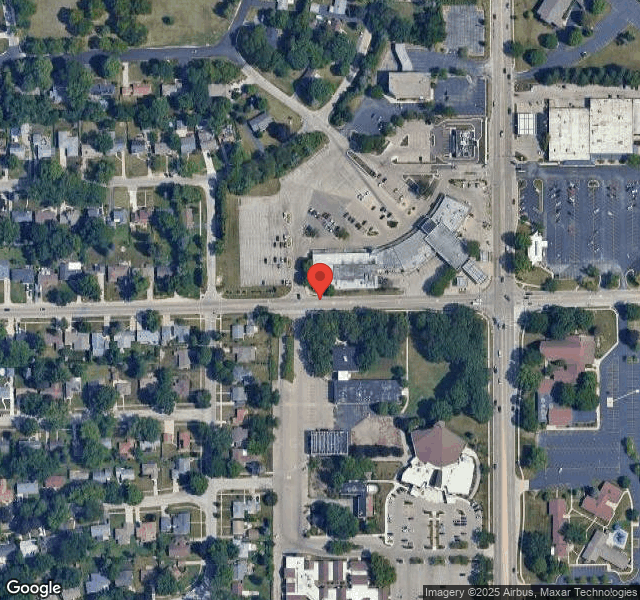
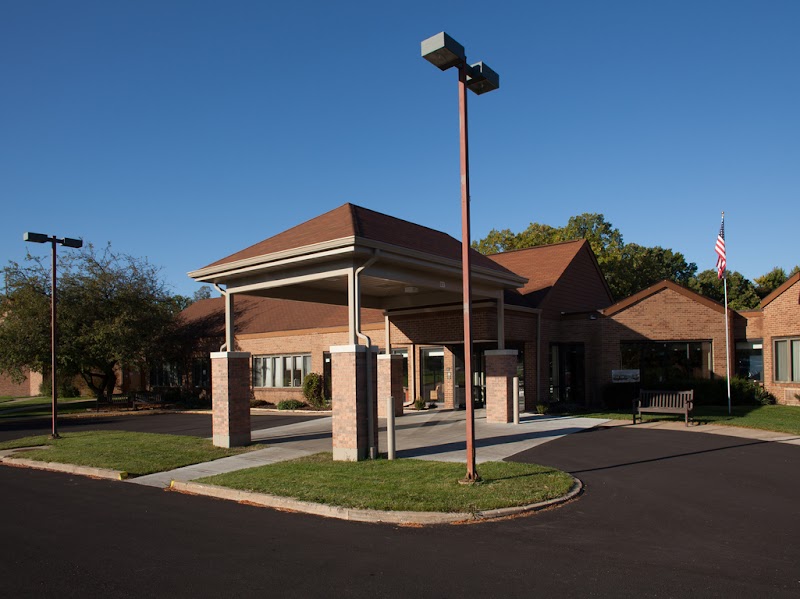
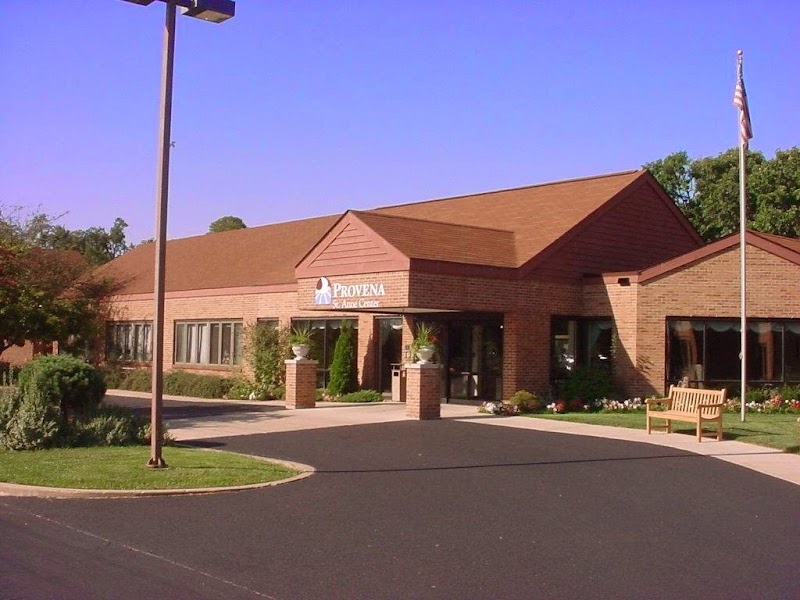
4405 HIGHCREST ROAD, ROCKFORD, IL 61107 (815) 229-1999
Non profit - Church related 179 Beds Independent Data: November 2025
Trust Grade
0/100
#658 of 665 in IL
Last Inspection: June 2025

Inspected within the last 6 months. Data reflects current conditions.

Overview

The Citadel at Saint Anne Place has received a Trust Grade of F, indicating significant concerns about the facility's care and operations. Ranking #658 out of 665 in Illinois, this placement puts them in the bottom half of all state facilities and last in Winnebago County. The situation is worsening, with issues increasing from 11 in 2024 to 12 in 2025. While staffing is a strength with a 4 out of 5 rating and better RN coverage than 86% of facilities, the overall quality is poor, reflected by a 1 out of 5 star rating and $110,673 in fines. Specific incidents of concern include a resident developing serious pressure ulcers without timely assessments and another resident suffering a fractured hip after not receiving assistance to reach their urinal, highlighting serious gaps in care.
Trust Score
F
0/100
In Illinois
#658/665
Bottom 2%
Safety Record
High Risk
Review needed
Inspections
Getting Worse
11 → 12 violations
Staff Stability
⚠ Watch
48% turnover. Above average. Higher turnover means staff may not know residents' routines.
Penalties
✓ Good
$110,673 in fines. Lower than most Illinois facilities. Relatively clean record.
Skilled Nurses
✓ Good
Each resident gets 62 minutes of Registered Nurse (RN) attention daily — more than 97% of Illinois nursing homes. RNs are the most trained staff who catch health problems before they become serious.
Violations
⚠ Watch
38 deficiencies on record. Higher than average. Multiple issues found across inspections.
★☆☆☆☆
1.0
Overall Rating
★★★★☆
4.0
Staff Levels
★☆☆☆☆
1.0
Care Quality
★★☆☆☆
2.0
Inspection Score
Stable
2024: 11 issues
2025: 12 issues

The Good

  • 4-Star Staffing Rating · Above-average nurse staffing levels
  • Full Sprinkler Coverage · Fire safety systems throughout facility
  • No fines on record

Facility shows strength in staffing levels, fire safety.

The Bad

1-Star Overall Rating

Below Illinois average (2.5)

Significant quality concerns identified by CMS

Staff Turnover: 48%

Near Illinois avg (46%)

Higher turnover may affect care consistency

Federal Fines: $110,673

Well above median ($33,413)

Significant penalties indicating serious issues

The Ugly 38 deficiencies on record

8 actual harm
Jun 2025 11 deficiencies 3 Harm
SERIOUS (G)

Actual Harm - a resident was hurt due to facility failures

Pressure Ulcer Prevention (Tag F0686)

A resident was harmed · This affected 1 resident

**NOTE- TERMS IN BRACKETS HAVE BEEN EDITED TO PROTECT CONFIDENTIALITY** 4. R117's face sheet documents she was admitted to the facility on [DATE] with multiple diagnoses including the presence of a st...

Read full inspector narrative →
**NOTE- TERMS IN BRACKETS HAVE BEEN EDITED TO PROTECT CONFIDENTIALITY** 4. R117's face sheet documents she was admitted to the facility on [DATE] with multiple diagnoses including the presence of a stage 3 pressure ulcer to the left buttock, a stage 4 pressure ulcer to the left lower back, stage 3 pressure ulcer to the sacral region, and stage 3 pressure ulcers to the right upper back and left lower back. On 6/4/25 at 10:25 AM, R117 was lying in her bed with an air mattress, and she was positioned onto her right side with pillows. The skin evaluation forms were requested and reviewed and show the first pressure ulcer assessments were completed on 5/8/25. On 6/5/25 at 9:24 AM, V10 RN, said when a resident is admitted with pressure injuries it is the responsibility of the admitting nurse to perform wound assessments and document them in the wound sheets. She said this should be done on the day of admission. After the initial assessment the resident is placed on wound rounds and will be seen by the wound physician and V6. She said the initial assessment should include the measurements of each wound, and the wound bed description. Based on observation, interview, and record review the facility failed to identify pressure injuries for a resident at risk for pressure ulcers, failed to identify pressure wounds prior to becoming advanced stages, failed to perform an initial wound assessment for a resident with a new pressure ulcer, failed to perform weekly assessments on pressure wounds, and failed to implement treatments upon identification of pressure wounds for 4 of 11 residents (R28, R3, R86, and R117) reviewed for pressure ulcers in the sample of 59. This failure resulted in R28's pressure wound not being treated for 26 days after it was identified and deteriorated to a stage 4 and resulted in R3's pressure wounds not being identified until they progressed to stage 3 and stage 4, and this failure also resulted in R86's sacral pressure wound not being assessed between December 2024 and March 2025 at which time it had progressed to a stage 4. The findings include: 1. R28's face sheet showed he was admitted to the facility 9/21/22 with diagnoses to include anemia, hypertension, atrial fibrillation, primary osteoarthritis of left knee, primary osteoarthritis of left hip, and pressure ulcer of right ankle. R28's care plan initiated 10/3/22 showed, Risk for impaired skin integrity due to incontinence and decreased functional mobility . Approaches: . Daily skin inspection; report any changes in skin or signs of possible skin breakdown or redness . Nutritional support based on assessment and MD (physician) orders . R28's care plan initiated 5/21/25 showed, Pressure Ulcers/Skin Prevention . [R28] has a stage 4 pressure wound to sacrum. Factor complicating wound healing include impaired mobility and occasional incontinence . R28's Dietary Note entered 3/27/25 by V4 (Registered Dietitian) showed, Patient with pressure wound to coccyx . To promote skin health, additionally this writer recommends Active Liquid Protein 60ml/daily. This will provide 200 calories and 30 grams of protein . R28's medical record showed no evidence of R28 receiving the Active Liquid Protein supplement. R28's Wound Assessment Report dated 2/15/25 showed, Date wound identified: 2/15/25 . Wound Location: sacrum; tunneling wound . Present Upon admission: No . Measurements: Length 0.5 cm, Width 0.6 cm, Depth 1.0 cm . Physician Notified: Yes Treatments: Pending treatment orders . This assessment showed no classification of R28's sacral wound. R28's medical record showed no evidence of wound assessments completed for his sacral wound between 2/15/25 and 3/13/25. R28's February 2025 eTAR (electronic Treatment Administration Record) showed no treatments for R28's wound. R28's March eTAR showed an order initiated on 3/13/25 for Hydrocolloid Dressing to Coccyx . for Open wound . (26 days after the wound was identified). R28's Skin Evaluation Form for his coccyx wound dated 3/13/25 showed, . Origin Date: 3/13/25 . Treatment: Hydrocolloid patch to coccyx . Tunneling wound to coccyx . Length 2.0 cm, Width 0.1 cm Depth 1.0 cm . Smooth undermining Sinus Tract: 1 cm . Resident noted to have reopened wound to his coccyx Area cleaned and covered with a hydrocolloid dressing until wound physician can assess. R28's Wound Physician Initial Wound Evaluation dated 3/25/25 showed, . Stage 4 Pressure Wound, Sacrum, Full Thickness . Duration: greater than 60 days . Wound size 2.0 x 0.4 x 0.9 . On 6/05/25 at 12:13 PM, V6 (Wound Care Nurse) said R28's coccyx wound was changed to a sacral wound after it was reassessed. V6 said the floor nurses do the initial wound assessments when the wound is identified on a skin evaluation form. V6 said the wound started out as MASD (moisture associated skin damage) and was real wet and nasty. V6 said the wound opened up then into pressure. V6 said she has a skin assessment for R28 dated 2/26/25 showing no existing skin issues. V6 then said she found a wound evaluation in the electronic record showing a wound assessment from 2/15/25 confirming the wound was present. V6 confirmed the assessment dated [DATE] was a wound assessment. V6 said no further assessments were documented until 3/13/25. V6 said she follows pressure wounds, vascular wounds, diabetic wounds, and arterial wounds but anything surgical, skin tears, MASD the floor nurses follow weekly. On 6/05/25 at 2:31 PM, V2 DON (Director of Nursing) said when the nurses think they see a pressure injury they are supposed to let the Wound Champion (V6) know. V6 would then go evaluate, put treatment orders in place and put him on the list to see V7. V2 said treatments should be initiated as soon as possible for the quickest possible healing for the resident. V2 said assessment of wounds is important to see if the wound has made progress, if the treatment is working, or if something needs to be changed. The nurses are supposed to be doing a skin assessment weekly and documenting the changes. On 6/05/25 at 8:50 AM, V7 (Wound Physician) said he has been seeing R28 for about a month now. V7 said he believes R28's wound was a stage 4 when he started following him. V7 said they should be discovering wounds when they are a stage 1 or 2.V7 said high protein supplements for wound healing and offloading are the two most important measures for pressure ulcer prevention and healing. 2. R3's face sheet showed she was admitted to the facility 10/10/24 with diagnoses to include muscle weakness, moderate protein calorie malnutrition, anemia, hypothyroidism, major depressive disorder, delusional disorder, anxiety disorder, and rheumatoid arthritis. R3's facility assessment dated [DATE] showed she has severe cognitive deficit and is dependent upon staff for all cares. R3's care plan initiated 5/23/25 showed, Pressure Ulcers/Skin Prevention . [R3] will maintain skin integrity without new skin related injuries over the next review period . Observe skin for redness and breakdown during routine care . Follow community skin care protocol . [R3] has impaired skin integrity, has a stage 4 pressure ulcer on sacrum, stage 3 pressure ulcer on left heel, stage 4 pressure ulcer on right heel, stage 4 pressure ulcer to right, upper, lateral shin .provide supplements to promote healing as ordered by physician . R3's medical record showed she was present in the facility from 10/10/24 through 2/23/25. R3's Wound Assessment Report dated 12/19/24 showed, . Date wound identified 12/19/24 . Wound Location: Right Heel; Left outer heel . Assessment Occasion: New Wound . Stage: Unstageable due to slough/eschar . Measurements Length 2.4 cm x Width 3.0 cm . Pain with wound/treatment: Yes . Pain Intensity: Moaning, grimacing . Wound Bed: Eschar 100%. R3's medical record showed she was present in the facility from 4/2/25 through 4/19/25. R3's Skin Evaluation Form dated 4/17/25 showed, . Origin Date: 4/17/25 . Category: Full Thickness Wound . Type: Pressure Injury . Description: Stage 3 Pressure Injury of Right Upper Lateral Shin . Cause: Pressure . Size: Length 1.5 cm x Width 0.3 cm x Depth 0.3 cm . R3's Wound Physician Evaluation dated 4/17/25 showed, . Stage 3 Pressure Wound of the Right, Upper, Lateral Shin, Full Thickness . 1.5 cm x 0.3 cm x 0.3 cm . Duration: greater than 2 days . On 6/05/25 at 12:26 PM, V6 (Wound Care Nurse) said a skin check is done on admission and they put all the same wounds in all over again. V6 said R3 had an immobilizer in place at one time to her right leg from some fractures. V6 said she is not sure where the pressure wound came from to R3's shin. V6 said it could have been the immobilizer but she couldn't say for sure. V6 said the wound was facility acquired on 4/17/25. V6 said she expects new areas to be brought to her through the wound module in addition to notification to the unit manager or herself. On 6/5/25 at 8:50 AM, V7 (Wound Physician) said R3's wound on her right shin was caused by her being in a cast or immobilizer after a fracture. V7 said when they took the immobilizer off there was that wound. V7 said if there was an immobilizer in place covering the leg he would not be looking under that during his rounds. The facility's policy and procedure with revision date of 07/2024 showed, Pressure Injury Assessment/Treatment . Purpose: The purpose of this procedure is to provide guidelines for a consistent method of identification of and for the initial care of identified pressure injuries, alterations in skin integrity, and the prevention of acquiring additional pressure injuries . General Guidelines . Skin risk and general skin assessment is to be completed upon admission and then weekly times 4 weeks. Basic skin assessment is to be completed on residents weekly and as needed . 3. R86's electronic face sheet printed on 6/5/25 showed R86 has diagnoses including but not limited to congestive heart failure, severe protein-calorie malnutrition, pressure ulcer of sacral region, stage 4, and pressure ulcer of left lower back, stage 2. R86's facility assessment dated [DATE] showed R86 has no cognitive impairment and has a stage 2 and stage 3 wound and is at risk for pressure ulcers. R86's wound assessment dated [DATE] showed, Coccyx: irritation/excoriation 1x1x0.5cm(centimeters). Area assessed and is getting better . R86's wound physician assessment dated [DATE] showed, Stage 4 pressure wound of the sacrum, full thickness. Present greater than 30 days, 2.9x1.1x0.7cm, 2.9cm undermining, light serous exudate, 10% slough 70% granulation. Surgical excisional debridement procedure performed during this visit to remove necrotic tissue and establish margins of viable tissue . No wound assessments were present from 12/27/24-3/18/25 for R86's sacral wound. R86's care plan dated 3/19/25 (after initial wound physician visit) showed, (R86) has a stage 4 pressure injury to his sacrum related to noncompliance with repositioning in bed and refusing care. He is also incontinent of bowel. Due to his pressure injury, he is at risk for further deterioration, infection, fluid loss, and pain .float heels in bed, reposition side to side every 1-2 hours . (No pressure ulcer care plan was present for R86 prior to this date) A review of R86's treatment records dated January 2025-February 2025 showed R86's sacral wound treatment was not performed 8 days during the month of January and 4 days during the month of February. R86's skin assessment dated [DATE] showed no new areas of skin concern besides his sacral wound. On 6/4/25 at 8:39AM, R86 stated, I've been sitting like this since 4:30AM and my feet and butt are killing me. (foot of bed elevated and feet turned outward with ankles lying flat and rubbing on bed). I have sores on my butt, I came with one of them, one I think I got here; I'm waiting for them to change my dressings. (R86's right ankle was red and appeared to have a sore on it) They give me a bed bath every few days and wash my whole body because I don't to take a shower. I supposed if there were any sores on my ankles they would have seen them. I can't have my feet elevated because it hurts too much, I've tried everything, and I can't stand it. I wish I had some foam or something on my ankles. the nurse was supposed to put my dressings on my ankle at 4am and she brought the dressings and then left and hasn't been back. On 6/4/25 at 9:24AM, V3 (Registered Nurse) stated, (R86) doesn't have any orders for bandages to his ankles, he has nothing on them so there isn't a reason for a bandage. At 1:10PM (V3) stated, I did look at his ankles and he does have an open area on his right ankle now. That should have been noted during his bed bath or skin checks, but it wasn't. I put some padded dressings on to keep them covered until the wound nurse & doctor see him tomorrow. On 6/5/25 at 8:49AM, V7 (wound physician) stated, Facility acquired wounds should not be identified as stage 3 or 4, they should be identified at stage 1 or 2. (R86) has a new wound to his right ankle that is a stage 2. This should have been identified by staff during cares and his heels should have been elevated. It was resolved for a few weeks and now it is back. I am assuming because his heels are not being elevated. There are different strategies the facility could be using for pressure reduction. Some patients don't like the boots, so you need to be mindful of that, just using a heel protector is not enough, he has a special pillow, and I don't know why they aren't using it, the heels up device is the best for him but he is noncompliant with certain things. He must have something instead of the feet resting on the mattress, plain and simple. I didn't know he was refusing the heels up device otherwise I would have tried something different for him. He is a high risk for skin breakdown due to his noncompliance and lower weight because he doesn't have a lot of fat on him. They should be keeping a very close eye on him. You should not have identified his new wound, that should have been identified by the staff. On 6/5/25 at 2:47PM, V6 (wound champion) stated, I checked in our old charting system and there are not any assessments for (R86's) wound from 12/27/24-3/18/25. It is the responsibility of the floor nurse's to ensure these wound assessments and treatments are being done.
SERIOUS (G) 📢 Someone Reported This

A family member, employee, or ombudsman was alarmed enough to file a formal complaint

Actual Harm - a resident was hurt due to facility failures

Accident Prevention (Tag F0689)

A resident was harmed · This affected 1 resident

**NOTE- TERMS IN BRACKETS HAVE BEEN EDITED TO PROTECT CONFIDENTIALITY** Based on observation, interview and record review the facility failed to assist a resident at risk for falls with reaching his u...

Read full inspector narrative →
**NOTE- TERMS IN BRACKETS HAVE BEEN EDITED TO PROTECT CONFIDENTIALITY** Based on observation, interview and record review the facility failed to assist a resident at risk for falls with reaching his urinal (R58), and safely transferring a resident with a mechanical lift (R23 and R2). This failure resulted in R58 falling and obtaining a fractured hip and wrist requiring surgery and hospital stay. The applies to three of eleven residents reviewed for safety in the sample of 59. The findings include: 1. The facility face sheet shows R58 was admitted to the facility with diagnoses to include adult failure to thrive, Type 2 Diabetes Mellitus, chronic kidney disease and low back pain. R58's facility assessment dated [DATE] shows he has no cognitive impairment and required maximum assist from staff for standing and toileting. On 6/04/25 at 2:18 PM, R58 said he was standing up at the foot of his bed reaching for his urinal. R58 said his legs gave out and he fell. R58 said he had his call light on because he could not reach his urinal. R58 said after half an hour he tried to do it himself and fell. R58 said he felt his hip break when he fell. R58 said he had to yell for help from the staff. R58 said because he is younger and has his wits about him the staff thinks he is independent. On 6/05/25 at 8:44 AM, V10 Registered Nurse (RN) said she was in the hall passing medications, when she heard someone yelling help me. V10 said she walked up and down the hall trying to find the source of the yelling and heard R58 yell out his room number. V10 said she found R58 on the floor at the foot of his bed near the bathroom door. V10 said she performed an assessment and felt due to the pain level, he probably had a fracture to his hip. V10 said R58's urinal was on the other side of the bed from where R58 had been sitting. V10 said she phoned 911 and R58 was sent to the hospital. On 6/5/25 at 11:22 AM, V9 Unit Manager said she investigates the falls for the facility, but if there is an injury, the Director of Nursing (DON) takes over the investigation. V9 said she did not talk to R58 about his fall, she just copied some papers for the DON. On 6/5/25 at 11:22 AM, V2 DON said during the facility investigation into the fall they determined R58 did not have his call light on. V2 said she believed R58 was in his wheelchair when the fall happened but wasn't sure. V2 said all falls are investigated to find the root cause of the fall so interventions can be put in place. The new interventions for R58 were to keep his personal items within his reach and provide R58 with a reacher/grabber tool. The facility investigation showed R58 was trying to grab something, stood up and fell. A reacher/grabber was to be given to R58 and all personal items needed to be within his reach. The nursing progress note dated 4/21/25 for R58 showed the nurse could hear someone yelling for help and she found R58 on the floor lying on his right side. The nurse (V10) wrote that R58 said he was moving around in his chair and slid out of the wheelchair. R58 said after the fall he rolled onto his other side. R58 said he broke his fall by putting down his left hand so he wouldn't hit his head. The note shows R58 was complaining of pain to his left hip. The fall risk assessment completed on admission dated 3/14/25 shows R58 was a moderate risk for falls. The hospital records dated 4/29/25 shows R58 arrived at the hospital on 4/21/25 with complaints of left hip pain after a fall at the facility. Diagnosis after x-rays showed an acute mildly displaced left hip fracture. Surgery to repair the hip was completed on 4/22/25. An x-ray of R58's left wrist was completed on 4/21/25 and a fracture to his left wrist was also found. The care plan for R58 dated 4/29/25 for falls shows the interventions to have personal items within his reach due to his risk for falls, repeated falls, weakness and malnutrition. The same care plan shows R58 required one staff assistance for toileting. 2. The facility face sheet for R2 shows she was admitted to the facility for diagnoses to include Type 2 Diabetes Mellitus, peripheral vascular disease, muscle weakness and stress incontinence. The facility assessment for R2 dated 5/24/25 shows R2 to be cognitively intact, requires a wheelchair for mobility. The same assessment shows R2 is dependent on staff for toileting. R2's care plan dated 2/25/25 shows a sit to stand mechanical lift is used for transfers. On 6/4/25 at 10:0 AM, R2 said she was being moved in the sit to stand lift from her bed to the bathroom one morning and she slipped out of the lift and fell on the floor. R2 said there were two staff in the room with her and she did not get hurt. R2 said her feet slid and now she is supposed to wear her tennis shoes when she gets up in the lift. R2 said she was wearing her house shoes when the fall happened. On 6/05/25 at 10:16 AM, V19 Certified Nursing Assistant (CNA) said she was pushing R2 in the sit to stand lift to the bathroom from her bed and R2 just slipped out. V19 said R2 was wearing house shoes and R2 never said anything to her before she fell, or after she fell. The written statement given by V19 after the fall shows R2 was strapped onto the lift and was being pushed into the bathroom, when R2 began telling the staff to bring the lift up higher. Then V19 wrote she began to see R2's weight begin to go to one side and R2 kept saying to raise the lift, but the lift was as high as it goes. (V19 denied this conversation with R2 when I spoke with her on the phone.) On 6/05/25 at 11:05 AM, V20 Licensed Practical Nurse (LPN) said she was called to R2's room after her fall. V20 saw R2 on the floor with her arms out of the stand slings and her feet over the leg of the lift. V20 said R2 told her she felt herself slipping and told the staff to raise her up. On 6/5/25 at 11:16 AM, V9 Unit Manager said R2 told her feet just slipped while she was being transported to the bathroom. V9 said R2 was wearing her house shoes. The nursing progress note dated 5/17/25 shows the CNA informed the nurse that R2 had fallen out of the sit to stand lift and was on the floor. The nurse (V20) wrote R2 was found on the floor with both legs in front of her body and on top the legs of the machine. R2 told the nurse she felt herself slipping. The care plan for R2 dated 5/14/25 for falls shows an intervention to ensure R2 has non-slip footwear at all times. A new intervention was added after the fall on 5/17/25 to ensure R2 has tennis shoes on before using the sit to stand lift. The fall risk assessment for R2 dated 2/16/25 shows a significant risk for falls. The facility fall investigation showed R2 felt herself slipping from the lift because her shoes did not have a good grip. The new intervention put in place was for R2 to wear tennis shoes when using the lift. 3. The facility face sheet shows R23 was admitted to the facility with diagnoses to include congestive heart failure, chronic obstructive pulmonary disease and cerebral infarction. The facility assessment dated [DATE] shows R23 to be cognitively intact and requires substantial assistance from staff for dressing and transfers. The care plan for R23 dated 5/15/25 shows he needs two assist with a gait belt for transfers. On 6/03/25 1:04 PM, R23 was observed with a black left eye. R23 said he hit by the lift when transferring out of bed. At 2:01 PM that same day, R23 said he was connected to the sit to stand lift and as he was being lifted up, he reached for a shirt that was hanging on the lift and as he was falling forward, he hit his head on the bar of the lift. On 6/5/25 at 11:08 AM, V20 LPN, said she was called to the room after being told R23 fell. V20 said she found R23 on his back with his legs crossed. V20 said the CNA told her he was not in the lift yet, but he fell when he reached forward to grab his shirt off the lift. V20 said the CNA said she left R23 sitting on the edge of the bed while she went to his closet to get him some clothes and she saw him lean forward and fall. V20 said R23 had a cut to his left eyebrow area that was beginning to swell, a scrape to his left knee and left ankle. On 6/5/25 at 11:19 AM, V2 DON said she had not interviewed R23 about his fall and was not aware R23 was saying he was already in the lift when he fell. V2 said she was told R23 was reaching for clothes while sitting on the edge of the bed and he fell forward off the bed. The facility investigation shows R23 was being assisted by staff with his morning routine, he reached for his shirt and fell to the floor. A written statement written by the CNA involved from the initial facility investigation shows R23 was sitting on the edge of the bed and the CNA V21 was at the closet getting clothes out, and the resident leaned forward and fell hitting his eye on the lift. The intervention added was to ensure the residents clothes are within his reach when sitting him up for AM care. The facility policy for fall prevention with a revision date of 7/2023 shows to provide an environment that is free from accident hazards, over which there is control, and provide supervision and intervention to residents to prevent avoidable accidents.
SERIOUS (G)

Actual Harm - a resident was hurt due to facility failures

Deficiency F0692 (Tag F0692)

A resident was harmed · This affected 1 resident

**NOTE- TERMS IN BRACKETS HAVE BEEN EDITED TO PROTECT CONFIDENTIALITY** Based on observation, interview, and record review the facility failed to ensure accurate weights were obtained, failed to ensur...

Read full inspector narrative →
**NOTE- TERMS IN BRACKETS HAVE BEEN EDITED TO PROTECT CONFIDENTIALITY** Based on observation, interview, and record review the facility failed to ensure accurate weights were obtained, failed to ensure significant weight loss was identified and reported to the dietitian, and failed to implement dietitian recommendations for 4 of 6 residents (R28, R3, R55, R41) reviewed for nutrition in the sample of 59. This failure resulted in R28 experiencing significant weight loss without the Registered Dietitian being notified. The findings include: 1. R28's face sheet showed he was admitted to the facility 9/21/22 with diagnoses to include anemia, hypertension, atrial fibrillation, primary osteoarthritis of left knee, primary osteoarthritis of left hip, and pressure ulcer of right ankle. R28's care plan initiated 10/3/22 showed, Risk for impaired skin integrity due to incontinence and decreased functional mobility . Approaches: . Nutritional support based on assessment and MD (physician) orders . R28's care plan initiated 9/28/22 showed, [R28] has increased potential for weight changes related to diuretic use . Goal and Target . Intakes to meet needs, Weight remain without significant changes . Medications per MD order . weigh resident per facility protocol. Record results and report any significant change to physician and dietitian . R28's weights were documented as follows: 5/22/25 - 226.4 lbs; 5/23/25 - 227.6 lbs; 5/24/25 - 226.7 lbs; 5/28/25 - 214.0 lbs; 5/29/25 - 214.0. These weight changes represented a significant 5.6 % weight loss from 5/22/25 through 5/28/25. R28's Nutrition Note entered 3/27/25 by V4 showed, Patient with pressure wound to coccyx . additionally, this writer recommends Active Liquid Protein 60 ml/daily. This will provide 200 kcal and 30 grams protein. On 6/05/25 at 9:56 AM, V4 RD (Registered Dietitian) said, They didn't notify me of that change, he is a monthly weight, so we obtain his weight the first shower of the month. I question the weights. It was as of yesterday that I was notified of his weight being 216. When I visibly look at him his chest and abdomen area does seem smaller. I think the readmission weight may have been incorrect because he was in the hospital . He comes out to the dining room to eat and when he first came back he wasn't wanting to eat. He used to eat 100% of his meals and he is telling me he isn't wanting to eat as much now. When they enter a weight, if it is significantly off I think it sends them a notification but I think there may be an issue with how it calculates the changes as 30 day, 60 day, 90 day changes. The nurses monitor the weights and let me know if there are changes. My hope would be after they enter the weight, it would be good practice to then look at their weight history to see if they have had a significant weight change . On 6/05/25 02:29 PM V2 DON (Director of Nursing) said the RD's dietary recommendations would be handed off to the unit manager or the nurse on the floor. The recommendations would be communicated to the Nurse Practitioner and they would give it as order. 2. R3's facesheet showed she was admitted to the facility 10/10/24 with diagnoses to include muscle weakness, moderate protein calorie malnutrition, anemia, hypothyroidism, major depressive disorder, delusional disorder, anxiety disorder, and rheumatoid arthritis. R3's facility assessment dated [DATE] showed she has severe cognitive deficit and is dependent upon staff for all cares. R3's care plan initiated 5/23/25 showed, Nutritional Status; [R3] has increased nutrient needs related to need for healing as evidenced by history of stage 4 pressure wound to sacrum. Also as increased potential for pressure wounds related to limited mobility. [R3] will have nutritional needs met and will not have an unplanned significant weight change over the next review period . R3's Nutrition Risk assessment dated [DATE] showed, . Current weight: 120 pounds . Nutrition: Increased nutrient needs related to need for healing as evidenced by presence of multiple pressure wounds . Interventions: Diet as ordered . Continued 1:1 assistance at meals. Goals: . weight remain stable. R3's medical record shows the last weight obtained for R3 was 120 pounds on 5/10/25. R3's medical record showed she was discharged to the acute care hospital 5/20/25 and returned as a readmission to the facility 5/23/25. R3's record contained no weights between her return to the facility 5/23/25 and 6/5/25. On 6/05/25 at 10:32 AM, V4 RD (Registered Dietitian) said R3 came back from the hospital 5/23/25 and no weights have been done since her readmission. V4 said R3's record showed a significant weight loss prior to her hospitalization but she feels that the weight that had been entered on 4/2/25 was not accurate. V4 said if a reweigh was done and a weight confirmed her record would show confirmed next to it. V4 said R3's 127 lb weight was not confirmed but R3 usually stays around 120 lbs. V4 said upon admission or readmission the facility policy is to get a weight every day for 3 days, then once weekly for 4 weeks, and if stable they would start doing monthly weights to monitor. V4 said she would have expected them to get readmission weights. V4 reviewed R3's record and said weekly weights were scheduled on the eMAR (electronic Medication Administration Record) but none of them were signed off. V4 said it is important to get readmission weights so she can assess R3 for significant loss. V4 said if she doesn't have those weights she has nothing to compare them to. On 6/05/25 at 2:21 PM, V2 DON (Director of Nursing) said weights are done with the first shower of the month, so they are all in the system by the 7th. V2 said the CNAs are getting the weights and entering them in the system and if they don't enter them sometimes the nurses do. V2 said if there was a significant change the system should flag it and it asks them if they really want to enter it. V2 said she does not know how the Registered Dietitian gets notified of significant weight changes. V2 said V4 (Registered Dietitian) should be looking at the weights at least every month. V2 said if there is anyone that has significant weight loss V4 would be documenting it and talking about it in their meetings. V2 said V4 should be able to print out all the residents weights every month. If there is a reweigh needed V4 will ask us for that. V2 said V4 is the expert with weight loss, she is the one who can give us the input on recommendations. V2 said it is V4's expertise the facility relies on for recommendations for getting supplements in place if needed. The facility's policy and procedure with approval date 06/2025 showed, Weight Monitoring . It is the policy of [the facility] that appropriate nutritional care shall be provided to residents who have a significant weight change. A significant weight change is identified as a weight loss or gain of 5.5% in 30 days, 7.5% in 60 days, or 10% in 180 days. Each resident should be weighed daily for the first three days of admission, weekly for the first four weeks, and monthly thereafter . Residents with a weight change of 5 lbs or greater should be reweighed to determine an accurate weight. The accurate weight should be entered in the resident's medical record . The RD should make recommendations for nutritional interventions based on the information obtained from the weekly Resident At Risk Review huddle meetings. RD recommendations should be reviewed and initiated by nursing associates . A nursing or nutrition associate should notify the health care provider of any significant weight change that is unexplainable or in which the RD has requested a nutritional intervention . 4. R55's Face Sheet showed she was admitted to the facility on [DATE] with diagnoses to include Alzheimer's (dementia), a Stage 4 pressure ulcer, and a hip fracture. R55's active order set showed an order for monthly weights, which was ordered on admission. R55's electronic health record (EHR) showed she weighed 154.6 pounds on 2/11/25; 142.8 pounds on 3/23/25; and 132.4 pounds on 4/4/25. R55's EHR showed this was a weight loss of 14.3 percent. R55's electronic health record showed no weight documented following the 4/4/25 weight as of 6/3/25 at 4:00 PM. R55's 5/21/25 progress note from 12:58 PM (Authored by V4, Registered Dietitian) showed: Late Entry for month of May. Resident weight for month of May not documented [in] EMR (electronic medical record). Will assess weight trend when June weight measurement received . On 6/04/25 at 1:44 PM, V15, Registered Nurse, stated monthly weights are done for all residents with the first shower of the month. V15 stated the CNAs (Certified Nursing Assistants) will notify her of the resident's weight, and she will enter the weight in the electronic health record. V15 stated the facility does not document weights in any other location other than the electronic health record. V15 stated R55 does not refuse care. On 6/04/25 at 1:59 PM, V16, Certified Nursing Assistant (CNA), stated CNAs measure residents' weights on their first shower of the month. V16 said the CNA will notify the nurse of the weight. V16 said CNAs can also enter weights into the EHR. V16 said she is R55's CNA, and R55 does not refuse care. On 6/04/25 at 2:21 PM, V4 stated R55 should have been weighed in May 2025 when she had her first shower of the month. V18 said she had noticed the missing weight in May, and per her normal practice, she would have sent a list of residents with either missing weights or weights that needed to be redone. V18 said monthly weights are important so she knows if her interventions are working and if they need to be adjusted to the unit manager. (The facility was requested to weigh R55.) On 6/04/25 at 03:42 PM, V2, Director of Nursing, stated R55's weight was 150 pounds. The facility's Weight Monitoring policy (last approved 6/2025) showed: Each resident should be weighed daily for the first three days of admission, weekly for the first four weeks, and monthly thereafter . 3. R41's electronic face sheet printed on 6/5/25 showed R41 has diagnoses including but not limited to epilepsy, acute kidney failure, Bipolar Disorder, Alzheimer's Disease, and type 2 diabetes. R41's facility assessment dated [DATE] showed R41 has experienced a weight loss and is not on a physician-prescribed weight-loss regimen. R41's care plan dated 2/25/25 showed, (R41) has increased potential for weight changes related to fluctuating intakes. Has a history of both significant weight gains and losses .(R41) is offered diet and oral nutritional supplement as prescribed, see physician order sheet. R41's Nutrition Risk assessment dated [DATE] showed, Comments/Recommendations: Interventions: Diet as ordered. Recommend Ensure 240ml once daily. This will provide 350kcal and 20g protein . R41's physician's orders for May 2025 and June 2025 showed no orders for R41 to receive a nutritional supplement. On 6/5/25 at 9:40AM, V4 (Registered Dietician) stated, The last time I reviewed (R41's) nutritional status was on May 12th and her weight had stabilized at that point since her previous significant weight loss. She is a picky eater, and I didn't want her weight to go down at all if possible, so I recommended a daily nutritional supplement for her. My recommendations go to the physician or nurse practitioner for each resident to approve. I put the recommendations in their box so they can sign off on it and then nursing enters the orders. I don't see the order for her supplement in her record though so I'm not sure what happened. If there isn't an order, then she won't receive it. The facility's policy titled, Weight Monitoring dated 01/2023 showed, It is the policy of (facility) that appropriate nutritional care shall be provided to residents who have a significant weight change .E. The RD (Registered Dietician) should make recommendations for nutritional interventions based on the information obtained from the weekly Resident at Risk Review huddle meetings. RD recommendations should be reviewed and initiated by nursing associates .
CONCERN (D)

Potential for Harm - no one hurt, but risky conditions existed

Resident Rights (Tag F0550)

Could have caused harm · This affected 1 resident

**NOTE- TERMS IN BRACKETS HAVE BEEN EDITED TO PROTECT CONFIDENTIALITY** Based on observation, interview and record review the facility failed to ensure residents dependant on staff for cares was treat...

Read full inspector narrative →
**NOTE- TERMS IN BRACKETS HAVE BEEN EDITED TO PROTECT CONFIDENTIALITY** Based on observation, interview and record review the facility failed to ensure residents dependant on staff for cares was treated in a dignified manner, and failed to care for a female resident with facial hair for 3 of 3 residents (R232, R332, R54) reviewed for dignity in sample of 59. The findings include: 1. R232's face sheet documents she was admitted to the facility on [DATE] with multiple diagnoses including a chronic non-pressure wound to her right lower leg. The treatment record shows a skin tear to the right hand with a dressing change three times a week, and a surgical incision to the left upper arm with a daily dressing change. All treatments are scheduled for the night shift. R232's admission assessment and care screening of 5/28/25 shows her to be cognitively intact. The same assessment shows she requires supervision or touch assistance with transfers to the toilet and sit to stand movements. On 6/05/25 at 11:48 AM, R232 said he biggest concerns was the nurses doing dressing changes in the middle of the night. She said her pain medication was scheduled every 8 hours around her therapy and it was given at 2-2:30 AM. But they do not just bring in the pain medication, they turn on the lights and do the bandage changes too. She said all she needs is the pain medication. The bandages should be changed at 9:30 - 10:00 PM, before going to sleep. She said it takes about 20 minutes to get the whole procedure done, then have to try and get back to sleep. R232 also said the waiting time for the call lights seems to be at least 30 minutes. They seem to be short staffed, but she needed help to get up to the bathroom. On 6/5/25 at 9:25 AM, V10 Registered Nurse (RN) said all of the dressing changes are scheduled on the night shift. But the staff should not be just going in to wake up residents just for a dressing change. She said it should be done closer to early morning. She said she tries not to wake anyone up for anything except a scheduled medication. On 6/05/25 at 9:05 AM, R232 said the call light times were not any better. She put on her call light at 5:00 AM today, and someone finally came in at 5:50 AM. When the aide came in, she stated she had 22 other rooms to try and cover. R232 said she had to use the bathroom so bad she started dribbling, and needed to get cleaned up. She reported having a care conference on 6/4/25 and she voiced her complaints with the call lights not being answered and the dressing changes getting done in the middle of the night. She said the issue was to be resolved, then at midnight last night the nurse came in and turned the lights on and changed the bandages. R232 was sitting up in her wheelchair visibly upset with her situation. On 6/5/25 at 10:53 AM, V8 Social Service Assistant said she attended R232's care plan meeting on 6/4/25, and recalls the concens with call lights and the timing of her dressing changes. She said those issues should have been addressed. The 11/2024 facility policy for resident rights documents 2. Residents are entitled to exercise their personal and legal rights and privileges to the fullest extent possible. 3. Our ministry will make every effort to assist the resident in exercising his/her rights and to assure that the resident is always treated with respect, kindness and dignity. 2. R332's face sheet showed she was admitted to the facility 5/29/25 with diagnoses to hyperkalemia, hyperlipidemia, sleep apnea, essential hypertension, and muscle weakness. R332's care plan initiated 5/29/25 showed, [R332] needs assistance with ADL (activities of daily living) care . [R332] will have daily care needs met . On 6/03/25 at 11:09 AM, R332 said she had made a complaint to a staff member. R332 said her main problem is that her call light is not answered timely and often takes an hour or more. R332 said one day she was in her room and had her call light for a long time. R332 said two aides walked past her room pushing someone in a wheelchair. R332 said she called out to the hall and told the aides my call light is on. R332 said the aides responded to her by saying Yeah, we can't help you and they walked away. R332 said she felt like a non-person because she depends on the aides. R332 said no one was checking on her. On 6/05/25 at 2:18 PM, V2 DON (Director of Nursing) said it is not appropriate to tell residents they can not help them. V2 said she would have at least expected the staff to see what she needed and communicate with her regarding when they will be back to assist her. The facility's policy and procedure with last approval date of 01/2024 showed, Quality of Life - Dignity . Policy Statement: Each resident shall be cared for in a manner that promotes and enhances quality of life, dignity, respect, and individuality. Policy Interpretation and Implementation Residents shall be treated with dignity and respect at all times . Treated with dignity means the resident will be assisted in maintaining and enhancing his or her self-esteem and self worth . 3. R54's electronic face sheet printed on 6/5/25 showed R54 has diagnoses including but not limited to generalized anxiety disorder, depression, hypertensive chronic kidney disease, and urinary tract infection. R54's facility assessment showed R54 is dependent on staff for personal hygiene. On 6/3/25, R54 had 2 dime-sized patches of facial hair on her chin. The hair was dark and curling under her chin. R54 was unable to keep on task with questions regarding her facial hair during interview. On 6/4/25 at 11:28AM, V26 (R54's daughter) stated, My Mom would be mortified if she had all that chin hair. She always kept it shaved and definitely wouldn't want anyone seeing her with patches of chin hair. I don't know why she would even have that because she has an electric razor in her room that I bought her so all they have to do is give it to her and have her do it by herself. On 6/5/25 at 2:25PM, V2 (Director of Nursing) stated, No female resident should have long patches of chin hair on their face unless that is their preference. (R54) may not have had hers shaved because she refuses showers and that would be the time when staff deal with facial hair. They could do it in between the shower days though if they see that it needs to be addressed. I agree this is a dignity issue because if her daughter says she wouldn't like it then we need to be sure we are addressing it. The facility's policy titled, Quality of Life-Dignity dated 12/2021 showed, Each resident shall be cared for in a manner that promotes and enhances quality of life, dignity, respect, and individuality. A. Residents shall be treated with dignity and respect at all times. B. Treated with Dignity means the resident will be assisted in maintaining and enhancing his or her self-esteem and self-worth .
CONCERN (D)

Potential for Harm - no one hurt, but risky conditions existed

Quality of Care (Tag F0684)

Could have caused harm · This affected 1 resident

**NOTE- TERMS IN BRACKETS HAVE BEEN EDITED TO PROTECT CONFIDENTIALITY** The facility failed to assess and obtain treatment orders for a resident (R86) with two skin tears. This applies to 1 of 2 resid...

Read full inspector narrative →
**NOTE- TERMS IN BRACKETS HAVE BEEN EDITED TO PROTECT CONFIDENTIALITY** The facility failed to assess and obtain treatment orders for a resident (R86) with two skin tears. This applies to 1 of 2 residents reviewed for non-pressure skin conditions in the sample of 59. The findings include: R86's electronic face sheet printed on 6/5/25 showed R86 has diagnoses including but not limited to congestive heart failure, severe protein-calorie malnutrition, pressure ulcer of sacral region, stage 4, and pressure ulcer of left lower back, stage 2. R86's facility assessment dated [DATE] showed R86 has no cognitive impairment. R86's May 2025 and June 2025 physician's orders showed no orders for R86's skin tears to his left arm. On 6/4/25 at 8:39AM, R86 had 2 patches on his left arm, one on his lower arm and one on his upper arm. R86 stated, I have been waiting for them to change my dressings. I think it happened about a week ago when they were in here taking care of me. I don't really remember the exact scenario but there are 2 skin tears on my arm. On 6/5/25 at 1:17PM V3 (Registered Nurse) stated When a resident obtains a skin tear, we immediately clean the area, assess it, and typically we will put steri-strips on it and then notify the physician and obtain treatment orders. Once the orders are received, we enter them into the resident's orders, and it would go on their treatment record so we can be sure we treat the area until it is healed. (R86) has 2 dressings on his left arm where he has skin tears. I have no idea what's under those dressings or how they even look because he hasn't let us take them off. There are no orders in his chart for any treatment and there is no assessment that I can see so I'm not sure how big they are. On 6/5/25 at 1:22PM, V2 (Director of Nursing) stated, When a resident obtains a skin tear the nurse will clean and dress the wound, perform an assessment, and enter it into the computer system. Once that is completed, they will notify the resident's physician for treatment orders and enter it into the orders so that the nurses can continue treatment. There would be no reason not to do any of this because it is a skin alteration which is something we track until it is resolved. If (R86's) wounds are not treated, they could worsen or become infected. The facility's policy titled, Procedure: Skin Tears-Abrasions and Minor Breaks, Care of dated 01/2024 showed The purpose of this procedure is to guide the prevention and treatment of abrasions, skin tears, and minor breaks in the skin .A. Obtain a physician's order as needed. Document physician notification in medical record .D. Generate Non-Pressure form and complete .A .A skin tear is the disruption of epidermis resulting in lifting or friction of the skin .O. Assess the wound and surrounding skin for edema, redness, drainage, tissue healing progress, and wound stage .
CONCERN (D)

Potential for Harm - no one hurt, but risky conditions existed

Respiratory Care (Tag F0695)

Could have caused harm · This affected 1 resident

Based on observation, interview, and record review the facility failed to ensure orders were in place for a resident with a CPAP (Continuous Positive Airway Pressure) and failed to properly clean and ...

Read full inspector narrative →
Based on observation, interview, and record review the facility failed to ensure orders were in place for a resident with a CPAP (Continuous Positive Airway Pressure) and failed to properly clean and store CPAP equipment for 1 of residents (R108) reviewed for respiratory services in the sample of 59. The findings include: R108's face sheet showed he was admitted to the facility 5/15/25 with diagnoses to include pulmonary embolism, cough, obstructive sleep apnea, and muscle weakness. R108's Physician Order sheet for June 2025 which was printed 6/5/25 showed no orders for R108's CPAP machine. R108's June 2025 eTAR (electronic Treatment Administration Record) showed new treatments added 6/4/25 for CPAP - Place CPAP on at HS (hour of sleep) and remove in the AM (morning) for sleep apnea; Cleanse CPAP - Every day clean CPAP mask and tubing with soap and water and dry mask and tubing every morning. There was no evidence of R108's CPAP being cared for from 5/15/25 through 6/4/25. R108's care plan initiated 5/23/25 showed, Pulmonary . [R108] has potential for SOB (shortness of breath) and/or respiratory complications related to diagnosis of pulmonary embolism and obstructive sleep apnea . Oxygen/CPAP . Currently uses as need supplemental oxygen related to diagnosis of obstructive sleep apnea. Oxygen therapy puts him at risk for dry mouth, skin pressure points, poor stamina, lethargy, insufficient fluids, and anxiety . R108's complete care plan was reviewed and showed no CPAP settings or CPAP care. On 6/3/25 at 10:53 AM, R108's CPAP was on the bedside table. A sign was placed nearby that showed to put water in the CPAP machine. The CPAP mask was lying on the bedside table and was not bagged. On 6/04/25 at 1:39 PM, R108 said the staff help him with his putting his CPAP on at night. R108 said, They usually just leave it there on the table but I noticed yesterday, they put it in a bag and today too. On 6/05/25 at 2:16 PM, V2 DON (Director of Nursing) said if a resident has a CPAP machine, the orders should be entered upon admission. V2 said she would need to check their policy for her expectation for cleaning and storage of CPAP equipment but that she would expect the staff to follow the facility's policy and procedures. The facility's policy and procedure with last approved date of 09/2023 showed, . Procedure: CPAP/BiPAP Support . Purpose: A. To provide the spontaneously breathing resident with continuous positive airway pressure with or without supplemental oxygen . Preparation: . C. Review the physician's order to determine the oxygen concentration and flow, and the PEEP pressure (CPAP) for the machine . General Guidelines for Cleaning . D. Machine cleaning: Wipe machine with disinfecting wipes or wipe with warm, soapy water, and then rinse at least once a week and as needed F. Filter cleaning; 1. Rinse washable filter under running water once a week to remove dust and debris .G. Masks, nasal pillows and tubing: Clean daily by placing warm, soapy water and soaking/agitating for 5 minutes. Rinse with warm water and allow it to air dry between uses .
CONCERN (D)

Potential for Harm - no one hurt, but risky conditions existed

Deficiency F0725 (Tag F0725)

Could have caused harm · This affected 1 resident

**NOTE- TERMS IN BRACKETS HAVE BEEN EDITED TO PROTECT CONFIDENTIALITY** Based on observation, interview and record review the facility failed to answer the residents call light in a timely manner. Thi...

Read full inspector narrative →
**NOTE- TERMS IN BRACKETS HAVE BEEN EDITED TO PROTECT CONFIDENTIALITY** Based on observation, interview and record review the facility failed to answer the residents call light in a timely manner. This applies to three of three residents (R58, R99, R332) in the sample of 59 reviewed for call lights. The findings include: 1. The facility face sheet shows R58 was admitted to the facility with diagnoses to include adult failure to thrive, Type 2 Diabetes Mellitus, chronic kidney disease and low back pain. R58's facility assessment dated [DATE] shows he has no cognitive impairment and required maximum assist from staff for standing and toileting. On 6/04/25 at 2:18 PM, R58 said he was standing up at the foot of his bed reaching for his urinal. R58 said his legs gave out and he fell. R58 said he had his call light on because he could not reach his urinal. R58 said after half an hour he tried to do it himself and fell. R58 said he felt his hip break when he fell. R58 said he had to yell for help from the staff. R58 said because he is younger and has his wits about him the staff thinks he is independent. 2. The facility face sheet for R99 shows she was admitted to the facility with diagnoses to include Bell's Palsy, Atrial fibrillation and paralysis to her left side. The facility Brief Interview for Mental Status (BIMS) shows her to cognitively intact. On 6/04/25 at 1:44 PM, R99 said the call lights take a long time to be answered. R99 said it was an hour before she got changed this morning, and it takes a long time, almost all the time for the staff to answer her call light. 3. The facility face sheet for R332 shows she was admitted to the facility with diagnoses to include muscle weakness, chronic obstructive pulmonary disease and type 2 Diabetes Mellitus. The BIMS assessment dated [DATE] shows her to cognitively intact. On 6/03/25 at 11:09 AM, R332 said, getting the staff to answer her call light has been a big problem for her. R332 said, I can turn this on and wait for an hour. I generally walk myself to the bathroom but when I get in there, get the pull ups off and then I can't get a new one back on. One time 2 aides walked past pushing someone while I had my call light on, it had been on a long time, and they said oh yeah we can't help you. That made me feel like a nonperson, no one was checking on me, a lot of times its something simple I needed. On 6/05/25 at 2:18 PM, V2 DON (Director of Nursing) said, the facility has an old call light system and we don't have a way to monitor. I would have at least expected the staff to see what a resident needed, and communicate with them regarding when they will be back. No facility policy was provided by the facility regarding call lights.
CONCERN (D)

Potential for Harm - no one hurt, but risky conditions existed

Infection Control (Tag F0880)

Could have caused harm · This affected 1 resident

Based on observation, interview, and record review, the facility failed to wear the appropriate personal protective equipment (PPE) while providing wound care. This applies to 1 of 8 residents (R34) r...

Read full inspector narrative →
Based on observation, interview, and record review, the facility failed to wear the appropriate personal protective equipment (PPE) while providing wound care. This applies to 1 of 8 residents (R34) reviewed for infection control in the sample of 59. The findings include: R34's Face Sheet showed an original admission date of 11/8/23 with a diagnosis of a Stage 4 pressure ulcer. On 6/04/25 at 9:11 AM, R34's door had signage stating she was on Enhanced Barrier Precautions, and a gown and gloves were required for wound care. V17 provided R34's daily wound care for her Stage 4 pressure wound above her buttocks. V17 only wore gloves for the entirety of the wound care; he did not wear a gown. On 6/04/25 at 3:29 PM, V18, the Infection Preventionist, stated residents with chronic wounds, which have a dressing, are required to be on enhanced barrier precautions. V18 stated staff should wear gowns and gloves when providing wound care to prevent wound infections. V18 stated V17 should have worn a gown while providing R34's wound care. The facility's Enhanced Barrier Precautions policy (Last approved 5/2024) showed, Enhance Barrier Precautions (EBP) are an infection control intervention designed to reduce transmission of resistant organisms that employs targeted gown and glove use during high contact resident care activities when contact precautions do not otherwise apply. EBP are indication for residents with any of the following: Wounds or indwelling medical devices .
CONCERN (E)

Potential for Harm - no one hurt, but risky conditions existed

Pharmacy Services (Tag F0755)

Could have caused harm · This affected multiple residents

**NOTE- TERMS IN BRACKETS HAVE BEEN EDITED TO PROTECT CONFIDENTIALITY** Based on interview and record review, the facility failed to correctly transcribe a physician's order for 2 residents (R60,R129)...

Read full inspector narrative →
**NOTE- TERMS IN BRACKETS HAVE BEEN EDITED TO PROTECT CONFIDENTIALITY** Based on interview and record review, the facility failed to correctly transcribe a physician's order for 2 residents (R60,R129), failed to ensure the correct dose of a medication was given for 1 resident (R90), failed to ensure the correct medications were given for 1 resident (R25). These failures apply to 4 of 4 residents outside of the sample reviewed for medication errors. The findings include: 1) R25's electronic face sheet printed on 6/5/25 showed R25 has diagnoses including but not limited to cerebral infarction, insomnia, dementia with behaviors, anxiety disorder, and major depressive disorder. The facility's document titled, Safety Event Entry dated 4/9/25 showed, (R25) given incorrect medications including cetirizine 10mg, gabapentin 100mg, quetiapine 50mg, and memantine 5mg. Error noted by another RN (Registered Nurse) as I was exiting the room. Nurse Practitioner notified and advised to monitor resident .resident has no change from baseline . 2) R60's electronic face sheet printed on 6/5/25 showed R60 has diagnoses including but not limited to liver cell carcinoma, multiple sclerosis, chronic kidney disease, chronic viral hepatitis C, and hypertension. The facility's document titled, Safety Event Entry dated 5/21/25 showed, Resident was admitted to the facility with antibiotic order for a total of 5 days and antibiotic continued to be administered for 7 more days .medication stop date was never entered by the nurse . 3) R90's electronic face sheet printed on 6/5/25 showed R90 has diagnoses including but not limited to weakness and repeated fall. R90's physician's orders from her original admission on [DATE] showed, Budesonide DR (Delayed Release)-ER (Extended Release) take 9mg by mouth every day. The facility's document titled, Safety Event Entry dated 5/14/25 showed, Resident has had diarrhea since admission. She has a history of chronic bowel disease and has been on Budesonide ER tab 9mg daily at home and also was ordered upon admission to (facility) .Gastroenterologist confirmed via fax that she should be on 9mg Budesonide daily. After further investigation, it was noted that the table dose from pharmacy was 3mg not 9mg . 4) R129's electronic face sheet printed on 6/5/25 showed R129 has diagnoses including but not limited to urinary tract infection, hypertension, carotid arterial disease, and chronic obstructive pulmonary disease. The facility's document titled, Safety Event Entry dated 4/9/25 showed, (R129) was given orders for a prednisone taper and the orders were not entered correctly with stop dates and the nurse continued to give the medication. It should have been stopped on 3/25/25 and was given until today when I discontinued the order on 4/9/25. On 6/5/25 at 2:20PM, V2 (Director of Nursing) stated, We have had several medication errors over the past 3 months. I think it has to do with agency staff not knowing the residents and not knowing our admission process. We now have our admission nurse's double checking the orders to ensure they are transcribed and entered correctly so hopefully that will help cut down on the errors. These errors never should have happened but thankfully there were no significant outcomes to these residents.
CONCERN (E)

Potential for Harm - no one hurt, but risky conditions existed

Deficiency F0805 (Tag F0805)

Could have caused harm · This affected multiple residents

Based on observation, interview, and record review, the facility failed to puree peas to a smooth consistency. This applies to 6 of 6 residents (R7, R12, R35, R48, R103, R330) reviewed for altered die...

Read full inspector narrative →
Based on observation, interview, and record review, the facility failed to puree peas to a smooth consistency. This applies to 6 of 6 residents (R7, R12, R35, R48, R103, R330) reviewed for altered diets in the sample of 59. The findings include: The 6/3/25 facility-provided list of residents receiving pureed diets showed that R7, R12, R35, R48, R103, and R330 were receiving pureed foods. On 6/3/25 at 11:05 AM, V14, Cook, began the puree process for the residents' peas. On 6/3/25 at 11:13 AM, V14 completed the puree process and placed the pureed peas into a metal steam table pan. There were visible chunks in the pureed peas. The peas were tested by this surveyor; the pureed peas had chunks, and it required chewing to comfortably swallow them. V14 stated the puree process was complete. V14 then covered the peas with plastic wrap and placed them in the steam oven. On 6/3/25 at 11:34 AM, V13, Dietary Supervisor, tested the pureed peas and stated, They have chunks. V13 stated there were also pieces of skin. V13 said the peas should be smooth, and she stated peas are difficult to puree. On 6/3/25 at 11:39 AM, V13 placed the pureed peas back into the food processor and blended them until they were smooth. On 6/4/25 at 12:53 PM, V13 stated the pureed peas were not a smooth consistency, and they should have been blended until they were smooth. On 6/4/25 at 1:08 PM, V4, Registered Dietitian, stated residents are generally placed on puree diets due to a diagnosis of difficulty swallowing. V4 said strokes can cause difficulty swallowing. V4 stated a resident ordered a puree diet could experience a choking episode if served food that is not smooth. V4 stated pureed foods should be smooth and not have chunks. R12's Face Sheet showed a diagnosis of difficulty swallowing. R7's Face Sheet showed a diagnosis of stroke. R48's Face Sheet showed a diagnosis of difficulty swallowing. R35's Face Sheet showed a diagnosis of difficulty swallowing. R103's Face Sheet showed a diagnosis of difficulty swallowing. R330's Face Sheet showed a diagnosis of difficulty swallowing. The facility's Dysphagia (Difficulty Swallowing) - Clinical Protocol policy (last approved 1/2024) showed: Treatment/Management .The physician will order an altered consistency diet when it is clinically relevant to manage significant risks of aspiration (choking) in individuals for whom other alternatives are unavailable .
CONCERN (F)

Potential for Harm - no one hurt, but risky conditions existed

Food Safety (Tag F0812)

Could have caused harm · This affected most or all residents

Based on observation, interview, and record review, the facility failed to handle food in a manner to prevent cross-contamination and failed to maintain food preparation equipment in a manner to preve...

Read full inspector narrative →
Based on observation, interview, and record review, the facility failed to handle food in a manner to prevent cross-contamination and failed to maintain food preparation equipment in a manner to prevent cross-contamination. This failure has the potential to affect all 131 residents residing in the facility. The findings include: On 6/3/25 at 11:46 AM, V14, Cook, began the lunch service from the steam table in the kitchen. All residents in the facility were served from this steam table. The lunch menu was battered fish with a lemon wedge, french fries, and peas. The lemon wedges did not have any utensils for handling. V14 placed a lemon wedge on each plate with her gloved hand. V14 also used her gloved hand to move the peas into a pile on the plate and organize the french fries on the plate. V14 also used her gloved hand to steady the fish as she moved the fish from the steam table to the residents' plates. On occasion, V14 also picked up the fish with her gloved hand and placed it on the plate. During the lunch service, V14 pulled down her shirt with her gloved hands, touched door handles, and she touched food carts; V14 did not change her gloves during the lunch service. On 6/3/25 at 9:22 AM, the facility's can opener showed caked-on debris. The debris was well-adhered, and it was on the sharp cutting tip. On 6/4/25 at 12:53 PM, the can opener tip was the same as observed on 6/3/25. On 6/4/25 at 12:53 PM, V13, Dietary Supervisor, stated the can opener had been used that day. V13 stated it had been cleaned. V13 said a new can opener had been ordered. V13 said the tip was dirty and there was a risk of cross-contamination using the dirty can opener. V13 also said food should not be touched with a potentially contaminated gloved hand. V13 said there was a risk of cross-contamination if staff handled food with a potentially contaminated hand. V13 said V14 should have used a utensil to handle the lemons and she should not have touched the residents' food on the plate unless she had clean gloves. The facility's Preventing Foodborne Illness-Food Handling policy (last approved 1/2023) showed, .All associates who handle, prepare or serve food shall be trained in the practices of safe food handling and preventing foodborne illness .All food service equipment and utensils shall be sanitized according to current guidelines and manufacturers' recommendations .
Apr 2025 1 deficiency
CONCERN (D) 📢 Someone Reported This

A family member, employee, or ombudsman was alarmed enough to file a formal complaint

Potential for Harm - no one hurt, but risky conditions existed

Accident Prevention (Tag F0689)

Could have caused harm · This affected 1 resident

**NOTE- TERMS IN BRACKETS HAVE BEEN EDITED TO PROTECT CONFIDENTIALITY** Based on interview and record review, the facility failed to provide incontinence care in a safe manner that prevented a residen...

Read full inspector narrative →
**NOTE- TERMS IN BRACKETS HAVE BEEN EDITED TO PROTECT CONFIDENTIALITY** Based on interview and record review, the facility failed to provide incontinence care in a safe manner that prevented a resident from falling out of bed. This applies to 1 of 3 residents (R1) reviewed for falls in the sample of 3. The findings include: R1's Face Sheet showed an admission date of 8/23/23. The face sheet showed that R1 weighed 226 pounds and was 66 inches tall. R1's 4/22/25 Fall Documentation note from 6:42 PM showed, Resident fell out of bed while receiving care from the CNA (Certified Nursing Assistant), landing on her knees. Fall was witnessed without head involvement. ROM (Range of Motion) to all extremities within normal limits. Stated complaint of left knee pain. 2 left knee X-ray ordered stat with confirmation #46925234. Blood pressure 121/77, pulse 73, respirations 18, Temperatures 98.4 (degrees Fahrenheit). Pulse ox 94% on room air. Call placed and message left for Daughter .with no return call back at this time. PRN (as needed) pain medication given as requested and ordered. Will continue to monitor. (Note authored by V4 Licensed Practical Nurse/LPN) R1's 4/23/25 Follow-Up note from 7:05 AM showed R1's knee X-ray indicated no knee fractures. The note showed, .Resident alert c/o (complains of) pain in LLE/knee (left lower extremity) .cold packs applied to left knee during noc (night) shift, BLE (Bilateral/both lower extremities) elevated in bed . R1's 4/23/25 Fall Documentation note from 10:44 AM showed, Resident continues to be on monitoring for a previous fall. Left Knee remains swollen. Stated complaints of left knee pain with PRN pain medications given as requested and ordered with effective results. Remains in bed . R1's 4/24/25 Fall Documentation note from 12:21 PM showed, Resident continues to be on monitoring for a previous fall. Remained in bed today . R1's 4/25/25 Progress note from 12:51 PM showed, (the following note references events which took place on 4/24/25) Resident noted to be lethargic and only able to answer questions with one to two words . answers 'my back' when asked if she is having pain. CNA reported she did not eat her dinner tonight .Provider advised sending resident to the hospital for further evaluation at 20:25 (8:25 PM) . R1's 4/24/25 History and Physical (H&P) from the hospitalist showed, Left hip fracture, acute mechanical fall (recent fall due to external force). R1's 4/24/25 Pelvis X-ray, performed at a local area hospital, showed, Acute mild to moderately displaced closed acute left femoral neck fracture identified (recent hip fracture where the fractured bone is out of alignment) .Diffuse osteopenia (Osteopenia is bone density loss and a precursor to osteoporosis, which is a more advanced bone density loss.) On 4/25/25 at 1:35 PM, V4 LPN stated she has worked at the facility since 6/25/24. V4 stated she knows R1 well, and R1's unit is her typical assignment. V4 stated she was working on 4/22/25 day shift when V5 approached her and informed her that R1 had rolled out of bed while V5 was providing care. V4 stated when she entered the room R1's bed was approximately three feet off the floor, or waist height, and R1 was complaining of left knee pain. V4 said R1 fell and hit her knees on the floor and when she entered the room she was on her knees. V4 said during the assessment process another staff member contacted R1's Nurse Practitioner and obtained an order for a knee X-Ray. V4 said after R1 was assessed on the floor, she was then moved back to bed with a mechanical lift. V4 said V5 had been providing incontinence care for R1 when R1 rolled out of bed and V5 was the only other staff member in the room assisting with care. V4 said, She is incontinent of bowel and bladder. She is dependent upon staff for care. She can't move herself; she is flaccid on the left side. She can't roll side-to-side on her own. If she was on her weak side, her left side, she could not use her right arm to support herself. If she was lying on her side, she would need staff to support her .Two CNAs should be in the room when providing care because she (R1) is not able to roll and she is a larger lady. Also, given that she has limited mobility and strength to support herself, she needed that extra support from another CNA. V4 said R1 continued to have left knee pain on 4/23/25 and 4/24/25; however, that was not atypical for R1. On 4/25/25 at 2:14 PM, V5 CNA stated she has worked as needed for the past two months at the facility. V5 stated she had cared for R1 once or twice prior to the incident on 4/22/25 and caring for R1 is not her usual assignment. V5 said R1 is totally dependent upon staff for her care. V5 stated that she was providing incontinence care independently for R1 on 4/22/25 following a mechanical lift back to bed. V5 said the CNA who assisted with the transfer left, and she noticed R1 had a bowel movement. V5 said, I had her roll to her side, and she kept putting her right leg over her left, and I told her to stop; it was making her lean, and she kind of slid out of bed onto her knees. V5 stated that following R1's incident, the facility implemented two-person incontinence care for her; however, prior to this incident, she had provided care independently for R1. V5 said what determines if a resident requires one or two CNAs for incontinence care is the resident's size and their ability to assist with the care. V5 said, When we have two people, the second person is our supporter, your spotter. Some people (residents) are scared of rolling, and the other person will be supporting the person, like if they had hip surgery or something wrong with their arm, and one person holds the resident, and the other one [provides incontinence care]. One of her (R1's) sides was very stiff; she could move it a little, but she didn't have much motion in it . Having a second person for someone like [R1], someone with weakness on her one side, we probably should have two people for incontinence care to support her when she is on her side because of that weakness she has. If I had a second person with me that day, she probably wouldn't have rolled out of bed because that second person could have held her back and supported her. No one ever told me I needed two people to provide incontinence care for her. On 4/29/25 at 10:15 AM, V6 Unit Manager/Fall Coordinator stated that some residents need one CNA for incontinence care, and some residents require two CNAs. V6 said that determination is made by the floor nurse when they generate the residents' care plan. V6 said that information then flows to the care guide, which is required to be read by the CNAs every shift. V6 said factors that differentiate a resident requiring one CNA or two CNAs for incontinence care would be the resident's size and their bed mobility. V6 said one aspect of bed mobility is the resident's ability to move side-to-side in bed. V6 said, .So a resident who is either big or has poor bed mobility would need two CNAs. If a resident had a stroke and they were not able to fully support themselves with their good side or keep themselves from rolling out of bed with their good side, they should have two CNAs. The second CNA is safety for the resident and the staff. They (the second CNA) can keep them (resident) up and prevent them from rolling over too far. V6 said, .She (R1) did have weakness to one side of her body. She was a larger lady. She should have had two CNAs in the room with her during incontinence care prior to her fall. It's possible that if the second CNA was in the room, this fall could have been prevented. V6 said R1's care guide, titled bed mobility, is the part of the care guide that informs the CNAs how many staff are required for incontinence care. V6 said that while reviewing R1's care guide at the time of the fall, it showed only one staff member was required for bed mobility. V6 agreed that the level of staff assistance for bed mobility can be different from the level of assistance required for incontinence care. V6 said R1 had chronic pain, and R1 stating left knee pain would not be abnormal. On 4/29/25 at 9:21 AM, V7 CNA stated that she had worked at the facility since July 2024. V7 said she knew R1 well, and R1 was her usual assignment. V7 said R1 requires total care and is incontinent of bowel and bladder. V7 said R1 has left-sided weakness, and she is a bigger lady. V7 said R1 should have two CNAs for incontinence care. V7 said, She can be in a mood; she can fight against you and be unsafe. The second CNA would support her while I provide care. V7 said the second CNA is important for support, given R1's left-sided weakness. V7 said R1's right side (her good side) would not be strong enough to support her and not strong enough to prevent herself from rolling out of bed. On 4/29/25 at 12:44 PM, V8 Medical Director/R1's Physician stated, R1's left femoral neck fracture is the most common type of hip fracture. V8 said the fracture is at the point between the ball of the hip joint and the main portion of the hip bone. V8 said, while reviewing R1's pelvis X-Ray, the acute fracture means the break occurred recently. V8 said, R1 has .osteoporosis and was going to happen one way or the other. The fall contributed to the fracture along with her osteoporosis. Osteoporosis is not listed [as one of R1's diagnoses]. We have to be accurate with what we say so without a bone density test we cannot say it but based on her frailty and the fractures on her spine, it's a clinical judgment. R1's Physician Note (authored by V8 Medical Director) from 4/15/25 showed R1's diagnoses to be stroke with hemiplegia (weakness to one side of the body), heart failure, and atrial fibrillation (irregular, rapid heart rate.) The note showed, Review of systems: .MSK (Musculoskeletal): Denies new muscle pain or new joint swelling. The note continued, Physical Examination: Multiple joints with chronic degenerative changes. (The physician note does not list osteoporosis as a diagnosis or mention it in the note.) R1's 4/26/25 surgery note showed, [R1] is a [AGE] year-old female, presents after fall from nursing facility. The orthopedic surgeon's operative note does not mention osteoporosis. R1's 4/24/25 Nurse Practitioner note showed, Patient is being seen today resting in bed. She is awake, alert, pleasant, and cooperative during the visit .she states she does still have pain in her left knee. Upon examination, she continues with a great deal of swelling to her left knee as well as pain with any palpation (touch). Patient also has pain with assisted ROM (range of motion) including abduction (moving R1's left leg towards R1's midline, towards her right leg), adduction (moving R1's leg away from the midline), flexion (bending her left leg), extension (straightening her left leg), Patient states it 'feels tight and all hurts down there.' (V8's assessment of R1, 9 days prior, showed none of these left leg symptoms.) R1's 2/14/25 Quarterly Minimum Data Set (MDS) showed she was cognitively intact with a brief interview for mental status (BIMS) score of 14 out of 15. The MDS showed R1 was totally dependent on staff for hygiene following a bowel movement, showering, and dressing. On 4/29/25 at 9:45 AM, V2 Director of Nursing stated R1's hip surgery had been done, and she would be returning once the hospital medically cleared her. The National Institutes of Health (NIH) continuing education article (Last updated 5/8/23) showed, Hip fractures are common injuries, especially in the elderly in the emergency setting .Femoral neck fractures are associated with low energy falls in the elderly .risk factors for femoral neck fractures include female gender, decreased mobility, and low bone density. The facility's Clinical Protocol: Urinary Incontinence policy (last approved January 2024) and Clinical Protocol: Urinary Continence and Incontinence-Assessment and Management policy (last approved January 2024) do not discuss assessment of residents for level of staff assistance needed for incontinence care.
Aug 2024 7 deficiencies 1 Harm
SERIOUS (G)

Actual Harm - a resident was hurt due to facility failures

Pressure Ulcer Prevention (Tag F0686)

A resident was harmed · This affected 1 resident

**NOTE- TERMS IN BRACKETS HAVE BEEN EDITED TO PROTECT CONFIDENTIALITY** 2. R95's Physician Orders Summary for August 2024 shows an order, with a start date of 1/23/24, for oxygen at 2-4 liters continu...

Read full inspector narrative →
**NOTE- TERMS IN BRACKETS HAVE BEEN EDITED TO PROTECT CONFIDENTIALITY** 2. R95's Physician Orders Summary for August 2024 shows an order, with a start date of 1/23/24, for oxygen at 2-4 liters continuous, and an order with a start date of 2/24/24, for (ear protectors) applied to oxygen tubing at all times. R95's current Care Plan shows he has a self care deficit and requires extensive staff assistance for his Activities of Daily Living due to weakness. The Care Plan also shows on 7/17/24 he was found to have stage 2 pressure ulcer behind his right ear. A Wound Assessment Report completed on 7/17/24 shows R95 has a new facility acquired stage 2 pressure ulcer measuring .30 cm long, X .30 cm wide, X .20 cm deep with a scant (small) amount of serous (clear) drainage. A Braden Risk Assessment reported, completed 7/17/24, shows R95 is at high risk to develop a pressure injury. On 8/5/24, at 10:30 AM, R95 was lying in bed with his wife at his bedside. R95 had oxygen running via a nasal cannula tubing which was behind both ears. Behind and under his right ear were some gauze bandages, and behind his left ear wrapped around the tubing was a Styrofoam circular tube. On 8/6/24 at 11:42 AM, V7 (R95's spouse) said, He (R95) has been on oxygen continuously since he has been at the facility and he has a sore behind his ear from the oxygen tubing. The grips they use on the tubing are useless, they slide around all the time and fall off when staff reposition him. I come to the facility every day and sometimes the grips are just lying on his bedside table and not even on the tubing. On 8/6/24 at 1:02 PM, V4 (Wound nurse) said the oxygen tubing around R95's ear caused a stage 2 pressure injury. V4 said they use (ear protectors-- grips like a foam pool noodle) to try to prevent it, but they are not effective they don't stay in place and they pop off the tubing from him moving. On 8/7/24 at 9:16 AM, V6 (Regsitered Nurse/RN) said R95's tube grips fall off and slide around. He said he is unaware of any other interventions that were tried to prevent the pressure injury. V6 said the staff do not do daily checks behind the ears of residents on oxygen; they check when a resident is bathed, or once a week on skin check days and oxygen tubing change days. The facility provided Pressure Injury Assessment/Treatment policy, revised 7/2024, shows pressure relieving devices should be observed for effectiveness and interventions changed or implemented to prevent the development of pressure injuries. Based on observation, interview, and record review, the facility failed to assess and notify the wound care physician with changes in a pressure injury, and failed to implement pressure relieving intervention to prevent a pressure injury. This applies to 2 of 8 residents (R95 & R100) reviewed for pressure injuries in the sample of 23. These failures resulted in R100's pressure injury deteriorating to an unstageable pressure injury. The findings include: 1. R100's face sheet lists his diagnoses to include: nondisplaced intertrochanter fracture (hip fracture), type I diabetes mellitus, and coronary heart disease. R100's wound assessment report, dated 7/3/24 shows a newly identified stage 1 pressure ulcer was found on his right heel. The pressure ulcer measured 7.00 cm (centimeters) X 5.00 cm. R100's care plan, with problem onset of 7/10/24, shows, Problem/Need: Pressure ulcer stage 2 to right bottom heel. Approaches: Measure wound at least weekly. Record HxWxL (height x width x length), appearance, amount and odor of any drainage. Report any decline in would status to physician. R100's local hospital vascular surgery progress notes, dated 7/22/24 show, This is a [AGE] year-old gentleman who has a history of insulin dependent diabetes. Most recent A1C (blood check for insulin) from April of 2024 A1C 7.7. He has been following with podiatry for tissue loss. He unfortunately had a left hip fracture and was admitted to rehab From the standpoint of his lower extremity vasculature he has normal toe pressures bilaterally. On the left his ABI (ankle brachial index) is likely falsely elevated secondary to medical calcinosis with the waveform morphology demonstrates small T-wave phasic waveform. On physical exam he has clearly audible posterior tibial signal. From the standpoint of his lower extremity aterial perfusion I do believe with his toe pressure within normal limits he has enough perfusion to heal this superficial wound to the posterior heel We would recommend continued local wound care either with the podiatry clinic or with the wound care center. R100's wound assessment report dated 7/30/24 shows the same pressure ulcer was now a stage 2 measuring 3.00 cm X 3.00 cm with 5% slough and 95% granulation. Stage 2 pressure ulcer to bottom of right heel/foot assessed. Wound continues improving . On 8/7/24 at 9:05 AM, V4, Wound Care Nurse (WCN), stated R100 had a pressure ulcer on his heel that was healing. She sees him weekly to do assessments, otherwise, the floor nurses do the dressing changes daily. R100 had gone to a vascular appointment on 7/22/24 that was previously scheduled prior to admit to the facility. At that appointment, they did a doppler to check the pressures in his legs. They did not find anything significant and referred him to a wound care doctor to follow for his pressure ulcer. She stated he has not seen any wound care doctors yet and does not have any appointments set up. On 8/7/24 at 10:00 AM, R100 was lying in bed. He had a quarter size black soft circular wound to his right heel. He winced in pain when V4, WCN (Wound Care Nurse), removed the dressing and pressed in the middle of the wound. He stated the wound hurt and was painful. At 10:40 AM, V4, WCN, stated, The wound has deteriorated in one week since I last saw it. Now it has eschar (dead tissue). I would expect the floor nurses to notify me and the doctor of any changes in the wound. She had not heard anything about any changes in the wound. On 8/7/24 at 10:35 AM, V11, Wound Care Doctor, stated, If the wound is soft (boggy) as being described, I would call it an unstageable necrosis. I would expect the facility to manage a stage 1 or 2 pressure injury, but beyond that they should be consulting with someone with experience (him or an outside wound care clinic). The facility's Procedure: Pressure injury assessment/treatment, dated July 2024, shows, Purpose: The purpose of this procedure is to provide guidelines for a consistent method of identification of and for the initial care of identified pressure injuries, alterations in skin integrity, and the prevention of acquiring additional pressure injuries Definitions and descriptions: B. Pressure injury: A localized injury to the skin and/or underlying tissues as a result of pressure or pressure in combination with shear/friction. Pressure injuries usually occur over a bony prominence and are staged to classify the degree of damage. I. Eschar tissue: Dead or devitalized tissue that is hard or soft in texture; usually black, brown or tan in color, and may appear scab-like. Necrotic tissue and eschar are usually firmly adherent to the base of the wound and often the sides/edges of the wound Stage 2 Pressure injury: Partial-thickness loss of skin with exposed dermis. The wound bed is pink or red, moist, and may also present as an intact or ruptured serum-filled blister. Adipose (fat) is not visible and deeper tissues are not visible, Granulation tissue, slough and eschar are not present Unstageable: Full-thickness skin and tissue loss in which the extent of tissue damage within the ulcer cannot be confirmed because it is obscured by slough (yellow, tan, gray, green or brown) or eschar (tan, brown or black) in the wound bed.
CONCERN (D)

Potential for Harm - no one hurt, but risky conditions existed

Accident Prevention (Tag F0689)

Could have caused harm · This affected 1 resident

**NOTE- TERMS IN BRACKETS HAVE BEEN EDITED TO PROTECT CONFIDENTIALITY** Based on observation, interview, and record review, the failed to ensure a resident at risk for falls was supervised during toil...

Read full inspector narrative →
**NOTE- TERMS IN BRACKETS HAVE BEEN EDITED TO PROTECT CONFIDENTIALITY** Based on observation, interview, and record review, the failed to ensure a resident at risk for falls was supervised during toileting, and failed to implement fall prevention interventions for a resident at high risk of falls for 2 of 6 residents (R114, R4) reviewed for safety/supervision in the sample of 23. The findings include: 1. R114's face sheet shows she was admitted to the facility on [DATE] after she had a fall at home, resulting in a humerus fracture. R114's current Care Plan shows she is at risk for falls and has impaired mobility with transfers and ambulation and requires staff assistance with her Activities of Daily Living (ADL's). A facility provided Incident Report shows R114 had a fall on 4/21/24 out of her chair while trying to reach a napkin. A second Incident Report, dated 5/11/24, shows R114 had another fall from the toilet in the bathroom. The incident report shows, CNA (Certified Nursing Assistant) education given to not leave resident in the bathroom. The report also shows R114 sustained a 3 cm (centimeter) x 2.5 cm skin tear to her right upper arm, steri-strips were applied and she was sent to a local emergency room (ER) for evaluation. A nursing note completed on 5/11/24 at 5:01 PM shows at 9:50 AM, R114 was found on the floor of her bathroom. R114 stated to staff she was trying to get off the toilet, I couldn't reach the call light. The nursing note also shows that blood was running down her arm from a skin tear and R114 said she hit her head on the shower edge. R114 was transferred to a local ER due to being on a blood thinner and having hit her head. A Post Fall Assessment completed by V9 (Restorative Nurse) shows this resident was on the falling star program and should not have been left alone in the bathroom. On 8/6/24 at 12:22 PM, V9 said R114 was at risk for falls and is on the falling star program (residents at risk for falls) so she should not have been left alone in the bathroom. On 8/7/24 at 9:27 AM, V8 (CNA) said she was the CNA who left R114 in the bathroom the day of her fall. V8 said it was a busy morning, and she had never toileted R114 before, but she seemed with it enough to leave her unsupervised while she used the toilet. V8 said the call light was behind R114 and she was not able to reach it, and she should not have left her alone in the bathroom. The facility provided Falls Prevention policy, revised on 7/2023, shows the facility should provide residents an environment that is free from accidents and provide supervision and interventions to prevent avoidable accidents. The facility provided Answering the Call Light policy, last revised on 12/2017, shows call lights should be within reach of residents. 2. R4's care plan problem, onset dated 11/3/23, shows, (R4_ has a history of falling. Approaches: 6/12/24 ** Low/peddle reclining chair to decrease risk of falling and sustaining an injury. R4's all facility patient communication tool, dated 6/12/24, shows, Pt (patient) fell out of reclining wheelchair . The IDT (interdisplinary team) follow up/review/summary/root cause determination, dated 6/13/24, shows, (R4) sustained a fall from her chair on 6/12/24 at 1845 (6:45 PM), (R4) tends to get anxious and has been observed being fidgety in her chair Intervention put in place, low/peddle reclining chair to decrease her risk of falling and risk for injury. On 8/5/24 at 10:14 AM, R4 was sitting up in a high reclining wheelchair. She was slightly restless and was trying to remove the blanket on her lap and pillow behind her head. There was another resident's name on the back of the wheelchair. On 8/6/24 at 9:44 AM, R4 was sitting up in a different lower reclining wheelchair. On 8/6/24 at 2:26 PM, V9, Restorative Nurse, stated, (R4) has high anxiety and moves around a lot in her wheelchair. She was previously in a higher reclining wheelchair, but then had a fall out of it, and the intervention put in place was a lower reclining wheelchair. She stated she didn't know why she was in a different wheelchair. (R4_ should only be in the low peddled reclining wheelchair. The facility's fall policy, dated July 2023, shows, The purpose of this procedure is to provide guidelines for evaluation of a resident in the event a fall occurred and to assist associates in identification of potential causes of the fall The falls should be reviewed at the daily stand-up meeting following the fall for identification of any additional individualized interventions to reduce the risk of falls.
CONCERN (D)

Potential for Harm - no one hurt, but risky conditions existed

Pharmacy Services (Tag F0755)

Could have caused harm · This affected 1 resident

**NOTE- TERMS IN BRACKETS HAVE BEEN EDITED TO PROTECT CONFIDENTIALITY** Based on observation, interview, and record review, the facility failed to provide a medication as ordered for one of 23 residen...

Read full inspector narrative →
**NOTE- TERMS IN BRACKETS HAVE BEEN EDITED TO PROTECT CONFIDENTIALITY** Based on observation, interview, and record review, the facility failed to provide a medication as ordered for one of 23 residents reviewed for medications in the sample of 23. The findings include: R33's Face Sheet shows he was admitted to the facility on [DATE] with diagnoses including osteoarthritis, repeated falls, and anxiety disorder. R33's Physician Orders dated August 2024, shows an order for lidocaine 5% patch apply one patch to lower back in the am and off at bedtime. On 8/6/24 at 8:35 AM, V3, RN (Registered Nurse), was giving R33 his morning medications. V3 said she doesn't have a lidocaine patch for R33. V3 said she hasn't had a patch for him and she did not know why. V3 asked R33 how his pain was. R33 said his pain was currently rated a 4-5/10. R33 said, I have arthritis in my joints. When I sit long, my back starts to hurt. R33's EMAR (Electronic Medication Administration Record), dated August 2024, shows R33's lidocaine patch was not given on 8/1, 8/2, and 8/6/24. On 8/7/24 at 10:18 AM, V20, LPN (Licensed Practical Nurse), said a lidocaine patch is ordered through the facility's pharmacy. V20 said if a lidocaine patch is not applied, then the resident could experience pain. The facility's Administering Medications Policy revised December 2021 shows, Medication shall be administered in a safe and timely manner, and as prescribed.
CONCERN (D)

Potential for Harm - no one hurt, but risky conditions existed

Medication Errors (Tag F0758)

Could have caused harm · This affected 1 resident

2. R95's August 2024 Physician Orders and Medication Administration Record both show an active order for Lorazepam 2 MG/ML take 0.5 ML PO (by mouth) every 2 hours as needed (PRN) for anxiety/agitation...

Read full inspector narrative →
2. R95's August 2024 Physician Orders and Medication Administration Record both show an active order for Lorazepam 2 MG/ML take 0.5 ML PO (by mouth) every 2 hours as needed (PRN) for anxiety/agitation. The order has a start date of 7/29/24, with no stop date. The facility provided Psychotropic Medication policy last revised 11/2022 shows PRN psychotropic medications should have a stop date of 14 days unless otherwise documented and specified by a physician. Based on interview and record review, the facility failed to ensure as needed anti-anxiety medication had a stop date. This applies to 2 of 5 residents (R4 & R95) reviewed for psychotropic medications in the sample of 23. The findings include: 1. R4's physician orders for August 2024 shows, Ativan 0.5 mg (milligrams) tablet, take 1 tablet PO (by mouth) BID (twice daily) PRN (as needed) prior to showers and wound vac changes. The start date of 6/29/24 and no stop date. On 8/7/24 at 11:20 AM, V10, Assistant Director of Nursing, stated she thought PRN (as needed) anti-anxiety medication should have a stop date 14 days after it was ordered.
CONCERN (D)

Potential for Harm - no one hurt, but risky conditions existed

Unnecessary Medications (Tag F0759)

Could have caused harm · This affected 1 resident

**NOTE- TERMS IN BRACKETS HAVE BEEN EDITED TO PROTECT CONFIDENTIALITY** Based on observation, interview, and record review, the facility failed to administer medications as ordered. There were 26 oppo...

Read full inspector narrative →
**NOTE- TERMS IN BRACKETS HAVE BEEN EDITED TO PROTECT CONFIDENTIALITY** Based on observation, interview, and record review, the facility failed to administer medications as ordered. There were 26 opportunities with two errors resulting in a 7.69 % error rate. This applies to two of five residents (R33, R110) observed in the medication pass. The findings include: 1. R33's Face Sheet shows he was admitted to the facility on [DATE], with diagnoses including osteoarthritis, repeated falls, and anxiety disorder. R33's Physician Orders, dated August 2024, shows an order for lidocaine 5% patch apply one patch to lower back in the am and off at bedtime. On 8/6/24 at 8:35 AM, V3, RN (Registered Nurse), was giving R33 his morning medications. V3 said she doesn't have a lidocaine patch for R33. V3 said she hasn't had a patch for him and she did not know why. V3 asked R33 how his pain was. R33 said his pain was currently rated a 4-5/10. R33 said, I have arthritis in my joints. When I sit long, my back starts to hurt. 2. R110's Face Sheet shows she was admitted to the facility on [DATE] with diagnoses including osteoarthritis, chronic kidney disease, edema, weakness, and history of falling. R110's Physician Orders, dated August 2024, shows Diclofenac sodium 1% gel apply to right knee twice daily. On 8/6/24 at 8:28 AM during morning medication pass, V3, RN (Registered Nurse), administered R110's diclofenac gel to her right and left knee. On 8/7/24 at 10:18 AM, V20, LPN (Licensed Practical Nurse), said physician orders are supposed to be followed when administering medications. V20 said if a resident wants a cream applied elsewhere, then she would notify the nurse practitioner to get new order. V20 also said lidocaine patches are ordered through the facility pharmacy. If a lidocaine patch is not applied on a resident, then the resident could experience pain. The facility's Administering Medication policy, revised December 2021, shows, Medications shall be administered in a safe and timely manner, and as prescribed. The facility's Adverse Effects and Medication Errors Policy last revised December 2021 shows, A medication error is defined as the preparation or administration of drugs or biological which is not in accordance with physician's orders, manufacturer specifications, or accepted professional standards and principles of the professionals providing services. Examples of medications errors include: Omission-a drug is ordered but not administered, wrong dose, and/or wrong route.
CONCERN (D)

Potential for Harm - no one hurt, but risky conditions existed

Deficiency F0761 (Tag F0761)

Could have caused harm · This affected 1 resident

**NOTE- TERMS IN BRACKETS HAVE BEEN EDITED TO PROTECT CONFIDENTIALITY** Based on observation, interview, and record review, the facility failed to dispose of an expired insulin pen, and failed to labe...

Read full inspector narrative →
**NOTE- TERMS IN BRACKETS HAVE BEEN EDITED TO PROTECT CONFIDENTIALITY** Based on observation, interview, and record review, the facility failed to dispose of an expired insulin pen, and failed to label an opened insulin pen with an open date for one of 23 residents (R99) reviewed for medication storage in the sample of 23. The findings include: R99's Physician Orders, dated [DATE], shows an order for insulin aspart sliding scale, insulin glargine pen at bedtime. R99's Electronic Medication Administration Record, dated [DATE], shows R99 is receiving insulin aspart and insulin glargine. On [DATE] at 10:03 AM, there was an insulin aspart pen for R99 that was opened and dated [DATE]. There also was an insulin glargine pen for R99 that was opened, but not dated. On [DATE] at 10:18 AM, V20, LPN (Licensed Practical Nurse), said insulin pens should be dated when they are opened because if it used when its expired, then the medication may not be as effective. V20 said she wasn't sure how long opened insulin was good for. The facility's Administering Medications policy, revised [DATE], shows, When opening a multi-dose container, the open date shall be recorded on the container. The facility's Open Insulin Expiration days policy, not dated, shows an opened insulin aspart (novolog) pen is good for 28 days when it is stored at room temperature. The policy shows an opened insulin glargine (lantus) pen is good for 28 days when stored at room temperature.
CONCERN (D)

Potential for Harm - no one hurt, but risky conditions existed

Infection Control (Tag F0880)

Could have caused harm · This affected 1 resident

**NOTE- TERMS IN BRACKETS HAVE BEEN EDITED TO PROTECT CONFIDENTIALITY** Based on observation, interview, and record review, the facility failed to donn personal protective equipment (PPE) in an enhanc...

Read full inspector narrative →
**NOTE- TERMS IN BRACKETS HAVE BEEN EDITED TO PROTECT CONFIDENTIALITY** Based on observation, interview, and record review, the facility failed to donn personal protective equipment (PPE) in an enhanced barrier precaution (EBP) room, and failed to change gloves and perform hand hygiene in a manner to prevent cross contamination for three of 23 residents (R75, R85, R1) reviewed for infection control in the sample of 23. The findings include: 1. On 8/5/24 at 9:56 AM, V19, CNA (Certified Nursing Assistant), wiped R75's buttocks after R75 had a moderate amount of bowel movement in the toilet. V19 then pulled up R75's clean incontinence brief and pulled up R75's pants. V19 did not change her gloves or perform hand hygiene prior to touching R75's clean items. 2. R85's Care Plan shows she was admitted to the facility on [DATE]. R85's Care Plan with an onset date of 4/19/24 shows, Enhanced barrier precautions due to indwelling medical device, wounds, or MDRO colonization or contained infection. Staff to wear gowns and gloves for high contact resident care. Place EBP signage and PPE supplies at entrance to resident room. Onset date of May 22, 2024-(R85) has a stage 3 and stage 4 pressure injury of the left heel. On 8/5/24 at 1:09 PM, V19, CNA, and V21, CNA, brought R85 to her room to perform incontinence care for R85. There was a sign on the outside of R85's door that showed Enhanced Barrier Precautions all healthcare must wear gloves and gown for the following high contact resident care activities: dressing bathing, providing hygiene, changing briefs or assisting with toileting. R85 was transferred into her bed. R85 had two dressings to her left heel. Neither V19 or V21 had gowns on during incontinence care for R85. V21 wiped stool from R85's rectum. V21 then placed a clean incontinence brief onto R85 and touched R85's body to turn her onto her back. V21 did not change her gloves or perform hand hygiene. 3. R1's Face Sheet shows she was admitted to the facility on [DATE],with diagnoses including alzheimer's disease, dementia, and major depressive disorder. On 8/5/24 at 1:10 PM, V19, CNA, and V21, CNA, performed incontinence care for R1. There was a large amount of urine in R1's incontinence brief. V21 wiped R1's peri area, removed the soiled incontinence brief, placed a new incontinence brief onto R1 and touched R1's shirt and sheets. V21 did not change her gloves or perform hand hygiene. On 8/7/24 at 10:10 AM, V19, CNA, said gloves should be changed after wiping the residents and before placing a new incontinence brief or touching the residents' clothing to avoid causing cross contamination. V19 said R1 has wounds on her feet and that is why she is on enhanced barrier precautions. V19 said R1's wounds are covered, so the staff just need to wear gloves when giving care. On 8/7/24 at 10:18 AM, V20, LPN (Licensed Practical Nurse), said a gown should be worn when providing cares to a resident that is on enhanced barrier precautions so the residents wound does not get infection or staff get urine or stool on them. The facility's Hand Hygiene policy, last revised May 2023, shows, Hand hygiene is practiced before moving from work on a soiled body sit to a clean body sit on the same resident. The facility's Enhanced Barrier Precautions policy, last revised March 2024, shows, EBP is addition to standard and contact precautions, shall be implemented during high-contact resident care activities when caring for resident that have an increased risk for acquiring and/or transmitting a multidrug-resisitant organism (MDRO) such as a resident with wounds, indwelling medical devices and residents with colonization with an MDRO. Enhanced Barrier Precaution expand the use of PPE and refer to the use of gown and glove during high-contact resident care activities that provide opportunities for transfer of MDROs to staff hands and clothing. Examples of high-contact resident care activities requiring gown and glove use for enhanced barrier precautions include changing briefs or assisting with toileting.
Jul 2024 1 deficiency
CONCERN (D) 📢 Someone Reported This

A family member, employee, or ombudsman was alarmed enough to file a formal complaint

Potential for Harm - no one hurt, but risky conditions existed

Accident Prevention (Tag F0689)

Could have caused harm · This affected 1 resident

Based on observation, interview, and record review, the facility failed to supervise a resident during medication administration to ensure the resident ingested the medications and did not store them ...

Read full inspector narrative →
Based on observation, interview, and record review, the facility failed to supervise a resident during medication administration to ensure the resident ingested the medications and did not store them in his room. This applies to 1 of 4 residents (R1) reviewed for safety and supervision in the sample of 4. The findings include: R1's Medication Administration Record shows R1 receives the following medications at 12:00PM: Senna 8.6mg (Stool softener), Metoprolol 25mg (Antihypertensive), Tab-a-vite 1 tab (Vitamin Supplement), Preservision 2 soft gels (Supplement), Lisinopril 10mg (antihypertensive), Claritin 10mg (Allergy), Gabapentin 100mg (2) (Nerve Pain) and Norco 10-325mg 1 tab. On 7/17/24 at 10:50AM, R1 was seated in his wheelchair in his room. Surveyor and R1 discussed his concerns about the facility. The conversation was very disjointed and hard to follow but R1 stated, This facility does not monitor controlled medication and I find medications all over the place. All over my bed. R1 then reached for a stack of cups on his over bed table, removed several cups from the top of the stack and showed Surveyor several pills in the bottom of a cup. (8 oval shaped, white pills) Surveyor asked R1 what the pills were and R1 stated, Norco (Schedule II Narcotic Analgesic). Surveyor stated to R1 he could not store the pills in his room and they would have to be removed by the V1(Administrator) or V2 (Director of Nursing). R1 stated, I am fine with that. Surveyor attempted to question R1 about how he got them, and R1 continued to insist he finds them in his bed. R1 stated he always takes his medications when they are given to him, but then he finds those in his bed because the facility is not accountable for their medications and he feels there is a whole drug operation going on within the facility and no one gives a d***. On 7/17/24 at 11:45 AM, V3 (Licensed Practical Nurse/LPN) stated, I take him all his meds and hand them to him- He takes pictures of them and then opens them and lays them on the bed. He always says , 'I will take them why are you standing there?' and he will not allow me to stand there and watch him. I have to give him his medications at 12:00PM on the dot. On 7/17/24 at 12:00PM, V3 took a strip of R1's medications (7 medications) and 1 medication card (Norco) into R1's room. R1 took the card, laid it on the bed, took a picture of the front of the card, then turned it over and took a picture of the back of the card. R1 stated, I take a picture and it goes right to (University Hospital) for verification that it is okay for me to take. R1 then confirmed which medication he should pop out of the card, and V3 verified it was the correct pill. R1 popped the Norco into his hand, took the water from V3 and swallowed the medication. V3 then left the strip of unopened medications on the bed as resident began taking pictures of the medications. V3 and Surveyor left the room and V3 stated, I am shocked. That is the first time he has even done that and taken the medication in front of me. I am so shocked. He has NEVER done that before. The facility policy entitled Controlled Substances, dated 6/2024, states, Controlled substances must be stored in the locked medication room or medication cart in a locked container, separate from containers for any non-controlled medications. The container must remain locked at all times, except when it is accessed to obtain medications for residents. The facility policy entitled Administering Medications, dated 12/2021, states, Residents may self administer their own medications only if the attending physician, in conjunction with the nurse assessment, has determined that they have the capacity to do so safely.
Apr 2024 1 deficiency
CONCERN (D) 📢 Someone Reported This

A family member, employee, or ombudsman was alarmed enough to file a formal complaint

Potential for Harm - no one hurt, but risky conditions existed

Deficiency F0760 (Tag F0760)

Could have caused harm · This affected 1 resident

**NOTE- TERMS IN BRACKETS HAVE BEEN EDITED TO PROTECT CONFIDENTIALITY** Based on interview and record review, the facility failed to ensure a resident was free of significant medication errors for 1 o...

Read full inspector narrative →
**NOTE- TERMS IN BRACKETS HAVE BEEN EDITED TO PROTECT CONFIDENTIALITY** Based on interview and record review, the facility failed to ensure a resident was free of significant medication errors for 1 of 3 residents (R2) reviewed for medications. The findings include: R2's facesheet showed he was admitted to the facility on [DATE], with diagnoses to include Parkinson's Disease, Type 2 Diabetes, hypertension, chronic kidney disease, Paroxysmal atrial fibrillation, and presence of prosthetic heart valve. R2's care plan, with problem onset 9/4/2017, showed, [R2] has alteration in blood clotting related to use of anticoagulant medications . Administer anticoagulants per physician orders . labs as ordered. Inform physician for dosage changes . R2's March eMAR (electronic Medication Administration Record) showed his anticoagulant (blood thinner) medication was administered on 3/10/24, and then not again until 3/19/24 (8 days without receiving his anticoagulant medication). R2's 3/18/24 nursing note showed, Writer notified on call Nurse Practitioner that resident has no order for Coumadin in [the electronic health record] and does not seem to have had Coumadin since 3/10/24 . order to recheck INR in the morning and have NP address results. Unit Manager notified. Resident notified. POA (Power of Attorney) notification endorsed to morning shift . R2's 3/19/24 nursing note showed, Call placed to POA (Power of Attorney) this morning and informed of resident missing Coumadin. Told that on call Nurse Practitioner was called last night and PT/INR was drawn this morning. I told POA that I would call her with the results of the PT/INR and orders that were received. Answered all question and informed her vital signs would be taken every shift for 72 hours. On 4/2/24 at 12:56 PM, V6 said when she was assigned to work R2's hall, she noticed he did not have an order for Coumadin. V6 said she knew R2 was on Coumadin because she has worked at the facility for 7 years and is pretty familiar with the resident's medications. V6 said when Coumadin orders are put into the system, they have a stop date that coincides with the resident's lab draw that monitors the residents blood. V6 said the nurse would report the results of the resident's lab to the nurse practitioner and get a new order for Coumadin at that time. V6 said the new order was not entered into the system, so the Coumadin was not given. V6 said it is important for R2 to receive Coumadin so his artificial heart valve functions properly. On 4/2/24 at 12:40 PM, V3 (Unit Nurse Manager) said R2 takes anticoagulants because he has an artificial heart valve. V3 said R2 had a medication error. V3 said everything was brought forward except the order for R2's Coumadin. The facility's policy and procedure reviewed 1/2024 showed, . Procedure: Anticoagulant . Treatment/Management: A. The physician will prescribe anticoagulation therapy (for example, low molecular weight heparin or warfarin [Coumadin]) appropriately, in accordance with recognized guidelines . Monitoring and Follow-Up: A. The physician will order appropriate lab testing to monitor anticoagulant therapy and potential complications; . 1. The associates should use a warfarin flow sheet or comparable monitoring tool to follow trends in anticoagulant dosage and response.
Mar 2024 2 deficiencies
CONCERN (D) 📢 Someone Reported This

A family member, employee, or ombudsman was alarmed enough to file a formal complaint

Potential for Harm - no one hurt, but risky conditions existed

Deficiency F0697 (Tag F0697)

Could have caused harm · This affected 1 resident

Based on interview and record review, the facility failed to manage and treat a resident's pain for 2 or 3 residents (R1, R3) reviewed for pain in the sample of 3. The findings include: 1. R1's care p...

Read full inspector narrative →
Based on interview and record review, the facility failed to manage and treat a resident's pain for 2 or 3 residents (R1, R3) reviewed for pain in the sample of 3. The findings include: 1. R1's care plan, dated 2/9/24, showed he was admitted to the facility with a diagnosis of thoracic vertebrae fractures which required surgical intervention. It showed R1 experienced the presence of frequent pain in his lower back due to his vertebrae fractures. The plan showed, Administer (R1's) pain medication as ordered (Norco, Gabapentin, and Lidocaine patch). R1's March 2024 Medication Administration Record (MAR) showed R1 had prescriptions for Lidocaine Pain Relief Patch 4%; apply 2 patches to lower back once a day, and Norco 10/325 mg (milligrams); take one tablet four times a day at 6 AM, 12 PM, 6PM, 12 AM. The record showed R1 did not receive his Lidocaine patch on 3/10/24 and 3/11/24. The record showed R1 was not given his Norco on 3/12/24 at 12 AM and 6 AM. On 3/13/24 at 9:28 AM, R1 stated, They ran out of my pain (Lidocaine) patch this weekend. I didn't get my patch for 2-3 days. They also ran out of my Norco (narcotic pain medication) this weekend. I am supposed to get it four times a day. I missed at least 2 doses. It was hard to sleep that night. Yes, my pain got worse (after not getting the medications), but I am more upset that they didn't tell me right away I was out of the meds (medications). I would have just called my pharmacy and had them delivered to me. They told me they don't have an emergency stash they can pull meds from if they run out. On 3/13/24 at 10:16 AM, V4 Registered Nurse (RN) stated she was unable to administer Norco to R1 on 3/12/24 because the facility did not have R1's medication. V4 stated R1 did not appear to be in pain on 3/12/24. V4 stated, We don't have an emergency med box we can pull meds from. We have a medication machine but I'm not sure if Norco is in there. We don't have a back up pharmacy we can order from on nights. I believe someone finally reordered his Norco on 3/12/24. Usually, we reorder medications when the resident has two days worth of meds left. I am not sure what happened with (R1's) Norco. On 3/13/24 at 10:22 AM, V5 Licensed Practical Nurse (LPN) stated R1 was not administered his Lidocaine patches on 3/10/24 and 3/11/24 because the facility was out of the medication. V5 stated, I was told the patches had been ordered but the pharmacy never delivered the patches to us. V5 stated she never called the pharmacy to inquire where R1's Lidocaine patches were or if they had really ever been ordered. On 3/13/24 at 11:54 AM, V2, Director of Nursing (DON), stated she was not notified R1 had run out of his Norco and Lidocaine patches until 3/12/24. V2 stated, Staff are supposed to reorder medications when the resident is down to their last 2-3 days worth of the medication so there is enough time for pharmacy to deliver the med and we don't run out. We also have a (locked medication storage container) that staff could have pulled meds from. All they have to do is get an order for the med, send it to pharmacy, and then pharmacy sends back a code the nurse uses to check out a dose of the medication from the Omnicell. I am not sure why this wasn't done. 2. R3's current care plan showed R3 had diagnoses of Parkinson's disease, fibromyalgia, contractures to bilateral lower extremities, and gout. The plan showed R3 exhibited tremors to his extremities related to his diagnosis of Parkinson's disease. It showed R3 was at risk for experiencing pain related to his diagnoses. On 3/13/24 at 9:15 AM, R3 stated, I get my pain pill when I need it but they ran out my patch for my shakes (tremors). My legs were shaking so bad I had trouble sleeping. My legs hurt by morning because I kept shaking. R3's March 2024 MAR showed R3 was prescribed a Neupro 2mg/24 hour patch (medication to treat Parkinson-related tremors and restless leg syndrome), to be applied daily at 5 PM. The MAR showed R3 did not receive his patch on 3/9-3/11/24. On 3/13/24 at 11:54 AM, V6, LPN (Licensed Practical Nurse)/West Unit Manager, stated, We did reorder (R3's) Neupro patch on Friday (3/8/24) but the pharmacy never delivered it to us. I guess no one followed up to see why we never got it. When I returned on Monday (3/11/24), I was told then it never came. On 3/13/24 at 12:20 PM, V7, Nurse Practitioner for R1 and R3, stated the expectation is residents receive their medications, as ordered, to treat their symptoms. V7 stated R1 is at risk for increased pain due to his back fractures. V7 stated R3's Neupro patch was ordered by R3's Parkinson's disease specialist. V7 stated, I don't know a ton about the med, but I know it's used to decrease tremors caused by Parkinsons. It depends on the patient, but if the tremors go untreated and/or last a long time, that could possibly cause pain to the patient. The facility's Pain Assessment and Management policy, dated 1/2024, showed, The purposes of this procedure are to help the staff identify pain in the resident, and to develop interventions that are consistent with the resident's goals and needs and that address the underlying causes of pain .The pain management interventions shall be consistent with the resident's goals for treatment. Such goals will be specifically defined and documented. For example, freedom from pain with minimal side effects, less frequent headaches, or improved functioning, mood, and sleep .Pharmacological interventions may be prescribed to manage pain . The physician and staff will establish a treatment regimen .
CONCERN (D) 📢 Someone Reported This

A family member, employee, or ombudsman was alarmed enough to file a formal complaint

Potential for Harm - no one hurt, but risky conditions existed

Pharmacy Services (Tag F0755)

Could have caused harm · This affected 1 resident

Based on interview and record review, the facility failed to reorder resident medications in at timely manner to ensure residents received their medications as ordered for 2 of 3 residents (R1, R3) re...

Read full inspector narrative →
Based on interview and record review, the facility failed to reorder resident medications in at timely manner to ensure residents received their medications as ordered for 2 of 3 residents (R1, R3) reviewed for medication administration in the sample of 3. The findings include: 1. On 3/13/24 at 9:28 AM, R1 stated, They ran out of my pain (Lidocaine) patch this weekend. I didn't get my patch for 2-3 days. They also ran out of my Norco (narcotic pain medication) this weekend. I am supposed to get it four times a day. I missed at least 2 doses. Yes, my pain got worse (after not getting the medications) but I am more upset that they didn't tell me right away I was out of the meds (medications). I would have just called my pharmacy and had them delivered to me. They told me they don't have an emergency stash they can pull meds from if they run out. R1's March 2024 Medication Administration Record (MAR) showed R1 had prescriptions for Lidocaine Pain Relief Patch 4%; apply 2 patches to lower back once a day, and Norco 10/325 mg (milligrams); take one tablet four times a day at 6 AM, 12 PM, 6PM, 12 AM. The record showed R1 did not receive his Lidocaine patch on 3/10/24 and 3/11/24. The record showed R1 was not given his Norco on 3/12/24 at 12 AM and 6 AM. On 3/13/24 at 10:16 AM, V4 Registered Nurse (RN) stated she was unable to administer Norco to R1 on 3/12/24 because the facility did not have R1's medication. V4 stated, We don't have an emergency med box we can pull meds from. We have a medication machine but I'm not sure if Norco is in there. We don't have a back up pharmacy we can order from on nights. I believe someone finally reordered his Norco on 3/12/24. Usually, we reorder medications when the resident has two days worth of meds left. I am not sure what happened with (R1's) Norco. On 3/13/24 at 10:22 AM, V5, Licensed Practical Nurse (LPN), stated R1 was not administered his Lidocaine patches on 3/10/24 and 3/11/24 because the facility was out of the medication. V5 stated, I was told the patches had been ordered but the pharmacy never delivered the patches to us. V5 stated she never called the pharmacy to inquire where R1's Lidocaine patches were or if they had really ever been ordered. On 3/13/24 at 11:54 AM, V2, Director of Nursing (DON), stated she was not notified R1 had run out of his Norco and Lidocaine patches until 3/12/24. V2 stated, Medications are to be administered as ordered. Staff are supposed to reorder medications when the resident is down to their last 2-3 days worth of the medication so there is enough time for pharmacy to deliver the med and we don't run out. We also have a (locked medication storage container) that staff could have pulled meds from. All they have to do is get an order for the med, send it to pharmacy, and then pharmacy sends back a code the nurse uses to check out a dose of the medication from the Omnicell. I am not sure why this wasn't done. 2. On 3/13/24 at 9:15 AM, R3 stated, They ran out my patch for my shakes (tremors) this weekend. R3's March 2024 MAR showed R3 was prescribed a Neupro 2mg/24 hour patch (medication to treat Parkinson-related tremors and restless leg syndrome), to be applied daily at 5 PM. The MAR showed R3 did not receive his patch on 3/9-3/11/24. On 3/13/24 at 11:54 AM, V6, LPN/West Unit Manager, stated, We did reorder (R3's) Neupro patch on Friday (3/8/24) but the pharmacy never delivered it to us. I guess no one followed up to see why we never got it. When I returned on Monday (3/11/24), I was told then it never came. On 3/13/24 at 12:20 PM, V7, Nurse Practitioner for R1 and R3, stated the expectation is residents receive their medications, as ordered, to treat their symptoms. The facility's Pharmacy Services policy, dated 1/2024, showed, The community shall accurately and safely provide or obtain pharmacy services, including the provision of routine and emergency medications and biologicals, and the services of a licensed Pharmacist . The community shall contract with a licensed Pharmacist to help it obtain and maintain timely and appropriate pharmacy services that support residents' needs .Help the community to assure that medications are requested, received, and administered in a timely manner as ordered by authorized prescribers .
Nov 2023 2 deficiencies 1 Harm
SERIOUS (G) 📢 Someone Reported This

A family member, employee, or ombudsman was alarmed enough to file a formal complaint

Actual Harm - a resident was hurt due to facility failures

Accident Prevention (Tag F0689)

A resident was harmed · This affected 1 resident

**NOTE- TERMS IN BRACKETS HAVE BEEN EDITED TO PROTECT CONFIDENTIALITY** Based on interview and record review, the facility failed to provide a safe transfer for a resident. This failure resulted in R1...

Read full inspector narrative →
**NOTE- TERMS IN BRACKETS HAVE BEEN EDITED TO PROTECT CONFIDENTIALITY** Based on interview and record review, the facility failed to provide a safe transfer for a resident. This failure resulted in R1 being transferred without a stand lift device and sustaining a spiral fracture to her right tibia and fibula. This applies to 1 of 3 residents (R1) reviewed for safety and supervision in the sample of 8. The findings include: The Diagnosis/History Report, dated 11/14/23, showed diagnoses including iron deficiency anemia, hypothyroidism, atrial fibrillation, congestive heart disease, chronic obstructive pulmonary disease, cellulitis of left lower limb, neuralgia, neuritis, contusion of left lower leg, and transient ischemic attack. R1's Minimum Data Set, dated [DATE], showed she needs substantial/maximal assistance for transfers. R1's Care Plan Card, dated 6/28/23, showed she was to be transferred with a stand lift and two people. The Facility Reported Incident, dated 11/8/23, showed R1 was observed with swelling and tenderness to her right lower extremity on 11/7/23 at 12:30 PM. The physician was notified and orders were received to send R1 to the hospital. An X-ray was performed at the ER (Emergency Room), which indicated an acute fracture of the right distal tibia and distal fibula. The resident returned to the facility at 4:04 AM on 11/8/23, at which point the facility became aware of the fracture diagnosis. Resident states her pain began after she was transferred into her bed at bedtime on 11/6/23. Investigation initiated immediately. The hospital emergency room Triage Note, dated 11/7/23, showed R1 went to the hospital with a chief complaint of lower right leg swelling. The After Visit Summary, dated 11/7/23, showed an X-ray was done of R1's right leg (tibia-fibula) for ankle pain with the twisting motion, generalized tenderness to palpation of the ankle and distal tibia and fibula. The findings showed an acute oblique fracture of the distal tibia. Acute nonocclusive fracture of the distal fibula. An X-ray was done of R1's right ankle and showed the resident stated her ankle was twisted when she was lifted from a chair. The findings showed and acute mildly displaced fracture of the distal fibula. An oblique nonocclusive fracture of the distal tibia extending through the medial malleolus. The facility's interview, dated 11/8/23, with V6, CNA (Certified Nursing Assistant), showed V6 stated she was assigned to R1 on 11/6/23. States R1 was to weak to use the stand lift. V6 stated that she pivot transferred the resident into bed. The facility's interview, dated 11/9/23 with V6, CNA, showed, V6 stated she was aware at the last meeting that staff was told to do a mechanical lift if the patient cannot stand with the stand lift. When asked why she pivot transferred the resident when she felt the resident could not safely complete a stand lift transfer? V6 stated she did not attempt to place the mechanical lift sling under the patient, as she did not feel the patient could safely stand, so she could place the sling. V6 stated she did not try to get help, as other staff were also busy with patient cares. On 11/14/23 at 9:37 AM, V1 (Administrator), V2, DON (Director of Nursing), and V5 (Quality Director) were present for an interview together regarding an injury that occurred to R1's right leg during a transfer on 11/6/23. V1 stated they started an investigation and identified V6, CNA (Certified Nursing Assistant), as the staff member that transferred R1, by standing and pivoting R,1 instead of using the stand lift. V1 stated V6 did not transfer R1 how she was supposed to, which lead to a fracture of R1's (right) leg. V5 stated therapy had evaluated R1 for weakness and had decided the safer transfer for R1 would be to use the stand lift. V1 stated on 11/6/23, R1 was being transferred to bed when this happened. R1 and the staff were interviewed. R1 did not complain of pain until 11/7/23 in the morning. Some pain for R1 is normal due to her history of cellulitis and nerve pain in her legs. On 11/14/23 at 10:06 AM, V5 (Quality Director) stated, (V6, CNA) said she attended the meeting on 10/4/23, that talked about transfers. Staff cannot upgrade transfers they can only downgrade. An example would be if a resident uses a sit to stand for a transfer, the CNA can use a mechanical lift and let the nurse know. The CNA cannot do a stand pivot transfer (upgrade in transfer) instead of the stand lift. V5 stated V6 attended the meeting and knew this. On 11/14/23 at 12:56 PM, V8, CNA, stated they know how to transfer a resident by looking at the care plan in the resident's closet. The care plan will say if the resident is a 1 assist, 2 assist, stand lift transfer etc. V8 stated all mechanical lifts are 2 assist. V8 stated she uses a gait belt for all stand pivot transfers. V8 stated she always transfers a resident by what is on the care plan for the resident's safety. On 11/14/23 at 2:25 PM, R1 stated an orderly broke her leg. R1 stated the orderly did not use the machine to transfer her. R1 stated she was told she could be moved without it. R1 stated she told the person she could not stand. R1 stated the person that transferred her did not use a transfer belt. The orderly picked her up, her leg twisted and it felt different. R1 stated she had pain when it happened, and the pain went away when she laid down. R1 stated she thinks she was in shock or something when this happened. R1 stated the next morning she had pain again. On 11/14/23 at 3:09 PM, V6, CNA, was contacted for an interview. A message was left, and V6 never returned the call. On 11/14/23 at 3:35 PM, V4, LPN (Licensed Practical Nurse), stated on 11/7/23, she was the nurse for R1 and another nurse came to her and stated V15 (R1's daughter) wanted R1 sent out to the hospital. V4 stated she went to R1's room, and V15 wanted her to look at R1's right leg; it was more swollen than the left leg. V4 stated she did not do any range of motion to R1's legs. R1 was sent to the hospital and had a fracture to her right leg. V4 stated she did not know about the transfer the night before until after this happened and they told her about it. On 11/15/23 at 9:41 AM, V14, PT (Physical Therapist), stated, They were using the stand lift for (R1's) transfers. Everyone knew they had to use the stand lift; it is on the care plan for (R1). If staff are unsure they will clarify the transfer with us during the day shift. It is important to follow the care plan for the residents safety. Some residents may not be safe to transfer any other way, anything can happen and someone could get hurt. The facility's Safe Lifting and Moving of Patients policy (1/2022) showed, in order to protect the safety and well being of associates and residents, and to promote quality of care, this community uses appropriate techniques and devices to lift and move residents. Resident safety, dignity, comfort and medical condition will be incorporated into goals and decisions regarding safe lifting and moving of residents. Manual lifting of residents shall be eliminated when feasible. Nursing associates, in conjunction with rehabilitation associates, shall assess individual residents' needs for transfer assistance on an ongoing basis. Associates will document resident transferring and lifting needs in the care plan.
CONCERN (D) 📢 Someone Reported This

A family member, employee, or ombudsman was alarmed enough to file a formal complaint

Potential for Harm - no one hurt, but risky conditions existed

Quality of Care (Tag F0684)

Could have caused harm · This affected 1 resident

Based on interview and record review, the facility failed to assess and document the cause of a resident's pain and change of condition for 1 of 3 residents (R1) reviewed for pain/change of condition ...

Read full inspector narrative →
Based on interview and record review, the facility failed to assess and document the cause of a resident's pain and change of condition for 1 of 3 residents (R1) reviewed for pain/change of condition in the sample of 3. The findings include: The Facility Reported Incident, dated 11/8/23, showed R1 was observed with swelling and tenderness to her right lower extremity on 11/7/23 at 12:30 PM. The physician was notified and orders were received to send R1 to the hospital. An X-ray was performed at the ER (Emergency Room), which indicated an acute fracture of the right distal tibia and distal fibula. The resident returned to the facility at 4:04 AM on 11/8/23, at which point the facility became aware of the fracture diagnosis. Resident states her pain began after she was transferred into her bed at bedtime on 11/6/23. Investigation initiated immediately. The facility's Resident Incident Report (no date) for R1 showed, Resident states that pain began after a transfer to bed on 11/6/23 at night. Reports pain began 11/7/23 per staff interviews and chart review. Distal fracture of the right tibia and fibula. Transferred to the ED (emergency department) for complaints of pain, follow up completed with orthopedics on 11/9/23. The Diagnosis/History Report for R1, dated 11/14/23, showed diagnoses including iron deficiency anemia, hypothyroidism, atrial fibrillation, congestive heart disease, chronic obstructive pulmonary disease, cellulitis of left lower limb, neuralgia, neuritis, contusion of left lower leg, and transient ischemic attack. The electronic medical record for R1 did not show any documentation on 11/6/23 and 11/7/23 of an injury, pain assessment, or assessment in the change of condition of R1's right lower leg. The paper Nurse's Notes for R1 were reviewed, and did not show any documentation on 11/6/23 of an incident, injury, or pain that occurred during a transfer at bedtime. The paper Nurse's Notes for R1 showed, 11/7/23 at 12:30 PM - Resident's POA ( Power of Attorney) comes into the facility and wants the resident sent out to the emergency room for evaluation. POA states she asked the Administrator and Director of Nursing. Writer notified the nurse practitioner and orders are to send per family for evaluation for altered mental status. On 11/14/23 at 9:37 AM. V1 (Administrator), V2. DON (Director of Nursing), and V5 (Quality Director) were present for an interview together regarding an injury that occurred to R1's right leg during a transfer on 11/6/23. V1 stated they started an investigation and identified V6. CNA (Certified Nursing Assistant). as the staff member that transferred R1 by standing and pivoting R1 instead of using the stand lift. V1 stated V6 did not transfer R1 how she was supposed to. which led to a fracture of R1's (right) leg. V5 stated therapy had evaluated R1 for weakness and had decided the safer transfer for R1 would be to use the stand lift. V1 stated on 11/6/23. R1 was being transferred to bed when this happened. R1 and the staff were interviewed. R1 did not complain of pain until 11/7/23 in the morning. Some pain for R1 is normal due to her history of cellulitis and nerve pain in her legs. V5 stated V4, LPN (Licensed Practical Nurse), did put in her note to the facility for the investigation of the incident that R1 complained of pain. The family told her R1 complained of pain and requested R1 to be sent out. V5 stated the nurse did not document any assessment. V5 stated V4 medicated R1 at 11:00 AM for what she thought was the residents' normal pain, and did not assess the resident. On 11/14/23 at 10:00 AM, V2, DON (Director of Nursing), stated, An assessment and documentation should have been done. If a resident complains of pain, they should ask where the pain is located, what the level of the pain is, quality of the pain and document it. As needed pain medication is given and the provider notified. On 11/14/23 at 2:25 PM, R1 stated an orderly broke her leg. R1 stated the orderly did not use the machine to transfer her. R1 stated she was told she could be moved without it. R1 stated she told the person she could not stand. R1 stated the person that transferred her did not use a transfer belt. The orderly picked her up, her leg twisted and it felt different. R1 stated she had pain when it happened, and the pain went away when she laid down. R1 stated she thinks she was in shock or something when this happened. R1 stated the next morning, she had pain again. R1 stated the nurse never asked her if she had pain. R1 stated she told someone else that she had pain. On 11/14/23 at 3:09 PM, V6, CNA, was contacted for an interview. A message was left and V6 never returned the call. On 11/14/23 at 3:35 PM, V4, LPN (Licensed Practical Nurse), stated on 11/7/23, she was the nurse for R1, and another nurse came to her and stated V15 (R1's daughter) wanted R1 sent out to the hospital. V4 stated she went to R1's room, and V15 wanted her to look at R1's right leg; it was more swollen than the left leg. V4 stated she did not do any range of motion to R1's legs. V4 stated she thought she documented it in R1's chart. V4 stated she gave a written statement to the facility. V4 stated R1 was sent to the hospital and had a fracture to her right leg. V4 stated she did not know about the transfer the night before until after this happened and they told her about it. V4 stated the only complaint of pain was R1's normal/regular pain that morning. V4 stated a CNA told her R1 had pain that morning, so she gave R1 a pain pill. V4 stated R1 did not tell her where her pain was located. V4 stated she just signed out the medication in the narcotic book. V4 stated she didn't write a nurse's note, and did not believe she used the pain scale. V4 stated she should have documented an assessment in the nurse's notes, and she should have done the pain scale. V4 stated she didn't do an assessment of R1 including her legs until the daughter had her look at R1's legs and the swelling. V4 thought the complaint of pain was R1's normal pain. The facility's Pain Assessment and Management policy (1/2022) showed, The purposes of this procedure are to help staff identify pain in the resident, and to develop interventions that are consistent with resident's goals and needs and that address the underlying causes of pain. Pain management is a multidisciplinary care process that includes the following: 1. Evaluating the potential for pain; 2. Effectively recognizing the presence of pain; 3. Identifying the characteristics of pain; 4. Addressing the underlying causes of the pain; 5. Developing and implementing approaches to pain management; 6. Identifying and using specific strategies for different levels and sources of pain; 7. Monitoring for the effectiveness of interventions; and 8. Modifying approaches as necessary. Pain management interventions shall address the underlying causes of the resident's pain. For example, if there is acute pain associated with an infected wound the intervention shall address treating the infection in addition to pain control. For those situations where the cause of the resident's pain has not been or cannot be determined, follow current standards of practice for managing pain to help determine appropriate options. The facility's Change in a Resident's Condition or Status policy (3/2022) showed, The nurse will notify the resident's health care provider or physician on call when there has been a(an): discovery of injuries of an unknown source; significant change in the resident's physical/emotional/mental condition; need to transfer the resident to a hospital/treatment center; and specific instruction to notify the health care provider of changes in the resident's condition. Prior to notifying the health care provider, the nurse will make detailed observations and gather relevant and pertinent information for the provider The nurse will record in the resident's medical record information relative to changes in resident's medical/mental condition or status.
Jul 2023 8 deficiencies 1 Harm
SERIOUS (G)

Actual Harm - a resident was hurt due to facility failures

Deficiency F0692 (Tag F0692)

A resident was harmed · This affected 1 resident

**NOTE- TERMS IN BRACKETS HAVE BEEN EDITED TO PROTECT CONFIDENTIALITY** Based observation, interview, and record review, the facility failed to monitor a resident's weight who was experiencing weight ...

Read full inspector narrative →
**NOTE- TERMS IN BRACKETS HAVE BEEN EDITED TO PROTECT CONFIDENTIALITY** Based observation, interview, and record review, the facility failed to monitor a resident's weight who was experiencing weight loss, and failed to provide the ordered follow-up consults with the Dietician. This applies to one of one resident (R95) reviewed for weight loss in the sample of 23. These failures resulted in R95 experiencing a 15% weight loss. The findings include: The facility face sheet shows R95 was admitted to the facility on [DATE], with diagnoses to include congestive heart failure, repair of left hip fracture, and chronic kidney disease. The facility assessment, dated 5/25/23 for R95, shows her to cognitively intact and requires extensive staff assistance for bed mobility and transfers. The facility care plan for R95 shows on 5/25/23 a problem for weight loss/appetite was added to her care plan with a goal to maintain her current weight and her skin to remain free from pressure wounds. (R95 has a stage 3 pressure wound). Interventions include to weigh the resident as ordered and to record the results and report any significant change to the Physician and Dietician. The facility list of weights for R95 shows a weight of 116.8 pounds on 5/20/23, and on 7/12/23, R95 weighed 98.6 pounds. This is a 15 % weight loss for R95. The Physician Orders for R95 shows on 5/19/23 an order for daily weights. On 6/29/23 an order for weight to be checked every Monday, Wednesday and Friday. The facility weight list for R95 shows weights were not checked daily or three times a week. A gap from 6/17/23 to 7/9/23 shows no weights were obtained. The Physician orders for R95 shows on 6/22/23 an order was written for Dietary follow-up due to poor appetite and weight loss. On 6/25/23, another order was written for R95 to have a dietician consult related to a wound. R95's clinical record shows neither consult was completed. The nutrition risk assessment, dated 5/26/23 shows R95 to be at risk for malnutrition and interventions of daily weight was recommended. On 7/13/23 at 10:50 AM, V5, Dietician, said she was aware R95 was losing weight, and said she has been following up on it. V5 said she should have documented the interactions she has had with R95. V5 said she was not aware of the Physician order consult, and the computer had not alerted her to R95's recent weight loss. V5 said she would expect her weight to recorded daily as ordered, so her overall condition could be monitored. On 7/13/23 12:38 PM, V2, Director of Nursing/ DON, said, Weights should be monitored as ordered. It's important to monitor for weight loss or gain as they are an indication for underlying health issues. The facility policy, with a revision date of 1/2023, for weight monitoring shows appropriate nutritional care shall be provided to residents who have a significant weight change. A significant weight change is identified as a weight loss or gain of 5% in 30 days, 7.5% in 90 days or 10% in 180 days. C. a report should be generated from the electronic medical record system identifying all residents with a significant weight change F> A nursing or nutrition associate should notify the health care provider of any significant weight change .
CONCERN (D)

Potential for Harm - no one hurt, but risky conditions existed

Resident Rights (Tag F0550)

Could have caused harm · This affected 1 resident

Based on observation, interview, and record review, the facility failed to provide clothing protectors to 2 residents (R26,R12) during meal times, and failed to provide privacy during personal cares f...

Read full inspector narrative →
Based on observation, interview, and record review, the facility failed to provide clothing protectors to 2 residents (R26,R12) during meal times, and failed to provide privacy during personal cares for 1 resident (R92). These failures apply to 3 of 3 residents reviewed for dignity in the sample of 23. The findings include: 1. R12's electronic face sheet, printed on 7/13/2,3 showed R12 has diagnoses including but not limited to hemiplegia following cerebral infarction, chronic kidney disease, chronic obstructive pulmonary disease, and gastroesophageal reflux disease. R12's facility assessment, dated 4/10/23, showed R12 has no cognitive impairment. R12's nursing care plan, dated 3/12/23, showed, (R12) is at risk for injury from hot liquids due to upper body strength from cerebrovascular accident. Assist (R12) to wear clothing protector/lap protector at all meals or while having hot liquids. On 7/11/23 at 10:12AM, R12 stated, I only have 2 fingers to do anything with, the rest are contracted in. They took our bibs away in the dining room, because they said they can't use them anymore. My daughter made me one that I keep with me all the time, and I don't let anyone take it, because I need it. It's not pretty when I'm trying to feed myself and I spill a lot of food, but I'm trying to stay independent. 2. R26's electronic face sheet, printed on 7/13/23 showed R26 has diagnoses including but not limited to hemiplegia, type 2 diabetes, major depressive disorder, and neuromuscular dysfunction. R26's facility assessment, dated 5/8/23, showed R26 has mild cognitive impairment. On 7/12/23 at 8:49AM, R26 had just finished breakfast and had juice spilled down the front of his shirt. R26 did not have his shirt changed as of 3:05 PM, and went the entire day with juice stains on his shirt. On 7/13/23 at 8:20AM, R26 was feeding himself breakfast. R26 spilled juice and oatmeal down the front of his shirt, and did not have a clothing protector on. R26 stated there aren't any clothing protectors anymore. R26 was unsure how long the facility has not had clothing protectors. On 7/13/23 at 8:21AM, V8 (Certified Nursing Assistant) stated, We used to have clothing protectors, but we don't have them anymore. There are residents that ask for them but we don't have anything to offer them. I have no idea why they got rid of them; they were just gone one day, and they told us we weren't using them anymore. On 7/13/23 at 8:42AM, V1 stated, We got rid of the clothing protectors just a few days ago, and have new cloth napkins coming next week. They have been backlogged with deliveries and getting the amount of napkins we need. I spoke with residents at resident council and explained what the process was going to be to get rid of them because they were ragged and didn't look good. It was a dignity issue for them to have them looking like that. I didn't know residents were upset about it. I guess it wasn't a resident council meeting that I spoke with them, we just went room to room and spoke with a few residents about it. The facility provided an e-mail, dated 7/6/23, showing the facility was phasing out clothing protectors. On 7/13/23 at 3:28PM, V1 stated, I guess I jumped the gun a little bit on removing the clothing protectors. I should have waited until the new napkins arrived until I switched them over. I didn't realize (R26) was going around with food on his shirt. I can see how that is a dignity concern. The facility's policy titled, Quality of Live-Dignity, dated 12/2021, showed, Each resident shall be cared for in a manner that promotes and enhances quality of life, dignity, respect and individuality. 3. R92's face sheet, printed on 7/12/23, showed diagnoses including but not limited to Alzheimer's disease, chronic kidney disease, dementia, and hypertension. R92's facility assessment, dated 4/20/23, showed severe cognitive impairment. The same assessment showed extensive to total staff assistance needed for bed mobility, transfers, locomotion, toilet use, and personal hygiene. The care plan showed R92 is always incontinent of bowel and bladder. On 7/12/23 at 9:20 AM, V13 (CNA/Certified Nursing Asssitant) and V16 (Licensed Practical Nurse) performed incontinence care. R92 was incontinent of bowel and was rolled from side to side. R92's window curtain was wide open. Cars and a neighboring building looked directly into the room. R92 was transferred from the bed to a high back wheelchair. The curtain remained open during all care. On 7/13/23 at 1:23 PM, V2 (Director of Nursing) stated, Window blinds and curtains should be closed before any resident care is provided. It maintains dignity and is common sense. No one wants to be seen naked and others do not want to see care being done on another person.
CONCERN (D)

Potential for Harm - no one hurt, but risky conditions existed

Quality of Care (Tag F0684)

Could have caused harm · This affected 1 resident

**NOTE- TERMS IN BRACKETS HAVE BEEN EDITED TO PROTECT CONFIDENTIALITY** Based on observation, interview, and record review, the facility failed to identify a change in condition for 1 resident (R35), ...

Read full inspector narrative →
**NOTE- TERMS IN BRACKETS HAVE BEEN EDITED TO PROTECT CONFIDENTIALITY** Based on observation, interview, and record review, the facility failed to identify a change in condition for 1 resident (R35), failed to assess a resident with a change in condition for 1 resident (R35), failed to report a change in condition to a resident's physician for 1 resident (R35), failed to perform wound care in a manner to prevent cross contamination for 1 resident (R7), failed to obtain weights as ordered by a physician for a resident with congestive heart failure for 1 resident (R56). These failures apply to 3 of 4 residents reviewed for care and services in the sample of 23. The findings include: 1. R35's electronic face sheet, printed on 7/13/23, showed R35 has diagnoses including but not limited to paraplegia, congestive heart failure, hypertensive heart disease, gastroesophageal reflux disease, and colostomy. R35's care plan, dated 7/1/16, showed, (R35) uses a colostomy. Asses (R35's) bowel pattern, assist (R35) with emptying of ostomy bag, ongoing assessment of (R35) for constipation, ongoing assessment of (R35) for abdominal distention. On 7/11/23 at 1:51PM, R35 stated she has an ostomy, and was hospitalized for a small bowel obstruction in May 2023. R35 stated she did not require surgery but recalls the event being very painful. R35's nursing progress notes showed, 5/19/23 at 10:38PM Patient not feeling well this shift. Vitals 134/82, 16, 97.0, oxygen saturation 92% room air. Had emesis x 2 this shift and was given Zofran which did help. Patient did not eat but was encouraged to drink fluids. This nurse spoke to patients daughter-in-law and will monitor her condition throughout the night and assess her again in the morning. Patient sleeping at this time and call light within reach. 5/20/23 at 5:38AM 10ML dark green fluid noted in cholecystectomy drain. Oxygen saturations 91% on 2L oxygen via nasal cannula. No complaints of pain or discomfort. 5/20/23 It was reported to this nurse at the beginning of the AM shift from the nurse prior to this shift that the resident had 4 emesis on the shift prior to hers and 3 emesis on her shift. The amount was not reported .At 0730 Aide reported to this nurse that the resident had another emesis and was related to nausea per resident. At 0735 this nurse went down to assess the resident and found the resident to present with more pallor than her normal. The resident reported to have pain at the apex on deep inhalation but subsides on exhalation. Pain was 3-4 and resident did not want anything for pain at this time. The emesis that was reported this morning produced nothing so it was most likely wretching vs. actual emesis. At 0740 this nurse observed the resident wretching. The resident volunteered she ate Chinese shrimp and suggested it could be related to food poisoning. At 0745 This nurse looked to see if there was an antiemetic ordered and when it was last given. The resident received Zofran 4mg at 0400. At 0800 it was observed by this nurse that a daughter came into the facility and asked for a cup of ice. This was provided. At 0830 aide requested I come to see the resident. This nurse entered the room and was immediately approached by unknown daughter .It was speculated by family the resident may have aspirated on some emesis she may have had prior to this shift. 0850 This nurse completed listening to lung and heart sounds. Lungs clear with diminished bases bilaterally and heart sounds regular. Abdominal sounds are hyperactive in the upper quadrants. At 0930 Phone call made to speak to on call nurse practitioner to which I was told I should simply fax over the information to the typical fax number. Between 10:30 and 10:45 am the resident exited the building to (local hospital). From 5/19/23 at 10:38PM until 5/20/23 at 8:50AM (10+ hours after onset of symptoms), R35 did not have a bowel assessment performed by any nurse. R35's nurse practitioner was not notified of R35's change in condition for 11 hours. The facility was unable to provide documentation of R35's nurse practitioner being notified prior to 5/20/23 or a bowel assessment being performed prior to 5/20/23. R35's local hospital records, dated 5/24/23, showed R35 was hospitalized from [DATE]-[DATE] due to a small bowel obstruction and sepsis. R35's document titled, Bowel Movements/Consistency Roster showed R35 did not have any colostomy output on 5/17/23. R35 had a watery bowel movement on 5/18/23 and no output on 5/19/23 or 5/20/23 until she went to the hospital. On 7/13/23 at 11:07AM, V9 (Registered Nurse) stated, A colostomy should have output in it every day. If there is a shift that goes by without output, we should look into the history of the resident, what they are eating, and notify the nurse practitioner of no output. If a resident was experiencing nausea and vomiting I would be palpating the stomach, taking vital signs, and listening to bowel sounds. I would then notify the nurse practitioner of the resident's condition and my assessment findings. On 7/13/23 at 12:22PM, V2 (Director of Nursing) stated, Residents with a colostomy should have their output checked every shift and the aide reports bowel movements to the nurse's. If a resident with a colostomy does not have a bowel movement each shift then you should definitely be concerned. If there is no output then that could be indicative of a bowel obstruction (pain, nausea, vomiting, lethargy, not acting right) and should notify physician right away. I'm sure the nurse notified the physician and did an assessment but just forgot to document it. I don't have any documentation showing that but I'm sure it was done. As of 7/13/23, the facility was unable to provide a policy on colostomy care/management and a policy on change in condition. 2. R56's electronic face sheet, printed on 7/13/23 showed R56 has diagnoses including but not limited to chronic obstructive pulmonary disease, hypertension, major depressive disorder, heart failure, Alzheimer's disease, vascular dementia, hyperlipidemia and anorexia. R56's facility assessment, dated 4/27/23 showed R56 has severe cognitive impairment and has a diagnosis of heart failure. R56's care plan, dated 2/2/21, showed, Potential for fluid volume excess related to compromised cardiac function/diagnosis of heart failure. Report increases in weight per guidelines. R56's (local cardiology) visit, dated 7/5/23, showed, New York Heart Association Class II Congestive Heart Failure. Plan: daily weight, low salt diet, fluid restriction to 1.5 liters. R56's physician's orders for July 2023 showed no order for daily weights or a fluid restriction for R56. R56's weight record showed the last weight obtained for R56 was on 6/9/23. On 7/13/23 at 11:07AM, V9 (Registered Nurse) stated, When a physician visits a resident in the facility the physician typical writes new orders on the physician's order sheet and flags the chart for us; however, not all physician's do that. Sometimes we have to look at their progress note to see what they ordered and then call and verify it with them. In my professional opinion, (R56's) cardiology note looks like an order to me and I would have interpreted it that way if I read that note and was taking care of her. On 7/13/23 at 12:22PM, V2 stated, We have a heart failure protocol but not a policy, when we talked to our Medical Director the new admits are daily weights unless otherwise ordered, long-term care residents are monthly unless otherwise ordered. Residents that are seen by cardiac services are giving the orders and then sending their notes. If a note shows an order but they didn't give us the order then we would have to call them and get the order. The progress notes are reviewed with the floor nurse during the visit and then the progress notes are sent to medical records. (R56's) cardiology note should have been clarified to obtain orders for the daily weights and fluid restriction. The facility's protocol titled, Clinical Protocol: Heart Failure showed, .Treatment/Management: A. The physician will review and make recommendations for relevant aspects of the nursing care plan; for example, what symptoms to expect, how often and what (weights, renal function, digoxin, etc.) to monitor, when to report findings to the physician, etc. 3. R7's face sheet shows she was admitted to the facility on [DATE], and re-admitted on [DATE] with multiple diagnoses including multiple sclerosis. The 7/12/23 wound assessment report shows R7 to have MASD (Moisture Associated Skin Damage) to the right buttocks, left posterior thigh, and her sacrum. The ETAR (electronic treatment administration record) shows dressing orders for each of the affected areas. The orders for the sacral and left posterior thigh wounds are to clean the wound and apply alginate and cover with a dry dressing or foam bandage. On 7/13/23 at 10:45 AM, R7 was observed lying in bed. V2, DON (Director of Nursing), and V6, LPN (Licensed Practical Nurse), removed R7's blankets and loosened the incontinence brief, then rolled her onto her right side. V2 pulled the incontinence brief out from R7's legs, and the brief had a large amount of feces. V2 pushed the brief down, and continued to remove the bandage from R7's sacrum. V6 cleansed the sacral area, and placed a clean, dry bandage. The dressing from the posterior thigh was removed. V6 cleansed the area, and removed feces only in the area of the bandage covering. V6 then placed a clean dressing to the posterior thigh area. Without cleaning the feces from the buttocks, V6 and V2 rolled the soiled incontinence brief under R7 and rolled her onto her left side for V7 CNA (certified nursing assistant) to provide incontinence care. During the cleansing of R7's buttocks, a piece of feces fell into the clean dressing on the left posterior thigh. V7 attempted to remove the feces by pushing it upwards and out of the bandage. V2 removed the new bandage, and stated it had to be replaced. When V7 completed the incontinence care, R7 was rolled over onto her right side again, for the re-application of the dressing to the thigh. On 7/13/23 at 11:15 AM, V2 said she did not provide incontinence care prior to changing the dressing, she was trying to save time. She said in the end, it did not save time and the dressing had to be redone after it became soiled. V2 said R7 should have had incontinence care prior to the dressing change to prevent cross-contamination, infection. On 7/13/23 at 12:32 PM V1 (Administrator) said the facility did not have a policy and procedure for dressing changes, the nurses just follow the physician orders.
CONCERN (D)

Potential for Harm - no one hurt, but risky conditions existed

Pressure Ulcer Prevention (Tag F0686)

Could have caused harm · This affected 1 resident

**NOTE- TERMS IN BRACKETS HAVE BEEN EDITED TO PROTECT CONFIDENTIALITY** 3. R3's electronic face sheet, printed on 7/13/23, showed R3 has diagnoses including but not limited to peripheral vascular dise...

Read full inspector narrative →
**NOTE- TERMS IN BRACKETS HAVE BEEN EDITED TO PROTECT CONFIDENTIALITY** 3. R3's electronic face sheet, printed on 7/13/23, showed R3 has diagnoses including but not limited to peripheral vascular disease, type 2 diabetes, anxiety disorder, bipolar disorder, schizophrenia, morbid obesity, non-pressure chronic ulcer of other part of right foot. R3's facility assessment, dated 6/19/23, showed R3 has no cognitive impairment and has one stage 3 pressure ulcer. R3's wound assessments for June 2023 showed, 6/13/23 other wound to left buttock measuring 6cmx1cm no drainage, dressing applied for protection. 6/21/23 other wound to left buttock measuring 5cmx1cm. 6/27/23 Wound Nurse Practitioner here and saw resident and classified wound to left medial inferior gluteus stage 3 pressure ulcer .34% pink granulation 34% amount of necrotic tissue within the wound bed . R3's care plan, dated 6/27/23, showed, (R3) is at risk for pressure ulcer related to history of pressure ulcers to left medial inferior gluteus and venous ulcer present upon admission. (R3) needs full skin evaluation weekly. The facility's policy titled, Pressure Injury Assessment/Treatment dated 1/2018 showed, The purpose of this procedure is to provide guidelines for a consistent method of identification of and for the initial care of identified pressure injuries, alterations in skin integrity, and the prevention of acquiring additional pressure injuries .Steps in the Procedure of Treatment of Pressure Injuries .O. Assess the wound and surrounding skin for edema, redness, drainage, tissue healing progress and wound stage .Documentation: The following information should be recorded in the resident's medical record, treatment sheet, or designated wound form: .B. Wound appearance, including wound bed, edges, present of drainage .E. All assessment data (i.e. wound bed color, size, drainage, etc.) obtained when inspecting the wound . 2. The facility face sheet shows R95 was admitted to the facility on [DATE], with diagnoses to include congestive heart failure, repair of left hip fracture and chronic kidney disease. The facility assessment, dated 5/25/23, for R95 shows her to cognitively intact and requires extensive staff assistance for bed mobility and transfers. On 7/11/23 at 9:40AM, R95 said she was still in bed because she was waiting for the wound nurse to come in. R95 said she has a painful sore to her bottom. The wound assessment, dated 5/26/23, shows a new wound to R95's coccyx measuring 1.70 CM (Centimeters) by 1.50 CM by .10 CM. The assessment does not show the stage of the wound, or the type of wound. The wound was not present on admission to the facility, and the wound is draining. The weekly wound assessments were completed for R95, but never showed the staging or the type of wound until 7/5/23, when R95 was seen by the wound Nurse Practitioner and the wound was staged as a stage 3 pressure ulcer. The wound assessment, dated 7/12/23, shows the wound to now measure 1.70 cm by 1.00 cm by .10 cm. On 7/13/23 at 11:15 AM, V2, Director of Nursing (DON), and V6, Wound Nurse, said when a new wound is found, it is very important to determine the type of wound a resident has so the proper interventions can be put into place. A wound should be staged by the Wound Nurse when the wound is first found, so the wound can be monitored for it's progress in healing. The facility care plan for R95 shows the problem onset as 6/23/23 for potential for skin breakdown related to decreased mobility and poor food intake. (A month after the wound was first identified) Interventions included referring the resident to a wound specialist. (R95 was seen by the wound specialist 39 days after the development of the wound.) Based on observation, interview, and record review, the facility failed to ensure pressure ulcer interventions were in place for a resident with heel wounds (R92), failed to prevent a pressure ulcer (R95), and failed to ensure accurate wound assessments were completed (R95, R3) for 3 of 7 residents reviewed for pressure ulcers in the sample of 23. The findings include: 1. R92's face sheet, printed on 7/12/23, showed diagnoses including but not limited to Alzheimer's disease, chronic kidney disease, dementia, and hypertension. R92's facility assessment, dated 4/20/23, showed severe cognitive impairment. The same assessment showed extensive to total staff assistance needed for bed mobility, transfers, locomotion, toilet use, and personal hygiene. The care plan showed R92 is always incontinent of bowel and bladder. The facility provided Wounds and Skin Status Report, dated 7/11/23, showed R92 was admitted 2/2023 with unstageable, suspected deep tissue injury to both the right and left heels. R92's July 2023 physician orders showed: Clean right heel with wound cleansers apply collagen to wound bed cover with foam dressing change every other day and prn (as needed). The orders showed: Clean left heel with wound cleanser apply santyl to slough and cover with foam dressing change every other day and prn. The orders showed offload heels while in bed start dated 3/6/23 and a second order for the same, start dated 7/12/23 (during the survey). R92's Wound Assessment Reports, dated 7/12/23, showed the right heel measuring 0.80 x 0.80 centimeters. The left heel measured 2.00 x 1.70 centimeters. On 7/11/23 at 11:59 AM, R92 was seated in a high back wheelchair in her room. R92 was asleep and wearing antiskid socks. Both feet were lying directly against the footrest. At 12:23 PM, V15 (Registered Nurse) and V13 (CNA- Certified Nurse Aide) were with R92 in the hall. Both heels were directly against the footrest. At 12:52 PM, R92 was seated at the dining room table. Both heels were still against the footrest. On 7/12/23 at 9:01 AM, R92 was in bed sleeping. Both heels were lying directly on the mattress. R92's husband was in the room, and stated she has sores on both her heels that staff put dressings on. At 9:06 AM, V13 (CNA) entered and observed the feet with the surveyor. R92 had a flatten pillow under her knees. V13 stated she needs her heels up to prevent pressure. V13 covered R92 and allowed the heels to remain lying directly on the mattress. On 7/12/23 at 9:20 AM, V13 (CNA) and V16 (Licensed Practical Nurse) performed incontinence care. R92 was rolled from side to side while the heels remained directly on the bed. Both dressings on R92's heels were loose and falling off. V16 said both dressings needed to be replaced. V16 stated she would do the wound treatment at some point today on the day shift. V16 discarded the dressings in the garbage can. V13 (CNA) stated, She needs a pillow under her legs to keep direct pressure off of her heels. It should be done in bed and the wheelchair. Her husband insists she stay in her chair more than she should, so it is especially important for her. V13 and V16 transferred R92 to the wheelchair using a mechanical lift. R92's heels remained uncovered and rested against a pillow in the chair. On 7/13/23 at 10:18 AM, V2 (Director of Nursing) stated dressing changes should be done as ordered. Staff should be observing the dressings during all care. Any noted to be loose or falling off should be replaced right away. Dressings help fight infection and aid in wound healing. Pressure ulcer interventions are needed to reduce the risk of wounds becoming worse or more to develop. Residents at high risk for pressure always need interventions in place, especially if one is already present. (R92) needs her heels floated at all times and should be wearing heel protectors. The facility's Pressure Ulcer policy, last review dated 1/2022, states under the intervention section: Pressure injury treatment requires a comprehensive approach, including .C. Preventative measures to reduce the risk of further tissue loss, E. Interventions that increase the potential for healing.
CONCERN (D)

Potential for Harm - no one hurt, but risky conditions existed

Deficiency F0688 (Tag F0688)

Could have caused harm · This affected 1 resident

Based on observation, interview, and record review, the facility failed to provide restorative services to a resident (R49). This failure applies to 1 of 1 residents reviewed for range of motion in th...

Read full inspector narrative →
Based on observation, interview, and record review, the facility failed to provide restorative services to a resident (R49). This failure applies to 1 of 1 residents reviewed for range of motion in the sample of 23. The findings include: R49's electronic face sheet, printed on 7/13/23, showed R49 has diagnoses including but not limited to peripheral vascular disease, Raynaud's syndrome, anxiety disorder, and arthritis. R49's facility assessment, dated 6/21/23 showed R49 has no cognitive impairment and does not receive restorative therapy. R49's care plan showed no care plan for R49's restorative therapy plan or interventions. R49's physician's orders, dated 7/19/22, showed, May participate in restorative nursing program. On 7/11/23 at 10:52AM, R49 stated, I'm supposed to get restorative therapy every Monday, Wednesday, and Friday. I haven't been getting it like I should because the Restorative Aide gets pulled to the floor to cover for call offs or has to ride with residents to their appointments. I love going down to the gym and riding the bike. I haven't been able to walk well since I got COVID and this makes me feel a little more normal. On 7/12/23 at 12:55PM, R49's restorative log for July 2023 showed, Problem: Impaired Mobility Approach: Use scifit bike in physical therapy gym 3 times weekly for 15 minutes with restorative therapy. No documentation was present on R49's restorative log showing she received this therapy in the month of July. On 7/13/23 at 12:00PM, V10 (Restorative Aide) stated, I have been working the floor this morning to cover for a call of. I get pulled to work the floor occasionally to fill in for call offs. (R49) comes to ride the bike in the restorative room. She does very well with the bike and loves doing it. She does miss days when I'm working the floor, but I try to make it up. Any restorative therapy I do is documented in the restorative book. On 7/13/23 at 3:02PM, the facility provided a copy of R49's restorative log for July 2023 showing R49 had received her restorative therapy all but 2 days of July 2023. V2 (Director of Nursing) stated V10 must have just been behind on her documentation and got it caught up today. The facility policy titled, Restorative Nursing, dated 12/2022, showed, Restorative Nursing services are provided, per the resident's care plan, which promotes the resident's ability to adapt and adjust to living as independently and safely as possible, by enabling residents to attain or maintain their highest practicable level of physical, mental, and psychosocial functioning.
CONCERN (D)

Potential for Harm - no one hurt, but risky conditions existed

Accident Prevention (Tag F0689)

Could have caused harm · This affected 1 resident

Based on observation, interview, and record review, the facility failed to provide supervision to a resident with dysphagia during meal times, and failed to provide a mechanical soft diet to a residen...

Read full inspector narrative →
Based on observation, interview, and record review, the facility failed to provide supervision to a resident with dysphagia during meal times, and failed to provide a mechanical soft diet to a resident with dysphagia. These failures apply to 1 of 1 residents (R1) reviewed for safety and supervision in the sample of 23. The findings include: R1's electronic face sheet, printed on 7/13/23, showed R1 has diagnoses including, but not limited to Parkinson's disease, dysphagia, chronic obstructive pulmonary disease, type 2 diabetes, and major depressive disorder. R1's facility assessment, dated 6/6/23, showed R1 has severe cognitive impairment and has a mechanically altered diet. R1's physician's order, dated 4/17/23, showed, Mechanical soft solids/thin liquids. R1's Nutrition Risk Assessment, dated 5/31/23, showed medical diagnosis of dysphagia .inadequate fluid intake, swallowing difficulty. R1's care plan, reviewed 5/31/23, showed, (R1) has a compromised nutritional status related to advanced age and multiple diagnoses such as diabetes type 2, Parkinson's disease, and dysphagia. Provide regular, mechanical soft diet, speech evaluation and treatment as needed, observe for chewing and swallowing difficulties, observe food intake and record. Report any decline. On 7/11/23 at 12:37PM, R1 was sitting in her bed at an approximate 90 degree angle feeding herself lunch alone in her room. R1's diet ticket on her meal tray showed mechanical soft diet. On 7/12/23 at 12:41PM, R1 was sitting at an approximate 45 degree angle in her bed and was alone in her room feeding herself. R1's meal tray had a bratwurst sliced into chunks, a whole hot dog bun, and regular potatoes. R1's meal ticket showed mechanical soft-ground grilled bratwurst, fresh mashed potatoes, and a soft dinner roll. Surveyor alerted V12 (Certified Nursing Assistant) of R1's incorrect diet. V12 came into R1's room and stated, That is not the right food for her. It's supposed to be chopped up, not whole pieces. She gets a mechanical soft diet and this is a regular diet. On 7/12/23 at 12:46PM, V11 (Licensed Practical Nurse) stated, I'm not sure who gave (R1) her meal tray today. She is on a mechanical soft diet because of her teeth; she needs everything ground up. I don't think that she has any swallowing issues. On 7/12/23 at 1:00PM, R1 was still in her bed at an approximate 45 degree angle, feeding herself a mechanical soft diet with the lights off in her room. On 7/13/23 at 2:10PM, V2 (Director of Nursing) stated, (R1) should not be feeding herself in her room unsupervised if she has dysphagia. She should be out in the dining room, sitting upright, and monitored by staff. It is definitely a problem that she received the incorrect diet because she could have choked on her food. The facility's policy titled, Diets, dated 10/2022, showed, It is the policy of Ascension Living that residents shall receive a Liberalized Geriatric Diet as recommended by the Academy of Nutrition and Dietetics and in accordance with physician order .C. Therapeutic diets shall be planned by the Registered Dietician (RD) and provided by the community .E. The Nutrition & Dining Services department shall prepare a diet card/ticket for each resident listing the diet, food likes/dislikes, and any known allergies in order to assure that each resident receives the appropriate diet and preferences.
CONCERN (D)

Potential for Harm - no one hurt, but risky conditions existed

Tube Feeding (Tag F0693)

Could have caused harm · This affected 1 resident

Based on observation, interview, and record review, the facility failed to ensure liquid nutrition was administered as ordered, and failed to obtain weekly weights for 1 of 1 resident (R74) reviewed f...

Read full inspector narrative →
Based on observation, interview, and record review, the facility failed to ensure liquid nutrition was administered as ordered, and failed to obtain weekly weights for 1 of 1 resident (R74) reviewed for feeding tubes in the sample of 23. The findings include: R74's face sheet, printed 7/13/23, showed diagnoses including but not limited to hemiplegia, disease of intestine, gastrointestinal hemorrhage, dysphagia, and protein-calorie malnutrition. R74's facility assessment, dated 4/3/23, showed difficulty or pain with swallowing and the use of a feeding tube. R74's care plan showed a focus area start, dated 1/31/20, related to orders for NPO (nothing by mouth) status and feeding via (feeding) tube. Interventions included: Provide tube feeding formula as ordered and weight resident per facility protocol. R74's July 2023 physician orders showed an order start, dated 4/3/23, for liquid nutrition 330 milliliters by peg tube four times daily, and obtain weekly weights related to the feeding tube. On 7/12/23 at 10:31AM, V15 (Registered Nurse) administered R74's liquid nutrition. V15 stated R74 gets the feeding four times per day. It is given in a bolus amount of 330 mls (milliliters) along with the prescribed water flushes. V15 opened two bottles of liquid nutrient, and poured one entire bottle into a cup. V15 poured a portion of the second bottle into a second cup. V15 said the first cup is 237 mls and the second is 64 mls. (total of 301 mls). V15 administered the water flushes and liquid nutrition, then exited the room. V15 and the surveyor reviewed the electronic order and was questioned about the difference in the amount of liquid nutrition given. V15 stated she did not give enough, and was short 29 mls. V15 said, Residents could become malnourished if not given the right amount. (R74) needs to be given the correct amount as ordered by the physician. Too little could cause an undesirable weight loss. R74's weight reports, printed on 7/13/23, showed two weights done on 7/1 and 7/3 (identical). Three weights were done for the month of June on 6/1, 6/2 (identical) and 6/15. Only two weights were done for the month of May on 5/1 and 5/18 and only one weight for the entire month of April on 4/1. On 7/13/23 at 10:28 AM, V2 (Director of Nursing) stated, Liquid nutrition must be administered as ordered by the physician and as recommended by the Dietician. If residents are not getting enough nutrition, their daily functions could be affected. Residents could lose weight or gain too much weight if not given as ordered. Low electrolytes, dehydration, weakness, and heart problems could develop as well as reduced health overall. Weights should be done as ordered. Significant weight changes can go unnoticed if it is not done as ordered.
CONCERN (D)

Potential for Harm - no one hurt, but risky conditions existed

Deficiency F0698 (Tag F0698)

Could have caused harm · This affected 1 resident

Based on observation, interview, and record review, the facility failed to have orders for dialysis on a resident's physician's order report for one of two residents (R50) reviewed for dialysis in the...

Read full inspector narrative →
Based on observation, interview, and record review, the facility failed to have orders for dialysis on a resident's physician's order report for one of two residents (R50) reviewed for dialysis in the sample of 23. The findings include: R50's face sheet, printed on 7/13/23, showed diagnoses including but not limited to end stage renal disease, stage 5 chronic kidney disease, heart failure, and diabetes mellitus. R50's facility assessment, dated 4/19/23, showed he was cognitively intact and required dialysis treatment. On 7/11/23 at 9:53 AM, R50 was lying in bed. R50 was alert, oriented, and talkative. R50 stated he goes to dialysis three days each week, and has been going for a long time. R50 said he gets transported by a van, and was unsure how staff monitor him for the dialysis treatments. On 7/12/23 at 1:52 PM, R50 was not in his room. V16 (Licensed Practical Nurse) stated R50 was out of the building at a dialysis treatment. R50's July 2023 physician orders were reviewed by this surveyor. There were no orders for the type of dialysis, days of the week it occurs, location of the dialysis center, site on the body for dialysis treatment, or how to monitor R50 when he returns. There were no physician orders of any kind related to R50 receiving dialysis. On 7/13/23 at 12:14 PM, V2 (Director of Nursing) stated R50 goes out for dialysis three times per week. V2 was questioned on how staff know when and where R50 is sent. V2 reviewed R50's current physician orders and stated there was nothing there related to his dialysis. V2 said there was no way staff could ensure he was receiving the correct care based on the orders. V2 said all dialysis residents need a physician order stating the type, number of days per week, how the site should be cared for, and how to monitor the resident before and after treatment. V2 stated the orders are important to ensure proper care is received and the resident is not negatively affected. The facility did supply January 2023 physician orders for R50's dialysis. The orders showed a start date of 6/9/21. The facility did not supply any other order sheet for 2023 with dialysis orders included. The facility's Dialysis policy, dated 1/2022, showed the steps to develop a plan of care with the dialysis center. The policy provided by the facility did not address ensuring there is an order for dialysis or orders for how to care for a dialysis resident.
Feb 2023 1 deficiency 1 Harm
SERIOUS (G) 📢 Someone Reported This

A family member, employee, or ombudsman was alarmed enough to file a formal complaint

Actual Harm - a resident was hurt due to facility failures

Accident Prevention (Tag F0689)

A resident was harmed · This affected 1 resident

**NOTE- TERMS IN BRACKETS HAVE BEEN EDITED TO PROTECT CONFIDENTIALITY** Based on interview and record review, the facility failed to safely transfer a resident with a stand lift for one of three resid...

Read full inspector narrative →
**NOTE- TERMS IN BRACKETS HAVE BEEN EDITED TO PROTECT CONFIDENTIALITY** Based on interview and record review, the facility failed to safely transfer a resident with a stand lift for one of three residents (R2) reviewed for safety in the sample of eight. This failure resulted in a probable hairline fracture to the right ankle. The findings include: R2's Physician Orders for January 2023 shows R2 was admitted to the facility on [DATE], with diagnoses including: Chronic atrial fibrillation, hypertension, bilateral primary osteoarthritis of knee, and history of falling. The facility's Serious Injury Incident Report, dated 1/27/23, shows R2 experience a fall with physical harm or injury on 1/24/23. The incident report shows R2 transfers with a mechanical lift and is interviewable. On 1/24/23, resident was assisted into be using (stand lift) but resident was not far enough back on the bed and began sliding and was assisted to the floor. Upon assessment by the nurse, right ankle was swollen and has a 5 centimeter bruising on the outer side and upon palpation, resident did complain of pain. Provider notified and ordered X-ray to right ankle and 1/26/23 X-ray came back with a probable hairline fracture to the right ankle. R2's Care Plan problem, dated 11/20/21, shows, (R2) has a history of falling related to pain and weakness as evidenced by right femur fracture. 1/25/23-CNA/Nurses to ensure bed is lowered to appropriate height (at the bed of the knee) for transfers with the (stand lift). Problem, dated 1/25/23, New pain as reported by (R2) following injury to right ankle. R2's Pain Evaluation, dated 1/25/23, shows R2 was experiencing pain to her right ankle when she moved it. Moving around R2's ankle increases her pain. The facility's Coaching Feedback shows V3, CNA (Certified Nursing Assistant), was educated on 1/27/23 in regards to safe transfers using (stand lift). Listening to patient/resident, being a patient advocate and ensuring bed is at the appropriate height during transfers to prevent falls/injuries were listed as the specific skill or behaviors to work on. On 2/21/23 at 10:15 AM, R2 said she had a fall from the lift. R2 said she told the CNA (Certified Nursing Assistant) her buttocks wasn't on the bed all the way. R2 said, She ignored me and moved the lift and my butt ended up on the floor. On 2/21/23 at 10:20 AM, V6, CNA (Certified Nursing Assistant), said the strap should be around the resident's legs when using a stand lift. The strap is used to keep the resident's legs on the pedestal and to support their legs. V6 said if the strap is not used, the resident legs could buckle. V6 also said it is important to make sure the resident is as far back on the bed as one can so the resident doesn't slip off. On 2/21/23 at 12:02 PM, V3, CNA, said (V3) was transferring R2 into her bed via the stand lift. V3 said when she was transferring R2 into bed, she didn't put R2 far enough onto the bed. V3 said she pulled the stand lift away from R2 and as she pulled the stand lift away, R2 slid to the floor. V3 said R2's buttocks was on the floor and her legs were bent to the side. V3 said V4, LPN (Licensed Practical Nurse), came in to assess R2 and V4 noticed a bump on R2's leg and R2 said the area was sore. V3 said when she transferred R2 via the stand lift, V3 put the sling around R2's waist and did not use the leg strap. V3 said she is supposed to use the leg strap. V3 said R2 did not let her know she was not on the bed all the way. On 2/21/23 at 1:58 PM, V4, LPN, said she was told R2 slid to the floor. V4 said she went into R2's room to assess her. V4 said when V4 touched R2's right outer ankle, R2 said it hurt. V4 said R2's legs were to the side and her buttocks were on the floor. V4 said she called the nurse practitioner, and the nurse practitioner ordered an x-ray. V4 said R2 was left in bed until after the X-ray. The facility's Safe Lifting and Moving of Patients policy revised 12/2019 shows, In order to protect the safety and well-being of associates and residents, and to promote quality care, this community uses appropriate techniques and devises to lift and move residents.
Jan 2023 3 deficiencies
CONCERN (D) 📢 Someone Reported This

A family member, employee, or ombudsman was alarmed enough to file a formal complaint

Potential for Harm - no one hurt, but risky conditions existed

ADL Care (Tag F0677)

Could have caused harm · This affected 1 resident

Based on observation, interview, and record review, the facility failed to provide nail care and showers in a timely manner for a resident requiring extensive assistance for 1 of 3 residents (R1) revi...

Read full inspector narrative →
Based on observation, interview, and record review, the facility failed to provide nail care and showers in a timely manner for a resident requiring extensive assistance for 1 of 3 residents (R1) reviewed for activities of daily living in a sample of 9. The findings include: R1's MDS (Minimum Data Set), dated 12/24/22, showed severe cognitive impairment; extensive assistance needed for activities of dialy living. On 1/25/23 at 9:40 AM, R1 was laying on her left side in bed with V3 (Power of Attorney) at bedside. R1 right hand was folded inward, and the nails on her right hand were long and had a thick, dark crusty debris under the nails. V3 stated, I cut the nails to her left hand a few days ago because her nails were digging into the palm of her hand. It smelled so bad; they don't clean inside of her hands. V3 left R1's room to ask someone to cut the nails on R1's right hand. On 1/25/23 at 9:55 AM, V4, CNA (Certified Nursing Assistant), came into R1's room and stated she does nail care when she does residents showers. V4 stated when a resident has contracted hands, she will clean inside the contracted area every morning. V4 stated the nails on R1's right hand looked awful. V4 stated showers are to be done weekly. V4 stated showers that are completed for residents are documented on the bath sheets and those sheets are in the bath binder. The Bath Sheet for the month of December 2022 for R1 showed a bed bath was given 12/22/22. There were no other bath sheets for R1 for the month of December 2022. The Bath Sheet for the month of January 2023 for R1 showed a bath was given 1/5/23. There were no other bath sheets for R1 for the month of January 2023. The facility did not have a hospice binder for R1 with communication from hospice, including when they visit, or what is done at the time of the visit. The facility did not have any hospice documentation in her medical record for when the CNA's visits or Registered Nurse's visits were done and what was done at those visits. On 1/26/22, V2, DON (Director of Nursing), had to obtain R1's hospice information from hospice. The Hospice Aide Visit notes for R1 were reviewed, when they became available, and showed the hospice aide bathed R1 on 12/22/22, 12/23/22, and 12/27/22. On 1/26/22, the facility did not have any documentation for R1 that showed she had at least one shower/bad bath the week of 12/4/22 - 12/10/22, 12/11/22 - 12/17/22, 1/8/23 - 1/14/23, and 1/15/23 - 1/21/23. On 1/26/23 at 9:24 AM, V2, DON (Director of Nursing), stated as a part of the morning care for residents, their nails should be kept clean and trimmed. V2 stated showers are to be done weekly and documented in the shower book. The facility's Care of Fingernails/Toenails policy (11/2021) showed, Nail care includes cleaning and regular trimming. The facility's Shower/Tub Bath (1/2022) policy showed, The purpose of this procedure are to promote cleanliness, provide comfort to the resident and to observe the condition of the resident's skin. Documentation - The following information should be recorded on a resident's ADL (Activities of daily living) record and/or in the resident's medical record: The date and time the shower/tub bath was performed. The policy did not state the frequency of when bath/showers were to be given.
CONCERN (D) 📢 Someone Reported This

A family member, employee, or ombudsman was alarmed enough to file a formal complaint

Potential for Harm - no one hurt, but risky conditions existed

Pressure Ulcer Prevention (Tag F0686)

Could have caused harm · This affected 1 resident

**NOTE- TERMS IN BRACKETS HAVE BEEN EDITED TO PROTECT CONFIDENTIALITY** Based on observation, interview, and record review, the facility failed to identify a pressure ulcer for a resident prior to bec...

Read full inspector narrative →
**NOTE- TERMS IN BRACKETS HAVE BEEN EDITED TO PROTECT CONFIDENTIALITY** Based on observation, interview, and record review, the facility failed to identify a pressure ulcer for a resident prior to becoming a stage III, failed to ensure preventative measures were in place, and failed to ensure pressure ulcer treatments were being completed as ordered by the physician and the residents' care plans were updated for any new area of pressure and/or treatment for 2 of 3 residents (R1 & R2) reviewed for pressure ulcers in the sample of 9. The findings include: 1. The MDS (Minimum Data Set), dated 12/24/22, for R1 showed severe cognitive impairment; extensive assistance is needed for activities of daily living. The current Care Plan for R1, printed on 1/26/23, showed, readmit: [DATE]. Risk for impaired skin integrity related to decreased functional mobility, bowel and bladder incontinence, mild cognitive impairment, and recently healed stage 2 pressure ulcer on her sacrum. Clean sacrum and redness with foam for protection as ordered. R1's Care Plan was not reviewed and/or revised as it did not reflect current pressure, the stage or current treatments for the resident. R1's Wound Assessment Report, dated 12/13/22, showed she has an unstageable wound to her sacrum with presence of infection and measured 12.5 cm x 9 cm. The wound was unstageable due to slough and eschar being present. R1's electronic and paper TAR's (Treatment Administration Record) for December 2022 showed an order to cleanse the sacrum, pat it dry, apply collagen to the open area, and cover with a foam dressing daily and as needed; it was not completed on 12/16/22 and 12/19/22. R1's electronic and paper TAR's for January 2023 showed the wrong treatment was administered to R1's sacral pressure ulcer on 1/14/23, 1/17/23, 1/18/23, 1/19/23, 1/20/23, 1/23/23 and 1/24/23 . The TAR's for R1 showed there was an order that started on 1/7/23 to cleanse the sacrum wound with wound cleanser, dress with petroleum gauze and island dressing, then cover with a thick padded dressing daily and as needed. This order was discontinued on 1/12/23, and a new treatment order was to be started. R1's Physician Telephone Order, dated 1/12/23, showed, flagyl crushed 250 mg twice a day to wound bed. Wet to dry dressing. Change dressing twice a day. R1's Wound Assessment Report, dated 1/13/23, showed she has an unstageable wound to her sacrum with presence of infection and measured 10.5 cm x 12.5 cm x 6 cm. The wound was unstageable due to slough and eschar being present. The treatment was the following: cleanse sacral wound with wound wash. Apply flagyl 250 mg crushed twice a day to the wound bed; wet to dry dressing, ordered 1/12/23. R1's electronic TAR and MAR (Medication Administration Record) for January 2023 for R1 showed a treatment ordered on 1/12/23 to cleanse the sacral wound with wound wash. Apply flagyl 250 mg crushed to the wound bed, apply a wet to dry dressing, to be done twice a day (5:00 AM and 5:00 PM). It was not documented as being completed on completed on 1/15/23 and 1/22/23 at 5:00 PM; 1/16/23, 1/17/23, and 1/21/23 at 5:00 AM or 5:00 PM. On 1/25/23 at 9:40 AM, R1 was laying on her left side in bed with an odor present; V3 (Power of Attorney) was at the bedside. V3 stated she comes to the facility; she will stay for hours at times, and staff do not come in and turn R1 at all. V3 stated nurses have told her the treatments to R1's sacral pressure ulcer were not being done, and the correct treatments were not always being done. On 1/26/23 at 9:24 AM, V2, DON (Director of Nursing), stated the nurses sign of on the electronic TAR when a treatment is done. If it is not documented, then it is not done. V2 stated agency staff do not have access to the computer charting, so they sign off treatments on a paper TAR. V2 stated the wound nurse should follow up on any missing treatments. V2 stated the MDS/ Care Plan Coordinator updates the residents care plan and the current wounds and treatments should be on the care plan. V2 stated she would request hospice documentation from the hospice company providing services for R1. The hospice Nurse's Notes for R1 showed on 12/15/22 she was seen by the hospice nurse; no wound treatment to R1's coccyx was provided at that time. There was no other hospice nurse's notes available. On 1/26/23 at 9:56 AM, V9, RN (Registered Nurse/Wound Care Nurse), stated treatments should be done as ordered and should be documented on the TAR. V10, RN, was also present and stated the current treatment for R1's coccyx wound was not done on 1/15/23 - 1/22/23 and 1/25/23. The facility's Pressure Injury Assessment/Treatment policy ( 1/2022) showed, Cleanse the wound with ordered cleanser. Applied ordered dressing and secure with tape or bordered dressing per order. Documentation - The following information should be recorded in the resident's medical record, treatment sheet or designated wound form: The date and time a dressing was changed. The type of dressing used and wound care given. If the resident refused treatment and the reason(s) why. 2. R2's current Care Plan printed 1/26/23 showed she is at risk for skin integrity due to decreased mobility, thyroid disease and pain from her fractured tibia. The listed interventions were as follows: Daily skin inspection; report any changes in skin or signs of possible breakdown or redness. Use pillows to float any bony prominences in bed. R2's current care plan showed she has a unstageable pressure ulcer to her left heel. The care plan does not show that she has any area of pressure to her left ankle. R2's MDS dated [DATE] showed limited assistance is needed for bed mobility; extensive assistance needed for dressing and toilet use; total dependence for transfers and bathing; . The Physician Orders for December 2022 for R2 showed, 12/2/22 - wear PRAFO (pressure relief ankle foot orthosis) at bedtime only. Check skin integrity under PRAFO/wound care. Wear stirrup splint to left lower extremity during the day. 12/20/22 Cleanse wound to left heel and lateral ankle with wound cleanser, paint the area with betadine daily. Pad with gauze and kerlix. Change daily. The Nurse's Notes for R2 showed, 12/16/22 - Wound noted to left ankle that is 2 cm x 1 cm. Cleaned and covered with a clean, dry dressing. 12/18/22 - Open area noted to left lateral ankle approximately 2 cm x 2.3 cm. 100% slough covered. Scant amount of serousanguinous exudate noted. Area cleansed with wound wash. Apply santyl and foam dressing daily. R2's Wound Care Clinic notes, dated 12/19/22, showed, (R2) arrives today reporting she has a new wound to the left lateral ankle. R2's Wound Care Clinic notes, dated 1/5/23, showed, (R2) returns to the wound care clinic for ongoing management of the left heel wound that developed while she had a cast on the left leg following a bimalleolar fracture. She is presently wearing a rigid brace, which the facility has placed with another soft brace and subsequently caused a new left malleolar ankle wound. Pressure injury of left ankle, stage 3. Educated on offloading the heel and ankle wounds. On 1/26/23 at 9:10 AM, R2 was sitting up in bed eating breakfast on the tray table in front of her. R2 had an offloading boot to her left heel, and her right heel was resting on the bed. R2 stated she fell at home, broke her ankle, went to the hospital, and then came to the facility for rehab. R2 stated at one of her appointments with the orthopedic doctor, he looked at her heel and then ordered the offloading device she has on. R2 stated she doesn't know how or why she got the wound to her left ankle. On 1/26/23 at 11:10 AM, V9 RN (Registered Nurse/Wound Care Nurse) stated, When R2 came to us she had a cast to her left lower extremity that was not removable. When R2 went to an orthopedic appointment and had the cast removed she had pressure to her left heel. From 10/31/22 - 12/3/22 R2 had a brace to her left leg. On 12/3/22 they put an offloading brace in place for at night for her left heel. During the day R2 was to wear the air stirrup. On 12/16/22 the wound to the ankle was found. A complete assessment wasn't done at that time. On 12/18/22 V11 LPN (Licensed Practical Nurse) assessed the ankle wound. It was under the brace and it was mechanical pressure. Skin checks are supposed to be documented in the system when they are done. I would expect the area under the brace to be inspected every day because it can cause pressure, mechanical pressure. It was unstageable due to slough when it was found. It should have been identified right away. I tell the nurse's they need to document any areas of redness and let me know so I can follow up. That is not being done. They should be offloading both of R2's heels in bed. The facility's Prevention of Pressure Injuries Protocol (1/2022) showed, Pressure injury can also come from splints, casts, bandages, and wrinkles in bed linen. If pressure injury is not treated when discovered, they quickly get larger, become very painful for the resident, and often times become infected. The community should have a system/procedure to assure assessments are timely and appropriate changes in condition are recognized, evaluated, reported to the practitioner, physician and family. Routinely assess and document the condition of the resident's skin per community wound and skin care program for any signs and symptoms of irritation or breakdown. Immediately report any signs of a developing pressure injury to the supervisor.
CONCERN (D) 📢 Someone Reported This

A family member, employee, or ombudsman was alarmed enough to file a formal complaint

Potential for Harm - no one hurt, but risky conditions existed

Accident Prevention (Tag F0689)

Could have caused harm · This affected 1 resident

Based on interview and record review, the facility failed to ensure fall prevention measures were in place for a resident at high risk for falls for 1 of 3 residents (R5) reviewed for falls in the sam...

Read full inspector narrative →
Based on interview and record review, the facility failed to ensure fall prevention measures were in place for a resident at high risk for falls for 1 of 3 residents (R5) reviewed for falls in the sample of 9. The findings include: R5's Fall Risk Assessment, dated 9/25/22, showed she is at high risk for falling. R5's MDS (Minimum Data Set), dated 12/26/22, showed impairment of short term memory and cognition; extensive assistance needed for bed mobility, transfers, dressing, and toilet use. R5's current Care Plan, printed 1/26/23, showed she is at risk for falls and/or fall related injury, with the last time she was reviewed for a fall was 4/19/22. R5 had interventions for falls that included being placed in a fall prevention program Nurse's Note, dated 12/29/22, showed, This writer notified by the CNA (Certified Nursing Assistant) staff that (R5) had a fall in her room. Upon entering the room staff is present along with the restorative nurse who hear the loud boom when the patient fell. (R5) stated she was trying to transfer from her recliner. (R5) did have socks on but they did not have a grip. No shoes are noted on at this time. (R5) assisted into bed by staff via mechanical lift. (R5) was combative at this time. On 1/26/23 at 1:35 PM, V2, DON (Director of Nursing), stated if a resident falls, they are assessed. The fall is investigated and based on that investigation interventions are put in place. V2 stated grip socks and/or shoes should worn by a resident for fall prevention. V2 stated it is a basic intervention that is put in place at the facility. The facility's Fall policy (1/2022) showed, The falls shall be reviewed at the Daily Stand Up Meeting following the fall for identification of any additional individualized interventions to reduce the risk of falls. The facility's Fall Prevention policy (3/2022) showed, If a resident scores a higher risk for falls, the resident shall be placed on a falling star program. The interdisciplinary team shall identify individualized interventions to reduce the risk for falls. The documentation of identified interventions should be maintained in the resident clinical record and available to the direct care associates.
Dec 2022 1 deficiency 1 Harm
SERIOUS (G) 📢 Someone Reported This

A family member, employee, or ombudsman was alarmed enough to file a formal complaint

Actual Harm - a resident was hurt due to facility failures

Accident Prevention (Tag F0689)

A resident was harmed · This affected 1 resident

**NOTE- TERMS IN BRACKETS HAVE BEEN EDITED TO PROTECT CONFIDENTIALITY** Based on observation, interview, and record review, the facility failed to supervise a resident at risk for falls and failed to ...

Read full inspector narrative →
**NOTE- TERMS IN BRACKETS HAVE BEEN EDITED TO PROTECT CONFIDENTIALITY** Based on observation, interview, and record review, the facility failed to supervise a resident at risk for falls and failed to follow the facility's policy and procedure for falls for 2 of 3 residents (R1, R3) reviewed for falls in the sample of 3. This failure resulted in R1 sustaining a fracture to his left hip which required a hospitalization and surgical intervention. The findings include: 1. R1's face sheet showed he was admitted to the facility on [DATE], with diagnoses to include traumatic subdural hematoma, pneumonia, chronic kidney disease, spinal stenosis, vascular dementia, and repeated falls. R1's facility assessment, dated 9/19/22, showed he had mild cognitive impairment and required extensive assistance of staff for transfers, uses a wheelchair, and a walker for ambulation. R1's medical record showed he was sent to the acute care hospital on [DATE], and returned to the facility on [DATE]. R1's admission assessment completed by the facility's nurse practitioner at his initial admission to the facility on 9/15/22 showed, . Chief Complaint: New admit - subdural hematoma . He presented to the [local acute care hospital] on 8/16/22 with fall several days prior Assessment . 5. Weakness/Debility.fall risk: facility fall precautions. Physical Therapy and Occupational Therapy, Monitor. 6. Subdural hematoma: acute on chronic, Continue plan of care, monitor, fall precautions . The facility's fall log for the previous 3 months showed R1 had an unwitnessed fall on 10/3/22 in his room, an unwitnessed fall on 10/13/22 in his room, and an unwitnessed fall on 10/14/22 in the dining room. R1's 10/12/22 Physical Therapy Progress Note showed R1 was ambulating 150 feet with a wheeled walker and contact guard assist of one staff. R1's 10/27/22 Physical Therapy Progress note ( after his fall with fracture) showed R1 required maximum assist to sit up in bed and was unable to ambulate due to pain and confusion. R1's facility fall risk assessment, dated 10/3/22, showed R1 was a high risk for falling. R1's record contained an Incident Witness Statement Form, dated 10/13/22 (the day before R1's fall with major injury), which showed an unwitnessed fall, . 10:30 AM, Left out a patient's room, walking down the hallway unit. Heard patient yelling for help. Went to patient room, saw patient on the floor sitting in upright position . R1's record contained a nursing note on 10/13/22 showing R1 was found sitting on the floor in his room in from of his wheelchair. There was no fall investigation provided upon request for R1's 10/13/22 fall. R1's fall risk care plan showed problem onset as 9/14/22, and an intervention added on 10/13/22 that showed, resident should not be left alone in room while in wheelchair . On 12/27/22 at 2:30 PM, V12 (R1's Spouse) said she and her son came into the facility on [DATE] to visit with R1. V12 said when she entered the facility, she went toward the public bathroom, and her son went to R1's room to take some things into the room. V12 said when she came out of the bathroom, she looked into the dining room as she passed by and saw a man laying on the floor. V12 said she went into the dining room and realized the man was R1 (her husband). V12 said R1 told her (while he was at the hospital) he got up because everyone else in the dining room had left, so he thought he should probably leave too. V12 said she got concerned when the fire department responded to the 911 call and was asking the staff if they saw how R1 fell, and the staff all said no. R1's Serious Injury Incident Report, dated 10/14/22, showed, On 10/14/22 around 12:45 PM, after lunch, dietary aide called for help as resident was noted to be on the floor . Resident is alert and verbalized 'I'm just walking to get out of the dining room.' . resident uses a wheelchair for mobility and stated he stood up and took a step . R1's nursing notek dated 10/14/22k showed, 10/14/22 at 12:00 PM - Writer was looking for resident to check his blood sugar before lunch and questioned CNA's (Certified Nursing Assistant) present on the unit. CNA's were unsure of where he went. Went to check residents room and he was not there. Writer requested [Another Nurse] to call the dining room to see if resident was brought down there to eat and CNA [V6] answered and stated he had brought him to the dining room. Writer stated not to leave resident alone. Writer proceeded down to the dining room to check BS (blood sugar). [V6] was sitting near resident and resident had just gotten food delivered to him. Writer told CNA not to leave resident along in the dining room as he is a fall risk. BS was 269. Writer went back to unit to get medications. While down on unit, writer was requested to give another resident pain medication and speak to a family member. While returning to the med cart writer was notified by [RN-Registered Nurse] that resident had fallen in the dining room. While getting the VS (vital signs) to go care for [R1], I see [V6, CNA on B hall]. I asked CNA what happened and he was unsure. CNA stated he was returning another resident to their room and left [R1] in the dining room for a moment. Upon entering the dining room resident was lying on his left side, legs stretched out . While assessing resident for injuries he complained of pain in left hip Resident stated he 'was just standing up to walk out of the dining room' .Attempted to roll resident into supine position to be hoyered into his wheelchair. Resident yelled out in pain and could not roll into supine position. Resident stated his pain was in the left knee to ankle at this time and denied hip pain. Resident's wife walked into the dining room at this time to visit with resident and saw him on the floor. Writer went back to the unit to find resident's son and walked him to the dining room per wife's request. The decision was made by the son and wife to send resident to [Local Acute Care Hospital] for evaluation . R1's acute care hospital emergency room documentation showed on 10/14/22 R1's xray of his left femur showed, . Impression: Acute comminuted intertrochanteric fracture left hip . On 12/27/22 at 12:00 PM, V3 (Certified Occupational Therapy Assistant/Therapy Manager) said R1 worked with both occupational and physical therapy from his admission on [DATE], through his discharge to the acute care hospital after his fall on 10/14/22. V3 said R1 returned to the facility on [DATE], and was evaluated by the therapy department on 10/21/22. R1 has not shown much progress since his readmission to the facility. On 12/27/22 at 11:48 AM, V5, RN (Registered Nurse), said R1 is alert with confusion. V5 said R1 transfers with a mechanical lift now. V5 said R1 came into the facility after a fall at home, and then went back to the hospital after a fall at the facility. V5 said R1 will try to transfer himself in his room or wherever he might be at the time. On 12/27/22 at 12:50 PM, V8 (Registered Dietitian) said she was in her office located off the main dining room when she heard a dietary aide yell for a CNA. V8 said she came out of the her office and saw R1 on the floor; she started to head down to the north hall to find a nurse. V8 said as she was going down north to find the nurse a CNA was coming from the south wing. V8 said, The CNAs are supposed to alternate taking residents back to their rooms so there is always a CNA in the dining room but on this day, unfortunately, when I came out of my office there was no CNAs in the dining room, just the dietary aide that found [R1] on the floor was in there. On 12/27/22 at 1:09 PM, V6, CNA, said, At the time the fall took place [R1] was in the main dining room. I was assigned to supervise the dining room. I was taking another resident back to their room and when I started heading back the nurse flagged me down and said [R1] had a fall . On 12/27/22 at 3:15 PM, V2, DON (Director of Nursing), said when a fall occurs the nursing staff should be entering a progress note in the resident's record showing a fall occurred and the details of the fall. V2 said she looked through R1's old chart and new chart and can not find documentation regarding his 10/13/22 fall. V2 said she was unable to find a fall investigation for R1's 10/13/22 fall. V2 said R1 had an unwitnessed fall again on 10/14/22 in the dining room. V2 said R1 should not have been left alone in the dining room, but unfortunately, it happened that way. V2 said R1 should have been supervised. On 12/28/22 at 11:03 AM, V13, NP (Nurse Practitioner), said R1 is very confused and he does try to do things on his own, which has resulted in falls since his admission. V13 said she is not sure if R1 is safe to be left alone in his wheelchair, and would have to see his chart to determine that. 2. R3's face sheet showed she was admitted to the facility on [DATE], with diagnoses to include Type 2 Diabetes, hypertension, atherosclerotic disease, hyperlipidemia, osteoarthritis, and chronic kidney disease. R3's facility assessment dated [DATE] showed she has mild cognitive impairment and requires limited assist of one staff member for all cares. The facility's fall log for the previous 3 months showed R3 had fallen on 10/3/22, 10/22/22, 12/3/22, and 12/23/22. R3's complete medical record was reviewed including agency staff documentation handwritten on paper and showed no progress notes entered in R3's record for there 10/3/22 or her 10/22/22 fall. The fall investigation into R3's 10/3/22 fall was requested and staff were unable to provide the investigation. On 12/27/22 at 3:15 PM, V2 said she was unable to find documentation of R3's falls on 10/3/22 and 10/22/22. V2 said she would expect to find a progress note in R3's record. V2 went on to say she was unable to locate a fall investigation into R3's fall on 10/3/22. V2 said she would expect a fall investigation to be initiated immediately after the fall because the fall investigation documents are kept at each nursing station. The facility's policy titled Falls Prevention, with last approved date of 03/2022, showed, Policy Statement, The intent of this policy is to provide an environment that is free from accident hazards, over which there is control, and provide supervision and intervention to residents to prevent avoidable accidents . The facility's policy titled Falls with last approved date of 01/2022 showed, Policy Statement/Overview, The purposes of this procedure is to provide guidelines for evaluation of a resident in the event a fall occurred and to assist associates in identification of potential causes of the fall . An incident report shall be completed for resident falls by a Licensed Nurse after the fall occurs.
Understanding Severity Codes (click to expand)
Life-Threatening (Immediate Jeopardy)
J - Isolated K - Pattern L - Widespread
Actual Harm
G - Isolated H - Pattern I - Widespread
Potential for Harm
D - Isolated E - Pattern F - Widespread
No Harm (Minor)
A - Isolated B - Pattern C - Widespread

Questions to Ask on Your Visit

  • "Can I speak with families of current residents?"
  • "What's your RN coverage like on weekends and overnight?"

Our Honest Assessment

Strengths
  • • Licensed and certified facility. Meets minimum state requirements.
Concerns
  • • Multiple safety concerns identified: 8 harm violation(s), $110,673 in fines, Payment denial on record. Review inspection reports carefully.
  • • 38 deficiencies on record, including 8 serious (caused harm) violations. Ask about corrective actions taken.
  • • $110,673 in fines. Extremely high, among the most fined facilities in Illinois. Major compliance failures.
  • • Grade F (0/100). Below average facility with significant concerns.
Bottom line: Trust Score of 0/100 indicates significant concerns. Thoroughly evaluate alternatives.

About This Facility

What is The Citadel At Saint Anne Place's CMS Rating?

CMS assigns The Citadel at Saint Anne Place an overall rating of 1 out of 5 stars, which is considered much below average nationally. Within Illinois, this rating places the facility higher than 0% of the state's 100 nursing homes. A rating at this level reflects concerns identified through health inspections, staffing assessments, or quality measures that families should carefully consider.
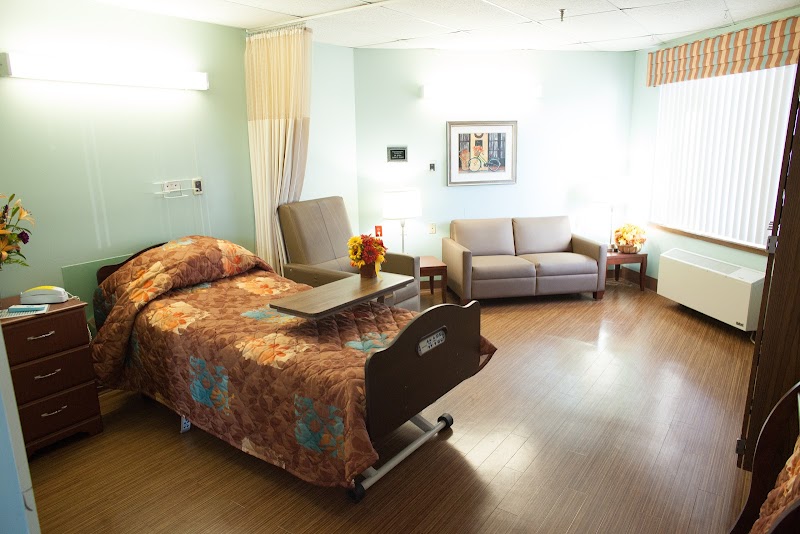
How is The Citadel At Saint Anne Place Staffed?

CMS rates The Citadel at Saint Anne Place's staffing level at 4 out of 5 stars, which is above average compared to other nursing homes. Staff turnover is 48%, compared to the Illinois average of 46%.

What Have Inspectors Found at The Citadel At Saint Anne Place?

State health inspectors documented 38 deficiencies at The Citadel at Saint Anne Place during 2022 to 2025. These included: 8 that caused actual resident harm and 30 with potential for harm. Deficiencies causing actual harm indicate documented cases where residents experienced negative health consequences.
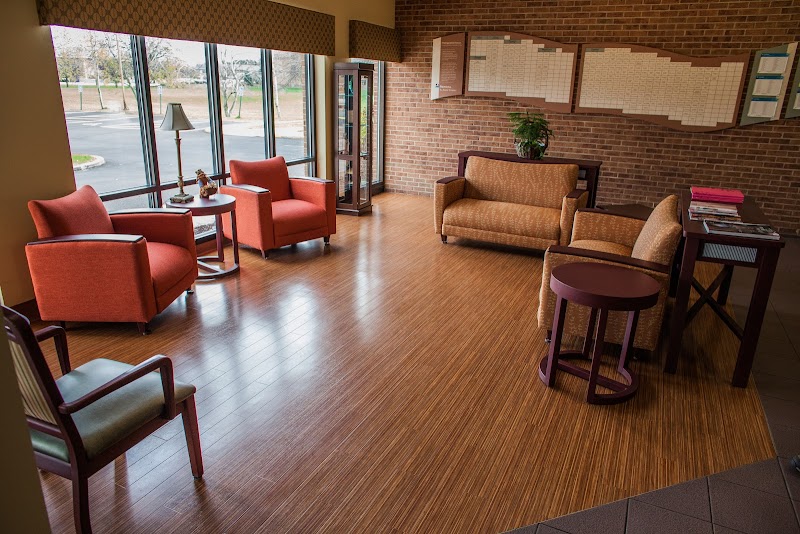
Who Owns and Operates The Citadel At Saint Anne Place?

The Citadel at Saint Anne Place is owned by a non-profit organization. Non-profit facilities reinvest revenue into operations rather than distributing to shareholders. The facility operates independently rather than as part of a larger chain. With 179 certified beds and approximately 127 residents (about 71% occupancy), it is a mid-sized facility located in ROCKFORD, Illinois.

How Does The Citadel At Saint Anne Place Compare to Other Illinois Nursing Homes?

Compared to the 100 nursing homes in Illinois, The Citadel at Saint Anne Place's overall rating (1 stars) is below the state average of 2.5, staff turnover (48%) is near the state average of 46%, and health inspection rating (2 stars) is below the national benchmark.

What Should Families Ask When Visiting The Citadel At Saint Anne Place?

Based on this facility's data, families visiting should ask: "Can I visit during a mealtime to observe dining assistance and food quality?" "How do you handle medical emergencies, and what is your hospital transfer rate?" "Can I speak with family members of current residents about their experience?"

Is The Citadel At Saint Anne Place Safe?

Based on CMS inspection data, The Citadel at Saint Anne Place has a clean safety record: no substantiated abuse findings (meaning no confirmed cases of resident harm), no Immediate Jeopardy citations (the most serious violation level indicating risk of serious injury or death), and is not on the Special Focus Facility watch list (a federal program monitoring the lowest-performing 1% of nursing homes). The facility has a 1-star overall rating and ranks #100 of 100 nursing homes in Illinois. While no facility is perfect, families should still ask about staff-to-resident ratios and recent inspection results during their visit.

Do Nurses at The Citadel At Saint Anne Place Stick Around?

The Citadel at Saint Anne Place has a staff turnover rate of 48%, which is about average for Illinois nursing homes (state average: 46%). Moderate turnover is common in nursing homes, but families should still ask about staff tenure and how the facility maintains care continuity when employees leave.

Was The Citadel At Saint Anne Place Ever Fined?

The Citadel at Saint Anne Place has been fined $110,673 across 5 penalty actions. This is 3.2x the Illinois average of $34,186. Fines at this level are uncommon and typically indicate a pattern of serious deficiencies, repeated violations, or failure to correct problems promptly. CMS reserves penalties of this magnitude for facilities that pose significant, documented risk to resident health or safety. Families should request specific documentation of what issues led to these fines and what systemic changes have been implemented.

Is The Citadel At Saint Anne Place on Any Federal Watch List?

The Citadel at Saint Anne Place is not on any federal watch list. The most significant is the Special Focus Facility (SFF) program, which identifies the bottom 1% of nursing homes nationally based on persistent, serious quality problems. Not being on this list means the facility has avoided the pattern of deficiencies that triggers enhanced federal oversight. This is a positive indicator, though families should still review the facility's inspection history directly.