WILLOWS HEALTH CENTER
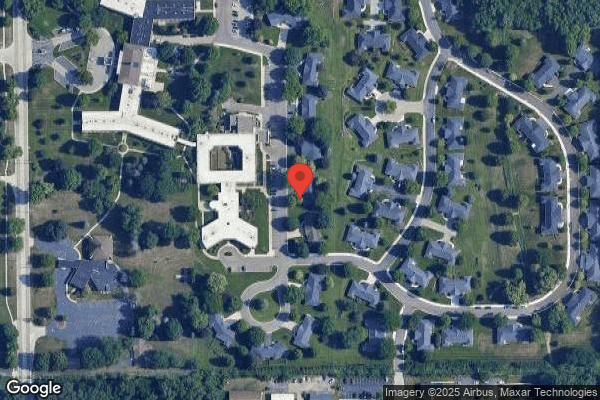
4054 ALBRIGHT LANE, ROCKFORD, IL 61103 (815) 316-1500
Non profit - Corporation 50 Beds Independent Data: November 2025
Trust Grade
63/100
#198 of 665 in IL
Last Inspection: August 2024

Within standard 12-15 month inspection cycle. Federal law requires annual inspections.

Overview

Willows Health Center in Rockford, Illinois, has a Trust Grade of C+, which means it is slightly above average among nursing homes. It ranks #198 out of 665 facilities in the state, placing it in the top half, and #4 out of 15 in Winnebago County, indicating that only three nearby options are better. The facility is improving, reducing its issues from five in 2024 to two in 2025, although it still has a concerning total of 24 identified problems, with one serious incident related to pressure injuries. Staffing is a weakness, rated at 2 out of 5 stars, but with zero turnover, it shows that staff members are committed to working there, which is a positive sign. However, the facility has been fined $12,909, which is average, and it has faced specific incidents such as failing to properly treat a resident's pressure injuries and not using adequate personal protective equipment for a resident requiring enhanced precautions, raising concerns about overall care and safety.

Trust Score
C+
63/100
In Illinois
#198/665
Top 29%
Safety Record
Moderate
Needs review
Inspections
Getting Better
5 → 2 violations
Staff Stability
○ Average
Turnover data not reported for this facility.
Penalties
⚠ Watch
$12,909 in fines. Higher than 85% of Illinois facilities, suggesting repeated compliance issues.
Skilled Nurses
○ Average
Each resident gets 37 minutes of Registered Nurse (RN) attention daily — about average for Illinois. RNs are the most trained staff who monitor for health changes.
Violations
⚠ Watch
24 deficiencies on record. Higher than average. Multiple issues found across inspections.
★★★★☆
4.0
Overall Rating
★★☆☆☆
2.0
Staff Levels
★★★★☆
4.0
Care Quality
★★★★☆
4.0
Inspection Score
Stable
2024: 5 issues
2025: 2 issues

The Good

  • 4-Star Quality Measures · Strong clinical quality outcomes
  • Full Sprinkler Coverage · Fire safety systems throughout facility
  • No fines on record

Facility shows strength in quality measures, fire safety.

The Bad

Federal Fines: $12,909

Below median ($33,413)

Minor penalties assessed

The Ugly 24 deficiencies on record

1 actual harm
Jan 2025 2 deficiencies
CONCERN (D) 📢 Someone Reported This

A family member, employee, or ombudsman was alarmed enough to file a formal complaint

Potential for Harm - no one hurt, but risky conditions existed

Investigate Abuse (Tag F0610)

Could have caused harm · This affected 1 resident

Based on interview and record review the facility failed to complete a thorough investigation into an allegation of misappropriation of narcotic medications. This applies to four of four residents (R4...

Read full inspector narrative →
Based on interview and record review the facility failed to complete a thorough investigation into an allegation of misappropriation of narcotic medications. This applies to four of four residents (R4-R7) in certified beds of the facility reviewed for abuse investigation in the sample of 13. The findings include: The facility census provided by the facility dated 1/28/2025 for December 24 to December 25, 2024 shows there were four residents residing in certified beds in the E-wing that also had orders for controlled medications. The facility provided a schedule for 12/24/24 which shows V21 (Agency Licensed Practical Nurse/LPN) was assigned the E-wing unit of the health care center from 2:00 PM to 10:30 PM. On 1/21/25 at 12:30 PM, V3 (Director of Nursing/DON) said, . It was [V21 Agency LPN] that was accused. She worked for us for that one day and only worked on the sheltered care side of the facility. She would not have had access to any other medication carts, medication rooms, or comfort packs on any other unit. On 1/22/25 at 3:30 PM, V3 (DON) said no concerns were reported to her regarding the certified wing. V3 said there was no audits completed of any other units other than the sheltered units. On 1/21/25 at 11:30 AM, V1 (Administrator) said the allegation of a drug diversion was not reported to the state agency or the police because nothing could be proved, and the facility could be sued for slander if they began making accusations without proof. On 1/21/25 at 2:20 PM, V22 (Registered Nurse/RN) said, I had worked night shift on Christmas Eve. I was late and did not get there until 11:00 PM. I did not count the narcotics, I assumed it was done by someone else. The next morning when I went to count with the day shift nurse, the count was off. I went down to sheltered care and told [V21 Agency LPN] she needed to come back upstairs to count and see where the problem was. She didn't come up with me. I don't know if she ever did come up . On 1/22/25 at 10:20 AM, V6 (RN) said, I was working [the certified wing]. My shift started at 6:00 AM. At first when I started to do the count, I noticed the first 3 cards were off. I wasn't tripping at first because you might get in a groove and forget. After the third one was off, I called down and spoke with [V4 LPN]. When I got here and got the keys I was waiting for [V21 Agency Nurse] to come up and count. I was looking over them myself as I waited for [V21]. I then reached out to [V4], and she said her count was off too. [V21 Agency Nurse] came up to verify the count. She was very rushed. I said, 'hey things are off.' She was rushing through and signing medications off. I finally told her she needed to slow down . [V21] was exhibiting different behaviors . she was trying to get into the medication refrigerator to 'get her lunch' . I wouldn't let her back there. Then she went to [another upstairs unit] and then back downstairs . the DON (Director of Nursing) was called, and she said to walk [V21] out . the maintenance guy got her . We count every shift unless we are working a double on the same unit. The whole point of doing a count is to make sure it's right . On 1/22/25 at 12:19 PM, V7 (Maintenance) said he was called over to the radio on Christmas Day to remove a nurse who was acting erratic. V7 said, I was told her shift was done and she needs to leave the building right away. She was trying to outrun me, but I cut her off since I know the building well and told her she needed to leave. She was acting strange . Her pupils were extremely dilated. She was acting like she took some 'gummies' or something. She didn't smell like anything, but she was acting erratic . I took her to the exit, but I didn't think she was going to leave. She sat in her car for at least 10 minutes, just sitting there. So, I picked up the phone to act like I was calling someone and then she headed out. I followed her for a bit just to make sure she actually left . No one at the facility has asked me anything about this . The facility provided an email dated 12/25/24 at 8:26 AM, which showed it was from V3 (DON) to V1 (Administrator). The email showed, . this morning, [V4 LPN] called me with concerns regarding a nurse on [sheltered care unit] for night shift. The nurse was [V21 Agency LPN]. She stated that a CNA (Certified Nursing Assistant) stopped her prior to clocking in and told her the nurse she was working with on nights was all over the place and was caught sleeping 3 times. I was not notified of any of this throughout the night and neither was the nurse on call. She said the office was in complete disarray and she noticed discrepancies in the narcotic count. She forgot to sign out an Ambien, but I did verify with another nurse that this was given, and the count was corrected. [V4] stated a bottle of Norco was unaccounted for but they did locate it in the other narcotic drawer prior to the nurse leaving. [V4] also stated an oxycodone count was off but the pill was located in the bottom of the drawer and count was correct. [V4] stated when they counted the liquids in the fridge, she noticed the consistency seemed off and stated the liquids smelled of mouthwash and Robitussin. I did let her know that the narcotics sent from hospice in comfort packs did have a sweet smell. [V4] stated the nurse kept looking around the unit like she lost something and I advised her that if she did not leave, to please have maintenance escort her out if need be. She did end up leaving on her own accord. I have removed her from her double shift today and will notify her agency about the above. I will also check our policy for suspected medication diversion and consult with pharmacy as the need arises. Please let me know if there is anything you need from me at this time . The facility provided an email thread dated 12/31/24 at 7:43 AM which showed V8 (Pharmacy Nurse Consultant) contacted V3 (DON). This email showed, . Can you please call me this morning . we received a call from a nurse, [V4]. She is concerned that 2 residents morphine/lorazepam liquids from the hospice kit were switched with water and is asking if there is a way to test it . On 12/31/24 at 8:46 AM, V4 (LPN) was added to the email and additionally V5 (LPN Nurse Manager) and V1 (Administrator) were copied. This email showed, [V4], I spoke with [V8 Pharmacy Nurse Consultant] this morning. She confirmed there is no test to check the morphine/lorazepam. She consulted with the pharmacist and best practice would be to document (which we have) and ask hospice or pharmacy to supply a new bottle. I am attaching the policy we follow from [the pharmacy] . All proper documentation has already been filed and her agency has already disabled her account. We likely won't know what comes of this for quite some time but we do have all the information we need to move forward . [V5 LPN Nurse Manager] can we please dispose of the narcotics we believe have been tampered with and ensure hospice is able to send a new bottle? . The facility did not provide interviews with all the staff involved in the incident such as the maintenance man who had to escort V21 from the facility. No records of medication cart and drug audits were provided. The facility's policy and procedure received from the facility's pharmacy dated March 2021 showed, Discrepancies, Loss and or Diversion of Medications; Policy: All discrepancies, suspected loss, and/or diversion, the Administrator, Director of Nursing, and Consultant Pharmacist are notified, and an investigation is conducted. The Director of Nursing leads this investigation . The facility's policy and procedure with revision date of 3/5/24 showed, Abuse and Neglect Prevention Protocol Policy . It is the policy of this facility to not tolerate abuse or neglect of its residents by any individual . Definitions: . 11. Misappropriation of resident property means using a resident's cash, clothing, or other possessions without authorization by the resident or the resident's authorized representative . Investigation will be performed by Abuse Prevention Coordinators including but not limited to and interviews of residents and staff members .
CONCERN (D) 📢 Someone Reported This

A family member, employee, or ombudsman was alarmed enough to file a formal complaint

Potential for Harm - no one hurt, but risky conditions existed

Pharmacy Services (Tag F0755)

Could have caused harm · This affected 1 resident

Based on interview and record review the facility failed to ensure a narcotic count was completed upon nursing shift change. This applies to one of one resident (R6) in certified beds of the facility ...

Read full inspector narrative →
Based on interview and record review the facility failed to ensure a narcotic count was completed upon nursing shift change. This applies to one of one resident (R6) in certified beds of the facility reviewed for narcotic counts in the sample of 13. The findings include: The facility face sheet for R6 shows he was admitted to the facility with diagnoses to include encounter for palliative care, hypertensive heart disease with heart failure, atrial fibrillation, dementia, and congestive heart failure. The medication administration record for R6 shows medication orders for lorazepam (anti-anxiety medication) 2 mg/ml (milligrams/milliliters) give 0.5 ml every four hours as needed and morphine (opioid pain medication) 20 mg/ml give 0.25 ml every four hours as needed. (Lorazepam and morphine are controlled substances.) On 1/21/25 at 2:20 PM, V22 (Registered Nurse/RN) said, I had worked night shift on Christmas Eve. I was late and did not get there until 11:00 PM. I did not count the narcotics, I assumed it was done by someone else. The next morning when I went to count with the day shift nurse, the count was off. I went down to sheltered care and told [V21 Agency Licensed Practical Nurse/LPN] she needed to come back upstairs to count and see where the problem was. She didn't come up with me. I don't know if she ever did come up . On 1/22/25 at 10:20 AM, V6 (RN) said, I was working [the certified wing]. My shift started at 6:00 AM. At first when I started to do the count, I noticed the first 3 cards were off. I wasn't tripping at first because you might get in a groove and forget. After the third one off, I called down and spoke with [V4 LPN]. When I got here and got the keys I was waiting for [V21 Agency LPN] to come up and count. I was looking over them myself as I waited for [V21]. I then reached out to [V4], and she said her count was off too. [V21 Agency LPN] came up to verify the count. She was very rushed. I said, 'hey things are off'. She was rushing through and signing medications off. I finally told her she needed to slow down . [V21] was exhibiting different behaviors . she was trying to get into the medication refrigerator to 'get her lunch' . I wouldn't let her back there. Then she went to [another upstairs unit] and then back downstairs . the DON (Director of Nursing) was called, and she said to walk [V21] out . the maintenance guy got her . We count every shift unless we are working a double on the same unit. The whole point of doing a count is to make sure it's right . On 1/22/25 at 3:30 PM, V3 (DON) said, . They should do a [narcotic] count every shift change. When a nurse is handing her keys off to anyone, they should be counting . On 1/28/2025 at 12:03 PM, V3 said the nurses count all scheduled II-V medications. The facility's Controlled Substance Shift to Shift Count Record for December 2024 showed, no signature on 12/25/24 AM (Morning) Off-going nurse or ON-coming nurse and no signatures showing a count was done for the 12/25/24 Off-Going PM nurse. The facility's policy and procedure with revision date of 7/2014 showed, . Medications: Storage of and narcotic counts; Purpose: To establish uniform guidelines concerning the storing of drugs and biologicals All Schedule II-V controlled medications will be counted with 2 nurses at each shift change and any discrepancies/corrected counts will be initialed and dated by both nurses.
Sept 2024 1 deficiency
CONCERN (D) 📢 Someone Reported This

A family member, employee, or ombudsman was alarmed enough to file a formal complaint

Potential for Harm - no one hurt, but risky conditions existed

Accident Prevention (Tag F0689)

Could have caused harm · This affected 1 resident

Based on interview and record review the facility failed to ensure a resident was positioned safely in bed to prevent a fall for 1 of 3 residents (R2) reviewed for safety and supervision in the sample...

Read full inspector narrative →
Based on interview and record review the facility failed to ensure a resident was positioned safely in bed to prevent a fall for 1 of 3 residents (R2) reviewed for safety and supervision in the sample of 5. The findings include: The Nurse's Note dated 9/20/24 at 8:30 PM showed, Resident (R2) was found at 7:30 PM by CNA (Certified Nursing Assistant) staff at the time this writer arrived resident vitals were assessed and stable. Client told staff she wanted to get her cranberry juice and slid out of her bed. No signs of distress or discomfort shown by client. Client expressed her bottom was hurting but she did not have any other pain. This writer reached out to clients POA with direct phone call and advised client would have to be sent out for further evaluation per standard protocol due to client being on blood thinner medication. On 9/21/24 at 1:00 AM staff was contacted by the hospital nurse and was notified that the resident was being admitted for a subarachnoid bleed. On 9/21/24 at 7:07 PM, Nurse to nurse report given by hospital nurse to this writer/nurse - the hospital performed a head computerized tomography scan that showed trace bilateral subarachnoid bleed. R2 given vitamin K in the emergency room. Resident returned to unit (at facility) by ambulance transport. The Hospital Record for R2 dated 9/21/24 showed the CT of the head for R2 was redone and, the previously mentioned subarachnoid hemorrhage is likely artifactual. On 9/24/24 at 1:19 PM, R2 was sitting in a wheelchair in the activity room. R2 was leaning forward in her wheelchair and was sleepy. On 9/24/24 at 1:47 PM, V11 CNA stated, V13 (CNA from the agency) had R2. V11 stated V13 sat R2 up on the side of her bed and had the tray table in front of her so she could eat. V11 stated when R2 was done eating she had pushed the tray table away from her. V11 stated R2 was sitting up on the side of her bed for over an hour. V11 stated R2 did not have good sitting balance because she sits forward. V11 stated when R2 is in her wheelchair she leans forward, and you can tell her to sit back, and she will. V11 stated R2 will fall asleep sitting up. R2 is usually put to bed right after lunch and dinner. V11 stated V13 wasn't doing anything; he told V13 to get up and go to the dining room. V11 stated they don't like to leave residents in their rooms for meals because they can't be monitored, and anything can happen. V11 stated R2 slid off the bed onto the floor. V11 stated the nurse came and had to assess to make sure the resident was okay. R2 said she didn't hit her head. It just looked like she slid out onto her butt onto the floor. R2 has poor balance when sitting and gets tired easily. V13 had her sitting up on the side of the bed too long. V11 stated they used a mechanical lift to get her up off the floor and into bed. On 9/24/24 at 2:25 PM, V12 (Licensed Practical Nurse/LPN) stated, the agency CNA had her that night on the 2:00 PM - 10:00 PM shift and R2's cares were explained. After dinner I heard V13 (CNA) yelling that R2 was on the floor. R2 was sitting on her bottom on the floor. I checked her vital signs, assessed her and then a mechanical lift was used to put R2 to bed. V12 stated she talked to the family, and they did not want R2 sent out but V12 told them she needed to because R2 was on a blood thinner. V12 stated she was doing the medication pass at the end of the hall and V11 got to R2's room before she did. V12 stated R2 was sitting on the side of the bed before she slid out and the pad that was under her was partially out of the bed. V12 stated she did not know why R2 was sitting on the side of the bed. R2 can't do that on her own; she is complete dead weight and leans forward all the time. V12 stated R2 said she was trying to get her cranberry juice and if R2 had been in bed with it (bed) in a lower position with the tray table next to her where she could get it then it would not have happened. V12 stated this fall could have been prevented. V12 stated R2 should not have been sitting on the side of the bed. On 9/24/24 at 2:55 PM, V3 (Director of Nursing) stated, R2 slid out of bed reaching for her juice and was sitting on the floor next to her bed. There was no evidence of her hitting her head, but she was on a blood thinner, so she was sent to the hospital. Initially R2 was admitted to the hospital for a bleed but they called us later and told us it was an old bleed. V3 stated she was told R2 rolled out of bed. V3 stated R2 shouldn't have been sitting on the side of the bed. R2 wouldn't be able to do that. The Face Sheet dated 9/24/24 for R2 showed diagnoses including pain in left knee, localized edema, atrial fibrillation, type 2 diabetes mellitus, anemia, anxiety disorder, gastroesophageal reflux disease, hyperlipidemia, history of falling, age related physical debility, and muscle weakness. R2's Care Plan with the next goal date of 11/29/24 showed she has a potential for falls related to decreased independence with mobility; 9/20/24 slid from bed to floor trying to reach cranberry juice. Sent to emergency room - no new injury. Staff will provide assistance with activities of daily living, transfers, and locomotion per therapy recommendations. Keep call light and personal belongings within resident's reach (5/20/22). Keep bed in low position while resident is resting/sleeping. Provide extensive 2 person assist for transfers with mechanical lift. Ensure resident has her items within reach i.e. glass when she is wanting something to drink (9/20/24). Decreased independence with mobility. Non-ambulatory - spends some of her day in her wheelchair. She is able to propel her wheelchair herself. Dependent on staff for mobility activities. Assist of 2 with repositioning. Propels self in wheelchair in the hallways. R2's care plan does not state that what her sitting balance is or that she leans forward in her chair. The Facility's Fall Prevention Policy (8/2024) showed, all staff will have training on fall prevention and their responsibility on hire and annually.
Aug 2024 4 deficiencies
CONCERN (D)

Potential for Harm - no one hurt, but risky conditions existed

Pressure Ulcer Prevention (Tag F0686)

Could have caused harm · This affected 1 resident

**NOTE- TERMS IN BRACKETS HAVE BEEN EDITED TO PROTECT CONFIDENTIALITY** Based on interview and record review, the facility failed to complete weekly wound assessments for a resident (R17) with a stage...

Read full inspector narrative →
**NOTE- TERMS IN BRACKETS HAVE BEEN EDITED TO PROTECT CONFIDENTIALITY** Based on interview and record review, the facility failed to complete weekly wound assessments for a resident (R17) with a stage 2 pressure ulcer, failed to ensure complete weekly wound assessments were done for a resident (R10) admitted with a stage 3 pressure ulcer. These failures apply to 2 of 2 residents reviewed for pressure ulcers in the sample of 13. The findings include: 1. R17's electronic face sheet printed on 8/22/24 showed R17 has diagnoses including but not limited to pressure ulcer of sacral region, dysphagia, dementia with behaviors, and anxiety disorder. R17's facility assessment dated [DATE] showed R17 has a Stage 2 pressure injury. R17's care plan dated 3/19/20 showed, At risk for Impaired Skin Integrity. Wound to buttocks .monitor wound progress and document and measure weekly. R17's weekly wound assessments from 6/2/24-8/2/24 showed R17 did not receive a weekly wound assessment from 6/25/24-8/2/24 (4 weeks). On 8/22/24 at 12:33PM, V15 (Director of Nursing/DON) stated, We do not have all of the weekly assessments for (R17). We thought hospice was doing them, but they were just doing a note saying, wound continues and documenting if they did a dressing change. I didn't realize we had to do our own wound assessments if they were a hospice patient. We definitely need to improve our process because wounds should be diligently monitored so they don't worsen. The facility's policy titled, Documentation and Treatment of Wounds revised on 6/2023 showed, It is the policy of (facility) to document wound status weekly. Wound status will be documented on the back of the treatment sheets. Pressure sore status will be documented on the pressure sore sheet .1. Documentation will include: i. description of size, color, drainage and odor at the time of discovery and a weekly progression thereafter. ii. Assess skin turgor, elasticity, and fragility of skin. iii. Last documentation will describe healed area. iv. Documentation will be done by the day shift unless treatment is only done by P.M. shift of night shift. Then shift doing treatment will do documentation . 2. On 8/21/24 at 9:45 AM, R10 was lying in bed on his back. R10's left heel was offloaded with a pillow. R10's right heel was laying on the bed. R10 had dressings intact to his bilateral legs. R10 stated he had a wound to his buttock. R10 declined having his dressing change to his buttock observed. R10 stated he has very little privacy and would like a few minutes in private for the dressing change to be done. R10 stated the dressing is changed on night shift. On 8/21/24 at 1:12 PM, V8 (Certified Nursing Assistant/CNA) and V9 (CNA) transferred R10 from his recliner to his bed. R10 had gauze dressings wrapped around his bilateral lower legs. V8 and V9 turned R10 onto his side to remove the mechanical lift sling. A wrinkled, square dressing was on his upper, medial left buttock. A review of R10's record was conducted on 8/20/24 - 8/22/24. The wound documentation in the skin area on the electronic medical record was not up to date. R10 did not have complete weekly skin assessments for his pressure injury to his buttock and coccyx area. On 8/22/24 at 12:15 PM, V15 (DON) presented all the information she could find related to R10's wounds and was documented below in the record review. V15 stated they don't have a wound nurse in the building. V15 stated the NP (Nurse Practitioner) is overseeing treatment orders for wounds. V15 stated on resident's TARs (Treatment Administration Records) there are orders for weekly skin checks. V15 stated the nurse manager on each unit oversees the wound program for their unit. V15 stated hospice is overseeing wounds for their residents. V15 stated R10 had wounds upon admission to the facility. V15 stated weekly wound measurements and assessments should be done. V15 stated the assessments should be documented weekly in the skin care tab or wound notes. The NP only looks at a wound when they ask her to. On 8/22/24 at 12:55 PM V7 (Licensed Practical Nurse/Nurse Manager) stated there isn't a wound program at the facility. V7 stated right now the nurses are measuring wounds and documenting on them weekly. V7 stated they should be measuring the wound, describing the wounds appearance, if there is and pain and/or odor present. V7 stated R10 has an unavoidable stage 3 wound to his buttock; he is non-compliant with care. The Nurse's Notes for R10 showed, 4/8/24 at 10:48 PM showed R10 was admitted to the facility with multiple open areas noted At 11:22 PM the note showed multiple open areas including the left buttock 5.5 cm (centimeters) x 3 cm and 4 cm x 6 cm. No other description was given. The Wound Rounds notes for R10 showed, 4/15/24 - left buttock 9 cm x 9 cm x 0.1 clustered. No additional description or stage was documented. On 4/22/24 - left buttock measured 7 cm x 6.5 cm x 0.1 cm, clustered. No additional description or stage was documented of the wound. On 4/29/24 - left buttock 7 cm x 6 cm x 0.1 cm; coccyx 2 cm x 0.6 cm x 0.1 cm, stage 2 wound. There were no additional descriptions of the wounds given and no staging of the left buttock wound. The Wound Visit Report for R10 showed, 5/6/24 - wound #6 left medial buttock is stage 3 pressure injury ; 3 cm x 3 cm x 0.1 cm. There is a moderate amount of serosanguinous drainage noted. Wound bed has 51-75%, pink, granulation, 1-25% slough, no eschar, and no epithelialization present. Two open areas to buttock. Medial buttock wound erythema, 1 cm peri wound maceration present. Wound #7 left lateral buttock is stage 3 pressure injury ; Measurements are 1 cm x 2 cm x 0.1 cm There is a moderate amount of serosanguinous drainage noted. Wound bed has 76-100%, pink granulation, 1-25% slough, no eschar, and no epithelialization present. A Progress Notes for R10 showed, on 5/19/24 - left buttock 0.3 cm x 0.3 cm, 1 cm x 0.5 cm. There was no description of the wound or staging. On 5/23/24 showed, coccyx 0.5 cm x 1.5 cm. No other wounds were documented. There wasn't a description or stage of R10's coccyx wound. The Wound Rounds dated 6/25/24 for R10 showed, sacral wound 6 cm x 6 cm x 0.1 cm; slough 100%? The Nurses Note's for R10 showed, on 8/1/24 at 9:13 AM - wound to left buttock measures 1.6 cm x 1.0 cm. On 8/15/24 at 9:10 PM - wound on left buttock measures 1.9 cm x 2.0 cm. Wound bed is covered with slough. Report written to nurse practitioner. The Physician Orders dated 8/21/24 for R10 showed diagnoses including anemia, gout, non-pressure chronic ulcers to lower leg, adult failure to thrive, paroxysmal atrial fibrillation, osteoporosis, pressure ulcer left heel, osteoarthritis, pressure ulcer left buttock, and localized edema. R10's current Care Plan dated 4/8/24 showed, at risk for impaired skin integrity related to decreased movement. Observe for any changes in skin condition and notify nurse. Nurse to monitor skin and document on Weekly Skin Assessment.
CONCERN (D)

Potential for Harm - no one hurt, but risky conditions existed

Incontinence Care (Tag F0690)

Could have caused harm · This affected 1 resident

Based on observation, interview, and record review the facility failed to ensure a catheter tubing remained free of kinks and the catheter tubing secure device was in place for 1 of 1 resident (R25) r...

Read full inspector narrative →
Based on observation, interview, and record review the facility failed to ensure a catheter tubing remained free of kinks and the catheter tubing secure device was in place for 1 of 1 resident (R25) reviewed for catheters in the sample of 13. The findings include: On 8/20/24 at 1:35 PM, R25 was in his room in his recliner. R25 had an indwelling urinary catheter drainage bag attached to the lower part of his wheeled walker. R25 had thick white sediment and cloudy yellow urine in his catheter tubing. R25 did not have a catheter tubing secure device in place. R25 stated he has not had one (catheter secure device) on for two weeks. R25 stated they must have run out of them. R25 stated he wouldn't mind having one (catheter secure device) on now. R25 said it would help prevent his catheter from coming out. R25 stated his catheter is leaking right now. On 8/20/24 at 1:47 PM, V10 (Licensed Practical Nurse) stated, R25 had some pressure so to be on the safe side they collected a urine sample. V10 stated R25's tubing was kinked and that is why they took a urinalysis. V10 stated sometimes when R25 sits or moves the tubing gets kinked. V10 stated he thought this happened over the weekend. V10 stated staff should monitor R25 closer so his catheter tubing doesn't get kinked. V10 stated they use a catheter secure device for R25. V10 stated he did not recall if the facility ran out of the devices or had problems obtaining them. V10 stated he doesn't know if R25 has a catheter secure device in place or not. V10 stated the last time R25's catheter came out was on 8/15/24 and it came out during AM care. The Physician Orders dated 8/21/24 for R25 showed an order dated 4/1/24 for a catheter tubing secure lock device every shift. The Care Plan dated 8/18/24 for R25 showed, Indwelling catheter use with potential for infection. 18 French Coude, 10 cc (cubic centimeter) balloon. Secure catheter to leg to avoid tension on urinary meatus. The August 2024 TAR (Treatment Administration Record) for R25 showed secure lock for catheter every shift. The secure lock device was documented on 8/8/24, 8/17/24, 8/20/24 and 8/21/24 to show that it was in place. It is to be documented on the day shift that it is present. The Face Sheet dated 8/21/24 for R25 showed diagnoses including Parkinson's disease, mechanical complication of other urinary catheter, benign prostatic hyperplasia with lower urinary tract symptoms, restless leg syndrome, hypothyroidism, hyperlipidemia, gastro-esophageal reflux disease, history of falling, lack of coordination, muscle weakness, general anxiety disorder, weakness, and insomnia. The facility's Catheter Care policy (6/2023) showed, Purpose: To provide nursing measures to prevent infection and maintain the unobstructed flow of urine through catheter drainage system. Checks for patency of the tubing is to be checked with care each shift. The policy did not have anything in place for catheter secure devices.
CONCERN (E)

Potential for Harm - no one hurt, but risky conditions existed

Resident Rights (Tag F0550)

Could have caused harm · This affected multiple residents

Based on observation, interview, and record review the facility failed to treat 8 residents with dignity. This applies to 4 of 4 residents (R6, R11, R12, R17) reviewed for dignity in the sample of 13 ...

Read full inspector narrative →
Based on observation, interview, and record review the facility failed to treat 8 residents with dignity. This applies to 4 of 4 residents (R6, R11, R12, R17) reviewed for dignity in the sample of 13 and 4 residents (R2, R9, R22, R23) outside of the sample. The findings include: On 8/21/24 at 11:35AM, R2, R6, R9, R11, R12, R17, R22, and R23 were being served their noon meal. All residents received their water, fruit cups, pasta salad, and cucumber tomato salads in disposable plastic cups. On 8/21/24 at 12:42PM, V12 (Dietary Manager) stated, The kitchen staff measured the food and placed them in plastic cups. They should have then placed the food into the small bowls we have but they forgot to. It's a dignity concern that they left everything in plastic cups because they should feel like they are eating with normal dishes. We only use disposable dishes if a resident is on isolation or if we have a malfunction with our dish machine. This was not the case today and my staff should know better. Any reasonable person would want to eat with regular dishes, not disposable. The facility's policy titled, Resident Dignity revised 9/2023 showed, (Facility) understands and believes each resident has a right to receive services and be addressed in a manner that maintains their dignity .
CONCERN (F)

Potential for Harm - no one hurt, but risky conditions existed

Infection Control (Tag F0880)

Could have caused harm · This affected most or all residents

4. R17's electronic face sheet printed on 8/22/24 showed R17 has diagnoses including but not limited to pressure ulcer of sacral region, dementia with behaviors, hematuria, and anxiety disorder. R17's...

Read full inspector narrative →
4. R17's electronic face sheet printed on 8/22/24 showed R17 has diagnoses including but not limited to pressure ulcer of sacral region, dementia with behaviors, hematuria, and anxiety disorder. R17's physician's orders showed no orders for Enhanced Barrier Precautions. R17's care plan did not contain any care plan related to Enhanced Barrier Precautions. On 8/21/24 at 12:39PM, R17's doorway did not have any signs posted that indicated R17 was on Enhanced Barrier Precautions. R17's doorway and room did not have any PPE (Personal Protective Equipment) cart accessible to staff with gowns and gloves. V13 (CNA) and V14 (Nurse Manager) provided incontinence care for R17. V13 and V14 wore gloves and no gown for the entirety of R17's personal cares. V13 stated the only PPE staff wear in R17's room is gloves. V13 stated she does not know anything about residents on her unit being on enhanced barrier precautions and if no sign is on the door then she just uses standard precautions. Based on observation, interview, and record review the facility failed to ensure their infection control policies and procedures were reviewed annually and update the policies to include Enhanced Barrier Protection (EBP) and failed to have measures to prevent the growth of Legionella in the facility water systems for all 30 residents residing in the facility reviewed for infection control. The findings include: 1. The facility's CMS form 671, the Long-Term care facility application for Medicare and Medicaid documents 30 residents reside in the facility. On 8/21/24 at 1:50 PM, V3 (Infection Preventionist) said no residents were on EBP and does not know about the requirements for EBP. She said there is no need for postings or signs on residents' doors to indicate the enhanced barrier precautions, the staff know what they are supposed to wear into the rooms. She said if residents have open wounds or catheters, the staff know to wear a gown and gloves. On 8/22/24 at 8:56 AM, V6 (Licensed Practical Nurse/LPN) said residents with catheters and open wounds should be on EBP. I do not think they have that in place here. She said she is aware of EBP from working in other facilities. She said there were residents on the wing which should be under the EBP precautions, but no postings or signs have been placed. She did not recall if she received any information or training regarding EBP upon her hire 2 months ago. On 8/21/24, resident hallways were observed to have no residents on enhanced barrier precautions for oxygen or catheters, only contact or droplet isolation rooms have PPE and signs posted outside their doors. On 8/22/24 at 9:03 AM, V3 said she had since reviewed EBP procedures and said any resident with open wounds, urinary catheters or IVs should have signs on their door for EBP, with PPE (personal protective equipment) available such as gowns and gloves, and each resident should also have a care plan in place for the enhanced barrier requirements. V3 said she was not made aware of the changes, and therefore had not implemented EBP. V1 (Administrator) said there is no current policy for EBP. He said the previous administrator had been doing the infection control and did not share the updated information with V3 and did not update the policies in infection control. On 8/22/24 at 9:30 AM, V3 said the policy updates are issued to the medical director but could not say if all of the policies are reviewed annually. She said the policies and procedures are updated as needed and after quality assurance meetings every 3 months. The facility policy for Covid-19 was revised on 7/2024 but does not include EBP policies or procedures. Their policies for antimicrobial stewardship and flu and pneumovax were last reviewed 6/2023. The Infection control pathway was dated 5/2017. 2. On 8/22/24 at 9:30 AM, the facility water management program assessment was requested from maintenance. V4 (Maintenance Supervisor) said there has not been an assessment of the water systems and had no diagram of the water systems. He said there had been testing of the cooling tower, but no other measure put in place. He said no other monitoring/ protocols or policies were presented. On 8/22/24 at 10:00 AM, V1 said there is no policy for water management, and there has been no assessment for Legionella. He said if V4 and V5 (Director of Facility and Grounds) do not have the information, then there is none. 3. On 8/21/24 at 1:14 PM, R10 was sitting in the recliner in his room. V8 (Certified Nursing Assistant/CNA) and V9 (CNA) had mask and gloves on when entering R10's room. V8 and V9 used a mechanical lift device to transfer R10 from his recliner to his bed. Once R10 was transferred to bed, V8 and V9 rolled him back and forth to remove the sling and adjust the linen under him. R10 had a wrinkled dressing to his left buttock, a dressing to his right knee, and dressings to his bilateral lower legs. V8 and V9 stated there was no reason to wear gowns for this activity. V8 stated there wasn't a sign on the door saying they needed to wear anything. V9 stated she just goes by whatever the sign that is posted states to do. V9 stated she didn't see any signs or isolation cart outside R10's room. On 8/21/24 at 1:26 PM, V7 (Licensed Practical Nurse/Nurse Manager) stated they did not have anyone on enhanced barrier precautions. V7 stated R10 has wounds but has not needed to be on any precautions. V7 stated she did not know about enhanced barrier precautions. V7 stated they have never worn gowns and gloves for him the entire time he has had wounds. The Physician Orders dated 8/21/24 for R10 showed, left buttock, medial and lateral wounds, cleanse daily, apply thin layer of Santyl to wound beds, and cover with bordered dressing every day. Right knee - once daily cleanse, apply thin layer of Santyl to wound beds. Cover with bordered dressing every day. The Nurses Note's for R10 showed, on 8/1/24 at 9:13 AM - wound to left buttock measures 1.6 cm x 1.0 cm. On 8/15/24 at 9:10 PM - wound on left buttock measures 1.9 cm x 2.0 cm. Wound bed is covered with slough. Report written to nurse practitioner. The Physician Orders dated 8/21/24 for R10 showed diagnoses including anemia, gout, non-pressure chronic ulcers to lower leg, adult failure to thrive, paroxysmal atrial fibrillation, osteoporosis, pressure ulcer left heel, osteoarthritis, pressure ulcer left buttock, and localized edema. On 8/21/24 the facility did not have a policy for Enhanced Barrier Precautions.
Sept 2023 6 deficiencies
CONCERN (D)

Potential for Harm - no one hurt, but risky conditions existed

Resident Rights (Tag F0550)

Could have caused harm · This affected 1 resident

Based on observation, interview, and record review, the facility failed to provide feeding assistance to residents in a dignified manner. This applies to 2 of 3 residents (R9, R14) in the sample of 12...

Read full inspector narrative →
Based on observation, interview, and record review, the facility failed to provide feeding assistance to residents in a dignified manner. This applies to 2 of 3 residents (R9, R14) in the sample of 12 and 1 resident (R6) outside of the sample reviewed for dignity. The findings include: On 9/20/23 at 8:05AM R6, R9, and R14 were being assisted with their breakfast meal. V12 (Registered Nurse) assisted R9. V13 (Certified Nursing Assistant/CNA) assisted R14. V14 (CNA) assisted R6. V12, V13, and V14 were all standing over residents while feeding them. No chairs were present for the staff to sit with each resident they were assisting. V13 stated, We sit sometimes with the residents but today we just decided to stand. It depends on how many residents we have to feed and how busy we are. We should sit with them to make them feel like we aren't rushing them. On 9/21/23 at 9:30AM V2 (Director of Nursing) stated, CNAs should be sitting when feeding residents for dignity purposes. Residents should feel like staff are not rushing them and when they stand, I can see how residents would feel rushed. It probably feels like the staff are just shoveling food in their mouth when they are standing over them. I wouldn't want anyone doing that to me. The facility's policy titled, Resident Dignity reviewed 01/2023 showed, Purpose: To maintain the sense of dignity for each resident as the individual defines. (Facility) understands and believes each resident has a right to receive services and be addressed in a manner that maintains their dignity .
CONCERN (D)

Potential for Harm - no one hurt, but risky conditions existed

ADL Care (Tag F0677)

Could have caused harm · This affected 1 resident

**NOTE- TERMS IN BRACKETS HAVE BEEN EDITED TO PROTECT CONFIDENTIALITY** Based on observation, interview, and record review the facility failed to provide incontinence care for dependent residents prio...

Read full inspector narrative →
**NOTE- TERMS IN BRACKETS HAVE BEEN EDITED TO PROTECT CONFIDENTIALITY** Based on observation, interview, and record review the facility failed to provide incontinence care for dependent residents prior to their briefs and clothing becoming soiled for 2 of 5 residents (R1, R3) reviewed for incontinence in the sample of 12. The findings include: 1) R1's electronic face sheet printed on 9/21/23 showed R1 has diagnoses including but not limited to Alzheimer's disease, hypertensive chronic kidney disease, dementia without behaviors, and vascular dementia with behaviors. R1's facility assessment dated [DATE] showed R1 has severe cognitive impairment and is always incontinent of bowel and bladder. R1's care plan dated 2/19/19 showed, Urinary incontinence related to decreased independence with mobility activities and cognitive status. Provide for adult clothing protectors and monitor for incontinence every 2 hours. Dependent on staff with incontinence care. On 9/20/23 at 12:53PM, V11 and V13 (Certified Nursing Assistants/CNA) provided incontinence care to R1. V11 rolled R1 over and R1 had a large, wet area on the back of her pants. V13 stated R1 is a heavy wetter and wets through her clothing sometimes. V11 and V13 removed R1's pants and a foul urine smell was noted to be coming from R1. R1 had a urinary incontinence brief and a large incontinence pad applied that were both saturated with urine. V11 stated she is unsure why the facility utilizes 2 incontinence products on residents but that is how she was trained. V13 stated she thought R1 had been provided incontinence care sometime after breakfast but could not verify a time. (R1 was observed at 9:00AM sitting in activity area after breakfast). On 9/21/23 at 11:48AM, V2 (Director of Nursing) stated, We have always used 2 incontinence products on residents. Not all of them have it, just the heavy wetters. I know that's not the correct term but that is how we refer to them. Some residents just need extra protection but that is not a replacement for toileting and incontinence care. Residents should be toileted every 2 hours and more often if they are heavy wetters. The facility's policy titled, Incontinence Care with a review date of 06/2023 showed, Purpose: To implement a system to assist in the maintenance of the skin integrity of the residents. To cleanse the perineum and surrounding areas after an incontinent episode in order to assist the resident with keeping their skin clean, intact and dry. Perineal care will be done with AM and PM care and after each incontinent episode. 2) R3's electronic face sheet printed on 9/21/23 showed R3 has diagnoses including but not limited to left femur fracture, osteoporosis, chronic pain, pain in left leg, and history of falls. R3's facility assessment dated [DATE] showed R3 has severe cognitive impairment, is frequently incontinent of bladder, and always incontinent of bowel. R3's care plan dated 6/16/23 showed, Urinary Incontinence related to neurogenic bladder and bladder spasms. I have urge incontinence. Provide perineal care after each episode of incontinence. On 9/20/23 at 9:01AM, V15 (Certified Nursing Assistant) provided incontinent care to R3. R3 was sitting up in her wheelchair with feces coming out of the bottom of her pant leg and onto her sock. V15 stated he was not assigned to R3 today and did not know the last time she was changed but he is assuming around 6:00AM. V15 removed R3's pants as well as an incontinence brief and incontinence pad that were saturated with urine and had feces on them. V15 stated he is unsure of why the facility utilizes an incontinence pad and brief, but he is assuming R3 is a heavy wetter.
CONCERN (D)

Potential for Harm - no one hurt, but risky conditions existed

Quality of Care (Tag F0684)

Could have caused harm · This affected 1 resident

Based on interview and record review the facility failed to timely obtain an antibiotic order for a resident with symptoms of a urinary tract infection. This applies to 1 of 3 residents (R4) reviewed ...

Read full inspector narrative →
Based on interview and record review the facility failed to timely obtain an antibiotic order for a resident with symptoms of a urinary tract infection. This applies to 1 of 3 residents (R4) reviewed for quality of care. The findings include: R4's Profile Face Sheet showed a current admission date of 1/27/23 with diagnoses to include heart failure, Alzheimer's disease, and chronic pain. On 9/19/23 at 2:24 PM, V18 (R4's Daughter/Power of Attorney) stated R4 became septic (blood infection) from a urinary tract infection, and she is now on hospice care. V18 stated regarding the urinary tract infection, R4 was having mental status changes. R4's Nurse's Note from 8/8/23 at 4:43 AM showed, [On 8/7/23 at 6:00 PM] R4 was in bed fully dressed over her blankets. CNA (Certified Nursing Assistant) attempted to assist resident with HS (Bedtime) care; became verbally aggressive. CNA stepped away allowed resident to rest. Approached several times through the night. By 10:00 PM resident continued to refuse. The nurse approached, resident was hallucinating, reaching, and scratching at the wall. Resident continued to repeat Just get that out of here continued to refuse care. The note continued, [on 8/8/23 at 2:00 AM] resident was incontinent of bladder, strong foul odor noted. NP (Nurse Practitioner) emailed updating on hallucinations, confusion, increased incontinence . The note showed a urinalysis with culture and sensitivity (urine sample used to determine if bacteria are present, the type of bacteria that are present, and antibiotics that would be effective at killing the bacteria) was ordered and the sample was collected at 2:30 AM. R4's Preliminary Culture and Sensitivity shows it was faxed to the facility on 8/11/23 at 3:24 PM. The report showed R4 had two types of bacteria in her urine in addition to normal skin bacteria. The preliminary report showed several antibiotics that were effective against R4's bacteria growth. The bottom of the report showed it was faxed to R4's providers on 8/11/23 at 3:54 PM. At the top of the culture report was a typed order to Start Keflex 500 mg bid x 5 days. (Start a Keflex, an antibiotic, at 500 milligrams twice daily for 5 days.) The order was signed by V16 (R4's Nurse Practitioner). (The culture report does not indicate when the antibiotic order was typed onto the report. The antibiotic order was not on the report when initially sent to the facility.) On 9/20/23 on 3:11 PM V16 (Nurse Practitioner) stated increased confusion, hallucinations, foul smelling urine, and increased incontinence are signs and symptoms of a urinary tract infection (UTI). V16 stated, while reviewing her documentation, she had received from the facility, R4's preliminary culture and sensitivity report. V16 stated she can type an order onto the fax then sign it from her phone. V16 stated she then sent this document to her secretary at approximately 4:50 PM on Friday, August 11, 2023. V16 stated her secretary is responsible for sending the order back to the facility. V16 stated her secretary then replied to the email indicating there were no attachments in the email. V16 stated she does not have a record of responding to this email from her secretary. V16 stated her office closes at 5:00 PM and it is possible her secretary left without addressing the email/fax issues; however, V16 stated the staff should have recognized there was no reply to the culture and sensitivity report. V16 said staff should have called the on-call provider on or before the morning of Saturday 8/12/23 and obtained a verbal order. V16 stated R4 is chronically colonized with bacteria; however, she is treated when she becomes symptomatic such as mental status changes. V16 stated, It would have been prudent to start the antibiotic sooner and they should have started it sooner. If the fax did go through on 8/11/23, it should have been started that night or the at least by the next morning. It is important to treat UTIs. The urinary tract is meant to be sterile. The bacteria can travel up the ureters and can go the kidneys. V16 said it is possible for a person to become septic from a urinary tract infection. The facility provided an email sent to V16 on 8/12/23 at 1:59 PM. The email stated, Please see attached results and advise. Thank you! V16 responded to the email on 8/13/23 at 6:26 AM, Hey sorry I didn't see this yesterday. On 9/21/23 at 10:44 AM, V16 stated it was her intention, on 8/11/23 to begin antibiotic therapy with R4 to treat a urinary tract infection. V16 said she was not working the weekend of 8/12/23 and she just happened to check her email on 8/13/23. V16 stated, I don't feel that delaying treatment changed her outcome because the [type of] antibiotic needed to be changed anyway. R4's Physician Orders showed an order, on 8/13/23 for Keflex as previously stated to begin at 4:00 PM. (Two days after the culture and sensitivity report was sent to V16 and two days after she intended antibiotic therapy to begin.) A provider notification policy was requested; the facility provided Change in Condition Notification policy dated 12/22/20. The policy does not address how or when providers should be notified following a failed response to facility communication.
CONCERN (D)

Potential for Harm - no one hurt, but risky conditions existed

Accident Prevention (Tag F0689)

Could have caused harm · This affected 1 resident

**NOTE- TERMS IN BRACKETS HAVE BEEN EDITED TO PROTECT CONFIDENTIALITY** Based on observation, interview, and record review the facility failed to complete a fall assessment and implement fall preventi...

Read full inspector narrative →
**NOTE- TERMS IN BRACKETS HAVE BEEN EDITED TO PROTECT CONFIDENTIALITY** Based on observation, interview, and record review the facility failed to complete a fall assessment and implement fall prevention measures for a resident at risk for falls for 1 of 1 resident (R3) reviewed for falls in the sample of 12. The findings include: R3's electronic face sheet printed on 9/21/23 showed R3 was admitted to the facility on [DATE] and has diagnoses including but not limited to left femur fracture, osteoporosis, chronic pain, pain in left leg, and history of falls. R3's facility assessment dated [DATE] showed R3 has severe cognitive impairment, has had a fall in the past 2-6 months, and has had a fall with a fracture. The facility's accident/incident reports showed R3 experienced a fall on 3/7/23, 4/18/23, 5/16/23, and 5/20/23. R3's sustained a hip fracture with her fall on 5/20/23. R3's care plan dated 6/16/23 (4 months after R3 was admitted ) showed, Potential for falls related to history of falling, requires assistance for transfers & ambulation, generalized weakness, recent fall with a fracture. R3's nursing progress notes showed, 4/18/23 Resident found sitting on floor in front of her entertainment center. Resident stated she put herself on the floor looking for a doll from her doll collection. 5/16/23 Certified Nursing Assistant observed resident sitting on the floor in front of her wheelchair. Physical assessment completed with no apparent injuries. 5/20/23 Resident observed lying on the floor on her back in her room .Resident stating pain in her left hip and unable to straighten her leg out .informed her that she was going to be sent to the emergency department for evaluation and treatment .1535 call received from resident's son, states resident has been admitted to hospital due to left femur fracture. R3's fall risk assessment dated [DATE] showed R3 has a history of falls, loss of balance while standing, balance problems while walking, and poor vision. (No fall risk assessments were able to be provided by the facility prior to 8/18/23). On 9/21/23 at 8:51AM, V19 (Certified Nursing Assistant) stated, I don't think (R3) has an alarm, we just keep a close eye on her. On 9/21/23 at 8:55AM, V20 (Licensed Practical Nurse) stated, (R3) has had a few falls here but nothing since May when she fell and got a hip fracture. We do have interventions in place for her that started after her last fall. I know she has an alarm on when she is up in her chair or in bed now too. On 9/21/23 at 11:45AM, V2 (Director of Nursing) stated, There should have been a fall assessment completed for (R3) upon admission to the facility, after each fall, and on a quarterly basis. That is our policy and there is no reason why it wasn't done. She is a high fall risk and has had a fall with injury so she should have had several done at this point. The fall risk assessments guide us as to what interventions we are going to put into place so without those being completed we are just putting random interventions in place. The facility's policy titled, Fall Prevention Policy revised 06/2023 showed, Purpose: To provide a prevention and intervention program that provides individualized interventions for those assessed as a high risk or frequent falling resident .1. On admission, quarterly, and with a significant change, nursing does a fall assessment on residents not residing on the Medicare unit. Residents assessed at a high risk for falling or have fallen two or more times in the past 30 days will be placed on the falling star program .3. Residents will be evaluated quarterly for their continuation on the program .
CONCERN (D)

Potential for Harm - no one hurt, but risky conditions existed

Deficiency F0697 (Tag F0697)

Could have caused harm · This affected 1 resident

**NOTE- TERMS IN BRACKETS HAVE BEEN EDITED TO PROTECT CONFIDENTIALITY** Based on observation, interview, and record review the facility failed to ensure a resident's pain medication was administered a...

Read full inspector narrative →
**NOTE- TERMS IN BRACKETS HAVE BEEN EDITED TO PROTECT CONFIDENTIALITY** Based on observation, interview, and record review the facility failed to ensure a resident's pain medication was administered as ordered for 1 of 1 resident (R126) reviewed for pain in the sample of 12. The findings include: R126's face sheet showed she was admitted to the facility on [DATE] with diagnoses to include encounter for surgical aftercare following surgery on the digestive system, osteoarthritis, obesity, moderate persistent asthma, benign neoplasm of ascending colon, and generalized anxiety disorder. R126's care plan initiated 9/14/23 showed, Pain . Alteration in comfort related to cervical spondylosis without myelopathy, OA (osteoarthritis), knee pain. Baclofen for muscle spasms. Pain control as evidenced by verbalizing satisfaction with level of comfort, ability to participate in ADL's (Activity of Daily Living) without discomfort. Early detection of pain for timely intervention to prevent escalation . Assess pain level as evidenced by reported pain, restlessness, pupil dilation, perspiration, changes in vital signs from baseline date. Report uncontrolled pain to the provider . R126's care plan initiated 9/14/23 showed, Health Conditions . Resident will be kept comfortable as evidenced by no complaints of discomfort through next review. Assess for pain as needed. Provide pain relief measures as ordered by the MD (medical doctor). Medicate as ordered by physician . R126's admission documents from the acute care hospital with discharge date of 9/14/23 showed, . Chronic back pain/knee pain Continue Percocet PRN (as needed) . Continue Baclofen 5 mg TID (three times daily) given good response. However due to worse pain at night, will add Baclofen 10 mg HS (bedtime) for better control. discharge on same . R126's 9/14/23 nursing note showed, . takes Percocet, Ativan, and Baclofen to manage anxiety and pain in her back. She is alert and oriented x 4 . R126's Pain Assessment completed 9/14/23 at 9:52 PM showed she experiences back pain daily throughout the day which is relieved with Percocet, Baclofen combo. This same assessment showed R126 exhibits facial grimacing and narrowed focus during times of pain. R126's September 2023 physician order sheet showed an order for Baclofen 5 mg three times daily for muscle spasms and an additional order for Baclofen 10 mg daily at bedtime for muscle spasms. R126's September 2023 Medication Administration Record showed the first dose of Baclofen she received was on 9/16/23 at bedtime. (2 days after hospital discharge orders) On 9/19/23 at 1:30 PM, R126 was sitting in her chair in her room. R126 made frequent position adjustments in her chair due to back pain throughout the interview. R126 said, While I was in the hospital, they started me on Baclofen because the doctor said it would be complimentary to my Percocet. I was supposed to get a knee replacement in two weeks and between the Percocet and the baclofen it was working really well for me. When I was admitted here, I was supposed to be getting the baclofen, but I wasn't getting any. I asked about it on Saturday and the nurse said that it had been ordered. She (the nurse) called the pharmacy, and the pharmacy said it wasn't ordered. Then they said it would be here at 2 PM. Come to find out the driver was leaving the pharmacy in Chicago at 2 and had to make many stops in between before getting here. I did finally get the Baclofen on Sunday night and it has been helpful. I was able to do therapy in the hospital because I had the Baclofen and was able to do more. I also had asked one of the nurses for a pain pill and she cut me off before I could finish telling her and told me that she had medications to pass, and she left. I kept asking so I did end up getting a pain pill. The pain is horrible. On 9/21/23 at 11:13 AM, V2 (Director of Nursing) said, When coming from the hospital the residents come with a discharge summary with medications on them which is faxed to the pharmacy. The pharmacy enters them in the computer and when they come up in the system, we go through reconcile them and sign off on them. They weren't received in the facility until 9/16 . The facility's policy and procedure with review date of 6/2023 showed, Pain Management, Purpose: To promote best-practice pain management for the residents. Policy Statement: Pain assessment, observation, and intervention will be provided to manage the acute and or chronic pain needs of each resident, during each episode of pain . Practice: 1. Each resident will be assessed at admission and ongoing for the presence of pain, whether perceived or actual. 2. Pain is what a resident says it is. 3. Pain will be assessed using the 0-10 scale, the faces scale, and or by assessing non-verbal cues for pain, including, but not limited to the presence of a furrowed brow, moaning, restlessness, confusion, rapid heart rate, or pacing noted 5. All pain medications provided on an as needed basis will include the documentation of medication effectiveness to fully monitor pain management effectiveness . 7. Orders will be written by the MD/Provider and transcribed into the electronic record by the nurse promptly, following receipt of the order and in response to addressing or anticipation of Resident pain. 8. The nursing team, in coordination with the Director of Nursing (DON) will identify pain medication availability in the (convenience medication supply) for timely management of the resident's pain . 11. Any delay in achieving pain management for the resident must be reported to the MD/Provider immediately and the DON/designee to follow .
CONCERN (D)

Potential for Harm - no one hurt, but risky conditions existed

Pharmacy Services (Tag F0755)

Could have caused harm · This affected 1 resident

**NOTE- TERMS IN BRACKETS HAVE BEEN EDITED TO PROTECT CONFIDENTIALITY** Based on observation, interview, and record review the facility failed to ensure medications were received from pharmacy in a ti...

Read full inspector narrative →
**NOTE- TERMS IN BRACKETS HAVE BEEN EDITED TO PROTECT CONFIDENTIALITY** Based on observation, interview, and record review the facility failed to ensure medications were received from pharmacy in a timely manner for 1 of 1 resident (R126) reviewed for medications. The findings include: R126's face sheet showed she was admitted to the facility on [DATE] with diagnoses to include encounter for surgical aftercare following surgery on the digestive system, osteoarthritis, obesity, moderate persistent asthma, benign neoplasm of ascending colon, and generalized anxiety disorder. R126's care plan initiated 9/14/23 showed, Pain . Alteration in comfort related to cervical spondylosis without myelopathy, OA (osteoarthritis), knee pain. Baclofen for muscle spasms. Pain control as evidenced by verbalizing satisfaction with level of comfort, ability to participate in ADL's (Activities of Daily Living) without discomfort. Early detection of pain for timely intervention to prevent escalation . Assess pain level as evidenced by reported pain, restlessness, pupil dilation, perspiration, changes in vital signs from baseline date. Report uncontrolled pain to the provider . R126's September 2023 physician order sheet showed an order for Baclofen 5 mg three times daily for muscle spasms and an additional order for Baclofen 10 mg daily at bedtime for muscle spasms. R126's September 2023 Medication Administration Record showed the first dose of Baclofen she received was on 9/16/23 at bedtime. (R126 missed 7 doses of prescribed Baclofen.) The pharmacy requisition dated 9/16/23 showed R126's Baclofen arrived at the facility on 9/16/23. On 9/19/23 at 1:30 PM, R126 said, While I was in the hospital, they started me on Baclofen because the doctor said it would be complimentary to my Percocet. I was supposed to get a knee replacement in two weeks and between the Percocet and the Baclofen it was working really well for me. I was supposed to be getting the Baclofen, but I wasn't getting any, so I asked about it on Saturday and the nurse said that it had been ordered. She called the pharmacy, and the pharmacy said it wasn't ordered. Then they said it would be here at 2. Come to find out the driver was leaving the pharmacy in Chicago at 2 and had to make many stops in between before getting here. I did finally get the Baclofen on Sunday night I think it was and it has been helpful. R126's nursing note entered on 9/14/23 at 9:20 PM showed, . She brought her meds from home, but I did order the ones she does not have from our pharmacy. R126's nursing note entered on 9/15/23 at 5:09 PM showed, . Send copy of orders to the pharmacy in regards to patient's two orders for Baclofen 5 mg TID (three times daily) for muscle spasms and Baclofen 10 mg tablet at bedtime. R126's nursing note entered on 9/15/23 at 9:47 PM showed, . Attempted to call pharmacy x 3 with no answer attempting to check on status of patients medications. R126's complete medical record showed no evidence of the physician or nurse practitioner being notified of the missing medications. On 9/20/23 at 2:26 PM V10 (Registered Nurse) said, Nurses enter the admission and order the medications. Our protocol is if there is an order from the hospital, we fax that to the pharmacy. The pharmacy would be the one entering the medications. We have to fax that, so it is immediate. Then we check within 30 mins or so and they might call and ask us questions. The medications delivery is once daily early morning. We would follow up with the nurse practitioner who is here 3 times a week regarding medications that are not available. On 9/21/23 at 11:13 AM, V2 (Director of Nursing) said when residents are admitted to the facility, they come from the hospital with their discharge summary that shows their medications. The nurse faxes that discharge summary to the pharmacy and they enter the orders. The nurse here goes into the resident's record and reconciles the medications and signs off on them. V2 said R126's medications should have arrived at the facility the next morning around 5:15 AM. V2 said she called the pharmacy to look into the medications not being sent. V2 said on 9/15 the nurse noted that she attempted to call pharmacy 3x with no answer and attempted to check on the status of R126's medications. V2 said on the resident's medication administration record the red V means it was not given. V2 said she called the pharmacy today to find out what happened with R126's Baclofen order and the pharmacy said they just 'missed it'. V2 said the facility does not have a policy or procedure for missing medications. The facility's policy supplied by the pharmacy with revision date of 1/15/2015 showed, Administration of Medications General Guidelines . 12. Medications are administered in accordance with written orders of the physician or other authorized prescriber .
Feb 2023 2 deficiencies
CONCERN (D) 📢 Someone Reported This

A family member, employee, or ombudsman was alarmed enough to file a formal complaint

Potential for Harm - no one hurt, but risky conditions existed

Transfer Requirements (Tag F0622)

Could have caused harm · This affected 1 resident

**NOTE- TERMS IN BRACKETS HAVE BEEN EDITED TO PROTECT CONFIDENTIALITY** Based on interview and record review, the facility failed to ensure a resident was permitted to return to the facility following...

Read full inspector narrative →
**NOTE- TERMS IN BRACKETS HAVE BEEN EDITED TO PROTECT CONFIDENTIALITY** Based on interview and record review, the facility failed to ensure a resident was permitted to return to the facility following a hospital evaluation for 1 of 3 residents (R1) reviewed for involuntary discharge in the sample of 3. The findings include: R1's Profile Face Sheet, printed 2/22/23, shows R1 was admitted to the facility on [DATE] and discharged on 1/23/23. There was no discharge diagnosis, address, or reason for discharge listed. R1's diagnoses include, but are not limited to, intracerebral hemorrhage, hypertensive heart and chronic kidney disease with heart failure, congestive heart failure, chronic kidney disease, right pubis fracture, pneumonitis due to inhalation of other solids and liquids, paroxysmal atrial fibrillation, difficulty in walking, hyperlipidemia, glaucoma, muscle weakness, and lack of coordination. R1's Nursing admission assessment dated [DATE] shows R1 is totally dependent for ambulation/locomotion, transfers (using a mechanical lift), and toileting, and requires extensive assistance with dressing and eating due to physical, mental, and motivational impairment. The same nursing admission assessment shows R1 has highly impaired vision, moderate difficulty hearing, pain, psychological stress: anxiety, depression, and inactivity. R1's mental status was noted to be alert and confused with impaired judgment. R1's emotional status was angry, uncooperative, and irritable. R1's behaviors include being verbally abusive and resistive to care. R1's Minimum Data Set (MDS) dated [DATE] shows R1 has severe cognitive impairment. R1's Physician's Orders dated 2/22/23 shows an order placed on 1/25/23 which shows, Resident to be sent to ER for further evaluation and assessment. On 2/22/23 at 9:15 AM, V7 (Emergency Department/ED Nurse), said the facility sent R1 to the ED for an evaluation. V7 said R1 was evaluated, and they found nothing medically wrong, and they transferred R1 back to the facility. V7 said the facility would not take R1, so R1 ended back in their ED. V7 said she had to get case management involved and R1 ended up being admitted to the hospital due to the facility refusing to take R1 back although R1 was medically cleared. V7 said they kept calling the facility and the administrator would not answer or return their calls. V7 said the facility was fighting with the ED doctor, V8, because R1 had altered mental status. V7 said R1 was clear as day and had a head ct scan and everything. On 2/22/23 at 10:34 AM, V2 (Director of Nursing/DON), said we turned down a resident (R1) who was sent to the hospital for an evaluation in the emergency department (ED). V2 said the ambulance showed up to the facility with R1. V2 said she spoke to the EMS (Emergency Medical Services) personnel and then spoke directly to V8 (the Emergency Department physician). V2 said V8 told her there were no findings regarding R1's evaluation and R1 was cooperative in the ED. V2 said, because R1's behavior had escalated, they would not consider taking her back until things were addressed and R1 showed a need for rehab. V2 said, It is rare that we don't allow a resident to return to the facility. On 2/22/23 at 3:10 PM, V2 clarified that when EMS brought R1 back to the facility, R1 did not get back into her room, but remained on the EMS stretcher and V2 met them. V2 said she told EMS to take R1 back to the hospital. V2 said the facility did not provide R1 or her family with a discharge or transfer notice when R1 was sent to the hospital. On 2/22/23 at 11:07 AM, V5 (Social Services Coordinator), said she did not follow up with the hospital regarding R1's current residence; admissions would do that. V5 said she does not know where R1 ended up. V5 said they issued a NOMNC (Notice of Medicare Non-Coverage) to R1 and her son during a care conference on 1/10/23 and she tried to issue a SNFABN (Skilled Nursing Facility Advance Beneficiary Notice of Non-Coverage) on 1/11/23. V5 said R1's son declined to sign either document. On 2/22/23 at 1:10 PM, V5 said she last spoke to R1's son on 1/12/23. On 2/22/23 at 11:35 AM, V6 (Medicare Nurse Manager/Admissions), said they sent R1 to the ED to stabilize her due to her behaviors. V6 said the facility could not get a hold of R1's son during the days between R1's care conference (1/10/23) and her transfer to the hospital for an evaluation (1/25/23). V6 said she does not know what happened to R1. V6 said she never followed up with the hospital because V2 told her the facility was not taking R1 back until she was stable. On 2/22/23 at 12:42 PM, V1 (Administrator) said R1 was sent to the hospital for an evaluation. V1 said she told the hospital they can consider R1 coming back if they can figure out what is wrong with R1 and show R1 will be cooperative with her care and therapy. On 2/22/23 at 9:50 AM, V3 (Registered Nurse/RN), said when the facility sends a resident to the hospital and the resident is not being admitted , they will return to the same room they left. V3 said she does not know of any reason a resident would not be able to return to their room if the hospital does not admit them.
CONCERN (D) 📢 Someone Reported This

A family member, employee, or ombudsman was alarmed enough to file a formal complaint

Potential for Harm - no one hurt, but risky conditions existed

Deficiency F0625 (Tag F0625)

Could have caused harm · This affected 1 resident

**NOTE- TERMS IN BRACKETS HAVE BEEN EDITED TO PROTECT CONFIDENTIALITY** Based on interview and record review, the facility failed to ensure a resident was provided with a bed hold policy upon transfer...

Read full inspector narrative →
**NOTE- TERMS IN BRACKETS HAVE BEEN EDITED TO PROTECT CONFIDENTIALITY** Based on interview and record review, the facility failed to ensure a resident was provided with a bed hold policy upon transfer to the hospital for an evaluation for 1 of 3 residents (R1) reviewed for involuntary transfer/discharge in the sample of 3. The findings include: R1's Profile Face Sheet, printed 2/22/23, shows R1 was admitted to the facility on [DATE] and discharged on 1/23/23. There was no discharge diagnosis, address, or reason for discharge listed. R1's diagnoses include, but are not limited to, intracerebral hemorrhage, hypertensive heart and chronic kidney disease with heart failure, congestive heart failure, chronic kidney disease, right pubis fracture, pneumonitis due to inhalation of other solids and liquids, paroxysmal atrial fibrillation, difficulty in walking, hyperlipidemia, glaucoma, muscle weakness, and lack of coordination. R1's Nursing admission assessment dated [DATE] shows R1 is totally dependent for ambulation/locomotion, transfers (using a mechanical lift), and toileting, and requires extensive assistance with dressing and eating due to physical, mental, and motivational impairment. The same nursing admission assessment shows R1has highly impaired vision, moderate difficulty hearing, pain, psychological stress: anxiety, depression, and inactivity. R1's mental status was noted to be alert and confused with impaired judgment. R1's emotional status was angry, uncooperative, and irritable. R1's behaviors include being verbally abusive and resistive to care. R1's Minimum Data Set (MDS) dated [DATE] shows R1 has severe cognitive impairment. R1's Physician's Orders dated 2/22/23 shows an order placed on 1/25/23 which shows, Resident to be sent to ER for further evaluation and assessment. On 2/22/23 at 9:15 AM, V7 (Emergency Department (ED) Nurse), said the facility sent R1 to the ED for an evaluation. V7 said R1 was evaluated, and they found nothing medically wrong, and they transferred R1 back to the facility. V7 said the facility would not take R1, so R1 ended back in their ED. V7 said she had to get case management involved and R1 ended up being admitted to the hospital due to the facility refusing to take R1 back although R1 was medically cleared. On 2/22/23 at 1:10 PM, V5 (Social Services (SS) Coordinator), said We don't issue bed holds for Medicare patients, we issue bed holds for permanent residents. On 2/22/23 at 11:35 AM, V6 (Medicare Nurse Manager/Admissions), said they sent R1 to the ED to stabilize her due to her behaviors. On 2/22/23 at 12:40 PM, V6 said she does not give bed holds to residents and she did not give one to R1 or her son. On 2/22/23 at 12:42 PM, V1 (Administrator), said R1 was sent to the hospital for an evaluation. V1 said SS is responsible for giving the bed hold policy to the resident/family. On 2/22/23 at 9:50 AM, V3 (Registered Nurse/RN), said when the facility sends a resident to the hospital and the resident is not being admitted , they will return to the same room they left. V3 said she does not know of any reason a resident would not be able to return to their room if the hospital does not admit them. V3 said SS takes care of the bed holds. The facility's Bed Hold Policy (last revised 3/04) shows, Federal regulations require us to advise the resident and family of our bed hold policy whenever the resident is temporarily absent from the facility for hospitalizations or therapeutic leave.
Jul 2022 9 deficiencies 1 Harm
SERIOUS (G)

Actual Harm - a resident was hurt due to facility failures

Pressure Ulcer Prevention (Tag F0686)

A resident was harmed · This affected 1 resident

Based on observation, interview, and record review the facility failed to assess and implement treatment orders for a resident with pressure injuries for one of one resident (R25) reviewed for pressur...

Read full inspector narrative →
Based on observation, interview, and record review the facility failed to assess and implement treatment orders for a resident with pressure injuries for one of one resident (R25) reviewed for pressure injuries in the sample of 13. These failures resulted in R25's pressure injuries worsening. The findings include: R25's Braden Scale for Predicting Pressure Sore Risk dated 6/23/2022 shows R25 is at risk for pressure injury development. R25's Care Plan started 11/30/21 shows, Impaired skin integrity related to pressure ulcer plantar aspect of left heel, unstageable. Wound care/dressing change as ordered. Monitor wound progress and document and measure weekly. Notify medical doctor if wound does not demonstrate signs of healing. Wound care nurse to follow. On 7/19/22 at 8:10 AM, V5 (Certified Nursing Assistant/CNA) removed R25's heel protective boot from R25's left heel. There was a large amount of dry drainage in R25's boot in the heel area. There was a washcloth noted inside of the boot in the heel area. R25 had a thick kerlix wrap wrapped around her left heel and foot. There was a large amount of orange/tan drainage noted to the outside of R25's dressing. There was no date on the dressing to verify when the dressing was last changed. V5 replaced R25's heel boot onto her left heel and wheeled her out to the dining room. At 9:30 AM, V5 and V6 (Licensed Practical Nurse/LPN) already had R25 in bed and the dressing to R25's left heel was freshly changed. V6 said she just changed the dressing to R25's left heel. V6 said the pressure injury to R25's left heel had a lot of purulent drainage. V6 said the dressing to R25's left heel is usually done on night shift. V6 said she did not see a date on the original dressing on R25's left heel. V6 said R25's left heel is necrotic. V6 said the pressure injury is covering R25's entire heel. V6 said she cleansed R25's left heel with peri cleanser, applied (name brand topical treatment) to the wound bed, applied two thick ABD pads, and wrapped the left heel in gauze wrap. V6 said this was the same treatment that V6 originally removed from R25's heel. V6 said the facility has not had a wound care nurse since June 2022. On 7/20/22 08:38 AM, the same dressing was noted to R25's left heel with no drainage noted to the outside of the dressing. R25 still had the same heel protective boots on that had dried drainage in the heel area. R25's Treatment Record for 7/2022 shows R25's wound to left heel was only measured on 7/8/2022 from 7/1/2022-7/18/2022. Orders dated 4/13/2022 for left heel wound-cleanse area and pat dry. Apply skin prep to periwound. Apply (name brand topical treatment) to wound bed cover with calcium alginate. Apply non bordered foam and wrap with (gauze). Change every other day and as needed. R25's progress notes from the nurse practitioner dated 5/10/2022 shows R25's chief complaint was a pressure injury to her left heel, stage 3. Patient initially with a blood-filled blister to her left heel that was intact and has developed a firm eschar. Wound with significant improvement with recent adjustments to her wound care. Pressure injury to plantar aspect of left heel, unstageable measuring 4.7 cm (centimeters) length X 3.7 cm width X 0.2 cm depth. There is some drainage noted. Will have staff cleanse area and pat dry, apply skin prep to periwound, apply (name brand topical treatment) to wound bed and place calcium alginate to wound bed, cover with a non-bordered foam and wrap with (gauze). R25's Skin Evaluation Form dated 6/20/2022 shows R25 has a full thickness pressure injury to her left heel that measures 6.0 cm X 5.0 CM with no depth. R25's Skin Evaluation Form dated 7/8/2022 shows R25's pressure injury to her left heel now measures 7.5 cm X 6.0 cm X 1.0 cm depth. There are no other measurements located in R25's medical record after 7/8/2022. On 7/20/22 at 8:05 AM, V4 (Registered Nurse/RN) said the wound nurse practitioner has not been in the facility since about 6/3/2022. V4 said the dressing is usually changed on night shift and the night shift nurses measure the wound. V4 said the pressure injury dressing should be changed any time it is soiled, saturated, or out of place. V4 said treatment to R25's left heel should be (name brand topical treatment) to the wound bed, calcium alginate, an un-bordered foam dressing, a thick ABD pad, and wrap it with (gauze). V4 said the purpose of the calcium alginate and foam dressing is to absorb more drainage. On 7/20/22 at 8:51 AM, V3 (Director of Nursing/DON) said nurse should follow the physician orders with dressing changes. V3 said if a CNA find a dressing to be saturated then the CNA should let the nurse know so she can remove the dressing, assess the wound, and place a new dressing on. At 10:18 AM, V3 said the purpose of the weekly skin assessments are to monitor the wounds and make sure they are healing and improving. If the wound is not healing and/or improving, then the doctor should be notified. V3 said if weekly skin assessments aren't done or the incorrect treatment is in place, residents could have additional skin breakdown and it could be detrimental to the wound/resident and will possibly cause the wounds to get worse. V3 said skin assessment should be done weekly or more. V3 said the nurse are expected to notify the doctor and obtain different treatment orders if staff notice that there is a change in the wound. The facility's Skin Care Program reviewed 6/2018 shows, It is the philosophy of [facility] that all residents shall receive care which improves the circulation of movement, promotes maintenance of skin integrity, and enhances healing of any existing ulcer/wound. To provide appropriate preventative care to maintain skin integrity. Contaminated material to open areas increase potential for infection. Daily cleansing of the skin reduces the risk of pressure injury development and improves circulation. Licensed nurses assess ulcer/wound, indicating in the medical record the venue of where the ulcer was formed, provided treatment as prescribed by the physician, and provide documentation of the progression or regression of the wound/ulcer on a regular basis (at least weekly). Implement changes as directed by the facility skin care nurse, nurse practitioner and physician. All pressure injuries will be measured weekly. Documentation is to include size, color, drainage, treatment and response. These areas will be monitored until the area is healed. The physician or nurse practitioner will be notified of formation of pressure injury/wound, treatment orders received, kept updated with changes in status. The facility's Documentation and Treatment of Wounds policy revised 9/19/2019 shows, It is the policy of [facility] to document wound status weekly. Apply treatment to the wound as ordered by the physician. Apply the dressing as prescribed by the physician and tape the dressing in place.
CONCERN (D)

Potential for Harm - no one hurt, but risky conditions existed

Quality of Care (Tag F0684)

Could have caused harm · This affected 1 resident

Based on interview and record review the facility failed to ensure weights were performed daily as ordered for a resident with a diagnosis of heart failure for 1 of 13 residents (R14) reviewed for qua...

Read full inspector narrative →
Based on interview and record review the facility failed to ensure weights were performed daily as ordered for a resident with a diagnosis of heart failure for 1 of 13 residents (R14) reviewed for quality of care in the sample of 13. The findings include: R14's Physician's Order Sheet shows a diagnosis of heart failure. R14 has an order dated 10/19/21 for, Daily weight-every morning. R14's Resident Weight Tracking System Report printed on 7/20/22 shows that she has had her weight done two times in July and five times in June. R14's daily vitals sheets show that she had her weight done two times in July and none were provided for June. On 7/20/22 at 8:50 AM, V1 (Resident Engagement Officer) said that R14 is marked as a daily weight in the book upstairs but has no evidence that it has been done daily. The facility's Resident Weight Measurements Policy revised on 5/15/21 shows,Weight measurements are utilized in conjunction with ongoing assessments for the overall picture of the residents' nutritional status and assist in guidance of medical interventions. It is the policy of this facility that all residents are weighed monthly, unless ordered by the physician, or indicated by the assessment process more frequently.
CONCERN (D)

Potential for Harm - no one hurt, but risky conditions existed

Accident Prevention (Tag F0689)

Could have caused harm · This affected 1 resident

**NOTE- TERMS IN BRACKETS HAVE BEEN EDITED TO PROTECT CONFIDENTIALITY** Based on observation, interview, and record review the facility failed to use a gait belt while ambulating with a resident who i...

Read full inspector narrative →
**NOTE- TERMS IN BRACKETS HAVE BEEN EDITED TO PROTECT CONFIDENTIALITY** Based on observation, interview, and record review the facility failed to use a gait belt while ambulating with a resident who is at high risk for falls for 1 of 13 residents (R82) reviewed for safety in the sample of 13. The findings include: R82's Face Sheet shows diagnoses that includes fracture of 4th, 5th and 6th cervical vertebrae, wedge compression fracture, osteoporosis, scoliosis and osteoarthritis of hip. R82's Minimum Data Set assessment dated [DATE] shows that she requires one-person physical assist to walk in corridor. On 7/18/22 at 9:37 AM, V12 (Physical Therapy Assistant) was walking with R14 in the hallway with her walker. R14 had a neck brace on and V12 was cueing her to walk closer to her walker. R82 did not have a gait belt on. V12 had a gait belt around her upper body. On 7/18/22 at 10:45 AM, R82 was sitting in her room. She had a neck brace on and a healing wound on her left temple. R82 had a fall risk bracelet on her wrist. R82 said that she fell at home and broke her neck. R82's Physical Therapy Treatment note dated 7/18/22 shows, SBA (stand by assist) for balance, coordination and activity tolerance . R82's Impaired Mobility Care Plans shows, Use a gait belt with all transfers/ambulation. On 7/20/22 8:20 AM, V12 said that it is the facility's policy to always use a gait belt when walking a resident. V12 said that she always has a gait belt on her, but she did not use it to ambulate with R82 for some reason. The facility's Gait Belt Use Policy dated 1/20/20 shows, All residents requiring limited or extensive assist for transfers or ambulation will be transferred and/or ambulated using a gait belt unless contraindicated.
CONCERN (D)

Potential for Harm - no one hurt, but risky conditions existed

Drug Regimen Review (Tag F0756)

Could have caused harm · This affected 1 resident

Based on interview and record review the facility failed to act upon a pharmacist recommendation that was found during a monthly medication review (MRR) for 1 of 5 residents (R14) reviewed for MRR in ...

Read full inspector narrative →
Based on interview and record review the facility failed to act upon a pharmacist recommendation that was found during a monthly medication review (MRR) for 1 of 5 residents (R14) reviewed for MRR in the sample of 13. The findings include: R14's Physician's Order Sheet printed on 7/19/22 shows an order dated 4/1/22 for Alprazolam 0.25 mg (milligrams) twice daily as needed. The order has a stop date listed as 00/00/00. R14's MRR dated 4/29/22 shows, [R14] currently has the following pertinent PRN (as needed) medication order: Alprazolam 0.25 mg BID (twice a day) PRN Please consider the following at this time: DC (discontinue) PRN Alprazolam or add stop date to Alprazolam . The Physician/Prescriber response portion of the form is blank. R14's MRR dated 6/30/22 has the same recommendation documented. On 7/20/22 at 2:00 PM, V3 (Director of Nursing) said that if the pharmacist has a recommendation, it is given to the nurse practitioner to review at her next visit, and she will agree or disagree and give the form back so it can be processed. The facility's Medication Regimen Review Policy dated 3/2021 shows, The attending physician must document in the resident's medical record that the pharmacist identified irregularity was reviewed and what, if any, action is to be taken to address it. If there is to be no change in the medication, the attending physician should document his/her clinical rationale in the residents medical record before the next monthly consultant pharmacist MRR.
CONCERN (D)

Potential for Harm - no one hurt, but risky conditions existed

Unnecessary Medications (Tag F0759)

Could have caused harm · This affected 1 resident

Based on observation, interview, and record review, the facility failed to administer medications at the ordered time and ordered dose. There were thirty-one opportunities with two errors resulting in...

Read full inspector narrative →
Based on observation, interview, and record review, the facility failed to administer medications at the ordered time and ordered dose. There were thirty-one opportunities with two errors resulting in a 6.45 % error rate. This applies to 2 of 5 residents (R14 and R81) observed in the medication pass. The findings include: 1. R14's Physician's Order Sheet (POS) shows an order for Meclizine 12.5 mg (milligrams) three times a day 30-60 minutes before meals for nausea. On 7/19/22 at 7:53 AM, V11 (Licensed Practical Nurse/LPN) gave R14 her Meclizine while she was sitting at the dining room table. R14 had her breakfast in front of her and said that she was done eating. On 7/19/22 at 9:40 AM, V11 said that she does not know why the medication says before meals but if that is the way it is ordered, that is how it should be given. 2. R81's POS shows an order for Eliquis (blood thinner) 2.5 mg twice a day. On 7/19/22 at 7:32 AM, V10 (LPN) administered Eliquis 5 mg to R81. On 7/19/22 at 1:50 PM, V10 said that the right patient, drug, dose, route and time should always be checked before administering a medication. The facility's Medication: Delivery by Nursing Personal Policy dated 12/19/07 shows, Medications are administered utilizing the 5 Rights of Administrating Medications: Right Resident, Right Medication, Right Dose, Right Route and Right Time.
CONCERN (D)

Potential for Harm - no one hurt, but risky conditions existed

Deficiency F0760 (Tag F0760)

Could have caused harm · This affected 1 resident

**NOTE- TERMS IN BRACKETS HAVE BEEN EDITED TO PROTECT CONFIDENTIALITY** Based on observation, interview, and record review the facility failed to administer the ordered dose of Eliquis (blood thinner)...

Read full inspector narrative →
**NOTE- TERMS IN BRACKETS HAVE BEEN EDITED TO PROTECT CONFIDENTIALITY** Based on observation, interview, and record review the facility failed to administer the ordered dose of Eliquis (blood thinner) for 1 of 5 residents (R81) reviewed for medication administration in the sample of 13. The findings include: R81's Physician's Order Sheet shows an order dated 7/12/22 for Eliquis 2.5 mg (milligrams) twice a day. On 7/19/22 at 7:32 AM, V10 (Licensed Practical Nurse) administered 5 mg of Eliquis to R81. On 7/20/22 at 8:53 AM, V1 (Resident Engagement Officer) said that R81 should have received 2.5 mg of Eliquis but the pharmacy had sent the wrong dose. On 7/20/22 at 2:00 PM, V3 (Director of Nursing) said that if a resident gets a higher dose than ordered of a blood thinner, it could make their blood too thin and could cause serious issues. The facility's Medication Incident Report dated 7/19/22 shows that R81 received a total of 10 incorrect doses of Eliquis that was administered by six different nurses. The description of error shows, Eliquis 2.5 mg was ordered and listed in the MAR (Medication Administration Record)-Eliquis 5 mg was given by above nurses from date of admission on [DATE] to 7/19/22. The facility's Medication: Delivery by Nursing Personal Policy dated 12/19/07 shows, Medications are administered utilizing the 5 Rights of Administrating Medications: Right Resident, Right Medication, Right Dose, Right Route and Right Time.
CONCERN (E)

Potential for Harm - no one hurt, but risky conditions existed

Medication Errors (Tag F0758)

Could have caused harm · This affected multiple residents

Based on interview and record review the facility failed to ensure PRN (as needed) anti-anxiety psychotropic medications had a duration/stop date for four of five residents (R14, R11, R16, R6) reviewe...

Read full inspector narrative →
Based on interview and record review the facility failed to ensure PRN (as needed) anti-anxiety psychotropic medications had a duration/stop date for four of five residents (R14, R11, R16, R6) reviewed for psychotropic medications in the sample of 13. The findings include: 1. R14's Physician's Orders dated 7/19/22 shows an order for alprazolam 0.25 mg (milligram) tablet by mouth twice daily as needed for severe anxiety was ordered on 4/1/22. This order does not have a stop date or duration. 2. R11's Physician's Orders dated 7/19/22 shows an order for lorazepam intensol 2 mg/ml (milliliter) oral concentrate every two hours as needed was ordered on 2/22/22. This order does not have a stop date or duration. 3. R16's Physician's Orders dated 7/19/22 shows an order for lorazepam intensol 2 mg/ml by mouth every two hours as needed for anxiety was ordered on 6/1/22. This order does not have a stop date or duration. 4. R6's Physician's Orders dated 7/19/22 shows an order for lorazepam 2 mg by mouth every four hours as needed was ordered on 6/24/22. This order does not have a stop date or duration. On 7/20/22 at 8:05 AM, V4 RN (Registered nurse) said PRN antipsychotics/antianxiety medications should be discontinued and reviewed after 14 days. V4 said the nurse that enters the order should enter the stop date. On 7/20/22 at 8:51 AM, V3 DON (Director of Nursing) said she was not aware that PRN antipsychotic and antianxiety medications required a stop date. The facility's Psychotropic Medication Policy dated 9/8/14 shows purpose: appropriate use, evaluation and monitoring of psychotropic medications in order to comply with state and federal guidelines while providing medication of a therapeutic level to enable residents to experience an optimum quality of life. Psychotropic medications include: anti-anxiety/hypnotic, antipsychotic and antidepressant classes of drugs. It is the policy of [facility name] to use psychotropic medication appropriately working with the interdisciplinary team to ensure appropriate use, evaluation and monitoring.
CONCERN (F)

Potential for Harm - no one hurt, but risky conditions existed

Food Safety (Tag F0812)

Could have caused harm · This affected most or all residents

Based on observation, interview, and record review the facility failed to store clean dishes in a sanitary manner and failed to cover food to prevent contamination. This failure has the potential to a...

Read full inspector narrative →
Based on observation, interview, and record review the facility failed to store clean dishes in a sanitary manner and failed to cover food to prevent contamination. This failure has the potential to affect all 26 residents residing in the facility. The findings include: The CMS 672 dated 7/18/2022 shows there are 26 residents in the facility. On 7/18/2022 at 8:59AM, a black substance was observed above the dishwashing area and clean dish storage in the kitchen. There was a large fan covered in dust and debris blowing on the clean dishing which were drying. On 7/19/2022 at 09:07 AM, V15 (Director of Dining Services) said there should not be a black substance on the ceiling above the clean, drying dishes. V15 said the fan covered in debris and dust should not be blowing on the clean dishes. V15 said dishes were intended for resident use. On 7/18/2022 at 1:20PM, V17 (Maintenance Supervisor) said the maintenance department had not received any requests to remove/repair the black substance on the ceiling tiles in the kitchen above the clean dish storage. On 7/18/2022 at 1:35PM, V17 said there had been previous issues with mold in the same area of the kitchen in August of 2021 due to an inadequate ventilation system. V17 said on August 10, 2021 the ceiling tiles were clean and some were removed due to mold damage. V17 said there were no plans put in place to address the poor ventilation issue that was causing increased moisture levels in the kitchen by the dishwashing area and clean dish storage. On 7/18/2022 at 9:10AM, a cart was observed in the refrigerator with trays of undated and uncovered rice crispy treats. On 7/19/2022 at 9:25AM, multiple carts with trays of Jell-O, cookies, chicken were observed in the refrigerator which were uncovered and undated. On 7/19/2022 at 9:30AM, V16 (Chef) said foods stored in the refrigerator should be covered and dated. The facility's Food and Supply Storage policy revised on 1/22, states All food, non-food items and supplies used in food preparation shall be stored in such a manner as to prevent contamination to maintain the safety and wholesomeness of the food for human consumption. The facility's Cleaning of Food and Nonfood Contact Surfaces policy revised on 1/21, states .Nonfood contact surfaces of equipment. shall be cleaned as often as is necessary to keep the equipment free of accumulation of dust, dirt, food particles, and other debris.
CONCERN (F)

Potential for Harm - no one hurt, but risky conditions existed

Infection Control (Tag F0880)

Could have caused harm · This affected most or all residents

**NOTE- TERMS IN BRACKETS HAVE BEEN EDITED TO PROTECT CONFIDENTIALITY** 3. R6's Physician Orders dated 7/19/22 shows he was admitted to the facility with diagnoses including difficulty in walking, lac...

Read full inspector narrative →
**NOTE- TERMS IN BRACKETS HAVE BEEN EDITED TO PROTECT CONFIDENTIALITY** 3. R6's Physician Orders dated 7/19/22 shows he was admitted to the facility with diagnoses including difficulty in walking, lack of coordination, and benign prostatic hyperplasia. R6's MDS (Minimum Data Set) 4/25/22 shows R6 is always incontinent of bowel and bladder. On 7/19/22 at 12:35 PM, V7 (Certified Nursing Assistant/CNA) wiped the urine from R6's front peri area. V7 touched R6's body to assist him to turn onto his side. V7 wiped a large amount of stool from R6's buttocks. V7 then touched R6's body to keep him turned onto his side. V7 dried R6's buttocks, then touched R6's sink to re wet a washcloth and wiped R6's buttocks again. V7 touched R6's clean incontinence brief, his body, and incontinence pad. V7 did not change her gloves or perform hand hygiene. 4. On 7/18/22 at 12:45 PM, V9 (CNA) wiped stool from R3's colostomy area. V9 then pulled R3's clean pants up and did not change her gloves or perform hand hygiene. On 7/20/22 at 8:38 AM, V5 (CNA) said she performs hand hygiene and changes her gloves after touching dirty items and prior to touching clean items. V5 said she performs hand hygiene and changes her gloves in order to control infections. The facility's Protective Barriers Using Gloves policy reviewed on 6/2021 shows, To prevent the spread of infection and disease to residents and to protect wound from contamination, to protect hands from potentially infectious material, and to prevent exposure to viruses and bacteria that may be contained in blood and body fluids. The facility's Standard Precautions policy undated shows, Perform hand hygiene after touching blood, body fluids, secretions, excretions, and contaminated items, whether or not gloves are worn. Perform hand hygiene immediately after gloves are removed, between patient contacts, and when otherwise indicated to avoid transfer of microorganisms to other patients or environments. It may be necessary to perform hand hygiene between tasks and procedures on the same patient to prevent cross-contamination of different body sites. Based on observation, interview, and record review the facility staff failed to wear eye protection in a county with a high level COVID transmission rate, failed to ensure a newly admitted resident who is not up to date with their COVID vaccinations was placed on isolation and failed to ensure staff changed their gloves and performed hand hygiene to prevent cross contamination. This has the potential to affect all 26 residents residing in the facility. The findings include: The Resident Census and Conditions of Residents Form (CMS-672) dated 7/18/22 shows that there are 26 residents residing at the facility. 1. On 7/18/22 at 10:35 AM, V14 (Certified Nursing Assistant) was in R79's room. V14 was less than six feet away from R79 and had no eye protection on. On 7/19/22 at 7:32 AM, V10 (Licensed Practical Nurse/LPN) was passing medication to R81 with no eye protection on. At 7:53 AM, V11 (LPN) was passing medication to R14 with no eye protection on. On 7/20/22 at 11:51 AM, V1 (Resident Engagement Officer) said that their community transmission rate is high. V1 said that staff only have to wear eye protection if a resident is on COVID isolation. The Centers for Disease Control (CDC) Interim Infection Prevention and Control Recommendations for Healthcare Personnel During the Coronavirus Disease 2019 (COVID-19) Pandemic updated on 2/2/22 shows, If SARS-CoV-2 infection is not suspected in a patient presenting for care (based on symptom and exposure history), HCP (health care personnel) should follow Standard Precautions (and Transmission-Based Precautions if required based on the suspected diagnosis). Additionally, HCP working in facilities located in counties with substantial or high transmission should also use PPE as described below: Eye protection (i.e., goggles or a face shield that covers the front and sides of the face) should be worn during all patient care encounters. The CDC Data Tracker showed that the facility's county had a high COVID transmission rate from 7/18/22-7/20/22. 2. R79's Face Sheet shows that he was admitted to the facility on [DATE]. R79's Vaccination Record shows that he received the COVID-19 vaccine on 2/26/21, 3/19/21 (primary series) and a booster 8/19/21. R79 has not received a second booster dose. On 7/18/22 at 10:35 AM, R79 was not on isolation. V14 (Certified Nursing Assistant) was in R79's room. V14 was less than 6 feet away from R79 and only had a KN95 mask on. The facility's undated Isolation List does not show that R79 is on isolation. On 7/20/22 at 11:51 AM, V1 (Resident Engagement Officer) said that if a resident comes in and is unvaccinated, they are placed on contact/droplet isolation and staff have to wear full personal protective equipment (PPE) when entering the room (mask, goggles, face shield, gown, gloves and booties). If a resident is just not up to date on their vaccines, they are placed on quarantine. Staff only need to wear a KN95 mask when in the room. No other PPE is required. The CDC Interim Infection Prevention and Control Recommendations to Prevent SARS-CoV-2 Spread in Nursing Homes dated 2/2/22 shows, New Admissions and Residents who Leave the Facility . In general, all residents who are not up to date with all recommended COVID-19 vaccine doses and are new admissions and readmissions should be placed in quarantine, even if they have a negative test upon admission Guidance addressing duration and recommended PPE when caring for residents in quarantine is described in Section: Manage Residents who had Close Contact with Someone with SARS-CoV-2 Infection Manage Residents who had Close Contact with Someone with SARS-CoV-2 Infection Residents who are not up to date with all recommended COVID-19 vaccine doses should be placed in quarantine after their exposure, even if viral testing is negative. HCP caring for them should use full PPE (gowns, gloves, eye protection, and N95 or higher-level respirator). Residents can be removed from Transmission-Based Precautions after day 10 following the exposure if they do not develop symptoms. The CDC's Stay Up to Date with Your COVID-19 Vaccines posting dated 7/19/22 shows, You are up to date with your COVID-19 vaccines when you have received all doses in the primary series and all boosters recommended for you, when eligible. Primary Series: 2 doses of Pfizer-BioNTech. Boosters: 1 booster, preferably of either Pfizer-BioNTech or Moderna COVID-19 vaccine for most people at least 5 months after the final dose in the primary series. 2nd booster of either Pfizer-BioNTech or Moderna COVID-19 vaccine for adults ages 50 years and older at least 4 months after the 1st booster.
Understanding Severity Codes (click to expand)
Life-Threatening (Immediate Jeopardy)
J - Isolated K - Pattern L - Widespread
Actual Harm
G - Isolated H - Pattern I - Widespread
Potential for Harm
D - Isolated E - Pattern F - Widespread
No Harm (Minor)
A - Isolated B - Pattern C - Widespread

Questions to Ask on Your Visit

  • "Can I speak with families of current residents?"
  • "What's your RN coverage like on weekends and overnight?"

Our Honest Assessment

Strengths
  • • Licensed and certified facility. Meets minimum state requirements.
Concerns
  • • 24 deficiencies on record, including 1 serious (caused harm) violation. Ask about corrective actions taken.
  • • $12,909 in fines. Above average for Illinois. Some compliance problems on record.
Bottom line: Mixed indicators with Trust Score of 63/100. Visit in person and ask pointed questions.

About This Facility

What is Willows's CMS Rating?

CMS assigns WILLOWS HEALTH CENTER an overall rating of 4 out of 5 stars, which is considered above average nationally. Within Illinois, this rating places the facility higher than 99% of the state's 100 nursing homes. This rating reflects solid performance across the metrics CMS uses to evaluate nursing home quality.

How is Willows Staffed?

CMS rates WILLOWS HEALTH CENTER's staffing level at 2 out of 5 stars, which is below average compared to other nursing homes.

What Have Inspectors Found at Willows?

State health inspectors documented 24 deficiencies at WILLOWS HEALTH CENTER during 2022 to 2025. These included: 1 that caused actual resident harm and 23 with potential for harm. Deficiencies causing actual harm indicate documented cases where residents experienced negative health consequences.

Who Owns and Operates Willows?

WILLOWS HEALTH CENTER is owned by a non-profit organization. Non-profit facilities reinvest revenue into operations rather than distributing to shareholders. The facility operates independently rather than as part of a larger chain. With 50 certified beds and approximately 30 residents (about 60% occupancy), it is a smaller facility located in ROCKFORD, Illinois.

How Does Willows Compare to Other Illinois Nursing Homes?

Compared to the 100 nursing homes in Illinois, WILLOWS HEALTH CENTER's overall rating (4 stars) is above the state average of 2.5 and health inspection rating (4 stars) is above the national benchmark.

What Should Families Ask When Visiting Willows?

Based on this facility's data, families visiting should ask: "Can you walk me through typical staffing levels on day, evening, and night shifts?" "Can I visit during a mealtime to observe dining assistance and food quality?" "How do you handle medical emergencies, and what is your hospital transfer rate?" "Can I speak with family members of current residents about their experience?" These questions are particularly relevant given the below-average staffing rating.

Is Willows Safe?

Based on CMS inspection data, WILLOWS HEALTH CENTER has a clean safety record: no substantiated abuse findings (meaning no confirmed cases of resident harm), no Immediate Jeopardy citations (the most serious violation level indicating risk of serious injury or death), and is not on the Special Focus Facility watch list (a federal program monitoring the lowest-performing 1% of nursing homes). The facility has a 4-star overall rating and ranks #1 of 100 nursing homes in Illinois. While no facility is perfect, families should still ask about staff-to-resident ratios and recent inspection results during their visit.

Do Nurses at Willows Stick Around?

WILLOWS HEALTH CENTER has not reported staff turnover data to CMS. Staff turnover matters because consistent caregivers learn residents' individual needs, medications, and preferences. When staff frequently change, this institutional knowledge is lost. Families should ask the facility directly about their staff retention rates and average employee tenure.

Was Willows Ever Fined?

WILLOWS HEALTH CENTER has been fined $12,909 across 1 penalty action. This is below the Illinois average of $33,208. While any fine indicates a compliance issue, fines under $50,000 are relatively common and typically reflect isolated problems that were subsequently corrected. Families should ask what specific issues led to these fines and confirm they've been resolved.

Is Willows on Any Federal Watch List?

WILLOWS HEALTH CENTER is not on any federal watch list. The most significant is the Special Focus Facility (SFF) program, which identifies the bottom 1% of nursing homes nationally based on persistent, serious quality problems. Not being on this list means the facility has avoided the pattern of deficiencies that triggers enhanced federal oversight. This is a positive indicator, though families should still review the facility's inspection history directly.