ALDEN COURTS OF SHOREWOOD
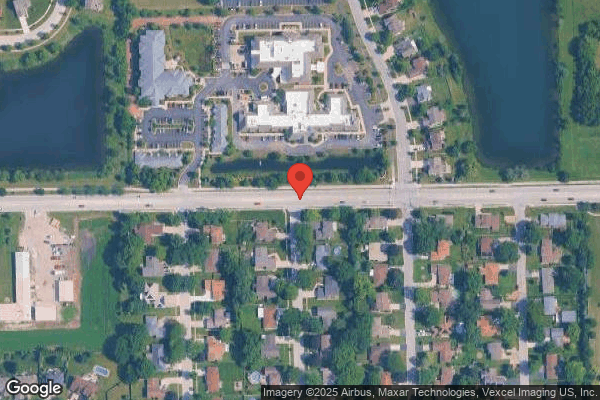

700 WEST BLACK ROAD, SHOREWOOD, IL 60404 (815) 230-8700
For profit - Corporation 50 Beds THE ALDEN NETWORK Data: November 2025
Trust Grade
75/100
#93 of 665 in IL
Last Inspection: September 2024

Within standard 12-15 month inspection cycle. Federal law requires annual inspections.

Overview

Alden Courts of Shorewood has a Trust Grade of B, indicating it's a good choice for families considering nursing homes. It ranks #93 out of 665 facilities in Illinois, placing it in the top half of state options, and #4 out of 16 in Will County, meaning only three local facilities rank higher. The facility is improving, having reduced its issues from 4 in 2023 to 3 in 2024. Staffing is a strength, with a turnover rate of 0%, which is significantly lower than the state average of 46%. On the downside, there were some concerning incidents, including a resident who suffered a fracture after a fall, indicating potential gaps in fall prevention, and issues with food sanitation and storage practices affecting all residents.

Trust Score
B
75/100
In Illinois
#93/665
Top 13%
Safety Record
Moderate
Needs review
Inspections
Getting Better
4 → 3 violations
Staff Stability
○ Average
Turnover data not reported for this facility.
Penalties
✓ Good
No fines on record. Clean compliance history, better than most Illinois facilities.
Skilled Nurses
✓ Good
Each resident gets 50 minutes of Registered Nurse (RN) attention daily — more than average for Illinois. RNs are trained to catch health problems early.
Violations
○ Average
10 deficiencies on record. Average for a facility this size. Mostly minor or procedural issues.
★★★★☆
4.0
Overall Rating
★★★☆☆
3.0
Staff Levels
★★☆☆☆
2.0
Care Quality
★★★★☆
4.0
Inspection Score
Stable
2023: 4 issues
2024: 3 issues

The Good

  • Full Sprinkler Coverage · Fire safety systems throughout facility
  • No fines on record

Facility shows strength in fire safety.

The Bad

Chain: THE ALDEN NETWORK

Part of a multi-facility chain

Ask about local staffing decisions and management

The Ugly 10 deficiencies on record

1 actual harm
Sept 2024 3 deficiencies 1 Harm
SERIOUS (G)

Actual Harm - a resident was hurt due to facility failures

Accident Prevention (Tag F0689)

A resident was harmed · This affected 1 resident

**NOTE- TERMS IN BRACKETS HAVE BEEN EDITED TO PROTECT CONFIDENTIALITY** Based on interview and record review the facility failed to provide adequate supervision and assistance to a resident during amb...

Read full inspector narrative →
**NOTE- TERMS IN BRACKETS HAVE BEEN EDITED TO PROTECT CONFIDENTIALITY** Based on interview and record review the facility failed to provide adequate supervision and assistance to a resident during ambulation who required moderate assistance from the staff. This failure resulted in R8 sustaining a fall, being hospitalized , and diagnosed with a fracture to her pubic rami and fourth proximal phalanx of the toe. This applies to 1 of 2 residents (R8) reviewed for falls in the sample of 12. The findings include: R8 is a [AGE] year old female with diagnoses that include Moderate Dementia, Sacroilitis, Spondylosis of the cervical and lumbar regions, and Osteoporosis. R8's admission Minimum Data Sheet (MDS) dated [DATE] showed that R8 to have severe cognitive impairment. The MDS also showed that R8 requires partial/moderate assistance where the helper lifts, holds, or supports trunk or limbs, but provides less than half the effort when ambulating. R8's fall risk assessments dated May 13, 2024 and June 12, 2024 showed R8 was at risk for falls. R8 also has a history of a fall at the facility on June 12, 2024. R8's June 12, 2024 incident report noted that R8 has a history dementia and demonstrates impaired memory and poor safety awareness. R8's final incident reportable dated July 15, 2024 showed the following: Staff were interviewed and staff stated that after dinner [R8] was coming out of the dining room and stopped to converse with the nurse and another resident. While enjoying the conversation, the resident turned her head causing her to lose her balance and began to fall towards her right side. Nurse present on the left side and assisted resident to the floor. The reportable futher showed R8 had a witnessed fall, resident had a sudden change in condition and was sent to the hospital via 911. Per the hospital, R8 was admitted with a comminuted fracture of left medial superior pelvis and left forth toe fracture. The report also showed that the facility found that the factors contributing to the fall include a recent change in condition, distracted while ambulating, gait imbalance, cognitive impairment and poor safety awareness. On September 10, 2024 at 3:49 PM, V11 (Assistant Director of Nursing) stated she does the fall investigations for the facility. V11 stated that R8 had a fall in the activity room on June 12, 2024. V11 further stated that on July 7, 2024, R8 was walking to her room with V10 (Certified Nursing Assistant/CNA)). V11 stated that between the dining room and the hallway, R8 stopped to talk to nurse and then turned to talk to another resident. V11 stated that R8 then lost her balance and fell. V11 stated that V4 (LPN) wasn't able to get to resident in time to ease the fall. On September 10, 2024 at 4:01 PM, V10 (CNA) stated that on July 7, 2024, R8 stated she had to go to the restroom. V10 stated she then put a gait belt around R8 before she stood R8 up from the chair in the dining room. V10 stated between the dining room and the doorway R8 stopped to talk to V4 (Licensed Practical Nurse/LPN). V4 stated she was on R8's right side and holding resident with left hand and V4 was on her left side. V4 stated she left R8 with the nurse and went to answer a call light that was going off not far from the nurse's station. V10 stated on her way back from answering the call light, R8 was still talking to V4. V10 stated she then saw that R8 was starting to fall, and V10 stated she started running towards R8 and V4. V10 stated that V4 tried to grab R8 and was only able to grip her shirt and R8 landed on her right side. V10 stated she always stays close by when ambulating R8 because she was aware R8 was a fall risk and required one assist. On September 10, 2024 at 4:16 PM and 4:48 PM, V4 (LPN) stated that R8 was walking from the dining room and V4 was walking in the same direction. V4 stated R8 stopped to talk to him. V4 stated that another resident was on R8's left side and R8 turned to talk to the other resident and started falling in that direction. V4 stated he was only able to grab R8's shirt and not able to reach the gait belt that was around the R8's waist. V4 stated he held R8 by the shirt but the momentum brought her to the ground. V4 stated he did not recall where V10 was just before the fall, but no one was holding onto the resident. V10 stated they use a gait belt for assisting residents with transfers and escorting residents for safety reasons. V10 further stated that they use gait belts for all ambulatory residents who are fall risks. V10 stated that someone should have been holding R8's gait belt while she was talking to him. V10 stated he has seen before that residents get distracted, turn their heads and attention to other people, or get startled by others then can lose their balance. On September 11, 2024 at 12:59 PM, V2 (Director of Nursing) stated partial/moderate assistance is considered to be hands on assistance for transfers and ambulation of people who require it. If partial/moderate assistance is required then a gait belt is required to secure the resident for their safety. V2 stated R8 requires hands on assistance and staff should be holding the gait belt when ambulating, standing, and transferring the resident. On September 11, 2024 at 1:52 PM V14 (Rehab Director/Occupational Therapist) V14 stated they use a gait belt for safety during ambulation, standing, and transfer. V14 stated that staff has to hold the gait belt if the level of assistance required is partial/moderate assist. V14 stated that a gait belt should be used for someone who requires partial/moderate assistance with ambulation for safety. V14 stated even if the resident can walk 100 feet, the gait belt should be used because the resident could fatigue, get dizzy, or their legs could buckle. R8's therapy notes on the morning of July 7, 2024 showed that while receiving therapy, R8 uses a rollator walker and required minimum assist to contact guard assistance. On September 11, 2024 at 2:10 PM, V14 stated that minimum assist to contact guard assist means that the resident has hands on assistance with verbal queuing due to fluctuations of ambulation performance. V14 further stated that minimum assist to contact assistance was provided to R8 for proper foot placement and gait to improve ambulation. During the same interview V14 stated that when R8 is in the nursing unit, the nursing staff should us a gait belt for R8's safety. On September 11, 2024 at 2:28 PM, V15 (Medical Director) stated that he expects the facility's staff to follow their policies and procedures, and the professional recommendations of the therapists. R8's progress note dated July 7, 2024 at 8:40 PM showed that resident had a witnessed fall at 5:00 PM and at this time being sent to the hospital via 911. R8's hospital emergency room report dated July 7, 2024 showed that R8's son reported the he got a call from the memory care that R8 had a fall earlier today. The fall was witnessed by a staff member, R8 landed on her buttock, and was complaining of some left hip pain. Then later in the day R8 was reporting some lightheadedness/dizziness and the facility checked her oxygen and it was 93% and then dropped to 80%. The report also mentions that R8 had a confirmed fourth distal phalanx fracture of the toe. R8's ambulatory skills care plan dated May 17, 2024 showed the following: R8 has impaired ambulatory skills with or on: Changing directions, level surfaces, speeding up or slowing down, turning around. The related Interventions/Tasks dated May 17 2024 showed: Assist and instruct resident/caregiver with safety awareness while ambulating. R8's fall risk care plan dated May 13, 2024 showed the following: R8 is at risk for falls related to weakness/deconditioning, potential medication side effects, bowel and bladder incontinence, cognitive impairment/dementia, history of fall with fracture, and need for external physical assistance and use of assistive devices (wheelchair/walker). R8's Computed Tomograpy (CT) Pelvis without contrast report dated July 8, 2024 for left hip pain showed the following: Acute comminuted fractures of the left medial superior and interior pubic rami. Associated left pelvic sidewall hemorrhage and intramuscular hematoma the left obturator internus and externus muscles. The facility's Gait Belt/Transfer Belt policy showed the following: To assist with a transfer or ambulation. A gait belt will be used with weight bearing residents who require hands on assistance.
CONCERN (D)

Potential for Harm - no one hurt, but risky conditions existed

Respiratory Care (Tag F0695)

Could have caused harm · This affected 1 resident

**NOTE- TERMS IN BRACKETS HAVE BEEN EDITED TO PROTECT CONFIDENTIALITY** Based on observation, interview and record review the facility failed to ensure that the oxygen was administered to the resident...

Read full inspector narrative →
**NOTE- TERMS IN BRACKETS HAVE BEEN EDITED TO PROTECT CONFIDENTIALITY** Based on observation, interview and record review the facility failed to ensure that the oxygen was administered to the residents as ordered by the physician. This applies to 2 of 2 residents (R2 and R95) reviewed for oxygen use in the sample of 12. The findings include: 1. R2 had multiple diagnoses including dementia without behavioral disturbance and senile degeneration of the brain, based on the face sheet. R2's significant change in status MDS (minimum data set) dated July 26, 2024 showed that the resident was moderately impaired with cognition and required total assistance from the staff with her ADLs (activities of daily living). On September 10, 2024 at 10:45 AM, R2 was in bed, alert and verbally responsive. R2's oxygen concentrator was running to deliver oxygen via nasal cannula to the resident. R2's nasal cannula was on her mouth and the oxygen gauge was set to deliver oxygen below 2 liters per minute which was confirmed by V4 (Licensed Practical Nurse). V4 reapplied R2's nasal cannula to the resident's nostrils and checked the resident's oxygen saturation which registered between 96% and 97%. R2 had no shortness of breath and the resident did not complain of respiratory distress. R2's active order summary report showed an order dated July 20, 2024 for, Oxygen per nasal cannula at 2 liters per minute continuous every night shift for hypoxia, on at HS (bed time). On September 10, 2024 at 11:03 AM, V4 (LPN) checked R2's active orders for oxygen and stated that based on the physician's order, R2 should receive 2 liters per minute of oxygen via nasal cannula only at night, to be applied before bed time and continuously while R2 is asleep. 2. R95 was admitted to the facility on [DATE] with multiple diagnoses including acute respiratory failure with hypoxia, pneumonia, dementia with behavioral disturbance and adult failure to thrive, based on the face sheet. R95's admission MDS dated [DATE] showed that the resident was severely impaired with cognition and required moderate to maximum assistance from the staff with most of her ADLs. On September 9, 2024 at 11:02 AM, R95 was sitting in her wheelchair inside her room. R95 was alert, verbally responsive with hard of hearing and was confused. R95 had an ongoing oxygen at 3 liters per minute using an oxygen concentrator. On September 10, 2024 at 10:26 AM, R95 was sitting in her wheelchair inside her room. R95 was alert, verbally responsive but confused. R95 had an ongoing oxygen at 3 liters per minute using an oxygen concentration which was confirmed by V4. R95 had no shortness of breath and the resident did not complain of respiratory distress. R95's active order summary report showed an order dated August 23, 2024 for, oxygen via nasal cannula at 2 liters per minute as needed for respiratory symptoms. R95's active oxygen therapy care plan initiated on September 5, 2024 showed multiple interventions including administration of oxygen as ordered by the physician. On September 10, 2024 at 11:00 PM, V4 checked R95's active orders for oxygen and stated that based on the physician's order, R95 should only receive 2 liters per minute, as needed. On September 11, 2024 at 9:32 AM, V2 (Director of Nursing) stated that oxygen should be delivered as ordered by the physician because oxygen therapy is considered as medication since it is prescribed by the physician. V2 stated that for R2, it was specifically ordered to be given only at night/at bedtime because the resident would complain of shortness of breath at night and based on the physician's order it should not be administered during the day, especially since R2 had not complained of shortness of breath and her oxygen saturation was stable and within normal limits, when it was checked by V4. V2 added that for R95, the order was to deliver 2 liters per minute as needed for shortness of breath. The facility's policy regarding oxygen concentrator dated September 2020 showed in-part, Residents will be administered oxygen via oxygen concentrator upon Physician's orders by an RN (Registered Nurse), LPN (Licensed Practical Nurse) or RT (Respiratory Therapist).
CONCERN (F)

Potential for Harm - no one hurt, but risky conditions existed

Food Safety (Tag F0812)

Could have caused harm · This affected most or all residents

Based on observation, interview and record review, the facility failed to ensure that the dishes were sanitized during high temperature dishwashing procedure. This applies to 42 residents that receive...

Read full inspector narrative →
Based on observation, interview and record review, the facility failed to ensure that the dishes were sanitized during high temperature dishwashing procedure. This applies to 42 residents that receive foods prepared and served from the facility kitchen. The findings include: The facility provided information that on September 09, 2024 the facility census was 43 residents with 1 resident on NPO (nothing by mouth) status. On September 09, 2024 at 01:49 PM, the high temperature dish machine was monitored in the presence of V6 (Executive Chef). V7 (Dietary Aide) and V8 (Dietary Aide) were at the dish machine washing dishes, one employee each on the dirty and clean side respectively. During the dishwashing procedure, the 'Wash' temperature fluctuated between 158-167 degrees Fahrenheit, the 'Rinse' temperature fluctuated between 157-171 degrees Fahrenheit, and the 'Final Rinse' temperature fluctuated between 144-163 Fahrenheit. When a test strip that was adhered to a washed dish was sent through the dish machine, it remained white color. V6 stated that they had tested the dish machine with a test strip that morning and it had turned black color. A 'Dish Machine Temperature Log' was seen posted on the wall and the same log showed 186 degrees Fahrenheit logged on September 09, 2024 for breakfast. The test strip was sent through the dish machine two more times after waiting several minutes between each test and the test strips remained white color and light gray respectively with the Final Rinse temperature setting continuing to fluctuate between 152-166 Fahrenheit. After another couple minutes, another test strip was sent again through the dish machine and this time it turned black and it was noted that the Final Rinse showed 188 degrees Fahrenheit for a second or two at that time. The Final Rinse temperatures continued to fluctuate at temperatures below 180 degrees Fahrenheit thereafter during the dish washing process and V8 was seen placing the just washed dishes away on the clean rack ready for service. V6 (Executive Chef) was notified that the Final Rinse should show 180 degrees Fahrenheit on a consistent basis for the dishes to be sanitized and the dishes that were just washed and put away on the clean rack when the Final Rinse was not 180 degrees Fahrenheit, will have to be rewashed. Test strips labeled 1-Temp Thermolabel' included as follows: 1. Remove label from sheet. 2. Adhere to clean, dry dish using clean hands 3. Run through was and final rinse cycles. 4. The gray/white temperature sensitive element will turn black if the dish has reached the rated temperature . On September 10, 2024 at 1:03 PM, when the the high temperature dish machine was revisited again V6 (Executive Chef) stated that he notified the company that services the dish machine on September 9, 2024 and they came in that morning (on September 10, 2024) and checked the dish machine and told the maintenance that they need to boost up the water temperature. Customer Service Report from the Dish machine servicing company dated September 10, 2024 showed as follows: 'When arrived, the Final Rinse would go as low as 152 temperature. Incoming water too low, incoming should be at 140 [degrees Fahrenheit]. Told maintenance man, he adjusted some valves. Now machine is hitting 187-180 degrees after 4 racks. On September 11, 2024 at 01:02 PM, V12 (Dish Machine Company Service Personnel) verified that he was the one who serviced the dish machine on September 10, 2024. V12 stated that when checked, the temperature of the incoming water was at around 100 degrees Fahrenheit, and it should be best at 140 degrees Fahrenheit in order to maintain the booster at 180 degrees Fahrenheit at the Final Rinse setting. V12 stated that V13 (Maintenance Director) adjusted the value at a different site at the facility in order to raise the water temperature up. On September 10, 2024 at 04:24 PM, V5 (Dietary Supervisor, Registered Dietitian) stated that the Final Rinse should be at 180 degrees Fahrenheit in order for the dishes to be sanitized. Facility Policy and Procedure Mechanical Washing Sanitation Testing (revised June, 2024) included as follows: Policy: Dish machine test strips will be used to verify the dish machine sanitation system is working correctly. Purpose: To reduce the risk of food borne illness. Procedure: 2. For high temperature sanitizing machine: Attach a 160-degree Fahrenheit test strip to clean, dry, cool dish; weave a 180-degree Fahrenheit test strip per manufacture's direction or run through the wash/rinse cycle with a maximum reading thermometer to determine if the sanitizing water reaches 180-degree Fahrenheit. 4. If the test strip does not turn the correct color, the above procedure should be repeated. If the test strip does not the appropriate color after multiple attempts, the dish machine should be evaluated for proper functioning before the dishes are washed.
Sept 2023 4 deficiencies
CONCERN (D)

Potential for Harm - no one hurt, but risky conditions existed

Accident Prevention (Tag F0689)

Could have caused harm · This affected 1 resident

**NOTE- TERMS IN BRACKETS HAVE BEEN EDITED TO PROTECT CONFIDENTIALITY** Based on observation, interview and record review, the facility failed to properly supervise a resident requiring supervision du...

Read full inspector narrative →
**NOTE- TERMS IN BRACKETS HAVE BEEN EDITED TO PROTECT CONFIDENTIALITY** Based on observation, interview and record review, the facility failed to properly supervise a resident requiring supervision during meals. This applies to 1 of 1 resident (R20) reviewed for supervision in a sample of 17. The findings include: On 08/29/2023 at 11:43 AM, R20 was in his room while the other residents and staff were in the dining room being served for lunch. Staff delivered R20's meal tray to his room. On 08/30/2023 at 12:11 PM, R20 was again observed with his meal tray in his room without any staff supervising him eating his meal. On 08/31/2023 at 8:41 AM, R20 was observed in his room with his meal tray without any supervision from staff. On 08/31/2023 at 10:38 AM, R20 had a straw in his beverage cup. The beverage cup had nectar thick written around the top rim of the cup. On 08/31/2023 at 10:43 AM, V11 (Certified Nurse Assistant/CNA) said R20 ate in his room and would take a long time to eat his food. V11 said he watches TV and gets distracted by the TV. V11 said she had not received any instructions on how R20 should be set up to eat. On 08/31/2023 at 12:17 PM, V10 (Registered Dietician) said R20 was on a nectar thick diet. V10 said R20 was supposed to have line of sight supervision with all meals and encouragement. V10 said R20 should be eating his meals in the dining room so that there is supervision for dysphagia and encouragement to eat meals. V10 said with the dysphagia diet, R20 was at an increased risk for choking. On 08/31/2023 at 12:31 PM, V13 (Director of Rehab Services) said R20 had aspiration precautions ordered for him. V13 said R20 was not supposed to use a straw and required line of sight supervision for intake. V13 said line of sight supervision meant staff should always be able to see the resident. On 08/31/2023 at 12:32 PM, V15 (CNA) delivered R20's meal tray to his room for lunch service. Staff did not provide supervision for R20. On 08/31/2023 at 12:42 PM, V2 (Director of Nursing) said line of sight supervision would mean the resident should be within view of the staff. V2 said if the resident had aspiration precautions, he or she should be observed during mealtimes. V2 said R20 should not be eating by himself in his room. On 08/31/2023 at 1:22 PM, R20 still had a straw in his nectar thick beverage cup. On 08/31/2023 at 1:29 PM, V9 (Unit Manager/Scheduling and Staffing) said anyone who was on a nectar thick diet should not use straws. V9 said R20 should not have a straw in his beverages and if they were on aspiration precautions, they could choke using a straw. On 08/31/2023 at 1:45 PM, V2 said if a resident was on aspiration precautions, they should not be using a straw. On 08/31/2023 at 2:09 PM, V2 said the facility did not have any policies on aspiration precautions or supervision with meals. V2 was unable to provide policies. R20's POS (Physician Order Sheet) showed an order for nectar thick consistency. R20's POS also shows directions for line of sight supervision during meals. R20's Nutrition assessment dated [DATE] showed R20 required line of sight supervision for eating. R20's progress note dated 07/11/2023 at 6:54 PM showed R20 requires supervision/line of sight at meals. R20's progress note dated 08/07/2023 at 10:15 AM showed R20 required supervision/line of sight at meals.
CONCERN (D)

Potential for Harm - no one hurt, but risky conditions existed

Deficiency F0804 (Tag F0804)

Could have caused harm · This affected 1 resident

Based on observation, interview, and record review, the facility failed to serve food at a safe temperature. This applies to 1 of 6 residents (R5) reviewed for pureed food temperatures in a sample of ...

Read full inspector narrative →
Based on observation, interview, and record review, the facility failed to serve food at a safe temperature. This applies to 1 of 6 residents (R5) reviewed for pureed food temperatures in a sample of 17. Findings include: On 8/30/23 at 11:17 AM, food temperatures were checked on the steam table in the facility's East pantry by V6 (Dietary Aide). The pureed potato measured 132 degrees F and the pureed vegetable measured 127 degrees F. At 11:25 AM, V6 said the pureed potato and pureed vegetable were not safe to serve, they must measure 135 degrees F. V6 then placed the pureed cornbread, pureed potato, pureed beef brisket, and pureed vegetable in the hot box. V6 said the hot box would reheat the foods placed inside. On 8/30/23 at 11:40 AM, V7 (Activity Aide) came into East pantry and asked V6 (Dietary Aide) for a pureed tray for R5. V6 then removed the pureed foods from the hot box and served pureed beef brisket, pureed vegetable, and pureed cornbread onto R5's plate. V6 then handed the plate to V7 and V7 turned to leave the pantry to bring the plate to R5. Surveyor then stopped V7 and asked V6 if he needed to recheck the temperatures. V6 said yes. V6 rechecked the temperatures with the following results: pureed beef-126 degrees F, pureed cornbread- 131 degrees F, and pureed vegetable- 128 degrees F. V6 said that plate was not safe to serve. On 8/31/23 at 11:08 AM, V8 (Dietary Supervisor) said foods on the steam table need to be held at 135 degrees or above. On 8/30/23 at 12:13 PM, V5 (Executive Chef) said the plate of pureed food should have been reheated prior to serving it to R5 to get rid of any risk of foodborne illness. The facility's policy titled, Flow of Hot Food from Preparation to Service revised 6/18 states, Policy: Hot food will be handled safely from preparation to resident service. Purpose: to reduce the risk of foodborne illness. Procedure: .3 .If hot food is below 135 degrees F it will be rapidly reheated to 165 degrees F .
CONCERN (F)

Potential for Harm - no one hurt, but risky conditions existed

Food Safety (Tag F0812)

Could have caused harm · This affected most or all residents

Based on observation, interview, and record review, the facility failed to properly label, date, seal, and store food items in the kitchen. This applies to all 44 residents that receive oral nutrition...

Read full inspector narrative →
Based on observation, interview, and record review, the facility failed to properly label, date, seal, and store food items in the kitchen. This applies to all 44 residents that receive oral nutrition and foods prepared in the facility kitchen. Findings include: The Facility Resident Census and Condition of Residents (Form CMS-Centers for Medicare and Medicaid Services-672) dated 8/29/23 documents the total census was 44 residents. On 8/30/23 at 1:40 PM, V1 (Administrator) said there are no NPO (Nothing by Mouth) residents. V1 said all 44 residents eat from the facility kitchen. On 8/29/23 starting at 10:15 AM, the facility kitchen was toured in the presence of V5 (Executive Chef). On 8/29/23 at 10:27 AM in the dry storage room, 1 large cardboard box of lasagna noodles was found opened and not sealed with the date cut-off. The date showed /17/23, the month was not shown. On 8/29/23 at 10:36 AM, in the walk-in refrigerator, 1-large cardboard box labeled green leaf lettuce with a pack date of August 1st was found. The lettuce was browning and wilted. On 8/29/23 at 10:36 AM, V5 (Executive Chef) said all food should have a received by date so the kitchen staff know when to use the foods by and V5 said the lettuce should be thrown away. On 8/29/23 at 10:42 AM, in the walk-in refrigerator the following was found: 1 large cardboard box with 2 bunches of browning celery with a pack date of July 24th. 1 pint of cherry tomatoes, not dated with white fuzz growing on underside of container. 1 large cardboard box of bagged baby spinach not dated. 1 large full cardboard box of browning/wilted celery bunches not dated. 4 cantaloupes in cardboard box, not dated. The following day, on 8/30/23 at 9:31 AM, the walk-in refrigerator was again toured in the presence of V5 (Executive Chef). The wilted and browning celery and lettuce were still in the refrigerator as well as the pint of cherry tomatoes with white fuzz on it. The walk-in refrigerator also had 2 large cardboard boxes of 24 count cucumbers with no date on either box. At 9:34 AM, 2 large trays of not labeled, dated, or covered cut lemon cake were observed on racks in the refrigerator. On 8/30/23 at 9:26 AM, V5 said the vegetables that were observed the day before were still in the refrigerator, that he had not thrown them out yet. V5 said all food should have a label and date so the kitchen staff know when food should be thrown away to prevent foodborne illness. On 8/31/23 at 10:46 AM, V8 (Dietary Supervisor) said all foods should be labeled and dated to prevent spoiled food from being given to the residents and making them sick. V8 said all foods need to be sealed to prevent contamination. On 8/31/23 at 11:53AM, V5 (Executive Chef) said according to the FDA (Food and Drug Administration) Food Keeper Application, celery is safe to store in the refrigerator and serve for 1-2 weeks and lettuce is safe to store in the refrigerator and serve for 3-7 days. The facility's policy titled, Labeling and Dating revised 7/23 states, Policy: Ready-to-eat time/temperature control for safety foods may be stored in the refrigerator .for 7 days. Purpose: To reduce the risk of food borne illness. Procedure: .4. Ready-to-eat PHF (Potentially Hazardous Food) may be kept for 7 days in the refrigerator .6 Based on the food item, which each have a different shelf life the facility will discard any food item that shows signs of spoilage. Facility will review USDA Food Keeper app to determine how long that food can be stored for. The facility's undated policy titled, Handling of Fresh Fruits & Vegetables states, Policy: fresh fruits and vegetables will be stored and handled to maintain healthful standards. Purpose: to reduce the risk of and the spread of infestation and food borne illness. Procedure: .2. Fruits and vegetables will have a delivery or packed date noted on container or package which serve as delivery date 7. Based on the fruit or vegetable, which each have a different shelf life the facility will discard any fresh fruits or vegetables that show signs of spoilage. Facility will review FDA (Food and Drug Administration) Food Keeper app to determine how long fresh fruit or vegetable can be used for.
CONCERN (F)

Potential for Harm - no one hurt, but risky conditions existed

Antibiotic Stewardship (Tag F0881)

Could have caused harm · This affected most or all residents

Based on interview and record review, the facility failed to utilize an appropriate standardized tool/system to justify or warrant the necessity of an antibiotic. This applies to 8 of 8 residents (R1,...

Read full inspector narrative →
Based on interview and record review, the facility failed to utilize an appropriate standardized tool/system to justify or warrant the necessity of an antibiotic. This applies to 8 of 8 residents (R1, R4, R11, R12, R13, R17, R26, R27) reviewed for antibiotic stewardship in a sample of 17 and has the potential to affect all residents. The findings include: 1. R1's face sheet documents an admission date of 7/15/20. R1's POS (Physician Order Sheet) for May 2023 documents orders of the following antibiotics: Cefuroxime Axetil Oral Tablet 500 MG (Milligrams): Give 1 tablet by mouth two times a day for UTI (Urinary Tract Infection) for 7 days. Diflucan Oral Tablet 100 MG (Fluconazole): Give 1 tablet by mouth one time a day for Vaginal Discharge for 7 days. R1's Lab Results Reports for urine cultures for 5/11/23 and 5/14/23 shows positive for Klebsiella oxytoca. 2. R4's face sheet documents an admission date of 12/15/22. R4's POS for June 2023 shows an order of Amoxicillin-Potassium Clavulanate Tablet 500-125 MG: Give 1 tablet by mouth two times a day for UTI for 5 days. R4's Lab Results Reports for urine culture for 6/9/23 shows positive for Enterococcus. 3. R11's face sheet documents an admission date of 4/12/29. R11's POS for April 2023 shows an order of Ciprofloxacin HCL Ophthalmic Solution 0.3%: Instill 1 drop in left eye every 6 hours for Conjunctivitis for 5 days. 4. R12's face sheet documents an admission date of 6/8/23. R12's POS for July 2023 shows an order for Levaquin Tablet 500 MG (Levofloxacin): Give 1 tablet by mouth one time a day for UTI for 7 days. R12's Lab Results Reports for urine culture for 7/14/23 shows positive for Escherichia. 5. R13's face sheet documents an admission date of 11/17/21. R13's POS for August 2023 shows an order for Levaquin 500 MG: Give 1 tablet by mouth one time a day for infection for 10 days order. 6. R17's face sheet documents an admission date of 4/26/23. R17's POS for August 2023 shows an order of Doxycycline Hyclate Oral Capsule 100 MG: Give 1 capsule by mouth two times a day for left heel wound for 14 days. R17's Lab Results Report for the wound culture many gram-positive cocci---Streptococcus Agalactiae (Group B). 7. R26's face sheet documents an admission date of 1/18/21. R26's POS for August 2023 documents an order of Macrobid Oral Capsule 100 MG (Nitrofurantoin Monohyd Macro): Give 1 capsule by mouth two times a day for UTI for 3 days. R26's Lab Results Reports for urine culture for 7/28/23 shows positive for Enterococcus. 8. R27's face sheet documents an admission date of 6/2/21. R27's POS for March 2023 documents an order for Amoxicillin-Potassium Clavulanate Tablet 500-125 MG. Give 1 tablet by mouth one time a day for UTI for 5 days. R27's urine culture report for 3/2/23 shows positive for Klebsiella. Review of R1, R4, R11, R12, R13, R17, R26, and R27's electronic medical record and facility's infection control binder did not contain a standardized tool, such as McGreer's critieria to justify the necessity of the antibiotics. On 8/30/23 at 1:41 PM, V2 (Director of Nursing/Infection Preventionist) stated I don't have McGreer's criteria for these residents. Yes, there should be one. I didn't get time to start the McGreer's criteria on all the residents who were put on antibiotics in August. We don't have a policy regarding McGreer's criteria. I don't have an ADON (Assistant Director of Nursing) to help me. The facility was unable to provide a specific policy regarding a standardized screening tool, such as the McGreer's tool, to track antibiotics and appropriately treat infections. Facility's Policy titled Infection Prevention and Control Program (4/2021) documents: It is the policy that the facility's Infection Prevention and Control Program (IPCP), is based upon information from the Facility Assessment and follows national standards and guidelines to prevent, recognize, and control the onset and spread of infection whenever possible. The infection Prevention and Control Program includes: 3. An antibiotic stewardship program that uses antibiotic protocols and a system to monitor antibiotic use. Antibiotic Stewardship and review include reviewing data to monitor the appropriate use of antibiotics in the resident population. F. Monitor antibiotic use to help determine if appropriate.
Sept 2022 3 deficiencies
CONCERN (D)

Potential for Harm - no one hurt, but risky conditions existed

Deficiency F0558 (Tag F0558)

Could have caused harm · This affected 1 resident

**NOTE- TERMS IN BRACKETS HAVE BEEN EDITED TO PROTECT CONFIDENTIALITY** Based on observation, interview, and record review, the facility failed to follow their policy and ensure a resident had their c...

Read full inspector narrative →
**NOTE- TERMS IN BRACKETS HAVE BEEN EDITED TO PROTECT CONFIDENTIALITY** Based on observation, interview, and record review, the facility failed to follow their policy and ensure a resident had their call light in reach at all times. This applies to 1 of 1 resident (R234) reviewed for call lights in a sample of 12. The findings include: R234's EMR (Electronic Medical Record) showed R234 was admitted to the facility on [DATE] with diagnoses including chronic kidney disease, chronic obstructive pulmonary disease, muscle weakness, and dementia. Facility documentation titled Medicare/Managed Care Progress Note, dated September 6, 2022, by V14 (LPN/Licensed Practical Nurse) showed R234 was alert and oriented times two to three and able to make needs. R234's ADL (Activities of Daily Living) care plan dated September 6, 2022, showed R234 has and ADL self-care performance deficit. The care plan continued to show multiple interventions dated September 6, 2022, included assist with ADL tasks as needed. R234's fall care plan dated September 6, 2022, showed R234 is at high risk for falls. The care plan continued to show multiple interventions including promote placement of call light within reach. On September 12, 2022, at 11:32 AM, R234's room door was closed and R234 was sitting in her room, in a chair. R234's call light was on R234's bed, 5 feet away from R234, and out of R234's reach. R234 said, I cannot reach my call light. If I need help then I just go to sleep. On September 13, 2022, at 9:09 AM, R234 was sitting in her room, in a chair. R234's call light was on R234's bed, 5 feet away from R234, and out of R234's reach. On September 13, 2022, at 2:45 PM, R234 was sitting in her room, in a chair. R234's call light was on R234's bed, 5 feet away from R234, and out of R234's reach. On September 14, 2022, at 9:14 AM, R234 was sitting in her room, in a chair. R234's call light was on R234's bed, 5 feet away from R234, and out of R234's reach. On September 14, 2022, at 9:23 AM, V2 (DON/Director of Nursing) said, A resident's call light should always be within reach of the resident. On September 14, 2022, at 9:38 AM, V14 (LPN) said, [R234] cannot get out of her chair by herself. If [R234] is in the chair she cannot reach her bed. The facility's policy titled Call Light, Use of dated September 2020, showed, Purpose: 1. To respond promptly to resident's call for assistance. Procedure: 1. All facility personnel must be aware of call lights at all times . 6. Orient all new residents to the call light at the bedside as well as the call light in the bathroom and in the shower or tub rooms. Have the resident demonstrate the use of the call light to be sure he/she understands your instructions. 7. Be sure call lights are placed within resident reach at all times.
CONCERN (D)

Potential for Harm - no one hurt, but risky conditions existed

Medication Errors (Tag F0758)

Could have caused harm · This affected 1 resident

**NOTE- TERMS IN BRACKETS HAVE BEEN EDITED TO PROTECT CONFIDENTIALITY** Based on observation, interview, and record review, the facility failed to follow their policy to obtain a consent when an order...

Read full inspector narrative →
**NOTE- TERMS IN BRACKETS HAVE BEEN EDITED TO PROTECT CONFIDENTIALITY** Based on observation, interview, and record review, the facility failed to follow their policy to obtain a consent when an order was received to increase a psychotropic medication dosage. The facility also failed to document targeted behaviors for an as needed psychotropic medication. This applies to 1 of 5 residents (R28) reviewed for psychotropic medications in a sample of 12. The findings include: R28's EMR (Electronic Medical Record) showed R28 was admitted to the facility on [DATE], with multiple diagnoses including left femur osteomyelitis, dementia without behavior disturbance, anxiety disorder, and depression. R28's MDS (Minimum Data Set) dated September 7, 2022, showed R28 was cognitively intact. The MDS continued to show during the review period, R28 did not exhibit behaviors. R28's psychotropic medication care plan initiated on June 23, 2022, showed R28 is receiving alprazolam (antianxiety medication) and sertraline (antidepressant medication), psychotropic medication. Noted with behavior or mood issues of restlessness and sadness. The care plan continued to show multiple interventions dated June 24, 2022, including document mood and behaviors as needed as they occur, and obtain informed consent prior to initiation of medication or increase in dosages. On September 12, 2022, at 11:52 AM, R28 was in his room, lying in bed. R28 was calm, cooperative, and behaved appropriately during interaction with surveyor. R28's September 2022 MAR (Medication Administration Record) showed R28 was receiving alprazolam tablet 0.5 mg, give one tablet by mouth every eight hours as needed for agitation/anxiety related to anxiety disorder, ordered September 1, 2022. R28 received as needed doses of alprazolam on September 5, 2022, September 8, 2022, and September 14, 2022. The MAR continued to show R28 was receiving sertraline 50 mg tablet, give one tablet by mouth one time a day related to depression, ordered September 1, 2022, and discontinued on September 12, 2022. The MAR showed an increase in R28's sertraline to 100 mg by mouth one time a day related to depression, ordered on September 12, 2022. The MAR continued to show R28 received the sertraline 100 mg on September 13, 2022, and September 14, 2022. Facility document titled Combined Medication Informed Consent Form: Psychotropic Medications- Updated 12/2018 dated August 2, 2022, by V2 (DON/Director of Nursing) showed consent was obtained for the following medications: alprazolam 0.5 mg every eight hours as needed, alprazolam 0.5 mg every night, and sertraline 50 mg once daily. The facility did not have documentation to show consent was obtained for sertraline 100 mg prior to R28 receiving the increased medication dose. The facility did not have physician documentation to show why the sertraline dosage was increased. Review of R28's progress notes from September 1, 2022 through September 14, 2022, does not show any documentation of R28 having behaviors. Review of R28's behavior charting from September 1, 2022 to September 14, 2022, does not show R28 was having behaviors prior to receiving the as needed alprazolam. On September 14, 2022, at 9:18 AM, V2 said, Consent should be obtained when there is an increase in a psychotropic medication. Consent is obtained prior to giving the increased medication. Facility policy titled, Psychotropic Medications- Use of, dated September 2020, showed Purpose: To establish a standardized system to inform residents and/or their responsible parties about psychotropic medications and their side effects. Policy: 1. A resident will not receive psychotropic medications unless behavioral programming and/or environmental changes have failed to sufficiently modify a resident's target behavioral disturbance. A resident will not receive psychotropic medications unless such a medication is needed to treat a specific condition and each psychotropic medication will be given to treat clearly defined target behaviors. 2. Consistent monitoring of all target behaviors will be done to assist in the assessment of the risks and benefits of psychotherapy drug therapy . Documentation: Prior to the administration of an antipsychotic medication, the following must be documented . 2. Target behaviors will be identified with supporting documentation in the clinical record . 4. Residents who display target behaviors will be identified with supporting documentation in the clinical record . Consent: 1. For each psychotropic medication ordered either a verbal or a written consent from the resident or the resident's responsible party will be obtained prior to initiation of the medication. Consent will not be obtained for a dosage decrease . 4. The resident and/or resident's responsible party will be notified regarding any changes in medication dosage; this information will be documented in the resident's medical records.
CONCERN (E)

Potential for Harm - no one hurt, but risky conditions existed

Menu Adequacy (Tag F0803)

Could have caused harm · This affected multiple residents

Based on observation, interview, and record review, the facility failed to serve correct portion sizes of Italian Sausage Rotini as shown on the diet spreadsheet for regular and mechanical soft diets....

Read full inspector narrative →
Based on observation, interview, and record review, the facility failed to serve correct portion sizes of Italian Sausage Rotini as shown on the diet spreadsheet for regular and mechanical soft diets. This applies to 4 of 4 residents (R19, R21,R29, R184) reviewed for dining in the sample of 12. The findings include: On 09/12/22 starting at 11:55 AM the lunch meal service was observed in the facility dining room, V8 and V9 (dietary aides) served 2 scoops (4 oz/ounce per scoop, a total of 8 oz) of Italian Sausage Rotini to R29, R21, R19, R184. Diet spread sheet for 9/12/22 (cycle day 2) showed residents on Regular and Mechanical soft diets should receive one and half cup (1-1/2 cups, 12 oz) of Italian Sausage Rotini. On 09/12/22 at 12:53 PM, V7 (Dietitian) stated that the residents on Regular and Mechanical soft consistencies should have received three 4 oz scoops (12 oz) as shown on the diet spreadsheet. Facility Recipe for Pasta Rotini Italian Sausage included portion size 1-1/2 cup Facility Diet Type Report included that R21 and R29 are on Regular diets and R19 and R184 are on Mechanical soft diet.
Understanding Severity Codes (click to expand)
Life-Threatening (Immediate Jeopardy)
J - Isolated K - Pattern L - Widespread
Actual Harm
G - Isolated H - Pattern I - Widespread
Potential for Harm
D - Isolated E - Pattern F - Widespread
No Harm (Minor)
A - Isolated B - Pattern C - Widespread

Questions to Ask on Your Visit

  • "Can I speak with families of current residents?"
  • "What's your RN coverage like on weekends and overnight?"

Our Honest Assessment

Strengths
  • • No fines on record. Clean compliance history, better than most Illinois facilities.
Concerns
  • • 10 deficiencies on record, including 1 serious (caused harm) violation. Ask about corrective actions taken.
Bottom line: Generally positive indicators. Standard due diligence and a personal visit recommended.

About This Facility

What is Alden Courts Of Shorewood's CMS Rating?

CMS assigns ALDEN COURTS OF SHOREWOOD an overall rating of 4 out of 5 stars, which is considered above average nationally. Within Illinois, this rating places the facility higher than 99% of the state's 100 nursing homes. This rating reflects solid performance across the metrics CMS uses to evaluate nursing home quality.
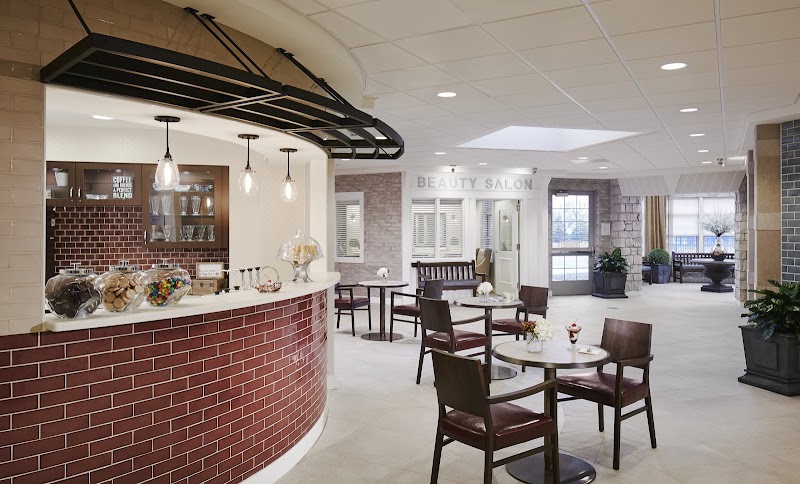
How is Alden Courts Of Shorewood Staffed?

CMS rates ALDEN COURTS OF SHOREWOOD's staffing level at 3 out of 5 stars, which is average compared to other nursing homes.

What Have Inspectors Found at Alden Courts Of Shorewood?

State health inspectors documented 10 deficiencies at ALDEN COURTS OF SHOREWOOD during 2022 to 2024. These included: 1 that caused actual resident harm and 9 with potential for harm. Deficiencies causing actual harm indicate documented cases where residents experienced negative health consequences.

Who Owns and Operates Alden Courts Of Shorewood?

ALDEN COURTS OF SHOREWOOD is owned by a for-profit company. For-profit facilities operate as businesses with obligations to shareholders or private owners. The facility is operated by THE ALDEN NETWORK, a chain that manages multiple nursing homes. With 50 certified beds and approximately 43 residents (about 86% occupancy), it is a smaller facility located in SHOREWOOD, Illinois.
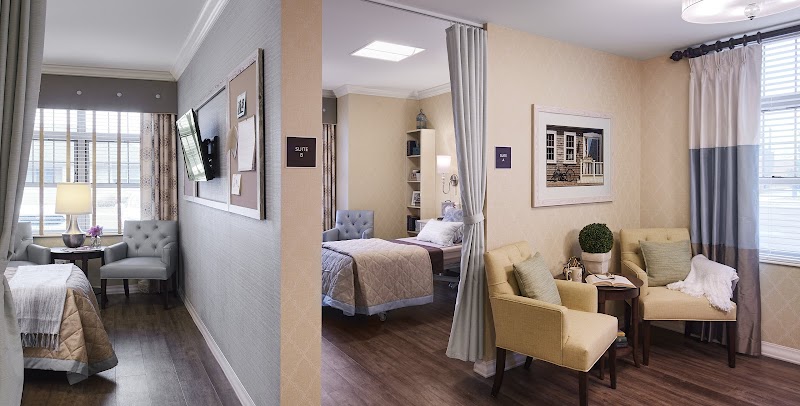
How Does Alden Courts Of Shorewood Compare to Other Illinois Nursing Homes?

Compared to the 100 nursing homes in Illinois, ALDEN COURTS OF SHOREWOOD's overall rating (4 stars) is above the state average of 2.5 and health inspection rating (4 stars) is above the national benchmark.

What Should Families Ask When Visiting Alden Courts Of Shorewood?

Based on this facility's data, families visiting should ask: "Can I visit during a mealtime to observe dining assistance and food quality?" "How do you handle medical emergencies, and what is your hospital transfer rate?" "Can I speak with family members of current residents about their experience?"

Is Alden Courts Of Shorewood Safe?

Based on CMS inspection data, ALDEN COURTS OF SHOREWOOD has a clean safety record: no substantiated abuse findings (meaning no confirmed cases of resident harm), no Immediate Jeopardy citations (the most serious violation level indicating risk of serious injury or death), and is not on the Special Focus Facility watch list (a federal program monitoring the lowest-performing 1% of nursing homes). The facility has a 4-star overall rating and ranks #1 of 100 nursing homes in Illinois. While no facility is perfect, families should still ask about staff-to-resident ratios and recent inspection results during their visit.

Do Nurses at Alden Courts Of Shorewood Stick Around?

ALDEN COURTS OF SHOREWOOD has not reported staff turnover data to CMS. Staff turnover matters because consistent caregivers learn residents' individual needs, medications, and preferences. When staff frequently change, this institutional knowledge is lost. Families should ask the facility directly about their staff retention rates and average employee tenure.

Was Alden Courts Of Shorewood Ever Fined?

ALDEN COURTS OF SHOREWOOD has no federal fines on record. CMS issues fines when nursing homes fail to meet care standards or don't correct problems found during inspections. The absence of fines suggests the facility has either maintained compliance or corrected any issues before penalties were assessed. This is a positive indicator, though families should still review recent inspection reports for the full picture.

Is Alden Courts Of Shorewood on Any Federal Watch List?

ALDEN COURTS OF SHOREWOOD is not on any federal watch list. The most significant is the Special Focus Facility (SFF) program, which identifies the bottom 1% of nursing homes nationally based on persistent, serious quality problems. Not being on this list means the facility has avoided the pattern of deficiencies that triggers enhanced federal oversight. This is a positive indicator, though families should still review the facility's inspection history directly.