WARREN BARR LIEBERMAN


9700 GROSS POINT ROAD, SKOKIE, IL 60076 (847) 674-7120
For profit - Limited Liability company 240 Beds LEGACY HEALTHCARE Data: November 2025
Trust Grade
60/100
#192 of 665 in IL
Last Inspection: May 2025

Inspected within the last 6 months. Data reflects current conditions.

Overview

Warren Barr Lieberman has a Trust Grade of C+, indicating that it is slightly above average but not exceptional. It ranks #192 out of 665 facilities in Illinois, placing it in the top half, and #60 out of 201 in Cook County, meaning there are only a few local options that are better. However, the facility is experiencing a worsening trend, with issues increasing from 2 to 6 in the past year. Staffing is a concern, rated at 2 out of 5 stars, with a turnover rate of 46%, which is average for the state but indicates instability. The facility has incurred $38,805 in fines, which is average, but some recent inspector findings raise red flags. For instance, there were serious concerns about inadequate monitoring and treatment of residents with skin wounds, leading to worsening conditions. Additionally, infection control procedures were not adequately followed during a COVID-19 outbreak, which could impact all residents. Lastly, there were issues with food safety management, as several resident refrigerators had not been checked for proper temperature for an extended period. Overall, while there are strengths in some areas, significant weaknesses need attention.

Trust Score
C+
60/100
In Illinois
#192/665
Top 28%
Safety Record
Moderate
Needs review
Inspections
Getting Worse
2 → 6 violations
Staff Stability
⚠ Watch
46% turnover. Above average. Higher turnover means staff may not know residents' routines.
Penalties
○ Average
$38,805 in fines. Higher than 66% of Illinois facilities. Some compliance issues.
Skilled Nurses
○ Average
Each resident gets 39 minutes of Registered Nurse (RN) attention daily — about average for Illinois. RNs are the most trained staff who monitor for health changes.
Violations
⚠ Watch
26 deficiencies on record. Higher than average. Multiple issues found across inspections.
★★★★☆
4.0
Overall Rating
★★☆☆☆
2.0
Staff Levels
★★☆☆☆
2.0
Care Quality
★★★★☆
4.0
Inspection Score
Stable
2024: 2 issues
2025: 6 issues

The Good

  • Full Sprinkler Coverage · Fire safety systems throughout facility
  • No fines on record

Facility shows strength in fire safety.

The Bad

Staff Turnover: 46%

Near Illinois avg (46%)

Higher turnover may affect care consistency

Federal Fines: $38,805

Above median ($33,413)

Moderate penalties - review what triggered them

Chain: LEGACY HEALTHCARE

Part of a multi-facility chain

Ask about local staffing decisions and management

The Ugly 26 deficiencies on record

1 actual harm
May 2025 6 deficiencies
CONCERN (D)

Potential for Harm - no one hurt, but risky conditions existed

ADL Care (Tag F0677)

Could have caused harm · This affected 1 resident

**NOTE- TERMS IN BRACKETS HAVE BEEN EDITED TO PROTECT CONFIDENTIALITY** Based on observation, interview, and record review the facility failed to ensure that the facial hair of a female resident who n...

Read full inspector narrative →
**NOTE- TERMS IN BRACKETS HAVE BEEN EDITED TO PROTECT CONFIDENTIALITY** Based on observation, interview, and record review the facility failed to ensure that the facial hair of a female resident who needs assistance with Activity of Daily Living (ADL) is shaved. This deficiency affects one (R9) of three residents in the sample of 35 reviewed for ADL care program. Findings include: On 5/6/25 at 11:44AM, Observed R9 sitting in her chair. She is alert, oriented and able to verbalize needs to staff. R9 has visible facial hair over her jaw line and chin area. R9 said that they don't shave her facial hair. R9 said, she cannot do it by herself and needs assistance from staff. Showed observation to V16 LPN (Licensed Practical Nurse). V16 said that CNA should remove /shave facial hair when providing ADLs (Activity of daily living) to R9. On 5/6/25 at 11:50AM, Informed V4 4th floor unit manager/Infection Preventionist of above concern. V4 said that the CNA is responsible for shaving/removing facial hair. On 5/7/25 at 10:05AM, Observed R9 sitting in her chair. Observed that R9 still have facial hair. R9 said that they still have not shaved her facial hair, as she touches her face. Showed observation to V26 LPN. Informed V26 that R9 complaint yesterday with V16 LPN that her facial hair not being shaved. V26 said that she will take care of it today. On 5/8/25 at 1:13PM, Informed V2 DON (Director of Nursing) of above concern. Review R9's medical records with V2. R9 is admitted on [DATE] with diagnosis listed in part but not limited to Type 2 Diabetes Mellitus, Morbid Obesity, Glaucoma, Osteoarthritis. MDS/Resident assessment dated [DATE] Section C Cognitive patterns C0500 BIMS (Brief Interview for Mental Status) score indicated score of 12. Section GG Functional abilities GG0130 Self-care Personal hygiene coded 4 indicated needs supervision or touching assistance. Comprehensive care plan indicated R9 has an ADL self-care performance deficit and impaired mobility. Informed V2 DON that no intervention indicated for personal hygiene and grooming in care plan for ADLs. Facility's policy on ADL (Activity of daily Living) care revised 8/6/24 indicated: ADL care is provided for each resident in the facility in accordance with the resident's comprehensive assessment and care plan to identify, evaluate and intervene to maintain, improve, or prevent an avoidable decline in ADLs. Interpretation and implementation: 2. Nurses and CNAs are trained in providing general/routine ADL care to the residents. 4. ADL nursing care is performed daily for the residents based on the comprehensive assessment, plan of care, physician orders as well as ADL documentation on various shifts. Such care may include as appropriate but is not limited to: h. Daily assistance in eating, grooming/hygiene, transfer, locomotion, and mobility. Facility's policy on General Care revised on 7/30/24 indicated: Policy statement: It is the facility's policy to provide care for every resident to meet their needs. AROM Program fatigue, impaired balance, physical inactivity
CONCERN (D)

Potential for Harm - no one hurt, but risky conditions existed

Tube Feeding (Tag F0693)

Could have caused harm · This affected 1 resident

**NOTE- TERMS IN BRACKETS HAVE BEEN EDITED TO PROTECT CONFIDENTIALITY** Based on observation, interview, and record review the facility failed to ensure enteral feeding bag is properly labeled before ...

Read full inspector narrative →
**NOTE- TERMS IN BRACKETS HAVE BEEN EDITED TO PROTECT CONFIDENTIALITY** Based on observation, interview, and record review the facility failed to ensure enteral feeding bag is properly labeled before administration affecting 1 of 2 residents (R111) reviewed for enteral feeding care in a total sample of 35. Findings Include: On 5/6/2025 at 11:40 AM, R111's enteral (tube) feeding (TF) infusing. TF bag labeled with 5/6/25 date and time 7:00AM. On 5/6/2025 at 11:50 AM, V19 (MDS/CP Coordinator) said TF bag should be labeled with resident's name, formula name and nurse initial. On 5/7/2025 at 9:29 AM, V2 (Director of Nursing) said TF bag should be labeled with resident name, feeding formula, rate, and start date and time. V2 also said TF bag label should be initialed by the nurse that initially hung the feeding. Review of records read: admission Record/Date: 4/27/2025, Diagnosis Information: Gastrostomy Status; Dysphagia following Cerebral Infarction; Order Review Report/ Order Summary- Enteral Feed order every shift Enteral feeding- Tube type: Gastrostomy Tube, [NAME] Farms 1.4, 40cc/hr, start date: 4/29/2025; Care Plan, 5/2/2023 Focus: R111 has risk for infection related to presence of enteral tube. Interventions: Give medications and treatments as ordered Policy and Procedure Name: Enteral Tube Feeding Care, Revised 7/26/24 Policy Statement Enteral Tube- is an avenue of feeding and hydration nutritional support via gastrostomy route. Procedure 3. Check that Feeding bag is properly labeled to include: a. Resident's name b. Formula (if it is not a closed system) and rate of feeding administration. c. Date and time feeding was started.
CONCERN (D)

Potential for Harm - no one hurt, but risky conditions existed

Deficiency F0761 (Tag F0761)

Could have caused harm · This affected 1 resident

Based on observation, interview, and record review the facility failed to ensure Medication refrigerator with controlled medication is locked in the medication room. This deficiency affects one of thr...

Read full inspector narrative →
Based on observation, interview, and record review the facility failed to ensure Medication refrigerator with controlled medication is locked in the medication room. This deficiency affects one of three medication rooms reviewed for Safe medication storage. Findings include: On 5/6/25 at 9:56AM, Checked Medication storage room with V14 LPN (Licensed Practical Nurse). V14 said that they have controlled medications in the refrigerator. Observed Medication refrigerator is unlocked. V14 said that it should be kept always locked. V14 said that the other nurse left is opened. On 5/6/25 at 10:45AM, Informed V2 DON (Director of Nursing) of above concerns. V2 said that the medication refrigerator should be locked. Facility's policy on Medication storage, Labeling and Disposal revised 8/16/24 indicated: Policy statement: it is the facility's policy to comply with federal regulations in storage, labeling and disposal of medications. Procedures: 4. Medications will be secured in locked storage area. 5. Scheduled 2 medications will be double-locked (example placed in a locked medication cart inside a locked controlled medication box, placed in a refrigerator with 2 separate locks if the medication requires refrigeration or placed in a locked medication room inside a locked refrigerator if the scheduled 2 medication requires refrigeration).
CONCERN (E)

Potential for Harm - no one hurt, but risky conditions existed

Deficiency F0554 (Tag F0554)

Could have caused harm · This affected multiple residents

**NOTE- TERMS IN BRACKETS HAVE BEEN EDITED TO PROTECT CONFIDENTIALITY** Based on observation, interview, and record review the facility failed to ensure that no medication should be left at resident's...

Read full inspector narrative →
**NOTE- TERMS IN BRACKETS HAVE BEEN EDITED TO PROTECT CONFIDENTIALITY** Based on observation, interview, and record review the facility failed to ensure that no medication should be left at resident's bedside without physician order. The facility also failed to follow its policy in resident self-administration of medication. This deficiency affects all four (R71, R103, R116 and R177) residents in the sample of 35 reviewed for Medication Safety. Findings include: On 5/6/25 at 12:43PM, Observed V17 LPN (Licensed Practical Nurse) preparing medication for R116. V17 said that R116's eye drop medication is at bedside. V17 said that R116 is alert and oriented x 3. V17 said that she usually keeps the eye drops and take it by herself. Observed Refresh eye drop 1 vial (individual dosage) and 1 bottle of Calcium chewable extra strength 750mg on top of R116's bedside tray table. R116 said that her family bought these medications, and she keeps at bedside because the nurses are forgetting to give her medications. She took her eye drops and calcium this morning around 9am because the nurse did not give her medications. V17 LPN is at the bedside and did not response to R116. V17 administered prepared medication including the refresh eye medication at bedside. On 5/6/25 at 12:55PM, V17 LPN said that R116 does not have physician order to keep medications at bedside. On 5/6/25 at 12:58PM, V28 Wound care nurse opened the treatment cart and gave the Voltaren gel house stock to V17 LPN that they use for residents on 4th floor. V17 said that they use the Voltaren house stock and shared it with residents on the 4th floor. Surveyor and V17 went to R177's room to administer Voltaren cream medication but R177 refused. Observed 2 bottle of artificial tears and 3 opened albuterol sulfate inhalers, I box of unopened albuterol sulfate inhaler, 1 Vicks vapor rub. R177 said that she has been keeping these medications at bedside. R177 said that she uses all these medications as needed. R177 said that she uses the Vicks frequently at night. On 5/6/25 at 1:02PM, V9 Nurse Supervisor said that they can keep medication at bedside if there is an order from physician. V17 LPN said that R177 has no physician order to keep medications at bedside. On 5/6/25 at 2:13pm Informed above concerns with V2 DON. V2 said that medication cannot be left at bedside without physician order. If resident wants to self-administer her medications, the IDT (Interdisciplinary team) team will assess resident for self-medication administration and will develop care plan. V2 said that the Voltaren cream house stock should not be shared by residents on the 4th floor. Each resident should have each own medication cream. On 5/7/25 at 9:09AM, V22 RN tried to administer the prepared medication to R71. R71 said that she likes her tums at bedside. She asked V22 to get her tums placed in plastic food container with no label. R71 is alert and oriented x 3. R71 said that she has been taking her tums at bedside daily after breakfast. R71 said that she asked them to place her tums in the plastic container so it's easy for her to get the medication. R71 said that the empty bottle of tums is in the bedside drawer. V22 took the empty bottle of tums indicated Tums chewy bites extra strength 750mg. While conversing with R71 and V22, V23 CNA came into the room without knocking and announcement, she slammed the tums bottle in R71's bedside tray table and walked out of the door. Surveyor tried to stop the CNA for interview, but she refused and left saying she has to attend to her residents. Surveyor called for DON. Surveyor asked V22 where V23 CNA got the tums medication. V22 said that V23 took the medication from R71's closet. R71 said that she keeps her stock of medications in her closet and bedside dresser. Observed the Tums, Advil, Deep Sea nasal spray, Advil, and Aspercreme lidocaine inside the closet top shelf. V22 took all medications and placed it on R71's bedside tray table. R71 described how she uses the following medications: She uses the Tums daily after breakfast for indigestion. She uses the Advil as needed for pain and last time she used it was 2 days ago. She uses the nasal spray as needed for nose bleeding due to dryness. She uses the Aspercreme lidocaine cream for her shoulder pain. She said that she has more medications in the black plastic bag inside the bedside dresser. V22 took the plastic bag and observed 4 different brands of analgesic cream. R71 said that she asked the CNA to give her bedside medications so she can take it. R71 said that the nurses are busy so she keeps her medications at bedside so she can take it when she needs it. On 5/7/25 at 9:27AM, Informed V3 ADON of above concerns and showed R71's medications at bedside. V3 said that they don't allow medications at bedside without physician orders. V3 said that the staff should report to DON and called the physician if they observed medication at bedside. On 5/8/25 at 10:00AM V2 DON said that they don't have policy on Medication safety, it is incorporated in medication storage. Facility's policy on Self administration of Medication revised 6/6/24 indicated: Policy statement: it is the policy of the facility to ensure that resident's right to self-administer medications is observed. A resident who requests to self-administer medications will be assessed to determine if resident is able to safely self-medicate. Procedure: 1. The IDT (Interdisciplinary Team) will assign a staff to evaluate resident's ability to safely administer medication. A self-administration evaluation will be filled out to determine capability. A return demonstration will be done to accurately evaluate resident's ability after the health teaching. 2. The resident may store the medication at bedside if there is a physician order to keep it at bedside. 3. The nurse on duty will document administration of medication in the MAR. 4. The medication will be administered by the resident. 5. The resident's ability to self-administer medication will be assessed regularly by the facility to coincide with the MDS assessment or nay notable change in status. Facility's policy on Medication Storage, Labeling and disposal revised 8/16/24 indicated: Procedures: 3. Medications will be stored safely under appropriate environmental controls. On 5/6/2025 at 11:52 AM, R103 in bed. Observed bottles of medication, Metoprolol Succinate ER, Ranolazine ER, Ropinirole HCl, and Nifedipine on top of his bedside table. R103 said he keeps these medications in case facility does not give it to him because it's not available. R103 stated he thinks facility is aware he has medications a bedside. On 5/6/2025 at 11:56 AM, V21 (Licensed Practical Nurse) said medications should not be left at bedside. V21 stated R103's medications found at bedside is available in facility. On 5/7/2025 at 9:30 AM, V2 (Director of Nursing) stated no medication should be left at bedside. If resident want to self-administer, assessment and care plan needs to be in place. V2 said R103 do not have an assessment and care plan for self-administration. Review of R103 medical records: admission Date: 3/4/2025; Order Summary, order date: 4/3/2025 Metoprolol Tartrate, Ranolazine ER [DATE]), Ropinirole HCl (3/4/2025); MDS section C, BIMS Summary Score 15.
CONCERN (E) 📢 Someone Reported This

A family member, employee, or ombudsman was alarmed enough to file a formal complaint

Potential for Harm - no one hurt, but risky conditions existed

Pharmacy Services (Tag F0755)

Could have caused harm · This affected multiple residents

Based on observation, interview, and record review the facility failed to ensure an accurate count of controlled medication in the controlled drug administration record sheet. This deficiency affects ...

Read full inspector narrative →
Based on observation, interview, and record review the facility failed to ensure an accurate count of controlled medication in the controlled drug administration record sheet. This deficiency affects 2 of 5 medication carts reviewed for Controlled Medication count Management. The facility also failed to follow physician order in administration of medication. This deficiency affects two (R121 and R132) of three residents reviewed for administration of medication. Findings include: On 5/6/25 at 9:59AM, Checked controlled drug administration record sheet binder with V15 RN (Registered Nurse). Observed R121's controlled drug administration record indicated hydrocodone APAP 5-325mg give 1 tab daily every 12 hours as need for pain however the nurses are giving ½ tab as indicated in the administration record. V15 said that resident is alert, oriented x 3 and able to verbalize needs to staff. V15 said that R121 will request if she needs ½ or 1 tablet when she is pain. V15 said that they should follow physician order in medication administration. V15 said that they should call the physician to verify and change the order. On 5/6/25 at 10:10AM, Informed V10 Restorative Nurse /3rd floor unit manager of above concern. V10 said that they should follow physician order in medication administration. On 5/6/25 at 10:45AM, Informed V2 DON (Director of Nursing) of above concern. V2 said that they should follow physician order in medication administration. On 5/6/25 at 12:04PM, Checked controlled drug administration record sheet binder with V17 LPN. Observed R116's controlled drug medications - Oxycodone-APAP 10-325mg tablet, Pregabalin 25mg capsule and Tramadol 50mg tablet did not have accurate count. All medications are missing 1 count each. V16 said that she gave the medications this morning but forgot to sign them out in the controlled drug administration record sheet. On 5/6/25 at 12:20PM, Informed V4 Unit floor manager/Infection Preventionist of above concern. V4 said that the nurse should document the dated, time and amount of controlled medication taken in the controlled drug administration record sheet. On 5/6/25 at 12:37PM, Observed V17 LPN (Licensed Practical Nurse) preparing medication for R132. Medication administration record indicated Cranberry tablet 300mg give 1 tablet by mouth three ties a day for supplement. V17 said that they have been giving the house stock of Cranberry tablet 400mg because they don't have 300mg. Observed V17 administered medication to R132. On 5/6/25 at 2:13PM, Informed V2 DON (Director of Nursing) of above concerns. On 5/7/25 at 8:45AM, Observed medication cart unlocked, with keys left on top of the cart and computer open showing MAR (Medication administration record) screen. V22 RN came from resident's room (2 doors away from the medication cart). Showed observation made to V22. V22 said she that she should not leave the medication cart unlocked, leave the medication keys on top of the cart, and leave the MAR computer screen open. On 5/7/25 at 8:59AM, Checked controlled drug administration record sheet binder with V22 RN. Observed R17's Pregabalin 75mg capsule and R169 's Tramadol 50mg tablet did not have accurate count. Both medications are missing 1 count each. V22 said that she gave them both medications at 8:00AM and forgot to sign it in the controlled drug administration record. On 5/7/25 at 9:15AM, Informed V3 ADON (Assistant Director of Nursing) of above concern. V3 said that the nurse should sign off in the controlled drug administration record indicating the medication taken right after taking medication from the bingo card. Facility's policy on Controlled Medication Count revised on 7/26/24 indicated: Policy statement: It is the policy of the facility to maintain an accurate count of scheduled II controlled medications. Procedure: 1. After removing the controlled medication from the bingo card or individual packet the nurse will sign off the accompanying controlled medication sheets indicating the medication is taken. Facility's policy on Physician orders revised 8/16/2 indicated: Policy statement: it is the policy of this facility to ensure that all resident/patient medications, treatment, and plan of care must be in accordance with the licensed physician's orders. The facility shall ensure to follow physician orders as it is written in the POS.
CONCERN (E)

Potential for Harm - no one hurt, but risky conditions existed

Infection Control (Tag F0880)

Could have caused harm · This affected multiple residents

Based on observation, interview, and record review the facility failed to use appropriate infection control practices during resident care on contact isolation precaution and during taking resident's ...

Read full inspector narrative →
Based on observation, interview, and record review the facility failed to use appropriate infection control practices during resident care on contact isolation precaution and during taking resident's vital signs. The facility failed to provide disposable vitals equipment inside the room of resident with COVID infection. This deficiency affects all four (R48, R70, R187 and R427) residents in the sample of 35 reviewed for Infection Prevention and Control Program. Findings include: On 5/6/25 11:39AM, Observed V18 CNA (Certified Nurse Assistant) entered R70's room who is on contact isolation precaution without appropriate Protective personal equipment (PPE) to bring the lunch tray. V18 is only wearing mask. Showed observation to V16 LPN (Licensed Practical Nurse). V16 said that V18 should wear appropriate PPE such as gown and gloves in addition to mask when entering R70's room to give her lunch tray because she is on contact isolation. V18 said that she forgot to wear gown and gloves when entering R70's room. On 5/6/25 at 12:39PM, Informed V4 Infection Preventionist/4th floor unit manager of above observation. V4 said that staff should wear appropriate PPE when entering R70's room to provide lunch tray. On 5/6/25 at 12:51PM, Observed V17 LPN prepared medication for R48. V17 said that will take her blood pressure before giving her medication. V17 took the Blood pressure (BP) portable machine from the hallway and wheeled it to R48's room. V17 did not disinfect the BP cuff prior using it. V17 applied the BP cuff to R48's right arm and obtained BP reading of 107/52mmhg. V17 said she will hold the BP medication. V17 removed the BP cuff without disinfecting after using it. V17 wheeled the BP machine back to the hallway and plugged it. V17 proceed to another resident to administer medication. Informed V17 of above observation made that she did not disinfect the medical equipment before and after using it. V17 said that she forgot, she should disinfect the BP cuff before and after using it. On 5/6/25 at 1:28PM, Informed V4 Infection Preventionist/4th floor unit manager of above observation and concern. On 5/6/25 at 2:13PM, Informed V2 DON (Director of Nursing) of above concerns with implementation of infection prevention control protocol. V2 said that staff should wear appropriate PPE when entering resident's room on contact isolation precaution. V2 said that medical equipment for taking vital signs should be disinfected before and after using it. On 5/7/25 at 8:54AM, Observed V22 RN (Registered Nurse) preparing medication for R187. V22 said that she will take the vital signs first. V22 took the BP machine from the hallway without disinfecting it prior using it and wheeled to R187's room. R187 is sitting in his chair. V22 placed the BP cuff on R187's left arm and pulse oximetry on index finger. V22 obtained BP 86/56 mm hg, HR 71, and Oxygen saturation 96%. V22 said that she will hold R187's BP medication. After taking the vital signs she wheeled the medical equipment back to the hallway. V22 did not disinfect the medical equipment. V22 administered prepared medications to R187 and proceed to another resident. On 5/7/25 at 9:27AM, Informed V3 ADON (Assistant Director of Nursing) of above concerns. V3 said that staff should disinfect the medical equipment for vital signs before and after using it. Facility's policy on Infection Prevention and Control revised 2/10/25 indicated: Policy statement: The facility has established a policy to identify, record, investigate, control, test and prevent infections in the facility. The facility will also maintain a record of incidents and corrective actions implemented for the identified infection. Precautions to prevent transmission of infectious agents and transmission-based precaution: 2. Contact precaution- intended to prevent transmission of infectious agents spread by direct or indirect contact with patient or the environment. b. Use of gown and gloves is necessary prior to room entry. Face protection may be necessary if performing with risk of splashing or spraying (Standard precaution). Facility's policy on medical equipment, instruments and health IT devices infection plan revised 8/16/24 indicated: Policy statement: it is the policy of this facility to prevent infection control and create/maintain a safe environment for the residents, their visitors and staff thru proper handling, cleaning, and sanitizing of medical care equipment, instruments, and other related health IT devices. Procedures: 7. Nursing personnel shall wipe down/clean/disinfect care equipment between residents using a facility approved cleaner/disinfect. On 5/6/2025 at 11:05 AM during facility rounds, V21 (Licensed Practical Nurse) walking in the hallway with ziplock bag on her hand containing vital sign equipment. V21 claimed bag belongs to R427 and she was cleaning the equipment. On 5/6/2025 at 11:06 AM, V4 (Infection Preventionist) said R427 should have his own dedicated vital sign equipment and should not be taken out of the room until isolation precaution ended. V4 said R427 is on isolation for positive Covid19. On 5/7/2025 at 9:29 AM, V2 (Director of Nursing) stated transmission-based precaution/isolation room should have their own dedicated equipment that would stay in the room until isolation is discontinued to avoid cross- contamination of other residents. Review of R427 medical records read: admission Date: 4/22/2025, Diagnosis Information: Covid-19; Order Summary, start date 5/5/2025 Maintain at all times: Strict contact/droplet isolation precautions due to an active infection; Care Plan, 5/5/2025 R427 requires strict droplet/contact precautions related to Covid. Interventions: Use appropriate protective equipment Policy and Procedure Name: Infection Prevention and Control, Revised 2/10/25 Policy Statement The facility has established a policy to Identify, Record, Investigate, Control, Test, and Prevent infections in the facility. The facility will also maintain a record of incidents and corrective actions implemented for identified infection. Procedures 10. A disposable thermometer, BP cuff, and stethoscope will be provided inside the room to provide personal equipment for residents who are on transmission-based precaution or quarantine.
Mar 2024 2 deficiencies
CONCERN (D)

Potential for Harm - no one hurt, but risky conditions existed

Deficiency F0583 (Tag F0583)

Could have caused harm · This affected 1 resident

**NOTE- TERMS IN BRACKETS HAVE BEEN EDITED TO PROTECT CONFIDENTIALITY** Based on interview and record review, the facility failed to protect and secure the confidential personal medical records of a r...

Read full inspector narrative →
**NOTE- TERMS IN BRACKETS HAVE BEEN EDITED TO PROTECT CONFIDENTIALITY** Based on interview and record review, the facility failed to protect and secure the confidential personal medical records of a resident by allowing an unauthorized individual to obtain resident medical records. This failure applied to one of one (R72) residents reviewed for medical records. Findings include: R72 is a cognitively impaired [AGE] year-old resident with diagnoses listed in part, but not limited to, hemiplegia and hemiparesis following cerebral infarction affecting left dominant side, occlusion or stenosis of unspecified cerebral artery, vascular dementia, and type II diabetes mellitus. On 03/25/2024 at 12:00pm, V4 (Family Member) said about two months ago, the facility gave confidential records belonging to R72 to an unauthorized family relative. V4 further said the relative posed as V4 and convinced facility staff to hand over the personal medical documents. On 03/27/2024 at 1:45pm, V3 (Assistant Administrator) said on 02/03/2024, a person impersonated V4 at the facility and an agency nurse gave R72's medical information, specifically, R72's progress notes and care plan, to him. V3 said there were family dynamics within R72's family. V3 said after the breach occurred, R72's power of attorney and V4 were notified, and the family member that posed as V4 was banned from the facility. V3 said the agency nurse that gave R72's medical information to the unauthorized family member failed to fill out a medical release form needed to request the information, and added that it happened on a weekend when the weekend manager was on duty. V3 said the assistant director of nursing was notified, as well as the responsible nurse's agency, and in-service education was provided to staff. V3 lastly said attempts were made to try to get the released medical documents back from the relative but he did not return them. Facility provided a Concern Response Form dated 02/03/2024 and filled out by V3, which read: reported that his cousin pretended to be him and requested medical records from the nurse on duty. The form further states the assistant director of nursing told the administration team who told V4 they would, follow compliance process and submit breach to OCR (Office for Civil Rights) and AG (Attorney General). The facility's, Medical Records Request and Access policy dated 10/17/2018, states in part, the resident or legal representative of the resident will be allowed access to inspect resident's medical records within 24 hours of a valid oral or written request to the Administrator excluding weekends or holidays.
CONCERN (D)

Potential for Harm - no one hurt, but risky conditions existed

Unnecessary Medications (Tag F0759)

Could have caused harm · This affected 1 resident

Based on observation, interviews, and record reviews, the facility failed to administer medications as ordered; and failed to follow policy and manufacturer's instructions for use in the administratio...

Read full inspector narrative →
Based on observation, interviews, and record reviews, the facility failed to administer medications as ordered; and failed to follow policy and manufacturer's instructions for use in the administration of inhalers. There were 25 opportunities with four errors resulting in a 16% medication error rate. The errors involved two (R30 and R138) of nine residents in the sample of 74 reviewed for medication administration. Findings include: On 03/25/24 at 4:45 PM, V8 (Licensed Practical Nurse, LPN) was observed preparing medications of R30. According to POS (Physician Order Sheet) dated 06/08/22, R30 has an order for Nabumetone tablet 500mg (milligrams) give 0.5 tablet by mouth two times a day. Also, POS dated 03/24/24 documented: Tylenol oral capsule 325mg give 2 tablets by mouth every 4 hours as needed for pain AND give 2 tablets by mouth two times a day for arthritis on shoulder. During medication pass observation, V8 asked R30 if she was experiencing pain. R30 stated no. V8 did not give Tylenol and Nabumetone. V8 was asked why she did not administer the two medications on R30. V8 stated, She is not in pain. I am not sure if I should give it or not. I am not familiar with Nabumetone so I have to ask the doctor. At 5:10 PM, V9 (Registered Nurse, RN) was observed preparing R138's inhalers. R138 has the following orders: POS dated 07/29/21 documented: Albuterol Sulfate HFA Aerosol Solution 108 (90 Base) mcg/act (microgram per actuation) 2 puffs inhale orally two times a day POS dated POS 09/14/22: Advair Diskus Aerosol Powder Breath Activated 250-50 mcg/dose (microgram per dose) 1 puff inhale orally two times a day During medication pass, V9 stated that R138 knows how to administer the inhalers with her supervision. V9 took the Albuterol, did shake it and gave it to R138. R138 administered himself with 2 consecutive puffs. When R138 finished giving himself the puffs, he opened his mouth and a white smoke was observed coming out. Subsequently, V9 took the Advair Diskus, did shake it and handed it to R138. R138 administered himself with 2 consecutive puffs. Then, he took a cup of water, took it all in, did not gurgle. There were no instructions provided on R138 prior to administering the inhalers. Also, R138 gave himself two puffs of Advair when the order stated one puff only. Per manufacturer's guidelines, the following instructions were documented in part but not limited to the following: Instructions for Use Ventolin HFA (Albuterol Sulfate Inhalation Aerosol for Oral Inhalation Use): Step 5 - After the spray comes out, take your finger off the metal canister. After you have breathed in all the way, take the inhaler out of your mouth and close your mouth. Step 6 - Hold your breath for about 10 seconds, or for as long as is comfortable. Breathe out slowly as long as you can. If your healthcare provider has told you to use more sprays, wait 1 minute and shake the inhaler again. Instructions for Use Advair Diskus: Step 5 - Rinse your mouth with water after breathing in the medicine. Spit out the water. Do not swallow. On 03/27/24 at 10:28 AM, V2 (Director of Nursing) was interviewed regarding medication administration on R30 and R138. V2 replied, The Nabumetone and Tylenol should be given to R30 because it is a standing order. For R138's inhalers, we have to follow the manufacturer's guidelines and policy in administering inhalers. Facility's policy titled, Medication Pass dated 07/28/23 documented in part but not limited to the following: Policy Statement: It is the policy of the facility to adhere to all Federal and State regulations with medication pass procedures. Procedures: 3. Inhalers b. Shake inhaler first. Powder inhaler such as Advair does not need to be shaken first. c. Rinse mouth with water afterwards. Some inhalers do not need to be rinsed with water after administration. d. If there are 2 different inhalers to be given at the same time, make sure there is at least 30-60 seconds interval in between inhalers. Facility's policy titled Physician Orders dated 07/28/23 stated in part but not limited to the following: Policy Statement: It is the policy of this facility to ensure that all resident/patient medications, treatment and plan of care must be in accordance to the licensed physician's orders. The facility shall ensure to follow physician orders as it is written in the POS.
Dec 2023 2 deficiencies
CONCERN (E) 📢 Someone Reported This

A family member, employee, or ombudsman was alarmed enough to file a formal complaint

Potential for Harm - no one hurt, but risky conditions existed

ADL Care (Tag F0677)

Could have caused harm · This affected multiple residents

**NOTE- TERMS IN BRACKETS HAVE BEEN EDITED TO PROTECT CONFIDENTIALITY** Based on observation, interview, and record review, the facility failed to provide assistance to dependent residents requiring a...

Read full inspector narrative →
**NOTE- TERMS IN BRACKETS HAVE BEEN EDITED TO PROTECT CONFIDENTIALITY** Based on observation, interview, and record review, the facility failed to provide assistance to dependent residents requiring assistance with ADL (activities of daily living ) such as basic grooming hygiene, and toileting assistance for three (R1, R5, R6) of six residents reviewed for ADL care. Findings include: 1. R1 is a [AGE] year old with diagnosis of dementia, functional quadriplegia, obstructive uropathy and history of falls. MDS (Minimum Data Set) dated 10/3/23 shows R1 as totally dependent on staff for almost all activities of daily living including toileting, personal hygiene, and bathing. Care plan showed resident has an ADL Self Care Performance Deficit related to generalized weakness, impaired range of motion, decrease activity tolerance, easy fatigability, and impaired mobility. Interventions: Bed mobility: requires total assist x 2 staff participation to reposition and turn in bed. Eating: requires extensive assist x 1 staff participation to eat. Toilet use: requires total assist x 2 staff with all toileting needs. Hygiene: requires 1 total assistance with personal hygiene care. Call light: place call light within accessible reach. On 12/16/23 at 10:10 AM, R1 was observed in bed atop an air mattress with a pump that dangled on one hook at the foot of the bed. There was a foul sharp odor of feces upon entering the room and R1 appeared confused and could not follow any line of questioning from the surveyor but appeared to need nursing assistance although his call light was dangling on the floor away from the resident's reach. R1's hair was matted and face appeared to have food remnants on his mouth and on R1's chest and hospital gown that was soiled, wrinkled and appeared moist with sweat. On 12/16/23 at 10:15 AM, surveyor asked V7 (CNA) when R1 was given incontinence care, V7 stated, I did it earlier when I got in. Surveyor asked if anyone assisted her in turning and repositioning the resident in order to perform incontinence care, V7 stated, No I did it myself. Surveyor asked if the resident ate breakfast, V7 stated, Yes, he eats on his own. We just get him up and he can eat by himself. On 12/17/23 at 10:45 AM, V13 agency CNA was asked whether R1 was given breakfast or if he had eaten his breakfast, V13 stated, Yes. He ate his breakfast and he can eat on his own. Interview with V5 (LPN) at 10:50 AM disputes V13's statement that R1 is capable of eating on his own and requires 1 person assist to eat and as per care plan. Surveyor asked who would be responsible to assist in feeding the resident, V5 stated, It would be the CNA assigned to that particular section and today that would be V13. 2. R5 is a [AGE] year old with diagnosis of dementia without behavioral disturbance, psychotic disturbance, mood disturbance and anxiety. Care plan for ADLs dated 10/6/23 showed (R5) has ADL self care performance deficit and impaired mobility related to generalized weakness, decreased range of motion, easy fatigability, poor endurance, limited activity tolerance and impaired mobility. Interventions: Bed Mobility: requires substantial assistance with repositioning and turning in bed. Transfer: requires substantial assistance with transferring. Eating: requires partial assistance with eating: requires substantial assistance toileting. Personal hygiene/oral care: requires substantial personal hygiene and oral care assistance. Bathing: (R5) requires substantial assistance with bathing. On 12/17/23 at 10:55 AM, R5 was observed naked in bed, breasts exposed, and wearing only an incontinence brief. Her call light was placed behind the bed away from R5's reach in order to get assistance. R5 appeared confused and was heard mumbling words. V15 was asked about R5's current condition, V15 stated, I was just going to change her. I went to get supplies so I can change her linens. Surveyor asked if she normally would leave the resident naked in bed alone to get supplies, V15 stated, No but I just changed her diaper and I went to get new sheets. After V15 was changing the linens on the bed, V15 started putting a clean gown on the resident to cover up her body, surveyor asked the aide to stop and requested to check the incontinence pad on the resident. V15 stated, I already changed that. Surveyor asked to see the under the incontinence pad to verify check her skin. V15 removed the incontinence brief and revealed a large amount of feces that spread up toward the residents vaginal area. V15 stated, She must have done that while I went to get linens because I had just changed her. 3. R6 is [AGE] year old with diagnosis of vascular dementia, hemiplegia, diabetes, and history of falling. Care plan dated 1/6/23 reads in part, R6 has an ADL self care performance deficit related to generalized weakness, impaired mobility, decreased activity tolerance secondary to multiple complex diagnosis. Goal: Resident will remain free of complications related to immobility, including contractures, thrombus formation, skin-breakdown, fall related injury through the next review. Interventions: Bed Mobility: resident require extensive (2) staff participation to reposition and turn in bed. Transfer: resident requires total (2) staff participation with transfers Dressing: resident require(s) extensive (1) staff participation to dress. Toileting: require(s) extensive (2) staff participation to use toilet. Personal hygiene/oral care: requires extensive(1) staff participation with personal hygiene and oral care. Bathing: resident requires extensive(2) staff participation with bathing. On 12/17/23 at 11:15 AM, R6 was observed in bed fully naked with V17 (agency CNA) cleaning the resident with feces being wiped away from the resident's genitals. Surveyor asked how long R6 was in bed with the amount of feces that were on the resident, V17 stated, I have no idea. I'm agency and I don't really know this resident. I saw him earlier and he was asleep but I didn't check if he was dirty or anything like that if that is what you're asking. Surveyor asked if providing a bath for the resident was warranted, V17 stated, No. I can clean him up good. Surveyor asked if he was going to ask for assistance to reposition the resident so he could clean R6's underside, V17 stated, I have this section and I wouldn't be able to get someone to help me anyway. R6 appeared disheveled with long matted gray hair, full gray beard, and both legs that were severely dry and cracked. The air mattress the resident was on had remnants of food and dry skin and other bodily stains. Policy dated August 5, 2023 titled ADL care reads in part, ADL care is provided for each resident in the facility in accordance to the resident's comprehensive assessment and care plan in order to identify, evaluate, and intervene to, maintain, improve or prevent an avoidable decline in ADLs' ADL nursing care is performed daily for the residents based on the comprehensive assessment, plan of care, physician orders. Such care may include as appropriate: maintaining good body alignment and proper positioning. Recognizing and assessing an inability to perform ADL's or at risk for decline. Encouraging and assisting bedfast residents to change positions at least every two hours. Making every effort to keep residents active and out of bed for reasonable periods of time. Incontinent care and bowel and bladder training as indicated. Daily assistance in eating, grooming and hygiene, transfer, locomotion and mobility. Policy dated 7/28/23 titled Incontinent and perineal care reads in part, It is the policy of the facility to provide perineal care to ensure cleanliness and comfort to the resident, to prevent infections and skin irritation, and to observe the resident's skin condition.
CONCERN (F) 📢 Someone Reported This

A family member, employee, or ombudsman was alarmed enough to file a formal complaint

Potential for Harm - no one hurt, but risky conditions existed

Infection Control (Tag F0880)

Could have caused harm · This affected most or all residents

Based on observation, interview, and record review, the facility failed to ensure infection control procedures were followed and implemented to prevent the spread and transmission of COVID-19 within t...

Read full inspector narrative →
Based on observation, interview, and record review, the facility failed to ensure infection control procedures were followed and implemented to prevent the spread and transmission of COVID-19 within the facility during a COVID outbreak. Facility staff failed to conduct proper hand hygiene, gowning and doffing, and proper wearing of PPE (Personal Protective Equipment) to contain the spread of infectious disease. This failure has the potential to affect all 231 residents currently residing in the facility. Findings include: At time of entrance, facility provided census indicating 231 residents currently in the facility. On 12/16/23 at 9:50 AM, surveyor entered the facility and asked V4 receptionist if there was any COVID-19 in the facility whereupon V4 indicated that she was uncertain if there was any at all because she only worked part time on Saturdays and Sundays and was not informed of any. Surveyor asked who the person in charge was for the weekend, V4 stated that V3 (Social Service Director) was the manager on duty. V4 was asked if there were any COVID in the facility and indicated that there was but was not certain the number of residents affected. V4 was asked by surveyor how as the manager on duty for the day, how she could contain the spread of COVID-19 within the facility, if she did not know which floors were affected by the outbreak, V4 stated, I can find out for you. Observations on 12/16/23 upon entrance to the facility showed no warning signs for visitors that the facility was under current COVID-19 outbreak status. On 12/116/23 at 10:40 AM, V3 (director of nursing) upon arrival to the facility later provided the accurate number of residents to the surveyor which were a total of 231 current residents and confirmed that there was a COVID-19 outbreak in the facility which included 15 COVID positive residents that resided on the 4th and 5th floors. On 12/16/23 at 10:10 AM, surveyor entered the 5th floor and approached V5 (LPN- licensed practical nurse) who offered surveyor an N95 mask and face shield. V5 stated, I'm sorry sir, they should have told you that it is required to have an N95 mask up here and also a face shield since we are on COVID outbreak status. V5 indicated that there were COVID positive residents on the floor and that staff were required to wear the appropriate PPE (personal protective equipment) such as gloves, gown, mask and faceshield when having any contact with the resident in the isolation room. Surveyor clarified if masks were required to be worn on the floor and which residents were on isolation, V5 stated, Yes all staff should wear their masks at all times especially when on this floor since this is where our COVID outbreak is, Rooms with red zone sign are on isolation and you'll see signs on the door and isolation cart outside the door. On 12/16/23 at 10:15 AM, V9 (Agency CNA- Certified Nursing Assistant) was observed going in and out of R3's room which had a red zone sign outside her room and isolation bins immediately outside indicating that the resident was on strict isolation. V9 was wearing gloves and a mask but did not wear a gown or face shield as she proceeded to conduct patient care on R3. V9 did not wash her hands prior to wearing gloves nor changed her gloves as she emptied the garbage and collect linens. V9 took the dirty and soiled linens, placed them in the bag and walked out of the room to throw the bag of linens in the linen room and returned back to R3's room without replacing her soiled gloves. Surveyor asked V9 if she was supposed to be washing her hands in between patient care and emptying the garbage and changing linens, V9 stated, I guess so but I'm usually on the 4th floor and this is my first time up here. I'm agency so they didn't tell me anything about that. Surveyor asked if there were COVID patients on the 4th floor she had worked on, V9 stated, Yes I think so. I saw a lot of residents on isolation but they (referring to nurses) don't tell us if they're on isolation or for what. Surveyor clarified what floors she worked on, V9 stated, I've worked everywhere in this building and no one has told me anything about that because I'm agency. At 10:30 AM V10 (LPN) was standing in the hall by her medication cart and was asked about R3 and stated, I just got here and nobody told me anything about her. Surveyor asked if R3 was on any isolation precautions, V10 stated, I think so but I would have to check. Review of records showed R3 to be on strict isolation due to COVID-19 infection and readmission from the hospital. Surveyor asked if the 5th floor was her regular floor, V10 stated, No I'm not a regular here and I float (meaning can and have worked all floors). At 11:15 AM, R6 was observed in bed with V17 (Agency CNA) observed with a mask but no face visor as per the facility policy when working on a floor with active COVID. V17 was using a gloved hand to clean R6 and wiping the residents feces and throwing the dirty wipes in to a bag that was strewed on to the floor. Outside the residents room was also a dirty bag filled with linen and soiled cloths that was in the center of the common area. Surveyor asked V17 if the bag was his, V17 stated, Yes, I put it there because I'm going to throw it away once I'm done cleaning up (R6). Surveyor asked what was in the bag and if it should be on the ground in the middle of the hall, V17 stated, Sorry its soiled clothes and linens from another resident I cleaned so I put it there but I'll get rid of it as soon as I'm done here. V5 (LPN) was shown the bag in the hall and also a bag on the ground in the resident's room, V5 stated, No that should not be there. Surveyor asked if that was proper to maintain good infection control, V5 stated, No it is not. I will have him remove it immediately. Surveyor asked where V17 normally works, V5 stated, (V17's) agency so he works anywhere we are short-staffed. Revised policy dated 11/7/22 titled COVID 19 Guidelines and Emergency Preparedness Plan reads in part but not limited to: Inservice all staff on infection control procedures to prevent COVID 19 including but not limited to, risk of transmission, infection control practices including frequent handwashing x at least 20 seconds or use of alcohol gel, avoiding touching of face, nose, and mouth, and avoidance of crowded places or events, keeping a distance of 6 feet from individuals with respiratory illness, use of PPE, Standard, Contact, and Droplet Precautions, Proper Donning and Doffing of PPEs, Extended Use and Reuse of PPEs per CDC, staff and resident screening for COVID 19 and respiratory illness, Cough Etiquette, and Vaccination.
Nov 2023 1 deficiency
CONCERN (D) 📢 Someone Reported This

A family member, employee, or ombudsman was alarmed enough to file a formal complaint

Potential for Harm - no one hurt, but risky conditions existed

Free from Abuse/Neglect (Tag F0600)

Could have caused harm · This affected 1 resident

Deficiency Text Not Available

Read full inspector narrative →
Deficiency Text Not Available
Mar 2023 2 deficiencies
CONCERN (D) 📢 Someone Reported This

A family member, employee, or ombudsman was alarmed enough to file a formal complaint

Potential for Harm - no one hurt, but risky conditions existed

Comprehensive Care Plan (Tag F0656)

Could have caused harm · This affected 1 resident

**NOTE- TERMS IN BRACKETS HAVE BEEN EDITED TO PROTECT CONFIDENTIALITY** Based on interview and record review, the facility failed to have current, resident-centered care plans in place to meet the nee...

Read full inspector narrative →
**NOTE- TERMS IN BRACKETS HAVE BEEN EDITED TO PROTECT CONFIDENTIALITY** Based on interview and record review, the facility failed to have current, resident-centered care plans in place to meet the needs of residents with dementia and at-risk of abuse. This failure applied to two of two (R1 and R2) residents reviewed for care planning. Findings include: R1 is a [AGE] year-old resident admitted on [DATE]. R1 has medical diagnoses that include: Cerebral Infarction, Type 2 diabetes, Dementia with agitation, and history of falling. R1's primary language is Russian and does not speak English. MDS (Minimum Data Set) assessment dated [DATE], documents that R1 has a BIMS (Brief Interview of Mental Status) score of 04 (severe cognitive impairment). R1's abuse assessment upon admission, dated 12/15/22, narrative section documents that R1 is at risk of abuse due to diagnosis of dementia, however, score is 0 Low Risk. R2 is a [AGE] year-old resident admitted on [DATE]. R2 has medical diagnoses that include: Alzheimer's Disease, Major Depressive Disorder, and Adult Failure to Thrive. R2's primary language is Russian and does not speak English. MDS (Minimum Data Set) assessment dated [DATE], under Section C (Cognition), documents that R2 is rarely/never understood; BIMS (Brief Interview of Mental Status) could not be determined. R2's abuse assessment upon re-admission, dated 12/2/22, narrative section documents that R2 is at risk of abuse due to diagnosis of dementia, score is 6 At Risk. Facility submitted an incident report dated 2/22/2023, by V3 (Executive Director), which documents: On 2/22/23 V23 (RN) notified to Administrator at approximately 5:37pm that R1 reported that another resident, R2, threw his plate cover and it accidentally hit her in the head. Both residents were separated, and R2 was placed on 1:1. Skin assessment and pain assessment were done for R1 and there was no redness or swelling. Resident denied any pain. Nurse on duty, V23, notified both resident's attending physicians and both resident's HCPOA, were made aware. After further interview with the staff and the other residents on the 5th floor, it was concluded that the abuse is unsubstantiated. R2, who has a diagnosis of Dementia, stood up after he was finished with his meal in the dining room. He was trying to alert staff that he was finished with his meal and threw the lid of his plate which is when this incident occurred. When he threw the top of the plate, it accidentally hit R1's right cheekbone. An icepack was immediately applied to R1's face. There was no swelling, redness, or injury. Resident, R2, was interviewed and did not report any intention of hitting another resident in the face. R1 reports that she did not feel that the resident threw the top of the plate at her intentionally. Skin assessment was done on R1 and there was not skin alteration found. Both resident care plans were reviewed an updated . 3/10/23 at 1:05PM V9 (CNA) was interviewed and stated that he has worked at the facility over a year and is very familiar with R2. V9 stated, R2 is aggressive with residents and staff. Maybe it is because of the language barrier. He will hit you if there is something in his hand. I have moved things out of his room because he can hit you in the back of the head. He's had these behaviors for a long time. The family provides two caregivers, especially on bath days because she does a lot of convincing him because he resists care often. If he is not familiar with you, he will definitely act that way. His behavior is not predictable, so you have to really watch him. Reviewed medical record for R2 - Nursing Progress Notes on 2/1/2023 04:32 Behavior Note - Behavior: Resident wandering into other residents rooms and taking stuff. Resident becomes physically combative towards staff when trying to assist out of residents room. Non Pharmacological Interventions: Redirection, Pharmacological Interventions: (blank), Summary/Outcomes: Fair Surveyor reviewed current care plans and noted that there was an abuse/trauma care plan specific to being a holocaust survivor, but no general abuse care plan for R1 and R2. Care plans did not indicate that there had been any updates since the incident on 2/22/2023. Surveyor interviewed staff regarding this concern and was told the following: 3/11/23 at 1:29PM, V2 (Assistant Director of Nursing) stated, R2's combativeness has been since admission so it may not be in the progress notes. There have been a lot of changes. I will find out if documenting in the incident report is sufficient; they may not document in both the incident and progress notes. At 1:55 PM, V2 stated, the nurses communicate with social work, and they keep track of the behaviors for five days (after an incident). 3/11/23 at 2:52PM, V18 (MDS/Care plan Nurse) stated that social services typically creates the abuse care plans. 3/11/2023 at 2:54PM, V7 (Social Services Designee) stated, social services does the abuse care plans. There is a care plan for holocaust and that is separate from the general abuse care plan. They should have both care plans if both situations apply. Reviewed abuse assessments for R1 and R2. R1's abuse assessment upon admission, dated 12/15/22, documents the following: SECTION VI. Abuse, Neglect, Exploitation & Trauma 1. Per resident interview, is the resident a victim of abuse, neglect and/or exploitation (e.g., physical, sexual, verbal, emotional and financial) and/or injury of unknown origin prior to admissions including self-neglect? - Response provided is No 1a. Per family information and medical record information, is the resident a victim of abuse, neglect and/or exploitation (e.g., physical, sexual, verbal, emotional and financial) and/or injury of unknown origin in the past? - Response provided is No 2. Per resident interview, is the resident a victim of trauma including violence (example: torture, assault), war (example: Holocaust survivor, Combat veteran, Korean War, Vietnam War, Afghanistan War), natural disaster (Desert Storm), man-made disaster (example: fire), terrorism, and catastrophic accident? - Response provided is No 2a. Per family information and medical record information, is the resident a victim of trauma including violence (example: torture, assault), war (example: Holocaust survivor), natural disaster, man-made disaster (example: fire), terrorism, and catastrophic accident? - Response provided is No R1's care plan with Focus - Abuse/Neglect/Trauma Factors Holocaust Survivor, reads: I present with medical, mental health and cognitive problems. I am not a good historian, and may not have clear memories of my past growing up in Russia pre-WWII and during the war with Nazi [NAME] (and their well-documented atrocities) and then following the war with the [NAME] of Stalin's dictatorship and human rights/civil rights abuses. My history includes witnessing depravation and likely violence. At this time, I may not view myself as someone who was victimized during early life. I do not present with any unusual risk for becoming a recipient or perpetrator of abuse and/or neglect. [Date Initiated: 12/17/2022] Interventions with Date Initiated: 12/17/2022 - Focus on trauma informed approaches acknowledging the type of ACT and the mistreatment/maltreatment that the resident experienced and take steps to avoid re- triggering negative memories. Provide psychiatric management [evaluation, treatment recommendation, med management and counseling sessions] as well as referral for psychological therapy to support stabilization, facilitate return to baseline functioning, monitor psychiatric symptoms and support/monitor psycho-active medications. - Provide culturally competent, sensitive trauma-informed care in accordance with professional standards accounting for the person's experiences and preferences in order to eliminate or mitigate triggers that may cause re-traumatization of the resident. - Reinforce with the caregiving team that trauma refers to experiences that cause intense physical and psychological stress reactions. Staff should be knowledgeable about the resident's past. R2's abuse assessment upon re-admission, dated 12/2/22, documents the following: SECTION VI. Abuse, Neglect, Exploitation & Trauma 1. Per resident interview, is the resident a victim of abuse, neglect and/or exploitation (e.g., physical, sexual, verbal, emotional and financial) and/or injury of unknown origin prior to admissions including self-neglect? - Response provided is No 1a. Per family information and medical record information, is the resident a victim of abuse, neglect and/or exploitation (e.g., physical, sexual, verbal, emotional and financial) and/or injury of unknown origin in the past? - Response provided is No 2. Per resident interview, is the resident a victim of trauma including violence (example: torture, assault), war (example: Holocaust survivor, Combat veteran, Korean War, Vietnam War, Afghanistan War), natural disaster (Desert Storm), man-made disaster (example: fire), terrorism, and catastrophic accident? - Response provided is No 2a. Per family information and medical record information, is the resident a victim of trauma including violence (example: torture, assault), war (example: Holocaust survivor), natural disaster, man-made disaster (example: fire), terrorism, and catastrophic accident? - Response provided is No R2's care plan with Focus - Stress r/t Trauma/Anxiety USSR Holocaust Survivor I may become paranoid, hostile and defensive secondary to reliving trauma from my youth when my country (Ukraine) was invaded by Nazi [NAME] . Interventions [Date Initiated: 5/10/2022] include but not limited to: Staff should be mindful of the potential presence of the following symptoms often associated with PTSD - Avoiding - avoiding people, places, things, or memories that remind the person of the trauma - Hyperarousal - increased alertness, anger, fits of rage, irritability, or hatred . R2's care plan with Focus - Abuse/Neglect/Trauma Factors [Date Initiated: 08/02/2021] R2 presents with significant medical problems and a mental health hx. He is a Holocaust survivor and may have experienced unspeakable horror. His behavior is such that he may present with some risk for engaging in untoward physical behavior, often reacting to the behavior of others. He is living with Alzheimer's disease. On 5.5.2022 another resident went into R2's room. It was alleged that he pushed the resident, causing her to fall down. This was not a witnessed incident. Protocol followed. On 7/13/22 residents care taker took pictures of residents room and send it to the POA, and POA alleged that resident has been neglected. Interventions (include, but not limited to) - Conduct appropriate assessments to promote knowledge and understanding of the resident's past. [Date Initiated: 08/02/2021] Identify if there are behaviors or factors from the past that should be considered in treatment planning. [Date Initiated: 08/02/2021] Observe the resident for signs of fear and insecurity during delivery of care. Take steps to calm the resident and help him/her feel safe. [Date Initiated: 08/02/2021] 3/11/2023 at 1:57PM, surveyor interviewed V7 (Social Services Designee) regarding discrepancy between answers on abuse assessment and care plan - abuse assessment says resident does not have a history of trauma/war/holocaust; however, care plan is specific to being a holocaust survivor. Surveyor also asked why R1's care plan score is low risk, although note says that residents is at risk for abuse. V7 stated, I am not sure why it says Low Risk on the score, but she is at risk based on her diagnosis of depression and dementia. It may be giving a total score off the other areas of the assessment. I put in the care plan for holocaust survivor for everyone from that part of the World. At 2:10PM, V7 added, the reason it's not triggered is because it's based off the full assessment (low risk score). When R1 first came in and was assessed, the family did not tell us that information about the holocaust - we found out after. The same thing happened with R2. The care plan was updated before we had that information. Honestly, we should be updating quarterly but sometimes we don't. Review of current care plans for R1 and R2 did not reflect that care plans had been updated after the incident on 2/22/2023. Facility was made aware of concerns related to lack of care planning for abuse and provided with the opportunity to present care plans during the course of the survey. Last care plans provided on 3/11/2023 at 4:02PM were the same as care plans previously provided during the survey. Facility provided Abuse and Neglect Policy (Effective Date: 10/24/22), reads: Policy Statement: It is the policy of the facility to provide professional care and services, in an environment that is free from any type of abuse, corporal punishment, misappropriation of property, exploitation, neglect, or mistreatment. The facility follows the federal guidelines dedicated to, prevention of abuse, and, timely and thorough investigations of allegations. These guidelines include compliance with the seven (7) federal components of prevention, and investigation . Abuse Abuse is willful infliction of mistreatment, injury, unreasonable confinement, intimidation or punishment. Abuse assumes intent to harm, but inadvertent or careless behavior done deliberately that results in harm may be considered abuse . Types of Abuse and Examples 1. Physical: Physical abuse includes but not limited to infliction of injury that occur other than by accidental means and requires medical attention. Examples: hitting, slapping, kicking, squeezing, grabbing, pinching, punching, poking, twisting, and roughly handling . III. Prevention . - Deployment of sufficient and trained staff to deal with behaviors in the units - Identification, assessment, care planning for intervention, and monitoring of residents with needs and behaviors that might lead to conflicts or neglect - The supervision of staff to identify inappropriate behaviors, such as using derogatory language, rough handling, ignoring residents while giving care, directing residents who toileting assistance to urinate or defecate in their beds
CONCERN (E) 📢 Someone Reported This

A family member, employee, or ombudsman was alarmed enough to file a formal complaint

Potential for Harm - no one hurt, but risky conditions existed

Free from Abuse/Neglect (Tag F0600)

Could have caused harm · This affected multiple residents

**NOTE- TERMS IN BRACKETS HAVE BEEN EDITED TO PROTECT CONFIDENTIALITY** Findings include: R3 is a [AGE] year old male originally admitted on [DATE] with medical diagnosis that include and are not lim...

Read full inspector narrative →
**NOTE- TERMS IN BRACKETS HAVE BEEN EDITED TO PROTECT CONFIDENTIALITY** Findings include: R3 is a [AGE] year old male originally admitted on [DATE] with medical diagnosis that include and are not limited to: dementia with severe agitation, bipolar disorder, suicidal ideations and benign prostatic hyperplasia. Minimun Data Set (MDS) dated : 12-20-2022, Brief Interview for Mental Status (BIMS) score is 3/15, score suggests a severe cognitive impairment. R4 is a [AGE] year old male originally admitted on [DATE] with medical diagnosis that include and are not limited to: dementia, cerebral infarction and hypertension. Minimun Data Set (MDS) dated : 1-16-2023 Brief Interview for Mental Status (BIMS) score is 9/15, score suggests a moderately cognitive impairment. According to facility reported incient dated 1-28-2023 at 1:00pm reads: V2 (Assistant Director of Nursing) notified V13 (Assitant Admininistrator that R3, became agitated trying to exit the dining room and was wailing his hands around, R3 accidendently came in contact with R4. On 3-10-2023 at1:00pm R3 observed in his room. R3 said in Spanish, I am ok. writer asked R3 if R3 had any altercation or any problem with any other resident and R3 said I am ok. On 3-11-2023 at 11:20am R4 observed sitting at the edge of the bed in his room, said, I was hit by another crazy man that is not longer in the floor. I know I am in the dementia floor but I still remember things, one day a crazy man hit me in my left eye, I demanded to have an x-ray done and that person to be taken out of the floor, and they did both things, I do not like the aggressive people like the one that hit me in my left eye, here, R4 was pointing to the left eye orbital area. On 3-12-2023 at 10:50 am V25 (Licensed Practical Nurse) said, On 1-28-2023, Saturday, I was in the dinning room about 50 feet away from where R3 and R4 incident happened. R3 was agitated because R3 wanted to passed by were R4 ' s walker was and R3 was not able to. The next thing I heard was R4 creaming, yelling and crying he hit me in my face. I reacted to the yelling and screaming and called the patients nurse to come and assessed, Ice was applied to R4 ' s face and the residents were separated. On 3-11-2023 at 8:45am V14 (Licensed Practical Nurse) said, I was working on 1-28-2023 during 7-3 shift. I was passing medications when V25 (Licensed Practical Nurse) told me that she was the only one in the dinning room and was in the opposite side of the dinning room. (I cannot showed you because there is construction going on and the area is blocked). V25 said, R3 was sitting in his wheelchair and when passing by next to R4, the area was narrow and R3 bumped R4's walker and R3's hand came in contact with R4's face left eyebrow. I assessed both R3 and R4. R3 was fine, no complaints. R4 was complaining of pain to the left eyebrow, I applied an ice packed and contact the doctor, family and administration. Per R4's medical record, V14 (licensed Practial Nurse) documented: 1/28/2023 at 12:09pm (R4) was sitting in the dining room watching TV when (R3) came into contact with (R4's) face-specifically (R4) left eyebrow. Upon assessment, (R4) left eyebrow is red, but no open wounds nor discoloration is noted. (R4) is verbalizing an immediate 9/10 pain. medication has been offered, but resident refused. Other non-pharm treatments- applying an ice-pack for about 10-15 min. On 3-11-2023 at 9:10am V15 (Certified Nurse Assistant) said. R3 was in my assignment before he was transfer to another floor. R3 was very impulsive, does not like to be disturbed, he is aggressive, that is the reason that all the dressers and all furniture were taken out of his room because he will [NAME] things down when he was upset. They put two plastic containers, similar to the isolation bins for his personal items. R3 is always in the defensive I always was careful when taking care of R3 because R3 is Hard of Hearing and speaks Spanish only. I did not witness the incident between R3 and R4. I was assigned to R3 on that day. I was in A wing On 3-11-2023 at 9:30am V17 (Certified Nurse Assistant) said, R3 can be aggressive at times, he does not like to be redirected and likes to be in his room. On 3-11-2023 at 11:20 am V24 (Medical Doctor) said, I do remember R3, the patient has aggressive behaviors, R3 was sent out to the hospital for treatment. 3-11-2023 at 12:10pm V21 ( Psycotropic/ fall nurse) said, R3 is a very hard of hearing, speaks Spanish, R3 does not like to be confined, R3 does not like to have any one in his personal space. I know the Psychiatrist saw R3 after the incident with R4. V21 presented V26 (Medical Doctor), This is the psychiatric evaluation done after the incident on 1-28-2023. R3 record reviewed reads: According to V26 (Medical Doctor) progress note dated: 1-30-2023 reads: Patient (R3) seen and interviewed, R3 was involved in an incident with another resident (R4) over the weekend. R3 became upset when he was not able to get through in his wheelchair and struck out. On 3-11-2023 at 2:30-pm V7 (Social Service Designee) said, we removed all the furniture from R3 and we blocked the window for R3's room for R3's safety, because R3 was trowing things in his room, like the cabinets, the television, we even blocked his window. and we put the plastic containers for R3 to put R3's clothing and any other personal items. R3 has a diagnosis of dementia with agitation. I was not here when the incident happened between R3 and R4. According to R3's social service abuse, neglect, explotation and trauma assessment dated : 12-14-2022 reads; under question 8: Does the resident have a history or presence of behaviors, such as provoking, aggresive manner, manipulative, disrespectful, insensitive, attention seeking and/or otherwise abrasive/ innapropiate behavior? Answer : Yes, at risk for abuse. R3 has a diagnosis of dementia, R3 is at risk for abuse and neglect. Based on interview and record review, the facility failed to keep residents free from physical abuse. This failure applied to four of four (R1, R2, R3, and R4) residents reviewed for abuse. Findings include: R1 is a [AGE] year-old resident admitted on [DATE]. R1 has medical diagnoses that include: Cerebral Infarction, Type 2 diabetes, Dementia with agitation, and history of falling. R1's primary language is Russian and does not speak English. MDS (Minimum Data Set) assessment dated [DATE], documents that R1 has a BIMS (Brief Interview of Mental Status) score of 04 (severe cognitive impairment). R1's abuse assessment upon admission, dated 12/15/22, narrative section documents that R1 is at risk of abuse due to diagnosis of dementia. R2 is a [AGE] year-old resident admitted on [DATE]. R2 has medical diagnoses that include: Alzheimer's Disease, Major Depressive Disorder, and Adult Failure to Thrive. R1's primary language is Russian and does not speak English. MDS (Minimum Data Set) assessment dated [DATE], under Section C (Cognition), documents that R1 rarely/never understood; BIMS (Brief Interview of Mental Status) could not be determined. Facility incident report dated 2/22/2023, submitted by V3 (Executive Director) documents: On 2/22/23 V23 (RN) notified to Administrator at approximately 5:37pm that R1 reported that another resident, R2, threw his plate cover and it accidentally hit her in the head. Both residents were separated, and R2 was placed on 1:1. Skin assessment and pain assessment were done for R1 and there was no redness or swelling. Resident denied any pain. Nurse on duty, V23, notified both resident's attending physicians and both resident's HCPOA, were made aware. After further interview with the staff and the other residents on the 5th floor, it was concluded that the abuse is unsubstantiated. R2, who has a diagnosis of Dementia, stood up after he was finished with his meal in the dining room. He was trying to alert staff that he was finished with his meal and threw the lid of his plate which is when this incident occurred. When he threw the top of the plate, it accidentally hit R1's right cheekbone. An icepack was immediately applied to R1's face. There was no swelling, redness, or injury. Resident, R2, was interviewed and did not report any intention of hitting another resident in the face. R1 reports that she did not feel that the resident threw the top of the plate at her intentionally. Skin assessment was done on R1 and there was not skin alteration found. Both resident care plans were reviewed an updated. Additional interviews revealed that no other staff members witnessed this incident and reported that all residents are treated with dignity and respect. Other staff members reported that both residents received ADL's care, assistance with meals and were frequently checked on throughout their shifts. No other residents and staff reported any sign of mistreatment or abuse from the staff and treats all residents with dignity and respect. The facility has taken steps to ensure resident safety such as increased supervision, providing residents with activities to a occupy their time, frequently round on both resident's, maintaining a calm, environment for the resident, etc. This allegation of abuse is unsubstantiated. V3 (Executive Director) provided a copy of interviews that were conducted during the facility abuse investigation of the incident on 2/22/23 between R1 and R2. Of the staff working on the 5th floor at the time of the incident, V23 (RN), V27 (CNA), and V30 (CNA), were interviewed; all three staff stated that they did not witness the incident in question. On 3/11/2023 at 2:58PM, V3 (Executive Director) was asked, why weren't staff who were present during the incident interviewed. V3 responded that she interviewed who she could at the time; she wanted to get the investigation done on time. Review of Daily Schedule on date of incident, 2/22/23 documents that the following staff were assigned to work on the 5th floor (dementia unit): V23 (RN), V27 (LPN), V28 (CNA), V29 (CNA), V30 (CNA), and V31 (CNA). 3/11/23 at 3:07PM, V23 (RN) stated, as far as I can remember, I was not there during the incident because I always come in and out of the dining room. R1 and R2 were in the dining room doing activities around 3pm. When I came back, dinner was already served. I asked what happened. R2 didn't seem agitated or have any behaviors. After the incident I walked him back to his room. He was not having behaviors that afternoon as far as I remember. He refuses showers but he is compliant with me for other cares. I don't know about how he is with others. We have bx monitoring for him if he is showing behaviors. I follow him because when he comes out of his room, it's usually because he's hungry. If behaviors are observed, we should complete the behavior monitoring and a progress note with interventions and if they are effective. I worked here like a year. He chooses who he likes to work with. Review of behavior monitoring and progress notes for R2 on 2/22/23 do not include any documentation of the incident in the dining room or that R2 was exhibiting any behaviors. 3/10/2023 at 3:50PM, V28 (CNA) was interviewed and stated, I was in the dining room (at the time of the incident), but I was at a different table. It was my time to supervise the dining room. I immediately reported it to the nurse (V23, RN). There were about 10 or 11 residents in there. R1 screamed and she pointed to R2. R2 is very combative. At times, even with staff, he will try to swing at you. V28 was asked if she remembers what other staff were in the dining room at the time, V28 stated, there were other agency CNA's but I don't remember. At that time, the residents are very active because it's dinnertime. They were talking Russian. I don't know what they were saying. Review of R1's current care plans provided by the facility document as a Focus - resident is at risk for alteration in nutritional status related to: modified texture diet, 1:1 feeding assist, pressure ulcers [Date Initiated: 12/19/2022] 3/10/23 at 1:05PM V9 (CNA) was interviewed and stated that he has worked at the facility over a year and is very familiar with R2. V9 stated, R2 is aggressive with residents and staff. Maybe it is because of the language barrier. He will hit you if there is something in his hand. I have moved things out of his room because he can hit you in the back of the head. He's had these behaviors for a long time. The family provides two caregivers, especially on bath days because she does a lot of convincing him because he resists care often. If he is not familiar with you, he will definitely act that way. His behavior is not predictable, so you have to really watch him. Reviewed medical record for R2 - Nursing Progress Notes on 2/1/2023 04:32 Behavior Note - Behavior: Resident wandering into other residents rooms and taking stuff. Resident becomes physically combative towards staff when trying to assist out of residents room. Non Pharmacological Interventions: Redirection, Pharmacological Interventions: (blank), Summary/Outcomes: Fair Surveyor reviewed current care plans and noted that there was an abuse/trauma care plan specific to being a holocaust survivor, but no general abuse care plan for R1 and R2. Surveyor interviewed staff regarding this concern and was told the following: 3/11/23 at 1:29PM, V2 (Assistant Director of Nursing) stated, R2's combativeness has been since admission so it may not be in the progress notes. There have been a lot of changes. I will find out if documenting in the incident report is sufficient; they may not document in both the incident and progress notes. At 1:55 PM, V2 stated, the nurses communicate with social work, and they keep track of the behaviors for five days (after an incident). 3/11/23 at 2:52PM, V18 (MDS / Care plan Nurse) stated that social services typically creates the abuse care plans. 3/11/2023 at 2:54PM, V7 (Social Services Designee) stated, social services does the abuse care plans. There is a care plan for holocaust and that is separate from the general abuse care plan. They should have both care plans if both situations apply. R1 has care plan with Focus - Abuse/Neglect/Trauma Factors Holocaust Survivor [Date Initiated: 12/17/2022] R2's care plan with Focus - Stress r/t Trauma/Anxiety USSR Holocaust Survivor I may become paranoid, hostile, and defensive secondary to reliving trauma from my youth when my country (Ukraine) was invaded by Nazi [NAME] . Interventions [Date Initiated: 5/10/2022] include but not limited to: Staff should be mindful of the potential presence of the following symptoms often associated with PTSD - Avoiding - avoiding people, places, things, or memories that remind the person of the trauma - Hyperarousal - increased alertness, anger, fits of rage, irritability, or hatred . R2's care plan with Focus - Abuse/Neglect/Trauma Factors [Date Initiated: 08/02/2021] R2 presents with significant medical problems and a mental health hx. He is a Holocaust survivor and may have experienced unspeakable horror. His behavior is such that he may present with some risk for engaging in untoward physical behavior, often reacting to the behavior of others. He is living with Alzheimer's disease. On 5.5.2022 another resident went into R2's room. It was alleged that he pushed the resident, causing her to fall down. This was not a witnessed incident. Protocol followed. On 7/13/22 residents care taker took pictures of residents room and send it to the POA, and POA alleged that resident has been neglected. Care Plan Interventions (include, but not limited to) - Conduct appropriate assessments to promote knowledge and understanding of the resident's past. [Date Initiated: 08/02/2021] Identify if there are behaviors or factors from the past that should be considered in treatment planning. [Date Initiated: 08/02/2021] Observe the resident for signs of fear and insecurity during delivery of care. Take steps to calm the resident and help him/her feel safe. [Date Initiated: 08/02/2021] 3/11/2023 at 11:45AM, V3 (Executive Director) stated that abuse assessments are done upon admission, quarterly, and annually. 3/11/2023 at 2:10PM, V7 (Social Services Designee) was asked if care plans were updated to reflect changes from abuse assessments and V7 commented that care plans should be updated quarterly but sometimes we don't. Facility provided Abuse and Neglect Policy (Effective Date: 10/24/22), reads: Policy Statement: It is the policy of the facility to provide professional care and services, in an environment that is free from any type of abuse, corporal punishment, misappropriation of property, exploitation, neglect, or mistreatment. The facility follows the federal guidelines dedicated to, prevention of abuse, and, timely and thorough investigations of allegations. These guidelines include compliance with the seven (7) federal components of prevention, and investigation. Definitions of Abuse, Neglect, Exploitation, & Abuse Coordinator Abuse Abuse is willful infliction of mistreatment, injury, unreasonable confinement, intimidation, or punishment. Abuse assumes intent to harm, but inadvertent or careless behavior done deliberately that results in harm may be considered abuse . Types of Abuse and Examples 1. Physical: Physical abuse includes but not limited to infliction of injury that occur other than by accidental means and requires medical attention. Examples: hitting, slapping, kicking, squeezing, grabbing, pinching, punching, poking, twisting, and roughly handling . III. Prevention . - Deployment of sufficient and trained staff to deal with behaviors in the units - Identification, assessment, care planning for intervention, and monitoring of residents with needs and behaviors that might lead to conflicts or neglect - The supervision of staff to identify inappropriate behaviors, such as using derogatory language, rough handling, ignoring residents while giving care, directing residents who toileting assistance to urinate or defecate in their beds
Feb 2023 3 deficiencies 1 Harm
SERIOUS (G) 📢 Someone Reported This

A family member, employee, or ombudsman was alarmed enough to file a formal complaint

Actual Harm - a resident was hurt due to facility failures

Pressure Ulcer Prevention (Tag F0686)

A resident was harmed · This affected 1 resident

**NOTE- TERMS IN BRACKETS HAVE BEEN EDITED TO PROTECT CONFIDENTIALITY** Based on observation, interview and record review the facility failed to provide an ongoing assessment, monitoring and reporting...

Read full inspector narrative →
**NOTE- TERMS IN BRACKETS HAVE BEEN EDITED TO PROTECT CONFIDENTIALITY** Based on observation, interview and record review the facility failed to provide an ongoing assessment, monitoring and reporting on skin/wound of resident who are at risk for skin impairment . This failure resulted to ( R1) worsening of current skin impairment (MASD- Moisture associated skin disorder) and developed new wound that the facility is not aware of; and to (R7) for developing necrotic tissues on right lower leg that facility is not aware of. The facility also failed to follow manufacturer recommendation regarding using of low air loss mattress avoiding multilayer linens over the mattress. The facility failed to implement care plan to enhance wound healing and prevent development of new skin impairment. This deficiency affects all four residents (R1, R4, R6 and R7) reviewed for Wound Care Management and Prevention. Findings include: R1 On 2/21/23 at 9:15am, V22 Family member said that R1 has developed sacral wounds last month. On 2/21/23 at 10:58am, Observed R1 transferred to bed from Broda chair using mechanical lift by V9 CNA and V11 CNA. R1 is on special mattress covered with flat sheet with cloth pad on top. V9 CNA repositioned R1 to her right side, opened her disposable adult brief. Observed blood stained at the disposable brief from the open wound on sacral area and soiled with urine. R1 does not have wound covering for open wound. V9 CNA said that R1 has on and off wounds on her sacral area for a while. V9 said that her wound today is worse that the last time he saw it. V9 said that they usually report to the floor nurse if they observed resident does not have dressing for open wound. On 2/21/23 at 11:15am, V6 Wound care Nurse (WCN) preparing wound care for R1. V12 CNA assisted V6 and kept R1 in left side lying position. Sacral area (right and left buttocks) has inflamed excoriation open wounds. V6 cleansed the left buttocks with Normal Saline Solution (NSS). Asked V6 WCN of wound status. V6 said he does not know. V6 said that he measures and took pictures of R1's wound report weekly, he needs to compare it. V6 took picture of R1's left buttocks and measures the wound. V6 said that R1 has MASD measures 7cm x 5.5cmx 0.1cm with 6 superficial open wounds. V6 said 50% Epithelial tissues (open wound) and 50% intact skin. V6 said this is an improvement from last week. Then he took picture of the left posterior thigh without cleaning it. V6 said it does need to be cleaned because it healed now. Then V6 is about to take picture of the right buttocks with open wound. Surveyor asked him if he could clean the wound before taking the picture and measurements. After V6 cleansed with NSS, he took picture and measured it. V6 said that R1's right buttock has MASD 4.7cm x 4.5cm x 0.1cm with 4 open wounds. 25% Epithelial tissues and Intact skin 75%. V6 said that R1's treatment is skin prep to both left and right sacral area and applied Hydrocolloid/duoderm dressing. He said he changes R1's dressing 3x/week. If the dressing falls off or become soiled the floor nurse will do the wound dressing. Informed V6 that R1 does not have wound dressing when V9 CNA provided incontinence care before he did the wound care. V6 is updating R1's wound records via cellphone while doing treatment. On 2/21/23 at 11:45am, After wound treatment, V6 WCN realized that the left buttock is new to him, and this is the first time he will be documenting it. V6 said he is not aware, and nobody told him until now that he is being observed for wound care. V6 said that that last time he did wound dressing for R1 was last Thursday (2/16/23) and it's only the right buttocks and left posterior thigh. V6 said R2 is not seen by wound care physician. V12 CNA said that she cannot recall if R1 has left buttocks open wound when she assisted V6 with wound care last week. On 2/21/23 at 11:50am, V13 LPN said that she is the regular nurse for R1. V13 is not aware that R1 has open wound on her both sacral areas. V13 said that she did not receive report from the night shift that R1 has new wound on left buttocks and does not have wound dressing. On 2/21/23 at 12:02pm, Informed V3 ADON of above observation. On 2/21/23 at 1:06pm, V5 WCN said that she used to be the Wound care coordinator and she stepped down as WCN and Floor nurse. V5 said that any skin alteration observed by CNA or no wound dressing for open wound should be reported to the nurse. On 2/21/23 at 3:02pm, V5 WCN said that R1 was admitted on [DATE]. They have new management since last year and that she can only access the following Braden scale/skin assessment: 8/31/21, 12/8/22, 1/8/23, and 2/6/23- all indicated high risk score of 10. On 2/22/23 at 2:12pm, Review R1's wound record with V6 WCN. V6 said that R1 has facility acquired MASD on right buttock dated 1/26/23, measures 2cm x 4.5cm x0.10cm, 50% Epithelial tissues ( pink/red) and 50% Non-granulating tissues, scant serous exudate. V6 said that the right buttock MASD is worsened most recent measurement on 2/21/23, 4.7cm x 4.5cm x0.10cm, 50% Epithelial tissues (pink/red) and intact skin 50%, scant serous exudate. Informed V6 WCN of concerns on ongoing assessment, monitoring and reporting of R1's sacral wound/MASD. R1 has treatment on right buttocks and left posterior thigh every Tuesday, Thursday and Saturday and as needed (PRN) if dressing/Hydrocolloid is soiled or loosen. R1 is also incontinent of bladder and bowel. R1 has ordered for skin checks every shift and head to toe skin assessment for any skin alteration. No nurses or CNAs reported to the wound care team of changes in R1's left buttocks (new wound) and worsening of right buttocks. R1 is admitted on [DATE] with diagnosis listed in part but not limited to Vascular Dementia, Diabetes Mellitus type 2, Obesity, Polyneuropathy, Fibromyalgia, Major Depression, Anxiety. Physician Order Sheet (POS) indicated: Apply barrier cream on perineal area every shift and PRN, CNA may apply and leave at bedside. May use low air loss (LAL) mattress every shift for preventative care. Skin checks every shift for preventative. Please check from head to toe for any skin alteration. Skin: Turn and reposition at no longer than 2 hours interval and PRN every shift. Treatment: Left posterior thigh and right buttock: cleanse with normal saline, pat dry. Apply skin prep peri-wound and cover with hydrocolloid every T/Th/S and PRN if loose /soiled and PRN dated ordered 1/26/23. Care plan indicated: R1 requires 2 total assist with 2 staff using hoyer lift with transfers ( to/from: bed to broda) due to generalized weakness and poor we bearing tolerance. R1 has an ADL self-care performance deficit r/t limited ROM, impaired mobility, decreased endurance/activity tolerance and cognitive impairment. R1 has an actual skin impairment to skin integrity and was assessed to be at high risk for further skin breakdown related to age fragile skin, incontinent of bladder and bowel, impaired physical mobility, decreased ADLs functional ability, Braden scale 10 and secondary disease process. Wound report dated 2/21/23 indicated: Left buttock- active MASD, incontinence, Facility acquired, identified on 2/21/23 by V6 WCN. Measures- 7cm x 5.5cm x 0.10cm. Intact skin -50%, epithelial pink/red tissue- 50%, scant serous exudate, erythema/maceration on peri wound. Wound summary Right buttock indicated: Active MASD, incontinence, facility acquired dated 1/26/23 identified by V5 WCC. Measures 2cm x4.5cm x 0.10cm, 50% epithelial tissues, 50% non-granulating tissues. 2/21/23 measures 4.7cm x 4.5cm x 0.10cm. 50% intact skin, 50% epithelial tissues red/pink. R4 On 2/21/23 at 12:56pm, V16 RN said that R4 has pressure ulcer. R4 is on enhanced isolation precaution. Observed R4 with V16 RN on special mattress covered with flat sheet, with folded linen in quarter underneath R4. V16 said that R4 should only be on flat sheet over LAL mattress, no folded linen on top of the flat sheet/over the LAL mattress. On 2/22/23 at 10:55am, Observed V6 WCN and V12 CNA preformed wound care to R4. Observed R4's sacrum wound dressing soaked with serous sanguineous with brownish greenish drainage. V6 cleansed the sacrum with NSS. V6 said that R4 has unstageable pressure ulcer which is facility acquired, measures 5.2cm x 4.9cm x 0.70cm, 30% greenish slough attached to wound base, 70% non-granulating tissues. On 2/22/23 at 2:12pm, Review R4's wound record with V6 WCN. Informed V6 of above observation. V6 said that R4 should only have flat sheet over the LAL mattress. V6 said that R4 is admitted on [DATE]. R4 has facility acquired MASD on sacrum on 11/1/22 that progress to unstageable pressure ulcer on 12/29/22 until present. R4 is admitted on [DATE] with diagnosis listed in part but not limited to Metabolic encephalopathy, Acute pulmonary edema, Malignant neoplasm of uterus, Severe protein calorie malnutrition, Palliative care. POS indicated: Low air loss mattress and check if functioning properly. Care plan indicated: R4 has actual skin impairment and was assessed to be at high risk for further skin breakdown related to age, fragile skin, incontinence of Bladder and bowel, impaired physical mobility, decreased ADLs functional ability, poor appetite, Braden score of 10 and underlying disease process. Wound summary: Sacrum Pressure ulcer. Facility acquired. Date identified 11/1/22. Denuded/MASD. 3cmx3.5cmx0.10cm. Epithelial tissues (pink/red) 50%, Non- granulating tissues ( pink /red) 50%. Scant serous exudate. 2/16/23 Unstageable pressure ulcer. 4.70cmx4.50cmx not measurable. Slough white fibrinous 30%, Non granulating tissue (pink/red) 70%. Moderate serous exudate. R6 On 2/21/23 at 1:25pm, V19 LPN said that R6 has pressure ulcer and is on hospice care. Observed R6 with V19 lying in bed on LAL mattress covered with flat sheet, folded sheet in quarter underneath him. V19 said that R6 should only be on a flat sheet over the LAL mattress, no folded sheet underneath over the mattress. On 2/22/23 at 11:03am, Observed V5 WCN, V6 WCN and V12 CNA provided wound care to R6. Observed R6 on LAL mattress covered with flat sheet and folded linen in quarter underneath R6. Showed observation to V6 and he removed it. V6 said that R6 should only be only flat sheet over the LAL mattress. V6 measures and describes the following wounds: Left back pressure ulcer ( with 2 wounds) - 19cmx 8.2cm x not measure due unstageable, 20% necrotic tissue, 10% slough and 10% non-granulating tissue; Midback pressure ulcer ( with 3 wounds)- 17cm x2.8cm x not measure due to unstageable, 20% necrotic, 20% slough, 60% intact skin, erythema on peri wound; Right lower back ( with 4 wounds)- 6cm x 10cm x 1.9cm undermining 12 to 2 o'clock, 15% slough, 15% necrotic tissue, 20% intact skin and 50% red/pink tissue; Sacrum- MASD, 10cm x 11cm. with open wound measures 1.6cm x1.5cm x0.1cm. On 2/22/23 at 2:12pm, Review R6's wound record with V6 WCN. Informed V6 of above observation. V6 said that R4 should only have flat sheet over the LAL mattress. V6 said that R6 is admitted on re-admitted on [DATE]. V6 said all R6's wounds are facility acquired. Left back pressure ulcer is facility acquired on 1/2/23 as stage 3, 15cm x 6cm x 0.2cm, 10% non-blanchable erythema, 20% slough white fibrinous, 20% non-granulating tissue and 50% intact skin, light serous exudate. Left back stage 3 progressed to unstageable pressure ulcer on 1/19/23 until present. Left buttocks deteriorated. Midback pressure ulcer is facility acquired on 1/5/23 as stage 3 pressure ulcer, 15cm x 6cm x 0.20cm, 10% on-blanchable erythema, 20% non- granulating tissue, 20% slough white fibrinous and 50% intact skin, light serous exudate, Mid back pressure ulcer remains stage 3 but increased in wound size; Right lower back pressure is facility acquired on 1/2/23 as unstageable pressure ulcer, 5cm x 5cm x unknown, 20% non-granulating tissue and 80% slough white fibrinous, light serous exudate. Right lower back pressure ulcer remains unstageable but with undermining; Sacrum MASD is facility acquired on 1/2/23, 4cm x 5cm x 0.10cm, 50% epithelial tissue and 50% non-granulating tissue. Sacrum MASD remains but increased in size. R6 is admitted with diagnosis listed in part but not limited to Parkinson's disease, Chronic embolism and thrombosis of deep veins of lower extremities, Neuromuscular dysfunction of bladder, Metabolic encephalopathy, Alzheimer's disease, Cerebral atherosclerosis, Acute kidney failure. POS indicated: Low air loss mattress and check if functioning properly. Care plan indicated: R6 has actual skin impairment and was assessed to be high risk for further skin breakdown related to factors such as age, incontinence of bladder and bowel, impaired mobility, decreased ADLs functional ability, Braden score of 9 and secondary to disease process. R7 On 2/23/23 at 10:37am, Observed R7 up in wheelchair in her room by her bedside dresser with no pants, wearing shorts and blouse. Clothes scattered on the floor. Observed right leg redness and swollen with necrotic/black tissue at the back of her leg. The entire right lower leg is swollen that causing visible skin tightness. Left leg has purplish discoloration, no swelling. Bilateral lower leg has dry skin. Called V24 Agency CNA sitting by the hallway and showed observation. V24 said that she is the CNA taking care of R7, but this is the first time she is assigned to her. V24 does not know about the necrotic wound on her right leg. R7 is dressed up by the night shift. R7 is in the dining room for breakfast and probably came back to her room and undressed herself. V24 called V25 LPN. On 2/23/23 at 10:43am, V25 LPN said that she is regular nurse who works with R7 but she has not taken care of R7 for the last 3 weeks. V25 said that the night shift nurse just endorsed to her this morning about R7's necrotic wound with redness and swelling of on her right leg. R25 said that she just waiting for the nurse Practitioner to come and see R7. Review R7's e-POS with V25. No treatment order for necrotic wound on right lower leg. R7 has ordered for ace wrap to bilateral lower leg in the morning, remove at bedtime dated 10/6/22. On 2/23/23 at 10:45am, V26 Restorative aide said that she has been treating R7 for daily Restorative program but is not aware of the necrotic/black wound on her right leg. R7 is wearing pants so she did not notice it and R7 did not complaint about it. On 2/23/23 at 11:04am, V6 WCN said that he is not aware of R7's has necrotic wound with redness and swollen right lower leg. No one informed him until now. The last time that he treated R7 was last 10/27/21 when he healed her skin tear on right lower leg. V6 cleansed R7's necrotic wound on right posterior leg. V6 measured necrotic wound, 7cm x 4cm x not measurable due to necrotic tissue, entire right lower leg/foot swollen. R7's left leg has purplish brown discoloration. V6 applied Betadine paint and left open to air. On 2/23/23 at 11:22am, V27 Wound Care Coordinator (WCC),V5 WCN came to R7's room and observed her wound. Informed V5, V6 and V27 of concerns on ongoing assessment, monitoring and reporting of R7's right leg or bilateral legs. R7 has treatment ordered of ace wrap to both lower leg in the morning, remove at bedtime since 10/5/22. No nurses or CNAs reported to the wound care team of necrotic wound with redness and swelling that causing tightness of the skin. V27 said that she already contacted V28 Wound care Physician for consultation. On 2/23/23 at 1:30pm Informed V1 Administrator, V2 DON, and V3 ADON of above observation. R7 is admitted on [DATE] with diagnosis listed in part but not limited to Metabolic encephalopathy, Alzheimer's disease, Urinary tract Infection, Anxiety disorder, Obsessive compulsive disorder, Age related osteoporosis, Peripheral Vascular disease. POS indicated: Apply ace wrap to both lower leg in the morning, remove at bedtime dated 10/5/22. Care plan indicated: Potential for skin impairment and is at risk for further skin breakdown related to factors such as age, fragile skin, impaired mobility, decreased ADLs functional ability, Braden score 16 and secondary to disease process/diagnosis. Interventions: Skin checks every evening shift. Report abnormalities to the nurse. Notify nurse immediately of any of skin breakdown, such as redness, blister, bruises, skin tears, discoloration noted during bath or daily care. On 2/24/23 at 12:11pm, V28 Wound Care Physician said that minimal layer is recommended over LAL mattress like using flat sheet. Placing folded linens created multi layers could inhibits the effectiveness of the LAL mattress overall. Facility's policy on Skin Care Treatment Regimen indicated: It is the policy of this facility to ensure prompt identification, documentation and to obtain appropriate topical treatment for resident with skin breakdown. Procedures: 1. Charge nurses must document in the nurse's notes and or the wound report form any skin breakdown upon assessment and identification. 5. Refer any skin breakdown to the skin care coordinator for further review and management as indicated. Facility's guidelines on Low Air Loss (LAL) Mattress Purpose: LAL have tiny laser made air holes in the mattress top surface that continually blow out air causing a reduction in humidity and heat between the skin and mattress surface (Microclimate). A blower will typically output around 100-150liters of air into the mattress, drying the skin and preventing skin breakdown. Procedure: 3. Provide a breathable sheet on top of the LAL mattress and provide incontinence pad and or brief as necessary only. If the resident is continent, then an incontinence pad or brief is not needed. Please see Specialized Mattress and appropriate Layers of padding policy for more details. Facility's policy on Specialized Mattress and Appropriate Layers of Padding: Procedure: 1. Limit the amount of layers on top of specialized air mattress such as LAL mattress according to the resident's needs and individual's condition in order to manage comfort, positioning and moisture. For LAL mattress, consider 1 fitted or flat sheet on top of the bed for dignity, 1 cloth incontinence pad and 1 absorbent brief to absorb fecal or urinary incontinence and help with repositioning, prevent fecal urinary soiling of the entire bed and resident's skin, if the resident is incontinent.
CONCERN (D) 📢 Someone Reported This

A family member, employee, or ombudsman was alarmed enough to file a formal complaint

Potential for Harm - no one hurt, but risky conditions existed

Accident Prevention (Tag F0689)

Could have caused harm · This affected 1 resident

**NOTE- TERMS IN BRACKETS HAVE BEEN EDITED TO PROTECT CONFIDENTIALITY** Based on observation, interview and record review the facility failed to implement fall prevention intervention to resident on h...

Read full inspector narrative →
**NOTE- TERMS IN BRACKETS HAVE BEEN EDITED TO PROTECT CONFIDENTIALITY** Based on observation, interview and record review the facility failed to implement fall prevention intervention to resident on high risk for fall and has history of falls. This deficiency affects all three (R4, R5 and R13) of three residents reviewed for fall prevention management program. Findings include: R4 On 2/21/23 at 12:56pm, Observed with V16 RN, R4 lying in bed with no floor mats on the floor. No floor mat found in resident room. R4 is admitted on [DATE] with diagnosis listed in part but not limited to Repeated falls, Dizziness and Giddiness, Syncope and Collapse, Metabolic Encephalopathy. R4's care plan indicated that she is at high risk for fall related to generalized weakness, impaired cognition, medication side effects, impaired mobility, incontinence, impaired vision, history of falls. Intervention: floor mats/floor pads placed at bedside. R5 On 2/21/23 at 1:14pm, Observed with V13 LPN, R5 lying in bed with no floor mats on the floor. He is on low bed but not in the lowest position. The bed is about 28 inches from the floor. R5 is admitted on [DATE] with diagnosis listed in part but not limited to History of falling, Wedge compression fracture of lumbar vertebra, Senile degeneration of the brain, Dementia. R5's care plan indicated that he is high risk for falls related to current medication use, Poor safety awareness, Unsteady gait, Disease process, History of falling, Acute encephalopathy, Urinary Tract Infection, Hypertension, Lumbar compression fracture and Meningioma. Interventions: Floor mat in place adjacent to bed. Place bed to the lowest position. R13 On 2/21/23 at 1:42pm, Observed R13 with lying in bed, in high position. Showed to V21 LPN R13's bed position. V21 said that the bed should be in the lowest position. V21 took the bed control and adjust the bed to its lowest position. On 2/21/23 at 1:49pm, V14 LPN said that she is the nurse assigned for R13. She does not know if she is on fall precaution, she has to check her care plan if she is at risk for falls. V14 reviewed R13's care plan and said that she is at high risk for fall. V14 said that R13's bed should be on the lowest position. Informed her that round made with V21 LPN and found R13's bed in high position. V14 said that the CNA probably forgot to place the bed to its lowest position. R13 is admitted on [DATE] with diagnosis listed in part but not limited to Aftercare following joint replacement surgery, History of falling, Displaced spiral fracture of shaft or right femur, subsequent encounter for closed fracture with routine healing, Amyloidosis, Rheumatoid Arthritis, Systemic involvement of connective tissue, Disorders of bone density and structure. Care plan indicated: At high risk for falls related to the following contributing factors: Generalized weakness, Cognitive deficit Medication side effects, Impaired mobility and Incontinence. Intervention: Keep the bed in the low position for safety. R13 had 3 unwitnessed Fall incident reports dated 1/13/23, 12/12/22 and 11/10/22. On 2/22/23 at 2:30pm, Informed V2 DON and V3 ADON of above observation made. V3 said that they are expected to implement the fall care plan intervention for resident who are at risk for fall. The bed should be on the lowest position for safety with floor mats on the floor. On 2/23/23 at 12:35pm, V5 Fall coordinator said that she is aware of floor mat is not implemented it for R4 but she corrected it the following day. V5 said that the order for placing the bed to lowest position for R5 and R13 are depending on their height and how they sit on the bed. Facility's policy on Fall occurrence: it is the policy of this facility to ensure that residents are assessed for risk for falls, that interventions are put in place and interventions are re-evaluated and revised as necessary. Procedure: 2. Those identified as high risk for falls will be provided fall interventions.
CONCERN (E) 📢 Someone Reported This

A family member, employee, or ombudsman was alarmed enough to file a formal complaint

Potential for Harm - no one hurt, but risky conditions existed

Deficiency F0658 (Tag F0658)

Could have caused harm · This affected multiple residents

**NOTE- TERMS IN BRACKETS HAVE BEEN EDITED TO PROTECT CONFIDENTIALITY** Based on observation, interview and record review the facility failed to ensure that resident with pacemakers is provided necess...

Read full inspector narrative →
**NOTE- TERMS IN BRACKETS HAVE BEEN EDITED TO PROTECT CONFIDENTIALITY** Based on observation, interview and record review the facility failed to ensure that resident with pacemakers is provided necessary follow up as indicated in resident's care plan to ensure that the pacemakers are in good working condition. This deficiency affects all six (R1, R8, R9, R10, R11, R12) residents with pacemaker in the facility reviewed for pacemaker follow up and monitoring. Findings include: R1 On 2/21/23 at 9:15am, V22 Family member said that facility is not transmitting R1's pacemaker information as ordered. R1 pacemaker to be transmitted out every three months. Facility is not aware of transmitting information. R1 is admitted on [DATE] with diagnosis listed in part not limited to Hypertension, Presence of Cardiac Pacemaker, Angina Pectoris, Complete atrioventricular block. Care plan indicated: R1 has pacemaker related to complete heart block. Intervention: Pacemaker checks every 3 months and document in chart heart rate, rhythm, battery check. No ordered written in POS ( Physician order sheet) on how often the pacemaker is to be checked and by whom ( physician office, cardiology clinic by telephone) as indicated in facility's policy in Pacemaker management. On 2/21/23 at 10:47am, Presented complaint allegation of V22 Family member regarding not transmitting /checking the pacemaker every three months to V3 ADON. He said that he spoke with V22 last month regarding her concerns of pacemaker check/follow up and acted on it. V3 did not complete a grievance/ concern log. V3 did not make a follow up call with V22. V3 did not inform V2 DON of her concerns because he acted already on it. V3 is not aware that V22 expected a follow up call. Review R1's pacemaker medical record with V3 ADON indicated R1 pacemaker was done on 4/19/22. V3 said that last record of pacemaker check is recorded in his pacemaker machine transmitter. Found R1's pacemaker machine transmitter by the window (sic). V3 plugged it in and, showed indication that last pacemaker checked was done on 1/18/23. V3 said he does not know the frequency of pacemaker check and will check on their policy. No record of pacemaker check indicated in chart that was done on 1/18/23. V3 ADON said that he will call the company to fax the record of transmission. On 2/22/23 at 12:25pm V3 ADON provided list of residents in the facility with pacemakers. Rounds made to all residents with pacemakers. Review the following residents with V3 ADON. Informed V3 ADON that concern identified in not ensuring follow up made for pacemaker check after admission of all residents. R8 R8 is admitted on [DATE] with diagnosis listed in part but not limited to Chronic combined systolic and diastolic heart failure, Atherosclerotic heart disease, Sick sinus syndrome, Presence of cardiac pacemaker. No order in POS for how often the pacemaker is to be check and by whom. Care plan indicated that R8's pacemaker care plan is initiated on 2/22/23 by V29 Care Plan Coordinator. R8 has a pacemaker related to Sick sinus syndrome. Intervention: Pacemaker checks and document in chart: heart rate, rhythm, battery check. Pacemaker check done on 2/8/23. Pacemaker report does not indicated date and insertion, make model and serial number of the pacemaker. R9 R9 is admitted on [DATE] with diagnosis listed in part but not limited to Atherosclerotic heart disease, Atrioventricular block second degree, Heart Failure, Presence of Pacemaker. No order in POS for how often the pacemaker is to be check and by whom. Care plan indicated that R9's pacemaker care plan is initiated on 2/22/23 by V29 Care Plan Coordinator. R9 has a pacemaker related to Sick sinus syndrome. Intervention: Pacemaker checks and document in chart: heart rate, rhythm, battery check. Pacemaker check done on 7/8/22. R10 R10 is admitted on [DATE] with diagnosis listed in part but not limited to Atherosclerotic heart disease, Sick sinus syndrome, Presence of cardiac pacemaker. No order in POS for how often the pacemaker is to be check and by whom. Care plan indicated he has pacemaker related to Sick sinus syndrome. Interventions: Pacemaker checks every 3 months and documents in chart: heart rate, rhythm, battery check. Pacemaker check done on 4/13/22. R11 R11 is admitted on [DATE] with diagnosis listed in part but not limited to Atherosclerotic heart disease, Paroxysmal Atrial Fibrillation, Presence of cardiac pacemaker. No order in POS for how often the pacemaker is to be check and by whom. Care plan indicated he has pacemaker related to Atrial Fibrillation. Interventions: Pacemaker checks every 3 months and documents in chart: heart rate, rhythm, battery check. Pacemaker check done on 8/28/22. R12 R12 is admitted on [DATE] with diagnosis listed in part but not limited to Atherosclerotic heart disease, Nonrheumatic mitral valve stenosis, Atrioventricular Block complete, Chronic diastolic congestive heart failure, Presence of cardiac pacemaker, Presence of prosthetic heart valve. No order in POS for how often the pacemaker is to be check and by whom. Care plan indicated he has pacemaker related to Atrioventricular Block 3rd degree. Interventions: Pacemaker checks every 3 months and documents in chart: heart rate, rhythm, battery check. Pacemaker check done on 4/13/22. On 2/22/23 at 3:02pm, Informed V2 DON of concerns in ensuring all residents in the facility with pacemakers are being monitored and followed up. V2 admitted that they have not follow up pacemaker checks for their residents because since they have the new management last year, the cardiac company who comes to monitor their pacemakers resident stop coming. V2 said that they are addressing these concerns and having contract with another cardiac monitoring company for their resident's with pacemakers who will come to the facility. Facility's policy on Pacemakers indicated: it is the policy of the facility to ensure that the care for residents with pacemakers is provided in each facility according to current standards of practice. The facility shall also ensure that the necessary follow up id done to ensure that the pacemakers are on good working condition. Pacemakers check and interrogation can be done at the cardiologist's office, or it can be done remotely at the facility. Procedures: 1. Residents who have pacemakers must have the following documented in their medical record: a. The date of insertion, physician who inserted it, and the place where it was inserted. b. Make model and serial number of the pacemaker c. Orders in POS ( physician order sheet) for how often the pacemaker is to be checked and by whom ( physician office, cardiology clinic by telephone, etc).
Jan 2023 10 deficiencies
CONCERN (D)

Potential for Harm - no one hurt, but risky conditions existed

Deficiency F0583 (Tag F0583)

Could have caused harm · This affected 1 resident

Based on observation, interview and record review, the facility failed to provide privacy during medical procedures for two (R10, R136) of four residents observed for privacy in a sample of 36. Findin...

Read full inspector narrative →
Based on observation, interview and record review, the facility failed to provide privacy during medical procedures for two (R10, R136) of four residents observed for privacy in a sample of 36. Findings include: On 01/25/2023 at 10:49PM during observation, V19 (Licensed Practical Nurse - LPN) was observed checking blood sugars of R136 and R10 in the dining room while other residents were doing an activity. On 01/25/2023 at 10:55AM, V19 stated that he is not sure if he needs to provide privacy when checking blood sugars to residents. On 01/25/2023 at 2:59PM, V2 (Director of Nursing) said that she expects the nurses to provide privacy to residents when they are doing blood sugar checks on them. R10's Order Review Report dated 01/06/2023 indicated admission date of 12/15/2022 and diagnosis of but not limited to essential hypertension. R136's Order Review Report dated 01/06/2023 indicated admission date of 08/31/2017 and diagnosis of but not limited to dementia. Facility Policy: Title: Observational Competency: Blood Glucose Monitoring Task: 2. The nurse provided privacy.
CONCERN (D)

Potential for Harm - no one hurt, but risky conditions existed

Deficiency F0658 (Tag F0658)

Could have caused harm · This affected 1 resident

Based on observation, interview and record review, the facility failed to administer the medication as ordered for one (R163) of eight residents observed for medication administration in a sample of 3...

Read full inspector narrative →
Based on observation, interview and record review, the facility failed to administer the medication as ordered for one (R163) of eight residents observed for medication administration in a sample of 36. Findings include: On 01/25/2023 at 2:20PM during observation, V19 (Licensed Practical Nurse - LPN) was observed administering medication for R163 through the gastric tube. Record review revealed order for medication Carbidopa - Levodopa tablet 25-100 milligrams by mouth three times a day. Care plan reviewed 12/16/22 indicated R163 is receiving the medication and interventions include to administer medication as ordered. On 01/25/2023 at 2:59PM, V2 (Director of Nursing) stated that she expects the nurses to administer the medication as ordered. Facility Policy: Title: Physician Orders Reviewed: 7/28/2022 Policy Statement: It is the policy of this facility to ensure that all resident/patient medications, treatment and plan of care must be in accordance to the licensed physician's orders. The facility shall ensure to follow physician orders as it is written in the POS (Physician Order Sheet).
CONCERN (D)

Potential for Harm - no one hurt, but risky conditions existed

Quality of Care (Tag F0684)

Could have caused harm · This affected 1 resident

Based on observation, interview and record review the facility failed to ensure physician orders were followed for 1 of 7 residents R99, reviewed for edema, the facility also failed to implement a com...

Read full inspector narrative →
Based on observation, interview and record review the facility failed to ensure physician orders were followed for 1 of 7 residents R99, reviewed for edema, the facility also failed to implement a comprehensive person-centered care plan intervention for 1 of 1 resident R99 in a sample of 36. Findings include: On 1/24/2023 at 11:10am R99 was observed up in her wheelchair with edema to her bilateral lower legs. R99 said via V7(Translator/Social Worker) that she was waiting for the nurse to wrap her legs which should be completed before getting up to her wheelchair and its never completed. On 1/24/2023 at 11:115am V8 (Registered Nurse-RN) said R99 should have her legs wrapped for edema at 6am before getting out of bed. On 1/26/2023 at 11:30am V2 (Director of Nursing-DON) said she expect the nurses to follow the Physicians order and apply the leg wraps, the treatment should also be care planned. On 1/26/2023 at 11:50am V9(Minimum Data Set-MDS NURSE) said that R99 leg wraps should be care planned and will add it to the care plan now. 1/26/2023 A Order Summary Report dated 1/24/2023 indicates that R99 has an order dated 11/2/2021 for leg wraps to both lower extremities on in morning and off in the evening for edema. A care plan dated 1/26/2023 a focus of impaired circulation related to edema and intervention to apply leg wraps to bilateral lower extremities in the morning and remove at bedtime. Facility Policy: Physician Orders Revised 7/28/2022 Policy statement It is the policy of this facility to ensure that all resident/patient medications, treatment, and plan of care must be in accordance with the licensed physician's orders. The facility shall ensure to follow physician orders as it is written in the (POS-Physician Order Summary). 6. Physician orders will be carried out at a reasonable time.
CONCERN (D)

Potential for Harm - no one hurt, but risky conditions existed

Pressure Ulcer Prevention (Tag F0686)

Could have caused harm · This affected 1 resident

**NOTE- TERMS IN BRACKETS HAVE BEEN EDITED TO PROTECT CONFIDENTIALITY** Based on observation, interview, and record review, the facility failed to ensure that physician orders was followed regarding p...

Read full inspector narrative →
**NOTE- TERMS IN BRACKETS HAVE BEEN EDITED TO PROTECT CONFIDENTIALITY** Based on observation, interview, and record review, the facility failed to ensure that physician orders was followed regarding pressure ulcer preventive measures for one resident (R188) out of eight residents reviewed for ulcer preventive measures in the sample of 36. Findings include: On 1/24/2023 at 3:10 PM, R188 was observed in his bed without his heels offloaded with pillows or heel boots. On 1/25/2023 at 11:35 AM, surveyor observed R188 in bed without his heels offloaded with pillows or heel boots with V4 (Nurse). On 1/25/2023 at 11:37 AM, V4 (Nurse) said that R188 should have his heels offloaded with pillows or heel boots. On 1/25/2023 at 3:09 PM, V2 (DON) said that her expectation is for the staff to carry out the physician's order. R188, a [AGE] year old male was admitted on [DATE] with diagnosis not limited to Alzheimer's disease, retention of urine, and other abnormalities of gait and mobility. Review of R188's physician orders of 11/29/2022 documents: offload heels with pillows or heel boots when resident is in the bed. Review of R188's care plan initiated on 11/29/2022 documents: R188 has a potential impairment to skin integrity and was assessed to be at risk for further skin breakdown related to presence of current skin impairment, incontinence of bowel, decreased ADLs functional ability, Braden Score: 13 and secondary to disease process/DX : HTN, PBH, ALZHEIMER'S DISEASE, CAD. Legacy HealthCare Physicians Orders Revised: 7/28/2022 Policy Statement: It is the policy of this facility to ensure that all resident/patient medications, treatment and plan of care must be in accordance to the licensed physician's orders. The facility shall ensure to follow physician orders as it is written in the POS. Procedures: 6. Physician orders will be carried out at a reasonable time.
CONCERN (D)

Potential for Harm - no one hurt, but risky conditions existed

Accident Prevention (Tag F0689)

Could have caused harm · This affected 1 resident

Based on observation, interview and record review, the facility failed to ensure fall interventions were in place for three (R132, R141, R165) of fourteen residents reviewed for falls in a sample of 3...

Read full inspector narrative →
Based on observation, interview and record review, the facility failed to ensure fall interventions were in place for three (R132, R141, R165) of fourteen residents reviewed for falls in a sample of 36. Findings include: 1. On 01/24/2023 at 11:10AM during observation in the dining room, R141 and R165 were observed sitting in the wheelchair with chair alarms. V25 (Certified Nursing Assistant - CNA) was asked for assistance to check if the chair alarm is working, chair alarm did not work when the cord was pulled out from the alarm. On 01/24/2023 at 11:12AM, V25 (CNA) stated that the chair alarms should be working because restorative checks it every morning. R141's Order Review Report dated 01/06/2023 indicated admission date of 11/02/2019 and diagnosis of but not limited to restless leg syndrome. R165's Order Review Report dated 01/06/2023 indicated admission date of 08/26/2021 and diagnosis of but not limited to hyperlipidemia. Facility Policy: Fall Prevention Program Guidelines Reviewed: August 5, 2022 Policy Statement: Fall prevention program guidelines shall be implemented to promote safety of all residents in the facility. Procedure: 2. Safety interventions shall be initiate and implemented for each resident identified at risk for fall. 3. All assigned nursing personnel and facility staff shall be responsible for ensuring ongoing precautions are put into place and consistently maintained. 7. An individualized evidence-based plan of care shall be created to reflect fall prevention interventions which include but not limited to: a. Place call device within reach at all times and respond to call light promptly. k. May utilize personal alarms when appropriate such as bed alarms, chair alarms and motion sensor alar and floor mat alarms p. Ensure equipment is properly functioning and maintained 2. On 1/24/2023 at 10:30am R132's door was observed with a falling leaf indicating that R132 is a high fall risk. R132 was observed in bed raised high off the floor, call light out of reach, and bed bolsters not on bed. On 1/24/2023 at 10:40am V5(Licensed Practical Nurse-LPN) observed with the surveyor that R132 is a high fall risk indicated by the leaf on the door and fall interventions where not in place, V5 lowered the bed to the floor, placed the call light in reach and said she did not know if R132 had bed bolsters. On 1/24/2023 at 10:55am V6(Fall/Psych Coordinator) said R132 is in the falling leaf program indicated by the leaf on the door and all fall interventions should be in place and that the bed bolsters were put on the bed as of now. On 1/26/2023 at 11:00am V2(Director of Nursing-DON) said R132 is a high fall risk and that she expects all fall interventions in place for a resident that is at risk for falls. A Order Summary Report dated 1/24/2023 indicates that R132 has a history of repeated falls. A care plan dated 9/7/2021 that focus on high risk for falls, interventions dated 10/15/2021 to ensure call light is placed in reach, and bed bolsters on mattress dated 6/24/2022.
CONCERN (D)

Potential for Harm - no one hurt, but risky conditions existed

Incontinence Care (Tag F0690)

Could have caused harm · This affected 1 resident

Based on observations, interviews, and record review the facility failed to follow their care plan and monitor one resident (R170) of 1 resident reviewed for urinary catheters in a sample of 36. This ...

Read full inspector narrative →
Based on observations, interviews, and record review the facility failed to follow their care plan and monitor one resident (R170) of 1 resident reviewed for urinary catheters in a sample of 36. This failure resulting in one resident (R170) urinary catheter having sediments for 2 days without any interventions. Findings Include: On 01/24/23 at 12:58 PM R170's urinary catheter bag was uncovered and draining yellow urine with sediments. Observed urine with thick sediments in about 80% of tubing. On 01/25/23 at 1:46 PM with V16 (RN) observed sediments in catheter tubing. Observed the catheter is not attached/anchored to resident's leg. V16 states the catheter should be anchored to R170's leg. Surveyor pointed out the urinary catheter tubing to V16 and he states there are sediments in the catheter and when there are sediments in the catheter they call the nurse practitioner to make them aware. R170's nursing note dated 1/26/2023 at 11:26 AM documents: CNA reported resident noted with cloudy urine in foley bag. Writer observed sediment in foley bag. On 1/26/23 at 10:41 AM V2 (DON) states staff should empty foley every shift. The catheter should have a privacy bag and not be touching the floor. V2 states nurses should be assessing for functioning, color, output, and monitor for sediments daily. V2 DON states if sediments are found the nurse should irrigate and notify the doctor because maybe there is a urinary tract infection (UTI) or infection. R170 care plan documents: Resident has potential for infection related to presence of indwelling foley catheter related to urinary retention. Date 9/29/2022. Interventions: Monitor indwelling foley catheter for sediments and hematuria.
CONCERN (E)

Potential for Harm - no one hurt, but risky conditions existed

Deficiency F0761 (Tag F0761)

Could have caused harm · This affected multiple residents

Based on observation, interview and record review, the facility failed to label and store medications properly for five of five medication carts and one of three medication room refrigerators reviewed...

Read full inspector narrative →
Based on observation, interview and record review, the facility failed to label and store medications properly for five of five medication carts and one of three medication room refrigerators reviewed for medication storage. Findings include: On 01/24/2023 at 3:17PM during observation with V20 (Registered Nurse - RN), 6th floor unit C and D medication carts were observed with the following: 1. R22's Calcitonin 200 units/actuation (act) nasal spray - no open date; label indicates discard after 30 days 2. R132's Calcitonin 200 units/act nasal spray - no open date; label indicates discard 3. R77's Tiotropium bromide 2.5micrograms (mcg)/act (3 sprays) - no open date; label indicates discard 3 months after 4. R77's Ipratropium bromide and albuterol 20mcg/100mcg/act inhalation spray (2 sprays) - no open date; label indicates discard 3 months after On 01/24/2023 at 3:42PM during observation with V21 (RN), 7th floor unit C and D medication cart was observed with the following: 1. House stock Diphenhydramine 25 milligrams (mg) caplets - manufacturer's expiration date 08/2021 2. Glucosamine & Chondroitin 500mg/400mg tablets - manufacturer's expiration date 09/2022 3. 2 opened bottles of clear emollient lubricant gel drops - manufacturer's expiration date 10/2020 4. R4's Insulin glargine 100 units/milliliter (mL) - no open date; label indicates once opened refrigerated or not discard after 28 days 5. R53's Insulin glargine 100 units/mL - no open date; label indicates once opened refrigerated or not discard after 28 days On 01/25/2023 at 9:38AM during observation with V22 (RN), 4th floor unit C and D medication cart was observed with the following: 1. R39's Budesonide 0.25mg/2mL nebulization suspension - one open foil pack noted inside the box with no open date; label indicated once foil pack opened use vials within 2 weeks 2. Opened Calcitonin 200 units/act nasal spray - not in a labeled bag, no open date 3. Opened and unlabeled lubricant eye drops - manufacturer's expiration date 11/2022 On 01/25/2023 at 10:08AM during observation with V19 (Licensed Practical Nurse - LPN), 5th floor unit C and D medication cart was observed with the following: 1. Resealable bag labeled with R141's name with opened without box umeclidinium and vilanterol 62.5mcg/25mcg inhalation powder with open date 11/20/2022. Inhaler indicated discard 6 weeks after. 2. Resealable bag labeled with R33's name with opened without box fluticasone furoate and vilanterol 200mcg/25mcg inhalation powder without open date and indicated discard 6 weeks after. On 01/25/2023 at 11:00AM during observation with V4 (LPN), 3rd floor unit A and B medication cart was observed with the following: 1. R146's umeclidinium 62.5mcg inhalation powder without foil tray - no open date; label reads discard 6 weeks after foil tray opened 2. R177's ipratropium bromide and albuterol 20mcg/100mcg/actuation inhalation spray with open date 01/21/2022 - label reads discard 3 months after opening 3. Two of R2's fluticasone furoate and vilanterol 200mcg/25mcg inhalation powder - no open date; label reads discard 6 weeks after opening On 01/25/2023 at 11:26AM during observation with V4 (LPN), 3rd floor medication room refrigerator was observed with last temperature check on September 6, 2022. On 01/24/2023 at 3:34PM, V20 stated that there should be an open date on the nasal sprays and inhalers. She also said that the expired medications should be removed from the cart immediately upon expiry. On 01/24/2023 at 4:05PM, V21 said that expired medications should be removed from the cart. She also said that insulins should have open dates on them. On 01/25/2023 at 10:00AM, V22 said that medications that are already expired should be discarded. She also added that nasal sprays and inhalers should have open dates. On 01/25/2023 at 10:35AM, V19 said that inhalers should have open date and discarded per manufacturer's guidelines. On 01/25/2023 at 11:23AM, V4 stated that the expired medications should have had opened dates and discarded after the manufacturer's recommended discard date. At 11:27AM, she said that the refrigerator temperature should have been checked by night shift daily. On 01/25/2023 at 2:59PM, V2 (Director of Nursing) said that she expects the nurses to remove and discard all expired medications, put open date on inhalers and nasal sprays, and check and monitor the medication refrigerator temperatures daily. Facility policies: Title: Medication Storage, Labeling, and Disposal Reviewed: 10/24/2022 Policy Statement: It is the facility's policy to comply with federal regulations in storage, labeling, and disposal of medications. Procedures: 2.And the medication automatically expires based on the expiration date based on the manufacturer's guidelines. Title: Medication Pass Reviewed: 7/28/2022 Procedures: Medication Labeling 3. Follow pharmacy recommendation as to when the medication should be discarded after opening. Title: Refrigerator and Resident Appliance Maintenance Service Reviewed: 07/28/2022 Policy Statement: It is the policy of this facility to provide maintenance services for refrigerator units in resident rooms, common areas/dining rooms and nurses station. Procedures: 2. The facility will perform the following refrigerator checks: c. Temperature is maintained below 41F and above 32F using a thermometer with +-3 degrees temperature variance.
CONCERN (F)

Potential for Harm - no one hurt, but risky conditions existed

Food Safety (Tag F0812)

Could have caused harm · This affected most or all residents

Based on observation, interview and record review, the facility failed to monitor the resident's refrigerator temperature for five (R128, R171, R184, R134, R82) of seven residents observed for food sa...

Read full inspector narrative →
Based on observation, interview and record review, the facility failed to monitor the resident's refrigerator temperature for five (R128, R171, R184, R134, R82) of seven residents observed for food safety in a sample of 36. Findings include: On 01/24/2023 at 10:21AM during observation with V24 (Licensed Practical Nurse - LPN), R128's refrigerator was observed with last temperature check on July 22, 2022. On 01/24/2023 at 10:23AM during observation with V24, R171's refrigerator was observed with last temperature check on May 16, 2022. On 01/24/2023 at 10:26AM during observation with V24, R184's refrigerator was observed with last temperature check on May 16, 2022. On 01/24/2023 at 10:29AM during observation with V24, R134's refrigerator was observed with last temperature check on May 16, 2022. On 01/24/2023 at 10:32AM during observation with V24, R82's refrigerator was observed with last temperature check on May 16, 2022. On 01/24/2023 at 10:30AM, V24 said that the refrigerator temperature should be monitored daily. On 01/25/2023 at 2:59PM, V2 (Director of Nursing) stated that all refrigerator temperatures should be monitored daily by housekeeping. R128's Order Review Report dated 01/06/2023 indicated admission date of 08/17/2019 and diagnosis of but not limited to essential hypertension. R171's Order Review Report dated 01/06/2023 indicated admission date of 10/22/2021 and diagnosis of but not limited to essential hypertension. R184's Order Review Report dated 01/06/2023 indicated admission date of 08/18/2022 and diagnosis of but not limited to type 2 diabetes mellitus. R134's Order Review Report dated 01/06/2023 indicated admission date of 10/07/2022 and diagnosis of but not limited to hyperglyceridemia. R82's Order Review Report dated 01/06/2023 indicated admission date of 12/07/2021 and diagnosis of but not limited to secondary hypertension. Facility Policy: Title: Refrigerator and Resident Appliance Maintenance Service Reviewed: 07/28/2022 Policy Statement: It is the policy of this facility to provide maintenance services for refrigerator units in resident rooms, common areas/dining rooms and nurses station. Procedures: 2. The facility will perform the following refrigerator checks: c. Temperature is maintained below 41F and above 32F using a thermometer with +-3 degrees temperature variance. Based on observation, interview and record review, the facility failed to follow their policy on storing and dating opened food Items in the refrigerator cooler for 94 of 95 residents eating in the facility. Findings include: On 1 /24/2023 at 10:00am during an initial tour of the kitchen, the surveyor observed in the refrigerated cooler had 9 large pans of prepared raw beef with out a covering or a date, 2 large containers without a covering of raw white potatoes cut and peeled in water no date. On 1/24/2023 at 9:50am V10(Food Service Director) said all food that is prepared or open should be covered and dated. Facility Policy: Kitchen Revised 7/28/2022 Policy Statement The facility will comply with state and federal regulations in operating facility's kitchen. Procedures: 1.Food Storage e. Refrigerated food should be covered, dated, labeled, and shelved to allow air circulation. h. Open containers or potentially hazardous food or leftover should be dated and used within 3-5 days in the refrigerator.
CONCERN (F)

Potential for Harm - no one hurt, but risky conditions existed

Infection Control (Tag F0880)

Could have caused harm · This affected most or all residents

2. On 01/24/2023 at 10:25AM during observation, R1's door was not observed with any transmission-based precaution (TBP) sign and cart. On 01/25/2023 at 9:05AM during observation, R1's door was again ...

Read full inspector narrative →
2. On 01/24/2023 at 10:25AM during observation, R1's door was not observed with any transmission-based precaution (TBP) sign and cart. On 01/25/2023 at 9:05AM during observation, R1's door was again observed without any TBP sign and cart. On 01/25/2023 at 10:49PM during observation, V19 (Licensed Practical Nurse - LPN) was observed checking blood sugars of R136 then immediately proceeded to checking blood sugar of R10 without disinfecting the blood glucose machine. On 01/25/2023 at 2:00PM during observation, V19 observed the order for isolation - contact precautions for R1. R1's room was also observed with V19 and V26 (LPN) and noted without any TBP sign and cart at the door. On 01/25/2023 at 10:55AM, V19 stated that he is not sure if he needs to disinfect the blood glucose machine in between residents. On 01/25/2023 at 2:00PM, V26 said that the isolation has been discontinued. When the order was presented to her, she said she will call the Infectious Disease and ask if it needs to be discontinued. On 01/25/2023 at 3:45PM, V3 (Wound Care Director) said that R1 is not on any contact precaution but he is on Enhanced Based Precaution (EBP) due to his wounds. She said that EBP does not need a physician order, but TBP cart and sign should be placed on the door. R1's Order Review Report dated 01/06/2023 indicated admission date of 10/08/2021 and diagnosis of but not limited to protein-calorie malnutrition. Facility Policy: Title: Glucose Meter Cleaning Reviewed: 7/28/22 Policy Statement: To ensure safe, convenient and proper cleaning and disinfection of Blood Glucose Meters in accordance to CDC (Center for Disease Control and Prevention) guidelines and manufacturer's instructions to help prevent device exposure to bloodborne pathogens. Procedures: 4. Clean and disinfect glucose meter with Clorox Healthcare Bleach Germicidal Wipes/Microkill Wipes/Microdot Wipes/Avert Wipes before after each resident use. Title: Observational Competency: Blood Glucose Monitoring Task: 6. After checking the blood sugar of the resident, the nurse cleaned the accu-check machine using the disinfectant solution as per facility's policy. Based on observation, interview and record review, the facility failed to post visual alert signs at the entrance of the facility notifying visitors entering the building about facility's COVID-19 status. They also failed to sanitize the glucometer in between resident's use and post the transmission-based precaution sign on R1's door affecting three of eight residents reviewed for infection control in a sample of 36. Findings include: 1. On 1/24/23 at 9:30 am, the entrance of the facility was observed with no sign notifying visitors of the facility's COVID-19 status. During an interview on 1/24/22 at 9:30 am, V2 (Director of Nursing) stated that the facility currently has four COVD-19 residents. On 1/26/23 at 9:30 am, V15 (Infection Retentionist) stated that a sign should be posted with the facility's COVID-19 status at the facility's entrance. Facility's policy titled: COVID 19 Testing Plan and Response Strategy revised 1/6/22 reads. Infection Prevention and Control Interventions. 4. Screening: Instead the facility must establish a process to inform HCP, residents, and visitors of recommended actions to prevent the transmission of COVID-19 by posting visual alerts (e.g sings, posters) at the entrance and other strategic places. These alerts should include instructions about current infection prevention control recommendations (e. g, when to use source control and perform hand hygiene).
MINOR (C)

Minor Issue - procedural, no safety impact

Staffing Information (Tag F0732)

Minor procedural issue · This affected most or all residents

Based on observations and interviews the facility failed to follow federal guidelines and have nurse staffing information readily available in a readable format to residents and visitors at any given ...

Read full inspector narrative →
Based on observations and interviews the facility failed to follow federal guidelines and have nurse staffing information readily available in a readable format to residents and visitors at any given time. This failure had the potential to effect all 195 residents living in the facility. Findings include: On 1/24/2023 at 1:30 PM surveyor did not observe any Payroll Based Journaling (PBJ) posted in the lobby anywhere. V15 (ADON) is in the lobby reception area, then showed surveyor the staffing schedule, not the PBJ. On 1/25/2023 at 10:30 AM No PBJ posted in the lobby area or anywhere visible. On 1/26/2023 at 10:00 AM No PBJ observed posted in the lobby area or anywhere visible. On 01/26/23 10:38 AM V17 (Staffing Coordinator) states that she usually post the PBJ at the reception desk in the lobby but has not done it because the construction took it away.
Understanding Severity Codes (click to expand)
Life-Threatening (Immediate Jeopardy)
J - Isolated K - Pattern L - Widespread
Actual Harm
G - Isolated H - Pattern I - Widespread
Potential for Harm
D - Isolated E - Pattern F - Widespread
No Harm (Minor)
A - Isolated B - Pattern C - Widespread

Questions to Ask on Your Visit

  • "Can I speak with families of current residents?"
  • "What's your RN coverage like on weekends and overnight?"

Our Honest Assessment

Strengths
  • • Licensed and certified facility. Meets minimum state requirements.
Concerns
  • • 26 deficiencies on record, including 1 serious (caused harm) violation. Ask about corrective actions taken.
  • • $38,805 in fines. Higher than 94% of Illinois facilities, suggesting repeated compliance issues.
Bottom line: Mixed indicators with Trust Score of 60/100. Visit in person and ask pointed questions.

About This Facility

What is Warren Barr Lieberman's CMS Rating?

CMS assigns WARREN BARR LIEBERMAN an overall rating of 4 out of 5 stars, which is considered above average nationally. Within Illinois, this rating places the facility higher than 99% of the state's 100 nursing homes. This rating reflects solid performance across the metrics CMS uses to evaluate nursing home quality.

How is Warren Barr Lieberman Staffed?

CMS rates WARREN BARR LIEBERMAN's staffing level at 2 out of 5 stars, which is below average compared to other nursing homes. Staff turnover is 46%, compared to the Illinois average of 46%. This relatively stable workforce can support continuity of care.

What Have Inspectors Found at Warren Barr Lieberman?

State health inspectors documented 26 deficiencies at WARREN BARR LIEBERMAN during 2023 to 2025. These included: 1 that caused actual resident harm, 24 with potential for harm, and 1 minor or isolated issues. Deficiencies causing actual harm indicate documented cases where residents experienced negative health consequences.
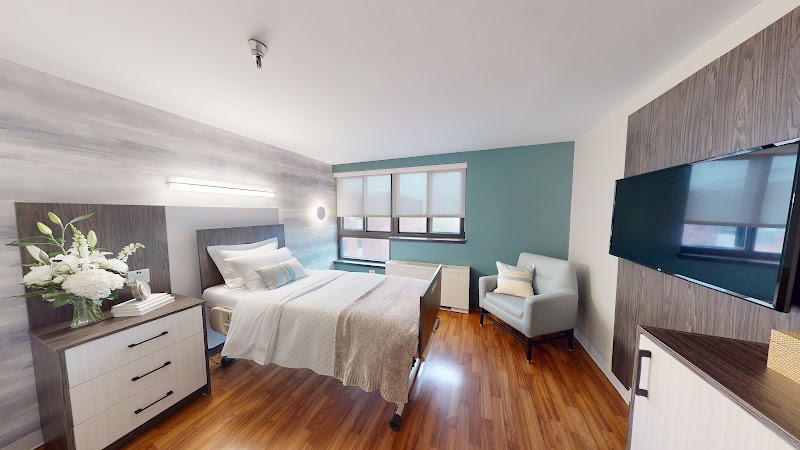
Who Owns and Operates Warren Barr Lieberman?

WARREN BARR LIEBERMAN is owned by a for-profit company. For-profit facilities operate as businesses with obligations to shareholders or private owners. The facility is operated by LEGACY HEALTHCARE, a chain that manages multiple nursing homes. With 240 certified beds and approximately 231 residents (about 96% occupancy), it is a large facility located in SKOKIE, Illinois.

How Does Warren Barr Lieberman Compare to Other Illinois Nursing Homes?

Compared to the 100 nursing homes in Illinois, WARREN BARR LIEBERMAN's overall rating (4 stars) is above the state average of 2.5, staff turnover (46%) is near the state average of 46%, and health inspection rating (4 stars) is above the national benchmark.

What Should Families Ask When Visiting Warren Barr Lieberman?

Based on this facility's data, families visiting should ask: "Can you walk me through typical staffing levels on day, evening, and night shifts?" "Can I visit during a mealtime to observe dining assistance and food quality?" "How do you handle medical emergencies, and what is your hospital transfer rate?" "Can I speak with family members of current residents about their experience?" These questions are particularly relevant given the below-average staffing rating.

Is Warren Barr Lieberman Safe?

Based on CMS inspection data, WARREN BARR LIEBERMAN has a clean safety record: no substantiated abuse findings (meaning no confirmed cases of resident harm), no Immediate Jeopardy citations (the most serious violation level indicating risk of serious injury or death), and is not on the Special Focus Facility watch list (a federal program monitoring the lowest-performing 1% of nursing homes). The facility has a 4-star overall rating and ranks #1 of 100 nursing homes in Illinois. While no facility is perfect, families should still ask about staff-to-resident ratios and recent inspection results during their visit.

Do Nurses at Warren Barr Lieberman Stick Around?

WARREN BARR LIEBERMAN has a staff turnover rate of 46%, which is about average for Illinois nursing homes (state average: 46%). Moderate turnover is common in nursing homes, but families should still ask about staff tenure and how the facility maintains care continuity when employees leave.

Was Warren Barr Lieberman Ever Fined?

WARREN BARR LIEBERMAN has been fined $38,805 across 2 penalty actions. The Illinois average is $33,467. While any fine indicates a compliance issue, fines under $50,000 are relatively common and typically reflect isolated problems that were subsequently corrected. Families should ask what specific issues led to these fines and confirm they've been resolved.

Is Warren Barr Lieberman on Any Federal Watch List?

WARREN BARR LIEBERMAN is not on any federal watch list. The most significant is the Special Focus Facility (SFF) program, which identifies the bottom 1% of nursing homes nationally based on persistent, serious quality problems. Not being on this list means the facility has avoided the pattern of deficiencies that triggers enhanced federal oversight. This is a positive indicator, though families should still review the facility's inspection history directly.