PRAIRIE OASIS

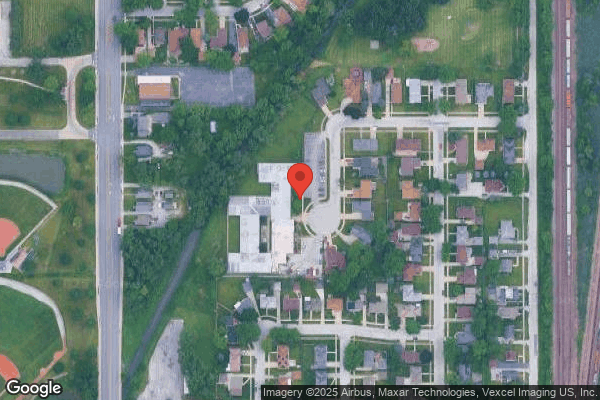
16000 SOUTH WABASH, SOUTH HOLLAND, IL 60473 (708) 339-0600
For profit - Individual 135 Beds ICARE CONSULTING SERVICES Data: November 2025
Trust Grade
0/100
#396 of 665 in IL
Last Inspection: October 2024

Within standard 12-15 month inspection cycle. Federal law requires annual inspections.

Overview

Prairie Oasis has received a Trust Grade of F, indicating poor performance and significant concerns regarding care quality. It ranks #396 out of 665 facilities in Illinois, placing it in the bottom half, and #129 out of 201 in Cook County, meaning only a few local options are better. Although the facility's trend is improving, with issues decreasing from 22 in 2024 to 8 in 2025, the number of problems still indicates serious shortcomings. Staffing is a relative strength, with a turnover rate of 42%, which is below the Illinois average of 46%, but the overall staffing rating is only 2 out of 5 stars. The facility has faced $158,947 in fines, which is concerning, and it has average RN coverage. Specific incidents show serious care deficiencies, such as failing to assess residents after falls, resulting in delays in treatment and injuries. Additionally, some residents did not receive proper wound care before being sent to the hospital, highlighting significant areas for improvement. Families should weigh these strengths and weaknesses carefully when considering this facility.

Trust Score
F
0/100
In Illinois
#396/665
Bottom 41%
Safety Record
High Risk
Review needed
Inspections
Getting Better
22 → 8 violations
Staff Stability
○ Average
42% turnover. Near Illinois's 48% average. Typical for the industry.
Penalties
○ Average
$158,947 in fines. Higher than 65% of Illinois facilities. Some compliance issues.
Skilled Nurses
○ Average
Each resident gets 33 minutes of Registered Nurse (RN) attention daily — about average for Illinois. RNs are the most trained staff who monitor for health changes.
Violations
⚠ Watch
44 deficiencies on record. Higher than average. Multiple issues found across inspections.
★★☆☆☆
2.0
Overall Rating
★★☆☆☆
2.0
Staff Levels
★★☆☆☆
2.0
Care Quality
★★☆☆☆
2.0
Inspection Score
Stable
2024: 22 issues
2025: 8 issues

The Good

  • Full Sprinkler Coverage · Fire safety systems throughout facility
  • No fines on record
  • Staff turnover below average (42%)

    6 points below Illinois average of 48%

Facility shows strength in fire safety.

The Bad

2-Star Overall Rating

Below Illinois average (2.5)

Below average - review inspection findings carefully

Staff Turnover: 42%

Near Illinois avg (46%)

Typical for the industry

Federal Fines: $158,947

Well above median ($33,413)

Significant penalties indicating serious issues

Chain: ICARE CONSULTING SERVICES

Part of a multi-facility chain

Ask about local staffing decisions and management

The Ugly 44 deficiencies on record

8 actual harm
Jun 2025 1 deficiency
CONCERN (D) 📢 Someone Reported This

A family member, employee, or ombudsman was alarmed enough to file a formal complaint

Potential for Harm - no one hurt, but risky conditions existed

Free from Abuse/Neglect (Tag F0600)

Could have caused harm · This affected 1 resident

**NOTE- TERMS IN BRACKETS HAVE BEEN EDITED TO PROTECT CONFIDENTIALITY** Based on interview and record review, the facility failed to follow their abuse policy by not keeping a resident (R2) with demen...

Read full inspector narrative →
**NOTE- TERMS IN BRACKETS HAVE BEEN EDITED TO PROTECT CONFIDENTIALITY** Based on interview and record review, the facility failed to follow their abuse policy by not keeping a resident (R2) with dementia free from being hit by a cognitively intact resident (R1) for one out of four residents reviewed for physical abuse in a total sample of six. Findings include: R1 is a [AGE] year old with the following diagnosis: cirrhosis and lymphedema. R2 is a [AGE] year old with the following diagnosis: type 2 diabetes, dementia, and Alzheimer ' s disease. On 6/25/25 at 3:13PM, R1 stated R1 pushed R2 up against a wall when R2 would not stop touching R1's personal items. R1 reported R2 had a habit of drinking R1's pop and taking R1's clothing. R1 stated R1 asked R1 to stop each time R2 would do this but R2 would not stop due to being confused. R1 reported telling the staff about this behavior but staff did nothing to help R1. R1 stated R1 had enough and pushed R2 against a wall and they started to hit each other in the face while wrestling. R1 reported moving to a different room when R1 got back from the hospital. R1 reported having a small cut to the forehead but denied needing stitches. On 6/25/25 at 3:40PM, R2 did not respond appropriately to questioning due to mental status. R2 was able to state name and birth date correctly. R2 was unable to recall the altercation with R1. On 6/25/25 at 2:57PM, V4 (Nurse Manager) stated staff called V4 to the nurse's station because R1 reported having an altercation with R2. V4 reported R1 asked R2 to stop going through R1's belongings but R2 didn't so R1 hit R2. V4 stated R1 admitted to initiating physical contact first. V4 reported R2 is confused so R2 could not answer any questions as to what happened. V4 stated R2 has a habit of going through other's belongings due to R2 having dementia. V4 reported R2 is now in a room alone so R2 will not go through other belongings. V4 defined abuse as when someone is aggressive and does something that hurts someone else. V4 stated this incident would be considered physical abuse because the residents were hitting. On 6/26/25 at 10:19AM, V7 (Former Nurse) stated R1 came to the nurse's station bleeding and told staff R1 hit R2 because R2 kept going through R1's belongings. V7 reported R1 told V7 that R1 hit R2. V7 stated R1 is alert and oriented times three. V7 stated both R1 and R2 were bleeding from small lacerations on the head. V7 reported R2 is always confused and was not able to answer any questions on what happened during the altercation. V7 stated R2 has a habit of wandering and going through other people's belongings. V7 reported this incident would be considered physical abuse. On 6/26/25 at 4:29PM, V14 (Assistant Administrator) stated staff notified V14 of the altercation immediately but no staff witnessed the altercation. V14 reported R1 came to the nurse's station to tell staff what happened. V14 stated R1 told staff that R2 was going through R1's belongings and R2 would not stop when R1 asked. V14 reported R1 told staff that R1 then pushed R2, and they began hitting each other. V14 stated both residents had small lacerations to the head but didn't need any outside treatment. V14 reported abuse was substantiated in this incident because R1 is alert and oriented times three and R2 has dementia and is always confused. A Nursing note for R1 dated 5/31/25 at 6:46 PM documents R1 came to the nurses station around 5:15 PM and blood was noted all over R1's body. Upon interrogation, R1 stated that R1's roommate was trying to invade R1's privacy which led to a physical altercation. R1 was cleaned up with a washcloth. 911 was called and R1 was transferred to the hospital for an evaluation. A Nursing note dated 5/31/25 at 7:03 PM documents the nursing manager was called to R1's room. R1 was sitting in the hallway with a blood stain on clothing in an open area to the forehead. When asked what happened, R1 stated R2 was going through R1's items. R1 asked R2 to leave the items alone but R2 refused so R1 pushed R2 away and hit R2 in the eye. Pressure was applied to the head wound. R1 was sent out via 911. A Nursing note dated 6/1/25 documents R1 was treated at the hospital for a minor laceration just above the hairline. The Hospital Records dated 5/ 31/ 25 document R1 presented to the emergency department for medical evaluation. R1 stated R1 was being bothered by another individual at the living facility when R1 decided to punch the other person in the face. There is half inch minor laceration just above the hairline. R1 reported the other resident was repeatedly stealing R1 soda and clothing. R1 endorsed asking R2 multiple times to leave R1's things alone. There is no documentation that the laceration needed any repair period. A Band-Aid was placed on the laceration and R1 returned to the facility. The Final Incident Report dated 6/6/25 documents the abuse coordinator was informed of a physical altercation on 5/31/25 that occurred around 5:50 PM. R1 reported there was a physical altercation between R1 and R2. Both residents were separated and sent to the hospital for evaluation. Upon return, R1 was moved to a different room and R2 was moved to a single room. Abuse was substantiated in this investigation. The Care Plan dated 2/ 21/ 25 documents R1's comprehensive assessment reveals a history of suspected abuse and/or neglect or factors that may increase susceptibility to abuse/neglect. R1 demonstrates difficulty in adjustment and generalized mood distress. Symptoms may be manifested by verbal expressions of distress and behavioral symptoms. The Minimum Data Set (MDS) dated [DATE] documents a Brief Interview for Mental Status score as 14 (no cognitive impairment). Section E of the MDS documents R1 does not experience hallucinations or delusions. R1 also does not have any physical, verbal, or behavioral symptoms directed towards others. The Screening Assessment for Indicators of Aggressive and/or Harmful Behaviors dated 4/6/25 documents a score of 0 indicating R1 has no or minimal problems with aggressive behavior. R1 is at minimal risk for aggression. A Nursing note for R2 dated 5/31/25 documents the nurse was notified by staff to go to R2's room. The nurse noted blood on the floor and opened skin to the left eye with bleeding that was swollen. The nurse asked R2 what happened but R2 was unable to say. The area was cleansed with normal saline. A Nursing note dated 6/1/25 documents R2 returned from the hospital with a diagnosis of left cheek contusion. The Care Plan dated 10/9/24 documents R2 demonstrates movement behavior that may be interpreted as wandering, pacing, or roaming. This is due to a diagnosis of dementia and problems understanding the immediate environment. Symptoms are manifested by pacing, roaming, or wandering in and out of peers' rooms engaging in theme behavior, where R2 believes it is another time and place with specific responsibilities. An intervention includes to implement preventative intervention strategies. The Care Plan dated 2/19/25 documents R2's comprehensive assessment reveals a history of suspected abuse and/or neglect or factors that may increase susceptibility to abuse/ neglect. R2 demonstrates difficulty and adjustment and generalized mood distress. Symptoms may be manifested by verbal expressions of stress and behavioral symptoms. The Minimum Data Set (MDS) dated [DATE] documents a Brief Interview for Mental Status score as five (severe cognitive impairment) for R2. The Screening Assessment for Indicators of Aggressive and/or Harmful Behavior document a total score of 1 indicating R2 is at a low risk for abuse due to increased vulnerability from dementia. The policy titled, Abuse Prevention Program Facility Policy, dated 2011 documents, this facility affirms the right of our residents to be free from abuse, neglect, misappropriation of resident property, corporal punishment, and involuntary seclusion. This facility therefore prohibits mistreatment, neglect or abuse of its residents, and has attempted to establish a residence sensitive and resident secure environment. The purpose of this policy is to assure that the facility is doing all that is within its control to prevent occurrences of mistreatment, neglect or abuse of our residents . This facility is committed to protecting our residents from abuse by anyone including, but not limited to, facility staff, other residents, consultants, volunteers, staff from other agencies providing services to the individual, family members or legal guardians, friends, or any other individuals . The following definitions are based on federal and state laws, regulations and interpretive guidelines. Abuse means any physical or mental injury or sexual assault inflicted upon a resident other than by accidental means. Abuse is the willful infliction of injury, unreasonable confinement, intimidation, or punishment with resulting physical harm, pain, or mental anguish . Physical abuse is the infliction of injury on a resident that occurs other than by accidental means that requires medical attention. Physical abuse includes hitting, slapping, pinching, kicking, and controlling behavior through corporal punishment.
Apr 2025 1 deficiency
CONCERN (E) 📢 Someone Reported This

A family member, employee, or ombudsman was alarmed enough to file a formal complaint

Potential for Harm - no one hurt, but risky conditions existed

Accident Prevention (Tag F0689)

Could have caused harm · This affected multiple residents

Based on observation, interview, and record review, the facility failed to provide adequate supervision and monitoring for residents. This failure affects six (R7, R8, R9, R10, R11, R12) out of twelve...

Read full inspector narrative →
Based on observation, interview, and record review, the facility failed to provide adequate supervision and monitoring for residents. This failure affects six (R7, R8, R9, R10, R11, R12) out of twelve residents reviewed for supervision and monitoring. Findings include: On 04/26/2025, at 8:41 AM, R7 observed sitting in a wheelchair inside of the first-floor 100-unit dining room unsupervised and unattended. On 04/26/2025, at 8:57 AM, V7 (CNA) walked inside of the 100-unit dining room and stated she is responsible for caring for R7 today. V7 stated R7 should be monitored and supervised while sitting in the dining room but V7 can't watch everybody. V7 stated if residents are left unsupervised and no one is monitoring the residents, then residents could potentially fall or choke while eating. On 04/26/2025, at 1:17 PM, R8, R9, R10, R11, and R12 observed sitting inside of the first floor 300-unit dining room unsupervised and unattended. R8, R9, and R11 were sitting in wheelchairs. On 04/26/2025, at 1:18 PM, V2 (Director of Nursing/DON) walked inside the 300-unit dining room and walked back out. On 04/26/2025, at 1:19 PM, V11 (Certified Nursing Assistant/CNA) was observed walking inside of the 300-unit dining room. V11 stated she is aware that she was supposed to be monitoring the residents because it is her designated monitoring time written on the schedule. V11 stated if residents are not properly monitored, then they can potentially fall or injure themselves. On 04/26/2025, at 1:19 PM, shortly after V11 arrived in the 300-unit dining room. V13 (CNA) also arrived in the 300-unit dining room. V13 stated she was informed by V2 that no one was inside of the 300-unit dining room monitoring the residents. On 04/26/2025, at 1:25 PM, V13 stated there is supposed to be someone inside of the dining room monitoring the residents at all times. V13 stated the purpose of monitoring residents is to ensure they do not fall. R7's care plan documents in part, R7 is at risk for fall due to an unsteady gait and I have a diagnosis of dementia and may be unaware of safety limits. I use a wheelchair for mode of locomotion. Make sure R7 is sitting back in the wheelchair. Monitor more frequently: keep in the staff's sightline while awake. Staff to continue to monitor R7 for safety. Date initiated: 03/17/2025. R8's care plan documents in part, R8 at risk for falls R/T Requires ADL (activities of daily living) assist for transfers and mobility related tasks. Staff to monitor R8 for safety. Date initiated: 03/23/2025. R9's care plan documents in part, R9 is at risk for falls related to decreased safety awareness, impaired range of motion and/or loss of functional movement of joint(s), decreased strength and endurance. R9 will have a safe environment maintained thru the next review. Staff to monitor R9 while in room and anticipate her needs. Date initiated: 03/10/2025. R10's care plan documents in part, R10 is at risk for falls r/t antidepressant medication and unsteady gait and history of fall, requiring assistance with ADL's and transfers. Staff to continue to monitor R10 for safety. Date initiated: 03/23/2025. R11's care plan documents in part, R11 is at risk for falls related to requires ADL assist for transfers and mobility related tasks. R11 will have a safe environment maintained thru the next review. Monitor resident when in the room date initiated: 06/22/2024. R12 at risk for falls related to decreased safety awareness. R12 will have a safe environment maintained thru the next review. Staff to monitor for R12's safety. Date initiated: 03/17/2025. Record review of the CNA assignment sheet for unit 100 dated 04/26/2025, documents that dining room monitoring times begin at 9:00 AM. No staff member is scheduled or responsible for monitoring the dining room until 9:00 AM. Record review of the CNA assignment sheet for unit 300 dated 04/26/2025, documents that V11 is responsible for monitoring the 300-unit dining room from 1:00 PM-2:00 PM. Facility policy dated 03/2015, titled, Supervision and Safety documents in part, Policy: Our policy strives to make the environment as free from hazards as possible. Resident safety and supervision are facility-wide priorities. 4. Resident supervision is a core component to resident safety. 9. Staff to decrease safety risk factors as much as possible.
Feb 2025 3 deficiencies 1 Harm
SERIOUS (G) 📢 Someone Reported This

A family member, employee, or ombudsman was alarmed enough to file a formal complaint

Actual Harm - a resident was hurt due to facility failures

Quality of Care (Tag F0684)

A resident was harmed · This affected 1 resident

**NOTE- TERMS IN BRACKETS HAVE BEEN EDITED TO PROTECT CONFIDENTIALITY** Based on interviews and record reviews, the facility failed to complete a post fall assessment of a resident immediately followi...

Read full inspector narrative →
**NOTE- TERMS IN BRACKETS HAVE BEEN EDITED TO PROTECT CONFIDENTIALITY** Based on interviews and record reviews, the facility failed to complete a post fall assessment of a resident immediately following a fall; failed to ensure a resident's physician was notified after a fall; failed to ensure residents received medications as ordered by the physician; and failed to ensure the physician was notified of abnormal lab results. These failures applied to three of four residents (R3, R4, R5) reviewed for quality of care and resulted in R3 having a delay in care of approximately two days after a fall in which R3 was found to have a hip fracture that required surgical intervention. Findings include: 1. R3 is a [AGE] year-old male with a diagnoses history of COPD, Heart Failure, Unspecified Convulsions, and Alcohol Abuse who was admitted to the facility 08/14/2024. R3's Current Care Plan documents he is at risk for falls related to requiring assistance with activities of daily living and for transfers and mobility related tasks with interventions implemented 08/15/2024 including be sure call light is within reach and encourage the resident to use it for assistance as needed, staff to respond promptly to all requests for assistance, and complete the Fall Risk Review per the facility protocol. R3's progress note created by V18 (Licensed Practical Nurse) dated 2/15/2025 at 2:17 PM documents resident appears to be more confused in a.m. and not verbally understood by writer, refused to eat breakfast/lunch even with encouragement/setup, resident is also losing control of bowel/bladder, refuses to get out of bed to toilet self as he normally does or sit up to eat; Orders received to send resident out for altered mental status and failure to thrive; at 4:52 PM writer received call from the hospital charge nurse stated that resident is being admitted for left hip fracture, that left leg is inverted, rotated and shorten, she also stated that fracture appears to be 48 hours old. Resident is scheduled for surgery in a.m. R3's Fall Incident report dated 02/15/2025 documents he was sent to the hospital for evaluation and treatment due to change in condition and was informed by the hospital via phone on 02/15/2025 at approximately 4:52 PM that he had a left hip fracture. Unusual Occurrence Final Investigative Report dated 02/19/2025 documents on 02/15/2025 at approximately 2:17 PM, R3 was sent to the hospital for evaluation due to refusal of meals, incontinence of bowel and bladder, and refusal to get out of the bed which were acute change of condition per nursing assessment. The nurse was informed by the hospital nurse at 4:30 PM that R3 had a left hip fracture and will be admitted to the hospital. Undated witness statement from V7 (Licensed Practical Nurse) documents on 02/14/2025 at 3:45 PM she was off duty and returned to the facility because she forgot her phone and observed aides running to a room to assist R3 off the floor, she assisted the aides at this time to remove R3 off the floor, observed him, and no pain was observed. Witness statement from R12 dated 02/15/2025 documents he reported R3 had a fall trying to pick up a resident that fell in their room and aides assisted R3 from the floor; Witness statements from R13 dated 02/15/2025 documents he reported R3 fell. It was daylight at the time and aides assisted him from off the floor; Witness statement from V18 (Licensed Practical Nurse) dated 02/15/2025 documents she reported his roommates informed that he fell two days ago in their room and aides picked him up off the floor; Witness statement from V9 (Certified Nursing Assistant) dated 02/17/2025 documents she reported she worked from 3-11 PM on Friday and approximately between 3:30 - 4PM she observed R3 on the floor, the nurse checked him and helped place R3 on his bed. R3's roommates reported R3 was trying to help R9 up and fell. R3's hospital report dated 02/15/2025 documents he was admitted from the nursing home for lethargy but noted at baseline while at the emergency department and instead found to have a left thigh fracture and is unable to explain how he fell. R3 was assessed to have an acute fracture of the left hip and the circumstances of the fall are unclear; patient with a high level of risk based on: acute or chronic illnesses or injury which poses a threat to life or bodily function; he is a [AGE] year old male presenting with a fall at the nursing home and left thigh fracture and underwent surgical treatment for fracture on 02/16/2025; the etiology of the fall is unclear, suspect mechanical. On 02/25/2025 at 12:27 PM V2 (Director of Nursing) stated she completed the investigation on 02/19/2025 for R3's fall that occurred 02/15/2025. V2 stated there was confusion about his fall and they were trying to determine when R3 had a fall. V2 stated she concluded after the investigation that R3 had a fracture. V2 stated she wanted to go back to 02/14/2025 because someone said he fell two days ago but he was up and walking on 02/15/2025 so she said that couldn't be correct. On 02/25/2025 at 2:07 PM V2 (Director of Nursing) stated V7 (Licensed Practical Nurse) was suspended for three days because she did not complete an incident report for R3's fall because she said she was off the clock when R3 fell. V2 stated V7 assisted the aides with getting R3 up after he fell on [DATE] and then left the facility immediately after. V2 stated V7 should have let someone know R3 had a fall. V2 stated V7 will be terminated because she failed to inform anyone about a fall that resulted in an injury. V2 stated an injury could occur due to failure to report a fall or failure to properly assess a resident after a fall. V2 stated if you continue to put pressure on an injury after a fall that could result in harm. On 02/25/2025 at 2:52 PM V8 (Certified Nursing Assistant) stated at approximately 3:15 PM on 02/14/2025 as she was entering the unit where R3 's room was located V9 (Certified Nursing Assistant) observed R9 crawling on the floor. V8 stated V9 informed her of this as well as V7 (Licensed Practical Nurse). The nurse walked with her (V8) and V9 towards R9. V8 stated she found R9 crawling on all fours directly outside of R3 's room. V8 stated once they made it to the doorway of R3's room on the other side of the threshold, R3 was laid out parallel to the wall. V8 stated V7 stated R3's was on the floor too. V8 stated V7 then asked R3 if he was ok, what was he doing, asked him if he hit his head then answered for him no you didn't hit your head then instructed her (V7) and V9 to get him up. V8 stated V9 and V7 then assisted R3 off the floor, then she (V8) and V9 helped R9 up into her wheelchair and placed R9 at the nurses station. V8 stated V7 said she's not reporting it, she was ready to go, they didn't hit their head and they're alright. V8 stated V7 then sat at the nurses station until approximately 3:30 then left the facility. V8 stated V7 did not perform an assessment of R3 when he fell. V8 stated neither she nor V9 reported this to anyone else. V8 stated she was trained to report falls to the nurse and the nurse was present and aware of R3 's fall. On 02/25/2025 3:21 PM V9 (Certified Nurse Assistant) stated on 02/14/2025 at approximately 3:15 PM she was coming in from getting a linen bag then approached the nurses station and could see R9 sitting on the floor. V9 stated she informed V7 (Licensed Practical Nurse) that R9 was on the floor. V9 stated then she, V7 and V8 (Certified Nursing Assistant) approached the threshold of R3 's room and observed R3 was on the floor. V9 stated V7 said R3 is on the floor too and then immediately went to assess R3. V9 stated V7 assessed R3's body by patting him on his head, arms, legs, and back and then asked her (V9) and V8 to help R3 into bed. V9 stated she's unsure of R3's response while V7 was assessing him. V9 stated during this time she was observing R9 who was just sitting on the floor. V9 stated she remained standing in R3's doorway in between R9 and R3 while V7 assessed R3. V9 stated V7 asked R3 if he was ok and if anything hurt but she doesn't recall his response. V9 stated R3 looked like he was in pain and grunted when she, V7, and V8 picked him up and placed him in his bed. V9 stated after they placed R9 in the wheelchair, V7 stated she was getting ready to leave then went and got her bags and things and left. V9 stated R9 didn't have any injuries and didn't show any signs of pain other than grunting while being picked up. V9 stated she believes R3 stayed in his bed the remainder of the shift. On 02/25/2025 at 3:48 PM V2 (Director of Nursing) stated V7 (Licensed Practical Nurse) would have had a nurses note in R3 's medical records if an assessment was performed after he fell. V3 (Assistant Director of Nursing) stated a fall assessment, nurses note, incident report, and vital signs should all be documented in R3 's medical record along with notation of whether there was a loss of consciousness, complaints of pain, or changes in range of motion after a resident's fall. R3's medical records did not include documentation of a fall assessment, nurses note, or incident report that included his vital sign measurements, level of consciousness, pain status, or assessment of his range of motion, or physician notification after his fall on 02/14/2025. 2. R4 is an [AGE] year-old female with a diagnoses history of Dementia, Hallucinations, Stroke, Anxiety Disorder, Malignant Cancer of Left Breast, Metabolic Encephalopathy, and Repeated Falls who was admitted to the facility 09/02/2022. R4's Physician Order history includes an active order effective 10/12/2024 for 1 mg Anastrozole (Hormone Based Chemotherapy) Tablet to be given by mouth one time a day related to Breast Cancer. R4's February 2025 Medication Administration Record reviewed to document Anastrozole scheduled to be given once daily in the morning was not administered on 9 different days from 02/01/2025 - 02/11/2025. R4's medication administration progress note dated 2/1/2025 documents her Anastrozole Oral Tablet (Hormone Based Chemotherapy) to be given by mouth one time a day related to Breast Cancer is awaiting delivery. 3. R5 is a [AGE] year-old male with a diagnoses history of Quadriplegia, Heart Failure, End Stage Renal Disease, Chronic Kidney Disease, Dependence on Renal Dialysis, Urinary Tract Infection, Metabolic Encephalopathy, Partial Paralysis following Stroke, and Dehydration (02/15/2025) who was admitted to the facility 01/31/2025. R5's Physician Order history includes an order effective from 02/01/2025 - 02/26/2025 for one Lanthanum Carbonate Oral Tablet Chewable 1000 MG tablet to be given by mouth three times a day with meals to reduce Phosphates level, in kidney disease; and an order effective from 02/01/2025 - 02/13/2025 for 5ml Nystatin Mouth/Throat Suspension to be given by mouth four times a day for oral anti-fungal, swish and swallow for 10 days. R5's February 2025 Medication Administration Records documents his Lanthanum Carbonate Oral Chewable tablet to be given by mouth three times a day with meals was not administered as ordered from 02/01/2025 - 02/24/2025 and his Nystatin Mouth/Throat Suspension medication to be given by mouth four times a day for oral anti-fungal was not administered as ordered on multiple days across multiple shifts from 02/01/2025 - 02/09/2025. R5's medication administration progress note dated 2/3/2025 at 05:35 AM documents his Nystatin Mouth/Throat Suspension antifungal was on order. R5's Physician Progress Note dated 2/4/2025 at 12:15 PM documents his phosphorus levels were 3.8. R5's blood labs dated 02/04/2025 document abnormalities including high phosphorus levels at 6.9. R5's progress notes did not include documentation of physician notification of abnormal blood labs. On 02/26/2025 at 12:00 PM V2 (Director of Nursing) stated according to R4's February 2025 Medication Administration record she was not receiving her chemotherapy medication as ordered based on all the 9's documented. V2 stated she had to in-service V5 (Licensed Practical Nurse) on ordering and passing medications. V2 stated R5 should have received his Lanthanum Carbonate Oral Chewable 1000 MG (Phosphorus Lowering) tablet during dialysis. On 02/26/2025 at 1:16 PM V2 (Director of Nursing) stated since Lanthanum Carbonate (Phosphorus Lowering) and Nystatin Mouth/Throat Suspension (Antifungal) was ordered for R5 he should have received it however he didn't receive it. In response to being asked by surveyor what are the risks from R5 not receiving his Lanthanum medication, V2 replied abnormal labs and phosphorus levels. V2 stated R5's high phosphorus levels documented in his lab report dated 02/04/2025 could indicate he was not receiving dialysis, not being properly dialyzed, or not receiving his Lanthanum medication. V2 stated R5 was admitted to the facility on Friday 01/31/2025. In response to surveyor asking what the risks from R5 not receiving his Nystatin medication, V2 replied possibly thrush on his tongue. When asked by surveyor what are the risks of R4 not receiving her Anastrozole Oral Tablet (Hormone Based Chemotherapy), V2 replied R4 needs her chemotherapy medication for cancer but could not explain what the risks are from not receiving her chemotherapy medication. V2 stated everyone should receive their medications. V2 stated indications of dehydration include high BUN (Blood Urea Nitrogen) and High Creatinine levels. V2 stated R5's lab work from 02/04/2025 were obtained from the dialysis nurse and should have been reported to the floor nurse and urologist. V2 stated there should be follow up from abnormal labs including consulting with the physician to determine if additional labs should be repeated, if there any changes needed in medications or with dialysis treatment. On 02/26/2025 at 1:57 PM V2 (Director of Nursing) stated the dialysis nurse V17 (Registered Nurse) explained R5 did not receive his initial dialysis until Monday 02/03/2025. V2 stated the purpose of R5's Lanthanum Carbonate medication is to keep his phosphorus levels down and agreed his levels would elevate if he were not receiving his medications or not receiving dialysis. The facility's Fall Risk and Post Fall Assessment Policy and Procedures received 02/26/2025 states: The purpose of the policy is To conduct appropriate assessments after falls. Post Fall Assessment Procedures include: conduct physical and mental status assessment, assess resident's airway breathing and circulation, note level of consciousness and perform neuro checks whenever there is potential for actual head injury, assess limb strength and motion by asking the resident if he has pain and the location of said pain; ask if he can do active range of motion. The facility's Fall Policy and received 02/27/2025 states: Observed and reported by staff member. Licensed nurse should conduct assessment immediately, including events leading up to the fall to determine when possible causative factors. Assess for respiratory difficulties, bleeding and fractures. Additional Measures include: Notify Physician. Document all assessment findings and observations, physician and family notifications in the resident's clinical record in accordance with the assessment guidelines. The facility's Medication Administration Policy and received 02/26/2025 states: Medications must be administered in accordance with a physician's order. The facility's Physician Orders Policy received 02/26/2025 states: These guidelines are to ensure that: Changes in resident status/condition are assessed and physician notification is based on assessment findings; Any orders given by Physician are carried out. Any calls to physician will be documented in the nurse's notes indicating information conveyed and received.
CONCERN (D) 📢 Someone Reported This

A family member, employee, or ombudsman was alarmed enough to file a formal complaint

Potential for Harm - no one hurt, but risky conditions existed

Comprehensive Care Plan (Tag F0656)

Could have caused harm · This affected 1 resident

**NOTE- TERMS IN BRACKETS HAVE BEEN EDITED TO PROTECT CONFIDENTIALITY** Based on interviews and record reviews the facility failed to follow their policies for care planning and fall prevention by not...

Read full inspector narrative →
**NOTE- TERMS IN BRACKETS HAVE BEEN EDITED TO PROTECT CONFIDENTIALITY** Based on interviews and record reviews the facility failed to follow their policies for care planning and fall prevention by not ensuring care plans were developed based on assessments and individual needs; by not reviewing and updating care plans for appropriateness; and by not ensuring adequate personalized interventions were identified. This failure applied to two of four residents (R3 and R5) reviewed for care planning. Findings include: 1. R3 is a [AGE] year-old male with a diagnoses history of COPD, Heart Failure, Unspecified Convulsions, and Alcohol Abuse who was admitted to the facility 08/14/2024. R3's Fall Risk assessment dated [DATE] documents he is at high risk for falls. R3's Fall Risk Assessments dated 08/20/2024, 11/12/2024, and 12/29/2024 document his fall risk factors include diuretic medication, antiseizure medication, antihypertensive medication, psychotropic medication; occasional - frequent incontinence, inability to independently stand, requires hands on assistance to move from place to place; predisposing conditions including heart, pain, and fatigue/weakness. R3's Physician Order History includes an order effective from 12/26/2024 - 02/18/2025 for one 25mg Seroquel (Antipsychotic) tablet to be given by mouth twice daily related to restlessness and agitation. R3's progress note dated 12/30/2024 at 3:45 PM documents he was seen pushing on exit door setting alarm off. R3's Physical Therapy Evaluation and Plan of Treatment report dated 01/01/2025 he was recently admitted to the hospital due to a mini stroke and other medical complexities and was referred for physical therapy due to decreased functional mobility, decrease in strength, decreased coordination, decreased neuromotor control, decreased postural alignment, increased need for assistance from others, functional limitation with ambulation and falls/fall risk; his prior medical history includes congestive heart failure, stroke, coronary artery disease, seizures, and alcohol abuse; R3's behavior include being impulsive; he feels unsteady when walking and worries about falling; he requires partial/moderate assistance with walking 10 - 50 feet, chair to bed transfer, and toilet transfer; barriers likely to impact discharge to the next level include multiple medications/management required; patient characteristics that may impact treatment includes lacks insight into condition and risk factors, multiple medical conditions/history, and multiple medications; precautions include fall risk, confusion, and heart/cardiovascular conditions; and assistive devices include two wheeled walker. R3's Current Care Plan documents he is at risk for falls related to requiring assistance with activities of daily living and for transfers and mobility related tasks with interventions implemented 08/15/2024 including be sure call light is within reach and encourage the resident to use it for assistance as needed, staff to respond promptly to all requests for assistance, and complete the Fall Risk Review per the facility protocol. R3's Current fall care plan does not include high risk interventions of bed positioning and locking, keeping items he frequently uses near him, maintaining a clutter free environment, and keeping an assistive device within reach if ambulatory. R3's Current Care Plan does not include interventions for behaviors or use of psychotropic medications. 2. R5 is a [AGE] year-old male with a diagnoses history of Quadriplegia, Heart Failure, End Stage Renal Disease, Chronic Kidney Disease, Dependence on Renal Dialysis, Urinary Tract Infection, Metabolic Encephalopathy, Partial Paralysis following Stroke, and Dehydration (02/15/2025) who was admitted to the facility 01/31/2025. R5's admission Dehydration Risk Review dated 02/01/2025 documents he is at risk for dehydration. R5's nursing progress note dated 2/1/2025 documents he is a new admission on an oral antibiotic for UTI (Urinary Tract Infection) and sepsis. R5's Physician Progress Note dated 2/4/2025 at 12:15 PM documents his BUN (Blood Urea Nitrogen) levels were 26 and creatine levels were 3.14. R5's blood labs dated 02/04/2025 document abnormalities including high BUN (Blood Urea Nitrogen) at 26, and high creatinine at 5.05. R5's progress note created by V5 (Licensed Practical Nurse) dated 2/14/2025 at 2:54 PM documents writer received order for resident to go to the hospital emergency room for medical evaluation and treatment related to EKG results. R5's hospital record dated 02/14/2025 documents he is a [AGE] year-old male sent from the nursing home for abnormal labs and EKG; patient tachycardic; Patient is symptomatic, found to have dry oral mucosa and tachycardia; Labs with AKI (Acute Kidney Injury) consistent with dehydration; treated with IV (Intravenous) fluid. R5's Current Care Plan initiated 02/17/2025 documents he is at possible risk for dehydration with signs and symptoms related to a history of dehydration with interventions including: Encourage resident to drink all fluids offered at all meals and during activities attended and follow up with RD for proper hydration. On 02/25/2025 at 3:48 PM V3 (Assistant Director of Nursing) stated risk factors that would indicate if a resident is at high risk for falls include use of assistive devices such as walkers, attempting to move, transfer, or stand without assistance; use of psychotropic medications, hypertensive medications, seizure medications; certain conditions such as seizures, hypertension, stroke, coronary vascular disease; and substance use. V3 stated the facility does have different levels of fall risks. V2 (Director of Nursing) confirmed that the facility determines level of risk based on resident's risk factors. V2 stated fall interventions are implemented when falls occur or if there is a significant change of condition. On 02/26/2025 at 12:00 PM V2 (Director of Nursing) stated on R3 08/14/2024 fall risk assessment she had marked him as at risk. On 02/26/2025 at 3:44 PM V2 (Director of Nursing) stated she agrees with R3's most current fall care plan because it included care plans for other diagnoses and the only time we will update care plans for falls is if the resident has a fall. V2 stated the majority, or all the residents are at risk for falls. V2 stated not all residents are at the same risks for falls. V2 and V3 (Assistant Director of Nursing) stated they are not aware of R3 being impulsive that they know of. V2 stated she believes R3's fall interventions were personalized and adequate as of the time he was hospitalized because she updates the fall interventions as falls occur. V2 agreed the purpose of fall interventions is to prevent a fall if at all possible. V2 stated interventions for restlessness and agitation would include approaching R3 in a calm manner and redirection. V2 stated residents with behaviors can become agitated and lose balance and fall. V1 (Administrator) stated being restless could lead to tiredness which could contribute to accidents. V2 stated all care plans are individualized for residents. V3 stated restlessness and agitation would trigger a behavioral care plan. On 02/27/2025 at 12:34 PM V1 (Administrator) stated per nursing a just a baseline care plan is initiated upon admission and needs to be completed within 48 hours and R5's baseline care plan did not need to include a care plan for dehydration however when he went out to the hospital and returned a dehydration care plan was completed on 2/17/24. The facility's Care Plan Policy received 02/26/2025 states: All residents will have an individualized plan of care developed to assist them in achieving and maintaining their optimal status. The residents comprehensive care plan initiated upon admission within 24 hours. The Interdisciplinary Team develops a comprehensive, individualized care plan based on interdisciplinary team assessments and comprehensive assessment of the resident prior to the care conference. Concerns, problems, and needs are listed based on resident's individual needs. The facility's Care Plan Policy received 02/26/2025 states: All residents who scored (High Risk or At Risk) for falls please make sure that there is a (Fall Risk) care plan in place with individualized appropriate intervention. No (Cookie Cutter) care plans permitted. The following interventions should be implemented for every resident who scored high risk for falls; keep bed at the position that promotes resident safety; keep items that residents frequently use near them; maintain a clutter free environment; if a resident is ambulatory keep assistive device within reach; make sure bed remains in the lock position. All care plans for those residents who have interventions for falls should be reviewed and updated for appropriateness. Other fall prevention interventions that may be considered based on Because Factor may include, but not limited to behavior modifications. The facility's Hydration Policy received 02/26/2025 states: The purpose of the policy is To establish guidelines to ensure each resident receives sufficient fluid intake to maintain proper hydration in accordance with calculated need. It is the policy of the Nursing Department to monitor the resident's fluid balance in accordance with assessed needs or problems. The Dietary Manager or R.D. (Registered Dietitian) will calculate fluid requirement for each resident admitted to the facility and will record fluid needs on the Nutritional Assessment tool. Fluid Needs will be calculated. At the time of admission and periodically a licensed nurse will assess the residents need for hydration monitoring. Fluid needs will initially be calculated by the Dietary Manager or Dietitian on the nutrition assessment. A care plan will be developed to address hydration needs by Dietary department. Identify fluid needs. Reassessing, modifying and documenting the care plan and assignments will be made in accordance with changes in the resident's response to the plan and changes in condition.
CONCERN (D) 📢 Someone Reported This

A family member, employee, or ombudsman was alarmed enough to file a formal complaint

Potential for Harm - no one hurt, but risky conditions existed

Deficiency F0692 (Tag F0692)

Could have caused harm · This affected 1 resident

**NOTE- TERMS IN BRACKETS HAVE BEEN EDITED TO PROTECT CONFIDENTIALITY** Based on interviews and record reviews the facility failed to follow their policy and procedures for hydration by not ensuring a...

Read full inspector narrative →
**NOTE- TERMS IN BRACKETS HAVE BEEN EDITED TO PROTECT CONFIDENTIALITY** Based on interviews and record reviews the facility failed to follow their policy and procedures for hydration by not ensuring a nutrition assessment was completed, not ensuring a hydration care plan was developed or interventions implemented, and not notifying the physician of abnormal labs related to hydration for a newly admitted resident assessed to be at risk for dehydration. This failure applied to one of four residents (R5) reviewed for hydration. Findings include: R5 is a [AGE] year-old male with a diagnoses history of Quadriplegia, Heart Failure, End Stage Renal Disease, Chronic Kidney Disease, Dependence on Renal Dialysis, Urinary Tract Infection, Metabolic Encephalopathy, Partial Paralysis following Stroke, and Dehydration (02/15/2025) who was admitted to the facility 01/31/2025. R5's Current Care Plan initiated 02/17/2025 documents he is at possible risk for dehydration with signs and symptoms related to a history of dehydration with interventions including: Encourage resident to drink all fluids offered at all meals and during activities attended and follow up with RD for proper hydration. R5's admission Dehydration Risk Review dated 02/01/2025 documents he is at risk for dehydration. R5's admission Nutrition Risk Review created by V12 dated 02/01/2025 is not completed and has no information documented for fluid requirements. R5's nursing progress note dated 2/1/2025 documents he is a new admission on an oral antibiotic for UTI (Urinary Tract Infection) and sepsis. R5's Physician Progress Note dated 2/4/2025 at 12:15 PM documents his BUN (Blood Urea Nitrogen) levels were 26 and creatine levels were 3.14. R5's blood labs dated 02/04/2025 document abnormalities including high BUN (Blood Urea Nitrogen) at 26, and high creatinine at 5.05. R5's progress notes did not include documentation of physician notification of abnormal blood labs. R5's progress note created by V5 (Licensed Practical Nurse) dated 2/14/2025 at 2:54 PM documents writer received order for resident to go to the hospital emergency room for medical evaluation and treatment related to EKG results. R5's hospital record dated 02/14/2025 documents he is a [AGE] year-old male sent from the nursing home for abnormal labs and EKG; patient tachycardic; Patient is symptomatic, found to have dry oral mucosa and tachycardia; Labs with AKI (Acute Kidney Injury) consistent with dehydration; treated with IV (Intravenous) fluid. On 02/26/2025 at 1:16 PM V2 (Director of Nursing) stated indications of dehydration include high BUN (Blood Urea Nitrogen) and High Creatinine levels. V2 stated signs and symptoms of dehydration include dry skin and mouth, increased thirst, poor skin turgor, and sunken appearance. V2 stated R5's lab work from 02/04/2025 were obtained from the dialysis nurse and should have been reported to the floor nurse and urologist. V2 stated there should be follow up from abnormal labs including consulting with the physician to determine if additional labs should be repeated, if there any changes needed in medications or with dialysis treatment. The facility's Hydration Policy received 02/26/2025 states: The purpose of the policy is To establish guidelines to ensure each resident receives sufficient fluid intake to maintain proper hydration in accordance with calculated need. It is the policy of the Nursing Department to monitor the resident's fluid balance in accordance with assessed needs or problems. The Dietary Manager or R.D. (Registered Dietitian) will calculate fluid requirement for each resident admitted to the facility and will record fluid needs on the Nutritional Assessment tool. Fluid Needs will be calculated. At the time of admission and periodically a licensed nurse will assess the residents need for hydration monitoring. Fluid needs will initially be calculated by the Dietary Manager or Dietitian on the nutrition assessment. A care plan will be developed to address hydration needs by Dietary department. Identify fluid needs. Reassessing, modifying and documenting the care plan and assignments will be made in accordance with changes in the resident's response to the plan and changes in condition.
Feb 2025 2 deficiencies 1 Harm
SERIOUS (G) 📢 Someone Reported This

A family member, employee, or ombudsman was alarmed enough to file a formal complaint

Actual Harm - a resident was hurt due to facility failures

Accident Prevention (Tag F0689)

A resident was harmed · This affected 1 resident

**NOTE- TERMS IN BRACKETS HAVE BEEN EDITED TO PROTECT CONFIDENTIALITY** Based on observation, interviews and record reviews, the facility failed to follow resident care assessment and plan in providin...

Read full inspector narrative →
**NOTE- TERMS IN BRACKETS HAVE BEEN EDITED TO PROTECT CONFIDENTIALITY** Based on observation, interviews and record reviews, the facility failed to follow resident care assessment and plan in providing adequate supervision and monitoring of residents with severe cognitive impairment for two (R3 and R4) of four residents reviewed for accidents and supervision. This deficiency resulted in R4 had a fall in the dining room and sustained a comminuted and mildly displaced fractures of the left medial acetabular wall and root of the superior pubic ramus (hip/pelvic area). Findings include: 1. R3 is an [AGE] year old, female, admitted to the facility on [DATE] with diagnoses of Parkinson's Disease without Dyskinesia, without Mention of Fluctuations; Depression, Unspecified; Schizoaffective Disorder, Unspecified; Dementia in other Diseases Classified Elsewhere, Unspecified Severity, without Behavioral Disturbance, Mood Disturbance and Anxiety; and History of Falling. MDS (Minimum Data Set) dated 12/10/24 recorded R3 has BIMS (Brief Interview for Mental Status) score of 7 which means severe cognitive impairment. MDS dated [DATE] indicated R3 needs substantial/maximal assistance during chair/bed to chair transfer. R3's care plans documented the following: 1.Self-care deficit, initiated 04/10/23: Interventions: Provide assistance with all ADLs (activities of daily living) as required per resident's need dependence: eating, transferring, bed mobility, bathing, dressing, personal hygiene, ambulation and personal hygiene. 2. ADL self-care performance deficit related to disease process Parkinson, initiated 10/06/23: Interventions: Transfer (01/27/25): R3 requires the assistance of 1 staff member when transferring. On 02/04/25 at 10:35 AM, observed R3 was coming out from the dining room, in her wheelchair to hallway. There was an ongoing activity in the dining room and R3 was attending. R3 was using both feet in propelling her wheelchair. R3 went to her room and made several attempts to transfer self from wheelchair to a chair. Finally, R3 was able to transfer self to the chair without any supervision from staff. R3 was able to leave the dining room unnoticed. On 02/04/25 at 11:00 AM, V21 (Licensed Practical Nurse, LPN) was interviewed regarding R3 supervision, monitoring and transfer. V21 replied, She is alert, oriented to self and place, with periods of confusion. Sometimes when you speak to her, she will answer you but will start with something else. She is on a wheelchair and dragged her wheelchair using her feet to move around. She cannot transfer herself. We all have eyes on her. She will try to get up on her own. Monitor her every hour while in room. During activities, she is monitored. She tried to leave the dining room; staff usually call the nurse. We cannot leave her unsupervised. Fall risk review dated 01/31/25 recorded R3 is high risk for falls. R3's progress notes documented the following: 01/14/25: R3 was observed laying on the floor next to bed during rounds. 01/30/25: R3 was observed in the hallway sitting on the floor in front of her wheelchair. 01/31/25: R3 was found lying on floor with wheelchair on top of legs. On 02/04/25 at 2:13 PM, V2 (Director of Nursing/Fall Coordinator) stated, She (R3) is provided with supervision and monitoring by placing her at the nurses' station or in activities. We keep an eye on her. Since she came back from the hospital, she needs assistance during transfers, she needs help. 2. R4 is an [AGE] year-old, female, admitted in the facility on 11/02/2020 with diagnoses of Unspecified Dementia, Unspecified Severity, without Behavioral Disturbance, Psychotic Disturbance, Mood Disturbance and Anxiety; and History of Falling. MDS (Minimum Data Set) dated 12/02/24 recorded R4's BIMS (Brief Interview for Mental Status) score is 3 which means severe cognitive impairment. R4's care plans documented the following: 1.At risk for increasing confusion secondary to dementia, initiated 11/02/20: Interventions: Provide cueing and prompting PRN (when necessary). Involve in small group/low stress activities. Reality orientation as needed. Calm/quiet environment. 2.Self-Care Deficit, date initiated 11/12/202: Interventions: Provide assistance with all ADLs as required per the resident's need dependence: eating, transferring, bed mobility, bathing, dressing, personal hygiene, ambulation and personal hygiene. R4's progress noted dated 01/30/25 documented R4 was found sitting up on the floor mat sitting up on buttocks with heel protectors in place wrapped in bed sheet. No apparent injury noted. No new orders received at this time. Bed in lowest position. R4's care plan recorded the following: 1.At risk for falls related to resistive to care at times and history of fall, initiated 11/08/20: Interventions: Frequent room rounds when resident is in room. Gather information on past falls and attempt to determine the root cause of the fall (s). Anticipate and intervene to prevent recurrence. Fall Risk Review dated 01/06/25 indicated R4 had been determined not to be a high risk for falls. Fall incident report dated 01/22/25 documented that on 01/16/25 at approximately 2:04 PM, R4 had a fall in the 100-unit dining room. There were no open areas. The nurse assessed R4, noted to have facial grimaces when moving the left leg. R4 was sent out to the hospital as ordered for further treatment and evaluation. R4's CT (computed tomography) scan and X-ray of left hip and pelvis dated 01/16/25 performed in the hospital revealed the following results: CT pelvis without contrast: comminuted and minimally displaced anterior column fracture with incomplete nondisplaced posterior hemi transverse component. X Ray hip 2 views left and pelvis: comminuted and mildly displaced fractures of the left medial acetabular wall and root of the superior pubic ramus. On 02/03/25 at 11:31 AM, R4 was in the dining room, up in wheelchair. R4 is alert, oriented to self, confused. R4 was sitting at a table with other residents attending activities. R4 was asked regarding recent fall incident wherein she sustained fracture. R4 stated she does not know what happened and had no recollection of the fall incident. On 02/04/25 at 10:55 AM, R4 was in the dining room; up in wheelchair; attending activities. She is alert to self but did not respond when surveyor asked on how she was doing. On 02/04/25 at 11:24 AM, V15 (LPN) stated, R4 is alert and confused. She is dependent on staff. She uses a wheelchair. I was the nurse assigned to her on 01/16/25. I was coming in from break, the aide called me and told me that she (R4) had a fall in the dining room while I was on break. V20 was the CNA assigned in the dining room. Usually there is one CNA assigned every hour in the dining room with the usual of no more than 20-25 residents in the dining room for 1 CNA. There were about 20 residents that time. I did the assessment on R4, there was no apparent injury. Vital signs were normal. When I found her, she was laying on the floor opening graham crackers. She appeared to be herself. She cannot recall what happened. The CNA told me that she was attending to another resident, when she turned around, she saw R4 fell. She was the only CNA in the dining room at the time. She (R4) was assisted back to her chair. I called physician and told me to get an X-ray and she (R4) was later sent out. On 02/04/25 at 1:01 PM, V20 verbalized, On 01/16/25, I was in my dining room time. She (R4) does ambulate. I was keeping eye on another resident. On the other side. R4 was standing, it was fine because she ambulates, and she can walk. When I turned towards my left, I saw her (R4) going to the floor and fell. I was the only one in the dining room at the time. I believe it was after lunch. Usually, after lunch, there's only one CNA who rotates every hour for dining room supervision. There were 15 or slightly more residents at the time. Majority of residents were in wheelchairs. She (R4) was in the chair not in wheelchair because she can still walk. When I saw her fell to the floor, I called the nurse. V20 was asked what interventions should be implemented to prevent R4's fall. V20 mentioned, Close supervision, make sure she doesn't stand or ambulate. On 02/05/25 at 10:15 AM, V15 was asked regarding staff assignment for dining room supervision. V15 stated, We, nurses on the floor are the ones responsible for assigning a CNA to monitor the dining area. I'm on 100 unit. Only one CNA is assigned regardless of the number of residents in the dining room. The rotation is every hour. At 10AM to 11 AM and 2 PM to 3 PM, it is our activity time. Activity aides are assigned to conduct activities and there's no CNA assigned around this time. Between the hours of 3 PM to 4 PM, an activity aide and an assigned CNA should be in the dining room monitoring residents. This is the typical schedule for the day. R4 is in the 100 unit. I am her regular nurse. Per R4's incident report, she had a fall at approximately 2:04 PM. V15 stated that between 2 PM to 3 PM, it is scheduled activity time and activity aides should be conducting activities on resident. Facility was asked to provide schedule sheets for dining room supervision. V1 (Administrator) stated they don't document staff schedules. On 02/04/25 at 2:13 PM, V2 was asked regarding R4 and fall supervision and monitoring. V2 replied, Every hour, there could be one CNA assigned in the dining room. During monitoring of residents in the dining room, there should be one CNA assigned regardless of the number of residents present. Staff monitor residents, attend to their needs. For R4, we make sure she is clean, dry, fed, assisted with feeding, when she is up, she is in the dining. She can participate in activities, keeping her busy. She was not a fall risk before, she used to ambulate and still walking. I investigated her (R4) fall on 01/16/25. She had a fall in the dining room. She got up and she took some steps and lost her balance. She was sitting in the chair, stood up and fell on her left side. The nurse assessed her, and she was sent out. She sustained pelvic fracture. She was admitted for a few days and came back for readmission. She can get agitated, she can get impulsive, we try to approach her in a calm manner. She is confused. She likes to get up and move We have to bring her out to activities. We don't know exactly why she (R4) stood up but she had that fall. R4 is able to walk around, we just monitor her. We don't need to supervise her when walking, because she is able to walk around, prior to fall. R4's MDS dated [DATE] also recorded: Section GG - sit to stand: supervision or touching assistance; walk 10 feet: supervision or touching assistance. Supervision or touching assistance is coded as helper provides verbal cues and/or touching/steadying and/or contact guard assistance as resident completes activity. Assistance may be provided throughout the activity or intermittently. On 02/04/25 at 1:14 PM, V22 (Physician) stated, I am her physician and been seeing her. I was notified that she had a recent fall. She is confused, walked around, and fell down, she had fracture in the pelvis. She just fell. For high risk residents for falls, I expect staff to constantly watch them. In the dining room, there should be close supervision. For a staff to be watching more than 15 residents in the dining room, and majority are in their wheelchairs, it is almost impossible to provide close supervision. If you are constantly looking into another resident and one resident may stand up, walk and fell, it's almost impossible. I expect staff to provide close supervision; eyes on them at all times and follow the facility fall protocol. Facility's policy titled Fall Prevention Program dated 2/28/14 documented in part but not limited to the following: Policy: It is the policy of this facility to have a Fall Prevention Program to assure the safety of all residents in the facility, when possible. The program will include measures which determine the individual needs of each resident by assessing the risk of falls and implementation of appropriate interventions to provide necessary supervision and assistive devices are utilized as necessary. Quality Assurance Programs will monitor the program to assure ongoing effectiveness. Program contents: The Fall Prevention Program includes the following components: 4.Use and implementation of professional standards of practice. 5. Changes in interventions that were unsuccessful. 10.Care plan incorporates: b. Interventions are changed with each fall, as appropriate. c. Preventative measures. 11. Periodic quality assurance audit activities of records relating to falls that exhibit adherence to facility policies and implementation of the plan of care. Standards: 3. Safety interventions will be implemented for each resident identified at risk using a standard protocol. Safety Precautions for residents at risk: In addition to the use of Standard Fall Precautions, the following interventions will be implemented for resident identified at risk. 1.The resident will be checked approximately every two hours, or as according to the care plan, to assure they are in a safe position. The frequency of safety monitoring will be determined by the resident's risk factors and the plan of care.
CONCERN (D) 📢 Someone Reported This

A family member, employee, or ombudsman was alarmed enough to file a formal complaint

Potential for Harm - no one hurt, but risky conditions existed

Free from Abuse/Neglect (Tag F0600)

Could have caused harm · This affected 1 resident

**NOTE- TERMS IN BRACKETS HAVE BEEN EDITED TO PROTECT CONFIDENTIALITY** Based on observation, interviews and record reviews, the facility failed to protect a resident with severe cognitive impaired fr...

Read full inspector narrative →
**NOTE- TERMS IN BRACKETS HAVE BEEN EDITED TO PROTECT CONFIDENTIALITY** Based on observation, interviews and record reviews, the facility failed to protect a resident with severe cognitive impaired from physical abuse and failed to develop care plan interventions in preventing abuse for two (R1 and R2) of four residents reviewed for abuse. Findings include: R1 is a [AGE] year old, male, admitted in the facility on 04/15/24 with diagnoses of Alzheimer's Disease, Unspecified; Dementia in Other Diseases Classified Elsewhere, Unspecified Severity, without Behavioral Disturbance, Psychotic Disturbance, Mood disturbance and Anxiety. MDS (Minimum Data Set) dated 01/06/25 documented R1's BIMS (Brief Interview for Mental Status) score of 5 which means severe cognitive impairment. According to incident report dated 01/13/25, around 1:45PM, R2 was sitting at his own lunch table by himself when he suddenly jumped up and reached for R1's face with his fork in his hand. R1 had been sitting eating his lunch at his own lunch table which was located on the right side of R2. R1 and R2 were immediately separated by staff. R2 was placed on a 1 to 1 while awaiting transfer to the hospital for a psychiatric evaluation. R1 was assessed and found to have superficial scratch on the lower left side of his cheek, which was cleansed by nurse. When interviewed both, R1 and R2 could not recall the incident. R1 and R2 both replied that everything is good, and they feel safe in the facility. R2 is an [AGE] year old, male, admitted in the facility on 06/19/24 with diagnoses of Unspecified Dementia, Unspecified Severity without Behavioral Disturbance, Psychotic Disturbance, Mood Disturbance and Anxiety; Anxiety Disorder, Unspecified; and Unspecified Psychosis not due to a Substance or Known Physiological Condition. Progress notes dated 01/13/25 documented R2 was petitioned out to hospital for psychiatric evaluation. Petition for Involuntary admission dated 01/13/25 recorded R2 needed immediate hospitalization for the prevention of such harm. On 02/03/25 at 12:05 PM, R2 was in his room; in bed, watching TV (television). R2 is alert to self, verbal and confused. R2 was asked if he knows R1, R2 stated, I don't know him (R1). R2 was asked if he remembers any incident of hitting R1 or any resident with a fork. R2 stated, I did not do that. I would never, ever do that. I dropped the fork on the floor, and somebody picked it up and took it. I don't know who picked it up. R2 repeated the same answer when asked about the incident. MDS dated [DATE] indicated R2's BIMS score of 5 which means severe cognitive impairment. On 02/03/25 at 12:12 PM, R1 was in the dining room, sitting at the table. R1 is alert to self and verbal. R1 was asked regarding incident about R2 hitting him with a fork in the face. R1 stated, I don't remember nobody did that to me. I don't know (R2). I remember but he didn't do much. Yeah, but I don't have any scratches or anything in my head. He didn't jump at me. Everybody is doing their stuff. On 02/03/25 at 1:45 PM, V8 (Licensed Practical Nurse, LPN) was asked regarding incident on 01/13/25 on R1 and R2. V8 replied, I was on break, when I came back, I was told by 3 CNAs (Certified Nurse Assistant) and V2 (Director of Nursing) that R2 tried to stab R1's neck with a fork. I went to go to R1 and assessed him. By the time I got back, they were already separated. He just had a little scratch on his neck, left side, I cleansed it with normal saline, alcohol wipes. I called the family and physician. R2 was petitioned out for a psych evaluation. I have been taking care of these residents for a couple of months, they don't have any violent behaviors. That was the first time I heard that R2 tried to hit R1 with a fork. It happened in the dining room, right after mealtime. They were given utensils. R1 and R2 have cognitive impairments like Dementia. They don't have any unusual behaviors. V9 (CNA) was asked on 02/03/25 at 2:11 PM regarding R1 and R2 incident. V9 stated, It was during lunchtime, I was standing by the door, myself, V10 (CNA) and V11 (CNA). Some residents were finished, and some were eating. I saw R2 reaching something from his left sleeve, with his right hand while standing up. I called out his name (R2) and going towards him at the same time, but he just swung his right arm with the fork at R1 who was sitting at table close to him. R2 knew what he was doing. I have never seen him act like that before, that was the first time. V10 and I quickly separated them and started to separate other residents near them. V10 went out to get other staff and the nurse. R2 was eating meals, there was no argument, no talking, no commotion, it was like a regular mealtime. R1 and R2 were still eating lunch at the time. I had not collected their trays yet. R2 used the fork that he used while eating. I don't know how come he was able to keep it under his sleeve. I don't know how he got the fork. There was no second fork on the table at the time. V9 was asked regarding supervision and monitoring of residents during mealtime in the dining room. V9 stated, During mealtime, we are monitoring the dining room constantly to ensure nobody is choking and safety. I never been an incident that I witnessed R2 like that. When we monitor residents, we go around, looking around the dining room while residents are eating. Once residents per table are done eating, then we collect the tray. We wait until all the residents at that table are done eating before we collect the tray. R2 still had the food on his tray and still in front of him that is why we had not collected his tray yet. Usually if he's done, he will push the tray on the side or to the front. R2 is alert to self, confused most of the time. Not that I am aware of that he has delusions or hallucinations. R1 is alert to self and confused but no behavior at all, very redirectable, and had no incidents in the past. V10 stated, during interview on 02/03/25 at 2:44 PM, On 01/13/25, it was 3 of us in the dining room. I was standing by the table by the door. As I turned around, I saw him (R2) get up, and he tried to hit R1 in the face. There were no words. (R2) was quiet and all of a sudden, he stood up and tried to hit R1. I don't know R1 or R2, I was just monitoring residents in the dining room at the time. We just gave their trays, they were still eating - they got a spoon, fork and a butter knife. It happened so fast. We separated them We reported to V2 immediately. On 02/03/25 at 2:56 PM, V11 verbalized, On 01/13/25, I was standing by the doorway in the dining room, there were two other CNAs, V9 and V10. The three of us were standing by the doorway. There were like 10 residents in the 300-dining room eating lunch. We just served the trays, and everybody were eating. I looked over and saw R2 moved towards R1, with the fork (utensil, not plastic). R1 was spaced out, didn't even look at him when he (R2) was scraping his neck with a fork. R1 didn't scream, no confrontation, no words. We all separated them both, redirected them and alerted V2 immediately. We also notified V8. R2 is alert to self, confused. He does not answer to his name often, not immediately. There were no violent behaviors of R2, that was the first time. R1 is alert to self and confused all the time, no behaviors. V1 (Administrator) was asked on 02/03/25 at 3:19 PM regarding R1 and R2 incident on 01/13/25. V1 stated, V9 notified me that R2 had jumped up with his fork and hit R1 with it. I went to the dining room; they had been separated. I asked R1 but R1 has no awareness of the incident; unable to recall anything what had happened. He started telling me about his grandmother and among other things. R2, the same way, cannot recall that happened. They were roommates and no prior violent incidents. Now we care planned R2 to use spoon only. Both of them can't tell me anything. There were no prior arguments between the two of them, but it did happen. R1 sustained a superficial scratch on the lower left side of the cheek made by the fork. There was no premeditation, no malicious intent. It was not abuse but behaviors. We do monitoring, sent R2 out for psych evaluation, and separate rooms. V1 was asked regarding supervision and monitoring in the dining room. V1 stated, During lunch in the dining room, staff are monitoring and assisting residents, cutting the foods, if they want additional drinks. Staff should be scattered in the dining room, monitoring residents from time to time, visually. One staff should be rounding in the hallway anticipating needs. Nurses should also be doing rounds in the dining room. Whenever the 300 unit nurse goes on break, V2 is notified so that she (V2) could be there in the dining room and monitor the residents for needs and assistance. On 02/03/25 at 3:40 PM, V2 was interviewed regarding R1 and R2. V2 verbalized, On 01/13/25, I was in the dining room, I was serving trays, I stepped out of the dining room. The 3 CNAs were there, they notified me at the time. I was in the office. They told me R2 jumped and nicked R1 around the left cheek. I went there in the dining room, we separated them. We petitioned R2 out and notify the family. CNAs do the monitoring. During lunch, they watch and go from resident to resident and ask them what they need, serve them cut up foods, open milk cartons.; monitor residents by walk around, talk to them, assist them, some residents may want to go to the bathroom; staff may interact with residents during eating. R1's care plans were reviewed. There was no abuse care plan on file. R2's care plans were reviewed. There was no abuse care plan in R2s medical records. There was no care plan noted regarding the use of spoon only during mealtime. According to V1, all residents are care planned for abuse upon admission and reevaluated in case there are any incidents. Facility's abuse policy titled Abuse Prevention Program Facility Policy dated 2011 documented in part but not limited to the following: This facility affirms the right of our residents to be free from abuse, neglect, misappropriation of resident property, corporal punishment, and involuntary seclusion. This facility therefore prohibits mistreatment, neglect or abuse of its residents, and has attempted to establish a resident sensitive and resident secure environment. The purpose of this policy is to assure that the facility is doing all that is within its control to prevent occurrences of mistreatment, neglect or abuse of our residents. This will be done by: establishing an environment that promotes resident sensitivity, resident security and prevention of mistreatment. This facility is committed to protecting our residents from abuse by anyone including, but not limited to, facility staff, other residents, consultants, volunteers, staff from other agencies providing services to the individual, family members or legal guardians, friends, or any other individuals. This facility will not knowingly employ individuals who have been convicted of abusing, neglecting, or mistreating individuals. Definitions: The following definitions are based on federal and state laws, regulations and interpretive guidelines. Physical abuse is the infliction of injury on a resident that occurs other than by accidental means and that requires medical attention. Physical abuse includes hitting, slapping, pinching, kicking, and controlling behavior through corporal punishment. Procedures for Prevention IV. Establishing a Resident Sensitive Environment Resident Assessment: As part of the resident social history evaluation and MDS assessments, staff will identify residents with increased vulnerability for abuse, neglect, mistreatment, or who have needs and behaviors that might lead to conflict. Through the care planning process, staff will identify any problems, goals, and approaches, which would reduce the chances of abuse, neglect or mistreatment for these residents. Staff will continue to monitor the goals and approaches on a regular basis.
Jan 2025 1 deficiency
CONCERN (E) 📢 Someone Reported This

A family member, employee, or ombudsman was alarmed enough to file a formal complaint

Potential for Harm - no one hurt, but risky conditions existed

Safe Environment (Tag F0584)

Could have caused harm · This affected multiple residents

Based on observation, interview and record review, the facility failed to replace a broken domestic water heater that provide hot water to resident's bathroom sinks and shower room. This affected eigh...

Read full inspector narrative →
Based on observation, interview and record review, the facility failed to replace a broken domestic water heater that provide hot water to resident's bathroom sinks and shower room. This affected eight of eight residents (R3-R6, R8-R11) reviewed for hot water and homelike conditions. Finding Includes: On 1/9/25 at 10:50am, V3 (maintenance director) said, We had an issues with the hot water for a few days. We have two hot water tanks that supply domestic water/ water to the resident's room and the three compartment sink in the kitchen. One of the two water tanks is broken. The other functioning water tank is having a work load stain. On 1/9/25 at 10:54am, V3 tested the water temperature from R8's - R11's bathroom sink after letting it run for 20- 30 seconds the water temped at 77 degrees F for all the sinks. R8-R11's bathroom sink water was cold to touch. R9 who was assessed to be alert and oriented to person, place and time, said her water has been cold for a while. R9 was informed the pilot light went out on the water heater. V3 said the water temperature should be 105 degree F to 115 degree F. On 1/9/25 at 1:23pm, R3 who was assessed to be alert and orient to person, place and time, said the water was cold this morning. R3 said the water was allowed to run but it was barely warm. R3 said he was given a wash basin, washed his face and upper body. R3 said the water was cold within minutes. R3 said when staff washed his back, the water was cold. R3 said he has refused to shower because the water is too cold, and he doesn't want to get sick. R3 said as much money as his insurance has to pay, the care/services should be better. V3 tested the water temperature from R3/R4's bathroom sink after letting it run for 20- 30 seconds. The water temped at 77 degrees F. R3/R4's sink water was cold to touch. On 1/9/24 at 1:34pm, R4 who was assessed to be alert and orient to person, place and time, said he has to bathe with cold water to get ready for dialysis this morning. On 1/9/25 at 1:42pm, R5 who was assessed to be alert and orient to person, place and time said there isn't any hot water. R5 said he has not had a shower in a week. R5 said he was told the hot water tank went out. R5 said he feels grimy because he has not showered. On 1/9/25 at 1:47pm, R6 who was assessed to be alert and orient to person, place and time said her water has been cold and she has not had a shower since Christmas. On 1/9/25 at 2:01pm, V11 (heating/air condition personnel) said, We were at the facility on Friday 1/3/25. One of the boiler (water heater) wasn't working. The facility needs a water heater. We don't have an estimate date of delivery for a new water heater. Nothing is in stock. One water heater is not enough to supply hot water to the whole building. On 1/10/25 at 11:21am, V3 tested the hot water of all four shower stalls on 300 unit. Two shower temped at 80 F and the other two temped at 82F. V3 tested the water of all three shower stalls on the 200 unit. One shower temped at 79 F and the other two temped at 80F. The tub was not operational on the 200 unit. The water in all of the common shower room was cold to touch. V3 said, the water temperature should be 105 degree F to 115 degree F. On 1/10/25 at 11:34am, V3 tested the water of all four shower stalls on 100 unit. All the showers temped at 79 F. The water in all the common shower room was cold to touch. On 1/15/25 at 8:34amm V3 said he used a water thermometer which was already calibrated. V3 said the thermometer was place in cold water which was reset to zero. Heating and Air conditioning invoice dated 1/3/25 documents: Called out after hours for no domestic hot water. Upon arrival, talked with (V3). Currently, boiler one has a cracked heat exchanger and is leaking. Temperatures were very low last night and the one boiler with one storage tank for the whole building cannot keep up. We relayed to the maintenance and [V1 (administrator)] that the boiler needs to be replace. We are currently working on finding a boiler in stock locally and working up the estimate. Heating and Air conditioning invoice dated 1/9/25 documents: RE: Domestic Boiler #1 replacement 2025 update. Due to the fact that this boiler#1 is out of commission due to leaking and major issues with the old boiler, the boiler needs to be replaced. We will remove the existing faulty and compromised domestic hot water boiler from jobsite. We will then set in place a new 2-stage 85% efficient domestic water heating 400, 000 BTU boiler and provide all necessary modifications and connections to the flute, gas, electric and water piping in order to put new boiler into proper operating conditions. Note: Currently one boiler in local stock. Once gone from stock it will be 4-6 weeks. Install price $17,450.00. TELS master paperwork documents each stated will have its own regulation on maximum water temperature allowed, but it typically will fall between 105 to 115 degrees F. Control Measure: Hot Water System: Risk Factor: Water Heater: Monitoring: Ensure Temperature is at a minimum of 122F (50C) Control limits (lower) 122F (50C). Control Limits (upper) 140F (60C) Domestic water policy undated documents did not apply.
Dec 2024 2 deficiencies 2 Harm
SERIOUS (G) 📢 Someone Reported This

A family member, employee, or ombudsman was alarmed enough to file a formal complaint

Actual Harm - a resident was hurt due to facility failures

Pressure Ulcer Prevention (Tag F0686)

A resident was harmed · This affected 1 resident

**NOTE- TERMS IN BRACKETS HAVE BEEN EDITED TO PROTECT CONFIDENTIALITY** Based on interview and record review, the facility failed to identify and treat wounds on a resident (R1) before R1 was sent out...

Read full inspector narrative →
**NOTE- TERMS IN BRACKETS HAVE BEEN EDITED TO PROTECT CONFIDENTIALITY** Based on interview and record review, the facility failed to identify and treat wounds on a resident (R1) before R1 was sent out to the hospital for one of three residents reviewed for wound care in a total sample of eight. This failure resulted in the unidentified wounds being present on R1's heels for an unknown amount of time without being treated. Findings Include: R1 is an [AGE] year old with the following diagnosis: type 2 diabetes, peripheral vascular disease (PVD), and rheumatoid arthritis. A Nursing note dated 11/3/24 documents R1 had a boil on the sacrum that burst and left an open area. The nurse practitioner was notified and ordered to cleanse the wound daily and apply a dry dressing. A Physician note dated 11/13/24 documents R1 currently has no concerns and is at baseline. The Treatment Nurse Initial Skin Alteration Review dated 11/4/24 documents a full thickness wound to the sacrum was identified on 11/3/24 and measured 0.3 cm x 0.3 cm x 1 cm. The wound bed had 100% granulation tissue with a small amount of serous drainage. R1 turns and repositions independently. A preventative measure includes daily skin checks during CNA rounds. On 12/24/24 at 12:37PM, V14 (Nurse) stated R1 was sent out the morning of 11/20/24 for altered mental status changes. V14 denied performing a skin assessment on R1 before leaving for the hospital because V14 was a newer nurse and wasn't aware V14 should do that. When asked why doing a skin assessment before a resident leaves the facility is beneficial, V14 reported the nurse needs to be responsible in being aware of what condition the resident left the facility in, so if anything comes up the facility can say who was at fault. On 12/24/24 at 2:12PM, V15 (Wound Care Nurse) stated R1 was being seen by wound care for a wound to the sacrum. V15 reported a full head to toe assessment must be performed daily on resident's with wounds. V15 stated V15 along with the CNAs and floor nurses are responsible for completing the daily skin assessments. V15 reported V15 likes to do a skin assessment before the resident leaves the facility so the facility knows what wounds occurred at the facility and what wounds did not happen at the facility. V15 denied being aware of any wounds to R1's ankle or heels. On 12/26/24 at 1:55PM, V16 (Wound Physician) stated a wound needs to be treated as soon as it develops because the wound could decline or not heal from not being treated. V16 reported the expectation of staff is to have due diligence in checking the skin if a resident is prone to developing the skin. V16 was unable to say how long the wounds on the left heel and left ankle took to develop. On 12/26/24 at 3:41PM, V18 (DON) stated R1 had a wound to the sacrum that was being treated at the facility. V18 reported if a wound develops in the facility, then staff need to identify the wound and treat it. The Weekly Skin Alteration Review dated 11/11/24 documents a full thickness wound to the sacrum that measured 0.3 cm x 0.3 cm x 0.8 cm. The wound bed had 100% beefy red granulation tissue with a small amount of serous drainage. The drainage had no odor. The wound is documented as improving as evidenced by decreased depth. The family was called and notified of the wound changes on this day. The Weekly Skin Alteration Review dated 11/19/24 documents a full thickness wound to the sacrum that measured 0.5 cm x 0.3 cm x 0.9 cm. The wound bed had 100% beefy red granulation tissues with a scant amount of serous drainage. The wound was stable due to no changes. The Wound Physician note dated 11/19/24 documents this was the initial evaluation by the wound care physician. R1 was in no acute distress. The wound on the sacrum is a full thickness wound that measured 0.5 cm x 0.3 cm x 0.9 cm. The wound is documented as being caused by an abscess that spontaneously drained. The dressing was changed to iodoform to be changed daily. There was no other documentation that R1 had any wounds to the left ankle or heel. The Bath and Skin Report Sheet dated 11/2024 documents skin assessments were completed on shower days on 11/2/24, 11/6/24, and 11/9/24 and the only documented wound is to the sacrum. A Nursing note dated 11/20/24 documents R1 showed signs of altered mental status and was sent out to the hospital. R1 was admitted to the hospital with a diagnosis of altered mental status and congestive heart failure. The Hospital Records dated 11/19/24 documents R1 presented from the nursing home with altered mental status. A skin assessment was performed by the wound care team. A full thickness wound to the sacrum was noted. The wound is down to the bone and has a foul odor. There is also dark discoloration to the left heel consistent with a deep tissue injury. The left lateral ankle and hallux has a small opening to the skin with eschar present. This is consistent with an unstageable pressure injury. R1 was admitted to the hospital with a diagnosis of sacral wound infection and altered mental status. The Care Plan dated 5/8/20 documents R1 is at risk for alteration in skin integrity due to skin being occasionally exposed to moisture due to incontinence and being at risk for friction/shearing. An intervention includes to check skin during routine care on a daily basis and during the bi-weekly bath or shower schedule. The Care Plan dated 4/17/23 documents R1 has an alteration in skin integrity and is at risk for additional and/or worsening of skin integrity issues related to diabetes, anemia, abnormal posture, and peripheral vascular disease. An intervention includes to check skin during routine care on a daily basis and during the weekly/biweekly bath or shower schedule. The Care Plan dated 12/1/23 documents R1 has PVD and is at increased risk of skin integrity issues with a potential for diminished blood flow to the lower extremities. An intervention includes to observe for discoloration for the skin. The policy titled, Pressure Ulcer Prevention, dated 09/2014 documents, Purpose: To prevent and treat pressure sores . Procedure: .2. Inspect the skin several times daily during bathing, hygiene, and repositioning measures. The policy titled, Pressure Injury and Skin Condition Assessment Policy, documents, Purpose: To establish guidelines for assessing, monitoring, and documenting the presence of skin breakdown, pressure and other ulcers and assuring interventions are implemented .Standards: .4. Each resident will be observed for skin breakdown daily during care and on the assigned bath day by the CNA. Changes shall be promptly reported to the Charge Nurse who will perform the initial assessment .6. Care givers are responsible for promptly notifying the Charge Nurse of skin observations, including but not limited to: A. redness/swelling B. bruises C. skin tears D. blisters E. excoriations F. wound drainage G. crusts H. scales I. any type of lesion J. skin discoloration K. bleeding L. changes in skin temperature The policy titled, Discharge/Transfer of Resident, dated 04/2014 documents, .7. Complete Transfer Form accurately and completely including vital signs. Ensure that resident's current physical and psycho/social assessment, medications, and current treatment is completely described and available to the receiving facility upon transfer .10. Thoroughly assess resident prior to discharge/transfer.
SERIOUS (G) 📢 Someone Reported This

A family member, employee, or ombudsman was alarmed enough to file a formal complaint

Actual Harm - a resident was hurt due to facility failures

Accident Prevention (Tag F0689)

A resident was harmed · This affected 1 resident

**NOTE- TERMS IN BRACKETS HAVE BEEN EDITED TO PROTECT CONFIDENTIALITY** Based on interview and record review, the facility failed to monitor a high fall risk resident (R2) during a scheduled monitorin...

Read full inspector narrative →
**NOTE- TERMS IN BRACKETS HAVE BEEN EDITED TO PROTECT CONFIDENTIALITY** Based on interview and record review, the facility failed to monitor a high fall risk resident (R2) during a scheduled monitoring period for one out of three residents reviewed for falls in a total sample of eight. This failure resulted in R2 suffering a right fractured hip after falling from a chair while reaching out for a nearby object when unsupervised. Findings Include: R2 is an [AGE] year old with the following diagnosis: history of falling, dementia, and age-related osteoporosis. A Nursing note dated 12/8/24 documents it was reported by the CNA (V9) that R2 slid out of a chair attempting to reach for something that was in another chair. V9 reported R2 fell onto the right hip. R2 denied any pain upon assessment and was placed back into bed. X-rays of the hip/pelvis were ordered. R2 remains alert and oriented times one per baseline. The Unusual Occurrence Final Investigative Report Form dated 12/13/24 documents R2 slid out of a chair while attempting to reach for something that was in another chair. R2 fell onto the right hip. R2 was sent out to the hospital for evaluation. R2 returned from the hospital with a diagnosis of a closed femur fracture. A statement from V9 documents V9 was providing care to another resident in the room when R2 was noted reaching for an object in another chair. V9 reported the object was a few feet away from R2 and R2 fell onto the right side while reaching to get it. The Hospital Record dated 12/8/24 documents R2 presented to the hospital after a fall. R2 is alert and oriented times one per baseline. X-ray of the hip was consistent with a right femoral neck fracture. R2 was admitted and ortho was consulted for surgery. R2's admitting diagnosis was displaced fracture of the right femoral neck. On 12/20/24 at 1:59PM, R2 was sitting in a chair in R2's room. V2 (CNA) was sitting within arm's reach of R2. R2 was unable to answer any questions due to mental status. V2 reported R2 fell and broke the right hip but was not able to answer and detailed questions about the fall. V2 stated R2 has a behavior of constantly trying to get up without asking for assistance. V2 reported R2 is always confused and needs multiple attempts to redirect before R2 will listen. V2 stated one staff member is assigned to sit in the room to monitor residents due to being high fall risk. V2 reported if any other care tasks need to be completed while assigned to monitoring then another staff member must come and sit with the residents in the room to make sure they stay safe. On 12/24/24 at 10:10AM, V9 (CNA) stated V9 got R2 ready for the morning then sat R2 in a chair while V9 began providing morning care to R2's roommate. V9 reported there was linen sitting on another chair about three to four feet away from R2 and R2 began reaching for the linen. V9 stated by the time V9 looked up and saw R2 reaching that it was too late to tell R2 to stop because R2 was in the middle of falling. V9 reported R2 has a behavior of trying to get up unassisted and walk alone. V9 stated R2 is a high fall risk because R2 is confused and R2's gait is unsteady. V9 reported V9 should have gotten another staff member to watch R2 but V9 did not think R2 would try to get up unassisted at that time. V9 stated V9 was responsible for monitoring the residents in that room at the time R2 fell. On 12/24/24 at 10:24AM, V10 (Nurse) stated V9 came to the nurse's station and told V10 that R2 fell while reaching for something that was in another chair. V10 reported R2 is a high fall risk because R2 walks on R2's [NAME] toes and is only alert and oriented times one. V10 stated R2 needs constant redirection and supervision due to being impulsive. V10 reported a staff member is always sitting in R2's room monitoring residents. V10 reported if the person assigned to monitoring needs to take care of someone else then another staff should be notified so R2 can be monitored. V10 denied V9 asking for assistance the day R2 fell. V10 said, I was kind of shocked she fell with a CNA in the room with her. On 12/24/24 at 10:36AM, V11 (Former Restorative Nurse) stated V11 resigned before the fall but knows R2 is impulsive and has an unsteady gait. V11 reported the CNAs have monitoring schedules for that room because R2 is such a high fall risk. V11 stated staff switches out throughout the shift so R2 can be constantly monitored. V11 reported the only responsibility staff has during their monitoring time is to monitor the high fall risk residents to make sure they don't fall. V11 stated another staff should be notified to help watch R2 is the staff scheduled for monitoring needs to perform another task during that time. On 12/24/24 at 12:26PM, V13 (Therapy Director) stated R2 was discharged from therapy on 12/3 after reaching the highest performance level. V13 reported they were working with R2 because R2 is a high fall risk and very unsafe. V13 stated R2 has an unsteady gait and is impulsive. V13 reported R2 needs 1:1 supervision to maintain safety. On 12/26/24 at 3:11PM, V17 (Medical Director) stated R2 fell in early December and suffered a hip fracture. V17 reported R2 fell while reaching for something while in a sitting position. V17 stated R2 has severe dementia but is not lethargic. V17 reported being aware the CNAs having a monitoring schedule for R2. V17 stated staff needs to be monitoring residents and redirecting them when get up unassisted during the monitoring time. V17 reported if another resident is in need of care, then more staff need to be called into the room to monitor R2 to make sure R2 does not fall. V17 stated the main priority when staff is assigned to monitoring is to monitor the high fall risk residents and keep them from falling. On 12/26/24 at 3:41PM, V18 (DON) stated an intervention to help R2 from falling is to have staff in the room with R2 or have R2 sit at the nurse's station. V18 reported if the CNA responsible for monitor needs to leave the room or take care of another resident then a nurse or another CNA needs to be called into the room to make sure monitoring is continued. The Physical Therapy Discharge summary dated [DATE] documents R2 resides in a long term care facility and 24 hour a day supervision is needed. R2 needs partial/moderate assistance with transfers and walking. The Daily Assignment Sheet dated 12/8/24 documents V9 was assigned to monitoring at 9AM until 10AM. V9 was also assigned to provide care for the room R2 resided in. The Fall Report dated 12/8/24 documents V9 reported R2 was reaching for an object in another chair and fell out of the chair hitting R2's right hip. Upon attempting to have R2 stand, R2 showed facial grimacing and was unable to stand. R2 is alert to person only. Predisposing physiological factors to the fall are documented as gait imbalance, impaired memory, incontinent, and agitation. Predisposing situation factors are documented as incident occurred during unassisted transfer. The Care Plan dated 1/1/24 documents R2 is high risk for falls related to confusion, being unaware of safety needs, unsteady gait, impulsiveness, and history of falls. The Care Plan dated 12/11/24 documents R2 fractured the right hip. Appropriate interventions are documented. The Minimum Data Set (MDS) dated [DATE] documents the Brief Interview for Mental Status score as five (severe cognitive impairment). Section GG of the MDS documents R2 needs partial/moderate assistance with bed mobility, transfers, and walking. The policy titled, Fall Prevention Program, dated 2/28/14 documents, It is the policy of the facility to have a Fall Prevention program to assure the safety of all residents in the facility, when possible. The program will include measures which determine the individual needs of each resident by assessing the risk of falls and implementation of appropriate interventions to provide necessary supervision and assistive devices are utilized as necessary .In addition to the use of Standard Fall Precautions, the following interventions will be implemented for resident identified at risk. 1. The resident will be checked approximately every two hours, or as according to the care plan, to assure they are in a safe position. The frequency of safety monitoring will be determined by the resident's risk factors and the plan of care.
Dec 2024 2 deficiencies
CONCERN (D) 📢 Someone Reported This

A family member, employee, or ombudsman was alarmed enough to file a formal complaint

Potential for Harm - no one hurt, but risky conditions existed

Accident Prevention (Tag F0689)

Could have caused harm · This affected 1 resident

**NOTE- TERMS IN BRACKETS HAVE BEEN EDITED TO PROTECT CONFIDENTIALITY** Based on interview and record the facility failed to follow the plan of care for a dependent resident and ensure to provide two ...

Read full inspector narrative →
**NOTE- TERMS IN BRACKETS HAVE BEEN EDITED TO PROTECT CONFIDENTIALITY** Based on interview and record the facility failed to follow the plan of care for a dependent resident and ensure to provide two persons assist with transfer using mechanical lift for 1 of 1 resident (R2). R2 transferred using mechanical lift, R2 was subsequently observed with bruise over left eyebrow and swelling to right jaw. R2 was sent to hospital evaluation and diagnosed forehead contusion. Findings include: R2 face sheet shows R2 is a [AGE] year-old female, diagnosis of unspecified dementia, Alzheimer's disease, hypertension, heart disease, heart failure, presence of cardiac pacemaker, COPD, chronic kidney disease. R2 MDS dated [DATE] notes section C for cognition notes a score of 05 (cognitive impairment) section GG for functional status notes chair to bed transfer R2 is dependent, helper does all the effort. 12/10/24 at 12:59pm R2 observed awake, and alert. R2 observed to follow simple direction from V12 (CNA- certified Nursing Assistant). R2 was unable to interviewed by surveyor. R2 emergency room records dated 11/13/24 notes in part clinical impression forehead contusion, initial encounter. [AGE] year-old female with past medical history listed below presents to ED (emergency department) EMS (Emergency Medical Services) from Prairie Oasis for evaluation of contusion around left eye. Per EMS NH (nursing home) staff found bruising and swelling around patients left eye and they were unsure as to how that got there. In ED patient is unable to verbalize what happened. Patient was here last week for hitting head on bedrail. Per nursing home, patient is at her baseline. HPI (history Physical) and ROS limited due to patient being nonverbal. Physical exam left periorbital swelling. Ecchymosis (left forehead). R1 progress note dated 11/13/24 at 8:04am notes in part resident received up in (name) chair with noted edema to right lower jaw line not painful to touch and small bruise noted over left brow, which is not painful to touch as well. Received order to send resident out to (hospital name) ER (emergency room) for evaluation / treatment. Spoke with emergency family contact, who was made aware. All departments notified. R2 care plan with initiated date of 1/16/23 notes in part resident has been assessed and has been determined to need a mechanical lift for transfers R/T (related to) will be designated as mechanical / mechanical lift, total assist or extensive with more than 28%, no wt. (weight) bear of legs, very poor sitting balance, M=mechanical lift (full/Hoyer lift). 12/12/24 at 10:56am V6 (LPN) said she was R2's Nurse on 12/13/24 (first shift), V6 said she identified the bruise to R2 left eyebrow and the swelling to R2 right jaw. V6 said she asked the night Nurse about R2 condition, and the night Nurse said no one reported anything to her related to R2 eyebrow and jaw. V6 said she reported R2 condition to V2 (Director of Nursing). V6 said V2 (Director of Nursing) did not give her any directives. V6 said R2 was sent to the hospital for further evaluation because no one reported anything about R2 condition. V6 said she doesn't know how R2 sustained the bruise to the left eyebrow and the swelling to the right jaw. V6 said she documented her assessment in the progress notes. V6 said R2 is at high risk for falls, and no one reported a fall for R2 that day. On 12/12/24 at 11:23am V9 (CNA) said she was assigned to R2 on 11/12/24 third shift. V9 said she got R2 up for the morning. V9 said she used the mechanical lift to transfer R2. V9 said she didn't know who helped her get R2 up using the mechanical lift. V9 said it had to be the other aide that was working. 12/12/24 at 11:31am V10 (CNA) said she did not help V9 get R2 up using the mechanical lift on 11/13/24. 12/12/24 at 11:36am V11 (CNA) said she don't know who R2 or V9 is. V11 said she did not help V11 get R2 up on 11/13/24 early morning. 12/11/24 at pm V2 (Director of Nursing) said she was not aware of the bruise to R2 left eyebrow and swelling to R2 right jaw that was noted on 11/13/24 by V9. V2 said she did not investigate the bruise and swelling but she is investigating the matter now. V2 said R2 can't speak to what happened. V2 said R2 was sent to the hospital for evaluation on 11/13/24. During a follow up interview 12/12/24 at 12:57pm, V2 said her expectation is that when using a mechanical lift to transfer a resident there should be 2 people assisting with the transfer. V2 said one staff should guide the resident and one staff should guide and control the machine. V2 said using two people for transferring with a mechanical lift are for safety reason. V2 said the aides should ask the Nurse about the functional status of the resident. V2 said she will be reporting the bruise and swelling as an injury of unknown origin. Facility policy titled Lifting/Transferring no date noted, notes in part purpose: to promote comfort, maintain good body alignment, decrease the complications related to mobility, and decrease the possibility of injury to the resident and or nursing personnel. Facility policy titled Care Plan, no dated, notes in part all residents will have comprehensive assessment and an individualized plan of care developed to assist them in achieving and maintaining their optimal status. Communications of goals and approaches developed are communicated to all caregivers. Facility policy titled limited lifting/ safe resident handing, last dated 04/2021, notes in part in order to protect the safety and well-being of the staff and resident and to promote quality care this facility will use mechanical lifting devices for the lifting and movement of residents. Facility name facilitates a safe work environment by implementing a safe resident handling program which establish a framework for staff and residents' safety during the handling and movement of residents this policy addresses the following safe resident handling elements: resident handing devices and equipment, resident evaluation, staff education and program compliance.
CONCERN (D) 📢 Someone Reported This

A family member, employee, or ombudsman was alarmed enough to file a formal complaint

Potential for Harm - no one hurt, but risky conditions existed

Deficiency F0700 (Tag F0700)

Could have caused harm · This affected 1 resident

**NOTE- TERMS IN BRACKETS HAVE BEEN EDITED TO PROTECT CONFIDENTIALITY** Based on interview and record review the facility failed to ensure the bed rails/side rails were in use and in the up position f...

Read full inspector narrative →
**NOTE- TERMS IN BRACKETS HAVE BEEN EDITED TO PROTECT CONFIDENTIALITY** Based on interview and record review the facility failed to ensure the bed rails/side rails were in use and in the up position for one of three residents (R1). R1 hit her right eye on the bedrail. R1 observed with discoloration to right eye and redden sclera. This affects R1 reviewed for bedrail use. Findings include: R1 [NAME] data set dated [DATE] section C shows BIMS score of 15 (cognitively intact). Facility final report dated 12/10/24 notes, in part, resident was observed by staff with discoloration to the right eye and noted swelling. Small blood clot in the right eye. The resident stated she didn't fall, no one hit her, but stated she puts a mask on because her roommate was coughing a lot. The resident said she was sleeping on her right-side rail with the mask on her face and was rubbing her eye because it was itching, but no pain at the right eye. All responsible parties made aware. Resident son, Medical Doctor aware. Orders noted and carried out. Summary of investigative findings: resident received orders for eye medication. X-rays were ordered to rule out any fractures. Appointment pending for vision care for ophthalmologist. Residents continue not to complain of any pain. Swelling to right eye has continued to go down. Informed resident would let her know about appointment. Will continue to monitor. The care plan was updated. R1 Minimum Data Set, dated [DATE] section C shows BIMS score of 15 (cognition intact). On 12/10/24 at 10:21am R1 observed alert to person, place, time, and situation. R1 observed with deep dark discoloration to the right eye and a redden sclera. R1 said she hit her eye on the bed rails. R1 said she told the facility to remove the bed rails from her bed, R1 said she does not use bed rail. R1 said the bedrails did not have any padding on them. On 12/10/24 at 9:40am V2 (Director of Nursing) said R1 hit her eye on the bed rail and V2 is investigating it. R1 progress notes dated 12/5/24 notes, writer entered resident room observed resident sitting on side of bed. Writer noted resident right eye purple and swollen and blood clot in eye. Writer asked resident what happen to her eye, did you fall, resident stated no. Writer asked did someone hit you, resident stated no, I think I slept on the side rail. Writer observed side rail in the up position. Son notified. NP called, stated will call writer back in a meeting. R1 current side rail review assessment presented by V2 (Director of Nursing) dated 10/16/24 notes in part yes resident is ambulatory, yes resident is able to get into bed unassisted, yes resident is able to turn from side to side unassisted while in bed, yes the resident attempt to get in and out of bed unassisted, yes the resident able to get out of bed unassisted, yes the resident is able to turn side to side while in bed with the side rails, no the resident is currently using the side rails for positioning and support. The resident will not use side rails at this time. R1 physician order sheet does not denote order for side rail use. Facility side rails policy titled Side Rails, no date, noted notes in part purpose to prevent resident from injury. Side rails attached to bed of adequate height and length for safety. Side rails used to restrict the resident freedom of movement are considered restraints. Side rails used to assist the resident in turning or to help. Side rails impose entrapment hazards. the resident get out of bed are not restraints. If side rails are needed, obtain order, complete assessment with justification, obtain consent, address in plan of care, address potential entrapment risks and interventions.
Nov 2024 1 deficiency 1 Harm
SERIOUS (G) 📢 Someone Reported This

A family member, employee, or ombudsman was alarmed enough to file a formal complaint

Actual Harm - a resident was hurt due to facility failures

Accident Prevention (Tag F0689)

A resident was harmed · This affected 1 resident

**NOTE- TERMS IN BRACKETS HAVE BEEN EDITED TO PROTECT CONFIDENTIALITY** Based on interview and record review, the facility failed to follow their policy by failing to provide an individualized plan of...

Read full inspector narrative →
**NOTE- TERMS IN BRACKETS HAVE BEEN EDITED TO PROTECT CONFIDENTIALITY** Based on interview and record review, the facility failed to follow their policy by failing to provide an individualized plan of care with effective interventions to prevent falls; the facility failed to provide supervision while walking in corridors per resident assessment. These failures applied to one (R1) of five residents reviewed for falls and resulted in R1 having three falls in the last three months and requiring hospital transfer for medical treatment of a laceration and hematoma after the last two falls. Findings include: R1 is [AGE] years old and has resided at the facility since 2022, past medical history includes Altered mental status unspecified, anxiety disorder, hallucinations, malignant neoplasm of unspecified site of female breast, metabolic encephalopathy, unspecified dementia, unspecified fall, unspecified protein calorie malnutrition, etc. 11/12/2024 2:15PM, R1 was observed in her room sleeping, bed not low and no floor mats on either side of the bed. Resident's walker was noted in the room but not close to the resident, no call lights noted and bedside table with an empty plastic cup was observed in front of resident's bed. Review of resident's health record showed R1 had 5 unwitnessed falls since 1/11/2024 (4 in the hallway and 1 in resident's room) and was sent to the hospital 4 times for medical management after the falls. Minimum Data Set (MDS) assessment dated [DATE] section C (cognition) scored R1 as a 4 for brief interview for mental status (BIMS). Section GG (Functional abilities and goals) coded R1 as requiring partial to moderate assistance for most activities of daily living (ADL). R1 was also assessed as requiring supervision or touching assistance for walking in the room or corridors. Fall risk assessment dated [DATE], 10/7/2024 and 10/13/2024 all documented R1 is a high risk for fall. Care plan initiated 9/3/2022, revised 7/23/2024 stated R1 is at risk for falls related to history of falls. Interventions include encourage resident to take frequent breaks from ambulating on the unit, redirect resident when up and ambulating with walker, gather information on past falls and attempt to determine the root cause of the fall, anticipate, and intervene to prevent recurrence, etc. Progress note dated 8/3/2024 states R1 had a fall in the 100-unit exit door while ambulating with her walker, no visible injury noted. Another note dated 8/5/2024 documented R1 was observed walking around the facility without walker, staff redirecting resident to use her walker. Facility reported incident dated 9/4/2024 stated R1 was ambulating with her walker down the hallway when another resident swung the dining room door open, hitting R1 who fell and sustained a laceration to the left side of her forehead. R1 was sent to a local hospital where her laceration was treated with derma glue. A reportable incident dated 10/13/2024 documented 2 staff nurses were called to the 200 unit for a fall, R1 was found in a sitting position with her walker in front of her, a large hematoma was noted to her left forehead, the incident was unwitnessed. R1 stated her head hurts and was sent to emergency room for further evaluation. 11/13/2024 at 12:43PM, V7 (Restorative Nurse) said R1 has a walker and ambulates by herself but still requires staff supervision. 11/13/2024 at 1:00PM, V4 (LPN) said the day R1 had a fall, V4 was paged to the front lobby. R1 was walking in the hallway by the main dining room, another resident was coming out of the dining room, opened the door and hit R1 accidentally. V4 added R1 was on the floor when she got to the scene, she noted some blood coming from a laceration above her right eye was about 2 centimeters in length. R1 was asked what happened and she stated she fell. V4 said no one witnessed the fall. V4 said R1 falls all the time. R1 walks with her walker but will discard the walker sometimes. Staff tries to redirect her. R1 is hard to monitor because she walks all the time and can be aggressive, and one time she tried to throw her walker to a staff. 11/13/2024 at 1:48PM, V8 (C.N.A) said she was assigned to R1 the day she had a fall. R1 likes to walk by herself with her walker and she is confused. V8 said she did not witness the fall; she was charting at the nursing station and was notified by another C.N.A R1 was on the floor. When V8 got there, R1 was sitting on her bottom with her walker in front of her. There was no staff at the nursing station where resident fell. 11/13/2024 at 2:50PM, V2 (DON) said R1 is alert with confusion, walks around with a rolling walker and will sometimes leave her purse and staff will bring it to her. V2 stated R1 requires supervision and her last 3 falls were unwitnessed. V2 said after the last 2 falls the only changes to resident's intervention is sending resident to the hospital, fall care plan should be individualized. R1 may need more supervision to avoid further falls with injury. 11/4/2024 at 3:53PM, V9 (C.N.A) said she was charting at the nursing station when R1 walked past her then she heard a thump and went to check it out. V9 saw R1 on the floor, and R1 said her head hurt. There were no visible injuries or bleeding noted. V9 said, R1 walks around all the time with her walker, staff tries to redirect her, but she does not listen. There was no body in the hallway when R1 fell. Fall policy dated 2/28/2014 presented by V1 (Administrator), stated in part it is the policy of the facility to have a fall prevention program to assure the safety of all residents in the facility, when possible. The program will include measures which determine individual needs of each resident by assessing the risk of falls and implementation of appropriate interventions to provide necessary supervision and assistive devices are utilized as necessary. Under safety precautions for residents at risk, the policy states in addition to standard fall precautions, the following interventions will be implemented for resident identified at risk: 1. The resident will be checked approximately every two hours, or according to the care plan, to assure they are in a safe position. The frequency of the checks will be determined by the resident's risk factors and plan of care. 2. In the event safety mentoring is initiated for 15-30 minute periods, a documentation record will be used to validate observations. Assigned nursing personnel are responsible for completing the safety checks ad documenting.
Oct 2024 1 deficiency
CONCERN (D) 📢 Someone Reported This

A family member, employee, or ombudsman was alarmed enough to file a formal complaint

Potential for Harm - no one hurt, but risky conditions existed

Report Alleged Abuse (Tag F0609)

Could have caused harm · This affected 1 resident

**NOTE- TERMS IN BRACKETS HAVE BEEN EDITED TO PROTECT CONFIDENTIALITY** Based on interview and record review, the facility failed to follow their abuse policy by not immediately reporting an allegatio...

Read full inspector narrative →
**NOTE- TERMS IN BRACKETS HAVE BEEN EDITED TO PROTECT CONFIDENTIALITY** Based on interview and record review, the facility failed to follow their abuse policy by not immediately reporting an allegation of staff to resident physical abuse to the administrator and failing to report to the state agency within 2 hours for one of three (R1) residents reviewed for abuse. Findings include: R1 was admitted to the facility on [DATE] with a diagnosis schizophrenia, bipolar disorder, major depressive disorder, and type II diabetes. R1 has a brief interview for mental status score of 12/15 which indicates cognitively intact. On 10/29/24 at 2:20PM, V3 (Nurse) said V4 (NP) reported to her on 10/28/24, that R1 had said when someone was cleaning, someone could have hit her eye. V3 said she informed the V2(DON) prior to leaving her shift at 300pm about concern. On 10/29/24 at 2:35pm, V4 (NP) said R1 saw her in the hallway and R1 mentioned that there was a possible situation with the person that was cleaning up the room but unclear what happened. R1 reported they hurt her but not sure where. V4 said she informed V2 (DON) about the allegation prior to her being sent to the hospital. On 10/29/24 at 1:46PM, V2 (DON) said she called the hospital around 11:45AM today (10/29/24) to get an update on R1. V2 said at that time she was informed that R1 said she had been assaulted and had a detached retina. V2 said she was trying to send her reportable now to be within the 2-hour window. On 10/30/24 at 4:08PM, V2 (DON) said she spoke to R1 on 10/28/24 and R1 said nothing happened. R1 has behavior of saying things and V2 would be reporting to Illinois department of health every day. V2 said I should have reported it. On 10/29/24 at 3:41PM, V1 (Administrator) said she was not aware of any abuse allegations involving R1 until today. V1 denied any allegations of abuse being reported on 10/28/24. V1 said abuse should be reported immediately. On 10/30/24 at 4:34pm, V1 (administrator) said, an allegation of abuse should be investigated, and the initial report should be sent within two hours. R1 incident should have been reported. Facility initial abuse reportable dated 10/29/24 at 1:36PM documents: On 10/29/24 at approximately 11:45AM, informed from hospital that resident had a detached retina and said she was assaulted. Facility abuse prevention program policy undated documents: Employee are required to report any incident, allegation or suspicion of potential abuse, neglect or misappropriation of property that they observe, hear about or suspect to the administrator or person in charge of the facility acting on behalf of the administrator or an immediate supervisor who must then immediately report it to the administrator. If a crime, involving physical or sexual abuse it must be reported to the state survey agency and local law enforcement under the following time frames: serious bodily injury: immediately but no later than two hours after forming of the suspicion; all other no later than 24 hours after forming of the suspicion.
Oct 2024 8 deficiencies
CONCERN (D)

Potential for Harm - no one hurt, but risky conditions existed

Report Alleged Abuse (Tag F0609)

Could have caused harm · This affected 1 resident

**NOTE- TERMS IN BRACKETS HAVE BEEN EDITED TO PROTECT CONFIDENTIALITY** Based on interview and record review, the facility failed to report alleged abuse to the state regulatory agency within timely m...

Read full inspector narrative →
**NOTE- TERMS IN BRACKETS HAVE BEEN EDITED TO PROTECT CONFIDENTIALITY** Based on interview and record review, the facility failed to report alleged abuse to the state regulatory agency within timely manner for one (R84) of two residents reviewed for abuse in the sample of 42. Findings include: R84 is a [AGE] year old female admitted to the facility on [DATE] with diagnosis including but not limited to chronic kidney disease, stage 3; Cerebral Infarction; Unspecified Dementia; and Cognitive Communication Deficit. According to R84's MDS (Minimum Data Set) assessment dated [DATE], under section C, R84 has BIMS (Brief Minimum Data Set) score of 5 indicating severely impaired cognition. On 10/22/24 at 03:31 PM Surveyor interviewed V27 (Licensed Practical Nurse) who said in summary, I worked a day shift on 10/11/2024. V26 (CNA) reported to me that R84 has a black eye. I looked at R84, noticed the black eye (don't remember) which one. I checked her vital signs but didn't do any other assessment. I asked R84 what happened, but she wasn't able to tell me, R84 is confused. It looked like a fresh bruise. I didn't receive information about R84's injury in a hand off report and there was no progress note. I didn't notify the family or doctor. I created the progress note. Later on, V2 (DON) told me that, in similar case in the future, I should notify V2 (DON), and I received in-service. I did not receive any training upon hire pertaining to abuse or injuries. On 10/23/24 at 02:59 PM Surveyor interviewed V2 (Director of Nursing) who said in summary, the nurse should document the incident and notify responsible parties, such as doctor, family, and me (V2 DON). V27 (LPN), who put a note for R84, didn't do the follow through, meaning she didn't notify anyone of the incident. V27 (LPN) was in-serviced for that. Surveyor clarified what is the time frame to report alleged abuse or injury of unknow origin V2 (DON) said, initial abuse incident should be reported within a two hour window and final report should be submitted within 5 days. The initial report for R84 was submitted on 10/12/2024 (02:27 PM), and the final report for R84 was sent on 10/16/2024 (03:56 PM). R84's injury was initially documented on 10/11/2024 at 11:08 AM. The initial report was done over two hours from the time of the incident. On 10/23/24 at 03:46 PM Surveyor interviewed V1 (Administrator/Abuse Prevention Coordinator) who said in summary, The abuse reportable must be submitted within 2 hours from the occurrence of alleged abuse. When I looked in R84's electronic medical record, it a was documented that staff noticed R84 with a bruise on 10/11/2024. I'm not the only one who can submit the reportable, anybody can submit it. Surveyor asked why V27 (LPN) did not report R84's injury of unknow origin, V1 said, If the nurse didn't know that she can submit the report how could she submit it?. V27's (LPN) Abuse Policy Employee Acknowledgment dated 06/06/2024 reviewed. The facility Abuse Prevention Program (no date) reads in part, Employees are required to report any incident, allegation or suspicion of potential abuse, neglect, exploitation, mistreatment, or misappropriation of resident property they observe, hear about, or suspect to the administrator immediately, to an immediate supervisor wo must then immediately report it to the administrator or to a compliance hotline or compliance officer. In the absence of the administrator, reporting can be made to an individual who has been designated to act in the administrator's absence.
CONCERN (D)

Potential for Harm - no one hurt, but risky conditions existed

Investigate Abuse (Tag F0610)

Could have caused harm · This affected 1 resident

**NOTE- TERMS IN BRACKETS HAVE BEEN EDITED TO PROTECT CONFIDENTIALITY** Based on interview and record review, the facility failed to thoroughly investigate alleged abuse for one (R84) of two residents...

Read full inspector narrative →
**NOTE- TERMS IN BRACKETS HAVE BEEN EDITED TO PROTECT CONFIDENTIALITY** Based on interview and record review, the facility failed to thoroughly investigate alleged abuse for one (R84) of two residents reviewed for abuse in the sample of 42. Findings include: R84 is a [AGE] year old female admitted to the facility on [DATE] with diagnosis including but not limited to chronic kidney disease, stage 3; Cerebral Infarction; Unspecified Dementia; and Cognitive Communication Deficit. According to R84's MDS (Minimum Data Set) assessment dated [DATE], under section C, R84 has BIMS (Brief Minimum Data Set) score of 5 indicating severely impaired cognition. On 10/22/2024 between 11:40 AM and 11:42 AM in separate interviews, R32 and R48 denied being interviewed in relation to the incident involving R84 prior to the surveyor's interview. R32 resides in the room that was adjacent to R84 and R48 resides in the room that was immediately across form R84's room around the time of the incident. On 10/22/24 at 03:31 PM Surveyor interviewed V27 (Licensed Practical Nurse) who said in summary, I worked a day shift on 10/11/2024. V26 (CNA) reported to me that R84 has a black eye. I looked at R84, noticed the black eye (don't remember) which one. I checked her vital signs but didn't do any other assessment. I asked R84 what happened, but she wasn't able to tell me, R84 is confused. It looked like a fresh bruise. I didn't receive information about R84's injury in a hand off report and there was no progress note. I didn't notify the family or doctor. I created the progress note. Later on, V2 (DON) told me that, in similar case in the future, I should notify V2 (DON), and I received in-service. I did not receive any training upon hire pertaining to abuse or injuries. On 10/23/24 at 02:59 PM Surveyor interviewed V2 (Director of Nursing) who said in summary, on Saturday morning (10/12/2024) I received a call from the nurse on duty that V24 (Family Member) came in and was upset over the discoloration under R84's the left eye. V24 called the police in the meantime. I called V1 (Administrator), and she came into the facility to initiate the abuse investigate. R84's abuse investigation was prompted by an injury on unknown origin. V1 completed majority of the investigation, I did not come into the facility until I came in on Monday (10/14/2024) and continued the investigation. I spoke to R84's roommate who was cognitively intact, and she said she didn't hear or see anything, the roommate is no longer in the facility. I also completed the risk management form that wasn't done. I did not read the entire final report, but I know that V1 (Administrator) reviewed tape from the dining room and concluded that R84 bumped her face on the table. On 10/23/24 at 03:46 PM Surveyor interviewed V1 (Administrator/Abuse Prevention Coordinator) who said in summary, I was called and notified by V2 (DON) on the morning of 10/12/2024 that R84 has discoloration under her eye and the family was very upset. The police were already notified. I came in to initiate the reportable, tried to talk to R84 but she is confused and was not able to tell me what happened. I also interviewed the staff. I wrote the initial report and sent it. The abuse reportable must be submitted within 2 hours from the occurrence of alleged abuse. When I looked in R84's electronic medical record, it a was documented that staff noticed R84 with a bruise on 10/11/2024. I sat in the dining room on Monday (10/14/2024) to see who else I should interview, and that's when I noticed R84 was constantly bending over to fix her shoes. I reviewed the recording from the dining room, but it was not clear if R84 hit her face on the table while doing that. I spoke to additional staff to continue my investigation. Progress note dated 10/11/2024 11:08 AM written by V27 (LPN) reads in part, (R84) received at the dining room with bruise and swelling noted under the left eye. Writer tried to check the vitals but (R84) refused. Absent upon request is any documentation related to the incident (10/11/2024) that shows R84's skin assessment or vital signs. V27's (LPN) Abuse Policy Employee Acknowledgment dated 06/06/2024 reviewed. The facility Abuse Prevention Program (no date) reads in part, Investigation Procedure. The appointed investigator will, at a minimum, attempt to interview the person who reported the incident, anyone likely to have direct knowledge of the incident and the resident, if interviewable. Any written statement that has been submitted will be reviewed, along with any pertinent medical records or other documents.
CONCERN (D)

Potential for Harm - no one hurt, but risky conditions existed

Deficiency F0688 (Tag F0688)

Could have caused harm · This affected 1 resident

**NOTE- TERMS IN BRACKETS HAVE BEEN EDITED TO PROTECT CONFIDENTIALITY** Based on observation, interview, and record review, the facility failed to follow physician orders and failed to follow their po...

Read full inspector narrative →
**NOTE- TERMS IN BRACKETS HAVE BEEN EDITED TO PROTECT CONFIDENTIALITY** Based on observation, interview, and record review, the facility failed to follow physician orders and failed to follow their policy for restorative programs by failing to obtain a physician order for a restorative device for 1 (R16) resident and failed to apply a splint/brace, or restorative device to prevent further contracture formation for 2 residents (R16 and R80) out of 3 residents reviewed for limited range of motion and rehabilitation. Findings include: 1. R80 is [AGE] years of age. Current diagnoses include but are not limited to Hemiplegia and hemiparesis following Cerebrovascular Disease Affecting Right Dominant Side. R80's MDS Minimum Data Set (Comprehensive Assessment) Section C Cognitive Status dated 10/09/2024 indicates a brief interview for mental status score of 13 out of 15. A score of 13-15 indicates no cognitive impairment. On 10/21/24 at 10:44 AM, R80 was alert and oriented and seated in her wheelchair in her room. R80 has limited range of motion to the right arm. R80 wasn't wearing a splint or brace. R80 said, I had a stroke so I can't use my right arm. On 10/22/24 at 09:51 AM, R80 was sitting on the side of the bed. She was not wearing her splint. On 10/23/24 at 1:32 PM, R80 was inquired of using her splint. R80 said, I have one, but I don't know where it is. I think I had it 2 weeks ago. My CNA Certified Nurse Assistant usually puts it on me. R80 began to look on and through her chest of drawers but did not find the splint. On 10/23/24 at 1:34 PM, V8 LPN Licensed Practical Nurse was inquired of R80's splint use. V8 said, I don't know her order for sure. She has a splint that she doesn't like to wear. Usually during the week, the restorative aides make rounds and put the resident's splints on. I noticed she wasn't wearing it for the last week. I don't know if the restorative nurse knows where it is. On 10/23/24 at 2:02 PM, V21 Rehab Assistant was inquired of R80's splint use. V21 said, R80 has a hand splint for her right hand to help keep the hand straight. She wears it as tolerated. I think she went home last weekend, and she had it. She doesn't know if she left it. She knows how to put it on and take it off by herself. Sometimes she needs help. I saw it last week. We were looking for it. I reported to the nurse it was missing. I don't remember which nurse. She was going to call the husband to see if it was at home. I don't recall mentioning it to my supervisor. When I document the splint I put in the minutes. Not applicable means she didn't have it. I only chart on her if I have restorative that day. On 10/23/24 at 2:30 PM, V22 Restorative Nurse was inquired of R80's splint use. V22 said, R80 has the splint for contracture management as tolerated. I wasn't aware her splint wasn't here. I do walk around and try to see them. I saw it last week. V22 was inquired of restorative charting not applicable. V22 said, Not applicable would only be if the resident didn't have that program, that's being charted wrong. R80's current physician orders indicate an order written on 05/23/2024 a right resting hand splint to be worn daily or as tolerated. R80's MDS Minimum Data Set (Comprehensive Assessment) Section GG Functional Abilities and Goals dated 10/10/2024 states in part functional limitation in range of motion upper extremity A. 1- impairment on one side. Section O Special Treatments, Procedures, and Programs Restorative Nursing Programs Record the number of days each of the following restorative programs was performed (for at least 15 minutes a day) in the last 7 calendar days. C. Splint or brace assistance- 7 (number of days). R80's care plan states in part: Resident requires (Right resting hand splint to be worn daily or as tolerated by resident) related to: Contracture. Interventions: Educate on the importance of wearing splint/brace. Provide education on how to independently apply splint/brace. Right resting hand splint to be worn daily as ordered. R80's POC Point of Care charting completed by the restorative department staff indicates on 10/21/24 - no documentation for the 7AM to 3PM shift for the amount of minutes spent providing splint or brace assistance. At 16:38 (4:38 PM) during 3PM to 11 PM shift and 23:46 (11:46 PM) during 11PM to 7AM shift there is documentation of 15 minutes spent providing splint or brace assistance. On 10/22/24 at 12:56 PM there is documentation of 15 minutes spent providing splint or brace assistance. On 10/23/24 at 14:18 (2:18 PM) R80's documentation for the 7AM to 3PM shift for the amount of minutes spent providing splint or brace assistance states not applicable. Restorative staff continued documenting R80 was receiving assistance with her splint when the splint was unable to be found. 2. R16 is [AGE] years of age. Current diagnoses include but are not limited to Cerebral Palsy. R16's MDS Minimum Data Set (Comprehensive Assessment) Section C Cognitive Status dated 09/05/2024 indicates a brief interview for mental status score of 4 out of 15. A score of 0-7 indicates severe cognitive impairment. On 10/21/24 at 10:46 AM, R16 was in bed. Her bilateral hands and wrists have contractures. There are no splints in place at this time. On 10/22/24 at 08:51 AM, R16 was in the dining room being fed breakfast by a CNA Certified Nurse Assistant. She appears to be clean and is appropriately dressed. She was not wearing her bilateral palm protectors for her wrist contractures. On 10/23/24 at 1:36 PM, R16 was seated in the dining room in her Geri chair, and she was not wearing the palm protectors. V20 CNA Certified Nurse Assistant was inquired of R16's palm protectors. V20 said, She just had them on. V20 pulled R16's blanket back and found the palm protectors down in the sides of the Geri chair. V20 said, She gets them off. On 10/23/24 at 1:40 PM, V8 LPN Licensed Practical Nurse was inquired of R16's splint use. V8 said, I don't know her order off hand, but I do refer to the orders. I rely on restorative to put them on her. We have a nurse resource binder with a splint list. On 10/23/24 at 1:54 PM, V21 Rehab Assistant was inquired of R16's splint use. V21 said, R16 has splint and range of motion. She needs total care for everything. I put the palm protectors on every day. Her hands are contracted, and nails are folded in. It keeps it from further contracture. I was here Monday and Tuesday. I worked on the floor and had a group of residents Monday, so I didn't do restorative. I didn't have her, so her CNA Certified Nurse Assistant is responsible for putting them on. I did restorative on Tuesday and put them on her. We have to check on them every few hours because she takes them off. On 10/23/24 at 2:21 PM, V22 Restorative Nurse was inquired of R16's splint use. V22 said, It's for contractures recommended by therapy for both hands daily as tolerated. The restorative aides are responsible to make sure PROM (passive range of motion), hand hygiene, making sure splints and braces are clean, and they're put on. All CNAs are responsible to put in the minutes for POC (point of care) charting for any program. The time on the POC is when they charted it. On 10/24/24 at 12:11 PM, review of R16's physician orders does not indicate an active order for the palm protectors as stated in the facility policy for a restorative device. R16's MDS Minimum Data Set (Comprehensive Assessment) Section GG Functional Abilities and Goals dated 09/08/2024 states in part functional limitation in range of motion upper extremity A. 2- impairment on both sides. R16's Section O Special Treatments, Procedures, and Programs Restorative Nursing Programs Record the number of days each of the following restorative programs was performed (for at least 15 minutes a day) in the last 7 calendar days. C. Splint or brace assistance- 7 (number of days). R16's care plan states in part: Resident requires (Bilateral palm protectors to be worn daily as tolerated) related to: Contracture. Interventions: Apply Bilateral palm protectors to be worn daily as tolerated. POS states in part: PROM to BUE/Neck and BLE all planes/joints 6-7 times a week. R16's POC Point of Care charting completed by the restorative department staff indicates on 10/21/24 - no documentation for the 7AM to 3PM shift for the amount of minutes spent providing splint or brace assistance. The undated Splints/Braces/Devices policy states in part 1. A physician's order is necessary to apply a splint/brace or restorative device. The order should include the application location and time to be worn. ie, 24 hours a day, daytime or nighttime only, apply at bedtime and remove in the morning. As tolerated should also be included in the order. 5. Nursing/Restorative will document the application of the splint/brace/device on the appropriate facility ADL (activities of daily living) form. The undated Application of Splints policy states in part: Purpose: To properly apply a splint for support, comfort, or aid in contracture prevention. Equipment: Physician's order, specific splint for the resident. Procedure for Application: 5. Note time the splint was applied, and time splint is to be removed according to the plan of care. 6. Document initials and total minutes for the appropriate shift. Document any difficulties or unusual situations on the reverse of the form or in the nursing notes and contact nursing supervisor.
CONCERN (D)

Potential for Harm - no one hurt, but risky conditions existed

Accident Prevention (Tag F0689)

Could have caused harm · This affected 1 resident

**NOTE- TERMS IN BRACKETS HAVE BEEN EDITED TO PROTECT CONFIDENTIALITY** Based on interview and record review, the facility failed to monitor and prevent a cognitively impaired resident from sustaining...

Read full inspector narrative →
**NOTE- TERMS IN BRACKETS HAVE BEEN EDITED TO PROTECT CONFIDENTIALITY** Based on interview and record review, the facility failed to monitor and prevent a cognitively impaired resident from sustaining an injury for one (R84) of two residents reviewed for accidents in the sample of 42. Findings include: R84 is a [AGE] year old female admitted to the facility on [DATE] with diagnosis including but not limited to chronic kidney disease, stage 3; Cerebral Infarction; Unspecified Dementia; and Cognitive Communication Deficit. According to R84's MDS (Minimum Data Set) assessment dated [DATE], under section C, R84 has BIMS (Brief Minimum Data Set) score of 5 indicating severely impaired cognition. Absent are any care plans prior the incident (10/11/2024) to show R84 has a history of behavior related to bending over to take off shoes that would put her at risk to hit her face on the surface of the table. On 10/21/24 at 10:59 AM R84 observed with hematoma under left eye. Assigned nurse and CNA not aware how R84 obtained the injury. On 10/21/24 at 01:11 PM Surveyor interviewed V3 (Assistant Director of Nursing) who said in summary, R84's injury was documented as an incident from 10/11/2024 and V2 (Director of Nursing) will know more about it. On 10/22/24 at 09:47 AM Surveyor interviewed V24 (Faily Member) who said in summary, My daughter and father visited R84 on 10/12/2024 and they noticed that R84 had a black eye. My daughter called me to tell me, and I drove immediately to the facility. When I arrived, I asked to talk to someone who knows what happened. I was told V2 (DON) will call me. In the meantime, I called the local police. Nobody could give us answers as to what happened. Nothing like this has happened before. It looked like R84 was punched in the eye. V2 (DON) called me when I was talking to the police. V2 (DON) was telling me that R84 probably hit her face when she fell in her room and hit her face on the air-condition unit. R84 had an aggressive roommate (R51) at the time. We have been asking to transfer her to another room but there was no response form the facility. Once, I saw R84 with the black eye, I insisted on moving her to another room. There was always only one nurse and one nurse aid on the unit 300, I felt like that's not enough staff to monitor all the residents. Often times, I would stay with R84 in the dining room, and seen no staff around. On 10/22/24 at 11:47 AM Surveyor interviewed (R7) who said in summary, R84 and R51 would be arguing all the time. I tried not to get into their business though. R51 can be nice when she wants to be. I don't know if R84 and R51 got into a fight. On 10/22/24 at 11:50 AM Surveyor interviewed V25 (Certified Nurse Assistant) who said in summary, I have been a CNA here for 5 years. R84 was moved to this unit from another room just recently. R47 and R84 don't get along. R84 goes into other residents' rooms. Every time R47 saw R84, he would get upset. We tried to keep them separated, but it is difficult because R84 moves around in her wheelchair. We try to redirect R84 but it's too hard, I feel like we don't have enough staff to monitor residents adequately. I questioned why was R84 moved to another room, but I don't know the reason. When I asked about R84's bruise, I was told that the cameras from the dining room showed that R84 hit her face on the table. On 10/22/24 at 12:46 PM Surveyor interviewed V17 (Licensed Practical Nurse) who said in summary, I have been working here for a few months, always on the unit 300. R84 is quiet, has dementia, and usually sits in the dining room. R84 is wandering, mostly on the afternoon shift and occasionally at night. Staff redirects R84 when she attempts to go to other residents' rooms. R51 tends to be verbally aggressive behavior but I haven't seen her being physically aggressive. R84 didn't have a problem with anybody. When I started my shift on (10/12/2024, day shift) R84 had a discoloration underneath her left eye. I don't think anybody punched her; R84 tends to put her head down on the table. I didn't hear about R84 injury in the hand off report, I was told by the family who arrived that morning, before I was able to look back in the notes. I hear some of the residents argue sometimes but never physically fight. I feel like our assignments are too heavy, some of my tasks are not complete. V17 (LPN) unable to name tasks that she is not able to finish due to lack of staff. On 10/22/24 at 03:07 PM Surveyor interviewed V26 (Certified Nurse Assistant) who said in summary, When I got to work on 10/11/2024 (day shift), I noticed that R84 has a black eye. I notified both, night shift nurse who was still giving hand off report and day shift nurse (V27 LPN) who was receiving report. V27 (LPN) looked at R84 who was sitting in the dining room at the time. I do not know what happened to R84 and I did not receive any information from a previous shift that day or any time after. On 10/22/24 at 03:31 PM Surveyor interviewed V27 (Licensed Practical Nurse) who said in summary, I worked a day shift on 10/11/2024. V26 (CNA) reported to me that R84 has a black eye. I looked at R84, noticed the black eye (don't remember) which one. I checked her vital signs but didn't do any other assessment. I asked R84 what happened, but she wasn't able to tell me, R84 is confused. It looked like a fresh bruise. I didn't receive information about R84's injury in a hand off report and there was no progress note. I didn't notify the family or doctor. I created the progress note. Later on, V2 (DON) told me that, in similar case in the future, I should notify V2 (DON), and I received in-service. I did not receive any training upon hire pertaining to abuse or injuries. On 10/22/24 at 03:43 PM, on 10/23/2024 at 10:12 AM, and on 10/24/2024 at 8:48 AM surveyor attempted to interview V15 (Certified Nurse Assistant), no answer, voicemail left. On 10/23/24 at 02:59 PM Surveyor interviewed V2 (Director of Nursing) who said in summary, On Saturday morning (10/12/2024) I received a call from the nurse on duty that V24 (Family Member) came in and was upset over the discoloration under R84's the left eye. V24 called the police in the meantime. I called V1 (Administrator), and she came into the facility to initiate the abuse investigate. R84's abuse investigation was prompted by an injury on unknown origin. V1 completed majority of the investigation, I did not come into the facility until I came in on Monday (10/14/2024) and continued the investigation. I spoke to R84's roommate who was cognitively intact, and she said she didn't hear or see anything, the roommate is no longer in the facility. I also completed the risk management form that wasn't done. I did not read the entire final report, but I know that V1 (Administrator) reviewed tape from the dining room and concluded that R84 bumped her face on the table. R84 displayed behavior consistent with reaching down for her shoes before the incident. On 10/23/24 at 03:46 PM Surveyor interviewed V1 (Administrator/Abuse Prevention Coordinator) who said in summary, I was called and notified by V2 (DON) on the morning of 10/12/2024 that R84 has discoloration under her eye and the family was very upset. The police were already notified. I came in to initiate the reportable, tried to talk to R84 but she is confused and was not able to tell me what happened. I also interviewed the staff. I wrote the initial report and sent it. I sat in the dining room on Monday (10/14/2024) to see who else I should interview, and that's when I noticed R84 was constantly bending over to fix her shoes. I reviewed the recording from the dining room, but it was not clear if R84 hit her face on the table while doing that. I spoke to additional staff to continue my investigation. R84 displayed behavior consistent with reaching down for her shoes before the incident. Surveyor asked if there were any interventions based on history of behavior preventing R84 from obtaining injury before the incident on 10/11/2024, V1 said, I have to check if there were any interventions prior to the incident. If there weren't any interventions that means staff failed to communicate their monitoring and observations of R84 behaviors. Progress note dated 10/11/2024 11:08 AM written by V27 (LPN) reads in part, (R84) received at the dining room with bruise and swelling noted under the left eye. Writer tried to check the vitals but (R84) refused. Absent upon request is any documentation related to the incident (10/11/2024) that shows R84's skin assessment or vital signs. Facility Reported Incident dated 10/12/2024 02:47 PM reads in part, Based on the known facts from medical record review and interviews, the following conclusions have been determined about the original allegation: Per (R84) interview, (R84) was not able or recall any incident or occurrence with any staff or other resident. Staff interviews also stated that they had not witnessed or heard of any unusual occurrence with (R84). (R84) has been reported to, while sitting in the dining room table, or persistent donning and doffing of her shoes which she consistently bends down by the table's edge on her left side. Abuse is unsubstantiated due to no witness to any type of possible occurrence the allegation could not be substantiated. The local police incident report dated 10/12/2024 10:43 AM reads in part, On 10/12/2024 (the local police officer) responded to (the facility) for an elder abuse call. Upon (the officer) arrival, (they) met with (V24 Family Member). (V24 Family Member) stated she observed purple/black bruising underneath the left eye on (R84's) face. (V2 DON) stated to (V24) that (R84) fell of off her bed and hit her bed and hit air conditioner, causing bruising, and swelling. (V24) stated she last seen (R84) on 10/10/2024 and did not see any bruises. V27's (LPN) Abuse Policy Employee Acknowledgment dated 06/06/2024 reviewed. Per record review, R84's room changed on 10/16/2024. The facility Nursing Assistant Job Description (no date) reads in part, Duties/Responsibilities: Visually monitor residents minimally every 2 hours; promptly report all incident, accidents and changes in condition to charge nurse immediately; report abuse and neglect immediately to abuse coordinator (Administrator). The facility Licensed Practical Nurse Job Description (no date) reads in part, Essential duties and responsibilities: Completes incidents/accident reports as necessary and document. Notify Physician and Family; take and record vital signs as required.
CONCERN (D)

Potential for Harm - no one hurt, but risky conditions existed

Deficiency F0847 (Tag F0847)

Could have caused harm · This affected 1 resident

**NOTE- TERMS IN BRACKETS HAVE BEEN EDITED TO PROTECT CONFIDENTIALITY** Based on interview and record review, the facility failed to provide an arbitration agreement to a resident/representative that ...

Read full inspector narrative →
**NOTE- TERMS IN BRACKETS HAVE BEEN EDITED TO PROTECT CONFIDENTIALITY** Based on interview and record review, the facility failed to provide an arbitration agreement to a resident/representative that provided 30 days after signing to rescind the agreement. This failure applies to 1 (R23) resident of 1 reviewed for arbitration agreements. Findings include: R23 is [AGE] years of age. Current diagnoses include but are not limited to Cerebral Infarction. R23 has a POA Power of Attorney in place due to her current cognition to make decisions on her behalf. Findings include: On 10/22/24 at 01:30 PM, R23's arbitration agreement dated 11/11/2022 was reviewed which indicates: This agreement may be cancelled by any signatory within seven (7) days of its execution. Said cancellation must be delivered to the facility in writing. On 10/22/24 at 01:34 PM, interview with V11 Family Member regarding R23's arbitration agreement cancellation within seven (7) days of its execution signed on 11/11/2022. V11 said, I can't say I'm familiar with what it said. On 10/24/24 at 09:17 AM, V1 was inquired of the admission policy's arbitration agreement. V1 said, We were supposed to have a meeting about the agreements. V23 Admissions Director and V13 Assistant Administrator are more familiar with it. I get the CMS updates, but I may have not read it, it's more for the attorneys. V1 provided a copy of the admission packet at the beginning of the survey, and it includes the same arbitration agreement signed by R23. On 10/24/24 at 09:31 AM, V23 Admissions Director was inquired of the admission policy's arbitration agreement. V23 was provided a copy of R23's signed agreement from 11/2022 for review. V23 said, I do let them (residents) know and I let the families know they have 30 days to look it over. I started last year, and this was the copy of the agreement sent to me for the admission. V23 affirmed the copy indicating the arbitration agreement cancellation is within seven (7) days of its execution as the copy she received. On 10/24/24 at 09:49 AM, V23 Admissions Director provided the updated 2021 arbitration agreement. V23 said, This is the updated copy and it's in the admission packet. On 10/24/24 at 09:55 AM, V13 Assistant Administrator was inquired of signing R23's arbitration agreement from 11/2022 which states in part the arbitration agreement cancellation is within seven (7) days of its execution. V13 was provided R23's signed arbitration agreement for review. V13 said, I use to be in admissions, this copy was prefilled. The corporate usually send us the revised copies. I'm not sure why this copy was used. On 10/24/24 at 10:00 AM, V1 said, I just got the new copy of the arbitration agreement from V23 Admissions Agreement.
CONCERN (E)

Potential for Harm - no one hurt, but risky conditions existed

Abuse Prevention Policies (Tag F0607)

Could have caused harm · This affected multiple residents

**NOTE- TERMS IN BRACKETS HAVE BEEN EDITED TO PROTECT CONFIDENTIALITY** Based on interview and record review, the facility failed to notify responsible parties and perform comprehensive assessment for...

Read full inspector narrative →
**NOTE- TERMS IN BRACKETS HAVE BEEN EDITED TO PROTECT CONFIDENTIALITY** Based on interview and record review, the facility failed to notify responsible parties and perform comprehensive assessment for a resident with an injury of unknown origin for one (R84) of two reviewed for abuse in the sample of 42. Findings include: R84 is a [AGE] year old female admitted to the facility on [DATE] with diagnosis including but not limited to chronic kidney disease, stage 3; Cerebral Infarction; Unspecified Dementia; and Cognitive Communication Deficit. According to R84's MDS (Minimum Data Set) assessment dated [DATE], under section C, R84 has BIMS (Brief Minimum Data Set) score of 5 indicating severely impaired cognition. On 10/22/24 at 03:31 PM Surveyor interviewed V27 (Licensed Practical Nurse) who said in summary, I worked a day shift on 10/11/2024. V26 (CNA) reported to me that R84 has a black eye. I looked at R84, noticed the black eye (don't remember) which one. I checked her vital signs but didn't do any other assessment. I asked R84 what happened, but she wasn't able to tell me, R84 is confused. It looked like a fresh bruise. I didn't receive information about R84's injury in a hand off report and there was no progress note. I didn't notify the family or doctor. I created the progress note. Later on, V2 (DON) told me that, in similar case in the future, I should notify V2 (DON) and I received in-service. I did not receive any training upon hire pertaining to abuse or injuries. On 10/23/24 at 02:59 PM Surveyor interviewed V2 (Director of Nursing) who said in summary, the nurse should document the incident and notify responsible parties, such as doctor, family, and me (V2 DON). V27 (LPN), who put a note for R84, didn't do the follow through, meaning she didn't notify anyone of the incident. V27 (LPN) was in-serviced for that. On 10/23/24 at 03:46 PM Surveyor interviewed V1 (Administrator/Abuse Prevention Coordinator) who said in summary, during staff abuse training, we go over types of abuse, time frame to report, we point out the phone number staff should call, and emphasize that if staff doesn't report abuse it is a terminable offense. Staff abuse training should be done annually but I do it more frequently. Most recent training was in July of 2024. Progress note dated 10/11/2024 11:08 AM written by V27 (LPN) reads in part, (R84) received at the dining room with bruise and swelling noted under the left eye. Writer tried to check the vitals but (R84) refused. V27's (LPN) Abuse Policy Employee Acknowledgment dated 06/06/2024 reviewed. The facility Abuse Prevention Program (no date) reads in part, Employees are required to report any incident, allegation or suspicion of potential abuse, neglect, exploitation, mistreatment, or misappropriation of resident property they observe, hear about, or suspect to the administrator immediately, to an immediate supervisor wo must then immediately report it to the administrator or to a compliance hotline or compliance officer. In the absence of the administrator, reporting can be made to an individual who has been designated to act in the administrator's absence.
CONCERN (E)

Potential for Harm - no one hurt, but risky conditions existed

Deficiency F0943 (Tag F0943)

Could have caused harm · This affected multiple residents

Based on interview and record review, the facility failed to ensure staff was provided adequate abuse prevention education. This failure has a potential to affect 63 residents in the facility. Finding...

Read full inspector narrative →
Based on interview and record review, the facility failed to ensure staff was provided adequate abuse prevention education. This failure has a potential to affect 63 residents in the facility. Findings include: On 10/21/2024 at 10:00 AM Surveyor was provided census showing 36 residents residing in the unit 200 and 27 residents residing in the unit 300. Total residents for unit 200 and unit 300 is 63. 10/22/24 03:31 PM Surveyor interviewed V27 (Licensed Practical Nurse) who said in summary, I worked a day shift on 10/11/2024. V26 (CNA) reported to me that R84 has a black eye. I looked at R84, noticed the black eye (don't remember) which one. I checked her vital signs but didn't do any other assessment. I asked R84 what happened, but she wasn't able to tell me, R84 is confused. It looked like a fresh bruise. I didn't receive information about R84's injury in a hand off report and there was no progress note. I didn't notify the family or doctor. I created the progress note. Later on, V2 (DON) told me that, in similar case in the future, I should notify V2 (DON) and I received in-service. I did not receive any training upon hire pertaining to abuse or injuries. 10/23/2024 at 12:50 PM Surveyor interviewed V28 (Staffing Coordinator) who said in summary, V27 (LPN) is regularly scheduled to work in the unit 200 and picks up additional shift in the unit 300. On 10/23/24 at 02:59 PM Surveyor interviewed V2 (Director of Nursing) who said in summary, The nurse should document the incident and notify responsible parties, such as doctor, family, and me (V2 DON). V27 (LPN), who put a note for R84, didn't do the follow through, meaning she didn't notify anyone of the incident. V27 (LPN) was in-serviced for that. On 10/23/24 at 03:46 PM Surveyor interviewed V1 (Administrator/Abuse Prevention Coordinator) who said in summary, During staff abuse training, we go over types of abuse, time frame to report, we point out the phone number staff should call, and emphasize that if staff doesn't report abuse it is a terminable offense. Staff abuse training should be done annually but I do it more frequently. Most recent training was in July of 2024. Progress note dated 10/11/2024 11:08 AM written by V27 (LPN) reads in part, (R84) received at the dining room with bruise and swelling noted under the left eye. Writer tried to check the vitals but (R84) refused. V27's (LPN) Abuse Policy Employee Acknowledgment dated 06/06/2024 reviewed. The facility Abuse Prevention Program (no date) reads in part, During orientation of new employees, the facility will cover at least the following topics: Sensitivity to resident rights and resident needs; What constitutes abuse, neglect, exploitation, and misappropriation of resident property; The prohibition against taking, using, keeping, or distributing photographs or recordings of residents or a resident's personal space, as described in Section IV below; Procedures for reporting incidents of abuse, neglect, exploitation or misappropriation of resident property; Dementia management and resident abuse prevention; How to assess, prevent, and manage aggressive, violent and/or catastrophic reactions of residents in a way that protects both residents and staff; En employee's obligation under the law for reporting a suspected crime to the facility, the state survey agency and local law enforcement; the time frames; and management's obligation to prohibit retaliation against anyone who makes a report.
CONCERN (F)

Potential for Harm - no one hurt, but risky conditions existed

Deficiency F0725 (Tag F0725)

Could have caused harm · This affected most or all residents

Based on observations, interviews, and record review, the facility failed to always have sufficient staff available to provide nursing services to meet the residents' needs in the facility. This has a...

Read full inspector narrative →
Based on observations, interviews, and record review, the facility failed to always have sufficient staff available to provide nursing services to meet the residents' needs in the facility. This has a potential to affect 105 residents currently residing in the facility. Findings include: On 10/21/2024 at 10:00 AM Surveyor was provided census showing 105 residents residing in the facility at this time. On 10/22/2024 at 10:28 AM Surveyor met with residents during resident council meeting where R7 said, There is long response time to call lights on the second and night shift. They (staff) come when they want to come. On 10/22/2024 at 11:40 AM Surveyor inspected unit 300, no staff was present in the nursing station or in the hallways. Surveyor noticed ongoing call light at 11:40 AM without response. Surveyor prompted V25 (Certified Nurse Assistant) at 12:00 PM to answer the call light. On 10/22/2024 at 11:50 AM Surveyor interviewed V25 (Certified Nurse Assistant) who said in summary, I feel like we don't have enough staff to monitor residents adequately. My assignments usually contain 27 residents. It's hard to complete my tasks but I do my best. There are times when I don't have time to complete document. 10/22/2024 12:46 PM Surveyor interviewed V17 (Licensed Practical Nurse) who said in summary, I feel like our assignments is too heavy, some of my tasks are not complete. V17 (LPN) unable to name tasks that she is not able to finish due to lack of staff. On 10/23/2024 at 11:59 AM Surveyor interviewed V28 (Staffing Coordinator) who said in summary, There three units in the facility. All, 100 unit, 200 unit, and 300 unit are mix of long and short term residents with variety of needs. I make schedule for nurses and nurses' aides. I prioritize continuity of care and I look at the census on each unit. The union guidelines for nurses' aides is 15:1. Nurses usually have between 20-24 residents in their assignment. Unit 100 has 41 residents; we have 4 aids and 1.75 nurses. One of the nurses from Unit 100 has 3 rooms accommodating 8 residents on Unit 200. Unit 200 has 31 residents and there is 1 nurse and 4 aids. Unit 300 has about 27 residents and there 3 aids and 1 nurse for morning and afternoon shifts. For night shifts, Unit 100, 200, and 300 have 3 aids and 1 nurse. The schedule stays the same throughout the year. When there are call offs, I cover them if they come in before 4:00 PM, I can cover for nurse and nurse's aide. If a call off comes in after 4:00 PM I find a replacement. After I leave at 4.30pm, it is V2's (DON) and V3's (ADON) responsibility to cover or fid staff replacement. We get one to two call offs a day. There are days when it's challenging to find coverage. Schedules for August, September, and October 2024 reviewed with identified concern of multiple call offs. The facility assessment tool dated 08/12/2024 reads in part, Individual staff assignment will be based on the individual resident needs, preferences and acuity of care provided, and will be re-evaluated and adjusted accordingly to meet these needs.
Sept 2024 1 deficiency
CONCERN (D) 📢 Someone Reported This

A family member, employee, or ombudsman was alarmed enough to file a formal complaint

Potential for Harm - no one hurt, but risky conditions existed

Accident Prevention (Tag F0689)

Could have caused harm · This affected 1 resident

**NOTE- TERMS IN BRACKETS HAVE BEEN EDITED TO PROTECT CONFIDENTIALITY** Based on interviews and record reviews the facility failed to follow their policy and procedures for fall prevention by not usin...

Read full inspector narrative →
**NOTE- TERMS IN BRACKETS HAVE BEEN EDITED TO PROTECT CONFIDENTIALITY** Based on interviews and record reviews the facility failed to follow their policy and procedures for fall prevention by not using all possible methods for identifying risk factors for falls, not implementing personalized and effective interventions, not ensuring new interventions were implemented with each fall, and not providing adequate supervision for residents at risk for falls. This failure applies to two of five residents (R1 and R4) reviewed for falls. Findings include: 1. R1 is a [AGE] year-old female with a diagnoses history of Paranoid Schizophrenia, COPD, Schizoaffective Disorder, Bipolar Disorder, Recurrent Severe Major Depressive Disorder, and Lymphedema who was admitted to the facility 09/19/2023. R1's Risk Management Fall Incident Report dated 09/08/2024 documents she was observed sitting on her bathroom floor after an unwitnessed fall and reported when the incident occurred, she was self-toileting. R1's current care plan initiated 12/18/2023 documents she is at risk for falls related to requiring assistance for transfers and mobility with generalized interventions including Complete the Fall Risk Review per the facility protocol, anticipate and meet individual needs of the resident, be sure call light is within reach and encourage the resident to use it for assistance as needed. Staff to respond promptly to all requests for assistance. R1's care plan does not include any new interventions since her fall on 09/08/2024. 2. R4 is a [AGE] year-old female with a diagnoses history of Dementia, Type 2 Diabetes with Diabetic Neuropathy, Stroke, and Stage 2 chronic kidney disease who was admitted to the facility 04/05/2024. R4's progress notes dated 04/09/2024 at 4:16 PM, 06/22/2024 at 06:23 AM, 07/25/2024 at 07:08 AM, 08/03/2024 at 8:25 AM, and 08/27/2024 at 5:15 PM and corresponding Risk Management Fall Incident Reports for same dates document she had unwitnessed falls while attempting to self-transfer. R4's current care plan for falls initiated 04/08/2024 documents she is at risk for falls related to requiring assistance for transfers and mobility with generalized interventions including Complete the Fall Risk Review per the facility protocol, anticipate and meet individual needs of the resident, gather information on past falls and attempt to determine the root cause of the fall (s). Anticipate and intervene to prevent recurrence, be sure call light is within reach and encourage the resident to use it for assistance as needed. Staff to respond promptly to all requests for assistance, and intervention initiated 08/03/2024 of monitor resident when in the room and encourage activities. R4's current care plan does not include interventions implemented for her falls that occurred 04/09/2024, 06/22/2024, 07/25/2024 and 08/27/2024. On 09/27/2024 at 2:04 PM V2 (Director of Nursing) stated she is the fall coordinator. V2 stated R1 fell attempting to self-toilet. V2 stated R1 is a frequent and heavy wetter due to high blood sugar levels. V2 stated R1 requires assistance with toileting but does not always wait for or ask for assistance. V2 stated the interventions that are implemented for R1 due to this include encouragement to toilet although she will decline to go. On 09/27/2024 at 2:34 PM V2 (Director of Nursing) stated R4 has had repeated falls in the past few months. V2 stated R4 falls because she tries to self-transfer. V2 stated when R4 has been asked why she attempts to self-transfer, her response was because she wanted to. In response to the surveyor's question of whether the nurses should attempt to ask residents what motivates them to engage in behaviors that contribute to falls such as self-transferring, V2 replied yes. When asked if this should be documented on the resident's risk management fall incident reports, V2 replied yes. V2 agreed the times of falls should be reviewed and if there is a pattern identified this should be taken into consideration as a contributing factor for falls. V2 stated she hadn't looked at the times of R4's falls. V2 agreed that R4's falls did occur more often during certain times of the day, and this should be incorporated in her fall interventions. V2 stated care plan interventions should be revised after each fall. On 09/28/2024 at 8:14 AM V2 (Director of Nursing) stated R4's fall care plan interventions were not effective because she kept falling. V2 stated they could do more rounding for R4, and she may need to determine if there have been too many changes in staff working with R4 as well. V2 stated care plans for R1 and R4 should have been updated after their falls. The facility's Fall Prevention Program Policy received 09/27/2024 states: It is the policy of this facility to have a Fall Prevention Program to assure the safety of all residents in the facility, when possible. This program will include measures which determine the individual needs of each resident by assessing the risk of falls and implementation of appropriate interventions to provide necessary supervision and assistive devices are utilized as necessary. The Fall Prevention Program includes the following components: Methods to identify risk factors. Use and implementation of professional standards of practice. Changes in interventions that were unsuccessful. Documentation Requirements. Care plan incorporates: o Identification of all risk/issue o Interventions are changed with each fall, as appropriate o Preventative measures. Standards: Accident/Incident Reports involving falls will be reviewed by the Director of Nursing and the IDT (Interdisciplinary Team) to ensure appropriate care and services were provided and determine possible safety interventions. Standard Falls/Safety Precautions for all Residents Residents at risk of falling will be assisted with toileting needs in accordance with voiding patterns identified during the assessment process and as addressed on the plan care.
Jun 2024 4 deficiencies 1 Harm
SERIOUS (G) 📢 Someone Reported This

A family member, employee, or ombudsman was alarmed enough to file a formal complaint

Actual Harm - a resident was hurt due to facility failures

Free from Abuse/Neglect (Tag F0600)

A resident was harmed · This affected 1 resident

**NOTE- TERMS IN BRACKETS HAVE BEEN EDITED TO PROTECT CONFIDENTIALITY** Based on interviews and records reviewed the facility failed to ensure one resident (R6) remained free from resident to resident...

Read full inspector narrative →
**NOTE- TERMS IN BRACKETS HAVE BEEN EDITED TO PROTECT CONFIDENTIALITY** Based on interviews and records reviewed the facility failed to ensure one resident (R6) remained free from resident to resident sexual assault. This affected two of three residents (R6, R8) reviewed sexual abuse. This failure resulted in R6 being kissed in the mouth unwantedly by R8. R6 said she feels scared and on-guard when walking past R8. Findings include: Final Facility Incident Report shows R6 reported to facility that R8 kissed R6 on the lips. The following conclusion was determined about the allegation: abuse is founded. R8 has diagnosis including but not limited to Alzheimer's Disease, Dementia, Psychosis, Weakness, Cognitive Communication Deficit, Violent behaviors, and Homicidal Ideations. R8's cognitive assessment dated [DATE] indicates a score of 9, impaired. R6 diagnosis include but are not limited to Hemiplegia following Cerebral Vascular Infarction, Hypertensive Heart Disease, Dysphagia, Hyperlipidemia, Alcohol Abuse, and Cocaine Abuse. R6's cognitive assessment dated [DATE] indicates a score of 13, intact. On 5/30/24 at 9:40AM R8 was observed in his room, in bed, resting. The surveyor asked R8 where he is, and R8 responded 'in a hospital'. R8 said he does not know anyone here and has not made friends. R8 said he does not have a girlfriend or wife in the facility. R8 said he has never kissed any women in the facility. On 5/30/24 at 9:45AM R6 said, I was passing his (R8) room in the hallway, he was standing by his door, and he tapped me on the shoulder when I turned, he kissed me on the lips. I couldn't believe it. No, I didn't want him to kiss me. R6 said, When I see (R8), I feel scared he will try again. I'm 'on guard' now when he comes around me. There were two CNAs in the dining room, and they saw it and they said he has done it before. On 5/31/24 at 1:48PM V43, Nurse, said R6 reported R8 had tried to kiss R6 or R8 did kiss her. R6 said R8 was in the dining room. R6's Screening for Indicators of Aggressive and or Harmful Behaviors dated 5/1/24 documents, R6 has factors that increase vulnerability: yes. Review of R8's Progress notes dated 5/19/24 R8 observed being sexually aggressive towards 2 female residents, grabbing their faces and trying to kiss them. Both females were visibly upset. Review of R8's Progress notes dated 3/16/24 documents as follows: Resident received in bed, alert with confusion and aggressive behavior. R8 stated to CNA, I just want to beat her a-- !!. Resident has been noted to be aggressive when staff come in room, staff (nurse) are noticing aggressive behavior to increase, with attempt with aggressive physical contact with staff. Review of R8's care plan does not include interventions for aggressive behaviors. Review of police narrative states, on 5/19/24 R6 stated a male approached her, placed both hands on her face and kissed her upon the lips. The male was later identified as R8. R6 said she did not welcome or consent to R8 having kissed her. The facility undated Abuse Prevention Program Facility Policy states, in part, the facility affirms the right of our residents to be free from abuse.
CONCERN (D) 📢 Someone Reported This

A family member, employee, or ombudsman was alarmed enough to file a formal complaint

Potential for Harm - no one hurt, but risky conditions existed

ADL Care (Tag F0677)

Could have caused harm · This affected 1 resident

**NOTE- TERMS IN BRACKETS HAVE BEEN EDITED TO PROTECT CONFIDENTIALITY** Based on observations, interviews, and records reviewed the facility failed to provide incontinence care at every 2 hours. This ...

Read full inspector narrative →
**NOTE- TERMS IN BRACKETS HAVE BEEN EDITED TO PROTECT CONFIDENTIALITY** Based on observations, interviews, and records reviewed the facility failed to provide incontinence care at every 2 hours. This affected one of three R1 residents reviewed for incontinence care. Findings include: R1's diagnosis include but not limited to Hemiplegia and Hemiparesis Following Cerebral Infarction, Seizures, Diabetes, Hypertension, Atrial Fibrillation, Aphasia, Weakness, Major Depressive Disorder. On 5/28/24 at 10:35AM R1 was in the dining room since approximately 10:25AM. At 11:33AM R1 was observed leaving the dining room by self-propelling in her wheelchair. R1 sat in the hall across from the nurses' station. At 11:51AM staff observed to return R1 to the dining room. On 5/28/24 surveyor remained in the dining room observing R1. At 12:35PM R1 was feeding herself lunch. At 1:05PM R1 was still in the dining room. R1 had not been checked or assisted with toileting. The surveyor ended direct observation of R1 in the dining room at 2:10PM. R1 had not been seen checked or toileted since observation began at 10:35AM. On 5/29/24 at 11:20AM R6 said, They don't change my roommate (R1). She needs help, once they get her up, she sits in the dining room all day. On 5/29/24 at 12:35PM V4, Certified Nursing Assistant (CNA) said, We change them every 2 hours or more frequently. We start toileting by checking the resident. We check and change every 2 hours, that is our procedure. On 5/29/24 12:49PM V5, CNA, said skin checks are done at showers and when staff are changing the residents, or giving care. V5 said staff check and change every 2 hours. V5 said, You start by checking them, you take them to their rooms or a private area. We check people who urinate often hourly. On 5/29/24 at 1:18PM V6, Registered Nurse, said, I expect the CNAs to check and change all incontinent residents every 2 hours. They need to make sure they are clean and dry to prevent sores. On 5/29/24 at 2:00PM V7, Assistant Director of Nursing, said, We expect staff to check and change every 2 hours. Some more often if they are heavy wetter. To check you need to take them in the room or the bathroom. One hour before and after meals staff is expected to check and change. I would expect the staff bring them out the dining room to check them. The nurses monitor that this is done. On 5/30/24 at 3:02PM V9, CNA, said R1 needs total care for all activities of daily living (ADLs), including toileting and transfers. V9 said, We wash her, clean her up, and use the mechanical lift for transfers. She (R1) gets up in the morning, goes to the dining room, she might stay for activity, then she eats lunch in the dining room. After lunch she may lay down, but sometimes she stays up. She is incontinent of urine; I usually change her 3 times on a shift. R1's functional abilities and goals assessment dated [DATE] states requires substantial/maximal assistance with toileting hygiene. R1's bladder and bowel assessment dated [DATE] states R1 is frequently incontinent of urine. R1's care plan dated 12/3/22 indicates she is incontinent of bowel and bladder. Interventions include check and change every two hours and as needed. Remind to use the toilet at regular intervals such as every two hours. R1's monthly summary dated 5/15/24 indicates she is incontinent of bladder with no control. R1's Bowel and Bladder Incontinence Screener dated 3/11/24 indicates she requires one person assist to use the bathroom, never aware of the need to use the toilet and is incontinent of bowel and bladder. The facility's undated incontinence care policy states in part incontinent residents will be checked periodically every two hours and provided care after each episode. The purpose is to prevent excoriation and skin breakdown, discomfort and maintain dignity.
CONCERN (D) 📢 Someone Reported This

A family member, employee, or ombudsman was alarmed enough to file a formal complaint

Potential for Harm - no one hurt, but risky conditions existed

Quality of Care (Tag F0684)

Could have caused harm · This affected 1 resident

**NOTE- TERMS IN BRACKETS HAVE BEEN EDITED TO PROTECT CONFIDENTIALITY** Based on observations, interviews, and records reviewed the facility failed to carry out physician orders to include dietary cha...

Read full inspector narrative →
**NOTE- TERMS IN BRACKETS HAVE BEEN EDITED TO PROTECT CONFIDENTIALITY** Based on observations, interviews, and records reviewed the facility failed to carry out physician orders to include dietary changes and a doppler study. This affected three of three residents (R1, R7, and R3) reviewed for physician orders. The findings include: 1.R1's diagnosis include but not limited to Hemiplegia and Hemiparesis Following Cerebral Infarction, Seizures, Diabetes, Hypertension, Atrial Fibrillation, Aphasia, Weakness, Major Depressive Disorder. R1's cognitive patterns assessment dated [DATE] documents she has difficulty in new situations only related to daily decision making. On 5/28/24 at 12:20PM V1, Dietary Manager, said mechanical and ground diets look like ground meat. V1 pointed to R10's meat served on her dish. The surveyor observed it looks like ground meat with gravy on it. R1 has Salisbury steak in front of her, on her plate, not cut up. R1 was feeding herself the meal. At 12:30PM V3, Medical Records, observed cutting up Salisbury steak for R1. At 12:35PM V10, Director of Nursing, the surveyor asked V10 if R1 has the correct diet served. V10 said it's ground, not chopped. R1 still has her Salisbury Steak on her plate at this time. On 5/29/24 at 12:49PM V5, Certified Nursing Assistant, said for meals we check the diet slips, or check with the nurse to give the correct diet. V5 said the diet slips are sometimes incorrect. V5 said the diet slips are supposed to be correct. On 5/29/24 at 1:18PM V6, Registered Nurse, said, We check the diet slip, each slip should have the correct diet on it. Progress notes dated 4/13/24 for R1 state R1 was observed coughing and almost chocking on food at lunch time. Writer changed her order food from regular diet to mechanical soft, ground meat texture. A copy of order left at dietary office. Endorsed next nurse shift. R1's order summary report dated 4/13/24 documents general diet mechanical soft, ground meat texture. 2. R7's diagnosis include but are not limited to seizures, hyperlipidemia, and restless and agitation. On 5/28/24 at 12:25 PM R7 observed eating in dining room with a protein shake, looks like a small milk carton, on his meal tray. Carton reads Ready Shake. On 5/28/24 at 12:35PM V10, Director of Nursing, said Ready Shake is a regular supplement. V10 said if ordered it is used for nutrition, extra calories, intake, wounds, weight loss. V10 said Prostat is a nutrition supplement for weight loss. V10 said, It's all about the same. On 5/30/24 at 12:12PM V1, Dietary Manager said 'resource' is a house supplement given by the nurses. 'Mighty shakes' are about half the calories of a 'resource' shake. On 5/30/24 at 12:30PM V10 said Physician orders should be followed as written. On 5/31/24 at 1:26PM V12, Registered Dietician, said 'Ready care' and 'mighty shake' are the same they come in four ounce cartons. V12 said 'Resource' only comes in 2.0 and comes from the nursing department. The surveyor asked V12 is there a difference in nutritional value. V12 responded there are more calories from the 'resource 2.0' shakes. Review of R7 order summary report active orders as of 5/28/24 includes a dietary supplement order of 'Prostat' 2 times a day supplement 30ML's by mouth. No other supplement order was noted. The facilities food and nutrition services undated policy for Supplements states nutritional supplements will be provided as ordered to clients. Nursing will distribute the nutritional supplements. 3. R3's diagnosis include but are not limited to Type 2 Diabetes, Unspecified Dementia, Alzheimer's Disease, Hypertension, Hyperlipidemia, Dysphasia, Anxiety, Chronic Congestive Heart Failure, and Peripheral Vascular Disease. On 5/29/24 at 2:32AM V8, Wound Nurse, said R3 had vascular wounds on her toes. V8 said we did Doppler studies and R8 was diagnosed with vascular wounds not gout. R3's order summary report order date 3/19/24 states arterial and venous Doppler lower left extremity to rule out poor circulation. R3's Radiology results examination date 4/17/24 bilateral lower arterial Doppler with an arterial brachial index examination is limited due to patient inability to cooperate. Left lower extremity could not be obtained. R3's progress notes reviewed do not contain notation that the physician was made aware the Doppler of the left lower extremity could not be completed. R3's wound care records dated 4/24/24 note lower extremity arterial Doppler right performed. No record of the left Doppler performed was found or provided. On 5/31/24 at 12:30PM V10 said Physician orders should be followed as written. At 2:20PM V10 said, I got off the phone with the lab. The man said we could not do the left leg Doppler. The surveyor asked what should happen. V10 said the doctor and family should be notified. The facility 6/17 policy for physician orders states any orders given by physician are carried out.
CONCERN (D) 📢 Someone Reported This

A family member, employee, or ombudsman was alarmed enough to file a formal complaint

Potential for Harm - no one hurt, but risky conditions existed

Medication Errors (Tag F0758)

Could have caused harm · This affected 1 resident

**NOTE- TERMS IN BRACKETS HAVE BEEN EDITED TO PROTECT CONFIDENTIALITY** Based on interviews and records reviewed the facility failed to ensure one resident with a diagnosis of Dementia, remained free ...

Read full inspector narrative →
**NOTE- TERMS IN BRACKETS HAVE BEEN EDITED TO PROTECT CONFIDENTIALITY** Based on interviews and records reviewed the facility failed to ensure one resident with a diagnosis of Dementia, remained free of antipsychotic medication without an appropriate diagnosis. This affects one of three residents (R2) reviewed for unnecessary medication. The findings include: R2 has diagnosis including but not limited to Encephalopathy, Malignant Neoplasm, Altered Mental Status, Type 2 Diabetes, Chron's Disease, Unspecified Dementia, Bipolar Disorder, Depression, and anxiety disorder. On 5/29/24 at 1:18PM V6, RN, said R2 can ambulate independently with a walker. V6 said R2 is confused, and we need to redirect her. V6 said R2 does not have violent behaviors, she needs redirection, has confusion and is forgetful. V6 said to give psychotropic medications we must have verbal and written consent in place. V6 said the Assistant Director of Nursing or Director of Nursing is responsible to give consent unless the doctor comes after hours and orders the medications. V6 said, I assume the consent is obtained, if the medication is in the cart. If the order is in the electronic Medication Administration Record, then I assume the consent is there. I have not checked for consents. When I spoke with (R2's) family said 'no' to giving psychotropic medications. I don't know if the medication was given. You got to make sure of that before you give the medication that the consent and everything in place. The reason we need consent for psychotropic medications is because some of the medication can sedate or have altering mental status effects. The family can be made aware. (R2) has a diagnosis of bipolar, but it's hard to tell if the symptoms are bipolar or dementia. (R2) is not violent, she needs redirection, she wanders and forgets where her room is. They said she wanders into people rooms. On 5/29/24 at 2:00PM V7, Assistant Director of Nursing, said, The Director of Nursing called me and said the psyche doctor put the order in for (R2) herself for Depakote and Seroquel. The nurses must have reported (R2) was more aggressive. The doctor saw aggressive behaviors while she was here. The medication is ordered, the next thing should have been to call and get the consent to give. [NAME] the medication card (R2) had 2 pills missing. We discontinued the medications. I think the daughter said (R2) was more groggy. We need to have consent before giving psychotropic medications. We always get consent in case of adverse effects of with the medication. On 5/30/24 V10, Director of Nursing (DON), said, I was notified on 5/19/24, spoke with the niece about the concern for (R2's) medications. (R2) was hospitalized because the family said she was not looking well. (R2's) hospitalization had nothing to do with her medications. The niece said they put (R2) on medications, I looked in the records, I checked who wrote the medication order in. We needed consent before the medication was given. (R2's) niece said, 'I did not give consent'. (R2) did receive the medication. The family did not want her on Depakote and Seroquel. The medication was stopped on 5/19/24. The surveyor asked V10, can Seroquel be a chemical restraint and V10 said 'yes'. V10 said, I started a concern form and was still working on it, V10 showed the surveyor the form. The surveyor asked for a copy of the documents but was not given a copy. On 5/31/24 at 8:57AM V39, R2's family, said, My aunt was visiting (R2) and she video called me and said I can't wake her up, she is not eating, she is not sitting up. They said she won't shower. I told my aunt to ask what is new, and they said the Depakote and Seroquel. We asked who gave permission, the nurse said there is no consent. They still did not offer to take her off it. I called the DON and told her to please stop the medications and send her to the hospital for evaluation. (R2) was admitted with altered mental status and they treated her for her chronic diarrhea, she has Chron's disease, so this is a chronic issue. They told me they put (R2) on the medication because she was trying to leave and (R2) told them I want to go home, so they started the medication. No one had reported any new or uncontrolled behaviors to me or my aunt prior to starting the medications. I was not even aware the psych was still seeing her. V39 is listed in R2's record as a guardian. On 5/30/24 at 11:50AM observed R2 sitting on the seat of her rollator walker, in the dining room, smiling, clapping her hands to the music and singing along. Progress Note dated 5/14/24 for R2 states resident observed ambulating to roommate's bed. R2 was yelling at the roommate. Writer spoke with resident about respectfully sharing a space. Resident states she understands and return to her bed. Physician progress note dated 5/14/24 for R2 states staff reported patient exhibiting aggressive behavior, verbally abusive and yelling at roommate, staff reported the behavior continued to increase in severity. Patient educated and the acceptable behavior expected at the facility. Treatment plan: will start on Depakote and Seroquel for bipolar will continue to follow up. R2's progress note dated 5/19/24 per director of nursing resident's (R2's) guardian would like resident to go to hospital for observation. Guardian expressed to writer when she came to visit resident, she had concerns about altered mental status and requested an evaluation. R2's progress note dated 5/20/24 per hospital emergency department resident was admitted with altered mental status and fever. R2's Medication Administration Record documents Seroquel 25mg tabled was administered on 5/16/24 until 5/19/24. R2's care plan initiated on 2/17/24 states she requires psychotropic medication to help manage and alleviate behavioral symptoms. There is no identification of R2 wandering or being aggressive. Hospital records admission date 5/19/24 document, presents to emergency department from nursing home complaints of altered mental status for three days. Nursing home states she has been lethargic for the day. Differential diagnosis includes sepsis, occult infection, [NAME] (electrolytes) abnormality, dehydration viral syndrome. The facility Physician Orders policy dated 6/17 states nurse responsibilities include contact family/responsible party as appropriate or necessary. The undated facility Psychotropic Drug Therapy policy states It is the policy of this facility to support a restraint (chemical) free environment. Psychotropic drug therapy will be used only when necessary to treat a specific condition. Procedure: Obtain informed consent. Psychotropic medication shall not be prescribed or administered without the informed consent of the resident, the resident's guardian, or authorized representative. Residents shall not be given psychotropic drugs unless psychotropic drug therapy is necessary to treat a specific or suspected condition or the possibility of one of the conditions. Psychotropics should not be used if one or more of the following is the only indication wandering agitated behaviors which do not present danger to the resident or others.
Jan 2024 3 deficiencies
CONCERN (D) 📢 Someone Reported This

A family member, employee, or ombudsman was alarmed enough to file a formal complaint

Potential for Harm - no one hurt, but risky conditions existed

Deficiency F0602 (Tag F0602)

Could have caused harm · This affected 1 resident

**NOTE- TERMS IN BRACKETS HAVE BEEN EDITED TO PROTECT CONFIDENTIALITY** Based on interviews and records reviewed the facility failed to protect one resident (R1) from being exploited by a staff person...

Read full inspector narrative →
**NOTE- TERMS IN BRACKETS HAVE BEEN EDITED TO PROTECT CONFIDENTIALITY** Based on interviews and records reviewed the facility failed to protect one resident (R1) from being exploited by a staff person who offered her personal care services and the costs for that care and then discharged R1 into her care. This affected one of three (R1) residents reviewed for exploitation. This failure resulted in R1 being discharged to the care of V1 (social worker) without consent or the family's knowledge. The findings include: R1 is [AGE] years old with diagnosis including, but not limited to Congestive Heart Failure, Metabolic Encephalopathy, Pleural Effusion, Hypertension, Cerebral Infarction, Diabetes, Need for Assistance with Personal Care, Weakness, Dementia and History of Transient Ischemic Attack. R1 was admitted to the facility on [DATE] and discharged on 12/21/23. Records indicated R1 left the faciity on [DATE]. On 12/13/23 R1's Cognitive Assessment score is 10, moderately impaired and on a Cognitive Assessment from 12/21/23 R1 is described to have memory problems and difficulties making decisions in new situations. On 1/6/24 at 10:39AM V4, R1's family said R1 was taken by V1, Former Social Worker. V4 said V1 sent her phone text messages about providing home services as R1's private care giver including price to R1. V4 said V1 asked her to keep this information private. V4 said, I called the situation a kidnapping and reported to the local police. On 12/29/23 V4 filed a missing person's report with the local police. The last time I saw my father was on 12/19/23 at the facility. V4 said V4 did not take R1 home or to his condo from the facility. V4 said, On 12/22/23 I went to the facility with the police and spoke with (V9, Administrator) and (V11, Director of Nursing) asking how R1 could have been discharged to anyone else. V4 said on 1/2 the detective notified V4 they found my father at a motel with R1. V4 said the detective said R1 told the police she is married to V1. On 1/6/24 at 12:48PM V9, Administrator, said V1's last worked day was 12/21/23. V9 said, I called a well-being check to the local police department for (V1). When the police checked her last known address, they said (V1) was no longer at that address. At 2:29PM V9 said V1 prepared R1's discharge and V9 was not in the facility when R1 was discharged . V9 said R1's record only says he was discharged home. V9 said, I don't know who signed (R1) out of the facility. I do not have a police report number. At 4:51PM V9 said she watched the camera footage of the day R1 left. V9 said R1 left between 7:00AM-7:30AM and she saw V1 walk with R1 walking with a cane at the front door. V9 said V9 did not see V4 or V5, R1's family on the footage when R1 left. V9 said, We don't use text messaging to communicate with families, unless they specifically ask us to. (R1's) daughter did not give us specific instruction to text her. The day (V4, R1's daughter) came to the facility with the police she was reading text messages from her phone from (V1). I would not feel it is appropriate to offer services on the side, as an employee of the facility to residents. It would interfere with (V1's) position here if (V1) had taken (R1) home to provide services. On 1/6/24 at 1:44PM V5, R1's family, said R1 had been having memory problems and paranoid behaviors prior to admission to the facility. V5 said, The day (R1) left, (R1) called me, and (R1) was crying and said he did not want to go. The plan was always for (R1) to discharge from the facility. (R1) said he was in a van with a man and the man would not say his name or where they were going. On 1/6/24 at 2:08PM V11, Director of Nursing, said R1 was discharged from the facility, and R1 was supposed to be discharged home. V11 said the nurse said the family took R1. V11 said at discharge R1 was alert and could sign himself out. V11 said, Given (R1's) history of unknowingly driving into another state, maybe (R1) should not sign his own paperwork. (R1's) cognitive assessments show (R1) has some confusion. I know (R1) left and was going home. After (R1) left (V4) came to the facility looking for him. I know the daughter was upset about the discharge. I don't know who took (R1) home. On 1/6/24 at 3:32 PM V13, Assistant Director of Nursing, said R1 could make his own decisions but he had an episode or two of confusion. V13 said V1 told us (IDT) at morning meeting that R1 had discharged around 6:00AM or 7:00AM. V13 said, I don't know where he went when he was discharged , but I was told home with his family by (V1). I thought he went home with (V4 or V5). Later, I found out no one knew where (R1) was discharged to. The daughter came to the facility with the police. (V4) was looking for (R1). On 1/6/24 at 3:58PM V2, Licensed Practical Nurse, said on 12/21/23, I discharged (R1) with (V1). (V1) was taking (R1) from the facility and had a young lady with her. (V1) said (R1) was going home with his daughter, (V4). I have never met or seen (V4) before. The discharge was between 6:30 and 6:45AM. I asked (V1) to ask the daughter to return to sign the documents and to review his discharge medications. (V1) told her to just document (R1) was discharged home with family. (V1) walked (R1) out of the facility. (V1) said he was going home. I was not told in report that (R1) was discharging, but he was listed as pending discharge on the computer dashboard. (V1) had written the pending status. I had never seen (V1) in the facility that early before. I did not get a signature at the time of discharge. On 1/8/24 at 9:46AM V8, Ombudsman, said V4 told me she felt R1 had been kidnapped. On 1/8/24 at 2:01PM V14, Director of Rehab, said R1's decisions are not consistent, and R1 has delayed processing. V14 said, After discharge, as far as I know, (R1) and (V1) were still in a relationship. On 1/8/24 at 2:48PM V9 said, If a resident is discharged , we would not call the police to report a resident as missing. On 1/11/24 at 11:28AM V18, Physician, said I was notified 2 days ago that R1 was missing. V18 said R1 has some decision-making impairments and has periods of not understanding. V18 said is not appropriate for a healthcare worker of the facility to offer home services, it could be negligence or a form of elder abuse. V18 said V9 and V11 told me 2 days ago R1 was found at a hotel and married the social worker. V4 provided the following text messages from her phone to IDPH on 1/6/24. V4 said this text was sent to her from V1 on Sunday 12/17/23: V1: I am able to offer you 24-hour dementia care as qualified professionals at a cost of $800 a week. That will include meals cooked to his preference, laundry, personal care, doctors' appointments, medication management, housekeeping etc. The apartment is $1,700 @ month newly remodeled safe, clean great living area. So, think about it and let me know tomorrow. I have 2 male caregivers and 2 female nurses, who are my on-call support team. I spoke with your father before I left yesterday, and he said he is willing to go to a different place. He also said he doesn't think anything is wrong with him and he doesn't know why he ever had to go to the hospital or nursing home it's other people who think he is sick, but he will cooperate and will accept a 24-hour caregiver but would like some space for privacy. PLEASE keep our conversations private I don't want anyone to know I am offering my help. V4: So, this place is a total of 4900 for the month. What does he do after Spend down of assets. Do they then get him on Medicaid? V1: I do private duty in clients home. This would be HIS personal apartment and his rent .I would be his full-time caregiver in his apartment. We can talk, your dad may not have to go to nursing home. I'm not a corporation just a 64 yr. old waiting to retire in a year so instead of 90 residents during the week and 2 on weekends as private caregiver I am willing to just have 1 just keep your receipts and we can take it one step at a time I am very qualified as caregiver and gerontologist MA and mostly just Human. I will not give up and just walk away we will work it out I am very honest and compassionate and respectful so to be honest we could help each other out. Progress notes written by V1 dated 11/17/23 describe R1 alert and oriented x 2 with mental/functioning varying related to diagnosis of Dementia. Progress notes dated 12/12/23 for R1 states R1's daughter is also R1's Power of Attorney. Progress notes dated 12/13/23 for R1 states DISCHARGE PLANNING NOTE: writer informed by V4 that R1 will be discharged to an Assisted Living facility. Progress notes dated 12/21/23 at 7:00AM for R1 state R1 discharged to home with family. Grievance Complaint/Concern Form dated 12/22/23 V4 came to facility with police stating she doesn't know where her father is, and she wanted to know where he is. See back for notes. Upon review of the back of the document, attendance notes for V1 are documented and request of a well-being check on V1 to local police. Documentation of a phone call to V3, Home Health Agency, placed but no answer and a note that agency closed for the holiday. The facility undated abuse policy states this facility affirms the right of our residents to be free from abuse, neglect, and misappropriation of resident property. This facility prohibits mistreatment, neglect or abuse of its residents. Misappropriation of resident property is the deliberate misplacement, exploitation, or wrongful, temporary or permanent use of a resident's belongings or money without the resident's consent.
CONCERN (D) 📢 Someone Reported This

A family member, employee, or ombudsman was alarmed enough to file a formal complaint

Potential for Harm - no one hurt, but risky conditions existed

Deficiency F0661 (Tag F0661)

Could have caused harm · This affected 1 resident

**NOTE- TERMS IN BRACKETS HAVE BEEN EDITED TO PROTECT CONFIDENTIALITY** Based on interviews and records reviewed the facility failed to follow their practice and obtain a signature to ensure resident ...

Read full inspector narrative →
**NOTE- TERMS IN BRACKETS HAVE BEEN EDITED TO PROTECT CONFIDENTIALITY** Based on interviews and records reviewed the facility failed to follow their practice and obtain a signature to ensure resident was signed out to the responsible person upon discharge. This affected one of three residents (R1) reviewed for discharge summary. This failure resulted in R1 being discharged to the facility social worker (V1) instead of the family. Findings include: R1 is [AGE] years old with diagnosis including, but not limited to Congestive Heart Failure, Metabolic Encephalopathy, Pleural Effusion, Hypertension, Cerebral Infarction, Diabetes, Need for Assistance with Personal Care, Weakness, Dementia and History of Transient Ischemic Attack. On 1/6/24 at 10:39AM V4, R1's family, said V1, Former Social Service Director, took my dad from the facility. V4 said V5, R1's family, called V4 and told V4, V5 had taken R1 to dinner and R1 told V5 that they were going to take R1 out of the facility, and R1 did not want to go. V4 said V5 told her at 2:00PM on 12/21/23, R1 called V5 and said he was in a van on [NAME] Street, with a man who would not give his name. V4 said, I called the police and went into the facility. The (V11) Director of Nursing, said R1 signed himself out. V4 said, On 12/29/23, I followed up with the police station and reported him missing report # provided. V4 said, I last saw my father on Tuesday 12/19/23. On 1/2/24 I was notified by police they found my father at a motel with (V1). V4 said, I did not take R1 out of the facility and home with me or to his former home. On 1/6/24 at 12:30PM V6, Certified Nursing Assistant, said R1 was confused and needed step by step instructions. V6 said at the time of discharge, R1's confusion had not improved. On 1/6/24 at 1:44PM V5, R1 family, said, (R1) called me the day he was taken and said he was near the airport. V5 said R1 was having memory problems before R1 was admitted to the facility. V5 said, (R1) called me before he left, and he was crying and said he did not want to go home. On 1/6/24 at 2:29 V9, Administrator, said V4 came to the facility and said, I don't know where my dad (R1) is. V9 said she told V4, R1 stated he was going home, but I was not here when he left. V9 said V3, Home Health Agency, was sent a referral. V9 said, I don't know if (V3) accepted him. V9 said V9 called V3, and V3 never called V9 back. V9 said V3 were closed for the holiday. V9 said the records for R1 only says discharge home. V9 said, I don't know who signed (R1) out. There was no police report because they said there was nothing to do here. V9 said R1 has a cognition of 12 out of 15, he is cognitive enough to make his own decisions with some slight confusion. On 1/6/24 at V10, Assistant Administrator, said R1's daughter, V4, signed the contract as representative in October on admission in October. V10 said V4 signed as immediate family member. On 1/6/23 at 4:51PM V9 said, I watched the camera footage after (R1) left. I saw (R1) walk out the facility with a cane. (V1) was on the footage with (R1) between maybe 7:00AM and 7:30AM. I did not see (R1's) daughter or girlfriend on the camera with (R1). On 1/6/24 at 2:08PM V11, Director of Nursing, said R1 was discharged , R1 was supposed to discharged home. V11 said, I wasn't here when he left. V11 said the nurse said the family took R1. V11 said given R1's history of driving into another state maybe R1 should not sign own paperwork. V11 said a cognition score at 10-12 indicates some confusion. V11 said, I am not aware of any discharge challenges with (R1). After (R1) left his daughter came looking for her dad. The daughter was upset about the discharge. I don't know who took (R1) home. I don't know if (R1's) discharge was safe and successful. (R1) did not go Against Medical Advice (AMA) and it was not a facility-initiated transfer. On 1/6/24 at 3:32PM V13, Assistant Director of Nursing, said, We write our summary for discharge. (R1's) discharge plan was he supposed to go home then it changed to his daughter's home, we went back and forth with his discharge. (R1) had episode or 2 of confusion. I was not here when (R1) left, he left around 6:00 or 7:00AM. I do not know where (R1) went. I was told he went home with his family. Later, I found out nobody knew where he went. We should know where they go and with who when the resident is discharged , because we are still responsible for him. V13 reviewed R1's discharge instructions for address. V13 said face sheet for address means R1 was discharged to the address on the face sheet. V13 said, Whoever picked him up should sign the discharge instruction. It is practice to get a signature to make sure they understand the instructions and any follow ups at the time of discharge. On 1/6/23 at 3:58PM V2, LPN, said, On 1/21/23 I discharged (R1) when (V1) came in. (V1) said she was taking (R1) out the building around 6:30-6:45AM. (V1) had a young lady with her and (V1) said that it was (R1's) daughter. I only saw a glimpse of the young lady as she left. I asked (V1) multiple times where was (R1) going, and (V1) only said he is going home. (V1) said (R1) was going home with his daughter. I requested a signature and (V1) said just write he was discharged home. (V1) walked (R1) out of the building. I did not get a signature when R1 left. On 1/8/24 at 9:46AM V8, Ombudsman, said, When I spoke to the facility, they said (R1) signed himself out for discharge. On 1/8/24 at 12:24PM surveyor requested the signed document from V11 for R1's discharge. V11 said, I don't know what (R1) would have signed at discharge. On 1/8/24 at 11:13AM V12, Home Health Workers, said, We received a referral from the facility on 11/8/23 but never provided services to (R1). (R1's) case was closed, he was never admitted with services. R1's Community Survival Skills assessment dated [DATE] states R1 is not sufficiently alert, oriented, coherent, and knowledgeable allowing for independent outside pass privileges. Requires supervised pass. R1 Progress Notes written by V2, Licensed Practical Nurse, dated 12/21/23 states discharged to home with family. Physician Order dated 12/21/23 reads Discharge R1 to home. R1's Progress Nurse dated 12/14/23 documents, V4 told V1, R1 was to remain in the facility for a few days. On 12/18/23 V4 reported to V1 she continues to establish adequate plans for R1. Progress notes dated 12/21/23 at 7:00AM note R1 discharged to home with family. Discharge Instructions initiated 12/16/23 list a discharge date of 12/18/23 at 2:00PM. Activities of Daily Living indicated R1 required Supervision or Touching Assistance with transfers, dressing/grooming, bathing, and ambulation. Discharge plan reads you are being discharged to: home. Location: Name, address, and phone number - see face sheet. Other agency and visiting nurses dna (do not apply). Home health referrals were made to a V3, Home Health Agency. The facility undated policy for Discharge/Transfer of resident states Procedure: Complete Transfer Form accurately and completely.
CONCERN (D) 📢 Someone Reported This

A family member, employee, or ombudsman was alarmed enough to file a formal complaint

Potential for Harm - no one hurt, but risky conditions existed

Accident Prevention (Tag F0689)

Could have caused harm · This affected 1 resident

**NOTE- TERMS IN BRACKETS HAVE BEEN EDITED TO PROTECT CONFIDENTIALITY** Based on interview and record review the facility failed to ensure a resident was safely discharged into the community with a fa...

Read full inspector narrative →
**NOTE- TERMS IN BRACKETS HAVE BEEN EDITED TO PROTECT CONFIDENTIALITY** Based on interview and record review the facility failed to ensure a resident was safely discharged into the community with a family member by allowing facility staff V1 (social service) to discharge the resident (R1) into her private care. This affected one of three residents R1 reviewed for safe discharge. This failure resulted in R1 being discharged into care of V1 without the facility's or family's knowledge. The findings include: R1 is [AGE] years old with diagnosis including, but not limited to Congestive Heart Failure, Metabolic Encephalopathy, Pleural Effusion, Hypertension, Cerebral Infarction, Diabetes, Need for Assistance with Personal Care, Weakness, Dementia and History of Transient Ischemic Attack. R1 was admitted to the facility on [DATE] and discharged on 12/21/23. R1 was admitted to the facility on [DATE] from the hospital. R1 was discharged home on [DATE] and returned 11/17/23 to the facility from home due to concerns related to his medication. Records indicated R1 left the faciity on [DATE]. On 12/13/23 R1's Cognitive Assessment score is 10, moderately impaired and on a Cognitive Assessment from 12/21/23 R1 is described to have memory problems and difficulties making decisions in new situations. On 1/6/24 at 10:39AM V4, R1's family said R1 was taken by V1, Former Social Worker. V4 said V1 sent phone text messages to V4 about providing home services as R1's private care giver. V4 said V1 asked V4 to keep this information private. V4 said, I called the situation a kidnapping and reported to the local police. On 12/29/23, I filed a missing person's report with the local police. The last time I saw my father was on 12/19/23 at the facility. I did not take (R1) home or to his condo from the facility. On 12/22/23, I went to the facility with the police and spoke with (V9, Administrator) and (V11, Director of Nursing) asking how (R1) could have been discharged to anyone else. On 1/6/24 at 12:48PM V9, Administrator, said V1's last worked day was 12/21/23. V9 said, I called a wellbeing check to the local police department for V1. The police checked her last known address they said V1 was no longer at that address. At 2:29PM V9 said V1 prepared R1's discharge and V9 was not in the facility when R1 was discharged . V9 said, (V3, Home Health Agency) was sent a referral for discharge. I don't know if (V3) accepted (R1). (R1's) record only says he was discharged home. I don't know who signed (R1) out of the facility. I do not have a police report number. (R1) is cognitively aware enough to make his own decisions, he has some slight confusion. I am not aware if his confusion is dangerous. At 4:51PM V9 said V9 watched the camera footage of the day R1 left. V9 said, R1 left between 7:00AM-7:30AM and V9 saw V1 walk with R1 walking with a cane at the front door. V9 said, I did not see (V4 or V5) on the footage when (R1) left. I could not see what vehicle (R1) got into. V9 said V9 is not aware of what document R1 may have signed at the time of discharge. On 1/6/24 at 1:44PM V5, R1 family, R1 had been having memory problems and paranoid behaviors prior to admission to the facility. V5 said, The day (R1) left the facility, (R1) called me and he was crying and said he did not want to go. (R1) said he was in a van with a man and the man would not say his name or where they were going. The plan was always for (R1) to discharge from the facility. (V4) told me she found a place to take (R1), but then (V1) said (R1) could not go there. On 1/6/24 at 2:08PM V11, Director of Nursing, said when a resident is being discharged the Interdisciplinary Team (IDT) is notified. V11 said R1 was discharged from the facility, and R1 was supposed to be discharged home. V11 said, I was not in the facility when (R1) left. The nurse said the family took (R1). At discharge (R1) was alert and could sign himself out. Given (R1's) history of unknowingly driving into another state, maybe (R1) should not sign his own paperwork. (R1's) cognitive assessments show (R1) has some confusion. I never spoke to (R1) about discharge and am not aware if (R1) was having challenges to discharge. I know (V1) was trying to get (R1) discharged . I know (R1) left and was going home. After (R1) left (V4) came to the facility looking for him. I know the daughter was upset about the discharge. I don't know who took (R1) home. I don't know if (R1's) discharge was safe and successful. (R1) did not leave Against Medical Advice and it was not a facility-initiated discharge. On 1/8/24 at 12:24PM V11 said, I don't know what document (R1) would have signed at discharge. On 1/6/24 V10, Assistant Administrator, said R1 was admitted to the facility for a short term stay. V10 said on admission V4 signed R1's admission contract as his representative/immediate family. On 1/6/24 at 3:32 PM V13, Assistant Director of Nursing, said, We open Discharge Instruction forms when we find out a resident will be going home. (R1) was supposed to go home alone and then it changed to home with (V4), we went back and forth with his discharge. (R1) could make his own decisions but he had an episode or two of confusion. (V1) told us (IDT) at morning meeting that (R1) had discharged around 6:00AM or 7:00AM. I don't know where he went when he was discharged , but I was told home with his family by (V1). I thought he went home with (V4 or V5). We should know where a resident is discharged to and with whom they are discharged , because we are still responsible for them at the time of discharge. (V4) was here often with (R1). Whoever picked (R1) up for discharge should sign the discharge record. Later, I found out no one knew where (R1) was discharged to. The daughter came to the facility with the police was looking for (R1). On 1/6/24 at 3:58PM V2, Licensed Practical Nurse, said on 12/21/23, I discharged (R1) with (V1). (V1) was taking (R1) from the facility and had a young lady with her. (V1) said (R1) was going home with his daughter, (V4). I have never met or seen (V4) before. The discharge was between 6:30 and 6:45AM. I asked (V1) to ask the daughter to return to sign the documents and to review his discharge medications. (V1) told her to just document (R1) was discharged home with family. (V1) walked (R1) out of the facility. (V1) said he was going home. I was not told in report that (R1) was discharging, but he was listed as pending discharge on the computer dashboard. (V1) had written the pending status. I had never seen (V1) in the facility that early before. I did not get a signature at the time of discharge. On 1/8/24 at 9:46AM V8, Ombudsman, said V8 was contacted by V4 and V8e contacted the facility. V8 said, The facility reported to me that (R1) had signed himself out. (V4) told me she felt (R1) had been kidnapped. On 1/8/24 at 11:13AM V12, Home Health Worker, said, We received a referral for (R1) from the facility on 11/8/23, but we never provided services to him. The case for (R1) was closed. Several appointments were made to send a home physician to (R1) but appointments were canceled. There is no record of by who or why. At 2:37PM V12 said from 11/14-11/30/23 R1 had a referral for home health but R1 needed to be seen by a physician first. V12 said the last communication with the facility was on 11/30/23 for a referral. V12 said, We have no record that the facility, or (V1), contacted us at any time in December for a referral for (R1). On 1/8/24 at 2:01PM V14, Director of Rehab, said therapy recommended R1 would need 24-hour supervision or an Assisted Living facility. V14 said R1 functioned with supervision for Activities of Daily Living and that R1 needs cues. V14 said, Without cues (R1) would just sit there. (R1) can't use a stove and cook or drive. (R1's) decisions are not consistent, and he has delayed processing. The facility should know who a resident is discharged with. I don't think (R1) could have walked home or find his way home without assistance. On 1/11/24 at 11:28AM V18, Physician, said, I was notified 2 days ago that (R1) was missing. (R1) has some decision-making impairments and has periods of not understanding. V4 provided the following text messages from her phone to IDPH on 1/6/24. V4 said this text was sent to her from V1 on Sunday 12/17/23: V1: I am able to offer you 24-hour dementia care as qualified professionals at a cost of $800 a week. That will include meals cooked to his preference, laundry, personal care, doctors' appointments, medication management, housekeeping etc. The apartment is $1,700 @ month newly remodeled safe, clean great living area. So, think about it and let me know tomorrow. I have 2 male caregivers and 2 female nurses, who are my on-call support team. I spoke with your father before I left yesterday, and he said he is willing to go to a different place. He also said he doesn't think anything is wrong with him and he doesn't know why he ever had to go to the hospital or nursing home it's other people who think he is sick, but he will cooperate and will accept a 24-hour caregiver but would like some space for privacy. PLEASE keep our conversations private I don't want anyone to know I am offering my help. V4: So, this place is a total of 4900 for the month. What does he do after Spend down of assets. Do they then get him on Medicaid? V1: I do private duty in clients home. This would be HIS personal apartment and his rent .I would be his full-time caregiver in his apartment. We can talk, your dad may not have to go to nursing home. I'm not a corporation just a 64 yr. old waiting to retire in a year so instead of 90 residents during the week and 2 on weekends as private caregiver I am willing to just have 1 just keep your receipts and we can take it one step at a time I am very qualified as caregiver and gerontologist MA and mostly just Human. I will not give up and just walk away we will work it out I am very honest and compassionate and respectful so to be honest we could help each other out. Progress notes written by V1 dated 11/17/23 describe R1 alert and oriented x 2 with mental/functioning varying related to diagnosis of Dementia. Progress notes dated 12/12/23 for R1 states R1's daughter is also R1's Power of Attorney. Progress notes dated 12/13/23 for R1 state DISCHARGE PLANNING NOTE: writer informed by V4 that R1 will be discharged to an Assisted Living facility. Progress notes dated 12/14/23 for R1 state V4 has informed writer that R1 will remain in the facility for a few days as private pay status. V4 is reportedly working to establish adequate caregiver services at home. Progress notes dated 12/18/23 for R1 state DISCHARGE PLANNING NOTE stated V4 continues to struggle establishing adequate discharge plans for R1. Progress notes dated 12/21/23 at 7:00AM for R1 state R1 discharged to home with family. R1's Community Survival Skills assessment dated [DATE] states requires SUPERVISED PASS STATUS. Grievance Complaint/Concern Form dated 12/22/23: V4 came to facility with police stating she doesn't know where her father is, and she wanted to know where he is. See back for notes. Upon review of the back of the document, attendance notes for V1 are documented and request of a well-being check on V1 to local police. Documentation of a phone call to V3, Home Health Agency, placed but no answer and a note that agency closed for the holiday. Discharge Instructions effective dated 12/16/23 states discharge date is 12/18/23 at 2:00PM. V3 home health referrals completed. discharged to: see face sheet. No signature on page 4 of the document. (Progress Notes documents R1 was discharged on 12/21/23.) The facility undated policy Discharge/Transfer of Resident states complete transfer form accurately and completely. The facility undated policy Missing Resident states it is the policy of this facility to report and investigate all reports of missing residents. Procedure includes notify the sheriff and/or police department and file a missing person report. Complete an incident report and document notations in the medical report.
Dec 2023 8 deficiencies
CONCERN (D)

Potential for Harm - no one hurt, but risky conditions existed

ADL Care (Tag F0677)

Could have caused harm · This affected 1 resident

Based on observation, interview, and record review, the facility failed to ensure assistance with shaving is provided to resident who is unable to carry out the task to maintain good personal hygiene ...

Read full inspector narrative →
Based on observation, interview, and record review, the facility failed to ensure assistance with shaving is provided to resident who is unable to carry out the task to maintain good personal hygiene for one of two residents (R58) reviewed for activities of daily living (ADL) in a sample of 22. Findings include: On 12/13/2023 at 10:16AM during observation, R58 was observed with thick facial hair covering the side of his cheek extending to his chin area, and thick mustache. At 10:25AM, R58 was observed with V25 (Certified Nursing Assistant/CNA) with the same appearance. On 12/13/2023 at 10:25AM, V25 stated she was aware R58 had thick facial hairs but the razor in the facility is not efficient enough to be used to shave R58's facial hairs, so V25 waits for the barber to come in and ask to cut it down a little before V25 can shave it completely. On 12/14/2023 at 11:50AM, V2 (Director of Nursing) said it is expected for nursing staff to offer shave every ADL care is provided to residents, and if the razor is not efficient to be used, nursing staff should let her know. V2 said she was not aware the facility razor is not efficient to be used for R58. V2 said if the resident refused to be shaved on their shift, CNAs should inform the nurse so they can document the refusal and the next shift can offer it again because sometimes, residents have better rapport with other nursing staff. On 12/15/2023 at 9:20AM, V7 (Activity Director) said currently, the facility does not have an affiliated barber and the barber that used to come in the facility hasn't been in since last year. R58's Order Summary Report dated 12/14/2023 indicated admission date of 05/01/2020 ad diagnoses but not limited to paraplegia and bilateral primary osteoarthritis. R58's Minimum Data Set (MDS) Section GG dated 11/8/2023 indicated R58 was provided substantial/maximal assistance for personal hygiene which is defined as the ability to maintain personal hygiene, including combing hair, shaving, applying makeup, washing/drying face and hands (excludes baths, showers, and oral hygiene). R58's Point-of-Care response history for the last 30 days from 12/14/2023 did not indicated any refusal for personal hygiene. R58's nursing monthly summary dated 10/15/2023, 11/04/2023 and 12/13/2023 indicated R58 did not present with non-compliance to plan of care and resistance to care, and R58 was totally dependent with personal hygiene. R58's care plan revised 02/08/2023 indicated R58 has self-care deficit and requires assistance with ADLs to maintain highest possible level of functioning with interventions including providing extensive assistance with all ADLs as required per resident's need: eating, transferring, bed mobility, bathing, dressing, personal hygiene and ambulation. Facility unable to provide policy.
CONCERN (D)

Potential for Harm - no one hurt, but risky conditions existed

Pressure Ulcer Prevention (Tag F0686)

Could have caused harm · This affected 1 resident

**NOTE- TERMS IN BRACKETS HAVE BEEN EDITED TO PROTECT CONFIDENTIALITY** Based on observation, interview and record review the facility failed to prevent deterioration of pressure ulcer upon admission ...

Read full inspector narrative →
**NOTE- TERMS IN BRACKETS HAVE BEEN EDITED TO PROTECT CONFIDENTIALITY** Based on observation, interview and record review the facility failed to prevent deterioration of pressure ulcer upon admission and failed to follow manufacturer recommendation in using low air loss mattress to resident with stage 4 pressure ulcer. The facility also failed to update the wound care plan. This deficiency affects one (R342) of three residents in the sample of 22 reviewed for Pressure Ulcer Management. Findings include: On 12/13/23 at 12:18PM, Observed R342 lying in bed wearing disposable adult brief, on low air loss mattress with flat sheet and cloth pad over the mattress. Showed observation to V10 Wound care Nurse. V10 said R342 should only be on pads or flat sheet over the low air loss mattress, no multi layers of linen. On 12/13/23 at 12:29PM, Observed V19 Wound care Physician perform wound care with V10 Wound care Nurse and V20 CNA. V19 said R342 has stage 4 pressure ulcer that measures 15.1cm x 16cm x 2cm with undermining 6cm at 6 o'clock. 60% tissue granulation, 5% bone, 15% ligament and 20 % necrotic tissue. V19 performed wound debridement. On 12/14/23 at 11:52AM, V10 Wound Care Nurse said she is responsible for formulating and updating wound (alteration in skin integrity) care plan. Wound/care plan is done upon admission, re-admission, quarterly assessment, significant change, and new or worsen in skin condition/impairment. Review R342's skin /wound care plan with V10. Informed V10 R342's skin/wound care plan is not updated when the wound worsens on 11/27/23 and when R342 was re-admitted from the hospital on [DATE]. V10 said she did not update the care plan but did an assessment. On 12/15/23 at 2:30PM, Informed V1 Administrator and V2 Director of Nursing of above concerns identified. R342 is admitted on [DATE] with diagnosis listed in part but not limited to Pressure ulcer of sacral region stage 4. Physician order sheet indicates: Low air loss mattress. Dakin's (1/4 strength) external solution 0.125% (Sodium Hypochlorite) apply to sacrum topically two time a day and as needed for wound care cleanse area with NSS pat dry, cover with abdominal pad with bordered dressing. Wound care plan indicates: R342 has an alteration in skin integrity and is at risk for additional and or worsening of skin integrity related to blistering around anal area, impaired cognition, impaired communication, incontinence of bowel and bladder, impaired mobility status, decreased sensory perception. Intervention: Low air loss mattress. Wound care plan was not updated when resident re-admitted from the hospital. R342's admission wound report on 11/9/23 indicates: Right buttocks- partial thickness (blisters surrounding the anal area. Date of onset- 11/8/23 admission. Size- 3cm x 0.3cm x less than 0.1cm. Wound bed- red. Drainage- scant (dressing moist), serous clear. Wound margin/edges- regular. Peri-wound area- intact. Wound report on 11/13/23: Sacrum extending to anal area. Stage 2 Pressure ulcer (ruptured blister to the buttocks). Date of onset- 11/8/23. Size- 10cm x 7cm x 0.1cm. Wound bed- red. Drainage- scant serous clear. Wound margin/edges- regular. R342's progress notes indicate on 11/17/23 noted foul odor to sacrum. Primary care physician notified with order to send her to the hospital for evaluation. On 11/18/23 R343 was admitted to hospital with Skin ulcer sacrum. R343's hospital records indicate: Patient underwent sacral ulcer debridement with drainage of sacral abscess on 12/1/23. R342's re-admission wound report on 12/6/23 indicates: Sacrum Stage 4 Pressure ulcer. Date of onset 11/8/23. Size- 14.5cm x 14.7cm x 3cm. Wound bed- 55% granulation tissue, 20% thick adherent devitalized necrotic tissue 25% fascia, muscle, bone. Drainage- moderate 25-75% serous. Wound margin/edges- regular. Peri-wound area- intact. R342's initial wound care physician wound report on 12/6/23 indicates: Stage 4 pressure wound sacrum full thickness. Size- 14.5cm x 14.7cm x 3cm. Undermining- 5.2cm at 6 o'clock. Exudate- moderate serous. 20% thick adherent devitalized necrotic tissue, 55% granulation tissue and 25% bone, fascia, muscle. Surgical excisional debridement done. R342's Wound care physician wound report on 12/13/23 indicates: Stage 4 pressure wound sacrum full thickness. Wound size- 15.1cm x16cm x 2cm, undermining 6cm at 6 o'clock. Moderate serous exudate. 20% thick adherent devitalized necrotic tissue, 60% granulation tissue, other viable tissues- 20% (bone, fascia). Wound progress: not at goal. Facility's policy on Pressure ulcer recommended treatment protocols shows, all residents with pressure ulcers will be treated with consistent protocols to aid in the healing process. Facility's policy on Low air loss mattress indicates: Purpose: Provide support and pressure relief to pressure ulcers/injuries when in bed, reduce the incidence of pressure ulcers/injuries while optimizing resident comfort, as well as pain management. Procedure: Note: Low air loss mattresses may be used for residents who are high risk for pressure ulcer/injury development, multiple stage II, stages III and above to trunk of the body. May apply either one pad/one sheet underneath residents. Facility's policy on Ulcer and Skin condition assessment indicates: Standards: 21. The resident's care plan will be revised as appropriate, to reflect alteration of skin integrity, approaches and goals for care.
CONCERN (D)

Potential for Harm - no one hurt, but risky conditions existed

Deficiency F0688 (Tag F0688)

Could have caused harm · This affected 1 resident

**NOTE- TERMS IN BRACKETS HAVE BEEN EDITED TO PROTECT CONFIDENTIALITY** Based on observation, interview and record review the facility failed to ensure that residents with limited mobility and contrac...

Read full inspector narrative →
**NOTE- TERMS IN BRACKETS HAVE BEEN EDITED TO PROTECT CONFIDENTIALITY** Based on observation, interview and record review the facility failed to ensure that residents with limited mobility and contractures are evaluated and provided treatment to prevent further development of contractures. This deficiency affects one (R82) of three residents in the sample of 22 reviewed for Restorative Program. Findings include: On 12/12/23 at 11:40AM, Observed R82 lying in bed with flexion contractures on right hand. Showed observation to V4 Restorative Nurse. V4 said that R82 does not use splint/brace, she does not need it. On 12/13/23 at 11:50AM, Review R82's medical records with V13 Therapy Director. V13 said that resident is screened upon admission or referral from the nursing. Screening is done to see if the resident will benefit from therapy services such as PT/OT/ST except for hospice or respite care. V4 said that R82 was screened on 6/7/23. It was recommended for her to be re-screened at later date due to inability to participate related to impaired cognition. But no follow up was done. V4 said that they did not receive referral from nursing for R82 to be screened and evaluated. They only received referral on 12/12/23. She was screened by occupational therapist (OT)and recommended right resting hand splint to prevent further risk of contractures. V4 said that R82 has impairment in mobility and fine motor coordination resulting in limitations which requires skilled OT services to facilitate tone in upper extremity and assess safety with adaptive device. Due to documented physical impairments and associated with functional deficits without skilled therapeutic intervention, R82 is at risk for decreased in further contracture. On 12/14/23 at 9:58AM, V4 Restorative Nurse said that she is responsible for the restorative program in the facility. V4 said that resident will be evaluated for restorative program upon admission/ re-admission, quarterly, annually, and significant change of condition for appropriate treatment/program to maximize level of functioning. Any abnormality or impairment in resident's ROM/mobility will be referred to therapy for screening. Review R82's medical record with V4 Restorative nurse. Informed V4 that R82 was referred to therapy 6/7/23 upon admission due to limited in mobility but R82 was unable to participate in screen due to impaired cognition. Therapy recommended to be re-screened at later date but R82 was not re-evaluated until surveyor questioned V4 about R82's right hand contractures on 12/12/23. R82 was screened by Occupational therapist and recommended use of resting hand splint to prevent further [NAME] of contractures. Informed V4 that R82's restorative quarterly assessment on 9/12/23 and 12/7/23 indicated she has limited/decreased in ROM and muscle weakness to both upper extremities and was not referred to therapy for evaluation of appropriate treatment to prevent decline or further contractures. V4 said that she just started in her position as restorative nurse 6 months ago and still learning. V4 said that she did not refer R82 to therapy after each assessment. V4 said that she should refer R82 to therapy for evaluation as indicated in their policy. On 12/14/23 at 2:30PM, Informed V1 Administrator and V2 Director of Nursing of above concerns. R82 is admitted on [DATE] with diagnosis listed in part but not limited to Cerebral Palsy, Quadriplegia, Contracture of muscle. Care plan indicates: She has diagnosis of cerebral palsy. Problems are manifested by difficulty with motor skills. Problems are manifested by weakness in extremities. Intervention: Splints as needed. She has limited physical mobility related to profound intellectual disabilities and cerebral palsy, and contractures. Intervention: PT/OT referral as needed. She has ADLs self-care performance deficit related to contractures. R82's admission restorative nursing assessment on 6/7/23 indicated: Range of motion (ROM): Left shoulder, left elbow and left wrist /fingers- mild loss. Right shoulder- no joint mobility, right elbow- severe loss and right wrist/fingers-no joint mobility. Muscle Strength and loss of functional movement: Left shoulder, left elbow and left wrist- moderate. Right shoulder, right elbow, and right wrist- poor. Recommendation for Restorative ROM and Splinting/braces: Resident does not need PROM (Passive ROM, AAROM (Active assistive ROM) and AROM (Active ROM). Would the resident benefit from splint brace to maintain or improve their current ROM functioning? Marked No. R82's quarterly assessment and recommendation for ROM and splinting/braces on 9/12/23 was same as in admission assessment and recommendations. R2's quarterly assessment on 12/7/23 was the same as in admission and preview quarterly assessment. Recommendation for restorative program ROM and Splinting/braces and use of adaptive equipment: PROM to both left and right upper extremities. No Splint /braces. R82's Therapy screening form on 6/7/23 indicated: Patient screened post new admission to facility. Patient unable to follow simple step commands throughout screen. No carry over for all requested tasks. Patient to be re-screened at later done. Patient unable to participate in screen process secondary to impaired cognition. R82's Occupational therapy screening form on 12/12/23 indicated: Right hand resting splint to be work as tolerated and off for ROM (range of motion) to prevent further risk of contractures. R82's Occupational therapy evaluation and plan of treatment for certification period 12/13/23 to 12/27/23 indicates patient presents with right upper extremity contracture and could benefit from right hand splint to prevent further contracture to upper extremity. Patient is dependent with ADLs (Activity of daily living). Facility's policy and procedures on Restorative Nursing indicates: Program description and rationale: To promote each resident's ability to regain the highest degree of independence as safely as possible. To promote each resident's highest practicable level of mental, physical, and psychosocial functioning. To prevent further loss of independence. To promote wellness and prevent debilitation. Includes but not limited to programs in walking/mobility, dressing and grooming, eating, and swallowing, transferring, bed mobility, communication, splint or brace assistance, amputation care and continence program. Policy: * Each resident will be screened for restorative nursing admission, annually, quarterly and with any significant change in function. Procedure: To determine a restorative need for a resident upon admission: *Complete the admission assessment and identify any potential risk factors * Review therapy screen or evaluation *Develop an individualized program based on the resident's restorative needs and include the restorative program Facility's policy on Splint indicates: 2. A resident will be evaluated for the use of splint/brace or device at the time of admission, re-admission, or significant change in functional status. 4. An Occupational therapist may be consulted to evaluate the resident.
CONCERN (D)

Potential for Harm - no one hurt, but risky conditions existed

Accident Prevention (Tag F0689)

Could have caused harm · This affected 1 resident

**NOTE- TERMS IN BRACKETS HAVE BEEN EDITED TO PROTECT CONFIDENTIALITY** Based on observation, interview and record review the facility failed to ensure resident's mouth was clear and free from food re...

Read full inspector narrative →
**NOTE- TERMS IN BRACKETS HAVE BEEN EDITED TO PROTECT CONFIDENTIALITY** Based on observation, interview and record review the facility failed to ensure resident's mouth was clear and free from food residual after feeding a resident who is on aspiration precaution. This deficiency affects one (R35) of three residents in the sample of 22 reviewed for Resident safety. Findings include: On 12/12/23 at 12:45PM, V21 CNA and V22 CNA said R35 ate less than 10% for breakfast and lunch. R35 needs assistance and encouragement during meals. R35 is holding her food in her mouth or spitting it out. Both said V24 Speech Therapist fed R35 for lunch. On 12/12/23 at 12:50PM, Observed R35 sleepy in recliner chair alone in her room, leaning to left side her both legs where stuck at the space of leg rest on the right side of the recliner chair. R35's mouth was open with white colored liquid food pooling over her mouth. R35 opened her eyes when called, but nonverbal and dozing off. R35 is confused and needs total care with ADLs. R35 did not have food protector over her chest, her lunch tray was on bedside tray table away from her. The lunch tray has pureed food untouched and opened milk shake. Called V22 CNA and showed observation. V22 said V24 Speech Therapist (ST) fed R35 for lunch. V22 CNA called V24 ST to R35's room. On 12/12/23 at 1:10PM, V24 Speech Therapist observed R35's mouth opened with pooling of white colored food liquid in her mouth. V24 said she evaluated R35 due to her swallowing issues. V24 said she only gave R35 milk shake but she did not tolerate it. R35 is holding/pocketing the food in her mouth. R35 is resistive during evaluation and requested to rest from feeding so she stopped. V24 said she checked R35's mouth and it was clear before she left her. V24 informed the CNAs (V21, V22 and V23) in the nursing stations she was leaving R35 in her room. V24 said R35 is at risk for aspiration. V17 RN was not aware R35 was left with white liquid food in her mouth. V17 said R35 's mouth should be checked for food pocketing and clear her mouth before leaving her in her room. V17 said she was not aware R35 is on aspiration precaution. On 12/12/23 at 1:20PM, All CNAs- V21, V22 and V23 said V24 Speech therapist did not inform them she left R35 in her room. On 12/13/23 at 11:50AM, Reviewed R35's Speech language therapy discharge summary on service date of 8/31/23 to 9/22/23 with V13 Therapy Director. V13 said R35 was on Aspiration precaution. Supervision at mealtime due to swallow safety- 76-90%. Discharge recommendation: Compensatory Strategies/positions: To facilitate safety and efficiency, it is recommended the patient use the following strategies during oral intake: alteration of liquid solid, bolus size modification, general swallow techniques/precautions, lingual sweep/re-swallow, and rate modification along with the following maneuvers: upright position during meals. On 12/14/23 at 2:30PM, Informed V1 Administrator and V2 Director of Nursing of above concern. R35 was admitted on [DATE] with diagnosis listed in part but not limited to Dementia, Dysphagia, Moderate protein calorie malnutrition, history of malignant neoplasm of thyroid. Physician order sheet indicates: No added salt pureed texture thin consistency. Close supervision, sit fully upright, stay upright 30 minutes after meal, take small bites/sips, alternate bite/sips, may use cup and or straw for drinking. Aspiration precautions. May have mechanical soft desserts. Care plan indicates: She has self-care deficit and requires assistance with ADLs to maintain highest possible level of functioning as evidenced by the following limitations and potential contributing factors: extensive assistance needed. Intervention: Provide assistance with all ADLs as required per the residents need dependence. R35's Speech language therapy discharge summary on service date of 8/31/23 to 9/22/23 indicates: Diagnosis- Dysphagia, Gastroesophageal reflux, Moderate protein calorie malnutrition and Dementia. Intervention: Aspiration precaution. Supervision at mealtime due to swallow safety- 76-90%. Discharge recommendation: Compensatory Strategies/positions: To facilitate safety and efficiency, it is recommended the patient use the following strategies during oral intake: alteration of liquid solid, bolus size modification, general swallow techniques/precautions, lingual sweep/re-swallow, and rate modification along with the following maneuvers: upright position during meals. R35's Speech language therapy evaluation and treatment plan for certification period of 12/12/23 to 1/10/23 indicates: Treatment of swallowing dysfunction and or oral function for feeding and Evaluation of oral and pharyngeal swallow function. Patient referred to speech therapy (ST) per nursing staff for swallow evaluation due to difficulty with mastication of food reduced oral intake and anterior loss of bolus from oral cavity. Skilled ST services warranted to address oral/pharyngeal function, instruct on compensatory strategies, and determine least restrictive diet without overt signs and symptoms of aspiration. Medical factors: Aspiration precaution, swallow precaution. Reason for therapy: Patient present with moderate oral dysphagia characterized by reduced bilabial seal, anterior loss of bolus, lingual thrust and reduced bolus manipulation which necessitates skilled ST services for dysphagia to assess and evaluate for safest level of oral intake and develop and instruct in compensatory strategies to improved ability to safely consume highest level of oral intake. Due to the documented physical impairments and associated functional deficits, without skilled therapeutic intervention, the patient is at risk for aspiration, decreased participation with functional tasks, dehydration, malnutrition, pneumonia, weight loss and anxiety. Facility's policy on Aspiration precautions indicates: 1. Residents assessed to be at risk to aspirate will be fed in the following manner: C. Check mouth for food not swallowed.
CONCERN (D)

Potential for Harm - no one hurt, but risky conditions existed

Respiratory Care (Tag F0695)

Could have caused harm · This affected 1 resident

Based on observation, interview and record review, the facility failed to follow physician order for oxygen dosage for one of three residents (R24) reviewed for oxygen therapy in a sample of 22. Find...

Read full inspector narrative →
Based on observation, interview and record review, the facility failed to follow physician order for oxygen dosage for one of three residents (R24) reviewed for oxygen therapy in a sample of 22. Findings include: On 12/13/2023 at 10:18AM during observation, R24 was observed with nasal cannula connected to oxygen concentrator regulated at 5 liters. During record review, order dated 11/14/2023 indicated R24's order for oxygen was at 2 liters via nasal cannula continuously. On 12/14/2023 at 11:50AM during observation with V2 (Director of Nursing), R24 was again observed with nasal cannula connected to oxygen concentrator regulated at 5 liters. On 12/14/2023 at 12:00AM during record review with V2, order dated 11/14/2023 indicated R24's order for oxygen was at 2 liters via nasal cannula continuously. V2 stated that the oxygen concentrator should be regulated at 2 liters. V2 also said she expects the nursing staff to follow the physician order for all oxygen use. R24's Order Summary Report dated 12/13/2023 indicated R24's admission dated of 10/29/2023, diagnoses not limited to chronic diastolic (congestive) heart failure, chronic obstructive pulmonary disease (COPD), and dependence on supplemental oxygen, and order of oxygen (O2) at 2 liters via nasal cannula continuously every shift with order date of 11/14/2023. R24's care plan revised 11/19/2023 indicated R24 is at respiratory risk related to COPD/pulmonary hypertension (HTN)/respiratory (resp) failure. Resident is also on supplemental oxygen with intervention including administer oxygen per MD (Doctor of Medicine) order. Facility Policy: Title: Oxygen Therapy Dated 9/19 Objective: To administer oxygen in conditions in which insufficient oxygen is carried by the blood to the tissues Procedure: 8. Give oxygen per physician order.
CONCERN (D)

Potential for Harm - no one hurt, but risky conditions existed

Pharmacy Services (Tag F0755)

Could have caused harm · This affected 1 resident

Based on observation, interview, and record review the facility failed to provide medications as ordered for two residents (R13 and R41) of six residents reviewed for medication administration in the ...

Read full inspector narrative →
Based on observation, interview, and record review the facility failed to provide medications as ordered for two residents (R13 and R41) of six residents reviewed for medication administration in the sample of 22. Findings include: 1. On 12/13/23 at 9:04 am R41 was scheduled to receive Keppra 500 mg. V27 (LPN-Licensed Practical Nurse) was not able to locate Keppra 500 mg in the medication cart or the convenience cabinet. R41 did not receive Keppra. On 12/13/23 at 11:00 AM V27 (LPN) said, I called R41's doctor and he didn't give any new orders. He said to give the Keppra when it gets here. I called the pharmacy, and they are going to deliver it stat (immediately). It should be here this afternoon. This surveyor asked what could result from a missed or a late dose, V27 said she could have a seizure. On 12/14/23 at 10:21 AM V28 (LPN) said, I got report that the Keppra was on order. I should have given it when it came in. The meds arrived about 10:00 PM. I didn't check the meds. It was pretty busy last night. I didn't give the Keppra. I should have marked why it wasn't given but I didn't. Physician's Order Form for R41 indicates Keppra tablet 500 mg by mouth two times a day for convulsions. The manifest from the pharmacy indicates that the Keppra was delivered at 6:02 PM. V28 (LPN) signed the manifest as receiving the medication. 2. On 12/13/23 at 9:50 AM R13 was scheduled to receive Diclofenac gel 1% and Fluticasone 27.5mcg (micrograms)/nasal spray. V31 (LPN) was not able to locate the medications in the medication cart. V31 asked R13 if he was in pain and, did he need a Tylenol. R13 said he was not in pain and that he had used the (Diclofenac) only a few times. R13 denied allergy symptoms. V31 said she was going to order the medications from the pharmacy. 12/13/23 1:15 PM V31 (LPN) said, I ordered the Diclofenac gel and the nasal spray for (R13). I didn't call the doctor. I've never called the doctor for a missed dose of a nasal spray. Physician's Order for R13 indicates Diclofenac Sodium Gel 1% apply to left shoulder topically two times a day for mild pain gms (grams) to left shoulder. Fluticasone Furoate Nasal Suspension 27.5 mcg (micrograms)/spray. One spray in both nostrils two times a day for nasal dryness. Policy: Medication Administration Policy: dated 8/15 Administration of Medications Medications must be administered in accordance with a physician's order at his/her discretion, e.g., the right resident, right medication, right dosage, right route, and right time.
CONCERN (D)

Potential for Harm - no one hurt, but risky conditions existed

Infection Control (Tag F0880)

Could have caused harm · This affected 1 resident

**NOTE- TERMS IN BRACKETS HAVE BEEN EDITED TO PROTECT CONFIDENTIALITY** Based on observation, interview and record review, the facility failed to follow it policy on infection control by ensuring nebu...

Read full inspector narrative →
**NOTE- TERMS IN BRACKETS HAVE BEEN EDITED TO PROTECT CONFIDENTIALITY** Based on observation, interview and record review, the facility failed to follow it policy on infection control by ensuring nebulizer mask was properly stored in a plastic bag and not left open to air. The facility also failed to ensure that isolation gown was removed when coming out of an isolation room. This failure affected two of two residents (R25 and R29) observed for infection control in a sample of 22. Findings include: 1. On 12/12/2023 between 11:35AM to 11:45AM during observation, V14 (Lab Technician) was observed coming out of R25's room after drawing blood who is on contact precautions for MDRO (Multiple Drug Resistance Organism) of urine without removing any of her PPE (Personal Protective Equipment) gown, gloves, and mask. V14 removed her gloves outside of the room, walked to another room while holding the specimen in her hand, then removed her gown and put it in her bag. A sign outside the door of read, Contact/Droplet Precautions and How to safely remove PPR example 1 and 2. On 12/12/23 at 11:45AM, V14 stated, I am supposed to take the gown off before coming out of the room? On 12/13/22 at 11:00AM, V2(Director of Nursing) stated PPE should be removed when coming out of an isolation room to prevent cross contamination. Facility Policy Titled: General Infection Control. Purpose: To establish methods and criteria, necessary within the facility and its operation, to prevent and control infection and communicable disease. Responsibility: All employees and Quality Assurance Committee Selection /Use of Personal Protective Equipment (PPE) Purpose: PPE is an essential element in preventing the transmission of disease-causing microorganism. If used incorrectly, PPE will fail to prevent transmission and may facilitate the spread of disease . 3. Gloves and other single-use PPE (e.g., gown, mask) shall be won once for a single resident /procedure and shall be discarded following use. Gloves shall not be washed. 2. On 12/12/23 at 11:09AM, Observed R29 sitting in his room with O2 via NC (nasal cannula) at 2.5 LPM (Liters Per Minute). R29 is alert and oriented x 3, able to verbalize needs to staff. Observed nebulizer mask with tubing placed on top of bedside dresser exposed and not in plastic. R29 said the nurse provided his nebulizer treatment, the nurse was the one who turned off his nebulizer machine and put away his nebulizer when he completed the treatment. R29 said the nurse did not put his mask nebulizer in a plastic bag, she just keeps it on top of his bedside dresser. V18 LPN said the nebulizer mask should be clean with alcohol swab and placed in a plastic bag for infection control. On 12/12/23 at 10:14AM, Informed V2 Director of Nursing /Infection Control Coordinator of above observation. V2 DON said after providing nebulizer treatment to the resident, the nurse should clean the nebulizer and cover with plastic bag. On 12/14/23 at 2:30PM, Informed V1 Administrator of above concern identified. R29 is admitted on [DATE] with diagnosis listed in part but not limited to Chronic Obstructive pulmonary Disease, Chronic respiratory failure with hypoxia, Cough. Physician order sheet indicates: Albuterol sulfate nebulization solution (2.5mg/3ml) 0.083% 1 vial inhale orally via nebulizer every 4 hours as need for Shortness of breathing (SOB) or wheezing. Ipratropium Albuterol solution 0.5-2.5(3) mg/3ml 1 vial inhale orally every 4 hours as needed for SOB/wheezing. Facility's procedure on Nebulized Mist Inhalation Treatment indicates: Purpose: To deliver aerosolized medication into the lower respiratory tract. To aid in removal of thick secretions from the lower respiratory tract. Procedure: 13. Disassemble the nebulizer, mouthpiece, and T-piece, and clean accordingly to the procedure. Facility's policy on oxygen equipment indicates: Objective: To administer oxygen in condition in which infection control is maintained. Procedure: 5. Oxygen tubing/nebulizer mask will be covered when not in use.
CONCERN (E)

Potential for Harm - no one hurt, but risky conditions existed

Deficiency F0761 (Tag F0761)

Could have caused harm · This affected multiple residents

**NOTE- TERMS IN BRACKETS HAVE BEEN EDITED TO PROTECT CONFIDENTIALITY** Based on observation, intervention, and record review the facility failed to label medications with names, opened and use by dat...

Read full inspector narrative →
**NOTE- TERMS IN BRACKETS HAVE BEEN EDITED TO PROTECT CONFIDENTIALITY** Based on observation, intervention, and record review the facility failed to label medications with names, opened and use by dates; store medications that require refrigeration in the refrigerator, and maintain the correct count for Schedule II medications in two of two medication carts. This failure has the potential to affect 11 residents reviewed for medication storage in the sample of 22. Findings include: On [DATE] at 3:10 PM the medication cart on Unit 300 contained 18 Vancomycin 125 mg (milligram) capsules in unit dose packaging in the cart with no label. V26 (LPN-Licensed Practical Nurse) said, I don't have anybody on antibiotics. I don't know why that's here. All meds should have a label. R1 Timolol 0.5% eyedrops, open and no opened date. Lispro insulin pen opened [DATE] and expired date [DATE] written on label. Opened Insulin Aspart/Protamine Insulin mixed with no opened or use by date. Two unopened Lispro pens in the cart, not refrigerated. V26 (LPN) said, That shouldn't be on the cart. R74 Two opened Novolog insulin pens with no opened or use by dates. R88 Opened Humalog insulin pen with no opened or use by dates. R19 Unopened Lispro insulin pen in the medication cart, not refrigerated. R25 Opened Lantus pen and Humalog pen with no opened or use by dates. R84 Unopened Lantus pen in cart, not refrigerated. Two opened Humalog pens, and one Novolog pen with no opened or use by date. R92 Opened Insulin Aspart/Protamine Insulin mixed no opened or use by date. On [DATE] at 3:35 PM R5's Hydromorphone 2 mg blister card contains 16 pills; the Controlled Drug Receipt/Disposition Form indicates there should be 17 pills. V26 (LPN) said, I probably forgot to sign it out earlier. On [DATE] at 11:15 AM the medication cart on Unit 200 contained R79's Lantus insulin pen with date on bag [DATE]. There were no opened on or use by dates on the pen. Lispro Insulin pen with no opened or use by dates. V27 (LPN) said staff usually writes the date on the bag when they open it. V27 said, The Lantus insulin is past the discard date, the insulin pen should be dated. R1 Timolol 5% eyedrops with no opened or use by date. V27 (LPN) said, It should be dated. They can be used for 30 days. R93 unopened Latanoprost 0.005% in cart, not refrigerated. V27 (LPN) said it should be in the refrigerator. R49 Latanoprost 0.005% no opened or use by dates, Brimonidine 0.2% no opened or use by date. On [DATE] at 2:35 PM V2 (Director of Nursing) said, Insulin should be stored following the guides. It should be dated when it is opened because there are different number of days the various insulin can be used once it opened. Unopened insulin should be stored in the fridge. The eyedrops should be stored and used per the guidelines. There should not be any loose or unlabeled meds in the cart. Policy: Insulin Storage and Stability, dated Jul/[DATE] Humulin, Humalog, Novolog, and Lantus Insulins with the seal punctured can be stored at room temperature 28 days. Policy: Medication Administration Policy dated 8/15 Administration of Medications Labels that do not contain the correct order, correct name of the resident, and/or correct name of the resident's physician should be returned to the pharmacy for relabeling. Class II Medications When Class II Medications are administered, the medication is- a. Recorded on the Medication Administration Record by a licensed nurse and b. Accounted for on the resident's individual Control Substance Record by a licensed nurse. Policy: Medication Storage in the Facility dated [DATE] Medications and biologicals are stored safely, securely, and properly following the manufacture or supplier recommendations. 11. Medications requiring refrigeration or temperatures between 36 degrees Fahrenheit, and 46 degrees Fahrenheit are kept in a refrigerator. Medications requiring storage 'in a cool place' are refrigerated unless otherwise directed on the label. 14. Outdated, contaminated, or deteriorated drugs and those in containers, which are cracked, soiled or without secure closures will be immediately withdrawn from stock by the facility. They will be disposed of according to drug disposal procedures, and reordered from the pharmacy if a current order exists. 16. Light sensitive and Temperature sensitive drugs will be properly packaged at the pharmacy and will be properly stored at the facility. Alembic Pharmaceuticals, Inc. website: Brimonidine Tartrate: eyedrops can be used for four weeks once the bottle has been opened. Even if there is still some solution remaining after this time, throw it away and use a new bottle. Pfizer website: Xalatan (Latanoprost) eyedrops store unopened bottle under refrigeration 36-46 degrees Fahrenheit. Once bottle is opened for use it may be stored at room temperature for up to six weeks.
Nov 2023 1 deficiency
CONCERN (D) 📢 Someone Reported This

A family member, employee, or ombudsman was alarmed enough to file a formal complaint

Potential for Harm - no one hurt, but risky conditions existed

Room Equipment (Tag F0908)

Could have caused harm · This affected 1 resident

**NOTE- TERMS IN BRACKETS HAVE BEEN EDITED TO PROTECT CONFIDENTIALITY** Based on observation, interview and records review the facility did not provide scheduled maintenance to essential equipment acc...

Read full inspector narrative →
**NOTE- TERMS IN BRACKETS HAVE BEEN EDITED TO PROTECT CONFIDENTIALITY** Based on observation, interview and records review the facility did not provide scheduled maintenance to essential equipment according to manufacturer's recommendations. This failure contributed to one of the mechanical lifts not being available to provide the necessary assistance to R1 (1 of three residents interviewed R1,R7 and R8) , so that he could attend to his daily routine including dialysis. R1 is a [AGE] year-old male whose diagnosis includes diabetes mellitus due to underlying condition with chronic kidney disease, acute (congestive) systolic heart failure, end stage renal disease, malignant neoplasm of right kidney, acute kidney failure, unspecified, dependence on renal dialysis, encounter for orthopedic aftercare following surgical amputation, encounter for change or removal of surgical wound dressing. Weakness, unspecified, unsteadiness on feet, unspecified osteoarthritis, unspecified site. On 11/03/23 at 11:30 AM surveyor toured the facility and encounter V3 (maintenance director) in the hallway near a dining room. In the dining room was a mechanical lift that was wrapped in plastic and sitting in the back of the dining room. I introduced myself to V3 and asked him about the mechanical lift, V3 verbalized that it was a rental and just arrived yesterday as a replacement for the facility's mechanical lift that had broken. V3 described the connector, on the facility's lift, that was attached to the boom, broke and this one just came yesterday (11/02/23) to replace it. When asked how he noticed it was broken and if he was responsible for its maintenance, V3 replied he was informed during AM IDT meeting and he made the call to get another one. When asked is there another one in the facility V3 verbalized that there is another lift. V3 led me to a shower room where the other lift was stored. V3 showed me an unlocked room that the out of order lift was stored (along with other functional equipment). When asked how the facility could guarantee the broken lift won't be taken from the out of order storage if the room if it is not locked, V3 verbalized only maintenance goes into that room. V3 verbalized that he was going to move the rental lift out of the dining room until it was trained on since it was different from the facility lift. V3 verbalized that he did not have a maintenance log or work order log. V3 verbalized that he uses the TELS reporting system and can generate a work order log from the TELS database. V3 verbalized that he does Angel Rounds ( an environmental tour daily to observe the physical plant and equipment) and reports his findings in the AM IDT meeting but does not keep minutes or notes. V3 verbalized he fixes what he finds broken or has a report of being broken. When we observed the lift in the shower there was masking tape on the housing (which V3 removed) and said that it did not affect the functionality of the lift, but it covered a crack housing. When asked if this was an appropriate repair, V3 verbalized it was not. V3 verbalized he will seek to correct the broken part. V3 still maintained the lift is still functional. When asked if he is aware if anyone has been affected by the broken lift, V3 verbalized he is not aware of it. 11/04/23 10:30 AM during conference call with V9 and V10 (family members of R1), V9 made the initial complaint that the lift was broken and that because of that, R1 missed PT and dialysis. It turned out R1 had bedside PT, dialysis was missed and performed the next day. However, R1 had to remain in bed the rest of the day. 11/04/23 1:00 PM V10 provided dates and times of all areas of care, treatment and services she was not happy with in regard to R1's care. This included R1 missed dialysis on 11/01/23. V10 said one of the family members is at the facility daily and lots of things go on here. V10 was concerned about the noise coming from the nursing stations and the call lights are not answered timely. 11/04/23 12:15 PM V7 (Restorative Director) provided the surveyor with a list of residents that require the lift for assistance as well as the operating manual and maintenance schedule for the mechanical lift. Surveyor also spoke to R7 and R8, both of whom use the mechanical lift, but did not experience any negative outcome because of the lift being out of service. 11/05/23 V1 provided a maintenance checklist for a piece of equipment from the TELs log. However, it did not state which piece of facility equipment was assessed and specifically what was performed. A battery replacement was recommended from the report. Manual for mechanical lift read in part: Periodic maintenance is a vital component of keeping your equipment is safe operation condition. The manual also provides a maintenance schedule for everyday and periodic maintenance. there is also a maintenance checklist for: Lift Maintenance, Stand Maintenance and lift car/ extractor maintenance. That the facility cannot produce evidence of performing scheduled maintenance on the lift in question.
Jul 2023 1 deficiency 1 Harm
SERIOUS (G) 📢 Someone Reported This

A family member, employee, or ombudsman was alarmed enough to file a formal complaint

Actual Harm - a resident was hurt due to facility failures

Accident Prevention (Tag F0689)

A resident was harmed · This affected 1 resident

Based on interview and record review the facility failed to ensure a resident was transferred in a safe manner for 1 of 3 residents (R1) reviewed for safety and supervision in the sample of 7. This fa...

Read full inspector narrative →
Based on interview and record review the facility failed to ensure a resident was transferred in a safe manner for 1 of 3 residents (R1) reviewed for safety and supervision in the sample of 7. This failure resulted in R1 sustaining a fall which required emergency medical transport to a local hospital where she was admitted and diagnosed with a subdural hematoma (brain bleed). The findings include: R1's fall investigation report dated June 20, 2023, showed R1 sustained a fall when she was ambulating with the CNA (certified nursing assistant) to the bathroom. The report showed R1 fell back, hitting her head on the bathroom floor. A hematoma was noted to the back of R1's head after her fall. R1 was sent to a local hospital, by ambulance, where she was diagnosed with a subdural hematoma, as a result from her fall. R1's care plan revised May 11, 2023, showed R1 had diagnoses including dementia, altered mental status, anxiety, lack of coordination, and difficulty walking. The care plan showed R1 was at increased risk for falls due poor balance, impaired ambulation, and decreased safety awareness. R1's Restorative Nursing Review dated June 1, 2023, showed R1 required the extensive assistance of one staff for transfers. R1 was totally dependent on one staff for toileting/incontinence care. On July 27, 2023, at 11:55 AM, V16 Family of R1 stated, The nurse called me from the facility, on June 20, 2023, to tell me (R1) had fallen while she was being walked to the bathroom. I don't understand why they walked her to the bathroom. (R1) was wheelchair-bound at that time. She didn't walk anywhere. On July 28, 2023, at 8:50 AM, V9 CNA stated, I was taking care of (R1) when she fell. I was standing in front of her, holding her hands, as I helped her walk from her bed into her bathroom. I was walking backwards, facing (R1), as she tried to walk forwards. I didn't use a gait belt. I held onto both of her hands. We walked into the bathroom and there was stool on the toilet seat. (R1) saw the stool, got upset, and lost her balance. She fell back onto the floor, hitting her head. I couldn't catch her. I went and got the nurse right away. She wasn't bleeding but she had a medium sized lump to the back of her head . I should have wheeled her to the toilet, in her wheelchair, and then used a gait belt to transfer her from her wheelchair to the toilet. On July 28, 2023, at 9:22 AM, V10 Restorative Nurse stated, (R1) was wheelchair-bound. She couldn't walk on her own. She was at risk for falls. She had been on a walking program for restorative programming. Some days were good days and she could walk with our help. She could take 2-3 steps. Some days she couldn't walk even with our help. To ensure her safety when we walked her, one staff member would walk next to her, holding onto the gait belt, that was around her waist. Another staff member would walk directly behind (R1), with a wheelchair, in case she had to sit down. (R1) was also supposed to use a walker when staff ambulated her also. On July 28, 2023, at 10:45 AM, V4 Assistant Director of Nursing stated, (R1) was confused and wheelchair bound. She didn't really walk at all. She could pivot-transfer with one person assisting. Staff should have always used a gait belt when transferring her because of her being at risk for falling. On July 28, 2023, at 10:30 AM, V12 Physician stated, (R1) really didn't walk. She was primarily wheelchair bound. She needed assistance with all her ADLs (activities of daily living). Due to her being a fall risk, staff were supposed to use a gait belt when transferring her. The facility's Gait Belt policy dated June 2014, showed, Purpose: To provide support and safety during ambulation, lifting, or transferring residents. Place belt around resident's waist .Grasp belt webbing securely at resident's back and resident's right or left side to support resident balance during transfers .Stand slightly behind and to the side of the resident .
Feb 2023 4 deficiencies 1 Harm
SERIOUS (G)

Actual Harm - a resident was hurt due to facility failures

Pressure Ulcer Prevention (Tag F0686)

A resident was harmed · This affected 1 resident

**NOTE- TERMS IN BRACKETS HAVE BEEN EDITED TO PROTECT CONFIDENTIALITY** R24 is a [AGE] year-old individual admitted to the facility on [DATE]. R24's medical diagnosis includes but not limited to: para...

Read full inspector narrative →
**NOTE- TERMS IN BRACKETS HAVE BEEN EDITED TO PROTECT CONFIDENTIALITY** R24 is a [AGE] year-old individual admitted to the facility on [DATE]. R24's medical diagnosis includes but not limited to: paraplegia, unspecified, Chronic Obstructive Pulmonary disease, pressure ulcer of other site, stage 3, obstructive sleep apnea, other specified noninfective disorders of lymphatic vessels and lymph nodes, acute embolism and thrombosis of deep veins of the right upper extremity. R24's Brief Interview for Mental Status (BIMS) dated [DATE], document R24's BIMS as 12/15. R24's Activities of Daily Living (ADL) Assistance dated [DATE], documents R24's Bed mobility, Transfer, Toilet use, Personal hygiene as R24 needing extensive with two or more persons. R24's MDS section M (skin conditions) dated 2/14/2023 document R24 as having a pressure ulcer/injury, and skin treatments to include pressure reducing device for bed. On 2/21/2023 at 11:17am, R24 was observed lying on bed on a low air mattress. With V11 in R24's room, V11 was asked to check R24's weight setting on R24's low air mattress pump. V11 with surveyor checked the air pump and the weight on the pump was set at 540 lbs. V11 commented that R24's weight is way less than 540 lbs. V11 said that if R24's air mattress was not set using the correct weight for R24, then the air mattress is not therapeutic and can contribute to more pressure ulcers. V11 said that the wrong air pressure can make R24 very tired and uncomfortable. V11 said the air mattress needs to be set using R24's weight. 02/23/23 11:04 AM, V15 (Wound care nurse) said allow air mattress for R24 should be set on the correct weight to improve wound healing, for offloading and to provide the correct firmness to prevent pressure ulcers from developing or get worse. R24's physician orders dated 2/13/2023 13:27document R24's weight as 435.0 Lbs. R131 is a [AGE] year-old individual admitted to the facility on [DATE]. R131's medical conditions include but not limited to: Pressure ulcer of the sacral region, stage 4, cellulitis of the left external ear, pressure ulcer of the left buttock, stage 2, other, pulmonary embolism without acute cor pulmonale. R131's Brief Interview of Mental Status (BIMS) Activities of Daily Living (ADLs) is not completed at this time. On 2/21/2023 at 10:30am, R131 was observed lying on her bed. V11 (Licensed Practical Nurse) was observed in R131's room and stated she (V11) was checking on R131. Observed R131 laying on a low air mattress, pump setting for R131's weight set at 220 lb. V11 was asked what R131's weight was, and if the weight on low air mattress pump was correct. V11 said There is no way R131's weight is 220lbs. I will go and check on R131's chart. V11 came back to R131's room and stated that there were not weights on record for R131. V11 was asked how the setting on air low mattress was determined without R131's weight. V11 said V11 does not know who set R131's low air mattress. V11 said R131's mattress should be set according to R131's weight because the weight goes with the amount of pressure released from the air mattress. V11 said it is a problem to have the air mattress at the wrong setting because wrong setting means the air mattress is not therapeutic and can lead to pressure ulcers or worsening of the existing pressure ulcers. On 2/22/2023 at 2:40pm, V15 (wound care Nurse) said air mattress should be set at the right weight. V15 said if the air mattress weight is set at a higher weight than the resident's, then the mattress will be too firm, or uncomfortable for the resident. V15 further commented that air mattresses are used for offloading, wound healing and for preventive measures to prevent skin breakdown. R131's physician orders, dated 2/15/2023 document: Low air loss mattress R131 weights on 2/21/2023 12:25 document R131's weight as 133.7 lbs. R130 is an [AGE] year-old individual admitted to the facility on [DATE]. R130's medical diagnosis includes but not limited to: pressure -induced deep tissue damage of other site, difficulty in walking, not elsewhere classified, dysphagia, underweight, venous insufficiency(chronic)(peripheral). R130's MDS (Minimum Data Set) section C-Brief Interview for Mental Status (BIMS) dated [DATE]. R130's Activities of Daily Living (ADL) Assistance, dated [DATE], documents R130 is total dependence, two plus personal assistance with bed mobility, transfer, dressing, eating, and walking. R130's section M dated 1/13/2023 documents R130 has pressure ulcer injury, skin tear, pressure reducing device for bed and chair. On 2/21/2023 at 11:00am, R130 was observed lying in bed on a low air pressure mattress. Surveyor with V11 (Licensed practical Nurse-LPN) in R130's room observed R130's low air mattress pump set at weight of over 350 lbs. V11 said R130 is not over 350 lbs. I don't know who set it to over 350lbs. V11 said setting the weight at over 350lbs is not therapeutic for R130 and can cause pressure ulcers and discomfort to R130. V11 said for the air mattress to be therapeutic, it needs to be set at the right weight so that it can provide the correct amount of pressure therapeutic to R130. 02/23/23 11:04 AM V15(Wound Nurse) said some of R130's wounds are improving, and others are getting worse. V15 said allow air mattress for R130 should be set on the correct weight to improve wound healing, for offloading and to provide the correct firmness to prevent pressure ulcers from developing or get worse. R130's weight dated 2/17/2023 documents R131's weight as 83.6lbs. R130's physician orders dated 12/8/2022 document-Low Air Loss Mattress Facility provided manufacture's instructional manual for low pressure mattress, no title, no date under HOW TO USE, documents: position of knob pressure to correlate with weight to produce amount pressure related to weight. Facility Policy titled Low air mattress, no date, documents: Set device according to resident's weight. Based on observations, interviews, and record reviews, the facility failed to: (A) follow their wound prevention and management policy to ensure residents do not develop pressure sores for 3 [R55, R67 R74] residents; (B) ensure resident [R74] received prescribed amount of nutritional feeding via gastric tube; (C) assess resident [R67] for a new pressure ulcer and provide treatment and (D) ensure air loss mattresses were functioning properly and set according to manufacturer's instructions for 5 [R1, R24, R55, R130, R131] residents. These failures resulted in R55, R67, and R74 developing facility acquired pressure wounds; [R55] unstageable DTI [Deep Tissue Injury] (right hip) partial thickness, unstageable due to necrosis (sacrum) full thickness, [R74] unstageable DTI [Deep Tissue Injury] of the left ischium partial thickness, and [R67] two open beefy red, pink wound bed area on (right buttocks). Findings include: On 2/21/22 at 9:40 AM, surveyor and V17 [Licensed Practical Nurse] observed R55 lying in supine position in a deflated air loss mattress bed, flat to the metal frame. V17 stated, I gave R55 her medications this morning, but I did not notice the air loss mattress flat. I am not sure how long R55's mattress been flat. I don't know anything about these air mattresses, I'll get the housekeeper to fix the air mattress. On 2/21/22 at 9:55 AM, V18 [Housekeeper] stated, I'm not in charge of the air loss mattress, but I can usually get them back working. R55's air mattress will not turn on because it is unplugged from the outlet. Give it a few minutes to fill back up with air. On 2/21/22 R55's medical record documents in part; admitted on [DATE], medical diagnosis of dementia, quadriplegia, muscle wasting and atrophy, atherosclerotic heart disease, Alzheimer's disease, and weakness. R55's weekly wound assessment dated [DATE]- (right hip) facility acquired unstageable pressure DTI [Deep Tissue Injury] with partial thickness, measures [L-length, W-width, D-Depth] (L) 6.2 x (W) 4.8 x (D) not measurable cm and (sacrum) unstageable facility acquired pressure wound due to necrosis, full thickness (L) 9.0 x (W) 8.2 x (D) Not measurable cm. Weekly wound assessment dated [DATE]-stage 4, sacrum facility acquired pressure wound with full thickness measures (L) 8.5 x (W) 7.3 x (D) 0.7cm. On 2/13/23 last weekly wound assessment- stage 4 sacrum facility acquired pressure wound with full thickness measures (L) 9.0 x (W) 8.0 x (D) 0.8 cm. Care plan dated 12/13/22- facility acquired pressures wounds on sacrum and right hip. Interventions; low air mattress. Physician order dated 1/27/23 Calcium Alginate External, apply to sacrum topically every day shift, cleanse area with normal saline, pat dry, and cover with border gauze. Order dated 2/13/23, Dakin's ¼ strength External solution 0.125%-apply to right hip topically every day shift, clean wound area with Dakin's pack wet to moist and Santyl cover with bordered gauze. On 2/22/23 at 8:15 AM, R55 was transferred to the hospital, surveyor unable to observe wound care. On 2/21/23 at 9:45 AM, surveyor and V17 entered R1's room and observed R1 lying in supine position in a deflated air loss mattress bed, flat to the metal frame. V17 stated, R1 sometimes refuse help, I am not sure why R1's air loss mattress is off and not working. The housekeeper will come and check on her bed. On 2/21/23 at 10:00 AM, V18 [Housekeeper] stated, R1's air loss mattress is plugged into the outlet, but I cannot get the air pump to turn on, I will change out the air loss mattress for another one. On 2/22/23 at 8:01 AM, surveyor observed R74 resting in bed with the port from the tube feeding laying on the floor. The Glucerna 1.2 bottle was labeled with R74's name, dated 02/21/2023 to run at 50 mL per hour, to start at 12:00 PM. Surveyor saw the tube feeding bottle was only missing 500ml out the bottle. On 2/22/23 at 8:31 AM, V7 (Licensed Practical Nurse) stated, I did not disconnect R74 from the gastric tube feeding because the night nurse disconnected her (R74) from the tube feeding machine at 7:30 AM this morning on 02/22/2023. V7 stated, the initials on the Glucerna bottle are mine and I started the infusion at 12:00PM yesterday (02/21/2023) and only 500mL was infused over 20hours. I'm not sure what happened after my shift. According to the order, R74 is supposed to receive 1000mL over 20 hours but she (R74) only received 500mL. R74's medical record documents in part; admitted on [DATE], medical diagnosis-protein calorie malnutrition, history of sepsis, essential hypertension, pressure ulcers, type II diabetes, depression, altered mental status, and anemia. R74's weekly wound noted dated 12/16/22-(left ischium) unstageable pressure wound DTI of the with partial thickness, measures (L) 2.9 x (W) 2.0 x (D) not measurable cm. Weekly assessment dated [DATE] noted the left ischium is not full thickness stage 4 pressure ulcer measures (L) 2.3 x (W) 2.5 x (D) 0.7cm. Care plan dated facility acquired Left ischium noted 12/16/22. Interventions; air loss mattress, nutritional supplements per dietician recommendations. Physician order dated 1/18/23- Enteral feed order every shift Glucerna 1.2 calorie at 50 ml/hour for 20 hours turn on at 12 noon, turn off at 8am. Treatment order dated 2/10/23 Calcium alginate external, apply to left ischium topically every day shift for wound care, cleanse the area with normal saline, pat dry, cover with bordered gauze. Treatment order dated 2/13/23- Collagen antimicrobial external sheet, apply to left ischium topically every dayshift for wound care, cleanse the area with normal saline, pat dry and cover with bordered gauze. On 2/22/23 at 10:35 AM, R67 stated, Please get the nurse, my butt is hurting and burning. On 2/22/23 at 10:40 AM surveyor and V15 entered R67's room to completed body check. V15 stated, R67 does not have any wounds, but we will continue with the body assessment. On 2/22/23 at 10:45 AM surveyor observed on R67's right buttock, 2 open beefy red, pink wound bed areas on (right buttocks). V15 cleans the area and measured the areas. V15 stated, The two areas equal together (L) 2.0 x (W) 0.6 x (D) not measurable. I do not measure each area separately, because they are close to each other. I don't feel these open areas are pressure ulcers, so at this time I will not complete a wound assessment, but I will place an order and notify the physician and family on a progress note. R67 medical record documents in part: admitted on [DATE], with medical diagnosis of hemiplegia with hemiparesis, essential hypertension, weakness, type II diabetes and acute kidney failure. No physician treatment orders noted. Care plan dated 9/12/22-R67 is at risk for skin integrity issues, Interventions: Skin will be checked during routine care on a daily basis. On 2/22/23 at 1:19 PM, V14 [Wound Care Physician] stated, I am the wound care physician and make rounds once a week. The air mattress should not be flat, the supporting mattress should be afloat with air. I will not say if a resident lays on a metal frame it could potentially cause a wound to worsen. However, I will say a resident with wounds should be on a group two mattress and has been set to appropriated manufactures recommendation and function properly. Group two mattress are low air mattress, and special memory foams to meet the requirements per manufacture manual to provide benefits. I last assessed R55's wounds on 2/13/23, during that time her [R55] wounds have gotten better, and over the last couple of months some of R55's wounds deteriorated but also gotten better, due to R55's medical diagnosis of anemia, and comorbidities. R74's wound assessment today, some of her [R74] wounds have deteriorated due to R74 not absorbing the enteral gastric nutrition, and failure to thrive. On 2/23/22 at 1:45 PM, V15 [Wound Care Nurse] stated, R55 developed a facility acquired right hip pressures ulcer and facility acquired sacrum wound noted on 12/12/22. The size of R55's wounds have decreased and increased over the past couple of months. The air loss mattress is an intervention to prevent and assist in wound healing. If the air loss mattress is not functioning properly or not turn on, it could potentially interfere with the wound healing process. R74 was admitted with a sacrum, left hip, right hip wounds. On 12/16/22 R74 developed a facility acquired left ischium wound. All R74's wounds have got better and worsen over the past few months, due to her malnutrition and her [R74] contractures. After R74 was admitted to the facility, R74 received an gastric tube placed to help with her malnutritional status. If a resident is not receiving their gastric tube nutrition as prescribed, it could potentially interfere with wound healing. On 2/23/22 at 2:15 PM, V3 [Director of Nursing] stated, Air loss mattresses are to be monitored by the staff nursing daily. The nurses upon making rounds, passing medication, and answering call lights are to monitor the air loss mattresses. If there are any problems, notify housekeeping, and me for further instruction. R55 and R1's nurse V17 [Licensed Practical Nurse] will be in-serviced regarding the air loss mattresses. The air loss mattress not being on at all, could potentially cause a pressure ulcer or worsening of a pressure ulcer due to the pressure on the metal frame. If a resident is not receiving the prescribed amount of gastric tube nutritional feeding it could potentially make the wound worsen or interfere with the wound healing process. When residents receive showers, bed baths, or incontinence care, the certified nurse assistance and nurses are to monitor the resident's skin and peri area for any sign of skin alterations. If any skin breakdown or alteration is noted, the staff should report it immediately to the nurse, and treatment nurse. Then the nurse would assess, clean, and place a bandage on the area. Notify the physician, family, wound care nurse and document the findings. If the protocol is not followed, the resident will have a delay in treatment. I will in-service the staff in regard to R67 new open areas found by the surveyor. On 2/24/22 at 11:12 AM, V21[ Dietician] stated, R74 was admitted to the facility under weight, the family finally agreed to a gastric enteral feeding tube to assist with R74's nutrition. R74 was to receive Glucerna 1.2 at 50ml per hour for 20 hours per day, equals 1000ml per day to meet R74's caloric needs. If R74 only received 500ml of the 1000mls ordered, it could potentially cause weight loss, and not provide sufficient amount of feeding to help with wound healing. Policy documents in part: Pressure Ulcer Prevention Handout dated 9/2014 -A pressure ulcer is defined as any lesion caused by unrelieved pressure that result in damage to underlying tissue. Pressure ulcers usually occur over bony prominences and are graded or staged to classify the degrees of tissue of tissue damage observed. -Defined and implemented interventions that are consistent with resident needs, goals, and recognized standards of practice; monitored and evaluated the impact of the interventions revised those approaches as appropriate. -Stage II pressure ulcer- loss of dermis presenting as a shallow open ulcer with a red, pink wound bed without slough or bruising - Skin assessments must continue on a daily basis for all residents that are at risk for skin breakdown. -Poor diet intake can play a role in pressure ulcer development and delayed healing -The important thing to check for when using a pressure reducing overlay or mattress is bottoming auf. Place your hand under the overlay at the point of the sacral contact. If the sacrum is making contact with the bed mattress the pressure relief is not being achieved.
CONCERN (D)

Potential for Harm - no one hurt, but risky conditions existed

Quality of Care (Tag F0684)

Could have caused harm · This affected 1 resident

**NOTE- TERMS IN BRACKETS HAVE BEEN EDITED TO PROTECT CONFIDENTIALITY** Based on observations, interviews and records review, the facility failed to follow their policy meal time delivery for 1 (R28) ...

Read full inspector narrative →
**NOTE- TERMS IN BRACKETS HAVE BEEN EDITED TO PROTECT CONFIDENTIALITY** Based on observations, interviews and records review, the facility failed to follow their policy meal time delivery for 1 (R28) of 5 residents reviewed, in a sample of 18 residents. Findings include: R28 is a [AGE] year-old individual admitted to the facility on [DATE]. R28's medical diagnosis includes but not limited to; type two diabetes Mellitus with unspecified complications, malignant neoplasm of the colon, unspecified, weakness. R28's Brief Interview for Mental Status (BIMS), [DATE], documents R28's BIMS as 15/15. Activities of Daily Living (ADL) dated 12/29/2023, document R28's ADL needs as R28 needing extensive two person plus assistance with bed mobility, transfer, toileting, etc. R28 needed supervision and one person assist with eating. 02/21/23 10:40 AM, R28 was observed eating breakfast that consisted of fruit loops, coffee, orange juice, eggs, and toast. R28 said that he had been waiting for his breakfast since this morning, but no-one brought R28's tray. R28 said he kept asking for his breakfast tray, but no-one was bringing his breakfast to him. R28 felt like staff forgot him or were ignoring him. R28 said he was very hungry before he finally got his breakfast tray at about 10:30 am. R28 said because of being served breakfast this late, he might be still full at lunch time and he will miss lunch which is served at about 12:00pm. R28 said he will be hungry the time dinner is served at 5pm. On 2/21/2023 at 10:50 am V11 (Licensed Practical Nurse-LPN) said V11 does not know how R28 missed his tray. V11 said V11 asked the CNA (Certified Nurses' Assistant) why R28 was not given his breakfast tray. V11 said CNA (unnamed) said that she informed the other nurse that R28 did not get his breakfast tray and the other nurse said she would follow it up. V11 said V11 told the CNA to let V11 know next time if any of V11's residents miss a food tray. V11 said it was wrong for R28 to be smelling other residents' foods while they were eating and R28 was not eating. V11 said since R28 received his tray very late in the day near lunch time, R28 might not be able to eat lunch well since he might not be hungry after eating late breakfast. V11 said all residents should be served meals at the same time. On 2/22/2023 V3(Director of Nursing-DON) said meals should be served to all residents at the same time. V3 said it's never alright for a resident not to receive their tray when other residents are eating. V3 said breakfast time is between 7:30am to 8:30am. Facility policy titled Meal Service/Tray Delivery, no date, documents: -Resident meals will be served per table. Facility Meal Cart and Times Policy document: 200 dining room [ROOM NUMBER]:30 am.
CONCERN (D)

Potential for Harm - no one hurt, but risky conditions existed

Deficiency F0688 (Tag F0688)

Could have caused harm · This affected 1 resident

Based on observation, interview and record review, facility failed to follow their policy to ensure residents are appropriately evaluated for splints to improve muscle strength and mobility for 1 (R25...

Read full inspector narrative →
Based on observation, interview and record review, facility failed to follow their policy to ensure residents are appropriately evaluated for splints to improve muscle strength and mobility for 1 (R25) out of 2 residents reviewed for restorative services in a sample of 18. Findings include: On 02/21/23 at 11:15 AM, surveyor observed R25's right hand is contracted. Surveyor observed R25 open his (R25) hand by using his (R25) left hand to open it up. On 02/21/23 at 11:17 AM, R25 stated he (R25) cannot open his (R25) hand on its own. He (R25) stated he (R25) has weak strength and would like a splint to help keep his (R25) hand open. He (R25) stated, They said they were going to get me one. On 02/23/23 at 09:49 AM, V10 (Rehab Director) stated she is the rehab director. V10 stated she is familiar with R25. V10 stated R25 was on physical therapy services from 2/6/2023 to 02/15/2023. V10 stated R25 has been transferred over to restorative services. The physical therapist wrote the discharge order for R25 to transition over to restorative. V10 stated she has worked with R25. V10 stated R25 must continue to work and pull the hand open and work on his (R25) exercise to open his hand up. V10 stated the purpose of a splint is to prevent and improve his (R25's) contracture. V10 stated, now he (R25) has lost mobility in his left hand. A splint at nighttime would help R25 keep his hand open and improve the mobility in R25's hand. On 02/23/23 at 10:11 AM, V8 (Restorative Nurse) stated she (V8) has worked with R25. V8 stated she overlooks the restorative aides. R25 is scheduled for restorative therapy 6-7 times a week. V8 stated, R25 is on active range of motion, passive range of motion and dressing and grooming. V8 stated R25's dressing and grooming has stabilized. R25 has reached maintenance. I believe R25's hand his contracted. R25 doesn't have a splint. The splint would help his hand from getting more contracted. On 02/23/23 at 10:25 AM, R25 stated therapy has not worked with him yesterday nor the day before. Reviewed R25's care plan and physician order sheets. No documentation of splint recommendation. Facility's splint/braces/devices policy documents in part: Resident with the following conditions may be eligible for evaluation: Weak or absent muscle strength.
CONCERN (D)

Potential for Harm - no one hurt, but risky conditions existed

Tube Feeding (Tag F0693)

Could have caused harm · This affected 1 resident

Based on observation, interview and record review, facility failed to ensure residents received adequate nutrition to maintain their weight for 1 (R74) resident reviewed out of 2 residents reviewed fo...

Read full inspector narrative →
Based on observation, interview and record review, facility failed to ensure residents received adequate nutrition to maintain their weight for 1 (R74) resident reviewed out of 2 residents reviewed for tube feedings in a sample of 18 residents: Findings include: On 02/21/23 at 10:00 AM, surveyor observed next to R74's bed a tube feeding machine primed with a Glucerna 1.2 bottle labeled with R74's name. It was dated 02/21/2023 to run at 50mL per hour, to start at 12:00 PM. The amount of feeding in the Glucerna bottle was at the 1500mL level. The tube feeding was not connected to the R74 with cap on the port of the tube feed. On 02/21/23 at 12:55 PM, surveyor observed R74's tube feeding still not connected to R74. On 02/21/23 at 01:37 PM, surveyor observed the tube feeding connected to R74 receiving the Glucerna 1.2. The tube-feeding machine read, Amount given: 32mL 02/22/23 at 08:01 AM, surveyor observed R74 resting in bed with the port from the tube feeding laying on the floor. The Glucerna 1.2 bottle was labeled with R74's name, dated 02/21/2023 to run at 50mL per hour, to start at 12:00 PM. Surveyor saw the tube feeding bottle at 500mL level. On 02/22/23 at 08:01 AM, V7 (Licensed Practical Nurse) stated she did not disconnect R74 from the tube feeding because the night nurse disconnected R74 from the tube feeding machine at 07:30 AM this morning on 02/22/2023. V7 stated the initial on the Glucerna bottle was hers. V7 stated she started the infusion at 12:00PM yesterday (02/21/2023) and only 500mL was infused over 20 hours. V7 stated she is not sure what happened. V7 stated according to the order, R74 is supposed to receive 1000mL over 20 hours but R74 only received 500mL. On 02/23/2023 at 11:16 AM, V3 (Director of Nursing) stated the nurses should get the order from the dietician. V3 stated NPO means nothing by mouth. The nurse then writes the order. V3's expectation is that the nurse hangs the order at the time ordered which is at 12:00 PM and off at 8:00 AM. If R74 is receiving 50mL an hour for 20 hours, R74 should have received 1000mL over 20 hours. If the level of the Glucerna 1.2 was at 50 0 ml that means R74 only received 500 ml. V3 stated incomplete nutritional feeding can put R74 at a caloric deficit. If R74 continues to be at a caloric deficit, R74 could significantly decline in health quickly. R74's physician order report documents in part: Diet order: NPO. Enteral feed: Glucerna 1.2 run 50mL per hour down at 8:00 AM and up at 12:00 PM. R74's care plan documents in part: R74 is a at risk for weight loss related to diagnosis of malnutrition. Interventions: Prepare/serve the resident's nutritional diet as ordered.
Understanding Severity Codes (click to expand)
Life-Threatening (Immediate Jeopardy)
J - Isolated K - Pattern L - Widespread
Actual Harm
G - Isolated H - Pattern I - Widespread
Potential for Harm
D - Isolated E - Pattern F - Widespread
No Harm (Minor)
A - Isolated B - Pattern C - Widespread

Questions to Ask on Your Visit

  • "What safeguards are in place to prevent abuse and neglect?"
  • "Can I speak with families of current residents?"
  • "What's your RN coverage like on weekends and overnight?"

Our Honest Assessment

Strengths
  • • 42% turnover. Below Illinois's 48% average. Good staff retention means consistent care.
Concerns
  • • Multiple safety concerns identified: Federal abuse finding, 8 harm violation(s), $158,947 in fines, Payment denial on record. Review inspection reports carefully.
  • • 44 deficiencies on record, including 8 serious (caused harm) violations. Ask about corrective actions taken.
  • • $158,947 in fines. Extremely high, among the most fined facilities in Illinois. Major compliance failures.
  • • Grade F (0/100). Below average facility with significant concerns.
Bottom line: This facility has a substantiated abuse finding. Extreme caution advised. Explore alternatives.

About This Facility

What is Prairie Oasis's CMS Rating?

CMS assigns PRAIRIE OASIS an overall rating of 2 out of 5 stars, which is considered below average nationally. Within Illinois, this rating places the facility higher than 0% of the state's 100 nursing homes. A rating at this level reflects concerns identified through health inspections, staffing assessments, or quality measures that families should carefully consider.

How is Prairie Oasis Staffed?

CMS rates PRAIRIE OASIS's staffing level at 2 out of 5 stars, which is below average compared to other nursing homes. Staff turnover is 42%, compared to the Illinois average of 46%. This relatively stable workforce can support continuity of care.

What Have Inspectors Found at Prairie Oasis?

State health inspectors documented 44 deficiencies at PRAIRIE OASIS during 2023 to 2025. These included: 8 that caused actual resident harm and 36 with potential for harm. Deficiencies causing actual harm indicate documented cases where residents experienced negative health consequences.

Who Owns and Operates Prairie Oasis?

PRAIRIE OASIS is owned by a for-profit company. For-profit facilities operate as businesses with obligations to shareholders or private owners. The facility is operated by ICARE CONSULTING SERVICES, a chain that manages multiple nursing homes. With 135 certified beds and approximately 105 residents (about 78% occupancy), it is a mid-sized facility located in SOUTH HOLLAND, Illinois.

How Does Prairie Oasis Compare to Other Illinois Nursing Homes?

Compared to the 100 nursing homes in Illinois, PRAIRIE OASIS's overall rating (2 stars) is below the state average of 2.5, staff turnover (42%) is near the state average of 46%, and health inspection rating (2 stars) is below the national benchmark.

What Should Families Ask When Visiting Prairie Oasis?

Based on this facility's data, families visiting should ask: "What safeguards and monitoring systems are in place to protect residents from abuse or neglect?" "Can you walk me through typical staffing levels on day, evening, and night shifts?" "Can I visit during a mealtime to observe dining assistance and food quality?" "How do you handle medical emergencies, and what is your hospital transfer rate?" These questions are particularly relevant given the substantiated abuse finding on record and the below-average staffing rating.

Is Prairie Oasis Safe?

Based on CMS inspection data, PRAIRIE OASIS has documented safety concerns. The facility has 1 substantiated abuse finding (meaning confirmed case of resident harm by staff or other residents). The facility has a 2-star overall rating and ranks #100 of 100 nursing homes in Illinois. Families considering this facility should ask detailed questions about what corrective actions have been taken since these incidents.

Do Nurses at Prairie Oasis Stick Around?

PRAIRIE OASIS has a staff turnover rate of 42%, which is about average for Illinois nursing homes (state average: 46%). Moderate turnover is common in nursing homes, but families should still ask about staff tenure and how the facility maintains care continuity when employees leave.

Was Prairie Oasis Ever Fined?

PRAIRIE OASIS has been fined $158,947 across 5 penalty actions. This is 4.6x the Illinois average of $34,668. Fines at this level are uncommon and typically indicate a pattern of serious deficiencies, repeated violations, or failure to correct problems promptly. CMS reserves penalties of this magnitude for facilities that pose significant, documented risk to resident health or safety. Families should request specific documentation of what issues led to these fines and what systemic changes have been implemented.

Is Prairie Oasis on Any Federal Watch List?

PRAIRIE OASIS is not on any federal watch list. The most significant is the Special Focus Facility (SFF) program, which identifies the bottom 1% of nursing homes nationally based on persistent, serious quality problems. Not being on this list means the facility has avoided the pattern of deficiencies that triggers enhanced federal oversight. This is a positive indicator, though families should still review the facility's inspection history directly.