SOUTH HOLLAND MANOR HTH & RHB
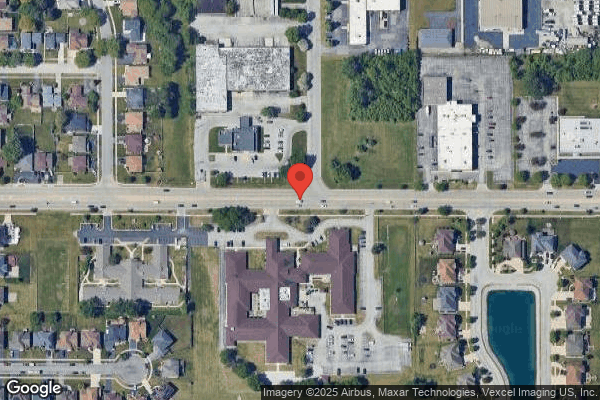
2145 EAST 170TH STREET, SOUTH HOLLAND, IL 60473 (708) 895-3255
For profit - Limited Liability company 216 Beds EXTENDED CARE CLINICAL Data: November 2025
Trust Grade
35/100
#287 of 665 in IL
Last Inspection: August 2024

Within standard 12-15 month inspection cycle. Federal law requires annual inspections.

Overview

South Holland Manor HTH & RHB has received a Trust Grade of F, indicating poor performance and significant concerns about care quality. They rank #287 out of 665 facilities in Illinois, placing them in the top half of the state, but their county rank of #89 out of 201 suggests only a few local facilities are better. The facility is showing improvement, with issues decreasing from 15 in 2024 to 9 in 2025. Staffing is a challenge, with a rating of 2 out of 5 stars and a turnover rate of 31%, which is better than the state average but still below ideal. However, there are notable concerns, including serious incidents where residents were not transferred safely, leading to falls and injuries, and inadequate prevention of pressure injuries for vulnerable residents.

Trust Score
F
35/100
In Illinois
#287/665
Top 43%
Safety Record
High Risk
Review needed
Inspections
Getting Better
15 → 9 violations
Staff Stability
○ Average
31% turnover. Near Illinois's 48% average. Typical for the industry.
Penalties
✓ Good
$52,426 in fines. Lower than most Illinois facilities. Relatively clean record.
Skilled Nurses
○ Average
Each resident gets 40 minutes of Registered Nurse (RN) attention daily — about average for Illinois. RNs are the most trained staff who monitor for health changes.
Violations
⚠ Watch
56 deficiencies on record. Higher than average. Multiple issues found across inspections.
★★★☆☆
3.0
Overall Rating
★★☆☆☆
2.0
Staff Levels
★★★★☆
4.0
Care Quality
★★★☆☆
3.0
Inspection Score
Stable
2024: 15 issues
2025: 9 issues

The Good

  • 4-Star Quality Measures · Strong clinical quality outcomes
  • Full Sprinkler Coverage · Fire safety systems throughout facility
  • No fines on record
  • Staff turnover below average (31%)

    17 points below Illinois average of 48%

Facility shows strength in quality measures, fire safety.

The Bad

3-Star Overall Rating

Near Illinois average (2.5)

Meets federal standards, typical of most facilities

Staff Turnover: 31%

14pts below Illinois avg (46%)

Typical for the industry

Federal Fines: $52,426

Above median ($33,413)

Moderate penalties - review what triggered them

Chain: EXTENDED CARE CLINICAL

Part of a multi-facility chain

Ask about local staffing decisions and management

The Ugly 56 deficiencies on record

3 actual harm
Jul 2025 1 deficiency
CONCERN (D) 📢 Someone Reported This

A family member, employee, or ombudsman was alarmed enough to file a formal complaint

Potential for Harm - no one hurt, but risky conditions existed

Accident Prevention (Tag F0689)

Could have caused harm · This affected 1 resident

**NOTE- TERMS IN BRACKETS HAVE BEEN EDITED TO PROTECT CONFIDENTIALITY** Based on interviews and record reviews the facility failed to follow their policy and procedure for fall prevention by not ensur...

Read full inspector narrative →
**NOTE- TERMS IN BRACKETS HAVE BEEN EDITED TO PROTECT CONFIDENTIALITY** Based on interviews and record reviews the facility failed to follow their policy and procedure for fall prevention by not ensuring the fall intervention of providing two-person assistance for transfers was implemented while providing care for a resident who is totally dependent on staff for transfers. This failure applies to one of four residents (R3) reviewed for falls. Findings include: R3 is an [AGE] year-old male with a diagnoses history of Rhabdomyolysis, Polyneuropathy, Presence of Left Artificial Knee Joint, History of Falling, and Generalized Arthritis who was admitted to the facility 06/07/2023. On 07/23/2025 at 11:34 AM Observed R3 in his room lying in his bead, R3 confirmed he had a fall on 07/18/2025, R3 stated he was being brought back to his room from a shower, the nursing aide placed the shower table next to his bed, and when a nursing aide was sliding him from the shower table to his bed he slid down to the floor. R3 stated he received a cat scan while at the hospital and he has bruising on his lower back. R3 stated he told them not to take him to the shower in that manner and that he preferred a bed bath, he is afraid of falling again that way, and he has asked them not to transfer him that way again. R3 stated the incident has caused him a little anxiety feeling that this may happen again. R3's Current care plan documents he is totally dependent on staff for assistance with activities of daily living, requires mechanical lift with two-person assistance for transfers, is at risk for falls and injury related to falls due to history of fall resulting in a fracture. R3's progress note dated 7/18/2025 at 3:51 PM documents he was observed on the floor next to his bed lying on his back, the nurse practitioner (NP) was notified promptly and per the NP's order, the resident was transferred to the hospital; at 8:44 PM it was noted R3 returned to the facility from the Hospital via stretcher, he complained of mild aches and lower back pain and discomfort, and was diagnosed with acute lower back pain. R3's Fall Incident Report dated 07/18/2025 at 12:00 PM documents he was observed on the floor in his room next to his bed and reported he slid off the shower bed when he was transferred from the shower chair to the bed, he was transferred to the hospital for a fall. R3's Hospital Discharge summary dated [DATE] documents he was seen for a fall and his discharge diagnosis included acute midline lower back pain. R3's physician progress note dated 7/23/2025 documents patient presents following a recent fall incident, Physical examination reveals minor bruising, the patient's musculoskeletal system review confirms the presence of bruising related to the fall. On 07/24/2025 at 1:40 PM V13 (Certified Nursing Assistant) stated on 07/18/2025 she was giving R3 a shower by herself, she asked somebody for help, and she thinks the young lady who was working with her on that unit went on break, then her nurse V5 (Licensed Practical Nurse) told her to ask her for help if she didn't find anyone, and she forgot to ask V5 for help. V13 stated she placed the shower bed towards the R3's bed and locked it, she usually takes a sheet and pulls it so she can transfer R3 to the bed and she guesses she didn't do it correctly, so she had to come around the other side of the bed to make sure R3 didn't fall. V13 stated she broke R3's fall a little but not entirely, R3 still complains about his back pain and she feels bad, V2 did speak with her about R3's fall and she was suspended for it and she was educated by V2 and moving forward she must have two person assistance for transfers, when she was preparing to transfer R3 the aide was on break the nurse was passing medications, and she didn't find any other aides around. On 07/24/2025 at 1:50 PM V2 (Director of Nursing) confirmed there should have been two-person assistance with transferring R3 on 07/18/2025 and that he did suspend V13 (Certified Nursing Assistant) for not asking for assistance with transferring R3. The facility's Fall Policies received 07/28/2025 states: The intent of this guideline is the ensure this facility provides an environment that is free from hazards over which the facility has control and provides appropriate supervision to each resident. Fall Prevention is achieved through an IDT (Interdisciplinary Team) approach of managing predicting factors and implementing appropriate interventions to reduce risk for falls.Systems Approach - Tips for Compliance includes: Fall Management (Determination of risk)Develop and implement interventions.
Jun 2025 2 deficiencies 1 Harm
SERIOUS (G) 📢 Someone Reported This

A family member, employee, or ombudsman was alarmed enough to file a formal complaint

Actual Harm - a resident was hurt due to facility failures

Accident Prevention (Tag F0689)

A resident was harmed · This affected 1 resident

**NOTE- TERMS IN BRACKETS HAVE BEEN EDITED TO PROTECT CONFIDENTIALITY** Based on observation, interview and record review, the facility failed to follow two residents fall care plan and failed to tran...

Read full inspector narrative →
**NOTE- TERMS IN BRACKETS HAVE BEEN EDITED TO PROTECT CONFIDENTIALITY** Based on observation, interview and record review, the facility failed to follow two residents fall care plan and failed to transfer two residents (R1, R2) in a safe manner using a wheelchair and mechanical lift in a sample of three. These failures resulted in R1 sustaining an avoidable fall out of wheelchair and R2 sustaining a fall while using a mechanical lift resulting in R2 being sent to hospital due to constant headache, left hip, left elbow and left leg pain for three days. Findings include: R2 is a [AGE] year-old resident initially admitted to the facility on [DATE] with diagnoses including but not limited to quadriplegia cervical 1-cervical 4 complete, anxiety disorder and spinal stenosis cervical. R2's Minimum Data Set (MDS) section C0500 dated 4/4/2025 documents Brief Interview for Mental Status (BIMS) score = 15 which suggests cognition is intact. MDS section GG0130 dated 4/42025 documents resident is dependent on staff for the following: eating, oral hygiene, toileting hygiene, shower/bathe self, upper body dressing, lower body dressing, putting on/taking off footwear, and personal hygiene. R2's Fall Risk Observation form dated 4/7/2025 documents fall risk low with score of 9. On 6/16/2025, at 10:48 AM R2 stated I had a fall about 3 weeks ago it was a Friday. I was in the Mechanical lift and I ended up on the floor. The strap was not put right in the hook, I think. I hurt my elbow and my hip and my head. I went to the hospital Monday after the fall Friday due to the pain. They took x-rays and everything was ok. No injuries. I do not have any bruises any longer from it, but I did have. Only the left side unhooked. V6 CNA (Certified Nurse Assistant) and someone else (V8) were the CNAs that were here when it happened. They asked if I wanted to go to the hospital and I said not today. On 6/17/2025, at 10:49 AM R2 stated I had the fall with the Mechanical lift before Memorial Day that Friday. The lifts are not broken, they just did not hook it right that is what happened. I did have a lot of pain in my left elbow, left hip, and head. Pain level was 8/10 to head for 3 days. The elbow pain was about an 8/10. The hip did not have much pain at all. I had bruises to left elbow and left hip. The CNA name was (V6) the one that hooked up the loops to the machine. At 10:55AM as surveyor was speaking with R2, V10 CNA and V11 CNA entered R2's room to help move R2 from bath bed to chair. Surveyor observed both CNAs place Mechanical lift pad and place R2 in lift. R2 stated he wanted black loop on legs and green on the top. Bar placed across chest. Mechanical lift legs were not opened to wide base while lifting R2 with mechanical lift. Legs of Mechanical lift was then opened slightly to lower resident in chair. R2 noted to instruct CNAs on Mechanical lift use every step of the way. V11 stated we are supposed to widen the legs of the lift prior to lowering the patient. When asked if needed to widen the legs to lift patient V11 stated there is no need to widen the legs to lift the patient from bath bed if the lift fits it fits. V10 CNA stated I was only aware of widening the legs of the lift when getting in front of chair to lower resident. R2's care plan dated 4/4/2024 documents focus: The resident is at risk for falls related to Deconditioning, Gait/balance problems, Paralysis. Goals: The resident will be free of minor injury through the review date. o The resident will not sustain serious injury through the review date. Interventions: Anticipate and meet the resident's needs. o Be sure the resident's call light is within reach and encourage the resident to use it for assistance as needed. The resident needs prompt response to all requests for assistance. o Encourage the resident to participate in activities that promote exercise, physical activity for strengthening and improved mobility o ensure even weight distribution, when using H**** lift/sling (mechanical lift) d/t (due to) patient's spasms/quadriplegia o Follow facility fall protocol. On 6/16/2025, at 12:53 PM, V5 Licensed Practical Nurse (LPN) stated I was here the day R2 had a fall from the Mechanical lift. The CNAs were V8, and the other person was a restorative aide V6. So, I was sitting at the nurse's station charting and V6 CNA came by the door and waved for me to come here and R2 was on the floor in between the Mechanical legs. R2 was completely out of the sling on the floor. The Mechanical lift was like halfway up/down like in the middle. I assessed R2. I helped get R2 back in the bed. I called V2 and the Doctor. The doctor asked if he was in pain. R2 had denied pain and did not want to be sent out to the hospital. A few days later I was R2's nurse again and he was complaining of pain, and I sent R2 out to hospital then and they did a full work up with no findings. I do not know how or why R2 fell out of the Mechanical lift. It makes no sense to me. R2's progress note dated 5/23/2025 documents: Note Text: Patient fell out of H**** lift (mechanical lift) during transfer. R2's incident report dated 5/23/2025 documents: witnessed fall. Resident description: resident stated they fell out of H**** lift (mechanical lift) during 2-person transfer. R2's skin assessments dated 5/27/2025, 5/30/2025 and 6/3/2025 show skin intact and no abnormalities marked. R2's hospital records dated 5/26/2025 document reason for visit: Fall. Imaging tests Computed Tomography (CT) cervical spine without contrast, CT head without contrast, X-ray elbow left 2 views, and x-ray hip left 2 views. CT head wo contrast results documents history: post traumatic headache. CT cervical spine wo contrast documents history: posttraumatic cervical spine pain. X-ray elbow left 2 views documents history: elbow pain. X-ray hip left 2 views results document history: posttraumatic left hip pain. ED (emergency department) triage notes documents: Patient comes to ED via EMS (emergency medical services) for a fall that occurred 3 days ago. Patient denies any LOC (loss of consciousness). Per patient, nursing staff was using a (mechanical lift) and dropped patient on his left side. Patient has a constant headache, left hip pain, and left leg pain. Pt denies any blood thinner at this time. ED (emergency department) provider notes documents: He experiences pain in his left elbow, hip and head following an incident where he was dropped from a (mechanical lift) at facility. the pain is localized to the left side, with specific mention of elbow and hip. He has difficulty with movement, expressing both ' I can move and 'I can't move' indicating some level of immobility or discomfort. No changes in leg color were noted, as he confirms it is normal for him. ED Provider notes also document Fifty male with history of present illness above, differential includes acute traumatic injury versus sequelae. On 6/16/2025, at 1:10 PM, V6 (Restorative Aide/CNA) stated I do recall working the day R2 had a fall from the Mechanical lift. So, I was going in there to assist the CNA (V8) to get R2 up. We did all of R2's ADL (activities of daily living) care, got R2 dressed and was getting R2 up to get in his chair and were using the Mechanical lift. R2 was very specific as to wanting the green straps (of Mechanical lift pad) at the top and the black straps at the bottom. This Mechanical lift we were using did not go up very high so the other CNA V8 (she no longer works here) was lowering the bed and holding R2's feet as I was pulling the Mechanical lift out. R2's body started tipping a little and when I was pulling R2 out V8 CNA had his feet and somehow some way the strap came out of the Mechanical lift, and I was able to grab it and lower R2 down to the floor so he did not hit so hard. R2 did hit his left elbow and left hip. We immediately asked him if he was ok he said yes. V8 CNA went and got the nurse V5 (LPN). V5 assessed R2 and asked if he was ok and he said yes and that he just hit his elbow on the Mechanical lift leg. R2 did not want to go out to the hospital and said he was fine. Myself, V8 CNA and V5 LPN got R2 back in bed. V5 LPN reported it to V2, Director of Nursing (DON). V2 came around and checked on R2 and he was fine. R2 wanted us to use the same Mechanical lift again to get him up and I told him I did not feel comfortable using that same Mechanical lift. It had to be a Mechanical lift malfunction. It seemed like one of the arms were loose or something. I am not sure if that same Mechanical lift is here or not. R2 did not get hurt because I was able to grab the Mechanical lift pad as it was going down so R2 did not hit as hard as he would have if I didn't. Surveyor went with V6 to look at Mechanical lifts in the building. Mechanical lift with outside company stickers and battery with no brand name has no safety clips but does not appear to initially have them. V6 stated the other Mechanical lift we used is similar to this one and I think the side hook was loose. Surveyor noted nut holding the side plate with hooks. Mechanical lift observed and did not have safety clips and area to put loops on was smaller. V6 stated I think they got rid of that Mechanical lift. V2 and upper management were looking at the Mechanical lifts after the incident and I think they tightened the bolt and got rid of that lift. On 6/16/2025, at 1:32 PM, V2 DON stated I was in my office with the ADON (Assistant DON) and restorative nurse having a meeting and V5 LPN came and said R2 had a fall from the Mechanical lift. We all went down there to see what had happened. So, I checked to see if R2 was ok. R2 said he was fine. I came back and spoke to R2 later that day when it was just him and R2 told me it was an accident, and I am fine. I called V15 Nurse Consultant and me, the 2 CNAs (V6 and V8) and V15 Nurse Consultant went back to R2's room and connected him up to the same Mechanical lift they said they used. The aides claimed the Mechanical lift arm was loose, but I didn't think the arms were that loose. So, I took it (Mechanical lift) out of use sent it back to the company. I did have V13 (Maintenance Assistant) tighten up the nut on the arm just in case it got used before it got picked up from the company. V13 said it didn't tighten much but it did tighten some. Those arms are made to swivel. R2 did say what color loops he wanted where, and they hooked it up the same way they did earlier, and it did not sway how the girls (V6 and V8) said it did. One of the hooks from the head area had come undone and that is how he had fallen out. It was not one of the legs. R2 did not tell me that the CNA's did not hook it all the way. R2 complained that the bar on top wasn't wide enough on that Mechanical lift and that is why he was swinging. R2 kept telling me it was an accident. I also talked to him separately when the staff was not there so R2 could tell me anything confidentially. We also did education on staff on what Mechanical lift pads to use with the correct machine. The pad they used that day was the correct one for the correct lift. The one Mechanical lift that has the missing clips is a rented Mechanical lift and I am waiting for the company to pick it up. I needed it to lift a larger resident. On 6/16/2025, at 2:37 PM, V2 stated for the fall with the Mechanical lift for R2 the CNAs were V6 and V8. V8 resigned the day after the incident. V8 was upset when we were asking questions, I don't know if it scared her or what. My expectation of staff regarding things out of the ordinary happening is it should be reported. Proper lifting techniques, proper transfer techniques, etc. Once R2 fell they reported it right away. We as upper management were just making sure we are following our procedures. That is why I got V15 Nurse Consultant because it did not compute in my head how he could have had a fall from a Mechanical lift. On 6/16/2025, at 2:50 PM, V1 Administrator stated my expectation of staff regarding falls is to prevent falls as much as possible. Once a fall occurs is to call the nurse and have the nurse assess, ensure resident is ok and report to administration to investigate fall. My understanding of a reportable is that we report abuse, fall or injury especially an injury of unknown origin. I would not consider these two falls reportable. In R2's case in the initial reporting of the incident he was lowered to the floor when the sling was coming unloose. V6 said she got him and assisted to the floor, and he did not have any injuries. When R2 was interviewed R2 said they did not let me fall. Then later R2 said they dropped me. V15 Nurse Consultant stated it was not reportable. We still did the fall incident in the computer. We always report abuse and if we don't know how it happened. But if we know how it happened and no injury, we don't report it. When asked by surveyor if reporting includes unusual occurrences V1 stated I understand I can see that they could be considered unusual occurrences. I don't see how him being assisted to the floor is an unusual occurrence though. R2 calls the state on us when he does not get his way. If I thought, they willfully did something or negligent I would have reported it. I am not sure what to think of the Mechanical lift fall. To be totally honest the equipment here is completely different to what I am used to. We did not have all of this equipment and I am not familiar with how they work. On 6/17/2025, at 9:59 AM, V8 CNA stated I previously worked at facility for about 2 months. I quit working there the last week of May. I do remember working when R2 fell from the Mechanical lift. So basically, I was assigned to that set. R2 likes to get up like 10 am. I went to go get V6 CNA to help me because a Mechanical lift is a 2-person lift. We did all his ADLs changed him and got him dressed. I went to go get the regular Mechanical lift and could not find the one I usually use. I got the other one and R2 likes us to use a certain color loop on top and a certain color on bottom. I told him we needed to put on the different colors because it was a different Mechanical lift. The Mechanical lift was broke and it was not working properly. The things that you put the loops on was swinging and it can literally flip all the way around. I told him I did not want to use this Mechanical lift but he wanted to get up. There was another Mechanical lift in the building, but it would not charge, and we could not find the battery for that one. So, we ended up using the broken Mechanical lift. R2 likes green and black loops. R2 would not let us use the different color loops R2 wanted the green and black. We hooked R2 up and V6 CNA was holding his top half and pulling the Mechanical lift away from the bed and I was holding R2's feet. The Mechanical lift would not lift R2 completely off the bed. R2's buttocks was still touching the bed. So, I was lowering the bed. I am moving R2's legs and V6 CNA started pulling the Mechanical lift and V6 seen the loop come off of the hook because the thing was swinging. R2's weight was swinging. R2 was not in the normal sitting position. It was not the right way; I knew it was not the right way. V6 seen that and tried to catch R2 in the Mechanical lift pad before he went to the floor. V6 was able to kind of catch R2 but R2 hit his shoulder and his hip on the floor. R2 hit his head on V6's foot. So, R2 did not fall as hard as he could have but R2 did fall. That is not even the first time they had an incident with this Mechanical lift. After this happened, they magically found another Mechanical lift that worked. R2 told me that the facility told them several times that they were not going to fix the (mechanical lift). I had not ever reported that Mechanical lift not working. That was the first time I had used that Mechanical lift. I usually used the other one, and that one worked. That day the battery would not charge on the other one. We could not find a battery that worked. I did not tell management about that prior to using the broken (mechanical lift). We told V2 after the fact about the battery not charging so he knew. What would have prevented this from happening would be if we would have had a different Mechanical lift or if the arms weren't loose and if we would have paid more attention to the state of the Mechanical lift before using it. The last time I was trained on the Mechanical lift was when I got hired around March. I always knew it was a 2-person job. If we see a fall or know of a fall, we are to report to the nurse right away. On 6/17/2025, at 11: 26 AM, V6 Restorative Aide/CNA stated, regarding the Mechanical lift used the day R2 had a fall, the Mechanical lift that we used that day, I was not aware of it being broken prior to us using. We looked for the Mechanical lift we normally used for R2 and could not find it. I did not notice prior to using the Mechanical lift that the arm was swinging more than it should have until he was in the sling. I was the one that hooked R2 up to the Mechanical lift that day. I did not and do not recall V8 telling R2 not to use the black and green loops for the Hoyer that day. There were 2 other Mechanical lifts here that day but did not have batteries to charge them. The batteries were dead. We had to plug them in. I do not know how long it normally takes to charge the batteries. I think they were the Mechanical lifts that they are renting. I do not think they came with any battery exchange. So, they only had the one it came with. V8 CNA no longer works here. V8 is my daughter. I don't know if V8 knew the lift was broke before I came in to help her. I did not know that it was broken prior to using it. I know R2 was adamant to get out of the bed because he was in the bed for the 2 days prior from his preference. R2 still wanted to use the same Mechanical lift after the fall and I refused. We did end up finding the other Mechanical lift we normally use for him after the fact. In my opinion if they checked the Mechanical lift more often to see if they are working properly this would have not happened. And making sure they are charged pretty much that is it. I do not know how often they check the Mechanical lifts. If they are broken or not charging, we let V2 know and take down to maintenance door and they will look at it. On 6/17/2025, at 11:44 AM, V2 stated, on the floor we have four Mechanical lifts in the building. We had more but parts broke, they were old we had to pull them out. It costs less to buy a new Mechanical lift than to get them fixed. Regarding the CNA Mechanical lift transfer trainings they should be done annually. The records show the last Mechanical lift training was done for all CNAs on 12/6/2023. I started some trainings for the CNA's that were here on the day of the Nurses training fair on 4/3/2025. Schedule requested from V2 for 4/3/2025. The Mechanical lift competency training for most of CNA's is past due about 6 months. I have a skills fair I am planning for September for CNA's. Maintenance logs provided to surveyor for six pieces of equipment. V2 stated some may be sit-to-stands and some Mechanical lifts. I do not think they have maintenance logs for the rented Mechanical lift . Surveyor requested to go with V2 to go match up serial numbers from maintenance logs with Mechanical lifts in the building. On 6/17/2025, at 11:49 AM, Surveyor went with V2 to look at all Mechanical lifts and match up serial numbers with Mechanical lifts from maintenance logs. 2 Mechanical lift and 1 sit to stand lift noted on (hall) (3). Medicare area noted to have 2 Mechanical lifts in that area. V2 stated there are 4 Mechanical lifts in the whole building. The other two maintenance logs are for sit to stand lifts. Surveyor asked V2 to provide surveyor with a report showing how many residents need to use the Mechanical lift. On 6/17/2025, at 2:22 PM, Surveyor reviewed list of residents who are care planned to use mechanical lift with 2-person transfer or mechanical lift and there are 18-24 residents in the building who use this type of lift per provided list. On 6/17/2025, at 11:55 AM, V7 Maintenance Director stated we do not do maintenance on rented Mechanical lifts as they are rented. I think we have 3 Mechanical lifts in the building. I do not know how many residents use Mechanical lifts in the building. On 6/17/2025, at 12:44 PM, training records provided to surveyor for 18 CNA's showing annual competencies completed on 4/3/2025 including total body lift including V6 CNA and V8 CNA. On 6/18/2025, at 1:00 PM, Administrator provided surveyor a list of current CNA's showing a total of 48 CNA's currently employed. On 6/17/2025, at 1:16 PM, V7 stated, we currently have 4 Mechanical lifts in the building currently all owned by us. We do monthly checks on those lifts unless staff notified us that there is a problem then we check them whenever staff brings to us or tells us about it. V14 Scheduler/Ancillary Clerk lets me know when we have a rental Mechanical lift in the building. I do not do any type of maintenance on those lifts. If anything goes wrong with them, we call the company and they come out and service or replace them right away. The lift that R2 fell from I did not tighten any screws to that lift unless my assistant did that, we are not supposed to do any maintenance on these lifts or equipment. We are not even supposed to touch them lifts. When surveyor told V7 that the staff stated maintenance tightened the screws V7 stated I am going to have to get on V13 Maintenance Assistant about that then. Anything the other companies bring we call them for maintenance on that, we are not supposed to touch them. On 6/17/2025, at 1:30 PM, V13 stated the Mechanical lift that R2 fell out of staff did bring that Mechanical lift down to me to tighten the screws. I did tighten the screws on it. I did tighten the screws on it after the fall. This was a rental Mechanical lift . The screws were loose and it had more play in it than we would like. We normally do not work on the rental equipment that is why I suggested it to be sent back. I did not know if they were going to come with a new rental or not and wanted it to be operational and safe that is why I tightened the screws on that (mechanical lift). As soon as that happened, we took it off the floor. When asked why you tightened the screws if you pulled the lift off of the floor right away V13 stated when I tightened the screws I had not talked to V2 at that point, but my suggestion was to get it replaced. I spoke to V2 and that is when it got taken off the floor. V7 stated I am not sure how long it usually takes to pick up or service equipment that would be V14. The companies do not come out and service their equipment unless we call them. I am not sure if they have a contract to do upkeep on their equipment on a certain schedule. That would be a V14 question. I have not seen them come out and just check on equipment that does not have any problems. On 6/17/2025, at 1:40 PM, V14 stated I am in charge of ordering rental equipment and notifying companies when their equipment needs servicing. Usually, it takes about a day or two to come and pick up or service equipment. Unless we have a problem with the equipment, the companies do not come out and maintain the equipment like Mechanical lifts, beds, broda chairs, floor mats, etc. The companies that provided oxygen and CPAP machines do come out about every 2 months and check on their equipment. We are not supposed to do any maintenance on outside company equipment. Surveyor asked is there anything that could have been done to prevent R2's fall from Mechanical lift. V14 stated in my opinion me being a CNA for umpteen years I would have noticed the arm being loose. Maybe a newer CNA would not have noticed that. R1 is a [AGE] year-old resident initially admitted to facility on 4/25/2023 with diagnoses including but not limited to: transient cerebral ischemic attack, vascular dementia unspecified severity with behavioral disturbance and major depressive disorder. R1's Minimum Data Set (MDS) section C0500 dated 4/30/2025 documents Brief Interview for Mental Status (BIMS) score = 06 which suggests severe cognitive impairment. MDS section GG0130 dated 4/30/2025 documents resident needs set up or clean up assistance with eating. Resident needs substantial/maximal assistance with lower body dressing, putting on/taking off footwear, and personal hygiene. Resident is dependent on staff for oral hygiene, toileting hygiene, shower/bathe self, and upper body dressing. R1's Fall risk assessment dated [DATE] documents resident is a high falls risk with score of 15. R1's Progress note dated 6/6/2025 documents: Note Text: Staff brought resident while in his wheelchair to the nurses cart and stated that the resident almost fell, (V4) CNA (certified nursing assistant) states that resident was standing while holding onto the side rails of the wall and as an attempt was made to sit down in his wheelchair resident missed the wheelchair and V4 CNA assisted resident to the floor with no injuries, no injuries noted. Resident assessed, vitals WNL, denies pain, no further actions required at this time. On 6/16/2025, at 10:55 AM, R1 noted to be sitting in wheelchair in front of nursing station. Surveyor asked staff to see if R1 would talk to surveyor in his room. R1 agreed to talk to surveyor in his room. R1 noted to be sleepy sitting in wheelchair with eyes opening and closing during wheelchair transfer to room by staff. R1 stated he was ok. R1 stated he did not have a fall recently. Everyone treats me ok. When asked if anyone pulled the wheelchair out from underneath R1 he stated yes and stated the first name of V4 when asked who did that. When R1 was asked if he fell when the wheelchair was pulled from underneath R1 he stated yes. I do not remember what day she (V4) pulled the wheelchair from underneath me. Resident could not answer why V4 pulled the chair from underneath of R1 or if it was an accident or on purpose. R1 clean and well groomed. No foul odors noted. On 6/17/2025, at 10:42 AM, R1 was in dining room alone at a table close to doors by nursing station. R1 stated I did not fall out of my wheelchair recently. Someone pulled the chair out from underneath of me. It was the nurse. R1 stated her name was the first name of V4. When asked how it happened R1 stated I was sitting down. She (V4) was trying to push me out of the dining room. She (V4) was pushing me backwards in the wheelchair. I fell to the ground. She (V4) helped me back up. I did not get hurt. I did not have any pain or bruises. On 6/16/2025, at 11:58 AM, V4 stated I do recall an incident with R1 almost falling out of the wheelchair. I do not recall the exact date. I think it was a Thursday about a week and a half ago. I am pretty sure it was a Thursday. All that happened was that R1 was trying to stand up and was trying to grab on to a door handle and R1 is a high fall risk. So, I went over to R1 and tried to sit him down and he grabbed on to the handrailing and was holding on really tight and so I went to move the chair because the chair was stuck. R1 was standing up at that point, and I went to move the chair and R1 started wobbling and he lowered himself to the floor as I was standing by him. R1 was taken to the nurse (V3) Registered Nurse (RN) and I let her know R1 had an assisted fall to the floor and everything was witnessed. No one else that I am aware of witnessed the fall besides me. I was already guiding R1 to sit down when this happened, so it was an assisted lowered to the floor. R1 landed on one of his knees. There were no visible injuries. R1 was acting normal. No complaints of pain. R1 was taken straight to the nurse. The nurse was V3. R1 is a high fall risk. R1 constantly tries to stand up and we have to assist him or redirect him to sit down. R1 was close to the nurse's station but by the corner. R1 is usually at the nurse's station for higher visibility. But R1 can wander around a little bit, but he does not go too far. We all keep an eye and watch closely the high fall risk residents. R1 was my resident that day. That is my normal assignment. I have had R1 every day I have worked for like a year and a half, so I know him very well. On 6/16/2025, at 1:32 PM, V2 Director of Nursing (DON) stated my expectation of staff regarding documentation is that staff should document incidents before their shift is over. Obviously patient care comes first. There should not be an incident that is documented the next day. For R1, I got a note under my door that a staff member seen resident on the floor, but no incident was reported. I went and talked to all staff members noted in the area that day. My investigation revealed there was a CNA (V4) that was caring for R1 and was rolling him backwards through the door and he grabbed the door frame, and he slid out of the chair. V4 picked him up and put him back in the chair but did not report. The CNA V4 told the nurse V3, get your resident he almost fell. So now I am interviewing everyone and trying to investigate and see what happened. The CNA V4 did not want to get in trouble and did not report so we opened up the incident the next day because we now knew R1 actually fell. V4 was the CNA, and she was terminated after the investigation. Once I got everyone's statements, I suspended V4 for 3 days pending investigation and then terminated her the following Wednesday. We looked at the camera and it doesn't show the area. You can see everyone going over there but cannot see the incident. That is when I started getting statements from everyone I seen in the camera. So, R1 did have a fall, it was not assisted to the floor. V4 was pulling him backwards and R1 put his arms on both sides of door jambs, and R1 braced himself on the door and fell out of wheelchair. R1 was not standing up, V4 was bringing him out of the dining room. I don't think it was intentional, if V4 would have just reported it we would not have a problem. Surveyor asked to see cameras and to see the termination paperwork. V2 DON provided discipline form recommending termination dated 6/10/2025 signed by V4 CNA. V2 DON stated we brought V4 back from suspension and the same day terminated her. On 6/16/2025, at 2:06 PM, V2 DON stated the camera only records for 24 hours and it cycles so we do not have the footage unless maintenance can pull it up. When I looked at it, it was still in the 24 hours. V2 showed surveyor the live footage of the area and where R1 was, which is out of screen view but just to give you an idea of where he was and where it happened. I will go see if maintenance can pull it up for you. On 6/16/2025, at 2:11 PM, V2 DON and V7 Maintenance Director. V7 stated the cameras only loop for 24 hours. After 24 hours there is no access that we can get. Surveyor asked what happens if something happens on the weekend and now you do not have access to check the cameras. V2 DON stated I think it is the package they bought for the cloud I have been asking them to upgrade it for that reason. On 6/17/2025, at 12:18 PM, V3 Registered Nurse (RN) stated I was working when R1 had his fall. I did not witness it. It (fall) was on a Thursday. I charted on 6/6/2025. I was notified of an incident that he almost fell, and they brought R1 to me on 6/5/2025. On 6/6/2025 I was notified that R1 did have a fall on 6/5/2025 and told to put in my progress note and open an incident on it. R1's Care plan dated 3/3/2024 documents focus: Resident is at risk for falls and injury related to falls due to history of falls, decreased safety awareness due to altered mental status and Dementia. He also has weakness, decreased mobility, and utilizes psychotropic medications. Goals: The resident will not sustain serious injury through the review date. Interventions: Ask the resident every one to two hours if he needs to use the bathroom. o Dycem in place o Ensure the transfer path is clear and\or resident is not grabbing stationary objects during transfer. o Give resident verbal reminders not to ambulate/transfer without assistance. o Keep bed in lowest position with brakes locked. o Keep call light in reach at all times. o Keep personal items and frequently used items within reach. o Keep wheelchair out of reach of resident. o Monitor for proper positioning when in bed o Monitor pt closely when in wheelchair. o Observe frequently o Orient [TRUNCATED]
CONCERN (D) 📢 Someone Reported This

A family member, employee, or ombudsman was alarmed enough to file a formal complaint

Potential for Harm - no one hurt, but risky conditions existed

Report Alleged Abuse (Tag F0609)

Could have caused harm · This affected 1 resident

**NOTE- TERMS IN BRACKETS HAVE BEEN EDITED TO PROTECT CONFIDENTIALITY** Based on interview and record review the facility failed to report to state agency two unusual occurrences for two (R1, R2) of t...

Read full inspector narrative →
**NOTE- TERMS IN BRACKETS HAVE BEEN EDITED TO PROTECT CONFIDENTIALITY** Based on interview and record review the facility failed to report to state agency two unusual occurrences for two (R1, R2) of three residents reviewed for incidents and accidents. This failure resulted in R1 and R2 sustaining avoidable falls and R2 being sent to hospital with constant headache, left hip pain, left elbow pain and left leg pain. Findings include: R1 is a [AGE] year-old resident initially admitted to facility on 4/25/2023 with diagnoses including but not limited to: transient cerebral ischemic attack, vascular dementia unspecified severity with behavioral disturbance and major depressive disorder. R1's Minimum Data Set (MDS) section C0500 dated 4/30/2025 documents Brief Interview for Mental Status (BIMS) score = 06 which suggests severe cognitive impairment. MDS section GG0130 dated 4/30/2025 documents resident needs set up or clean up assistance with eating. Resident needs substantial/maximal assistance with lower body dressing, putting on/taking off footwear, and personal hygiene. Resident is dependent on staff for oral hygiene, toileting hygiene, shower/bathe self, and upper body dressing. R1's Fall risk assessment dated [DATE] documents resident is a high falls risk with score of 15. R1's Progress note dated 6/6/2025 documents: Note Text: Staff brought resident while in his wheelchair to the nurses cart and stated that the resident almost fell, (V4) CNA (certified nursing assistant) states that resident was standing while holding onto the side rails of the wall and as an attempt was made to sit down in his wheelchair resident missed the wheelchair and V4 CNA assisted resident to the floor with no injuries, no injuries noted. Resident assessed, vitals WNL (within normal limits), denies pain, no further actions required at this time. On 6/16/2025, at 10:55 AM, R1 noted to be sitting in wheelchair in front of nursing station. Surveyor asked staff to see if R1 would talk to surveyor in his room. R1 agreed to talk to surveyor in his room. R1 noted to be sleepy sitting in wheelchair with eyes opening and closing during wheelchair transfer to room by staff. R1 stated he was ok. R1 stated he did not have a fall recently. Everyone treats me ok. When asked if anyone pulled the wheelchair out from underneath R1 he stated yes and stated the first name of V4 when asked who did that. When R1 was asked if he fell when the wheelchair was pulled from underneath R1 he stated yes. I do not remember what day she (V4) pulled the wheelchair from underneath me. Resident could not answer why V4 pulled the chair from underneath of R1 or if it was an accident or on purpose. R1 clean and well groomed. No foul odors noted. On 6/17/2025, at 10:42 AM, R1 was in dining room alone at a table close to doors by nursing station. R1 stated I did not fall out of my wheelchair recently. Someone pulled the chair out from underneath of me. It was the nurse. R1 stated her name was the first name of V4. When asked how it happened R1 stated I was sitting down. She (V4) was trying to push me out of the dining room. She (V4) was pushing me backwards in the wheelchair. I fell to the ground. She (V4) helped me back up. I did not get hurt. I did not have any pain or bruises. On 6/16/2025, at 2:37 PM, V2 Director of Nursing (DON) stated in my mind what constitutes a reportable is someone getting hurt, anything out of the ordinary. The other occurrence with staff causing a fall should have been reported to IDPH as well since that is out of the ordinary. On 6/17/2025, at 12:18 PM, V3 Registered Nurse (RN) stated I was working when R1 had his fall. I did not witness it. It (fall) was on a Thursday. I charted on 6/6/2025. I was notified of an incident that he almost fell, and they brought R1 to me on 6/5/2025. On 6/6/2025 I was notified that R1 did have a fall on 6/5/2025 and told to put in my progress note and open an incident on it. R2 is a [AGE] year-old resident initially admitted to the facility on [DATE] with diagnoses including but not limited to quadriplegia cervical 1-cervical 4 complete, anxiety disorder and spinal stenosis cervical. R2's Minimum Data Set (MDS) section C0500 dated 4/4/2025 documents Brief Interview for Mental Status (BIMS) score = 15 which suggests cognition is intact. MDS section GG0130 dated 4/42025 documents resident is dependent on staff for the following: eating, oral hygiene, toileting hygiene, shower/bathe self, upper body dressing, lower body dressing, putting on/taking off footwear, and personal hygiene. R2's Fall Risk Observation form dated 4/7/2025 documents fall risk low with score of 9. On 6/16/2025, at 10:48 AM R2 stated I had a fall about 3 weeks ago it was a Friday. I was in the Mechanical lift, and I ended up on the floor. The strap was not put right in the hook, I think. I hurt my elbow and my hip and my head. I went to the hospital Monday after the fall on Friday due to the pain. They took x-rays and everything was ok. No injuries. I do not have any bruises any longer from it, but I did have bruises. Only the left side unhooked. V6 CNA and someone else (V8) were the CNAs that were here when it happened. They asked if I wanted to go to the hospital and I said not today. On 6/16/2025, at 12:53 PM, V5 Licensed Practical Nurse (LPN) stated I was here the day R2 had a fall from the Mechanical lift. The CNAs were V8 and the other person was a restorative aide V6. So, I was sitting at the nurse's station charting and V6 CNA came by the door and waved for me to come here and R2 was on the floor in between the Mechanical legs. R2 was completely out of the sling on the floor. The Mechanical lift was like halfway up/down like in the middle. I assessed R2. I helped get R2 back in the bed. I called V2 and the Doctor. The doctor asked if he was in pain. R2 had denied pain and did not want to be sent out to the hospital. A few days later I was R2's nurse again and he was complaining of pain, and I sent R2 out to hospital then and they did a full work up with no findings. I do not know how or why R2 fell out of the Mechanical lift. It makes no sense to me. R2's progress note dated 5/23/2025 documents: Note Text: Patient fell out of H**** (mechanical lift) lift during transfer. R2's incident report dated 5/23/2025 documents: witnessed fall. Resident description: resident stated they fell out of H**** (mechanical lift) lift during 2-person transfer. R2's hospital records dated 5/26/2025 document reason for visit: Fall. Imaging tests Computed Tomography (CT) cervical spine without contrast, CT head without contrast, X-ray elbow left 2 views, and x-ray hip left 2 views. CT head wo contrast results documents history: post traumatic headache. CT cervical spine wo contrast documents history: posttraumatic cervical spine pain. X-ray elbow left 2 views documents history: elbow pain. X-ray hip left 2 views results document history: posttraumatic left hip pain. ED triage notes documents: Patient comes to ED (emergency department) via EMS (emergency medical services) for a fall that occurred 3 days ago. Patient denies any LOC (loss of consciousness). Per patient, nursing staff was using a H**** (mechanical lift) and dropped patient on his left side. Patient has a constant headache, left hip pain, and left leg pain. Pt denies any blood thinner at this time. ED (emergency department) provider notes documents: He experiences pain in his left elbow, hip and head following an incident where he was dropped from a H**** lift (mechanical lift) at facility. the pain is localized to the left side, with specific mention of elbow and hip. He has difficulty with movement, expressing both ' I can move and 'I can't move' indicating some level of immobility or discomfort. No changes in leg color were noted, as he confirms it is normal for him. ED Provider notes also document Fifty male with history of present illness above, differential includes acute traumatic injury versus sequelae. On 6/17/2025, at 9:05 AM, V1 Administrator stated we do not have a policy for reportables we just follow IDPH guidelines for reporting. Facility was not able to provide policy during course of survey.
May 2025 2 deficiencies
CONCERN (D) 📢 Someone Reported This

A family member, employee, or ombudsman was alarmed enough to file a formal complaint

Potential for Harm - no one hurt, but risky conditions existed

Accident Prevention (Tag F0689)

Could have caused harm · This affected 1 resident

**NOTE- TERMS IN BRACKETS HAVE BEEN EDITED TO PROTECT CONFIDENTIALITY** Based on interviews and record reviews, the facility failed to provide adequate supervision for residents who are at risk for fa...

Read full inspector narrative →
**NOTE- TERMS IN BRACKETS HAVE BEEN EDITED TO PROTECT CONFIDENTIALITY** Based on interviews and record reviews, the facility failed to provide adequate supervision for residents who are at risk for falls, with a history of falling; and they failed to implement effective fall interventions. This failure applies to two of two residents (R5 and R6) reviewed for falls. Findings include: R5 is a [AGE] year-old male with a diagnoses history of Vascular Dementia; Peripheral Vascular Disease, Metabolic Encephalopathy, Presence of Cardiac Pacemaker, and Lack of Coordination, who was admitted to the facility 01/06/2024. On 05/06/2025 at 9:53 AM R5 in observed in his room lying in his bed in the lowest position with confusion and his call light closed up in his nightstand drawer behind him. R5's Current Fall Care Plan initiated 03/02/2024 documents he has history of falling related to altered thought process, poor safety awareness, restlessness, and impaired mobility with interventions initiated 03/02/2024 of Give resident verbal reminders not to ambulate/transfer without assistance; widen and extend bed; intervention initiated 03/04/2024 of Keep bed in lowest position with brakes locked; intervention initiated 03/08/2024 of observed frequently; interventions initiated 05/03/2024 of Attempt to keep resident on the same routine; Keep resident in view during high risk times if possible; intervention initiated 09/09/2024 of bolsters and floormates in place; intervention initiated 01/27/2025 of Educate patient to ask for assistance to retrieve dropped items; intervention initiated 02/10/2025 of Monitor for proper positioning while in bed; intervention initiated 03/07/2025 of When resident shows signs of restless, staff will transport resident to nursing station for close monitoring; intervention initiated 03/11/2025 of Engage resident in activities of his liking to keep occupied; intervention initiated 04/04/2025 of When up in geriatric wheelchair keep reclined for safety, due to poor trunk control; and intervention initiated 04/06/2025 of provide comfort and repositioning when restless in bed. R5's Current Care Plan initiated 08/01/2024 documents he displays moderate impairment with daily decision making and requires cues and supervision with interventions of Provide cues, assistance, and supervision with ADLs (Activities of Daily Living) and all facility activities. R5's Current Care Plan initiated 04/06/2025 documents he doesn't have much active movement and requires dependent assistance from staff with interventions including monitor the patient throughout the shift more often; Keep resident clean and dry throughout the shift; Help with ADL care and assist with feedings; Keep resident near nursing station for frequent monitoring. R5's Current ADL (Activities of Daily Living) Care Plan documents he has an ADL self-care performance deficit related to Disease Process, Nervous System Inflammation, Impaired balance, and Limited Mobility and is totally dependent on staff for activities of daily living. R5's progress note dated 12/10/2024 at 4:19 PM documents the nurse observed him lying on the floor on his right side next to the wheelchair in the lounge area and he stated, he tried to transfer from the wheelchair to another chair. R5's Fall Risk Management Report dated 12/10/2025 documents he experience an unwitnessed fall in the lounge. R5's Fall Risk Management Report dated 01/23/2025 documents he had an unwitnessed fall in the dining room while trying to pick up glasses. R5's progress note dated 2/10/2025 at 02:30AM documents he was observed on the left mat next to the bed and was placed back in bed by two aides. R5's Fall Risk Management Report dated 02/10/2025 documents he had an unwitnessed fall in his room and stated he slipped out of bed. R5's progress note dated 3/6/2025 at 02:00 AM documents he was observed lying on the floor mat on the left side of the bed and was picked up and placed in bed with a mechanical lift. R5's Fall Risk Management Report dated 03/06/2025 documents he had an unwitnessed fall in his room and stated he rolled out of his car. R5's progress note dated 3/11/2025 at 12:24 PM documents Writer was called to the lounge by staff and upon entering R5 was observed on floor near his geriatric wheelchair on his right side. Writer asked R5 what happened, and he stated, I just slipped. R5 was placed back in geriatric wheelchair and was positioned in front of nursing station for close monitoring. R5's Fall Risk Management Report dated 03/11/2025 documents he had an unwitnessed fall in the lounge. R5's progress note dated 4/4/2025 at 9:25 PM documents he fell out of the wheelchair in the hallway, after lunch. R5's Fall Risk Management Report dated 04/04/2025 documents he had an unwitnessed fall in the hallway near the nurses station and may be tired of staying in the wheelchair for a long period of time. R5's progress note dated 4/6/2025 at 3:24 PM documents he was observed lying supine on the floor and when asked what happened resident stated I don't know, I'm just on the floor. R5's Fall Risk Management Report dated 04/06/2025 documents he had an unwitnessed fall in his room. R6 is a [AGE] year-old female with a diagnoses history of Epilepsy, Hypotension, Stroke, Disorder of Muscle, Abnormal Posture, Abnormalities of Gait and Mobility, Lack of Coordination, and History of Falling who was admitted to the facility 12/10/2024. On 05/06/2025 at 9:46 AM Observed R6 in her room alone standing with one pant leg on the wrong leg attempting to put on her pants. Observed R6 to be crying and stating she was upset with her daughter because she forgot about her on Mother's Day. Observed R6 with her right foot bare and left foot with a sock on. R6's Current Care Plan initiated 12/10/2024 documents The resident is at risk for falls related Gait/balance problems, Incontinence, Unaware of safety needs with interventions initiated 12/10/2024 of Be sure the resident's call light is within reach and encourage the resident to use it for assistance as needed. The resident needs prompt response to all requests for assistance; Ensure the resident is wearing appropriate footwear when ambulating or mobilizing in wheelchair; Follow facility fall protocol; intervention initiated 03/03/2025 of educate resident to ask for assistance with dressing needs; intervention initiated 03/08/2025 of educate patient to lock wheelchair brakes; and intervention initiated 04/08/2025 of Anticipate and meet The resident's needs. R6's Current Care Plan initiated 12/12/2024 documents she has an ADL (Activities of Daily Living) self-care performance deficit related to arthritis, high cholesterol, stroke without residual deficit, atrial fibrillation (irregular heartbeat), therapy, seizures, cirrhosis, gastrointestinal blood vessel condition, hypertension, and heart medications and requires assistance most activities of daily living. R6's Current Care Plan initiated 01/23/2025 documents she is limited in ability to transfer herself related to weakness and requires a restorative transfer program. R6's Current Care Plan Initiated 03/04/2025 documents she is resistive to care related to adjustment to nursing home and thinking she does not need assistance with ADL care with interventions including Allow the resident to make decisions about treatment regime, to provide sense of control; Encourage as much participation/interaction by the resident as possible during care activities. R6's Fall Risk Management Report dated 12/17/2025 documents she had an unwitnessed fall in her room and was found lying on her left side next to her bed. R6 stated she was reaching for the call light when she fell. R6's progress notes dated 1/9/2025 at 03:00 AM documents she was observed sitting on her buttocks on the side of her bed. R6's Fall Risk Management Report dated 01/09/2025 documents she had an unwitnessed fall in her room, the nurse on duty responded to the call light and R6 was found sitting on her buttocks on the floor next to her bed and stated she was getting ready to go to the bathroom but denied falling. R6's progress notes dated 3/1/2025 at 01:02 AM documents she was observed on the floor. R6 stated she was trying to put her pants on and slid on the floor. R6's Fall Risk Management Report dated 03/01/2025 documents she had an unwitnessed fall in her room and was observed sitting on the floor in front of the wheelchair. R6's progress notes dated 3/8/2025 at 08:00 AM documents the nurse was summoned to R6's room and observed her sitting in front of her wheelchair. R6 stated she was reaching for her pull-ups and slid to the floor. R6 was placed back in her bed with two person's assistance. R6's Fall Risk Management Report dated 03/08/2025 documents she had an unwitnessed fall in her room. R6's progress notes dated 4/8/2025 10:16 PM documents she was observed lying near the end of the bed on the floor. R6 has to be constantly re-educated throughout the day to use assistive devices, walker or wheelchair. Family came to visit and she was fine. When the family left, she wanted to get out of her chair to use the restroom. R6 was placed back in bed and attempted to get up again. R6 refuses to use the call light, refuses to stay in bed and follow simple direction from staff. R6's Fall Risk Management Report dated 04/08/2025 documents she had an unwitnessed fall in her room attempting to use the bathroom. R6's census report documents her room was changed on 04/10/2025. R6's progress notes dated 4/30/2025 at 03:24 AM documents there was a noise heard in room; R6 was observed on the floor lying on left side and placed back in bed per facility protocol. R6's Fall Risk Management Report dated 04/30/2025 documents she had an unwitnessed fall in her room and stated she slid out of bed. R6's progress notes dated 5/2/2025 at 08:30 AM documents This Writer was called to R6's room and upon entering the room she was noted sitting on the floor in a small space between the bed and the wall. When asked what happened R6 stated that she was trying to get her shoe off the floor. (R6's shoes were on the other side of the bed). R6 was assisted off the floor into the bed. R6's Fall Risk Management Report dated 05/02/2025 documents she had an unwitnessed fall in her room. The facility's fall reports from December 2024 - May 2024 documents 86 unwitnessed falls with R5 and R6 each having 7 unwitnessed falls. On 05/14/2025 at 1:35 PM V3 (Restorative Nurse/Licensed Practical Nurse) stated she is the fall coordinator which includes care plan reviews, quality assurance investigation for every fall ensuring all components are in place, and audits fall interventions and equipment. V3 stated the facility does not provide one on one observation or monitoring, nor use restraints or fall alarms. V3 stated R5 is very confused and has very poor safety awareness and staff would not be able to reach him quick enough to prevent a fall. V3 stated R5 is very impulsive and falls just happen. V3 stated one of R5's falls were due to him reaching for his glasses that were already on his face. V3 stated you can't prevent a fall and they have a right to fall. V3 stated you can modify fall care plans when asked by surveyor how can falls be prevented. V3 stated she wouldn't say R5 requires more supervision than the facility can provide and he's like a lot of the facility's patients with dementia with impulsivity and safety awareness. V3 responded absolutely when asked by the surveyor if the facility's goal is to prevent falls. When asked by the surveyor if a resident continues to have repeated falls what does that indicate. V3 responded we continue to address the plan of care and put in an intervention that will prevent that fall. V3 stated R6 does not like coming out of her room so that was an issue, and one recent approach was having activities to go in her room and offer her one to one and we also did a room change where she was moved directly across the nurses station for closer supervision. V3 stated R6's previous room is down the middle hall almost the furthest away from the nurses station. V3 stated she did a restorative modification for R6 for transfers because many of her falls were due to attempt to self-ambulate without assistance. V3 stated R6 is very confused, she has good and bad days and there are days where she doesn't recall time, place, or year and there are times where she is more alert but won't recognize that she has had incontinence episode. V3 stated R6 does not have good awareness of her physical limitations where she thinks she can walk without assistance when she can't and during restorative therapy they do a lot of safety cueing with her. V3 stated R6 refuses care and thinks she can do things for herself and she refuses medications. V3 stated R6 is definitely impulsive and so used to doing everything on her own and caring for everyone else she doesn't know how to accept that kind of help from others. V3 stated R6 has a deficit that is either related to a psychiatric diagnosis or cognitive impairment. When asked by surveyor how can staff monitor R6 adequately from outside her room, V3 stated constant cueing when they see R6 while walking by the rooms and staff do go in and check on her constantly and anticipate her needs. V3 stated she considers R5 and R6's fall interventions successful due to the root causes of her falls constantly changing. V3 stated attempting a routine would be an appropriate fall intervention for R6. On 05/14/2025 at 1:35 PM V2 (Director of Nursing) stated if the fall incident listed on the fall report does not have a Y marked under the section for witnessed, it is an unwitnessed fall however it does not categorize those falls under the unwitnessed fall category due to the way in which the incident is logged in the system. V2 stated if residents continue having incidents despite constant attempts to modify interventions this may indicate they need to be transferred to another facility that may provide one on one care or more supervision. V2 stated if R5 has multiple falls the same way that's when he would say fall interventions are unsuccessful. V2 agreed all of R5's falls have the common theme of him attempting to move and stated R5 attempts to do things on his own. V2 stated R5 has some trunk control and uses a geriatric wheelchair. V2 stated the primary cause of R5's falls is him trying to do things on his own and he doesn't have the cognitive awareness that he is not capable of performing these activities independently. V2 stated R5's mental and physical abilities are not on the same level and a lot of time this is the root cause of his falls. V2 could not explain what an effective intervention would be for this behavior and he doesn't think there is an applicable intervention for this behavior. V2 stated if R5 has his call light he believes he can use it although he may not be sure of what he is using it for, and his call light should be in reach. V2 stated it is important to keep commonly used items in reach for R5 and other residents. V2 agreed all of R6's falls are related to attempting to perform activities of daily living and she doesn't understand she needs to ask for assistance. V2 stated R6 has intermittent confusion and at night she heavily Sundowns. V2 stated the right to fall means the facility can't restrain them from moving. V2 stated if staff observe R5 trying to get up staff should respond as soon as possible and attempt to assist him. V2 stated you would want to increase observations, when R5 is out of bed to ensure he is where he can be easily seen. V2 stated if a resident falls in common areas it could be asked if there were staff present and if so where were they located. V2 stated an indication that fall interventions for R5 or R6 are effective would be a reduction in falls, and not having the same type of falls or falling due to the same causes or contributing factors.
CONCERN (E) 📢 Someone Reported This

A family member, employee, or ombudsman was alarmed enough to file a formal complaint

Potential for Harm - no one hurt, but risky conditions existed

ADL Care (Tag F0677)

Could have caused harm · This affected multiple residents

**NOTE- TERMS IN BRACKETS HAVE BEEN EDITED TO PROTECT CONFIDENTIALITY** Based on observations, interviews, and record reviews, the facility failed to ensure residents received adequate assistance with...

Read full inspector narrative →
**NOTE- TERMS IN BRACKETS HAVE BEEN EDITED TO PROTECT CONFIDENTIALITY** Based on observations, interviews, and record reviews, the facility failed to ensure residents received adequate assistance with activities of daily living. This failure applies to five of five residents (R1, R2, R3, R4, and R7) reviewed for ADL's (Activities of Daily Living). Findings include: 1. R1 is an [AGE] year-old female with a diagnoses history of Alzheimer's Disease, Lung Cancer, Severe Protein Calorie Malnutrition, and Encounter for Palliative Care who was admitted to the facility 02/18/2022. R1's current care plan documents she has an ADL (Activities of Daily Living) performance deficit related to Alzheimer's and is totally dependent on staff for activities of daily living. On 05/05/2025 at 10:26 AM R1 is observed in her room sitting in her wheelchair. Observed multiple piles of dead ants on the floors behind chairs and on two large square velcro attachments on the wall behind her bed. 2. R2 is an [AGE] year-old female with a diagnoses history of Recurrent Major Depressive Disorder, Anxiety Disorder, Bipolar Disorder, Heart Failure, Peripheral Vascular Disease, and Morbid Obesity who was admitted to the facility 02/27/2018 and readmitted [DATE]. R2's Current Care Plan documents she has an ADL (Activities of Daily Living) self-care performance deficit related to Musculoskeletal Impairment and is totally dependent on staff for activities of daily living and does not document that she refuses care. On 05/05/2025 at 11:21 AM R2 is observed in her room lying in her bed wearing a gown and her hair greasy. R2 stated she has been wearing the same gown since yesterday and it is stained. Observed R2's gown with a large stain on the front of it. R2 stated she sometimes goes all day without receiving incontinence care and has a sore behind now. R2 stated she doesn't have any wounds on her behind area but has soreness. R2 stated she was told she would be changed every two hours. R2 stated she could turn on her call light and it could stay on all night. 3. R3 is a [AGE] year-old female with a diagnoses history of Recurrent Major Depressive Disorder, Generalized Anxiety Disorder, Partial Paralysis due to Stroke, COPD, and Blindness in Right Eye who was admitted to the facility 01/31/2019. R3's current care plan documents her ability to perform ADLs (Activities of Daily Living) and mobility is impaired and has an ADL self-care performance deficit related to partial paralysis and is totally dependent on staff for activities of daily living. 4. R7 is a [AGE] year-old female with a diagnoses history of Partial Paralysis due to Stroke, Alzheimer's Disease, Dementia, Parkinson's Disease, and Peripheral Vascular Disease who was admitted to the facility 02/23/2022. R7's current care plan documents she has an ADL (Activities of Daily Living) self-care performance deficit related to disease process, Parkinson's Disease, and Partial Paralysis and requires assistance with most activities of daily living. On 05/05/2025 at 10:31 AM R3 stated she sits in her own poop a lot due to having diarrhea and having to wait for hours after pressing the call light. R3 stated she has baby ants in her room. R3 stated when housekeeping mops, they don't mop the areas around or near her bed. Observed small piles of dead ants on each side of her heater underneath her window. Observed R3's and her roommate R7's room floor sticky and R7 lying in her bed with heavy buildup of residue and particles underneath. 5. R4 is a [AGE] year-old male with a diagnoses history of Anxiety Disorder and Quadriplegia who was admitted to the facility 03/21/2014. R4's Current Care Plan documents he has an ADL (Activities of Daily Living) self-care performance deficit related to Activity Intolerance and Quadriplegia and is totally dependent on staff for activities of daily living. The facility's Wound Report dated 05/05/2025 documents R4 has a moisture associated incontinence wound to his right posterior thigh that is facility acquired and was identified 04/25/2025. Grievance forms from January - April 2025 document concerns on 01/03/2025 regarding long call light response; on 01/08/2025 regarding call light response time and incontinence care; on 01/13/2025 regarding housekeeping, activities of daily living regarding changing the resident and the residents linens; feeding assistance; on 01/27/2025 regarding food quality; on 03/11/2025 regarding showers/bathing/grooming, incontinence care, and not having bed linens; on 03/24/2025 regarding showers, housekeeping, and assistance with activities of daily living of dressing resident; on 03/28/2025 regarding call light response time; and on 04/22/2025 and regarding incontinence care and ants. On 05/14/2025 1:35 PM V2 (Director of Nursing) stated indicators of not enough assistance with activities of daily living would include poor grooming, cleanliness of rooms, body odors, their appearance etc. V2 stated multiple complaints regarding activities of daily living lead to in-services, monitoring the residents care more closely via observations and documentation. V2 stated he identifies trends in issues through observations of call lights ringing, poor grooming, and other nursing care observations as well as nursing reports. V2 stated R4 has a moisture associated wound because he uses a catheter but refuses to have it at night and he can't feel when he's wet. V2 stated to prevent R4 from developing a wound barrier cream is applied overnight, and staff are instructed to still conduct rounds and check him at night although he doesn't wish to be woken up. V2 stated R4 requires more frequent incontinence checks to prevent a wound from developing. V2 stated R4 has never refused incontinence care. On 05/14/2025 at 1:35 PM V2 (Director of Nursing) stated housekeeping may not have returned to cleaned up the piles of dead ants in R1 and R3's rooms after pest treatment was provided. The facility's ADL (Activities of Daily Living) policy dated 02/2023 and received 05/15/2025 states: In accordance with the comprehensive assessment, our facility provides care and services for the following activities: Hygiene (bathing, dressing, grooming). The facility's Housekeeping Services Policy received 05/15/2025 states: It is the policy of this facility to maintain a clean environment in all healthcare and public areas, which meet the sanitation needs of the facility and residents' rights for a safe, clean, comfortable, and homelike environment. Policy Specifications: To ensure that the facility and resident rooms are maintained in a sanitary manner; to provide a comfortable environment. Responsibility: Housekeeping Supervisor and Housekeeping Personnel. The department shall routinely clean the environment of care, to keep the facility free from the accumulation of dust, rubbish, and dirt.
Apr 2025 3 deficiencies
CONCERN (D) 📢 Someone Reported This

A family member, employee, or ombudsman was alarmed enough to file a formal complaint

Potential for Harm - no one hurt, but risky conditions existed

ADL Care (Tag F0677)

Could have caused harm · This affected 1 resident

**NOTE- TERMS IN BRACKETS HAVE BEEN EDITED TO PROTECT CONFIDENTIALITY** Based on observations, interviews, and record reviews, the facility failed to provide assistance for residents assessed to need ...

Read full inspector narrative →
**NOTE- TERMS IN BRACKETS HAVE BEEN EDITED TO PROTECT CONFIDENTIALITY** Based on observations, interviews, and record reviews, the facility failed to provide assistance for residents assessed to need assistance with activities of daily living and failed to provide assistance and/or supervision with feeding. These failures applied to three of three residents (R1, R3, and R4) reviewed for activities of daily living. Findings include: 1. R1 is an [AGE] year-old male with a diagnoses history of Dementia, Parkinson's Disease without Dyskinesia, Traumatic Brain Injury, Chronic Kidney Disease, Urine Retention, Urinary Tract Infections, Dysphagia, Disorder of Muscle, and Blindness in Right Eye who was admitted to the facility 04/16/2025. R1's Current Care Plan initiated 04/17/2025 documents he has multiple diagnoses that impede his ability to perform activities of daily living at his prior level of functioning with interventions including assist with eating as needed. R1's Current Care Plan initiated 04/18/2025 documents has an ADL (Activities of Daily Living) self-care performance deficit related to a decrease in functional mobility, decreased coordination, decrease in strength, increased need for assistance from others and functional limitation with ambulation with interventions including requiring supervision assistance by staff to eat. On 04/21/2025 at 12:30 PM, R1 is observed in his room eating his lunch with no staff present. On 04/21/2025 at 12:38 PM, R1 has finished his lunch meal without staff assistance or supervision and with a brownie still on his meal tray to his right. When asked by surveyor if R1 was going to eat his brownie R1 asked what brownie and surveyor observed him to be unable to see the brownie or locate it with his hands. Observed R1 to locate the brownie with his hands when verbally guided by the surveyor. Observed R1 pick up the brownie and begin eating it. R1's Point of Care Eating Reports from 04/16/2025 - 04/21/2025 document he ate multiple meals independently and multiple meals with set up or clean up assistance only. 2. R3 is a [AGE] year-old female with a diagnoses history of Partial Paralysis Following a Stroke, Dysphagia, Breast and Brain Cancer, and Stage 2 Chronic Kidney Disease who was admitted to the facility 03/17/2025. On 04/21/2025 at 11:03 AM, R3 is observed in her room sitting up in her bed with her breakfast meal sitting on the bedside table in front of her and her breakfast barely eaten and no staff assisting her with eating. Observed food particles in R3's hair, on her gown, and on her bed. On 04/21/2025 at 11:50 AM, R3 is observed sitting in her bed with food particles in her hair and on her bed and her barely touched breakfast tray sitting on a table near the wall away from R3. On 04/21/2025 at 12:56 PM V3 (Certified Nursing Assistant/CNA) stated R3 doesn't eat sometimes but will eat everything if you feed her. R3's admission Minimum Data Set Functional Abilities Section assessment dated [DATE] documents she requires supervision or touching assistance when eating. R3's Current Care Plan initiated 03/18/2025 documents she has limited physical mobility Related to a Contracture of her right hand, fingers, and wrist. R3's Current Care Plan initiated 03/19/2025 documents she has a potential nutritional problem related to a mini nutrition assessment score of 9 and is at risk for malnutrition with interventions including Monitor/document/report as needed any symptoms of dysphagia: Pocketing, Choking, Coughing, Drooling, Holding food in mouth, Several attempts at swallowing, Refusing to eat, Appears concerned during meals. R3's Current Care Plan initiated 03/21/2025 originally reviewed by surveyor 04/21/2025 documents she has an ADL (Activities of Daily Living) self-care performance deficit related to Confusion, Impaired balance, Limited Mobility, and Stroke with interventions including requiring supervision assistance by staff to eat which was revised upon receipt from facility on 04/22/2025 to one to one feeder. R3's dietary progress note dated 4/9/2025 documents her current body weight 94.2 pounds with a Body Mass Index of 17.2 indicating she is underweight; Presents with significant weight loss of -5.5% in 7 days from 99.7 pounds 03/26/2025 and -6.2% from 100.4 pounds 03/17/2025; Her weight loss is undesired and unplanned. Noted resident is a one-to-one feeder. R3's current physician orders document an order effective 04/09/2025 for one-on-one feeding assistance. R3's Point of Care Eating Reports from 04/01/2025 - 04/21/2025 document she receives setup or cleanup assistance only for most of her meals. 3. R4 is a [AGE] year-old female with a diagnoses history of Dementia, Partial Paralysis following a stroke, Adult Failure to Thrive, Dysphagia, Disorder of Muscle, and Polyneuropathy who was admitted to the facility 01/31/2025 and was readmitted [DATE]. On 04/21/2025 at 12:33 PM, R4 is observed left alone with her lunch tray, leaned over in her bed struggling to grab her milk and food. Observed R4's hands and arms to be trembling when attempting to grab items from her tray. On 04/21/2025 at 12:40 PM, R4 is observed alone in her room with her lunch meal barely touched. R4 stated she needs a little bit of help but she'll do it on her own. On 04/21/2025 at 12:48 PM, R4 is observed alone in her room with her lunch meal barely touched. R4 stated they help her eat sometimes, it is hard to grab things and if they don't help her there is nothing she can do. On 04/21/2025 at 12:51 PM, observed V4 (CNA) in the hall near R4's room and when asked if she was available V4 stated she was about to respond to another resident's call light and collect some trash. V4 responded thank you when the surveyor informed her that R4 needed some help with eating. Observed V4 approach R4's room. R4's admission Minimum Data Set Functional Abilities Assessment 03/10/2025 documents she requires supervision or touching assistance with eating. R4's Current Care Plan initiated 03/06/2025 documents she has an ADL (Activities of Daily Living) self-care performance deficit related to impaired mobility and cognitive deficit, wounds with interventions including requiring supervision assistance by staff to eat. R4's Current Care Plan initiated 03/07/2025 documents she has a nutritional problem related to her mini nutrition assessment score indicating malnutrition; she was recently discharged from this facility 2/22 and significantly deconditioned while home & now presenting with significant weight loss from previous admission with interventions including Monitor/document/report as needed any signs and symptoms of dysphagia: Pocketing, Choking, Coughing, Drooling, Holding food in mouth, Several attempts at swallowing, Refusing to eat, Appears concerned during meals. R4's Point of Care Amount of Food Eaten Reports from 04/01/2025 - 04/21/2025 document she ate independently multiple times and eats with setup or cleanup assistance only for most of her meals. R4's dietary progress note dated 4/16/2025 at 11:30 AM documents staff reports she continues to eat poorly, and needs significant encouragement to eat; was seen by the registered dietitian 4/9/2025 for weight loss, her current body weight is 126.3 pounds as of 04/09/2025 with a Body Mass Index of 20.4 which is within normal limits but less than desirable for age. 04/21/2025 3:33 PM V2 (Director of Nursing) stated eating supervision includes setup and cueing if needed and monitoring because the staff have to record how much is eaten. V2 stated R1 can feed himself although he may need some cueing or someone observing him while he's eating and may be more suitable for eating in the dining room when he's up. V2 stated supervision during eating for R1 would include dining room eating or someone coming back and forth and checking him to make sure he's feeding himself. V2 stated staff should make sure R1 is clean after he eats meals. V2 stated R3 became a feeder due to weight loss and staff should be feeding her. V2 stated R3 normally eats in the dining room and should be fed. V2 stated it's best that residents eat in the dining room to prevent food from being left in their room area and for supervision and assistance. V2 stated it's difficult to supervise residents when they are in their rooms eating. V2 stated R4 needs a lot of encouragement to eat and sometimes refuses feeding assistance. V2 stated R4 should have supervision and cueing to eat and should be up and in the dining room eating. Guidelines for feeding assistance provided on 04/21/2025 in response to surveyors request for Feeding Assistance Policies states: A patient who can't self-feed is susceptible to malnutrition. Feeding a patient improves nutritional intake and clinical outcomes. Various disabilities and conditions may prevent a patient from self-feeding, including cognitive deficits, neuromuscular disease, cancer, obstructive lung disease, and traumatic brain injury. Position a chair next to the patient's bed so you can sit comfortably if you need to feed the patient. To help a blind or visually impaired patient feed, describe the placement of various foods on the plate in relation to the hours on a clock face. Provide verbal encouragement to participate in eating by talking about the food's taste and smell and providing verbal prompts to chew and swallow. If the patient is a risk for aspiration, monitor closely. When the patient finishes eating, remove the tray. If necessary, clean up spills and change the bed linens. The facility's Activities of Daily Living Policy received 04/22/2025 states: In accordance with the comprehensive assessment, together with respect for individual needs and choices, our facility provides care and services for the following activities: Dining - Eating including meals.
CONCERN (D) 📢 Someone Reported This

A family member, employee, or ombudsman was alarmed enough to file a formal complaint

Potential for Harm - no one hurt, but risky conditions existed

Infection Control (Tag F0880)

Could have caused harm · This affected 1 resident

**NOTE- TERMS IN BRACKETS HAVE BEEN EDITED TO PROTECT CONFIDENTIALITY** Based on observations, interviews, and record reviews, the facility failed to follow their policy and procedures for catheter ca...

Read full inspector narrative →
**NOTE- TERMS IN BRACKETS HAVE BEEN EDITED TO PROTECT CONFIDENTIALITY** Based on observations, interviews, and record reviews, the facility failed to follow their policy and procedures for catheter care by not ensuring residents catheters were positioned properly to prevent contamination. This failure applies to two of three residents (R1 and R5) reviewed for catheter care. Findings include: 1. R1 is an [AGE] year-old male with a diagnoses history of Dementia, Parkinson's Disease without Dyskinesia, Traumatic Brain Injury, Chronic Kidney Disease, Urine Retention, Urinary Tract Infections, Dysphagia, Disorder of Muscle, and Blindness in Right Eye who was admitted to the facility 04/16/2025. R1's Current Care Plan initiated 04/17/2025 documents he has an Indwelling Catheter related to obstructive Uropathy with interventions including check tubing for kinks each shift. On 04/21/2025 at 10:34 AM, R1 is observed in his room sitting on his bed on top of his catheter tubing, his catheter tubing and bag is sitting directly on the floor in front of his bed, and R1's catheter bag is without a privacy cover on it. On 04/21/2025 at 12:30 PM, R1 is observed sitting on his catheter tubing. 2. R5 is a [AGE] year-old male with a diagnoses history of Dementia, Partial Paralysis due to Stroke, and Urinary Tract Infection 04/09/2025 who was admitted to the facility 05/04/2023. R1's Current Care Plan initiated 05/28/2024 documents he is at risk for developing a Urinary Tract Infection; R1's Current Care Plan Initiated 04/16/2025 documents he has an Indwelling Suprapubic Catheter related to Obstructive Uropathy. On 04/21/2025 at 3:23 PM, R5 is observed ambulating in his wheelchair near the nurses station on the unit where his room is located with his catheter tubing rubbing directly across the floor and half of his catheter bag out of the privacy bag rubbing directly across the floor. R5 stated he had pain in his groin area from his catheter yesterday and this morning and the pain is now gone after they adjusted it. 04/21/2025 3:33 PM V2 (Director of Nursing) stated ideally catheter bags and tubes should not be on the floor. V2 stated R5 is in a chair and moves around frequently and depending on how he moves the chair his catheter bag may move, and he just received his catheter a week ago. V2 stated he has ordered a protective bag that will seal and cover the catheter. V2 stated the catheter tubing needs to be hooked appropriately to prevent it from being dragged across the floor. V2 stated sitting on catheter tubing could cause kinks and prevent free flow and draining and nursing staff should examine the tubing to ensure there are no kinks. V2 stated if the staff position R1 correctly, he shouldn't be able to sit on his catheter tubing because it's in front of him. V2 stated R1 sitting on his catheter tubing could cause urine backflow and this would be an infection control issue. The facility's Catheter Care, Urinary Policy received 04/21/2025 states: Check the resident frequently to be sure he or she is no lying on the catheter and to keep the catheter and tubing free of kinks. Be sure that catheter tubing and drainage bag are kept off the floor.
CONCERN (E) 📢 Someone Reported This

A family member, employee, or ombudsman was alarmed enough to file a formal complaint

Potential for Harm - no one hurt, but risky conditions existed

Safe Environment (Tag F0584)

Could have caused harm · This affected multiple residents

**NOTE- TERMS IN BRACKETS HAVE BEEN EDITED TO PROTECT CONFIDENTIALITY** Based on observations, interviews, and record reviews the facility failed to ensure resident rooms were clean and free of clutte...

Read full inspector narrative →
**NOTE- TERMS IN BRACKETS HAVE BEEN EDITED TO PROTECT CONFIDENTIALITY** Based on observations, interviews, and record reviews the facility failed to ensure resident rooms were clean and free of clutter, trash, dust, food particles, soiled linens, substances, and chemical buildup. This failure applied to four of four residents (R1, R2, R3, and R4) reviewed for environment. Findings include: 1. R1 is an [AGE] year-old male with a diagnoses history of Dementia, Parkinson's Disease without Dyskinesia, Traumatic Brain Injury, Chronic Kidney Disease, Urine Retention, Urinary Tract Infections, Dysphagia, Disorder of Muscle, and Blindness in Right Eye who was admitted to the facility 04/16/2025. On 04/21/2025 at 10:19 AM V9 (Family Member of R1) stated yesterday she observed food particles in R1's bed and she observed red stains that looked like blood and the nursing aide told her it was Jello. On 04/21/2025 at 10:34 AM, R1 is in his room sitting on his bed. Observed R1's room floors to be sticky and with some trash on it, several red particles on his bed sheet, and a gown left on his bed. R1's bedside table is sitting in front of him with a sticky substance on most of it. A clean brief is seen sitting in the chair in R1's room, a small cup with a thick cream like substance and a clean brief left sitting on a nightstand near his room window, and a gown and linens left sitting on a taller nightstand near his window. R1's Current Care Plan initiated 04/17/2025 documents he has multiple diagnoses that impede his ability to perform activities of daily living at his prior level of functioning. R1's Current Care Plan initiated 04/18/2025 documents has an ADL (Activities of Daily Living) self-care performance deficit related to a decrease in functional mobility, decreased coordination, decrease in strength, falls/fall risk, increased need for assistance from others and functional limitation with ambulation. 2. R2 is an [AGE] year-old male with a diagnoses history of Encephalopathy, Lung and Brain Cancer, Disorder of Muscle, and Cognitive Communication Deficit who was admitted to the facility 02/20/2025. On 04/21/2025 at 11:34 AM, R2 is observed in his room lying in his bed. R2's blanket is on his bed stained, the nightstand near R2's bed has a pair of latex gloves, multiple greeting cards, a clean brief, a plastic bag, and box of tissue sitting on it. Observed a chair near R2's bed with clothes sitting on the back of it along with multiple heel booties sitting in it. Observed multiple clean briefs sitting on a bedside table against the wall between R2's room closet and his bed. Observed a chair near R2's closet with two wedge pillows sitting in it. Observed a rolled mattress with a foot splint sitting on it in front of R2's room closet. R2's Current Care Plan initiated 02/21/2025 documents he has an ADL (Activities of Daily Living) self-care performance deficit related to impaired sitting balance, impaired standing balance, impaired endurance; impaired functional use, impaired strength, and impaired range of motion of left upper extremity; Impaired cognition, decreased safety awareness, and hospice care. 3. R3 is a [AGE] year-old female with a diagnoses history of Partial Paralysis Following a Stroke, Dysphagia, Breast and Brain Cancer, and Stage 2 Chronic Kidney Disease who was admitted to the facility 03/17/2025. On 04/21/2025 at 11:03 AM, R3 is observed in her room sitting up in her bed unable to speak. Observed a pillow sitting in a chair near R3's bed, a bag of clothes with clothes on top of it sitting in a chair near R3's window, her room floor sticky, food in her hair, on her gown, and on her bed, a hair cover and house shoes on the night stand next to her bed, a clean brief sitting out on a night stand near her bed, and a light urine odor near her. R3's Current Care Plan initiated 03/18/2025 documents she has limited physical mobility Related to a Contracture of her right hand, fingers, and wrist. R3's Current Care Plan initiated 03/21/2025 documents she has an ADL (Activities of Daily Living) self-care performance deficit related to Confusion, Impaired balance, Limited Mobility, and Stroke. 4. R4 is a [AGE] year-old female with a diagnoses history of Dementia, Partial Paralysis following a stroke, Adult Failure to Thrive, Dysphagia, Disorder of Muscle, and Polyneuropathy who was admitted to the facility 01/31/2025 and was readmitted [DATE]. On 04/21/2025 at 10:54 AM, R4 is observed in her room lying in her bed asleep. Observed trash on various parts of the floor around R4's bed, a pair of non-skid socks strewn across the floor, unfolded clothes sitting on top of a basin on the nightstand near her bed, and a dead fly and dust on her window seal. R4's Current Care Plan initiated 03/06/2025 documents she has an ADL (Activities of Daily Living) self-care performance deficit related to impaired mobility, and cognitive deficit. On 04/21/2025 at 11:13 AM V5 (Housekeeper) stated the floors are sticky and the stickiness is from a chemical used to treat the floors. V5 stated warm water is used to mop to help remove the stickiness of the floors. On 04/21/2025 at 3:33 PM V2 (Director of Nursing) stated he instructs the nursing staff to ensure the residents have linens such as blankets during rounds and to observe when resident's need their linens changed. V2 stated nursing staff should remove food particles from resident's beds if they eat in their room. V2 stated there should not be any trash found on the floor in resident's rooms and on the resident's shower days aides are also instructed to clean the resident's room which includes putting clothes away and clearing the bedside tables and nightstands. V2 stated there should not be cluttered items in the residents rooms, in their chairs, or on their nightstands. V2 stated clean briefs should not be left on the resident's nightstands and should be put away. V2 stated this is especially true for residents such as R2, R3, and R4 who depend on staff to clean their rooms for them. On 04/22/2025 at 12:36 PM V1 (Administrator) informed per V8 (Housekeeping Supervisor) if there is stickiness on the floors, they hot mop the floor and then put it on the strip /wax schedule. The facility's Laundry Services Policy received 04/21/2025 states: [NAME] Responsibility belongs to Laundry and Nursing Personnel. Soiled linen will be placed in labeled, nonporous containers and transported to the soiled linen area for laundry. The facility's Housekeeping Services Policy received 04/21/2025 states: It is the policy of this facility to maintain a clean, odor free, comfortable and orderly environment in all healthcare and public areas, which meet the sanitation needs of the facility and residents' rights for a safe, clean, comfortable home-like environment. Policy Specifications are To ensure that the facility, equipment, furnishings and resident rooms are maintained in a sanitary manner; to provide a comfortable environment, and to prevent the development and transmission of infection. The department shall routinely clean the environment of care to keep the facility fee from offensive odors, the accumulation of dust, rubbish, dirt and hazards.
Apr 2025 1 deficiency
CONCERN (F) 📢 Someone Reported This

A family member, employee, or ombudsman was alarmed enough to file a formal complaint

Potential for Harm - no one hurt, but risky conditions existed

Room Equipment (Tag F0908)

Could have caused harm · This affected most or all residents

Based on interview and record review the facility has failed to follow their fire watch policy by not reporting to IDPH (Illinois Department of Public Health) that the sprinkler system is not working ...

Read full inspector narrative →
Based on interview and record review the facility has failed to follow their fire watch policy by not reporting to IDPH (Illinois Department of Public Health) that the sprinkler system is not working in all four units of the facility. This has the potential to affect all 117 residents residing at the facility. Findings Include: Facility's census dated 4/3/25 denotes 117 residents. Facility Fire Watch Policy denotes to establish a process for fire safety in the event that the fire protection system fails or is not operating (includes service being performed on system). When the sprinkler system is impaired, the extent and duration of the impairment has been determined, areas or buildings involved are inspected and risks are determined, recommendations are submitted to management or designated representative, and the fire department and other authorities having jurisdiction have been notified. Facility incident report dated 1/23/25 denotes on 1/22/25 description of occurrence: Facility is on Fire Watch related to broken pipe. Fire Dept (Department) has been made aware. Occurrence resolution: Facility on Fire Watch related to a broken pipe. The broken pipe affected the sprinklers on one unit only. 1/28/25 Fire protection plumbing company A came out and fixed the pipe and reconnected the sprinklers on the one unit. Facility incident report dated 1/29/25 denotes description of occurrence: Facility is on Fire watch related to sprinkler system on one unit being offline. Fire department has been made aware. Fire plumbing company B will be in 1/30/25 to address the issue. Occurrence resolution: Facility is on Fire Watch related to sprinkler system on one unit being offline. Fire department is aware. Fire protection plumbing company B came out 1/30/25 and identified the issue are awaiting on part to be delivered. Facility incident report dated 2/3/25 denotes description of occurrence: Facility is on Fire watch related to sprinkler system on one Long term care unit being offline. Fire department has been made aware. Occurrence resolution: Facility is on Fire Watch related to sprinkler system on one unit being offline. Fire department is aware. Fire protection plumbing company B came out 1/30/25 and are awaiting on part to be delivered. On 4/2/25 at 6:30 pm, V2 (Maintenance Director) stated he has been a maintenance director for 15 years and this facility for over a year. V2 stated a pipe that was in the back of the building over the laundry room froze then busted on 1/22/25 and one unit of the facility was effected however that unit was vacant of residents. V2 stated the Fire Department came and they were instructed by the local fire department to go on Fire Watch until issue could be resolved. V2 stated they called the plumbing services (A) and they came to fix the broken pipe. V2 stated on 1/29/25 another pipe busted and it affected the Medicare unit where residents did reside. V2 stated the local fire department came and told them to continue the Fire Watch program. V2 stated at that time he was instructed by corporate to use fire protection plumbing company B instead of the one they were contracted with before. V2 stated they contacted fire protection plumbing company B that he was instructed to use by corporate and they came to the facility the next day on 1/30/25 to assess the situation. V2 stated he was told by fire protection plumbing company B that the clapper for the sprinkler needed to be changed out in order to fix that part of the sprinkler system and they would order it. V2 stated on 2/3/25 a couple of sprinkler heads started leaking in the long term unit where residents resided. V2 stated the local fire department came to the facility and told them to stay on fire watch until the sprinkler system is fixed. V2 stated fire protection plumbing company B came out to the facility that day also. V2 stated fire protection plumbing company B drained the water from the whole sprinkler system which included the long term care unit, memory care unit, the Medicare unit, and the vacant unit. V2 stated fire protection plumbing company B told them there was nothing they could do until the parts came in. V2 stated the fire alarm system never malfunctioned until after 3/2/25 when the fire alarm panel was sending false alarms to the emergency call center and then the local fire department would come to the facility. V2 stated the main issue with the sprinkler system is that the clapper in the sprinkler head was damaged. V2 stated the part was supposed to be delivered to fire protection plumbing company B 3/28/25 but got notice on 4/3/25 from them that the part will not be available until mid-May. V2 stated they have been doing fire watch and have to walk the whole building every 30 minutes and log it. V2 stated after hours when maintenance is not in the facility the nurse managers on duty do the Fire Watch and log it in the Fire Watch book. V2 stated the roof had never caved in or was structurally damaged from the leaking pipes. V2 stated they did have to put up new drywall in the ceilings where the pipes had leaked. On 4/3/25 at 6:15 pm, V1 (Administrator) stated they were instructed by corporate to use fire protection plumbing company B to service the sprinkler system and fire alarm panel instead of fire protection plumbing company A that the facility was using and were contracted with before. V1 stated she is responsible for reporting the facility incidents which included the incidents that happened related to the leaking pipes of the sprinkler system to IDPH. V1 stated when she sent the incident reports on 1/23/25 and 1/29/25 she did not name the specific unit that was affected by the sprinkler system but did on the 2/3/25 incident report. V1 stated did not remember or recall if she included in her last incident report sent to IDPH on 2/3/25 that she included that all four units in the facility do not have a working sprinkler system and the duration.
Nov 2024 1 deficiency
CONCERN (D) 📢 Someone Reported This

A family member, employee, or ombudsman was alarmed enough to file a formal complaint

Potential for Harm - no one hurt, but risky conditions existed

Quality of Care (Tag F0684)

Could have caused harm · This affected 1 resident

Based on interview and record review the facility failed to follow their practice and ensure to transcribe a physician order to include the right dose, right diagnosis, and duration for prednisone 60m...

Read full inspector narrative →
Based on interview and record review the facility failed to follow their practice and ensure to transcribe a physician order to include the right dose, right diagnosis, and duration for prednisone 60mg (milligram) tablets, and failed to complete an order for Norco 7.5mg-325mg for 3 days for one of one resident (R1) reviewed for physician orders. Findings include: R1's face sheet shows R1 has diagnosis of osteoarthritis, aftercare following joint replacement, COPD, weakness, lack of coordination, low back pain, and hypertension. On 11/13/24 at 1:46pm V2 (Director of Nursing) said the physician order Prednisone 60 mg by mouth for 5 days for R1 on 6/14/24 was for COPD exacerbation. V2 said the Nurse should have clarified the order with the physician, and transcribed the order as given. V2 said if the nurse was not sure of the order, she should have contacted her (V2) or the physician for clarification. V2 said the Nurse needs reeducation on transcribing verbal orders. V2 said the order for prednisone 1mg (60mg) is not correct as transcribed by the nurse on the medication administration record and physician order sheet. V2 said the pharmacy sent prednisone 10 mg and 50 mg for a total dose of 60 mg. V2 said she does not have supporting documentation denoting that the pharmacy sent 10 mg and 50 mg prednisone, and R1 received 10 mg and 50 mg tablets for a total dose of 60 mg. V2 said when a resident is admitted to the facility with an order for a narcotic, the facility practice is to notify the physician for orders or recommendations, obtain orders from the physician, and have the physician send the prescription over to the pharmacy for the narcotic. V2 said the physician can fax or call in the prescription. V2 said once the pharmacy receives the prescription, they will fill the order/prescription. V2 said the pharmacy will give the Nurse an authorization number that allows them to retrieve the medication from the convivence box until the pharmacy delivers the medication. R1's physician order sheet and medication administration record was reviewed with V2, there is no documentation denoting that the pharmacy dispensed 10 mg and a 50 mg tablet. The order is transcribed for 1 mg tablets daily. R1's medication administration record shows Prednisone oral tablet, give 1 mg by mouth one time a day for corticosteroids 60 mg, start 6/15/24. During this survey the facility failed to present the correctly transcribed order for prednisone and failed to present documentation that R1 received the right dose of prednisone 60 mg. R1's physician order sheet dated 6/7/24 shows orders for Norco oral tablet 7.5-325 MG (Hydrocodone-Acetaminophen), give one tablet by mouth every four hours as needed for Pain. R1's progress notes dated 6/11/24 denotes in part a prescription for Norco 7.5mg/-325mg was sent to the pharmacy on 6/11/24. Facility policy for physician orders dated 2/2014 denotes in-part all telephone and or verbal orders must be read back to the licensed personnel taking the order to ensure the information is clearly understood and transcribed. Orders for medication must include name of physician giving order, date and time the order was received, signature of licensed personnel receiving/transcribing the order, name and strength of the drug, dosage and frequency of administration, form or route of administration, reason or problem for which given/diagnosis, quantity to duration of therapy, if any order is determined to be incomplete, illegible or unclear the licensed personnel must clarify the order with the prescribing provider.
Oct 2024 2 deficiencies
CONCERN (D) 📢 Someone Reported This

A family member, employee, or ombudsman was alarmed enough to file a formal complaint

Potential for Harm - no one hurt, but risky conditions existed

Accident Prevention (Tag F0689)

Could have caused harm · This affected 1 resident

**NOTE- TERMS IN BRACKETS HAVE BEEN EDITED TO PROTECT CONFIDENTIALITY** Based on observation, interview and record review the facility failed to provide supervision during smoking breaks for a residen...

Read full inspector narrative →
**NOTE- TERMS IN BRACKETS HAVE BEEN EDITED TO PROTECT CONFIDENTIALITY** Based on observation, interview and record review the facility failed to provide supervision during smoking breaks for a resident (R8) identified to require supervision. This affected one of three residents (R8) reviewed for safety during smoking. Findings include: On 10/1/24 11: 20am R8, R9, R10 were observed smoking outside on the patio. Staff was observed inside the facility. V13 (Activity aide) said she was monitoring the resident but had to step away. R8 was observed with holes in his shirt and pants. There was no ash tray observed for R8, R9, R10 to use while smoking. Greater than 200 cigarettes butts were observed on the ground. There was a brown flowerpot observed melted (place on the ground), half of the flowerpot was missing. There was a circular burn area noted on the metal table with melted debris on the table and ground. V13 said the residents were putting their cigarettes out in that flowerpot. V13 said she did not report that to anyone. V13 said there was an ash tray just out here, V13 was asked where the ash tray was, V13 said that's a good question, there was one here. R8, R9, and R10 smoked their cigarette and did not have an ashtray to extinguish their cigarette. 10/1/24 R8 observed alert to person place and situation. R8 said the holes in his clothing was from his cigarettes. R8 was asked if he was able to get the cigarette ash off him when it fell on him. R8 said the cigarette ash did not burn his skin. R8's smoke assessment dated [DATE] denotes R8 has cognitive loss, no visual deficits, no dexterity problems, R8 smokes 2-5 cigarettes a day, supervised smoking times, safe to smoke with supervision. R8's MDS (Minimum Data Set) dated 8/16/24 denotes BIMS (Brief Interview for Mental Status) score of 15. R8's care plan dated 5/14/24 denotes R8 smokes tobacco, R8 will smoke safely as evidence by following the facility smoke policy. 10/1/24 at 1:25pm V11 (Activity Director) said she was not aware of the melted flowerpot, no one informed her that the residents were putting their cigarettes out in the flowerpot. V11 said she should have been made aware of the incident. V11 said the activity aide is responsible for monitoring the patio during the supervised smoke breaks. V11 said staff should be outside with the residents and not inside. V11 said staff is monitoring for safety. On 10/3/24 at 12:35pm V12 (Social Services Director) said upon admission residents are assessed for smoking safety, the facility policy is reviewed with the residents at that time. V12 said the smoking assessment is reviewed and updated upon admission, quarterly and as needed. V12 said the facility does not have residents' that are independent with smoking, V12 said the facility only have supervised smoking breaks for residents. V12 said the residents are supervised for safety reasons, residents are not allowed to have smoke material in their possession, residents can light their own cigarettes and staff must retrieve the lighter from the resident immediately after. V12 said the staff should be monitoring for residents that use devices when smoking, residents that are displaying weakness when holding the cigarette, residents that are not dumping the cigarette ash, residents that allow cigarette ash to fall on their clothing, and staff should be monitoring for residents that have burn holes in their clothing. V12 said when the resident is done smoking their cigarette, the resident should extinguish the cigarette in the ash tray, and then put the cigarette butt in the metal garbage can. V12 said the ash tray is provide by the facility. V12 said if a resident has burn holes in their clothing the resident would be reassessed for safe smoking and provided a smoke apron. V12 said no one informed her of R8 having burn holes in his clothing, V12 said V13 did not inform her that residents were putting cigarettes in the flowerpot, V12 said she was not aware of the melted flowerpot on the patio. V12 said she was not aware of the large number of cigarette butts on the patio ground. V12 said cigarette butts should not be discarded on the ground. V12 was asked how the staff is monitoring residents sufficiently when they are inside the facility and the residents are outside, cigarette butts are discarded on the ground, there's no ash tray for extinguishing cigarettes, R8 observed with burn holes in his clothing, and it's not reported to her (V12) so that she can follow up. V12 said she will talk to the staff. V12 said if she was aware of the burn holes in R8 clothing, she would have followed up with R8, reassessed R8 for safe smoking, and implemented a smoke apron and she would have updated R8's plan of care for smoking.
CONCERN (E) 📢 Someone Reported This

A family member, employee, or ombudsman was alarmed enough to file a formal complaint

Potential for Harm - no one hurt, but risky conditions existed

ADL Care (Tag F0677)

Could have caused harm · This affected multiple residents

2. On 10/1/24 at 11:54AM V5, CNA, said showers are given based on shower day on the list. V5 said we get the resident into the shower room or some people want a bed bath. V5 said we let the nurse know...

Read full inspector narrative →
2. On 10/1/24 at 11:54AM V5, CNA, said showers are given based on shower day on the list. V5 said we get the resident into the shower room or some people want a bed bath. V5 said we let the nurse know who wants a bed bath or if they are shower refusals. On 10/2/24 at 9:17AM V7, LPN (Licensed Practical Nurse), said for refusals of care the staff should report to the nurse. V7 said I would then try to explain to the resident the reason for it to be done. V7 said if the resident still refuses, then we document the patient refusals. V7 said we document so that staff is aware of her condition. On 10/1/24 at 12:32PM V4, (Infection Preventionist), said if a resident refuses their shower, then we should document and call the family. V4 said I looked for documentation on R4's shower and I didn't see anything. On 10/2/24 at 9:42AM V9 (ADON), said the shower policy is that each resident gets at least one shower a week, but our culture is to give them two a week. V9 said showers are documented on shower sheets and nurses are to double check that they are completed. V9 said refusals are supposed to be documented in the nurses notes. V9 said the main tracking tool for showers are the sheets to track completion. V9 said shower refusals are to be documented on the shower sheet and the notes. V9 said the CNA is to report to the nurses any refusals. V9 said the residents are expected to get a shower on the shower day. V9 said if we are made aware the showers have not been done, we will give the resident a shower. V9 said a resident should go no more than 1-2 days without a shower, past the assigned shower day, water needs to touch them in some way. V9 said sometimes the person refuses showers and wants a bed bath instead. V9 said a bed bath is acceptable. V9 said bed baths will be documented on the same shower sheet. V9 said if it is a continued problem with a particular resident, the shower sheet comes to the Director of Nursing (DON) or myself. V9 said the purpose is so we can track if the showering is getting done or not. V9 said at the moment everyone has been getting their showers. V9 said a bathing preference is not documented, no one has said they prefer bed bath or showers, but it would be in the care plan if they said. V9 said all the supplies are available for showers. The surveyor asked V9 about the showers documented and V9 said the CNAs forget to fill out shower sheets. V9 said we would know if a shower was missed if we get a complaint from the family or the resident. V9 said some residents can't tell us. The surveyor requested documentation of shower refusals that her or the DON followed up on. At 10:10AM V9 said I have no documentation for us looking at showers that were refused. V9 said yes to the surveyor when asked if the residents should be getting a minimum of 8 showers a month. R1's diagnosis include, but are not limited to Hypertensive Heart and Chronic Kidney Disease, Chronic Kidney Disease, Osteoarthritis, Benign Neoplasm of meninges, Dementia, Depression, Alzheimer's Disease, and Heart Failure. According to census, R1 has been on the same unit and room since 8/27/24. R1's Cognitive Patterns dated 8/14/24 BIMS (Brief Interview for Mental Status) score is 4. R1 has no behavior of rejection of care on 8/14/24. Functional Abilities and Goals, Shower/bathe: the ability to bathe self Dependent - helper does all of the effort. On 9/27/24 the surveyor attempted to interview R1, she makes eye contact, but does not answer verbally or nod her head to questions. R1's Bath and Skin Report Sheet September 2024 indicates bed baths performed 3 days in September. 9/3 and 9/6 documentation address R1's wound dressing. Room and Shower list notes R1 scheduled for a shower on Wednesday and Saturday. The dates provided do not correlate with the schedule dates. R1's charting for bathing does not indicate the bathing was complete. Progress note reviewed for September does not include record of bathing refusals. R1's care plan does not have intervention for bathing refusals. R4's diagnosis include but are not limited to Chronic Obstructive Pulmonary Disease, Peripheral Vascular Disease, Sequelae of Cerebral Infarction, Diabetes Mellitus, Chronic Kidney Disease, and Dementia. On 10/1/24 at 1:25PM R4 said I don't want to get up into the shower room. R4 said I wash up or they help me to wash up in the bed. R4 said I don't know when I last did that. The surveyor noted R4 has body odor during interview. The odor increased the longer in the room with R4. R4's charting for bathing does not indicate that bathing was completed for the month of September, bed bath or shower. Document presented is not completed. Room and Shower list notes R4's shower days are Wednesday and Saturdays. Cognitive Patterns dated 9/13/24 BIMS score is 11. R1 has no behavior of rejection of care on 9/13/24 assessment. 9/13/24 Functional Abilities and Goals, Shower/bathe: the ability to bathe self Dependent - helper does all of the effort. No care plan for bathing refusals was provided and no progress notes related to bathing attempts or interventions. R3's diagnosis include but are not limited to Hemiplegia following Cerebral Infarction, Hypertensive Heart Disease, Convulsions, Diabetes, Major Depressive Disorder, Anxiety, Altered Mental Status, Weakness, and Bell's Palsy. R3's Cognitive Patterns dated 7/25/24 BIMS score is 15. R1 has no behavior of rejection of care on 7/25/24 assessment. 7/25/24 Functional Abilities and Goals, Shower/bathe: the ability to bathe self Dependent - helper does all of the effort. R3's Bath and Skin Report Sheet for September 2024 indicates 3 showers or bed baths were provided. 9/9/24 documents a refusal, no nurse signature. 9/30 does not indicate what care was provided. R3's progress notes do not include record of shower/bed bath refusal or interventions offered. R3's charting for bathing does not indicate bathing was completed. Progress note reviewed for September does not include record of bathing refusals. R3's care plan does not have intervention for bathing refusals. Room and Shower list notes R3 is scheduled for a shower on Monday and Thursday. R3's showers were documented on Mondays, no documentation for Thursdays in September was found. The facility policy on Shower/Tub Bath dated August 2002 states the purpose of this procedure are to promote cleanliness, provide comfort to the resident and to observe the condition of the resident's skin. The following information should be recorded if the resident refused the shower/tub bath, the reason(s) why and the intervention taken. Reporting: Notify the supervisor if the resident refuses the shower/tub bath. The facility policy on Refusal of Medications and Treatments dated 11/2023 states it is the resident's right to refuse medication, treatments and care. Standards: Second and third efforts to administer medications, treatments, and care should be made. The resident should be given a full explanation verbally and in writing of the consequences of the refusal. In the event of continued refusal despite education, will be documented in the residents care plan and/or progress notes. Each refusal shall be documented in the nurses progress notes and include, at a minimum, the following data: date and time of attempt, treatment attempted, resident response and reason for refusal, name of the person attempting to administer treatment. Based on observation, interview, and record review the facility failed to provide ADL (activity of daily living) care to a dependent resident and provide incontinence care at least every two hours, and failed to ensure residents are provided a bath per facility policy. This affected four of four residents (R1, R3, R4, and R6) reviewed for activity of daily living. Findings include: 1. On 10/1/24 at 11:50am R6 was observed alert and orientated to person, place, time, and situation. R6 said she had not been changed for hours. R6 said she was changed at 11:00am, and prior to that she was changed at 5:30am. R6, with assist from V1 (CNA/Certified Nurses Aide) showed surveyor her gown, shirt, and mattress, R6's shirt, gown and mattress was observed soiled in urine and smelled of urine. 10/3/24 at 2:26pm V9 (ADON-Assistant Director of Nursing) said staff should be checking and changing residents every two hours, they should apply skin barrier cream as appropriate to prevent moisture from breaking down the skin. R6's care plan dated 4/13/24 denotes resident has ADL care performance deficit related to DX (diagnosis) of adult failure to thrive, weakness, abnormalities of gait and mobility and lack of coordination and abnormal posture. Check resident for incontinence every two hours. Provide one person assistance for ADL cares. Provide incontinence care as needed. Provide verbal cues, supervision, set and assistance as needed for bed mobility, transfers, eating and toileting. Facility activities of daily living with effective date of 2/2023 denotes in part purpose the base on a comprehensive assessment of the resident and with the resident needs and choices, our facility provides necessary care and services to ensure that a residence's abilities and activities of daily living do not diminish unless the circumstances of the individual's clinical condition demonstrates that such guidelines were unavoidable. In accordance with the comprehensive assessment together with respect for individual residents needs and choices our facility provides care and services for the following activities, hygiene mobility, elimination, dining, and communication.
Aug 2024 9 deficiencies
CONCERN (D)

Potential for Harm - no one hurt, but risky conditions existed

Deficiency F0558 (Tag F0558)

Could have caused harm · This affected 1 resident

**NOTE- TERMS IN BRACKETS HAVE BEEN EDITED TO PROTECT CONFIDENTIALITY** Based on observation, interview, and record review the facility failed to ensure a resident call light is within reach. This def...

Read full inspector narrative →
**NOTE- TERMS IN BRACKETS HAVE BEEN EDITED TO PROTECT CONFIDENTIALITY** Based on observation, interview, and record review the facility failed to ensure a resident call light is within reach. This deficiency affects one (R44) of three residents in the sample for 26 reviewed for Accommodation of needs and Resident safety. Finding include: On 8/13/24 at 12:15PM, Observed R44 lying in bed. His call light is placed on top of his bedside tray table away from him and unable to reach. He is alert and oriented, able to verbalize needs to staff. R44 said the CNA (Certified Nurse Assistant) transferred him back to bed after his therapy this morning. He said that if he cannot reach his call light he will yell for help until someone comes to his room. Called V24 RN (Registered Nurse) and showed observation made. V24 said that his call light should be within his reach. She moved the bedside tray table next to his bed and placed the call light within reach. On 8/13/24 at 1:01PM, Informed V2 DON (Director of Nursing) of above observation and asked for policy. R44 is admitted on [DATE] with diagnosis listed in part but not limited to Hemiplegia and Hemiparesis following Cerebral infarction affecting right dominant side, Abnormal posture, Lack of coordination. Comprehensive care plan indicates he is at high risk for fall related to incontinence, paralysis, unaware of safety needs. Intervention: Be sure the resident's call light is within reach. Facility's policy on Call light revised August 2008 indicates: Purpose: To respond to the resident's requests and needs. General Guidelines: 5. When the resident is in bed or confined to a chair be sure the call light is within easy reach of the resident. 10. Call light must be accessible to residents from their bed.
CONCERN (D)

Potential for Harm - no one hurt, but risky conditions existed

Deficiency F0575 (Tag F0575)

Could have caused harm · This affected 1 resident

Based on observation, interview, and record review the facility failed to post information including names, address (mailing and email) and telephone numbers of the State Long Term Care (LTC) Ombudsma...

Read full inspector narrative →
Based on observation, interview, and record review the facility failed to post information including names, address (mailing and email) and telephone numbers of the State Long Term Care (LTC) Ombudsman Program in a form and manner thats accessible and understandable to residents and resident's representatives. This deficiency affects one (R116) of three residents in the sample of 26 reviewed for Resident rights. Findings include: On 8/13/24 at 11:06 AM, V16 (Family member) presented concerns and frustrations regarding care of R116 received from the facility. V16 also said that he is not aware of the State Agency and advocacy group that he can reach out to for his concerns. At 11:30AM, Rounds made with V16 (Social Service Director-SSD) and V16 (Family member) to the front lobby bulletin board. Observed no posting for State of Long-Term Care (LTC) Ombudsman Program contact information. V6 (SSD) said that there should be posting about State of LTC Ombudsman Program to the front and in all units that is visible and accessible to the resident and family member. Rounds made to Medicare unit where R116 is residing. Observed no posting visible and accessible in the unit hallway bulletin board. The State of LTC Ombudsman Program is posted at the door inside the nursing station. V6 (SSD) said that it should be posted visible and accessible to the residents and family member. One of the staff removed the poster and placed it at the bulletin board beside where the meal menu was posted. On 8/13/24 at 1:10PM, Informed V1 (Administrator) of above concern. V1 said that it should be posted that is visible and accessible to the resident and family member. Facility's policy on Resident Right Statement indicates: All residents have a right to a dignified existence, self-determination, and communication with and access to persons and services inside and outside the facility. The facility will protect and promote the rights of each of the following rights: 12. Names, addresses and telephone numbers of all pertinent State client advocacy groups such as the State survey and certification agency, the State licensee office, the State ombudsman program, the protection and advocacy network and the Medicare fraud control unit will be posted.
CONCERN (D) 📢 Someone Reported This

A family member, employee, or ombudsman was alarmed enough to file a formal complaint

Potential for Harm - no one hurt, but risky conditions existed

Free from Abuse/Neglect (Tag F0600)

Could have caused harm · This affected 1 resident

Based on interview and record review, the facility failed to protect a resident (R111) from verbal abuse by a staff member. This deficiency affects 1 (R111) of 4 residents in a sample of 26 reviewed f...

Read full inspector narrative →
Based on interview and record review, the facility failed to protect a resident (R111) from verbal abuse by a staff member. This deficiency affects 1 (R111) of 4 residents in a sample of 26 reviewed for abuse prevention. Findings include: On 8/15/2024 at 12:05 PM an interview with V1 (Administrator) was conducted. V1 stated the alleged event on 6/6/2024 between R111 and V27 (Housekeeper) was investigated and found substantiated. V1 said V27 has been terminated and no longer works at the facility. R111 discharged to community on 8/9/2024 as planned. On 8/15/2024 at 12:54 PM interview with V6 (Social Service Director) completed. V6 stated she was a witness to the verbal abuse of R111 by V27. Review of Facility Incident Report completed by V1 on 6/12/2024 indicated on 6/6/2024 at 12:00PM, R111 was in his room when V27 entered to clean and started moving his items without consent. R111 asked V27 not to touch his items, however V27 did not heed to the request and continued to clean along with moving the items R111 stated V27 became upset with the request and started using profanity. R111 states he began to curse back at V27. V27 left the room to get assistance and notified V6 (Social Worker Director). V6 statement indicated in the process of her talking/investigating R111 concerns, V27 entered R111's room and began to be verbally aggressive towards R111. V6 did several attempts of stopping V27 from verbally abusing R111. On 6/12/2024, Facility Incident report was completed after the investigation and indicated the allegation of Employee to Resident verbal abuse was substantiated. On 6/10/2024, V27's employment with the facility was terminated. R111 discharged to community on 8/9/2024 in stable condition. Facility Policy and Procedure Title: Abuse Prevention Policy Date: February, 2017 This facility affirms the right of our residents to be free from abuse, neglect, exploitation, misappropriation of property or mistreatment. This facility therefore prohibits abuse, neglect, exploitation, misappropriation of property, and mistreatment of residents. In order to do so, the facility has attempted to establish a resident sensitive and resident secure environment. The purpose of this policy is to assure that the facility is doing all that is within its control to prevent occurrences of abuse, neglect, exploitation, misappropriation of property and mistreatment of residents. Definitions The following definitions are based on federal and state laws, regulations, and interpretive guidelines. Verbal Abuse is the use of oral, written, or gestured language that willfully includes disparaging and derogatory terms to residents or families, or within their hearing distance, regardless of an individuals' age, ability to comprehend, or disability.
CONCERN (D)

Potential for Harm - no one hurt, but risky conditions existed

Comprehensive Care Plan (Tag F0656)

Could have caused harm · This affected 1 resident

**NOTE- TERMS IN BRACKETS HAVE BEEN EDITED TO PROTECT CONFIDENTIALITY** Based on observation, interview, and record review the facility failed to develop a comprehensive person-centered care plan that...

Read full inspector narrative →
**NOTE- TERMS IN BRACKETS HAVE BEEN EDITED TO PROTECT CONFIDENTIALITY** Based on observation, interview, and record review the facility failed to develop a comprehensive person-centered care plan that meets resident's choice of activities and Activities of Daily Living (ADL). This deficiency affects one (R116) of three residents in the sample of 26 reviewed for developing comprehensive care plans. Findings include: On 8/13/24 at 11:15AM, V16 (Family member) presented the concerns regarding his fathers care, R116. V16 said his father was admitted last month in July. He said that his father had stroke and was admitted to this facility for rehabilitation. R116 was only given a shower once since admission. He added that R116 does not go to activities after his therapy, he just lays in bed. The facility does not motivate his father to participate. On 8/13/24 at 11:26AM, R116 was observed sitting in his wheelchair. His hair is disheveled, oily, and unkempt. He is not shaved. He has a scraggly beard (when growth gets out of hand and starts to look unkempt). He said that he only took a shower once since he was admitted last month. R116 is admitted on [DATE] with diagnosis listed in part but not limited to Cerebral infarction due to occlusion or stenosis of small artery, Chromic Kidney disease, Muscle wasting and atrophy. MDS (Minimum Data Set) assessment done on 7/16/24 section GG Functional Abilities and goals indicated that he is dependent to most of his ADLs such as toileting hygiene, shower/bathe, upper and lower body dressing, personal hygiene, and transfers. He does not have a care plan developed for his Activity of Daily Living (ADL) and for personal choice/interest of activity. Reviewed R116's shower documentation for month of July that was uploaded to his e-chart. R116 was only given a shower on July 22, 2024. On 8/14/24 at 12:02pm V21 (Certified Nursing Assistant-CNA) said that R116's shower is scheduled every Monday and Thursday on 3-11 shift. She said that all showers are documented and placed in the binder. V21 showed binder to surveyor and searched for R116's shower documentation. Noted for month of August 2024 only 1 shower was given to R116 dated 8/5/24 (Monday). Missing dates of shower scheduled were 8/1 (Thursday), 8/8 (Thursday) and 8/12 (Monday). V21 said that the CNA should document showers provided to the resident. On 8/14/24 at 12:15PM, V26 (Activity Aide) said that she provides activities for the residents in the dining room. Surveyor asked for the posting of monthly scheduled activities for the residents. V26 said she did not post it. V26 said she completed the resident's assessment in the MDS section F, but her supervisor does the care plan for the residents. On 8/14/24 at 12:30PM, Informed V1 (Administrator) and V2 (DON-Director of Nursing) of above concerns identified that R116 did not have a care plan developed for ADLs and choice of Activity/interest. V2 said that V9 (Restorative nursing) should develop care plans for resident's ADLs and V13 (Activity Director) should develop care plans for resident's activity of choice. Facility's policy on Care planning- interdisciplinary team revised August 2006: Policy statement: Our facility's Care planning/Interdisciplinary team is responsible for the development of an individualized comprehensive care plan for each resident. Interpretation and Implementation: 1. A comprehensive care plan for each resident is developed within 7 days of completion of the resident assessment (MDS). Facility's policy on Activities of Daily Living (ADL) effective 2/2023 indicates: Purpose: Based on comprehensive assessment of the resident and consistent with the resident's needs and choices, our facility provides necessary care and services to ensure that a resident's abilities in ADL do not diminish unless the circumstances of the individual's clinical condition demonstrates that such decline was unavoidable. Guideline: In accordance with the comprehensive assessment, together with respect for individual resident needs and choices, our facility provides care and services for the following activities: *Hygiene: bathing, dressing, grooming and oral hygiene *Mobility: transfers and ambulation including walking *Elimination: Toileting *Dining: eating including meals and snacks *Communication: Speech, Language, and other functional communication systems Our collaborative professional team, together with the resident and or resident representative: 1. Will recognize and evaluate an inability to perform ADLs or risk for decline in any ability to perform ADLs 2. Develop and implement interventions in accordance with the resident's evaluated need, goals for care and preferences and will address the identified limitation in an ability to perform ADLs 3. Monitor and evaluate the resident's response to care plan interventions and treatments 4. Revise the approaches to care as appropriate. Facility's policy on Activities indicates: Policy: It is the policy of this facility to provide an activity program to the residents which is appropriate to their needs and interest and capacity to participate and benefit. Activities are designed to stimulate physical and mental capabilities in order to obtain the optimal social, physical, and emotional state. Individual resident activities will be planned in accordance with any limitations set by the attending physician. Standards: 7. Programming will be designed to meet, in accordance with comprehensive assessments, the interests and the physical, mental, and psychosocial well-being of each resident. 14. Monthly calendar of activities which is written in large print will be prepared by the activity director and posted in prominent locations visible to the residents, families, and visitors. When posted, calendars will be at height visual by the resident. 17. The activity director will visit each resident within 3 days of admission to assess the resident's needs in accordance with the physician's orders for activities. A plan of care will be developed which includes the resident's interest, skills, personal care requirements and activities goals. Activity care plan interventions will address interdisciplinary (IDT) concerns such as wandering management and nutritional and hydration needs. 18. The activity director is responsible for integrating the resident's activity plan with other elements of IDT plan of care and will attend care planning conference. Each resident's care plan shall be reviewed with the resident's participation at the time of each review and modified to reflect the resident's changing interest, needs or attendance.
CONCERN (D) 📢 Someone Reported This

A family member, employee, or ombudsman was alarmed enough to file a formal complaint

Potential for Harm - no one hurt, but risky conditions existed

ADL Care (Tag F0677)

Could have caused harm · This affected 1 resident

**NOTE- TERMS IN BRACKETS HAVE BEEN EDITED TO PROTECT CONFIDENTIALITY** Based on observation, interview, and record review the facility failed to ensure that residents receive necessary services to ma...

Read full inspector narrative →
**NOTE- TERMS IN BRACKETS HAVE BEEN EDITED TO PROTECT CONFIDENTIALITY** Based on observation, interview, and record review the facility failed to ensure that residents receive necessary services to maintain good grooming and personal hygiene. This deficiency affects two (R44 and R116) of three residents in the sample of 26 reviewed for ADL (Activity of Daily Living) care services. Findings include: 1. On 8/13/24 at 11:15AM, V16 (Family member) presented the concerns regarding his fathers care, R116. V16 said his father was admitted last month in July. He said that his father had a stroke and was admitted to this facility for rehabilitation. R116 was only given a shower once since admission. On 8/13/24 at 11:26AM, Observed R116 sitting in his wheelchair. His hair is disheveled, oily, and unkempt. He is not shaved. He has a scraggly beard (when growth gets out of hand and starts to look unkempt). He said that he only took shower once since he was admitted last month. R116 is admitted on [DATE] with diagnosis listed in part but not limited to Cerebral infarction due to occlusion or stenosis of small artery, Chromic Kidney disease, Muscle wasting and atrophy. MDS (Minimum Data Set) assessment done on 7/16/24 section GG Functional Abilities and goals indicated that he is dependent to most of his ADLs such as toileting hygiene, shower/bathe, upper and lower body dressing, personal hygiene, and transfers. He does not have a care plan developed for his Activity of Daily Living (ADL). Reviewed R116's shower documentation for month of July that was uploaded to his e-chart. It was documented that R116 was only given a shower on July 22, 2024. On 8/14/24 at 9:46AM, V2 (Director of Nursing-DON) said that Certified Nurse Assistants (CNA) provide showers to the resident as scheduled. They document on a bath and skin report sheet after giving a shower then the nurse will sign it. At the end of each month, it will be uploaded to the resident's e-chart. On 8/14/24 at 12:02pm V21 (CNA) said that R116's shower is scheduled every Monday and Thursday on 3-11 shift. She said that all showers are documented and placed in the binder. V21 showed binder to surveyor and searched for R116's shower documentation. Noted for month of August 2024 only 1 shower was given to R116 dated 8/5/24 (Monday). Missing dates of shower scheduled were 8/1 (Thursday), 8/8 (Thursday) and 8/12 (Monday). V21 said that the CNA should document the shower that was provided to the resident. On 8/14/24 at 12:30PM, Informed V1 (Administrator) and V2 (Director of Nurses-DON) of above concerns identified. V2 said that all care, treatment, and services provided has to be documented. V2 said that V9 (Restorative nursing) should be developing care plans for R116's ADL needs. 2. On 12:15pm observed R44 lying in bed. R44 was observed to have long dirty fingernails. R44 is alert and oriented, able to verbalize needs to staff. Called V24 (Registered Nurse-RN) and showed long dirty fingernails of R44. V24 said that R44 is diabetic. V24 said she will ask the management who is responsible for trimming fingernails of a diabetic resident. Surveyor requested to see R44's toenails. V24 removed his bilateral socks and observed long toenails. V24 said that the podiatrist should trim his toenails. On 8/14/24 at 12:30PM, Informed V1 (Administrator) and V2 (DON) of above concerns identified. V2 said that for diabetic residents the nurse will trim the fingernails and the podiatrist will trim the toenails. R44 was admitted on [DATE] with diagnosis listed in part but not limited to Hemiplegia and Hemiparesis following Cerebral infarction affecting right dominant side, Type 2 Diabetes Mellitus with Ketoacidosis, Lack of coordination, Gastrostomy, Dysphagia. MDS (Minimum Date Set) assessment dated [DATE] section GG Functional Abilities indicated that he is dependent in most of his ADLs such as toileting hygiene, shower, lower body dressing and he needs extensive assistance in upper body dressing and personal hygiene. Facility's policy on Activities of Daily Living (ADL) effective 2/2023 indicates: Purpose: Based on comprehensive assessment of the resident and consistent with the resident's needs and choices, our facility provides necessary care and services to ensure that a resident's abilities in ADL do not diminish unless the circumstances of the individual's clinical condition demonstrates that such decline was unavoidable. Guideline: In accordance with the comprehensive assessment, together with respect for individual resident needs and choices, our facility provides care and services for the following activities: *Hygiene: bathing, dressing, grooming and oral hygiene Facility's policy on Nail Care Guidelines effective 2/2023 indicates: *Nail care includes routine cleaning and regular trimming. *Proper nail care can aid in the prevention of skin problems around the nail bed. * Trimmed and smooth nails prevent the resident from accidentally scratching and injuring his skin.
CONCERN (D)

Potential for Harm - no one hurt, but risky conditions existed

Pressure Ulcer Prevention (Tag F0686)

Could have caused harm · This affected 1 resident

**NOTE- TERMS IN BRACKETS HAVE BEEN EDITED TO PROTECT CONFIDENTIALITY** Based on observation, interview, and record review the facility failed to implement its policy on prevention of pressure ulcer's...

Read full inspector narrative →
**NOTE- TERMS IN BRACKETS HAVE BEEN EDITED TO PROTECT CONFIDENTIALITY** Based on observation, interview, and record review the facility failed to implement its policy on prevention of pressure ulcer's by failing to ensure low air loss mattress is properly functioning and failing to apply bilateral heel protector's when in bed as ordered by physician. This deficiency affects two (R44 and R91) of three residents in the sample of 26 reviewed for Pressure ulcer prevention program. Findings include: 1. On 8/13/24 at 11:40AM, observed R91 lying in bed in semi sitting position, leaning to his right with his head hanging from the bed. Noted his LAL (Low air loss) mattress sagging and deflated, R91 sinks in the mattress. R91 has bilateral heel protectors. Called V22 (CNA-Certified Nurse Assistant) and showed observation. V22 said that the LAL mattress should not be deflated like this, it's not working properly. She disconnected and reconnected tubing from the LAL mattress and started to inflate. She said that they should check the LAL mattress if its function properly. She is the assigned CNA for him but did not pay attention to his mattress earlier this morning. On 8/13/24 at 12:01PM, V2 (DON-Director of Nursing) said that a LAL mattress is used for prevention and treatment of pressure ulcer's. The staff-nurses and CNAs should monitor/check when they make rounds with residents using LAL mattress. Informed V2 of above observation. Requested for policy. On 8/14/24 at 12:10PM, Rounds made with V21 (CNA) to R91's room. Observed R91 lying in bed leaning to the right side of the bed. R91 is not wearing his bilateral heel protectors. V21 said that they remove the heel protectors to give him a rest because he has been wearing them when he is in bed. R91 was admitted on [DATE] with diagnosis listed in part but not limited to Chronic kidney disease, Type 2 Diabetes Mellitus, Stage 3 Pressure ulcer of sacral region. Skin Assessment/Braden Scale for predicting pressure sore risk dated 6/1/24 indicated that he is at high risk. Active Physician order sheet indicates: Pressure redistribution Low Air Loss mattress while in bed. Suspend heels when in bed. Comprehensive care plan indicates that he has potential/actual impairment to skin integrity related to fragile skin, impaired mobility, incontinence, potential problem for friction and shear. Interventions: Interventions: The resident needs pressure relieving/reducing low air low mattress to protect while in bed. The resident needs assistance to suspend heels when in bed. 2. On 8/13/24 at 12:15PM, observed R44 lying in bed. His bilateral heel protectors are placed on his wheelchair placed by the door. R44 is alert and oriented, able to verbalize needs to staff. Called V24 (Registered Nurse-RN) and showed observation made. V24 said that bilateral heel protectors are placed at bedtime and off at in the morning. Surveyor asked V24 what the purpose of bilateral heel protectors is. V24 said that it protects the heels from pressure ulcers, then she restated that bilateral heel protector should be placed when lying in bed to protect the heel from pressure. V24 took the bilateral heel protectors and applied to R44's heels. On 8/13/24 at 12:54PM, V23 (Wound Care Nurse-WCN) said that a LAL mattress is use for prevention and treatment of pressure ulcer. The staff-nurses and CNAs should monitor/check when they make rounds with residents using LAL mattress. V23 said that bilateral heel protectors are placed when a resident is in bed. Informed V23 of above observations and requested for policy. R44 was admitted on [DATE] with diagnosis listed in part but not limited to Hemiplegia and Hemiparesis following Cerebral infarction affecting right dominant side, Unstageable Pressure ulcer of sacral region, Type 2 Diabetes Mellitus. Active physician order indicates Heel protectors when in bed. Skin Assessment/Braden Scale for predicting pressure sore risk dated 7/4/24 indicated that he is at high risk. Facility's policy on Prevention of Pressure Wounds effective date January 2017 indicates: Purpose: The purpose of this procedure is to provide information regarding identification of pressure injury risk factors and interventions for specific risk factors. General Guidelines: 2. The most common site of a pressure injury is where the bone is near the surface of the body including back of the head around the ears, elbows, shoulder blades, backbone, hips, knees, heels ankles and toes. Interventions and Preventive measures: 2. For a person in bed: c. If a special mattress is needed, use one that contains foam, air, as indicated. Facility's policy on Support Surface Guidelines effective date January 2017 indicates: Purpose: The purpose of this procedure is to provide guidelines for the assessment of appropriate pressure reducing and relieving devices for residents at risk for skin breakdown. Assessment: 1. Any individual at risk for developing pressure injuries should be placed on a pressure reducing device such as foam, static air or alternating air when lying in bed.
CONCERN (D)

Potential for Harm - no one hurt, but risky conditions existed

Deficiency F0687 (Tag F0687)

Could have caused harm · This affected 1 resident

**NOTE- TERMS IN BRACKETS HAVE BEEN EDITED TO PROTECT CONFIDENTIALITY** Based on observation, interview, and record review the facility failed to provide foot care and preventive treatment to a diabet...

Read full inspector narrative →
**NOTE- TERMS IN BRACKETS HAVE BEEN EDITED TO PROTECT CONFIDENTIALITY** Based on observation, interview, and record review the facility failed to provide foot care and preventive treatment to a diabetic resident to prevent podiatric complications. This deficiency affects one (R44) of three residents in the sample of 26 reviewed for Diabetic Foot care services. Findings include: On 12:15pm observed R44 lying in bed. R44 was observed with long dirty fingernails. R44 is alert and oriented, able to verbalize needs to staff. Called V24 (Registered Nurse-RN) and showed long dirty fingernails of R44. V24 said that R44 is diabetic. Surveyor requested to see R44's toenails. V24 removed his bilateral socks and observed long toenails. V24 said that podiatrist should trim his toenails. On 8/14/24 at 12:30PM, Informed V1 (Administrator) and V2 (Director of Nursing-DON) of above concerns identified. V2 said that for diabetic residents the podiatrist will trim the toenails. On 8/15/24 at 10:30AM, V2 said that residents who need to be seen by Podiatrist will be scheduled within a month from admission. The unit clerk will schedule the resident to be seen by podiatrist. The podiatrist comes to the facility twice a month. Informed V2 that R44 was admitted on [DATE] with diagnosis of Diabetes Mellitus and it's already more than a month since admission and he has not seen by podiatrist for his long toenails. R44 was admitted on [DATE] with diagnosis listed in part but not limited to Hemiplegia and Hemiparesis following Cerebral infarction affecting right dominant side, Type 2 Diabetes Mellitus with Ketoacidosis, Lack of coordination, Gastrostomy, Dysphagia. MDS (Minimum Date Set) assessment dated [DATE] section GG Functional Abilities indicated that he is dependent in most of his ADLs such as toileting hygiene, shower, lower body dressing and he needs extensive assistance in upper body dressing and personal hygiene. Facility's policy on Nursing Care of the Resident with Diabetes Mellitus revised April 2007 indicates: Skin and Foot Care: 8. Toenails should only be trimmed by personnel qualified to do so (this can be regular staff, does not have to be podiatrist), according to facility policy. Facility's policy on Nail care guideline revised 2/2023 indicated: *Nail care includes routine cleaning and regular trimming. *Proper nail care can aid in prevention of skin problems around the nail bed.
CONCERN (D)

Potential for Harm - no one hurt, but risky conditions existed

Deficiency F0697 (Tag F0697)

Could have caused harm · This affected 1 resident

Based on observation, interview and record review the facility failed to ensure pain was assessed before and during wound care, for 1 of 3 residents (R65) in a sample of 26 reviewed for pain managemen...

Read full inspector narrative →
Based on observation, interview and record review the facility failed to ensure pain was assessed before and during wound care, for 1 of 3 residents (R65) in a sample of 26 reviewed for pain management. Findings include: On 8/13/2024 at 11:20am R65 was observed in bed with a dressing to her left foot. R65 said I have a dressing change every other day to my foot and the wound care nurse does not give me any pain medication. I know I have a stronger one than Tylenol. I have hydrocodone and she just says its not in as of yet. It's been over a month. R65 said her pain level is a 6. On 8/13/2024 at 12:47pm V23 (Wound-Care Nurse) said R65 is alert and oriented times two to three with forgetfulness, she does not say she's in pain when I start her wound care. When I ask R65 if she's in pain she says no. On 8/13/2024 at 12:55pm V2 (Director of Nursing-DON) said I expect the wound care nurses to ask resident's if they have any pain before starting a wound care dressing and while completing the wound care dressing. An admission record indicates that R65 has a diagnosis of peripheral vascular disease. An order summary report dated as of 8/13/2024 with an order for hydrocodone-acetaminophen oral tablet 5-325mg give 1 tablet by mouth every 6 hours as needed for pain, and acetaminophen give 2 tabs by mouth every 6 hours as needed for pain. An electronic medication administration sheet that indicates acetaminophen was not administered from 8/1/2024-8/13/2024, hydrocodone-acetaminophen 5-325mg was not administered from 8/1/2024 to 8/13/2024, On 8/13/2024 at 12:30pm pain medication was administered with a pain level of 3. An electronic treatment document that indicates R65 has an order for povidone-iodine 10% solution to left distal foot topically every other day cleanse with normal saline solution and cover with a dry dressing. A care-plan that indicates R65 has a focus of arterial/ischemic ulcer does not specify location related to the history of ulcers peripheral arterial disease vascular insufficiency and intervention of analgesics as ordered, monitor and document side effects and effectiveness. Facility Policy: Pain Revised in August 2008 Assessment and recognition: 1. Identify residents who have pain or who are at risk for having pain. C. Such assessments should occur on admission to facility at each quarterly review, whenever there is a significant change in condition and at any time pain is suspected. 2. Identify the nature and severity of pain including characteristics (location, intensity, frequency, duration). b. Evaluation nonverbal individuals for nonspecific signs and symptoms that could reflect pain, for example grimacing while being repositioned or having a wound dressing changed. Monitoring 1. The staff will reassess the individual's pain and consequences of pain at regular intervals.
CONCERN (D)

Potential for Harm - no one hurt, but risky conditions existed

Food Safety (Tag F0812)

Could have caused harm · This affected 1 resident

Based on observation, interview, and record review the facility failed to ensure daily refrigerator temperature check inside the resident room to ensure proper temperature and food safety. This defici...

Read full inspector narrative →
Based on observation, interview, and record review the facility failed to ensure daily refrigerator temperature check inside the resident room to ensure proper temperature and food safety. This deficiency affects two (R29 and R128) of 2 residents in the sample of 26 reviewed for Resident safe food storage. Findings include: On 8/13/24 at 11:33AM, observed R29's refrigerator monitoring temperature log was not done this morning. The only entry on the log is 8/1/24. Observed 3 puddings, 1 foam cup of orange juice, 1 plastic fruit container not labeled or dated. Called V19 (Registered Nurse-RN) and showed observation made. V19 said that maintenance is the one monitoring and recording the resident's refrigerator temperature daily. V19 said that food should be labeled to know when to discard it. V19 said she did not know why the temperature log was not completed. On 8/13/24 at 11:35AM, Observed R128's refrigerator monitoring temperature log was not done this morning. The only entry log is 8/1/24. Observed 5 yogurts, 5 fresh fruit cups, 1 container of ham, 6 juices, 4 milk cartons and condiments. Called V19 and showed observation made. V19 said that she was unsure why the temperature log was not completed, V19 said she is unsure when food is expired, V19 said about 5-7 days but food is not labeled or dated. On 8/14/24 at 12:41PM, Informed V2 (Director of Nursing-DON) of above observation made. V2 said that the certified nurse aides are the ones responsible for monitoring and recording the resident refrigerator daily. V2 said that the food is to be labeled and dated, the food is discarded after 3 days. Facility's policy on Use and Storage of Outside Foods in Resident's Room. Effective date: January 2017 indicates: Policy: To ensure that food brought into the facility is stored, handled, and consumed safely, these instructions must be followed. 2. Any food or beverage must be dated and labeled with the resident's name. 3. Unlabeled food will be discarded. 5. Any perishable food or leftover foods not consumed after 3 days, will be discarded. Facility's policy on Storage of Refrigerated Foods Policy: Refrigerated food is stored in a manner that ensures food safety and preservation of nutritive value and quality. Procedures: 2. Refrigerators will be equipped with an internal thermometer and monitored. Temperatures will be checked and documented.
Jun 2024 3 deficiencies
CONCERN (D) 📢 Someone Reported This

A family member, employee, or ombudsman was alarmed enough to file a formal complaint

Potential for Harm - no one hurt, but risky conditions existed

Notification of Changes (Tag F0580)

Could have caused harm · This affected 1 resident

**NOTE- TERMS IN BRACKETS HAVE BEEN EDITED TO PROTECT CONFIDENTIALITY** Based on interviews and record reviews the facility failed to follow their policy and procedures for notice of change in conditi...

Read full inspector narrative →
**NOTE- TERMS IN BRACKETS HAVE BEEN EDITED TO PROTECT CONFIDENTIALITY** Based on interviews and record reviews the facility failed to follow their policy and procedures for notice of change in condition by not ensuring resident's family members were notified of changes in resident health status and medications. This failure applied to three of four residents (R4, R5, and R7) reviewed for notice of change. Findings include: 1. R4 is a [AGE] year-old female who was admitted to the facility 03/09/2023 with a diagnoses history of Lower Back Pain, Spinal Stenosis, Generalized Muscle Weakness, and Difficulty in Walking. On 06/14/2024 at 4:25 PM R4 is observed in her room sitting in the wheelchair. R4 stated she did select V21 (R4's Family Member) as her emergency contact and had informed the facility that she did want her sister notified about any changes in her health. R4's face sheet documents V21 is her emergency contact. R4's Thyroid Labs collected 04/12/2024 and 04/24/2024 documents abnormal Thyroid Hormone levels. R4's current physician orders document an order effective 04/23/2024 for thyroid medication to be given once daily for Hypothyroidism. R4's progress notes and medical records from 04/01/2024 - 06/14/2024 do not include documentation that V21 was notified of R4's abnormal labs or changes in her medication orders. 2. R5 is a [AGE] year-old female who was admitted to the facility 11/27/2023 with a diagnoses history of Schizoaffective Disorder, Recurrent Major Depressive Disorder, Spondylosis, Dorsalgia (Pain in top of foot), Visual Loss in Both Eyes, and Repeated Falls. On 06/14/2024 at 2:47 PM R5 stated she never had physical therapy and needs some because she developed a pain in her left side. R5 stated her sister is probably the one that would be called if there are any changes in her health status. R5's face sheet documents V22 (R5's Family Member) is her emergency contact and responsible party and V23 (R5's Family Member) is her second emergency contact. R5's progress note dated 5/29/2024 at 12:49 AM documents Per nurse practitioner, upon assessment a knot was observed on the left side of R4's breast, due to continued pain. Orders were noted and carried out. An appointment will be set up for mammogram. R5's physician order history documents an order effective 05/29/2024 for a Bilateral diagnostic mammogram related to a diagnosis of lump in left arm pit area. R5's Comprehensive Metabolic Panel Lab Report dated 05/30/2024 documents multiple abnormal labs. R5's progress note dated 6/13/2024 at 2:23 PM documents an assessment was completed due to complaints of pain. R5 states she was dropped off because she did not feel good, reporting pain to the right and left side of her body which is unrelieved by the ordered lidocaine patches. Informed nurse practitioner of the condition, and a new order for labs was entered. R5's progress notes and medical records from 05/01/2024 - 06/14/2024 do not include documentation that V22 or V23 were notified of R5's abnormal labs, or changes in her condition or treatment orders. 3. R7 is a [AGE] year-old female who was admitted to the facility 09/09/2023 with a diagnoses history of Alzheimer's Disease, Age Related Osteoporosis, Low Back Pain, Abnormal Posture, Weakness, Disorders of Bone Density and Structure, Repeated Falls, Unsteadiness on Feet, and Sprain of Right Knee. On 06/14/2024 1:44 PM V3 (R7's Family Member) stated when she was visiting R7 at the facility R7 began complaining of pain behind and pointing to her left ear. V3 stated when she reported R7's pain to the nurse the nurse responded in a nasty tone that she was already aware of it and had already medicated her for it. V3 stated the nurse was aware of R7's pain but she wasn't aware of it. V3 stated the nurse had not informed her about R7's pain. V3 stated she was told by the nurse that it's not their policy to inform family of every little pain the resident has. V3 stated at this time she had been at the facility for 20 minutes and R7's pain had not been mentioned to her. V3 stated she didn't find out until a week after this incident that R7's thyroid labs were abnormal, and her thyroid medication had been increased. V3 expressed concerns that if she had taken R7 out on pass and was attempting to give her thyroid medication without being informed it was increased, she may have given her the wrong amount which may have caused a reaction or issue. V3 asked if R7's lab work revealed that she needed an increase in her medications shouldn't she know so that she can be aware of this when she takes her out of the facility. R7's face sheet documents V3 as her emergency contact. R7's progress note dated 5/7/2024 at 12:12 AM documents she began to complain of a headache and when assessed was observed to grab the left side of her face and with guarding and grimacing noted. Notified V13 (Nurse Practitioner) and a new a order was entered for Tylenol pain medication every 6 hours as needed; at 2:31 AM Notified V13 (Nurse Practitioner) of continued pain after administering Tylenol, and a new order was carried out for a one time dose of 300 mg of Gabapentin to be given. R7's Basic Metabolic Panel report dated 05/10/2024 documents abnormal labs including abnormal Thyroid hormone levels. R7's current physician orders documents an order effective 05/11/2024 for thyroid medication related to Hypothyroidism. R7's progress note dated 5/11/2024 at 11:32 AM documents R7 was observed with a complaint of pain and Tylenol was administered along with scheduled medications. Physician was notified of high thyroid hormone levels and waiting for a call back; at 12:55 AM an order was placed by the physician for an immediate thyroid hormone. Left message to notify of previous thyroid hormone levels as requested and waiting for a call back; at 1:13 AM The physician requested orders be made for increased thyroid medication and repeat thyroid hormone labs in 10 days. Orders noted and carried out. R7's progress note dated 5/12/2024 at 10:12 AM related thyroid hormone lab results to physician and a new order was requested to redraw labs in 10 days. Order noted and scheduled. R7's progress note dated 5/17/2024 at 11:50 AM R7 was observed with discomfort and to be grabbing/guarding the left side of her face and her shirt is pulled up to cover her mouth. R7 verbalized pain when addressed. R7's Thyroid Lab report dated 05/24/2024 documents abnormal Thyroid Hormone levels. R7's progress note dated 5/24/2024 documents the physician was notified lab results and a new order was requested to redraw thyroid hormone labs in one week. Order noted and carried out. R7's progress notes from 05/01/2024 - 06/14/2024 do not include any documentation of notification to V3 of R7's abnormal labs, changes in medication, new or increased pain, or changes in her condition. On 06/17/2024 at 11:45 AM V2 (Assistant Director of Nursing) stated representatives should be notified about any abnormal labs or changes in their health especially if there are new orders placed regarding abnormal labs. V2 stated when family/representatives are notified of changes in their health status or orders it should be documented in the resident's medical record. V2 stated if family is present during an observation or complaint of new or significant pain, she would expect the nurse to evaluate the resident, report their observations to the physician, and inform the family/representative of each step of this process. V2 stated she would also expect the nurse to inform family of what the physician's orders are. On 06/18/2024 at 1:34 PM V2 (Assistant Director of Nursing) stated the family members listed as emergency contacts should be contacted regarding abnormal labs, changes in health status, or changes in medications or treatments. V2 confirmed that V22 (Family Member) and V23 (Family Member) should have been made aware of R5's abnormal labs, lump found in her armpit, and mammogram ordered as a result, and V3 (Family Member) should have been notified regarding R7's newly developed and increased pain, abnormal thyroid labs, and changes in her thyroid medications. V2 stated R4 is alert and oriented and responsible for herself and therefore V21 (Family Member) would not have been notified however R5 and R7's family members listed as her emergency contacts should have been notified of their changes in health related to abnormal labs, changes in medications, changes in treatments, increased or new complaints of pain, and changes in health status. V2 stated if R4 elected to have V21 notified regarding changes in her health status she should be notified. V2 stated we do notify R4's emergency contact when she's being sent out to the hospital but not regarding abnormal labs or changes in medications, treatment, or health status. V2 stated in emergencies the family is notified even if the residents are alert and oriented times 3 unless they opt not to have this done which is documented in their medical record. V2 stated she was not aware of any record of R4's request to have V21 notified of any changes in her health status. On 06/18/2024 at 3:36 PM V26 (Admissions Director) stated that usually patients verbally inform us if they want to have a family member notified of changes in their health status which can be added to their face sheet. V26 stated the facility usually adds contacts based on the information received from the hospital or the resident's request to add family to their contact preferences. V26 stated otherwise there's no specific paperwork for requesting a resident's family member to be added as a contact for health changes. The facility's Notification of Change Policy received/reviewed 06/17/2024 states: It is the practice of this facility that changes in a resident condition or treatment are immediately shared with the resident representative, according to their authority. Significant Change in Status (includes) deterioration in health. Significant Alteration in Treatment (includes) a need to alter treatment significantly. A significant treatment alteration includes the need to commence a new form of treatment. For requirements for notification of the resident representative: A significant change in the resident's physical status. A significant change includes deterioration in health or clinical complications; A need to alter treatment significantly. A significant treatment alteration includes the need to commence a new form of treatment. The facility shall promptly notify the resident representative and consult with the physician with changes in the resident's condition or status. Educate the resident representative about the proposed plan to treat, manage or monitor the resident's condition. Educate the resident representative about the risks and benefits of the proposed treatment change.
CONCERN (D) 📢 Someone Reported This

A family member, employee, or ombudsman was alarmed enough to file a formal complaint

Potential for Harm - no one hurt, but risky conditions existed

Deficiency F0825 (Tag F0825)

Could have caused harm · This affected 1 resident

**NOTE- TERMS IN BRACKETS HAVE BEEN EDITED TO PROTECT CONFIDENTIALITY** Based on interviews and record reviews the facility failed to ensure that a resident received physical therapy services for whic...

Read full inspector narrative →
**NOTE- TERMS IN BRACKETS HAVE BEEN EDITED TO PROTECT CONFIDENTIALITY** Based on interviews and record reviews the facility failed to ensure that a resident received physical therapy services for which the resident was assessed and care planned for, with physician orders in place. This failure applied to one of one resident (R4) reviewed for physical therapy services. Findings include: R4 is a [AGE] year-old female who was admitted to the facility [DATE] with a diagnoses history of Lower Back Pain, Spinal Stenosis, Generalized Muscle Weakness, and Difficulty in Walking. On [DATE] at 4:25 PM R4 is observed in her room sitting in the wheelchair. R4 stated she has been in the facility since March of 2023, was discharged from PT (Physical Therapy) October of 2023 and wanted to know when she could resume but even after repeated requests there was no follow up from the PT department. R4 stated her family requested to have a meeting regarding her Physical Therapy and only wanted to speak with the Physical Therapy Director. R4 stated the facility included the Director of Nursing and Assistant Director of Nursing in the meeting and there was no mention of insurance issues regarding her PT. R4 stated it was mentioned in January that she would complain of pain during therapy. R4 stated she also experienced pain in her vagina during therapy and ever since she requested a female physical therapist because she was uncomfortable expressing this pain to a male therapist, there has been a shift in the physical therapy staff's attitude towards her. R4 stated when the Physical Therapy Director was asked by her family about her status the only response that was given was that she complained of leg pain during therapy. R4 stated she was evaluated by PT the following week and her insurance approved her for 15 therapy sessions in February. R4 stated she never received those therapy sessions because she was not informed they were approved until four days before the sessions expired. R4 stated she was told she was only approved for PT and not OT (Occupational Therapy) and she wanted to know if she could receive one without the other. R4 stated there was no communication from therapy. R4 stated if she is rehabilitated, she can return home which has been her goal since she arrived to the facility. R4 stated she has experienced significant anxiety over this issue which has discouraged her hope of leaving. R4 stated the worst thing that has ever been stated about her therapy progress was them telling her family she wasn't motivated. R4 stated she diligently works on her physical rehabilitation on her own and diligently seeks out rehabilitative services and wanted to know based on this how can anyone accuse her of not being motivated. R4's physical therapy evaluation dated [DATE] documents she was referred to therapy due to a decline in her physical functioning, was concerned that she has been in the nursing facility longer than expected with increased difficulty in standing transfers due to multiple health issues and desires to return to the community, there were no contraindications to receiving physical therapy, and she requires skilled PT services in order to facilitate an in home exercise program, increase her physical and functional abilities, and eliminate risk factors for further functional and health decline. R4's PT progress notes from [DATE] - [DATE] document she participated in 6 PT sessions, completed activities and responded well to treatments and interventions implemented during treatment sessions. R4's Physical Therapy Discharge summary dated [DATE] documents she was discharged due to exhausted benefits. R4's Insurance notice of authorization for PT coverage dated [DATE] documents she was authorized for 15 physical therapy visits and one PT evaluation. R4's current physician orders document an active order effective [DATE] for Physical Therapy to Evaluate and Treat. R4's current restorative care plan initiated [DATE] documents she is limited in her ability to transfer herself-related to decreased strength/balance and requires a restorative transfer program with interventions including Refer to PT (Physical Therapy) as needed and R4's current care plan initiated [DATE] documents she was admitted to the facility for short term rehab with a target goal of returning home upon completion of therapy. R4's progress note dated [DATE] at 2:56 PM created by V5 (Social Services Worker) documents the Director of Social Services met with R4 in regard to her crying and she stated she felt depressed on [DATE]. R4 stated that she made an appointment with an outsider Chiropractor to get a better result within her care due to the fact she no was no longer on the therapy or a restorative program. Treatment Authorization Report dated [DATE] regarding therapy coverage dates from [DATE] - [DATE] documents R4 was preauthorized for coverage by her insurance provider for 6 sessions from [DATE] - [DATE] and for 15 sessions from [DATE] - [DATE] which have since expired with 9 of 15 sessions remaining for the period of [DATE] - [DATE] On [DATE] at 4:49 PM V2 (Assistant Director of Nursing) stated R4 has been in the facility since [DATE]. V2 stated R4 is cognitively intact, has not seen her stand up and walk however, feels she could live independently at home. On [DATE] at 11:00 AM V10 (Director of Rehab) stated R4's insurance authorization received [DATE] covered one PT (Physical Therapy) evaluation and 15 sessions. V10 stated R4 already received a PT evaluation [DATE] and would require a reevaluation prior to resuming physical therapy. On [DATE] at 11:30 AM V11 (Physical Therapy Director) stated there is no specific policy for PT services. On [DATE] at 11:45 AM V2 (Assistant Director of Nursing) stated if R4's insurance company authorizes more PT (Physical Therapy), she should have received more PT. On [DATE] at 2:48 PM V11 (Physical Therapist) stated she worked with R4 during her time with PT (Physical Therapy) services. V11 stated R4's physical therapy goal is to walk. V11 stated R4 could use physical therapy. V11 stated there is no reason R4 could not resume PT. V11 stated since May of last year R4 has never walked. V11 stated R4 is very motivated and would wheel herself to the therapy room. V11 stated R4 never missed a physical therapy session. V11 stated R4 was added for physical therapy services because of a decline in her mobility. V11 stated she believes R4 informed the nurse she wanted therapy which was reported to therapy and R4's insurance. It was then verified whether her insurance would cover the services. V11 stated when she asked R4 why she wanted therapy she responded because she was just in the bed and wanted to get up. V11 stated R4 suffers from episodes of pain in her back and knees but there was never a time where R4 could not get through a therapy session due to pain. On [DATE] at 3:31 PM V1 (Administrator) stated the facility was aware of the type of insurance benefits R4 had and agreed based on her insurance coverage there was a likelihood of her being approved for PT (Physical Therapy). V1 could not explain why the PT department couldn't wait for a response from the insurance company before discharging R4 from PT in February. V1 stated today the facility reached out to their contracted Physical Therapy Company to ask how they could confirm that the facility's former Director of Rehab received R4's insurance authorization when it was generated back in February. V1 advised she cannot confirm or deny whether the facility's former director of rehab did receive R4's authorization for PT in February. V1 stated once the insurance authorization was received for R4's PT services the PT department should have resumed her services. V1 stated she does not know why this was not done. The facility could not provide a policy for therapy services as requested during the survey.
CONCERN (E) 📢 Someone Reported This

A family member, employee, or ombudsman was alarmed enough to file a formal complaint

Potential for Harm - no one hurt, but risky conditions existed

Safe Environment (Tag F0584)

Could have caused harm · This affected multiple residents

Based on observations, interviews, and record reviews the facility failed to follow their housekeeping policy and procedures by not ensuring the memory care unit was clean and free of odors. This fail...

Read full inspector narrative →
Based on observations, interviews, and record reviews the facility failed to follow their housekeeping policy and procedures by not ensuring the memory care unit was clean and free of odors. This failure applied to all 21 residents currently located in the memory care unit. Findings include: On 06/14/2024 at 2:42 PM Observed the memory care unit with strong odors including urine just before entering the unit and directly near the entrance of the unit. On 06/14/2024 at 2:47 PM Observed a strong urine odor near R5's room located on the memory care unit. On 06/14/2024 at 2:56 PM Observed strong odors including urine near R7's room located on the memory care unit. The facility's census report documents a total of 21 residents located on the memory care unit. On 06/17/2024 at 11:45 AM V2 (Assistant Director of Nursing) stated she had observed strong odors just as you enter the memory care unit. V2 stated she did wonder what the source of the smell was. V2 stated she believes V9 (Environmental Manager) was notified of the smell but could not confirm. V2 stated it would be expected that V9 identified the source of the smell and cleaned, shampooed, or performed any necessary procedures to remove the odor. V2 stated this should be done because it's unpleasant, we have a lot of visitors over there and we wouldn't want there to be an unpleasant odor. V2 stated the residents should have a comfortable and clean environment. The facility's Housekeeping Policy Received/Reviewed 06/17/2024 states: If is the policy of this facility to maintain a clean, odor free, comfortable environment in all healthcare and public areas, which meet the sanitation needs of the facility and the resident's rights for a safe, clean, comfortable home-like environment. The department shall routinely clean the environment of care, using accepted practices, to keep the facility free from offensive odors.
Oct 2023 7 deficiencies
CONCERN (D)

Potential for Harm - no one hurt, but risky conditions existed

ADL Care (Tag F0677)

Could have caused harm · This affected 1 resident

**NOTE- TERMS IN BRACKETS HAVE BEEN EDITED TO PROTECT CONFIDENTIALITY** Based on observation, interview, and record review, the facility failed to provide nail care to a dependent resident. This defic...

Read full inspector narrative →
**NOTE- TERMS IN BRACKETS HAVE BEEN EDITED TO PROTECT CONFIDENTIALITY** Based on observation, interview, and record review, the facility failed to provide nail care to a dependent resident. This deficiency affects one (R185) of three residents in the sample of 28 reviewed for providing Activity of Daily Living (ADL) Care. Findings include: R185 was admitted on [DATE], with diagnoses listed as Metabolic encephalopathy, Multiple Myeloma, Multiple unstageable pressure ulcers, and Adult Failure to thrive. R185's Care plan indicates ADLs functional deficit. She has multiple diagnosis and past medical history impeded her to continue to perform ADLs. MDS ( Minimum Date Set Assessment) admission assessmen,t dated 10/6/23 Section GG Functional Abilities and goals, indicate dependent in ADLs. On 10/17/23 at 12:05PM, R185 was lying on the bed with family members at bedside. R185's fingernails were long and dirty. On 10/18/23 at 10:34AM, R185 was lying on the bed with family members at bedside. R185's fingernails were still long and dirty with black matter underneath nails Showed observation to both V7, Wound Care Coordinator, and V29, Certified Nursing Assistant (CNA)/ Wound Tech. Both said the CNA on the unit should clean and trim resident's fingernails as part of daily ADLs, routine care. V7 said if the resident is diabetic, the nurse should trim fingernails. V28, Family member, said, (R185) is not diabetic. (R185) has been admitted since 9/30/23, and her fingernails are not clean and trim. On 10/18/23 at 10:53AM, V30, CNA, said she is the assigned CNA for R185. V30 said she did not pay attention to R185's fingernails, and did not notice they are long and dirty. V30 said it is part of daily morning care to provide nail care- cleaning and trimming as needed. Facility's policy on Activity of Daily Living (ADL) February 2023 indicates: Purpose: Based on a comprehensive assessment of the resident and consistent with the resident's needs and choices, our facility provides necessary care and services to ensure that a resident's ability in activities of daily living (ADL) do not diminish unless the circumstances of the individual's clinical condition demonstrate that such decline was unavoidable. Facility's policy on Care of fingernails/toenails April 2007 douments: The purpose of this procedure is to clean the nail bed, to keep nails trimmed and to prevent infections. General Guidelines: 1. Nail care include daily cleaning and regular trimming.
CONCERN (D)

Potential for Harm - no one hurt, but risky conditions existed

Pressure Ulcer Prevention (Tag F0686)

Could have caused harm · This affected 1 resident

**NOTE- TERMS IN BRACKETS HAVE BEEN EDITED TO PROTECT CONFIDENTIALITY** Based on observation, interview, and record review, the facility failed to follow manufacturer recommendation in using low air l...

Read full inspector narrative →
**NOTE- TERMS IN BRACKETS HAVE BEEN EDITED TO PROTECT CONFIDENTIALITY** Based on observation, interview, and record review, the facility failed to follow manufacturer recommendation in using low air loss mattress to a resident who has multiple unstageable pressure ulcers. This deficiency affects one (R185) of three residents in the sample of 28 reviewed for pressure ulcer prevention management. Findings include: R185 was admitted on [DATE], with diagnoses including Pressure ulcer of sacral region unstageable, Pressure ulcer of left hip stage 4, Pressure ulcer of left buttock unstageable, Pressure ulcer of right ankle unstageable, Pressure ulcer of right heel unstageable, Pressure ulcer of left heel unstageable, and Pressure ulcer of right shin unstageable. admission skin assessment/Braden scale, dated 10/1/23, indicated she is at high risk for developing skin impairment. Physician order sheet (POS) indicates: Pressure reducing Low Air loss Mattress. R185's Care plan indicates: R185 was admitted with multiple pressure ulcers. She is at risk for further breakdown due to decreased mobility, incontinence, and malnutrition. She is admitted with multiple pressure unstageable ulcers. Most recent wound assessment done by wound care physician on 10/13/23 indicated: 1) Stage 4 pressure wound of the left hip full thickness: 7cm x 7cm x 3.5cm, undermining 4cm at 6 o'clock, moderate serous exudate, 20% thick adherent necrotic tissue, 80% granulation tissue, Santyl apply once daily, alginate calcium daily cover with gauze roll daily. 2) Unstageable (due to necrosis) of the left buttock full thickness: 2.9cm x 0.6cm x not measurable due to presence of nonviable tissue and necrosis, moderate serous exudate, 50% thick adherent necrotic tissue, 50% slough, Santyl apply once daily cover with gauze roll daily. 3) Stage 4 Pressure wound Sacrum full thickness: 7cmx11cmx not measurable due to presence of nonviable tissue and necrosis, moderate serous exudate, 80% thick adherent black necrotic tissue (eschar), 20% thick adherent black necrotic tissue, Santyl apply once daily, Alginate calcium apply daily cover with gauze roll daily. 4) Unstageable (due to necrosis) of the Left distal lateral Foot full thickness: 2.9cm x 2.3cm x not measurable due to presence of nonviable tissue and necrosis, no exudate, 100% black adherent black necrotic /eschar tissue, betadine applies daily cover with gauze roll daily. 5) Unstageable DTI (Deep tissue injury) of the left, Lateral Ankle partial thickness, 2 x 0.7cm x not measurable due to presence of nonviable tissue and necrosis, no exudate, 100% thick adherent black necrotic tissue, betadine applies daily cover with gauze roll daily. 6) Unstageable (due to necrosis) of the Right, Medial Ankle full thickness: 0.5 cm x 0.5cm x 0.1cm, moderate serous exudate, 100% granulation tissue, Alginate calcium with silver apply daily cover with gauze roll daily. 7) Unstageable (due to necrosis) of the Right, Medial foot full thickness: 0.7cm x 0.6cm x 0.1cm, moderate serous exudate, 100% granulation tissue, Alginate calcium with silver apply daily cover with gauze roll daily. 8) Stage 4 Pressure wound of the Right Heel full thickness: 4cm x 5.4cm x 0.4cm, moderate serous exudate, 30% thick adherent necrotic tissue, 70% granulation tissue, Alginate calcium with silver apply daily cover with gauze roll daily. On 10/17/23 at 12:05 PM, R185 was lying on the bed with family members at bedside. R185 is on low air loss (LAL) mattress, with a fitted sheet covering it, and folded crumpled linen underneath her lower back. V27, Wound Care Nurse, said that resident on LAL mattress should only be on flat sheet covering the mattress. On 10/17/23 at 12:18 PM, V17, Registered Nurse, said she is the nurse for R185. V17 said she did not check the covering of R185's LAL mattress. V17 said LAL mattress should only have flat sheet over it. On 10/17/23 at 12:30 PM, V18, Certified Nurse Assistant, said she is the CNA assigned for R185. V18 said she placed the fitted sheet over the LAL mattress, and placed the folded linen underneath her lower back to use as lift sheet. V18 said she was aware residents on LAL mattress should only be on flat sheet, but she forgot it. On 10/18/23 at 9:48 AM, V2, Director of Nursing, said, Residents on a low air loss mattress should only have flat sheet covering the mattress. No multiple layers of linen. On 10/18/23 at 11:23 AM, V1, Administrator, said they don't have policy on LAL mattress. Facility policy on Prevention of Pressure Wounds, dated January 2017, indicates: The purpose of this procedure is to provide information regarding identification of pressure injury risk factors and interventions for specific risk factors. Interventions and Preventive measures: General preventive measures: 2. For a person in bed: c. If a special mattress id needed, use one that contains foam, air as indicated. Resident with risk factors- Bed fast: 2. Use a special mattress that meets clinical condition. Facility unable to provide policy on using LAL mattress per manufacturer recommendation.
CONCERN (D) 📢 Someone Reported This

A family member, employee, or ombudsman was alarmed enough to file a formal complaint

Potential for Harm - no one hurt, but risky conditions existed

Accident Prevention (Tag F0689)

Could have caused harm · This affected 1 resident

Based on observation, interview, and record review, the facility failed to implement interventions to monitor resident for one of one resident (R51) in the sample of 28 reviewed for safety. Findings ...

Read full inspector narrative →
Based on observation, interview, and record review, the facility failed to implement interventions to monitor resident for one of one resident (R51) in the sample of 28 reviewed for safety. Findings include: On 10/17/2023 at 9:15 AM, no posting was observed anywhere at the front desk or lobby indicating what items can and/or cannot be brought inside the facility. On 10/17/2023 at 12:22 PM, V25 (Certified Nursing Assistant/CNA) said she has observed empty bottles of alcohol/liquor in R51's room before. V25 said she removes it from the room, and takes it to the Director of Nursing (DON). V25 said she had asked R51 who has been bringing him the alcohol/liquor, but R51 would not tell her. On 10/19/2023 at 9:37AM, V10 (Social Service Director) said R51 uses online food and grocery delivery service to order the liquor, or R51's friends will bring it to him. V10 also said each time an incident like this occurs, the care plan should be updated and implemented. On 10/19/2023 at 11:03AM, V37 (Psychiatry Physician Assistant) stated R51 said he obtained the liquor through online food and grocery delivery service, and has been an ongoing issue with R51. V37 also said the facility should monitor R51, because if not, it is unsafe for him and to other residents. On 10/20/2023 at 9:16AM, V2 (Director of Nursing) stated R51 has many friends that come in and sees him, and brings alcohol to R51. On 10/20/2023 at 12:24PM, V1 (Administrator) said if there are any deliveries and visitors with things to bring to R51, staff should be alerted and accompanied to room and ask to open it in front of staff. V1 also said this should have been implemented a long time ago. V1 also said care plans are expected to be updated if any incident like this happened, and should be updated after each incident. On 10/19/2023 at 9:37AM, R51's care plan was reviewed with V10, and was noted initiated on 6/29/2023 and not updated after the last documented incident on 08/03/2023. R51's Progress Notes, dated 12/29/2022, indicated R51 was found to have liquor. R51's Progress Notes, dated 02/04/2023, indicated R51 apparently had been drinking, alcohol bottles was on bedside table and R51 appeared to be intoxicated. R51's Progress Notes, dated 02/05/2023, indicated during medication pass, a bottle of alcohol labeled as Tequila 750 milliliters (ml) with 150ml left in bottle was removed from open nightstand drawer. R51's Progress Notes, dated 08/03/2023, indicated R51 received intoxicated. Nurse Practitioner Progress Note, dated 02/06/2023, indicated R51 was noted to be drinking alcohol in the evenings on more than one occasion, and when asked if R51 had been drinking, R51 reports yes. Facility Policies: Title: Revision of Care Plans Revised August 2006 Policy Interpretation and Implementation 2. The Care Planning/Interdisciplinary Team is responsible for the periodic review and updating of care plan: a. When there has been a significant change in the resident's condition. Title: Alcoholic Beverages Revised September 2003 General Guidelines: 1. A physician's order must be received before any alcoholic beverage may be administered to a resident. 3. Should there be a medication that would interact with the alcohol, the Nurse Supervisor must inform the physician of such medication. 4. Record and follow the physician's instructions. 8. Alcoholic beverages must be treated as medication and stored in the medicine room. Facility Document: Title: Contract Between Resident and Facility D. Access to Resident's Room and Visitors. Facility reserves the right to restrict or bar visitation access to anyone who endangers the health or safety of any resident, Facility staff, or other visitor who disrupts or interferes with any resident's care, quality of life, the operation of Facility or the duties of its staff.
CONCERN (D)

Potential for Harm - no one hurt, but risky conditions existed

Incontinence Care (Tag F0690)

Could have caused harm · This affected 1 resident

**NOTE- TERMS IN BRACKETS HAVE BEEN EDITED TO PROTECT CONFIDENTIALITY** Based on observation, interview, and record review, the facility failed to obtain physician order for medical indication and siz...

Read full inspector narrative →
**NOTE- TERMS IN BRACKETS HAVE BEEN EDITED TO PROTECT CONFIDENTIALITY** Based on observation, interview, and record review, the facility failed to obtain physician order for medical indication and size for using indwelling catheter to a resident. This deficiency affects one (R185) of three residents in the sample of 28 reviewed for Urinary Catheter Management. Findings include: On 10/17/23 at 12:05 PM, R185 was lying on the bed with family members at bedside. R185 had indwelling catheter connected to drainage bag, draining to dark yellow orange urine. Family member said R185 was admitted on [DATE] from the hospital. R185's medical records indicated she was admitted on [DATE],3 with diagnoses including Metabolic encephalopathy, Multiple Myeloma, and Multiple unstageable pressure ulcers. Physician order sheet indicates: (indwelling) Catheter. No medical indication, no catheter size and balloon size documented. On 10/18/23 at 9:48 AM, V2, Director of Nursing, said if resident is admitted with an indwelling catheter, they have to get an order for medical indication, catheter and balloon size, and catheter care. On 10/18/23 at 10:34 AM, V7, Wound Care Coordinator, assessed for R185's indwelling catheter size. V7 said the catheter and balloon number size was erased. She said the catheter is probably old. V7 said it is the responsibility of the floor nurse to obtain indwelling catheter order with medical indication, size, and care when resident is admitted with indwelling catheter. Facility's policy on Urinary incontinence clinical protocol indicates: Treatment and management: 1. If resident is admitted from the hospital with a newly placed indwelling catheter, the attending physician and staff will evaluate the potential for removing it depending on the current condition and the rationale for its original placement. 8. The physician will identify situations where an indwelling urethral or suprapubic catheter are indicated and will document why other alternatives are not feasible. 9. If long term indwelling catheter us needed, staff will monitor for and report complications such as evidence of a symptomatic infection.
CONCERN (D) 📢 Someone Reported This

A family member, employee, or ombudsman was alarmed enough to file a formal complaint

Potential for Harm - no one hurt, but risky conditions existed

Tube Feeding (Tag F0693)

Could have caused harm · This affected 1 resident

Based on observation, interview, and record review, the facility failed to label ongoing tube feeding for one of two residents (R36) reviewed for tube feeding in a sample of 28. Findings include: R36...

Read full inspector narrative →
Based on observation, interview, and record review, the facility failed to label ongoing tube feeding for one of two residents (R36) reviewed for tube feeding in a sample of 28. Findings include: R36's Physician Order Report, dated 09/19/2023 - 10/19/2023, indicated admit date of 12/21/2019, diagnoses including gastrostomy status and dysphagia following cerebral infarction, and order for enteral feeding with order date of 01/16/2023. On 10/17/2023 at 10:48 AM, R36's tube feeding was observed attached to R36, unlabeled. On 10/17/2023 at 10:48 AM, V21 (Agency nurse) stated the tube feeding should be labeled before attaching to the resident. On 10/18/2023 at 9:50 AM, V2 (Director of Nursing) stated all tube feeding should be labeled because if it is not, the tube feeding could pass the acceptable length of time of treatment and get spoiled. Facility Policy: Title: Gastric Tube Feeding via Continuous Pump Revised August 2008 Purpose: The purpose of this procedure is to provide nourishment to the resident who is unable to obtain nourishment orally. Steps in the Procedure: 2. Properly label the product to be infused. Labeling should include at least the following: date, rate of infusion, patients' name, initials of the person initiating infusion and start time. Label the infusion tubing with today's date.
CONCERN (D)

Potential for Harm - no one hurt, but risky conditions existed

Food Safety (Tag F0812)

Could have caused harm · This affected 1 resident

Based on observation, interview, and record review, the facility failed to maintain residents' refrigerator for three of three residents (R41, R51, R44) observed for food safety in a sample of 28. Fin...

Read full inspector narrative →
Based on observation, interview, and record review, the facility failed to maintain residents' refrigerator for three of three residents (R41, R51, R44) observed for food safety in a sample of 28. Findings include: 1. On 10/17/2023 at 10:45 AM, R44's refrigerator was observed with undated food items inside with no thermometer and temperature log. On 10/17/2023 at 10:48 AM, V22 (Registered Nurse/RN) said the refrigerator's temperature should be monitored on a daily basis by the night shift. V22 also said there should be thermometer inside the refrigerator, and food items should be dated. 2. On 10/17/2023 at 10:46 AM, R51's refrigerator was observed with undated food items inside with no thermometer and temperature log. 3. On 10/17/2023 at 10:47 AM, R41's refrigerator was observed with undated food items inside with refrigerator-cooler temperature log not indicating the month and year, and missing entries from 1st to 25th. On 10/17/2023 at 10:48 AM, V21 (Agency Nurse) said the refrigerator's temperature should be monitored in a daily basis. On 10/18/2023 at 9:50 AM, V2 (Director of Nursing) stated night shift nurses are expected to check the resident's refrigerator's temperature, log it, and make sure all food items are dated and discarded after a week, to avoid spoiling inside the refrigerator. Facility policy: Undated Title: Storage of Refrigerated Foods Policy: Refrigerated food is stored in a manner that ensures food safety and preservation of nutritive value and quality. Procedure: 2. Refrigerators will be equipped with an internal thermometer and monitored. Temperature will be checked and documented.
CONCERN (E)

Potential for Harm - no one hurt, but risky conditions existed

Resident Rights (Tag F0550)

Could have caused harm · This affected multiple residents

Based on observation, interview, and record review, the facility failed to follow their policy on resident's rights by failing to knock on the door before entering a resident's room for 4 of 8 residen...

Read full inspector narrative →
Based on observation, interview, and record review, the facility failed to follow their policy on resident's rights by failing to knock on the door before entering a resident's room for 4 of 8 residents (R107, R125, R236, R237) in a sample of 28. Findings include: On 10/17/2023 at 12:15 PM, V18 (CNA - Certified Nurses Assistant) was observed entering R107's room with a lunch tray and without knocking. On 10/17/2023 at 12:17 PM, V18 was observed entering R125's room with a lunch tray without knocking. On 10/17/2023 at 12:20 PM, V18 was observed entering R236 room with a lunch tray and not knocking. On 10/17/2023 at 12:30 PM, V18 was asked what she should do before entering a resident's room. V18 stated, I should sanitize my hands. On 10/17/2023 at 1:30 PM, V2 (Director of Nursing-DON) stated, I expect all staff to knock before entering and wait for permission to enter. Facility Policy: Resident Rights Protocol for All Nursing Procedures. Purpose: To provide general guidelines for resident rights while caring for the resident. Preparation: 1. Prior to having direct-care responsibilities for residents, staff must have appropriate in-service training on residents' rights, including. b. Resident dignity and respect: General Guidelines: 1. For any procedure that involves direct resident care, follow these steps: a. Knock and gain permission before entering the resident's room.
Jul 2023 2 deficiencies
CONCERN (D) 📢 Someone Reported This

A family member, employee, or ombudsman was alarmed enough to file a formal complaint

Potential for Harm - no one hurt, but risky conditions existed

Deficiency F0692 (Tag F0692)

Could have caused harm · This affected 1 resident

**NOTE- TERMS IN BRACKETS HAVE BEEN EDITED TO PROTECT CONFIDENTIALITY** Based on observations, interviews, and record reviews, the facility failed to follow their policy and procedures for nutrition a...

Read full inspector narrative →
**NOTE- TERMS IN BRACKETS HAVE BEEN EDITED TO PROTECT CONFIDENTIALITY** Based on observations, interviews, and record reviews, the facility failed to follow their policy and procedures for nutrition and weight management by not monitoring meal intakes, not notifying the physician timely of poor meal intake and refusal of meals, not monitoring labs for abnormalities in markers of nutrition, failing to implement dietitian recommended nutrition interventions, and not monitoring for signs and symptoms of malnutrition and dehydration for a resident at risk for malnutrition and dehydration resulting in significant unplanned weight loss and a decline in skin integrity. This failure applies to one of three residents (R1) reviewed for nutrition. Findings include: R1 is a [AGE] year-old female with a diagnoses history of COPD (as of 05/03/2021), Gastrostomy Status (as of 05/03/2021), Gastrostomy Malfunction (as of 06/22/2023), Severe Protein Calorie Malnutrition (as of 05/03/2021), Adult Failure to Thrive (as of 06/08/2023), Dysphagia (as of 06/24/2021), Schizophrenia (as of 05/03/2021), and History of Falling who was admitted to the facility 05/03/2021. On 06/30/2023 at 12:01 PM Observed R1 in the hallway coming from the vending machine. Observed R1 with a liter bottle of Canada Dry ginger ale attempting to open it. V8 (Registered Nurse/Nursing Supervisor) stated R1 is on a no oral intake diet and cannot have the beverage. Observed V8 confiscate R1's beverage and explain that she is unable to drink it due to her diet status. V8 stated R1 was on a feeding tube a while back and had been upgraded to be able to have food. V8 stated R1 had a decline in her appetite and was placed back on a feeding tube. V16 (Agency Licensed Practical Nurse) stated R1 is on a bolus feeding diet of 360ml four times daily at 12 and 6 AM and PM. On 06/30/2023 at 12:22 PM - 12:30 PM Observed V8 (Registered Nurse/Nursing Supervisor) ask R1 if she was hungry and she nodded her head yes. Observed V17 (Restorative Aide) weigh R1 at 105.8lbs. 06/30/2023 12:43 PM - 12:46 PM Observed R1's lips cracked, dry, and bleeding. Observed R1 picking at her lips with her fingers. Observed blood on R1's thumb. Observed V9 (Agency Licensed Practical Nurse) state R1's lips are cracked and dried. R1's Current Care Plan initiated 06/20/2023 documents Resident has Diagnoses of Failure to Thrive, Malnutrition with recent Multi Drug Resistant/Sepsis/Pulmonary Inflammatory Condition and at risk for dehydration/fluid imbalance with interventions including: Report abnormal labs indicative of dehydration (elevated hemoglobin and hematocrit, potassium, chloride, sodium, albumin, transferrin, blood urea nitrogen [BUN], or urine specific gravity >1.030); Report abnormal labs indicative of malnutrition (Albumin > 60 yr.: 3.4-4.8 g/dl; Transferrin > 60 yr.: 180-380 g/dl; HGB--Males: 14-17g/dl--Females: 12-15 g/dl; HCT--Males: 41-53--Females: 36-46; Potassium: 3.5-5.0 mEq/L; Magnesium: 1.3-2.0 mEq/L); Monitor for signs of malnutrition (pale skin, dull eyes, swollen lips, swollen gums, swollen and/or dry tongue with [NAME] or magenta hue, poor skin turgor, cachexia, bilateral edema, muscle wasting).; Assess for dehydration (dizziness on sitting/standing, change in mental status, decreased urine output, concentrated urine, poor skin turgor, dry, cracked lips, dry mucus membranes, sunken eyes, constipation, fever, infection, electrolyte imbalance). Current Care Plan initiated 06/11/2023 documents Resident requires feeding tube related to diagnoses of Failure to Thrive, Dysphagia. Current Care Plan initiated 10/12/2021 documents Resident at nutritional risk due to dysphagia and history of bolus feeds - upgraded to pureed oral diet; patient may have the following soft solid foods upon request - Breakfast: pancakes with syrup, muffin (no nuts); Lunch/Dinner: mac and cheese, spaghetti with meat sauce, fish fillet (no breading); Dessert: cake with interventions including: Monitor and record intake of food; Monitor for signs of malnutrition (pale skin, dull eyes, swollen lips, swollen gums, swollen and/or dry tongue with [NAME] or magenta hue, poor skin turgor, cachexia, bilateral edema, muscle wasting); Offer available substitutes if resident has problems with the food being served. R1's point of care meal intake reports from 03/01/23 - 06/30/23 documents a significant amount of missed meal entries, documents poor meal intake and refusal of meals beginning in March and continually declining through the end of May; documents her diet as no oral intake from 06/08/2023 - 06/30/2023. R1's weight records document she was measured at 143.6lbs 11/08/22, 141.4 lbs 12/09/22, 139.8lbs 01/10/23, 133.2lbs 02/08/23, 131.6lbs 03/07/23, 126.6lbs 04/10/23, 122.8lbs 05/08/2023, and 123lbs 06/22/2023, indicating a severe 8% weight loss in 3 months from February - May 2023, and a severe 14% weight loss in 6 months from November 2022 - May 2023. R1's observed weight of 105.8lbs indicates a severe 25% weight loss in 6 months from December 2022 - June 2023. R1's speech language pathology assessment dated [DATE] documents she requested a diet upgrade, was unable to upgrade at this time and should remain on current diet with supervision at meals. R1's nutrition progress note dated 03/24/2023 documents this is a weight change note for this [AGE] year-old female resident. No new labs are available to assess. Diet: General, Pureed texture; double portions, honey thick liquids. Oral intake appears to be good per vitals report (76-100%). Ht: 5'0'', Weight at131.6 lbs Noted significant weight decrease in 4 months. Diet order remains appropriate to meet patient estimated needs. Noted additional dietary allowances may allow for increased overall caloric intake. Recommend continue present nutrition management. Registered Dietitian available as needed. R1's nutrition progress note dated 04/05/2023 documents Registered Dietitian Annual Assessment: [AGE] year-old female presents with notable weight loss of 12lbs in 6 months. Weight loss not significant, however unplanned. Current Body Weight at 131.6lbs. Pending April weight to follow trends. Remains on General, Pureed texture; double portions, honey thick liquids. Additional diet note: Patient may have the following soft solid foods upon request- breakfast: pancakes with syrup, muffin (no nuts), lunch/dinner: mac and cheese, spaghetti with meat sauce, fish fillet (no breading), dessert: cake. Increased instances of refusing meals, mostly dinner. Likely contributing to weight loss. Intakes at breakfast and lunch remain stable, accepting 50-100% of meals. Remains on Antidepressant which may increase appetite. No new labs. Diet order remains appropriate to meet patient estimated needs. Noted additional dietary allowances may allow for increased overall caloric intake. Current plan of care remains appropriate. Registered Dietitian to follow. Refer as needed. Recommend continue present nutrition management. R1's nutrition progress note dated 05/16/2023 documents: This is a weight change note for this [AGE] year-old female resident. No labs are available to assess. Diet: General, Pureed texture; double portions, honey thick liquids. Noted oral intake is good (76-100%) with breakfast and lunch. Dinner intake varies from very poor (0%) to poor (26-50%) per vitals report. Weight at 122.8 lbs 5/8/2023. Noted significant weight decrease (13% in 5 months, 7% decrease in 2 months). Recommend: diet order: Enhanced General, Pureed texture; double portions. Recommend: House supplement twice daily to encourage increased calorie intake and slowed weight loss. Registered dietitian available as needed. R1's progress note dated 05/23/2023 06:21 PM created by V18 (Licensed Practical Nurse) documents Nurse Practitioner was notified that resident was not eating her dinner. New orders for House Supplement to be given with each meal and also, labs for blood panels. R1's Hospital Reports from 05/27/2023 - 06/08/2023 documents V10 (Family Member) states that she has been weak and lethargic for past one month, was refusing to eat pureed food and it was recommended she have a feeding tube placed. She has a diagnosis history of dysphagia, was referred for a swallowing evaluation by the Speech Therapy Department; she was seen in the radiology department for a swallowing study in order to rule out aspiration and further determine status of swallowing. She presented with a feeding tube with no oral intake awaiting further directives from Speech Language Pathology. Results of study included significant dysphagia, not a candidate for oral intake in current state, she will benefit from continuation of no oral intake, demonstrated incidents of aspiration during this study with significant throat retention of materials given during study. Recommendations included no oral intake with non-oral alternative means of nutrition, hydration, and medication; Feeding tube was surgically implanted on 06/03/2023. R1's progress note dated 06/09/2023 12:27 AM documents Resident readmitted back to facility. readmission order verified by V14 (Physician). R1's nutrition progress note dated 06/19/2023 documents This is a readmission\weight change\skin\feeding tube note for this [AGE] year-old female resident. Noted skin opening per wound report 6/19/2023. No new labs are available to assess. Diet: No oral intake. Enteral feeding order: Nutrition Supplement 1.2 at 55 cc/hour x 18 hours (990 ml). Oral intake varies per vitals from no intake to good intake 76-100%. Weight at 123.2 lbs 6/19/2023. Noted 11% weight decrease in 6 months. Medical Nutrition Assessment: 11 - at risk for malnutrition. Current enteral feeding order provides 70% of patient estimated needs. Recommend: Enteral feeding Nutritional Supplement 1.2 at 70 cc/hour x 20 hours to provide 1680 kcal, 77 gm protein. Recommend: Protein 30ml twice daily via feeding tube to encourage wound healing. Registered Dietitian available as needed. R1's Current Physician Order Sheet documents an active order effective 06/22/2023 for enteral Feeding general flush: 150 ml water Four Times A Day at 06:00 AM, 12:00 PM, 06:00 PM, 12:00 AM; and an active order effective 06/28/2023 for Enteral Feeding: Intermittent Gravity feeds - Nutrition Supplement 360mL four times daily at 06:00 AM, 12:00 PM, 06:00 PM, 12:00 AM; an active order effective 06/22/2023 for a nothing by mouth diet; does not include a 30ml twice daily protein supplement. R1's June 2023 Medication Administration Record does not include 30ml twice daily protein supplement. R1's progress note dated 06/30/2023 12:56 PM Resident observed with dry cracked lips. Small amount of blood notes on the lips. Warm towel applied to moisten area, cleanse with nasal saline, pat dry, and moisturizer applied. On 06/30/2023 at 3:51 PM V2 (Director of Nursing) stated R1 went to the hospital 05/27/2023 because she was found unresponsive. V2 stated while R1 was at the hospital a tube feeding was inserted. V2 stated she called V10 (Family Member) multiple times and informed her R1 wasn't eating. V2 stated R1 wouldn't eat because she didn't want pureed food. V2 stated R1 believed she could eat regular food however her speech evaluations determined she could not. V2 stated R1 had been on a pureed diet since she was admitted to the facility. V2 stated R1 would be given a bolus after each of her meals. V2 stated she was doing well on a pureed meal but would steal food because she wanted to eat regular textured food. V2 stated prior to being hospitalized , R1 would rather smoke than eat. On 07/01/2023 from 1:39 PM - 2:20 PM V2 (Director of Nursing) stated she discussed hospice or feeding tube options with V10 (Family Member) in May and June 2023 due to her decline in eating, however she did not document this in R1's medical records. V2 stated this was discussed prior to R1 going to the hospital May 27, 2023. V2 stated she believes she discussed these options with V10 around 05/23/2023 when it was noted in her medical record that she would receive a protein supplement due to poor meal intake. V2 stated she informed R1's physician about the discussion with R1's sister about not eating and has had multiple conversations with the doctor about her poor meal intake. V2 stated she's not sure why there are no records of discussing R1's poor meal intake because she spoke with the doctor multiple times about it. V2 stated she's not sure why there are no Speech Therapy notes for R1 from the past 4 months because she did refer R1 to the speech therapist in approximately the middle of May for him to assess R1 for swallowing status. V2 stated she referred R1 to speech therapy because she wanted to eat solid food and felt she could eat solid food. V2 stated that's when R1 began not wanting to eat. V2 stated she's not sure why so many of R1's meal intakes were missing from March - June 2023. V2 stated all of R1's meals should be documented. V2 stated she wasn't monitoring what was being documented in R1's meal intake reports and had not noticed the missing entries. V2 confirmed that R1's meal intake began to decline back in March based on her meal intake reports. V2 stated R1's refusal to eat was always due to wanting an upgrade in her diet from pureed food. On 07/01/2023 V15 (Nurse Practitioner) stated on 05/23/2023 she discussed ordering a house supplement and some labs for R1 because V18 (Licensed Practical Nurse) informed her R1 wasn't eating that well due to a decreased appetite. V15 stated V2 (Director of Nursing) brought this to her attention after that time and reported R1 wasn't eating well and asked should we consider hospice for her. V15 stated R1's family did not want hospice therefore V2 asked the family if they wanted a feeding tube for R1 and they never responded. V15 stated during this period of time, R1 went out to the hospital and a feeding tube was placed for her. V15 stated she doesn't recall if R1 was referred to speech therapy for a swallowing evaluation. V15 stated the facility should inform her or the physician about a decline in appetite within a couple of days which would prompt lab work to be completed. V15 stated if any abnormalities are observed in labs that indicate malnutrition, they would rule out any other contributing factors, order a house supplement and monitor the residents progress. V15 stated if R1 was declining pureed food and had abnormal labs we would provide a supplement for her and discuss options with the family to determine what their goals for the resident are. V15 stated R1's health and weight loss could decline if interventions aren't initiated timely. V15 stated R1 could lose more weight in this case and weight loss may impact R1's health. R1's medical records do not include labs for nutrition status/assessments from 03/01/2023 when she began refusing meals and having poor meal intake through 05/13/2023. R1's labs from 05/13/2023 document her albumin level was low at 3.4. On 07/02/2023 from 10:19 AM - 11:21 AM V2 (Director of Nursing) stated R1 has labs from 05/13/2023, 05/24/2023, 05/26/2023, and 06/12/2023. V2 stated R1's labs from 05/13/2023 revealed her albumin level was low at 3.4. V2 stated albumin levels indicate nutrition levels and they would normally add a nutritional snack for low levels. V2 stated the registered dietitian is supposed to enter her own orders which is why R1 does not have an order for the dietitians recommendation of 30ml of protein twice daily. V2 stated she should have identified this discrepancy in R1's nutrition orders. V2 stated if R1 is not receiving the protein that she needs she can develop skin break down, weakness, and other nutrition related health issues. The facility's Weight Assessment and Intervention Policy Reviewed 07/02/2023 states: The nursing staff and the dietitian will cooperate to prevent, monitor, and intervene for the undesirable weight loss for our residents.
CONCERN (D) 📢 Someone Reported This

A family member, employee, or ombudsman was alarmed enough to file a formal complaint

Potential for Harm - no one hurt, but risky conditions existed

Deficiency F0757 (Tag F0757)

Could have caused harm · This affected 1 resident

**NOTE- TERMS IN BRACKETS HAVE BEEN EDITED TO PROTECT CONFIDENTIALITY** Based on interviews and record reviews the facility failed to follow their policy and procedures for psychotropic medication man...

Read full inspector narrative →
**NOTE- TERMS IN BRACKETS HAVE BEEN EDITED TO PROTECT CONFIDENTIALITY** Based on interviews and record reviews the facility failed to follow their policy and procedures for psychotropic medication management by not ensuring consents for psychotropic medications were obtained prior to administration and by not ensuring psychotropic medications were administered as ordered. This failure applied to one of three residents (R1) reviewed for psychotropic medications. Findings include: R1 is a [AGE] year-old female with a diagnoses history of Schizophrenia who was admitted to the facility 05/03/2021. R1's Current Care Plan initiated 05/06/2021 documents: Resident is at risk for adverse consequences related to receiving antidepressant medication for treatment of Dementia and Schizophrenia, Anxiety and Depression with interventions including: Monitor resident's mood and response to medication; Try non-pharmacological interventions before initiating drug therapy; Assess resident's functional status prior to initiation of drug use to serve as a baseline. R1's psychotropic medication consent request dated 05/06/2021 for 10mg Olanzapine (Antipsychotic) to be given daily for schizophrenia; and 7.5mg Mirtazapine (Remeron - Antidepressant) to be given once daily for depression documents consent was given by R1 05/06/2021. R1's progress note dated 03/07/2023 07:49 PM Resident refused Psychotropic olanzapine 2.5mg consent. R1's psychotropic medication consent request dated 03/07/2023 for 2.5mg Olanzapine (Antipsychotic) to be given in the morning for Schizophrenia documents she refused the medication. R1's March 2023 Medication Administration Records documents she received 22.5mg Mirtazapine daily and received 5mg/day Olanzapine from 03/01/2023 - 03/30/2023. R1's April 2023 Medication Administration Record documents she received 22.5mg Mirtazapine daily from 04/01/2023 - 04/30/2023 and received 5mg Olanzapine twice daily from 04/05/2023 - 04/30/2023. R1's psychotropic medication consent request dated 04/05/2023 for 5mg Olanzapine (Antipsychotic) to be given twice daily for Schizophrenia; and 22.5mg Mirtazapine (Antidepressant) to be given once daily documents consent was given by V10 (Family Member) by telephone call 04/05/2023. R1's May 2023 Medication Administration Record documents she received 7.5mg Olanzapine (Antipsychotic) twice daily 05/08/2023 - 05/09/2023, 15mg Olanzapine daily from 05/10/2023 - 05/23/2023, and 7.5mg Olanzapine daily at bedtime from 05/23/2023 - 05/23/2023; she received 10mg Lexapro (Selective Serotonin Reuptake Inhibitor) daily from 05/23/2023 - 05/27/2023 and received 15mg Mirtazapine daily from 05/01/2023 - 05/28/2023. R1's psychotropic medication consent request dated 06/14/2023 for 7.5mg Olanzapine (Antipsychotic) to be given twice daily for Bipolar Disorder; 7.5mg Mirtazapine (Antidepressant) to be given once daily at night time for depression; and 10mg Lexapro (SSRi) for depression documents no consent signature or information. On 07/02/2023 from 10:19 AM - 11:21 AM V2 (Director of Nursing) stated the Olanzapine was not removed from R1's cart for the day she refused on 03/07/2023. V2 stated she's not sure how R1's psychotropic medications were administered before the consents were signed but it happened. [NAME] stated psychotropic medication consents are always signed. V2 stated she's still following up on why R1's Psychotropic Medication Consent form dated 06/14/2023 was uploaded without a signature.
May 2023 7 deficiencies 1 Harm
SERIOUS (G) 📢 Someone Reported This

A family member, employee, or ombudsman was alarmed enough to file a formal complaint

Actual Harm - a resident was hurt due to facility failures

Pressure Ulcer Prevention (Tag F0686)

A resident was harmed · This affected 1 resident

**NOTE- TERMS IN BRACKETS HAVE BEEN EDITED TO PROTECT CONFIDENTIALITY** Based on observation, interview, and record review, the facility failed to implement interventions to prevent pressure ulcer/pre...

Read full inspector narrative →
**NOTE- TERMS IN BRACKETS HAVE BEEN EDITED TO PROTECT CONFIDENTIALITY** Based on observation, interview, and record review, the facility failed to implement interventions to prevent pressure ulcer/pressure injury (PU/PI) development for residents who were admitted without PU/PIs and totally dependent on staff for care and assessed to be at increased risk for PU/PI development; the facility also failed to provide ongoing skin assessments for these residents. This failure affected three (R4, R5 and R7) of four residents reviewed for pressure ulcers and resulted in R4 developing a stage 4 facility acquired wound to the right buttock, R5 developed a stage 3 facility acquired wound to the coccyx, and R7 developed a stage 3 facility acquired wound to the sacrum. Findings include: R4 is an [AGE] year-old male who was admitted to the facility August 4, 2022 with diagnoses that include malignant neoplasm of the prostate pressure ulcer of right lower back stage for retention of urine other core compression, secondary malignant neoplasm of bone, atherosclerotic, heart disease, paraplegia, spinal stenosis, hyperlipidemia, history of falling, anemia, neuromuscular dysfunction of the bladder gastroesophageal, reflux disease, essential, hypertension, osteoarthritis, and weakness. MDS (minimum data set) dated March 8, 2023, indicates R4 requires extensive two person staff assist with bed mobility and toileting, extensive one person staff assist with dressing and personal hygiene. 5/17/23 3:36 PM R4 stated, I got a bedsore on my butt, and it healed about this month, the last month I got it while I was here. I think they weren't cleaning me properly. The staff doesn't come and reposition me when they come to change me. That's the only time I get repositioned and that's only about two or three times a day because I have the catheter. Braden score assessment dated [DATE] scored R4 as 12.0 high risk, initial skin assessment dated [DATE] documented no skin issues. 5/22/23 3:24 PM V19 (RN Wound Care) said that R4 was admitted in August he will sit up in his chair for long periods of time. He did have a chair cushion, but he can't feel anything from the waist down. The woman started as a deep tissue injury. He was already at risk for pressure ulcer development because, he is paralyzed a DT high is considered a pressure injury and he developed it about a month after he was admitted every once in a while I spot check residence just to make sure their skin is OK I'm the one who discovered the wounds according to my notes, it was 90% read 10% scan with some bleeding it was identified September 5, 2022 and we marked it as an unstageable wound November 28th, 2022 the wound opened and it was stage IV. It was covered with yellow or gray slough. DTIs can sometimes heal without opening and sometimes it will soften up, and the tissue will slowly deteriorate meaning the necrotic tissue starts to come off and granulation tissue forms. Granulation tissue is beefy red, healthy tissue, and is an indication of healing if there were other increases of redness surrounding the wound and increased tissue necrosis would mean that the wound is deteriorating. This wound eventually healed and it was a very slow process. I can't explain why the wound developed if we had interventions put in place to prevent this. Whenever they were changing him, they should have been repositioning to take off pressure. He also had a skin tear on the tip of his penis where the catheter laid up against the skin, and when we saw that we told the nurses that they have to make sure that the anchor is in place so that it is not causing pressure he's still at risk for developing pressure ulcers even though the side has healed right now, he has a protective dressing on the sacrum and Ischium, where the scar is The doctor said the strength of the tissue is never going to be 100% so he can re-open quite easily residence with pressure. Ulcers are susceptible to more pain in the open wound and makes the resident at risk for infection. I would expect the nurses and CNA's to conduct daily skin checks, regular repositioning, air mattress and heel protectors to remain in place as interventions. I checked his skin this morning and he didn't have his heel protectors on, but I didn't notice any new openings. R5 is a an [AGE] year-old female who was admitted to the facility on [DATE] with medical history including, but not limited to Unspecified dementia, unspecified severity with other behavioral disturbance, hypertensive heart disease without heart failure, weakness, fibromyalgia, anxiety disorder, hyperlipidemia, history of falling, etc. 5/17/2023 at 9:30AM, R5 was observed in her room, awake and alert with some confusion. Resident was noted with lots of redness and bruising on her legs and arms, staff is not sure if resident is on a blood thinner. At 9:38AM, observed wound care for resident with V6 (LPN/Wound care) and noted a quarter size opening on the resident's sacrum, V6 stated that the wound is facility acquired, and has been documented as stage 3, they always stage wounds as stage 3 until it is healed. admission progress note dated 1/21/2023 documented the following skin issues; Skin tear to Rt forearm 0.5x1.5cm, 100% red, small amt. bleeding, no odor, peri wound intact. Skin tear to Rt lateral shin, 2.0x2.0cm, 100% red, small amt. bleeding, no odor serous drainage and intact. Braden score dated 1/20/2023 coded R5 as 16, mild risk for skin breakdown. R5 has an active order for Skin assessment daily, turn and reposition q 2hrs, q shift, & PRN, and was assessed as requiring staff assistance for all Activities of daily living (ADLs). Review of shower sheets for the month of May for R5 did not show any documentation of resident receiving a shower, and no documented skin assessments. Wound management report for R5 documented a facility acquired pressure ulcer to the coccyx, identified on 3/21/2023, measuring 0.6x0.6 with a depth of 0.1, moderate serous exudate, and was described as a stage 3. R7 is a [AGE] year-old female who have resided at the facility since 2018, with past medical history of type 2 diabetes mellitus with diabetic neuropathy, unspecified psychosis not due to a substance or known physiological condition, sepsis, gastritis, dementia, dysphagia oral phase, anxiety, etc. Review of resident's record showed a Braden score assessment dated [DATE] with a score of 11, high risk for alteration in skin impairment, skin assessment dated [DATE] documented no bruises and no open areas. R7 also has an order for daily skin assessment and to be turned and repositioned every 2 hours and as needed. Review of shower sheet for the month of May did not show a documentation of any showers given or skin assessment done as ordered. 5/17/2023 at 9:38AM during wound care observation, V5 (LPN/Wound care) was asked if she has any wound treatment for R7 and she said that the resident just got a pressure ulcer to her right buttocks that was identified last night. At 9:55AM, surveyor did a skin check for R7 with V5 and noted with a nickel size open area to her sacrum, V5 said that she classified it as a stage 3 pressure ulcer with slough in the wound bed. V5 added that the wound doctor will see resident on Friday, when asked if resident gets out of bed, V5 said that she does not know, she is not familiar with the resident. R7's care plan dated 8/17/2019 states Resident is at risk for further skin breakdown R/T impaired mobility, incontinence, potential problem for friction and shear, Hx. (history) healed wound, interventions include Avoid shearing resident's skin during positioning, transferring, and turning, Conduct a systematic skin inspection weekly. Pay particular attention to the bony prominences, Provide incontinence care after each incontinent episode, etc. 5/17/2023 at 2:47PM, V3 (RN Supervisor) said that skin assessment should be done during showers, everyone has a scheduled shower date, showers should be documented in the shower sheets. If a shower sheet is empty and nothing is documented, then it is not done. If residents do get their scheduled showers, they will not be clean and that will be an indication of poor hygiene and could lead to skin breakdown.
CONCERN (D) 📢 Someone Reported This

A family member, employee, or ombudsman was alarmed enough to file a formal complaint

Potential for Harm - no one hurt, but risky conditions existed

Deficiency F0558 (Tag F0558)

Could have caused harm · This affected 1 resident

**NOTE- TERMS IN BRACKETS HAVE BEEN EDITED TO PROTECT CONFIDENTIALITY** Based on observation, interview and record review, the facility failed to follow their call light policy by: 1. Failing to ensur...

Read full inspector narrative →
**NOTE- TERMS IN BRACKETS HAVE BEEN EDITED TO PROTECT CONFIDENTIALITY** Based on observation, interview and record review, the facility failed to follow their call light policy by: 1. Failing to ensure the call light was accessible; 2. Failing to ensure the call light was functional; and 3. Failing to answer call lights as soon as possible. These failures affected two (R7 and R9) of two residents who were identified with call light concerns. Findings include: On 5/16/23 at 3:35 PM Call lights were activated in 2 rooms. V12 CNA was seen sitting in front of the nurse's station as residents are sitting in wheelchairs lined up against the wall. There is another CNA standing at the nurse's station unoccupied. Two nurses are giving report at the medication cart and another CNA is seen down the hall passing water. There are two call lights going off on the other side of the hall. The call lights can be seen and heard from the call light panel at the nurse's station. Surveyor introduced themselves to V12 who said, they didn't tell us State was in the building, I wouldn't be sitting here if I knew. V12 continued to say, 'there are six CNA's scheduled on this side today. We are all responsible for answering the call lights. As a matter of fact, I need to grab these two call lights that are going off. We were just waiting for our assignments. We usually have the same set, but I think they made some changes. Even without the assignment we can still answer the call lights.' R7 is a [AGE] year old female admitted to the facility 6/14/18 with diagnoses that include type II diabetes, unspecified psychosis, urinary tract infection, gastritis, sepsis, anxiety disorder, dysphasia, personality disorder, anemia, and dementia. According to MDS (Minimum Data Set) dated May 2, 2023, R7 is cognitively impaired, requires extensive two person assistance with bed mobility, dressing and hygiene, and is unable to walk independently. On 5/16/23 at 3:38 PM R7 was observed in bed, leaning to the left side looking uncomfortable. R7 is seen with thick white facial hair, flaking skin and visible dirt under long nails. R7 is alert and oriented to self, place circumstance and person. R7 I'm not comfortable in this position right now, but I don't have any way of calling anyone. R7 was asked if she knew where her call light was, and she responded. I hardly ever know what that thing is they don't give it to me. Surveyor was unable to locate call light on or around the bed or on the floor near the bed. At 3:45 PM V11 CNA walks past the room and surveyor gets their attention. V11 audibly cried out, Oh, Lord upon seeing the state and positioning of R7 lying in bed. V11 said if I was walking past the room, and I saw her like this I will come in and help her. I'm not assigned to her today but I will still come in and help her. V11 was asked if she could locate the call light for R7. V11 looked behind the dresser and pulled the call light from the floor and gave it to R7. V11 did not answer any further questions regarding the call light or where is should be placed. R9 is an [AGE] year old female admitted to the facility 7/10/2020 with diagnoses that include: hemiplegia and hemiparesis following cerebral infarction affecting left non-dominant side, dysphasia, heart failure, other speech and language deficits, hypertensive heart disease with heart failure, chronic obstructive pulmonary disease, Type II diabetes, history of falling, major depressive disorder, atherosclerotic heart disease, hyperlipidemia and cataracts. MDS dated [DATE] indicates R9 has impaired cognitive function and requires extensive staff assistance for bed mobility dressing, eating and personal hygiene. R9 is totally dependent on staff for toilet use and bathing. R9 is not able to walk independently or with mobile devices. On 5/16/2023 at 12:15PM during observation on the unit, surveyor overheard a resident saying to staff, I wish I have my call light. Surveyor went into the room and observed a staff member looking for resident's call light under her bed and by the wall behind resident's bed. Surveyor asked staff what was going on, and she said that resident's call light is broken, showing surveyor a call light with the head broken. Resident (R9) was asked the last time she used her call light and she said two weeks ago. Staff said, I will call maintenance right away and notify them to come and fix it. At 4:10 PM Surveyor asked V2 Director of nursing about why the residents were lined up in the hallway on Briarwood side V2 said, I usually see them lined up in the hallway because they are preparing for activities, but they shouldn't just be sitting in the hallway without being engaged. Our regular staff CNA's know their assignments because they have permanent sets for the most part. They should not have been waiting for an assignment and even if they were, I would expect them to get busy working on the set they usually work. They all have set schedules, every resident should have access to their call light and every staff member is responsible for answering the call light. They should not just be sitting around when the call light is going off. If the call light button in the resident room is not working, I expect them to contact maintenance so that they can take a look at it. Maintenance is here from 8 AM to 6 PM and there is at least one person that works over the weekend. Facility policy, titled Answering the Call Light states in part; Purpose: the purpose of this procedure is to respond to the residence requests and needs. General guidelines: 4. Be sure the car light is plugged in at all times. 5. When the resident is in bed or confined to a chair, be sure the car light is with an easy reach of the resident. 7. Report all defective call lights to the maintenance department promptly. 8. Answer the resident's call light as soon as possible. 10. Call lights must be accessible to residents from their bed or other sleeping accommodation.
CONCERN (D) 📢 Someone Reported This

A family member, employee, or ombudsman was alarmed enough to file a formal complaint

Potential for Harm - no one hurt, but risky conditions existed

Free from Abuse/Neglect (Tag F0600)

Could have caused harm · This affected 1 resident

**NOTE- TERMS IN BRACKETS HAVE BEEN EDITED TO PROTECT CONFIDENTIALITY** Based on interview and record review, the facility failed to protect a cognitively impaired resident's right to be free from ver...

Read full inspector narrative →
**NOTE- TERMS IN BRACKETS HAVE BEEN EDITED TO PROTECT CONFIDENTIALITY** Based on interview and record review, the facility failed to protect a cognitively impaired resident's right to be free from verbal and physical abuse by facility staff. This failure affected one (R1) of five residents who were reviewed for abuse. Findings include: R1 is a [AGE] year-old female who was admitted to the facility 11/02/18 and has diagnoses that include Dementia, Weakness, Transient Ischemic Attack and Cerebral Infarction. According to MDS (Minimum Data Set) dated 3/23/23, R1 has severe cognitive impairments and is completely dependent on staff for all activities of daily living and is wheelchair bound, unable to walk. On 5/16/23 at 3:51AM, R1 was observed in a reclining wheelchair sleeping and shallowly breathing wide mouthed. According to R1's POS (physician's order sheet) R1 was admitted to hospice on 1/25/23. On 3/27/23, the facility reported an allegation of staff to resident abuse to the local health department. Details of the allegation included that V15 Hospice Social Worker was visiting with another resident in the dining room, when they noticed an interaction with R1 and V8 (Housekeeper/laundry aid) that led to V8 hitting R1 at the dining room table. The allegation was investigated by nursing home staff, and it was determined that abuse was not substantiated. Timecard report indicates V8 was suspended pending the investigation for hitting a resident on 3/27/23 and returned to work on 4/4/23. V15 Hospice Social Worker was interviewed on 5/19/23 at 10:51am and said, I was visiting with a resident in dining room when I saw the interaction between R1 and V8. R1 is a resident of the hospice company that I worked with, and I knew that she had dementia and some behavior issues. R1 was sitting at the table in a wheelchair and was pulling the tablecloth off the table in front of her. I wasn't sure who the staff member was, but they came up to R1 and tried to replace the tablecloth back onto the table but R1 kept trying to pull it off. They were going back and forth with R1 pulling the tablecloth and V8 was pulling it back like she was taunting her. R1 reached out and hit V8 on the arm, and I saw V8 hit R1 on the arm close to the chest area. Then V8 antagonized R1 and said, 'if you hit me, I hit back'. I didn't interact with V8, and I don't think they even noticed that I was in there. There were other staff members that were in the dining room, but none of them were paying much attention, because they didn't step in to help. I couldn't believe what I saw, and I was shocked to tell the truth. Prior to working with the hospice company, I was a social services director and recognized this was verbal and physical abuse to R1. I immediately reported to V2 DON (Director of Nursing). On 3/17/23 at 4:10PM V2 DON said, I never got a clear understanding of what happened with R1 and V8. V15 came to me and said that V8 hit R1 on the arm. We began an investigation and when I interviewed V8, she denied this saying R1 had hit her. V8 was singing a song out loud and changed the lyrics of the song to say, I hit back but said it was not directed at R1 or any other resident in the dining room. I followed protocol by suspending V8 and calling the local police department. When the police arrived, they did not file a report because they said that there was no criminal activity that took place. There were no marks or bruises on R1 when then nurses checked. On 5/17/23 at 12:42PM V8 said, I work in housekeeping department cleaning resident rooms, and I also work in laundry where I am responsible for going into resident rooms to remove personal clothes and replace after they are laundered. I was in the dining room trying to replace the tablecloth where R1 was sitting when she reached out and hit me. I was singing a song with the original lyrics of talk to me, I talk back, but I changed the lyrics to you hit me, I hit back. But this wasn't towards R1 or anybody. I didn't hit R1, but I blocked her from hitting me again and grabbed her arm. I left out of the dining room and went to tell V2 DON. I haven't been accused or written up for anything else like this before and now I just stay away from R1, and I am not allowed near her. My mistake was going to block her when I should have just walked away. On 3/17/23 at 1:10PM V2 DON said, during the investigation, I couldn't prove if V8 (Housekeeper/Laundry Aide) did or didn't hit R1. But I told V8 that if anything like that happened again, that would be the final step and she would be terminated. V8 should not have touched R1 because she is not direct care staff. There is no reason for a housekeeper to ever touch a resident. No other staff notified me of what took place in the dining room- I only received the report from V15 (Hospice Social Worker). I would have expected V8 to move out of the way if they noticed R1 or any resident was being combative. It was not appropriate for V8 to be singing or saying anything about hitting in resident care areas, especially when faced in the situation that took place between R1 and V8. On 3/17/23 at 2:06PM V1 Administrator was interviewed via phone and said, I was notified that V15 was visiting with another resident when they saw R1 strike V8 and V8 in return swiped R1 at the level of the arm. We interviewed another resident in the dining room who said they didn't see V8 hit R1. V8 said she stopped R1 from hitting her again. I think she was trying to stop R1 and didn't think to get out of the way because it happened so quickly. V8 was heard saying something along the lines of hitting but we could not substantiate abuse or that R1 was not hit back. Housekeepers receive the same Abuse Training as the nurses and the rest of the staff. The training is the same for everyone. Employee Discipline Form dated 4/4/23 for V8 indicates Performance Status: 3rd Step- #12 Discourteous behavior to any resident or visitor. Job Performance/Behavior Deficiency: Employee was accused of hitting a resident. Specific Results Required for Acceptable Improvement: Do not touch any Resident Witness Statement written by V16 CNA (Certified Nursing Assistant) submitted 3/27/23 said I was walking toward dining room when I was [R1] swinging at [V8]. I saw [V8] grab [R1] at the wrist area to prevent her from hitting her. [V8] pushed [R1's] chair back [so] she could get out of way. Witness Statement submitted by V18 CNA on 3/27/23 said, I didn't see anything but [V8 said] 'I hit back' and she left dining room. Witness Statement submitted by V17 CNA on 3/27/23 said, I did not see anything, but I did hear [V8] say that I hit back, then left out of dining room. Abuse Risk Review dated 3/31/23 was reviewed and indicated R1 is at risk for physical abuse, Resident used physical aggression to a staff member and hit staff on the arm. Resident made allegations that staff hit her. Risk Factors: Frailty or total dependence; Aggression/combativeness. Prior Abuse Risk Review dated 3/23/23 was reviewed and indicated R1 Indicates resident has experienced or is at risk for all types of abuse. and has risk factors that included confusion/disorientation and frailty or total dependence. On 5/22/23 at 3:36PM V2 DON said, if I would have substantiated the concern, I would have called the family, call the police back to let them know that it was substantiated, terminated the staff member, and reported her to the heath care worker registry. I think it would be considered intimidation. Intimidation could be a form of abuse. A reasonable person would probably ask why you are doing this to me and be afraid. R1 is considered to have severe dementia. She was in an abusive relationship in the past from her personal life. Psychosocial Well-Being Care plan initiated 6/21/22 revised 3/26/23 identified R1 being at risk for potential abuse due to frailty and total dependence, however no current or previous abuse has been reported or noted. This care plan was not updated after the observation and allegation of abuse that took place on 3/27/23. Facility Abuse policy dated 10/24/22 states in part: This facility affirms the right of our residents to be free from abuse, neglect, exploitation. misappropriation ofpropc1iy, deprivation or goods and services by staff or mistreatment. This facility therefore prohibits abuse, neglect, exploitation, misappropriation of property, and mistreatment of residents. To do so, the facility has attempted to establish a resident sensitive and resident secure environment. The purpose of this policy is to assure that the facility is doing all that is within its control to prevent occurrences of abuse, neglect, exploitation, misappropriation of property, deprivation of goods and services by staff and mistreatment of residents. This will be done by establishing an environment that promotes resident sensitivity, resident security, and prevention of mistreatment. This facility is committed to protecting our residents from abuse, neglect. exploitation, misappropriation of property and mistreatment by anyone including, but not limited to, facility staff, other residents, consultants, volunteers, staff from other agencies providing services to the individual, family members or legal guardians, friends. or any other individuals. Physical Abuse is the in infliction of injury on a resident that occurs other than by accidental means and that requires medical attention (77 111. Adm. Code 300.330). Physical abuse includes hitting, slapping, pinching, kicking, and controlling behavior through corporal punishment. Verbal Abuse is the use of oral, written, or gestured language that willfully includes disparaging and derogatory terms to residents or families, or within their hearing distance, regardless of an individuals' age, ability to comprehend, or disability. Examples of verbal abuse include, but are not limited to, threats of harm, saying things to frighten a resident, such as telling a resident t that he/she will never to be able to see his/her family again. Mental Abuse includes but is not limited to. humiliation. harassment, threats of punishment or deprivation.
CONCERN (D) 📢 Someone Reported This

A family member, employee, or ombudsman was alarmed enough to file a formal complaint

Potential for Harm - no one hurt, but risky conditions existed

Deficiency F0658 (Tag F0658)

Could have caused harm · This affected 1 resident

**NOTE- TERMS IN BRACKETS HAVE BEEN EDITED TO PROTECT CONFIDENTIALITY** Based on interview and record review, the facility failed to follow its medication administration policy by failing to ensure th...

Read full inspector narrative →
**NOTE- TERMS IN BRACKETS HAVE BEEN EDITED TO PROTECT CONFIDENTIALITY** Based on interview and record review, the facility failed to follow its medication administration policy by failing to ensure that a resident received prescribed medication as ordered and failed to monitor resident's vital signs prior to medication administration. This failure affected one (R8) of three residents reviewed for medication administration. Findings include: R8 is a [AGE] year-old male who have resided at the facility since 2018, with past medical history of Acute on chronic diastolic(congestive) heart failure, hypertensive heart and chronic kidney disease with heart failure and stage 1 through stage 4 chronic kidney disease or unspecified kidney disease, obstructive sleep apnea (adult) pediatric, other lack of coordination, pressure ulcer of sacral region stage 4, etc. [DATE] 12:20PM, R8 was observed in his room awake, alert and oriented and stated that he is doing okay. R8 said that the main concern he has is not getting his medications, facility is often running out of his medications, he did not get his blood pressure medicine for 3 days in a row sometime last week. R8 said that he called in a complaint about that. On [DATE] at 12:30PM, R8 was again observed in his room, awake alert and oriented and stated that he is doing okay. R8 said that the days he missed his blood pressure medicine, he missed it both in the morning and the evening, he was supposed to get it two times a day. R8 also said that he has complained about this before to the administrator and nothing changed. R8 added that the facility has also ran out of his other medications not just the blood pressure medicine, the other day he did not get his farxiga. R8 said that even if no one has died from missing their medication, he believes it will lead to someone's health condition not improving or getting worse. Facility medication administration policy dated [DATE] presented by V2 (DON) states to authorize licensed nursing personnel (RN, LPN) and Qualified Medication Aides (QMA) to prepare and administer drugs and biologicals. Under policy specifications, the policy states in part, drugs will be administered in accordance with orders of licensed medical practitioners of the state in which the facility operates. Item 23 of the same document states that qualified personnel shall perform monitoring (apical pulse, blood pressure, blood sugar tests, etc.) prior to medication administration. Medications may be withheld in conjunction with monitoring results. Item 25 states that medications not received and/or from a pharmacy, and /or not administered within 24 hours from the ordered time to be administered will be considered a medication incident. The attending physician shall be notified, and a facility designated form initiated. R8 has the following active orders according to his physician order summary; metoprolol tartrate tablet; 50 mg; amt: 1 tablet; oral Twice a Day 09:00 AM, 05:00 PM, Farxiga (dapagliflozin) tablet; 10 mg; amt: 1 tablet; oral Once A Day 09:00 AM. Medication administration record for the month of May showed that R8 missed one dose of his farxigar on [DATE], and about 10 doses of his metoprolol within a week. [DATE] at 12:19PM, V2 (DON) said that the facility has an emergency box where nurses can pull medication for residents if the medication is not available. Surveyor requested for a manifest of any medication that was pulled from the emergency out for R8 in the month of May. V2 came back later and said that nothing was pulled out from the facility emergency box for R8 for the whole month. Facility emergency medication inventory (inventory replenishment report). Care plan dated [DATE] states: Resident has HTN, hyperlipidemia, CAD related to congestive heart failure, goal states resident will not exhibit respiratory distress, interventions include Monitor and report signs of respiratory distress (cyanosis, tachypnea, dyspnea, confusion, restlessness, nasal flaring, elevated blood pressure, increased respirations, increased pulse), etc. Review of resident's medical record does not show any documentation of blood pressure, respiration, or pulse for the resident. [DATE] at 3:01PM, V2 (DON) said that blood pressures are supposed to be documented every shift and when administering blood pressure medications. It should be documented in the resident's record either in emar (electronic medication administration record), under vital signs or in progress note. [DATE] at 10:12AM V2 said that she could not find any documented blood pressures or any other vital signs for R8. [DATE] at 1:08PM, V21 (LPN) was asked if she checks resident's blood pressure before giving him his blood pressure medicine and she said that she normally checks his blood pressure but does not document it anywhere, she is not sure if the resident has parameters, she can only document the blood pressure if the system prompts for it. V21 said that if a resident's medication is not available, she follows up with the pharmacy to see if it has been reordered. if a resident does not have a dose of medication available, she only documents it has not given, she does not assess the resident or notify the doctor of the missed dose. [DATE] at 1:23PM, V22 (RN) said that she is a regular staff at the facility but works part time, she is familiar with R8, he is on blood pressure medications and blood sugar checks, she checks his blood pressure most of the time but not all the time. V22 added that she only documents the blood pressure if the resident has parameters, if they do not, she does not record the blood pressure anywhere. She also said that she documents it now. Surveyor asked her why and she said because I was told to do so yesterday. A document presented by V2 (DON) titled nursing job description (undated) states in part under job summary for Nurse supervisor: supervises nursing personnel to deliver nursing care within scope of practice, coordinates care to ensure that patient's needs are met in accordance with professional standards of practice through physician orders, center policies and procedures and federal, state, and local guidelines. Under general nursing responsibilities, the document states; demonstrates the ability to administer treatments timely and according to facility policy, follow pharmacy policy and procedure for ordering and delivering medications, follow established procedure for charting and reporting all reports of incidents/accidents (patients and employees) etc.
CONCERN (D) 📢 Someone Reported This

A family member, employee, or ombudsman was alarmed enough to file a formal complaint

Potential for Harm - no one hurt, but risky conditions existed

Accident Prevention (Tag F0689)

Could have caused harm · This affected 1 resident

**NOTE- TERMS IN BRACKETS HAVE BEEN EDITED TO PROTECT CONFIDENTIALITY** Based on interview and record review, the facility failed to provide adequate supervision to prevent a fall for a resident asses...

Read full inspector narrative →
**NOTE- TERMS IN BRACKETS HAVE BEEN EDITED TO PROTECT CONFIDENTIALITY** Based on interview and record review, the facility failed to provide adequate supervision to prevent a fall for a resident assessed to be at high risk for falling. This failure affected one (R6) of three residents reviewed for falls. Findings include: R6 is a [AGE] year old female admitted to the facility 12/19/22 with diagnoses that included Cerebral infarction Hemiplegia, affecting left non dominant side, frontal lobe and executive function deficit following cerebral infarction, Spinal Stenosis, weakness, other lack of coordination and Dysphagia. MDS (Minimum Data Set) dated 3/27/22 indicated R6 required one person physical assistance with bed mobility, transferring dressing and hygiene and was totally dependent on staff to perform bathing functions. R6 required one person physical assistance in a wheelchair to move about the facility. Post fall Assessments and fall investigations were reviewed for R6 which indicated R6 had 3 falls while living in the facility on 1/1/23, 1/29/30 and 3/12/23. R6 did not sustain any injuries from any of these falls. On 5/23/23 at 4:58PM V2 DON (Director of Nursing) said, the fall happened at 8:45PM and was documented by [the nurse on duty] R6's roommate came out into the hallway and told the nurse that R6 was on the floor. Said she was reaching for something and fell out the chair.' Surveyor asked DON if it was common that R6 would still be up in the wheelchair at that time, or in bed. V2 said, 'It depends, the times may differ every day when R6 would go to bed because her family frequently visited late.' V2 was asked by Surveyor why the roommate would have to come out into the hallway to get the attention of a nurse instead of using the call light. V2 said 'The call light was not mentioned.' Surveyor asked V2 if it was expected that the nursing staff leave R6 unattended in the wheelchair, knowing that she required staff assistance due to medical history and history of falling. V2 said, ' R6 may have been waiting to be put in bed for the night. Normally, she would use one arm and legs to wheel herself around the facility. I didn't see a problem with it because she never went into anyone's room or wandered outside. She just wanted to go around the facility for different scenery. Fall risk observation dated 1/1/23 indicated that R6 had intermittent confusion, was confined to chair, and was determined to be at high risk for falling. Fall event dated 1/29/23 stated that R6 had an unwitnessed fall in her room from the bed to the floor. 'Interventions and immediate measures taken' included increased supervision. A Care Plan for fall risk was initiated 12/19/22 that included active interventions that stated, Observe frequently and place in supervised area when out of bed, Equip resident with devise that monitors rising.
CONCERN (E) 📢 Someone Reported This

A family member, employee, or ombudsman was alarmed enough to file a formal complaint

Potential for Harm - no one hurt, but risky conditions existed

ADL Care (Tag F0677)

Could have caused harm · This affected multiple residents

**NOTE- TERMS IN BRACKETS HAVE BEEN EDITED TO PROTECT CONFIDENTIALITY** Based on observation, interview, and record review, the facility failed to provide scheduled hygiene and bathing services to res...

Read full inspector narrative →
**NOTE- TERMS IN BRACKETS HAVE BEEN EDITED TO PROTECT CONFIDENTIALITY** Based on observation, interview, and record review, the facility failed to provide scheduled hygiene and bathing services to residents who were dependent on staff to perform daily hygiene and bathing. This failure affected four (R1, R4, R5 and R7) of five residents reviewed for activities of daily living. Findings include: On 5/17/23 at 4:04PM V10 CNA (Certified Nursing Assistant) said, The residents are supposed to get showers two to three times weekly and R4 is scheduled to get three showers per week. V9 CNA said, Personal hygiene means I groom and help the residents get up in the early morning. I help them wash their face, brush their teeth, shave them and get them ready with clothes on so they can be up for the day. At 12:35PM, V2 DON (Director of Nursing) said, the residents are scheduled to shower or get bed baths at least twice a week. It is an ongoing problem that the nursing staff is not documenting, so it is difficult for me to determine if the residents are actually getting this care provided. We have had concerns with this in the past and the issue is ongoing. I saw R7 had a lot of facial hair and asked the staff to remove it. R4 is scheduled to get three showers per week after the daughter made a complaint about not getting regular showers, I don't know why he is still not receiving them. R1 is a [AGE] year old female who was admitted to the facility 11/02/18 and has diagnoses that include dementia, weakness, pressure ulcers of the sacral region, and history of cerebral infarction. According to MDS (Minimum Data Set) dated 3/23/23, R1 was assessed to be incoherent, and totally dependent on staff for all functional needs. R1 was observed on 5/16/23 dressed and sitting in wheelchair. R1 was sleeping and dressed, sitting in wheelchair located in the hallway. On 5/22/23, R1 was noted to be sitting in dining room, dressed and sitting in a wheelchair with socks on both hands. Point of Care History from 4/18/23-5/18/23 indicated R1 did not receive personal hygiene daily. R4 is an [AGE] year-old male who was admitted to the facility 8/4/22 with diagnoses that include malignant neoplasm of the prostate, pressure ulcer of right lower back-stage IV, retention of urine, spinal cord compression, secondary malignant neoplasm of bone, atherosclerotic heart disease, paraplegia, spinal stenosis, hyperlipidemia, history of falling, anemia, neuromuscular dysfunction of the bladder, gastroesophageal reflux disease, hypertension, osteoarthritis, and weakness. MDS (minimum data set) dated 3/8/2023 indicates R4 requires extensive one person staff assist with dressing and personal hygiene. On 5/17/23 at 3:36PM, R4 was observed lying in bed with a gown on. R4 was unshaven and face appeared oily. R4 said, I get groomed when I get a shower if I don't get a shower, they don't come in every day to help me wash my face, brush my teeth, shave or anything like that. I have two friends that come here twice a week that helps me do these things. I would prefer for the staff to help but they seem like they are too busy to help me so I'd rather not bother them. I was supposed to be getting at least two per week, but we figured since they weren't doing them, we'd increase to three times per week in case one was missed. Complaint Form dated 5/10/23 filed by R4's daughter, indicated that R4 had not been getting showers. Facility recommendations included Showers be increased to three times per week. The grievance was signed by V2 Director of Nursing and by V1 Administrator on 5/22/23. Point of Care History from 4/18/23-5/18/23 indicated R4 did not receive any showers or baths from 4/30/23- 5/17/23. For 13 days, it was documented that personal hygiene did not occur. R5 is a an [AGE] year-old female who was admitted to the facility on [DATE] with medical history including, but not limited to Unspecified dementia, unspecified severity with other behavioral disturbance, hypertensive heart disease without heart failure, weakness, fibromyalgia, anxiety disorder, hyperlipidemia, history of falling, etc. According to MDS (Minimum Data Set) dated May 2, 2023, R5 is cognitively impaired, requires extensive two person assistance with bed mobility, dressing and hygiene, and is unable to walk independently. On 5/17/2023 at 9:30AM, R5 was observed in her room, awake and alert with some confusion. R5 has an active order for Skin assessment daily, turn and reposition q 2hrs, q shift, & PRN, and was assessed as requiring staff assistance for all Activities of daily living (ADLs). Review of shower sheets for the month of May 2023 for R5 did not show any documentation of resident receiving a shower, and no documented skin assessments. Wound management report for R5 documented an active facility acquired pressure ulcer to the coccyx, stage III, identified on 3/21/2023. R7 is a [AGE] year old female admitted to the facility 6/14/18 with diagnoses that include type II diabetes, unspecified psychosis, urinary tract infection, gastritis, sepsis, anxiety disorder, dysphasia, personality disorder, anemia, and dementia. On 5/16/23 at 3:38 PM R7 was observed in bed, leaning to the left side looking uncomfortable. R7 is seen with thick white facial hair, flaking skin and visible dirt under long nails. R7 is alert and oriented to self, place circumstance and person. R7 said I only get bed baths when I bring it to their attention. The fact of the matter is I don't really want bit baths I want to get in the shower. I can sit up in the shower chair, but they just don't take me in there. They don't help me wash my face or any other part of my body daily or help me brush my teeth. sometimes they cut the hair off of my face. But it grows back so quickly, and they don't do it every day. I would like for it to be cut off and at least shave every two days. Point of Care History from 4/18/23-5/18/23 indicated R7 did not receive daily personal hygiene.
CONCERN (E) 📢 Someone Reported This

A family member, employee, or ombudsman was alarmed enough to file a formal complaint

Potential for Harm - no one hurt, but risky conditions existed

Quality of Care (Tag F0684)

Could have caused harm · This affected multiple residents

**NOTE- TERMS IN BRACKETS HAVE BEEN EDITED TO PROTECT CONFIDENTIALITY** R4 is an [AGE] year-old male who was admitted to the facility [DATE] with diagnoses that include malignant neoplasm of the prost...

Read full inspector narrative →
**NOTE- TERMS IN BRACKETS HAVE BEEN EDITED TO PROTECT CONFIDENTIALITY** R4 is an [AGE] year-old male who was admitted to the facility [DATE] with diagnoses that include malignant neoplasm of the prostate, pressure ulcer of right lower back-stage IV, retention of urine, spinal cord compression, secondary malignant neoplasm of bone, atherosclerotic heart disease, paraplegia, spinal stenosis, hyperlipidemia, history of falling, anemia, neuromuscular dysfunction of the bladder, gastroesophageal reflux disease, hypertension, osteoarthritis, and weakness. MDS (minimum data set) dated [DATE] indicates R4 requires extensive two person staff assist with bed mobility and toileting. Resident Grievance/Complaint Form dated [DATE] was taken by V13 Social Services Director as reported by family member of R4. The complaint stated, Night CNA pushed patient legs over the bed and patient almost fell off bed while CNA [was] performing patient care. On [DATE] at 11:45 AM V2 DON (Director of Nursing) said, R4's daughter came up to the facility and said she has some concerns with how the CNA transferred or was turning during incontinence care. She was a new CNA and had only been working here a few days. Another CNA was over seeing her. It was my understanding that she was in the wrong, providing incontinence care to R4 by herself when she was trying to get him to turn over. When he told her that he couldn't turn due to being paralyzed, apparently, she was pushing and insisting anyway, and ended up pushing him to the edge of the bed, where he thought he would fall. R4 didn't fall, but he did inform his daughter about the incident. His daughter physically came up to the facility and spoke with the social worker about it. I happened to be walking past the office when R4's daughter was speaking with V13 and she stopped me to tell me about it directly. We identified the CNA as V14. The next time V14 came in, I informed her that there was a complaint against her, and I explain to her that, she had to be careful and had to talk calmly to the resident while providing care, but she kept talking over me and raising her voice. I told her that she could no longer take care of the resident due to the complaint and she walked out. She didn't even work the shift she just walked out didn't come back. Facility policy titled Repositioning revised 8/2008 states in part; Preparation: 1. Review the resident's care plan to assess for any special needs of the resident. General Guidelines: 3. Repositioning is critical for a resident who is immobile or dependent upon staff for repositioning. Repositioning the Resident in Bed 1. Check the care plan, assignment sheet or the communication system to determine resident's specific positioning needs including special equipment, resident level of participation and the number of staff required to complete the procedure. 4. Encourage the resident to participate, if able. 5. Check for incontinence. Follow steps to care for the incontinent resident, if necessary. 6. Use two people and a sheet to avoid shearing while turning or moving the resident up in bed. Facility policy titled Turning a Resident on His/Her Side Away From You, revised 8/2008 states in part; Purpose: 1. Review the resident's care plan to assess any special needs of the resident. Steps in the Procedure: 10. Cross the resident's leg nearest you over the leg farthest from you. 16. Gently turn the resident away from you. Based on interview and record review, the facility failed to 1. ensure that a resident received prescribed medication as ordered and failed to monitor resident's vital signs as indicated in his care plan and 2. failed to follow their policy on turning and repositioning. These failures affected two (R4 and R8) of four residents reviewed for proper nursing care. Findings include: R8 is a [AGE] year-old male who has resided at the facility since 2018, with past medical history of Acute on chronic diastolic(congestive) heart failure, hypertensive heart and chronic kidney disease with heart failure and stage 1 through stage 4 chronic kidney disease or unspecified kidney disease, obstructive sleep apnea (adult) pediatric, other lack of coordination, pressure ulcer of sacral region stage4, etc. [DATE] 12:20PM, R8 was observed in his room awake, alert and oriented and stated that he is doing okay. R8 said that the main concern he has is not getting his medications, facility is often running out of his medications, he did not get his blood pressure medicine for 3 days in a row sometime last week. R8 said that he called in a complaint about that. On [DATE] at 12:30PM, R8 was again observed in his room, awake alert and oriented and stated that he is doing okay. R8 said that the days he missed his blood pressure medicine, he missed it both in the morning and the afternoon, he was supposed to get it two times a day. R8 also said that he has complained about this before to the administrator and nothing changed. R8 added that the facility has also ran out of his order medications not just the blood pressure medicine, the other day he did not get his farxiga. R8 said that even if no one has died from missing their medication, he believes it will lead to someone's health condition not improving or getting worse. Review of active physician order for the resident shows the following: metoprolol tartrate tablet; 50 mg; amt: 1 tablet; oral Twice A Day 09:00 AM, 05:00 PM, Farxiga (dapagliflozin) tablet; 10 mg; amt: 1 tablet; oral Once A Day 09:00 AM. Medication administration record (MAR) for the month of May documented that R8 did not receive his metoprolol on [DATE] at 9:00AM, [DATE] at 9:00AM, [DATE] at 9:00AM, [DATE] at 5:00PM, and [DATE] at 9:00AM and 5:00PM. R8 also missed his farxiga on [DATE] at 9;00AM, the documentation for both medication states, not given, item not available. [DATE] at 12:19PM, V2 (DON) said that the facility has an emergency box where nurses can pull medication for residents if the medication is not available. Surveyor requested for a manifest of any medication that was pulled from the emergency out for R8 in the month of May. V2 came back later and said that nothing was pulled out from the facility emergency box for R8 for the whole month. Facility emergency medication inventory (inventory replenishment report) provided by V2 show that R8's blood pressure medicine (Metoprolol tartrate) is among the medications listed as available in the emergency box. Care plan dated [DATE] states: Resident has HTN, hyperlipidemia, CAD related to congestive heart failure, goal states resident will not exhibit respiratory distress, interventions include Monitor and report signs of respiratory distress (cyanosis, tachypnea, dyspnea, confusion, restlessness, nasal flaring, elevated blood pressure, increased respirations, increased pulse), etc. Review of resident's medical record does not show any documentation of blood pressure or pulse for the resident. [DATE] at 3:01PM, V2 (DON) said that blood pressures are supposed to be documented every shift and when administering blood pressure medications. It should be documented in the resident's record either in emar, under vital signs or in progress note. [DATE] at 10:12AM V2 said that she could not find any documented blood pressures or any other vital signs for R8. [DATE] at 1:08PM, V21 (LPN) said that she works as an agency nurse at the facility and have been over there a few times. V21 recalls R8, stated that he gets blood pressure medicine and prostat for his wounds, cannot recall all his other medications. V21 was asked if she checks resident's blood pressure before giving him his blood pressure medicine and she said that she normally checks his blood pressure but does not document it anywhere, she is not sure if the resident has parameters, she can only document the blood pressure if the system prompts for it. V21 said that if a resident's medication is not available, she follows up with the pharmacy to see if it has been reordered. The last time she was at the facility, R8 complained to her about running out of his blood pressure medicine, V21 added that she is not familiar with the facility's emergency medication box and has never pulled any medicine from it. She was asked what happens if a resident does not have a dose of medication available and she said that she only documents it has not given, she does not assess the resident or notify the doctor of the missed dose. V21 said she have never thought of calling the doctor when she does not have a resident's medication, but she can now see why it is necessary because the resident's blood pressure could be elevated. Surveyor presented to V21 the fact that R8's blood pressure medication was marked as not given, item not available on [DATE] 9:00AM and V21 charted it as given at 5:00PM and she said, I am not sure what happened, I probably didn't give it and might have been charting so fast, I have never pulled medicine from the emergency box and have never seen another nurse do so. [DATE] at 1:23PM, V22 (RN) said that she is a regular staff at the facility but works part-time, every other weekend, she does not have a particular work area, moves around the units depending on staffing. V22 said that she is familiar with R8, he is on blood pressure medications and blood sugar checks, she checks his blood pressure most of the time but not all the time. V22 said that she only documents the blood pressure if the resident has parameters, if they do not, she does not record the blood pressure anywhere. V22 said that she takes the blood pressure for her knowledge, does not see the reason to document it if the system does not prompt for it, she added that she documents it now. Surveyor asked her why and she said because I was told to do so yesterday Facility medication administration policy dated [DATE] presented by V2 (DON) states to authorize licensed nursing personnel (RN, LPN) and Qualified Medication Aides (QMA) to prepare and administer drugs and biologicals. Under policy specifications, the policy states in part, drugs will be administered in accordance with orders of licensed medical practitioners of the state in which the facility operates. Item 23 of the same document states that qualified personnel shall perform monitoring (apical pulse, blood pressure, blood sugar tests, etc.) prior to medication administration. Medications may be withheld in conjunction with monitoring results. Item 25 states that medications not received and/or from a pharmacy, and /or not administered within 24 hours from the ordered time to be administered will be considered a medication incident. The attending physician shall be notified, and a facility designated form initiated.
Feb 2023 2 deficiencies 1 Harm
SERIOUS (G) 📢 Someone Reported This

A family member, employee, or ombudsman was alarmed enough to file a formal complaint

Actual Harm - a resident was hurt due to facility failures

Accident Prevention (Tag F0689)

A resident was harmed · This affected 1 resident

**NOTE- TERMS IN BRACKETS HAVE BEEN EDITED TO PROTECT CONFIDENTIALITY** Based on observation, interview, and record review, the facility failed to provide supervision and assistance for a resident ass...

Read full inspector narrative →
**NOTE- TERMS IN BRACKETS HAVE BEEN EDITED TO PROTECT CONFIDENTIALITY** Based on observation, interview, and record review, the facility failed to provide supervision and assistance for a resident assessed to require assistance with toileting. This failure applied to one (R3) of one resident reviewed for accidents and supervision and resulted in R3 having a laceration to her back and being sent to local hospital for evaluation and treatment. Findings include: R3 is an [AGE] year-old-female who was admitted to the facility on [DATE] for skilled nursing/24 hours observation, with past medical history of Nontraumatic subarachnoid hemorrhage unspecified, insomnia, anxiety disorder, weakness, difficulty walking, chronic kidney disease stage 3, history of falling, primary pulmonary hypertension, etc. Minimum Data Set (MDS) assessment dated [DATE] section C (cognitive) scored R3 with a BIMS of 12 (moderate cognitive impairment), section G (functional) coded R3 as requiring extensive assistance with 2-person physical assist for bed mobility and transfer, and extensive assistance with one-person physical assist for toileting and personal hygiene. Section H (bowel and bladder) of the same assessment indicated that R3 is frequently incontinent of bowel and bladder. 2/17/2023 11:55AM, While conducting rounds in the unit, observed the paramedics in the unit stating that they are here to transport a resident to the hospital. They spoke to V3 (LPN) who is the assigned nurse for the resident, V3 stated that resident had an unwitnessed fall in her room last night and sustained a laceration to her back, was sent to the hospital for further evaluation and the hospital sent her right back without doing anything. The wound care team assessed resident and the doctor ordered for the resident to be sent back to the hospital. At 12:00PM, R3 was observed in her room in bed, alert and awake, R3 said that she is not doing well. She stated that she is hungry and tired, she fell last night while trying to go to the bathroom, R3 was asked if her call light was on and she said yes, no one came. R3 said, you turn that thing on for a long time and no one comes, I just got up and tried to do it by myself. When the paramedics pulled up resident's clothes to assess the wound, resident was noted with a large area on her back covered with a dressing, one of the paramedics pulled back the dressing and resident had some steri strips under the dressing, area still actively bleeding. Progress not documented by V6 (LPN) dated 2/17/2023 at 7:01AM reads: Writer heard resident calling out and went to resident's room writer note the resident's bed side table was hold open bathroom door writer noted that resident was sitting on floor of bathroom next to toilet writer asked resident what happened resident stated that she got out of and used bed side table to walk to bathroom and once in the bathroom side tried to turn around and lost her balance and slid to the floor writer also state that she hit her back on something resident was transferred to wheelchair resident was assessed and writer that resident has laceration to mid back area resident cleaned up and dressing place to laceration son called and voice mail was full Resident sent to the hospital ER for further evaluation and treatment. Facility fall log provided by V2 (Director of Nursing) documented the time of the fall as 4:04AM. 2/17/23 at 3:46PM, V6 (LPN) said that R3 called out, she went to the room and noticed that the bedside table was propping the bathroom door open and the resident was on the floor. R3 does not go to the bathroom by herself, she is a fall risk and staff are supposed to be monitoring her very often and remind her to use her call light. V6 said that she last saw the resident at 12:15AM, the C.N.A saw her at 12:00AM and she was toileted at that time. Resident was put in bed at 9:00PM, she wears incontinence brief and not able to use the bathroom by herself. 2/17/2023 at 4:10PM, V9 (C.N.A) said that she usually sits with R3 in her room, she was sitting with her till she fell asleep and then she left her around 11:30AM to 12:00AM. V9 said that the nurse saw the resident when she fell, V9 was in another room assisting another resident, she saw R3 last around 2:15AM when she walked past the room and resident was still in bed sleeping. V9 said she has worked with resident for about one year, she has fallen before, resident knows how to put on the call light and will put it on sometimes, R3 is a fall risk and the only intervention she is aware of is frequent checks, maybe every 30 minutes. Progress note dated 4/4/2022 states: Certified Nurse Assistant (C.N.A) notified nurse that resident slid on floor from bed. Resident stated to writer she was sitting on side of the bed and slid out of bed to the floor. IDT (Interdisciplinary Team) Fall Review: Resident fell on 4/4/22 states I needed to go to the bathroom. Per resident she states she does not always need to go to the bathroom at night or in the morning. Resident states she did put the call light on. Fall care plan dated 3/10/2022 states in part, resident is at risk for falling. Interventions include observe frequently and place in supervised area when out of bed, give resident verbal reminders not to ambulate/transfer without assistance, keep bed in lowest position with brakes on, etc. 2/17/2023 at 3:26PM, V2 (DON) said that residents who are at risk for falls are supposed to have their bed to the lowest position, call light within reach, and fall care plans are individualized according to resident needs. For R3, V2 said that she is supposed to be frequently monitored by staff. A document presented by V2 (DON) titled falls-clinical protocol (undated) states that as part of the initial assessment, the physician will help identify individuals with a history of falls and risk factors for subsequent falling. The same document states in part under treatment and management that based on preceding assessment, the staff and physician will identify pertinent interventions to try and prevent subsequent falls and to address risk of serious consequences of falling.
CONCERN (D) 📢 Someone Reported This

A family member, employee, or ombudsman was alarmed enough to file a formal complaint

Potential for Harm - no one hurt, but risky conditions existed

ADL Care (Tag F0677)

Could have caused harm · This affected 1 resident

Based on observation, interview, and record review, the facility failed to provide incontinence care according to facility protocol and in a timely manner. This failure applied to two (R1 and R2) of t...

Read full inspector narrative →
Based on observation, interview, and record review, the facility failed to provide incontinence care according to facility protocol and in a timely manner. This failure applied to two (R1 and R2) of two residents reviewed for nursing care. Findings include: On 02/17/2023 from 10:13 AM - 10:45 AM R2 stated sometimes she's not able to receive incontinence care when she needs it. R2 stated she was left in feces for six hours in October 2022. R2 stated two days ago she pressed her call light and had to wait four hours to be changed. R2 stated often staff change her at 5AM before the next shift starts at 7AM and she does not get changed again for hours. R2 stated the facility only provides incontinence care once a shift and don't check on her frequently to see if she needs incontinence care. R2 stated when she had diarrhea recently V6 (Certified Nursing Assistant) refused to change her and went out in the hallway and told staff that R2 had diarrhea and wasn't going to change her. R2 stated she reported this to V1 (Administrator) and V1 had her assistant question V6 about why she wouldn't change R1. R2 stated at the end of the day shift after 2:00 PM because of the change in shift, she has to wait for hours for staff to check to see if she needs incontinence care or to provide incontinence care. On 02/17/2023 at 11:51 AM R1 reported that he pressed his call light no one came. R1 stated no one comes whenever he presses the call light. R1's roommate R6 reported he pressed the call light at 10 AM for R1 and V4 (Agency Certified Nursing Assistant) stated she couldn't change R1 because he needed to be showered. R6 stated he informed V4 that R1 receives bed baths and V4 left the room and never returned. R1 reported he had urinated and needed to be changed. On 02/17/2023 at 12:10PM Fellow surveyor observed V4 (Certified Nursing Assistant) provide incontinence care for R1 with V5 (Certified Nursing Assistant) present. Fellow surveyor observed R1 in his bed, awake alert and oriented and stated that the last time he was changed was bout 4:00 or 4:30AM today. Fellow surveyor observed V4 remove R1's incontinence brief which was noted to be heavily soiled with urine and with a brownish color. Fellow surveyor observed V4 proceed to wipe R1's pelvic area with wet wipes, then do the same to his sacral area. Fellow surveyor observed R1 began having a bowel movement while V4 was wiping his sacral area. Fellow surveyor observed V4 say to R1, Now you just started to have a bowel movement and I am not going to stand here and watch you do that. Fellow surveyor asked V4 what she said, and she replied, Do you want me to stand here and watch him have a bowel movement? Fellow surveyor replied to V4 that she can't provide her with instructions on what should be done but would like to know what she is expecting of R1. V4 replied that she will just come back later and change R1. Fellow surveyor observed V4 did not use any soap or water, did not change gloves or perform hand hygiene throughout the process of providing R1 incontinence care. Fellow surveyor observed V4 applied a clean incontinence brief on R1 and was going to leave him with the old hospital gown he was already wearing when V5 handed her a clean gown and instructed her to remove the old one. On 02/17/23 at 1:47 PM V10 (Ombudsman) stated when she's at the facility she has observed call lights going off and staff hanging around nurses station and not answering call light. V10 stated she expressed concerns about the call light response to V2 (Director of Nursing). Grievance form dated 10/03/22 documents concerns regarding long response times and being left in feces and not cleaned promptly; Grievance form dated 10/25/22 documents concerns regarding long response times; Grievance form dated 01/03/23 documents concerns regarding long response times to call light. Resident Council Meeting Reports from August 2022, September 2022, October 2022, and January 2023 documents concerns regarding call lights not being answered timely. On 02/17/23 from 2:30 PM - 3:20 PM V2 (Director of Nursing) stated she has received complaints about the call light response time. V2 stated grievances regarding call light response time are normally addressed during resident council. On 02/17/2023 at 3:26PM V2 (Director of Nursing) stated staff are expected to add soap and water to the wipes used while providing incontinence care and are supposed to wipe from front to back. V2 stated staff are also expected to change the bed linen if it is wet or soiled. V2 stated that V4 (Certified Nursing Assistant) should not have made the comments she made to R1 or the surveyor. V2 stated V4 is an agency Certified Nursing Assistant, and she will not be returning to the facility. V2 stated that she verified that V4 went back and changed R1 after his bowel movement. V2 stated the residents should be provided incontinence care every two hours, call lights should be answered as soon as they are seen, and anybody can answer the call light. On 02/18/2023 at 12:29 PM V2 (Director of Nursing) stated the CNA's (Certified Nursing Assistant) should respond to the resident's call light within 15 minutes and if someone is in the hallway it should be sooner. V2 stated the CNA 's usually check the residents every 2 hours for incontinence needs or more frequently for heavy wetter's. V2 stated if residents can communicate that they need incontinence care they will be changed upon request. The facility's Incontinence Care Policy reviewed 02/18/2023 states: The purposes of this procedure are to provide cleanliness and comfort to the resident, to prevent infections and skin irritation, and to observe the resident's skin condition. Equipment and supplies that will be necessary when performing incontinence care include: Wash basin, Towels, Washcloth, and Soap (or other authorized cleaning agent). Wash and dry your hands thoroughly and apply gloves. For a male resident: Wet washcloth and apply soap or skin cleansing agent; Wash perineal area starting with urethra and working outward; Wash and rinse urethral area using a circular motion; Continue to wash the perineal area including the penis, scrotum and inner thighs; Thoroughly rinse perineal area in the same order, using fresh water and clean washcloth; Gently dry perineum following same sequence; Instruct or assist the resident to turn on his side with his upper leg slightly bent, if able; Rinse washcloth and apply soap or skin cleansing agent; Wash and rinse the rectal area thoroughly, including the area under the scrotum, the anus, and the buttocks; Dry area thoroughly; Discard disposable items into the designated containers; Remove gloves and discard into designated container. Wash and dry your hands thoroughly; Reposition the bed covers and make the resident comfortable; Place the call light within easy reach of the resident. The facility's Call Light Policy reviewed 02/18/2023 states: Answer the resident's call as soon as possible. Do what the resident asks of you, if permitted. If you are uncertain as to whether or not a request can be fulfilled or if you cannot fulfill the residents request, ask the nurse supervisor for assistance.
Sept 2022 14 deficiencies
CONCERN (D)

Potential for Harm - no one hurt, but risky conditions existed

Resident Rights (Tag F0550)

Could have caused harm · This affected 1 resident

Based on observation, interview and record review the facility failed to provide dignity while feeding a dependent resident. This deficiency affects one (R24) of three residents in the sample of 26 re...

Read full inspector narrative →
Based on observation, interview and record review the facility failed to provide dignity while feeding a dependent resident. This deficiency affects one (R24) of three residents in the sample of 26 reviewed for Resident rights. Findings include: On 9/20/22 at 12:41pm, Observed V8 Agency CNA (Certified Nurse Assistant) brought lunch tray to R24. She adjusted the bed and placed the meal tray on bedside tray table on the left side of the bed. R24 is on pureed diet with thin liquids. V8 did not place food protector over R24's chest. V8 fed R24 standing on the left side of the bed behind the tray table reaching and extending her arm to feed R24. There was an empty chair on the right side of the bed but she did not use it. On 9/20/22 at 2:10pm, Informed V2 DON (Director of Nursing) of above observation. V2 said that V8 CNA should be seated beside R24 while feeding her. On 9/21/22 at 12:31pm, V6 Nurse Consultant said that for dignity purposes, staff should be seated when feeding resident. Facility unable to provide policy on Feeding residents. Facility's policy on Resident rights: 2. Respect and dignity- The resident has the right to considerate, respectful care at all times.
CONCERN (D)

Potential for Harm - no one hurt, but risky conditions existed

Deficiency F0558 (Tag F0558)

Could have caused harm · This affected 1 resident

**NOTE- TERMS IN BRACKETS HAVE BEEN EDITED TO PROTECT CONFIDENTIALITY** Based on observation, interview, and record review, the facility failed to keep the call light within the reach of one resident ...

Read full inspector narrative →
**NOTE- TERMS IN BRACKETS HAVE BEEN EDITED TO PROTECT CONFIDENTIALITY** Based on observation, interview, and record review, the facility failed to keep the call light within the reach of one resident (R63) out of seven residents observed for accommodation of needs in the sample of 26. Finding includes: On 9/20/2022 at 11:29 AM, R63 was observed laying on his bed. R63 said I can't call for help because I cannot reach my call light. On 9/20/2022 at 11:30 AM, V13 (Registered Nurse) RN observed R63 with the surveyor with his call light over the night stand. V13 said the call light should have been within R63's reach. On 9/21/2022 at 10:20 AM, V2 said the call light should be within the resident's reach. R63 is [AGE] years old admitted with a diagnosis not limited to personal history of transient ischemic attack, history of falling, orthostatic hypotension, and seizures. R63 Care Plan Problem Statement dated 7/26/2022 indicated: Category: Falls Resident has history of falling R/T ageing process. Short Term Goal Target date 9/26/2022 and 10/06/2022 indicated: Resident will remain free from injury Approach dated 7/26/2022 included: Keep call light in reach at all times. Facility Policy: Answering the Call Light Purpose: The purpose of this procedure is to respond to the resident's requests and needs. General Guidelines: 5. When the resident is in bed or confined to a chair be sure the call light is within easy reach of the resident.
CONCERN (D)

Potential for Harm - no one hurt, but risky conditions existed

Deficiency F0582 (Tag F0582)

Could have caused harm · This affected 1 resident

Based on interview and record review, the facility failed to provide the SNF ABN (Skilled Nursing Facility Advance Beneficiary Notice) to residents who were discharged from a Medicare covered Part A s...

Read full inspector narrative →
Based on interview and record review, the facility failed to provide the SNF ABN (Skilled Nursing Facility Advance Beneficiary Notice) to residents who were discharged from a Medicare covered Part A stay with benefit days remaining and remained in the facility after discharge for two (R33, R89) of two residents reviewed for SNF Beneficiary Protection Notification in a sample of 26. Findings include: On 09/22/2022 at 9:09AM during record review, it was noted on the SNF (Skilled Nursing Facility) Beneficiary Protection Notification Review that the SNF ABN was not provided to R33 and R89 after being discharged from Medicare Part A Services and remained in the facility. On 09/22/2022 at 3:00PM, V1 (Administrator) stated that they did not provide SNF ABN to R33 and R89 after being discharged from Medicare covered Part A stay because she is unsure if it is necessary. Entrance Conference Worksheet Beneficiary Notice - Residents discharged Within the Last Six Months indicated R33's name with discharge date of 08/15/2022 and R89's name with discharge date of 06/26/2022. Physician Order Report dated 08/23/2022-09/23/2022 indicated R33 has an admit date of 04/30/2022. Physician Order Report dated 08/20/2022-09/20/2022 indicated R89 has an admit date of 05/24/2022 and an order of Admit for Skilled Services, Medicare Part A with a start date of 05/24/2022 and DC (discharge) date of 08/24/2022.
CONCERN (D)

Potential for Harm - no one hurt, but risky conditions existed

Quality of Care (Tag F0684)

Could have caused harm · This affected 1 resident

**NOTE- TERMS IN BRACKETS HAVE BEEN EDITED TO PROTECT CONFIDENTIALITY** Based on observation, interview and record review the facility failed to refer resident to restorative nursing program to mainta...

Read full inspector narrative →
**NOTE- TERMS IN BRACKETS HAVE BEEN EDITED TO PROTECT CONFIDENTIALITY** Based on observation, interview and record review the facility failed to refer resident to restorative nursing program to maintain and restore highest level of functional ability for 1 month after being discharged from therapy services. This deficiency affects one (R33) of three residents in the sample of 26 reviewed for Restorative Nursing program. Findings include: On 9/20/22 at 10:41am, Observed R33 in semi-Fowler's position in bed. He is alert and oriented x 3, and able to verbalize needs to staff. R33 said that he does not do any exercises after he was discharged from therapy for almost 1 month now. R33 said that he just sits and stays in his room. R33 said that he would like to have some exercises so that he does not feel weak. R33 said that he can propel himself in wheelchair, but he needs assistance with his ADLs (Activity of Daily Living). R33 is admitted on [DATE] with diagnosis to include Hypertensive heart and chronic kidney disease stage 5 with heart failure, Dependence on renal dialysis, History of cervical laminectomy, Spinal stenosis, Difficulty walking, Weakness, History of falling. R33 is not on Restorative nursing program. On 9/21/22 at 11:52am, V17 Therapy Director said that R33 was getting Physical and Occupational therapy from 7/18/22 to 8/23/22. R33 was discharged from the therapy services on 8/23/22. V17 said that he was supposed to be discharged home with home health services with recommendation of home exercise program, home health services and assistive device for safe functional mobility. R33 was not discharged home and is still in the facility for 1 month without any restorative rehab or nursing program for functional maintenance. R33 plan of care was not modified to maintain functional ability. V1 said that she does not know how long R33 will stay in the facility. V17 said that they usually refer resident to restorative nursing program for maintenance of highest functional ability when they stay in the facility. On 9/21/22 at 2:00pm, V15 Restorative Nurse said that R33 is not on restorative program. On 9/22/22 at 11:08am, Review R33's comprehensive care plan with V21 Care plan Coordinator. Noted R33's care plan was not revised or updated after he was discharged from therapy services on 8/23/22. Facility's policy on Specialized Rehabilitative Services: Standards: 5. Therapist are responsible to communicate in writing to the Nursing department recommendations for Restorative program which reinforce skills acquired during therapy. 6.Nursing Personnel provide interventions which complement, reinforce and are consistent with specialized services and projected outcomes. 7. Progress notes and assessments shall be promptly placed in medical record upon completion. At the time services discontinues, the therapist is required to write a discharge summary which includes the date, reason for discharge and the resident's current status and notify nursing services. Facility's policy on Rehabilitative Nursing Care indicates: Rehabilitative nursing care is provided for each resident admitted . Policy interpretation and implementation: 3. The facility's rehabilitative nursing care program is designed to assist each resident to achieve and maintain an optimal level of self-care and independence.
CONCERN (D)

Potential for Harm - no one hurt, but risky conditions existed

Pressure Ulcer Prevention (Tag F0686)

Could have caused harm · This affected 1 resident

Based on observation, interview and record review the facility failed to ensure effective interventions were in place to reduce the risk of skin breakdown for 1 (R15) of 6 resident's reviewed for skin...

Read full inspector narrative →
Based on observation, interview and record review the facility failed to ensure effective interventions were in place to reduce the risk of skin breakdown for 1 (R15) of 6 resident's reviewed for skin alterations in a sample of 26. Findings include: On 9/20/2022 at 10:05 am surveyor observed with V10 (Registered Nurse-RN) that R15 pressure reducing mattress was observed on a chair in his room. On 9/20/2022 at 10:06am V10 said yes, the pressure reducing mattress should be applied to his bed he just moved over to this side last night. On 9/20/2022 at 10:08am V2(Director of Nursing-DON) observed with the surveyor that R15 pressure reducing mattress was on the chair. On 9/20/2022 at 10:09am V2 said the pressure reducing mattress should be applied to the bed he is at risk for skin breakdown. A physician order report dated for 8/20/-9/20/2022 indicates a physician order dated on 9/2/2022 for a pressure reducing mattress. A care plan dated on 6/23/2022 indicates a problem resident is at risk for skin break down related to impaired mobility, incontinence, potential problem for friction and shear. Approach use air mattress for pressure reduction when resident is in bed. Facility Policy: Pressure Ulcer and Wound Prevention/Management Program Purpose: To identify residents who are at risk for pressure ulcers and skin breakdown. To prevent pressure ulcers and skin breakdown. To provide a guideline for the appropriate nursing management of skin breakdown when it occurs. Policy: It is the policy of this facility to: . ensure that residents who enter the facility without pressure ulcers do not develop pressure ulcers unless the individual's clinical condition demonstrates that the pressure ulcers were unavoidable. 7. Care plans will be developed for any resident who is identified at risk. C. Interventions individualized to the residents' conditions/situations to prevent the development of an ulcer, or if present, for the care and treatment of the ulcer.
CONCERN (D)

Potential for Harm - no one hurt, but risky conditions existed

Deficiency F0688 (Tag F0688)

Could have caused harm · This affected 1 resident

Based on observation, interview and record review the facility failed to ensure that anti-contracture devices were applied as ordered, to prevent further decline in range of motion and mobility for 1 ...

Read full inspector narrative →
Based on observation, interview and record review the facility failed to ensure that anti-contracture devices were applied as ordered, to prevent further decline in range of motion and mobility for 1 (R11) of 6 residents in a sample of (26). Findings include: On 9/21/2022 at 1:10pm this surveyor observed with V2(Director of Nursing-DON) that R11's left hand was edematous and contracted closed into a fist. On 9/21/2022 at 1:12pm V2 said that she was not aware that R11 had a splint and yes it should be applied by the restorative nursing assistant. On 9/21/2022 at 1:15pm V16(Restorative Assistant) said R11 is not on my restorative list so that is why she does not have a splint applied. On 9/21/2022 at 1:30pm V15(Restorative Nurse) said I was not aware that R11 even had an order for a splint I just took this position if it's an order then it should be applied, I will evaluate R11 today. A physician Order Report dated for the month of 9/1/2022 indicates R11 has an order dated on 11/11/2019 may have splint to left hand 6-7 days a week on in am-morning and off in pm-evening. Facility Policy: Rehabilitative Nursing Care Policy Statement Rehabilitative nursing care is provided for each resident admitted . Policy Interpretation and Implementation d. Assisting residents to adjust to their disabilities, to use their prosthetic devices, and to redirect their interests, if necessary. Functional Impairment-Clinical Protocol Assessment and Recognition 1. Upon admission to the facility, at any time a significant change if condition occurs, and at least quarterly during a resident's stay, the physician and staff will assess the resident's physical condition and functional status.
CONCERN (D)

Potential for Harm - no one hurt, but risky conditions existed

Accident Prevention (Tag F0689)

Could have caused harm · This affected 1 resident

**NOTE- TERMS IN BRACKETS HAVE BEEN EDITED TO PROTECT CONFIDENTIALITY** Based on observation, interview and record review the facility failed to implement fall precaution interventions for a resident ...

Read full inspector narrative →
**NOTE- TERMS IN BRACKETS HAVE BEEN EDITED TO PROTECT CONFIDENTIALITY** Based on observation, interview and record review the facility failed to implement fall precaution interventions for a resident who is at risk for falls and had a recent injury of unknown origin. This deficiency affects one (R24) of three residents in the sample of 26 reviewed for fall prevention program. Findings include: On 9/20/22 at 10:34am, Observed R24 lying in bed. Her bed not in the lowest position. The bed is above the knee of the surveyor, approximately 22 inches from the floor. Called CNA (Certified Nurse Assistant) assigned to R24. On 9/20/22 at 10:36am, V8 Agency CNA said that they did not endorse to her the residents' that are on fall precaution or at high risk for falls. V8 said that they told her that R24 had a broken leg, so she assumed that she is at high risk for falls. V8 said that R24's bed should be in the lowest position. Showed R24's bed position to V8. V8 said that she forgot to lower it down after feeding R24 for breakfast. V8 adjusted the bed to the lowest position. V8 said that when she came this morning at 8am, R24's bed was much higher. On 9/20/22 at 10:55am, V9 RN (Registered Nurse) said that she was the nurse on duty when R24 complained of pain on her leg and when they did the x-ray it was fractured. She said that she was sent out to the hospital for evaluation. Informed V9 of above observation, she said that R24's bed should be in the lowest position for safety. V9 said that they don't use floor mats. On 9/20/22 at 11:15am, V2 DON (Director of Nursing) said that they don't have a list of residents' on fall precaution because all residents are at risk for falls. V2 said they don't have a list of residents' on low beds because the staff knows their residents. Informed V2 DON of above observation. V2 said that R24's bed should be in lowest position for safety. R24 is re-admitted on [DATE] with diagnosis to include Acute embolism and thrombosis of unspecified deep veins of right lower extremity, Dementia without behavioral disturbance, Nondisplaced fracture of right tibial tuberosity. R24's care plan indicates she is at risk for falls due to impaired balance/poor coordination, cognitive deficit, requiring assistance with transfers. Intervention: Keep bed in lowest position. Facility's policy on Falls -Clinical Protocol: Assessment and recognition: 1. As part of the initial assessment, the physician will help identify individuals with a history of falls and risk factors for subsequent falling. 2. Staff will evaluate and document falls that occur while the individual is in the facility: for example, when and where they happen, any observations of the events Cause identification: 1. For individual who has fallen, staff will attempt to define possible causes within 24 hrs of the fall Treatment and management: 1. Based on the preceding assessment, the staff and physician will identify pertinent interventions to try to prevent subsequent falls and to address risk of serious consequences of falling.
CONCERN (D)

Potential for Harm - no one hurt, but risky conditions existed

Deficiency F0692 (Tag F0692)

Could have caused harm · This affected 1 resident

**NOTE- TERMS IN BRACKETS HAVE BEEN EDITED TO PROTECT CONFIDENTIALITY** Based on observation, interview, and record review the facility failed to offer sufficient fluid intake by not providing a water...

Read full inspector narrative →
**NOTE- TERMS IN BRACKETS HAVE BEEN EDITED TO PROTECT CONFIDENTIALITY** Based on observation, interview, and record review the facility failed to offer sufficient fluid intake by not providing a water pitcher at the bedside with a cup or straw to maintain proper hydration. This deficiency affects all three (R24, R25 and R33) residents in the sample of 26 reviewed for hydration management. Findings include: R33 is admitted on [DATE] with diagnosis to include Hypertensive heart and chronic kidney disease stage 5 with heart failure, Dependence on renal dialysis, History of cervical laminectomy, Spinal stenosis, Difficulty walking, Weakness, History of falling. R33 is on a no added salt diet with a double portion of meat at meals. On 9/20/22 at 10:18am, Observed R33 in semi sitting position in bed. R33 is alert and oriented x 3, able to verbalize needs to staff. Observed water pitcher with no cup or straw. R33 said that staff is not routinely refilling fresh water in his water pitcher until he asks for it. R33 said the water in his water pitcher has not been changed for a couple of days. He said that he does not have a straw or cup at bedside to drink his water. R33 said that he drinks the juice from the meal tray that they served. R24 is re-admitted on [DATE] with diagnosis to include Acute embolism and thrombosis of unspecified deep veins of right lower extremity, Dementia without behavioral disturbance, Nondisplaced fracture of right tibial tuberosity. R24 is on pureed diet. R24's care plan indicates she is at risk for dehydration due to use of diuretics. Intervention: Encourage fluids and assist with fluids as needed. Offer a variety of fluids including water, juices, gelatins, soups, popsicles. R24 is at nutritional risk as evidenced by weight loss related to swallowing difficulty, Congestive heart failure ( CHF), Dementia, diuretic therapy. Intervention: Monitor and record intake of food. On 9/20/22 at 10:34am, Observed R24 lying in bed. Sleepy but responds when called. Observed water pitcher on bedside tray table with no cup or straw. Called V8 CNA (Certified nurse assistance) to R24's room. V8 said that she does not need the straw and cup at bedside because she is a feeder. V8 said that R24 needs total assistance with ADLs (Activity of daily living). V8 said that R24 would not be able to use it. V8 said that she will get a cup or straw when giving her water at mealtimes. On 9/20/22 at 10: 55am, V9 RN said they only keep a water pitcher at R24's bedside. V9 said that they don't keep a straw or cup at the bedside for R24 because she is a feeder, she cannot use it. V9 said that they will get a straw and cup when meal tray comes in. On 9/20/22 at 12:41pm, Observed V8 Agency CNA feed R24 in bed. R24 has poor appetite, she consumed 1 spoon of pureed steak, mashed potato, chocolate ice cream and vanilla pudding. R24 drank half of the apple juice .V8 said that she will leave the remaining juice at bedside for R24 to consume. V8 said that this morning R24 consumed less than 10% of breakfast tray. On 9/21/22 at 2:20pm Review R24's record meal intake with V6 Nurse Consultant from 9/1/ to 9/21/22. Noted that meal intake documentations with inconsistent entry. V6 said that CNAs are inconsistent with meal intake documentations. R25 is admitted on [DATE] with diagnosis to include Chronic obstructive pulmonary disease, Dysphasia, oropharyngeal phase, Gastrostomy placement 3/2014, History of falling, Severe protein calorie malnutrition, Hemiplegia and hemiparesis following cerebral infraction affecting right dominant side. R25 care plan indicates at risk for nutritional risk due to dysphagia and history of bolus feeding, upgraded to pureed diet on 8/30/22. Intervention: Encourage oral intake of food and fluids. Monitor and record intake of food. On 9/20/22 at 11:05am, Observed R25 sitting in bed. She is alert and oriented x 3, able to verbalize needs to staff. Observed no water pitcher or cup at bedside. R25 said that she does not have water pitcher and cup at bedside. R25 said that she has to go to nursing station to ask for a cup of water or go to the bathroom sink if she is thirsty. R25 said that she would like to have a water pitcher and cup at bedside, so she does not have to walk to the nursing station or bathroom sink for water. On 9/20/22 at 11:15am, Informed V2 DON of above observation. She said that residents should have a water pitcher and cup or straw at bedside unless contraindicated. Facility's policy on Resident hydration and prevention of dehydration indicates: This facility will endeavor to provide adequate hydration and to prevent and treat dehydration. Policy interpretation and implementation: 7. Staff will provide and encourage intake of bedtime snack and meal fluids on a daily and routine basis as part of daily care. Intake will be documented in the medical records. Aides will report intake of less than 1200ml/day to nursing staff. 8. If potential inadequate intake and or sign and symptoms of dehydration are observed, intake and output monitoring will be initiated and incorporated into the care plan, ADL status, diagnosis, individual preferences, habits and cognitive and medical status will be considered in all interventions. Physician will be informed. 13. Nursing will monitor, and document fluid intake and the dietitian will be kept informed of status. Interdisciplinary team will update care plan and document resident response to intervention until team agrees that fluid intake and relating factors are resolved.
CONCERN (D)

Potential for Harm - no one hurt, but risky conditions existed

Respiratory Care (Tag F0695)

Could have caused harm · This affected 1 resident

Based on observation, interview and record review, the facility failed to verify that there is a physician's order for oxygen prior to administering oxygen for one (R54) of two residents reviewed for ...

Read full inspector narrative →
Based on observation, interview and record review, the facility failed to verify that there is a physician's order for oxygen prior to administering oxygen for one (R54) of two residents reviewed for oxygen use in a sample of 26. Findings include: On 09/20/2022 at 11:20AM during observation, R54 was observed sitting in her wheelchair with nasal cannula in place connected to oxygen concentrator at 2 liters per minute. On 09/20/2022 at 11:25AM, R54 was observed with V24 (Licensed Practical Nurse) to have nasal cannula in place connected to oxygen concentrator at 2 liters per minute. On 09/21/2022 at 1:35PM, V2 (Director of Nursing) stated that R54 did not have any active order of oxygen prior to this day (09/21/2022). On 09/22/2022 at 2:45PM, V2 stated that before administering oxygen to the residents, the nurses are expected to verify if there is an order for it. Physician Order Report dated 08/20/2022-09/20/2022 indicated R54 has diagnosis but not limited to diastolic (congestive) heart failure. It did not indicate order for oxygen use. Nursing Progress Notes dated 09/19/2022, 09/13/2022 and 09/07/2022 all indicated .nasal cannula in place . Nursing Progress Notes dated 09/18/2022, 09/17/2022, 09/10/2022, 09/09/2022 and 09/08/2022 all indicated . O2 (oxygen) infusing per order . Facility Policy: Title: Oxygen Administration Revised March 2004 Preparation: 1. Verify that there is a physician's order for this procedure. Review the physician's orders .
CONCERN (D)

Potential for Harm - no one hurt, but risky conditions existed

Food Safety (Tag F0812)

Could have caused harm · This affected 1 resident

Based on observation, interview, and record review the facility failed to ensure that perishable food items were stored safely for one resident (V20) of seven residents reviewed for food storage in th...

Read full inspector narrative →
Based on observation, interview, and record review the facility failed to ensure that perishable food items were stored safely for one resident (V20) of seven residents reviewed for food storage in the sample of 26. Findings On 9/20/22 at 11:00 AM R20 has five 8-ounce cartons of milk stored on the bedside table. Two cartons have an expiration date of 9/12/22, two have an expiration date of 9/19/22, and one has an expiration date of 9/23/22. The cartons are room temperature. There is no refrigerator or any way to keep the milk cold in the room. R20 said, I have ulcers and I drink milk to coat my stomach. I can smell it before I drink it. On 9/20/22 at 12:50 PM V26 (Certified Nursing Assistant) said, I'll take it out right now. It shouldn't be in here. V26 removed the milk from the resident's room and discarded it. On 9/21/22 at 1:20 PM V2 (Director of Nursing) said, CNAs (Certified Nursing Assistants) are responsible to monitor refrigerators and food in resident rooms. The night shift CNAs are the ones responsible. A policy titled Use and Storage of Outside Foods in Resident's Room indicates, 6. Any food or beverage with a manufacturer's Use by Date, Best by date or Expiration Date will be followed as discard date.
CONCERN (D)

Potential for Harm - no one hurt, but risky conditions existed

Infection Control (Tag F0880)

Could have caused harm · This affected 1 resident

Based on observation, interview and record review the facility failed to initiate Droplet and Contact Isolation Precautions for 1 of 1 resident (R71) reviewed for Transmission Based Precautions in a s...

Read full inspector narrative →
Based on observation, interview and record review the facility failed to initiate Droplet and Contact Isolation Precautions for 1 of 1 resident (R71) reviewed for Transmission Based Precautions in a sample of (26). Findings include: On 9/20/2022 at 10:30am this surveyor observed R71 with an isolation cart outside the room and there was no isolation sign on the door. V10 (Registered Nurse-RN) observed with the surveyor that there was no an isolation sign on the door. On 9/20/2022 at 10:40am V10 said I do not know why R71 has an Isolation cart at the door, I have not received report from the nurse that transferred R71 to this room, I will find out or call for the director of nursing. On 9/20/2022 at 10:45 am V2 (Director of Nursing-DON) said R71 is on Isolation for Herpes Zoster we received R71 order this morning, R71 should be on droplet and contact Isolation with a sign on the door, or a stop and see nurse sign on the door. On 9/21/2022 R71 Physician order report dated 8/20/-9/20/2022 indicates R71 was placed on Valacyclovir tablet 1 gram oral three times a day for 7 days, take 2000mg by mouth twice daily for one day, three times a day. A local hospital order dated 9/19/2022 at 2:45pm indicates R71 was evaluated for Herpes zoster. Facility Policy: Isolation - Categories of Transmission-Based Precautions Policy Statement Appropriate precautions shall be always used either (Standard precautions) or for individuals who are documented or suspected to have infections or communicable diseases that can be transmitted to others (Transmission-Based Precautions). Policy Interpretation and Implementation Airborne Precautions In addition to Standard Precautions, implement Airborne Precautions for anyone who is documented or suspected to be infected with microorganisms transmitted by airborne droplet nuclei (small-particle residue (5 microns or smaller in size) of evaporated droplets containing microorganisms that remain suspended in the air and can be widely dispersed by air currents within a room or over a long distance). a. Examples of infections requiring Airborne Precautions include, but are not limited to: (2) Varicella (including disseminated zoster) Contact Precautions In addiction to Standard Precautions, implement Contact Precautions for residents known or suspected to be infected with micro-organisms that can be transmitted by direct contact with the resident or indirect contact with environmental surfaces or resident-care items in the resident's environment. a. Examples of infections requiring contact precautions include, but are not limited to: (9) Cutaneous Zoster.
CONCERN (E)

Potential for Harm - no one hurt, but risky conditions existed

Deficiency F0561 (Tag F0561)

Could have caused harm · This affected multiple residents

Based on observation, interview and record review the facility failed to ensure residents had a right to choose from a food menu accessible in their rooms for 4 of 4 residents (R46, R84, R86, R92) in ...

Read full inspector narrative →
Based on observation, interview and record review the facility failed to ensure residents had a right to choose from a food menu accessible in their rooms for 4 of 4 residents (R46, R84, R86, R92) in a sample of (26). Findings include: On 9/20/2022 at 12:30pm R46 was observed in his room with take out food, R46 said I do not know what's for lunch they don't allow us to have a menu, we're not our own person we have to eat what's given to us we do not have a choice, that's why I buy take out almost every day. I would like a menu in my room then I will buy take out when I don't want the food. This surveyor did not observe a menu in R46's room. On 9/20/2022 at 12:40pm R84's room was observed without a food menu in room, R84 said I would like a menu, we're often served the same food daily, I would like to choose what I want and I don't have that choice. On 9/20/2022 at 12:45pm R86's room was observed without a food menu in room, R86 said I don't like the food, if I had a food menu I would order what I want to eat. On 9/20/2022 at 12:48pm R92 said I would like a menu to select my own meals. On 9/20/2022 at 2:00pm V14 (Dietary Manager) said the menus are at the end of the hallway and at the dining areas if they want a different food, they can inform their nursing assistant if they prefer something different, we do not put menus in the resident's room. On 9/21/2022 at 2:45pm V1 (Administrator) said we post the food menu at the end of the hallway and by the dining areas we are trying to figure out how to put the menus in the resident's room for them to see and visualize the options. Facility Policy: Contract Between Resident and Facility/ Attachment G. Statement of Resident Rights No resident shall be deprived of any benefits, or privileges guaranteed by law, the Constitution of the State of Illinois, or the constitution of the United States solely on account of his or her status as a resident of the Community, nor shall a resident forfeit any of the following rights. 1. The right to live in an environment that promotes and supports each resident's dignity, individuality, independence, self-determination, privacy, and choice and to be treated with consideration and respect. 8. The right to exercise free choice in selecting activities, schedules, and daily routines. Menu and Nutrition Adequacy Policy: The facility will follow a four- week cycle written and planned at least one week in advance. The cycle menu is designed to provide a variety of nourishing food. Policy Specifications: 6. Current menus are to be posted in the facility for residents to review
CONCERN (E)

Potential for Harm - no one hurt, but risky conditions existed

Deficiency F0657 (Tag F0657)

Could have caused harm · This affected multiple residents

**NOTE- TERMS IN BRACKETS HAVE BEEN EDITED TO PROTECT CONFIDENTIALITY** Based on observation, interview and record review, the facility failed to develop, implement, and revise care plans for resident...

Read full inspector narrative →
**NOTE- TERMS IN BRACKETS HAVE BEEN EDITED TO PROTECT CONFIDENTIALITY** Based on observation, interview and record review, the facility failed to develop, implement, and revise care plans for residents with special needs and residents who had changes in their conditions for four (R6, R24, R54, R206) of four residents reviewed for care plan in a sample of 26. Findings include: 1. On 09/20/2022 at 11:20AM during observation, R54 was observed sitting on her wheelchair. A poster that reads Hard of Hearing is posted above her bed. An attempt to talk to R54 was made and the resident was observed having difficulty hearing what is being communicated to her. On 09/21/2022 at 10:16AM, V2 (Director of Nursing) said that if a resident was identified to be hard of hearing or with diagnosis of hearing loss, there should be a care plan addressing that need. On 09/22/2022 at 11:25AM, V21 (Care Plan Coordinator) stated that residents with known diagnosis of hearing loss or hearing impairment should have a care plan addressing that need. Physician Order Report dated 08/20/2022-09/20/2022 indicated R54 was admitted on [DATE] and has diagnosis but not limited to hearing loss. Nursing Progress Note dated 07/22/2022 indicated R54 has history of hearing loss and is hard of hearing. Dietitian Progress Note dated 08/31/2022 indicated R54 . HOH (hard of hearing) and communication was difficult. Care plan reviewed and did not indicate problem of hard of hearing or hearing loss. Facility Policy: Title: Care of the Hearing Impaired Resident Revised: April 2007 Preparation: 1. Review the resident's care plan to assess for any special needs of the resident. Title: Care Plans (Comprehensive) Effective Date: April 2015 (updated) Policy Specifications: 1. The facility's Care Planning/Interdisciplinary Team, in coordination with the resident, his/her family or his/her representative, develops and maintains a comprehensive care plan for each resident that identifies the highest level of functioning the resident may be expected to attain. 3. Each resident's Comprehensive Care Plan has been designed to: a. Incorporate identified problem areas 5. Care plans are revised as changes in the resident's condition dictates. 3. R206 is admitted on [DATE] with diagnosis to include Metabolic encephalopathy, Hypertensive heart chronic kidney disease, Atherosclerotic heart disease, History of cerebral infraction, Diabetes mellitus, Legal blindness. R206's comprehensive care plan does not address care for legal blindness/visual impairment. R206 was discharged to the hospital after fall incident on 9/2/22. On 9/22/22 at 11:08am, Review of R206's comprehensive care plan with V21 Care plan coordinator. Informed V21 that R206's comprehensive care plan does not address care for legal blindness/visual impairment. V21 said that she did not formulate care plan for R206's impaired vision/legal blindness. R24 is re-admitted on [DATE] with diagnosis to include Acute embolism and thrombosis of unspecified deep veins of right lower extremity, Dementia without behavioral disturbance, Nondisplaced fracture of right tibial tuberosity. R24's physician order sheet indicates Check placement of right knee immobilizer every shift; Per orthopedic surgery: Keep soft knee immobilizer fitted and dispensed to allow for skin checks. Maintain at all times other than for skin checks. Keep right lower leg (RLE) in full extension every shift; Eliquis (apixaban) 5mg 1 tablet orally twice daily. R24's incident report for injury of unknown origin dated 9/7/22 indicated R24 complained of pain with purple, yellow bruise and minimum swelling on right leg. R24 cannot recall what happened. R24 denies falling. R24 was sent out to the hospital for evaluation and was admitted with DVT (Deep vein thrombosis) to RLE. No fracture to right tibia. Investigation on unknown injury done and reported to IDPH. R24 denied anyone hurt her and denied falling. Staff on the unit interviewed, all denied R24's fall occurrence. R24's RLE x-ray at the hospital showed no fracture or osseous abnormality. R24 was sent back to the facility with a right leg immobilizer. Investigation completed. Care plan updated. R24 started on anti-coagulant therapy for DVT treatment and right knee immobilizer at all times except for skin checks to be done every shift. R24 referred to physical and occupational therapy related to non-weight bearing (NWB) on RLE. On 9/22/22 at 11:08am, Review R24's comprehensive care plan with V21 Care plan coordinator. All above new orders for R24 related to recent rehospitalization due to recent incident were not addressed in care plan. No care plan revision was done. V21 said that she did not update the care plan. V21 said that any changes in order or new order should be updated in care plan within 24 hours. 2. On 9/21/22 R6 has a Care Plan with a problem, Resident requires hospice R/T (related to) terminal prognosis: cerebral atherosclerosis, dementia, HTN (hypertension), dysphagia. On 9/22/22 at 9:00 AM V25 (Registered Nurse) said, she (V6) is not on hospice anymore. A review of the hospice binder reveals that V6 is not listed and does not have a section in the binder. On 9/22/22 at 11:35 AM V21 (Nurse Consultant) said, she is not on hospice. It should have been removed from the care plan. The facility provided a Verbal Physician's Order for Discharge, dated 7/20/22, that indicates; Patient listed above is to be discharged from ( .Health Services) on 7/29/22. The hospice physician has verbally certified that this patient no longer meets hospice criteria for on going medical care. The hospice team will notify the patient's family and any other appropriate, involved parties of this change. The Minimum Data Set, dated [DATE] indicates that R6 is not receiving hospice services. On 9/22/22 at 2:10 PM the facility provided a Care Plan for V6 which indicates Resident requires hospice R/T (related to) terminal prognosis: cerebral atherosclerosis, dementia, HTN (hypertension), dysphagia was discontinued on 9/22/22 by V21.
CONCERN (E)

Potential for Harm - no one hurt, but risky conditions existed

Deficiency F0698 (Tag F0698)

Could have caused harm · This affected multiple residents

**NOTE- TERMS IN BRACKETS HAVE BEEN EDITED TO PROTECT CONFIDENTIALITY** 3. On 09/20/2022 at 11:10AM during observation, V23 (Certified Nursing Assistant - CNA) said that R89 is having his dialysis out...

Read full inspector narrative →
**NOTE- TERMS IN BRACKETS HAVE BEEN EDITED TO PROTECT CONFIDENTIALITY** 3. On 09/20/2022 at 11:10AM during observation, V23 (Certified Nursing Assistant - CNA) said that R89 is having his dialysis out of the facility. On 09/21/2022 at 9:45AM during observation, V22 (Agency Registered Nurse) was asked where to locate the dialysis communication form/binder for R89 but staff was unable to locate and present it. She added she will have to call the dialysis center to fax it over. V22 said that the dialysis communication form/binder should be available in the facility with the completed communication form when the resident comes back from the dialysis center. On 09/22/2022 at 2:45PM, V2 (Director of Nursing) stated that all residents who go out for dialysis has their own binders with communication forms in it. She also added that the dialysis center is expected to send it back with the resident with the completed communication form and the nurses are expected to check with the resident if the binder was sent back and communication form was completed, and if not, the nurses are expected to follow up with the dialysis center. Physician Order Report dated 08/20/2022-09/20/2022 indicated admit date of 05/24/2022 and diagnoses but not limited to dependence on renal dialysis and end stage renal disease. It also indicated order for dialysis on Tuesdays, Thursdays, and Saturdays with start date of 05/24/2022. Based on interview and record review, the facility failed to implement ongoing communication and collaboration with the dialysis center for four residents (R3, R30, R33, and R89) out of four residents in the sample of 26 reviewed for dialysis services. Findings include: 1. On 9/21/2022 at 9:30 AM, this surveyor reviewed R30 dialysis communication binder with V15 (Registered Nurse) RN. Only three communication forms were found. Vital signs were not filled out on two of the communication forms prior to sending R30 out to the dialysis center. One of the forms has a date of 9/14/22 and the other form was not dated. On 9/21/2022 at 11:10 AM, V15 said that the nurse who sent R30 out to the dialysis center was supposed to fill out the dialysis communication form before sending R30 out. On 9/21/2022 at 10:20 AM, V2 said that her expectation is for staff to complete the dialysis communication form when the residents are going out to the dialysis center and ensure that residents' forms are completed by the dialysis center after dialysis treatment and return the communication forms with the residents. V2 also said that if residents are sent back without the communication binder, the staff should call the dialysis center for the binder. R30 was admitted on [DATE] with a diagnosis not limited to Hypertensive heart and chronic kidney disease with heart failure and with stage 5 chronic kidney disease or end stage renal disease, and dependence on renal dialysis. R30 has hemodialysis three times per week on Mondays, Wednesdays, and Fridays initiated on 10/31/2019. R30's communication binder has only one complete communication form dated 9/12/2022 and two incomplete communication forms with one dated 9/14/2022, and the second form not dated. On 9/21/2022 at 9:35 AM, R3's dialysis communication binder was searched for with V15 but was not located either in the nurses station or in R3's room. V15 referred this surveyor to V9 RN for R3. On 9/21/2022 at 9:37AM, V9 said that the dialysis center must not have returned the communication binder with R3 after the dialysis treatment on 9/21/2022. This writer asked V9 if she followed up with the dialysis center regarding R3's communication binder. V9 said that when they don't return the communication binder after a treatment, they just return it with the resident after the next treatment. R3 is an [AGE] year old who was admitted on [DATE] with a diagnosis not limited to hypertensive heart and chronic kidney disease without heart failure, with stage 5 chronic kidney disease or end stage renal disease, and dependence on renal dialysis. R3 has hemodialysis three times a week, Tuesdays, Thursdays, and Fridays. Facility Policy: Date: January 2018 Documentation 1. Document vital signs for each dialysis day General Information 3. Complete the dialysis communication form with any info requested by the Certified Dialysis Facility. 2. R33 is re-admitted on [DATE] with diagnosis to include Hypertensive heart and chronic kidney disease stage 5 with heart failure, Dependence on renal dialysis, History of cervical laminectomy, Spinal stenosis, Difficulty walking, Weakness, History of falling. R33's physician order sheet and comprehensive care plan does not indicate dialysis treatment and its frequency. R33's care plan does not indicate care post dialysis treatment. On 9/20/22 at 11:15am, V2 DON said that R33 goes for dialysis three times per week- Monday, Wednesday and Friday. Surveyor asked for the dialysis communication binder for R33. V2 unable to locate it on the nursing unit. V2 DON said that R33's Dialysis communication binder is at his bedside. V2 said that the completed communication form is scanned and kept in R33's e-chart. Review R33's dialysis communication form in e-chart with V2 DON. V2 said that section 1 is completed by the facility nurse when sending resident to dialysis center and section 2 is completed by dialysis center after dialysis treatment. The form is returned with the resident post dialysis. Noted communication form scanned to R33's e-chart on 9/10/22 for dialysis dated, 7/20, 8/31, 8/24, 9/5 and one form does not have a date; all forms were incomplete. Section 2 were not completed by the dialysis center. V2 said that the nurse who received R33 with incomplete dialysis communication should've called the dialysis center to complete it and fax it to the facility. V2 said that nurse should notify her if the dialysis communication form is incomplete post dialysis. V2 said that medical records should not scan incomplete dialysis communication forms to R33's e-chart and she should be notified. V2 said that she was not aware that the dialysis communication form was not completely done.
Understanding Severity Codes (click to expand)
Life-Threatening (Immediate Jeopardy)
J - Isolated K - Pattern L - Widespread
Actual Harm
G - Isolated H - Pattern I - Widespread
Potential for Harm
D - Isolated E - Pattern F - Widespread
No Harm (Minor)
A - Isolated B - Pattern C - Widespread

Questions to Ask on Your Visit

  • "Can I speak with families of current residents?"
  • "What's your RN coverage like on weekends and overnight?"

Our Honest Assessment

Strengths
  • • 31% turnover. Below Illinois's 48% average. Good staff retention means consistent care.
Concerns
  • • Multiple safety concerns identified: 3 harm violation(s), $52,426 in fines, Payment denial on record. Review inspection reports carefully.
  • • 56 deficiencies on record, including 3 serious (caused harm) violations. Ask about corrective actions taken.
  • • $52,426 in fines. Extremely high, among the most fined facilities in Illinois. Major compliance failures.
  • • Grade F (35/100). Below average facility with significant concerns.
Bottom line: Trust Score of 35/100 indicates significant concerns. Thoroughly evaluate alternatives.

About This Facility

What is South Holland Manor Hth & Rhb's CMS Rating?

CMS assigns SOUTH HOLLAND MANOR HTH & RHB an overall rating of 3 out of 5 stars, which is considered average nationally. Within Illinois, this rating places the facility higher than 99% of the state's 100 nursing homes. This mid-range rating indicates the facility meets federal standards but may have areas for improvement.
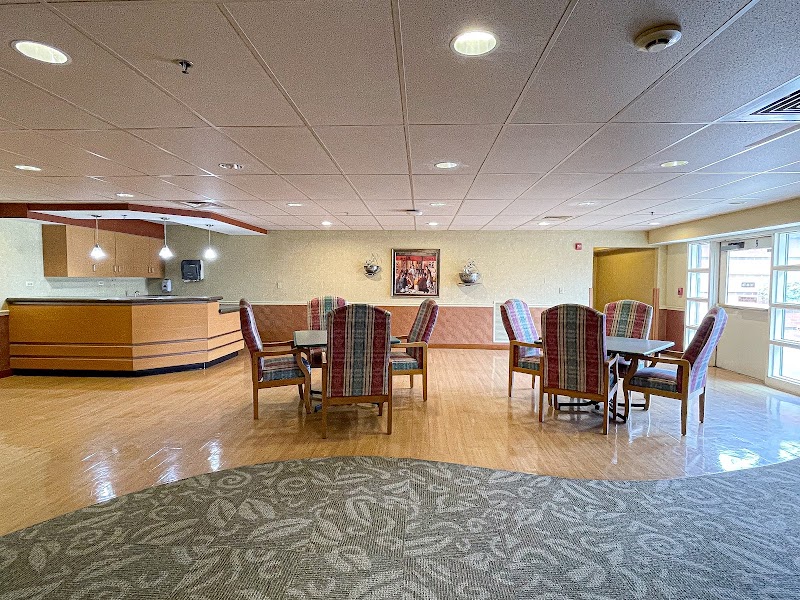
How is South Holland Manor Hth & Rhb Staffed?

CMS rates SOUTH HOLLAND MANOR HTH & RHB's staffing level at 2 out of 5 stars, which is below average compared to other nursing homes. Staff turnover is 31%, compared to the Illinois average of 46%. This relatively stable workforce can support continuity of care.

What Have Inspectors Found at South Holland Manor Hth & Rhb?

State health inspectors documented 56 deficiencies at SOUTH HOLLAND MANOR HTH & RHB during 2022 to 2025. These included: 3 that caused actual resident harm and 53 with potential for harm. Deficiencies causing actual harm indicate documented cases where residents experienced negative health consequences.
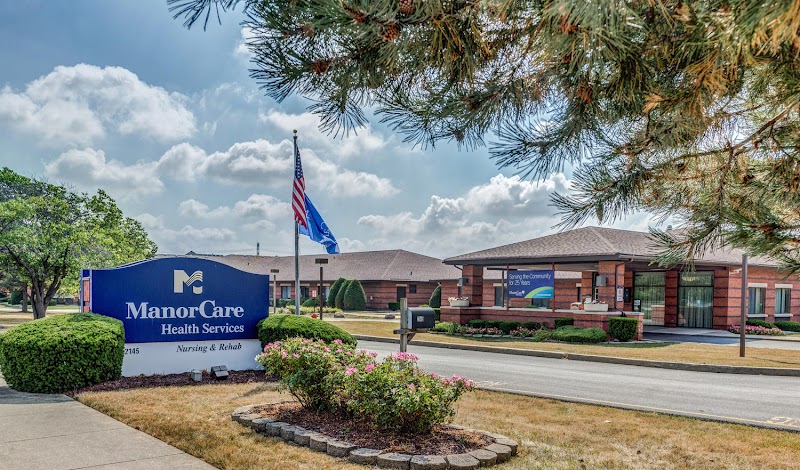
Who Owns and Operates South Holland Manor Hth & Rhb?

SOUTH HOLLAND MANOR HTH & RHB is owned by a for-profit company. For-profit facilities operate as businesses with obligations to shareholders or private owners. The facility is operated by EXTENDED CARE CLINICAL, a chain that manages multiple nursing homes. With 216 certified beds and approximately 114 residents (about 53% occupancy), it is a large facility located in SOUTH HOLLAND, Illinois.
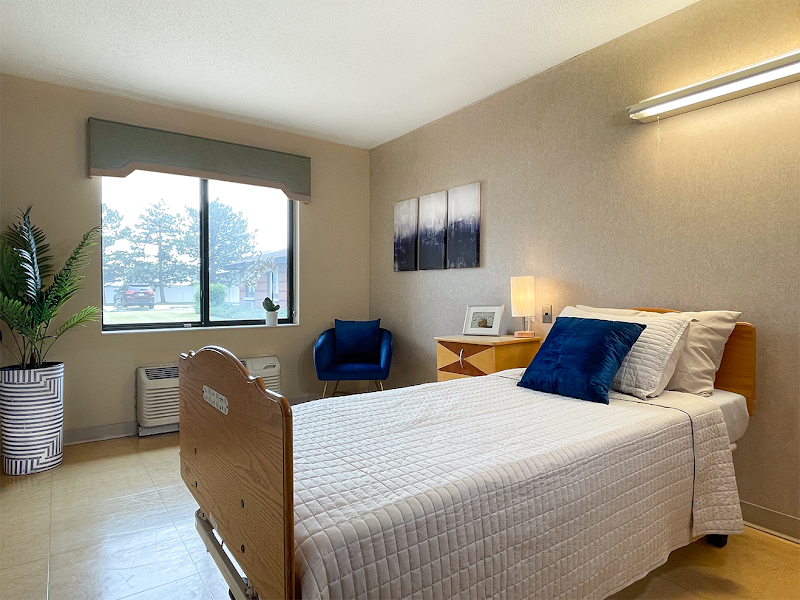
How Does South Holland Manor Hth & Rhb Compare to Other Illinois Nursing Homes?

Compared to the 100 nursing homes in Illinois, SOUTH HOLLAND MANOR HTH & RHB's overall rating (3 stars) is above the state average of 2.5, staff turnover (31%) is significantly lower than the state average of 46%, and health inspection rating (3 stars) is at the national benchmark.

What Should Families Ask When Visiting South Holland Manor Hth & Rhb?

Based on this facility's data, families visiting should ask: "Can you walk me through typical staffing levels on day, evening, and night shifts?" "Can I visit during a mealtime to observe dining assistance and food quality?" "How do you handle medical emergencies, and what is your hospital transfer rate?" "Can I speak with family members of current residents about their experience?" These questions are particularly relevant given the below-average staffing rating.

Is South Holland Manor Hth & Rhb Safe?

Based on CMS inspection data, SOUTH HOLLAND MANOR HTH & RHB has a clean safety record: no substantiated abuse findings (meaning no confirmed cases of resident harm), no Immediate Jeopardy citations (the most serious violation level indicating risk of serious injury or death), and is not on the Special Focus Facility watch list (a federal program monitoring the lowest-performing 1% of nursing homes). The facility has a 3-star overall rating and ranks #1 of 100 nursing homes in Illinois. While no facility is perfect, families should still ask about staff-to-resident ratios and recent inspection results during their visit.

Do Nurses at South Holland Manor Hth & Rhb Stick Around?

SOUTH HOLLAND MANOR HTH & RHB has a staff turnover rate of 31%, which is about average for Illinois nursing homes (state average: 46%). Moderate turnover is common in nursing homes, but families should still ask about staff tenure and how the facility maintains care continuity when employees leave.

Was South Holland Manor Hth & Rhb Ever Fined?

SOUTH HOLLAND MANOR HTH & RHB has been fined $52,426 across 1 penalty action. This is above the Illinois average of $33,603. Fines in this range indicate compliance issues significant enough for CMS to impose meaningful financial consequences. Common causes include delayed correction of deficiencies, repeat violations, or care failures affecting resident safety. Families should ask facility leadership what changes have been made since these penalties.

Is South Holland Manor Hth & Rhb on Any Federal Watch List?

SOUTH HOLLAND MANOR HTH & RHB is not on any federal watch list. The most significant is the Special Focus Facility (SFF) program, which identifies the bottom 1% of nursing homes nationally based on persistent, serious quality problems. Not being on this list means the facility has avoided the pattern of deficiencies that triggers enhanced federal oversight. This is a positive indicator, though families should still review the facility's inspection history directly.