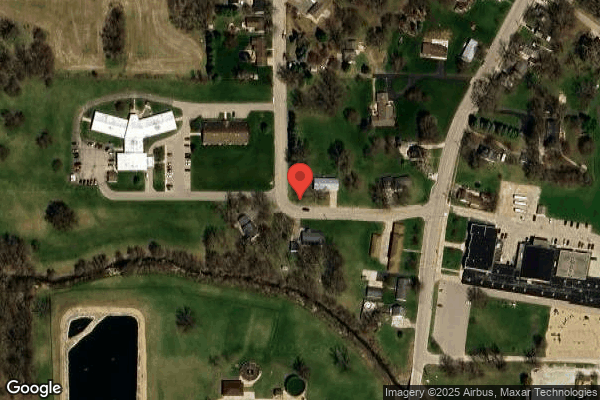
ALLURE OF WALNUT

308 SOUTH SECOND STREET, WALNUT, IL 61376 (815) 379-2131
For profit - Limited Liability company 62 Beds ALLURE HEALTHCARE SERVICES Data: November 2025
Trust Grade
80/100
#101 of 665 in IL
Last Inspection: April 2025

Within standard 12-15 month inspection cycle. Federal law requires annual inspections.

Overview

Allure of Walnut has a Trust Grade of B+, which means it is above average and recommended for families considering care options. It ranks #101 out of 665 facilities in Illinois, placing it in the top half, and is #1 out of 4 in Bureau County, indicating it is the best local choice. Unfortunately, the facility is experiencing a worsening trend in care quality, with issues increasing from 3 in 2024 to 8 in 2025. Staffing is a weakness, with a rating of 2 out of 5 stars and a turnover rate of 34%, which is better than the state average but still below optimal. However, there have been no fines reported, which is a positive sign, and they have average RN coverage, ensuring that registered nurses are present to monitor resident care. Some concerning incidents include the failure to perform necessary screenings for residents with newly diagnosed severe mental illnesses, which could affect their treatment plans, and not providing required pressure ulcer treatments for a resident. While there are strengths in the facility's overall health inspection and quality measures ratings, these specific issues highlight the need for improvement in care protocols. Families should weigh these strengths and weaknesses carefully when making a decision.

Trust Score
B+
80/100
In Illinois
#101/665
Top 15%
Safety Record
Low Risk
No red flags
Inspections
Getting Worse
3 → 8 violations
Staff Stability
○ Average
34% turnover. Near Illinois's 48% average. Typical for the industry.
Penalties
✓ Good
No fines on record. Clean compliance history, better than most Illinois facilities.
Skilled Nurses
○ Average
Each resident gets 36 minutes of Registered Nurse (RN) attention daily — about average for Illinois. RNs are the most trained staff who monitor for health changes.
Violations
⚠ Watch
12 deficiencies on record. Higher than average. Multiple issues found across inspections.
★★★★☆
4.0
Overall Rating
★★☆☆☆
2.0
Staff Levels
★★★★☆
4.0
Care Quality
★★★★☆
4.0
Inspection Score
Stable
2024: 3 issues
2025: 8 issues

The Good

  • 4-Star Quality Measures · Strong clinical quality outcomes
  • Full Sprinkler Coverage · Fire safety systems throughout facility
  • No fines on record
  • Staff turnover below average (34%)

    14 points below Illinois average of 48%

Facility shows strength in quality measures, fire safety.

The Bad

Staff Turnover: 34%

12pts below Illinois avg (46%)

Typical for the industry

Chain: ALLURE HEALTHCARE SERVICES

Part of a multi-facility chain

Ask about local staffing decisions and management

The Ugly 12 deficiencies on record

Apr 2025 7 deficiencies
CONCERN (D)

Potential for Harm - no one hurt, but risky conditions existed

PASARR Coordination (Tag F0644)

Could have caused harm · This affected 1 resident

**NOTE- TERMS IN BRACKETS HAVE BEEN EDITED TO PROTECT CONFIDENTIALITY** Based on interview and record review, the facility failed to perform a PASARR (Pre-admission Screening and Resident Review) resc...

Read full inspector narrative →
**NOTE- TERMS IN BRACKETS HAVE BEEN EDITED TO PROTECT CONFIDENTIALITY** Based on interview and record review, the facility failed to perform a PASARR (Pre-admission Screening and Resident Review) rescreen after the emergence of a newly diagnosed severe mental illness for two of three residents (R4, R27) reviewed for PASARR screening, in the sample of 24. Findings include: The (undated) facility policy, Resident Assessment- Coordination with PASARR (Pre-admission Screening and Resident Review) Program directs staff, This facility coordinates assessments with the preadmission screening and resident review (PASARR) program under Medicaid to ensure that individuals with a mental disorder, intellectual disability or a related condition receives care and services in the most integrated setting appropriate to their needs. Any resident who exhibits a newly evident or possible serious mental disorder, intellectual disability or a related condition will be referred promptly to the state mental health or intellectual disability authority for a level II resident review. 1. R4's (facility) Face Sheet documents that R4 was admitted to the facility on [DATE] with the following diagnosis: Bipolar Disorder (11/14/23). R4's Notice of PASARR, dated 7/21/20 documents, No Level II required- No Serious Mental Illness. On 4/22/25 at 10:00 A.M., V1/Administrator verified that R4 had not had a PASARR rescreen upon the emergence of a newly diagnosed severe mental illness. 2. R27's current Face Sheet documents the following diagnosis: Insomnia, Delusional Disorder, Post-Traumatic Stress Disorder, Dementia, unspecified severity, with other Behavioral Disturbance, General Anxiety. R27's PASRR, Preadmission Screening and Resident Review, dated 8/28/23, documents that R27 does not show that she has a serious mental illness or an intellectual/developmental disability (IDD). You do not need more screening unless you have or may have a serious mental illness or an IDD and are experiencing a significant change in treatment needs. On 4/22/25 at 2:00pm, V1, Administrator, verified that R27 did not have a PASRR screening completed after R27 was diagnosed with a mental illness.
CONCERN (D)

Potential for Harm - no one hurt, but risky conditions existed

Deficiency F0645 (Tag F0645)

Could have caused harm · This affected 1 resident

**NOTE- TERMS IN BRACKETS HAVE BEEN EDITED TO PROTECT CONFIDENTIALITY** Based on interview and record review, the facility failed to ensure a PASARR (Preadmission Screening and Resident Review) Level ...

Read full inspector narrative →
**NOTE- TERMS IN BRACKETS HAVE BEEN EDITED TO PROTECT CONFIDENTIALITY** Based on interview and record review, the facility failed to ensure a PASARR (Preadmission Screening and Resident Review) Level II screening was completed for one of three residents (R31) reviewed for PASARR screenings in the sample of 24. Findings include: The facility's Resident Assessment- Coordination with PASARR (Preadmission Screening and Resident Review) policy documents the following: All applicants to this facility will be screened for serious mental disorders or intellectual disabilities and related conditions in accordance with the State's Medicaid rules for screening. This same policy documents, Positive Level I Screen- necessitates a PASARR Level II evaluation prior to admission. This policy also documents, The Level II resident review must be completed within 40 calendar days of admission. R31's medical record documents R31's current diagnoses to include: Psychotic Disorder with Hallucinations due to known Physiological Condition; Anxiety Disorder; and Major Depressive Disorder. R31's medical record documents the above diagnoses were present at the time of R31's admission to the facility on [DATE]. R31's Notice of PASARR (Pre-admission Screening and Resident Review) Level I Screen Outcome (dated 07/18/2) documents the following: PASARR Level I Determination: Refer for Level II Onsite. This same form also documents, Your health care professional and (local agency) completed a PASARR Level I screen for you. This screen shows you need a face-to-face Level II evaluation. PASARR Level I screens and Level II evaluations are required by Federal law. You need this evaluation because you may have serious mental illness or an intellectual/developmental disability. The purpose of this evaluation is to decide whether a nursing facility is able to meet your needs. A clinician working for (local agency) will complete the Level II evaluation with you on behalf of (State Agency). R31's medical record does not contain documentation of that a PASARR Level II screening was ever completed. On 04/23/25 at 09:45 AM, V1 (Administrator) confirmed that R31 has not received a Level II PASARR screening while he has resided at the facility.
CONCERN (D)

Potential for Harm - no one hurt, but risky conditions existed

Pressure Ulcer Prevention (Tag F0686)

Could have caused harm · This affected 1 resident

Based on interview, observation and record review, the facility failed to ensure a pressure ulcer treatment was completed as ordered for one of two residents (R31) reviewed for pressure ulcers in the ...

Read full inspector narrative →
Based on interview, observation and record review, the facility failed to ensure a pressure ulcer treatment was completed as ordered for one of two residents (R31) reviewed for pressure ulcers in the sample of 24. Findings include: The facility's Wound Treatment Management policy (dated 2024) documents the following; Wound treatments will be provided in accordance with physician orders, including the cleansing method, type of dressing, and frequency of dressing change. R31's Wound Evaluation and Management Summary (dated 04/22/25) documents the following after V8 (Wound Physician) examined R31 on 04/22/25: Stage III pressure wound of the left sacrum full thickness. Surgical Excisional Debridement Procedure: The wound was cleansed with normal saline and anesthesia was achieved using topical benzocaine. Then with clean surgical technique, curette was used to surgically excise 3.70 square centimeters of devitalized tissue including slough, biofilm and non-viable subcutaneous level tissues were removed at a depth of 0.2 centimeters and healthy bleeding tissue was observed. This same form documents the following treatment orders: Discontinue: skin prep (skin protectant). Add: Leptospermum honey apply once daily and as needed if saturated, soiled or dislodged. Gauze island with border apply once daily and as needed if saturated, soiled or dislodged. On 04/23/25 at 01:00 PM, V6 (Registered Nurse) entered R31's room to provide cares to the pressure ulcer located on his sacrum. R31 was lying supine in bed, and V9 (Certified Nursing Assistant) was standing next to R31's bed. V9 indicated she would be providing positioning assistance to R31 during cares. V9 assisted R31 to roll onto his left side while V6 removed the current dressing he had in place. An oblong, open area measuring approximately 3.8 centimeters by 2.5 centimeters was present on R31's sacrum with small amount of scattered slough tissue present. V6 cleansed R31's sacral area and then applied skin prep to R31's recently debrided sacral pressure ulcer. Once R31's cares were completed, V6 and V9 assisted R31 to reposition in bed. On 04/23/25 at 01:12 PM, V6 stated she was not aware that R31 had a new treatment order for his sacral pressure ulcer. On 04/23/25 at 01:15 PM, V2 (Director of Nursing) verified that R31 did not receive the current physician-ordered treatment that was in place following the recent debridement of his sacral pressure ulcer. V2 stated, I'm going to be honest with you. The new order has not been processed yet and we do not have the (leptospermum honey) at the facility. It will have to be ordered. (R31) should not have applied skin prep to (R31's) pressure ulcer.
CONCERN (D)

Potential for Harm - no one hurt, but risky conditions existed

Deficiency F0688 (Tag F0688)

Could have caused harm · This affected 1 resident

Based on interview, observation and record review, the facility failed to ensure a range of motion program was implemented for a resident with functional limitations for one of four residents (R31) re...

Read full inspector narrative →
Based on interview, observation and record review, the facility failed to ensure a range of motion program was implemented for a resident with functional limitations for one of four residents (R31) reviewed for range of motion in the sample of 24. Findings include: R31's Medical Record documents R31's current diagnoses to include: Parkinson's Disease with Dyskinesia; Adult Failure to Thrive, and Chronic Pain. R31's Minimum Data Set Assessment (dated 03/13/25) documents the following in Section GG: R31 has impairment on both sides of his lower extremities. R31's Restorative Observations form (dated 03/13/25) documents the following: R31 has mild (75% of normal) state of mobility in his neck, left hip, right hip, left ankle, and left foot; R31 has moderate (50% of normal) state of mobility in his left knee, right knee, right ankle, and right foot. On 04/21/25 at 01:40 PM, R31 was sitting reclined in a high-back reclining chair in the hallway near his room with a fall alarm in place. R31 was wearing glasses and non-slip socks. A wheelchair cushion with a raised, padded section in the center that was separating R31's legs was in place. R31 stated facility staff do not encourage or assist him to complete any type of range of motion exercises. R31's medical record does not document any type range of motion program in place. On 04/23/25 at 03:25 PM, V2 (Director of Nursing) stated, (R31) does not have a range of motion plan in place and he should.
CONCERN (D)

Potential for Harm - no one hurt, but risky conditions existed

Tube Feeding (Tag F0693)

Could have caused harm · This affected 1 resident

Based on interview, observation and record review, the facility failed to ensure tubing for an enteral tube feeding was dated, and items utilized during a tube feeding remained clean for one of two re...

Read full inspector narrative →
Based on interview, observation and record review, the facility failed to ensure tubing for an enteral tube feeding was dated, and items utilized during a tube feeding remained clean for one of two residents (R1) reviewed for tube feedings in the sample of 24. Findings include: The facility's Care and Treatment of Feeding Tubes policy (dated 2024) documents, It is a policy of this facility to utilize feeding tubes in accordance with current clinical standards of practice, with interventions to prevent complications to the extent possible. This policy also documents, Use of infection control precautions and related techniques to minimize the risk of contamination. R1's current Physician's Orders document the following nutritional order: Jevity (nutritional feeding) 1.2 kilocalories per milliliter give 85 milliliters per hour via gastrostomy tube in the evening. Run at 85 milliliters per hour for 16 hours and remove per schedule. R1's current Care Plan documents the following focus: (R1) requires a tube feeding related to dysphagia due to a stroke. She is NPO (nothing by mouth). She receives all of her nutrition and fluids via gastrostomy tube. On 04/21/25 at 08:55 AM, R1 was lying in bed with the head of her bed elevated approximately 45 degrees. A bottle of tube feeding and a tube feeding administration pump were both hanging on a nearby wheeled pole at R1's bedside. R1's bottle of tube feeding was connected to tubing that was in place through the tube feeding pump. R1's tube feeding pump was infusing her tube feeding at 85 milliliters per hour. R1's wheeled pole and the tube feeding pump contained multiple areas of a dried, light brown substance. V5 (Registered Nurse) verified R1's tube feeding pole and the administration pump contained areas of a dried, light brown substance at this time and stated, There are several areas of dried tube feeding on them (R1's wheeled pole and tube feeding pump). They both need to be cleaned. V5 then stated the tubing being utilized to administer R1's tube feeding should be dated with the date it began being used. V5 then located a label attached to the tube feeding tubing, and upon inspection, confirmed that it was blank and did not contain a date. V5 stated, The tubing should be dated and it is not.
CONCERN (D)

Potential for Harm - no one hurt, but risky conditions existed

Deficiency F0742 (Tag F0742)

Could have caused harm · This affected 1 resident

Based on interview and record review the facility failed to implement specific PTSD/Post Traumatic Stress Disorder interventions for one of one (R27) residents reviewed for Post Traumatic Stress Disor...

Read full inspector narrative →
Based on interview and record review the facility failed to implement specific PTSD/Post Traumatic Stress Disorder interventions for one of one (R27) residents reviewed for Post Traumatic Stress Disorder in a sample of 24. Findings include: The facility's Trauma Informed Care policy, undated, documents it is the policy of this facility to provide care and services which, in addition to meeting professional standards, are delivered using approaches which are culturally-competent, account for experiences and preferences, and address the needs of trauma survivors by minimizing triggers and/or re-traumatizing. This form documents that trauma results from an event, series of events, or set of circumstances that is experienced by an individual as physically or emotionally harmful or life threatening and that has lasting adverse effects on the individual's functioning and mental, physical, social, emotional, or spiritual well-being. R27's current Face Sheet documents the following diagnosis: Insomnia, Delusional Disorder, Post-Traumatic Stress Disorder, Dementia, unspecified severity, with other Behavioral Disturbance, General Anxiety. R27's Trauma Informed Care Assessment, dated 8/30/23, documents PTSD (Post Traumatic Stress Disorder) Screen: Sometimes things happen to people that are unusually or especially frightening, horrible, or traumatic. For example: a serious accident or fire, a fire, a physical or sexual assault or abuse, an earthquake or flood, a war, seeing someone be killed or seriously injured, having a loved one die through homicide or suicide. 1. Have you ever experienced this kind of event. The yes box is marked. This form documents that R27 has nightmares about the event(s) or thought about the events when you did not want to. R27's current care plan documents that R27 has a diagnosis of PTSD. R27's PTSD is nightmares. They're not necessarily the same dreams every night but she still has them. R27's care plan does not address the actual trauma or the possible triggers for R27's PTSD. On 4/23/25 at 12:30pm, V7, Minimum Data Set Coordinator, stated that she does not know exactly what R27's PTSD is. V7 verified that she does not know what R27's triggers are for her PTSD. V7 verified that V7's current care plan does not have specific goals and interventions concerning R27's PTSD triggers. V7 stated that even R27's family does not know what R27's PTSD is. On 4/24/25 at 12:15pm, V2, Director of Nursing, stated that she does not know what R27's PTSD is related to. V2 stated that it is thought to be because of her dreams.
CONCERN (D)

Potential for Harm - no one hurt, but risky conditions existed

Infection Control (Tag F0880)

Could have caused harm · This affected 1 resident

Based on interview, observation, and record review, the facility failed to ensure Enhanced Barrier Precautions were implemented prior to administering cares for two of eight residents (R31 and R41) re...

Read full inspector narrative →
Based on interview, observation, and record review, the facility failed to ensure Enhanced Barrier Precautions were implemented prior to administering cares for two of eight residents (R31 and R41) reviewed for Transmission Based Precautions in the sample of 24. Findings include: The facility's Enhanced Barrier Precautions policy (dated 2025) documents the following: It is the policy of this facility to implement Enhanced Barrier Precautions for the prevention of transmission of multi-resistant drug organisms. Enhanced Barrier Precautions (EBP) refer to an infection control intervention designed to reduce transmission of multidrug resistant organisms that employs targeted gown and gloves use during high contact resident care activities. This policy also documents, High-contact resident care activities include: Dressing; Bathing, Transferring; Providing hygiene; Changing linens; Changing briefs or assisting with toileting; Device care or use: central lines, urinary catheters, feeding tubes, tracheostomy/ventilator tubes, hemodialysis catheters, PICC (peripherally inserted central catheter) lines, midline catheters; Wound care: any skin opening requiring a dressing. 1. R31's Wound Evaluation and Management Summary (dated 04/22/25) documents R31 has a non-pressure wound on his left anterior leg. R31's current Physician's Orders document the following order: May use EBP (Enhanced Barrier Precautions) per policy as needed for indwelling medical devices, wounds, that require dressings, or infected or colonized with MDRO (Multidrug Resistant Organisms)/XDRO (Extensively Drug-Resistant Organisms). On 04/23/25 at 10:25 AM, a sign indicating Enhanced Barrier Precautions was posted on R31's door. V6 (Registered Nurse) entered R31's room to provide wound care to R31's left anterior leg wound. V6 washed her hands, applied gloves and approached R31, who was lying supine in a low bed. V6 removed R31's current dressing in place, and an oblong, open area measuring approximately 2.5 centimeters by 1.2 centimeters containing a small amount of slough tissue was present on R31's left anterior leg. V6 cleansed R31's wound, applied a collagen-based dressing, and covered the area with a border gauze dressing. V6 did not wear a gown while administering R31's cares. On 04/23/25 at 01:00 PM, V6 (Registered Nurse) stated Enhanced Barrier Precautions should be in place for R31, and verified she did not wear a gown while performing R31's wound care. 2. R41's current Physician Order Sheet documents to use Enhanced Barrier Precautions per policy as needed for indwelling medical devices, wounds, that may require dressing, or infected or colonized with MDRO/XDRO (Multi-drug-Resistant Organisms/Extensively Drug Resistant Organisms). On 4/23/25 at 2:16pm, A sign indicating Enhanced Barrier Precaution was posted on R41's door. V6, Registered Nurse, entered R41's to perform gastrostomy tube care. V6 changed R41's gastrostomy tube insertion site care and flushed R41's gastrostomy tube with water as ordered. V6 performed hand hygiene during care. V6 did not donn a gown during cares. On 4/23/25 at 2:30pm, V6 verified that R41 is on EBP. V6 stated that she did not donn a gown during R41's care.
Mar 2025 1 deficiency
CONCERN (D) 📢 Someone Reported This

A family member, employee, or ombudsman was alarmed enough to file a formal complaint

Potential for Harm - no one hurt, but risky conditions existed

Free from Abuse/Neglect (Tag F0600)

Could have caused harm · This affected 1 resident

Based on Interview and Record review, the facility failed to prevent an incident of resident to resident physical abuse, re-assess resident's risk for abuse and revise abuse care plans after founded p...

Read full inspector narrative →
Based on Interview and Record review, the facility failed to prevent an incident of resident to resident physical abuse, re-assess resident's risk for abuse and revise abuse care plans after founded physical abuse occurred for two of three residents (R1, R2) reviewed for abuse in the sample of three. Findings include: The facility's Abuse, Neglect and Exploitation policy, dated 8/2024, documents It is the policy of this facility to provide protections for health, welfare and rights of each resident by developing and implementing written policies and procedures that prohibit and prevent abuse, neglect, exploitation and misappropriation of resident property. Physical Abuse includes but it not limited to hitting, slapping, punching, biting, and kicking. It also includes controlling behavior through corporal punishment. This same policy also documents The facility will implement policies and procedures to prevent and prohibit all types of abuse, neglect, misappropriation of resident property, and exploitation that achieves: The identification, ongoing assessment, care planning for appropriate interventions, and monitoring of residents with needs and behaviors which might lead to conflict or neglect. The facility's Care Plan Revisions upon Status Change policy, dated 8/2024, documents The purpose of this procedure is to provide a consistent process for reviewing and revising the care plan for those residents experiencing a status change. The care plan will be updated with the new or modified interventions. Staff involved in the care of the resident will report resident response to new or modified interventions. Care plans will be modified as needed by the MDS (Minimum Data Set) Coordinator or other designated staff member. The Unit Manager or other designated staff member will communicate care plan interventions to all staff involved in the resident's care. The Unit Manager or other designated staff member will conduct an audit on all residents experiencing a change in status, at the time the change in status is identified, to ensure care plans have been updated to reflect current resident needs. The facility's Abuse Investigation, dated 2/15/25, documents on 2/15/25 between 5:15 PM and 5:30 PM, R2 was slapped on her facial cheek by R1 in the facility's common area day room. This investigation documents V4 (Registered Nurse) was witness to the incident and that the abuse was investigated to be substantiated, without injury to either resident. R1's current Care Plan dated, 2/20/25, documents (R1) has a behavior problem in related to her diagnosis of dementia with behavioral disturbances. She can be uncooperative with care. She may attempt to hit staff or refuse to transfer/refuse care. She may become angry, anxious and agitated. This plan of care has an intervention added on 2/15/25 of If (R1) becomes aggressive with another resident, separate them immediately. This same Care Plan documents a plan of care initiated on 12/4/23 of (R1) is at a low risk for abuse, neglect, exploitation, trauma as noted from Abuse screening related to dementia and anxiety. Intervention: (Facility) Abuse/Neglect/Trauma assessment quarterly or prn (as needed). This plan of cares most recent revision is dated 12/19/24. R2's current Care Plan, dated 2/20/25, documents (R2) has impaired cognitive function. She usually scores in range of moderate cognitive impairment on BIMS (Brief Interview for Mental Status). She has moderate hearing impairment which may affect her cognitive function. (R2) is also easily distracted and can have delusional thinking at times. She also has a diagnosis of dementia. This plan has an intervention added on 2/15/25 of If (R2) becomes aggressive with another resident, separate them immediately. This same Care Plan documents a plan of care initiated on 12/4/23 of (R2) is at a low risk for abuse, neglect, exploitation, trauma as noted from Abuse screening related to dementia, attention and concentration deficit. Intervention: (Facility) Abuse/Neglect/Trauma assessment quarterly or prn (as needed). This plan of cares most recent revision is dated 12/24/24. On 3/7/25 at 12:15 PM, V5 (Registered Nurse/ MDS coordinator) confirmed she did not update the Abuse Care Plans for R1 and R2. V5 stated I added an intervention to their behavior Care Plans that if they are aggressive, to remove them from other resident contact. V5 confirmed that both R1 and R2 are still Care Planned as being at a low risk for abuse. On 3/7/25 at 12:25 PM, V6 (Social Service Director) confirmed she is the person who does Abuse risk assessments and created the Abuse Care Plans for R1 and R2. V6 stated I only update the Abuse specific Care Plan with a re-assessment, either quarterly or on an MDS significant change review. That is when I would complete a new Abuse risk assessment. I guess (V5) would be the one who updates the care plans with new interventions in between that time. V6 confirmed she has not done a new risk assessment for Abuse and has not made any revisions to the Abuse risk care plans for R1 and R2 since the 2/15/25 physical abuse occurred. On 3/7/25 at 1:25 PM, V4 (Registered Nurse) confirmed she was working on 2/15/25 and was witness to a physical altercation between R1 and R2. V4 stated I was the nurse that was present when the altercation took place. The residents were in the day room, which is where the television is. I was at the nurses station and I heard (R2) say Stop that. I looked and could see that (R1) was fiddling with (R2's) wheelchair and (R2) said Stop that again and tried to swat (R1's) hand away. I got up from the desk and I saw (R1) slap (R2) on the face, due to the disagreement. (R2) did say her cheek hurt. (R1) likes to fiddle with stuff and we try to keep her busy and monitored. (R1) just needs closer supervision when around other residents.
May 2024 3 deficiencies
CONCERN (D)

Potential for Harm - no one hurt, but risky conditions existed

Deficiency F0757 (Tag F0757)

Could have caused harm · This affected 1 resident

Based on record review and interview, the facility failed to identify the indication for the prolonged duration of use for 1 of 1 (R22) resident with a prescribed antibiotic maintenance dose in a samp...

Read full inspector narrative →
Based on record review and interview, the facility failed to identify the indication for the prolonged duration of use for 1 of 1 (R22) resident with a prescribed antibiotic maintenance dose in a sample of 12 residents. Findings include: On 11/24/22, R22's Physician ordered an Antibiotic for maintenance dose for a history of frequent of Urinary Tract Infections with no stop date. On 2/22/24, R22's Careplan documents (R22) has developed a UTI (Urinary Tract Infection). Doctor ordered no stop date and would like R22 to be on a maintenance dose of Antibiotic therapy. On 8/21/23, R22's Physician ordered an Antibiotic for treatment of a Urinary Tract Infection for 7 days. On 5/7/24, R22's Physician ordered an Antibiotic for treatment of a Urinary Tract Infection for 10 days. On 5/22/24 at 11:45 AM, V3 (Infection Control Preventionist) stated I don't know why R22 is on it (maintenance Antibiotic). It (maintenance Antibiotic) hasn't stopped R22 from getting UTI's.
CONCERN (D)

Potential for Harm - no one hurt, but risky conditions existed

Unnecessary Medications (Tag F0759)

Could have caused harm · This affected 1 resident

Based on observation, interview and record review, the facility failed to administer medications as ordered by the physician for three residents (R4, R27 and R31) on the sample of 10 residents reviewe...

Read full inspector narrative →
Based on observation, interview and record review, the facility failed to administer medications as ordered by the physician for three residents (R4, R27 and R31) on the sample of 10 residents reviewed for medication pass. This failure resulted in four medication errors out of thirty- one opportunities for error, for a 21.9% medication error rate. FINDINGS INCLUDE: The facility policy, Medication Administration, dated (7/1/23) directs staff, Medications are administered by licensed nurses, or other staff who are legally authorized to do so in this state, as ordered by the physician and in accordance with professional standards of practice, in a manner to prevent contamination or infection. Ensure the six rights of medication administration are followed: right resident, right drug, right dosage, right route, right time and right documentation. 1. R4's current Physician Order Sheet, dated May 2024 includes the following medications: Baclofen 10 MG (1/2 tab) one tablet twice daily; Eliquis 5 MG one tab twice daily; Glucophage 500 MG one tablet two times daily with food; Tylenol 500 MG one tablet two times daily; Lyrica 100 MG one capsule each evening and Carboxymethylcellulose Sodium Solution instill two drops in both eyes two times daily. On 5/20/24 at 3:46 PM, V4/Licensed Practical Nurse (LPN) prepared to administer medications for R4. V4/LPN administered one each of Baclofen, Eliquis, Glucophage, Tylenol and Lyrica to R4. V4/LPN then administered one drop of Carboxymethylcellulose Sodium Solution into both of R4's eyes. Upon exit from R4's room, V4/LPN confirmed the instructions on the bubble pack for Glucophage included the following instructions: Take with food. V4/LPN also confirmed that R4 should have received two drops of Carboxymethylcellulose in each eye. 2. R27's current Physician Order Sheet, dated May 2024 includes the following medications: Tylenol 325 MG two tablets twice daily; Allopurinol 100 MG one tablet twice daily; Aspirin 81 MG one tablet daily; Diltiazem ER 240 MG one capsule daily; Vasotec 20 MG one tablet daily; Glipizide 5 MG one tablet daily; Potassium Chloride ER (Extended Release) 10 MEQ (Milliequivalents) one tablet two times daily and Olopatadine HCL (Hydrochloride) 0.2% two drops to both eyes in the morning. On 5/21/24 at 7:56 AM, V5/Registered Nurse (RN) prepared to administer medications for R27. V5/RN administered one each of Alopurinol, Aspirin, Diltiazem, Vasotec, Glipizide, Potassium Chloride and two tablets of Tylenol. V5/RN then administered one drop of Olopatadine HCL (Hydrochloride) into both of R27's eyes. Upon returning to the medication cart, V5/RN confirmed that R27 should have received two drops of Olopatadine HCL in each eye. 3. R31's current Physician Order Sheet, dated May 2024 includes the following medications: Cranberry Capsule 200 MG one capsule twice daily; Potassium Chloride Extended Release 20 MEQ (Milliequivalents) one tablet two times daily; Sucralfate 1 GM (Gram) one tablet before meals and at bedtime, take 2 hours before or 2 hours after other medications. On 5/20/24 at 3:30 PM, V4/Licensed Practical Nurse prepared to administer medications for R31. V4/LPN administered one capsule of Cranberry 200 MG, and one tablet each of Potassium Chloride 20 MEQ and one capsule Sucralfate 1GM. Upon exit from R31's room, V4/LPN confirmed the instructions on the bubble pack for Sucralfate included the following instructions: Take two hours before or two hours after other medications.
CONCERN (D)

Potential for Harm - no one hurt, but risky conditions existed

Antibiotic Stewardship (Tag F0881)

Could have caused harm · This affected 1 resident

Based on record review and interview, the facility failed to identify, track, monitor and analyze for trends in data for 2 of 2 (R3, R22) in a sample of 12 residents. Findings include: The Infection P...

Read full inspector narrative →
Based on record review and interview, the facility failed to identify, track, monitor and analyze for trends in data for 2 of 2 (R3, R22) in a sample of 12 residents. Findings include: The Infection Prevention and Control Policy and Procedure policy, dated 7/28/21, documents an Infection Criteria Checklist includes the date the infection was first suspected, evidence the infection was or was not present upon admission, what infection is present, testing, treatment, outcome and follow-up. The Infection Prevention and Control Monthly Log will be completed and used to track infections in the facility and noting trends that may be present. R3's Physician's Orders dated 4/4/24, 4/10/24 and 4/18/24 documents an Antibiotic was ordered for treatment of a Urinary Tract Infection. The Infection Prevention and Control Monthly Log dated April 2024 lacked documentation of R3's Urinary Tract Infection and the other required data. R22's Physician's Orders dated 11/22/23 documents an Antibiotic was ordered for an Upper Respiratory Infection. The Infection Prevention and Control Monthly Log dated November 2023 lacked documentation of R22's Upper Respiratory Infection and the other required data. On 5/22/24 at 12:30 PM, V3 (Infection Control Preventionist) reviewed the November 2023 and April 2024 Infection Prevention and Control Monthly Logs and stated R3 and R22's infections were not documented on the log and should have been. V3 stated I must have just over looked them (R3 and R22's infections).
Mar 2023 1 deficiency
CONCERN (D)

Potential for Harm - no one hurt, but risky conditions existed

Medication Errors (Tag F0758)

Could have caused harm · This affected 1 resident

**NOTE- TERMS IN BRACKETS HAVE BEEN EDITED TO PROTECT CONFIDENTIALITY** 2) R42's medical record documents R42 admitted to the facility on [DATE]. R42's medical record dated 1/6/23 documents a diagnos...

Read full inspector narrative →
**NOTE- TERMS IN BRACKETS HAVE BEEN EDITED TO PROTECT CONFIDENTIALITY** 2) R42's medical record documents R42 admitted to the facility on [DATE]. R42's medical record dated 1/6/23 documents a diagnosis of unspecified dementia, unspecified severity with agitation. R42's physician visit with V9, Medical Doctor (MD), dated 12/28/22 documents Primary Diagnosis: Severe dementia without behavioral disturbance, psychotic disturbance, mood disturbance, or anxiety, unspecified dementia type. R42's medical record does not include a diagnosis of psychosis prior to 1/18/23. R42's behavior tracking dated 1/7/23 at 7:31 PM documents Behaviors: noted agitation and hitting staff in the dining room. verbally threatening others. redirected. reassured. one on one. calmed down. seems to dislike crowds of people. will talk to self. very confused. orientated only to self. R42's behavior tracking dated 1/8/23 at 6:06 PM documents Behaviors: Wandering: exit seeking. verbally abusive to staff. redirected. reassured. R42's progress notes dated 1/9/23 at 8:47 PM documents Resident alert and oriented to person, expressed agitation and wandering this evening, along with exit seeking and hitting CNA (Certified Nursing Assistant). Resident was unable to be redirected. Resident thought that staff were wearing masks to hide something. Resident has hallucinations and carried on conversations with those hallucinations. R42's progress notes dated 1/10/23 at 8:18 PM documents Resident alert and oriented to person, wandering halls, and having hallucinations. Resident will talk to hallucinations as if real, no pain or shortness of breath noted at this time, will continue to monitor. R42's physician order dated 1/10/23 by V9, MD, documents Haloperidol (Haldol) Tablet 5.0 milligrams (mg). Give 5.0 mg by mouth every 24 hours as needed for agitation and restlessness. R42's physician order sheet dated 1/10/23 and ordered by V9, MD, documents Haloperidol Tablet 5.0 mg. Give 5.0 mg by mouth every 24 hours as needed for agitation and restlessness. R42's antipsychotic consent form dated 1/10/23 documents Haloperidol 5.0 mg every 24 hours as needed for agitation and restlessness. R42's medication administration record dated January 2023 documents R42 received Haldol 5.0 mg on 1/12/23 and 1/13/23. R42's medical record documents R42's initial psychiatric assessment by V7, Psychiatric Nurse Practitioner (NP), was conducted on 1/18/23. On 03/15/23 at 11:04 AM, V6, Medical Director, stated I've never seen anyone develop psychosis late in life. You don't develop psychosis at [AGE] years old outside of drug induced psychosis which he (R42)doesn't have. He shouldn't have the unspecified psychosis not due to a substance or known physiological condition diagnosis. I agree with what you're saying, (R42) has no history of psychosis and all of his behaviors can be associated with dementia. So I agree with you that his symptoms and behaviors can be from dementia. On 3/17/23 at 9:50 AM, V8, Regional Nurse Consultant, verified R42 did not have a diagnosis of psychosis prior to being administered an antipsychotic medication and stated The order came from his outside personal physician (V9, MD). It didn't come from the medical director (V6, MD) or our psychiatric provider (V7, NP). (V7, NP) didn't evaluate (R42) until 1/18/23. What happened is that the nurse called his personal physician due to his behaviors and they ordered the Haldol and no one questioned the order. No, they didn't try any other medications for his behaviors prior to giving him the Haldol. Based on observation, interview and record review the facility failed to identify an appropriate indication for administration of an antipsychotic medication for two residents with a diagnosis of Dementia (R31, R42) of three residents reviewed for unnecessary antipsychotic medications in the sample of 18. Findings include: Facility Policy/Psychotropic Medication dated/revised 11/28/17 documents: These medications are to be given to treat a specific condition/medical symptom that is diagnosed and documented in the medical record. Specific condition/medical symptoms alone are not enough to justify pharmalogical use. An evaluation must be done to determine other possible physical, mental, behavioral, psychosocial needs. Additionally, antipsychotic medication may be indicated for use if: Behavioral symptoms present a danger to the resident or others; Expressions or indications of distress that are significant distress to the resident. 1) Physician's Order Summary Report indicates R31 was admitted to the facility 12/31/19 with diagnoses that include Chronic Post Traumatic Stress Disorder, Unspecified Dementia - Unspecified Severity with Other Behavioral Disturbance, Moderate Recurrent Major Depressive Disorder, Adjustment Disorder with Depressed Mood, Unspecified Macular Degeneration. Report indicates Seroquel (antipsychotic) 25mg (milligrams) at bedtime related to Chronic Post-Traumatic Stress Disorder was initially ordered on 1/19/23. MAR (Medication Administration Record) indicates R31 continued to receive Seroquel through 3/15/23. Pre admission Screening dated 1/4/20 indicates R31 was admitted without mental illness or developmental disability. Antipsychotic Medication Consent indicates consent was received to administer Seroquel 25mg for Post-Traumatic Stress Disorder on 1/18/23. Consent indicates medication is used to treat specific conditions, such as Schizophrenia, Delusional Disorder, Schizoaffective Disorder, Acute Psychotic Episodes, Atypical Psychosis, Tourette's Disorder, Huntington's Chorea, Psychotic Mood Disorder, Manic Behavior. Behavior Note dated 1/31/2023 at 7:29pm indicates peer talking on her cell phone propelling herself down the hallway when above resident R31 started yelling at peer and grabbed the arm of the wheelchair and stopped peer from going on any further - yelling at peer that she should not be talking on the phone and continued to yell at peer. Staff separated R31 from peer, then R31 again wheeled toward peer and grabbed the wheel of her wheelchair and prevented peer from going any further - again residents separated with R31 brought to day room completely away from peer. Behavior Note dated 2/14/23 at 8:57pm indicates R31 was agitated and rude to peer. Note indicates R31 and peer separated No further behaviors noted. Behavior Note dated 3/9/23 at 6:34pm indicates R31 agitated with staff, threatening to hit nurse because no one was helping her; told nurse and another staff to stop talking and take care of her. Note indicates R31 did go to her room, put on call light and was pleasant as shift progressed. CNA (Certified Nurse Assistant) Behavior Monitoring and Interventions Report dated 1/1/23 to 3/15/23 indicates R31 had the following behaviors: 3/9/23 threatening others. No other behaviors identified between 1/1/23 and 3/15/23. Current Comprehensive assessment dated [DATE] indicates R31 had no hallucinations, delusions, wandering or behavior symptoms and behavior is Improved. Current Care Plan indicates R31 has a behavior problem related to diagnosis of dementia; R31 can curse, yell, push and have repetitive movements. Care Plan indicates R31 can be rude and verbally abusive to staff, residents and visitors; can be difficult to redirect. Current Care Plan also indicates R31 receives an antipsychotic for her PTSD (Post Traumatic Stress Disorder) related to tragically losing a son within the last couple of years that R31 witnessed. Care Plan indicates R31 thinks about her son and the accident throughout the day and is angry at GOD for letting this happen. Psych Services Note dated 1/18/23 and 3/15/23 indicate R31 has no Abnormal/Psychotic/Perceptual Disturbances. Note indicates Behavior is Within Normal Limits. On 3/16/23 at 1:00pm V5, MDS (Minimum Data Set) Coordinator stated R31 didn't talk about losing her son unless she was asked about it directly. V5 stated that she questioned the psychiatric services order for Seroquel for R31 but She's the physician and felt she couldn't question the order for the antipsychotic medication any further. V5 stated that they now have orders to reduce and then discontinue the Seroquel.
Understanding Severity Codes (click to expand)
Life-Threatening (Immediate Jeopardy)
J - Isolated K - Pattern L - Widespread
Actual Harm
G - Isolated H - Pattern I - Widespread
Potential for Harm
D - Isolated E - Pattern F - Widespread
No Harm (Minor)
A - Isolated B - Pattern C - Widespread

Questions to Ask on Your Visit

  • "Can I speak with families of current residents?"
  • "What's your RN coverage like on weekends and overnight?"

Our Honest Assessment

Strengths
  • • Grade B+ (80/100). Above average facility, better than most options in Illinois.
  • • No major safety red flags. No abuse findings, life-threatening violations, or SFF status.
  • • No fines on record. Clean compliance history, better than most Illinois facilities.
  • • 34% turnover. Below Illinois's 48% average. Good staff retention means consistent care.
Concerns
  • • 12 deficiencies on record. Higher than average. Multiple issues found across inspections.
Bottom line: Generally positive indicators. Standard due diligence and a personal visit recommended.

About This Facility

What is Allure Of Walnut's CMS Rating?

CMS assigns ALLURE OF WALNUT an overall rating of 4 out of 5 stars, which is considered above average nationally. Within Illinois, this rating places the facility higher than 99% of the state's 100 nursing homes. This rating reflects solid performance across the metrics CMS uses to evaluate nursing home quality.

How is Allure Of Walnut Staffed?

CMS rates ALLURE OF WALNUT's staffing level at 2 out of 5 stars, which is below average compared to other nursing homes. Staff turnover is 34%, compared to the Illinois average of 46%. This relatively stable workforce can support continuity of care.

What Have Inspectors Found at Allure Of Walnut?

State health inspectors documented 12 deficiencies at ALLURE OF WALNUT during 2023 to 2025. These included: 12 with potential for harm.

Who Owns and Operates Allure Of Walnut?

ALLURE OF WALNUT is owned by a for-profit company. For-profit facilities operate as businesses with obligations to shareholders or private owners. The facility is operated by ALLURE HEALTHCARE SERVICES, a chain that manages multiple nursing homes. With 62 certified beds and approximately 42 residents (about 68% occupancy), it is a smaller facility located in WALNUT, Illinois.

How Does Allure Of Walnut Compare to Other Illinois Nursing Homes?

Compared to the 100 nursing homes in Illinois, ALLURE OF WALNUT's overall rating (4 stars) is above the state average of 2.5, staff turnover (34%) is significantly lower than the state average of 46%, and health inspection rating (4 stars) is above the national benchmark.

What Should Families Ask When Visiting Allure Of Walnut?

Based on this facility's data, families visiting should ask: "Can you walk me through typical staffing levels on day, evening, and night shifts?" "Can I visit during a mealtime to observe dining assistance and food quality?" "How do you handle medical emergencies, and what is your hospital transfer rate?" "Can I speak with family members of current residents about their experience?" These questions are particularly relevant given the below-average staffing rating.

Is Allure Of Walnut Safe?

Based on CMS inspection data, ALLURE OF WALNUT has a clean safety record: no substantiated abuse findings (meaning no confirmed cases of resident harm), no Immediate Jeopardy citations (the most serious violation level indicating risk of serious injury or death), and is not on the Special Focus Facility watch list (a federal program monitoring the lowest-performing 1% of nursing homes). The facility has a 4-star overall rating and ranks #1 of 100 nursing homes in Illinois. While no facility is perfect, families should still ask about staff-to-resident ratios and recent inspection results during their visit.

Do Nurses at Allure Of Walnut Stick Around?

ALLURE OF WALNUT has a staff turnover rate of 34%, which is about average for Illinois nursing homes (state average: 46%). Moderate turnover is common in nursing homes, but families should still ask about staff tenure and how the facility maintains care continuity when employees leave.

Was Allure Of Walnut Ever Fined?

ALLURE OF WALNUT has no federal fines on record. CMS issues fines when nursing homes fail to meet care standards or don't correct problems found during inspections. The absence of fines suggests the facility has either maintained compliance or corrected any issues before penalties were assessed. This is a positive indicator, though families should still review recent inspection reports for the full picture.

Is Allure Of Walnut on Any Federal Watch List?

ALLURE OF WALNUT is not on any federal watch list. The most significant is the Special Focus Facility (SFF) program, which identifies the bottom 1% of nursing homes nationally based on persistent, serious quality problems. Not being on this list means the facility has avoided the pattern of deficiencies that triggers enhanced federal oversight. This is a positive indicator, though families should still review the facility's inspection history directly.