ELEVATE CARE WAUKEGAN


2222 AUDREY NIXON BOULEVARD, WAUKEGAN, IL 60085 (847) 249-2400
For profit - Limited Liability company 265 Beds ELEVATE CARE Data: November 2025 1 Immediate Jeopardy citation
Trust Grade
0/100
#355 of 665 in IL
Last Inspection: January 2025

Within standard 12-15 month inspection cycle. Federal law requires annual inspections.

Overview

Elevate Care Waukegan has received a Trust Grade of F, indicating significant concerns with care quality and safety. Ranking #355 out of 665 facilities in Illinois places it in the bottom half, and #17 out of 24 in Lake County suggests that there are only a few local options that perform better. The facility's situation is worsening, with issues increasing from 8 in 2024 to 13 in 2025, raising alarms about care standards. While staffing turnover is relatively low at 27% compared to the state average, the overall staffing rating is only 2 out of 5 stars. There have been serious incidents, including a failure to provide CPR to a resident who was unresponsive and not receiving proper weight monitoring for another resident on tube feedings, leading to significant weight loss. Despite some strengths, the troubling trends and specific care failures should give families pause when considering this facility.

Trust Score
F
0/100
In Illinois
#355/665
Bottom 47%
Safety Record
High Risk
Review needed
Inspections
Getting Worse
8 → 13 violations
Staff Stability
✓ Good
27% annual turnover. Excellent stability, 21 points below Illinois's 48% average. Staff who stay learn residents' needs.
Penalties
✓ Good
$60,358 in fines. Lower than most Illinois facilities. Relatively clean record.
Skilled Nurses
○ Average
Each resident gets 35 minutes of Registered Nurse (RN) attention daily — about average for Illinois. RNs are the most trained staff who monitor for health changes.
Violations
⚠ Watch
51 deficiencies on record. Higher than average. Multiple issues found across inspections.
★★☆☆☆
2.0
Overall Rating
★★☆☆☆
2.0
Staff Levels
★★★☆☆
3.0
Care Quality
★★☆☆☆
2.0
Inspection Score
Stable
2024: 8 issues
2025: 13 issues

The Good

  • Low Staff Turnover (27%) · Staff stability means consistent care
  • Full Sprinkler Coverage · Fire safety systems throughout facility
  • No fines on record
  • Staff turnover is low (27%)

    21 points below Illinois average of 48%

Facility shows strength in staff retention, fire safety.

The Bad

2-Star Overall Rating

Below Illinois average (2.5)

Below average - review inspection findings carefully

Federal Fines: $60,358

Above median ($33,413)

Moderate penalties - review what triggered them

Chain: ELEVATE CARE

Part of a multi-facility chain

Ask about local staffing decisions and management

The Ugly 51 deficiencies on record

1 life-threatening 4 actual harm
Jul 2025 1 deficiency
CONCERN (D) 📢 Someone Reported This

A family member, employee, or ombudsman was alarmed enough to file a formal complaint

Potential for Harm - no one hurt, but risky conditions existed

Free from Abuse/Neglect (Tag F0600)

Could have caused harm · This affected 1 resident

Based on interview and record review, the facility failed to protect a resident (R1) from physical abuse by a visitor, and failed to protect a resident (R2) from verbal abuse by a visitor. These failu...

Read full inspector narrative →
Based on interview and record review, the facility failed to protect a resident (R1) from physical abuse by a visitor, and failed to protect a resident (R2) from verbal abuse by a visitor. These failures apply to 2 of 3 residents reviewed for abuse in the sample of 4. The findings include:1.R1's electronic face sheet, printed on 7/19/25, showed R1 has diagnoses including but not limited to severe protein-calorie malnutrition, dysphagia, thrombocytopenia, and dementia without behaviors.R1's facility assessment, dated 7/3/25, showed R1 has severe cognitive impairment and does not exhibit behaviors.R1's care plan, dated 7/3/25, showed, (R1) displays socially inappropriate and maladaptive behavior as manifested by: Attempting to manipulate fecal matter; to draw attention to oneself or a manipulation for special privileges. These symptoms are related to anger/agitated depression, communicating anxiety and restlessness, and trying to spit on staff.The facility's document titled, Preliminary 24-hour Incident Investigation Report, dated 7/17/25, showed, On 7/17/25 it was reported to (V1, Administrator) that the family member of (R1) made physical contact with her.On 7/18/25 at 5:47PM, V1 (Administrator) and V2 (Director of Nursing) were interviewed regarding the incident with R1 and her daughter. V2 stated V4 (Registered Nurse) notified him she heard a slap between (R1) and her daughter. She didn't see the altercation, but she heard it, and then (R1) was crying. On the camera, I saw the daughter pushing her mom around the 4th floor hallway from her room to family dining room, she went to window and showed her outside window, went out to the hallway to the other side, and they were walking towards the bird cage, but before they arrived, the daughter slapped her, and yanked the wheelchair around so (R1) was facing the wall. She grabbed a tissue, wiped (R1's) face forcefully and then she continued pushing her towards the bird cage. We notified police, and an officer came right out, and he took statements from all the staff. We showed the officer the video and uploaded it to the police portal. Right now (V7) is unable to visit (R1) until we have concluded or investigation. This is a case of physical abuse and that's how we are going to handle it moving forward with Adult Protective Services.The facility's interview with V7 (R1's daughter), dated 7/18/25, showed, (V7) stated, Every day I walk my mom around the halls. I told my mom not to spit, mom said 'f*ck you' and spit, so all I did was tap her face and tell her no.This surveyor observed the facility's camera footage from 7/17/25. V1 and V2 were in the room with surveyor when viewing camera footage. The footage shows a woman (identified as V7 by V2) wheeling R1 down the hallway, bringing her arm back above her shoulder and bringing it down while slapping R1 on the left side of the face. R1 immediately grabs the left side of her face and begins crying. V7 then swings R1's wheelchair around forcefully, grabs a tissue out of R1's hand, and forcefully wipes R1's face while R1 holds the left side of her face. V7 then continues to push R1 down the hallway, as if nothing occurred.Surveyor attempted to interview R1 regarding the 7/17/25 incident with translation assistance from V3 (Nursing Supervisor); however, R1 has severe cognitive impairment and could not recall the incident.On 7/19/25 at 12:25PM, V4 (Licensed Practical Nurse) stated, I was (R1's) assigned nurse that night, I was at the nurse's station charting and (V7 and R1) were walking around and were towards the service elevator and then I heard a smack and a cry. I immediately got up and saw they were there and escorted them to (R1's) room and told (V7) to leave the facility immediately. I told her we needed to assess her mom and she did agree to leave and left the facility. I assessed (R1) for injuries, and she had some redness on her left cheek otherwise nothing else. (R1) is very confused, she didn't seem like anything had happened and already didn't remember what happened. (V7) is here all the time and brings (R1) food and is normally very caring. She came in the same as she always does and happy and not angry. I am completely shocked by this behavior from (V7).On 7/19/25 at 2:22PM, V6 (Certified Nursing Assistant) stated, We could hear a noise that sounded like a slap, but it was weird to hear. I looked down the hallway and (R1) was holding her face and her daughter (V7) was turning her chair around really fast and (V7's) face was red and she looked angry. She proceeded to push (R1) towards the nurse's station and the nurse intervened.The facility's policy titled, Abuse Prevention and Reporting-Illinois, reviewed on 12/17/21, showed, This facility affirms the right of our residents to be free from abuse, neglect, exploitation, misappropriation of property, deprivation of goods and services by staff or mistreatment. This facility therefore prohibits abuse, neglect, exploitation, misappropriation of property and mistreatment of residents.this will be done by establishing an environment that promotes resident sensitivity, resident security, and prevention of mistreatment.abuse means any physical or mental injury or sexual assault inflicted upon a resident other than by accidental means. Abuse is the willful infliction of injury, unreasonable confinement, intimidation, or punishment with resulting physical harm, pain, or mental anguish to a resident. Physical abuse is the infliction of injury on a resident that occurs other than by accidental means and that requires medical attention. Physical abuse includes hitting, slapping, pinching, kicking, and controlling behavior through corporal punishment . 2. R2's electronic face sheet, printed on 7/19/25, showed R2 has diagnoses including but not limited to hypertensive heart and chronic kidney disease, alcoholic cirrhosis of the liver, esophageal varices, and liver transplant.R2's facility assessment, dated 5/20/25, showed R2 has no cognitive impairment and no behaviors.R2's care plan, dated 5/20/25, showed, (R2) may voice allegations of mistreatment or exploitation. This behavior appears to be related to: difficulty controlling anger and depression.R2's care plan, dated 6/26/25, showed, (R2) has either experienced or may be at risk for: verbal abuse and has the following risk factors: Low self-esteem/self-worth, Confusion/ disorientation, Aggression/combativeness. On 6.25.25 (R2) alleged verbal abuse from a visitor at the facility.On 7/19/25 at 1:32PM, R2 stated, A gentleman came out of the elevator, and he looked like he was searching for something, and I asked if I could help him and he said to me, Do you work here? I said no I don't but if there's anything I can help you with or the girls can help you with. He then cut me off and said 'if you don't work here then shut the f*ck up.he said do you work here and I again said no and then he said if you don't work here then shut the f*ck up or I will f*ck you up'. I then told him to keep walking and he said, 'I swear to God I will f*ck you up if I come over there.' I told him to go ahead and then he left the area. I was upset because I was trying to be helpful, and I wasn't trying to do anything but help him.On 7/19/25 at 1:50PM, R4 stated, I saw something happen with (R2) and some random guy. The guy came off the elevator and all I caught was what (R2) said. I heard him say Well sir, I'd be glad to help you or someone else could if you ask them I didn't catch everything the gentleman said but he was swearing at (R2) when (R2) did nothing except offer to help him.On 7/19/25 at 1:54PM, V5 (Licensed Practical Nurse) stated, I was working the day (R2) got into it with one of the visitors. I saw a family member walk past (R2) and (R2) asked if he needed help with something. I didn't hear all of it because I was having a conversation at the nurse's cart. I heard the guy say to him I don't need your help. I did hear him say he was going to beat (R2's) ass and seemed really mad. The guy went right into the bathroom, and I called (V2, Director of Nursing). We were looking around for him, and by the time we figured out where he was, he had left the facility because we saw it on the cameras. (R2) didn't do anything to instigate the situation, the guy was completely rude and seemed really irritated. I'm glad he backed off because I was afraid he would do something to (R2).The facility's policy titled, Abuse Prevention and Reporting-Illinois, reviewed on 12/17/21, showed, verbal abuse may be considered to be a type of mental abuse. Verbal abuse incudes the use of oral, written, or gestured communication, or sounds, to residents within hearing distance, regardless of age, ability to comprehend, or disability. Examples of mental and verbal abuse include yelling or hovering over a resident, with the intent to intimidate, threatening residents.
Jun 2025 1 deficiency
CONCERN (D) 📢 Someone Reported This

A family member, employee, or ombudsman was alarmed enough to file a formal complaint

Potential for Harm - no one hurt, but risky conditions existed

Report Alleged Abuse (Tag F0609)

Could have caused harm · This affected 1 resident

**NOTE- TERMS IN BRACKETS HAVE BEEN EDITED TO PROTECT CONFIDENTIALITY** Based on interview and record review, the facility failed to report abuse allegations to the State Agency for 1 of 4 residents (...

Read full inspector narrative →
**NOTE- TERMS IN BRACKETS HAVE BEEN EDITED TO PROTECT CONFIDENTIALITY** Based on interview and record review, the facility failed to report abuse allegations to the State Agency for 1 of 4 residents (R2) reviewed for abuse in the sample of 4. The findings include: R2's admission Record, dated 6/17/25, shows R2 is a [AGE] year-old male admitted to the facility on [DATE], with an admitting diagnosis of Amyotrophic Lateral Sclerosis (ALS). R2's current care plan, initiated on 3/31/25, shows R2 is very welcoming, alert, and oriented to person, place, time, and situation. On 6/17/25 at 9:50 AM, R2 said the Certified Nursing Assistant (CNA), V10, tried to break his oxygen concentrator by hitting it, and when she could not break it, she turned it off. R2 said V10 disabled his call light by pulling it out of the wall. R2 said the incident happened prior to 5/20/25, and he thinks it was during the night shift. R2 said he told a male nurse about it, and the nurse was going around getting statements, and they conducted an investigation. On 6/17/25 at 12:45 PM, V1, Administrator, said she did not report R2's allegations to the Illinois Department of Public Health (IDPH) because it was not reportable. V1 said V5, PM Nursing Supervisor, called her around 10:30 PM on 5/28/25 to report R2 told V5 that R2's Certified Nursing Assistant (CNA), V10, unplugged R2's oxygen concentrator and his call light to stop communications with others. V1 said, It's not like a major abuse case; there was nothing to report to IDPH. On 6/17/25 at 12:35 PM, V10 said she got suspended because R2 made allegations against her. V10 said R2 told the nurse she took the call light away from him and out of the wall so he couldn't use it, and called him a devil. On 6/17/25 at 1:11 PM, V2, Director of Nursing (DON), said he received a call from V5 on 5/28/25 between 9:00 PM and 10:00 PM. V5 reported R2 said V10 turned off his oxygen concentrator. V2 agreed if a staff member purposefully turned off a resident's oxygen concentrator, it would be considered abuse. V2 said V10 was asked to leave her shift on 5/28/25, and was suspended during the investigation. On 6/17/25 at 1:39 PM, V4, Licensed Practical Nurse (LPN), said she was R2's nurse when V10 came to her and told her R2 told V10 that V10 called him a devil. V4 said she went to R2's room and R2 told her V10 turned off his oxygen concentrator and called him the devil. V4 said she reported R2's concerns to the supervisor, V5. V4 said she and V5 called V1 and V2 to report the allegations. V4 said when it comes to any abuse allegations, she should definitely go straight to the Administrator with the allegations and should inform the DON and supervisor too. On 6/17/25 at 2:29 PM, V5 said he was the supervisor when V4 came to him about an issue R2 had with V10. V5 said he spoke to R2 and R2 said V10 made noises behind him, and he felt scared, and he didn't feel safe. V5 said he called V1 and V2 and explained the situation, since V1 is the abuse coordinator. V5 said V1 told him to send V10 home. V5 said if a staff member purposefully turned off a resident's oxygen concentrator or disabled a call light it, would be considered abuse. The facility's Abuse Prevention and Reporting Policy (last revised 10/24/22) shows the facility is doing all that is within its control to prevent occurrences of abuse, neglect, exploitation, misappropriation of property, deprivation of goods and services by staff and mistreatment of residents by filing accurate and timely investigative reports. Any allegation of abuse will be reported to the DPH immediately. Public Health shall be informed that an occurrence of potential abuse has been reported and is being investigated.
Apr 2025 1 deficiency
CONCERN (D) 📢 Someone Reported This

A family member, employee, or ombudsman was alarmed enough to file a formal complaint

Potential for Harm - no one hurt, but risky conditions existed

ADL Care (Tag F0677)

Could have caused harm · This affected 1 resident

Based on observation, interview, and record review, the facility failed to ensure residents who are dependent on staff for activities of daily living received oral care for 2 of 6 residents (R1, R2) r...

Read full inspector narrative →
Based on observation, interview, and record review, the facility failed to ensure residents who are dependent on staff for activities of daily living received oral care for 2 of 6 residents (R1, R2) reviewed for oral care in the sample of 6. The findings include: 1. R1's Physician Orders for April 2025 shows and order dated 7/16/24, Oral care as needed and oral care every 8 hours. R1's Care Plan, dated 8/26/24, shows, (R1( has oral/dental health problems (cavities) related to poor oral hygiene and to provide mouth care as per Activities of Daily Living (ADL) personal hygiene. R1's Nurse Practitioner Progress Note, dated 4/7/25, shows, (R1's) cognitive function continues to improve, answers simple questions appropriately. On 4/8/25 at 10:37 AM, V4, Certified Nursing Assistant (CNA), had just performed incontinence care, and was washing R1's face. V4 gathered dirty linen and garbage and told R1, see you later. R1 was laying in bed on her back, with a clean gown and bedding. R1 had white/yellow debris in between her bottom teeth, and a film over her top and bottom teeth. R1 was able to respond to questions and when asked if her teeth had been brushed this morning she whispered, no. On 4/8/25 at 10:13 AM, V6 (R1's sister) stated, They are not brushing R1's teeth, and there is plaque on her teeth. A couple weeks ago, our dad visited and noticed her teeth were full of plaque and there was stuff in between her teeth. This past Sunday, I visited, and her teeth had a large amount of white/yellow stuff in between and she had very bad breath. I would expect that she, like a normal person, would have her teeth brushed twice a day. On 4/8/25 at 12:10 PM, V5, CNA, said oral care is done every day, including brushing the residents teeth. V5 said if the resident is not able to spit out toothpaste, she uses the mouth sponge with mouthwash on it to get the gunk out. On 4/8/25 at 12:14 PM, R1 was in bed and smiling. R1 still had visible white/yellow debris in her teeth. When asked if someone brushed her teeth this morning she whispered, no. 2. R2's Physician Orders shows an order, dated 6/19/24, oral care as needed and oral care every 8 hours. R2's Care Plan, dated 1/20/20, shows R2 has an a ADL self care performance deficit related to limited mobility, musculoskeletal impairment secondary to diagnosis of person injured in a vehicle accident, personal history of traumatic brain injury, persistent vegetative state, function quadriplegia. R2's Dental Consult on 2/18/25 shows R2's exam, General Oral Hygiene: Poor. On 4/8/25 at 10:35 AM, R2 was in bed. R2 was unable to speak, but smiled when talked to. R2 had yellowish debris in between his teeth that was visible when he smiled. On 4/8/25 at 12:25 PM, V3, Director of Nursing, said, Morning care should include brushing the residents teeth or using the sponge to clean out the debris in the residents mouth. The facility's Oral Hygiene Policy, dated 1/1/2014, shows, the purpose is to provide oral care for the teeth, gums, and mouth, to remove offensive odors and food debris and to promote resident comfort.
Jan 2025 10 deficiencies 1 Harm
SERIOUS (G)

Actual Harm - a resident was hurt due to facility failures

Deficiency F0692 (Tag F0692)

A resident was harmed · This affected 1 resident

Based on observation, interview, and record review, the facility failed to ensure a resident (R112) receiving tube feedings had their weight monitored. This failure resulted in R112 sustaining a signi...

Read full inspector narrative →
Based on observation, interview, and record review, the facility failed to ensure a resident (R112) receiving tube feedings had their weight monitored. This failure resulted in R112 sustaining a significant weight loss. This applies to 1 of 6 residents (R112) reviewed for weight loss in the sample of 32. The findings include. R112's Physician Order Sheet (POS), printed on 1/14/25, showed R112 has diagnoses that include difficulty swallowing due to stroke, and gastrostomy. The same POS showed R112 has an order of tube feedings with Glucerna 1.5 at 60 milliliters (ml) per/hour x 10 hours (on at 8PM off 6AM) date of order 11/4/24. R112 was also on general diet mechanical soft with nectar thick fluids. R112's Progress notes by V13 (Dietitian), dated 11/4/24, recommends reinstate Glucerna 1.5 run x 75 ml/hr x hours .Monitor weight x 4 more weeks . No weekly weights were done in November 2024. R112's progress notes, dated 12/22/24, by V12 (another facility Dietitian) showed, Dec (December) weight pending. Nov (November) weight 173 lbs .General diet mechanical soft texture. TF (Tube feeding Glucerna 1.5 60 ml/hour x 10 hours (on 8PM of 6AM) .continue with present management pending present weight. Please weigh resident. R112's progress notes, dated 1/2/25, by V12 (another facility Dietitian) showed Dec weight pending. Nov weight 173# (pounds). General diet mechanical soft texture. TF (Tube feeding Glucerna 1.5 60 ml/hour x 10 hours (on 8PM of 6AM) .continue with present management pending present weight. Please weigh resident. R112's careplan, dated 1/2/25, shows, Requires enteral feedings as a supplement to oral feeding that puts resident at risk for: Aspiration, Malnutrition, Dehydration, and Intolerance. R112's Weights and Vitals Summary printed on 1/14/25 showed weights of: January 6, 2025 -156.6 pounds (lbs). December 2024 - No weights. November 16, 2024 -173 lbs. A weight loss of 17 lbs or 9.36% weight loss (from November 2024 and January 2025 weight.) On 1/13/25 at 12:30 PM, R112 was being fed lunch. V7 (Registered Nurse) said R112's food intake varies. R112 was also on tube feeding. On 1/14/25 at 1:00 PM, V13 (Dietitian) said last November 2024, she was informed R112's food intake was poor. R112's weight at that time was 173 lbs. V13 said she reinstated R112's tube feeding order of Glucerna 1.5 to 75 ml x 10 hours, continued R112's food intake by mouth general mechanical soft, thickened liquids. R112's weight was to be monitored. This month (January 2025), R112 had a significant weight loss from November 2024. R112 weight last 1/6/25 was 156.8 lbs from 173 lbs last 11/16/24. (R112 had no weight in December.) V13 said she also saw a Nurse Practitioner (NP) note that R112 needed reweighed dated 1/9/25. V13 said R112 was not reweighed until today, 1/14/25. R112's latest weight was 161.2 lbs, still an 11.2 lbs weight loss or 6.82% weight loss in 2 months. V13 said today she increased R112's tube feeding rate (from 60 ml to 75 ml) and R112, was now put on weekly weights. V13 said tube feeding residents should not be losing weight. On 1/15/25 at 11:20 AM, V25 (R112's Physician) said for residents who are on tube feeding, their weight should be monitored closely. At least a monthly weight should be done to identify weight loss and nutritional risks. If there was a weight loss, weekly weights can be done. V25 said he was not aware R112's December weight was not done. The facility policy on Weights, dated 11/14/12, showed, 1. All residents shall be weight on admission and monthly 2. Residents identified at nutritional risks may be weighed weekly or bi weekly as per physician pr interdisciplinary team.4. Reweigh should be taken as soon as possible after an unanticipated weight change is noted .usually within 72 hours.
CONCERN (D)

Potential for Harm - no one hurt, but risky conditions existed

Deficiency F0554 (Tag F0554)

Could have caused harm · This affected 1 resident

**NOTE- TERMS IN BRACKETS HAVE BEEN EDITED TO PROTECT CONFIDENTIALITY** Based on observation, interview, and record review, the facility failed to assess and approve a resident to self-administer medi...

Read full inspector narrative →
**NOTE- TERMS IN BRACKETS HAVE BEEN EDITED TO PROTECT CONFIDENTIALITY** Based on observation, interview, and record review, the facility failed to assess and approve a resident to self-administer medications, which applies to 1 of 3 residents (R116) reviewed for self-administration of medication in a sample of 32. The findings include: R116's Facesheet, printed on 1/15/25, showed R116 to be a [AGE] year old male admitted to the facility with diagnoses which include: chronic respiratory failure with hypercapnia/hypoxia, tracheotomy, and chronic obstructive pulmonary disease. On 1/14/25 at 12:45 PM, R116 started a nebulizer treatment in his room by himself. R116 stated the respiratory therapist (V6-Respiratory Therapy Manager) brought him the stuff (ampule of medication), and R116 started the treatment himself. On 1/14/25 at 2:00 PM, V2, Director of Nursing, stated for a resident to be able to self-administer medications, they need to be assessed and have a physician order to make sure they can take a medication correctly. This applies to all types of medications (pills, inhalers, nebulizer treatments). On 1/14/25 at 2:30 PM, V6 (Respiratory Therapy Manager) stated she does give R116 his nebulizer medication ampule, and R116 starts it after he does his deep breathing and coughing. V6 stated she listens to the resident's lung sounds, gives him the medication, and rounds back after 5-10 minutes to listen afterwards. V6 stated R116 is the only resident doing their own breathing treatments at this time.V6 stated she did not know a resident needed an assessment and physician order to self-administer medications. R116's Order Summary Report, printed 1/15/25, showed no order to self-administer nebulizer treatments prior to 1/14/25. R116's Medical Record had no assessment for self-administration of medications as of 1/14/25. R116's current Careplan (received 1/15/25) showed no focus area of self-administration of medications. The facility's undated Self-Administration of Medications Policy showed residents who request to self-administer drugs will be assessed using the Self Administration tool. The assessment results will be discussed with the attending physician and an order will be obtained from the physician if appropriate.
CONCERN (D)

Potential for Harm - no one hurt, but risky conditions existed

Free from Abuse/Neglect (Tag F0600)

Could have caused harm · This affected 1 resident

Based on interview and record review, the facility failed to ensure a resident was free from resident to resident physical and verbal abuse. This applies to 1 of 32 residents (R84) reviewed for abuse ...

Read full inspector narrative →
Based on interview and record review, the facility failed to ensure a resident was free from resident to resident physical and verbal abuse. This applies to 1 of 32 residents (R84) reviewed for abuse in the sample of 32. The findings include: A facility provided Final Incident Investigation report, completed on 11/7/24 by V1 (Administrator), shows on 11/1/24, there was a physical altercation between R84 and R166. Both residents are described as being alert and oriented with no cognitive impairments. The report documents R84 had gone to R166's room to discuss something with him and they had a verbal disagreement, which escalated to R84 being knocked out of her chair onto the floor. The report documents V15 (CNA/ Certified Nursing Assistant) had witnessed the incident and intervened removing R84 from R166's room. R84's 11/1/24 nursing progress note completed by V16 (Assistant Director of Nursing/ADON) shows R84 refused to have a full body assessment done after the incident, but she reported she was having pain to her left lower extremity and right arm. On 1/15/25 at 11:43 AM, V14 (Social Services) said she was involved immediately after the incident between R84 and R166. V14 said R84 and R166 have become a couple at the facility. R84 came to her and told her R166 had gotten upset with her while she was in his room, and he tipped her wheelchair over and she fell onto the floor. V14 said R84 wanted to press charges against R166, so she called the police and they came to the facility and R166 was taken into custody. V14 said R84 was crying and upset and said her pride was hurt. V14 said she had went and spoken with R166, who denied pushing R84 out of her wheelchair. On 1/15/25 at 11:48 AM, V15 (CNA) said he was at the computer that morning on 11/1/24 to log in, and he heard someone yelling help and went to R166's room and found R166 standing over R84. R84 was lying on the floor and her wheelchair was tipped over. R166 had his fists out ready to hit R84. V15 said got in between them to stop the incident. V15 said R166 was going to hit her for sure had he not jumped in between. V15 said R84 told him R166 had knocked her out of her wheelchair, so he helped get R84 up and out of R166's room. V15 said R84 told him her pride was hurt, and R166 was saying get that F****** B**** out of here. V15 said R84 was removed from the unit, and R166 was arrested shortly after the incident. On 1/15/25 at 12:09 PM, V16 (Assistant Director of Nursing/ADON) said she did a body check/ skin assessment on R84 after the incident between R84 and R166 and found no skin alterations or signs of injury. R84 reported she had pain at a 6/10 to her left lower extremity and 3/10 on the right deltoid. R84 refused any X-rays, or diagnostic tests to be done. V16 said R84 and R166 are in a relationship on the unit and both residents are alert and oriented x 3. V16 said R84 told her R166 had pushed her over in her wheelchair. On 1/15/25 at 1:07 PM, V17 (Registered Nurse/ RN) said she was getting off shift on 11/1/24, and heard a resident yelling get out of my room it; was R166 so she sent V15 to check what was going on. V15 brought R84 out of the room and he said R84 was on the floor. V15 said she tried to assess R84 who refused saying she was fine and I am gonna get him, he messed with the wrong person. On 1/15/25 at 1:19 PM, V1 (Administrator) said she investigated the incident between R84 and R166 and substantiated abuse. V1 said R84 reported to her R166 had flipped her chair over and she fell onto the floor. V1 said V15 had informed her of R166 having a clenched first directed towards R84, but he did not hit her. V1 said R84 went to V14 after the incident wanting to press charges against R166, so the police were called and came to the facility and took R166 into custody for assault and battery. V1 said R166 was also found to have a prior warrant for his arrest, so he remained at a local jail. V1 said R84 was also granted an order of protection against R166 so he was not allowed to return to the facility. V1 said R166 contacted her to pick up his belongings and told her it was his own fault, and he should not have done what he did. R84 was attempted to be interviewed by this surveyor on 1/13/25 again on 1/15/25, and she became agitated and waved her hand toward the surveyor saying, I have nothing to say to you, I am fine. The facility provided Abuse Prevention and Reporting policy, last revised on 10/24/22, shows that residents should be free from abuse. Abuse is defined as physical, sexual, mental or verbal abuse. Physical abuse is the infliction of injury which may include hitting, slapping, pinching, kicking, and controlling behavior. Verbal abuse is defined as mocking, insulting, ridiculing, yelling and can also be considered mental abuse.
CONCERN (D)

Potential for Harm - no one hurt, but risky conditions existed

Abuse Prevention Policies (Tag F0607)

Could have caused harm · This affected 1 resident

**NOTE- TERMS IN BRACKETS HAVE BEEN EDITED TO PROTECT CONFIDENTIALITY** Based on interview and record review, the facility failed to follow its abuse policy for 1 of 6 residents (R166) reviewed for ab...

Read full inspector narrative →
**NOTE- TERMS IN BRACKETS HAVE BEEN EDITED TO PROTECT CONFIDENTIALITY** Based on interview and record review, the facility failed to follow its abuse policy for 1 of 6 residents (R166) reviewed for abuse policy and procedures in the sample of 10. The findings include: R166's face sheet shows he was admitted to the facility on [DATE], and is a [AGE] year old white male. R166's criminal history background check shows it was initiated on 5/28/24, however, R166's race was listed as black on the report, and it shows the results listed as IN PROCESS. A second Criminal History Report, dated 6/27/24, shows R166 has a HIT and has had prior arrests, which included domestic battery. A copy of R166's fingerprint search and risk analysis report was requested and not provided by the facility. On 1/15/25 at 2:08 PM, V1 (Administrator) and V9 (Assistant Administrator) said there was a mix up and corporate had not forwarded the results of R166's Criminal History Report that showed R166 had a HIT, so fingerprints were never ordered for R166. V1 said she was not aware of R166 having a HIT on his background checks until after an incident on 11/1/24, when R166 had a physical altercation with another resident (R84). V9 said the process should be the admission department runs the initial criminal history, and if a HIT is identified, then the request for fingerprints is sent immediately. On 1/15/25 at 2:35 PM, V28 (Admissions) said R166 was admitted on [DATE], and she submitted for the criminal history record that same day, but she had listed his race as black which was not accurate, so when she saw he was white, she resubmitted a new background request, and it was listed as held since she was making a change. V28 said she was off work when the final background check came back and showed he had a HIT, so nothing was forwarded on for fingerprints to be done. V28 said what should have happened then, was Social Services should have been notified so fingerprinting could be done immediately, but that did not happen. V28 said the facility did not know R166 had a HIT until after the incident on 11/1/24. The facility provided abuse policy shows the facility will take the following measures to protect residents from abuse, request background checks within 24 hours after the resident is admitted and while awaiting finger prints to be obtained the facility will take all steps to ensure the safety of the residents at the facility.
CONCERN (D)

Potential for Harm - no one hurt, but risky conditions existed

Deficiency F0679 (Tag F0679)

Could have caused harm · This affected 1 resident

Based on observation, interview, and record review, the facility failed to provide meaningful activities to dementia residents to 2 of 32 residents (R70, R111) reviewed for activities in the sample of...

Read full inspector narrative →
Based on observation, interview, and record review, the facility failed to provide meaningful activities to dementia residents to 2 of 32 residents (R70, R111) reviewed for activities in the sample of 32. The findings include: 1. R70's activity careplan, dated 12/2/24, showed, (R70) is a part of the AOW (activity on wheels) program. (R70) has a pleasant demeanor and is an active participant in both group activities and independent activities. She enjoys playing bingo, puzzles, brain games, and doing arts and crafts . On 1/13/25 at 10:36 AM, R70 was in bed. R70 said there was nothing to do, it gets boring. All we do in our room is to stare at each other. At 11:00 AM, 1:00 PM, and 2:00 PM, R70 remained in bed. No noted activities were offered. On 1/14/25, at 10:00 AM, R70 was sitting in her wheelchair. An overhead announcement of, Music activity on 2nd floor. When asked if she wanted to go to the Music Activity, R70 said she does not want music. At 11:00 AM, R70 was in bed. On 1/14/25 at 11:06 AM, V8 (Activity Assistant) said she offered R70 juice yesterday from the AOW. V8 said today she offered her to go to the music activity, but she refused. When asked if V8 was aware of R70's activity preferences (puzzles, brain games), V8 said No. R70's 1:1 visit form, dated January 2025, marked ta with code taste. 2. On 1/13/25 10:40 AM, R111 was in bed with her doll. At 1:00 PM, R111 was in her wheelchair by the nurses station attempting to get up from her chair numerous times. Staff repeatedly told R111 to sit down. Staff also put R111's doll in her lap, which R111 then put by her side, and attempted to get up multiple times. At 2:00 PM, R111 was still in her wheelchair being redirected to sit down; no activities being offered. R111's careplan dated 1/6/25 showed, (R111) is a AOW resident that likes to sit up in her chair in the hallway, watch movies and TV shows in her room. She also benefits in accepting AOW materials such coloring pages, sensory items, snacks, and books On 1/14/25 at 11:10 AM, V8 said she had to go home yesterday and did not get to see R111. V8 said most of the time R111 was in bed asleep. R111's 1:1 visit form, dated January 2025, was marked, asleep. On 1/15/25 at 9:18 AM, V9 (Assistant Administrator) and V10 (Activity Director) both said they were in process of increasing Activity staffing in the 4th floor dementia unit. (R70) is higher functioning and will be provided brain games. (R111) needed to be provided with sensory activities to keep her busy. The sensory items were kept in the Social Services Director's office who was unavailable this week. Activities are important especially in the Dementia Unit, it gives the residents something to do and enhances their well being. The facility policy on Activity Program, dated 11/2000, show, The facility shall provide ongoing program of activities to meet the interests and preferences and the physical, mental and psychosocial well-being of each resident, in accordance with the resident's comprehensive assessment .
CONCERN (D)

Potential for Harm - no one hurt, but risky conditions existed

Deficiency F0688 (Tag F0688)

Could have caused harm · This affected 1 resident

Based on observation, interview, and record review, the facility failed to ensure a resident with limited range of motion (ROM) was evaluated for a brace and received ROM exercises for 1 of 4 resident...

Read full inspector narrative →
Based on observation, interview, and record review, the facility failed to ensure a resident with limited range of motion (ROM) was evaluated for a brace and received ROM exercises for 1 of 4 residents (R63) reviewed for ROM in the sample of 32. The findings include: R63's Care Plan, with an initiated date of 10/12/22, showed R63 would benefit from an active assisted ROM program 3-7 days a week. R63's Order Summary Report, dated 1/15/25, showed an order for restorative nursing to evaluate R63's left wrist/finger contractures for the use of a splint or any other support to prevent further contractures. The order was dated 11/26/24. R63's Progress Note entered by a Nurse Practitioner, dated 11/26/24, showed restorative advised to evaluate resident for possible use of a splint or other appropriate device to prevent further contractures of the left wrist and finger. On 1/14/25 at 11:20 AM, R63 was in bed. R63's left wrist was bent/contracted in the flexed position at about 90 degrees. R63's left index finger was straight. R63 was asked if he can move his left wrist and index finger, and R63 was not able to move them. R63 said he asked a doctor for a brace over a month ago. According to R63, the doctor said they would put an order for a brace. R63 said he did not routinely receive ROM exercises for his left wrist/finger. On 1/14/25 at 11:37 AM, V5 (Restorative Nurse) said when a resident needs to be evaluated, restorative tries to see a resident as soon as possible and the latest being one week. V5 said she was not aware of the order for restorative to evaluate R63 written on 11/26/24, and R63 had not been evaluated for a possible splint. V5 said normally therapy would evaluate a resident for a splint, and the last time therapy saw R63 was on 10/22/24. V5 said R63 was receiving ROM (Range of Motion). R63's Task documentation for Restore: Range of Motion from 12/16/24-1/13/25 (30-day look back period) showed R63 did not receive ROM 3-7 days a week on the weeks of: 12/16/24, 12/22/24, and 1/5/25 (3 out of 4 weeks). There was no documentation on the ROM Task on the following dates: 12/17/24, 12/18/24, 12/20/24, 12/26/24,12/27/24, 12/28/24, 1/4/25, 1/9/25, and 1/12/25. Not applicable was documented on the following dates: 12/19/24, 12/23/24, 12/24/24, 12/25/24, 12/30/24, 1/2/25, 1/6/25, 1/7/25, and 1/8/25. On 1/14/25 at 11:37 AM, V5 said when not applicable is documented that means the ROM was not done.
CONCERN (D)

Potential for Harm - no one hurt, but risky conditions existed

Pharmacy Services (Tag F0755)

Could have caused harm · This affected 1 resident

Based on observation, interview, and record review, the facility failed to ensure residents were supervised during medication administration for 2 of 32 residents (R16, R42) reviewed for pharmacy serv...

Read full inspector narrative →
Based on observation, interview, and record review, the facility failed to ensure residents were supervised during medication administration for 2 of 32 residents (R16, R42) reviewed for pharmacy services in the sample of 32. The findings include: 1. On 1/13/25 at 10:35 AM, on R16's bedside stand was a small orange pill. R16 was asked what the medication was and he responded it was Adderall from his morning medication he did not take because he didn't want to stimulate his system more. R16 said his nurse (V20) had brought his pills in that morning. R16's Physician Order Summary (POS) shows he has an active order for Adderall 20 milligrams (mg.) to be given two times a day. R16's POS does not show an order to self-administer oral medications. On 1/13/25 at 11:46 AM, V20 (Registered Nurse/RN) said no residents on the unit can self-administer their own oral medications (pills); nurses have to watch the residents take their medication. V20 said she had taken in R16's medication that morning, and she had thought he had taken the medication. 2. On 1/14/25 at 10:10 AM, R42 had 2 plastic medication cups with approximately 18 medications inside them. R42 said they have been leaving her medication with her to take for a long time because she needs to eat food with her medication. On 1/14/25 at 2:00 PM, V2 (Director of Nursing) said no residents have orders for oral pills/medications to be left at the bedside to take on their own. V2 said nurses have to stay and watch residents take their medications. R42's POS does not show an order for her to self-administer oral medications. R2's Medication Administration Summary shows on 1/14/25 at 9:00 AM, she was scheduled to receive 16 pills during morning medication pass. The facility providedMedication Administration policy (undated) shows that residents can only self-administer medications with a physician order, and that nurses should supervise residents after ingesting the medication to ensure they ingest it all.
CONCERN (D)

Potential for Harm - no one hurt, but risky conditions existed

Infection Control (Tag F0880)

Could have caused harm · This affected 1 resident

Based on observation, interview, and record review, the facility failed to ensure staff used the required personal protective equipment (PPE) when entering a contact isolation room, and failed to have...

Read full inspector narrative →
Based on observation, interview, and record review, the facility failed to ensure staff used the required personal protective equipment (PPE) when entering a contact isolation room, and failed to have signs up identifying residents on isolation for COVID-19. This applies to 3 of 32 residents (R78, R54, and R148) reviewed for infection control in the sample of 32. The findings include: 1. On 1/13/25 at 9:52 AM, there was a sign on the door frame of R78's room indicating R78 was on contact isolation. On 1/13/25 at 9:54 AM, V3 (Certified Nursing Assistant - CNA) entered R78's room. V3, without having gloves or a gown on, repositioned R78 in bed, rearranged R78's pillow that was under R78's head, and adjusted the blankets R78 was using. On 1/14/25 at 1:21 PM, V23 (CNA) said gowns and gloves are the required PPE that staff are to put on before entering a contact isolation room. R78's Care Plan, printed on 1/14/25, showed R78 was on isolation for extended-spectrum beta-lactamases (ESBL) of the urine. R78's Medication Administration Record for January 2024 showed R78 was being treated with an antibiotic for ESBL. The last dose was given on 1/13/25 at 2:00 PM. The facility's Contact Precautions policy (undated) showed the purpose was to prevent the spread of infection within the facility through the use of contact precautions. The same policy showed gown and gloves should be worn when entering a contact isolation room. 2. On 1/14/25 at 10:07 AM, V21 (Licensed Practical Nurse/LPN) was outside the doorway to R148's room with her medication cart. There was no signage identifying R148 was on isolation, and there was no personal protective equipment (PPE) bin outside the room. The surveyor entered R148's room, and R148 said to the surveyor she is trapped in the room because she tested positive for Covid. The surveyor exited the room and confirmed with V21 that R148 had tested positive for Covid on 1/10/25, and isolation signs should have been hung outside of her door to alert staff and visitors that PPE is required to enter her room. V21 said gowns, gloves, and N95 masks are required to enter the room of all residents positive for Covid. On 10/14/25 at 10:13 AM, V21 confirmed R54 also tested positive for Covid on 1/10/25, and she had no isolation signs or PPE outside of her door. R148 and R54's Covid results and nursing progress notes both confirm they tested positive for Covid on 1/10/25 and were on contact and droplet isolation precautions. On 1/14/25 at 11:11 AM, V24 (Infection Preventionist) confirmed R148 and R54 both tested positive for Covid on 1/10/25, and she said contact droplet isolation signs should have been hung on the outside of their doorways that day after their room changes, but the signs did not get moved. The facility provided Clinical Care Practice Infection Prevention Manual (undated) shows residents who test positive for Covid should be placed on isolation with signage and PPE outside the residents door.
CONCERN (D)

Potential for Harm - no one hurt, but risky conditions existed

Deficiency F0883 (Tag F0883)

Could have caused harm · This affected 1 resident

**NOTE- TERMS IN BRACKETS HAVE BEEN EDITED TO PROTECT CONFIDENTIALITY** Based on interview and record review, the facility failed to assess a resident over [AGE] years of age for their pneumonia vacci...

Read full inspector narrative →
**NOTE- TERMS IN BRACKETS HAVE BEEN EDITED TO PROTECT CONFIDENTIALITY** Based on interview and record review, the facility failed to assess a resident over [AGE] years of age for their pneumonia vaccination and failed to assess a resident for the influenza vaccination. This applies to 3 of 5 (R27, R23, R17) residents reviewed for vaccinations in the sample of 32. The findings include: R27's Clinical - Immunizations document, dated 1/15/2025, lists the resident as [AGE] years of age with an influenza administration date of 1/14/2025. R23's Clinical - Immunizations document, dated 1/15/2025, lists the resident as [AGE] years of age with an Prevnar 13 dose administered on 4/21/2024. R17's Clinical - Immunizations document, dated 1/15/2025, lists the resident as [AGE] years of age with a Pneumovax Dose 1 administered on 6/17/2018. On 1/15/2025 at 10:34AM, V24 Infection Control Preventionist (ICP) Nurse stated R27's influenza vaccine should have been offered at the start of flu season. V24 said she tried to reach out to R27's Power of Attorney (POA) and was unable to get a hold of them. V24 said she does not have a record showing attempted communication with R27's POA. V24 said R23 should have received another pneumonia vaccine dose by now. V24 said she is unsure what pneumonia vaccination R17 received in 2018, and should have followed up to see which dosage was administered. V24 said residents are screened upon admission for vaccination status and their vaccination status should be followed up on. The facility provided Influenza and Pneumococcal Immunizations, revised 4/21/2022, states, On admission, each resident or the resident's representative will be provided education regarding the benefits and potential side effects of the immunization. Once a consent is signed indicating that they wish to receive the influenza vaccine, this consent is valid for the duration of the resident's stay and the influenza vaccine will automatically be given annually. each resident is offered an influenza immunization October 1 through March 31 annually. each resident is offered a pneumococcal immunization per CDC recommendations. unless the immunization is medically contraindicated or the resident has already been immunized.
CONCERN (E)

Potential for Harm - no one hurt, but risky conditions existed

Deficiency F0804 (Tag F0804)

Could have caused harm · This affected multiple residents

Based on observation and interview, the facility failed to ensure food was palatable for resident consumption. This applies to 4 of 32 (R71, R38, R103, R34) residents in the sample of 32. The finding...

Read full inspector narrative →
Based on observation and interview, the facility failed to ensure food was palatable for resident consumption. This applies to 4 of 32 (R71, R38, R103, R34) residents in the sample of 32. The findings include: On 1/13/2025 at 1:33PM, the cooked chicken for the lunch service was on the steam table waiting to be served. However, staff had to reheat the chicken in the oven prior to plating. On 1/13/2025 at 1:11PM, R71 stated the chicken was very hard and it was tough. R71 said she couldn't eat it. On 1/13/2025 at 1:10PM, R38 said his chicken was very dry and only ate half of the breast. On 1/13/2025 at 1:08PM, R103 said his chicken was a tiny drumstick and a wing and tasted overdone. On 1/13/2025 at 10:35AM, R34 said, The food; it is terrible here. On 1/13/2025 at 1:23PM, the facility provided a test tray to surveyors, which included chicken, carrots, mashed potatoes, and cornbread. The chicken on the test tray provided appeared dry and overcooked. Upon tasting the chicken on the lunch tray, it tasted dry and the texture was tough. On 1/15/2025 at 9:04AM, V26, Assistant Food Service Manager, said the food shouldn't be hard or dry. V26 said chicken breast or tenderloin should be juicy on the inside and not dry.
Nov 2024 1 deficiency 1 Harm
SERIOUS (G) 📢 Someone Reported This

A family member, employee, or ombudsman was alarmed enough to file a formal complaint

Actual Harm - a resident was hurt due to facility failures

ADL Care (Tag F0677)

A resident was harmed · This affected 1 resident

**NOTE- TERMS IN BRACKETS HAVE BEEN EDITED TO PROTECT CONFIDENTIALITY** Based on observation, interview, and record review, the facility failed to provide adequate hand and nail care to 1 of 3 (R1) de...

Read full inspector narrative →
**NOTE- TERMS IN BRACKETS HAVE BEEN EDITED TO PROTECT CONFIDENTIALITY** Based on observation, interview, and record review, the facility failed to provide adequate hand and nail care to 1 of 3 (R1) dependent residents with a hand contracture who were reviewed for improper nursing care; failed to follow facility policies for nail care, morning/nighttime care, and for bed baths. This failure resulted in R1 having a foul odor to her left hand and obtaining an open wound to the palm of her contracted hand that required immediate treatment by the facility's wound care team. Findings include: Review of R1's medical record showed she admitted to the facility on [DATE], and has a past medical history not limited to: encephalopathy, traumatic subdural hemorrhage, acute respiratory failure, obesity, and fractures to base of skull, nasal bones, and multiple cervical vertebrae. Review of R1's restorative observation, dated 08/19/2024, documented she is dependent on staff assist for activities of daily living (ADL'S), transfers, and mobility, and is total hands on assist to keep clean and dry with bowel and bladder. Range of motion services were offered and refused, noted with facial grimacing and shaking her head no. Review of R1's Minimum Data Set (MDS) Section C for Cognitive Patterns, dated 08/21/2024, showed Brief Interview for Mental Status (BIMS) score of 99, indicating interview could not be conducted due to cognitive impairment. MDS Section GG for functional abilities and goals, dated 08/21/2024, showed she was dependent of two or more staff for showers/bathing and personal hygiene. Review of R1's care plan documented she would benefit from an active assistive range of motion program because she is at risk for developing contractures/has actual contractures related to physical inactivity with date initiated of 11/14/2024; has the potential for/a cognitive problem related to BIMS score, staff assessment, difficulty making decisions, head injury, impaired decision making, and encephalopathy with date initiated of 08/27/2024; Resident is at risk for alteration in skin integrity related to: Anemia, Braden Scale Score, Impaired mobility, Incontinence of Bowel, Incontinence of Urine, Malnutrition, Medical Devices (c-collar, gastrostomy), Pneumonia, fractures, dysphagia, subdural hemorrhage, encephalopathy, respiratory failure, fractures, on anticoagulants with date initiated of 07/17/2024 and an intervention to monitor skin during care and report any changes. On 11/14/2024 at 11:43 AM, V3 (Licensed Practical Nurse) said grooming and nail trimming is done by the aides, mainly on their shower days. She added the aides are to complete a shower skin that documents type of bath given, added cares provided, and if there was any skin redness or open areas, they should be communicated to the nurse. V3 then said if a resident has a contracted hand, then the hand should be washed daily, and any issues or concerns should be communicated to the nurse. On 11/14/2024 at 11:53 AM, R1 was awake and lying in bed. R1 was non-verbal. Noted a foul odor within the room and near her bed. R1 was moving and turning her arms /hands around, and surveyor observed contractures to both hands, with all her fingers touching the palm. The length of R1's fingernails to both hands extended approximately 5-6 millimeters in length past the tip of her fingers. Beneath R1's middle finger was what appeared to be a small piece of dry and discolored skin flap that was visibly protruding from beneath the tip of her finger. A moderate amount of light brown colored build-up that was foul smelling covered the lateral side of R1's index finger and along the medial aspect of the thumb to her left hand. On 11/14/2024 at 11:56 AM, V4 (Licensed Practical Nurse/LPN) assessed R1's hands. V4 said resident fingernails are normally trimmed on their shower days and R1's nails should not be the length that they were, then said it looked like the nail is digging into her skin that has caused an injury to her hand. V4 (LPN) then said hand care should be done daily to a contracted hand, and said she has not provided hand care to either of R1's contracted hands. V4 indicated there was a foul odor present to R1's left hand. At 12:02 PM, V4 showed surveyor completed shower/bath sheets dated from November 1st through the 12th for the third floor shower book, with no shower/bath sheet found for R1. V4 said there should be shower/bath sheets for R1 during that timeframe. Review of shower skin notification sheet showed options for shower, bed bath, or refused, and listed care areas to be addressed for hair, face, torso, oral care, feet, legs, shave, fingernails, peri area, buttocks and under breasts. Form also provided area to document skin characteristics, and aide/nurse signatures. On 11/14/2024 at 12:07 PM, V5 (Certified Nursing Assistant/CNA) said she gave R1 a bed bath before breakfast. V5 added she washed R1's upper body and private areas, but did not attempt to wash R1's hands today because she usually flinches in pain then pulls her hands away. At 12:44 PM, V7 (CNA) working on first floor said hand care should be provided daily with a contracture, and she usually trims a resident's fingernails weekly if needed. On 11/14/2024 at 12:51 PM, V2 (Director of Nursing/DON) said on a resident's shower or bed bath day, the aides are to complete a bathing sheet and document electronically, then report any issues to the nurse who is to assess the resident. V2 added when completing a shower skin sheet, all areas on the form must be addressed to ensure that all residents received their scheduled shower or bed bath, and what additional care was provided to the resident. V2 said if a resident has a contracture, hand/nail care is provided during their scheduled shower or bed bath, and fingernails should be trimmed per patient preference if verbal, and trimmed weekly or biweekly depending on the length if non-verbal. V2 also said he believed the facility protocol is to place a towel or foam hand roll to a contracted hand when there is not an order for a hand splint to prevent skin breakdown. At 1:45 PM, V2 said R1 was found to have long fingernails and a cut to the palm of her left hand, which the treatment team is preparing to assess. On 11/14/2024 at 1:51 PM, V8 (Wound Nurse) stood in the doorway of R1's room and in front of a treatment cart. A foul odor was present at the doorway of R1's room. V8 said he had just washed R1's hand and trimmed the fingernails to both of her hands. V8 added the foul odor came from washing the build-up of sweat and debris trapped within the skin folds of R1's contracted hand. V8 said he trimmed R1's fingernail because a nail was digging into her left hand that caused a cut to her palm. On 11/14/2024 at 1:53 PM, V9 (Nurse Practitioner) assessed R1 left hand. V9 said R1 sustained an open wound to the palm of her left hand, caused by her long and sharp fingernail. Surveyor observed an actively bleeding open wound to the R1's left palm that measured in centimeters (cm) approximately 1.00 x 1.00 (length x width). V9 added she will order a topical triple antibiotic ointment and the placement of a hand roll to R1's contracted hands. V9 also said R1 had not recently received hand care, and was previously placed on the monthly podiatrist list. Review of Wound Assessment Details Report, with assessment time and date of 11/14/2024 at 2:29 PM, documented the following: Facility-acquired, traumatic abrasion identified on 11/14/2024 that measures 1.00 x 1.00 x 0.10 (L x W x D) in centimeters. Last Braden Score of 12 (High Risk) dated 10/14/2024 indicated R1 is at high risk of developing pressure ulcers. Review of Nurse Practitioner Progress Notes, with effective time and date of 11/14/2024 at 2:44 PM (14:44), documented the following: Per nurse, patient has a wound on her left palm, as her contracted fingers are always in contact with that aspect of her hand. Patient examined in her room with wound registered nurses. She has a shallow puncture wound, just right up to the first layer of the epidermis, at the stratum granulosum, to be exact, measuring less than 1cm in diameter, circular shape, new from either today or yesterday, as the visible stratum granulosum appears very fresh. Wound registered nurse trimmed her nails, as podiatry hasn't been by. She has a standing order for podiatry consult. Wound cleaned, and applied with topical antimicrobial agent, and covered with gauze to prevent further abrasion of the wound bed. Temporary grip rolls are applied to both hands. Will update restorative nursing. On 11/14/2024 at 2:52 PM, V10 (Restorative Director) said R1 was added to restorative today for range of motion because she was not previously on a program, due to noted pain when assessing her hands. Review of R1's Order Summary Report for Active Orders, dated 11/15/2024, showed the following: Weekly Showers/Skin Assessment. Acknowledgment of shower and skin assessment completed. If new skin issue: notify physician for order, notify family and complete Nursing Skin Assessment Form every day and evening shift every Tuesday, Thursday, Saturday for Weekly Showers/Skin Assessment with a start date of 07/18/2024; Bacitracin Ointment 500 UNIT/GRAM-apply to left hand topically every day shift and as needed for wound care. Cleanse with normal saline prior to application. Pat to dry. Cover/top with rolled gauze/kerlix with order date or 11/14/2024. On 11/14/2024, requested from V2 (DON) R1's shower sheets for the last thirty days, podiatry notes for the last three months, and R1's aide bath charting for the last thirty days. None were provided. Review of Nail Care policy, last revised 01/25/2018, documented to observe condition of resident nails during each time of bathing. Note cleanliness, length, uneven edges, hypertrophied nails. Review of Morning Care (A.M. Care) policy, last revised 01/31/2018, reads: Purpose: To promote comfort, cleanliness and dignity. Guidelines: Explain procedure to resident and bring equipment to bedside or to bathroom. Provide privacy. Prepare water to wash, offer washcloth to wash hands. Allow/assist resident with cleansing body, face, hands, arms, underarms and perineum. Observe for skin problems. Report any abnormal findings such as bruising, reddened areas or breakdown. Document care and assistance provided in electronic record. Review of Bedtime Care (HS Care) ) policy, last revised 01/24/2018, reads: Purpose: To promote comfort and relaxation before sleep. Guidelines: Offer washcloth to wash hands and face, assist as needed. Document care and assistance provided. Review of Complete Bed Bath policy, last revised 01/31/2018, reads: Purpose: To ensure resident's cleanliness to maintain proper hygiene and dignity. Guidelines: A shower, tub bath or bed/sponge bath will be offered according to resident's preference two times per week or according to the resident's preferred frequency and as needed or requested. Procedure: Explain procedure, provide privacy. Drape resident to maintain dignity by not exposing body and to keep resident warm. Place towel under far arm. Wash, rinse and pat dry hand, arm, shoulder and underarm. Repeat for the other arm. Call for nurse to report any reddened areas, skin discoloration or breakdown. Document bathing task and assistance provided in the electronic record.
Oct 2024 2 deficiencies 2 Harm
SERIOUS (G) 📢 Someone Reported This

A family member, employee, or ombudsman was alarmed enough to file a formal complaint

Actual Harm - a resident was hurt due to facility failures

Quality of Care (Tag F0684)

A resident was harmed · This affected 1 resident

**NOTE- TERMS IN BRACKETS HAVE BEEN EDITED TO PROTECT CONFIDENTIALITY** Based on observation, interview, and record review, the facility failed to ensure an X-ray was completed and reported in a timel...

Read full inspector narrative →
**NOTE- TERMS IN BRACKETS HAVE BEEN EDITED TO PROTECT CONFIDENTIALITY** Based on observation, interview, and record review, the facility failed to ensure an X-ray was completed and reported in a timely manner, and failed to ensure there was not a delay in treatment after a fall for 1 of 3 residents (R1) reviewed for quality of care in the sample of 4. This failure resulted in an almost 24 hour delay in emergency care, and R1 experiencing pain. The findings include: On 10/16/24 at 1:22 PM, R1 was lying on her back, in bed. R1 said she did fall, but was unable to provide any further details of the fall. R1 said her right leg hurt when she had to move. R1's Risk Management, dated 10/8/24, showed, Nursing supervisor noted resident lying on the floor on the right side of her bed during rounds. Resident dressed with non-skid socks on. (R1's) wheelchair noted to be on the left side of the bed. (The) resident stated, I fell, I don't remember. This document showed R1 had facial grimacing and moaning when right leg moved after the fall. This form showed R1's pain was rated at a 5 on a scale from 1-10 (10 being the worst pain). The Facility's Fall investigation provided to the surveyor on 10/16/24 showed the following statements. V13 (Registered Nurse - RN) said he was passing medications when the nursing supervisor noted R1 lying on the floor on the right side of her bed. A head to toe assessment was completed with full ROM (Range of Motion) present. R1 complained of pain later on during the evening to her right leg. There was no swelling or bruising noted at this time. The NP (Nurse Practitioner) was notified and orders were received for X-rays of the right leg. Pain medications was administered. This form showed V15 (Certified Nursing Assistant - CNA's) statement was that she did not see R1 on the floor 10/8/24. This form showed V11 (Nursing Supervisor's) statement was he saw R1 on the floor, during rounds. V11 said R1 was lying on her right side, on the right side of her bed and her wheelchair was on the opposite side of the bed. R1's Facesheet, dated 10/16/24, showed diagnoses to include, but not limited to: displaced interrogate right femur fracture; stage 2 CKD (chronic kidney disease); hemiplegia and hemiparesis following a stroke; dysphagia; dysarthria; severe-protein calorie malnutrition, vascular dementia, and anxiety. R1's Physician Order Sheet, dated 10/17/24, showed orders for X-rays of the right hip, knee, ankle, and foot were ordered on 10/8/24. R1's Order Audit Report, dated 10/17/24, showed the order was entered on 10/8/24 at 5:32 PM by V13 (RN). This order type was entered as Standard Diagnostic. (The order type should show STAT if order was requested to be completed immediately.). R1's X-ray Report, dated 10/8/24, showed R1 had an acute intertrochanteric fracture of the proximal right femur with mild varus deformity (an excessive inward angulation of the distal segment of the bone). This X-ray was digitally signed by the Radiologist on 10/8/24 at 8:10 PM. This document showed the X-ray was reviewed by V4 (Assistant Director of Nursing - ADON) on 10/9/24 at 2:57 PM. R1 fell at 4:00 PM. The X-ray was read by the radiologist at 8:10 PM, but the facility did not review the results and transfer R1 to the hospital until the afternoon of 10/9/24, over 20 hours after the unwitnessed fall. R1's has no progress notes from 10/7/24 at 1:24 PM until 10/9/24 at 2:12 AM, that demonstrates continued monitoring of pain and the resident's condition. This note showed, The resident was sent to (local emergency room) via ambulance at 2:12 PM. (This note was entered by V6 (Licensed Practical Nurse - LPN) and she worked 7 AM to 3 PM on 10/9/24; she wasn't in the building at the time of this note entry. R1's Change in Condition noted, dated 10/9/24 at 12:50 PM, showed R1 had decreased mobility, pain, and X-ray results showed she had an acute fracture. This note showed R1 a non-emergent ambulance was contacted with an ETA (estimated time of arrival) in 30 minutes. R1's Radiology Note, dated 10/9/24 at 12:50 PM, showed R1's X-ray results were received, relayed to the doctor, and orders were given to send R1 to the hospital for an acute intertrochanteric fracture of the proximal right femur with mild varus deformity. R1's Hospital Records showed she was admitted on [DATE] at 2:45 PM (22 hours after R1's unwitnessed fall that resulted in a right hip fracture).These records showed R1 was presented to the hospital after a fell yesterday evening at the facility. R1's X-ray showed an acute intertrochanteric fracture of the right femur. R1 had pain with movement of her right leg. R1 was admitted for orthopedic evaluation. R1 was a poor surgical candidate and returned to the facility on [DATE] with non-weight bearing (NWB) status to her right leg. On 10/16/24 at 12:51 PM, V6 (LPN) said she wasn't working when R1 fell (10/8/24 at 4 PM), but she was the nurse that sent R1 to the hospital on [DATE]. V6 said she sent R1 to the emergency room around mid-day 10/9/24 because her X-ray showed a fracture. V6 said R1 is alert to person/place and can tell you what she needs/wants. V6 said R1's voice is very quiet, but she can answer questions. V6 said R1 complained of right leg pain (10/9/24) and she notified V3 (DON) and V4 (ADON). V6 said the decision was made to send R1 to the hospital. On 10/16/24 at 1:54 PM, V3 (Director of Nursing/DON) said he was off when R1 fell (10/8/24), and when she was sent to the hospital (10/9/24). V3 said he got a phone call from V11 (Nursing Supervisor). V3 said V11 told him that he was doing rounds and found R1 on the floor. V3 said an hour later he got a call from V13 (R1's RN), and he said R1 was having pain, the doctor was called, and an order for an X-ray was obtained. V3 said it was about 5:30 PM. V3 said he would have expected the nurses to enter the X-ray orders as STAT. V3 said he would have to review the X-ray order to see how it was entered. V3 reviewed the report and said the Order Type was standard or routine, not STAT. V3 said the X-ray should have been ordered STAT to ensure the results were received in a timely manner and any injuries could be treated properly and timely. V3 said the X-ray results weren't received until close to noon on 10/9/24. V3 said the X-ray showed R1 had an acute right hip fracture, the provider was notified, and she was sent to the emergency room. V3 said after the X-ray was completed, then he expects the nurses will watch the chart for the results and relay the results to the provider as soon as possible. V3 said R1's X-ray showed she had a fracture and it's important to get her to the hospital for an appropriate evaluation and treatment of the injury. V3 said it shouldn't have taken so long to get R1's X-ray results, but they have had issues with the company that completes their X-rays. On 10/18/24 at 8:23 AM, V19 (RN) said she worked as the Nursing Supervisor on 10/8/24 from 11PM to 7 AM. V19 said she was told R1 fell on 3-11 shift and wasn't acting like herself. V19 said she remembered seeing R1 was weak and complaining of pain. V19 said she wasn't sure what time the X-ray was completed, but she did not receive the results. V19 said she did not review R1's chart for the X-ray results. V19 said on 10/9/24 when she gave report, she notified the on-coming supervisor to watch for the X-ray results. V19 said she checked with V20 (R1's nurse 10/8/24 11P-7A) and she said she didn't have results. V19 said there have been problems with the X-ray company and there sometimes are delays in the report times. On 10/18/24 at 8:59 AM, V17 (Certified Nursing Assistant/CNA) said she was R1's CNA from 11 PM to 7 AM on 10/8/24. V17 said she provided care to R1 2-3 times during her shift. V17 said R1 was grimacing, wincing, and moaning whenever she had to turn her to provide care. V17 said it seemed like R1 was having pain in her right hip. V17 said she reported it to V20 (R1's nurse) and she said that she knew about it. V17 said R1 stayed in the bed all night. On 10/18/24 at 9:05 AM, V20 (LPN) said she was the only nurse working R1's floor 11 PM to 7 AM on 10/8/24. V20 said R1 fell on 3-11 shift and stayed in bed all night. V20 said she did get report that R1 complained of pain in her right leg. V20 said she was told an X-ray was done and they were waiting on the results. V20 said she didn't get any calls from the X-ray company about R1's X-ray results. V20 said she notified the day shift nurse to follow-up on the X-ray results. On 10/18/24 at 9:59 AM, V22 (Nurse Practitioner/NP) said R1 was not one of her regular residents, but she was covering for another NP. V22 said she received an urgent call form the facility on 10/8/24 that R1 had fallen, her leg was swollen, and they were requesting X-ray orders. V22 said she gave orders for immediate X-rays and she didn't hear anything back from the facility until the next day. V22 said when a STAT order is given, she would expect the results to be received quickly. V22 said sometimes the X-ray company will call the results, but not always. V22 said it's been a problem, but the nurse should also be watching for the X-ray results in the computer. V22 said she would check her messages to determine the time she was notified. V22 said she received a message from V4 (Asssistant Director of Nursing/ADON) at 9:37 AM regarding R1's X-ray showing a fracture. V22 said R1's doctor was also notified, and he gave orders to send her to the hospital. V22 said she had no idea R1's X-ray results were available the night before. V22 said if she would have received the results then, R1 would have been sent to the hospital sooner. V22 stated, They didn't communicate with me. The facility's Physician Notification of Laboratory/Radiology/Diagnostic Results Policy, revised 3/14/18, showed, Purpose: To assure physician ordered diagnostic tests are performed, and to assure test results are reported to the physician so that prompt, appropriate action may be taken if indicated for the resident's care . Guidelines for Reporting Abnormal Results: .X-ray or other diagnostic tests reveal suspected findings which may require immediate intervention including but not limited to: pneumonia, new fracture . The licensed nurse is responsible for documenting the notification of results in the clinical record. The facility's Physician-Family Notification-Change in Condition Policy, reviewed 7/8/24, showed, Purpose: To ensure that medical care problems are communicated to the attending physician or authorized designee and family/responsible party in a timely, efficient, and effective manner .
SERIOUS (G) 📢 Someone Reported This

A family member, employee, or ombudsman was alarmed enough to file a formal complaint

Actual Harm - a resident was hurt due to facility failures

Accident Prevention (Tag F0689)

A resident was harmed · This affected 1 resident

**NOTE- TERMS IN BRACKETS HAVE BEEN EDITED TO PROTECT CONFIDENTIALITY** Based on observation, interview, and record review, the facility failed to provide adequate supervision for a resident at high r...

Read full inspector narrative →
**NOTE- TERMS IN BRACKETS HAVE BEEN EDITED TO PROTECT CONFIDENTIALITY** Based on observation, interview, and record review, the facility failed to provide adequate supervision for a resident at high risk for falling for 1 of 3 residents (R1) reviewed for falls in the sample of 4. This failure resulted in R1 experiencing an unwitnessed fall and sustaining a right hip fracture. The findings include: R1's Facesheet, dated 10/16/24, showed diagnoses to include, but not limited to: displaced interrogate right femur fracture; stage 2 CKD (chronic kidney disease); hemiplegia and hemiparesis following a stroke; dysphagia; dysarthria; severe-protein calorie malnutrition, vascular dementia, and anxiety. R1's facility assessment, dated 8/30/24, showed she had moderate cognitive impairment; and required partial to moderate assistance with eating, bed mobility, and transfers. R1's Fall Risk Assessment completed 7/3/24 showed R1 was at High Risk for Falling. R1's Care Plan, initiated 4/18/24, showed R1 was at high risk for falls related to confusion and gait/balance problems. On 10/16/24 at 1:22 PM, R1 was lying on her back, in bed. R1 said she did fall, but was unable to provide any further details of the fall. R1 said her right leg hurt when she had to move. R1's Risk Management, dated 10/8/24, showed, Nursing supervisor noted resident lying on the floor on the right side of her bed during rounds. Resident dressed with non-skid socks on. (R1's) wheelchair noted to be on the left side of the bed. (The) resident stated, I fell, I don't remember. This document showed R1 had facial grimacing and moaning when right leg moved after the fall. This form showed R1's pain was rated at a 5 on a scale from 1-10 (10 being the worst pain). The Facility's Fall investigation provided showed the following statements. V13 (Registered Nurse - RN) said he was passing medications when the nursing supervisor noted R1 lying on the floor on the right side of her bed. A head to toe assessment was completed with full ROM (Range of Motion) present. R1 complained of pain later on during the evening to her right leg. There was no swelling or bruising noted at this time. The NP (Nurse Practitioner) was notified and orders were received for X-rays of the right leg. Pain medications was administered. This form showed V15 (Certified Nursing Assistant - CNA's) statement was that she did not see R1 on the floor 10/8/24. This form showed V11 (Nursing Supervisor's) statement was he saw R1 on the floor, during rounds. V11 said R1 was lying on her right side, on the right side of her bed and her wheelchair was on the opposite side of the bed. R1's Care Plan, initiated 10/15/24 (after R1's fall), showed R1 required the use of a full body lift for transfer secondary to NWB (non-weight bearing) status to her right leg. R1's X-ray Report, dated 10/8/24, showed R1 had an acute intertrochanteric fracture of the proximal right femur with mild varus deformity (an excessive inward angulation of the distal segment of the bone). R1's has no progress notes from 10/7/24 at 1:24 PM until 10/9/24 at 2:12 AM, that demonstrates continued monitoring of pain and the resident's condition. This note showed, The resident was sent to (local emergency room) via ambulance at 2:12 PM. This note was entered by V6 (Licensed Practical Nurse - LPN and she worked 7 AM to 3 PM on 10/9/24; she wasn't in the building at the time of this note entry. R1's Change in Condition note, dated 10/9/24 at 12:50 PM, showed R1 had decreased mobility, pain, and X-ray results showed she had an acute fracture. This note showed R1 a non-emergent ambulance was contacted with an ETA (estimated time of arrival) in 30 minutes. R1's Radiology Note, dated 10/9/24 at 12:50 PM, showed R1's X-ray results were received, relayed to the doctor, and orders were given to send R1 to the hospital for an acute intertrochanteric fracture of the proximal right femur with mild varus deformity. R1's Hospital Records showed she was admitted on [DATE] at 2:45 PM (22 hours after R1's unwitnessed fall that resulted in a right hip fracture).These records showed R1 was presented to the hospital after a fell yesterday evening at the facility. R1's X-ray showed an acute intertrochanteric fracture of the right femur. R1 had pain with movement of her right leg. R1 was admitted for orthopedic evaluation. R1 was a poor surgical candidate and returned to the facility on [DATE] with non-weight bearing (NWB) status to her right leg. R1's October 2024 MAR (Medication Administration Record) showed she had pain at a level 5 on 10/8/24 at 9:52 PM and was administered Tylenol. This document showed R1 required Norco (opioid pain medication) after her fall. On 10/15/24 and 10/16/24 R1 was administered Norco for pain levels of 5 and 7. On 10/16/24 at 12:51 PM, V6 (Licensed Practical Nurse/LPN) said she wasn't working when R1 fell (10/8/24 at 4 PM), but she was the nurse that sent R1 to the hospital on [DATE]. V6 said she sent R1 to the emergency room around mid-day 10/9/24 because her X-ray showed a fracture. V6 said R1 is alert to person/place and can tell you what she needs/wants. V6 said R1's voice is very quite, but she can answer questions. V6 said R1 complained of right leg pain (10/9/24) and she notified V3 (DON) and V4 (ADON). V6 said the decision was made to send R1 to the hospital. V6 said R1 had been staying in bed since she returned from the hospital. On 10/16/24 at 1:07 PM, V7 (CNA) said he hadn't been assigned to R1 for a month or two, but R1 was able to ambulate with a walker and standby assistance. V7 said now R1 is in bed or the wheelchair. On 10/16/24 at 1:54 PM, V3 (Director of Nursing/DON) said he was off when R1 fell (10/8/24) and when she was sent to the hospital (10/9/24). V3 said he got a phone call from V11 (Nursing Supervisor). V3 said V11 told him that he was doing rounds and found R1 on the floor. V3 said an hour later he got a call from V13 (R1's RN), and he said R1 was having pain, the doctor was called, and an order for an X-ray was obtained. V3 said it was about 5:30 PM. V3 said he conducted interviews with the staff regarding R1's fall. V3 said prior to R1's fall she was walking with a walker. V3 said R1 had some weakness from a previous stroke, but she was able to ambulate with minimal assistance. V3 said since R1 returned from the hospital she required a total lift and was NWB to her right leg. On 10/16/24 at 2:55 PM, V11 (Nursing Supervisor) said he was doing rounds on 10/8/24 and found R1 on the floor, on the right side of her bed. V11 said it was approximately 4 PM. V11 said R1 was lying on her right side and her wheelchair was on the left side of the bed. V11 said R1 said she fell, but couldn't provide details of what happened. V11 said completed a head to toe assessment, reported the fall to V13 (R1's RN), and assisted him to use the total lift to transfer R1 back to bed. V11 said he didn't make any phone calls, but provided V13 (R1's nurse) with reminders to complete all the proper documentation and make phone calls to the provider and resident's family. On 10/18/24 at 8:23 AM, V19 (RN) said she worked as the Nursing Supervisor on 10/8/24 from 11PM to 7 AM. V19 said she was told R1 fell on 3-11 shift and wasn't acting like herself. V19 said she remembered seeing R1 was weak and complaining of pain. On 10/18/24 at 8:59 AM, V17 (CNA) said she was R1's CNA from 11 PM to 7 AM on 10/8/24. V17 said she provided care to R1 2-3 times during her shift. V17 said R1 was grimacing, wincing, and moaning whenever she had to turn her to provide care. V17 said it seemed like R1 was having pain in her right hip. V17 said she reported it to V20 (R1's nurse) and she said that she knew about it. V17 said R1 stayed in the bed all night. On 10/18/24 at 9:59 AM, V22 (NP) said R1 was not one of her regular residents, but she was covering for another NP. V22 said she received an urgent call form the facility on 10/8/24 that R1 had fallen, her leg was swollen, and they were requesting X-ray orders. V22 said she gave orders for immediate X-rays and she didn't hear anything back from the facility until the next day. V22 said R1's right hip fracture was caused by the unwitnessed fall. The facility's Fall Prevention Program, revised 11/21/17, showed, Purpose: To assure the safety of all residents in the facility, when possible. The program will include measures which determine the individual needs of each resident by assessing the risk of falls and implementation of appropriate interventions to provide necessary supervision and assistive devices are utilized as necessary .
Oct 2024 1 deficiency 1 IJ
CRITICAL (J) 📢 Someone Reported This

A family member, employee, or ombudsman was alarmed enough to file a formal complaint

Immediate Jeopardy (IJ) - the most serious Medicare violation

Deficiency F0678 (Tag F0678)

Someone could have died · This affected 1 resident

**NOTE- TERMS IN BRACKETS HAVE BEEN EDITED TO PROTECT CONFIDENTIALITY** Based on interview and record review, the facility failed to have an effective process in place for staff to quickly identify a ...

Read full inspector narrative →
**NOTE- TERMS IN BRACKETS HAVE BEEN EDITED TO PROTECT CONFIDENTIALITY** Based on interview and record review, the facility failed to have an effective process in place for staff to quickly identify a resident's code status. The facility failed to immediately provide cardiopulmonary resuscitation (CPR) to a resident (R1) found not breathing and pulseless, whose POLST (Physician Orders for Life-Sustaining Treatment) form showed the resident was a Full Code. These failures led to a delay in R1 receiving CPR and R1 dying in the facility. These failures apply to 1 of 6 residents (R1) reviewed for deaths in the facility in the sample of 6. These failures resulted in an Immediate Jeopardy. The Immediate Jeopardy began on [DATE] when facility staff failed to immediately initiate CPR on R1, when he was found unresponsive and pulseless, due to facility staff not being able to quickly identify R1's code status. These failures resulted in R1 dying in the facility on [DATE]. The Immediate Jeopardy was identified on [DATE]. V1 Administrator was notified of the Immediate Jeopardy on [DATE] at 2:27 PM. This surveyor confirmed by observation, interview and record review that the Immediate Jeopardy was removed on [DATE]; however, noncompliance remains at a Level 2 because additional time is needed to evaluate the implementation and effectiveness of the in-service training. The findings include: R1's care plan, dated [DATE], showed R1 was a cognitively impaired resident with diagnoses of dementia, cerebral infarction (stroke), dysphagia, and schizophrenia. R1 was dependent on staff for all cares. The care plan showed R1 was a Full Code and wanted full treatment/CPR in the event of a cardiac arrest. The plan showed R1 wishes for full code status, as specified in their advanced directive documents, will be honored and clearly delineated in the medical record . R1's POLST form, dated [DATE], showed R1 was a Full Code. Staff were to attempt CPR and provide all indicated treatments to R1 in the event of a cardiac arrest. The form was signed by V6 (R1's Physician) and R1's legal guardian. A physician order for R1, dated [DATE], showed R1 was a Full Code. R1's nurses note, dated [DATE], showed R1 was found unresponsive and pulseless in his room by staff at 6:29 PM. V7, Registered Nurse (RN), started CPR on R1 and 911 was called. EMS (Emergency Medical Services) arrived at the facility at 6:35 PM and took over providing CPR to R1. R1 was pronounced dead in the facility at 7:10 PM. R1's death certificate, dated [DATE], showed R1's cause of death as cardiopulmonary arrest. On [DATE] at 9:45 AM, V5, Certified Nursing Assistant (CNA), stated she fed R1 dinner on the evening of [DATE]. V5 stated, (R1) was fine at dinner. I fed him in his room while he seated upright in his Geri Chair (reclining wheelchair). When I went back to check on him, about a half hour later, he didn't look right. He was still sitting in his chair. His eyes were open. I called out his name and he didn't respond. He didn't look at me. I didn't check to see if he was breathing. I don't know if he had a pulse. I didn't know what to do. I left the room to go find the nurse (V7, RN). I found the nurse (V7) in another resident's room and asked him to come look at (R1). (V7) walked down to (R1's) room with me. He checked for a pulse on (R1) and tried to get (R1) to respond. (V7) then walked out of (R1's) and said he had to go check to see what (R1's) code status was. (V7) went to the nurses station and checked (R1's) code status on the computer. (R7) came back into the room and started CPR on (R1) because he said (R1) was a Full Code. V5 stated she was CPR certified, but did not check R1 for a pulse or yell for help when she found R1 unresponsive because, I didn't know what to do. I was nervous. V5 stated from the time she entered R1's room and found him unresponsive, to the time V7 (RN) started CPR on R1, was probably at least a few minutes. We had to get (R1) up out of his chair to do CPR. When V5 was asked how to quickly identify a resident's code status, V5 stated, I don't know. I would have to ask the nurse. On [DATE] at 10:21 AM, V7, RN, stated on [DATE], he was in another resident's room when V5 (CNA) came to find him. V7 (RN) stated, (V5) asked me to come look at (R1) because she said he didn't look right. I got up and went down to (R1's) room. He was up in his wheelchair. He was not responding to me. I tried to feel for a pulse on him, but I couldn't feel one. I didn't know if he was a Full Code or not, so I went out to a computer at the nurses station to check. I saw in the computer (R1) was a Full Code. I went back in to his room and tried to feel for a pulse again. I didn't feel a pulse on (R1), so I called a code and started CPR on him. V7 stated, If I don't know a resident's code status, I have to check their medical record on the computer at the nurses station. On [DATE] at 9:59 AM, V6 (R1's Physician) stated, If a resident, that is a full code, is found pulseless and not breathing, staff are to start CPR on the resident immediately. V6 stated a delay in CPR could cause death. V6 stated he did not know any details surrounding R1's death in the facility, but stated, I just know he died of cardiac arrest. On [DATE] at 11:20 AM, V3 (Director of Nursing/DON) stated, If staff find a resident unresponsive and the resident is a Full Code, they should check for a pulse and start CPR immediately. Staff are not to leave the resident. They are supposed to shout for help. V3 stated, There really isn't a quick way to verify the code status of a resident. Staff either have to check the chart in the computer or check the DNR (do not resuscitate) lists we have located in the binders on the crash carts on the floors. On [DATE], V4, Licensed Practical Nurse (LPN), V8 (LPN), and V9 (LPN) each stated the only way to verify a resident's code status is by leaving the resident's room to check their electronic medical record via computers located at the nurses stations. On [DATE], V10 and V12 (CNAs) each stated they did not know how to check a resident's code status. V10 and V12 each stated they would have to ask a nurse to verify a resident's code status. The facility's Cardiopulmonary-CPR policy, dated [DATE], showed, The facility will provide basic life support, including CPR, when a resident requires such care, prior to arrival of EMS, subject to physician order, and resident choice indicated in the resident's advanced directives .CPR Procedure: Check for resident response while simultaneously assessing the resident for breathing and pulse for 10 seconds. Shout for help and activate the emergency response system by announcing overhead, 3 times, code blue and the location of the code . The facility presented an abatement plan to remove the immediacy on [DATE] at 8:08 AM. This surveyor reviewed the abatement plan and was able to accept the plan to remove the immediacy on [DATE]. The Immediate Jeopardy that began on [DATE] was removed [DATE] when the facility took the following actions to remove the immediacy: 1. R1 expired in the facility [DATE] after a code blue was initiated by staff and four rounds of epinephrine was administered by 911 EMS services. 2. On [DATE] at 3:30 PM, Social Services Director and Director of Nursing completed full facility audit of DNR (do not resuscitate) status to ensure all POLST forms are in place and match code status in PCC (computer charting/medical records). 3. Facility staff were educated on where resident code status is available via PCC as well as POLST binders located at each crash cart on each unit to quickly identify a resident's CPR/code status. 4. Staff educated on facility's Code Blue Policy and process on what do to should a resident be found unresponsive and pulseless to ensure not delay in CPR including but not limited to (see attachment A): a. Assess for pulse and respirations b. Verify code status/advanced directives c. If a resident is a Full Code, announce Code Blue via overhead paging-give specific location d. Licensed nurses and other staff will respond e. Call 911 f. CPR started by first person on scene. CPR will be alternated between the nursing staff until the ambulance arrives. 5. Education on Code Blue policy and POLST binders location on each crash cart to quickly identify code status has been included in facility new hire orientation process and annually for all staff. 6. Based on facility staffing roster as of [DATE] at 11:00 PM, education has been provided to all RNs, LPNs, and CNAs staff currently present in the facility and all staff not present in the facility, have been in-serviced over the phone and will be re-inserviced before the start of their next shift. 7. Emergency QA meeting conducted on [DATE] at 7:35 PM with facility Medical Director. 8. The Director Of Nursing/DON will conduct random audits of 5 staff members, 4 times a week for 3 months, to ensure staff is able to state facility's Code Blue Policy, how to quickly identify a resident's code status, and immediately initiate CPR as/when indicated. 9. The DON will conduct random audits of 5 staff members, 4 times a week for 3 months, to ensure they are aware of the POLST binders located on each crash cart in the facility for quick identification of code status. 10. Social Services will conduct audits of POLST binders, 2 times a week for 3 months, to ensure the binders are up to date with the latest POLST information.
Jul 2024 1 deficiency
CONCERN (D) 📢 Someone Reported This

A family member, employee, or ombudsman was alarmed enough to file a formal complaint

Potential for Harm - no one hurt, but risky conditions existed

Free from Abuse/Neglect (Tag F0600)

Could have caused harm · This affected 1 resident

Based on observation, interview, and record review, the facility failed to ensure a resident was free from verbal abuse for 1 of 5 residents (R4) reviewed for abuse in the sample of 11. The findings ...

Read full inspector narrative →
Based on observation, interview, and record review, the facility failed to ensure a resident was free from verbal abuse for 1 of 5 residents (R4) reviewed for abuse in the sample of 11. The findings include: The facility's Interview with R4 shows, (R4) went out in hall to look for someone because (R5's) machine was beeping. I talked to a tall black lady with short red hair. I told her that my brothers' concentrator was beeping and that I put my own pulse ox (oxygen saturation) on him and his oxygen was now 93% and it was going down. (V12) walked by me and yelled 'F**k this, I am F**king tired of this, I am F**king done.' I went back to my room to see how (R5) was. The machine was still amber and red so I went to nurses station to see who was in charge, it was (V9, Licensed Practical Nurse/LPN) and (V8, RN). I was telling them what was happening and then (V12) came around the corner and yelled at me 'You and your brother keep threatening me!' (V12) kept walking towards me yelling and threatening me. I yelled back at him and said, 'This is you last f**king day, you can't threaten me!' (V12) yelled 'F**k your brother, I am not going to do shit for him.' When asked Do you feel safe by V1, Administrator, R4 responded, I do now. When he is not my nurse or in the building, I am fine. But if he is my nurse I feel like he is going to give me something he shouldn't. The facility's Interview with V12 shows, Everything was fine until the end of my shift when I was doing rounds. I went to check on (R4's) brother, (R5). When I walked into their room, (R4) informed me that (R5's) concentrator was broken. (R5) was hiding the concentrator from me, so I wouldn't notice that he moved it up to 10 Liters. I informed (R5) that is way too high, and he said, 'I am going to get a contract against you'. I informed him that I was going to make a report about the concentrator. I walked to the nurses station and (R4) came over and said, 'This dumbass isn't doing his job' and how he was going to get me fired. I first said, 'Don't threaten me', and that is when he said 'I am going to get physical with you if you come near me.' I will admit, I let my emotions get the best of me, and I did say 'Don't f**king threaten me'. (R4) kept repeating, 'You don't do your job, and you're a d****ass'. I then keep repeating, 'Don't f**king threaten me.' I felt overwhelmed as this was all happening at shift change, reporting to the next nurse etc. The facility's Camera View of the incident, 6/9/24, shows R4 was at the nurses station with 3 nurses and a CNA. You could see R4 talking to the nurse, a few minutes later V12 walked up to the nurse's counter and you could see him speaking at R4. Two minutes later, you could see V12 walking towards R4 and the nurse V9 pointing at V12, motioning him to step back and leave. V12 still did not move. After about 30 seconds V12 walked away. The facility's Employee Report for V12, dated 6/14/24, shows, (V12) had an altercation with a resident on the third floor and was observed to have disorderly behavior. After a precise investigation, (V12) was at fault for his unprofessional and behavior, which resulted in him being terminated from his position. On 7/1/24 at 10:22 AM, R5 was sitting in his wheelchair in his room. R5 said he had an argument with V12, Registered Nurse (RN), in his room about his oxygen. R5 stated, (V12) was starting to lose it and told me he was f**king tired of this. R5 said V12 left his room and R5's brother (R4) went out in the hall and got into it, with V12. On 7/1/24 at 10:44 AM, V9, LPN, said herself, V8, RN, V10, LPN, and V11, Certified Nursing Assistant (CNA), were at the nurses station. V9 said she was talking to R4 when V12 came up and was disagreeing with what R4 was saying. V9 said she told V12 to walk away, but V12 kept saying You're not going to f**king threaten me. V9 said V12 was inappropriate to R4. On 7/1/24 at 10:45 AM, V8, RN, said she was at the nurses station when R4 was talking to V9, and V12 came up to the nurses station. V8 said V12 was cursing at R4 and acting very inappropriate. V8 said she reported it right away to V1, Administrator. On 7/1/24 at 10:42 AM, V10, LPN, said she was at the nurses station when R4 was talking to V9. V10 said V12 came up to the nurses station and started cussing at R4 saying, You're not going to keep f**king threatening me. V10 said V12 wasn't listening to the staff that was telling him to walk away and stop cursing. On 7/1/24 at 10:41 AM, V11, CNA, said R4 is currently at the hospital. V11 said she was there when V12 was talking to R4 at the nurses station. V11 said V12 kept saying, You're not going to f**king keep threatening me. V11 said V9 was trying to diffuse the situation. On 7/1/24 at 11:07 AM, V13, CNA, said she was in the hallway and heard loud talking. V13 said she peaked around the corner and saw R4 talking to a nurse at the nurses station. V13 said there were several nurses at the station. V13 said she heard V12 say, Do not f**king threaten me, and one of the nurses told V12 to walk away. V13 said V12 did not walk away and was getting angrier. V13 said V12 was acting inappropriate to R4. V13 said she had to complete rounds and left since the nurses were handling the situation. On 7/1/24 at 10:57 AM, V12 (via phone) said, I can't confirm or deny anything or that I was even there. V12 refused to say any more. On 7/2/24 at 11:13 AM, V1 said V12 was terminated due to a witnessed incident where V12 yelled and cursed at a resident and blatant insubordination when V12 refused to care for a resident. The facility's Abuse Prevention and Reporting Policy, dated 10/24-22, shows, This facility affirms the right of our resident to be free form abuse, neglect, exploitation, misappropriation of property, deprivation of goods and services by staff or mistreatment. This facility therefore prohibits abuse, neglect, exploitation, misappropriation of property, and mistreatment of residents.
May 2024 2 deficiencies
CONCERN (D) 📢 Someone Reported This

A family member, employee, or ombudsman was alarmed enough to file a formal complaint

Potential for Harm - no one hurt, but risky conditions existed

Free from Abuse/Neglect (Tag F0600)

Could have caused harm · This affected 1 resident

**NOTE- TERMS IN BRACKETS HAVE BEEN EDITED TO PROTECT CONFIDENTIALITY** Based on observation, interview, and record review, the facility failed to ensure a resident was free from physical abuse. This ...

Read full inspector narrative →
**NOTE- TERMS IN BRACKETS HAVE BEEN EDITED TO PROTECT CONFIDENTIALITY** Based on observation, interview, and record review, the facility failed to ensure a resident was free from physical abuse. This applies to 1 of 8 residents (R1) reviewed for abuse in the sample of 8. The findings include: R1's physical incident report, dated 5/11/24, shows, Nursing description: (R1) wandered into another residents room and started taking the food off trays of both occupied resident. Resident was pushed by one of the occupants and fell to floor on Rt (right) side causing small laceration to rt eye brow area . R1's incident report does not show who the resident was that pushed R1. The facility's preliminary 24 hour incident investigation report, dated 5/11/24, shows an allegation of physical abuse with R1 and R2. On 5/20/24 at 9:41 AM, R1 had just got done using the restroom and was washing her hands. She had a 2 inch (approximately) scabbed over laceration on her right eyebrow. There was a faded yellow and green bruise to the right area of her eyebrow and forehead. This surveyor asked her what happened and R1 responded, A man pushed me and I fell. She also showed this surveyor a purple and yellow bruise on her right shoulder where the man pushed her. She was walking back to her bed and limping. She stated her right leg hurt from the man who pushed her. On 5/20/24 at 12:17 PM, V8, Housekeeper, stated she was cleaning R2's room when she saw R1 go into his room. She came out of the bathroom and heard R2 tell R1 to leave his room. R1 was backing up to leave the room when R2 came at her and pushed her down. R1 fell hard on her right side. I saw blood and started yelling help right away. R2 denied pushing R1 but V8 stated she saw him push R1 and reported that. V8's housekeeper written statement shows, I saw the female resident (R1) come down the hall, made way for her by being in front of next room I was to get garbages. I then saw her go into the room (R2's room) and stand in front at the first male resident (R5), then she proceeded to go to their bathroom. I went in to try to ask what she needed in there but she had gotten paper towels and proceeded to get the first residents (R5) bacon. I then asked, you okay? You letting her steal your bacon? He told me it was fine and she could have it so then I went to the restroom after seeing their garbage didn't need changing and grabbed the one in restroom as soon as I got up from picking up the bag I had the bathroom door completely open, I saw the female resident (R1) backing up looking a bit scared and the 2nd male (R2) resident I guess she attempted to steal his bacon too. He was up from his chair and darting toward her a pushed her down with a lot of force and I watched her hit her head on the floor very hard. I thought I saw blood and just started yelling for help and that she had been pushed. Didn't attempt to pick her up because I didn't want to hurt her as she's very [NAME] and idk ( I don't know) she could've hurt her hip. She went down very hard. [SIC- statement is correct] The facility's abuse prevention and reporting, dated 12/17/21, shows, Guidelines: This facility affirms the right of our residents to be free from abuse, neglect, exploitation, misappropriation of property, deprivation of goods and services by staff or mistreatments. This facility therefore prohibits abuse, neglect, exploitation, misappropriation of property, and mistreatment of residents. In order to do so, the facility has attempted to establish a resident sensitive and resident secure environment. The purpose of this policy is to assure that the facility is doing all that is within its control to prevent occurrences of abuse, neglect, exploitation, misappropriation of property, deprivation of goods and services by staff and mistreatment of residents. This will be done by: .Establishing an environment that promotes resident sensitivity, resident security and prevention of mistreatment; .Resident to Resident Abuse (any type): A resident-to-resident altercation should be reviewed as a potential situation of abuse. Not all resident-to resident altercations result in abuse. For example, infrequent arguments or disagreements that occur during the course of normal social interactions (e.g., dinner table discussions) would not necessarily constitute abuse but should be investigated to make this determination. Resident-to-resident altercations that include any willful action that results in physical injury, mental anguish or pain must be reported in accordance with regulations.
CONCERN (D) 📢 Someone Reported This

A family member, employee, or ombudsman was alarmed enough to file a formal complaint

Potential for Harm - no one hurt, but risky conditions existed

Quality of Care (Tag F0684)

Could have caused harm · This affected 1 resident

Based on interview and record review, the facility failed to assess/monitor a resident for 72 hours after having a fall and hitting their head. This applies to 1 of 3 (R4) residents in the sample of 8...

Read full inspector narrative →
Based on interview and record review, the facility failed to assess/monitor a resident for 72 hours after having a fall and hitting their head. This applies to 1 of 3 (R4) residents in the sample of 8 reviewed for quality of care. The findings include: On 5/20/2024 at 9:36AM, R4 was observed in her room walking around with yellow/green and blue discoloration on approximately 50% or more of her forehead. On 5/20/2024, V2, Director of Nursing (DON), said on 5/8/2024, R4 had a fall in front of her bathroom door. V2 said R4 said she hit her head on the door. V2 said she was in charge of investigating the fall after it occurred for [R4]. V2 said vital signs and neuro checks should be done for 72 hours after a fall every shift, in the post fall occurrence charting. V2 said the post fall occurrence charting for the following 72 hours was not completed for R4. R4's fall report, dated 5/8/2024, states nursing supervisor was doing rounds and heard a noise come from the resident's room. R4 was seen sitting in front of her bathroom holding her forehead. Resident stated the door hit her and pointed to her forehead. R4's vitals are listed as BP 133/76, P 80, R 18, T 97.5 on 5/8/2024. R4's Weights and Vitals Summary, dated 3/1/2024 - 5/31/2024, shows a temperature of 97.9 degrees Fahrenheit on 5/15/2024, with no additional vitals listed after 5/8/2024 to current. The facility failed to provide additional post fall charting after 5/8/2024, addressing neuro checks, assessment, and vitals prior to documents dated 5/20/2024. The facility's Incident and Accidents - Illinois policy reviewed 4/7/2024 states . A minimum of 72 hours of documentation by all three shifts on a resident status after the incident. Vital signs, mental and physical states, follow up, tests, procedures, and findings are to be documented.
May 2024 1 deficiency
CONCERN (D) 📢 Someone Reported This

A family member, employee, or ombudsman was alarmed enough to file a formal complaint

Potential for Harm - no one hurt, but risky conditions existed

Deficiency F0925 (Tag F0925)

Could have caused harm · This affected 1 resident

Based on observation, interview, and record review, the facility failed to ensure a resident room was free from pests for 1 of 10 residents reviewed for pest control (R3) in the sample of 10. The fin...

Read full inspector narrative →
Based on observation, interview, and record review, the facility failed to ensure a resident room was free from pests for 1 of 10 residents reviewed for pest control (R3) in the sample of 10. The findings include: On 5/6/24 at 9:17 AM, V5 (Licensed Practical Nurse/LPN) said there is a problem with roaches in the facility and R3's room is pretty bad. V5 stated, They claim to be spraying but it doesn't seem to be working. On 5/6/24 at 9:32 AM, R4 was sitting in the room of R3 while he was at therapy. R4 said there is a big problem with cockroaches in the room. She showed the surveyor a hole in the bottom wall of the bathroom behind the toilet where the baseboard was also missing, and said roaches come into the room from the hole in the wall. When R3's mini refrigerator and dresser were pulled away from the wall, assorted sizes of bugs scattered up the walls. As R4 and this surveyor were talking she said, Look there's one on his dresser. A large bug was crawling on the blanket that was sitting on top of the dresser and the same bugs were also seen in the closet of the room. On 5/6/24 at 9:45 AM, R3 said his room has had those roaches in it for quite awhile and they claim to be spraying, but it is not helping. R3 said no one had talked to him about moving to a different room at the facility or repairing the hole in the wall. On 5/6/24 at 10:00 AM, V4 (Maintenance Director) came to the room of R3. This surveyor showed V4 the bugs in various places of the room, and he verified they were in fact cockroaches. V4 said he has known about the bugs in the room for a couple weeks and said he has not talked with anyone about sealing of the room, but he will do so now and fumigate it. V4 said staff have not told him recently about the roaches still being in R3's room, and they did not write it down in the maintenance request book. The facility provided Pest Control policy, last revised 9/1/22, shows employees should promptly report all observations of pests in the building and all facility building openings shall be tight-fitting and free of breaks.
Dec 2023 12 deficiencies
CONCERN (D)

Potential for Harm - no one hurt, but risky conditions existed

Deficiency F0554 (Tag F0554)

Could have caused harm · This affected 1 resident

Based on observation, interview, and record review, the facility failed to ensure medications were administered according to standards of practice for 1 of 35 residents (R65) reviewed for pharmacy ser...

Read full inspector narrative →
Based on observation, interview, and record review, the facility failed to ensure medications were administered according to standards of practice for 1 of 35 residents (R65) reviewed for pharmacy services in the sample of 35. The findings include: On 12/11/23 at 9:56 AM, R65 was in bed asleep. On her overbed table which was pushed away down to the foot of her bed, was a plastic medication cup with a intact white pill inside with markings identifying it as G 12. At 1:19 PM, R65 was awake and sitting on the side of her bed. The white pill was now out of the plastic container and was only half there. This surveyor asked R65 if she knew what the pill was and she responded, They left it in here this morning; I am not sure what it is; I took half. On 12/11/23 at 1:33 PM, V9 (Licensed Practical Nurse) said she was the nurse who gave R65 her medication and she thought she saw her take it. V9 confirmed there are no residents on the 4th floor, which is a memory care floor, that have orders to self-administer their medications. V9 went to R65's room and identified the pill as Metformin (diabetes medication). R65's Physician Order Summary shows she has an order for Metformin to be given two times a day. There is no order for R65 to self-administer her medications. R65's Medication Administration Summary shows she is to receive Metformin at 9:00 AM, and 6:00 PM. The MAR is signed off for the 12/11/23 9:00 AM dose by V9 indicating she gave R65 her Metformin. R65's face sheet shows she has diagnoses including: unspecified dementia and schizophrenia. The facility provided not dated Medication Administration General Guidelines states, Residents are allowed to self-administer medications when specifically authorized by the attending physician and in accordance with procedures for self-administration of medications. The resident is always observed after administration to ensure that the dose was completely ingested. If only a partial dose is ingested, this is noted on the MAR, and action is taken as appropriate.
CONCERN (D)

Potential for Harm - no one hurt, but risky conditions existed

Safe Environment (Tag F0584)

Could have caused harm · This affected 1 resident

Based on observation, interview, and record review, the facility failed to ensure a residents bedding and privacy curtain were clean and changed when soiled to promote a homelike environment for 1 of ...

Read full inspector narrative →
Based on observation, interview, and record review, the facility failed to ensure a residents bedding and privacy curtain were clean and changed when soiled to promote a homelike environment for 1 of 35 residents (R41) reviewed for homelike environment in the sample of 35. The findings include: On 12/11/23 at 10:42 AM, R41 was lying in bed. The fitted sheet underneath him had a very large yellow stain on the right side at the pillow level that appeared to be spilled liquid. At the same height and side by his pillow was another stain that was pink in color. On the sheet to the left side of the pillow was pieces of what appeared to be dried food. Down by his mid section on the middle of the bed was a dried brown stain that appeared to have been wiped off the sheet. The top sheet on his bed also had the same brown dried patch consistent with the bottom sheet. On the floor next to his bed was dried food and crumbs. His overbed table was very sticky with what appeared to be spilled liquid and a used mustard packet. The privacy curtain next to his bed was pulled and was also very dirty with several large stains at the bottom right side. He asked the surveyor to get him dressed, so his call light was activated. On 12/11/23 at 10:45 AM, V9 ( Licensed Practical Nurse) entered R41's room. She went over next to his bed and talked with R41 about getting dressed. This surveyor asked V9 what the process is for getting curtains replaced, and pointed out the condition of the curtain to V9. V9 responded the CNAs (Certified Nursing Assistants) tell maintenance, and they will get a new one. On 12/12/23 at 8:38 AM, R41 was again in bed. His sheets were the same sheets that were on his bed on 12/11/23, with the identical stains and had not been changed. The privacy curtain was still the same one from the day prior and had also not been changed. R41 said to the surveyor, Yeah I need clean sheets; no one has changed them in a really long time. On 12/12/23 at 8:40 AM, V15 (Maintenance) said no one had informed him R41's room needed a new privacy curtain. He said they have extra ones they can replace them with, when they are dirty or worn out. He also said there is a maintenance repair book at the nursing station staff can write down needed repairs in. The 4th floor maintenance book was checked on 12/12/13 after speaking with V15, and there were no filled out forms inside for any repair requests for R41. On 12/12/23 at 9:06 AM, V14 (CNA) said bedding should be changed daily, but minimally on shower days, and always when soiled.
CONCERN (D)

Potential for Harm - no one hurt, but risky conditions existed

Deficiency F0679 (Tag F0679)

Could have caused harm · This affected 1 resident

Based on observation, interview, and record review, the facility failed to provide meaningful activities for a resident with Dementia. This applies to 1 of 35 residents (R94) reviewed for activities ...

Read full inspector narrative →
Based on observation, interview, and record review, the facility failed to provide meaningful activities for a resident with Dementia. This applies to 1 of 35 residents (R94) reviewed for activities in the sample of 35. The findings include: Throughout the survey on 12/11/23 and 12/12/23, R94 was observed either sitting in his room in his wheelchair next to his bed, or lying in his bed. There was no television on in R94's room and no music playing for R94 to listen to. R94 was not engaged in any activity. On 12/13/23 at 8:56 AM, V5 (Activity Assistant) stated, (R94) likes coffee. He asks for coffee or items off the snack cart. He only has one hand, so I used to color with him. Most of the time when we ask him if he wants something, he says no. V5 also explained the facility has an activity program known as AOW (Activity on Wheels), which means they take a cart around to each resident's room and offer them snacks and individual activities like puzzles, magazines and coloring books from the cart. V5 stated R94 was part of the AOW Program. R94's care plan, last revised on 2/6/23, states, (R94) mostly speaks Spanish and prefers independent activities over group programs. He enjoys doing coloring and painting, watching TV, listening to music, and having small talks. He would at times, participate in food socials that he finds interesting. The interventions include: (R94) will continue to receive daily visits and be provided with materials that he enjoys doing. When asked to provide an Activity Assessment for R94, the facility provided 2 assessments, dated 12/3/2015 and 12/2/2016. The most current assessment (12/2/2016) shows R94 has diagnoses including Hearing loss in the left ear, Major depression, Dementia, Anxiety Disorder, and Hemiplegia and Hemiparesis affecting Right Dominant Side. This same forms states R94's Present Interests as: Card Games, Doing things with Groups of People, Exercise, Family Contact, Movies, Listening to Music, Keeping up with the News, Reading Books, Newspapers and Magazines. Participating in Religious Activities or Practices, Socials/Parties, Table games, Watching TV. R94's Activity Participation shows R94 Needs encouragement. R94's type written list of participation in activities for the month of December shows R94 was offered items daily from the AOW cart on 12/1- 12/12. R94 refused all items, except a cup of coffee on 9 of the 12 days he was offered. This document does not show R94 was ever asked to attend any of the group activities held at the facility. A document entitled Activity on Wheels shows there are 39 residents (including R94) on the 4th floor that are on the AOW program. A current resident census shows there are 62 residents that reside on the 4th floor of the facility. The facility Activity calendar for December 2023 shows the facility offers group activities daily at 9:00 AM, 10:00 AM, 10:30 AM, 11:30 AM and 2:00 PM. On 12/11 the 10:00 AM activity was Zumba and the 2:00 PM activity was Fun BINGO. R94 was not invited or encouraged to attend either of these activities. On 12/12 the 10:00 AM activity is listed as Stretching. R94 was also not invited to attend this activity. Throughout the survey conducted on 12/11- 12/13, no residents from the 4th floor were observed being invited to or attending activities, and no activities were observed being held on the 4th floor. On 12/11/23 at approximately 1:45 PM, an announcement was made overhead stating BINGO would be held at 2:00 PM. The residents on the forth floor were in the process of being served their lunches and none were encouraged to attend the activity.
CONCERN (D)

Potential for Harm - no one hurt, but risky conditions existed

Pressure Ulcer Prevention (Tag F0686)

Could have caused harm · This affected 1 resident

**NOTE- TERMS IN BRACKETS HAVE BEEN EDITED TO PROTECT CONFIDENTIALITY** Based on observation, interview, and record review, the facility failed to identify, assess, and provide treatment to a resident...

Read full inspector narrative →
**NOTE- TERMS IN BRACKETS HAVE BEEN EDITED TO PROTECT CONFIDENTIALITY** Based on observation, interview, and record review, the facility failed to identify, assess, and provide treatment to a resident's heel prior to developing a deep tissue injury, and failed to ensure a resident's treatment dressings were changed. This applies to 2 of 7 residents (R125, R333) reviewed for pressure ulcers in the sample of 35. The findings include: 1. R125's face sheets shows she is [AGE] year old female, with diagnoses including monoplegia of upper limb following cerebral infarction affecting right dominant side, aphasia following cerebral infarct, dementia, bipolar (disorder), and spinal stenosis. R125's Braden Score, dated 11/26/23, shows she is at risk for developing pressure injuries. On 12/11/23 at 10:02 AM, R125 was observed lying in in bed on a regular mattress. At 10:15 AM, V24 (Certified Nursing Assistant/CNA) repositioned R125 on her left side. She said, (R125) is really stiff, she cannot roll on her own. Staff have to reposition her. On 12/12/23 at 1:10 PM, R125 was observed sitting up in a high back wheelchair. She was wearing heel protector boots. V24 said, She has a wound to her right heel, wound care is taking care of it. V24 removed R125's sock; a large black necrotic area was observed to her right heel. R125 was grimacing when V125 removed her sock and said it hurt. On 12/11/23 at 9:56 AM, V18 (Licensed Practical Nurse) said R125 has pressure injury to her right heel. On 12/12/23 at 1:18 PM, V19 (LPN) said R125 is alert and oriented, needs assistance with transfers. She does not have any pressure wounds. On 12/12/23 at 2:01 PM, V11 and V12 (Wound Nurses) said they are not aware of any wounds to R125's heel. They looked at her sacrum yesterday, but did not look at her heels. Any wounds should be reported to the wound nurse. Wounds should be reported when identified, assessed, and reported to the physician and obtain treatment orders. On 12/13/23 at 11:18 AM, V11 said R125 has a right heel deep tissue injury. She notified the physician and obtained treatment orders, and the physician ordered a Doppler. The Doppler showed stenosis, and a referral for vascular. The wound physician will assess the residents wound tomorrow. The Wound Assessment Report, dated 12/12/23, documents a facility acquired deep tissue pressure injury to the right heel measuring 4.0 cm x 6.0 cm x 0 cm. Tissue type: 20% blood blister and 80% necrotic. R125's Duplex Scan of the lower extremities arteries report, dated 12/13/23, documents atherosclerotic changes . possibility of distal hemodynamic significant stenosis .overall findings require CT angiogram for further evaluation. 2. R333's face sheet shows he is a [AGE] year old male with diagnoses including multiple sclerosis, pressure ulcer of sacral region stage 3, pressure ulcer left buttock unstageable, pressure ulcer of right heel unstageable, functional quadriplegia, encounter attention to tracheotomy, and gastrostomy. R333's Wound Physician Progress note, dated 12/8/23, documents stage 4 pressure to right medial distal foot measuring 5 cm (centimeters) x 4.5 cm x 0.1 cm, serous exudate. Unstageable right heel pressure measuring 8.5 cm x 2 cm x 0.3 cm, serous exudate. Treatment orders to cleanse with saline, medihoney and foam island every other day and as needed (PRN). On 12/11/23 at 11:47 AM, R333 was observed lying in bed in a low air loss mattress. A foam dressing, dated 12/10/23, to the right heel, and a dressing to the right lateral heel were in place. A pillow was under R333's heels; there was a ring of moderate amount of drainage on the pillow. At 11:54 AM, V11 and V12 (Wound Nurse) provided wound care to R33's wounds. On 12/12/23 at 1:54 PM, V11 and V12 (Wound Nurse) said, (R333's) right heel and right medial foot is having moderate amount drainage. Staff should call us to change the dressing or they can change the dressing when it becomes saturated. Both said they were not notified of R333's saturated dressings. On 12/13/23 at 10:00 AM, V13 (R333's Wound Physician) said, Different dressings can be used for a certain period of time, drainage will hold for a little and should be changed if the dressing is saturated. Staff should be checking the wound every shift; they don't need to wait for the wound nurses to change the dressing that's why there is a PRN order. The wounds are at risk for for infection if the dressings are not changed when there is drainage. The facility's Pressure Injury and Skin Condition Assessment Policy, revised 2018, states, To establish guidelines for assessing, monitoring, and documenting the presence of skin breakdown, pressure injuries and other ulcers and assuring interventions are implemented .a wound assessment will be initiated and documented in the resident chart when pressure and/or other ulcers are identified by licensed nurse .each resident will be observed for skin breakdown daily during care .changes shall be promptly reported to the charge nurse .a wound assessment for each identified open area will be completed .dressings which are applied to pressure ulcers .will be checked daily for placement, cleanliness and signs and symptoms of infection .
CONCERN (D)

Potential for Harm - no one hurt, but risky conditions existed

Incontinence Care (Tag F0690)

Could have caused harm · This affected 1 resident

**NOTE- TERMS IN BRACKETS HAVE BEEN EDITED TO PROTECT CONFIDENTIALITY** Based on observation, interview, and record review, the facility failed to ensure a resident's indwelling catheter bag was maint...

Read full inspector narrative →
**NOTE- TERMS IN BRACKETS HAVE BEEN EDITED TO PROTECT CONFIDENTIALITY** Based on observation, interview, and record review, the facility failed to ensure a resident's indwelling catheter bag was maintained off the floor to prevent infection. This applies to 1 of 9 residents (R333) reviewed for urinary catheters in the sample of 35. The findings include: R333's face sheet shows he is a [AGE] year old admitted on [DATE], with diagnoses including multiple sclerosis, functional quadriplegia, benign prostatic hypeplasia with lower urinary tract symptoms, encounter attention to gastrostomy, and tracheostomy. On 12/11/23 at 11:06 AM, R333's urinary catheter bag and tubing was observed lying on the floor with moderate amount of urine in the bag and in the tubing. At 11:51 AM, R333's urinary catheter bag remained on the floor. V22 (Certified Nursing Assistant-CNA) was in the room providing incontinence care. She was standing on the right side of the bed where the urinary catheter bag was located on the floor. V22 did not pick up R333's urinary bag from the floor. She continued to provide incontinence care. V11 (Wound Nurse) entered the room and picked up R333's urinary catheter bag. On 12/12/23 at 12:43 PM, V20 (CNA) said catheter's should be below the level of the bladder and never should be on the floor. The facility's Urinary Catheter Care Policy, revised 2019, states, To establish guidelines to reduce the risk of or prevent infections for residents with an indwelling catheter .urinary drainage bags and tubing shall be positioned to prevent either from touching the floor directly .:
CONCERN (D)

Potential for Harm - no one hurt, but risky conditions existed

Deficiency F0692 (Tag F0692)

Could have caused harm · This affected 1 resident

Based on interview and record review, the facility failed to ensure nutritional interventions (weekly weights) were completed for a resident with significant weight loss. This applies to 1 of 8 reside...

Read full inspector narrative →
Based on interview and record review, the facility failed to ensure nutritional interventions (weekly weights) were completed for a resident with significant weight loss. This applies to 1 of 8 residents (R148) reviewed for weight loss in the sample of 35. The findings include: R148's face sheet shows he has diagnoses including vascular dementia. R148's active care plan, initiated on 4/26/22, shows he is at risk for compromised nutritional status and has on going significant weight loss. The last update to his care plan shows he had a significant 5.9% weight loss in 1 month and 10% in 6 months. R148's weight summary shows on 5/12/23 he weighed 160 pounds (lbs.), which was trending downward monthly and on 11/9/23 he weighed 144.2 lbs. a 15.8 lb 9.88% weight loss in 6 months. On 10/10/23 he weighed 153.2 and on 11/9/23 he weight 144.2 which is a 9.0 lb. 5.87% weight loss in 1 month. R148's dietary note completed by V16 (Dietician) on 11/16/23 shows R148 had triggered for significant weight loss for a 5.0% loss in 30 days, and a 10.0% loss in 180 days. V16 made a note to complete weekly weights. R148's dietary note completed by V16 on 11/22/23 shows no weekly weight since last assessment continue with weekly weights. R148's dietary note completed by V16 on 12/12/23 shows nursing was consulted as R148's weight had trended down to 136.8 lbs. and weekly weights should continue. R148's weight summary shows no weights were done from 11/9/23 until 12/7/23. V16 had made the recommendation for weekly weights beginning 11/16/23. On 12/13/23 at 9:17 AM, V16 said R148 has experienced significant loss, which is a concern so she recommended an intervention including weekly weights and increased his ensure on 11/16/23. V16 said she cannot speak to why the weekly weights were not done, so she re-started them and added perimeters for a certain day for his weight to be done so it will trigger in the Medication Administration Summary (MAR) and not be missed. R148's November and December MAR shows that nursing staff (V2- Director of Nursing and V9- Licensed Practical Nurse) signed off on 11/17/23, 11/24/23, and 12/1/23, that they were aware R148's weights should be completed. However they are not documented anywhere in his Electronic Medical Record (EMR), and V16 verified she did not get weights during that period for R148. The facility provided Weight Assessment and Intervention policy, dated 2020, shows the purpose of weighing a resident is to identify and prevent unintentional weight loss. The policy also shows that the dietician will implement interventions for significant weight loss. Resident weights should be documented in the individual residents health record in the weight log.
CONCERN (D)

Potential for Harm - no one hurt, but risky conditions existed

Deficiency F0694 (Tag F0694)

Could have caused harm · This affected 1 resident

**NOTE- TERMS IN BRACKETS HAVE BEEN EDITED TO PROTECT CONFIDENTIALITY** Based on observation, interview, and record review, the facility failed to administer intravenous medications according to stand...

Read full inspector narrative →
**NOTE- TERMS IN BRACKETS HAVE BEEN EDITED TO PROTECT CONFIDENTIALITY** Based on observation, interview, and record review, the facility failed to administer intravenous medications according to standard of practice to 1 of 4 residents (R175) reviewed for medications in the sample of 35 R175's Physician Order Sheet (POS), dated 12/2023, shows R175 has diagnoses of osteomyelitis, diabetes, and arthritis. The same POS shows R175 has an order for intravenous (IV) antibiotic therapy (Cefazolin Sodium Injection Solution Reconstituted 2 gram intravenously (IV) every 8 hours for osteomyelitis (bone infection) bacteremia, and septic arthritis. R175's Hospital Transfer Form, dated 12/8/23, shows R175 has a PICC line (Peripherally Inserted Central Catheter) to his left arm surgically inserted by the hospital on [DATE]. On 12/11/23 at 10:31 AM, R175 was in bed. R175's PICC line to his left upper arm was intact. R175 had IV antibiotics being administered through his PICC line. V4 (License Practical Nurse-LPN) entered the room, turned off the IV, disconnected the IV tubing from the PICC line (central line), and then flushed R175's PICC line. V4 (LPN) said she was the one who administered R175's IV antibiotics through R175's central line. V4 confirmed to this surveyor that she was an LPN, and did not have any additional training regarding central lines. On 12/11/23 at 1:30 PM, V2 ( Director Of Nursing) said R175 has a central line (Peripheral Inserted Central Catheter) surgically placed in the hospital prior to admit to the facility due to bone infection. V2 ( DON) said LPNs can not administer IV antibiotics through central lines in this facility, only the Registered Nurses (RNs), as they have enough competency and trainings. The facility policy titled Legal Aspect of Infusion Therapy, dated 9/1/2016, show, Nurse administering infusion therapies will practice within the scope of practice for their licensure as established in the Nursing Practice Act, and within their clinical level of competency as established by the facility trainings and competency evaluation program.
CONCERN (E)

Potential for Harm - no one hurt, but risky conditions existed

ADL Care (Tag F0677)

Could have caused harm · This affected multiple residents

**NOTE- TERMS IN BRACKETS HAVE BEEN EDITED TO PROTECT CONFIDENTIALITY** 4. On 12/11/23 at 10:42 AM, R41 was lying in bed. R41's face had stubbles of facial hair appearing he had not been shaved in qui...

Read full inspector narrative →
**NOTE- TERMS IN BRACKETS HAVE BEEN EDITED TO PROTECT CONFIDENTIALITY** 4. On 12/11/23 at 10:42 AM, R41 was lying in bed. R41's face had stubbles of facial hair appearing he had not been shaved in quite some time. His fingernails were very long and had a black substance underneath them. R41 was unable to say when he was last showered or his nails done. R41 asked the surveyor to get him dressed, so his call light was activated, and V9 (Licensed Practical Nurse) responded and spoke with R41 about getting dressed. On 12/12/23 at 8:38 AM, R41 was again in bed. His nails and facial hair were still long and had not been trimmed. On 12/12/23 at 9:06 AM, V14 (CNA) said shaving and nails should be done/cut with showers, which are done 3 times a week. R41 active care plan shows he has a dementia diagnosis and he requires assistance from staff with his Activities of Daily Living (ADLs). R41's shower sheets from 11/11/23- 12/11/23 were reviewed and show his nails were trimmed one time on 12/2/23, which is not consistent with the length/condition they presented. The shower sheets show he was last shaved on 11/23/23. The facility provided Nail Care policy, last revised on 1/25/18, states nails should be observed during each episode of bathing and the procedure to trim them is described in the policy. Based on observation, interview, and record review, the facility failed to ensure residents who are dependent on staff for activities of daily living received assistance with incontinence care, oral, and nail care. This applies to 4 of 35 (R333, R130, R88, R41) residents reviewed for activities of daily living. The findings include: 1. R333's face sheet shows he is a [AGE] year old male, with diagnoses including multiple sclerosis, pressure ulcer of sacral region stage 3, pressure ulcer left buttock unstageable, pressure ulcer of right heel unstageable, functional quadriplegia, encounter attention to tracheostomy, and gastrostomy. On 12/11/23 at 11:54 AM, V11 and V12 (Wound Nurses) were in the room to provide wound care. V12 pulled back R333's top bed sheet; large amounts of soft stool were seeping out of his incontinent brief, and stool was on the bottom bed sheet. V12 notified V22 (Certified Nursing Assistant-CNA) to assist with incontinence care. V22 removed R333's heavily soiled incontinent brief; large amounts of stool soiled his sacral wound dressing. On 12/11/23 at 1:57 PM, V22 (Certified Nursing Assistant) said she was called in at 9:00 AM today to take an assignment. She started her shift late and did not check or change R333 until V12 reported to her he was soiled. V12 said she does not know when R333 was changed last. On 12/12/23 at 12:43 PM, V20 (CNA) said residents should be checked and changed every two hours. 2. R130's Minimum Data Sheet assessment, dated 10/4/23, shows he has limited range of motion affecting one side of his upper extremities, limited range of motion affecting bilateral lower extremities, is dependent on staff for toileting, and is always incontinent. On 12/11/23 at 11:20 AM, a strong permeating urine smell was coming from R130's room. R130 was lying in bed his gown soaked with urine. When V22 (CNA) removed his incontinent brief, several wash cloths were in place over his genitals that were saturated with urine. V22 said, We put the towels there because he urinates every time he turns. V22 cleansed R130, and placed several washcloths over his genitals inside the incontinent brief. On 12/12/23 at 12:49 PM, V21 (CNA) said, (R130) is a heavy wetter; no staff should not be putting wash cloths over his privates. Residents should be checked and changed every two hours for incontinence care. The facility's Incontinence Care Policy, revised 4/202,1 states, Incontinent residents will be checked periodically in accordance with the assessed incontinent episodes or approximately every two hours and provide perineal and genital care after each episode. 3. R88's Minimum Data Set assessment, dated 11/22/23, shows she has limited range of motion affecting bilateral upper and lower extremities, and is dependent on staff for oral care and all activities of daily living. On 12/11/23 at 10:04 AM, R88 was lying in bed. Her lips were cracked and dry. A layer of dry skin was visible on the top of her lips. R88 was requesting water. At 10:08 AM, V24 (CNA) entered the room and told R133, You can't have anything to drink you're NPO (nothing by mouth). V24 did not offer oral care. On 12/12/23 at 9:14 AM, R88 was lying in bed, her lips dry and cracked, with a layer of dry skin on her lips, and a layer of caked skin to the left side of mouth and thick pasty saliva. This surveyor asked V24 to provide a mouth swab for oral care. V24 said, CNAs can't do that. It has to be done by respiratory staff or the nurse because she is NPO. On 12/12/23 at 12:43 PM, V20 (CNA) said, CNAs should be be providing oral care every shift. We can swab residents mouth who are NPO. We also put vasoline on their lips because their mouths get dry. The facility's Oral Hygiene Policy, dated 11/2014, states, To provide oral care for the teeth, gums, and mouth .to promote resident comfort.
CONCERN (E)

Potential for Harm - no one hurt, but risky conditions existed

Deficiency F0805 (Tag F0805)

Could have caused harm · This affected multiple residents

Based on observation, interview, and record review, the facility failed to provide residents receiving a puree diet with smooth consistency puree broccoli. This applies to 11 of 11 (R55, R16, R76, R23...

Read full inspector narrative →
Based on observation, interview, and record review, the facility failed to provide residents receiving a puree diet with smooth consistency puree broccoli. This applies to 11 of 11 (R55, R16, R76, R232, R57, R20, R32, R33, R22, R160, and R483) residents reviewed for puree diets in the sample of 35. The findings include: Facility provided Diet Type Report, dated 12/12/23, shows R55, R16, R76, R232, R57, R20, R32, R33, R22, R160, and R483 receive a pureed textured diet. On 12/12/23 at 11:17 AM, V17 (Assistant Kitchen Manager) said a puree texture should be similar to a good mashed potato, or like baby food. On 12/11/23 at 1:37 PM, the facility provided a test tray of pureed broccoli, pureed chicken, and pureed stuffing. The pureed broccoli had a grainy texture, which elicited chewing to swallow. On 12/11/23 at 1:37 PM, V8 (Food Service Director) said, The broccoli is grainy. On 12/13/23 at 10:00 AM, V7 (Diet Technician) said, If a resident receiving a pureed diet receives the incorrect consistency then that resident is at risk for choking and aspiration. Facility Pureed Food Preparation policy, no date, states, . 6. Pureed foods will be the consistency of applesauce or smooth, mashed potatoes.
CONCERN (E)

Potential for Harm - no one hurt, but risky conditions existed

Infection Control (Tag F0880)

Could have caused harm · This affected multiple residents

**NOTE- TERMS IN BRACKETS HAVE BEEN EDITED TO PROTECT CONFIDENTIALITY** 4. R6's Wound Assessment Report shows he has 2 active wounds- a Deep Tissue Pressure Injury to his right hip identified on 11/12...

Read full inspector narrative →
**NOTE- TERMS IN BRACKETS HAVE BEEN EDITED TO PROTECT CONFIDENTIALITY** 4. R6's Wound Assessment Report shows he has 2 active wounds- a Deep Tissue Pressure Injury to his right hip identified on 11/12/23 that has opened and requires a dressing, and a wound to his left hip that was identified on 3/10/23 and also is open and requires a dressing. On 12/11/23 at 10:40 AM, the door outside of R6's room had no signage of any isolation precautions, and there was no cart outside his door with PPE (Personal Protective Equipment). Other rooms on the 4th floor were noted to have Enhanced Barrier Precautions signs, and PPE outside of them for staff to apply prior to providing care to residents with catheters, wounds, feeding tubes. On 12/11/23 at 1:19 PM, V11 and V12 (Wound Care Nurses) said R6 should have been on Enhanced Barrier Precautions for his wounds. The facility provided Enhanced Barrier (Precautions) Policy, dated 4/27/23, shows the purpose of Enhanced Barrier Precautions (EBP) is to minimize the potential for transmitting infection to residents with wounds and indwelling medical devices. The policy shows that gowns and gloves should be worn when providing cares for high risk activities including: bathing, dressing, toileting, transferring, linen changes, handling indwelling devices, and any time exposure to blood body fluids, skin breakdown or mucus membranes could be encountered. Based on observation, interview, and record review, the facility failed to ensure residents were put on isolation precautions, which applies to 4 of 35 residents (R382, R175, R176, R6) reviewed for infection control in a sample of 35. The findings include: 1. R382's Facility Assessment, dated 10/10/23, showed R382 to be a [AGE] year old male resident with severe cognitive deficit who required total care from staff. R382's Medication Administration Record for 12/2023 showed R382 was started on Vancomyacin oral suspension of 50 milligrams (mg)/milliliter (ml). to be given 2.5ml (150 mg) enterally four times a day for C-diff prophylaxis for 10 days. On 12/11/23 at 10:00 AM, R382's room had a enhanced barrier precautions sign and cart outside room. On 12/12/23 at 10:00 AM, R382 had liquid stool coming out of his brief during a dressing/wound check. V12 Wound nurse stated R382 has had liquid stool for a while. On 12/13/23 at 9:30 AM, V3 Infection Control Preventionist stated, (R382) was put on oral Vancomyacin for prophylactic treatment of Clostridium difficile (C-diff). (R382) is on other antibiotics for pneumonia and has had liquid stools. He is currently on enhanced barrier precautions. Residents with C-diff should be on contact precaution isolation. R382's Electronic Medical Record showed no orders for C-diff testing, C-diff results, or orders to put R382 on contact isolation. The facility's C-diff Policy, dated 3/1/23, showed residents suspected of or diagnosed as having C-diff will be assessed and treated appropriately which includes residents who are symptomatic (diarrhea) may have a culture obtained and placed on contact precautions pending results. 2. On 12/11/23 at 10:31 AM, R175 was in bed. R175 had a Peripherally Inserted Central Catheter line (PICC line) to the left arm with ongoing intravenous (IV) therapy. R175 also had an indwelling urinary catheter. R175 was not on Enhanced Barrier Precautions. V4 (License Practical Nurse) entered the room and flushed R175's PICC line, just wearing gloves. 3. On 12/11/23 at 10:40 AM, R176 was in bed with a PICC line to the right arm, and a wound vac to his right foot. R176 was not on Enhanced Barrier Precautions. On 12/12/23 at 9:23 AM, V3 (Infection Control Nurse) said, (R175) should be on Enhanced Barrier Precautions due to his central line and indwelling catheter. (R176) should also be on Enhanced Barrier Precautions due to his central line and his wounds. Staff should wear gown and gloves when taking care of residents on Enhanced Barrier Precautions to prevent the spread of infection.
CONCERN (F)

Potential for Harm - no one hurt, but risky conditions existed

Food Safety (Tag F0812)

Could have caused harm · This affected most or all residents

Based on observation, interview, and record review, the facility failed to ensure a bulk bin scoop was free of caked-on debris, and that it was cleaned and sanitized in a manner to prevent cross conta...

Read full inspector narrative →
Based on observation, interview, and record review, the facility failed to ensure a bulk bin scoop was free of caked-on debris, and that it was cleaned and sanitized in a manner to prevent cross contamination. This has the potential to effect all residents residing in the facility. The findings include: On 12/11/23 at 11:37 AM, a bulk bin scoop stored inside the flour bulk bin had flour caked on the food contact surfaces. V8 (Food Service Director), present during the observation, said the standard of practice is to wash and sanitize the scoop once a day. Using a scoop with caked on flour can lead to cross contamination and bacterial growth. Facility provided Cleaning Instructions: Ingredient Bins policy, no date, states, . 8. Clean and sanitize ingredient scoops in dishwashing machine regularly. The Centers for Medicare and Medicaid Services 671 form, dated 12/11/23, shows 184 residents reside in the facility. Food and Drug Administration 2022 Food Code states, 4-6 Cleaning of Equipment and Utensils . 4-601.11 Equipment, Food-Contact Surfaces, Nonfood-Contact Surfaces, and Utensils; (A) Equipment Food-Contact Surfaces and Utensils shall be clean to sight and touch.
MINOR (C)

Minor Issue - procedural, no safety impact

Staffing Information (Tag F0732)

Minor procedural issue · This affected most or all residents

Based on observation, interview, and record review, the facility failed to ensure nursing staffing data was posted in a daily basis. The failure affects all residents residing at the facility. The fin...

Read full inspector narrative →
Based on observation, interview, and record review, the facility failed to ensure nursing staffing data was posted in a daily basis. The failure affects all residents residing at the facility. The findings include: The Facility CMS-671 Form, dated 12/11/23, shows there were 184 residents residing at the facility. On 12/11/23, 12/12/23, and 12/13/23, the nursing staff information that contains actual hours worked of nursing staff (Registered Nurses, Licensed Practical Nurses and Certified Nursing Assistants) and facility resident census was not posted at the facility. On 12/13/23 at 10:35 AM, V27 (CNA/Certified Nursing Assistant Scheduler) was asked where was the nursingstaffing information was posted, V27 stated What staffing information? Where is it supposed to be posted? At 10:45 AM, V26 (Receptionist) said staffing was posted daily at the front area. When this surveyor asked where was the posting, V26 showed the staffing information dated 11/29/23 (approximately 14 days old). V2 (Director of Nursing) and V6 (Assistant Administrator) who was at the front desk confirmed the date of 11/29/23, and not the current information. At 11:10 AM, V25 (admission Director) said staffing information was supposed to be posted daily; she was in charge to update the daily census and the Receptionist should update the nursing staff working that day. V25 said she just printed the staffing information (11/30/23-to today 12/13/23) just now, but these were not posted.
Dec 2023 1 deficiency
CONCERN (D) 📢 Someone Reported This

A family member, employee, or ombudsman was alarmed enough to file a formal complaint

Potential for Harm - no one hurt, but risky conditions existed

Deficiency F0692 (Tag F0692)

Could have caused harm · This affected 1 resident

**NOTE- TERMS IN BRACKETS HAVE BEEN EDITED TO PROTECT CONFIDENTIALITY** Based on interview and record review, the facility failed to follow a Dietitian's recommendation for weekly weights for a reside...

Read full inspector narrative →
**NOTE- TERMS IN BRACKETS HAVE BEEN EDITED TO PROTECT CONFIDENTIALITY** Based on interview and record review, the facility failed to follow a Dietitian's recommendation for weekly weights for a resident with significant weight loss. This applies to 1 of 3 residents (R1) reviewed for weight loss in the sample of 3. The findings include: R1's admission Record showed R1 was an [AGE] year old female with diagnosis of severe protein-calorie malnutrition. The same document showed R1 was admitted to the facility on [DATE], and discharged from the facility on 11/29/23 On 12/6/23 at 10:00 AM, V5 (Wound Care Nurse) described R1 as, frail and, really thin. R1's Weight Summary documentation showed on 10/4/23 R1 weighed 92.2, pounds and on 11/2/23 weighed 84 pounds. A significant weight loss of 8% in one month. On 12/6/23 at 11:43 AM, V3 (Dietitian) said R1 had significant weight loss. V3 said on 11/7/23, she recommended weekly weights to be done. V3 said weekly weights are done to monitor for a downward trend. V3 said when she looks for a resident's weight she looks in the Weight Summary documentation. V3 looked at R1's electronic medical record, and said the last recorded weight she could find was done on 11/2/23. R1's Progress Note entered by V3, dated 11/7/23, showed R1 was underweight, and it was recommended for weekly weights to be done for four weeks to monitor trends. R1's Order History report showed the following order: May honor the dietitian's recommendations. The same document showed two orders for weekly weights. On 12/6/23 at 1:27 PM, V2 (Director of Nursing) looked at R1's orders and said R1 should have been weighed weekly. R1's Weight Summary document did not have weekly weights documented after the recommendation for weekly weights were made on 11/7/23. The last recorded weight on the Weight Summary document was dated 11/2/23. R1's Medication Administration Record showed a recorded weight on 11/9/23 of 84 pounds. This was the only recorded weight from when the Dietitian made the recommendation of weekly weights on 11/7/23, until R1 was discharge on [DATE].
Oct 2023 2 deficiencies
CONCERN (D) 📢 Someone Reported This

A family member, employee, or ombudsman was alarmed enough to file a formal complaint

Potential for Harm - no one hurt, but risky conditions existed

Safe Environment (Tag F0584)

Could have caused harm · This affected 1 resident

**NOTE- TERMS IN BRACKETS HAVE BEEN EDITED TO PROTECT CONFIDENTIALITY** Based on interview and record review, the facility failed to ensure a residents room was in a sanitary condition. This applies t...

Read full inspector narrative →
**NOTE- TERMS IN BRACKETS HAVE BEEN EDITED TO PROTECT CONFIDENTIALITY** Based on interview and record review, the facility failed to ensure a residents room was in a sanitary condition. This applies to 1 of 8 residents (R2) reviewed for home like environment. The findings include: R2's face sheet shows he is a [AGE] year old male admitted to the facility on [DATE]. R2's diagnosis include hemiplegia and hemiparesis following cerebral infarction affecting right non-dominant side, nontraumatic intracerebral hemorrhage in cerebellum, and dysphagia. On 10/18/23 at 10:22 AM, R2 was observed in his room. A yellow caution floor wet sign was in his room. R2 said when he was admitted to the facility on Saturday, his room was so dirty his wife and V20 (daughter) cleaned the room. There was brown and red spots on the bed's side rail and a foul odor. On 10/19/23 at 9:47 AM, V20 (R2's daughter) said R2 was admitted to the facility on [DATE] about noon. She and came to the facility about 6:00 PM with R2's wife. The room was dirty, it smelled like urine and there was red and brown spots on the bed's side rail. I cleaned the floor and the side rails with disinfecting wipes. I told the nurse on duty and she said there was no housekeeping staff available. On 10/18/23 at 12:33 PM, V5 (Housekeeping Director) said, On the weekends, there is one less person on each floor. There is no housekeeping staff after 3:00 PM on the weekends. On the weekends, staff do light cleaning, sweep, and take out the garbage. He is not aware of any housekeeping concerns. On 10/18/23 at 2:30 PM, V2 (DON) said R2 reported to her he was not happy with the facility. The facility did not match the pictures on the website and he was expecting a five star facility, and it was not. He was not happy with the whole building and said his room was nasty. Housekeeping is a work in progress and the building needs a lot of up keep. The facility's Resident Council Minutes in July 2023 states, housekeeping concerns: residents stated the basement bathrooms are not being cleaned and 2nd floor rooms are not being cleaned. The facility's Resident Council Minutes in September 2023 states, housekeeping concerns: weekend cleaning hours have affected the cleanliness of the facility. The facility's undated Housekeeping Guidelines Policy states, To provide guidelines to maintain a safe and sanitary environment .housekeeping personal shall adhere to daily cleaning assignments developed so to maintain the facility in a clean and orderly manner .
CONCERN (D) 📢 Someone Reported This

A family member, employee, or ombudsman was alarmed enough to file a formal complaint

Potential for Harm - no one hurt, but risky conditions existed

Accident Prevention (Tag F0689)

Could have caused harm · This affected 1 resident

**NOTE- TERMS IN BRACKETS HAVE BEEN EDITED TO PROTECT CONFIDENTIALITY** Based on observation, interview, and record review, the facility failed to ensure a resident was safely transferred. This applie...

Read full inspector narrative →
**NOTE- TERMS IN BRACKETS HAVE BEEN EDITED TO PROTECT CONFIDENTIALITY** Based on observation, interview, and record review, the facility failed to ensure a resident was safely transferred. This applies to 1 of 3 residents (R2) reviewed for safety in the sample of 8. The findings include: R2's face sheet shows he is a [AGE] year old male admitted to the facility on [DATE]. R2's diagnosis include hemiplegia and hemiparesis following cerebral infarction affecting right non-dominant side, nontraumatic intracerebral hemorrhage in cerebellum, and dysphagia. On 10/18/23 at 10:22 AM, R2 was observed lying in his bed. He said his right leg is heavy and he does not have control over his body. His right arm was drawn into his chest. He said there's been a lot things that have happened at the facility that he is not happy with. He said on 10/14/2,3 he was transferred by one staff member in a rushed, unsafe manner. On 10/18/23 at 10:17 AM, V4 (Social Worker) said, A staff member told me (R2 was upset. I talked to (R2) and he said he was upset in the manner he was transferred by (V11, Certified Nursing Assistant/CNA). On 10/18/23 at 12:50 PM, V11 (CNA) said he was working on 10/14/23, and V20 (CNA) said she needed help with a transfer. She was bringing a mechanical lift to R2's room. R2 told V20 he transferred with a lift. V11 said R2 was transferred earlier that day without a mechanical lift. V11 said he transferred R2 by himself and he did okay. I'm not sure how he transfers. On 10/18/23 at 10:56 AM, V9 (Restorative Aide) said R2 is alert and a new admit. R2 is a two person assist for transfers and has right sided weakness. On 10/18/23 at 2:42 PM, V18 (Physical Therapist) said if a resident is a substantial maximum assist they should be transferred with a mechanical lift or a two person assist for safety. These residents have weakness and balance deficits. R2's careplan initiated on 10/16/23 shows his transfer guide: substantial/maximum assistance with two staff. The facility's Manual Gait and Mechanical Lifts Policy revised 1/2018, states, In order to protect the safety and well-being of the staff and residents, and to promote quality of care, this facility will use Mechanical lifting devices for the lifting and movements of residents .resident transferring and lifting needs shall be documented in care plans and reviewed .
Apr 2023 3 deficiencies
CONCERN (D) 📢 Someone Reported This

A family member, employee, or ombudsman was alarmed enough to file a formal complaint

Potential for Harm - no one hurt, but risky conditions existed

Notification of Changes (Tag F0580)

Could have caused harm · This affected 1 resident

**NOTE- TERMS IN BRACKETS HAVE BEEN EDITED TO PROTECT CONFIDENTIALITY** Based on interview and record review, the facility failed to notify a residents Power of Attorney (POA) of a new medication orde...

Read full inspector narrative →
**NOTE- TERMS IN BRACKETS HAVE BEEN EDITED TO PROTECT CONFIDENTIALITY** Based on interview and record review, the facility failed to notify a residents Power of Attorney (POA) of a new medication orders for a resident, for 1 of 3 (R1) residents reviewed for notification of change, in a sample of 10. The findings include: R1's Facility Assessment, dated 3/8/23, showed R1 to be a [AGE] year old, cognitively impaired, female resident, with admitting diagnoses which include: intellectual disabilities and unspecified dementia. R1's 3/2023 Medication Administration Record showed R1 had a new order (3/14/23) for Benadryl (Diphenhydraminie 25 milligrams), give 1 tablet per G-tube one time only for Allergic reaction. The medication was given on 3/14/23 at 10:55 PM. On 4/5/23 at 2:15 PM, V4, Nurse Practitioner, stated she received a call a few weeks ago (3/14/23) in the evening for R1. V4 stated the nurse called due to R1 having facial swelling. V4 stated an order was given for a one time dose of Benadryl. R1's Progress notes on and after 3/14/23 showed R1's Power of Attorney (POA) was not contacted about R1's new order for Benadryl ordered for a possible allergic reaction (facial swelling). On 4/5/23 at 11:00 AM, V15 (R1's POA) stated she was not informed about any new medication or facial swelling until she visited R1 in the evening on that Friday after work (3/17/23). On 4/5/23 at 1:00 PM, V3, Assistant Director of Nursing, stated POAs should be notified when an new medication is ordered. On 4/5/23 at 2:15 PM, V14, Registered Nurse, stated part of the process for new medication orders is to notify the POA if the resident is not cognitive. The facility's Physician Orders Policy revised on 1/31/18 showed .Notify the family/responsible party and the resident of the new orders (if resident is alert).
CONCERN (D) 📢 Someone Reported This

A family member, employee, or ombudsman was alarmed enough to file a formal complaint

Potential for Harm - no one hurt, but risky conditions existed

Report Alleged Abuse (Tag F0609)

Could have caused harm · This affected 1 resident

Based on interview and record review, the facility failed to ensure a injury of unknown origin was immediately reported to the abuse coordinator for 1 of 3 residents (R1) reviewed for abuse in the sam...

Read full inspector narrative →
Based on interview and record review, the facility failed to ensure a injury of unknown origin was immediately reported to the abuse coordinator for 1 of 3 residents (R1) reviewed for abuse in the sample of 10. The findings include: R1's face sheet shows she has diagnoses including: severe intellectual disabilites, unspecified dementia and dysphagia. On 4/5/23 at 10:00 AM, V11 (Certified Nursing Assistant/CNA) said, I had noticed that (R1) had a bruise under her eye that day (3/30/23) about 7:00 AM when I did morning rounds. I was not sure what (R1's) bruise was from and meant to go tell the nurse right away, but must have forgotten. We are supposed to report any bruises or injuries right away. On 4/5/23 at 10:05 AM, V7 (Licensed Practical Nurse/LPN) said, I saw (R1) in the morning, but did not notice a bruise on her. When I went the room to give (R1) her medication around noon, I noticed then she had a bruise under her eye, so I went and got the CNA (Certified Nursing Assistnat, V11) and we looked at (R1's) bruise together. It was for sure a bruise, so I called (V3, Assistant Director of Nursing/ADON) and (V1, Administrator and abuse coordinator) to inform them of the bruise. All injuries of unknown origin and bruises should be reported immediately. On 4/5/23 at 12:56 PM, V3 (ADON) said, I was notified after lunch about (R1's) bruise. Any residents injury of unknown origin (bruise) should be immediately reported to the abuse coordinator. The facility provided Preliminary 24-hour Incident Investigation Report, completed on 3/30/23 by V1, states, On 3/30/23 resident's nurse noted discoloration under the resident's right eye. The facility's Abuse Prevention and Reporting- Illinois revised 10-24-22 Employees are required to report any incident, allegation or suspicion of potential abuse, neglect, exploitation, mistreatment or misappropriation of resident property they observe, hear about, or suspect to the administrator immediately. An injury should be classified as an injury of unknown source when both the following conditions are met- The source of the injury was not observed by any person or the source of the injury could not be explained by the resident and the injury is suspicious because of the extent of the injury or the location of the injury.
CONCERN (D) 📢 Someone Reported This

A family member, employee, or ombudsman was alarmed enough to file a formal complaint

Potential for Harm - no one hurt, but risky conditions existed

Safe Environment (Tag F0921)

Could have caused harm · This affected 1 resident

Based on observation, interview, and record review, the facility failed to ensure tube feeding poles were clean, which applies to 1 of 3 residents (R8) reviewed for clean equipment in a sample of 10. ...

Read full inspector narrative →
Based on observation, interview, and record review, the facility failed to ensure tube feeding poles were clean, which applies to 1 of 3 residents (R8) reviewed for clean equipment in a sample of 10. The findings include: 1. R8's 4/2023 Physician Order sheet showed R8 has diagnoses which included gastrostomy, dementia, intellectual disabilities, and Alzheimer's disease. R8's Physician order sheet showed R8 has an order for 18 hour enteral feeding. On 4/5/23 at 10:10 AM, R8's tube feeding was off, with a new unopened bottle of tube feeding and tubing hanging on R8's tube feeding pump pole. The bottom of the pole and leg spindles had multiple large globs of old pooled tube feeding. The tube feeding was dried, with different layers of coloring from light tan to dark brown. On 4/5/23 at 1:30 PM, V6, Housekeeping Supervisor, stated, Residents rooms get a general cleaning every day. When we are notified there is a piece of equipment (concentrator, IV pole, tube feeding), we will take care of it. V6 stated he was not aware of R8's tube feeding pole was dirty. V6 stated, Housekeeping gets called for lots of things, but anyone could wipe up a spill. If equipment is dirty it should be cleaned up as soon as possible.
Feb 2023 11 deficiencies
CONCERN (D)

Potential for Harm - no one hurt, but risky conditions existed

Deficiency F0558 (Tag F0558)

Could have caused harm · This affected 1 resident

**NOTE- TERMS IN BRACKETS HAVE BEEN EDITED TO PROTECT CONFIDENTIALITY** Based on observation, interview, and record review, the facility failed to ensure a resident who required a recliner had a recli...

Read full inspector narrative →
**NOTE- TERMS IN BRACKETS HAVE BEEN EDITED TO PROTECT CONFIDENTIALITY** Based on observation, interview, and record review, the facility failed to ensure a resident who required a recliner had a recliner to use for 1 of 35 residents (R107) reviewed for activities of daily living in the sample of 35. The findings include: R107's Physician Order Sheets (POCS), dated through February 2023, shows she is a [AGE] year old female with diagnosis including hemiplegia and hemiparesis following cerebral infarct affecting the left non-dominant side, dysphagia and hypertension. The POS shows orders to place her in a reclining chair for comfort and positioning. R107's Minimum Data Set assessment, dated 12/13/22, shows she has no rejection of cares, is completely dependent on staff with two person assist with bed mobility, transfers,toileting, personal hygiene, and has limited range of motion affecting one side to her upper and lower extremities. On 2/6/23 at 10:12 AM, R107 was lying in her bed. She said she would like to get out of bed, but no one has brought her a recliner chair. She told V13 (Restorative Aide) she would like to get up, and V13 told her we have the recliner chair, it just needs to be brought into her room. R107 said she tells the staff she wants to get up, but they say they don't have a chair to put me in. At 11:26 AM, R107 remained in bed. There was no recliner chair in R107's room. On 2/6/23 at 10:28 AM, V11 (Certified Nursing Assistant-CNA) said R107 does not get out of bed; she has to be assessed before she can get out of bed. On 2/7/23 at 9:33 AM, R107 was lying in bed; there was no recliner chair in her room. On 2/07/23 at 2:04 PM, V10 (CNA) said R1 is alert and oriented, and stays in bed. On 2/8/23 at 9:19 AM, V13 (Restorative Aide) said, (R107) is totally dependent on staff for her cares. She gets up using a mechanical stand lift. She has been asking to get up in the chair, I tell the staff she wants to get up and the CNA's will say she doesn't want to or they don't have a recliner chair for her. It's important for her to get up for her mobility and it will help her feel good. The staff do not listen to me when I tell them she wants to get up. On 2/8/23 at 9:22 AM, V20 (CNA) said R107 does not want to get out of bed. On 2/8/23 at 9:23 AM, R107 was lying in bed; there was no recliner chair in her room. V13 (Restorative Aide) entered the room with the surveyor, and R107 said she would like to get out of bed, but she does not have a recliner chair.
CONCERN (D)

Potential for Harm - no one hurt, but risky conditions existed

Deficiency F0679 (Tag F0679)

Could have caused harm · This affected 1 resident

**NOTE- TERMS IN BRACKETS HAVE BEEN EDITED TO PROTECT CONFIDENTIALITY** Based on observation, interview, and record review, the facility failed to honor a residents activity preferences. This applies ...

Read full inspector narrative →
**NOTE- TERMS IN BRACKETS HAVE BEEN EDITED TO PROTECT CONFIDENTIALITY** Based on observation, interview, and record review, the facility failed to honor a residents activity preferences. This applies to 1 of 35 residents (R107) reviewed for activities in the sample of 35. The findings include: R107's Physician Order Sheets (POS), dated through February 2023, shows she is a [AGE] year old female with a diagnoses including hemiplegia and hemiparesis following a cerebral infarct affecting the left non-dominant side. The POS shows she is in contact isolation. R107's Minimum Data Set assessment, dated 12/13/22, shows she has no behaviors, no rejection of cares, and her activity preferences shows it's important to have books, newspapers, and magazines to read. R107's Activity Assessment, dated 6/23/22, shows she is a [AGE] year old female, has a bachelor degree of education, likes to read books of any kind, and it was very important for her to have books, newspapers, and magazines to read Activities will provide her with books to read. On 2/6/23 at 10:15 AM, R107 was lying in her bed. There were no books in her room or reading material for her to read. She said, I like books and I asked the activity staff to bring in some reading materials for me, and they said they would bring some, but never brought any in. On 2/6/23 at 12:00 PM, R107 was lying in her bed, there were no books or magazines in her room. She said, Staff dropped off this paper and told me to read it. The paper on her bedside table had information about heat. R107 said she likes murder mystery books, and gave the name of her favorite author. On 2/7/23 at 11:47 AM, V15 (Activity Director) said the facility offers different activities for residents and have an activity program on wheels for residents who prefer to stay in their room or are on isolation. V15 said R1 is on isolation, and according to her family, she likes sports and board games, and likes one to one visits. V15 was not aware R1 preferred books or magazines. On 2/7/23 at 12:04 PM, V12 (Certified Nursing Assistant-CNA) said R1 is alert and oriented, she can tell you what she wants.
CONCERN (D)

Potential for Harm - no one hurt, but risky conditions existed

Quality of Care (Tag F0684)

Could have caused harm · This affected 1 resident

Based on observation, interview, and record review, the facility failed to ensure R34's compression hose were applied when out of bed for 1 of 35 residents (R34) reviewed for quality of care in the sa...

Read full inspector narrative →
Based on observation, interview, and record review, the facility failed to ensure R34's compression hose were applied when out of bed for 1 of 35 residents (R34) reviewed for quality of care in the sample of 35. The findings include: R34's Nurse Practitioner Progress Notes, dated 1/26/2023 at 4:59PM, shows, patient presents with bilateral lower extremity edema today, she denies any lower extremity pain .Per nursing, patient's lower extremity edema is non-acute. EXTREMITIES: 2+ edema of the bilateral legs, ankles, and feet; Lower Extremity skin is cool with reddish discoloration of the lower legs and the bilateral dorsal feet .Assessment/Plan: Start of application (compression) hose, may remove at bedtime. Elevate lower extremities on pillows when in bed. Discussed with nursing. R34's Physicians Order, dated 01/26/23 at 4:25PM, shows, apply knee high (compression) hose to bilateral lower extremities daily, may remove during bedtime. R34's Nurses Notes, dated 2/5/2023 at 6:26PM, shows, resident sitting on her chair with bilateral leg reddened and more swollen. Seen by Nursing supervisor how swollen bilateral legs. Kept elevated with pillows. Will endorse in the morning to keep resident in bed to help decrease bilateral leg swelling. Tender and soft not warm to touch with 3+ pedal edema. On 02/06/23 at 10:28AM, R34 was lying in bed. R34 had left and right pedal edema. On 02/06/23 at 10:28AM, R34 said her feet did not hurt, they were just swollen. On 02/08/23 at 10:03AM, R34 was sitting up in a wheelchair with her feet on the floor. R34 was not wearing compression hose. On 02/08/23 at 10:05AM, V23, CNA-Certified Nursing Assistant, said, (R34) does not have compression socks. I have never been told to apply compression socks to (R34). On 02/08/23 at 10:07AM, V24, RN-Registered Nurse, said, (R34) has a physician's order for knee high compression hose, apply daily and remove at bedtime. R34's Care Plan, last updated on 01/17/2023, shows R34's Physician Ordered interventions, to apply compression hose and elevate legs in bed, was not present.
CONCERN (D)

Potential for Harm - no one hurt, but risky conditions existed

Deficiency F0688 (Tag F0688)

Could have caused harm · This affected 1 resident

**NOTE- TERMS IN BRACKETS HAVE BEEN EDITED TO PROTECT CONFIDENTIALITY** 2. R133's Minimum Data Set, dated [DATE], shows he is cognitively intact. The same assessment shows he requires extensive assist...

Read full inspector narrative →
**NOTE- TERMS IN BRACKETS HAVE BEEN EDITED TO PROTECT CONFIDENTIALITY** 2. R133's Minimum Data Set, dated [DATE], shows he is cognitively intact. The same assessment shows he requires extensive assist of one person for dressing (how resident puts on, fastens and takes off all items of clothing, including donning/removing a prosthesis or TED hose. Dressing includes putting on and changing pajamas and housedresses). R133's care plan date, initiated 4/8/22, shows, Focus: [R133] would benefit from use of ankle-foot orthosis due to he has actual contracture related to: physical inactivity; with diagnosis of [history] of injury to head, pain in right leg, adjustment disorder with depressed mood, [history] of fracture to tibia . On 2/6/23 at 10:24 AM, R133 was lying in bed. His wheelchair was next to his bed. There were two ankle/foot braces in the chair. At 1:30 PM, R133 was still lying in bed. His ankle/foot braces were still in his wheelchair next to his bed. He stated, They usually put those (ankle/foot braces) on me after breakfast. The girl who does it, is not here today so they were not put on. On 2/7/23 at 2:39 PM, V13, Restorative Aide, stated she was not working the day before (2/6/23). Anyone can put the braces on. He told me they did not put them (ankle/foot braces) on him. R133's Medication Administration Record (MAR) for February 2023 shows, Per therapy recommendations: apply bilateral ankle-foot orthosis (braces) after breakfast and remove after lunch. in the morning and remove per schedule. [statement is correct-sic] The MAR was signed out for February 6, 2023 as R133 wearing his ankle-foot braces but he did not wear them on February 6, 2023. The MAR did not show that R133 refused to wear the ankle-foot braces in the month of February 2023. R133's task list provided on February 7, 2023 shows, the past 30 days his ankle-foot braces were signed off as being on only 18 days. 1/10/23, 1/11/23, 1/12/23, 1/13/23, 1/14/23, 1/18/23, 1/19/23, 1/20/23, 1/24/23, 1/25/23, 1/26/23, 1/27/23, 1/31/23, 2/1/23, 2/2/23, 2/3/23, 2/4/23, & 2/7/23. The task list does not show R133 refused to wear the ankle-foot braces at any time in the past 30 days. The facility's restorative nursing program, last revised 1/4/19, shows, Purpose: To promote each resident's ability to maintain or regain the highest degree of independence as safely as possible. Includes, but is not limited to programs in walking/mobility, dressing and grooming, eating and swallowing, transferring, bed mobility, communication, splint or brace assistance, amputation care and continence programs. Based on observation, interview, and record review, the facility failed to ensure braces/splints were in place for residents with limited range of motion. This applies to 2 of 12 residents (R92 and R133) reviewed for range of motion in the sample of 35. The findings include: 1. R92's Physician Order Sheets (POS), dated through February 2023, shows diagnoses including history of falling and hemiplegia and hemiparesis following nontraumatic subarachnoid hemorrhage affecting right dominant side. POS shows to apply brace to unfixed right foot drop when up in the chair. R92's Minimum Data Set assessment, dated 1/6/23, shows he is cognitively intact, requires extensive assist with transfers, dressing and personal hygiene, and has limited range of motion affecting one side to both upper and lower extremities. On 2/6/23 at 9:28 AM, R92 was sitting in his wheelchair. He said he could not use his right leg and right arm. He said he has a hard time moving his right arm and leg. There was brace on his right leg. On 2/6/23 at 12:47 PM, R92 remained sitting in his wheelchair with no brace to his right lower extremity. R92 said he did not have the brace on. I can't move too much, I need help with arms and legs. On 2/7/23 at 9:14 AM, R92 was observed sitting in his wheelchair; there was no brace on his right lower extremity. R92 stated, My right leg and hand don't work. On 2/7/23 at 12:04 PM, V12 (Certified Nursing Assistant-CNA) said, I'm not sure if (R92) has a brace, but should because he has weakness to his right side. On 2/7/23 at 1:47 PM, V16 (Restorative Nurse) said R92 has limitations to his right side, and should have his brace on to his right lower extremity for support. On 2/8/23 at 9:31 AM, V13 (Restorative Aide) said she was not here on 2/6/23. When restorative is not on the floor, the CNA's should be applying braces and splints on residents. R92 should have his brace on to his right leg when he is up in the wheelchair. R92's Restorative Splint/Brace report, provided on 2/7/23, shows his brace was applied 8 days out of 30 days.
CONCERN (D)

Potential for Harm - no one hurt, but risky conditions existed

Accident Prevention (Tag F0689)

Could have caused harm · This affected 1 resident

**NOTE- TERMS IN BRACKETS HAVE BEEN EDITED TO PROTECT CONFIDENTIALITY** Based on observation, interview, and record review, the facility failed to ensure aspiration precautions for safety were in plac...

Read full inspector narrative →
**NOTE- TERMS IN BRACKETS HAVE BEEN EDITED TO PROTECT CONFIDENTIALITY** Based on observation, interview, and record review, the facility failed to ensure aspiration precautions for safety were in place for residents with altered diets, which included 3 of 35 residents (R55, R87, and R107) reviewed for safety in a sample of 35. The findings include: 1. On 2/6/23 at 9:40 AM, V20, Certified Nursing Assistant (CNA), set up R87's breakfast tray, and then walked out of the room. R87's breakfast tray consisted of a pureed diet. R87 attempted to eat by herself. At 10:10 AM, R87 was asked if she had help eating breakfast. R87 shook her head no, and R91 (roommate) stated no one helped R87 with breakfast. R87's Diet Order Summary showed R87's diet order was downgraded to general diet, pureed texture, thin liquids from general diet, regular texture, thin liquids on 1/28/23, when R87 was readmitted to the facility. On 2/8/23 at 11:40 AM, V25, Licensed Practical Nurse (LPN), stated V25 took a verbal report for R87 for R87's readmission. V25 stated R87's diet was downgraded to a pureed diet due to R87 holding food and pocketing food while eating. V25 stated during the report, it was noted the hospital did not do any swallow evaluation prior to sending R87 back to the facility. R87's Electronic Medical Record had showed no speech evaluation was completed after R87 was readmitted to the facility (1/28/23) with a changed diet order (pureed). On 2/8/23 at 10:20 AM, V26, Speech Therapist, stated she was not notified R87's diet was downgraded to a pureed diet. V26 stated, When a resident's diet is downgraded because of pocketing food, they should be assessed on why they are pocketing food, and if they are at risk for aspiration. Until a resident is assessed, they should at the least be monitored while eating to ensure it is safe for them to be eating by themselves. 3. R55's care plan, date initiated 10/15/20, shows, Focus: [R55] requires a mechanically altered diet related to: dysphagia. Interventions: Staff to provide 1:1 assistance, [R55] receives a mechanically altered diet: General diet, Pureed texture, Honey thick consistency, monitor for non-compliance with prescribed diet and notify physician as indicated. R55's care plan, date initiated 4/7/21, shows, Focus: [R55] presents with impaired ability to feed self and requires total assist in feeding due to poor coordination with diagnoses of neurodegenerative white matter disorder, congenital malformation of nervous system, developmental delay, blindness to right eye. Interventions: Ensure proper positioning to facilitate safe swallow, provide total assist during meal times. On 2/6/23 at 10:14 AM, V19, Certified Nursing Assistant (CNA), was feeding R55 in bed. V19, CNA, gave R55 unthickend juice with his breakfast. At 1:30 PM, R55's lunch tray was served. His tray included chocolate ice cream, unthickend milk, and juice. R55's meal ticket showed he was to recieve honey thick liquids. R55's electronic medical record showed his diet as general, pureed/honey thick liquids. On 2/7/23 at 9:23 AM, V19, CNA, stated, (R55) is on thickened liquids but he does not like them, and will get upset when you try to give them to him. We give him regular liquids. On 2/7/23 at 2:39 PM, V18, Nursing Supervisor, stated R55 was on thickened liquids, and he should be given only thickened liquids. 2. R107's Physician Order Sheets (POS), dated through February 2023, shows she is a [AGE] year old female with diagnosis including hemiplegia and hemiparesis following cerebral infarct affecting the left non-dominant side, dysphagia and hypertension. The POS shows she is on a pureed diet with nectar thick consistency R107's Minimum Data Set assessment, dated 12/13/22, shows she has no rejection of cares, total dependent on staff with two person assist with bed mobility, transfers, eating, toileting, personal hygiene and has limited range of motion affecting one side to her upper and lower extremity. On 2/6/23 at 9:33 AM, staff delivered R107's breakfast tray and left the room. R107 was lying in bed with the head of bed at a 30 degree angle, and not in a upright position. On 2/6/23 at 10:10 AM, R107 was lying in bed feeding herself a puree diet. The head of the bed was at a 30 degree angle, and not in a upright position. There was no staff supervising her during the breakfast meal. On 2/7/23 at 12:18 PM, V14 (Director of Therapy) said R107 is on a puree diet with thickened liquids, and at risk for aspiration. She should be sitting upright during meals, and staff should be supervising her.
CONCERN (D)

Potential for Harm - no one hurt, but risky conditions existed

Deficiency F0692 (Tag F0692)

Could have caused harm · This affected 1 resident

Based on observation, interview, and record review, the facility failed to ensure dietary recommendations were implemented and received as prescribed for residents who have significant weight loss. Th...

Read full inspector narrative →
Based on observation, interview, and record review, the facility failed to ensure dietary recommendations were implemented and received as prescribed for residents who have significant weight loss. The facility also failed to ensure the physician was notified of significant weight loss. This applies to 2 of 10 residents (R47 and R53) reviewed for weight loss in the sample of 35. The findings include: 1. R53's electronic medical records (EMRs) lists his diagnoses to include: gout, chronic respiratory failure with hypoxia, schizoaffective disorder, bipolar disorder, benign prostatic hyperplasia with lower tract symptoms, anemia, dysphagia, insomnia, peripheral vascular disease, gastro-esophageal reflux disease without esophagitis, type II diabetes mellitus, heart failure, chronic kidney disease and chronic obstructive pulmonary disease. R53's weights and vital summary list his weights to include: 12/7/2022- 218.4 lbs, 1/26/2023- 192.6 lbs (11.81% weight loss in 50 days), 2/3/2023- 184 lbs (another 4.7% weight loss in 8 days). There was no weight done at the beginning of January 2023 to compare to December 2022. R53's dietary notes, dated 1/10/23, shows he was seen by V6, Dietitian. V6's progress notes show she using his December (12/7/2022) weight to base her assessment off. There was no weight for January until 1/26/2023. 68 yr (year) male w/dx (with diagnosis) recent covid+, heart failure, CKD3 (chronic kidney disease stage 3), DM2 (diabetes mellitus type II), COPD (chronic obstructive pulmonary disease), chronic respiratory failure, afib (atrial fibrillation), schizoaffective disorder, bipolar, anemia, dysphagia, BPH (benign prostatic hyperplasia), atherosclerosis of aorta, GERD (gastro-esophageal reflux disease) , dementia, gout, chronic cholecystitis, PVD (peripheral vascular disease), OA (osteoarthritis). diet Rx CCHO (consistent carbohydrate diet), regular, thin liquids. Allergy to mayonnaise. No nutritional interventions. Ht 72 wt trending 218.4(12/7) 217.6(11/30) 213.8(10/31) 210.8(7.25) note moderate wt gain x 6 mo (7.6 lb, 3.6%) not sig change. BMI 29.6 overweight. skin intacr [sic (statement is correct)], no PU (pressure ulcers) or edema noted. Labs 1/9/23 WNL (within normal limits). Meds reviewed include atorvastatin, metoprolol, flomax, trazadone, novolog, lasix (may decrease wt) levothyroxine, digoxin, risperdal, gabapentin. Able to make needs known. Eats independently. Resident was snacking on crackers and had cookie packages at bedside. Denied chewing, swallowing difficulties. Denied n/v/c/d. Resident appeared well nourished, was in a good mood. Had no concerns regarding meals/dining services. Diet as ordered remains appropriate for dx DM2 and meets est (estimate) needs. CPC (continue plan of care). R53's dietary notes, dated 1/31/23, shows, weight review: presented with -9.9% wt loss x 1 mo (25.8#). Wt trending 192.6(1/26) 218.4(12/7) 213.8(10/31). skin intact. Diet rx CCHO, regular, thin liquids, double protein. res alert, able to feed self independently. spoke with res, he is unsure ifhe [sic] has lost weight. He appears well nourished. Will request re-weight for accuracy as weight has been trending up recently. Will assess once re-weight is obtained. There was no re-weight until 2/3/2023 (3 days later). R53's progress notes, dated 2/1/23, shows he was seen by the NP (nurse practitioner), and was not aware of his weight loss, and showed his weight from 12/7/2022. On 2/6/23 at 9:54 AM, R53 was in his room eating breakfast. He was eating another resident's (R74) breakfast tray. The breakfast tray did not have double protein. R53's Electronic Medical Record (EMR) lists his diet orders as consistent carbohydrate diet, regular texture, thin liquids, double protein. On 1/7/23 at 2:44 PM, V6, Dietitian, stated, A re-weight was requested when he was seen on January 31, 2023. No other interventions have been put into place and she was not sure why he has had such a significant weight loss. R53's care plan provided to the facility on 2/7/23 shows, Focus: R53 is at risk for compromised nutritional status related to: COPD, cellulitis, DM II, schizophrenia, bipolar disorder, hypertension, hyperlipidemia, hypothyroidism . noted weight loss trends 1/26/23 (PO (by mouth) intake noted to be adequate), continue through 2/323 [sic]. Interventions: RD (registered dietitian) to follow significant weight trends, prescribed diet CCHO, reg, thin, double protein, weigh R53 monthly or as ordered . 2. R47's EMR lists his diagnoses to include: hemiplegia and hemiparesis, cerebrovascular disease affecting left non-dominant side, convulsions, gastro-esophageal reflux disease, hyperlipidemia, benign prostatic hyperplasia, hypertension, dementia, & irritable bowel syndrome. R47's weights and vitals summary lists his weights to include: 12/7/2022- 164.4 lbs, 1/27/2023- 146.7 lbs (10.77% weight loss in 51 days). There was no weight done at the beginning of January 2023 to compare to December 2022. R47's dietary notes, dated 1/31/23, shows, 67 y/o male with PMH (past medical history) of hemiplegia and hemiparesis following unspecified cerebrovascular disease affecting left non-dominant side, atherolscerotic heart disease of native coronary artery without angina pectoris, unspecified convulsions, primary generalized osteoarthritis, dementia, primary osteoarthritis, IBS (irritable bowel syndrome), noncompliance with medication, constipation, GERD, HLD (hyperlipidemia), cerebral infarcation, HTN (hypertension). Weight 1/27 146.7 lbs BMI 24.4, -10.0% change over 180 day (s) [comparison weight 8/5/2022, 166 lbs, -11.4%, -19 lbs]. -7.5% change [comparison weight 11/3/2022, 170.2 lbs, -13.8%, -23.5 lbs] . resident not appropriate for interview noted to be poor historian noted wt trend. Per nursing, resident recently has been not wanting to feed self. However, if offered assistance, eats well. Rec (recommend) evaluate self feeding ability. Intervention: continue POC (plan of care). Rec eval for self feeding. Goals: BMI WNL (within normal limits), no s/s dehydration, labs WNL as medically feasible. On 2/7/23 at 1:50 PM, R47 was done eating. He ate approximately 50% of his noon meal. He stated, it's shit. On 2/7/23 at 2:52 PM, V6, Registered Dietitian, stated she saw R47 on January 31, 2023. She recommended a self feeding evaluation be done. The evaluation has not been done yet. On 2/8/23 at 9:41 AM, V14, Director of Rehab, stated she knew about the evaluation, but she can not do the evaluation until she has doctor's orders. She did not receive doctor's orders until yesterday (2/7/23). R47's care plan, provided on 2/7/23 shows, Focus: (R47) is at nutritional risk d/t (due to) history of weight loss/gain, overweight, GERD, CVA with hemiplegia, dysphagia, CAD, HLD, dementia, missing teeth . Intervention: weigh (R47) monthly or per facility protocol. provide staff intervention and attention, as needed. The facility's weights policy, last revised 10/17/19, shows, Guidelines: 1. Each resident shall be weighed on admission and at least monthly thereafter, or in accordance with physician orders or plan of care. 2. Residents identified at nutritional risk may be weighed weekly or bi-weekly as per physician order or interdisciplinary team recommendation. 3. Re-weight should be obtained if there is a difference of 5# or greater (loss or gain) since previous recorded weight. 4. Re-weight should be taken as soon as possible after an unanticipated weight change is noted and prior to calling the physician. (Usually within 72 hours). 5. Efforts should be made to obtain all weights and re-weights by the 10th of each month. 6. Undesired or unanticipated weight gains/loss of 5% in 30 days, 7.5% in three months, or 10% in six months shall be reported to the physician, dietician [sic] and/or dietary manager as appropriate.
CONCERN (D)

Potential for Harm - no one hurt, but risky conditions existed

Deficiency F0919 (Tag F0919)

Could have caused harm · This affected 1 resident

Based on observation, interview, and record review, the facility failed to ensure a residents room had a functional call light system. This applies to 2 of 35 residents (R92 and R9) reviewed for call ...

Read full inspector narrative →
Based on observation, interview, and record review, the facility failed to ensure a residents room had a functional call light system. This applies to 2 of 35 residents (R92 and R9) reviewed for call light system in the sample of 35. The findings include: R92's Minimum Data Set assessment, dated 1/6/23, shows he requires extensive assist with transfers, dressing, personal hygiene, bathing and has limited range of motion affecting one side to his upper and lower extremities. R9's face sheets shows he has diagnoses including osteoarthritis, Parkinson's, dysphagia, bipolar and schizoaffective disorder. On 2/6/23 at 9:35 AM, R92 and R9 were in their room. R92 and R9 were roommates. R92 resides in bed two and R9 resides in bed three. A light switch was located on the wall above R92's headboard, with no call light string attached. R92 said he has no string to use his call light and needs helps with his cares. There was no call light system above R9's bed. On 2/7/23 at 9:14 AM, R92's room did not have the call light string attached to the call light system. On 2/7/23 at 9:31 AM, V9 (Registered Nurse/RN) said he was not aware of the call light issue in R9 and R92's room. Residents should have a call light in case they need help. (R92) has impairments on one side of his body, is a high fall risk and needs a lot of help with cares. On 2/7/23 at 9:40 AM, V10 (Maintenance) said he did not know about the call light until today. Staff should put the issue in the maintenance log and call us. This should have been reported to us right away. (R9) does not have a call light system; we will have attach a o-ring to bed two's call light switch and provide two strings for bed two and bed three attached to one call system. On 2/7/23 at 12:04 PM, V12 (Certified Nursing Assistant/CNA) said R92 needs staff assistance with cares. The facility's Call Light Policy, revised 2/18, states, All residents that have the ability to use a call light system available at all times and within easy accessibility to the resident at the bedside or other reasonable accessible location .call bell system defects will be reported promptly to the Maintenance Department for servicing .
CONCERN (D)

Potential for Harm - no one hurt, but risky conditions existed

Safe Environment (Tag F0921)

Could have caused harm · This affected 1 resident

Based on observation and interview, the facility failed to ensure a resident's room was maintained in a safe functional environment. This applies to 1 of 35 residents (R147) reviewed for homelike envi...

Read full inspector narrative →
Based on observation and interview, the facility failed to ensure a resident's room was maintained in a safe functional environment. This applies to 1 of 35 residents (R147) reviewed for homelike environment in the sample of 35. The findings include: On February 6, 2023 at 9:35 AM, R147 was in his fourth floor room, lying in bed. There was a tennis ball size hole in the floor. The third floor window and pipes between the forth and third floor were visible from the hole in the floor. On February 7, 2023 at 2:33 PM, V17, Maintenance Director, stated he was not aware of the hole in R147's room. It should be reported and fixed right away. The facility did not provide a policy about repairs and/or a safe homelike functioning environment.
CONCERN (E)

Potential for Harm - no one hurt, but risky conditions existed

Pressure Ulcer Prevention (Tag F0686)

Could have caused harm · This affected multiple residents

**NOTE- TERMS IN BRACKETS HAVE BEEN EDITED TO PROTECT CONFIDENTIALITY** Based on observation, interview, and record review, the facility failed to ensure pressure wound prevention interventions were i...

Read full inspector narrative →
**NOTE- TERMS IN BRACKETS HAVE BEEN EDITED TO PROTECT CONFIDENTIALITY** Based on observation, interview, and record review, the facility failed to ensure pressure wound prevention interventions were in place for residents that were at high risk of developing pressure wounds. This applies to 4 of 11 residents (R167, R113, R80 and R174) reviewed for pressure wounds in the sample of 35. The findings include: 1. R174's admission Record sheet, dated 2/7/2023, shows the following diagnoses: Osteomyelitis of Vertebra, Sacral and Sacrococcygeal region, Pressure Ulcer of Sacral Region (Stage 4), Infection and Inflammatory Reaction Due to Indwelling Urethral Catheter, Hemiplegia, Resistance to Multiple Antibiotics, Unspecified Severe Protein-Calorie Malnutrition, Pressure Ulcer of Right Ankle (Unstageable), Pressure Ulcer of Other Site (Unstageable), Pressure Ulcer of Left Heel (Unstageable), Pressure Ulcer of Left Buttock (Unstageable), Hypertensive Heart Disease, Vascular Dementia, Benign Prostatic Hyperplasia, Anemia, Pneumonia, Pressure Ulcer of Left Buttock (Stage 3), Candidal Stomatitis, Unspecified Escherichia Coli (E. Coli), Local Infection of the Skin and Subcutaneous Tissue, Urinary Tract Infection, Metabolic Encephalopathy, Rhabdomyolysis, Acute Kidney Failure, and Anorexia. R174's Minimum Data Set (MDS), Section G, Functional Status, dated 1/20/2023, shows R174 requires extensive staff assistance with bed mobility, total staff dependence to transfer, total staff dependence for toilet use, extensive staff assistance for dressing, and extensive staff assistance for personal hygiene. R174's Wound Assessment Report, dated 2/3/2023, shows R174's skin risk assessment indicates R174 was at high risk of developing pressure wounds. R174's Order Summary Report, dated 2/7/2023, shows an active order for bilateral heel protectors to be applied every shift, with a start date of 1/27/2023. On 2/6/2023 at 10:16 AM, R174 was lying in bed on his back. There were no heel protectors or wedges in place to R174's heels. R174's heels were in direct contact with the mattress. R174's heel protectors and wedges were on the heater in front of R174's bed. V7, Certified Nursing Assistant (CNA), believed the heel boots were for R174, but was not sure. V7 did not apply R174's heel boots. 2. R113's Order Summary Report, dated 2/7/2023, shows an active order for bilateral heel protectors to be applied every shift, with a start date of 10/26/2021. R113's Care Plan, initiated on 1/11/2023, states, [R113] has potential for further impairment to skin integrity due to disease process, immobility, and impaired nutrition. readmitted with edema to [right] upper extremity, contracted [left] arm, callus to [left] foot, trach/vent, skin discoloration/hematoma. diagnoses: respiratory failure, dysphagia, metabolic encephalopathy, obesity, convulsions, thyroid nodule, anemia. History of: pressure injury (stage 3 to right foot, stage 1 to right heel, Stage 3 to right heel & sacrum). R113's Care Plan Intervention, initiated on 5/13/2020, states, offload heels with pillow or apply heel protectors. R113's Minimum Data Set (MDS), Section G, Functional Status, dated 1/11/2023, shows R113 requires total staff dependence for bed mobility, transfers, locomotion on unit, dressing, eating, toilet use, and bathing. R113's Risk Assessment History form, dated 2/8/2023, shows R113's most recent skin risk assessment from 1/18/2023 shows R113 is at very high risk of developing pressure wounds. On 2/6/2023 at 10:30 AM, R113 was lying in bed with the head of the bed elevated, and not wearing heel boots. His heels were in direct contact with the mattress. 3. R167's Minimum Data Set (MDS), Section G, Functional Status, dated 12/19/2022, shows R167 requires extensive staff assistance for bed mobility, total staff dependence for transfers, total staff dependence for locomotion on unit, extensive staff assistance for dressing, total staff dependence for toilet use, and extensive staff assistance for personal hygiene. R167's Care Plan, initiated 1/4/2023 states, (R167) has potential for further impairment to skin integrity due to disease process, impaired mobility, incontinence, admitted : blanchable erythema, scars (buttocks) edema (left arm), head contracted towards her left side. DX: hemiplegia and hemiparesis (left dominant), on enabling machines and devices, adult failure to thrive, hypothyroidism, hyperlipidemia, on insulin, heart disease, obesity, depression, Vitamin D deficiency, idiopathic autonomic neuropathy, disorder of facial nerve, metabolic encephylopathy. History of: pressure injury (right buttock, stage 3 to coccyx). R167's Care Plan Intervention, initiated on 11/22/2022, showed, apply bilateral heel protectors or offload heels with pillow. R167's Risk Assessment History, report dated 2/8/2023, shows R167's most recent skin risk assessment Braden score from 1/11/2023 was a 12, indicating a high risk of developing pressure wounds. R167's Order Summary Report, dated 2/8/2023, shows active order for bilateral heel protectors to be applied every shift ,with a start date of 12/13/2022. On 2/6/2023 at 10:13 AM, R167 was lying in bed on her back without heel protectors. R167's heels were in direct contact with the mattress. On 2/7/2023 at 9:41 AM, V8 (RN) said pressure prevention interventions should always be applied, or as otherwise ordered. On 2/8/2023 at 10:25 AM, V21 (Wound Care Nurse) said that the purpose of pressure wound interventions are .to prevent any further damage or any new skin alterations to develop, if possible. V21 said the expectation is if a nurse or CNA were to see heel boots not adorned that the nurse or CNA should reapply the heel boots. 4. R80's Facility Assessment, dated 1/13/23, showed R80 is a [AGE] year old cognitively impaired resident needing extensive two person assistance with bed mobility, and needs total two person assistance with transfers. R80's Braden Skin Assessment, dated 2/6/23, showed R80 is at high risk (score 11) for developing pressure injuries. R80's Physician Orders, printed on 2/8/23, showed an order of Apply Bilateral heel protectors offload heels with pillow. R80's Careplan, printed on 2/8/23, showed R80 is at risk for impaired skin integrity associated with diagnoses of Type 2 Diabetes, hypertension, heart failure, chronic kidney disease stage 2, hemiplegia and hemiparesis. A prevention related to feet is to have a pillow to offload both heels or apply hell protectors when on bed. On 2/6/23 at 9:30 AM, R80's heels were resting directly on top the foot board of R80's bed. When R80 was asked if R80 could move his feet off the foot board; R80 did not respond, and did not move his feet off the foot board. R80's feet were not off loaded with a pillow or any type of foot protection (heel protectors, shoes, pads, etc.). On 2/6/23 at 12:25 PM, R80 was in a different position, with the bottom of R80's feet pressed up tightly against the footboard of the bed. R80's feet were still not off loaded or any type of padded device in place. On 2/7/23 at 10:35 AM, V21, Wound Care Nurse, stated R80 is at a higher risk for pressure issues. R80 has had pressure wounds in the past. V21 stated someone at a higher risk should not have their feel sitting directly on top of the foot board of their bed. The facility's Pressure Injury Policy revised on 1/17/18 showed the purpose of the policy is To establish guidelines for assessing, monitoring and documenting the presence of skin breakdown, pressure injuries and other ulcers and assuring interventions are implemented.
CONCERN (E)

Potential for Harm - no one hurt, but risky conditions existed

Deficiency F0805 (Tag F0805)

Could have caused harm · This affected multiple residents

Based on observation, interview, and record review, the facility failed to ensure puree food was a smooth pudding like consistency. This applies to 15 of 15 residents (R17, R72, R107, R69, R55, R131, ...

Read full inspector narrative →
Based on observation, interview, and record review, the facility failed to ensure puree food was a smooth pudding like consistency. This applies to 15 of 15 residents (R17, R72, R107, R69, R55, R131, R121, R21, R147, R32, R184, R87, R33, R23, and R13) reviewed for puree diets in the sample of 35. The findings include: A list provided by the facility showed the following residents were on a pureed diet: R17, R72, R107, R69, R55, R131, R121, R21, R147, R32, R184, R87, R33, R23, and R13 On 2/6/2023 at 1:42 PM, the facility provided test tray of pureed turkey and gravy, pureed candied sweet potatoes, and pureed green beans. The pureed turkey and gravy had a gritty consistency that required chewing. On 2/6/2023 at 1:53 PM, V3 (Food Service Manager) said the pureed turkey was, a little sandy, and would not be the appropriate texture for a puree. V3 said the correct puree consistency would be smooth like a pudding consistency. Facility Pureed Food Preparation policy (no date) states, Pureed foods will be prepared using standardized recipes to ensure quality, flavor, palatability, and maximum nutritive value . 6. Pureed foods will be the consistency of applesauce or smooth, mashed potatoes.
CONCERN (F)

Potential for Harm - no one hurt, but risky conditions existed

Food Safety (Tag F0812)

Could have caused harm · This affected most or all residents

Based on observation, interview, and record review, the facility failed to ensure food trays and steam table pans were air dried before storage, and failed to scoops were not stored in dry good bins. ...

Read full inspector narrative →
Based on observation, interview, and record review, the facility failed to ensure food trays and steam table pans were air dried before storage, and failed to scoops were not stored in dry good bins. This has the potential to affect all residents in the facility. The findings include: 1. The facility's CMS( Centers for Medicare and Medicaid Services) 672 Resident Census and Conditions of Residents form, dated 2/6/2023, shows there were 186 residents residing in the facility. On 2/6/2023 at 10:36 AM, V4 (Dietary Aide) was removing clean and sanitized food trays from the dish racks and placing them into storage while they were still wet. V3 (Food Service Manager) told V4 to let the trays dry before putting them away. On 2/6/2023 at 10:39 AM, steam table pans were stacked on the drying rack while still wet. V3 said that the pans should not be stacked so they can air dry. On 2/8/2023 at 10:12 AM, V3 said steam table pans, food trays, and other utensils need to air dry so that bacteria does not build up. Facility Dishwashing: Machine Operation policy (no date) states, . 9 . f. Use clean, washed hands to pull out clean racks, and allow to air dry before putting dishes away for storage. Place glasses, cups, pots, and pans upside down on the drying rack . 2. On 2/6/2023 at 9:30 AM, a soiled scoop was stored inside of a bulk bin containing flour. On 2/6/2023 at 10:45 AM, the same scoop was still stored inside of the bulk bin containing flour. On 2/8/2023 at 10:12 AM, V3 (Food Service Manager) said scoops should not be stored in bulk bins because .bacteria can build up and someone can get sick. Facility Storing Utensils, Tableware, and Equipment policy (no date) states, . 1. Cleaned and sanitized utensils and equipment will be stored at least six inches off the floor in a clean, dry location in a way that keeps them from contamination by splash, dust, or other means .
Dec 2022 1 deficiency
CONCERN (D) 📢 Someone Reported This

A family member, employee, or ombudsman was alarmed enough to file a formal complaint

Potential for Harm - no one hurt, but risky conditions existed

Quality of Care (Tag F0684)

Could have caused harm · This affected 1 resident

**NOTE- TERMS IN BRACKETS HAVE BEEN EDITED TO PROTECT CONFIDENTIALITY** Based on observation, interview, and record review, the facility failed toimplement care plan interventions for one of three res...

Read full inspector narrative →
**NOTE- TERMS IN BRACKETS HAVE BEEN EDITED TO PROTECT CONFIDENTIALITY** Based on observation, interview, and record review, the facility failed toimplement care plan interventions for one of three residents (R2) reviewed for non pressure wounds in the sample of 3. This failure resulted in R2 developing MASD-Moisture Associated Skin Damage wound to his coccyx and a rash to his posterior and lateral hips. The findings include: R2's Minimum Data Set, dated [DATE], shows, Brief Interview for Mental Status-Mild Impairment. Bed Mobility-Extensive Assistance, Eating-Independent with Setup Help Only, Personal Hygiene-Extensive Assistance, Urinary Continence-Always Incontinent, Bowel Continence-Always Incontinent. R2's Pressure Ulcer Risk score, dated 10/19/2022, shows, 16-Mild Risk, very moist, chair fast, mobility slightly limited, potential problem. R2's Care Plan on 12/27/2022 shows, R2 has potential for impairment to skin integrity .encourage and provide good nutrition and hydration in order to promote healthier skin, keep hands and body parts from excessive moisture, keep skin clean and dry. R2 has bladder and bowel incontinence .check every two hours and as required for incontinence. R2's Shower Skin Notification, dated 12/24/2022, shows R2's skin was intact with no redness or open areas. On 12/27/2022 at 10:15AM, R2 was lying in bed on his back attempting to drink his milk. The head of the bed was elevated, and R1 was positioned in bed so his neck was in hyper flexion. R2 was not able to reposition himself in the bed. As R2 drank his milk, the milk poured down the sides of his face. R2's food was covered, not visible to him. R2 did not eat or attempt to eat any of the food provided on his breakfast tray. R2 was wearing an incontinent brief stained with stool, saturated with urine and smelled like ammonia. On R2's bed extending out around R2's hips, was a circular pattern of stool and urine stains that had seeped out of the incontinent brief, off the large stool-stained incontinent bed pad, and into the sheets extending to the left and right edges of the bed. R2 did not have a call light with-in his reach. On 12/27/2022 at 10:15AM, R2 said, I was changed two nights ago. I could eat better if I was sitting up in bed. R2 then repeated, It was two nights ago since he was changed. On 12/27/2022 at 10:22AM, V3, CNA-Certified Nursing Assistant, said, I have no idea the last time (R2) was changed. It would have been on the night shift. I am passing my breakfast trays. I will check on him as soon as I am finished passing trays. On 12/27/2022 at 10:29AM, V3, CNA, was assisting R2's roommate to eat. V3 CNA said, I will get my feeders done, then I will check on the other residents. On 12/27/2022 at 10:40AM, V3, CNA said, (R2) use to be independent; (R2) is now bed bound. I was told by (V4, LPN-Licensed Practical Nurse) to change him. I was caring for other residents at the time, then at 10:00AM, the breakfast trays arrived. I have not had time to change him. (R2) is very confused and does not tell us when he needs to be changed. (R2) does not have any wounds. As V3 provided peri-care to R2, V3 said, (R2) has a wound; there is no dressing on the wound or in the soiled incontinent brief. V3 removed R2's socks. V3 then wiped R2's foot to remove the fecal matter from the lateral side of R2's foot. On 12/27/2022 at 10:42AM, R2 had a two centimeter by two-and-a-half-centimeter circular wound to the right coccyx area, with additional lesions to the lower right of the wound. The outer skin was completely removed exposing pale colored epithelial tissue throughout the middle of the wound bordered by a two millimeters circular line of red epithelial tissue. R2's had one-millimeter red dots diffusely spread throughout the posterior and the lateral areas of his body, where the incontinent brief had been removed. On 12/27/2022 at 11:04AM, V4, LPN-Licensed Practical Nurse, was standing at the nurse's station talking with other staff members. V4, LPN, said, (R2) does not have any wounds. V4 then reviewed R2's Medical Record and said, No, (R2) does not have any wounds. On 12/27/2022 at 11:11AM, V6, Wound Care Nurse, said, (R2) did not have any wounds. The wound was just reported to us about five minutes ago. On 12/27/2022 at 11:45AM, V6, Wound Care Nurse, said, (R2) was really wet. The rash on the buttocks is caused from the moisture. The wound is MASD-Moisture Associated Skin Damage. MASD can evolve into a pressure injury due to being in a pressure injury site. Once the wound is cleaned and the top layer of the wound is removed by the physician, it may evolve into a stage two pressure injury. On 12/27/2022 at 2:5 PM, V2 (Director of Nursing) stated day shift starts at 7:00 AM. R2's weight record shows, a significant 5.9% weight-loss in one month. R2's weight on 12/07/22 was 167.8 pounds, down 10.6 pounds from 178.4 pounds on 11/10/22. R2's Medical Record on 12/27/22 shows no assessment by the dietician since September of 2022. R2's Wound Care Notes, dated 12/27/2022, shows Moisture Associated Skin Damage. Last Assessment Date: No Assessment. Last Treatment Activity: None.
Understanding Severity Codes (click to expand)
Life-Threatening (Immediate Jeopardy)
J - Isolated K - Pattern L - Widespread
Actual Harm
G - Isolated H - Pattern I - Widespread
Potential for Harm
D - Isolated E - Pattern F - Widespread
No Harm (Minor)
A - Isolated B - Pattern C - Widespread

Questions to Ask on Your Visit

  • "What changes have you made since the serious inspection findings?"
  • "What safeguards are in place to prevent abuse and neglect?"
  • "Can I speak with families of current residents?"
  • "What's your RN coverage like on weekends and overnight?"

Our Honest Assessment

Strengths
  • • 27% annual turnover. Excellent stability, 21 points below Illinois's 48% average. Staff who stay learn residents' needs.
Concerns
  • • Multiple safety concerns identified: Federal abuse finding, 1 life-threatening violation(s), 4 harm violation(s), $60,358 in fines. Review inspection reports carefully.
  • • 51 deficiencies on record, including 1 critical (life-threatening) violation. These warrant careful review before choosing this facility.
  • • $60,358 in fines. Extremely high, among the most fined facilities in Illinois. Major compliance failures.
  • • Grade F (0/100). Below average facility with significant concerns.
Bottom line: This facility has a substantiated abuse finding. Extreme caution advised. Explore alternatives.

About This Facility

What is Elevate Care Waukegan's CMS Rating?

CMS assigns ELEVATE CARE WAUKEGAN an overall rating of 2 out of 5 stars, which is considered below average nationally. Within Illinois, this rating places the facility higher than 0% of the state's 100 nursing homes. A rating at this level reflects concerns identified through health inspections, staffing assessments, or quality measures that families should carefully consider.

How is Elevate Care Waukegan Staffed?

CMS rates ELEVATE CARE WAUKEGAN's staffing level at 2 out of 5 stars, which is below average compared to other nursing homes. Staff turnover is 27%, compared to the Illinois average of 46%. This relatively stable workforce can support continuity of care.

What Have Inspectors Found at Elevate Care Waukegan?

State health inspectors documented 51 deficiencies at ELEVATE CARE WAUKEGAN during 2022 to 2025. These included: 1 Immediate Jeopardy (the most serious level, indicating potential for serious harm or death), 4 that caused actual resident harm, 45 with potential for harm, and 1 minor or isolated issues. Immediate Jeopardy findings are rare and represent the most serious regulatory concerns. They require immediate corrective action.

Who Owns and Operates Elevate Care Waukegan?

ELEVATE CARE WAUKEGAN is owned by a for-profit company. For-profit facilities operate as businesses with obligations to shareholders or private owners. The facility is operated by ELEVATE CARE, a chain that manages multiple nursing homes. With 265 certified beds and approximately 163 residents (about 62% occupancy), it is a large facility located in WAUKEGAN, Illinois.
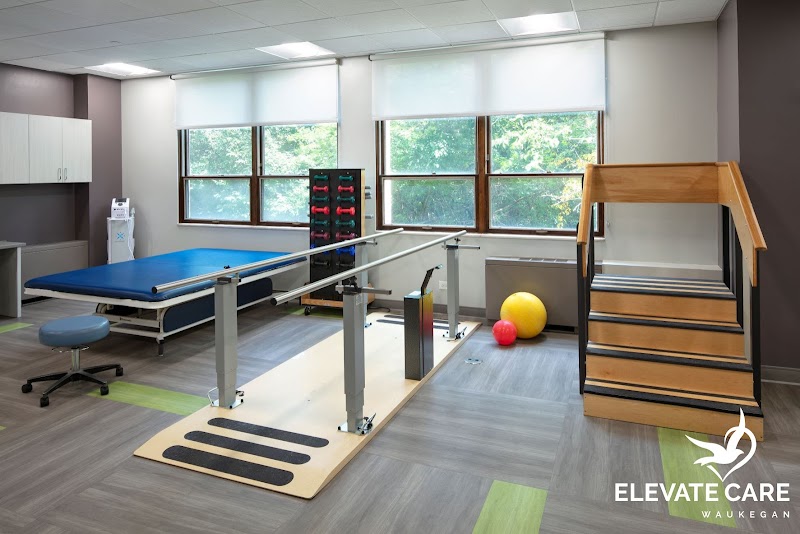
How Does Elevate Care Waukegan Compare to Other Illinois Nursing Homes?

Compared to the 100 nursing homes in Illinois, ELEVATE CARE WAUKEGAN's overall rating (2 stars) is below the state average of 2.5, staff turnover (27%) is significantly lower than the state average of 46%, and health inspection rating (2 stars) is below the national benchmark.

What Should Families Ask When Visiting Elevate Care Waukegan?

Based on this facility's data, families visiting should ask: "What changes have been made since the serious inspection findings, and how are you preventing similar issues?" "What safeguards and monitoring systems are in place to protect residents from abuse or neglect?" "Can you walk me through typical staffing levels on day, evening, and night shifts?" "Can I visit during a mealtime to observe dining assistance and food quality?" These questions are particularly relevant given the facility's Immediate Jeopardy citations, the substantiated abuse finding on record, and the below-average staffing rating.

Is Elevate Care Waukegan Safe?

Based on CMS inspection data, ELEVATE CARE WAUKEGAN has documented safety concerns. The facility has 1 substantiated abuse finding (meaning confirmed case of resident harm by staff or other residents). Inspectors have issued 1 Immediate Jeopardy citation (the most serious violation level indicating risk of serious injury or death). The facility has a 2-star overall rating and ranks #100 of 100 nursing homes in Illinois. Families considering this facility should ask detailed questions about what corrective actions have been taken since these incidents.

Do Nurses at Elevate Care Waukegan Stick Around?

Staff at ELEVATE CARE WAUKEGAN tend to stick around. With a turnover rate of 27%, the facility is 19 percentage points below the Illinois average of 46%. Low turnover is a positive sign. It means caregivers have time to learn each resident's needs, medications, and personal preferences. Consistent staff also notice subtle changes in a resident's condition more quickly.

Was Elevate Care Waukegan Ever Fined?

ELEVATE CARE WAUKEGAN has been fined $60,358 across 4 penalty actions. This is above the Illinois average of $33,682. Fines in this range indicate compliance issues significant enough for CMS to impose meaningful financial consequences. Common causes include delayed correction of deficiencies, repeat violations, or care failures affecting resident safety. Families should ask facility leadership what changes have been made since these penalties.

Is Elevate Care Waukegan on Any Federal Watch List?

ELEVATE CARE WAUKEGAN is not on any federal watch list. The most significant is the Special Focus Facility (SFF) program, which identifies the bottom 1% of nursing homes nationally based on persistent, serious quality problems. Not being on this list means the facility has avoided the pattern of deficiencies that triggers enhanced federal oversight. This is a positive indicator, though families should still review the facility's inspection history directly.