APERION CARE WESTCHESTER
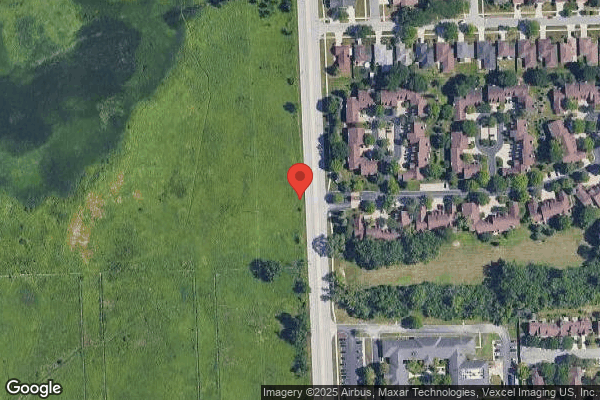

2901 SOUTH WOLF ROAD, WESTCHESTER, IL 60154 (708) 531-1441
For profit - Limited Liability company 120 Beds APERION CARE Data: November 2025
Trust Grade
25/100
#105 of 665 in IL
Last Inspection: August 2024

Within standard 12-15 month inspection cycle. Federal law requires annual inspections.

Overview

Aperion Care Westchester has received a Trust Grade of F, indicating a poor rating with significant concerns about the facility. It ranks #105 out of 665 facilities in Illinois, placing it in the top half, but this is overshadowed by its low trust score. The facility appears to be improving, as issues decreased from 13 in 2024 to 2 in 2025. However, staffing is a weakness, with a low rating of 2 out of 5 stars and a turnover rate of 40%, slightly better than the state average. Notably, recent inspections revealed serious problems, such as a resident repeatedly falling due to inadequate risk assessments and another resident developing an infected pressure ulcer because dressing changes were not performed as ordered. Additionally, there was a concerning incident of physical abuse that resulted in a resident needing emergency hospital care. Overall, while there are some improvements in trends, the facility has serious deficiencies that families should carefully consider.

Trust Score
F
25/100
In Illinois
#105/665
Top 15%
Safety Record
High Risk
Review needed
Inspections
Getting Better
13 → 2 violations
Staff Stability
○ Average
40% turnover. Near Illinois's 48% average. Typical for the industry.
Penalties
✓ Good
$76,366 in fines. Lower than most Illinois facilities. Relatively clean record.
Skilled Nurses
○ Average
Each resident gets 36 minutes of Registered Nurse (RN) attention daily — about average for Illinois. RNs are the most trained staff who monitor for health changes.
Violations
⚠ Watch
28 deficiencies on record. Higher than average. Multiple issues found across inspections.
★★★★☆
4.0
Overall Rating
★★☆☆☆
2.0
Staff Levels
★★☆☆☆
2.0
Care Quality
★★★★☆
4.0
Inspection Score
Stable
2024: 13 issues
2025: 2 issues

The Good

  • Full Sprinkler Coverage · Fire safety systems throughout facility
  • No fines on record
  • Staff turnover below average (40%)

    8 points below Illinois average of 48%

Facility shows strength in fire safety.

The Bad

Staff Turnover: 40%

Near Illinois avg (46%)

Typical for the industry

Federal Fines: $76,366

Well above median ($33,413)

Moderate penalties - review what triggered them

Chain: APERION CARE

Part of a multi-facility chain

Ask about local staffing decisions and management

The Ugly 28 deficiencies on record

7 actual harm
Sept 2025 1 deficiency
CONCERN (E) 📢 Someone Reported This

A family member, employee, or ombudsman was alarmed enough to file a formal complaint

Potential for Harm - no one hurt, but risky conditions existed

Pharmacy Services (Tag F0755)

Could have caused harm · This affected multiple residents

**NOTE- TERMS IN BRACKETS HAVE BEEN EDITED TO PROTECT CONFIDENTIALITY** Based on observation, interview, and record review, the facility failed to follow its Medication Administration Policy by failin...

Read full inspector narrative →
**NOTE- TERMS IN BRACKETS HAVE BEEN EDITED TO PROTECT CONFIDENTIALITY** Based on observation, interview, and record review, the facility failed to follow its Medication Administration Policy by failing to administer medications in a timely manner. This applies to four of 15 residents (R2, R7, R4 and R5) reviewed for medication administration in a sample of 15.The Findings include:On 9/23/25 at 10:12 AM, V6 (Licensed Practical Nurse/LPN) was passing medication and stated, I have 10 more residents (R2, R3, R4, R7, R8, R9, R10, R11, R14, and R15) to pass the morning medications, which were supposed to be administered at 8:00 AM. We are supposed to administer medications within 2-hour window (one hour before and one hour after) around the scheduled time. I would be able to finish by 10:45 AM.R2 is an [AGE] year-old female with moderate cognitive impairment as per MDS dated [DATE]. On 9/24/25 at 12:30 PM, R2 stated (with Spanish interpreter V8/Housekeeping), I don't know what time I received my medications today. I would like to get my medications on time.A review of the R2's POS and MAR indicates that R2 was scheduled to get the prescribed medications at 8:00 AM including Amlodipine 10 milligram (mg) daily, Aspirin 81 mg daily, Losartan Potassium 25 mg daily, Eliquis 5 mg twice per day (BID), Metoprolol 100 mg daily, Lasix 80 mg BID, and Gabapentin 300 mg three times a day (TID).R7 is a [AGE] year-old male with intact cognition, as per the MDS dated [DATE]. On 9/23/25 at 12:40 PM, R7 stated, The morning medication should come around 8:00 AM, and I got it around 10:30 AM today. I would like to get my medications on time. Today it was late by two and a half hours.A review of the R7's POS and MAR indicates that R7 was scheduled to get the prescribed medications at 8:00 AM, including Amlodipine 10 mg daily, Hydrochlorothiazide 12.5 mg daily, Lisinopril 40 mg daily, and Gabapentin 300 mg three times a day (TID).R4 is an [AGE] year-old male having intact cognition as per the MDS dated [DATE]. On 9/23/25 at 12:45 PM, R4 stated, The morning medications were delayed today, not all the time. I prefer to get my medication on time.A review of the R4's POS and MAR indicates that R4 was scheduled to get the prescribed medications at 8:00 AM, including Amlodipine 7.5 mg daily.On 9/23/25 at 10:20 AM, V7 (Registered Nurse/RN) was passing morning medications and stated, I have three more residents (R5, R12, and R13) to pass 8:00 AM medications. I am sorry, I am late today, because one of my residents was getting shortness of breath and stomachache.R5 is a [AGE] year-old male admitted with mild cognitive impairment as per the MDS dated [DATE]. On 9/23/25 at 12:50 PM, R5 stated, I would prefer to get my medications on time. It was delayed today.A review of the R5's POS and MAR indicates that R5 was scheduled to get the prescribed medications at 8:00 AM, including Ferrous Sulfate Elixir 220 mg (Fe 44)/5milliliter(ml) (Give 7.5 ml) daily, Potassium Chloride 20 milliequivalent (mEq) daily, and Terazosin 2mg daily.On 9/23/25 at 10:25 AM, V5 (LPN) was passing morning medications and stated, I have one more resident (R6) to give 8:00 AM medications. I have residents going out for appointments, and I must prepare them. That's the way I got delayed.A review of the facility's Medication Administration policy, dated September 2018, reveals that, at a minimum, the 5 rights - right patient, right drug, right dose, right route, and right time - should be applied to all medication administration.On 9/24/25 at 9:39 AM, V2 (Director of Nursing) stated, Our staff supposed to follow the five rights of medication administration, including right patient, right drug, right dose, right route, and right time. On 9/23/25 at 11:00 AM, V2 added, Our staff is supposed to pass medications within a two-hour window around the scheduled time (one hour before and one hour after the scheduled time). We will in-service all our nurses and change the administration time from 8:00 AM to 9:00 AM.
Jul 2025 1 deficiency
CONCERN (E) 📢 Someone Reported This

A family member, employee, or ombudsman was alarmed enough to file a formal complaint

Potential for Harm - no one hurt, but risky conditions existed

Infection Control (Tag F0880)

Could have caused harm · This affected multiple residents

**NOTE- TERMS IN BRACKETS HAVE BEEN EDITED TO PROTECT CONFIDENTIALITY** Based on observation and interview, the facility failed to ensure that resident care equipment was clean and in good, repaired c...

Read full inspector narrative →
**NOTE- TERMS IN BRACKETS HAVE BEEN EDITED TO PROTECT CONFIDENTIALITY** Based on observation and interview, the facility failed to ensure that resident care equipment was clean and in good, repaired condition and properly stored by not comingling with functional ones to prevent accidental use for prevention of infection. This failure has the potential to affect R1, R3, R4, R5 and R6 reviewed for infection control. Findings include: R1's medical record admission record showed documentation that R1 was last admitted to the facility on [DATE] and listed diagnosis includes but not limited to Spastic quadriplegic cerebral palsy, spondylolysis lumbar region, type 2 diabetes mellitus with other circulatory complications, unspecified symptoms and signs involving cognitive functions and awareness, contracture of muscle, contracture of right wrist, joint disorder, contracture of muscle right hand, and low back pain.On 07/03/25 at 9:45am, V3 stated that (R1) and (R3) uses the shower device but R1 family member (V13) left instruction not to use the device until the bed pad is changed. V3 stated that the bed mat has holes in it but during shower we cover it with shower blankets before we put the residents on it. V3 showed the surveyor the blanket from the linen cart in the hallway. The surveyor asked V3 who is responsible for cleaning the shower bed device, V3 said the housekeepers are the ones that clean the shower device.On 07/03/25 at 9:48am, shower bed observed in the shower room with multiple holes on top and bottom (both sides) of the bed pad with brownish black colored particles. V3 CNA (Certified Nurses Aid) who was present during the observation said that was why V13 (family) did not want us (staff) to put R1 on it during shower, therefore R1 only gets a bed bath currently. V3 stated that the tears and stains have been on the bed pad for some time now and all we (staff) can do is to cover it with towels or blankets. When V3 was asked what can happen to residents using the device if not properly cleaned and in this condition. V3 stated that it looks like fungus, which can cause infection for the residents using it.On 07/03/25 at 10:08am, when this was shown to V7 RN (Registered Nurse). V7 stated that the anything (Equipment) used by the residents should be clean and in good condition it should not be torn like that (referring to the pad on the shower device). When the surveyor asked whether any of the staff has complained about it and made V7 aware about the condition of the device. V7 stated that I have only be working here almost one month now and I was not aware it was that bad. V7 was asked what can happen to residents using the device if not properly cleaned. V7 stated that it looks like molds or bacteria, and this can cause infection for anyone using it.At 10:12am, when V10 (Housekeeper) who was present at the time was asked about who is responsible for cleaning the shower device, V8 stated the CNAs are to make sure it is cleaned before and after use.At 10:16am, V8 (CNA) stated that the bed pad holes should not be left like that, and the brownish black stains does not show that the bed pad is clean. When the surveyor asked how long the shower assistive device has been like that. V8 stated I can't tell you how long, but it has been a while now.On 07/03/25 at 10:23am, V1 (Administrator) was shown the bed pad on the shower device, V1 stated that it must be V13 who complained because V13 was taking another resident's picture in the shower during shower on the device. V1 stated in part that V13 was not satisfied with the one the facility bought. V1 could not produce any new bed pad bought when asked to. The surveyor asked V1 that even after the condition of the shower bed pad was shown to you still feel that the complaint is not warranted. V1 said that the device should not be used from now, I have ordered new bed pad. We just don't have anywhere to store it that was why it was stored in the shower room. You just don't throw it in the garbage. The surveyor inquired about the possibility of staff using it because it was not removed from the shower room and what can happen to the residents when common devices like the shower pad on the devices is used on multiple residents, V1 said no residents have skin rash or any infection yet. V1 stated the pad should have been removed from the premises, out of the shower room.On 07/03/25 at 11:47am, R3 observed in bed with V3 assisting in rendering bed bath. R3 asked V3 why he is getting bathed in the bed. V3 said I don't know why and continue with the bed bath. R3 said I could have gotten up to go and get the shower in the shower room (indicating that R3 prefer using the shower room). R3 turned to the surveyor and said I guess I will have to get the bed bath but getting the water all over is better. R3 said they put me on the shower bed. V3 then said R3 opted for the bed bath. On 07/03/25 at 11:59am, V13 (family) said about five months ago she noticed the rip on the bed bath pad, I did not turn it over then to see how damage it was. They (referring to staff) have not cleaned the fecal matter on the pad this was reported to their supervisor, and nothing was done. Then about a (one) month ago I reported, when nothing is done. Yesterday (07/02/25), I talked to (V1) and showed her the videos that I have taken. V13 said my son (referring to R1) is bedridden cannot shower himself, all I asked is for the bed pad to be changed. The last time, I was there during his shower I had to asked them to cover the bed pad with a plastic garbage bag because other residents use this, and I don't want my son to get infected. They (staff) did not cover it; they want to use a cloth to cover, and I think those things can seep through clothes. V13 said I have told them not to use shower bed for R1 until the bed pad is replaced. On 07/03 at 1:50pm, both V1 and V2 ADON (Assistant Director of Nurses) presented a list of residents that uses the shower bed (R1, R3, R4, R5 & R6). V2 said right now no one will use the bed bath device.Facility policy on Resident Rights presented with revised date 1/14/19 documented that the purpose of the policy is to promote the exercise of rights for each resident, including any who face barriers (such as communication problems, hearing problems and cognition limited in the exercise of these rights. A resident, even though determined to be incompetent, should be able to assert these rights based on his or her degree of capability.The facility policy on Infection Prevention and Control Program presented with revision date 11/28/17 documented that the purpose of the policy is to comply with a system for preventing, identifying, reporting, investigating and controlling, infections and communicable diseases for all residents, staff, volunteers, visitors, and other individuals providing services under a contractual arrangement. Listed guidelines include but not limited to the facility shall assure that necessary equipment and supplies are maintained to carry out an infection control program.Facility policy on Bathing: Complete bed bath with revision date 1/31/18 documented that the purpose of this policy is to ensure resident's cleanliness to maintain proper hygiene and dignity. Listed guidelines includes but not limited to shower will be offered according to resident's preferences.
Oct 2024 2 deficiencies 1 Harm
SERIOUS (G) 📢 Someone Reported This

A family member, employee, or ombudsman was alarmed enough to file a formal complaint

Actual Harm - a resident was hurt due to facility failures

Accident Prevention (Tag F0689)

A resident was harmed · This affected 1 resident

**NOTE- TERMS IN BRACKETS HAVE BEEN EDITED TO PROTECT CONFIDENTIALITY** Based on interview and record review the facility failed to develop an effective plan to prevent and/or reduce the risk of falli...

Read full inspector narrative →
**NOTE- TERMS IN BRACKETS HAVE BEEN EDITED TO PROTECT CONFIDENTIALITY** Based on interview and record review the facility failed to develop an effective plan to prevent and/or reduce the risk of falling for a resident identified to at high risk for falls, and failed to follow their fall prevention protocol to complete fall risk assessments quarterly and accurately assess and document fall risk factors. This affected 6 of 6 residents (R1, R2, R4, R5, R6 and R7) reviewed for falls and fall risk assessments. This failure resulted in R1 having multiple falls R1 had a fall in his room on 8/27/24 at 7:45AM, and then another fall same day at 1:47PM in the dining room that resulted laceration in left side eye brow forehead requiring sutures on 8/27/24 and third fall on 9/12/24 in the dining room that resulted in left eyebrow laceration re-opening. Findings Include: R1 is [AGE] year old resident and still currently in the facility. BIMs score of 2 (severe cognitive impairment). Fall risk assessment dated [DATE] scored 13, and on 9/13/24 scored 14. On 10/24/24 at 9:30AM, V12 (Restorative Nurse/Fall Coordinator) stated that a resident is consider high risk for fall if they scored 10 or higher on the fall risk assessment. V12 stated that residents with a history of falls and impulsive behaviors would have someone close to resident to monitor for any behavior. R1 has a careplan for actual fall with major injury related to: nasal bone fractures, Parkinson's disease, left hip replacement, bipolar disease, developmental delay, ESBL (extended spectrum beta-lactamase -- bacteria) in the urine and acute kidney failure, poor balance, poor communication/comprehension, unsteady gait, impulsive behavior dated 9/19/24. Behavior Note documented on 8/27/24 at 7:45AM, reads in part: R1 was observed sitting on the safety mat next to the bed, with the bed in lowest position. On 10/23/24 at 2PM, V3 (LPN) stated that the incident was unwitnessed, V3 saw R1 lying on the floor mat next to his bed, bed was in low position. I do not know how R1 got himself to the floor mat. R1 was not able to explain how it happened. I asked V2 DON (director of nursing) if I should document it as a fall, but V2 said to document it as a behavior because no one saw him fall off the bed. On 10/24/24 at 9:30AM, V12 (Restorative Nurse/Fall Coordinator) stated that a fall incident is a change of plane. If fall unwitnessed and if the resident is not able to explain what happened, it is considered a fall incident. V12 stated that the fall incident should be documented and a fall risk assessment should be completed. On 10/24/24 at 11AM, V2 (DON) stated that the incident happened early morning and that it was not a fall, because it was not a change of plane. V2 stated that R1's floor mat is the same height as his bed. R1 rolls off the bed, and the floor mat is the same height as his bed. Bed in low position. Floor mat is in place when R1 is in bed and when R1 is out of bed, we take the mat up and put it against the wall of R1's room, it does not leave R1's room. On 10/24/24 at 11:15AM, the distance from the floor to the top of R1's mattress/bed was observed to be about 15 inches. The height of the floor mat was observed to about one inch. R1 was not observed to be present in R1's room. R1's floor mat was positioned on floor next to R1's bed. On 10/24/24 at 11:16AM, V4 CNA (certified nurse aide) stated that R1's bed and floor mat is what R1 has always had since admission to this facility. V4 acknowledged that R1's top of floor mat is not at the same height as the top of his bed. On 10/24/24 at 2:10PM, V4 CNA stated that R1 is usually awake when she arrives at 6:00AM. V4 stated that R1 should be on the get up early list. stated that R1 will activate his call light when he wakes up in the morning for toileting assistance. R1 needs prompt staff response to his call light. V4 stated that she did not see R1 sit himself on the floor on 8/27/24, when she arrived he was on the floor. Facility reported incident with date of occurrence of 8/27/24, reads in part: Thorough investigation completed. Medical record review and interviews of witnesses reveals on 8/27/24, R1 sustained a witnessed fall. Prior to the fall, R1 was notes sitting in the dining room. R1 did not request for assistance, but quickly got up to grab a cup of water, then stumbled on the table resulting in a fall. R1 sustained an opened area on the left eyebrow. Medical records review indicates that prior to admission, R1 has a history of acute comminuted mildly depressed bilateral nasal bones fractures with slight rightward deviation of the nose, acute nasal bone fracture which is superimposed upon an old chronic nasal bone fracture. R1 was transferred to the hospital for further evaluation and was diagnosed with closed fracture of nasal bone age indeterminate and laceration of the left eyebrow with 7 stiches. On 10/23/24 at 11:15AM, V3 (LPN) stated that on 8/27/24, around after lunch, staff alerted V3. V3 come here we need you. Few steps away from walking in the hallway. I just passed by the dining room V3 stated that V3 saw R1 on the floor. R1 lying on the side, with active bleeding under eye and wheelchair right next to R1. Wound care came after me and attended to the wound. R1 is extensive assist and able to self-propel, propels with his feet Does not use footrest. R1 needs assistance with standing due to cognition and poor safety awareness with impulsive behavior. R1 is high risk for fall. Staff are already on alert for fall, staff keep extra eye on R1 to prevent from falling. On 10/23/24 at 11:40AM, V4 (CNA), stated that on 8/27/24, V4 just changed R1's clothes after lunch meal, pushed R1 into the dining room. V4 stated that V4 heard an emergency bathroom call light alarming and she did not put any resident in the bathroom so V4 left the dining room to attend to call light. V4 stated I am not sure if any other staff member was in there. Waiting for activity staff to come around. When I returned they are picking R1 up already from the floor. R1's gait is very unsteady. R1 has a behavior of trying to get up and reaching for whatever is in front of him. R1 is a reacher. R1 is going to get whatever is in front of him, especially food and drink. R1 is a busy resident, would try to get everything and would reach anything in front of him. On 10/23/24 at 1:35PM, V10 (Restorative Aide) stated that R1 was sitting in the chair and R1 reached for some water. R1 was in the long table in the dining room. R1 stood up and fell forward. R1 hit the ground. V10 stated V10 was sitting in the alternate side of the table. There were 5 or 6 residents in the dining room. V10 stated that this was the first time watching R1 in the dining room, V10 was not aware of any impulsive behavior of R1. V10 stated V10 got up but was not able to stop the fall. We try to prevent falls. I do not know if he is high risk for fall. R1's hospital record dated 8/27/24, reads in part: 2.5 cm laceration located to the left forehead eyebrow. 2 deep sutures to close soft tissue and 6 superficial sutures to close the skin. CT (computerized tomography) scan of R1's head/brain with an impression of mild left forehead soft tissue swelling and age indeterminate mildly depressed nasal bone fracture. IDT FALL COMMITTEE NOTE dated 8/30/24, reads in part: Contributing factors: impaired memory, confused, anti-hypertensive user, antipsychotic use, gait imbalance, incontinent, weakness and narcotic use. Prior interventions and support provided: bed in lowest position, behavior monitoring, non-skid socks/footwear in place, call light in reach, and R1 was brought close to the dining room/nurses station. Root cause of the fall determined by IDT: R1 was impulsive behavior attempted to grab a cup of water from the table in the dining room and stumble on the table. R1 requires 1 person assist with ADL and transfer. New intervention put at the time of the fall, bed moved against the wall to prevent from sliding out. Anti-slip mat and anti-rollback were added to R1's wheelchair. Floor mat added to the side of R1's bed. Fall initial occurrence note dated 9/12/24, reads in part: R1 had an un-witnessed fall 09/12/2024 4:45 PM Location of Fall: Unit 1 Dining room, Nurse was told by RCS (Resident Aide) that R1 fell, when the writer went to Unit 1 dining room, RCS already put R1 back on his wheelchair. Noted small blood on the floor and left upper eyebrow. Sent to local hospital for evaluation. Nurses Note dated 9/12/2024 at 21:42, reads in part: Back from local hospital and after being evaluated with diagnosis .of fall initial encounter, Injury of Head, initial encounter, Acute Cystitis without hematuria. Sutures from left eyebrow off, steri- strips intact and covered with band aid. No discoloration noted at this time. On 10/23/24 at 3pm, V11 (RN) stated that a resident aide informed V11 about R1 fall. Dining room R1 blood on the floor, and noted R1 already on the wheelchair. Blood on the left eye brow. Sutures still present on the laceration, and noted blood coming out from that area, small amount. Dry dressing and bleeding stop. Sent out for further evaluation. R1 returned and hospital removed sutures and placed steri strips. R1 usually bend forward and reach for something, and that probably what happened. Last seen resident in the dining room and the aide was there, female RCS. On 10/24/24 at 11AM, V2 (DON) stated that the fall incident on 8/27/24, witnesses interviewed, they bring R1 in the dining room. Restorative was there, she was sitting around the corner not close to R1, She was not able to catch the fall. R1 was trying to grab a cup of water. Reached and fell forward from sitting in the wheelchair. R1 has history of multiple falls when he was at the group home. R1 has multiple falls prior to coming in the facility. High risk for fall that's the reason we bring him in the dining room, R1 is very impulsive, no sense of safety awareness. Supervision in the dining room. Stated that the fall incident on 9/12/24, R1 was in dining room and they are people supervising. CNA was in the dining room. CNA observed R1 dropped the spoon on the floor and R1 bent down and fell of the wheelchair. R1 is quick, and people were watching R1. Facility does not do one on one supervising. There are other people also in the dining room that they have to watch. Staff are monitoring other high risk for fall residents and the facility do not do one on one. IDT FALL COMMITTEE MEETING NOTE dated 9/13/24, reads in part: Contributing factors: Impaired memory. Situational factor: behavior symptoms. Root Cause: impulsive behavior attempted to pick spoon from the floor in the dining room when he slid and fell. On 10/23/24 at 1:35PM, V10 (Restorative Aide) stated that if any residents with such behavior and history of fall. Staff keep eyes on them and monitoring. Staff should be sitting close enough to be able to redirect the resident. Close enough to stop the reaching behavior of R1 for safety and prevent fall incident. Fall Prevention Program with a revision date of 11/21/2017, reads in part: To assure the safety of all residents in the facility, when possible. The program will include measures which determine the individual needs of each resident by assessing the risk of falls and implementation of appropriate interventions to provide necessary supervision and assistive devices are utilized as necessary. Quality Assurance Programs will monitor the program to assure ongoing effectiveness. The fall Prevention Program includes the following components: Methods to identify risk factor, methods to identify residents at risk, use and implementation of professional standards of practice, immediate change in interventions that were successful, communication with direct care staff members. Care plan incorporated: identification of all risk/issue, address each fall, interventions are changed with each fall as appropriate, preventative measure. Safety interventions will be implemented for each resident identified at risk. Nursing personnel will be informed of residents who are at risk of falling. The fall risk interventions will be identified on the care plan. R2's medical record notes R2 was admitted with diagnoses including, but not limited to, high blood pressure, hypertensive urgency (occurs when blood pressure readings are 180/110 or higher but there is no organ damage or symptoms), history of falls, and primary osteoarthritis of ankle and foot. R2's POS (physician order sheet) notes an order, dated 5/14/24, for amlodipine besylate (medication to treat high blood pressure) 10mg (milligrams) oral daily. On 5/15/24, there is an order for hydralazine (medication to treat high blood pressure) 50mg oral every 8 hours. On 6/25/24, there is an order for olanzapine 2.5mg oral for mood/agitation. On 8/13, there are orders for furosemide (medication to treat fluid retention) 20mg oral daily. On 8/22/24, there is an order for lisinopril (medication to treat high blood pressure) 10mg oral daily. R2's admission fall risk assessment, dated 5/14/24, notes R2 does not take any high risk medications. R2 was receiving amlodipine besylate. It also notes R2 does not have any predisposing diseases, such as arthritis. R2 was admitted with a diagnosis of primary osteoarthritis of ankle and foot. It notes R2 is not at risk for falls. R2's fall risk assessment, dated 7/10/24 at 5:45PM, notes no falls in the past three months. This assessment was completed after R2 fell at 5:00PM. It notes R2 is not at risk for falls. R2's fall risk assessment, dated 9/11/24, notes R2 takes 1-2 high risk medications currently or within last 7 days. R2 was receiving amlodipine besylate, hydralazine, and olanzapine. It also notes no falls within the past three months. R2 fell on 7/10/24. It also notes no predisposing diseases, such as arthritis. R2 was admitted with a diagnosis of primary osteoarthritis of ankle and foot. R2's gait/balance was not assessed. R2 was hospitalized 9/3-9/11 with medication changes. This was not identified on R2's assessment. It notes R2 is not at risk for falls. R4's medical record notes R4 with diagnoses including, but not limited to, stroke with paralysis affecting left dominant side (primary diagnosis on 8/3/2023) and history of falling. R4's fall risk assessment, dated 8/7/24, notes no falls within the past three months. This assessment was completed post fall. It also noted R4 does not have any predisposing diseases, such as stroke. It notes R4 is not at risk for falls. R4's fall risk assessment, dated 8/21/24, notes R4's gait/balance was not assessed. It also notes R4 does not have any predisposing diseases, such as stroke. It notes R4 is not at risk for falls. R4's fall risk assessment completed prior to 8/7/24 was done on 10/18/23. On 10/24/24 at 9:40AM, V12 (restorative nurse/falls coordinator) stated that V12 has been the falls coordinator at this facility for the past two years. V12 stated that a fall risk assessment is completed on all residents on admission, re-admission, status post fall, and quarterly. V12 stated that a resident is identified as a high risk for fall if the fall risk assessment score is 10 or higher. V12 stated that the resident's care plan would note resident is at risk for falls not at high risk for falls. V12 stated that nurses are expected to complete the fall risk assessments. V12 stated that the IDT (interdisciplinary team) will assess each resident and determine if the resident is at risk for falls. When questioned where is the IDT's assessment documented in the resident's electronic medical record, V12 did not respond. V12 stated that R2 had an unsteady gait and was on this facility's falling list. When questioned reason why R2 would be on the facility's falling list if all of R2 fall risk assessments, dated 5/14, 7/10, and 9/11, note R2 is not at risk for falls, V12 responded that the fall risk assessment is done at the discretion of the nurse. When questioned if V12 reviews the resident's fall risk assessment for accuracy, V12 responded 'no'. R4's fall risk assessments were reviewed with V12; R4 is identified as not at risk for falls. When questioned why R4 does not have any fall risk assessments done from 10/8/2023 until R4 fell on 8/7/2024, V12 responded she does not know. V12 stated that R4 is unable to stand. When questioned if the nurse is expected to check all that apply for the R4's gait/balance, V12 did not respond. When questioned if R4's fall risk assessments were accurate, V12 responded she does not know. R5's medical record notes R5 with admitting diagnoses including, but not limited to, multiple fractures - skull, ribs, cervical spine, history of falling, and high blood pressure. R5's only fall risk assessment was completed on admission on [DATE]. R6's medical record notes R6 with diagnoses including, but not limited to, high blood pressure, difficulty in walking, abnormal posture, and lack of coordination. R6's fall risk assessment, dated 10/8/24, notes no falls within the past three months. This assessment was completed post fall. It also notes R6 is not at risk for falls. R7's medical record notes R7 with diagnoses including, but not limited to, stroke with paralysis affecting right dominant side (primary diagnosis on 12/16/2021), seizure disorder, high blood pressure, Parkinson's disease, and history of falling. R7's only fall risk assessment since admission on [DATE] was completed on 2/24/2022. This assessment notes R7 does not have any predisposing diseases, such as high blood pressure, stoke, seizures, or Parkinson's disease. A review of the facilities fall prevention program, revised 11/21/2027, notes a fall risk assessment will be performed by a licensed nurse at the time of admission. A fall risk assessment will be performed at least quarterly and after any fall.
CONCERN (D) 📢 Someone Reported This

A family member, employee, or ombudsman was alarmed enough to file a formal complaint

Potential for Harm - no one hurt, but risky conditions existed

Free from Abuse/Neglect (Tag F0600)

Could have caused harm · This affected 1 resident

Based on interviews and record reviews, the facility failed to follow its abuse prevention policy and prevent an incident of resident to resident physical assault. This affected two of three residents...

Read full inspector narrative →
Based on interviews and record reviews, the facility failed to follow its abuse prevention policy and prevent an incident of resident to resident physical assault. This affected two of three residents (R2, R3) reviewed for physical abuse. This failure resulted in R2 attacking and hitting R3 with a cane unprovoked. Findings include: On 10/23/24 at 11:15AM, V3 LPN (licensed practical nurse) R2 ambulates with a cane. V3 stated that on 9/3/24, staff alerted her that R2's roommate, R3, stated R2 hit R3 with his cane. V3 stated that R2 was still agitated when she arrived at R2 and R3's room. V3 stated that R2 was non-redirectable; swearing at her and V10 CNA (certified nurse aide), raising cane, getting aggressive. V3 stated that in the past, R2 was re-directable when R2 exhibited behaviors. On 10/23/24 at 1:40PM, V10 CNA stated that R3 informed V10 that R2 hit him with R2's cane. V10 denied witnessing R2 hit R3. V10 stated that R2 became aggressive towards her and V3. V10 stated that usually V10 can re-direct R2 when behaviors exhibited. V10 stated that some days R2's behavior was okay and some days R2 was agitated. This facility's abuse investigation report, dated 9/3/24, notes V10 CNA was making roundswhen V10 saw R2 walking in his room swinging his cane around. R3 stated that R2 was hollering and waving his cane around and hit R3 on his left leg. R2 has a diagnosis of dementia, psychotic disturbance. R2 is alert and oriented x 2 with some confusion. R2's aggressive behavior assessment, dated 5/24/24, notes R2's general awareness is a moderate problem. R2 has a history or recent episode of aggressive/agitated behavior and/or non-compliance with medications, treatment, regimen, resisting care -- moderate problem. R2's hospital record, dated 9/3-9/11, psychiatry evaluation notes per nursing home petition, R2 has been physically and verbally aggressive towards staff. Per EMS (emergency medical services), they were informed R2 was aggressive towards his roommate, (R3). R2's family member states she received phone calls from this facility throughout the weekend informing her of R2's aggression. R2's care plan, initiated 5/30/24, notes R2 has the potential to be physically aggressive due to criminal background. Interventions identified include, but not limited to, when R2 becomes agitated, intervene before agitation escalates. This facility's abuse prevention and reporting policy, revised 10/24/2022, notes abuse means any physical assault inflicted upon a resident other than by accidental means. Abuse is the willful infliction of injury. An example of a deliberate (willful) action would be a cognitively impaired resident who strikes out at a resident.
Aug 2024 4 deficiencies
CONCERN (D)

Potential for Harm - no one hurt, but risky conditions existed

Report Alleged Abuse (Tag F0609)

Could have caused harm · This affected 1 resident

**NOTE- TERMS IN BRACKETS HAVE BEEN EDITED TO PROTECT CONFIDENTIALITY** Based on interview and record review the facility failed to report an allegation of abuse for one of two residents (R73) reviewe...

Read full inspector narrative →
**NOTE- TERMS IN BRACKETS HAVE BEEN EDITED TO PROTECT CONFIDENTIALITY** Based on interview and record review the facility failed to report an allegation of abuse for one of two residents (R73) reviewed for abuse in a total sample of 47. Findings include: R73 is a [AGE] year-old resident admitted to facility on 11/22/2021 with medical diagnoses including but not limited to: vascular dementia, major depressive disorder, hemiplegia and hemiparesis following cerebral infarction affecting right dominant side. R73 has a Brief interview mental status (BIMS) score of 03 dated 08/12/2024 which suggests severe cognitive impairment. Minimum Data Set (MDS) assessment dated [DATE] documents GG0130 Self - care: R73 is dependent for toileting hygiene, shower/bathe self, and putting on and taking off footwear. R73 requires substantial/maximal assistance with lower body dressing. R73 requires partial/moderate assistance with eating, oral hygiene, upper body dressing and personal hygiene. On 08/25/24 at 11:45 AM R73 - I have lived here 3 years. I don't like it here. R73 made the choking sign. Surveyor asked resident if someone choked him, and he replied yes. When asked who choked him, he responded with first name of V8 Certified Nursing Assistant (CNA). V8 here choked me. When asked when this happened R73 replied, it happened three weeks ago. It was a Saturday. When asked about what time, he stated about 10 am. He choked me and pinched me. I am sick of it here. I had enough. They know I want to leave. When asked if they are working to get him moved out of here, he states, I don't know. When asked if V8 is a CNA, he states yes, I think so. I have not seen him since. Resident has some trouble getting out some words. He also uses his hands to make signs such as choking sign. He can verbally answer simple questions. Resident did use curse words. On 08/26/24 at 11:14 AM R73 - I am not doing good. I have had enough. I can't stand it here. R73 says V8's first name and then makes choking sign. Take me home. I am sick and tired of it man. I can't stand it. R73 did use curse words. On 08/27/24 at 11:38 AM V19 (CNA) - Regarding R73, I have heard that he accused somebody of choking him. I don't know how true it was. I did not report that to anyone because it was supposed to be reported. He did not tell me I heard it from a coworker. If he would have reported it to me, I would have reported it. On 08/26/24 at 11:47 AM V1 Administrator - Surveyor asked Have you been made aware of any choking incident by any staff of a resident. V1 replies I have not, just right now social service department told me you were asking about this. Surveyor informed administrator that R73 reported being choked by V8 (CNA). Administrator also made aware that R73 stated he reported to V1 by name. V1 states R73 just curses us out but he never told me about this incident. That is something anyone would have told me. Do you know when. Surveyor replied yes on or about 8/3/2024 at about 10 am R73 alleges V8 choked him and pinched his side. V1 continues, R73 has been here three years. If R73 is not flicking you off his he is saying curse words to you. I have not had any allegations of abuse for V8 he is an as needed staff member and works once or twice a month. Surveyor asked V1 what would happen if a resident would report this to staff. Administrator stated that staff would notify me immediately or notify their immediate supervisor. If they notified their immediate supervisor, then that supervisor would notify me. I just got back from FMLA. I came back that week of 08/03/2024 that Monday or Tuesday. If I was not here staff would notify V21. V21 did not inform me of any incidents reported to him of V8 choking R73. I am sure R73 did not report anything to me. The V10 family member did report to me that week that R73 did not want male staff and just his regular staff to help him. It was that first week I was back that the V10 reported that to me. V10 said he was grumpy and wanted me to make sure the staff caring for him was people that know him. I will go talk to R73 now. On 08/27/24 at 11:25 AM V18 Licensed Practical Nurse (LPN) - Regarding R73 behaviors, he fights, curses, refuses care/medications and tries to hit people. We attempt to redirect. There are some people he just does not like. If we can get another person to help, we will do that, or we will try again later. I did hear of an allegation of abuse for him about 3-4 days after it allegedly happened. R73 said somebody choked him. I asked R73 if he told anyone. I asked him if he told the V1 and he said yes. When surveyor asked if V18 reported the allegation, she said no because I asked V1 if she was aware that R73 reported someone choked him and V1 said it was already reported to her. She did not say who reported it to her. I think we have abuse training yearly. I do not remember when the last one was. It is usually an in-person training. On 08/27/24 at 12:00 PM Interview with V18 LPN and V1 Administrator together - V18 was re-read her statement and she stated, I did say that. V18 stated, I actually did not report it to V1, I spoke to R73 and since he replied that he did report it, I did not report it. I assumed it was reported. V1 stated this was not reported to me by anyone until surveyor reported to me specifically. V18 stated, once he told me he reported it, I assumed it was reported. When surveyor asked how often abuse training is provided V18 stated, We have abuse training yearly. V1 stated V18 should have reported it and followed up with what she heard. Abuse Prevention and Reporting Illinois Policy dated 11/28/2016 documents: Internal Reporting Requirements and Identification of Allegations: Employees are required to report any incident, allegation or suspicion of potential abuse, neglect, exploitation, mistreatment or misappropriation of resident property they observe, hear about, or suspect to the administrator immediately, or to an immediate supervisor who must then immediately report it to the administrator. In the absence of the administrator, reporting can be made to an individual who has been designated to act as an administrator in the administrator's absence. Any allegation of abuse or any incident that results in serious bodily injury will be reported to the Department of Public Health immediately, but not more than two hours after the allegation of abuse. Any incident that does not involve abuse and does not result in serious bodily injury shall be reported within 24 hours.
CONCERN (D)

Potential for Harm - no one hurt, but risky conditions existed

Incontinence Care (Tag F0690)

Could have caused harm · This affected 1 resident

**NOTE- TERMS IN BRACKETS HAVE BEEN EDITED TO PROTECT CONFIDENTIALITY** Based on observations, interviews, and record reviews the facility failed to follow their policy and procedures for Urinary Cath...

Read full inspector narrative →
**NOTE- TERMS IN BRACKETS HAVE BEEN EDITED TO PROTECT CONFIDENTIALITY** Based on observations, interviews, and record reviews the facility failed to follow their policy and procedures for Urinary Catheter Care by not ensuring a catheter urinary drainage bag was emptied timely for a resident with a history of UTI's (Urinary Tract Infections). This failure applies to one of one residents (R86) reviewed for catheters and UTI's (Urinary Tract Infections). Findings include: R86 is a [AGE] year-old male with a diagnoses history of UTI's Neuromuscular Bladder Dysfunction, Pseudomonas Bacteria as the Cause of Other Diseases, Acute and Chronic Congestive Heart Failure, Presence of Coronary Artery Graft (Transplanted Blood Vessels), and Pressure Ulcers who was admitted to the facility 03/30/2024. On 08/25/24 from 10:18 AM - 10:30 AM Observed R86's catheter (urinary drainage) bag extremely full. R86 stated if his catheter (urinary drainage) bag is full and it backs up, It could mess me up. R86 stated they constantly forget to empty his catheter (urinary drainage) bag. R86 informed the surveyor he wanted his catheter (urinary drainage) bag to be emptied. On 08/26/24 at 9:01 AM Observed R86's catheter (urinary drainage) bag full. R86 stated he wanted his catheter (urinary drainage) bag to be emptied. On 08/26/24 at 01:24 PM R86 stated many times he has a real bad burning sensation and heavy pressure in his penis. R86 stated he has complained to the CNA (Certified Nursing Assistant) and V22 (Family Member) has also complained to someone about his catheter (urinary drainage) bag not being emptied timely but it's still happening. On 08/27/24 at 10:57 AM V22 (Family Member) stated she has complained multiple times about R86's catheter (urinary drainage) bag not being emptied timely and has had to make staff empty R86's catheter (urinary drainage) bag. On 08/27/24 at 04:55 PM V2 (Director of Nursing) stated a catheter (urinary drainage) bag should be emptied before being completely full because it could back up and cause infection. V2 stated a catheter (urinary drainage) bag should be changed as often as needed. V2 stated all nursing staff are responsible for emptying catheter (urinary drainage) bags. The facility's Urinary Catheter Care Policy received and reviewed on 08/28/2024 states: The purpose of the policy is to establish guidelines to reduce the risk of or prevent infections in resident with an indwelling catheter. Catheter drainage bags will be emptied as needed.
CONCERN (E)

Potential for Harm - no one hurt, but risky conditions existed

Unnecessary Medications (Tag F0759)

Could have caused harm · This affected multiple residents

**NOTE- TERMS IN BRACKETS HAVE BEEN EDITED TO PROTECT CONFIDENTIALITY** Based on observation, interview, and record review, the facility failed to administer medications as ordered; failed to ensure m...

Read full inspector narrative →
**NOTE- TERMS IN BRACKETS HAVE BEEN EDITED TO PROTECT CONFIDENTIALITY** Based on observation, interview, and record review, the facility failed to administer medications as ordered; failed to ensure medication is available during medication administration; and failed to follow manufacturer's guidelines in insulin pen administration. There were 27 opportunities with eight errors resulting in a 29.63% medication error rate. The errors involved four (R46, R63, R82 and R86) of 10 residents in the sample of 47 reviewed for medication administration. Findings include: R63 is a [AGE] year-old, female, admitted in the facility on 03/20/23 with diagnosis of Type 2 Diabetes Mellitus without Complications. POS (Physician Order Sheet) dated 08/16/24 recorded: Humalog Kwikpen Subcutaneous Solution Pen Injector 100 unit/ml (milliliter) Insulin Lispro inject 5 units subcutaneous with meals for diabetes. On 08/25/24 at 12:03 PM, V4 (Licensed Practical Nurse, LPN) was preparing the Humalog Kwikpen to R63. V4 took the Humalog Kwikpen from the cart, wiped the needle port with alcohol wipes, and pushed the needle onto the pen. She (V4) then turned the dose knob to 5 units and injected the insulin to R63's right lower quadrant for 2 seconds. V4 did not prime the insulin pen prior to injection. Also, the order for Humalog is to be administered with meals. R63 was not eating meals at the time of Humalog administration. Her (R63) lunch was served at 12:25 PM and started eating thereafter. R86 is a [AGE] year-old, male, admitted in the facility on 03/30/24 with diagnosis of Acute on Chronic Systolic (Congestive) Heart Failure and Paroxysmal Atrial Fibrillation. POS dated 03/30/24 documented: Midodrine HCl tablet 5 mg (milligrams) give 1 tablet by mouth three times a day for low blood pressure. On 08/25/24 at 3:50 PM, V5 (Registered Nurse, RN) was observed passing medications to R86. V5 stated that his Midodrine medication is not available and will have to reorder from Pharmacy. R82 is an [AGE] year-old, male admitted in the facility on 05/14/24 with diagnoses of Hypertensive Urgency and Essential (Primary) Hypertension. During medication administration on 08/25/24 at 3:58 PM, V5 mentioned that his Hydralazine 50 mg is not available and needs to be reordered. Per POS dated 05/14/24, R82 has an order of Hydralazine HCl (hydrochloride) oral tablet 50 mg 1 tablet by mouth every 8 hours. R46 is a [AGE] year-old, male, initially admitted in the facility on 10/22/21 with diagnoses of Unspecified Atrial Fibrillation and Essential (Primary) Hypertension. Per POS dated 04/25/24, R46 has an order of Metoprolol Tartrate tablet 25mg, give 25 mg by mouth two times a day. R46's Metoprolol tablet was also not available during medication pass. V5 was asked regarding medication reordering. V5 stated, If I order now, it will come tonight or early morning. Nurses on each shift should order medications if it is 8 pills and below remaining in the medication cards. It's easy, we go to electronic health record, click Summary, and click order. On 08/25/24 at 4:10PM, V6 (RN) was observed preparing R63's Humalog Kwikpen. R63 has an order of Humalog Kwikpen 100 u/ml solution pen injector, inject as per sliding scale, subcutaneously before meals for diabetes, subcutaneously three times a day per POS dated 12/27/23. Her blood sugar level was 267mg/dl (milligrams per deciliter). The sliding scale recorded 251- 300 = 4 units. V6 stated that since R63 has another order of Humalog Kwikpen subcutaneous solution pen injector 100 unit/ml (insulin lispro) inject 5 units subcutaneously with meals, he will give the 5 units now, and will give a total of 9 units. V6 took the Humalog Kwikpen, pushed the needle onto the pen, turned the dose knob to 9 units, and administered 9 units to R63's left deltoid area. When V6 prepared the Humalog kwikpen, he did not prime the insulin pen prior to administration. R63's sliding scale is to be given before meals and should only be 4 units. Her (R63) Humalog 5 units is to be given with meals. R63 was not eating meals/dinner at the time of insulin administration. Per V6, dinner is served at about 4:30 PM. Per R63, sometimes dinner is served at 5:15 PM. On 08/26/24 at 2:08 PM, V2 (Director of Nursing) was interviewed regarding medication administration on residents. V2 replied, Nurses check the 5R's before administering medications: right patient; dose; drug; time; route. If medication is not available, we have a cubex (emergency portable pharmacy), nurses look if the medication is available there. If medication is not available, notify me or the doctor and document. Medications should be readily available prior to medication administration. We have cubex to check if medication is available for resident's use. Nurses are the ones responsible for restocking the medications in the med cart. Restocking is done before it runs out. We have to follow medication orders from physicians. We have to follow manufacturer's guidelines in administering Humalog kwikpen. Facility's policy titled Ordering and Receiving Non-Controlled Medications, undated, stated in part but not limited to the following: Procedures: Ordering Medications from the Pharmacy 6. Receiving medications from the Pharmacy A licensed nurse: e) Assures medications are incorporated into the resident's specific allocation prior to the next medication pass. Facility's policy titled, Medication Administration General Guidelines, undated, documented in part but not limited to the following: Policy: Medications are administered as prescribed in accordance with good nursing principles and practices and only by persons legally authorized to do so. Personnel authorized to administer medications do so only after they have been properly oriented to the facility's medication distribution system (procurement, storage, handling and administration). Procedures Preparation: 12. If a medication with a current active order cannot be located in the medication cart/drawer, other areas of the medication cart, medication room, and the facility (e.g. other units) are searched, if possible. If the medication cannot be located after further investigation, the pharmacy is contacted or medication removed from the emergency kit. Administration: 2. Medications are administered in accordance with written orders of the prescriber. Humalog Kwikpen U-100 Instructions For Use stated in part but not limited to the following: Humalog KwikPen Insulin Lispro (100 units per ml) Priming your pen Prime before each injection. Priming your pen means removing the air from the needle and cartridge that may collect during normal use and ensures that the pen is working correctly. If you do not prime before each injection, you may get too much or too little insulin. Step 6: To prime your pen, turn the dose knob to select 2 units. Step 7: Hold your pen with the needle pointing up. Tap the cartridge holder gently to collect air bubbles at the top. Step 8: Continue holding your pen with needle pointing up. Push the dose knob in until it stops, and 0 is seen in the dose window. Hold the dose knob in and count to 5 slowly. You should see insulin at the tip of the needle. If you do not see insulin, repeat priming steps 6 to 8, no more than 4 times. If you still do not see insulin, change the needle and repeat priming steps 6 to 8. Small air bubbles are normal and will not affect your dose. Selecting your dose You can give from 1 to 60 units in a single injection. Step 9: Turn the dose knob to select the number of units you need to inject. The dose indicator should line up with your dose. The pen dials 1 unit at a time. The dose knob clicks as you turn it. Step 11: Insert the needle into your skin. Push the dose knob all the way in. Continue to hold the dose knob in and slowly count to 5 before removing the needle.
CONCERN (E)

Potential for Harm - no one hurt, but risky conditions existed

Infection Control (Tag F0880)

Could have caused harm · This affected multiple residents

**NOTE- TERMS IN BRACKETS HAVE BEEN EDITED TO PROTECT CONFIDENTIALITY** R40 is an [AGE] year-old female, initially admitted to the facility on [DATE], with diagnosis not limited to: Heart Failure, Sho...

Read full inspector narrative →
**NOTE- TERMS IN BRACKETS HAVE BEEN EDITED TO PROTECT CONFIDENTIALITY** R40 is an [AGE] year-old female, initially admitted to the facility on [DATE], with diagnosis not limited to: Heart Failure, Shortness of breath, Hemiplegia and Hemiparesis Following Cerebral Infarction Affecting Left Non-Dominant Side. POS (Physician order sheets) dated 2/1 2023, documented: Oxygen at 2 liters per minute via nasal cannula, every shift for continuous oxygenation. On 08/25/24 at 10:33 AM, R40 was in the bathroom. R40's oxygen tubing/cannula was not labeled with date. The nasal cannula was on the floor. On 08/26/24 at 10:16 AM, R40 was in her room, sitting in a chair, with oxygen tubing/cannula not labeled with date. R64 is a [AGE] year-old male, initially admitted to the facility on [DATE] with diagnosis, not limited to: Acute Respiratory Failure, Traumatic Subarachnoid Hemorrhage Without Loss of Consciousness, Subsequent Encounter, Dysphagia, Tracheostomy Status. R64 has a trach collar. R64's POS (Physician order sheets) documented: 05/13/2024 : Contact precautions for ESBL (Extended spectrum beta-lactamase) in the trach. 04/18/2024: Enhanced Barrier Precautions (EBP) due to presence of a Tracheostomy. On 08/26/24 at 10:00 AM, surveyor observed gauze around R64's trach collar heavily soiled with secretions and informed V7 (Licensed Practical Nurse). At 10:06 AM, V7 was going in to change gauze around R64's trach. R64 is on Enhanced Barrier Precautions. V7 was not observed donning gown prior to changing the gauze. No hand hygiene or hand washing was also observed before and after providing care on R64. On 08/27/2024 at 9:28AM, V2 (Director of Nursing) was asked about expectations on staff related to oxygen care and infection control. V2 stated Expectation on staff relating to enhanced based precautions residents - if they are providing care, if they are touching anything, they are expected to wear personal protective equipment like gowns, gloves and perform hand hygiene before entering the room and hand washing before exiting the room. Oxygen tubing and humidifiers are to be changed every Sunday and labeled with the date. Facility's policy titled, Oxygen and Respiratory Equipment - Changing/Cleaning dated 1-7-19 stated in part but not limited to the following: Guidelines - Purpose 3. To minimize the risk of infection transmission Procedure 2. Nasal Cannula a. Nasal cannulas are to be changed once a week and PRN. b. Whenever possible, residents using a portable oxygen tank, will be switched to a room oxygen concentrator while in their room. c. A clean plastic bag with a zip loc or draw string, etc. will be provided to store the cannula when it is not in use. It will be dated with the date the tubing was changed 4. Oxygen Humidifiers. a. Oxygen humidifiers should be changed weekly or as needed and will be dated when changed. Facility's policy titled Enhanced Barrier Precautions, dated 5/7/24 stated in part but not limited to the following: Guidelines: EBP are used in conjunction with standard precautions and expand the use of PPE to donning of gown and gloved during high-contact care activities that provide opportunities for transfer of MDROs (Multidrug-resistant organisms) to staff hands and clothing. For residents for whom EBP are indicated, EBP is employed when performing the following high-contact resident care activities, especially when care is being bundled: Device care or use: central line, urinary catheter, feeding tube, tracheostomy/ventilator. Facility's policy titled Hand Hygiene/Handwashing dated 7-30-24 stated in part but not limited to the following: Examples of when to perform Hand Hygiene (Either Alcohol Based Hand Sanitizer or Handwashing): At room entry Before performing an aseptic task Before exiting room After contact with blood, body fluids or excretions, mucus membranes, non-intact skins, or wound dressings After glove removal The facility's policy titled Urinary Catheter Care received and reviewed on 08/28/2024 states: The purpose of the policy is to establish guidelines to reduce the risk of or prevent infections in resident with an indwelling catheter. Urinary drainage bags shall be positioned to prevent from touching the floor directly. May place drainage bag in a secondary vinyl bag or other similar device to prevent primary contact with floor or other surfaces. Based on observation, interview and record review, the facility failed to follow their policy and procedures for infection control by not ensuring a catheter urinary drainage bag was protected from contaminated surfaces for a resident with a history of UTI's (Urinary Tract Infection); failed to date nasal cannulas and humidifier bottles for residents receiving oxygen; and failed to perform hand hygiene or wear personal protective equipment when providing care to residents on enhanced barrier precautions. This failure applied to five of five residents (R40, R46, R64, R86, and R296) reviewed for infection control. Findings include: R46 is a [AGE] year-old male with a diagnoses history of COPD, Emphysema, Dependence on Supplemental Oxygen, Gastrostomy Status, and Pancytopenia (Abnormally low levels of all blood cell types) who was admitted to the facility 10/22/2021. On 08/25/24 at 12:48 PM Observed R46 's oxygen tubing and humidifier bottle in use and not dated. R86 is a [AGE] year-old male with a diagnoses history of UTI's Neuromuscular Bladder Dysfunction, Pseudomonas Bacteria as the Cause of Other Diseases, Acute and Chronic Congestive Heart Failure, Presence of Coronary Artery Graft (Transplanted Blood Vessels), and Pressure Ulcers who was admitted to the facility 03/30/2024. On 08/25/24 from 10:18 AM - 10:30 AM Observed R86's catheter (urinary drainage) bag uncovered and lying on the floor. R86 stated his catheter (urinary drainage) bag is typically left on the floor. On 08/26/24 at 9:01 AM Observed R86's catheter (urinary drainage) uncovered, and lying on the floor. On 08/26/24 at 01:24 PM R86 stated many times he has a real bad burning sensation and heavy pressure in his penis. R86 stated his catheter (urinary drainage) bag being on the floor causes him to experience burning and it's not a good feeling. On 08/27/24 at 04:55 PM V2 (Director of Nursing) stated a catheter (urinary drainage) bag should never be sitting on the floor because of infection control. R296 is a [AGE] year-old female with a diagnoses history of COPD and Essential Primary Hypertension who was admitted to the facility 08/23/2024. On 08/25/24 at 12:38 Observed R296's oxygen tubing and humidifier bottle being used and not dated.
Jul 2024 2 deficiencies
CONCERN (E) 📢 Someone Reported This

A family member, employee, or ombudsman was alarmed enough to file a formal complaint

Potential for Harm - no one hurt, but risky conditions existed

ADL Care (Tag F0677)

Could have caused harm · This affected multiple residents

**NOTE- TERMS IN BRACKETS HAVE BEEN EDITED TO PROTECT CONFIDENTIALITY** Based on observation, interviews, and record reviews, the facility failed to provide necessary incontinence care in a timely man...

Read full inspector narrative →
**NOTE- TERMS IN BRACKETS HAVE BEEN EDITED TO PROTECT CONFIDENTIALITY** Based on observation, interviews, and record reviews, the facility failed to provide necessary incontinence care in a timely manner on residents who are dependent on staff for performing their activities of daily living. This deficiency affects four (R6, R7, R10 and R11) of four residents reviewed for activities of daily living. Findings include: R7's medical record documents R7 initially admitted in the facility on 12/09/20 with diagnoses of Chronic Obstructive Pulmonary Disease, Unspecified; Parkinson's Disease without Dyskinesia, without mention of fluctuations; Unspecified Dementia, Unspecified Severity, without Behavioral Disturbance, Psychotic Disturbance, Mood Disturbance and Anxiety. MDS (Minimum Data Set) assessment dated [DATE] documented: Section GG - Toileting hygiene: partial/moderate assistance to maintain perineal hygiene. R7's care plan on bowel and bladder incontinence related to cognitive impairment dated 08/31/22 recorded - Intervention: Clean peri-area with each incontinence episode. On 07/23/24 at 9:30 AM during incontinence care observation, V7 (Certified Nurse Assistant, CNA) was changing R7's incontinence brief. His brief was observed fully soaked with urine, and the incontinence pad placed underneath was also wet with urine. V7 was asked regarding incontinence care. V7 verbalized, My shift starts 6 AM to 2 PM. He was last changed during night shift. He is supposed to get changed every two hours but when I came in at 6 AM, I got busy, and trays came around 8 AM that we have to distribute. R7 stated that he was changed last night. R6's medical record documents R6 admitted in the facility on 02/15/24 with diagnoses of Acute and Chronic Respiratory Failure with Hypercapnia; Chronic Obstructive Pulmonary Disease, Unspecified; Heart Failure, Unspecified; and Acute Kidney Failure, Unspecified. MDS dated [DATE] indicated that R6 needs substantial/maximal assistance in maintaining perineal hygiene. On 07/23/24 at 9:40 AM, V7 was providing incontinence care on R6. R6 stated, I was last changed like before sleeping last night. This would be the first time that I will get changed this morning. There's stool in there now. I have been calling since 6:30 AM but no one came. R6's brief was fully soaked with urine, with moderate amount of soft bowel movement. Her incontinence pad was also saturated with urine. The flat sheet covering the mattress is wet with urine which extended to her mid upper back. R6's care plan on Bladder incontinence related to physical functioning dated 05/21/24 documented the following: Intervention - Check and change every 2-3 hours and PRN (when needed); Clean peri-area with each incontinence episode. R10's medical record documents R10 admitted in the facility on 02/07/24 with diagnoses of Primary Generalized Osteoarthritis; Major Depressive Disorder, Recurrent, Severe with Psychotic Symptoms; and Bipolar Disorder, Current Episode Mixed, Unspecified. MDS dated [DATE] recorded that he is dependent in maintaining perineal hygiene. On 07/23/24 at 9:50 AM, V8 (CNA) was changing R10's incontinent brief. It was observed that his brief was fully soaked with urine. The incontinence pad underneath his brief was also saturated with urine. According to R10, he was last changed at 2 in the morning. V8 mentioned, This would be the first time he will get changed. it is the night shift that has issue with CNA staffing and nurses should also provide help. R10's care plan on bladder and bowel incontinence, dated 02/20/24 documented: Intervention - Clean peri-area with each incontinence episode. R11's medical record documents R11 initially admitted in the facility on 08/31/23 with diagnoses of Heart Failure, Unspecified; and Hemiplegia, Unspecified Affecting Left Nondominant Side. MDS dated [DATE] under Section GG indicated she is dependent in maintaining perineal hygiene. On 07/23/24 at 10:20 AM, CNAs V7 and V8 were providing incontinence care on R11. It was observed that her brief was fully soaked with urine, saturating the incontinence pad. She was also observed with a small amount of bowel movement in her brief. R11 stated her brief was changed last night and this would be the first time it was changed this morning. R11's care plan on bladder incontinence, date initiated 06/18/24 documented - Intervention: provide pericare after each incontinent episode. On 07/23/24 at 1:06 PM, V3 (Assistant Director of Nursing) was interviewed regarding provision of incontinence care. V3 stated, Residents are checked every two hours and changed when needed, to prevent pressure ulcers, and skin breakdown. Facility's policy titled, Incontinence Care dated 4-20-21 stated in part but not limited to the following: Purpose: To prevent excoriation and skin breakdown, discomfort and maintain dignity. Guidelines: Incontinent resident will be checked periodically in accordance with the assessed incontinent episodes or approximately every two hours and provided perineal and genital care after each episode.
CONCERN (F) 📢 Someone Reported This

A family member, employee, or ombudsman was alarmed enough to file a formal complaint

Potential for Harm - no one hurt, but risky conditions existed

Deficiency F0725 (Tag F0725)

Could have caused harm · This affected most or all residents

Based on interview and record review, the facility failed to provide sufficient nursing coverage on specific days and shifts ensuring adequate resident care and assistance for four (R6, R7, R10 and R1...

Read full inspector narrative →
Based on interview and record review, the facility failed to provide sufficient nursing coverage on specific days and shifts ensuring adequate resident care and assistance for four (R6, R7, R10 and R11) of four residents reviewed for staffing. This deficiency also has the potential to affect all the 95 residents currently residing in the facility. Findings include: Per residents' census report dated 07/22/24, there are 95 residents currently residing in the facility. On 07/22/24 at 11:05 AM, R6 was observed in bed, alert, oriented with ongoing oxygen treatment at 3 liters per minute via nasal cannula. R6 stated during interview that her incontinence brief is not changed when soiled in a timely manner. R6 also verbalized a concern regarding staffing problem in the facility that she needs to wait to get changed. On 07/23/24 at 9:40 AM, incontinence care observation was conducted on R6 showing that her brief was fully soaked with urine, with moderate amount of soft bowel movement. Incontinence pad was also wet with urine. The flat sheet covering her mattress was wet with urine which extended to her mid upper back. R6 stated, I was last changed like before sleeping last night. This would be the first time that I will get changed this morning. There's stool in there now. I have been calling since 6:30 AM but no one came. On 07/23/24 at 10:20 AM, incontinence care was observed on R11. R11 verbalized, it was changed last night. This would be the first time it would be changed this morning. Afternoon shift don't change my brief. It was observed that her brief was fully soaked with urine, along with the incontinence pad underneath her lower back. She also had a small amount of stool in her brief. R7 and R10's incontinent briefs were also observed saturated with urine; their incontinent pads were also wet. R10 stated that his brief was last changed at 2 in the morning. In a review of facility's staff schedule and time sheets dated 07/22/24, there were only 3 CNAs (Certified Nurse Assistants, CNA) who worked during night shift. V13, (CNA) was the only CNA who worked in Unit 1 with census of 43. Unit 1 is where R6, R7, R10 and R11 reside. On 07/22/24 at 12:07 PM, V12 (Staffing Coordinator) was interviewed regarding staffing. V12 responded, We only have one floor. We have two units. The 100 unit and the 200 unit are both long-term care units mixed with short term rehab/memory and skilled. Both units require two nurses each on morning (AM shift, 6 AM to 2 PM) and afternoon (PM shift, 2 PM to 10 PM) shifts. Night shift (10 PM to 6 AM) should have 3 nurses - one on each unit and the other nurse does both units. For CNAs - morning and afternoon shifts should have 7 CNAs: 3 in Unit 1 and 4 in Unit 2. CNAs during night shift require two in Unit 1 and two in Unit 2. For call - ins, I find replacement by calling other CNAs. If I can't find any, I will call agency staff. Further review of facility's staff time sheets and unit assignments revealed the following: There were only two nurses during night shift on 05/18/24; 06/23/24; 07/13/24. Three nurses on morning shift on 06/01/24, 06/02/24, 06/08/24, 06/09/24. Three nurses working on afternoon shift on 06/16/24, 06/22/24, 07/07/24 and 07/14/24. Five CNAs on morning shift on 06/16/24; 06/30/24, 07/20/24 and 07/21/24. Five CNAs on afternoon shift on 07/07/24. Six CNAs during morning shift on 06/09/24 and 07/14/24. Six CNAs during afternoon shift on 06/09/24, 07/14/24 and 07/20/24. Three CNAs worked during night shift on 07/13/24. On 07/24/24 at 2:56 PM, V1 (Acting Administrator) was interviewed regarding facility staffing. V1 stated, We make sure we have enough staff. We have a scheduler, and the DON (Director of Nursing) takes care of it. We offer bonuses when they picked up shifts. We petition nurses, too. We discuss staffing daily; the problem is people calling off. If they call off and if they give us enough time, we can get a replacement. But if they call off 10 minutes before shift starts, it is hard to get one. There was no policy presented by facility regarding staffing, as requested.
Jun 2024 3 deficiencies 1 Harm
SERIOUS (G) 📢 Someone Reported This

A family member, employee, or ombudsman was alarmed enough to file a formal complaint

Actual Harm - a resident was hurt due to facility failures

Pressure Ulcer Prevention (Tag F0686)

A resident was harmed · This affected 1 resident

Based on observation, interview and record review the facility failed to perform pressure ulcer dressing changes as ordered by the physician for 2 of 3 residents (R1 and R2) reviewed for pressure ulce...

Read full inspector narrative →
Based on observation, interview and record review the facility failed to perform pressure ulcer dressing changes as ordered by the physician for 2 of 3 residents (R1 and R2) reviewed for pressure ulcers in the sample of 9. This failure resulted in R1 developing an infected right heel pressure wound. The findings include: 1. R1's Wound Assessment Report dated 2/4/24 shows that she admitted to the facility with an unstageable pressure ulcer on her right heel measuring 5.5 cm (centimeters) x 6.8 cm x 0.1 cm with light serosanguineous (pink thin fluid secreted from wounds in the healing process) drainage present. R1's Wound Physician note dated 4/17/24 shows that R1's right heel pressure ulcer was now a stage 4 pressure ulcer measuring 8.5 cm x 5 cm x 1.9 cm. R1's right heel pressure ulcer had heavy purulent (thick pus like drainage from an infection) drainage and the wound progress was not at goal. That same report shows that Metronidazole (antibiotic) 250 mg crushed and sprinkled on wound daily for odor was ordered on 4/3/24 for 30 days. R1's Right Heel Wound Culture Report collected 4/19/24 shows moderate growth of escherichia coli, proteus mirabilis and enterococcus faecalis. R1's Treatment Administration Record (TAR) for April shows an order dated 4/3/24-4/14/24 for: Right heel-Dakins 0.125%-cleanse area with NSS (normal saline), pat dry, pack with Dakins wet to moist gauze, cover with ABD pad, and wrap with kerlix twice daily or as needed. Every day and evening shift for wound care. R1's TAR for April and May show an order dated 4/14/24-5/13/24 for: Right heel-Dakins 0.125%-Cleanse area with NSS, pat dry, pack with Dakins wet to moist gauze, cover with ABD pad, and wrap with kerlix twice daily or as needed. Every day and night shift for wound care. R1's April and May TAR shows that these dressings were not performed on 4/5 (Friday (Fri) evening), 4/9 (Tuesday (Tues) evening), 4/13 (Saturday (Sat) evening), 4/14 (Sunday (Sun) day), 4/15 (Monday (Mon) night), 4/17, 4/18, 4/19 (Wed, Thurs, Fri night), 4/20, 4/21 (Sat/Sun day), 4/22, 4/23, 4/24, 4/25 (Mon-Thurs night), 4/27 (Sat day and night), 4/28, 4/29 (Sun/Mon day), 5/2, 5/3 (Thurs/Fri day), 5/5 (Sun day), 5/6 (Mon night), 5/8 (Thurs night), 5/11 (Sat night) and 5/12 (Sun day and night). On 6/28/24 at 2:02 PM, V11 said that he does not know why so many dressing changes were not signed off on R1's April and May TAR. V11 said that anytime a dressing is changed, it should be documented on the TAR. V11 said that R1's Hospice nurse would perform dressing changes when she visited R1. R1's Hospice Communication Log shows that the Hospice Nurse did not see R1 on any of the above days besides 5/3/24. On 6/28/24 at 12:26 PM, V2 (Director of Nursing) said that all treatments should be documented in the TAR when done. V2 said, If it was not documented, it was not done. On 6/28/24 at 2:28 PM, V12 (R1's Wound Physician) said R1 was receiving treatment for a wound odor and increased drainage of her heel pressure ulcer. V12 said that they did a culture of the wound and it came back showing an infection. V12 said that it is important to do dressing changes as ordered. V12 said that if dressing changes are not done, the wound could become infected. V12 said that if the wound already had an infection and they were not done, that could keep the bacteria in the wound and limit healing. R1's Care Plan show that she was on antibiotic therapy, Bactrim DS related to an infection of her right heel wound initiated on 4/16/24 with intervention to include: Wound treatment applied as ordered. The facility's Pressure Injury and Skin Condition Assessment Policy revised on 1/17/18 shows, Physician ordered treatments shall be initialed by the staff on the electronic Treatment Administration Record after each administration . 2. R2's Wound Assessment Report dated 3/28/24 shows that she admitted to the facility with an unstageable left trochanter pressure ulcer measuring 6 cm x 5.5 cm x 0.1 cm. On 6/28/24 at 10:35 AM, V11 performed a dressing change to R1's right hip pressure wound. V11 removed the dressing and there was a small open area on her right hip present. R1's May TAR shows an order dated 5/3/24-5/28/24 for: Left hip-collagen with silver/acetic acid 0.25%-cleanse area with acetic acid, pat dry, apply silver collagen sheet and cover with dry dressing every two days or as needed. Every day shift every 2 days for wound care. R2 did not receive a dressing change for 8 out of the 13 ordered dressing changes. R2's May TAR shows an order dated 5/30/24-6/13/24 for: Left hip- Collagen with silver-Cleanse area with acetic acid, pat dry, apply silver collagen and cover with dry dressing daily or as needed. R2 did not receive a dressing change for 7 out of the 13 ordered dressing changes. R2's June MAR shows an order starting 6/14/24 for: Left hip-Collagen-Cleanse area with acetic acid, pat dry, apply collagen sheet and cover with dry dressing daily or as needed. Every day shift for wound care. R2 did not receive 9 out of 15 ordered dressing changes. On 6/28/24 at 2:02 PM, V11 said that he does not know why so many dressing changes were not signed off on R2's May and June TAR. V11 said that anytime a dressing is changed, it should be documented on the TAR. On 6/28/24 at 12:26 PM, V2 (Director of Nursing) said that all treatments should be documented in the TAR when done. V2 said, If it was not documented, it was not done. The facility's Pressure Injury and Skin Condition Assessment Policy revised on 1/17/18 shows, Physician ordered treatments shall be initialed by the staff on the electronic Treatment Administration Record after each administration .
CONCERN (D) 📢 Someone Reported This

A family member, employee, or ombudsman was alarmed enough to file a formal complaint

Potential for Harm - no one hurt, but risky conditions existed

Quality of Care (Tag F0684)

Could have caused harm · This affected 1 resident

**NOTE- TERMS IN BRACKETS HAVE BEEN EDITED TO PROTECT CONFIDENTIALITY** Based on observation, interview and record review the facility failed to ensure wound dressing changes were performed as ordered...

Read full inspector narrative →
**NOTE- TERMS IN BRACKETS HAVE BEEN EDITED TO PROTECT CONFIDENTIALITY** Based on observation, interview and record review the facility failed to ensure wound dressing changes were performed as ordered by the physician for 2 of 3 residents (R1 and R6) reviewed for quality of care in the sample of 9. The findings include: 1. On 6/28/24 at 10:53 AM, V11 (Wound Care Registered Nurse) performed a dressing change on R6. V11 removed R6's dressing from his left lower leg. There was a large amount of bloody drainage on the two large absorbent pads that were covering the wound. R6's lower legs had multiple open areas present with bright red blood coming from them. On 6/28/24 at 10:53 AM, V11 said that R6's dressing is ordered to be changed every Monday, Wednesday and Friday. V11 said that the wound physician changes the dressing on Wednesdays and he changes the dressings on Monday and Fridays. V11 said that once he does the dressing change, he charts it on the Treatment Administration Record (TAR). R6's May TAR shows an order dated 4/26/24-5/8/24 for: Left Lateral Calf-collagen-cleanse area w/nss (with normal saline), pat dry, apply collagen, house barrier cream around peri wound area then wrap w/ (with) Kerlix, ace bandage and ABD pad dressing three times a week or PRN (as needed). Every day shift every Mon, Wed, Fri for wound care. R6's May TAR shows a new order dated 5/10/24-6/20/24 for: Left Lateral Calf- Collagen/triamcinolone 0.1%-cleanse area w/nss, pat dry, apply collagen and triamcinolone ointment, house barrier cream around peri wound area then wrap w/ kerlix, ace bandage and ABD pad dressing three times a week or PRN. Every day shift every Mon, Wed, Fri for wound care. R6's June TAR shows a new order dated 6/21/24 for: Left Lateral Calf-Collagen-Cleanse area w/nss, pat dry, apply collagen cover with ABD pad then wrap with kerlix three times a week or PRN. Every day shift every Mon, Wed and Fri for wound care. R6's May and June TAR shows that his dressing change was not performed on 5/3/24 (Friday), 5/13/24 (Monday), 5/27/24 (Monday), 6/10/24 (Monday), 6/14/24 (Friday) and 6/24/24 (Monday). On 6/28/24 at 2:02 PM, V11 said that he does not know why so many dressing changes were not signed off on R6's May and June TAR. V11 said that anytime a dressing is changed, it should be documented on the TAR. On 6/28/24 at 12:26 PM, V2 (Director of Nursing) said that all treatments should be documented in the TAR when done. V2 said, If it was not documented, it was not done. R6's Wound Physician notes dated 6/26/24 shows he has a vascular wound measuring 21 cm (centimeters) x 17 cm x 0.1 cm on his left lateral leg. R6's Current Care Plan shows that he has venous stasis ulcers to his left lower leg, posterior aspect with interventions of: Administer treatments as ordered and monitor for effectiveness. The facility's Pressure Injury and Skin Condition Assessment Policy revised on 1/17/18 shows, Physician ordered treatments shall be initialed by the staff on the electronic Treatment Administration Record after each administration . 2. R1's Wound Physician note dated 4/17/24 shows that she has a new full thickness wound to her right lateral calf measuring 1.2 cm x 0.8 cm x 1.1 cm. The report shows that the wound is an infection and is draining a moderate amount of purulent drainage. The physician ordered ¼ inch gauze packing strips and a gauze island dressing to be applied once daily. R1's Wound assessment dated [DATE] shows the right lateral calf wound was measuring 1.4 cm x 0.8 cm x 0.9 cm. The Wound Assessment shows, Wound depth and undermining is slightly increasing in length since last assessment. Deterioration expected due to hospice care and prognosis R1's April TAR shows an order starting 4/19/24 to 4/24/24 for: R, lateral calf: cleanse with NSS and gently pat dry, loosely pack with iodoform and cover with dry dressing. To be completed daily and as needed. Every day shift for wound care. R1's April TAR shows that this treatment was not performed on 4/20/24 and 4/21/24 (Saturday/Sunday). R1's April TAR shows a new order starting 4/25/24 to 5/13/24 for: Right lateral calf-iodoform-cleanse area with NSS and gently pat dry, loosely pack with iodoform and cover with dry dressing. To be completed daily and PRN. Every day shift for wound care. R1's April and May TAR shows that this dressing was not performed on 4/27/24, 4/28/24, 4/29/24 (Saturday/Sunday/Monday), 5/2/24, 5/3/24 (Thursday/Friday), 5/5/24 (Sunday) and 5/12/24 (Sunday). On 6/28/24 at 2:02 PM, V11 said that he does not know why so many dressing changes were not signed off on R1's April and May TAR. V11 said that anytime a dressing is changed, it should be documented on the TAR. V11 said that R1's Hospice nurse would perform dressing changes when she visited R1. R1's Hospice Communication Log shows that the Hospice Nurse did not see R1 on any of the above days besides 5/3/24. On 6/28/24 at 12:26 PM, V2 (Director of Nursing) said that all treatments should be documented in the TAR when done. V2 said, If it was not documented, it was not done. R1's Care Plan shows that she has an infectious wound on her right lateral calf with interventions of: Wound Treatment as ordered. The facility's Pressure Injury and Skin Condition Assessment Policy revised on 1/17/18 shows, Physician ordered treatments shall be initialed by the staff on the electronic Treatment Administration Record after each administration .
CONCERN (E) 📢 Someone Reported This

A family member, employee, or ombudsman was alarmed enough to file a formal complaint

Potential for Harm - no one hurt, but risky conditions existed

ADL Care (Tag F0677)

Could have caused harm · This affected multiple residents

**NOTE- TERMS IN BRACKETS HAVE BEEN EDITED TO PROTECT CONFIDENTIALITY** Based on observation, interview and record review the facility failed to ensure a resident who needs extensive assistance with a...

Read full inspector narrative →
**NOTE- TERMS IN BRACKETS HAVE BEEN EDITED TO PROTECT CONFIDENTIALITY** Based on observation, interview and record review the facility failed to ensure a resident who needs extensive assistance with activities of daily living (ADLs) received incontinence care in a timely manner for 1 of 5 residents (R2) reviewed for ADLs in the sample of 7. The findings include: On 6/28/24 at 10:30 AM, V10 (Certified Nursing Assistant) provided incontinence care to R2. R2's room smelled of urine and R2's incontinence brief was saturated. V10 said that his shift started at 6:00 AM and he has not changed her yet that morning. V10 said that the last time she was provided incontinence care was sometime before his shift started (4.5 hours ago). On 6/28/24 at 12:26 PM, V2 (Director of Nursing) said that all incontinent residents should be change every two hours or sooner if needed. V2 said that 4 hours is too long. R2's Minimum Data Set assessment dated [DATE] shows that she is dependent on staff for toileting and is always incontinent of urine and stool. R2's Bowel and Bladder Incontinence Care Plan shows to check and change every 2-3 hours and as needed. The facility's Incontinence Care Policy revised on 4/20/21 shows, Incontinent resident will be checked periodically in accordance with the assessed incontinent episodes or approximately every two hours and provided perineal and genital care after each episode.
May 2024 2 deficiencies
CONCERN (D) 📢 Someone Reported This

A family member, employee, or ombudsman was alarmed enough to file a formal complaint

Potential for Harm - no one hurt, but risky conditions existed

ADL Care (Tag F0677)

Could have caused harm · This affected 1 resident

Based on observation, interview and record review the facility failed to provide ADL (activities of daily living) assistance to residents that required staff assistance for toileting/incontinence care...

Read full inspector narrative →
Based on observation, interview and record review the facility failed to provide ADL (activities of daily living) assistance to residents that required staff assistance for toileting/incontinence care, nail care, and oral hygiene for 3 of 7 residents (R4, R3, R2) reviewed for activities of daily living in the sample of 21. The findings include: 1. R4's current care plan showed R4 required staff assistance with toileting and incontinence care related to his diagnosis of CVA (cerebrovascular accident) The care plan showed R4 was incontinent of urine and stool. The plan showed R4 also required staff assistance for nail care with a care plan intervention of check nail length and trim and clean on bath day and as needed. R4 was cognitively impaired due to his diagnosis of dementia. On 5/3/24 at 8:20 AM, R4 was asleep in bed. No sheet was noted on R4's bed. Stool was noted leaking out of R4's incontinence brief, directly onto R4's bare mattress. All of R4's fingernails had thick, black debris under his nails. On 5/3/24 at 8:33 AM, V3 Certified Nursing Assistant (CNA) entered R4's room to provide cares. V3 stated she was unsure when R4 was provided with incontinence care last. V3 stated, I started at 6:00 AM today. This is my first time doing cares on him. V3 CNA removed R4's incontinence brief that was saturated with urine and mushy stool. R4's buttocks and perineal area appeared red. R4's Bowel and Bladder Elimination record dated 4/20/24-5/3/24 showed no documentation that R4 received incontinence care anytime between 12:00 AM-8:33 AM on 5/3/24. 2. R3's current care plan showed R3 required staff assistance for toileting and incontinence care related to his diagnoses of altered mental status, weakness, and vision loss. The plan showed R3 was at risk for bowel and bladder incontinence. The plan showed R3 will be kept clean and dry. On 5/3/24 at 8:02 AM, V3 CNA entered R3's room to provide cares. An odor of urine was noted in the room. R3 asked V3 CNA to Take me to the shower. I need to get up. R3's incontinence brief was wet with urine. The weight/heaviness of R3's brief was pulling the brief down towards R3's knees. V3 CNA stated, I don't know when he was changed last. Maybe sometime on nights? He can get up to the bathroom if someone helps him. 3. R2's current care plan showed R2 required staff assistance for personal hygiene/oral care related to his diagnosis of CVA. On 5/3/24 at 7:45 AM, R2 was in bed. R2's lips were dirty with a food debris. R2 was missing teeth. R2 stated, The last time someone helped me brush my teeth was months ago. The only time they get cleaned is when the dentist is here. I don't even know if I have a toothbrush in my bathroom. I can't get into the bathroom without someone helping me. I just try to use mouthwash every day. R2 pointed to a bottle of mouthwash on his bedside table. On 5/3/24 at 10:15 AM, V2 Director of Nursing stated staff should toilet and/or provide residents with incontinence care every two hours and as needed. V2 stated oral care should be provided to residents daily unless a resident does not require assistance with those cares. The facility's Incontinence Care policy dated 1/16/2018 showed, Incontinent resident will be checked periodically in accordance with the assessed incontinent episodes or every two hours and provided perineal and genital care after each episode.
CONCERN (E) 📢 Someone Reported This

A family member, employee, or ombudsman was alarmed enough to file a formal complaint

Potential for Harm - no one hurt, but risky conditions existed

Safe Environment (Tag F0584)

Could have caused harm · This affected multiple residents

Based on observation, interview and record review the facility failed to maintain resident rooms in a clean and sanitary manner for 4 residents R1, R2, R4, R6 reviewed for clean, comfortable, homelike...

Read full inspector narrative →
Based on observation, interview and record review the facility failed to maintain resident rooms in a clean and sanitary manner for 4 residents R1, R2, R4, R6 reviewed for clean, comfortable, homelike environment in the sample of 21. The findings include: The Facility Data Sheet dated 5/3/24 showed a resident census of 104 residents. On 5/3/24 at 7:40 AM, R2 was seated in bed. A urinal, filled with 600 milliliters (mls) of urine, was on his beside table. No lid was noted on the urinal bottle. Directly next to the urinal, was a sandwich. R2 pointed at the sandwich next to the urinal, I won't eat that. That's terrible. Gross. R2's garbage container, on the floor next to his bed, was overflowing with garbage. On 5/3/24 at 8:00 AM, this surveyor walked down the 200 unit hallway with V3 Certified Nursing Assistant (CNA). This surveyor's shoes stuck to the floor walking down the hallway. V3 wore shoe coverings over her shoes. V3 stated she wore shoe coverings over shoes because I don't like my shoes sticking to the floor either. On 5/3/24 at 8:02 AM, R6 laid in bed. A urinal, half-filled with urine, was noted directly next to R6's glass of drinking water. No lid was noted on the urinal. On 5/3/24 at 8:20 AM, R1 was seated on his bed. R4 was asleep in the bed next to R1. A pungent, foul odor was noted in R1 and R4's room. R1's black bed sheet was soiled with food debris. [NAME] sticky, food debris was noted on R1's floor, around his bed. Cookie wrappers, tissues, and an empty potato chip bag laid on R1's floor. The garbage container next to R1's bed was overflowing. R1 stated, My room is filthy. R4 laid in bed. No sheet was noted on R4's bed. Stool was noted leaking out of R4's incontinence brief, directly onto R4's bare mattress. A facility concern form dated 1/24/24 showed a resident request for his room to be swept. A concern form dated 2/14/24 showed a request for a resident's furniture to be cleaned. A form dated 4/10/24 showed a complaint related to food leftovers being left all over the bed and on the rails. The facility's 4/29/24 Resident Council Minutes showed concerns related to sticky floors and dirty dining rooms were identified. On 5/3/24 at 11:47 AM, V7 Housekeeping Supervisor stated each resident room is to be cleaned, daily, which included emptying garbage, sweeping and mopping floors, wiping down furniture, and cleaning each bathroom. V7 stated housekeeping was currently short-staffed. We have a position open on days and evenings. The facility's Housekeeping Services Policy (undated) showed, It is the policy of the facility to maintain a clean, odor free, comfortable and orderly environment in all health care and public areas, which meet the sanitation needs of the facility and residents right for a clean, comfortable homelike environment . The Housekeeping Department employs and trains sufficient numbers of personnel to meet the residents and to carry out the responsibilities .
Dec 2023 1 deficiency 1 Harm
SERIOUS (G) 📢 Someone Reported This

A family member, employee, or ombudsman was alarmed enough to file a formal complaint

Actual Harm - a resident was hurt due to facility failures

Free from Abuse/Neglect (Tag F0600)

A resident was harmed · This affected 1 resident

**NOTE- TERMS IN BRACKETS HAVE BEEN EDITED TO PROTECT CONFIDENTIALITY** Based on observations, interviews and record reviews, the facility failed to protect a confused and vulnerable resident (R1) fro...

Read full inspector narrative →
**NOTE- TERMS IN BRACKETS HAVE BEEN EDITED TO PROTECT CONFIDENTIALITY** Based on observations, interviews and record reviews, the facility failed to protect a confused and vulnerable resident (R1) from being physically abused by a staff member and failed to follow their abuse policy by not preventing staff to resident physical abuse. This failure resulted in R1 obtaining facial injuries with noted scratches with active bleeding, swelling, pain and bruising that required the resident to be transferred emergently to a local hospital for further evaluation. Findings include: R1's face sheet indicated that resident admitted to the facility from an acute care hospital on [DATE] and has a past medical history not limited to: Alzheimer's Disease, Seizures, Vascular Dementia, Psychosis, Difficulty in Walking, Lack of Coordination, Weakness, Abnormalities of Gait and Mobility, Malignant Neoplasm of Brain, Atrial Flutter, Cerebral Infarction, and History of Falling. R1's Minimum Data Set Section C dated 11/13/2023 documented a score of BIMS (brief interview for mental status score) of 11 which indicates some cognitive impairment. R1's care plan last reviewed 11/13/2023 reads in part: use antidepressant medication (amitriptyline) related to Depression (11/20/2023); alteration in neurological status related to disease processes of Alzheimer's Disease and Vascular Dementia (11/20/2023); feelings of sadness, emptiness, anxiety, uneasiness, depression characterized by: ineffective coping, low self-esteem, tearfulness, motor agitation, withdrawal from care/activities related to brain deterioration, dependence, relocation, recent admission to long term care, decline in visits from family, decline in health (12/01/2023); given my poor and compromised health status, cognitive issues, physical decline and need for 24-hour care, the Inter-Disciplinary Team (IDT) recognizes that I am considered a vulnerable adult. Comprehensive assessment reveals a history of suspected abuse, neglect, exploitation and/or additional factors that may increase my susceptibility to abuse/neglect related to diagnosis of Dementia (12/01/2023). R1's active physician orders reads in part: Aripiprazole Oral Tablet 5 milligrams (mg) give 1 tablet by mouth one time a day for Anxiety; Amitriptyline HCl Tablet 75mg give 1 tablet by mouth at bedtime for depression; Apixaban Oral Tablet 2.5mg give 1 tablet by mouth two times a day for prevent blood clots. R1's behavior note dated 11/30/2023 04:43 documented verbal and physical aggression with no documentation of a physical altercation or of any noted injuries. R1's nursing progress note dated 11/30/2023 08:50 indicated resident was sent to local hospital for further evaluation and assessment. Reason for evaluation and assessment was not indicated, no documentation of a physical altercation, any noted injuries, or provided first aid was noted. R1's hospital records dated 11/30 2023 indicated resident was seen for contusion/abrasion of face and documented no fractures were found with hematoma (bruise) to left periorbital (eye) and left mandibular (jaw) soft tissues. R1's facility reported incident report dated 11/30/2023 indicated R1 stated that V5 (Certified Nursing Assistant) allegedly touched his face who was suspended pending investigation of physical abuse. Police report #23-02658. Fire department report #23-3147. On 12/01/2023, facility provided V5's statement dated 11/30/2023 that reads in part: while approaching R1's bed to try and calm him down, R1 kicked V5 in the stomach. V5 then said she grabbed R1's feet to help put the back into bed when R1 tried to hit her and had punched her breast. V5 added that she was trying to cover herself with her hands to keep space between her and R1 when another staff member came in between her and R1 and took V5 out of the room. Also provided was V7's (Licensed Practical Nurse) statement dated 11/30/2023 which indicated V7 was providing care to R1's roommate with the privacy curtain pulled when she heard R1 start yelling. V7 said she then went around the curtain and saw R1 kicking V5 (Certified Nursing Assistant) and proceeded to take her out of the room. On 12/01/2023 at 11:09 AM, observed three small scratches that were scabbed to the left side of R1's face, near the end of his corner eyebrow area, small light purple colored bruise below scabbed areas, and red scratch to R1's right cheek that was approximately three inches in length. When asked how the facial injuries occurred, R1 said I got the sh*t kicked out of me by a little girl. R1 continued to state that he didn't recall the date of the incident, but said it happened a few days ago. R1 then said on that night, he was lying in bed when she (V5) came over to me and smacked me on my head with her hand. R1 added that he was struck to the head and face a few times. R1 then showed surveyor purple colored bruising to his left side/rib area and to his left lower back/flank area but said he could not recall how these injuries had occurred. R1 informed surveyor that he has had a few falls while transferring himself since coming to this facility. R1's abuse/neglect screen dated 12/01/2023 12:02 documented a score of 7 which indicated resident is at a high risk for abuse (Time stamp indicates assessment was completed during and not prior to this complaint investigation). No other abuse/neglect screening was found in R1's electronic medical record. On 12/01/2023 at 12:05 PM and 12:13 PM, attempted to call V5 (Certified Nursing Assistant) with no answer at either attempt, message left. On 12/02/2023 at 12:43 PM, attempted to call V5 but was unsuccessful. On 12/01/2023 at 12:54 PM, V1 (Administrator) said R1 reported being smacked by a small lady then said the alleged incident occurred on third shift, so by the process of elimination from R1's description, V5 was identified as the alleged perpetrator and was suspended pending outcome of the facility's investigation. V1 also added that she has been trying to contact V5 but was unable to reach her, then said that she thinks V5 is scared. On 12/01/2023 at 1:56 PM V8 (Certified Nursing Assistant) said incident happened Wednesday night into Thursday morning (11/29-11/30/23) at approximately 2:30 AM. V8 then said that during rounds, V7 (LPN) asked her and V5 (CNA) for assistance with R1's roommate when R1, who was lying in bed, started to yell out is there a party in here. V7 added that V5 had left the room to get more supplies while she went to the other side of room with V7 with the privacy curtain pulled around resident's bed. V8 said she then heard R1 yelling out racial slurs that was coming from the other side of curtain, so she didn't know where V5 was in the room or what she was doing. V8 then said she started hearing a commotion that sounded like an altercation, so she came from behind the curtain and saw R1 sitting on the edge of the bed and V5 was standing in front of him. She added that she saw R1 kicking V5 to her stomach area while V5 was pushing R1's legs away from her with her hands trying to stop R1 from kicking her. V8 added that she saw bleeding to the top of R1's left face, by his eyebrow and a scratch to his cheek on the right side of his face. V8 continued saying that V8 then came around from behind the curtain and told V5 to get out of the room then V7 assessed R1. V8 added that a few minutes later, V7 left out of R1's room and told V5 she had to leave the facility and needed to call 911 and file an incident report. During review of V8's (CNA) statement, she recalled R1 yelling out stop multiple times and heard V5 (CNA) who sounded angered saying stop it, don't put your feet on me. V8 (Certified Nursing Assistant) also said that she did not know how R1 obtained the injuries to his face, doesn't recall if they were present upon entering the room but is certain that R1 was not bleeding when she entered the room, and the injuries were not self-inflicted. V8 added that she has worked with V5 frequently but had never seen anything like this before. On 12/01/2023 at 2:40 PM, V7 (Licensed Practical Nurse) said on Thursday (11/30/2023) between 3:00-3:30 AM, she went into R1's room to provide care to R1's roommate with the assistance of V8 (CNA) and the privacy curtain was pulled all the way around the bed. She added that V5 was not in the room initially, she came into the room later. V7 then said they started to hear R1 yelling out something about is this a party, then started yelling out profanities and racial slurs and when she came around the curtain, R1 was sitting on the edge of the bed facing the door and told V7 that he kicked and slapped her, then said that she slapped me back. V7 added that she saw some bleeding near the corner of R1's left eye above the eyebrow and a red mark on his right upper cheek so she started to assess R1 and tried to stop the bleeding but R1 was resistive. She said after a few minutes, she had stepped out of R1's room, headed down the hall and told V5 that she had to leave the building. V7 then said she informed the physician of R1's bleeding and wanted to send resident out to the hospital because he is on blood thinners, but he was refusing to go. During review of V7's (LPN) statement, she then said the bleeding was to the opposite eye, and the scratch was to the opposite side of R1's face then previously stated. V7 then said at no time did she see any physical contact (which is a contradiction of her previous statement made on 11/30/2023), and the bleeding looked like old blood because it was dark. On 12/02/2023 at 12:08 PM, V1 (Administrator) said she wasn't sure if abuse screens were to be completed upon admission, but she knows they are done quarterly. At 12:11 PM, V1 said she believes the abuse screens are done upon admission but will have to check with social services. At 12:28 PM, V1 said the screenings are done quarterly with no start date given and as needed with a new diagnosis or data. V1 then said the facility was not fully aware of R1's medial/behavioral/trauma history until recently being informed by resident's family. V1 provided pre-admission behavior notes dated 11/02 and 11/03/2023 for surveyor to review. On 12/02/2023 at 12:16 PM, R1 said regarding the incident with V5 that he was lying in bed when she came into his room, started saying nasty stuff and cursing to him, came to his bedside then smacked the left side of my face (R1 pointed to injuries to corner of left eye previously observed by surveyor). R1 said he then sat up on the side of the bed when V5 started to come near him again and stated that he had kicked V5 to her chest area. R1 said that V5 then hit him to his left jaw area (displayed facial grimacing while touching area of contact). R1 added that she got me good then said he had pain and swelling to the area after it happened. Mild swelling was observed to R1's left jaw area but unable to visualize any bruising due to the presence of a thick beard. On 12/02/2023 at 12:56 PM, V1 (Administrator) and V2 (Director of Nursing) were both present and stated that the nurse who assessed R1 post fall on 11/29 at 10:10 did not fully assess or document post fall injuries/findings then said R1 was sent to the emergency room for further evaluation of the bruising he sustained from the fall. V2 then said injuries could appear on a resident days later after falling. R1's physician note created by V9 (Medical Doctor) on 12/2/2023 14:11:45 that was time stamped for 11/30/2023 14:11 reads in part, I was contacted by [registered nurse] overnight about [patient] having skin lesion to side of eye, and patient was refusing to go to [emergency room] for eval. Etiology of injury was vague. This AM, I came to eval [patient], he has mild skin abrasions on right and left side of eye, and upon further inspection with [registered nurse] at bedside, he has bruising on his wrist and torso. Per [registered nurse] management, [patient] had a fall overnight. [Patient] also did report he had some sort of altercation with a staff member, although recollection is vague given his sundowning. I instructed [registered nurse] management to send [patient] to [emergency room] for further evaluation and investigate the patient's claims. Facility provided fall documentation dated 11/29/2023 which indicated no injuries. Facility provided conflicting witness statements dated 11/29/2023 from three staff members with two statements indicating noted bruising post fall to R1's back, and one statement that indicated scratches to R1's face. No other documentation from direct care staff indicating R1 sustained any injuries, no documentation noted indicating staff were monitoring R1's bruising and/or facial injuries until 48 status post fall. Abuse Prevention and Reporting policy last revised 10/24/2022 reads in part: Guidelines: This facility affirms the right of our residents to be free from abuse, neglect, exploitation, misappropriation of property, deprivation of goods and services by staff or mistreatment. This facility therefore prohibits abuse, neglect, exploitation, misappropriation of property, and mistreatment of residents. In order to do so, the facility has attempted to establish a resident sensitive and resident secure environment. The purpose of this policy is to assure that the facility is doing all that is within its control to prevent occurrences of abuse, neglect, exploitation, misappropriation of property, deprivation of goods and services by staff and mistreatment of residents. This will be done by: Establishing an environment that promotes resident sensitivity, resident security and prevention of mistreatment (page 1). Definitions: Physical abuse is the infliction of injury on a resident that occurs other than by accidental means and that requires medical attention. Physical abuse includes hitting, slapping, pinching, kicking, and controlling behavior through corporal punishment (page 2). Resident Assessment: As part of the resident's life history on the admission statement, comprehensive care plans, and Material Data Set (MDS) assessments, staff will identify residents with increased vulnerability for abuse, neglect, exploitation, mistreatment, history of trauma or misappropriation of resident property, who have needs, triggers, and behaviors that might lead to conflict (page 7).
Jun 2023 1 deficiency 1 Harm
SERIOUS (G)

Actual Harm - a resident was hurt due to facility failures

Quality of Care (Tag F0684)

A resident was harmed · This affected 1 resident

**NOTE- TERMS IN BRACKETS HAVE BEEN EDITED TO PROTECT CONFIDENTIALITY** Based on interview and record review, the facility failed to immediately inform a physician of abnormal labs prior to a resident...

Read full inspector narrative →
**NOTE- TERMS IN BRACKETS HAVE BEEN EDITED TO PROTECT CONFIDENTIALITY** Based on interview and record review, the facility failed to immediately inform a physician of abnormal labs prior to a resident's change of condition of 4/03/2023 for one of thirty residents (R3) in the sample. This failure resulted in R3 having to be hospitalized due to acute hypoxemic respiratory failure, seizures, and hypernatremia. Findings Include: R3 is a [AGE] year old female who was originally admitted to the building on 7/26/2012 and still currently resides in the facility. R3 has multiple diagnoses including but not limited to the following: epilepsy, vitamin D deficiency, multiple sclerosis, severe protein calorie malnutrition, dementia, hypernatremia, hypokalemia, pressure inducted deep tissue damage, and gastrostomy. Facility lab report dated 4/3/23 shows in part but not limited to the following: blood urea nitrogen (BUN): 30 (High) and Sodium (Na): 157 mEq/L (Critically High). Facility progress note dated 4/5/23 states in part but not limited to the following: R3 was observed during rounds with twitching of the face. R3 was not responding, skin was clammy, and face was twitching. Resident was placed on a non-rebreather, 911 was called, and R3 was taken to the emergency room. Per hospital records dated 4/11/23 show in part but not limited to the following: Principal problem: acute hypoxemic respiratory failure; active problems: altered mental status, seizures, AFib, hypernatremia, and lactic acidosis. New onset seizure activity, fever, currently AFib, sepsis due to bacteremia, acute hypoxic respiratory failure 2/2 seizures, hypernatremia was 163 mEq/L upon admit. On 6/13/23 at 12:15PM, V17 (Licensed Practical Nurse) was interviewed regarding R3's incident on 4/5/23 and care. V17 said on 4/5/23, I was doing medication pass and the wound team were doing rounds. They went into R3's room and they called me into the room. I observed R3's face twitching, her skin was clammy, and she was not responding to any stimuli. We sent her out via 911. I was working the day before and nothing out of the ordinary was noted, she was fine. The labs taken on 4/3/23 may have been routine labs, I do not remember anything out of the ordinary happening with R3 prior to 4/5/23. Per facility progress note dated 4/3/23 states in part but not limited to the following: labs relayed to V16 (Nurse Practitioner), awaiting orders. On 6/13/23 at 1:46PM, V16 was interviewed regarding R3's care and recent hospitalization. V16 said right now I cover majority of the residents in the building if they are having any acute changes, however I only work on Tuesday's and Friday's. I was made aware of R3's incident after she was sent to the hospital. I looked back at my phone today and it does look as if V17 messaged me regarding R3's lab results but I do not remember. I was not working on 4/3/23 so I do not remember seeing this message. However, I definitely would have ordered something if I was made aware. I typically always provide treatment when a resident's sodium is over 150 mEq/L. I would have increased her free water flushes since she is on a gastric tube and do labs the next day. If the lab was still high the following day, I would send the resident out. High sodium levels can be an indicator of dehydration and can also cause seizures. It is to be noted that R3's physician order sheet shows no new orders put in place between 4/3/23 and on 4/5/23 when R3 was sent to the hospital. On 6/14/23 at 2:05PM, V1 (Administrator) was interviewed regarding nursing expectations for residents who are experiencing a change of condition. V1 said it is expected that the nurse reach out to the resident's primary physician, nurse practitioner, or medical director. If they do not hear back from anyone, they are to report it to the oncoming nurse before leaving their shift. They should be continually following up to ensure the appropriate parties are aware. Per facility policy titled Assessment of Resident with revision date of 4/18/22 states in part but not limited to the following: Purpose: To gather comprehensive information as a basis for identifying resident problems/needs and developing or revising an individual plan of care. Guidelines: 8. If reassessing resident, review progress notes, physician's orders and progress notes, weights, intake/output records, laboratory test results, resident's response to current treatments. 10. Notify the attending physician or significant findings and request necessary change in orders. Accordint to the National Institutes of Health: The most serious complication of hypernatremia is subarachnoid or subdural hemorrhage due to the rupture of bridging veins and [NAME] sinus thrombosis. It can lead to permanent brain damage or death. Rapid correction of chronic hypernatremia causes cerebral edema, seizure, and permanent brain damage. Sonani B, Naganathan S, Al-Dhahir MA. Hypernatremia. [Updated 2023 May 20]. In: StatPearls [Internet]. Treasure Island (FL): StatPearls Publishing; 2023 Jan-. Available from: https://www.ncbi.nlm.nih.gov/books/NBK441960/
Jan 2023 2 deficiencies
CONCERN (D) 📢 Someone Reported This

A family member, employee, or ombudsman was alarmed enough to file a formal complaint

Potential for Harm - no one hurt, but risky conditions existed

Comprehensive Care Plan (Tag F0656)

Could have caused harm · This affected 1 resident

**NOTE- TERMS IN BRACKETS HAVE BEEN EDITED TO PROTECT CONFIDENTIALITY** Based on observation, interview, and record review, the facility failed to follow their policy and procedures for fall/accident ...

Read full inspector narrative →
**NOTE- TERMS IN BRACKETS HAVE BEEN EDITED TO PROTECT CONFIDENTIALITY** Based on observation, interview, and record review, the facility failed to follow their policy and procedures for fall/accident prevention by not developing a comprehensive care plan that was individualized to meet the needs of a resident with cognitive impairment and a history of impulsive behavior and falls. The facility also failed to implement care plan intervention of having alternative call system in place for resident. This failure affects one (R3) of three residents reviewed for care planning. Findings include: R3 is a [AGE] year-old female with a diagnoses history of Alzheimer's Disease, Unspecified Dementia with Behavioral Disturbance, Generalized Anxiety Disorder, Recurrent Severe Major Depressive Disorder with Psychotic Symptoms, History of Falling, Weakness, Abnormal Posture, Difficulty Walking, Lack of Coordination, Abnormalities of Gait and Mobility, and Fracture of Right Great Toe (12/22/2022). R3 was originally admitted to the facility on [DATE]. R3's admission Minimum Data Set (MDS) assessment dated [DATE] documents she requires one person physical assistance with transfers and toileting; requires extensive one person assistance when moving between locations in her room and on her unit; when moving from a seated to standing position or surface-to-surface transfer (transfer between bed and chair or wheelchair) is not steady and only able to stabilize with staff assistance. R3's fall risk assessment dated [DATE] documents she has a score of 13 and is at risk for falls with 1-2 falls in the past 3 months. The facility's fall log from 01/09/2022 to 01/09/2023 documents R3 had unwitnessed falls 10/12/2022 and 11/16/2022. R3's Progress note dated 11/17/2022 documents: Summary of the fall: A [AGE] year old female with diagnoses of Alzheimer's with behavioral disturbance, generalized anxiety, major depressive disorder, recurrent severe with psychotic symptoms, glaucoma and osteoarthritis was observed on the floor of her room. Per resident she was trying to reach for her wheelchair when she slid from her bed. Nurse completed an assessment and there were no bruises, skin tear, laceration or hematoma noted on her body. Resident was assisted back to her wheelchair by staff. Root cause of fall: Resident was reaching for her wheelchair. Intervention and care plan updated: Resident's objects including her wheelchair will be placed within reach. Care plan has been updated accordingly. R3's current care plan documents 1) R3 has a deficit in self-care performance of activities of daily living related to Dementia with the only intervention to include bilateral 1/4 -1/2 side rails as an enabler for mobility and does not specify what activities of daily living R3 has a deficit in; 2) R3 has limited physical mobility and a behavior problem but does not specify what the mobility limitations and behavior problems are or what they are related to and does not include any interventions; 3) R3 is at risk for fall/injury from weakness and tiredness related to unsteady gait, lack of coordination with interventions including be sure the resident's call light is within reach and encourage the resident to use it for assistance as needed, resident's objects including her wheelchair will be placed within reach, anti-tippers to wheelchair, therapy to continue to work with the resident; 4) R3 needs prompt response to all requests for assistance, follow facility fall protocol; 5) R3 has a problematic manner in which she acts characterized by inappropriate behavior and is resistive to treatment/care related to: cognitive impairment, at times forgets or refuses to use proper equipment such as wheelchair to be safe forgets to lock and ask for assistance. R3's current care plan does not include impulsive behavior of bumping into things and fall care plan was not updated after 12/22/2022 injury. R3's Progress note dated 12/18/2022 documents: Resident complained of right foot pain, upon assessment bruising is noted on right big toe. Resident verbalized that 2 days ago she hit her foot during transfer to her wheelchair. Physician notified and ordered for right foot x-ray. R3's Nurse Practitioner Progress note dated 12/26/2022 documents: Reports right great toe swelling. Right foot x-rays reveal acute fracture, patient and family had refused to get assessed in ER due to weather. Orthopedic and emergency room Referral made. Final Abuse Investigation Report dated 12/28/2022 documents: On 12/23/2022 R3 was observed with an acute fracture of the right foot. V12 (Registered Nurse) was interviewed and reported R3 can be impulsive and at times attempts to transfer herself from chair to bed or vice-verse, R3 reported her right toe was hurting because she had hit it getting into her chair. R3 reported she hit her foot getting into her wheelchair; she could not recall if it was the bed or the chair that she hit but she remembers hitting it. V12 reported she did not witness any falls but R3 has a tendency to bump into things when she is trying to get around. Multiple staff including nurses, certified nursing assistants, and a social service staff have all worked with R3 and did not see her fall but did state she has a tendency to be impulsive and at times does bump into chair or bed in her room trying to adjust herself. R3 has a care plan noted for being at risk for fall/injury from weakness, and tiredness related to diagnosis along with risks for falls related to unsteady gait, lack of coordination and confusion. There were no witnesses of R3's incident. The facility's best determination of the probable cause that this incident occurred due to her bumping her toe against an unknown source. On 01/09/2023 at 12:06 PM surveyor made the following observations: R3 in her room lying in her bed sleeping showing no signs of distress; R3 with a foot brace on her right foot; R3's room not to have any call lights; R3's wheelchair sitting right up against her bed; no call bell sitting near R3. On 01/09/2023 at 12:20 PM V8 (Registered Nurse) stated R3 moves around in her chair and tries to do things on her own. V8 stated she is not sure how R3 injured her toe. On 01/09/2023 at 12:31 PM V7 (Registered Nurse/Wound Nurse) stated she was informed R3 has a history of wrapping her call light cord around her neck and this is the reason there was no call light in her room. On 01/10/2023 at 12:18 PM surveyor observed R3 in her room attempting to self-transfer from her bed to her wheelchair which was sitting right up against her bed. V18 (Certified Nursing Assistant) encouraged R3 to use her call light. R3 appeared to be confused about V18's instructions to use the call light. V18 began assisting R3 with getting in her wheelchair after placing R3's shoe and brace on her feet. Surveyor observed R3 to wobble and be very unsteady while bracing herself on the arms of her wheelchair while being assisted by V18 with transferring from her bed to her wheelchair. V18 stated R3 normally goes to the bathroom on her own although they try to get her to use her call light. On 01/10/2023 at 2:55 PM V2 (Director of Nursing) stated R3's roommate had reported that R3 had wrapped the permanent call light cord around R3's neck and therefore all corded items including the call light had been removed from her room. V2 stated a hand bell was provided to R3 in place of the permanent call light. V2 stated the hand bell should have been in R3's room when she didn't have her permanent call light. V2 stated R3 requires one person assistance with transfers and mobility but is impulsive and mobilizes and transfers on her own. V2 stated R3 won't wait for staff to assist her and is unable to transfer herself safely. V2 stated R3 has poor safety awareness and is impulsive and even her family has to remind her when they're visiting to wait for staff before mobilizing. V2 stated R3's wheelchair being left next to the bed is not necessarily a hazard but could provoke her to attempt to transfer herself without assistance. V2 stated the facility's goal is to make sure R3 is safe and doesn't fall and hurt herself. V2 stated R3's attempts to self-transfer could have contributed to her toe injury. The facility's fall policy reviewed 01/10/2023 documents the purpose is to assure the safety of all residents in the facility when possible. Care plan incorporates: identification of all risk/issue; interventions are changed with each fall, as appropriate. Safety interventions will be implemented for each resident identified at risk. The nurse call device will be placed within the resident's reach at all times. The resident's environment will remove hazards. The facility's call light policy reviewed 01/11/2023 documents Hand bells will be provided for alert dependent residents when positioned out of reach of permanent call light when needed.
CONCERN (E) 📢 Someone Reported This

A family member, employee, or ombudsman was alarmed enough to file a formal complaint

Potential for Harm - no one hurt, but risky conditions existed

Incontinence Care (Tag F0690)

Could have caused harm · This affected multiple residents

**NOTE- TERMS IN BRACKETS HAVE BEEN EDITED TO PROTECT CONFIDENTIALITY** Based on observation, interview, and record review, the facility failed to ensure that staff provide incontinence care in a time...

Read full inspector narrative →
**NOTE- TERMS IN BRACKETS HAVE BEEN EDITED TO PROTECT CONFIDENTIALITY** Based on observation, interview, and record review, the facility failed to ensure that staff provide incontinence care in a timely manner for dependent residents and failed to ensure that staff follow facility incontinence care policy while providing care to residents. This failure affects four (R1, R5, R6 and R7) of eight residents reviewed for incontinence care. Findings include: 1. R1 is an [AGE] year-old female who has resided at the facility since 12/6/2021 with past medical history including, but not limited to Bilateral primary osteoarthritis, peripheral vascular disease, essential primary hypertension, major depressive disorder, anemia, gout, abnormalities of gait and mobility, etc. On 1/9/2023 at 11:55AM, surveyor observed R1 in her room lying in bed, awake, alert and oriented and stated that she is not doing fine. Resident stated that she is itching in her bottom because she has not been changed this morning. Resident was asked who her assigned CNA (Certified Nursing Assistant) is, and R1 said that the CNA came in the room earlier but did not change her and has not returned. Resident said that the last time she was changed was at 3am last night. R1 stated she is never changed on time practically every day. At 12:10PM, surveyor observed incontinence care for resident being provided by V3 (CNA) and V4 (Licensed Practical Nurse/LPN). R1 was noted with a visibly soiled incontinence brief that is yellow in color, barrier cream also noted all over resident's bottom. V3 used a wet towel to wipe R1's groin area and used the other end of the same towel to partially wipe the barrier cream on the resident's bottom. V3 did not switch the towel or clean resident's vaginal area. V4 reapplied some barrier cream to the resident's bottom, and V3 and V4 placed a clean incontinence brief under the resident. Resident complained of some burning to touch when V4 reapplied barrier cream; no visible skin breakdown or open areas noted. Review of incontinence care plan for R1 dated 4/13/2022 states: I have bowel incontinence r/t immobility; goals include: I will be clean and dry, I will be free of skin breakdown r/t incontinence; interventions include: check resident every two hours and assist with toileting as needed, provide peri care after each incontinent episode, apply barrier cream after each incontinent episode, ensure call light is within reach and answer promptly etc. Facility Minimum Data Set (MDS) assessment dated [DATE], section C (cognitive) coded R1 with BIMS score of 14 (indicating intact cognition), section H (Bladder and Bowel) coded R1 as always incontinent and section G (functional status) coded R1 as total dependence with one-person physical assist for toilet use. 2. R5 is a [AGE] year-old female who has resided at the facility since 2021, with past medical history of Gout, chronic diastolic (congestive) heart failure, acute kidney failure, morbid (severe) obesity due to excess calories, unspecified dementia, fibromyalgia, major depressive disorder, muscle weakness, etc. On 1/9/2023 at 12:15PM, surveyor observed resident in her room lying in bed, awake, alert and oriented and stated that she is doing okay. R5 said that she waited for four hours yesterday before being changed, and she has not been changed today either. R5 stated the last time she was changed was at 3AM on Sunday, and this happens all the time. At 12:30PM, surveyor observed incontinence care for R5 with V3 and V5 (CNAs) and noted resident's incontinence brief visibly soaked with urine and brown in color, as well as an additional padding that was also soaked with urine. R5 was observed to also have had a bowel movement that was stuck to her bottom. V3 used several wipes to wipe the resident's groin and bottom area, did not use any soap or water and proceeded to apply some barrier cream before applying a clean incontinence brief with the additional pad to the resident. R5 did not have any visible skin breakdown or open area to her bottom, some redness was noted to the groin and inner thigh. Surveyor asked staff why resident has the padding and V4 said that resident prefers to have the padding in addition to her brief, so the urine doesn't touch her skin. On 1/10/2023 at 9:57AM, R5 was observed in her bed, awake and alert and said that she is still waiting to be changed. R5 stated the last time she was changed was around 3am. R5 was asked why she uses additional padding to her incontinence brief, and she stated, Because I don't know how long it will take before I get changed. Physician order for R5 dated 8/3/2022 states: Barrier Cream - perineal area - cleanse area w/soap and water, pat dry, apply barrier cream to perineal area with ADL (Activities of Daily Living) Care and w/each incontinent episode. R5's care plan dated 11/12/2021 states: I have bowel and bladder incontinence r/t Physical limitations; goal includes: I will be continent during waking hours through the review date, I will be clean and dry, I will be always continent through the review date; interventions include: clean peri-area with each incontinence episode, apply barrier cream after each incontinent episode, etc. MDS assessment dated [DATE], section C scored R5 with a BIMS score of 15 (indicating intact cognition), section H coded R5 as always incontinent and section G coded R5 as total dependence with 2 persons physical assist for toilet use. 3. R6 is a [AGE] year-old male who has resided at the facility since 2018, with past medical history of hemiplegia and hemiparesis following cerebral infarction affecting left dominant side, abnormal posture, unsteadiness on feet, anxiety disorder, etc. On 1/10/20232 at 9:55AM, R6 was observed in his room in bed, awake and alert and stated that he is not doing okay. R6 added that he is stuck in bed, he would like to get up, but no one is available to get him up. R6 also stated he needed to be changed. R6 said that he was last changed yesterday evening before he went to bed. R6 stated night shift staff comes into the room but does not do anything. Surveyor observed a breakfast tray at the bedside that resident ate from. At 10:00AM, surveyor observed incontinence care for R6 with V6 (CNA) and noted resident with an incontinence brief that was soaked with urine and brown in color. V6 used some wet wipes to clean resident, no soap or water was noted. Resident added that he uses the urinal sometimes, but if it takes a long time before he gets changed, then his incontinence brief will be wet, and he sit on it until someone comes to help. Surveyor asked V6 what time she started work, and she said 6:00AM. V6 stated she has not changed R6 today. MDS assessment dated [DATE] section C scored R6 with a BIMS of 12, section H coded R6 as always incontinent, and section G coded R6 as requiring total dependence with one-person physical assist for toileting and personal hygiene. Care plan dated 7/13/2021 stated that R6 has bowel incontinence; goal is to be clean and dry with interventions including provide peri care after each incontinence episode, apply barrier cream etc. 4. R7 is a [AGE] year-old female who has resided at the facility since 2021, with history of pressure ulcer of sacral region, anxiety disorder, dementia, unsteadiness on feet, etc. On 01/11/2023 9:07AM surveyor observed V16 (CNA) remove a soiled brief from R7, wipe R7's vaginal area with gloved hands using cleaning wipes, then with same gloved hands grab the wipe container and clean brief. Surveyor observed same clean incontinence brief placed on R7. V16 did not use any soap and water during incontinence care for R7. R7's soiled brief contained a moderate amount of urine and a bowel movement. On 1/10/2023 at 11:07AM, V2 (Director of Nursing/DON) said that her expectation from staff when providing incontinence care is for them to gather their supplies, explain the procedure to residents, and perform hand hygiene before proceeding with the care. V2 stated staff should have a basin and water when providing incontinence care if someone has a bowel movement. V2 sated some residents have their own wipes and staff can use them to wipe and then change residents. V2 was asked if using wipes only is good enough even if the resident does not have a bowel movement and V2 state, Not really. For a resident who has a pad inserted in her incontinence brief, V2 said that the facility does not provide those. V2 stated residents or their family provide those pads for those who have heavy menstrual cycle. V2 was asked if a resident should be wearing the pad for other reasons than for menstrual bleeding, and V2 said not really because that will be a breeding ground for infection. Staff should notify the nurses or the DON of residents using those pads so that they and their families will be provided some education. V2 added that residents are supposed to be changed at least every 2 hours or as needed. Facility Incontinence Care policy, last revised 4/20/2021, provided by V2 (DON) states its' purpose as to prevent excoriation and skin breakdown, discomfort and maintain dignity. Under guidelines, the policy states that resident will be checked periodically in accordance with assessed incontinent episodes or approximately every two hours and provided perineal and genital care after each episode. Under procedure, the policy states in part to soap one cloth at a time to wash genital using a clean part of the cloth for each wipe, wash labia first, then groin, clean/rinse inner/upper thigh areas to remove urine moisture, change gloves and perform hand hygiene, apply clean incontinence brief or incontinence pad, do not touch any clean surfaces while wearing soiled gloves, etc.
Aug 2022 9 deficiencies 3 Harm
SERIOUS (G)

Actual Harm - a resident was hurt due to facility failures

Quality of Care (Tag F0684)

A resident was harmed · This affected 1 resident

**NOTE- TERMS IN BRACKETS HAVE BEEN EDITED TO PROTECT CONFIDENTIALITY** Based on observation, interview, and record review, the facility failed to carry out physician's orders related to the use of a ...

Read full inspector narrative →
**NOTE- TERMS IN BRACKETS HAVE BEEN EDITED TO PROTECT CONFIDENTIALITY** Based on observation, interview, and record review, the facility failed to carry out physician's orders related to the use of a hand splint and therapy carrot (Splints/carrot prevents further contracture) for one (R7) of one resident reviewed for restorative nursing. This failure resulted in R7's left hand contracture deteriorating from moderate to severe contracture. Findings include: R7 is a [AGE] year-old male, originally admitted to the facility on [DATE] with diagnoses of Hemiplegia and Hemiparesis Following Cerebral Infarction Affecting Left Non-Dominant Side; Vascular Dementia without Behavioral Disturbance; Contracture, Left Elbow and Contracture, Left Hand. On 08/01/2022 at 11:30 AM, R7 was observed in bed, awake, has trouble speaking and unable to verbalize needs. His left elbow was observed stiff and flexed. His left hand/wrist was also stiff, clenched into a fist and the fingers are curled inward. No splint or therapy carrot (positions the fingers away from the palm to protect the skin from excessive moisture, or further contracture) on his left hand was observed applied. V28 (Family Member) came for a visit and stated, He's (R7) been a resident here since October 2018. He had severe stroke on his left side. The only concern is his left hand, it is clenched, unable to open it. I want to ask for any orders to treat his left hand. R7's POS (Physician Order Sheet) dated 10/20/21 documented: Splints: Left hand in orange carrot for four to six hours daily as tolerated. Left hand and elbow extension splint for four to five hours as tolerated. Watch for redness, skin breakdown or pain, discontinue use and notify nursing and therapy. On 08/02/22 at 10:00 AM, R7 was observed in bed. No splint or therapy carrot were observed on his left hand. On 08/02/22 at 10:15 AM, V4 (Restorative Nurse) was asked regarding R7's restorative program. V4 replied, He has a left hand contracture. He has an order for a left hand splint but we are not placing it on him because the left hand is so contracted, he cannot tolerate the splint. Instead, we are putting the carrot in his left hand. Several months ago, we used to put a splint, restorative does it but it was discontinued. He still uses the therapy carrot. V5 (Restorative Certified Nurse Aide, CNA) is putting it every day. The carrot is stored in our office. There was no documentation in the medical record or physician orders confirming that splint for the left hand was discontinued. V5 (Restorative CNA) was asked regarding application of the carrot in R7's left hand on 08/02/22 at 10:25 AM. V5 stated, The application of the carrot stick is still ongoing, we put it in the morning and sometimes in the afternoon and it stays for two to four hours. It was placed in his hand last Friday (07/29/2022). I am responsible for the application and removal of it when done. If I am not here, then he is not going to have the carrot in his hand. I did not place it last Saturday and Sunday because I was off and yesterday I worked on the floor. We're short of staff. There is a log that I have to sign with time duration in minutes that I put the carrot in his left hand. In an interview conducted on 08/02/22 at 11:35 AM, V4 (Restorative Nurse) was asked regarding R7's left hand contracture. V4 verbalized, We used to have a Restorative Nurse but that person left, don't know exactly the date. Since then, the facility doesn't have any Restorative Nurse or Aide. I started doing the Restorative notes last 04/20/22. His left hand and fingers could still be moved, the degree of contracture was moderate at 50% normal. My assessment last month which I dated 08/02/2022, the left hand contracture was so severe, less than 50% of normal. He cannot open his fingers and move his wrist. It declined because the splint and the carrot were not continuously applied. R7's Restorative Observation Notes documented the following: 04/11/22: Splint program B. Contracture screen - left elbow: 3. Moderate 50% of normal; left hand/fingers: 3. moderate 50% of normal 07/29/22: Splint program B. Contracture screen - left elbow: 4. Severe <50% of normal; left hand/fingers: 4. severe <50% of normal OT daily treatment note dated 10/15/2021 reads: Elbow extension improved with elbow extension brace for LUE (left upper extremity). Patient displays increased active range of motion left hand. Continue with restorative nursing. OT evaluation and plan of treatment dated 07/28/2022 reads: Musculoskeletal System Assessment LUE ROM (range of motion): elbow/forearm-impaired; wrist-impaired; hand-impaired; thumb-impaired; index finger-impaired; middle finger-impaired; ring finger-impaired; little finger-impaired AROM (Active Range of Motion) - Left wrist: flexion, severe LUE contractures, allows for minimal PROM (Passive Range of Motion); extension, severe LUE contractures, allows for minimal PROM R7's Restorative logs for the splint and therapy carrot administration indicated the following: May 2022: no documentation on 05/04; 05/05; 05/09; 05/10; 05/12; 05/13; 05/14; 05/15; 05/18; 05/20; 05/21; 05/26; 05/27 and 05/30. June 2022: no documentation on 06/01 to 06/10; 06/12 to 06/15; 06/17 to 06/20; 06/22; 06/25 to 06/29. July 2022: splint program for left hand and elbow as ordered for four to six hours for six to seven times per week as tolerated. Gentle ROM to BUE (bilateral upper extremity) and place orange carrot in left hand or elbow extension splint to LUE as tolerated. No documentation on 07/03; 07/07; 07/08; 07/11; 07/12; 07/13; 07/16; 07/17; 07/22; 07/23; 07/24; 07/26; 07/28; 07/29; 07/30 and 07/31. R7's restorative logs dated May to July 2022 indicated that splint and therapy carrot were not applied daily as ordered. R7's Care Plan, date initiated 10/25/21 regarding the left hand and elbow splint/ therapy carrot, documented in part: Interventions: Establish wearing schedule: four to six hours as tolerated. On 08/03/22 at 09:52 AM, V21 (Physician) was interviewed regarding R7 and contracture. V21 stated, He is my patient. I've been taking care of R7 for a long time. R7 has a history of stroke, R7 had a right sided CVA (Cerebrovascular Accident, stroke) and has left hemiplegia (left sided weakness, paralysis), and a contracted left hand. His fingers can't be moved and are always contracted. If I give an order, it should be followed. Splints and the carrot help in preventing further decline in the contracture of the left hand. 08/03/22 at 11:51 AM, V3 (Director of Nursing) stated, If there is an order for splints or braces, the restorative nurse is responsible for carrying it out. Doctors' orders should be followed per the resident's plan of care. Splints/carrot prevents further contracture. In the log, if it is not documented, it is not done, maybe staff forgot about it but it should be documented. Facility presented policy titled Physician Orders - Entering and Processing revision date 1-31-18 when requested. The policy does not specifically address guidelines in following doctors' orders for restorative program.
SERIOUS (G)

Actual Harm - a resident was hurt due to facility failures

Pressure Ulcer Prevention (Tag F0686)

A resident was harmed · This affected 1 resident

**NOTE- TERMS IN BRACKETS HAVE BEEN EDITED TO PROTECT CONFIDENTIALITY** Based on observation, interview, and record review, the facility failed to prevent residents from developing facility acquired p...

Read full inspector narrative →
**NOTE- TERMS IN BRACKETS HAVE BEEN EDITED TO PROTECT CONFIDENTIALITY** Based on observation, interview, and record review, the facility failed to prevent residents from developing facility acquired pressure ulcers who were admitted with no previous skin alterations and are totally dependent on staff for care and repositioning. This failure applied to two (R17 and R27) of three residents reviewed for pressure ulcers and resulted in R17 developing an infected wound to her right second toe that required treatment with oral and topical antibiotics, as well as a Stage 2 pressure ulcer to her coccyx and an unstageable pressure ulcer to right ischial tuberosity; R27 developed a Stage 3 pressure ulcer on the coccyx. Findings include: R17 is a [AGE] year-old female who has resided at the facility since 12/26/2021 with past medical history including, but not limited to Dementia, major depressive disorder, weakness, other abnormalities of gait and balance, altered mental status, etc. 8/01/2022 at 11:05 AM, R17 was observed in her room sleeping and unable to wake or respond to her name. At 2:15PM, R17 was still in her bed in the same position, a floor mat was noted at the bedside, room unorganized with some garbage noted on the floor, resident was not wearing any heel protectors and no wedges were noted on the bed. 8/2/2022 at 9:52AM, R17 was observed lying-in bed, still not able to respond to any questions or open her eyes or answer any questions, again no heel protectors or wedges noted. Progress note documented by V19 (RN/wound care) reads as follows: 08/02/22 1:33 PM Wound Care: Weekly wound rounds performed by writer. During wound rounds, resident noted with open area to R (right) 2nd toe. Area cleansed w/normal saline and protective dressing applied. Area appears reddened with small amount of purulent drainage coming from wound noted. Wound MD at bedside. Resident seen and treated by Wound Care MD. Wound care orders obtained from Wound MD. Oral and topical antibiotic ordered to treat infection to R 2nd toe. Resident to start 14-day course of doxycycline 100mg bid and Bactroban topical to be applied to area bid x 14 days. Labs ordered with (company name). Protective and preventive measures to be put in place including, but not limited to, air mattress, frequent repositioning, and incontinence program, offloading, and nutritional supplements. Progress note documented on 7/08/2022 by V19 reads; Weekly wound rounds performed by writer. During wound rounds, resident noted with pressure area to Right Ischium. Area cleansed w/normal saline and protective dressing applied. Spoke with daughter, (Legal Guardian) to make aware. Unit nurse made aware. Wound Care consult in place. Wound Care Md in facility during wound rounds and consult performed. Wound care orders obtained from Wound MD. Labs and supplements ordered. Protective and preventive measures to be put in place including, but not limited to, air mattress, frequent repositioning, and incontinence program, offloading, and nutritional supplements. Review of wound list provided by V3 (DON) showed that R17 has a stage 2 pressure ulcer to her coccyx and an unstageable pressure ulcer to right ischial tuberosity (the lowest of the three major bones that make up each half of the pelvis) both wounds are facility acquired. Braden observation dated 5/13/2022 scored R17 as 13 (moderate risk) for skin breakdown. admission charting dated 4/22/2022 indicated that R17 has no skin or wound concerns. Care plan initiated 12/23/2018 and revised 8/03/2022 stated that resident has potential impairment to skin integrity due to incontinence, fragile skin, and impaired mobility. Interventions include, but not limited to encourage and assist with offloading pressure from bilateral heels while in bed, encourage and assist with turning and repositioning at regular intervals every shift. Wound care assessment detail report dated 7/8/2022 indicated that R17 has an unstageable pressure ulceration to her ischial tuberosity identified on 7/8/2022, measuring 3.70 x 2.30 x unknown (L x W x D), area 8.51cm and unknown volume. R27 is a [AGE] year-old female who has resided at the facility since 04/2021, with medical history including, but not limited to hyperlipidemia, hypertensive chronic disease, dementia, abnormal posture, weakness, contracture of left knee and right wrist, etc. 8/01/2022 at 11:48AM, R27 was observed in her bed, awake but non-verbal and could not answer any interview questions. At 2:10PM, resident was observed lying in the same position as earlier and still non -verbal, no heel boot or wedges noted on the bed. 8/2/2022 at 10:30AM, resident was observed during wound care, awake and alert but did not respond to any questions. 8/02/22 at 10:30AM observed wound care for R27 with V19 (RN) who stated that resident has a stage 3 pressure ulcer that is facility acquired. Observed a large area of healed area in the resident's bottom (coccyx) and an area of fresh wounds that is about a quarter size. V19 said that the wound was facility acquired. Per record review, R27 was readmitted to the facility on 04/2021, Braden score assessment dated [DATE] scored resident with a score of 9, very high risk for alteration in skin integrity. admission assessment dated [DATE] did not document any skin concerns. Physician order dated 4/22/2021 states, elevate boots to bilateral lower extremity to offload heels. Care plan initiated 11/18/2021 states to assess and record changes in skin status. Facility Minimum Data Assessment (M D S) dated 5/5/2022 coded R27 in section C Cognition) with a BIMS score of 3, section G (Functional) coded R27 as dependent on staff for all ADL activities, and total dependence with 2 staff physical assist for toileting. Resident developed a stage 3 facility acquired pressure ulcer identified as documented in wound note dated 7/20/2022, measuring 1.70x 2.00x 0.50 (LxWxD), area of 3.40cm and volume of 1.70cm. Wound care note dated 8/2/2022 shows a Braden score of 10 (High risk), clinical stage of wound still a stage 3, measuring 2.80 X 2.00 X 0.30 (LxWxD). Area of 5.60cm and volume of 1.68cm. 8/3/2022 at 2:13PM, V3 (DON) said that the admitting nurses do the initial skin assessment to see if residents have any wound or skin issues, Braden score is part of the admission assessment to determine if residents are prone to skin breakdown, those identified at risk have care plan in place, with interventions like air loss mattress, offloading and turning and repositioning. Skin conditions should be identified during ADL care or weekly skin checks and any type of impairment like redness should be reported to the nurse or the wound team. A facility policy presented by V3 (DON) titled pressure ulcer prevention, with a revision date of 1/15/18, states as its purpose; to prevent and treat pressure sores/pressure injury. Under guidelines, the document states in part; to maintain clean/dry skin during daily hygiene, inspect the skin several times daily during bathing, hygiene, and repositioning measures, may use lotion on dry skin. Turn dependent resident approximately every two hours or as needed and position resident with pillow or pads protecting bony prominences as indicated.
SERIOUS (G)

Actual Harm - a resident was hurt due to facility failures

Deficiency F0688 (Tag F0688)

A resident was harmed · This affected 1 resident

**NOTE- TERMS IN BRACKETS HAVE BEEN EDITED TO PROTECT CONFIDENTIALITY** Based on observation, interviews and record reviews, the facility failed to prevent further decline of a contracture in the hand...

Read full inspector narrative →
**NOTE- TERMS IN BRACKETS HAVE BEEN EDITED TO PROTECT CONFIDENTIALITY** Based on observation, interviews and record reviews, the facility failed to prevent further decline of a contracture in the hand related to the use of splint and therpy carrot for one resident (R7) of one resident reviewed for restorative program. This deficiency resulted in R7's contracture of the left hand deteriorating from moderate to a severe contracture. Findings include: R7 is a [AGE] year-old male, originally admitted in the facility on 10/02/2018 with diagnoses of Hemiplegia and Hemiparesis (paralysis, weakness) Following Cerebral Infarction (stroke) affecting Left Non-Dominant Side; Vascular Dementia without Behavioral Disturbance; Contracture, Left Elbow and Contracture of the Left Hand. On 08/01/2022 at 11:30 AM, R7 was observed in bed, awake, has trouble speaking and unable to verbalize needs. His left elbow was observed stiff and flexed. His left hand/wrist was also stiff, clenched into a fist and the fingers were curled inward. No splint or therapy carrot was in his left hand were observed. V28 (Family Member) came for a visit and stated, He's (R7) been a resident here since October 2018. He had a severe stroke on his left side. The only concern is his left hand, it is clenched, unable to open it. I want to ask for any orders to treat his left hand. R7's POS (Physician Order Sheet) dated 10/20/21 documented: Splints: Left hand in orange carrot for four to six hours daily as tolerated. Left hand and elbow extension splint for four to five hours as tolerated. Watch for redness, skin breakdown or pain, discontinue use and notify nursing and therapy. On 08/02/22 at 10:00 AM, R7 was observed in bed. No splint or therapy carrot were observed on his hand. On 08/02/22 at 10:15 AM, V4 (Restorative Nurse) was asked regarding R7's restorative program. V4 replied, He has a left hand contracture. He has an order for a left hand splint but we are not placing it on him because the left hand is so contracted, he cannot tolerate the splint. Instead, we are putting the carrot in his left hand. Several months ago, we used to put a splint, restorative does it but it was discontinued. He still uses the carrot. V5 (Restorative Certified Nurse Aide, CNA) is placing it every day. The carrot is stored in our office. There was no documentation in the medical record or physician orders confirming that splint for the left hand was discontinued. V5 (Restorative CNA) was asked regarding application of the carrot in R7's left hand on 08/02/22 at 10:25 AM. V5 stated, The application of this carrot stick is still ongoing, we put it in the morning and sometimes in the afternoon and it stays for two to four hours. It was placed on his hand last Friday (07/29/2022). I am responsible for the application and removal of it when done. If I am not here, then he is not going to have the carrot placed in his hand. I did not place it last Saturday and Sunday because I was off and yesterday I worked on the floor. We're short of staff. There is a log that I have to sign with time duration in minutes that I put the carrot in his left hand. At 10:45 AM, surveyor asked V5 to show how the therapy carrot is placed in R7's left hand. V5 cleaned his left hand with wipes and carefully inserted the therapy carrot. It was observed that his hand and fingers were very stiff and difficult to stretch. Gradually, V5 was able to insert the carrot. V5 verbalized, It stays for two to four hours, most of the time, only two hours. R7's Care Plan, date initiated 10/25/21 regarding left hand and elbow splint/therapy carrot, documented in part: Interventions: Establish wearing schedule: four to six hours as tolerated. 08/02/22 at 11:35 AM, V4 (Restorative Nurse) was asked regarding R7's hand contracture. V4 verbalized, We used to have a Restorative Nurse but they left, don't know exactly the date. Since then, the facility doesn't have a Restorative Nurse. I started doing the Restorative notes last 04/20/22. His left hand and fingers could still be moved, the degree of contracture was moderate at 50% of normal. My assessment last month which I dated 08/02/2022, the left hand contracture was so severe, less than 50% of normal. He cannot open his fingers and move his wrist. It declined because the splint and the carrot was not continuously applied. He was referred for Occupational Therapy. R7's Restorative Observation Notes documented the following: 04/11/22: Splint program B. Contracture screen - left elbow: 3. Moderate 50% of normal; left hand/fingers: 3. moderate 50% of normal 07/29/22: Splint program B. Contracture screen - left elbow: 4. Severe <50% of normal; left hand/fingers: 4. severe <50% of normal OT daily treatment note dated 10/15/2021 reads: Elbow extension improved with elbow extension brace for LUE (left upper extremity). Patient displays increased active range of motion left hand. Continue with restorative nursing. R7's Restorative logs for the splint and therapy carrot administration indicated the following: May 2022: no documentation on 05/04; 05/05; 05/09; 05/10; 05/12; 05/13; 05/14; 05/15; 05/18; 05/20; 05/21; 05/26; 05/27 and 05/30. June 2022: no documentation on 06/01 to 06/10; 06/12 to 06/15; 06/17 to 06/20; 06/22; 06/25 to 06/29. July 2022: splint program for left hand and elbow as ordered for four to six hours for six to seven times per week as tolerated. Gentle ROM to BUE (bilateral upper extremity) and place orange carrot in left hand or elbow extension splint to LUE as tolerated. There was no documentation on 07/03; 07/07; 07/08; 07/11; 07/12; 07/13; 07/16; 07/17; 07/22; 07/23; 07/24; 07/26; 07/28; 07/29; 07/30 and 07/31. R7's restorative logs dated May to July 2022 indicated that splint and therapy carrot were not applied daily as ordered. 08/02/2022 at 3:46 PM, V20 (Occupational Therapist) was interviewed regarding R7's therapy evaluation. V20 stated, I did the evaluation on his left hand on 07/28/2022. He had a left hand contracture. He was not able to actively do it by himself with the whole upper left extremity. It had to be passive range of motion. The orange carrot helps to stretch the hand and that would hopefully reduce the contracture. The splint also reduces the contracture and prevent further decline or deformity of the hand. OT evaluation and plan of treatment dated 07/28/2022 reads: Musculoskeletal System Assessment LUE ROM (range of motion): elbow/forearm-impaired; wrist-impaired; hand-impaired; thumb-impaired; index finger-impaired; middle finger-impaired; ring finger-impaired; little finger-impaired AROM (Active Range of Motion) - Left wrist: flexion, severe LUE contractures, allows for minimal PROM (Passive Range of Motion); extension, severe LUE contractures, allows for minimal PROM 08/03/22 at 9:52 AM, V21 (Physician) was interviewed regarding R7 and contracture. V21 stated, He is my patient. I've been taking care of him for a long time. He has a history of stroke, had a right sided CVA (Cerebrovascular Accident, stroke) and left hemiplegia (paralysis, weakness), and a contracted left hand. His fingers can't be moved and are always contracted. If I give an order, it should be followed. Splints and the carrot help prevent further decline in the contracture of the left hand. 08/03/22 at 11:51 AM, V3 (Director of Nursing) stated, Restorative Aides are the ones applying the splints or carrot sticks. If restorative nurse and aides are not here, the nurses on the floor are trained to apply the devices. The splints/braces should be kept at bedside. Splints/carrot prevents further contracture. In the log, if it is not documented, it is not done, maybe staff forgot about it but it should be documented. Facility's policy titled, Restorative Nursing Program, revision date 1-4-19 stated in part but not limited to the following: Purpose: To promote each resident's ability to maintain or regain the highest degree of independence as safely as possible. Includes, but is not limited to, programs in walking/mobility, dressing and grooming, eating and swallowing, transferring, bed mobility, communication, splint or brace assistance, amputation care and continence programs.
CONCERN (D)

Potential for Harm - no one hurt, but risky conditions existed

Deficiency F0602 (Tag F0602)

Could have caused harm · This affected 1 resident

**NOTE- TERMS IN BRACKETS HAVE BEEN EDITED TO PROTECT CONFIDENTIALITY** Based on observation, interview, and record review, the facility failed to protect and store resident belongings after transfer ...

Read full inspector narrative →
**NOTE- TERMS IN BRACKETS HAVE BEEN EDITED TO PROTECT CONFIDENTIALITY** Based on observation, interview, and record review, the facility failed to protect and store resident belongings after transfer to hospital. This failure applied to one of one (R42) resident reviewed for misappropriation of property. Findings include: R42 is a [AGE] year-old male initially admitted to the facility 1/19/22 with diagnoses that include: Difficulty walking, Chronic Obstructive Pulmonary Disease, Diabetes Type II, Hypertension and Major Depressive Disorder. R42 has been assessed as being cognitively intact with a BIMS score of 15 assessed 5/24/22. During his stay in the facility R42 has experienced four hospitalizations: 2/2/22, 6/6/22, 6/14/22 and 7/12/22. On 8/01/22 at 12:15PM, R42 was observed to be in bed, alert and oriented pointed to his dresser and said, every time I go to the hospital, I never have clothes when I come back. I have to stay in this bed with this gown on, because I don't have anything to wear. The staff only get me up and find me clothes when I have to go to an appointment. I have told the CNA's and the Social Worker again and again, but they haven't done anything about it. My family shouldn't have to keep buying me clothes because the staff keep losing it or letting people take it. They have misplaced my gym shoes, clothes, glasses, and dentures. R42 pointed to bedside table and said, the social worker gave me these glasses, but they are not my prescription, and I can't really see well with them. They said, my clothes are just misplaced, and they are going to look for them, but it has been about a month. Observation inside R42's dresser only revealed an unopened pack of undershirts. No other clothing found in the room belonging to R42. Progress note written on 8/3/22 by V22 Social worker noted that Social Services spoke to spouse of R42 to discuss facility will be replacing dentures and missing clothing items which had been ordered and will arrive in approximately a weeks' time. On 08/03/22 at 02:11 PM V2 Admin said, R42 went to the hospital and dentures are missing so we are replacing them for him. His clothes were misplaced, and we are replacing them for him. I was not aware of this issue before today when the social worker informed me. Usually when the residents go to the hospital, housekeeping will collect the belongings and secure them.
CONCERN (D)

Potential for Harm - no one hurt, but risky conditions existed

Accident Prevention (Tag F0689)

Could have caused harm · This affected 1 resident

**NOTE- TERMS IN BRACKETS HAVE BEEN EDITED TO PROTECT CONFIDENTIALITY** Based on observation, interview, and record review, the facility failed to provide supervision for a severely cognitively impair...

Read full inspector narrative →
**NOTE- TERMS IN BRACKETS HAVE BEEN EDITED TO PROTECT CONFIDENTIALITY** Based on observation, interview, and record review, the facility failed to provide supervision for a severely cognitively impaired resident assessed to be at risk for aspiration and failed to ensure that the resident did not drink liquids outside of his dietary recommendations. This failure applied to one of one (R15) resident reviewed for accidents and supervision. Findings include: R15 is a [AGE] year old male admitted to the facility 11/5/2020 and has diagnoses that include: Hemiplegia and Hemiparesis following Cerebral Infarction (stroke) affecting, right side, Dementia and Dysphagia (difficulty swallowing). R15 has a BIMS of 03, last assessed 4/30/22 indicating severe cognitive abilities. R15 was last hospitalized [DATE] where he was diagnosed with sepsis. On 8/2/22 at 1:14PM, R15 was observed in his bedroom, sitting in a wheelchair during lunch time. R15 had been served lunch and the tray was set up for self-feeding. R15's roommate was not in the room during this observation, but the lunch tray was set up including a cup of thin red beverage. R15 was observed to propel in chair to his roommates lunch tray, take the red beverage and quickly drink the entire contents. On observation of R15's lunch, a labeled cup of thickened apple juice was noted to be opened and not consumed on the tray. At 1:28PM, V22 CNA came to remove the tray from R15. V22 said, we leave the tray for R15's roommate in the room because he likes to smoke before meals. R15 only wants to drink water and doesn't eat a lot of food. Sometimes he will go into the bathroom to get water from the sink. He is on thickened liquid, so he shouldn't be drinking regular fluids. The juice on the roommate's tray is empty which means that R15 probably drank it. He does that all the time and we must keep an eye on him. On 08/03/22 at 12:15 PM V3 DON said, for residents who have been assessed to have dysphagia, supervision during eating or drinking is necessary to prevent aspiration pneumonia. I am not familiar with R15 however, if he has an order for thickened liquids, speech may have evaluated him to see that he was not deemed safe to have thin liquids. The CNA should be monitoring and assisting with feeding to make sure the resident is taking in food safely. If the CNA notices that a resident who is on thickened liquids drinks thin liquids during or outside of supervision, the CNA should notify the nurse immediately. The CNA is not trained to provide an advanced assessment such as the nurse is able to. The nurse should then notify the doctor, family member and the Nurse Manager on duty or myself. Nursing progress notes were reviewed for R15 with no indication that the nursing staff was informed of R15 drinking unprescribed fluids. Additionally, records do not include any documentation that nursing staff assessed R15 after V22 CNA and V3 Director of Nursing were made aware of R15 drinking his roommates juice. Hospital records dated 3/15/22 document that R15's chest X-ray was suspicious for pulmonary vascular congestion, and bilateral interstitial pulmonary opacities. Records also include discharge plan to include pureed diet with thick liquid, 1:1 feed. Physician note dated 3/19/22 documents that R15's lung sounds were diminished. Nursing admission assessment dated [DATE] documents that R15 should receive puree diet consistency with nectar thick liquids. Care plan initiated 7/2/21, last revised 2/21/22 documents that R15 needs a mechanically altered diet and thickened liquids due to dysphagia. R15's dietary care plan was not revised after hospitalization. The last dietary consult assessed R15 on 1/17/22. Facility did not provide any speech evaluation during the course of this survey. Facility produced a swallow evaluation dated 8/3/22 which recommends R15 to have soft bite sized foods and mildly thick liquids due to risk of aspiration. Reviewed facility policy titled, Assisting Residents to Eat (no revision date) with no inclusion of information related to residents with dysphagia and the facility did not provide any policy/protocol regarding assisting residents with dysphagia during the course of this survey.
CONCERN (D)

Potential for Harm - no one hurt, but risky conditions existed

Incontinence Care (Tag F0690)

Could have caused harm · This affected 1 resident

**NOTE- TERMS IN BRACKETS HAVE BEEN EDITED TO PROTECT CONFIDENTIALITY** Based on interview and record review the facility failed to ensure that residents who were established to be incontinent of bowe...

Read full inspector narrative →
**NOTE- TERMS IN BRACKETS HAVE BEEN EDITED TO PROTECT CONFIDENTIALITY** Based on interview and record review the facility failed to ensure that residents who were established to be incontinent of bowel and bladder received appropriate care to prevent urinary tract infections. This failure applied to two (R15 and R61) of five residents reviewed for incontinence care. Findings include: R15 is a [AGE] year old male admitted to the facility 11/5/2020 and has diagnoses that include: Hemiplegia and Hemiparesis (paralysis, weakness) following Cerebral Infarction (stroke) affecting, right side, Dementia and Dysphagia (difficulty swallowing). R15 has a BIMS (Brief Interview of Mental Status) score of 03, last assessed 4/30/22 indicating severe cognitive abilities. R15 is incontinent of bowel and bladder and requires extensive 2 + person physical assistance with toileting. R15 was last hospitalized [DATE] where he was diagnosed with Urinary Tract Infection and returned to the facility 3/15/22 with antibiotic medications. R61 is a [AGE] year old woman admitted to the facility 7/14/2020 with diagnoses that include, Multiple Sclerosis, Rheumatoid Arthritis, Weakness and Dysarthria. R61 has a BIMS score of 15 assessed 7/28/22 and is cognitively intact. R61 is incontinent of bowel and bladder and is totally dependent on staff requiring 2+ persons to assist with toileting. R61 was hospitalized [DATE] was diagnosed with Urinary Tract Infection and returned same day with new order or antibiotics. 8/01/22 at 11:53AM R15 was observed in room sitting in wheelchair, alert, dressed and groomed. During the time of observation, R15 was provided with incontinence care. At 11:55AM R15's roommate said, R15 looks good now, because we have a good CNA on duty. In the evening, at night and on the weekend, sometimes they leave him soaking wet through his clothes and the smell is so strong. 8/01/22 at 11:57AM, V22 CNA was observed providing incontinence care and bathing R61 while in bed. R61 is alert and oriented and is totally dependent on staff for bed mobility. At 12:54PM R61 said, sometimes we have to wait a very long time for the CNA's to come and get us cleaned up. If I put the light on, there is no telling how long I will wait. I had a urinary tract infection recently where I had to take antibiotics. I've finished taking the medicine but it still takes a long time to get cleaned up. Sometimes they don't come at all until the next shift comes. I might get changed one time in the evening and at night. 08/02/22 at V22 CNA said, we don't get report from the agency staff that work nights. When I arrive, I go in all the rooms to make rounds and find that often the residents are saturated with urine. Depending on the CNA that worked the previous shift, I know what kind of morning I'm about to have. Meaning, it determines whether I have to get all of my residents cleaned and up by myself. 08/03/22 at 11:27AM V3 Director Of Nursing said, residents who are incontinent are certainly at a higher risk for developing UTIs. If they are sitting in urine and feces for a long time it could cause urine bacteria to backflow. Hospital discharge medication list included R15 continue to take antibiotics- Cephalexin 500mg four times daily for 5 days and Metronidazole 500mg 3 times daily for 5 days for bacterial infection. Nursing note written 3/19/22 stated, Resident is on antibiotic therapy for urinary tract infection for 5 days until 3/21/22. He is taking Metronidazole Tablet 500 MG Give 1 tablet by mouth three times a day for bacterial infection for 5 Days and also Cephalexin Capsule 500 MG Give 1 capsule by mouth four times a day for UTI for 5 Days. He is compliant with all ordered medications, no adverse reactions noted at this time. Nursing progress note written 7/11/22 documents that R61 was sent to the hospital after complaints were made of chest pain. R61 returned to the facility that evening with a diagnosis of Urinary Tract Infection. Physician order dated 7/11/22 for R61 says to give Cephalexin (antibiotic) 500mg orally twice daily for 5 days related to urinary tract infection. Facility policy titled Incontinence Care revised 4/20/21 states in part; Incontinent resident will be checked periodically in accordance with the assessed incontinent episodes or approximately every two hours and provided perineal and genital care after each episode. Facility policy titled Urinary Tract Infections revised 1/1/14 states in part; UTIs are also associated with immobility and incontinence. Poor personal hygiene and poor care of the periurethral area are major risk factors.
CONCERN (E)

Potential for Harm - no one hurt, but risky conditions existed

Deficiency F0658 (Tag F0658)

Could have caused harm · This affected multiple residents

**NOTE- TERMS IN BRACKETS HAVE BEEN EDITED TO PROTECT CONFIDENTIALITY** Based on observation, interview, and record review the facility failed to follow their medication administration protocol and pr...

Read full inspector narrative →
**NOTE- TERMS IN BRACKETS HAVE BEEN EDITED TO PROTECT CONFIDENTIALITY** Based on observation, interview, and record review the facility failed to follow their medication administration protocol and professional standards of practice by administering resident medications without a current and active physician order. This failure applied to two (R82 and R86) of four residents reviewed for medication administration. Findings include: R82 is a [AGE] year-old male admitted to the facility on [DATE] with diagnoses including but not limited to Chronic Obstructive Pulmonary Disease, Emphysema, Acute and Chronic Respiratory Failure, Anxiety Disorder, and Cardiac Murmur. MDS (Minimum Data Set) dated 06/20/2022 under section C, R82 has BIMS (Brief Interview of Mental Status) score of 15 indicating intact cognition. 08/02/22 at 10:23 AM Surveyor performed medication cart (#2) inspection on unit two with V13 (Registered Nurse). Surveyor noted one tablet of Acetaminophen-Codeine 300-30mg left in the medication card for R82 with last date of medication sign out on Controlled Drug Administration Record of 08/01/2022. Physician Order dated 03/29/2022 reads: Acetaminophen-Codeine #3 tablet 300-30 MG *Controlled Drug* Give 1 tablet by mouth every 6 hours as needed for pain. There is an order discontinued date of 6/10/2022. R82's individual Controlled Administration Record for Acetaminophen-Codeine #3 tablet 300-30 MG ranging from 05/30/2022 to 08/01/2022 indicates documents that R82 received Acetaminophen-Codeine #3 on the following dates: 06/11/2022 at 7:00 PM 06/12/2022 at 4:00 AM 06/13/2022 at 4:00 AM 06/14/2022 at 4:00 AM 06/18/2022 at 9:20 PM 06/26/2022 at 8:00 AM 06/27/2022 at 4:00 PM 06/28/2022 at 5:30 PM 06/29/2022 at 8:00 AM and 8:00 PM 06/30/2022 at 4:00 AM 07/01/2022 at 4:00 AM and 8:00 PM 07/04/2022 at 4:00 AM 07/05/2022 at 12:00 (no indication whether AM or PM) 07/06/2022 at 6:00 PM 07/07/2022 at 9:00 PM 07/08/2022 at 11:30 (no indication whether AM or PM) 07/09/2022 at 7:45 AM 08/01/2022 at 8:00 PM 08/02/2022 at 10:42 AM Surveyor confirmed that V13 signed R82's individual controlled medication record for Acetaminophen-Codeine #3 on 07/08/2022. Surveyor interviewed V13, V13 stated, I gave this medication (Acetaminophen-Codeine #3 tablet 300-30 MG) to R82 only once, but I don't recall the details. V13 was not able to clarify why he gave the medication to R82 without an active order for Acetaminophen-Codeine #3 tablet 300-30 MG in the Medication Administration Record. 08/02/2022 at 12:30 PM Surveyor interviewed R82, R82 stated, I've been getting my pain medication (Acetaminophen-Codeine #3 tablet 300-30 MG) regularly for my shoulder pain. R86 is a [AGE] year-old male admitted to the facility on [DATE] with diagnoses including but not limited to Epilepsy, Malignant Neoplasm of Pyloric [NAME], Vascular Dementia without Behavioral Disturbance, Malignant Neoplasm of Stomach, and Obstruction of Duodenum. MDS (Minimum Data Set) dated 07/10/2022 under section C, R86 has BIMS (Brief Interview of Mental Status) score of 11 indicating moderately impaired cognition. 08/01/2022 at 11:57 AM Surveyor observed R86 wearing a transdermal pain patch on his left upper arm. 8/2/2022 at 2:50 PM V23 (Registered Nurse) stated that R86 was administered transdermal pain patch along with muscle pain cream and the remaining scheduled medications on 07/07/2022 on the afternoon shift. Surveyor clarified lack of order for muscle pain cream and transdermal pain patch, V23 stated, R86 has no order for transdermal pain patch or muscle pain cream. We administer it when he needs it. Transdermal pain patches and muscle pain cream are part of our house stock medications and nurses apply them to residents who request it. Surveyor asked why V23 did not notify physician and get an order for R86's transdermal pain patch and muscle pain cream, V23 stated, Yes, I should get an order for it. 8/3/2022 at 9:52 AM, V21 (Medical Doctor) stated, Transdermal pain patch, is used to alleviate pain, we usually prescribe it in addition to oral pain medications. An order is needed for transdermal pain patch or any other medication, and it cannot be administered without it. Surveyor further clarified administering of Acetaminophen-Codeine #3 and V21 stated, Controlled medications such as Acetaminophen-Codeine #3 certainly need an order before they can be administered to the resident. V21 further stated that controlled medications cannot be administered without an order under no circumstances. Medication Administration policy dated 01/01/2015 includes: Documentation of medication administration is recorded on the Medication Administration Record (MAR) and includes the date, time, and initials of the licensed nurse who administered the medication. Medications must be administered in accordance with a physician's order, example, the right resident, right medication, right dose, right route, and right time. When Class II medications are administered, the medication is recorded on the Medication Administration Record by licensed nurse and accounted for on the resident's individual Control Substance Record by a licensed nurse.
CONCERN (F)

Potential for Harm - no one hurt, but risky conditions existed

Deficiency F0725 (Tag F0725)

Could have caused harm · This affected most or all residents

Based on interview and record review, the facility failed to provide sufficient nursing coverage to provide sufficient resident care and support. This failure has the potential to affect all 102 resid...

Read full inspector narrative →
Based on interview and record review, the facility failed to provide sufficient nursing coverage to provide sufficient resident care and support. This failure has the potential to affect all 102 residents currently residing in the facility. Findings include: 08/02/22 at 1:15pm, V26 (Nursing Scheduler) was interviewed in regard to Nursing Staffing. V26 said that her expectation for staffing and when she writes the schedule is to include: seven Certified Nursing Assistants (CNA's) for the morning and afternoon shift and 4 CNA's on the overnight shift. Timecard reports were reviewed for 7/2/22, 7/3/22, 7/9/22, 7/10/22, 7/16/22, 7/17/22, 7/23/22, 7/24/22, 7/30/22, 7/31/22. It was determined that out of 30 weekend shifts' throughout the month of July, 23 shifts did not meet the expectation for staffing (based on interview with V26) for appropriate CNA coverage. Timecard reports documented the following: 7/2/22, five CNA's worked from 6am-2pm, six CNA's worked from 2pm-10am, and two CNA's worked from 10pm-6am. 7/3/22, two CNA's worked from 6am-2pm, two CNA's worked from 2pm-10pm, and three CNA's worked from 10pm-6am. 7/9/22, six CNA's worked from 6am-2pm, four CNA's worked from 2pm-10pm, and one CNA worked from 10pm-6am. 7/10/22, six CNA's worked from 6am-2pm, five CNA's worked from 2pm-10pm, and two CNA's worked from 10pm-6am. 7/16/22, six CNA's worked from 6am-2pm, seven CNA's worked from 2pm-10pm, and two CNA's worked from 10pm-6am. 7/17/22, six CNA's worked from 6am-2pm, six CNA's worked from 2pm-10pm, and one CNA worked from 10pm-6am. 7/23/22, six CNA's worked from 6am-2pm, seven CNA's worked from 2pm-10pm, and five CNA's worked from 10pm-6am. 7/24/22, seven CNA's worked from 6am-2pm, five CNA's worked from 2pm-10pm, and four CNA's worked from 10pm-6am. 7/30/22, six CNA's worked from 6am-2pm, seven CNA's worked from 2pm-10pm, and four CNA's worked from 10pm-6am. 7/31/22, three CNA's worked from 6am-2pm, six CNA's worked from 2pm-10pm, and three CNA's worked from 10pm-6am. 08/01/22 at 10:50 AM, R62 stated she sometimes has to wait two hours for assistance on the weekends. R62 says she feels that as a result she has to hold her bladder/bowels and will end up urinating/defecating in the bed because she has to wait a long time for assistance. At 10:55 AM, V8 (Registered Nurse) said, we typically only have three CNA's during the day shift on unit one. They try to provide us with four CNA's, but sometimes we are short staffed. At 11:00 AM, R98 said that the facility never has enough CNA's to help assist with needs, especially on the weekends. Sometimes she has to wait multiple hours for someone to respond to her call light on the weekends. At 11:15 AM, R46 stated she has to wait upwards of two hours at times for staff to respond to her call light on the weekends. R46 became visibly upset and crying, saying she will have to sit in her urine/feces for hours because they do not have enough CNA's at times. 08/01/22 at 11:57 AM, R86 stated that he has to wait for extended period of time; especially in the morning, to be helped in the bathroom .CNA's often say, I'm not your CNA, so I don't have to help you. 08/02/22 at 11:28 AM, R89 stated, there is no available staff; especially at nighttime .it often takes up to three hours for CNA's to come to the room. 08/02/2022 at 2:21 PM, V24 (Family Member) stated, They're always shorthanded. She (R30) was left in bed without being changed. I drove out that day to help her change the brief. During Resident Council Meeting on 08/02/22 at 10:49 AM, residents voiced concerns regarding staffing in the facility. R8 said, the agency staff is an ongoing problem. Even though they come, sometimes they don't work. They sit at the nurses station and talk to each other. R29 said, one time agency staff was here on the weekend. I get up by 9am daily. On a Sunday in July, I waited and the manager on duty asked the CNA to get me up three different times. The CNA told the manager that I didn't want to get up. There were three CNA's on the floor that day and they said they didn't have time. My room is next to the nurses station and I heard them just talking. My needs and my wants were not addressed on that day. The weekend is the worst, there is no staff, CNA's come in when they want like they make their own hours. The day shift leaves before the evening shift comes on duty. R60 said, work is always left for the next shift. They don't make sure people are changed or fed before they go home. R43 said, the agency people are the worst. R33 said, there have been times that the nurse is not available for about two or three hours. We are very short of staffed. Last night there was only one nurse for the whole facility. All the staff have their headphones in when they are taking care of us. They are talking to their families or friends; we just ignore it. R29 said, we have to wait for the call lights to be answered. They ignore the call lights. We brought it up with the Resident Council and it is documented in the minutes. We complain, nothing happens and it's a repeat in the meeting.
CONCERN (F)

Potential for Harm - no one hurt, but risky conditions existed

Deficiency F0925 (Tag F0925)

Could have caused harm · This affected most or all residents

**NOTE- TERMS IN BRACKETS HAVE BEEN EDITED TO PROTECT CONFIDENTIALITY** 08/01/22 at 12:55 PM, R46 said that she has seen mice running around her room on multiple occasions. Says on one occasion when s...

Read full inspector narrative →
**NOTE- TERMS IN BRACKETS HAVE BEEN EDITED TO PROTECT CONFIDENTIALITY** 08/01/22 at 12:55 PM, R46 said that she has seen mice running around her room on multiple occasions. Says on one occasion when she was up late in the evening she had a mouse run over her feet and has also found a dead mouse in her room previously. 08/02/22 at 9:25 AM, during tour of kitchen with V6 (Dietary Manager), observed mouse trap underneath the ice machine and V6 said that the facility has been treating for mice all over for a long time. Based on observation, interview, and record review the facility failed to maintain an effective pest control program and a pest free environment as evidenced by mice droppings observed in resident rooms and multiple interviews from residents. This failure has the potential to affect all 102 residents currently in the facility. Findings include: 08/01/22 at 11:37 AM, R43 stated that there are a lot of mice in the facility and smoker's patio. 08/01/22 at 11:57 AM, R86 stated mice are everywhere .you can see them in the whole building, especially at nighttime. 08/02/2022 at 11:10 AM, V8 (Registered Nurse) stated, I heard from some of the residents that they have seen mice throughout the facility, including rooms [ROOM NUMBER]. Surveyor asked if V8 is aware of maintenance staff coordinating efforts to prevent the spread of rodents in the facility, V8 stated, I didn't see any mouse traps. I do see housekeeping clean the rooms on regular basis but I don't see anybody from maintenance setting up mouse traps. V8 further stated that she didn't notify anybody about the residents' concerns pertaining to mice infestation. 08/02/2022 at 11:27 AM, R89 stated that he sees mice in the hallway, especially at night. 08/02/2022 at 1:51 PM, V27 (Maintenance Director) stated, I am responsible for pest control in the facility. I'm not aware of any pest issues in the facility at this time, I also haven't seen any pests in the facility. Surveyor further clarified if V27 is aware of mice sightings in the facility, V27 stated, I recently heard from staff that there have been some mice seen in the activity's office and maybe room [ROOM NUMBER] and 104 but don't quote me on that. I called pest control to set up some mouse traps. Observations conducted during course of this survey showed mice droppings in rooms [ROOM NUMBER]. Pest Control policy dated 11/28/2012 reads in part, Purpose: To prevent or control insects and rodents from spreading disease. The Environmental Services Director will be responsible for coordination the facility pest control program. Employees are instructed to promptly report all observations of pests to their department heads. Outside openings shall be protected against the entrance of insects by tight-fitting, self-closing doors, closed windows, screening, controlled air currents or other means.
Understanding Severity Codes (click to expand)
Life-Threatening (Immediate Jeopardy)
J - Isolated K - Pattern L - Widespread
Actual Harm
G - Isolated H - Pattern I - Widespread
Potential for Harm
D - Isolated E - Pattern F - Widespread
No Harm (Minor)
A - Isolated B - Pattern C - Widespread

Questions to Ask on Your Visit

  • "Can I speak with families of current residents?"
  • "What's your RN coverage like on weekends and overnight?"

Our Honest Assessment

Strengths
  • • 40% turnover. Below Illinois's 48% average. Good staff retention means consistent care.
Concerns
  • • Multiple safety concerns identified: 7 harm violation(s), $76,366 in fines, Payment denial on record. Review inspection reports carefully.
  • • 28 deficiencies on record, including 7 serious (caused harm) violations. Ask about corrective actions taken.
  • • $76,366 in fines. Extremely high, among the most fined facilities in Illinois. Major compliance failures.
  • • Grade F (25/100). Below average facility with significant concerns.
Bottom line: Trust Score of 25/100 indicates significant concerns. Thoroughly evaluate alternatives.

About This Facility

What is Aperion Care Westchester's CMS Rating?

CMS assigns APERION CARE WESTCHESTER an overall rating of 4 out of 5 stars, which is considered above average nationally. Within Illinois, this rating places the facility higher than 99% of the state's 100 nursing homes. This rating reflects solid performance across the metrics CMS uses to evaluate nursing home quality.

How is Aperion Care Westchester Staffed?

CMS rates APERION CARE WESTCHESTER's staffing level at 2 out of 5 stars, which is below average compared to other nursing homes. Staff turnover is 40%, compared to the Illinois average of 46%. This relatively stable workforce can support continuity of care.

What Have Inspectors Found at Aperion Care Westchester?

State health inspectors documented 28 deficiencies at APERION CARE WESTCHESTER during 2022 to 2025. These included: 7 that caused actual resident harm and 21 with potential for harm. Deficiencies causing actual harm indicate documented cases where residents experienced negative health consequences.
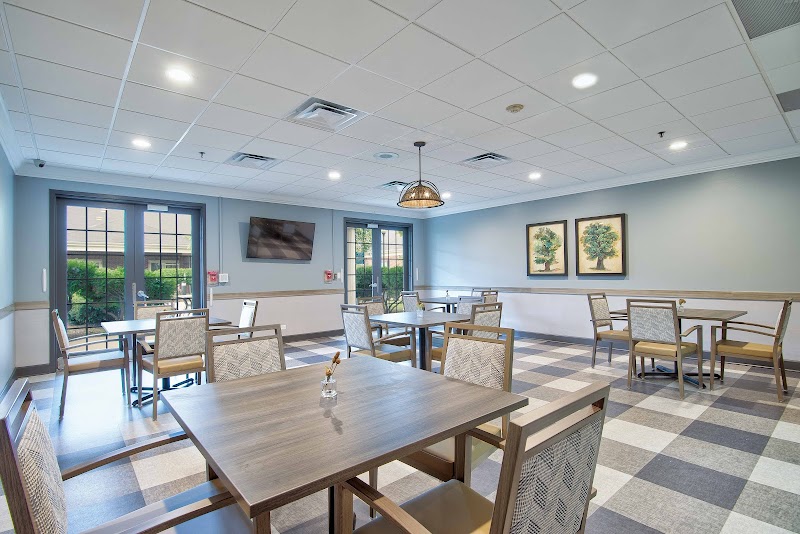
Who Owns and Operates Aperion Care Westchester?

APERION CARE WESTCHESTER is owned by a for-profit company. For-profit facilities operate as businesses with obligations to shareholders or private owners. The facility is operated by APERION CARE, a chain that manages multiple nursing homes. With 120 certified beds and approximately 112 residents (about 93% occupancy), it is a mid-sized facility located in WESTCHESTER, Illinois.
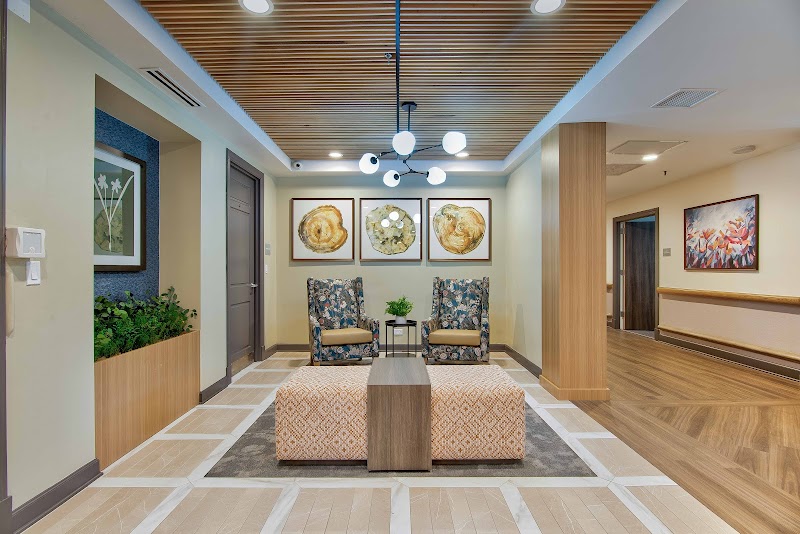
How Does Aperion Care Westchester Compare to Other Illinois Nursing Homes?

Compared to the 100 nursing homes in Illinois, APERION CARE WESTCHESTER's overall rating (4 stars) is above the state average of 2.5, staff turnover (40%) is near the state average of 46%, and health inspection rating (4 stars) is above the national benchmark.

What Should Families Ask When Visiting Aperion Care Westchester?

Based on this facility's data, families visiting should ask: "Can you walk me through typical staffing levels on day, evening, and night shifts?" "Can I visit during a mealtime to observe dining assistance and food quality?" "How do you handle medical emergencies, and what is your hospital transfer rate?" "Can I speak with family members of current residents about their experience?" These questions are particularly relevant given the below-average staffing rating.

Is Aperion Care Westchester Safe?

Based on CMS inspection data, APERION CARE WESTCHESTER has a clean safety record: no substantiated abuse findings (meaning no confirmed cases of resident harm), no Immediate Jeopardy citations (the most serious violation level indicating risk of serious injury or death), and is not on the Special Focus Facility watch list (a federal program monitoring the lowest-performing 1% of nursing homes). The facility has a 4-star overall rating and ranks #1 of 100 nursing homes in Illinois. While no facility is perfect, families should still ask about staff-to-resident ratios and recent inspection results during their visit.

Do Nurses at Aperion Care Westchester Stick Around?

APERION CARE WESTCHESTER has a staff turnover rate of 40%, which is about average for Illinois nursing homes (state average: 46%). Moderate turnover is common in nursing homes, but families should still ask about staff tenure and how the facility maintains care continuity when employees leave.

Was Aperion Care Westchester Ever Fined?

APERION CARE WESTCHESTER has been fined $76,366 across 3 penalty actions. This is above the Illinois average of $33,843. Fines in this range indicate compliance issues significant enough for CMS to impose meaningful financial consequences. Common causes include delayed correction of deficiencies, repeat violations, or care failures affecting resident safety. Families should ask facility leadership what changes have been made since these penalties.

Is Aperion Care Westchester on Any Federal Watch List?

APERION CARE WESTCHESTER is not on any federal watch list. The most significant is the Special Focus Facility (SFF) program, which identifies the bottom 1% of nursing homes nationally based on persistent, serious quality problems. Not being on this list means the facility has avoided the pattern of deficiencies that triggers enhanced federal oversight. This is a positive indicator, though families should still review the facility's inspection history directly.