GREEK AMERICAN REHAB CARE CTR
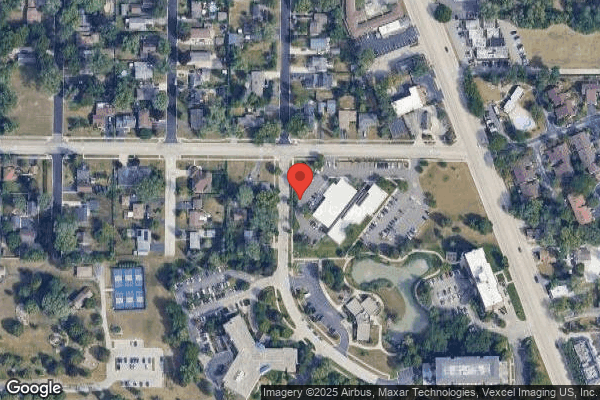
220 N FIRST STREET, WHEELING, IL 60090 (847) 459-8700
Non profit - Corporation 188 Beds Independent Data: November 2025
Trust Grade
80/100
#40 of 665 in IL
Last Inspection: February 2025

Within standard 12-15 month inspection cycle. Federal law requires annual inspections.

Overview

The Greek American Rehab Care Center in Wheeling, Illinois, has a Trust Grade of B+, which indicates that it is above average and recommended for families considering care options. It ranks #40 out of 665 facilities in Illinois, placing it in the top half, and #12 out of 201 facilities in Cook County, meaning only 11 local options are better. The facility is showing an improving trend, having reduced its issues from 5 in 2023 to 0 in 2025. Staffing is a mixed bag, with a 3/5 star rating and a turnover rate of 31%, which is good compared to the state average of 46%. While there are no fines on record, which is a positive sign, there were serious incidents reported, including a failure to promptly assess and notify a physician about a resident's respiratory distress and a delayed treatment for a leg fracture. Additionally, staff did not use a mechanical lift for a resident transfer, resulting in a hip fracture. On the positive side, there is good RN coverage, which is essential for catching potential issues early. Overall, the facility offers strengths in trust and staffing stability but has notable weaknesses in adherence to care protocols that families should consider.

Trust Score
B+
80/100
In Illinois
#40/665
Top 6%
Safety Record
Moderate
Needs review
Inspections
Getting Better
5 → 0 violations
Staff Stability
○ Average
31% turnover. Near Illinois's 48% average. Typical for the industry.
Penalties
✓ Good
No fines on record. Clean compliance history, better than most Illinois facilities.
Skilled Nurses
✓ Good
Each resident gets 48 minutes of Registered Nurse (RN) attention daily — more than average for Illinois. RNs are trained to catch health problems early.
Violations
○ Average
9 deficiencies on record. Average for a facility this size. Mostly minor or procedural issues.
★★★★★
5.0
Overall Rating
★★★☆☆
3.0
Staff Levels
★★★☆☆
3.0
Care Quality
★★★★★
5.0
Inspection Score
Stable
2023: 5 issues
2025: 0 issues

The Good

  • Full Sprinkler Coverage · Fire safety systems throughout facility
  • No fines on record
  • Staff turnover below average (31%)

    17 points below Illinois average of 48%

Facility shows strength in fire safety.

The Bad

Staff Turnover: 31%

15pts below Illinois avg (46%)

Typical for the industry

The Ugly 9 deficiencies on record

2 actual harm
Feb 2023 5 deficiencies
CONCERN (D)

Potential for Harm - no one hurt, but risky conditions existed

Resident Rights (Tag F0550)

Could have caused harm · This affected 1 resident

Based on observation, interview and record review the facility failed to maintain dignity during dinner, by staff standing over a dependent resident while providing feeding assistance for 1 of 3 resid...

Read full inspector narrative →
Based on observation, interview and record review the facility failed to maintain dignity during dinner, by staff standing over a dependent resident while providing feeding assistance for 1 of 3 residents (R103) reviewed for dignity in a sample of 29. Findings include: On 2/14/2023 at 12:50pm V6(Restorative Nurse) was observed standing over R103 in the dining room providing spoon feeding assistance. On 2/14/2023 at 12:51pm V6 was asked should she be standing over a resident while providing spoon feeding assistance. V6 said I'd rather stand up. On 2/15/2023 at 12:30pm V2(Director of Nursing-DON) said I expect all staff to sit down at eye level and assist residents with feeding, R103 was sleepy and V6 assisted R103 whom usually can feed herself and does not need assistance. A care-plan that indicated a diagnosis of Dementia in other Diseases classified elsewhere, unspecified severity, with other behavioral disturbance. An intervention dated 1/30/2020 for eating: The resident requires (supervision) by (x1) staff to eat. A hospice care-plan intervention check food and fluid intake. Do not force food if the resident does not desire to eat. Facility Policy: Reviewed on 10/8/2022- Resident rights, respect and Dignity Policy It is the policy of the Greek American Rehabilitation and care Centre that all residents have the right to a dignified existence, self-determination, and communication with and access to people and services inside and outside the facility. Providing feeding assistance while seated, not standing over the resident and not engaging in other activities (example: talking to fellow staff) while assisting the resident.
CONCERN (D)

Potential for Harm - no one hurt, but risky conditions existed

Quality of Care (Tag F0684)

Could have caused harm · This affected 1 resident

Based on observation, interview and record review, the facility failed to collaborate with hospice for the development and implementation of the coordinated plan of care for one (R55) of two residents...

Read full inspector narrative →
Based on observation, interview and record review, the facility failed to collaborate with hospice for the development and implementation of the coordinated plan of care for one (R55) of two residents reviewed for hospice care in a sample of 29. Findings include: On 02/14/2023 at 11:55AM, hospice binder for R55 was reviewed and was observed with V2 (Director of Nursing) with no plan of care and historical hospice nurse visit notes on file, and the last documented hospice certified nursing assistant (CNA) visit was 10/17/2022. On 02/14/2023 at 11:55AM, V2 said that the hospice plan of care should be in the hospice binder and hospice CNAs should document their visit on the hospice binder. On 02/14/2023 at 12:00PM, V14 (hospice nurse) stated that hospice plan of care should be in the hospice binder as part of the medical records and hospice CNAs are expected to document their visit in the hospice binder in the facility. R55's care plan initiated on 7/25/2022 indicated R55 has a terminal diagnoses and presently connected to hospice. Order Summary Report dated indicated admission date 7/23/2022, diagnoses of but not limited to chronic kidney disease stage 3b and diastolic (congestive) heart failure, and order for admitted to hospice with diagnosis (Dx) of congestive heart failure (CHF) with order date of 7/23/2022. Facility Policy and Documents: Title: Policy and Procedure - Hospice Care Effective: 06/21/2018 Purpose: .The goal is to make the resident as comfortable as possible, working closely with the attending and hospice physician or specialists to integrate this added layer of care into any care plan for patients facing serious terminal illness. Procedure: 3. Hospice Care consultants and the facility will communicate in a manner that will ensure collaboration of care. Routine/Inpatient/Respite Hospice Agreement Date: July 9, 2018 Hospice agrees to meet the following standards: 1.Hospice shall furnish facility with the most recent copy of the patient Plan of Care. 6. Hospice shall furnish facility a copy of the patient's Plan of Care and appropriate documentation, and update information as appropriate.
CONCERN (D)

Potential for Harm - no one hurt, but risky conditions existed

Pressure Ulcer Prevention (Tag F0686)

Could have caused harm · This affected 1 resident

Based on observation, interview, and record review, the facility failed to follow the Pressure Ulcer Prevention Policy by using a flat sheet and draw sheet on an air mattress. This failure affected 1 ...

Read full inspector narrative →
Based on observation, interview, and record review, the facility failed to follow the Pressure Ulcer Prevention Policy by using a flat sheet and draw sheet on an air mattress. This failure affected 1 resident (R85) of 6 residents reviewed for pressure sores in a total sample of 29. Findings include: On 02-14-23 at 12:00 PM, R85, V10 (LPN) and V11 (CNA) verified R85 was laying on air mattress with a flat sheet, draw sheet, and disposable brief. R85 is nonverbal and unable to make her needs known. On 2-16-23 at 10:27 AM, V2 (DON) said when using an air mattress, the facility uses a flat sheet only and may use incontinent briefs when residents' are incontinent with bowel and bladder. The facility uses one sheet per manufacturers recommendation to facilitate wound healing. The facility incorporated this in the pressure prevention policy. On 2-16-23 at 9:49 AM, V10 (Wound Care Nurse) said when using an air mattress, the facility should use only a flat sheet. You may also use a single diaper or incontinence pad. The more layers are more risk for potential skin breakdown. R85 has an unstageable wound and the facility should use minimal layers on the air mattress. On 02/14/23 at 12:00 PM, V10 (LPN) said a resident on an air mattress should be using only a flat sheet. On 02/14/23 at 12:20 PM, V11 (CNA) said the staff uses flat sheet and draw sheet for residents on an air mattress. The staff can use the draw sheet to help re-position residents on an air mattress. Pressure Ulcer Prevention Policy revised 1-17-23 documents: Fitted sheets should not be used on air loss mattresses, only a single flat sheet.
CONCERN (D)

Potential for Harm - no one hurt, but risky conditions existed

Deficiency F0688 (Tag F0688)

Could have caused harm · This affected 1 resident

**NOTE- TERMS IN BRACKETS HAVE BEEN EDITED TO PROTECT CONFIDENTIALITY** Based on observation, interview, and record review, the facility failed to apply hand splints on one resident (R12) out of 10 re...

Read full inspector narrative →
**NOTE- TERMS IN BRACKETS HAVE BEEN EDITED TO PROTECT CONFIDENTIALITY** Based on observation, interview, and record review, the facility failed to apply hand splints on one resident (R12) out of 10 residents observed for hand splints in the sample of 29. Finding includes: On 02/14/23 at 02:56 PM, surveyor observed R12 sitting in the dining room with V9 Licensed Practical Nurse (LPN) assigned to R12. R12 was observed without a right resting hand split on. On 02/14/23 at 02:58 PM, said that R12 should have the right hand split on. On 2/15/23 at 09:54 AM, V2 (DON) said that the right hand split should be on at all times except when providing ADLs' care. R12 is a [AGE] year old female admitted with diagnosis not limited to scoliosis, unspecified, age-related osteoporosis without current pathological fracture, and polyosteoarthritis. Review of physician order dated 1/22/2023 documents, right resting hand palm protector to be worn at all times, except for exercises, hygiene, or functional activities. Review of R12 care plan dated 11/30/2022 document, Restorative program for splint: R resting hand splint to be worn at all times, except for exercises, hygiene, or functional activities with R hand 2/2 contracture of right hand 3rd, 4th, and 5th digit. Splint was recommended by OT. Facility Policy: Subject: Splint/Appliance Policy: Effective 02-01-2019 Department: Nursing: Reviewed: 02/01/2021 Purpose: To provide resident with therapeutic devices as needed to prevent or to improve functioning. Policy: Residents who have contractures and require further evaluation will be assessed by the Occupational Therapist for a splint/appliance. Procedure: 5. Apply Splint per determined schedule
CONCERN (D)

Potential for Harm - no one hurt, but risky conditions existed

Infection Control (Tag F0880)

Could have caused harm · This affected 1 resident

Based on observation, interview, and record review, the facility failed to implement an appropriate isolation precaution for one covid-19 positive resident (R73) out of two residents reviewed for covi...

Read full inspector narrative →
Based on observation, interview, and record review, the facility failed to implement an appropriate isolation precaution for one covid-19 positive resident (R73) out of two residents reviewed for covid-19 positive droplet/contact precautions in a sample of 29. This failure has the potential to affect all the ambulatory residents, and all the staff that walk pass R73's room. Findings Include: On 2/14/2023 at 11:07 AM, surveyor observed with V5 Licensed Practical Nurse (LPN) that R73's door was left wide open. R73 is a confirmed COVID-19 positive resident who has a signage on her door that says isolation: contact and droplets precautions. On 2/14/2023 at 11:07 AM, V5 said that the door should be closed. On 2/14/2023 at 11:15 AM, V2 (Director of Nursing), said that R73's door should be closed at all times. On 2/15/2023 at 11:50 AM, surveyor observed with V11 (Registered Nurse), that R73's door was left open. On 2/15/2023 at 11:50 AM, V11 said that the door should be closed, but added that R73 is non-compliant. On 2/15/2023 at 02:42 PM, V4 (Infection Preventionist) said R73's door should remain closed except if R73 is at risk for falls. R73 is an 89 year female with a diagnosis not limited to COVID-19, personal history of COVID-19, and congestive heart failure. Review of R73's diagnosis did not indicate that R73 is at risk for fall or has a history of falls to justify leaving R73's door open. Review of progress notes dated 2/9/2023 documents: Patient is ambulatory and walks with walker. R73's room is in the middle of resident's rooms on that wing of the facility. All the ambulatory residents whose rooms are beyond R73's room, and the staff, are exposed to the COVID-19 virus as they walk pass R73's door. Review of physician's orders dated 2/9/2023 documents, Isolation: Strict Contact & Droplet. Subject: Isolation (General Guidelines) - With COVID Last revised on 12/20/2022 Policy: It is the policy of this facility to provide guidelines in alliance with CDC, IDPH for the care of residents with infection to minimize transmission to others. Standard precautions shall be used to reduce risk of exposure. It is the policy to follow CDC, IDPH guidance. Procedure: Once a resident has been tested and identified as infected with a microorganism that may cause harm to others he/she will be placed on isolation precautions in accordance to the facility standards. Standard precautions are utilized on all residents regardless of infection to minimize risk of cross contamination. 1. A sign will be placed in view prior to entering a room indication what type of precaution resident has been placed. Droplet/Contact (for Covid-19) - Residents can isolate in a single room with appropriate Droplet/Contact signage if Covid Unit is not in place. When feasible and if safe to do so the resident door should remain shut.
Nov 2022 4 deficiencies 2 Harm
SERIOUS (G) 📢 Someone Reported This

A family member, employee, or ombudsman was alarmed enough to file a formal complaint

Actual Harm - a resident was hurt due to facility failures

Quality of Care (Tag F0684)

A resident was harmed · This affected 1 resident

**NOTE- TERMS IN BRACKETS HAVE BEEN EDITED TO PROTECT CONFIDENTIALITY** Based on interviews and record reviews, this facility failed to thoroughly assess and determine an acute change in condition lea...

Read full inspector narrative →
**NOTE- TERMS IN BRACKETS HAVE BEEN EDITED TO PROTECT CONFIDENTIALITY** Based on interviews and record reviews, this facility failed to thoroughly assess and determine an acute change in condition leading to respiratory distress and failed to notify the physician immediately notify the physician of a fracture. These failures affected 2 of 3 residents (R4, R1) reviewed for quality of care. These failures resulted in R4 having a change in respiratory condition and not immediately transported to the hospital for over 90 minutes where R4 was admitted with a diagnosis of acute respiratory, this failure also resulted in R1 having a radiology report of a leg fracture not being reported to the physician for over 5 hours which delayed R1 being treated at the local hospital. Findings include: 1. R4: On [DATE] at 330pm, V16 (nurse supervisor) stated that V16 was called by the nurse in charge and informed that she was going to send R4 to the hospital. V16 stated that when V16 arrived at R4's bedside, V16 brought vital sign machine, nebulizer machine, and nebulizer medication. V16 stated that R4's oxygen saturation level was normal when he arrived. V16 does not remember any details of R4's respirations, but recalls R4 was congested. V16 stated that R4's blood pressure was quite elevated and R4 was responsive to name. V16 stated that R4's head of bed was elevated and a breathing treatment was administered. V16 stated that R4 was not in cardiac or respiratory distress. V16 stated that he was not aware R4's oxygen saturation level was 78% prior to V16 arriving at R4's bedside. V16 stated that he would have sent R4 out to hospital via EMS (emergency medical services) 911 if he had known that. On [DATE] at 3:45pm, V2 DON (director of nursing) stated that R4 was stablized with oxygen and did not require urgent transport to the hospital. V2 stated that R4 was not normally on oxygen therapy. When questioned regarding R4's breathing status (rapid, labored, or use of accessory muscles), additional vital signs, pulse oximetry results with and without oxygen, and lungs sounds, V2 did not respond. Review of R4's medical record notes the following: On 10/14 at 2:05pm, V20 LPN (licensed practical nurse) noted V20 was informed by R4's POA (power of attorney) that R4 was noted to be lethargic and sounded like he was struggling to breathe. R4 was assessed and blood pressure 181/85, oxygen saturation level 78% on room air, respirations 22/minute. R4 was put on 4 liters of oxygen and oxygen saturation level went up to 94% on oxygen. R4's physician was notified and new orders received to send to hospital for evaluation and treatment. R4 was put to bed and head of bed elevated 45 degrees. V16 (nurse supervisor) assessed R4 and nebulizer treatment was given. A private outside ambulance service was contacted for transport, estimated time of arrival 1 hour. Will continue to monitor R4's condition for any changes On 10/14 at 2:57pm, R4's chest x-ray results show heart is slightly enlarged with mild congestive heart failure and possible pnuemonic infiltrate in the right lung base. Results faxed to R4's physician, R4 remains with order to send to hospital. On 10/14 at 3:25pm, V20 noted private outside ambulance service arrived at 3:10pm to transport R4 to the hospital. Review of the private outside ambulance service run sheet, dated [DATE], notes dispatch was contacted at 1:43pm for transport to hospital for resident with high blood pressure. An ambulance was dispatched to this facility at 2:26pm. Paramedics were at R4's bedside at 3:09pm. The ambulance did not leave facility with R4 until 3:43pm. R4 arrived at the hospital at 4:02pm. The paramedics noted: chief complaint severe respiratory distress. Vital signs at 3:11pm, oxygen saturation 76% on room air, respirations 24/minute and labored. Narrative note: responded to this facility for a male resident (R4) complaining of lethargy and evaluation for high blood pressure. Assessment showed R4 was mouth breathing and had labored breathing. R4 was placed on a non-rebreather mask with 15 liters of oxygen and oxygen saturation 98%. R4 is less labored and less agitated on non-rebreather mask; R4 was receiving 3 liters of oxygen via nasal cannula upon paramedics arrival at R4's bedside. R4 was admitted to hospital with diagnosis: acute respiratory failure. R4 expired in hospital. 2. R1: On [DATE] at 3:45pm, V2 DON (director of nursing) stated that R1 did not complain of pain in left hip so did not need to be transferred to the hospital urgently. When questioned if V2 assessed R1's leg for pain with slight movement, V2 did not respond. V2 was informed that V17 NP (nurse practioner) noted R1 grimaced with slight movement of left leg. Review of R1's medical record notes the following: On 9/1 at 3:35pm, V15 RN (registered nurse) noted: R1 was seen by V17 NP (nurse practitioner), new orders received; x-ray of left hip, left Femur, left knee, left lower leg,and left foot due to left foot swelling. Order placed with outside diagnostic imaging company. On 9/1 at 4:23pm, V17 NP noted: R1's family member reports that R1 has been guarding left leg. R1 was sleeping. R1 did grimace upon exam. Left lower extremity with 2+ non-pitting edema (swelling). Range of motion not performed as R1 grimaced upon slight movement. Left leg pain and swelling, x-rays of left hip, femur, tibial/fibula, ankle, and foot to be done. On 9/2 at 2:28am, V18 LPN (licensed practical nurse) received results from the outside diagnostic imaging company. Findings for left hip: Left inter-trochanteric fracture and superior subluxation and impaction. On 9/2 at 2:36am, V18 LPN noted: Faxed to V13 (attending physician) and will endorse to incoming shift. On 9/2 at 8:08am, V11 RN contacted V17 NP regarding X-ray results. Order received to send R1 out to the hospital for further evaluation. R1's family member notified. R1 was picked up by a private outside ambulance service at 9:15am. Review of R1's hospital record, dated [DATE], notes R1 presented to the emergency room at 9:51am. It notes reason for admission: left hip fracture, age-related osteoporosis without current pathological fracture. The emergency room physician noted R1's left leg is internally rotated, flexed at knee and hip, limited range of motion due to pain. Left leg x-rays noted evaluation of left lower leg is somewhat limited secondary to osteopenia. There is an intertrochanteric fracture, comminuted with impaction of the distal fracture fragment and medial angulation.
SERIOUS (G) 📢 Someone Reported This

A family member, employee, or ombudsman was alarmed enough to file a formal complaint

Actual Harm - a resident was hurt due to facility failures

Accident Prevention (Tag F0689)

A resident was harmed · This affected 1 resident

Based on interviews and record reviews, the facility failed to use the mechanical lift and safely transfer a resident one resident to prevent an avoidable accident. This failure affected one of three ...

Read full inspector narrative →
Based on interviews and record reviews, the facility failed to use the mechanical lift and safely transfer a resident one resident to prevent an avoidable accident. This failure affected one of three (R1) residents reviewed for safe transfer. This failure resulted in R1 being transferred without the use of the mechanical lift resulting in R1 sustaining an acute comminuted left hip fracture with impaction requiring transport to the local hospital. Findings include: On 11/1/22 at 10:47am, V19 (R1's family member) stated that V19 was present on 8/26/22 when V21 CNA (certified nurse aide) transferred R1 from reclining wheelchair to bed. V19 stated that V21 CNA grabbed R1's arms, V19 asked about mechanical lift device, V21 CNA responded 'I can lift her myself'. V19 asked 'shouldn't you be grabbing R1 under armpits?' Before V19 could get to other side of bed to assist V21 CNA, V21 CNA threw R1 into bed, R1 was half on and half off the bed. V19 stated that V19 assists the CNAs with incontinence care of R1. V19 stated that R1 is essentially nonverbal, only speaks one or two words, but looked at V19 like she was scared. V19 stated that V21 spread R1's legs apart, like R1 was a wishbone. After R1's brief was changed, V21 CNA threw R1 back into the reclining wheelchair, again R1 was half on and half off chair. V19 stated that V19 saw another CNA in R1's doorway and called out for assistance. The other CNA, V9, stated that he would get the mechanical lift device to transfer resident to bed. V19 stated that she told V9 CNA that R1 did not need the device and asked his assistance with getting R1 positioned better in wheelchair. Stated that V21 CNA informed V9 CNA that R1 was fine like she was, V9 CNA assisted anyway. V19 stated that once R1 was positioned better in wheelchair, V19 took R1 to nurses' station to speak with V2 DON (director of nursing) regarding situation. V19 stated that family had to request x-rays of R1's left leg and inform staff of swelling to left foot. V19 stated that on 9/2 V19 requested further x-rays due to R1's grimacing with slight movement of left leg. V19 stated that R1's left hip was shattered. R1 had surgery on 9/3/22. On 11/2/22 at 11:55am, V2 DON stated that per this facility's transfer protocol R1 requires a mechanical lift device and two staff members for transfers. V2 stated that V21 CNA disregarded this facility's transfer protocol. V2 stated that on 8/26/22, V21 was sent home after the incident. V2 stated that V2 and V5 (human resources director) met with V21 on V21's next scheduled day to work. V2 stated that V21 informed V2 that she transferred R1 without a mechanical lift device. V21 informed V2 and V5 that V21 transferred R1 by herself because she thought R1 was light enough to transfer by herself. V2 stated that V21 was aware of the transfer codes that are on each resident's door and that all staff will follow a resident's transfer status as assessed by the restorative nurse. V2 stated that R1's transfer code was orange for mechanical lift device required. On 11/1/22 at 1:25pm, V6 (restorative nurse) stated that she is familiar with R1. V6 stated that R1 did not walk, unable to bear weight, unable to stand pivot, and required a mechanical lift for transfers. V6 stated that there is a color code with each resident's name on his/her door. V6 stated that R1 had an orange dot next to her name indicating mechanical lift device required. V6 stated that all staff receive color coding training and transfer technique upon hire and annually. V6 stated that staff have to provide return demonstration during competency. V6 stated that V6 is aware of V21. V6 stated that V21 received training upon hire in April 2022 On 11/1/22 at 2:05pm, V8 CNA stated that R1 was not able to walk, was totally dependent on staff for transfer, and required a mechanical lift device and two staff members for all transfers. V8 stated that both of R1's legs were stiff. V8 stated that all residents have color coded sticker dots on their door to indicate how they transfer and the number of staff needed. V8 stated that staff receive annual training on transfers, return demonstration required. V8 stated that V8 has assisted V21 with transfers a couple of times. V8 stated that V21 seemed unsure of herself. V8 stated that R1's family spoke with V8 the following day regarding V21's transferring R1 without the mechanical lift device. V8 stated that it was not safe to transfer R1 without lift device. On 11/1/22 at 2:15pm, V9 CNA stated that V9 did not assist with R1's care on 8/26. V9 stated that R1 requires a mechanical lift device for all transfers. V9 stated that there is a color coded dot beside the resident's name indicating how the resident transfers. V9 stated that he was bringing food to R1 when family member asked him for help. V9 stated that he thought family wanted to get R1 in bed so he went to utility room to get the mechanical lift device. V9 stated that the transfer had already been done before V9 went to R1's room. V9 stated that when he returned to R1's room with lift device, R1's family informed him that the family wanted assistance with positioning R1 better in wheelchair. On 11/2/22 at 1:24pm, V12 PA (physician assistant for R1's orthopedic surgeon) stated that V12 reviewed R1's hip x-ray. V12 stated that it looks like R1's left hip fracture was caused by a combination of osteoporosis and rough transfer from wheelchair to bed and then back to wheelchair. Review of this facility's report notes on 8/26/22, all resident transfer status codes were in place on all resident rooms. V21 came into R1's room which was clearly labeled orange dot for mechanical lift required. V21 transferred R1 from wheelchair to bed to provide incontinence care. Instead of getting a co-worker to assist with mechanical lift, V21 scooped R1 up in her arms and placed R1 in bed. Once care provided, V21 again scooped up R1 and placed R1 back in wheelchair. On 8/29/22, V5 (human resources director) asked V21 if she knows the transfer codes and V21 responded she does. V21 stated that she thought R1 was light enough to carry by herself. V21 stated that R1 did not look too fragile and R1 didn't complain on transfer so no issue. V2 DON informed V21 that the restorative nurse makes recommendations on transfer staus and it is up to the CNA to follow the transfer status without making judgement calls. Review of this facility's resident transfer/lift procedures policy, reviewed 11/17/2021, notes initial screeningwill be performed on all our residents to assess transfer and ambulation status. Ongoing evaluation and updates will be conducted as needed. Transfer status will be designated for each resident. Residents transfer status will be identified by a color coded dot on the outside of the door next to resident's name.
CONCERN (D) 📢 Someone Reported This

A family member, employee, or ombudsman was alarmed enough to file a formal complaint

Potential for Harm - no one hurt, but risky conditions existed

Notification of Changes (Tag F0580)

Could have caused harm · This affected 1 resident

Based on interviews and record reviews, the facility failed to notify the attending physician immediately of an abnormal x-ray results. This affected 1 of 3 residents (R1) reviewed for notification of...

Read full inspector narrative →
Based on interviews and record reviews, the facility failed to notify the attending physician immediately of an abnormal x-ray results. This affected 1 of 3 residents (R1) reviewed for notification of change. This failure resulted in a 5 hour delay in notification to the physician of a fracture and delay of treatment. Findings include: On 11/2/22 at 10:50am, V11 RN (registered nurse) stated that if the x-ray results note a fracture, the nurse should call physician immediately; never just fax results to the physician's office. V11 stated that the x-ray report can be faxed later. On 11/2/22 at 11:55am, V2 DON (director of nursing) stated that this facility's x-ray protocol is for the nurse to call the outside diagnostic imaging company of x-ray order. V2 stated that the nurse is expected to notify the resident's physician, V2, V1 (administrator), and the resident's power of attorney right away if the x-ray result is abnormal. On 11/2/22 at 2:34pm, V14 ADON (assistant director of nursing) stated that the nurse is expected to call the outside diagnostic imaging company after x-ray order entered into the computer to notify of order and also obtain time when x-ray will be performed. V14 stated that this facility also uses a second diagnostic imaging company if the first company cannot complete the x-ray within 24 hours. On 11/2/22 at 3:10pm, V13 (attending physician) stated that the expectation is for the nurse to call V13 immediately with abnormal x-ray results. On 11/2/22 at 3:15pm, V15 RN stated that the nurse enters the order for x-rays online and then calls the outside diagnostic company. V15 stated that if the x-rays are not ordered urgent, the outside diagnostic imaging company should perform x-ray(s) within 12 hours. V15 stated that if the x-ray results are abnormal, the nurse notifies the physician and the resident's family member immediately. On 11/2/22 at 3:45pm, V1 (administrator) acknowledged that the nurse should have called V13 immediately upon receiving abnormal x-ray results for R1. Review of R1's medical record, dated 9/1/22 at 3:35pm, V15 RN noted R1 was seen by V17 NP (nurse practitioner), new orders received; x-ray of left hip, left femur, left knee, left lower leg, and left foot due to left foot swelling. Order placed with the outside diagnostic imaging company. Review of R1's medical record, dated 9/2 at 2:28am, V18 LPN (licensed practical nurse) noted: received results of R1's left hip x-ray. Findings: left inter-trochanteric fracture and superior subluxation and impaction. On 9/2 at 2:36am, V18 LPN noted: Faxed to V13 and will endorse to incoming shift. On 9/2 at 8:08am, the nurse contacted V17 NP regarding X-ray results. Order received to send R1 out to the hospital for further evaluation.
CONCERN (D) 📢 Someone Reported This

A family member, employee, or ombudsman was alarmed enough to file a formal complaint

Potential for Harm - no one hurt, but risky conditions existed

ADL Care (Tag F0677)

Could have caused harm · This affected 1 resident

Based on interviews and record reviews, the facility failed to follow its shower and bathing policy and procedures to ensure all residents received a bath/shower at least twice a week. This failure af...

Read full inspector narrative →
Based on interviews and record reviews, the facility failed to follow its shower and bathing policy and procedures to ensure all residents received a bath/shower at least twice a week. This failure affected 1 resident (R1) out of 3 residents reviewed for activities of daily living assistance. Findings include: On 11/1/22 at 2:15pm, V9 CNA (certified nurse aide) stated that every resident is showered/bathed twice weekly, once a week on the evening shift and once a week on day shift. On 11/1/22 at 2:30pm, V19 (R1's family member) stated that there were three different occasions when R1 was not bathed for about10 days. V19 stated that V2 DON (director of nursing) was aware of this. On 11/2/22 at 3:45pm, V2 DON stated that R1 has refused shower/bed bath. Review of R1's medical record, dated 2/23/22, notes V2 DON had a phone conference with R1's family members regarding their concern for R1 missing showers. Review of R1's medical record notes R1 was scheduled to receive a shower/bed bath every Tuesday and Friday. Review of R1's shower/bathing documentation, dated 2/1/22 through 6/30/22, does not note R1 received a shower on 2/18, 3/4, 3/25, 4/1, 4/15, 4/29, 5/3, or 5/13. There is no documentation found in R1's medical record noting R1 refused any showers/bed baths. Review of this facility's shower and tub bath policy and procedure, reviewed 2/18/2020, notes the following information should be recorded in the resident's medical record: the date and time the shower/bath was provided,; the name and title of the person who assisted the resident;and if the resident refused the shower/bath, the reason why and the intervention taken. It also notes to notify the supervisor if the resident refuses shower/bath.
Understanding Severity Codes (click to expand)
Life-Threatening (Immediate Jeopardy)
J - Isolated K - Pattern L - Widespread
Actual Harm
G - Isolated H - Pattern I - Widespread
Potential for Harm
D - Isolated E - Pattern F - Widespread
No Harm (Minor)
A - Isolated B - Pattern C - Widespread

Questions to Ask on Your Visit

  • "Can I speak with families of current residents?"
  • "What's your RN coverage like on weekends and overnight?"

Our Honest Assessment

Strengths
  • • Grade B+ (80/100). Above average facility, better than most options in Illinois.
  • • No fines on record. Clean compliance history, better than most Illinois facilities.
  • • 31% turnover. Below Illinois's 48% average. Good staff retention means consistent care.
Concerns
  • • 9 deficiencies on record, including 2 serious (caused harm) violations. Ask about corrective actions taken.
Bottom line: Generally positive indicators. Standard due diligence and a personal visit recommended.

About This Facility

What is Greek American Rehab Care Ctr's CMS Rating?

CMS assigns GREEK AMERICAN REHAB CARE CTR an overall rating of 5 out of 5 stars, which is considered much above average nationally. Within Illinois, this rating places the facility higher than 99% of the state's 100 nursing homes. This rating reflects solid performance across the metrics CMS uses to evaluate nursing home quality.

How is Greek American Rehab Care Ctr Staffed?

CMS rates GREEK AMERICAN REHAB CARE CTR's staffing level at 3 out of 5 stars, which is average compared to other nursing homes. Staff turnover is 31%, compared to the Illinois average of 46%. This relatively stable workforce can support continuity of care.

What Have Inspectors Found at Greek American Rehab Care Ctr?

State health inspectors documented 9 deficiencies at GREEK AMERICAN REHAB CARE CTR during 2022 to 2023. These included: 2 that caused actual resident harm and 7 with potential for harm. Deficiencies causing actual harm indicate documented cases where residents experienced negative health consequences.

Who Owns and Operates Greek American Rehab Care Ctr?

GREEK AMERICAN REHAB CARE CTR is owned by a non-profit organization. Non-profit facilities reinvest revenue into operations rather than distributing to shareholders. The facility operates independently rather than as part of a larger chain. With 188 certified beds and approximately 172 residents (about 91% occupancy), it is a mid-sized facility located in WHEELING, Illinois.

How Does Greek American Rehab Care Ctr Compare to Other Illinois Nursing Homes?

Compared to the 100 nursing homes in Illinois, GREEK AMERICAN REHAB CARE CTR's overall rating (5 stars) is above the state average of 2.5, staff turnover (31%) is significantly lower than the state average of 46%, and health inspection rating (5 stars) is much above the national benchmark.

What Should Families Ask When Visiting Greek American Rehab Care Ctr?

Based on this facility's data, families visiting should ask: "Can I visit during a mealtime to observe dining assistance and food quality?" "How do you handle medical emergencies, and what is your hospital transfer rate?" "Can I speak with family members of current residents about their experience?"

Is Greek American Rehab Care Ctr Safe?

Based on CMS inspection data, GREEK AMERICAN REHAB CARE CTR has a clean safety record: no substantiated abuse findings (meaning no confirmed cases of resident harm), no Immediate Jeopardy citations (the most serious violation level indicating risk of serious injury or death), and is not on the Special Focus Facility watch list (a federal program monitoring the lowest-performing 1% of nursing homes). The facility has a 5-star overall rating and ranks #1 of 100 nursing homes in Illinois. While no facility is perfect, families should still ask about staff-to-resident ratios and recent inspection results during their visit.

Do Nurses at Greek American Rehab Care Ctr Stick Around?

GREEK AMERICAN REHAB CARE CTR has a staff turnover rate of 31%, which is about average for Illinois nursing homes (state average: 46%). Moderate turnover is common in nursing homes, but families should still ask about staff tenure and how the facility maintains care continuity when employees leave.

Was Greek American Rehab Care Ctr Ever Fined?

GREEK AMERICAN REHAB CARE CTR has no federal fines on record. CMS issues fines when nursing homes fail to meet care standards or don't correct problems found during inspections. The absence of fines suggests the facility has either maintained compliance or corrected any issues before penalties were assessed. This is a positive indicator, though families should still review recent inspection reports for the full picture.

Is Greek American Rehab Care Ctr on Any Federal Watch List?

GREEK AMERICAN REHAB CARE CTR is not on any federal watch list. The most significant is the Special Focus Facility (SFF) program, which identifies the bottom 1% of nursing homes nationally based on persistent, serious quality problems. Not being on this list means the facility has avoided the pattern of deficiencies that triggers enhanced federal oversight. This is a positive indicator, though families should still review the facility's inspection history directly.