GROVE AT THE LAKE,THE
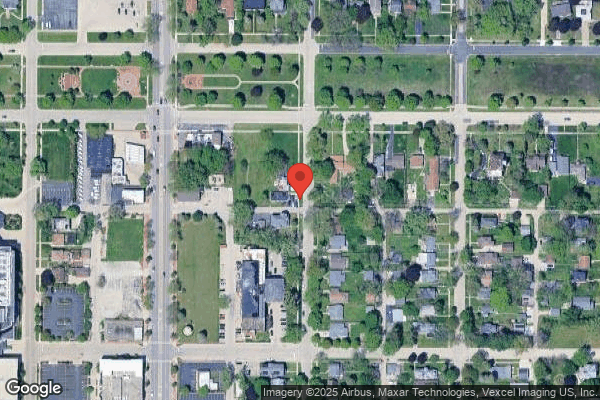
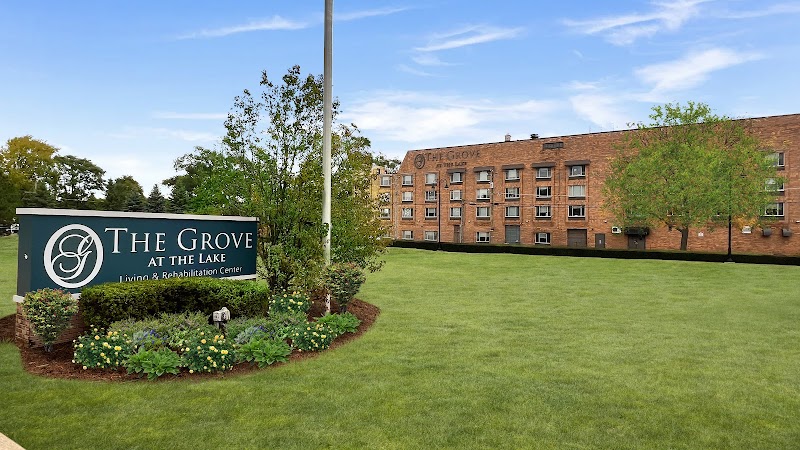
2534 ELIM AVENUE, ZION, IL 60099 (847) 746-8435
For profit - Limited Liability company 244 Beds LEGACY HEALTHCARE Data: November 2025 1 Immediate Jeopardy citation
Trust Grade
3/100
#533 of 665 in IL
Last Inspection: July 2024

Within standard 12-15 month inspection cycle. Federal law requires annual inspections.

Overview

The Grove at the Lake has received a Trust Grade of F, indicating significant concerns and a poor reputation within the nursing home community. Ranked #533 out of 665 facilities in Illinois, they are in the bottom half of the state, and #21 of 24 in Lake County, meaning there are very few local options that perform better. While the facility has shown improvement in recent years, with issues decreasing from 16 in 2024 to 2 in 2025, the overall situation remains concerning, particularly with 48 total deficiencies found during inspections. Staffing is a weakness, with a low rating of 1 out of 5 and a turnover rate of 52%, which is around the state average but still high for consistent care. Specific incidents, such as a resident experiencing severe breathing difficulties that were not addressed in time, and failures to properly assess and treat pressure injuries, highlight significant care issues that families should be aware of.

Trust Score
F
3/100
In Illinois
#533/665
Bottom 20%
Safety Record
High Risk
Review needed
Inspections
Getting Better
16 → 2 violations
Staff Stability
⚠ Watch
52% turnover. Above average. Higher turnover means staff may not know residents' routines.
Penalties
✓ Good
$59,446 in fines. Lower than most Illinois facilities. Relatively clean record.
Skilled Nurses
○ Average
Each resident gets 36 minutes of Registered Nurse (RN) attention daily — about average for Illinois. RNs are the most trained staff who monitor for health changes.
Violations
⚠ Watch
48 deficiencies on record. Higher than average. Multiple issues found across inspections.
★☆☆☆☆
1.0
Overall Rating
★☆☆☆☆
1.0
Staff Levels
★★★☆☆
3.0
Care Quality
★★☆☆☆
2.0
Inspection Score
Stable
2024: 16 issues
2025: 2 issues

The Good

  • Full Sprinkler Coverage · Fire safety systems throughout facility
  • No fines on record

Facility shows strength in fire safety.

The Bad

1-Star Overall Rating

Below Illinois average (2.5)

Significant quality concerns identified by CMS

Staff Turnover: 52%

Near Illinois avg (46%)

Higher turnover may affect care consistency

Federal Fines: $59,446

Above median ($33,413)

Moderate penalties - review what triggered them

Chain: LEGACY HEALTHCARE

Part of a multi-facility chain

Ask about local staffing decisions and management

The Ugly 48 deficiencies on record

1 life-threatening 3 actual harm
Sept 2025 1 deficiency
CONCERN (D) 📢 Someone Reported This

A family member, employee, or ombudsman was alarmed enough to file a formal complaint

Potential for Harm - no one hurt, but risky conditions existed

Deficiency F0627 (Tag F0627)

Could have caused harm · This affected 1 resident

**NOTE- TERMS IN BRACKETS HAVE BEEN EDITED TO PROTECT CONFIDENTIALITY** Based on interview and record review the facility failed to initiate discharge upon a resident's request for one (R1) of three r...

Read full inspector narrative →
**NOTE- TERMS IN BRACKETS HAVE BEEN EDITED TO PROTECT CONFIDENTIALITY** Based on interview and record review the facility failed to initiate discharge upon a resident's request for one (R1) of three residents reviewed for discharge planning in the sample of 3.The findings include:R1's facility assessment dated [DATE] show, R1 has no cognitive impairment with a BIMS of 15.On 9/22/25 at 9:45 AM R1 was in bed alert, R1 said he was here for therapy. R1 had been wanting to either go home or transfer to another facility in Kenosha Wisconsin near his family. R1 said he has spoken to different lady Social Workers. All I got as a response was we will look into it or will let you know or will get back to you. R1 said up to now, no one had gotten back to him or let him know of what was going on with his request to go home or to transfer to another facility. R1 said he can afford to pay a 24-hour nursing care at home (R1 was private pay). R1 said his home has a ramp and walk in shower. If he cannot go home yet and need to transfer to another facility, no one had updated him with what facilities he can go to in Wisconsin. A Social Service document dated 9/8/25 by V6 (Social Worker) show: On 9/6/25, this writer met with the resident (R1) after he requested to speak with Social Services.the resident requested information regarding transferring to a different facility in Wisconsin. This writer provided supportive listening and informed the resident that follow-up will be arranged to address his concerns and discuss available options.On 9/22/25 at 11:46 AM, V6 (Social Service) said she was at the facility last Saturday 9/6/25. V6 said she was informed that R1 requested to talk to a Social Worker, so she went to spoke to R1. R1 verbalized to her that R1 wanted to transfer to another facility, however R1 felt no one was assisting him to do this. V6 said she documented their conversation in R1's progress notes but did not do anything further. V6 said she did not do any follow up regarding R1's wish to discharge to another facility, also she did not do any referrals to other facilities in Wisconsin. V6 said one of the Social Workers at the facility but mainly assigned to 4th floor residents. V6 said she can also work with residents from another floor. R1 was on 2nd floor so she relayed R1's desire to discharge to V7. (Social Service Director)On 9/22/25 at 10 AM, V7 said she was the Social Service Director but took over as the Social Worker on 2nd floor beginning of August 2025 after the previous 2nd floor Social Worker left the facility. V7 said there has been no referrals for R1 made up to now to other facilities (approximately 2 weeks) after R1 had verbalized his desire to transfer to another facility or discharged . V7 said V6 (Social Worker on 4th floor) could have started referrals. All the Social Workers work together in this facility. V7 said as of today, (9/22/25) referrals will be sent and R1's family will be called to discuss R1's plan of discharge. Discharge planning should start on the day of admit.The facility policy on Discharge planning and instructions dated 6/30/25 show, facility to conduct proper discharge planning for all residents. Discharge planning shall be initiated by the facility and resident's admission and reevaluated quarterly. Social services shall evaluate its residents discharge planning potential in collaboration with facilities interdisciplinary team. Social services shall facilitate referrals to appropriate community agencies.
Aug 2025 1 deficiency 1 Harm
SERIOUS (G) 📢 Someone Reported This

A family member, employee, or ombudsman was alarmed enough to file a formal complaint

Actual Harm - a resident was hurt due to facility failures

Quality of Care (Tag F0684)

A resident was harmed · This affected 1 resident

**NOTE- TERMS IN BRACKETS HAVE BEEN EDITED TO PROTECT CONFIDENTIALITY** Based on interview and record review the facility failed to assess a surgical wound and change the dressing as ordered for13 day...

Read full inspector narrative →
**NOTE- TERMS IN BRACKETS HAVE BEEN EDITED TO PROTECT CONFIDENTIALITY** Based on interview and record review the facility failed to assess a surgical wound and change the dressing as ordered for13 days. This failure resulted in R2 developing an infection in the left knee surgical wound requiring hospitalization and surgery on 6/3/25. This applies to 1 of 3 residents (R2) reviewed for surgical wounds in the sample of 5.The findings include: R2's Physician's Order Sheet dated August 8, 2025 shows that she was admitted to the facility on [DATE] with diagnoses including Anxiety Disorder, Dementia and History of Falling. This document also shows orders for: Left Leg non-removeable dressing every day shift for wound care and an appointment scheduled with V6 (Orthopedic Physician) on 6/18/25. R2's admission assessment dated [DATE] states, left lower leg- cast.R2's Hospital Discharge Instructions dated 5/20/25 show an order for Dressing change every 3-5 days and as needed. Instructions: Place sheet of Xerofoam, 4x4s then Kerlix. Ace wrap from ankle to thigh. Then place splint to maintain leg extension. Then wrap from ankle to thigh again with another ace wrap to hold the splint.On 8/8/25 at 10:30AM V5 (LPN- Wound Care) stated, She came in with a few wounds on the legs and then the surgical on the (Left) knee.When she came here she had a hard cast on and as far as I know it was not removeable It was wrapped with an Ace wrap but it was a hard cast At least I thought it was a hard cast. I was not here the day they removed it. I may have overlooked the order for the wound care when she came in. We get a lot of (V6's- Orthopedic Physician) patients and their orders say 1-2 weeks but then we call to make an appointment and we can't get in for about a month. I have talked to him a few times since the wound infection but I don't think I talked to him before. He used to be very hard to get a hold of but now I have his direct number so I can reach him a lot easier. When (R2) came in I'm sure I talked to the primary care physician and told him she had a non removeable cast and he just said ok. On 8/8/25 at 12:06PM V4 (Registered Nurse) stated, I did the admission assessment for her. I checked the cast and I notified wound care. I don't remember seeing an order for wound care. I report to wound care and then they take over the orders from there. I don't recall her having any specific problems with the cast. She kept asking for Norco - very regularly. She did not complain of specific pain from the cast, just pain in general.On 8/8/25 at 3:00PM V10 (Wound Nurse Practitioner) stated, That info came from the patient. She was alert and oriented so I listened to what she said. (To not remove the dressing until she sees the ortho). At the time I saw her I did not have access to the orders and that is what the patient verbalized to me. I looked through the hospital record later before I finalized my note but I must have overlooked the order for treatment. In my experience I have seen physician's leave the dressing in place until the patient is seen in the office. Hers was a splint with batting, it was able to be removed but we had orders to leave it in place. 1 month would be a long time to leave the dressing in place but I go by what the surgeon says.R2's Progress Notes dated 6/3/25 state, During wound care around 10:50 AM, a putrid odor was noted coming from the residents non-removable cast. Wound care nurse opened the cast and noted bluish black tissue with increased drainage. The writer was requested to visualize the surgical site who also noted the same. The writer immediately contacted the surgeons office and was able to speak to a nurse who stated surgeon is only in office on Wednesday and nurse will reach out to the surgical doctor who may request a call back. Following that call, the writer contacted the resident's Primary Care Physician who said a surgeon needs to see and assess her wound immediately. This is a 100% surgical issue and no one else should touch the site besides a surgeon, preferably (V6) who is the surgeon for the resident. Follow up with the surgical office in 2 hours, if no update, send the resident to (Local Hospital) non-emergency.On 8/8/25 at 11:15AM V3 (Licensed Practical Nurse) stated, She had a cast on her leg and there was a smell coming from the room. I can't recall for how long we noticed the odor. I spoke with the wound care team and then I called the MD and told him about the symptoms we were seeing. (V7- LPN Wound Care) removed the cast- I was not in the room when she did. There was this bluish, blackish greenish drainage and the wound was open. The smell got stronger when she opened the splint. She took the whole splint with her, I never saw it. Usually I am in the room but I think it was just her. On 8/8/25 at 12:40 PM V7 stated, She did not have a cast. She had a posterior mold with undercast padding and an ace bandage over the top. I had noticed some breakthrough drainage in the early morning so I put an ABD pad over it then that bled through. I removed the ABD and trimmed back the padding so I could see the knee and I could see redness around the knee. We didn't do dressing changes on her- the order was for non-removeable dressing. We would check for circulation but there was no dressing change. It was written in the treatment orders. The ABD did not have like bright red blood on it but more like old brownish drainage. I had the nurse call the MD and we sent her to the ER. Unless I am doing the admission I do not go back and look at the admission orders. I just use the orders in the treatment record. R2's Hospital Wound Care Progress Note dated 6/4/25 states, Wound culture sample taken from ED, patient admitted for further evaluation and treatment for wound infection requiring IV antibiotics, with infectious disease and orthopedic consult.R2's Hospital Consultation Note dated 6/5/25 and written by V6 (Orthopedic Physician) states, Patient presents to the ED from (Nursing Home). Patient with resent surgery 2 weeks ago on the left knee following a fall. Per staff bandage has not been removed since surgery and they noticed a foul smell, removed bandage and noticed necrotic tissue and inflammation. [AGE] year old female well known to service. Recent admission with large transverse laceration across leg/knee that required I&D (Incision and Drainage) with woundvac treatment. Was doing well post op and transferred to SNF. For reasons unknown, woundvac was not continued at SNF. Large Eschar and poor wound healing ensured. Patient was brought to (Hospital) and decision made to admit for more comprehensive wound care than was being offered at the SNF. Planning to repeat I &D in the OR (Operating Room). Assessment/Plan: 1. Wound Dehiscence; 2. Wound infection.
Dec 2024 1 deficiency
CONCERN (D) 📢 Someone Reported This

A family member, employee, or ombudsman was alarmed enough to file a formal complaint

Potential for Harm - no one hurt, but risky conditions existed

Notification of Changes (Tag F0580)

Could have caused harm · This affected 1 resident

**NOTE- TERMS IN BRACKETS HAVE BEEN EDITED TO PROTECT CONFIDENTIALITY** Based on observation, interview, and record review the facility failed to notify a resident's representative of a significant ch...

Read full inspector narrative →
**NOTE- TERMS IN BRACKETS HAVE BEEN EDITED TO PROTECT CONFIDENTIALITY** Based on observation, interview, and record review the facility failed to notify a resident's representative of a significant change of condition. This applies to 1 of 3 (R1) residents reviewed for notification in the sample of 3. The findings include: R1's face sheet shows she is a [AGE] year old female with diagnoses including chronic respiratory failure with hypercapnia, candidiasis, congestive heart failure, type 2 diabetes, pulmonary hypertension, chronic kidney disease stage 3, lymphedema and tracheostomy status. R1's face sheet shows V11 is listed as responsible party/emergency contact #1 V12 (R1's daughter) is listed as emergency contact #2. On 12/17/24 at 9:29 AM, R1 was observed lying in bed with a tracheostomy in place. R1 said she came back from the hospital recently and does not recall being on a ventilator while at the facility before going to the hospital. R1 said her family was upset the staff did not notify them of her condition change. On 12/17/24 at 12:30 PM, V4 (Registered Nurse-RN) said on 12/4/24, V8 (Respiratory Therapist-RT) notified him her oxygen levels were low. He notified the nurse practitioner and orders were received for a breathing treatment and if not resolved place R1 on a mechanical ventilator to help her breathe. R1 was placed on a mechanical ventilator to help her breathe and maintain her oxygen levels. The family was upset and worried the next day when they saw R1 on the mechanical ventilator and were not notified. V4 said he did not notify the emergency contact because, R1 is alert and oriented and there was no change in her cognition. On 12/17/24 at 1:00 PM, V11 (R1's spouse) said he was not notified R1 was placed on a mechanical ventilator until the next day when he came to visit and saw her on the ventilator. V12 (R1's daughter) said she too was not notified of R1 being placed on the ventilator to help her breathe. On 12/17/24 at 2:18 PM, V8 (RT) said on 12/4/24, R1 was very lethargic she checked her oxygen levels, and they were in the 70's. She provided respiratory treatment and interventions to relieve her respiratory distress but could not maintain R1's oxygen saturation above 90%. R1 was then placed on a mechanical ventilator. When a resident is placed on a mechanical ventilator it is an emergent situation, nursing should notify the family and the physician of the residents change in condition. On 12/17/24 at 12:08 PM, V2 (DON) said V12 (R1's daughter) was asking why R1 was placed on the ventilator and why no one was notified about her being placed on the ventilator. At the time R1 was agreeable to be placed on the ventilator. It's up to R1 if she wanted her emergency contact notified of her condition change. R1's nurse note dated 12/5/24 documents Change of Condition, (R1's) oxygen saturation was dropping to 77%, as per RT. Breathing treatment and ambu bag with 40% concentration initiated. RT suctioned copious amounts of thick secretions .NP (Nurse Practitioner) was notified and orders received to connect (R1) onto a mechanical ventilator. The facility's Notification for Change of Condition Policy revised 2024 states, The facility will provide care to residents and provide notification of resident change in status. The facility must immediately inform the resident; consult with the resident's physical; and if known, notify the resident's legal representative or an interested family member when there is .a significant change in the resident's physical, mental or psychosocial status (i.e. deterioration in health .), a need to alter treatment significantly .
Aug 2024 1 deficiency 1 IJ
CRITICAL (J) 📢 Someone Reported This

A family member, employee, or ombudsman was alarmed enough to file a formal complaint

Immediate Jeopardy (IJ) - the most serious Medicare violation

Quality of Care (Tag F0684)

Someone could have died · This affected 1 resident

**NOTE- TERMS IN BRACKETS HAVE BEEN EDITED TO PROTECT CONFIDENTIALITY** Based on interview and record review the facility failed to follow the physician's order to send R1, who was hypoxic, and having...

Read full inspector narrative →
**NOTE- TERMS IN BRACKETS HAVE BEEN EDITED TO PROTECT CONFIDENTIALITY** Based on interview and record review the facility failed to follow the physician's order to send R1, who was hypoxic, and having difficulty breathing to the hospital. This failure resulted in R1's deterioration towards the end of the evening shift, on [DATE] to needing cardiopulmonary resuscitation (CPR) on [DATE] at 2:25AM, to R1's death at the facility in her room at 3:10AM, for 1 of 5 residents reviewed for quality of nursing care in the sample of 5. The Immediate Jeopardy began on [DATE], towards the end of the 3:00PM to 11:00PM shift, when V6 (RN-Registered Nurse) provided R1 with a 100% non-rebreather due to R1 having difficulty breathing and becoming hypoxic with blood oxygen levels dropping below 90%. V6 (RN) failed to follow R1's Physician Order provided on [DATE] at 1:13PM, showing to send R1 to hospital with difficulty breathing/SOB (shortness of breath). The findings include: V1 (Administrator) was notified of the Immediate Jeopardy on [DATE] at 5:28PM. The Immediate Jeopardy was removed on [DATE] at 2:30PM, but noncompliance remains at Level Two because additional time is needed to evaluate the implementation and effectiveness of the in-service training. On [DATE] at 10:13AM, V4 (RT-Respiratory Therapist) said, when using an oxygen NRB (Non-rebreather Mask) with an oxygen tank, the flow should be 15 liters (L) or higher to ensure the patient receives 100% oxygen. The NRB has a bag attached. The bag must be filled with oxygen to ensure the exhaled carbon dioxide is released and does not collect inside the mask. If less than 15L oxygen flow rate is maintained the resident will get less oxygen intake and their blood carbon dioxide levels will increase. A concentrator has a maximum output of 50% oxygen; a NRB cannot be used with an oxygen concentrator. Respiratory Therapists manage residents on ventilators. We do not manage oxygen administrator for non-ventilator patients. On [DATE] at 11:55AM, V3 (Licensed Practical Nurse/LPN) (11:00PM to 7:00AM, shift) said, R1 was on a non-rebreather. The respiratory therapist (V5 RT) was the one that switched her over. We had her on a nasal cannula, RT (Respiratory Therapy) changed her over to the non-rebreather, I did not perform intervention, I documented. We thought the concentrator may not be working so we switched her over to the tank. On [DATE] at 12:32PM, V5 (RT) said, I did not place the NRB on R1. I arrived for the Code Blue (cardiopulmonary resuscitation) and began using a bag valve mask. R1's Progress Notes by V5 (RT) dated [DATE] at 2:35AM, shows Respiratory Note, Note Text: Code blue called to resident's room. RT arrived immediately to room and began to bag resident on flush oxygen. EMT (Emergency Medical Technician) arrived and took over bagging (providing oxygen (O2) via Bag Valve mask). On [DATE] at 1:03PM, V6 (Registered Nurse/RN) said, I put the NRB mask on R1 towards the end of my shift [sic] (3:00PM to 11:00PM). Her oxygen level was going down below 90%. I put her on the NRB and it increased her blood oxygen level to 99-100%. R1 is not normally on oxygen. I did not obtain an order for the use of a NRB mask. On [DATE] at 11:51AM, V2 (Director of Nursing/DON) said, NRB are for emergency use. There is no standing order for NRB mask use. When a non-rebreather is used, it is an emergency. The nurse would not stop to get an order. On [DATE] at 2:06PM, V7 (Physician Extender) said, when I was called ([DATE] at 1:13PM), R1 had SOB (shortness of breath) and a blood oxygen level of 90%. I think the patient had just come back from dialysis. R1 had a plural effusion prior and episodes of SOB with activity and change in position. If there are changes in R1's condition the staff did not mention any other indicator to send resident to hospital. I was not informed about the results of the stat (immediate) chest x-ray. If I had received the results of the chest x-ray, I would have provided orders; a finding of atelectasis and pneumonia are not normal. If notified, I could compare x-rays, if a worse problem is identified, we could have sent the patient out to the hospital. I cannot tell you what I would have done, I am not certain. I did not have a chance to make a comparison. The information was not relayed to me. I was not informed about the non-rebreather mask. Everything depends on the condition of the patient. If the resident's breathing is abnormal and blood oxygen levels are going down, they need to send the patient to the hospital. The nurse should follow my instructions as well. When the indications are present to send the resident to the hospital .the nurse is aware of the protocol. After using up all the measures, and the condition of the patient is declining with hypoxia (low oxygen level) and SOB we need to send the resident to hospital right away. R1's Progress Notes dated [DATE] at 12:30AM, shows, V3 (LPN) Note Text: Approx 12:30am resident was assessed by 2 nurses. SPO2 (blood oxygen level) 94-97% via O2L (liters) non-rebreather mask. 12:47am po (by mouth) med (medication) was administered. Resident monitored and checked periodically. Approx (approximately) 1:30am VS (vital signs) obtained. T (temperature) 97.1 P (pulse) 65 R (reparations)16 SPO2 (peripheral oxygen saturation) 97% via non-rebreather mask with O2@ 2L . 1:55am Resident has order to send her out to ER, but if condition worsens, send out 911. Call placed to transport ambulance for ETA (estimated time of arrival) update. Approx 2:10 Resident reassessed by 2 nurses. Approx 2:15am resident reassessed and noted resident with faint pulse and respiration, minimal response to verbal and physical stimuli. O2 increased to 10L per non-rebreather mask due to hypoxia. Approx 2:20am Resident reassessed again and unable to obtain pulse/respiration. Code blue and 911 called. CPR-Cardio Pulmonary Resuscitation initiated. Crash cart obtained and AED (Automatic External Defibrillator) applied. No shock advised. Ambu bag (bag valve mask) applied. IV NS (intravenous-normal saline) fluids administered to PICC (peripherally inserted central catheter) line in L (left) upper arm. CPR continued. Approx 2:25am RT arrived to room and took over ambu bag. CPR continued. No pulse. Staff continued CPR until paramedics arrived at approx 2:34. EMT took over code upon arrival to room. Paramedics started 2 more IV lines with fluids, to both legs. CPR continued. Approx 3:10am resident pronounced dead. MD (physician) notified of resident status. Administrator and DON (director of nursing) notified of resident status. Family notified and updated of resident status. Approx 4am coroner was notified of death and he released the body for funeral home pick up. R1's Physician Order [DATE] at 1:13PM, shows, send to hospital with difficulty breathing/SOB. R1's Physician Order [DATE] at 1:13PM, shows, stat chest x-ray. R1's Chest X-Ray, reported date [DATE] at 8:16PM, shows, suboptimal pulmonary expansion. Near complete opacification right hemithorax. Patchy perihilar and lower lobe opacities left lung. The findings may reflect atelectasis and pneumonia. Follow-up as clinically indicated. R1's Abdomen, 2 View X-ray reported date [DATE] at 11:38AM, shows, Lung Bases are clear. Review of R1's Physician's Orders dated [DATE] to [DATE] shows, R1 did not have an oxygen order for the use of a 100% non-rebreather mask. R1's oxygen order dated [DATE] shows, oxygen continuous 2 liters per minute via nasal cannula. The facility's Physician Orders policy dated [DATE] shows, it is the policy of this facility to ensure that all resident .plan of care must be in accordance to the licensed physician's order. The facility shall ensure to follow physician orders as it is written Physician orders will be carried out at a reasonable time. Provision of care, treatment and services administered must be approved by the attending physician The facility's Oxygen Therapy and Administration policy dated [DATE] defines, Hypoxia as oxygen saturation levels of less than 92%. R1's Physician Order dated [DATE] at 3:56PM, shows, FULL CODE. R1's Death Certification dated, [DATE] shows, Cause of death: Cardiopulmonary Arrest, End Stage Renal Failure. The Immediate Jeopardy that began on [DATE] was removed on [DATE] when the facility took the following actions to remove the immediacy. 1. On [DATE] [Name of Director of Nursing] DON, initiated in-services for Nurses, CNAS, and Respiratory Therapists on change of condition policy, including recognizing change of conditions, and ensure resident's experiencing a change in condition requiring emergency lifesaving interventions are sent to the hospital in a timely manner. The facility will ensure that new hires, staff on leave, and agency staff will be in-serviced prior to their first shift regarding this topic. 2. On [DATE] [Name of Director of Nursing] DON, initiated in-services for Nurses, CNAS, and Respiratory Therapists on reviewing the resident's stat diagnostic tests and report abnormal findings to the physician for all residents in the facility, and to ensure physician orders are carried out for resident's experiencing a change in condition. The facility will ensure that new hires, staff on leave, and agency staff will be in-serviced prior to their first shift regarding this topic. 3. QA tool titled F684 QA Tool was initiated on [DATE]. This audit tool will be utilized to monitor education regarding change of condition, ensuring emergency life-saving interventions in timely manner, reviewing residents stat diagnostic tests and reporting abnormal findings to the physician for all residents in the facility, ensure physician orders are carried out for all resident's experiencing a change in condition. This will be carried out by [Name of Administrator] administrator, for 5 residents, twice a week for 8 weeks.
Jul 2024 10 deficiencies
CONCERN (D)

Potential for Harm - no one hurt, but risky conditions existed

Resident Rights (Tag F0550)

Could have caused harm · This affected 1 resident

**NOTE- TERMS IN BRACKETS HAVE BEEN EDITED TO PROTECT CONFIDENTIALITY** 2) R457's electronic face sheet printed on 7/19/24 showed R457 has diagnoses including but not limited to anoxic brain damage, d...

Read full inspector narrative →
**NOTE- TERMS IN BRACKETS HAVE BEEN EDITED TO PROTECT CONFIDENTIALITY** 2) R457's electronic face sheet printed on 7/19/24 showed R457 has diagnoses including but not limited to anoxic brain damage, dependence on ventilator, chronic respiratory failure, and gastrostomy status. R457's facility assessment dated [DATE] showed R457 has severe cognitive impairment and is dependent on staff for all activities of daily living (ADL's). R457's care plan dated 4/22/24 showed, (R457) requires assistance with ADL's (bed mobility, transfers, dressing, personal hygiene, toileting . On 07/17/24 at 10:26AM, V11 and V12 (Certified Nursing Assistants-CNA's) provided incontinence care to R457. During cares, R457 vomited a moderate amount of emesis onto her pillowcase and fitted bed sheet. V11 and V12 provided incontinence care and changed R457's pillowcase. V11 then stated, We will have to get the sheet changed later where she threw up. V11 and V12 then exited the room without changing R457's fitted sheet. On 7/17/24 at 10:48AM, V4 (Wound care nurse) and V13 (Wound care CNA) provided wound care for R457. Surveyor notified both staff members that R457 had vomited on her sheet and pillowcase during previous observation. V13 looked at the sheet and stated the CNA's will clean it up later. V4 and V13 left the room without changing R457's sheet. On 7/17/24 at 11:49AM, V21 (CNA) stated if a resident soils their linens they should be changed as soon as staff discover or are notified about it. V21 stated it would make her feel gross and any reasonable person would want their sheets changed when soiled. On 7/18/24 at 1:36PM, V2 (Director of Nursing) stated, Sheets should be changed at the time staff are notified or see that they are soiled. This would be a concern due to dignity, infection control, and a general feeling of uncleanliness. The facility's undated booklet titled Residents' Rights for People in Long-term Care Facilities showed, Your facility must provide services to keep you physical and mental health, and sense of satisfaction. Based on observation, interview, and record review the facility failed to treat a resident in a dignified manner for 1 of 2 residents (R457) reviewed for dignity in sample of 30 and one resident (R147) outside of the sample. The findings include: 1. R147's face sheet showed he was admitted to the facility on [DATE] with diagnoses to include malignant neoplasm of esophagus, dysphagia, malignant neoplasm of pharnyx, malignant neoplasm of head, face, and neck, anxiety disorder, and severe protein calorie malnutrition. R147's undated care plan showed, . ADL (Activities of Daily Living) Self Care Performance Deficit and Impaired mobility related to history malignant neoplasm of esophagus . Eating: I require supervision with set up with staff participation to eat . I would like staff to ensure my privacy and promote my dignity during ADL cares . On 7/18/24 at 12:12 PM, this surveyor was walking down one of the halls on the second floor. R147's door to his room was open and V19 CNA (Certified Nursing Assistant) was sitting in a chair up against the wall from the end of R147's bed. V19 was overheard saying to R147, [R147] are you going to eat or not? I have 4 other people I need to feed so you are either going to eat it or you're not. On 7/18/24 at 1:12 PM, V2 DON (Director of Nursing) said V19's communication with R147 was not an appropriate and dignified way to speak to or treat a resident. V2 said V19 will need to be further trained regarding resident dignity. The State of Illinois Resident Rights for People in Long Term Care Facilities booklet showed, Your facility must provide services to keep your physical and mental health and sense of satisfaction .
CONCERN (D)

Potential for Harm - no one hurt, but risky conditions existed

Quality of Care (Tag F0684)

Could have caused harm · This affected 1 resident

Based on interview and record review the facility failed to ensure a resident's heels were off-loaded for 1 of 1 residents (R204) reviewed for wounds in the sample of 30. The findings include: On 7/16...

Read full inspector narrative →
Based on interview and record review the facility failed to ensure a resident's heels were off-loaded for 1 of 1 residents (R204) reviewed for wounds in the sample of 30. The findings include: On 7/16/24 at 10:58 AM, R204 was laying in bed with gauze dressings intact to his bilateral feet and heels. R204 did not have any off-loading devices in place. On 7/16/24 at 11:15 AM, V5 CNA (Certified Nursing Assistant), V7 CNA, and V8 RN (Registered Nurse/MDS care plan coordinator) went into R204's room to provide care. R204's heels were resting on the bed; no off-loading boots or pillow in place to off-load heels. V5 CNA stated R204 had heel wounds and his heels should be off the bed. V5 told V7 they needed a pillow to get his heels up. V5 and V7 provided incontinence care for R204. When they were finished providing care they covered him with a sheet and put his bed in a low position. V5 and V7 did not off-load R204's heels. On 7/16/24 at 11:54 AM, V8 LPN (Licensed Practical Nurse) stated, R204's heels should be offloaded. V8 stated R204 has diabetic sores to his toes and heels but his heels should still be offloaded. On 7/17/24 at 9:44 AM, R204 was laying in bed on his back with his heels resting on the bed. R204 did not have any off-loading devices in place. The Point of Care Task documentation for R204 with a look back period of 14 days from 7/18/24 showed, Monitor - heel protectors (both feet) with no data found for applied, removed, resident not available, resident refused, or not applicable. The Wound Care Physician's Note dated 7/10/24 for R204 showed he had the following wounds: left first toe full thickness wound, left second toe full thickness wound, left foot full thickness wound, left heel full thickness wound, right first toe full thickness wound, right second toe full thickness wound, right toe (doesn't say what toe) full thickness wound, right heel full thickness wound, and left third toe full thickness wound. The recommendations for these wounds included pressure off-loading boot; off-load wound; reposition per facility protocol. All of the wounds were classified as diabetic wounds. The facility's Wound Care Guidelines policy (1/24/24) showed, resident may be properly positioned in bed using pillows or other supportive devices to help protect boney prominence areas susceptible to pressure. Off-load elbows and heels as needed. Elevate resident heels off the bed as indicated (e.g., place pillows under calf: not under ankles or use heel protector that offloads the heel from the bed surface) to raise heels off the bed, unless contraindicated due to medical condition.
CONCERN (D)

Potential for Harm - no one hurt, but risky conditions existed

Accident Prevention (Tag F0689)

Could have caused harm · This affected 1 resident

**NOTE- TERMS IN BRACKETS HAVE BEEN EDITED TO PROTECT CONFIDENTIALITY** Based on observation, interview, and record review the facility failed to ensure nectar thick liquids were provided to a residen...

Read full inspector narrative →
**NOTE- TERMS IN BRACKETS HAVE BEEN EDITED TO PROTECT CONFIDENTIALITY** Based on observation, interview, and record review the facility failed to ensure nectar thick liquids were provided to a resident for 1 of 9 residents (R4) reviewed for safety in the sample of 30. The findings include: R4's face sheet printed on 7/18/24 showed diagnoses including but not limited to dementia with behaviors, schizoaffective disorder, kidney disease, and heart disease. R4's facility assessment dated [DATE] showed severe cognitive impairment and staff supervision for eating. R4's July 2024 order review report showed an active order for a regular diet, mechanical soft texture foods and nectar thick liquids. The same report showed active orders for aspiration precautions (potential to swallow or breath food, liquids, or stomach contents into the lungs). On 7/17/24 at 9:53 AM, R4 was lying in bed and alone in her room. R4's bedside table was over her and she was drinking a bottle of liquid nutritional supplement from a straw. A half empty cup of water was on the bedside table. A yellow dietary ticket was on the bedside table and showed aspiration precautions, general mechanical soft, nectar thick liquids. At 10:03 AM, V5 and V10 (Certified Nurse Aides) entered the room and preformed pericare for R4. V5 stated R4 eats all meals in her room and needs supervision. She has low cognition and needs cueing. V5 was questioned regarding the consistency of the drinks and stated neither were nectar thickened. V5 said R4 needs thickened liquids to keep her from aspirating. She has swallow issues and has been on the altered consistency for a long time. V5 stated she should not be drinking either one without staff supervision. On 7/17/24 at 10:18 AM, V9 (Registered Nurse) stated R4 is confused, has behaviors, and can be resistive to care. She needs mechanical soft foods and nectar thickened liquids to prevent swallow problems. V9 said R4 should never be drinking regular consistency liquids alone. On 7/18/24 at 9:45 AM, V2 (Director of Nurses) said any resident with aspiration precautions should be supervised with foods and liquids. Staff should be watching for coughing, pocketing foods, ensure the head of the bed is up, and assessing for changes in lung sounds. Residents with swallow problems have a high risk of choking, aspirating into the lungs, and developing breathing problems. V2 said it is not appropriate for R4 to be drinking regular water and bottled liquid nutritional drinks without supervision. R4's care plan showed a focus area related to: ASPIRATION PRECAUTIONS demonstrates some risk to potentially choke or aspirate food or liquids. This problem is related to general problems with chewing and/or swallowing . On 7/18/24 at 10:32 AM, V2 stated there was no facility policy related to aspiration precautions or swallowing problems available.
CONCERN (D)

Potential for Harm - no one hurt, but risky conditions existed

Incontinence Care (Tag F0690)

Could have caused harm · This affected 1 resident

Based on interview and record review the facility failed to ensure a resident's catheter drainage bag was kept below the level of the bladder, catheter tubing was free of obstruction, and catheter sec...

Read full inspector narrative →
Based on interview and record review the facility failed to ensure a resident's catheter drainage bag was kept below the level of the bladder, catheter tubing was free of obstruction, and catheter securement device was in place for 1 of 1 residents (R204) reviewed for catheters in the sample of 30. The findings include: On 7/16/24 at 10:58 AM, R204 was laying in bed on his back on top of the indwelling urinary catheter tubing. R204 did not have a sheet covering him and his hospital type gown was over to his left side. R204's incontinence brief was open on one side; his bilateral thighs were exposed and no catheter tubing securement device was in place. V7 LPN (Licensed Practical Nurse/MDS Care Plan Coordinator)was in the hallway outside R204's room and was asked to come into his room. V7 confirmed R204 did not have a device in place to secure R204's catheter. V7 stated they use the sticky devices and that the ones they use here are square. V7 stated the catheter secure devices they use at the facility don't stick as sell as the ones in the hospital. V7 checked R204's bed to see if the device had come off in his bed and it wasn't located. V7 stated she had seen a secure device on R204 a few days ago. V7 observed R204 laying on his catheter tubing. V7 stated R204 should not be laying on his catheter tubing because it should be free of any kinks so there is not any back flow of urine which can cause an infection. On 7/16/24 at 11:15 AM, V5 CNA (Certified Nursing Assistant), V6 CNA, and V7 LPN (Licensed Practical Nurse) went into R204's room to provide care. V7 went over to R204's right side of the bed, lifted the catheter drainage bag up, above the level of his bladder and placed it on the left side of his bed. V5 removed R204's soiled gown, had R204 turn to his left side while she rolled up the soiled linen under him and then placed clean sheet under half of the bed. V5 asked R204 to roll onto his back. V5 took some disposable wipes and wiped R204's groin; his catheter tubing was not cleaned. V5 had R204 turn onto his left side, took disposable wipes and cleaned his buttocks. R204 was incontinent of a large bowel movement. On 7/16/24 at 11:54 AM, V8 LPN (Licensed Practical Nurse) stated, a resident's catheter drainage bag should be lower that the bladder so the urine doesn't back flow which is painful and cause infection. The catheter tubing should be cleaned every shirt or when changing a resident. V8 stated if a resident was incontinent of stool then the catheter tubing should be cleaned. V8 stated a resident should not be laying on the catheter tubing because they don't want it to get plugged up or have back flow of urine which could cause an infection. V8 stated a secure device is used to hold catheter tubing in place so it doesn't get pulled out. On 7/17/24 at 9:57 AM, V3 RN (Registered Nurse/Infection Control Preventionist) stated, catheter drainage bags should be below the resident's waist so there isn't any backflow of urine. V3 stated the backflow of urine can cause a UTI (urinary tract infection) and/or urine retention. Catheter tubing should not have any kinks or obstruction. If that is present then it can cause backflow of urine and a UTI. V3 stated they use a secure catheter device to secure the tubing to prevent the tubing from getting pulled out. Staff know to put a new one on if the the old one has come off. The CNA's (Certified Nursing Assistants) provide catheter care every shift and empty the drainage bag every shift. If the resident has a bowel movement the CNA should do catheter care. The catheter tubing should be cleaned by taking an alcohol pad and wipe from the urinary meatus. They should wipe down and way from the urinary meatus. The MDS (Minimum Data Set) dated 6/16/24 for R204 showed he has moderate cognitive impairment; dependent for toileting hygiene. Urinary continence not rated; resident had a catheter. R204's Care Plan dated 6/28/24 showed, R204 is at risk for alteration of bowel and bladder functioning related to catheter use. Resident will show no signs and symptoms of urinary infection. Resident will remain free from catheter related trauma. Catheter care every shift and as needed. R204 has an indwelling urinary catheter. Please position catheter bag and tubing below the level of the bladder and away from entrance room door. Staff to check tubing for kinks and leaks. The Face Sheet dated 6/17/24 for R204 showed diagnoses including peripheral vascular disease, muscle wasting and atrophy, dysphagia, type 2 diabetes mellitus, hypertension, gout, generalized anxiety disorder, hypothyroidism, hyperlipidemia, paroxysmal atrial fibrillation, chronic kidney disease, and benign prostatic hyperplasia with lower urinary tract symptoms. The facility's Indwelling Catheter Policy (6/6/24) showed, a care plan for the use of the indwelling catheter will be made per policy. Indwelling catheter bag will always be positioned below the bladder region to prevent backflow if the catheter bag has no anti-backflow valve. The policy did not state to keep the catheter tubing free of kinks and/or obstruction.
CONCERN (D)

Potential for Harm - no one hurt, but risky conditions existed

Deficiency F0692 (Tag F0692)

Could have caused harm · This affected 1 resident

Based on interview and record review, the facility failed to ensure an accurate weight was obtained on a resident (R92) showing a significant weight loss, failed to identify a significant weight gain ...

Read full inspector narrative →
Based on interview and record review, the facility failed to ensure an accurate weight was obtained on a resident (R92) showing a significant weight loss, failed to identify a significant weight gain for a resident (R46). These failures apply to 2 of 7 residents reviewed for nutrition in the sample of 30. The findings include: 1) R92's electronic face sheet printed on 7/19/24 showed R92 has diagnoses including but not limited to Parkinson's disease, displaced fracture of left femur, hypertension, insomnia, major depressive disorder, personality disorder, alcohol abuse, and bipolar disorder. R92's weight log showed, 2/14/24 190.4lbs (pounds) 3/14/24 196lbs 4/5/24 194.8lbs 4/24/24 183.6lbs 6/11/24 169lbs 7/18/24 178.5lbs. R92's progress note dated 6/30/24 showed, RD (Registered Dietician) note secondary to weight. Resident receives a NAS (no added salt), regular diet with thin liquids. In addition resident receives Ensure TID (three times a day) for additional calories and protein. No reported issues tolerating the diet. PO (oral) intake is documented to be good/adequate with the resident eating 75% or more of most meals. Weight on 6/11 recorded at 169lbs. Weight on 4/24 recorded at 183lbs, a weight loss of 7.65% in 2 months and weight on 3/14/2024 recorded at 196lbs, a significant weight loss of 13.7% in 3 months. Question reasoning for weight loss with good PO intake and supplements TID. This writer will be in the facility tomorrow and will follow-up with the resident regarding weight loss. Will also discuss with staff getting another weight to determine accuracy of the current weight. Will follow-up. R92's care plan dated 2/16/24 showed, COMPROMISED NUTRITIONAL STATUS: (R92's) nutritional status is compromised due to: Malnourished, possible weight loss, need for mechanically altered diet related to wound healing .He had possible 9.6 lbs recent weight loss per his reported usual body weight compared to admit weight. Hospital weight is 2 lbs decreased compared to stated usual body weight; Resident claims he feels he had recent weight loss related to decreased PO intake; PO intake 50-75%, at meals, per nursing documentation; admitted on Mechanical soft diet with HTL (honey thickened liquids); Resident is edentulous .with recent weight loss, decreased mobility, decreased intake. 4/24/24: 6.3%, 12.4 lbs significant weight loss x 1 month and 5.7%, 11.2 lbs weight loss x 19 days . On 7/18/24 at 12:23PM, V17 (Dietician) and V18 (Dietary Consultant) stated, (R92) was reviewed on 6/30/24 by V17. V17 stated, The additional weight that I wanted completed during the week of 6/30/24 was not obtained from what it looks like. Usually, I will send my recommendations via e-mail to the administrative nursing staff so they can follow up on any reweights or new orders. I would assume that I sent the e-mail because I typically send it right after I'm done so I'm not sure why it was never obtained. I guess I forgot to follow up on it because I really thought it was a mistake with the weights. It wasn't a normal person who puts in weights, it's definitely not consistent with who is putting in the weights. The restorative manager is typically the one to oversee the restorative aides who are entering the weights. Sometimes the aides on the floor are entering them so it's kind of a team effort. It should trigger for the staff when they enter the weights that it's a significant change. We would automatically provide interventions while the reweigh is happening. I'm really not sure what happened in this case and why nothing was followed up on or implemented in the meantime. When residents have a significant weight gain, I would expect the staff to obtain a re-weigh as soon as possible and then if it's still reading the same weight then the nurse should be assessing the resident for any edema or other possible reason for a significant weight gain. (R92) and (R46) should have both been re-weighed immediately to ensure accuracy of the weights and that was not done. We have a problem with the process of obtaining and entering weights that needs to be fixed. On 7/18/24 at 1:12PM, V2 (Director of Nursing) stated, Monthly weights are done by the restorative aides. The restorative aide is able to document the weights but if they are not able to then the restorative nurse will do the documentation. If the weight is being put in and it's out of the usual the restorative nurse should catch those but if they don't then the dietitian should be catching that. We typically have them reweigh if it's a significant change. Sometimes they will weight in the wheelchair one day and possibly standing or via lift scale so there is a difference there. There are a couple of staff members that sometimes get an email from the dietitian regarding weights. Most of the time, if I see one of those, I would ask the restorative nurse to do the weight. I typically like to go through restorative. The purpose of monthly weights is to give us a trend of weight loss or weight gain and to determine if there is a steady decline to catch the weight loss and see if the dietitian needs to assess. The facility's policy titled, Weights reviewed on 6/6/24 showed, It is the facility's policy to obtain resident's monthly weight unless otherwise ordered differently by the physician .3. The significant weight changes will be assessed and addressed by the IDT (Interdisciplinary Team) . 2) R46's electronic face sheet printed on 7/18/24 showed R46 has diagnoses including but not limited to schizophrenia, hypothyroidism, anemia, anxiety disorders, insomnia, dementia without behaviors, major depressive disorder, seizures, and osteomyelitis. R46's weight log showed, 5/4/24 151.4lbs 6/5/24 149.6lbs 6/10/24 169.6lbs. R46's progress notes dated 6/29/24 showed, .Current weight on 6/10/24 recorded at 169.6lbs but weight recorded on 6/5 recorded at 149.6lbs, a 20lbs weight gain in 5 days. Will ask staff to obtain a re-weight. Resident does have lymphedema to the left medial foot, and right thigh, may cause alteration in weight . No additional re-weight was present in R46's electronic medical record.
CONCERN (D)

Potential for Harm - no one hurt, but risky conditions existed

Deficiency F0698 (Tag F0698)

Could have caused harm · This affected 1 resident

**NOTE- TERMS IN BRACKETS HAVE BEEN EDITED TO PROTECT CONFIDENTIALITY** Based on observation, interview, and record review, the facility failed to obtain orders and assess a resident's dialysis site f...

Read full inspector narrative →
**NOTE- TERMS IN BRACKETS HAVE BEEN EDITED TO PROTECT CONFIDENTIALITY** Based on observation, interview, and record review, the facility failed to obtain orders and assess a resident's dialysis site for 1 of 2 residents (R56) reviewed for dialysis. The findings include: R56's electronic face sheet printed on 7/19/24 showed R56 has diagnoses including but not limited to hypertensive heart and chronic kidney disease, brief psychotic disorder, morbid obesity, congestive heart failure, end stage renal disease, dependence on renal dialysis, small b-cell lymphoma, non-Hodgkin's lymphoma, and malignant neoplasm of right eye. R56's facility assessment dated [DATE] showed R56 has no cognitive impairment. R56's physician's orders dated 6/21/24 showed, Permacath on right chest for hemodialysis. R56's physician's orders for July 2024 showed no orders for assessment of R56's permacath site. On 7/18/24 at 1:05PM, V15 (Registered Nurse) stated, We assess (R56's) dialysis site before and after dialysis. We should be checking it on non-dialysis days as well but there is no order for that so it's probably not getting done. We would assess per our policy but I don't see any orders or anything for consistent site assessments in (R56's) records. On 7/18/24 at 1:10PM, V16 (Licensed Practical Nurse) stated, We would assess a dialysis site every shift for a resident with a permacath & it would be documented like a physician's order under the area where we monitor for behaviors and things like that. R56's monitoring documentation was reviewed and showed no area for staff to be documenting or aware that they are to be assessing R56's permacath site. On 7/18/24 at 1:36PM, V2 (Director of Nursing) stated, Nurses should be checking to ensure the dressing is in place and the dialysis site is covered when a resident is coming back from dialysis. I don't know that there is a specific order for that in R56's chart but there should be otherwise the nurses will not know to do it. The facility's policy titled, Hemodialysis Policy reviewed 6/6/24 showed, It is the policy of the facility to ensure that appropriate care for residents on hemodialysis is provided by facility staff .1. The nurse must assess and record the condition of the hemodialysis site daily on the TAR (treatment administration record) or on any part of the resident's medical record .
CONCERN (D)

Potential for Harm - no one hurt, but risky conditions existed

Pharmacy Services (Tag F0755)

Could have caused harm · This affected 1 resident

2. On 7/19/24 at 8:00 AM, V25 prepared and administered medications for R146. V25 provided R146 his fluticasone/salmeterol inhaler (an inhaled combination steroid/airway dilator medication for the tre...

Read full inspector narrative →
2. On 7/19/24 at 8:00 AM, V25 prepared and administered medications for R146. V25 provided R146 his fluticasone/salmeterol inhaler (an inhaled combination steroid/airway dilator medication for the treatment of asthma and/or chronic obstructive pulmonary disorder.) After R146 inhaled the medication, V25 did not instruct R146 to rinse out his mouth with water. V25 then exited the room and proceeded on to the next resident's medication. The facility provided instructions for the combination inhaler show after the medication is inhaled the patient should rinse out their mouth. On 7/17/24 at 3:56 PM, V3 Assistant Director of Nursing stated steroids, including inhaled steroids can reduce the body's ability to fight of the infection. V3 stated the purpose of rinse and spit following an inhaled steroid is to prevent thrush, a fungal infection of the mouth. Based on observation, interview, and record review the facility failed to administer medications in a timely manner leading to a missed dose of medication, and failed to follow manufacturer instructions for an inhaler medication. This applies to two residents (R143, and R146) outside the sample. The findings include: 1. R143's admission Record shows her diagnoses to include nontraumatic intracerebral hemorrhage, acute respiratory failure with hypoxia, dependence on respirator (ventilator) status, hypertension, and nonverbal. R143's MAR (Medication Administration Record) shows she has an order for Hydralazine 100 mg (milligrams) at 9:00 AM, 1:00 PM, and 5:00 PM, for hypertension. On 7/17/24 at 11:06 AM, V3 Nurse manager/ADON (Assistant Director of Nursing) approached V24 LPN (Licensed Practical Nurse) and asked what she could do to help her. V24 named R143's medications needed to be passed. V3 then called R143's doctor to inform her that Moore's first dose of hydralazine for the day had not yet been given and her second dose was soon due to be given and either the first or second dose would have to be missed. On 7/18/24 at 10:45 AM, V3 said, On 7/17/24 at about 9:00 AM, she asked V24 if she needed help and she said she did not, but later at 11:00 AM came to me and said she did need help. V3 said at that point AM medications are late so she called the NP (Nurse Practitioner) for orders on what to do. V3 said the NP said to give the Hydralazine 100 mg now and to skip the 1:00 PM dose. V3 said V24 should have contact her (V3) before the medications were late. V3 said the floor nurse should contact NP or Physician for orders on what to do. V3 said, she should have made a progress note about her calling the NP but she didn't, and will do a late entry note. V3 said R143 should have received her Hydralazine as ordered by the Physician. On 07/18/24 at 11:22 AM, V23 RN (Registered Nurse) said, if medications are running late she would ask the nurse manager to assist in passing. If meds (medications) are late then she would have to call a NP or Physician to see what they want to do especially if the medication is TID (3 times a day) or QID (4 Times a day). V23 said, never double up on meds automatically, and make sure to would report the issue to the next shift nurse. R143's MDS (Minimum Data Set) shows she is totally dependent on staff for all of her care. The facility's Medication Pass (Reviewed 6/6/24) Policy and Procedure shows the facility will adhere to all Federal and State regulations with medication pass procedures.
CONCERN (D)

Potential for Harm - no one hurt, but risky conditions existed

Menu Adequacy (Tag F0803)

Could have caused harm · This affected 1 resident

**NOTE- TERMS IN BRACKETS HAVE BEEN EDITED TO PROTECT CONFIDENTIALITY** Based on observation, interview, and record review the facility failed to offer a resident a dietary substitution for 1 of 1 res...

Read full inspector narrative →
**NOTE- TERMS IN BRACKETS HAVE BEEN EDITED TO PROTECT CONFIDENTIALITY** Based on observation, interview, and record review the facility failed to offer a resident a dietary substitution for 1 of 1 resident (R147) reviewed for dietary preferences outside of the sample of 30. The findings include: 1. R147's face sheet showed he was admitted to the facility on [DATE] with diagnoses to include malignant neoplasm of esophagus, dysphagia, malignant neoplasm of pharnyx, malignant neoplasm of head, face, and neck, anxiety disorder, and severe protein calorie malnutrition. R147's undated care plan showed, . ADL (Activities of Daily Living) Self Care Performance Deficit and Impaired mobility related to history malignant neoplasm of esophagus . Eating: I require supervision with set up with staff participation to eat . R147's undated care plan showed, Compromised nutritional status due to increased risk for dehydration and/or malnutrition . On 7/18/24 at 12:12 PM, V19 CNA (Certified Nursing Assistant) was sitting in a chair against the wall across from R147's end of bed. V19 was heard by this surveyor speaking to R147. V19 said, [R147] are you going to eat or not? . R147 was heard replying to V19 stating he was not hungry. V19 then said, It's because you don't like carrots, I know that's the issue. This surveyor went into R147's room and asked him why he was not eating, R147 said the food was stone cold and he did not like it. R147 said, They used to have gravy and potatoes which weren't too bad, but this is horrible. R147 pointed at his plate. This surveyor asked V19 CNA if the facility had substitutes they could be offering R147. V19 stated, No, he is on a pureed diet, there are no substitutions . He gets what is on the menu. On 7/18/24 at 1:12 PM, V2 DON (Director of Nursing) said, . I know he dislikes the puree food and sometimes he gets annoyed with that . I don't know him that well, but I know he is undergoing chemotherapy for cancer, so I know he has a lot of nausea. I know they do have some alternative foods but since he is on a pureed diet, I would probably have to reach out to the dietary manger and see. They should offer something that he can find palatable. Food is what they have to look forward to. It could be detrimental to him not to offer substitutes because he won't be getting the amount [of nutrients] he needs for the condition he is in. The facility's policy and procedure with revision date of 6/6/24 showed, . It is the facility's policy to comply with federal regulations in terms of food substitutes being offered to the resident . Food substitute will be offered and should be equivalent to the nutritional properties of the main meal . Last minute food substitutes will be accommodated and will be served promptly.
CONCERN (E)

Potential for Harm - no one hurt, but risky conditions existed

Deficiency F0565 (Tag F0565)

Could have caused harm · This affected multiple residents

Based on interview and record review the facility failed to address and follow-up with resident concerns brought forward in resident council. This applies to 1 of 1 residents (R71) reviewed for reside...

Read full inspector narrative →
Based on interview and record review the facility failed to address and follow-up with resident concerns brought forward in resident council. This applies to 1 of 1 residents (R71) reviewed for resident council grievances in the sample of 30 and 5 residents (R48, R75, R105, R74, and R24) outside the sample. The findings include: The facility's 6/20/24 Resident Council Minutes showed 25 residents attended. The minutes showed, Old Business-Treasures Report: The balance last month was $911.09. The balance this month is $356.33. The difference was the special Happy Hour sponsored by the Resident Council. (No follow up was documented regarding any complaints from previous resident councils.) The minutes continued, New Business- Alternative menu changes. Residents were asked to vote on which 3 items they wanted on the alternative menu. The Residents voted for Hamburger/Cheeseburger, chicken tacos, and peanut butter and jelly sandwich. The alternative menu will switch in September to the second alternative menu of chef salad, grilled ham and cheese, and hot dog. The meal of the month for July will be a gyro with potato salad and apple pie. The next resident council meeting will be Thursday, July 18, 2024. Time meeting Adjourned: 3:03 PM (During this resident council, a meeting with 25 residents in attendance and a facility housing 150 residents, a single complaint or concern was not documented.) The facility's 5/9/24 Resident Council Meeting minutes showed 16 residents attended. The minutes showed, New Business: The Resident Council voted to change the alternative menu removing beef tacos and replacing them with chicken tacos. Old Business: the may meal of the month will be served for lunch on May 30th. Yogurt will return on 5/14. Residents would like to see a BLT sandwich offered every once in a while on the menu. The meal of the Month for June will be a combo BBQ ribs with BBQ chicken, corn on the cop, potato wedges, dinner roll, and banana cream pie. The next resident council meeting will be 6/20 at 2:00 pm in the penthouse. Time adjourned: 2:34 PM. On 7/17/24 at 9:50 AM, a resident council meeting was held as a part of the facility's Annual Certification Survey process. R71, R48, R75, R105, R74, and R24 attended this meeting. All residents, except R71, stated they attended meetings regularly, R105 stated she is the resident council president, R48 stated she is the vice president. All residents stated they voice numerous complaints at resident council meetings. R105 stated she had voiced concerns at the June 2024 resident council meeting regarding late medications, missing medications, and long wait times for call lights. R105 stated she has never been shown the resident council minutes following a meeting for her approval. All residents stated, when concerns are brought forward at resident council meetings, there is little or no follow-up at the next meeting regarding their concerns. All residents stated another issue that has been brought forward, with no resolution, is the downgraded television service. Resident stated the number of television channels has been cut in half and the residents were told there was nothing they could do as it was a corporate decision. R105 said, That never come back to us and tell us what they are doing about the concerns we bring up at the meeting. We never hear anything. I wish they would let us know so we know we are being heard. We all feel like it is very important that they come back to us with our concerns and they never do. R105 said, V26 Activities Director attends the meetings and takes the minutes. (The May and June 2024 resident council minutes do not show any of these concerns.) On 7/17/24 at 12:07 PM, V26 said, I set the agenda [for resident council meetings] and they follow that. I take the minutes at the meeting, no one wants to be secretary at the meeting. V26 stated she could not recall any specific concerns from the June 2024 meeting other than some possible dietary concerns. V26 said, The grievance process is important in acknowledging their concerns. It is important to follow up so the residents know we heard their concerns. I don't keep track if they follow up with the grievances from the meeting. If there was follow up from concerns, it should be on the minutes. If they have a concern about call lights it should be documented. On 7/18/24 at 7:25 AM, V1 Administrator stated The [grievance] process is important for me so I know what is going on. It's important for the residents so they know they are being heard. Part of the process is going back to the residents and how we fixed the issue and so they know they were heard. The residents do have complaints at resident council. I don't know if their concerns at resident council should go through the grievance process but there should be follow up with the complaints and concerns.
CONCERN (E)

Potential for Harm - no one hurt, but risky conditions existed

Infection Control (Tag F0880)

Could have caused harm · This affected multiple residents

**NOTE- TERMS IN BRACKETS HAVE BEEN EDITED TO PROTECT CONFIDENTIALITY** Based on observation, interview, and record review the facility failed to wear appropriate personal protective equipment (PPE) f...

Read full inspector narrative →
**NOTE- TERMS IN BRACKETS HAVE BEEN EDITED TO PROTECT CONFIDENTIALITY** Based on observation, interview, and record review the facility failed to wear appropriate personal protective equipment (PPE) for residents in isolation precautions, failed to remove PPE prior to exiting an isolation room, and failed to use gloves in a manner to prevent cross-contamination. This applies to 5 of 5 residents (R457, R98, R45, R204, R136) reviewed for isolation precautions in the total sample of 30. The findings include: 1) R457's electronic face sheet printed on 7/19/24 showed R457 has diagnoses including but not limited to anoxic brain damage, dependence on ventilator, chronic respiratory failure, and gastrostomy status. R457's facility assessment dated [DATE] showed R457 has severe cognitive impairment and is always incontinent of bowel and bladder. R457's physician's orders showed, 7/15/24 collect stool sample to rule out C-diff (Clostridium Difficile). R457's care plan dated 4/25/24 showed, Resident is on Enhanced Barrier Precautions due to tracheostomy and g-tube . Ensure that gown and gloves are used during high-contact resident care activities (like dressing, bathing/showering, transferring, providing hygiene, changing linens, changing briefs or assisting with toileting, Device care or use for those with central line, urinary catheter, feeding tube, tracheostomy/ventilator, and Wound care for any skin opening requiring a dressing) that provide opportunities for transfer of MDROs (Multi-Drug Resistant Organisms) to staff hands and clothing. On 7/17/24 at 10:26AM, Surveyor noted a sign on R457's door stating Enhanced Barrier Precautions. Everyone must clean their hands, including before entering and leaving the room. Providers and staff must also wear gloves and a gown for the following high contact activities .changing briefs or assisting with toileting. V11 and V12 (Certified Nursing Assistants) were in R457's room providing incontinence care to R457. V11 and V12 rolled R457's over on her left side and a large amount of loose and watery stool was noted. V11 and V12 had gloves on but no gown. V11 cleansed R457's buttocks and perineal area, took clean linens off of R457's bedside table and placed them on the bed without changing her soiled gloves. V11 then removed her soiled gloves and applied clean gloves without performing hand hygiene in between glove changes. V12 stated R457 is not on any isolation precautions so they only need to wear gloves for all cares. I just had to get stool sample due to R457 having increased loose stools so they think she might have some sort of infection. We should be putting hand sanitizer on in between glove changes, I guess we were just nervous. On 7/17/24 at 10:48AM, V4 (Wound Care Nurse) stated, (R457) is on enhanced barrier precautions. She has been since she came here because she has wounds, a tracheostomy, and a tube feeding. Staff should be wearing a gown and gloves for all cares with her. On 7/18/24 at 1:36PM, V2 (Director of Nursing) stated, (R457) is on enhanced barrier precautions. All resident's that have increased risk of infections (wounds, trach/vent, g-tube, catheter, dialysis) are on enhanced barrier precautions. If staff are providing incontinence care to a resident on enhanced barrier precautions they should be wearing a gown and gloves at all times. The facility's policy titled, Infection Prevention and Control revised on 6/6/24 showed, The facility has established a policy to Identify, Record, Investigate, Control, Test, and Prevent infections in the facility .5. Enhanced barrier precautions-an infection control intervention designed to reduce transmission of MDRO's (Multi-Drug Resistant Organisms) .a. involves the use of gloves and gowns during high contact resident activities for residents infected or colonized with MDRO's as well as residents with wounds and/or indwelling medical devices. 2) R98's electronic face sheet printed on 7/19/24 showed R98 has diagnoses including schizophrenia, carrier of carbapenem-resistant enterobacterales, dementia with agitation, pneumonia, tracheostomy status, and altered mental status. R98's physician's orders dated 6/5/24 showed, Contact isolation precautions: history of carbapenem resistant acinetobacter baumanni in sputum . On 7/17/24 at 9:56AM, R98's door had a sign showing, Contact Precautions. V14 (Housekeeper) walked out of R98's room with gloves, gown, and surgical mask on. V14 then walked around the corner in front of another resident's room to obtain a wet floor sign to put in front of R98's door. V14 then removed his personal protective equipment (PPE) and threw it in the garbage on his housekeeping cart. V14 stated staff are supposed to take PPE off before we leave the room so we don't spread any illnesses. I wasn't even thinking when I walked down the hall with it on. I don't feel well today so I am a little disoriented. On 7/18/24 at 1:36PM, V2 (Director of Nursing) stated, Personal protective equipment should not be worn out of an isolation room because staff could spread the infection to other areas of the building and that defeats the purpose of isolation. The facility's policy titled, Infection Prevention and Control revised on 6/6/24 showed, The facility has established a policy to Identify, Record, Investigate, Control, Test, and Prevent infections in the facility .2. Contact Precaution-intended to prevent transmission of infectious agents spread by direct or indirect contact with patient or the environment . 5. On 7/17/24 at 8:48 AM, V24 Licensed Practical Nurse (LPN) entered R136's room for a blood sugar check. Posted on R136's door was a sign stating, Contact Isolation. V24 entered R136's room and she did not don a gown. V24 then touched R136's bed with her scrub pants then exited the room. On 7/17/24 at 3:56 PM, V3 Assistant Director of Nursing stated V24 should have donned a gown prior to entering R136's room. V3 stated R136 in contact isolation due to history of being colonized with drug resistant organisms. V3 said the purpose of wearing a gown is to prevent cross contamination of herself and other residents. The facility's Infection Prevention and Control policy (Revision 6/6/24) showed, Contact Precaution .Use of gown and gloves is necessary prior to room entry . 4. R45's face sheet showed he was admitted to the facility on [DATE] with diagnoses to include chronic metabolic acidosis, end stage renal disease, restlessness and agitation, seizures, and acquired absence of right leg below the knee. R45's facility assessment dated [DATE] showed he has severe cognitive impairment and is dependent upon staff for all cares. On 7/17/24 at 10:25 AM, V19 CNA (Certified Nursing Assistant) put on a gown and gloves before entering R45's room. V19 entered R45's room pushing the mechanical lift into the room. V19 and V21 CNA transferred R45 from his broda chair into his bed. V19 wearing the same gloves she put on outside of the room began providing incontinence care for R45. V19 removed R45's soiled incontinence brief and set it on the end of his bed. V19 then wiped R45's buttocks with incontinence wipes. R45 was rolled back over and V19 used wipes to clean R45's perineal area. V19 placed the used wipes into the soiled brief and then using her gloved hands she wrapped the soiled incontinence brief up and placed it in the trash can. V19 then without changing her gloves applied a clean brief, removed R45's shirt and then removed her gloves. V19 did not perform hand hygiene and placed a clean gown on R45. V19 then touched R45's sheets, blankets, the remote to the bed, and the call light prior touching the bars of the mechanical lift and pushing it out of the room. The first hand hygiene done by V19 occurred after she left the room. On 7/18/24 at 1:12 PM, V2 DON (Director of Nursing) said hand hygiene should be done prior to entering the resident's room to provide care, after dealing with soiled items, and anytime moving from dirty to clean. V2 said she expects hands to be sanitized when removing gloves and prior to putting on new gloves. 3. On 7/16/24 at 10:58 AM, R204's door did not have any signage or container with PPE (personal protective equipment) outside of his room. R204 was laying on his back in bed. R204's bilateral feet had gauze dressings in place. R204 had an indwelling urinary catheter. V7 RN (Registered Nurse/MDS Care Plan Coordinator) was out in the hall and was asked what EBP (enhanced barrier precautions) were and when they were used. V7 stated EBP was for people with feeding tubes, wounds, and peripherally inserted central catheters. V7 was asked if EBP was put in place for residents with indwelling urinary catheters. V7 stated it would make sense to have them on EBP. V7 stated EBP is put in place to protect the resident from getting infected; it is more precautions when handling a resident. V7 stated R204 should have a sign for EBP on his door. On 7/16/24 at 11:15 AM, V5 CNA, V6 CNA, and V7 RN went into R204's room to provide care. V5, V6, and V7 had gloves on but did not put any gowns on. V7 stated she was going to put a secure device on R204's leg and catheter tubing. V7 went over to his right side of the bed, lifted the catheter drainage bag up, and placed it on the left side of his bed. V7 put a catheter secure device on R204's left leg and around his catheter tubing. V5 removed R204's soiled gown, had him turn to his left side while she rolled up the soiled linen under him and then placed clean sheet under half of the bed. V5 then asked R204 to roll onto his back. V5 took some disposable wipes and wiped R204's groin. V5 had R204 turn onto his left side, took disposable wipes and cleaned his buttocks. R204 was incontinent of bowel movement. V5 changed her gloves. V5 put a clean sheet, chuck , and incontinence brief on R204 with V6 assisting her. R204 turned on his right side and V6 washed his back with a disposable wipe. They fastened R204's incontinence brief, put his gown on, and covered him with a sheet. V5 stated R204 should be on enhanced barrier precautions because he has a catheter. V5 stated EBP is put in place to prevent infection to R204 and us. V5 stated they should wear gowns and gloves when doing care. V6 stated there wasn't a sign on the door and that is how she knows if someone is on EBP. On 7/16/24 at 11:54 AM, V8 LPN (Licensed Practical Nurse) stated R204 was supposed to be on enhanced barrier precautions because he has a catheter and wounds. V8 stated when staff provide care for R204 they should wear gloves and gown. V8 stated R204 should have a sign on his door for EBP. On 7/17/24 at 9:57 AM, V3 RN (Registered Nurse)/Infection Control Preventionist) stated, enhanced barrier precautions (EBP) are precautions that are put in place for people with invasive devices like feeding tubes, catheters, dialysis access, and wounds, etc. EBP is put in place as a barrier to prevent them from getting an infection or transmitting an infection to someone else. Staff are educated on EBP as needed, daily, 1:1 and in monthly in-services. There should be a sign on the door for EBP rooms; 95 precent of our signs are in English and Spanish. Staff must wear a gown and gloves and use hand sanitizer before putting on PPE. The sign says what invasive and/or high contact activities that PPE should be worn for. If there is more than one resident in the room, an orange circle sticker is placed next to the resident's name to distinguish who needs EBP. I usually put-up signs or staff can put them up as well. The banner in the computer charting will tell if a resident is on contact or EHB and the reason for it. R204's Care Plan dated 6/28/24 showed he is on enhanced barrier precautions. Ensure that gown and gloves are used during high-contact resident care activities .that provide opportunities for transfer of MDROs (multidrug-resistant organism) to staff hands and clothing. The Physicians Orders for July 2017 for R204 showed orders for indwelling catheter change/care, wound care to his right first toes, right second toe, right fifth toe, right heel, left first toe, left second toe, left third toe and left heel. The Face Sheet dated 6/17/24 for R204 showed diagnoses including peripheral vascular disease, muscle wasting and atrophy, dysphagia, type 2 diabetes mellitus, hypertension, gout, generalized anxiety disorder, hypothyroidism, hyperlipidemia, paroxysmal atrial fibrillation, chronic kidney disease, and benign prostatic hyperplasia with lower urinary tract symptoms. The facility's Enhanced Barrier Precaution policy (6/6/24) showed, The facility will use enhanced barrier precautions (EBP) to reduce transmission of multi-drug resistant organisms in the nursing home. EBP involves the use of gowns and gloves to reduce transmission of resistant organisms during high-contact resident care activities for residents known to be colonized or infected with XDROs (extensively drug resistant organisms) as well as residents with wounds and/or indwelling medical devices. EBP will be used for any resident in the facility with open wound/s (pressure ulcer, diabetic ulcer, venous ulcer, arterial ulcer, unhealed surgical wounds, etc.) whose drainage can be contained by dressing. Has indwelling medical devices .regardless of XDRO colonization status. EBP requires the use of gown and gloves during high-contact resident care activities that provide opportunities for transfer of XDRO's to staff hands and clothing. Examples of high-contact resident care activities requiring gown and glove use among residents that trigger EBP use include . d) providing hygiene, e) changing linens, f) changing briefs .g) device care or use .h) wound care. An EBP sign should be posted on the doors of each resident on EBP.
Jul 2024 2 deficiencies
CONCERN (D) 📢 Someone Reported This

A family member, employee, or ombudsman was alarmed enough to file a formal complaint

Potential for Harm - no one hurt, but risky conditions existed

Respiratory Care (Tag F0695)

Could have caused harm · This affected 1 resident

**NOTE- TERMS IN BRACKETS HAVE BEEN EDITED TO PROTECT CONFIDENTIALITY** Based on observation, interview, and record review the facility failed to ensure tracheostomy care was provided in a manner to p...

Read full inspector narrative →
**NOTE- TERMS IN BRACKETS HAVE BEEN EDITED TO PROTECT CONFIDENTIALITY** Based on observation, interview, and record review the facility failed to ensure tracheostomy care was provided in a manner to prevent cross-contamination and was completed as ordered for 1 or 3 residents (R1) reviewed for tracheostomy care in the sample of 5. The findings include: On 7/9/24 at 1:36 AM, V6 (Respiratory Therapist - RT) donned a gown, mask and gloves to enter R1's room. R1's door had a Enhanced Barrier Precautions sign affixed to it. R1 was in lying in bed with the head of the bed elevated. R1 had a tracheostomy (trach) attached to humidified oxygen. V6 informed R1 that he was going to provide trach care and R1 removed her speaking valve from the tracheostomy opening. V6 removed R1's inner cannula and placed the old one the bed, next to her right hand. R1's old inner cannula had some secretions noted inside the tube. V6 used the same, soiled gloved hand to open a new inner cannula and place the clean one into R1's trach. V6 continued to use these same gloves to removed R1's trach dressing. The dressing had a moderate amount of yellow, thick secretions noted. V6 folded this dressing in half and placed it on R1's bed, next to the old inner cannula. R1 started coughing and V6 obtained a suction tube, opened it with his soiled gloves and proceeded to suction down R1's tracheostomy. After completing this, V6 removed the soiled gloves and placed them on the bed with R1's soiled dressing, old inner cannula, and wrapper from the suction tubing. V6 opened the trach care kit; removed the gloves, container for suctioning, and a drape; and placed them directly on R1's linens, near the soiled supplies. V6 did not use the drape during the procedure. V6 donned the gloves, cleansed around R1's trach stoma with the provided materials and applied a clean dressing. V6 said trach care is a clean procedure and gloves should be changed whenever they are dirty. V6 said all the trach treatments are documented in the Respiratory Record. V6 said the treatments should be signed out as completed. V6 said if the trach care isn't signed out, then there is no way to know that it was completed. R1's Facesheet dated 7/9/24 showed diagnoses to include, but not limited to: chronic respiratory failure, lack of coordination, abnormal posture, seasonal allergic rhinitis, diabetes, pulmonary hypertension, morbid obesity, chronic kidney disease, obstructive sleep apnea, chronic pain syndrome, chronic obstructive respiratory disease, lymphedema, and congestive heart failure. R1's facility assessment dated [DATE] showed she was cognitively intact and had a tracheostomy. R1's July 2024 Respiratory Record orders to: Change the inner cannula every shift and PRN (As needed) to prevent mucous plugs; chlorahexadine (antiseptic oral rinse) - give 15 milliliters (ml) two times a day; Cleanse trach stoma with trach kit every shift to prevent infection secondary to secretions; and suction every 4 hours. These treatments were not completed as ordered on 7/3/24-7/7/24. On 7/10/24 at 12:20 PM, V11 (RT) said trach care isn't a sterile procedure, but it's important to try to be sterile with suctioning because you are going into the resident's airway. V11 said there should be a designated dirty area, like a garbage can, bag, or container, to dispose of the soiled supplies. V11 said soiled supplies should not be placed directly on a resident's bed and certainly shouldn't be near clean trach care materials. There's a risk of cross-contamination and that increases the resident's risk for developing an infection. V11 said the kits are big enough that one side could be used as clean and the other could be used as dirty. V11 said clean trach supplies should never be placed directly on a residents bed because we don't know what is on that bed and we don't want to introduce microorganisms into their airway. V11 said the drape, from the kit, can be used or a towel. V11 said it's best to go from sterile suctioning to the dirtier tasks, like cleaning the stoma and changing the inner cannula. The surveyor described the trach care observation and V11 replied, It shouldn't have happened like that. We should always move from clean to dirty to reduce the risk of infection. V11 said routine trach care included, but was not limited to: changing the inner cannula, suctioning, oral care, cleaning around the stoma, and applying a new dressing. V11 said the RT should document this care in the Respiratory Record to show it was done. V11 said trach care is important for the maintenance of the trach and to reduce the risk of infection. The facility's Tracheostomy Care Guidelines revised 6/6/24 showed, It is the policy of this facility to maintain patency of the tracheostomy tube and reduce the risk of infection for a resident on tracheostomy management. Procedures: 1. Review physician orders and facility protocol . 3. Provide tracheostomy care at least every shift and PRN. 4. Aseptic (sterile) technique observed for recent tracheostomy (first 5 days). 5. After stoma is healed, clean technique is used for dressing and tie changes. 6. Use sterile technique during suctioning of the tracheostomy tube . 13. Suction tracheostomy (follow suctioning policy) 14. Remove soiled tracheostomy dressing before removing gloves. Discard in red bags. 15. Wash hands and put on sterile gloves. 16. Open sterile tracheostomy kit . 28. Discard supplies per protocol in red bag . 30. Documentation: a. date/time procedure performed. b. Amount, color, and characteristics of secretions. c. Condition of stoma. d. Patient response to procedure. e. Cardiopulmonary status of resident. f. Notify MD for patient refusal.
CONCERN (E) 📢 Someone Reported This

A family member, employee, or ombudsman was alarmed enough to file a formal complaint

Potential for Harm - no one hurt, but risky conditions existed

Safe Environment (Tag F0921)

Could have caused harm · This affected multiple residents

Based on observation, interview, and record review the facility failed to maintain the third floor shower room in a safe, comfortable, and sanitary condition and failed to maintain a resident's air co...

Read full inspector narrative →
Based on observation, interview, and record review the facility failed to maintain the third floor shower room in a safe, comfortable, and sanitary condition and failed to maintain a resident's air conditioning unit in a safe manner (R1). This applies 53 residents that use the third floor shower room. The findings include: 1. The facility listed 53 residents that use the third floor shower room on the facility's 7/8/24 Census for the third floor. On 7/9/24 at 11:24 AM, V4 (Maintenance Director) arrived at the third floor shower room. V4 said this shower room is used for all the residents on the third floor that take showers. V4 said the shower room was still in use and had not been shut down. The shower room had a keypad to lock the door. V4 was not aware of the code and had to seek out staff assistance to get the shower room open. The shower room was still still damp and humid. The first shower stall to the left of the door, had a grates in the ceiling above the shower area. There were steady drops of water falling from the grates. The surveyor asked V4 where the water was coming from. V4 replied, I'm not sure, maybe the drain from the forth floor shower. I will take a look at it. The shower room hallway, that lead to the separate rooms had an area in the ceiling, above the wired fire alarm unit, that was wet and had a small square drywall patch. The drywall patch was wet with brown and gray staining. The surveyor asked V4 what happened here. V4 replied, A few days ago, one of the CNAs (certified nursing assistants) left the showers running upstairs and there was a water leak. There was bubbling on the ceiling near this patched area. The surveyor asked why there were no drying fans. V4 replied, Well I had to make sure it was done leaking. The surveyor asked if it was dangerous for water to leak onto electrical sources and V4 replied, It could be, yes. The right, rear shower room had a large window, covered with a privacy curtain. The inner, upper surface of the widow well had two large, round, black stains. The surveyor asked V4 what that was. V4 replied, It's from the air conditioning unit in the room above leaking. The surveyor asked V4 if that looked like mold and V4 replied, Yes, it does. I'll shut down this shower room right now and we will have to clean the area. V4 said the maintenance staff wears masks when they clean mold because it can be bad for their breathing. The surveyor asked V4 if the residents should be using an area with mold and he replied, No. V4 said he was unsure how long this area had been there. In the same shower room, above the shower stall, in the left corner. There was an large area in the corner of wet, bubbling paint and peeling drywall. In the corner or this area and under the peeled drywall there was patches of black and gray. V4 said this areas was from the shower leak that happened a few days ago (The Maintenance log showed the issue was reported 7/1/24 - 8 days prior to these observations). The surveyor asked why these areas had not been dried, treated, and repaired in the last week. V4 did not provide an answer, but stated, We will work on it now. V4 said he doesn't complete paperwork for the maintenance requests. V4 stated, I think the Receptionist does all that. V4 was unable to provide any documentation of steps taken by the facility in the last 8 days to mitigate the multiple water leaks. On 7/10/24 at 9:29 AM, V4 (Maintenance Director) said the shower room was being cleaned and fixed now. Upon entering the shower room, there was a strong odor of bleach. The first shower room on the left continued to have water leaking from the grate, above the shower. The surveyor asked V4 why this area was still leaking. V4 said the leak was coming from the shower drain. V4 said the facility had not contacted any contractors to assist with the multiple water leaks. V4 said the maintenance department will try to fix it first, but can call a contractor if needed. V4 said the maintenance department did not inspect the shower rooms on a regular basis. The surveyor asked why the facility didn't attempt to make repairs in the last 9 days. V4 shrugged his shoulders and lifted his hands, palms up (in a I don't know gesture). The facility's Maintenance Log showed on 7/1/24 the 4th floor showers were leaking into the 3rd floor showers. The facility's Maintenance Policy dated 6/6/24 showed, It is the facility's policy to maintain equipment and the building environment. Procedures: 1. All resident care equipment and the building environment will be maintained by the maintenance department. 2. Any staff who is made aware of a malfunctioning equipment or any part of the building that is in disrepair will report the issue to the maintenance department. 3. The maintenance department will address the issue as soon as possible . A Mold and/or Water Mitigation Policy was requested, but was not received. 2. On 7/9/24 at 12:35 PM, R1 was lying in bed with humidified oxygen to her tracheostomy collar. R1 said she does have episodes where she gets short of breath. R1 stated, Tell me how that makes sense, and pointed to a whole in the window sill. A small, metal grate was missing from R1's air conditioning unit. The air conditioner controls were approximately 2 feet deep inside the hole. There was pink insulation, the wall frame, pipes, and dressing packages visible inside the wall. R1 stated, I have lung problems, I can't imagine it's good for me to be breathing whatever is in their. I can see the pink insulation from here. I tell them and nothing gets done. It's been like that for months. At 1:36 PM, V6 (Respiratory Therapist) provided tracheostomy care to R1. R1's box of tracheostomy supplies were lying next to the hole in the widow sill. The surveyor asked V6 if there should be a hole there and he replied, No, but it's been like that for a long time. I can see the inside of the wall there. On 7/10/24 at 9:47 AM, V4 (Maintenance Director) said R1's window sill was missing an air conditioning cover. V4 said it shouldn't be just a hole like that. V4 said the maintenance department doesn't inspect the units regularly, but relies on staff to report concerns like this. V4 said there should always be a cover over this opening.
Jan 2024 2 deficiencies
CONCERN (D) 📢 Someone Reported This

A family member, employee, or ombudsman was alarmed enough to file a formal complaint

Potential for Harm - no one hurt, but risky conditions existed

ADL Care (Tag F0677)

Could have caused harm · This affected 1 resident

**NOTE- TERMS IN BRACKETS HAVE BEEN EDITED TO PROTECT CONFIDENTIALITY** Based on observation, interview, and record review, the facility failed to provide ADL (Activities of Daily Living) assistance f...

Read full inspector narrative →
**NOTE- TERMS IN BRACKETS HAVE BEEN EDITED TO PROTECT CONFIDENTIALITY** Based on observation, interview, and record review, the facility failed to provide ADL (Activities of Daily Living) assistance for residents that require assistance for two of three residents (R2, R3) reviewed for ADL assistance in the sample of five. The findings include: 1. R2's Order Review Report dated January 8, 2024, shows R2 was admitted to the facility on [DATE] with diagnoses including acute respiratory failure, acute kidney failure, alcohol abuse, cocaine abuse, history of falling, heart failure, schizoaffective disorders, and major depressive disorder. An order for isolation-contact precautions, reason for isolation: ESBL [Extended Spectrum Beta Lactamase] in urine was entered January 7, 2024. On January 8, 2024 at 10:01 AM, V5 CNA (Certified Nursing Assistant) was in R2's room. There was an incontinence brief on the floor next to R2's bed that was full of urine. V5 said he was checking on R2. V5 picked up the soiled brief and put it in the garbage. V5 said that R2 had two incontinent briefs on. V5 said that night shift put two incontinent briefs on R2. At 10:31 AM, V4 and V5 CNAs performed incontinence care to R2. R2's Minimum Data Set (MDS) dated [DATE] shows R2 is not cognitively intact and is frequently incontinent of bowel and bladder. R2 is dependent on staff for toileting and personal hygiene. 2. R3's Order Review report dated January 8, 2024 shows she was admitted to the facility on [DATE] with diagnoses including history of falling, anxiety disorder, major depressive disorder, restlessness and agitation, mood disorder, and hemiplegia and hemiparesis. R3's MDS dated [DATE] shows she is not cognitively intact and is always incontinent of bowel and bladder. R3 is dependent on staff for toileting and personal hygiene. On January 8, 2024 at 11:06 AM, V7 CNA performed incontinence care to R3. R3 had two incontinence briefs on. There was stool to R3's incontinence briefs. V7 said R3 should not have two incontinence briefs on. V7 said that she has not changed R3's incontinence brief yet today. On January 8, 2023 at 2:30 PM, V8 CNA said incontinence care should be provided every two hours or more because it can make the residents uncomfortable and want to make sure the residents stay dry. V8 said residents should not have two incontinence briefs on. The facility's Incontinent and Perineal Care policy revised July 28, 2023 shows, It is the policy of the facility to provide perineal care to ensure cleanliness and comfort to the resident, to prevent infection and skin irritation, and to observe the resident's skin condition. Do rounds at least every two hours to check for incontinence during shift.
CONCERN (D) 📢 Someone Reported This

A family member, employee, or ombudsman was alarmed enough to file a formal complaint

Potential for Harm - no one hurt, but risky conditions existed

Infection Control (Tag F0880)

Could have caused harm · This affected 1 resident

**NOTE- TERMS IN BRACKETS HAVE BEEN EDITED TO PROTECT CONFIDENTIALITY** Based on observation, interview, and record review, the facility failed to wear personal protective equipment (PPE) and failed t...

Read full inspector narrative →
**NOTE- TERMS IN BRACKETS HAVE BEEN EDITED TO PROTECT CONFIDENTIALITY** Based on observation, interview, and record review, the facility failed to wear personal protective equipment (PPE) and failed to perform hand hygiene and change their gloves in a manner to prevent cross contamination during incontinence care for two of three residents (R2, R3) reviewed for infection control in the sample of five. The findings include: 1. On January 8, 2024 at 9:37 AM, there was a sign on R2's door that showed Contact Precautions-gown, gloves. R2's Order Review Report dated January 8, 2024, shows R2 was admitted to the facility on [DATE] with diagnoses including acute respiratory failure, acute kidney failure, alcohol abuse, cocaine abuse, history of falling, heart failure, schizoaffective disorders, and major depressive disorder. An order for isolation-contact precautions, reason for isolation: ESBL [Extended Spectrum Beta Lactamase] in urine was entered January 7, 2024. On January 8, 2024 at 10:01 AM, V5 CNA (Certified Nursing Assistant) was in R2's room. R2 did not have any gloves or gown on. There was an incontinence brief on the floor next to R2's bed that was full of urine. V5 said he was checking on R2. V5 picked up the soiled brief and put it in the garbage. At 10:31 AM, V4 and V5 CNAs performed incontinence care to R2. V5 wiped R2's front peri area, there was a brown substance on the wet wipe, V5 touched R2's body to help him turn on his side, touched R2's side rail, and touched R2's clean incontinence brief and did not change his gloves or perform hand hygiene. V4 CNA then wiped R2's buttocks and touched R2's body and clean incontinence brief without changing her gloves or performing hand hygiene. V4 nor V5 had a gown on during incontinence care for R2. R2's Minimum Data Set (MDS) dated [DATE] shows R2 is not cognitively intact and is frequently incontinent of bowel and bladder. On January 8, 2024 at 2:30 PM, V8 CNA said gloves should be changed when going from dirty to clean items and if a resident is on contact isolation, then staff should wear gloves and gown to protect themselves and other residents from bacteria being spread. The facility's Infection Prevention and Control Policy revised October 23, 2023 shows, Contact Precautions-intended to prevent transmission of infectious agents spread by direct or indirect contact with patient or the environment. Use of gown and gloves is necessary prior to room entry. 2. R3's Order Review report dated January 8, 2024 shows she was admitted to the facility on [DATE] with diagnoses including history of falling, anxiety disorder, major depressive disorder, restlessness and agitation, mood disorder, and hemiplegia and hemiparesis. R3's MDS dated [DATE] shows she is not cognitively intact and is always incontinent of bowel and bladder. On January 8, 2024 at 11:06 AM, V7 CNA performed incontinence care to R3. There was stool to R3's incontinence brief. V7 wiped R3's buttocks and then touched her clean incontinence brief and did not change her gloves or perform hand hygiene. The facility's Hand Hygiene policy revised on July 28, 2023 shows, Hand hygiene is important in controlling infections. Hand hygiene consists of either hand washing or the use of alcohol gel. Before moving from work on soiled body site to a clean body sit on the same resident and after contact with blood, body fluids or surfaces contaminated with blood and body fluids.
Dec 2023 2 deficiencies
CONCERN (D) 📢 Someone Reported This

A family member, employee, or ombudsman was alarmed enough to file a formal complaint

Potential for Harm - no one hurt, but risky conditions existed

Pressure Ulcer Prevention (Tag F0686)

Could have caused harm · This affected 1 resident

**NOTE- TERMS IN BRACKETS HAVE BEEN EDITED TO PROTECT CONFIDENTIALITY** Based on observation, interview, and record review the facility failed to have a physician ordered dressing in place on a pressu...

Read full inspector narrative →
**NOTE- TERMS IN BRACKETS HAVE BEEN EDITED TO PROTECT CONFIDENTIALITY** Based on observation, interview, and record review the facility failed to have a physician ordered dressing in place on a pressure ulcer and failed to ensure pressure relieving interventions were in place for 1 of 3 residents (R2) reviewed for pressure ulcers in the sample of 4. The findings include: R2's face sheet printed on 12/28/23 showed admitting diagnoses including but not limited to compression of the brain, right radius fracture, malnutrition, heart failure, and altered mental status. R2's facility assessment dated [DATE] showed severe cognitive impairment and is dependent on staff for eating, hygiene, dressing, and transfers. The same assessment showed R2 is always incontinent of urine and bowel. R2's wound evaluation report dated 12/26/23 showed a right sacrum pressure wound measuring 6.9 x 4.1 x 3.4 centimeters. R2's December 2023 physician orders showed an order start dated 11/27/23 for: right sacrum-cleanse site, apply Dakin's moist gauze and ABD pad (thick abdominal dressing) and cover with dry island dressing every day shift for wound care. On 12/28/23 at 11:15 AM, R2 was lying in bed and a pair of heel protectors were on the bedside nightstand. R2 was able to speak but was confused and disoriented. At 11:18 AM , V5 (Licensed Practical Nurse) stated she was the nurse for R2 for the day. V5 said she was not scheduled to do any dressing changes for R2 for the day. V5 said she only does them if one comes off or is dirty. V5 said she was not doing any dressing changes for R2 and the wound care nurse was responsible for the daily treatment today. On 12/28/23 at 11:30 AM, V4 (WCN-Wound Care Nurse) and V6 (Certified Nurse Aide) entered R2's room and immediately put the heel protectors on R2's feet. V4 and V6 removed R2's incontinence brief and rolled her to the side. R2 did not have any type of dressing or protection covering her sacrum wound. The golf ball size wound was directly open to the brief and oozing a reddish, moist drainage onto the brief. V4 (WCN) stated the dressing needs to be in place at all times. It keeps bacteria, urine, and feces out of the wound. There is a big potential for infection, or the wound could deteriorate if it is open. The healing process is slowed down when the dressings are missing. V4 said the boots should be on R2 whenever she is in bed. They are needed to offload her heels and prevent any pressure there. R2 does kick them off at times, but she usually keeps them on. Staff need to replace them immediately whenever she is in bed. R2's care plan showed a focus area related to actual skin alterations. Interventions included: Apply heel protectors as indicated. Administer treatments as ordered and monitor for effectiveness. Both interventions were start dated 11/7/23. The facility's Skin Care Treatment Regimen policy revision dated 7/28/22 states: It is the policy of the facility to ensure prompt identification, documentation and to obtain appropriate topical treatment for residents with skin breakdown.
CONCERN (D) 📢 Someone Reported This

A family member, employee, or ombudsman was alarmed enough to file a formal complaint

Potential for Harm - no one hurt, but risky conditions existed

Infection Control (Tag F0880)

Could have caused harm · This affected 1 resident

**NOTE- TERMS IN BRACKETS HAVE BEEN EDITED TO PROTECT CONFIDENTIALITY** Based on observation, interview, and record review the facility failed to ensure PPE (personal protective equipment) was worn in...

Read full inspector narrative →
**NOTE- TERMS IN BRACKETS HAVE BEEN EDITED TO PROTECT CONFIDENTIALITY** Based on observation, interview, and record review the facility failed to ensure PPE (personal protective equipment) was worn in a manner to prevent cross contamination for 1 of 1 resident (R2) reviewed for pressure ulcers in the sample of 4. The findings include: R2's face sheet printed on 12/28/23 showed admitting diagnoses including but not limited to compression of the brain, right radius fracture, malnutrition, heart failure, and altered mental status. R2's facility assessment dated [DATE] showed severe cognitive impairment and is dependent on staff for eating, hygiene, dressing, and transfers. The same assessment showed R2 is always incontinent of urine and bowel. R2's wound evaluation report dated 12/26/23 showed a right sacrum pressure wound measuring 6.9 x 4.1 x 3.4 centimeters. R2's December 2023 physician orders showed an order start dated 11/27/23 for: right sacrum-cleanse site, apply Dakin's moist gauze and ABD pad (thick abdominal dressing) and cover with dry island dressing everyday shift for wound care. R2's December 2023 physician orders also showed an order for the use of a feeding tube and enhanced barrier precautions, both start dated 11/8/23. On 12/28/23 at 11:15 AM, R2 was in her room and lying on the bed. R2 was able to speak but was confused and disoriented. The room door did not have any special precaution signage posted and there was not any PPE bin near her doorway. At 11:30 AM, V4 (WCN-Wound Care Nurse) and V6 (Certified Nurse Aide) entered R2's room and performed wound care to the right sacrum. V4 lifted R2's shirt and the feeding tube site was observed. V4 and V6 donned and doffed gloves appropriately but did not wear gowns at anytime during the direct care. On 12/28/23 at 12:25 PM, V5 (Licensed Practical Nurse) stated R2 is on enhanced barrier precautions. It is shown under the special instructions tab in her electronic medical record. V5 said anyone with high care devices like feeding tubes or wounds need the precautions. V5 confirmed the isolation signage and PPE bin were missing outside R2's door. V5 stated she needed to call down to the front desk to get the items set up immediately. On 12/28/23 at 12:45 PM, V8 (Infection Control Preventionist) stated R2 is on enhanced barrier precautions and staff need to be wearing gloves and a gown during all direct care. The PPE is necessary to prevent infections and decrease the potential for germs to spread between residents. V8 stated the signage and bin should have been put outside the room at the same time R2 was transferred into that room. V8 said she had no idea why that never happened. The facility's Enhanced Barrier Precautions policy revision dated 10/23/23 states under the general policy section: EBP involves the use of gowns and gloves to reduce the transmission of resistant organisms during high-contact resident care activities for residents known to be colonized or infected with MDROs (multi-drug resistant organisms) as well as residents with wounds and/or indwelling medical devices.
Sept 2023 11 deficiencies 1 Harm
SERIOUS (G)

Actual Harm - a resident was hurt due to facility failures

Pressure Ulcer Prevention (Tag F0686)

A resident was harmed · This affected 1 resident

**NOTE- TERMS IN BRACKETS HAVE BEEN EDITED TO PROTECT CONFIDENTIALITY** Based on observation, interview and record review the facility failed to identify or assess an unstageable deep tissue sacral pr...

Read full inspector narrative →
**NOTE- TERMS IN BRACKETS HAVE BEEN EDITED TO PROTECT CONFIDENTIALITY** Based on observation, interview and record review the facility failed to identify or assess an unstageable deep tissue sacral pressure injury. This failure resulted in R108's sacral pressure injury being infected upon identification/evaluation, requiring intravenous antibiotic therapy. The facility also failed to identify a left heel pressure injury and failed to ensure treatments were in place per physician orders. This applies to 2 of 5 residents (R108 & R131) reviewed for pressure injuries in the sample of 29. The findings include: 1. R108's face sheet lists her diagnoses to include: adult failure to thrive, local infection of the skin and subcutaneous tissue, pressure ulcer of sacral region, stage 4, diabetes mellitus and spondylosis without myelopathy or radiculopathy, cervical region. The facility's wound report provided on September 26, 2023 shows, R108 has a facility acquired stage 4 ulceration to her sacrum identified on June 6, 2023. R108's progress notes dated June 6, 2023 shows, Writer called and left message twice in regards to new wound found to sacrum and attempt to get verbal consent for wound physician to see Resident. R108's EMR (electronic medical record) does not show any assessments of her new wound on June 6, 2023. The first assessment of R108's sacral wound is on June 14, 2023. R108's initial wound evaluation and management summary dated June 14, 2023 by the wound physician shows, History: Chief complaint: Patient present with a wound on her sacrum and a rash Focused Wound Exam (Site 1): Unstageable (due to necrosis) sacrum full thickness, Etiology: pressure, MDS (minimum data set) 3.0 stage: unstageable necrosis, duration: greater than 3 days, Wound Size (L x W x D (length x width x depth)): 4.0 x 7.0 x 0.2 cm (centimeters), Surface Area: 28.00 cm, Exudate: moderate serous, Thick adherent devitalized necrotic tissue: 70%, Granulation tissue: 30%. Additional wound detail: Pt (patient) arrived to facility with the wound; it was NOT acquired in-house; .This pt was originally admitted to the current facility from the hospital for a L (left) ankle fx (fracture) following a fall in 2022; She has continued to progressively decline, and has become a long term resident; She has had numerous hospitalizations across the year for issues such as AMS (altered mental status), TIA (transient ischemic attack), PE (pulmonary embolism) and UTI (urinary tract infection) with sepsis most recently; She was recently readmitted , and had been stable for a time, but was found on routine skin exam to have developed a wound on her sacrum, prompting consultation . The wound was heavily necrotic and so was debrided; We will begin santyl/foam Q (every) daily at this time; Based on the speed at which this wound developed and became necrotic, infection is a very real contributor to the wound's acceleration, so Deep Tissue Cx (culture) was taken at the bedside, and we will begin empiric doxycycline (antibiotic) at this time; . R108's EMR shows, she was discharged to the hospital March 23-27, 2023 (3 months prior to wound development) with no other hospitalizations. The facility did not provide any documentation to show R108 had a wound on her sacrum prior to June 6, 2023 and no assessments were done from June 6-14, 2023 (8 days later). R108's lab results for her sacral wound culture reported on June 20, 2023 shows, positive for ESBL (extended spectrum beta lactamase). R108's Medication Administration Record (MAR) for the month of June 2023 shows, she was treated with 3 different antibiotics for a wound infection. Gentamicin Sulfate Ointment 0.1%, apply to sacrum topically every day shift for wound care infection Q daily. Doxycycline Hyclate Tablet 100 mg (milligram), give 1 tablet by mouth two times a day for infection for 14 days. Zosyn Intravenous Solution Reconstituted 3.375 (3-0.375) GM (gram) (piperacillin sodium-tazobactam sodium), Use 3.375 gram intravenously four times a day for wound care infection for 2 weeks. On September 26, 2023 at 9:07 AM, R108 had a large baseball size open wound on her sacrum. The wound was slightly red around the open area. The open area was red with some white tissue inside. V4 WCN stated, it was an in house acquired sacral wound. On September 26, 2023 at 1:54 PM, V4 Wound Care Nurse (WCN) stated, she first saw R108's sacral wound on June 6, 2023 it was a DTI (deep tissue injury). She doesn't know why she doesn't have an assessment done. She didn't have measurements, a picture or any other information about the wound. She confirmed the first wound assessment was done on June 14, 2023 with the wound care doctor. I honestly don't know why it is not in there (assessment done on June 6, 2023). She also stated, R108 is dependent on staff for turning, repositioning and changing. R108's Minimum Data Set, dated [DATE] shows, she is not cognitively intact and requires extensive assist of two people for bed mobility, toilet use ad personal hygiene. R108's care plan (not date) shows, R108 At risk for skin breakdown d/t (due to): DM (Diabetes Mellitus), HTN (hypertension), Impaired mobility, Incontinent, Use of anticoagulant, Braden score of 13, Actual skin alteration, Sacrum: pressure injury stage 4. The facility's Skin Care Treatment Regimen last revised July 28, 2023 shows, Policy Statement: It is the policy of this facility to ensure prompt identification, documentation and to obtain appropriate topical treatment for residents with skin breakdown. 2. On September 26, 2023 at 9:42 AM, V4 WCN was changing R131's sacral wound dressing with V9 Wound Care Physician and V29 Certified Nursing Assistant (CNA). R131 did not have a dressing on his sacral wound. There was a small open area to his sacrum. R131 was observed with a large blackish, red skin discoloration on R131's left heel as he was rolled over on his side. R131 had a pressure relieving boot on the windowsill and nothing was offloading his heels. V9 Wound Care doctor continued to assess R131's sacral wound and then left the room. V4 WCN continued with R131's wound care to his sacrum. Once she was done with R131's sacrum she positioned him back on his back. When asked what the discoloration was on R131's heel, V3 WCN looked at it and stated, Oh well that's new and walked out to get V9 Wound Care Doctor to come back in the room and look at the wound. V9 Wound Care Doctor stated, he needed to offload his heels because it was putting direct pressure on them. When R131 was asked why R131 didn't have his pressure relieving boot on R131 stated, I wear my boot most everyday, I don't know why it is not on. He also stated, someone must of taken his dressing off his sacrum when he was being changed, he didn't know. V29 CNA stated, he always wears his boots and if he doesn't it's only for a bit usually. The facility's wound report provided on September 26, 2023 shows, he was admitted with a stage 4 sacral pressure ulceration. The same report does not show, a wound on his left heel. R131's wound evaluation and management summary dated September 26, 2023 shows, History: Chief Complaint: Patient has wounds on his left heel; sacrum . Focused Wound Exam (Site 1): Stage 4 pressure wound sacrum full thickness: .Wound Size: 0.7 x 0.4 x 0.2 cm . Focused Wound Exam (Site 8): Unstageable DTI to the left heel partial thickness: Etiology: Pressure, MDS 3.0 Stage: Unstageable DTI with intact skin, Wound Size (L x W x D): 0.8 x 0.7 x not measurable cm . R131's progress notes dated September 26, 2023 shows, During rounds with V9 Wound Care Doctor new DTI noted to left heel. R131's order review report shows, Left heel: cleanse site, apply betadine and leave open to air. every day shift for wound care. Sacrum: cleanse site, apply collagen and cover with foam border dressing every day shift every 3 days for wound care. R131's Minimum Data Set, dated [DATE] shows, he is cognitively intact. The same assessment shows, he requires total dependence for bed mobility, transfer and toilet use. He requires total dependence of one person for dressing and extensive assist of one person for personal hygiene. R131's care plan (no date) shows, Focus: R131 has potential for pressure ulcer development related to COPD (Chronic Obstructive Pulmonary Disease), PVD (Peripheral Vascular Disease), HTN (hypertension), Impaired mobility, incontinent, Braden score of 16, actual skin alteration, sacrum: pressure stage 4. Interventions: Administer treatments as ordered and monitor for effectiveness. Apply heel protector as indicated. Notify nurse immediately of any new areas of skin breakdown, such as redness, blisters, bruises, discoloration noted during bath or daily care. Turning and repositioning every 2 hours and as needed. The facility's Skin Care Treatment Regimen last revised July 28, 2023 shows, Policy Statement: It is the policy of this facility to ensure prompt identification, documentation and to obtain appropriate topical treatment for residents with skin breakdown.
CONCERN (D) 📢 Someone Reported This

A family member, employee, or ombudsman was alarmed enough to file a formal complaint

Potential for Harm - no one hurt, but risky conditions existed

Deficiency F0573 (Tag F0573)

Could have caused harm · This affected 1 resident

**NOTE- TERMS IN BRACKETS HAVE BEEN EDITED TO PROTECT CONFIDENTIALITY** Based on interview and record review the facility failed to provide medical records when requested. This applies to 1 of 3 (R401...

Read full inspector narrative →
**NOTE- TERMS IN BRACKETS HAVE BEEN EDITED TO PROTECT CONFIDENTIALITY** Based on interview and record review the facility failed to provide medical records when requested. This applies to 1 of 3 (R401) residents reviewed for medical records in the sample of 29. The findings include: R401's Face sheet dated [DATE] shows V27 (R401's Family Member) listed as R401's spouse and R401 was discharged on [DATE]. On [DATE] at 9:30 AM, V27 said R401 passed away on [DATE]. V27 returned to the facility a few weeks later to collect R401's belongings and had requested for R401's medical records in person. V27 said the facility provided V27 with a form to complete and V27 completed it while at the facility. Facility provided Medical Records Request list (no date) shows V27 first requested R401's medical records on [DATE]. On [DATE] at 11:34 AM, V31 (Guest Services) said V31 and V32 (Electronic Medical Record Licensed Practical Nurse) currently work on providing requested medical records. V31 has been in this role since [DATE] and V32 has been in this role since [DATE]. V31 and V32 said they have never communicated with V27 for requested medical records. On [DATE] at 2:15 PM, V1 was unable to access prior communication between V27 and V1 or other members of the facility. On [DATE] at 9:30 AM, V27 stated as of [DATE], V27 still has not received R401's medical records. Facility Medical Records Request and Access policy dated [DATE] states, . 4) In the event that the resident is deceased , the facility will follow the 735 ILCS 5/8-2001.5 Sec. 8-2001.5 Authorization for release of a deceased patient's records. A deceased person's health care records may be released upon written request of the executor or administrator of the deceased person's estate or to an agent appointed by the deceased under a power of attorney for health care. When no executor, administrator, or agent exists, and the person did not specifically object to disclosure of his or her records in writing, then a deceased person's health care records may be released upon the written request of: a) the deceased person's surviving spouses .
CONCERN (D)

Potential for Harm - no one hurt, but risky conditions existed

ADL Care (Tag F0677)

Could have caused harm · This affected 1 resident

**NOTE- TERMS IN BRACKETS HAVE BEEN EDITED TO PROTECT CONFIDENTIALITY** Based on observation, interview and record review the facility failed to ensure a resident who requires extensive assist receive...

Read full inspector narrative →
**NOTE- TERMS IN BRACKETS HAVE BEEN EDITED TO PROTECT CONFIDENTIALITY** Based on observation, interview and record review the facility failed to ensure a resident who requires extensive assist received personal hygiene and bathing assistance. This applies to 1 of 29 residents (R113) reviewed for activities of daily living in the sample of 29. The findings include: R113's face sheet shows he is a [AGE] year old male with diagnosis including Parkinson's, osteoarthritis and hypertension. R113's Minimum Data Set assessment dated [DATE] shows he's cognitively intact, requires extensive assist with bathing and personal hygiene. On 9/25/23 at 10:44 AM, R113 was lying in his bed. Large white flakes was observed in his unkept hair. Dry flaky skin on his face and his beard was overgrown and thick. His lower legs bent in a 90 degree angle with braces on and a splint on his left hand. R113 said I haven't had a shower since August and the staff are supposed to shave me on my shower days. On 9/26/23 at 1:40 PM, V11 (Certified Nursing Assistant-CNA) said residents are scheduled for two showers a week. R113 is very alert he does not get out of bed because he is contracted. His shower/bathing days are Wednesday and Saturday's on the PM shift. He has no refusals and gets bed bath's because he is contracted. Shaving should be done on shower days and we document in the electronic medical record when the shower is given. I'm not sure when he had his hair washed, we used to have dry shampoo. R113's Bathing and Skin Monitoring Report for thirty days provided on 9/27/23 shows entries on 9/8/23 and 9/18/23. Did the resident take a shower, bath or bed bath, no. The facility's General Care Policy revised on 7/23 states, It is the Policy to provide care to every resident to meet their needs.
CONCERN (D)

Potential for Harm - no one hurt, but risky conditions existed

Quality of Care (Tag F0684)

Could have caused harm · This affected 1 resident

**NOTE- TERMS IN BRACKETS HAVE BEEN EDITED TO PROTECT CONFIDENTIALITY** Based on observation, interview and record review the facility failed to ensure skin assessments were preformed on a resident wi...

Read full inspector narrative →
**NOTE- TERMS IN BRACKETS HAVE BEEN EDITED TO PROTECT CONFIDENTIALITY** Based on observation, interview and record review the facility failed to ensure skin assessments were preformed on a resident with a leg brace, failed to ensure tube dressings were in place and failed to ensure weights were being monitored for a resident with CHF (Congestive Heart Failure). This applies to 2 of 29 residents (R131 & R52) reviewed for quality of care in the sample of 29. The findings include: 1. R131's face sheet list his diagnoses to include: paranoid schizophrenia, peripheral vascular disease, bilateral post-traumatic osteoarthritis of knee, spinal stenosis and post laminectomy syndrome. On September 25, 2023 at 9:49 AM, R131 was wearing a brace to his left leg from mid thigh to mid calf. He stated, he wears the brace to help keep his leg straight. On September 26, 2023 at 9:42 AM, V4 Wound Care Nurse (WCN) was changing R131's wound dressings. R131 had a brace on his left leg from mid thigh to mid calf. There was an opening on the knee where a wound dressing could be observed. V4 WCN was done changing R131's dressings and there were no more to change. This surveyor asked what was on his left knee under the bandage. V4 WCN stated, Oh I forgot about that one! R131 had a small elongated dime size scabbed over wound on the right side of his inner knee. V4 WCN stated, it was an abrasion from his knee/leg brace rubbing on his knee. R131 stated, he wears his brace 24-7. He can't really feel his legs so he didn't feel it rubbing on his knee. On September 27, 2023 at 11:31 AM, V28 Restorative Nurse stated, she was aware the original brace was too tight and causing R131 redness. R131 is only supposed to wear the brace for 3 hours at a time but he insists on wearing it all the time. She stated, she doesn't get her orders from the doctor she just follows the therapy recommendations. The therapy recommendations were to wear the brace for 3 hours and then have it off the rest of the day. She was not aware that the brace actually caused a wound until yesterday (September 26, 2023). The facility's wound report provided on September 26, 2023 shows, R131 has a wound on his left knee that was identified on September 7, 2023. The wound was facility acquired and is a trauma abrasion. R131's wound assessment dated [DATE] shows, a facility acquired trauma abrasion to his left knee measuring 4 x 1 cm (centimeters). R131's current order review report shows, Left knee: cleanse site: Apply foam Q (every) 3 days. Order date September 7, 2023. The same report also shows, Place left knee brace on for three hours a day 6-7x/week. Order date July 24, 2023. R131 will maintain the ability to tolerate left knee brace for 3 hours or as tolerated 6-7x/week. Order date September 9, 2023. R131's Minimum Data Set, dated [DATE] shows, he is cognitively intact. The same assessment shows, he requires total dependence for bed mobility, transfer and toilet use. He requires total dependence of one person for dressing and extensive assist of one person for personal hygiene. R131's care plan (no date) shows, Focus: R131 uses the following appliances to enhance mobility, reduce pain, etc: Left knee brace (s). Resident is non-complaint with wear time, ask CNA's (Certified Nursing Assistants) to leave on more than 3 hours recommended. Interventions: Assist the resident with applying and/or maintenance/care of the appliance as indicated per the physician's or dentist's orders and/or the resident's plan of care. Obtain and utilize the specific appliance or appliance in accordance with the physician's orders. There is nothing that shows, how often R131's skin should be checked if he refuses to remove the brace to his left knee. The facility did not provide a policy on brace/splint wear. 2. On September 25, 2023 at 9:49 AM, R131 was lying in bed watching television. His gastrostomy tube did not have a dressing around the insertion site to his abdomen. The site was red and inflamed. He stated, It must have fallen off. It hasn't been on for awhile. At the same time, R131 stated, he also had an indwelling urinary drainage tube. The insertion site into his lower abdomen did not have a dressing on/around the site. He stated, he didn't know why there wasn't one there. R131's current order review report shows, cleanse enteral tube feeding site with normal saline and apply dry dressing every day shift for wound care. Order date June 6, 2023. The same report shows, catheter care: (suprapubic (inserted thorough the lower abdomen directly into the bladder)) as needed and every shift. R131's EMR (electronic medical record) does not show any treatment orders for his indwelling urinary drainage tube. R131's care plan (no date) shows, Focus: I have a g-tube (gastrostomy tube) and therefore is a risk for infections. Potential for aspiration pneumonia related to the use of a g-tube. Interventions: Change my g-tube dressing routinely or as ordered. The facility's enteral tube feeding care policy last revised July 28, 2023 shows, Policy Statement: Enteral tube- is an avenue of feeding and hydration nutritional support via gastrostomy route. Procedure: .8. Enteral tube stoma care: Site must be cleansed and covered with a dry gauze daily. Dry gauze should be placed on top of the g-tube bumper, otherwise, a slim layer of light breathable gauze can be inserted under the disc. 3. R52's Physician Order Sheets dated through September 2023 shows he is a [AGE] year old male with diagnosis including COPD, congestive heart failure, chronic kidney disease, and peripheral vascular disease. The P.O.S. shows orders on 9/10/23 to monitor weight daily before breakfast. Notify medical doctor of a 2 lb (pound) weight gain in one day or 5 lb weight gain in one week. On 9/26/23 at 9:40 AM, R52 was lying in his bed. A compression wrap was in place on his left lower leg. He said he was not been weighed in a while. On 9/26/23 at 1:55 PM, V10 (Licensed Practical Nurse) said restorative staff weigh the residents. I have not been weighing R52. I don't know why he needs to be weighed, maybe because of his edema. On 9/26/23 at 2:00 PM, V12 (Restorative Aide) said restorative does the monthly and weekly weights. We don't do the daily weights, sometimes the nurses will ask the CNA (Certified Nursing Assistant) to do the daily weights. I did not know R52 was a daily weight. R52's Monitoring Report for September 2023 shows on 9/15/23 was the last weight recorded. There were no weights recorded from 9/16/23 to 9/25/23 (12 days).
CONCERN (D)

Potential for Harm - no one hurt, but risky conditions existed

Accident Prevention (Tag F0689)

Could have caused harm · This affected 1 resident

**NOTE- TERMS IN BRACKETS HAVE BEEN EDITED TO PROTECT CONFIDENTIALITY** Based on observation, interview and record review the facility failed to ensure a resident with a history of falls was not left ...

Read full inspector narrative →
**NOTE- TERMS IN BRACKETS HAVE BEEN EDITED TO PROTECT CONFIDENTIALITY** Based on observation, interview and record review the facility failed to ensure a resident with a history of falls was not left unattended in the bathroom (R54) and failed to ensure residents were safely transferred (R54 and R65) for 2 of 29 residents reviewed for safety and supervision in the sample of 29. The findings include: 1. R54's Fall Incident Reports shows that R54 had falls on 2/9/23 and 2/23/23 while unsupervised in her room. R54's Fall Incident Reported dated 6/17/23 shows, At 10:10 AM, CNA was taking resident to the bathroom, wheelchair was locked. CNA left to get wipes, and when returned resident was sitting on the floor. Resident unable to give description .Laceration on middle of the back noted. Resident remains alert and oriented x 1-2 per baseline with periods of forgetfulness Resident was transferred out to [local hospital]. On 9/27/23 at 10:32 AM, V6 (CNA) said that she had just got to the floor and someone asked her to bring R54 to the bathroom. V6 said that she was not familiar with R54 since she is agency and had never worked with R54 in the past. V6 said that she did not know that R54 was a fall risk. V6 said that she brought her to the bathroom and transferred her to the toilet. V6 said that she then left the room to go get supplies from the hallway. V6 said that shortly after, an activity person walked past the room and noticed R54 on the floor in the bathroom. On 9/27/23 at 10:18 AM, V14 (Licensed Practical Nurse) said that R54 should not have been left in the bathroom alone since she was at fall risk. V14 said that R54 is very impulsive. R54's Fall Care Plan shows that R54 is at high risk for falls related to cognitive impairment, depression, fatigue, weakness, history of falling and difficulty walking. Interventions include: Keep resident at or close to the nurse's station or close to staff when not in activities or sleeping. 2. On 9/27/23 at 9:24 AM, V13 (Certified Nursing Assistant/CNA) brought R54 to the bathroom. Without applying a gait belt, V13 said to R54, You are not doing very good today, give me a big hug and I will lift you up and put you on the toilet. V13 lifted under R54's arms and pivot transferred her to the toilet. R54 was very unsteady. At 9:34 AM, V13 lifted R54 up from the toilet by lifting under her arms. R54's legs were very shaky. V13 set her back down on the toilet and called for assistance. V15 (Licensed Practical Nurse) entered the bathroom and assisted V13 in transferring R54 back to the wheelchair, lifting under her arms. On 9/27/23 at 9:40 AM, V13 said, I have a gait belt in my pocket, I guess I should have used it. On 9/27/23 at 11:20 AM, V2 (Director of Nursing) said that gait belts should be used with all assisted transfers for safety. R54's Care Plan for Activities of Daily Living shows that she is extensive assist x 1 staff for toilet use. The facility's Gait Belt Policy revised on 7/28/23 shows, The facility will use gait or transfer belts to assist residents needing limited to total assistance during transfers and walking. 3. R65's Face Sheet shows diagnoses of: lack of coordination, encephalopathy and history of transient ischemic attack and cerebral infarction. R65's Minimum Data Set assessment dated [DATE] shows that R65 is totally dependant on two staff members for transfers. R65's current Care Plan shows, Transfer: I require total assist x 2 staff participation with (mechanical lift) for transfers. On 9/25/23 at 11:25 AM, V19 (CNA) transferred R65 from the wheelchair to his bed by lifting him from under his arms and pivoting him into bed. On 9/26/23 at 1:52 PM, V18 (CNA) said that R65 is a mechanical lift transfer. On 9/27/23 10:02 AM, V17 (Director of Physical Therapy) said that R65 is a mechanical lift transfer. V17 said that R65 was able to transfer with 2 persons when he was in therapy but it would not be safe for staff to do yet.
CONCERN (D)

Potential for Harm - no one hurt, but risky conditions existed

Pharmacy Services (Tag F0755)

Could have caused harm · This affected 1 resident

Based on observation, interview, and record review the facility failed to ensure medications were immediately administered after dispensing (R39 & R90) and failed to ensure a prescribed medication was...

Read full inspector narrative →
Based on observation, interview, and record review the facility failed to ensure medications were immediately administered after dispensing (R39 & R90) and failed to ensure a prescribed medication was received and administered (R251) for 3 of 5 residents (R39, R90 and R251) reviewed for medication administration in the sample of 29. The findings include: 1. R39's face sheet printed on 9/26/23 showed diagnoses to include but not limited to anxiety, epilepsy, hypertension, atrail fibrillation, and chronic obstructive pulmonary disease. R39's physicians order sheet printed on 9/26/23 showed R39 receives 9 medications at 9AM. R39's Medication Administration Record dated September 2023 showed R39 receives 9 medications at 9:00AM. R39's minimum date set showed R39 as cognitively moderately impaired. R39 requires limited assist with bed mobility, transfers and toileting. R39 receives an antipsychotic, antianxiety, antidepressant, and anticoagulant medications. R90's face sheet printed on 9/26/23 showed diagnoses to include but not limited to type 2 diabetes mellitus, seizures, major depressive disorder and hypertension. R90's physicians order sheet printed on 9/26/23 showed R90 receives 19 medications between 8AM and 9 AM medication pass. R90's Medication Administration Record dated September 2023 showed R90 receives 11 medications at 9:00 AM. R90's minimum data set (MDS) showed R90 as cognitively intact. He receives an antianxiety, antidepressant, anticoagulant, antibiotic, diuretic and opioid medications. R90 is supervised in bed mobility and limited assist with transfers and toileting. On 9/25/23 at 10:24 AM, V20 (Registered Nurse) RN, was standing in front of the medication cart with a stack of medication cards and was pre-pulling the medications from the cards for R90 and R39 at the same time. V20 put the medication in two separate cups and proceeded to write names on the cups, then placed one cup in the top drawer of the cart. On 9/25/23 at 10:28 AM, V20 said this is (R90's), oh I have (R39's) right in front of me and (R90's) is in the drawer. Since these are actually (R39's) I will do him first. V20 said depending on what they get you can cause adverse side-affects. If I give the wrong ones it can cause them harm. On 9/25/23 10:31 AM, V2 (Director of Nursing) DON said no the nurses are not allowed to pre-pull the medication (meds), there could be a med error, wrong med, wrong time and given to the wrong person. Yes it could cause injury. It could cause a lot of things. For example, if I get blood pressure meds and don't receive it, it could decrease your blood pressure to drop, if diabetic it could cause hypoglycemia if you don't get diabetic meds. 3. On September 26, 2023 at 8:50 AM, V7 Registered Nurse (RN) was passing R251's morning medications to her. R251 did not have any of her ordered bisoprolol fumarate (hypertension/blood pressure medication). V7 stated, she will have to hold it. She checked to see when the medication was ordered. She stated, it was ordered on the 14th (12 days prior) and still on order from the pharmacy. On September 26, 2023 at 2:16 V8 Infection Preventionist stated, she called the pharmacy and asked about R251's bisoprolol medication. The pharmacy told her the order needed to be clarified because she was already on another medication that was like this one. On September 27, 2023 at 10:55 AM, V1 Administrator stated, R251's bisoprolol medication was never sent to the facility because the pharmacy wanted the order to be clarified before they would send it. R251's medication administration record (MAR) shows, Bisoprolol Fumarate oral tablet 5 mg, give 1 tablet by mouth one time a day for hypertension. The MAR shows the first dose was started on September 15, 2023. The medication is signed out as given September 16-25th, 2023. The medication was never delivered to the facility. Facility's Medication Pass policy dated 7/28/23 states, . It is the policy of the facility to adhere to all Federal and State regulations with medication pass procedures.
CONCERN (D)

Potential for Harm - no one hurt, but risky conditions existed

Medication Errors (Tag F0758)

Could have caused harm · This affected 1 resident

2. R301's Physician's Order Sheet (POS) printed on 9/27/23 shows an order for Lorazepam (antianxiety medication) 0.5 milligrams- Give one tablet every three hours as needed for agitation; anxiety inde...

Read full inspector narrative →
2. R301's Physician's Order Sheet (POS) printed on 9/27/23 shows an order for Lorazepam (antianxiety medication) 0.5 milligrams- Give one tablet every three hours as needed for agitation; anxiety indefinite for hospice. The Lorazepam shows an order start date of 9/18/23 with no end date on the POS. On 9/27/23 at 11:32 AM, V14 (Psychotropic Licensed Practical Nurse) said that once an as needed psychotropic medication is ordered, she always makes sure a stop date is put into the computer. On 9/28/23 at 2:09 PM, V14 said that R301's as needed antianxiety order does not have a stop date because he is on hospice so they are not required. R301's Consultant Pharmacist Recommendations to MD dated 9/16/23 shows, *Please note hospice does NOT exempt the need for the following documentation*. Resident has an order for PRN (as needed) psychotropic medications with no stop date indicated: Lorazepam 0.5 mg 1 tab Q3H (every 3 hours) PRN. The facility's Psychotropic Medications Policy revised on 7/24/23 shows, It is the facility's policy to adhere to federal regulations in the use of psychotropic medications. 3. R108's Medication Administration Record (MAR) for September 2023 shows, Lorazepam (anti-anxiety) Oral Concentrate 2 mg/ml (milligram/milliter), given 0.5 ml sublingually every 2 hours as needed for anxiety indefinite for hospice, start date: 9/18/2023. On September 27, 2023 at 2:09 PM, V14 Licensed Practical Nurse (LPN) stated, hospice patients don't have to have stop dates on their anti-anxiety medications. The facility's psychotropic medications policy last revised July 24, 2023 shows, Policy: It is the facility's policy to adhere to federal regulations in use of psychotropic medications. Procedure: 9.) All PRN (as needed) anti-anxiety and hypnotic medications should be limited to 14 days . Based on interview and record review the facility failed to implement a Gradual Dose Reduction (GDR) on a psychotropic medication per pharmacy recommendation and failed to ensure stop dates were in place for a PRN (as needed) psychotropic medication. This applies to 3 of 5 residents (R53, R301, R108) reviewed for unnecessary medications in the sample of 29. The findings include: 1. R53's Consultant Pharmacist Recommendation to Provider form dated 7/27/23 showed she is on the following psychotropic therapy since 1/13/23: Buspirone 20 mg (milligrams) for anxiety. Please review the for a GDR such as Buspirone 15 mg three times a day for anxiety and document if any change is contraindicated. If the GDR contraindicated, please review the following and check is appropriate. The form showed it was not completed or signed by the physician. R53's Physician Order Sheets (P.O.S) dated through September 2023 shows diagnosis including generalized anxiety, major depressive disorder and adjustment disorder with depressed mood. The P.O.S. shows orders for Buspirone 15 mg three times a day for anxiety and Buspirone 5 mg three times a day, take along with 15 mg for a total dose of 20 mg three times a day (order date 1/12/23). On 9/27/23 at 1:38 PM, V2 (DON) said V14 (LPN) does the psychotropic medications. She should follow up with the physician with the GDR. V2 confirmed the GDR was not followed through. On 9/27/23 at 2:10 PM, V14 said they receive the pharmacy recommendation via email. She confirmed it was not followed through to the physician. I did not catch it. R53's Psychiatry note dated 8/3/23, 8/17/23 and 9/14/23 does not show a GDR was addressed for Buspirone 20 mg. The facility's Psychotropic Medications Policy revised 7/23 states, It is the facility's policy to adhere to federal regulations in use of psychotropic medications .5) Check that all antipsychotics and antidepressants have gradual dose reduction (GDR) within the first year or after the initial dose in 2 quarters within the 1st year. If no reduction was done, there should be a psychiatric note why GDR is contraindicated specifically saying that the GDR is contraindicated because it increased the target behavior to that the psychiatrist had documented the rationale for the GDR is likely to impair resident's function and increase the distress behavior .
CONCERN (D)

Potential for Harm - no one hurt, but risky conditions existed

Deficiency F0760 (Tag F0760)

Could have caused harm · This affected 1 resident

3. R49's face sheet printed on 9/27/23 showed diagnoses to include but not limited to type 2 diabetes mellitus (DM), diabetic polyneuropathy, cardiomegaly, and major depressive disorder. R49's physici...

Read full inspector narrative →
3. R49's face sheet printed on 9/27/23 showed diagnoses to include but not limited to type 2 diabetes mellitus (DM), diabetic polyneuropathy, cardiomegaly, and major depressive disorder. R49's physicians order sheet printed on 9/27/23 showed basaglar kwikPen Solution Pen-injector 100 unit/ml Glargin) inject 13 units subcutaneously in the morning for DM, basaglar kwikPen solution Pen-injector 100 unit/ml Glargin) inject 78 units subcutaneously at bed time for hyperglycemia. R49's Medication Administration Record on 9/24/23 at 7:00 AM showed no documentation of insulin administered. There were no blood sugars checked/documented on 9/24/23 between 6:00 AM and 7:00 AM. There was no documentation of R49's refusal of the medication. R49's minimum data set (MDS) showed R49 as cognitively intact, requires extensive assist with bed mobility, total dependence with two person physical assist with transfers and extensive assist with two person physical assist for toileting. R49's care plan showed diabetes medications and ordered. Educate (R49) regarding medications and importance of compliance . On 9/25/23 at 1:23 PM, R49 said yes I get insulin but the other day I did not get it. I don't remember the name but I get 78 units at night if necessary and 13 units at 5:00 in the morning it's necessary. On 9/27/23 at 12:42 PM, V21 (Registered Nurse) RN said yes I am familiar with her (R49). The night shift does the morning blood sugars and the 7am insulins. She could have elevated blood sugars, and get really sick and have uncontrolled blood sugars. On 9/27/2 at 1:55 PM, V2 (Director of Nursing) DON said If it is not charted or signed out it was not given. Based on observation, interview and record review the facility failed to ensure residents were free from significant medication errors. This applies to 3 of 29 residents (R7, R251 & R49) reviewed for significant medications in the sample of 29. The findings include: 1. R7's face sheet lists his diagnoses to include: acute embolism and thrombosis of unspecified deep veins of left lower extremity and atherosclerosis of native arteries of extremities, bilateral legs. R7's coumadin and protime/INR (international ratio) worksheet shows, On August 18, 2023 R7 had his PT/INR checked and the results were 51.4/5.3. The orders were to hold coumadin and re-check another PT/INR on August 20, 2023. R7's Medication Administration Record (MAR) for August 2023 shows, he received Vitamin K Oral Tablet 100 MCG (Vitamin K), Give 1 tablet by mouth STAT (right now) for PT/INR 5.3. There is no documentation showing why resident received vitamin K the next day and why it was given the next day and not on August 18, 2023. R7's coumadin and protime/INR (international ratio) worksheet shows, On August 20, 2023 R7 had his PT/INR checked and the results were 64.2/7.7. The physician orders were to give vitamin K and re-check another PT/INR on August 21, 2023. This is the second dose of vitamin K. R7's coumadin and protime/INR (international ratio) worksheet shows, On September 1, 2023 R7 has his PT/INR checked and the results were 18.0/1.4. The orders were to give coumadin 8 mg (milligrams) and re-check another PT/INR on September 8, 2023. R7's Medication Administration Record (MAR) for September 2023 shows, on September 5, 2023 his coumadin orders were changed and he received 9 mg of coumadin from September 5-8, 2023. There is no documentation as to why the coumadin dosage was changed. The facility's coumadin therapy clinical protocol last revised February 27, 2017 shows, Policy: It is the policy of this facility to comply with the following standard procedures for resident on Coumadin management. Procedure: 1. PT/INR is always considered a critical test. Thereby, results (regardless whether normal of abnormal) shall be relayed immediately to the physician. 8. Nurse shall complete and fill out INR tracking tool for efficient and accurate comparison of results and Coumadin dosing. 2. On September 26, 2023 at 8:50 AM, V7 Registered Nurse (RN) was passing R251 her morning medications. R251 was out of her ordered bisoprolol fumarate (hypertension/blood pressure medication). V7 stated, she will have to hold it. R251 had two potassium orders so V7 RN gave her two potassium tablets. R251's medication administration record (MAR) shows, Bisoprolol Fumarate oral tablet 5 mg, give 1 tablet by mouth one time a day for hypertension. Potassium Chloride ER (extended release) tablet 20 MEQ (miliequilvants), give 1 tablet by mouth one time a day for supplement. Potassium Chloride ER tablet 20 MEQ, given 1 tablet by mouth two times a day for hypokalemia. On September 26, 2023 at 1:49 PM, V3 Assistant Director of Nursing stated, the doctor gave him a verbal order over the phone. The order was supposed to be for potassium 20 MEQ two times per day to equal 40 MEQ. He forgot to discontinue the original order for potassium 20 MEQ once a day. R251 has been getting the wrong dose for 5 days (September 21, 2023). On September 26, 2023 at 2:16 V8 Infection Preventionist stated, she called the pharmacy and asked about R251's bisoprolol medication. The pharmacy told her the order needed to be clarified because she was already on another medication that was like this one. The facility's medication pass policy last revised July 28, 2023 shows, Policy Statement: It is the policy of the facility to adhere to all Federal and State regulations with medication pass procedures.
CONCERN (E)

Potential for Harm - no one hurt, but risky conditions existed

Unnecessary Medications (Tag F0759)

Could have caused harm · This affected multiple residents

Based on observation, interview and record review the facility failed to administer medications as prescribed by the physician. There were 29 opportunities with 3 errors resulting in a 10.34% medicati...

Read full inspector narrative →
Based on observation, interview and record review the facility failed to administer medications as prescribed by the physician. There were 29 opportunities with 3 errors resulting in a 10.34% medication error rate. This applies to 1 of 5 resident (R251) observed in the medication pass. The findings include: On September 26, 2023 at 8:50 AM, V7 Registered Nurse (RN) was passing R251 her morning medications. R251 was out of her ordered bisoprolol fumarate (hypertension/blood pressure medication). V7 stated, she will have to hold it. R251 had two potassium orders so V7 RN gave her two potassium tablets. V7 RN also gave R251 a regular multivitamin instead of a multivitamin with minerals. R251's medication administration record (MAR) shows, Bisoprolol Fumarate oral tablet 5 mg, give 1 tablet by mouth one time a day for hypertension. Multivitamin-minerals oral tablet, give 1 tablet by mouth one time a day for supplement. Potassium Chloride ER (extended release) tablet 20 MEQ (milliequivalent), give 1 tablet by mouth one time a day for supplement. Potassium Chloride ER tablet 20 MEQ, given 1 tablet by mouth two times a day for hypokalemia. On September 26, 2023 at 1:49 PM, V3 Assistant Director of Nursing stated, the doctor gave him a verbal order over the phone. The order was supposed to be for potassium 20 MEQ two times per day to equal 40 MEQ. He forgot to discontinue the original order for potassium 20 MEQ once a day. The facility's medication pass policy last revised July 28, 2023 shows, Policy Statement: It is the policy of the facility to adhere to all Federal and State regulations with medication pass procedures.
CONCERN (E)

Potential for Harm - no one hurt, but risky conditions existed

Infection Control (Tag F0880)

Could have caused harm · This affected multiple residents

4. On 9/25/23 at 10:00 AM, V19 (Certified Nursing Assistant/CNA) provided incontinence care to R42. V19 cleaned R42's buttock and applied cream onto his buttock. With the same gloves on, V19 put a new...

Read full inspector narrative →
4. On 9/25/23 at 10:00 AM, V19 (Certified Nursing Assistant/CNA) provided incontinence care to R42. V19 cleaned R42's buttock and applied cream onto his buttock. With the same gloves on, V19 put a new gown on R42, cleaned his face and applied lotion to his arms and legs. On 9/26/23 at 2:01 PM, V13 (CNA) said that gloves should be removed and hands washed after providing incontinence care and before touching anything else to prevent cross contamination. The facility's Enhanced Barrier Precautions policy last revised July 26, 2023 shows, Policy; The facility will use Enhanced Barrier Precautions (EBP) to reduced transmission of infectious organisms. EBP are an infection control intervention designed to reduce transmission of resistant organisms that employs targeted gown and glove use during high contact resident care activities. Procedure: 1. EBP will be used for any resident in the facility with: an open wound, has indwelling medical devices (e.g. central line, urinary catheter, feeding tube, tracheostomy/ventilator) regardless of MDRO (multi-drug resistant organism) colonization status for the duration of their stay . 3. The EBP requires the use of gown and gloves during high-contact resident care activities that provide opportunities for transfer of MDROs to staff hands and clothing . Examples of high-contact resident care activities requiring gown and glove use among residents that trigger EBP use include: a) dressing, b) bathing/showering, c) transferring, d) providing hygiene, e) changing linens, f) changing briefs or assisting with toileting, g) device care or use: central line, urinary catheter, feeding tube, tracheostomy/ventilator, h) wound care: any skin opening requiring a dressing . The facility's hand hygiene policy last revised July 28, 2023 shows, Policy Statement: Hand hygiene is important in controlling infections. Hand Hygiene consists of either hand washing or the use of alcohol gel. The facility will comply with the CDC (Centers for Disease Control) Guidelines in regards to hand hygiene. Procedures: 1. Hand hygiene using alcohol-based hand rub is recommended during the following situations: a. Before and after direct resident contact . e. Before and after changing a wound dressing. f. Before and after assisting a resident with toileting . i. After removing gloves including during wound dressing change. The facility's Hand Hygiene Policy dated 1/20/16 shows, Hand hygiene using alcohol-based hand rub is recommended during the following situations: .Before moving from work on soiled body site to a clean body site on the same resident . Based on observation, interview and record review the facility failed to ensure PPE (personal protective equipment) was worn for residents on Enhanced Barrier Precautions. The facility also failed to ensure staff changed their gloves and washed their hands to prevent the spread of infection. This applies to 4 of 29 residents (R108, R131, R109 & R42) reviewed for infection control in the sample of 29. The findings include: 1. On September 25, 2023 at 1:47 PM, V6 Certified Nursing Assistant (CNA) turned and repositioned R108. R108 has a urinary drainage bag and on enhanced barrier precautions. V6 CNA was not wearing a gown. On September 26, 2023 at 9:07 AM, V4 Wound Care Nurse changed R108's sacral wound dressing. She removed the dirty dressing, cleaned the wound and applied a new dressing without removing her gloves and washing her hands. 2. On September 26, 2023 at 9:42 AM, V4 WCN was doing R131's wound care. R131 did not have a dressing on his sacral wound. V4 WCN cleaned the wound and applied a new dressing. She did not remove her gloves and wash her hands. 3. On September 25, 2023 at 11:02 AM, V5 CNA was providing perineal care to R109. V5 cleaned the front and moved on to the back. R109 had a BM (bowel movement). V5 cleaned the BM off her and applied a new incontinence brief. She applied cream to R109's buttocks and finished fastening R109's incontinence brief, fixing her gown and repositioning her. Then she lowered R109's bed. She did not remove her gloves and wash her hands until the end. On September 27, 2023 at 11:09 AM, V2 Director of Nursing stated, you can't go from dirty to clean. You have to remove your gloves and wash your hands.
CONCERN (F)

Potential for Harm - no one hurt, but risky conditions existed

Food Safety (Tag F0812)

Could have caused harm · This affected most or all residents

Based on observation, interview, and record review the facility failed to store bulk bin scoops in a manner to prevent cross-contamination and failed to ensure a plate was sanitized and dried before p...

Read full inspector narrative →
Based on observation, interview, and record review the facility failed to store bulk bin scoops in a manner to prevent cross-contamination and failed to ensure a plate was sanitized and dried before plating food and serving. This has the potential to affect all residents residing in the facility. The findings include: The CMS 672 dated 9/25/23 shows the facility has 146 residents residing in the facility. 1. On 9/25/23 at 10:23 AM, a soiled scoop was hanging inside the bulk flour bin. On 9/25/23 at 10:23 AM, a soiled scoop was lying in the sugar bulk bin with the handle in direct contact with the sugar. On 9/25/23 at 10:54 AM, V24 (Cook) said the scoop should be washed after each use and it should not be stored in contact with the food. On 9/25/23 at 10:55 AM, V23 (Acting Food Service Director) said that the bulk bin scoops should not be stored on top of the food and should be washed after every use. Facility Kitchen policy dated 7/23/23 states, . v. scoop handles in bulk items stored in such a way they do not touch bulk item. 2. On 9/25/23 at 11:28 AM, V24 grabbed a red plate with a high back for R404 and plated noodles, chicken alfredo, and broccoli. V25 (Dietary Aide) told V24 that R404 did not want broccoli for lunch. On 9/25/23 at 11:30 AM, V26 (Cook) grabbed the red plate, walked over to the three-compartment sink, and scraped the contents off the plate. V26 proceeded to wash the plate using soap and water. V26 then rinsed the plate and brought the plate back to V24 to serve. V23 told something to V26 and V26 returned to the three-compartment sink, dispensed paper towels, and dried the red plate with paper towels. At 11:33 AM, V26 replated R404's lunch, handed it to V25, and at 11:34 AM, V25 placed a plate cover over the plate and put the tray into the tray cart. On 9/25/23 at 11:36 AM, V23 said the red plate should have been sanitized or another plate should have been used. V23 said V26 could have either sanitized it in the three-compartment sink or brought it to the dish machine to have been sanitized.
Aug 2023 3 deficiencies
CONCERN (D) 📢 Someone Reported This

A family member, employee, or ombudsman was alarmed enough to file a formal complaint

Potential for Harm - no one hurt, but risky conditions existed

Deficiency F0658 (Tag F0658)

Could have caused harm · This affected 1 resident

Based on observation, interview and record review, the facility failed to follow a physician's order for 1 of 3 residents (R1) reviewed for Physician Orders in the sample of 7. The findings include: R...

Read full inspector narrative →
Based on observation, interview and record review, the facility failed to follow a physician's order for 1 of 3 residents (R1) reviewed for Physician Orders in the sample of 7. The findings include: R1's Physician Order Sheet (POS) dated 8/2023 shows an order of: Ciprofloxacin HCL Solution 0.3% instill 1 drop in both eyes six times a day for conjunctivitis 6/9/23 and discontinue on 8/1/23 at 1533 (3:33 PM). On 8/2/23 at 10:00 AM, V4 (Registered Nurse-RN) was administering medications to R1. V4 (RN) applied an eye drop to R1's right eye. R1 asked, What was that eye drop you just gave me? V4 responded, It was your antibiotic eye drop-Cipro. R1 got upset and stated what? That has been discontinued! I have been on that antibiotic since June and I don't need another day of it, you should have checked the orders before you give that eye drop to me. At 11:00 AM, V4 (RN) showed R1's electronic medication administration (EMAR) and confirmed a physician order that R1's antibiotic was discontinued as of yesterday. V4 said she should have not given the antibiotic eye drop and should have checked R1's POS and EMAR prior to giving R1's medications. The facility policy titled Physician Orders dated 7/28/23 shows, it is the policy of this facility to ensure that all residents/patient medications, treatments, and plan of care must be in accordance with the license physician's orders. The facility shall ensure to follow physician orders as it is written in the POS.
CONCERN (D) 📢 Someone Reported This

A family member, employee, or ombudsman was alarmed enough to file a formal complaint

Potential for Harm - no one hurt, but risky conditions existed

Incontinence Care (Tag F0690)

Could have caused harm · This affected 1 resident

Based on observation, interview, and record review, the failed to provide catheter care in a manner to prevent infection to 1 of 3 residents (R2) reviewed for catheter care in the sample of 7. The fin...

Read full inspector narrative →
Based on observation, interview, and record review, the failed to provide catheter care in a manner to prevent infection to 1 of 3 residents (R2) reviewed for catheter care in the sample of 7. The findings include: On 8/2/23 at 10:45 AM, R2 was in bed. R2's catheter bag was directly on the floor with no privacy bag. V7 (Certified Nursing Assistant/CNA) provided catheter care to R2. V7 (CNA) took R2's catheter tubing and wiped the tubing towards the resident. V3 (Registered Nurse/RN) who was in R2's room reminded V7 (CNA) that was wrong, and it should be from the resident up - away from the resident to prevent urinary tract infections (UTI). V3 also said catheter drainage bag should be placed in a catheter bag for infection control purposes. On 8/3/23 at 12:00 PM, V2 (Director of Nursing) said R2 has had UTI's in the past. R2's care plan did not address R2's catheter use. The facility policy titled Urinary Catheter Care dated 7/28/23 shows, The purpose of this procedure is to prevent catheter associated catheter 17. Use a clean washcloth with warm water and soap to clean and rinse the catheter from insertion site to approximately four inches outward. Infection Control- b Be sure the catheter drainage bag is kept off the floor.
CONCERN (D) 📢 Someone Reported This

A family member, employee, or ombudsman was alarmed enough to file a formal complaint

Potential for Harm - no one hurt, but risky conditions existed

Infection Control (Tag F0880)

Could have caused harm · This affected 1 resident

**NOTE- TERMS IN BRACKETS HAVE BEEN EDITED TO PROTECT CONFIDENTIALITY** Based on observation, interview, and record review the facility failed to handle contaminated linens to prevent cross contamina...

Read full inspector narrative →
**NOTE- TERMS IN BRACKETS HAVE BEEN EDITED TO PROTECT CONFIDENTIALITY** Based on observation, interview, and record review the facility failed to handle contaminated linens to prevent cross contamination for 1 of 3 residents reviewed for infection control in the sample of 7. The findings include: R1's Physician Order Sheet dated 8/2023 shows an order of R1 Isolation- Contact precautions, Reason for isolation: MRSA (Methicillin-Resistant Staphylococcus Aureus) in wound. R1's facility assessment dated [DATE] shows R1 has no cognitive impairment. On 8/2/23 at 9:30 AM, R1 pointed to a contaminated linen at bedside with small amount of splattered blood. R1 said that linen was used this morning when the Wound Nurse changed her dressing. R1 said they do not put a barrier during dressing change that's why the bloody drainage goes directly to her linens during wound dressing change. R1 said she had MRSA in her wound. R1 had a sign in her door for contact isolation. R1 also has a sign for enhanced barrier precautions. Isolation carts were by her door. On 8/2/23 at 10 AM, V6 (Wound Nurse) said that all soiled lined should have been disposed of and should not be left at bedside on top of R1's clean linens to prevent the spread of infection. On 8/3/23 at 12:00 PM, V9 (Infection Control Nurse) and V1 (Administrator) both said the facility has no policy on Linen Disposal for isolation precaution residents at this time.
Jun 2023 1 deficiency
CONCERN (D) 📢 Someone Reported This

A family member, employee, or ombudsman was alarmed enough to file a formal complaint

Potential for Harm - no one hurt, but risky conditions existed

Tube Feeding (Tag F0693)

Could have caused harm · This affected 1 resident

Based on interview and record review the facility failed to ensure a gastrostomy tube (G-tube) received routine care and failed to evaluate the ongoing need for the G-tube. This applies to 1 of 3 resi...

Read full inspector narrative →
Based on interview and record review the facility failed to ensure a gastrostomy tube (G-tube) received routine care and failed to evaluate the ongoing need for the G-tube. This applies to 1 of 3 residents (R1) reviewed for G-tubes. The findings include: The 5/2/2023 Nursing Progress Notes shows R1's diagnoses to include, acute respiratory failure with dependence of a respirator, severe protein/calorie malnutrition, anxiety disorder, pancreas transplant, and intestinal obstructions with resection and anastomosis on 4/1/23. R1's progress notes dated 5/2- 6/1/2023 shows while at the facility, R1 was able to take all nutrition by mouth, and did not utilize the G-tube. R1's 5/2023 Care Plans does not mention R1's G-tube. R1's 5/2023 MAR (Medication Administration Record), does not show any care for R1's G-tube. R1 did not have a TAR (Treatment Administration Record), for the month of May or June. R1's 5/2/2023 Initial Nursing Assessment, under the Gastrointestinal Area makes no mention of a G-tube. Under the same section the box that shows Ostomy's is not checked. On 6/9/23 at 10:30 AM, V2 (Director of Nursing/DON) said, there is no evidence the facility's IDT (Interdisciplinary Team) ever discussed the removal of the G-tube or discussed the G-tube at all. V2 said, there is no evidence that the facility documented that the G-tube was cleaned or flushed. R1's 5/2023 POS does not have orders to maintain R1's G-tube. On 6/9/23 at 1:30 PM, V3 (Nurse Practitioner/NP) said she doesn't have to write an order to maintain R1's G-tube, because the facility has protocols for that. The facility did not provide facility protocols but provide a policy and procedure for enteral feeding care. On 6/9/23 at 12:30 PM, V5 (Second Shift Supervisor) said, if the Physician wanted the G-tube flushed he/she would have ordered it. V5 said the care of the G-tube is placed on the TAR (treatment administration record) taken from the POS (Physician Order Sheet). V5 said, R1 didn't use the G-tube while in the facility. V5 said, the facility did a 72-hour calorie count on R1 to ensure she could take in enough calories. V5 was not sure if R1's tube was patent. The Enteral Tube Feeding Care Policy and Procedure (Revised 3/28/23) shows, #8 Enteral Tube stoma care: Site must be cleansed and covered with a dry gauze daily.
May 2023 1 deficiency
CONCERN (D) 📢 Someone Reported This

A family member, employee, or ombudsman was alarmed enough to file a formal complaint

Potential for Harm - no one hurt, but risky conditions existed

ADL Care (Tag F0677)

Could have caused harm · This affected 1 resident

**NOTE- TERMS IN BRACKETS HAVE BEEN EDITED TO PROTECT CONFIDENTIALITY** Based on observation, interview, and record review, the facility failed provide toenail care for a resident who requires assist...

Read full inspector narrative →
**NOTE- TERMS IN BRACKETS HAVE BEEN EDITED TO PROTECT CONFIDENTIALITY** Based on observation, interview, and record review, the facility failed provide toenail care for a resident who requires assistance with activities of daily living for 1 of 3 residents (R7) reviewed for toenail care in the sample of 11. The findings include: R7's Face Sheet shows that he was admitted to the facility on [DATE], R7's Minimum Data Set assessment dated [DATE] shows that his cognition is impaired, and he requires assistance with personal hygiene. On 5/15/23 at 2:30 PM, R7 removed his sock on his right foot. R7's 1st and 4th toenail were thickened and curved under R7's toes to the middle of the toe pads. R7 said that he has told multiple people that they needed to be trimmed, but no one trimmed them. On 5/15/23 at 2:30 PM, V5 (Licensed Practical Nurse/LPN) said that R7 has never showed her his toenails. V5 said that staff should be checking toenail length during showers and trimming them if needed. V5 said they also have a podiatrist who comes to the facility to trim toenails. R7's Shower sheet dated 4/27/23 showed his toenails need trimming, and the nurse was made aware of the observation. There is a signature of the nurse on the form. The part that shows, Referred to: Podiatry .Beauty Shop. Treatment nurse other . was left blank. R7's Activities of Daily Living Care Plans shows, Bathing: I would like my nails to be checked for length and to be trimmed and cleaned on my bath day and as necessary. I/Staff will report any changes to the nurse.
May 2023 1 deficiency
CONCERN (D) 📢 Someone Reported This

A family member, employee, or ombudsman was alarmed enough to file a formal complaint

Potential for Harm - no one hurt, but risky conditions existed

Notification of Changes (Tag F0580)

Could have caused harm · This affected 1 resident

**NOTE- TERMS IN BRACKETS HAVE BEEN EDITED TO PROTECT CONFIDENTIALITY** Based on interview and record review the facility failed to notify a resident's Power Attorney for Healthcare (POAH) of a chang...

Read full inspector narrative →
**NOTE- TERMS IN BRACKETS HAVE BEEN EDITED TO PROTECT CONFIDENTIALITY** Based on interview and record review the facility failed to notify a resident's Power Attorney for Healthcare (POAH) of a change in treatment to 1 of 3 residents (R1) reviewed for notifications in the sample of 3. The findings include: R1's facility assessment dated [DATE] show R1 is severely cognitively impaired. R1's document entitled Illinois Statutory Short Form Power of Attorney for Healthcare-POAH dated 3/28/23 show R1 had assigned his sister (V9) as the person to be his Health Care Agent as POAH. On 5/8/23 at 12:20 PM, R1 said he prefers his sister should be signing papers not him as he does not understand those papers. On 5/8/23 at 10:18 AM, V9 said she was R1's sister and Power of Attorney for Healthcare (POAH). V9 (POAH) said R1 informed her during one of her visits that he (R1) signed some papers but did not know what they were. V9 said she found out it was R1's non-coverage for his therapy. V9 said no one at the facility informed her that R1 would be signing these documents. V9 said she should have been the one who signed these documents and not R1, since R1 does not fully comprehend what the papers were for. V9 said she's R1's POAH, she should be the one signing all of R1's paperwork, including discontinue of therapy. V9 said she had left messages to V3 (Social Services) to return her call to clarify why R1 was asked to sign, but she had not received a call back. On 5/8/23 at 10:25 AM, V3 (Social Service Director-SSD) said she went to R1's room and had R1 signed the document for Non-Coverage of Medicare/discontinuation of therapy. V3 (SSD) said she did not notify V9 (POAH) she was having R1 sign the documents. V3 confirmed R1 is severely cognitively impaired. V3 also said R1 did not sign his admission contracts papers. V3 said it was mailed to V9 since she was R1's POAH. V3 said V9 should have signed the discontinuation of therapy documents instead of R1. The facility policy entitled Notification for a change of Condition dated 12/3/2016 show the facility will provide care to residents and provide notifications of residents change status. 1. The facility must immediately inform the resident, consult the physician and if known, notify the residents legal representative interested family member there is: c. A need to alter treatment significantly ( .need to discontinue an existing form of treatment due to adverse consequences or commence a new treatment.
Mar 2023 2 deficiencies
CONCERN (D) 📢 Someone Reported This

A family member, employee, or ombudsman was alarmed enough to file a formal complaint

Potential for Harm - no one hurt, but risky conditions existed

ADL Care (Tag F0677)

Could have caused harm · This affected 1 resident

**NOTE- TERMS IN BRACKETS HAVE BEEN EDITED TO PROTECT CONFIDENTIALITY** Based on observation, interview and record review, the facility failed to provide incontinence care to residents that are totall...

Read full inspector narrative →
**NOTE- TERMS IN BRACKETS HAVE BEEN EDITED TO PROTECT CONFIDENTIALITY** Based on observation, interview and record review, the facility failed to provide incontinence care to residents that are totally dependent on staff for cares for 2 of 3 residents (R1, R2) reviewed for activities of daily living (ADLs) in the sample of 6. The finding include: 1. R1's current care plan showed R1 was severely cognitively impaired and completely dependent on staff for cares related to her diagnoses of cardiac arrest and anoxic brain injury. The care plan showed R1 had a tracheotomy (trach) and gastrostomy (G-tube) in place. R1 was ventilator dependent. R1's resident assessment dated [DATE], showed R1 was totally dependent on staff for toileting/incontinence care and was always incontinent of urine and stool. On March 23, 2023, at 8:32 AM, V4 (Certified Nursing Assistant/CNA) repositioned R1 in bed, on her right side. During the repositioning of R1, R1's incontinence brief was opened. A nickel sized; circular wound was noted to R1's sacral area. R1's incontinence brief was soiled with urine. V4 (CNA) re-secured R1's soiled incontinence brief in place on R1 and repositioned R1 on her back. V4 stated, R1 isn't my part of my assignment today . V4 then exited R1's room without providing incontinent care for R1. 2. R2's current care plan showed R2 was severely cognitively impaired and completely dependent on staff for cares related to her diagnoses of anoxic brain damage and encephalopathy. The care plan showed R2 had a tracheotomy (trach) and gastrostomy (G-tube) in place. The care plan showed R2 was always incontinent of urine and stool. On March 23, 2023, at 9:30 AM, V10 (Registered Nurse/RN) repositioned R2 in bed to examine R2's skin. Upon examining R2's back and buttocks, it was noted R2's was wearing two incontinence briefs. The incontinence brief closest to R2's skin was wet with urine. When V10 RN was asked why R2 was wearing two briefs, V10 stated, I don't know. I will make sure he gets changed as soon as possible. I will make sure they only put one brief on him next time. V10 (RN) provided no incontinence care to R2 at that time. V10 exited R2's room. On March 23, 2023, at 10:30 AM, V2 (Director of Nursing/DON) stated, Incontinence care should be provided every two hours and as needed .If a resident is wet, staff should change them immediately . The facility's Incontinent and Perineal Care policy dated July 28, 2022, showed, It is the policy of the facility to provide perineal care to ensure cleanliness and comfort to the resident, to prevent infection and skin irritation, and to observe the resident's skin condition. 1. Do rounds at least every 2 hours to check for incontinence during shift .
CONCERN (D) 📢 Someone Reported This

A family member, employee, or ombudsman was alarmed enough to file a formal complaint

Potential for Harm - no one hurt, but risky conditions existed

Pressure Ulcer Prevention (Tag F0686)

Could have caused harm · This affected 1 resident

Based on observation, interview and record review, the facility failed to ensure pressure injury interventions were in place for a resident with a stage 4 pressure injury for 1 of 3 residents (R1) rev...

Read full inspector narrative →
Based on observation, interview and record review, the facility failed to ensure pressure injury interventions were in place for a resident with a stage 4 pressure injury for 1 of 3 residents (R1) reviewed for pressure injuries in the sample of 6. The findings include: R1's current care plan showed R1 was severely cognitively impaired and completely dependent on staff for cares related to her diagnoses of cardiac arrest and anoxic brain injury. The care plan showed R1 had a tracheotomy (trach) and gastrostomy (G-tube) in place. R1 was ventilator dependent. The care plan showed R1 had a stage 4 pressure injury to her sacrum with pressure injury interventions including, apply wound treatment as ordered by the physician .keep skin clean and dry . R1's Wound Evaluation and Management Summary dated March 15, 2023, showed R1's sacral pressure injury measured 5.2 cm (centimeters) x 1.4 cm x 1.4 cm with a treatment plan of apply Santyl (ointment) and Alginate calcium (primary dressing) with a secondary foam bordered dressing, once a day . R1's physician order dated March 16, 2023, showed, Sacrum: cleanse site, apply Santyl, calcium alginate and cover with foam border dressing every day-shift for wound care. On March 23, 2023, at 8:32 AM, V4 (Certified Nursing Assistant/CNA) repositioned R1 in bed, on her right side. During the repositioning of R1, R1's incontinence brief was opened. A nickel sized; circular wound was noted to R1's sacral area. No dressing was noted to the wound. A small amount of serous, bloody drainage was noted on R1's incontinence brief. R1's incontinence brief was soiled with urine. V4 (CNA) re-secured R1's soiled incontinence brief in place on R1 and repositioned R1 on her back. V4 stated, R1 isn't my part of my assignment today. She is supposed to have a dressing on her wound, I think. V4 then exited R1's room. On March 23, 2023, at 9:50 AM, R1 was asleep in bed, positioned on her right side. No dressing was noted to R1's sacral pressure injury. On March 23, 2023, at 10:10 AM, V11 (Wound Nurse) provided wound care to R1's sacral pressure injury. V11 stated, She didn't have a dressing in place to her wound. No one reported to me that she needed a dressing. R1's sacral dressing is to be changed once a day and as needed. If the dressing falls off or is missing, staff are to report it to a nurse right away so it can be replaced. Pressure injury interventions for R1 include her sacral dressing, frequent repositioning, being on a pressure-relieving mattress, heel protectors, and providing incontinence care immediately to keep her skin clean and dry.
Dec 2022 1 deficiency
CONCERN (D) 📢 Someone Reported This

A family member, employee, or ombudsman was alarmed enough to file a formal complaint

Potential for Harm - no one hurt, but risky conditions existed

ADL Care (Tag F0677)

Could have caused harm · This affected 1 resident

**NOTE- TERMS IN BRACKETS HAVE BEEN EDITED TO PROTECT CONFIDENTIALITY** Based on observation, interview, and record review, the facility failed to ensure a resident receive personal cares for 1 of 5 ...

Read full inspector narrative →
**NOTE- TERMS IN BRACKETS HAVE BEEN EDITED TO PROTECT CONFIDENTIALITY** Based on observation, interview, and record review, the facility failed to ensure a resident receive personal cares for 1 of 5 residents (R1) reviewed for activities of daily living in the sample of 5. The findings include: On 12/20/22, at 11:40 AM, R1 was lying on her back with gown on. R1's left eye was crusted. R1's front teeth had brownish stains on them, and lips were dry with skin peeling off. R1's bilateral upper arms skin was dry with skin flakes. On 12/20/22, at 12:30 PM, V8 (Certified Nurse Assistant/CNA) verbalized she checks on her residents every 30 minutes, changes their incontinence briefs every couple hours and reposition them every two hours. V8 stated that she does not document anywhere the time and to which position the resident was turned to. On 12/20/22, at 12:40 PM, V5 (Certified Nurse Assistant/CNA) stated that she changes the incontinence briefs for her residents every one hour and repositions them every 2 hours. V5 stated that she does not document anywhere the time and to which position the resident was turned to. On 12/20/22, at 12:50 PM, V6 (Licensed Practical Nurse/LPN) stated that she ensures residents are turned every couple of hours. V6 stated when she makes her rounds every couple of hours, she sees if the resident was turned or is in the same position. V6 stated that morning care includes washing face, combing hair, brushing teeth, grooming, getting resident out of bed if indicated and keeping call light within reach of the resident. V6 stated that R1 has not been out of bed since she was admitted to the facility (on 11/29/22). V6 stated she did her rounds earlier today and that R1 has received morning care and is clean. V6 stated that at 7:00 AM this day, R1 was turned to her left side and that around 9:00 AM, R1 was turned to her back. On 12/20/22, at 1:00 PM, the surveyor visited R1 along with V6. R1 was still lying on her back. V6 stated that R1 should have been turned about an hour ago. R1's upper teeth had brownish stains, lips were dry with skin peeling off, and left eye was crusted. R1 had a bonnet on her head. V6 stated that she does not remember when R1 received her last hair wash. V6 stated that R1was not kept clean and well groomed. On 12/20/22, at 1:10 PM, V9 (Registered Nurse/RN) stated that morning care includes washing face, combing hair, brushing teeth, grooming, getting resident out of bed if indicated. V9 stated that when she makes her rounds, she sees if the resident received their morning care and whether resident was turned. V9 also stated that the turning schedule is not documented. R1's face-sheet, printed 12/20/22, showed her initial admission to the facility was on 11/29/2022 with diagnoses to include unspecified dementia, dysphagia, and unsteadiness on the feet. R1's facility assessment dated [DATE], showed R1 had severe cognitive impairment, required extensive assistance of two staff for Activities of Daily Living (ADL). R1's care plan did not address the need for ADL care. The facility's policy on skin care treatment regimen with a revision date of 7/28/22 shows residents who are unable to turn themselves will be turned every two hours. Facility policy on 'Mouth Care' revised on 1/14/2017, shows the facility will provide mouth care to prevent mouth infection.
Nov 2022 1 deficiency
CONCERN (D) 📢 Someone Reported This

A family member, employee, or ombudsman was alarmed enough to file a formal complaint

Potential for Harm - no one hurt, but risky conditions existed

Notification of Changes (Tag F0580)

Could have caused harm · This affected 1 resident

**NOTE- TERMS IN BRACKETS HAVE BEEN EDITED TO PROTECT CONFIDENTIALITY** 2. R4's admission Record dated 11/9/22 shows R4 was admitted to the facility on [DATE]. R4's diagnoses include but are not limit...

Read full inspector narrative →
**NOTE- TERMS IN BRACKETS HAVE BEEN EDITED TO PROTECT CONFIDENTIALITY** 2. R4's admission Record dated 11/9/22 shows R4 was admitted to the facility on [DATE]. R4's diagnoses include but are not limited to encounter for palliative care, metabolic encephalopathy, acute respiratory failure, and adult failure to thrive. R4's Progress Notes show on 9/22/22 at 11:10 AM he was seen in bed, awake, and alert. No further documentation of R4's status was provided until 9/30/22 at 1:36 PM when the Nurse Practitioner documented, Patient in bed, nonresponsive to tactile or verbal stimuli. Appears dusky with generalized cold clammy perspiration .On comfort care with .hospice. There is no documentation again until 9/30/22 at 10:24 PM by V10 (Licensed Practical Nurse/LPN), which shows the following: R4 is on Hospice care, during the rounds at 3:30 PM patient still breathing, then at 4:41 PM he was no longer breathing, and no vital signs were obtained. Only then does V10 notify R4's family, V11, of R4's death. The Hospice RN (Registered Nurse), V13's, documentation from 9/27/22 (no time shown) shows R4 was having Cheyne-Stokes respirations, dusky feet, and cold skin. On 9/28/22 (no time shown) V13's documentation shows R4 is not responding to verbal or tactile stimulation, is having Cheyne-Stokes respirations with longer periods of apnea with mottling noted to his feet and lower legs, and on 9/30/22 (no time shown) the V13's documentation shows R4 is not responsive to verbal or tactile stimulation with labored respirations, no bowel sounds heard, and mottling to feet. R4's blood pressure is not obtainable, his heart rate is 38, and no peripheral pulses are felt. No notification of R4's declining status to his family was documented in the days prior to R4's death. On 11/9/22 at 12:20 PM, attempts were made to contact V11(R4's family) without success. On 11/9/22 at 12:39 PM, V10 (LPN) said she does not specifically remember R4. V10 said when we see the resident declining, we notify the doctor and the family, so they are aware. V10 said they always document when they notify the family or the doctor. On 11/9/22 at 12:58 PM, V9 (Certified Nursing Assistant/CNA) said she notifies the nurse of any change in the residents' condition from their normal, including decreased appetite, weight loss, and skin changes. The facility's Notification for Change of Condition policy, revised on 7/28/22, states, The facility will provide care to residents and provide notification of the resident change in status. The facility must immediately inform the resident; consult with the resident's physician; and if known, the resident's legal representative or an interested family member when there is: a significant change in the resident's physical, mental, or psychosocial states (ie., a deterioration in health, mental, or psychosocial status in either life-threatening conditions or clinical complications). On 11/9/22 at 1:01 PM, V8 (Licensed Practical Nurse/LPN) said she notifies the family of any change in the residents' condition including a change in vital signs, appetite, labs, weakness, or weight. V8 said she documents who was notified and when they were notified. Based on interview and record review, the facility failed to ensure a resident representative was notified of a change in condition for 2 of 3 residents (R1 and R4), reviewed for notifications in the sample of 5. The findings include: 1. R1's Face Sheet shows he was 53-years-old, when admitted to the facility on [DATE]. The resident's diagnoses include cardiac arrest, acute respiratory failure, rhabdomyolysis, acute kidney failure, tracheostomy, and gastrostomy. R1's Respiratory Therapy Daily Flow Sheet dated 9/28/22 shows that R1 had 5 episodes where he vomited tannish-colored, thin secretions and tracheostomy care was completed by respiratory therapy. R1's nursing progress notes have no documented episodes of the resident vomiting between 9/20/22 and 9/28/22. On 11/9/22 at 9:50 AM, V5 (Registered Nurse/RN) said she recalled R1 having an episode of vomiting on 9/28/22 in the morning. V5 said she called hospice to inform them but did not call V12 (R1's emergency contact) because she figured hospice would call and update the family. V5 said R1 had a second episode of vomiting and she let hospice know and they were headed to the facility to see R1. V5 again said that she did not call the family to notify them. On 11/9/22 at 11:10 AM, V6 (Hospice Nurse) said she was notified by the facility on 9/28/22 that R1 was having vomiting episodes. She said she did not call the family to notify them because she was going to come to the facility first and see R1, but by the time she arrived R1 had just passed away. A nursing progress note completed by V5 on 9/28/22 at 1:13 PM, states, The resident was pronounced dead around 1:02 [PM] by a Nurse Practitioner and a Registered Nurse, POA [Power of Attorney] (daughter) is aware. Hospice was notified. On 11/9/22 at 11:40 AM, V2 (Director of Nursing/DON) said she was not aware that R1 had thrown up 5 times and that would warrant a phone call to his family.
Oct 2022 7 deficiencies 1 Harm
SERIOUS (G)

Actual Harm - a resident was hurt due to facility failures

Free from Abuse/Neglect (Tag F0600)

A resident was harmed · This affected 1 resident

**NOTE- TERMS IN BRACKETS HAVE BEEN EDITED TO PROTECT CONFIDENTIALITY** Based on interview and record review, the facility failed to protect a female resident from being sexually abused by a male resi...

Read full inspector narrative →
**NOTE- TERMS IN BRACKETS HAVE BEEN EDITED TO PROTECT CONFIDENTIALITY** Based on interview and record review, the facility failed to protect a female resident from being sexually abused by a male resident. This failure resulted in R187 sexually assaulting R116 on 10/12/22. This applies to 1 of 27 residents (R116) reviewed for abuse in a sample of 27. The findings include: The facility Abuse Report Final Form dated 10/18/22 states, On October 12, 2022 at 9:30 AM, V16 (Certified Nursing Assistant/CNA) went into R116's room and observed R187 standing at (R116's) bedside. R116 was noted lying in bed with her gown on and with incontinent brief open . R116's Progress Notes dated 10/12/22 state, Sexual assault detected on the patient with another male resident by a CNA around 8:45 AM today. Management was informed and the POAs of the resident were duly informed of the incident. The resident was taken to the hospital by ER team at 9:20 AM and returned to the facility at exactly 9:15 PM. The patient was treated at the hospital with antibiotic Clindamycin (Antibiotic) and discharged to the facility with no new order. Laboratory test was also carried out at the hospital (Chlamydia, CMP, Urine Culture, HIV Ag). The resident was also discharged with information sheet for the family which consist of: 1. Sexually transmitted disease and sexual assault sheet 2. Prophylaxis information sheet 3. Emergency contraception and medication information sheet 4. Checkpoint instruction kit The general condition of the resident was stable on receiving from the hospital team with the following vital signs: Temperature: 98.2, BP: 118/72, Pulse: 72, Respiration: 20, Spo2: 95 at room temperature. Evening medication passed. Continue monitoring. On 10/17/22 at 1:45 PM, V1 (Administrator) stated, The man is a [AGE] year old man with a BIMS of 1. He was admitted on [DATE]. His daughter wanted to bring him here from home, but she didn't know anything about him- medications, etc. I told her she had to take him to the hospital first, and then he came here. He had no history of anything like this. The CNA walked in and he was standing at the bedside wearing only a t-shirt. R116 was lying down in bed and had a gown on and a brief but the brief was open and pulled down. The CNA acted immediately and put him on one on one, and the police came. They were not able to interview him- he has dementia. We really don't know if he did anything or not. We sent her out and they did a rape kit and a STD screen. We won't get the results back for 4-6 weeks and those results will go to her daughter. He was sent to (another local) hospital and he won't be coming back here. On 10/18/22 at 3:30 PM, V1 (Administrator) stated, The CNA (V16) allegedly walked in the room bringing a tray for one of the residents and he was standing at the bed with his back to the door wearing just a t-shirt. Originally, she said she saw he had his hands near her private area. She called for help and V17 (Licensed Practical Nurse/LPN) came down, and then V17 got (another male CNA) and put both residents on one to one. Then Social Services went in to talk to R116. I then asked V19 (Nurse Practitioner/NP) and V20 (Wound Care MD) to look at her and do an exam on her private areas to look for trauma. I called the police and V21 (Local Police Officer) came down and tried to interview R187. He came downstairs and said, V1- 'the light is not on for him.' He also interviewed R116 and (R116) said she didn't know who it was, but she felt someone's finger in her. She didn't know if it was a nurse or a CNA or who it was. We sent her to (Local Hospital) and they did a rape kit and a STD screen. I tried to look it up today and it says it could take up to 6 months to get the results- due to staffing. Social Services also went in and talked to (R116's roommate) and she said she saw him standing there but that is all she saw. Never saw his feet leave the floor. I sent him to (another local hospital) and he is not coming back here. Then today (V16's) story was, 'I came in the room, and I didn't know who he was, and I saw his hand moving in and out and touching her clitoris.' V16 (CNA) said she did not see any of his clothes on the floor. R187 came here on September 30. There is no sexual anything in his history. He wanders, yes, and we had him on 1-1 for about 2-3 days when he first came in. We never had any problems with his behavior, and he was easily redirectable. On 10/19/22 at 9:21 AM, V16 (CNA) stated, I was going in her room and there was someone standing there over her bed- I didn't know who he was. I saw her blanket was pulled back and her brief was open, and his hand was touching her private area. I grabbed him and gently started trying to walk him away, but he was resisting me. I got him as close to the door as I could, and then I screamed for the nurse. V17 (LPN) came in and helped me get him away from her. He was definitely touching her in her private area. R116 is confused too. She didn't seem upset; she was just lying there. The nurse completely took over from there and I didn't talk to R116 about it. On 10/18/22 at 2:33 PM, V17 (LPN) stated, V16 (CNA) called me, and I went to R116's room. I saw R187 standing by R116's bed and R116 was laying in the bed and her diaper was off and her gown was up, and his hands were beside him. This was about 8:30 AM. I took R187 away and put him in his room. I asked V16 to stay with R116. We had a monitor in the hallway, and I asked him to stay with R187 and I immediately called V1 (Administrator). Immediately, V1 wanted R116 to be examined and then she called the police. She wanted me to get everything off of R116 and the bed, including her gown, sheets, diaper, etc., and put them in a bag. R116 did not seem upset. When V16 called me, she yelled really loud and so I ran down the hall. My first instinct was to move R187 away from R116. (R187) wanders a lot. He uses everyone's bathroom. I suspect when he got off the toilet, he went into the room instead of the hallway. Now that I think of it, I think his pants were in the bathroom. He had no pants on- he walked away with me just fine. If his pants were around his ankles, then he would not have been able to walk. The one thing I have noticed about resident's up here is when they are wet, they will take their diapers off. They don't want to be wet. Some will put them on the floor, but they want them off. When R116 is uncomfortable with the urine, she might just take off the diaper. I can't say she has a tendency to do that, but I think she would. R187 didn't seem to understand that anything was wrong. I called someone to be in the room with him and closed the door. All the excitement was making him more nervous. He is very confused. On 10/18/22 at 2:45 PM, V18 (Social Worker) stated, R187's BIMS (Basic Interview for Mental Status) was a 1(Severe cognitive impairment) and he can't have a conversation. He does not know what is going on. My Social Service Director had a conversation with R116. She asked her if she felt safe and any issues with R187 and she told her no. The Local Police Department Offence Report dated 10/12/22 at 8:59 AM states, V1 advised that she reviewed surveillance camera footage in the hallway of the 4th floor and observed R187 enter R116's room at 8:11 AM, then was escorted out of the room at 8:30 AM by a staff member . This same report also states, I identified myself as a Local Police Officer due to R116 not being able to see. The following is a summary of my conversation with R116, not verbatim. I asked R116 if she was okay, then R116 proceeded to tell me about the incident that took place. (R116) said she was lying in bed when a subject (unknown male or female) came into her room for 15-30 minutes and placed their finger in her vagina. R116 thought it was a nurse that was doing it and asked them to remove their finger from her vagina. R116 advised that the unknown subject didn't say anything and left the room. R116 was unable to provide any additional information at this time. R116's Wound Evaluation and Management Summary written by V19 (Wound Care Physician) dated 10/12/22 states, Due to recent events, complete skin exam completed at facility request. Overall, there were no ecchymoses, lacerations, contusions, handprints or injuries noted whatsoever. Particularly, there was no battle damage noted over wrists, scalp, chest/breasts, thighs. Oropharyngeal cavity WNL, nails are kempt with no debris under nails at all. Peri-area is clear and healthy and there is no external damage to anal or vaginal introitus. Patient is in high spirits and although demented, her mental status appears to be at her baseline and uninterrupted. R187's admission Record shows that he is a [AGE] year old male resident admitted to the facility on [DATE] with diagnoses including Alzheimer's Disease and Dementia. R187's Care plan dated 10/5/22 states, R187 is at risk for elopement. He has poor cognition and exhibits disorientation. He needs frequent reminders as to the location of his room and to not enter other resident's rooms. He will frequently touch and grab items that are not his and when staff redirect, he will say, mine. R187's Care Plan also states, R187 is functioning at cognitively impaired level related to a diagnosis of Dementia or other severe neurological impairment . R187 is extremely confused and disoriented. R116's admission Record shows that she is a [AGE] year old female resident admitted to the facility on [DATE] with diagnoses including Parkinson's Disease, Dementia, Anxiety Disorder, Schizophrenia, Age-related Nuclear Cataracts, Bilateral and Legal Blindness R116's Care Plan dated 1/10/22 states, R116 is functioning as a cognitively impaired level related to a diagnosis of Dementia or other severe neurological impairment, a diagnosis of severe mental illness, lack of awareness concerning others and the environment and legal blindness. R116's care plan dated 7/14/21 states, R116 displays socially inappropriate and manipulative behavior. The facility policy entitled Abuse and Neglect dated 1/17/22 states, It is the policy of the facility to provide professional care and services in an environment that is free from any type of abuse . This policy also states, Sexual abuse includes but is not limited to harassment, coercion, disparaging remarks or sexual assault.
CONCERN (D)

Potential for Harm - no one hurt, but risky conditions existed

Deficiency F0692 (Tag F0692)

Could have caused harm · This affected 1 resident

Based on observation, interview, and record review, the facility failed to ensure dietary supplements were provided for 2 of 14 residents (R83, R131) reviewed for weight loss in the sample of 27. The ...

Read full inspector narrative →
Based on observation, interview, and record review, the facility failed to ensure dietary supplements were provided for 2 of 14 residents (R83, R131) reviewed for weight loss in the sample of 27. The findings include: On 10/17/22 at 12:06 PM, R83 was served noodles, carrots, mechanically chopped meat, bread, and a brownie. There was no magic cup or super potato on R83's tray. R83's diet card showed super potato add butter on tray add magic cup plus dessert. On 10/18/22 at 12:15 PM, R83 was served bread, pudding, red cabbage, mechanical meat, potatoes, with butter on the tray. There was no magic cup provided. R83's Physician Orders dated 6/8/22 shows Add super mashed potatoes with every lunch meal and an order dated 9/9/22 magic cup one time a day for supplement with lunch. On 10/18/22 at 2:07 PM, V9 (Dietary Technician) said R83 is supposed to get super cereal for breakfast, super mashed for with lunch, and magic cup with lunch in addition to dessert. V9 said the super mashed potato is served with the entree in place of noodles or rice for extra calories. R83's Care Plan shows R83 is at risk for malnutrition 2-pound weight loss in one month .resident weight status under weight for advanced age. 2. On 10/17/22 at 12:10 PM, R131 was served a pureed meal of potatoes, meat, and carrots. R131 was not served milk. R131's diet card shows add whole milk with all meals. On 10/18/22 at 12:16 PM, R131's pureed lunch was not served with milk. R131's Physician Orders shows whole TID milk at all meals. On 10/18/22 at 12:41 PM, V11 (Dietician) said R131 is supposed to get Glucerna TID, whole milk at all meals, and super potato with lunch. V11 said the goal for R131 is no further weight loss, but with the progression of R131's Alzheimer disease, they are trying to slow down weight loss. R131's Care Plan shows Compromised Nutritional Status due to Alzheimer's/dementia .significant weight loss times 6 months.
CONCERN (D)

Potential for Harm - no one hurt, but risky conditions existed

Deficiency F0697 (Tag F0697)

Could have caused harm · This affected 1 resident

**NOTE- TERMS IN BRACKETS HAVE BEEN EDITED TO PROTECT CONFIDENTIALITY** Based on observation, interview, and record review, the facility failed to ensure residents' pain was managed for 2 of 27 reside...

Read full inspector narrative →
**NOTE- TERMS IN BRACKETS HAVE BEEN EDITED TO PROTECT CONFIDENTIALITY** Based on observation, interview, and record review, the facility failed to ensure residents' pain was managed for 2 of 27 residents (R44, R59) reviewed for pain in the sample of 27. The findings include: 1.R44's facility assessment dated [DATE] shows R44 has no cognitive impairment. R44's Physician Order Sheet (POS) shows R44 has an order of Hydrocodone-Acetaminophen Tablet 10-325 MG Give 1 tablet by mouth every 4 hours as needed for pain score 6 and Norco Tablet 5-325 MG (Hydrocodone-Acetaminophen) Give 1 tablet by mouth every 4 hours as needed for pain in addition to 10-325 mg On 10/18/22 at 9:14 AM, R44 was in bed alert with pained facial expression. R44 said he has really bad pain on his back due to his wound. R44 said he gets 2 kinds of pain medication combined together. R44 said he has been needing his pain medication since this past weekend, but he was told they were out of his medications. R44 said his rate of pain was 6. (0 no pain- 10 worst pain) R44 said he had refused to get up. Staying in bed helps with his pain a little. R44 said he was told that the pain medicine should be here today. On 10/18/22 at 9:30 AM, V13 (License Practical Nurse-LPN) said R44 had complained about his back pain since yesterday. V13 said she does not have R44's medication for pain (Norco or the Hydrocodone) V13 said she offered Tylenol but R44 gets little relief. R44 prefers the stronger pain medications. V13 said she called R44's physician to get the script renewed for R44's pain medication. V13 said she sent the script yesterday, and will follow up today On 10/18/22 at 10 AM, V14 (Wound Nurse) said R44 has a lot of pain on his sacral wound. R44's wound is healing and R44's pain is controlled due to those pain meds, it should be given as ordered. R44's Medication Administration Record for October 2022 shows Norco and Hydrocodone was last administered on 10/14/22. The M.A.R. show R44's pain level was rated from a 6 to 8. R44's pain assessment dated 10/22 did not include any pain level checks from 10/14-10/17/22. On 10/19/22 at 10 AM, V2 (Director of Nursing-DON) said all residents are assessed with pain every shift. V2 said nurse should follow up with pharmacy if a medication is not available and call the physician to get new script if needed. V2 confirmed there was a delay on the nurses not following up on R44's pain medication. R44's latest Pain assessment dated [DATE] shows, R44's pain was frequent and that it was hard for him to sleep at night. Under 4e- rate your worst pain over the last 5 days zero to ten (0-no pain, 10-worst pain you can imagine) 8 R44's care plan dated 6/1/21 shows R44 is at risk for pain related to wounds with intervention that include: medicate and provide analgesics as ordered. 2. On 10/18/22 at 9:51 AM R59 stated, I always have pain, and yesterday they ran out of my Norco. When my POA came in she was very angry and let them know that this should not happen. R59's Medication Administration Record dated October 2022 shows that R59 has orders for Norco (Analgesic) 5/325mg every 4 hours as needed for pain. This same document shows that R59 did not receive any doses of Norco on 10/17/22. (October 15- R59 received 3 doses, October 16- R59 received 2 doses and October 18- R59 received 2 doses). On 10/19/22 at 8:45 AM, V2 (DON) stated, It R59's Norco was delivered Monday (10/17/22) night. I have been working with the consultant Pharmacist to see if we can figure out why we are not getting the medications on time.
CONCERN (D)

Potential for Harm - no one hurt, but risky conditions existed

Unnecessary Medications (Tag F0759)

Could have caused harm · This affected 1 resident

Based on observation, interview, and record review, the facility failed to ensure that medications were administered as ordered. During the medication pass on 10/18/22 there were 36 opportunities with...

Read full inspector narrative →
Based on observation, interview, and record review, the facility failed to ensure that medications were administered as ordered. During the medication pass on 10/18/22 there were 36 opportunities with 4 errors resulting in an 11.11% medication error rate. This applies to 2 of 4 residents (R116 and R11) reviewed for medication administration in a sample of 27. The findings include: On 10/18/22 at 8:15AM, V14 (Registered Nurse- Agency/RN- Agency) prepared 9:00 AM medications for R116. R116 was scheduled to receive 5 medications. V14 stated that she could not find the ordered Cholecalciferol 25mcg (Supplement), Zyrtec (Allergy) and Simethicone (Anti-Gas) so she would just mark the medications as Unavailable. (As V14 was looking through the medication cart for these medications, surveyor was able to observe the Cholecalciferol, however V14 did not recognize the medication) V14 then administered the other 2 medications to R116 and continued on to the next resident. On 10/18/22 at 8:30 AM, V14(RN-Agency) prepared the 9:00 AM medications for R11. R11's Electronic medication administration record showed an on order of Amlodipine(Antihypertensive) 10 mg daily. V14 looked through the medication cart with the rest of R11's medications but did not find the Amlodipine. V14 then opened the bottom drawer of the medication cart and stated, These are all the extra medications. V14 pulled out a medication card and set it on the top of her medication cart and stated that she needed to check R11's blood pressure before administering that medication. Surveyor looked at the medication card and read the label. The medication was Amlodipine 10mg, however it had another resident's name on the top of the card. Surveyor pointed out that the name was different, and V14 stated, This is the extra medication- I pulled it from the drawer. Surveyor pointed out again to V14 that the medication card was for a different resident, and V14 repeated, These are the extra medications. At this point, V2 (Director of Nursing/DON) overheard the discussion between Surveyor and V14, stepped in and explained to V14 that she could not use another resident's medication for R11. V2 then left to find the correct medication and returned with V17 (Licensed Practical Nurse/LPN). V17 looked through the bottom drawer of the medication cart and found the Amlodipine for R11. R116's Medication Administration Record dated October 2022 shows that R116 should receive the following medications at 9:00 AM: Cholecalciferol 25mcg, Cranberry Tablet 450mg, Lidocaine Patch, Zyrtec 10mg and Simethicone 80mg. R11's Medication Administration Record dated October 2022 shows that R11 should receive Amlodipine 10mg daily for hypertension. The facility policy entitled Medication Pass dated 7/28/22 states, It is the policy of the facility to adhere to all Federal and State regulations with medication pass procedures.
CONCERN (D)

Potential for Harm - no one hurt, but risky conditions existed

Deficiency F0761 (Tag F0761)

Could have caused harm · This affected 1 resident

**NOTE- TERMS IN BRACKETS HAVE BEEN EDITED TO PROTECT CONFIDENTIALITY** Based on observation interview and record review, the facility failed to ensure resident's medications were secured for 1 of 27 ...

Read full inspector narrative →
**NOTE- TERMS IN BRACKETS HAVE BEEN EDITED TO PROTECT CONFIDENTIALITY** Based on observation interview and record review, the facility failed to ensure resident's medications were secured for 1 of 27 residents (R34) reviewed for medications in the sample of 27. The findings include: R34's Facility assessment dated [DATE] show R34 has no cognitive impairment. R34's Physician Order Sheet (POS) dated 10/22 shows an order of Hydralazine Tablet 10 MG Give 0.5 tablet by mouth every 8 hours for Hypertension. Give when systolic BP is greater than 140. If SBP is above 200, give 5 MG. On 10/17/22 at 10:14 am, R34 was sitting in his wheelchair with trach intact. There was a medication card of Hydralazine 10 mg with 13 of 1/2 tablets in the medication card by R34's bedside table across R34's room. R34 said the medication card with the tablets has been there since yesterday. R34 said he needs the medications for his blood pressure. R34 said the medication should be kept in a safe place. R34 stated I don't want the medicine to just disappear At 10:30 AM, V12 (Registered Nurse-RN) entered R34's room. This surveyor pointed the medication card. to V12. V12 (RN) said the medication card should not be left in the resident's room and took the medication card. On 10/19/22 at 9:10 AM, V12 said anyone can enter R34's room and get the medication, it's not safe. V12 said all medications should be in the locked medication cart. R34 cannot give his own medication. The facility policy entitled Medication Storage and Labeling dated 7/28/22 show it is the facility policy to comply with federal regulations in storage and labeling of medications. 4. Medications will be secured in locked storage area.
CONCERN (E)

Potential for Harm - no one hurt, but risky conditions existed

ADL Care (Tag F0677)

Could have caused harm · This affected multiple residents

**NOTE- TERMS IN BRACKETS HAVE BEEN EDITED TO PROTECT CONFIDENTIALITY** Based on observation, interview, and record review, the facility failed to provide showers and personal hygiene to residents who...

Read full inspector narrative →
**NOTE- TERMS IN BRACKETS HAVE BEEN EDITED TO PROTECT CONFIDENTIALITY** Based on observation, interview, and record review, the facility failed to provide showers and personal hygiene to residents who need assistance with activities of daily living. This applies to 6 of 27 (R121, R31, R106, R129, R9, R59) residents who were reviewed for activities of daily living in the sample of 27. The findings include: 1. On 10/17/2022 at 10:47AM, R121 was observed lying in bed with the head of bed elevated watching TV. R121 appeared to have greasy, uncombed hair, and he had a beard with skin dry skin flakes on his face. R121 was lying in a facility provided gown. On 10/19/2022 at 9:46AM, R121 was observed lying in bed with the head of bed elevated watching TV. R121 had a facility provided gown on with two large orange stains on the upper chest area of the gown. R121 appeared to have uncombed, greasy hair, and had a beard with dry skin flakes on most of his face. On 10/17/2022 at 10:47AM, R121 said he had not received a shower consistently in the last 3-4 weeks. On 10/19/2022 at 9:46AM, R121 said he would like a shower or sponge bath at least two days per week. R121 said he had not refused any showers recently. R121 said facility staff have come to talk to him about showers, but they do not return to follow through with giving him a shower. R121's Minimum Data Set (MDS), dated [DATE], section C shows a BIMs score of 15. R121's MDS, dated [DATE], section G shows extensive one person assistance under the personal hygiene category. R121's MDS, dated [DATE], section GG shows substantial/maximal assistance under the shower/bathe self-category. The facility's Shower and Hygiene policy, revised 7/28/22, states It is the policy of this facility to ensure that resident shower/hygienic care is provided by the nursing staff to promote cleanliness. 2. On 10/17/22 at 11:08 AM, R31's hair was greasy and R31 had cream colored debris in between her teeth. R31 stated I can't remember when I had a shower. I need one, I feel dirty and itchy. I need a little help brushing my teeth. On 10/18/22 at 09:24 AM, R31's hair was still greasy and when R31 spoke she had cream colored debris in between her teeth. On 10/19/22 at 10:00 AM, V10 (Licensed Practical Nurse/LPN) said showers are given 2 times per week, and if a resident requests one. V10 said part of resident care is washing their face, brushing teeth, and oral care. V10 said resident's faces should be washed after meals if needed. R31's Minimum Data Set, dated [DATE] shows R31 requires limited assistance for personal hygiene and physical help for bathing. The facility's Shower and Hygiene Policy dated 7/28/22 shows It is the policy of this facility to ensure that resident shower/hygienic care is provided by the nursing staff to promote cleanliness, provide comfort to the resident and observe the condition of the resident's skin. 3. On 10/17/22 at 10:19 AM, R106's lips were dry with crusty scab like white patches, and the corners of R106's mouth was caked with dried saliva and orange-colored food. On 10/18/22 at 09:22 AM, R106's the corners of mouth white crusty debris, and the left corner of R106's chin still had the orange- colored dried food. R106's Minimum Data Set, dated [DATE] shows R106 is cognitively impaired and requires extensive assistance for personal hygiene. 4. On 10/17/22 at 11:30 AM, R129 stated that she has not had a shower in at least 2 weeks, and she really needs to have her hair washed. R129 states that she does a bird bath at the sink but would really like a shower. R129 states that all the shower stalls are backed up and they have been that way for weeks. The last time she took a shower she had to go to a different floor. R129's hair appeared greasy with small white flakes falling from it as she ran her fingers through her hair. R129's Minimum Data Set assessment dated [DATE] shows that R129 has no cognitive impairment and requires limited assistance from one staff member for all personal hygiene. R129's Care Plan dates 2/5/14 states, R129 requires physical help in part of bathing activity with one person assistance. 5. On 10/17/22 at 11:30 AM, R9 stated, No I haven't gotten a shower in a long time. I am supposed to get a bed bath on Wednesdays, but that didn't happen last week. I don't know why they don't give me a shower. No one has told me anything. R9 is a [AGE] year-old obese, incontinent resident that spends the majority of her time in bed. R9's Minimum Data Set assessment dated [DATE] shows that R9 has no cognitive impairment and requires extensive assist from one staff member for personal hygiene. R9's Care Plan dated 3/14/20 states, R9 requires assistance with ADLs (bed mobility, transfers, dressing, walking, personal hygiene, eating and toileting). Assist resident with shower/bathing per schedule. 6. On 10/18/22 at 10:04 AM, R59 stated that he hasn't had a shower for about 2 weeks then about 1 week ago he was taken to the 4th floor (resident resides on the 3rd floor) for a shower and the water was ice cold. R59 stated that is it got a little warmer by the end of the shower, but it was still cold. R59 is an obese resident who generally refuses to get out of bed. R59 uses a urinal in bed and eats all his meals in bed. R59's Minimum Data Set assessment dated [DATE] shows that R59 has no cognitive impairment and requires extensive assist from 1 staff member for personal hygiene. On 10/18/22 at 09:36 AM, V3 (Assistant Director of Nursing/ADON) stated, The shower room on 3rd floor was being worked on, but the showers should never have stopped. They were working on 2 stalls, but the rest were open.
CONCERN (F)

Potential for Harm - no one hurt, but risky conditions existed

Food Safety (Tag F0812)

Could have caused harm · This affected most or all residents

Based on observation, interview, and record review, the facility failed to ensure manually washed dishes were sanitized. This failure has the potential to affect all 134 residents. The findings includ...

Read full inspector narrative →
Based on observation, interview, and record review, the facility failed to ensure manually washed dishes were sanitized. This failure has the potential to affect all 134 residents. The findings include: The facility's Midnight Census Report dated 10/17/22 shows there are 134 persons residing in the facility. During the kitchen observations on 10/17/22 at 10:32 AM, V5 (Dietary Aid) was manually washing a large metal serving pan and large metal serving utensils. After the dishes were washed and rinsed, V5 dipped the dishes in sanitizer solution briefly, then put them on the counter next to the three-compartment sink to air dry. On 10/17/22 at 10:48 AM, V5 said dishes are supposed to go in the sanitizer solution for 10 seconds. On 10/17/22 at 10:50 AM, V4 (Dietary Manager) said the facility has a policy which they follow for sanitizing manually washed dishes. On 10/17/22 at 12:20 PM, the manufacturer's instructions on the facility's bottle of sanitizing solution were read and shows, To sanitize dishes, glasses, and utensils: After washing, soak for at least two minutes in bleach solution. Drain and let air dry. The facility's Kitchen Policy (last revised 7/28/22) shows, .5. 3 Compartment Sink (Wash, Rinse, Sanitize) .d. The 3rd compartment for sanitizing has to comply with the sanitizer's manufacturer's recommendation .
Understanding Severity Codes (click to expand)
Life-Threatening (Immediate Jeopardy)
J - Isolated K - Pattern L - Widespread
Actual Harm
G - Isolated H - Pattern I - Widespread
Potential for Harm
D - Isolated E - Pattern F - Widespread
No Harm (Minor)
A - Isolated B - Pattern C - Widespread

Questions to Ask on Your Visit

  • "What changes have you made since the serious inspection findings?"
  • "Can I speak with families of current residents?"
  • "What's your RN coverage like on weekends and overnight?"

Our Honest Assessment

Strengths
  • • Licensed and certified facility. Meets minimum state requirements.
Concerns
  • • Multiple safety concerns identified: 1 life-threatening violation(s), 3 harm violation(s), $59,446 in fines, Payment denial on record. Review inspection reports carefully.
  • • 48 deficiencies on record, including 1 critical (life-threatening) violation. These warrant careful review before choosing this facility.
  • • $59,446 in fines. Extremely high, among the most fined facilities in Illinois. Major compliance failures.
  • • Grade F (3/100). Below average facility with significant concerns.
Bottom line: Trust Score of 3/100 indicates significant concerns. Thoroughly evaluate alternatives.

About This Facility

What is Grove At The Lake,The's CMS Rating?

CMS assigns GROVE AT THE LAKE,THE an overall rating of 1 out of 5 stars, which is considered much below average nationally. Within Illinois, this rating places the facility higher than 0% of the state's 100 nursing homes. A rating at this level reflects concerns identified through health inspections, staffing assessments, or quality measures that families should carefully consider.

How is Grove At The Lake,The Staffed?

CMS rates GROVE AT THE LAKE,THE's staffing level at 1 out of 5 stars, which is much below average compared to other nursing homes. Staff turnover is 52%, compared to the Illinois average of 46%.

What Have Inspectors Found at Grove At The Lake,The?

State health inspectors documented 48 deficiencies at GROVE AT THE LAKE,THE during 2022 to 2025. These included: 1 Immediate Jeopardy (the most serious level, indicating potential for serious harm or death), 3 that caused actual resident harm, and 44 with potential for harm. Immediate Jeopardy findings are rare and represent the most serious regulatory concerns. They require immediate corrective action.
Who Owns and Operates Grove At The Lake,The?

GROVE AT THE LAKE,THE is owned by a for-profit company. For-profit facilities operate as businesses with obligations to shareholders or private owners. The facility is operated by LEGACY HEALTHCARE, a chain that manages multiple nursing homes. With 244 certified beds and approximately 150 residents (about 61% occupancy), it is a large facility located in ZION, Illinois.

How Does Grove At The Lake,The Compare to Other Illinois Nursing Homes?

Compared to the 100 nursing homes in Illinois, GROVE AT THE LAKE,THE's overall rating (1 stars) is below the state average of 2.5, staff turnover (52%) is near the state average of 46%, and health inspection rating (2 stars) is below the national benchmark.

What Should Families Ask When Visiting Grove At The Lake,The?

Based on this facility's data, families visiting should ask: "What changes have been made since the serious inspection findings, and how are you preventing similar issues?" "Can you walk me through typical staffing levels on day, evening, and night shifts?" "Can I visit during a mealtime to observe dining assistance and food quality?" "How do you handle medical emergencies, and what is your hospital transfer rate?" These questions are particularly relevant given the facility's Immediate Jeopardy citations and the below-average staffing rating.

Is Grove At The Lake,The Safe?

Based on CMS inspection data, GROVE AT THE LAKE,THE has documented safety concerns. Inspectors have issued 1 Immediate Jeopardy citation (the most serious violation level indicating risk of serious injury or death). The facility has a 1-star overall rating and ranks #100 of 100 nursing homes in Illinois. Families considering this facility should ask detailed questions about what corrective actions have been taken since these incidents.

Do Nurses at Grove At The Lake,The Stick Around?

GROVE AT THE LAKE,THE has a staff turnover rate of 52%, which is 6 percentage points above the Illinois average of 46%. Moderate turnover is common in nursing homes, but families should still ask about staff tenure and how the facility maintains care continuity when employees leave.

Was Grove At The Lake,The Ever Fined?

GROVE AT THE LAKE,THE has been fined $59,446 across 2 penalty actions. This is above the Illinois average of $33,673. Fines in this range indicate compliance issues significant enough for CMS to impose meaningful financial consequences. Common causes include delayed correction of deficiencies, repeat violations, or care failures affecting resident safety. Families should ask facility leadership what changes have been made since these penalties.

Is Grove At The Lake,The on Any Federal Watch List?

GROVE AT THE LAKE,THE is not on any federal watch list. The most significant is the Special Focus Facility (SFF) program, which identifies the bottom 1% of nursing homes nationally based on persistent, serious quality problems. Not being on this list means the facility has avoided the pattern of deficiencies that triggers enhanced federal oversight. This is a positive indicator, though families should still review the facility's inspection history directly.