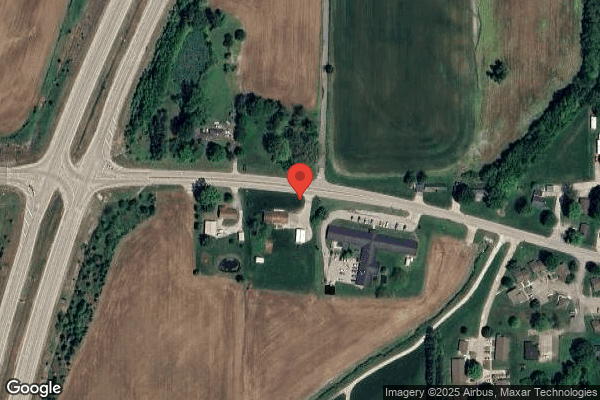
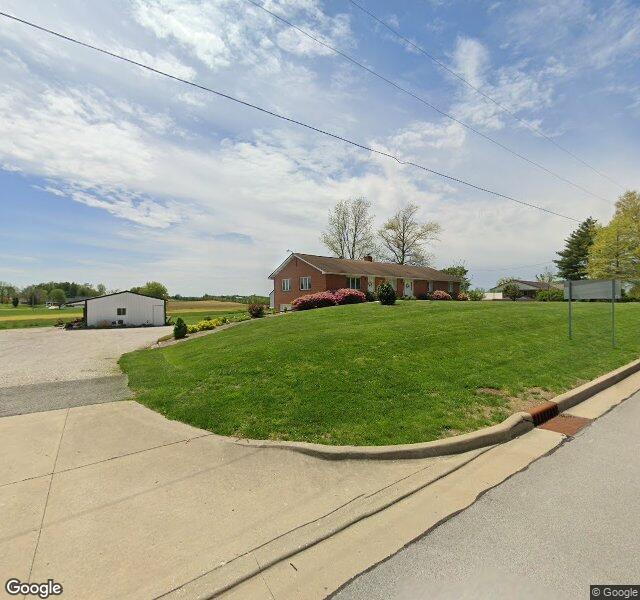
CORE OF DALE

510 W MEDCALF ROAD, DALE, IN 47523 (812) 937-7073
Non profit - Other 52 Beds MAJOR HOSPITAL Data: November 2025 2 Immediate Jeopardy citations
Trust Grade
0/100
#444 of 505 in IN
Last Inspection: August 2024

Within standard 12-15 month inspection cycle. Federal law requires annual inspections.

Overview

Core of Dale in Dale, Indiana has received a Trust Grade of F, indicating significant concerns about the facility's overall quality and care. It ranks #444 out of 505 facilities in Indiana, placing it in the bottom half, and #2 out of 3 in Spencer County, meaning there is only one local option that is better. While the facility is improving, having reduced its issues from 13 in 2024 to 7 in 2025, it still faces serious challenges, including a concerning $86,444 in fines, which is higher than 99% of Indiana facilities. Staffing is rated as average with a turnover rate of 52%, which is close to the state average, and it has average RN coverage. However, specific incidents raise alarms; for example, a resident was able to leave the facility unsupervised, and there was an allegation of a CNA physically hitting a resident during care, highlighting serious safety and care deficiencies. Overall, while there are some improvements in trends, the facility's weaknesses cannot be overlooked.

Trust Score
F
0/100
In Indiana
#444/505
Bottom 13%
Safety Record
High Risk
Review needed
Inspections
Getting Better
13 → 7 violations
Staff Stability
⚠ Watch
52% turnover. Above average. Higher turnover means staff may not know residents' routines.
Penalties
✓ Good
$86,444 in fines. Lower than most Indiana facilities. Relatively clean record.
Skilled Nurses
⚠ Watch
Each resident gets only 26 minutes of Registered Nurse (RN) attention daily — below average for Indiana. Fewer RN minutes means fewer trained eyes watching for problems.
Violations
⚠ Watch
63 deficiencies on record. Higher than average. Multiple issues found across inspections.
★☆☆☆☆
1.0
Overall Rating
★★★☆☆
3.0
Staff Levels
★★☆☆☆
2.0
Care Quality
★☆☆☆☆
1.0
Inspection Score
Stable
2024: 13 issues
2025: 7 issues

The Good

  • Full Sprinkler Coverage · Fire safety systems throughout facility
  • No fines on record

Facility shows strength in fire safety.

The Bad

1-Star Overall Rating

Below Indiana average (3.1)

Significant quality concerns identified by CMS

Staff Turnover: 52%

Near Indiana avg (46%)

Higher turnover may affect care consistency

Federal Fines: $86,444

Well above median ($33,413)

Moderate penalties - review what triggered them

Chain: MAJOR HOSPITAL

Part of a multi-facility chain

Ask about local staffing decisions and management

The Ugly 63 deficiencies on record

2 life-threatening 1 actual harm
Sept 2025 5 deficiencies
CONCERN (D) 📢 Someone Reported This

A family member, employee, or ombudsman was alarmed enough to file a formal complaint

Potential for Harm - no one hurt, but risky conditions existed

Deficiency F0692 (Tag F0692)

Could have caused harm · This affected 1 resident

Based on observation, interview, and record review, the facility failed to ensure services provided by the facility met professional standards for 1 of 2 residents reviewed for nutrition. A resident's...

Read full inspector narrative →
Based on observation, interview, and record review, the facility failed to ensure services provided by the facility met professional standards for 1 of 2 residents reviewed for nutrition. A resident's weights were not transferred into the clinical record, the medical provider and family were not notified of weight loss, the dietitian's recommended orders were not put into place, and the resident continued to have weight loss. (Resident G)Finding includes:On 9/19/25 at 12:06 P.M., Resident G was observed sitting in a Broda chair in the dining room while staff fed him.On 9/18/25 at 12:48 P.M., Resident G's clinical record was reviewed. Diagnoses included, but were not limited to, dementia.The most recent quarterly Minimum Data Set (MDS) assessment, dated 7/12/25, indicated Resident G's cognitive status could not be assessed and was dependent on staff for eating, showering, toileting, bed mobility, and transfers. He was on a mechanical diet (consisting of foods that are modified to be easy to chew and swallow) and experienced a weight loss. His current weight was 156.0 pounds (lbs) and height was 66 inches.Current orders included, but were not limited to,weight monthly, ordered 3/1/25magic cup (supplement) at 5:00 P.M. with supper daily, ordered 2/1/25regular diet with mechanical soft texture, ordered 2/27/25A current Nutrition Care Plan, last revised 7/12/25, included, but was not limited to, the following interventions initiated on 6/27/24:Monitor monthly weightsMonitor/record/report to Medical Doctor (MD) as needed, a significant weight loss (greater than 5% in one month, greater than 7.5% in three months, or 10% in six monthsProvide and serve supplements to me as orderedRegistered Dietitian (RD) to evaluate and make recommendations as neededThe most recent Nutritional Risk Assessment, dated 7/12/25, completed by the RD recommended to increase the magic cup from daily to twice daily.The clinical record lacked documentation of the resident being seen by the RD since 7/12/25.The Medication Administration Record (MAR) for September 2025 was reviewed from 9/1/25 through 9/17/25 and indicated Resident 41 was only getting the magic cup with his supper.The clinical record lacked documentation of notification to the MD or Nurse Practitioner (NP) of the weight loss.On 6/1/25, the resident weighed 166.4 lbs. On 7/1/25, the resident weighed 155.6 lbs, which was a weight loss of 6.49%.The clinical record lacked documentation of notification to the MD or Nurse Practitioner (NP) of the weight loss.The clinical record lacked documentation of any weights completed since then.On 9/24/25 at 9:23 A.M., Certified Nurse Aide (CNA) 22 CNAs weighed the residents when the nurse notified them to do it. She indicated that, to her knowledge, he only got a magic cup with his supper.On 9/24/25 at 9:35 A.M., Registered Nurse 8 indicated he was a monthly weight. He should get the magic cup as ordered. At that time, she indicated the dietary manager usually went through the clinical records and looked for weight loss. They would notify the dietician, MD, and DON, and they would decide what to do. To her knowledge, the RD came to the facility monthly. During an interview on 9/24/25 at 10:06 A.M., the Dietary Manager indicated she just took over (9/5/25) and didn't have a list of residents with weight loss currently in the facility.On 9/25/25 at 9:40 A.M., the RD indicated she came to the facility 8 hours per month. The process was to see all residents on admission, quarterly, and as needed. Nursing or the Dietary Manager would refer her for evaluation. She had not seen the resident in August or 9/19/25 when she was at the facility. She was not sure why there was not a recent weight in Resident G's clinical record or why his magic cup was not increased. On 9/25/25 at 9:53 A.M., the Director of Nursing indicated the Assistant Director of Nursing (ADON) had papers on her desk with August and September 2025 weights for Resident G. His August weight was 154.4 lbs, and his September weight was 145.6 lbs, but these were not put into the clinical record. She said the resident had aspiration pneumonia recently, which could have been the cause of the weight loss, but generally, he ate well. She would usually be the one to notify the MD of the RD recommendations and was not sure why the magic cup was not increased after the 7/12/25 visit. She also had no visit notes from the dietician in August or September. She indicated that the weights not being in the clinical record would have caused the dietitian to miss seeing him, and the MD not being notified.On 9/25/25 at 12:06 P.M., a current Nutritional Risk Program Policy, last revised 9/10/13, was provided by the DON and indicated, It is the policy of this facility to monitor the weight status of each resident and that appropriate interventions be initiated should weight decline or incline unplanned . This citation relates to Intake 26070813.1-46(a)(1)
CONCERN (E) 📢 Someone Reported This

A family member, employee, or ombudsman was alarmed enough to file a formal complaint

Potential for Harm - no one hurt, but risky conditions existed

Deficiency F0657 (Tag F0657)

Could have caused harm · This affected multiple residents

**NOTE- TERMS IN BRACKETS HAVE BEEN EDITED TO PROTECT CONFIDENTIALITY** Based on observation, interview, and record review, the facility failed to ensure specific, comprehensive care plans were revise...

Read full inspector narrative →
**NOTE- TERMS IN BRACKETS HAVE BEEN EDITED TO PROTECT CONFIDENTIALITY** Based on observation, interview, and record review, the facility failed to ensure specific, comprehensive care plans were revised for 4 of 4 reviewed for behaviors related to sexual offenders. Care plans were not revised to include specific behaviors, restrictions, and interventions. (Resident B, Resident C, Resident D, Resident F)Findings include:On 9/24/25 at 9:55 A.M., a binder was provided by the Director of Nursing (DON) with a list of registered sexual offenders that were currently residents or had previously been a resident at the facility.The Sex Offender Registry list on the [NAME] County Sheriff's Department website was retrieved on 9/24/25 at 2:20 P.M. The list included registered sex offenders who have been convicted of a sexual offense and were mandated to register as a sexual offender annually and were within a one mile radius of the facility address (510 [NAME] St Dale, Indiana 47523). The registry included 16 residents currently residing at the facility. It included the type of offense, but lacked specific details about the resident's conviction and restrictions. Resident B was listed as a sex offender (a general category for individuals convicted of sex offenses). Resident C and Resident D were listed as a sexually violent predators (a specific designation for offenders deemed a high risk to re-offend and a threat to the public).1. On 9/25/25 at 11:51 A.M., Resident B was observed sitting in a wheelchair in the dining room.On 9/25/25 at 9:33 A.M., Resident B's clinical record was reviewed. Diagnoses included, but were not limited to, multiple sclerosis.The most recent quarterly MDS assessment, dated 7/29/25, indicated a moderate cognitive impairment.A current Behavior Care Plan, (last reviewed date unknown), indicated Resident D had the potential for sexually inappropriate behavior related to sexual offender history. Interventions included the following:Monitor for inappropriate sexual behaviorsInvolve resident in activitiesEncourage appropriate communication and socializationNotify SSD if behaviors occurExplain to the resident why behaviors were inappropriate1:1 (staff to resident watch) as needed15 minute checks (staff to observe resident every 15 minutes) as neededPsychology services as neededChildren present under age [AGE] to remain supervised by an adult.The care plan lacked resident specific sexual offender history and behaviors, restrictions, and interventions.2. On 9/16/25 at 12:58 P.M., Resident C was observed sitting in his bed.On 9/19/25 at 12:30 P.M., Resident C's clinical record was reviewed. Diagnoses included, but were not limited to, heart failure, diabetes mellitus type II, anxiety disorder, and depression.The most recent quarterly MDS assessment, dated 9/6/25, indicated Resident C was cognitively intact. A current Behavior Care Plan, initiated 6/11/25 and last reviewed on 9/7/25, indicated Resident D had the potential for behaviors that included sexually inappropriate behavior related to sex offender history, verbal aggression (yelling, cursing), and refusing medications. Interventions, initiated on 6/11/25, included the following:Monitor for inappropriate sexual behaviorsInvolve resident in activitiesEncourage appropriate communication and socializationNotify SSD if behaviors occurExplain to the resident why behaviors were inappropriate1:1 (staff to resident watch) as needed15 minute checks (staff to observe resident every 15 minutes) as neededPsychology services as neededChildren present under age [AGE] to remain supervised by an adultThe care plan lacked resident specific sexual offender history and behaviors, restrictions, and interventions.3. On 9/24/25 at 9:08 A.M., Resident D was observed in his motorized wheelchair telling a nurse that he was leaving the facility to go to church.On 9/18/25 at 12:51 P.M., Resident D's clinical record was reviewed. Diagnoses included, but were not limited to, psychoactive substance abuse, unspecified sexually transmitted disease, and noncompliance with other medical treatment and regimen.The most recent annual MDS assessment, dated 8/2/25, indicated a moderate cognitive impairment.A current Behavior Care Plan, initiated on 5/19/25 and revised on 5/27/25, indicated Resident D had the potential to be physically aggressive. Interventions, initiated on 5/19/25, included the following:The resident's triggers for physical aggression were not getting what he wants when he wants it. The resident's behaviors were de-escalated by promptly assisting resident as soon as possibleAdminister medications as ordered and monitor/document for side effects and effectivenessAnalyze and document time of day, places, circumstances, triggers, contributing sensory deficits and what de-escalated behaviorAssess and anticipate resident's needs: food, thirst. toileting needs, comfort level, body positioning, pain etc.Provide physical and verbal cues to alleviate anxietyGive positive feedbackAssist with verbalization of source of agitationAssist to set goals for more pleasant behaviorEncourage seeking out of staff member when agitatedGive the resident as many choices as possible about care and activitiesModify environment: Adjust room temperature to comfortable level, Reduce noise, dim lights, place familiar objects in room, keep door closed, etcMonitor and document observed behavior and attempted interventions in behavior log as neededMonitor/document/report any signs and symptoms of resident posing a danger to self and others as neededPsychiatric/Psychogeriatric consult as indicatedThe resident needed ample amount of personal spaceWhen the resident becomes agitated: Intervene before agitation escalates. Guide away from source of distress, engage calmly in conversation. If response was aggressive, staff to walk calmly away, and approach later.The care plan lacked resident specific sexual offender history and any restrictions.4. On 9/24/25 at 2:15 P.M., Resident F's clinical record was reviewed. Diagnoses included, but were not limited to diabetes mellitus type II, chronic kidney disease, and history of stroke.A current Behavior Care Plan, initiated 6/10/25, indicated Resident F had the potential for behaviors that included sexually inappropriate behavior related to a history of inappropriate behavior and making inappropriate comments to staff. Interventions, initiated on 6/10/25, included the following:Encourage appropriate communication and socializationInvolve resident in activitiesMonitor for inappropriate sexual behaviorPsychology services as neededNotify social services if behavior occurredSocial service visits as neededThe care plan lacked resident specific sexual offender history and behaviors, restrictions, and interventions.On 9/25/25 at 8:57 A.M., an email, dated 8/22/25 at 12:16 P.M., addressed to the Social Services Director (SSD) from Resident F's parole officer was provided by the DON and indicated, . The Indiana Parole Board issued a warrant for [resident name] due to him having the cell phone. We started looking into it more and there were several pornographic photos and videos on it as well as a head shot image of a minor girl. [resident last name] denied it was his, however, there is no way to prove it since it was in his possession. These are major rule violations and [resident last name] was very well aware he was not to have a phone as well as images like that . Most likely the Sheriff's Dept [department] will serve the warrant and possibly today. A Discharge Summary Note on 8/22/25 at 5: 49 P.M., indicated resident was discharged due to violation of his parole by the sheriff's office.During an interview on 9/24/25 at 8:43 A.M., the Social Services Director (SSD) indicated there were currently sexual offenders residing in the facility and the office registered them on the sexual offender registry. There were restrictions to follow with the residents currently on probation and those residents were visited by the probation officers monthly, and once a resident was no longer on probation, they have no restrictions to enforce. They just have to abide by the laws in Indiana. She indicated they kept files on all the sexual offenders in the building at the office that included the resident specific restrictions to follow and these restrictions were on the resident care plans. If a resident was on probation, they were not allowed to go into the community without someone with them. She indicated staff were informed of behaviors, whether the resident was on probation, and the restrictions they had to enforce. During an interview on 9/25/25 at 9:10 A.M., Registered Nurse (RN) 8 indicated the staff communicate through verbal nurse to nurse report if there were any behavioral flare-ups to closely monitor. They were trained to de-escalate and separate residents if they were combative with each other but not on what to expect dealing with sexual offenders or personal safety. She indicated the facility was particular on which male residents they put on the East Hall (women's hall). Kids that come to the facility have to be supervised at all times. She indicated Resident B was not allowed to go to the East Hall for any reason. They were not notified which residents were sex offenders. Most of the time, they found out on their own from other staff and it was verbally understood who can and can't do things. They monitor all residents for behaviors.On 9/25/25 at 9:53 the DON indicated all the residents were treated the same regardless of why they were in the facility. She indicated they were a behavioral health facility, not a typical nursing home, and all their residents have behaviors of some sort. She wasn't sure how staff was supposed to know the specific restrictions for the residents that were sexual offenders. For Resident F, they did not know at that time that he was not allowed to have electronics until they were notified by cops. They have not incorporated the restrictions (if known) into resident specific interventions for the residents. During an interview on 9/25/25 at 1:40 P.M., the Administrator indicated after the nearby school closed a few years ago, they started admitting sexual offenders. They work closely with the parole officers who let the facility know what the residents can and can not do. On 9/25/25 at 8:30 A.M., a current Care Plan Revision Policy, last revised 8/27/24, was provided by the DON and indicated, The purpose of this procedure is to provide a consistent process for reviewing and revising the resident specific care plan . The comprehensive care plan will be reviewed, and revised as necessary . The MDS Coordinator or appropriate staff member, will review and update the resident's care plan and intervention(s) as needed . On 9/25/25 at 1:55 P.M., a current Facility Safety Plan for Offenders Policy/Procedure, dated 9/25/25, was provided by the DON and indicated, It is the policy of this facility to maintain the safety of the residents, staff, visitors, and the community in the presence of residents with a history of a violent/sexual offense.This citation relates to Intake 2609464.3.1-35(d)(2)(B)
CONCERN (E) 📢 Someone Reported This

A family member, employee, or ombudsman was alarmed enough to file a formal complaint

Potential for Harm - no one hurt, but risky conditions existed

Safe Environment (Tag F0921)

Could have caused harm · This affected multiple residents

**NOTE- TERMS IN BRACKETS HAVE BEEN EDITED TO PROTECT CONFIDENTIALITY** Based on observation, interview, and record review, the facility failed to ensure a homelike environment for 6 of 15 resident ro...

Read full inspector narrative →
**NOTE- TERMS IN BRACKETS HAVE BEEN EDITED TO PROTECT CONFIDENTIALITY** Based on observation, interview, and record review, the facility failed to ensure a homelike environment for 6 of 15 resident rooms reviewed for the environment. Rooms and a hall had a strong urine odor, peri-cleanser and cream (used for incontinence care) were found in a resident refrigerator, call light strings in the bathrooms were soiled, and grab bars and the toilet seat were loose. (East Hall, [NAME] Hall, Resident rooms and or shared bathrooms, Rooms 101, 102, 103/105, 108/110, 207/209, 204/206)Findings include:1. On 9/16/25 12:33 P.M., room [ROOM NUMBER] and the private bathroom was observed with a strong urine odor.On 9/24/25 at 9:10 A.M., the same was observed. 2. On 9/16/25 at 12:35 P.M., room [ROOM NUMBER], there was cream in an open clear cup and a bottle of peri-cleanser observed in Resident 8's refrigerator with three cans of soda.On 9/24/25 at 9:11 A.M., the same was observed.On 9/24/25 at 9:23 A.M., Certified Nurse Aide (CNA) 22 indicated those shouldn't be stored there, took them out, and discarded them in the trash can. 3. On 9/16/25 12:38 P.M., room [ROOM NUMBER]'s bathroom (shared with room [ROOM NUMBER]) was observed with a strong urine odor.On 9/24/25 at 9:08 A.M., the same was observed. 4. On 9/16/25 at 12:46 P.M., room [ROOM NUMBER] and bathroom (shared with 110) was observed with a strong urine odor, the handle bars and the toilet seat they were connected to were loose, and the call light cord was brown.On 9/24/25 at 9:06 A.M., the same was observed. 5. On 9/16/25 at 12:48 P.M., room [ROOM NUMBER]'s bathroom (shared with room [ROOM NUMBER]) was observed with a brown call light cord that was wrapped around a grab bar.On 9/24/25 at 9:04 A.M., the same was observed. 6. On 9/16/25 at 12:57 A.M., room [ROOM NUMBER]'s bathroom (shared with room [ROOM NUMBER]) was observed with a brown call light cord and a strong urine odor.On 9/24/25 at 9:02 A.M., the same was observed. During an interview on 9/24/25 at 9:25 A.M., Housekeeper 5 indicated they do have rooms that smell because the residents forget to flush or did't hold the handle down long enough. At that time, she indicated staff located the source and used bio enzymatic odor eliminator spray. They cleaned the rooms and bathrooms daily and as needed. If the call light cord was brown, it would need to be changed by maintenance. The housekeeper was responsible for taking the resident refrigerator temperatures daily and when they looked inside at thermometer, if there was something in it that shouldn't be, they would discard it. On 9/25/25 at 9:29 A.M., the Director of Nursing (DON) indicated the facility didn't really have a policy for the environment but they would follow the regulations. This citation relates to Intake 2607081. 3.1-19(f)
CONCERN (F) 📢 Someone Reported This

A family member, employee, or ombudsman was alarmed enough to file a formal complaint

Potential for Harm - no one hurt, but risky conditions existed

Deficiency F0801 (Tag F0801)

Could have caused harm · This affected most or all residents

Based on interview and record review, the facility failed to employ sufficient staff with the appropriate competencies to carry out the functions of food and nutrition services. The Dietary Manager la...

Read full inspector narrative →
Based on interview and record review, the facility failed to employ sufficient staff with the appropriate competencies to carry out the functions of food and nutrition services. The Dietary Manager lacked appropriate certification. Finding includes: On 9/16/25 at 8:05 A.M., the current Dietary Manager indicated she started in that role on 9/5/25 and lacked a current certification and was working to become re-certified. On 9/25/25 at 9:48 A.M., the Director of Nursing (DON) provided a current, undated, Dietary Manager job description as their policy that indicated, Required Qualifications Minimum requirements include one of the following: Certification as a dietary manager. Certification as a food service manager .Must also meet State requirements for food service managers or dietary managers . This Federal tag relates to Intake 2607081.3.1-20(h)
CONCERN (F) 📢 Someone Reported This

A family member, employee, or ombudsman was alarmed enough to file a formal complaint

Potential for Harm - no one hurt, but risky conditions existed

Food Safety (Tag F0812)

Could have caused harm · This affected most or all residents

Based on observation, interview, and record review, the facility failed to appropriately test the dishwasher to verify it was functioning correctly. Staff lacked knowledge of the test strips used to t...

Read full inspector narrative →
Based on observation, interview, and record review, the facility failed to appropriately test the dishwasher to verify it was functioning correctly. Staff lacked knowledge of the test strips used to test the sanitation chemicals in 1 of 2 observations of dishwasher use. Finding includes: On 9/16/25 at 8:05 A.M., the Dietary Manager indicated she was unsure of what kind of dishwasher the facility had, and that staff checked to make sure the temperature reached 120 degrees Fahrenheit. At that time, she indicated that the staff failed to test the dishwasher with chlorine strips and was unable to find strips.During an observation on 9/16/25 at 8:18 A.M., Maintenance 11 indicated the dishwasher is a low-temperature dishwasher, and he verified the temperature reached 120 degrees Fahrenheit daily. At that time, he indicated he was not a dietary employee, so he did not check the chemicals on the dishwasher.During an interview on 9/16/25 at 9:45 A.M., the Maintenance Supervisor indicated the dishwasher should be tested with a chlorine strip every shift. At that time, she located a container of strips and tested the dishwasher. The strip showed 10 parts per million (ppm). The Maintenance Supervisor indicated it should be at 100 ppm.During an interview on 9/16/25 at 10:30 A.M., the Director of Nursing (DON) indicated kitchen staff should notify maintenance of any problems. At that time, she indicated they were not aware of the problem, and a call had been placed to the manufacturer of the dishwasher.On 9/16/25 at 9:45 A.M., the Maintenance Supervisor provided a current manual as a policy, dated 10/29/07, that indicated chlorine levels should be between 50-100 ppm.This Federal tag relates to Intake 2607081.3.1-21(i)(3)
May 2025 1 deficiency
CONCERN (D) 📢 Someone Reported This

A family member, employee, or ombudsman was alarmed enough to file a formal complaint

Potential for Harm - no one hurt, but risky conditions existed

Deficiency F0602 (Tag F0602)

Could have caused harm · This affected 1 resident

Based on interview and record review, the facility failed to ensure residents were free from misappropriation for 1 of 3 residents reviewed for misappropriation. A resident's debit card was taken with...

Read full inspector narrative →
Based on interview and record review, the facility failed to ensure residents were free from misappropriation for 1 of 3 residents reviewed for misappropriation. A resident's debit card was taken without consent and used by staff to withdraw $305.00 from the resident's bank account. (Resident D) Finding includes: During a review of facility reported incidents on 5/19/25 at 10:15 A.M., an incident dated 5/6/25, indicated Resident D had been alerted of suspected fraudulent activity from his bank. A withdraw was made from a local automatic teller machine (ATM) on 5/5/25 at 2:05 A.M. for $305.00. CNA 13 indicated that Resident D asked her to withdraw $300.00 from the bank at 2:00 A.M. during her lunch break. During a review of the facility's investigation into the incident on 5/19/25 at 10:20 A.M., a typed note, dated 5/6/25 and signed by the Facility Administrator indicated Resident D came to the office after he received an alert of suspected fraud at the bank. Resident D indicated he had asked CNA 13 to call the bank for him and check on his account balance and gave her his Personal Identification Number (PIN). A withdrawal was made at 2:05 A.M. on 5/5/25 for $305.00. A Disciplinary Notice Record, dated 5/7/25, indicated CNA 13 had been terminated from employment for using a resident's debit card to withdraw money against facility policy. During record review on 5/19/25 at 10:30 A.M., Resident D's diagnoses included, but were not limited to, heart failure, chronic obstructive pulmonary disease (COPD), and chronic pain. Resident D's most recent quarterly minimal data set (MDS) assessment, dated 3/22/25, indicated the resident had no cognitive impairment. During an interview on 5/19/25 at 10:40 A.M., Resident D indicated that CNA 13 had used his personal debit card to withdraw money from a local ATM. Resident D indicated he did not give CNA 13 his debit card or ask her to withdraw money for him, and that he would not have asked anyone for money at 2:00 A.M. Resident D indicated he never received the money that had been withdrawn from his account and that he was waiting on his account to be reimbursed. Resident D felt taken advantage of and was inquisitive about the results of a local police department's investigation of the incident. During an interview on 5/19/25 at 11:20 A.M., the Facility Administrator indicated the local police had shared with him that CNA 13 could be seen on video making a withdraw from the local ATM at 2:05 A.M. on 5/5/25. During an interview on 5/19/25 at 1:30 P.M., CNA 7 indicated that staff should notify the Director of Nursing (DON), Business Office Manager (BOM), or Facility Administrator when a resident requests staff make a purchase for them. A form should be filled out with the amount of money and what the money is for, then a receipt of purchase is filed for the transaction, and nursing staff must witness and sign when the resident receives their goods or any money that may be returned. During an interview on 5/19/25 at 2:05 P.M., the DON indicated that CNA 13 admitted to using Resident D's debit card but insisted that Resident D had asked her to do so. The whereabouts of the withdrawn cash had not been determined, and the money remained unaccounted for. On 5/19/25 at 10:55 A.M., the Facility Administrator supplied a facility policy titled, Policy and Procedure for Money Transactions and Shopping for Residents, dated 1/24/24. The policy included, .A resident may request for a staff member to take their debit card or money to the bank or store for cash or personal items, which must be approved. Procedure . 2. When the Activity Director is not available or it is after business hours or on a weekend and the resident is requesting for a staff member to go shopping for them it has to be approved by the Administrator or Director of Nursing if the staff is taking the residents debit card. 3. The charge nurse must complete the Money Transaction Shopping Form . This citation relates to complaint IN00459045. 3.1-28(a)
Jan 2025 1 deficiency
CONCERN (D) 📢 Someone Reported This

A family member, employee, or ombudsman was alarmed enough to file a formal complaint

Potential for Harm - no one hurt, but risky conditions existed

Free from Abuse/Neglect (Tag F0600)

Could have caused harm · This affected 1 resident

Based on interview and record review, the facility failed to ensure residents were free from abuse for 1 of 3 residents reviewed for abuse. A resident was allegedly threatened with physical abuse and ...

Read full inspector narrative →
Based on interview and record review, the facility failed to ensure residents were free from abuse for 1 of 3 residents reviewed for abuse. A resident was allegedly threatened with physical abuse and then was smacked by a staff member in retaliation for the resident striking the staff member during care. (Resident L) Finding includes: During a review of state reportable incidents on 1/7/25 at 11:15 A.M., an incident report dated 1/5/25 at 6:50 P.M. indicated Certified Nurse Aide (CNA) 13 reported herself to the nurse after an incident with Resident L. Resident L allegedly hit CNA 13 in the face and CNA 13 then hit [Resident 13] back in the ribs. During record review on 1/7/25 at 12:00 P.M., Resident L's diagnoses included but were not limited to, hemiplegia affecting left side, anxiety, depression, bipolar disorder, schizoaffective disorder, dementia, traumatic brain injury, and conduct disorder. Resident L's most recent quarterly Minimum Data Set (MDS) assessment, dated 10/12/24, indicated the resident's cognition was moderately impaired. Resident L's care plan included, but was not limited to; Resident has a behavior problem due to traumatic brain injury and being physically/verbally aggressive. Resident hits/punches others (initiated 11/8/23). Interventions included, but were not limited to, caregivers to provide opportunity for positive interaction, approach/speak in a clam manner. Resident L's progress notes included, but were not limited to, an incident note, dated 1/7/25 at 8:32 A.M., that indicated Resident L was re-assessed due to recent incident. Resident asked to point to the area on his right side. Resident touched the upper right rib area. No bruising, swelling or other marks were noted. During review of the facility's investigation into the incident between Resident L and CNA 13, a witness statement from Qualified Medication Aide (QMA) 4 indicated that on 1/5/25 at 6:50 P.M., Resident L's call light went off. QMA 4 answered the light and began changing the resident due to an incontinent episode. CNA 13 walked in to Resident L's room to assist with incontinence care. Resident L became very annoyed with the staff during care and began mocking and cursing at the two staff members. Resident L then hit CNA 13 in the face and CNA 13 then smacked him back. An interview signed by the Director of Nurses (DON) with Resident L, dated 1/6/25, indicated that Resident L felt CNA 13 was being too rough during incontinent care. Resident L told CNA 13 that he would hit her and CNA 13 told the resident, if you hit me, I will hit you back. Resident L indicated that he playfully placed his closed fist on CNA 13's cheek, and she punched him in the side. During an interview on 1/7/25 at 1:50 P.M., CNA 9 indicated that if a resident is being physically or verbally aggressive towards staff, the staff member should remove themselves from the situation and allow the resident to calm down. Staff should re-approach the resident at a later time. The facility's investigation of the incident included an inservice training of the facility's Procedure for Abuse Prohibition, Reporting, and Investigation policy. The policy indicated, It is the policy of [Facility] to ensure that each resident is free of physical, mental, verbal and sexual abuse, corporal punishment, mental and physical neglect and involuntary seclusion . C. Verbal abuse . can include resident to resident or staff to resident verbal threats of harm . This citation relates to complaint IN00449658 3.1-27(b)
Aug 2024 10 deficiencies 1 IJ
CRITICAL (J) 📢 Someone Reported This

A family member, employee, or ombudsman was alarmed enough to file a formal complaint

Immediate Jeopardy (IJ) - the most serious Medicare violation

Accident Prevention (Tag F0689)

Someone could have died · This affected 1 resident

**NOTE- TERMS IN BRACKETS HAVE BEEN EDITED TO PROTECT CONFIDENTIALITY** A 2. On 8/13/24 at 9:15 A.M., an Indiana Department of Health Incident Report, dated 8/4/24, indicated Resident C was found walk...

Read full inspector narrative →
**NOTE- TERMS IN BRACKETS HAVE BEEN EDITED TO PROTECT CONFIDENTIALITY** A 2. On 8/13/24 at 9:15 A.M., an Indiana Department of Health Incident Report, dated 8/4/24, indicated Resident C was found walking up the road by a staff member. Facility was investigating how she got out. It was reported that a nurse left for lunch and resident may have followed the nurse out the front entrance door. Resident C was immediately returned to facility and placed on 1:1 for 2 hours and 15 minute checks for 72 hours. Facility immediately notified maintenance to check the doors and called (Name of Door Repair Company #1) to come and inspect the doors. On 8/13/24 at 9:30 A.M., Resident C's medical records were reviewed. admission date was 2/8/24. Diagnosis included, but were not limited to rheumatoid arthritis, coronary artery disease, hypertension, non-Alzheimer's dementia, seizure disorder, anxiety disorder, asthma, and hallucinations. The most current Quarterly MDS (Minimum Data Set) Assessment, dated 5/8/24, indicated Resident C was moderately cognitively impaired, needed supervision of one for bed mobility, supervision with set up for transfers and eating and limited assistance of one for toilet use. Resident had no behavior of wandering, no hallucinations, no delusions, no physical or verbal behavioral symptoms, and used a wander/elopement alarm daily. Current physician orders, dated 7/25/24, indicated facility staff should monitor Resident C for behaviors including, but not limited to elopement and check placement and function of the WanderGuard every shift. A plan of care for risk of elopement/wandering, dated 7/8/24, included, but were not limited to, interventions for staff to use distraction techniques, structured and individual activities, music, quiet time, identify patterns of wandering, and a WanderGuard to prevent further elopement attempts. Care plan interventions were not updated after Resident C eloped on 8/4/24. Progress Notes included, but were not limited to the following: 7/18/24 5:46 A.M. Health Status Note Note Text: Resident pacing from room to lobby multiple times. c/o [complained of] being cold. Resident given a jacket and went back to room. 7/18/24 8:38 A.M. Health Status Note Note Text: Resident pacing from room to lobby. Snack given, went back to room. 7/20/24 12:20 P.M. Behavior Progress Note Note Text: Resident restless, walking up and down hallway, standing next to nursing cart, and following nurse from room to room. Resident laid down at noon for a nap. 7/25/2024 12:50 P.M. Behavior Progress Note Note Text: Resident has been pacing today and standing at the nurses [sic] station multiple times today. Resident is not causing any issues. Resident has brought some of her greeting cards from her room to the nurses [sic] station and has read them repeatedly to whomever is there at the nurses [sic] station to listen, otherwise resident stands there quietly. Resident has been asked if there are any unmet needs. Resident denies and unmet needs. 7/26/24 5:13 A.M. Health Status Note Note Text: Resident restless and pacing early in shift between 6 P.M. to 8 P.M. Once resident was assisted with getting ready for bed, rested well with C-Pap on. 8/4/2024 1:48 A.M. Health Status Note Note Text: OOF [out of facility]- Family went out with resident and to be returned to facility 5pm [sic] per report given. RSD [resident] has not been returned to facility at this time. Calls made to family via phone. Pending response back. 8/4/2024 1:33 P.M. Health Status Note Note Text: Resident has returned to facility at this time with son. 8/4/2024 2:29 P.M. Incident Note Note Text: This nurse received a phone call from employee who was leaving on lunch break that this resident was walking outside facility and he was assisting her back to front door. This nurse and CNAs [Certified Nurses Aides] ran to front door and assisted resident back into the facility where she was assessed. Temp [Temperature] 96.5, Resp [Respirations] 16, HR [Heart Rate] 99, BP [Blood Pressure] 120/95, 93% RA [Room Air]. Resident had just returned from overnight stay with son and stated that she was trying to get home to her son. Resident is currently on 1 on 1 supervision for 2 hours. Administrator, DON [Director of Nursing], PCP [Primary Care Provider], andfamily [sic] notified. 8/4/2024 4:41 P.M. Elopement Evaluation done by LPN 5 had an Elopement Score of 3 which indicated Resident C was an elopement risk and wandered. A progress note dated 8/5/24 8:38 A.M. indicated Resident C was on 15 minute checks for 72 hours. A Fifteen Minute Checks Form was completed every 15 minutes starting on 8/4/24 at 4:30 P.M. through 8/7/24 at 11:45 P.M. A progress note by Social Services, dated 8/5/24 3:55 P.M., indicated Social Services met with Resident C in her room and talked about the weekend. Resident C talked about other things not related to the elopement. No exit seeking had been reported. A progress note, dated 8/5/24 8:13 P.M., indicated Resident C had no exit seeking. She stayed in her room or stood at the nurse's desk. She went to the dining room for supper. She refused to wear bipap and had to be put to bed 4 (four) times. She will be monitored. A progress note, dated 8/7/24 5:19 P.M., indicated Resident C was very confused, wandering on the unit, almost blocked another resident's doorway. The other resident raised their voice to get her to move. Both residents were redirected successfully. A progress note, dated 8/11/24 11:48 A.M., indicated Resident C was seen wandering by the front door several times, pushing on the double doors by the front door. Alarm was applied to front door and Resident C was monitored for safety. The most recent Core Behavior Risk Assessment completed on 4/25/24 indicated Resident C was on psychotropic medications, was cognitively impaired, had no history of mental illness and no aggressive behaviors in the last 3 months. The August 2024 Medication Administration Record (MAR), dated from 8/1/24 through 8/13/24, indicated Resident C had no behaviors on any shift and the WanderGuard was checked for placement and function every shift, except for the evening of 8/3/24, which was blank. A handwritten note signed by LPN 5 indicated on 8/4/24 when she went to the front door to get Resident C from Dietary Aide 3, she noticed the front entrance door was not latched and the alarm was not sounding. A typed note by LPN 12, dated 8/4/24, indicated she went out the front entrance door to put belongings in her car. She heard the front entrance door slam. She helped Resident c through the second set of double doors by the entrance after explaining to the resident that her son had left. After Resident C was in the hallway, LPN 12 went to the [NAME] Hall. Since the door had slammed LPN 12 assumed it closed. When she left the facility, LPN 12 noticed the front entrance door was not closing all the way and was staying open. The door had to be pushed on to close it when leaving. A typed note, dated 8/4/24, by Maintenance Tech 26, indicated he was called by the Maintenance Supervisor that the front door was malfunctioning. He was unable to repair the door due to multiple damages. He let his supervisor know and the (Name of Door Repair Company #1) was contacted. Fire Watches were conducted every 15 minutes (from 6:40 P.M. through 7:10 P.M.) until (Name of Door Repair Company #1) arrived. (Name of Door Repair Company #1) was unable to repair the front entrance door due to multiple damages and recommended the code to enter and exit the front entrance door be changed for safety measures. The code was changed. A typed note by the Maintenance Supervisor, dated 8/4/24, indicated nothing was reported to her that the front entrance door had any problems. She was called about the door malfunctioning. When (Name of Door Repair Company #1) indicated they were unable to fix the door, she called the Administrator and he called (Name of Door Repair Company #2) to come and repair the front entrance door. Review of the (Name of Door Repair Company #1) invoice dated 8/4/24 indicated Technician called facility to inform of arrival time. Apon [sic] arrival technician met with facility and began troubleshooting front door. With nothing on door, door swings open 8 inches due to the bottom hinge rotting out. Technician tried to adjust two door closers to hold door shut for maglock to engage. Door closers do not have enough force to keep door from moving back out of range for maglock to engage. Technician spaced out bottom hinge to realign door. Spacing was unsuccessful and if we step up the spacing anymore it will blow the door out of what is remaining for the bottom hinge. The side and top of the door frame moves and shifts with the door. The bottom threshold has soft wood under it. Door is locked down until further work is done. Review of the (Name of Door Repair Company #2) work order, dated 8/5/24, indicated the front entrance door was not shutting all the way. Bottom pivot was busted and moving around. Replaced the bad pivots with a continuous hinge. We fabricated a brace for hinge side jams/top of frame. We also made a door stop for the bottom of the door. Door is short on width. Note: It was reported a resident busted out of the door and did some damage. During an interview 8/13/24 at 9:58 A.M., the DON (Director of Nursing) indicated Resident C was checked every two hours for check and change since she was incontinent. She was not followed by staff when ambulating in the hall since it was a locked building. The DON indicated Resident C wandered but did not have a history of exit seeking. From the time Resident C was admitted , she wandered the halls looking out the front double doors for her son's car in the parking lot but didn't try to go out the doors. She had a WanderGuard on, and staff redirected her away from the doors. She liked to hang out with the nurses. She was a jailer on night shift all her life and liked making rounds with the nurses. The DON indicated the son picked Resident C up on Saturday for an overnight stay and brought her back on Sunday. The son did take her to her room. The son indicated that he turned around to make sure the door was shut. The DON indicated that there were no problems with the alarm system on 8/4/24 and maintenance checked the doors and alarms routinely. Wander Guard would not trigger if a resident went out the front door. During an interview on 8/13/24 at 11:02 A.M., CNA (Certified Nurse Aide) 6 indicated Resident C did not have a history of elopement. Her son had dropped her off and she told CNA 6 after the elopement that she was going to whoop his butt because she was not done staying at home. Thirty minutes after Resident C was returned the elopement happened. CNA 6 heard the alarm but did not respond because she was on the end of the hall with a resident. Resident C was in the parking lot and had already been out there at that point. During an interview on 8/13/24 at 11:32 A.M., LPN (Licensed Practical Nurse) 5 indicated she usually worked on the [NAME] Hall but had worked with Resident C on 8/4/24. Resident C needed limited to extensive assistance with care, depending on what it is. She required her meat to be cut but could ambulate on her own. Elopement assessments were done quarterly and could be seen under assessments in the medical records. Resident C did not have a history of exit seeking but she wandered and wore a WanderGuard. At the time of the elopement on 8/4/24, LPN 5 indicated she was doing charting at the desk at the opposite end of the East Hall, not in view of the front entrance door. The son brought Resident C back at 1:30 P.M. About 1:50 P.M., kitchen employee called and said resident was walking outside. LPN 5 indicated she did not see Resident C go out the front door. When she got outside Resident C was in parking lot. She brought her inside and kept her at the nurse's desk for 1:1 for 2 hours. Resident C did go to the dining room for supper and had no further behaviors. LPN 5 indicated Resident C has had no other attempts of exiting the building. LPN 5 indicated the alarm at the front door went off anytime someone went in or out of the building. Each nurse's desk had box on the wall that indicated where the alarm was going off. Any employee could check an alarm to see if a resident was setting it off. During an interview on 8/13/24 at 2:01 P.M., CNA 4 indicated he was working the day Resident C eloped. He indicated the alarm would sound, but he always had to press the front entrance door back because you didn't know if it would stay closed. He indicated Resident C was warm when she came back into the facility. They had to put cool cloths on her and make sure her air conditioner unit was turned up in her room. During an interview on 8/13/24 at 2:12 P.M., Dietary Aide 3 indicated he went out the back door going on lunch break around 2:00 P.M. He indicated he was leaving the parking lot when he saw Resident C standing in the grass next to the facility sign facing Indiana Highway 62. He called the nurse to notify her the resident was outside and turned around as soon as possible. He parked his Jeep in the parking lot, called Resident C's name and she walked to him. He assisted her to the front door where staff was waiting. During an interview on 8/14/24 at 8:59 A.M., Resident C indicated her son brought her back to the facility on 8/4/24 because he had to [NAME] the yard. She indicated her son's truck was broke down and didn't want her to have to deal with that as well. Resident C could not recall any specifics about the elopement incident. During an interview on 8/14/24 at 9:44 A.M., the DON indicated that care plans might be updated by MDS (Minimum Data Set) Coordinator, Social Services or Activities depending on what the care plan entails. As far as when care plans were to be updated, the DON indicated that usually that was done with quarterly MDS assessments, or if there was something that arose such as infection, injury, or something of an acute nature. On 8/14/24 at 11:55 A.M., the weather report for 8/4/24 at 1:53 P.M. to 2:53 P.M. found on TimeandDate.com/weather indicated the temperature was 91 degrees and the humidity was 52%. On 8/14/24 at 8:33 A.M., the DON provided an undated Elopement Policy and Procedure that indicated, .The facility team will assess the environment to identify potential risks associated with elopement and/or hazards associated with elopement. Elopement is defined as follows: When a cognitively impaired resident leaves the physical structure of the facility unattended and without staff knowledge and displays exit seeking behavior. [name of company] will implement individualized interventions to strive to prevent elopement .Complete Elopement Plan of Care as applicable .Review and evaluate assessments and risk factor data and make a determination of risk for elopement .Review and revise plan of care as needed .Review and correct deficiencies in practice as they relate to the following, including, .response to alarms, testing alarms .Validate that the resident is wearing an electronic/alarm device as indicated and check that electronic/alarms systems are functioning according to manufacturer recommendations. Record residents at risk for elopement on patient care guide/assignment sheets .If in the event a resident is found to be missing or suspected to be missing a FULL FACILITY head count will be completed and the Missing Resident Action Plan will be initiated .The interdisciplinary team will re-evaluate cognitively impaired residents who have attempted (unsuccessfully or successful) to elope from the facility. Individualized interventions will be developed and initiated to manage the elopement behavior .Review and update plan of care and evaluate risk factors identified . On 8/14/24 at 11:37 A.M., the DON indicated that the missing resident action plan was not completed after the incident, as per policy, as staff was not aware of where the forms were located, but she would expect the form to be completed in the event a resident was missing. On 8/14/24 at 8:33 A.M., the DON provided a Behavior Management Policy, dated 3/11/24, that indicated, A Behavior Risk Assessment will be completed on all residents upon admission, quarterly, and when new or worsening behavior occurs. All residents who score 3 or above on the behavior risk assessment may be deemed high risk for behaviors and may require a review of the current care plan by the IDT (Inter-disciplinary Team) and/or the medical provider. All residents will be monitored for behaviors every shift. If an identified behavior occurs, it will be documented in the medical record . On 8/14/24 at 11:37 A.M., the DON indicated that the missing resident action plan was not completed for Resident B and Resident C as staff was not aware of where the forms were located to complete it. The Immediate Jeopardy, that began on 8/4/24, was removed on 8/15/24 when the facility in-serviced facility staff on exterior door policy, revised elopement policy and identification, missing person action plan, use of Wanderguard system, additional updates to exterior doors, and wandering behaviors but the noncompliance remained at the lower scope and severity of pattern, no actual harm with potential for more than minimal harm that is not Immediate Jeopardy because a systemic plan of correction had not been developed and implemented to prevent recurrence.A. Based on interview and record review, the facility failed to ensure supervision of two cognitively impaired residents; and failed to follow the facility elopement policy resulting in elopements for 2 of 2 residents reviewed for accidents. Resident B exited the facility by a side door and walked 0.5 miles to a gas station. An hour later, the resident's brother notified the facility that Resident B had left the facility. Resident C exited the facility by the front door after being returned to the facility by the son after an overnight stay. Twenty minutes later the resident was found outside the facility walking in the grass away from the facility next to the road, Highway 62. (Resident B, Resident C) This deficient practice resulted in an Immediate Jeopardy. This Immediate Jeopardy began on August 4, 2024, when the facility failed to ensure a cognitively impaired resident was adequately supervised and was allowed to leave the facility by the front door. On August 5, 2024, another cognitively impaired resident left the facility by the side door. The second resident had a history of wandering and was not adequately monitored for these behaviors. The Administrator was notified of the Immediate Jeopardy on August 13, 2024 at 2:29 P.M. The Immediate Jeopardy was removed on 8/15/24 at approximately 3:30 P.M., but noncompliance remained at the lower scope and severity level of pattern, no actual harm with potential for more than minimal harm that is not Immediate Jeopardy. B. Based on observation, record review, and interview, the facility failed to develop and implement interventions to reduce the risk of falls, fall risk assessments were failed to be completed after falls, and neurological checks were not completed after unwitnessed falls for 2 of 7 residents reviewed for accidents, (Resident 18, Resident 33). Findings include: A 1. On 8/13/24 at 9:15 A.M., the Indiana Department of Health (IDOH) incident reports were reviewed and indicated on 8/5/24 at 4:51 P.M., Charge nurse called stated that resident called his brother and said I'm at a gas station come pick me up. Brother called facility and staff immediately went and picked him up. On 8/13/24 at 9:30 A.M., Resident B's clinical record was reviewed. Diagnoses included, but were not limited to, traumatic brain injury, epilepsy with status epilepticus, unsteadiness on feet, rheumatoid arthritis, dementia with behavioral disturbance, schizoaffective disorder, bipolar disorder, unspecified mood (affective) disorder, conversion disorder with seizures, anxiety, and unspecified psychosis. The most recent Annual MDS (Minimum Data Set) Assessment, dated 8/3/24, indicated Resident B's cognition was severely impaired, supervision of 1 staff with set up for bed mobility, transfers, eating, and toileting, did not have behaviors of wandering or exit seeking, and wore a WanderGuard (device worn to prevent elopement) daily. The physician orders, dated, 10/11/23, (prior to 8/5/24 when Resident B eloped), indicated facility staff should monitor Resident B for behaviors including, but not limited to, elopement, wandering, and to check placement and function of the WanderGuard every shift. A plan of care for history of elopement, dated 7/28/24, included, but were not limited to, interventions for staff to use distraction techniques, structured and individual activities, music, Activities of Daily Living (ADL) care, and a WanderGuard to prevent further elopement attempts. The care plan did not include documentation to show the plan was revised with interventions to prevent another elopement. A plan of care for Psycho-Social Distress Risk, dated 11/3/23, included but were not limited to, intervention to monitor behavior episodes, attempt to determine underlying cause, and to document behavior and potential causes. An elopement risk evaluation, dated 7/30/24, indicated the resident did not have a history of elopement, did not wander, and was not at risk for elopement. The progress notes were reviewed from 8/1/24 through 8/13/24 and lacked documentation of exit seeking behavior. A nursing progress note, dated 8/5/24 6:00 P.M., indicated one-to one (continuous) supervision was provided for two hours followed by 15-minute checks per facility protocol that ended on 8/6/24 at 10:15 A.M. The August 2024 MAR (Medication Administration Record), dated 8/1/24 through 8/12/24, indicated Resident B demonstrated behavior of exit seeking on the evening shift of 8/5/24. The facility's investigation of Resident B's elopement on 8/5/24 included the following: Resident B approached LPN (Licensed Practical Nurse) 5 at approximately 4:48 P.M. and asked where he could get a meal. The report indicated LPN 5 told Resident B supper would be served in 10 minutes, but did not include documentation to determine interventions to prevent elopement were implemented in accordance with the plan of care. At approximately 5:45 P.M., LPN 5 answered the phone and the resident's brother said he got a phone call from Resident B telling him he was outside the facility at a gas station and he wanted to be picked up. A (Name of Door Repair Company) technician reported on 8/5/24 (time unknown) the hinges on the side door (employee entrance) were adjusted to so the door would close properly. Maintenance Employee 7 indicated on 8/5/24 (exact time unknown but after door repair company was there that day) inspected the side door and noticed the door was still not closing properly against the alarm sensor. A (Name of Door Repair Company) technician report about the side door dated 8/6/24 at 1:30 P.M., indicated upon arrival, maintenance stated that from time to time the Maglock would not engage when the door closed and the alarm would not sound when door was left ajar as expected. The technician identified a wiring problem that prevented the alarm equipment from functioning properly. During an interview on 8/13/24 at 9:49 A.M., LPN 5 indicated Resident B needed some supervision, had behavior of wandering up and down the halls, wore a WanderGuard, and had a very poor short term memory. At that time, she indicated he had eloped before but not for at least a year and was not exit seeking or voicing that he wanted to leave the facility. She indicated they do not document random wandering in his clinical record. It's only documented if he's intrusive to other residents. At that time, LPN 5 indicated the Elopement Risk Evaluation, dated 7/30/24, was filled out incorrectly. During an interview on 8/13/24 at 9:57 A.M., CNA (Certified Nurse Aide) 6 indicated Resident B was mainly independent, did wander in the halls, and staff only had to check on him every now and then. She indicated he had not eloped before that she knew of and she was not working the day he eloped but was told that Resident B wanted turkey for an evening meal and went to get one for himself. During an interview on 8/13/24 at 10:08 A.M., the SSD (Social Services Director) indicated Resident B had a history of elopement and vocalization that he did not want or need to be in the facility and he wanted to leave, but nothing recently. He had not been exhibiting exit seeking behavior prior to the elopement. He had a thought in his head at that minute, found a way out, and then left the facility to get what he wanted. At that time, she indicated he did wander, but they were not tracking wandering behaviors because it was considered his normal activity. During an interview on 8/13/24 at 10:16 A.M., the Administrator indicated Resident B has had exit seeking/wandering and aggressive behavior in the past but not recently. To keep the resident safe, they use a WanderGuard but it does not sound an alarm at any of the 3 exterior doors as you would expect. It only sounds when those residents enter and exit through the double doors from the dining room. During mealtimes and activities, the facility disables that alarm because so many residents pass through the doors at those times. At that time, he indicated on 8/5/24 he got a call from a nurse that Resident B went to the nurse's station and asked for a sandwich. Resident B was told to follow the CNA's to the dining room. Resident B went to the dining room, knocked on the kitchen door, asked for a turkey sandwich, and was told it would be on his meal tray. At that time, the resident sat down at a table, got up and walked down the hall, and went out of the side door near the dining room. The nurse was contacted at 5:45 P.M. by the resident's brother and notified that the resident had left the facility and was at a gas station. The staff only documented Resident B's behaviors if they were accelerated and since wandering was his normal, they don't document that. The Administrator indicated he would expect staff to provide interventions to prevent elopement in accordance with the care plan for a cognitively impaired resident at risk for elopement. During an interview on 8/13/24 at 10:35 A.M., the Maintenance Director indicated maintenance staff was not expected to randomly check the doors of the facility to make sure they were functioning properly. They were only checked when maintenance staff were alerted to a problem with them and staff did not keep any documentation about it. During an interview on 8/13/24 at 2:01 P.M., CNA 4 indicated he was working at the time Resident B eloped and was working on the [NAME] Hall where Resident B's room was. CNA 4 indicated Resident B had a history of eloping from the facility. CNA 4 indicated when he went to pick up the resident from the gas station after they were notified Resident B was missing, the resident was confused and didn't know where he was but said he went to (name of restaurant) across the street from the gas station and got himself a drink and a sandwich. According to the Iphone map application, the restaurant where the resident went was 0.5 miles away from the facility and would take 11 minutes to walk there. The resident had to cross Indiana Highway 62 and [NAME] Street twice to get to the restaurant and then to the gas station where he was picked up by staff. B 1. On 8/14/24 at 9:55 A.M., Resident 18 was observed sleeping in bed with a fall mat placed on the ground. On 8/15/24 at 12:09 P.M., Resident 18's clinical record was reviewed. The diagnoses included, but were not limited to: non-traumatic brain dysfunction, seizure disorder, and depression. The most recent Quarterly and State Optional MDS (Minimum Data Set) Assessment, dated 6/21/24, indicated Resident 18 was an extensive assistance of two or more persons for: bed mobility, transfers, and toileting. The MDS indicated he had two or more falls since admission or the prior assessment. Care plans included, but were not limited to, I am at risk for falls r/t [related to] Psychoactive drug use, dementia, tremors, repeated falls, lack of coordination, unsteadiness on feet, restless leg syndrome, degenerative disease of nervous system, anemia, uses a wheelchair and uses walker at times for ambulation . revised 7/1/24. Resident 18's fall history included, but was not limited to: Fall 1: On 7/19/24 Resident 18 fell in the bathroom after breakfast. Resident 18's clinical record lacked an update to his care plan after that fall. Fall 2: On 7/24/24 resident was sitting in chair enjoying his activity and when he was done he just jumped up and started to try to walk across the floor. legs were weak and he fell to floor on buttock . did not hit his head. and received no injuries . Resident 18's clinical record lacked an update to his care plan and notification to his family and doctor. Fall 3: On 7/26/24 Resident 18 was leaning to his left side and fell when he tried to stand up. His clinical record lacked an update to his care plan after that fall. Fall 4: On 7/28/24 Resident 18 was found kneeling on his fall mat. His clinical record lacked a notification to his family. During an interview on 8/16/24 at 1:29 P.M., the MDS Coordinator indicated the care plan was not updated after every fall and the interdisciplinary team should update the care plans after a fall and family and the physician should be notified after a fall by the nurse on duty. B 2. On 8/19/24 at 10:57 A.M., Resident 33 was observed awake and in bed with both feet hanging off the right side of the bed and the wheelchair was placed by the bathroom door. The resident indicated he wanted to get up. The resident was asked to use his call light, but it was wrapped around the bed rail, hanging down, and stuck between the bedrail and mattress. The resident attempted twice but was not able to pull it out to use it. At that time, there was not a sign to call and don't fall observed in Resident 33's room. On 8/20/24 at 8:32 A.M., Resident 33 was asleep in his bed and the wheelchair was by the closet door. On 8/15/24 at 11:50 A.M., Resident 33's clinical record was reviewed. Diagnoses included, but were not limited to, stroke, dementia with behaviors, and schizophrenia. The most recent admission MDS Assessment, dated 6/12/24, indicated Resident 33 was cognitively intact, an extensive assist of 1 staff for bed mobility, transfers, and toileting. A current Risk for Falls Care Plan, dated 6/19/24, included, but was not limited to, the following interventions: Be sure the resident's call light is within reach, initiated 6/19/24 Follow facility fall protocol, initiated 6/19/24 Staff to ensure wheelchair is at bedside for self-transfers, initiated 7/15/24 Vision sign call don't fall for reminder, initiated 7/30/24 The following were the only Fall Risk Assessments documented in Resident 33's clinical record: 6/9/24 indicated resident was not a high risk to fall. 8/12/24 indicated resident was not a high risk to fall. On 8/19/24 at 9:36 A.M., the DON (Director of Nursing) provided the following Fall reports on Resident 33 that included, but were not limited to, the following falls: 7/11/24 at 6:40 P.M., Resident 33 was observed on the floor next to his bed on both knees and indicated he was trying to get to bed. A post Fall Risk Assessment was not documented in the clinical record. 7/21/24 at 7:30 P.M., CNA (Certified Nurse Aide) reported to nurse that Resident 33 fell in his room and was obse[TRUNCATED]
CONCERN (D)

Potential for Harm - no one hurt, but risky conditions existed

Deficiency F0578 (Tag F0578)

Could have caused harm · This affected 1 resident

**NOTE- TERMS IN BRACKETS HAVE BEEN EDITED TO PROTECT CONFIDENTIALITY** Based on observation, interview, and record review, the facility failed to clarify a Resident's code status for 1 of 2 residents...

Read full inspector narrative →
**NOTE- TERMS IN BRACKETS HAVE BEEN EDITED TO PROTECT CONFIDENTIALITY** Based on observation, interview, and record review, the facility failed to clarify a Resident's code status for 1 of 2 residents reviewed for advanced directives. A Resident's current Physician Orders did not match the signed DNR (Do Not Resuscitate) form. (Resident 41) Finding includes: On [DATE] at 9:34 A.M., Resident 41's clinical record was reviewed. Diagnoses included, but were not limited to, hypertension and hyperlipidemia. The most recent admission MDS (Minimum Data Set) Assessment, dated [DATE], indicated Resident 41 was cognitively intact. Current Physician's Orders included, but was not limited to, full code status, dated [DATE]. Current care plans included, but was not limited to, Advanced Directives .Code Status: CPR [Cardiopulmonary resuscitation] . dated [DATE] A current State of Indiana Out of Hospital Do Not Resuscitate Declaration and Order form was signed by Resident 41 and Nurse Practitioner 43 on [DATE]. During an interview on [DATE] at 9:53 A.M., Resident 41 indicated he wanted to be a DNR. During an interview on [DATE] at 10:40 A.M., RN (Registered Nurse) 25 indicated Resident 41 is a full code and CPR would be performed if he was not responsive. During an interview on [DATE] at 10:46 A.M., the DON (Director of Nursing) indicated Resident 41 should be a DNR and all nursing staff is responsible for updating resident's code status and it should immediately be updated when the code status is changed. On [DATE] at 8:45 A.M., the DON provided an undated Advance Directive Policy that indicated .To provide services to our residents that will recognize and respect their dignity as individuals for freedom of choice related to healthcare .The copy of the Advance Directive will become a permanent part of the medical record . 3.1-4(5)
CONCERN (D)

Potential for Harm - no one hurt, but risky conditions existed

Assessment Accuracy (Tag F0641)

Could have caused harm · This affected 1 resident

3. On 8/13/24 at 8:30 A.M., Resident B's clinical record was reviewed. Diagnoses included, but were not limited to, dementia with behaviors, traumatic brain injury (TBI), and schizoaffective disorder....

Read full inspector narrative →
3. On 8/13/24 at 8:30 A.M., Resident B's clinical record was reviewed. Diagnoses included, but were not limited to, dementia with behaviors, traumatic brain injury (TBI), and schizoaffective disorder. The most recent Annual MDS (Minimum Data Set) Assessment, dated 8/3/24, indicated resident B's cognition was severely impaired and supervision of staff for bed mobility, transfers, toileting, and did not have a TBI. During an interview on 8/20/24 at 12:37 P.M., the MDS Coordinator indicated TBI should have been included as an active diagnosis for Resident B but was missed. At that time, the MDS Coordinator indicated they did not have a policy for doing MDS Assessments, but they use the Resident Assessment Instrument (RAI) manual. Based on interview and record review, the facility failed to ensure accuracy of MDS (Minimum Data Set) Assessments for 3 of 17 resident assessments reviewed. A resident's traumatic brain injury, a resident's history of CVA (Cerebrovascular Accident), and a resident's antiplatelet use were not marked on the MDS Assessments. (Resident 5, Resident 14, Resident B) Findings include: 1. On 8/15/24 at 11:59 A.M., Resident 5's clinical record was reviewed. Diagnosis included, but were not limited to history of CVA. The most recent Quarterly MDS (Minimum Data Set) Assessment, dated 5/11/24, indicated cognition status could not be assessed. CVA was not marked as a diagnoses. On 8/20/24 at 12:37 P.M., the MDS Coordinator indicated CVA should have been marked on the 5/11/24 MDS and was an oversight. 2. On 8/15/24 at 1:09 P.M., Resident 14's clinical record was reviewed. Diagnosis included, but were not limited to, cerebral infarction. The most recent Annual MDS Assessment, dated 7/6/24, indicated a moderate cognitive impairment. The MDS indicated Resident 14 had taken an anticoagulant, but antiplatelet was not marked. Current physician orders included, but were not limited to: Clopidogrel Bisulfate Oral Tablet (an antiplatelet) 75 MG (milligrams) 1 tablet by mouth in the evening related to cerebral infarction, dated 7/1/24. Physician orders lacked an order for an anticoagulant. Resident 14's MAR (Medication Administration Record) for July 2024 indicated Clopidogrel was administered during the assessment period for the 7/6/24 MDS. The MAR indicated an anticoagulant was not ordered or administered during the assessment period. On 8/20/24 at 12:37 P.M., the MDS Coordinator indicated Clopidogrel had been coded on Resident 14's 7/6/24 MDS Assessment as an anticoagulant instead of an antiplatelet.
CONCERN (D)

Potential for Harm - no one hurt, but risky conditions existed

Comprehensive Care Plan (Tag F0656)

Could have caused harm · This affected 1 resident

2. On 8/16/24 at 12:02 p.m. Resident 3's clinical record was reviewed. The Resident had diagnosis including but not limited to, peripheral vascular disease (a disorder affecting blood circulation in t...

Read full inspector narrative →
2. On 8/16/24 at 12:02 p.m. Resident 3's clinical record was reviewed. The Resident had diagnosis including but not limited to, peripheral vascular disease (a disorder affecting blood circulation in the body). The most recent Quarterly MDS (Minimum Data Set) Assessment, dated 6/8/24 indicated the Resident is not cognitively intact. Current Physician Orders included, but were not limited to: Aspirin 81mg (milligrams), by mouth, daily. Order was active starting 10/11/23. Resident 3's clinical record lacked an antiplatelet care plan. Based on observation, interview and record review, the facility failed to develop a care plan for 3 of 5 residents reviewed for Unnecessary Medications. Three residents did not have a care plan for antiplatelets while receiving an antiplatelet. (Resident C, Resident 3, Resident 10) Findings include: 1. On 8/13/24 at 9:00 A.M., Resident C's clinical records were reviewed. Diagnosis included, but were not limited to rheumatoid arthritis, paroxysmal atrial fibrillation, unspecified dementia, hallucinations and anxiety disorder. The most current Quarterly MDS (Minimum Data Set) Assessment, dated 5/18/24, indicated Resident C had moderate cognitive impairment, required supervision of one for bed mobility, supervision with set up assist for transfers, eating, and limited assistance of one for toilet use. Medications included antipsychotic, antidepressant, diuretic and antiplatelet. Physician orders included, but were not limited to the following: Aspirin Oral Capsule 81 MG (Milligram) Give 1 capsule by mouth in the morning related to paroxysmal atrial fibrillation, dated 2/9/24 The clinical records lacked a care plan for antiplatelet use. 3. On 8/16/24 at 10:57 A.M., Resident 10's clinical records were reviewed. Diagnosis included, but were not limited to traumatic brain injury, anxiety disorder, and depression The most current Quarterly MDS (Minimum Data Set) Assessment, dated 6/15/24, indicated Resident 10 had moderate cognitive impairment. Medications included, but were not limited to, an antiplatelet. Physician orders included, but were not limited to the following: Clopidogrel Bisulfate Tablet (antiplatelet) 75mg (milligrams): Give 1 tablet for stroke prevention in the evening. The clinical records lacked a care plan for antiplatelet use. During an interview on 8/20/24 at 9:55 A.M., the MDS Coordinator indicated she put in care plans for antianxiety, antidepressant, anticoagulant, diuretic and antipsychotic medication use. She usually puts the antiplatelet with the anticoagulant care plan. She indicated she had not put in an antiplatelet care plan for Resident C, Resident 3, or Resident 10 but should have. On 8/21/24 at 8:45 A.M., the DON (Director of Nursing) provided a current, undated Comprehensive Care Plans policy that indicated, It is the policy of this facility to develop and implement a comprehensive person-centered care plan for each resident . 3.1-35(a)
CONCERN (D)

Potential for Harm - no one hurt, but risky conditions existed

Deficiency F0657 (Tag F0657)

Could have caused harm · This affected 1 resident

2. On 8/16/24 at 10:57 A.M., Resident 10's clinical record was reviewed. Diagnoses included, but were not limited to traumatic brain injury, anxiety, and depression. The most resent Quarterly MDS (Min...

Read full inspector narrative →
2. On 8/16/24 at 10:57 A.M., Resident 10's clinical record was reviewed. Diagnoses included, but were not limited to traumatic brain injury, anxiety, and depression. The most resent Quarterly MDS (Minimum Data Set) Assessment, dated 6/15/24, indicataed a moderate cognitive impairment. Resident 10's clinical record lacked a current order for an antianxiety medication. Resident 10's clinical record lacked a current order for an anticoagulant medication. Resident 10 had a current care plan for an antianxiety medication, revised 7/8/24. Resident 10 had a current care plan for an anticoagulant medication, revised 7/8/24. During an interview on 8/20/24 at 11:13 A.M., the DON (Director of Nursing) indicated the antianxiety and anticoagulant care plan should have been removed after Resident 10 discontinued the medication. On 8/21/24 at 8:45 A.M., the DON provided an undated, current Care Plan Revisions Upon Status Change policy that indicated, .The comprehensive care plan will be reviewed, and revised as necessary, when a resident experiences a status change . 3.1-35(d)(2)(B) Based on interview and record review, the facility failed to revise care plans and physician orders to reflect the current status of residents for 2 of 17 resident care plans reviewed. A resident's physician order for a pre-op diet was not removed after the procedure, a care plan for respiratory illness was not removed when the resident recovered from the illness, and a resident with current antianxiety and anticoagulant care plans was not receiving either medication. (Resident 14, Resident 10) Findings include: 1. On 8/15/24 at 1:09 P.M., Resident 14's clinical record was reviewed. Diagnosis included, but were not limited to, dementia and depression. The most recent Annual MDS (Minimum Data Set) Assessment, dated 7/6/24, indicated a moderate cognitive impairment. Current physician orders included, but were not limited to: On 6-22-24 stop all NSAIDS, iron pills, and all foods that contain skins, hulls, seeds, nuts (peanuts, popcorn, grapes, green beans, peels of apples, potatoes), dated 3/27/24. Resident 14 had a current care plan for a respiratory illness, dated 6/24/24. A progress note on 6/23/24 indicated Resident 14 had received a new order for an antibiotic due to a sore throat and white patches to the back of the throat (the antibiotic was completed on 7/3/24). On 8/16/24 at 8:35 A.M., the Kitchen Manager indicated Resident 14 had been on an order to restrict certain foods back in June, but the order was only supposed to be for a few days, and was unable to locate her paperwork as to why. She indicated Resident had a procedure following the few days of a restricted diet, and after that had resumed with a normal diet. On 8/20/24 at 9:58 A.M., the Director of Nursing (DON) indicated Resident 14 had a procedure done and the restrictive diet order was placed 5 days prior to the procedure but an end date should have been put in at that time. She further indicated Resident 14 did not currently have a respiratory illness, and the care plan for that should have been resolved.
CONCERN (D)

Potential for Harm - no one hurt, but risky conditions existed

Deficiency F0741 (Tag F0741)

Could have caused harm · This affected 1 resident

Based on observation, interview, and record review, the facility failed to ensure resident's safety by sufficiently tracking behaviors and assessing residents that were at risk for behaviors according...

Read full inspector narrative →
Based on observation, interview, and record review, the facility failed to ensure resident's safety by sufficiently tracking behaviors and assessing residents that were at risk for behaviors according to their plan of care for 2 of 2 residents reviewed for behavior monitoring. The behavior tracking system used by the facility staff was inconsistent and ineffective for monitoring behaviors to keep residents safe for 2 of 2 residents. (Resident B, Resident 4) Findings include: 1. On 8/13/24 at 9:03 A.M., Resident B was observed asleep in his bed. On 8/13/24 at 8:30 A.M., Resident B's clinical record was reviewed. Diagnoses included, but were not limited to, traumatic brain injury, epilepsy with status epilepticus, unsteadiness on feet, rheumatoid arthritis, dementia with behavioral disturbance, insomnia, schizoaffective disorder The most recent Annual MDS (Minimum Data Set) Assessment, dated 8/3/24, indicated Resident B's cognition was severely impaired, supervision of 1 staff with set up for bed mobility, transfers, eating, and toileting, did not have behaviors of wandering or exit seeking, had insomnia, and wore a WanderGuard (device worn to prevent elopement) daily. Current Physician's Orders included, but were not limited to, monitoring for the following behaviors and side effects of medications: restlessness, increase in complaints, elopement, refusal of care, fatigue, and trouble sleeping. A current Risk for Psycho-Social Distress Care Plan, dated 11/3/23, included, but was not limited to, the following intervention: Monitor behavior episodes and attempt to determine underlying cause. Document behavior, potential causes, and interventions tried, initiated 11/3/23 Progress Notes were reviewed from 5/1/24 through 8/20/24, and included the following behavior documentation: 5/17/24 resident refused shower 5/21/24 resident refused shower 6/10/24 resident awake all night 7/2/24 resident refused shower 8/5/24 resident eloped 8/7/24 resident complained he was tired 8/8/2024 resident reported feeling tired 8/9/24 resident restless this shift pacing floors 8/12/24 resident pacing hallway 8/14/24 resident up off and on tonight The MAR was reviewed from 5/1/24 through 8/20/24 and indicated no wandering, fatigue, or trouble sleeping noted except for the evening shift of 8/5/24 when the resident eloped from the facility. Under the tasks section of the electronic medical record, reviewed from 5/1/24 through 8/20/24 included behavior monitoring of insomnia, refusals, restlessness, and wandering. The tasks lacked documentation of those behaviors when they occurred. The SSD (Social Services Director) provided a current Behavior Tracking Binder that staff kept of all residents behaviors on handwritten forms, and it lacked documentation of any behaviors for Resident B, except a shower refusal on 7/2/24. The most recent Behavior Risk Assessment, dated 5/12/24, indicated Resident B was high risk for behaviors. During an interview on 8/13/24 at 10:08 A.M., the SSD indicated until the resident successfully eloped on 8/5/24, he was not exhibiting any exit seeking behaviors. Resident B had a history of eloping in the past and that was why he wore the WanderGuard. At that time, she indicated he did wander, but they were not tracking wandering behaviors because it was considered his normal activity and insomnia was the most recent concern with him. She indicated she started at the facility in March of 2024 and no one was looking at behaviors at that time. She indicated she started reviewing and monitoring behaviors, making sure they were addressed, and care plans were updated. She was still in the process of trying to implement a tracking system because there was not one. They do track behaviors on EHR (Electronic Health Record) in CNA tasks, the MAR, and the progress notes, but it's inconsistent and there wasn't one place to look for behavior monitoring. That was the reason she kept the Behavior Binder as well and staff were supposed to mark any behavior that happens including wandering on the form in her office. The resident should also be having Behavior Risk Assessments completed when a major escalation in behavior happened (a Behavior Risk Assessment was not completed for the residents 8/5/24 elopement). During an interview on 8/21/24 at 9:01 A.M., RN (Registered Nurse) 32 indicated Resident B liked to sleep until noon every day. At that time, she indicated she was not sure if the resident had insomnia and no one from the night shift said anything about him not sleeping or trouble sleeping at night during the verbal report on Resident B at each shift change. 2. On 8/15/24 at 10:08 A.M., Resident 4's clinical record was reviewed. Diagnosis included, but were not limited to, Parkinson's Disease, seizures, anxiety, depression, and Bipolar Disorder. The most recent Quarterly MDS (Minimum Data Set) Assessment, dated 5/25/24, indicated a severe cognitive impairment, and behaviors directed at others and rejection of care 1-3 days during the 7 day assessment period. Current physician orders included, but were not limited to: Monitor for behaviors and document in progress notes specific behaviors if observed, dated 10/7/23. Resident 4's MAR (Medication Administration Record) from May 2024 through August 2024 indicated the following dates with behaviors: 5/10/24 5/22/24 6/19/24 7/20/24 Behavior progress notes indicated behaviors on the following dates from May 2024 through August 2024: 5/22/24 5/23/24 5/24/24 5/29/24 5/30/24 6/16/24 6/19/24 6/23/24 6/28/24 6/29/24 7/20/24 7/21/24 7/22/24 8/4/24 8/8/24 8/12/24 Behavior tracking on the task portion of the clinical record indicated behaviors on the following dates from May 2024 through August 2024: 5/30/24 6/20/24 6/21/24 6/22/24 6/25/24 7/22/24 On 8/20/24 at 9:38 A.M., Licensed Practical Nurse (LPN) 21 indicated the nurses charted behaviors in a progress note, and also notified the Social Services Director (SSD). Any additional charting would go in the progress notes. She further indicated when providing a physician of behaviors, nurses would give the information that was documented in progress notes only. On 8/20/24 at 10:04 A.M., the Director of Nursing (DON) indicated behaviors were reviewed in morning meeting from the previous day. She indicated a 24-hour report for behaviors and clinical information was pulled to review, and the SSD kept all behavior reports. She indicated the 24-hour report pulled information from progress notes, assessments, and only from the MAR if an order prompted the nurse to put in a progress note. She indicated the 24-hour report did not pull from the task section of the clinical record. On 8/20/24 at 10:08 A.M., the SSD indicated she was working on tracking behaviors, but had not started tracking for Resident 4. She indicated the information for tracking was obtained from 24-hour reports and what is documented and logged from the aides. She indicated behaviors documented on the MAR, progress notes, and the task portion of the clinical record should all match. At that time, a behavior tracking binder was reviewed that the SSD indicated she had used prior to starting her new system. The binder indicated the following dates Resident 4 had behaviors from May 2024 through August 2024: 5/1/24 5/9/24 5/10/24 5/19/24 5/22/24 5/23/24 5/29/24 5/30/24 6/19/24 6/22/24 6/28/24 On 8/21/24 at 8:45 A.M., the DON provided a current Behavior Management policy, dated 3/11/24, that indicated All residents will be monitored for behaviors every shift . If an identified behavior occurs, it will be documented in the medical record . The behavior monitoring report will be reviewed on a minimum of a monthly basis
CONCERN (D)

Potential for Harm - no one hurt, but risky conditions existed

Medical Records (Tag F0842)

Could have caused harm · This affected 1 resident

**NOTE- TERMS IN BRACKETS HAVE BEEN EDITED TO PROTECT CONFIDENTIALITY** Based on interview and record review, the facility failed to ensure accurate documentation for 2 of 7 residents reviewed for acc...

Read full inspector narrative →
**NOTE- TERMS IN BRACKETS HAVE BEEN EDITED TO PROTECT CONFIDENTIALITY** Based on interview and record review, the facility failed to ensure accurate documentation for 2 of 7 residents reviewed for accidents. A resident's fall risk assessments, MD notes, and evaluations did not accurately reflect the resident's current status, and a resident's clinical record reflected him as present in the facility while hospitalized . (Resident 4, Resident 5) Findings include: 1. On 8/15/24 at 10:08 A.M., Resident 4's clinical record was reviewed. Diagnosis included, but were not limited to, Parkinson's Disease, seizures, anxiety, depression, and history of Cerebrovascular Accident (CVA). The most recent Quarterly MDS (Minimum Data Set) Assessment, dated 5/25/24, indicated a severe cognitive impairment. Resident 4 was hospitalized from [DATE] through 7/19/24. Progress notes from 7/2/24 through 7/19/24 included, but were not limited to: 7/2/24 at 11:02 P.M. Nurse indicated resident was transferred to a behavioral health center. 7/3/24 at 3:32 P.M. An activity participation note indicated the resident had participated in several activities that day with no behaviors noted. 7/6/24 at 8:36 A.M. A nursing note indicated He with family 7/19/24 at 9:07 P.M. A nursing note indicated resident returned from the behavioral health center at approximately 8:30 P.M. Resident 4's July 2024 Medication Administration Record (MAR) indicated the following was performed during the resident's hospitalization from 7/2/24 through 7/19/24: Wanderguard was checked to ensure functionality twice on 7/8/24. Side effects of antidepressant medications marked as NO (monitored and not observed) on 7/9/24, 7/10/24, 7/12/24, and 7/16/24. Side effects of anticonvulsant medications marked as NO (monitored and not observed) on 7/9/24, 7/10/24, 7/12/24, and 7/16/24. Side effects of antianxiety medications marked as NO (monitored and not observed) on 7/9/24, 7/10/24, 7/12/24, and 7/16/24. Side effects of antipsychotic medications marked as NO (monitored and not observed) on 7/9/24, 7/12/24, and 7/16/24. Behaviors marked as NO (monitored and not observed) on 7/9/24 and 7/16/24. Weekly nursing assessment completed on 7/5/24 and 7/12/24. On 8/20/24 at 9:55 A.M., the Activities Director indicated the activities note for Resident 4 on 7/3/24 was an oversight. She indicated she must have marked the wrong person on her log. On 8/21/24 at 10:19 A.M., the Director of Nursing (SON) indicated Resident 4 should have been marked out of facility instead of marking NO as that meant the resident was monitored. Marking out of facility would have prompted the nurse to mark a code as to where the resident was and would not have marked NO on the MAR. 2. On 8/15/24 at 11:59 A.M., Resident 5's clinical record was reviewed. Diagnosis included, but were not limited to, dementia, aphasia, depression, and psychotic disorder. The most recent Quarterly MDS (Minimum Data Set) Assessment, dated 5/11/24, indicated cognition status could not be assessed, and one fall without injury since the prior assessment. Resident 5 required supervision with setup for bed mobility and eating, and supervision of one for transfers and toileting. Resident 5 had experienced one fall in the previous 12 months on 4/6/24 with no injury. A Physician Narrative Progress Note, dated 6/6/24, indicated resident had a history of stroke, and occasionally fell due to weakness. A Physician Narrative Progress Note, dated 7/18/24, indicated resident had a history of stroke, and occasionally fell due to weakness. A Long Term Care Evaluation, dated 4/11/24, indicated resident experienced no falls since the previous evaluation on 4/4/24. A fall risk assessment, dated 2/13/24, indicated Resident 5 was ambulatory, use of a walker was not checked, and the resident did not have any predisposing diseases. A fall risk assessment, dated 4/6/24, indicated Resident 5 had experienced 3 or more falls in the past 3 months, and did not have any predisposing diseases. A fall risk assessment, dated 5/11/24, indicated Resident 5 had no falls in the past 3 months, and had no predisposing diseases. A fall risk assessment, dated 8/7/24, indicated Resident 5 was ambulatory and did not have any predisposing diseases. On 8/15/24 at 12:50 P.M., the Director of Nursing (DON) provided a copy of a blank fall risk assessment form that explained what predisposing diseases should have been included on the forms. The list included seizures and CVA. On 8/16/24 at 12:30 P.M., the DON indicated Resident 5 had only fallen on 4/6/24 and did not have a problem falling, that it was a one-time thing. The electronic medical record went back to November 2023, and she did not remember the resident falling prior to that. She indicated Resident 5 had only been independent with ambulation a long while ago, and had been chairbound for a long time. She indicated the fall risk assessments were not filled out correctly, and all staff filling them out should be held to the same protocol. On 8/21/24 at 8:45 A.M., the DON provided a current Documentation in Medical Record policy, dated 3/5/24, that indicated Documentation shall be factual, objective, and resident centered . False information shall not be documented . Documentation shall be accurate, relevant, and complete, containing sufficient details about the resident's care and/or responses to care 3.1-50(a)
CONCERN (E)

Potential for Harm - no one hurt, but risky conditions existed

Transfer Notice (Tag F0623)

Could have caused harm · This affected multiple residents

**NOTE- TERMS IN BRACKETS HAVE BEEN EDITED TO PROTECT CONFIDENTIALITY** 5. On 8/20/24 at 1:10 p.m. Resident 7's clinical record was reviewed regarding hospitalization on 8/8/24. Resident 7's clinical ...

Read full inspector narrative →
**NOTE- TERMS IN BRACKETS HAVE BEEN EDITED TO PROTECT CONFIDENTIALITY** 5. On 8/20/24 at 1:10 p.m. Resident 7's clinical record was reviewed regarding hospitalization on 8/8/24. Resident 7's clinical record lacked documentation of Resident or Resident representative being given transfer discharge paperwork for hospitalization on 8/8/24. The Director of Nursing indicated, on 8/21/24 at 11:16 a.m., that their policy was to follow the transfer discharge form. 3.1-12(a)(6)(A)(i) 3.1-12(a)(6)(A)(ii) Based on interview and record review, the facility failed to ensure a notice of transfer or discharge was given to residents or resident representatives for 5 of 5 residents reviewed for hospitalizations. There was no documentation of a resident or representative receiving a notice of transfer or discharge at the time of hospitalization. (Resident 12, Resident 33, Resident 6, Resident 18, Resident 7) Findings include: 1. On 8/15/24 at 1:07 P.M., Resident 12's clinical record was reviewed. Diagnoses included, but were not limited to, Parkinson's disease and dementia without behaviors. Resident 12 was admitted from the facility to the hospital on 4/28/24 and returned back to the facility from the hospital on 5/6/24. Resident 12's records lacked a notice of transfer/discharge given to the resident or a representative at the time of the transfer. During an interview on 8/20/24 at 10:52 A.M., the DON (Director of Nursing) indicated the facility did not have documentation of Resident 12 or Resident 12's representative receiving a notice of transfer or discharge on [DATE] but they should have. 2. On 8/15/24 at 11:50 A.M., Resident 33's clinical record was reviewed. Diagnoses included, but were not limited to, stroke and dementia with behaviors. Resident 33 was admitted from the facility to the hospital on 7/21/24 and returned back to the facility from the hospital on 7/22/24. Resident 33's records lacked a notice of transfer/discharge given to the resident or a representative at the time of the transfer. During an interview on 8/20/24 at 10:52 A.M., the DON indicated the facility did not have documentation of Resident 33 or Resident 33's representative receiving a notice of transfer or discharge on [DATE] but they should have. 3. On 8/15/24 at 8:21 A.M., Resident 18's clinical record was reviewed and indicated they were admitted from the facility to the hospital on [DATE], 5/2/24, and 5/25/24. Resident 18's records lacked a notice of transfer/discharge given to the resident or a representative at the time of each transfer. During an interview on 8/19/24 12:07 P.M., the DON (Director of Nursing) indicated the facility did not have a Record of Resident 18 or Resident 18's representative receiving a notice of transfer or discharge on the hospitalizations on 11/30/23, 5/2/24, and 5/25/24. 4. On 8/15/24 at 9:28 A.M., Resident 6's clinical record was reviewed and indicated they were admitted from the facility to the hospital on [DATE]. Resident 6's records lacked a notice of transfer/discharge given to the resident or a representative at the time of the transfer. During an interview on 8/19/24 12:07 P.M., the DON indicated the facility did not have a record of Resident 6 or Resident 6's representative receiving a notice of transfer or discharge on [DATE].
CONCERN (E)

Potential for Harm - no one hurt, but risky conditions existed

Deficiency F0625 (Tag F0625)

Could have caused harm · This affected multiple residents

**NOTE- TERMS IN BRACKETS HAVE BEEN EDITED TO PROTECT CONFIDENTIALITY** 5. On 8/20/24 at 1:10 p.m. Resident 7's clinical record was reviewed regarding hospitalization on 8/8/24. Resident 7's record la...

Read full inspector narrative →
**NOTE- TERMS IN BRACKETS HAVE BEEN EDITED TO PROTECT CONFIDENTIALITY** 5. On 8/20/24 at 1:10 p.m. Resident 7's clinical record was reviewed regarding hospitalization on 8/8/24. Resident 7's record lacked documentation of Resident or Resident representative being given a bed hold policy for hospitalization on 8/8/24. On 8/21/24 at 8:45 A.M., the DON provided a current bed hold/bed reservation policy, dated August 28, 2012, that indicated prior to discharge, or as soon as possible if discharge is on emergency basis a written reservation agreement will be completed. 3.1-12(a)(6)(A)(i) 3.1-12(a)(6)(A)(ii) Based on interview and record review, the facility failed to ensure a bed hold policy was given to residents or resident representatives for 5 of 5 residents reviewed for hospitalizations. There was no documentation of a resident or representative receiving a bed hold policy at the time of hospitalization. (Resident 12, Resident 33, Resident 6, Resident 18, Resident 7) Findings include: 1. On 8/15/24 at 1:07 P.M., Resident 12's clinical record was reviewed. Diagnoses included, but were not limited to, Parkinson's disease and dementia without behaviors. Resident 12 was admitted from the facility to the hospital on 4/28/24 and returned back to the facility from the hospital on 5/6/24. Resident 12's records lacked documentation a bed hold policy was given to the resident or a representative at the time of the transfer. During an interview on 8/20/24 at 10:52 A.M., the DON (Director of Nursing) indicated the facility did not have documentation of Resident 12 or Resident 12's representative receiving a bed hold policy on 4/28/24 but they should have. 2. On 8/15/24 at 11:50 A.M., Resident 33's clinical record was reviewed. Diagnoses included, but were not limited to, stroke and dementia with behaviors. Resident 33 was admitted from the facility to the hospital on 7/21/24 and returned back to the facility from the hospital on 7/22/24. Resident 33's records lacked documentation a bed hold policy was given to the resident or a representative at the time of the transfer. During an interview on 8/20/24 at 10:52 A.M., the DON indicated the facility did not have documentation of Resident 33 or Resident 33's representative receiving a bed hold policy on 7/21/24 but they should have. 3. On 8/15/24 at 8:21 A.M., Resident 18's clinical record was reviewed and indicated they were admitted from the facility to the hospital on [DATE], 5/2/24, and 5/25/24. Resident 18's records lacked a bed hold policy given to the resident or a representative at the time of each transfer. During an interview on 8/19/24 12:07 P.M., the DON (Director of Nursing) indicated the facility did not have a record of Resident 18 or Resident 18's representative receiving a bed hold policy on 11/30/23, 5/2/24, and 5/25/24. 4. On 8/15/24 at 9:28 A.M., Resident 6's clinical record was reviewed and indicated they were admitted from the facility to the hospital on [DATE]. Resident 6's records lacked a bed hold policy given to the resident or a representative at the time of the transfer. During an interview on 8/19/24 12:07 P.M., the DON indicated the facility did not have a record of Resident 6 or Resident 6's representative receiving a bed hold policy on 12/2/24.
CONCERN (E)

Potential for Harm - no one hurt, but risky conditions existed

Infection Control (Tag F0880)

Could have caused harm · This affected multiple residents

5. On 8/20/24 at 2:19 p.m. CNA's (Certified Nursing Aides) 22 and 24 observed while Resident 15 was assisted to the bathroom. Both CNA's 22 and 24 did not wash hands or use hand sanitizer before care ...

Read full inspector narrative →
5. On 8/20/24 at 2:19 p.m. CNA's (Certified Nursing Aides) 22 and 24 observed while Resident 15 was assisted to the bathroom. Both CNA's 22 and 24 did not wash hands or use hand sanitizer before care was started. After the soiled brief was removed, both CNA'S 22 and 24, kept soiled gloves on throughout the rest of incontinence care, including when a clean brief was put on Resident. 6. During an observation on 8/19/24 at 12:11 P.M., CNA 28 and CNA 22 performed incontinence care on Resident 31. CNA 28 and CNA 22 put on PPE (Personal Protective Equipment) for Enhanced Barrier Precautions. CNA 28 went into the bathroom to wet a wash cloth while CNA 22 unfastened and pushed the brief down. CNA 22 used the wet wash cloth to clean the front perineal area, placed the dirty wash cloth in a plastic bag. CNA 28 assisted Resident 31 to turn to the left side. CNA 22 used the brief to remove stool from the buttocks, rolled up brief and put in trash bag. CNA 28 went into the bathroom to get two wet wash cloths. CNA 22 washed the resident's buttocks with a wet wash cloth, put it in a plastic bag, used another wet wash cloth to wash the buttocks again and put the wash cloth in a plastic bag, CNA 22 did not change gloves and worked to remove the resident's shirt while he had a tight grip on it. After removing the shirt, CNA 22 assisted the resident to turn to the right side. CNA 28 put a clean brief under the resident, turned him to his back and fastened the brief. CNA 28 put sweat pants on resident and assisted resident to turn to left side. CNA 22 placed the lift pad under the resident and turned resident to the right side. CNA 28 pulled the lift pad through. CNA 22 placed the lift over the bed and both CNAs fastened the lift pad to the lift. CNA 22 lifted the resident off the bed while CNA 28 positioned the high-back wheelchair closer to the lift and guided the resident over the chair. CNA 22 lowered the resident into the chair. CNA 28 put a shirt over the residents head and CNA 22 raised the chair to sitting. CNA 22 leaned the resident forward while CNA 28 pulled the resident's shirt down in the back. CNA 28 put the dirty linens in the plastic bag and removed trash bag with dirty brief, tying both. Neither CNAs changed gloves or cleaned hands during the process. Both CNAs removed PPE and put in tall, black trash can in room. CNA 22 cleaned her hands with sanitizer and pushed the resident to the dining room. CNA 28 carried the bags to the dirty linen room. On 8/21/24 at 10:38 A.M., the Infection Preventionist (IP) provided an undated Hand Hygiene policy which indicated 1. Staff will perform hand hygiene when indicated, using proper technique consistent with accepted standards of practice .5. Hand hygiene technique when using soap and water: a. Wet hands with water .b. Apply to hands the amount of soap recommended by the manufacturer. c. Rub hands together vigorously for at least 20 seconds, covering all surfaces of the hands and fingers. d. Rinse hands with water. e. Dry thoroughly with a single-use towel. f. Use clean towel to turn off the faucet .6. a. The use of gloves does not replace hand hygiene. If your task requires gloves, perform hand hygiene prior to donning gloves, and immediately after removing gloves . On 8/21/24 at 10:38 A.M., the Infection Preventionist (IP) provided an undated Perineal Care policy which indicated .6. Perform hand hygiene and put on gloves. Apply other personal protective equipment as appropriate .9. a. Cleanse buttocks and anus, front to back; vagina to anus in females, scrotum to anus in males, using a separate washcloth or wipes .16. Remove gloves and discard. Perform hand hygiene . On 8/21/24 at 10:38 A.M., the Infection Preventionist (IP) provided an undated Infection Control Tips policy which indicated 1. Do not touch anything with gloves other than pericare items with gloves on before performing pericare .4. Once you have touched wet or soiled objects, such as clothing, briefs, linens, etc .you cannot touch any other surfaces in the room without performing hand hygiene. You must remove your gloves, clean hands and reglove, before touching anything .5. Always clean the residents hands. Either give them a soapy washcloth and then a clean one to rinse or assist them to the sink. This needs to be done with incontinence care . On 8/21/24 at 10:38 A.M., the Infection Preventionist (IP) provided an undated How to Safely Remove Personal Protective Equipment (PPE) which indicated .5. Wash hands or use an alcohol-based hand sanitizer immediately after removing all PPE . 3.1-18(b) 3.1-18(l) 3. During an observation on 8/20/24 at 10:39 A.M., incontinence care on Resident 2 was performed by CNA (Certified Nurse Aide) 6 and CNA 24. Both CNAs put on gloves without sanitizing their hands after getting the resident into the shower room. Both CNAs locked his wheelchair, told resident to grab the handrail, assisted resident to stand and pivot to sit on the toilet. CNA 6 took off the soiled incontinence pad and with the same gloves, grabbed a wash cloth, turned on the water faucet, wet the cloth, turned off the faucet, grabbed the bottle of peri wash sitting on the sink and sprayed it onto the wet wash cloth. CNA 6 wiped the resident's backside, folded the wash cloth, wiped again, then using the same wash cloth, wiped the front of the resident. CNA 24 asked the resident to grab the handrail again, and CNA 6 assisted resident to stand by grabbing his shirt, then grabbed the back of the new incontinence pad to pull it up and helped CNA 24 fasten it still wearing the same gloves. CNA 6 pulled on the wheelchair armrest with her gloved hand to get it closer to Resident 2 and assisted the resident to stand, discarded the soiled wash cloth, and pushed the wheelchair towards CNA 24. Both CNA 6 and CNA 24 took off their gloves and washed their hands, CNA 6 with a 5 second lather and CNA 24 with a 10 second lather. Then CNA 24 left the room with Resident 2 without asking resident if he wanted to wash his hands. 4. During an observation on 8/20/24 at 8:39 A.M., CNA (Certified Nurse Aide) 6 and CNA 24 provided incontinence care on Resident 12. CNA 6 removed a bedpan that had stool in it, wiped Resident 12's buttocks with 3 washrag's, and then placed a clean brief under Resident 12. CNA 6 failed to perform hand hygiene and change gloves between dirty and clean tasks. Based on observation and interview, the facility failed to ensure infection control practices were in place for 4 of 4 residents during incontinence care and 1 of 1 resident during wound care. Staff failed to sanitize hands and change gloves between dirty to clean tasks. Staff failed to lather for at least 20 seconds when washing hands. (Resident 2, Resident 12, Resident 15, Resident 31, Resident 35) Findings include: 1. On 8/21/24 at 9:38 A.M., Registered Nurse (RN) 25 was observed to change a dressing for Resident 35. RN 25 entered the room with supplies, and did not wash or sanitize hands prior to putting on gloves. With gloved hands, RN 25 removed the dressing from the resident's left shin, retrieved the garbage can from beside the bed touching the side of the bed and nightstand and placed it by the resident who was sitting in a wheelchair, and threw away the old dressing. Without changing gloves, RN 25 placed a piece of gauze in her palm, and sprayed it with wound cleanser. That gauze was then used to rub the wound area. The area was then dried, ointment placed, and a new clean border bandage was placed while RN 25 touched the inside of the bandage prior to placing with her gloved hand. Gloves were not changed during the dressing change, and hands were not sanitized. RN 25 removed the gloves, and washed hands with a 12 second lather. 2. On 8/21/24 at 10:05 A.M., the Infection Preventionist (IP) indicated staff did not use an infection assessment tool or management algorithm for infections. She indicated she had not used anything like that since she had taken the position in February 2024. She indicated instead of using an assessment tool, it was nursing judgement or the nurses brought their concerns to her to address.
Mar 2024 1 deficiency
CONCERN (D) 📢 Someone Reported This

A family member, employee, or ombudsman was alarmed enough to file a formal complaint

Potential for Harm - no one hurt, but risky conditions existed

Deficiency F0744 (Tag F0744)

Could have caused harm · This affected 1 resident

**NOTE- TERMS IN BRACKETS HAVE BEEN EDITED TO PROTECT CONFIDENTIALITY** Based on observation, interview, and record review, the facility failed to provide necessary treatment and services for 2 of 3 r...

Read full inspector narrative →
**NOTE- TERMS IN BRACKETS HAVE BEEN EDITED TO PROTECT CONFIDENTIALITY** Based on observation, interview, and record review, the facility failed to provide necessary treatment and services for 2 of 3 residents diagnosed with dementia with behavioral disturbances. Residents' plan of care were not updated following persistent behaviors, recommended treatments and orders were not followed, outside services were not updated on continuing behaviors, and residents were left unsupervised. (Resident B, Resident C, Resident D, Resident F) Findings include: 1. A facility reported incident dated 3/2/24 at 7:01 A.M., included that a nurse entered the main dining room and noticed Resident B standing over Resident D with his hands around his neck. A handwritten note signed by the ADON (Assistant Director of Nursing), dated 3/2/24, included that when the ADON entered the main dining room they witnessed Resident B at Resident D's table choking him. ADON removed Resident B's hands from Resident D and separated them. An order was received to send Resident B to the emergency room for a Psychiatric Evaluation. During a review of facility reported incidents on 3/6/24 at 11:45 A.M., an incident dated 3/1/24 at 7:40 A.M., included that an altercation occurred in the main dining room between Resident B and Resident F. A handwritten description of the incident signed by the DON (Director of Nursing), dated 3/1/24, included that Resident F was blocking the walk way and Resident B was trying to get past while using a walker and began hitting Resident F's wheelchair with his walker. Resident F pushed the walker away from his wheelchair, then Resident B hit Resident F on the back with an open hand and grabbed his shirt. Resident F stood from the wheelchair and hit Resident B on the left side of his face. Both residents began shoving each other and both lost their balance before staff intervened. During record review on 3/7/24 at 8:45 A.M., Resident B's diagnoses included, but were not limited to dementia with psychotic disturbance, anxiety, major depressive disorder, bipolar disorder, and conduct disorder. Resident B's most recent MDS (Minimum Data Set) assessment dated [DATE], included that the resident had delusions, displayed physical behaviors directed towards others, and exhibited other behaviors not directed towards others. Resident B's care plan included, but was not limited to resident is supervised for meeting emotional, intellectual, physical, and social needs due to dementia and resident has a behavior problem, is physically / verbally aggressive and has suicidal ideation (dated 11/17/23). An intervention included, Monitor behavior episodes and attempt to determine underlying cause. Consider location, time of day, persons involved, and situations. Document behavior and potential causes. No new behavioral interventions had been put in place since 11/17/23. Resident B's progress notes included: 11/29/23 at 12:08 P.M. - Resident continues to show aggressive behaviors towards Resident D due to Resident D smiles and points at him. Resident says, If he keeps looking at me and smiling I'm going to knock him out. Nurse told res that nobody was knocking anyone out, and to just not look at him. Residents are separated from one another, however resident B hasn't stopped being upset. Resident B currently on 15 minute checks. 11/30/23 at 3:28 P.M. - Resident B in the main dining room when Resident D approached him and looked straight into Resident B's face. This caused this resident to yell out loud at Resident D. He then raised his fist at Resident D as if to strike at him. A staff member intervened and prevented this resident from striking peer. Resident B started on 15 minute checks. 11/30/23 at 5:32 P.M. - Resident B in the main dining room with increased aggression towards another resident because he heard the resident calling him a dumb a--. Resident B's mood was unstable and with an angry affect, he lunged at the resident and got a hold of the the resident's arm. It took several staff to pull him away form that resident and to de-escalate Resident B. Resident B then attempted to hit the nurse. He then succeeded in kicking another one the residents in the shin and was hitting several other staff members while trying to de-escalate him. Resident discharged to emergency room for evaluation. A routine Psychiatric Nurse Practitioner (NP) visit, dated 2/14/24, included that while discussing a previous suicide attempt, Resident B denied having current suicidal ideation, but put his belt around his neck twice and attempted to a third time before the Psychiatric NP removed his belt and brought it to the nurse's station. The visit notes included that Resident B was at that time a threat to himself and others, and the Psychiatric NP ordered Resident B to be on 15 minute checks and made a referral to see a psychotherapist. A review of Resident B's 15 minute checks from the incident on 11/29/23 to the following incident on 11/30/23 included a 15 minute check sheet completed on 11/29/23 and ending on 11/30/23 at 2:45 P.M. No 15 minute checks were documented from the incident on 11/30/23 at 3:28 P.M. to the incident on 11/30/23 at 5:32 P.M. No 15 minute checks were documented as completed following the psychiatric NP visit on 2/14/24. During an interview on 3/6/23 at 12:20 P.M., the ADON indicated that when they walked into the dining room to find Resident B standing over Resident D and choking him on 3/2/24, that no other staff were in the dining room with the residents. During an interview on 3/7/24 at 10:30 A.M. the DON indicated that no 15 minute checks were completed following the Psychiatric NP visit on 2/14/24, and that Resident B had not yet been seen by the Psychotherapist. During an interview on 3/7/24 at 2:00 P.M., LPN 4 indicated that Resident B had referenced to her a previous suicide attempt and indicated that maybe he should try it again. LPN 4 indicated that she would make a nurse's progress note in Resident B's chart. During an interview on 3/7/24 at 2:05 P.M., the MDS nurse indicated that residents care plans should be updated following specific behaviors or altercations, and that a resident should be placed on 1 on 1 observation following comments about suicidal ideation. During an observation and interview on 3/7/24 at 2:15 P.M., CNA 6 indicated that Resident B was in his room. At that time, Resident B was not in his room, but LPN 4 was in his room and stated that Resident B was in an activity in the dining room. At that time, Resident B was not in an activity in the dining room. Resident B was observed in the Physical Therapy Department with Physical Therapist (PT) 8. During an interview on 3/8/24 at 8:30 A.M., the Psychotherapist indicated that she did not receive a referral to see Resident B following the NP's visit on 2/14/24. The facility requested that Psychotherapy see Resident B the day prior (3/7/24). 2. During record review on 3/7/24 at 12:40 P.M., Resident D's diagnoses included, but was not limited to dementia with other behavioral disturbance, anxiety, paraphilia, mood disorder, psychosis, major depressive disorder, and insomnia. Resident D's most recent MDS (Minimum Data Set) assessment dated [DATE], included that the resident had not exhibited any behaviors and was cognitively intact. Resident D's care plan included, but was not limited to the resident has a behavior problem with inappropriate sexual behavior. An intervention included monitor behavior episodes and attempt to determine underlying cause. Consider location, time of day, persons involved, and situations. Document behavior and potential causes (dated 11/17/23). The resident has impaired cognitive function/impaired thought processes due to alcohol-induced persisting dementia. Resident requires cues and supervision and supervision for safe and appropriate decision making. Resident D's nurse's progress notes included, but were not limited to: 11/29/23 at 12:27 P.M. - Resident invading other residents' personal space, then laughing. Resident will point his finger at them and smile or laugh, touching residents by rubbing their cheeks, shaking their hand, and rubbing the top of their heads. Resident's over friendly behavior is distressing other residents. 11/30/23 at 3:51 P.M. - Resident was in the dining room at 12:30 P.M. Resident walked up to Resident B's table and looked into the face of this resident staring and smiling at him. This made Resident B extremely angry. Resident B held up his fist as if to strike Resident D. A staff member intervened. 12/8/23 at 6:02 P.M. - Resident noted to bully other residents all day. He will either stand over them very close. Stare at them smiling, or walk towards them very fast. He was also observed by nursing to be another residents room today stealing food. 12/10/23 at 3:58 P.M. - Resident continuously getting in other peoples space, touching them by the hand, arm, and patting tops of heads. 12/12/23 at 9:07 A.M. - Resident continues to get in others space. Continues to laugh at others and touch others in a nice manner, but is upsetting others by doing such. 12/14/2023 at 4:08 P.M. - Resident was in dining room. He went to two different people and stared at them with a big smile. This annoyed the patients. 2/27/2024 at 1:09 P.M. - Resident was eating lunch in dining area, when he was finished he was walking out and stopped at another resident's table and bent over staring at him and smiling. Resident has a history of taunting other residents attempting to agitate other peers. Peer verbally expressed he did not like him starring at him. Continued to agitate resident even after peer expressing to him he did not want him close. 2/27/24 at 1:29 P.M. - Resident sitting in front of other residents and smiling causing the other residents to get upset. Resident enjoying making them angry. Resident tormenting other residents. 3/2/24 at 12:09 P.M. - Staff entered main dining room and witnessed Resident D sitting down and Resident B standing over him choking him. Staff able to get in between residents and removed Resident B's hands from Resident D's neck. A small scratch was noticed on Resident D's right cheek. A social service interview, dated 3/4/24, included that Resident D stated that Resident B had choked him in the dining room after he approached Resident B and smiled at him. Resident denied pain from the incident and displayed no signs or symptoms of psychosocial distress. During an interview on 3/6/24 at 10:15 A.M., LPN 4 indicated that Resident B and Resident D should not be left unsupervised when together due to both of the residents' behaviors. During an interview on 3/8/24 at 9:25 A.M., the Facility Administrator indicated that residents should not be left unattended in the dining room. 3. During a review of facility reported incidents on 3/6/24 at 11:45 A.M., an incident dated 2/28/24 included that staff entered a room to find Resident C standing in front of another resident with his pants down and asking the resident to perform oral sex. During record review on 3/8/24 at 10:00 A.M., Resident C's diagnoses included, but were not limited to dementia with other behavioral disturbance, impulsiveness, and anxiety. Resident C's most recent MDS (Minimum Data Set) assessment dated [DATE], included that the resident had not exhibited any behaviors. Resident C's care plan included, but was not limited to, resident has impaired cognitive function or impaired thought process due to dementia, and resident has a behavior problem due to inappropriate sexual behaviors, resident has behaviors of exposing himself in front of others (11/30/23). An intervention included Psychiatric NP to evaluate and treat for inappropriate sexual behaviors as needed. No new interventions added to behavioral care plan since 11/30/23. Resident C's physician orders included, but were not limited to, Seroquel 25 mg (milligrams) one tablet by mouth two times a day for sexually inappropriate behaviors (started 11/30/23 and discontinued 1/11/24). Resident C's progress notes included: 11/28/23 at 6:52 P.M. - Resident was outside smoking with supervision and walked up to another male resident and asked if he wanted to touch his penis. 12/4/2023 at 2:39 P.M. - Resident was found in another resident room with his pants down standing in front of other resident. 12/8/23 at 6:02 P.M. - Resident was observed pulling out his penis and shaking it at another resident while walking down the hall. Resident C's routine Psychiatric NP visits included a visit, dated 12/20/23, that included that nursing reports that resident has been real good since starting Seroquel, saying he has not had any inappropriate sexual behaviors since starting Seroquel (on 11/30/23). During an interview on 3/7/24 at 11:45 A.M., the Psychiatric NP indicated that there was a concern with the facility communicating resident behaviors effectively in order for psychiatric services to provide to best treatment. On 3/8/24 at 12:30 P.M., the DON supplied a facility policy titled Care Plan Policy and Procedure, dated 7/2017. The policy included, It is the policy of this facility to develop and implement a comprehensive person-centered care plan for each resident that includes measurable objectives and time frames that are identified in the comprehensive assessment. Procedure: .3. (Interdisciplinary team) IDT will meet weekly on all incident/accident occurrences and updated care plans accordingly . This citation relates to complaint IN00429748. 3.1-37(a)
Feb 2024 1 deficiency
CONCERN (D) 📢 Someone Reported This

A family member, employee, or ombudsman was alarmed enough to file a formal complaint

Potential for Harm - no one hurt, but risky conditions existed

Investigate Abuse (Tag F0610)

Could have caused harm · This affected 1 resident

Based on interview and record review, the facility failed to complete a thorough investigation for 1 of 2 allegations of resident abuse reviewed. Following an allegation of verbal abuse, all potential...

Read full inspector narrative →
Based on interview and record review, the facility failed to complete a thorough investigation for 1 of 2 allegations of resident abuse reviewed. Following an allegation of verbal abuse, all potential witnesses were not interviewed, and multiple resident interviews were not conducted on the unit where the alleged abuse occurred. (Resident B) Finding includes: During a review of facility reported incidents on 2/15/24 at 9:30 A.M., an incident, dated 2/11/24, included that a nurse overheard CNA 12 yelling and cursing while in the room with Resident B. During a review of the facility investigation of the verbal abuse allegation on 2/15/24 at 9:40 A.M., an undated written statement from LPN 4 included that CNA 12 was heard hollering at Resident B and cursing at him while telling him to sit down and that CNA 6 was a witness to the incident. The facility investigation included a typed statement from CNA 12 regarding the alleged incident on 2/11/24 and an interview between the SSD (social service director) and Resident B's roommate, dated 2/12/24. No interviews or statements were included in the investigation from CNA 6, who allegedly witnessed the incident. Nor did the investigation include other resident interviews that had received care from CNA 12 on 2/11/24. During an interview on 2/15/24 at 10:25 A.M., the facility administrator indicated that all interviews and statements obtained regarding the verbal abuse allegation that occurred on 2/11/24 were included in the facility investigation. During an interview on 2/15/24 at 11:55 A.M., the DON (Director of Nursing) and facility administrator indicated that interviewable residents residing on the hall where an allegation of abuse occurred should also be interviewed regarding potential abuse, and that the interview with CNA 6 was missed. On 2/15/24 at 11:25 A.M., the DON supplied an undated facility policy titled, Procedure for Abuse Prohibition, reporting & investigating policy. The policy included, .3. A thorough investigation will be initiated of the allegations to gather pertinent information and verify the occurrence. This citation relates to complaint IN00428139. 3.1-28(d)
Jan 2024 1 deficiency
CONCERN (D) 📢 Someone Reported This

A family member, employee, or ombudsman was alarmed enough to file a formal complaint

Potential for Harm - no one hurt, but risky conditions existed

Free from Abuse/Neglect (Tag F0600)

Could have caused harm · This affected 1 resident

Based on interview and record review, the facility failed to ensure residents were free from verbal abuse for 2 of 4 allegations of abuse. A staff member threatened to hit a resident while providing c...

Read full inspector narrative →
Based on interview and record review, the facility failed to ensure residents were free from verbal abuse for 2 of 4 allegations of abuse. A staff member threatened to hit a resident while providing care, and a staff member was overheard talking down to a resident while administering medication, and then referred to the resident as lazy. (Resident C, Resident D) Findings include: 1. During a review of facility reported incidents on 1/30/2 at 11:15 A.M., an incident, dated 12/29/23, included that Resident C shook their fist at CNA 13 and told CNA 13 that she was going to hit her. CNA 13 then told Resident C that she would hit her back. During record review on 1/30/24 at 10:30 A.M., Resident C's diagnoses included, but were not limited to bipolar disorder, mild intellectual disabilities, anxiety, chronic pain, and post-traumatic stress disorder (PTSD). Resident C's most recent quarterly MDS (Minimum Data Set) assessment, dated 12/22/23, indicated the resident's cognition was severely impaired and the resident demonstrated verbal behaviors towards others during 1 to 3 days of a 7-day review period. Resident C's care plan included, but was not limited to resident has a diagnosis of intellectual disability with behaviors of yelling, screaming outburst, cursing, and aggression toward staff and other residents. Interventions included; if behavior during care, assure resident's safety, and re-approach with different staff, and re-assure resident with calming measures and converse with resident (revised 12/3/23). During an interview on 1/30/24 at 12:40 P.M., Resident C indicated the facility gets staff to come in that are unfamiliar with the resident's disposition and they try to overrule her. Resident C indicated that CNA 13 had threatened to hit her and that the facility had terminated that staff member's employment. During a review of the facility's investigation of the incident between Resident C and CNA 13 on 1/30/24 at 1:00 P.M., an undated written statement from CNA 13 included, .While changing [Resident C] she shook her fist at me and told me she was going to hit me. I told her I would hit her back . A typed statement from the Social Service Director (SSD), dated 12/29/23, included, [CNA 13] came to the social service office to tell us what had just happened because she was afraid the resident (Resident C) might say something . [CNA 13] stated, [Resident C] was screaming and throwing her arms like she was going to hit [CNA 13]. [CNA 13] said to resident, if you hit me, I swear, I will hit you back. I don't care if I get in trouble, I will quit my job. 2. During a review of facility reported incidents on 1/30/2 at 11:15 A.M., an incident, dated 12/29/23, included that Maintenance 4 overheard RN 31 tell Resident D that he was lazy and could put his medications into his mouth himself. During record review on 1/30/24 at 11:30 A.M., Resident D's diagnoses included but was not to chronic pain, major depressive disorder, anxiety, history of traumatic brain injury, alcohol induced persisting dementia, mood disorder, personality disorders, and mental disorder. Resident D's most recent quarterly MDS assessment, dated 1/10/24, included that the resident had moderately impaired cognition. Resident D's care plan included, but was not limited to resident has a behavior problem. Interventions included; caregivers to provided opportunity for positive interaction, attention (Revised 11/8/23). During a review of the facility's investigation of the incident between Resident D and RN 31 on 1/30/24 at 1:20 P.M., an undated written statement from Maintenance 4 included, I was standing on [NAME] Hall with a contractor when the nurse ask [sic] resident (if the resident wanted a pain medication) . (Resident D) asked (RN 31) to put (the medication) in his mouth. [RN 31] told him he was lazy and he could do it himself. Then (RN 31) ask [sic] resident who told him he could chew in the building. I told her that I let him. [RN 31] look [sic] at [Resident D] an [sic] said well if he was not so lazy he could have went with the other smoker's outside . During an interview on 1/30/24 1:30 P.M. Maintenance 4 indicated she was near Resident D's room and could hear RN 31 talking with Resident D. Resident D had a decline and was about to have a procedure on his arm. Resident D was taking pain medication and was not fully alert. RN 31 was overheard telling the resident he could do things for himself and that he was being lazy. Maintenance 4 indicated that she felt RN 31 was verbally abusive and she reported the nurse immediately. On 1/30/24 at 2:00 P.M., the DON supplied a facility policy titled, Abuse Policy and Procedures, dated 9/15/17. The policy included, It is the policy of [Facility] to ensure that each resident is free of physical, mental, verbal and sexual abuse, corporal punishment, mental and physical neglect and involuntary seclusion . C. Verbal abuse is oral, written, and/or gestured language that includes disparaging and/or derogatory terms to resident or their families . It can include resident to resident or staff to resident verbal threats of harm . 3.1-27(b)
Nov 2023 1 deficiency
CONCERN (D) 📢 Someone Reported This

A family member, employee, or ombudsman was alarmed enough to file a formal complaint

Potential for Harm - no one hurt, but risky conditions existed

Free from Abuse/Neglect (Tag F0600)

Could have caused harm · This affected 1 resident

Based on interview and record review, the facility failed to ensure residents were free from abuse for 2 of 3 residents reviewed for allegations of abuse. A resident reported feeling fearful after ver...

Read full inspector narrative →
Based on interview and record review, the facility failed to ensure residents were free from abuse for 2 of 3 residents reviewed for allegations of abuse. A resident reported feeling fearful after verbally abusive behavior from nursing staff and a resident was told to shut up and stop acting like a baby. (Resident D, Resident F) Findings include: 1. During a review of facility reported incidents on 11/27/23 at 9:30 A.M., an incident that occurred on 10/29/23 included that Housekeeping 3 overheard LPN 13 being very nasty towards Resident D and other residents and told Resident D to get away from her medication cart before I get my feels, and flip on you. Resident D was also told to mind her business when she asked about her own eye drop medications. During record review on 11/27/23 at 10:00 A.M., Resident D's diagnoses included, but were not limited to dementia and bipolar disorder. Resident D's most recent quarterly MDS (Minimum Data Set) assessment, dated 9/9/23, indicated the resident was cognitively intact. 10/31/23 Social Service followed up with Resident D, the note indicated no psychosocial distress related to the abuse for Resident D. Resident D asked not to have that nurse again. During an interview on 11/27/23 at 8:40 A.M., Resident D indicated that about a month prior, a nurse that she did not know was very rude and nasty towards her. Resident D indicated she had walked up to the nurse's medication cart as she usually does when it is time for her medications and the nurse demanded that she go back to her room and that she would receive her medications when the nurse gets to her. Resident D indicated she felt scared and that the nurse was being verbally abusive towards her. A written statement from Housekeeping 3, dated 10/29/23, included, I was in the dining room helping pass trays at breakfast and [Resident D] was in there with the East Hall nurse, LPN 13. The nurse was being very nasty mouth to her and other residents for the time I was in (the dining room) . A follow up note from the DON (Director of Nursing) on the same written statement from Housekeeping 3 included that Resident D was clearly upset and tearful. Resident D told the DON she was afraid to receive her noon medications. LPN 13 was put on the Do Not Return list from the staffing agency. During an interview on 11/27/23 at 12:25 P.M., LPN 5 indicated she had worked with LPN 13 the day of 10/29/23 and witnessed LPN 13 being very rude and hateful towards the residents. Resident D was heard asking LPN 13 a question about her ordered eye drops and the nurse told the resident, don't start with me. 2. During an interview on 11/27/23 at 12:00 P.M., Resident F indicated that staff treat her well for the most part, but there was a nurse that had talked down to her. Resident F could not provide any further information about the nurse or a specific incident. During record review on 11/27/23 at 11:00 A.M., Resident F's diagnoses included but was not limited to bipolar disorder, panic disorder, shcizoaffective disorder, anxiety disorder, and post-traumatic stress disorder. Resident F's most recent quarterly MDS assessment, dated 7/8/23, included that the resident had moderately impaired cognition. On 10/31/23 Social Service followed up with Resident F, the note indicated no psychosocial distress related to the abuse for Resident F. A written statement from Housekeeping 3, dated 10/29/23, included, [Resident F] has had a behavior since Thursday. The nurse (LPN 13), 'kept telling her to shut up and to quit acting like a baby because your driving me crazy.' [Resident F] then proceeded to get worse with her episode to the point she was gagging herself and crawling on the floor . [LPN 13] was very rough speaking, verbally aggressive with this resident. On 11/27/23 at 12:35 P.M., the DON supplied a facility policy titled, Abuse Policy and Procedures, dated 9/15/17. The policy included, It is the policy of [Facility] to ensure that each resident is free of physical, mental, verbal and sexual abuse, corporal punishment, mental and physical neglect and involuntary seclusion . C. Verbal abuse is oral, written, and/or gestured language that includes disparaging and/or derogatory terms to resident or their families . It can include resident to resident or staff to resident verbal threats of harm . This citation relates to complaint IN00420817. 3.1-27(b)
Oct 2023 1 deficiency
CONCERN (D) 📢 Someone Reported This

A family member, employee, or ombudsman was alarmed enough to file a formal complaint

Potential for Harm - no one hurt, but risky conditions existed

ADL Care (Tag F0677)

Could have caused harm · This affected 1 resident

Based on observation, interview, and record review, the facility failed to provide assistance with activities of daily living (ADLs) for 3 of 4 residents reviewed for bathing. Residents requiring assi...

Read full inspector narrative →
Based on observation, interview, and record review, the facility failed to provide assistance with activities of daily living (ADLs) for 3 of 4 residents reviewed for bathing. Residents requiring assistance with bathing were not offered bathing regarding their preferences or regarding their plan of care. (Resident B, Resident D, Resident F) Findings include: 1. During a review of facility grievances on 10/25/23 at 1:00 P.M., a grievance dated 8/25/23 included that Resident B had not been receiving bathing. During record review on 10/25/23 at 9:30 A.M., Resident B's diagnoses included, but were not limited to amyotrophic lateral sclerosis (ALS or Lou Gehrigsdisease), neuromuscular disorder, chronic pain syndrome, muscle wasting and atrophy. Resident B's most recent quarterly Minimum Data Set (MDS) assessment, dated 10/7/23, indicated the resident had functional limitation in range of motion impairment to both sides of upper extremities, and was dependent for showers/bathing. Resident B's care plan included but was not limited to; preferences - resident prefers showers twice weekly (updated 10/12/23 ), and resident is dependent for bathing due to diagnosis of ALS, weakness, and chronic pain (updated 10/12/23). Resident B's documented bathing from 8/3/23 thru 10/25/23 included no documentation that bathing was offered from 8/10/23 thru 8/24/23 (15 days). 2. During an observation on 10/25/23 at 9:00 A.M., Resident D was sitting in a common area near the [NAME] Hall's nurse's station. Resident D's hair was uncombed and appeared oily. During an observation on 10/26/23 at 11:32 A.M., Resident D was sitting in the dining room. Resident D's hair was uncombed and appeared oily. The resident had a dried, dark brown substance that appeared to have dripped from the right side of his mouth and ran down part of chin. During a record review on 10/25/23 at 1:30 P.M., Resident D's diagnoses included, but were not limited to alcoholic dementia, diabetes with neuropathy, osteoarthritis, and repeated falls. Resident D's most recent quarterly MDS assessment, dated 9/30/23, included that the resident required partial to moderate assistance with showers/bathing. Resident D's care plan included but was not limited to; preferences- resident prefers showers twice weekly (updated 9/30/23), and resident requires extensive assistance with bathing due to dementia and use of psychotropic medications (updated 10/3/23). Resident D's documented bathing from 8/3/23 thru 10/25/23 included no documentation that bathing was offered since a shower was documented on 10/16/23 (9 days). 3. During record review on 10/25/23 at 12:30 P.M., Resident F's diagnoses included, but were not limited to dementia, anoxic brain damage, psychosis, and neurocognitive disorder. Resident F's most recent quarterly MDS assessment, dated 9/16/23, indicated the resident required partial to moderate assistance with showers/bathing. Resident F's care plan included, but was not limited to; preferences - resident prefers showers 3 times per week (updated 9/24/23), and resident requires extensive assistance with bathing due to dementia and anoxic brain damage (updated 9/21/23). Resident F's documented bathing from 8/3/23 thru 10/25/23 included no documentation that bathing was offered from 8/3/23 through 8/29/23 (26 days). During an interview on 10/25/23 at 10:45 A.M., LPN 3 indicated residents should receive bathing per their preference at least 2 - 3 times weekly. If a resident refuses a shower, staff should make 3 separate attempts to offer bathing and notify the nurse of the refusal. Staff document bathing or refusals on the shower sheets and the DON (Director of Nursing) collects the sheets for the resident records. On 10/26/23 at 1:25 P.M., the DON supplied a facility policy titled, Activities of Daily Living (ADLs), dated 10/2022. The policy included, .Care and services will be provided for the following activities of daily living: 1. Bathing, dressing, grooming and oral care . This citation relates to complaint IN00416081. 3.1-38(a)(3)(B)
Aug 2023 19 deficiencies 1 IJ
CRITICAL (J) 📢 Someone Reported This

A family member, employee, or ombudsman was alarmed enough to file a formal complaint

Immediate Jeopardy (IJ) - the most serious Medicare violation

Free from Abuse/Neglect (Tag F0600)

Someone could have died · This affected 1 resident

**NOTE- TERMS IN BRACKETS HAVE BEEN EDITED TO PROTECT CONFIDENTIALITY** B.1. An incident report form, dated 7/22/23 at 5:01 A.M., indicated Resident G had reported to a CNA (Certified Nurse Aide) 8 th...

Read full inspector narrative →
**NOTE- TERMS IN BRACKETS HAVE BEEN EDITED TO PROTECT CONFIDENTIALITY** B.1. An incident report form, dated 7/22/23 at 5:01 A.M., indicated Resident G had reported to a CNA (Certified Nurse Aide) 8 that CNA 13 hit Resident E in the chest twice when care was provided. CNA 13 had been removed from the schedule until further notice. Social services staff interviewed other residents for abuse. A written letter was provided by CNA 13 that indicated Resident E did not wake up when CNA 13 called his name and told him what tasks were going to be performed. CNA 13 provided care and Resident E woke up agitated during care. During an interview on 7/24/23 at 9:15 A.M., Resident C indicated a staff member with the same name is mean and talked to him negatively. On 07/25/23 2:08 P.M., Resident C's clinical record was reviewed. The most recent quarterly MDS, dated [DATE], indicated Resident C was cognitively intact. On 7/25/23 at 1:32 P.M., Resident E's clinical record was reviewed. Diagnosis included, but were not limited to, dementia and anxiety. The most recent quarterly MDS (Minimum Data Set) Assessment, dated 6/24/23 indicated Resident E's brief interview for mental status could not be assessed due to Resident E not being understood. Resident E was an extensive assist of 1 staff member for bed mobility, transfers, eating, and toileting. A current behavioral symptoms care plan dated 7/23/23 indicated to stop care if Resident E tried to hit staff and have the nurse assist with care. During the month of July, Resident E did not have any of the following behaviors documented: inappropriate behavior, mood changes, anxiety, anger, hitting, cursing, or screaming. On 7/25/23 at 2:17 P.M., Resident G's clinical record was reviewed. The most recent quarterly MDS, dated [DATE], indicated Resident G was cognitively intact. Resident G lacked a care plan related to fabricating stories. During the month of July, Resident G did not have any of the following behaviors documented: anxiety, cursing, fabricating, or refusing care. An untimed progress note dated 7/22/23 indicated .this morn [morning] around 5:00 A.M. [staff name] came in here et [and] she must have thought I was asleep because [Resident E] was giving her a hard time et [and] I know he can be difficult @ [at] times but still what she did is not right. He was not wanting her to change him et [and] he kept resisting et [and] she punched him twice in the chest et [and] I seen et [and] heard it et [and] she hit him hard .I asked [Resident E] if he had been hit et [and] he looked @ [at] me et [and] said yeah in my chest. This nurse then asked if I could see his chest et [and] he pulled his shirt up et [and] I assessed et [and] noted there to be an area pinkish in color to left side of his chest. Area is blanchable skin is intact. No other areas noted during head-to-toe assessment. I did tell housekeeper earlier this morn [morning] after breakfast that [Resident E] wasn't acting like his normal self et [and] she said he does not seem to be staying completely bent over for some reason . During an interview on 8/1/23 at 8:55 A.M., LPN (Licensed Practical Nurse) 29 indicated CNA 8 notified her that Resident G informed her that CNA 13 punched Resident E in the chest twice and she didn't realize that Resident G was awake. LPN 29 asked Resident E if he had been hit and Resident E stated, yea, in my chest. LPN 29 assessed Resident E and noted he had a pink area on his chest. During an interview on 8/1/23 at 9:02 A.M., Resident G indicated CNA 13 came in the room to provide incontinence care to Resident E and did not pull the privacy curtain. Resident G witnessed CNA 13 hit Resident E in the chest twice. Since Resident G notified staff, Resident G indicated he was told CNA 13 was not allowed back in his room and his call light gets ignored. CNA 13 walked by the door and does not notify other staff since she had returned to work and he felt like they had retaliated on him. During an interview on 8/1/23 at 9:12 A.M., the Administrator indicated CNA 13 did not have any restrictions on which rooms she can provide care in. During an interview on 8/1/23 at 10:04 A.M., Staff 16 indicated CNA 13 was not allowed to provide care in Resident G's room per the DON (Director of Nursing). During an interview on 8/1/23 at 12:41 P.M., LPN 29 indicated neither Resident E nor Resident G had behaviors. On 8/2/23 at 7:31 A.M., Resident E was observed in the common area slouched over in a wheelchair. A current abuse policy, dated 9/15/17, was provided 7/28/23 at 7:45 A.M. and indicated It is the policy of [facility name] to ensure that each resident is free of physical, mental, verbal and sexual abuse, corporal punishment, mental and physical neglect and involuntary seclusion. [name of facility] prohibits the mistreatment, neglect, abuse of residents and misappropriation of residents' property by anyone including staff, other residents, or persons from outside the facility . This Federal tag relates to complaint IN00412693. 3.1-27(a)(1) 3.1-27(a)(3) A. Based on interview and record review, the facility failed to protect the resident's right to be free from neglect for 1 of 1 resident reviewed for discharge. A resident (Resident B) with a court order to remain at the facility was allowed to leave and did not return. The resident was being monitored for suicide precautions at the time the resident was allowed to leave with an unknown female and has never returned. The resident's whereabouts was currently unknown. Legal authorities and the physician were not notified of the resident's departure from the facility or failure to return. As an endangered adult, the resident has the potential of harming himself if not under supervision. The resident had a history of being aggressive which has the potential of others being harmed as well. (Resident B) B. Based on observation, interview, and record review. The facility failed to protect each resident from physical and verbal abuse for 2 of 3 residents reviewed for abuse. A staff member struck a resident on his chest when perineal care was being provided. (Resident C, Resident E) This Immediate Jeopardy began on July 4, 2023 when the facility failed to implement a court order to ensure Resident B was under 24-hour supervision and allowed the resident to leave the facility. When the resident called the following day to inform staff he was not returning, staff failed to notify the physician or the Adult Protective Services (APS) representative handling his case. The Administrator was notified of the Immediate Jeopardy on July 28, 2023 at 8:35 A.M. The Immediate Jeopardy was removed on July 31, 2023, but noncompliance remained at the lower scope and severity level of isolated, no actual harm with potential for more than minimal harm that is not Immediate Jeopardy. Finding includes: A. 1. On 7/26/23 at 8:42 A.M., Resident B's clinical record was reviewed. admission date was 6/29/23. Diagnosis included, but were not limited to, borderline personality disorder, schizophrenia, diabetes mellitus, congestive heart failure (CHF), and chronic obstructive pulmonary disease (COPD). On admission, Resident B was cognitively intact, alert and oriented to name, place, month, and time. A referral assessment tool form (not dated) indicated Resident B to be admitted from another long-term care facility. Resident B required assistance of one staff member for mobility and needed therapy. Handwritten notes included Schizophrenia COPD Cirrhosis CHF . refuses meds [at] times . plays music very loud . protective order from court to be in facility - cannot leave . court order to be in NH [nursing home]. Goes back to court 7/20/23 - APS involved . Wants to get out asap. admission records from the previous facility included the following information: Resident B was his own responsible party with emergency contact information for the APS representative handling his case, a friend, and a sister (with name listed). A new admit form, dated 6/29/23, indicated Will make up things about sister, family, APS etc. He will say it's OK to do this or that. He has a cell phone - be watchful that he does NOT take pictures of others. We can take away per court order if does. A resident information sheet indicated Resident B was admitted [DATE] at 11:30 A.M., the APS representative was listed as emergency contact #1, and Resident B was his own person, no guardian or power of attorney (POA). A 48-hour care plan, dated 6/29/23, lacked information related to a court case, or APS. The care plan did not indicate that Resident B was to stay in the facility. A care plan, dated 6/30/23, indicated Resident B had potential to fabricate stories related to a sister and others. Physician orders included, but were not limited to, the following: LOA (leave of absence) with responsible party as needed, dated 6/30/23. Send to ER (emergency room) for psych evaluation and treatment, dated 7/2/23. A current court order, filed 5/8/23, indicated the following: IN THE MATTER OF PROTECTIVE SERVICES FOR [RESIDENT B] . That [Resident B] is an endangered adult as defined by I.C. 12-10-3-2 .That [Resident B] is in need of the proposed emergency protective services . IT IS NOW ORDERED, ADJUDGED, AND DECREED by the Court all as follows . That the objectives of the Emergency Protective Order are to secure the safety and well Being and person of [Resident B] . That the medical provider delivers the lease restrictive protective services necessary to attain the objective of the Adult Protective Services Protective Order. The medical provider shall place the endangered adult [Resident B] in a medical facility/nursing facility that specializes in geriatric psych if needed or recommended by physician with 24-hour care. Facility may restrict the use of cellular device at their discretion for the duration of sixty (60) business days or until the order is terminated by the petitioner . The healthcare provider shall maintain custody of the endangered adult for a period of not less than sixty (60) business days unless the order is terminated by the petitioner . A report triage note, dated 7/2/23 and signed by the Nurse Practitioner (NP), indicated a request to have an order to send Resident B to the ER for evaluation and treatment. She indicated he was off the chain and refuses all his meds. She indicated she was not aware of Resident B's admission and knew nothing about him. Staff did not notify her of his admission to the facility. Police had been called to get a handle on him because he was scaring the other residents. She indicated the Administrator was going to work on having him sent somewhere else that week. A history and physical form, dated 7/4/23, indicated Patient seen today for admission to [name of facility] for continued care and rehab. He has been in and out of behavioral inpatient facilities, held on ED [emergency detention] holds several times, due to his schizophrenia that is often unmanaged. In addition to this dx [diagnosis], he also has medical conditions such as CHF, DM [diabetes mellitus], HTN [hypertension] that are often unmanaged as well due to not taking medications. He believes he is healthy as an ox and his medical records are incorrect. He went as far as to steal his medical record (MAR) this weekend and attempt to hide it from staff. He also became aggressive with staff, yelling and cursing at staff and other. He was refusing medications and was sent to the ER. Police had to be called to get him to go with EMS [emergency medical services]. ER evaluated him and then sent him back with no new orders. He is under APS yet is still adamant that he is his own person. Very high thoughts of himself, that he has tons of money and lots of resources. Told me several inaccurate accounts of what has transpired over the years to him. He is on a diabetic diet and 2000 ml [milliliter] fluid restriction. He currently has a tooth abscess and is on ATBs [antibiotics] for this. Recently went to dentist for this. He uses a walker and wc [wheelchair] for ambulation but states he can walk independently just fine. SS [social services] is attempting to locate a behavioral health center to transfer him to as this is not the appropriate environment for him at this time. He needs more psych management than this facility will be able to provide . He tells me that he is going to a family function this afternoon with his sibling. Unsure if this is a delusion or a correct statement. Staff is unsure as well. I have been able to locate his prior records in EPIC [electronic medical record system], although it is not comprehensive view given, he has been in numerous facilities over the years that are not part of that EHR [electronic health record] system or integrated onto it. The form indicated Resident B had a confused cognitive status and was signed by the NP. Progress notes included, but were not limited to, the following: 7/3/23 (no time listed) . Judge does not want him released to community. Resident risk to self and others. APS reported they are able to give consent for treatment and sign paperwork. Homeland security called D/T [due to] resident called SS [social security] office threatening to commit suicide if they didn't help him. They wanted to make sure he was not living [sic] or had access to leaving . Resident was informed that APS is in charge and able to handle his affairs and can sign . Primary notified d/t [due to] reports that he made threats to commit suicide . Resident B was currently on 15-minute checks. 7/3/23 (no time listed) Received order for inpatient psych eval 7/4/23 5:00 P.M. Resident's sister and brother-in-law picked resident up at 4:30 P.M. that day, signed by LPN 7. 7/5/23 (no time listed) Resident went LOA with a female who he reported was family on 7/4/23. Resident did not return. Administrator communicating with APS. Resident did call SSD to report he was okay and proceeded to report reasons why he left. All a fabrication, signed by the SSD. On 7/28/23 at 9:25 A.M., a 15-minute check form was provided for Resident B. Checks began 7/3/23 at 11:30 A.M. and the last one was completed 7/4/23 at 4:30 P.M. A blank form was already filled out with the resident's name for 7/5/23. A sign out sheet indicating Resident B was signed out by a person accepting responsibility was dated 7/4/23. On 7/26/23 at 10:02 A.M., the Social Services Director (SSD) indicated she was aware of a court order that Resident B was supposed to be in a nursing home until his court date but did not know that date. She indicated he had a history of using his cell phone inappropriately and it could be taken if needed. The court order was included in all the other information given to staff when Resident first came to the facility, but there was nothing in the court order that said he could not leave the building and go LOA. APS told her that he was not supposed to be discharged to the community and needed to be in a long-term care facility. He did not have a wander guard. She indicated while here, Resident B displayed a lot of socially inappropriate behavior, blaring of music on his phone, verbal cursing of the staff, and refusing care. She indicated Resident B said that was how he was going to act, and he would not change his behavior. She indicated he was educated about his behavior and would apologize and then do it again. Other residents complained of his behavior. She indicated Resident B had gone to the ER on [DATE], and on his way back on 7/3/23, he called the social security office in (city name) and threatened to commit suicide in their office if they did not make him the payee of his social security. Because of the threat, Resident B was placed on a suicide watch when he returned to the facility, but the next day was a holiday and administrative staff were all off. She indicated nursing staff should have documented the suicide watches, and should not have let him leave while on the watches, as they were to remain in effect until an evaluation was completed by psych. She indicated she questioned that decision, but the nurse on duty thought the person that came was family, so she allowed him to leave. Upon her return to the facility on 7/5/23, she had an inpatient facility for him to be transferred to, but he was gone. On 7/26/23 at 10:15 A.M., the Administrator indicated the information provided from Resident B's previous facility included, but were not limited to vaccine information, diagnosis information, medication information, and allergies. She was also notified that Resident B had behaviors of playing music very loud and had a court order to take his phone as needed. Resident B had an order to be in a facility and had no guardian or POA. On 7/28/23 at 7:53 A.M., Licensed Practical Nurse (LPN) 3 indicated if a resident expressed suicidal ideation she would document in the resident's chart as a behavior and report to the SSD. Staff should also notify the resident's family and physician. Staff should initiate 15-minute checks as an immediate intervention and document those checks on a form for at least 48-72 hours, possibly longer depending on if the resident continued with the suicidal comments or behaviors and may be placed on 1:1 supervision. She indicated staff should then implement whatever the physician or psych services ordered. The resident may be sent out for a psych evaluation. If a resident were on 15-minute checks due to suicidal ideation, staff should absolutely not allow them to go LOA without approval from the physician, administrator, etc. The following information was provided by confidential correspondence: The facility accepted Resident B from another long-term care facility. APS had a current order related to Resident B that he was not to leave the facility. APS was trying to find him a guardian due to a doctor deeming him incompetent. APS notified the facility of Resident B's court order and behaviors on 7/28/23 prior to admission, as well as Resident B would try anything to leave the facility. APS was assured by the facility there were other residents with mental health concerns and their staff could handle Resident B. It was made very clear that Resident B was not to leave the facility for any reason and the court order indicated he was to remain in a 24-hour facility. The facility indicated Resident B had already called them about a sister he wanted to visit with. The facility was then informed Resident B did have a sister, but they did not have contact with each other, and he could not leave the facility for any reason. It was requested that if Resident B wanted to visit with anyone, that they needed to come to the facility to see him. On 7/5/23, the APS office indicated Resident B had called them from a different state and had paid someone from a social media account to claim they were his sister and brother in law to come pick him up from the facility the day before. APS was not notified that Resident B was missing and failed to follow a court order signed by a judge. Resident B was in extreme danger to himself and others. The facility spoke with the APS office on 7/3/23 about looking into moving Resident B into another facility. The facility did not want him as a resident after only a few days related to his behaviors and manipulations which they had indicated prior they were equipped to handle. The court order for Resident B indicated he was to remain in a 24-hour facility, as when it was originally executed, Resident B was found on his floor unable to get up and was hours from passing away. A welfare check was done to the individuals that came to pick up Resident B from the facility, but Resident B could not be located. Both individuals had a criminal record. A current non-dated missing resident action plan was provided 7/28/23 at 9:17 A.M. and indicated when a resident was missing, staff should notify police, the Director of Nursing (DON), family or responsible party, the physician, the facility Administrator, and the state agency. A current abuse policy, dated 9/15/17, was provided 7/28/23 at 7:45 A.M. and indicated It is the policy of [facility name] to ensure that each resident is free of physical, mental, verbal and sexual abuse, corporal punishment, mental and physical neglect and involuntary seclusion. [name of facility] prohibits the mistreatment, neglect, abuse of residents and misappropriation of residents' property by anyone including staff, other residents, or persons from outside the facility . Neglect can also be ab [sic] action or lack of action that places one or more residents in a life-threatening situation. A current non-dated suicidal precautions policy was provided 7/26/23 at 10:04 A.M. and indicated It is the policy of the facility to protect the rights of the residents but keep the resident safe. When a resident makes statements to cause harm to self or attempts to cause harm to self the resident must be immediately placed on precautions. At first the resident must be placed on 1:1 until the incident has been assessed and determined if the resident needs sent out. A current non-dated notification of change policy was provided 7/28/23 at 9:28 A.M. and indicated The purpose of this policy is to ensure the facility promptly informs the resident, consults the resident's physician; and notifies, consistent with his or her authority, the resident's representative when there is a change requiring notification . Circumstances requiring notification include . A transfer or discharge of the resident from the facility The Immediate Jeopardy, that began on 7/28/23, was removed on 7/31/23 when the facility in-serviced facility staff on abuse, neglect, and elopement identification, reporting, and behaviors, but the noncompliance remained at the lower scope and severity of isolated, no actual harm with potential for more than minimal harm that is not Immediate Jeopardy because a systemic plan of correction had not been developed and implemented to prevent recurrence.
CONCERN (D)

Potential for Harm - no one hurt, but risky conditions existed

Deficiency F0578 (Tag F0578)

Could have caused harm · This affected 1 resident

**NOTE- TERMS IN BRACKETS HAVE BEEN EDITED TO PROTECT CONFIDENTIALITY** Based on observation, interview, and record review, the facility failed to clarify a Resident's code status for 1 of 1 residents...

Read full inspector narrative →
**NOTE- TERMS IN BRACKETS HAVE BEEN EDITED TO PROTECT CONFIDENTIALITY** Based on observation, interview, and record review, the facility failed to clarify a Resident's code status for 1 of 1 residents reviewed for advanced directives. A Resident's current facesheet did not match physician orders or the signed CHOICE OF TREATMENT form. (Resident 3) Finding includes: During record review on [DATE] at 1:32 P.M., Resident 3's diagnoses included, but were not limited to non-traumatic brain dysfunction, seizure disorder, and psychotic disorder. Resident 3's chart had a full code sticker placed inside the front of the binder. A current facesheet indicated Resident 3's code status was CPR (cardiopulmonary resuscitation). A signed CHOICE OF TREATMENT form, dated [DATE], indicated .I hereby request that [name of facility] PROVIDE COMFORT MEASURES ONLY care. I understand that Cardiopulmonary resuscitation (CPR) will not be performed by the staff if a life support situation occurs . Physician's orders included, but were not limited to, CODE STATUS: DNR [do not resuscitate], dated [DATE]. A current advanced directives care plan, revised [DATE], indicated Resident has the following Advance Directives on record: Do Not Resuscitate .Resident is not capable of making informed consent regarding their health care decisions . During an interview on [DATE] at 11:10 A.M., RN (Registered Nurse) 15 indicated Resident 3 was a full code and she was unsure why the physician's order did not match. During an interview on [DATE] at 1:34 P.M., the DON (Director of Nursing) indicated Resident 3 was originally a DNR, but he did not have a current guardian or power of attorney to complete a POST (physicians orders for scope of treatment) form, therefore the facility changed his code status to CPR. On [DATE] at 1:30 P.M., the Administrator provided an undated Advance Directive Policy that indicated .To provide services to our residents that will recognize and respect their dignity as individuals for freedom of choice related to healthcare .The copy of the Advance Directive will become a permanent part of the medical record . 3.1-4(f)(5)
CONCERN (D)

Potential for Harm - no one hurt, but risky conditions existed

Deficiency F0582 (Tag F0582)

Could have caused harm · This affected 1 resident

Based on interview and record review, the facility failed to provide required notices to residents being discharged from Medicare services for 1 of 3 residents reviewed. The SNF-ABN (Skilled Nursing F...

Read full inspector narrative →
Based on interview and record review, the facility failed to provide required notices to residents being discharged from Medicare services for 1 of 3 residents reviewed. The SNF-ABN (Skilled Nursing Facility-Advanced Beneficiary Notification) and the NOMNC (Notice of Medicare Non-Coverage) was not provided to a resident who remained in the facility within the required time frame. (Resident 7) Finding includes: On at 7/24/23 at 1:00 P.M., Resident 7's discharge from Medicare services was reviewed. The facility/provider initiated Resident 7's discharge from Medicare Part A services when benefit days were not exhausted. Resident 7 was discharged from Medicare services on 4/13/23 and remained in the facility. A SNFABN form dated 4/11/23, was signed as received by the resident's former guardian on 4/14/23. A NOMNC form with Resident 7's name and discharge date of 4/13/23 was not signed as received by the resident or representative. During an interview on 7/25/23 at 9:53 A.M., the Social Service Director indicated they did not know why the SNFABN form was not given to Resident 7's guardian prior to the Medicare service discharge date and was not sure why the NOMNC form was not signed. On 7/31/23 at 1:30 P.M., the facility administrator supplied a policy titled, Advanced Beneficiary Notices, dated 10/2022. The policy included, .7. To ensure that the resident, or representative, has enough time to make a decision whether or not to receive the services in question and assume financial responsibility, the notice shall be provided at least two days before the end of Medicare covered Part A stay . 8. The Social Service Director, or designee is responsible for issuing notices . 10. Delivery requirements: .d. If the notice cannot be hand-delivered (for example, such as in the case of an incompetent resident and the representative is out of town), a telephone notice shall be made, followed up immediately with a mailed, emailed, faxed or hand-delivered notice. Documentation shall comply with form instructions regarding telephone notices . 3.1-4(f)(2)
CONCERN (D)

Potential for Harm - no one hurt, but risky conditions existed

Assessment Accuracy (Tag F0641)

Could have caused harm · This affected 1 resident

Based on observation, interview and record review, the facility failed to assure the accuracy of the MDS (minimum data set) Assessment for 1 of 1 resident being investigated for restraints and 1 of 2 ...

Read full inspector narrative →
Based on observation, interview and record review, the facility failed to assure the accuracy of the MDS (minimum data set) Assessment for 1 of 1 resident being investigated for restraints and 1 of 2 residents being investigated for side effects from psychotropic drugs. The MDS Assessment indicated they had restraints when they did not. (Resident 15, Resident 36) Findings include: 1. On 7/26/23 at 8:40 A.M., Resident 15 was observed sitting in her wheelchair in the common area, awake, leaning to the left side with an arm cushion on the left side of the wheelchair. No trunk restraint was observed at that time. On 7/26/23 at 1:58 P.M., Resident 15 was observed sitting in her wheelchair in the common area eating fruit. She was pouring the juice from the fruit into a soft drink bottle. No trunk restraint was observed at that time. On 7/27/23 at 9:05 A.M., Resident 15 was observed sitting in her wheelchair in the common area eating breakfast. LPN 23 asked resident if she needed help with her breakfast and she indicated she was finished. No trunk restraint was observed at that time. On 7/27/23 at 3:35 P.M., Resident 15 was observed sitting in her wheelchair in the common area, awake, with arm cushion on the left side of the wheelchair. No trunk restraint was observed at that time. On 7/28/23 at 2:24 P.M., Resident 15 was observed sitting in her wheelchair in the common area going through her purse, left arm cushion in the wheelchair, head leaning to the left. No trunk restraint was observed at that time. On 7/27/23 at 10:45 A.M., Resident 15's clinical record was reviewed. Diagnosis included, but was not limited to, stroke, fibromyalgia, and chronic back pain. The most current quarterly MDS (minimum data set) Assessment, dated 4/29/23, indicated Resident 15 had moderate cognitive impairment, required extensive assistance of 1 for bed mobility and toilet use, limited assistance of 1 for transfers, total dependence of 1 for bathing, always incontinent of bladder and bowel, no falls, and restraints used in chair or out of bed-trunk restraint used less than once daily. Review of the care plan dated 5/17/23, indicated adaptive devices used was a wheelchair with a cushion. Restraints were not marked. During an interview on 8/1/23 at 11:37 A.M., MDS Coordinator indicated Resident 15 did not have any restraints. She indicated that must have been marked in error. 2. On 7/25/23 at 3:06 P.M., Resident 36 was observed sitting up in her bed while staff was in the room. On 07/26/23 at 9:37 A.M., Resident 36 was observed sitting up in bed eating breakfast. She indicated she didn't get up in the chair very often because she had MS (multiple sclerosis) and was weak. No chair alarm was noted in the wheelchair at that time. On 7/26/23 at 12:55 P.M., Resident 36 was observed sitting up in wheelchair in the common area. No restraint or chair alarm were observed at that time. On 7/31/23 at 9:00 A.M., Resident 36 was observed propelling herself down the hall in her wheelchair. No restraint or chair alarm were observed at that time. On 7/25/23 at 2:29 P.M., Resident 36's clinical record was reviewed. Diagnosis included, but was not limited to, MS. The most current quarterly MDS Assessment, dated 6/10/23, indicated Resident 36 had severe cognitive impairment, needed limited assistance of 2 for bed mobility, transfer, and toilet use, restraint, other, used less than daily and chair alarm used less than daily. Care Plan, dated 6/21/23, indicated Resident 36 used a wheelchair and did not have a restraint. During an interview on 7/25/23 at 3:07 P.M., LPN 23 indicated Resident 36 did not have a chair alarm. During an interview on 8/01/23 at 11:37 A.M., MDS Coordinator indicated she thought that it was a mistake for restraints to be marked. During an interview on 8/02/23 at 10:52 A.M., MDS Coordinator indicated they do not have a written policy for MDS Assessments. She indicated they use RAI (Resident Assessment Instrument) manual to document information for MDS Assessments. 3.1-31(i)
CONCERN (D)

Potential for Harm - no one hurt, but risky conditions existed

Comprehensive Care Plan (Tag F0656)

Could have caused harm · This affected 1 resident

**NOTE- TERMS IN BRACKETS HAVE BEEN EDITED TO PROTECT CONFIDENTIALITY** 2. On 7/25/23 at 1:50 P.M., Resident 19's clinical record was reviewed. Diagnoses included, but was not limited to, progressive ...

Read full inspector narrative →
**NOTE- TERMS IN BRACKETS HAVE BEEN EDITED TO PROTECT CONFIDENTIALITY** 2. On 7/25/23 at 1:50 P.M., Resident 19's clinical record was reviewed. Diagnoses included, but was not limited to, progressive neurological conditions and dementia. The most recent annual MDS, dated [DATE] indicated Resident 19's cognition could not be assessed. Current physician orders included, but were not limited to, .CHECK FUNCTION OF WANDERGUARD TO L [left] ANKLE Q [every] SHIFT . started 6/6/22. On 8/2/23 at 9:46 A.M., Resident 19 was observed in the common area on the opposite side of the facility of his room with a wanderguard placed on his right ankle underneath his pants. At that time, LPN (licensed practical nurse) 29 indicated the wanderguard should be checked daily and documented in the treatment book, and if the wanderguard is moved to the opposite leg of the resident a new order should be placed. A current wandering care plan, revised 7/22/23, indicated Wandering, potential for elopement or safety risk related to Restless paces, Environmental stimuli- exit signs, people leaving, etc. to leave [unreadable] . Current interventions included, but were not limited to, a wanderguard. The facility failed to check the function of the wanderguard on the following days/ shifts: May 7- night shift May 13- night shift May 26- night shift May 27- night shift June 7- day shift June 9- day and night shift June 16- night shift June 17- night shift June 18- day and night shift June 23- night shift June 24- night shift June 30- night shift July 3- day shift July 15- day shift July 16- day and night shift July 28- day shift July 29- day shift July 30- day and night shift July 31- day shift On 7/31/23 at 1:30 P.M., the Administrator indicated there was not a specific policy that indicated staff were to follow physician orders and care plan interventions, but that it was the facility policy for staff to do so. 3.1-35(a) 3.1-35(g)(1) Based on observation, interview, and record review, the facility failed to ensure care plan interventions and physician orders were followed for 2 of 5 residents reviewed for activities of daily living. A wanderguard was not monitored as ordered, and a blind resident was not informed where food was located on his plate as indicated in a care plan. (Resident 19, Resident 25) Findings include: 1. On 7/25/23 at 2:08 P.M., Resident 25's clinical record was reviewed. Diagnosis included, but were not limited to, blindness. The most recent quarterly MDS (minimum data set) Assessment, dated 7/8/23, indicated no cognitive impairment, and a requirement of supervision with oversight, encouragement, or cueing with eating. A current nutrition care plan, initiated 11/2/22, indicated, but was not limited to, a non-dated intervention to explain to him where his food is on the plate due to blindness. On 7/24/23 at 12:15 P.M., Resident 25 was observed sitting in the dining room. Certified Nurse Aide (CNA) 8 was observed to set a plate of food in front of him. CNA 8 indicated to Resident 25 what was on the plate, but did not inform him where the the different food items were on the plate. On 7/31/23 at 12:26 P.M., Resident 25 was observed sitting in the dining room. Staff 5 was observed to set a plate of food in front of him. Staff 5 indicated to Resident 25 what was on the plate, but did not inform him where the different food items were on the plate. On 8/2/23 at 9:45 A.M., the Director of Nursing (DON) indicated staff should be serving Resident 25 meals by putting the tray in front of him, asking if he needed help, and letting him know what and where the food was on the plate.
CONCERN (D)

Potential for Harm - no one hurt, but risky conditions existed

Deficiency F0657 (Tag F0657)

Could have caused harm · This affected 1 resident

**NOTE- TERMS IN BRACKETS HAVE BEEN EDITED TO PROTECT CONFIDENTIALITY** Based on observation, interview and record review, the facility failed to ensure care plan conferences were completed and care p...

Read full inspector narrative →
**NOTE- TERMS IN BRACKETS HAVE BEEN EDITED TO PROTECT CONFIDENTIALITY** Based on observation, interview and record review, the facility failed to ensure care plan conferences were completed and care plans revised for 1 of 1 resident being reviewed for falls and ADLs (activities of daily living) and 2 of 2 residents being reviewed for Unnecessary medication. Care plan conference was not completed for one resident, care plans were not revised for two residents receiving anticoagulants and one not updated to show outdated interventions. (Resident 9, Resident 11, Resident 5) Findings include: 1. On 7/29/23 at 10:10 A.M., Resident 9 was observed to have a bruise about 1 inch to 1 1/2 inches on top of left hand. At that time, she indicated she did not remember hitting it in any way. On 7/31/23 at 9:24 A.M., Resident 9 was observed to have a large circular bruise, lappeared to be 2 inches, on top of right wrist. On 7/25/23 at 3:12 P.M., Resident 9's clinical record was reviewed. She was admitted on [DATE]. Diagnosis included, but were not limited to, major depressive disorder with psychotic symptoms, mild intellectual disabilities, Type 2 diabetes, and chronic embolism/thrombus deep vein BLE (bilateral lower extremities). The most current admission MDS (minimum data set) Assessment, dated 6/26/23, indicated Resident 9 was cognitively intact, needed extensive assistance of 1 for bed mobility and toilet use, extensive assistance of 2 for transfers, was frequently incontinent of bladder and occasionally incontinent of bowel and received an anticoagulant for 7 days. Current physician orders included, but were not limited to, Eliquis 5 mg (milligrams) 1 tablet my mouth twice daily for hx (history) of DVT (deep vein thrombosis), dated 6/19/23. The physician orders lacked an order to assess for bleeding. The current care plan lacked a care plan to assess for bleeding. During an interview on 7/31/23 at 9:37 A.M., the DON indicated Resident 9 was swinging her arms around while staff was trying to change her brief yesterday morning. She indicated the resident could have hit her arm on the bed rail while she was swinging her arms around to cause the bruise on top of her wrist. 2. On 7/27/23 at 10:20 A.M., review of Resident 11's clinical record was reviewed. Diagnosis included, but were not limited to stroke and hyperlipidemia. The most current annual MDS Assessment, dated 7/1/23, indicated Resident 11 had a moderate cognitive impairment, needed extensive assistance of 1 for bed mobility, transfer and toilet use, always incontinent of bladder and bowel, and was on an anticoagulant for 6 days. Current physician orders included, but were not limited to, Eliquis 2.5 mg 1 tablet by mouth 2 times a day for stroke, dated 3/3/23. The physician orders lacked an order to assess for bleeding. The current care plan lacked a care plan to assess for bleeding. During an interview on 8/1/23 at 9:51 A.M., the DON (director of nursing) indicated the chart should include both an order to assess for bleeding and a care plan to assess for bleeding for anyone on an anticoagulant. 3. On 7/24/23 at 12:53 P.M., Resident 5 was observed sitting in a wheelchair in his room. He was not wearing a helmet. On 7/26/23 at 8:35 A.M., Resident 5 was observed walking around in his room. He was not wearing a helmet. On 7/25/23 at 2:16 P.M., Resident 5's clinical record was reviewed. Diagnosis included, but were not limited to, Parkinson's disease, anxiety, depression, bipolar, and schizophrenia. The most recent quarterly MDS (minimum data set) Assessment, dated 5/6/23, indicated Resident 5 had a mild cognitive impairment, required supervision with setup for all activities of daily living, was not on a toileting program, and was occasionally incontinent of bladder, and continent of bowel. A current risk for falls care plan, last revised 4/28/23, indicated, but was not limited to, an intervention to wear a helmet while out of bed, dated 10/17/22, and toileting program every two hours, dated 9/14/22. On 7/31/23 at 12:37 P.M., the Director of Nursing (DON) indicated falls were reviewed at every morning meeting, and care plan interventions were reviewed and updated at an Interdisciplinary Team (IDT) meeting following the morning meeting. She also indicated Resident 5 did not wear a helmet. On 7/31/23 at 10:51 A.M., Occupational Therapist (OT) 9 indicated they had attempted to have Resident 5 wear a helmet, but he refused. He indicated if Resident 5 did wear the helmet at all, it was for a very short amount of time. On 7/31/23 at 2:24 P.M., Certified Nurse Aide (CNA) 21 indicated Resident 5 was continent, and was not on a toileting program. Resident 5's most recent care plan conference was completed 3/29/23. The clinical record lacked a care plan conference, or an invitation to one since 3/29/23. On 7/27/23 at 8:20 A.M., the Social Services Director (SSD) indicated several care plan conferences had not been completed due to the facility not having a social worker for a period of time. She indicated they should have been completed every three months. A current, non-dated Care Planning - Resident Participation policy was provided on 7/31/23 at 1:30 P.M. and indicated This facility supports the resident's right to be informed of, and participate in, his or her care planning and treatment (implementation of care) .2. The physician, other practitioner, or professional will inform the resident and/or resident representative of the risks and benefits of proposed care, of treatment and treatment alternatives/options .9. The facility will discuss the plan of care with the resident and/or representative at regularly scheduled care plan conferences 3.1-31(d)(3)
CONCERN (D)

Potential for Harm - no one hurt, but risky conditions existed

Quality of Care (Tag F0684)

Could have caused harm · This affected 1 resident

**NOTE- TERMS IN BRACKETS HAVE BEEN EDITED TO PROTECT CONFIDENTIALITY** Based on interview and record review, the facility failed to ensure medications were given as prescribed by the provider for 1 o...

Read full inspector narrative →
**NOTE- TERMS IN BRACKETS HAVE BEEN EDITED TO PROTECT CONFIDENTIALITY** Based on interview and record review, the facility failed to ensure medications were given as prescribed by the provider for 1 of 5 residents reviewed for Unnecessary Medications Review. The diuretic was not given twice a day as ordered and an antibiotic was given past the end date. (Resident 9) Findings include: On 7/26/23 at 9:34 A.M., Resident 9 was observed propelling herself in the wheelchair with her legs elevated. Both of her lower extremities were observed to be very swollen. On 7/25/23 at 3:12 P.M., Resident 9's clinical records were reviewed. Diagnosis included, but was not limited to, major depressive disorder with psychotic symptoms, mild intellectual disabilities, Type 2 diabetes, chronic embolism/thrombus deep vein BLE (bilateral lower extremities), and osteonecrosis of right femur. The most current admission MDS (minimum date set) Assessment, dated 6/26/23, indicated Resident 9 was cognitively intact, needed extensive assistance of 1 for bed mobility and toilet use, extensive assistance of 2 for transfers, incontinent of bladder occasionally and incontinent of bowel frequently. Medications in the 7 day look back period included the following: Antipsychotic 7 Antidepressant 7 Anticoagulant 7 Antibiotic 4 Diuretic 7 Opioid 7 Physician orders included, but were not limited to: Bumex 2 mg (milligrams) 1 po (by mouth) BID (two times a day) for edema, dated 6/19/23 Macrobid 100 mg 1 po BID for UTI (urinary tract infection), end date 6/19/23 Abilify 10 mg 1 tablet po daily for depression, dated 6/19/23 Sertraline 50 mg 1 tablet po at hs (bedtime) for depression, dated 6/19/23 Eliquis 5 mg 1 tablet po bid for hx (history of deep vein thrombosis), dated 6/19/23 Oxycodone HCL (hydrochloride) 15 mg 1 tablet po bid for pain, dated 6/19/23 Review of the MAR (medication administration record) from 6/19/23 through 6/30/23 indicated Bumex 2 mg was given one time a day instead of two times a day and Macrobid was given from 6/19/23 through 6/22/23 when the end date was 6/19/23. Nurse's Notes indicated the following: 6/19/23 12:30 P.M. Up in w/c [wheelchair], alert x 3. No c/o [complaint of] voiced. Swelling noted bilateral lower extremities and feet. Ate well, fed herself at lunch. LPN 23 6/20/23 8:30 A.M. B/P [blood pressure]-150/88 T [temperature]-98 P [pulse]-60 R [respirations]-20 O2 sat [oxygen saturation]-95% on RA [room air]. No c/o pain @ [at] present time. Speech is clear. Stands et [and] pivots to go to bathroom. Bilateral lower ext [extremities] swollen & [and] red. Refuses to elevate. documented by LPN 23. Nurse's Notes lacked notification of provider that Bumex 2 mg was only given daily instead of twice a day from 6/19/23 through 6/30/23. Skin assessment dated [DATE] for Resident 9 indicated 3-4 + (plus) edema to bilateral lower extremities. The medical record lacked additional skin assessments for edema. Monthly Pharmacy Review was completed on 7/3/23. No administration errors were documented regarding Bumex. The medical record lacked Pharmacy Review for the continued edema in bilateral lower extremities. During an interview on 7/29/23 from 10:10 - 10:32 A.M., Resident 9 indicated she didn't like people looking at her legs because they were swollen and painful. During an interview on 7/31/23 at 10:58 A.M. DON (Director of Nursing) indicated it depends on who does the admission and takes the orders on who writes out the order sheet and the MAR sheet. She indicated for the Bumex 2 mg 1 po bid, the MAR did only show it was given once a day and should have been two times a day. For the Macrobid 100 mg 1 po bid UTI Ends 6/19/23, she indicated she would have to look at the admission orders and when Resident 9 arrived to see why it was given the extra days, maybe we didn't have it when she was admitted . A Resident Assessment Policy was requested and not provided. A Medication Orders Policy was provided on 8/1/23 at 9:45 A.M. that indicated .4. Documentation of Medication Orders: a. Each medication order should be documented with the date, time and signature of the person receiving the order. The order should be recorded on the physician order sheet, and the Medication Administration Record (MAR). b. Clarify the order . 3.1-37(a)
CONCERN (D)

Potential for Harm - no one hurt, but risky conditions existed

Deficiency F0726 (Tag F0726)

Could have caused harm · This affected 1 resident

Based on observation, interview, and record review, the facility failed to ensure competent staffing as determined by the state professional licensing agency during 4 of 35 days reviewed for staffing....

Read full inspector narrative →
Based on observation, interview, and record review, the facility failed to ensure competent staffing as determined by the state professional licensing agency during 4 of 35 days reviewed for staffing. A nurse with a probationary license was not supervised while working. (West Hall, Resident B) Finding includes: On 7/26/23 at 1:00 P.M., LPN 29 was observed working as the nurse on the [NAME] hall. During a review of employee licenses on 7/28/23 at 2:30 P.M., LPN 29's license status was listed as probation. The status of the license had went from suspended to probation on 8/15/2018. Correspondence with the state professional licensing agency on 7/31/23 at 10:14 A.M., included that an LPN with a license on probation may not work in an unsupervised setting. During a review of daily staff posting sheets from 6/25/23 to 7/31/23 on 7/31/23 at 11:00 A.M., LPN 29 had worked on the [NAME] Hall, unsupervised by a Registered Nurse (RN), on 7/22/3, 7/9/23, 7/4/23, and 6/25/23. On 7/4/23, LPN 29 was providing care for Resident B on the [NAME] Hall. Resident B was on 15 minute checks due to suicidal ideation at the time, and was court ordered to remain in the facility. LPN 29 allowed Resident B to leave the facility to attend a 4th of July celebration. Resident B did not return to the facility following that leave of absence. During an interview on 7/31/23 9:51 A.M., the facility administrator indicated they were unaware that LPN 29's license was on probation. During an interview on 7/31/23 at 11:30 A.M., the DON (Director of Nursing) confirmed that no RN's were in the building on 6/25/23, 7/4/23, 7/9/23, and 7/22/23. The DON indicated there was no excuse for not ensuring that LPN 29's license was active and in good standing at the time of hire in January of 2023. On 7/31/23 at 1:30 P.M., the facility administrator supplied a facility policy titled Nursing Services and Sufficient Staff, dated 10/2022. The policy included, It is the policy of this facility to provide sufficient staff with appropriate competencies and skill sets to assure resident safety and attain or maintain the highest practicable physical, mental and psychosocial well-being of each resident.4. The facility must ensure that licensed nurses have the specific competencies and skill sets necessary to care for resident's needs as identified through resident assessments . 3.1-14(s)
CONCERN (D)

Potential for Harm - no one hurt, but risky conditions existed

Deficiency F0745 (Tag F0745)

Could have caused harm · This affected 1 resident

**NOTE- TERMS IN BRACKETS HAVE BEEN EDITED TO PROTECT CONFIDENTIALITY** Based on observation, interview, and record review, the facility failed to ensure appropriate and timely social services were pr...

Read full inspector narrative →
**NOTE- TERMS IN BRACKETS HAVE BEEN EDITED TO PROTECT CONFIDENTIALITY** Based on observation, interview, and record review, the facility failed to ensure appropriate and timely social services were provided to meet the resident's needs for 1 of 1 resident reviewed for resident to resident conflict. (Resident 9) Findings include: On 7/26/23 at 9:34 A.M., Resident 9 was observed in a wheelchair propelling herself in the hallway. At that time, she indicated her roommate yelled at her last night and that morning and she had talked to Social Services about it. On 7/27/23 at 1:39 P.M., Resident 9 was observed in her wheelchair propelling herself in the hallway. At that time, she indicated her roommate was moving out of the room tomorrow. On 7/25/23 at 3:12 P.M., Resident 9's clinical record was reviewed. She was admitted on [DATE]. Diagnosis included, but were not limited to, major depressive disorder with psychotic symptoms, and mild intellectual disabilities. The most current admission MDS (minimum data set) Assessment, dated 6/26/23, indicated Resident 9 was cognitively intact, needed extensive assistance of 1 for bed mobility and toilet use, extensive assistance of 2 for transfers, was frequently incontinent of bladder and occasionally incontinent of bowel. Progress notes included, but were not limited to the following: A nurse's note, dated 7/6/23 at 10:00 A.M., indicated roommate was calling Resident 9 names. SSD (Social Services Director) was notified and spoke to this resident. A progress note by NP (Nurse Practitioner), dated 7/18/23, indicated Still adjusting to facility. She is having issues with one of her roommates currently though. SS (Social Services) aware, along with nursing and they are trying to get her moved as soon as possible . Somewhat upset regarding roommate situation but otherwise no changes noted today. A progress note from Social Services, dated 7/26/23, indicated SS met with resident again r/t [related to] her conflict with roommate. SS met with resident yesterday and questioned any concerns-only temp [temperature]. To Assist-speak all residents. Today Resident reported issue last night. SS reported to administrator. Interviewed staff and both residents. Resident reported roommate yelling and calling her names. Should [sic] alternative room . Attempting to assess compatibility to what rooms for resident or other peer involved. The previous progress notes from Social Services were dated 6/19/23 and 6/26/23. The chart lacked Social Services notes from 7/6/23 or 7/25/23 to show Social Services talked to Resident 9 about her conflict with the roommate or coming up with a solution. On 7/26/23 an Incident Report was filed with the State about the conflict between roommates after Social Services was interviewed. The roommate was moved to a different room [ROOM NUMBER] days later. A nurse's note, dated 7/27/23 at 9:00 A.M., indicated a Behavior sheet made out on another resident that was rude to this resident. Resident removed from other resident immediately. A nurse's note, dated 7/27/23 at 9:10 A.M., indicated This resident and her roommate are on a one hour checks when another resident in her room. During an interview on 7/26/23 at 10:13 A.M., Social Services Director indicated she talked to Resident 9 about roommate conflict. She indicated it is a conflict between roommates about several things. She spoke to Resident 9 yesterday about the conflict on the temperature in the room and they are working on a solution. During an interview on 7/28/23 at 2:40 P.M., LPN (Licensed Practical Nurse) 23 indicated Resident 9's roommate was moved to to a different room today. During an interview on 7/31/23 at 8:45 A.M., SSD indicated she had asked Resident 9 about moving rooms on 7/25/23 and she refused. When incident was discussed on 7/26/23, it was decided to move the roommate. During an interview on 8/01/23 at 12:24 P.M., Resident 9 indicated roommate that moved to another room was still calling her names and cussing her out in the Common Area. She indicated she talked to Social Services. She indicated she wanted something done with previous roommate but she doesn't know what Social Services can do. A current, non-dated Social Services Director job description provided on 8/1/23 at 12:12 P.M., indicated The Social Services Director is responsible for overseeing the development, implementation, supervision and ongoing evaluation of the Social Services Department designed to meet and assist residents in attaining or maintaining their highest practicable well-being .The Social Services Director will assist residents in voicing and obtaining resolution grievances. The Director will review complaints and grievances made by the resident and make a written report indicating what action (s) were taken to resolve the complaint or grievance . 3.1-34(a)
CONCERN (D)

Potential for Harm - no one hurt, but risky conditions existed

Unnecessary Medications (Tag F0759)

Could have caused harm · This affected 1 resident

Based on observation, interview, and record review, the facility failed to maintain a medication error rate of less than 5% during a medication administration observation. The facility had a medicatio...

Read full inspector narrative →
Based on observation, interview, and record review, the facility failed to maintain a medication error rate of less than 5% during a medication administration observation. The facility had a medication error rate of 5.41%. (Resident 11) Finding includes: During an observation on 7/26/23 at 8:35 A.M., LPN 33 was preparing Resident 11's medications. Following preparation, LPN 33 administered 6 units of Humalog (insulin lispro) and Protonix (pantoprazole) 40 mg (milligrams) 1 tablet. During record review on 7/27/23 at 10:30 A.M., Resident 11's physician orders included, but were not limited to, Humalog (insulin lispro) 6 units at 7:00 A.M. before meals, and Protonix 40 mg 1 tablet at 7:00 A.M. before meals. During an interview on 7/27/23 at 11:00 A.M., the Dietary Manager indicated breakfast room trays are served between 7:30 - 8:00 A.M. During an interview on 7/27/23 at 11:20 A.M., LPN 23 indicated that Resident 11's 7:00 A.M. medication orders for Humalog and Protonix should be passed prior to the 8:00 A.M. medications to ensure the resident receives them before breakfast is served. LPN 23 indicated they have an hour window before and after the ordered administration time to give a medication. On 7/31/23 at 1:30 P.M., the facility administrator supplied an undated facility policy titled, Medication Administration Policy. The policy included, .Medications are to be given one hour before to one hour after the administered time. 3.1-25(b)(9)
CONCERN (E)

Potential for Harm - no one hurt, but risky conditions existed

Deficiency F0655 (Tag F0655)

Could have caused harm · This affected multiple residents

**NOTE- TERMS IN BRACKETS HAVE BEEN EDITED TO PROTECT CONFIDENTIALITY** Based on interview and record review, the facility failed to ensure a baseline care plan was initiated and completed for 4 of 7 ...

Read full inspector narrative →
**NOTE- TERMS IN BRACKETS HAVE BEEN EDITED TO PROTECT CONFIDENTIALITY** Based on interview and record review, the facility failed to ensure a baseline care plan was initiated and completed for 4 of 7 newly admitted residents reviewed. A newly admitted resident lacked a baseline care plan and residents lacked interventions on baseline care plans. (Resident 33, Resident C, Resident G, Resident 29) Findings include: 1. On 7/25/23 at 2:17 P.M., Resident G's clinical record was reviewed. Resident G was admitted on [DATE]. Diagnosis included, but were not limited to neuromuscular disorder and muscle wasting and atrophy. The most recent quarterly MDS (minimum data set) Assessment, dated 4/9/23 indicated Resident G was cognitively intact and required and extensive assist of 2 staff for bed mobility, transfer, and toileting. Resident 34's clinical record lacked a baseline care plan. 2. On 7/25/23 at 2:08 P.M., Resident 25's clinical record was reviewed. Resident 25 was admitted [DATE]. Diagnosis included, but were not limited to, diabetes mellitus, schizophrenia, and blindness. The most recent quarterly MDS Assessment, dated 7/8/22, indicated no cognitive impairment. A baseline care plan, dated 11/2/22, indicated a safety concern of falls due to blindness, refusal of care and aggressive with staff, a regular thin liquid diet, shower preference of two times per week, and a goal of adjustment to new facility and environment. The baseline care plan lacked identification of a psychiatric diagnosis, and lacked interventions for the concerns listed. 3. On 7/25/23 at 1:53 P.M., Resident 33's clinical record was reviewed. Resident 33 was admitted [DATE]. Diagnosis included, but were not limited to, dementia and anxiety. The most recent significant change MDS Assessment, dated 6/5/23, indicated a severe cognitive impairment, and two falls since the previous assessment. A baseline care plan, dated 3/14/23, indicated a safety concern of falls due to (blank), a pureed diet with thickened liquids, assistance with ADL (activities of daily living) (did not indicated level of assistance), resident was confused, and a goal to improve current status to (blank). The baseline care plan did not address a diagnosis of dementia or anxiety, and lacked interventions for the concerns listed. 4. On 7/27/23 at 9:56 A.M., Resident 29's clinical record was reviewed. Resident 29 was admitted [DATE]. Diagnosis included, but were not limited to, epilepsy, psychosis, anxiety, dementia, schizoaffective disorder, and mood disorder. The most recent quarterly MDS Assessment, dated 6/17/23, indicated a severe cognitive impairment. A baseline care plan, dated 9/19/22, indicated a goal of adjustment to facility, and a discharge goal to remain in the facility. The resident of the form was blank, did not address a diagnosis of dementia, epilepsy, dementia, any psychiatric disorders, and lacked interventions. On 8/2/23 at 9:45 A.M., the Director of Nursing (DON) indicated baseline care plans included immediate risks and should have some interventions listed. On 7/31/23 at 1:30 P.M., the Administrator provided a current non-dated Baseline Care Plan policy that indicated The facility will develop and implement a baseline care plan for each resident that includes the instructions needed to proved effective and person-centered care of the resident that meet professional standards of quality care .The baseline care plan will: a. Be developed within 48 hours of a resident's admission. b. Include the minimum healthcare information necessary to properly care for a resident including, but not limited to: i. Initial goals based on admission orders. ii. Physician orders. iii. Dietary orders. iv. Therapy services. v. Social services. vi. PASARR [Preadmission Screening and Resident Review] recommendation, if applicable .b. Interventions shall be initiated that address the resident's current needs including: i. Any health and safety concerns to prevent decline or injury, such as elopement, fall, or pressure injury risk. ii. Any identified needs for supervision, behavioral interventions, and assistance with activities of daily living. iii. Any special needs such as for IV [intravenous] therapy, dialysis, or wound care. c. Once established, goals and interventions shall be documented . 3.1-30(a)
CONCERN (E)

Potential for Harm - no one hurt, but risky conditions existed

Deficiency F0688 (Tag F0688)

Could have caused harm · This affected multiple residents

Based on observation, interview, and record review, the facility failed to ensure a restorative program was initiated and implemented for residents with conditions that would benefit from such a progr...

Read full inspector narrative →
Based on observation, interview, and record review, the facility failed to ensure a restorative program was initiated and implemented for residents with conditions that would benefit from such a program. A restorative nursing program was not in effect for 1 of 1 paralyzed residents observed, and 5 of 5 residents observed with contractures. (Resident 1, Resident 11, Resident 15, Resident 6, Resident 14, Resident 24) Findings include: 1. On 7/24/23 at 12:19 P.M., Resident 1 indicated she has had a decline in her lower extremity function since she had been in the facility. She indicated she was unable to move her legs, and was supposed to have range of motion (ROM) exercises in her lower extremities daily but staff did not provide it. On 7/31/23 at 12:21 P.M., Licensed Practical Nurse (LPN) 23 indicated Resident 1 should have been offered ROM exercises daily as she was a quadriplegic and needed it done. 2. On 7/26/23 from 8:29 A.M. through 8:40 P.M., the following residents were observed on the East Hall: Resident 11 was observed sitting in a wheelchair in her room with her right arm contracted. Resident 15 was observed sitting in a wheelchair leaning to the left side with a cushion between the resident and the left arm of the wheelchair. 3. On 7/28/23 from 3:22 P.M. through 3:24 P.M., the following residents were observed on the East Hall: Resident 14 was observed in the common area with her right hand contracted. Resident 24 was observed lying in bed with her right hand contracted. Resident 11 was observed sitting in a wheelchair in her room with her right hand contracted. Resident 6 was observed self propelling in the hall in a wheelchair with a splint in his right contracted hand. On 7/28/23 at 2:50 P.M., the MDS Coordinator indicated there were no residents currently in the facility on a restorative program. At that time, the Director of Nursing (DON) indicated there was no restorative nursing program because there was not enough staff to support it. On 7/31/23 at 1:30 P.M., a current non-dated Restorative Nursing Documentation policy was provided and indicated The facility maintains complete, accurate, and organized documentation of restorative treatments and the response to those treatments 3.1-42(a)
CONCERN (E)

Potential for Harm - no one hurt, but risky conditions existed

Accident Prevention (Tag F0689)

Could have caused harm · This affected multiple residents

**NOTE- TERMS IN BRACKETS HAVE BEEN EDITED TO PROTECT CONFIDENTIALITY** Based on observation, interview, and record review, the facility failed to ensure adequate supervision and assistance devices to...

Read full inspector narrative →
**NOTE- TERMS IN BRACKETS HAVE BEEN EDITED TO PROTECT CONFIDENTIALITY** Based on observation, interview, and record review, the facility failed to ensure adequate supervision and assistance devices to prevent accidents for 4 of 6 residents reviewed for accidents. A resident at risk for falls lacked a falls care plan at the time a fall occurred with an injury, a resident with multiple falls lacked updated interventions following falls, a quadriplegic resident using side rails had legs stuck in the side rails, and residents with a wanderguard were observed turning the alarm off when activated. (Resident 33, Resident 5, Resident 1, Resident 29) Findings include: 1. On 7/27/23 at 8:24 A.M., Resident 33 was observed lying in bed with a sheet over his whole body, head to toe. A fall mat was observed on the floor to the side of the bed. On 7/25/23 at 1:53 P.M., Resident 33's clinical record was reviewed. Resident 33 was admitted [DATE]. Diagnosis included, but were not limited to, dementia and anxiety. The most recent significant change MDS (minimum data set) Assessment, dated 6/5/23, indicated a severe cognitive impairment. Resident 33 required supervision with setup assistance with bed mobility and eating, and limited assistance of one staff with transfers and toileting. Resident 33 had experienced a fall in the month prior to admission with no fracture, no falls prior to then, and had two falls since admission or previous assessment, one with no injury, and one with a major injury. A current non-dated falls care plan indicated the following interventions: use fall risk assessment to identify risk factors, report falls to physician and responsible party, monitor for side effects of medications, therapy per order, and provide wheelchair. No interventions were dated. A current falls care plan, dated 5/25/23, indicated, but were not limited to, the following intervention: mat to floor on the left side of the bed, dated 5/8/23. A current hospice care plan, dated 5/24/23, indicated Resident 33 was placed on hospice due to a nontraumatic acute subdural hematoma. A baseline care plan, dated 3/14/23, indicated falls as a concern, but no interventions were documented on the form. A fall risk assessment form, dated 3/14/23, indicated resident was a high risk for falls. A resident fall, incident, injury of unknown etiology form, dated 5/5/23, indicated Resident 33 fell on 5/5/23 when attempting to stand up unassisted. The resident fell face first onto the floor in the [NAME] Hall common area. Resident 33 had a laceration on the right brow bone, and was sent to the emergency room (ER) for evaluation and treatment. Hospital records indicated no fracture. Nurse's notes included, but were not limited to, the following: 5/5/23 at 8:40 P.M. A Registered Nurse (RN) from the hospital called to notify the facility that Resident 33 was being transferred to a trauma ER due to testing showed a subdural hematoma. 5/8/23 at 5:50 P.M. Indicated Resident 33 had sutures on his right brow bone. 5/23/23 at 10:40 A.M. The Nurse Practitioner (NP) recommended hospice and comfort foods. On 8/2/23 at 9:47 A.M., the Director of Nursing (DON) indicated the intervention listed on Resident 33's fall care plan on 5/9/23 for a fall mat beside the bed was probably put in related to the 5/5/23 fall. She indicated the intervention was not appropriate related to the fall occurring in the common area. She indicated she did not know why a falls care plan was not implemented prior to the fall. 2. On 7/24/23 at 12:53 P.M., Resident 5 was observed sitting in a wheelchair in his room. He was not wearing a helmet. Non-skid strips were observed in front of the toilet in the bathroom. His bed was observed against the wall. On 7/26/23 at 8:35 A.M., Resident 5 was observed walking in his room. He was not wearing a helmet. On 7/25/23 at 2:16 P.M., Resident 5's clinical record was reviewed. Diagnosis included, but were not limited to, Parkinson's disease, anxiety, depression, bipolar, and schizophrenia. The most recent quarterly MDS Assessment, dated 5/6/23, indicated Resident 5 had a mild cognitive impairment, required supervision with setup for all activities of daily living, was not on a toileting program, and was occasionally incontinent of bladder, and continent of bowel. Resident 5 had experienced one fall since admission or previous assessment with no injury. A current falls care plan, dated 7/17/20 and last revised 4/29/23, included, but was not limited to, the following interventions: strips to bathroom floor dated 6/25/22, area free of clutter dated 8/4/22, bed against the wall dated 8/11/22, toileting program every two hours dated 9/14/22, and helmet to head while out of bed dated 10/17/22. Another falls care plan, dated 5/25/23, included, but was not limited to, the following interventions: bed against the wall and strips to the bathroom floor, neither intervention was dated. Falls risk assessments were completed on the following dates from 6/9/22 through 5/20/23: 6/9/22 6/unreadable day/22 8/14/22 8/22/22 9/10/22 9/14/22 2/15/23 3/2/23 2/15/23 (again) 4/4/23 5/20/23 All falls risk assessments indicated a high risk for falls. An individual support plan note, dated 5/25/23, indicated Resident 5 had poor decisions related to falls. Resident was non-compliant and did not use wheelchair or walker correctly. Would try to do things on his own that were unsafe that caused falls. Resident 5 would run, stand on his wheelchair, and push the wheelchair. From 8/2022 through 7/2023, Resident 5 experienced the following 15 falls: Fall 1 8/4/22 at 1:45 P.M. Unwitnessed fall. Resident was up with a rolling walker, went into the business office, lost balance and fell hitting head on the wall. A nurse's note, dated 8/4/23 indicated . will continue [with] current plan of care. Neuro checks were requested and not provided. The falls care plan was updated with keep personal items in reach, staff educated, and neuro checks as needed. Fall 2 8/11/22 at 3:30 A.M. Unwitnessed fall. Resident was walking down the East Hall with blood dripping fro the left eye. Staff assisted to his room where he indicated he had fallen out of bed and hit the windowsill. Checks were completed every 15 minutes from 3:30 A.M. through 7:00 A.M. Neuro checks were started on 8/11/23 at 3:30 A.M., and completed at 3:45 A.M., 4:00 A.M., 4:15 A.M., 5:15 A.M., and 5:45 A.M. No further neuro checks were documented. The falls care plan was updated with an intervention to put the bed against the wall. Fall 3 9/10/22 at 2:00 P.M. Unwitnessed fall. Resident lost balance and fell to the ground. The intervention listed on the form was for staff to remove any clutter throughout shift (already on the care plan, dated 8/4/22). Neuro checks were requested and not provided. The falls care plan was not updated. Fall 4 9/13/22 at 1:20 P.M. Unwitnessed fall. Resident indicated he was going to the bathroom, became weak, and fell. He indicated his right hip hurt, and had a 3 cm (centimeter) red area on the left forehead, but indicated he did not hit his head. Resident was sent to the ER for an x-ray which showed no fracture. Neuro checks were requested and not provided. The falls care plan was updated the following day the an intervention for a toileting program every 2 hours. Fall 5 9/14/22 at 12:25 P.M. Witnessed fall. Resident was returning to the hall after an activity and fell. He did not hit his head. Resident was educated to use the wheelchair. The falls care plan was not updated with a new intervention. Fall 6 9/20/22 at 10:50 A.M. Witnessed fall. Resident was running down the hall with a walker and slipped on the floor. Did not hit his head. The walker was taken from the resident, and he was educated to use the wheelchair when his gait was unsteady. The falls care plan was not updated with a new intervention. Fall 7 10/17/22 (no time documented) in the evening. Witnessed fall. Resident lost his balance and fell in the hallway, hitting the right side of his head. Resident had a small 0.5 cm area on the right side of head. Neuro checks were requested and not provided. The falls care plan was updated with the intervention for resident to wear a helmet when out of bed. Fall 8 11/17/22 at 9:15 A.M. Witnessed fall. Resident was upset after a CNA removed his curtains out of his room. The resident pulled the curtains out of the CNA's arms, ran and fell on the floor bumping his forehead. Staff member was educated. Neuro checks were requested and not provided. The falls care plan was not updated with a new intervention. Fall 9 2/15/23 at 9:00 A.M. Witnessed fall. Resident was standing in the [NAME] Hall lobby, and was unsteady. Staff lowered resident to the floor. Resident was reminded to slow down. The falls care plan was not updated with a new intervention. Fall 10 2/15/23 at 12:30 P.M. Unwitnessed fall. Resident was speed walking in the hall and tripped over his feet. As the resident was falling, he held onto the walker and did a 1/2 roll, then got tangled up in the walker. The falls care plan was not updated with a new intervention. Fall 11 2/15/23 at 4:00 P.M. Witnessed fall. Resident was speed walking in the hall, tripped, and again got tangled up in the walker. The falls care plan was not updated with a new intervention. Fall 12 2/21/23 at 9:45 A.M. Witnessed fall. Resident was walking very fast, tripped and fell to the floor. He jumped right back up. The falls care plan was not updated with a new intervention. Fall 13 4/4/23 at 1:55 P.M. Witnessed fall. Resident was putting his clothes in the closet and fell into the closet door. He indicated he bumped his head. Neuro checks were completed. The falls care plan was not updated with a new intervention. Fall 14 5/16/23 at 1:00 P.M. Witnessed fall. Resident was running in the dining room and fell into the basketball goal. Resident was educated to not run and to use a walker. The falls care plan was not updated with a new intervention. Fall 15 5/19/23 at 8:30 P.M. Witnessed fall. Resident was in the doorway trying to sit on his rolling walker. The brakes were not engaged and it spun around. Resident fell to the floor landing on his buttocks. Resident was reminded to put the brakes on the walker if he plans to use it as a seat. The falls care plan was not updated with a new intervention. On 7/31/23 at 9:06 A.M., Licensed Practical Nurse (LPN) 23 indicated Resident 5 had a history of falls due to running. She indicated staff should have made sure resident had appropriate footwear, and he was using his walker. Staff should educate him not to run and to ask for help. On 7/31/23 at 12:37 P.M., the Director of Nursing (DON) indicated falls were reviewed at every morning meeting, and care plan interventions were reviewed and updated at an Interdisciplinary Team (IDT) meeting following the morning meeting. She indicated she would expect neuro checks to be completed after an unwitnessed fall, or if the resident hit their head. On 7/31/23 at 10:51 A.M., Occupational Therapist (OT) 9 indicated they had attempted to have Resident 5 wear a helmet, but he refused. He indicated if Resident 5 did wear the helmet at all, it was for a very short amount of time. On 7/31/23 at 2:24 P.M., Certified Nurse Aide (CNA) 21 indicated Resident 5 was not on a toileting program because he was continent and did not need to be on one. 3. On 7/24/23 at 12:26 P.M., Resident 1 was observed lying in bed with 1/2 bilateral (both sides) side rails up at the head of the bed, and 1/4 bilateral side rails up at the foot of the bed. At that time, her right food was observed falling out of a boot heel protector, and was in the slats of the bottom side rails. Resident 1 indicated that had happened in the past as well, and when it did, she did feel pain from it. On 7/25/23 at 1:44 P.M., Resident 1's clinical record was reviewed. Diagnosis included, but were not limited to, quadriplegia, anxiety, depression, and schizophrenia. The most recent quarterly MDS Assessment, dated 7/1/23, indicated Resident 1 was cognitively intact, and required extensive assistance of two staff with bed mobility. Current physician orders included, but were not limited to: Bilateral 1/2 side rails as enablers, dated 11/17/21. A current ADL self-care deficit care plan, revised 7/1/23, indicated but was not limited to, an intervention for 1/2 side rails as enablers x 2. On 7/28/23 at 11:37 A.M., LPN 23 indicated Resident 1 had an order for 1/2 bilateral side rails, and currently had 1/2 bilateral side rails at the head of the bed, and 1/4 bilateral side rails at the foot of the bed. At that time, Resident 1 indicated she used all of the side rails as enablers. A bed rail consent, dated 5/26/22, signed by the resident and DON indicated I do voluntarily consent to the use of bed rails as recommended . 1/2 side rails bilaterally as the resident requested to be used at all times while the resident was in bed. On 7/28/23 at 1:23 P.M., the DON indicated Resident 1 was care planned and consented for 1/2 side rails which she currently had at the head of her bed. She indicated Resident 1 had been requesting lately for all 4 side rails to be put up to feel more secure, but did not have an order for all 4 side rails to be up. At that time she indicated a physician order, assessment, and care plan would be needed for the use of the additional side rails. On 7/29/23 at 10:40 A.M., Resident 1 was observed lying in bed with 1/2 side rails up bilaterally at the head of the bed, and 1/4 side rails bilaterally at the foot of the bed. On 7/31/23 at 9:09 A.M., CNA 21 indicated Resident 1 should have had her feet in the boots, and as long as they were, they would not get stuck in the rails. He indicated if Resident 1's feet were coming out of the boots, staff should prop a pillow between her feet and the rail. 4. The following staff and residents were observed to disarm the alarms: On 7/27/23 at 9:56 A.M., Resident 29's clinical record was reviewed. Resident 29 was admitted [DATE]. Diagnosis included, but were not limited to, dementia, anxiety, depression, and schizophrenia. The most recent quarterly MDS Assessment, dated 6/17/23, indicated a severe cognitive impairment. An elopement risk assessment, dated 5/1/23, indicated Resident 29 had a high risk of elopement. Current physician orders included, but were not limited to: Wanderguard to right ankle, dated 9/19/22. A current mood and behavior care plan, revised 6/23/23, indicated Resident 29 had a wanderguard. On 7/28/23 at 10:00 A.M., Resident 29 was observed walking past the doors by the shower room when a very loud alarm was activated. Resident 29 turned around and pressed a button by the doors that turned the alarm off. On 7/28/23 at 1:33 P.M., the Assistant Director of Nursing (ADON) indicated the very loud alarm that sounded was activated by the wanderguard system. She indicated the activation area was at the doors by the shower room and had a radius of six feet. She indicated the alarm would sound constantly due to residents walking to the dining room or activity room, and when residents with a wanderguard were in the shower room. She indicated the alarm was placed there because just beyond that area was a short hall to the right that the residents would try and exit from. 5. On 7/31/23 at 2:25 P.M., Resident 240 was observed walking down the hall toward the dining room with a wanderguard around her right ankle. A very loud alarm was activated when she got close to the doors by the shower room and she kept walking. At the same time, the Maintenance Supervisor was observed walking the other way from the dining room. The Maintenance Supervisor pushed a button on the wall as he was walking past the doors by the shower room that turned off the alarm, then kept walking. Resident 240 had not yet past the short hall on the right when the alarm was turned off. 6. On 8/1/23 at 10:21 A.M., Resident 5 was observed walking past the doors by the shower room with a rolling walker when an alarm was activated. Resident 5 pushed the button to turn the alarm off and it came on again. Resident 5 turned around, pushed the button again, and the alarm turned off. At that time, there were no staff observed in that hall. On 8/2/23 at 8:51 A.M., the DON indicated yes, the residents turned the wanderguard alarms off. She indicated the alarms went off several times a day and staff had become immune to them sounding, and tune them out. She indicated they went off so much that staff would just turn them off without thinking. She indicated several residents with mental health disorders could be triggered by how loud the wanderguard alarm was, but was currently unsure how to fix the problem. On 7/31/23 at 1:30 P.M., a current non-dated Accidents and Supervision policy was provided and indicated The resident environment will remain as free of accident hazards as is possible. Each resident will receive adequate supervision and assistive devices to prevent accidents. This includes: 1. Identifying hazard(s) and risk(s). 2. Evaluating and analyzing hazard(s) and risk(s). 3. Implementing interventions to reduce hazard(s) and risk(s). 4. Monitoring for effectiveness and modifying interventions when necessary On 7/31/23 at 1:30 P.M., a current non-dated Fire Alarm and Door System policy was provided and indicated Only trained staff can silence or reset fire alarm. At that time, the DON indicated the policy also included the wanderguard alarm system, and that only staff should turn off the alarm. 3.1-45(a)
CONCERN (E)

Potential for Harm - no one hurt, but risky conditions existed

Deficiency F0727 (Tag F0727)

Could have caused harm · This affected multiple residents

Based on interview and record review, the facility failed to ensure at least 8 consecutive hours of Registered Nurse (RN) coverage based on submitted payroll-based journal (PBJ) information and during...

Read full inspector narrative →
Based on interview and record review, the facility failed to ensure at least 8 consecutive hours of Registered Nurse (RN) coverage based on submitted payroll-based journal (PBJ) information and during 4 days in a review period from 6/2023 to 7/2023. RN coverage was lacking on weekends and a holiday. Finding includes: During a review of the facility's PBJ information on 7/24/23 at 9:10 A.M., the facility lacked RN coverage on 1/28/23, 1/29/23, 2/12/23, and 3/25/23. During a review of daily staffing sheets from 6/2023 to 7/2023, the facility lacked RN coverage on 6/25/23, 7/4/23, 7/9/23, and 7/22/23. During an interview on 7/27/23 at 1:00 P.M., the facility administrator confirmed that the PBJ information was accurate and that the facility did not have RN coverage during weekend submitted and that it has been an ongoing issue especially on weekends. During an interview on 7/31/23 at 11:30 A.M., the DON (Director of Nursing) confirmed that no RN's were in the building on 6/25/23, 7/4/23, 7/9/23, and 7/22/23. On 7/31/23 at 1:30 P.M., the facility administrator supplied a facility policy titled Nursing Services and Sufficient Staff, dated 10/2022. The policy included, It is the policy of this facility to provide sufficient staff with appropriate competencies and skill sets to assure resident safety and attain or maintain the highest practicable physical, mental and psychosocial well-being of each resident.8. Except when waived, the facility must use the services of a registered nurse for at least 8 consecutive hours a day, 7 days a week. 3.1-17(b)(3)
CONCERN (E)

Potential for Harm - no one hurt, but risky conditions existed

Deficiency F0761 (Tag F0761)

Could have caused harm · This affected multiple residents

Based on observation, interview and record review, the facility failed to ensure medications were stored properly for 2 of 2 medication carts and 2 of 2 medication storage rooms. Both medication carts...

Read full inspector narrative →
Based on observation, interview and record review, the facility failed to ensure medications were stored properly for 2 of 2 medication carts and 2 of 2 medication storage rooms. Both medication carts contained loose medications and both medication storage room refrigerators lacked daily temperature monitoring.(East Hall, [NAME] Hall) Findings include: 1. During an observation of the [NAME] Hall medication cart on 7/28/23 at 10:50 A.M., 1 loose capsule and 2 loose tablets were found in the 3rd drawer down. During an interview on 7/28/23 at 10:55 A.M., QMA 7 indicated the capsule was Depakote 125 mg (milligrams). QMA 7 was unable to identify the 2 tablets. QMA 7 indicated the carts should be cleaned and there should not be loose pills in the medication carts. 2. During an observation of the [NAME] Hall medication storage room on 7/28/23 at 11:00 A.M., a medication refrigerator containing resident insulin and suppositories had not been routinely checked to ensure the temperature was in range. A daily monitoring sheet for July had documentation that the refrigerator temperature was checked on 7/1/23, 7/2/23, 7/8/23, 7/9/23, 7/14/23, 7/15/23, 7/16/23, 7/20/23, 7/21/23, 7/22/23, and 7/23/23. 3. During an observation of the East Hall medication cart on 7/28/23 at 11:15 A.M., the second drawer down contained 1 and 1/2 loose tablets and 1 loose capsule. The third drawer down contained 1 loose whole tablet and 2 loose 1/2 tablets. The fourth drawer down contained 1 loose capsule and a loose 1/2 tablet. During an interview on 7/28/23 at 11:18 A.M., LPN 23 indicated one of the loose medications was Bumex. LPN 23 was unable to determine what the other loose medications were. 4. During an observation of the East Hall medication storage room on 7/28/23 at 11:20 A.M., a medication refrigerator containing resident insulin and suppositories had not been routinely checked to ensure the temperature was in range. The thermometer read 28 degrees. A daily monitoring sheet for July had documentation that the refrigerator temperature was checked on 7/1/23, 7/2/23, 7/8/23, 7/9/23, 7/14/23, 7/15/23, 7/16/23, 7/21/23, 7/22/23, and 7/23/23. On 7/28//23 at 12:00 A.M., the refrigerator temperature was documented at 30 degrees Fahrenheit (F) under the TEMP # 1 column. No temperature was documented in the TEMP # 2 column. The refrigerator temperatures record included, Medication refrigerator temperature range is 35 - 40 degrees Fahrenheit . If temperature is out of range, adjust temperature and recheck in one hour until temperature within recommended range . During an interview on 7/28/23 at 11:20 A.M., LPN 23 indicated that night shift nursing staff is supposed to check the medication storage room refrigerators temperatures and record the temperatures. LPN 23 indicated that there is supposed to be a night shift check list that tells staff when to clean out the medication carts. LPN 23 was unable to locate the check off task sheet and could not determine the last time the medication cart was cleaned out. During an interview on 7/28/23 at 11:30 A.M., the DON indicated staff should adjust the medication refrigerators temperature if it is out of range, then check it again an hour later. If the temperature is still out of range, the ADON or DON should be notified. On 7/31/23 at 1:30 P.M., the facility administrator supplied an undated facility policy titled Medication Storage. The policy included, It is the policy of this facility to ensure all medications housed on our premises will be stored in the medication rooms according to the manufacturer's recommendations and sufficient to ensure proper sanitation, temperature, light, ventilation, moisture control, segregation, and security.a All medications requiring refrigeration are stored in refrigerators located in the pharmacy and at each medication room. b. Temperatures are maintained within 36-46 degrees F. Charts are kept on each refrigerator and temperature levels are recorded daily by the charge nurse or other designee. 3.1-25(m)
CONCERN (E)

Potential for Harm - no one hurt, but risky conditions existed

Food Safety (Tag F0812)

Could have caused harm · This affected multiple residents

Based on observation, interview, and record review, the facility failed to ensure food was stored in accordance with professional standards for food service safety during 2 of 2 kitchen observations. ...

Read full inspector narrative →
Based on observation, interview, and record review, the facility failed to ensure food was stored in accordance with professional standards for food service safety during 2 of 2 kitchen observations. A reach in refrigerator contained a package of thawed ham was stored directly above refrigerated items, the reach in standing freezer was missing shelving and boxes of frozen food were stacked in a manner that did not allow proper air circulation, and the kitchen ceiling was in disrepair. Finding includes: During a kitchen observation on 7/24/23 at 8:30 A.M.: -a reach in refrigerator contained a box of thawed ham stored directly above a container of cottage cheese and various condiment bottles. -A reach in standing freezer was missing shelving and boxes of frozen food were stacked tightly from near the bottom of the freezer to near the top of the freezer. -An area of the ceiling above a space between the food prep area and the steam table appeared to have water damage, was discolored, and part of the ceiling was hanging down. During a kitchen observation on 7/26/23 at 11:00 A.M.: - a reach in refrigerator contained a box of thawed ham stored directly above a container of cottage cheese and various condiments. -A reach in standing freezer was missing shelving and boxes of frozen food were stacked tightly from near the bottom of the freezer to near the top of the freezer. -An area of the ceiling above a space between the food prep area and the steam table appeared to have water damage, was discolored, and part of the ceiling was hanging down. During an interview on 7/26/23 at 12:00 P.M. the Dietary Manager (DM) indicated that meat should be stored on the bottom shelves not directly above other food items, that they needed shelving for the freezer so that boxes are not stacked directly on top of boxes, and that the roof had a leak that was repaired in the Spring of 2023, but that the ceiling had not yet been repaired. On 7/27/23 at 9:15 A.M., the DM supplied a facility policy titled Food Safety Requirements, dated 2/2023. The policy included, .Food will also be stored, prepared, distributed and served in accordance with professional standards for food service safety.Food safety practices shall be followed throughout the facility's entire food handling process. This process begins when food is received from the vendor and ends with delivery of the food to the resident. Elements of the process include the following: .Storage of food in a manner that helps prevent deterioration or contamination of the food, including from growth of microorganisms.Refrigerated storage . Practices to maintain safe refrigerated storage included: .Separating raw foods . and storing raw meats on shelves below fruits, vegetables, and other ready-to-eat foods so that meat juices do not drip onto these foods. 3.1-21(i)(2) 3.1-21(i)(3)
CONCERN (E)

Potential for Harm - no one hurt, but risky conditions existed

Infection Control (Tag F0880)

Could have caused harm · This affected multiple residents

**NOTE- TERMS IN BRACKETS HAVE BEEN EDITED TO PROTECT CONFIDENTIALITY** 4. On 7/31/23 at 10:39 A.M., CNA (Certified Nurse Aide) 21 was observed to perform incontinence care for Resident 36. CNA 21 hel...

Read full inspector narrative →
**NOTE- TERMS IN BRACKETS HAVE BEEN EDITED TO PROTECT CONFIDENTIALITY** 4. On 7/31/23 at 10:39 A.M., CNA (Certified Nurse Aide) 21 was observed to perform incontinence care for Resident 36. CNA 21 held 2 dry washcloths up against his shirt while he donned gloves before he entered the room. CNA 21 knocked on the door, opened it, and closed the door with his gloved hands. CNA 21 then pulled the curtain, moved the bedside table, touched the bed rail, touched the foot board, grabbed the remote to the bed off of the floor and lowered the bed with the same gloves. CNA 21 walked to the bathroom and opened the door of the bathroom with his gloved hands and made the washcloths wet. Then, he sat the washcloths on top of the clean brief that was placed on top of the resident's blankets . CNA 21 unfastened Resident 36's brief, sat a washcloth on the bed, Resident 36 rolled to her left side and CNA 21 tucked the soiled brief under her buttocks and he placed a clean brief under the resident. The clean brief touched the soiled brief before the soiled brief was removed. Resident 36 rolled to her right side and CNA 21 removed the wet brief and placed it in the trash can and picked up the trash can with his gloved hand. CNA 21 placed the trash can near the bed and then obtained a wet washcloth and cleaned the resident with it. CNA 21 then fastened the brief, pulled the residents pants up, and touched the residents clothes with both gloved hands. At that time, he removed his left glove and closed the bathroom door. Then, he opened Resident 36's door and walked down the hallway to the shower room and disposed of bag that contained the brief. CNA 21 obtained hand sanitizer from his pocket and sanitized hands. CNA 21 failed to change gloves and wash hands from dirty to clean tasks. During an interview on 8/1/23 at 10:10 A.M., Staff 16 indicated that washcloths should not touch any clothing and they should be sat on a clean bedside table. At that time, she indicated hand hygiene should be performed between dirty and clean tasks. She indicated you should wash hands for 15 seconds when the gloves are soiled and after care is performed. On 8/1/23 at 10:34 A.M., the Administrator provided an undated Handling Clean Linen policy that indicated .Carry clean linen with clean hands away from your body. Do not place clean linen on the floor or other contaminated surfaces . On 8/1/23 at 12:12 P.M., the Administrator provided an undated Personal Protective Equipment policy that indicated Perform hand hygiene before donning gloves and after removal .Change gloves and perform hand hygiene between clean and dirty tasks, when moving from one body part to another, when heavily contaminated, or when torn . On 8/1/23 at 12:12 P.M., the Administrator provided an undated Hand Hygiene policy that indicated .This approach recommends health-care workers to clean their hands: .before touching a patient .after body fluid exposure/risk .after touching a patient .after touching patient surroundings .Direct caregivers must rub hands together vigorously, as follows. for AT LEAST 20 seconds, covering all surfaces of the hands and fingers . 3.1-18(b)(1)(A) 3.1-18(l) Based on observation, interview, and record review, the facility failed to ensure proper infection control practices were in place to prevent infection for 1 of 3 observations of resident care and during 2 random observations during the survey period. Staff failed to change gloves and perform hand hygiene when going from dirty to clean tasks during resident care, clean linens were transported uncovered, soiled linens and laundry were piled on a resident room floor, and the infection control program failed to document and/or follow facility infections from February 2023 thru April 2023. (Resident 36, [NAME] Hall) Findings include: 1. During a random observation on 7/26/23 at 1:06 P.M., laundry staff 25 was pushing a cart of clean linens down the [NAME] hall to be stored in a linen closet at the end of the hall. The linens were uncovered during transportation. On 8/1/23 at 10:35 A.M., the facility administrator supplied a facility policy titled, Handling Clean Linen, dated 6/2023. The policy included, It is the policy of this facility to handle, store, process, and transport clean linen in a safe and sanitary method to prevent contamination of the linen, which could lead to infection.Clean linens must be transported by methods that ensure cleanliness and protect from dust and soil during intra or inter-facility loading, transport and unloading, such as: a. Placing clean linen in a hamper lined with a previously unused liner, which is then closed or covered. 2. During a random observation on 7/28/23 at 7:42 A.M., a staff member was piling linens and clothing onto the floor of room [ROOM NUMBER] on the [NAME] Hall prior to putting them into a plastic bag. During an interview on 7/28/23 at 9:55 A.M., Laundry Staff 25 indicated laundry should not be put on the floor. Soiled laundry should be put directly into a bag and then into a laundry bin where laundry staff will pick it up. 3. During review of the facility's infection control program binder on 7/25/23 at 10:30 A.M., No documentation of infections, monitoring, inservices or education was included from February 2023 thru April 2023. During an interview on 7/25/23 at 9:45 A.M., the IP (Infection Preventionist) indicated that nothing had been done with the infection control program from January thru April of 2023. The IP started at the facility in June of 2023.
CONCERN (E)

Potential for Harm - no one hurt, but risky conditions existed

Deficiency F0925 (Tag F0925)

Could have caused harm · This affected multiple residents

Based on observation, interview, and record review, the facility failed to ensure resident spaces were free of pests during multiple random observations during the survey. Flies were observed in resid...

Read full inspector narrative →
Based on observation, interview, and record review, the facility failed to ensure resident spaces were free of pests during multiple random observations during the survey. Flies were observed in resident rooms and common resident areas landing on residents and on their personal items. (West Hall, East Hall, Resident C, Resident 1, Resident 36, Resident 23, Resident 31, Resident 8, Resident 19) Finding includes: During an interview on 8/1/23 at 9:00 A.M., Resident C stated, these flies are horrible . During an interview on 7/26/23 at 8:12 A.M., Resident 1 stated that the flies are getting to her. During an interview on 7/31/23 at 11:49 A.M., Resident 36 stated, these damn flies. During the following observations, flies were in resident spaces: 7/24/23 at 10:18 A.M. - Resident G was sitting up in bed with multiple flies flying around his face. 7/24/23 at 10:47 A.M. - Resident 31 was siting up in a wheelchair with a fly flying around his face. 7/24/23 at 10:51 A.M. - Resident 8 was sleeping in his room with a fly on his leg. 7/26/23 at 8:12 A.M. - Resident 1 was sitting up in bed with a fly flying around her face. 7/26/23 at 8:33 A.M. - Resident 23 was lying in bed with a fly on her arm. 7/26/23 at 8:37 A.M. - Resident 36 was sitting up in bed eating breakfast while a fly was landing on her bed sheet. 7/28/23 at 1:20 P.M. - Resident 19 was laying in bed with his lunch tray next to him. Two flies were on his lunch tray. During an observation and interview on 7/31/23 at 12:50 P.M., an exterior door leading to an employee break area and the laundry building was measured to have a 1/4 inch gap near the base of the door where daylight could be seen. Maintenance 4 indicated that a resident had bent the bottom of the door and that they intended to have it replaced. During an interview on 7/31/23 at 1:00 P.M. the Maintenance Supervisor indicated that most of the flies in the building come from the exit door to the smoking area from residents constantly going in and out. During an observation and interview on 7/31/23 at 1:05 P.M., the main entrance door was measured to have a 3/8 inch gap base of the door where daylight could be seen through the gap. Maintenance 4 indicated that the building has settled causing the door to be out of square. There were no current plans to have the main entrance door repaired. On 8/1/23 at 10:35 A.M., the facility administrator supplied a facility policy titled, Resident Environmental Quality, dated 7/2022. The policy included, It is the policy of this facility to be designed, constructed, equipped, and maintained to provide a safe, functional, sanitary and comfortable environment for residents, staff and the public.The facility shall: .Maintain an effective pest control program so the facility is free of pests and rodents. 3.1-19(a)(4) 3.1-19(f)
CONCERN (E)

Potential for Harm - no one hurt, but risky conditions existed

Deficiency F0940 (Tag F0940)

Could have caused harm · This affected multiple residents

Based on interview and record review, the facility failed to develop, implement, and maintain an effective training program for all contractual staff consistent with their expected roles. The facility...

Read full inspector narrative →
Based on interview and record review, the facility failed to develop, implement, and maintain an effective training program for all contractual staff consistent with their expected roles. The facility failed to develop a program and provide inservices to agency staff prior to working in the facility during all days of the survey. Findings include: On 7/29/23 on day shift, 4 of 4 direct resident care staff (RN, LPN, 2-CNA) were agency that were not aware of an Immediate Jeopardy and had not received any inservices prior to the shift. The Administrator identified the four contracted staff were considered independent contractors which worked through (name of agency) an online staffing company. We post the open shift and someone fills it. We do not know who is going to work until they show up, sometimes it is a person who has been here before. During an interview on 8/1/23 at 12:46 P.M., the Administrator indicated agency staff did not receive any inservices prior to working in the facility. Agency staff was required to do inservices through their agency, but she was unaware of which inservices agency staff received. During an interview on 8/1/23 at 12:50 P.M., Agency CNA (Certified Nurse Aide) 18 indicated she worked in the facility about a year and had not received any inservices from the facility. During an interview on 8/2/23 at 8:32 A.M., Social Services (SS) indicated agency staff was not required to complete any inservices prior to working in the facility, and they will have to decide how to implement inservices for agency staff. During an interview on 8/2/23 at 9:29 A.M., the DON (Director of Nursing) indicated the policy provided continuing education was for facility staff only and did not include agency staff. At that time, she indicated they did not have a policy for agency staff inservicing. It is assumed that agency staff completed the required inservicing through their own agency prior to working at the facility, but she did not know how to obtain that information. No contract for staffing agency was provided. On 8/2/23 at 12:00 P.M., the Administrator provided inservices obtained by 2 agency CNA's. Both CNA's inservices lacked what date the inservices were completed. On 8/2/23 at 9:29 A.M., the DON provided an undated Continuing Education policy that indicated .It is the responsibility of each employee to complete required training . 3.1-13(b)(2)
Mar 2023 4 deficiencies
CONCERN (D) 📢 Someone Reported This

A family member, employee, or ombudsman was alarmed enough to file a formal complaint

Potential for Harm - no one hurt, but risky conditions existed

Comprehensive Care Plan (Tag F0656)

Could have caused harm · This affected 1 resident

Based on observation, interview, and record review, the facility failed to ensure the plan of care was implemented for 2 of 3 residents reviewed for wound care. Wound treatments were not provided as o...

Read full inspector narrative →
Based on observation, interview, and record review, the facility failed to ensure the plan of care was implemented for 2 of 3 residents reviewed for wound care. Wound treatments were not provided as ordered by the physician. (Resident B, Resident C) Findings include: 1. During an observation on 3/6/23 at 10:06 A.M., RN 2 completed a wound treatment to Resident B's left lower leg. RN 2 removed a dressing dated 3/5/23, cleansed the wound, and applied a new dressing per the physician's order. During record review on a 3/6/23 at 11:00 A.M., Resident B's diagnoses included, but were not limited to; type II diabetes, blindness in left and right eye, schizophrenia, and chronic pain. Resident B's most recent quarterly MDS (Minimum Data Set), dated 11/9/22, indicated the resident was cognitively intact. Resident B's physician orders included, but were not limited to; cleanse left lower extremity with wet washcloth, pat dry, apply triple antibiotic ointment, wrap with Kerlix due to cellulitis (initiated 1/5/23). Resident B's treatment administration record (TAR) for February, 2023 lacked documentation that the physicians order (cleanse left lower extremity with wet washcloth, pat dry, apply triple antibiotic ointment, wrap with Kerlix due to cellulitis) was not completed on the following dates; 2/5/23, 2/14/23, 2/18/23, 2/21/23, and 2/22/23. Resident B's care plan did not include or acknowledge the resident's cellulitis or dressing to the resident's left leg, and lacked goals and interventions for the treatment and healing of the residents wound. During an interview on 3/6/23 at 1:45 P.M., Resident B indicated the dressing to the left lower leg does not always get changed daily and that it often does not get changed on the weekends. During an interview on 3/6/23 at 10:05 A.M., RN 2 indicated Resident B's dressing should be changed daily. 2. During an observation on 3/6/23 at 1:50 P.M., Resident C was sitting her room in a wheelchair. Resident C had a wound to the right lower leg with a wound VAC (vacuum-assisted closure) attached. During record review on a 3/7/23 at 8:00 A.M., Resident C's diagnoses included, but were not limited to; type II diabetes, R side hemiparesis, neuropathy, psychosis, and chronic pain. Resident C's most recent quarterly MDS (Minimum Data Set), dated 10/27/22, indicated the residents cognition was moderately impaired, required limited assistance with transfers, and had 1 venous or arterial ulcer. Resident C's physician orders included, but were not limited to; cleanse area to right lower extremity with wound cleanser, pat dry, apply Nitrobid paste to periwound, do not apply to wound bed, apply wearing gloves, apply Santyl ointment to wound bed, cover with Adaptic, cover with abdominal pad, wrap loosely with Kerlix, change every day and as needed for dislodgement or soiling (initiated 1/24/23). Resident C's treatment administration record (TAR) for February, 2023 lacked documentation that the physicians order (cleanse area to right lower extremity with wound cleanser, pat dry, apply Nitrobid paste to periwound, do not apply to wound bed, apply wearing gloves, apply Santyl ointment to wound bed, cover with Adaptic, cover with abdominal pad, wrap loosely with Kerlix, change every day and as needed for dislodgement or soiling) was not completed on the following dates; 2/1/23, 2/17/23, and 2/19/23. Resident council minutes from a January 31, 2023 Resident Council meeting included, people not getting bandages changed regularly. On 3/7/23 at , the facility administrator supplied a facility policy titled Comprehensive Care Plans, and dated 11/2017. The policy included, It is the policy of this facility to develop and implement a comprehensive person-centered care plan for each resident, consistent with resident rights, that includes measurable objectives and timeframes to meet a resident's medical, nursing, and mental and psychosocial needs . The comprehensive care plan will be prepared by an interdisciplinary team, that includes, but is not limited to: The attending physician . The physician , other practitioner, or professional will inform the resident . of the risks and benefits of proposed care, of treatment, and treatment alternatives/options . Qualified staff responsible for carrying out interventions specified in the care plan will be notified of their roles and responsibilities for carrying out the interventions . This federal tag relates to complaint IN00402634. 3.1-35(a) 3.1-35(g)(2)
CONCERN (D) 📢 Someone Reported This

A family member, employee, or ombudsman was alarmed enough to file a formal complaint

Potential for Harm - no one hurt, but risky conditions existed

ADL Care (Tag F0677)

Could have caused harm · This affected 1 resident

Based on observation, interview, and record review, the facility failed to provide assistance with ADL (Activities of Daily Living) for 3 of 4 residents reviewed for bathing. Residents requiring assis...

Read full inspector narrative →
Based on observation, interview, and record review, the facility failed to provide assistance with ADL (Activities of Daily Living) for 3 of 4 residents reviewed for bathing. Residents requiring assistance or supervision did not receive at least 2 showers a week. (Resident B, Resident D, Resident F) Findings include: 1. During an observation and interview on 3/6/23 at 1:35 P.M., Resident D was laying in bed fully clothed. The resident's hair appeared to be oily. Resident D indicated they would like a shower but can not get one. During record review on 3/7/23 at 9:00 A.M., Resident D's diagnoses included, but were not limited to; major depression, anxiety, diabetes, and back pain. An admission assessment completed on 1/25/23 (day of admission) indicated Resident D was alert and orientated x 3 (person, place, time). Minimum Data Set (MDS) assessment for admission was not completed at time of the record review. Resident D's care plan, dated 1/26/23, included, but was not limited to, Resident has ADL self-care deficit or potential for decline in ADL status and resident requires assistance with personal hygiene. An undated [NAME] hall shower sheet indicated Resident D was supposed to receive showers on Tuesday and Friday night shift. During review of Resident D's documented showers from 2/1/23 thru 3/7/23, Resident D was bathed on; 2/3/23, 2/10/23, 2/14/23, 2/17/23, and 2/21/23. 2. During an observation and interview on 3/6/23 at 12:25 P.M., Resident F was lying in bed with their hair uncombed. Resident F indicated they received a shower on 3/5/23 but that they went 3 weeks without a shower prior to that. Resident F indicated they do not always get 2 showers/baths per week. During record review on 3/7/23 at 9:30 A.M., Resident F's diagnoses included, but were not limited to; schizoaffective disorder (bipolar type), chronic pain, bilateral blindness, morbid obesity, depression, anxiety, and need for personal assistance. Resident F's most recent quarterly Minimal Data Set (MDS) assessment, dated 2/2/23, indicated the resident had moderate cognitive impairment, and was totally dependent for bathing. An undated East hall shower sheet indicated Resident F was supposed to receive showers on Tuesday and Friday day shift. During review of Resident F's documented showers from 2/1/23 thru 3/7/23, Resident F was bathed on; 2/17/23, refused on 2/28/23, and bathed on 3/2/23. 3. During an observation and interview on 3/6/23 at 1:45 P.M., Resident B sitting on the side of his bed. Resident B removed his cap to show his hair and indicated he had to wash it himself in his bathroom sink because he never receives a bath or shower at the facility. Resident B indicated he is never offered a shower on his shower days. During record review on 3/7/23 at 8:00 A.M., Resident B' diagnoses included, but were not limited to; type II diabetes, blindness, schizophrenia, and chronic pain. Resident B's most recent admission Minimal Data Set (MDS) assessment, dated 11/9/22, indicated the resident had no cognitive impairment, and required 1 person physical assistance with bathing. Resident B's care plan, dated 11/2/22, included, but was not limited to, resident requires assistance with the following ADL's related to blindness, chronic pain . personal hygiene and bathing. An undated [NAME] hall shower sheet indicated Resident B was supposed to receive showers on Tuesday and Friday night shift. During review of Resident F's documented showers from 2/1/23 thru 3/7/23, Resident F was bathed on; 2/14/23 (refused), 2/21/23 (refused). A resident concern/grievance form filled out for Resident B on 1/23/23 included that the resident reported not receiving showers on his scheduled shower days. Resident Council minutes from a Resident Council meeting held 2/27/23 included, CNA's telling people they don't have time. Showers not being given. During an interview on 3/7/23 at 10:40 A.M., CNA 3 indicated residents should receive, at minimum, 2 baths/showers per week. If a resident refuses, staff must document the refusal on a shower sheet stating how many attempts the staff member made to persuade a resident to bathe. CNA 3 indicated they can get the residents' scheduled showers 90% of the time. On 3/7/23 at 1:00 P.M., the Facility Administrator supplied a facility policy titled, Activities of Daily Living, and dated 10/2022, The policy included, .Care and services will be provided for the following activities of daily living: 1. Bathing, dressing, grooming and oral care . This Federal tag relates to complaint IN00401133. 3.1-38(a)(3)(B)
CONCERN (D) 📢 Someone Reported This

A family member, employee, or ombudsman was alarmed enough to file a formal complaint

Potential for Harm - no one hurt, but risky conditions existed

Deficiency F0741 (Tag F0741)

Could have caused harm · This affected 1 resident

Based on interview and record review, the facility failed to ensure sufficient staff were available to provide direct services to residents with mental and/or psychosocial disorders. Social services w...

Read full inspector narrative →
Based on interview and record review, the facility failed to ensure sufficient staff were available to provide direct services to residents with mental and/or psychosocial disorders. Social services were not provided routinely for 2 of 4 resident reviewed with psychological diagnoses. (Resident D, Resident F) Findings include: 1. During an interview on 3/6/23 at 1:35 P.M., Resident D indicated he wished to discharge from the facility and would like to talk with Social Services, however the facility did not have a Social Service worker, to his knowledge. During record review on 3/7/23 at 9:00 A.M. , Resident D's diagnoses included, but were not limited to; major depression disorder, anxiety, mood disorder, and insomnia. An admission assessment completed on 1/25/23 (day of admission) indicated Resident D was alert and orientated x 3 (person, place, time). Minimum Data Set (MDS) assessment for admission was not completed at time of the record review A hospital discharge summary report dated 1/25/23 indicated the reason for Resident D's hospitalization was suicidal ideation. A history and physical report included admitting diagnoses including, but not limited to suicidal ideation and homelessness. A nurse practitioner (NP) visit note for Resident D, dated 2/14/23, included, Patient was homeless (prior to admission), discussed safe (discharge) options with staff so planning can begin. Resident D's care plan lacked a discharge plan including goals with relative interventions. On 3/7/23 at 1:27 P.M., the Facility Administrator supplied an undated Social Service Director/Designee Job Description. Major duties and responsibilities included, but were not limited to, The Social Service will participate in discharge planning, development and implementation of care plans and resident assessments. 2. During record review on 3/7/23 at 9:30 A.M., Resident F's diagnoses included, but were not limited to; schizoaffective disorder (bipolar type), bilateral blindness, depression, and anxiety. Resident F's most recent quarterly Minimal Data Set (MDS) assessment, dated 2/2/23, indicated the resident had moderate cognitive impairment and experienced moderately sever depression. Resident F's care plan included, but was not limited to; At risk for depression as evidenced by: persistent anger with self or others, other anxiety symptoms, insomnia, withdrawal from activities of interest. Interventions included but were not limited to; Social Service to provide 1 to 1 as needed (dated 2/2/23). Presence of behavioral symptoms that me be harmful to self or others, or interfering with function or care as evidenced by: verbally abusive, physically abusive, sensory impairment. Interventions included, but were not limited to; Social service to provide 1 to 1 as needed. Resident F's nurse's notes form 2/1/23 to 3/7/23 included but were not limited to: 2/15/23 at 9:00 P.M., Resident on her cell phone calling 911 . Resident stated in loud tone of voice, very anxious, I cant get a hold of my son. I called three time and he didn't answer, he always answers the first attempt . 2/10/23 at 2:10 P.M., Resident yelling out all day. Disrupting unit. 2/3/23 at 5:45 P.M., Resident yelling most of shift. Very demanding of staff. Redirection attempted with no success. During an interview on 3/6/23 at 8:30 A.M., the Director of Nursing (DON) indicated the social service director quit at the beginning of January 2023. During an interview on 3/7/23 at 9:10 A.M., the DON indicated a contracted social service staff comes to the facility once a month. On 3/7/23 at 1:27 P.M., the Facility Administrator supplied an undated Social Service Director/Designee Job Description. Major duties and responsibilities included, but were not limited to, The Social Service will participate in . development and implementation of care plans . The Social Services will advocate for residents and assist them in assertion of their rights . The Social Services will ensure that residents who display mental illness, or psychosocial difficulties such as coping with grief and loss, have access to appropriate treatment and recourses. This Federal tag relates to complaint IN00401133. 3.1-37(a)
CONCERN (E) 📢 Someone Reported This

A family member, employee, or ombudsman was alarmed enough to file a formal complaint

Potential for Harm - no one hurt, but risky conditions existed

Deficiency F0602 (Tag F0602)

Could have caused harm · This affected multiple residents

Based on interview and record review, the facility failed to ensure residents were free from misappropriation for 6 of 7 residents whose medications were reviewed. A staff member tested positive for o...

Read full inspector narrative →
Based on interview and record review, the facility failed to ensure residents were free from misappropriation for 6 of 7 residents whose medications were reviewed. A staff member tested positive for opioids and oxycodone after signing out residents' narcotic medications without documenting the medications had been administered and after other staff members questioned the staff member's physical and mental state. (Resident F, Resident G, Resident H, Resident J, Resident K, Resident L) Finding includes: Record review on 4/3/23 at 12:00 P.M., a facility reported incident, dated 3/4/23, included that LPN 13 was not acting right during their shift at the facility. LPN 13 received a drug screen and tested positive for oxycodone and other opioids. A follow up added 3/10/23 indicated after reviewing residents' medications and the narcotic count book, LPN 13 had signed out 23 narcotic medications but had not documented that they were administered to residents. Two other narcotic medications were unaccounted for in LPN 13's medication cart. LPN 13 was too impaired to provide an explanation regarding the missing medications. 1. During record review on 4/3/23 at 1:00 P.M., Resident F's diagnoses included, but were not limited to, chronic pain. Resident F's physician orders included, but were not limited to, hydrocodone-acetaminophen 10-325 mg (milligrams) 1 tablet by mouth every 4 hours (started 2/20/23). Resident F's MAR (medication administration record) lacked documentation that hydrocodone-acetaminophen 10-325 mg - 1 tablet was administered as ordered on 3/4/23 at 8:00 A.M., and 12:00 P.M., however, Resident F's narcotic count sheet for hydrocodone-acetaminophen 10-325 mg was signed by LPN 13 at 8:00 A.M. and 11:00 A.M. 2. During record review on 4/3/23 at 1:10 P.M., Resident G's diagnoses included, but were not limited to, pain. Resident G's physician orders included, but were not limited to, oxycodone 5 mg as needed (started 11/28/22). Resident G's MAR lacked documentation that oxycodone 5 mg was administered on 3/3/23, however, Resident G's narcotic count sheet for oxycodone 5 mg was signed by LPN 13 on 3/3/23 at 1:00 P.M. 3. During record review on 4/3/23 at 1:15 P.M., Resident H's diagnoses included, but were not limited to, pain. Resident H's physician orders included, but were not limited to, hydrocodone-acetaminophen 5-325 mg 1 tablet by mouth every 8 hours as needed (started 12/29/21). Resident H's MAR lacked documentation that hydrocodone-acetaminophen 5-325 mg was administered on 3/3/23 or 3/4/23, however, Resident H's narcotic count sheet for hydrocodone-acetaminophen 5-325 mg was signed by LPN 13 on 3/3/23 at 8:00 A.M. and 3:45 P.M., and 3/4/23 at 8:00 A.M., and 3:00 P.M. 4. During record review on 4/3/23 at 1:20 P.M., Resident J's diagnoses included, but were not limited to, pain. Resident J's physician orders included, but were not limited to, hydrocodone-acetaminophen 7.5-325 mg 1 tablet by mouth every 4 hours as needed (started 8/3/22). Resident J's MAR lacked documentation that hydrocodone-acetaminophen 7.5-325 mg was administered on 3/3/23, however, Resident J's narcotic count sheet for hydrocodone-acetaminophen 7.5-325 mg was signed by LPN 13 on 3/3/23 at 8:00 A.M., 10:06 A.M., 2:15 P.M., and 5:45 P.M. 5. During record review on 4/3/23 at 1:25 P.M., Resident K's diagnoses included, but were not limited to, pain. Resident K's physician orders included, but were not limited to, hydrocodone-acetaminophen 5-325 mg 1 tablet by mouth every 4 hours as needed (started 8/26/22). Resident K's MAR lacked documentation that hydrocodone-acetaminophen 5-325 mg was administered on 3/3/23 or 3/4/23, however, Resident K's narcotic count sheet for hydrocodone-acetaminophen 5-325 mg was signed by LPN 13 on 3/3/23 at 6:05 A.M., and then again 3 more times on 3/3/23 at undetermined times. On 3/4/23 LPN 13 signed at 6:00 A.M., 10:00 A.M., and 2:00 P.M. 6. During record review on 4/3/23 at 1:30 P.M., Resident L's diagnoses included, but were not limited to, pain. Resident L's physician orders included, but were not limited to, hydrocodone-acetaminophen 10-325 mg 1 tablet by mouth every 4 hours (started 7/29/22). Resident L's MAR lacked documentation that hydrocodone-acetaminophen 10-325 mg was administered as ordered on 3/4/23 at 12:00 P.M., however, Resident L's narcotic count sheet for hydrocodone-acetaminophen 10-325 mg was signed by LPN 13 on 3/4/23 at 11:00 A.M. An interview on 4/4/23 at 9:15 A.M., Resident L indicated she didn't always receive her routine pain medications, and had to remind the nurses to administer them. One time, she asked the nurse for her medication and the nurse pulled it out of her pocket and then handed it to her. An interview on 4/3/23 at 12:50 P.M. the DON (Director of Nursing) indicated after receiving a call notifying them that LPN 13 was impaired at work and after reviewing LPN 13's medication cart, several resident medications were missing. The facility replaced the medications. After reviewing the narcotic count sheets and MAR's, it was noticed that count sheets were signed out, but medications were not documented as administered. LPN 13 had signed out medications on a day that she was not working. Two of the missing narcotic medications were ordered routinely and when they asked the residents on 3/4/23, the residents indicated they had not received them. Those residents who had orders for as needed pain medications denied requesting medication and denied having pain when questioned on 3/4/23. On 4/4/23 at 8:45 A.M., the DON supplied a facility policy, titled Policy and Procedure for Alleged Medication Theft and dated, 1/16/20. The policy included, .If allegations are made that one Nurse is responsible the Director of Nursing will immediately administer drug screen and suspend the Nurse until investigation is completed The Administrator or Director of Nursing will contact local police . 3.1-28(a)
Jan 2023 6 deficiencies 1 Harm
SERIOUS (G) 📢 Someone Reported This

A family member, employee, or ombudsman was alarmed enough to file a formal complaint

Actual Harm - a resident was hurt due to facility failures

Quality of Care (Tag F0684)

A resident was harmed · This affected 1 resident

**NOTE- TERMS IN BRACKETS HAVE BEEN EDITED TO PROTECT CONFIDENTIALITY** 2. On 1/11/23 at 10:15 A.M., Resident D's clinical records were reviewed. Diagnosis included, but was not limited to diabetes me...

Read full inspector narrative →
**NOTE- TERMS IN BRACKETS HAVE BEEN EDITED TO PROTECT CONFIDENTIALITY** 2. On 1/11/23 at 10:15 A.M., Resident D's clinical records were reviewed. Diagnosis included, but was not limited to diabetes mellitus, type 2. Resident D was admitted on [DATE]. The most recent quarterly MDS Assessment, dated 11/28/22, indicated independence for bed mobility, transfer and toileting. Resident D was cognitively intact. Current physician's orders included, but were not limited to accucheck before meals and at bedtime with sliding scale Novolog ordered on 2/22/16: 151-200=1 unit 201-250=2 units 251-300=3 units 301-350=4 units 351-400=5 units >400=Call MD (medical doctor) A current care plan for Diabetes, dated 9/1/22, included, but was not limited to the following interventions: monitor for signs and symptoms of hypoglycemia and hyperglycemia and administer medications as ordered. On 1/17/23 at 11:45 A.M., review of Resident D's December 2022 and January 2023 Diabetic Flow Sheet and MAR indicated on the following dates the blood sugars were over 400 and the medical record lacked documentation that the Medical Doctor/Nurse Practitioner was notified and orders received for the amount of insulin given : 12/2/22 at 4:30 P.M. blood sugar 424 Novolog 5 units documented as given 12/3/22 at 4:30 P.M. blood sugar 549 Novolog 7 units documented as given; 10:00 P.M. blood sugar 596 Novolog 3 units documented as given 12/15/22 at 11:30 A.M. blood sugar 412 Novolog 5 units documented as given 12/30/22 8:00 P.M. blood sugar 404 amount of insulin given was not documented On 1/17/23 at 11:45 A.M., review of Resident D's December 2022 and January 2023 Diabetic Flow Sheet and MAR indicated on 12/14/22 at 4:30 P.M. blood sugar was 194 and 5 units of Novolog was given. December 2022 and January 2023 Diabetic Flow Sheet and MAR lacked documentation of the amount of insulin given on the following dates: 12/16/22 at 8:00 P.M. blood sugar 173 12/17/22 at 6:00 A.M. blood sugar 298 12/30/22 8:00 P.M. blood sugar 404 1/1/23 4:30 P.M. blood sugar 192 1/10/23 6:00 A.M. blood sugar 313; 11:30 A.M. 173 During an interview on 1/12/23 at 3:00 P.M., RN 2 and LPN 9 indicated they should notify MD if blood sugars are less than 60 or greater than 400 for further orders. During an interview on 1/18/23 at 1:14 P.M., the Administrator indicated the nurses use (name of internet app) [method of communicating through technology with the nurse practitioner/medical doctor with staff concerning residents] to notify the physician. During an interview on 1/19/23 at 8:58 A.M., the Administrator indicated they were unable to find any documentation of notification in the (name of internet app) for Resident D for the last 6 months. A current Provision of Physician Ordered Services policy, dated October 2022, provided by the Administrator on 1/13/23 at 11:35 A.M., indicated 3. Qualified nursing personnel will receive and review the diagnostic test reports . communicate the results to the ordering physician within 24 hours of receipt unless the reports fall outside of clinical reference ranges in accordance with facility policies . ordering Provider will be notified of results upon receipt if deemed critical and/or require immediate attention . 4. Documentation of consultations, diagnostic tests, the results, and date/time of Physician notification will be maintained in the resident's clinical record A current non dated Notification of Changes policy provided by the Administrator on 1/13/23 at 11:35 A.M., indicated the purpose of this policy is to ensure the facility promptly informs the resident, consults the resident's physician . when there is a change requiring notification . Circumstances requiring notification include . 2. Significant change in the resident's physical, mental or psychosocial condition such as deterioration in health, mental or psychosocial status . A current Verbal Orders policy, dated November 2017, provided by the Administrator on 1/17/23 at 2:04 P.M., indicated 1. Repeat any prescribed orders back to the physician or healthcare provider. 2. Use clarification questions to avoid misunderstandings. 3. Enter the order into the medical record manually or electronically. 4. Write T.O. (telephone order) or V.O. (verbal order), including date, time, name of the resident, the complete order; and sign the name of the physician or healthcare provider and nurse . A current Medication Orders policy, dated November 2017, provided by the Administrator on 1/17/23 at 2:04 P.M., indicated this facility shall use uniform guidelines for the ordering of medication . the order should be recorded on the physician order sheet, and the MAR . A current non dated Blood Glucose Monitoring policy provided by the Administrator on 1/13/23 at 11:35 A.M., indicated Report critical test results to physician timely. A current Comprehensive Care Plan policy, dated November 2017, provided by the Administrator on 1/13/23 at 11:35 A.M., indicated it is the policy of this facility to develop and implement a comprehensive person-centered care plan for each resident . The comprehensive care plan will describe, at minimum, . the services that are to be furnished to attain or maintain the resident's highest practicable physical, mental, and psychosocial well-being This Federal tag relates to Complaint IN00398997. 3.1-37(a) Based on interview and record review, the facility failed to provide care to maintain the residents highest practicable well-being for 2 of 4 residents reviewed. The Nurse Practitioner was not notified of abnormal laboratory results, diabetic protocol was not implemented for a newly diagnosed diabetic resident, blood glucose levels were not checked and elevated blood glucose results were not reported to physician or nurse practitioner. This resulted in a hospitalization for a blood glucose level of 889 mg/dL (milligrams per deciliter) and the incorrect dose of insulin being given. (Resident B and Resident D) Findings include: 1. On 1/11/23 at 10:00 A.M., Resident B's clinical record was reviewed. Diagnoses included, but were not limited to, dementia with/ mood disturbance, history of TBI (Traumatic Brain Injury), hypothyroidism, and diabetes mellitus. The most recent annual MDS (Minimum Data Set) Assessment, dated 11/21/22, indicated the resident was moderately cognitively impaired and independent for bed mobility and transfers. Resident B's clinical record lacked a care plan for diabetes care and hypothyroidism. On 12/13/22 at 5:10 A.M., lab work was drawn on Resident B that included, but was not limited to the following lab results: Glucose 309 mg/dL Reference range (74-106 mg/dL) Hemoglobin AC 8.7% Reference range (4-6%) TSH (thyroid stimulating hormone) 0.419 uIU/ml (micro-international units per milliliter) Reference range (0.465--4.680 uIU/mL) The clinical record lacked documentation that the ordering Medical Doctor (MD) or Nurse Practitioner (NP) was notified of abnormal results. Telephone orders, dated 10/26/22, included the following: D/C (discontinue) tramadol. Start Tylenol 500 mg 1 tablet by mouth four times daily. D/C atorvastatin. Start rosuvastatin 20 mg 1 tablet by mouth at bedtime. Telephone orders, dated 12/21/22, included the following: metformin 500 mg tablet 1 (one) tablet by mouth twice daily for diabetes mellitus type II. Decrease levothyroxine to 100 mcg daily for hypothyroidism. Repeat TSH in 2 weeks. Review of the December 2022 MAR indicated that levothyroxine 100 mcg by mouth daily at 8:00 A.M. and metformin 500 mg by mouth twice daily at 8:00 A.M. and 4:00 P.M., were administered starting on 12/23/22. Review of the December 2022 TAR (treatment administration record) indicated that a TSH level was to be drawn on 1/4/23. January 2023 physician's order rewrites included, but were not limited to, the following: levothyroxine 200 mcg (microgram) 1 (one) tablet by mouth daily for hypothyroidism, ordered on 4/11/14. January 2023 physician's order rewrites did not include metformin 500 mg (milligram) 1 (one) tablet by mouth twice daily for diabetes ordered on 12/21/22. Review of the January 2023 MAR indicated the order placed on 12/21/22 was not continued on the current MAR as the dose of levothyroxine was 200 mcg by mouth daily, and that the 8:00 A.M. dose of metformin 500 mg was not documented as given. Review of the January 2023 TAR lacked an order for a TSH level to be drawn on 1/4/23. Lab results from 1/5/23 were reviewed and a repeat TSH level was not included with the other labs drawn. The progress note from the Nurse Practitioner, dated 12/21/22, was reviewed and included, but was not limited to, the following: Patient did have low TSH as well as an elevated A1c. We will be decreasing his levothyroxine to 100 mcg and putting patient on metformin 500 mg b.i.d. [twice a day]. Spoke with staff about labs and medication changes. Spoke to staff about getting repeat labs . The progress note from the Nurse Practitioner, dated 12/21/22, included, but was not limited to the following medications: levothyroxine 100 mcg 1 capsule by mouth once a day atorvastatin 40 mg 1 tablet by mouth once a day Keppra 500 mg 1 tablet by mouth at bedtime acetaminophen 325 mg 2 capsules every four hours tramadol 50 mg 2 tablets twice a day metformin 500 mg 1 tablet twice a day The progress note from the Nurse Practitioner, dated 12/21/22, included, but was not limited to the following lab results, dated 12/13/22: A1c 8.70 TSH 0.419 Glucose 309 The progress note from the Nurse Practitioner, dated 12/21/22, included, but was not limited to the following assessments and plans: hypothyroidism: chronic-progressive; will continue to monitor levothyroxine will be decreasing to 100 mcg daily and will get repeat TSH in 3 weeks. diabetes mellitus type II: New diagnosis; will be starting patient on metformin 500 mg po BID and will get repeat labs in 3 months. Current MAR and order rewrites, signed by the nurse practitioner on 1/12/23, did not match the Nurse Practitioner's progress note, dated 12/21/22, list of medications and assessment and plan included the following: The Nurse Practitioner's note indicated resident was on levetiracetam (Keppra) 500 mg 1 tablet in the A.M. and Keppra 500 mg 1 tablet in the P.M. The current MAR/rewrite orders indicate Keppra 500 mg in the A.M. and Keppra 500 mg 2 tablets in the P.M. The Nurse Practitioner's note indicated resident was on levothyroxine 100 mcg daily. The current MAR and rewrite orders indicate levothyroxine 200 mcg daily. The Nurse Practitioner's note indicated acetaminophen 325 mg 2 capsules every 4 hours. The current MAR and rewrite orders indicate acetaminophen 500 mg 1 tablet four times a day. The Nurse Practitioner's note indicated atorvastatin 40 mg 1 tablet daily. The current MAR and rewrite orders indicated Rosuvastatin 20 mg at bedtime. The Nurse Practitioner's note indicated tramadol 50 mg 2 tablets twice a day. The current MAR and rewrite orders did not have tramadol listed. The Nurse Practitioner's note and the current MAR indicated metformin 500 mg twice daily but it was not included on the rewrite orders. The Nurse Practitioner's note indicated that the repeat TSH lab was due in 3 weeks. The Nursing notes dated 12/21/22 indicated the repeat TSH was due in 2 weeks. The current TAR and rewrite did not include orders to repeat TSH or repeat labs for diabetes in 3 months. Nursing Notes reviewed and included, but not limited to, the following: 12/21/22 1:53 P.M. Nurse practitioner here this day. Received new order to decrease levothyroxine to 100 mcg daily. Repeat TSH in 2 weeks (1/4/23). New order for Metformin 500 mg 1 (one) tablet by mouth twice daily. Resident aware. 1/5/23 10:30 A.M. Resident showing weakness and requiring assist to transfer. 1/5/23 1:45 P.M. Resident sitting in the lobby and started projectile vomiting. 1/6/23 12:00 P.M. Resident coming out of bathroom and had loose stool on the floor. Resident slipped and fell to the floor. Slight bump noted on top right side of head. 1/7/23 8:00 A.M. Resident choking on medications. Received order to send to hospital for evaluation. 1/7/23 EMS (emergency medical services) arrived. 1/10/23 9:30 A.M. Received a call from social worker at hospital. She indicated resident was on a ventilator and not doing well. The Neurological assessment after the fall on 1/6/23 was reviewed and indicated documentation was completed from 1/6/23 at 12:00 P.M. to 1/7/23 at 6:45 A.M. Of those entries reviewed, 14 of 15 were normal until 6:45 A.M. Neurostatus Starting 12:00 P.M. cst (central stardard time) 1/6/23 14 of 15 neuro checks normal until 6:45 A.M. (cst) 1/7/23 recorded by LPN 12 (agency)-Nurse Practitioner was not notified until 8:04 A.M. of mental status and neuro changes Hospital records were reviewed and indicated the following: 1/7/23 EMS dispatched at 8:25 [cst] en route at 8:27 [cst] arrived at 8:30 [cst] and w/pt at 8:35 [cst] pt [patient] and bed are saturated with urine to the point it is dripping through the mattress and onto the floor .hematoma on right side of his head . staff decided to call ambulance after him having trouble swallowing breakfast . pupils are unequal and sluggish, left larger then right .lungs clear .staff indicated the last time anyone checked on him was probably when he fell yesterday . staff initially stated that they wanted to clean him up now that we were here to help . Resident arrived in ER [emergency room] and into room at 10:25 a.m est (eastern standard time used while at hospital), orders for labs placed by physician at 10:26 a.m, lab received order at 10:38 a.m, collected at 11:10 a.m .physical exam . pupils round, equal bilat .tachycardic .no respiratory distress, normal breath sounds., no stridor .1/7/23 1115 (11:15 A.M.) point of care glucose monitor unable to register noting high . 1158 (11:58 A.M.): . given glucose of 889 . 1241 (12:41 P.M.) clinical impression: hypernatremia, hyperglycemia, disorientation, fall from ground level .chart review shows the patient had increasing serum levels approx. 3 wk ago with sodium at upper limit of normal .believe hypernatremia is subacute .patient admitted in stable condition to ICU . On 1/7/23 at 12:07 A.M., nurse called NH [nursing home] to request more info [information] from nurse in charge of pt [patient] per provider request . nh [nursing home] nurse states he is not diabetic . baseline is 'normally up going to the bathroom on his own and normally takes care of himself' nurse states the way pt [patient] was behaving before he left via ems was 'not his norm' . On 1/7/23 at 3:32 P.M., Resident admitted to ICU . positive for lethargy and altered mental status . diminished breath sounds at bases bilat [bilaterally] . On 1/9/23 at 3:06 A.M., Resident admitted to the hospital for hyperosmolar hyperglycemic state . rapid intubation at bedside . patient had become unresponsive During an interview with the Nurse Practitioner on 1/12/23 at 12:05 P.M., they indicated that Resident B's baseline was alert and oriented and he used his wheelchair to get around. They would have expected a call the same day when that abnormal lab results from 12/13/22 came back with glucose of 309 and A1c of 8.7 but she was not notified until she was at the facility on 12/21/23. She did believe that was too long to not be notified of abnormal lab results. When they gave verbal order to the nurse, they were under the impression the facility had a diabetic protocol to initiate when a resident was newly diagnosed with diabetes mellitus. They would expect new medications to be ordered the same day from the pharmacy. The NP further indicated that she did not receive a call from staff about the resident's neurological and mental status change after his fall until 8:04 A.M. on 1/7/23. the NP indicated that she was told by staff at that time the resident had a decline in mental status, weakness in his extremities, and difficulty swallowing and that it started the night before. Staff told her they weren't sure why she wasn't notified at the time it was noticed The NP indicated she would have expected a call immediately. During an interview on 1/12/23 at 3:00 P.M., RN 2 and LPN 9 observed in current MAR that levothyroxine was listed as 200 mcg. They indicated that the dose should be 100 mcg. They observed that the levothyroxine package in the med cart was labeled 100 mcg daily with Resident B's name. They further indicated they were not sure why was it documented from 1/1/23 to 1/7/23 as giving 200 mcg when resident was actually getting 100 mcg. During an interview on 1/13/23 at 12:00 P.M., LPN 6 indicated she would need to follow an order for any medication given or treatment done for residents. She was unsure if the agency nurses knew Resident B should only get 100 mcg and not 200 mcg and why the dosage on the MAR was not clarified. She further indicated with using agency staff, she felt things may have gotten missed because they don't know the processes and procedures of how to do things, document things, what treatments need done, etc. She also indicated if they don't have agency come help, then it's short staffed and there's one nurse sometimes for the whole building and things get missed in documentation that way too. She indicated the previous DON (Director of Nursing) and ADON Assistant Director of Nursing) lived 2 hours away so if they needed them it usually took them approximately 3 hours to get to the facility. During an interview on 1/12/23 at 3:00 P.M., LPN 9 indicated she wasn't sure if she knew Resident B was a diabetic when he had called for assistance because of weakness and vomited on 1/5/23. An accu-check was not performed at that time. She is not sure why the nurse who noticed the decline after his fall did not call the provider sooner. During an interview on 1/12/23 at 3:00 P.M., LPN 9 and RN 2 indicated that if they received a lab back that was that abnormal, they would have called the provider to ask for new orders at that time. They were unaware of a newly diagnosed diabetic protocol. They indicated that when the Nurse Practitioner gives an order, the nurse should write it down on a telephone order form, fax that to the pharmacy, notify family of changes, and document the order and actions taken in the nurse's notes of the medical record. Then they should place the order form in the basket at the nurse's station for the DON to review. The DON would update the current MAR/TAR, care plans, diagnoses if needed, have the Nurse Practitioner sign the order form and then it would get placed in the resident's medical record. During an interview on 1/18/23 at 1:10 P.M., the Administrator indicated they use an app from (company name) to communicate to healthcare providers about the residents and the conversation is supposed to be documented in the nurse's notes as well. She indicated that (pharmacy name) is responsible for the monthly rewrites and that the DON was supposed to be reviewing the notes from the NP after visits with residents when they sent them because they went to the DON's email. She further indicated that the NP note, MAR, TAR, and order rewrites should have been verified that they all matched and clarified with the NP if needed. Those documents should have been updated along with any changes needed to be made in the chart.
CONCERN (D) 📢 Someone Reported This

A family member, employee, or ombudsman was alarmed enough to file a formal complaint

Potential for Harm - no one hurt, but risky conditions existed

Notification of Changes (Tag F0580)

Could have caused harm · This affected 1 resident

**NOTE- TERMS IN BRACKETS HAVE BEEN EDITED TO PROTECT CONFIDENTIALITY** 2. On 1/11/23 at 10:15 A.M., Resident D's clinical records were reviewed. Diagnosis included, but was not limited to diabetes me...

Read full inspector narrative →
**NOTE- TERMS IN BRACKETS HAVE BEEN EDITED TO PROTECT CONFIDENTIALITY** 2. On 1/11/23 at 10:15 A.M., Resident D's clinical records were reviewed. Diagnosis included, but was not limited to diabetes mellitus, type 2. Resident D was admitted on [DATE]. The most recent quarterly MDS Assessment, dated 11/28/22, indicated independence for bed mobility, transfer and toileting. Resident D was cognitively intact. Current physician's orders included, but were not limited to accucheck before meals and at bedtime with sliding scale Novolog insulin ordered on 2/22/16: 151-200=1 unit 201-250=2 units 251-300=3 units 301-350=4 units 351-400=5 units >400=Call MD (medical doctor) A current care plan for Diabetes, dated 9/1/22, included, but was not limited to the following interventions: monitor for signs and symptoms of hypoglycemia and hyperglycemia and administer medications as ordered. Resident D's December 2022 and January 2023 Diabetic Flow Sheet and MAR (Medication Administration Record) indicated on the following dates the blood sugars were over 400 and the medical record lacked documentation that the Medical Doctor/Nurse Practitioner was notified and orders received for the amount of insulin given: 12/2/22 at 4:30 P.M. blood sugar 424 5 units of Novolog insulin documented as given 12/3/22 at 4:30 P.M. blood sugar 549 7 units of Novolog insulin documented as given; 10:00 P.M. blood sugar 596 3 units of Novolog documented as given 12/15/22 at 11:30 A.M. blood sugar 412 5 units of Novolog insulin documented as given 12/30/22 8:00 P.M. blood sugar 404 amount of insulin given was not documented During an interview on 1/12/23 at 3:00 P.M., RN 2 and LPN 9 indicated they should notify MD if blood sugars are less than 60 or greater than 400 for further orders. During an interview on 1/18/23 at 2:14 P.M., administrator indicated the nurses use a (company name) app [method of communicating through technology with the nurse practitioner/medical doctor with staff concerning residents] to notify the physician. During an interview on 1/19/23 at 8:58 A.M., administrator indicated they were unable to find any documentation of notification in the (company name) app for Resident D for the last 6 months. A current non dated Provision of Physician Ordered Services policy provided by the Administrator on 1/13/23 at 11:35 A.M., indicated Documentation of consultations, diagnostic tests, results, and date/time of Physician notification will be maintained in the resident's clinical record. A current non dated Blood Glucose Monitoring policy, provided by the Administrator on 1/13/23 at 11:35 A.M., indicated Report critical test results to physician timely. A current non dated Notification of Changes policy, provided by the Administrator on 1/13/23 at 11:35 A.M., indicated The purpose of this policy is to ensure the facility promptly informs the resident, consults the resident's physician; and notifies, consistent with his or her authority, the resident's representative when there is a change requiring notification. A current non dated Notification of Changes policy provided by the Administrator on 1/13/23 at 11:35 A.M., indicated Circumstances requiring notification include: . 2. Significant change in the resident's physical, mental, or psychosocial condition such as deterioration in health, mental, or psychosocial status . 4. A transfer or discharge of the resident from the facility This Federal tag relates to Complaint IN00398997. 3.1-5(a)(2) 3.1-5(a)(3) 3.1-5(a)(4) Based on interview and record review, the facility failed to ensure significant changes in the resident's health condition were reported to the healthcare provider timely for 2 of 5 residents reviewed in total sample. Medical Doctor/Nurse Practitioner was not notified of a resident's abnormal lab results, change in neurological assessment, blood sugar levels greater then 401 mg/dL (milligrams per deciliter), behaviors and involuntary discharge from the facility. (Resident B, Resident D) Findings include: 1. On 1/11/23 at 10:00 A.M., Resident B's clinical record was reviewed. Diagnoses included, but were not limited to, dementia with mood disturbance, history of TBI (traumatic brain injury), hypothyroidism, and diabetes mellitus. The most recent annual MDS (Minimum Data Set) Assessment, dated 11/21/22, indicated the resident was moderately cognitively impaired and independent for bed mobility and transfers. Current physician's orders included, but were not limited to, resident being up in wheelchair ad lib (freely), dated 8/21/22 Current care plans included, but were not limited to, the following: potential for injury-fall risk, dated 8/25/22 The medical record lacked a care plan for diabetes mellitus type II. On 12/13/22 at 5:10 A.M., lab work was drawn on Resident B that included, but was not limited to the following lab results: Glucose 309 mg/dL Reference range (74-106 mg/dL) Hemoglobin A1c 8.7% Reference range (4-6%) TSH (thyroid stimulating hormone) 0.419 uIU/ml (micro-international units per milliliter) Reference range (0.465--4.680 uIU/mL) The medical record lacked documentation of the healthcare provider being notified of the abnormal results until visit at the facility on 12/21/22. On 1/6/23 at 12:00 P.M., nursing notes indicated Resident B was coming out of the bathroom, slipped on loose stool on the floor, and fell. A slight bump was noted on the top, right side of his head. Neurological assessments from 1/6/23 at 12:00 P.M. until 1/7/23 at 6:45 A.M., were reviewed and 14 of 15 entries were unremarkable. On 1/7/23 at 6:45 A.M., documentation indicated sluggish pupil reaction, weakness of extremities, increased confusion, garbled speech, and restlessness. On 1/7/23 at 8:00 A.M., nursing notes indicate the resident was choking on medications. The ADON (Assistant Director of Nursing) was notified that the resident was not attempting to sit up to eat which was unusual for him. The Nurse Practitioner was notified and order was received to send Resident B to the hospital for evaluation. During an interview on 1/12/23 at 12:05 P.M., the Nurse Practitioner indicated that Resident B was alert and oriented and he moved around with his wheelchair. She indicated she did not find out about the abnormal glucose, A1C (blood test that shows an average of blood sugars over the last 3 (three) months), or TSH (thyroid stimulating hormone) results until she came to the facility on [DATE]. She further indicated that she would expect to be notified the same day the lab work results came back abnormal. She indicated that she received a call from staff on 1/7/23 at 8:04 A.M., notifying her that the resident had a decline in mental status, weakness in his extremities, and difficulty swallowing. When she questioned why she was not notified immediately, she indicated staff told her they weren't sure. The Nurse Practitioner indicated that she would expect to be notified immediately of neurological status changes.
CONCERN (D) 📢 Someone Reported This

A family member, employee, or ombudsman was alarmed enough to file a formal complaint

Potential for Harm - no one hurt, but risky conditions existed

Transfer Requirements (Tag F0622)

Could have caused harm · This affected 1 resident

**NOTE- TERMS IN BRACKETS HAVE BEEN EDITED TO PROTECT CONFIDENTIALITY** Based on interview and record review, the facility failed to provide Notice of Discharge, failed to provide physician documentat...

Read full inspector narrative →
**NOTE- TERMS IN BRACKETS HAVE BEEN EDITED TO PROTECT CONFIDENTIALITY** Based on interview and record review, the facility failed to provide Notice of Discharge, failed to provide physician documentation of the need for the discharge, and failed to accept a resident back into the facility following hospitalization, for 1 of 4 residents reviewed for discharge. (Resident F) Findings include: On 1/17/23 at 2:18 P.M., Resident F's medical record was reviewed. The resident was admitted to the facility on [DATE]. Diagnoses included, but were not limited to, paranoid schizophrenia, traumatic brain injury, and mild cognitive disorder. The most recent quarterly MDS (Minimum Data Set) Assessment, dated 8/24/22, indicated Resident F required supervision only for bed mobility, transfer and eating and extensive assistance with toilet use. Cognitive status was not assessed. A physician's order, dated 12/20/22, indicated D/c [discharge] resident from facility into County Police custody. Nurse's notes were reviewed and included, but were not limited to, the following: 12/20/22 at 1:00 A.M., Resident became upset p [after] he received his Risperadol [Sic] Consta injection that was scheduled q 2 wks [every 2 weeks]. Stated to nursing staff it is poison; tried calming resident . Resident continues to be angry, screaming & [and] hollering. 12/20/22 at 1:10 A.M., Resident got up and came to nurse's station pushing w/c [wheelchair] screaming and yelling disturbing other residents . Resident took his w/c and tried to run CNA [Certified Nursing Aide] over. CNA shut swinging doors by nurse's station on west. He then hollered I will kill you bitches. 12/20/22 at 1:15 A.M., This nurse came up to area and explained in a calm voice that he gets this shot q 2 [every 2] weeks and that he would feel better. He immediately started swinging arms and going p [after] nurse. Nurse tried to get away. Resident kept following her trying to get away. Resident then had nurse cornered over by the west side door. Resident became belligerent hitting nurse on arm and head. Hollering I am gonna kill you. CNA intervened and resident started going p [after] her. She immediately ran to east nurse's desk and called police. 12/20/22 at 1:30 A.M., Police here now resident in bed calm now. All information given to police. Resident to be transported to (hospital) for eval [evaluation]. ADON [Assistant Director of Nursing] aware . Police stated that p [after] released from hospital they are to call the County Jail and transport him there and they will figure out what to do c [with] him. 12/20/22 at 1:40 A.M., EMS [Emergency Medical Services] here. Resident cooperative; transferred onto gurney in sitting position & [and] will be transported to (hospital). Documentation of a Notice of Transfer, Bed-Hold information, or appeal information was not found in the clinical record. Documentation of an Involuntary Discharge was not found in the clinical record. Documentation by the Physician regarding the facility being unable to care for the resident due to safety risk to staff and other residents was not found in the clinical record. During an interview on 1/17/23 at 12:20 P.M., the administrator indicated she didn't think Resident F's physician and facility's Medical Director, signed any statement saying he was a safety risk and could not come back to this facility. On 1/18/23 at 1:10 P.M., Notice of Discharge, and physician documentation of the need for the discharge was requested and not received. A current non dated Transfer and Discharge policy provided by the Administrator on 1/18/23 at 12:49 P.M., indicated . 4. The original copies of the transfer form and Advance Directive accompany the resident . 12d. Copies are retained in the medical record . 12g. Provide a notice of transfer and the facility's bed hold policy to the resident and representative as indicated . 12l. The resident has the right to return to the facility pending an appeal of any facility-initiated discharge unless the return would endanger the health or safety of the resident or other individuals in the facility. The facility will document the danger that the failure to transfer or discharge would pose This Federal tag relates Complaint IN00399424. 3.1-12(a)(4)(A) 3.1-12(a)(4)(C) 3.1-12(a)(5)(A)
CONCERN (D) 📢 Someone Reported This

A family member, employee, or ombudsman was alarmed enough to file a formal complaint

Potential for Harm - no one hurt, but risky conditions existed

Comprehensive Care Plan (Tag F0656)

Could have caused harm · This affected 1 resident

**NOTE- TERMS IN BRACKETS HAVE BEEN EDITED TO PROTECT CONFIDENTIALITY** Based on observation, interview and record review, the facility failed to develop and implement care plans for 3 of 5 residents ...

Read full inspector narrative →
**NOTE- TERMS IN BRACKETS HAVE BEEN EDITED TO PROTECT CONFIDENTIALITY** Based on observation, interview and record review, the facility failed to develop and implement care plans for 3 of 5 residents reviewed for care plans. A resident's fall interventions were not observed in place. A resident's blood sugars were not documented as ordered. and A newly diagnosed diabetic resident with hypothyroidism did not have a care plan for hypothyroidism or diabetes. (Resident B, Resident D, Resident E) Findings include: 1. On 1/11/23 at 12:48 P.M., Resident E was observed lying in bed with the bed against the wall. No fall mat was observed on the floor. On 1/12/23 at 8:30 A.M., Resident E was observed lying in bed with eyes closed and the bed against the wall. The bed was observed to not be in the lowest position, and no fall mat was observed on the floor. On 1/12/23 at 9:15 A.M., CNA 14 observed Resident E's bed was not be in the lowest position and took bed remote and lowered it. On 1/12/23 at 10:00 A.M., Resident E's clinical records were reviewed. Diagnoses included, but were not limited to insulin dependent, type 2 diabetes mellitus, schizoaffective disorder bipolar type, bilateral blindness, total retinal detachment, right below the knee amputation, left TMA (transmetatarsal amputation). The resident was admitted on [DATE]. The most recent annual MDS (Minimum Data Set) Assessment, dated 10/11/22, indicated Resident E required extensive assistance with bed mobility, toileting and bathing. The MDS indicated transfer did not occur and resident was cognitively intact. Current physician orders included but were not limited to the following: Blood sugar 4 times a day and prn (as needed), dated 6/17/21 Bed to wall for safety, dated 11/6/22 Floor mat to open side of bed for safety, dated 11/6/22 A current Uncontrolled/Unstable Glucose Level Care Plan, initiated 12/11/20, included, but was not limited to, the following intervention: monitor lab values/finger stick blood glucose levels. A current Falls Care Plan, initiated on 12/14/20, included, but was not limited to, the following interventions: bed in low position, started on 12/14/20 mat to floor beside bed, started on 11/6/22 bed to wall, started on 11/6/22 Review of Resident E's December 2022 and January 2023 MARs (medication administration record) and Diabetic Flow Sheets lacked documentation of an accucheck on the following dates: 12/12/22 at 6:00 A.M. and 11:00 A.M. 12/15/22 at 4:00 P.M. 12/16/22 at 8:00 P.M. 12/21/22 at 4:00 P.M. 1/4/23 at 11:00 A.M. and 4:00 P.M. During an interview on 1/12/23 at 9:25 A.M., LPN (Licensed Practical Nurse) 6 indicated the missing blood sugars could have been done and not recorded, and if it wasn't done, it should have been. During an interview on 1/12/23 at 9:47 A.M., LPN 6 indicated if an agency nurse was working, they may not have been aware the blood sugar needed to be recorded on the MAR and Diabetic Flow Sheet. During an interview on 1/12/23 at 1:51 P.M., LPN 6 indicated fall interventions for Resident E included keeping her bed in low position, checking on her frequently, neurological checks as needed and to have a mat on the floor which is not there. She further indicated she would have to check the order to see if the mat was discontinued. During an interview on 1/12/23 at 2:10 P.M., LPN 6 indicated Resident E's mat was taken out of the room to clean because it was dirty. They would get a mat to put on the floor. Other fall interventions included 1/2 rails for her bed, bed against the wall, call light within reach and toilet as needed. 2. On 1/11/23 at 10:15 A.M., Resident D's clinical records were reviewed. Diagnosis included, but was not limited to diabetes mellitus, type II. Resident D was admitted on [DATE]. The most recent quarterly MDS Assessment, dated 11/28/22, indicated independence for bed mobility, transfer and toileting. Resident D was cognitively intact. Current physician's orders included, but were not limited to accucheck before meals and at bedtime with sliding scale Novolog ordered on 2/22/16: 151-200=1 unit 201-250=2 units 251-300=3 units 301-350=4 units 351-400=5 units >400=Call MD (medical doctor) A current care plan for Diabetes, dated 9/1/22, included, but was not limited to the following intervention: monitor for signs and symptoms of hypoglycemia and hyperglycemia. On 1/11/23 at 10:50 A.M., review of December 2022 MAR and the Diabetic Flow Sheet lacked documentation of an accucheck on 12/20/22. During an interview on 1/12/23 at 8:35 A.M., RN (registered nurse) 2 indicated blood sugars were charted in two places, the diabetic sheet in the chart and the MAR. She further indicated she did not know why the blood sugars were not documented. 3. On 1/11/23 at 10:00 A.M., Resident B's clinical record was reviewed. Diagnoses included, but were not limited to, dementia with mood disturbance, history of TBI (Traumatic Brain Injury), hypothyroidism, and diabetes mellitus. The most recent annual MDS Assessment, dated 11/21/22, indicated the resident was moderately cognitively impaired and independent for bed mobility and transfers. The medical record lacked documentation of care plans for diabetes and hypothyroidism. During an interview on 1/11/23 at 12:05 P.M., the Nurse Practitioner indicated that Resident B was diagnosed with diabetes mellitus type II on 12/21/22 and has a history of hypothyroidism. During an interview on 1/12/23 at 3:00 P.M., LPN 9 and RN 2 indicated that when the Nurse Practitioner gives an order, they are supposed to write it down on telephone order form, fax that to the pharmacy, notify family of changes, and document the order and actions taken in the nurse's notes of the medical record. Then they should place the order form in the basket at the nurse's station for the DON to review. The DON would update the current MAR/TAR, care plans, diagnoses if needed, have the Nurse Practitioner sign the order form and then it would get placed in the resident's medical record. A current verbal orders policy, dated November 2017, provided by the Administrator on 1/17/23 at 2:04 P.M., indicated 3. Enter the order into the medical record manually . 4. Write T.O. (telephone order) or V.O. (verbal order, including date, time, name of resident, the complete order; and sign the name of the physician or health care provider and nurse . 5. The physician should sign the order on his/her next visit to the facility . 6. Follow through with orders by making appropriate contact or notification . A current non dated Comprehensive Care Plan policy provided by the Administrator on 1/13/23 at 11:35 A.M., indicated It is the policy of this facility to develop and implement a comprehensive person-centered care plan for each resident . A current non dated Blood Glucose Monitoring policy provided by the Administrator on 1/13/23 at 11:35 A.M., indicated The facility will perform blood glucose monitoring as per physician's orders This Federal tag relates to Complaint IN00398997. 3.1-35(a) 3.1-35(b)(1)
CONCERN (E) 📢 Someone Reported This

A family member, employee, or ombudsman was alarmed enough to file a formal complaint

Potential for Harm - no one hurt, but risky conditions existed

Deficiency F0727 (Tag F0727)

Could have caused harm · This affected multiple residents

Based on interview and record review, the facility failed to provide an RN (registered nurse) for 8 consecutive hours, seven days a week, for 2 of 7 days reviewed. This had the potential of affecting ...

Read full inspector narrative →
Based on interview and record review, the facility failed to provide an RN (registered nurse) for 8 consecutive hours, seven days a week, for 2 of 7 days reviewed. This had the potential of affecting the 37 residents living at the facility. Findings include: On 1/11/23 at 9:49 A.M., the Administrator provided the current census form identifying 37 residents were currently housed at the facility On 1/17/23 at 8:00 A.M., the review of nurse staffing from 1/4/23 through 1/11/23 indicated there was no RN coverage for 8 consecutive hours on 1/7/23 and 1/8/23. There was an RN working from 7:10 P.M. until 12:00 A.M. on 1/7/23 covering 4 hours and 50 minutes. On 1/8/23 there was an RN working from 12:00 A.M. through 6:00 A.M. covering 6 hours. During an interview on 1/17/23 at 10:30 A.M., the administrator indicated the facility's usual nursing staff protocol was to follow state guidelines for RN coverage. On 1/17/23 at 2:04 P.M., a current, undated Nursing Services and Sufficient Staff Policy indicated Except when waived, the facility must use the services of a registered nurse for at least 8 consecutive hours a day, 7 days a week. This Federal tag relates to Complaint IN00398997. 3.1-17(b)(3)
CONCERN (E) 📢 Someone Reported This

A family member, employee, or ombudsman was alarmed enough to file a formal complaint

Potential for Harm - no one hurt, but risky conditions existed

Medical Records (Tag F0842)

Could have caused harm · This affected multiple residents

**NOTE- TERMS IN BRACKETS HAVE BEEN EDITED TO PROTECT CONFIDENTIALITY** Based on interview, observation and record review, the facility failed to ensure a medical record was complete, accurately docum...

Read full inspector narrative →
**NOTE- TERMS IN BRACKETS HAVE BEEN EDITED TO PROTECT CONFIDENTIALITY** Based on interview, observation and record review, the facility failed to ensure a medical record was complete, accurately documented, readily accessible and systematically organized for 4 of 5 residents reviewed. (Resident B, Resident D, Resident E, Resident F) Findings include: 1. On 1/11/23 at 10:15 A.M., Resident D's clinical records were reviewed. Diagnoses included, but was not limited to diabetes mellitus, type II. Resident D was admitted on [DATE]. The most recent quarterly MDS Assessment, dated 11/28/22, indicated independence for bed mobility, transfer and toileting. Resident D was cognitively intact. Resident D's clinical record was observed to be thick, unorganized, difficult to turn the pages, with loose pages falling out. On 1/12/23 at 2:45 P.M., Resident D's clinical record was removed from the chart stand at the west nurse's station. After the record was reviewed, it was noticed that several pages from Resident D's chart were loose in the chart stand. The chart was so thick it was difficult to get the pages back into the chart. After working for 10 minutes, the chart was put back together and put away in the chart stand. On 1/17/23 at 8:30 A.M., tried to remove Resident D's chart from the chart stand, pages started falling out of the chart, OT(Occupational Therapist) took the chart and indicated they would get someone to put the chart back together and bring it to me. On 1/17/23 at 8:41 A.M., when asked for the MDS for the last year on Resident D, administrator indicated it might take a minute because we have to hunt and search for things. During an interview on 1/18/23 at 1:10 P.M., administrator indicated they use an (name of Internet app) app (method of communicating through technology with the nurse practitioner/medical doctor with staff concerning resident) to notify the physician. During an interview on 1/19/23 at 8:58 A.M., administrator indicated they were unable to find any documentation of notification in the (name of Internet app) for Resident D for the last 6 months. 2. On 1/12/23 at 10:00 A.M., Resident E's clinical records were reviewed. Diagnosis included, but were not limited to insulin dependent, type 2 diabetes mellitus, schizoaffective disorder bipolar type, bilateral blindness, total retinal detachment, right below the knee amputation, left TMA (transmetatarsal amputation). The resident was admitted on [DATE]. The most recent annual MDS (minimal data set) Assessment, dated 10/11/22, indicated Resident E required extensive assistance with bed mobility, toileting and bathing. The MDS indicated transfer did not occur and resident was cognitively intact. Resident E's clinical record was observed to be thick, difficult to turn pages, difficult to find the needed information, with loose pages falling out. During an interview on 1/12/23 at 9:25 A.M., LPN (Licensed Practical Nurse) 6 indicated the missing blood sugars could have been done and not recorded, and if it wasn't done, it should have been. During an interview on 1/12/23 at 9:47 A.M., LPN 6 indicated if an agency nurse was working, they may not have been aware the blood sugar needed to be recorded on the MAR(medication administration record) and Diabetic Flow Sheet. On 1/17/23 at 8:41 A.M., when asked for the MDS for the last year on Resident E, Administrator indicated it might take a minute because we have to hunt and search for things. 3. On 1/17/23 at 2:18 P.M., Resident F's medical record was reviewed. The resident was admitted to the facility on [DATE]. The diagnoses included, but were not limited to: paranoid schizophrenia, traumatic brain injury, and mild cognitive disorder. The most recent quarterly MDS (Minimum Data Set) Assessment, dated 8/24/22, indicated Resident F required supervision only for bed mobility, transfer and eating and extensive assistance with toilet use. Cognitive status was not assessed. Resident F's chart was observed to be thick and difficult to find the needed information. On 1/18/23 at 1:07 P.M., Administrator was asked for transport papers and involuntary discharge papers with physician's signature and statement for reason of discharge and papers could not be provided. During an interview on 1/18/23 at 1:10 P.M., the Administrator indicated that they have been through 2 Social Services Directors since this summer and the 3rd one just started. They knew one of the Social Service Directors was working on doing transfer at some point. The administration lacked any documentation regarding residents and/or staff that were fearful of Resident F. 4. On 1/11/23 at 10:00 A.M., Resident B's clinical record was reviewed. Diagnoses included, but were not limited to, dementia with/ mood disturbance, history of TBI (Traumatic Brain Injury), hypothyroidism, and diabetes mellitus. The most recent annual MDS Assessment, dated 11/21/22, indicated the resident was moderately cognitively impaired and independent for bed mobility and transfers. Current physician's order rewrites for January 2023 included, but were not limited to, the following: levothyroxine 200 mcg (microgram) 1 (one) tablet by mouth daily for hypothyroidism. Current rewrite orders for January 2023 did not include metformin 500 mg (milligram) 1 (one) tablet by mouth twice daily for diabetes. Telephone orders, dated 10/26/22, included the following: D/C (discontinue) tramadol. Start Tylenol 500 mg 1 tablet by mouth four times daily. D/C atorvastatin. Start rosuvastatin 20 mg 1 tablet by mouth at bedtime. Telephone orders, dated 12/21/22, included the following: metformin 500 mg tablet 1 (one) tablet by mouth twice daily for diabetes mellitus type II. Decrease levothyroxine to 100 mcg daily for hypothyroidism. Repeat TSH in 2 weeks. Resident B's clinical record lacked a care plan for diabetes care and hypothyroidism. The clinical record lacked documentation that the ordering healthcare provider was notified of abnormal results. Review of the December 2022 MAR indicated that levothyroxine 100 mcg by mouth daily at 8:00 A.M. and metformin 500 mg by mouth twice daily at 8:00 A.M. and 4:00 P.M., were administered starting on 12/23/22. Review of the December 2022 TAR (treatment administration record) indicated that a TSH level was to be drawn on 1/4/23. Review of the January 2023 MAR indicated the order placed on 12/21/22 was not continued on the current MAR as the dose of levothyroxine was 200 mcg by mouth daily, and that the 8:00 A.M. dose of metformin 500 mg was not documented as given. Review of the January 2023 TAR lacked an order for a TSH level to be drawn on 1/4/23. A progress note from the Nurse Practitioner (NP), dated 12/21/22, was reviewed and included, but was not limited to, the following: Patient did have low TSH as well as an elevated A1c. We will be decreasing his levothyroxine to 100 mcg and putting patient on metformin 500 mg b.i.d. [twice a day]. Spoke with staff about labs and medication changes. Spoke to staff about getting repeat labs . The medications listed on the Nurse Practitioner's progress note dated 12/21/22 included, but were not limited to the following: levothyroxine 100 mcg 1 capsule by mouth once a day atorvastatin 40 mg 1 tablet by mouth once a day Keppra 500 mg 1 tablet by mouth at bedtime acetaminophen 325 mg 2 capsules every four hours tramadol 50 mg 2 tablets twice a day metformin 500 mg 1 tablet twice a day Current MAR and order rewrites, signed by the nurse practitioner on 1/12/23, did not match the Nurse Practitioner's progress note, dated 12/21/22, list of medications and assessment and plan: The Nurse Practitioner's note indicated resident was on levetiracetam (Keppra) 500 mg 1 tablet in the A.M. and Keppra 500 mg 1 tablet in the P.M. The current MAR/rewrite orders indicate Keppra 500 mg in the A.M. and Keppra 500 mg 2 tablets in the P.M. The Nurse Practitioner's note indicated resident was on levothyroxine 100 mcg daily. The current MAR and rewrite orders indicate levothyroxine 200 mcg daily. The Nurse Practitioner's note indicated acetaminophen 325 mg 2 capsules every 4 hours. The current MAR and rewrite orders indicate acetaminophen 500 mg 1 tablet four times a day. The Nurse Practitioner's note indicated atorvastatin 40 mg 1 tablet daily. The current MAR and rewrite orders indicated Rosuvastatin 20 mg at bedtime. The Nurse Practitioner's note indicated tramadol 50 mg 2 tablets twice a day. The current MAR and rewrite orders did not have tramadol listed. The Nurse Practitioner's note and the current MAR indicated metformin 500 mg twice daily but it was not included on the rewrite orders. The Nurse Practitioner's note indicated that the repeat TSH lab was due in 3 weeks. The Nursing notes dated 12/21/22 indicated the repeat TSH was due in 2 weeks. The current TAR and rewrite did not include orders to repeat TSH or repeat labs for diabetes in 3 months. Nursing Notes reviewed and included, but not limited to, the following: 12/21/22 1:53 P.M. Nurse practitioner here this day. Received new order to decrease levothyroxine to 100 mcg daily. Repeat TSH in 2 weeks (1/4/23). New order for Metformin 500 mg 1 (one) tablet by mouth twice daily. Resident aware. Resident B's clinical record was observed to be thick, unorganized, difficult to turn the pages, with loose pages falling out. On 1/17/23 at 9:00 A.M., another resident's order rewrites were found in Resident B's clinical record. When given to staff, they indicated we were looking for those, he just returned from the hospital. During an interview on 1/12/23 at 3:00 P.M., RN 2 and LPN 9 observed in current MAR that levothyroxine was listed as 200 mcg. They indicated that the dose should be 100 mcg. They observed that the levothyroxine package in the med cart was labeled 100 mcg daily with Resident B's name. They further indicated they were not sure why was it documented from 1/1/23 to 1/1/7/23 as giving 200 mcg when resident was actually getting 100 mcg. During an interview on 1/13/23 at 12:00 P.M., LPN 6 indicated she would need to follow an order for any medication given or treatment done for residents. She was unsure if the agency nurses knew Resident B should only get 100 mcg and not 200 mcg and why the dosage on the MAR was not clarified. She further indicated with using agency staff, she felt things may have gotten missed because they don't know the processes and procedures of how to do things, document things, what treatments need done, etc. She also indicated if they don't have agency come help, then it's short staffed and there's one nurse sometimes for the whole building and things get missed in documentation that way too. During an interview on 1/18/23 at 1:10 P.M., the Administrator indicated they use an app from (company name) to communicate to healthcare providers about the residents and the conversation is supposed to be documented in the nurse's notes as well. She indicated that (pharmacy name) is responsible for the monthly rewrites and that the DON was supposed to be reviewing the notes from the NP after visits with residents when they sent them because they went to the DON's email. She further indicated that the NP note, MAR, TAR, and order rewrites should have been verified that they all matched and clarified with the NP if needed. Those documents should have been updated along with any changes needed to be made in the chart. During an interview with the Nurse Practitioner on 1/12/23 at 12:05 P.M., she indicated it was hard to find information needed in the medical records of the residents. She indicated she relied heavily on the nurses to get information. During an interview on 1/19/23 at 9:00 A.M., the Administrator indicated the (company name) app was supposed to be used to communicate between staff and the healthcare provider but that it should also be documented in the nurse's notes. On 1/17/23 at 1:04 P.M., a current Maintenance of Clinical Records policy, date October 2022, indicated the facility must maintain medical records on each resident that are complete, accurately documented, readily accessible, systematically organized, and maintained in folders or chart holders sufficient in size for the volume of the record. This Federal tag relates to Complaint IN00398997. 3.1-50(a)(1) 3.1-50(a)(2) 3.1-50(a)(3) 3.1-50(a)(4)
Jul 2021 12 deficiencies
CONCERN (D)

Potential for Harm - no one hurt, but risky conditions existed

Resident Rights (Tag F0550)

Could have caused harm · This affected 1 resident

Based on observation, interview, and record review, the facility failed to treat each resident with respect and dignity. Multiple staff walked away from a resident after requests for help for 1 of 1 r...

Read full inspector narrative →
Based on observation, interview, and record review, the facility failed to treat each resident with respect and dignity. Multiple staff walked away from a resident after requests for help for 1 of 1 resident observed needing and requesting assistance. (Resident 155) Finding includes: During an interview on 7/19/21 at 10:42 A.M., Resident 155 indicated staff would not help when assistance was sought. During a continuous observation on 7/21/21 from 12:00 P.M. until 12:14 P.M., Resident 155 was observed sitting in a wheelchair in the hall just outside her room. She was attempting to wheel herself toward the nurse's station. Resident 155 asked RN 3 to take her down the hall. RN 3 indicated to the resident lunch was about to commence and walked away from the resident. RN 3 then walked past Resident 155 again as she was asking for help and was not helped. Resident 155 continued to attempt to wheel herself down the hall, and was passed by CNA 4, CNA 5, and CNA 6 while they were passing drinks to other residents. All three CNAs ignored the resident's request for assistance. At 12:14 P.M., CNA 6 wheeled Resident 155 into her room indicating lunch was coming soon. During an interview on 7/23/21 at 8:18 A.M., QMA 7 indicated staff should assist residents whenever residents asked for assistance. On 7/23/21 at 10:33 A.M., a current, non-dated, Best Practices For Compliance Related to Resident Dignity policy was provided and indicated, .It is the policy of [facility] to maintain the individual's dignity is critical to all persons . Focusing on residents as individuals when they talk to them and addressing residents as individuals when providing care and services . 3.1-3(t)
CONCERN (D)

Potential for Harm - no one hurt, but risky conditions existed

Accident Prevention (Tag F0689)

Could have caused harm · This affected 1 resident

**NOTE- TERMS IN BRACKETS HAVE BEEN EDITED TO PROTECT CONFIDENTIALITY** Based on observation, interview, and record review, the facility failed to ensure each resident received adequate supervision an...

Read full inspector narrative →
**NOTE- TERMS IN BRACKETS HAVE BEEN EDITED TO PROTECT CONFIDENTIALITY** Based on observation, interview, and record review, the facility failed to ensure each resident received adequate supervision and assistance devices to prevent falls for 3 of 6 residents reviewed for falls. (Resident 155, Resident 204, Resident 55) Findings include: 1. During an interview on 7/19/21 at 10:49 A.M., Resident 155 said, I had a fall recently when a CNA let me fall in the doorway. At that time, the resident's bed was observed to not be in a low position. On 7/21/21 at 1:13 P.M., Resident 155 was observed in the doorway of her room sitting in a wheelchair. An anti-roll back bar was observed on the back of the wheelchair. The wheelchair did not have front anti-tippers. At that time, PT 1 indicated that to his knowledge, Resident 155 did not, nor has she ever had any other safety mechanisms on her wheelchair besides the anti-roll back bar. On 7/21/21 at 12:00 P.M., Resident 155 was observed sitting in a wheelchair in the hall just outside her room, asking staff for assistance. RN 3 indicated to the resident that lunch was about to commence and walked away from the resident. RN 3 then walked past Resident 155 again when Resident 155 was asking for help, and Resident 155 was not assisted. Resident 155 was passed by CNA 4, CNA 5, and CNA 6 while they were passing drinks to other residents. All three CNAs ignored the resident's request for assistance. On 7/22/21 at 9:18 A.M., Resident 155's room was observed. The bed was not in a low position, and the room lacked signs to ask for assistance. On 7/21/21 at 11:37 A.M., Resident 155's clinical record was reviewed. Diagnoses included, but were not limited to, Parkinson's disease, obesity, and muscle weakness. The most recent MDS (minimal data set) Assessment (annual), dated 12/28/20 indicated Resident 155 had a moderate cognitive impairment, and required extensive assistance of 2 for bed mobility, transfers, and toileting. Current physician orders included, but were not limited to: 4/15/19 front anti tippers to w/c (wheelchair) for safety A current falls care plan, initiated 2/27/20, included but was not limited to, the following interventions: signs to ask for assistance, bed in low position, appropriate footwear. Falls from 2/21 through 7/21 included the following: Fall 1 On 2/16/21 Resident attempted to transfer self to the bathroom and fell on buttocks directly in front of wheelchair. No injury. Immediate intervention for pressure pad alarm to wheelchair and bed for 72 hours. The falls care plan was updated on 2/22/21 with interventions to reeducate resident, signs to ask for assistance on bathroom door, alarms x72 hours, and to review for need for anti-lock brakes. Fall 2 On 2/17/21 Resident slid off bed while eating lunch. Asked CNA to pull back in bed, but CNA was unable to do so without help before resident slid. No injury. Immediate intervention for pressure pad alarm to be placed on bed and wheelchair for 72 hours (same immediate intervention that was put into place the day before for the prior all). The falls care plan was updated 2/22/21 (for the fall on 2/16/21 and 2/17/21). Fall 3 On 4/23/21 Resident found on the floor at bedside. No injury. Immediate intervention to toilet resident and assisted back to wheelchair, reminded resident to use call light and ask for assistance with all transfers. The falls care plan was updated the same day with intervention lab. Fall 4 On 4/29/21 Resident attempted to transfer self to the bathroom, and fell on buttocks. Resident hurt back and knees, and was given pain medication. Immediate intervention to apply gripper socks, remind resident to use call light for assistance, and lock her wheelchair with transfers. The falls care plan was updated 5/3/21 with interventions: antibiotic for UTI (urinary tract infection), antibiotic changed, pad and chair alarms until antibiotic completed. Fall 5 On 4/30/21 Resident found on the floor of room. No injury. Immediate intervention for alarm pad placed on bed (the same intervention put into place the day prior). The falls care plan was updated 5/3/21 (for the fall on 4/29/21 and 4/30/21). Fall 6 On 5/22/21 QMA was transporting resident to her room from the opposite hall when suddenly she came out of chair et [and] fell on face. Resident was wearing glasses which were bent with the fall. Resident had small amount of swelling and bleeding where glasses were positioned on her face. Resident was sent to the ER for evaluation, which was negative for a major injury. The falls care plan was updated 5/22/21 and the interventions were to perform neuro checks and ER visit. Fall 7 On 6/26/21 Resident attempted to get into her wheelchair when the bed moved and she lost her balance. The bed's brakes were not locked. No injury. Immediate intervention was to assure bed is in locked position. The falls care plan was updated 6/29/21 with intervention bed locked - found not locked, staff educated. During an interview on 7/23/21 at 8:18 A.M., QMA 7 indicated staff interventions to prevent Resident 155 from falling included an alarm on her bed, and watching her closely. During an interview on 7/23/21 at 11:30 A.M., the Administrator indicated she had made the signs to ask for assistance to be placed in Resident 155's room, and did not know why they were not in her room. 2. During record review on 7/22/21 at 9:00 A.M., Resident 204's diagnoses included, but were not limited to, cognitive disorder, seizure disorder, chronic dislocation of left shoulder, left side hemeplegia, anxiety, and personality disorder. Resident 204's most recent annual MDS (Minimal Data Set), dated 12/9/20, indicated the resident required supervision with transfers, bed mobility, and toileting, was unsteady moving from seated to standing position, but could balance self without assistance, and had 1 sided limited range of motion in both upper and lower extremities. Physician orders included, but were not limited to, bed/chair alarm times one more month related to falls (ordered 5/24/21) and arm sling as needed for pain to left shoulder (ordered 3/10/21). Resident 204's care plan included but was not limited to, at risk for falls. Interventions included, but were not limited to, appropriate footwear, bed placed against wall (non-skid) initiated 10/1/19, educate on use of gripper socks initiated 10/8/19, only non-skid socks initiated 12/10/19, new non-skid socks ordered indicated 2/22/21, non-skid strips to new room by bed. A 6 month review of Resident 204's documented falls included: On 2/8/21 - Witnessed fall - Resident attempted to get into bed and said their socks didn't have grips on them and slid to floor. On 2/22/21 - Un-witnessed fall - Resident was making own bed and slipped to floor. Non-skid socks on but have no grip. On 3/9/21 - Witnessed fall - resident to bathroom, slipped to floor, has laceration on left eye. On 3/12/21 - Un-witnessed fall - Resident in room in wheelchair, states they dropped ear plug and was leaning to get it. Slid out of wheelchair onto buttocks. On 3/22/21 - Un-witnessed fall - Left side of forehead scraped skin open a little On 3/25/21 - Resident fell transferring self to bed . On 4/6/21 - Un-witnessed fall - Resident stated they were in bed and were transferring self to wheelchair. On 4/8/21 - Un-witnessed fall - Resident observed alert & oriented sitting on buttocks on floor in the doorway to [their] room. On 4/27/21 - Un-witnessed fall - CNA noted resident sitting on the floor by wheelchair on left and bed on right. Resident stated trying to transfer self to bed and fell. On 5/5/21 - Resident stated [they] slid out of chair On 5/6/21 - Un-witnessed fall - Resident in room on the floor on their back, states they were trying to scoot back in wheelchair and slid backwards . 5/15/21 - Un-witnessed fall - Resident [with] call light on did not wait for help and transferred self slipping in Pepsi spilt on floor . During an observation on 7/22/21 at 11:52 A.M., Resident 204's room did not have non-skid strips next to their bed. During an interview on 7/22/21 at 11:55 A.M., Resident 204 indicated they used to have non-skid strips and that they had fallen several times getting in and out of bed. During an interview on 7/23/21 at 10:00 A.M. LPN 1 indicated Resident 204 should have non-skid strips next to their bed and that they probably were not put in place at the time of the resident's last room change. 3. During an observation on 7/19/21 9:40 A.M., Resident 55 was sitting in his recliner with his feet elevated. Resident 55 did not have potus boots on his feet. The clinical record for Resident 55 was reviewed on 7/20/19 at 10:08 A.M. The record indicated Resident 54 was admitted to the facility on [DATE], and his diagnoses included, but were not limited to, epilepsy and cerebral palsy. The last available Quarterly MDS (Minimum Data Set) assessment, dated 1/8/21, indicated Resident 55 experienced severe cognitive impairment. The assessment further indicated Resident 55 required the assistance of two staff for transfers, and toileting. Resident 55 required the assistance of one staff for bed mobility. A Fall Risk Assessment form dated 4/27/21 indicated Resident 55 was at a high risk of falling. A physician's order dated 9/4/20 read as follows: Podus boots to bilateral heels at all times . A care plan titled, At risk of fall/injury, dated 4/27/21 included but was not limited to, the following Intervention Additional approaches: .4/27/21 .mat to floor . Intervention Additional approaches: .6/30/21 .Placed mat next to bed when fell OOB [out of bed] Fall 1 A Nurse's Noted dated 4/27/21 at 9:15 A.M., read as follows: .Resident yelling out, staff went to room .resd [resident] on floor on r [right] side, beside bed. no injuries noted. 2 CNA's assist resident back to bed. reddness noted to bilateral knees .immediate intervention: put mat on floor next to bed . Fall 2 A Nurse's Note dated 6/26/21 at 8: 30 A.M., read as follows: .Resident was found lying on the floor next to his bed. No witness to fall. Assessed for injuries. no [sic] redness or bruising noted . padded mat placed on floor next to bed . During an interview on 7/20/21 at 10:55 A.M., CNA 2 indicated Resident 55 was supposed to have a mat at his bed side and was supposed to wear potus boots whenever he was out of bed. On 7/22/21 at 11:45 A.M., a current Accidents and Incidents policy, dated 6/10, was provided and indicated.It is the policy of this facility to ensure that the resident's environment remain as free of accidental hazards as is possible, that each resident receives adequate supervision and assistant devices to prevent accidents . 3.1-45(a)(1) 3.1-45(a)(2)
CONCERN (D)

Potential for Harm - no one hurt, but risky conditions existed

Respiratory Care (Tag F0695)

Could have caused harm · This affected 1 resident

Based on observation, interview, and record review, the facility failed to ensure residents received necessary respiratory care and services in accordance with professional standards of practice. Oxyg...

Read full inspector narrative →
Based on observation, interview, and record review, the facility failed to ensure residents received necessary respiratory care and services in accordance with professional standards of practice. Oxygen concentrator filters were not clean for 3 of 4 oxygen concentrators sampled for observation. (Resident 155, Resident 160, Resident 161) Findings include: 1. On 7/19/21 at 10:51 A.M., Resident 155's oxygen concentrator was observed. The filter behind the door of the concentrator was observed with debris covering it, and debris was located behind the door. There was no date observed on the concentrator. On 7/21/21 at 11:37 A.M., Resident 155's clinical record was reviewed. Diagnoses included, but were not limited to, emphysema and COPD (chronic obstructive pulmonary disease). Current orders included, but were not limited to, O2 at 1L/NC (liter per nasal cannula) at night, started 4/7/20. The orders lacked instructions related to changing the oxygen concentration filter. During an interview on 7/23/21 at 10:00 A.M., CNA 5 indicated Resident 155 used oxygen at night. 2. On 7/19/21 at 11:25 A.M., Resident 160's oxygen concentrator was observed. The filter behind the door of the concentrator was observed with debris covering it, and debris was located behind the door. A card with the date 3/17/21 was observed on the back of the concentrator. At that time, Resident 160 was using the oxygen from the concentrator. On 7/21/21 at 8:36 A.M., Resident 160's clinical record was reviewed. Diagnosis included, but were not limited to, COPD. Current orders included, but were not limited to, O2 at 2L (liters) per nc (nasal cannula) prn (as needed), started 7/27/20. The orders lacked instructions related to changing the oxygen concentration filter. During an interview on 7/23/21 at 10:00 A.M., CNA 5 indicated Resident 160 used oxygen all the time. 3. On 7/19/21 at 11:44 A.M., Resident 161's oxygen concentrator was observed. The filter behind the door of the concentrator was observed with debris covering it, and debris was located behind the door. A card with the date 3/21 was observed on the back of the concentrator. At that time, Resident 161 was using the oxygen from the concentrator. On 7/21/21 at 11:00 A.M., Resident 161's clinical record was reviewed. Diagnosis included, but were not limited to, COPD. Current orders included, but were not limited to, O2 at 3L/NC prn, stared 3/29/21. The orders lacked instructions related to changing the oxygen concentration filter. During an interview on 7/23/21 at 10:00 A.M., CNA 5 indicated Resident 161 used oxygen when in bed. During an interview on 7/21/21 at 1:04 P.M., RN 3 indicated the resident's oxygen concentrators were cleaned and serviced monthly. She indicated night shift nursing staff changed the cannulas on Friday nights, and the filters were supposed to be cleaned at that time. RN 3 indicated she was unaware of a place to document that the filters were cleaned. During an interview on 7/22/21 at 8:20 A.M., the ADON (assistant director of nursing) indicated orders were currently being added to residents with oxygen concentrators to clean the filter weekly. She indicated at that time that there was no policy related to the cleaning of oxygen concentrator filters, but that they should be cleaned weekly. 3.1-47(a)(6)
CONCERN (D)

Potential for Harm - no one hurt, but risky conditions existed

Safe Environment (Tag F0921)

Could have caused harm · This affected 1 resident

**NOTE- TERMS IN BRACKETS HAVE BEEN EDITED TO PROTECT CONFIDENTIALITY** Based on observation, interview, and record review, clean resident laundry was observed uncovered in the halls on 5 random obser...

Read full inspector narrative →
**NOTE- TERMS IN BRACKETS HAVE BEEN EDITED TO PROTECT CONFIDENTIALITY** Based on observation, interview, and record review, clean resident laundry was observed uncovered in the halls on 5 random observations during 4 of 5 days of the survey. (East Hall, [NAME] Hall, Resident 155, room [ROOM NUMBER]) Findings include: 1. During an observation on 7/21/21 at 1:40 P.M., the MS (Maintenance Supervisor) was observed rolling a hanging cart with clean resident clothing onto the East hall uncovered. 2. During an observation on 7/22/21 at 12:21 P.M. clean resident clothing was observed on a hanging cart on the East Hall uncovered. 3. During an observation on 7/22/21 at 2:00 P.M., clean resident clothing was observed on the [NAME] Hall on a hanging cart uncovered. During an interview on 7/23/21 at 9:30 A.M., the MS indicated resident clothing should be covered when being distributed in the halls. 4. During an interview on 7/19/21 at 10:45 A.M., Resident 155 indicated there was always debris on her floor, and the place is filthy. At that time, there was debris observed on the floor by her bed. At 7/23/21 at 9:20 A.M., there was debris observed on the floor by Resident 155's bed. 5. On 7/19/21 at 11:49 A.M., room [ROOM NUMBER] was observed. Dirt and debris was observed to be scattered throughtout the bedroom. The door knob was loose to the bedroom and bathroom. On 7/23/21 at 10:29 A.M., the same was observed. At that time, the Maintenance Supervisor was notified of the doorknob and indicated it would have to be replaced. During an interview on 7/23/21 at 9:22 A.M., AA/HK (activities assistant/housekeeper) 1 indicated each resident room was cleaned daily, swept, and mopped. On 7/23/21 at 11:03 A.M., a current, non-dated, Routine Cleaning and Disinfection policy was provided and indicated .It is the policy of this facility to ensure the provision of routine cleaning and disinfection in order to provide a safe, sanitary environment and to prevent the development and transmission of infections to the extent possible . On 7/23/21 at 10:00 A.M., the ADON (Assistant Director of Nursing) supplied a facility policy, dated 6/6/03, and titled, Handling Clean Linen. The policy included, .Clean linen shall bed delivered to resident care units on covered linen carts with covers down . 3.1-19(f) 3.1-19(g) 3.1-19(t)(5)
CONCERN (E)

Potential for Harm - no one hurt, but risky conditions existed

Deficiency F0583 (Tag F0583)

Could have caused harm · This affected multiple residents

**NOTE- TERMS IN BRACKETS HAVE BEEN EDITED TO PROTECT CONFIDENTIALITY** Based on observation, interview, and record review, the facility failed to ensure residents' privacy was maintained during 3 of...

Read full inspector narrative →
**NOTE- TERMS IN BRACKETS HAVE BEEN EDITED TO PROTECT CONFIDENTIALITY** Based on observation, interview, and record review, the facility failed to ensure residents' privacy was maintained during 3 of 4 Residents observed of care. Staff did not pull the privacy curtain during resident care, and staff did not knock or announce themselves before entering a resident's room. (Resident 56, Resident 204 Resident 105) Findings include: 1. The clinical record for Resident 56 was reviewed on 7/21/19 at 11:08 A.M. The record indicated Resident 56 was admitted on [DATE] and his diagnoses included, but were not limited to, anxiety, depression, and type 2 diabetes. During an observation and interview on 7/20/21 at 1:24 P.M., CNA 2 entered Resident 56's room without knocking or announcing herself. After the CNA left the room, Resident 56 said, Some of the staff knock on the door, but some just yank the door open and walk in. 2. During an interview on 7/19/21 at 10:53 A.M., Resident 204 indicated that the CNAs did not knock or announce themselves before entering the room. 3. On 7/22/21 at 11:57 A.M., CNA 2 and CNA 4 were observed to perform incontinence care for Resident 105. CNA 2 and CNA 4 performed hand hygiene and donned gloves. Resident 105 was observed to be very sleepy. CNA 2 and CNA 4 pulled back Resident 105's covers and exposed an incontinence brief. CNA 2 and CNA 4 did not close the privacy curtain. Resident 105's roommate was observed to be lying in bed in the room. CNA 2 and CNA 4 performed incontinence care for Resident 105, exposing her peri area. During an interview on 7/23/21 at 10:44 A.M., CNA 8 indicated staff should always provide privacy by pulling the residents curtains closed. During an interview on 7/23/21 AT 10:44 A.M., CNA 8 indicated staff was supposed to knock before entry and self-identify as nursing staff to let the resident know you are nursing staff before entering the resident's rooms. CNA 8 indicated that staff should open residents' room doors slightly, self-identify, wait for a response from the resident, repeat if necessary, before entering. On 7/23/21 at 11:32 A.M., the ADON provided the current Privacy policy, dated 6/17/17. The policy included, but was not limited to: .1. KNOCK, introduce yourself and gain permission before entering a room .3. Be sure that the door is closed and that the privacy curtain is pulled before giving care of doing a procedure . 3.1-3(p)(1) 3.1-3(p)(4) 3.1-3(o)
CONCERN (E)

Potential for Harm - no one hurt, but risky conditions existed

Deficiency F0602 (Tag F0602)

Could have caused harm · This affected multiple residents

Based on interview and record review, the facility failed to ensure residents were free from misappropriation of their property for 6 of 6 residents reviewed. Narcotics were unaccounted for and missin...

Read full inspector narrative →
Based on interview and record review, the facility failed to ensure residents were free from misappropriation of their property for 6 of 6 residents reviewed. Narcotics were unaccounted for and missing from the facility. (Resident 209, Resident 56, Resident 55, Resident 1, Resident 208, Resident 107) Finding includes: 1. During the survey, the following record reviews were completed: On 7/23/21 at 10:00 A.M., Resident 209's clinical record was reviewed. Resident 209's physician's orders included, but were not limited to: Oxycodone 15 mg, give one half tablet (7.5 mg), every 4 hours as needed, for pain. On 7/21/21 at 11:08 A.M., Resident 56's clinical record was reviewed. Resident 56's physician's orders included, but were not limited to: Hydrocodone-Acetaminophen (Norco) 5-325 mg, one tablet, by mouth, every 4 hours, for pain. On 7/20/21 at 10:08 A.M., Resident 55's clinical record was reviewed. Resident 55's physician's orders included, but were not limited to: Hydrocodone-Acetaminophen 5-325 mg, one tablet, by mouth, three times a day. On 7/23/21 at 10:00 A.M., Resident 1's clinical record was reviewed. Resident 1's physician's orders included, but were not limited to: Oxycodone 5 mg, one tablet, by mouth, every 6 hours, as needed for pain. On 7/23/21 at 10:00 A.M., Resident 208's clinical record was reviewed. Resident 208's physician's orders included, but were not limited to: Hydrocodone-Acetaminophen 5-325 mg, one tablet, by mouth, every 6 hours, as needed for pain. On 7/21/21 at 10:35 A.M., Resident 107's clinical record was reviewed. Resident 107's physician's orders included, but were not limited to: Hydrocodone-Acetaminophen 7.5-325 mg, one tablet, by mouth, every 4 hours, as needed for pain. 2. On 7/21/21 at 12:52 P.M., the reportable incidents were reviewed. An incident dated 6/23/21, indicated an investigation into missing narcotics was initiated after RN 10 attempted to refill a medication for narcotics too soon even though the medication was almost out. The investigation included, but was not limited to: On 6/15/21 Resident 107 was out of Norco (opioid pain medication) 7.5-325 mg (milligrams). Resident 107 had the Norco 7.5-325 mg filled on 6/7/21 for 60 tablets. The medication was signed in by RN 10. The facility was unable to locate a narcotic count sheet or inventory sheet for the delivery of Resident 107's Norco. The facility requested a copy from the pharmacy. A medication card of Norco that medication was being dispensed from 5/26/21-6/9/21. The Assistant Director of Nursing (ADON) requested a list of medications ordered from the pharmacy which included: 5/17/21- 30 tablets, no count sheet available. 5/26/21- 30 tablets, no count sheet available. (RN 10 worked that shift) 5/30/21- 30 tablets, no count sheet available. (RN 10 worked that shift) 6/3/21- 30 tablets, no count sheet available. (RN 10 worked that shift) 6/7/21- 60 tablets, no count sheet available. (RN 10 worked that shift) 6/15/21- 30 tablets, no count sheet available. (RN 10 worked 6/16/21) 6/21/21- 30 tablets, current medication card. Resident 55's narcotic medications were reviewed. Resident 55 received a prescription of Norco 5-325 mg, which was taken three times a day, routinely. Resident 55 received 90 tablets on 5/25/21. Resident 55's Norco was refilled on 6/21/21 and the narcotic count sheet for the 5/25/21 medication card was unable to be located. Resident 55 was administered the first dose from the 6/21/21 refill by RN 10. The facility indicated at least 7 doses of the medication should have been available on the 5/25/21 medication card. The investigation indicated that on 6/16/21 at 4:00 P.M., the ADON requested the keys to the medication cart from RN 10. The ADON was attempting to check to ensure the narcotics delivered on 6/15/21 were accounted for. When the ADON observed the medication cart RN 10 had signed out as needed narcotic medications for 5:50 P.M. The ADON noted that the as needed narcotic medications had been removed from the medication cards. The information was reported to administration. When the facility questioned RN 10, RN 10 indicated that the residents in question would want the medications therefore, she prepared them early. At that time, the facility educated RN 10 about medication administration and storage. On 6/22/21 the ADON reviewed security cameras from 6/21/21 to account for the narcotic count sheets from the narcotics in question. The ADON observed RN 10 removing medication cards from the narcotic lock box and removing several doses from the medication card and placing them in the top drawer of the medication cart. On 6/23/21 the facility requested a urine drug screen from RN 10. RN 10 refused the drug screen. RN 10 could not account for the missing narcotics. RN 10 at that time, quit. An in-depth investigation by the facility included: Resident 208 was out of Norco 5-325 mg on 6/3/21. Resident 208 received the following deliveries: 5/3/21-30 tablets. 5/17/21- 30 tablets, no count sheet available. 5/30/21- 30 tablets. 6/3/21- 30 tablets, no count sheet available, RN 10 worked. 6/10/21- 30 tablets, no count sheet available. 6/22/21- current medication card. Resident 1 was out of Oxycodone (opioid pain medication) 5 mg, on 6/8/21. The pharmacy had indicated it was too soon to refill the medication. On 6/5/21, Resident 1 was moved to the other unit. The facility was unable to locate the previous narcotic count sheet. Resident 1 had the following deliveries: 5/3/21- 28 tablets, no count sheet available. 5/13/21- 10 tablets, no count sheet available. 6/7/21- 30 tablets, no count sheet available, RN 10 worked. 6/8/21- 30 tablets, current card. On 6/23/21 the facility received phone call from pharmacy that indicated there was a request to refill Resident 1's oxycodone that morning. Eight tablets were left on the count sheet. RN 10 was working. On 6/14/21, the ADON received a phone call from RN 12 that Resident 56 was almost out of medication. When the medication was requested from the pharmacy, the pharmacy indicated it was too soon to have the medication filled. The narcotic count sheet indicated that on 5/24/21, RN 10 had signed for 180 doses of the medication but only 120 doses were accounted for. The facility was unable to locate the narcotic count sheet for the 60 missing doses. The facility noted that Resident 209's oxycodone had multiple refills. Resident 209 received the following deliveries: 5/3/21-60 tablets, count sheet available. 5/15/21- 30 tablets, no count sheet available, RN 10 worked. 5/15/21- Resident started on oxycodone 7.5 mg 5/19/21- 5 mg, 60 tablets, count sheet available. 5/26/21- 30 doses, 15 tablets cut in half, no count sheet, RN 10 worked. 5/30/21- 30 doses, 15 tablets cut in half, no count sheet, RN 10 worked. 6/2/21- 30 doses, 15 tablets cut in half, count sheet available. 6/7/21- 30 doses, 15 tablets cut in half, no count sheet available, RN 10 worked. 6/12/21- 60 doses, 30 tablets cut in half, no count sheet available, RN 10 worked. 6/21/21- 60 doses, 30 tablets cut in half, count sheet available. 3. On 7/22/21 at 12:47 P.M., the ADON and Administrator were interviewed. The ADON indicated that initially they were notified that Resident 56 was out of Norco and the pharmacy indicated it was too early to refill the medication. The ADON indicated that on 6/3/21, Resident 208 was out of Norco and the facility paid to have it refilled. On 6/8/21, Resident 1 was out of oxycodone and again the pharmacy indicated it was too early to refill the medication. The facility was unable to locate the narcotic count sheet. On 6/14/21 Resident 56 was again out of Norco. At that point, the facility triggered an investigation. The ADON indicated they located the narcotic count sheet for Resident 56 which indicated 180 doses of Norco were delivered but only 120 doses were accounted for. The ADON further indicated on 6/15/21, Resident 107 had run out of Norco and a prescription for 60 tablets had been filled on 6/7/21. The facility was unable to locate a narcotic count sheet or inventory sheet for the medication. There is no record the medication was ever received. The ADON indicated that was when the facility noticed how often the narcotics were being refilled, sometimes only a few days between refills. The ADON indicated they believe that RN 10 was ordering the medication by phone, signing for the delivery, and never placing the narcotics in the medication cart. The ADON indicated on 6/16/21 she was reviewing the narcotic count sheets and inventory and at 4:00 P.M., RN 10 had signed out narcotics for 5:50 P.M. At that time, RN 10 could only account for the medication for Resident 209. RN 10 indicated she had just given the medication she had signed out to Resident 107. The ADON indicated that on 6/22/21 she was reviewing security video footage from 6/21/21 and she observed RN 10 popping multiple narcotics out of medication cards into a medication cart and placing them in the medication cart. On 6/23/21, RN 10 refused a drug screen and walked out. The ADON indicated that since RN 10 was no longer employed, there had not been any additional issues. On 7/19/21 at 2:00 P.M., the facility provided the undated Abuse Inservice policy. The policy included but was not limited to: .The resident has the right to be free from abuse, neglect, misappropriation of resident property and exploitation. Misappropriation of resident property is the deliberate misplacement, exploitation or wrongful, temporary or permanent use of the resident's belongings or money without the consent of the resident . 3.1-28(a)
CONCERN (E)

Potential for Harm - no one hurt, but risky conditions existed

Comprehensive Assessments (Tag F0636)

Could have caused harm · This affected multiple residents

Based on interview and record review, the facility failed to ensure a comprehensive assessment was completed once every 12 months for 6 of 14 residents reviewed. (Resident 107, Resident 105, Resident ...

Read full inspector narrative →
Based on interview and record review, the facility failed to ensure a comprehensive assessment was completed once every 12 months for 6 of 14 residents reviewed. (Resident 107, Resident 105, Resident 106, Resident 55, Resident 208, Resident 57) Findings include: On 7/19/211 at 2:27 P.M., the MDS Coordinator indicated she had completed 31 MDS (Minimum Data Set) assessments since 1/1/21 and 113 still needed to be completed. 1. On 7/21/21 at 10:35 A.M., Resident # 107 clinical record reviewed. Resident 107's last Comprehensive MDS (Minimum Data Set) assessment was completed 7/8/20. On 7/22/21 at 1:45 P.M., the MDS Coordinator indicated that Resident 107's Comprehensive MDS assessment was scheduled for 6/30/21 and not completed. Resident 107's last Comprehensive MDS assessment was completed 7/8/20. 2. On 7/22/21 at 1:45 P.M., the MDS Coordinator indicated that Resident 105's Comprehensive MDS assessment was scheduled for 1/31/21 and not completed. Resident 105's last Comprehensive MDS assessment was completed 1/31/20. 3. On 7/21/21 at 1:05 P.M., Resident 106's clinical record was reviewed. Resident 106's last Comprehensive MDS assessment was completed 7/9/20. On 7/22/21 at 1:45 P.M., the MDS Coordinator indicated that Resident 106's Comprehensive MDS assessment was scheduled for 7/6/21 and not completed. Resident 106's last Comprehensive MDS assessment was completed on 7/9/20. 4. On 7/20/19 at 10:08 A.M., Resident 55's clinical record was reviewed. Resident 55's last Comprehensive MDS assessment was completed on 4/16/20. On 7/22/21 at 1:45 P.M., the MDS Coordinator indicated that Resident 55's Comprehensive MDS assessment was scheduled for 4/7/21 and not completed. Resident 55's last Comprehensive MDS assessment was completed on 4/16/20. 5. On 7/22/21 at 1:45 P.M., the MDS Coordinator indicated that Resident 208's Comprehensive MDS assessment was scheduled for 2/18/21 and not completed. Resident 208's last Comprehensive MDS assessment was completed on 2/28/20. 6. On 7/20/21 at 11:08 A.M., Resident 57's clinical record was reviewed. Resident 57's last Comprehensive assessment was completed on 7/15/20. On 7/22/21 at 1:45 P.M., the MDS Coordinator indicated that Resident 57's Comprehensive MDS assessment was scheduled for 7/7/21 and not completed. Resident 57's last Comprehensive MDS assessment was completed on 7/15/20. On 7/23/21 at 11:33 A.M., the ADON provided the current Assessment Frequency/Timeliness policy, dated 11/2017. The policy included, but was not limited to: The annual assessment will be completed not less than once every 12 months. IT will be completed within 366 days after the annual review date of the most recent comprehensive resident assessment and within 92 days since the annual review date of the previous quarterly or significant correction of the quarterly assessment. 3.1-31(d)(2)
CONCERN (E)

Potential for Harm - no one hurt, but risky conditions existed

Deficiency F0638 (Tag F0638)

Could have caused harm · This affected multiple residents

Based on interview and record review, the facility failed to ensure a quarterly assessments were completed once every 3 months for 11 of 14 residents reviewed. (Resident 107, Resident 105, Resident 10...

Read full inspector narrative →
Based on interview and record review, the facility failed to ensure a quarterly assessments were completed once every 3 months for 11 of 14 residents reviewed. (Resident 107, Resident 105, Resident 106, Resident 55, Resident 208, Resident 57, Resident 157, Resident 56, Resident 204, Resident 160, Resident 155) Findings include: On 7/19/211 at 2:27 P.M., the MDS Coordinator indicated she had completed 31 MDS (Minimum Data Set) assessments since 1/1/21 and 113 still needed to be completed. 1. On 7/21/21 at 10:35 AM, Resident # 107 clinical record reviewed. Resident 107's last Quarterly MDS assessment was completed 1/4/21. On 7/22/21 at 1:45 P.M., the MDS Coordinator indicated that Resident 107's last Quarterly MDS assessment was scheduled for 4/2/21 and not completed. Resident 107's last Quarterly MDS assessment was completed 1/4/21. 2. On 7/21/21 at 1:56 P.M., Resident 105's clinical record was reviewed. Resident 105's last Quarterly MDS assessment was completed 10/23/20. On 7/22/21 at 1:45 P.M., the MDS Coordinator indicated that Resident 105's Quarterly MDS assessments were scheduled for 4/20/21 and 7/17/21 and not completed. Resident 105's last Quarterly MDS assessment was completed 10/23/20. 3. On 7/21/21 at 1:05 P.M., Resident 106's clinical record was reviewed. Resident 106's last Quarterly MDS assessment was completed 10/27/20. On 7/22/21 at 1:45 P.M., the MDS Coordinator indicated that Resident 106's Quarterly MDS assessments were scheduled for 1/25/21 and 4/22/21 and not completed. Resident 106's last Quarterly MDS assessment was completed on 10/27/20. 4. On 7/20/19 at 10:08 A.M., Resident 55's clinical record was reviewed. Resident 55's last Quarterly MDS assessment was completed on 1/8/21. On 7/22/21 at 1:45 P.M., the MDS Coordinator indicated that Resident 55's Quarterly MDS assessment was scheduled for 7/5/21 and not completed. Resident 55's last Quarterly MDS assessment was completed on 1/8/21. 5. On 7/21/21 at 9:15 A.M., Resident 208's clinical record was reviewed. Resident 208's last Quarterly MDS assessment was completed 11/23/20. On 7/22/21 at 1:45 P.M., the MDS Coordinator indicated that Resident 208's Quarterly MDS assessment was scheduled for 5/17/21 and not completed. Resident 208's last Quarterly MDS assessment was completed on 11/23/20. 6. On 7/20/21 at 11:08 A.M., Resident 57's clinical record was reviewed. Resident 57's last Quarterly MDS assessment was completed on 10/13/20. On 7/22/21 at 1:45 P.M., the MDS Coordinator indicated that Resident 57's Quarterly MDS assessment was scheduled for 4/9/21 and not completed. Resident 57's last Quarterly MDS assessment was completed on 1/11/21. 7. On 7/22/21 at 11:55 A.M., Resident 157's clinical record was reviewed. Resident 57's last Quarterly MDS assessment was completed on 10/27/20. On 7/22/21 at 1:45 P.M., the MDS Coordinator indicated that Resident 157's Quarterly MDS assessments were scheduled for 3/5/21 and 6/4/21 and not completed. Resident 157's last Quarterly MDS assessment was completed on 10/27/20. 8. On 7/21/21 at 11:08 A.M., Resident 56's clinical record was reviewed. Resident 56's last Quarterly MDS assessment was completed on 12/2/20. On 7/22/21 at 1:45 P.M., the MDS Coordinator indicated that Resident 56's Quarterly MDS assessments was scheduled for 2/27/21 and not completed. Resident 56's last Quarterly MDS assessment was completed on 12/2/20. 9. On 7/22/21 at 1:45 P.M., the MDS Coordinator indicated that Resident 204's Quarterly MDS assessments were scheduled for 3/8/21 and 6/8/21 and not completed. Resident 204's last Quarterly MDS assessment was completed 9/10/20. 10. On 7/22/21 at 1:45 P.M., the MDS Coordinator indicated that Resident 160's Quarterly MDS assessments were scheduled for 2/4/21 and 5/4/21 and not completed. Resident 160's last Quarterly MDS assessment was completed on 8/7/20. 11. On 7/21/21 at 12:37 P.M., Resident 155's clinical record was reviewed. Resident 155's last Quarterly MDS assessment was completed on 10/31/20. On 7/22/21 at 1:45 P.M., the MDS Coordinator indicated that Resident 155's Quarterly MDS assessments were scheduled for 3/25/21 and 6/22/21 and not completed. Resident 155's last Quarterly MDS assessment was completed 9/29/20. On 7/23/21 at 11:33 A.M., the ADON provided the current Assessment Frequency/Timeliness policy, dated 11/2017. The policy included, but was not limited to: .A quarterly review assessment will be completed no less than once every 3 months. It must be completed within 92 days of the annual review date of the most recent clinical assessment . 3.1-31(d)(3)
CONCERN (E)

Potential for Harm - no one hurt, but risky conditions existed

Deficiency F0657 (Tag F0657)

Could have caused harm · This affected multiple residents

**NOTE- TERMS IN BRACKETS HAVE BEEN EDITED TO PROTECT CONFIDENTIALITY** Based on interview and record review, the facility failed to ensure residents participated in a care planning conference for 10 ...

Read full inspector narrative →
**NOTE- TERMS IN BRACKETS HAVE BEEN EDITED TO PROTECT CONFIDENTIALITY** Based on interview and record review, the facility failed to ensure residents participated in a care planning conference for 10 of 12 residents reviewed for care plan conferences. (Resident 3, Resident 204, Resident 205, Resident 208, Resident 55, Resident 56, Resident 155, Resident 160, Resident 106, Resident 107) Findings include: 1. During record review on 7/21/21 at 11:46 A.M., Resident 3's record indicated the resident was admitted to the facility on [DATE]. No care plan conference was documented in Resident 3's chart. 2. During record review on 7/22/21 at 9:11 A.M., Resident 204's record indicated the last care plan conference was held 4/30/21. The previous care plan conference was held 8/1/20. 3. During record review on 7/21/20 at 10:00 A.M., Resident 205's record indicated the Resident's primary contact accepted an invitation to a care conference 6/21/20. That was the last documented date regarding care conferences for Resident 205. 4. During record review on 7/21/21 at 9:15 A.M., Resident 208's record indicated the Residents last care plan conference was held 9/4/20. 5. During record review on 7/20/19 at 11:08 A.M., Resident 55's record indicated the Resident's last care plan conference was held 8/3/20. 6. During record review 7/20/19 at 10:08 A.M., Resident 56's record indicated the Resident's last care plan conference was held 9/4/20. 7. On 7/21/21 at 11:37 A.M., Resident 155's clinical record was reviewed. Resident 155 was admitted [DATE]. The following care planning conferences had been completed and documented: 7/1/20, 9/23/20, 4/22/21. During an interview on 7/22/21 at 11:55 A.M., the MDS (minimal data set) nurse indicated Resident 155 had not had a care planning conference between 9/23/20 and 4/22/21. 8. On 7/21/21 at 8:25 A.M., Resident 160's clinical record was reviewed. Resident 160 was admitted [DATE]. The most recent care planning conference had been completed 9/4/20. During an interview on 7/22/21 at 11:55 A.M., the MDS nurse indicated Resident 160 had not had a care planning conference since 9/4/20. 9. On 7/19/21 at 12:04 P.M., Resident 106 indicated that she had not had a care planning conference for some time. On 7/21/21 at 1:05 P.M., Resident 106's clinical record was reviewed. The Quarterly MDS (Minimum Data Set) assessment, dated 10/27/20, indicated Resident 106 had mild cognitive impairment. The clinical record indicated Resident 106's last care planning conference was 7/30/20. 10. On 7/20/21 at 10:15 A.M., Resident 107 indicated he had not had a care planning conference recently. On 7/21/21 at 10:35 A.M., Resident 107's clinical record was reviewed. The Quarterly MDS (Minimum Data Set) assessment, dated 1/4/21 indicated Resident 107 had moderate cognitive impairment. The clinical record indicated Resident 107's last care planning conferences were 11/30/20 and 7/30/20. On 7/19/21 at 2:27 P.M., the MDS Coordinator indicated there was a problem with care planning conferences. The MDS Coordinator indicated that some were completed and some were not. During an interview on 7/19/21 at 2:27 P.M., MDS nurse indicated there had been a problem with completing care plan conferences. The MDS nurse indicate, some care plan conferences were completed last year and some conferences were not. On 7/23/21 at 11:03 A.M., a current, non-dated, Care Planning-Resident Participation policy was provided and indicated: .The facility will discuss the plan of care with the resident and/or representative at regularly scheduled care plan conferences, and allow them to see the care plan, initially, at routine intervals, and after significant changes . 3.1-35(c)(2)(C)
CONCERN (E)

Potential for Harm - no one hurt, but risky conditions existed

Deficiency F0679 (Tag F0679)

Could have caused harm · This affected multiple residents

Based on observation, interview, and record review, the facility failed to provide an ongoing resident centered activities program. The facility did not have an acting activities director, meaningful ...

Read full inspector narrative →
Based on observation, interview, and record review, the facility failed to provide an ongoing resident centered activities program. The facility did not have an acting activities director, meaningful activities were not provided on a daily basis, and activity preferences were not discussed with a newly admitted resident for 5 of 5 days of the survey. (Resident 204, Resident 206, and Resident 208) Finding includes: 1. During an interview on 7/19/21 at 10:48 A.M., Resident 204 indicated the facility offered activities every other day or so. During record review on 7/22/21 at 9:00 A.M., Resident 204's diagnoses included, but were not limited to, major depressive disorder and adjustment disorder with depressive mood. Resident 204's most recent annual MDS (Minimal Data Set), dated 12/9/20, indicated the resident's mood included feeling down, depressed, or hopeless. Resident 204's physician orders included, but were not limited to, may participate in planned activities (ordered 7/27/15) and may follow activities plan of facility as tolerated (ordered 7/27/15). 2. During an interview on 7/21/21 at 9:30 A.M., Resident 206 indicated that they did not know the facility had an activities program. During record review on 7/23/21 at 7:49 A.M., Resident 206's record indicated they were admitted to the facility 7/12/21. The resident's diagnoses included, but were not limited to, major depression and suicidal ideation. During an interview on 7/23/21 at 8:22 A.M., the AA (Activities Assistant) indicated they had not yet had a chance to talk with Resident 206 about the activities program and that they intended to that day. The AA indicated the facility discussed activity preferences with residents when they are admitted . The AA indicated the facility did not have an activities director to assist with the program and that the Social Service Director (SD) was helping with the scheduling of activities. 3. During an interview on 7/20/21 at 8:26 A.M., Resident 208 indicated they go to all of the scheduled activities. The resident indicated that residents had not been going shopping as an activity since the beginning of the COVID-19 pandemic. Resident 208 also indicated not knowing what the Resident Choice activity was. During record review on 7/21/21 at 9:30 A.M., Resident 208's most recent quarterly MDS (Minimal Data Set), dated 11/23/20, indicated the resident was cognitively intact and had a diagnoses of depression. During review of the facility's scheduled activity calendar for July and August, shopping was the only activity scheduled every Thursday in July. Resident choice was the only scheduled activity on 9 days during July and every Saturday and Sunday in August. During an interview on 7/21/21 at 9:25 A.M., the AA indicated shopping day consisted of staff going to the store for the residents and picking up what they need. The resident choice activity consisted of Residents helping themselves to various games or coloring books located on a bookshelf at the end of each hall. During an observation on 7/21/21 at 10:00 A.M. a bookshelf containing games and coloring books was observed on both the [NAME] hall and the East Hall. The shelves had a sign on them reading, Bored Games, and instructed residents to take a game, book, etc. for them to keep as to not spread germs by returning the games back to the shelves. During an observation and interview on 7/23/21 at 8:44 A.M., the AA was working as housekeeping staff, cleaning the East hall. The AA indicated they had volunteered to come in and work in housekeeping that day. On 7/23/21 at 9:30 A.M., the SSD supplied a posting, dated 7/23/21, and included: ACTIVITIES .Any staff that is interested in volunteering [sic] to help in activities on your off day get with social services . On 7/23/21 at 10:56 A.M., the ADON (Assistant Director of Nursing) supplied a facility policy dated, 11/2017, and titled, Activities. The policy included, It is the policy of the facility to provide an ongoing program to support residents in their choice of activities based on their comprehensive assessments, care plan, and preferences of each resident . Each resident's interest and needs will be assessed on a routine basis . 3.1-33(a) 3.1-33(c)
CONCERN (E)

Potential for Harm - no one hurt, but risky conditions existed

Menu Adequacy (Tag F0803)

Could have caused harm · This affected multiple residents

Based on observation, interview, and record review, the facility failed to ensure that recipes were followed while preparing pureed diets for 5 residents during 1 of 1 observations of the pureed diet ...

Read full inspector narrative →
Based on observation, interview, and record review, the facility failed to ensure that recipes were followed while preparing pureed diets for 5 residents during 1 of 1 observations of the pureed diet meal preparation. Kitchen staff did not measure liquids as indicated in the recipes. Finding includes: During a pureed meal preparation observation on 7/22/21 at 11:10 A.M., DA2 (dietary aid) was preparing pureed BBQ chicken. DA2 poured BBQ sauce from a large container into a food processor over the chicken. DA2 then added water from a large water pitcher. Neither the BBQ nor the water was measured. At 11:12 A.M., the DM (dietary manager) communicated to DA2 to look at the recipe. DA then prepared pureed potatoes and pureed broccoli. For each, DA2 poured water from a large water pitcher into the food processor without measuring. DA2 added a bowl of melted butter to the broccoli. During a review of the pureed recipes on 7/23/21 at 9:00 A.M., the Chicken recipe called for 1/4 quart of water and 1/8 cup of food thickener to be added to the chicken to make 5 servings. The pureed potatoes recipe called for 1 tablespoon and 3/4 teaspoon of chicken base and 3.75 cups of water to make 20 servings. The pureed broccoli recipe called for 1/8 cup of margarine and 1/4 teaspoon of food thickener for 5 pureed meals. During an interview on 7/22/21 at 1:40 P.M., the DM indicated observing problems during the meal preparation and that the recipes should be followed. No facility policy was supplied regarding pureed meal preparation. 3.1-20(i)(4)
CONCERN (F)

Potential for Harm - no one hurt, but risky conditions existed

Food Safety (Tag F0812)

Could have caused harm · This affected most or all residents

Based on observation, interview, and record review, the facility failed to practice proper hand hygiene during 1 of 1 observations of the meal preparation in the kitchen, and kitchen staff were not mo...

Read full inspector narrative →
Based on observation, interview, and record review, the facility failed to practice proper hand hygiene during 1 of 1 observations of the meal preparation in the kitchen, and kitchen staff were not monitoring the dishwasher effectively to ensure proper functioning. Findings include: 1. During a kitchen observation on 7/19/21 at 9:30 A.M., DA1 (Dietary Assistant) indicated the dishwasher used a chemical sanitizing solution. DA1 ran the dishwasher through a cycle. The thermometer stayed below 100 degrees Fahrenheit. DA1 indicated not knowing how to check the chemical sanitation solution. During a kitchen observation on 7/20/21 at 9:00 A.M., DA2 indicated the dishwasher should run at around 150 degrees. DA2 did not know how to check the chemical sanitation solution. DA2 ran the dishwasher through a cycle and the thermometer stayed below 100 degrees. During a kitchen observation on 7/22/21 at 8:30 A.M., the DM (Dietary Manager) ran the dishwasher. The thermometer stayed just below 100 degrees. During a kitchen observation on 7/22/21 at 11:00 A.M., the DM ran the dishwasher cycle and read the temperature with a digital thermometer. The thermometer read 98 degrees. During review of the Dishmachine Temperature Log, temperature readings from July 1 through July 22nd indicated the dishwasher was checked 3 times daily and the temperature was 121 degrees Fahrenheit every time. The sanitation concentration was documented at 50 ppm (parts per million) every day, 3 times daily. During an interview on 7/22/21 at 8:50 A.M., the DM indicated not knowing how the kitchen staff was getting the temperature reading at 121 degrees the past 3 days when the thermometer was not reading above 100 degrees. The DM indicated the kitchen staff was all mostly new staff. The DM indicated hoping the kitchen staff was not just documenting the same temperature and chemical concentration every day without ever checking. 2. During a kitchen observation on 7/22/21 at 11:26 A.M., DA1 entered the kitchen from an outside entrance. DA1 went to wash hands before starting to plate lunch and scrubbed with soap for 4 seconds before placing their hands under water to rinse. DA2 was cleaning up following pureed meal preparation prior to plating lunch. DA 2 picked up a used alcohol towelette off the floor and threw it in the trash. DA2 then picked up the wrapper from the alcohol towelette and threw it in the trash. DA2 then rinsed some dishes with water before positioning themselves at the steam table and began to plate lunch. No hand hygiene was performed. During an interview on 7/22/21 at 1:40 P.M., the DM indicated observing problems during the meal service and that the kitchen's handwashing policy was the same as the facility's handwashing policy. On 7/23/21 at 9:30 A.M. the ADON (assistant director of nursing) supplied an undated facility policy titled, Hand Hygiene - How and When to Wash. The policy included, Germs can spread from other people or surfaces when you . Prepare or eat food and drinks with unwashed hands . Touch contaminated surfaces . Key Times to Wash Hands: 1. Before, during, and after preparing food . 10. After touching garbage . To prevent the spread of germs during the COVID-19 pandemic, you should also wash your hands with soap and water for at least 20 seconds . 3.1-21(i)(2) 3.1-21(i)(3)
Understanding Severity Codes (click to expand)
Life-Threatening (Immediate Jeopardy)
J - Isolated K - Pattern L - Widespread
Actual Harm
G - Isolated H - Pattern I - Widespread
Potential for Harm
D - Isolated E - Pattern F - Widespread
No Harm (Minor)
A - Isolated B - Pattern C - Widespread

Questions to Ask on Your Visit

  • "What changes have you made since the serious inspection findings?"
  • "What safeguards are in place to prevent abuse and neglect?"
  • "Can I speak with families of current residents?"
  • "What's your RN coverage like on weekends and overnight?"

Our Honest Assessment

Strengths
  • • Licensed and certified facility. Meets minimum state requirements.
Concerns
  • • Multiple safety concerns identified: Federal abuse finding, 2 life-threatening violation(s), Special Focus Facility, 1 harm violation(s), $86,444 in fines, Payment denial on record. Review inspection reports carefully.
  • • 63 deficiencies on record, including 2 critical (life-threatening) violations. These warrant careful review before choosing this facility.
  • • $86,444 in fines. Extremely high, among the most fined facilities in Indiana. Major compliance failures.
  • • Grade F (0/100). Below average facility with significant concerns.
Bottom line: This facility has a substantiated abuse finding. Extreme caution advised. Explore alternatives.

About This Facility

What is Core Of Dale's CMS Rating?

CMS assigns CORE OF DALE an overall rating of 1 out of 5 stars, which is considered much below average nationally. Within Indiana, this rating places the facility higher than 0% of the state's 100 nursing homes. A rating at this level reflects concerns identified through health inspections, staffing assessments, or quality measures that families should carefully consider.

How is Core Of Dale Staffed?

CMS rates CORE OF DALE's staffing level at 3 out of 5 stars, which is average compared to other nursing homes. Staff turnover is 52%, compared to the Indiana average of 46%.

What Have Inspectors Found at Core Of Dale?

State health inspectors documented 63 deficiencies at CORE OF DALE during 2021 to 2025. These included: 2 Immediate Jeopardy (the most serious level, indicating potential for serious harm or death), 1 that caused actual resident harm, and 60 with potential for harm. Immediate Jeopardy findings are rare and represent the most serious regulatory concerns. They require immediate corrective action.

Who Owns and Operates Core Of Dale?

CORE OF DALE is owned by a non-profit organization. Non-profit facilities reinvest revenue into operations rather than distributing to shareholders. The facility is operated by MAJOR HOSPITAL, a chain that manages multiple nursing homes. With 52 certified beds and approximately 43 residents (about 83% occupancy), it is a smaller facility located in DALE, Indiana.

How Does Core Of Dale Compare to Other Indiana Nursing Homes?

Compared to the 100 nursing homes in Indiana, CORE OF DALE's overall rating (1 stars) is below the state average of 3.1, staff turnover (52%) is near the state average of 46%, and health inspection rating (1 stars) is much below the national benchmark.

What Should Families Ask When Visiting Core Of Dale?

Based on this facility's data, families visiting should ask: "What changes have been made since the serious inspection findings, and how are you preventing similar issues?" "What safeguards and monitoring systems are in place to protect residents from abuse or neglect?" "Can I visit during a mealtime to observe dining assistance and food quality?" "How do you handle medical emergencies, and what is your hospital transfer rate?" These questions are particularly relevant given the facility's Immediate Jeopardy citations and the substantiated abuse finding on record.

Is Core Of Dale Safe?

Based on CMS inspection data, CORE OF DALE has documented safety concerns. The facility has 1 substantiated abuse finding (meaning confirmed case of resident harm by staff or other residents). Inspectors have issued 2 Immediate Jeopardy citations (the most serious violation level indicating risk of serious injury or death). The facility is currently on the Special Focus Facility watch list (a federal program monitoring the lowest-performing 1% of nursing homes nationwide). The facility has a 1-star overall rating and ranks #100 of 100 nursing homes in Indiana. Families considering this facility should ask detailed questions about what corrective actions have been taken since these incidents.

Do Nurses at Core Of Dale Stick Around?

CORE OF DALE has a staff turnover rate of 52%, which is 6 percentage points above the Indiana average of 46%. Moderate turnover is common in nursing homes, but families should still ask about staff tenure and how the facility maintains care continuity when employees leave.

Was Core Of Dale Ever Fined?

CORE OF DALE has been fined $86,444 across 2 penalty actions. This is above the Indiana average of $33,943. Fines in this range indicate compliance issues significant enough for CMS to impose meaningful financial consequences. Common causes include delayed correction of deficiencies, repeat violations, or care failures affecting resident safety. Families should ask facility leadership what changes have been made since these penalties.

Is Core Of Dale on Any Federal Watch List?

CORE OF DALE is currently an SFF Candidate, meaning CMS has identified it as potentially qualifying for the Special Focus Facility watch list. SFF Candidates have a history of serious deficiencies but haven't yet reached the threshold for full SFF designation. The facility is being monitored more closely — if problems continue, it may be added to the official watch list. Families should ask what the facility is doing to address the issues that led to this status.