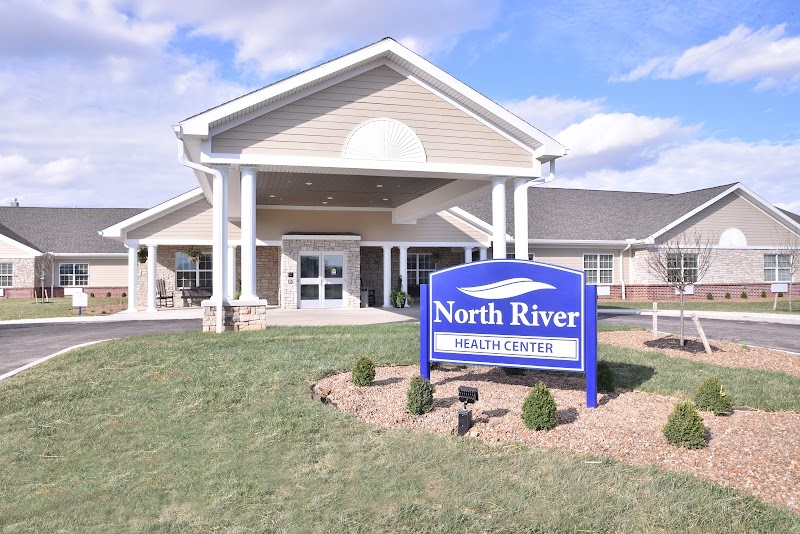
NORTH RIVER HEALTH CAMPUS
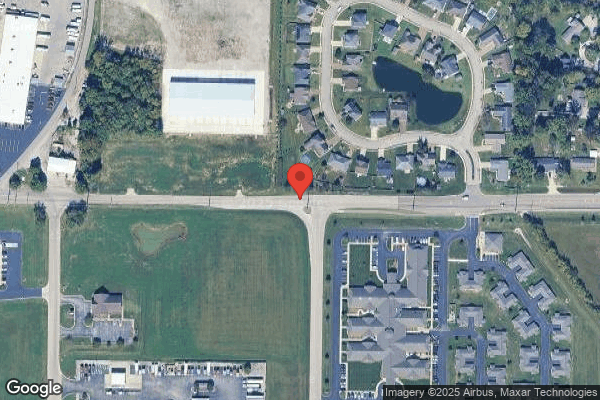
811 E BASELINE ROAD, EVANSVILLE, IN 47725 (812) 867-7256
For profit - Corporation 58 Beds TRILOGY HEALTH SERVICES Data: November 2025
Trust Grade
88/100
#81 of 505 in IN
Last Inspection: March 2025

Within standard 12-15 month inspection cycle. Federal law requires annual inspections.

Overview

North River Health Campus has earned a Trust Grade of B+, which means it is above average and recommended for families considering care options. It ranks #81 out of 505 nursing homes in Indiana, placing it in the top half of facilities statewide, and #1 out of 17 in Vanderburgh County, indicating it is the best local option available. The facility is showing an improving trend, with issues decreasing from four in 2024 to one in 2025. Staffing is relatively strong with a rating of 4 out of 5 stars and a turnover rate of 49%, which is about average for the state. However, the facility has $3,250 in fines, which is concerning as it is higher than 79% of Indiana facilities, suggesting some compliance issues. Specific incidents noted by inspectors include a failure to ensure food was prepared in a sanitary manner, with staff observed not properly using hairnets and feeding residents with bare hands. Additionally, infection control practices were not consistently followed, as staff did not change gloves between tasks during incontinence care. While there are strengths in RN coverage, which is higher than 99% of state facilities, these concerns about food safety and infection control highlight areas that need improvement.

Trust Score
B+
88/100
In Indiana
#81/505
Top 16%
Safety Record
Low Risk
No red flags
Inspections
Getting Better
4 → 1 violations
Staff Stability
⚠ Watch
49% turnover. Above average. Higher turnover means staff may not know residents' routines.
Penalties
⚠ Watch
$3,250 in fines. Higher than 99% of Indiana facilities. Major compliance failures.
Skilled Nurses
✓ Good
Each resident gets 87 minutes of Registered Nurse (RN) attention daily — more than 97% of Indiana nursing homes. RNs are the most trained staff who catch health problems before they become serious.
Violations
○ Average
10 deficiencies on record. Average for a facility this size. Mostly minor or procedural issues.
★★★★★
5.0
Overall Rating
★★★★☆
4.0
Staff Levels
★★★★★
5.0
Care Quality
★★★★★
5.0
Inspection Score
Stable
2024: 4 issues
2025: 1 issues

The Good

  • 4-Star Staffing Rating · Above-average nurse staffing levels
  • 5-Star Quality Measures · Strong clinical quality outcomes
  • Full Sprinkler Coverage · Fire safety systems throughout facility
  • No fines on record

Facility shows strength in staffing levels, quality measures, fire safety.

The Bad

Staff Turnover: 49%

Near Indiana avg (46%)

Higher turnover may affect care consistency

Federal Fines: $3,250

Below median ($33,413)

Minor penalties assessed

Chain: TRILOGY HEALTH SERVICES

Part of a multi-facility chain

Ask about local staffing decisions and management

The Ugly 10 deficiencies on record

Mar 2025 1 deficiency
CONCERN (D)

Potential for Harm - no one hurt, but risky conditions existed

Accident Prevention (Tag F0689)

Could have caused harm · This affected 1 resident

**NOTE- TERMS IN BRACKETS HAVE BEEN EDITED TO PROTECT CONFIDENTIALITY** Based on observation, record review, and interview, the facility failed to ensure residents received supervision and consistent ...

Read full inspector narrative →
**NOTE- TERMS IN BRACKETS HAVE BEEN EDITED TO PROTECT CONFIDENTIALITY** Based on observation, record review, and interview, the facility failed to ensure residents received supervision and consistent implementation of interventions to prevent a fall for 1 of 1 residents reviewed for accidents related to falls. Fall interventions were not consistently implemented. (Resident 15) Findings include: On 3/19/25 at 9:35 A.M., during a random observation of Resident 15 transferring from a wheelchair to a shower chair by Certified Nurse Aide 5 (CNA) and CNA 6, the wheelchair was observed lacking a Dycem (Anti-slip mat) in the seat. On 3/18/25 at 10:26 A.M., Resident 15's clinical record was reviewed. Diagnoses included, but were not limited to, Alzheimer's disease with late onset and Dementia with unspecified severity. The Current Annual Minimum Data Set (MDS) assessment dated [DATE] indicated that Resident 15 was severely cognitively impaired. Resident 15 was dependent on transferring, hygiene, and dressing. Current physician orders included, but were not limited to, using a Dycem to the wheelchair twice a day from 6:00 A.M. to 10:00 A.M. and 6:00 P.M. to 10:00 P.M. dated 6/21/24. An Interdisciplinary (IDT) note dated 3/17/25 at 12:24 P.M., indicated Resident 15 had a fall on 3/14/25 while leaning forward trying to pick things off the floor when he toppled out of the chair. The note indicated that a Dycem was in place. A Quarterly Resident First Meeting dated 2/21/25 indicated Resident 15 was a high fall risk. The most recent care plan indicated the resident was a high fall risk related to altered/impaired mobility and impaired cognition. Interventions included, but were not limited to: Dycem to wheelchair cushion dated 6/24/24 and keep personal items and frequently used items within reach dated 2/22/24, the care plan was last reviewed by staff on 3/3/2025. During an interview on 3/19/25 at 9:35 A.M., CNA 5 indicated that there should be a Dycem in place for the resident. During an interview on 3/21/25 at 8:30 A.M., the Regional Support Nurse indicated that the care plan should be followed and updated after each fall. On 3/21/25 at 9:15 A.M., the Regional Support Nurse provided a current policy Fall Management Program Guidelines reviewed on 12/17/24. The policy indicated .the resident care plan should be updated to reflect any new or change in interventions . 3.1-45(a)(2)
Apr 2024 4 deficiencies
CONCERN (D)

Potential for Harm - no one hurt, but risky conditions existed

Assessment Accuracy (Tag F0641)

Could have caused harm · This affected 1 resident

Based on interview and record review, the facility failed to ensure the MDS (Minimum Data Set) assessment was completed accurately for 1 of 1 residents reviewed for restraints. (Resident 27) Finding i...

Read full inspector narrative →
Based on interview and record review, the facility failed to ensure the MDS (Minimum Data Set) assessment was completed accurately for 1 of 1 residents reviewed for restraints. (Resident 27) Finding includes: On 4/15/24 at 2:23 P.M., a family member indicated restraints had never been used on Resident 27 that she was aware of. On 4/16/24 at 11:00 A.M., Resident 27's clinical record was reviewed. Diagnoses included, but were not limited to, dementia and anxiety disorder. The most recent Quarterly MDS Assessment, dated 2/16/24, indicated Resident 27 had severe cognitive impairment, had no behaviors, and that physical restraints were used less than daily during the 7-day look back period. The clinical record lacked care plans, orders, assessments, and progress notes related to the use of physical restraints. On 4/17/24 at 9:35 A.M., the MDS Coordinator indicated that restraints used less than daily was marked in error on the 2/16/24 Quarterly MDS Assessment. She further indicated the facility did not use restraints on any resident. On 4/19/24 at 10:51 A.M., the Administrator indicated the facility follows the RAI (Resident Assessment Instrument) manual for guidance on coding MDS Assessments.
CONCERN (D)

Potential for Harm - no one hurt, but risky conditions existed

Respiratory Care (Tag F0695)

Could have caused harm · This affected 1 resident

**NOTE- TERMS IN BRACKETS HAVE BEEN EDITED TO PROTECT CONFIDENTIALITY** Based on observation, record review, and interview, the facility failed to ensure oxygen equipment was properly labeled and oxyg...

Read full inspector narrative →
**NOTE- TERMS IN BRACKETS HAVE BEEN EDITED TO PROTECT CONFIDENTIALITY** Based on observation, record review, and interview, the facility failed to ensure oxygen equipment was properly labeled and oxygen was administered as ordered for 1 of 2 residents reviewed for respiratory care. (Resident 47) Finding includes: During an observation on 4/15/24 at 1:19 P.M., Resident 47 was observed sitting in a chair in her room with no oxygen being administered. There was an unplugged oxygen concentrator on the opposite side of the room. There was no date or initials observed on the humidification bottle, oxygen tubing, or oxygen tubing bag. During an observation on 4/16/24 at 8:48 A.M., the oxygen concentrator was observed turned off. There was no date or initials observed on the humidification bottle, oxygen tubing, or oxygen tubing bag. There was a portable oxygen concentrator, not in use, attached to the back of Resident 47's wheelchair; there were no dates on the oxygen tubing. On 4/16/24 at 10:06 A.M., Resident 47's clinical record was reviewed. Resident 47 was admitted on [DATE]. Diagnoses included, but were not limited to, Chronic Obstructive Pulmonary Disorder (COPD), acute and chronic respiratory failure with hypoxia, and bronchopneumonia. The most recent admission MDS (Minimum Data Set) Assessment, dated 3/39/24, indicated Resident 47 was cognitively intact, required limited assistance of 1 staff member for transfers and mobility, and was receiving oxygen therapy. Current active physician orders included, but were not limited to: Oxygen at 2L (liters) per nasal cannula continuous, dated 4/1/24. Change oxygen tubing monthly, once a day on the 1st of the month, dated 4/1/24. Current care plans included, but were not limited to: Resident has potential for complications, functional and cognitive status decline related to respiratory disease; Administer oxygen per MD (medical doctor) order, dated 3/25/24. During an interview on 4/17/24 at 09:01 A.M., Registered Nurse (RN) 9 stated that oxygen tubing was changed weekly, and the oxygen tubing was placed in the bag with the resident's name and current date. When the tubing was not in use the equipment was placed in the bag. A current oxygen administration policy was requested on 4/19/24 and was not provided. 3.1-47(a)(6)
CONCERN (D)

Potential for Harm - no one hurt, but risky conditions existed

Medical Records (Tag F0842)

Could have caused harm · This affected 1 resident

**NOTE- TERMS IN BRACKETS HAVE BEEN EDITED TO PROTECT CONFIDENTIALITY** Based on observation, interview, and record review, the facility failed to ensure resident records were accurate for 2 of 2 resi...

Read full inspector narrative →
**NOTE- TERMS IN BRACKETS HAVE BEEN EDITED TO PROTECT CONFIDENTIALITY** Based on observation, interview, and record review, the facility failed to ensure resident records were accurate for 2 of 2 residents reviewed for pressure ulcers and 1 of 1 residents reviewed for dental. (Resident 43, Resident 101, Resident 47) Findings include: 1. On 4/17/24 at 8:42 A.M., Resident 43's clinical record was reviewed. Diagnoses included, but were not limited to, paraplegia and morbid obesity. The most recent admission Minimum Data Set (MDS) Assessment, dated 2/14/24, indicated that Resident 43 was cognitively intact, was at risk for pressure injuries, and had no unhealed pressure injuries. A care plan, initiated 2/29/24, indicated the resident had a pressure area to the bottom of the left lateral foot and to the gluteal fold. Physician orders included, but were not limited to: Weekly skin assessment: 0=no impairment, 1=new impairment, 2=old impairment, once a day on Mondays, dated 2/09/24 Cleanse left buttock with soap and water. Apply wound gel to wound bed and cover with dry dressing. May change PRN (as needed) if soiled, once a day, dated 3/21/24 Triad Wound Dressing paste - one application topically, twice a day, dated 3/22/24 Wound 1: A Wound Management Detail report indicated a pressure ulcer was identified on the bottom of the resident's left lateral foot on 2/28/24 at 5:25 P.M The wound was unstageable (full thickness tissue loss in which the base of the ulcer cannot be confirmed because the wound bed is obscured by slough and/or eschar), measured 1.9 cm (centimeters) by 2.8 cm, and skin was light purple/green and intact. A wound management detail report, dated 3/7/24 at 7:18 P.M., indicated the pressure ulcer on the resident's left foot was unstageable, measured 1.9 cm by 2 cm, and had necrotic tissue. A progress note, dated 3/14/24 at 11:55 A.M., indicated the pressure ulcer on the resident's left foot continued to show improvement, the purple was fading, with a scant amount of fluid noted under the dermis that appeared to be reabsorbing, and no signs or symptoms of infection. A wound management detail report, dated 3/14/24 at 6:52 P.M., indicated the pressure ulcer on the resident's left foot was unstageable, measured 1.8 cm by 2 cm, and had necrotic tissue. A wound management detail report, dated 3/21/24 at 9:57 P.M., indicated the pressure ulcer on the resident's left foot was unstageable, measured 1.9 cm by 2 cm, and had necrotic tissue. A progress note, dated 3/23/24 at 10:12 A.M., indicated the resident had a bruised area on bottom L [left] foot. A wound management detail report, dated 3/29/24 at 1:59 P.M., indicated the pressure ulcer on the resident's left foot was unstageable, measured 1.9 cm by 2 cm, and had necrotic tissue. A wound management detail report, dated 4/5/24 at 9:17 A.M., indicated the pressure ulcer on the resident's left foot was unstageable, measured 1.9 cm by 2 cm, and had necrotic tissue. A wound management detail report, dated 4/11/24 at 9:22 A.M., indicated the pressure ulcer on the resident's left foot was unstageable, measured 1.9 cm by 2 cm, and had epithelial tissue. Wound 2: A progress note, dated 3/21/24 at 11:08 A.M., indicated . Assessed BLE [bilateral lower extremities]. Remains with purple area to bottom of left foot. Improved from last assessment fading in color . Noted open area to left buttock. 6.8x5.4<0.1 irregular rashy [sic] dry peeling edges open red with slight bleeding. Notified [name of provider] new order received Cleanse daily apply wound gel and cover with foam dressing. Wound nurse eval [evaluation] treatment effectiveness of treatment. A progress note, dated 3/22/24 at 2:31 P.M., indicated MASD [moisture associated skin damage] noted to bilateral gluteal folds. Areas cleansed and triad paste applied. A progress note, dated 3/27/24 at 12:53 P.M., indicated treatment done to area on buttocks. Area is healing peri-wound is pink in color. A wound management detail report indicated a pressure ulcer was identified on the left lower buttocks/thigh (gluteal fold) on 3/29/24 at 2:00 P.M The wound was unstageable, measured 3.5 cm by 3.2 cm, and had granulation tissue. A wound management detail report, dated 4/5/24 at 9:14 P.M., indicated the pressure ulcer on the resident's gluteal fold was unstageable, measured 3.4 cm by 3.2 cm, and had epithelial tissue. The entry was created on 4/17/24 at 9:17 A.M. A progress note, dated 4/11/24 at 7:24 A.M., indicated Resident leaving for appointment in [name of city]. Will return this evening. A wound management report dated 4/11/24 at 9:19 A.M., indicated the pressure ulcer on the resident's gluteal fold was unstageable, measured 3.4 cm by 3.1 cm, and had epithelial tissue. The entry was created on 4/17/24 at 9:21 A.M. A progress note, dated 4/11/24 at 7:37 P.M., indicated Resident has returned from LOA [leave of absence]. A progress note, dated 4/15/24 at 3:07 P.M., indicated Left foot red intact skin improved almost healed. Moisture associated damage to Buttock has improved. The March 2024 TAR (Treatment Administration Administration) indicated a weekly skin assessment had been completed: 3/4/24 - old impairment 3/11/24 - no impairment 3/18/24 - no impairment 3/25/24 - buttocks The April 2024 TAR indicated a weekly skin assessment had been completed: 4/1/24 - no impairment 4/8/24 - old impairment 4/15/24 - no impairment On 4/17/24 at 11:02 A.M., Certified Nurse Aide (CNA) 11 indicated Resident 43 did not have a dressing covering the wound on her buttocks for at least the past week. On 4/17/24 at 11:04 A.M., Licensed Practical Nurse (LPN) 17 indicated Resident 43 did not have a dressing and Triad paste was used. The wound order for the dry dressing needed to be discontinued. She further indicated if a staff member saw a new wound, they would put in an event and she would check those events daily and assess the new wound at that time. She indicated that the resident was in [name of city] on 4/11/24 and the wound assessment, dated 4/11/24, was completed on 4/10/24 and was dated 4/11/24 in error. She indicated the assessments were entered into the resident's medical record on 4/17/24 because she was behind in putting information into the EHR (electronic health record). On 4/18/24 at 9:39 A.M., the Clinical Support Nurse indicated Resident 43's wounds should have been documented as MASD and not unstageable pressure ulcers. The resident had 1 wound on her buttocks and 1 wound on her left foot and that the wounds in the progress notes, skin assessments, and wound management reports referred to those wounds. She indicated the wound on Resident 43's bottom was chronic and would come and go. She indicated the wound on the resident's left foot was not nor ever was necrotic. She indicated the wound nurse was new and was confusing bruised tissue with necrotic tissue. She further indicated the skin assessments should reflect the wound detail management reports, and she was unsure why the nurse was charting there was no impairment when there was.3. During an observation on 4/15/24 at 01:19 P.M., Resident 47 was observed having both missing and broken teeth in the oral cavity. On 4/16/24 at 10:06 A.M., Resident 47's clinical record was reviewed. Resident 47 was admitted on [DATE]. Diagnoses included, but were not limited to, Chronic Obstructive Pulmonary Disorder (COPD), acute and chronic respiratory failure with hypoxia, and type 2 Diabetes Mellitus. The most recent admission MDS Assessment, dated 3/39/24, indicated Resident 47 was cognitively intact, required limited assistance of 1 staff member for transfers and mobility, and had broken or missing teeth. Current care plans included, but were not limited to: Resident is at risk for malnutrition R/T (related to) no natural teeth or dentures (edentulous), dated 4/1/24. An admission observation, dated 3/23/24 at 3:32 P.M., indicated no oral cavity issues and was not selected for any oral cavity indications including missing or broken teeth, dentures, or edentulous. During an interview on 4/17/24 at 10:05 A.M., the MDS Coordinator indicated the care plan contained incorrect information and was marked in error, was not sure why the admission assessment stated Resident 47 had no oral decays and confirmed Resident 47 did have missing and broken teeth. During an interview on 4/19/24 at 12:58 P.M., the Clinical Support Nurse indicated there was no policy related to documentation, and stated it was company policy to document accurately and timely. 3.1-50(a)(2) 2. On 4/17/24 at 2:00 P.M., Resident 101's clinical record was reviewed. Diagnoses included, but were not limited to, unspecified displaced fracture of first cervical vertebra and anterior displaced Type II dens fracture. The current admission MDS Assessment, dated 4/11/24, indicated Resident 101 was moderately cognitively impaired and needed partial to modified assistance to perform toileting, transferring, and mobility. The MDS Assessment indicated Resident 101 also had an unstageable pressure ulcer. Physician's orders included, but were not limited to: Observe L (left) plantar for any changes, notify MD (medical doctor) if any changes are noted, twice a day, dated 4/17/24. Weekly skin assessment once a day, dated 4/4/24. L plantar skin prep q (every) shift, twice a day, dated 4/17/24. Care plans included, but were not limited to: Resident has a pressure ulcer to left bottom of foot. The goal was that the resident ulcer would heal without complications. Interventions included, but were not limited to, assess and record the condition of the skin surrounding the pressure ulcer, observe and report signs of infection (localized redness, swelling, tenderness .), and weekly skin assessment, measurement, and observation of the pressure ulcer and record, dated 4/5/24. On 4/17/24 at 12:46 P.M., the Regional Support Nurse provided Resident 101's Wound Management Detail Report. The observation, dated 4/4/24, indicated the observed pressure wound measured 0.5 cm by 0.5 cm and was located on the bottom of the left plantar foot. The wound was unstageable in the deep tissue. The tissue was necrotic with well-defined wound edges and the surrounding skin was pink and normal. The observation dated 4/12/24 indicated the pressure wound measured 0.7 cm by 0.5 cm and was located on the bottom of the left plantar foot. The wound was unstageable in the deep tissue. The tissue was necrotic with well-defined wound edges and the surrounding skin was pink and normal. During an interview on 4/18/24 at 9:34 A.M., the Regional Support Nurse indicated she had seen the wound and it was not necrotic but was blanchable. The person who had been putting in the assessment was new and had put in the wrong entry. It should not be labeled as necrotic. It was more like a bruise.
CONCERN (D)

Potential for Harm - no one hurt, but risky conditions existed

Infection Control (Tag F0880)

Could have caused harm · This affected 1 resident

Based on observation, interview, and record review, the facility failed to ensure the implementation of enhanced barrier precaution (EBP) during a random observation for 1 of 1 resident with a permcat...

Read full inspector narrative →
Based on observation, interview, and record review, the facility failed to ensure the implementation of enhanced barrier precaution (EBP) during a random observation for 1 of 1 resident with a permcath dialysis catheter while changing linen. (Resident 15) Finding includes: During a random observation on 4/18/24 at 10:02 A.M., Resident 15's room was identified as following the Enhanced Barrier Precautions. Two CNAs (Certified Nurse Aides) were observed entering Resident 15's room with a Hoyer lift and did not apply PPE (personal protective equipment). The resident was observed to be ready for the transfer with the lift pad in position. While in the resident's room, the CNAs did not have PPE on before or after transferring the resident to a wheelchair. The two CNAs were also observed to change the soiled bed linens and apply new linens. During an interview on 4/19/2 at 9:01 A.M., Resident 15 indicated staff did not wear PPE when doing transfers. During an interview on 4/19/24 at 9:04 A.M., RN (Registered Nurse) 3 indicated the staff wore PPE when doing anything that involved direct contact when residents were on enhanced barrier precautions. On 4/19/24 at 12:49 P.M., Resident 15's clinical record was reviewed. Diagnoses included, but were not limited to, other complications of vascular dialysis catheter and end stage renal disease. The most recent Quarterly MDS (Minimum Data Set) Assessment, dated 2/26/24, indicated the resident was cognitively intact. The resident was dependent for mobility, transfer, and dressing. Physician orders included, but were not limited to: Staff to use enhanced barrier precautions d/t (due to) central line, wearing a gown and gloves at minimum during high-contact care activities twice a day, dated 4/15/24. The current care plan indicated the resident had a central line and required enhanced barrier precautions (EBP) during high-contact care related to presence of this line. Interventions included, but were not limited to, risk for transmission of infection will be minimized with use of enhanced barrier precautions, to don/doff and dispose of PPE systematically and appropriately, per policy, and utilize gown and gloves per EBP policy during high contact ADL (Activities of Daily Living) care (e.g. dressing, showering/bathing, hygiene, transfers, toileting/changing briefs) and during linen changes. On 4/19/24 at 1:15 P.M., the Clinical Support Nurse provided a current Enhanced Barrier Precautions (EBP) Standard Operating Procedure policy, dated 4/1/24, that indicated . Enhanced Barrier Precautions will be in place during high-contact activities for residents with the following conditions .all residents with indwelling medical devices .high-contact activities include but are not limited to .morning and evening ADL care . 3.1-18(b)(2)
Jan 2023 5 deficiencies
CONCERN (D)

Potential for Harm - no one hurt, but risky conditions existed

Deficiency F0554 (Tag F0554)

Could have caused harm · This affected 1 resident

**NOTE- TERMS IN BRACKETS HAVE BEEN EDITED TO PROTECT CONFIDENTIALITY** Based on observation, interview, and record review, the facility failed to ensure residents that were self administering medicat...

Read full inspector narrative →
**NOTE- TERMS IN BRACKETS HAVE BEEN EDITED TO PROTECT CONFIDENTIALITY** Based on observation, interview, and record review, the facility failed to ensure residents that were self administering medications were assessed for capability to self administer medications for 2 of 2 residents observed with medications in their rooms. (Resident 24, Resident 37) Findings include: 1. On 1/17/23 at 8:55 A.M., Resident 24 was observed sitting in her chair with a bedside table next to her that had a clear medicine cup with 2 (two) capsules in it. Resident 24 indicated she did not know what the capsules were. At that time, Qualified Medication Aide (QMA) 22 indicated Macrobid and a multivitamin was in the medicine cup, and Resident 24 did not self administer medications. On 1/18/23 at 1:19 P.M., Resident 24's clinical record was reviewed. Diagnosis included, but were not limited to, anxiety and depression. The most recent quarterly Minimum Data Set (MDS) assessment on 12/30/22, indicated Resident 24 was severely cognitively impaired. Current physician orders included, but were not limited to, Macrobid 100mg (milligrams) oral twice a day, dated 1/13/23 (to be given between 6:00 A.M. and 10:00 P.M. and again from 6:00 P.M. to 10:00 P.M.) and Multivitamin 0.25mg oral once a day, dated 12/8/22 (to be given from 6:00 A.M. to 10:00 A.M). Current physician orders lacked an order to self administer medications, or to keep medications in room. Resident 24's record lacked any care plans related to self administration of medications or storage of medications in room. Resident 24's record lacked any self administration of medication assessments. During an interview on 1/20/23 at 10:33 A.M., Licensed Practical Nurse (LPN) 23 indicated Resident 24 required staff to be in the room when receiving medications. 2. On 1/17/23 at 1:04 P.M., Resident 37 was observed sitting in a chair with a bedside table next to him with a bottle that was labelled glucose pills. On 1/19/23 at 8:45 A.M., Resident 37's clinical record was reviewed. Diagnoses included but were not limited to, acidosis and metabolic acidosis. A current quarterly MDS assessment dated [DATE] indicated the resident was mildly cognitive impaired. He was independent with eating and toileting, and needed supervision with dressing, mobility,an dressing. Resident 37 lacked a physician's order for glucose pills and self administration of such pills. Resident 37 lacked a current care plan for the use of glucose pills. Resident 37 lacked a self medication assessment. During on interview on 1/20/23 09:03 A.M., Nurse 6 indicated she was not aware that resident had glucose pills until they were taken away from him. On 1/23/23 at 10:07 A.M., a current Medication Administration General Guidelines policy, revised 11/18 was provided and indicated .The person who prepares the dose for administration is the person who administers the dose .The resident is always observed after administration to ensure that the dose was completely ingested . 3.1-11(a)
CONCERN (D)

Potential for Harm - no one hurt, but risky conditions existed

Respiratory Care (Tag F0695)

Could have caused harm · This affected 1 resident

**NOTE- TERMS IN BRACKETS HAVE BEEN EDITED TO PROTECT CONFIDENTIALITY** Based on observation, interview, and record review, the facility failed to ensure the resident received necessary respiratory ca...

Read full inspector narrative →
**NOTE- TERMS IN BRACKETS HAVE BEEN EDITED TO PROTECT CONFIDENTIALITY** Based on observation, interview, and record review, the facility failed to ensure the resident received necessary respiratory care and services in accordance with professional standards of practice for 1 of 1 residents reviewed for respiratory care. (Resident 197) Findings included: On 1/17/23 at 10:40 A.M., Resident 197 was observed with a CPAP (continuous positive airway pressure) machine on the bedside table. On 1/18/23 at 10:41 A.M., Resident 197's clinical record was reviewed. The resident was admitted on [DATE]. Diagnoses included, but were not limited to, COPD (chronic obstructive pulmonary disease) and sleep apnea. Resident 197's record lacked a current physician's order for use of a CPAP machine. A personal possessions inventory form, dated 1/6/23, listed a CPAP machine. During an interview on 1/20/23 8:25 A.M., Resident 197 indicated his wife maintained the care of the CPAP machine such as filling the water. During an interview on 1/20/23 8:46 A.M., CNA (Certified Nurse Aide) 10 indicated care for a CPAP machine should have been located on the resident's MAR (medication administration record), as well as the CNA computer screen. CNA 10 indicated that Resident 197 lacked that notice. During an interview on 1/23/23 at 11:44 A.M., Clinical Support 32 indicated the facility did not have a policy for the use of CPAP machines. 3.1-47(a)(6)
CONCERN (E)

Potential for Harm - no one hurt, but risky conditions existed

Food Safety (Tag F0812)

Could have caused harm · This affected multiple residents

Based on observation, interview, and record review the facility failed to ensure food was prepared in a sanitary manner. Staff was observed with hair not completely covered by a hairnet for 1 of 1 mea...

Read full inspector narrative →
Based on observation, interview, and record review the facility failed to ensure food was prepared in a sanitary manner. Staff was observed with hair not completely covered by a hairnet for 1 of 1 meal preparations observed. Staff fed residents with bare hands, and reached over a resident's plate of food to assist another resident during 2 of 2 dining observations. (Dietary 12, Resident 16, Resident 17) Findings include: 1. On 1/19/23 during lunch preparation at 11:15 A.M., Dietary 12 was observed in the food preparation area of the kitchen pouring ketchup into containers. Her hair was not contained in the hairnet, hair was exposed and loose at the forehead area. 2. During an observation on 1/17/23 from 12:04 P.M. to 12:32 P.M., the following was observed: Certified Nurse Aide (CNA) 3 reached over Resident 17's plate of food to assist Resident 16 with cutting her food. CNA 3 then reached over Resident 17's plate with her right hand to help Resident 16 obtain food on her fork. CNA 3 walked over to clean Resident 16's hands with a white paper towel. CNA 3 then performed hand hygiene for a 9 (nine) second lather. CNA 3 reached over Resident 17's plate to adjust Resident 16's plate, then reached over Resident 17's plate with her right arm to provide Resident 16 her drink. CNA 3 walked over to clean Resident 16's hands with a white paper towel. CNA 3 then performed hand hygiene for an 8 (eight) second lather. CNA 3 then reached over Resident 17's plate to provide Resident 16 her drink. During an interview on 1/23/23 at 8:47 A.M., CNA 1 indicated if she was helping 2 (two) residents, she would sit in the middle of the two residents in order to not reach over the resident's food to assist. 3. On 1/19/23 at 9:46 A.M., CNA 1 was observed to pick up a piece of toast with her bare hand and feed it to Resident 17. That was observed to be done twice while CNA 1 was feeding Resident 17 breakfast. On 1/23/23 at 8:47 A.M., CNA 1 indicated that gloves should be worn to touch food , not bare hands when feeding a resident. During an interview on 1/23/23 at 11:50 A.M., the Dietary Manager indicated that hair was to be completely covered by a hairnet. On 1/23/23 at 1:17 P.M., Clinical Support 32 indicated the facility does not have a policy indicating to not reach over a resident's plate to feed another resident, but staff should not reach over another resident's food to assist another resident. At that time, the Clinical Support 32 indicated staff were not supposed to touch food with bare hands when assisting residents to eat, the facility did not have a policy regarding this. A current policy Yellow Lines/Hair Restraint Policy dated 12/31/18 provided by Nurse 14 on 1/23/23 at 11:30 A.M., indicated: Entering food production areas . requires the proper use of hair restraints to prevent the chance of hair contaminating food for the consumption. No one is permitted in these areas without the proper hair-restraint equipment being worn . 1. All [name of facility] team members are required to follow signage and wear proper hair restraint equipment such as hair nets . before entering food production areas. 3.1-21(i)(2) 3.1-21(i)(3)
CONCERN (E)

Potential for Harm - no one hurt, but risky conditions existed

Infection Control (Tag F0880)

Could have caused harm · This affected multiple residents

Based on observation, interview, and record review, the facility failed to ensure infection control practices and standards were maintained in 3 of 6 residents observed for care and 1 random observati...

Read full inspector narrative →
Based on observation, interview, and record review, the facility failed to ensure infection control practices and standards were maintained in 3 of 6 residents observed for care and 1 random observation. Staff did not change gloves from dirty to clean tasks during incontinence care and a catheter bag was observed dragging the floor. (Resident 5, Resident 29, Resident 13, Resident 195) Findings include: 1. On 1/17/23 at 9:10 A.M., RN (Registered Nurse) 21 was observed to provide catheter care to Resident 5. RN 21 wore gloves and used a peri-wipe to cleanse the skin in the folds of the resident's groin and around his pubis, after which she used the same wipe to cleanse the opening to his urethra, which was red. She then disposed of the wipe and her gloves in a plastic trash bag and removed it from the room. 2 .On 1/17/23 at 1:49 P.M., Resident 29's catheter leg bag was observed to be draining cloudy yellow urine. CNA 1 came in to straighten out the pillow case that was wrapped around the resident's right leg and secured with elastic bands. She took the pillow case off his leg and laid it on the floor, then got new elastic bands and wrapped the same pillow case around his leg and placed a new leg bag. At that time, Resident 29 indicated it burned when he urinated. CNA 1 did not acknowledge Resident 29's remark about burning on urination. 3. On 1/18/23 at 9:57 A.M., CNA (Certified Nurse Aide) 3 and CNA 5 were observed to perform incontinence care for Resident 13. CNA 3 washed her hands and donned (put on) a pair of gloves. CNA 5 washed her hands with a 4 (four) second lather, and donned gloves. CNA 3 then closed the resident's blinds, and touched the bed control to raise the bed and lower the head of the bed. Both CNA 3 and CNA 5 then removed the blankets from the resident. CNA 3 then opened the cabinet door by the bed, obtained a clean brief and a package of incontinence wipes, and laid them on the bed. CNA 5 removed the soiled brief, and CNA 3 removed an old dressing from the resident's coccyx before cleaning the resident with the incontinence wipe. After cleaning the resident, CNA 3 placed her gloved hands on the resident's legs to assist with turning from side to side to place the new brief. CNA 3 then replaced the package of wipes in the cabinet, and touched the bed control to lower the bed. CNA 3 and CNA 5 then removed their gloves. No glove changes were observed during care. CNA 3 then washed her hands with a 6 (six) second lather, and CNA 5 washed her hands with an 11 second lather. During an interview at that time, CNA 3 indicated hands should be washed for 20 to 30 seconds. 4. On 1/19/23 at 9:37 A.M., during a random observation, Resident 195 was observed sitting in a wheelchair by the 400 Hall nurses station. A catheter bag was observed under the wheelchair resting on the floor. At that time, the resident indicated he was waiting on transportation. PT (Physical Therapist) 7 was observed speaking with the resident, then went to his room, obtained a jacket, and brought it back to assist the resident with putting it on. The driver for the transportation was then observed to push the resident's wheelchair down the hall with the catheter bag dragging the floor. Staff did not address the catheter bag. During an interview on 1/23/23 at 10:17 A.M., the IP (Infection Preventionist) indicated if and when a resident's catheter bag was observed on the floor, staff should pick it up. A current catheter care policy, dated 12/1/2021, was provided on 1/23/23 and indicated Keep drainage bag be covered with an appropriate device .may utilize drainage bags that have a built-in cover, i.e. The Fig Leaf .Cover needs to be replaced when it becomes soiled, urinary drainage bags are to be changed as ordered or as needed .Urinary drainage bags and catheter tubing should be kept from touching the floor surface On 1/23/23 at 9:37 A.M., a current hand hygiene policy, dated 2/9/17, was provided and indicated Health Care Workers shall use hand hygiene at times such as . Before/after having direct physical contact with residents . Wash well for 15-20 seconds, using a rotary motion and friction 3.1-18(b) 3.1-18(l)
MINOR (C)

Minor Issue - procedural, no safety impact

Deficiency F0888 (Tag F0888)

Minor procedural issue · This affected most or all residents

Based on interview and record review, the facility failed to ensure staff COVID-19 vaccination medical exemptions specified a clinically recognized contraindication for 1 of 2 staff medical exemptions...

Read full inspector narrative →
Based on interview and record review, the facility failed to ensure staff COVID-19 vaccination medical exemptions specified a clinically recognized contraindication for 1 of 2 staff medical exemptions reviewed, and the policy lacked additional precautions related to being unvaccinated. (Staff 10) Finding includes: On 1/17/23 at 2:13 P.M., Staff 10's medical exemption was reviewed. The medical exemption, signed 5/16/22, indicated Staff 10 should not receive the COVID-19 vaccine related to multiple neurological issues. During an interview on 1/20/23 at 10:35 A.M., Staff 10 indicated she had a medical exemption and is required to wear a surgical mask as an additional precaution. At that time, Staff 10 was observed working on the resident unit. On 1/23/23 at 9:15 A.M., a current Covid-19 Health Care Staff Vaccination policy, revised 9/28/22, was provided and indicated .Senior Clinical Staff reserves the right to seek clarification from the employee for medical statements not reflecting the Centers for Disease Control (CDC) recognized contraindications Must always wear a well-fitting face mask (loop or N95), regardless of whether they are providing direct care to a resident . The policy lacked the specific contraindication to receiving the vaccine and additional precautions for unvaccinated individuals. 3.1-18(b)
Understanding Severity Codes (click to expand)
Life-Threatening (Immediate Jeopardy)
J - Isolated K - Pattern L - Widespread
Actual Harm
G - Isolated H - Pattern I - Widespread
Potential for Harm
D - Isolated E - Pattern F - Widespread
No Harm (Minor)
A - Isolated B - Pattern C - Widespread

Questions to Ask on Your Visit

  • "Can I speak with families of current residents?"
  • "What's your RN coverage like on weekends and overnight?"

Our Honest Assessment

Strengths
  • • Grade B+ (88/100). Above average facility, better than most options in Indiana.
  • • No major safety red flags. No abuse findings, life-threatening violations, or SFF status.
  • • $3,250 in fines. Lower than most Indiana facilities. Relatively clean record.
Concerns
  • • No significant concerns identified. This facility shows no red flags across CMS ratings, staff turnover, or federal penalties.
Bottom line: Generally positive indicators. Standard due diligence and a personal visit recommended.

About This Facility

What is North River Health Campus's CMS Rating?

CMS assigns NORTH RIVER HEALTH CAMPUS an overall rating of 5 out of 5 stars, which is considered much above average nationally. Within Indiana, this rating places the facility higher than 99% of the state's 100 nursing homes. This rating reflects solid performance across the metrics CMS uses to evaluate nursing home quality.

How is North River Health Campus Staffed?

CMS rates NORTH RIVER HEALTH CAMPUS's staffing level at 4 out of 5 stars, which is above average compared to other nursing homes. Staff turnover is 49%, compared to the Indiana average of 46%.

What Have Inspectors Found at North River Health Campus?

State health inspectors documented 10 deficiencies at NORTH RIVER HEALTH CAMPUS during 2023 to 2025. These included: 9 with potential for harm and 1 minor or isolated issues.

Who Owns and Operates North River Health Campus?

NORTH RIVER HEALTH CAMPUS is owned by a for-profit company. For-profit facilities operate as businesses with obligations to shareholders or private owners. The facility is operated by TRILOGY HEALTH SERVICES, a chain that manages multiple nursing homes. With 58 certified beds and approximately 46 residents (about 79% occupancy), it is a smaller facility located in EVANSVILLE, Indiana.

How Does North River Health Campus Compare to Other Indiana Nursing Homes?

Compared to the 100 nursing homes in Indiana, NORTH RIVER HEALTH CAMPUS's overall rating (5 stars) is above the state average of 3.1, staff turnover (49%) is near the state average of 46%, and health inspection rating (5 stars) is much above the national benchmark.

What Should Families Ask When Visiting North River Health Campus?

Based on this facility's data, families visiting should ask: "Can I visit during a mealtime to observe dining assistance and food quality?" "How do you handle medical emergencies, and what is your hospital transfer rate?" "Can I speak with family members of current residents about their experience?"

Is North River Health Campus Safe?

Based on CMS inspection data, NORTH RIVER HEALTH CAMPUS has a clean safety record: no substantiated abuse findings (meaning no confirmed cases of resident harm), no Immediate Jeopardy citations (the most serious violation level indicating risk of serious injury or death), and is not on the Special Focus Facility watch list (a federal program monitoring the lowest-performing 1% of nursing homes). The facility has a 5-star overall rating and ranks #1 of 100 nursing homes in Indiana. While no facility is perfect, families should still ask about staff-to-resident ratios and recent inspection results during their visit.

Do Nurses at North River Health Campus Stick Around?

NORTH RIVER HEALTH CAMPUS has a staff turnover rate of 49%, which is about average for Indiana nursing homes (state average: 46%). Moderate turnover is common in nursing homes, but families should still ask about staff tenure and how the facility maintains care continuity when employees leave.

Was North River Health Campus Ever Fined?

NORTH RIVER HEALTH CAMPUS has been fined $3,250 across 1 penalty action. This is below the Indiana average of $33,111. While any fine indicates a compliance issue, fines under $50,000 are relatively common and typically reflect isolated problems that were subsequently corrected. Families should ask what specific issues led to these fines and confirm they've been resolved.

Is North River Health Campus on Any Federal Watch List?

NORTH RIVER HEALTH CAMPUS is not on any federal watch list. The most significant is the Special Focus Facility (SFF) program, which identifies the bottom 1% of nursing homes nationally based on persistent, serious quality problems. Not being on this list means the facility has avoided the pattern of deficiencies that triggers enhanced federal oversight. This is a positive indicator, though families should still review the facility's inspection history directly.