ALLISONVILLE MEADOWS
10312 ALLISONVILLE RD, FISHERS, IN 46038 (317) 841-8777
Non profit - Corporation 161 Beds AMERICAN SENIOR COMMUNITIES Data: November 2025
Trust Grade
33/100
#322 of 505 in IN
Last Inspection: March 2025

Within standard 12-15 month inspection cycle. Federal law requires annual inspections.

Overview

Allisonville Meadows in Fishers, Indiana has received a Trust Grade of F, indicating significant concerns about its quality of care. Ranking #322 out of 505 facilities in Indiana places it in the bottom half, and #14 out of 17 in Hamilton County suggests that very few local options are better. The facility's performance has been stable, with 12 issues reported in both 2024 and 2025, but it has recently faced some serious problems, including a resident who fell and was not properly assessed, leading to a hospitalization for a fracture. Staffing has a rating of 2 out of 5 stars, with a turnover rate of 51%, which is average for Indiana, but this may still impact continuity of care. Additionally, the facility has incurred fines totaling $11,190, which is concerning as it is higher than 80% of other Indiana facilities, signaling potential compliance issues.

Trust Score
F
33/100
In Indiana
#322/505
Bottom 37%
Safety Record
High Risk
Review needed
Inspections
Holding Steady
12 → 12 violations
Staff Stability
⚠ Watch
51% turnover. Above average. Higher turnover means staff may not know residents' routines.
Penalties
⚠ Watch
$11,190 in fines. Higher than 86% of Indiana facilities, suggesting repeated compliance issues.
Skilled Nurses
○ Average
Each resident gets 34 minutes of Registered Nurse (RN) attention daily — about average for Indiana. RNs are the most trained staff who monitor for health changes.
Violations
⚠ Watch
46 deficiencies on record. Higher than average. Multiple issues found across inspections.
★★☆☆☆
2.0
Overall Rating
★★☆☆☆
2.0
Staff Levels
★★★★★
5.0
Care Quality
★☆☆☆☆
1.0
Inspection Score
Stable
2024: 12 issues
2025: 12 issues

The Good

  • 5-Star Quality Measures · Strong clinical quality outcomes
  • Full Sprinkler Coverage · Fire safety systems throughout facility
  • No fines on record

Facility shows strength in quality measures, fire safety.

The Bad

2-Star Overall Rating

Below Indiana average (3.1)

Below average - review inspection findings carefully

Staff Turnover: 51%

Near Indiana avg (46%)

Higher turnover may affect care consistency

Federal Fines: $11,190

Below median ($33,413)

Minor penalties assessed

Chain: AMERICAN SENIOR COMMUNITIES

Part of a multi-facility chain

Ask about local staffing decisions and management

The Ugly 46 deficiencies on record

3 actual harm
Mar 2025 7 deficiencies 2 Harm
SERIOUS (G) 📢 Someone Reported This

A family member, employee, or ombudsman was alarmed enough to file a formal complaint

Actual Harm - a resident was hurt due to facility failures

Notification of Changes (Tag F0580)

A resident was harmed · This affected 1 resident

2. The clinical record for Resident B was reviewed on 3/20/25 at 9:43 a.m. The diagnoses included, but were not limited to, urinary tract infection, diarrhea, and dementia. A care plan, initiated 1/2...

Read full inspector narrative →
2. The clinical record for Resident B was reviewed on 3/20/25 at 9:43 a.m. The diagnoses included, but were not limited to, urinary tract infection, diarrhea, and dementia. A care plan, initiated 1/24/25, indicated Resident B required assistance with toileting due to weakness, decreased mobility, incontinence, and diarrhea. The goal was for her to be free of adverse effects of incontinence. The interventions included, but were not limited to, assist with elimination, observe for signs of a urinary tract infection, such as decreased output, concentrated urine, change in mental status, and fever, and document abnormal findings and notify the physician. A Physician's Progress Note, dated 1/29/25, indicated Resident B was seen related to a low-grade fever and mild tachycardia (high heart rate). Her temperature was 99.7 degrees Fahrenheit, and her pulse was between 100 and 110 beats per minute. She had complained about some loose stools. The plan included encouraging oral hydration and obtain a basic metabolic panel (BMP). The BMP results, dated 1/30/25, included a creatinine level (measurement of kidney function) of 0.6 which was within normal limits and Blood Urea Nitrogen (BUN) of 13 which was within normal limits. A physician's order, dated 2/5/25, indicated obtaining a BMP lab STAT (right away). The BMP results, dated 2/5/25, included a creatinine level of 3.3; which was above normal limits and a BUN of 35; which was above normal limits. The BMP results were signed by the Nurse Practitioner as being seen/reviewed on 2/7/25. A physician's order, dated 2/7/25, indicated Resident B was to receive one liter of normal saline (an intravenous fluid) at 50 milliliters (ml) an hour through a midline (type of intravenous access). An Acute Visit Progress Note, dated 2/8/25, indicated Resident B was being seen due to receiving one liter of normal saline and was starting to perk up. The plan included treating her acute kidney injury with a second bag of one liter of normal saline and obtaining a BMP on 2/10/25. During an interview on 3/20/25 at 11:08 a.m., Family Member (FM) 30 indicated she had visited Resident B, on 2/6/25, and had found Resident B looking dehydrated, with sunken eyes, lethargic, and very dry. FM 30 had a meeting with facility staff, on 2/7/25, and had insisted that intravenous fluids be started. She had not been made aware that a BMP had been drawn, on 2/5/25, and that Resident B's creatinine and BUN levels had risen. She was upset the lab results had not been acted on sooner. During an interview on 3/24/25 at 2:11 p.m., the Nurse Consultant (NC) indicated the change in Resident B's, 2/5/25, BMP results should have been called to the physician when they were received. During an interview on 3/25/25 at 1:23 p.m., Nurse Practitioner (NP) 13 indicated she had seen Resident B's, 2/5/25, BMP results on 2/7/25. She would have started intravenous fluids earlier if she had been made aware of the results prior to 2/7/25. A Change of Condition Policy was provided by the Director of Nursing (DON) on 3/25/25 at 2:09 p.m. It indicated It is the policy of this facility that all changes in resident condition will be communicated to the physician and family/responsible party, and that appropriate, timely, and effective intervention takes place .Any sudden or serious change in a resident's condition manifested by a marked change in physical or mental behavior will be communicated to the physician . All symptoms and unusual signs will be documented in the medical record and communicated to the attending physician promptly . This citation relates to Complaint IN00455520. 3.1-5(a)(1) 3.1-5(a)(2) 3.1-5(a)(3) Based on interview and record review, the facility failed to ensure facility staff (Qualified Medication Aide 6 and Certified Nurse Aide 2) notified the nurse on duty of a resident experiencing a fall (Resident D) and timely notify the resident's physician of a fall with injury, resulting in Resident D experiencing moderately strong pain and a delay in the treatment of a left humerus fracture, for 1 of 2 residents reviewed for falls, and to timely inform a physician of a significant change in a lab value for 1 of 2 residents reviewed for hospitalization (Resident B). This deficient practice was corrected on 2/19/25, prior to the start of the survey, and was therefore past noncompliance. The facility implemented a systemic plan that included the following actions: in-service education to nursing staff related to the policy and procedure regarding physician notification pertaining to fall incidents and laboratory results, reviewed all fall incidents for January 2025 to February 7, 2025 and laboratory results for January 2025 to February 18, 2025 to identity potential residents, and conducted a review of residents with physician orders for laboratory work and residents with fall incidents to ensure the medical provider had been notified and documented with ongoing review presented to the Quality Assessment and Assurance (QAA) Committee for review. Findings include: 1. The clinical record for Resident D was reviewed on 3/19/25 at 11:00 a.m. The diagnoses included, but were not limited to, Alzheimer's disease. A Quarterly Minimum Data Set (MDS) assessment, dated 2/21/25, indicated Resident D was moderately cognitively impaired. A nursing progress note, dated 1/22/25 at 12:19 p.m., written by Registered Nurse (RN) 1, indicated at approximately 10:00 a.m., Resident D stated to the nurse he was having pain in his left shoulder. The nurse assessed the resident's skin and observed bruising and swelling on his left shoulder and a skin tear to his left elbow that was approximately two centimeters (cm) in length and 0.5 cm in width. The nurse cleansed the wound with a wound cleanser and a non-adhesive dressing was applied. The nurse notified the physician about the resident's left shoulder pain and received a new order for an x-ray of the left shoulder and clavicle to be performed as soon as possible. On 1/22/25 at 7:45 p.m., an Interdisciplinary Team (IDT) fall note indicated the date and time Resident D sustained a fall was on 1/21/25 at 8:30 p.m. The fall had been self-reported by the resident, he was unable to give details of the fall but stated he fell the evening before and complained of left arm and shoulder pain. Injuries sustained included a left humerus fracture. The resident was transferred to the emergency room (ER) for evaluation and treatment. A change of condition including new pain was noted. On 1/22/25 at 11:40 a.m., RN 1 documented a pain rating of 6 out of 10 for Resident D. The determined root cause of the fall was poor safety awareness, an intervention put into place was a fall mat placed next to the resident's bed. Hospital records, dated 1/22/25, indicated Resident D was admitted to the ER for an evaluation related to a fall from which he was having significant left shoulder pain. The resident also had a laceration to the left elbow and head, and loss of consciousness. The ER physician indicated the resident had a loss of consciousness in the bath the morning of 1/22/25, due to pain. Musculoskeletal assessment indicated tenderness to palpation about the left shoulder and left proximal humerus with extreme limited range of motion. An x-ray of the left shoulder performed, on 1/22/25, at the ER indicated a left proximal humerus fracture (a break in the upper part of the arm bone near the shoulder). The hospital physical therapist indicated Resident D would likely require subacute rehab again. A referral to orthopedic surgery was ordered and the resident was discharged back to the facility in stable condition. A facility reported incident was submitted to the Indiana Department of Health, on 1/23/25, by the Executive Director (ED) for a resident with an unwitnessed fall and sustained injury. An investigation file was provided by the ED on 3/20/25 at 1:30 p.m. The investigation file included a copy of the incident report, fall event, IDT fall note, witness statements from staff, and an interview with the resident. In an undated statement the ED interviewed Resident D regarding the fall he self-reported on 1/22/25. Resident D indicated he got out of his bed because he heard people talking in the hallway the night of 1/21/25. Two female staff members picked him up and put him back in bed. In a statement, dated 1/22/25, Certified Nurse Aide (CNA) 2 indicated she had been working the evening, of 1/21/25, and was walking down the hall to go on break when she overheard someone say, Hey can you help me? One of the other staff, Qualified Medication Aide (QMA) 6, came out of a room at the end of the hallway and asked to help her with a resident who had fallen. Resident D was sitting on the floor with his back against the wall near the bathroom and his legs out in front of him. The resident did not indicate he was in pain to the CNA, and she thought the nurse had already been in to see him. In a statement, dated 1/27/25, RN 20 indicated she was not notified of any falls on her shift on the date of 1/21/25. Resident D had not complained of any pain or reported any falls to her. In a statement, dated 1/23/25, Licensed Practical Nurse (LPN) 5 indicated he was not notified of any falls for Resident D, and was unaware of any falls that occurred during his evening shift. LPN 5 indicated he had been in Resident D's room multiple times that night, and the resident did not mention to him he had fallen or was in pain. In a statement, dated 1/22/25, CNA 3 indicated Resident D complained of left-sided weakness and pain while providing care. The Resident indicated he fell on night shift sometime, and he would continue to shower. As CNA 3 was transferring the resident into the shower chair, the resident had a fainting spell for about 20 seconds. Once she had gotten help he started becoming alert again and did not know what had happened. During an interview on 3/19/25 at 11:45 a.m., Resident D's Representative indicated the in January, the resident had fallen out of bed and broken his left humerus. She did not find out about the fall until she arrived at the facility, on 1/22/25, to accompany the resident to a doctor's appointment. When she arrived, the resident was yelling out in pain complaining his arm hurt, had a cut on his head, and his left shoulder appeared deformed. Resident D's Representative went to the nurse's station to ask what had happened, and staff could not provide an answer for her. In an interview with RN 1, on 3/21/25 at 10:49 a.m., she indicated, on 1/22/25, she had first seen Resident D when administering his morning medications between 8:00 a.m. and 9:00 a.m. The resident mentioned having pain in his shoulder, but did not say anything about the fall. She did not notice any physical injury to his head but noticed a bruise on his arm. In an interview with CNA 3, on 3/21/25 at 11:16 a.m., she indicated on the morning of 1/22/25, sometime after breakfast, Resident D had told her he had fallen the night before. He indicated two aides had helped put him back in bed. CNA 3 notified RN 1 that Resident D had self-reported a fall. CNA 3 indicated to RN 1 the resident had a shower due and that he wished to go through with it. RN 1 indicated to CNA 3 to go ahead and give the resident a shower. CNA 3 did not believe RN 1 went and looked at the resident at that time. CNA 3 attempted to transfer the resident so he could shower, the resident began having seizure-like activity. His eyes rolled to the back of his head, and he urinated on himself. CNA 3 found another aide for assistance so she could report the incident to the nurse. CNA 3 indicated she did notice a knot on the resident's head, and Resident D's Representative had arrived at the facility once they had got Resident D back into bed. During an interview on 3/24/25 at 11:47 a.m., Nurse Practitioner (NP) 13 indicated if there was an injury associated with a fall the medical provider wanted to be called right away. On 3/21/25 at 10:01 a.m., the ED provided the Fall Management Policy, dated 7/2001, last revised 8/2022, it indicated It is the policy of [name of corporation] to ensure residents residing within the facility receive adequate supervision and or assistance to prevent injury related to falls .Post fall 1. Any resident experiencing a fall will be assessed immediately by the charge nurse for possible injuries and necessary treatment will be provided .2. If the resident experienced an injury from the fall, contact the DNS/ED per facility policy. 3. The physician will be contacted immediately, if there are injuries, and orders will be obtained .
SERIOUS (G)

Actual Harm - a resident was hurt due to facility failures

Quality of Care (Tag F0684)

A resident was harmed · This affected 1 resident

Based on observation, interview, and record review, the facility failed to ensure a resident (Resident D) who had fallen the night of 1/21/25, was assessed by a licensed nurse and the licensed nurse w...

Read full inspector narrative →
Based on observation, interview, and record review, the facility failed to ensure a resident (Resident D) who had fallen the night of 1/21/25, was assessed by a licensed nurse and the licensed nurse was made aware of the fall incident by the facility staff (Qualified Medication Aide 6 and Certified Nurse Aide 2), who had assisted the resident back to bed, and ensure the resident had continued monitoring afterwards. The resident experienced moderately strong pain, had skin impairments, and was later hospitalized and identified with a fractured humerus at the hospital for 1 of 3 residents reviewed for falls. This deficient practice was corrected on 2/12/25, prior to the start of the survey, and was therefore past noncompliance. The facility implemented a systemic plan that included the following actions: in-service education to nursing staff related to the policy and procedure regarding fall incidents, reviewed all fall incidents for January until February 7, 2025 to identity potential residents, and conducted an review of residents with fall incidents to ensure assessments, resident profiles, fall interventions, and follow-up with the medical provider have been completed and documented with ongoing review presented to the Quality Assessment and Assurance (QAA) Committee for review. Findings include: The clinical record for Resident D was reviewed on 3/19/25 at 11:00 a.m. The diagnoses included, but were not limited to, Alzheimer's disease. The admission Minimum Data Set (MDS) assessment, dated 12/03/24, indicated Resident D was severely cognitively impaired. The resident had impairment in the range of motion of his lower extremity, on one side of his body. The resident's functional status of toilet transfers and sit-to-stand function was dependent assistance. The resident required partial to moderate assistance with mobility in rolling left and right, and required substantial to maximal assistance when transferring from a sit-to-lying, and lying-to-sit position. Resident D utilized a walker and a wheelchair to assist with mobility. A Quarterly MDS assessment, dated 2/21/25, indicated Resident D was moderately cognitively impaired. The resident had impairment in the range of motion of his upper and lower extremity on one side of his body. The resident's functional status of toilet transfers and sit-to-stand function was substantial to maximal assistance. The resident required substantial to maximal assistance with mobility in rolling left and right, and required substantial to maximal assistance when transferring from a sit-to-lying, and lying-to-sit position. Resident D utilized a wheelchair to assist with mobility. A fall care plan, initiated on 11/29/24, indicated the resident was at risk for falls due to a history of falls at home resulting in a right femur fracture, muscle weakness, Alzheimer's dementia, syncope and collapse. The goal was for the resident's fall risk factors to be reduced in an attempt to avoid significant fall related injury. The interventions included, but were not limited to, the use of a low air loss bed with bolsters, a fall mat on the floor next to bed (left side), anti-rollback devices to wheelchair, anti-tipper devices to wheelchair, touchpad call light, call light to be within reach, environmental changes, non-skid footwear, personal items in reach, therapy screen, and to be up and moving freely in wheelchair with assistance. A care plan, initiated on 11/29/24, indicated the resident was a new admission to the facility and required implementation of services that included, but were not limited to, assistance with activities of daily living related to weakness, fall with fracture, recent surgery, poor cognition, impaired mobility, and unsteady gait. The goal for the resident was to achieve the highest desired practicable level of physical/emotional/psychosocial well-being and functional status. Interventions included, but were not limited to, assistance with transfers, ambulation, bed mobility, toileting and/or incontinent care, eating/drinking, and bathing/hygiene, including oral/dental care, and provide fall prevention interventions. An Activities of Daily Living (ADLs) care plan, initiated on 11/29/24, indicated the resident required assistance with ADLs that included, but were not limited to, bed mobility, transfers, eating and toileting related to muscle weakness, impaired mobility, age, and a recent fall at home with right femur fracture. The goal was for the resident to improve their current functional status. Interventions included, but were not limited to, assist with ambulation as needed, assist with bed mobility as needed, and assist with transfers as needed. A nursing progress note, dated 1/22/25 at 12:27 a.m., written by Licensed Practical Nurse (LPN) 5, indicated a Certified Nurse Aide (CNA) was in Resident D's room to get clothes and a brief for the resident's roommate. Resident D was in bed and complained of being woken up and the lights being turned on. The resident did not complain of signs or symptoms of pain, and made no request for pain medication. A nursing progress note, dated 1/22/25 at 12:19 p.m., written by Registered Nurse (RN) 1, indicated at approximately 10:00 a.m., Resident D stated to the nurse he was having pain in his left shoulder. The nurse assessed the resident's skin and observed bruising and swelling on his left shoulder and a skin tear to his left elbow that was approximately two centimeters (cm) in length and 0.5 cm in width. The nurse cleansed the wound with a wound cleanser and a non-adhesive dressing was applied. The nurse notified the physician about the resident's left shoulder pain and received a new order for an x-ray of the left shoulder and clavicle to be performed as soon as possible. On 1/22/25 at 7:45 p.m., an Interdisciplinary Team (IDT) fall note indicated the date and time Resident D sustained a fall was on 1/21/25 at 8:30 p.m. The fall had been self-reported by the resident, he was unable to give details of the fall but stated he fell the evening before and complained of left arm and shoulder pain. Injuries sustained included a left humerus fracture. The resident was transferred to the emergency room (ER) for evaluation and treatment. A change of condition including new pain was noted. On 1/22/25 at 11:40 a.m., RN 1 documented a pain rating of 6 out of 10 for Resident D. The determined root cause of the fall was poor safety awareness, an intervention put into place was a fall mat placed next to the resident's bed. Hospital records, dated 1/22/25, indicated Resident D was admitted to the ER for an evaluation related to a fall from which he was having significant left shoulder pain. The resident also had a laceration to the left elbow and head, and loss of consciousness. The ER physician indicated the resident had a loss of consciousness in the bath the morning of 1/22/25, due to the pain. Musculoskeletal assessment indicated tenderness to palpation about the left shoulder and left proximal humerus with extreme limited range of motion. An x-ray of the left shoulder performed, on 1/22/25, at the ER indicated a left proximal humerus fracture (a break in the upper part of the arm bone near the shoulder). The hospital physical therapist indicated Resident D would likely require subacute rehab again. A referral to orthopedic surgery was ordered and the resident was discharged back to the facility in stable condition. A facility reported incident was submitted to the Indiana Department of Health, on 1/23/25, by the Executive Director (ED) for a resident with an unwitnessed fall and sustained injury. On 1/23/25, Nurse Practitioner (NP) 13 ordered oxycodone 2.5 milligrams (mg) for mild pain and oxycodone 5 mg for moderate pain. On 1/23/25 at 5:15 p.m., RN 24 indicated in a nursing progress note that Resident D required extensive assistance of two nurses to provide incontinence care. Resident D's Representative requested nurses perform the task due to the resident screaming at the aides who previously attempted to provide care. RN 24 noted Even with extra care with turning and repositioning, resident complained of severe pain. Oxycodone 5 mg was administered by RN 24 immediately after care. In a nursing progress note, dated 1/24/25, the facility Nurse Consultant (NC), indicated she attempted to assess bruising and skin tear to left upper extremity. Resident with sling in place and unwilling to remove for assessment at this time. On 1/26/25 at 12:18 p.m., LPN 23 indicated in a progress note that Resident D had declined to shower because of shoulder pain and was given a pain pill for relief. On 1/27/25 at 11:04 a.m., NP 22 indicated in a progress note that Resident D .is being seen by requested primary care for ongoing pain to left upper arm, which is uncontrolled, following a fall .complains of pain frequently . will discontinue oxycodone today and start Norco 5-325 mg Q4 [every 4] hours . An investigation file was provided by the ED on 3/20/25 at 1:30 p.m. The investigation file included a copy of the incident report, fall event, IDT fall note, witness statements from staff, and an interview with the resident. In an undated statement the ED interviewed Resident D regarding the fall he self-reported on 1/22/25. Resident D indicated he got out of his bed because he heard people talking in the hallway the night of 1/21/25. Two female staff members picked him up and put him back in bed. In a statement, dated 1/23/25, LPN 5 indicated he was not notified of any falls for Resident D, and was unaware of any falls that occurred during his evening shift. LPN 5 indicated he had been in Resident D's room multiple times that night, and the resident did not mention to him he had fallen or was in pain. In a statement, dated 1/22/25, Qualified Medication Aide (QMA) 6 indicated she did not witness Resident D fall or discover him on the floor. She had asked another employee (CNA 2) to assist her in moving the resident's legs up off the floor as they were off his bed, but the resident was still in bed. In a statement, dated 1/22/25, CNA 2 indicated she had been working the evening of 1/21/25 and was walking down the hall to go on break when she overheard someone say, Hey can you help me? One of the other staff (QMA 6) came out of a room at the end of the hallway and asked to help her with a resident who had fallen. Resident D was sitting on the floor with his back against the wall near the bathroom and his legs out in front of him. The resident did not indicate he was in pain to the CNA, and she thought the nurse had already been in to see him. In a statement, dated 1/22/25, CNA 3 indicated Resident D complained of left-sided weakness and pain while providing care. The resident indicated he fell on night shift sometime, and he would continue to shower. As CNA 3 was transferring the resident into the shower chair the resident had a fainting spell for about 20 seconds. Once she had gotten help, he started becoming alert again and did not know what had happened. In a statement, dated 1/22/25 at 11:55 a.m., LPN 21 indicated Resident D's representative was at the resident's bedside and had talked to Resident D, around 8:15 p.m., the evening prior. She indicated two female CNAs had picked the resident up off the floor and proceeded to ask what all follow-up had been done and why was nothing documented related to a fall. In a statement, dated 1/23/25, QMA 19 indicated to their knowledge, Resident D had not fallen and had not complained of any pain the times he was in his room or mention falling. In a statement, dated 1/27/25, RN 20 indicated she was not notified of any falls on her shift on the date of 1/21/25. Resident D had not complained of any pain or reported any falls to her. On 1/28/25, Resident D attended a consultation with an orthopedic specialist regarding the proximal fracture of his left humerus. On 1/31/25, nine days following Resident D's fall, a wound treatment order was placed instructing staff to cleanse the resident's left elbow with normal saline, pat dry, and cover with a dry dressing daily and as needed. On 2/04/25, Resident D underwent a total left shoulder replacement to surgically repair the proximal fracture of his left humerus. On 2/06/25, nursing staff began charting numerical pain scale ratings for Resident D. Prior to this date the last charted pain scale rating was documented, on 1/22/25, the morning following the resident's fall. A pain care plan, last revised on 2/25/25, indicated the resident was at risk for pain related to recent left humerus fracture, pressure ulcer to coccyx, and recent fall resulting in right femur fracture with surgical repair. The goal was for the resident to be free from adverse effects of pain. Interventions included, but were not limited to, the resident's left upper extremity to remain non weight bearing, assist with positioning for comfort, and administer medications as ordered. A care plan, initiated on 3/18/25, indicated the resident sustained a left humerus fracture due to a fall. The goal was for the resident's fracture to heal without complications. The intervention included was to administer pain medication as needed, and to notify the physician of any changes. On 3/18/25 at 10:46 a.m., Resident D was observed laying in bed while watching television with a fall mat parallel to his bed. During an interview on 3/19/25 at 11:45 a.m., Resident D's Representative indicated, in January, the resident had fallen out of bed and broken his left humerus. She did not find out about the fall until she arrived at the facility, on 1/22/25, to accompany the resident to a doctor's appointment. When she arrived, the resident was yelling out in pain complaining that his arm hurt, had a cut on his head, and his left shoulder appeared deformed. Resident D's Representative went to the nurse's station to ask what had happened, and staff could not provide an answer for her. She indicated the fracture was serious enough requiring surgery, setting back his rehab for his earlier sustained femur fracture. During a confidential interview on 3/19/25 at 12:05 p.m., they indicated, the morning of 1/22/25, Resident D had yelled out in pain saying Oh no when the aide attempted to get him up for his shower. The aide looked at the resident, laughed, and then left the room. The aide came back to try again, and Resident D indicated that his shoulder hurt. During an interview with the ED on 3/20/25 at 3:39 p.m., he indicated a fall had not been reported to nursing or management staff on the evening of 1/21/25. We (facility management) estimate the fall occurred at approximately 8:30 p.m. on 1/21/25. The following day, (1/22/25) around 11:00 a.m., Resident D was going to get a shower and demonstrated some pain. That was when the resident self-reported the fall to CNA 3. The shower was not provided since he reported pain. CNA 3 then reported the fall to RN 1, and she assessed him. Once RN 1 assessed him and the provider was notified, the resident was sent to the ER. Resident D's representative was then notified. QMA 6 found the resident on the ground and did not report the fall. When questioned about the incident, QMA 6 denied it happened. In an interview with the facility NC, on 3/20/25 at 3:50 p.m., she indicated Resident D's representative requested he be sent to the ER, and an x-ray was performed there. The resident had some decline since that fall occurred on 1/21/25. Prior to the fall, he could turn himself; pain inhibited him from turning after the humerus fracture. Resident D was incontinent and there would have been a check and change (check for incontinence) every two hours. On 1/21/25 at 9:19 p.m., urine output was charted, at 12:27 a.m. on 1/22/25, LPN 5 went into Resident D's room, and at 4:25 a.m. on 1/22/25, a bowel movement was charted. In an interview with RN 1, on 3/21/25 at 10:49 a.m., she indicated, on 1/22/25, she had first seen Resident D when administering his morning medications between 8:00 a.m. and 9:00 a.m. The resident mentioned having pain in his shoulder, but did not say anything about the fall. She did not notice any physical injury to his head but noticed a bruise on his arm. The resident told CNA 3 during shower time (the morning of 1/22/25) that he had fallen the evening before and that two aides helped him back to bed. In an interview with CNA 3, on 3/21/25 at 11:16 a.m., she indicated on the morning of 1/22/25, sometime after breakfast, Resident D had told her he had fallen the night before. He indicated two aides had helped put him back in bed. CNA 3 notified RN 1 that Resident D had self-reported a fall. CNA 3 indicated to RN 1 the resident had a shower due and that he wished to go through with it. RN 1 indicated to CNA 3 to go ahead and give the resident a shower. CNA 3 did not believe RN 1 went and looked at the resident at that time. CNA 3 attempted to transfer the resident so he could shower, the resident began having seizure-like activity, his eyes rolled to the back of his head, and he urinated on himself. CNA 3 found another aide for assistance so she could report the incident to the nurse. CNA 3 indicated she did notice a knot on the resident's head. Resident D's representative arrived at the facility once they had gotten Resident D back into bed after his episode. QMA 6 was unavailable for interview. On 3/21/25 at 10:01 a.m., the ED provided the Fall Management Policy, dated 7/2001, last revised 8/2022, it indicated It is the policy of [name of corporation] to ensure residents residing within the facility receive adequate supervision and or assistance to prevent injury related to falls .Post fall 1. Any resident experiencing a fall will be assessed immediately by the charge nurse for possible injuries and necessary treatment will be provided .2. If the resident experienced an injury from the fall, contact the DNS/ED per facility policy. 3. The physician will be contacted immediately, if there are injuries, and orders will be obtained . 3.1-37(a)
CONCERN (D)

Potential for Harm - no one hurt, but risky conditions existed

Deficiency F0561 (Tag F0561)

Could have caused harm · This affected 1 resident

Based on interview and record review, the facility failed to follow a resident's choices for 1 of 1 resident reviewed for choices. (Resident 30) Findings include: The clinical record for Resident 30 ...

Read full inspector narrative →
Based on interview and record review, the facility failed to follow a resident's choices for 1 of 1 resident reviewed for choices. (Resident 30) Findings include: The clinical record for Resident 30 was reviewed on 3/21/25 at 1:07 p.m. The diagnoses included, but were not limited to, muscle weakness, and obesity. A Minimum Data Set (MDS) assessment indicated Resident 30 was cognitively intact. An interview was conducted with Resident 30 on 3/19/25 at 11:33 a.m. She indicated there were days she did not get put to bed until 9:30 p.m.-10:00 p.m. Resident 30's preference was to be put to bed between 7:15 p.m. to 7:30 p.m. An interview with Unit Manager (UM) 9, on 3/21/25 at 1:57 p.m., indicated she did not see preferences in Resident 30's care plan about choices for bedtime. She indicated there should be a care plan in place for Resident 30's choice of bedtime. A document entitled Preferences for Customary Routine and Activities, completed on 4/22/24, noted Resident 30 indicated it was very important for her to choose her own bedtime and it be just after dinner. During an interview with Certified Nurse Aide (CNA) 8 on 3/21/25 at 2:47 p.m., they indicated Resident 30 does want to be put to bed after evening meal between 7:15 p.m.-7:30 p.m., but it does not happen at times due to other situations happening. 3.1-3(u)(1)
CONCERN (D)

Potential for Harm - no one hurt, but risky conditions existed

Incontinence Care (Tag F0690)

Could have caused harm · This affected 1 resident

Based on interview and record review, the facility failed to accurately document urinary output as ordered for a resident with an indwelling catheter for 1 of 1 resident reviewed for catheters. (Resid...

Read full inspector narrative →
Based on interview and record review, the facility failed to accurately document urinary output as ordered for a resident with an indwelling catheter for 1 of 1 resident reviewed for catheters. (Resident E) Findings include: The clinical record for Resident E was reviewed on 3/19/25 at 11:45 a.m. The diagnoses included, but were not limited to, obstructive and reflux uropathy (a blockage in the urinary tract). A Quarterly Minimum Data Set (MDS) assessment, dated 2/07/25, indicated Resident E was severely cognitively impaired. A care plan, dated 7/06/25, indicated Resident E required assistance with morning and evening care. The goal was for the resident to have Activities of Daily Living (ADLs) needs met. Interventions included, but were not limited to, documentation of bowel and urinary output every shift. A physician order, dated 3/14/25, indicated Foley catheter (indwelling tube that drains urine from the bladder) care, nurse to record output every shift. The recorded urine output was not documented for two out of three shifts on 2/15/25, and one out of three shifts on 2/16/25 and 2/17/25. Urinary output was not documented for any shift on 3/21/25 and 3/22/25. Urine output volume was documented as Large on 3/15/25 and 3/16/25, Medium on 3/20/25, and Large on 3/23/25. During an interview on 3/24/25 at 2:50 p.m., the facility Nurse Consultant (NC) indicated nursing should be documenting urinary output by milliliter (mL) for residents with indwelling urinary catheters. On 3/21/25 at 3:37 p.m., the Director of Nursing (DON) provided a Bowel and Bladder Program Policy, dated 3/2010, last revised 5/2019, it indicated .Urinary output from indwelling urinary catheters will be documented. It is recommended that catheter care be performed every shift or as indicated per physician orders . 3.1-41(a)(2)
CONCERN (D)

Potential for Harm - no one hurt, but risky conditions existed

Pharmacy Services (Tag F0755)

Could have caused harm · This affected 1 resident

**NOTE- TERMS IN BRACKETS HAVE BEEN EDITED TO PROTECT CONFIDENTIALITY** Based on interview and record review, the facility failed to ensure the availability of medications to administer as ordered for...

Read full inspector narrative →
**NOTE- TERMS IN BRACKETS HAVE BEEN EDITED TO PROTECT CONFIDENTIALITY** Based on interview and record review, the facility failed to ensure the availability of medications to administer as ordered for 1 of 1 resident reviewed for care planning and 1 of 5 residents reviewed for unnecessary medications. (Resident 47 and Resident 182) Findings include: 1. The clinical record for Resident 182 was reviewed on 3/18/25 at 3:30 p.m. The diagnoses included, but were not limited to, pneumonia. The resident was admitted to the facility on [DATE]. An interview was conducted with Resident 182's Representative on 3/18/25 at 3:22 p.m. He indicated Resident 182 was admitted to the facility at approximately 5:00 p.m., on 3/17/25. The resident was still waiting, as of that afternoon, for the facility's pharmacy to deliver the resident's medications. A physician order, dated 3/17/25, indicated Resident 182 was to receive 5 milligrams of finasteride (medication for benign prostatic hyperplasia) once a day. A physician order, dated 3/17/25, indicated the resident was to receive 500 milligrams of hydroxyurea (oral anticancer medication) once a day. A physician order, dated 3/17/25, indicated the resident was to receive 500 milligrams of levofloxacin (antibiotic) twice a day. A physician order, dated 3/17/25, indicated the resident was to receive 25 milligrams of metoprolol (blood pressure medication) once a day. A physician order, dated 3/17/25, indicated the resident was to receive 0.4 milligrams of tamsulosin (medication for benign prostatic hyperplasia) once a day. A physician order, dated 3/17/25, indicated the resident was to receive 200-62.5-25 micrograms of Trelegy inhaler once a day. The March 2025 Medication Administration Record (MAR) indicated the following days that the resident's medications were not available to administer: 5 milligrams of finasteride - 3/18/25 and 3/19/25 = documented as awaiting for pharmacy, 500 milligrams of hydroxyurea - 3/18/25, 3/19/25, and 3/20/25 = documented as awaiting for pharmacy, 500 milligrams of levofloxacin - 3/17/25 - 8:00 p.m. dosage and 3/18/25 - 8:00 a.m. dosage = documented as awaiting for pharmacy, 25 milligrams of metoprolol - 3/18/25 = documented as awaiting for pharmacy, 0.4 milligrams of tamsulosin - 3/18/25 = documented as awaiting for pharmacy, and 200-62.5 -25 micrograms of Trelegy inhaler - 3/19/25, 3/19/25, and 3/20/25 = documented as awaiting for pharmacy. An interview was conducted with the Nurse Consultant on 3/24/25 at 2:47 p.m. She indicated the pharmacy had not received all Resident 182's medication orders that were sent over to them upon admission, on 3/17/25. The pharmacy delivers medications at 9:00 p.m. and 3:00 a.m. The staff recognized, on 3/20/25, that the resident's medications were not here yet. They should have followed up earlier to obtain the medications. 2. The clinical record for Resident 47 was reviewed on 3/24/25 at 10:53 a.m. The diagnoses included, but were not limited to, chronic pain. A Quarterly Minimum Data Set assessment indicated Resident 47 was moderately cognitively impaired. A physician's order, dated 12/27/24, indicated the resident was to receive a buprenorphine 15 microgram/hour patch (pain patch) every Friday. The old patch was to be removed before placing the new patch on. The March 2025 MAR for Resident 47 indicated the buprenorphine patch was not administered on 3/14/25 and 3/21/25. An interview was conducted with Unit Manager (UM) 9 on 3/24/25 at 11:06 a.m. She indicated when the last patch was placed, the nurse was to request and re-order from the pharmacy. If the pharmacy was out of stock, they ordered it from their supplier, then it was sent to the pharmacy for delivery to the facility. This patch was not in the facility's EDK (emergency drug kit; a collection of essential medications and supplies used in emergency situations to provide immediate care). A Re-ordering medications policy was provided by the Nurse Consultant on 3/23/25 at 3:45 p.m. It indicated . Purpose of Policy: To provide a procedure for re-ordering medications .Procedure: Medications should be re-ordered when there is a 3-day supply remaining on the card .Medications are to be re-ordered using the re-supply button in matrix .Effect of Non-Compliance: Medications unavailable for resident use. A medication policy was provided by the Executive Director on 3/25/25 at 9:19 a.m. It indicated .6.1 If any item ordered by facility is not received, and the reason for missing item is not evident, facility should contact pharmacy immediately . 3.1-25(g)(2) 3.1-25(g)(3)
CONCERN (E)

Potential for Harm - no one hurt, but risky conditions existed

ADL Care (Tag F0677)

Could have caused harm · This affected multiple residents

Based on observation, interview, and record review, the facility failed to ensure a resident's hair was shampooed at least weekly, properly positioned a resident to reduce the risk of skin shearing, a...

Read full inspector narrative →
Based on observation, interview, and record review, the facility failed to ensure a resident's hair was shampooed at least weekly, properly positioned a resident to reduce the risk of skin shearing, and to provide timely incontinence care and not utilizing double briefing for 4 of 11 residents reviewed for Activities of Daily Living (ADL) care. (Resident D, Resident G, Resident L and Resident 20) Findings include: 1. The clinical record for Resident L was reviewed on 3/18/25 at 3:17 p.m. The diagnoses included, but were not limited to, history of traumatic brain injury and diabetes. A care plan, initiated 2/7/25, indicated she required assistance with ADL care including bed mobility, transfers, eating, and toileting related to weakness from a recent hospital stay. The goal was for her to improve her current functional status. The approaches included, but were not limited to, a mechanical lift for transfers with assistance of two staff, assist with bed mobility as needed, and assist with toileting and incontinent care as needed. A Quarterly Minimum Data Set (MDS) assessment, completed 2/21/25, indicated she was cognitively intact. She required total assistance with transfers, bed mobility, personal hygiene, and showers. On 3/18/25 at 3:17 p.m., Resident L indicated she had been receiving bed baths. She preferred two people assisted with bed mobility since the grab bars on her bed were smaller than she would like. At times, she felt incontinent care was lacking. On 3/21/25 at 8:55 a.m., Resident L was observed in her bed. Her hair had flakes of dry skin and there was a crust of loose dry skin on her scalp. She indicated her hair had not been washed in two weeks. She would like to have it washed more often. During an observation on 3/21/25 at 2:45 p.m., Resident L was observed in her bed after being transferred with the mechanical lift. Certified Nurse Aide (CNA) 14 and CNA 15 were in the room preparing to provide care. Resident L was lying at the top of the bed on four disposable incontinent pads. The base of her head was resting on the headboard, and her head was flexed forward with her chin down toward her chest. CNA 15 indicated Resident L had been positioned high in the bed so when the head of the bed was elevated Resident L would slide down to the right position in the bed. CNA 14 began raising the head of the bed and when the head of the was elevated to approximately 45 to 60 degrees, Resident L quickly slid down the bed to a sitting position. CNA 15 indicated Resident L had slid down to the proper position in bed. On 3/21/25 at 3:22 p.m., the Director of Nursing (DON) provided the February and March 2025 shower reports for Resident L, which indicated she received a complete bed bath on the following days: 2/11/25, 2/14/25, 2/18/25, 2/21/25, 2/28/25, 3/4/25, 3/7/25, 3/11/25, and 3/18/25. The shower reports did not indicate her hair had been washed with any of the complete bed baths received. During an interview on 3/24/25 at 2:30 p.m., the Nurse Consultant (NC) indicated residents should not intentionally slide down the bed to the proper position due to the increased risk of shearing to the skin. 2. The clinical record for Resident D was reviewed on 3/19/25 at 11:00 a.m. The diagnoses included, but were not limited to, Alzheimer's disease. A Quarterly MDS assessment, dated 2/21/25, indicated Resident D was moderately cognitively impaired. A care plan, dated 11/29/24, last revised on 2/24/25, indicated Resident requires assistance with toileting due to: Muscle weakness, impaired mobility due to surgical repair of right femur fracture, incontinence, age, impaired cognition, Alzheimer's dementia, benign prostatic hyperplasia, and pain. The goal was for Resident D to remain free of adverse effects of incontinence. Interventions included, but were not limited to, to check for incontinence every two hours and as needed. On 3/18/25 at 10:46 a.m., Resident D was observed laying in bed while watching television with a fall mat parallel to his bed. During an interview on 3/19/25 at 11:45 a.m., Resident D's Family Member indicated there were times when he was laying in bed for an hour in urine before he got changed. During an interview on 3/24/25 at 9:53 a.m., Resident D's Family Member indicated she arrived at the facility, on 3/23/25, to visit the resident. She noticed his brief needed changed. She put on his call light and a nurse came to the room and turned the call light off and indicated an aide would come in to change the resident's brief. An aide never came. So, Resident D's Family Member found a brief and wipes and changed him herself. After having put his call light on and nobody had arrived later that day, Resident D's Family Member went out to the nurse's station and three CNAs were just standing there congregating. She indicated staff were not checking his brief every two hours. During an interview on 3/24/25 at 2:50 p.m., the facility Nurse Consultant indicated staff should be performing incontinent checks on residents every two hours. The urinary output for the resident was charted once on 3/17/25 at 10:28 a.m., once on 3/18/25 at 2:21 p.m., and once on 3/19/25 at 2:33 p.m. On 3/21/25 at 3:37 p.m., the DON provided a Bowel and Bladder Program Policy, dated 3/2010, last revised 5/2019, it indicated If a resident is totally incontinent and unable to be placed on a toilet or bedpan, resident should be checked and changed every two hours. 3. The clinical record for Resident 20 was reviewed on 3/20/25 at 3:14 p.m. The diagnoses included, but were not limited to, chronic obstructive pulmonary disease (COPD). A Quarterly MDS assessment, dated 1/22/25, indicated Resident 20 was moderately cognitively impaired. A current care plan, last reviewed/revised on 1/23/25, indicated Resident 20 required staff assistance with ADLs with an intervention of assistance and/or monitoring AM/PM care, nutrition, hydration, and elimination. An interview was conducted with Resident 20 on 3/19/25 at 2:30 p.m. Resident 20 indicated she did not get changed frequently. She got changed four times a day and had to wait up to three hours to get changed at times. Resident 20 indicated she was always double briefed and was under the impression that double briefing was a standard of care. An observation with Resident 20 in her room started, on 3/20/25 at 9:30 a.m., while Resident 20 finished breakfast. At 9:44 a.m., Resident 20 pushed her call light button to alert staff that she needed assistance. At 9:48 a.m., Licensed Practical Nurse (LPN) 10 came into Resident 20's room to see what she needed. Resident 20 indicated she needed to be changed. LPN 10 told her she would get someone to help her. At 10:01 a.m., a CNA went into Resident 20's room and removed her breakfast tray. No communication between the CNA and Resident 20 occurred. At 10:02 a.m., another CNA went into Resident 20's room and checked on her and her roommate. No communication between the CNA and the residents occurred. At 10:05 a.m., the Executive Director (ED) went into Resident 20's room. Resident 20 indicated to the ED she needed to be changed. The ED indicated he would look for someone to assist her. At 10:07 a.m., the ED exited the room to look for a staff member to assist Resident 20 with getting cleaned up. At 10:12 a.m., a CNA went into Resident 20's room and looked around and walked back out. No communication between the CNA and Resident 20 occurred. At 10:14 a.m., Resident 20 pushed her call light again to request assistance in being changed. At 10:15 a.m., Unit Manager (UM) 9 and LPN 10 went into Resident 20's room to check on the resident. Resident 20 requested to be changed. UM 9 and LPN 10 gathered supplies, performed hand hygiene, and donned gloves. When UM 9 removed the outer blue brief, another brief was seen in between Resident 20's legs. The brief in-between her legs was white. UM 9 indicated two briefs were placed on residents who requested double briefs, and a care plan was in place for this preference. UM 9 indicated Resident 20 was on hospice and hospice may have care planned two briefs to be placed on the resident. 4. The clinical record for Resident G was reviewed on 3/21/25 at 10:00 a.m. The diagnoses included, but were not limited to, dementia and bowel and bladder incontinence. A care plan, created on 1/2/25, indicated Resident requires assistance with toileting due to: Weakness, Age, Dementia, Incontinence . The care plan approaches included, Assist with incontinent care as needed .Check every 2 hours for incontinence . A Quarterly MDS assessment, dated 2/17/25, indicated the resident was dependent on staff for toileting hygiene. On 3/20/25 at 10:24 a.m., Resident G was observed sitting in her wheelchair in the activities room next to Family Member (FM) 31. During an interview on 3/20/25 at 10:27 a.m., FM 31 indicated the resident was incontinent of bowel and bladder but could sometimes tell when she needed to have a bowel movement. The staff did not check her brief for wetness every two hours, only when she told them she needed to have a bowel movement. He had arrived that morning, approximately 20-30 minutes prior, and her brief had not been checked or changed since he arrived. During a continuous observation on 3/20/25 from 10:24 a.m. to 11:14 a.m., no staff were observed to check Resident G's brief or assisted her with toileting. During an interview on 3/20/25 at 1:05 p.m., FM 31 indicated he had been seated next to Resident G the entire time, and she had not been changed or checked for incontinence. On 3/24/25 at 1:48 p.m., the Nurse Consultant (NC) provided the Vitals Report which contained documentation of Resident G's episodes of incontinence between 2/1/25 and 3/24/25. On 3/20/25, the staff documented the resident was incontinent that morning, at 9:37 a.m., with a large amount of urine. The next documented incontinent episode was 1:50 p.m., with a large amount of urine. During an interview on 3/24/25 at 12:10 p.m., the ED indicated there was not an ADL Care Policy. The facility followed the standards of care. An interview with the NC, on 3/24/25 at 2:50 p.m., indicated staff should be performing incontinence checks every two hours. 3.1-38(a)(2)(C) 3.1-38(a)(3)(A) 3.1-38(a)(3)(B)
CONCERN (E) 📢 Someone Reported This

A family member, employee, or ombudsman was alarmed enough to file a formal complaint

Potential for Harm - no one hurt, but risky conditions existed

Infection Control (Tag F0880)

Could have caused harm · This affected multiple residents

Based on observation, interview, and record review, the facility failed to ensure hand hygiene was performed when gloves were changed when performing incontinent care for 1 of 8 residents reviewed for...

Read full inspector narrative →
Based on observation, interview, and record review, the facility failed to ensure hand hygiene was performed when gloves were changed when performing incontinent care for 1 of 8 residents reviewed for activities of daily living, failed to maintain infection control while providing catheter care for 1 of 1 resident reviewed for catheter care, failed to ensure staff performed hand hygiene during coffee service, and to ensure medication carts were cleaned after touched by residents for 3 of 3 residents randomly observed. (Resident E, Resident F, Resident G, Resident H and Resident L) Findings include: 1. The clinical record for Resident L was reviewed on 3/18/25 at 3:17 p.m. The diagnoses included, but were not limited to, history of traumatic brain injury and diabetes. A care plan, initiated 2/7/25, indicated she required assistance with Activities of Daily Living (ADL) care including bed mobility, transfers, eating, and toileting related to weakness from a recent hospital stay. The goal was for her to improve her current functional status. The approaches included, but were not limited to, a mechanical lift for transfers with assistance of two staff, assist with bed mobility as needed, and assist with toileting and incontinent care as needed. A Quarterly Minimum Data Set (MDS) assessment, completed 2/21/25, indicated she was cognitively intact. She required total assistance with toileting. On 3/18/25 at 3:17 p.m., Resident L indicated she felt that incontinent care was lacking and was concerned about getting a urinary tract infection due to the poor incontinent care at times. During an observation on 3/21/25 at 2:45 p.m., Certified Nurse Aide (CNA) 14 provided incontinent care for Resident L. CNA 14 performed hand hygiene and prepared a basin of warm water and gathered supplies. CNA 14 then donned a pair of disposable gloves. She donned a gown and then donned a second pair of gloves. CNA 14 began performing incontinent care by undoing the incontinence brief and pulling the brief down. CNA 14 cleansed the perineal area of Resident L and removed the outer set of gloves and donned a new pair of disposable gloves over the gloves which remained on her hands. No hand hygiene was performed. CNA 14 then cleansed Resident L's buttocks and prepared the soiled brief to be removed. CNA 14 removed the outer pair of gloves and donned another pair of gloves over the existing gloves on her hands. No hand hygiene was performed. CNA 14 then applied barrier cream to Resident L's buttocks. Resident L was rolled to her back and CNA 14 doffed the outer pair of gloves, donned another pair of gloves on top of the existing gloves on her hands, and applied barrier cream to Resident L's peri area. During an interview on 3/21/25 at 3:15 p.m., the Corporate Infection Preventionist indicated the use of double gloves was not the policy of the facility and that hand hygiene should have been performed. 2. The clinical record for Resident E was reviewed on 3/19/25 at 11:45 a.m. The diagnoses included, but were not limited to, obstructive and reflux uropathy (a blockage in the urinary tract). A Quarterly MDS assessment, dated 2/07/25, indicated Resident E was severely cognitively impaired. A care plan, dated 7/26/24, last reviewed/revised on 2/11/25, indicated the Resident is at risk of transferring or becoming colonized with a Multidrug-Resistant Organism (MDRO) and requires enhanced barrier precautions (EBP) due to an indwelling medical device. The goal of the care plan was for the Resident to be compliant with enhanced precautions to decrease the risk of MDRO transmission during high contact activities. Interventions included, but were not limited to, use standard precautions including hand hygiene in addition to EBP and wear gown and gloves prior to high contact resident care activities. During an observation of urinary catheter care on 3/24/25 at 11:50 a.m., CNA 4 performed hand hygiene before donning a gown and gloves. With gloves on, CNA 4 reached into her pocket and removed two trash bags, pulled a privacy curtain closed, touched the resident's bathroom doorknob and sink handle, and touched the resident's bedside table. CNA 4 then placed clean washcloths in a basin of water with soap. CNA 4 removed her gloves and applied new gloves without the use of hand hygiene. She proceeded to cleanse the catheter tubing with the previously touched washcloths. CNA 4 did not doff her gloves, perform hand hygiene, and apply new gloves after touching high traffic surfaces before touching the clean washcloths and providing care. 3. During a random observation of coffee being passed on 3/20/25 at 11:38 a.m., CNA 16 did not perform hand hygiene before initiating passing coffee to residents. She handed cups of coffee to several residents. CNA 16 then held the hand of a resident to lead her towards the back of the activities room, where another staff member assisted the resident to the restroom. She did not perform hand hygiene after. CNA 7 touched a resident's clothes and arm to assist her and then grabbed a clean cup and filled it with water and handed it to another resident. CNA 7 did not perform hand hygiene after touching the resident. During an interview with Family Member (FM) 31 on 3/20/25 at 11:38 a.m., he indicated he rarely saw the staff wash their hands or use hand sanitizer when he was present. 4. During a random observation on 3/21/25 at 8:47 a.m., Resident F placed her dirty breakfast plate on the medication cart surface in the activities room. She touched various surfaces on the cart. After several minutes, Qualified Medication Aide (QMA) 17 noticed Resident F touching the medication cart. She attempted to redirect Resident F, who became angry and swatted her arm at QMA 17. QMA 17 indicated as long as Resident F was safe, sometimes it was best to let her be, so she doesn't get too agitated. Resident F wandered away after several more minutes. On 3/21/25 at 8:57 a.m., QMA 17 went to the medication cart to retrieve medication for another resident. QMA 17 did not wipe down any surface of the medication cart before placing clean medication cups on the cart. 5. During a random observation on 3/21/25 at 9:23 a.m., Resident H began touching the medication cart located in the hallway outside the activities room. No staff intervened. Resident H walked away after several minutes. On 3/21/25 at 9:32 a.m., an unidentified CNA went up to the cart to pour a cup of water for a resident. She did not wipe down any of the items or any surface of the cart. On 3/24/25 at 8:56 a.m., the ED provided the Hand Hygiene Policy, last reviewed 12/2021, which indicated .to provide a standardized approach to Hand hygiene to reduce or minimize the transmission of infection from potential microorganisms on the hands of all employees . Moments of hand hygiene .Before touching a resident, Before Clean/Aseptic procedure, After body fluid exposure risk, After touching a resident, After touching resident surroundings .Indication for Hand-rubbing but not limited to: Before having direct contact with a resident and/or equipment .Before the starting [sic] a medication preparation, After each resident contact and after contact with a resident's belongings, environmental surfaces, touching items on the floor, and resident care equipment, after contact with a resident's intact skin .Before and after removing glove .After touching self or clothing during meal service . This citation relates to complaint IN00455520. 3.1-18(b)(1) 3.1-18(l)
Jan 2025 5 deficiencies 1 Harm
SERIOUS (G) 📢 Someone Reported This

A family member, employee, or ombudsman was alarmed enough to file a formal complaint

Actual Harm - a resident was hurt due to facility failures

Deficiency F0760 (Tag F0760)

A resident was harmed · This affected 1 resident

Based on interview and record review, the facility failed to administer a synthetic opioid pain patch in accordance with the physician order, the manufacturer's specifications, or accepted professiona...

Read full inspector narrative →
Based on interview and record review, the facility failed to administer a synthetic opioid pain patch in accordance with the physician order, the manufacturer's specifications, or accepted professional standards to prevent a significant medication error for 1 of 3 residents reviewed for medication regimen. (Resident C) This deficient practice resulted in the resident having two opioid pain patches applied simultaneously, the resident experienced a significant change in consciousness that required emergent administration of an opioid overdose medication, and hospitalization. This deficient practice was corrected on 12/31/24, prior to the start of the survey, and was therefore past noncompliance. The facility implemented a systemic plan that included the following actions: in-service education to nursing staff related to the policy and procedure regarding synthetic opioid pain patches, conducted competency check offs for medication administration for nursing staff, and conducted a review of residents who received a synthetic opioid pain patch with ongoing review presented to the Quality Assessment and Assurance (QAA) Committee for review. Findings include: The clinical record for Resident C was reviewed on 1/2/25 at 11:00 a.m. The diagnoses for Resident C included, but were not limited to, quadriplegia. A Quarterly MDS (Minimum Data Set) assessment, dated 11/6/24, indicated the resident was cognitively impaired. Resident C was receiving pain management. A physician order, dated 6/8/24, indicated the resident was to receive four milligrams of Narcan [medication that can reverse opioid overdose] in nostril for drug sedation as needed. A physician order, dated 7/17/24, indicated the resident was to receive 15 milligrams (mg) of morphine twice a day as needed for pain. A physician order, dated 7/17/24, indicated the resident was to receive one 75 micrograms (mcg) fentanyl (synthetic opioid medication) patch every three days for pain. The order was discontinued on 12/27/24. The November 2024 Medication Administration Record (MAR) indicated the 75 mcg fentanyl patch was administered with the location of the patch on the following days: 11/23/24 placed on the right chest, 11/28/24 placed on the right upper back, and 11/30/24 placed on the chest. The MAR did not include documentation of the removal of the fentanyl patches. A November 2024 controlled substance administration record indicated nursing staff placed a fentanyl 75 mcg patch on Resident C five times in eight days on 11/23/24, 11/24/24, 11/27/24, 11/28/24, and 11/30/24. The record did not include documentation of the removal of the fentanyl patches. Resident C's clinical record did not include documentation to indicate the resident was monitored for a change of condition after receiving the pain patch five times within the eight-day period. A medication error report, dated 12/26/24, indicated Qualified Medication Aide (QMA) 10 administered the fentanyl patch to Resident C on 11/24/24 in error. The patch was supposed to be administered on 11/26/24. After, QMA 10 administered a fentanyl patch, on 11/28/24, in error. The patch was supposed to be administered on 11/30/24. The resident's previous fentanyl patches were not removed prior to administration of the new fentanyl patches on 11/24/24 and 11/28/24. The report indicated the measures taken for prevention of reoccurrence was demotion of QMA 10 to a Certified Nurse Aide (CNA). The December 2024 MAR indicated Resident C received a fentanyl 75 mcg patch on the following days and location of the patch: 12/21/24 placed on the chest and, on 12/24/24, placed on right side of the chest. The MAR did not include documentation of the removal of the fentanyl patches. On 12/24/24 at 9:13 p.m., Resident C received 15 mg of morphine as needed with a pain level of eight for generalized pain. A December 2024 controlled substance administration record for Resident C indicated nursing staff placed a fentanyl 75 mcg patch on 12/21/24 at 8:00 p.m. and 12/24/24 at 8:00 p.m. A nursing progress note, dated 12/25/24 at 4:32 a.m. indicated, this writer was providing care for resident roommate when she [Resident C] was observed to be gargling and foaming at the mouth, resident was extremely difficult to arouse and was incoherent with responding to verbal commands, resident eyes closes, skin cool clammy and ashen in color, 2 [two] fentanyl patches were in place on right and left side of resident chest, one dated 12/21 and one dated 12/24, old patch was removed, and nasal narcan spray administered at 4:07 a.m. x 1 [times one] dose, resident started to become more coherent within 5 [five] min [minutes] were resident vitals WNL [within normal limits], [blood pressure] 150/68, P [pulse] 79 RR [respiration rate] 16 post Narcan, resident agitated and in pain, 911 called and resident to be sent to [name of hospital] for further evaluation , voicemail left for emergency contact, DNS [Director of Nursing Services] and MD [medical doctor] notified of change in condition . A reportable incident to the Indiana Department of Health, dated 12/26/24, indicated a medication error had occurred on 12/25/24 at 4:01 a.m. Resident C was sent to the hospital for evaluation. The investigation for the medication error was provided by the Executive Director on 1/3/25 at 8:56 a.m. It included, but was not limited to, the following: A written statement by Licensed Practical Nurse (LPN) 11, dated 12/26/24, indicated on 12/24/24 upon administering prescribed medication [75 mcg fentanyl patch] to resident [C]. Resident's roommate started yelling saying that she was in pain in her chest. I stopped to check the roommate and forgot to take off other patch amongst the chaos in the room. A medication error report, dated 12/25/24, indicated fentanyl patch was not removed when applying new patch. The medication error resulted in resident needed to be narcan [sic] & sent to hospital. The report indicated the measures taken for prevention of reoccurrence was presence of two nurses with the removal and application of fentanyl patches. An in-service was conducted with staff, on 12/26/24, for medication errors. The hospital records, dated 12/25/24 through 12/27/24, indicated the following, .found pt [patient] unresponsive and realized pt was wearing 2 [two] fentanyl patches. Pt still wearing one fentanyl patch on arrival, removed by .ED [emergency department] staff .RNs [Registered Nurses] at [name of facility] admin [administered] intranasal narcan. Pt vitally stable on arrival .Patient seen and examined. Patient was brought into the ED as she was found to be unresponsive at ECF [extended care facility] though the patient has no recollection that she was at the ECF. Patient was confused at the time of admission thinking that she had come from home. Patient was noted to have 2 [two] fentanyl patches on at the ECF and they were removed and patient was given a dose of Narcan .and she became much more responsive .1. Increased somnolence-secondary to narcotic patch .Appears to be at baseline mentation at this time .5. Chronic pain - patient was found to have 2 fentanyl patches on at the time of admission. Received narcan prior to admission. Continue morphine and Lyrica. Will resume fentanyl patch tomorrow .Principal Problem: toxic metabolic encephalopathy suspected to be secondary to narcotic overdose. Mentation now appears to be at baseline. Seen by neurology who has cleared her for discharge . Resident C was discharged on 12/27/24. An interview was conducted with Resident C on 1/3/25 at 11:38 a.m. She indicated she could not recall the incident. She no longer received fentanyl patches. An interview was conducted with the Director of Nursing Services (DNS) and Float Director of Nursing Services (FDNS) on 1/3/25 at 2:49 p.m. They indicated a medication error had occurred on 12/24/24. Nursing staff had placed a 75 mcg fentanyl patch on Resident C, as ordered, but had not removed the previous one. Resident C had two fentanyl patches on. FDNS indicated emergency medical services (EMS) was notified and administration of Narcan was initiated. Resident C was sent to the hospital for evaluation. The resident remained in the hospital for a couple of days, but it was not due to wearing two fentanyl patches. During her hospital stay, blood levels for fentanyl were not even obtained. On 11/24/24 and 11/28/24, medication errors had also occurred with the resident's fentanyl patches. The nursing staff had administered the fentanyl patches to Resident C prior to the 72 hours as ordered. The staff did not remove the previous fentanyl patches prior to administering the new fentanyl patches, so the resident was also on those days wearing two patches. After hospitalization, Resident C's fentanyl patch order was discontinued. An email statement by Physician 13, dated 1/3/25, was provided by the FDNS at 1/3/25 at 2:54 p.m. It indicated the following, .I have reviewed the chart and this is my thought on this. After removing the patch for 24 hours, the concentration of fentanyl in the serum gradually decreased to about 50% after 17 hours (range:13-22 hours). These results indicated that the fentanyl continued to be released into the blood from the skin after drug withdrawal. But this also indicates that if a patch was still in place after the 72 hour mark the concentrations were likely decreasing at rapid rates. Meaning that I don't think that the fentanyl patch that was older was likely contributing much to the newer patch that was in place. It doesn't mean that the patches should not be removed, removing a patch at the 72 hour mark increases the rate of fentanyl blood concentration more rapidly allowing the second patch to have less total blood concentration at the 24-hour mark from when it is first put in place. That being said it likely was not contributing significantly. Despite the MRI [tube like machine to see images of organs and tissues in body] a being negative it is curious that the CTA [computed tomography angiography - diagnostic imaging procedure that uses X-ray technology and computer processing to create detailed images of blood vessels and surrounding tissues] indicated a possible acute or subacute thrombus [clot]. Partial occlusion may have attributed for part of her symptoms. Simply saying that someone gets narcan and wakes up is not enough to indicate that it was entirely the opiates fault. Especially in a fentanyl patch, it remains in the blood for 17 hours as stated above. Which would mean one or two doses of narcan would only last an hour and a half and she would still have over 50% of the original concentration in her blood despite taking both patches off immediately upon arrival. That would mean that narcan would need to be continually infused over the next 17 hours to remain effective. I think this is a deficiency that the hospital team is overlooking in blaming the fentanyl entirely A medication administration procedure policy was provided by the Executive Director on 1/3/25 at 8:56 a.m. It indicated the following, .3. Medications to verify order with label .10. Perform the 5 [five] rights of medication: Right Resident, Right Medication, Right Dose, Right Route, Right Time .19. Medication administration will be recorded on the MAR/EMAR . after given The website Drugs.com at https://www.drugs.com/cdi/fentanyl-transdermal-patch.html , retrieved on 1/7/25 at 5:00 p.m., updated December 21, 2023, indicated the following, .Fentanyl Transdermal Patch .How is this medicine (Fentanyl Transdermal Patch) best taken? . Take off old patch first . Put patch on clean, dry, healthy skin on the chest, back, upper leg, or upper arm . Put the patch in a new area each time you change the patch . What do I do if I miss a dose? .Do not apply double dose or extra patches The website National Library of Medicine at https://www.ncbi.nlm.nih.gov/books/NBK470415/ , retrieved on 1/7/25 at 5:05 p.m., updated July 21, 2023, indicated the following, .Formulas of Opiates and Delivery . The transdermal delivery of opiates like fentanyl has been widely accepted in healthcare settings for analgesic relief. This route of administration is favored because the drug levels take 4 to 6 hours to peak and there is a long elimination half-life, thus making the drug suitable for use in patients with chronic continuous pain . However, the topical formulation of fentanyl can contribute toward the toxicity of parenteral or oral opiates . Evaluation . Laboratory Studies . Patients with drug overdose usually undergo several investigations. Drug screens are readily available but often do not change the initial management of straightforward cases . In patients with opiate toxicity or overdose, the following blood work is usually performed: Complete blood cell count . Comprehensive metabolic panel . Creatine kinase [CK] level [Elevated CK levels may indicate muscle, heart, or brain damage or degeneration] . Arterial blood gas determinations . Starting Dose of Naloxone . In patients who have taken large doses of . fentanyl, much larger doses of naloxone are usually required to reverse the toxicity . If the patient fails to respond to a total of 10 mg of naloxone, the diagnosis of opiate toxicity should be reconsidered This citation is related to Complaint IN00449972. 3.1-48(c)(2)
CONCERN (D) 📢 Someone Reported This

A family member, employee, or ombudsman was alarmed enough to file a formal complaint

Potential for Harm - no one hurt, but risky conditions existed

Notification of Changes (Tag F0580)

Could have caused harm · This affected 1 resident

**NOTE- TERMS IN BRACKETS HAVE BEEN EDITED TO PROTECT CONFIDENTIALITY** Based on interview and record review, the facility failed to timely notify a resident representative of a fall for 1 of 3 reside...

Read full inspector narrative →
**NOTE- TERMS IN BRACKETS HAVE BEEN EDITED TO PROTECT CONFIDENTIALITY** Based on interview and record review, the facility failed to timely notify a resident representative of a fall for 1 of 3 residents reviewed for falls. (Resident B) Findings include: The clinical record for Resident B was reviewed on 1/2/25 at 2:10 p.m. The diagnoses included, but were not limited to, Alzheimer's disease and hypertension. A Quarterly Minimum Data Set (MDS) assessment, completed 11/27/24, indicated she had severely impaired cognition, was able to transfer from a sitting to standing position, and walk with supervision and/or touch assistance of staff. She did not use a wheelchair and received scheduled pain medications. A care plan, last reviewed 12/19/24, indicated Resident B was at risk for falls due to a history of falls, impaired cognition, and utilization of certain medications. The goal was to reduce her risk factors to attempt to avoid significant fall related injuries. The approaches included, but were not limited to, keep personal items in reach, non-skid footwear, and environmental changes. A nursing progress note, dated 12/11/24 at 8:57 p.m. [recorded as a late entry on 12/13/24 at 1:06 a.m.], indicated Resident B was found in another resident's room, lying on the floor on her left side. Resident B was assessed, and no injuries were noted at that time. Her vital signs were stable. A nursing progress note, dated 12/12/24 at 11:46 a.m., indicated Resident B was noted to have pain in her left lower extremity. An as needed dose of Tylenol was administered. The Nurse Practitioner assessed Resident B, and a new order was received for Tylenol 650 milligrams (mg) four times daily for three days. A nursing progress note, dated 12/12/24 at 1:54 p.m., indicated the physician had ordered a STAT (right away) X-Ray of Resident B's pelvis due to acute pain. The X-Ray provider had been notified. A nursing progress note, dated 12/12/24 at 8:01 p.m., indicated a positive X-Ray had been received, the on-call provider was notified, and Resident B had been sent to an acute care hospital for treatment. Resident B was admitted to the acute care hospital on [DATE] for a left femoral neck fracture (hip fracture). During an interview on 1/2/25 at 3:02 p.m., Family Member (FM) 10 indicated she had not been made aware of Resident B's fall, on 12/11/24, until when she came to visit Resident B on 12/12/24. She had found Resident B sitting in a wheelchair, which was not normal for Resident B. Resident B was rocking back and forth, rubbing her leg and crying. The physician ordered an X-Ray, which showed Resident B had a fractured hip. On 1/3/25 at 8:56 a.m., the Executive Director (ED) provided a copy of the Incident Report submitted to the Indiana Department of Health (IDOH), on 12/12/24, and the investigation file. The investigation file included a statement, dated 12/13/24, from Registered Nurse (RN) 6 which indicated she had been the nurse caring for Resident B on 12/11/24. Resident B had been found on the floor and RN 6 had assessed Resident B and started neurological checks. Resident B did not display signs or symptoms of pain after being found on the floor. Resident B had walked to the dining room after being assisted from the floor. RN 6 had not documented the fall in the clinical record on 12/11/24. A statement from Certified Nurse Aide (CNA) 8 was included in the investigation file. The statement indicated CNA 8 had cared for Resident B during the night shift on 12/11/24. CNA 8 had provided care multiple times throughout the night. Resident B had not shown signs or symptoms of discomfort and was able to turn in bed with ease. A statement from Physical Therapist (PT) 7, dated 12/16/24, indicated PT 7 provided treatment for Resident B on 12/12/24 prior to lunchtime. PT 7 had been informed by the nurse caring for Resident B that Resident B had difficulty getting up that morning. PT 7 attempted to have Resident B do a sit to stand transfer using the handrail in the hallway. Resident B was able to stand with minimal assistance and had started to take steps using the handrail. PT 7 had asked Resident B about pain and Resident B nodded her head to indicate yes and indicated the pain was in her left thigh. The nurse had given Resident B pain medications and PT 7 escorted Resident B to the dining room using a wheelchair. A statement from RN 9, dated 12/18/24, indicated RN 9 had not been made aware that Resident B fell, on 12/11/24, during report from the night shift nurse. RN 9 had been informed that Resident B did not want to get up and walk to breakfast on 12/12/24. RN 9 had observed Resident B in the dining room during breakfast and had not noted any signs or symptoms of pain. Therapy had treated Resident B after breakfast and made RN 9 aware of Resident B having pain in her left leg. An Activities Assistant had informed RN 9 of Resident B's fall on 12/12/24. RN 9 had informed the Nurse Practitioner of the fall on 12/12/24 and received new pain medication orders. The physician was informed of the fall and ordered a STAT X-Ray of the pelvis. FM 10 had come to visit and was made aware of the fall and the new orders received. The X-Ray results were positive for a left hip fracture and Resident B was sent to an acute care hospital for treatment. During an interview on 1/3/25 at 11:24 a.m., the ED and the Director of Nursing Services indicated that FM 10 should have been made aware of Resident B's fall when it happened on 12/11/24. This citation is related to Complaint IN00449466. 3.1-5(a)(1) 3.1-5(a)(2)
CONCERN (D) 📢 Someone Reported This

A family member, employee, or ombudsman was alarmed enough to file a formal complaint

Potential for Harm - no one hurt, but risky conditions existed

Accident Prevention (Tag F0689)

Could have caused harm · This affected 1 resident

Based on observation, interview, and record review, the facility failed to ensure care planned fall interventions were implemented for 1 of 3 residents reviewed for falls. (Resident F) Findings includ...

Read full inspector narrative →
Based on observation, interview, and record review, the facility failed to ensure care planned fall interventions were implemented for 1 of 3 residents reviewed for falls. (Resident F) Findings include: The clinical record for Resident F was reviewed on 01/02/25 at 11:50 a.m. The diagnoses included, but were not limited to, Alzheimer's disease, dementia, anxiety, fibromyalgia, and osteoarthritis. A physician order, dated 07/15/24, indicated to encourage use of hipsters at all times and nursing to check for use every shift. A care plan, dated 01/02/25, indicated Resident F was at risk for falls. The goal was for Resident F's fall risk factors to be reduced in an attempt to avoid significant fall related injury. The interventions included, but were not limited to, hipsters as recommended, fall mat to open side of bed, offer early get up, nonskid footwear, initiated on 05/12/23. On 01/02/25 at 11:42 a.m., Resident F was observed sitting up in a wheelchair at the nurse's station with no hipsters visibly noted. On 01/02/25 at 1:57 p.m., Resident F was observed sitting up in wheelchair at the nurse's station with no hipsters visibly noted. On 01/03/25 at 11:27 a.m., Resident F was observed with Licensed Practical Nurse (LPN) 3. LPN 3 was asked if Resident F had hipsters on, LPN 3 indicated she was unsure if Resident F was wearing hipsters. Upon observation, LPN 3 indicated Resident F did not have her hipsters on. Resident F's room did not contain hipsters. LPN 3 was asked if she was aware that Resident F should be wearing hipsters, LPN 3 indicated she was unsure and she knew Resident F had been wearing them in the past but did not know what happened to them. On 01/03/25 at 8:56 a.m., the ED provided the Fall Management Policy, last revised March 2024, which read .Communities will implement resident-centered fall prevention plans for each resident at risk for falls or with a history of falls within the past 6 months .The family or responsible party will be notifies immediately by the charge nurse of falls with injury .If there are no injuries, notify the family by the end of the shift . This citation is related to Complaint IN00449466. 3.1-45(a)(1) 3.1-45(a)(2)
CONCERN (D) 📢 Someone Reported This

A family member, employee, or ombudsman was alarmed enough to file a formal complaint

Potential for Harm - no one hurt, but risky conditions existed

Deficiency F0740 (Tag F0740)

Could have caused harm · This affected 1 resident

**NOTE- TERMS IN BRACKETS HAVE BEEN EDITED TO PROTECT CONFIDENTIALITY** Based on interview and record review, the facility failed to document a resident's behaviors, implement behavior interventions t...

Read full inspector narrative →
**NOTE- TERMS IN BRACKETS HAVE BEEN EDITED TO PROTECT CONFIDENTIALITY** Based on interview and record review, the facility failed to document a resident's behaviors, implement behavior interventions that were put in place to address the resident's behaviors, and evaluate the effectiveness of behavior interventions for 1 of 3 residents reviewed for abuse. (Resident H) Findings include: The clinical record for Resident H was reviewed on 1/2/25 at 11:30 a.m. The diagnoses for Resident H included, but were not limited to, stroke affecting left side and dementia. The resident was admitted to the facility on [DATE]. An admission MDS (Minimum Data Set) assessment, dated 11/7/24, indicated the resident was cognitively intact. A care plan, dated 11/4/24, indicated the resident required staff assistance with toileting and incontinent care. A nursing note, dated 11/17/24, indicated the following, .Resident [H] has been riding through the halls disturbing other residents yelling. Stating he is in h--l, family members are asking, Is he OK? Writer tried to clam (sic) resident down while riding pass the nurses station. Although resident ignored writer and proceed to go down the front 500 hall. A care plan, dated 11/20/24, indicated the resident was having episodes of cursing, yelling, screaming, becomes belligerent and physically aggressive towards staff. The interventions included, but were not limited to, the following: the staff was to provide care in pairs, encouragement to express feelings, administer medications as ordered, and provide mental health services. A behavior progress note, dated 11/30/24, indicated Resident upset and refused all evening medications r/t [related to] he had to wait for extended period of time before the CNA [certified nurse aide] could provide care. Resident felt he shouldn't have to wait and he expressed that he doesn't care that other people need help as well. He should've been provided care for before others and stated that staff should stop what they are doing and tend to his needs. Interventions attempted: Writer tried to talk to resident and explain that everyone requires care and that we all have to be patient until staff is able to attend to each person. Resident didn't like that response and stated he didn't care. Effectiveness of Interventions: resident yelled at writer and told writer to leave room. Writer provided space for resident to calm down. A care plan meeting summary, dated 12/11/24, indicated Resident H and his representative attended the care plan meeting. The resident appeared agitated after a few minutes and left the meeting. The resident returned to the meeting and then left abruptly again. The summary included documentation of discussion during the meeting. It indicated the following, Writer discussed some of res [Resident H]'s behaviors with his [representative] (sexually inappropriate comments, yelling etc.) and her response was 'some of that can't you just laugh off' and other times during the conversation she apologized for his behavior. A care plan, dated 12/16/24, indicated Resident H has made inappropriate sexual comments to staff members. The interventions included, but were not limited to, the following: the staff was to provide care in pairs, provide mental health services, and reminders to the resident the sexual comments were inappropriate. A nursing note, dated 12/18/24, indicated Resident is causing a scene in his room. Writer walked into room along with his [representative]. Present was CNA and resident's friend who was visiting. Staff was explaining the reason for not using the stand up lift. Writer tried to explain again that it is safety issue. Educated resident on what ED [Executive Director] had explained earlier about the different lifts. Resident starting yelling [sic] and becoming belligerent towards staff and visitors. [Representative] was trying to calm resident down and resident started in on yelling at his [representative]. Resident stated can we give him a lethal injection of something to take him out cause he doesn't want to be here. Resident's yelling and screaming so loud that it's scaring the other resident's on the hall and other family members who are here visiting loved one's [sic]. Resident has his [representative] in tears at this time and told writer and CNA to get out of his face and get out of his room and don't come back in there. Staff left resident's room immediately . A care plan, dated 12/19/24, indicated Resident H having difficulty adjusting to living in long term care. Resident H makes statements; What can I do to get myself kicked out of here? My wife just dumped me off. An event report, dated 12/19/24, indicated the staff was to monitor Resident H's behaviors related to sexual statements, screaming, yelling/raising his voice, and aggression toward staff and/or residents. The evaluation notation indicated continues to exhibit these behaviors at times. A care plan, dated 12/30/24, indicated the resident has made false allegation towards staff. The interventions included the following: the staff was to provide care in pairs, resident concerns were to be investigated and provide mental health services to the resident. Resident H's clinical record did not have documented behavior events and/or incidents the resident had episodes of behaviors related to inappropriate sexual comments. The resident's individualized behavior care plan interventions put in place were not implemented or evaluated to ensure effectiveness. A reportable incident, dated 12/24/24, indicated .Resident (H) stated that [CNA 4] made negative statements to him .Follow up .Investigation including resident/staff interviews completed with no care concerns identified. Resident has not voiced any concerns during investigation an showed no s/s [signs and symptoms] psychosocial distress. The investigation of the reportable incident was provided by the ED on 1/3/25 at 8:56 a.m. It included the following: A statement by the ED, not dated, indicated At approximately 11 a.m. [11:00 a.m.] on 12/24/24, [ED] asked [Resident H] how his night went. [Resident H] stated that it did not go well. [ED] asked for clarification as to what [Resident H] meant. [Resident H] said that the girl in the middle of the night told me 'she was one of two people that could give me a lethal injection.' [ED] asked [Resident H] if he knew her name. [Resident H] stated that he did not but described her as short and stout. [ED] asked if [Resident H] was feeling fearful of her, he stated 'not really but wanted you to know'. A statement by CNA 4, dated 12/24/24, indicated .I, [CNA 4] was providing care to [Resident H] on 12/23/24. As I was giving care, [Resident H] stated 'Do you have a cork' I replied 'What?' He responds and says 'A butt plug' and I replied '[Resident H] stop talking to me that way.' then he proceeds to say 'Are you going to give me a lethal injection.' I ignored him and finished cleaning him up. [Resident H] frequently says inappropriate remarks to staff and the nurses are aware . A statement by License Practical Nurse (LPN) 15, not dated, indicated On the morning of 12/24/24, I had not noticed [Resident H]'s light being on any more than usual. He had his call light on and I answered it. He said he needed to be changed and I told him I would get a CNA. He told me not bring [name of a female] back. I explained there is no one working by that name. He said 'she'll use lethal force on me.' I got a CNA from the other hall as his CNA was on break. The CNA provided care. I told the night supervisor that he did not want to work with the CNA name [name of a female]. A statement by CNA 14, not dated, indicated I provided care to [Resident H] early morning of 12/24/24 while his aide was on break. [Resident H] did not seem to be in a bad mood. Care was provided without an incident or negative statements. An interview was conducted with Resident H on 1/3/25 at 10:00 a.m. He indicated he did not have any concerns with staff treatment. He denied being abused. An interview was conducted with CNA 14 on 1/3/25 at 11:11 a.m. She indicated she did provide care for Resident H on 12/24/24. She was providing care due to his CNA that was assigned to him was on break. CNA 14 has provided care to Resident H a few times. She did not have any other staff member present on 12/24/24, while providing care to him. The nurse had walked into the room, but she had already completed the care. CNA 14 was told this week that Resident H's care for now on was to be completed with two staff members. Prior to this week, she had provided care to the resident alone. An interview was conducted with ED on 1/3/25 at 2:10 p.m. He indicated Resident H was first admitted in November as a respite stay. The resident's representative had changed her mind and decided the resident would remain in the facility permanently. Resident H was upset when he was made aware he would be staying long term. ED was made aware during a morning meeting; the resident was making inappropriate sexual comments to the staff. At that time, it was discussed during a care plan meeting (12/11/24) with his representative and care planned. The staff should have been documenting the behaviors in the resident's medical chart. The resident at times does make statements in a joking manner to the staff about receiving lethal injections from them. A Behavior Management policy was provided by the ED on 1/3/25 at 8:56 a.m. It indicated the following, .Policy: It is the policy of [name of corporation] to provide behavior interventions for residents with problematic or distressing behaviors. Interventions provided are both individualized and non pharmacological and part of a supportive physical and psychosocial environment that is directed toward preventing, relieving and/or accommodating a resident's behavioral expressions. Procedure: 1. Care plans should be initiated for any behavioral expression that is problematic or distressing to the resident, other residents or caregivers. Care plan interventions should include individualized and nonpharmacological interventions which address both proactive and responsive interventions .3. When a behavioral expression occurs, the staff communicates to the nurse what behavior occurred. The nurse records the behavior in Matrix. 4. If the behavioral expression is new, worsening, or high risk, the nurse will record the behavior using the New/Worsening Behavior Event. New or worsening behaviors are reviewed by the IDT [interdisciplinary team] for assessment and preventative actions. New/Worsening Behaviors include .d. Behaviors that have potential for risk to others including sexual advances .combativeness with care . This citation is related to Complaint IN00446808. 3.1-37(a)
CONCERN (D) 📢 Someone Reported This

A family member, employee, or ombudsman was alarmed enough to file a formal complaint

Potential for Harm - no one hurt, but risky conditions existed

Safe Environment (Tag F0921)

Could have caused harm · This affected 1 resident

Based on observation and interview, the facility failed to ensure the environment was free from strong urine odors for 1 of 3 residents reviewed for environment (Resident J). Findings include: The c...

Read full inspector narrative →
Based on observation and interview, the facility failed to ensure the environment was free from strong urine odors for 1 of 3 residents reviewed for environment (Resident J). Findings include: The clinical record for Resident J was reviewed on 01/02/25 at 2:15 p.m. The diagnoses included, but were not limited to, neuromuscular dysfunction of bladder and urinary retention. A care plan, initiated on 12/05/2018, indicated that Resident J required an indwelling urinary catheter related to the diagnoses of neuromuscular dysfunction of bladder, urinary retention, and was at risk for infection. The goal was that Resident J would have catheter care managed appropriately as evidenced by not exhibiting signs of urinary tract infection or urethral trauma. The interventions included, but were not limited to, record urinary output every shift, medications as ordered, and keep catheter system a closed system as much as possible. On 1/2/25 at 11:33 a.m., the 500 hallway was observed to have a strong urine odor in the hallway. The urine odor was noted to be coming from Resident J's room. During an interview on 01/02/25 at 11:39 a.m., Resident J indicated her urinary catheter frequently leaked onto the floor. The catheter was changed a week ago. Resident J did not think the staff locked the tubing on the bag correctly resulting in the leakage. On 01/02/25 at 1:57 p.m., the 500 hallway was observed to have a strong urine odor. On 01/03/25 at 11:36 a.m., the 500 hallway was observed to have a strong urine odor, which originated at Resident J's room. During an interview on 01/03/25 at 3:07 p.m., Housekeeping Aide (HA) 2 indicated she mopped urine off the floor 2-3 times a week in Resident J's room due to urine leakage from the catheter bag. HA 2 was unsure if the nursing assistants were closing the catheter bag correctly. HA 2 indicated she notified the staff when it occurred. During an interview on 01/03/25 at 3:18 p.m., the Director of Nursing Services (DNS) and Executive Director (ED) indicated they were unaware of a strong urine odor in the 500 hallway and no concerns had been raised to them regarding nursing staff not clamping the urinary bag closed. This citation is related to Complaint IN00446808 3.1-19(f)(5)
Oct 2024 1 deficiency
CONCERN (D) 📢 Someone Reported This

A family member, employee, or ombudsman was alarmed enough to file a formal complaint

Potential for Harm - no one hurt, but risky conditions existed

Pharmacy Services (Tag F0755)

Could have caused harm · This affected 1 resident

Based on interview and record review, the facility failed to ensure an accurate system of records for controlled medications for 1 of 3 residents reviewed for hospice services. (Resident C) Findings i...

Read full inspector narrative →
Based on interview and record review, the facility failed to ensure an accurate system of records for controlled medications for 1 of 3 residents reviewed for hospice services. (Resident C) Findings include: The clinical record for Resident C was reviewed on 10/28/24 at 2:30 p.m. The diagnoses included, but were not limited to, hypertension, congestive heart failure, and respiratory failure. A Significant Change Minimum Data Set (MDS) assessment, dated 9/19/24, indicated the utilization of an antianxiety medication. A care plan for hospice, dated 7/13/24, indicated the approach for hospice to provide medication to nursing facility related to hospice diagnosis per physician orders. A physician order, dated 9/24/24 and discontinued on 9/27/24, was noted for lorazepam (antianxiety medication) two milligrams (mg) per milliliter (mL); administer one mL every three hours scheduled. A physician order, dated 9/27/24 and discontinued on 9/30/24, was noted for lorazepam two mg per mL; administer one mL every two hours scheduled. A controlled substances record for Resident C's lorazepam, dated September 24 through September 27, 2024, indicated the following administrations: - 9/26/24 at 3:00 a.m. of 0.1 mL, - 9/26/24 at 6:00 a.m. of 0.1 mL, - 9/26/24 at 9:00 a.m. of 0.1 mL, - 9/26/24 at 12:00 p.m. of 0.1 mL, - 9/27/24 at 12:00 a.m. of 0.1 mL, & - 9/27/24 at 3:00 a.m. of 0.1 mL. An interview conducted with the Director of Nursing (DON), on 10/28/24 at 3:37 p.m., indicated it appeared the lorazepam bottle for Resident C would have been empty on 9/26/24. A new bottle of lorazepam was received, on 9/26/24, but the controlled substances record indicated the new bottle was never utilized. The documentation on the controlled substances record was inaccurate for the administration of lorazepam regarding the nursing staff indicating they administered 0.1 mL instead of the scheduled one mL for Resident C. This citation relates to Complaint IN00444621. 3.1-25(e)(2) 3.1-25(e)(3)
Apr 2024 1 deficiency
CONCERN (D) 📢 Someone Reported This

A family member, employee, or ombudsman was alarmed enough to file a formal complaint

Potential for Harm - no one hurt, but risky conditions existed

ADL Care (Tag F0677)

Could have caused harm · This affected 1 resident

**NOTE- TERMS IN BRACKETS HAVE BEEN EDITED TO PROTECT CONFIDENTIALITY** Based on observation, interview and record review, the facility failed to ensure nail trimming and hand hygiene was provided for...

Read full inspector narrative →
**NOTE- TERMS IN BRACKETS HAVE BEEN EDITED TO PROTECT CONFIDENTIALITY** Based on observation, interview and record review, the facility failed to ensure nail trimming and hand hygiene was provided for 3 of 3 residents reviewed for upper extremity devices. (Residents' C, D and F) Findings include: During a Confidential Interview, they indicated staff are not ensuring residents' are provided hand hygiene, nail trimmings, and unsoiled palm protectors. 1. The clinical record for Resident D was reviewed on 4/26/24 at 10:00 a.m. The diagnoses for Resident D included, but were not limited to, chronic kidney disease, and hemiplegia and hemiparesis following stroke. A Quarterly MDS (Minimum Data Set) assessment dated [DATE] indicated the resident was moderately impaired. A care plan dated 1/11/23 indicated Resident requires splint/brace program to maintain tissue length and reduce risk of skin break down through LUE [left upper extremity] .Approach Wash and dry are where splint/brace will be applied A care plan dated 2/11/22 indicated .Resident is at risk for skin breakdown due to impaired sensory perception, moisture to skin, check skin around splint, chair fast, decreased mobility with potential for friction and sheer . A care plan dated 2/11/22 indicated Resident requires assistance with ADL's [Activities of Daily Living] including bed mobility, transfers, eating and toileting related to: decreased mobility secondary to CVA [stroke] with hemiplegia, assist with hand split, impaired cognition .Approach .Assist with dressing/grooming/hygiene as needed . An observation was made of Resident D with the Float Director of Nursing Services (FDNS) on 4/26/24 at 10:28 a.m. The FDNS was observed removing the resident's palm protector from his right hand. The resident's nails were long in length and his hand had a brown flaky substance. The FDNS using a white wash cloth had washed and dried Resident D's right hand. During that time, the brown flaky substance was removed. Resident D indicated at that time his right hand had not been cleaned prior to placement of the palm protector. He reported the staff wash his right hand only on shower days. An interview was conducted with the FDNS on 4/26/24 at 10:30 a.m. She indicated Resident D's nails did need to be trimmed, and the staff should be washing the resident's hand prior to placing the palm protector on. 2. The clinical record for Resident C was reviewed on 4/26/24 at 10:15 a.m. The diagnoses for Resident C included, but were not limited to, diabetes mellitus, dementia, and chronic kidney disease. A care plan dated 3/14/21 indicated Resident C was Risk for skin breakdown The resident was to wear palm protectors to both hands. A care plan dated 4/12/24 indicated [Resident C] has impaired skin integrity: skin tear to left lateral ring finger. At risk for skin breakdown r/t [related to]: Approach .Cut fingernails 2x/week [twice a week] .Treatment as ordered . A physician order dated 4/12/24 indicated the staff was to every shift, cleanse hands (palms) each shift. Remove palm protector, cleanse area with soap and water, pat dry, reapply protector. A physician order dated 4/12/24 indicated staff was to provide nail trimming on Mondays and Thursdays. The April 2024 Treatment Record indicated the staff had provided nail trimming as ordered on 4/15/24, 4/18/24, 4/22/24 and 4/25/24. A hospice Registered Nurse (RN) visit note dated 4/12/24 indicated .There was a foul smell coming from patient's hands. Writer removed palm protectors and noticed that patient had cut herself with her fingernails. Writer clipped under fingernails. The space in between patient's fingers are macerated. Relayed information to facility staff and had them come take a look. Patient will receive fungal cream and gauze in between fingers, xeroform to cut on left right finger, and skin prep to other macerated fingertips. Advised hospice aide to clean and completely dry in between fingers during bed baths .I did advise her [Resident C's Representative] that I threw away the wool palm protectors due to them being soiled and will replace them for palm protectors that absorb sweat and goes in between the fingers . An observation was made of Resident C with the FDNS on 4/26/24 at 10:42 a.m. The FDNS had removed the resident's palm protectors from both hands. The resident's hands were observed to be cleaned, but her nails were long in length. The FDNS indicated at that time, Resident C's wound on her ring finger had healed. The resident's nails needed to be trimmed. The nursing staff should be trimming her fingernails. 3. The clinical record for Resident F was reviewed on 4/26/24 at 10:30 a.m. The diagnoses for Resident F included, but were not limited to, dementia and muscle weakness. A care plan dated 6/2/22 indicated Resident F .requires assistance with ADLs including bed mobility, transfers, eating and toileting related to decreased mobility, impaired cognition due to recent stroke and weakness .Approach .Assist with dressing, grooming, hygiene as needed . A physician order dated 11/30/23 indicated the staff was to place gerisleeves on the resident prior to breakfast and off at night. An observation was made of Resident F with FDNS on 4/26/24 at 10:52 a.m. The resident was observed wearing gerisleeves. The resident's nails were long in length with uneven edges and a black substance underneath them. FDNS indicated at that time, Resident F's nails needed to be cleaned and trimmed. A Splinting Device Application procedure was provided by FDNS on 4/26/24 at 1:35 p.m. It indicated .Procedure Steps: 5. Affected joint(s) should be clean and dry prior to placing splint . A Fingernail Care procedure was provided by FDNS on 4/26/24 at 1:35 p.m. It indicated .4. Check fingers and nails for color, swelling, cuts, or splits .9. Clean under nails with orange stick. 10. Clip fingernails straight across, then file in a curve . This citation relates to Complaint IN00432488. 3.1-38(3)(A)(E)
Jan 2024 10 deficiencies
CONCERN (D)

Potential for Harm - no one hurt, but risky conditions existed

Report Alleged Abuse (Tag F0609)

Could have caused harm · This affected 1 resident

**NOTE- TERMS IN BRACKETS HAVE BEEN EDITED TO PROTECT CONFIDENTIALITY** Based on observation, interview, and record review, the facility failed to report resident to resident altercations that resulti...

Read full inspector narrative →
**NOTE- TERMS IN BRACKETS HAVE BEEN EDITED TO PROTECT CONFIDENTIALITY** Based on observation, interview, and record review, the facility failed to report resident to resident altercations that resulting in pain and bruising for 2 of 37 residents on the memory care unit. (Residents 89 and 92) Findings include: 1. The clinical record for Resident 92 was reviewed on 1/24/24 at 1:30 p.m. Her diagnoses included, but were not limited to, dementia and anxiety. The clinical record for Resident 58 was reviewed on 1/26/24 at 2:00 p.m. Her diagnoses included, but were not limited to: dementia, anxiety, bipolar disorder, major depressive disorder, and insomnia. Resident 92's 1/13/24, 3:06 p.m. nurse's note, written by LPN (Licensed Practical Nurse) 9, indicated she had a witnessed fall today. She wandered into another resident's room (Resident 58,) and Resident 58 got upset. Resident 58 pushed the door on Resident 92 resulting in in Resident 92 falling to the floor. Resident 92 had a hematoma to the right side of her forehead. Staff attempted to complete a head to toe assessment and she became agitated and would not let staff complete a full assessment. Resident 92's 1/13/24 fall event, created by LPN 9 on 1/13/24 and completed by the RDCC (Regional Director of Clinical Care on 1/16/24, indicated Resident 92 had an unwitnessed fall in another resident's room. Prior to the fall, Resident 92 was wandering into another resident's room. It read, Another res [resident] was trying to remove this res out of her room by pushing the door on this res w/hand [with hand] as well resulting in a fall. Resident 92 hit her head, was experiencing pain, and kept holding her head where a hematoma had accrued. The 1/15/24 IDT (Interdisciplinary Team) note for Resident 92 indicated prior to Resident 92's 1/13/24 fall, she was walking in the hallway. Resident was attempting to go into another residents room, other resident was attempting to keep resident out of her room by closing the door. This caused resident to lose her balance and fall. Resident was fully clothed with shoes on. Injuries sustained: Bruising to right side of forehead Determined root cause of fall: Resident attempted to enter another residents room, door was pushed closed and caused resident to lose her balance and fall. 2. The clinical record for Resident 89 was reviewed on 1/29/24 at 9:30 a.m. The diagnosis for Resident 89 included, but was not limited to, dementia with behavioral disturbances and schizoaffective disorder. Resident 89's 1/15/24, 11:25 a.m. nurse's note, written by RN (Registered Nurse) 4, read, Res had unwitnessed fall in other res room. Res believe [sic] that other res took her clothes and went to other res room to get back her clothes. Both res flighted [sic] with each other and other res hit her and then res fell. Checked vitals WNL [within normal limits,] but res has pain in both arms, Left shoulder and back pain. Gave her Tylenol for pain and res resting in her bed. Will continue to monitor. Resident 89's 1/15/24, 11:56 a.m. nurse's note, written by LPN (Licensed Practical Nurse) 7, read, This writer called back to the 200 hall by QMA [Qualified Medication Aide.] this writer was asked to assess resident at this time. Resident displaying s/s [signs/symptoms] of pain when AROM/PROM [active range of motion/passive range of motion] performed to left shoulder. This writer then palpated left shoulder and resident grimaced as if in pain. NP [Nurse Practitioner] notified at this time and this writer given verbal order for STAT [immediately] XR [x-ray] of left shoulder. The 1/15/24, 10:59 a.m. fall event indicated Resident 89 had an unwitnessed fall in another resident's room (Resident 92.) It read, Res was in her bedroom and other res took some clothes from her bedside drawer and took in in room. That time res was going to other res room to get back her clothes and other res hit her [sic] she fell by hitting. Resident 89's 1/16/24 IDT note for Resident 89, written by the SSDF (Social Services Director Float,) read, Description of behavior: Peer believed resident had peer's clothing and peer entered room and this resident pushed peer. Immediate interventions: Peer was assisted out of the room immediately. Assessment of potential correlation to root cause: Cognitive level (dementia staging, BIMS [brief interview for mental status] assessment), Environment (over/under stimulation, approach, positioning, other resident behavior.) Potential correlation(s) to root cause: Peer entering resident's room caused behavior. Root cause of behavioral expression: Peer entered this resident's room accusing [sic] her of having peer's clothing. Describe preventative intervention relating to above root cause: Ensure resident's name is on her door. Allow resident to express frustration and provide space Care plan updated and current interventions revised as applicable: Yes The 1/16/24 IDT note, written by the Interim DON (Director of Nursing), read, Prior to fall resident was in her room. Resident wandered into another residents room. Resident [NAME] found lying on her back in another residents room. Injuries sustained: No visible injury. Had both arms/shoulders and back pain .X-rays obtained: Yes. X-Ray results: No acute findings. The 1/5/24 fall event for Resident 89, created by LPN 12, indicated she had an unwitnessed fall in her bedroom. She was found sitting on her buttock in her room with her roommate. Resident stated that she and her roommate were tugging over the same shirt then lost her balance and fell backwards. She had pain in her lower lumbar/spine and sacrum/coccyx. She also had pain with range of motion. The 1/5/24, 10:20 a.m. nurse's note for Resident 89, written by LPN 12 indicated staff heard loud screaming coming from Resident 89's room. Staff went to the room and found both Resident 89 and her roommate, Resident 29, on the floor sitting on their buttock areas. Resident 89 had a shirt that belonged to her roommate in her hand. The 1/5/24, 10:39 a.m. behavior note for Resident 89, written by LPN 12, indicated Resident 89 attempted to grab another resident's shirt from her thinking that it belonged to her. Resident 89 was accusing the other resident of stealing her things. Writer notified psych due to Resident 89's increased hallucinations and delusions. Resident 89 just returned back from psyche stay for increased hallucinations, delusions, and suicidal ideation. The 1/8/24 IDT (Interdisciplinary Team) note read, Resident observed on the floor on her buttocks. Resident stated she and her roommate had a disagreement over an item of clothing and were both pulling on said item at which time she fell to her buttocks, Resident assessed by staff and neuro checks initiated. Resident reported pain to her lower lumbar spin, sacrum and coccyx areas. Injuries sustained: Pain to lower lumbar spine, sacrum and coccyx areas X-rays obtained: Yes. X-Ray results: Modest osteoarthritis of the lumbar spine. No fracture seen. Old right hip fixation .Determined root cause of fall: Resident and roommate had a disagreement over an item of clothing. Intervention put in place to address root cause of fall: Resident's roommate moved to a new room. An interview was conducted with the RDCC and the Interim ED (Executive Director) on 1/26 at 12:08 p.m. The ED indicated they did not report the 1/13/24 incident when Resident 92 obtained bruising to the right side of her face from being hit with the door by Resident 58, because Resident 92 was wandering and Resident 58 shut the door. They did not report the tussling over the clothing, because the residents did not recall the incidents and there was no injury. The RDCC indicated the nursing note referenced Resident 92 being hit by the door due to Resident 58 pushing the door. An interview was conducted with The RDCC and ED on 1/29/24 at 4:25 p.m. The Interim ED indicated they didn't feel the incidents fit the criteria for reporting at the time, as they were unaware of the reporting requirement for resulting in pain. The Abuse Prohibition, Reporting, and Investigation policy was provided by the Interim DON (Director of Nursing) on 1/24/24 at 10:47 a.m. It read, Physical Abuse - A willful act against a resident by another resident, staff member, or other individual(s). Examples may include but not be limited to hitting, slapping, punching, and choking Reporting/Response: 1. All abuse allegations must be reported to the Executive Director immediately. Failure to report will result in disciplinary action, up to and including immediate termination. 2. The Executive Director will ensure that if the alleged violation involves abuse or results in serious bodily injury, it must be reported immediately but no later than 2 hours to the Long-Term Care Division of the Indiana State Department of Health via the Gateway Portal. 3. Resident to resident altercation with no injury, either resident was not mentally injured or physically harmed, there was no psychosocial distress, the altercation does not need to be reported to IDOH. 3.1-28(c)
CONCERN (D) 📢 Someone Reported This

A family member, employee, or ombudsman was alarmed enough to file a formal complaint

Potential for Harm - no one hurt, but risky conditions existed

ADL Care (Tag F0677)

Could have caused harm · This affected 1 resident

**NOTE- TERMS IN BRACKETS HAVE BEEN EDITED TO PROTECT CONFIDENTIALITY** Based on observation, interview, and record review, the facility failed to ensure a resident who was unable to carry out activit...

Read full inspector narrative →
**NOTE- TERMS IN BRACKETS HAVE BEEN EDITED TO PROTECT CONFIDENTIALITY** Based on observation, interview, and record review, the facility failed to ensure a resident who was unable to carry out activities of daily living (ADLs) received the necessary assistance needed for showering at least twice weekly as preference by a resident for 1 of 4 residents reviewed for ADLs. (Resident Q) Findings include: The clinical record for Resident Q was reviewed on 1/29/24 at 12:10 p.m. Resident Q's diagnoses included, but not limited to, chronic kidney disease, Rheumatoid arthritis, congestive heart failure, generalized muscle weakness, and low back pain. An interview conducted with Resident Q on 1/25/24 at 10:18 a.m. indicated, they weren't receiving showers at least twice weekly. They also indicated, they preferred having a shower over a complete bed bath. A significant change MDS (Minimum Data Set) completed on 5/28/23 indicated, when asked how important is it to you to choose between a tub bath, shower, bed bath, or sponge bath?, they answered Very important. A Quarterly MDS dated [DATE] indicated, Resident Q required substantial/maximal assistance with showers and ability to bathe self. Resident Q's care plan dated 2/7/23 indicated, the resident required assistance with ADLs. Interventions included, but not limited to, assist with bathing, as needed, per residents preference and to offer a shower two times per week and a partial bath in between. Resident Q's electronic health record, under point of care services indicated, for December 2023 and January 2024, they received a shower on the following dates: 12/7/23 12/11/23 12/21/23 1/1/24 1/8/24 Resident Q's shower sheets provided by RDCC (Regional Director of Clinical Care) on 1/29/24 at 2:33 p.m. indicated, for December 2023 and January 2024, they received a shower on the following dates: 12/11/23 12/21/23 12/25/23 1/8/23 An interview with RDCC conducted on 1/29/24 at 2:49 p.m. indicated, residents should get showers and/or bed baths per their preference. A Preferences for Customary Routine and Activities observation was to be completed on admission and each resident should have a care plan for preferences. The facility was unable to provide an ADL policy per RDCC on 1/29/24 at 3:42 p.m. This tag relates to complaint IN00427339 and IN00427360. 3.1-38(b)(1)
CONCERN (D) 📢 Someone Reported This

A family member, employee, or ombudsman was alarmed enough to file a formal complaint

Potential for Harm - no one hurt, but risky conditions existed

Pressure Ulcer Prevention (Tag F0686)

Could have caused harm · This affected 1 resident

Based on observation, interview, and record review, the facility failed to provide care, consistent with professional standards of practice, to prevent a stage III pressure ulcer from developing on a ...

Read full inspector narrative →
Based on observation, interview, and record review, the facility failed to provide care, consistent with professional standards of practice, to prevent a stage III pressure ulcer from developing on a resident with a moderate risk for developing a pressure ulcer for 1 of 1 residents reviewed for pressure ulcers. (Resident R) Findings include: The clinical record for Resident R was reviewed on 1/26/24 at 10:42 a.m. Resident R's diagnoses included, but not limited to, hemiplegia (inability to move a side of body) of left dominant side; diabetes type II, generalized muscle weakness, and lack of coordination. The most current Braden Scale for Predicting Pressure Sore Risk assessment was a quarterly assessment completed by 12/28/23- 01/03/24 indicated, Resident R scored a 14 indicating, a moderate risk for the development of a pressure ulcer. Resident R's current physician orders for January 2024 as well as December 2023 physician's orders included, but not limited to, an order to have pressure reducing boots to bilateral lower extremities at all times with the exception for bathing and skin assessments and for skin assessments to be completed weekly. A care plan for Resident R initiated on 11/1/23 and last reviewed/revised on 1/17/24 indicated, Resident R was at risk for further skin breakdown due to: Muscle weakness, Impaired mobility, Difficulty in walking, admitted with Pressure ulcers to sacrum, incontinence of bowel and bladder, Left sided weakness due to TIA[sic, Trans-ischemic attack], AMS[sic, altered mental status]. An intervention dated 11/1/23 included, but not limited to, Pressure reducing boot to BLE[sic, bilateral lower extremities] at all time[sic]. May [sic] removed for skin assessment and bathing. An observation of Resident R conducted on 1/25/24 at 10:02 a.m. found the resident in bed without any pressure reducing boots on to either lower extremity. An observation conducted on 1/26/24 at 2:10 p.m. found Resident R lying in bed without their pressure reducing boots on their feet. The pressure reducing boots were located in Resident R's wheelchair across the room. An observation conducted on 1/29/24 at 10:38 a.m. found Resident R sitting in their wheelchair without any pressure reducing boots on their feet and legs in a dependent position. Resident R's skin assessment completed on 12/25/23 did not indicate any new skin issues. A New Skin Event dated 1/3/24 indicated, Resident R had an open area to the left lateral ankle which was draining serosanginous (thin, watery, bloody) fluid. It was described as a stage III pressure ulcer (a full thickness ulcer that might involve the subcutaneous fat) which was not present on admission and measured 2.6 cm(centimeters) in length and 2.3 cm in width. A wound assessment completed on 1/4/2024 at 9:25 a.m. indicated, the Stage III pressure ulcer on the left lateral ankle of Resident R was 2.5 cm in length and 2.3 cm in width with a depth of 0.1 cm. It indicated, the exudate was a light amount of serous fluid (clear, amber, thin and watery). The base of the wound was covered with 50% slough (dead tissue, usually cream or yellow in color which can harbor pathogenic organisms). A wound assessment completed on 1/9/2024 at 11:22 a.m. indicated, the stage III pressure ulcer on the left lateral ankle of Resident R was 2 cm in length and 2 cm wide. The wound did not have any exudate and described the tissue type as necrotic (death of living cells in tissue) and the wound was 100% covered by eschar (dry, thick, leathery tissue that is often tan, brown, or black). A wound assessment completed on 1/16/2024 at 12:52 p.m. indicated, Resident R's left lateral ankle wound was 2 cm in length and 2 cm in width. Exudate was a light amount of serosanginous (pale red to pink, thin and watery) fluid. The tissue type was described as slough and covered 100% of the wound. The comments included that measurements were unchanged but the tissue type changed from 100% eschar to 100% slough. A care plan initiated on 1/4/24 (after the identification of the new wound) and last updated on 1/27/24 indicated, Resident R has a pressure ulcer to the left lateral ankle. Resident is at risk for further skin breakdown due to: Muscle weakness, Impaired mobility, Difficulty in walking, admitted with Pressure ulcers to sacrum, incontinence of bowel and bladder, Left sided weakness due to TIA, AMS. Interventions in place prior to wound development include: Pressure reducing boots to BLE, turn/reposition Q 2 hours, weekly skin checks, routine bathing. This tag related to complaint IN00427339. 3.1-40 3.1-40(a)(2)
CONCERN (D) 📢 Someone Reported This

A family member, employee, or ombudsman was alarmed enough to file a formal complaint

Potential for Harm - no one hurt, but risky conditions existed

Accident Prevention (Tag F0689)

Could have caused harm · This affected 1 resident

2. The clinical record for Resident P was reviewed on 1/24/24 at 2:22 p.m. The Resident's diagnosis included, but were not limited to, diabetes and dementia. A care plan, initiated 10/4/23, indicated...

Read full inspector narrative →
2. The clinical record for Resident P was reviewed on 1/24/24 at 2:22 p.m. The Resident's diagnosis included, but were not limited to, diabetes and dementia. A care plan, initiated 10/4/23, indicated Resident P was at risk for falls due to a history of falls, insomnia, anxiety and depression conditions and medications that increase fall risk. The goal was for his fall risk factors would be reduced in an attempt to avoid significant fall related injury. The interventions included, but were not limited to, dycem (tacky plastic) underneath wheelchair cushion, initiated 10/23/23, anti-rollbacks (brakes to prevent rolling) to wheelchair, initiated 12/4/23, dump (lower the back of the seat) wheelchair, initiated 12/4/23, nonskid footwear, initiated 10/4/23, and offer and encourage him to in the dining room and common area after getting ready for the day, initiated 10/6/23. The clinical record included Fall Events with the following dates: 12/01/23, 12/4/23, 12/9/23, 12/20/23, 1/3/24, and 1/23/24. A Fall Risk Assessment Tool, dated 12/18/23, indicated he was at high risk for falls. A Quarterly MDS (Minimum Data Set) Assessment, completed 12/18/23, indicated Resident P was severely cognitively impaired, was dependent on staff for putting on and taking off footwear, needed maximum assist with transfers, and had fallen 2 or more times without injury since his last MDS assessment. On 1/24/24 at 2:22 p.m., Resident P was observed sitting in his wheelchair in his room. There were no anti-roll back brakes present on the wheelchair and the wheelchair seat was not dumped (the seat was not slanted to the back of the seat). On 1/25/24 at 9:45 a.m., Resident P was observed sitting in his wheelchair in the doorway of his room. He was wearing regular black socks and no shoes. His wheelchair did not have anti-roll back brakes and the wheelchair seat was not dumped. On 1/26/24 at 9:13 a.m., Resident P was observed sitting in the dining room. His wheelchair did not have anti-roll back brakes, there was no dycem or cushion in his wheelchair and the seat of the wheelchair was not dumped. On 1/26/24 at 10:50 a.m., Resident P's wheelchair was observed with the Float DON (Director of Nursing), who indicated that there were no anti-roll back brakes on the wheelchair, however the Float DON believed that the wheelchair Resident P had been sitting in was not wheelchair. During an interview on 1/26/24 at 11:01 a.m., the Rehab Coordinator indicated that Resident P was not in the wheelchair that he should have been in. Staff would sometimes switch out resident's wheelchairs accidentally, especially if the resident went out for an appointment. Resident P had gone to an appointment on 1/25/24. On 1/26/24 at 1:51 p.m , the Regional Director of Clinical Care provided the Fall Management Policy, last revised 8/2022, which read . It is the policy of . to ensure residents residing within the facility receive adequate supervision and or assistance to prevent injury related falls .Facilities must implement comprehensive, resident-centered fall prevention plans for each resident at risk for falls or with a history of falls .Residents who are categorized as moderate to high risk should have fall interventions implemented based on resident specific risk 3.1-45(a)(2) Based on observation, interview, and record review, the facility failed to ensure fall interventions were in place for 2 of 5 residents reviewed for accidents. (Resident L and P) Findings include: 1. The clinical record for Resident L was reviewed on 1/26/24 at 11:00 a.m. The diagnoses included, but were not limited to, Alzheimer's disease with late onset, dementia, major depressive disorder, anxiety disorder, muscle weakness, and history of falling. A fall care plan, revised 1/11/24, indicated Resident L was at risk for falls and had a history of falls. She required assistance with mobility, transfers, and ambulation along with poor safety awareness. The approaches included, but were not limited to, the following: Wheelchair to be kept in a locked position at bedside when resident is in bed dated 12/26/23, Leave wheelchair at dining room entrance/exit dated 8/9/23, & Wheelchair to have anti tippers dated 6/12/23. An observation of Resident L, on 1/26/24 at 10:33 a.m., of them lying in bed with appearance of sleep. There was no wheelchair in her room. An observation of Resident L, on 1/26/24 at 1:43 p.m., of them up in a wheelchair in the hallway of the unit. There were no anti tippers to such wheelchair. An observation of Resident L, on 1/26/24 at 3:29 p.m., of them up in a wheelchair in the dining room during an activity. There were no anti tippers to such wheelchair. An observation of Resident L, on 1/29/24 at 10:12 a.m., of them up in a wheelchair in the dining room. There were no anti tippers to such wheelchair. An interview conducted with the Regional Director of Clinical Care on 1/29/24 at 4:35 p.m., indicated the residents on the Memory Care Unit (MCU) will move the chairs around, including the wheelchairs. The facility staff were unsure about putting residents' names in their wheelchairs for identification purposes. A policy titled Fall Management Policy, revised 8/2022, was provided by the Interim Director of Nursing Services on 1/29/24 at 11:22 a.m. The policy indicated the following, .3. A care plan will be developed at time of admission with specific care plan interventions to address each resident's fall risk factors. Care plan including interventions and fall risks will be reviewed at least quarterly .Post fall .6. All falls will be discussed by the interdisciplinary team [IDT] at the 1st IDT meeting after the fall to determine root cause and other possible interventions to prevent future falls
CONCERN (D)

Potential for Harm - no one hurt, but risky conditions existed

Deficiency F0692 (Tag F0692)

Could have caused harm · This affected 1 resident

Based on observation, interview, and record review, the facility failed to provide thickened liquids at bedside, as ordered by the physician, for 1 of 1 resident reviewed for hydration (Resident F) Fi...

Read full inspector narrative →
Based on observation, interview, and record review, the facility failed to provide thickened liquids at bedside, as ordered by the physician, for 1 of 1 resident reviewed for hydration (Resident F) Findings include: The clinical record of Resident F was reviewed on 1/25/24 at 11:14 a.m. The Resident's diagnosis included, but were not limited to, dysphagia (difficulty swallowing) and hypertension. A Quarterly MDS (Minimum Data Set) Assessment, completed 11/6/23, indicated he was moderately cognitively impaired and received a mechanically altered diet. A physician's order, dated 1/8/24, indicated he was to receive a regular diet with nectar thick (mildly thick) liquid, no straw. A care plan, last reviewed 1/21/24, indicated Resident F was at risk for altered nutritional status related to a diagnosis of dysphagia and hypertension. He received thickened liquids related to diagnosis of dysphagia. The goal was for him to maintain his current weight or have a slow weight gain. The interventions included, but were not limited to, regular diet, nectar thick/ mildly thick liquids, no chocolate milk, no straw, and magic cup with lunch and dinner, initiated 1/15/24, and monitor food and fluid intakes, initiated 6/8/22. On 1/25/24 at 11:11 a.m., Resident F was observed to have a white Styrofoam cup with a straw in it sitting on his bedside table. On 1/26/24 at 9:10 a.m., Resident F was observed to have a white Styrofoam cup with a straw in it sitting on his bedside table. During an interview on 1/26/24 at 9:18 a.m., LPN (Licensed Practical Nurse) 2 indicated the white Styrofoam cup on Resident F's bedside table was filled with ice water. The water in the cup was not thickened. LPN 2 was unsure Resident F was to receive thickened liquids but would check. On 1/26/24 at 11:08 a.m., the Regional Director of Clinical Care provided the Altered Fluid Consistency Policy, last revised 1/2023, which read .Residents requiring altered fluid consistency will have appropriate fluids available to safely maintain hydration . 3.1-46(a)(2)
CONCERN (D) 📢 Someone Reported This

A family member, employee, or ombudsman was alarmed enough to file a formal complaint

Potential for Harm - no one hurt, but risky conditions existed

Pharmacy Services (Tag F0755)

Could have caused harm · This affected 1 resident

Based on interview and record review, the facility failed to ensure there were staff available to access medications in the emergency drug kit (EDK) regarding antianxiety medication for a resident exp...

Read full inspector narrative →
Based on interview and record review, the facility failed to ensure there were staff available to access medications in the emergency drug kit (EDK) regarding antianxiety medication for a resident experiencing anxiety for 1 of 5 residents reviewed for mood/behavior. (Resident E) Findings include: The clinical record for Resident E was reviewed on 1/26/24 at 3:13 p.m. The diagnoses included, but were not limited to, Alzheimer's disease with late onset, dementia, mood disorder, depressive disorder, and anxiety disorder. A care plan for anxiety, revised 12/29/23, indicated Resident E displayed anxiety and agitation towards others and utilized antianxiety medication. A progress note, dated 3/27/23 at 1:26 p.m., indicated the following, .Writer contacted Dtr. [daughter] in regards to med [medication] changes .Psych [mental health services] gave order to add Ativan [antianxiety medication] PRN [as needed] x 14 days to residents [sic] medications r/t [related to] increased anxiety and med [medication] seeking behavior A physician order, dated 3/27/23, was noted for lorazepam (generic name for Ativan) 0.5 milligrams every 6 hours as needed for anxiety disorder. The prescription fax request for such medication was dated for 3/27/23 at 12:28 p.m. A progress note, dated 3/28/23 at 6:35 a.m., indicated the following, .Patient has been up in w/c [wheelchair], back et [and] forth, in et out of her bed into w/c, approaching writer et CNA [certified nursing assistant] all night about her medication missing from her drawers, et also accusing staff of taking her medication. Writer attempted to redirect patient et inform her that medication is kept in the nurses med [medication] cart et that no one has taken her medication .When writer checked, patient has prn [as needed] orders for Ativan 0.5mg i [one] po [by mouth] q6hours [every 6 hours] prn. Medication not in cart. Writer placed call to pharmacy et spoke to Pharmacist [Name of Pharmacist]. Writer requested auth [authorization] code to obtain Ativan from pixis [emergency drug kit], per facility nurses. Auth code received .Writer went to other units in facility to tray to obtain med via facility nurses; unable to get med from pixis through nurses nurses unavailable on unit, et no authorization .Finally pharmacy arrived with patient's Ativan medication between 5:30 et 6:00 a.m. et medication was administered to patient immediately upon receiving A list of authorized personnel who had the ability to access the EDK was provided by the Regional Director of Clinical Care on 1/26/24 at 4:00 p.m. The daily nursing schedules were reviewed on 1/29/24 at 1:00 p.m. The following date(s) did not have 2 facility staff who had the ability to access the EDK for narcotic medication retrieval: 12/11/23 on night shift, 12/30/23 on night shift, 1/2/24 on night shift, 1/8/24 on night shift, 1/15/24 on night shift, & 1/22/24 on night shift. An interview conducted with the Interim Director of Nursing Services, on 1/29/24 at 11:23 a.m., indicated there was no policy for following physician orders. It was a standard of care. A follow-up interview, on 1/29/24 at 1:40 p.m., indicated the list of authorized personnel for the EDK utilization was updated periodically depending on what new staff are hired and what staff no longer work at the facility. A policy titled Automated Medication Dispensing Systems (AMDS), revised 1/4/23, was provided by the Interim Director of Nursing Services on 1/29/24 at 1:40 p.m. The policy indicated the following, .8. Facility should ensure that only licensed Facility personnel who have the approval of the Director of Nursing and who have received appropriate training have access to medications in the AMDS .8.4 When a facility that has adopted a policy to have another nurse witnesss the removal of a controlled substance from the AMDS, but a witness is unavailable before the dose is administered, the nurse removing the dose should have a nurse on the unit or the nursing supervisor verify .the medication .the strength .dosage form, and .the quantity removed .12.2 Controlled substances for interim or emergency orders must be authorized by the pharmacist before removal This citation relates to Complaint IN00406679. 3.1-25(a)
CONCERN (D) 📢 Someone Reported This

A family member, employee, or ombudsman was alarmed enough to file a formal complaint

Potential for Harm - no one hurt, but risky conditions existed

Infection Control (Tag F0880)

Could have caused harm · This affected 1 resident

Based on observations, interviews and record reviews, the facility failed to properly prevent and/or contain COVID-19 by not testing a resident with signs and/or symptoms of COVID- 19 timely for 1 of ...

Read full inspector narrative →
Based on observations, interviews and record reviews, the facility failed to properly prevent and/or contain COVID-19 by not testing a resident with signs and/or symptoms of COVID- 19 timely for 1 of 1 residents reviewed during a random observation for respiratory care. (Resident Q). Findings include: The clinical record for Resident Q was reviewed on 1/29/24 at 12:10 p.m. Resident Q's diagnoses included, but not limited to, chronic kidney disease, Rheumatoid arthritis, congestive heart failure, generalized muscle weakness, and low back pain. An interview and observation were conducted with Resident Q on 1/25/24 at 10:18 a.m. During the interview, Resident Q indicated, she had been experiencing sneezing, a sore throat, congestion, and a runny nose for a couple days. During the interview, it was observed that Resident Q needed to blow her nose and did not have any facial tissue to use, so she took a piece of clothing within her reach and blew her nose into it. She then indicated, she was unable to wash her hands without assistance to get up and out of bed nor did she have any hand sanitizer to utilized within her reach. An interview with RDCC (Regional Director of Clinical Care) conducted on 1/26/24 at 10:30 a.m. indicated, Resident Q had not been tested for COVID-19 despite having signs/symptoms of COVID. RDCC indicated, any resident who exhibits any signs/symptoms of COVID-19 should have a swab test for COVID-19. RDCC further indicated, Resident Q would be re-tested for COVID-19 on day 3 of her symptoms as well. A COVID-19 policy, last revised on 7/2023, was received on 1/26/24 at 11:38 a.m. from Director of Nursing (DON). The policy indicated, .f. Source control for residents and staff should be used in the following circumstances: i. Have suspected or confirmed COVID-19 infection or other respiratory infection (e.g., those with runny nose, cough, sneeze) .SARS-CoV2 Viral Testing . Anyone with even with mild symptoms of COVID-19, regardless of vaccination status, should receive a viral test for COVID-19. The Centers for Diseases and Control's (CDC) Respiratory Illness Symptoms when SARS-CoV-2 and Influenza Viruses are Co-circulating guidance, last reviewed: November 14, 2023, from Centers for Disease Control and Prevention, National Center for Immunization and Respiratory Diseases (NCIRD) website, last accessed 1/31/24 at 3:44 p.m. indicated, Place symptomatic residents in Transmission-Based Precautions using all recommended PPE for care of a resident with suspected SARS-CoV-2 infection . Because some of the signs and symptoms of influenza and COVID-19 are similar, it may be difficult to tell the difference between these two respiratory diseases based on symptoms alone. Residents in the facility who develop symptoms of acute illness consistent with influenza or COVID-19 should be moved to a single room, if available, or remain in their current room, pending results of viral testing. They should not be placed in a room with new roommates, nor should they be moved to a COVID-19 care unit (if one exists), unless they are confirmed to have COVID-19 by SARS-CoV-2 testing .Test any resident with symptoms of COVID-19 or influenza for both viruses. Because SARS-CoV-2 and influenza virus co-infection can occur, a positive influenza test result without SARS-CoV-2 testing does not exclude SARS-CoV-2 infection, and a positive SARS-CoV-2 test result without influenza testing does not exclude influenza virus infection . Placement Decisions A) Residents confirmed to have SARS-CoV-2 infection should be placed in a single room, if available, or housed with other residents with only SARS-CoV-2 infection. If unable to move a resident, he or she could remain in the current room with measures in place to reduce transmission to roommates (e.g., optimizing ventilation). Residents found to have SARS-CoV-2 and influenza virus co-infection should be placed in a single room or housed with other co-infected residents. These residents should continue to be cared for using all recommended PPE for the care of a resident with SARS-CoV-2 infection. If single room isolation or cohorting of residents with SARS-CoV-2 and influenza virus co-infection is not possible, consult with public health authorities for guidance on other management options (e.g., transferring the resident; placing physical barriers between beds in shared rooms and initiating antiviral chemoprophylaxis for roommates to reduce their risk of acquiring influenza, improving ventilation by adding HEPA filters). B) Residents confirmed to have influenza virus infection only should be placed in a single room, if available, or housed with other residents with only influenza virus infection. If unable to move a resident, he or she could remain in the current room with measures in place to reduce transmission to roommates (e.g., optimizing ventilation, antiviral chemoprophylaxis for exposed roommates). Residents with influenza should be placed in Droplet Precautions, in addition to Standard Precautions. As part of Standard Precautions, eye protection should be worn if splashes or sprays are anticipated (e.g., the resident is coughing or sneezing). Because it can be difficult to anticipate potential for coughs and sneezes, facilities might consider having healthcare personnel routinely wear eye protection for the care of residents with influenza. C) Residents with symptoms of acute respiratory illness who are determined to have neither SARS-CoV-2 nor influenza virus infection should be cared for using Standard Precautions and any additional Transmission-Based Precautions based on their suspected or confirmed diagnosis. This tag relates to Complaint IN00406737 and IN00427339. 3.1-18(b) 3.1-18(l)
CONCERN (E) 📢 Someone Reported This

A family member, employee, or ombudsman was alarmed enough to file a formal complaint

Potential for Harm - no one hurt, but risky conditions existed

Safe Environment (Tag F0584)

Could have caused harm · This affected multiple residents

Based on observation and interview, the facility failed to ensure a clean, comfortable, and homelike environment for Residents F and G, and the potential to affect all 37 residents that reside on the ...

Read full inspector narrative →
Based on observation and interview, the facility failed to ensure a clean, comfortable, and homelike environment for Residents F and G, and the potential to affect all 37 residents that reside on the memory care unit (MCU). Findings include: 1. An observation conducted on the MCU, on 1/25/24 at 10:39 a.m., of 2 residents sitting in dining room chairs in the hallway outside of the dining room. There were no couches, benches, or other lounge chairs located within the hallways on the MCU. Another observation conducted on the MCU, on 1/26/24 at 1:42 p.m., of 3 residents sitting in the hallway in dining room chairs. There was a total of 5 chairs located within the hallway outside of the dining room. Another observation conducted on the MCU, on 1/26/24 at 3:29 p.m., of 3 residents sitting in the hallway in dining room chairs. There was a total of 5 chairs located in the hallway outside of the dining room. An interview conducted with the Regional Director of Clinical Care, on 1/26/24 at 3:28 p.m., indicated they believe the MCU is too tight within the common areas. It potentially funnels the residents and the residents become too close to one another. There have been discussions about tearing down that partial wall on the MCU. It appeared that the dining room was not big enough to accommodate all the residents on the MCU. An observation conducted on the MCU, on 1/29/24 at 10:14 a.m., of 4 dining room chairs located in the hallway outside of the dining room with one resident sitting in such chair. An interview conducted with Social Services Director Float, on 1/29/24 at 2:21 p.m., indicated she floats to different facilities, specifically ones that contain a MCU. She mentioned that she submits a report to the corporation in regard to items that she had noticed. She indicated that she had noticed a lack of color, lack of pictures/decorations on the walls, and she was then going to mention the dining room chairs. The residents on the MCU will take the dining room chairs and place them back in the hallway after the facility staff places them back in the dining room. The Social Services Director Float indicated she even put a dining room chair towards the end of the hallway to allow for residents to sit down further down the hallway. This would also give the residents an opportunity to sit down on other parts of the MCU along with staff to redirect them away from other residents, if needed. 2. An observation conducted on 1/25/24 at 11:13 a.m., of a brown streak running down the wall adjacent to the beds of Resident F and Resident G. An observation conducted on 1/26/24 at 1:40 p.m., of a brown streak running down the wall adjacent to the beds of Resident F and Resident G. An observation conducted on 1/29/24 at 10:14 a.m., of a brown streak running down the wall adjacent to the beds of Resident F and Resident G. An interview conducted with Family Member 30, on 1/29/24 at 2:25 p.m., indicated they hanged fly strips on the walls adjacent to Resident F and Resident G's bed. It was possibly the adhesive from the fly strips that caused the brown streaks along the walls. The fly strips were removed approximately a month ago because they were so disgusting. An interview conducted with Interim Director of Nursing Services, on 1/29/24 at 1:40 p.m., indicated there was no policy regarding environment. The expectations are to follow the regulations for a safe, comfortable, and homelike environment. This citation relates to Complaints IN00427339, IN00425622 and IN00406737. 3.1-19(f)(5)
CONCERN (E)

Potential for Harm - no one hurt, but risky conditions existed

Quality of Care (Tag F0684)

Could have caused harm · This affected multiple residents

4. The clinical record for Resident P was reviewed on 1/24/24 at 2:22 p.m. The Resident's diagnosis included, but were not limited to, diabetes and dementia. A Quarterly MDS (Minimum Data Set) Assess...

Read full inspector narrative →
4. The clinical record for Resident P was reviewed on 1/24/24 at 2:22 p.m. The Resident's diagnosis included, but were not limited to, diabetes and dementia. A Quarterly MDS (Minimum Data Set) Assessment, completed 12/18/23, indicated Resident P was severely cognitively impaired and that he received insulin daily. A care plan, last reviewed 12/22/23, indicated he was at risk for adverse effects of hyperglycemia (high blood sugar), or hypoglycemia (low blood sugar) related to his use of insulin and diagnosis of diabetes. The goal was for him to not experience symptoms of hyperglycemia or hypoglycemia. The interventions included, but were not limited to, document abnormal findings and notify MD, initiated 10/15/23, observe for symptoms of hypoglycemia: such as sweating, tremor, tachycardia (high pulse), pallor, nervousness, confusion, slurred speech, lack of coordination, staggering gait, initiated 10/15/2023, observe for symptoms of hyperglycemia: increase thirst/appetite, frequent urination, weight loss, fatigue, dry skin, poor wound healing, muscle cramps, acetone (fruity) breath, stupor, initiated 10/15/2023, monitor blood sugars as ordered, initiated 10/15/2023, and administer medications as ordered, initiated 10/15/2023. A physician's order with a start date of 12/6/23, indicated he was to receive Humalog (quick acting) insulin 5 units three times a day with meals. The December 2023 MAR (Medication Administration Record) did not contain documentation that the Humalog 5 units was administered on the following days and times: 12/9 at 5 p.m., 12/10 at 5 p.m., 12/11 at 7 a.m., 12/12 at 5 p.m., 12/16 at 8 a.m., and 12/18 at 8 a.m. On 12/20/23 the order was discontinued. A physician's order with a start date of 12/20/23, indicated he was to receive Humalog insulin 8 units twice daily and to hold the insulin if his blood sugar was less than 120. The December 2023 and January 2024 MAR did not contain documentation that the Humalog 8 units was administered, as ordered, on the following days and times: 12/21 at 12 p.m., 12/23 at 12 p.m., 12/30 at 5 p.m., 1/1 at 12 p.m., 1/18 at 5 p.m., 1/21 at 5 p.m., and 1/25 at 12 p.m. During an interview on 1/29/23 at 10:15 a.m., The DON (Director of Nursing) indicated the Resident P's Humalog should have been administered as ordered by the physician. 5. The clinical record for Resident 33 was reviewed on 1/24/23 at 2:57 p.m. The Resident's diagnosis included, but were not limited to, chronic heart failure and diabetes. A care plan, initiated 8/1/23, indicated that Resident 33 was at nutritional risk related to his diagnosis of diabetes and chronic heart failure. Weight changes were expected due to fluid shifts with CHF (Chronic Heart Failure) and diuresis. The goal was for him to be free of significant weight changes. The interventions included, but were not limited to, monitor weight, initiated 8/15/23, and to notify family and physician of significant weight change, initiated 8/15/23, A physician's order, dated 12/20/23, indicated he was to have his weight done daily and the physician was to be notified of weight gains of 3 pounds in one day or 5 pounds in one week. A Significant Change in Status MDS Assessment, dated 12/21/23, indicated he was cognitively intact. A nurse practitioner follow up note, dated 12/26/23, indicated Resident 33 had chronic congestive heart failure, which was stable. He was to continue his current medications and daily weights were to be done and reported if weight gain of greater than 2 pounds in one day or 5 pounds in one week. On 1/24/24 at 2:57 p.m., Resident 33 was observed laying in bed. He had edema in both of his feet. He indicated the swelling in his feet went up and down. There were no weights recorded in the clinical record on the following days from December 20,2023 through 1/26/24: 12/21, 12/22, 12/23, 12/24, 12/27, 12/28, 12/30, 1/2, 1/3, 1/5, 1/8, 1/9, 1/10, 1/11, 1/12, and 1/13/24. During an interview on 1/26/24 at 3:12 p.m., the Float Director of Nursing indicated that there were some missing daily weight and that the weights should have been documented. On 1/29/24 at 9:28 a.m., the Regional Director of Clinical Care provided the Resident Weight Monitoring Policy, last updated 7/2023, which read .The physician/ health care practitioner will be notified of unplanned significant weight loss/ gains . 3.1-37(a) 2. The clinical record for Resident 35 was reviewed on 1/24/24 at 10:00 a.m. The diagnoses for Resident 35 included, but were not limited to, liver cancer, kidney disease, and congested heart failure. A nutrition care plan dated 12/13/23 indicated .Resident is on a fluid consumption . The approach indicated the resident was to receive 1,500 ml of fluids a day. The resident did not have a care plan in place to address the resident's noncompliance with fluid restriction as ordered. A physician order dated 12/7/23 indicated the staff was to document all fluids taken with medications every shift. A physician order dated 12/12/23 indicated the resident was to be on a fluid restriction of a total daily fluid intake of 1500 ml. The resident was to receive the following fluids: 360 ml with meals, and in between meals 180 ml on day shift and 120 ml in the evening and 120 ml at night. A physician order dated 1/15/24 indicated the resident was to receive 1 packet of juven in a cup of fluid twice a day. A physician order dated 1/17/24 indicated the Resident was to receive 17 grams of mirlax mixed in 6-8 ounces of fluid (237 ml) once a day. A physician order dated 1/17/24 indicated the staff was to total the resident's fluid intake amount for 24 hours. The resident was to be on a fluid restriction of 1,500 ml a day. The December 2023 Medication/Treatment Administration Record (MAR)(TAR) indicated the following total of all 3 shifts of fluid consumptions during medication administrations were recorded: 12/13/23 - 360 ml of fluid consumption, 12/16/23 - 360 ml of fluid consumption, 12/19/23 - 340 ml of fluid consumption, 12/27/23 - 480 ml of fluid consumption, 12/30/23 - 600 ml of fluid consumption, and 12/31/23 - 720 ml of fluid consumption The following were recorded fluid consumptions per shift, and the resident's total fluid consumption in the 24 hour day: 12/13/23 - 6:00 a.m. - 2:00 p.m. = 240 ml consumption, 2:00 p.m. - 10:00 p.m. = 360 ml consumption, 10:00 p.m. - 6:00 a.m. = 360 ml consumption, the total amount of fluid consumption that day was documented as 360 ml. 12/16/23 - 6:00 a.m. - 2:00 p.m. = 360 ml consumption, 2:00 p.m. - 10:00 p.m. = 240 ml consumption, 10:00 p.m. - 6:00 a.m. = 1,800 ml consumption, the total amount of fluid consumption that day was documented as 1,800 ml. 12/19/23 - 6:00 a.m. - 2:00 p.m. = 480 ml consumption, 2:00 p.m. - 10:00 p.m. = 240 ml consumption, 10:00 p.m. - 6:00 a.m. = 360 ml consumption, the total amount of fluid consumption that day was documented as 360 ml. 12/27/23 - 6:00 a.m. - 2:00 p.m. = 360 ml consumption, 2:00 p.m. - 10:00 p.m. = 360 ml consumption, 10:00 p.m. - 6:00 a.m. = 240 ml consumption, the total amount of fluid consumption that day was documented as 240 ml. 12/30/23 - 6:00 a.m. - 2:00 p.m. = 900 ml consumption, 2:00 p.m. - 10:00 p.m. = 240 ml consumption, 10:00 p.m. - 6:00 a.m. = 120 ml consumption, the total amount of fluid consumption that day was documented as 1,140 ml. 12/31/23 - 6:00 a.m. - 2:00 p.m. = 120 ml consumption, 2:00 p.m. - 10:00 p.m. = 480 ml consumption, 10:00 p.m. - 6:00 a.m. = 240 ml consumption, the total amount of fluid consumption that day was documented as 1,500 ml. The January 2024 Medication/Treatment Administration Record (MAR)(TAR) indicated the resident received the 17 grams of mirlax in fluid and juvan packet in 6-8 ounces fluid as ordered. The total of all 3 shifts fluid consumptions during medication administrations were the following recorded: 1/1/24 - 480 ml of fluid consumption, 1/7/24 - 2,360 ml of fluid consumption, 1/8/24 - 2,360 ml of fluid consumption, 1/15/24 - 600 ml of fluid consumption, and 1/17/24 - 600 ml of fluid consumption The following fluid consumptions were recorded per shift, and the resident's total fluid consumption in the 24 hour day: 1/1/24 - 7:00 a.m. - 3:00 p.m. = 480 ml consumption, 3:00 p.m. - 11:00 p.m. = 480 ml consumption, 11:00 p.m. - 7:00 a.m. = 120 ml consumption, the total amount of fluid consumption that day was documented as 1,080 ml. 1/7/24 - 7:00 a.m. - 3:00 p.m. = 240 ml consumption, 3:00 p.m. - 11:00 p.m. = 480 ml consumption, 11:00 p.m. - 7:00 a.m. = 120 ml consumption, the total amount of fluid consumption that day was documented as 1,500 ml. 1/8/24 - 7:00 a.m. - 3:00 p.m. = 480 ml consumption, 3:00 p.m. - 11:00 p.m. = 240 ml consumption, 11:00 p.m. - 7:00 a.m. = 120 ml consumption, the total amount of fluid consumption that day was documented as 1,500 ml. 1/15/24 - 7:00 a.m. - 3:00 p.m. = 300 ml consumption, 3:00 p.m. - 11:00 p.m. = 360 ml consumption, 11:00 p.m. - 7:00 a.m. = 240 ml consumption, the total amount of fluid consumption that day was documented as 0 ml. 1/17/24 - 7:00 a.m. - 3:00 p.m. = 480 ml consumption, 3:00 p.m. - 11:00 p.m. = 520 ml consumption, 11:00 p.m. - 7:00 a.m. = 120 ml consumption, the total amount of fluid consumption that day was documented as 1,500 ml. An observation was made of Resident 35 in his room on 1/24/24 at 2:45 p.m. The bedside table contained a 16 ounce bottle of water. During an interview with Resident 35 on 1/24/24 at 2:50 p.m., he indicated the staff bring him plenty of water to drink ,and he also drinks glucerna supplements through out the day. An observation was made of Resident 35 in the hallway on 1/29/24 at 9:18 a.m. The resident was observed with a 16 ounce bottle of water and an 8 ounce bottle of glucerna. An interview was conducted with the Regional Director of Clinical Care (RDCC) 1/29/24 at 11:53 a.m. She indicated the staff had not been recording accurately the resident's fluid consumptions. Resident 35's family does bring him in drinks. He was not compliant with his fluid restriction. She notified the medical provider to review the fluid restriction to see if it needs to continue. A Hydration Management policy was provided by the RDCC on 1/29/24 at 12:15 p.m. It indicated .Procedure: .13. 24-hour fluid totals will only be calculated for those residents on a fluid restriction or as ordered by physician. 3. The clinical record for Resident 127 was reviewed on 1/26/24 at 10:32 a.m. The diagnosis for Resident 127 included, but was not limited to, kidney disease. A care plan dated 12/1/23 indicated Resident (127) has inflammatory bowel disease: .Approach: .Report signs of dehydration (dizziness on sitting/standing, change in mental status, decreased urine output, concentrated urine, poor skin turgor, dry cracked lips, dry mucus membranes, sunken eyes, constipation, fever, infection, electrolyte imbalance) A care plan dated 11/22/23 indicated Resident 127 Requires assistance and/or monitoring AM/PM [a.m., p.m.,) care, nutrition, hydration, and elimination . An approach indicated the staff was to document every shift urine outputs. The resident's December 2023 urine outputs for Resident 127 was provided by the Regional Director of Clinical Care (RDCC) 1/29/24 at 8:57 a.m. It indicated the following days and shifts urine output amounts were recorded: 12/2/23 - night shift , 3:18 a.m. - urine = large amount, 12/2/23 - day shift, 10:51 a.m. - urine = small amount, 12/2/23 - no other recorded urine amounts, 12/3/23 - night shift, 12:49 a.m. - urine = medium amount, 12/3/23 - day shift, 6:51 a.m. - urine = medium amount, 12/3/23 - no other recorded urine amounts, 12/4/23 - night shift, 1:54 a.m. - urine = large amount, 12/4/23 - day shift, 8:03 p.m. - urine = large amount, 12/4/23 - no other recorded urine amounts, 12/5/23 - no recorded night shift urine amount, and 12/5/23 - day shift, 9:22 a.m. - urine = medium amount An interview was conducted with the RDCC on 1/29/24 at 2:06 p.m. She indicated she was unable to provide additional urine outputs for Resident 127. Based on observation, interview, and record review, the facility failed to: monitor and assess a resident's bruising, per policy, for 1 of 7 residents reviewed for dementia care (Resident 92); accurately monitor fluid consumptions for a resident that was ordered to be on a 1,500 milliliter (ml) fluid restriction for 1 of 5 residents reviewed for unnecessary medications and monitor a resident's output every shift per the plan of care for 1 of 1 residents reviewed for hospitalization (Resident 35 and Resident 127); and administer insulin and to obtain daily weights as ordered by the physician for 1 of 5 residents reviewed for unnecessary medications and 1 of 1 resident reviewed for skin condition (Resident P and 33). Findings include: 1. The clinical record for Resident 92 was reviewed on 1/24/24 at 1:30 p.m. Her diagnoses included, but were not limited to, dementia and anxiety. Resident 92's 1/13/24, 3:06 p.m. nurse's note, written by LPN (Licensed Practical Nurse) 9, indicated she had a witnessed fall today. She wandered into another resident's room (Resident 58,) and Resident 58 got upset. Resident 58 pushed the door on Resident 92 resulting in in Resident 92 falling to the floor. Resident 92 had a hematoma to the right side of her forehead. Staff attempted to complete a head to toe assessment and she became agitated and would not let staff complete a full assessment. Resident 92's 1/13/24 fall event, created by LPN 9 on 1/13/24 and completed by the RDCC (Regional Director of Clinical Care on 1/16/24, indicated Resident 92 had an unwitnessed fall in another resident's room. Prior to the fall, Resident 92 was wandering into another resident's room. It read, Another res [resident] was trying to remove this res out of her room by pushing the door on this res w/hand [with hand] as well resulting in a fall. Resident 92 hit her head, was experiencing pain, and kept holding her head where a hematoma had accrued. The 1/15/24 IDT (Interdisciplinary Team) note for Resident 92 indicated prior to Resident 92's 1/13/24 fall, she was walking in the hallway. Resident was attempting to go into another residents room, other resident was attempting to keep resident out of her room by closing the door. This caused resident to lose her balance and fall. Resident was fully clothed with shoes on. Injuries sustained: Bruising to right side of forehead Determined root cause of fall: Resident attempted to enter another residents room, door was pushed closed and caused resident to lose her balance and fall. An observation of Resident 92 was made on 1/24/24 at 1:44 p.m. Her right eye had a dark, blackish yellow bruise underneath it. The Events section of Resident 92's clinical record did not include an event for the bruising to Resident 92's right side of her face. The Wound Management section of Resident 92's clinical record did not include assessment of the bruising to the right side of her face. The 1/15/24 weekly skin assessment did not reference bruising to the right side of Resident 92's face. The 1/22/24 weekly skin assessment referenced bruising to her right side of her forehead. It did not include a detailed description of the bruising such as measurement, color, or healing status of the area. An interview was conducted with RN 4 on 1/26/24 at 11:36 a.m. She indicated she'd worked at the facility for 6 months and they do weekly assessments of skin conditions. She reviewed Resident 92's clinical record and indicated there was no weekly assessment of Resident 92's bruising to the right side of her face, and she was unsure as to why. An interview was conducted with the RDCC (Regional Director of Clinical Services) on 1/30/24 at 10:14 a.m. She indicated upon recognition of Resident 92's bruising to the right side of her face, a new skin event should have been initiated in the clinical record, which would have triggered wound management to begin. After 72 hours, if the area was healing appropriately, it could be taken out of wound management, however this process was not followed. The Skin Management Program policy was provided by the RDCC on 1/26/24 at 3:12 p.m. It read, PROCEDURE FOR ALTERATIONS IN SKIN INTEGRITY - PRESSURE AND NON-PRESSURE .4. All newly identified areas after admission will be documented on the New Skin Event. 5. The wound nurse/designee will be notified of alterations in skin integrity. a) The wound nurse/designee is responsible for communicating to IDT [Interdisciplinary Team] on a weekly basis for pressure and non-pressure wounds. b) The wound nurse/designee will complete further evaluation of the wounds identified and complete the appropriate skin evaluation on the next business day. The observed date indicated on thee Wound Management document is the date the wound was assessed, including but not limited to measurements, staging, condition of tissue, and drainage .Wound management entries will be completed for non-ulcers (bruises, skin tear, abrasion, rashes). If no signs of complications or worsening in condition of skin alteration and doesn't meet the guidelines for IDT Weekly Wound Review the wound management entry can be closed after 72 hours.
CONCERN (E)

Potential for Harm - no one hurt, but risky conditions existed

Deficiency F0744 (Tag F0744)

Could have caused harm · This affected multiple residents

**NOTE- TERMS IN BRACKETS HAVE BEEN EDITED TO PROTECT CONFIDENTIALITY** 5. The clinical record for Resident 100 was reviewed on 1/29/24 at 9:00 a.m. The diagnosis for Resident 100 included, but was no...

Read full inspector narrative →
**NOTE- TERMS IN BRACKETS HAVE BEEN EDITED TO PROTECT CONFIDENTIALITY** 5. The clinical record for Resident 100 was reviewed on 1/29/24 at 9:00 a.m. The diagnosis for Resident 100 included, but was not limited to, dementia without behavioral disturbances. A Quarterly MDS (Minimum Data Set) assessment dated [DATE] indicated the resident was moderately impaired. A reportable incident dated 12/23/23 indicated Resident 100 had reported her roommate, Resident 89 had made physical contact with her head. After assessment to Resident 100, she had no noted injuries. Resident 89 was moved to another room. Preventative measures that was implemented both residents will remain separated during meals and activities. The follow up to the investigation indicated Resident 89 was transferred to a psych facility. The investigation of the incident was provided by the Regional Director of Clinical Care (RDCC) on 1/29/24 at 2:14 p.m. A statement by Resident 100 indicated Resident 89 and herself were in their room; Resident 89 was mean and pulled her hair. Resident 89 was unable to recall the incident. An Interdisciplinary Team (IDT) note for Resident 89 dated 12/26/23 indicated On 12/23/23, resident was noted to have several behaviors. Earlier in the day, resident was noted to have paranoia/delusional thinking about roommate. Then at 1:30 p.m., resident was noted to be verbally agitated with roommate, raising voice and trying to grab roommate's wheelchair .Earlier in the day, staff provided redirection with an activity, which was noted to be effective. In the afternoon, staff and family agreeable to room change, as behaviors were being directed toward roommate. Later in the evening, resident was sent out to hospital for further mental health evaluation. A nursing progress note for Resident 100 dated 12/23/23 indicated Resident denies any pain or discomfort Resident stated, 'I'm a tough gal and I'll be ok.' An interview was conducted with Float Social Services Director on 1/29/24 at 3:03 p.m. She indicated Resident 89 does become irritable and believes other residents have her belongings. The resident's behaviors have improved; she currently resides in a room by herself. 6. The clinical record for Resident 4 was reviewed on 1/24/24 at 3:00 p.m. The diagnosis for Resident 4 included, but was not limited to, dementia with psychotic disturbances. A care plan dated 1/12/24 indicated Resident (4) has exhibited physical aggression when peers enter her room Approach .Assist residents away from her room when they begin walking towards [Resident 4's] doorway .Assure resident that staff can assist others out of her room, encourage resident to notify staff .Have a stop sign in her door way to help prevent other residents wandering in her room. A care plan dated 7/24/23 indicated .Resident has a diagnosis of psychotic D/O [disorder] with delusions. She may experience delusional thinking, paranoia, hallucinations, disorganized speech (e.g., frequent derailment or incoherence), grossly disorganized or catatonic behavior, negative symptoms .Approach .Attempt to re-orient resident, if not upsetting to resident .provide calm approach . 7. The clinical record for Resident 63 was reviewed on 1/24/24 at 3:15 p.m. The diagnoses for Resident 63 included, but was not limited to, dementia. A care plan dated 12/8/23 indicated Resident 63 intrusive wanders in hall and other peer's rooms uninvited. The approach on the plan was to Assist resident with redirection to her room .Resident will reside in room near nursing desk to allow her to locate her room and dining area easier to help prevent intrusive wandering . 8. The clinical record for Resident 64 was reviewed on 1/29/24 at 9:30 a.m. The diagnoses for Resident 64 included, but was not limited to, dementia. A medical provider progress note dated 12/5/23 indicated Resident 4 .did have inpatient geriatric psych stay after she had increasing behaviors with verbal and physical aggression over the past 72 hours prior to her admission and combativeness towards other residents .Since her return patient has been having episodes of agitation per nursing . A nursing behavior progress note for Resident 4 dated 1/11/24 indicated Resident 4 had pushed Resident 63, because she had wandered into her room. A social services behavior progress note for Resident 4 dated 1/12/24 indicated .a peer [Resident 63) entered resident's room uninvited, which upset resident. Resident then made unwanted physical contact with peer to try to get peer out of room. Immediate interventions: Staff intervened immediately and assisted peer out of resident's room .Root cause of behavioral expression: Root cause is related to peer entering resident's room uninvited .Describe preventative intervention relating to above root cause: Will place stop sign on resident's door to deter peers from entering room uninvited . A social services behavior progress note for Resident 4 dated 1/15/24 indicated .Resident has not exhibited aggression towards others. Writer talked to her about the incident and she denies aggression towards others, but did state she would not like for anyone to come in her room not invited. Writer validated frustrations. Resident does like having the stop sign up in her doorway and states it does not get in her way . An event dated 1/11/24 indicated Resident 63 had a witnessed fall. The resident will be relocated to a room closer to the nurse's station, so the staff members can monitor her to prevent from going into a wrong room. An IDT progress note dated 1/12/24 for Resident 63 indicated .date/time of fall: 1/11/24 5:50 p.m. Description of incident: Witnessed fall without injury - the resident entered a wrong room (next to her room) and the occupant (Resident 4) of the room attempted to remove her from the room when she fell. Injuries sustained: none noted Resident and fall location has been evaluated by IDT since time of fall: yes. Any change of condition including new pain noted by IDT since fall: No .Determine root cause of fall: The resident wandered into a wrong room. Intervention put in place to address root cause of fall: The resident will be relocated to a room closer to the nurse's station so the staff member can monitor her to prevent from going into a wrong room . An observation was made of Resident 4 in her room on 1/25/24 at 10:39 a.m. Resident 4 was observed lying in bed by window with eyes closed. The bed by the door also had a resident lying in bed with her eyes closed. There was no observation of a stop sign hanging at door. At that time, QMA 3 was asked to observe Resident 4's room to identify the other resident in the bed by the door. An observation was made of Resident 4 in her room with Qualified Medication Aide (QMA) 3 on 1/25/24 at 10:41 a.m. QMA 3 identified the resident lying in the bed by the door as Resident 64. She indicated Resident 64 previously resided in Resident 4's room, but has been moved to another room approximately 2 weeks ago. She gets confused at times and still goes in there. Resident 64 was redirected out of Resident 4's room at that time. An observation was made of Resident 4 in her room on 1/29/24 at 9:22 a.m. The resident was observed lying in the bed by the window with her eyes closed. There was no observation of a stop sign at the door. At 9:26 a.m., a staff person passed Resident 4's room and entered another resident's room down the hall. At 9:35 a.m., Registered Nurse (RN) 4 was observed in Resident 4's room obtaining the resident's vitals. After leaving, RN 4 went into another resident's room. She did not place stop sign on the resident's door. An interview was conducted with Float Social Services Director on 1/29/24 at 3:13 p.m. She indicated she had noticed Resident 4's stop sign was not up and was unable to locate it. After searching, the stop sign was located in the resident's drawer. It currently has been placed on. An Ideas for Interventions for Common Behaviors document was provided by the RDCC on 1/29/24 at 11:54 a.m. It indicated .Always consider need for increased supervision to ensure safety of other residents. 15 minute checks, One on one supervision (doesn't have to be a nurse or CNA [Certified Nursing Aide] Remember that we need an IDT note explaining why 15 minute checks or one on ones have been discontinued (have to show that the safety risk is no longer present). A Behavior Management policy with a revision date of 8/22 was provided by the RDCC on 1/29/24 at 11:54 a.m. It indicated .Policy: It is the policy of American Senior Communities to provide behavior interventions for residents with problematic or distressing behaviors. Interventions provided are both individualized and non pharmacological and part of a supportive physical and psychosocial environment that is directed toward preventing, relieving and/or accommodating a resident's behavioral expressions. Procedure: 1. Care plans should be initiated for any behavioral expression that is problematic or distressing to the resident, other resident or caregivers. Care plan interventions should include individualized and non pharmacological interventions which address both proactive and responsive interventions .3. When a behavioral expression occurs, the staff communicates to the nurse what behavior occurred. The nurse records the behavior in Matrix. 4. If the behavioral expression is new, worsening, or high risk, the nurse will record the behavior using the New/Worsening Behavior Event. New or worsening behaviors are reviewed by the IDT for assessment and preventative actions. New/Worsening Behaviors include: a. Behaviors that are new for the resident b. Behaviors that are directed at another resident (Note: Follow abuse reporting and prohibition protocols) c. Behaviors that are increasing in either frequency or severity d. Behaviors that have potential for risk to others including sexual advances, intrusive wandering, exit seeking and chronic combativeness with care. The IDT review is a discussion with the team as to the behavioral expression, an evaluation of interventions, presentation of new interventions if applicable and an assessment of any underlying causes of the behavior (ie pain, environmental stressor, medical illness, etc.,) The root cause and preventative interventions will be included in the resident's plan of care. 5. If the behavioral expression is not new, worsening or high risk; the nurse will record the behavior in the progress note using the Behavior Communication Note. The IDT will review progress notes the next business day to determine if immediate follow up action is required for the Behavior Communication. If the behavior requires an interdisciplinary response as described above, the IDT will complete the IDT Behavior Review. If not, the plan of care will be reviewed and updated if needed to include a description of the behavior and effective interventions. 6. Residents with documented behaviors will have a Behavioral Health Monthly Review. This review includes evaluation of behaviors which have occurred that month and that interventions for behavioral expressions are current and effective. 7. Direct care staff will be educated as to the interventions for residents reviewed by the IDT. 3.1-37 Based on observation, interview and record review, the facility failed to provide adequate monitoring and supervision and implement behavior care plan interventions for 8 of 37 cognitively impaired residents on the memory care unit. (Residents 4, 29, 58, 63, 64, 89, 92, and 100) Findings include: 1. The clinical record for Resident 92 was reviewed on 1/24/24 at 1:30 p.m. Her diagnoses included, but were not limited to, dementia and anxiety. The 4/21/23 behavioral symptoms care plan for Resident 92, last reviewed/revised 1/16/24, indicated she would intrusively wander into other resident's rooms. The goal was for her to not be in distress or danger with her intrusive wandering. Approaches were to redirect her back to her room, starting 4/21/23; to redirect her to meal time, starting 4/21/23; to encourage her to participate in preferred activity or task, starting 6/6/23; to call her daughter to talk with her or visit with her, starting 6/6/23; to assess her for unmet needs such as hunger, thirst, or pain, starting 1/12/24; to use visual identifiers for her room location-name on door, starting 1/15/24; and to use communication tools or visual cueing to assess if she is looking for her room or bathroom, starting 1/15/24. 2. The clinical record for Resident 58 was reviewed on 1/26/24 at 2:00 p.m. Her diagnoses included, but were not limited to: dementia, anxiety, bipolar disorder, major depressive disorder, and insomnia. The 8/18/23 behavioral symptoms care plan for Resident 58, last reviewed/revised 1/24/24, indicated she had episodes of anxiety. She may experience feeling nervous, restless or tense, having a sense of impending danger, panic or doom, having an increased heart rate, breathing rapidly, episodes of verbal/physical agitation. The goal was for her to be free from anxiety. An approach was to intervene immediately and keep agitating peers separated, as able, starting 8/18/23. The 8/18/23 behavior care plan for Resident 58, last revised 1/24/24, indicated she preferred to keep the door to her room closed, at times. She could become agitated verbally/physically when preference was not honored. The goal was for her preference to be honored. Approaches were to honor her preference to keep door closed, starting 8/18/23; to assist in preventing peers from opening the door, as able, starting 8/18/23; and for a stop sign to be placed on her doorway to deter peers, starting 1/15/24. The 1/16/24 behavioral symptoms care plan for Resident 58, last reviewed/revised 1/24/24, indicated she had a history of physical aggression when peers enter her room. The goal was for her to not have altercations with peers and to notify staff when needing assistance with another resident. Approaches were to have a stop sign banner in her doorway, starting 1/16/24 and when observing another resident wandering towards her room, to redirect the other resident away from rooms, starting 1/16/24. Resident 92's 1/11/24 nurse's note indicated she had a behavioral expression on 1/11/24 at 7:00 p.m. She was throwing her walker, irritable, yelling, and intrusively wandering. Staff attempted interventions of a drink, snack, and change in environment which were not effective. Resident 92's daughter came in and she calmed down. Resident 92's 1/13/24, 3:06 p.m. nurse's note, written by LPN (Licensed Practical Nurse) 9, indicated she had a witnessed fall today. She wandered into another resident's room (Resident 58,) and Resident 58 got upset. Resident 58 pushed the door on Resident 92 resulting in in Resident 92 falling to the floor. Resident 92 had a hematoma to the right side of her forehead. Staff attempted to complete a head to toe assessment and she became agitated and would not let staff complete a full assessment. Resident 92's 1/13/24 fall event, created by LPN 9 on 1/13/24 and completed by the RDCC (Regional Director of Clinical Care on 1/16/24, indicated Resident 92 had an unwitnessed fall in another resident's room. Prior to the fall, Resident 92 was wandering into another resident's room. It read, Another res [resident] was trying to remove this res out of her room by pushing the door on this res w/hand [with hand] as well resulting in a fall. Resident 92 hit her head, was experiencing pain, and kept holding her head where a hematoma had accrued. The 1/15/24 IDT (Interdisciplinary Team) note for Resident 92 indicated prior to Resident 92's 1/13/24 fall, she was walking in the hallway. Resident was attempting to go into another residents room, other resident was attempting to keep resident out of her room by closing the door. This caused resident to lose her balance and fall. Resident was fully clothed with shoes on. Injuries sustained: Bruising to right side of forehead Determined root cause of fall: Resident attempted to enter another residents room, door was pushed closed and caused resident to lose her balance and fall. An observation of Resident 92 was made on 1/24/24 at 1:44 p.m. Her right eye had a dark, blackish yellow bruise underneath it. An observation of Resident 92 was made on 1/24/24 at 1:38 p.m. She walked into and came out of Resident 109's room. There was a stop sign hanging from the doorway, but the stop sign was not up. No staff addressed Resident 92 going into the room. An observation was made on 1/29/24 at 2:00 p.m. in the hallway. There was a stop sign across Resident 58's room and the door to Resident 58's room was closed. Resident 92 opened the door to the room, went underneath the stop sign, entered the room and said hello. After leaving Resident 58's room, she opened the door to Resident 63's and 180's room and said hello. There was no stop sign on this door. No staff redirected her from entering Resident 58's room or after opening the door to Resident 63's and 180's room. An observation of Resident 92 was made on 1/29/24 at 2:40 p.m. in the hallway. She was walking down the hallway and opened the door to another resident's room, Resident 63's and Resident 180's room, looked inside, stood there for a moment, and eventually shut the door and continued down hallway. No staff were observed to redirect her after opening the door to Resident 63's and Resident 180's room. 3. The clinical record for Resident 89 was reviewed on 1/29/24 at 9:30 a.m. The diagnosis for Resident 89 included, but was not limited to, dementia with behavioral disturbances and schizoaffective disorder. A Quarterly MDS (Minimum Data Set) assessment dated [DATE] indicated Resident 89 resident was severely cognitively impaired. Resident 89's care plan dated 12/18/23 indicated Resident was having delusional thinking that there was man in her room. Resident crying, yelling out in her language and packing up her belongings. Concerns that roommate has key to closet and taking items. Resident 89's care plan dated 12/26/23 indicated Resident 89 will have episodes of agitation including verbal/physical aggression i.e. raising voice, attempting to take other's mobility device. Resident 89's care plan dated 1/8/24 indicated Resident 89 believes peers are wearing her clothes .does not recall she resides in a semi private room and believes all items are hers. She has had an episode of attempting to take belongings from roommate and others which increases risk of altercations. An approach indicated placement of a name sign identifier on her side of the room. An approach indicated staff to re-direct. Resident 89's care plan dated 1/16/24 indicated Resident 89 intrusively wanders. Resident 89's 1/15/24, 11:25 a.m. nurse's note, written by RN (Registered Nurse) 4, read, Res had unwitnessed fall in other res room. Res believe [sic] that other res took her clothes and went to other res room to get back her clothes. Both res flighted [sic] with each other and other res hit her and then res fell. Checked vitals WNL [within normal limits,] but res has pain in both arms, Left shoulder and back pain. Gave her Tylenol for pain and res resting in her bed. Will continue to monitor. Resident 89's 1/15/24, 11:56 a.m. nurse's note, written by LPN (Licensed Practical Nurse) 7, read, This writer called back to the 200 hall by QMA [Qualified Medication Aide.] this writer was asked to assess resident at this time. Resident displaying s/s [signs/symptoms] of pain when AROM/PROM [active range of motion/passive range of motion] performed to left shoulder. This writer then palpated left shoulder and resident grimaced as if in pain. NP [Nurse Practitioner] notified at this time and this writer given verbal order for STAT [immediately] XR [x-ray] of left shoulder. The 1/15/24, 10:59 a.m. fall event indicated Resident 89 had an unwitnessed fall in another resident's room (Resident 92.) It read, Res was in her bedroom and other res took some clothes from her bedside drawer and took in in room. That time res was going to other res room to get back her clothes and other res hit her [sic] she fell by hitting. Resident 89's 1/16/24 IDT note for Resident 89, written by the SSDF (Social Services Director Float,) read, Description of behavior: Peer believed resident had peer's clothing and peer entered room and this resident pushed peer. Immediate interventions: Peer was assisted out of the room immediately. Assessment of potential correlation to root cause: Cognitive level (dementia staging, BIMS [brief interview for mental status] assessment), Environment (over/under stimulation, approach, positioning, other resident behavior.) Potential correlation(s) to root cause: Peer entering resident's room caused behavior. Root cause of behavioral expression: Peer entered this resident's room accusing [sic] her of having peer's clothing. Describe preventative intervention relating to above root cause: Ensure resident's name is on her door. Allow resident to express frustration and provide space Care plan updated and current interventions revised as applicable: Yes. The 1/15/24 psychiatry progress note for Resident 92 read, Per staff reports, the resident had wandered into another resident's room and was then accused of taking that resident's clothes. The two residents got into a verbal altercation and then the staff discovered the other resident on the on the floor. She continues to have episodes of anxiety and agitation, as well as intrusive wandering. An interview was conducted with QMA 3 on 1/29/24 at 2:37 p.m. after she got up from sitting on a rolling stool in the hallway in front of the nurses station. She indicated she'd worked at the facility for 9 months as a float, but on the memory care unit consistently for the past 2 weeks, usually on day shift. She didn't always have time to sit in the hallway and monitor, like she just was. It depended a lot on who was working on the unit and if the staff was more consistent. Resident 89 and Resident 92 had a few altercations. It was usually just words, but sometimes one of them would end up getting hurt. The last one was during breakfast time. It really helped to have a third CNA on the unit. She worked the evening shift the other day and could have used a third CNA then too. What happened during breakfast was that all the residents had to be up and dressed for breakfast, so the 2 CNAs that were working were assisting residents in their rooms, so they weren't available to monitor what's going on in the hallway. She thought it would help if the staff coordinated and communicated with each other better too. Like, there couldn't be 2 staff behind the nurses desk at the same time, because that took one off the floor. Perhaps just one behind the desk at a time would work better. They also needed to communicate with each other about what each of them were doing and where they were going to be. An interview was conducted with the SSDF on 1/29/24 at 3:02 p.m. in the hallway between the dining room and main hallway of the unit. She indicated she'd been working at the facility 4 times a week on the memory care unit as the SSD since 12/27/23. There was a MCD (Memory Care Director) prior to her starting, but there was not one currently. She saw residents getting irritable, but care plans were in place for all of them. It was tricky trying to find the right roommate for everyone. LPN 12, who worked the unit regularly, had recently reduced her hours. The set up on the unit definitely needs work It gets real congested in this hallway area. It gets busy, especially at activity times. A resident just got her wheel chair tangled up. Another resident became agitated a couple of weeks ago, because she felt like there was too many people in her way. Sometimes Resident 89 thought other people had her things, even though they didn't. They made sure residents names were on bright pieces of paper on their door, a sign on Resident 89's closet door, and that everyone's clothes were labeled. She hadn't witnessed Resident 89 accuse other residents of having her things, but speaking with other staff, they had observed it, including LPN 12, Activity Assistant 6, and RN 4. Regarding the altercation between Resident 89 and Resident 92 on 1/15/24, RN 4 thought she had redirected after seeing it earlier in the day. She felt like residents going into other residents rooms had gone down a bit. They tried to have staff at the end of the hallways, and she thought the stop signs were helping. It's a goal we're working towards. She helped serve breakfast, as the CNAs (Certified Nursing Assistants) were doing patient care, so they were not always available during that time. Once an MCD was in place, she thought things would be a little more cohesive on the unit. 4. The clinical record for Resident 29 was reviewed on 1/26/24 at 2:30 p.m. Her diagnoses included, but were not limited to: dementia, psychotic disorder with delusions, and depression. The 8/22/23 behavioral symptoms care plan for Resident 29 indicated she intrusively wanders with purpose to exit seek. The 5/30/23 behavioral symptoms care plan for Resident 29 indicated she may have episodes of anxiety such as interfering with other peers and episodes of verbal aggression. The 1/5/24 fall event for Resident 89, created by LPN 12, indicated she had an unwitnessed fall in her bedroom. She was found sitting on her buttock in her room with her roommate. Resident stated that she and her roommate were tugging over the same shirt then lost her balance and fell backwards. She had pain in her lower lumbar/spine and sacrum/coccyx. She also had pain with range of motion. The 1/5/24, 10:20 a.m. nurse's note for Resident 89, written by LPN 12 indicated staff heard loud screaming coming from Resident 89's room. Staff went to the room and found both Resident 89 and her roommate, Resident 29, on the floor sitting on their buttock areas. Resident 89 had a shirt that belonged to her roommate in her hand. The 1/5/24, 10:39 a.m. behavior note for Resident 89, written by LPN 12, indicated Resident 89 attempted to grab another resident's shirt from her thinking that it belonged to her. Resident 89 was accusing the other resident of stealing her things. Writer notified psych due to Resident 89's increased hallucinations and delusions. Resident 89 just returned back from psyche stay for increased hallucinations, delusions, and suicidal ideation. The 1/8/24 IDT (Interdisciplinary Team) note read, Resident observed on the floor on her buttocks. Resident stated she and her roommate had a disagreement over an item of clothing and were both pulling on said item at which time she fell to her buttocks, Resident assessed by staff and neuro checks initiated. Resident reported pain to her lower lumbar spin, sacrum and coccyx areas. Injuries sustained: Pain to lower lumbar spine, sacrum and coccyx areas X-rays obtained: Yes. X-Ray results: Modest osteoarthritis of the lumbar spine. No fracture seen. Old right hip fixation .Determined root cause of fall: Resident and roommate had a disagreement over an item of clothing. Intervention put in place to address root cause of fall: Resident's roommate moved to a new room.
Dec 2022 20 deficiencies
CONCERN (D) 📢 Someone Reported This

A family member, employee, or ombudsman was alarmed enough to file a formal complaint

Potential for Harm - no one hurt, but risky conditions existed

Deficiency F0552 (Tag F0552)

Could have caused harm · This affected 1 resident

**NOTE- TERMS IN BRACKETS HAVE BEEN EDITED TO PROTECT CONFIDENTIALITY** Based on observation, interview, and record review, the facility failed to inform a resident of the medications they were admini...

Read full inspector narrative →
**NOTE- TERMS IN BRACKETS HAVE BEEN EDITED TO PROTECT CONFIDENTIALITY** Based on observation, interview, and record review, the facility failed to inform a resident of the medications they were administering, as requested, resulting in tearfulness and emotional distress for 1 of 3 residents reviewed for abuse. (Resident 169) Findings include: The clinical record for Resident 169 was reviewed on 11/29/22 at 12:30 p.m. Her diagnoses included, but were not limited to, epilepsy. She was admitted to the facility on [DATE] from the hospital. The 10/31/22 through 11/9/22 hospital notes read, .presents to [name of hospital] ED [emergency department] due to altered mental status from baseline. Patient has a history of epilepsy and lives independently. Her family checks on her frequently. Per ED report her granddaughter found the patient wedged against her bed. The patient was more confused from her baseline. Granddaughter assumed that she had a seizure and reported to ED that it usually takes 2 to 3 days for her to fully clear her mental status. Patient reports that she believes that she fell after her seizure injuring her right knee and right ankle. ED attending obtained x-rays of the right ankle that revealed a nondisplaced lateral malleolus fracture and minimally displaced fracture of the anterior tibial plafond Ortho consulted for evaluation and management of her right ankle fractures. The 11/9/22 hospital discharge medication summary indicated to administer the following medications: Levetiracetam (also known as Keppra-anticonvulsant medication used to treat seizures) 250 mg oral tablet, 1 tab orally 2 times a day; last dose taken 11/9/22 at 8:01 a.m.; next dose to be given at bedtime Dilantin (also known as Phenytoin-anticonvulsant medication used to treat and prevent seizures) 100 mg oral capsule, 1 cap orally once a day in the morning Dilantin 100 mg oral capsule, 2 caps orally once a day at bedtime Phenobarbital (barbiturate medication used to treat or prevent seizures) 32.4 mg oral tablet, 2 tabs orally once a day; last dose taken 11/9/22 at 8:02 a.m.; next dose to be given tomorrow The November 2022 MAR (medication administration record) indicated the first administration of Levetiracetam occurred on 11/11/22 at 9:00 p.m. The MAR did not indicate administrations at bedtime on 11/9/22, the morning of 11/10/22, at bedtime on 11/10/22, or the morning of 11/11/22, as per the hospital discharge orders. The MAR indicated 100 mg (not 200 mg) of chewable Phenytoin tablets were administered at bedtime on 11/9/22 and only one 100 mg capsule of Dilantin, instead of 2, was administered at bedtime on 11/10/22, as the facility order was incorrectly transcribed from the hospital order. The MAR indicated the Phenobarbital was administered as ordered on 11/10/22 but was unavailable for administration on 11/11/22. The MAR indicated the Phenobarbital order was changed to one 30 mg tablet twice daily, effective 11/11/22, and was unavailable for administration on the following dates and times: 11/11/22 p.m., 11/12/22 a.m., 11/13/22 a.m., 11/14/22 p.m., 11/18/22 a.m., and 11/26/22 a.m. The 11/11/22, 12:30 a.m. nurse's note read, Resident had 3 minute seizure - VS [vital signs] 153/86 [blood pressure] - 94 [pulse]- 28 [respiration rate] - 88 % [oxygen saturation] - Oxygen at 2 L [liters] applied - SATs [saturations] stabilized to 95 % - Physician on-call and DON [Director of Nursing] notified. The 11/11/22, 12:30 AM nurse's note read, Resident able to answer questions and hand grasps are strong and equal - no c/o [complaints of] of head ache - SAT at 95 % - Physician on-call returned call and took information - NP [nurse practitioner] will be notified - wean off oxygen during the night and monitor resident - call on-call if further seizures occur. The 11/11/22, 1:15 a.m. nurse's note read, Resident turned call light on - resident having tremor like activity - resident states that she is going to have another seizure - Physician on-call notified - call put out to NP regarding resident continuing to have seizure activity. The 11/11/22, 1:40 a.m. nurse's note read, Nurse from on-call called back that he had notified NP - and that if I had not heard from NP or on-call by 2 am - send the resident to the ER [emergency room] for Evaluation and Treatment if temors [sic] continue. The 11/11/22, 2:26 a.m. nurse's note read, Resident resting without further tremor activity at this time - VS and SAT WNL [within normal limits]- will continue to monitor resident. The 11/11/22, 9:19 a.m. PA (physician assistant) note read, Per chart review as well as discussion with staff, patient did have seizure-like activity last night Patient does have some medication questions today that are being tended to by primary team and staff .Assessment/Plan .6) Sleep. Patient with interruption in sleep patterns, appears to be secondary to recent seizure-like activity. Continue nightly melatonin, Please see below for seizure disorder 9) Seizure disorder, recent seizure-like activity. Primary team is aware and is monitoring. Staff is coordinating regarding patient's medication questions. Patient does have orders at this time for Dilantin, Keppra as well as Phenobarbital. Will monitor and happy to assist as necessary. The 11/11/22, 1:21 p.m. physician note read, Patient was suspected to have had seizure activity known to have underlying seizure disorder on multiple mediations to control her seizures Last night she did have 2 episodes of witnessed seizures she did have associated hypoxia afterwards currently doing well on oxygen .Assessment/Plan: .3. Seizure disorder .With breaks through seizures lately followed by Neurology during hospitalization. Continue with Phenytoin 100 q.a.m. (every morning,) 200 q.p.m. (every evening) Phenobarbital 64.8 mg daily. Keppra 750 mg daily that was decreased from 500 twice a day. Continue to follow with neurology as an outpatient. An observation and interview was conducted with Resident 169 in the presence of Family Member 4 on 11/29/22 at 12:40 p.m. There was a list of medications on Resident 169's bedside table at this time, created by Family Member 4. She indicated she was verbally abused by QMA 5. QMA (Qualified Medication Aide) 5 came into her room that morning to administer her medications. She took a mess of pills twice a day and QMA 5 was supposed to tell her what medications she was giving her, because the facility had her medications mixed up here. Resident 169 asked QMA 5 to go over the medications prior to administration to ensure she was getting the correct ones. QMA 5 refused and informed her that she didn't have time to go over the medications with her. QMA 5 got mad at her and just talked real hateful, condescending. Resident 169 proceeded to take the medications anyway, but she felt angry about it and so upset that I just laid back and cried. She informed her therapist about it and was supposed to have a meeting to discuss it. She called and informed Family Member 4 afterwards. An interview and observation was conducted with Family Member 4 in the presence of Resident 169 on 11/29/22 at 12:40 p.m. She indicated staff had only informed Resident 169 what each medication was for only one time in the 3 weeks she'd been at the facility. Resident 169 called her about 8:30 a.m. that morning to inform her what happened during the interaction with QMA 5. Resident 169 was crying and sounded scared during their phone conversation. Resident 169 had been having pre seizure episodes every night, because she was scared. One of the therapists was in the room when she arrived, and a grievance was filed on her behalf. Family Member 4 pointed to the list of medications on Resident 169's bedside table and stated, 'If they would just let her check off these medications when they deliver. An interview was conducted with the DNS (Director of Nursing Services) on 12/2/22 at 1:45 p.m. He indicated there was an issue with Resident 169's medications when she admitted , but they straightened that out, and she had since been getting her medications, as ordered. Every time staff went into her room, they told her exactly what she was getting. Everything had been fine, and she hadn't complained again until 11/29/22. On 12/5/22 at 1:40 p.m., the ED (Executive Director) provided the investigative file for the 11/29/22 incident regarding QMA 5's administration of Resident 169's medications. The investigative file later included a documented interview with COTA (Certified Occupational Therapy Assistant) 6. It read, On November 29, 2022, [name of Resident 169] began to tell me she was upset over medication concerns. She was becoming emotional when stating the nurse/QMA (unsure) refused to tell her what meds were being administered, telling her (initials of Resident 169) she did not have time to explain and 'throwing them in her mouth.' Resident was stopped and I left the room to retrieve DON [Director of Nursing] to address concerns. Spoke [symbol for 'with'] [name of Clinical Care Coordinator] re [regarding:] writing grievance, and was told one was already written for concern. Relayed concern to my supervisor and completed treatment at later time. The investigative file included an 11/29/22 written statement from QMA 5. The statement read, .I [name of QMA 5] pass [sic] meds [medications] to patient [name of Resident 169] she ask [sic] what was [sic] all her meds. At the time I had them in a cup. I said nicely that I didn't know all the meds while in a cup, but I can come back with the list. I got distracted and forgot to return in her room . An interview was conducted with QMA 5 on 12/5/22 at 3:50 p.m. She indicated on 11/29/22 about 8:00 a.m. when administering Resident 169's medications, Resident 169 was upset, because she (QMA 5) didn't know what all the medications were. QMA 5 was working this particular hall for the first time, and she was unaware Resident 169 wanted to know the names of all the medications and watch her retrieve the medications from their packaging. No one had informed her prior to the incident and the information was not given to her at shift change. She was respectful during the interaction but did not make it back into her room to inform her of the medications. QMA 5 stated, I apologize for that. Normally, when she administered medications, she did not go over the names of all the medications with residents. I just say these are your morning meds. If the resident had 20 something medications to take, she wouldn't go over them, but if it was just one medication, she could. She was able to print out the list of medications and provide it to a resident, but she was unaware of this until after the 11/29/22 incident with Resident 169. She knew Resident 169 was upset at the time, because of her tone and how she was speaking. The Nursing Admission/Return admission Policy and Procedure was provided by NC (Nurse Consultant) 2 on 12/1/22 at 3:34 p.m. It read, Physician orders: .11. Ask if the resident/representative understands the medication names, reason for use and why they should be continued after discharge from the facility. Explain the importance of managing medications to avoid adverse drug events or re-hospitalization. The Resident's Rights policy was provided by NC (Nurse Consultant) 2 on 12/2/22 at 4:15 p.m. It read, Federal Resident Rights .Our residents have rights under federal law .Each state has outlined specific rights as well. The Facility shall protect and promote the rights of each Resident, including each of the following rights: .The Resident has a right to be fully informed in advance about care and treatment and any changes in that care or treatment that may affect the Resident's well-being. 3.1-3(n)(2)
CONCERN (D)

Potential for Harm - no one hurt, but risky conditions existed

Deficiency F0554 (Tag F0554)

Could have caused harm · This affected 1 resident

**NOTE- TERMS IN BRACKETS HAVE BEEN EDITED TO PROTECT CONFIDENTIALITY** Based on observation and record review, the facility failed to ensure a resident was determined clinically appropriate by the In...

Read full inspector narrative →
**NOTE- TERMS IN BRACKETS HAVE BEEN EDITED TO PROTECT CONFIDENTIALITY** Based on observation and record review, the facility failed to ensure a resident was determined clinically appropriate by the Interdisciplinary team (IDT) to self-administer medications for 1 of 5 residents observed for medication administration. (Resident 316) Findings include: The clinical record for Resident 316 was reviewed on 11/30/22 at 11:08 a.m. Resident 316's diagnoses included, but not limited to, osteomyelitis (infection in the bone), diabetes type 2, atrial fibrillation, and anxiety disorder. Resident 316 was admitted to the facility on [DATE]. The clinical record did not contain a Self-Administration of Medication Assessment observation, a physician's order for self-administration of medication, nor a care plan for self-administration. A nursing note dated 11/26/2022 at 8:14 p.m. indicated, Resident 316 was alert and oriented to person, place, and time. On 11/30/22 at 9:32 a.m., LPN (Licensed Practical Nurse) 2 was observed giving Resident 316 her morning medications. During the observation, LPN 2 indicated to Resident 316 that she would be back to administer her eye drops. Resident 316 then replied, I already took my eye drops and pulled out two bottles of artificial tears (one was opened and the other was not) from a little bag. The bottles of artificial tears had a pharmacy label attached. LPN 2 then indicated to Resident 316 that she should have informed nursing that she had the eye drops with her. Resident 316 then indicated, I told them I had the eye drops. A Self Administration of Medication policy was received on 11/30/22 at 10:20 a.m. from NC (Nurse Consultant). The policy indicated, If a resident desires to participate in self-administration, the Interdisciplinary Team will assess the competence of the resident to participate by completing the 'Self-Administration of Medication Assessment' observation. A physician order will be obtained specifying the resident's ability to self-administer medications and, if necessary, listing which medications will be included in the self-administration plan .The resident's care plan will be updated to include self-administration. 3.1-11(a)
CONCERN (D) 📢 Someone Reported This

A family member, employee, or ombudsman was alarmed enough to file a formal complaint

Potential for Harm - no one hurt, but risky conditions existed

Deficiency F0558 (Tag F0558)

Could have caused harm · This affected 1 resident

**NOTE- TERMS IN BRACKETS HAVE BEEN EDITED TO PROTECT CONFIDENTIALITY** Based on observation, interview and record review, the facility failed to ensure a new admitted resident had a working call ligh...

Read full inspector narrative →
**NOTE- TERMS IN BRACKETS HAVE BEEN EDITED TO PROTECT CONFIDENTIALITY** Based on observation, interview and record review, the facility failed to ensure a new admitted resident had a working call light to summon a staff member, and to ensure a resident's pull cord to their overbed light was in reach for 1 of 1 random observations of a resident yelling out for help and 1 of 1 resident reviewed for positioning and mobility. (Resident 223 and Resident 169) Findings include: 1. The clinical record for Resident 223 was reviewed on 12/2/22 at 10:45 a.m. The diagnosis for Resident 223 included, but were not limited to, difficulty in walking. The resident was admitted on [DATE]. A care plan dated 12/1/22 indicated .Resident is at risk for falls due to: advanced age, decreased mobility and impaired safety awareness .Approach .Call light in reach .New Admission/Re-admission, be aware of at risk for falls . A random observation was made of Resident 223 on 12/2/22 at 9:45 a.m. The resident was observed in his bed yelling out help! He indicated he had been pushing his call light, and no one will come to help him. He had missed breakfast, and he wanted a phone in his room. The resident was observed pushing his call light. The call light fixture was not lighting up in the room or the hallway. An interview was conducted with Certified Nursing Assistant (CNA) 22 on 12/2/22 at 9:47 a.m. She indicated she was the resident's CNA that morning. Resident 223 had been yelling out all morning. The resident reported to her; he wanted to go home. She had reported to the nurse about the resident yelling out, because she was not familiar with the resident. The nurse's response was the resident was just confused. An observation was made of CNA 22 with Resident 223 on 12/2/22 at 9:53 a.m. Resident 223 indicated to CNA 22 he had missed breakfast, and he wanted a phone since he didn't have one. He has been pushing his call light for a while, and it won't work. CNA 22 was observed at that time, pushing the resident's call light. It did not light up on the wall in the room or outside in the hallway on the wall light fixture. CNA 22 indicated she was unaware the resident's call light was not working. An observation was made of Housekeeper 16 with Resident 223 on 12/2/22 at 9:54 a.m. She indicated the resident was needing another call light cord. That was the third call light cord replaced in that room. An observation was made of Unit Manager (UM) 15 with Resident 223 on 12/2/22 at 9:57 a.m. UM 15 was observed pushing Resident 223's call light button. It was not lighting up. At 10:02 a.m., UM 15 was observed replacing Resident 223's call light cord. An interview was conducted with Housekeeper 16 on 12/2/22 at 10:56 a.m. She indicated there were random call lights that had not been working in the building. The wiring comes loose and/or someone hits the wall causing the call light box to pull away from the wall. There had been an electrician in the building recently repairing broken call light boxes. She was unsure if Resident 223's call light was one that had been repaired. Resident 223's call light cord had been replaced 5-6 months ago. 2. The clinical record for Resident 169 was reviewed on 11/29/22 at 12:30 p.m. Her diagnosis included, but were not limited to, epilepsy. She was admitted to the facility on [DATE] from the hospital. The 10/31/22 through 11/9/22 hospital notes read, .presents to [name of hospital] ED [emergency department] due to altered mental status from baseline. Patient has a history of epilepsy and lives independently. Her family checks on her frequently. Per ED report her granddaughter found the patient wedged against her bed. The patient was more confused from her baseline. Granddaughter assumed that she had a seizure and reported to ED that it usually takes 2 to 3 days for her to fully clear her mental status. Patient reports that she believes that she fell after her seizure injuring her right knee and right ankle. ED attending obtained x-rays of the right ankle that revealed a nondisplaced lateral malleolus fracture and minimally displaced fracture of the anterior tibial plafond Ortho consulted for evaluation and management of her right ankle fractures. The 11/10/22 fall care plan indicated she was at risk for falls with a goal to reduce fall risk factors in an attempt to avoid significant fall related injury. An interview and observation was conducted with Resident 169 on 12/2/22 at 10:15 a.m. Resident 169 was sitting down, eating breakfast in her room. The overbed light had a pull cord hanging down that was one foot long, but 3 feet from reaching her while in bed. She indicated she had just fallen in her room while reaching for the light switch and pointed to a light switch located on the wall above and behind the recliner in her room. Resident 169 indicated she was unable to reach the pull cord to her overbed light, even when she was in bed, no matter in what position the bed was. She stated, If they had a longer cord that reached my bed, I would have just used that. She needed the light on to eat her breakfast. An observation of Resident 169 in her room was conducted with the DNS (Director of Nursing Services) on 12/2/22 at 10:30 a.m. Resident 169 was still sitting on the side of her bed, eating breakfast. Resident 169 informed the DNS that she fell reaching for the light switch over her recliner and that she can't reach the pull cord above her bed. The DON informed Resident 169 that reaching for the light switch on the wall was not safe for her to do and that the pull cord needed to be longer for her to be able to reach it. The DNS stated, We'll get it switched out. 3.1-3(v)(1)
CONCERN (D) 📢 Someone Reported This

A family member, employee, or ombudsman was alarmed enough to file a formal complaint

Potential for Harm - no one hurt, but risky conditions existed

Deficiency F0655 (Tag F0655)

Could have caused harm · This affected 1 resident

**NOTE- TERMS IN BRACKETS HAVE BEEN EDITED TO PROTECT CONFIDENTIALITY** Based on interview and record review, the facility failed to provide a resident with a written summary of the baseline care plan...

Read full inspector narrative →
**NOTE- TERMS IN BRACKETS HAVE BEEN EDITED TO PROTECT CONFIDENTIALITY** Based on interview and record review, the facility failed to provide a resident with a written summary of the baseline care plan with 48 hours of admission for 1 of 1 resident reviewed for baseline care plans (Resident 273). Findings include: The clinical record for Resident 273 was reviewed on 11/29/22 at 2:30 p.m. The Resident's diagnoses included, but were not limited to, subluxation (partial dislocation) of the left ankle and epilepsy. She was admitted to the facility on [DATE]. A Physician's progress note, dated 11/25/22 at 2:38 p.m., indicated Resident 273 was alert and oriented to person, place, and time. A care plan, initiated 11/25/22, indicated that she was at risk for pain related to her ankle sprain, depression, and epilepsy. The goal was for her to be free from adverse effects of pain. The approaches included, but were not limited to, notify the physician if pain is unrelieved and/or worsening, initiated 11/25/22, assist with positioning to comfort, initiated 11/25/22, administer meds as ordered, initiated 11/25/22, document effectiveness of prn (as needed) medications, initiated 11/25/22. A care plan, initiate 11/25/22, indicated that she was a new admission to the facility and required implementation of services to promote physical, emotional, and psychosocial well-being related to being admitted for rehabilitation after a hospital stay for a fall and hyponatremia (low sodium level) with ankle sprain. The goal was for her to achieve the highest desired practicable level of physical, emotional, and psychosocial well-being. During an interview on 12/01/22 at 1:16 p.m., FM (Family Member) 30 indicated Resident 273 had not discussed having a meeting about her care and that she had not been made aware of a baseline care plan or a meeting discussing Resident 273's care. FM 30 had been invited to an upcoming meeting by the therapist, which was scheduled for the next week. During an interview on 12/6/22 at 4:15 P.m., the Interim Executive Director indicated there was no documentation present that a baseline care plan had been held with Resident 273 or her family. On 12/1/22 at 3:30 p.m., the Nurse Consultant 2 provided the IDT (Interdisciplinary Team) Baseline Care Plan Policy, last revised 4/2018, which read .It is the policy of this facility that each resident will have an interdisciplinary baseline care plan developed within 48 hours of admission. The baseline care plan will be developed in collaboration with the resident, family and/or [sic] representative and direct care staff to incorporate findings based on the admission assessment, observations, interviews, and resident preferences .A summary of the Baseline Care Plan will be provided to and reviewed with the resident and/or[sic] representative .
CONCERN (D) 📢 Someone Reported This

A family member, employee, or ombudsman was alarmed enough to file a formal complaint

Potential for Harm - no one hurt, but risky conditions existed

Comprehensive Care Plan (Tag F0656)

Could have caused harm · This affected 1 resident

Based on observation, interview and record review, the facility failed to ensure a plan of care was developed for a resident receiving oxygen therapy for 1 of 1 resident reviewed for respiratory servi...

Read full inspector narrative →
Based on observation, interview and record review, the facility failed to ensure a plan of care was developed for a resident receiving oxygen therapy for 1 of 1 resident reviewed for respiratory services. (Resident 76) Findings include: The clinical record for Resident 76 was reviewed on 11/30/22 at 10:00 a.m. The diagnosis for Resident 76 included, but were not limited to, stroke. Observations were made of Resident 76 on 11/30/22 at 10:19 a.m., 2:15 p.m., 12/2/22 at 9:45 a.m., and 12/5/22 at 4:15 p.m. The resident was observed in bed with a nasal cannula in his nares and oxygen flowing through it. An observation was made of Resident 76 in his room with the Assisted Director of Nursing (ADON) on 12/5/22 at 4:40 p.m. The resident was observed with a nasal cannula in his nares and oxygen flowing through it. The ADON indicated at that time, the resident was on 2 and a 1/2 liters of oxygen. A physician progress note dated 11/16/22 indicated the medical provider was going to start Resident 76 on oxygen. Resident 76's clinical record did not include a developed care plan for the resident's oxygen usage. An interview was conducted with Nurse Consultant 2 on 12/6/22 at 4:30 p.m. She indicated she was unable to locate a care plan for Resident 76's oxygen therapy. An Oxygen Therapy policy was provided by Nurse Consultant 2 on 12/6/22 at 9:26 a.m. It indicated Policy. It is the practice of this provider to promote a safe environment for residents that utilize oxygen therapy. Procedure .3. The nurse will coordinate the oxygen therapy services as ordered by the resident's physician .5. Resident oxygen therapy services will be part of their service plan . 3.1-35(a) 3.1-35(b)(1)
CONCERN (D) 📢 Someone Reported This

A family member, employee, or ombudsman was alarmed enough to file a formal complaint

Potential for Harm - no one hurt, but risky conditions existed

ADL Care (Tag F0677)

Could have caused harm · This affected 1 resident

**NOTE- TERMS IN BRACKETS HAVE BEEN EDITED TO PROTECT CONFIDENTIALITY** 2. The clinical record for Resident 17 was reviewed on 11/30/22 at 9:41 a.m. The Resident's diagnosis included, but were not lim...

Read full inspector narrative →
**NOTE- TERMS IN BRACKETS HAVE BEEN EDITED TO PROTECT CONFIDENTIALITY** 2. The clinical record for Resident 17 was reviewed on 11/30/22 at 9:41 a.m. The Resident's diagnosis included, but were not limited to, atrial fibrillation (abnormal heartbeat) and dysphagia (inability to swallow). A physician's order, dated 9/19/22, indicated to perform oral care each shift. A Significant Change of Status MDS (Minimum Data Set) Assessment, completed 9/26/22, indicated she had moderately impaired cognition and received an anticoagulant 4 days out of the 7-day assessment period. She required extensive assist of 1 staff member for personal hygiene and total assist of 2 staff members for bathing. A care plan, last revised 11/11/22, indicated she needed assistants with ADL care including bed mobility, transfers, eating, and toileting related to her history of stroke with residual effects, and decreased mobility. She was receiving hospice services for end-of-life care. The goal was that she had a desire to improve current functional status. The interventions included, but were not limited to, assist with oral care at least two times daily, initiated 5/19/22, offer showers two times per week and provide partial baths in between, initiated 5/19/22, and assist with dressing, grooming, personal hygiene as needed, initiated 5/19/22. On 11/30/22 at 9:40 a.m., Resident 17 was observed laying in her bed with her eyes closed. She had a heavy growth of whiskers on her chin and her hair was in a matted braid on the top of her head. There was dried skin present on her forehead. On 12/1/22 at 2:01 p.m., she was observed lying in bed. Her eyes were open, and she was able to make eye contact. She continued to have long whiskers on her chin and her hair in a matted braid. Her lips were cracked and flaking and there was a white coating visible on her tongue. On 12/2/22 at 9:50 a.m., she was observed lying in bed. Her chin has been shaved, but her lips continued to be cracked and dry. There was a white coating in her mouth and on her tongue. She was able to say hello, and her breath had a foul odor. On 12/2/22 at 9:52 a.m., Resident 17 was observed with LPN 20., who indicated that Resident 17's lips were dry and cracked and her mouth needed oral care. Resident 17 developed the coating in her mouth quickly and sometimes oral care was needed more frequently for her. During an interview on 12/2/22 at 10:40 a.m., CNA 19 indicated that Resident 17 received bed baths, and she was unsure of the scheduled days. There were bed basins available to shampoo residents' hair during bed baths. On 12/2/22 at 1:00 p.m., Nurse Consultant 2 provided the October and November 2022 shower sheets and point of care shower documentation for Resident 17. It indicated the last time her hair was shampooed was 10/5/22. An a.m. care policy was provided by Nurse Consultant 2 on 12/2/22 at 3:45 p.m. It indicated .Procedure Steps .8. Shave resident if needed .10. Comb and style resident's hair . 3.1-38(a)(3)(B) 3.1-38(a)(3)(C) 3.1-38(a)(3)(D) 3.1-38(a)(3)(E) Based on observation, interview, and record review, the facility failed to ensure a resident was provided shaving and nail care, and to assure a resident was provided shampoos during bed baths and oral care 2 of 3 residents reviewed for Activities of Daily Living (ADLs) (Resident 37 and 17). Findings include: 1. The clinical record for Resident 37 was reviewed on 11/29/22 at 11:45 a.m. The diagnosis for Resident 37 included, but were not limited to, hemiplegia. A quarterly MDS (Minimum Data Set) assessment dated [DATE] indicated Resident 37 needed extensive assistance of 1 staff person with personal hygiene. An ADL care plan dated 10/26/15 last reviewed 11/7/22 indicated Self care deficit related to: impaired mobility, weakness, unsteady balance, impaired cognition. DX [diagnosis] include: CVA [stroke] with rt [right] side hemiplegia, aphasia, pain, insomnia. Resident was right hand dominant prior to CVA .Approach .Set up hygiene/grooming equipment in easy reach . Observations were made of Resident 37 on 11/29/22 at 11:56 a.m., 12/1/22 at 2:12 p.m., 12/2/22 at 11:02 a.m., the resident was observed with heavy growth of beard and long in length nails. An interview was conducted with License Practical Nurse (LPN) 20 on 12/2/22 at 11:45 a.m. She indicated after reviewing of the shower schedule Resident 37 received showers on Mondays and Thursdays in the evenings. Shaving and nail care were provided on shower days. An interview was conducted with Certified Nursing Assistant (CNA) 18 on 12/2/22 at 11:50 a.m. She indicated Resident 37 was good about accepting personal hygiene care. The residents should receive shaving and nail care daily. An observation was made of Resident 37 with Unit Manager (UM) 17 on 12/2/22 at 12:00 p.m. Resident 37 was observed with heavy bearded facial hair and long in length fingernails. UM 17 indicated the resident did need to be shaved and his nails trimmed. At that time, UM 17 asked Resident 37 if he would like to be shaved and provided nail care after lunch. He agreed at that time. UM 17 provided shower sheets for Resident 37 on 12/2/22 at 12:05 p.m. The following shower sheets indicated the days and type of bathing was provided: 11/19/22 - complete bed bath - no shaving or nail care was provided, and 11/28/22 - shower - no shaving or nail care was provided.
CONCERN (D) 📢 Someone Reported This

A family member, employee, or ombudsman was alarmed enough to file a formal complaint

Potential for Harm - no one hurt, but risky conditions existed

Pressure Ulcer Prevention (Tag F0686)

Could have caused harm · This affected 1 resident

**NOTE- TERMS IN BRACKETS HAVE BEEN EDITED TO PROTECT CONFIDENTIALITY** 2. The clinical record for Resident 76 was reviewed on 11/30/22 at 10:00 a.m. The diagnosis for Resident 76 included, but were n...

Read full inspector narrative →
**NOTE- TERMS IN BRACKETS HAVE BEEN EDITED TO PROTECT CONFIDENTIALITY** 2. The clinical record for Resident 76 was reviewed on 11/30/22 at 10:00 a.m. The diagnosis for Resident 76 included, but were not limited to, stroke. A care plan dated 11/17/22 indicated .pressure wound to left ear .Approach .Make sure ear protectors are on oxygen tubing . A nursing progress note dated 11/22/22 indicated skin tear noted at the top of left ear posteriorly. resident noted picking at area. Writer cleansed and placed a gauze as barrier between nasal canula and skin. noted in communication [NAME] (sic) and will continue to monitor. A wound note dated 11/23/22 indicated the resident had a pressure ulcer to his left ear. The pressure was caused by pressure oxygen tubing. The interventions put in place was ear protecting sponges on oxygen tubing. A wound management report indicated on 11/23/22 Resident 76 had an open area on his left ear. The measurements were 0.4 centimeters in length and 0.5 centimeters in width. The wound was in stable condition. A wound management report indicated on 11/29/22 Resident 76's left ear wound was assessed. It was staged as an unstageable ulcer with slough and eschar noted. The wound measured 0.5 centimeters in length and 0.7 centimeters in width. The wound was declining. A physician order dated 11/23/22 indicated Pressure sore behind left ear: Cleanse with wound cleanser, pat dry, apply triple atb [antibiotic] ointment and apply gauze pad behind the ear daily The order was discontinued on 11/29/22. A physician order dated 11/29/22 indicated Apply betadine to pressure sore on left upper ear crease each shift. The order was discontinued on 12/6/22. A physician order dated 12/6/22 indicated Left ear: Cleanse area with wound cleanser, pat dry, apply medihoney to wound bed and cover with dry dressing daily. Observations were made of Resident 76 on 11/30/22 at 10:19 a.m., 2:15 p.m., 12/2/22 at 9:45 a.m., and 12/5/22 at 4:15 p.m. The resident was observed in bed with a nasal cannula in his nares and oxygen flowing through it. There were no observations of foam protectors placed on the nasal cannula behind the resident's ears. An observation was made of Resident 76 in his room with the Assisted Director of Nursing (ADON) on 12/5/22 at 4:40 p.m. The resident was observed with a nasal cannula in his nares and oxygen flowing through it. There was no observation of foam protectors on the nasal cannula. An interview was conducted with the ADON on 12/5/22 at 4:42 p.m. She indicated there should be foam protectors placed on the nasal cannula behind the resident's ears. The resident's left ear has an open area, but it is scabbed. A Skin Management policy was provided by Nurse Consultant 2 on 12/6/22 at 9:26 p.m. It indicated .Policy: It is the policy of American Senior Communities to ensure that each resident receives care, consistent with professional standards of practice, to prevent ulcers and does not develop pressures unless the individual's clinical condition demonstrates that they were unavoidable; and a resident with pressure ulcers receives necessary treatment and services, consistent with professional standards of practice, to promote healing, and prevent infection and prevent new ulcers from developing . 3.1-40(a)(2) Based on observation, interview, and record review, the facility failed to implement a resident's pressure ulcer intervention and to ensure foam protectors was placed on a nasal cannula behind the resident's ears for 2 of 2 residents reviewed for pressure ulcers. (Resident 81 and 76) Findings include: 1. The clinical record for Resident 81 was reviewed on 11/30/22 at 9:50 a.m. The diagnosis included, but were not limited to, dementia. The pressure ulcer care plan, revised 9/30/22, indicated she was at risk for skin breakdown due to impaired sensory perception, chair fast at times, moisture to skin, decreased mobility and potential for friction. The physician's orders indicated, Prevalon Boots [used to help reduce the risk of pressure ulcers by keeping the heel floated, relieving pressure] to BLE [bilateral lower extremities.] Check placement q [every] shift, starting 3/25/22. An observation of Resident 81 was made on 11/30/22 at 10:00 a.m. She was sitting at a table in the dining room in her wheelchair. She was not wearing Prevalon boots. An observation of Resident 81 was made on 12/2/22 at 2:52 p.m. She was sitting in her wheelchair in the hallway with her head down. She was not wearing Prevalon boots. An observation of Resident 81 and interview with LPN (Licensed Practical Nurse) 3 was conducted on 12/2/22 at 2:59 p.m. LPN 3 indicated he did not know whether Resident 81 was supposed to be wearing Prevalon boots, as she'd recently moved to the unit. LPN 3 reviewed Resident 81's electronic health record and indicated he would check with Resident 81's previous UM (unit manager,) UM 9. An interview was conducted with UM 9 on 12/2/22 at 3:18 p.m. She indicated Resident 81 was supposed to have Prevalon boots, but they went to laundry about 2 months ago and never came back. Some new ones were supposed to be ordered for her, but never were. There were none in storage either.
CONCERN (D) 📢 Someone Reported This

A family member, employee, or ombudsman was alarmed enough to file a formal complaint

Potential for Harm - no one hurt, but risky conditions existed

Accident Prevention (Tag F0689)

Could have caused harm · This affected 1 resident

**NOTE- TERMS IN BRACKETS HAVE BEEN EDITED TO PROTECT CONFIDENTIALITY** Based on observation, interview, and record review, the facility failed to implement a resident's fall intervention for 1 of 4 r...

Read full inspector narrative →
**NOTE- TERMS IN BRACKETS HAVE BEEN EDITED TO PROTECT CONFIDENTIALITY** Based on observation, interview, and record review, the facility failed to implement a resident's fall intervention for 1 of 4 residents reviewed for accidents. (Resident 85) Findings include: The clinical record for Resident 85 was reviewed on 11/30/22 at 10:45 a.m. His diagnosis included, but were not limited to, vascular dementia. He was admitted to the facility on [DATE] and resided on the memory care unit. An interview was conducted with Family Member 10 on 11/30/22 at 10:57 a.m. She indicated Resident 85 fell all the time. He fell out of bed a couple of nights ago. She'd spoken to the facility about using something to keep him in his chair, like a seatbelt that he could undue himself. She was having a care plan meeting later today to discuss his falls. The 11/23/22 witnessed fall event note indicated, Resident stood up, tried to sit back down then the W/C [wheelchair] moved back, he then missed the W/C and he was down on the floor. Things happened fast and staff unable to prevent him from falling. Assisted from floor to W/C w/[with] assist x [times] 2. Checked W/C and ensured W/C LOCKED properly. The 11/27/22 unwitnessed fall event note indicated, Res [Res] was placed to bed approx [approximately] 815p [p.m.] Around 915p a loud holler came from res room, this res was observed sitting on bottom with legs extended out, leaning toward right side, denies striking head. Vitals WNL [within normal limits,] neuro's [neurological checks] initiated. When asked res what he was doing during the fall, res cursed et [and] stated I don't know, I was jumping from bed to bed, playing games, I'm sorry I'm fu**** up I'm sorry I'm doing stupid sh**. Res was not incontinent after fall. No internal/external rotation noted, no shortening/lengthening noted, no bumps/bruises on head, no injury noted at this time. The 11/28/22 IDT (Interdisciplinary Team) note read, .Determined root cause of fall: resident attempting self transfer without calling for assistance. Intervention put in place to address root cause of fall: touch pad call light and hip protectors. Verify and check all that apply: Careplan updated, Orders updated with new interventions, Profile/care sheets updated. The 11/28/22 event read, Order notes: Hipsters to be worn at all times Problem: Fall risk. Goal: Prevent falls w/injury. Approach: Add hipsters. The physician's orders read, Hipsters to be worn at all times except when bathing, starting 11/28/22. The fall care plan, revised 11/28/22, indicated an intervention was for him to wear hip protectors, starting 11/28/22. The 11/30/22 nurse's note read, Care plan occurred on this date. Resident's wife, MCSS [Memory Care Social Services,] UM [Unit Manager], and Therapy present. Main topic that wife wanted to discuss is residents recent falls and what interventions are currently in place. Also wanted to brainstorm new interventions that may be possible. Wife happy with interventions that were decided upon and is hopeful that it will work. An observation of Resident 85 was made on 12/2/22 at 2:44 p.m. with UM 9. UM 9 checked Resident 85 to see if he was wearing hipsters and he was not. UM 9 then went into Resident 85's room and found a pair of hipsters on a side table near his bed. UM 9 picked them up and stated, Here they are, and suggested perhaps Family Member 10 took them off when assisting him to the restroom earlier that day. An interview was conducted with Family Member 10 on 12/2/22 at 3:49 p.m. She indicated she visited Resident 85 earlier that day and when she arrived, Resident 85 was in the dining room, walking across the room without assistance. She assisted him to use the restroom while visiting, and he was not wearing hipsters. She saw them on a side table near his bed. An interview and observation was conducted with UM 9 on 12/5/22 at 10:15 a.m. UM 9 checked Resident 85 to see if he was wearing hipsters and he was not. UM 9 indicated he did not have them on, and needed a second pair, because he only had one. She stated, What if he has an accident in them? UM 9 went to check Resident 85's room for hipsters and encountered LPN (Licensed Practical Nurse) 12 along the way. LPN 12 indicated he had an accident in his hipsters on Saturday, 12/3/22, and his hipsters went to laundry at that time, so that was why he wasn't currently wearing them. LPN 12 indicated he hadn't worn hipsters since Saturday, 12/3/22. UM 9 indicated that was why he needed a second pair and was going to check into getting him another pair. The Fall Management policy was provided by NC (Nurse Consultant) 2 on 12/2/22 at 3:45 p.m. It read, It is the policy of [name of facility] to ensure residents residing within the facility receive adequate supervision and or assistance to prevent injury related to falls Facilities must implement comprehensive, resident-centered fall prevention plans for each resident at risk for falls or with a history of falls. 3.1-45(a)(2)
CONCERN (D) 📢 Someone Reported This

A family member, employee, or ombudsman was alarmed enough to file a formal complaint

Potential for Harm - no one hurt, but risky conditions existed

Deficiency F0692 (Tag F0692)

Could have caused harm · This affected 1 resident

**NOTE- TERMS IN BRACKETS HAVE BEEN EDITED TO PROTECT CONFIDENTIALITY** 2. The clinical record for Resident 96 was reviewed on 11/30/22 at 2:25 p.m. The Resident's diagnosis included, but were not lim...

Read full inspector narrative →
**NOTE- TERMS IN BRACKETS HAVE BEEN EDITED TO PROTECT CONFIDENTIALITY** 2. The clinical record for Resident 96 was reviewed on 11/30/22 at 2:25 p.m. The Resident's diagnosis included, but were not limited to, chronic kidney disease and dysphasia (inability to swallow). A care plan initiated 6/2/22 indicated he was at risk for fluid imbalance due to his use of thickened liquids and need for assistance with fluid intake. The goal was for him to be free of signs and symptoms of fluid volume deficit. The approaches, initiated 6/2/22, included, but were not limited to, encourage fluids, obtain labs as ordered, and record intake. A physician's order, dated 7/19/22, indicated he was to receive nectar thick liquids. A Quarterly MDS (Minimum Data Set) Assessment, completed 10/14/22, indicated he had moderately impaired cognition. He needed limited assistance with eating. On 11/30/22 at 2:25 p.m., Resident 96 and FM (Family Member) 24 were observed sitting in his room. FM 24 indicated she was concerned that Resident 96 did not receive thickened liquids at his bedside. There was no cup of thickened liquids observed in the room. She was worried that he may become dehydrated or that his kidney function would worsen because he was not drinking enough. She had discussed the concern with the nursing staff, but it did not seem to be getting better. On 12/5/22 at 3:46 p.m., Resident 96's room was observed. There was a Styrofoam cup with 12/4 evening shift written on it, sitting on his bedside table. On 12/5/22 at 4:50 p.m., the Activity Director, provided the Resident Council Meeting Minutes for September, October, and November 2022. The September 29, 2022, meeting minutes indicated that the residents were concerned about ice water not being passed unless residents asked for it and that the DNS (Director of Nursing Services) had been made aware. The October 13, 2022, and November 17, 2022, meeting minutes both identified that ice water being passed was continuing to be a concern. During an interview on 12/6/22 at 9:45 a.m., CNA (Certified Nursing Assistant) 24 indicated that fresh water, including thickened liquids, was passed each shift. On 12/6/22 at 9:46 a.m., Resident 96's room was observed. The Styrofoam cup labeled 12/4 evening shift was still present on the bedside table. There were no other cups present on his side of the room. On 12/6/22 at 10:30 a.m., the DNS provided the Hydration Management Policy, last revised 11/2017, which read .Fresh water or other preferred beverages will be passed to all residents, unless medically contraindicated, on each shift The IDT (Interdisciplinary Team) Weight Review policy was provided by the DNS on 12/6/22 at 12:30 p.m. It read, It is the policy of [name of facility] to identify resident's who are at nutritional risk or have had a significant weight change and be reviewed by the IDT to initiate appropriate interventions Intervention(s) will be communicated with direct care staff. 3.1-46(a)(2) 3.1-46(b) Based on observation, interview, and record review, the facility failed to obtain weekly weights, as recommended, to provide a nutritional supplement, as ordered, and to provide thickened liquids at bedside 1 of 2 residents reviewed for nutrition and 1 of 1 resident reviewed for hydration. (Resident 58 and 96) Findings include: 1. The clinical record for Resident 58 was reviewed on 11/30/22 at 2:10 p.m. Her diagnoses included, but were not limited to: dementia, major depressive disorder, hypertension, gastro esophageal reflux disease and hyperlipidemia. She was admitted to the facility on [DATE] and resided on the memory care unit of the facility. The nutrition care plan, revised 11/7/22, indicated she was at risk for altered nutritional status. Approaches were to monitor her weight, starting 4/7/22 and to provide ice cream with lunch and dinner mixed with Ensure Plus, starting 7/6/22. The physician's orders indicated Ensure Plus 237 ml, Special instructions to mix Ensure Plus with ice cream at lunch and dinner, starting 9/16/22 An interview was conducted with Family Member 13 on 11/30/22 at 2:17 p.m. He indicated Resident 58 lost a lot of weight since she'd been there. The facility was supposed to give her protein shakes, but he was unsure whether or not she was getting them. The 8/2/22 RD (Registered Dietician) note read, Res [Resident] has tested positive for Covid-19 and is at increased nutrition risk r/t [related to] acute illness. Res has been noted to have c/o [complaints of] pain and discomfort and with lethargy. Res with a current weight of 116# with a BMI [body mass index] of 18.72 to indicate res weight is just wnl [within normal limits] for height of 66. Res previously triggering for a sig [significant] weight loss but is not currently triggering at current weight. Currently receiving a regular diet. Memory care staff reports that res has not been eating as well. She receives ice cream w/lunch and dinner which she typically accepts well. Will recommend to add fortified juice to her breakfast/dinner trays to help increase her kcal/protein/fluid intakes during acute illness. Her skin is intact. Meds [Medications] reviewed-res receives Vit [Vitamin] D3. Will recommend to start MVI [multivitamin] qday [everyday] to help meet nutrient needs during acute illness and d/t poor PO [oral] intake. Res with order to offer extra fluids throughout the day. Res does have POST [physician orders for scope of treatment] orders for comfort measures and no artificial nutrition. Will monitor res intakes and acceptance to fortified juice. Will also monitor res weight weekly. RD following. The vitals section of the electronic health record indicated the following weights were obtained between the above 8/2/22 RD note indicating to monitor weekly weights and the subsequent 10/31/22 RD note: 08/04/2022 03:43 PM - Weight: 113 lbs / Routine BMI: 18.24 08/19/2022 03:08 PM - Weight: 112 lbs / Routine BMI: 18.08 09/02/2022 01:18 PM - Weight: 110 lbs / Routine BMI: 17.75 09/23/2022 03:24 PM - Weight: 107 lbs / Routine BMI: 17.27 09/30/2022 02:16 PM - Weight: 110 lbs / Routine BMI: 17.75 10/05/2022 04:28 PM - Weight: 110 lbs / Routine BMI: 17.75 The 10/31/22 RD note read, Res continues to reside on memory care unit of facility. Res with a most recent weight of 110# with a BMI of 17.75 to indicate that res is underweight for height of 66. Res is triggering for a sig weight loss of 11.3% x 180 days. Weight loss most likely r/t res with acute illness of covid-19 in August and res with progressive dx [diagnosis] of dementia. Weight loss could also be r/t res noted to frequently be restless and pace which would cause increased energy expenditure. Currently receiving a pureed diet. Memory care staff reports that res appetite fluctuates from day to day. She requires assistance with meals. Staff reports that res is better at drinking liquids - accepts ice cream mixed w/Ensure Plus well at lunch and dinner. She also receives fortified juice w/breakfast and dinner. Her skin is intact. Meds reviewed-res receives MVI. No new recommendations at this time. Res does have POST orders for comfort measures and no artificial nutrition. Will monitor res intakes and monitor for res acceptance to nutrition supplements. Will monitor res weight weekly. RD following. The vitals section of the electronic health record indicated the following weights were obtained subsequent the 10/31/22 RD note: 11/03/2022 12:11 PM - Weight: 110 lbs / Routine BMI: 17.75 12/05/2022 10:06 AM - Weight: 113 lbs / Routine BMI: 18.24 An interview was conducted with the RD in the presence of the DNS (Director of Nursing Services) on 12/6/22 at 11:14 a.m. She indicated she made a list of residents who required weekly weights and placed it at the nurse's station. As of Resident 58's 11/3/22 weight, she was no longer triggering for weekly weights, but she did not make note of the change. She would have expected weekly weights between her 8/2/22 and 10/31/22 notes. An interview was conducted with the DNS in the presence of the RD on 12/6/22 at 11:14 a.m. He indicated nursing was responsible for obtaining weekly weights and a couple were missing for Resident 58. An observation of Resident 58 was made on observation on 12/6/22 at 1:30 p.m. She was sitting at a table having lunch in the dining room. There was no ice cream/Ensure supplement with her meal. She was sitting with ST (Speech Therapist) 11 at this time. An observation of Resident 58 was made on 12/6/22 at 2:05 p.m. There was still no ice cream/Ensure supplement with her meal. An interview was conducted with LPN (Licensed Practical Nurse) 12 on 12/6/22 at 2:05 p.m. while she was clearing dishes from tables. She indicated she didn't see any ice cream/Ensure supplement with Resident 58's meal and suggested speaking with ST 11 who sat with her at lunch. An interview was conducted with ST 11 on 12/6/22 at 2:10 p.m. She indicated she sat with Resident 58 for 30 minutes at lunch today. She did not see any ice cream when she was with her. On 12/6/22 at 2:40 p.m., the RD provided Resident 58's lunch meal ticket for 12/6/22. It included 4 oz of ice cream.
CONCERN (D) 📢 Someone Reported This

A family member, employee, or ombudsman was alarmed enough to file a formal complaint

Potential for Harm - no one hurt, but risky conditions existed

Respiratory Care (Tag F0695)

Could have caused harm · This affected 1 resident

Based on observation, interview and record review, the facility failed to obtain physician orders for a resident provided oxygen therapy for 1 of 1 resident reviewed for respiratory services. (Residen...

Read full inspector narrative →
Based on observation, interview and record review, the facility failed to obtain physician orders for a resident provided oxygen therapy for 1 of 1 resident reviewed for respiratory services. (Resident 76) Findings include: The clinical record for Resident 76 was reviewed on 11/30/22 at 10:00 a.m. The diagnosis for Resident 76 included, but were not limited to, stroke. Observations were made of Resident 76 on 11/30/22 at 10:19 a.m., 2:15 p.m., 12/2/22 at 9:45 a.m., and 12/5/22 at 4:15 p.m. The resident was observed in bed with a nasal cannula in his nares and oxygen flowing through it. An observation was made of Resident 76 in his room with the Assisted Director of Nursing (ADON) on 12/5/22 at 4:40 p.m. The resident was observed with a nasal cannula in his nares and oxygen flowing through it. The ADON indicated at that time, the resident was on 2 1/2 liters of oxygen. A physician progress note dated 11/16/22 indicated the medical provider was going to start Resident 76 on oxygen. Resident 76's clinical record did not include physician orders for the resident's oxygen usage. An interview was conducted with Nurse Consultant 2 on 12/5/22 at 4:30 p.m. She indicated she was unable to locate physician orders for Resident 76's oxygen. There should be orders. An Oxygen Therapy policy was provided by Nurse Consultant 2 on 12/6/22 at 9:26 a.m. It indicated Policy. It is the practice of this provider to promote a safe environment for residents that utilize oxygen therapy. Procedure .3. The nurse will coordinate the oxygen therapy services as ordered by the resident's physician .5. Resident oxygen therapy services will be part of their service plan . 3.1-47(a)(6)
CONCERN (D) 📢 Someone Reported This

A family member, employee, or ombudsman was alarmed enough to file a formal complaint

Potential for Harm - no one hurt, but risky conditions existed

Deficiency F0697 (Tag F0697)

Could have caused harm · This affected 1 resident

**NOTE- TERMS IN BRACKETS HAVE BEEN EDITED TO PROTECT CONFIDENTIALITY** Based on observation, interview, and record review, the facility failed to assess pain using a pain scale for 1 of 2 residents r...

Read full inspector narrative →
**NOTE- TERMS IN BRACKETS HAVE BEEN EDITED TO PROTECT CONFIDENTIALITY** Based on observation, interview, and record review, the facility failed to assess pain using a pain scale for 1 of 2 residents reviewed for pain (Resident 273). Findings include: The clinical record for Resident 273 was reviewed on 11/29/22 at 2:30 p.m. The Resident's diagnoses included, but were not limited to, subluxation (partial dislocation) of the left ankle and epilepsy. She was admitted to the facility on [DATE]. A physician's order dated 11/23/22 indicated she was to receive acetaminophen (non-narcotic pain medication) 1000 mg (milligram) every 8 hours. A care plan, initiated 11/25/22, indicated that she was at risk for pain related to her ankle sprain, depression, and epilepsy. The goal was for her to be free from adverse effects of pain. The approaches included, but were not limited to, notify the physician if pain is unrelieved and/or worsening, initiated 11/25/22, assist with positioning to comfort, initiated 11/25/22, administer meds as ordered, initiated 11/25/22, document effectiveness of prn (as needed) medications, initiated 11/25/22. An Occupational Therapy Evaluation and Plan of Treatment and Treatment Encounter Note, dated 11/25/22 at 10:09 a.m., indicated Resident 273 had pain that interfered with functional activities. She verbalized pain in her left ankle, rated as a 10/10 pain level. Nursing was aware of pain. A Physician's progress note, dated 11/25/22 at 2:38 p.m., indicated Resident 273 was alert and oriented to person, place, and time. She had a sprain of the left ankle. There was significant swelling and bruising over the left ankle and that icing, and elevation should be continued. Oxycodone (narcotic pain medication) was added as PRN (as needed) medication. Tylenol 1-gram TID (three times a day) was to be given as scheduled. Voltaren gel (pain relief gel) was to be applied to her ankle twice a day. A physician's order, dated 11/25/22, indicated she was to receive oxycodone (narcotic pain medication) 5 mg every 6 hours as needed for pain. On 11/30/22 at 11:56 a.m., Resident 273 was observed laying in her bed with her lower leg elevated on a pillow. Her left lower leg and foot were swollen and had multiple large purple bruises. She indicated her pain had not been controlled since she was admitted to the facility. Her left lower leg was throbbing and painful. She rated her current pain level as 10/10 (on a pain scale of 0 to 10 with 10 being the worst pain). The pain medication she received assisted with her pain, however, did not relieve it beyond a 5/10 level. The nurses had not asked about a pain level when assessing her pain or ask what type of pain she was having. She described her experience with attempting to get pain relief as being stuck in construction traffic, only to get to the construction site and see 4 workers not working. The November 2022 MAR (Medication Administration Record) indicated she had received as need oxycodone on the following days and times: 11/26/22 at 1:32 a.m. for pain, which was effective, 11/26/22 at 9:29 a.m. for pain, which was effective, 11/27/22 at 3:24 a.m. for pain, which was effective, 11/27/22 at 1:31 p.m. for pain, which was effective, 11/27/22 at 7:45 p.m. for pain, which was effective, 11/28/22 at 7:52 a.m. for pain, which was effective, 11/29/22 at 12:28 p.m. for pain, which was effective, 11/29/22 at 7:38 p.m. for pain, which was effective, 11/30/22 at 6:27 a.m. for pain, which was effective, and 11/30/22 at 12:09 p.m. for pain which was effective. During an interview on 12/01/22 at 1:16 p.m., Resident 273 and FM (Family Member) 30 indicated Resident 273's pain had gotten worse since her admission to the facility. It has started worsening on 11/26/22 or 11/27/22. Resident 273 was experiencing a petit mal seizure (absence type of seizure) at the time of the interview and was not a good historian at that moment. During an interview on 12/2/22 at 10:21 a.m., Unit Manager 15 indicated that she had cared for Resident 273 on 11/25/22 during the day shift. She had administered a dose of oxycodone from the EDK (Emergency Drug Kit) on 11/25/22 at 11:31 a.m. She provided the documentation from the EDK dispensary. Resident 273 had informed her that she was in pain and had not indicated a pain level, just that it hurt. Unit Manager 15 had just received the oxycodone order and gave the medication as ordered. On 12/1/22 at 3:30 p.m., the Nurse Consultant 2 provided the Pain Management Policy, last revised 10/2020, which read .Interviewable Residents- Pain Medications will be prescribed and given based upon the intensity of the pain as follows using the verbal descriptive, numerical scale (1-10) . MILD (1-2) MODERATE=(3-5) SEVERE = (6-8) VERY SEVERE, HORRIBLE = (9-10) .The physician will be notified [sic] unrelieved or worsening pain .The licensed nurse will monitor for efficacy of the analgesic and keep the physician informed of any indicators of drug or dosage change as it relates to the resident's pain management . 3.1-37(a)
CONCERN (D) 📢 Someone Reported This

A family member, employee, or ombudsman was alarmed enough to file a formal complaint

Potential for Harm - no one hurt, but risky conditions existed

Drug Regimen Review (Tag F0756)

Could have caused harm · This affected 1 resident

Based on interview and record review, the facility failed to timely address pharmacy recommendations for 1 of 5 residents reviewed for unnecessary medications. (Resident 81) Findings include: The clin...

Read full inspector narrative →
Based on interview and record review, the facility failed to timely address pharmacy recommendations for 1 of 5 residents reviewed for unnecessary medications. (Resident 81) Findings include: The clinical record for Resident 81 was reviewed on 11/30/22 at 9:50 a.m. The diagnoses included, but were not limited to: dementia, depression, and psychotic disorder with hallucinations and delusions. The physician's orders indicated to administer one 5 mg tablet of olanzapine twice a day for psychotic disorder with hallucinations, starting 10/20/22 through 11/11/22 and one 10mg tablet of olanzapine once a day, starting 11/11/22. The November 2022 MAR (medication administration record) indicated she received the above medication, as ordered. On 12/6/22 at 3:40 p.m., the SSD provided an Evaluation for GDR of Psychotropic Medication dated 10/24/22 that indicated a GDR of the Olanzapine was contraindicated because she was stable on the current medication. The 10/27/22 pharmacy recommendation read, [Name of Resident 81] receives olanzapine 5 mg po [by mouth] bid [twice daily] psychotic d/o [disorder] with a documented increase in the AIMS/DISCUS [abnormal involuntary movement scale/dyskinesia identification system condensed user scale] score indicating possible extrapyramidal symptoms related to antipsychotic therapy. Recent scores include: 8-17-22 7 2-16-22 0 6-4-21 0 Olanzapine dose was increased 10-2-22 [sic.] Recommendation: Please evaluate olanzapine as potentially contributing to this change and decrease to olanzapine 5 mg po qhs [every evening.] Rationale for Recommendation: Early detection of involuntary movements can prevent tardive dyskinesia [condition affecting the nervous system causing repetitive, involuntary movements of the face and body that you can't control.] The physician's response section of the recommendation was signed by the nurse practitioner on 10/28/22 and indicated I accept the recommendation(s) above with the following modification(s): Modifications: Defer to Psych [psychiatry.] On 12/6/22 at 3:30 p.m., the SSD (Social Services Director) provided all the psychiatry progress notes for Resident 81 from October 2022 to present. The only note after the 10/27/22 pharmacy recommendation was from 11/7/22. The 11/7/22 psychiatry progress note indicated Resident 81 was being seen for a routine follow-up and a GDR (gradual dose reduction) would be considered today. It read, Staff report that patient has had no significant changes in psych status or functioning. Chart is reviewed today for medication changes, labs, behaviors, and most recent psychology note with no significant findings. No med [medication] changes today. The note indicated her current assessment and plan for her psychotic disorder with hallucinations was to continue Zyprexa [name brand olanzapine] 2.5 mg every morning for psychotic disorder with delusions and hallucinations. The note did not specifically reference the 10/27/22 pharmacy recommendation to decrease the olanzapine due to early detection of involuntary movements and specified the Olanzapine order as 2.5 mg per day, contradictory to the 5 mg twice a day that she was receiving at the time. An interview was conducted with the SSD on 12/6/22 at 4:33 p.m. She indicated she didn't have any verification the 10/27/22 pharmacy recommendation to decrease olanzapine was reviewed by their psychiatry provider, and she was just now made aware of the recommendation. She should have received it sooner, so she could forward it to their psychiatry provider. An interview was conducted with the DNS (Director of Nursing Services) on 12/6/22 at 4:15 p.m. He indicated he did not have any further information regarding the olanzapine recommendation. The 8/30/22 pharmacy recommendation read, Comment: [name of Resident 81] resides on a dementia unit and may benefit from deprescribing. Recommendation: Please consider discontinuing the High Potency MVI [multivitamin] ---monitor for any change in symptoms and periodically reevaluate. The physician's response section was signed on 11/16/22 to accept the recommendation and implement as written. The physician's orders and November 2022 MAR indicated the High Potency MVI was discontinued on 11/16/22. An interview was conducted with the DNS (Director of Nursing Services) on 12/6/22 at 4:15 p.m. He indicated there was a stack of pharmacy recommendations that was lost, and pharmacy had to resend, which is why it took 2 1/2 months to respond to the 8/30/22 pharmacy recommendation. The Medication Regimen Reviews and Pharmacy Recommendations policy was provided by the DNS on 12/6/22 at 4:35 p.m. It read, Pharmacy recommendations should be reviewed with follow up by the physician within 30 days of the facility receiving. The Psychotropic Management policy was provided by the DNS on 12/6/22 at 4:35 p.m. It read, Psychotropic medications may be considered regularly for potential GDR including during monthly pharmacy reviews, during behavioral health services visits, and when the IDT (Interdisciplinary Team) is evaluating behavioral expressions. The frequency and schedule of GDRs will meet current standards of practice and be based on person centered risk factors and underlying conditions. 3.1-25(i)
CONCERN (D) 📢 Someone Reported This

A family member, employee, or ombudsman was alarmed enough to file a formal complaint

Potential for Harm - no one hurt, but risky conditions existed

Deficiency F0760 (Tag F0760)

Could have caused harm · This affected 1 resident

**NOTE- TERMS IN BRACKETS HAVE BEEN EDITED TO PROTECT CONFIDENTIALITY** 2. The clinical record for Resident 273 was reviewed on 11/29/22 at 2:30 p.m. The Resident's diagnosis included, but were not li...

Read full inspector narrative →
**NOTE- TERMS IN BRACKETS HAVE BEEN EDITED TO PROTECT CONFIDENTIALITY** 2. The clinical record for Resident 273 was reviewed on 11/29/22 at 2:30 p.m. The Resident's diagnosis included, but were not limited to, subluxation (partial dislocation) of the left ankle and epilepsy. She was admitted to the facility on [DATE]. A physician's orders, dated 11/23/22, indicated she was to receive Lamotrigine extended-release tablets (seizure medication) to total 250 mg at 9:00 a.m. and 9:00 p.m. The November 2022 MAR (Medication Administration Record) indicated she did not receive her scheduled lamotrigine 250 mg on 11/23/22 at 9:00 p.m. and on 11/24/22 at 9:00 a.m. A care plan, initiated on 11/25/22, indicated that Resident 273 was at risk for adverse side effects related to the use of anticonvulsant or anti-seizure medications due to epilepsy. The goal was for her to have no adverse side effects. The approaches, initiated on 11/25/22, were to obtain labs as ordered, the pharmacist was to review medications routinely, document side effects as observed and notify the physician, to administer medications as ordered and observe for effectiveness, and to observe for side effects such as dry mouth, drowsiness, dizziness, fatigue, insomnia, weight gain, nausea, vomiting, blurred vision, rash, or tremor. A Physician's progress note, dated 11/25/22 at 2:38 p.m., indicated Resident 273 was alert and oriented to person, place, and time. On 11/30/22 at 11:56 a.m., Resident 273 was observed laying in her bed with her left lower leg elevated on a pillow. She was alert to person, place, and time. She was able to voice concerns. On 12/01/22 at 1:16 p.m., Resident 273 was observed laying in her bed with FM (Family Member) 30 at her bed side. During an interview on 12/1/22 at 1:16 p.m., Resident 273 and FM 30 indicated that Resident 273 was currently having a petit mal seizure. A Nurse Practitioner had visited them about 90 minutes prior and had ordered lorazepam (sedative medication), but it has not been administered. FM 30 indicated Resident 273 had petit mal seizures occasionally. The last time was in May 2022. She had to be hospitalized with that occurrence. The quicker she was treated the less time they lasted. Resident 273 has had epilepsy for 40 years. FM 30 had spoken with the admitting nurse about the importance of Resident 273 receiving her seizure medications on time and as ordered and had assumed she had been receiving them as they had been ordered. FM 30 was concerned that has not received the lorazepam yet. During an interview on 12/01/22 at 1:25 p.m., LPN (Licensed Practical Nurse) 40 indicated that NP (Nurse Practitioner) 41 had handed her an order for lorazepam to be given due to a petit mal seizure. She was unsure what time she had received the order. The order had not been written as stat (right away). She had not seen Resident 273 display any seizure activity. She was waiting for the order to be processed and for authorization from the pharmacy. She would be giving the medication in a few minutes. On 12/1/22 at 1:43 p.m., LPN 40 was observed administering the lorazepam 1 mg (milligram) to Resident 273. During an interview on 12/01/22 at 3:19 p.m., Resident 273 indicated she felt like she was still experiencing seizure activity. During an interview on 12/01/22 at 3:59 p.m., the DNS (Director of Nursing Services) indicated he had been informed of Resident 273's petit mal seizure activity. He felt that when he spoke with Resident 273 that afternoon she was not as alert as when he had previously spoken with her and could see a change in her. Resident 273 was discharged to an acute care hospital on the evening of 12/1/22 for reasons unrelated to seizure activity. During an interview on 12/02/22 at 8:53 a.m., NP 41 indicated she had seen Resident 273 on 12/1/22 and had given an order for lorazepam 1 mg to treat the petit mal seizure. She was unsure of what time she had given the order but had left the facility around 12:00 p.m. and informed the nurse of the order prior to leaving. She had not ordered the lorazepam to be given stat (right away) but had expected it would be administered as soon as it was available from the pharmacy. During an interview on 12/2/22 at 9:12 a.m., Registered Pharmacist 42 indicated that the pharmacy had received an order for Resident 273 to receive lorazepam 1 mg on 12/1/22 at 11:48 a.m. The authorization for it to be given from the EDK (Emergency Drug Kit) had been given at 12:36 p.m. During an interview at 12/02/22 at 2:51 p.m., the DNS indicated he had been made aware of the lorazepam order for Resident 273 within about 3 minutes of it being received. He had been told it was for a possible panic attack or seizure. He had not wanted the medication to be given without proper cause. 3.1-48(c)(2) Based on observation, interview, and record review, the facility failed to ensure residents were free of significant medication errors by ensuring seizure medications were administered as ordered by the physician for residents with a known seizure disorder for 2 of 3 residents reviewed for significant medication errors (Residents 169 and 273). Findings include: 1. The clinical record for Resident 169 was reviewed on 11/29/22 at 12:30 p.m. Her diagnoses included, but were not limited to, epilepsy. She was admitted to the facility on [DATE] from the hospital. The 10/31/22 through 11/9/22 hospital notes read, .presents to [name of hospital] ED [emergency department] due to altered mental status from baseline. Patient has a history of epilepsy and lives independently. Her family checks on her frequently. Per ED report her granddaughter found the patient wedged against her bed. The patient was more confused from her baseline. Granddaughter assumed that she had a seizure and reported to ED that it usually takes 2 to 3 days for her to fully clear her mental status. Patient reports that she believes that she fell after her seizure injuring her right knee and right ankle. ED attending obtained x-rays of the right ankle that revealed a nondisplaced lateral malleolus fracture and minimally displaced fracture of the anterior tibial plafond Ortho consulted for evaluation and management of her right ankle fractures. An interview and observation was conducted with Resident 169 in the presence of Family Member 4 on 11/29/22 at 12:40 p.m. There was a list of medications on Resident 169's bedside table at this time. She indicated she wasn't getting her medications like she was supposed to at the facility. An interview was conducted with Family Member 4 in the presence of Resident 169 on 11/29/22 at 12:40 p.m. She indicated Resident 169 was admitted to the facility around noon on Wednesday, 11/9/22. She wasn't doing well at first and could not figure out what was going on with her. It was Friday afternoon, 12/1/22, and the facility was just now ordering her medications. She missed 4 doses of her seizure medications over the first 2 days, from Wednesday night, 11/9/22, through Friday morning, 11/11/22. It was Friday night before she received her seizure medication. She stated, It's been a fight trying to get them to get her meds [medications] right. The 11/9/22 hospital discharge medication summary indicated to administer the following medications: - Levetiracetam (also known as Keppra-anticonvulsant medication used to treat seizures) 250 mg oral tablet, 1 tab orally 2 times a day; last dose taken 11/9/22 at 8:01 a.m.; next dose to be given at bedtime - Dilantin (also known as Phenytoin-anticonvulsant medication used to treat and prevent seizures) 100 mg oral capsule, 1 cap orally once a day in the morning - Dilantin 100 mg oral capsule, 2 caps orally once a day at bedtime - Phenobarbital (barbiturate medication used to treat or prevent seizures) 32.4 mg oral tablet, 2 tabs orally once a day; last dose taken 11/9/22 at 8:02 a.m.; next dose to be given tomorrow The November 2022 MAR (medication administration record) indicated the first administration of Levetiracetam occurred on 11/11/22 at 9:00 p.m. The MAR did not indicate administrations at bedtime on 11/9/22, the morning of 11/10/22, at bedtime on 11/10/22, or the morning of 11/11/22, as per the hospital discharge orders. The MAR indicated 100 mg (not 200 mg) of chewable Phenytoin tablets were administered at bedtime on 11/9/22 and only one 100 mg capsule of Dilantin, instead of 2, was administered at bedtime on 11/10/22, as the facility order was incorrectly transcribed from the hospital order. The MAR indicated the Phenobarbital was administered as ordered on 11/10/22 but was unavailable for administration on 11/11/22. The MAR indicated the Phenobarbital order was changed to one 30 mg tablet twice daily, effective 11/11/22, and was unavailable for administration on the following dates and times: 11/11/22 p.m., 11/12/22 a.m., 11/13/22 a.m., 11/14/22 p.m., 11/18/22 a.m., and 11/26/22 a.m. The 11/11/22, 12:30 a.m. nurse's note read, Resident had 3 minute seizure - VS [vital signs] 153/86 [blood pressure] - 94 [pulse]- 28 [respiration rate] - 88 % [oxygen saturation] - Oxygen at 2 L [liters] applied - SATs [saturations] stabilized to 95 % - Physician on-call and DON [Director of Nursing] notified. The 11/11/22, 12:30 AM nurse's note read, Resident able to answer questions and hand grasps are strong and equal - no c/o [complaints of] of head ache - SAT at 95 % - Physician on-call returned call and took information - NP [nurse practitioner] will be notified - wean off oxygen during the night and monitor resident - call on-call if further seizures occur. The 11/11/22, 1:15 a.m. nurse's note read, Resident turned call light on - resident having tremor like activity - resident states that she is going to have another seizure - Physician on-call notified - call put out to NP regarding resident continuing to have seizure activity. The 11/11/22, 1:40 a.m. nurse's note read, Nurse from on-call called back that he had notified NP - and that if I had not heard from NP or on-call by 2 am - send the resident to the ER [emergency room] for Evaluation and Treatment if temors [sic] continue. The 11/11/22, 2:26 a.m. nurse's note read, Resident resting without further tremor activity at this time - VS and SAT WNL [within normal limits]- will continue to monitor resident. The 11/11/22, 9:19 a.m. PA (physician assistant) note read, Per chart review as well as discussion with staff, patient did have seizure-like activity last night Patient does have some medication questions today that are being tended to by primary team and staff .Assessment/Plan .6) Sleep. Patient with interruption in sleep patterns, appears to be secondary to recent seizure-like activity. Continue nightly melatonin, Please see below for seizure disorder 9) Seizure disorder, recent seizure-like activity. Primary team is aware and is monitoring. Staff is coordinating regarding patient's medication questions. Patient does have orders at this time for Dilantin, Keppra as well as Phenobarbital. Will monitor and happy to assist as necessary. The 11/11/22, 1:21 p.m. physician note read, Patient was suspected to have had seizure activity known to have underlying seizure disorder on multiple mediations to control her seizures Last night she did have 2 episodes of witnessed seizures she did have associated hypoxia afterwards currently doing well on oxygen .Assessment/Plan: .3. Seizure disorder .With breaks through seizures lately followed by Neurology during hospitalization. Continue with Phenytoin 100 q.a.m. (every morning,) 200 q.p.m. (every evening) Phenobarbital 64.8 mg daily. Keppra 750 mg daily that was decreased from 500 twice a day. Continue to follow with neurology as an outpatient. An interview was conducted with the DNS (Director of Nursing Services) on 12/2/22 at 1:45 p.m. He indicated there was an issue with Resident 169's medications when she first admitted , but that was straightened out, and she'd since been getting her medications as ordered. An interview was conducted with the DNS on 12/2/22 at 9:49 a.m. He indicated Resident 169 had in fact been getting the Phenobarbital since 11/11/22, as ordered, and could provide verification. As of 12/6/22 at 5:15 p.m., that verification had not been provided. The 11/10/22 epilepsy care plan indicated she was at risk for adverse side effects related to use of anticonvulsant or antiseizure medication. The goal was for her to have no adverse side effects. An approach was to administer her medications as ordered.
CONCERN (D) 📢 Someone Reported This

A family member, employee, or ombudsman was alarmed enough to file a formal complaint

Potential for Harm - no one hurt, but risky conditions existed

Laboratory Services (Tag F0770)

Could have caused harm · This affected 1 resident

**NOTE- TERMS IN BRACKETS HAVE BEEN EDITED TO PROTECT CONFIDENTIALITY** 2. The clinical record for Resident 34 was reviewed on 12/1/22 at 1:45 p.m. The diagnosis for Resident 34 included, but were not...

Read full inspector narrative →
**NOTE- TERMS IN BRACKETS HAVE BEEN EDITED TO PROTECT CONFIDENTIALITY** 2. The clinical record for Resident 34 was reviewed on 12/1/22 at 1:45 p.m. The diagnosis for Resident 34 included, but were not limited to, heart failure. A physician order dated 8/18/22 indicated Resident 34 was to receive 125 micrograms of digoxin daily. A pharmacy recommendation dated 11/16/22 indicated staff was to obtain digoxin, A1C (blood sugar levels over past 3 months), lipids and liver function levels on the next lab day. The lab reports indicated specimens were collected on 11/17/22 for an A1C, lipids and liver function levels, but the reports did not indicate a digoxin level was completed. An interview was conducted with Nurse Consultant 2 on 12/2/22 at 4:41 p.m. She indicated the digoxin level was missed. A lab policy was provided by the Assisted Director of Nursing on 12/5/22 at 10:04 a.m. It indicated .Policy: It is the policy of American Senior Communities to provide or obtain laboratory and diagnostic services to meet the needs of its residents. The facility is responsible for the quality and timeliness of the services . 3.1-49(a) Based on interview and record review, the facility failed to obtain labs, as ordered, and failed to obtain a digoxin level as recommended by pharmacy for 2 of 5 residents reviewed for unnecessary medications. (Resident 171 and 34) Findings include: 1. The clinical record for Resident 171 was reviewed on 12/6/22 at 11:42 a.m. Her diagnoses included, but were not limited to: dementia, depression, hypertension, hyperlipidemia, seizures, and anxiety. She was admitted to the facility on [DATE] from another facility. The physician's orders indicated to obtain a BMP (basic metabolic panel) and CBC (complete blood count) with diff (differential,) effective 11/25/22 to establish a baseline. The 11/25/22 CBC w/diff and BMP laboratory results read, Report sent to advise testing not performed specimen not collected. Please make a new requisition for (cbc/bmp) Redraw on the next routine lab day. An interview was conducted with the DNS (Director of Nursing) services on 12/6/22 at 1:09 p.m. He indicated the CBC and BMP labs were not done and was unsure what happened.
CONCERN (D) 📢 Someone Reported This

A family member, employee, or ombudsman was alarmed enough to file a formal complaint

Potential for Harm - no one hurt, but risky conditions existed

Dental Services (Tag F0791)

Could have caused harm · This affected 1 resident

**NOTE- TERMS IN BRACKETS HAVE BEEN EDITED TO PROTECT CONFIDENTIALITY** Based on observation, interview, and record review, the facility failed to provide dental services to 1 of 1 resident reviewed f...

Read full inspector narrative →
**NOTE- TERMS IN BRACKETS HAVE BEEN EDITED TO PROTECT CONFIDENTIALITY** Based on observation, interview, and record review, the facility failed to provide dental services to 1 of 1 resident reviewed for dental status and services. (Resident 58) Findings include: The clinical record for Resident 58 was reviewed on 11/30/22 at 2:10 p.m. Her diagnoses included, but were not limited to: dementia, major depressive disorder, hypertension, gastro esophageal reflux disease and hyperlipidemia. She was admitted to the facility on [DATE] and resided on the memory care unit of the facility. The 3/31/22 admission Agreement in the electronic health record included a form entitled Complimentary Dental Assessment. The form was signed by Family Member 13 on 3/31/22 and indicated authorization for the facility's dental provider to coordinate treatment for Resident 58. The physician's orders indicated Resident 58 may be seen by the dentist, starting 3/29/22. An interview was conducted with Family Member 13 in the presence of Resident 58 on 11/30/22 at 2:15 p.m. in her room. He indicated Resident 58's top right teeth were damaged and it would be nice for her to see a dentist, as she hadn't seen one since she'd been there. He indicated the facility informed him she had ulcers in the upper part of her mouth and that was another reason he'd like for her to see the dentist. The facility did not inform him how they would address the ulcers. During the interview, Resident 58 put her hands up to her face, covered her mouth, and stated, It's awful looking. After Resident 58 lowered her hands from her face, several missing top teeth were observed. The remaining had a significant amount of debris. There were no dental consultations in Resident 58's clinical record. An interview was conducted with the SSA (Social Services Assistant) on 12/5/22 at 1:43 p.m. She indicated she coordinated dental services at the facility. She did audits periodically to capture everyone that had a consent to ensure they were seen. She sent the information to their dental provider, and they put the residents on the list to be seen. She would look into whether Resident 58 had received dental services while at the facility. An interview was conducted with the SSA on 12/5/22 at 3:13 p.m. She indicated there was no verification Resident 58 had been provided dental services since admission. She spoke with their dental provider today who confirmed they'd never provided services to Resident 58. She was currently awaiting a call back about a future appointment. The dentist came to the facility maybe once a month. On 12/6/22 at 9:06 a.m., the SSA provided a list of dates their dental provider had visited the facility since 3/31/22. The list included the following dates: 4/18/22, 6/27/22, 8/4/22, and 10/19/22. The Dental Services/Missing Dentures policy was provided by the SSA on 12/6/22 at 9:06 a.m. It read, PROCEDURE DENTAL SERVICES 1. The facility will obtain contracted outside dental services to meet the routine and emergency dental needs of each resident. 2. The facility will ask each resident upon admission if they would like to be seen by the dental services company servicing the facility. The dental service will be notified of the resident's decision to either be seen or refuse .4. The facility will assist in scheduling and transporting residents to dental appointments as needed. 3.1-24(a)(1)
CONCERN (D) 📢 Someone Reported This

A family member, employee, or ombudsman was alarmed enough to file a formal complaint

Potential for Harm - no one hurt, but risky conditions existed

Deficiency F0809 (Tag F0809)

Could have caused harm · This affected 1 resident

**NOTE- TERMS IN BRACKETS HAVE BEEN EDITED TO PROTECT CONFIDENTIALITY** Based on observation, interview, and record review, the facility failed to ensure a breakfast meal room tray was delivered timel...

Read full inspector narrative →
**NOTE- TERMS IN BRACKETS HAVE BEEN EDITED TO PROTECT CONFIDENTIALITY** Based on observation, interview, and record review, the facility failed to ensure a breakfast meal room tray was delivered timely for 1 of 1 random observations of room tray delivery. (Resident 223) Findings include: The clinical record for Resident 223 was reviewed on 12/2/22 at 10:45 a.m. The diagnosis for Resident 223 included, but were not limited to, difficulty in walking. The resident was admitted on [DATE]. An Activities of Daily Living care plan dated 12/1/22 indicated Resident 223 needed assistance with eating. Staff was to assist the resident with eating as needed. A random observation was made of Resident 223 in his room located on the 500 hall on 12/2/22 at 9:45 a.m. The resident was observed in his bed yelling out help. He indicated he had missed breakfast, and he wanted breakfast. An observation was made of Certified Nursing Assistant (CNA) 22 with Resident 223 on 12/2/22 at 9:53 a.m. Resident 223 stated to CNA 22 he had missed breakfast. CNA 22 at that time, indicated he had not missed his breakfast. It had not been delivered yet. CNA 22 was not observed offering Resident 223 a snack prior to breakfast meal delivery. An interview was conducted with Unit Manager (UM) 15 in Resident 223's room on 12/2/22 at 9:57 a.m. UM 15 indicated breakfast meal trays are delivered around 9:15 a.m., on the 500 hall. She was unsure why the breakfast trays were late that morning. At 10:04 a.m., Resident 223's breakfast tray was delivered. An interview was conducted with CNA 23 at 12/2/22 at 10:15 a.m. She indicated breakfast meal trays for the 500 hall were delivered usually between 9:00 a.m. and 10:00 a.m. The lunch meal trays on the 500 hall were delivered between 1:00 p.m. and 1:30 p.m. An interview was conducted with the Registered Dietitian on 12/2/22 at 11:31 a.m. She indicated the kitchen staff had a late start that morning causing a delay in meal tray delivery. An interview was conducted with Family Member 24 on 11/30/22 at 2:12 p.m. She indicated the meal trays are always delivered late on the 400 hall. An interview was conducted with Resident 1 on 12/2/22 at 12:15 p.m. She indicated she eats her meals in the main dining room. The staff are normally 30 minutes late providing meals. An interview was conducted with the Memory Care Facilitator on 12/5/22 at 12:08 p.m. She indicated lunch on the memory care unit was supposed to be at 12:30 p.m., but it comes as late as 1:00 p.m. The Meal Service Times were provided by the Interim Executive Director on 11/29/22 at 11:15 a.m. It indicated the following mealtimes for each hall: 400 hall assist to feed: breakfast at 8:00 a.m., lunch at 12:00 p.m., and dinner at 5:00 p.m., 500 hall assist to feed: breakfast at 8:10 a.m., lunch at 12:00 p.m., and dinner at 5:10 p.m., 100 hall: breakfast at 8:20 a.m., lunch at 12:20 p.m., and dinner at 8:20 p.m., 200 hall (memory care): breakfast at 8:30 a.m., lunch at 12:30 p.m., and dinner at 5:30 p.m., Main dining Room: breakfast at 8:30 a.m., lunch at 12:30 p.m., and dinner at 5:30 p.m., 400 hall: breakfast at 8:45 a.m., lunch at 12:45 p.m., and dinner at 5:45 p.m., and 500 hall: breakfast at 9:00 a.m., lunch at 1:00 p.m., and dinner at 6:00 p.m. A mealtimes policy was provided by Nurse Consultant 2 on 12/6/22 at 9:26 a.m. It indicated .Policy The facility will provide at least three (3) meals daily, at regular times comparable to normal mealtimes in the community or in accordance with resident needs, preferences, requests and plan of care . 3.1-21(c)
CONCERN (D)

Potential for Harm - no one hurt, but risky conditions existed

Infection Control (Tag F0880)

Could have caused harm · This affected 1 resident

Based on observation, interview, and record review, the facility failed to maintain an infection prevention and control program by not performing hand hygiene as needed for 2 of 5 medication administr...

Read full inspector narrative →
Based on observation, interview, and record review, the facility failed to maintain an infection prevention and control program by not performing hand hygiene as needed for 2 of 5 medication administration observations (Resident 46 and 77); not properly cleaning a glucometer prior to use; and not ensuring aseptic technique when attaching a needle to an insulin pen (Resident 77). Findings include: 1. An observation of LPN (Licensed Practical Nurse) 3 was made on 11/30/22 at 10:20 a.m. LPN 3 was preparing to check Resident 46's blood glucose. LPN 3 had opened his medication cart and pulled out the glucometer and donned a pair of gloves. He did not perform hand hygiene prior to donning the gloves. After cleaning and disinfecting the glucometer, he removed his gloves and proceeded to gather up the rest of the supplies needed. Prior to entering Resident 46's room, LPN 3 grabbed the supplies, the glucometer, and a pair of gloves then entered Resident 46's room. LPN 3 then donned the pair of gloves and performed the blood sugar check. He did not perform hand hygiene prior to donning the gloves. An interview with LPN 3 conducted on 11/30/22 at 10:44 a.m. indicated, he should have performed hand hygiene prior to donning gloves. 2.a. An observation of LPN 4 was made on 11/30/22 at 11:34 a.m. LPN 4 was preparing to perform a blood sugar check on Resident 77. LPN 4 opened the medication cart and pulled out the glucometer and the needed supplies, then entered Resident 77's room. LPN 4 did not clean/disinfect the glucometer prior to using it on Resident 77. After completing the blood glucose check, LPN 4 doffed his gloves and exited the room with his supplies, he then put the strips in the medication cart and donned another pair of gloves and proceeded to clean/disinfect the glucometer. LPN 4 did not perform hand hygiene upon doffing his gloves in Resident 77's room, nor did he perform hand hygiene prior to donning gloves to clean the glucometer. 2.b. During the same observation, LPN 4, in preparation to administer insulin to Resident 77, removed the insulin pen and needle from the medication cart. He removed the cap from the insulin pen and attached the needle to the pen. He did not scrub the hub of the insulin pen prior to attaching the sterile needle. Once the needle was attached, he dialed up 12 units of Lispro insulin and administered the medication to Resident 77. LPN 4 had not primed the needle prior to dialing up the correct dosage for Resident 77. An interview with IP (Infection Preventionist) was conducted on 11/30/22 at 11:49 a.m. IP indicated, prior to donning gloves and/or after doffing gloves, hand hygiene should be performed. She also indicated, glucometers should be cleaned/disinfected with the appropriate wipes prior to use and the hub of the insulin pen should be wiped with an alcohol wipe prior to attaching the needle. A Hand Hygiene policy was received on 11/30/22 at 11:36 a.m. from NC (Nurse Consultant). The policy did not address hand hygiene with the use of gloves. The facility was unable to provide a hand hygiene with glove use policy. A Blood Glucose Meter Cleaning/Disinfecting and Testing policy was received on 11/30/22 at 12:24 p.m. from ADON. The policy indicated the following procedure steps . Perform hand hygiene Place paper towel, plastic cup, or other clean barrier on hard surface Don gloves Obtain germicidal wipe approved for the glucometer approved for use on glucometer . Wipe entire external surface of the blood glucose meter with wipes for 3 minutes . Leave paper towel, plastic cup or barrier that was used to allow the cleaned meter (sic, to) dry. This will be used to place the used glucometer on upon returning from resident room . Cleaning blood glucose meter after use/prior to using on next resident: Perform hand hygiene . Don gloves . Doff gloves and dispose of in trash Perform hand hygiene . An Insulin Pen Administration policy was received on 11/30/22 at 11:52 a.m. from IP. The policy indicated, Procedure Steps . 7. Wipe top of insulin pen with alcohol swab/pad if instructions indicate .10. Prime the pen by dialing 2 units .21. Remove gloves and perform hand hygiene . 3.1-18(b) 3.1-18(l)
CONCERN (D)

Potential for Harm - no one hurt, but risky conditions existed

Antibiotic Stewardship (Tag F0881)

Could have caused harm · This affected 1 resident

Based on interview and record review, the facility failed to promote antibiotic stewardship by ensuring the appropriate use of antibiotic therapy and reduce antibiotic resistance related to prescribin...

Read full inspector narrative →
Based on interview and record review, the facility failed to promote antibiotic stewardship by ensuring the appropriate use of antibiotic therapy and reduce antibiotic resistance related to prescribing antibiotics without adequate indication for use based on the McGeer criteria for 1 of 5 residents reviewed. (Resident 75) Findings include: A clinical record review for Resident 75 was conducted on 12/2/22 at 2:16 p.m. A physician's order dated 9/14/22 indicated, to give Resident 75 Augmentin 500-125 mg (milligrams) by mouth, twice daily for 3 days for a urinary tract infection. A copy of Resident 75's urine culture was provided by IP (Infection Preventionist) on 12/2/22 at 3:50 p.m. It indicated, Resident 75's urine specimen collected on 9/12/22 indicated, growth of one organism identified as Escherichia coli at a growth range of 50,000 - 100,000 CFU/ml (colony forming units per milliliter). An interview with IP conducted on 12/2/22 at 2:12 p.m. indicated, the facility utilizes McGeer's criteria to define a true infection. The McGeer's criteria table used by the facility was observed on 12/2/22. It indicated, for residents without an indwelling urinary catheter, the diagnosis of UTI in the revised McGeer criteria includes criteria from both 1 and 2. 1. At least 1 of the following subcriteria of signs or symptoms: - Acute dysuria or acute pain, swelling, or tenderness of the testes, epididymis, or prostate Or - Fever or leukocytosis and at least 1 of the following localizing urinary tract subcriteria Acute costovertebral angle pain or tenderness Suprapubic pain Gross hematuria New or marked increase in incontinence New or marked increase in urgency New or marked increase in frequency - In the absence of fever or leukocytosis, then 2 or more of the following localizing urinary tract subcriteria Suprapubic pain Gross hematuria New or marked increase in incontinence New or marked increase in urgency New or marked increase in frequency One of the following microbiological subcriteria 2. At least 100,000 CFU/ml of no more than 2 species of microorganisms in a voided urine sample At least 100 CFU/ml of any organism in a specimen collected by an in-and-out catheter. An Antibiotic Stewardship Program policy was received on 11/29/22 at 11 a.m. from NC (Nurse Consultant). The policy indicated, The facility will establish an antibiotic stewardship team (AST) that will be coordinated by the QAPI [sic, Quality Assurance Performance Improvement) committee .3. Assessment, monitoring, communication of antibiotic use shall occur by a licensed pharmacist in accordance with Drug Regimen Review as [sic, at] least monthly .5. Medical director/physician regularly communicates antibiotic stewardship progress to licensed providers in the nursing center .7. During the meeting, antibiotic stewardship and antibiotic utilization will be reviewed to determine if any action is needed. Effect of Non-compliance: May result in the receipt of a federal deficiency.
CONCERN (E) 📢 Someone Reported This

A family member, employee, or ombudsman was alarmed enough to file a formal complaint

Potential for Harm - no one hurt, but risky conditions existed

Quality of Care (Tag F0684)

Could have caused harm · This affected multiple residents

**NOTE- TERMS IN BRACKETS HAVE BEEN EDITED TO PROTECT CONFIDENTIALITY** 3. The clinical record for Resident 96 was reviewed on 11/30/22 at 2:25 p.m. The Resident's diagnoses included, but were not lim...

Read full inspector narrative →
**NOTE- TERMS IN BRACKETS HAVE BEEN EDITED TO PROTECT CONFIDENTIALITY** 3. The clinical record for Resident 96 was reviewed on 11/30/22 at 2:25 p.m. The Resident's diagnoses included, but were not limited to, chronic kidney disease and dysphasia (inability to swallow). A care plan, initiated 6/2/22, indicated he was at risk for skin breakdown due to decreased mobility and potential for friction and sheering. The goal was for him to be free from skin breakdown. The interventions, initiated 6/2/22, were to encourage him to turn and reposition at least every two hours and provide assistance as needed, to use house barrier cream as needed, to provide incontinent care as needed, and to have a pressure reduction mattress on his bed. A care plan, initiated 6/2/22, indicated he required assistance with toileting due to impaired cognition, decreased mobility, incontinence. He had an increased risk for skin impairment. He could use a condom catheter as needed for comfort. The goal was for him to be free from adverse effects of incontinence. The interventions included, but were not limited to, assess and document skin condition weekly an as needed, initiated 6/2/22, document any abnormal findings and notify the physician, initiated 6/2/22, and may use condom catheter as needed and wanted for comfort, initiated 10/4/22. A care plan, initiated 8/30/22, indicated he had impaired skin integrity due to a reoccurring lesion to his scrotum. The goal was that it would heal without complications. The interventions included, but were not limited to, assess wound weekly documenting measurements and description, initiated 8/30/22, and apply treatment as ordered, initiated 8/30/22. A Quarterly MDS (Minimum Data Set) Assessment, completed 10/14/22, indicated he had moderately impaired cognition. He needed extensive assistance of 1 staff member with toileting and bed mobility. He was frequently incontinent of urine and had an open lesion on his skin. A physician's order, dated 10/3/22, indicated Resident 96 was to wear a scrotal support daily which could be removed at bedtime. The wound management detail report indicated that on 10/7/22 at 2:19 p.m., a MASD (Moisture Associated Skin Damage) wound was noted on Resident 96's scrotum. It was described as 3 small areas measuring 3 cm (centimeters) x 3 cm. The wound was healed on 11/1/22. The wound management detail report indicated on 11/15/22 at 3:05 p.m., a MASD wound was noted on the posterior scrotum which had light bleeding noted. There were no measurements of the area documented. The wound was observed again on 11/22/22 and described as stable. There were no measurements documented with this observation. The wound was documented as observed again on 11/30/22 at 9:57 a.m. and described as scattered and stable. There were no measurements documented. A physician's order, dated 11/15/22, indicated to apply [NAME] cream (skin barrier and protectant cream) to scrotum each shift. This order was discontinued on 11/22/22. A physician's order dated 11/22/22 indicated to use Vaseline to scrotum each shift. The order was rewritten on 11/30/22 to read Vaseline white petroleum ointment to scrotum each shift. On 11/30/22 at 2:25 p.m., Resident 96 and FM (Family Member) 24 were observed sitting in his room. The bathroom of the room had smeared blood present in front of the toilet. FM 24 indicated she was concerned about an open area on Resident 96's scrotum. The area had been there for a couple of months and would bleed often, he had just been toileted, and the bathroom had blood on the floor from his scrotum bleeding. She was concerned that it was not improving and caused him pain when the dressing was changed. On 12/6/22 at 2:05 p.m., Resident 96's scrotum was observed with LPN 43 and CNA 24, it had an open area with a beefy red appearance. The area was measured by LPN 43 to be 3 cm x 1.4 cm with a small dark colored blister appearing area on either side of the open area. Resident 96's used incontinent pad had an area of blood present on it. He was not wearing a scrotal support. During an interview on 12/6/22 at 2:05 p.m., LPN 43 indicated she was instructed to document the area as scattered. During an interview on 12/6/22 at 2:10 p.m., the DNS (Director of Nursing Services) indicated the area on Resident 96's scrotum was missing the first layer of skin and that his scrotum would stick to his brief and there was bleeding at times due to Resident 96 being on a blood thinner. The order for treatment was Vaseline each shift, and that it had already been applied. The area was a lesion. During an interview on 12/6/22 at 2:20 p.m., CNA 24 indicated that Resident 96 did not wear a scrotal support and that the area on his scrotum had looked like that for a while. 4. The clinical record for Resident 98 was reviewed on 11/30/22 at 3:30 p.m. The Resident's diagnosis included, but were not limited to, fracture of the right femur. A Quarterly MDS Assessment, completed 6/20/22, indicated she was able to walk in her room with limited assistance of 1 staff member and that she had moderate cognitive impairment. A nursing progress note, dated 7/30/2022 at 7:52 a.m., indicated that Resident 98 was witnessed falling during a transfer from her bed to her wheelchair. She had attempted to transfer herself and had slid down to the floor. She was assessed and found to have a 2 cm x 2 cm skin her on her right knee and shin. She was able to perform range of motion without difficulty and the family and physician were made aware of the fall. The entries in the progress notes for Resident 96 after she experienced the 7/30/22 fall are as follows: - A social services note, dated 7/31/22 at 10:59 a.m., which indicated that her cognition was intact, and she had no signs or symptoms of delirium. She was noted to be in the main dining room eating breakfast with no signs or symptoms of psychosocial distress. - A Physician' Assistant progress note, dated 8/1/22 at 9:39 a.m., which indicated her chief complaint was mobility and ADL (Activity of Daily Living) dysfunction secondary to right shoulder/ upper arm pain. Recent fall and confusion. She appeared more confused when compared to recent visits and had sustained a fall on 7/30/22. She could not provide any information about the fall. She had some bruising to the right shin and knee area and a right knee x-ray had been ordered. The assessment and plan included recommendations for a further workup due to recent fall and confusion. - An IDT (Interdisciplinary Team) progress note, dated 8/1/22 at 10:27 a.m., indicate Resident 96 had a witnessed fall on 7/30/22 at 5:59 a.m. She had a bruise on her right shin and the root cause was determined to be an unassisted transfer. The interventions put in place to address the root cause of the fall were for a medical work up. - An IDT progress note, dated 8/1/22 at 10:36 a.m., which indicated she was noted to be yelling out for assistance and throwing her remote on the floor. She had been encouraged to use her call light and redirected, which had not been effective. - A Nurse Practitioners progress note, dated 8/4/22 at 10:44 a.m., which indicated Resident 96 had been seen by nursing request. She had undergone an ORIF (Open Reduction Internal Fixation) of a right humerus fracture in February 2022. Her most recent fall was 7/30/22. Nursing reported that she had been unable to bear weight since her last fall and had right hip bruising. She had a right knee x ray performed on 8/2/22 due to complaints of right knee pain which showed soft tissue swelling without an acute fracture or dislocation. She was seen while lying in bed and complained of decreased range of motion in her right upper extremity and of pain in her right upper extremity. Resident 96 denied right hip pain, but grimaced and cried during assessment. The assessment was that she was status post ORIF of right humerus and pain medication was adjusted. An appointment was to be made with the orthopedic doctor as soon as possible. The plan included that she was experiencing acute pain in the right hip and that a stat (right away) x ray of the right hip and pelvis was to be performed. - A Registered Dietician note, dated 8/4/22 at 1:56 p.m., indicated her weight was stable and her intake and appetite had been poor. Fortified juice was to be added to her breakfast and dinner trays to help increase her calorie, protein, and fluid intake. - A nursing progress note, dated 8/4/22 at 10:11 p.m., indicated a new order had been received to schedule an appointment as soon as possible with the orthopedic doctor related to a humerus fracture. - A nursing progress noted, dated 8/5/22 at 1:53 p.m., indicated the x ray of her right hip and pelvis had been completed and the results showed an acute displaced right femoral neck fracture (hip fracture). The NP and the Unit Manager were notified. A message was left for the family. - A nursing Progress note, dated 8/5/22 at 2:08 p.m., indicated the Power of Attorney was aware of Resident 96 being sent to the acute care hospital. - A nursing progress note, dated 8/5/22 at 2:13 p.m., indicated emergency medical services was there to transport Resident 96 to the acute care hospital. The progress notes did not contain post fall assessments every shift. A Quarterly MDS Assessment, completed 11/9/22, indicated she was cognitively intact. During an interview on 12/01/22 at 2:06 p.m., Resident 96 indicated she did not remember anything about the fall she had in July. During an interview on 12/2/22 at 4:22 p.m., LPN 20 indicated that after a witnessed fall she wound normally notify the family, physician, and DNS (Director of Nursing Services). She would monitor the resident for 72 hours after the fall and look for things like a change in range of motion and pain. She would perform a head-to-toe assessment because bruises may not show up for a few days. The schedule as worked for 7/30/22 through 8/4/22 was provided by the Interim Executive Director on 12/2/22 at 9:26 a.m., which indicated that LPN 44, LPN 45, and LPN 46 had been assigned to Resident 96's care during that time frame. During an interview on 12/5/22 at 6:34 p.m., LPN 45 indicated she did not remember caring for Resident 96. After a resident had a fall, she would normally assess them and take their vital signs for 72 hours after the incident and document her findings. During an interview on 12/5/22 at 6:39 p.m., LPN 44 indicated she did remember Resident 96, but did not remember the incident. She would normally do vital signs and assess a resident for 72 hours after a fall and document her findings. During an interview on 12/6/22 at 8:53 a.m., LPN 46 indicated she did remember Resident 96 complaining of pain on the 8/4/22 and she referred her to the NP. 5. The clinical record for Resident 46 was reviewed on 12/2/22 at 2:45 p.m. The diagnosis for Resident 46 included, but were not limited to, type 2 diabetes mellitus. A care plan dated 5/2/18 indicated Resident is at risk for adverse effects of hyperglycemia or hypoglycemia related to use of glucose lowering medication and/or diagnosis of diabetes mellitus .Approach .medications as ordered . A physician order dated 9/19/22 indicated Resident 46 was to receive 16 units of lispro insulin twice a day. The staff was to hold the insulin if the resident's blood sugar was less than 110. A physician order dated 10/24/22 indicated Resident 46 was to receive 40 units of Lantus insulin at bedtime. A physician order dated 11/11/22 indicated the resident was to receive a sliding scale of lispro insulin four times a day. The sliding scale was the following: blood sugar 201 - 250 = 2 units need to be given, blood sugar 251 - 300 = 4 units need to be given, blood sugar 301 - 350 = 6 units need to be given, blood sugar 351 - 400 = 8 units need to be given, & blood sugars less than 70 and greater than 400 call medical provider. The November 2022 Medication Administration Record (MAR) and Treatment Administration Record (TAR) indicated the following days the schedule 16 units of scheduled lispro insulin was not administered and/or administered out of the parameters as ordered: 11/1/22 - 8:00 a.m., blood sugar was 118 - no administration was recorded, 11/3/22 - 5:00 p.m., blood sugar was 101 - administration of 16 units in abdomen, 11/4/22 - 8:00 a.m., no administration or blood sugar was recorded, 11/8/22 - 8:00 a.m., blood sugar was 104 - administration of 16 units in abdomen, and 11/28/22 - 5:00 p.m., blood sugar was 164 - no administration was recorded, The November 2022 MAR/TAR indicated the following days the scheduled Lantus insulin was not administered at bedtime as ordered: 11/2/22, 11/7/22 and 11/12/22. An interview was conducted with Director of Nursing (DON) and Assisted Director of Nursing (ADON) on 12/5/22 at 10:14 a.m. DON indicated the scheduled lispro should have been held if it was less than 110, and he was unsure why the Lantus was not administered as ordered. 6. The clinical record for Resident 65 was reviewed on 12/2/22 at 2:14 p.m. The diagnosis for Resident 65 included, but were not limited to, calculus of ureter. A MDS (Minimum Data Set) assessment dated [DATE] indicated Resident 65 was cognitively intact. An interview was conducted with Resident 65 on 11/29/22 at 3:46 p.m. She indicated she believed she had a urinary tract infection. She had told the doctor a few weeks ago. A urology post operative stent placement report dated 6/28/22 indicated staff was to call office for 1 week follow up. A medical provider note dated 8/26/22 indicated .She [Resident 65] did have double-J stent placed also at the same time on 6/28/2022 by Urology due to right ureteral stone after stone extraction with recommendation for stent removal at this time and patient has refused twice to follow-up . A medical provider note dated 9/16/22 indicated .4. Right ureteral stone .Right Cystoscopy Uteroscopy Holmium Stone Basket Extraction Stent exchange 6/28/22 .Follow up with Urology . Resident 65's clinical record did not include documentation other attempts have been made with the resident to go to a follow up appointment with urology. An interview was conducted with Resident 65 and Unit Manager 15 on 12/5/22 at 2:10 p.m. Resident 65 indicated she had refused to go to her follow up appointments with urology. She would be willing to go if she didn't have to see the same urologist. UM 15 indicated she would check to see if follow up appointment could be scheduled with a different urologist. The resident was currently being treated for infection, but it was not for a urinary tract infection. 3.1-37(a) Based on observation, interview, and record review, the facility failed to ensure application ted hose to a resident's bilateral lower extremities, to provide post fall assessments for a resident who experienced a fall , thoroughly assess and document a resident's wound, ensure a resident's urology follow up appointment was scheduled timely, and administer medications as ordered for 1 of 1 resident reviewed for edema, 1 of 1 resident reviewed for change in condition, 1 of 2 residents reviewed for skin conditions, 1 of 3 residents reviewed for urinary tract infections and 2 of 5 residents reviewed for unnecessary medications. (Residents 13, 171, 98, 96, 46, and 65) Findings include: 1. The clinical record for Resident 13 was reviewed on 11/29/22 at 11:45 a.m. Her diagnoses included, but were not limited to, hypertension and hyperlipidemia. She was admitted to the facility on [DATE]. The 11/9/22 at risk for ineffective tissue perfusion care plan indicated the goal was for her to maintain adequate tissue perfusion as evidenced by blood pressure within normal limits, no change in mental status, no complaints of dizziness/lightheadedness/syncope, and no edema. The physician's orders indicated for her to have thigh high ted hose to her bilateral lower extremities on in the morning and off in the evening due to edema. An observation of Resident 13 was made on 11/29/22 at 11:50 a.m. She was sitting in her wheelchair in her room. The bottom half of her legs were showing, and she did not have on any ted hose. Her legs appeared slightly swollen. An interview and observation was conducted with Resident 13 on 12/2/22 at 4:00 p.m. She was lying in bed with the covers over her legs. She indicated she did not know whether she was wearing ted hose. An interview and observation of Resident 13 was conducted with the DNS (Director of Nursing Services) on 12/2/22 at 4:11 p.m. The DNS requested to observe her legs. Resident 13 agreed, and the DNS pulled back the covers. She was not wearing ted hose. Resident 13 indicated she wore the long tight socks once, and no one said anything to her about putting them on today. 2. The clinical record for Resident 171 was reviewed on 12/6/22 at 11:42 a.m. Her diagnosis included, but were not limited to, anxiety. She was admitted to the facility on [DATE]. The 11/28/22 anxiety care plan indicated the goal was for her to not have increased signs or symptoms of anxiety. An approach was to administer her medications per physician's orders. The physician's orders indicated to administer to administer one 1 mg tablet of lorazepam every 12 hours, starting 11/23/22. The November 2022 MAR (medication administration record) indicated she did not receive her lorazepam on the following dates and times: 11/23/22 p.m. with no comment as to why, 11/24/22 a.m. due to drug/item unavailable, 11/24/22 p.m. due to drug/item unavailable, 1125/22 p.m. due to drug/item unavailable, and 11/26/22 a.m. with no comment as to why. An interview was conducted with the DNS (Director of Nursing Services) on 12/6/22 at 12:30 p.m. He indicated he didn't know why Resident 13 missed the above doses of lorazepam.
CONCERN (F)

Potential for Harm - no one hurt, but risky conditions existed

Food Safety (Tag F0812)

Could have caused harm · This affected most or all residents

Based on observation and interview, the facility failed to store, prepare, distribute food in accordance with professional standards for food service safety for 123 of 125 residents that reside at the...

Read full inspector narrative →
Based on observation and interview, the facility failed to store, prepare, distribute food in accordance with professional standards for food service safety for 123 of 125 residents that reside at the facility. Findings include: A kitchen tour with RD (Registered Dietician) was conducted on 11/29/22 at 10:55 a.m. During the kitchen tour, the following was observed: - 3 large, plastic cereal containers identified as [NAME] Krispies, Frosted Flakes, and Cheerios, had stickers on them which indicated they were prepped on 10/10 and a use by date of 11/10. - 6 pre-made bowls of cereal identified as Shredded Wheat were on a multi-shelf unit with lids. The bowls of cereal were not labeled, nor did they have a prep date or use by date. - A meat slicer next to the prep table was left uncovered and open to air with crumbs. The meat slicer was not used that day. - KS (kitchen staff) 5 was observed during the kitchen tour scooping potato salad out of a cardboard container with a scoop and placing the scoops of potato salad into individual serving bowls. KS 5 was not wearing gloves at the time, and she had her fingers inside the potato salad carton to hold the carton at a titled angle to reach the bottom of the carton. KS 5 was not wearing a hair net. - In a free-standing fridge were two half gallons of milk. One was white milk and the other was chocolate milk but neither had opened dates on them. - In a free-standing freezer was a large, brown cardboard, opened container of ice cream. The ice cream scoop was left inside the ice cream container and the container did not have an opened date. - Underneath the steam table, was a utensil holder with scoopers of different sizes. The container holding the scoopers had food crumbs inside the tray compartments. The scoop holder was uncovered in a high traffic area. - In a reach-in cooler were 6 wrapped sandwiches, identified as peanut butter and jelly, without a label, prepared date or use by date. -DM (Dietary Manager) was observed without a beard covering while in the kitchen preparing food. - A 12-quart container was located on the bottom shelf of a prep table next to the stove. The container had 4 quarts of what was identified as beans in water. The water was frothy. The container did not contain a label, preparation date or use by date. - An open to air box of thickening powder was located on the bottom shelf of the prep table next to the stove. The contents were exposed to air in a high traffic area. - A total of 5 dish racks, which were identified as clean, were on the floor in the kitchen. An interview with RD which was conducted at the same time as kitchen tour, indicated, staff in kitchen need to be wearing hair restraints, all bulk items should be labeled and have a preparation date and/or use by date, ice cream scoops should not be left in the ice cream container, utensils should be stored in areas away from the flow of traffic and protected from dust and debris nor should they be stored within bulk item containers; all previously opened food items should be protected from dust, debris and pests by ensuring they are not left open to air and clean dish racks should not be stored on the floor. A Culinary Personal Hygiene policy was received from ED (Executive Director) on 11/30/22 at 8:50 a.m. The policy indicated, culinary employees must wash their hands before they start work and after: touching hair, face, or body; before putting on gloves and after removing them; touching clothing or aprons; touching anything else that may contaminate hands, such as unsanitized equipment, work surfaces, or wash cloths. All employees working in the culinary department must wear a clean hair restraint which effectively covers all hair. A ballcap, chef beanie or similar may be worn over a proper hair restraint. A Food Storage policy was received from ED on 11/30/22 at 8:50 a.m. It indicated, all containers must be accurately labeled and dated. Scoops must be provided for flour, sugar, cereals, and dried vegetables and are not stored in the food containers but may be kept covered in a protected area near the containers. Scoops are to be washed and sanitized on a weekly basis, or as needed. Food is protected from splash, overhead pipes, or other contamination. Left over foods are to be stored in covered containers or wrapped securely. The food must clearly be labeled with the name of the product, the date it was prepared and marked to indicate the date by which the food shall be consumed or discarded. Refrigerated, ready-to-eat, potentially hazardous food purchased from approved vendors shall be clearly marked with the date the original container is opened and the date by which the food shall be consumed or discarded. Frozen foods should be covered or wrapped tightly, labeled, and dated with an open date on it. 3.1-21(i)(2) 3.1-21(i)(3)
Nov 2022 2 deficiencies
CONCERN (D) 📢 Someone Reported This

A family member, employee, or ombudsman was alarmed enough to file a formal complaint

Potential for Harm - no one hurt, but risky conditions existed

Quality of Care (Tag F0684)

Could have caused harm · This affected 1 resident

Based on interview and record review, the facility failed to ensure a resident received weekly skin assessments to where a diabetic ulcer was later identified and treated with antibiotics for 1 of 3 r...

Read full inspector narrative →
Based on interview and record review, the facility failed to ensure a resident received weekly skin assessments to where a diabetic ulcer was later identified and treated with antibiotics for 1 of 3 residents reviewed for skin integrity. (Resident D) Findings include: The clinical record for Resident D was reviewed on 11/2/22 at 1:48 p.m. The diagnoses included, but were not limited to, diabetes mellitus, neuropathy, hypertension, and malnutrition. A care plan for skin integrity, dated 10/3/22, indicated Resident D had a diabetic ulcer to the left medial foot. The approach included, but was not limited to, assessing the wound weekly and apply treatment as ordered. A physician order, dated 7/20/21, was noted to complete a weekly summary every Monday. The electronic treatment administration record (ETAR) for September 2022 was reviewed and indicated the weekly summary was signed off as completed on 9/5/22, 9/12/22, 9/19/22, and 9/26/22. The Weekly Skin and Vital Sign Assessment was located under the Observation tab in the clinical record. The assessment was completed on the following date(s): 9/6/22, 9/13/22, 9/20/22, 10/11/22, 10/24/22, & 10/31/22. The Weekly Skin and Vital Sign Assessment, dated 9/20/22, didn't note any skin concerns for Resident D. There was no other weekly skin assessment conducted for Resident D between 9/20/22 and 10/11/22. A progress note, dated 10/3/22 at 2:38 p.m., indicated the following, .Aid [sic] notified regarding res's [resident's][sic] feet today, then writer looked at it and it looks lie [sic] diabetic ulcer then cleaned and betadine applied A progress note, dated 10/4/22 at 1:07 p.m., indicated the wound Nurse Practitioner observed Resident D's heel and ordered doxycycline (antibiotic) 100 milligrams twice daily for 7 days. A physician order, dated 10/4/22, indicated the use of doxycycline 100 milligrams twice daily for 7 days. A wound assessment, dated 10/4/22, indicated the left heel wound measuring 1 centimeter (cm) x 1 cm with slough present. A policy titled SKIN MANAGEMENT PROGRAM, revised 5/2022, was provided by the Director of Nursing Services on 11/2/22 at 3:47 p.m. The policy indicated the following, .PROCEDURE FOR WOUND PREVENTION .4. Residents identified at risk for pressure ulcer/injury and those with pressure ulcer/injury will have an individualized care plan developed with specific risk factors and contributing factors including preventative measures .PROCEDURE FOR ALTERATIONS IN SKIN INTEGRITY - PRESSURE AND NON-PRESSURE .2. Treatment order will be obtained by MD/NP [Medical Doctor/Nurse Practitioner] .6. A plan of care will be initiated to include resident specific risk factors and contributing factors with appropriate interventions implemented This Federal tag relates to Complaint IN00393405. 3.1-37(a)
CONCERN (D) 📢 Someone Reported This

A family member, employee, or ombudsman was alarmed enough to file a formal complaint

Potential for Harm - no one hurt, but risky conditions existed

Pressure Ulcer Prevention (Tag F0686)

Could have caused harm · This affected 1 resident

Based on interview and record review, the facility failed to initiate a treatment timely for a pressure ulcer, continuing with a treatment for a pressure ulcer, and conduct weekly skin assessments for...

Read full inspector narrative →
Based on interview and record review, the facility failed to initiate a treatment timely for a pressure ulcer, continuing with a treatment for a pressure ulcer, and conduct weekly skin assessments for 2 of 3 residents reviewed for skin integrity. (Resident B and Resident C) Findings include: 1. The clinical record for Resident B was reviewed on 11/2/22 at 11:56 a.m. The diagnoses included, but was not limited to, open wound of abdominal wall, Parkinson's disease, colostomy status, cognitive communication deficit, and muscle weakness. An admission Minimum Data Set (MDS) assessment, dated 10/7/22, indicated Resident B was at risk for pressure ulcer development and had no pressure ulcers present during assessment. A skin integrity care plan, initiated 10/3/22, indicated Resident B admitted with a sacral wound. The approaches consisted of assessment of the wound weekly and treatment as ordered. An admission Observation, dated 10/1/22, indicated Resident B had no pressure ulcers present upon admission to the facility. A progress note, dated 10/1/22 at 1:49 p.m., indicated the following, .Resident arrived to facility by two transporter on stretcher with family present .Resident noted with Surgical incision with 21 staple [sic] intact to cent of ABD [abdomen] 17 cm [centimeters] by 9.3 cm and Skin graft to upper left leg 19 cm by 5.3 cm 0 drainage [sic] noted to site. ABD [abdominal] site and graft site pink in color A physician order, dated 10/2/22, indicated the following, .Cleanse bilateral butt cheeks with NS [normal saline], pat dry, apply medhoney to wound bed, place optifoam daily and PRN [as needed] for soilage The order was discontinued on 10/3/22. A progress note, dated 10/3/22 at 2:38 p.m., indicated the following, .Also, d/c [discontinue] current tx [treatment] to sacral butt wounds. Start n/o [new order] to cleanse sacral wound w/ [with] wound cleanser, pat dry, apply Calmoseptine w/ [with] collagen mix to wound bed, cover w/ [with] foam dressing and change Q3D [every 3 days] and PRN [as needed] for soilage/dislodgement A wound assessment, dated 10/3/22, indicated a stage 2 pressure ulcer to Resident B's sacrum measuring 1.2 x 2 cm that consisted of 100% granulation tissue. A physician order, dated 10/3/22, indicated to apply Calmoseptine with collagen mix to the wound bed and cover with a foam dressing. Change the dressing every 3 days and as needed. The order was discontinued on 10/4/22 for the reason given of order changed. There were no orders implemented after the Calmoseptine and collagen mix order was discontinued on 10/4/22. A Weekly Skin Assessment, dated 10/9/22, indicated open areas to Resident B's left thigh and mid abdomen skin graft sites but no pressure ulcers noted. There were no other weekly skin assessments conducted until 10/23/22. A progress note, dated 10/17/22 at 4:31 p.m., indicated the following, .res [Resident B] was complaining of pain at bottom then writer saw the area and there is a pressure sore stage 2 that is open .med honey [sic] dressing is applied A wound assessment, dated 10/18/22, indicated an unstageable pressure ulcer to Resident B's sacrum measuring 1.5 x 3 cm that contained approximately 15% slough tissue. The comments on the assessment were recurrent from previous facility. A Weekly Skin Assessment, dated 10/23/22, indicated open areas to Resident B's left thigh and mid abdomen skin graft sites but no pressure ulcers noted. There were no other skin assessments noted in Resident B's clinical record. 2. The clinical record for Resident C was reviewed on 11/2/22 at 1:25 p.m. The diagnoses included, but was not limited to, diabetes mellitus, hypertension, bipolar disorder, asthma, encephalopathy, muscle weakness, and cognitive communication deficit. An admission/readmission assessment, dated 9/19/22, didn't indicated any skin concerns to Resident C's bilateral feet. A care plan for impaired skin integrity, dated 5/19/22, indicated Resident C had a left foot wound. The approach included, but was not limited to, assessment of the wound weekly and apply the treatment as ordered. A physician order, dated 9/20/22, was noted to complete a weekly skin assessment under observations in the clinical record every Monday. The order was discontinued on 10/21/22. A progress note, dated 10/6/22, indicated the following, .During wound treatment two nursing staff on previous shift observed DTI [deep tissue injury] to left foot and reported this to writer resident may have DTI to left foot measuring 1 cm x 3 cm A physician order, dated 10/10/22, indicated to clean the left lateral foot, pat dry, and pain with iodine daily. The order was initially signed off of the electronic treatment administration record (ETAR) on 10/11/22. There were no other physician orders for the treatment to Resident C's foot from 10/6/22 to 10/10/22. There was no weekly skin assessment completed until 10/11/22. A wound assessment, dated 10/6/22, indicated a deep tissue injury was noted to the top of Resident C's left foot measuring 1 x 3 centimeters and consisted of 100% necrotic tissue. A policy titled SKIN MANAGEMENT PROGRAM, revised 5/2022, was provided by the Director of Nursing Services on 11/2/22 at 3:47 p.m. The policy indicated the following, .PROCEDURE FOR WOUND PREVENTION .4. Residents identified at risk for pressure ulcer/injury and those with pressure ulcer/injury will have an individualized care plan developed with specific risk factors and contributing factors including preventative measures .PROCEDURE FOR ALTERATIONS IN SKIN INTEGRITY - PRESSURE AND NON-PRESSURE .2. Treatment order will be obtained by MD/NP [Medical Doctor/Nurse Practitioner] .6. A plan of care will be initiated to include resident specific risk factors and contributing factors with appropriate interventions implemented This Federal tag relates to Complaint IN00393405. 3.1-40(a)(1) 3.1-40(a)(2)
Understanding Severity Codes (click to expand)
Life-Threatening (Immediate Jeopardy)
J - Isolated K - Pattern L - Widespread
Actual Harm
G - Isolated H - Pattern I - Widespread
Potential for Harm
D - Isolated E - Pattern F - Widespread
No Harm (Minor)
A - Isolated B - Pattern C - Widespread

Questions to Ask on Your Visit

  • "Can I speak with families of current residents?"
  • "What's your RN coverage like on weekends and overnight?"

Our Honest Assessment

Strengths
  • • Licensed and certified facility. Meets minimum state requirements.
Concerns
  • • Multiple safety concerns identified: 3 harm violation(s). Review inspection reports carefully.
  • • 46 deficiencies on record, including 3 serious (caused harm) violations. Ask about corrective actions taken.
  • • $11,190 in fines. Above average for Indiana. Some compliance problems on record.
  • • Grade F (33/100). Below average facility with significant concerns.
Bottom line: Trust Score of 33/100 indicates significant concerns. Thoroughly evaluate alternatives.

About This Facility

What is Allisonville Meadows's CMS Rating?

CMS assigns ALLISONVILLE MEADOWS an overall rating of 2 out of 5 stars, which is considered below average nationally. Within Indiana, this rating places the facility higher than 0% of the state's 100 nursing homes. A rating at this level reflects concerns identified through health inspections, staffing assessments, or quality measures that families should carefully consider.
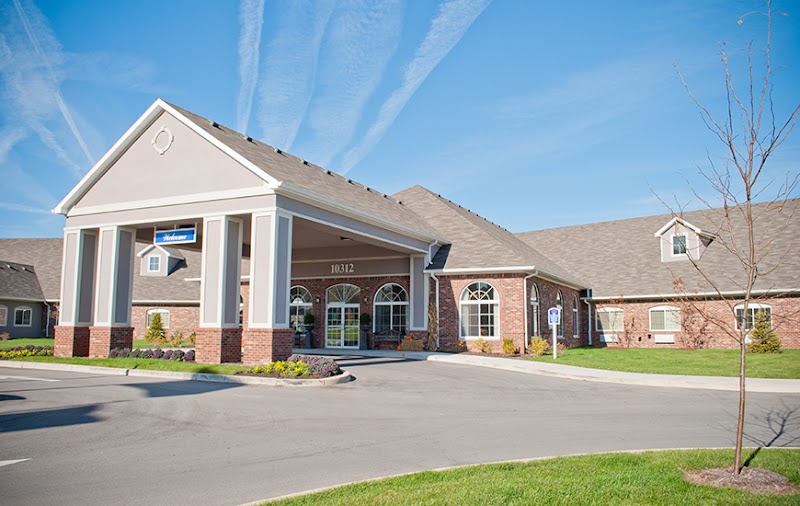
How is Allisonville Meadows Staffed?

CMS rates ALLISONVILLE MEADOWS's staffing level at 2 out of 5 stars, which is below average compared to other nursing homes. Staff turnover is 51%, compared to the Indiana average of 46%.

What Have Inspectors Found at Allisonville Meadows?

State health inspectors documented 46 deficiencies at ALLISONVILLE MEADOWS during 2022 to 2025. These included: 3 that caused actual resident harm and 43 with potential for harm. Deficiencies causing actual harm indicate documented cases where residents experienced negative health consequences.
Who Owns and Operates Allisonville Meadows?

ALLISONVILLE MEADOWS is owned by a non-profit organization. Non-profit facilities reinvest revenue into operations rather than distributing to shareholders. The facility is operated by AMERICAN SENIOR COMMUNITIES, a chain that manages multiple nursing homes. With 161 certified beds and approximately 121 residents (about 75% occupancy), it is a mid-sized facility located in FISHERS, Indiana.
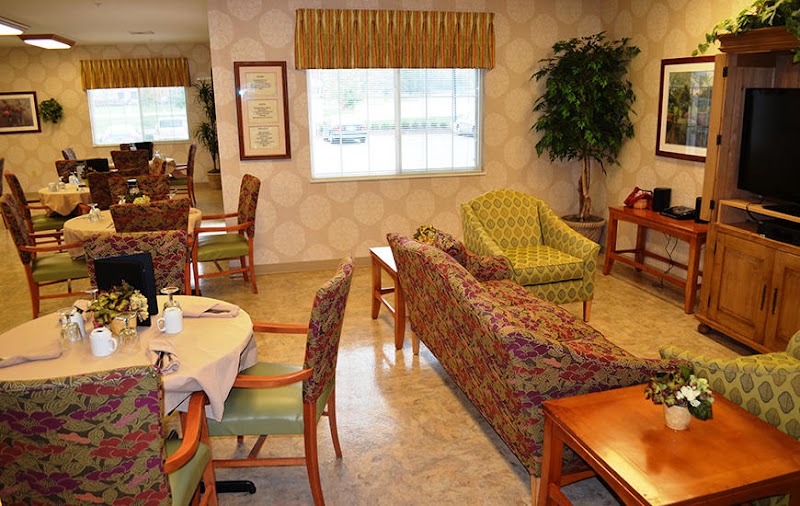
How Does Allisonville Meadows Compare to Other Indiana Nursing Homes?

Compared to the 100 nursing homes in Indiana, ALLISONVILLE MEADOWS's overall rating (2 stars) is below the state average of 3.1, staff turnover (51%) is near the state average of 46%, and health inspection rating (1 stars) is much below the national benchmark.

What Should Families Ask When Visiting Allisonville Meadows?

Based on this facility's data, families visiting should ask: "Can you walk me through typical staffing levels on day, evening, and night shifts?" "Can I visit during a mealtime to observe dining assistance and food quality?" "How do you handle medical emergencies, and what is your hospital transfer rate?" "Can I speak with family members of current residents about their experience?" These questions are particularly relevant given the below-average staffing rating.

Is Allisonville Meadows Safe?

Based on CMS inspection data, ALLISONVILLE MEADOWS has a clean safety record: no substantiated abuse findings (meaning no confirmed cases of resident harm), no Immediate Jeopardy citations (the most serious violation level indicating risk of serious injury or death), and is not on the Special Focus Facility watch list (a federal program monitoring the lowest-performing 1% of nursing homes). The facility has a 2-star overall rating and ranks #100 of 100 nursing homes in Indiana. While no facility is perfect, families should still ask about staff-to-resident ratios and recent inspection results during their visit.

Do Nurses at Allisonville Meadows Stick Around?

ALLISONVILLE MEADOWS has a staff turnover rate of 51%, which is about average for Indiana nursing homes (state average: 46%). Moderate turnover is common in nursing homes, but families should still ask about staff tenure and how the facility maintains care continuity when employees leave.

Was Allisonville Meadows Ever Fined?

ALLISONVILLE MEADOWS has been fined $11,190 across 1 penalty action. This is below the Indiana average of $33,191. While any fine indicates a compliance issue, fines under $50,000 are relatively common and typically reflect isolated problems that were subsequently corrected. Families should ask what specific issues led to these fines and confirm they've been resolved.

Is Allisonville Meadows on Any Federal Watch List?

ALLISONVILLE MEADOWS is not on any federal watch list. The most significant is the Special Focus Facility (SFF) program, which identifies the bottom 1% of nursing homes nationally based on persistent, serious quality problems. Not being on this list means the facility has avoided the pattern of deficiencies that triggers enhanced federal oversight. This is a positive indicator, though families should still review the facility's inspection history directly.