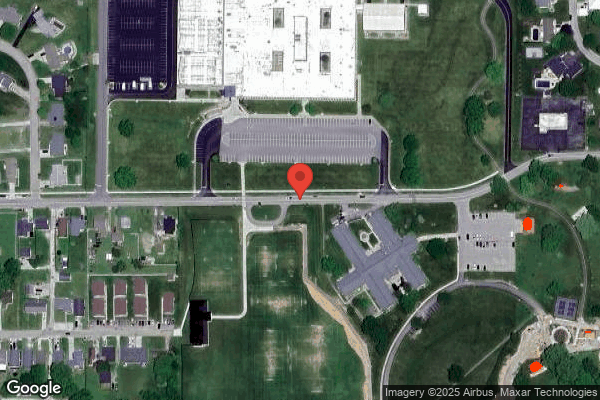
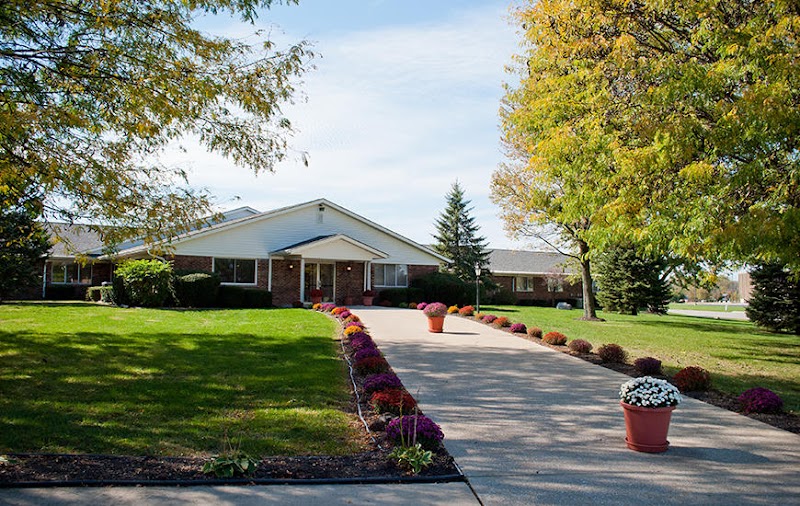
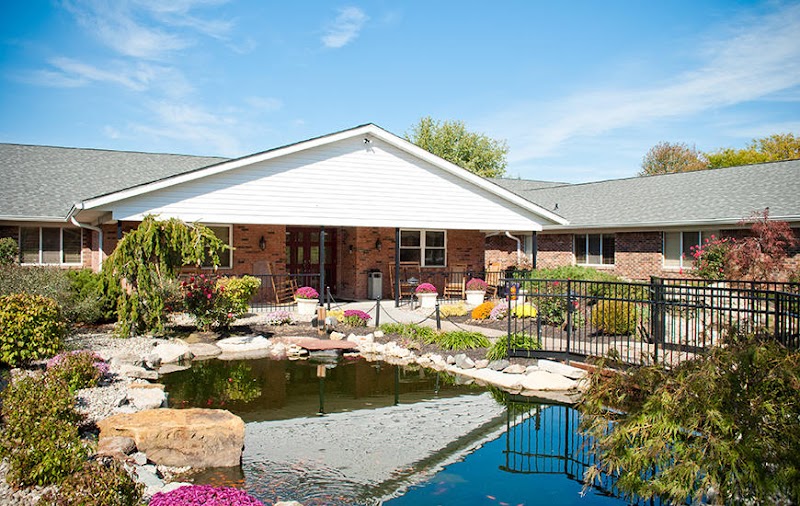
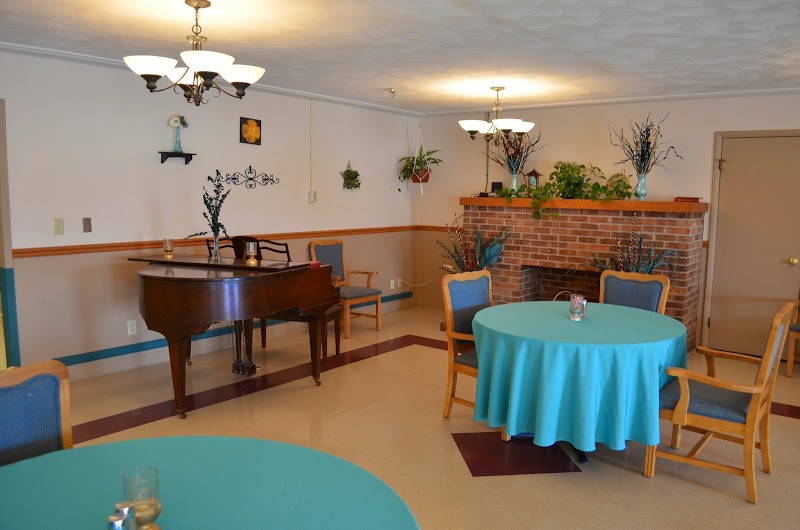
ARBOR GROVE VILLAGE

1021 E CENTRAL AVE, GREENSBURG, IN 47240 (812) 663-8553
Non profit - Corporation 83 Beds AMERICAN SENIOR COMMUNITIES Data: November 2025
Trust Grade
45/100
#326 of 505 in IN
Last Inspection: April 2025

Within standard 12-15 month inspection cycle. Federal law requires annual inspections.

Overview

Families considering Arbor Grove Village in Greensburg, Indiana, should be aware that it has a Trust Grade of D, indicating below-average performance with some significant concerns. It ranks #326 out of 505 facilities in Indiana, placing it in the bottom half, and #3 out of 5 in Decatur County, meaning only two local options are better. The facility is worsening, with issues increasing from 3 in 2024 to 6 in 2025. Staffing is a major weakness, receiving only 1 out of 5 stars and having a turnover rate of 46%, which is slightly better than the state average. However, there have been serious incidents reported, including failure to protect a cognitively impaired resident from abuse, leading to psychological harm, and not properly managing a resident's anxiety and combative behaviors, which resulted in further agitation. While there are no fines on record, which is a positive aspect, the facility's RN coverage is concerning, being less than that of 91% of Indiana facilities, potentially compromising the quality of care.

Trust Score
D
45/100
In Indiana
#326/505
Bottom 36%
Safety Record
Moderate
Needs review
Inspections
Getting Worse
3 → 6 violations
Staff Stability
⚠ Watch
46% turnover. Above average. Higher turnover means staff may not know residents' routines.
Penalties
✓ Good
No fines on record. Clean compliance history, better than most Indiana facilities.
Skilled Nurses
⚠ Watch
Each resident gets only 23 minutes of Registered Nurse (RN) attention daily — below average for Indiana. Fewer RN minutes means fewer trained eyes watching for problems.
Violations
⚠ Watch
17 deficiencies on record. Higher than average. Multiple issues found across inspections.
★★☆☆☆
2.0
Overall Rating
★☆☆☆☆
1.0
Staff Levels
★★★☆☆
3.0
Care Quality
★★★☆☆
3.0
Inspection Score
Stable
2024: 3 issues
2025: 6 issues

The Good

  • Full Sprinkler Coverage · Fire safety systems throughout facility
  • No fines on record

Facility shows strength in fire safety.

The Bad

2-Star Overall Rating

Below Indiana average (3.1)

Below average - review inspection findings carefully

Staff Turnover: 46%

Near Indiana avg (46%)

Higher turnover may affect care consistency

Chain: AMERICAN SENIOR COMMUNITIES

Part of a multi-facility chain

Ask about local staffing decisions and management

The Ugly 17 deficiencies on record

2 actual harm
Jul 2025 1 deficiency
CONCERN (D) 📢 Someone Reported This

A family member, employee, or ombudsman was alarmed enough to file a formal complaint

Potential for Harm - no one hurt, but risky conditions existed

Deficiency F0602 (Tag F0602)

Could have caused harm · This affected 1 resident

Based on record review and interview, the facility failed to ensure misappropriation of resident's medications did not occur for 2 of 3 residents reviewed for misappropriation. (Resident B and Residen...

Read full inspector narrative →
Based on record review and interview, the facility failed to ensure misappropriation of resident's medications did not occur for 2 of 3 residents reviewed for misappropriation. (Resident B and Resident C) Findings include:1. During an interview, on 07/18/25 at 9:18 A.M., Registered Nurse (RN) 2 indicated that Resident B requested pain medication on 06/19/25 around 10:00 P.M While administering the medication she noticed the pills popped out of the card lightly. Upon observation, she identified tape on the back of the card holding in the two pills she had dispensed. Both pills were different shapes and upon observation one had a small, scratched mark in the center of it to make it appear scored. She immediately contacted the Director of Nursing (DON) and notified her of the findings. After she checked the entire medication cart for other discrepancies, she determined Resident C also had a medication taped back into his narcotic medication card. The clinical record for Resident B was reviewed on 07/18/2025 10:20 AM. A Quarterly Minimum Data Set (MDS) assessment, dated 07/02/25, indicated the resident was cognitively intact. The resident's diagnoses included, but were not limited to, hypertension, malnutrition, and Parkinson's disease. A current physician's order, with a start date of 04/07/25, indicated that staff were to administer Norco (a narcotic pain medication), 5-325 milligrams (mg), 2 tablets by mouth every six hours as needed for pain. A controlled drug record for Norco for Resident B, dated 05/30/25, indicated the medication was signed out by RN 4 on 06/19/25 at 05:00 P.M. changing the quantity from 15 pills to 13 pills. On 06/19/25 at 11:00 P.M. RN 2 changed the quantity remaining to 11 pills, after discovering the two pills packaging for #13, and #12 were altered and they were not the correct medication. Then reduced it into 9 pills remaining after administrating two unaltered pills to the resident. During an interview, on 07/18/2025 10:49 AM., Resident B indicated she usually asked for pain medicine at night before bed and just took a Tylenol during the day if she was feeling some pain. During an interview, on 07/17/2025 10:50 AM, Licensed Practical Nurse (LPN) 3 indicated she was orienting RN 4 on 06/19/25. It was RN 4's first day on orientation, so that morning she just watched LPN 3 pass morning medications. Around 10:00 A.M. RN 4 asked to have the keys to the medication cart so that she could familiarize herself with the cart. LPN 3 gave RN 4 the keys to the cart. Later, RN 4 asked if she could do some insulins before lunch and LPN 3 allowed her to. Then she returned the keys back to her before they left for lunch. After lunch RN 4 asked for the keys to the cart again to administer an oral medication that a resident took after lunch. An extended period of time went by after RN 4 went to give the oral medication, so LPN 3 went looking for her. LPN 3 could not find RN 4. During a second attempt with additional staff, they located her in a resident's bathroom. RN 4 stated she had washed her hands. Later that evening RN 4 questioned LPN 3 asking if she was pretty good at memorizing her pills. LPN 3 stated she never administered the medications without the Medication Administration Record in front of her to prevent any errors. During evening shift change the narcotic medications were counted with on coming staff. RN 4 counted with night shift, and all counts appeared correctly because there were pills in each bubble. They never looked at the backside of the cards. LPN 3 stated RN 4 should have never been in the narcotics box at all during their shift. Only one narcotic was administered that day and it was that morning and LPN 3 administered it herself. During an interview, on 07/17/2025 at 10:09 AM, the Director of Nursing (DON) indicated that when she called RN 4 in to investigate the missing narcotics, she admitted to taking the medications. RN 4 stated she replaced the pills with other medications, and stated she checked the resident's allergies to make sure it wouldn't cause a reaction when they received the wrong medication. After they finished their investigation, RN 4 was terminated. 2. The clinical record for Resident C was reviewed on 07/17/2025 3:19 P.M. A Significant Change in Status MDS assessment, dated 06/19/25, indicated the resident was cognitively intact. The resident's diagnoses included, but were not limited to, malnutrition, asthma, and diabetes. A current physician's order, with a start date of 05/16/25, indicated the staff were to administer Norco 5-325 mg, 1 tablet by mouth every six hours as needed for pain to Resident C. A controlled drug record for Norco for Resident C, dated 05/26/25, indicated the medication was signed out by RN 4 on 06/19/25 at 05:10 P.M. changing the quantity from 25 pills to 24 pills. On 06/19/25 at 11:30 P.M. RN 2 corrected the quantity remaining to 23 pills after discovering the #24 pill was not the correct medication and the packaging had been altered. The current facility policy titled, Abuse Prohibition, Reporting, and Investigation, with a revision date of June 2023, was provided by the DON on 07/17/25 at 11:20 A.M. The policy indicated, .the policy. to provide each resident with an environment free from abuse, neglect, misappropriation of resident property.misappropriation of resident funds or property - deliberate misplacement, exploitation, or wrongful, temporary, or permanent use of a resident's property or money without the resident's consent . This deficient practice was corrected on 07/09/25 after the facility reviewed records, assessed residents, educated staff, discharged the staff member, and added new audits for monitoring narcotic counts. This citation relates to Complaint 1808214. 3.1-28(a)
Apr 2025 5 deficiencies
CONCERN (D)

Potential for Harm - no one hurt, but risky conditions existed

Pressure Ulcer Prevention (Tag F0686)

Could have caused harm · This affected 1 resident

**NOTE- TERMS IN BRACKETS HAVE BEEN EDITED TO PROTECT CONFIDENTIALITY** Based on interview, observation, and record review, the facility failed to prevent pressure ulcers and implement Care Plan inter...

Read full inspector narrative →
**NOTE- TERMS IN BRACKETS HAVE BEEN EDITED TO PROTECT CONFIDENTIALITY** Based on interview, observation, and record review, the facility failed to prevent pressure ulcers and implement Care Plan interventions for a resident who was at risk for pressure ulcers for 1 of 5 residents reviewed. (Resident 23) Findings include: During an interview and observation, on 04/22/25 at 12:41 P.M., Resident 23 indicated he had sores on both of his heels, and it felt like pins and needles were sticking into them. His heels were lying flat against the bed mattress. No soft boots or extra pillows were noted in the visible area. The resident indicated staff did not put a pillow behind his calves to keep the pressure off his heels or put soft boots on his feet. During an observation, on 04/23/25 at 3:45 P.M., the resident was lying in bed with his eyes closed, flat on his back with his heels flat against the bed mattress. No extra pillows or soft boots were noted on the floor or in the immediate area. During an observation, on 04/24/25 at 9:42 A.M., the resident was lying in bed with his eyes closed, flat on his back with his heels flat against the bed mattress. Staff members were exiting the room following the provision of care, carrying bags of soiled linens. The resident's wound treatments were observed, on 04/25/25 at 12:58 P.M., with Licensed Practical Nurse (LPN) 2. The nurse donned a gown and gloves, explained the procedure to the resident, and removed the soft boots and socks from the resident's feet. The left heel had a thick dime sized dried scab. The right heel had a silver dollar size dark area with a nickel size dried scab in the center. During an interview, on 04/25/25 at 2:51 P.M., Certified Nurse Aide (CNA) 5 and CNA 6 indicated Resident 23 required two staff members for assistance with transferring from his wheelchair to the bed. During an interview, on 04/25/25 at 3:37 P.M., the Director of Nursing (DON) indicated the resident's heels started looking purple on 03/07/25. During an interview, on 04/28/25 at 1:45 P.M., the Assistant Director of Nursing (ADON) indicated the resident was admitted to the facility from the hospital on [DATE]. He had no pressure ulcers at that time. He had calluses on both heels but no Deep Tissue Injuries (DTIs), just thick calluses. On 03/07/25, a CNA came and told her the resident had some discoloration on his heels. She went and measured them, and they were both 2.5 centimeters (cm) x (by) 1.5 cm, with no depth or drainage. She applied Skin Prep (a skin toughening agent), floated his heels using pillows, completed an Event in the computer, and opened a new Care Plan on 03/07/25. Preventative measures in place prior to the development of the pressure ulcers included a pressure reducing mattress, a pressure reducing cushion to his wheelchair, turning and repositioning every two hours and as needed, an incontinence care check every two hours and as needed, and house barrier cream as needed for incontinence care. That was the standard practice and in place prior to the development of the DTIs to his heels. They were not doing anything extra for the resident's feet prior to the development of the DTIs. He required staff help for positioning. Sometimes one person could roll him from side to side. For scooting up in bed, the resident needed the assistance of two staff members. The clinical record for Resident 23 was reviewed on 04/24/25 at 10:49 A.M. The resident's admission date was 02/25/25. A Significant Change Minimum Data Set (MDS) assessment, dated 04/21/25, indicated the resident was severely cognitively impaired. The resident's diagnoses included, but were not limited to, heart failure, obstructive uropathy, diabetes, and depression. The resident was at risk for pressure ulcers and had two unstageable Deep Tissue Injuries that were not present on admission. The resident had a pressure reducing device for the bed and his chair. The admission MDS assessment, dated 03/04/25, indicated the resident was at risk for pressure ulcers but had no unhealed pressure ulcers. The New Skin Event records, dated 03/07/25, were provided by the DON on 04/25/25 at 3:31 P.M., and indicated the resident had the following: - A DTI to the right heel, measuring 2.5 cm x 0.5 cm, purple in color, with a new treatment order for Skin Prep, and - A DTI to the left heel, measuring 2.5 cm x 0.5 cm, purple in color, with new treatment orders for Skin Prep and to float the heels. The CNA Approaches on Profile pocket sheets describing individual resident needs and interventions was provided by CNA 6 on 04/24/25 at 2:10 P.M. The record indicated Resident 23 had DTIs to his left and right heels, his heels were to be floated while in bed, and he was to wear Heel Boots (soft pillow-like boots) while in bed. The admission Braden Scale for Predicting Pressure Sore Risk assessment, dated 02/25/25, was provided by the Regional Director of Clinical Services on 04/28/25 at 2:05 P.M. The record indicated the resident was at Moderate Risk for pressure sores. The current SKIN MANAGEMENT PROGRAM policy, dated 05/2022, was provided by the DON on 04/25/25 at 3:31 P.M. The policy indicated, .It is the policy of American Senior Communities to ensure that each resident receives care, consistent with professional standards of practice, to prevent pressure ulcers and does not develop pressure ulcers .and a resident with pressure ulcers receives necessary treatment and services, consistent with professional standards of practice, to promote healing, prevent infection and prevent new ulcers from developing . 3.1-40(a)(1) 3.1-40(a)(2)
CONCERN (D)

Potential for Harm - no one hurt, but risky conditions existed

Pharmacy Services (Tag F0755)

Could have caused harm · This affected 1 resident

**NOTE- TERMS IN BRACKETS HAVE BEEN EDITED TO PROTECT CONFIDENTIALITY** Based on record review and interview, the facility failed to ensure the physician prescribed medications were available for 2 of...

Read full inspector narrative →
**NOTE- TERMS IN BRACKETS HAVE BEEN EDITED TO PROTECT CONFIDENTIALITY** Based on record review and interview, the facility failed to ensure the physician prescribed medications were available for 2 of 6 residents reviewed for pharmacy services. (Residents 23 and 35) Findings include: 1. The clinical record for Resident 23 was reviewed on 04/24/25 at 10:49 A.M. The resident's admission dated was 02/25/25. A Significant Change Minimum Data Set (MDS) assessment, dated 04/21/25, indicated the resident was severely cognitively impaired. The resident's diagnoses included, but were not limited to, heart failure, obstructive uropathy, diabetes, and depression. The Electronic Medication Administration Record (EMAR) indicated the resident had a physician's order, with a start date of 02/25/25 and a discontinued date of 04/07/25, for Modafinil 100 milligrams (mg) once a day for a diagnosis of major depressive disorder. The medication was not administered on the following dates due to the medication not being available: - 02/26/25, - 02/27/25, - 02/28/25, - 03/01/25, - 03/02/25, - 03/03/25, - 03/04/25, - 03/05/25, and - 03/10/25. During an interview, on 04/25/25 at 2:07 P.M., the Director of Nursing (DON) indicated when a resident was admitted , the nurse on the floor admitting the resident would transcribe the resident's medication orders into the computer system and the medication orders were automatically sent to the pharmacy. The medications should arrive within 24 hours. If a medication was not available right away the facility could use a local pharmacy, or the family could bring in medications they had at home. 2. The clinical record for Resident 35 was reviewed on 04/28/25 at 9:32 A.M. An admission MDS assessment, dated 03/24/25, indicated the resident was cognitively intact. The resident's diagnosis included, but were not limited to, hepatic encephalopathy, ascites (build-up of fluid in the abdomen), and Nonalcoholic Steatohepatitis (NASH). The EMAR indicated the resident had a physician's order for Xifaxan 550 mg twice a day for a diagnosis of NASH, with a start date of 03/07/25 and a discontinued date of 03/13/25. The medication was not administered on the following dates and times due to the medication not being available: - 03/07/25 from 7:00 P.M. to 11:00 P.M., - 03/08/25 from 7:00 A.M. to 11:00 A.M., - 03/08/25 from 7:00 P.M. to 11:00 P.M., - 03/09/25 from 7:00 A.M. to 11:00 A.M., - 03/09/25 from 7:00 P.M. to 11:00 P.M., - 03/10/25 from 7:00 A.M. to 11:00 A.M., - 03/10/25 from 7:00 P.M. to 11:00 P.M., and - 03/11/25 from 7:00 A.M. to 11:00 A.M. During an interview, on 04/28/25 at 9:56 A.M., the Assistant Director of Nursing (ADON) indicated Resident 35 came to the facility following a hospital stay. He had formerly lived at a local Assisted Living (AL) facility. The resident received paracentesis treatments (needle drainage of fluid from a body cavity) due to his diagnosis of NASH. They had to get his supply of Xifaxan from the local AL he had resided at because it was high-cost medication and there was extra paperwork involved. The resident should not have gone five days without his medication. When the medication was ordered, the nurse on the floor would call the pharmacy about the medication and complete the required documents. The resident was discharged to the hospital on [DATE]. When the resident came back from the hospital on [DATE], the facility had received the medication. The medication was for the resident's diagnosis of NASH. The medication is categorized as an antibiotic. The current Medication Shortages/Unavailable Medications policy, with an effective date of 12/01/07, was provided by the DON on 04/25/25 at 3:31 P.M. The policy indicated, .If a medication is unavailable during normal Pharmacy hours .If the medication has not been ordered, the licensed Facility nurse should place the order or reorder for the next scheduled delivery .If the next available delivery causes a delay or a missed dose in the resident's medication schedule, Facility nurse should obtain the medication from the Emergency Medication Supply to administer the dose .If the medication is not available in the Emergency Mediation Supply, Facility staff should notify Pharmacy and arrange for a STAT (immediate) delivery, if medically necessary .If a medication is unavailable is [sic] discovered after normal Pharmacy hours .Facility nurse should call Pharmacy's emergency answering service and request to speak with the registered pharmacist on duty to manage the plan of action. Action may include .Emergency delivery .or .Use of an emergency (back-up) third-party Pharmacy . 3.1-25(a)
CONCERN (D)

Potential for Harm - no one hurt, but risky conditions existed

Drug Regimen Review (Tag F0756)

Could have caused harm · This affected 1 resident

Based on interview and record review, the facility failed to follow physician's orders related to a Gradual Dose Reduction (GDR) of a medication for 1 of 18 residents reviewed for quality of care. (Re...

Read full inspector narrative →
Based on interview and record review, the facility failed to follow physician's orders related to a Gradual Dose Reduction (GDR) of a medication for 1 of 18 residents reviewed for quality of care. (Resident 47) Findings include: Resident 47's clinical record was reviewed on 04/23/35 at 2:00 P.M. A Quarterly Minimum Data Set assessment, dated 02/05/25, indicated the resident was moderately cognitively impaired. The resident's diagnoses included, but were not limited to, dementia, psychotic disorder, and depression. The resident experienced hallucinations. The resident's medication orders as of 01/15/25 included, but were not limited to, the following: - An open-ended order, with a start date of 07/12/24, for Risperdal (an antipsychotic medication). The resident received 1 milligram (mg) of the medication in the morning and 0.5 mg in the evening, and - An open-ended order, with a start date of 11/21/24, for sertraline (an antidepressant medication). The resident received 150 mg at bedtime. An Evaluation for Gradual Dose Reduction of Psychotropic Medication, dated 01/15/25, recommended a GDR of the Risperdal medication. The Psychiatric Nurse Practitioner (Psych NP) gave new physician's orders to increase the resident's sertraline to 200 mg every day and decrease the resident's Risperdal to 0.5 mg twice a day. A Progress Note documented by the Social Services Director, dated 01/15/25 at 1:17 P.M., indicated the Psych NP ordered a reduction of the resident's Risperdal to 1 mg in the morning and 0.5 mg in the evening, and an increased in the resident's sertraline to 200 mg in the evening. There was no indication in the resident's record that the medication orders were changed and the resident continued to receive the medications daily at the previously ordered doses. A Nursing Progress Note, dated 01/19/25 at 6:27 A.M., indicated the resident experienced no psychosocial distress related to the GDR of the Risperdal and the increase of the sertraline. A Nursing Progress Note, dated 01/21/25 at 9:39 A.M., indicated the resident experienced no psychosocial distress related to the GDR of the Risperdal and the increase of the sertraline. A Nursing Progress Note, dated 01/23/25 at 3:22 A.M., indicated the resident was hallucinating. He was seeing bugs on his feet. A Behavior Review Note, dated 01/24/25 at 12:40 P.M., indicated the resident urinated on the floor and exhibited increased confusion. A Nursing Progress Note, dated 01/24/25 at 3:43 P.M., indicated the resident's urine was checked and the results indicated the resident did not have a urinary tract infection. On 01/24/25, the resident's Risperdal medication order was changed to 0.5 mg twice a day. The resident's sertraline order remained the same, 150 mg at bedtime. The resident received the medications daily as ordered. A Pharmacy Consultation Report, dated 02/13/25, indicated the following: ***CLINICAL PRIORITY RECOMMENDATION: PROMP RESPONSE REQUESTED*** During the behavior management meeting in January, an order was given to increase the resident's sertraline to 200 mg a day. The order has not been processed. The resident continued on 150 mg daily. The resident's sertraline order was changed to 200 mg at bedtime on 02/14/25. During an interview, on 04/28/25 at 1:37 P.M., the Assistant Director of Nursing indicated the resident's orders weren't changed when the Psych NP decreased the Risperdal and increased the sertraline. The Psych NP came in a week later and realized the Risperdal hadn't been changed so she wrote a repeat order to decrease it again. Then, after the pharmacy recommendation they determined the sertraline hadn't been adjusted either. Nursing staff were noticing behaviors with the resident and thought the GDR was failing, but the medications hadn't actually been changed as ordered. During an interview, on 04/28/25 2:25 P.M., the Regional Director of Clinical Services indicated the facility did not have a policy related to following MD orders, it was just standard nursing practice. 3.1-25(i)
CONCERN (D)

Potential for Harm - no one hurt, but risky conditions existed

Medical Records (Tag F0842)

Could have caused harm · This affected 1 resident

Based on interview and record review, the facility failed to completely and accurately document the assessment and monitoring of a resident after a fall for 1 of 3 residents reviewed for Resident Reco...

Read full inspector narrative →
Based on interview and record review, the facility failed to completely and accurately document the assessment and monitoring of a resident after a fall for 1 of 3 residents reviewed for Resident Records. (Resident 58) Findings include: During an interview, on 04/23/25 at 1:03 P.M., Resident 58 and the resident's family member indicated the resident had fallen three times in three weeks. The family member was present for one of the falls and indicated the resident was standing with her walker when she started to feel shaky and fell to the floor. The family member notified staff at the time of the fall. The resident's clinical record was reviewed on 04/25/25 at 2:20 P.M. An Annual Minimum Data Set assessment, dated 02/11/25, indicated the resident was moderately cognitively impaired. The resident's diagnoses included, but were not limited to, hypertension, overactive bladder, and weakness. The resident used a walker and wheelchair. The resident required partial to moderate staff assistance to move from a sitting to a standing position and required staff supervision or touching assistance when walking. The resident experienced no falls since the last assessment. A Nursing Progress Note, dated 04/08/25 at 10:58 A.M., indicated the resident's family member requested help because the resident was on the floor next to her bed. The family member indicated the resident did not hit her head. The resident stood up to get into her wheelchair to go to lunch and said, I am going to fall. The resident lost her balance and fell to her right side. There were no injuries. A Nursing Progress Note, dated 04/08/25 at 11:06 A.M., indicated the Nurse Practitioner (NP), Director of Nursing (DON), and the resident's Power of Attorney (POA) were aware of the fall. The resident's record lacked further documentation related to the fall the resident experienced on 04/08/25. During an interview, on 04/25/25 at 2:20 P.M., Licensed Practical Nurse 9 indicated when a resident fell, nursing staff were to assess the resident and notify the NP, DON, Administrator, and POA. A progress note would be entered in the computer as well as a Fall Event. Specifics about the fall would be documented in the Fall Event so staff could determine what the issue might have been that caused the resident to fall, like if the resident wasn't wearing appropriate footwear or if they had to go to the bathroom so they got up without staff assistance. An immediate intervention would be put into place, and the Interdisciplinary Team (IDT) would review the fall to determine the root cause and if further interventions were warranted. The resident's care plan would be updated with any new interventions. During an interview, on 04/28/25 at 10:30 A.M., the Physical Therapist indicated he was familiar with the resident, and she was currently receiving physical therapy. She had experienced a few falls in the last month or so. He reviewed the facility's fall report every day. The report was generated from Fall Events documented in the residents' records. He was unaware the resident experienced a fall on 04/08/25 because there was not a Fall Event documented in the computer. During an interview, on 04/28/25 at 11:25 A.M., the Regional Director of Clinical Services (RDCS)indicated the resident did experience a fall on 04/08/25. There should have been a Fall Event created in the computer, an IDT review of the fall, and new fall intervention should have been implemented. The current facility policy, titled Fall Management Policy, dated 08/2022, was provided by the RDCS on 04/28/25 at 2:35 P.M. The policy indicated, .Any resident experiencing a fall will be assessed immediately .A fall event will be initiated as soon as the resident has been assessed and cared for .The report must be completed in full in order to identify possible root causes of the fall and provide immediate interventions .All falls will be discussed by the interdisciplinary team at the 1st IDT meeting after the fall to determine root cause and other possible interventions to prevent future falls .the fall event will be reviewed by the team .IDT note will be written .The care plan will be reviewed and updated as necessary .Hot Charting will be initiated post fall . 3.1-50(a)(2)
CONCERN (E)

Potential for Harm - no one hurt, but risky conditions existed

Food Safety (Tag F0812)

Could have caused harm · This affected multiple residents

Based on observation, interview, and record review, the facility failed to maintain resident snack refrigerators appropriately related to the storage of staff food items, incomplete labeling, and the ...

Read full inspector narrative →
Based on observation, interview, and record review, the facility failed to maintain resident snack refrigerators appropriately related to the storage of staff food items, incomplete labeling, and the storage of non-food items for 2 of 3 resident snack refrigerators observed. (100/200 Hall Resident Snack Refrigerator and the 400 Hall Resident Snack Refrigerator) Findings include: 1. The 100/200 Hall Resident Snack Refrigerator was observed on 04/28/25 at 12:38 P.M., with Licensed Practical Nurse (LPN) 7, and contained the following: - LPN 7's lunch bag, - One unopened carton of vanilla ice cream with no resident name, date, or room number, - One opened carton of vanilla ice cream dated 03/11/25 with no resident name or room number, - A tan plastic grocery bag with a paper note labeled with Qualified Medication Aide (QMA) 4's name and the numbers, 3-12 to 6-12, as identified by LPN 7, and - One long, over 12 inches, black ice pack with no resident name. The signage on the front of the refrigerator indicated the REFRIGERATOR RULES included, but were not limited to, For Residents & Visitors Only (Not For Staff Personal Items); Every open item must have a label with an open date and a use by date; NO STAFF FOOD! USE FRIDGE IN 400 HALL BREAK ROOM. The 100/200 Hall Resident Snack Refrigerator was observed on 04/28/25 at 12:51 P.M., with the Physical Therapist (PT). PT indicated the black ice pack belonged to the Therapy Department and had been used on a resident's neck. He did not know how the ice pack had gotten into the residents' snack refrigerator. 2. The 400 Hall Resident Snack Refrigerator was observed on 04/28/25 at 12:58 P.M., with Medical Records, and contained the following: - One open bottle of yellow soda, 3/4 full, dated 04/22/25, with the initials A.H., and - One unopened bottle of dark soda, dated 04/22/25, with the initials A.H. During an interview on 04/28/25 at 1:00 P.M., LPN 8 indicated there were no residents residing on the 400 Hall who had the initials A.H. The current Food Brought in by Family and Visitors policy, with a revised date of 05/2023, was provided during the Entrance Conference. The policy indicated, .Food brought in by family and visitors will be easily distinguishable from facility food and stored to ensure food safety .If food must be stored, it will be labeled with the resident's name, the date the item was brought in, and the date it should be consumed or discarded .Staff will monitor for food in need of disposal . 3.1-21(i)(3)
May 2024 3 deficiencies
CONCERN (D)

Potential for Harm - no one hurt, but risky conditions existed

Quality of Care (Tag F0684)

Could have caused harm · This affected 1 resident

Based on record review and interview, the facility failed to follow physician's orders related to hold parameters for a resident's blood pressure medication for 1 of 18 residents reviewed for quality ...

Read full inspector narrative →
Based on record review and interview, the facility failed to follow physician's orders related to hold parameters for a resident's blood pressure medication for 1 of 18 residents reviewed for quality of care. (Resident 34) Findings include: A Quarterly MDS (Minimum Data Set) assessment, dated 02/24/24, indicated Resident 34 was severely cognitively impaired. The resident's diagnoses included, but were not limited to, Parkinson's disease, dementia, and hypertension. The resident's current physician's orders included an opened-ended order, with a start date of 11/16/22, for staff to administer Resident 34's losartan (a blood pressure medication). The resident was to receive 100 mg (milligrams) once a day. The medication was to be held if his SBP (Systolic Blood Pressure) was less than 110. The March and April 2024 EMAR (Electronic Medication Administration Records) indicated the resident received the medication when his SBP was less than 110 on the following dates: - On 03/14/24, the resident's SBP was 101, - On 03/30/24, the resident's SBP was 104, - On 04/08/24, the resident's SBP was 100, and - On 04/17/24, the resident's SBP was 108. During an interview on 05/17/24 at 2:51 P.M., LPN (Licensed Practical Nurse) 3 indicated if a resident had hold parameters for a blood pressure medication, the blood pressure should be assessed. If the resident's blood pressure was too low, staff were to hold the resident's medication and document it on the EMAR. During an interview on 05/17/24 at 3:32 P.M., the DON (Director of Nursing) indicated they did not have a facility policy on following MD orders, it was just standard nursing practice. 3.1-37(a)
CONCERN (D)

Potential for Harm - no one hurt, but risky conditions existed

Pharmacy Services (Tag F0755)

Could have caused harm · This affected 1 resident

Based on observation, interview, and record review, the facility failed to ensure medications were available and document medication administration for 1 of 14 residents reviewed for pharmacy services...

Read full inspector narrative →
Based on observation, interview, and record review, the facility failed to ensure medications were available and document medication administration for 1 of 14 residents reviewed for pharmacy services. (Resident 1) Findings include: 1.a. During an observation and interview on 05/17/24 at 12:57 P.M., Resident 1 was sitting in his wheelchair in his room. The resident had no current concerns with receiving his medications. The clinical record for Resident 1 was reviewed on 05/16/24 at 9:46 P.M. An Annual MDS (Minimum Data Set) assessment, dated 02/26/24, indicated the resident was cognitively intact. The resident's diagnoses included, but were not limited to, seizure disorder, depression, hypertension, and spinal stenosis. An open-ended physician's order, with a start date of 05/04/23, indicated the resident was to have phenytoin (an anticonvulsant medication) 150 mg (milligrams), adminiustered three times a day. The April and May 2024 EMAR/ETAR (Electronic Medication Administration/Electronic Treatment Administration Record) indicated the medication was not administered due to the drug/item being unavailable for the following dates and times: - On 04/10/24 at 8:00 P.M., - On 04/11/24 at 8:00 A.M., and 2:00 P.M., - On 04/12/24 at 8:00 P.M., and - On 05/13/24 at 8:00 A.M., 2:00 P.M., and 8:00 P.M. The resident's record lacked documentation of the physician's notification when the medication was not administered. During an interview on 05/17/24 at 2:36 P.M., RN 2 indicated phenytoin was only available in the emergency drug kit in a 100 mg capsule and Resident 1's dose was 150 mg tablet. They were not able to obtain the medication out of the emergency drug kit because it wasn't the same form. If the resident's medication wasn't available to administer, then she would call the pharmacy and ask if the medication had been ordered. The pharmacy would sometimes STAT medications and they would get them in a few hours, or they would come the next business day. The physician should have been notified each time the medication was not administered to see if something else needed to be given. 1.b. An open-ended physician's order with a start date of 05/04/23, indicated the resident was to take cyclobenzaprine 10 mg, every 8 hours for spinal stenosis. The April and May 2024 EMAR/ETAR lacked documentation the resident had received the medication on the following dates and times: - On 04/16/24 at 10:00 P.M., - On 05/06/24 at 10:00 P.M., and - On 05/08/24 at 10:00 P.M. During an interview on 05/17/24 at 1:08 P.M., LPN (Licensed Practical Nurse) 4 indicated there should always be something documented in the EMAR. There should never be a blank. The current facility policy titled, Receiving Pharmacy Products and Services from Pharmacy, with a revision date of 01/01/13, was provided by the DON (Director of Nursing) on 05/18/24 at 5:26 P.M. The policy indicated, .Facility staff should reorder medications using an electronic list of resident and medications due or by use of barcode technology . The current facility policy titled, Receiving Pharmacy Products and Services from Pharmacy was provided by the DON on 05/17/24 at 3:34 P.M. The policy indicated, .Document necessary medication administration/treatment information [e.g .when medication are given .] . 3.1-25(b)(3) 3.1-25(g)(3)
CONCERN (D)

Potential for Harm - no one hurt, but risky conditions existed

Deficiency F0761 (Tag F0761)

Could have caused harm · This affected 1 resident

Based on observation, interview, and record review, the facility failed to label and store medications appropriately for 1 of 2 medication storage refrigerators observed. (100/200 Hall Medication Stor...

Read full inspector narrative →
Based on observation, interview, and record review, the facility failed to label and store medications appropriately for 1 of 2 medication storage refrigerators observed. (100/200 Hall Medication Storage Refrigerator) Findings include: The Medication Room for the 100/200 Halls was observed with RN 3 on 05/17/24 at 1:07 P.M. The 100/200 Hall Medication Storage Refrigerator contained an open vial of TB (Tuberculin) serum with no label indicating when it was opened. The vial was one quarter full. During an interview on 05/17/24 at 1:17 P.M., RN 3 indicated the TB serum package indicated the vial was received from the pharmacy on 04/10/23. The serum was good for 28 or 30 days after it was opened. There was no opened on date on the vial of serum, the box the serum came in, or the plastic bag the box was in. The serum should have been labeled when it was first opened. She was unsure of when the TB serum was last administered. The serum was received over a year ago. The TB serum package insert was provided by the DON (Director of Nursing on 05/17/24 at 2:28 P.M. The directions for storage indicated, .vials in use more than 30 days should be discarded . The current facility policy, titled Medication Storage Guidance, and dated 2023, was provided by the DON on 05/17/24 at 2:28 P.M. The policy indicated, .Tuberculin Tests .Date when opened and discard unused portion after 30 days . 3.1-25(o)
Jun 2023 1 deficiency
CONCERN (D) 📢 Someone Reported This

A family member, employee, or ombudsman was alarmed enough to file a formal complaint

Potential for Harm - no one hurt, but risky conditions existed

Deficiency F0740 (Tag F0740)

Could have caused harm · This affected 1 resident

Based on observation, interview, and record review, the facility failed to implement a person-centered dementia care plan related to a female resident seeking male companionship for 1 of 3 residents r...

Read full inspector narrative →
Based on observation, interview, and record review, the facility failed to implement a person-centered dementia care plan related to a female resident seeking male companionship for 1 of 3 residents reviewed for Dementia Care. (Resident C) Findings include: A Progress Note, dated 5/29/23 at 10:06 a.m., indicated a male resident grabbed Resident C's breast. The residents were immediately separated. Resident C had no injuries or bruising noted. Neither resident had any recollection of the event. An Incident report, dated 5/29/23 at 10:15 a.m., indicated Resident D and Resident C were witnessed by staff and immediately separated. The residents had no history of sexual behavior. The record for Resident C was reviewed on 6/6/23 at 11:41 a.m. An admission MDS (Minimum Data Set) Assessment, dated 5/29/23, indicated the resident was severely cognitive impaired. The diagnoses included, but were not limited to, dementia, anxiety, and depression. Resident C's Care Plans in place at the time of the incident included, but were not limited to, the following: - A care plan, dated 5/23/23, and titled Psychosocial Well-Being Life Story indicated the resident believed that everyone should love one another. The resident enjoyed going to church and spending time with her family. The interventions included, but were not limited to, encourage the resident to share important aspects of life story. - A care plan, dated 5/23/23, and titled Psychosocial Well-Being Resident Strengths indicated the resident was driven and family oriented. The interventions included, but were not limited to, encourage resident to continue making plans with her family. - A care plan, dated 5/23/23, and titled Mood State indicated the resident was at risk for signs and symptoms of anxiety Resident had a diagnosis of anxiety. The interventions included, but were not limited to, encourage activities of interest. Encourage resident to verbalize fears and anxiety; offer validation and reassurance. Maintain a calm environment; move to quiet area as needed. - A care plan, dated 5/23/23, and titled Cognitive Loss / Dementia indicated the resident was severely cognitively impaired. The interventions included, but were not limited to, encourage participation in daily activities, particularly regarding orientation, socialization, and stimulation. Give the resident choices throughout the day regarding decisions as able. Provide resident with prompts and cues. Resident C's clinical record lacked a care plan for behaviors related to seeking out male attention. The clinical record for Resident D was reviewed on 6/6/23 at 12:08 p.m. A Quarterly MDS Assessment, dated 3/21/23, indicated the resident was severely cognitive impaired. The diagnoses included, but were not limited to, cerebral infarction, vascular dementia with behavior, and anxiety. Resident D's Care Plans in place at the time of the incident included, but were not limited to, dated 5/31/23, and titled Behavioral Symptoms indicated the resident displays inappropriate sexual behavior at times and has been known to grope and grab body parts. The interventions included but were not limited to, stay calm and be patient, redirect to another activity. Gently but firmly tell the resident that the behavior was inappropriate. Match your body language to your words - frown and shake your head. Maintain consistent, firm boundaries. During an observation on 6/6/23 at 1:35 p.m., Resident D and Resident C were observed in the sunroom, just the two of them, and no staff were present. They were holding hands; she was standing, and he was in a wheelchair. During an observation on 6/6/23 at 1:38 p.m., CNA (Certified Nursing Aide) 2 was walking with two female residents from the dining area to the sunroom. The CNA identified Resident C and tried to get her to leave the area. Resident C stated, she wanted to stay with him (Resident D) and did not want to go with the staff. The CNA waiting until QMA 3 arrived. During an observation on 6/6/23 1:40 p.m., QMA (Qualified Medication Aide) 3 came to the area. The CNA was able to get Resident C to leave the area by telling her that she was going to go to take her to the bathroom and would then bring her back to the area where Resident D was sitting and would even get her a chair. During an observation on 6/6/23 at 1:48 p.m., the two staff and Resident C exited the room next door to her room and walked down the hall to the dining room area. Resident C immediately went to another male resident (Resident F) and started pointing out the window and talking. The two staff members left Resident C with Resident F and walked over to the nurses station across the room. During an interview on 6/6/23 at 2:04 p.m., The Memory Care Coordinator (MCC) indicated she was working on 5/29/23. She was at the desk charting when she saw Resident D in the sunroom on the monitor camera. She saw Resident C walk down to the sunroom, she was standing by the window and Resident D leaned forward and with his right hand wiped down her front, touching her breast. The monitor was about the size of a regular cell phone. Immediately Resident D was put on 15-minute checks, but that was discontinued. The current care plan interventions were to keep them separated and involved in activities. During an interview on 6/6/23 at 2:10 p.m., QMA 3 indicated she was at the medication cart, and the MCC was at the nurses' station charting. The MCC told her that Residents D and C were in the sunroom, and he had touched her breast. The QMA immediately reported it. The interventions put into place immediately were to keep a visual on where he was at and what he was doing. A reasonable time to not have a visual on him would be maybe 15 minutes. If they were found together then immediate separate them and make sure they were safe. During an observation on 6/6/23 at 3:53 p.m., Resident C was observed in the dining room talking to a male resident (Resident F) pointing out the window and talking with him. During an interview on 6/7/23 at 10:35 a.m., the MCC indicated when a resident was newly admitted to the locked unit, staff would find out their life story and have their things brought from home to try to give them a more at homelike feel. They would find out their preferences from the family members. The resident did not really say a lot of words, and it was mostly word salad (nonsensical words). The resident gravitated toward the men and liked someone to hold her hand. Resident D was admitted a year ago and she was not aware of having any inappropriate physical behaviors prior to this incident. He was easy to redirect, and until Resident C came, there was never any inappropriate touching. During an interview on 6/7/23 at 11:00 a.m., the DON (Director of Nursing) indicated Resident C was a new admit and had not initiated the incident. Resident D had been in the facility about a year and had never had any other incident of inappropriate touching. Resident D was immediately put on one on one observation with staff. During an interview on 6/7/23 at 11:35 a.m., the Psychiatric Nurse Practitioner (NP) indicated she saw both residents and neither one of them had any recall of the incident. Resident D had not had any incidents of sexual behavior prior that she was aware of. It was hard to tell what occurred, she was told the incident was seen on the monitor which was about the size of a cell phone. She was not really sure that it actually happened because there was not a history of any sexual behaviors prior. Resident C was new to the environment and had word salad and could not really give an answer. The NP talked with the DON, and the previous Social Services Director (SSD), and it was determined the new interventions were to keep them involved in activities and keep them in sight of staff. The reasoning was if they were busy then they would not have time for inappropriate behaviors. During an interview on 6/7/23 at 11:46 a.m., the Regional Clinical Support Nurse indicated that after the incident involving Residents D and C, Resident D was placed on one on one observation with staff and that was canceled after the NP saw them. Resident D was not exhibiting any behaviors. The NP believed this to have been a situational behavior due to Resident C's shirt having a print over the breast and the residents had no recollection of the incident. The current facility policy, titled Behavior Management, with a revision date of 8/22, was provided by the DON on 6/7/23 at 3:10 p.m. The policy indicated, .to provide behavior interventions for resident with problematic or distressing behaviors .Interventions provided are .individualized .and part of a supportive psychosocial environment that is directed toward preventing, relieving and/or accommodating a resident's behavior expressions. This Federal tag relates to IN00409588. 3.1-37(a)
Mar 2023 6 deficiencies 2 Harm
SERIOUS (G)

Actual Harm - a resident was hurt due to facility failures

Free from Abuse/Neglect (Tag F0600)

A resident was harmed · This affected 1 resident

Based on interview and record review, the facility failed to ensure a cognitively impaired resident was free from mental and physical abuse. Using the reasonable person concept, the resident would lik...

Read full inspector narrative →
Based on interview and record review, the facility failed to ensure a cognitively impaired resident was free from mental and physical abuse. Using the reasonable person concept, the resident would likely have chronic or recurrent fear and anxiety from the purposefully actions to agitate and physically contain the resident. These deficient actions resulted in psychological harm for 1 of 24 residents reviewed for abuse. (Resident 59). Findings include: During an interview on 03/13/23 at 1:45 P.M., Resident 59's family member indicated there was an incident about a month ago involving some staff members that were reportedly rough with the resident. The resident's clinical record was reviewed on 03/15/23 at 4:09 P.M. A Quarterly MDS (Minimum Data Set) Assessment, dated 01/12/23, indicated the resident was severely cognitively impaired. The diagnoses included, but were not limited, dementia with behavioral disturbances, anxiety, and depression. The resident exhibited verbal behaviors directed towards others and rejection of care during the assessment review period. During an interview on 03/15/23 at 2:23 P.M., CNA (Certified Nurse Aide) 11 indicated she regularly worked on the dementia unit. Her shift started at 2:00 P.M. on 02/08/23, QMA (Qualified Medication Aide) 9 had worked in the unit on dayshift and was still there. Just after supper, Resident 59 was sitting in her recliner in the common area. The resident liked to sleep in the recliner. If she fell asleep there, they would just recline the chair, so her feet were up. QMA 9 was trying to get the resident to go to bed. The QMA turned the volume on the TV up really loud. She was trying to agitate the resident; she said the resident would go to bed if the TV was turned up. The resident was screaming, she was red in the face, and she wanted the TV turned down. CNA 11 told QMA 9 to turn the TV down, and CNA 11 continued clearing dishes and dealing with other residents. CNA 10 came onto the unit. QMA 9 and CNA 10 were in the common area talking and CNA 11 went to assist another resident in the bathroom. CNA 11 finished helping that resident and was walking with her down the hallway when she heard a commotion in Resident 59's room. CNA 11 opened the room door to see what was going on. Resident 59 was on her bed. CNA 10 was at the head of the bed holding the resident's hands. QMA 9 was holding the resident's legs and she was pushing on them. The resident was screaming and kicking and scratching at them. She noticed the recliner from the common area had been brought into the resident's room. CNA 11 closed the door to Resident 59's room and assisted the resident she was with to their room. When she was done getting that resident settled, a different resident came out of their room at the end of the hall, asking about the commotion. CNA 11 assisted that resident back to their room and got them situated. When CNA 11 was finally done assisting the other residents, approximately 20 to 25 minutes had gone by and she observed Resident 59 back in the common area sitting in a dining room chair. CNA 10 was with the resident in the dining room. QMA 9 had left the facility. When Resident 59 saw CNA 11 she started yelling, saying she was going to call the cops. After that, CNA 10 was being sweet to the resident. There were no more issues that evening. During an interview on 03/15/23 at 3:28 P.M., the DON (Director of Nursing) indicated on 02/10/23, QMA 9 told her about some behaviors exhibited by Resident 59 on 02/08/23. QMA 9 said the resident was being aggressive and bothering other residents. CNA 11 came to her as well, and she was upset about what went on that evening. The DON reviewed video surveillance from the common area of the unit. From the video, it seemed like the resident did not want QMA 9 around. QMA 9 and CNA 10 tried different tactics to get the resident to her room. The DON determined the volume of the TV had been adjusted based on the video, but there was no sound to review. That was not acceptable treatment of the resident. There was no video footage of the resident's room. They reported the incident and conducted a thorough investigation. They determined QMA 9 and CNA 10 failed to provide the expected resident care. QMA 9 and CNA 10 were no longer employed by the facility. During an interview on 03/16/23 at 2:15 P.M., the DON indicated the video footage was only saved on their system for ten days and was no longer able to be reviewed. Corporate Support Staff indicated they created a timeline of events from the video and provided a copy of the documented timeline reviewed. The timeline included, but was not limited to, the following observations: - At 7:07 P.M., the resident was sleeping in her recliner., - At 7:29 P.M., QMA 9 took ice water to the resident., - At 7:30 P.M., the resident leaned away from QMA 9, covered her left shoulder with her blanket and turned her head away from QMA 9., - At 7:32 P.M., QMA 9 walked away from the resident, the TV was turned on., - At 7:34 P.M., the resident got up out of the recliner and started pointing at the TV and appeared to be telling QMA 9 something. QMA 9 walked over to the resident., - At 7:35 P.M., QMA 9 was pointing to the TV and the other residents in the area, then walked the resident back to her recliner., - At 7:36 P.M., QMA 9 walked to the resident's room., - At 7:37 P.M., the resident got up and walked to the nurses' station area., - At 7:38 P.M., CNA 10 took the resident's recliner from the dining area and put it in the resident's room. QMA 9 brought out the resident's purses from her room. QMA 9 was directing the resident towards her room., - At 7:39 QMA 9 walked to the resident's room with purses and a doll. CNA 10 was walking into a neighboring room., - At 7:40 P.M., the resident began to walk toward her room. The resident hesitated a couple of times and stood in the doorway. The resident entered the room fully and CNA 10 re-entered the resident's room and closed the door., - At 7:48:54 P.M., CNA 10 came out of the adjoining room and held the door closed to Resident 59's room. QMA 9 came out of the adjoining room., - At 7:49 P.M., CNA 10 let go of the resident's door., - At 7:50 P.M., the resident came out of the room, looked down the hall and walked towards the dining area., - At 7:51 P.M., the resident was standing in the middle of the dining area and QMA 9 turned off the lights., - At 7:52 P.M., the resident was sitting in a dining room chair in the dark., - At 8:15 P.M., QMA 9 left the unit., and - At 8:40 P.M., CNA 10 sat with the resident and began to talk to her. The current facility policy, titled Abuse Prohibition, Reporting, and Investigation, with a most recent revision date of January 2023, was provided by the Administrator on 03/12/23. The policy indicated, .It is the policy .to provide each resident with an environment that is free from abuse, neglect, physical abuse, mental abuse .and involuntary seclusion . 3.1-27(a)(1) 3.1-27(a)(4)
SERIOUS (G)

Actual Harm - a resident was hurt due to facility failures

Deficiency F0744 (Tag F0744)

A resident was harmed · This affected 1 resident

Based on interview and record review, the facility failed to adequately implement care planned interventions and strategies for a resident with anxiety, combative behaviors, and a diagnosis of dementi...

Read full inspector narrative →
Based on interview and record review, the facility failed to adequately implement care planned interventions and strategies for a resident with anxiety, combative behaviors, and a diagnosis of dementia that resulted in the resident's increased agitated state and poor behavior management for 1 of 3 residents reviewed for Dementia Care. (Resident 59) Findings include: The resident's clinical record was reviewed on 03/15/23 at 4:09 P.M. A Quarterly MDS (Minimum Data Set) Assessment, dated 01/12/23, indicated the resident was severely cognitively impaired. The diagnoses included, but were not limited, dementia with behavioral disturbances, anxiety, and depression. The resident exhibited verbal behaviors directed towards others and rejection of care during the assessment review period. The resident Care Plans in place at the time of the incident included, but were not limited to, the following, A care plan, titled Mood State, indicated the resident displayed signs and symptoms of mood distress as evidenced by finding little interest or pleasure in doing things, difficulty concentrating, and being short tempered. Interventions included, but were no limited to: establishing a trusting relationship with the resident, and explore past effective and ineffective coping mechanisms. A care plan, titled Behavioral Symptoms, indicated the resident could become combative with care. Interventions included, but were not limited to: change staff, give resident time and space, use white noise machine for calming and relaxation, offer resident comfort, offer snack, and redirect to activity of choice such as listening to country music. A care plan, titled Communication, indicated the resident had difficulty making herself understood related to dementia. Interventions included, but were not limited to: Provide a quiet, non-hurried environment, free of background noises and distractions. A care plan, titled Cognitive Loss/Dementia, indicated the resident was severely cognitively impaired. Interventions included, but were not limited to: Give resident choices throughout the day regarding decisions as able. The clinical record lacked a care plan related to paranoid behaviors or the resident's dislike of being alone. During an interview on 03/14/23 at 10:30 A.M., CNA 2 indicated she worked on the dementia unit all the time. The interventions for behaviors could be different with each resident. Resident 59 was easily angered. She was very territorial. She thought the items on top of the activity cupboard and the gray recliner belonged to her. The table she usually sat at was her table. CNA 2 heard that some evening staff were rough with the resident. They tried to make her change her clothes. They redirected her wrong. When that resident was agitated, she needed to be left alone. Staff could see resident care plans, including appropriate interventions. They had access to the computer and the resident's charts. During an interview on 03/15/23 at 3:42 P.M., the DON indicated there was an incident involving Resident 59, QMA (Qualified Medication Aide) 9, and CNA (Certified Nurse Aide) 10 in the dementia unit. QMA 9 and CNA 10 said the resident was bothering other residents in the common area. They were trying to get the resident to her room to go to bed. The aides tried to persuade her to go into her room with her personal items. They moved her recliner from the common area into her room. The resident liked to be in the common area. The resident's family indicated the resident was exhibiting some signs of paranoia before admission to the nursing home. She liked to sit in the common area where she could see everything, she didn't like to be alone in her room. During the investigation, it was reported by CNA 11 that QMA 9 turned the volume of the TV up in the common area to try and get the resident leave the room and go to bed. CNA 11 indicated she later observed QMA 9 and CNA 10 holding the resident down in her bed. QMA 9 and CNA 10 denied holding the resident down in bed and indicated the resident was being combative. From what they saw on the video and their investigation, the facility determined it was poor behavior management on the dementia unit. QMA 9 should have walked away. Both staff members continued to approach the resident when she was in an agitated state. They both worked on the dementia unit, they should have known what to do. During an interview on 03/15/23 at 2:23 P.M., CNA 11 indicated on 02/08/23, QMA 9 turned the volume on the TV in the common area up really loud. She was trying to agitate the resident; she said the resident would go to bed if the TV was turned up. The resident was screaming, she was red in the face, she wanted the TV turned down. Later that evening, CNA 11 heard a commotion in the resident's room. CNA 11 opened the room door to see what was going on. The resident was on her bed. CNA 10 was at the head of the bed holding the resident's hands. QMA 9 was holding the resident's legs and she was pushing on them. The resident was screaming and kicking and scratching at them. An Employee Communication Form, dated 02/22/23, indicated on 02/08/23 the Code of Conduct policy was violated. CNA 10 failed to provide customer service. The form indicated, .Poor management of behaviors .Residents are to be treated with kindness, patience, understanding, consideration, respect and dignity .Employee failed to provide expected resident care . CNA 10's employment was terminated. An Employee Communication Form, dated 02/22/23, indicated on 02/08/23 Resident Care policies were violated by QMA 9. The form indicated, .Poor management of behaviors .Residents are to be treated with kindness, patience, understanding, consideration, respect and dignity. Employee failed to provide expected resident care . QMA 9's employment was terminated. The current facility policy, titled Behavior Management, with a revision date of 08/22, was provided by the DON on 03/16/23 at 3:53 P.M. The policy indicated, .provide behavior interventions for residents with problematic or distressing behaviors .Interventions provided are both individualized .and part of a supportive physical and psychosocial environment that is directed toward preventing, relieving, and/or accommodating a resident's behavioral expressions .Direct care staff will be educated as to the interventions for residents . 3.1-37(a)
CONCERN (D)

Potential for Harm - no one hurt, but risky conditions existed

Report Alleged Abuse (Tag F0609)

Could have caused harm · This affected 1 resident

Based on interview and record review, the facility failed to ensure staff reported an allegation of abuse in a timely manner for 1 of 24 residents reviewed for abuse. (Resident 59) Findings include: D...

Read full inspector narrative →
Based on interview and record review, the facility failed to ensure staff reported an allegation of abuse in a timely manner for 1 of 24 residents reviewed for abuse. (Resident 59) Findings include: During an interview on 03/15/23 at 2:23 P.M., CNA (Certified Nurse Aide) 11 indicated on the evening of 02/08/23, QMA (Qualified Medication Aide) 9 was trying to get Resident 59 to go to bed. The QMA turned the volume on the TV in the common area up really loud. She was trying to agitate the resident; she said the resident would go to bed if the TV was turned up. The resident was screaming, she was red in the face, she wanted the TV turned down. CNA 11 told QMA 9 to turn the TV down and continued clearing dishes and dealing with other residents. A short time later, CNA 11 heard a commotion in the resident's room. CNA 11 went to the room, opened the door, and saw the resident laying on her bed. CNA 10 was at the head of the bed holding the resident's hands. QMA 9 was holding the resident's legs and she was pushing on them. The resident was screaming and kicking and scratching at them. CNA 11 closed the door and assisted two other residents with care. She did not intervene when she observed the CNAs in the room with the resident. She did not notify the charge nurse that was working in the facility at the time the incident occurred. She did not contact the Administrator or the DON (Director of Nursing). CNA 11 left the facility when her shift was over at 6:00 A.M. the next day. She did not tell the DON about the incident until 02/10/23, when she returned to the facility for her next scheduled shift. During an interview on 03/15/23 at 3:28 P.M., the DON indicated CNA 11 came to her on 02/10/23 to tell her about an incident that happened two days before, on 02/08/23. She was upset; she told her QMA 9 turned the TV up to agitate the resident, and she told her about QMA 9 and CNA 10 holding the resident down in bed. They promptly began an investigation and reported the incident. CNA 11 should have reported the incident immediately. During an interview on 03/16/23 at 2:29 P.M., CNA 2, who usually worked on the Dementia Unit, indicated if she saw an occurrence of abuse, she would make sure the resident was safe, and inform her supervisor and the administration staff immediately. She would tell the DON or Administrator, whoever answered first. She would contact them either here, or on their personal phones depending on when the occurrence happened. If staff were abusing a resident, she would remove the resident from the situation. During an interview on 03/16/23 at 2:33 P.M., QMA 3 indicated if she witnessed abuse she would move the resident from the situation to a safe place, report it immediately to the nurse in charge, then to the DON, and the Administrator. If it was staff to resident abuse she would move the resident to a safe place, call the supervisor immediately to address the staff, stay with the resident, and report to the DON and the Administrator immediately. The current facility policy, titled Abuse Prohibition, Reporting, and Investigation, with a most recent revision date of January 2023, was provided by the Administrator on 03/12/23. The policy indicated, .Any individual who witnesses abuse, or has suspicion of abuse, shall immediately notify the charge nurse of the unit, which the resident resides and to the Executive Director .The resident(s) involved in the incident will be assessed for injuries . 3.1-28(c)
CONCERN (D)

Potential for Harm - no one hurt, but risky conditions existed

Accident Prevention (Tag F0689)

Could have caused harm · This affected 1 resident

Based on record review, observation, and interview, the facility failed to ensure residents' safety related to following fall Care Plan interventions for 2 of 5 residents reviewed for accidents. (Resi...

Read full inspector narrative →
Based on record review, observation, and interview, the facility failed to ensure residents' safety related to following fall Care Plan interventions for 2 of 5 residents reviewed for accidents. (Residents 36 and 68) Findings include: 1. The clinical record for Resident 36 was reviewed on 03/14/23 at 1:35 P.M. A Quarterly MDS (Minimum Data Set) assessment, dated 01/11/23, indicated the resident was cognitively intact. The diagnoses included, but were not limited to, heart failure and stroke. The resident had one fall with an injury that was not major since the last assessment. The census detailed report indicated the resident had been in the same room since 02/13/22. A Fall Event Report, dated 12/02/22, was provided by the DON (Director of Nursing) on 03/15/23 at 3:20 P.M. The report indicated the resident had an unwitnessed fall on 12/02/22 at 6:30 A.M., in the bathroom. The fall resulted in her hitting her head and obtaining a skin tear to her left elbow. The intervention put into place to prevent another fall was listed as, non skid strips in front of toilet. The Care Plan indicating the resident was at risk for falls was provided by the DON on 03/15/23 at 3:20 P.M. The Care Plan listed the resident's risk factors that included, but were not limited to, advanced age over 90, history of falls, needs assist, unsteady at times, impulsive at times, history of fracture to the right femur, the use of two or more high fall risk medications, impaired cognition, and vision. An intervention, with a start date of 01/31/22, indicated the resident was to have non skid strips in the bathroom. An intervention, with a start date of 12/02/22, indicated to replace the non skid strips in front of the toilet. The CNA (Certified Nurse Aide) pocket sheets titled Approaches on Profile record for the 200 Hall was provided by CNA 7 on 03/15/23 at 10:25 A.M. The record indicated the resident was to have non-skid strips in the bathroom. During an observation on 03/14/23 at 1:33 P.M., Resident 36 was sitting in a chair in her room, on the 200 Hall. The resident's shared bathroom did not have non-skid strips in front of the toilet. On 03/14/23 at 3:05 P.M., the residents' shared bathroom was observed and there were no non-skid strips in front of the toilet. During an observation on 03/15/23 at 10:19 A.M., two staff members were exiting the resident's room. The door into the bathroom from the resident's room was open. The light was off in the bathroom and the resident was in the bathroom alone with her walker. During an observation and interview on 03/15/23 at 1:45 P.M., LPN (Licensed Practical Nurse) 8 indicated the resident used the bathroom on her own. Upon observation of the resident's bathroom, the LPN confirmed that there were no non-skid strips in front of the toilet. The strips would be gray in color. If the Care Plan indicated the resident should have non-skid strips in front of the toilet, they should be there. During an interview on 03/14/23 at 2:54 P.M., the Therapy Manager indicated they screened residents following falls. There was a fall screen on 12/03/22 and the resident could get up with her walker. 2. The clinical record for Resident 68 was reviewed on 03/13/23 at 3:34 P.M. An admission MDS assessment, dated 02/28/23, indicated the resident was cognitively intact. The diagnoses included, but were not limited to, dementia, anxiety, and depression. The resident had fallen in the month prior to admission and had one fall with an injury, that was not major, since admission. A Fall Event Report, dated 02/23/23, was provided by the DON on 03/15/23 at 3:20 P.M. The report indicated the resident had an unwitnessed fall on 02/23/23 at 12:30 A.M., in her bedroom. The fall resulted in the resident having elbow pain, bruising, and open areas to the left elbow and right forearm. The resident indicated she was getting up to go to the restroom. The Care Plan indicating the resident was at risk for falls was provided by the DON on 03/15/23 at 3:20 P.M. The Care Plan listed the resident's risk factors that included, but were not limited to, new admission, advanced age over 90, history of falls, the use of two or more high fall risk medications, impaired cognition, vision, and a lack of understanding of one's physical and cognitive limitations. An intervention, with a start date of 02/23/23, indicated the resident was to have a call don't fall sign. The CNA pocket sheets titled Approaches on Profile record for the 300 Hall was provided by CNA 6 on 03/15/23 at 1:32 P.M. The record indicated the resident was to have a call don't fall sign. During an interview on 03/15/23 at 1:41 P.M., PT (Physical Therapist) 5 indicated when the resident was up on her feet, she was to have stand-by to contact assistance from staff. During an interview and observation on 03/14/23 at 3:17 P.M., the resident indicated she got up three to four times in the night to go to the bathroom. She was supposed to ask for help when getting up. She was not supposed to get up on her own. Someone was supposed to help her every time she got up. The resident's walker, that was at her bedside, had a sign attached that said, PLEASE USE WALKER AT ALL TIMES. There was not a sign visible to the resident that said, Call don't fall. During an observation of the resident's room on 03/15/23 at 11:10 A.M., the resident was awake, alert, and lying in bed. There was not a sign that said, Call don't fall visible anywhere in the resident's room. During an observation and interview on 03/15/23 at 1:51 P.M., QMA (Qualified Medication Aide) 4 indicated the resident was to have assistance when she was up on her feet. The resident would usually wait for staff. Staff reported last night that the resident would push the call light then immediately get up by herself. The QMA indicated the DON had her place a sign on her walker, she was unaware the resident was to have a Call don't fall sign. When observing the resident's room with the QMA the Call don't fall sign was lying down flat on top of a dresser behind some other items, not visible to the resident. The current Fall Management Policy, with a revised date of 08/2022, was provided by the DON on 03/15/23 at 3:20 P.M. The policy indicated, .Facilities must implement comprehensive, resident-centered fall prevention plans for each resident at risk for falls or with a history of falls . 3.1-45(a)(2)
CONCERN (D)

Potential for Harm - no one hurt, but risky conditions existed

Deficiency F0741 (Tag F0741)

Could have caused harm · This affected 1 resident

Based on interview and record review, the facility failed to ensure competent staff were available to provide care for a resident with a diagnosis of dementia with behavioral disturbances to maintain ...

Read full inspector narrative →
Based on interview and record review, the facility failed to ensure competent staff were available to provide care for a resident with a diagnosis of dementia with behavioral disturbances to maintain the resident's highest practicable mental and psychosocial well-being as possible related to the resident's increased agitated state, poor behavior management and abuse for 1 of 3 residents reviewed for competent staff. (Resident 59) Findings include: During an interview on 03/16/23 at 3:28 P.M., the Administrator indicated there was not currently a Memory Care Coordinator for the dementia unit. The previous coordinator quit in December 2022, shortly after the Administrator started working for the facility. The Administrator and the SSD (Social Services Director) had been overseeing the dementia unit. All staff that worked in the facility received dementia training. All staff completed the same, computer based dementia training when hired, and then annual computer based training. There was no additional required training for staff that primarily worked on the dementia unit. Since the incident with Resident 59, they've been doing one-on-one training with staff to ensure staff better understand how to work with residents with dementia. The resident's clinical record was reviewed on 03/15/23 at 4:09 P.M. A Quarterly MDS (Minimum Data Set) Assessment, dated 01/12/23, indicated the resident was severely cognitively impaired. The diagnoses included, but were not limited, dementia with behavioral disturbances, anxiety, and depression. The resident exhibited verbal behaviors directed towards others and rejection of care during the assessment review period. During an interview on 03/15/23 at 3:42 P.M., the DON (Director of Nursing) indicated there was an incident of alleged abuse involving Resident 59, QMA (Qualified Medication Aide) 9, and CNA (Certified Nurse Aide) 10 in the dementia unit. The facility reported the incident to the proper authorities and conducted an investigation. QMA 9 and CNA 10 said the resident was bothering other residents in the common area. They were trying to get the resident to her room to go to bed. The aides tried to persuade her to go into her room with her personal items. They moved her recliner from the common area into her room. The DON was not sure why they took her recliner into her room. The resident liked to be in the common area. The resident's family indicated the resident was exhibiting some signs of paranoia before admission to the nursing home. She liked to sit in the common area where she could see everything, she didn't like to be alone in her room. During the investigation, it was reported by CNA 11 that QMA 9 turned the volume of the TV up in the common area to try and get the resident leave the room and go to bed. CNA 11 indicated she later observed QMA 9 and CNA 10 holding the resident down in her bed. The DON reviewed video that indicated the volume of the TV had been adjusted, it looked as though the volume had been turned up. That was not acceptable treatment for their residents. QMA 9 and CNA 10 denied holding the resident down in bed and indicated the resident was being combative. From what they saw on the video and their investigation, the facility determined it was poor behavior management on the dementia unit. QMA 9 should have walked away. Both staff members continued to approach the resident when she was in an agitated state. They both worked on the dementia unit, they should have known what to do. QMA 9's employee record was reviewed on 03/16/23 at 12:25 P.M. The staff member's employee training included, but was not limited to, the following: - 6 hours of Dementia training completed on 05/11/22. Additional dementia training completed on 01/09/23., - Resident Rights training completed on 4/30/22, 9/13/22, and 01/03/23, and - Abuse training on 5/11/22, 10/17/22, and 01/03/23. An Employee Communication Form, dated 02/22/23, indicated on 02/08/23 Resident Care policies were violated by QMA 9. The form indicated, .Poor management of behaviors .Residents are to be treated with kindness, patience, understanding, consideration, respect and dignity. Employee failed to provide expected resident care . CNA 11's employee record was reviewed on 03/16/23 at 12:25 P.M The staff member's employee training included, but was not limited to, the following: - Dementia training completed on 02/02/22, 03/31/22, 08/25/22, and 01/09/23., - Resident Rights training completed on 08/25/22 and 01/03/23, and - Abuse training on 02/02/22 and 08/25/22. An Employee Communication Form, dated 02/22/23, indicated on 02/08/23 the Code of Conduct policy was violated. CNA 10 failed to provide customer service. The form indicated, .Poor management of behaviors .Residents are to be treated with kindness, patience, understanding, consideration, respect and dignity .Employee failed to provide expected resident care . During an interview on 03/14/23 at 10:30 A.M., CNA 2 indicated when Resident 59 was agitated, she needed to be left alone. Staff could see resident care plans, including appropriate interventions. They had access to the computer and the resident's charts. The current, undated facility policy, titled Dementia Training Program, was provided by the DON on 03/16/23 at 2:48 P.M. The policy indicated, .education and training staff regarding the specific needs of persons living with dementia is at the heart of our dementia care program . Cross reference F600 The facility failed to ensure a resident was free from mental and physical abuse resulting in psychological harm. Staff used loud noise and physical measures to make the resident go to her room for bed. Cross reference F744 The facility failed to adequately implement care planned interventions and strategies for a resident with anxiety and combative behaviors and a diagnosis of dementia that resulted in the resident's increased agitated state and poor behavior management.
CONCERN (D)

Potential for Harm - no one hurt, but risky conditions existed

Deficiency F0761 (Tag F0761)

Could have caused harm · This affected 1 resident

**NOTE- TERMS IN BRACKETS HAVE BEEN EDITED TO PROTECT CONFIDENTIALITY** Based on observation, interview, and record review, the facility failed to store medications appropriately related to insulin pe...

Read full inspector narrative →
**NOTE- TERMS IN BRACKETS HAVE BEEN EDITED TO PROTECT CONFIDENTIALITY** Based on observation, interview, and record review, the facility failed to store medications appropriately related to insulin pens for 1 of 3 medication carts reviewed. (200 Hall medication cart) Findings include: On [DATE] at 12:42 P.M., the 200 Hall medication cart was observed with LPN (Licensed Practical Nurse) 12, and contained the following: - A Novolog insulin pen for Resident 5, dated [DATE]. The nurse indicated the pen was expired; it was only good for 28 days. The pen was half full. - A Humalog insulin pen for Resident 30, was half full, with no open date. The nurse indicated the pen was good for 28 days. Insulin pens should be dated when they were opened. The Novolog insulin pen package insert was provided by was provided by the DON (Director of Nursing) on [DATE] at 3:20 P.M. The record indicated, .Throw away all insulin .in use after 28 days, even if there is insulin left . The Humalog insulin pen package insert was provided by was provided by the DON on [DATE] at 3:20 P.M. The record indicated, .Throw away all insulin .in use after 28 days, even if there is insulin left . The current Storage and Expiration of Medications, Biologicals, Syringes, and Needles policy, with a revised date of [DATE], was provided by the DON on [DATE] at 3:20 P.M. The policy indicated, .Once any medication or biological package is opened, Facility should follow manufacturer .guidelines with respect to expiration dates for opened medications. Facility staff should record the date opened on the medication container when the medication has a shortened expiration date once opened .Facility should destroy .all .outdated/expired .biologicals in accordance with Pharmacy return/destruction guidelines . 3.1-25(j) 3.1-25(o)
Nov 2022 1 deficiency
CONCERN (D) 📢 Someone Reported This

A family member, employee, or ombudsman was alarmed enough to file a formal complaint

Potential for Harm - no one hurt, but risky conditions existed

Accident Prevention (Tag F0689)

Could have caused harm · This affected 1 resident

Based on record review and interview, the facility failed to ensure a resident's safe transport to the facility, when the transportation vehicle was in route to the facility, the vehicle stopped by th...

Read full inspector narrative →
Based on record review and interview, the facility failed to ensure a resident's safe transport to the facility, when the transportation vehicle was in route to the facility, the vehicle stopped by the resident's home. While at the resident's home the resident was out of staff's site, the police were called, and a confrontation with a family member occurred for 1 of 3 residents reviewed for accident hazards. (Resident B) Findings include: The clinical record for Resident B was reviewed on 10/31/22 at 11:00 A.M. An admission MDS (Minimum Data Set) assessment, dated 09/26/22, indicated the resident was cognitively intact. The diagnoses included, but were not limited to, dementia with behavioral disturbances, coronary artery disease, stroke, restlessness, and agitation. During an interview on 11/01/22 at 10:34 A.M., the DON (Director of Nursing) indicated the resident was being admitted to the facility from an inpatient psychiatric hospital. He asked the facility bus driver to take him to his home so he could get a few things. The Bus Driver took him home and she shouldn't have. During an interview on 11/01/22 at 1:22 P.M., the Marketing Director indicated the facility bus driver went to pick up a new admission from a psychiatric hospital and bring him to the facility. The Bus Driver called the Marketing Director and told her that on the way to the facility, the resident realized he was close to his home and asked the Bus Driver if they could stop at his house, so he could get some of his belongings before going the facility. The Bus Driver agreed and took the resident to his home. The resident's Family Member 1 greeted them outside. The resident's family member hugged him, but then she went inside the home and locked the front door. While the Marketing Director was talking to the Bus Driver, the resident's Family Member 2 called the Marketing Director and indicated the resident's family member (Family Member 1) had called her about the situation. She merged the call so all three of them were talking as this was happening. The Bus Driver indicated the resident was fishing through his pockets for a key to his front door. The Bus Driver encouraged the resident to get back on the bus. The resident went around to the back door of the home, and he was out of the Bus Driver's sight, so she called the police. Within a few minutes, the resident's Family Member 3 arrived at the home and was able to get the resident to sit down on the porch and wait while he went inside the home to get some of the resident's personal items. The resident agreed to get back on the bus. The Bus Driver and the resident arrived at the facility without further incident. During an interview on 10/31/22 at 12:35 P.M., the Social Services Director indicated she was not working in the facility when the incident occurred, but it was against facility policy to make unscheduled stops when transporting a resident in the facility bus. Trips and outings should be planned ahead of time. During an interview on 11/01/22 at 2:32 P.M., the DON indicated staff were educated on taking the residents directly to their destination and returned unless other conditions were agreed upon. The current Bus Driver Position Description policy, updated on 06/2014, was provided by the Administrator on 11/01/22 at 1:19 P.M. The policy indicated, .The Bus Driver has a primary responsibility with ensuring the health, safety and welfare of the residents while transporting to and from activities outside the community . 3.1-3(a) 3.1-45(a)(2)
Understanding Severity Codes (click to expand)
Life-Threatening (Immediate Jeopardy)
J - Isolated K - Pattern L - Widespread
Actual Harm
G - Isolated H - Pattern I - Widespread
Potential for Harm
D - Isolated E - Pattern F - Widespread
No Harm (Minor)
A - Isolated B - Pattern C - Widespread

Questions to Ask on Your Visit

  • "Can I speak with families of current residents?"
  • "What's your RN coverage like on weekends and overnight?"

Our Honest Assessment

Strengths
  • • No fines on record. Clean compliance history, better than most Indiana facilities.
Concerns
  • • 17 deficiencies on record, including 2 serious (caused harm) violations. Ask about corrective actions taken.
  • • Grade D (45/100). Below average facility with significant concerns.
Bottom line: Trust Score of 45/100 indicates significant concerns. Thoroughly evaluate alternatives.

About This Facility

What is Arbor Grove Village's CMS Rating?

CMS assigns ARBOR GROVE VILLAGE an overall rating of 2 out of 5 stars, which is considered below average nationally. Within Indiana, this rating places the facility higher than 0% of the state's 100 nursing homes. A rating at this level reflects concerns identified through health inspections, staffing assessments, or quality measures that families should carefully consider.

How is Arbor Grove Village Staffed?

CMS rates ARBOR GROVE VILLAGE's staffing level at 1 out of 5 stars, which is much below average compared to other nursing homes. Staff turnover is 46%, compared to the Indiana average of 46%.

What Have Inspectors Found at Arbor Grove Village?

State health inspectors documented 17 deficiencies at ARBOR GROVE VILLAGE during 2022 to 2025. These included: 2 that caused actual resident harm and 15 with potential for harm. Deficiencies causing actual harm indicate documented cases where residents experienced negative health consequences.

Who Owns and Operates Arbor Grove Village?

ARBOR GROVE VILLAGE is owned by a non-profit organization. Non-profit facilities reinvest revenue into operations rather than distributing to shareholders. The facility is operated by AMERICAN SENIOR COMMUNITIES, a chain that manages multiple nursing homes. With 83 certified beds and approximately 74 residents (about 89% occupancy), it is a smaller facility located in GREENSBURG, Indiana.

How Does Arbor Grove Village Compare to Other Indiana Nursing Homes?

Compared to the 100 nursing homes in Indiana, ARBOR GROVE VILLAGE's overall rating (2 stars) is below the state average of 3.1, staff turnover (46%) is near the state average of 46%, and health inspection rating (3 stars) is at the national benchmark.

What Should Families Ask When Visiting Arbor Grove Village?

Based on this facility's data, families visiting should ask: "Can you walk me through typical staffing levels on day, evening, and night shifts?" "Can I visit during a mealtime to observe dining assistance and food quality?" "How do you handle medical emergencies, and what is your hospital transfer rate?" "Can I speak with family members of current residents about their experience?" These questions are particularly relevant given the below-average staffing rating.

Is Arbor Grove Village Safe?

Based on CMS inspection data, ARBOR GROVE VILLAGE has a clean safety record: no substantiated abuse findings (meaning no confirmed cases of resident harm), no Immediate Jeopardy citations (the most serious violation level indicating risk of serious injury or death), and is not on the Special Focus Facility watch list (a federal program monitoring the lowest-performing 1% of nursing homes). The facility has a 2-star overall rating and ranks #100 of 100 nursing homes in Indiana. While no facility is perfect, families should still ask about staff-to-resident ratios and recent inspection results during their visit.

Do Nurses at Arbor Grove Village Stick Around?

ARBOR GROVE VILLAGE has a staff turnover rate of 46%, which is about average for Indiana nursing homes (state average: 46%). Moderate turnover is common in nursing homes, but families should still ask about staff tenure and how the facility maintains care continuity when employees leave.

Was Arbor Grove Village Ever Fined?

ARBOR GROVE VILLAGE has no federal fines on record. CMS issues fines when nursing homes fail to meet care standards or don't correct problems found during inspections. The absence of fines suggests the facility has either maintained compliance or corrected any issues before penalties were assessed. This is a positive indicator, though families should still review recent inspection reports for the full picture.

Is Arbor Grove Village on Any Federal Watch List?

ARBOR GROVE VILLAGE is not on any federal watch list. The most significant is the Special Focus Facility (SFF) program, which identifies the bottom 1% of nursing homes nationally based on persistent, serious quality problems. Not being on this list means the facility has avoided the pattern of deficiencies that triggers enhanced federal oversight. This is a positive indicator, though families should still review the facility's inspection history directly.