WATERS OF HARTFORD CITY SKILLED NURSING FACILITY
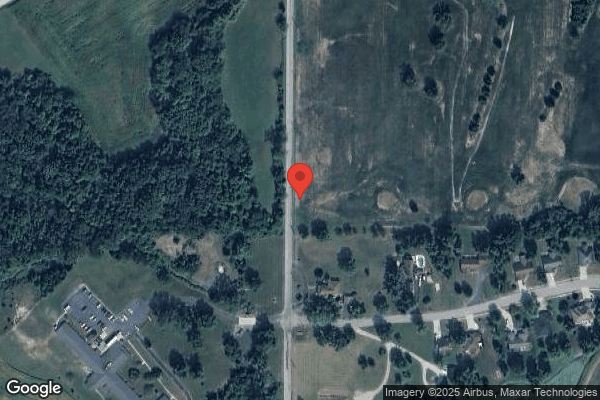
0548 S 100 W, HARTFORD CITY, IN 47348 (765) 348-1072
For profit - Limited Liability company 65 Beds INFINITY HEALTHCARE CONSULTING Data: November 2025
Trust Grade
90/100
#106 of 505 in IN
Last Inspection: January 2025

Within standard 12-15 month inspection cycle. Federal law requires annual inspections.

Overview

Waters of Hartford City Skilled Nursing Facility has received an A Trust Grade, indicating it is excellent and highly recommended for care. Ranked #106 out of 505 facilities in Indiana, it is in the top half, and it is the best option in Blackford County. The facility is improving, having reduced its issues from 2 in 2024 to 0 in 2025. Staffing is average with a 3 out of 5 rating and a turnover rate of 40%, which is better than the state average of 47%, suggesting that many staff members stay long-term. Notably, the facility has no fines on record, which is a positive sign. However, there were some concerns noted by inspectors, including a failure to complete required pre-admission screenings for one resident and a lack of individualized care to prevent pressure injuries for two residents. While the facility has strengths, such as its excellent health inspection scores, these specific incidents indicate areas that need attention.

Trust Score
A
90/100
In Indiana
#106/505
Top 20%
Safety Record
Low Risk
No red flags
Inspections
Getting Better
2 → 0 violations
Staff Stability
○ Average
40% turnover. Near Indiana's 48% average. Typical for the industry.
Penalties
✓ Good
No fines on record. Clean compliance history, better than most Indiana facilities.
Skilled Nurses
✓ Good
Each resident gets 48 minutes of Registered Nurse (RN) attention daily — more than average for Indiana. RNs are trained to catch health problems early.
Violations
✓ Good
Only 3 deficiencies on record. Cleaner than most facilities. Minor issues only.
★★★★★
5.0
Overall Rating
★★★☆☆
3.0
Staff Levels
★★★★★
5.0
Care Quality
★★★★★
5.0
Inspection Score
Stable
2024: 2 issues
2025: 0 issues

The Good

  • 5-Star Quality Measures · Strong clinical quality outcomes
  • Full Sprinkler Coverage · Fire safety systems throughout facility
  • No fines on record
  • Staff turnover below average (40%)

    8 points below Indiana average of 48%

Facility shows strength in quality measures, fire safety.

The Bad

Staff Turnover: 40%

Near Indiana avg (46%)

Typical for the industry

Chain: INFINITY HEALTHCARE CONSULTING

Part of a multi-facility chain

Ask about local staffing decisions and management

The Ugly 3 deficiencies on record

Feb 2024 2 deficiencies
CONCERN (D)

Potential for Harm - no one hurt, but risky conditions existed

Deficiency F0645 (Tag F0645)

Could have caused harm · This affected 1 resident

**NOTE- TERMS IN BRACKETS HAVE BEEN EDITED TO PROTECT CONFIDENTIALITY** Based on interview and record review, the facility failed to ensure a preadmission screening and resident review (PASRR) was com...

Read full inspector narrative →
**NOTE- TERMS IN BRACKETS HAVE BEEN EDITED TO PROTECT CONFIDENTIALITY** Based on interview and record review, the facility failed to ensure a preadmission screening and resident review (PASRR) was completed when the initial authorization for placement expired for 1 of 4 residents reviewed for PASRR. (Resident 12) Finding includes: Resident 12's clinical record was reviewed on [DATE] at 11:12 a.m. Her current diagnoses included bipolar disorder, other schizoaffective disorders, and major depressive disorder, recurrent. Current physician orders included bupropion hydrochloride extended release (antidepressant) 300 mg daily, hydroxyzine 50 mg (used for anxiety) three times a day and quetiapine fumarate (antipsychotic) 100 mg daily and 150 mg at bedtime. An [DATE] quarterly minimum data set (MDS) assessment indicated the resident received antipsychotic, antianxiety, antidepressant, and hypnotic medications. A general progress note, dated [DATE] at 1:45 p.m., indicated the resident had 14 angry outbursts since admission and was being followed by a mental health services provider. A PASRR Level l screen outcome, dated [DATE], indicated the resident had an exempted hospital discharge. A 30-day approval or less stay in the nursing facility was authorized. Re-screening was to have occurred on or before the 30th day if the individual expected to remain in the nursing facility beyond the authorization timeframe. The end of authorization date was [DATE]. During an interview, on [DATE] at 9:03 a.m., the Admissions Nurse indicated she had missed the [DATE] date to resubmit the PASRR as she had not realized the PASRR had been for 30 days when the resident admitted . A new PASRR was submitted on [DATE]. A PASRR Level l screen, provided by the Social Services Designee (SSD) on [DATE] at 9:05 a.m., indicated the Level l had been submitted on [DATE] and indicated a Level 2 onsite evaluation must be conducted. A PASRR Level 2 screen, provided by the SSD on [DATE] at 9:05 a.m., indicated the Level 2 had a determination date of [DATE] and an effective date of [DATE]. According to a web document from Maximus, the Indiana PASRR screening provider, dated 2022, titled Indiana PASRR FAQs for Providers, accessed on [DATE] at 10:18 a.m. at https://maximusclinicalservices.com/sites/default/files/pasrr/documents/IN%20PASRR%20FAQ_S%202021%20-%207.15.22.pdf, .If the person requires a stay longer than the 30-day EHD [Exempted Hospital Discharge] approval period, a new Level I and a LOC [Level of Care] are required to complete the full Level II. Please submit a Level I and a LOC 7 days prior to the end of the 30-day approval to avoid Federal compliance issues A facility document, dated [DATE], titled Guidelines for PASRR Process, provided by the Administrator on [DATE] at 3:26 p.m., indicated .An initial PASRR Level l Screening (PL1) of every person, (resident), apply for NF [nursing facility] placement to identify people, (residents), suspected of having ID [intellectual disability], DD [developmental disability], or MI [mental illness]. If the initial screening is positive, (meaning the person may have ID, DD, or MI), a PASRR evaluation, (PE), is completed by a qualified and impartial reviewer. People, (residents), who are confirmed to have ID, DD, or MI are evaluated to determine the need for specialized services, and appropriate placement options are reviewed 3.1-16(d)(1)(B)
CONCERN (D)

Potential for Harm - no one hurt, but risky conditions existed

Pressure Ulcer Prevention (Tag F0686)

Could have caused harm · This affected 1 resident

**NOTE- TERMS IN BRACKETS HAVE BEEN EDITED TO PROTECT CONFIDENTIALITY** Based on observation, record review, and interview, the facility failed to implement and review individualized interventions to ...

Read full inspector narrative →
**NOTE- TERMS IN BRACKETS HAVE BEEN EDITED TO PROTECT CONFIDENTIALITY** Based on observation, record review, and interview, the facility failed to implement and review individualized interventions to prevent the development of a pressure injury for 1 of 3 residents reviewed for pressure injuries. (Resident 32) Finding includes: During an observation on 2/5/24 at 10:57 a.m., Resident 32 was sitting in her room in her wheelchair with a heel boot on her left leg and foot. During a wound observation on 2/7/24 at 9:11 a.m., the bandage was removed from the pressure injury to the left heel. The wound was the size of a half dollar in length, the size of a quarter in width, and had a 0.1 cm depth. The center of the wound was tan slough (nonviable tissue) with the length of the entire wound and the width of a pencil eraser. During an interview, at the time of the observation, the ADON indicated the area had started as a blood blister and developed an eschar cap (necrotic tissue). The Wound Nurse Practitioner (NP) had removed the eschar cap from the left heel wound prior to the resident being hospitalized on [DATE]. During an observation on 2/7/24 at 2:09 p.m., the resident was lying in bed on her right side with a heel boot on her left leg and foot. During an observation on 2/8/24 at 8:27 a.m., the resident was sitting in her recliner with a heel boot on her left leg and foot. Her legs were elevated. Resident 32's clinical record was reviewed on 2/6/24 at 3:09 p.m. Her diagnoses included diabetes mellitus with diabetic neuropathy, obesity, muscle weakness, and dementia. Current physician's orders included: cleanse area on left heel, apply medical grade honey to wound, and cover with gauze then wrap with fluff dried pre-woven gauze daily until healed, float heels at all times when in bed every shift, and pressure reduction boot to left foot at all times, may remove for transfers every shift. A 1/15/24 minimum data set (MDS) assessment indicated the resident was moderately cognitively impaired. She required partial/moderate assistance of staff to roll from left to right. She required substantial/maximal assistance of staff for dressing her lower body. She was dependent on staff for transfers. She was at risk of developing a pressure injury and had an unstageable pressure injury with suspected deep tissue injury in evolution. A care plan problem, created on 10/15/23, revised on 1/25/24, indicated the resident had developed a deep tissue injury that presented as a dark purple intact blister to her left heel. (1/15/24 - wound NP removed eschar from wound) - returned from hospital on 1/25/24 with the area as unstageable (wound bed cannot be visualized to determine wound stage). A care plan problem, created on 7/1/23, revised on 9/28/23, indicated the resident was at risk for skin breakdown. Her diagnoses included diabetes, obesity, chronic heart disease, and incontinence and edema. She had no right great toenail. She slept in a recliner and preferred to not have a bed in her room. She was noncompliant at times with interventions even with education and encouragement. The same care plan problem was revised on 10/30/23 and indicated the resident was at risk for skin breakdown. Her diagnoses included diabetes, obesity, chronic heart disease, and incontinence and edema. She had no right great toenail. She slept in a recliner and preferred to not have a bed in her room. She was noncompliant at times with interventions even with education and encouragement. On 10/12/23, the resident was noncompliant with floating heels off of bed surface for more than a few minutes, and will pull pillow out from under feet and kick pillow onto floor. A skin and wound progress note, dated 10/15/23 at 4:14 p.m., indicated a one inch by two-inch red/purple blister was found on the resident's left heel. A skin and wound progress note, dated 10/16/23 at 11:36 a.m., documented by the Wound NP, indicated the resident was being seen for left heel blister concerns. The resident did not have good bed mobility and preferred to be left alone. The area to the left heel measured 3 centimeters (cm) length (L) by 4.5 cm width (W). The area was staged as a deep tissue injury and coded as a pressure-induced deep tissue damage of the left heel. A skin and wound progress note, dated 11/13/23 at 4:28 a.m., documented by the Wound NP, indicated the wound status was stalled. The wound measurements were 4.5 cm L by 5.5 cm W. A skin and wound progress note, dated 12/18/23 at 8:08 a.m., documented by the Wound NP, indicated the wound measurements were 2.5 cm L by 2 cm W. A skin and wound progress note, dated 1/2/24 at 1:34 p.m., documented by the Wound NP, indicated the wound status was stable eschar. Removal of necrotic tissue was performed. Wound measurements were 2 cm L by 1 cm W. A skin and wound progress note, dated 1/15/24 at 2:22 p.m., documented by the Wound NP, indicated the wound was improving despite the measurements. Removal of necrotic tissue was performed. The wound measurements were 3 cm L by 1.5 cm W by 0.1 cm deep. A skin and wound progress note, dated 1/29/24 at 9:54 a.m., documented by the Wound NP indicated the wound staging was changed from deep tissue injury to unstageable following the recent hospitalization. Removal of necrotic tissue was performed. The wound measurements were 2.5 cm L by 2.5 cm W by 0.1 cm deep. A skin and wound progress note, dated 2/5/24 at a.m., documented by the Wound NP, indicated the wound was improving despite measurements and remained unstageable. The wound measurements were 1.0 cm L by 2.5 cm W by 0.1 cm deep. During an interview, on 2/9/24 at 8:39 a.m., CNA 5 indicated the resident's heels were floated. She wore heel boots. During an interview, on 2/9/24 at 11:32 a.m., LPN 6 indicated the resident wore a boot to her left foot and her heels were floated. During an interview, on 2/9/24 at 11:52 a.m., the DON indicated on a 10/12/23 24-hour report sheet, the nurse had documented the resident had kicked out her pillow from under her heels while in bed. She was unable to locate additional CNA or nurse documentation of the resident's noncompliance with interventions to prevent the development of pressure injuries. During an interview, on 2/9/24 at 12:44 p.m., the ADON indicated the resident had been sleeping in her recliner, then she began sleeping in her bed as she began in have increasing episodes of incontinence. She was uncertain of the date when the resident began sleeping in her bed. A facility policy, dated 5/20/23, titled Guidelines for Preventative Skin Care, provided by the DON on 2/9/24 at 4:04 p.m., indicated .It is the intent of the facility to provide residents with preventive skin care through careful washing, rinsing and drying of their skin, to keep them clean, comfortable, well-groomed and free from pressure sores 3.1-40(a)(1)
Apr 2023 1 deficiency
CONCERN (D)

Potential for Harm - no one hurt, but risky conditions existed

Pressure Ulcer Prevention (Tag F0686)

Could have caused harm · This affected 1 resident

Based on observation, record review, and interview, the facility failed to prevent the development of a pressure injury for 1 of 3 residents reviewed for pressure ulcers. (Resident 31) During an obse...

Read full inspector narrative →
Based on observation, record review, and interview, the facility failed to prevent the development of a pressure injury for 1 of 3 residents reviewed for pressure ulcers. (Resident 31) During an observation, on 4/10/23 at 3:55 p.m., Resident 31 was in bed, with a pressure reducing boot on his left lower extremity and a pillow under his legs. During an observation, on 4/11/23 at 9:27 a.m., the resident sat in his wheelchair in his room, with a slipper on his right foot and a pressure reducing boot on his left lower leg. and his feet on the floor. During an observation, on 4/12/23 at 11:20 a.m., the resident sat in his wheelchair in his room with a slipper on his right foot and a pressure reducing boot on his left lower leg with his feet on the floor. During an observation, on 4/13/24 at 8:16 a.m., the resident propelled himself in his wheelchair in the hallway. He wore a slipper on his right foot and a pressure reducing boot on his left lower leg. The resident's clinical record was reviewed on 4/12/23 at 2:07 p.m. His diagnoses included fracture of the left femur, weakness, muscle wasting and atrophy, polyneuropathy, and depression. His current physician's orders included cleanse open blister to back of left heel, apply petrolatum gauze, cover with 4x4 gauze and secure with wrap gauze daily until healed (3/16/23), monitor open blister to back of left heel every shift until healed (3/16/23), pressure reducing boot to left foot at all times every shift (3/28/23), and use mechanical lift for transfers (2/9/23). A 2/14/23 5-day MDS (Minimum Data Set) assessment indicated the resident was moderately cognitively impaired, required extensive assistance for bed mobility, dressing, and toileting, was totally dependent on the assistance of two persons for transfers, and had a recent surgery for repair of a fractured hip. A current skin risk care plan, initiated 1/6/23, indicated as a goal, the resident would be provided with preventative measures in an attempt to avoid skin breakdown (revised 1/16/23). Interventions included float heels while in bed (1/6/23), lay down for rest during the day (2/28/23), monitor skin daily during care (1/6/23), remind or assist to turn at least every two hours (2/28/23), and skin assessment at least weekly by nurse (2/28/23). A wound care plan, initiated on 3/15/23 and revised on 4/11/23, indicated the resident had developed an actual pressure injury, an unstageable area to the left heel which had become a stage three pressure injury (full thickness tissue loss) on 4/11/23. Interventions included float heels off the bed (3/15/23), leave shoes off feet at this time (initiated 3/15/23, with revision 3/17/23), and pressure reducing boot to left lower extremity at all times (3/28/23). A General Note, dated 3/15/23 at 11:15 p.m., indicated the resident had a popped blister on the left heel. The area was cleaned, and a bandage was applied. A Physician's Order Note, dated 3/16/23 at 11:36 p.m., indicated a new physician's order had been received to cleanse the open blister to the back of the left heel, apply petrolatum gauze, cover with a 4x4 gauze and secure with wrap gauze every day shift until healed and as needed for soilage or dislodgement. A Weekly Wound Evaluation, dated 3/16/23 at 11:36 a.m., indicated a new pressure injury to the back of the left heel was identified on 3/15/23. The pressure injury was acquired in the facility. The pressure injury was a stage two (partial thickness skin loss with exposed dermis) and measured 4.0 centimeters (cm) long by 3.0 cm wide by less than 0.1 cm deep. The wound color was red. The wound was comprised of 10% granulation (new connective tissue with microscopic blood vessels) tissue visible with skin covering the rest of the wound. A Weekly Wound Evaluation, dated 3/21/23 at 1:58 p.m., indicated the pressure injury to the back of the left heel was a stage two, and measured 2.0 cm long by 1.5 cm wide by less than 0.1 cm deep. The wound color was red with 100% granulation tissue present and visible. A Weekly Wound Evaluation, dated 3/28/23 at 2:01 p.m., indicated the pressure injury to the back of the left heel was unstageable (obscured full thickness skin and tissue loss) and measured 2.0 cm long by 1.5 cm wide and less than 0.1 cm deep. The wound color was red with 5% granulation, 5% slough (dead tissue usually yellow or cream in color), and 90% necrotic tissue. Most of the wound was covered with thick eschar (dry, black, hard necrotic tissue) with open surrounding edges comprised of yellow slough and red granulation tissue. A General Note, dated 3/28/23 at 2:13 p.m., indicated the physician was updated on the status of skin breakdown. A new order for a pressure reducing boot to the left lower extremity at all times was received. A Weekly Wound Evaluation, dated 4/11/23 at 11:46 a.m., indicated the pressure injury to the back of the left heel was a stage three and measured 2.0 cm long by 1.5 cm wide by less than 0.1 cm deep. The wound bed was covered with 50% yellow, moist slough and 50% pink, moist tissue. During an observation, on 4/13/23 at 10:21 a.m., RN 3 removed the dressing from the resident's left foot. The pressure injury on the back of the left heel was approximately the size of a quarter, with a pink wound bed and a black area in the center. The black area was approximately the length of two quarter edges and the width of the diameter of a nickel. The depth of the wound was approximately the edge of a quarter. In an interview during the observation, RN 3 indicated an eschar cap on the pressure injury had come off recently. She was uncertain of the date. During an interview, on 4/13/23 at 3:08 p.m., CNA 4 indicated the resident was unable to put on shoes himself since he fractured his hip. He used a mechanical lift and was unable to scoot himself up on his own. During an interview, on 4/13/23 at 3:37 p.m., the ADON indicated the blister on the back of the left heel was where his shoe had rubbed. He had hard leather heavy-duty shoes. During an interview, on 4/14/23 at 11:40 a.m., CNA 5 indicated the resident was unable to apply his shoes or socks, though he could kick off his footwear. During an interview, on 4/14/23 at 11:51 a.m., the ADON indicated the resident propelled himself in the wheelchair and might have rubbed his heel prior to developing the blister to his left heel. During an interview, on 4/14/23 at 12:24 p.m., the ADON indicated after the blister was found on the resident's heel, he continued to have the staff put on his shoes even though she kept reminding him to not wear his shoes. An undated facility policy, provided by the DON on 4/14/23 at 11:53 a.m., titled Preventative Skin Care, indicated Guideline: It is the intent of the facility that the facility provide preventive skin care through careful washing, rinsing, and drying to keep residents clean, comfortable, well-groomed, and free from pressure sores .Ensure proper fit of wheelchairs, braces, shoes, and prosthetic devices 3.1-40(a)(1)
Understanding Severity Codes (click to expand)
Life-Threatening (Immediate Jeopardy)
J - Isolated K - Pattern L - Widespread
Actual Harm
G - Isolated H - Pattern I - Widespread
Potential for Harm
D - Isolated E - Pattern F - Widespread
No Harm (Minor)
A - Isolated B - Pattern C - Widespread

Questions to Ask on Your Visit

  • "Can I speak with families of current residents?"
  • "What's your RN coverage like on weekends and overnight?"

Our Honest Assessment

Strengths
  • • Grade A (90/100). Above average facility, better than most options in Indiana.
  • • No major safety red flags. No abuse findings, life-threatening violations, or SFF status.
  • • No fines on record. Clean compliance history, better than most Indiana facilities.
  • • Only 3 deficiencies on record. Cleaner than most facilities. Minor issues only.
Concerns
  • • No significant concerns identified. This facility shows no red flags across CMS ratings, staff turnover, or federal penalties.
Bottom line: Generally positive indicators. Standard due diligence and a personal visit recommended.

About This Facility

What is Waters Of Hartford City Skilled Nursing Facility's CMS Rating?

CMS assigns WATERS OF HARTFORD CITY SKILLED NURSING FACILITY an overall rating of 5 out of 5 stars, which is considered much above average nationally. Within Indiana, this rating places the facility higher than 99% of the state's 100 nursing homes. This rating reflects solid performance across the metrics CMS uses to evaluate nursing home quality.

How is Waters Of Hartford City Skilled Nursing Facility Staffed?

CMS rates WATERS OF HARTFORD CITY SKILLED NURSING FACILITY's staffing level at 3 out of 5 stars, which is average compared to other nursing homes. Staff turnover is 40%, compared to the Indiana average of 46%. This relatively stable workforce can support continuity of care.

What Have Inspectors Found at Waters Of Hartford City Skilled Nursing Facility?

State health inspectors documented 3 deficiencies at WATERS OF HARTFORD CITY SKILLED NURSING FACILITY during 2023 to 2024. These included: 3 with potential for harm.

Who Owns and Operates Waters Of Hartford City Skilled Nursing Facility?

WATERS OF HARTFORD CITY SKILLED NURSING FACILITY is owned by a for-profit company. For-profit facilities operate as businesses with obligations to shareholders or private owners. The facility is operated by INFINITY HEALTHCARE CONSULTING, a chain that manages multiple nursing homes. With 65 certified beds and approximately 38 residents (about 58% occupancy), it is a smaller facility located in HARTFORD CITY, Indiana.

How Does Waters Of Hartford City Skilled Nursing Facility Compare to Other Indiana Nursing Homes?

Compared to the 100 nursing homes in Indiana, WATERS OF HARTFORD CITY SKILLED NURSING FACILITY's overall rating (5 stars) is above the state average of 3.1, staff turnover (40%) is near the state average of 46%, and health inspection rating (5 stars) is much above the national benchmark.

What Should Families Ask When Visiting Waters Of Hartford City Skilled Nursing Facility?

Based on this facility's data, families visiting should ask: "Can I visit during a mealtime to observe dining assistance and food quality?" "How do you handle medical emergencies, and what is your hospital transfer rate?" "Can I speak with family members of current residents about their experience?"

Is Waters Of Hartford City Skilled Nursing Facility Safe?

Based on CMS inspection data, WATERS OF HARTFORD CITY SKILLED NURSING FACILITY has a clean safety record: no substantiated abuse findings (meaning no confirmed cases of resident harm), no Immediate Jeopardy citations (the most serious violation level indicating risk of serious injury or death), and is not on the Special Focus Facility watch list (a federal program monitoring the lowest-performing 1% of nursing homes). The facility has a 5-star overall rating and ranks #1 of 100 nursing homes in Indiana. While no facility is perfect, families should still ask about staff-to-resident ratios and recent inspection results during their visit.

Do Nurses at Waters Of Hartford City Skilled Nursing Facility Stick Around?

WATERS OF HARTFORD CITY SKILLED NURSING FACILITY has a staff turnover rate of 40%, which is about average for Indiana nursing homes (state average: 46%). Moderate turnover is common in nursing homes, but families should still ask about staff tenure and how the facility maintains care continuity when employees leave.

Was Waters Of Hartford City Skilled Nursing Facility Ever Fined?

WATERS OF HARTFORD CITY SKILLED NURSING FACILITY has no federal fines on record. CMS issues fines when nursing homes fail to meet care standards or don't correct problems found during inspections. The absence of fines suggests the facility has either maintained compliance or corrected any issues before penalties were assessed. This is a positive indicator, though families should still review recent inspection reports for the full picture.

Is Waters Of Hartford City Skilled Nursing Facility on Any Federal Watch List?

WATERS OF HARTFORD CITY SKILLED NURSING FACILITY is not on any federal watch list. The most significant is the Special Focus Facility (SFF) program, which identifies the bottom 1% of nursing homes nationally based on persistent, serious quality problems. Not being on this list means the facility has avoided the pattern of deficiencies that triggers enhanced federal oversight. This is a positive indicator, though families should still review the facility's inspection history directly.