WATERS OF HOBART SKILLED NURSING FACILITY, THE
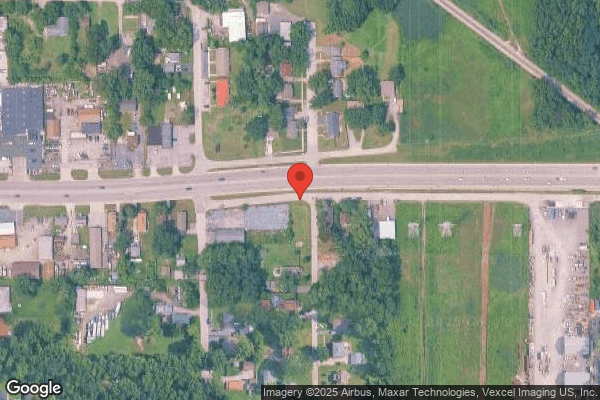

2901 W 37TH AVE, HOBART, IN 46342 (219) 942-2170
For profit - Corporation 110 Beds INFINITY HEALTHCARE CONSULTING Data: November 2025
Trust Grade
40/100
#397 of 505 in IN
Last Inspection: June 2025

Inspected within the last 6 months. Data reflects current conditions.

Overview

The Waters of Hobart Skilled Nursing Facility has a Trust Grade of D, indicating below-average care with some concerning issues. Ranked #397 out of 505 facilities in Indiana, they are in the bottom half statewide, but #7 out of 20 in Lake County means they have a few local competitors performing better. The facility is showing signs of improvement, with the number of issues decreasing from 20 in 2024 to 13 in 2025. Staffing is a concern, with a low rating of 1 out of 5 stars and a high turnover rate of 62%, which is above the state average of 47%. Although they have no fines on record, which is a positive sign, there have been serious incidents, such as failing to assess a resident after a fall that led to a hospitalization delay, and concerns related to food safety in the kitchen that could affect many residents. Overall, while there are some strengths, significant weaknesses remain that families should consider carefully.

Trust Score
D
40/100
In Indiana
#397/505
Bottom 22%
Safety Record
Moderate
Needs review
Inspections
Getting Better
20 → 13 violations
Staff Stability
⚠ Watch
62% turnover. Above average. Higher turnover means staff may not know residents' routines.
Penalties
✓ Good
No fines on record. Clean compliance history, better than most Indiana facilities.
Skilled Nurses
○ Average
Each resident gets 30 minutes of Registered Nurse (RN) attention daily — about average for Indiana. RNs are the most trained staff who monitor for health changes.
Violations
⚠ Watch
52 deficiencies on record. Higher than average. Multiple issues found across inspections.
★★☆☆☆
2.0
Overall Rating
★☆☆☆☆
1.0
Staff Levels
★★★★★
5.0
Care Quality
★☆☆☆☆
1.0
Inspection Score
Stable
2024: 20 issues
2025: 13 issues

The Good

  • 5-Star Quality Measures · Strong clinical quality outcomes
  • No fines on record

Facility shows strength in quality measures.

The Bad

2-Star Overall Rating

Below Indiana average (3.1)

Below average - review inspection findings carefully

Staff Turnover: 62%

16pts above Indiana avg (46%)

Frequent staff changes - ask about care continuity

Chain: INFINITY HEALTHCARE CONSULTING

Part of a multi-facility chain

Ask about local staffing decisions and management

Staff turnover is elevated (62%)

14 points above Indiana average of 48%

The Ugly 52 deficiencies on record

1 actual harm
Jun 2025 13 deficiencies
CONCERN (D)

Potential for Harm - no one hurt, but risky conditions existed

Deficiency F0554 (Tag F0554)

Could have caused harm · This affected 1 resident

Based on observation, record review, and interview, the facility failed to ensure residents had physician's orders for medications and an assessment to self-administer their own medications for 2 of 3...

Read full inspector narrative →
Based on observation, record review, and interview, the facility failed to ensure residents had physician's orders for medications and an assessment to self-administer their own medications for 2 of 3 residents reviewed for self-administration of medication. (Residents 18 and 52) Findings include: 1. During a random observation on 6/10/25 at 1:55 p.m., two Preparation H suppositories were observed on Resident 18's bed side table. There was also a bottle of lubricating eye drops on the resident's over bed table. The record for Resident 18 was reviewed on 6/11/25 at 11:54 a.m. Diagnoses included, but were not limited to, constipation and chronic pain. The Quarterly Minimum Data Set (MDS) assessment, dated 5/20/25, indicated the resident had moderate cognitive impairment. The June 2025 Physician's Order Summary (POS) indicated the resident had orders for Artificial Tears Solution 1.4%, instill 1 drop in both eyes every 8 hours as needed (PRN) for dryness and redness. The resident also had an order for Anusol-HC External Cream 2.5% (a hemorrhoid cream) apply to rectum topically every 8 hours PRN for pain or irritation. There was no physician's order for the Preparation H suppositories and there was no order for the medications to be left at the bedside. A Self-Administration of Medication Assessment, dated 7/12/24, indicated the resident did not want to self-administer his medications. During an interview on 6/11/25 at 3:30 p.m., the Director of Nursing indicated the medications should not have been left at the resident's bed side. 2. On 6/10/25 at 9:47 a.m., a cup with a separated yellow liquid with sediment was observed on Resident 52's bedside table. The resident indicated it was medicine QMA 2 had left for her to take later. On 6/10/25 at 9:50 a.m., the QMA came into the resident's room. The QMA indicated the cup contained Cholestyramine (a cholesterol lowering medication) and that she did not have to stay with the resident until she took the medication, and left the room. The record for Resident 52 was reviewed on 6/12/25 at 1:53 p.m. Diagnoses included, but were not limited to, Parkinson's Disease, peripheral vascular disease, and anxiety. The 3/31/25 Quarterly Minimum Data Set (MDS) assessment indicated the resident had moderate cognitive impairment, and was dependent in activities of daily living (ADLs) and transfers. There were no assessments or orders for the resident to self-administer medications. During an interview on 6/11/25 at 3:38 p.m., when informed of the findings, the Corporate Nurse indicated they would have to do staff education on medication administration. The current facility policy titled, Self-Administration of Medications by Residents was provided by the Director of Nursing on 6/17/25 at 3:35 p.m. The policy indicated if the resident desired to self-administer medications, an assessment was conducted by the interdisciplinary team. The assessment included the resident's cognitive, physical, and visual ability to carry out the responsibility. The policy also indicated a physician order was to be obtained to self-administer medications if the above storage and skill assessment had been approved for the resident by the interdisciplinary team. 3.1-11(a)
CONCERN (D)

Potential for Harm - no one hurt, but risky conditions existed

Notification of Changes (Tag F0580)

Could have caused harm · This affected 1 resident

Based on record review and interview, the facility failed to ensure the resident's physician was notified of medication refusals for 1 of 6 residents reviewed for unnecessary medications. (Resident 47...

Read full inspector narrative →
Based on record review and interview, the facility failed to ensure the resident's physician was notified of medication refusals for 1 of 6 residents reviewed for unnecessary medications. (Resident 47) Finding includes: During an interview on 6/10/25 at 2:15 p.m., Resident 47 indicated he did not like taking his Eliquis (a blood thinner). The record for Resident 47 was reviewed on 6/17/25 at 9:00 a.m. Diagnoses included, but were not limited to, hypertension, orthopedic aftercare, and peripheral vascular disease. The Quarterly Minimum Data Set (MDS) assessment, dated 5/2/25, indicated the resident was cognitively intact and received an anticoagulant (blood thinner). A Physician's Order, dated 2/25/25, indicated the resident was to receive Eliquis 2.5 milligrams (mg) twice a day. The June 2025 Medication Administration Record (MAR) indicated the resident refused his Eliquis on the following dates and times: - AM dose: 6/3/25, 6/8/25, 6/10/25, 6/11/25, and 6/17/25 - PM dose: 6/1/25 and 6/2/25 - AM and PM dose: 6/7/25, 6/9/25, 6/14/25, 6/15/25, and 6/16/25 There was no documentation indicating the physician was made aware of the resident's refusals of the Eliquis. During an interview on 6/17/25 at 12:10 p.m., the Director of Nursing (DON) indicated the physician should have been notified of the medication refusals. The current facility policy titled Drug Administration-General Guidelines was provided by the DON on 6/17/25 at 3:35 p.m. The policy indicated if a dose of regularly scheduled medication was withheld, refused, or given at another time than the scheduled time (e.g. resident not in facility at scheduled dose time, initial dose of antibiotic), the MAR should reflect documentation as to the reason the medication could not be administered. If two consecutive doses of a medication were withheld or refused, the physician was to be notified. 3.1-5(a)(3)
CONCERN (D)

Potential for Harm - no one hurt, but risky conditions existed

Assessment Accuracy (Tag F0641)

Could have caused harm · This affected 1 resident

Based on record review and interview, the facility failed to ensure the Minimum Data Set (MDS) comprehensive assessment was accurately completed related to mobility, hearing, and insulin use for 2 of ...

Read full inspector narrative →
Based on record review and interview, the facility failed to ensure the Minimum Data Set (MDS) comprehensive assessment was accurately completed related to mobility, hearing, and insulin use for 2 of 19 MDS assessments reviewed. (Residents 3 and 38) Findings include: 1. On 6/10/25 at 10:47 a.m., Resident 3 was observed resting in his bed. He could not move his left arm, and his left hand was contracted (a structural change in the body's soft tissues that cause them to stiffen and shorten). He indicated he could not hear. On 6/12/25 at 9:35 a.m., the resident was observed propelling himself in his wheelchair using his right leg. His left leg remained on the footrest. He put in his hearing aid with his right hand. At that time, he indicated his left arm was dead and he could not move it, and he had minimal movement of his left leg. With the hearing aid on, the resident could only hear when spoken to loudly and in close proximity. The record for the resident was reviewed on 6/11/25 at 1:29 p.m. Diagnoses included, but were not limited to, stroke, hemiplegia (paralysis of one side of the body), and hearing loss. The 4/21/25 Quarterly Minimum Data Set (MDS) assessment indicated the resident had severe cognitive impairment, used a hearing aid, was able to hear with minimal difficulty, and was dependent in activities of daily living (ADLs). The assessment indicated the resident had no impairment in range of motion or functional limitation to his upper and lower extremities. During an interview on 6/11/25 at 9:02 a.m., LPN 3 indicated the resident couldn't hear much, they had been working on his hearing aides, but they weren't working anymore. During an interview on 6/16/25 at 1:22 p.m., the MDS coordinator indicated the MDS assessment should have indicated the resident had a mobility impairment and probably should not have indicated the resident could hear with minimal difficulty, but she did not assess the resident. 2. The record for Resident 38 was reviewed on 6/16/25 at 10:50 a.m. Diagnoses included, but were not limited to, metabolic encephalopathy, dementia, and bipolar disorder. The 3/17/25 Quarterly MDS assessment indicated the resident had moderate cognitive impairment, required partial assistance with ADLs and supervision or touching assistance with transfers. It indicated the resident received insulin injections. The record lacked physician's orders or any documentation that the resident received any insulin in March 2025. During an interview on 6/16/25 at 1:22 p.m., the MDS Coordinator indicated the assessment had been coded in error and the resident had not received insulin. 3.1-31(i)
CONCERN (D)

Potential for Harm - no one hurt, but risky conditions existed

ADL Care (Tag F0677)

Could have caused harm · This affected 1 resident

Based on observation, record review, and interview, the facility failed to ensure activities of daily living (ADLs) were completed for dependent residents related to skin and nail care for 1 of 3 resi...

Read full inspector narrative →
Based on observation, record review, and interview, the facility failed to ensure activities of daily living (ADLs) were completed for dependent residents related to skin and nail care for 1 of 3 residents reviewed for ADLs. (Resident 166) Finding includes: During random observations on 6/9/25 at 10:31 a.m., 6/10/25 at 9:24 a.m., 6/11/25 at 8:35 a.m., and 6/12/25 at 9:41 a.m., Resident 166's fingernails were dirty and long. Her feet were dry and scaly with flakes of skin accumulating on the bed sheet. During an interview at the time, the resident indicated she did not want her fingernails to be that long, and she would like it if someone put lotion on her feet. The record for the resident was reviewed on 6/11/25 at 9:45 a.m. Diagnoses included, but were not limited to, diabetes and heart failure. The 5/2/25 Medicare-5 Day Minimum Data Set (MDS) assessment indicated the resident had severe cognitive impairment, and was dependent in Activities of Daily Living (ADLs) and transfers. A 3/14/25 Podiatry Note indicated the resident had extremely dry, scaly skin on greater than 60% of her feet, and she required at-risk foot care. The shower sheets from the prior 30 days lacked documentation of skin and nail care completed or refused. During an interview on 6/16/25 at 2:18 p.m., the Director of Nursing (DON) was informed of the findings and offered nothing further. 3.1-38(a)(3)(A) 3.1-38(a)(3)(E)
CONCERN (D)

Potential for Harm - no one hurt, but risky conditions existed

Quality of Care (Tag F0684)

Could have caused harm · This affected 1 resident

Based on observation, record review, and interview, the facility failed to ensure residents received the necessary treatment and services related to a delay in scheduling a post-operative doctor's app...

Read full inspector narrative →
Based on observation, record review, and interview, the facility failed to ensure residents received the necessary treatment and services related to a delay in scheduling a post-operative doctor's appointment for 1 of 2 residents reviewed for skin conditions non-pressure related, assessment and treatment of edema for 1 of 2 residents reviewed for edema, and holding an insulin dose without an order for 1 of 6 residents reviewed for unnecessary medications. (Residents 166, 52, and 36) Findings include: 1. During random observations on 6/9/25 at 10:31 a.m., 6/10/25 at 9:24 a.m., 6/11/25 at 8:35 a.m., and 6/12/25 at 9:41 a.m., Resident 166 had a dressing to her left upper chest. The dressing was no longer fully adhering to the skin, and at times, an incision underneath was visible. The resident indicated she had pacemaker surgery and had to keep the dressing on until she saw the doctor, but it was taking too long to get an appointment. The record for the resident was reviewed on 6/11/25 at 9:45 a.m. Diagnoses included, but were not limited to, diabetes and heart failure. The 5/2/25 Medicare-5 Day Minimum Data Set (MDS) assessment indicated the resident had severe cognitive impairment, and was dependent in Activities of Daily Living (ADLs) and transfers. The physician's post-operative instructions from the 5/28/25 pacemaker surgery indicated to schedule an appointment with the doctor as soon as possible for an appointment in one week for wound re-check. During an interview on 6/12/25 at 2:45 p.m., the Medical Records Coordinator indicated she had been calling the doctor's office for two weeks, but had not been able to speak to someone there to make the follow-up appointment. She indicated she informed the resident she had not been able to contact the office, but no one else. During an interview on 6/16/25 at 2:18 p.m., the Director of Nursing (DON) indicated she was not aware that the follow up had not been scheduled, and the Medical Records Coordinator should have informed her or someone else who could follow up on the problem. 2. During random observations on 6/10/25 at 9:51 a.m., 6/11/25 at 9:18 a.m., 6/12/25 at 10:08 a.m., and 6/16/25 at 9:05 a.m., Resident 52's legs and feet were visibly swollen and she was not wearing compression socks or Tubigrips (compression sleeves) to her legs. The record for the resident was reviewed on 6/12/25 at 1:53 p.m. Diagnoses included, but were not limited to, Parkinson's Disease, peripheral vascular disease, and weakness. The 3/31/25 Quarterly Minimum Data Set (MDS) assessment indicated the resident had moderate cognitive impairment, and was dependent in activities of daily living (ADLs) and transfers. A Care Plan, last reviewed 4/23/25, indicated the resident had potential for cardiac distress. Interventions included to observe and report any increased edema (swelling) to the physician. A 4/30/25 Physician's Order indicated Tubigrips to both legs, on during the day, off in evening for bed. A 5/16/25 Nurse Practitioner Progress Note indicated the resident reported swelling to both legs, and that her legs felt heavy like a ton of bricks. A 5/22/25 Physician's Progress Note indicated the resident had 1+ pitting edema (swelling where a slight indentation appears on the skin after pressure is applied) to both legs. The record lacked regular assessment of the resident's edema. During an interview on 6/17/25 at 12:14 p.m., the Director of Nursing was informed of the findings and offered no further information. 3. The record for Resident 36 was reviewed on 6/16/25 at 2:28 p.m. Diagnoses included, but were not limited to, diabetes and acquired absence of left foot. The 3/14/25 Quarterly Minimum Data Set (MDS) assessment indicated the resident had moderate cognitive impairment, and required substantial assistance with ADLs and transfers. The June 2025 Medication Administration Record (MAR) indicated Insulin Glargine Solution (a long-acting insulin), 22 units at bedtime. The 6/13/25 dose was held with the reason of No Sliding Scale Insulin Required Per Order. The June 2025 MAR indicated Humalog (a fast-acting insulin) 8 units, three times a day. The 6/1/25 and 6/6/25 4:30 p.m. doses were held with the reason of No Sliding Scale Insulin Required Per Order. There were no blood sugar parameters, sliding scale, or physician's orders to hold the insulin. A Care Plan, last reviewed 6/11/25, indicated the resident had the potential for having high or low blood sugars due to diabetes. Interventions included giving medications as ordered. During an interview on 6/17/25 at 12:14 p.m., the Director of Nursing was informed of the findings and offered no further information. 3.1-37(a)
CONCERN (D)

Potential for Harm - no one hurt, but risky conditions existed

Deficiency F0687 (Tag F0687)

Could have caused harm · This affected 1 resident

Based on observation, record review, and interview, the facility failed to ensure timely podiatry visits were provided related to painful ingrown toenails for 1 of 1 resident reviewed for foot care. ...

Read full inspector narrative →
Based on observation, record review, and interview, the facility failed to ensure timely podiatry visits were provided related to painful ingrown toenails for 1 of 1 resident reviewed for foot care. (Resident 55) Finding includes: During a random observation on 6/9/25 at 10:30 a.m., Resident 55 was in his room in bed. A band aid was observed on his left great toe. During an interview at that time, the resident indicated he wanted to see the podiatrist for his painful toenails. He indicated he had told staff several times and no one ever followed up with him. The record for Resident 55 was reviewed on 6/11/25 at 9:41 a.m. Diagnoses included, but were not limited to, type 2 diabetes and acute infarction of the spinal cord. The Quarterly Minimum Data Set (MDS) assessment, dated 5/27/25, indicated the resident was cognitively intact. A Physician's Order, dated 3/19/25, indicated the resident may receive services of eye care, audiologist, podiatrist, dental, psychiatrist, cardiologist, physiatrist, Nurse Practitioner, Wound Physician and any other specialist as deemed necessary An SBAR (Situation, Background, Assessment, and Recommendation) Summary, dated 3/27/25 at 3:29 p.m., indicated the resident had complaints of ingrown toenails with slight drainage. Recommendations were received to refer to the in-house podiatrist. A Nurse Practitioner (NP) note, dated 4/1/25, indicated the resident's great toes were described as infected and painful. The resident reported that both of his thumb toes were ingrown. Will monitor the resident's toes for signs of worsening. If necessary, a referral to podiatry would be made for further evaluation and treatment. An NP note, dated 4/22/25 at 12:04 p.m., indicated the resident was being seen for his bilateral ingrown toenails. He had ingrown toenails on the bilateral hallux (big toes) and the left second toe. The left second toe recently expressed purulent (a thick pus-like fluid) and sanguineous (a type of fluid that is composed primarily of blood) drainage. He had redness to his bilateral big toes and left middle toe. A topical steriod cream was ordered along with warm soapy water soaks. The resident was also to be seen by in-house podiatry. A Care Plan, dated 4/24/25, indicated the resident was at risk for complications related to acute skin impairment (ingrown toenails). Interventions included, but were not limited to, refer to podiatrist as needed (PRN). An NP note, dated 4/28/25 at 10:02 a.m., indicated the resident had persistent swelling in his toes and toe pain. He was to see the in-house podiatrist when available. There was no documentation the resident had been seen by the in-house podiatrist. During an interview on 6/12/25 at 9:55 a.m., the Social Service Designee (SSD) indicated the last time the podiatrist was at the facility was on 5/16/25. She also indicated the resident was not on the list to be seen. The SSD indicated she would put the resident on the list to be seen by the podiatrist the next time he visited. 3.1-47(a)(7)
CONCERN (D)

Potential for Harm - no one hurt, but risky conditions existed

Respiratory Care (Tag F0695)

Could have caused harm · This affected 1 resident

Based on observation, record review, and interview, the facility failed to ensure oxygen was set at the correct flow rate for 2 of 3 residents reviewed for respiratory care. (Residents 5 and 13) Findi...

Read full inspector narrative →
Based on observation, record review, and interview, the facility failed to ensure oxygen was set at the correct flow rate for 2 of 3 residents reviewed for respiratory care. (Residents 5 and 13) Findings include: 1. During a random observation on 6/9/25 at 10:50 a.m., Resident 5 was in her room in bed. The resident had oxygen in use by the way of a nasal cannula. The oxygen concentrator was set at 1 1/2 liters. On 6/10/25 at 10:25 a.m., the resident was again observed in her room in bed. The resident had oxygen in use via a nasal cannula and her oxygen concentrator was set at 1 1/2 liters. On 6/12/25 at 9:30 a.m. and 2:05 p.m., the resident was in her room in bed. The resident had oxygen in use via a nasal cannula and her oxygen concentrator was set at 1 1/2 liters. The record for Resident 5 was reviewed on 6/11/25 at 2:52 p.m. Diagnoses included, but were not limited to, chronic obstructive pulmonary disease (COPD) and congestive heart failure (CHF). The Quarterly Minimum Data Set (MDS) assessment, dated 5/23/25, indicated the resident had moderate cognitive impairment and was using oxygen while a resident of the facility. A Physician's Order, dated 5/7/25, indicated the resident was to have oxygen at 2 liters per nasal cannula as needed (PRN) for shortness of breath. Maintain oxygen saturations greater than 90 percent. During an interview on 6/17/25 at 12:10 p.m., the Director of Nursing indicated the flow rate on the resident's oxygen concentrator should have been set at 2 liters. 2. During a random observation on 6/9/25 at 2:53 p.m., Resident 13 was in her room in bed. The resident had oxygen in use by the way of a nasal cannula. The resident's oxygen concentrator was set at 4 liters. On 6/11/25 at 9:01 a.m. and 2:25 p.m., the resident was observed in her room in bed. She had oxygen in use via a nasal cannula and the oxygen concentrator was set at 4 liters. On 6/12/25 at 9:30 a.m. and 2:15 p.m., the resident was observed in her room in bed. She had oxygen in use via a nasal cannula and the oxygen concentrator was set at 4 liters. The record for Resident 13 was reviewed on 6/17/25 at 9:23 a.m. Diagnoses included, but were not limited to, chronic obstructive pulmonary disease (COPD) and chest pain. The Quarterly Minimum Data Set (MDS) assessment, dated 3/17/25, indicated the resident had moderate cognitive impairment and received oxygen therapy. A Care Plan, dated 12/13/24 and reviewed 3/2025, indicated the resident was at respiratory risk related to COPD. Interventions included, but were not limited to, administer oxygen per physician's order. A Physician's Order, dated 1/2/25 and listed as current on the June 2025 Physician's Order Summary (POS), indicated the resident was to receive 3 liters of oxygen continuously per a nasal cannula. During an interview on 6/17/25 at 12:10 p.m., the Director of Nursing indicated the flow rate on the resident's oxygen concentrator should have been set at 3 liters. 3.1-47(a)(6)
CONCERN (D)

Potential for Harm - no one hurt, but risky conditions existed

Deficiency F0757 (Tag F0757)

Could have caused harm · This affected 1 resident

Based on record review and interview, the facility failed to ensure blood pressure and heart rate parameters were monitored for 1 of 6 residents reviewed for unnecessary medications. (Resident 5) Find...

Read full inspector narrative →
Based on record review and interview, the facility failed to ensure blood pressure and heart rate parameters were monitored for 1 of 6 residents reviewed for unnecessary medications. (Resident 5) Finding includes: The record for Resident 5 was reviewed on 6/11/25 at 2:52 p.m. Diagnoses included, but were not limited to, ischemic heart disease, hypertensive heart disease with heart failure, and congestive heart failure (CHF). The Quarterly Minimum Data Set (MDS) assessment, dated 5/23/25, indicated the resident had moderate cognitive impairment. A Physician's Order, dated 3/25/25 and listed as current on the June 2025 Physician's Order Summary (POS), indicated the resident was to receive Metoprolol Tartrate (a medication used to treat high blood pressure and chest pain) 25 milligrams (mg), give 0.5 tablet twice a day. Hold for a heart rate less than 60 and systolic blood pressure (top number) greater than 110. The May and June 2025 Medication Administration Records (MARs), indicated the medication had been signed out as being given twice a day as ordered, however, there was no documentation of the resident's heart rate or blood pressure. During an interview on 6/17/25 at 12:15 p.m., the Director of Nursing indicated the resident's heart rate and blood pressure should have been documented. The Assistant Director of Nursing indicated a clarification order needed to be obtained regarding the resident's blood pressure parameter. 3.1-48(a)(3)
CONCERN (D)

Potential for Harm - no one hurt, but risky conditions existed

Medical Records (Tag F0842)

Could have caused harm · This affected 1 resident

Based on record review and interview, the facility failed to ensure the medical record was complete and accurately documented related to infection monitoring for 2 of 3 records reviewed for infections...

Read full inspector narrative →
Based on record review and interview, the facility failed to ensure the medical record was complete and accurately documented related to infection monitoring for 2 of 3 records reviewed for infections. (Residents 3 and 36) Findings include: 1. The record for Resident 3 was reviewed on 6/11/25 at 1:29 p.m. Diagnoses included, but were not limited to, stroke, hemiplegia (paralysis of one side of the body), and hearing loss. The 4/21/25 Quarterly Minimum Data Set (MDS) assessment indicated the resident had severe cognitive impairment and was dependent in activities of daily living (ADLs). The June 2025 Medication Administration Record (MAR) indicated, Monitor for s/s [signs/symptoms] of infection to include: fever, new/worsening skin impairments, sore throat, nausea/vomiting/diarrhea every day shift for change in condition screening-Start Date 05/17/2025. The documentation for 6/7/25 and 6/8/25 was y. The record lacked any other documentation of the resident having signs or symptoms of an infection on 6/7/25 and 6/8/25. During an interview on 6/17/25 at 12:14 p.m., the Director of Nursing indicated that was a documentation error and the nurse probably did not understand how to document correctly for that task. 2. The record for Resident 36 was reviewed on 6/16/25 at 2:28 p.m. Diagnoses included, but were not limited to, diabetes and acquired absence of left foot. The 3/14/25 Quarterly Minimum Data Set (MDS) assessment indicated the resident had moderate cognitive impairment and required substantial assistance with ADLs and transfers. The June 2025 Medication Administration Record (MAR) indicated, Monitor for s/s [signs/symptoms] of infection to include: fever, new/worsening skin impairments, sore throat, nausea/vomiting/diarrhea every day shift for change in condition screening-Start Date 05/17/2025. The documentation for 6/7/25 and 6/8/25 was y. The record lacked any other documentation of the resident having signs or symptoms of an infection on 6/7/25 and 6/8/25. During an interview on 6/17/25 at 12:14 p.m., the Director of Nursing indicated that was a documentation error and the nurse probably did not understand how to document correctly for that task. 3.1-50(a)(2)
CONCERN (D) 📢 Someone Reported This

A family member, employee, or ombudsman was alarmed enough to file a formal complaint

Potential for Harm - no one hurt, but risky conditions existed

Infection Control (Tag F0880)

Could have caused harm · This affected 1 resident

Based on observation, record review, and interview, the facility failed to ensure infection control practices were in place and implemented related to the cleaning of a shared glucometer before and af...

Read full inspector narrative →
Based on observation, record review, and interview, the facility failed to ensure infection control practices were in place and implemented related to the cleaning of a shared glucometer before and after use for 1 of 1 glucometer (machine used to test blood sugar levels) test observed. (Resident 34) Finding includes: On 6/9/25 at 11:43 p.m., LPN 2 indicated she was going to check Resident 34's blood sugar level. The LPN walked in with the glucometer and indicated she had already cleaned the monitor, but she would clean it again. She grabbed a bottle of germicidal wipes and donned a new pair of gloves, she grabbed a couple of pieces of dry tissue and placed it on the bedside table. She then used the germicidal wipe to clean the glucometer. After cleaning the monitor she immediately wiped it dry with the dry tissue. Once the glucometer was dry, LPN 2 proceeded to obtain the resident's blood sugar. When the blood sugar test was completed, she walked the glucometer back to the medication cart and proceeded to clean the glucometer with a germicidal wipe. She again, immediately dried off the glucometer with a dry tissue. The glucometer was then placed back in the medication cart. During an interview on 6/9/25 at 12:01 p.m., LPN 2 indicated she cleaned the glucometer with the purple wipes (germicidal wipes) and then dried it off and wrapped it in a tissue. She indicated she did not know of any other way to clean the glucometer. During an interview on 6/10/25 at 11:46 a.m. with the Infection Preventionist (IP) and the Director of Nursing, the IP indicated she would expect staff to wipe down a glucometer with an appropriate germicidal wipe and wrap the germicidal wipe around the glucometer for 2-3 minutes. That was how she had educated the staff to clean the glucometer. The Director of Nursing (DON) indicated she would expect staff to follow manufacturer guidelines. A facility policy titled, Disinfecting Glucose Meters and received as current from the facility, indicated, .Contact time, also known as dwell/contact time is the amount of time an EPA registered disinfecting product needs to be present on a surface to be effective against microorganisms listed on it's label. Contact times usually fall between 30 seconds and 10 minutes .5. Use disinfected wipe per manufactures guidelines. Ensure all surfaces are wet and contact/dwell time is followed . The manufacturer guidelines for Sani Wipes indicated to disinfect and deodorize nonporous surfaces, .Unfold a clean wipe and thoroughly wet surface. Allow surface to remain wet for 2 minutes. Let air dry . 3.1-18(b)
CONCERN (E) 📢 Someone Reported This

A family member, employee, or ombudsman was alarmed enough to file a formal complaint

Potential for Harm - no one hurt, but risky conditions existed

Deficiency F0761 (Tag F0761)

Could have caused harm · This affected multiple residents

3. During random observations on 6/9/25 at 9:10 a.m., 6/10/25 at 10:10 a.m., and 6/11/25 at 9:10 a.m., tubes of clotrimazole and betamethasone diphenhydramine (a topical antifungal) and hydrogel (an a...

Read full inspector narrative →
3. During random observations on 6/9/25 at 9:10 a.m., 6/10/25 at 10:10 a.m., and 6/11/25 at 9:10 a.m., tubes of clotrimazole and betamethasone diphenhydramine (a topical antifungal) and hydrogel (an advanced topical wound treatment) were observed on Resident 32's nightstand. At that time, the resident indicated staff left the topical medications in the room for when they provided wound care to her and Resident 36, who shared the room. The record for Resident 32 was reviewed on 6/17/25 at 10:30 a.m. Diagnoses included, but were not limited to, morbid obesity, chronic kidney disease, and difficulty walking. The 5/28/25 Quarterly Minimum Data Set (MDS) assessment indicated the resident had moderate cognitive impairment and required maximal assistance with activities of daily living (ADLs) and transfers. A Physician's Order, dated 4/15/25, indicated to cleanse the left plantar foot with wound cleanser, mix collagen particles and hyrogel to form a paste, fill wound bed with paste, cover with an ABD dressing, and wrap with rolled gauze every evening shift and PRN (as needed). During an interview on 6/11/25 at 4:21 p.m., the Director of Nursing was informed of the treatment medications left at the bedside and offered no further information. Based on observation and interview, the facility failed to ensure medications were properly labeled and stored for 2 of 3 medication carts observed and random room observations. (East medication cart and Northwest medication cart, Residents 48, 10, 21 & 32) Findings include: 1. On 6/9/25 at 9:39 a.m., the East Medication Cart was observed with LPN 1. The following medications were not labeled or stored appropriately: a. There were 2 loose pills inside a medication cup in the top drawer. b. There was 1 loose pill inside a medication cup in the sixth drawer. During an interview at the time, LPN 1 indicated the resident had refused the pills in the top drawer and she needed a second nurse to waste the medication. She denied either pill was a narcotic. The single loose pill in a medication cup found in drawer six was not given by the night nurse. LPN 1 and RN 1 indicated they were told in shift report the medication, which was an antibiotic, needed to be wasted. 2. On 6/9/25 at 11:22 a.m., the Northwest Medication Cart was observed with QMA 1. The following medications were not labeled or stored appropriately: a. There was an insulin pen in the top drawer that was labeled with Resident 48's first name only. There were no administration instructions. b. There was a second insulin pen labeled with Resident 10's first name and last initial. There were no administration instructions. During an interview at the time, QMA 1 indicated she would have new labels put on the insulin pens. c. There was a probiotic bottle in the third drawer that was labeled with Resident 21's first and last initial. There were no administration instructions. During an interview at the time, QMA 1 indicated the medication was brought in by Resident 21, and she thought it was okay because the bottle had administration instructions. During an interview on 6/10/25 at 4:10 p.m., the Director of Nursing indicated the medication had already been corrected with new labels. There was no additional information provided. 3.1-25(j)
CONCERN (E)

Potential for Harm - no one hurt, but risky conditions existed

Safe Environment (Tag F0921)

Could have caused harm · This affected multiple residents

**NOTE- TERMS IN BRACKETS HAVE BEEN EDITED TO PROTECT CONFIDENTIALITY** Based on observation and interview, the facility failed to ensure the residents' environment was clean and in good repair relate...

Read full inspector narrative →
**NOTE- TERMS IN BRACKETS HAVE BEEN EDITED TO PROTECT CONFIDENTIALITY** Based on observation and interview, the facility failed to ensure the residents' environment was clean and in good repair related to marred walls, floors, and doors, missing toilet paper holders, dirty base boards, dirty over bed table, and uncontained personal care items in a shared environment in 2 of 2 units. (The East and [NAME] Units) Findings include: During the Environmental Tour on 6/16/25 at 1:40 p.m., with the Maintenance Director, the following was observed: 1. East Unit a. The chair rail in room [ROOM NUMBER] was scratched. There was one resident residing in the room. 2. [NAME] Unit a. In room [ROOM NUMBER], the floor was marred in front of the television. There were two residents residing in the room. b. In room [ROOM NUMBER], the toilet paper holder was taped up and there were 2 uncontained toothbrushes laying on the vanity. There was one person who used the bathroom. c. In room [ROOM NUMBER], the bathroom door was marred and there was dirt along the base board in the room. There was no toilet paper holder in the bathroom. There was one resident residing in the room and used the bathroom. d. In room [ROOM NUMBER], the walls were marred in the room and there was dirt along the base board. There was one resident residing in the room. e. In room [ROOM NUMBER], there was no toilet paper holder in the room and the seat of the resident's wheelchair was peeling and cracked. There were two residents residing in the room. f. In room [ROOM NUMBER], the bottom of the over table was stained and dirty. There were two residents residing in the room. During an interview on 6/16/25 at 1:50 p.m., the Maintenance Director indicated all of the above was in need of cleaning and/or repair. 3.1-19(f)
CONCERN (F)

Potential for Harm - no one hurt, but risky conditions existed

Food Safety (Tag F0812)

Could have caused harm · This affected most or all residents

Based on observation, record review, and interview, the facility failed to ensure food was stored and prepared under safe conditions related to storage of housekeeping chemical test kits in the walk-i...

Read full inspector narrative →
Based on observation, record review, and interview, the facility failed to ensure food was stored and prepared under safe conditions related to storage of housekeeping chemical test kits in the walk-in cooler near food items, unlabeled and undated opened stored food, and lack of accurate temperature and sanitation logs for 1 of 1 kitchen. This had the potential to affect 57 of 59 residents who resided in the facility and received food from the kitchen. (The Main Kitchen) Findings include: During the Initial Kitchen Sanitation Tour on 6/9/25 at 8:49 a.m. with the Kitchen Supervisor, the following was observed: a. In the walk-in cooler, three large boxes of UltraSnap Surface ATP tests (a chemical swab kit for testing the cleanliness of a surface) were observed on the top shelves, above food items. The Safety Data Sheet for UltraSnap, revised 12/4/24, indicated for safe handling, the product should be kept away from food and drink. b. In the walk-in cooler, the following items were open and undated: a bottle of tea, a bottle of ranch dressing, and a package of sliced cheese. The following items were unlabeled and undated: a container of jelly, individual cups of mustard, a bag of sliced tomatoes, a plastic bin of onions, and a clear plastic bag of cheese. c. In the walk-in freezer, there were open, unlabeled bags of brussel sprouts and hamburger buns. d. In the reach-in cooler, there was an unlabeled and undated clear plastic bag of cheese. e. In the food prep area, there was a large unlabeled, undated bin filled with oats. f. In the dry storage room, there was an open can of shortening, dated 8/14/23. g. The temperature and sanitation logs were reviewed on 6/9/25 at 9:00 a.m. At that time, the refrigerator temperature, freezer temperature, and sanitizer solution logs were already filled out for 6/9/25 at 3:30 p.m. The dishwasher temperature log was filled out through 6/10/25. During an interview on 6/9/25 at 9:05 a.m., the Kitchen Supervisor indicated the boxes of UltraSnap tests were being kept in the walk-in cooler for Housekeeping, but she did not know what they were or why they were there. All food items should have been labeled and dated when opened. The shortening should have been disposed one year after opening. The temperature and sanitation checks should be recorded in the log when the task was completed, after each meal service. During an interview on 6/11/25 at 3:50 p.m., the Regional Dietary Director indicated the UltraSnap should be removed from the walk-in cooler and the staff needed to be re-educated on performing and documenting temperature and sanitation checks. A policy titled Date Marking, received as current from the Corporate Dietary Manager on 6/12/25 at 3:00 p.m., indicated, Any ready-to-eat, potentially hazardous food prepared and held in refrigeration shall be date marked utilizing an established procedure to ensure food safety. 3.1-21(i)(3)
Oct 2024 5 deficiencies
CONCERN (D) 📢 Someone Reported This

A family member, employee, or ombudsman was alarmed enough to file a formal complaint

Potential for Harm - no one hurt, but risky conditions existed

Pressure Ulcer Prevention (Tag F0686)

Could have caused harm · This affected 1 resident

Based on observation, record review, and interview, the facility failed to ensure a resident with a pressure ulcer received the necessary treatment and services to promote healing, related to treatmen...

Read full inspector narrative →
Based on observation, record review, and interview, the facility failed to ensure a resident with a pressure ulcer received the necessary treatment and services to promote healing, related to treatments not completed as ordered for 1 of 3 residents reviewed for pressure ulcers. (Resident F) Finding includes: During an observation on 10/28/24 at 9:34 a.m., CNA 1 and QMA 2 were providing morning care to Resident F. The resident was turned to the right side and an uncovered pressure area was observed to the right side of the sacral area. The area had depth and was approximately 3 centimeters (cm) by 2 cm in size. There was no observed drainage. CNA 1 indicated she had not received the information in morning report at 6:30 a.m. that the dressing was off. She indicated the night staff had reported they last completed rounds around 5 a.m. CNA 1 left the room to report the dressing was not in place to the nurse. During an observation on 10/28/24 at 10 a.m., LPN 1 entered the room. He indicated he had not been informed by the night nurse during the shift report that the dressing was off the pressure area. The wound was then washed with wound wash and patted dried. The gloves were changed and then collagen was placed inside the wound wound and it was covered with calcium alginate and a border gauze. LPN 1 then dated the dressing. Zinc oxide was not applied during the treatment. Resident F's record was reviewed on 10/29/24 at 1:14 p.m. The diagnoses included, but were not limited to, stroke and diabetes mellitus. A Quarterly Minimum Data Set assessment, dated 9/5/24, indicated the cognition status was not completed due to the resident unable to answer, there were no behaviors, dependent for all activities of daily living, always incontinent of bowel and bladder, and had one stage three (full thickness skin loss) pressure area. A Care Plan, dated 10/20/24, indicated a pressure wound to the right buttocks. The interventions included, the treatment would be completed as ordered. A Skin/Wound Progress Note, dated 9/8/24 at 8:32 p.m., indicated a stage three pressure area had been found on the right buttock. The measurement was 2.5 cm by 1.1 cm with a depth of 0.1 cm. A Physician's Order, dated 9/9/24, indicated the wound was to be cleansed, collagen was to be applied and the area was to be covered, daily on evening shift and as needed. A Physician's Order, dated 10/3/24, indicated a new treatment for the right buttock wound. The area was to be cleansed, patted dry, and medical grade honey was to be placed into the wound. Calcium alginate was to be applied and the area covered with a foam dressing every evening and as needed. The order was discontinued on 10/20/24. A Wound Nurse Practitioner Progress Note, indicated on 10/4/24, the wound was improving without complications. There was 30% of slough covering the wound. The peri-wound was intact, fragile, and macerated. A treatment of collagen in the wound, covered by calcium alginate and then border foam was to be completed daily. The Wound Nurse Practitioner's treatment order had not been transcribed on 10/4/24 and the treatment of the medical grade honey to the wound continued. A Physician's Order, dated 10/12/24, indicated zinc oxide paste was to be applied to the peri-wound daily with the pressure wound treatment. A Physician's Order, dated 10/20/24, indicated the right buttock pressure area was to be cleansed, patted dry, collagen was to be applied in the wound then covered with calcium alginate and a border gauze daily on evening shift and as needed. A Wound Nurse Practitioner Progress Note, dated 10/24/24, indicated the wound was stable with 10% slough. The peri-wound remained fragile, macerated, and now excoriated. There was a moderate amount of serosanguinal drainage. The daily treatment orders were changed to cleanse the wound, apply collagen in the wound, cover with calcium alginate and a border gauze. Zinc oxide was to be used on the peri-wound daily. During an interview on 10/29/24 at 2:27 p.m., the Corporate Regional RN indicated the Wound Nurse at the facility documented the information from the Wound Nurse Practitioner. She acknowledged the treatment orders were different than the Nurse Practitioner's orders. During an interview on 10/29/24 at 2:51 p.m., the Corporate Regional RN indicated there was no documentation that indicated why the medical grade honey had been ordered for the right buttock wound and acknowledged the treatment had not been changed when ordered by the Wound Nurse Practitioner on 10/4/24. The treatment order had not been changed until 10/20/24. The facility's skin/wound policy, dated 10/9/23, and received from the Minimum Data Nurse as current, indicated, the Physician/Nurse Practitioner was to be notified for orders for treatment for the wound and the orders were to be entered into the medical record and treatment and medication record as they are received. The orders were to be documented in the progress notes. Upon receipt of the order, immediate transcription of the order onto the Medication/Treatment Administration Record was to be completed and the treatment was to be initiated. This citation relates to Complaints IN00440342 and IN00443034. 3.1-40(a)
CONCERN (D) 📢 Someone Reported This

A family member, employee, or ombudsman was alarmed enough to file a formal complaint

Potential for Harm - no one hurt, but risky conditions existed

Tube Feeding (Tag F0693)

Could have caused harm · This affected 1 resident

Based on record review and interview, the facility failed to ensure appropriate treatment and services were provided to residents with feeding tubes, related to physician's orders not followed when ch...

Read full inspector narrative →
Based on record review and interview, the facility failed to ensure appropriate treatment and services were provided to residents with feeding tubes, related to physician's orders not followed when checking for proper placement of the feeding tubes, for 2 of 3 residents reviewed for feeding tube care. (Residents B and E) Findings include: 1) Resident B's closed record was reviewed on 10/28/24 at 1:06 p.m. The diagnoses included, but were not limited to, stroke. A Quarterly Minimum Data Set (MDS) assessment, dated 9/14/24, indicated a severely impaired cognitive status, a feeding tube was present and supplied 51% or more of nutrition and 501 cubic centimeters (cc) or more of fluids daily. A Physician's Order, dated 6/7/24, indicated the feeding tube placement was to be checked for placement and the residual was to be documented prior to the administration of medications, formula, and flushing. A Care Plan, dated 6/13/24, indicated a feeding tube was required. The interventions included, the tube would be checked for placement and gastric contents/residual volume would be recorded. The Medication Administration Records (MARs), dated 8/2024 and 9/2024, indicated the placement of the feeding tube was to be checked prior to the administration of medications, formula, and flushing, and the residual was to be documented. The placement check was scheduled for days, evening, and nights. The amount of residual after each check had not been documented. 2) Resident E's record was reviewed on 10/29/24 at 10:58 a.m. The diagnoses included, but were not limited to, severe protein deficiency. An admission MDS assessment, dated 9/15/24, indicated a moderately impaired cognitive status, a feeding tube was present and supplied 51% or more of nutrition and 501 cubic centimeters (cc) or more of fluids daily. A Physician's Order, dated 9/17/24, indicated the feeding tube was to be checked for placement prior to the administration of medications, formula and flushing. The amount of residual was to be documented. A Care Plan, dated 10/9/24, indicated a feeding tube was present. The interventions indicated the feeding tube was to be monitored for proper placement/gastric residual. The Medication Administration Records (MARs), dated 9/2024 and 10/2024, indicated the placement of the feeding tube was to be checked prior to the administration of medications, formula, and flushing and the residual was to be documented. The placement check was scheduled for days, evening, and nights. The amount of residual after each check had not been documented. During an interview on 10/29/24 at 1:46 p.m., The Corporate Regional RN, indicated the amount of residual had not been documented on the MARs. A facility policy for enteral feedings, dated 7/3/2023 and received from the Minimum Data Set (MDS) Nurse as current, indicated the feeding tube would be assessed every eight hours and as needed. Placement of the tube in the stomach would be completed by observing for a change in the enteral tube length during feedings. If there is a change in length, aspiration of gastric contents may be used for placement evaluation. This citation relates to Complaint IN00443034. 3.1-44(a)(2)
CONCERN (D) 📢 Someone Reported This

A family member, employee, or ombudsman was alarmed enough to file a formal complaint

Potential for Harm - no one hurt, but risky conditions existed

Deficiency F0698 (Tag F0698)

Could have caused harm · This affected 1 resident

Based on record review and interview, the facility failed to have ongoing communication with a resident's dialysis center, related to the facility not checking on a resident's location when they did n...

Read full inspector narrative →
Based on record review and interview, the facility failed to have ongoing communication with a resident's dialysis center, related to the facility not checking on a resident's location when they did not return from a dialysis appointment, for 1 of 2 residents reviewed for dialysis. (Resident C) Finding includes: Resident C's closed record was reviewed on 10/29/24 at 8:06 a.m. The diagnoses included, but were not limited to, end stage renal disease with dialysis, stroke, and dementia. An Modification of the admission Minimum Data Set assessment, dated 6/17/24, indicated a severely impaired cognitive status, dependent on staff for all activities of daily living, and received dialysis. A Care Plan, dated 6/11/24, indicated dialysis was required. The interventions included, dialysis would be provided as scheduled. A Physician's Order, indicated dialysis was to be completed at a dialysis center on Monday, Wednesday, and Friday. A Nurse's Progress Note, dated 8/5/24 (Monday) at 4:39 p.m. and signed by LPN 3, indicated the medications were not administered due to the resident was discharged against medical advice. The next Nurse's Progress Note written, which was the last Nurse's Progress Note in the record, dated 8/6/24 at 7:29 a.m., indicated the medications were not administered due to the resident was discharged against medical advice. During an interview on 10/29/24 at 11:06 a.m., the Assistant Director of Nursing (ADON) indicated the resident had gone to the dialysis Facility on 8/5/24 and they must have sent her to the emergency room (ER). She had just reviewed the resident's hospital information and saw she was admitted into the hospital on 8/5/24. The information should have been documented in the record. During an interview on 10/29/24 at 11:11 a.m., LPN 4 indicated the resident had gone to dialysis. She was informed the resident's Power of Attorney transferred her to the hospital from the dialysis center, though was unsure who informed her of this and when she was informed. LPN 4 indicated the resident had not been discharged against medical advice and she did not know why she charted that. LPN 4 indicated the dialysis center did not always contact the facility when they sent residents to the hospital. The facility staff had not contacted the dialysis center for information when the resident had not returned to the facility on 8/5/24. During an interview on 10/29/24 at 11:21 a.m., Dialysis Staff 1 indicated the resident's family entered the dialysis center on 8/5/24 and informed them he was taking the resident home after the treatment. The dialysis center had not transferred the resident to the ER, they had discharged her to the family. They had not notified the facility, as they presumed the family member would have informed them. During an interview on 10/29/24 at 11:30 a.m., the Corporate Regional RN indicated improvement was needed with documentation and she was looking for more information. No further information had been received upon exit of the facility on 10/29/24 at 4:00 p.m. An undated hemodialysis policy and procedure, received from the Minimum Data Set (MDS) Nurse on 10/29/24 at 8:42 a.m., indicated the dialysis center and the facility will communicate information regarding the dialysis session. This citation relates to Complaint IN00440342. 3.1-37(a)
CONCERN (D) 📢 Someone Reported This

A family member, employee, or ombudsman was alarmed enough to file a formal complaint

Potential for Harm - no one hurt, but risky conditions existed

Medical Records (Tag F0842)

Could have caused harm · This affected 1 resident

Based on record review and interview, the facility failed to ensure a resident's record had thorough and accurate documentation related to a Physician consult appointment, admission cardiac assessment...

Read full inspector narrative →
Based on record review and interview, the facility failed to ensure a resident's record had thorough and accurate documentation related to a Physician consult appointment, admission cardiac assessment, pressure ulcer assessment, and documentation of pressure ulcers, for 1 of 5 residents reviewed for medical record documentation. (Resident B) Finding includes: Resident B's closed record was reviewed on 10/28/24 at 1:06 p.m. The diagnoses included, but were not limited to stroke. a) A Nurse's admission Assessment, dated 6/7/24, indicated a pacemaker and defibrillator was present. There were no physician's orders for routine pacemaker monitoring. The Chest Physician Consult from the hospital, dated 6/4/24, lacked documentation of a pacemaker and/or defibrillator. The Nurse Practitioner's admission Progress Note, dated 6/18/24 at 1:38 p.m., indicated the cardiovascular status was normal cardiac rhythm and no murmurs. There was no documentation that indicated a pacemaker and defibrillator was present. A Nurse's Progress Note, dated 6/21/24 at 10:27 a.m., indicated an open area in the skin had been found on the resident's left lower back. There was an abdominal binder on that protected a heart monitoring devise, placed on the upper left side of his chest. There was no further documentation in the record that indicated the resident had a pacemaker, defibrillator, or heart monitor. During an interview on 10/29/24 at 9:28 a.m., the Corporate Regional RN indicated all the hospital paperwork had been read and there was no heart monitor, pacemaker, or defibrillator documented in the records. The nurses who had documented the information were no longer employed by the facility. The Nurse Practitioner completed an assessment after admission and there was no pacemaker, defibrillator, or heart monitor. The nurses may have charted on the wrong record. b) A Nurse's Progress Note, dated 8/20/24 at 3:11 p.m., indicated an appointment with the Neurosurgery and Spine institute on 8/21/24 had been canceled due to being unable to find transportation to the appointment. A new appointment would be rescheduled and gurney transportation could be found. There was no further documentation the appointment had been rescheduled and transportation had been found. During an interview on 10/29/24 at 9:29 a.m., the Corporate Regional RN indicated she notified the Neurosurgery and Spine Institute and was informed the appointment was for 8/1/24 and the Physician's Office canceled the appointment after the CT of the head results on 7/12/24 showed the hematoma had resolved. There had been no appointment scheduled on 8/21/24. She indicated it may have been another resident who was scheduled to go to an appointment and there were documentation problems. c) A Weekly Skin Assessment, dated 8/20/24, indicated there were no pressure areas. The Daily Skilled Notes, dated 8/22/24, indicated there were no pressure ulcers. The Skin-Weight-Assessment-Team (SWAT) Progress Notes, dated 8/22/24, indicated there were no pressure ulcers. A Nutrition at Risk Note, dated 8/23/24 at 1:08 p.m. and written by Registered Dietitian (RD) 6, indicated nursing had informed her there were two open areas on the skin, on the sacrum and the back and the Wound Nurse was to evaluate. There was no documentation of the two open areas on the sacrum and back in the Nurses' Progress Notes. During an interview on 10/29/24 at 10:52 a.m., the Corporate Regional RN indicated the meeting on 8/23/24 at been completed per the phone with the RD. She had notified RD 6 and she was unable to recall who informed her about the open areas, only that she was told. This citation relates to Complaints IN00440342 and IN00443034. 3.1-50(a)(1) 3.1-50(a)(2)
CONCERN (D) 📢 Someone Reported This

A family member, employee, or ombudsman was alarmed enough to file a formal complaint

Potential for Harm - no one hurt, but risky conditions existed

Infection Control (Tag F0880)

Could have caused harm · This affected 1 resident

Based on observation, interview, and record review, the facility failed to ensure correct Personal Protective Equipment (PPE) was used by staff members (CNA 5, CNA 1, and QMA 2) when providing care to...

Read full inspector narrative →
Based on observation, interview, and record review, the facility failed to ensure correct Personal Protective Equipment (PPE) was used by staff members (CNA 5, CNA 1, and QMA 2) when providing care to residents (Residents E and F) who were in Enhanced Barrier Precautions (EBP) for two random observations for infection control. Findings include: 1) During an observation on 10/28/24 at 8:51 a.m., Resident E had a sign on the room door that indicated the resident was in EBP. There was PPE located at the doorway to the room. Upon entering the room, CNA 5 was completing morning care on the resident. Gloves were worn. She indicated she had just finished washing him and provided incontinent care. The feeding tube insertion site was clean. CNA 5 was applying lotion to the resident's legs. She indicated the resident was no longer in EBP and stated, he doesn't have anything, they just forgot to take the signs down. She then completed the resident's oral care. Resident E's record was reviewed on 10/29/24 at 10:58 a.m. The diagnoses included, but were not limited to, severe protein deficiency. An admission MDS assessment, dated 9/15/24, indicated a moderately impaired cognitive status, a feeding tube was present and supplied 51% or more of nutrition and 501 cubic centimeters (cc) or more of fluids daily. He was dependent for bathing and required maximum assistance for hygiene. A Care Plan, dated 10/28/24, indicated EBP was required related to the feeding tube. The interventions included EBP guidelines would be followed with direct care activities, which included, bathing, hygiene, incontinent care. A Physician's Order, dated 10/28/24, indicated EBP was to be used every shift due to the feeding tube and nebulizer treatments. 2. During an observation on 10/28/24 at 9:34 a.m., Resident F's door to the room indicated EBP was required. CNA 1 and QMA 2 were prepared to begin Resident F's morning care. They had donned gloves. Prior to the start of the care, they were interviewed about EBP. QMA 2 indicated the resident was on EBP. CNA 1 and QMA 2 then applied gowns and changed gloves. Morning care was completed, which included incontinent care. The insertion site of the feeding tube was clean and had a clean dressing marked with the date 10/28/24. Resident F's record was reviewed on 10/29/24 at 1:14 p.m. The diagnoses included, but were not limited to, stroke and diabetes mellitus. A Quarterly Minimum Data Set assessment, dated 9/5/24, indicated the cognition status was not completed due to the resident was unable to answer, there were no behaviors, dependent for all activities of daily living, always incontinent of bowel and bladder, and had a feeding tube present. A Care Plan, dated 10/28/24, indicated EBP was required related to the feeding tube. The interventions included EBP guidelines would be followed with direct care activities, which included, bathing, hygiene, incontinent care. A Physician's Order, dated 2/7/24, indicated EBP was to be used every shift due to the feeding tube. During an interview on 10/28/24 at 10:30 a.m., the Assistant Director of Nursing was informed of EBP not being followed. No further information was received at this time. A facility EBP policy, dated 12/2022 and received from the Minimum Data Set (MDS) Nurse as current, indicated EBP would be used for residents during high-contact resident care activities for residents who were at risk. The residents at risk included residents with feeding tubes. The high-contact examples included bathing/showering, hygiene, and changing briefs/incontinent care. Gowns and gloves would be utilized. This citation relates to Complaint IN00443034. 3.1-18(b)
Jul 2024 10 deficiencies
CONCERN (D)

Potential for Harm - no one hurt, but risky conditions existed

Deficiency F0554 (Tag F0554)

Could have caused harm · This affected 1 resident

2. During random observations on 7/8/24 at 7:55 a.m., 10:22 a.m., 11:10 a.m., and 1:45 p.m., Resident 2 was observed in bed. At those times, there was an opened tube of Iodosorb (a gel used to treat w...

Read full inspector narrative →
2. During random observations on 7/8/24 at 7:55 a.m., 10:22 a.m., 11:10 a.m., and 1:45 p.m., Resident 2 was observed in bed. At those times, there was an opened tube of Iodosorb (a gel used to treat wet ulcers or wounds) gel with the cap off on top of the dresser by the television set. The record for Resident 2 was reviewed on 7/9/24 at 1:52 p.m. Diagnoses included, but were not limited to, left side hemiplegia, stroke, type 2 diabetes, heart disease, dementia, dysphagia (swallowing difficulties), and adult failure to thrive. The Quarterly Minimum Data Set (MDS) assessment, dated 6/6/24, indicated the resident was moderately impaired for daily decision making. The resident received an enteral feeding of 51% or more through a peg tube. There was no care plan to keep the Iodosorb gel at the bedside. A Physician's Order, dated 6/1/24, indicated to apply Iodosorb gel to the left heel every 72 hours. There was no physician's order to keep the Iodosorb gel at the bedside. During an interview on 7/9/24 at 3 p.m., Nurse Consultant 1 indicated the cream was not to be left in the resident's room nor was there an order to keep the medication at bedside. The current and updated Self Administration of Medication by Residents policy, provided by Nurse Consultant 1 on 7/11/24 at 3:00 p.m., indicated if the resident desired to self-administer medications, an assessment was conducted by an Interdisciplinary team. 3.1-11(a) Based on observation, record review, and interview, the facility failed to ensure residents had physician's orders for medications and an assessment to self-administer their own medications for 2 of 2 residents reviewed for self-administration of medication. (Residents 100 and 2) Findings include: 1. During a random observation on 7/8/24 at 3:19 p.m., Resident 100 was observed in his room in bed. At that time, a tube of over the counter hydrocortisone cream was observed on his over bed table with the cap off as well as an Albuterol Sulfate inhaler. During an interview at that time, the resident indicated he left the medications on his over bed table in case he needed them. During random observations on 7/9/24 at 9:00 a.m. and 3:00 p.m. and 7/10/24 at 8:55 a.m. and 11:42 a.m., the inhaler remained on the resident's over bed table. The record for Resident 100 was reviewed on 7/8/24 at 3:30 p.m. Diagnoses included, but were not limited to, chronic obstructive pulmonary disease (COPD), pneumonia, emphysema, and anxiety. The admission Minimum Data Set (MDS) assessment, dated 6/28/24, indicated the resident was cognitively intact. The July 2024 Physician's Order Summary (POS), indicated the resident did not have an order for the Albuterol Sulfate inhaler nor the hydrocortisone cream. The resident also did not have an order to self-administer his medications. There was no Self-Administration of Medication assessment available for review. During an interview on 7/10/24 at 1:35 p.m., Nurse Consultant 1 was informed about the medications at the bedside. At 3:39 p.m., the Consultant indicated the resident's family brought the medications in for him. She indicated the family was spoken to and a care plan was initiated.
CONCERN (D)

Potential for Harm - no one hurt, but risky conditions existed

ADL Care (Tag F0677)

Could have caused harm · This affected 1 resident

**NOTE- TERMS IN BRACKETS HAVE BEEN EDITED TO PROTECT CONFIDENTIALITY** 2. During random observations on 7/8/24 at 8:03 a.m., 10:33 a.m., and 2:14 p.m., on 7/9/24 at 9:10 a.m., 12:40 p.m., and 3:00 p....

Read full inspector narrative →
**NOTE- TERMS IN BRACKETS HAVE BEEN EDITED TO PROTECT CONFIDENTIALITY** 2. During random observations on 7/8/24 at 8:03 a.m., 10:33 a.m., and 2:14 p.m., on 7/9/24 at 9:10 a.m., 12:40 p.m., and 3:00 p.m., and on 7/10/24 at 9:00 a.m., 9:30 a.m., and 11:15 a.m., Resident 22 was observed sitting in a wheelchair. At those times, his fingernails were long and he was unshaven. During an interview on 7/8/24 at 8:03 a.m., the resident indicated he would like his nails trimmed because they were starting to break off. The record for Resident 22 was reviewed on 79/24 at 9:50 a.m. Diagnoses included, but were not limited to, type 2 diabetes, Urinary Tract Infection (UTI), dementia without behaviors, high blood pressure, obstructive and reflux uropathy (a condition where urine cannot drain into the urinary tract), and anxiety disorder. The 5/30/24 Quarterly Minimum Data Set (MDS) assessment indicated the resident was moderately impaired for daily decision making and was dependent on staff for personal hygiene. The Care Plan, dated 2/13/24, indicated the resident had an ADL self care deficit. There was no documentation to indicate if the resident had his nails trimmed recently. A shower sheet, dated 7/1/24, indicated the resident received a shower and a shave. During an interview on 7/10/24 at 9:30 a.m., CNA 3 indicated staff shave and trim nails on shower days. When asked if a resident wanted their nails or a shave done more often, the CNA indicated they would try to do it, but they focus on shower days. During an interview on 7/11/24 at 8:41 a.m., the Administrator indicated all documentation regarding showers and personal hygiene was completed in the point of care (POC) on the computer. 3.1-38(a)(3)(D) 3.1-38(a)(3)(E) Based on observation, record review, and interview, the facility failed to provide ADL (activities of daily living) assistance to dependent residents related to nail care and the removal of facial hair for 2 of 7 residents reviewed for ADL care. (Residents 44 and 22) Findings include: 1. On 7/8/24 at 11:25 a.m., Resident 44 was in her room seated in a wheelchair. The resident's fingernails were long with a dark substance underneath and she had an accumulation of facial hair. At 3:18 p.m., the resident was observed in bed sleeping. The facial hair remained to her chin and her hands were covered with a blanket. On 7/9/24 at 9:03 a.m. and 3:00 p.m., the resident's fingernails remained long and dirty and the gray facial hair remained to her chin. On 7/10/24 at 8:58 a.m. and 11:42 a.m., the resident's fingernails remained long and dirty and the gray facial hair remained to her chin. The record for Resident 44 was reviewed on 7/10/24 at 11:12 a.m. Diagnoses included, but were not limited to, stroke, sepsis, dysphagia (difficulty swallowing), type 2 diabetes, and chronic kidney disease. A 5 day Medicare Minimum Data Set (MDS) assessment was in progress. The resident was identified as being moderately impaired for daily decision making. The admission MDS assessment, dated 6/4/24, indicated the resident was dependent on staff for personal hygiene. A Care Plan, dated 6/7/24, indicated the resident required assistance with ADL's. There was no care plan indicating the resident preferred long fingernails. The shower schedule indicated the resident was to receive a shower on Wednesday and Saturday evenings. The Task section in the Point of Care charting indicated the resident received a shower on 7/3/24 and a bed bath on 7/4 and 7/5/24. There was no documentation on the Weekly Skin Check/Shower Sheet since the resident was readmitted to the facility on [DATE]. During an interview on 7/11/24 at 10:40 a.m., Nurse Consultant 2 was informed the resident had long nails and facial hair and the resident had not had a documented bed bath or shower since 7/5/24. No further information was provided.
CONCERN (D)

Potential for Harm - no one hurt, but risky conditions existed

Quality of Care (Tag F0684)

Could have caused harm · This affected 1 resident

3. On 7/8/24 at 9:30 a.m., Resident 250 was observed sitting in her wheelchair. The resident indicated she had swelling in her right hand and right arm. The resident's hand was observed to be visibly ...

Read full inspector narrative →
3. On 7/8/24 at 9:30 a.m., Resident 250 was observed sitting in her wheelchair. The resident indicated she had swelling in her right hand and right arm. The resident's hand was observed to be visibly swollen. On 7/9/24 at 10:49 a.m., the resident was observed in the dining hall. The resident indicated the swelling in her arm was better, but her hand was worse. The resident's hand was remarkably swollen. On 7/9/24 at 1:36 p.m., the resident was observed sitting in her room with family. The resident's right arm was not elevated, and her right hand was swollen. On 7/9/24 at 2:59 p.m., the resident was observed asleep in her wheelchair. The right hand remained swollen and was not elevated. On 7/10/24 at 9:23 a.m., the resident was in her room using her left hand to brush her teeth. Her right hand was observed to still be swollen. The record for Resident 250 was reviewed on 7/9/24 at 2:16 p.m. The diagnoses included, but were not limited to, anemia, heart failure, hypertension (high blood pressure), chronic kidney disease, and a right artificial shoulder joint. The admission Minimum Data Set (MDS) assessment, dated 7/1/24, indicated the resident was cognitively intact for daily decision making. The resident required substantial/maximum assistance for personal hygiene, toileting, shower/bathing, oral hygiene and rolling left to right. The resident was dependent with dressing upper and lower body dressing. During an interview on 7/10/24 at 9:31 a.m., Nurse Consultant 2 indicated the resident's hand should have been assessed by nursing staff. During an interview on 7/10/24 at 1:39 p.m., Nurse Consultant 2 indicated she had no additional information to provide. 3.1-37(a) Based on observation, record review, and interview, the facility failed to ensure areas of bruising were assessed and monitored for 1 of 1 resident reviewed for skin conditions non-pressure related(Resident 100), failed to administer medications according to physician's orders related to not following parameters for 1 of 6 residents reviewed for unnecessary medications (Resident 44), and failed to identify and assess a resident's edema (swelling) for 1 of 1 resident reviewed for edema. (Resident 250) Findings include: 1. On 7/8/24 at 10:31 a.m., Resident 100 was observed in his room in bed. Areas of reddish/purple discolorations were observed on his left and right forearms. During an interview at that time, the resident indicated the bruises may have been from lab draws, but he wasn't sure. The record for Resident 100 was reviewed on 7/8/24 at 3:30 p.m. Diagnoses included, but were not limited to, chronic obstructive pulmonary disease (COPD), pneumonia, emphysema, anemia, and anxiety. The admission Minimum Data Set (MDS) assessment, dated 6/28/24, indicated the resident was cognitively intact and he required partial to moderate assistance with bed mobility and transfers. The Weekly Wound Evaluation, dated 7/5/24, indicated the resident had skin tears to the left and right upper arm. There was no documentation related to the bruising on the left and right forearms. The Weekly Skin Check form, dated 7/9/24, indicated the resident had no new skin issues. There was no documentation in the nursing progress notes related to the resident's bruising and when they were observed. During an interview on 7/10/24 at 1:35 p.m., Nurse Consultant 1 was informed of the arm discoloration. A Change in Condition Evaluation, dated 7/10/24 at 3:30 p.m., indicated the resident had discolorations/bruising to his bilateral upper and lower extremities at various stages of healing. The facility policy titled, SWAT Program (Skin-Weight-Assessment-Team Program) Guidance, provided by Nurse Consultant 1 on 7/11/24 at 3:00 p.m., indicated skin alterations such as bruising would appear on the Weekly Skin Assessments and would be followed by the Clinical Management staff for progress. Those conditions/alterations would be care planned and managed and treated as per physician order. 2. The record for Resident 44 was reviewed on 7/10/24 at 11:12 a.m. Diagnoses included, but were not limited to, stroke, sepsis, dysphagia (difficulty swallowing), type 2 diabetes, hypertension, and chronic kidney disease. A 5 day Medicare Minimum Data Set (MDS) assessment was in progress. The resident was identified as being moderately impaired for daily decision making. A Physician's Order, dated 6/10/24, indicated the resident was to receive Midodrine HCl (a medication to treat low blood pressure) 2.5 milligrams (mg) with meals for hypotension (low blood pressure), hold the medication if the systolic (top number) blood pressure was over 130. The June 2024 Medication Administration Record (MAR) indicated the resident's blood pressure for the morning dose of medication on 6/18 was 132/74 and her blood pressure for the HS (bedtime) dose on 6/24/24 was 133/76. The resident received the Midodrine on both dates. A Physician's Order, dated 7/6/24, indicated the resident was to receive Midodrine HCl 2.5 mg, give 1 tablet with meals for hypotension, hold the medication if the systolic (top number) blood pressure was greater than 110. The July 2024 MAR, indicated the Midodrine was given at the following dates and times when the resident's systolic blood pressure was greater than 110: - 7/6 at 12:00 p.m., blood pressure 128/68 - 7/6 at 5:00 p.m., blood pressure 126/72 - 7/7 at 5:00 p.m., blood pressure 134/78 - 7/8 at 12:00 p.m., blood pressure 146/73 - 7/9 at 5:00 p.m., blood pressure 134/67 During an interview on 7/10/24 at 1:35 p.m., Nurse Consultant 1 indicated the resident's medication should have been held as ordered.
CONCERN (D)

Potential for Harm - no one hurt, but risky conditions existed

Deficiency F0687 (Tag F0687)

Could have caused harm · This affected 1 resident

Based on observation, record review, and interview, the facility failed to ensure a Podiatrist's recommendations were followed related to thick, painful, and fungal toenails for 1 of 7 residents revie...

Read full inspector narrative →
Based on observation, record review, and interview, the facility failed to ensure a Podiatrist's recommendations were followed related to thick, painful, and fungal toenails for 1 of 7 residents reviewed for ADLs (activities of daily living). (Resident 40) Finding includes: On 7/8/24 at 11:00 a.m., Resident 40 was observed with long, thick and yellow discolored toenails. During an interview at that time, the resident indicated he had seen the Podiatrist and was told he had a fungus on his toenails. The record for Resident 40 was reviewed on 7/9/24 at 1:00 p.m. Diagnoses included, but were not limited to, stroke, left side hemiplegia, major depressive disorder, heart disease, and atrial flutter. The Annual 5/15/24 Minimum Data Set (MDS) assessment indicated the resident was cognitively intact for daily decision making. The resident had an impairment of functional range of motion to one side for his upper and lower extremity. A Podiatry Exam Note, dated 1/26/24, indicated the resident had pain on the on left great toe, left 2nd toe, left 3rd toe, left 4th toe, left 5th toe, right great toe, right 2nd toe, right 3rd toe, right 4th toe, and right 5th toe. All toenails were yellow, brown and crumbly and were thickened to 3 millimeters (mm). The assessment and plan was all the mycotic (an infection with a fungus or a disease caused by a fungus) nails were debrided in both length and thickness. The plan for the painful mycotic nails was for a prescription for Cyclopirex (used to treat fungal infections) cream to be applied to nails daily for 6 months or until healed. There was no physician's order for the Cyclopirex cream. A Podiatry Exam Note, dated 4/18/24, indicated the resident had pain on the on left great toe, left 2nd toe, left 3rd toe, left 4th toe, left 5th toe, right great toe, right 2nd toe, right 3rd toe, right 4th toe, and right 5th toe. All toenails were yellow, brown and crumbly and were thickened to 4 mm. All the mycotic nails described were debrided in both length and thickness. During an interview on 7/11/24 at 8:41 a.m., Nurse Consultant 2 indicated she could not find any additional information regarding the medication that was ordered for the resident's mycotic toenails in January 2024. 3.1-47(a)(7)
CONCERN (D)

Potential for Harm - no one hurt, but risky conditions existed

Deficiency F0688 (Tag F0688)

Could have caused harm · This affected 1 resident

Based on observation, record review, and interview, the facility failed to ensure a splint was ordered and in place as recommended by therapy for 1 of 1 resident reviewed for limited range of motion (...

Read full inspector narrative →
Based on observation, record review, and interview, the facility failed to ensure a splint was ordered and in place as recommended by therapy for 1 of 1 resident reviewed for limited range of motion (ROM). (Resident 40) Finding includes: During an observation on 7/8/24 at 11:02 a.m., Resident 40 was observed with a left hand contracture (fixed tightening of muscle, tendons, ligaments, or skin which prevents normal movement of the associated body part.) The resident was not able to voluntarily open his left hand, he had to use his right hand to lift it and open it. During an interview at that time, the resident indicated he had a splint and it was supposed to be on at night, however, he had to ask staff to put on the splint, because they did not put it on every night. He indicated the splint was not placed on his left hand the previous night. At that time, the splint was observed on top of the night stand. During an interview on 7/9/24 at 9:13 a.m., the resident indicated the splint was not placed on his left hand the previous night. The record for Resident 40 was reviewed on 7/9/24 at 1:00 p.m. Diagnoses included, but were not limited to, stroke, left side hemiplegia (paralysis on one side of the body), major depressive disorder, heart disease, and atrial flutter (abnormal heart rhythm). The Annual 5/15/24 Minimum Data Set (MDS) assessment, indicated the resident was cognitively intact for daily decision making. The resident had an impairment of functional range of motion to one side for his upper and lower extremity. There was no care plan for the contracted left hand or for splint use. There was no Physician's Order for the splint to be donned at night time. An Occupational Therapy (OT) Note, dated 5/14/24, indicated a splint was applied to the left upper extremity and the resident tolerated it for 11.5 hours. An OT Note, dated 5/27/24, indicated reviewed the splint wear/care schedule with the patient and he tolerated it for 6 hours. During an interview on 7/10/24 at 9:30 a.m., CNA 2 and CNA 3 indicated they thought the resident was supposed to have his splint on every morning when he got up. CNA 3 indicated the resident did his own thing and put his splint on himself, but would also take it off himself. CNA 2 indicated she believed he had taken it to therapy and they would put it on for him. During an interview on 7/10/24 at 9:45 a.m., COTA 1 indicated the resident was to wear his splint every night while sleeping. He had come down to therapy and asked her to put on his splint and she had helped him put it on. He would come down to therapy from time to time to ask questions or want to exercise. During an interview on 7/10/24 at 2:00 p.m., the Director of Rehab indicated there was no order for the hand splint and there was no care plan developed. The resident was to wear the left hand splint every night while sleeping. 3.1-42(a)(2)
CONCERN (D)

Potential for Harm - no one hurt, but risky conditions existed

Incontinence Care (Tag F0690)

Could have caused harm · This affected 1 resident

Based on random observations, record review, and interview, the facility failed to ensure a suprapubic foley catheter (urinary catheter that is inserted into the bladder from a small cut in the lower ...

Read full inspector narrative →
Based on random observations, record review, and interview, the facility failed to ensure a suprapubic foley catheter (urinary catheter that is inserted into the bladder from a small cut in the lower abdomen) bag and tubing was kept off the floor for 1 of 1 resident reviewed for urinary catheters. (Resident 22) Finding includes: During random observations on 7/8/24 at 8:03 a.m., 10:33 a.m., and 2:14 p.m., Resident 22 was observed sitting in a wheelchair. At those times, a foley catheter bag was observed under the wheelchair and the bottom of the bag was touching the floor. During random observations on 7/10/24 at 9:00 a.m., 9:30 a.m., and 11:15 a.m., the resident was observed sitting in a wheelchair. At those times, a foley catheter bag and tubing were observed under the wheelchair and both were on the floor. The record for Resident 22 was reviewed on 79/24 at 9:50 a.m. Diagnoses included, but were not limited to, type 2 diabetes, urinary tract infection (UTI), dementia without behaviors, high blood pressure, obstructive and reflux uropathy (a condition where urine cannot drain into the urinary tract), and anxiety disorder. The 5/30/24 Quarterly Minimum Data Set (MDS) assessment indicated the resident was moderately impaired for daily decision making and was dependent on staff for personal hygiene. The resident had an indwelling catheter. A Care Plan, revised on 7/8/24, indicated the resident has a suprapubic catheter. Physician's Orders, dated 2/14/24 and discontinued on 2/24/24, indicated Amoxicillin (an antibiotic)oral tablet 500 milligrams (mg), give 1 tablet by mouth every 12 hours for a complicated UTI. Physician's Orders, dated 7/8/24, indicated suprapubic catheter 14 French with 5 milliliter (ml) balloon. During an interview on 7/10/24 at 1:30 p.m., Nurse Consultant 1 indicated the foley catheter and tubing should not have been on the floor. The undated Catheters policy, provided as current by Nurse Consultant 1 on 7/11/24 at 3:00 p.m., indicated insertion, ongoing care, and catheter removal protocols should adhere to professional standards of practice and facility policy and procedure, with adherence to infection prevention and control techniques. 3.1-41(a)(2)
CONCERN (D)

Potential for Harm - no one hurt, but risky conditions existed

Tube Feeding (Tag F0693)

Could have caused harm · This affected 1 resident

2. On 7/8/24 at 9:20 a.m., the resident was observed awake lying in bed. He indicated he received tube feeding every day. The tube feed was not infusing at the time. The tube feeding bottle was dated ...

Read full inspector narrative →
2. On 7/8/24 at 9:20 a.m., the resident was observed awake lying in bed. He indicated he received tube feeding every day. The tube feed was not infusing at the time. The tube feeding bottle was dated 7/7/24, and the tube feeding water bag was dated 7/3/24. On 7/8/24 at 1:35 p.m., the tube feeding was observed off. The tube feeding water bag was dated 7/3/24. On 7/9/24 at 3:00 p.m. and 4:03 p.m., the resident was observed asleep in bed and the tube feeding was not infusing. On 7/10/24 at 8:58 a.m., the resident was observed asleep in bed. The tube feeding was infusing, and the start time was listed on the tube feeding bottle as 12:00 a.m. On 7/10/24 at 9:26 a.m., the tube feeding was no longer infusing and all contents were thrown away. The record for Resident 251 was reviewed on 7/8/24 at 3:08 p.m. Diagnoses included, but were not limited to, stroke, dysphagia (difficulty swallowing), hemiplegia (paralysis on one side of the body), COPD, gastrostomy status, and hypertension (high blood pressure). The admission Minimum Data Set (MDS) assessment, dated 6/14/24, indicated the resident was cognitively intact for daily decision making. The resident had impairment on one side of the upper and lower extremities. Oral hygiene required partial/moderate assistance. The resident had a feeding tube and had a mechanically altered diet. A Care Plan, dated 6/13/24, indicated the resident required tube feeding related to inadequate oral intake and need for nutritional support. The interventions were to administer tube feeding as ordered and to check for tube placement. A Care Plan, dated 6/10/24, indicated the resident had swallowing difficulties and required enteral feedings related to dysphagia. Interventions were to provide oral care every shift and to provide feedings as ordered. A Physician's Order, dated 6/14/24, indicated to administer daily tube feeding at 70 milliliters (ml)/ hour for 16 hours. The feeding was to be started at 3:00 p.m. and turned off at 7:00 a.m. A Physician's Order, dated 6/7/24 indicated to change the tube feeding tubing every 24 hours. The July 2024 Medication Administration Record (MAR) indicated tube feeding tubing was signed out as being changed every 24 hours on the following dates: 7/3/24, 7/4/24, 7/5/24, 7/6/24, 7/7/24, and 7/8/24. During an interview on 7/10/24 at 9:00 a.m., QMA 1 indicated the nurses turn the tube feeding off at 7:00 a.m. During an interview on 7/10/24 at 9:31 a.m., the Nurse Consultant 2 indicated she understood the tube feeding concerns for Resident 251 and had no additional information to provide. 3.1-44(a)(2) Based on observation, record review, and interview, the facility failed to ensure enteral tube feedings were infusing at the correct time and flow rate through a peg tube (a tube inserted directly into the stomach for nutrition) for 2 of 3 residents reviewed for tube feeding. (Residents 2 and 251) Findings include: 1. On 7/8/24 at 7:55 a.m., Resident 2 was observed lying in bed. At that time, an enteral tube feeding was infusing at 55 cubic centimeters (cc) an hour through the peg tube. At 10:22 a.m., the resident's enteral feeding was observed to be turned off. On 7/8/24 at 10:48 a.m., 11:10 a.m., 11:30 a.m., and 1:45 p.m., the resident was in bed and the enteral tube feeding remained off. The record for Resident 2 was reviewed on 7/9/24 at 1:52 p.m. Diagnoses included, but were not limited to, left side hemiplegia, stroke, type 2 diabetes, heart disease, dementia, dysphagia (swallowing difficulties), and adult failure to thrive. The Quarterly Minimum Data Set (MDS) assessment, dated 6/6/24, indicated the resident was moderately impaired for daily decision making. The resident received an enteral feeding of 51% or more through a peg tube. A Care Plan, dated 4/11/24, indicated the resident required a feeding tube related to dysphagia (difficulty swallowing). The approaches were to administer feedings and flushes as ordered. Physician's Orders, dated 7/6/24, indicated Glucerna 1.5 at 65 cc per hour for 20 hours, turn off at midnight and turn on at 4:00 a.m. The resident was NPO (nothing by mouth). During an interview on 7/10/24 at 1:30 p.m., Nurse Consultant 1 indicated the tube feeding should have been on and infusing as ordered by the physician.
CONCERN (D)

Potential for Harm - no one hurt, but risky conditions existed

Respiratory Care (Tag F0695)

Could have caused harm · This affected 1 resident

2. On 7/8/24 at 9:21 a.m., Resident 251 was observed lying in bed wearing oxygen via nasal cannula. The oxygen flow rate was set at 2.5 liters. On 7/8/24 at 1:34 p.m., the resident was observed aslee...

Read full inspector narrative →
2. On 7/8/24 at 9:21 a.m., Resident 251 was observed lying in bed wearing oxygen via nasal cannula. The oxygen flow rate was set at 2.5 liters. On 7/8/24 at 1:34 p.m., the resident was observed asleep in bed. Oxygen was in place via nasal cannula. The oxygen was set at 2.5 liters. On 7/9/24 at 9:22 a.m., the resident's oxygen was on and in place. The oxygen flow rate was set at 2.5 liters. On 7/9/24 at 1:38 p.m., the resident was observed asleep in bed with oxygen in place. The oxygen was set at 2.5 liters. On 7/10/24 at 8:58 p.m., the resident was observed in bed wearing oxygen via nasal cannula. The oxygen rate was set above 2.5 liters. The record for Resident 251 was reviewed on 7/8/24 at 3:08 p.m. Diagnoses included, but were not limited to, stroke, dysphagia (difficulty swallowing), hemiplegia (paralysis on one side of the body), COPD, gastrostomy status, and hypertension (high blood pressure). The admission Minimum Data Set (MDS) assessment, dated 6/14/24, indicated the resident was cognitively intact for daily decision making. The resident had impairment on one side of the upper and lower extremities. The resident was dependent with eating, toileting, shower/bathing, lower body dressing and upper body dressing. Oral hygiene required partial/moderate assistance. The resident had a feeding tube and had a mechanically altered diet. A Baseline Care Plan, dated 6/7/24, indicated the resident required oxygen therapy. A Physician's Order, dated 7/8/24 at 3 p.m., indicated to continuously administer oxygen at 2 liters/minute via nasal cannula. A Physician's Order, dated 7/8/24 at 3 p.m., indicated to check oxygen flow rate every shift. A Daily Skilled Nurse's Note, dated 7/7/24 at 1:13 a.m., indicated the resident was wearing oxygen at 3 liters via nasal cannula. A Daily Skilled Nurse's Note, dated 7/6/24 at 1:12 a.m., indicated the resident was wearing oxygen at 3 liters via nasal cannula. A Daily Skilled Nurse's Note, dated 7/5/24 at 1:10 a.m., indicated the resident was wearing oxygen at 3 liters via nasal cannula. A Daily Skilled Nurse's Note, dated 7/3/24 at 9:23 p.m., indicated the resident was wearing oxygen at 3 liters via nasal cannula. A Physician's Progress Note, dated 6/18/24 at 1:38 p.m., indicated the resident was dependant on supplemental oxygen and was on 3 liters via nasal cannula at the time. The July 2024 Treatment Administration Record (TAR), indicated oxygen was signed out as being given at 2 liters every shift on the following dates: 7/8/24, 7/9/24, and 7/10/24. During an interview on 7/10/24 at 9:31 a.m., Nurse Consultant 2 indicated Resident 251's oxygen was on at the incorrect flow rate. 3. On 7/8/24 at 9:27 a.m. Resident 254 was observed awake in her wheelchair. The resident was wearing oxygen via nasal cannula. The oxygen flow rate was set above 3 liters. On 7/08/24 at 1:36 p.m., the resident was observed awake in her wheelchair. Oxygen was in place via nasal cannula. Oxygen was administered from a portable oxygen tank and was set at 3 liters. On 7/9/24 at 9:59 a.m., the resident was observed in her wheelchair. The resident was using oxygen via a portable oxygen tank. The oxygen flow rate was set at 3 liters. On 7/09/24 at 10:51 a.m., the resident was observed asleep in bed. Oxygen was in place via nasal cannula and the flow rate was set at 3 liters. The record for Resident 254 was reviewed on 5/29/24 at 3:47 p.m. Diagnoses included, but were not limited to, COPD, hypertension (high blood pressure), heart failure, depression, and dysphagia (difficulty swallowing). The admission Minimum Data Set (MDS) assessment, dated 6/20/24, indicated the resident was severely impaired for daily decision making. The resident had no impairment of her upper and lower extremities and used a wheelchair. The resident required supervision or touching assistance for eating and oral hygiene. The resident was dependent with toileting, personal hygiene, shower/bathing, lower body dressing, and upper body dressing. A Baseline Care Plan, dated 6/14/24, indicated the resident received oxygen therapy. There was no further care plan related to oxygen use. A Daily Skilled Nursing Note, dated 6/16/24, indicated the resident was on 2 liters of continuous oxygen. A Physician's Progress Note, dated 6/18/24 at 1:34 p.m., indicated the resident was oxygen dependent and to continue supplemental oxygen per orders. A Physician's Progress Note, dated 7/5/24 at 8:06 a.m., indicated the resident was dependent on supplemental oxygen at 3 liters via nasal cannula. A Daily Skilled Nursing Note, dated 7/9/24, indicated the resident was on 2 liters of continuous oxygen. There were no physician's orders to administer oxygen listed on the Physician's Order Summary. During an interview on 7/10/24 at 9:31 a.m., the Nurse Consultant 2 indicated there should have been an oxygen order and a oxygen care plan for Resident 254. 3.1-47(a)(6) Based on observation, record review, and interview, the facility failed to ensure oxygen was set at the correct flow rate and ordered by the physician for 3 of 4 residents reviewed for respiratory care. (Residents 13, 251, and 254) Findings include: 1. During random observations on 7/8/24 at 8:07 a.m., 10:20 a.m., 11:10 a.m., and 11:30 a.m., on 7/9/24 at 9:12 a.m., 9:52 a.m., 12:50 p.m., and 3:00 p.m., and on 7/10/24 at 9:00 a.m. and 11:30 a.m., Resident 13 was observed lying in bed and wearing oxygen per nasal cannula. The center of the oxygen bubble was below the 3 liter mark and above the 2.5 liter mark. The record for Resident 13 was reviewed on 7/9/24 at 9:30 a.m. Diagnoses included, but were not limited to, stroke, type 2 diabetes, dysphagia (difficulty swallowing), and anemia. The 4/30/24 Quarterly Minimum Data Set (MDS) assessment indicated the resident was cognitively intact for daily decision making. The resident did not receive oxygen and was currently on hospice. There was no care plan for oxygen therapy. Physician's Orders, dated 7/8/24, indicated oxygen at 2 liters continuous as needed to maintain an oxygen saturation of 90%. During an interview on 7/11/24 at 8:45 a.m., Nurse Consultant 2 indicated the oxygen should have been on as ordered by the physician.
CONCERN (E)

Potential for Harm - no one hurt, but risky conditions existed

Safe Environment (Tag F0921)

Could have caused harm · This affected multiple residents

**NOTE- TERMS IN BRACKETS HAVE BEEN EDITED TO PROTECT CONFIDENTIALITY** Based on observation and interview, the facility failed to ensure the residents' environment was clean and in good repair, relat...

Read full inspector narrative →
**NOTE- TERMS IN BRACKETS HAVE BEEN EDITED TO PROTECT CONFIDENTIALITY** Based on observation and interview, the facility failed to ensure the residents' environment was clean and in good repair, related to personal items not contained in a shared environment, discolored floor tile, missing caulk around toilet bases, leaking toilets, dried tube feeding on the base of poles, and urine odors in 1 of 2 units. (West Unit) Findings include: During the Environmental tour on the [NAME] Unit with the Maintenance Director on 7/10/24 at 2:36 p.m., the following was observed: a. room [ROOM NUMBER]: the floor tile was discolored, the caulk around the base of the toilet was missing and discolored and the toilet was leaking around the base. There were tooth brushes and hair brushes sitting out on the bathroom counter not contained. Two residents shared the bathroom b. room [ROOM NUMBER]: there was a strong urine odor. c. room [ROOM NUMBER]: there was dried tube feeding on the base of the tube feeding pole. d. room [ROOM NUMBER]: the bathroom tile floor was discolored and there was a pink wash basin under the sink that was not contained. Two residents resided in this room and used the bathroom. e. room [ROOM NUMBER]: there was dried tube feeding on the base of the tube feeding pole. During an interview on 7/10/24 at 2:56 p.m., the Maintenance Director indicated he would start correcting the environmental concerns today. The facility had plans to remodel all the rooms and had currently been completing 1 room a month. 3.1-19(f)
MINOR (C)

Minor Issue - procedural, no safety impact

Staffing Information (Tag F0732)

Minor procedural issue · This affected most or all residents

Based on observation and interview, the facility failed to post the daily staffing sheet which indicated how many staff were working in the facility and the facility census in a timely manner. This ha...

Read full inspector narrative →
Based on observation and interview, the facility failed to post the daily staffing sheet which indicated how many staff were working in the facility and the facility census in a timely manner. This had the potential to affect the 50 residents who resided in the facility. Finding includes: On 7/8/24 at 7:33 a.m., the daily staffing sheet located by the front desk in the main lobby was dated 7/5/24. During an interview on 7/11/24 at 2:58 p.m., the Administrator indicated the staffing sheets should have been changed daily over the weekend.
Mar 2024 2 deficiencies
CONCERN (D) 📢 Someone Reported This

A family member, employee, or ombudsman was alarmed enough to file a formal complaint

Potential for Harm - no one hurt, but risky conditions existed

Quality of Care (Tag F0684)

Could have caused harm · This affected 1 resident

Based on record review and interview, the facility failed to ensure Physician's Orders for monitoring an external cardiac device were followed for 1 of 1 residents reviewed for specialty care. (Reside...

Read full inspector narrative →
Based on record review and interview, the facility failed to ensure Physician's Orders for monitoring an external cardiac device were followed for 1 of 1 residents reviewed for specialty care. (Resident B) Finding includes: Resident B's record was reviewed on 3/4/24 at 9:55 a.m. Diagnoses included, but were not limited to, cerebral infarction, congestive heart failure, and cardiomyopathy. The admission Minimum Data Set (MDS) assessment, dated 2/6/24, indicated the resident was severely cognitively impaired for daily decision making. A Care Plan, dated 2/3/24, indicated the resident had an external cardiac device. Interventions included, but were not limited to, every 24 hours change and recharge the batteries. A Physician's Order, dated 2/2/24, indicated to check external cardiac device placement every shift. A Physician's Order, dated 2/3/24, indicated to change the battery pack on the external cardiac device daily at 10:00 a.m., nurse to affirm vibration box located within the vest. The February and March 2024 Treatment Administration Record (TAR) indicated the external cardiac device placement check was not completed as ordered on the following days and shifts: - Day shift on 2/3/24 was left blank. On 2/29/24, the response was no. - Evening shifts on 2/3/24 and 3/1/24 were left blank. On 2/5/24, the response was no. - Night shifts on 2/2/24, 2/9/24, 2/11/24, and 3/1/24 were left blank. On 2/28/24, the response was no. The February 2024 TAR indicated, on 2/3/24 and 2/5/24 at 6:15 a.m., the Physician's Order to change the battery pack on the external cardiac device was not completed as ordered. During an interview on 3/4/24 at 11:40 a.m., the Director of Nursing indicated she believed the nurse did not chart on the TAR on the days that there was a QMA on the floor passing medications. Low batteries would have sounded an alarm, which would have alerted staff to check the monitor. The orders should have been followed and checked off as completed on the TAR. This citation relates to Complaint IN00428486. 3.1-37(a)
CONCERN (D) 📢 Someone Reported This

A family member, employee, or ombudsman was alarmed enough to file a formal complaint

Potential for Harm - no one hurt, but risky conditions existed

Infection Control (Tag F0880)

Could have caused harm · This affected 1 resident

Based on observation, record review, and interview, the facility failed to ensure infection control guidelines were in place and implemented, including those to prevent and/or contain COVID-19, relate...

Read full inspector narrative →
Based on observation, record review, and interview, the facility failed to ensure infection control guidelines were in place and implemented, including those to prevent and/or contain COVID-19, related to personal protective equipment (PPE) not worn before entering a COVID-19 positive resident room, droplet/contact isolation room, and hand hygiene not completed before donning PPE, for random observations for infection control on 1 of 3 units observed. Findings include: 1. During a random observation, Hospice Aid 1 entered Resident C's room on 3/4/24 at 10:47 a.m. The door had a sign indicating the resident was in droplet and contact isolation, as the resident had human metapneumovirus (an upper or lower respiratory disease). The sign indicated a gown, gloves, eye protection, and N95 mask were required to enter. Hospice Aid 1 entered the room without performing hand hygiene, and did not don any of the required personal protective equipment (PPE). At the time, Hospice Nurse 1 was observed talking to the resident at the bedside. She was not wearing any of the required PPE. 2. During a random observation on 3/4/24 at 10:49 a.m., Laundry Aid 1 entered Resident C's room. Laundry Aid 1 walked into the room carrying laundry, and did not put on an N95 mask, gown, gloves, or eye protection before entry. Laundry Aid 1 indicated she did not observe the sign before entry, but should have donned the appropriate protective equipment. 3. During a random observation on 3/4/24 at 10:50 a.m., Speech Therapist 1 was observed entering Resident B's room. The door signage was marked droplet and contact isolation, as the resident was positive for COVID-19. The sign indicated a gown, gloves, N95 mask, and eye protection were required to enter. Speech Therapist 1 donned a gown, gloves, and N95 mask prior to entry. She did not put on any eye protection. Speech Therapist 1 indicated she only wore her glasses into the room, as there was no eye protection available in the supply container on the back of the door. The resident had been diagnosed with COVID-19 and that was the reason he was in isolation. 4. During a random observation on 3/4/24 at 11:07 a.m., the Director of Nursing (DON) was observed donning personal protective equipment (PPE) to enter Resident B's room. She donned a gown, gloves, and an N95 mask. She was not wearing any eye protection upon entering the room. During an interview on 3/4/24 at 11:50 a.m., the DON indicated she had a face shield in the resident's room, in a closet, that she would put on when she entered the room. She frequently entered the room to do Angel Rounds. 5. During a random observation, on 3/4/24 at 11:10 a.m., Laundry Aid 1 entered Resident C's room. Laundry Aid 1 walked into the room and did not put on an N95 mask, gown, gloves, or eye protection before entry. 6. During a random observation on 3/4/24 at 11:11 a.m., Activity Aid 1 was observed entering Resident C's room. She entered the room and did not put on an N95 mask, gown, gloves, or eye protection before entry. Activity Aid 1 indicated she did not know the resident was in isolation for anything, and she did not think she had to wear any type of personal protective equipment. During an interview on 3/4/24 at 11:50 p.m., the Director of Nursing indicated the appropriate PPE should have been worn into the isolation rooms. 3.1-18(b)
Feb 2024 3 deficiencies
CONCERN (D) 📢 Someone Reported This

A family member, employee, or ombudsman was alarmed enough to file a formal complaint

Potential for Harm - no one hurt, but risky conditions existed

Pharmacy Services (Tag F0755)

Could have caused harm · This affected 1 resident

Based on record review and interview, the facility failed to ensure pharmacy services were provided for a resident, related to a scheduled pain medication not provided as ordered, for 1 of 3 residents...

Read full inspector narrative →
Based on record review and interview, the facility failed to ensure pharmacy services were provided for a resident, related to a scheduled pain medication not provided as ordered, for 1 of 3 residents reviewed for pharmacy services. (Resident C) Finding includes: The closed record for Resident C was reviewed on 2/6/24 at 9:28 a.m. Diagnoses included, but were not limited to, breast cancer, liver and bile duct cancer, pleural effusions and depression. The resident was discharged from the facility on 12/18/23. The Quarterly Minimum Data Set assessment, dated 11/13/23, indicated the resident was cognitively intact. She required extensive assist of 2 staff for transfers and toileting, and extensive assist of 1 for bed mobility. A Physician's Order, dated 11/8/23, indicated to give Oxycodone/acetaminophen 5 milligrams (mg) /325 mg (an opioid pain analgesic) every evening for severe pain. The November 2023 Medication Administration Record (MAR) indicated, between 11/8/23 and 11/30/23, the medication was not given 22 times. The December 2023 MAR indicated, between 12/1/23 and 12/18/23, the medication was not given 16 times due to refusal or other, see administration notes. Administration Notes indicated the following: 11/8/23 - Not available 11/11/23 - Order clarification pending 11/12/23 - Pending order clarification 11/15/23 - Unavailable 12/3/23 - Spoke with NP (Nurse Practitioner) and no escript given to pharmacy until primary care service sees resident, as a temp script was already given in November . 12/5/23 - Need med 12/16/23 - Need a prescription per pharmacy. Doctor aware. 12/17/23 - No physician order in pharmacy, will not be dispensed until the medical team follows up. During an interview with the Director of Nursing, on 2/7/24, she indicated there had been some difficulty with pharmacy and practitioners ordering medication, as the pharmacy would deny receiving orders, and practitioners claiming they sent escript in to the pharmacy. This citation relates to Complaint IN00424611. 3.1-25(a)
CONCERN (D) 📢 Someone Reported This

A family member, employee, or ombudsman was alarmed enough to file a formal complaint

Potential for Harm - no one hurt, but risky conditions existed

Infection Control (Tag F0880)

Could have caused harm · This affected 1 resident

Based on observation and interview, the facility failed to ensure infection control measures were in place and implemented, related to lack of hand hygiene during medication pass and wound care, for t...

Read full inspector narrative →
Based on observation and interview, the facility failed to ensure infection control measures were in place and implemented, related to lack of hand hygiene during medication pass and wound care, for two random observations for infection control. (QMA 1 and LPN 1) Findings include: 1. On 2/7/24 at 8:15 a.m., medication pass was observed with QMA 1. LPN 1 was present also to observe. The QMA prepared the medication for Resident E and administered it. She then returned to the medication cart, and began preparing medication for the next resident. She prepared Resident F's medication and gave it to him. The QMA did not perform hand hygiene between the two residents' medications. During an interview with the QMA after the observation, she indicated she did not complete hand hygiene between the two residents. 2. On 2/7/24 at 9:55 a.m., wound care was observed with LPN 1. LPN 1 positioned the resident on his side to change a dressing on his sacrum. She donned gloves and removed the old dressing. She then cleansed the area with wound wash, patted the area dry, and then applied a new dressing. She then assisted the resident to a comfortable position, gathered her supplies for disposal, and removed her gloves. During an interview with LPN 1 after the observation she, indicated she should have completed hand hygiene and changed gloves after removing the old dressing. 3.1-18(b)
CONCERN (E) 📢 Someone Reported This

A family member, employee, or ombudsman was alarmed enough to file a formal complaint

Potential for Harm - no one hurt, but risky conditions existed

Unnecessary Medications (Tag F0759)

Could have caused harm · This affected multiple residents

Based on observation, record review, and interview, the facility failed to ensure a medication error rate of less than 5% for 2 of 4 residents observed during medication pass. Four errors were observe...

Read full inspector narrative →
Based on observation, record review, and interview, the facility failed to ensure a medication error rate of less than 5% for 2 of 4 residents observed during medication pass. Four errors were observed during 27 opportunities for errors during medication administration. This resulted in a medication error rate of 14.8%. (Residents E and F) Findings include: 1. On 2/6/24 at 9:10 a.m., medication pass was observed with RN 1. LPN 1 was also present to observe. The RN prepared Resident E's medications. She placed 6 tablets in a packet and crushed them, then mixed with pudding in a plastic cup. There was one chewable vitamin in another cup. She administered the medications to the resident. The resident's medications were reconciled on 2/7/24. The February 2024 Medication Administration Record (MAR) indicated the resident was also to receive the following medications in the morning: - Miralax 17 grams - Trelegy 200/ 62.5 mg inhaler - Voltaren 1% gel, 4 grams These medications had been signed out on the MAR, but had not been given during medication observation. 2. On 2/7/24 at 8:15 a.m., medication pass was observed with QMA 1. LPN 1 was also present to observe. The QMA prepared Resident F's medications. Included was clotrimazole cream 1% (an anti-fungal), which she dispensed into a plastic cup. She administered the medications to the resident. The resident indicated she did not want the cream. The resident's medications were reconciled on 2/7/24. The February 2024 MAR indicated the resident was to receive Voltaren 1% gel (an analgesic), not clotrimazole. The Voltaren had been signed out as refused. During an interview with LPN 1, on 2/7/24 at 10:30 a.m., she indicated the RN had only administered the oral medications to Resident E. She indicated she was not aware the QMA had prepared the incorrect cream for Resident F. This citation relates to Complaint IN00424611. 3.1-48(c)(2)
Nov 2023 1 deficiency
CONCERN (D) 📢 Someone Reported This

A family member, employee, or ombudsman was alarmed enough to file a formal complaint

Potential for Harm - no one hurt, but risky conditions existed

Deficiency F0697 (Tag F0697)

Could have caused harm · This affected 1 resident

Based on observation, record review and interview, the facility failed to ensure a resident's pain was managed related to lack of monitoring for signs of narcotic withdrawal and medication effectivene...

Read full inspector narrative →
Based on observation, record review and interview, the facility failed to ensure a resident's pain was managed related to lack of monitoring for signs of narcotic withdrawal and medication effectiveness, lack of non-pharmacological interventions provided, and incomplete pain assessments 1 of 1 residents reviewed for pain. (Resident B) Finding includes: Resident B was observed in the conference room on 11/29/23 at 9:20 a.m. She was propelling herself in a wheelchair and had a distressed facial expression. She indicated she had severe degenerative joint disease in her shoulder and back and the facility had recently discontinued her Percocet (opioid pain medication) and she was now getting only Tylenol, which was not working. The record for Resident B was reviewed on 11/29/23 at 11:58 a.m. Diagnoses included, but were not limited to, chronic obstructive pulmonary disease, osteoarthritis, degenerative joint disease (DJD) and heart failure. The Quarterly Minimum Data Set assessment, dated 11/6/23, indicated the resident was cognitively intact, and required partial/ moderate staff assistance with bed mobility and transfers. She received scheduled pain medication and reported having pain in the past 5 days. A Nurse Practitioner (NP) visit note, dated 11/3/23, indicated resident was being followed for pain and anxiety. A Diagnostic Statement indicated opioid dependence with history of overdose. The plan was to titrate resident off Percocet, monitor for signs of withdrawal and Narcan was ordered. Another Diagnostic Statement indicated patient's noncompliance with medication regimen as the resident was receiving pain pills from friends and family. The plan was to titrate off opioid and benzos, and use Tylenol and Zoloft (an antidepressant) to treat pain and anxiety. A Physician's Order, dated 9/28/23, indicated to give Percocet 10/325 milligrams (mg) every 8 hours for severe DJD of both knees. Order was discontinued on 11/3/23. A Physician's Order, dated 11/3/23, indicated to give Percocet 5/325 mg every 8 hours. This order was discontinued on 11/13/23. A Physician's Order, dated 11/13/23, indicated to give Percocet 5/325 mg every 12 hours. This order was discontinued on 11/20/23. A Physician's Order, dated 11/21/23, indicated to give Percocet 5/325 mg once daily. This order was discontinued on 11/28/23. A Physician's Order, dated 11/3/23, indicated to give Acetaminophen 500 mg, 2 tablets, two times daily for DJD. This order was discontinued 11/13/23. A Physician's Order, dated 11/14/23, indicated to give Acetaminophen 500 mg, 2 tablets, three times daily for DJD. A Physician's Order, dated 6/14/23, indicated to apply Diclofenac (topical analgesic) gel, 2 grams to both shoulders and knees, four times daily for pain. A Physician's Order, dated 6/14/23, indicated to give Acetaminophen 500 mg, every 6 hours as needed for pain. This order was discontinued on 11/3/23. There was currently no as needed order for any analgesic. The current Pain Care Plan indicated the resident had pain in her right and left shoulders. The goal was to be free from pain in her shoulders. Interventions were to administer medications as ordered and notify doctor and family of any changes. Another current Pain Care Plan indicated potential for pain related to arthritis. The goal was for pain to be controlled to an acceptable level. Interventions included assess pain using 0-10 pain scale and monitor the effectiveness of pain medications. A current Osteoarthritis Care Plan included interventions to offer comfort measures such as repositioning, blanket, pillow, food/drink, change in room temperature or light for relaxation, rest periods as needed. A numeric pain scale was recorded every shift on the October and November 2023 Medication Administration Records (MARs). The resident's pain was recorded between 0 (no pain) and 10 (severe pain). The record lacked documentation of a follow up assessment of the severe pain and lacked documentation of the effectiveness of pain medication given. Nursing Progress Notes and the November 2023 Medication Administration Record (MAR) lacked documentation of any non-pharmacological interventions attempted, and lacked monitoring of the resident for medication effectiveness, or signs of withdrawal. A Pain Review, dated 11/15/23, indicated the resident received routine, as needed pain medication, and non-medication interventions for pain. It indicated a pain assessment with the resident or staff should not be conducted. There was no pain interview with the resident or staff. A note indicated the resident's pain was 2 out of 10 related to teeth needing to be pulled. A Pain Review, dated 8/15/23, indicated the resident received routine medication for pain. It indicated a pain assessment with the resident or staff should not be conducted. There was no pain interview with the resident or staff. A note indicated resident's pain was 6 out of 10, there was no location of pain documented. Interview with the resident on 11/29/23 at 12:45 p.m., indicated she was still having pain to her back, she had been on Percocet for 15 years and the Tylenol wasn't working. She went to therapy three times a week for her shoulder pain. Interview with CNA 1 on 11/29/23 at 12:46 p.m., indicated the resident frequently complained of back pain. Interview with RN 1 on 11/29/23 at 1:45 p.m., indicated the resident frequently complained of back pain, so she would offer to rub her back. There were currently no prn (as needed) pain medications ordered. Interview with the Director of Nursing on 11/29/23 at 2:50 p.m., indicated the resident had a history of overdose and family bringing medications in to her, so the NP had consulted with Physicians and decided to wean her off all opioids. She had no further information related to non-pharmacological interventions. She indicated she was unfamiliar with the Pain Review forms, but agreed they were not completed correctly. She indicated the Nurse Consultant told her monitoring for withdrawal was not necessary because it was a titrated discontinuation of medications.
Aug 2023 6 deficiencies 1 Harm
SERIOUS (G) 📢 Someone Reported This

A family member, employee, or ombudsman was alarmed enough to file a formal complaint

Actual Harm - a resident was hurt due to facility failures

Quality of Care (Tag F0684)

A resident was harmed · This affected 1 resident

**NOTE- TERMS IN BRACKETS HAVE BEEN EDITED TO PROTECT CONFIDENTIALITY** Based on observation, record review and interview, the facility failed to assess a resident and promptly notify the Physician in...

Read full inspector narrative →
**NOTE- TERMS IN BRACKETS HAVE BEEN EDITED TO PROTECT CONFIDENTIALITY** Based on observation, record review and interview, the facility failed to assess a resident and promptly notify the Physician in a timely manner after a fall resulting in a three day delay in treatment and hospitalization for a fracture (Resident N) and also failed to complete an assessment of a resident including vital signs after a fall (Resident E) for 2 of 4 residents reviewed for falls. Findings include: 1. 8/30/23 at 9:15 a.m. Resident N was observed in bed with her eyes closed. The bed was low and there was a floor mat on the left side, the right side of the bed was against the wall. At that time, the Nurse Practitioner (NP) was seated on a chair by the bed. Interview with the NP at that time, indicated she was waiting for the resident's daughter to call because they were placing the resident on hospice care today. When asked about the fall with resulting in the fracture, she indicated she really did not know how she fell out of bed, but ever since the fall and fracture, the resident's condition had gone downhill. Her daughter wanted an orthopedic consult, and one was ordered, however, surgery was not an option because the resident was very high risk. On 8/30/23 at 11:00 a.m., 2 LPNs were asked to remove the bandage from the resident's pressure ulcer on the sacrum. The resident's right leg had a large yellow and faded blue bruise and was wrapped with an ace bandage with a soft splint support on the backside. The record for Resident N was reviewed on 8/30/23 at 9:30 a.m. Diagnoses included, but were not limited to, dementia, osteoarthritis, high blood pressure, heart disease, depressive disorders, anxiety, osteoporosis, fracture of shaft of right tibia and of right fibula. The 5/30/23 Quarterly Minimum Data Set (MDS) assessment, indicated the resident was cognitively impaired and had no falls since the last assessment. The resident was totally dependent on staff with a 2 person physical assist for bed mobility and transfers. The 8/2/23 Significant Change MDS assessment, indicated the resident was cognitively impaired and had 1 fall with a major injury since the last assessment. The resident was an extensive assist with a 2 plus person physical assist with bed mobility and totally dependent on staff with a 2 person assist for transfers. The 7/24/23 Quarterly Fall Risk Review Assessment indicated the resident was a high risk for falls The Care Plan, dated 7/25/23, indicated the resident had a fractured right tibia and fibula. The Care Plan, dated 7/25/23, indicated the resident had an actual fall with injury and a fracture. The approaches to make sure the bed was in the lowest position and a floor mat next to the bed. A Nurses' Note, dated 7/25/23 at 9:45 p.m., indicated the resident was observed with a large bruise on the right leg and it was in an anatomically odd position. A full head to toe assessment was completed and there was dark purple bruising noted with a green and yellow border to the right lower leg. The Physician was notified and a new order was obtained to send the resident to the hospital. 911 was called and arrived 20 minutes later and the resident was transported to the emergency room. The emergency room Notes, dated 7/25/23, indicated the resident arrived at 11:44 p.m. An assessment of the right lower leg indicated the extremity compartments are soft, mild tenderness to palpation and not out of proportion to injury, no paralysis, non-circumferential swelling, normal sensation, no pallor, strong pulses, no paresthesias [sic], not cool to the touch. The right knee has swelling, effusion and ecchymosis present. Decreased range of motion and tenderness present. An X-ray of the right knee indicated there was a long blade plate and screws in place indicating an old distal femoral shaft fracture. The impression was there was an acute comminuted slightly displaced impacted fracture in the proximal right tibia shaft distal to the tibia plateaus and an associated fracture with angulation in the neck of the fibula. An X-ray of the right tibia and fibula indicated acute proximal tibia and fibular fractures, however, better seen on the knee X-ray. The bones were osteoporotic (a bone disease that develops when bone mineral density and bone mass decreases, or when the quality or structure of the bone changes. This can lead to a decrease in bone strength that can increase the risk of fractures.) A long leg post mold splint was applied to the right leg. There was no clear indication for surgery given the patient's condition and the POA's desire. A Nurses' Note, dated 7/26/23 at 4:10 a.m., indicated the resident returned from the hospital. The resident was noted with a long leg splint to the right leg. A IDT (Interdisciplinary Team) Progress Note, dated 7/26/23 at 2:55 p.m., indicated the resident had a recent unwitnessed fall from bed and was sent out for abnormal posture of leg. The resident returned with a fracture to tibia/fibula with a splint in place. The facility protocol was initiated and the IDT team met to discuss the incident and prevent future falls. The Care Plan was reviewed and updated, and staff were inserviced on fall protocol and reporting. New interventions were to have the bed in lowest position and a floor mat on open side of bed. A Fall Investigation initiated by the Director of Nursing, dated 7/25/23, indicated staff were asked to answer these questions: - Any incidents that occurred over the weekend? - Did you report any incident to the nurse at any time during your shift? - Did You hear from another staff member about any incident? A CNA indicated she was told by another CNA that Resident N was on the floor. The CNA gave the name of the staff member who told her that information. The CNA did not report the incident as she thought the other staff member had already told the nurse. The Follow Up to the Investigation indicated the resident had an unwitnessed fall on 7/22/23 from bed. The staff had noted on 7/25/2023 the resident had an obvious deformity to her right leg and the resident was sent to the emergency room for X-rays and an evaluation. The resident had a right tibia/fibula fracture and returned to the facility with a follow up appointment with a referral to an orthopedic specialist, scheduled for 8/3/23. The staff were educated. Interview with the Director of Nursing (DON) on 8/30/23 at 3:00 p.m., indicated when the bruising and deformity was discovered on 7/25/23 and the resident was sent out to the hospital, a CNA came up to her and indicated the resident had fallen out of bed over the weekend. The DON started an investigation and reviewed the security cameras. The resident's room was near the nurses' station and the resident's bed could be seen by the camera. On 7/22/23, she saw movement on the floor under the bed and at that moment 2 CNAs entered the room and closed the door. After they left the room, there was no more movement on the floor. She asked every staff member over the weekend to answer questions regarding any unusual events or if any resident had a fall. Only 1 CNA indicated she was told by another CNA, Resident N was on the floor. The 2 CNAs who picked the resident up and put her back to bed, denied any resident fell and they were terminated. The DON indicated a full set of vital signs were checked on 7/22/23, however, there was no physical assessment of the resident for 3 days after the fall on 7/22/23. An undated, but identified as current Incident/Accident/Falls policy provided by the Interim Administrator on 8/30/23 at 4:38 p.m., indicated It was the policy of the facility to ensure that any incident/accident to include fall is reported immediately to the nurse or appropriate person designated to be in charge. 2. The closed record for Resident E was reviewed on 8/30/23 at 2:55 p.m. The resident was admitted to the facility on [DATE] and discharged against medical advice on 8/5/23. Diagnoses included, but were not limited to, osteomyelitis of the left foot and ankle, MRSA infection in the left foot, anxiety, arthritis, major depressive disorder, schizoaffective disorder, and high blood pressure. A Nursing admission Assessment, dated 8/4/23, indicated the resident had a left foot wound and was admitted for Intravenous (IV) antibiotics. The resident was cognitively intact. A Fall Risk Assessment, dated 8/4/23, indicated the resident was a low risk for falls. An e-Interact Change in Condition Evaluation, dated 8/5/23 at 10:15 a.m., indicated the resident had an unwitnessed fall and no injuries were noted. There were no current vital signs checked after the fall or neurological checks initiated. Interview with the Director of Nursing on 8/30/23 at 4:00 p.m., indicated there were no neuro checks initiated or current vital signs checked after the fall. An undated, but identified as current Incident/Accident/Falls policy provided by the Interim Administrator on 8/30/23 at 4:38 p.m., indicated in case of a fall, the resident will have a head to toe assessment completed. Any resident who had an unwitnessed fall must have neuro checks started and continued per policy. Neuro checks will be initiated even if the resident states they did not hit their head in an unwitnessed fall. This Federal tag relates to Complaints IN00411506, IN00415513, and IN00416438. 3.1-37(a)
CONCERN (D) 📢 Someone Reported This

A family member, employee, or ombudsman was alarmed enough to file a formal complaint

Potential for Harm - no one hurt, but risky conditions existed

Deficiency F0561 (Tag F0561)

Could have caused harm · This affected 1 resident

**NOTE- TERMS IN BRACKETS HAVE BEEN EDITED TO PROTECT CONFIDENTIALITY** Based on record review and interview, the facility failed ensure a resident's preference to receive medications at a different t...

Read full inspector narrative →
**NOTE- TERMS IN BRACKETS HAVE BEEN EDITED TO PROTECT CONFIDENTIALITY** Based on record review and interview, the facility failed ensure a resident's preference to receive medications at a different time were honored to not interrupt sleep patterns for 1 of 3 residents reviewed for Intravenous (IV) antibiotics. (Resident B) Finding includes: The closed record for Resident B was reviewed on 8/29/23 at 2:45 p.m. The resident was admitted to the facility on [DATE] and discharged home on 6/15/23. Diagnoses included, but were not limited to, diverticulitis, atrial fibrillation, heart disease, insomnia, and anxiety. The admission Minimum Data Set (MDS) assessment, dated 6/8/23, indicated the resident was alert and oriented and received IV medications while a resident. Physician's Orders, dated 6/1/23, indicated change IV tubing every 24 hours. Assess IV site every shift and monitor for signs and symptoms of infiltration and infection every shift. A Physician's Order, dated 6/2/23 and discontinued on 6/9/23, indicated Piperacillin (an antibiotic) 3.375 grams intravenously every 8 hours for diverticulitis for 13 days. The times to be administered were 6:15 a.m., 2:00 p.m., and 10:00 p.m. The 6/2023 Medication Administration Record (MAR), indicated the resident had refused the medication at 6:15 a.m. on 6/2, 6/4, 6/5, 6/6, 6/7, 6/8 and 6/9/23. Nurses' Notes, dated 6/4/23 at 6:29 a.m., indicated entered the resident's room to hook up the IV antibiotics and the resident requested that she wanted to sleep longer and to not start the infusion. At 6:59 a.m., the resident still refused the IV infusion. Nurses' Notes, dated 6/5/23 at 5:19 a.m., indicated the resident refused the IV antibiotic. The resident stated I said I didn't want this until I wake up. The resident was aware the medication was scheduled every 8 hours and the dose should be administered as ordered. Nurses' Notes, dated 6/6/23 at 5:36 a.m., indicated the resident refused three times to start the IV antibiotic. She indicated she would like it at 7:00 a.m. A NP Progress Note, dated 6/6/23 at 12:53 p.m., indicated according to nursing staff documentation, the resident has refused the IV antibiotics because she wanted the times of the medication adjusted and does not want to be disturbed when she was asleep. Nurses' Notes, dated 6/7/23 at 6:45 a.m., indicated the resident refused the IV antibiotic and wanted it administered at 7:00 a.m. Nurses' Notes, dated 6/8/23 at 5:59 a.m., indicated the resident refused the IV antibiotic and wanted it administered at 7:00 a.m. Nurses' Notes, dated 6/9/23 at 5:19 a.m., indicted the resident continued to refuse the IV medication. The resident indicated she doesn't want to be woken up and will take the medication after she wakes up. A telephone interview with a family member on 8/29/23 at 6:31 p.m. indicated the resident had refused the early morning dose of the IV antibiotics. The resident wanted it at a different time and not so early in the morning, because the IV interrupted her sleep. Interview with the Director of Nursing on 8/30/23 at 2:00 p.m., indicated she was not employed at the facility when the resident was admitted and discharged . She had no additional information. This Federal tag relates to Complaint IN00409913. 3.1-3(u)(1)
CONCERN (D) 📢 Someone Reported This

A family member, employee, or ombudsman was alarmed enough to file a formal complaint

Potential for Harm - no one hurt, but risky conditions existed

ADL Care (Tag F0677)

Could have caused harm · This affected 1 resident

**NOTE- TERMS IN BRACKETS HAVE BEEN EDITED TO PROTECT CONFIDENTIALITY** Based on observation, record review, and interview, the facility failed to ensure a dependent resident received help with Activi...

Read full inspector narrative →
**NOTE- TERMS IN BRACKETS HAVE BEEN EDITED TO PROTECT CONFIDENTIALITY** Based on observation, record review, and interview, the facility failed to ensure a dependent resident received help with Activities of Daily Living (ADLs) related to the timeliness of incontinence care for 1 of 3 residents reviewed for ADLs. (Resident H) Finding includes: On 8/29/23 at 9:02 a.m. LPN 1 was observed turning Resident H to view 2 wounds located on the resident's lower back and sacrum. There was dried stool covering the wound bed. The resident had a bowel incontinence episode and requested to be changed. Resident H was observed on 8/29/23 at 3:34 p.m. The room had a strong urine odor. The resident indicated she was just changed a few minutes ago. Interview with Resident H at the time of observation, indicated she was on a diuretic (water pill) and she urinated constantly. She was last changed that morning when LPN 1 showed the surveyor her wounds. The record for Resident H was reviewed on 8/29/23 at 10:01 a.m. The resident was admitted on [DATE]. Diagnoses included, but were not limited to, atrial fibrillation (abnormal heart rhythm), hypertension (high blood pressure), heart failure, arthritis, and osteoporosis. The Annual Minimum Data Set (MDS) assessment, dated 8/11/23, indicated the resident was cognitively intact. Bed mobility required extensive assistance with 2-person physical assist. Transfers and toileting required total dependence with 2-person physical assist. Personal hygiene and dressing required extensive assistance with one-person physical assist. The resident was frequently incontinent of urine and always incontinent of bowel. A Care Plan, dated 8/9/23, indicated the resident required assistance with activities of daily living related to weakness, morbid obesity, right ankle injury, heart failure, and peripheral edema. Approaches included, but were not limited to, assist as needed so the resident was clean and dry. A Care Plan, dated 8/9/23, indicated the resident was incontinent of bladder and bowel. A Physician's Order, dated 8/5/23, indicated to administer Bumetanide (diuretic) 1 milligram (mg) tablet by mouth one time a day for fluid retention. Interview with the Director of Nursing on 8/30/23 at 2:05 p.m., indicated the resident should have been changed in a timely manner. This Federal tag relates to Complaints IN00412700 and IN00413008. 3.1-38(a)(2)(B) 3.1-38(a)(2)(C)
CONCERN (D) 📢 Someone Reported This

A family member, employee, or ombudsman was alarmed enough to file a formal complaint

Potential for Harm - no one hurt, but risky conditions existed

Pressure Ulcer Prevention (Tag F0686)

Could have caused harm · This affected 1 resident

**NOTE- TERMS IN BRACKETS HAVE BEEN EDITED TO PROTECT CONFIDENTIALITY** 3. On 8/29/23 at 9:02 a.m., LPN 1 was observed turning Resident H to view 2 wounds located on the resident's lower back and sacr...

Read full inspector narrative →
**NOTE- TERMS IN BRACKETS HAVE BEEN EDITED TO PROTECT CONFIDENTIALITY** 3. On 8/29/23 at 9:02 a.m., LPN 1 was observed turning Resident H to view 2 wounds located on the resident's lower back and sacrum. The sacrum pressure ulcer had no dressing covering the wound. There was dried stool covering the wound bed. The resident had a bowel incontinence episode and requested to be changed. The second wound was on the resident's lower back, which was covered with a foam dressing. The record was reviewed for Resident H at 8/29/23 at 10:01 a.m. The resident was admitted on [DATE]. Diagnoses included, but were not limited to, atrial fibrillation (abnormal heart rhythm), hypertension (high blood pressure), heart failure, hyperlipidemia (high cholesterol), arthritis, asthma, low back pain, and osteoporosis. The Annual Minimum Data Set (MDS) assessment, dated 8/11/23, indicated that the resident was cognitively intact. Bed mobility required extensive assistance with 2-person physical assist. The resident was frequently incontinent of urine and always incontinent of bowel. The resident had a pressure ulcer and was at risk for pressure ulcers and injures. A Care Plan, dated 8/9/23, indicated the resident was at risk for skin breakdown due to decreased mobility and incontinence. Approaches included, but were not limited to, keep clean and dry. A Weekly Wound Evaluation, dated 8/28/23 at 5:05 p.m., indicated to cleanse the sacrum with normal saline, pat dry, skin prep peri wound, apply Santyl (ointment) to wound bed, and cover with dry dressing daily and as needed. The Treatment Administration Record (TAR) for 8/2023, indicated the treatment for the sacrum wound was not signed out on 8/28/23. A Physician's Note, dated 8/25/23 at 5:16 a.m., indicated the resident had an open area to the intergluteal cleft (sacral wound), that was approximately 3.5 cm (centimeters) by 1.5 cm. The wound bed was grayish green in color and had a moderate amount of sanguineous drainage noted. The Nurse Practitioner (NP) recommended a wound nurse to evaluate. An order was given to apply medihoney daily after cleansing with wound cleaner, and apply a dry dressing. Interview with the Director of Nursing (DON) on 8/30/23 at 2:03 p.m., indicated the resident should have had a dressing covering the pressure ulcer. This Federal tag relates to Complaints IN00412700 and IN00416438. 3.1-40(a)(2) 2. On 8/30/23 at 11:00 a.m., 2 LPNs were asked to remove the bandage from Resident N's pressure ulcer. There was a foul odor coming from the wound and the bandage, dated 8/29/23 was saturated with dark, foul smelling drainage. The wound was located on the sacrum and was large with black necrotic tissue covering the top and surrounding area. The record for Resident N was reviewed on 8/30/23 at 9:30 a.m. Diagnoses included, but were not limited to, dementia, osteoarthritis, high blood pressure, heart disease, depressive disorders, anxiety, osteoporosis, fracture of shaft of right tibia and of right fibula. The 5/30/23 Quarterly Minimum Data Set (MDS) assessment, indicated the resident was cognitively impaired and had no falls since the last assessment. The resident was totally dependent on staff with a 2 person physical assist for bed mobility and transfers. The 8/2/23 Significant Change MDS assessment, indicated the resident was cognitively impaired and had 1 fall with a major injury since the last assessment. The resident was an extensive assist with a 2 plus person physical assist with bed mobility and totally dependent on staff with a 2 person assist for transfers. The resident had a Stage 2 pressure ulcer (partial thickness loss of the dermis presenting as a shallow open ulcer). A Care Plan, dated 7/27/23, indicated the resident had a pressure ulcer to the sacrum. A Nurses' Note, dated 7/27/23 at 6:28 a.m., indicated the resident had an open area on the buttocks. There were 3 small open areas all measuring 0.5 centimeters (cm) by 0.5 (cm). A new order for barrier cream twice a day until healed was obtained. A Skin Wound Progress Note, dated 8/1/23 at 11:46 a.m., indicated wound rounds were completed and the Physician was notified of the status of the pressure ulcer and new orders were received. A Weekly Wound Evaluation, dated 7/28/23, indicated the resident had a stage 2 pressure ulcer to the sacrum measuring 1 cm by 4 cm with a small amount of serous drainage. The wound was pink and new orders for hydrocolloid bandage three times a week was received. A Weekly Wound Evaluation, dated 8/1/23, indicated the sacrum pressure ulcer was still a Stage 2 and measured 0.7 cm by 1 by 0.1 cm and was observed to have 25% epithelial tissue and 75% skin. The wound was pink and the same treatment was in place. The Treatment Administration Record (TAR) and the Medication Administration Record (MAR) for July 2023, indicated there was no order transcribed for the hydrocolloid bandage for the Stage 2 pressure ulcer. There were no treatments signed out as being completed for pressure ulcer. The TAR for 8/2023, indicated no treatment was signed out as being completed until 8/3/23. A Physician's Order, dated 8/3/23, indicated cleanse the sacrum with normal saline, pat dry, and apply a hydrocolloid bandage every Tuesday, Thursday, and Saturday until resolved. The last documented Weekly Wound Evaluation was on 8/28/23, which indicated the pressure ulcer was now an unstageable (full thickness tissue loss in which the base of the ulcer was covered with slough) pressure ulcer and measured 5 cm by 5 cm by 0.2 cm with undermining (tunneling) at 6 o'clock and 3 cm. The wound was 100% necrotic and a new treatment was in place. Interview with the Director of Nursing on 8/30/23 at 3:00 p.m., indicated the treatment had not been put on the TAR, so it was not signed out as being completed. A new wound nurse has been put in place and has started to do the assessments. Based on observation, record review, and interview, the facility failed to ensure a resident with a history of pressure ulcers received the necessary treatment and services to promote healing related to turning and repositioning, ensuring treatments were in place, completing treatments as ordered, and initiating treatments in a timely manner for 3 of 3 residents reviewed for pressure ulcers. (Residents J, N, and H) Findings include: 1. On 8/29/23 at 9:07 a.m., Resident J was observed in his room in bed. LPN 2 was present in the room and the resident was identified as having a pressure ulcer to his bottom. The resident's brief was unfastened and a skin assessment was completed. The resident did not have a dressing in place to his left or right buttock. The LPN indicated at that time the area looked healed and maybe that was why he didn't have a dressing on. The record for Resident J was reviewed on 8/29/23 at 11:48 a.m. Diagnoses included, but were not limited to, stroke, hemiplegia (paralysis on one side of the body) affecting the right dominant side, type 2 diabetes, and chronic kidney disease. The 8/4/23 admission Minimum Data Set (MDS) assessment, indicated the resident was cognitively impaired for daily decision making and he required extensive assistance with bed mobility and transfers. The resident was admitted with two stage 2 (partial thickness loss of the dermis presenting as a shallow open ulcer) pressure ulcers and one unstageable (full thickness tissue loss in which the base of the ulcer was covered with slough) pressure ulcer. A Care Plan, dated 7/31/23, indicated the resident was admitted with a wound that was potentially related to pressure, vascular insufficiency, diabetic neuropathy, and severe burns. Interventions included, but were not limited to, administer treatments as ordered. A Physician's Order, dated 8/7/23, indicated the resident's left and right buttocks were to be cleansed with normal saline, the area was to be patted dry, and a hydrocolloid (a type of wound dressing) was to be applied to the areas every Monday, Wednesday, and Friday until resolved. The August 2023 Treatment Administration Record (TAR), indicated the treatment had not been signed out as being completed on 8/28 and 8/30/23. The Weekly Wound Evaluation, dated 8/28/23, indicated the area to the left buttock was a stage 2 pressure ulcer and measured 0.5 centimeters (cm) x 0.2 cm x 0.1 cm. The area was identified as not being healed. The area to the right buttock was a stage 2 pressure ulcer and measured 1 cm x 1 cm x 0.1 cm. The area was identified as not being healed. Interview with the Director of Nursing on 8/30/23 at 1:33 p.m., indicated the treatments should have been completed as ordered.
CONCERN (D) 📢 Someone Reported This

A family member, employee, or ombudsman was alarmed enough to file a formal complaint

Potential for Harm - no one hurt, but risky conditions existed

Deficiency F0694 (Tag F0694)

Could have caused harm · This affected 1 resident

**NOTE- TERMS IN BRACKETS HAVE BEEN EDITED TO PROTECT CONFIDENTIALITY** Based on observation, record review, and interview, the facility failed to ensure Intravenous (IV) catheters were monitored, ass...

Read full inspector narrative →
**NOTE- TERMS IN BRACKETS HAVE BEEN EDITED TO PROTECT CONFIDENTIALITY** Based on observation, record review, and interview, the facility failed to ensure Intravenous (IV) catheters were monitored, assessed, and bandages and tubing were changed for 3 of 3 residents reviewed for IV antibiotics. (Residents K, B and E) Findings include: 1. On 8/29/23 at 1:30 p.m., Resident K was observed in bed. A single lumen PICC (peripherally inserted central catheter) line was observed in the right upper arm. There was no date on the bandage covering the PICC line. On 8/30/23 at 9:15 a.m., the resident was being transferred back to bed. There was still no date on the PICC line bandage. The record for Resident K was reviewed on 8/29/23 at 11:35 a.m. The resident was admitted on [DATE]. Diagnoses included, but were not limited to, heart disease, stroke, anxiety disorder, high blood pressure, and chest pain. The resident was admitted to the hospital on [DATE] and returned back to the facility on 8/15/23. The admission Minimum Data Set (MDS) assessment, dated 8/22/23, was still in progress. A Care Plan, dated 8/15/23, indicated the resident was receiving Intravenous (IV) infusions. The approaches were to have no signs and symptoms of infection at the IV site, follow IV protocol for changing equipment and flushing, and monitor the site for redness, swelling, and drainage. Physician's Orders, dated 8/16/23, indicated Daptomycin (an antibiotic) 350 milligrams (mg). Use 630 mg intravenously one time a day for MRSA of the wound for 38 days. There were no Physician's Orders to assess the IV site, flush the lumen after the antibiotic was administered or to change the bandage and tubing. Interview with the Director of Nursing on 8/30/23 at 9:30 a.m., indicated the batch orders for the IV monitoring and assessment were not put into the computer. 2. The closed record for Resident B was reviewed on 8/29/23 at 2:45 p.m. The resident was admitted to the facility on [DATE] and discharged home on 6/15/23. Diagnoses included, but were not limited to, diverticulitis, atrial fibrillation, heart disease, insomnia, and anxiety. The admission Minimum Data Set (MDS) assessment, dated 6/8/23, indicated the resident was alert and oriented and received IV medications while a resident. Physician's Orders, dated 6/1/23, indicated change IV tubing every 24 hours. Assess IV site every shift and monitor for signs and symptoms of infiltration and infection every shift. A Physician's Order, dated 6/2/23 and discontinued on 6/9/23, indicated Piperacillin (an antibiotic) 3.375 grams intravenously every 8 hours for diverticulitis for 13 days. The times to be administered were 6:15 a.m., 2:00 p.m., and 10:00 p.m. The IV Treatment Administration Record for the month of 6/2023, indicated assess the IV site every shift was blank and not signed out as being completed on nights on 6/1, days on 6/2 6/8, 6/10 and 6/12/23. The tubing change every 24 hours was blank on 6/2, 6/7, 6/8, 6/10, 6/12 and 6/14/23. Interview with the Director of Nursing on 8/30/23 at 2:00 p.m., indicated she was not employed at the facility when the resident was admitted and discharged . She had no additional information for review. 3. The closed record for Resident E was reviewed on 8/30/23 at 2:55 p.m. The resident was admitted to the facility on [DATE] and discharged against medical advice on 8/5/23. Diagnoses included, but were not limited to, osteomyelitis of the left foot and ankle, MRSA infection in the left foot, anxiety, arthritis, major depressive disorder, schizoaffective disorder, and high blood pressure. A Nursing admission Assessment, dated 8/4/23, indicated the resident had a left foot wound and was admitted for Intravenous (IV) antibiotics. The resident was cognitively intact. A Baseline Care Plan, dated 8/4/23, indicated the resident was receiving IV antibiotics. Physician's Orders, dated 8/4/23 indicated, Ceftriaxone IV 2 grams intravenously one time a day for cellulitis of the left foot wound until 8/31/23. There were no Physician's Orders to assess the IV site, flush the lumen after the antibiotic was administered or to change the bandage and tubing. There was no assessment or documentation in nursing progress notes of the IV site. The 8/2023 Medication Administration Record (MAR), indicated the IV antibiotic was administered on 8/5/23 at 6:15 a.m. Interview with the Director of Nursing on 8/30/23 at 4:00 p.m., the resident was only at the facility for 24 hours and left against medical advice. Since the resident was gone within 24 hours, there was no follow up audit on her chart for the IV orders. This Federal tag relates to Complaints IN00409913 and IN00415513. 3.1-47(a)(2)
CONCERN (D) 📢 Someone Reported This

A family member, employee, or ombudsman was alarmed enough to file a formal complaint

Potential for Harm - no one hurt, but risky conditions existed

Pharmacy Services (Tag F0755)

Could have caused harm · This affected 1 resident

**NOTE- TERMS IN BRACKETS HAVE BEEN EDITED TO PROTECT CONFIDENTIALITY** 3. On 8/30/23 at 10:28 a.m., Resident L was observed asleep in her room. Interview with Resident L on 8/30/23 at 2:26 p.m., ind...

Read full inspector narrative →
**NOTE- TERMS IN BRACKETS HAVE BEEN EDITED TO PROTECT CONFIDENTIALITY** 3. On 8/30/23 at 10:28 a.m., Resident L was observed asleep in her room. Interview with Resident L on 8/30/23 at 2:26 p.m., indicated she received her pain medication, and that she always had pain. The record was reviewed for Resident L at 8/29/23 at 3:51 p.m. The resident was admitted on [DATE]. Diagnoses included, but were not limited to, atrial fibrillation (abnormal heart rhythm), heart failure, hypertension (high blood pressure), end stage renal disease, stroke, arthritis, non-Alzheimer's dementia, anxiety, and depression. The Significant Change Minimum Data Set (MDS) assessment, dated 6/14/23, indicated the resident was cognitively intact. A Care Plan, dated 8/1/23, indicated the resident had pain in her right and left shoulder at times. Approaches were to administer medication per order and notify doctor and family of any changes. A Care Plan, dated 8/1/23, indicated the resident had osteoarthritis and arthritis and had a potential for pain. Approaches were to administer pain medications as ordered and monitor for verbal and non-verbal indicators of pain. A Physician's Order, dated 7/25/23, indicated to administer Percocet oral tablet 10-325 mg (Oxycodone with/ Acetaminophen), 1 tablet by mouth every 6 hours for severe degenerative joint disease of both knees. There was no controlled drug receipt record/disposition form for dates 7/25/23-7/29/23. There was no controlled drug receipt record/disposition form for dates 8/4/23-8/12/23. The Medication Administration Record (MAR) on 8/13/23, indicated the medication was signed out for 3 doses. Only 1 dose was recorded on the drug receipt record/disposition form for 8/13/23. The Medication Administration Record (MAR) on 8/14/23, indicated the medication was signed out for all 4 doses. There was no documentation on the drug receipt record/disposition form on 8/14/23. The drug receipt record/disposition form on 8/15/23 had a sign out for percocet at 6:00 p.m. There was no documentation on the MAR for this dose. The Medication Administration Record (MAR) on 8/15/23, indicated the medication was signed out for 12:00 a.m., 6:15 a.m., and 12:00 p.m. doses. There was no documentation for those doses on the drug receipt record/disposition form for 8/15/23. There was no documentation in the Medication Administration Record (MAR) on 8/16/23. The drug receipt record/disposition form had signed out 3 doses at 6:00 a.m., 2:00 p.m., and 9:30 p.m. There were three doses signed out on the controlled drug receipt record/disposition form on 8/17/23. The 6:00 a.m., 2:00 p.m., and 8:00 p.m., doses. There was no documentation for those doses signed out on the MAR. The Medication Administration Record (MAR) on 8/18/23, indicated the medication was signed out for all 4 doses. The controlled drug record/disposition form had no documentation for the 12:00 a.m. dose. On 8/20 and 8/24/23 the 12:00 a.m., dose was signed out in the MAR. No documentation was recorded on controlled drug received record/disposition form. The Medication Administration Record (MAR) on 8/25/23, indicated the medication was signed out for the 12:00 p.m. and 6:00 p.m., doses. The 6:00 a.m. dose was signed out on the controlled drug received record/disposition form. No other doses were documented. The Medication Administration Record (MAR) on 8/27/23, indicated the medication was signed out for the 6:00 a.m., dose. No documentation was recorded on controlled drug received record/disposition form. The Medication Administration Record (MAR) on 8/28/23, indicated the medication was signed out for the 6:00 p.m., dose. No documentation was recorded on controlled drug received record/disposition form. Interview with the Director of Nursing on 8/30/23 at 1:32 p.m., indicated the nurses were expected to document narcotic scheduled and prn doses in PCC (electronic computer system) and on the controlled drug receipt record/ disposition form. Interview with the Director of Nursing at 8/30/23 at 1:36 p.m., indicated she was unable to find the controlled drug receipt record/disposition form for 7/27-7/29/23. She was also unable to provide documentation of the controlled drug receipt record/disposition form for 8/4-8/12/23. Interview with LPN 1 on 8/30/23 at 1:37 p.m., indicated she was required to document narcotic medication administration in PCC (electronic computer system) and on the controlled drug receipt record/ disposition form. Interview with the Interim Executive Director and Director of Nursing (DON) on 8/30/23 at 2:00 p.m., indicated they were aware of the documentation discrepancies and performed an inservice on documentation. A Medication Administration policy provided by the Executive Director on 8/30/23 at 4:38 p.m. The policy indicated, .Medication Administration Record will be signed after for each medication administered to the resident. Medications that are refused by the resident or are not administered for other reasons will be circled on the particular day of no administration. The reason for not administering the medication will be documented on the back of the Medication Administration Record. This Federal tag relates to Complaint IN00413907. 3.1-48(b)(2) 2. The record for Resident K was reviewed on 8/29/23 at 11:35 a.m. The resident was admitted on [DATE]. Diagnoses included, but were not limited to, heart disease, stroke, anxiety disorder, high blood pressure, and chest pain. The resident was admitted to the hospital on [DATE] and returned back to the facility on 8/15/23. The admission Minimum Data Set (MDS) assessment, dated 8/22/23, was still in progress. Physician's Orders, dated 7/27/23, indicated Hydrocodone 5-325 milligrams (mg), give 1 tablet by mouth every 8 hours as needed for pain. The controlled Receipt Record Disposition form indicated 30 tablets of the Hydrocodone were received on 7/27/23. The medication was signed out on the disposition form but not on the Medication Administration Record (MAR) on the following dates: 7/28/23 at 12:00 a.m. 7/29/23 at 2:00 p.m. 7/30/23 at 11:00 a.m. 8/2/23 at 7:00 p.m. 8/3 at 7:00 p.m. 8/4 12:00 p.m. 8/5 11:00 a.m. Interview with LPN 1 on 8/30/23 at 1:37 p.m., indicated she was supposed to sign out the medications on the E-Mar as well as the narcotic disposition record. Interview with the Director of Nursing on 8/30/23 at 2:00 p.m., indicated she had inserviced nursing staff to make sure they sign E-Mar as well as the narcotic sheet. Based on observation, record review, and interview, the facility failed to establish and/or maintain a system that accounted for, periodically reconciled, and ensured the disposition of all controlled drugs, related to incomplete and inaccurate documentation of narcotic medications for 3 of 3 residents reviewed for narcotics. (Residents G, K, and L) This had the potential to affect all residents who received narcotic medication. Findings include: 1. Interview with Resident G on 8/29/23 at 1:45 p.m., indicated she had no issues with pain. She also indicated Tylenol controls her pain and she doesn't need anything stronger. The record for Resident G was reviewed on 8/30/23 at 10:26 a.m. Diagnoses included, but were not limited to, spinal stenosis, intervertebral disc replacement of the lumbar region, and spondylosis (osteoarthritis of the spine). The Quarterly Minimum Data Set (MDS) assessment, dated 7/25/23, indicated the resident was cognitively intact. She required extensive assistance with bed mobility and transfers and she did not have any pain. She had received an opioid medication 2 days during the assessment reference period. The resident did not have a Care Plan related to pain. A Physician's Order, dated 4/19/23, indicated the resident was to receive Norco (a narcotic pain medication) 5-325 milligrams (mg), 1 tablet every 4 hours as needed (PRN) for pain. The order was discontinued on 7/25/23. The June 2023 Medication Administration Record (MAR), indicated the PRN Norco had not been signed out as being given for the entire month. The June 2023 Controlled Drug Receipt/Record/Disposition Form, indicated the resident received the PRN Norco on 6/2 at 8:00 p.m., 6/3 at 12:00 a.m. and 4:00 a.m., 6/4 at 12:00 a.m. and 6:00 a.m., 6/10 at 12:00 p.m., 6/12 at 3:00 p.m. and 9:00 p.m., 6/13 at 12:00 a.m. and 4:00 a.m., and 6/15/23 at 12:00 a.m. The July 2023 MAR, indicated the resident received the PRN Norco on 7/15 at 3:00 a.m., 7/17 at 11:00 p.m., 7/22 at 1:00 a.m., and 7/25/23 at 5:00 a.m. All entries had been signed out by RN 1. The July 2023 Controlled Drug Receipt/Record/Disposition Form, indicated RN 1 had administered the PRN Norco on 7/14 at 11:00 p.m. 7/15 at 10:30 p.m., 7/16 at 6:00 a.m. and 11:00 p.m., 7/22 at 5:00 a.m., and 7/24/23 at 11:00 p.m. and 5:00 a.m. LPN 1 had documented on the form that she had administered the Norco on 7/21 at 5:00 p.m. and 9:00 p.m. and 7/22/23 at 4:00 p.m. The medication administration was not documented on the July 2023 MAR. A Nurse Practitioner (NP) Progress Note, dated 7/25/23 at 9:28 a.m., indicated the resident was being evaluated for chronic care management. The resident was still taking Tylenol for knee pain which had been effective and had reported they had not been taking the Norco anymore. The Norco was going to be discontinued due to non use. Interview with the Director of Nursing (DON) on 8/30/23 at 1:00 p.m., indicated she had the resident's Norco discontinued due to the resident indicating it was not needed anymore, because the Tylenol helped. Interview with the DON at 1:33 p.m., indicated when PRN narcotics were given, they were to be documented on the MAR and on the narcotic sheet. She also indicated she recently inserviced staff on PRN narcotic administration documentation. Interview with LPN 2 on 8/30/23 at 1:37 p.m., indicated the resident used to have complaints of pain to the knees and had received PRN Norco in the past. The LPN also indicated when a PRN narcotic was given, it was to be signed out on the MAR and on the narcotic sheet. She indicated she was guilty of only signing the med out on the narcotic sheet and not the MAR. The LPN indicated she had recently had an inservice about narcotic medication administration.
May 2023 10 deficiencies
CONCERN (D)

Potential for Harm - no one hurt, but risky conditions existed

Deficiency F0554 (Tag F0554)

Could have caused harm · This affected 1 resident

2. On 5/8/23 at 11:00 a.m., Resident 23 was observed sitting on her bed with her eyes open. There was a bottle of eye drops sitting on the cabinet by the bed. Interview with Resident 23 on 5/9/23 at ...

Read full inspector narrative →
2. On 5/8/23 at 11:00 a.m., Resident 23 was observed sitting on her bed with her eyes open. There was a bottle of eye drops sitting on the cabinet by the bed. Interview with Resident 23 on 5/9/23 at 12:52 a.m., indicated she administered her eye medication every night. Resident 23's record was reviewed on 5/10/23 at 8:56 a.m., Diagnoses included, but were not limited to, paranoid schizophrenia, schizoaffective disorder, bipolar type generalized anxiety disorder, and glaucoma. There was no documentation to indicate a self-medication administration assessment had been completed. There was no Physician's order to self-administer medications. Interview with the Nurse Consultant on 5/10/23 at 10:59 a.m., indicated she would look for the assessment, it might be a paper document. Interview with the Director of Nursing (DON) on 5/10/23 at 1:15 a.m., indicated she was not able to locate a self-administration assessment. A policy, titled Self-Administration of Medications by Residents, received from the DON as current, indicated an Interdisciplinary team determines the resident's ability to self-administer medications by means of a skilled assessment. If bedside storage is to be used, the resident is asked to complete a bedside record indicating the administration of the medication. The medications provided to the resident for bedside storage are kept in the locked containers or locked drawer and a Physician's Order is obtained to self-administer medications if the above storage and skill assessment has been approved for the resident by the interdisciplinary team. The order is to be recorded on the medication administration record. 3.1-11(a) Based on observation, record review, and interview, the facility failed to ensure residents had Physician's Orders for medications and an assessment to self-administer their own medications for 2 of 2 residents reviewed for self-administration of medication. (Residents 21 and 23) Findings include: 1. On 5/8/23 at 10:06 a.m., Resident 21 was observed in her room. There was a white pill in a medicine cup on her bedside table. The resident indicated that it was her Tylenol that she received this morning, but she did not need it a the time so she wanted to wait to take it at a later time when she had pain. Resident 21's record was reviewed on 5/9/23 at 1:23 p.m. Diagnoses included, but were not limited to, chronic obstructive pulmonary disease, dementia without behavioral disturbance, and chronic pain. The Quarterly Minimum Data Set (MDS) assessment, dated 2/1/23, indicated the resident was cognitively intact for daily decision making. A Physician's Order, dated 1/4/23, indicated Tylenol 8 hour arthritis pain tablet extended release 650 milligram (mg) two times a day. A Care Plan, dated 2/28/23, indicated the resident would like to administer and/or have medications in her room. Interventions included, but were not limited to, complete self-administration assessment initially and then quarterly or as needed to ensure storage safety and continued ability to self-administer. There were no orders for self-administration of Tylenol. There were no assessments completed for self-administration of medication for Tylenol. Interview with the Director of Nursing on 5/10/23 at 3:11 p.m., indicated the resident has tried to keep Tylenol at the bedside before when she was working the floor so she was aware of this behavior. The resident should have an assessment and a Physician's order to keep the Tylenol at the bedside.
CONCERN (D)

Potential for Harm - no one hurt, but risky conditions existed

ADL Care (Tag F0677)

Could have caused harm · This affected 1 resident

**NOTE- TERMS IN BRACKETS HAVE BEEN EDITED TO PROTECT CONFIDENTIALITY** Based on observation, record review, and interview, the facility failed to ensure a resident who was dependent with Activities o...

Read full inspector narrative →
**NOTE- TERMS IN BRACKETS HAVE BEEN EDITED TO PROTECT CONFIDENTIALITY** Based on observation, record review, and interview, the facility failed to ensure a resident who was dependent with Activities of Daily Living (ADLs) received the necessary services related to long and dirty fingernails for 1 of 3 residents reviewed for ADLs. (Resident 18) Finding includes: On 5/8/23 at 10:27 a.m., on 5/9/23 at 10:00 a.m., and 5/10/23 at 1:45 p.m., Resident 18 was observed in bed. At those times, her left hand was clenched in the shape of a fist and there was no anti-contracture device noted. Her fingernails were not visible. On 5/11/23 at 9:00 a.m., the Director of Nursing (DON) was asked to perform a skin assessment to the resident's left hand. At that time, the resident was observed sitting up in a broda chair in her room. CNA 1 was observed standing by the resident and had just finished morning care. The resident had a rolled wash cloth in her left hand and her fingernails were visible. The resident had very long and dirty nails observed to the left hand. LPN 2 walked into the room with a pair of fingernail clippers and indicated she was going to trim her nails. The record for Resident 18 was reviewed on 5/10/23 at 11:05 a.m. The resident was admitted to the facility on [DATE]. Diagnoses included, but were not limited to, stroke, hemiplegia on the left side, vascular dementia, and contracture of the left knee and the left hand. The 4/19/23 admission Minimum Data Set (MDS) assessment, indicated the resident was not cognitively intact. The resident was an extensive assist with a 2 person physical for ADLs and had a physical range of motion impairment to both the upper and lower extremities on one side. A Care Plan, dated 4/12/23, indicated the resident had a late loss in her ADL function due to a left hand contracture, left side hemiplegia, and dementia. Interview with the DON on 5/11/23 at 9:00 a.m., indicated her fingernails were very long and in need trimming. 3.1-38(a)(3)(E)
CONCERN (D)

Potential for Harm - no one hurt, but risky conditions existed

Deficiency F0679 (Tag F0679)

Could have caused harm · This affected 1 resident

Based on interview and record review, the facility failed to implement an ongoing resident-centered activity program that incorporated a resident's preferences for 1 of 2 residents reviewed for activi...

Read full inspector narrative →
Based on interview and record review, the facility failed to implement an ongoing resident-centered activity program that incorporated a resident's preferences for 1 of 2 residents reviewed for activities. (Resident 21) Finding includes: Interview with Resident 21 on 5/8/23 at 10:26 a.m., indicated the resident wanted to be read to daily as she was legally blind. She had asked many staff members to read to her, however a lot of staff had refused. Resident 21's record was reviewed on 5/9/23 at 1:23 p.m. Diagnoses included, but were not limited to, glaucoma, macular degeneration, and legal blindness. The Quarterly Minimum Data Set (MDS) assessment, dated 2/1/23, indicated the resident was cognitively intact for daily decision making. A Care Plan, dated 5/12/22, indicated the resident had a visual impairment as seen by blindness and glaucoma. Interventions included, but were not limited to, keep environment free of clutter and use large print materials with resident during activities. Interview with the Activity Director on 5/11/23 at 2:50 p.m., indicated the Activity Department would read to her as she requested it if no one else had read to her that day. She had informed other department staff such as the CNAs that the resident would like to be read her Daily Devotional every day. The Activity Department did not keep documentation related to reading to the resident daily. 3.1-33(b)(8)
CONCERN (D)

Potential for Harm - no one hurt, but risky conditions existed

Quality of Care (Tag F0684)

Could have caused harm · This affected 1 resident

**NOTE- TERMS IN BRACKETS HAVE BEEN EDITED TO PROTECT CONFIDENTIALITY** Based on observation, record review, and interview, the facility failed to monitor, assess, and obtain treatments for diabetic u...

Read full inspector narrative →
**NOTE- TERMS IN BRACKETS HAVE BEEN EDITED TO PROTECT CONFIDENTIALITY** Based on observation, record review, and interview, the facility failed to monitor, assess, and obtain treatments for diabetic ulcers at the time of admission and monitor bruises for 2 of 4 residents reviewed for non-pressure ulcers. (Residents 91 and 92) Findings include: 1. On 5/8/23 at 11:28 a.m., Resident 91 was observed in bed with his eyes closed. At that time, he was asked if he had an ulcer on his foot and indicated he did not know. CNA 1 was asked to remove the resident's socks to both of his feet. She pulled off the sock to his left foot and a large amount of flaky, dry, peeling skin flew in the air. There were dark black areas noted to several toes on his left foot. There was also a large necrotic ulcer to the bottom of his left foot. The CNA removed the sock to his right foot and again the flaky, dry, and peeling skin flew in the air. There were no open areas on his right foot. The record for Resident 91 was reviewed on 5/9/23 at 1:50 p.m. The resident was admitted to the facility on [DATE]. Diagnoses included, but were not limited to, diabetic ketoacidosis, chronic kidney disease, type 1 diabetes, atrial fibrillation, high blood pressure, hypertensive kidney disease, and anemia. The admission Minimum Data Set (MDS) was still progress. The Baseline Care Plan, dated 5/8/23, was still in progress and not completed. A Care Plan, dated 5/8/23, indicated the resident was admitted with a wound related to diabetic neuropathy. The admission Assessment was not completed until 5/8/23 and 5/9/23. The skin assessment section, completed on 5/9/23, indicated the resident had a diabetic ulcer to the left plantar foot measuring 1.8 centimeters (cm) by 3.7 cm. Other skin issues were amputated toes on the right foot and the 2nd digit toe was amputated on left foot. The left great toe had a scabbed area that measured 0.2 cm by 0.2 cm, and the left pinky toe also had a scabbed area that measured 2.0 cm by 0.6 cm. There were no assessments, Physician's Orders, or documentation in the clinical record regarding the skin impairments and a treatment at the time of admission on [DATE]. Physician's Orders, dated 5/8/23, indicated Venelex External Ointment (Balsam Peru Castor Oil), apply to bilateral lower extremities two times a day for extremely dry skin every Tuesday, Friday, and Sunday. Physician's Orders, dated 5/9/23, indicated left foot plantar, left foot great toe, and pinky toe: cleanse with normal saline, apply skin prep and leave open to air every Tuesday, Friday and Sunday. Interview with LPN 1 on 5/8/23 at 11:39 a.m., indicated the nurse on the previous shift did not inform her the resident had an open area. She was unaware he had an open area and that his feet were extremely dry with flaky skin. Interview with the Director of Nursing on 5/8/23 at 3:00 p.m., indicated the resident was admitted on Saturday 5/6/23 and when she comes to work on Mondays, she would check the computer to make sure all Physician's Orders were correct. There should have been a treatment ordered for the ulcer and the wounds should have been measured and documented. 2. On 5/8/23 at 10:13 a.m., Resident 92 was observed in bed. At that time, there were multiple bruises observed to his left antecubital space (inner elbow) which were dark red in color. The resident indicated they were probably from the blood draw he had last week. The record for Resident 92 was reviewed on 5/9/23 at 1:15 p.m. The resident was admitted to the facility on [DATE]. Diagnoses included, but were not limited to, chronic kidney disease, high blood pressure, failure to thrive, and history of transient ischemic attacks. The 5/1/23 admission Minimum Data Set (MDS) assessment, indicated the resident was moderately impaired for decision making. A Care Plan, dated 4/25/23, indicated the resident had bruise to the right upper and right lower arm. Physician's Orders, dated 4/25/23, indicated to monitor bruises to the right arm times 7 days every shift. Physician's Orders, dated 5/2/23, indicated Complete Blood Count (CBC) and a Complete Metabolic Panel (CMP). The CMP and CBC were completed on 5/4/23. A Nursing admission Assessment, dated 4/25/23 indicated the resident had bruising to the right upper and right lower arms with measurements. There were no bruises identified to the left arm. A Weekly Skin Assessment, dated 5/4/23, indicated there was no bruising noted. There was no documentation or an assessment of any bruises in Nursing Progress Notes dated 5/2/23-5/9/23. Interview with the Director of Nursing on 5/12/23 at 9:00 a.m., indicated the bruising to the left antecubital space was not assessed, measured, or monitored. Continued interview with the DON on 5/12/23 at 1:58 p.m., indicated the facility had no policy for bruises or any other non-pressure skin condition. All non-pressure skin conditions should be identified, assessed, measured and documented. The Physician was to be notified for treatment. 3.1-37(a)
CONCERN (D)

Potential for Harm - no one hurt, but risky conditions existed

Respiratory Care (Tag F0695)

Could have caused harm · This affected 1 resident

Based on observation, record review, and interview, the facility failed to ensure residents received proper treatment and care related to oxygen administration flow rate for 2 of 2 residents reviewed ...

Read full inspector narrative →
Based on observation, record review, and interview, the facility failed to ensure residents received proper treatment and care related to oxygen administration flow rate for 2 of 2 residents reviewed for respiratory care. (Residents 21 and 33) Findings include: 1. On 5/8/23 at 10:19 a.m., Resident 21 was observed in her room with a nasal cannula in place. The oxygen concentrator was set to 3.5 liters per minute. Resident 21's record was reviewed on 5/9/23 at 1:23 p.m. Diagnoses included, but were not limited to, chronic obstructive pulmonary disease, chronic respiratory failure with hypoxia, dementia without behavioral disturbance, and anemia. The Quarterly Minimum Data Set (MDS) assessment, dated 2/1/23, indicated the resident was cognitively intact for daily decision making. She required the use of oxygen while a resident in the facility. A Physician's Order, dated 5/2/23, indicated the resident required oxygen at 2 liters per minute per nasal cannula continuously. A Care Plan, dated 5/3/22, indicated the resident had the potential for exacerbation of chronic obstructive pulmonary disease, chronic respiratory failure, and chronic bronchitis. Interventions included, but were not limited to, administer oxygen as ordered. Interview with the Director of Nursing on 5/10/23 at 3:11 p.m., indicated she was going to look at the concentrator because they had problems in the past with faulty concentrators. The order for oxygen was 2 liters per minute and the concentrator should have been set to the correct rate. 2. On 5/8/23 at 9:55 a.m., Resident 33 was observed in his bed with a nasal cannula in place. The concentrator was set to 3 liters per minute. On 5/8/23 at 11:33 a.m., Resident 33 was observed in his bed with a nasal cannula in place. The concentrator was set to 3 liters per minute. The record for Resident 33 was reviewed on 5/9/23 at 12:41 p.m. Diagnoses included, but were not limited to, type 2 diabetes mellitus, iron deficiency anemia, and high blood pressure. The admission Minimum Data Set (MDS) assessment, dated 4/12/23, indicated the resident was cognitively intact for daily decision making. He required the use of oxygen therapy while a resident. A Physician's Order, dated 4/6/23, indicated the resident required oxygen at 2 liters per minute per nasal cannula continuously. A Care Plan, dated 4/7/23, indicated the resident had a decreased oxygen saturation. Interventions included, but were not limited to, administer oxygen per orders. Interview with the Director of Nursing on 5/10/23 at 3:11 p.m., indicated she would look into the concentrator because they had problems in the past with faulty concentrators. The order for oxygen was 2 liters per minute and the concentrator should have been set to the correct rate. 3.1-47(a)(6)
CONCERN (D)

Potential for Harm - no one hurt, but risky conditions existed

Deficiency F0697 (Tag F0697)

Could have caused harm · This affected 1 resident

Based on record review and interview, the facility failed to ensure a resident with complaints of pain received scheduled medication to relieve the pain for 1 of 3 residents reviewed for pain. (Reside...

Read full inspector narrative →
Based on record review and interview, the facility failed to ensure a resident with complaints of pain received scheduled medication to relieve the pain for 1 of 3 residents reviewed for pain. (Resident 16) Finding includes: Interview with Resident 16 on 5/8/23 at 2:07 p.m., indicated she was supposed to get her scheduled pain medicine, but there had been many times that she did not receive it because the facility indicated they had run out of the medication. Resident 16's record was reviewed on 5/9/23 at 1:46 p.m. Diagnoses included, but were not limited to, heart failure, chronic respiratory failure, gastritis (inflamed lining of stomach), and chronic kidney disease. The Significant Change in Status Minimum Data Set (MDS) assessment, dated 2/15/23, indicated the resident was cognitively intact for daily decision making. The resident had received an opioid medication daily. A Physician's Order, dated 4/18/23, indicated oxycodone-acetaminophen oral tablet 10-325 milligram (mg), 1 tablet every 8 hours. The April 2023 Medication Administration Record (MAR) indicated the resident's pain level was not assessed and the oxycodone-acetaminophen oral tablet 10-325 mg was not marked as administered on 4/25/23 at 6:15 a.m. and 2:00 p.m. The May 2023 Medication Administration Record (MAR) indicated the resident's pain level was not assessed and the oxycodone-acetaminophen oral tablet 10-325 mg was not marked as administered on 5/8/23 at 2:00 p.m. Interview with the Director of Nursing (DON) on 5/12/23 at 12:55 p.m., indicated she had talked to the QMA who was working on 5/8/23 and she stated the resident was asleep and would not wake up to take her medication that afternoon. 3.1-37(a)
CONCERN (D)

Potential for Harm - no one hurt, but risky conditions existed

Deficiency F0773 (Tag F0773)

Could have caused harm · This affected 1 resident

**NOTE- TERMS IN BRACKETS HAVE BEEN EDITED TO PROTECT CONFIDENTIALITY** Based on record review and interview, the facility failed to ensure the Physician was promptly notified of abnormal laboratory r...

Read full inspector narrative →
**NOTE- TERMS IN BRACKETS HAVE BEEN EDITED TO PROTECT CONFIDENTIALITY** Based on record review and interview, the facility failed to ensure the Physician was promptly notified of abnormal laboratory results for 1 of 7 residents reviewed for unnecessary medications. (Resident 92) Finding includes: The record for Resident 92 was reviewed on 5/9/23 at 1:15 p.m. The resident was admitted to the facility on [DATE]. Diagnoses included, but were not limited to, chronic kidney disease, failure to thrive, and history of transient ischemic attacks. The 5/1/23 admission Minimum Data Set (MDS) assessment, indicated the resident was moderately impaired for decision making. A Care Plan, dated 4/25/23, indicated the resident had chronic cardiovascular disease. The approaches were to monitor vital signs at least weekly and monitor labs as ordered. A Physician's Order, dated 5/2/23, indicated Complete Blood Count (CBC) and a Complete Metabolic Panel (CMP). The CMP and CBC were completed on 5/4/23 with abnormal results as follows: - Potassium level was 5.1 (normal 3.6-5) - Blood Urea Nitrogen (BUN) was 34 (normal 7-28) - Creatinine (CR) was 1.7 (normal 0.44-1.32) - Hemoglobin was 13.2 (normal 14-18) The Physician was notified of the results on 5/10/23 (6 days after the labs were drawn). Interview with the Director of Nursing on 5/11/23 at 8:30 a.m., indicated she had to call the lab to get the results as they did not fax them over. It was the nurses' responsibility to make sure the results were reported timely to the Physician. 3.1-5(a)(3)
CONCERN (D)

Potential for Harm - no one hurt, but risky conditions existed

Infection Control (Tag F0880)

Could have caused harm · This affected 1 resident

**NOTE- TERMS IN BRACKETS HAVE BEEN EDITED TO PROTECT CONFIDENTIALITY** 2. Interview with Resident 35 on 5/8/23 at 3:06 p.m., indicated she tested positive for COVID-19 on 5/3/23 and the staff were on...

Read full inspector narrative →
**NOTE- TERMS IN BRACKETS HAVE BEEN EDITED TO PROTECT CONFIDENTIALITY** 2. Interview with Resident 35 on 5/8/23 at 3:06 p.m., indicated she tested positive for COVID-19 on 5/3/23 and the staff were only checking her vital signs daily. Resident 35's record was reviewed on 5/10/23 at 2:51 p.m. Diagnoses included, but were not limited to, COVID-19, fracture of shaft of left femur, fracture of upper end of left ulna, and tachycardia. The admission Minimum Data Set (MDS) assessment, dated 4/13/23, indicated the resident was cognitively intact for daily decision making. A Physician's Order, dated 5/3/23, indicated Isolation: Contact - In a single room and not allowed to leave room-stop sign in place on door. All services provided in room. A Physician's Order, dated 5/3/23, indicated for COVID-19 positive residents record temperature, pulse, respirations, blood pressure, and oxygen saturation every shift. A Physician's Order, dated 5/5/23, indicated monitor for COVID-19 signs and symptoms every night shift. A COVID-19 Symptom Screener for Positive Residents was completed on 5/3/23 at 12:51 p.m. There was no documentation of COVID-19 Symptom Screener Assessment completed every shift and included a respiratory assessment of the resident. Interview with the Infection Preventionist on 5/11/2232 at 2:35 p.m., indicated the COVID-19 symptom screener assessments were to be completed every shift for COVID-19 positive residents. The Policy titled, COVID-19 Resident and Staff Guidance/Outbreak Protocol, noted as current, indicated .COVID-19 Positive: COVID UDA Requirements: 1. COVID 19 Symptom Screen for Positive Residents BID (twice a day) . 3.1-18(b) Based on record review, and interview, the facility failed to ensure infection control guidelines were in place and implemented, including those to prevent and/or contain COVID-19, related to not completing the respiratory screening assessments for 2 of 2 residents reviewed for COVID-19. (Residents 242 and 35) Findings include: 1. The record for Resident 242 was reviewed on 5/11/23 at 2:05 p.m. The resident was admitted to the facility on [DATE]. Diagnoses included, but were not limited to, COPD, high blood pressure, dependence on oxygen, and COVID-19. A COVID-19 Symptom Screener for Positive Residents Assessment, dated 5/3/23 at 3:21 p.m., indicated the resident tested positive for COVID-19. A Physician's Order, dated 4/21/23, indicated COVID-19 test as needed for COVID-19 screening. A Physician's Order, dated 5/3/23, indicated Isolation: Contact - In a single room and not allowed to leave room - stop sign in place on door. All services provided in room. The COVID-19 Symptom Screener for Positive Residents Assessments were completed on the following days: - 5/3/23 at 10:48 p.m. - 5/4/23 at 10:47 p.m. - 5/5/23 at 10:47 p.m. - 5/6/23 at 9:42 a.m. - 5/7/23 at 8:32 a.m. - 5/7/23 at 9:00 a.m. - 5/8/23 at 6:39 p.m. There was no documentation of COVID-19 Symptom Screener Assessment completed every shift which included a respiratory assessment of the resident. Interview with the Infection Preventionist on 5/11/2232 at 2:35 p.m., indicated the COVID-19 Symptom Screener Assessments were to be completed every shift when a resident had tested positive for COVID-19.
CONCERN (E)

Potential for Harm - no one hurt, but risky conditions existed

Deficiency F0757 (Tag F0757)

Could have caused harm · This affected multiple residents

**NOTE- TERMS IN BRACKETS HAVE BEEN EDITED TO PROTECT CONFIDENTIALITY** 4. Resident 16's record was reviewed on 5/9/23 at 1:46 p.m. Diagnoses included, but were not limited to, chronic obstructive pul...

Read full inspector narrative →
**NOTE- TERMS IN BRACKETS HAVE BEEN EDITED TO PROTECT CONFIDENTIALITY** 4. Resident 16's record was reviewed on 5/9/23 at 1:46 p.m. Diagnoses included, but were not limited to, chronic obstructive pulmonary disease, heart failure, chronic kidney disease, dementia without behavioral disturbance, anxiety disorder, high blood pressure, depressive episodes. The Significant Change in Status Minimum Data Set (MDS) assessment, dated 2/15/23, indicated the resident was cognitively intact for daily decision making. She received an opioid and anti-anxiety medication daily. A Physician's Order, dated 4/18/23, indicated oxycodone-acetaminophen (pain medication) oral tablet 10-325 milligram (mg), 1 tablet every 8 hours. Hold if respiratory rate was less than 12 breaths per minute, then notify the physician. A Physician's Order, dated 4/18/23, indicated alprazolam (anti-anxiety medication) 1 mg one time a day. Hold if respiratory rate was less than 12 breaths per minute, then notify the physician. The last recorded respiratory rate was documented on 2/14/23 at 2:35 p.m. in the Weights/Vitals section of the Electronic Health Record (EHR). The April and May 2023 Medication Administration Record (MAR) had no documentation of respiratory rates. Interview with the Director of Nursing on 5/11/23 at 1:44 p.m., indicated she expected that nursing staff would document if the respiratory rate was less than 12 and call the Physician, however there was no documentation for routine respiratory rates recorded in the chart upon administration of the medications. 3.1-48(a)(6) Based on record review and interview, the facility failed to manage medications appropriately related to administering medications as ordered, monitoring blood glucose levels prior to the administration of insulin, and monitoring blood pressures and respiratory rates for 4 of 7 residents reviewed for unnecessary medications. (Residents 92, 18, 91 and 16) Findings include: 1. The record for Resident 92 was reviewed on 5/9/23 at 1:15 p.m. The resident was admitted to the facility on [DATE]. Diagnoses included, but were not limited to, chronic kidney disease, high blood pressure, failure to thrive, and history of transient ischemic attacks. The 5/1/23 admission Minimum Data Set (MDS) assessment, indicated the resident was moderately impaired for decision making. A Care Plan, dated 4/25/23, indicated the resident had chronic cardiovascular disease. The approaches were to monitor vital signs at least weekly and monitor labs as ordered. A Physician's Order, dated 4/25/23, indicated Clonidine 0.1 milligrams (mg), give 1 tablet by mouth three times a day and Amlodipine 10 mg, give 1 tablet by mouth one time a day for high blood pressure. A Physician's Order, dated 5/2/23, indicated monitor blood pressures daily for 1 week and record. The only recorded blood pressures in the vital sign section were on 4/25/23, 4/29/23, and 4/30/23. There was no documentation of any blood pressures from 5/2/23 to 5/8/23 in the clinical record. Interview with the Director of Nursing on 5/12/23 at 9:00 a.m., indicated the blood pressures were not checked as ordered by the Physician. 2. The record for Resident 18 was reviewed on 5/10/23 at 11:05 a.m. The resident was admitted to the facility on [DATE]. Diagnoses included, but were not limited to, stroke, hemiplegia on the left side, vascular dementia, and contracture of the left knee and the left hand. The 4/19/23 admission Minimum Data Set (MDS) assessment indicated the resident was not cognitively intact. The resident was an extensive assist with a 2 person physical assist for activities of daily life (ADLs) and had physical range of motion impairment to both the upper and lower extremities on one side. In the last 7 days, the resident received insulin daily. A Care Plan, dated 4/12/23, indicated the resident had diabetes and was at risk for hypoglycemia and/or hyperglycemia. The approaches were administer insulin as ordered. A Physician's Order, dated 4/12/23, indicated Insulin Aspart (a short acting insulin) Solution 100 units/milliliter (ml), inject as per sliding scale: if less than 60 or greater than 350 call the Physician, 120 - 200 = 8 units, 201 - 250 = 10 units, 251 - 300 = 12 units, 301 - 350 = 14 units, greater than 351 = 16 units, subcutaneously three times a day. A Physician's Order, dated 4/17/23, indicated Insulin Detemir (a long acting insulin) Solution 100 units/milliliter, inject 20 unit subcutaneously every 12 hours for diabetes. The administration times were 9:00 a.m. and 9:00 p.m. The 4/2023 Medication Administration Record (MAR) indicated the Detemir insulin was coded with a 5 (meaning hold-see nurses' notes) for the p.m. dose on 4/14/23, 4/17/23, 4/18/23, and 4/19/23. On 4/21/23 the 9:00 p.m. dose of insulin was coded with a 9 (meaning see nurses' notes). The blood glucose levels on the following days after the insulin was held at 9:00 a.m. were the following: 4/15/23 the blood sugar was 186, 4/18/23 the blood sugar was 198, 4/19/23 the blood sugar was 350, and on 4/22/23 the blood sugar was 197. Nurses' Notes, dated 4/19/23 at 10:21 p.m., indicated insulin held to prevent hypoglycemia. Nurses' Notes, dated 4/21/23 at 9:06 p.m., indicated blood glucose 124. There was no documentation in Nurses' Notes on 4/14/23, 4/17/23, or 4/18/23 regarding the Detemir Insulin. The 5/2023 MAR indicated the Detemir Insulin was coded with a 9 on 5/1/23 for the p.m. dose. A Nurses' Note, dated 5/1/23 at 8:55 p.m., indicated blood glucose 123. There were no Physician's Orders in the electronic clinical record to hold the insulin. Hand written Physician's Orders were provided by the Director of Nursing (DON) on 5/12/23 at 9:00 a.m. The following orders were noted: - 4/14/23 hold detemir insulin at hs (night time) if blood sugar below 110. - 4/17/23 hold detemir insulin at hs if bs (blood sugar) below 110 and refused snack. - 4/18/23 hold detemir insulin at hs if bs below 110 and refused snack. - 4/19/23 hold detemir insulin at hs if bs below 110. - 4/21/23 hold detemir insulin at hs if bs below 110 and refused snack. The above Physician's Orders still had not been signed by the Physician, who had been in the facility and completed a progress note on 4/24/23. The progress note lacked documentation regarding the insulin being held or that there was a problem with the resident's blood sugar. The 4/2023 and 5/2023 MAR indicated the Aspart Insulin had not been signed out as being administered on 4/16/23, 4/20/23, and on 5/4/23 for the mid day dose. Interview with the DON on 5/12/23 at 9:00 a.m., indicated she had spoken to the evening shift nurses who told her they hand wrote Physician's Orders to hold the resident's insulin if her blood glucose level was under 110. She had no idea the orders were hand written and was unaware the resident's blood sugar was very high the next morning after the Detemir insulin was held. The Physician had not signed the hand written orders, nor had he made any mention of the blood sugars in his note on 4/24/23. She indicated both insulins were to be administered as ordered by the Physician. 3. The record for Resident 91 was reviewed on 5/9/23 at 1:50 p.m. The resident was admitted to the facility on [DATE]. Diagnoses included, but were not limited to, diabetic ketoacidosis, chronic kidney disease, type 1 diabetes, atrial fibrillation, high blood pressure, hypertensive kidney disease, and anemia. The admission Minimum Data Set (MDS) was still in progress. A Care Plan, dated 5/6/23, indicated the resident had diabetes and was at risk for hypoglycemia and/or hyperglycemia. The approaches were to administer insulin as ordered. Physician's Orders, dated 5/7/23, indicated Insulin Glargine (a long acting insulin) Subcutaneous Solution Pen-injector 100 units/milliliters (ml), inject 24 unit subcutaneously two times a day and Insulin Aspart (a short acting insulin) Injection Solution 100 units/ml, inject 16 unit subcutaneously three times a day. There were no orders for blood glucose monitoring prior to the administration of the insulin. Discharge notes/instructions from the hospital, dated 5/6/23, indicated blood glucose monitoring as directed. Insulin Glargine 24 units two times a day and it was last administered on 5/6/23 at 8:36 a.m. Insulin Aspart 12 units were administered last on 5/6/23 at 8:36 a.m. Blood glucose levels were recorded in the vital sign section on 5/7/23 at 4:40 a.m., 5:55 p.m., and 9:18 p.m. There were no other blood glucose levels available for review. The Medication Administration Record (MAR), dated 5/2023, indicated the Insulin Aspart was to be administered at 9 a.m., 1 p.m., and 5 p.m. There was no insulin administered on 5/6/23. The 5/7/23 9:00 a.m., dose was coded with a 13 (meaning outside of parameters) and on 5/8/23 at 5 p.m., the dose was coded with a 9 (meaning see nurses' notes). Nurses' Notes, dated 5/8/23 at 8:43 p.m., indicated did not administer Aspart Insulin due to blood glucose was 132. The 5/2023 MAR indicated the Insulin Glargine not administered at all on 5/6/23 and was first administered on 5/7/23 at 9:15 p.m. Interview with LPN 1 on 5/9/23 at 3:00 p.m., indicated she checked the resident's blood sugar this morning before the 9 a.m. dose and it was 176. She indicated there was no place in the electronic clinical record to document the blood sugar levels but she knew since he was receiving insulin, she had to check his blood sugar. Interview with the Director of Nursing (DON) on 5/10/23 at 8:30 a.m., indicated she would have expected the nursing staff to check the resident's blood sugar before administering the insulin. Continued interview with the DON on 5/12/23 at 9 a.m., indicated the resident's insulin should have been administered as ordered by the Physician.
CONCERN (F)

Potential for Harm - no one hurt, but risky conditions existed

Food Safety (Tag F0812)

Could have caused harm · This affected most or all residents

Based on observation and interview, the facility failed to ensure a sanitary kitchen for food preparation related to trash behind the stove, grease on the vent hood above the stove, and dried food spi...

Read full inspector narrative →
Based on observation and interview, the facility failed to ensure a sanitary kitchen for food preparation related to trash behind the stove, grease on the vent hood above the stove, and dried food spillage on the steam table in 1 of 1 kitchens observed (Main Kitchen). This had the potential to affect all 46 residents who received food from the kitchen. Findings include: During the initial kitchen tour on 5/08/23 at 9:20 a.m., with dietary manager, the following was observed: a. There was trash on the floor behind the stove. b. There was grease on the vent hood above the stove. c. There was dried food spillage on the steam table. Interview with the Dietary Manager at that time, indicated she would clean the areas and there should not have been trash on the floor. 3.1-21(i)(3)
Mar 2023 2 deficiencies
CONCERN (D) 📢 Someone Reported This

A family member, employee, or ombudsman was alarmed enough to file a formal complaint

Potential for Harm - no one hurt, but risky conditions existed

Deficiency F0554 (Tag F0554)

Could have caused harm · This affected 1 resident

Based on observation, record review and interview, the facility failed to ensure a medication self administration assessment was completed prior to leaving medications at the bedside for 1 of 1 random...

Read full inspector narrative →
Based on observation, record review and interview, the facility failed to ensure a medication self administration assessment was completed prior to leaving medications at the bedside for 1 of 1 random observations of medications. (Resident C) Finding includes: On 2/28/23 at 9:33 a.m., Resident C was observed lying in his bed. There was a bottle of fluticasone (nasal spray) on his bedside table. The resident's record was reviewed on 2/28/23 at 10:03 a.m. Diagnoses included, but were not limited to, schizoaffective disorder and chronic obstructive pulmonary disease. A Physician's Order, dated 11/8/22, indicated fluticasone suspension 50 microgram, 1 spray in each nostril two times daily. There was no documentation a medication self administration assessment had been completed. There was no Physician's order to allow the resident to self-administer medications. Interview with the Assistant Director of Nursing on 2/28/23 at 10:15 a.m., indicated there was not medication self administration assessment and the medication should not have been left at bedside. This Federal tag relates to Complaint IN00385701. 3.1-11(a)
CONCERN (D) 📢 Someone Reported This

A family member, employee, or ombudsman was alarmed enough to file a formal complaint

Potential for Harm - no one hurt, but risky conditions existed

Pressure Ulcer Prevention (Tag F0686)

Could have caused harm · This affected 1 resident

**NOTE- TERMS IN BRACKETS HAVE BEEN EDITED TO PROTECT CONFIDENTIALITY** Based on observation, record review, and interview, the facility failed to ensure Care Plan interventions were in place for a re...

Read full inspector narrative →
**NOTE- TERMS IN BRACKETS HAVE BEEN EDITED TO PROTECT CONFIDENTIALITY** Based on observation, record review, and interview, the facility failed to ensure Care Plan interventions were in place for a resident at risk for developing pressure ulcers and new pressure ulcers were assessed and treatment orders obtained for 2 of 3 residents reviewed for pressure ulcers. (Residents G and D) Findings include: 1. On 2/28/23 at 2:12 p.m., Resident G was observed lying in her bed. She was on a standard mattress. The resident's record was reviewed on 2/28/23 at 1:40 p.m. Diagnoses included, but were not limited to, hemiparesis and hemiplegia (one sided weakness and paralysis) following a cerebral vascular event and dementia. The Significant Change Minimum Data Set (MDS) assessment, dated 2/14/23, indicated the resident needed total two person assistance for bed mobility and transfers, and had severe cognitive impairment. The current Skin Risk Care Plan indicated the resident was at risk for skin breakdown due to hemiparesis and requiring total assist for bed mobility. Interventions included a low air loss mattress. Weekly Wound Evaluations indicated on 1/17/23, a deep tissue injury (DTI) was noted to her left heel measuring 3 centimeters (cm) x 2 cm. On 2/7/23, an unstageable pressure area was noted on her coccyx measuring 4.5 cm x 3 cm. The resident continued to receive wound care to both areas. A General Note, dated 1/4/23, indicated the resident was receiving hospice services, but those services were scheduled to end on 1/6/23 due to the resident no longer met hospice criteria. Interview with the Director of Nursing (DON) on 3/1/23 at 9:25 a.m., indicated the resident had not had a low air loss mattress since hospice had ended, and the care plan had not been updated. She indicated she would look into getting the resident an air mattress as any resident with a stage 2 pressure ulcer or above should have an air mattress. 2. The closed record for Resident D was reviewed on 2/28/23 at 11:00 a.m. The resident was admitted on [DATE]. Diagnoses included, but were not limited to, aftercare following joint replacement. The admission MDS assessment, dated 11/1/22, indicated the resident was cognitively intact and required limited one person assist for bed mobility and transfers. The 10/25/22 admission Assessment indicated there was red pressure area on buttock developing. Barrier cream was to be applied to the area every shift. There was no additional assessment of the pressure area. A New Wound Assessment, dated Monday 10/31/22, indicated the resident had new pressure areas to left buttock measuring 1 centimeter (cm) x 1.5 cm, open right upper buttock 2.5 cm x 1.5 cm and right buttock 1 cm x 1 cm. There was no assessment of the wound bed, surrounding skin, exudate, odor or pain. The assessment indicated the family and Nurse Practitioner had been notified. There was no new treatment order or indication what treatment had been provided to the new areas. A General Note, dated Tuesday 11/1/22 at 4:35 p.m., indicated the resident left the facility against medical advice. There was no documentation the wound nurse had assessed the pressure areas. The policy, Wound (Pressure Injury) and Non-wound Assessment and Documentation, was provided by the DON as current on 3/1/23 at 11:10 a.m. The policy indicated, .All wounds, as defined below, will be managed by the facility wound nurse .Assessment findings will be document on the 'Pressure injury assessment and non-pressure injury assessment' located in the EMR Interview with the DON on 3/1/23 at 9:40 a.m., indicated the protocol at that time was the wound nurse was to be notified and managed all new wounds. She was in the facility on Tuesday, Thursday, Saturday and Sunday. The resident had left the facility the day after the wounds were noted, and barrier cream remained the only treatment ordered. This Federal tag relates to Complaint IN00396036. 3.1-40(a)1 3.1-40(a)2
Understanding Severity Codes (click to expand)
Life-Threatening (Immediate Jeopardy)
J - Isolated K - Pattern L - Widespread
Actual Harm
G - Isolated H - Pattern I - Widespread
Potential for Harm
D - Isolated E - Pattern F - Widespread
No Harm (Minor)
A - Isolated B - Pattern C - Widespread

Questions to Ask on Your Visit

  • "Why is there high staff turnover? How do you retain staff?"
  • "Can I speak with families of current residents?"
  • "What's your RN coverage like on weekends and overnight?"

Our Honest Assessment

Strengths
  • • No fines on record. Clean compliance history, better than most Indiana facilities.
Concerns
  • • 52 deficiencies on record, including 1 serious (caused harm) violation. Ask about corrective actions taken.
  • • Grade D (40/100). Below average facility with significant concerns.
  • • 62% turnover. Above average. Higher turnover means staff may not know residents' routines.
Bottom line: Trust Score of 40/100 indicates significant concerns. Thoroughly evaluate alternatives.

About This Facility

What is Waters Of Hobart Skilled Nursing Facility, The's CMS Rating?

CMS assigns WATERS OF HOBART SKILLED NURSING FACILITY, THE an overall rating of 2 out of 5 stars, which is considered below average nationally. Within Indiana, this rating places the facility higher than 0% of the state's 100 nursing homes. A rating at this level reflects concerns identified through health inspections, staffing assessments, or quality measures that families should carefully consider.

How is Waters Of Hobart Skilled Nursing Facility, The Staffed?

CMS rates WATERS OF HOBART SKILLED NURSING FACILITY, THE's staffing level at 1 out of 5 stars, which is much below average compared to other nursing homes. Staff turnover is 62%, which is 16 percentage points above the Indiana average of 46%. High turnover can affect care consistency as new staff learn residents' individual needs. RN turnover specifically is 83%, which is notably high. RNs provide skilled clinical oversight, so turnover in this role can affect medical care quality.

What Have Inspectors Found at Waters Of Hobart Skilled Nursing Facility, The?

State health inspectors documented 52 deficiencies at WATERS OF HOBART SKILLED NURSING FACILITY, THE during 2023 to 2025. These included: 1 that caused actual resident harm, 50 with potential for harm, and 1 minor or isolated issues. Deficiencies causing actual harm indicate documented cases where residents experienced negative health consequences.

Who Owns and Operates Waters Of Hobart Skilled Nursing Facility, The?

WATERS OF HOBART SKILLED NURSING FACILITY, THE is owned by a for-profit company. For-profit facilities operate as businesses with obligations to shareholders or private owners. The facility is operated by INFINITY HEALTHCARE CONSULTING, a chain that manages multiple nursing homes. With 110 certified beds and approximately 60 residents (about 55% occupancy), it is a mid-sized facility located in HOBART, Indiana.

How Does Waters Of Hobart Skilled Nursing Facility, The Compare to Other Indiana Nursing Homes?

Compared to the 100 nursing homes in Indiana, WATERS OF HOBART SKILLED NURSING FACILITY, THE's overall rating (2 stars) is below the state average of 3.1, staff turnover (62%) is significantly higher than the state average of 46%, and health inspection rating (1 stars) is much below the national benchmark.

What Should Families Ask When Visiting Waters Of Hobart Skilled Nursing Facility, The?

Based on this facility's data, families visiting should ask: "How do you ensure continuity of care given staff turnover, and what is your staff retention strategy?" "Can you walk me through typical staffing levels on day, evening, and night shifts?" "Can I visit during a mealtime to observe dining assistance and food quality?" "How do you handle medical emergencies, and what is your hospital transfer rate?" These questions are particularly relevant given the facility's high staff turnover rate and the below-average staffing rating.

Is Waters Of Hobart Skilled Nursing Facility, The Safe?

Based on CMS inspection data, WATERS OF HOBART SKILLED NURSING FACILITY, THE has a clean safety record: no substantiated abuse findings (meaning no confirmed cases of resident harm), no Immediate Jeopardy citations (the most serious violation level indicating risk of serious injury or death), and is not on the Special Focus Facility watch list (a federal program monitoring the lowest-performing 1% of nursing homes). The facility has a 2-star overall rating and ranks #100 of 100 nursing homes in Indiana. While no facility is perfect, families should still ask about staff-to-resident ratios and recent inspection results during their visit.

Do Nurses at Waters Of Hobart Skilled Nursing Facility, The Stick Around?

Staff turnover at WATERS OF HOBART SKILLED NURSING FACILITY, THE is high. At 62%, the facility is 16 percentage points above the Indiana average of 46%. Registered Nurse turnover is particularly concerning at 83%. RNs handle complex medical decisions and coordinate care — frequent RN changes can directly impact care quality. High turnover means new staff may not know residents' individual needs, medications, or preferences. It can also be disorienting for residents, especially those with dementia who rely on familiar faces. Families should ask: What is causing the turnover? What retention programs are in place? How do you ensure care continuity during staff transitions?

Was Waters Of Hobart Skilled Nursing Facility, The Ever Fined?

WATERS OF HOBART SKILLED NURSING FACILITY, THE has no federal fines on record. CMS issues fines when nursing homes fail to meet care standards or don't correct problems found during inspections. The absence of fines suggests the facility has either maintained compliance or corrected any issues before penalties were assessed. This is a positive indicator, though families should still review recent inspection reports for the full picture.

Is Waters Of Hobart Skilled Nursing Facility, The on Any Federal Watch List?

WATERS OF HOBART SKILLED NURSING FACILITY, THE is not on any federal watch list. The most significant is the Special Focus Facility (SFF) program, which identifies the bottom 1% of nursing homes nationally based on persistent, serious quality problems. Not being on this list means the facility has avoided the pattern of deficiencies that triggers enhanced federal oversight. This is a positive indicator, though families should still review the facility's inspection history directly.