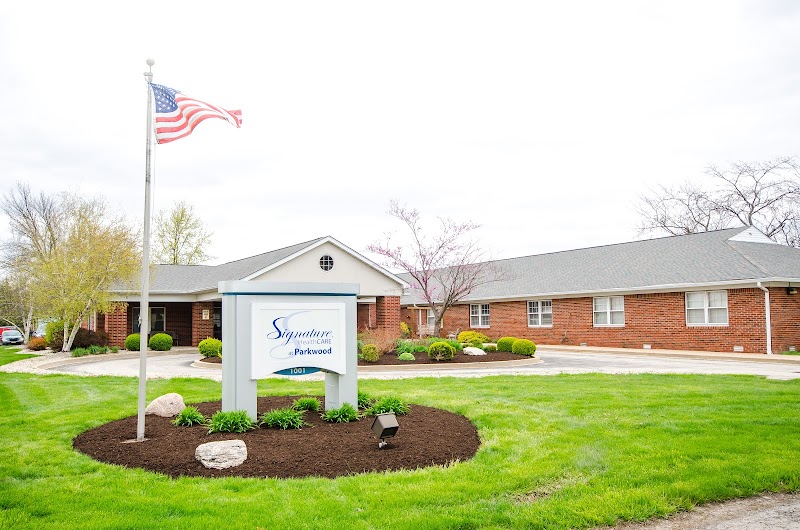
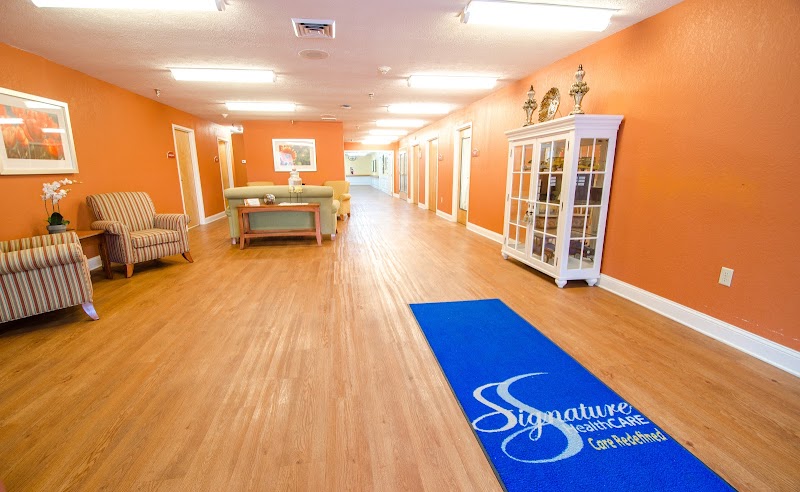
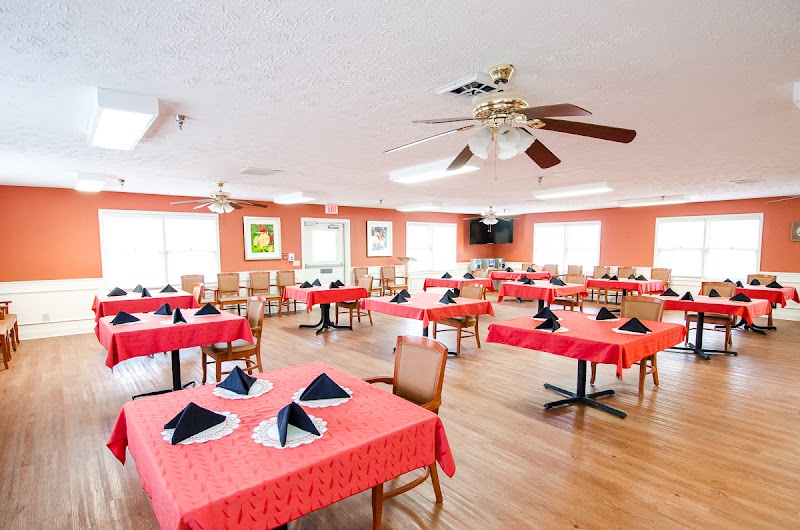
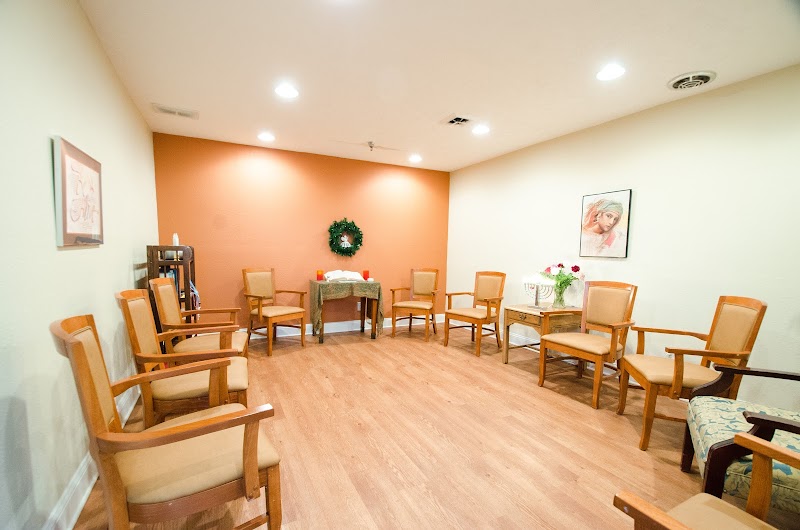
SIGNATURE HEALTHCARE AT PARKWOOD

1001 N GRANT ST, LEBANON, IN 46052 (765) 482-6400
For profit - Corporation 106 Beds SIGNATURE HEALTHCARE Data: November 2025 1 Immediate Jeopardy citation
Trust Grade
26/100
#288 of 505 in IN
Last Inspection: February 2025

Within standard 12-15 month inspection cycle. Federal law requires annual inspections.

Overview

Signature Healthcare at Parkwood has a Trust Grade of F, indicating significant concerns about the facility. It ranks #288 out of 505 nursing homes in Indiana, placing it in the bottom half of facilities in the state, and #4 out of 6 in Boone County, meaning there are only two better local options. While the facility is improving in some areas, dropping from 14 issues in 2024 to 5 in 2025, it still has a concerning total of 32 issues, including one critical incident where a resident was left in a wheelchair for extended periods without proper care. Staffing is below average with a turnover rate of 52%, and fines of $8,018 are higher than 80% of Indiana facilities, suggesting ongoing compliance problems. On a positive note, the facility has excellent quality measures, with RN coverage that is average, meaning residents receive sufficient oversight to catch potential problems.

Trust Score
F
26/100
In Indiana
#288/505
Bottom 43%
Safety Record
High Risk
Review needed
Inspections
Getting Better
14 → 5 violations
Staff Stability
⚠ Watch
52% turnover. Above average. Higher turnover means staff may not know residents' routines.
Penalties
✓ Good
$8,018 in fines. Lower than most Indiana facilities. Relatively clean record.
Skilled Nurses
⚠ Watch
Each resident gets only 26 minutes of Registered Nurse (RN) attention daily — below average for Indiana. Fewer RN minutes means fewer trained eyes watching for problems.
Violations
⚠ Watch
32 deficiencies on record. Higher than average. Multiple issues found across inspections.
★★★☆☆
3.0
Overall Rating
★★☆☆☆
2.0
Staff Levels
★★★★★
5.0
Care Quality
★★☆☆☆
2.0
Inspection Score
Stable
2024: 14 issues
2025: 5 issues

The Good

  • 5-Star Quality Measures · Strong clinical quality outcomes
  • Full Sprinkler Coverage · Fire safety systems throughout facility
  • No fines on record

Facility shows strength in quality measures, fire safety.

The Bad

3-Star Overall Rating

Near Indiana average (3.1)

Meets federal standards, typical of most facilities

Staff Turnover: 52%

Near Indiana avg (46%)

Higher turnover may affect care consistency

Federal Fines: $8,018

Below median ($33,413)

Minor penalties assessed

Chain: SIGNATURE HEALTHCARE

Part of a multi-facility chain

Ask about local staffing decisions and management

The Ugly 32 deficiencies on record

1 life-threatening 4 actual harm
Feb 2025 5 deficiencies
CONCERN (D)

Potential for Harm - no one hurt, but risky conditions existed

Deficiency F0679 (Tag F0679)

Could have caused harm · This affected 1 resident

Based on observation, interview and record review, the facility failed to ensure a resident who resided on the locked memory care unit was provided cognitively stimulating activities according to the ...

Read full inspector narrative →
Based on observation, interview and record review, the facility failed to ensure a resident who resided on the locked memory care unit was provided cognitively stimulating activities according to the plan of care for 1 of 4 residents reviewed for activities. (Resident 20) Findings include: During an observation, on 2/10/25 at 10:19 a.m., Resident 20 was awake and lying in her bed. Her TV was off, and she was not doing any activities. During an observation, on 2/10/25 at 2:41 p.m., Resident 20 was resting in her bed with her eyes closed. During an observation, on 2/11/25 at 9:18 a.m., Resident 20 was in her room with her TV off while activities were occurring in the lounge. During an observation, on 2/11/25 at 9:52 a.m., there were activities occurring in the lounge. Activity staff member 3 started to ask residents if they wanted to play bingo. She came down Resident 20's hallway, knocked on doors, and asked residents if they wanted to play bingo. She looked in Resident 20's room and then went to the next room without offering to take the resident to bingo. During an observation, on 2/11/25 at 9:53 a.m., Activity staff member 3 came back down the hallway after asking other residents if they wanted to play bingo and peaked inside Resident 20's room. She did not ask the resident if she wanted to play bingo. During an observation, on 2/12/25 at 8:49 a.m., activities were occurring in the lounge. Resident 20 was resting in her bed with the lights off. During an observation, on 2/12/25 at 10:25 a.m., Resident 20 was in her room with the TV off and was not doing any activities. During an observation, on 2/13/25 at 10:36 a.m., Resident 20 was awake in her room with the lights on. The TV was off, and she was not doing any activities. There were activities occurring in the lounge. During an observation, on 2/14/25 at 9:15 a.m., Resident 20 was asleep in her room while activities were occurring in the dining room. The clinical record for Resident 20 was reviewed on 2/12/25 at 8:51 a.m. The diagnoses included, but were not limited to Alzheimer's disease, dementia, and major depressive disorder. A current care plan, with an edit date of 1/7/25, indicated Resident 20 was involved in group activities such as music entertainment, socials, and activities in her room. She would often refuse to participate but enjoyed watching other people participate in activities. Her prior occupation was a nursing home worker and to offer her activities towards cleaning. Interventions included, but were not limited to, invite, encourage, remind and escort resident to activity programs consistent with the resident's interests daily for socialization. A quarterly life enrichment review, dated 10/20/23, indicated Resident 20 enjoyed crafts and painting. She typically participated in group activities. Resident 20 preferred to spend time in the common areas. A quarterly life enrichment review, dated 9/26/24, was in progress and not completed. During an interview, on 2/14/25 at 11:21 a.m., Activity staff member 5 indicated the resident was not really a morning person. She liked to watch TV in her room in the mornings and to read magazines and color. She could not find the remote to the TV in the resident's room this morning and was not sure where it was. She was not sure what activities were available in the resident's room. During an interview and observation, on 2/14/25 at 11:27 a.m., Qualified Medication Aide (QMA) 4 searched for Resident 20's TV remote. She could not find the TV remote and indicated the resident did like to watch TV in her room. There were no magazines or coloring books in the resident's room. A current facility policy, titled Activity Program, dated as last reviewed on 1/31/25 and received from the Clinical Support Nurse on 2/17/25 at 11:28 a.m., indicated .Group Activities will be scheduled on the Activity calendar and will be offered at times convenient and reflect the Residents' schedules, preferences, and rights .Individual Activities will be offered to provide adequate opportunities to residents who prefer not to engage in a large or small group setting, but do not require a one-to-one delivery method 3.1-33(a)
CONCERN (D)

Potential for Harm - no one hurt, but risky conditions existed

Quality of Care (Tag F0684)

Could have caused harm · This affected 1 resident

2. The clinical record for Resident 50 was reviewed on 2/14/25 at 11:51 a.m. The diagnoses included, but were not limited to, type 2 diabetes, type 2 diabetes with ketoacidosis (a complication of diab...

Read full inspector narrative →
2. The clinical record for Resident 50 was reviewed on 2/14/25 at 11:51 a.m. The diagnoses included, but were not limited to, type 2 diabetes, type 2 diabetes with ketoacidosis (a complication of diabetes), and acute kidney failure. A care plan, dated 8/7/24, indicated Resident 50 had diabetes. Interventions included, but were not limited to, to administer medications according to the physician's order. A physician's order indicated to notify the physician if Resident 50's blood glucose reading was less than 150. The Medication Administration Record (MAR) indicated Resident 50's blood glucose reading was below 150, 14 times in January 2025 and 14 times in February 2025. There was no documentation in Resident 50's medical record to indicate the physician was notified of the blood glucose readings below 150 according to the physician's order. During an interview, on 2/14/25 at 1:32 p.m., LPN 2 indicated when a blood sugar was below the parameter set by the physician, the blood sugar and notification to the physician would be documented in the progress notes. During an interview, on 2/14/25 at 1:38 p.m., the Director of Nursing (DON) indicated the facility used a messaging system to communicate with physicians. The call orders the facility used were to call the physician if the blood sugar was under 60 or 70. The order was placed into Resident 50's record incorrectly. If the order instructed staff to notify the physician when a blood sugar reading was below 150, then staff should have been notifying the physician. During an interview, on 2/14/25 at 1:48 p.m., the Administrator indicated when an order was placed into the chart, the parameter would need to be set to match the physician's order. When Resident 50's order was placed, the parameter was not set correctly. A current facility policy, titled Review of Physician Orders, dated as last revised 1/31/25 and received from the Corporate Support Nurse on 2/17/25 at 11:28 a.m., indicated .Licensed staff implement the physician's orders as applicable A current facility policy, titled Resident Rights, dated as last revised on 1/31/25 and received from the Corporate Support Nurse on 2/17/25 at 11:28 a.m., indicated .All residents will be treated in a manner and in an environment that promotes maintenance or enhancement of quality of life A current facility policy, titled Skin Integrity, dated as last revised 1/31/25 and received from the Corporate Support Nurse on 2/17/25 at 11:28 a.m., indicated .The facility will ensure .A resident with impaired skin integrity receives necessary treatment and services, consistent with professional standards of practice, to promote healing, prevent infection and prevent avoidable skin integrity issues from developing 3.1-37(a) Based on observation, interview and record review, the facility failed to ensure a dressing for a non-pressure wound was maintained in a sanitary manner and to ensure bed sheets were changed/cleaned after being soiled from the wound and failed to ensure the physician was notified of blood glucose readings outside of the physician's ordered parameters for 2 of 2 residents reviewed for quality of care. (Resident 139 and 50) Findings include: 1. During a random observation, on 2/10/25 at 11:29 a.m., Resident 139 was observed in the therapy room. She had a wound dressing on her right lower leg from the ankle to below the knee. The dressing was noted to have brown and red drainage soaked through. The dressing was dated 2/9/25. The resident indicated her dressing was changed daily. During an observation, on 2/12/25 at 10:53 a.m., Resident 139 was observed resting in bed, wearing a pressure reduction boot and a dressing on her right lower leg. The dressing was dated 2/11/25 and had a large brownish color drainage which had soaked through the dressing and onto the resident's bedsheets leaving three soiled areas on the sheet which were brown in color. During an interview, on 2/12/25 at 10:53 a.m., LPN 1 indicated she was going to change the dressing. She had administered pain medication to the resident and was waiting for the effectiveness of the medication. LPN 1 indicated the CNA was to change the sheets. During an observation, on 2/13/25 at 11:22 a.m., two staff were observed in enhanced barrier precautions assisting the resident to her wheelchair. The resident's dressing on the lower right leg had drainage consistent with the color of blood which had soaked through the dressing. The resident indicated her dressing had not been changed yet. Two towels were also noted to be on the bed at about the same area where the resident's leg would have laid while in bed. Upon lifting the towels, the sheet was found to have a blood stain. During an interview, on 2/13/25 at 11:28 a.m., LPN 1 indicated she was waiting to change the dressing until the resident could have pain medication again which would be at 1:40 p.m. During an interview, on 2/13/25 at 11:41 a.m., the Corporate Support Nurse indicated the dressing needed to be changed now. The Director of Nursing indicated the resident did have an as needed dressing change ordered for soilage of the dressing. The Director of Nursing indicated Resident 139 had not been educated on the potential risks of infection or other risks which could arise from not keeping the wound dressing clean and dry. During an interview, on 2/13/25 at 11:53 a.m., the Director of Nursing indicated the resident had gone to lunch and the dressing would be changed after she finished her meal. On 2/14/25 at 10:19 a.m., the wound dressing change to the lower right leg was observed. The wound was noted to span around the lower extremity and from the ankle and up the shin area. It was noted to be red with serosanguineous drainage (blood and serum fluid) with yellow coloration from the ordered dressing used. The dressing change was completed, and the appropriate date was placed on the dressing. The clinical record for Resident 139 was reviewed on 2/17/25 at 9:45 a.m. The diagnoses included, but were not limited to, cellulitis of the right lower limb, type 2 diabetes without complication and necrotizing fasciitis (a rare but life-threatening bacterial infection which rapidly destroys the soft tissues and fascia (connective tissue) beneath the skin). A physician's order, initiated on 1/18/25, indicated for staff to clean the right lower venous stasis wound with normal saline, pat dry, apply Xeroform, cover with abdominal dressings, wrap with kerlix and secure with an ACE wrap daily and as needed for spoilage or displacement. Special instructions on the order indicated for staff to change the wound dressing once a day between 6:00 a.m. to 2:00 p.m. The order was discontinued on 2/13/25. A physician's order, initiated on 1/18/25, indicated for staff to clean the right lower venous stasis wound with normal saline, pat dry, apply Xeroform, cover with abdominal dressings, wrap with kerlix and secure with an ACE wrap daily and as needed for spoilage or displacement. Special instructions on the order indicated for staff to change the wound dressing as needed. A physician's order, initiated on 1/22/25, indicated to give hydrocodone-acetaminophen (a narcotic pain reliever) every six (6) hours as needed for pain. The Medication/Treatment Administration Record (MAR/TAR) indicated the resident received the narcotic pain-relieving medication on 2/10/25 at 8:29 a.m., on 2/12/25 at 10:26 a.m., on 2/13/25 at 7:38 a.m., and on 2/14/25 at 9:11 a.m.
CONCERN (D)

Potential for Harm - no one hurt, but risky conditions existed

Deficiency F0883 (Tag F0883)

Could have caused harm · This affected 1 resident

Based on interview and record review, the facility failed to ensure a consent for an Influenza vaccination was obtained prior to administration and to ensure Influenza and Pneumococcal vaccines were o...

Read full inspector narrative →
Based on interview and record review, the facility failed to ensure a consent for an Influenza vaccination was obtained prior to administration and to ensure Influenza and Pneumococcal vaccines were offered for 3 of 5 residents reviewed for immunizations. (Resident 53, 139 and 11) Findings include: The immunization records for Residents 53, 139, and 11 were reviewed, on 2/14/25 at 9:02 a.m., and indicated the following: a. There was no documentation to indicate Resident 53 was offered the Influenza or Pneumococcal vaccination in 2024 or 2025. b. There was no documentation to indicate Resident 139 was offered the Influenza or Pneumococcal vaccination in 2024 or 2025. c. Resident 11 was administered the Influenza vaccination, on 10/9/24, without a documented signed consent and there was no documentation to indicate a Pneumococcal vaccination was offered. During an interview, on 2/14/25 at 10:52 a.m., the Administrator indicated vaccine status and obtaining consents was part of the admission process into the facility. There was a fault in the follow-through with ensuring each resident signed or declined the vaccination consent forms and the administration of the vaccinations. During an interview, on 2/17/25 at 1:14 p.m., the Administrator indicated the facility had no further information to provide. A current facility policy, titled Vaccination of Resident, dated as last revised on 1/31/25 and received by the Clinical Support Nurse on 2/12/25 at 10:20 a.m., indicated .All residents will be offered vaccines that aid in preventing infections disease unless the vaccine is medically contraindicated, or the resident has already been vaccinated .Prior to receiving vaccinations, the resident or legal representative will be provided information and education regarding the benefits and potential side effects of the vaccinations .All new residents shall be assessed evaluated for current vaccinations status upon admission A current facility policy, titled Vaccines and Immunizations, dated as last revised on 11/14/24 and received by the Clinical Support Nurse on 2/17/25 at 11:28 a.m., indicated .Minimize the risk of residents acquiring, transmitting, or experiencing complications from communicable diseases through immunizations by following the CDC Guidance 3.1-18(b)(5)
CONCERN (D)

Potential for Harm - no one hurt, but risky conditions existed

Deficiency F0887 (Tag F0887)

Could have caused harm · This affected 1 resident

Based on interview and record review, the facility failed to ensure COVID-19 vaccinations were offered to residents for 3 of 5 residents reviewed for immunizations. (Resident 53, 139 and 23) Findings ...

Read full inspector narrative →
Based on interview and record review, the facility failed to ensure COVID-19 vaccinations were offered to residents for 3 of 5 residents reviewed for immunizations. (Resident 53, 139 and 23) Findings include: The immunization records for Residents 53, 139, and 23 were reviewed, on 2/14/25 at 9:02 a.m., and indicated the following: a. Resident 53 had received the COVID-19 vaccination in 2021 and 2022. There was no documentation to indicate Resident 53 was offered the COVID-19 vaccination after 2022. b. Resident 139 had received the COVID-19 vaccination in 2021. There was no documentation to indicate Resident 139 was offered the COVID-19 vaccination after 2021. c. Resident 23 had declined the COVID-19 vaccination in 2024 on admission. There was no documentation to indicate Resident 23 was offered the COVID-19 vaccination after admission. During an interview, on 2/14/25 at 10:52 a.m., the Administrator indicated vaccine status and obtaining consents was part of the admission process into the facility. There was a fault in the follow-through with ensuring each resident signed or declined the vaccination consent forms and the administration of the vaccinations. During an interview, on 2/17/25 at 1:14 p.m., the Administrator indicated the facility had no further information to provide. A current facility policy, titled Vaccination of Resident, dated as last revised on 1/31/25 and received by the Clinical Support Nurse on 2/12/25 at 10:20 a.m., indicated .All residents will be offered vaccines that aid in preventing infections disease unless the vaccine is medically contraindicated, or the resident has already been vaccinated .Prior to receiving vaccinations, the resident or legal representative will be provided information and education regarding the benefits and potential side effects of the vaccinations .All new residents shall be assessed evaluated for current vaccinations status upon admission A current facility policy, titled Vaccines and Immunizations, dated as last revised on 11/14/24 and received by the Clinical Support Nurse on 2/17/25 at 11:28 a.m., indicated .Minimize the risk of residents acquiring, transmitting, or experiencing complications from communicable diseases through immunizations by following the CDC Guidance 3.1-18(b)(5)
CONCERN (E)

Potential for Harm - no one hurt, but risky conditions existed

Deficiency F0657 (Tag F0657)

Could have caused harm · This affected multiple residents

4. The clinical record for Resident 58 was reviewed on 2/12/25 at 11:42 a.m. The diagnoses included, but were not limited to, chronic obstructive pulmonary disease (COPD), heart failure, and pain. A r...

Read full inspector narrative →
4. The clinical record for Resident 58 was reviewed on 2/12/25 at 11:42 a.m. The diagnoses included, but were not limited to, chronic obstructive pulmonary disease (COPD), heart failure, and pain. A review of Resident 58's medical record indicated the facility had not held a care plan meeting for the resident since 7/29/24. During an interview, on 2/12/25 at 11: 46 a.m., the Social Services Director indicated she was not able to find documentation for a care plan meeting held after 7/29/24 and the care plan meetings were to be held quarterly. A current facility policy, titled Comprehensive Care Plans, dated as last reviewed on 1/31/25 and received from the Corporate Support Nurse on 2/17/25 at 11:28 a.m., indicated .The facility will develop and implement a comprehensive person-centered care plan for each resident, that includes measurable objectives and time frames to meet a resident's medical, nursing, mental, and psychosocial needs A current facility policy, titled Resident Rights, dated as last revised on 1/31/25 and received from the Corporate Support Nurse on 2/17/25 at 11:28 a.m., indicated .Federal and state laws guarantee certain basic rights to all residents of this facility. These rights include the resident's right to .Participate in decisions and care planning 3.1-35(d)(2)(B) Based on interview and record review, the facility failed to ensure residents and/or their representatives were invited to participate in care plan meetings for 4 of 4 residents reviewed for care plan conferences. (Residents 36, 64, 75 and 58) Findings include: 1. The clinical record for Resident 36 was reviewed on 2/14/25 at 2:55 p.m. The diagnoses included, but were not limited to, major depressive disorder, type 2 diabetes, and muscle weakness. A review of Resident 36's medical record indicated the facility had not held a care plan meeting for the resident since 11/3/23. During an interview, on 2/13/25 at 2:43 p.m., the Social Service Director indicated care plan meetings should be held quarterly. Care plan meetings had not been held for Resident 36 in 2024. 2. The clinical record for Resident 64 was reviewed on 2/13/25 at 2:28 p.m. The diagnoses included, but were not limited to, dementia, anxiety disorder, and schizoaffective disorder. A review of Resident 64's medical record indicated the facility had not held a care plan meeting for the resident since 10/30/23. During an interview, on 2/13/25 at 2:43 p.m., the Social Service Director indicated care plan meetings should be held quarterly. Care plan meetings had not been held for Resident 64 in 2024. 3. The clinical record for Resident 75 was reviewed on 2/14/25 at 10:19 a.m. The diagnoses included, but were not limited to, anxiety, schizoaffective disorder, and myocardial infarction (heart attack). A review of Resident 75's medical record indicated the facility had not held a care plan meeting for the resident since 4/8/24. During an interview, on 2/13/25 at 2:43 p.m., the Social Service Director indicated care plan meetings should be held quarterly. Resident 75 was invited and attended a care plan meeting on 4/8/24. Another care plan meeting was scheduled for July 2024 but did not happen.
Aug 2024 1 deficiency
CONCERN (D) 📢 Someone Reported This

A family member, employee, or ombudsman was alarmed enough to file a formal complaint

Potential for Harm - no one hurt, but risky conditions existed

Deficiency F0744 (Tag F0744)

Could have caused harm · This affected 1 resident

**NOTE- TERMS IN BRACKETS HAVE BEEN EDITED TO PROTECT CONFIDENTIALITY** Based on observation, interview and record review, the facility failed to ensure effective person-centered dementia care was pro...

Read full inspector narrative →
**NOTE- TERMS IN BRACKETS HAVE BEEN EDITED TO PROTECT CONFIDENTIALITY** Based on observation, interview and record review, the facility failed to ensure effective person-centered dementia care was provided to prevent residents on the locked dementia unit from wandering into the room of a resident with known aggressive, impulsive, and sexually inappropriate behaviors and no diagnosis of dementia for 4 of 4 residents reviewed on the dementia care unit. (Residents D, C, B and E) Findings include: A document, titled Intake Information, dated 8/9/24, indicated there was a concern of Resident B and C wandering into Resident D's room and disrobing. During an interview, on 8/13/24 at 4:05 p.m., the Director of Nursing (DON), Executive Director, and Nursing Consultant were in attendance. The DON indicated Resident D was sent to a neuropsychiatric hospital because he became aggressive when residents wandered into his room. They moved him to the end of the hallway to prevent residents from entering his room. He was [AGE] years old and had a cognitive impairment. During a phone interview, on 8/13/24 at 11:31 a.m., LPN 3 indicated she was on duty, on 8/1/24, when she observed Resident C coming out of Resident D's room without any pants or brief on. Resident D came out of his room right after her. She took Resident C to her room to get her dressed in pants and another brief. She found her other brief with feces laying on Resident D's bathroom floor. It was not uncommon for Resident C to take her brief off if she had a bowel movement. 15-minute checks were started on both residents and she was told by the DON to write a statement, but she did not document the event in either resident's record. A typed facility statement, dated 8/1/24, indicated the Assistant Director of Nursing (ADON) interviewed Resident D regarding the incident with Resident C. Resident D indicated he had been walking back and forth to the nurses' station throughout the shift. When he went back to his room, a female resident covered in feces was standing in his room. He escorted her out. She looked like she was looking for a bathroom. During an interview, on 8/13/24 at 11:46 p.m., LPN 6 indicated, on 8/5/24, she was looking for Resident B to give him his medication. She was unable to find him, so she asked the CNA to assist her in locating him. The CNA asked her to come to Resident D's room. Resident B was observed sitting on Resident D's bed with his brief undone with feces on it and one pant leg off. Resident D's room smelled of feces. Resident D indicated Resident B barged into his room. Resident D's door was shut prior to the CNA knocking and opening the door. Resident B was taken to his room, cleaned up, and management was notified. She was told to write a statement of the incident, but she did not document the incident in either of the resident's records. Resident D was placed on one-on-one at that time. A typed statement, dated 8/5/24, indicated the DON interviewed Resident D regarding the incident between him and Resident B. Resident D indicated he got up from bed to go to the bathroom and when he came out of the bathroom, a male resident was sitting on his bed and he smelled bad. When the staff came into his room, he was asking the male resident to get up and leave his room. 1. The clinical record for Resident D was reviewed on 8/13/24 at 10:00 a.m. The diagnoses included, but were not limited to, inappropriate sexual behaviors, delusional disorders, psychoactive substance abuse with psychoactive substance-induced mood disorder, and alcohol abuse with alcohol-induced mood disorder. The resident had a care plan which addressed the problem he had impaired cognition related to a history of substance abuse and intracranial injury as evidenced by memory deficits and poor decision-making ability. The care plan was initiated on 11/20/23 and edited 5/15/24. The approaches included, but were not limited to, 11/20/23, avoid an overly protective attitude toward the resident and determine if decisions made by the resident endangered the resident or others. Intervene if necessary. The resident had a care plan which addressed the problem he resided on the memory care unit due to his traumatic brain injury, he believed he was younger than what he was and thought he should be doing schoolwork. He enjoyed math, spelling, and word games. He participated in food related activities, music, TV and simple games. His prior occupation was a cook, so offer him diversional activities which had to do with cooking. The care plan was initiated on 12/5/23 and edited on 5/15/24. The approaches included, but were not limited to, 12/5/23, invite or encourage the resident to attend activity of choice, provide activity opportunities which meet the resident's interest, provide a monthly activity calendar, and provide reminders of activity opportunities. The resident had a care plan which addressed the problem he was at risk for behavior episodes related to the diagnoses of psychoactive substance abuse with psychoactive substance induced mood disorder as evidence by he had a history of refusing showers and cursing. The care plan was initiated on 5/15/24. The approaches included, but were not limited to, 3/4/24, approach the resident in a calm and unhurried manner, explain the care process prior to delivery of care, offer choices in hands-on care and contact, and allow the resident to exercise the right to decline treatment and services. A nursing progress note, dated 2/9/24 at 11:00 a.m., indicated Resident D had a negative verbal interaction with another resident and wanted to physically fight. A nursing progress note, dated 2/11/24 at 9:20 p.m., indicated the resident was speaking to his mother on the phone located at nurses the station. He constantly used profanity during his conversation and was making residents in the lounge visibly irritated. The nurse asked the resident to please use better language, and he answered, I do not give a F*** about any of them. A nursing progress note, dated 2/19/24 at 9:20 p.m., indicated the resident was agitated with another resident who kept coming into his room this shift. A nursing progress note, dated 3/2/24 at 5:00 p.m., indicated the resident took a call from his mother at the nurses' desk. His conversation got louder, and the resident cursed while on the phone. Another resident asked him to keep it down as several were watching TV. Resident D indicated he would talk as loud and curse all he wanted. Several residents (mostly women) told him to quit talking like that. He just got louder and cursed at all the residents. The male residents were now yelling at him. This writer told Resident D if he did not talk lower and stop cursing, she was going to hang up the phone. He continued and the nurse hung up the phone. His mother called back, and the nurse explained the facility would not have Resident D upsetting all the residents. A nursing progress note, dated 4/5/24 at 2:10 p.m., indicated the resident ambulated as he desired, wandered aimlessly, stood at the nurses' station often and talked with staff and other residents. He remained temperamental, had an unpredictable behavior, his mood changed quickly, he was somewhat difficult to redirect, he often left and went to his room independently when he got upset with situations. A nursing progress note, dated 4/13/24 at 3:07 p.m., indicated the resident was aggressive with verbalization and continued to stand at the nurses' station responding to all conversations even when they were not related to him. He questioned the 911 medical team and asked one of the men if he was here to take him on, while asking the guy How much do you weigh and how often do you work out? The Emergency attendant answered Resident D, then asked him to free the hallway near the nurses' station, so they were able to attend to someone on the unit who needed emergency help. He became loud stating you don't tell me what to do, no one tells me. Facility staff attempted to redirect the resident, but he continued to refuse to leave the nurses' station area. The resident had increased agitation, was difficult to redirect, intrusive with continued commenting, and asked staff personal questions. A nursing progress note, dated 4/15/24 at 8:23 p.m., indicated Resident D touched the writer's hair today stating it was so soft he had been wanting to do that and he attempted to squeeze the writer's arm indicating feel those muscles. Those episodes were unprovoked and not entertained. The resident was heard talking with other staff today stating, I do what the f*** I want. A nursing progress note, dated 4/16/24 at 4:25 p.m., indicated Resident D's Depakote (a medication used to treat seizures and behavioral disorders) was increased to 500 mg (milligrams) by mouth twice a day for delusions and he was started on Paxil (a medication used to help with depression and sexually inappropriate behaviors) 20 mg by mouth daily for sexually inappropriate behaviors. Resident B had a care plan which addressed the problem he had inappropriate sexual behaviors as evidenced by the resident making inappropriate sexual comments to staff, approached staff, and touched staff. The care plan was initiated on 4/16/24 and edited on 5/15/24. The approaches included 4/16/24, to provide diversional activities as needed, provide privacy for the resident as needed/or requested, and to remind the resident to pull the curtain and shut the door as needed. A nursing progress note, dated 4/17/24 at 3:42 p.m., indicated the resident continued to talk of needing a woman, indicated I will f*** her up. While he talked to a female friend on the phone, he indicated he did not put up with anything from women. He told her in detail his sexual plans for her once he got out of the facility. He continued to stand at the nurses' station, made comments and asked personal questions of staff. While staff attempted to redirect the resident, he immediately stated what's wrong with you today, you're in a bad mood. Resident was intrusive with staff and repeatedly indicated he would do whatever he wanted. A nursing progress note, on 5/8/24 at 11:55 a.m., indicated Resident D continued to be intrusive and verbally aggressive, often argumentative behavior with any conversation. He reached out to touch female staff's hair and indicated he liked to play with it. He was redirected with some negative attitude indicating he was not hurting anyone; it was only hair. A nursing progress note, dated 6/19/24 at 8:34 p.m., indicated the resident was verbally aggressive with staff. Resident D was overheard asking another resident if he could spend time with her. Staff immediately removed the other resident from the area. Resident D began yelling out to staff. He indicated he was able to spend his time with who he wanted, and the staff was not his boss. A nursing progress note, dated 6/22/24 at 2:37 p.m., indicated Resident D was overheard encouraging a female resident to spend time with him. He cursed at staff when he was redirected from the other residents. He yelled at staff for them to shut their f****** faces up. The resident threatened staff stating, I'll knock your head off if you don't leave me alone. The resident continued to ask staff if he could touch their hair and became agitated when redirected. A nursing progress note, dated 6/25/24 at 4:12 p.m., indicated the psychiatric Nurse Practitioner (NP) visited the resident and wrote new orders to increase his Paxil to 30 mg every day. He continued to interact with female peers. When appropriate behaviors were encouraged, Resident D immediately became angry. A nursing progress note, dated 7/5/24 at 4:11 p.m., indicated staff continued to remind and redirect Resident D from touching female staff. He would reach out for female staff's hair to touch it. He continued to often pursue female peers time and attention. A nursing progress note, dated 7/17/24 at 3:09 p.m., indicated Resident D was pursuing a female resident by blowing kisses at her and approached her very closely. Resident D was asked to separate, and he became loud. The resident cursed at staff. There was no change in his behaviors of inappropriate interactions. A nursing progress note, dated 7/21/24 at 12:13 p.m., indicated the resident continued to ambulate up and down the hallway, spending some time sitting in the recliner in the TV area near a female resident, which he often needed redirected from. The resident was standing in front of the female resident, smiling and blowing kisses. The resident was redirected, and he became verbally aggressive. A nursing progress note, dated 7/23/24 at 1:44 p.m., indicated Resident D continued to be hostile when encouraged to change his behavior. He would curse and yell at staff. He continued to seek attention of a female resident. He was redirected often. A nursing progress note, dated 7/25/24 at 4:18 p.m., indicated the resident continued to seek out the attention from a female resident. He became very loud when staff attempted to redirect him. A nursing progress note, dated 8/1/24 at 3:23 p.m., indicated Resident D continued to ambulate about and searched out a female resident several times. He would go sit next to the female resident in the TV room and he was overheard asking her to come to his room. He was immediately redirected. He spoke to his mother on the phone and his mother indicated she did not want him being inappropriate with other residents and she told him he knew better. A nursing progress note, dated 8/2/24 at 5:08 p.m., indicated the resident was monitored throughout the day. He was redirected from female residents. He was seeking out attention and continued to ambulate numerous times up and down the hallway. He was difficult to redirect. He was given Ativan (a medication used to treat restlessness and anxiety) at 8:00 a.m. and was somewhat sleepy and calmer for approximately 60 minutes, then he was back to his anxious and restless behavior and seeking out female resident's attention. A nursing progress note, dated 8/3/24 at 4:10 p.m., indicated the resident continued to seek out a female resident's attention. He was redirected and immediately became verbally agitated. He was difficult to redirect. After Ativan was given, it was effective for approximately one hour, then he was back to his usual inappropriate behaviors. A social service progress note, dated 8/5/24 at 6:26 p.m., indicated the resident resumed the behavior of seeking the attention of a female resident and was trying to encourage the resident to spend time with him. Staff attempted to redirect him on several occasions but was unsuccessful. He became agitated and angry. The treatment team referred him for inpatient psychiatric treatment services. A nursing progress note, dated 8/6/24 at 4:20 a.m., indicated the resident was picked up by ambulance for transport to a neuropsychiatric hospital. A document, titled Psychiatric Progress Note, dated 8/9/24, indicated Resident D was seen at the neuropsychiatric hospital for reevaluation of inappropriate boundaries, verbal aggression, impulsivity, and refusing care. He did not know what brought him to the hospital. He was isolative to his room, minimally engaging, and gave one-word answers. There was no documentation found in Resident D's record to indicate he had an interaction with Residents C or B in his room. 2. The clinical record for Resident C was reviewed on 8/13/24 at 10:50 a.m. The diagnoses included, but were not limited to, dementia, nontraumatic chronic subdural hemorrhage, cognitive communication deficit, need for assistance with personal care, anxiety disorder, psychotic disorder with delusions, and depression. The resident had a care plan which addressed the problem she wandered through the unit. The care plan was initiated on 12/13/19 and edited on 6/24/24. The approaches included, but were not limited to, 12/13/19, address the wandering behavior by walking with the resident, redirect her from inappropriate areas and engage her in diversional activities, and invite and encourage activity programs consistent with the resident's interests. The resident had a care plan which addressed the problem she had a history of altercation with other residents. The care plan was initiated on 10/6/22 and edited on 6/24/24. The approaches included, but were not limited to, 10/6/22, address wandering behavior by walking with resident, redirect her from inappropriate areas and engage her in diversional activities, intervene as needed to protect the rights and safety of others, approach the resident in a calm manner, divert her attention, remove her from the situation and take her to another location as needed, and invite and encourage activity programs consistent with the resident's interests. The resident had a care plan which addressed the problem she had a diagnosis of anxiety, and she experienced instances of feelings of dread and apprehension. The care plan was initiated on 1/22/24 and edited on 6/24/24. The approaches included, but were not limited to, 1/22/24, one on one visits with social services as needed, encourage and offer distractions and activities outside of her room such as the television, music, games, and exercise within the resident's ability. The resident had a care plan which addressed she enjoyed watching TV, listening to music, being outdoors when the weather was nice, enjoyed sensory and baby dolls. In the past, she liked to paint and look at old pictures of her family. Her occupation was a barber and a truck driver. The care plan was initiated on 12/11/19 and edited on 6/24/24. The approaches included, but were not limited to, 12/11/19, encourage the resident to participate in independent coloring activities, invite, encourage, remind and escort the resident to activity programs consistent with her interests daily for socialization once a day from 7:15 a.m. to 6:00 p.m., and encourage the resident to sign up and participate in community outings according to the rotating schedule. A nursing progress note, dated 4/30/24 at 6:48 a.m., indicated Resident C was combative with staff during care, one-on-one attention, redirections and explanation of care was not helpful. She smacked the writer twice this morning while attempting to offer her med pass supplement. She took her meds with much effort needed. A nursing progress note, dated 5/3/24 at 1:34 p.m., indicated the resident continued with occasional unpredictable physical agitation toward staff especially when ADLs were being completed, periods of tearfulness with uncertainty of reason, she was unable to make needs known and she ambulated and wandered about the unit aimlessly. She was incontinent of bowel and bladder. A nursing progress note, dated 8/1/24 at 11:46 p.m., indicated safety checks were completed every 15 minutes to ensure Resident C was alone in her own bed. The nurse continued to monitor the resident frequently for her own safety. A nursing progress note, dated 8/2/24 at 5:37 p.m., indicated the resident was up and wandered about frequently. When redirected, she usually became aggravated and threw her hands up in the air or slapped at staff, then walked away. A nursing progress note, dated 8/3/24 at 4:28 p.m., indicated the resident had been up and wandered the hallways aimlessly this a.m. She wanted to be at the nurse's station moving items around. When redirected, she stormed off and threw her hands up in the air. She verbally and physically protested ADL care. A nursing progress note, dated 8/4/24 at 2:01 p.m., indicated the resident wandered around the unit aimlessly. She continued to get upset when she was redirected away from the nurse's station. A nursing progress note, dated 8/5/24 at 1:38 p.m., indicated Resident C was pacing and wandering as her usual behavior. The resident had a care plan which addressed the problem she had a history of getting naked and walking around. The care plan was initiated on 8/8/24. The approaches included, but were not limited to, 8/8/24, assist the resident away from other residents as needed and encourage participation in activities as appropriate. There was no documentation found in Resident C's record to indicate she had an interaction with Resident D in his room. On 8/13/24 at 3:33 p.m., CNA 2 was observed attempting to escort an unknown male resident out of a room at the end of the hallway to the right of the nurses' station. While the unknown male was resisting the CNA from escorting him out of the room, Resident C walked into the room. The CNA had to escort both the residents out of the room of another resident. 3. The clinical record for Resident B was reviewed on 8/13/24 at 11:15 a.m. The diagnoses included, but were not limited to, Alzheimer's disease, anxiety disorder, need for assistance with personal care, and insomnia. The resident had a care plan which addressed the problem he was at risk for wandering and elopement related to his diagnosis of dementia. The care plan was initiated on 9/22/22 and edited on 8/2/24. The approaches included, but were not limited to, 9/22/22, develop an activities program to divert his attention and meet his needs for social and cognitive stimulation and place him in a gated community. The resident had a care plan which addressed the problem he had a history of wandering and pulling the fire alarm. The care plan was initiated on 10/14/22 and edited on 8/2/24. The approaches included, but were not limited to, 10/14/22, assist the resident away from other residents as needed and encourage participation in structured activities as appropriate. The resident had a care plan which addressed the problem he enjoyed being busy. He wandered the unit often and would go in and out of other residents' rooms. He liked to be outside and liked pets. His prior occupation was construction, so offer toolbox activities. The care plan was initiated on 10/31/22 and edited on 8/2/24. The approaches included, but were not limited to, 10/31/22, encourage and offer activities the resident would participate in such as; independent coloring activities, invite, encourage, remind and escort the resident to the activity programs consistent with his interests, encourage the resident to participate in outside activities as tolerated and weather permitting, encourage the resident to participate in sensory activities according to the rotating schedule, the resident will receive the Daily Chronicle with daily activities listed from 7:15 a.m. to 6 p.m., the resident would receive one-on-one programming per activity preference according to the rotating schedule, the resident would receive pet visits per preference when available, the resident would receive a weekend activity packet to encourage leisure time in his room. A nursing progress note, dated 3/3/24 at 2:30 a.m., indicated the resident had been up wandering the halls and going into other residents' rooms. He pulled the fire alarm. He was encouraged to stay in the lounge to watch TV while other residents were soothed after the alarm sounded. He was hard to redirect and became belligerent when he did not get his way. A nursing progress note, dated 3/18/24 at 2:34 a.m., indicated the resident had been roaming all over the unit. He was in and out of multiple residents' rooms. He did not redirect well. A nursing progress note, dated 3/23/24 at 4:53 a.m., indicated the resident was up ambulating in and out of other residents' room. He was assisted back to his room and placed in bed. A nursing progress note, dated 3/24/24 at 10:47 p.m., indicated the resident continued to roam and wander in and out other residents' room. Sometimes he was more difficult to redirect out of the other residents' rooms. A nursing progress note, dated 3/27/24 at 1:23 a.m., indicated the resident ambulated in the hallway half of the shift. He stood in front of other resident's doors. He had left his clothes on this night. A nursing progress note, dated 3/28/24 at 12:42 a.m., indicated the resident had been roaming in and out of other residents' room. He had been escorted back to his bed three times so far. A nursing progress note, dated 4/19/24 at 1:03 a.m., indicated the resident was up ambulating in the hallway and in and out of other residents' room. He was messing with the cords to the window blinds and the plug-ins to the TV. He did not redirect well. A nursing progress note, dated 4/23/24 at 2:30 a.m., indicated the resident ambulated in and out of other residents' rooms. While wandering, he picked up personal items from the other residents' rooms as he went along. Attempted to redirect him without success. A nursing progress note, dated 4/26/24 at 2:35 a.m., indicated the resident had been up and down the hallways and in and out of other residents' rooms. He even pushed the medication cart a short distance down the hallway. A nursing progress note, dated 5/6/24 at 7:00 p.m., indicated the resident had been in and out of residents' rooms, pulling blankets off their bed, moving furniture around, and was observed standing on a chair before dinner. Frequent redirection and attempts to engage in TV, books, and music was not helpful. A nursing progress note, dated 5/12/24 at 3:41 a.m., indicated the resident was wandering into other residents' rooms removing things which did not belong to him. Numerous attempts were made to redirect him back to bed or to the lounge to watch TV, but he would not comply. A nursing progress note, dated 5/24/24 at 1:27 a.m., indicated Resident B was ambulating in and out of other residents' rooms taking some of their belongings and laying those things down in the next room he went into. He was very hard to redirect to lay down in his bed or to watch TV in the lounge. He required continuous monitoring. A nursing progress note, dated 7/7/24 at 12:17 a.m., indicated the resident only slept one hour in the recliner, then was up wandering around the unit. Continuous monitoring was required to keep him out of other residents' rooms. A nursing progress note, dated 7/9/24 at 5:00 a.m., indicated the resident was ambulating in the hallway without any clothes on. He was assisted back to his room and clean clothes was placed on him. A nursing progress note, dated 7/25/24 at 5:30 a.m., indicated the resident was up in the hallway by his room attempting to rip the clear cover off the fire alarm. He was redirected to go to the lounge and visit with the other residents. The resident had a care plan which addressed the problem he was a risk for behaviors related to diagnoses of Alzheimer's Disease, dementia, anxiety and major depressive disorder as evidenced by trying to fix things, taking his clothes off, walking around the unit naked especially at nighttime and standing on chairs. The care plan was initiated on 7/27/23 and edited 8/2/24.The approaches included, but was not limited to, 7/27/23, approach the resident in a calm and unhurried manner to deliver and provide services. There was no documentation found in Resident B's record to indicate he had an interaction with Resident D in his room. 4. The clinical record for Resident E was reviewed on 8/13/24 at 2:00 p.m. The diagnoses included, but were not limited to, dementia, inappropriate sexual behaviors, attention and concentration deficit, need for assistance with personal care, Alzheimer's disease, and depression. A progress note, dated 4/30/24 at 9:41 p.m., indicated the resident was sitting in the common area with other residents being flirtatious with the male residents. A progress note, dated 6/19/22 at 8:50 p.m., indicated the resident ambulated aimlessly. Attempted to reorient and engage in activities, but rarely successful. She continued to seek out a certain resident's company and attention and became verbally angry when staff redirected her, frequently cursing at staff. She had difficulty completing her meals if she seen a certain resident in the dining room because she wanted to go to his table. She was encouraged several times to come back and complete her meal. A nursing progress note, dated 6/22/24 at 2:54 p.m., indicated the resident continued to wander the unit. She continued to seek out a certain resident and followed them around. She was difficult to redirect. She remained agitated and cursing at staff when redirected. A nursing progress note, dated 6/26/24 at 1:34 p.m., indicated the resident attempted to follow a certain male peer when he left the dining room even though her meal had not been eaten. She was redirected numerous times. She continued to curse at the staff and was difficult to redirect. She had to be monitored closely. A nursing progress note, dated 6/27/24 at 4:22 p.m., indicated Resident E occasionally referred to the certain male peer as her son, but other times she referred to him as her husband. She continued to be very verbally aggressive when redirected. A nursing progress note, dated 6/28/24 at 2:45 p.m., indicated the resident frequently followed other residents' directions and became upset when staff redirected her to finish her meals or when she was wandering into other residents' personal spaces and displayed intrusive behaviors. She was very focused on a certain male resident. She became upset if staff tried to interact with the male resident. A nursing progress note, dated 7/3/24 at 4:14 p.m., indicated the resident continued to curse at staff frequently. She continued to focus on one male resident and sought him out. A nursing progress note, dated 7/4/24 at 3:48 p.m., indicated the resident continued to seek out a certain male resident for attention and refused redirection frequently. A nursing progress note, dated 7/5/24 at 4:08 p.m., indicated the resident had periods of agitation with cursing at staff. She was redirected away from male residents. She required much assistance and redirection to focus on meals. A nursing progress note, dated 7/7/24 at 2:45 p.m., indicated the resident frequently expressed herself by cursing at staff when they redirected her. She struggled with meals due to wanting to know the whereabouts of a male peer and would attempt to join him. A nursing progress note, dated 7/18/24 at 1:42 a.m., indicated the resident refused to go to bed. A certain male resident was asked to go to her room with her. When she was redirected and told the behavior was not acceptable, she called the nurse a f****** b****. When given the choice to go to bed or stay in the lounge, she chose to stay in the lounge. She sat down in the recliner by the male resident, reached for his hand and started kissing his arm and hand. When redirected away from the male resident, she cursed at the nurse. A nursing progress note, dated 7/27/24 at 10:49 p.m., indicated when making initial rounds, the resident was discovered in another resident's bed. The resident who lived in that room was sitting in the chair. She was assisted to her own room and bed with some mild resistance. A nursing progress note, dated 8/4/24 at 3:21 p.m., indicated the resident continued to seek a male resident's attention. She required much encouragement to focus on meals as she attempted to get up from the table and leave her meal to follow the certain resident. She was redirected from following the resident numerous times. She became verbally aggressive and cursed at staff. She was difficult to redirect insisting the male resident was her husband or son. A nursing progress note, dated 8/6/24 at 2:44 p.m., indicated the resident was observed to be looking for a certain male resident, but she was redirected easily. A nursing progress note, dated 8/7/24 at 5:57 a.m., indicated the resident was attempting to ambulate into another residents' rooms. She was redirected into her own room. A nursing progress note, dated 8/7/24 at 2:04 p.m., indicated the resident was looking for a certain male resident. She was redirected and reassured several times throughout the day. During a
Mar 2024 2 deficiencies
CONCERN (D) 📢 Someone Reported This

A family member, employee, or ombudsman was alarmed enough to file a formal complaint

Potential for Harm - no one hurt, but risky conditions existed

Safe Transfer (Tag F0626)

Could have caused harm · This affected 1 resident

Based on interview and record review, the facility failed to accept a cognitively impaired resident back to the facility following a transfer to the hospital for evaluation and treatment and failed to...

Read full inspector narrative →
Based on interview and record review, the facility failed to accept a cognitively impaired resident back to the facility following a transfer to the hospital for evaluation and treatment and failed to adequately document the reason for his discharge from the facility in his record for 1 of 3 residents reviewed for appropriate discharge (Resident B). Findings include: A confidential statement indicated Resident B was admitted to the emergency department at (Name of Hospital) after he eloped from the facility into the community. The guardian and the hospital requested for the resident to return to the facility for placement upon discharge from the hospital. The facility refused to accept the resident back despite issuing a 30-day written notice of involuntary discharge to the guardian and without assisting with obtaining alternative placement as was required by the facility. The resident remained at the hospital without a medical need to be there and was at risk of experiencing homelessness with nowhere else to go. He had diagnoses of a traumatic brain injury and a seizure disorder with frequent seizures and was not to be unsupervised in the community. Resident B's record was reviewed on 3/21/24 at 11:45 a.m. Diagnoses included, but were not limited to, cognitive communication deficit, encephalopathy, epilepsy (seizures), traumatic brain injury, protein-calorie malnutrition, difficulty in walking, need for assistance with personal care, and muscle weakness. The resident's record was reviewed for the reason for his transfer/discharge from the facility and there was no documentation from a physician or the facility for a permittable reason why he was permanently discharged from the facility. The resident's facesheet indicated he was discharged on 3/3/24 at 4:26 p.m., to (Name of hospital) for behavior problems. The documentation lacked specific information regarding the behavior problems. The facility did not provide a copy of the 30-day discharge notice that was faxed to the resident's representative, nor was it found in the resident's record. A document titled, Notice of Transfer or Discharge, dated 3/3/24, was included in the resident's transfer packet. The form indicated Resident B was transferred to other facility, which was (Name of hospital). The reason for the transfer or discharge indicated it was necessary to meet the resident's welfare and the facility was unable to meet the resident's needs. The document lacked specific information related to why the facility was unable to meet the resident's needs. A document titled, Emergency Department [ED] Triage Notes, dated 3/3/24 at 5:50 p.m., indicated the resident was brought to the hospital from the extended care facility. The extended care facility indicated he had suicidal ideations and aggressive behavior. He had a history of a traumatic brain injury and he was not his own guardian. He denied suicidal or homicidal ideations for the Emergency Medical Services and the Registered Nurse. He had no aggressive behavior en route to the hospital or in the emergency room (ER). He presented to the hospital for a psychiatric evaluation. His past medical diagnoses included, but were not limited to, coma, intermittent explosive disorder, seizures, and traumatic brain injury. A hospital Social Worker's progress notes, dated 3/3/24 at 8:43 p.m., indicated she spoke to Resident B's court appointed guardian, who indicated he lived at the facility since he was released from the hospital on 2/14/24. The Executive Director (ED) indicated earlier that day she chased the resident a mile down the road after he eloped from the facility. The ED indicated the facility was unable to keep him safe and he was a threat to other residents. The ED indicated she had faxed a 30-day eviction notice to the resident's court appointed Guardian's office on a Sunday night. The hospital Social Worker connected the ED from the facility and the resident's court appointed Guardian together to talk. The resident's Guardian indicated the facility would not accept him back. The Guardian indicated their legal office would not have received a fax on a Sunday night that the facility indicated they sent for the eviction of Resident B. The Guardian indicated the facility needed to provide a 30-day written notice for eviction from the facility. The facility would not accept the resident back that night. A hospital Social Worker's progress notes, dated 3/4/24 at 11:08 a.m., indicated she talked with the Facility Liaison, who informed her Resident B busted out a window in his room, escaped from the facility and ran to a gas station in town. The resident also had a metal rod in his hand and was threatening staff with it. When the hospital Social Worker asked her if the resident was able to return to the facility, the Liaison indicated she would need to follow back up with the facility administration. The hospital Social Worker was to follow back up with the Liaison that day after 10:30 a.m., rounds. A hospital Social Worker's progress notes, dated 3/4/24 at 4:30 p.m., indicated the hospital Social Worker received a call from the Facility Liaison and they discussed report from the 10:30 a.m. rounds and no safety concerns with the resident were present. The Liaison indicated she was following up with the ED and she would contact the Social Worker by 3 p.m., that day with a decision. The Hospital Social Worker received a text message from the Facility Liaison indicating she was awaiting a response back from the facility ED, so she will follow back up with her in the a.m. A hospital Social Worker's progress notes, dated 3/5/24 at 4:14 p.m., indicated she had contacted the Facility Liaison, who indicated that the facility ED declined Resident B's return to the facility. The Facility Liaison inquired if the resident had any incidents at the hospital. The hospital Social Worker informed the Facility Liaison he was medically ready to discharge and he had only refused labs with no other behavior issues. The Facility Liaison indicated she would follow up with the facility ED and provide an update by 10:45 a.m. The hospital Social Worker contacted the facility Liaison and informed her of the routine return referral, but no decision had been made as of yet. The hospital Social Worker submitted 81 silent referrals based on the hospitals zip code within a 20 mile radius. A hospital Social Worker's progress notes, dated 3/6/24 at 9:20 a.m., indicated the resident was denied 72 out of 81 silent referrals. A hospital Social Worker's progress notes, dated 3/6/24 at 4:20 p.m., indicated the resident was denied 76 out of 81 silent referrals. The Liaison texted the hospital Social Worker indicating Good afternoon!! Ok sorry they ae [sic] in denial of payment and can not take him back unfortunately. I apologize for the delay. A document titled, History and Physical, dated 3/3/24 at 10:04 p.m., indicated Resident B was brought to the hospital after escaping from his extended care facility. He had a court appointed guardian. He did not like the conditions of the extended care facility he was living at, so he pulled a knife and demanded to be taken back to Indianapolis. Emergency services was called and he was brought to the hospital. The Social Worker assessed the resident. His original extended care facility will not accept him back, so the resident was admitted for placement. Assessment and plan: Homelessness requiring placement: Since the resident brandished a knife and escaped from his old extended care facility, the facility was not willing to take him back. He will require placement again. A document titled, ED Provider Notes, dated 3/3/24 at 11:17 p.m., indicated the resident was at the extended care facility, grabbed a knife and ran off in an attempt to get back to Indianapolis. At 8:28 p.m., the care facility at Lebanon would not take him back at that time. At 9:29 p.m., the resident was trying to leave the hospital, so he was chemically restrained for his and the staff's safety. The final diagnosis was aggressive behavior. During an interview on 3/21/24 at 1:15 p.m., the [NAME] President of Clinical Operations (VPCO), Executive Director (ED) and Director of Nursing (DON) were in attendance. The ED indicated the resident eloped from the facility with supervision of staff until he was returned to the facility. Staff remained within site of the resident the entire time he was walking in the community. There was a referral made to (Name of hospital) and the ambulance transported the resident to that hospital for an evaluation and treatment. She spoke with the resident's Guardian on that date (3/3/24) at approximately 10:30 p.m., indicating to the Guardian she was unable to take the resident back at that time because the facility was not able to meet his needs. When the VPOC, ED, and DON were informed there was no documentation in the progress notes indicating the resident had been transferred to the hospital or discharged , the VPOC indicated the information was documented on the change of condition form. When asked why the resident did not return to the facility when he was ready to be discharged from the hospital, the ED indicated the hospital never made a referral for the facility to take the resident back. The ED indicated as far as they knew he had been admitted to a traumatic brain injury center and was no longer at the hospital. During an interview on 3/21/24 at 3:00 p.m., the ED, DON, and VPCO were in attendance. The VPCO indicated the facility should have been more descriptive about the incident of the resident exiting the building and the reason for the resident's transfer and discharge on the change of condition form. During an interview on 3/22/24 at 3:17 p.m., the VPCO, ED, DON and Clinical Nurse Consultant were in attendance. The ED indicated they had received a referral from (Name of hospital) to accept the resident back, but they lost the referral because an inpatient psychiatry facility accepted him prior to them accepting him back to the facility. On 3/3/24, they transferred him to the hospital because he was a danger to himself and other residents. The ED indicated she faxed a 30-day notice to the Guardian on a Sunday night, after they realized the facility was unable to meet his needs. A current policy titled Facility Bed-hold dated 9/15/23, provided by the ED on 3/22/24 at 2:32 p.m., indicated POLICY STATEMENT: The Facility will notify the resident and/or resident representative of the facility's bed-hold policy at admission and anytime a resident is transferred to the hospital or goes out on therapeutic leave. The Facility will also notify the resident /and/or resident representative in writing of the reason for transfer/discharge to another legally responsible institutional or non-institutional setting and about the resident's right to appeal the transfer/discharge. GUIDELINE: 1. The facility's bed-hold policy will be discussed with the resident/and/or resident representative and the facility will provide written notice of the bed-hold policy: b. Before a resident's transfer to the hospital or for overnight therapeutic leave and included in the resident's transfer packet .The facility's Social Worker or Licensed Nurse will document verbal and written notification in the medical record. c. In an emergency, 'time of admission' or 'time of transfer' may mean up to 24 hours . 3. Regardless of payer source, the facility will impose and/or discontinue a bed-hold only with written notice from the resident/and/or resident representative A current policy titled, Transfer/Discharge Notice dated 9/15/23, provided by the ED on 3/21/24 at 12:27 p.m., indicated .DEFINITIONS: Transfer and Discharge: Includes movement of a resident to a bed outside of the certified facility whether that bed is in the same physical plant or not. Transfer and discharge does not refer to movement of a resident to a bed within the same certified facility. Specifically, transfer refers to the movement of a resident from a bed in one certified facility to a bed in another certified facility where the resident expects to return to the original facility. Discharge refers to the movement of a resident from a bed in one certified facility to a bed in another certified facility or other location in the community, when return to the original facility is not expected. Emergent Transfers to Acute Care: Residents who are sent emergently to the hospital are considered facility-initiated transfers because the resident's return is generally expected. GUIDELINE: 1. The facility will permit each resident to remain in the facility, and not transfer or discharge the resident from the facility unless: a. The transfer or discharge is necessary for the resident's welfare and the resident's needs cannot be met in the facility .c. The safety of individuals in the facility is endangered due to the clinical or behavioral status of the resident .2. The facility should document the danger that failure to transfer, or discharge would pose in the medical record. DOCUMENTATION: 1. Documentation in the resident's medical record should include: a. The basis for the transfer b. The specific resident need(s) that cannot be met, the facility attempts to meet the resident need(s). 3. The physician should document in the medical record when transfer or discharge is necessary .FACILITY INITIATED DISCHARGE/TRANSFER: 1. The facility may decide to discharge/transfer a resident only for the reasons permitted under applicable federal and state law, which may include the following: Transferred/discharged for the sake of the resident's welfare and the resident's medical needs could not be met by the facility (Requires resident's physician documentation in the resident's medical record) . The safety of individuals in the facility would otherwise be endangered. (Requires a physician's documentation in the resident's medical record) .7. The facility will document the reason for the transfer or discharge in the clinical record .9. Resident transferred emergent to an acute care setting will be permitted to return to the facility unless the resident meets one of the criteria under which the facility can initiate discharge .EMERGENT TRANSFERS TO ACUTE CARE: 1. Resident who are sent emergently to the hospital are considered facility-initiated transfers because the resident's return is generally expected. 2. Residents who are sent to the emergency room, will be permitted to return to the facility unless the resident meets one of the criteria under which the facility can initiate discharge .4. In situations where the facility has decided to discharge the resident while the resident is still hospitalized , the facility will send a notice of discharge to the resident and/or resident representative and send a copy of the discharge notice to a representative of the Office of the State LTC [Long Term Care] Ombudsman. Notice to Ombudsman should occur at the same time the notice of discharge is provided to the resident and/or resident representative. This citation relates to Complaint IN00430091. 3.1-12(a)(4)(A)
CONCERN (D) 📢 Someone Reported This

A family member, employee, or ombudsman was alarmed enough to file a formal complaint

Potential for Harm - no one hurt, but risky conditions existed

Deficiency F0740 (Tag F0740)

Could have caused harm · This affected 1 resident

Based on interview and record review, the facility failed to follow up with Psychiatric services to get Psychiatric care prior to the resident eloping from the facility and failed to adequately docume...

Read full inspector narrative →
Based on interview and record review, the facility failed to follow up with Psychiatric services to get Psychiatric care prior to the resident eloping from the facility and failed to adequately document the elopement in the resident's record for 1 of 3 residents reviewed for Psychiatric services (Resident B). Findings include: A document titled, Intake Information, dated 3/7/24, provided by the Indiana Department of Health on 3/7/24, indicated Resident B was admitted to the emergency department at (Name of Hospital) after he eloped from the facility with supervision into the community. He was diagnosed with a traumatic brain injury and a seizure disorder with frequent seizures and cannot be unsupervised in the community. Resident B's record was reviewed on 3/21/24 at 11:45 a.m. Diagnoses included, but were not limited to, cognitive communication deficit, encephalopathy, epilepsy (seizures), traumatic brain injury, protein-calorie malnutrition, difficulty in walking, need for assistance with personal care, and muscle weakness. A nurses note, dated 2/15/24 at 4:54 p.m., indicated Resident B was pacing up and down the hallways repetitively asking staff members to open the doors to let him out indicating he was getting out of the facility one way or another. He gathered his belongings from his room and started heading towards Maplewood exit double doors when RN 6 approached him. He became increasingly agitated indicating he was going to hurt anyone that came close to him and prevented him from going to Indianapolis. At one point the resident came toward RN 6 with closed fists asking if she was going to let him out of the facility. 911 was called and the police indicated they would come back if he hit a staff member or another resident. A new order was received for Haloperidol Injection (a medication used to calm an agitated person) one milliliter given in the right deltoid muscle. Social Services was to call Neuropsychiatry for a referral. A social service progress note, dated 2/15/24 at 6:51 p.m., indicated he spoke with the resident's Guardian who was agreeable to an inpatient psychiatric treatment stay. A referral was sent to an inpatient psychiatric treatment hospital. The intake staff at (Name of inpatient psychiatric hospital) indicated the Psychiatrist had reviewed the resident's status and at that time, his admission was being declined due to he did not meet inpatient admission criteria. A nursing progress note, dated 2/16/24 at 4:12 p.m., indicated the resident had been anxious most of the day. a new order to start Lorazepam (a medication used to relieve anxiety) one milligram by mouth twice a day as needed. A social service progress note dated 3/2/24 at 4:09 p.m., indicated the resident approached the Social Service Director (SSD) and indicated he wanted to leave the facility. Upon updating the nursing staff regarding the resident's status, the nursing staff indicated the resident had been voicing wanting to leave the facility before he spoke to the SSD. The resident had a care plan, dated 2/29/24, which indicated the resident had problems including a history of making false allegations, cursing at staff and others, being combative with staff, and exit seeking. The approaches included, but were not limited to, 2/16/24--Assist resident away from other residents as needed, 2/16/24--observe behavior: verbal statements I'm leaving, packing belongings, following visitors closely as exiting or pushing on exit doors. The resident had a care plan dated 2/29/24, which addressed the problem of the resident being at risk for elopement due to exit seeking behavior. The approaches included, but were not limited to, 2/16/24--Ensure resident was residing in the correct level of care. There was no documentation found in Resident B's record to indicate any other Psychiatric hospitals or Psychiatric services were contacted to evaluate and treat him for his exit seeking behaviors prior to his elopement from the facility on 3/3/24. During an interview on 3/21/24 at 1:15 p.m., the [NAME] President of Clinical Operations (VPCO), Executive Director (ED) and Director of Nursing (DON) were in attendance. The ED indicated the resident eloped from the facility with supervision of staff until he was returned to the facility. Staff remained within site of the resident the entire time he was walking in the community. There was a referral made to (Name of hospital) and the ambulance transported the resident to that hospital for an evaluation and treatment. The ED was asked if there were any other Psychiatric hospitals contacted to take Resident B or if the facility had Psychiatric services come into the facility to evaluate the resident when he was exit seeking and aggressive because there was no documentation in the resident's record regarding any further attempt to obtain Psychiatric services for the resident. The ED indicated she would have to check to verify if there were any other Psychiatric services offered to the resident or any other Psychiatric hospitals contacted. The VPCO indicated at the start of his exit seeking behaviors, the resident was placed on 15 minute checks and remained on them until he was transferred to the hospital on 3/7/24. During an interview on 3/22/24 at 3:17 p.m., the ED, DON, VPCO and Clinical Nurse Specialist were in attendance. The DON indicated because of Resident B's age, there were no Psychiatric service companies who would come to the facility to treat him. The facility was unable to get another Psychiatric hospital to admit him for an evaluation. The resident's medical physician was treating his exit seeking behaviors. The DON indicated there was no documentation in the resident's record to indicate the number of Psychiatric hospitals or Psychiatric service companies the Social Worker contacted trying to get services for him. This citation relates to Complaint IN00430091. 3.1-43(a)(1)
Feb 2024 11 deficiencies 1 Harm
SERIOUS (G) 📢 Someone Reported This

A family member, employee, or ombudsman was alarmed enough to file a formal complaint

Actual Harm - a resident was hurt due to facility failures

Accident Prevention (Tag F0689)

A resident was harmed · This affected 1 resident

**NOTE- TERMS IN BRACKETS HAVE BEEN EDITED TO PROTECT CONFIDENTIALITY** 2. During an observation, on 1/31/24 at 10:19 a.m., Resident 72 had two vapes (battery-powered device used to inhale an aerosol)...

Read full inspector narrative →
**NOTE- TERMS IN BRACKETS HAVE BEEN EDITED TO PROTECT CONFIDENTIALITY** 2. During an observation, on 1/31/24 at 10:19 a.m., Resident 72 had two vapes (battery-powered device used to inhale an aerosol) in his room on his bed. The clinical record for Resident 72 was reviewed on 2/1/24 at 1:28 p.m. The diagnoses included, but were not limited to, cognitive communication deficit, brain injury without loss of consciousness, and attention-deficit hyperactivity disorder (ADHD). A Minimum Data Set (MDS) assessment, dated 1/12/24, indicated Resident 72 had current tobacco use. A document, titled admission Paperwork Signature HealthCARE, dated as revised on 5/15/23 and received from the Administrator on 2/2/24 at 11:50 a.m., indicated .Certain Items Are Not Allowed in Your Room, Ever .Any type of smoking or vaping materials or items, including lighters During an interview, on 2/1/24 at 1:42 p.m., Resident 72 indicated he did use his vape in his room occasionally. He did not use cigarettes. He was not sure if he was supposed to use the vape in his room or not. During an interview, on 2/2/24 at 9:45 a.m., the Administrator indicated nobody vapes in the facility, and nobody should have a vape in their room or be using it in their room. During an interview, on 2/6/24 at 4:15 p.m., the Clinical Support Nurse indicated the resident was not smoking when he was readmitted on [DATE]. 3. During an interview, on 1/30/24 at 10:36 a.m., Resident H indicated she had fallen many times and was afraid of falling out of the bed again. The clinical record for Resident H was reviewed on 1/31/24 at 4:47 p.m. The diagnoses included, but were not limited to, hemiplegia and hemiparesis following a CVA (cerebrovascular accident or stroke) affecting the left non-dominant side, contracture of the left hand, altered mental status, TIA (transient ischemic attack is a brief stroke like attack), abnormal posture, repeated falls, muscle spasms, sciatica, peripheral vascular disease (narrowed blood vessels in the limbs), and a history of falling. An annual Minimum Data Set (MDS) assessment, dated 6/16/23, indicated the resident was totally dependent with transfers requiring two persons to assist. A. An interdisciplinary team fall review progress note, dated 7/24/23 at 3:20 p.m., indicated a fall occurred on 7/22/23. The resident was found on the floor next to the bed. The resident stated she slid off the bed. The new intervention was to evaluate a low air loss mattress with bolsters. A fall event report, dated 7/31/23 at 11:59 a.m., indicated the resident had a fall on 7/22/23 with no injuries. The resident slid off the low air loss mattress. She was in her room and fell from the left side of the bed. The fall was unwitnessed. B. A fall event report, dated 11/28/23 at 9:50 a.m., indicated the resident fell from the shower bed in the shower room. She sustained a skin tear on her head and right elbow. The resident complained of pain in the right elbow and had a headache. A progress note, dated 11/28/23 at 10:00 p.m., indicated at approximately 9:15 a.m., the nurse was called to the shower room by the QMA (Qualified Medication Aide) due to the resident having a fall. The resident was laying on the floor on her right hip with her right leg extended and bilateral arms supporting her head. Bleeding was noted to the right elbow. The resident complained of neck, head, right shoulder, and right arm pain. Bruising, swelling, and lacerations were noted to the right eye with minimal bleeding. A skin tear to the right elbow was noted with a moderate amount of bleeding. emergency room discharge instructions, dated [DATE] at 7:18 a.m., indicated the diagnosis for the emergency room visit was a ground-level fall, contusions with multiple sites, and a skin tear to right elbow without complications. A progress note, dated 11/29/23 at 11:00 a.m., indicated the resident returned from the hospital. The resident was seen due to a fall with contusions and a skin tear to the right elbow. An interdisciplinary fall review progress note, dated 11/29/23 at 1:10 p.m., indicated the resident had a fall on 11/28/23. The resident rolled off the shower bed onto the floor. A skin tear was noted on the right elbow. The resident was sent to the emergency room. The new interventions were to have showers in the shower chair or a bed bath. A root cause analysis, dated 11/29/23, indicated an event was to be investigated and to gather preliminary information for a fall from the shower bed for Resident H. Resident H was lying on the shower bed, the Certified Nursing Assistant (CNA) 12 walked away from the resident to get supplies and the resident rolled off the shower bed. The identified contributing factors was the resident was too large for the shower bed and CNA 12 did not have supplies ready before the shower. The root causes identified were CNA 12 walked away from the resident without engaging the side rails, did not lock the wheel on the shower bed, should have used a shower chair due to the resident being too large for the shower bed, and did not have supplies ready prior to starting the shower. The changes to be implemented were staff to offer a shower in the shower chair or a bed bath only and staff education. An investigation statement, not dated and timed at 9:15 p.m., indicated RN 7 was called to the shower room related to the fall. The shower bed was unlocked, and the bilateral sides were down. The bed was dry and there was no water involved. An investigation note, not timed or dated, indicated the DON (Director of Nursing) had spoken with the resident regarding the events with the fall. The resident indicated CNA 12 took her to the shower room in her wheelchair and transferred her without any assistance. The resident had a bowel movement, CNA 12 rolled her onto her side towards the wall to clean her up, and the resident noted the side rail was down. CNA 12 diverted her attention away from her to get towels and wash cloths as she felt the bed slide away from the wall and she went rolling to the ground. A termination notice, dated 12/6/23, indicated CNA 12 was terminated, on 12/6/23, due to conduct and behavior. CNA 12 failed to follow policy and procedure related to the care plan. The termination notice was completed via telephone, on 12/6/23. During an interview, on 2/05/24 at 11:49 a.m., the DON indicated CNA 12 was bathing the resident on the shower bed, turned away from the resident to get linens, and the resident fell off the bed. She now receives a bed bath due to the resident being afraid of falling in the shower. C. A progress note, dated 12/15/23 at 9:15 p.m., indicated the resident arrived at 8:35 p.m. today on a stretcher by ambulance. The resident transfers with 2 assists with a mechanical lift. The resident's bed mobility was extensive assist of one. An emergency department note, dated 1/30/24, indicated the resident arrived via ambulance for evaluation after a mechanical fall. The resident indicated she slipped getting out of bed this morning. She was found by the staff immediately. Steri-strips had been placed on her upper extremities. The resident stated she thought she hit her head. She complained of pain to the entire left side. The exam indicated the head had scuffs and abrasions without lacerations to the head. The extremities had lacerations and steri-strips which had been applied to the bilateral forearms. A fall event report, dated 1/31/24 at 9:59 a.m., indicated the resident had a fall off the left side of her bed in her room. The injury was located on her head. The intervention put into place was mats to both sides of the bed and the bed should be placed in the low position. A wound management detail report, dated 1/31/24 at 10:05 p.m., indicated the resident had a skin tear on the left elbow, identified on 1/30/24 at 8:50 a.m., which measured 3 centimeters (cm) by 4 cm. A wound management detail report, dated 1/31/24 at 10:06 p.m., indicated the resident had a skin tear on the right ring finger, identified on 1/30/24 at 8:50 a.m., which measured 0.3 cm by 1 cm. A wound management detail report, dated 1/31/24 at 10:07 p.m., indicated the resident had a skin tear on the right wrist, identified on 1/30/24 at 8:50 a.m., which measured 1 cm by 1 cm. A wound management detail report, dated 1/31/24 at 10:08 p.m., indicated the resident had a skin tear on her right hand, identified on 1/30/24 at 8:50 a.m., which measured 1 cm by 0.5 cm. A wound management detail report, dated 1/31/24 at 10:09 p.m., indicated the resident had a skin tear on her right hand, identified on 1/30/24 at 8:50 a.m., which measured 1.2 cm by 1 cm. A wound management detail report, dated 1/31/24 at 10:10 p.m., indicated the resident had a skin tear to the right hand measuring 1.3 cm by 1 cm. During an observation, on 2/02/24 at 3:20 p.m., the resident was laying in the bed with the head of the bed elevated and her eyes closed. The resident had a low air loss mattress with bolsters and the bed was in a low position with mats on both sides. The bolsters on the bed were snuggly against the resident's arms without room to roll in the bed. During an interview, on 2/05/24 at 11:54 a.m., the Administrator indicated the resident had requested a regular mattress and not an air mattress due to the air mattress scaring her. She did not feel safe. They had not assessed her for a bariatric bed. During an interview, on 2/05/24 at 12:23 p.m., the DON indicated the resident was eating breakfast in her room, on 1/30/24, and had a body pillow to her left side. When the staff discovered her fall, the resident indicated to staff she was not sure how she fell. She also indicated they had ordered a bariatric bed. A current policy, titled Falls, dated as last revised 9/15/23 and received from the Administrator on 2/6/24 at 2:53 p.m., indicated .the intent of this policy is to ensure the facility provides an environment that is as free from accident hazards, as possible, over which the facility has control to prevent avoidable falls .all residents will have a fall risk assessment on admission/readmission, quarterly, annually, and with a significant change of condition to identify risk for falls .a Comprehensive Care Plan will be implemented based on the resident's risk for falls with an individual goal and interventions specific to each resident to reduce the risk of avoidable falls .the care plan will be reviewed following each fall, quarterly, annually and with a significant change in condition .care plan goals and interventions will be revised as applicable, with each review. The interdisciplinary team which includes the director of nursing or their designee reviews during the at-risk meeting as applicable .falls maybe reviewed at the facility quality assurance/performance improvement committee A current policy, titled Assisting with Transfers to/from a Shower/Tub, dated 2021 and received from the Administrator on 2/5/23 at 1:30 p.m., indicated .this checklist identifies the steps needed to assist a person with transfers to and from a shower or tub .it also provides rationales to explain why these steps are performed .gather supplies .check your state and agency policies before performing task to ensure it is within your scope of practice A current policy, titled Abuse, neglect and Misappropriation of Property, dated as last revised on 9/15/22 and received from the Administrator upon entrance, indicated .It is the organizations intention to prevent the occurrence of abuse, neglect, exploitation, injuries of unknown origin, and misappropriation of resident property, and to assure that all alleged violations of federal or State laws which involve abuse, neglect, exploitation, injuries of unknown origin and misappropriation of resident property are investigated, and reported immediately to the Facility Administrator, the State Survey Agency, and other appropriate State and local agencies in accordance with Federal and State law. The organization will include screening, training, prevention, identification, investigation, protection, and reporting to provide protection for the health, welfare, and rights of each resident residing in the facility .Definitions .Injury of Unknown Source .This means an injury that meets both of the following conditions: [1] the source of the injury was not observed by any person, or the source of the injury could not be explained by the resident .[2] the injury is suspicious because of the extent of the injury, or the location of the injury .Such occurrences will be investigated by the Administrator, Director of Nursing, or designee as outlined below in the investigation guidelines .Investigating Guidelines .The Facility Administrator will investigate all allegations, reports, grievances, and incidents that potentially could constitute 'allegations of abuse', 'injuries of unknown source' .as defined in this document. The Facility Administrator may delegate some or all of the investigation as appropriate, but the Facility Administrator retains the ultimate responsibility to oversee and complete the investigation, and to draw conclusions regarding the nature of the incident .The investigation should be documented .The Facility Administrator will make reasonable efforts to determine the root cause of the alleged violation and will implement corrective action consistent with the investigation findings and take steps to eliminate any ongoing danger to the resident or residents This citation relates to Complaints IN00423010, IN00425810 and IN00427356. 3.1-45(a)(1) 3.1-45(a)(2) Based on observation, interview and record review, the facility failed to ensure a cognitively impaired and dependent resident was safe from an injury of unknown origin (Resident F), failed to ensure a resident did not have vaping materials in the room (Resident 72) and failed to prevent recurring falls for a resident who was identified as a high risk to experience falls (Resident H) for 3 of 3 residents reviewed for accidents. The deficient practice resulted in Resident F sustaining a left arm fracture. Findings include: 1. During an observation, on 2/1/24 at 12:01 p.m., Resident F was sitting up in a wheelchair in the dining room, a Hoyer pad was under the resident and there was a splint on the left upper arm. A Facility Reported Incident (FRI), dated 1/9/24, indicated a Certified Nursing Aide (CNA) had reported to the charge nurse Resident F had a bruise on the left elbow and was complaining of pain. The resident was assessed, and an order was obtained to send the resident to the emergency room (ER) for an evaluation. The resident had an injury of a left distal humerus fracture (the largest bone of the arm). The follow-up on the incident report included the resident was returned to the facility with a splint to the left arm. The follow-up incident report did not include documentation to show the facility completed an investigation of the injury or the facility had identified the root cause of the injury. The clinical record for Resident F was reviewed on 2/1/24 at 4:00 p.m. The diagnoses included, but were not limited to, Alzheimer's disease, a fracture of the shaft of the humerus in the left arm, a history of falling, recurrent major depressive disorder, unsteadiness on feet, a cognitive communication deficit, restless leg syndrome, and anxiety disorder. A Quarterly Minimum Data Set (MDS) assessment, dated 12/12/23, indicated the resident had a Brief Interview for Mental Status (BIMS) of 00 which indicated a severe cognitive impairment. The resident was totally dependent on staff for transfers to and from a chair to the bed, totally dependent on staff to propel in the wheelchair, totally dependent on staff to shower, totally dependent on staff to get dressed, and totally dependent on staff to eat. A care plan, dated 2/28/22 and last revised on 2/2/24, indicated the resident was at risk for falls due to decreased cognition, safety awareness, and a history of falls. The goal included the resident would be free of falls with injury. The approaches included, but were not limited to, the bed would be in the lowest position 2/2/24, the wheelchair would have anti rollbacks 7/17/23, a bolster mattress for the bed 2/17/23, to lay the resident down after lunch 2/23/23, and to encourage the resident to be up for breakfast each morning 12/7/22. A care plan, dated 2/28/22 and last revised on 1/29/24, indicated the resident had a need for assistance with activities of daily living (ADL) including hygiene, dressing, grooming, toileting, transfers, bed mobility, eating and locomotion related to the diagnosis of dementia, muscle weakness, re-current urinary tract infections, and a history of Covid-19. The approaches included, but were not limited to, cue, set up, supervise, and assist as needed with eating, toileting and transfers. The care plan did not include the Quarterly MDS information, dated 12/12/23, of the resident being totally dependent on staff for transfers to and from a chair to the bed, to propel in the wheelchair, to shower, to get dressed, and to eat. A hospital service note, dated 1/9/24, indicated the resident presented from an extended care facility with the Emergency Medical Services (EMS) for an evaluation of a fall. The history was obtained by the EMS. The facility did not call the hospital to provide the history of the injury. The resident reportedly had a fall believed to be 2 days ago and was unwitnessed. The resident had pain in the left arm and was holding it close to the body. There was pain in the distal humerus with bruising posteriorly (behind) with the soft tissue. The resident was holding the arm flexed and pronated (turned so the palm was facing downward or inward) and unable to assess range of motion. The resident also had pain in the left wrist and tenderness in the left hip. Differential considerations were broad and included a mechanical fall, chronic gait disturbance, medication side effects, and many others. The facility was updated. The resident was discharged back to the facility, was to wear the splint, and to not remove the splint or get it wet. An x-ray report, dated 1/9/24, indicated the impression was a distal (close to the elbow) humerus (the long bone which runs from the shoulder to the elbow) fracture. During an interview, on 2/1/24 at 3:44 p.m., the Administrator indicated there was no written conclusion on the FRI. No one could explain the bruising and the injury to the resident's arm. The facility did not have cameras. The staff who worked on the dementia unit were interviewed and no staff had observed a fall for the resident. During an interview, on 2/1/24 at 3:45 p.m., the Director of Nursing (DON) indicated Resident F required the assistance of two staff for transfers and was not able to propel the wheelchair independently. There were no staff who had witnessed the resident trying to get up independently during the time frame prior to the injury. The DON had ruled out abuse as a root cause of the injury since there were no finger marks on the resident's skin or changes in the resident's psychosocial well-being. It was typical for the resident to be grumpy, a loner, holler out, not wanting to be changed and not liking to be provided with any care. The DON suspected the resident had a fall but was not able to provide sufficient documentation to corroborate the suspicion. The resident's bruising was more consistent with a fall or the resident bumping her arm and not from abuse. During an interview, on 2/2/24 at 3:50 p.m., the Clinical Support Nurse indicated abuse was ruled out because skin assessments for the resident and other residents did not show finger marks and abusers usually leave finger marks. A bruise on the resident's elbow would not be typical unless someone grabbed the resident and then there would be finger marks or something different. The Clinical Support Nurse did not have written documentation of the outcome of the FRI.
CONCERN (D)

Potential for Harm - no one hurt, but risky conditions existed

PASARR Coordination (Tag F0644)

Could have caused harm · This affected 1 resident

2. During an observation, on 1/30/24 at 1:19 p.m., Resident K was in bed with no television or activities observed in the room. During an observation, on 1/31/24 at 11:55 a.m., Resident K was in bed ...

Read full inspector narrative →
2. During an observation, on 1/30/24 at 1:19 p.m., Resident K was in bed with no television or activities observed in the room. During an observation, on 1/31/24 at 11:55 a.m., Resident K was in bed with no television or activities observed in the room. During an observation, on 2/1/24 at 11:39 a.m., Resident K was in bed with no activities or stimulation observed in the resident's room. One small pink stuffed animal was seen on the resident's bedside table. Resident K had no television, music, reading material, puzzles, or games at the bedside. During an observation on 2/1/24 at 1:30 p.m., Resident K was in bed with no activities or stimulation observed in the resident's room. One small pink stuffed animal was seen on the resident's bedside table. Resident K had no television, music, reading material, puzzles, or games at the bedside. During an observation, on 2/2/24 at 11:56 a.m., Resident K only had a small pink stuffed animal on the bedside table. The clinical record for Resident K was reviewed on 2/1/24 at 4:16 p.m. The diagnoses included, but were not limited to, catatonic disorder due to known physiological condition, paranoid personality disorder, schizophrenia, need for assistance with personal care, cognitive communication deficit, and encounter for screening for global developmental delays (milestones). The PASRR Level II, dated 12/4/23, listed the following, but were not limited to, required services: mental health services- individual therapy and outpatient treatment services, psychiatric evaluation, socialization/leisure/recreation activities, supportive counseling from the nursing facility staff, dementia workup, and a behaviorally based treatment plan. The PASRR indicated, according to APS (Adult Protective Services), Resident K had a history of catatonia (a group of symptoms which usually involved a lack of movement and communication, and could include agitation, confusion, and restlessness) and not eating and drinking when psychiatric symptoms were left untreated and had four medical admissions in the last two months due to medical trouble resulting in catatonia. A progress note, dated 12/22/23 at 2:39 p.m., indicated the Social Service Director left a voice mail for Resident K's guardian to contact him at the guardian's earliest convenience regarding consent for psychiatric services and sent a consent form for a signature. A history and physical, dated 12/28/23, indicated the physician had a plan for a psychiatric service consult for the management of schizophrenia, paranoid personality disorder, and developmental delay. A care plan, dated 12/29/23, indicated a problem category for mood. Interventions included, but were not limited to, consulting with psychiatry/psychology as needed with a start date of 12/29/23. The electronic medical record did not include progress notes, an evaluation, or a history and physical for a psychiatric service provider. There were no documentation psychiatric services were provided to Resident K. A nursing progress note, dated 2/5/2024 at 1:22 p.m., indicated Resident K was sent to the hospital emergency room for failure to thrive and mental health needs. During an interview, on 2/5/24 at 1:53 p.m., the DON indicated Adult Protective Services (APS) refused to sign consent for psychiatric services so the facility could not get a psychiatrist to evaluate and treat Resident K. The facility had not been successful in obtaining a guardian for Resident K, so they could not get a consent signed. Resident K had signed her own admission forms. Both the Administrator and the DON indicated the resident had not received psychiatric services. They had decided to call APS to evaluate Resident K and the decision was made to transfer her to the hospital emergency room for failure to thrive, psychiatric services, and treatment to help with her behaviors. A current policy, titled Pre-admission Screening and Resident Review [PASRR], dated as last reviewed on 9/15/23 and received from the Administrator on 2/6/24 at 2:54 p.m., indicated .PASRR is a federal requirement to help ensure that individuals are not inappropriately placed in nursing homes for long term care. PASRR requires that .all applicants to a Medicaid-certified nursing facility be evaluated for serious mental illness .and/or intellectual disability .be offered the most appropriate setting for their needs .and receive the services they need in those setting .PASARR level II is a comprehensive evaluation by the appropriate state-designated authority and determines whether the individual has MD [mental disorder], ID [intellectual disorder] or a related condition, determines the appropriate setting for the individual and recommends what, if any, specialized services and/or rehabilitative services the individual needs 3.1-16(d)(1)(B) Based on observation, interview and record review, the facility failed to ensure a new Preadmission Screening and Resident Review (PASARR) was completed when a new diagnosis of psychosis was added along with an antipsychotic medication and to implement the PASARR recommendations for a resident with a known mental health condition for 2 of 3 residents reviewed for PASARR. (Resident 36 and K) Findings include: 1. The clinical record for Resident 36 was reviewed on 2/2/24 at 10:38 a.m. The diagnoses included, but were not limited to, age related cognitive decline, dementia with agitation, a psychotic disorder with delusions due to a known physiological condition, hallucinations, recurrent major depressive disorder, anxiety disorder, and an altered mental status. A PASARR, dated 11/25/19, indicated the resident's mental health diagnoses included a mood disorder due to a known physiological condition with depressive features. The resident also had a diagnosis of dementia. The resident was not taking any mental health medications. If changes occurred or additional information suggested a primary mental illness, then a rescreening should occur to reassess the need for PASARR evaluation. A physician's order, dated 1/5/23 through 2/14/23, indicated to give quetiapine (an antipsychotic medication) twice a day for schizophrenia. A physician's order, dated 3/8/23 through 6/9/23, indicated to give olanzapine (an antipsychotic medication) once a day for a psychotic disorder with delusions. During an interview, on 2/5/23 at 2:36 p.m., the Director of Nursing (DON) indicated the resident was admitted from a different facility with the diagnosis of schizophrenia and then the family indicated the resident did not have this diagnosis in the past. During an interview, on 2/5/23 at 2:38 p.m., the Administrator indicated a PASARR Level I should have been completed again when the antipsychotic medication and the new diagnosis of psychosis with delusions was added in January 2023.
CONCERN (D)

Potential for Harm - no one hurt, but risky conditions existed

Deficiency F0679 (Tag F0679)

Could have caused harm · This affected 1 resident

Based on observation, interview and record review, the facility failed to ensure a resident who resided on the dementia unit was provided cognitively stimulating activities for 1 of 3 residents review...

Read full inspector narrative →
Based on observation, interview and record review, the facility failed to ensure a resident who resided on the dementia unit was provided cognitively stimulating activities for 1 of 3 residents reviewed for activities. (Resident K) Finding includes: During an observation, on 1/30/24 at 1:20 p.m., Resident K was in bed while group activities were occurring in the common area. The resident was awake, and no staff offered to get the resident out of bed. There was no television or music observed in the room. During an observation, on 1/31/24 at 12:06 p.m., the resident was in bed and awake. No activity opportunities were noted at the bedside. During an interview, on 1/31/24, Activity Staff 11 indicated Resident K refused to come out of the room for any activities. She had brought the resident whipped cream from the morning group activity of making strawberries and whipped cream because the resident refused to come out of the room and did not want any strawberries. During an observation, on 2/1/24 at 11:39 a.m., 1:30 pm, and 1:53 pm, Resident K was observed awake in bed with no television, music, reading material, puzzles, or games in the room. No staff members were observed in Resident K's room. A television was playing in the common area. During an observation, on 2/2/24 at 10:00 a.m., the resident was awake in bed with no television, music, or visible activity materials at the bedside. Activity Staff 11 was with the other residents in the common area listening to gospel music. Activity Staff 11 read a story from chicken soup for the soul after the music. During an observation, on 2/2/24 at 10:33 a.m., Activity Staff 11 was starting Bingo in the dining room. No staff members were observed going into Resident K's room. During an observation, on 2/2/24 at 11:56 a.m., Resident K was in her room with no activities or stimulation observed. The clinical record for Resident K was reviewed on 2/1/24 at 4:16 p.m. The diagnoses included, but were not limited to, catatonic disorder due to known physiological condition, paranoid personality disorder, schizophrenia, cognitive communication deficit, and encounter for screening for global developmental delays (milestones). A care plan with a problem category for activities indicated Resident K had a television in her room to watch, a stuffed animal, and had worked in laundry in the past. Interventions included, but were not limited to, provide support/assistance for in-room activity opportunities as needed, provide sensory stimulation as needed, provide activities in a setting which meets the resident's needs (small group, large group, in-room, outdoors), provide linens to fold, and to provide large print materials as needed. A care plan with a problem category for psycho-social well-being had interventions which included, but were not limited to, invite the resident to small groups and/or provide 1:1 interaction as desired. The activity notes, dated 1/30/24, 1/31/24, 2/1/24, and 2/2/24, indicated the resident refused group activity. The Electronic Health Record (EHR) did not include documentation of in-room individual activities or cognitive stimulation. There were no 1:1 activity visit documented in the electronic medical record. A nursing progress note, dated 2/5/2024 at 1:22 p.m., indicated Resident K was sent to the hospital for failure to thrive and mental health needs. During an interview, on 2/2/24 at 10:30 a.m., LPN 13 indicated Resident K refused to come out of her room and did not really interact with staff. LPN 13 did not know if Resident K had any activities in her room or if she wanted to have anything to do in her room. A current policy, titled Activity Program, dated as revised on 8/22/23 and received from the Administrator on 2/6/24 at 2:54 p.m., indicated .Individual activities will be offered to provide adequate opportunities to residents who prefer not to engage in a large or small group setting, but do not require a one-to-one delivery method. The Life Enrichment Department will provide support and materials as needed to facilitate individual activities. Individual activities will be facilitated in a way that reflects the Resident's individual needs and preferences related to activity and leisure pursuits. One-to-one activities (1:1 Visits) will be offered to provide adequate activity opportunities 3.1-33(a)
CONCERN (D)

Potential for Harm - no one hurt, but risky conditions existed

Incontinence Care (Tag F0690)

Could have caused harm · This affected 1 resident

Based on observation, interview and record review, the facility failed to provide incontinence care for 1 of 3 residents reviewed for activity of daily living (ADL) care. (Resident 47) Finding include...

Read full inspector narrative →
Based on observation, interview and record review, the facility failed to provide incontinence care for 1 of 3 residents reviewed for activity of daily living (ADL) care. (Resident 47) Finding includes: During an observation, on 1/31/24 at 10:41 a.m., Resident 47 was sitting in a high back wheelchair in the common area. The resident's pants were soaked in the front and going down his right side. The resident was agitated and repeatedly tried to stand up. During an observation, on 1/31/24 at 11:17 a.m., the Activity Director asked the resident if he wanted to go to the activity room. The Activity Director was unaware the resident was wet. The clinical record for Resident 47 was reviewed on 2/1/24 at 2:06 p.m. The diagnoses included, but were not limited to, Alzheimer's disease, dementia without behavioral disturbance, anxiety disorder, and depressive disorder. A care plan, dated 5/11/23, indicated the resident had a potential for complications associated with urinary and bowel incontinence such as skin breakdown and urinary tract infections (UTI). Interventions included, but were not limited to, checking the resident for incontinent episodes and to provide peri care after each incontinent episode. A care plan, dated 5/10/23, indicated the resident was at risk for pressure injury. Interventions included, but were not limited to, check and change every 2-3 hours, provide incontinence care after incontinence episodes, and turn every 2-3 hours. A care plan, dated 1/13/23, indicated the resident was at risk for skin integrity. Interventions included, but were not limited to, providing incontinence care when needed. A quarterly Minimum Data Set (MDS) assessment, dated 12/12/23, indicated Resident 47 was dependent on staff for toileting. During an interview, on 1/31/24 at 11:22 a.m., Certified Nursing Assistant (CNA) 2 indicated she was not taking care of the resident and did not know when the last time the resident was changed. During an interview, on 1/31/24 at 11:23 a.m., CNA 3 indicated she was working on the other hall and assisting with Resident 47. The resident was most likely changed when he got up and he would get up early between 7:00 a.m., to 7:30 a.m. The residents needed to be checked and changed every 2 hours and when needed. During an interview, on 1/31/24 at 11:30 a.m., CNA 4 indicated she was assigned to Resident 47 and was taken off another hall at 9:00 a.m. to work on Resident 47's hall. When the CNA started working at 9:00 a.m., she started to give other residents showers and did not change the resident. CNA 4 indicated the policy for incontinence care was to check every 2 hours. During an interview, on 2/1/24 at 4:44 p.m., the Director of Nursing (DON) indicated residents should be checked every two hours and changed when needed. A Certified Nursing Assistant (CNA) job description, dated 12/2011, indicated the CNA was to provide personal care including, but not limited to, grooming, bathing, dressing, and oral care of the residents daily and as needed. A current policy, titled Activities of Daily Living (ADLS), dated 9/15/23 and received from the Administrator on 2/2/24 at 9:08 a.m., indicated .Based on the comprehensive assessment of a resident and consistent with the resident's needs and choices, the facility provides the necessary care and services .Direct healthcare staff will assist, support and encourage the resident .Bathing, Grooming, Eating, Toileting, Bed Mobility, Transfers .For those residents who are unable to perform their own activities of daily living, the facility will provide the needed assistance for completion of cares 3.1-38(a)(2)(C)
CONCERN (D) 📢 Someone Reported This

A family member, employee, or ombudsman was alarmed enough to file a formal complaint

Potential for Harm - no one hurt, but risky conditions existed

Deficiency F0692 (Tag F0692)

Could have caused harm · This affected 1 resident

Based on record review and interview, the facility failed to recognize significant weight changes, complete re-weights, implement timely interventions, and to make notifications to the physician and r...

Read full inspector narrative →
Based on record review and interview, the facility failed to recognize significant weight changes, complete re-weights, implement timely interventions, and to make notifications to the physician and resident representative for 3 of 5 residents reviewed for nutrition. (Resident F, L and J) Findings include: 1. The clinical record for Resident F was reviewed on 2/1/24 at 4:00 p.m. The diagnoses included, but were not limited to, Alzheimer's disease, unspecified protein-calorie malnutrition, dysphagia (difficulty swallowing), type 2 diabetes mellitus, and recurrent major depressive disorder. The resident had the following weights: a. On 12/8/23, the weight was 140.1 pounds. b. On 1/3/24, the weight was 112.2 pounds which was a 19.91% significant weight loss in 26 days. c. On 1/16/24, the weight was 129.5 pounds which was a 15.42% significant weight gain in 13 days. d. On 1/25/24, the weight was 132.5 pounds which was still a 5.42% significant weight loss from the weight on 12/8/23 of 140.1 pounds. The resident did not have a re-weight documented in the clinical record after the significant weight changes on 1/3/24, 1/16/24 and 1/25/24. A facility event, dated 1/4/24, indicated the Registered Dietitian (RD) recommended a supplement of med pass 30 ml two times daily and to weigh weekly. The physician and the family were notified. A physician's order, dated 1/10/24, indicated to offer 30 milliliters (ml) of med pass supplement twice daily. A physician order, dated 1/10/24, indicated to weigh the resident weekly. The resident did not have a weight documented for the week of 1/10/24. The order for the weekly weights was not implemented until 12 days after the RD made the recommendation. A RD note, dated 1/25/24 at 10:20 a.m., indicated the resident was nutritionally at risk. The weight was up three pounds in 9 days and down one pound in 181 days. The resident received adequate nutrition. The RD note did not include the significant weight changes from 1/3/24 to 1/16/24 with the significant weight gain. The physician and the family representative were not notified of the significant weight change on 1/16/23. During an interview, on 2/2/24 at 4:02 p.m., the Director of Nursing (DON) indicated the weekly weights did not get entered until 1/10/24 so a weight was not done until 1/16/24. The Registered Dietician had recommended weekly weights on 1/4/24 and the facility waited until the physician gave the order for the weekly weights until they were completed. The nutrition at risk (NAR) would only be added for 30, 60 and 90 days. If the significant weight change occurred earlier than 30 days, then the resident would not be added to the NAR. 2. The clinical record for Resident L was reviewed on 2/1/24 at 10:11 a.m. The diagnoses included, but were not limited to, dementia with agitation, anxiety disorder, severe protein-calorie malnutrition, dysphagia (difficulty swallowing), and generalized anxiety disorder. A care plan, dated 2/2/21, indicated the resident had a potential for nutritional risk related to the diagnoses of dementia, dysphagia, and the use of a mechanically altered diet. The approaches included, but were not limited to, the RD to assess the resident's nutrition status and make appropriate recommendations as needed. The resident had the following weights: a. On 11/2/23, the weight was 94.1 pounds. b. On 11/7/23, the weight was 101.3 pounds which was a 7.65% significant weight gain of 7.2 pounds in 5 days. c. On 11/28/23, the weight was 100.7 pounds. d. On 12/8/23, the weight was 95.1 pounds which was a 5.56% significant weight loss from 11/28/23. There was no re-weight after the significant weight gain on 11/7/23 documented in the clinical record. A RD progress note, dated 11/28/23, indicated the residents most recent weight was up 5 pounds in 28 days which was a gain of 5.7%. The resident continued weekly weights and current nutrition interventions. The RD progress note was 21 days after the significant weight gain on 11/7/23. A facility event, dated 12/28/23, indicated the resident had a weight loss. Labs and a speech therapy referral were ordered. The event was entered 20 days after the significant weight loss on 12/8/23. 3. The clinical record for Resident J was reviewed on 2/1/24 at 12:16 p.m. The diagnoses included, but were not limited to, unspecified dementia with other behavioral disturbance, dysphagia, unspecified protein-calorie malnutrition, and a psychotic disorder with delusions due to a known physiological condition. The resident had the following weights: a. On 12/8/23, the weight was 158.3 pounds. b. On 1/3/24, the weight was 138.8 pounds which was a significant 12.32% weight loss in 25 days. c. On 1/16/24, the weight was 147.3 pounds which was a 6.12% significant weight gain in 13 days. The re-weight for the significant weight loss was not completed after 1/3/24 until 13 days later, on 1/16/24. A nutrition progress note, dated 1/16/24 at 1:37 p.m., indicated the resident's January weight indicated a weight loss in 28 days. The RD recommended the resident was re-weighed as a nursing measure and to increase the 2 Cal supplement from 60 ml twice daily to 120 ml twice daily. The RD nutrition note, and recommendations occurred 13 days after the significant weight loss and then did not acknowledge the significant weight gain from 1/3/24 to 1/16/24. During an interview, on 2/2/24 at 4:11 p.m., the DON indicated the resident was not seen by NAR since the computer did not pick up the resident's significant weight changes. There were no re-weights documented in the electronic record. A current policy, titled Weighing and Measuring Height, dated 3/22/22 and received from the DON on 2/1/24, indicated .Resident's weight will be obtained and documented int the EMR [electronic medical record] upon .admission and weekly x 2 .re-admission .Monthly .Physician order .As needed .Notify the Charge Nurse, Physician, Registered Dietician, responsible party/resident of any significant weight loss or gain .Significant weight changes are considered significant changes in condition and require facility staff assessment/intervention .1 month .5% .Greater than 5% .3 months .7.5% .Greater than 7.5% .6 months .10% .Greater than 10% .In order to accommodate timely notification of changes, a schedule for weighing residents will be established and followed .Facility staff will notify the Charge Nurse and Registered Dietician of 5% gain or loss .The Charge Nurse will .Recheck weight .notify physician of weight change .Evaluate cause of change .Outline plan for at least weekly weight, if indicated .Notify physician of significant changes as noted .Notify resident or family of significant changes as noted 3.1-46(a)(1)
CONCERN (D)

Potential for Harm - no one hurt, but risky conditions existed

Deficiency F0742 (Tag F0742)

Could have caused harm · This affected 1 resident

**NOTE- TERMS IN BRACKETS HAVE BEEN EDITED TO PROTECT CONFIDENTIALITY** Based on observation, interview and record review, the facility failed to provide appropriate treatment, interventions, and psyc...

Read full inspector narrative →
**NOTE- TERMS IN BRACKETS HAVE BEEN EDITED TO PROTECT CONFIDENTIALITY** Based on observation, interview and record review, the facility failed to provide appropriate treatment, interventions, and psychiatric services for a resident diagnosed with a mental disorder for 1 of 5 residents reviewed for behavioral-emotional health. (Resident K) Finding includes: During an observation, on 1/30/24 at 1:19 p.m., Resident K was lying on her back, in bed, wearing only a hospital gown and incontinence brief. There were stains on the front of the gown, a noticeable mustache, and long chin hairs. There was no television or music present in the room. Resident K was staring at the ceiling and nodding her head up and down. During an observation, on 1/31/24 at 11:55 a.m., Resident K was lying on her back, in bed, wearing a stained hospital gown, an incontinence brief, and no pants or socks. During an observation, on 1/31/24 at 12:06 p.m., Resident K was in bed and awake. No activity opportunities were noted at the bedside. Resident K was talking quietly with no one else present in the room. During an interview, on 1/31/24, Activity Staff 11 indicated Resident K refused to come out of the room for any activities. She had brought the resident whipped cream from the morning group activity of making strawberries and whipped cream because the resident refused to come out of the room and did not want any strawberries. During an observation, on 2/1/24 at 11:39 a.m., Resident K was in bed, awake, with no activities or stimulation observed in the resident's room. One small pink stuffed animal was seen on the resident's bedside table. Resident K had no television, music, reading material, puzzles, or games at the bedside. She was nodding her head back and forth. There was a drink and applesauce at the bedside with no spoon. During an observation, on 2/1/24 at 1:30 p.m., Resident K was in bed, awake, with no activities or stimulation observed in the resident's room. One small pink stuffed animal was seen on the resident's bedside table. Resident K had no television, music, reading material, puzzles, or games at the bedside. She was nodding her head back and forth. During an observation, on 2/1/24 at 1:53 p.m., Resident K was seen awake, in bed, wearing a hospital gown and incontinence brief with no television, music, reading material, puzzles, or games in the room. She was nodding her head back and forth. During an observation, on 2/2/24 at 10:00 a.m., the resident was awake in bed with no television, music, or visible activity materials at the bedside. Activity Staff 11 was with the other residents in the common area listening to gospel music. Activity Staff 11 read a story from chicken soup for the soul after the music. During an observation, on 2/2/24 at 10:33 a.m., Activity Staff 11 was starting Bingo in the dining room. No staff members were observed going into Resident K's room. During an observation, on 2/2/24 at 11:56 a.m., Resident K was in her room with no activities or stimulation observed and only a small pink stuffed animal on the bedside table. She was wearing a clean hospital gown, incontinence brief, and no pants or socks. The clinical record for Resident K was reviewed on 2/1/24 at 4:16 p.m. The diagnoses included, but were not limited to, catatonic disorder due to known physiological condition, paranoid personality disorder, schizophrenia, need for assistance with personal care, cognitive communication deficit, and encounter for screening for global developmental delays (milestones). A care plan with a problem category for activities indicated Resident K had a television in her room to watch, a stuffed animal, and had worked in laundry in the past. Interventions included, but were not limited to, provide support/assistance for in-room activity opportunities as needed, provide sensory stimulation as needed, provide activities in a setting which meets the resident's needs (small group, large group, in-room, outdoors), provide linens to fold, and to provide large print materials as needed. A care plan with a problem category for psycho-social well-being had interventions which included, but were not limited to, invite the resident to small groups and/or provide 1:1 interaction as desired. A care plan with a problem category for mood had interventions which included, but were not limited to, 1:1 with social services as needed and to consult with psychiatry/psychology as needed. The PASRR Level II, dated 12/4/23, listed the following, but were not limited to, required services: mental health services- individual therapy and outpatient treatment services, psychiatric evaluation, socialization/leisure/recreation activities, supportive counseling from the nursing facility staff, dementia workup, and a behaviorally based treatment plan. The PASRR indicated, according to APS (Adult Protective Services), Resident K had a history of catatonia (a group of symptoms which usually involved a lack of movement and communication, and could include agitation, confusion, and restlessness) and not eating and drinking when psychiatric symptoms were left untreated and had four medical admissions in the last two months due to medical trouble resulting in catatonia. A nursing progress note, dated 12/21/23 at 10:59 p.m., indicated Resident K refused her medicine and dinner. She was screaming and crying out help, help, help me since 8:00 p.m. The nursing progress notes indicated the same behavior continued throughout the day on 12/22/23. A progress note, dated 12/22/23 at 2:39 p.m., indicated the Social Services Director left a voice mail for Resident K's guardian to contact him at the guardian's earliest convenience regarding consent for psychiatric services and sent consent form for a signature. A history and physical, dated 12/28/23, indicated the physician had a plan for a psychiatric service consult for the management of schizophrenia, paranoid personality disorder, and developmental delay. A nursing progress note, dated 1/13/24 at 3:35 a.m., indicated Resident K was heard talking to herself and then loudly repeated a mantra of leave the door open for approximately one hour. An Interdisciplinary Team (IDT) Nutrition at Risk (NAR) review, dated 1/31/24 at 8:36 a.m., indicated the resident was being reviewed for weight loss. She was sporadic in her intakes. She was paranoid that her food had been poisoned. A nursing progress note dated 1/31/2024 at 11:21 a.m., the Minimum Data Set (MDS) Coordinator indicated she offered the resident her lunch tray in her room since she refused to come to the dining room. The resident requested her food be placed in bowls with lids. She removed each lid from the bowls and then refused to eat any of it. Typically, she would eat applesauce, but she refused that as well. The food was left at the bedside until the end of lunch. Two (2) other staff members offered her something different to eat, she refused, and then asked for the tray and bowls to be removed from her room. A nursing progress note, dated 2/2/24 at 11:43 a.m., indicated Resident K refused water, to be repositioned, to have her linen changed, and food. A vitals record indicated the following weights: a. On 12/19/23, the resident weighed 130.8 pounds. b. On 1/16/24, the resident weighed 108.5 pounds. c. On 2/2/24, the resident weighed 100.8 pounds. Resident K had refused to eat with little to no food intake documented for multiple dates from 12/21/23 until her discharge on [DATE]. The electronic medical record did not include progress notes, an evaluation, or a history and physical for a psychiatric service provider. The facility did not provide any documentation psychiatric services were provided to Resident K. During an interview, on 2/2/24 at 10:30 a.m., LPN 13 indicated Resident K refused to come out of her room and did not interact with staff. She did not know if the resident had any activities in her room or if the resident wanted to have anything to do in her room. LPN 13 indicated the resident often refused medications unless they were sneaky when they gave medications to the resident. The resident just laid in the bed and refused most care. Staff had difficulty getting the resident to turn, to allow incontinence care, or to bathe. The resident had not eaten or drank very much at all for days. She really did not know what to do for the resident. During an interview, on 2/5/24 at 1:53 p.m., the DON indicated Adult Protective Services (APS) refused to sign a consent for psychiatric services so the facility could not get a psychiatrist to evaluate and treat Resident K. The facility had not been successful in obtaining a guardian for Resident K, so they could not get a consent signed. Resident K had signed her own admission forms. Both the Administrator and the DON indicated the resident had not received psychiatric services. They had decided to call APS to evaluate Resident K and the decision was made to transfer her to the hospital emergency room for failure to thrive, psychiatric services, and treatment to help with her behaviors. A nursing progress note, dated 2/5/2024 at 1:22 p.m., indicated Resident K was sent to the hospital emergency room for failure to thrive and mental health needs. A current policy, titled Behavioral Health, dated as revised on 9/15/23 and received from the DON on 2/1/24 at 3:30 p.m., indicated .Behavioral Health: encompasses a resident's whole emotional and mental well-being, which includes, but is not limited to, the prevention and treatment of mental and substance use disorders. 3.1-43(a)(1)
CONCERN (D)

Potential for Harm - no one hurt, but risky conditions existed

Medication Errors (Tag F0758)

Could have caused harm · This affected 1 resident

**NOTE- TERMS IN BRACKETS HAVE BEEN EDITED TO PROTECT CONFIDENTIALITY** 3. The clinical record for Resident 72 was reviewed on 2/1/24 at 1:28 p.m. The diagnoses included, but were not limited to, brai...

Read full inspector narrative →
**NOTE- TERMS IN BRACKETS HAVE BEEN EDITED TO PROTECT CONFIDENTIALITY** 3. The clinical record for Resident 72 was reviewed on 2/1/24 at 1:28 p.m. The diagnoses included, but were not limited to, brain injury without loss of consciousness and cognitive communication deficit. A physician's order, dated 1/5/24, indicated the resident was on olanzapine (an antipsychotic medication)15 mg once a day. This was a new antipsychotic medication the resident was put on. A physician's order, dated 1/8/24, indicated to complete an abnormal involuntary movement scale (AIMS) assessment quarterly once a day on the 5th of January, April, July, and October. An admission observation report, with a scheduled date of 1/5/24 and a due date of 1/7/24, indicated the AIMS assessment was completed on 2/5/24 at 4:45 p.m. The AIMS assessment was not completed until 2/5/24 with a due date of 1/7/24. During an interview, on 2/6/24 at 12:01 p.m., the DON (Director of Nursing) indicated the AIMS assessment should have been done when he was readmitted on [DATE]. A current policy, titled Psychotropic Medications Policy, dated as revised on 10/19/22 and received from the Administrator on 2/2/24 at 9:09 p.m., indicated .A psychotropic drug is any drug that affects brain activities associated with mental processes and behavior .Residents who use psychotropic drugs receive gradual dose reductions (GDR), and behavioral interventions, unless clinically contraindicated, in an effort to discontinue these drugs .PRN orders for psychotropic drugs are limited to 14 days .PRN orders for anti-psychotic drugs are limited to 14 days and cannot be renewed unless the attending physician or prescribing practitioner evaluates the resident for the appropriateness of that medication A current policy, titled Medication Monitoring - Medication Management, dated as revised on 1/2023 and received from the Administrator on 2/2/24 at 9:08 p.m., indicated .The required evaluation of a resident before writing a new PRN order for antipsychotic entails the attending physician or prescribing practitioner directly examining the resident and assessing the resident's current condition and progress to determine if the PRN antipsychotic medication is still needed A current policy, titled Roles and Responsibilities of Each Discipline, not dated and received from the Administrator on 2/5/24 at 11:30 a.m., indicated .Each discipline is instrumental to the success of the facility's Behavior Management Program, as each discipline allows for the resident to receive and comprehensive care .Complete AIMS assessment upon admission, and every 6 months 3.1-48(a)(1) 3.1-48(a)(2) 3.1-48(b)(2) 2. The clinical record for Resident 52 was reviewed on 2/1/24 at 10:39 a.m. The diagnoses included, but were not limited to, fracture of the neck of the right femur, metabolic encephalopathy (delirium-an acute confusional state), contracture of the right elbow and hand, and depressive disorder. A physician's order, dated 12/27/23, indicated Lorazepam Intensol concentrate (a liquid medication for anxiety), to give 0.25 ml (milliliters) every 2 hours when needed (PRN) for anxiety and restlessness. The PRN Lorazepam Intensol concentrate order did not have a stop date. During an interview, on 2/1/24 at 3:20 p.m., the DON indicated when a resident had an order for PRN Lorazepam, there should be a stop date. The medication was only good for 14 days then the physician had to order the medication again and renew the order every 14 days. Based on record review and interview, the facility failed to provide a clinical rationale for not considering a gradual dose reduction (GDR), to ensure an as needed (prn) antianxiety medication was not ordered for longer than 14 days, and to assess a resident for abnormal involuntary movements (AIMS) when an antipsychotic was started for 3 of 5 residents reviewed for unnecessary medications. (Resident M, 52 and 72) Findings include: 1.The clinical record for Resident M was reviewed on 2/1/24 at 10:11 a.m. The diagnoses included, but were not limited to, dementia with agitation, anxiety disorder, unspecified psychosis not due to a substance or known physiological condition, and a psychotic disorder with delusions due to a known physiological condition. A care plan, dated 3/9/22, indicated the resident received psychotropic medications related to depression, anxiety and a psychotic disorder and was at a risk for adverse side effects. The approaches included, but were not limited to, drug reduction as recommended by the pharmacist or physician and to monitor the resident's mood and response to the medication. The care plan did not include the symptoms of the resident's psychotic disorder. A physician's order, dated 5/12/22, indicated to give divalproex (an anticonvulsant and mood stabilizer) 500 milligram (mg) twice a day for a psychotic disorder. A physician's order, dated 1/4/23 and open ended, indicated to give divalproex 500 mg twice daily for a psychotic disorder. The resident had been on the same dose of divalproex since 5/12/22 and no GDR had been completed on the medication. A psychiatry progress note, dated 8/22/23, indicated the resident was seen for psychiatric medication management for dementia and agitation. The resident had behaviors with occasional agitation, cursing and yelling at staff, was resistant to care and was easily redirected. The resident's perception included paranoid delusions and no hallucinations. The diagnosis included Alzheimer's disease with late onset, anxiety disorder due to a known physiological condition and unspecified psychosis not due to a substance or known physiological condition. The resident was not a harm to herself or to others. The psychiatry progress note did not include what the resident's paranoid delusions included. A psychiatry progress note, dated 9/21/23, indicated the resident's behavior was reviewed with the staff. The resident had behaviors with occasional agitation, cursing and yelling at staff, resistance to care and was easily redirected. The resident had no delusions and no hallucinations. A pharmacy note, dated 9/25/23, indicated the resident was reviewed during the behavioral team meeting for the current medications of buspirone (an antianxiety) 7.5 mg three times a day for anxiety, divalproex 500 mg twice daily for a psychotic disorder, mirtazapine (an antidepressant) 7.5 mg at bedtime, and sertraline (an antidepressant) 50 mg daily. A GDR was contraindicated by the psychiatric Nurse Practitioner (NP). The physician signed as agreed on 9/27/23. There was no clinical rationale given for the reason the GDR was contraindicated. The pharmacy note also did not indicate which medication was to be considered for the GDR. A care plan, dated 12/15/23, indicated the resident had been experiencing visual hallucinations. The resident had been talking to a person who was not there. The goal was for the resident to have few or no visual hallucinations. The approaches included, but were not limited to, frequent medication reviews to maintain the lowest dose requirements and the highest level of functioning. During an interview, on 2/6/24 at 11:17 a.m., the Dementia Unit Manager indicated the resident used to see things on the walls, used to be physically combative and now the resident would just use curse words and was no longer physically combative. During an interview, on 2/6/24 at 2:00 p.m., the Director of Nursing (DON) indicated the resident would talk and argue with herself in the room prior to being administered the valproic acid (divalproex) and now she just argued with real staff instead of someone imaginary in her room since she had been on the medication. During an interview, on 2/6/24 at 2:03 p.m., the Clinical Support Nurse indicated the provider would not complete a GDR on the valproic acid if the resident was stable on the medication even if the resident had been on the same medication for a couple of years. The clinical rationale for not completing the GDR was the resident was stable.
CONCERN (D)

Potential for Harm - no one hurt, but risky conditions existed

Deficiency F0761 (Tag F0761)

Could have caused harm · This affected 1 resident

2. During an observation of the Rosewood North medication cart, on 2/5/24 at 9:16 a.m., with QMA 6, the following was observed: a. On the back of the narcotic card of hydrocodone-acetaminophen (a cont...

Read full inspector narrative →
2. During an observation of the Rosewood North medication cart, on 2/5/24 at 9:16 a.m., with QMA 6, the following was observed: a. On the back of the narcotic card of hydrocodone-acetaminophen (a controlled pain medication) 5/325 milligrams(mg) tablets for Resident 70, there was an opening in slot 4. b. On the back of the narcotic card of oxycodone/acetaminophen (a controlled pain medication) 10-325 mg tablets for Resident 17, there was an opening in slot 7. The clinical record for Resident 70 was reviewed on 2/5/24 at 10:00 a.m. The diagnoses included, but were not limited to, cognitive communication deficit, mood disorder due to known physiological condition with depressive features, bipolar disorder, and anxiety disorder. A physician's order, dated 1/22/24, indicated to give hydrocodone-acetaminophen 5/325 mg 1 tablet every 12 hours when needed. The clinical record for Resident 17 was reviewed on 2/5/24 at 10:15 a.m. The diagnoses included, but were not limited to, chronic pain, atrial fibrillation, depression, and congestive heart failure. A physician's order, dated 7/26/24, indicated to give oxycodone/acetaminophen 10-325 mg 1 tablet every 4 hours when needed. During an interview, on 2/5/24 at 9:21 a.m., RN 7 acknowledged the narcotic cards were compromised on the back of the cards and indicated the slots were not taped. She instructed QMA 6 to give copies of the narcotic cards to the Director of Nursing (DON). During an interview, on 2/5/24 at 9:24 a.m., QMA 6 indicated he thought the policy was to destroy the medication and he would check the policy with the DON. A current policy, titled Disposal of Medication, dated 1/23 and received from the Director of Nursing on 2/5/24 at 10:40 a.m., indicated .Discontinued medications and/or medications left in the nursing care center after a resident's discharge, which do not qualify for return to the pharmacy, are identified and removed from current medication supply in a timely manner for disposition .these controlled substances shall be disposed of by the nursing care center in the presence of appropriately titled professional .two licensed nurses employed by the nursing care center .Dispose of discontinued medication within 90 days of the date the medication was discontinued, unless it is reordered within that time and applicable per state 3.1-25(j) 3.1-25(o) 3.1-25(r) Based on observation and interview, the facility failed to ensure medications were refrigerated when needed, medications were discarded when not in use and the packaging for controlled medication was not compromised for 2 of 3 carts reviewed for medication storage. (the dementia unit cart and the Rosewood North cart) Findings include: 1. During an observation of the dementia unit medication cart, on 2/2/24 at 10:53 a.m., with LPN 8, the following was observed: a. One (1) bottle of Lorazepam Intensol (an antianxiety medication) for Resident 75 was in the medication cart and not refrigerated. b. One (1) bottle of Lorazepam Intensol for Resident 5 was in the medication cart and not refrigerated. The bottle had a red sticker which indicated to keep the medication refrigerated. The clinical record for Resident 75 was reviewed on 2/6/24 at 10:00 a.m. The diagnoses included, but were not limited to, dementia, low back pain, major depressive disorder, and anxiety. A physician's order, dated 1/11/24 through 1/19/24, indicated to give Lorazepam Intensol 0.5 milliliter (ml) every 4 hours as needed for anxiety/restlessness. The clinical record for Resident 5 was reviewed on 2/6/24 at 10:15 a.m. The diagnoses included, but were not limited to, Parkinson's disease, chronic pain syndrome, and anxiety disorder. A physician's order, dated 11/17/23, indicated to give Lorazepam Intensol 0.5 ml every 6 hours as needed for anxiety. The Physician's Desk Reference (PDR) indicated Lorazepam Intensol should be stored refrigerated at 36 to 46 degrees Fahrenheit and to discard an opened bottle after 90 days. During an interview, on 2/24/24 at 10:57 a.m., LPN 8 indicated she did not see the sticker on the Lorazepam Intensol to keep refrigerated. Resident 75 had been gone from the facility for several weeks. She was not sure who was responsible for taking medications out of the cart when residents were no longer at the facility.
CONCERN (D)

Potential for Harm - no one hurt, but risky conditions existed

Safe Environment (Tag F0921)

Could have caused harm · This affected 1 resident

**NOTE- TERMS IN BRACKETS HAVE BEEN EDITED TO PROTECT CONFIDENTIALITY** Based on observation, interview and record review, the facility failed to ensure toilet bolts were covered, walls were free from...

Read full inspector narrative →
**NOTE- TERMS IN BRACKETS HAVE BEEN EDITED TO PROTECT CONFIDENTIALITY** Based on observation, interview and record review, the facility failed to ensure toilet bolts were covered, walls were free from marks, scratches, peeled paint, gouges, and paint chips, cabinets were free from dirty towels and common area ceilings were free from black spots and uneven areas for 17 of 74 rooms and common area reviewed for environment. (Rooms 3, 4, 5, 6, 7, 9, 11, 14, 17, 18, 27, 28, 30, 58, 60, 71, 72) Findings include: During an environmental tour, beginning on 2/05/24 at 1:41 p.m., with the Administrator and the Plant Director, the following was observed: 1. room [ROOM NUMBER]'s door to the bathroom had missing paint and gouges towards the bottom of the door. There was scattered white paint on the flooring and around the back of the wall towards the toilet and under the sink. 2. room [ROOM NUMBER]'s bathroom had scale buildup and a leaking faucet. Paint was chipped along the floorboard. 3. room [ROOM NUMBER]'s toilet paper holder was open and hanging. The mirror had blackened edges. 4. room [ROOM NUMBER]'s floor was buckled by the bathroom. The bathroom door had gouges with missing paint and the base of the toilet was not sealed with caulking. 5. room [ROOM NUMBER] had gouges on the door frame outside of the room in the hallway. 6. The ceiling outside of room [ROOM NUMBER] has some missing paint and appeared like part of the ceiling was not level with the rest of the ceiling. 7. room [ROOM NUMBER] had a missing right bolt cover for the toilet and the bolt was sticking up about 2 inches. 8. room [ROOM NUMBER] had no bedside tables in the room for either resident, bolt covers on both sides of the toilet were missing and the bolts were sticking up about one inch, the door to the bathroom had three spots of missing paint and about 3 inches of a horizontal gouge, gouges were on the walls behind both beds with missing paint, the door in the hallway had gouges and missing paint on the bottom panels, and the floors were uneven. 9. Outside of the door to room [ROOM NUMBER], the flooring was missing about 1 inch and was unlevel. 10. room [ROOM NUMBER]'s bathroom had a missing bolt cover on the left side with bolts sticking up about one inch. 11. room [ROOM NUMBER] and 18's bathroom had a missing right bolt cover for the toilet and the bolt was sticking up about 2 inches. 12. room [ROOM NUMBER] had missing bolt covers to the toilet on the right and left side and was sticking up about 2 inches. The door to the sink cabinet was wrapped and had a nail on the bottom of the door. A towel was under the sink which was white but covered in an unknown black substance. 13. room [ROOM NUMBER] had a dip in the floor, the toilet tank was not sitting on the toilet properly, bolt covers were missing on the bottom of the toilet, the door had gouges, and the handrails outside of the room had missing varnish. 14. room [ROOM NUMBER] had a hole in the front of the bathroom door and caps missing on the toilet bolts. There was a hole near the television. 15. room [ROOM NUMBER]'s wall behind the head of the bed was missing paint and had gouges. 16. room [ROOM NUMBER] had missing paint and gouges behind the bed, the toilet had a missing bolt cover and there were black spots on the ceiling. 17. room [ROOM NUMBER] had missing paint and scuff marks behind the bed. 18. room [ROOM NUMBER]'s door was scuffed up on the edges. 19. The common area had a large black spot with black dots on the ceiling near the exit door. During an interview, on 2/5/24 at 1:42 p.m., the Administrator and Plant Director indicated the facility was on a crawlspace so there were several areas in the building which were uneven. They were remodeling and repainting the walls. They were not sure what the towel under the sink had on it. The toilet bolts in all the rooms would be checked and replaced. A current policy, titled Resident Rights, dated as last revised on 9/15/23 and received from the Administrator on 11/30/24 at 12:26 p.m., indicated .All residents will be treated in a manner and in an environment that promotes maintenance or enhancement of quality of life 3.1-19(f)(5)
CONCERN (E) 📢 Someone Reported This

A family member, employee, or ombudsman was alarmed enough to file a formal complaint

Potential for Harm - no one hurt, but risky conditions existed

Resident Rights (Tag F0550)

Could have caused harm · This affected multiple residents

3. During an observation, on 1/30/24 at 1:19 p.m., Resident K was in bed wearing a hospital gown and no pants with stains on the front of the gown and had a noticeable mustache and long chin hair. Du...

Read full inspector narrative →
3. During an observation, on 1/30/24 at 1:19 p.m., Resident K was in bed wearing a hospital gown and no pants with stains on the front of the gown and had a noticeable mustache and long chin hair. During an observation, on 1/31/24 at 11:55 a.m., Resident K was in bed wearing a stained hospital gown, incontinence brief, no pants, or socks, and had a noticeable mustache and long chin hair. During an observation, on 2/1/24 at 11:39 a.m., Resident K was in bed in a clean hospital gown with no pants or socks. During an observation, on 2/1/24 at 1:53 p.m., Resident K was in bed in a clean hospital gown with no pants or socks. During an observation, on 2/2/24 at 11:56 a.m., Resident K was wearing a clean hospital gown with no pants or socks. The clinical record for Resident K was reviewed on 2/1/24 at 4:16 p.m. The diagnoses included, but were not limited to, catatonic disorder due to known physiological condition, paranoid personality disorder, schizophrenia, acute embolism, and thrombosis of unspecified deep veins of left lower extremity, need for assistance with personal care, and cognitive communication deficit. A resident admission belonging list, dated 12/19/23, indicated Resident K had no belongings. The electronic medical record did not include documentation of any facility requests for clothing. During an interview, on 2/5/24 at 2:53 p.m., the Administrator indicated Resident K arrived at the facility with no belongings and had no clothes. Based on observation, interview and record review, the facility failed to ensure staff treated residents with respect and dignity and to ensure a resident was provided clothing for 4 of 4 residents reviewed for respect and dignity. (Residents J, D, K, and C) Findings include: 1. During an interview, on 1/30/24 at 3:13 p.m., Resident J indicated a few nights ago she fell asleep in her wheelchair in her father's room next to his bed. A staff member came in the room when she was in there and rudely told her to get out. She was unsure of who the staff member was. The clinical record for Resident J was reviewed on 2/1/24 at 1:45 p.m. The diagnoses included, but were not limited to, major depressive disorder, anxiety, and other reduced mobility. During an interview, on 1/30/24 at 3:56 p.m., the Administrator indicated Resident J's father reported an incident when the staff asked Resident J to leave her father's room in a disrespectful tone. During an interview, on 2/2/24 at 11:25 a.m., Resident J's father indicated Resident J fell asleep in his room the other night and a staff member rudely told Resident J to get out and wheeled her away. He heard Resident J express frustration while being wheeled away. He was unsure of who the staff member was or what they looked like. 2. During an interview, on 1/31/24 at 10:34 a.m., Resident D indicated a staff member (CNA 5) had given him rough care including throwing him around when changing him, putting his socks on roughly, and being rude to him. The clinical record for Resident D was reviewed on 2/1/24 at 11:07 a.m. The diagnoses included, but were not limited to, reduced mobility, major depressive disorder, vascular dementia, and muscular weakness. During an interview, on 2/2/24 at 3:25 p.m., CNA 9 indicated she did know of the incident between the aide and the resident. CNA 5 no longer worked at the facility. When you provided care to the resident, you had to be gentle because he was sensitive with care. During an interview, on 2/5/24 at 3:03 p.m., the Administrator and Clinical Support Nurse indicated CNA 5 no longer worked at the facility due to customer service issues.4. During an interview, on 1/30/24 at 12:56 p.m., Resident C indicated CNA 5 was very rude and provided rough peri-care. The clinical record for Resident C was reviewed on 2/2/24 at 12:18 p.m. The diagnoses included, but were not limited to, Wernicke's encephalopathy, bipolar disorder, intellectual disabilities, depressive disorder, cognitive communication deficit, borderline personality disorder, schizoaffective disorder, and anxiety disorder. In a facility reported incident, dated 1/8/24 at 8:49 a.m., Resident C indicated CNA 5 was rough with morning peri care. CNA 5 was suspended pending the investigation. On 1/16/24, the allegations were unsubstantiated. CNA 5 was returned to work. During an interview, on 1/31/24 at 2:30 p.m., an anonymous resident indicated there were issues with some staff being rude and providing rough care. The resident was very uncomfortable with the second shift and did not look forward to them coming into the resident's room. The resident was not treated with dignity or respect and had rough care provided by a CNA. When the resident was incontinent with diarrhea, the CNA would ask why the resident had a bowel movement in their depends and not use the toilet. The resident indicated they had not reported these incidents to management in fear they would take it out on them. During an interview, on 2/2/24 at 4:06 p.m., the same anonymous resident indicated the rude CNA who treated the resident rough had also dropped the resident on the floor during a transfer. The CNA who provided rough care did not work again. During the resident council meeting, on 2/1/24 at 1:31 p.m., the residents indicated if /they or their families complained about their care someone would retaliate against them. During an interview, on 2/2/24 at 4:10 p.m., a second anonymous resident indicated they witnessed a CNA on second shift speaking in a rude tone and being rough while providing care to a resident. During an interview, on 2/5/24 at 3:03 p.m., the Director of Nursing (DON) indicated the incident for Resident C was investigated and there were no findings. She thought there was a cultural conflict with the CNA involved and CNA 5 was let go after the second incident was reported. A current policy, titled Resident Rights, dated as revised on 9/15/23 and received from the Administrator on 1/30/24 at 12:26 p.m., indicated .All residents have the right to be treated with respect and dignity. These rights will be promoted and protected by the facility. All residents will be treated in a manner and in an environment that promotes maintenance or enhancement of quality of life .The facility will make every effort to support each resident in exercising his/her right to assure that the resident is always treated with respect, kindness, and dignity This citation relates to Complaints IN00423010, IN00425810 and IN00427356. 3.1-3(t)
CONCERN (E)

Potential for Harm - no one hurt, but risky conditions existed

Food Safety (Tag F0812)

Could have caused harm · This affected multiple residents

Based on observation, interview and record review, the facility failed to ensure staff identified low dishwasher temperatures to ensure the dishwasher was cycling at the recommended temperature for 1 ...

Read full inspector narrative →
Based on observation, interview and record review, the facility failed to ensure staff identified low dishwasher temperatures to ensure the dishwasher was cycling at the recommended temperature for 1 of 1 dishwasher reviewed. Finding includes: During an observation, on 2/2/24 at 10:32 a.m., Dietary 10 went to wash the puree bowl in the facility's low temperature dishwasher. The wash cycle reached a temperature of 116 degrees. During an interview, on 2/2/24 at 10:33 a.m., Dietary 10 indicated the wash cycle should reach a temperature of 120 degrees and it looked like 120 degrees. Dietary 10 looked closer and indicated the temperature was 116 degrees. During an interview and observation, on 2/2/24 at 10:34 a.m., the rinse cycle came on and reached a temperature of 120 degrees. Dietary 10 indicated to look, see it was temping at 120 degrees. The cycle was in rinse mode when it reached 120 degrees. The wash cycle only got up to 116 degrees. Dietary 10 did not identify the wash cycle had not reached the minimum temperature. Dietary 10 did not show any concern with the wash temperature and had to be asked to wash it again. It was not until the 5th time the dishwasher cycled that it reached 121 degrees. During an interview, on 2/2/24 at 10:37 a.m., the Dietary Manager indicated the dishwasher could take up to 3-4 cycles of running the machine to reach the minimum temperature. An education document, titled Education on Dish Machine, received from the Administrator on 2/2/24 at 2:00 p.m., indicated .As a HCSG employee, it is your responsibility to be knowledgeable in the proper technique for processing dirty dishes through the dish machine. All dish machine water temperatures will be maintained in accordance with manufacturer recommendations for high temperature and low temperature machines. Low Temp Machine - Wash and Rinse Temperature 120*F-140*F 3.1-21(i)(3)
Nov 2023 1 deficiency
CONCERN (D) 📢 Someone Reported This

A family member, employee, or ombudsman was alarmed enough to file a formal complaint

Potential for Harm - no one hurt, but risky conditions existed

Notification of Changes (Tag F0580)

Could have caused harm · This affected 1 resident

Based on interview and record review, the facility failed to notify the responsible party/Power of Attorney (POA) when a new order for an antipsychotic was received and administered and failed to noti...

Read full inspector narrative →
Based on interview and record review, the facility failed to notify the responsible party/Power of Attorney (POA) when a new order for an antipsychotic was received and administered and failed to notify the physician when medications were unavailable for administration for 2 of 3 residents reviewed for notification of changes. (Resident B and C) Findings include: 1. During a telephone interview, on 11/17/23 at 11:50 a.m., the responsible party/POA for Resident B indicated she was not notified of a new order received for Haldol (an antipsychotic) nor was she informed of the administration of the medication. The record for Resident B was reviewed on 11/17/23 at 12:10 p.m. Diagnoses included, but were not limited to, dementia, chronic obstructive pulmonary disease, and depression. A physician's order, dated 4/17/23, indicated to give Haldol lactate 5 milligrams to one milliliter one time. The medication was administered on 4/17/23 at 5:30 p.m. There was no notification to the responsible party/POA of the new order or the administration of the medication. A physician's order, dated 4/25/23, indicated to give Haldol lactate 5 milligrams to one milliliter STAT (immediately). The medication was administered on 4/25/23. There was no notification to the responsible party/POA of the new order or the administration of the medication. During an interview, on 11/20/23 at 3:13 p.m., the Director of Nursing indicated the facility did not have documentation to show the responsible party/POA had been notified of two new STAT (immediate) orders for Haldol, nor did the facility have documentation to show the POA had been notified of the administration of two STAT orders of Haldol. The facility was to notify the responsible party/POA of new orders. 2. The record for Resident C was reviewed on 11/20/23 at 9:15 a.m. Diagnoses included, but were not limited to, acute pancreatitis with uninfected necrosis, dysphagia, and acute pancreatitis with infected necrosis. a. A physician's order, dated 9/29/23, indicated to give fluoxetine (an antidepressant medication) 20 milligrams once a day. The Medication Administration Record (MAR) indicated it was not administered on 10/01/23 and 10/02/23. The documentation in the MAR indicated the medication was not available. There was no documentation to show the physician had been notified. b. A physician's order, dated 9/29/23, indicated to give Pro-Stat Sugar Free (a protein supplement) 15 grams/100 kilocalories (k-cal) in 30 milliliters twice a day. The MAR indicated the medication was not administered on 10/01/23 and 10/02/23 between 6:00 a.m., and 10:00 a.m., because the medication was not available. There was no documentation to show the physician had been notified. c. A physician's order, dated 9/29/23, indicated to give promethazine 6.25 milligrams/5 milliliters every 6 hours for nausea. The MAR indicated the medication was not administered on 10/1/23 at 4:00 a.m., 10:00 a.m., 4:00 p.m. or 10:00 p.m. The medication was not administered on 10/2/23 at 4:00 a.m., or 10:00 a.m. The documentation in the MAR indicated the medication was not available. There was no documentation to show the physician had been notified. During an interview, on 11/20/23 at 10:58 a.m., LPN 2 indicated if a medication was not available in the medication cart, then first check the Emergency Drug Kit (EDK). If it was not in the EDK, then call the pharmacy and check the order and request the medication. Then call the physician, notify them of the status of the medication and document the information in the resident's record. During an interview, on 11/20/23 at 11:00 a.m., the Assistant Director of Nursing indicated if a medication was not available, to check the EDK. Call the pharmacy, if it was not in the EDK and notify the resident's physician to get a hold order or an alternative medication. During an interview, on 11/20/23 at 3:17 p.m., the Director of Nursing indicated if a medication was not available for administration staff was to contact the physician and either get a substitution for the medication or get a hold order for the medication until it was received. A current facility policy, titled Notification of Change of Condition, dated as last reviewed 9/15/23 and received from the Director of Nursing on 11/20/23 at 1:35 p.m., indicated .The facility must inform the resident, consult with the resident's physician; and notify consistent with his or her authority, the resident representative(s) when there is .A need to alter treatment significantly .Documentation of notification or notification attempts should be recorded in the resident electronic record This Federal tag relates to Complaints IN00418784 and IN00415176. 3.1-5(a)(2) 3.1-5(a)(3)
Jun 2023 1 deficiency
CONCERN (D) 📢 Someone Reported This

A family member, employee, or ombudsman was alarmed enough to file a formal complaint

Potential for Harm - no one hurt, but risky conditions existed

Deficiency F0761 (Tag F0761)

Could have caused harm · This affected 1 resident

Based on observation, interview and record review, the facility failed to count the narcotics at the beginning of the day shift which resulted in an inaccurate narcotic count in 1 of 3 medication cart...

Read full inspector narrative →
Based on observation, interview and record review, the facility failed to count the narcotics at the beginning of the day shift which resulted in an inaccurate narcotic count in 1 of 3 medication carts reviewed for accuracy of narcotics. (Redwood Unit Medication Cart) Finding includes: During an observation of the narcotic storage and reconciliation, on 06/20/23 at 9:06 a.m., with QMA 2, the narcotics in the lock box did not match the narcotic sign out sheet for Resident 2. The narcotic count was stopped, and a nursing manager was contacted. During an interview, on 06/20/23 at 9:06 a.m., QMA 2 indicated the narcotic sheet needed to be signed off at the beginning and the end of each shift. He counted the narcotics, then indicated he thought he counted the narcotics, but he was talking during shift report. He did sign off the shift change on the narcotics and did administer a pain pill to Resident 2. The narcotic bubble pack for Resident 2 had nine (9) oxycodone with acetaminophen (a narcotic pain reliever) 10/325 milligrams (mg) left in the pack. The narcotic count sheet showed a total of seven (7) oxycodone with acetaminophen 10/325 left in the bubble pack. The narcotic count sheet, provided by the Executive Director on 06/20/23 at 9:39 a.m., indicated: a. On 06/20/23 at 1:40 a.m., one oxycodone 10/325 mg was administered to Resident 2, leaving nine (9) narcotics left in the package. b. The next entry, dated 06/19/23 at 12:15 p.m., showed one oxycodone 10/325 mg was administered to Resident 2, leaving eight (8) narcotics in the package. c. The final entry on the sheet indicated QMA 2 administered one (1) oxycodone with acetaminophen, on 06/20/23 at 6:45 a.m., leaving a balance of seven (7) narcotics in the packaging. It was noted the dates and times of the administration log were out of order. A facility document, titled Sign in Sheet, was received from the Executive Director on 06/20/23. The sign in sheet indicated .Topic: Controlled Medication and Drug Diversion Policy .Date 6/1/23 The document was signed by QMA 2 indicating he had been educated on the subject. During an interview, on 06/20/23 at 9:31 a.m., the Corporate Support Nurse indicated she was not sure if the night shift was confused due to the date/time changes on that shift. She did ask QMA 2 if he had counted the narcotics at the beginning of the shift and he first said yes, then he said no. The Executive Director, also present at the time of the interview, indicated the facility had just recently educated all staff on narcotic accountability. A current policy, titled Controlled Medication and Drug Diversion Policy, dated as last reviewed on 07/07/22 and received from the Executive Director on 06/19/23 at 3:11 p.m., indicated .At each shift change or when keys are rendered a physical inventory of all controlled medication is conducted by two staff: licensed nurse/CMA/QMA as per state regulation and is documented on the controlled substances accountability record .This will be completed as follows .the nurse/CMA/QMA surrendering the keys will read from the controlled substance accountability book the name of resident and the medication to be accounted .The incoming nurse/CMA/QMA will locate the medication for the resident in the narcotic drawer, count the remaining medication, and report to the nurse/CMA/QMA the amount of medication remaining .The nurse/CMA/QMA in charge of the controlled substance accountability book will verify correct or incorrect .once count is completed. Both .will sign the controlled substance accountability record 3.1-25(e)(3)
May 2023 2 deficiencies
CONCERN (D) 📢 Someone Reported This

A family member, employee, or ombudsman was alarmed enough to file a formal complaint

Potential for Harm - no one hurt, but risky conditions existed

Free from Abuse/Neglect (Tag F0600)

Could have caused harm · This affected 1 resident

Based on interview and record review, the facility failed to ensure residents were free from abuse when a staff member took a video and/or photos of residents without permission for 4 of 4 residents r...

Read full inspector narrative →
Based on interview and record review, the facility failed to ensure residents were free from abuse when a staff member took a video and/or photos of residents without permission for 4 of 4 residents reviewed for abuse through the use of phone technology. (Resident 4, 5, 6 and 7) The deficient practice was corrected by 03/21/23, prior to the start of the survey, and was therefore past noncompliance. The facility thoroughly investigated the incident, notified the residents' representatives, filed breach tracking, educated the staff, suspended the employee and once the investigation had been completed CNA 4 was terminated from employment with the facility. A document, titled Indiana State Department of Health Survey Report System, dated 03/09/23, indicated the facility was made aware of photos and a video a CNA took without the residents' permission. There were no injuries noted. CNA 4 had been suspended pending an investigation and the families/representatives were to be notified. It further indicated the CNA had been educated on the policy and the rest of the staff was to be educated also. The follow up, added on 03/21/23, indicated the investigation had been completed and CNA 4 had been terminated. 1. The record for Resident 4 was reviewed on 05/22/23. Diagnoses included, but were not limited to, dementia. On 03/09/23 at 4:12 p.m., the Administrator notified the resident's representative CNA 4 had photos of the resident on her cell phone. The CNA had been suspended and an investigation had been started. 2. The record for Resident 5 was reviewed on 05/22/23. Diagnoses included, but were not limited to, dementia. On 03/09/23 at 4:34 p.m., the Administrator notified the resident's representative a CNA had photos of the resident on her cell phone. The CNA had been suspended and an investigation had been started. 3. The record for Resident 6 was reviewed on 05/22/23. Diagnoses included, but were not limited to, dementia. On 03/09/23 at 4:03 p.m., the Administrator notified the resident's representative CNA 4 had photos of the resident on her cell phone. The CNA had been suspended and an investigation had been started. 4. The record for Resident 7 was reviewed on 05/22/23. Diagnoses included, but were not limited to, dementia. On 03/09/23 at 4:48 p.m., the Administrator notified the resident's representative a CNA had photos of the resident on her cell phone. The CNA had been suspended and an investigation had been started. During an interview, on 05/22/23 at 9:05 a.m., during the entrance conference with both the Executive Director and the Director of Nursing present, the Executive Director indicated all staff were trained on abuse and the media/photo policy upon hire. During an interview, on 05/23/23 at 2:44 p.m., QMA 5 indicated staff were in-serviced on cell phone use and taking photos. During an interview, on 05/23/23 at 2:46 p.m., QMA 6 indicated there was education to the staff related to cell phones and taking photos. A current policy, titled Confidentiality, dated as last reviewed on 01/01/21 and received from the Executive Director on 05/22/23 at 10:18 a.m., indicated .No information, photographs of residents, records, documents or materials concerning residents .may be used, released, or discussed with anyone outside the Company without authorization .and a written release of information agreement signed by the resident, the resident's legal representative or Stakeholder 3.1-27(a)(1)
CONCERN (D) 📢 Someone Reported This

A family member, employee, or ombudsman was alarmed enough to file a formal complaint

Potential for Harm - no one hurt, but risky conditions existed

Medical Records (Tag F0842)

Could have caused harm · This affected 1 resident

Based on record review and interview, the facility failed to maintain accurate medical records for 3 of 5 residents reviewed for accurate documentation in the medical record. (Residents B, C and D) Fi...

Read full inspector narrative →
Based on record review and interview, the facility failed to maintain accurate medical records for 3 of 5 residents reviewed for accurate documentation in the medical record. (Residents B, C and D) Findings include: 1. The record for Resident B was reviewed on 05/23/23 at 10:10 a.m. Diagnoses included, but were not limited to, dementia with other behavior disturbances, dementia with agitation, and hallucinations. A nurses' note, which had been marked as an invalid entry, dated 05/07/23 at 10:37 a.m., indicated Resident C was in an aggressive mood upon waking. Resident C was bothering Resident B while she was sleeping. Resident B was defensive in return, and the interaction resulted in violence without injury. Both residents smacked each other's hands. At the end of the altercation, the residents were grasping each other's hands and the nurse had to assist to release the grasps. The note had been invalidated and indicated wrong resident. A nurses' note, which had been marked as an invalid entry, dated 05/19/23 at 8:20 p.m., indicated Resident B was involved in a physical altercation with another resident. The note had been invalidated and indicated wrong resident by the Director of Nursing. 2. The record for Resident C was reviewed on 05/23/23 at 12:55 p.m. Diagnoses included, but were not limited to, Alzheimer's disease, dementia, and anxiety disorder. A nurses' note, which had been marked as an invalid entry, dated 05/07/23 at 10:37 a.m., indicated Resident C was in an aggressive mood upon waking. Resident C was bothering Resident B while she was sleeping. Resident B was defensive in return, and the interaction resulted in violence without injury. Both residents smacked each other's hands. At the end of the altercation, the residents were grasping each other's hands and the nurse had to assist to release the grasps. The note indicated wrong resident and had been invalidated by the Director of Nursing. 3. The record for Resident D was reviewed on 05/23/23 at 1:17 p.m. Diagnoses included, but were not limited to, dementia, anxiety disorder, and heart failure. A nurses' note, which had been marked as an invalid entry, dated 05/19/23 at 8:20 p.m., indicated Resident B was involved in a physical altercation with another resident. The note indicated wrong resident and had been invalidated by the Director of Nursing. During an interview, on 05/22/23 at 10:54 a.m., the Director of Nursing indicated she did invalidate the notes on 5/19/23 because corporate informed her since there was no intent and the resident was not interviewed it did not need to be reported. She invalidated the notes as wrong resident because there was not another option in the drop down box. The incidents did occur. During an interview, on 05/22/23 at 11:35 a.m., the Director of Nursing indicated she should not have struck out the documentation related to the one-on-one conflicts between residents. During an interview, on 05/22/23 at 3:05 p.m., LPN 3 indicated he did not see exactly what had happened, but he heard someone scream get out and then saw Resident B and she told him she had been hit. He assessed both residents and monitored them for the rest of his shift. A current policy, titled Charting and Documentation, dated as last reviewed on 07/02/18 and received from the Executive Director on 05/22/23 at 12:40 p.m., indicated .Incidents, accidents, or changes in the resident's condition must be recorded This Federal tag relates to Complaint IN00406500. 3.1-50(a)(1) 3.1-50(a)(2)
Nov 2022 9 deficiencies 1 IJ (1 affecting multiple)
CRITICAL (K) 📢 Someone Reported This

A family member, employee, or ombudsman was alarmed enough to file a formal complaint

Immediate Jeopardy (IJ) - the most serious Medicare violation

Incontinence Care (Tag F0690)

Someone could have died · This affected multiple residents

**NOTE- TERMS IN BRACKETS HAVE BEEN EDITED TO PROTECT CONFIDENTIALITY** 2. On 10/31/22 at 11:30 a.m., Resident F was observed as she sat in a wheelchair (WC) at the end of her bed. The lights were off...

Read full inspector narrative →
**NOTE- TERMS IN BRACKETS HAVE BEEN EDITED TO PROTECT CONFIDENTIALITY** 2. On 10/31/22 at 11:30 a.m., Resident F was observed as she sat in a wheelchair (WC) at the end of her bed. The lights were off in her room. The television (T.V.) was off. There was no music, and the blind to her window were shut. She wore only a hospital gown and had a thin sheet over her lap and draped across one shoulder. At that time, Resident F appeared tired and indicated she did not feel very good. She was able to hold her head up and made eye contact but appeared fatigued and did not elaborate into conversation. On 10/31/22 at 2:05 p.m., Resident F was observed for follow up. She remained in her WC at the end of her bed. The lights and T.V. remained off. At that time, she appeared fatigued, and was unable to answer questions appropriately and her speech was nonsensical. Although she was alert, she did not elaborate into conversation and only indicated she did not feel well but could not give details about why she felt bad. On 10/31/22 at 2:10 p.m. a brief record review revealed Resident F had a pending UA (uranalysis) which had been collected 4 days earlier on 10/27/22. On 11/1/22 from 9:11 a.m. until 9:25 a.m., a continuous observation of Resident F was conducted due to concern for her positioning in her wheelchair (WC). She was seated in a regular WC in the main dining room. She was positioned poorly, reclined back as if she slipped down. Her head was hyperextended backwards so that she faced directly upward and stared blankly at the ceiling. Her eyes were open but not seeing, her mouth gaped open and closed as she breathed. Her respirations were noted to be short, shallow, and labored. Even after repositioning, Resident F was unable to hold her head up and was confused. During an interview on 11/1/22 at 9:26 a.m., QMA (Qualified Medication Aide) 6 indicated she had not noticed Resident F in any distress earlier that morning. She had taken her medication whole and got up into her chair with no problems, she seemed OK to me, but she would send the nurse down to get some vitals. On 11/1/22 at 9:34 a.m., LPN (Licensed Practical Nurse) 11 entered Resident F's room and completed a set of vital signs which were within normal limits. LPN 11 asked Resident F her name, and she was able to answer correctly. Then he asked where she was, and Resident F could not answer but guessed the correct city. At that time, LPN 11 indicated he did not see cause for concern at this time since her vitals were within normal limits. On 11/2/22 at 9:24 a.m., Resident F was observed as she laid in bed in a hospital gown. She spoke nonsensical to herself and did not answer direct questions. An overbed table was pulled close to the open side of her bed where a breakfast plate was within reach. It appeared nothing had been consumed. Her utensils were not even unwrapped. She was observed to have short shallow breaths, and tremors were noted in her hands and mouth. She indicated, yes I feel quite confused. She indicated she was not hungry when asked. During an interview on 11/2/22 at 9:27 a.m., LPN 8 indicated Resident F seemed pretty confused, more so than when she had admitted back in October. In order to get urine for the UA orders the previous week, LPN 8 indicated Resident F needed a I/O (in/out catheterize a sterile procedure where a thin catheter is inserted into the urethra into the bladder to drain urine). The first sample must have been contaminated so she drew a second sample. She indicated the samples were dark amber with a foul smell and she had encouraged Resident F to drink more. When asked about the current pending UA mentioned in the nursing progress note on 11/1/22 at 2:02 p.m., LPN 8 indicated it should have already been drawn but was not sure if it had, so she went to look. On 11/2/22 at 10:19 a.m., LPN 8 and QMA 6 were observed as they exited Resident F's room. LPN 8 held a urine sample cup in a clear bio plastic bag. The urine was dark amber in color. LPN 8 indicated she was not able to find a sample from yesterday, so she had just come down to I/O cath her for the sample. She indicated the urine was too dark in color and it had a foul smell too. On 11/2/22 at 3:48 p.m., Resident F was observed as she remained in bed. Her eyes were open but not seeing. She was alert to verbal stimuli but was unable to answer questions and her speech was nonsensical. A new bag of Hypodermoclysis (a subcutaneous [SubQ] administration of isotonic fluids to treat or prevent dehydration) was observed to hang beside her bed and was inserted in her lower right abdomen. On 11/3/22 at 9:25 a.m., Resident F was observed as she remained in bed. The SubQ fluid continued to run. Resident F opened her eyes but stared off into around the room. She appeared uncomfortable as she fidgeted in bed, wrung the sheets in her hands and rubbed her feet together and against the mattress. Her breaths were short and shallow. Although her breakfast tray was at her bedside, it appeared nothing had been consumed. There was a bite of dried eggs left on her fork. Resident F indicated her stomach hurt. On 11/3/22 at 2:00 p.m., The Director of Nursing (DON) indicated there were no MD (medical doctor) and/or NP (nurse practitioner) notes scanned in because they were still with the doctor's office. She indicated she would contact them about getting copies. On 11/3/22 at 2:19 p.m., QMA 12 indicated he just finished checking her vitals which were all within normal limits. He indicated, she appeared more relaxed than she was earlier that morning but was still more confused than usual but saw no cause for concern. On 11/3/22 at 2:20 p.m., as QMA 12 left the room, Resident F's family member entered for a visit. He indicated he was very concerned about Resident F because she had declined so much since she had been admitted . He indicated she had stopped eating, become more confused and weaker. A lunch tray was observed on a far bedside table top still covered. The family member removed the lunch tray lid and revealed a full plate of food. He indicated she had not eaten any lunch. The family member expressed frustration that he had been asking questions about Resident F's condition but could never speak with the doctor, instead the nurses kept giving him the run around. On 11/3/22 at 2:34 p.m., Unit Manager (UM) 5 provided a copy of a Nurse Practitioner (NP) progress note and indicated the NP had seen Resident F the day before for an initial visit, there were no other MD/NP notes. At this time, he provided a copy of the progress note. The note was reviewed with UM 5. The note was dated 11/2/22 with no timestamp of the visit, and the note was not signed/finalized until 11/3/22 at 2:09 p.m., (9 minutes after it had been requested). The note indicated it was an initial visit with no chief complaints. The subjective indicated, . Patient admitted to [NAME] Hospital for debility, orthostasis (low blood pressure), Covid. She was diagnosed 10/7/22 with Covid, UTI and sent home on Bactrim. She represented to the hospital due to debility and fatigue . She is confused today and unable to aid in HPI (history/physical interview) .fluent speech . No urinary retention was noted, no urine odor was noted. The NP ordered IVF (Intravenous fluids- fluids pushed a catheter inserted into a vein) although the SubQ had already been placed, to treat for dehydration. Her confusion was contributed to linger side-effects from a recent COVID-19 infection and staff should continue to monitor her. Because she had a one-time dose of antibiotics on 10/31/22, the pending UA was to be reviewed when available. On 11/3/22 at 3:36 p.m., UM 5 entered Resident F's room. UM 5 indicated he did not think there was cause for concern related to her overall decline when asked. He had spoken to the NP yesterday and they were waiting on the results of the UA. On 11/3/22 at 3:43 p.m., Resident F's family member indicated he was really concerned about her and requested the nurse for an assessment to which UM 5 agreed to do and left the room to get the vitals rack. On 11/3/22 at 3:49 p.m., UM 5 entered the room to complete an assessment on Resident F. He listened to her abdomen and indicated bowel sounds were present in all 4 quadrants. She did not have a temperature and her oxygen saturation was good. When UM 5 asked what her name was, Resident F could not answer, but in a sing-song voice replied, Junie, Junie, Junie, June which was not her name. She could not answer where she was, or who was with her, including her family member. She indicated she did have pain across her stomach, and when UM 5 palpated the area, she was most tender in the right upper quadrant of her stomach. She winced and placed her arm over the area to prevent further palpation. On 11/3/22 at 3:55 p.m., UM 5 he would notify the Doctor of the new pain and her confusion. At this time, Resident F was observed to reach upward and wave her arm around slowly as if reaching for something. Then she put her fingers to her mouth and when asked what she was doing, she indicated, taking my pills, although there were not medications in her hands. Her family member indicated, Resident F was very unlike herself, and he was concerned. On 11/3/22 at 4:38 p.m., Resident F's spouse indicated they had come back down and told him they were going to send her to the ER (emergency room) and he was very thankful. During an interview on 11/4/22 at 1:00 p.m., the DON indicated Resident F had been admitted to the hospital with a UTI. An Emergency Department Notes dated 11/3/22 at 5:15 p.m., indicated, . [Resident F] brought in for evaluation of altered mental status and right upper quadrant pain . today became more altered and started hallucinating Shortly after arrival became hypotensive at 93/69. Will start IV NS, U/A also resulted and looks infected . altered mental status and hallucinations . abdomen soft with diffuse tenderness with voluntary guarding . low blood pressure. We are concerned for sepsis. Urinalysis as documented shows evidence of UTI . reviewed patient's EKG showing sinus rhythm with a rate of 89 with anterior ST depressions new from prior EKG of 10/14/22. Will work the patient up with a CT scan of the chest abdomen and pelvis, full abdominal labs, and cardiac enzymes. Plan will be admission . Discharge Plan: sepsis, acute UTI, acute alteration in mental status, abdominal pain, choledocholithiasis, hypokalemia, hypomagnesemia A Hospitalist History and Physical, dated 11/3/22 at 10:00 p.m., indicated, .Acute UTI and admitted to hospital continued Cipro await C&S. Alteration in mental status, suspect secondary to UTI . acute kidney injury (AKI) unclear if patient having good intake at ECF [extended care facility], suspect is pre-renal likely due to dehydration. Creatinine 1.2 on 11/2, 0.8 in October, now 1.3. Will hold losartan, avoid nephrotoxin agents, IV fluids, monitor renal function . hypokalemia, [low potassium (K+)] 2.5 replete and monitor . Hypomagnesemia [low magnesium (Mg)] 1.5 replete and monitor. During an interview on 11/7/22 at 9:30 a.m., Resident F's family member indicated, she was still in the hospital and not doing much better. She was admitted for a UTI and had several other issues. The doctor that was treating her now, had been the doctor that discharged in back in October, and he had expressed concerns over the extensiveness of her decline. It was unclear at that time when she would be able to leave the hospital. On 11/1/22 at 10:00 a.m., Resident F's medical record was reviewed. She was admitted to the facility on [DATE] after an acute hospital stay where she had been diagnosed with a UTI, COVID, and Cholestasis (gallstones). A nursing progress note, dated 10/23/22 at 5:42 p.m., indicated, Resident F's urine was collected via I/O catheter for UA. The urine was noted to have a foul odor, cloudiness and dark yellow in color with resident reporting dysuria (burning sensation while urinating). The corresponding lab result was received on 10/26/22 at 11:16 a.m. and indicated mixed pathogen probable contamination. A second UA was collected on 10/27/22 at 3:00 p.m. Results were received 10/30/22 at 11:40 a.m. and positive for an infection at which time the NP was notified and ordered a one-time dose Fosfomycin tromethamine (an antibiotic medication) which was administered. A nursing progress note, dated 10/31/22 at 4:18 p.m., indicated Resident F' C&S (culture & sensitivity, a test used to determine the type of infection) results were received which indicated proteus mirabilis, (a common pathogen responsible for complicated UTIs that sometimes causes bacteremia, when the bacteria enters the blood stream). At that time the NP indicated, no additional antibiotics were needed since she had already received the one-time dose the day before. A nursing progress note, dated 11/1/22 at 12:38 p.m., indicated, the nurse was called to Resident F's room for complaints of the resident being lethargic. The nurse assessed the residents' vitals which were within normal limits and contacted the MD with no new orders. A nursing progress note, dated 11/1/22 at 2:02 p.m., indicated Resident F had intermittent confusion, generalized weakness and poor appetite. The MD was notified, and new orders were obtained to send labs for another UA & C&S. The corresponding UA was collected on 11/2/22 at 12:00 p.m., (although the results were not received until after the resident was transferred to the hospital) the results were received on 11/4/22 at 4:29 p.m., and was positive for a second organism, klebsiella oxytoca (a bacteria mostly spread through person-to-person contact, or by contamination in the environment). A nursing progress note, dated 11/2/22 at 8:30 a.m., indicated, the nurse was called to Resident F's room after she told the CNA she did not feel good. Resident's vital signs were within normal limits and oxygen saturation was 100% on room air. The Progress note did not indicate the MD had been notified. A nursing progress note, dated 11/2/22 at 10:22 a.m., indicated Resident F's urine had been obtained via I/O cath per sterile technique. The urine was amber in color and Resident F was encouraged to drink more fluid. A nursing progress note, dated 11/3/22 at 4:31 p.m., indicated, was alert and oriented to herself with intermittent confusion. She was noted to be hallucinating and seeing invisible things in the air, resident said to spouse that she was taking her pills when there were no medications to take. She complained of abdominal pain. The on-call physician was notified, and a new order was received to send the resident to the ER for further evaluation and treatment. Resident F had a comprehensive care plan initiated 10/29/22 which indicated, she was at risk for dehydration related to cognitive impairment, depression, and recent infection. Interventions for this plan of care included, but were not limited to: Assess for dehydration (dizziness on sitting/standing, change in mental status, decreased urine output, concentrated urine, poor skin turgor, dry, cracked lips, dry mucus membranes, sunken eyes, constipation, fever, infection, electrolyte imbalance) and to assist with fluids as needed. Resident F had a comprehensive care plan initiated 10/29/22 which indicated she was at risk for potential for complications associated with urinary incontinence, skin breakdown and UTI. Interventions for this plan of care included but were not limited to: observe labs as ordered and report results to physician, Observe need for / schedule appropriate diagnostic procedures and provide/encourage use of adaptive equipment. 3. On 11/1/22 at 10:24 a.m., Resident G was initially observed in the Rosewood unit nurses station lobby. She sat upright in a broad wheelchair with pressure relieving boots to both her feet. Although her eyes were open, and she stared off throughout the room. There was a small smile on her face, and she was unable to answer questions. She was pleasantly confused. On 11/3/22 at 12:07 p.m., Resident G's medical record was reviewed. She was a long-term care resident with current diagnoses which included, but were not limited to, dementia, weakness, need for assistance with personal care and chronic kidney disease. She had a comprehensive care plan, initiated 11/2/19, revised 11/1/22. The care plan indicated Resident G required a therapeutic/mechanically altered diet due to her diagnoses of diabetes, and dysphagia. Resident G was being cued and assisted with meals and was at risk for weight loss secondary to Alzheimer's dementia and advanced age. Resident G had a decline in her condition as the result of a fall, which has caused her to become dependent with all ADL's, which included but was not limited to eating, and drinking. Interventions for the plan of care included but were not limited to: Provide set up and assistance with meals, monitor weights, intakes and appetite and staff assisting with meals at this time. She had a comprehensive care plan, initiated 1/12/17, revised 8/15/22. The care plan indicated Resident G has a potential for complications associated with incontinence of bowel and/or bladder. Interventions for the plan of care included but were not limited to: Monitor and report any changes in bladder status to nurse such as: low urine output, foul smelling urine, discolored urine, pain, bladder distention, frequency, urgency, and fever. A nursing progress note dated 7/12/22 at 6:13 p.m., indicated, Resident G's family was visiting and assisting her to eat in the main dining room. The family member notified nursing that Resident G's hands were shaking, and an aide stated, this happened yesterday. No other signs or symptoms of distress were noted. The family member stated she was going to call 911 and send Resident G to the hospital because she felt that something was wrong with Resident G. The Nurse advised the family member, 911 wasn't needed at that time, but the family member remained adamant about sending her to the ER and called 911. The record lacked documentation that the resident's shaking hands, as noted by the aide on the previous day, had been reported to the physician. A nursing progress note, dated 7/12/22 at 9:30 p.m., indicated Resident G returned to the facility with a new diagnosis of a UTI. She had received a new order for cephalexin (an antibiotic medication). During an interview on 11/7/22 at 2:07 p.m., the DON indicated only the Short ER Summary was scanned into Resident G's record. She did not know if there were other documents including her labs from that hospital stay but she would contact the hospital and have them sent over. On 11/7/22 at 2:55 p.m., the DON provided a copy of Resident G's 7/12/22 hospital record and indicated it had just been faxed over from the hospital The corresponding hospital record was, dated 7/12/22, indicated, .[family] states that she was with the patient this evening for dinner. She states it is typical for the patient to have a slight tremor in her right hand and foot. However tonight she had more diffuse shaking, thought that she was chilling .history of urinary tract infection . plan will be to treat for UTI . urine sent for culture, given a dose of Rocephin IV (an antibiotic medication) . Urine culture positive for Strep agalactiae (bacteria, an uncommon causative of urinary tract infections). Based on observation, record review, and interview, facility failed to ensure thorough assessments of residents with urinary catheters to identify change in conditions, failed to prevent urinary tract infections for residents with and without urinary catheters, and failed to notify physicians of residents with change of conditions to implement timely treatment for 4 of 5 residents reviewed for urinary tract infections and urinary catheters resulting in immediate jeopardy when residents were hospitalized with sepsis and renal failure (Residents E, F, G, and H). The immediate jeopardy began on 6/3/22 when Resident E had an indwelling urinary foley catheter changed with blood tinged urine in tubing without physician notification. On 6/5/22 Resident E's significant other verbalized the resident was not at baseline. Resident E was clammy, pallor, irregular breathing pattern with subcostal and substernal reactions, BP (blood pressure) 83/51, HR (heart rate/pulse) 126, RR (respirations) 26, and temperature 101.4 F (Fahrenheit). Staff was unable to do oxygen saturation due to poor perfusion of extremities. Resident E was sent to the emergency room (ER) at 4:21 p.m. where the chronic indwelling urinary foley catheter was clotted off. Resident E was admitted to hospital ICU (intensive care unit) and diagnosed with septic shock, pyelonephritis, and acute renal failure. On 6/6/22 at 4:10 a.m. Resident E died. On 10/18/22, Resident F was admitted stable. Over the next week Resident F was noted to have changes in condition by therapy. Abnormal urine laboratory results were reported on 10/24/22 with no treatment until 10/31/22. On 11/3/22 Resident F was assessed with pain, hallucinations, delusions, no oral intake, and transferred to hospital with diagnosis of septic UTI with acute kidney injury due to dehydration and was admitted to the hospital. Additionally, Resident G and Resident H had changes of condition and symptoms of UTIs reported with delays in laboratory tests and treatment. The Executive Director (ED) was notified of the immediate jeopardy at 4:11 p.m. on 11/7/22. The immediate jeopardy was removed on 11/8/22, but noncompliance remained at the lower scope and severity level of isolated, no actual harm with potential for more than minimal harm that is not immediate jeopardy. Findings include: 1. A confidential interview conducted during the survey indicated, Resident E had been making good progress while in the hospital but then was sent to the nursing home for therapy. Within days of his admission to the nursing home he was found by his significant other with a change in condition and in distress, his blood pressure had dropped, and she insisted an ambulance be called and had him rushed back to the hospital where he died within hours. They could not understand how the resident's blood pressure could drop that way and were not sure the staff had been monitoring his blood pressure or medications. They felt the resident did not get the care he deserved. Resident E's record was reviewed on 11/03/22 at 11:24 a.m. Diagnoses on Resident E's profile included, but were not limited to retention of urine, acute kidney failure, and burns involving 30 to 39 percent (%) of body surface with 30 to 39% third degree burns. A scheduled 5 Day Minimum Data Set (MDS), completed 5/31/22, assessed the resident as having the ability to make himself understood and to understand others. A Brief Interview for Mental Status (BIMS) score of 11 indicated moderate impaired cognition. No signs or symptoms of delirium, behaviors, or rejection of care. Resident required extensive assistance of 2 or more (+) persons physical assist for bed mobility, transfers, dressing, toileting, and personal hygiene. Resident E had an indwelling catheter and was always incontinent of bladder and bowel. Resident planned to discharge to the community. An admission Observation, dated 5/25/22, indicated Resident E was continent of urine, and had an indwelling foley catheter. Physician's orders for Resident E, dated 5/25/22, indicated change indwelling urinary foley catheter as needed for leakage, blockage, or dislodgement. Staff were to flush the foley catheter as needed with 60 cc (cubic centimeter) of normal saline for leakage or blockage and monitor foley output every shift. A physician's order for Resident E, dated 5/25/22, indicated to take vital signs every shift after admission for 3 days, then weekly vital signs on Monday's day shift. A physician's order for Resident E, dated 5/26/22, indicated staff were to change the foley catheter monthly on the 3rd Wednesday of the month with a foley catheter size of 16 French and 10 cc balloon to straight drainage related to the diagnosis of urinary retention. A care plan for Resident E, dated 5/27/22, indicated the resident was at risk for infection related to foley catheter. The goal was for the resident to remain free of infection as evidenced by normal vital signs and absence of pain or retention. Approaches included encourage adequate fluid intake as recommended by dietary, monitor characteristics of urine (odor, color, blood in urine), provide catheter care as ordered, and take vital signs as ordered/needed. A care plan for Resident E, dated 6/2/22, indicated he required an indwelling urinary catheter related to burns and wounds. The goal was to have the catheter care managed appropriately as evidenced by not exhibiting signs of infection or urethral trauma. Approaches included encourage fluids as ordered and recommended, avoid obstructions in the drainage, use a catheter strap and assure enough slack was left in the catheter between the meatus and strap. Irrigate catheter only if an obstruction was suspected, keep catheter system a closed system as much as possible, and change catheter per MD order. Provide assistance for catheter care. Report UTI (acute confusion, urgency, frequency, bladder spasms, nocturia, burning, pain, difficulty urinating, low back/flank pain, malaise, nausea/vomiting, chills, fever, foul odor, concentrated urine, blood in urine). Assess drainage. Record the amount, type, color, odor. Observe for leakage. A Medication Administration Record (MAR), dated June 2022, indicated Resident E's urinary output was not recorded on June 5, 2022, the day of discharge to the hospital. Resident E's medical record lacked documentation his blood pressure, pulse or respirations were monitored from 5/31/22 to 6/5/22, the day of discharge to the hospital. Resident E's medical record lacked routine documentation of urinary output by aides in the electronic medical record (EMR) documented as milliliters (ml) or cc per recognized professional standards. Output was documented as medium or large without explanation of amount on 5/26, 5/27, 5/28, 5/29, 5/31, 6/2, 6/3, 6/4, and 6/5/22. Resident E's medical record documentation of urinary output by aides in the EMR indicated a decrease in urinary output without documentation of nursing interventions or physician notification to include: a. 5/25/22 at 7:45 p.m. 1200 ml b. 5/26/22 at 5:29 a.m. 900 ml c. 5/27/22 at 5:31 a.m. 1500 ml, and 7:51 p.m. 1200 ml d. 5/28/22 at 8:41 p.m. 500 ml e. 5/29/22 at 5:25 a.m. 300 ml, and 6:53 p.m. 1000 ml f. 5/30/22 at 5:13 a.m. 300 ml, 12:10 p.m. 275 ml, and 8:19 p.m. 800 ml g. 5/31/22 at 1:49 p.m. 300 ml h. 6/01/22 at 5:51 a.m. 500 ml, and 7:58 p.m. 175 ml i. 6/02/22 at 5:42 a.m. 600 ml, and 7:36 p.m. 350 ml j. 6/03/22 at 5:29 a.m. 100 ml k. 6/04/22 at 9:25 p.m. 200 ml l. 6/05/22 at 5:14 a.m. 400 ml Progress notes for Resident E, dated 6/04/22 at 4:40 a.m., indicated foley catheter changed 6/3/22, blood tinge noted to tubing, flushed with 60 ml sterile water and had immediate return. The medical record lacked documentation of the reason for the foley being changed. Progress notes for Resident E, dated 6/04/22 at 5:00 a.m., indicated resident was yelling for significant other. When checked had bowel movement which made 5 times during the shift, also had emesis once. Stopped g-tube feeding, had received 850 ml of Osmolite, 240 ml flush of water at beginning of feed and 150 ml flush with meds. Writer did not flush with water when stopped due to emesis. The medical record lacked documentation of physician notification. Progress notes for Resident E, dated 6/5/22 at 5:45 a.m., indicated resident yelling that he wanted to use the restroom. Reminded he has a catheter which he was trying to pull out. Blood tinge noted to tubing flushed with 60 ml sterile water and had immediate return. The medical record lacked documentation of physician notification. Progress notes for Resident E, dated 6/05/22 1:11 p.m., indicated significant other verbalized resident not presenting his baseline status that she was used to. Resident assessed and vitals taken. Resident appeared clammy and pallor (unhealthy pale appearance), irregular breathing pattern and visible subcostal (below the ribs) and substernal (below the sternum) retractions. Vital signs temperature 101.4 (normal 98.6), blood pressure 83/51 (normal 120/80), pulse 126 (normal 60 -100), respirations 26 (normal 12 - 16), and oxygen saturations unable to assess due to poor perfusion to extremities. On call physician notified of change of status and order received to send to emergency room (ER). A hospital History of Present Illness for Resident E, dated 6/5/22 at 2:52 p.m., indicated chief complaint altered mental status. Emergency contact at extended care facility (ECF) wanted him transported for evaluation. Concern for sepsis from the ECF. Tachycardic (high pulse), hypotensive (low blood pressure). Dark and bloody urine from foley. Temperature 101.6 F, pulse 141, respiration 20, blood pressure 72/45. Fluid resuscitation, and antibiotics. admitted to the ICU for further management of septic shock source unknown, likely urine. Final diagnoses were sepsis with severe renal failure and septic shock due to unspecified organism, and unspecified acute renal type. A hospital History or Present Illness for Resident E, dated 6/5/22 at 4:21 p.m., indicated in the emergency department (ED) patient's chronic indwelling foley was noted to be clotted off and was replaced. He was hypotensive despite fluid resuscitation. Assessment Plan: septic shock, pyelonephritis (inflammation of the kidney due to a specific type of UTI). IV (intravenous) antibiotics initiated, pressors (used to raise blood pressure), IV fluids, cultures, renal ultrasound ordered to evaluate for hydronephrosis (a condition characterized by excess fluid a kidney due to a backup of urine) given history of urine retention and clotted foley. A hospital complete blood count (CBC) lab report, dated 6/5/22 at 1:50 p.m., indicated white blood count (WBC) 17.5 (normal 3.6 - 10.6), indicative of an infection. A hospital Urinalysis report, dated 6/5/22 at 1:50 p.m., indicated urine color red and clarity was cloudy. Unable to report ketones due to color inference. Subsequent culture and sensitivity results indicated Escherichia coli ESBL (extended-spectrum beta-lactamases infection an enzyme found in strains of bacteria can't be killed by many antibiotics) and Enterobacterales (a large order of different types of bacteria that commonly cause infections both in healthcare settings and communities). A hospital death note for Resident E, dated 6/6/22 at 4:10 a.m., indicated resident was noted to require increased pressor requirements throughout the night despite stress dose steroids and broadening antibiotics. Upon resident reporting pain they opted for comfort care. All life sustaining measures were stopped, and resident passed within the hour. Discharge problems: sepsis, with acute renal failure and septic shock During an interview on 11/7/22 at 9:31 a.m., RN (Registered Nurse) 22 indicated generally the aides emptied the foley catheter bags by the end of each shift
SERIOUS (G)

Actual Harm - a resident was hurt due to facility failures

Quality of Care (Tag F0684)

A resident was harmed · This affected 1 resident

**NOTE- TERMS IN BRACKETS HAVE BEEN EDITED TO PROTECT CONFIDENTIALITY** A. Based on observations, interview, and record reviews, the facility failed to recognize an acute change of condition in order ...

Read full inspector narrative →
**NOTE- TERMS IN BRACKETS HAVE BEEN EDITED TO PROTECT CONFIDENTIALITY** A. Based on observations, interview, and record reviews, the facility failed to recognize an acute change of condition in order to provide appropriate and timely nursing services for a resident, (Resident F) which resulted in actual harm when she was ultimately hospitalized and diagnosed with sepsis secondary to a UTI, acute kidney injury classified as pre-renal failure due to dehydration and low potassium and magnesium levels for 1 of 5 residents reviewed for urinary tract infections and urinary catheters. The facility failed to include Resident F's recent diagnoses of cholelithiasis (Gallstones) into her comprehensive plan of care in order to monitor for worsening signs and symptoms, special diet recommendations, and failed to follow up with a specialist surgeon as instructed in her hospital discharge record for 1 of 1 resident reviewed for admission orders. B. Based on observations, interview, and record reviews, the facility failed to recognize a resident's, (Resident G) new injuries and pain which she sustained after a fall, as an acute change of condition which also resulted in actual harm as there was a delay in treatment for what ultimately warranted emergency level II trauma care, and staff continued to reposition, move and even transferred Resident G in and out of bed while she continued in pain for 1 of 3 residents reviewed for falls. The facility failed ensure treatment was not delayed after Resident G had suffered a second hip fracture as an injury of unknown origin and she was sent to participate in therapy as she continued in pain for 1 of 3 residents reviewed for falls. C. Based on observations, interview, and record reviews, the facility failed to ensure neurological assessments (neuro checks) were completed after an unwitnessed fall for a resident for 1 of 3 residents reviewed for falls (Resident 65). Findings include: A. On 10/31/22 at 11:30 a.m., Resident F was observed as she sat in a wheelchair (WC) at the end of her bed. The lights were off in her room. The T.V. was off. There was no music, and the blinds to her window were shut. She wore only a hospital gown and held a thin sheet over her lap and draped across one shoulder. At that time, Resident F appeared tired and indicated she did not feel very good, and her stomach hurt. She was able to hold her head up and made eye contact but appeared fatigued and did not elaborate into conversation. On 10/31/22 at 2:05 p.m., Resident F was observed for follow up and appeared to have declined in mental status. While she remained in her WC at the end of her bed with the lights and T.V. off, she appeared fatigued, and was unable to answer questions appropriately. Her speech was nonsensical. Although she was alert to verbal stimuli, she made brief eye contact but gazed off throughout the room. She appeared more confused than earlier that morning and did not elaborate into conversation. On 10/31/22 at 2:10 p.m. a brief record review revealed Resident F had a pending UA (uranalysis) at that time, which had been collected 4 days earlier on 10/27/22. This was a second sample after an initial sample, collected on 10/23/22was determined to have been contaminated. The UAs were ordered due to Resident F's exhibited symptoms of a UTI by some periods of confusion and had dark yellow urine that had a foul smell that began on 10/23/22. The UA results were received on 10/30/22 and were positive for proteus mirabilis (a bacterial infection often caused by person-to-person transmission, particularly in healthcare settings). At that time, on 10/30/22 Resident F received a one-time dose of Fosfomycin (an antibiotic medication). Resident F was observed with a continued decline in her overall condition on 11/1/22 when a continues observation was conducted from 9:11 a.m. until 9:25 a.m. The following was observed: Resident F was observed to be seated in a regular WC in the main dining room for the breakfast meal. A CNA (Certified Nursing Assistant) sat in a chair beside Resident F but was engaged with two other residents across the table. Resident F was positioned poorly in the WC. She was reclined back as if she had slipped down. Her head was hyperextended backwards so that she faced directly upward and stared blankly at the ceiling. Her eyes were open but not seeing, her mouth gaped open and closed as her breathing were noted to be short, shallow, and labored. When asked if Resident F had eaten any breakfast with her head so far back, CNA 39 indicated, Resident F had not been interested in breakfast so far and had not really taken any bites. CNA 39 rubbed Resident F's forearm and gently indicated, hey, do you want to eat anymore? Resident F was unable to answer and continued to stare at the ceiling. When asked a second time about Resident F's positioning and whether she was able to breath very well the CNA continued to speak softly and asked, can you lift your head? Resident F could not respond. After a third question, directed to CNA 39 about Resident F's positioning, SLP (Speech Language Pathologist) 40 approached Resident F and began to ask if she could hold her head up. Resident F could not. At this point, SLP 40 placed her hand on the back of Resident F's head and lifted her head to an upright position and continued to hold her head upright as Resident F was unable to keep her head upright. After a few minutes, Resident F's eye became more focused, and she was able to answer SLP 40's questions. Resident F indicated she was tired and been sitting up too long. She did not want to finish eating and requested her food to be put in a bag for later. She requested to lay down. SLP 40 indicated they needed to get her in a better seated position in her WC and asked CNA 39 to assist her. As they began to adjust her Hoyer straps to pulled her up in the wheelchair, Resident F indicated they didn't need to do that because she thought she was already standing up. SLP 40 indicated, no, she was seated in her WC. After they pulled her into a more upright position, Resident F continued to struggle to hold her head up. SLP 40 had to support the weight of the resident's head with one hand and push the WC with her other hand. She rolled Resident F back to her room and alerted QMA (Qualified Medication Aid) 6 that Resident F was having a hard time staying seated in her WC. During an interview on 11/1/22 at 9:26 a.m., QMA 6 indicated she had not noticed Resident F in any distress earlier that morning. She had taken her medication whole and got up into her chair with no problems, she seemed OK to me, but she would send the nurse down to get some vitals. On 11/1/22 at 9:34 a.m., LPN (Licensed Practical Nurse) 11 entered Resident F's room and completed a set of vital signs which were within normal limits. LPN 11 asked Resident F her name, and she was able to answer correctly. Then he asked where she was, and Resident F could not answer but guessed the correct city. At that time, LPN 11 indicated he did not see cause for concern at this time since her vitals were all good. He did not ask if she was in any pain. During an interview on11/2/22 at 9:10 a.m., SLP 40 was observed as she exited Resident F's room. At that time, she indicated, she had never seen Resident F so unresponsive, and therapy would be working in a referral for a new WC. SLP 40 indicated Resident F had seemed to come back around a little when she could breathe better with her head help upright. Resident F had remained in bed, and that morning was more anxious and confused than normal. On 11/2/22 at 9:24 a.m., Resident F was observed as she laid in bed in a hospital gown. She spoke nonsensical to herself and was able to answer only a few simple questions. An overbed table was pulled close to the open side of her bed where a breakfast plate was within reach. However, it appeared nothing had been consumed. Her utensils were not unwrapped. She was observed to have short shallow breaths, and tremors were noted in her hands and mouth. When asked if she felt confused, she indicated, yes I feel quite confused. When asked if she was hungry, she indicated, no, her stomach hurt. During an interview on 11/2/22 at 9:27 a.m., LPN 8 indicated, one of the CNAs had let her know earlier that morning, Resident F had complained of chest pain but when she went to check her vital signs, everything was fine, although she just seemed pretty anxious. LPN 8 indicated; Resident F's anti-anxiety medication had been discontinued although she did not know why. When asked about nonpharmacological interventions that could be helpful until her medication was available, LPN 8 indicated, distraction, but that doesn't seem to work too good since she is pretty confused. LPN 8 indicated she had worked with Resident F the previous week before she had moved rooms. When LPN 8 returned to work after the weekend she noted Resident F to have had quite a decline, so nursing staff were hoping the one-time dose antibiotic had needed more time to be effective. She indicated the urine samples were dark amber with a foul smell and she had encouraged Resident F to drink more, but she was confused and wasn't really drinking much. On 11/2/22 at 3:48 p.m., Resident F was observed as she remained in bed. Her eyes were open but not seeing. She was alert to verbal stimuli but was unable to answer questions and her speech was nonsensical. A new bag of Hypodermoclysis (a subcutaneous [SubQ] administration of isotonic fluids to treat or prevent dehydration) was observed to hang on a pole beside her bed and was inserted in her lower right abdomen. On 11/3/22 at 9:25 a.m., Resident F was observed as she remained in bed and appeared to have a continued decline in mental status as she did not respond to her name. The SubQ fluid continued to run. Resident F opened her eyes but stared off, unseeing and she appeared uncomfortable as she fidgeted in bed and wrung the sheets in her hands and rubbed her feet together and against the mattress. Her breaths were short and shallow. Although her breakfast tray was at her bedside, it appeared nothing had been consumed. There was a bite of dried eggs left on her fork. Resident F indicated her stomach hurt and placed her hands over her abdomen. On 11/3/22 at 2:00 p.m., The Director of Nursing (DON) indicated there were no MD (Medical Doctor) and/or NP (Nurse Practitioner) notes scanned in because they were still with the doctor's office. She indicated she would contact them about getting copies. On 11/3/22 at 2:19 p.m., QMA 12 indicated he had just finished a set of Resident F's vital sign, which he noted were all within normal limits. He indicated, Resident F appeared more relaxed than she was earlier that morning but was still more confused than usual, however there was no cause for concern at that time since her vitals were all good. On 11/3/22 at 2:20 p.m., as QMA 12 left the room, Resident F's family member entered for a visit. He indicated he was very concerned about Resident F because she had decline so much since she had been admitted from the hospital. He indicated she had stopped eating and drinking, she had become more confused and was very weak. A lunch tray was observed on a far bedside table top still covered. The family member removed the lunch tray lid and revealed a full plate of food. He indicated she had not eaten any lunch. The family member expressed frustration that he had been asking questions about Resident F's condition and her apparent decline, but could never speak with the doctor, instead, the nurses kept giving him the run around. The family member indicated, when Resident F was in the hospital, she had been referred to see a specialist surgeon for her gallbladder/gallstone and other pancreatic concerns. The family member could not get an answer about when she was supposed to have that follow up visit. He indicated, there are only 2-3 surgeons who can do the surgery she needs, but they said she needed to be strong enough. That's why she was admitted here, to regain some strength, but she just seems to be getting worse and when I ask to talk to the doctor, I keep getting run-around from the nurse. On 11/3/22 at 2:34 p.m., Unit Manager (UM) 5 entered Resident F's room and provided a copy of a Nurse Practitioner (NP) progress note. UM 5 indicated, the NP had seen Resident F the day before for an initial visit, there were no other MD/NP notes. The NP note was reviewed with UM 5 at that time with several inconsistencies/irregularities: a. The note was dated 11/2/22 with no timestamp of the visit, and the note was not signed/finalized until 11/3/22 at 2:09 p.m., and indicated it was an initial visit with no chief complaints; Even though the resident had experienced a noted decline in several ADLs [activities of daily living] which included but were not limited to eating, dressing and transfers. b. The note indicated history was, limited due to no DC [discharge] summary not available; However, all Resident F's hospital records and discharge summaries were scanned into the resident's electronic record. c. The subjective indicated, . Patient admitted to [NAME] Hospital for debility, orthostasis (low blood pressure), Covid. She as diagnoses 10/7/22 with Covid, UTI and sent home on Bactrim. She re-presented to the hospital due to debility and fatigue . She is confused today and unable to aid in HP (history/physical interview); However, the physical exam notes indicated, fluent speech . even though she had been observed unable to complete sentences or answer questions. d. No urinary retention was noted; although she had to be I/O cathed for each UA specimen collected. e. No urine odor was noted; although the nurse reported a foul smell to the urine sample collected the day before. f. As for the assessment and plan, the NP ordered IVF (Intravenous fluids- fluids pushed through a catheter inserted into a vein); although the SubQ had already been placed, to treat for dehydration. g. The NP note lacked any documentation of Resident F's Cholelithiasis (gallstones) and/or any instructions for follow up with the Gallbladder specialist as indicated on her hospital discharge instructions. h. The note lacked documentation of review of recent abnormal labs, and only noted pending labs. a. A BMP (basic metabolic panel) dated 10/24/22 noted a low potassium level of 3.1 b. A CMP (comprehensive metabolic panel) dated 11/2/22 noted potassium remained low at 3.1, her blood glucose level was 58, and her GFR (glomerular filtration rate, a measurement of how well the kidneys filter blood) decreased from 70 on her previous BMP, to 44 on the CMP. i. A set of vitals had not been obtained. j. The NP note lacked documentation of Resident F's allergies although it was already noted in her record, she had allergies to cefactor (a type of antibiotic), Infliximab (an immunosuppressant medication) and lactose (a sugar found in milk). k. The NP note lacked immunization records although Resident F had received both a flu and pneumonia vaccination shortly after her admission. During an interview on 11/3/22 at 2:45 p.m., the DON indicated, the only note she had was the NP's initial visit from the day before. When asked if the MD had seen Resident F in regard to her recent admission and now apparent decline in overall status, she indicated the MD had 30 days to complete their initial assessment. The DON was not aware of the referral for Resident F's specialist gallbladder surgeon but would look for additional documentation. On 11/3/22 at 3:36 p.m., UM 5 entered Resident F's room. He handed Resident F's family member a document and asked, does this name or fax number sound familiar? The family member indicated, no, and he did not have a fax machine as they have just moved cross-country. When asked what document UM 5 referred to, he indicated it was Resident F's hospital discharge instructions. Apparently there had been some confusion on the nursing staff's part about the referral follow-up because the discharge instructions indicated, they [the specialist's office], would be contacting the resident to make arrangements for her follow up. When asked if UM 5 thought Resident F was in a condition to make arrangements with a specialist herself, he indicated, no. When asked if anyone had clarified the discharge instructions for the referral follow up, or made him aware of the confusion, UM 5 indicated, no. UM 5 indicated he noticed a decline in Resident F on Monday which was when he got involved with her care. When asked if he thought there was cause for concern related to her overall decline, UM 5 indicated, no, not at that time, because he had spoken to the NP yesterday and they were waiting on the results of the UA. On 11/3/22 at 3:43 p.m., Resident F's family member indicated he was really concerned about Resident F and requested for the nurse to complete an assessment to which UM 5 agreed to do and left the room to get the vital sign equipment. On 11/3/22 at 3:49 p.m., UM 5 entered the room to complete an assessment on Resident F. By this time, Resident F was observed reaching into the air at things not there and was not able to give her family member's name. UM 5 listened to the resident's abdomen and indicated bowel sounds were present in all 4 quadrants. She did not have a temperature and her oxygen saturation was good. When UM 5 asked what her name was, Resident F could not answer, but in a sing-song voice replied, Junie, Junie, Junie, June (which was not her name). She could not answer where she was, or who was with her, she did not recognize her family member. She indicated she did have pain across her stomach, and when UM 5 palpated the area she was most tender in the right upper quadrant of her stomach. She winced and placed her arm over the area to prevent further palpation. On 11/3/22 at 3:55 p.m., UM 5 indicated he would notify the Doctor of the new pain and her increased confusion. At that time, Resident F was observed to reach upward and wave her arm around slowly as if reaching for something. Then she put her fingers to her mouth and when asked what she was doing, she indicated, taking my pills, although there were no medications in her hands. Her family member, (who had remained in the room during the assessment) indicated, Resident F was very unlike herself, and he was concerned. On 11/3/22 at 4:38 p.m., Resident F was transferred to the ER. During an interview on 11/4/22 at 1:00 p.m., the DON indicated Resident F had been admitted to the hospital with a UTI, and at that time a copy of her ER evaluation was requested. On 11/4/22 at 3:05 p.m., Resident F's ER summary and Hospital notes were reviewed and reviewed at this time. An Emergency Department Notes, dated 11/3/22 at 5:15 p.m., indicated, .[Resident F] brought in for evaluation of altered mental status and right upper quadrant pain . today became more altered and started having hallucinations Shortly after arrival became hypotensive at 93/69. Will start IV NS, U/A also resulted and looks infected . altered mental status and hallucinations . abdomen soft with diffuse tenderness with voluntary guarding . low blood pressure. We are concerned for sepsis. Urinalysis as documented shows evidence of UTI . reviewed patient's EKG showing sinus rhythm with a rate of 89 with anterior ST depressions new from prior EKG of 10/14/22. Will work the patient up with a CT scan of the chest abdomen and pelvis, full abdominal labs and cardiac enzymes. Plan will be admission . Discharge Plan: sepsis, acute UTI, acute alteration in mental status, abdominal pain, choledocholithiasis, hypokalemia, hypomagnesemia. A Hospitalist History and Physical, dated 11/3/22 at 10:00 p.m., indicated, .Acute UTI and admitted to hospital continued Cipro await C&S [culture and sensitivity]. Alteration in mental status, suspect secondary to UTI . acute kidney injury (AKI) unclear if patient having good intake at ECF [extended care facility], suspect is pre-renal likely due to dehydration. Creatinine 1.2 on 11/2, 0.8 in October, now 1.3. Will hold losartan, avoid nephrotoxin agents IV fluids, monitor renal function . hypokalemia, [low potassium (K+)] 2.5 replete and monitor . Hypomagnesemia [low magnesium (Mg)] 1.5 replete and monitor During an interview on 11/7/22 at 9:30 a.m., Resident F's family member indicated, she was still in the hospital and not doing much better. She was admitted for a UTI and had several other issues. The attending physician was the same doctor who had treated her during the last hospital stay and he had expressed concerns over the extensiveness of her decline. It was unclear at that time when she would be able to leave the hospital. On 11/3/22 at 2:15 p.m., Resident F's medical record was reviewed. Resident F admitted to the facility on [DATE] at 11:55 a.m., after an acute hospital stay. A hospital discharge summary (as noted above), dated 10/17/22, gave further detailed which indicated diagnoses and treatment for the following: a. Acute Choledocholithiasis (gallstones in the bile duct) with instructions for outpatient follow up with a surgeon for further evaluation, and detailed included specific and detailed contact information. b. Vomiting, which had been resolved. An ultrasound of the right upper quadrant of her abdomen had revealed common bile duct stones and gave instructions to monitor her PO intake (by mouth ingestions) and PO intake tolerance. c. Orthostatic Hypotension, (a form of low blood pressure that happens when standing up from sitting or lying down) likely due to poor po fluid intake, so instructions were given to monitor off IV fluids and encourage PO fluids. d. Covid-19, diagnosed in August, likely due to likely persistent viral shedding and remained asymptomatic. e. Mild dehydration, but her renal function was stable. Instructions were given to monitor PO intake and orthostatics. f. Generalized weakness, physical therapy recommended Sub-Acute Rehabilitation, wherein she was accepted to Signature Health Care for therapy. g. Acute Hypertension, with instructions to continue medications. h. Acute UTI, resolved after course of antibiotics. i. Renal insufficiency, which was due to mild dehydration and Bactrim use, since resolved. j. Acute weight loss due to choledocholithiasis, with instructions to discontinue mirtazapine (an antidepressant medication). k. Vertigo with instructions for referral to physical therapy for neruovestibular maneuvers (balancing exercises). Additionally, at the time of her discharge, she was alert and oriented times 3 (to person, place and time). Her potassium level at the time of her discharge was 4.0, within normal range. The record lacked an admission nursing progress note. The record lacked an admission set of vital signs on the vitals record page. While the nursing admission Assessment was opened on 10/18/22 at 12:00 p.m., the vital signs recorded for the assessment were dated 10/19/22 at 11:59 a.m. Further, the nursing admission assessment indicated Resident F was alert and oriented x 4 (to person, place, time and situation) with clear speech. At the time of her admission, she was assessed to be continent of both bowel and bladder and had no complaints of pain. The admission Assessment lacked documentation of Resident F's recently diagnosed Choledocholithiasis and referral for follow up. The admission assessment lacked documentation that the physician had been notified. Resident F had a baseline care plan (BCP- an initial plan of care required to be completed within the first 48 hours of admission to address the highest priority care concerns for continuity of care during and admission process) which was opened on 10/18/22 at 12:01 p.m., it was not completed until 10/24/22 at 11:09 a.m., 6 days after her admission. At that time Resident F was no longer alert/oriented x4 as indicated in the above admission assessment. The baseline BCP indicated Resident F was not alert and oriented and had impaired daily decision-making deficits. The BCP indicated Resident F was now incontinent of both bowel and bladder. The infectious disease goal of the BCP lacked documentation of the resident's recent history of both a UTI and Covid diagnoses. The BCP lacked documentation of recently diagnosed Choledocholithiasis and referral for follow up. Resident F's comprehensive plan of care lacked documentation of her history of UTIs and new diagnoses of Choledocholithiasis. A Physical Therapy (PT) progress note, dated 10/19/22, indicated Resident F had actively participated in therapy with no contraindications present. A PT progress note dated, 10/20/22, indicated Resident F had tolerated her session and needed frequent breaks, but not contraindications were present. A PT progress note, dated 10/21/22, indicated Resident F was more confused and was not able to answer 75% of questions with coherent responses. She followed commands but refused to perform gait or stand after 3 attempts. The PT note did not indicate nursing had been notified. A PT progress note, dated 10/24/22, indicated Resident F was not motivated to participate in therapy, but actively participated after maximum encouragement. A the end of the session, she refused to participate but was instructed to stay up in her chair for at least one hour before she was returned back to bed. She verbalized understanding but was not satisfied with instructions. The PT note did not indicated nursing had been notified. A PT progress note, dated 10/27/22, indicated Resident F was dependent of staff for all transfers, (only 8 days after her admission where she minimum assistance and supervision for transfers). She was not motivated to participate in therapy and required maximum encouragement. A PT progress note, dated 11/1/22, indicated Resident F had markedly reduced level of alertness and had a heightened fear of falling which limited the therapeutic approaches. The note did not indicate nursing staff had been made aware of Resident F's markedly reduced level of alertness. A second PT progress note, dated 11/1/22, when she was seen later that day, indicated Resident F reported she felt exhausted. A PT progress note, dated 11/2/22, indicated Resident F was unable to tolerate the session and was unable to maintain upright posture without assistance. An Occupational Therapy (OT) progress note, dated 11/3/22, indicated Resident F was frequently moving around and grimaced several times. When asked by OT what was wrong, patient stated her back hurt. OT informed nursing and nursing addressed issues with medication. The record lacked documentation that the physician had been notified of acute pain in Resident F's back during her therapy session. Resident F's record lacked monitoring of her breakfast and lunch intakes for 10/19/22. Further, her intake monitoring indicated she had not eaten breakfast, lunch or dinner from 10/28/22-10/30/22 except for about 26-50% of her dinner meal on 10/28/22. The record lacked documentation that the physician had been notified that she had not eaten anything in three days. As observed and detailed above, it appeared that Resident F's breakfast on 11/1, 11/2, and 11/3 had barely been touched or eaten at all. However, the corresponding intake responses were as followed: a. on 11/1/22 (after CNA 39 indicated she only had a few bites and was not interested in breakfast) it was recorded that she consumed 26-50% of the meal. b. on 11/2/22 it was also recorded she had consumed 26-50% of the meal. c. on 11/3/22 it was reordered she had consumed 51-75% of the meal. Additionally, as observed with Resident F's family member, her lunch plate on 11/3/22 had not been touched, but the intake record indicated 1-25% of the meal had been consumed. Resident F's nursing progress notes were reviewed, and although her decline as described above was observed by both the nursing staff and the resident's spouse, the nursing notes did not reflect a detailed description of the Resident's status. A nursing progress note, dated 11/1/22 T 12:38 P.M., indicated, the nurse was called to Resident F for staff complaints of the Resident being lethargic. Vitals were assessed and within normal limits, and the MD was notified. However, the note lacked detail to the degree of Resident F's lethargy and weakness in that she could not physically hold her head up. The note lacked documentation of her noted positioning in her WC and/or the need for any therapy referral. A nursing progress note, dated 11/2/22 at 8:30 a.m., indicated LPN 8 had been called to Resident F's room because Resident F told the CNA she did not feel food. LPN 8 checked her vital signs which were all within normal limits, and there were no other sings of pain or distress. However, the corresponding observation of Resident F on 11/2/22 at 9:34 a.m., and corresponding interview with LPN 8 on 11/2/22 at 9:27 a.m., as noted above where Resident F indicated she felt confused, was observed to be anxious and fidgeted in bed and complained of abdominal pain. Further LPN 8 as interviewed above indicated Resident F was too confused to distraction interventions to be affective and had declined since her admission. A nursing progress note dated 11/3/22 at 9:41 a.m., indicated Resident F was oriented to her name only and delusional, stating, she talked to her, and she will bring the babies in today. The record lacked documentation that the physician was notified of Resident F's delusion about babies. By 4:30 p.m., later the same day on 11/3/22, Resident F was observed to hallucinate, continued to be delusional, and was later discharged to the ER. On 11/10/22 at 12:40 p.m., the DON indicated they used a system called Diagnotes (an internal electronic system used for physician notifications/communication) and provided copies of Diagnotes records related to Resident F. The first Diagnote on record was dated 10/29/22 at 2:43 p.m., (11 days after her admission) when a nurse from the facility wrote, [family member] wants to know when we will treat it [UTI] as this is the second attempt to get a urinalysis as the 1st one came back as a contaminated specimen, and it is now going on a week later and would like us to start something. At 2:59 p.m., an on-call gave the new order for Fosfomycin 3 gm x 1. A Diagnote conversation dated 10/31/22 at 3:00 p.m., indicated labs were available to review, there was a question about her recent creatine level which was 1.2 on 10/11/22 and a C&S was still pending. The on-call indicated, it covers her [the Fosfomycin dose], unless she is looking sickly no need to escalate. A Diagnote dated 11/1/22 at 1:01 p.m., indicated, POA (power of attorney) wants MD/NP to call him, he has questions regarding when MD/NP will come and see her. Can we get STAT labs. POA also requesting if resident does not improve by tomorrow after receiving the 1-time dose of antibiotics, that he would like her sent out tomorrow to be eval at the ER. Writer looked in practice fusion but didn't see any H&P.&[TRUNCATED]
SERIOUS (G)

Actual Harm - a resident was hurt due to facility failures

Accident Prevention (Tag F0689)

A resident was harmed · This affected 1 resident

Based on observation, interview, and record review, the facility failed to ensure a resident's environment was free from the potential for accidents which resulted in actual harm when she tripped over...

Read full inspector narrative →
Based on observation, interview, and record review, the facility failed to ensure a resident's environment was free from the potential for accidents which resulted in actual harm when she tripped over an uneven surface of the floor and sustained multiple fractures for 1 of 3 residents reviewed for falls (Resident G). Findings include: On 11/1/22 at 10:24 a.m., Resident G was initially observed. She was seated upright in a broad wheelchair at the nurses' station and activity lounge. She as neat, clean, and pleasantly confused as she smiled at other passing residents and staff. Both her feet were in protective foam pressure reliving boots. She was unable to answer simple questions but smiled and nodded in response to conversation. During a confidential interview, it was indicated, there were several concerns that had been brought to the attention of the facility related to the floor. This visitor tripped over the area of the floor where Resident G fell a couple times themselves and told the staff about it. The floor always had a dip in that area, but a few weeks before her fall, the flooring seemed to bubble up and became more uneven. On 11/2/22 at 12:14 p.m., the secured unit flooring was observed. At that time there an unidentified resident who attempted to maneuver his wheelchair over the threshold of flooring between the double doors which led into the dining room. The floor was observed to be bumpy, with several opened cracks and also appeared to be uneven. An unidentified passing staff member noticed the resident's struggle and assisted him over the hump. During an interview on 11/2/22 at 12:16 p.m., CNA 37 pointed out an area of the floor, right outside of the room Resident G used to live in. The floor was observed to have a slight dip/depression just at the threshold of the entrance to the room. CNA 37 indicated the Maintenance Director had come and fixed the floor after Resident G fell, because it had bubbled up and was even more bumpy than usual. She thought it was maybe from too much water that got under the flooring when the floors were mopped and may have caused it to bubble up. During an interview on 11/2/22 at 12:18 p.m., the MDSC (Minimum Data Set Coordinator) indicated Resident G fell right outside of her room. The floor where she fell have bubbled up, maybe from heat or moisture, or maybe from using the floor cleaning machine. It had probably been bubbled up a couple weeks before Resident G fell. During an interview on 11/2/22 at 12:22 p.m., the Maintenance Director observed the area of the floor which caused Resident G's fall. He indicated that area of the floor had since been fixed, he had needed to replace several slats/tiles of the flooring because there was a big dip. The floors were uneven throughout the building and had been that way since he had started work there nearly 5 years ago. At this time the Maintenance Director provided copies of the maintenance request logs but indicated there was no work order for the floor's repair. Nor were there receipts to reflect to work which had been done since he already had the spare material to fix the floor. During an interview on 11/2/22 at 3:49 p.m., Registered Nurse (RN) 9 indicated, Resident G had been up and walking through the hallways as she normally did but tripped right beside the entrance of her room over the floor. The floor was bumpy there, it had been that way as long as she could remember. During an interview on 11/2/22 at 3:58 p.m., a former Certified nursing assistant (CNA) indicated he used to work on the secured unit with Resident G. He was aware of the issues with the floor and that Resident G fell over an uneven surface. He described the hallway as, kind of bumpy and uneven, you could feel it when you rolled residents in their chairs. I tripped over it myself several times. During an interview on 11/4/22 at 1:58 p.m., the Housekeeping District Manager indicated she had not seen the floor before the Maintenance Director fixed it but the floors throughout the building were, wavey. On 11/3/22 at 12:07 p.m., Resident G's medical record was reviewed. She was a long-term care resident who admitted in 2016. She had current diagnoses which included, but were not limited to, dementia, need for assistance with personal care, and age-related cognitive decline. A nursing progress note, dated 5/18/22 at 10:15 a.m., indicated, Resident G was walking in hallway with walker when she appeared to trip over a part of uneven flooring and fell on her left side. She sustained a small bruise/bump was noted on the left side of her forehead, a bruise to left elbow and bruise to the left knee. When she was lifted up, her left leg seemed to give out and she didn't want to bear weight on it. Her blood pressure was elevated at 214/97, her heart rate was 76 beats per minute, 18 breaths per minute, no temperature and oxygen (02) saturation was 96%. Her neurological check was within normal limits. When the MD was notified they gave new orders for Hydralazine (to treat high blood pressure) 20 mg (milligrams) one time for now and ordered an x-ray of the left knee as Resident G did complain of pain in her leg when moving it. A nursing progress note, dated 5/18/22 at 8:00 p.m., indicated, Resident G continued fall follow up, and the x-ray had been completed but results were pending. Resident G was still complaining of pain in her left leg when she was moved or needed to be changed, or when she was standing to transfer. An x-ray radiology report was dated 5/18//22 and electronically signed by the physician as reported to the facility the same day at 7:48 p.m. the results were negative for a fracture at the left knee. A nursing progress note dated 5/19/22 at 12:56 a.m., (more than 5 hours after the x-ray result was available), indicated Resident G's x-ray results were received and the on-call was notified of the results. A nursing progress note dated 5/19/22 at 5:20 a.m., indicated Resident G had been given morning care and laid back down to rest. She was not able to stand this morning. A nursing progress note dated 5/19/22 at 9:24 a.m., indicated, Resident G was having difficulty moving her left arm during breakfast, and the area was bruised and swollen from her fall the previous day. Another x-ray was ordered for her left shoulder. An interdisciplinary team (IDT) meeting was conducted on 5/19/22 at 9:40 a.m., to review Resident G's fall from the previous day. The fall review summarized that Resident G fell while ambulating in the hallway. An immediate head to toe assessment was conducted and noted bruises to her left elbow, left knee, and left forehead. Neuro checks were initiated, and a STAT x-ray had been completed and was negative for fracture at the knee. The new intervention to address this fall and prevent more accidents was, maintenance assessing hallway floor, and her care plan was updated. The corresponding comprehensive care plan was dated 1/12/17 which indicated Resident G was at risk for falls due to her decreased mobility and balance, dementia, medications and frequent incontinence. She used a rolling walker and sometimes needed reminders. The latest intervention added after her fall was implemented on 5/19/22 and indicated, Maintenance to eval flooring. A nursing progress note, dated 05/19/22 at 10:17 p.m., indicated Resident G was up in her wheelchair, after maximum assistance as she was unable to use her left upper extremity. X-ray results were still pending. A nursing progress note, dated 5/19/22 at 10:47 p.m., indicated, x-ray results showed an acute impacted left humeral neck fracture (impacted humeral neck fracture occurs when the humeral head dislocates from the socket of the shoulder joint, the round humeral head strikes the edge of the socket with force). A new order was obtained to send Resident G to the ER (emergency room). A nursing progress note, dated 5/19/22 at 10:57 p.m., Resident G was sent to the ER. A Hospital History and Physical, dated 5/20/22 at 5:20 a.m., indicated Resident G had initially been sent to the local hospital was shortly transferred to another hospital's Trauma level II where she was treated for the following: left ribs 3-6 fractures, left proximal humerus fracture and left subcapital femur fracture, and was given dilaudid (a narcotic medication used to treat severe pain. Due to her left rib fractures she needed to be placed on 3L (liters) of 02 via nasal cannula to maintain 02 sats at 93%. The left femur and humeral neck fractures were on ortho consult and family members were unsure at that time if they wanted to consent to general anesthesia for surgical interventions. Notes on these fractures included: large left upper extremity hematoma [bruise] monitor growth/progress, previously ambulatory with walker prior to fall An investigation witness statement from CNA 37, dated 5/18/22 and indicated, .around 10:00 a.m., we were getting ready for church service. [Resident G] was walking towards doors with her walker to attend. I'm then heading to a room when I heard [agency staff name] yell for help. [Staff name] and I rushed over to see Resident G laying on floor. The agency staff member told us she watched Resident G fall and hit her head, Resident G was still holding her walker as she was on the ground, we observed her injuries, took her vitals, evaluated her and we then helped her stand up An investigation witness statement from CNA 38, dated 5/18/22 and indicated, .Resident G was walking with her walker to the doors to get ready to go and she fell on her left side and hit her head on the wall . [the nurse] checked her vitals and checked her over. She did have a bruise on her left knee and a knot on her left side of the head. We then stood her up and she could not put any pressure or stand on her left leg . there is a dip in the floor in the area that she fell out A nursing progress note, dated 5/26/22 a t 11:15 a.m., indicated Resident G returned to the facility. She was alert to her baseline and exhibited no symptoms of pain or discomfort. She smiled and laughed with staff. Her left arm was in a soft sling, and extensive bruising was noted to her left arm. A nursing progress note, dated 5/29/22 at 2:00 p.m., indicated, Resident G was totally dependent on staff for all ADLs (activities of daily living) including feeding. She was unable to state she is in pain but was noted to have facial grimacing during personal care, scheduled Tylenol was given per order. An MDS pain assessment was completed on 5/31/22 at 10:38 a.m., and the corresponding nursing note indicated, .staff pain assessment done and staff stated resident is frequently in severe pain when moving due to fracture, she has scheduled and as needed pain meds, nursing will evaluate effectiveness of medication and request changes as needed 3.1-45(a)(1)
SERIOUS (H)

Actual Harm - a resident was hurt due to facility failures

QAPI Program (Tag F0867)

A resident was harmed · This affected multiple residents

**NOTE- TERMS IN BRACKETS HAVE BEEN EDITED TO PROTECT CONFIDENTIALITY** Based on observations, interviews and record reviews, the facility failed to identify Urinary Tract Infections (UITs) as a high-...

Read full inspector narrative →
**NOTE- TERMS IN BRACKETS HAVE BEEN EDITED TO PROTECT CONFIDENTIALITY** Based on observations, interviews and record reviews, the facility failed to identify Urinary Tract Infections (UITs) as a high-risk concern area through their Quality Assurance Program (QAPI) which resulted in actual harm when 4 of 5 residents reviewed for UTIs resulted in immediate jeopardy after acute changes of condition, wherein; Resident B ultimately died of septic shock, Resident G was admitted to the hospital and diagnosed with sepsis secondary to a UTI, Resident F's acute change of condition was not noticed by facility staff so that her family member called 911 and she was also diagnosed with a UTI, and Resident H was not treated promptly to prevent pain and burning when voiding after they began to exhibit signs and symptoms of a UTI. Findings include: During an interview on [DATE] at 2:18 p.m., the Chief Executive Officer (CEO), Director of Nursing (DON), Director of Regulation, (DOR), and Clinical Care Consultant (CCC) were present. The CEO indicated the QAPI list previously provided upon the survey entrance, was a list of topics that had been discussed the previous year. It appeared that Catheter Care had last been discussed in September of 2021. The CEO indicated, there was an infection tracking log that was reviewed at the beginning of each QAPI meeting. On [DATE] at 11:09 a.m., the Infection Preventionist (IP) indicated resident's had facility acquired UTIs. a. For [DATE], they had 6 UTIs including Resident H on [DATE]. b. For [DATE], they had 6 UTIs, including Resident B, G, and H. c. For [DATE], they had 2 UTIs. d. For [DATE], they had 5 UTIs, including Resident J. e. For [DATE], they had 7 UTIs, including Resident B and F. f. As of [DATE]/9/22, they had 2 UTIs, including Resident H. On [DATE] at 11:26 a.m., the IP indicated she thought it was staffing issues because of inconsistent care givers. No one was accountable for the care provided to residents. In October, she did education on peri-care, hand washing, infection control, wiping a resident from front to back with new cloth, and not harsh chemicals as the male care givers were prone to do. In review of the QAPI notes from [DATE] to current, the Infection Preventionist (IP) had conducted an Infection Control audit in May of 2022. The audit consisted of the CMS Federal Survey Pathway, that was not dated. The audit lacked documentation of who, what, when or where the audits were conducted. The audit lacked general or specific details of the areas covered. During a follow up interview on 119/22 at 3:27 p.m., the CEO, DOR, and CCC were present. The CEO had gathered the QAPI infection control log record from [DATE] to current. They were reviewed at this time and revealed an average of 4 facility acquired UTIs a month. The CEO indicated at the time of the survey entrance the top 3 identified concerns for the facility at that time were: Ombudsman notification, falls, and antipsychotic medication reduction. The CEO used his office phone to call the DON in her office and asked if UTI, catheter care and/or peri-care had been an identified concern, the DON indicated, no we did not think that this was a major problem, we had not identified these issues before survey. Cross Reference F690. 3.1-52
CONCERN (D)

Potential for Harm - no one hurt, but risky conditions existed

Assessment Accuracy (Tag F0641)

Could have caused harm · This affected 1 resident

Based on observation, record review, and interview, the facility failed to ensure that medications were coded accurately on their Minimum Data Set (MDS) assessment for 2 of 5 residents reviewed for me...

Read full inspector narrative →
Based on observation, record review, and interview, the facility failed to ensure that medications were coded accurately on their Minimum Data Set (MDS) assessment for 2 of 5 residents reviewed for medications (Resident 31 and 53). Findings include: 1. On 11/3/22 at 11:46 a.m., a record review was completed for Resident 31. Her diagnoses included, but were not limited to, unspecified dementia (a group of symptoms affecting memory, thinking and social abilities), cognitive communication deficit (an impairment in organization, thought, organization, sequencing, attention and memory), major depression (a mental disorder characterized by a persistently depressed mood and long-term loss of pleasure or interest in life, often with other symptoms such as disturbed sleep, feeling of guilt or inadequacy and suicidal thoughts), essential hypertension (high blood pressure), type 2 diabetes mellitus (an impairment in the way the body regulates and uses sugar as a fuel), and diabetic retinopathy (caused by damage to the blood vessels at the back of the eye). Resident 31 was prescribed Ozempic (a once-weekly medicine for adults with type 2 diabetes used to improved blood sugar that belongs to a class of drugs called glucagon-like-peptide-1 receptor agonists (GLP-1 agonists)) 1 milligram (mg) per dose. Resident was to have 4 mg per 3 milliliter (ml) subcutaneously (an injection under the skin) weekly on Thursdays. The medication Ozempic was coded on Resident 31's Minimum Data Set (MDS) assessment with an Assessment Reference Date (ARD) of 10/14/22 as an insulin. Section N0350 was checked with a 1 indicating that insulin was administered 1 time during the last 7 days. During an interview with the MDS Coordinator on 11/3/22 at 11:55 a.m., she indicated that she was newer to the MDS role. She would correct the coding on section N0350 to indicate that Resident 31 did not receive an insulin injection. 2. On 10/31/22 at 12:18 p.m., Resident 53's record was reviewed. His diagnoses included, but were not limited to, diabetes mellitus (blood sugar disorder), Alzheimer's disease (progressive brain disorder), and dementia (progressive brain disorder). His Minimum Data Set (MDS) assessment, dated 10/13/22, indicated the resident received one injection per week of insulin. His physician orders were reviewed. No insulin was ordered. The weekly injection, dated 9/1/22, was for Trulicity (a once-weekly medicine for adults with type 2 diabetes used to improved blood sugar that belongs to a class of drugs called glucagon-like-peptide-1 receptor agonists (GLP-1 agonists)). A care plan, dated 5/3/22, indicated Resident 53 had a diagnosis of diabetes and was at risk for unstable blood glucose (sugar). The facility to monitor blood glucose, observe and report the facility would monitor blood glucose, observe and report signs and symptoms of hyperglycemia (high blood sugar) and hypoglycemia (low blood sugar). Meals and medications provided as ordered. The October Medication Administration Record (MAR) indicated Resident 53 received injections of Trulicity on 10/6, 10/13, 10/20, and 10/27/22. On 11/3/22 at 10:30 a.m., the Director of Nursing provided documentation of the correction made and sent. It indicated Resident 53 received one injection per week and zero insulin injections. During a review of CMS's (Centers of Medicare and Medicaid) RAI (Resident Assessment Instrument) Version 3.0 User's Manual, on 6/13//18, it indicated, .Federal regulations .require that (1) the assessment accurately reflects the resident's status . 3.1-31(i)
CONCERN (D)

Potential for Harm - no one hurt, but risky conditions existed

Pressure Ulcer Prevention (Tag F0686)

Could have caused harm · This affected 1 resident

Based on observation, interview, and record review, the facility failed to ensure a resident, (Resident G) did not develop pressure ulcers after she sustained several fractures and became totally depe...

Read full inspector narrative →
Based on observation, interview, and record review, the facility failed to ensure a resident, (Resident G) did not develop pressure ulcers after she sustained several fractures and became totally dependent on staff for all ADLs (Activities of Daily Living) for 1 of 3 residents reviewed for pressure ulcers. Findings include: During a confidential interview, it was indicated there was frustration over the fact that Resident G had developed two new pressure ulcers after her fall. Prior to the fall, she had been able to walk about and get in and out of bed whenever she wanted to or was able to move around in bed with no problem. After her falls with the pain and weakness, she became totally dependent on staff and then there were two new sores. Upon Resident G's discharge after her fall on 5/18/22, her discharge Minimum Data Set (MDS) assessment, dated 5/19/22, indicated she had only needed limited assistance and supervision for walking and transfers. After Resident G returned from the hospital on 5/26/22, the next 5-day MDS assessment, dated 5/31/22 indicated she did not require extensive assistance for transfers, and had only walked once or twice with extensive assistance. Further, after Resident G's hospitalization and treatment for her UTI on 7/12/22, a comprehensive significant change in status MDS was completed on 6/3/22, due to her decrease in ADLs and unanticipated weight loss. She had a comprehensive care plan dated 1/12/17 which indicated she was at risk for skin breakdown due to her decreased mobility and incontinence. Interventions for the plan of care, (in place at the time she developed two new pressure ulcers) included, but were not limited to, apply barrier cream as needed, complete weekly skin checks. However, the care plan lacked documentation that revisions had been made after her fall with fractures which had resulted in further reduced mobility. Corresponding nursing progress notes were reviewed and revealed the following significant changes in Resident G's functional status. 5/29/2022 at 3:00 p.m., Resident G continued to require extensive/total assist with at least 2 staff. 6/1/22 at 6:31 p.m., Resident G continued to require maximum assistance with ADLS and total assistance with total feeding. 6/2/22 at 4:26 a.m., Total care this night. 6/6/22 at 3:24 a.m., staff provided total care with ADLs. 6/24/22 at 11:00 a.m., Resident G now used a wheelchair for mobility and required total assistance with propelling. On 8/10/22 at 2:32 p.m., Resident G was noted to have a new, blackened area on the heel of her right foot. Wound team would be in to assess the next day. On 8/12/22 at 2:18 p.m., a wound note indicated Resident G had developed a facility acquired unstageable pressure ulcer that measured 5 cm (centimeters) long by 4 cm wide on her right heel. On 8/16/22 at 12:20 p.m., a wound note indicated Resident G had developed a facility acquired Stage II pressure ulcer to her sacrum that measured 4 cm long, by 2.7 cm wide, and had a depth of 0.2 cm. A treatment observation was conducted on 11/3/22 at 10:45 a.m., where Registered Nurse (RN) 9 and Unit Manager (UM) 5 were present. At that time Resident G's right heel was observed. The area was approximately the size of a pencil eraser head, with a smaller black scabbed area at the 4 O'clock position. No drainage, no slough or odor was noted. At that time RN 9 indicated Resident G's heel was almost completely healed, and the wound on her sacrum was improved significantly as well. When asked about how the resident developed the wounds, RN 9 indicated, Resident G just started to decline after that fall in May, then after her second hip fracture she was totally dependent on staff and just stayed in bed a lot more. On 11/4/22 at 3:30 p.m., the DON provided a copy of current facility policy titled, Skin Integrity Policy, dated 7/11/22. The policy indicated, The facility will ensure that based on the comprehensive assessment of a resident: a resident receives care, consistent with professional standards of practice, to prevent avoidable skin integrity issues and does not develop avoidable skin integrity issues 3.1-40(a)(1)
CONCERN (D)

Potential for Harm - no one hurt, but risky conditions existed

Deficiency F0712 (Tag F0712)

Could have caused harm · This affected 1 resident

**NOTE- TERMS IN BRACKETS HAVE BEEN EDITED TO PROTECT CONFIDENTIALITY** Based on observations, interviews and record reviews, the facility failed to ensure a newly admitted resident was evaluated, in ...

Read full inspector narrative →
**NOTE- TERMS IN BRACKETS HAVE BEEN EDITED TO PROTECT CONFIDENTIALITY** Based on observations, interviews and record reviews, the facility failed to ensure a newly admitted resident was evaluated, in person, by a Medical Professional within a timely manner (Resident F). Findings include: During an interview on 11/10/22 at 10:02 a.m., the facility's Medical Director indicated he had been made aware of the immediate jeopardy (IJ) which was identified and confirmed during the survey period. He indicated he was a bit surprised to learn that the IJ was related to UTIs (urinary after she began to experience an acute change of condition which resulted in actual harm after she was ultimately hospitalized and diagnosed with sepsis secondary to a UTI, acute kidney injury classified as pre-renal failure due to dehydration and had low potassium and magnesium levels tract infections) because UTIs had not been a targeted area of concern. As the Medical Director for the facility, his main role included but was not limited to regular visit to campus for the QAPI meetings, but he did not conduct routine rounding on residents as that task was designated to another Medical Doctor (MD) 36 and/or a Nurse Practitioner. It was his expectation that newly admitted residents would have an initial visit conducted by the Medical Doctor, and not an NP, however if there were acute concerns the NP could make an unscheduled visit if needed for changes of condition. Changes of condition would be classified as something like a fall, abnormal labs, a change in vital signs or altered mental status, etc. During an interview after survey exit on 11/10/22 at 4:21 p.m., Medical Doctor (MD) 36 indicated she was the primary on-campus physician under the supervision of the Medical Director. She indicated she had been made aware of the immediate jeopardy which was identified and confirmed during the survey period which was related to UTI, catheter care and changes in condition. MD 36 indicated an acute change of condition would be anything that may cause need to change treatment such as lethargy, altered mental status, bad labs a fall, skin tears .etc. MD 36 indicated she had been on vacation the week of October 18th when Resident F was admitted , so she had not been able to assess her as a new admission and had not seen her upon her return. However, in her absence, the NP would be on call for acute concerns and of course there was the Medical Director was on call, but it appeared no one had evaluated her. Once a resident was admitted to the facility, the admitting nurse should immediately notify the physician so that an initial visit can be conducted within 48 hours, but the MD comprehensive assessment should be completed no later than 30 days. Additionally, MD 36 indicated it was very important for nursing staff to give detailed and accurate descriptions of the residents as they truly are, because they are our eyes and ears, in order to call in new orders we need a clear picture of what is going on. When Resident F's medical record was reviewed, the record lacked documentation on the Nursing admission Assessment that the physician had been notified of her arrival. During an interview on 11/10/22 at 12:40 p.m., the Director of Nursing (DON) indicated when the admitting nurse completed the Comprehensive admission Assessment and checked off that the physician was notified at the bottom of the assessment, it would automatically trigger an alert to the Physician Office so that a visit could be conducted when the NP next rounded, which was at least once a week on Tuesdays. At this time, she provided a photocopied document that did not match the admission Assessment reviewed in Resident F's medical record. When Resident F admitted on [DATE], MD 36 was on vacation, and it did not appear that MD 36 or the NP saw the resident until 11/2/22. The DON indicated they used a system called Diagnotes (an internal electronic system used for physician notifications/communication) and provided copies of Diagnotes records related to Resident F. The first Diagnote on record was dated 10/29/22 at 2:43 p.m., (11 days after her admission) when a nurse from the facility wrote, [family member] wants to know when we will treat it [UTI] as this is the second attempt to get a urinalysis as the 1st one came back as a contaminated specimen, and it is now going on a week later and would like us to start something. At 2:59 p.m., an on-call gave the new order for Fosfomycin 3 gram (gm) times (x) 1. On 11/7/22 at 9:05 a.m., the DON provided a copy of current facility policy titled, Notification of Change of Condition, dated 7/7/22. The policy indicated, To ensure appropriate individuals are notified of changes in condition. 1. The facility must inform the resident, consult with the resident's physician; and notify consistent with his or her authority, the resident representative(s) when there is: a. an accident involving the resident which results in any injury and has the potential for requiring physician interventions. b. A significant change in the resident's physical, mental, or psychosocial status. c. A need to alter treatment significantly. d. Decision to transfer or discharge a resident form the facility. 2. Documentation of notification or notification attempts should be recorded in the resident electronic medical record. 3. The resident and/or representative and medical provider should be notified of change in condition. 4. If unable to contact the physician, depending on the significance of the change, may contact the Medical Director, as appropriate. On 11/4/22 at 3:30 p.m., the DON provided a copy of current facility policy titled, Physician Services, dated 7/7/22. The policy indicated, the medical care of each resident is under the supervision of a Licensed Physician. the facility provides or arranges for the provision of physician services 24 hours a day. 1. Each resident should be allowed to designate a personal physician. 2. The resident's attending physician participates in the resident's assessment and care planning, monitoring changes in resident's medical status, providing consultation or treatment when called by the facility, and overseeing a relevant plan of care for the resident. This also includes but is not limited to prescribing new therapy or ordering a transfer to hospital . 4. The physician will perform pertinent, timely medical assessments; prescribe an appropriate medical regimen; provide adequate, timely information about the resident's condition and medical needs; visit the resident at appropriate intervals; and ensure adequate alternative coverage. 5. The resident will be seen by a physician at least every 30 days for the first 90 days after admission and at least once every 60 days thereafter. The initial comprehensive history and physical is to be completed by the physician, and then every other subsequent required visit can be completed by a Nurse Practitioner (NP) or Physician Assistant (PA) . 9. Physician orders and progress notes shall be maintained in accordance with current Omnibus Budget Reconciliation Act (OBRA) regulations and facility policy Cross Reference F690 and F684. 3.1-22(b)(2) 3.1-22(d)(1) 3.1-22(f)
CONCERN (D)

Potential for Harm - no one hurt, but risky conditions existed

Medication Errors (Tag F0758)

Could have caused harm · This affected 1 resident

**NOTE- TERMS IN BRACKETS HAVE BEEN EDITED TO PROTECT CONFIDENTIALITY** Based on observation, interview, and record review, the facility failed to write a complete psychotropic (any drug that affects ...

Read full inspector narrative →
**NOTE- TERMS IN BRACKETS HAVE BEEN EDITED TO PROTECT CONFIDENTIALITY** Based on observation, interview, and record review, the facility failed to write a complete psychotropic (any drug that affects behavior, mood, thoughts, or perception) medication order to include the indication/diagnosis for the medication for 2 of 4 residents (Resident 63 and 67). Findings include: 1. On 11/2/22 at 2:24 p.m., a record review was completed for Resident 67. His diagnoses included, but were not limited to heart failure, psychotic disorder with delusions due to known physiological disorder, anxiety disorder, cognitive communication deficit (an impairment in organization/thought organization, sequencing, attention and memory), and unspecified dementia (a group of symptoms affecting memory, thinking, and social abilities) with unspecified severity, without behavioral disturbance, and anxiety. Resident 67 was admitted to the facility on [DATE] with dementia as his only neurocognitive (cognitive functioning, associated structures, and the processes of the central nervous system). diagnosis. On 11/2/22 at 2:24 p.m., Resident 67 had an active medication order list in the EMR (Electronic Medical Record) and received the following medications earlier in the day. a. Buspirone (a drug used to treat anxiety disorders or in the short-term treatment of symptoms of anxiety) 15 milligram (mg) by mouth two times daily for anxiety b. Seroquel (a drug used to treat certain mental/mood conditions) 50 mg by mouth two times daily for N/A. c. Zoloft (a medication that works in the brain, approved for treatment of depression) 50 mg by mouth daily for depression. These medications had been added since his admission to the facility on 7/19/22. 2. On 11/10/22 at 10:02 a.m., a comprehensive record review was completed for Resident 59. His diagnoses included, but not limited to, pressure ulcer of the sacral, stage 4 (full thickness skin loss with extensive destruction; tissue necrosis; or damage to the muscle, bone, or supporting structure), acute embolism (a blockage of a pulmonary artery), and thrombosis (local coagulation or clotting of the blood in a part of the circulatory system) of deep vein of left upper extremity, autistic (a broad range of conditions characterized by challenges with social skills, repetitive behaviors) disorder, intermittent explosive disorder (involves repeated, sudden episodes of impulsive, violent behavior or angry verbal outbursts in which a person reacts grossly out of proportion to the situation), anxiety disorder, and mood disorder due to know physiological condition. On 11/10/22 at 10:02 a.m., Resident 63 had an active medication order list in the EMR and received the following medication earlier in the day. a. Aripiprazole (a medication used to treat a wide variety of mood and psychotic disorders) 15 milligrams (mg), give 7.5 mg by mouth daily for N/A. b. Buspar Buspirone (a drug used to treat anxiety disorders or in the short-term treatment of symptoms of anxiety) 10 mg by mouth two times daily for anxiety disorder due to known physiological condition. c. Risperdal (a medication used to treat certain mental/mood disorders) 0.5 mg 2 times daily for, N/A. During an interview with the DON (Director of Nursing) on 11/7/22 at 2:34 p.m., she indicated medication orders did not require an indication for the use of the medication (diagnosis) and indicated to refer to the resident's face sheet for a list of resident's diagnoses. A policy, titled, Psychotropic Medication Policy, dated 10/19/20, was provided by the Director of Nursing (DON) on 11/2/22 at 2:43 p.m. It indicated, .Based on a comprehensive assessment of a resident, the facility must ensure that a resident who has not used psychotropic drugs are not given these drugs unless the medication is necessary to treat a specific condition as diagnosed and documented in the medical record It also indicated, the indication for initiating, withdrawing, or withholding medication(s), as well as the use of non-pharmacological approaches, are determined by evaluating the resident's underlying condition, current signs, symptoms, and expressions, preferences and goals for treatment A current policy, titled, General Medication Orders, dated 6/26/18, was provided by the Director of Regulation (DOR), on 11/10/22 at 9:52 a.m. It indicated, .Medication Orders- when recording orders for medications: specify the date and time; drug name; strength or concentration, if applicable; route of administration; dose; frequency of the medication ordered, name of prescriber, and the reason for administration . 3.1-48(b)
CONCERN (E)

Potential for Harm - no one hurt, but risky conditions existed

Food Safety (Tag F0812)

Could have caused harm · This affected multiple residents

Based on observation, interview, and record review, the facility failed to prevent the potential for food borne illness by undercooking unpasteurized eggs for a resident for 1 of 1 resident who consum...

Read full inspector narrative →
Based on observation, interview, and record review, the facility failed to prevent the potential for food borne illness by undercooking unpasteurized eggs for a resident for 1 of 1 resident who consumed unpasteurized eggs (Resident 27). The facility failed to ensure the industrial dish washing machine reached the minimum wash and rinse temperatures for 2 of 2 observations of the kitchen which had the potential to effect 70 of 70 residents served from the kitchen. Findings include: On 10/31/22 at 9:46 a.m., an initial kitchen tour was conducted with the Kitchen Manager (KM). The flowing was observed: The reach in refrigerator on the food preparation line was observed to have an open rack of eggs. The eggs were no longer in their original packaging, and they were not observed to have a P to indicated, pasteurized. (Pasteurized eggs are gently heated in their shells, just enough to kill the bacteria, making them safe to use in any recipe that calls for uncooked or partially cooked eggs.) The KM indicated she thought the eggs were pasteurized but upon closer inspection she did not see the P in any of the eggs and indicated it must be on the original packaging. She went to look. The KM indicated she could not locate a receipt for the eggs which she purchased at a local food store, nor could she find the original packaging to indicate if the eggs currently being used were Pasteurized. She indicated they were not Pasteurized because they did not have the P ink stamp. She had stopped ordering eggs from their kitchen supply company about 2 months ago because they came in bulk, and there was only one resident who preferred his eggs fried, over-easy, (Resident 27). From her understanding, it was company policy staff were not supposed to cook fried eggs because of the potential for food borne illness, but Resident 27 requested them and it was the only way he would eat eggs for his added protein. A kitchen aide was observed to run dishes through the industrial dish washing machine. Several cycles were observed. The label on the dish washing machine indicated the machine should reach a minimum of 130 degrees Fahrenheit (F), and a dish washing machine temperature monitoring log which hung in the area indicated the machine should wash at 120 F and rinse at 140 F. The dish washing machine was not observed to reach 130 F for the wash or rinse cycle. At the time of the initial observation the dish washing machine reach a maximum wash/rinse temperature of 118 F. The KM indicated she was unaware the temps ran low, and someone had just been in to replace the squeeze tubes for the chemical dispensers. At this time, she provided a copy of the current temperature monitoring log which was reviewed with the KM at that time. There were several wash and rinse observations that did not meet the minimum requirements. On 11/3/22 at 2:49 p.m., during a follow up visit to the kitchen to observe puree food preparation, a second dish washing machine observation was conducted. The machine did not reach the minimum wash and rinse temperature requirements. The maximum wash/rinse temperature observed at this time was 120 F for both wash and rinse. The dish washing machine did not reach 140 F as recommended for the rinse cycle. During an interview on 11/3/22 at 3:00 p.m., the KM indicated she could not locate the dish washing machine manufacture's guidelines and would need to print a copy from online. On 11/4/22 at 3:30 p.m., the Director of Nursing (DON) provided a copy of current facility policy titled, Food: Preparation, dated 9/2017. The policy indicated, .all food are prepared in accordance with the FDS and Food Code . only pasteurized egg products will be used for soft cooked egg items On 11/4/22 at 3:30 p.m., the DON provided a copy of current facility policy titled, Warewashing, dated 9/2017. The policy indicated, .all dishware, serviceware, and utensils will be cleaned and sanitized after each use .all dish machine water temperature will be maintained in accordance with manufactures recommendations for high temperature and low temperature machines On 11/4/22 at 3:30 p.m., the DON provided a copy of the DW Installation & Operation Manual, dated 3/2022. The Operation Manual indicated the minimum wash temperature for the machine was 120 F but recommended to wash and rinse at 140 F. 3.1-21(i)(1) 3.1.21(i)(3)
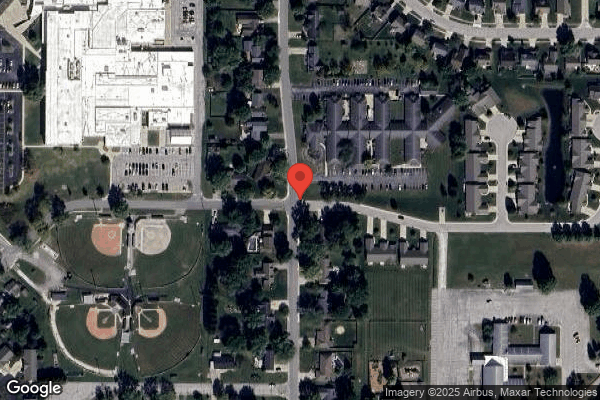
Understanding Severity Codes (click to expand)
Life-Threatening (Immediate Jeopardy)
J - Isolated K - Pattern L - Widespread
Actual Harm
G - Isolated H - Pattern I - Widespread
Potential for Harm
D - Isolated E - Pattern F - Widespread
No Harm (Minor)
A - Isolated B - Pattern C - Widespread

Questions to Ask on Your Visit

  • "What changes have you made since the serious inspection findings?"
  • "Can I speak with families of current residents?"
  • "What's your RN coverage like on weekends and overnight?"

Our Honest Assessment

Strengths
  • • Licensed and certified facility. Meets minimum state requirements.
Concerns
  • • Multiple safety concerns identified: 1 life-threatening violation(s), 4 harm violation(s), Payment denial on record. Review inspection reports carefully.
  • • 32 deficiencies on record, including 1 critical (life-threatening) violation. These warrant careful review before choosing this facility.
  • • Grade F (26/100). Below average facility with significant concerns.
Bottom line: Trust Score of 26/100 indicates significant concerns. Thoroughly evaluate alternatives.

About This Facility

What is Signature Healthcare At Parkwood's CMS Rating?

CMS assigns SIGNATURE HEALTHCARE AT PARKWOOD an overall rating of 3 out of 5 stars, which is considered average nationally. Within Indiana, this rating places the facility higher than 0% of the state's 100 nursing homes. This mid-range rating indicates the facility meets federal standards but may have areas for improvement.

How is Signature Healthcare At Parkwood Staffed?

CMS rates SIGNATURE HEALTHCARE AT PARKWOOD's staffing level at 2 out of 5 stars, which is below average compared to other nursing homes. Staff turnover is 52%, compared to the Indiana average of 46%.

What Have Inspectors Found at Signature Healthcare At Parkwood?

State health inspectors documented 32 deficiencies at SIGNATURE HEALTHCARE AT PARKWOOD during 2022 to 2025. These included: 1 Immediate Jeopardy (the most serious level, indicating potential for serious harm or death), 4 that caused actual resident harm, and 27 with potential for harm. Immediate Jeopardy findings are rare and represent the most serious regulatory concerns. They require immediate corrective action.

Who Owns and Operates Signature Healthcare At Parkwood?

SIGNATURE HEALTHCARE AT PARKWOOD is owned by a for-profit company. For-profit facilities operate as businesses with obligations to shareholders or private owners. The facility is operated by SIGNATURE HEALTHCARE, a chain that manages multiple nursing homes. With 106 certified beds and approximately 89 residents (about 84% occupancy), it is a mid-sized facility located in LEBANON, Indiana.

How Does Signature Healthcare At Parkwood Compare to Other Indiana Nursing Homes?

Compared to the 100 nursing homes in Indiana, SIGNATURE HEALTHCARE AT PARKWOOD's overall rating (3 stars) is below the state average of 3.1, staff turnover (52%) is near the state average of 46%, and health inspection rating (2 stars) is below the national benchmark.

What Should Families Ask When Visiting Signature Healthcare At Parkwood?

Based on this facility's data, families visiting should ask: "What changes have been made since the serious inspection findings, and how are you preventing similar issues?" "Can you walk me through typical staffing levels on day, evening, and night shifts?" "Can I visit during a mealtime to observe dining assistance and food quality?" "How do you handle medical emergencies, and what is your hospital transfer rate?" These questions are particularly relevant given the facility's Immediate Jeopardy citations and the below-average staffing rating.

Is Signature Healthcare At Parkwood Safe?

Based on CMS inspection data, SIGNATURE HEALTHCARE AT PARKWOOD has documented safety concerns. Inspectors have issued 1 Immediate Jeopardy citation (the most serious violation level indicating risk of serious injury or death). The facility has a 3-star overall rating and ranks #100 of 100 nursing homes in Indiana. Families considering this facility should ask detailed questions about what corrective actions have been taken since these incidents.

Do Nurses at Signature Healthcare At Parkwood Stick Around?

SIGNATURE HEALTHCARE AT PARKWOOD has a staff turnover rate of 52%, which is 6 percentage points above the Indiana average of 46%. Moderate turnover is common in nursing homes, but families should still ask about staff tenure and how the facility maintains care continuity when employees leave.

Was Signature Healthcare At Parkwood Ever Fined?

SIGNATURE HEALTHCARE AT PARKWOOD has been fined $8,018 across 1 penalty action. This is below the Indiana average of $33,159. While any fine indicates a compliance issue, fines under $50,000 are relatively common and typically reflect isolated problems that were subsequently corrected. Families should ask what specific issues led to these fines and confirm they've been resolved.

Is Signature Healthcare At Parkwood on Any Federal Watch List?

SIGNATURE HEALTHCARE AT PARKWOOD is not on any federal watch list. The most significant is the Special Focus Facility (SFF) program, which identifies the bottom 1% of nursing homes nationally based on persistent, serious quality problems. Not being on this list means the facility has avoided the pattern of deficiencies that triggers enhanced federal oversight. This is a positive indicator, though families should still review the facility's inspection history directly.