MILLER'S MERRY MANOR

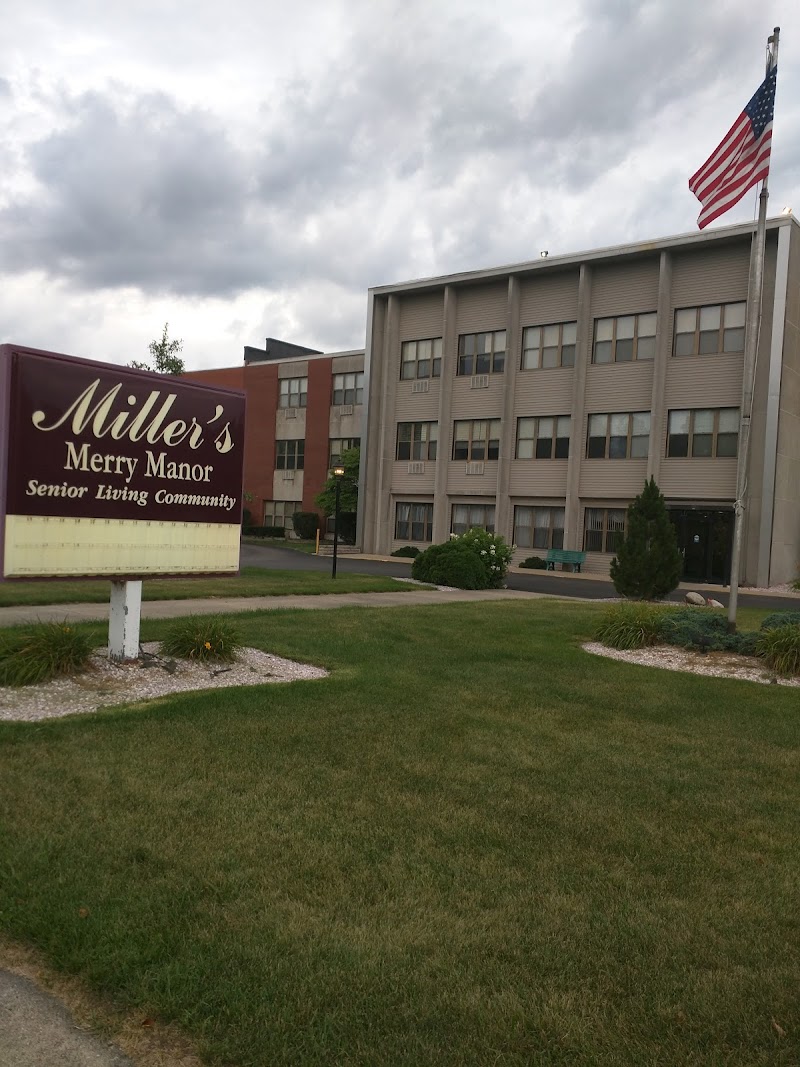
200 26TH ST, LOGANSPORT, IN 46947 (574) 722-4006
For profit - Corporation 127 Beds MILLER'S MERRY MANOR Data: November 2025

Trust Grade
90/100
#74 of 505 in IN
Last Inspection: April 2025

Within standard 12-15 month inspection cycle. Federal law requires annual inspections.

Overview

Miller's Merry Manor in Logansport, Indiana, has received a Trust Grade of A, indicating it is highly recommended and performs excellently compared to other facilities. It ranks #73 out of 505 nursing homes in Indiana, placing it in the top half, and is the second-best option among four in Cass County. The facility's trend is improving, with the number of issues decreasing from four in 2024 to two in 2025. Staffing is rated 4 out of 5 stars, with a turnover rate of 40%, which is better than the state average, and they have more RN coverage than 84% of Indiana facilities, ensuring residents receive good care. However, there have been some concerns, such as lapses in infection control procedures during a COVID outbreak and the use of disposable dinnerware instead of regular plates for meals, indicating areas that need attention.

Trust Score
A
90/100
In Indiana
#74/505
Top 14%
Safety Record
Low Risk
No red flags
Inspections
Getting Better
4 → 2 violations
Staff Stability
○ Average
40% turnover. Near Indiana's 48% average. Typical for the industry.
Penalties
✓ Good
No fines on record. Clean compliance history, better than most Indiana facilities.
Skilled Nurses
✓ Good
Each resident gets 59 minutes of Registered Nurse (RN) attention daily — more than average for Indiana. RNs are trained to catch health problems early.
Violations
⚠ Watch
12 deficiencies on record. Higher than average. Multiple issues found across inspections.
★★★★★
5.0
Overall Rating
★★★★☆
4.0
Staff Levels
★★★★★
5.0
Care Quality
★★★★☆
4.0
Inspection Score
Stable
2024: 4 issues
2025: 2 issues

The Good

  • 4-Star Staffing Rating · Above-average nurse staffing levels
  • 5-Star Quality Measures · Strong clinical quality outcomes
  • Full Sprinkler Coverage · Fire safety systems throughout facility
  • No fines on record
  • Staff turnover below average (40%)

    8 points below Indiana average of 48%

Facility shows strength in staffing levels, quality measures, fire safety.

The Bad

Staff Turnover: 40%

Near Indiana avg (46%)

Typical for the industry

Chain: MILLER'S MERRY MANOR

Part of a multi-facility chain

Ask about local staffing decisions and management

The Ugly 12 deficiencies on record

Apr 2025 2 deficiencies
CONCERN (D)

Potential for Harm - no one hurt, but risky conditions existed

Quality of Care (Tag F0684)

Could have caused harm · This affected 1 resident

2. During an observation, on 4/21/25 at 11:16 a.m., Resident 5 was sitting in her wheelchair, wearing 2 liters of oxygen per minute, and her feet and ankles were swollen. The clinical record for Resid...

Read full inspector narrative →
2. During an observation, on 4/21/25 at 11:16 a.m., Resident 5 was sitting in her wheelchair, wearing 2 liters of oxygen per minute, and her feet and ankles were swollen. The clinical record for Resident 5 was reviewed on 4/24/25 at 2:13 p.m. The diagnoses included, but were not limited to, chronic diastolic congestive heart failure, fluid overload, acute respiratory failure with hypoxia, paroxysmal atrial fibrillation, and chronic stage 4 (severe) kidney disease. A physician's order, dated 2/9/25, indicated to obtain a daily weight after voiding and before breakfast with same clothes, to administer an as needed (PRN) furosemide (a diuretic medication) for a weight gain of more than 3 pounds overnight, and to notify the physician of a weight gain of two (2) pounds in one (1) day and four (4) pounds in five (5) days. A physician's order, dated 2/8/25 and discontinued on 4/14/25, indicated to give furosemide 40 milligrams (mg) as needed for weight gain of more than 3 pounds overnight. A MAR, dated February 2025, indicated the following: a. On 2/21/25, the weight was 184 pounds and on 2/22/25 the weight was 187.6 pounds. This was a 3.6-pound weight gain in one (1) day. The MAR or electronic medical record did not indicate a PRN dose of furosemide was administered for the weight gain or the physician was notified. A MAR, dated March 2025, indicated the following: a. On 3/9/25, the weight was 180.8 pounds and on 3/10/25 the weight was 183.3 pounds. This was a 2.5-pound weight gain in one (1) day. The MAR or electronic medical record did not indicate the physician was notified. A MAR, dated April 2025, indicated the following: a. On 4/2/25, the weight was 184.7 pounds and on 4/3/25 the weight was 188 pounds. This was a 3.3-pound weight gain in one (1) day. The MAR did not indicate a PRN dose of furosemide was administered for the weight gain on 4/3/25. b. On 4/4/25, the weight was 191.8 pounds. This was a 3.8-pound weight gain in one (1) day. The MAR did not indicate a PRN dose of furosemide was administered for the weight gain on 4/4/25. c. On 4/5/25, the weight was 190.9 pounds. This was a 7.3-pound weight gain in five (5) days. The MAR did not indicate a PRN dose of furosemide was administered for the weight gain on 4/5/25. The MAR or electronic medical record did not indicate the physician was notified of the weight gains. During an interview, on 4/25/25 at 2:20 p.m., LPN 2 indicated the resident would allow staff to obtain her weight each day. The resident's furosemide order had been changed from the as needed order to a routine daily order. During an interview, on 4/25/25 at 2:34 p.m., the Director of Nursing (DON) indicated the nurses should have administered the PRN diuretic medication for weight gain based on the physician's order. The nurses should have notified the physician according to the order and documented the notification in the progress notes. 3. During an observation, on 4/22/25 at 10:05 a.m., Resident 31 was in her recliner in her room with mild swelling in her ankles. The clinical record for Resident 31 was reviewed on 4/24/25 at 9:30 a.m. The diagnoses included, but were not limited to, essential primary hypertension, dementia, and type 2 diabetes mellitus with diabetic polyneuropathy. A physician's order, dated 3/25/24, indicated to administer torsemide (a diuretic medication) 40 mg as needed for a weight gain of 3 pounds in 24 hours or 5 pounds in one week. A physician's order, dated 4/5/24, indicated to obtain a daily weight after voiding and before breakfast with the same clothes and to administer the PRN torsemide medication for a weight gain of 3 pounds in 24 hours or 5 pounds in one (1) week. A MAR, dated January 2025, indicated there was no daily weight recorded on 1/16/25 and 1/25/25. A MAR, dated February 2025, indicated the following: a. On 2/10/25, the weight was 157.4 pounds and on 2/11/25 the weight was 161.6 pounds. This was a 4.2-pound weight gain in 24 hours. The MAR did not indicate the torsemide medication was administered on 2/11/25. A MAR, dated April 2025, indicated the following: a. On 4/6/25, 4/9/25 and 4/16/25, no weight was obtained. There were no progress notes which indicated the resident refused or was unavailable. The other daily morning medications were documented as administered to the resident. b. On 4/10/25, the weight was 157.6 pounds and on 4/11/25 the weight was 161.2 pounds. This was a 3.6-pound weight gain in 24 hours. The MAR did not indicate the torsemide medication was administered on 4/11/25. During an interview, on 4/25/25 at 2:24 p.m., RN 1 indicated the resident would let staff know when she was awake and needed her weight obtained each morning. She had a PRN torsemide medication ordered for a daily weight gain of 3 pounds or a 5-pound gain in a week which should be administered. Staff would notify the doctor based on the physician's order. A current facility policy, titled Medication Administration Procedure, dated 8/29/16 and received from the Executive Director (ED) on 4/28/25 at 10:24 a.m., indicated, .Administering Oral Medications .Complete necessary assessments before administering medications .Document initials on the administration record and any other assessment/information needed A current facility policy, titled Physician and Family Notification of Condition Changes, dated 5/14/24 and received from the ED on 4/28/25 at 10:25 a.m., indicated .Telephone notification is required for .all condition changes .Notify the physician of any change in condition that may or may not warrant a change in the treatment plan. III. Notify the physician when values monitored are outside of ordered parameters. IV. Notify the primary physician during regular office hours .Document the information reported to the physician in the nurses' notes including the time and date of notification. Be thorough and explicit. VI. Document the response from the physician in the nurses' notes 3.1-37(a) Based on interview and record review, the facility failed to ensure physician's orders were followed and the physician was notified as ordered for 3 of 5 residents reviewed for quality of care. (Resident 85, 5 and 31) Findings include: 1. The clinical record for Resident 85 was reviewed on 4/23/25 at 11:21 a.m. The diagnoses included, but were not limited to, vascular dementia, major depressive disorder, anxiety disorders, hypothyroidism, hypertension, hyperlipidemia, and occlusion and stenosis of the carotid artery. A care plan, dated 1/29/25, indicated Resident 85 had chronic cardiovascular disease and hypertension. Interventions included, but were not limited to, administer medications as ordered. A physician's order, dated 1/29/25, indicated to give lisinopril (a blood pressure medication) 10 milligrams (mg) daily with special parameters to hold the medication for a systolic blood pressure less than 100. A Medication Administration Record (MAR), dated 1/1/25 through 1/31/25, indicated lisinopril 10 mg was given on 1/30/25 and 1/31/25 with no blood pressure recorded at the time of administration. A MAR, dated 2/1/25 through 2/28/25, indicated lisinopril 10 mg was given daily with no blood pressure recorded at the time of administration. A MAR, dated 3/1/25 through 3/31/25, indicated lisinopril 10 mg was given daily with no blood pressure recorded at the time of administration. A MAR, dated 4/1/25 through 4/23/25, indicated lisinopril 10 mg was given daily with no blood pressure recorded at the time of administration. During an interview, on 4/23/25 at 1:57 p.m., the Director of Nursing (DON) indicated the blood pressure should have been charted on the MAR with the medication administration. During an interview, on 4/24/25 at 11:59 a.m., the DON indicated the blood pressures for Resident 85 were not recorded on the MAR at the time of administration. During an interview, on 4/28/25 at 12:28 p.m., Unit Manager 3 indicated the resident's blood pressure should have been obtained prior to administering the medication. If the blood pressure was outside the parameter, the medication should have been held. The blood pressure would be charted in a supplemental documentation box on the MAR, charted if the medication was held.
CONCERN (D)

Potential for Harm - no one hurt, but risky conditions existed

Accident Prevention (Tag F0689)

Could have caused harm · This affected 1 resident

Based on observation, interview and record review, the facility failed to ensure a dependent resident with a wanderguard bracelet had the placement and function checked to ensure proper working order ...

Read full inspector narrative →
Based on observation, interview and record review, the facility failed to ensure a dependent resident with a wanderguard bracelet had the placement and function checked to ensure proper working order for 1 of 1 resident reviewed for accident hazards. (Resident 29) Findings include: During an observation, on 4/21/25 at 11:51 a.m., Resident 29 walked down the second-floor hallway and sat down in a chair which faced the elevator. The resident was wearing a wanderguard bracelet (a system used to alert staff when a resident attempted to wander outside of a designated area) on her right ankle. The clinical record for Resident 29 was reviewed on 4/23/25 at 9:59 a.m. The diagnoses included, but were not limited to, dementia, overactive bladder, and hypertension. A quarterly Minimum Data Set (MDS) assessment, dated 3/13/25, indicated Resident 29 had a severe cognitive impairment. An elopement risk assessment, dated 4/1/25 at 10:18 a.m., indicated the resident was at risk for elopement. She was independently mobile and often requested to go home. She experienced increased confusion at certain times of the day. A care plan, dated 4/1/25, indicated the resident was at risk for elopement. Interventions included, but were not limited to, check the function of the wanderguard sensor daily and check the placement of the wanderguard sensor bracelet on the right ankle. A progress note, dated 4/1/25 at 1:39 p.m., indicated the resident had been pacing the unit with her clothes packed on her walker. There was not a physician's order for the use of a wanderguard and there was no documentation the placement or function of the wanderguard was checked between 4/1/25 and 4/25/25. A Medication Administration Record (MAR), dated 4/1/25 to 4/30/25, indicated Resident 29's wanderguard placement and to monitor the function of the wanderguard was ordered on 4/25/25 and was not checked until 4/27/25. During an interview, on 4/23/25 at 3:00 p.m., Resident 29's daughter indicated that when the resident lived with her, she wandered away from the house twice and was lost. The facility had called her today and asked her to come to the facility because the resident was trying to leave and was upset. During an interview, on 4/25/25 at 2:41 p.m., the Director of Nursing (DON) indicated Resident 29 had a wanderguard. Resident 29 should have had an order for the use of the wanderguard and to check for the placement and function. During an interview, on 4/28/25 at 10:20 a.m., Licensed Practical Nurse (LPN) 5 indicated she was the second-floor nurse and there were no residents with a wanderguard bracelet. During an interview, on 4/28/25 at 10:02 a.m., Registered Nurse (RN) 4 indicated if a resident had a wanderguard bracelet, there would be an order. The wanderguard bracelet would need to be checked every shift for placement and function and documented in the MAR. The residents would have a care plan and interventions for the wanderguard bracelet. A current facility policy, titled Elopement Risk Assessment, dated as revised 4/28/25 and received from the DON on 4/28/25 at 12:18 p.m., indicated .Identify residents at risk for elopement by completing the elopement risk assessment upon admission and with applicable significant changes in status. Residents who are identified for possible elopement will immediately have interventions placed to prevent elopement. A safety check sheet may be initiated or a wander guard alarm may be assigned to resident .When appropriate, or based upon the results of the elopement risk assessment, a wander guard bracelet will be applied to residents to alert staff when residents are attempting the leave the facility unattended .Nursing staff will check for placement of the wander guard bracelet each shift and document on the treatment record .Nursing staff will check the sensors daily using the sensor check device or by taking the resident over the door mat and document on the treatment record 3.1-45(a)(2)
Sept 2024 1 deficiency
CONCERN (D) 📢 Someone Reported This

A family member, employee, or ombudsman was alarmed enough to file a formal complaint

Potential for Harm - no one hurt, but risky conditions existed

Deficiency F0560 (Tag F0560)

Could have caused harm · This affected 1 resident

Based on interview and record review, the facility failed to ensure there was a relocation planning conference meeting held with the resident's Power of Attorney (POA) and the Administrator prior to m...

Read full inspector narrative →
Based on interview and record review, the facility failed to ensure there was a relocation planning conference meeting held with the resident's Power of Attorney (POA) and the Administrator prior to moving the resident out of the memory care unit and onto the skilled nursing unit for 1 of 3 residents reviewed for transfers. (Resident B) Finding includes: A document, titled Intake Information, dated 9/5/24, indicated an anonymous complainant had a concern regarding Resident B being transferred off the memory care unit to the skilled nursing unit on the second floor. He was concerned because he did not give his permission, nor did he know the resident had been moved, until he found him on the second floor by accident. During an interview, on 9/23/24 at 12:30 p.m., with the Executive Director (ED) and the Director of Nursing (DON) in attendance, the ED indicated Resident B was transferred from the memory care unit to the skilled care unit because of inappropriate sexual behaviors. The women in the memory care were not able to voice to anyone if someone sexually assaulted them, but the women on the skilled care unit were able to voice their needs and concerns. The clinical record for Resident B was reviewed on 9/23/24 at 2:15 p.m. The diagnoses included, but were not limited to, Alzheimer's disease, severe dementia with anxiety, chronic kidney disease, anxiety disorder, post-traumatic stress disorder, and depression. A social service progress note, dated 7/16/24 at 3:18 p.m., indicated the SSD spoke with the resident regarding the potential room change off the memory care unit on 7/18/24. The son was in agreeance, waived the 48-hour notice at that time, and there were no concerns. A nursing progress note, dated 7/18/24 at 11:30 a.m., indicated the resident was transferred to his new room. All his belongings were transferred with him and report was given to his new nurse. During an interview, on 9/23/24 at 2:30 p.m., Resident B's POA indicated he was not notified when his father was moved to the skilled care side of the facility. He was not offered an opportunity to have a relocation planning conference and/or meeting with the ED prior to the resident being moved. He received a call from the SSD on 7/16/24, who left a voicemail. When he called the SSD back, she indicated the facility wanted to talk to him regarding the resident's behaviors. He indicated to the SSD he was not able to discuss his behaviors at that time, nor the next day as he had appointments to go to, but he would be in the facility, on 7/18/24, to meet with the SSD to talk about his father's behaviors. When he arrived, on 7/18/24, the elevator at the front of the facility was not working, so he and his spouse used the other elevator, which brought them up to the second floor at the nurse's station. They got off the elevator and was walking down the second-floor hallway glancing into rooms and observed his loved one in a room on the second floor on the skilled care side of the facility. The facility had moved the resident without his permission. During an interview, on 9/23/24 at 4:15 p.m., the ED indicated she did not have a meeting with the POA, but another staff member might have, so she would check and give an update on the information. During an interview, on 9/24/24 at 10:20 a.m., the ED indicated she asked all the staff if they had a relocation meeting with Resident B's POA and all the staff had indicated No. A document, titled Intrafacility Transfer, dated 7/16/24, indicated the effective move date was 7/18/24. The resident would be moved from the memory care unit to the second-floor unit. The box requesting a relocation planning conference and/or a meeting with the administrator to discuss the move was not checked. The box was checked indicating the POA was aware of his right to refuse the move, and he waived the relocation planning conference. The box was checked he waived the two-day notification asking for the move to be made as soon as possible. There was no signature from the POA indicating these were his wishes. There was a line filled in indicating he had been notified by phone. The SSD signed and dated the form on 7/16/24. During a phone interview, on 9/24/24 at 1:44 p.m., Resident B's POA indicated he was not aware he was able to request a copy of the intrafacility transfer form or appeal the move within the 48-hour time period. He indicated he did not waive the two-day notification either. He came in, on 7/18/24, to talk to the SSD regarding the resident's behaviors and found out they had moved him to the skilled nursing side of the facility due to his behaviors. A current policy, titled Room Transfers-Interfacility Transfer, dated 3/1/2001 and provided by the ED on 9/23/24 at 1:18 p.m., indicated .When a resident is moved to a bed within the same certified area. It also occurs when a resident is moved from a bed entitled to only one benefit to a bed entitled to both benefits. INVOLUNTARY-the request to move the resident to another location was made by anyone other than the resident and/or responsible party .Verify that the move meets one of the following criteria: the transfer is necessary for medical reasons as judged by the attending physician; the transfer is necessary for the welfare of the resident or other persons. 2. Notify the resident, family member, if known, and legal representative, if known, prior to the move .You must give a two-day notice unless the move is necessary due to one of the following: a. The safety of others is endangered b. The health of others is endangered c. The residents health has improved d. An immediate transfer is required by the residents urgent medical needs. (NOTE: The resident does have the right to waive the two-day notice; a copy of the signed waiver must be available in the clinical record .) 4. Prepare a relocation plan which includes a conference to which the resident and the legal representative, family members and physician are invited. The relocation planning conference may be waived by the resident or legal representative; a copy of this signed waiver must be available in the clinical record. This citation relates to Complaint IN00442716. 3.1-12(a)(18) 3.1-12(a)(19) 3.1-12(a)(20) 3.1-12(a)(21) 3.1-12(a)(22) 3.1-12(a)(23) 3.1-12(a)(24)
Jul 2024 1 deficiency
CONCERN (F) 📢 Someone Reported This

A family member, employee, or ombudsman was alarmed enough to file a formal complaint

Potential for Harm - no one hurt, but risky conditions existed

Infection Control (Tag F0880)

Could have caused harm · This affected most or all residents

Based on observation, interview and record review, the facility failed to follow their Infection Control Surveillance Program policy and procedure regarding providing an accurate and complete data col...

Read full inspector narrative →
Based on observation, interview and record review, the facility failed to follow their Infection Control Surveillance Program policy and procedure regarding providing an accurate and complete data collection process relative to infections to assist in compiling statistical data to aid in the infection control and prevention process for residents residing in the facility. This deficient practice had the potential to affect 94 of 94 residents residing in the facility. Finding includes: A document, titled Intake Information, dated 7/9/24, indicated there was a concern the facility had an issue with their infection control. During an observation, on 7/29/24 at 1:08 p.m., an unidentified receptionist was observed wearing a surgical mask. She indicated the facility had a breakout of COVID and everyone was to be wearing a mask. During the entrance conference, on 7/29/24 at 1:12 p.m., the tracking and trending data for infections, from January to July 2024, was requested. During an interview, on 7/29/24 at 1:22 p.m., the Executive Director (ED) indicated there were 19 residents who had COVID. Two were in the memory care unit and the other 17 were on the third floor. Also, there was one staff member who tested positive for COVID. During an interview, on 7/29/24 at 2:11 p.m., an unidentified agency nurse indicated there were 20 residents on the third floor who had COVID. She did not know how many residents on the other floors had COVID, but she did know there were a few staff members out sick with it. On 7/29/24 at 3:36 p.m., the Infection Surveillance Data Collection Form for January 2024 through May 2024, was reviewed. There were no forms for June 2024 to be reviewed. On 7/30/24 at 11:00 a.m., a request was made to the Director of Nursing (DON) for all the statistical information regarding the residents and staff who had COVID. On 7/30/24 at 12:12 p.m., the Infection Control Preventionist provided an untitled paper with staff and residents names on it with a schedule blocked off with the day the person tested positive for COVID and the day they were to come out of isolation. She was putting all the staff and residents' signs and symptoms for COVID into their Infection Surveillance Data Collection Form on the computer, but she had not completed it yet. She indicated she did not have the Infection Surveillance Data Collection Form for the tracking and trending of infections completed for June 2024 yet. On 7/30/24 at 1:20 p.m., the Director of Nursing (DON) indicated knew the Infection Control Preventionist also had wounds to do, she was the clinical educator, and she taught their CNA classes besides overseeing the Infection Control Program. The DON was not able to adequately trace where the COVID came from, how it infected the residents, and who all may have been exposed. On 7/30/24 at 1:45 p.m., the ED indicated she had just completed the COVID form for the employees who tested positive for COVID. At that time, there were seven employees and 24 residents who were positive for COVID. On 7/30/24 at 1:50 p.m., the Infection Control Preventionist indicated she only educated the staff on whatever corporate mandated her to educate them on for each month. She did not have time to educate the staff with everything else she had to do. On 7/30/24 at 3:28 p.m., the Infection Control Preventionist indicated she set aside eight hours at a time to work on the infection control information, but she usually got pulled away to do something else, then she did not get back to doing the Infection Control task. She did not look at the infection control data every day. The unit managers made a list for her in the morning meeting indicating who had an infection and whether they were started on an antibiotic or not, then she set time aside when she was able to do the data analysis part of the job. A current policy, titled Infection Control Surveillance Program, dated September 2, 2019, and provided by the Infection Control Preventionist on 7/30/24 at 4:11 p.m., indicated .PURPOSE: To provide an accurate and complete data collection process relative to an infection; to assist in compiling statistical data for the QAPI [Quality Assurance and Performance Improvement] program. To establish an infection control and prevention process for residents residing in the facility. To determine whether special measures are required for admission, such as special equipment or supply purchases, additional culture or re-culture results in order to determine feasibility of admission, staff training, etc. Surveillance components will include Investigation, Clinical records and documentation, on-site monitoring, data analysis, reporting, implementation of program changes as needed .During the course of treatment, and while the resident is receiving an antibiotic the Infection Control Coordinator will review the EMR [Electronic Medical Record] for Infection Assessments and monitor for appropriate treatment and management of the infection or condition warranting the use of antibiotics and treatment. D. Each resident will be tracked by the infection Control Coordinator until the course of treatment and symptoms have resolved. This tracking may include reviewing culture reports, progress notes, AM [morning] meeting attendance, chart review, walking rounds or direct observations and interview of residents/staff. E. At the end of each month, the Infection Control Coordinator will collect information contained in the infection assessments and list this information on the line listing summary sheet. Analysis of this information will then be classified into either a true infection or symptoms requiring treatment per physician or provider assessment and clinical judgement. The summary of this information will be presented to the QAPI committee monthly or quarterly for review. Individual and group action plans will be developed based upon information from this data collection. F. If health care associated infections and trends are identified, plans of action to prevent further symptoms are initiated. Follow-up continues until the underlying reason for infection/symptoms is resolved. 3. Documenting Surveillance data: a. Information of the line/listing form will include: I. Resident name II. Signs and symptom information III. Infection type IV. Date signs/symptoms were first noted V. Any culture or x-ray results VI. Antibiotic/antimicrobial name and dosage VII. Antibiotic/Antimicrobial start and stop date VIII. Isolation type of [sic] required IX. Verification of true infection/meets infection criteria definition. B. To determine if data is a true infection-a complete review of the infection criteria guideline must be completed This citation relates to Complaint IN00438342. 3.1-18(b)(1)(A) 3.1-18(b)(1)(B)
Mar 2024 2 deficiencies
CONCERN (D)

Potential for Harm - no one hurt, but risky conditions existed

Quality of Care (Tag F0684)

Could have caused harm · This affected 1 resident

**NOTE- TERMS IN BRACKETS HAVE BEEN EDITED TO PROTECT CONFIDENTIALITY** Based on observation, interview, and record review. The facility failed to ensure n elopement alarm was followed for 1 of 1 resi...

Read full inspector narrative →
**NOTE- TERMS IN BRACKETS HAVE BEEN EDITED TO PROTECT CONFIDENTIALITY** Based on observation, interview, and record review. The facility failed to ensure n elopement alarm was followed for 1 of 1 resident reviewed. Resident 77 Finding include: A record review began on 3/19/24 at 1:07 P.M. Resident 77 diagnosis include unspecified intracranial injury with loss of conciousness of status. A review of the Minimum data Section dated 3/6/23, indicated a wander/elopement alarm was used daily. A brief interview for mental status (BIMS) is a 13 from 15. This indicated the resident was able to interact appropriately. A physician order dated 12/13/23 indicated to check wander guard function daily, placed on wheelchair everyday. A care plan titled risk for elopement indicated interventions included wander guard sensor bracelet to be applied. A review of nursing-supplemental elopement risk assessment dated [DATE] indicated Resident 77 was not at risk for elopement. There was no need for wander guard bracelet to be applied. The care plan and physician orders had not been updated to reflect this change. A record review of the Treatment Administration Record (TAR) dated January, February, and March 2024 indicated: Dated January 2024 on day shift: the wander guard check function daily-place on wheelchair was checked as being on the wheelchair the following dates: 1, 2, 3, 4, 5, 6, 7, 8, 9, 10, 11, 12, 13, 14, 15, 16, 17, 18, 19, 20, 21, 22, 23, 24,25, 26, 27, 28, 29, 30, and 31. Dated February 2024 on day shift: the wander guard check function daily-place on wheelchair was check-off for the following dates: 1, 2, 3, 4, 5, 6, 7, 8, 9, 10, 11, 12, 13, 14, 15, 16, 17, 18, 19, 20, 21, 22, 23, 24, 25, 26, 27, 28, and 29. For the month of March on day shift: the wander guard check function daily-place on wheelchair was check-off for the following dates: 1, 2, 3, 4, 5, 6, 7, 8, 9, 10, 11, 12, 13, 14, 15, 16, 17, 18, 19, 20, and 21. An observation on 03/20/24 at 9:57 A.M. Resident 77 was in room in wheelchair on the lower side is a small band (wander guard) was visible. In an interview on 3/21/24 at 9:45 AM, the Director of Nursing indicated, Resident 77 was re-evaluated and it was decided he did not need the wander guard anymore. So, it should have been removed from the wheelchair and physician orders on 1/5/24. A current facility policy, Elopement Risk Assessment, dated 6/3/14, was provided by the Administrator on 3/19/24 at 10:56 A.M. The policy indicated . to assess residents for potential elopement. To assure they are always free from harm 3.1-37
CONCERN (D)

Potential for Harm - no one hurt, but risky conditions existed

Deficiency F0699 (Tag F0699)

Could have caused harm · This affected 1 resident

Based on interview and record review the facility failed to ensure personalized trauma informed care for 1 of 1 resident reviewed. (Resident 72) Findings include: Resident 72's record was reviewed on...

Read full inspector narrative →
Based on interview and record review the facility failed to ensure personalized trauma informed care for 1 of 1 resident reviewed. (Resident 72) Findings include: Resident 72's record was reviewed on 3/20/24 at 9:53AM. His diagnoses included dementia, post-traumatic stress disorder (PTSD), depression, and anxiety. Resident 72's comprehensive quarterly Minimum Data Set (MDS) assessment completed 2/28/24 section C for cognitive functioning indicated his BIMS (Brief Interview of Mental Status) score was 7. A score of 7 indicated moderate cognitive impairment. Resident 72's care plan did not include any focus, goal, interventions, or triggers for PTSD. The behavior focused care plan included anxiety and yelling out. The interventions were as follows: Administer psych medication as ordered. Monitor medication side effects at least daily. Notify physician as needed. Listen to concerns and follow-up on these promptly as needed. SS (social services) to visit as needed. Psych services to follow resident as needed. Document mood behavior; yells out increased anxiety. Trauma screenings completed 11/27/23 and 2/28/24 both indicated Resident 72 stated he was well pleased and denied any trauma. The items listed as experiences or history for trauma included: domestic violence, physical abuse, verbal abuse, childhood abuse and neglect, witnessing abuse, and violent death of a loved one. A psychotropic med quarterly review completed 3/10/24 indicated Resident 72 over the prior 90 days had 4 episodes of anxiety during the day, 64 episodes in the evening, and 12 at night with varying effectiveness of interventions used. On 3/20/24 at 9:57AM in an interview, CNA 2 (Certified Nurse Assistant) and the unit manager indicated Resident 72 would get worked up and more anxious in the evening when alone. She indicated she did not know Resident 72 had PTSD or any triggers to watch for. During the interview, the unit manager indicated she was unaware of any triggers and would need to refer to the CNA's pocket care sheets. The pocket care sheet indicated Resident 72's specific care instructions included diet sensitivities, incontinence, glasses, hard of hearing, and the use of a walker. There were no instructions regarding behaviors or triggers for PTSD on the CNA care sheet tool. During a phone interview on 3/20/24 at 2:30PM, Resident 72's son, POA (Power of Attorney) indicated his father had several traumatic experiences. The POA indicated Resident 72 did not talk about his time in the Navy or any of his military experiences. The POA indicated his father grew up in an extremely physically and emotionally abusive home. Resident 72's bother was shot and killed by their father. According to the POA Resident 72 and his siblings all refused to openly discuss the abusive environment they grew up in, simply stating it was a nightmare. The only trigger the POA was certain of was any talk of Resident 72's parents. A policy titled, Trauma Informed Care, dated 1/18/23, was provided by the administrator 3/20/24 at 2:01PM. The policy indicated, a resident with PTSD will receive person-centered and individualized treatment and services to meet their assessed needs. 6 Any resident diagnosed with PTSD requires collaboration with a metal health provider to develop and implement a person-centered, individualized plan of care.
Feb 2023 6 deficiencies
CONCERN (D)

Potential for Harm - no one hurt, but risky conditions existed

Deficiency F0552 (Tag F0552)

Could have caused harm · This affected 1 resident

Based on interview and record review, the facility failed to ensure residents who received psychotropic medications had the benefits and risks reviewed with them and their representatives for 2 of 5 r...

Read full inspector narrative →
Based on interview and record review, the facility failed to ensure residents who received psychotropic medications had the benefits and risks reviewed with them and their representatives for 2 of 5 residents reviewed for psychotropic medications. (Resident 76 and 69) Findings include: 1. The record for Resident 76 was reviewed on 2/21/23 at 3:42 p.m. Diagnoses included, but were not limited to, unspecified dementia with behavioral disturbance, delusional disorders, metabolic encephalopathy, and major depressive disorder. A physician's order, dated 9/15/22, indicated to give Risperdal (an antipsychotic) 1 mg (milligram) daily. 2. The record for Resident 69 was reviewed on 2/21/23 at 4:56 p.m. Diagnoses included, but were not limited to, unspecified dementia with mood disturbance, major depressive disorder, hallucinations, delusional disorder, and anxiety disorder. A physician's order, indicated to give Risperdal 1 mg every evening for delusions, dated 10/28//22 and open ended. During an interview, on 2/21/23 at 2:26 p.m., the Clinical Support Nurse indicated the facility did not have any type of consent or documentation where the residents' and representatives were informed of the risks and the benefits of medications which were a high risk. The Nursing Drug Handbook 2023 indicated Risperdal had a black box alert which included there was an increased risk of mortality in elderly patients with dementia-related psychosis, mainly due to pneumonia and heart failure. The side effects included, but were not limited to, agitation, anxiety, insomnia, headache, aggressive behavior, and orthostatic hypotension. The adverse effects included, but were not limited to, tardive dyskinesia [characterized by tongue protruding, puffing of the cheeks, chewing, or puckering of mouth], muscle rigidity, altered mental status, irregular pulse or blood pressure, cardiac arrhythmias, acute renal failure, hyperglycemia, and death. A current policy, titled Psychotropic Medication Use, dated 2/18/2019 and received from the Director of Nursing on 2/22/23 at 3:20 p.m., indicated .Psychotropic medications will only be used when medically indicated to treat a specific condition .Ongoing monitoring will be in place to assess risks vs benefits of continued medication use and psychotropic medications will not be used as a restraint A current policy, titled Resident's Rights, dated 5/31/2016 and received from the Administrator on 2/22/23 at 4:55 p.m., indicated .The resident has the right to information .right to be informed of total health status in a language they can understand .The resident has the right to choose. The resident has the right to refuse treatment . 3.1-3(n)(2) 3.1-4(c) 3.1-4(d)
CONCERN (D)

Potential for Harm - no one hurt, but risky conditions existed

Pressure Ulcer Prevention (Tag F0686)

Could have caused harm · This affected 1 resident

Based on observation, interview and record review, the facility failed to ensure bilateral cushioned boots were worn and a pillow was placed between a resident's knees with pressure ulcers as ordered ...

Read full inspector narrative →
Based on observation, interview and record review, the facility failed to ensure bilateral cushioned boots were worn and a pillow was placed between a resident's knees with pressure ulcers as ordered by the physician for 1 of 3 residents reviewed for pressure wounds. (Resident 18) Finding includes: During an observation, on 2/20/23 at 2:15 p.m., Resident 18 was lying in bed on his right side with three blankets covering his legs. The resident was not wearing bilateral cushioned boots or had a pillow between his knees. During an observation, on 2/21/23 at 4:24 p.m., the resident was sitting in his wheelchair in the dining room. The resident was not wearing the bilateral cushioned boots and did not have a pillow between his knees. The record for Resident 18 was reviewed on 2/20/23 at 1:50 p.m. Diagnoses included, but were not limited to, Alzheimer's disease, contractures of the muscle in the lower legs, open wound on the left foot, congestive heart failure, major depressive disorder, cognitive communication deficit, and peripheral vascular disease. A physician's order, dated 9/2/22, indicated to always wear cushioned protective boots to both feet. A physician's order, dated 9/2/22, indicated to always keep a pillow between the knees. A care plan, dated 1/15/20, indicated the resident needed extensive assistance with transfers due to contractures of the bilateral legs. Interventions included, but were not limited to, assess for increase in mobility level and/or decrease in mobility level. A care plan, dated 10/5/22, indicated the resident was at risk for complication from a pressure lesion. Interventions included, but were not limited to, administer treatment as ordered, monitor for complaints of pain or discomfort, resident visits the wound clinic weekly. A care plan, dated 12/20/22, indicated the resident developed an abrasion/pressure injury to his right knee related to contractures of the bilateral legs and the inability to reposition self in bed. Interventions included, but were not limited to, treatment as ordered, monitor pain and discomfort, resident would visit wound clinic weekly, staff would anticipate resident's need for comfort and pressure relief, maintain pressure relief to bony prominence's, staff would reposition every 2 hours while in bed, ensure positioning devices are in proper placement. During an interview, on 2/21/23 at 4:24 p.m., the wound care nurse indicated the resident should be wearing the bilateral cushioned boots and had a pillow placed between his knees. She did not know why the resident did not have them on. A current policy, titled Pressure Injury Treatment, dated 1/16/20 and received from Administrator on 2/23/23 at 4:55 p.m., indicated .to provide all residents with pressure injuries treatment that are recommended by the NPIAP (National Pressure Injury Advisory Panel) in accordance with physician's orders. PROCEDURE: All pressure injuries will be assessed using the Staging System which is based upon tissue loss .Use support surfaces such as low air loss mattresses .Continue to turn and reposition the resident regardless of the support system in place. Inspect the skin for additional damage each time turned .Heels with stage 1 or 2 pressure injuries should have heels floated by placing a pillow under the legs so the heels are up off the bed, or by using pressure reducing devices with heel suspension. Sold fabric, sheepskin or padded heel protectors with no heel suspension should not be used 3.1-40(a)(2)
CONCERN (D)

Potential for Harm - no one hurt, but risky conditions existed

Medication Errors (Tag F0758)

Could have caused harm · This affected 1 resident

**NOTE- TERMS IN BRACKETS HAVE BEEN EDITED TO PROTECT CONFIDENTIALITY** Based on interview and record review, the facility failed to identify the resident specific delusions, the distress the delusion...

Read full inspector narrative →
**NOTE- TERMS IN BRACKETS HAVE BEEN EDITED TO PROTECT CONFIDENTIALITY** Based on interview and record review, the facility failed to identify the resident specific delusions, the distress the delusions caused and any non-easily redirected behaviors for residents prescribed antipsychotics for their delusions for 2 of 5 residents reviewed for psychotropic medications. (Resident 69 and 76) Findings include: 1. The record for Resident 69 was reviewed on 2/21/23 at 4:56 p.m. Diagnoses included, but were not limited to, unspecified dementia with mood disturbance, major depressive disorder, hallucinations, delusional disorder, and anxiety disorder. A care plan, dated 2/12/21, indicated the resident displayed inappropriate physical behavioral issues as exhibited by banging on doors, walls, and furniture, threatening others, and distressful delusion. The interventions included, but were not limited to, administer psychotropic medications as ordered and to document distressful delusions. The care plan did not indicate the resident specific distressful delusions. A PASARR (preadmission screening and resident review), dated 3/8/21, indicated the resident had a dementia exclusion. There were not recent or current mental health symptoms. The primary medical condition for the requiring nursing facility care was dementia. A quarterly behavior/psychotropic medication review, dated 11/10/22, indicated the resident received Risperdal at bedtime. The resident had distressful delusions. The resident was easily redirected from distressing recollection by 1-1 attention and enjoyed talking about past life events. The resident had only isolated episodes of behavioral elevation. There was no contraindication to reducing the medication. The quarterly review did not include the resident specific distressing delusions or hallucinations. A physician's order, indicated to give Risperdal (an antipsychotic) 1 mg (milligram) every evening for delusions, dated 10/28//22 and open ended. A psychiatric progress note, dated 1/10/23, indicated the resident was seen for dementia, anxiety, insomnia, delusions, and hallucinations. The resident had no current delusions. The staff reported no acute psychiatric concerns at this time. The psychiatric progress note did not include the resident specific delusions. During an interview, on 2/22/23 at 4:46 p.m., the DON (Director of Nursing) indicated the only documentation of the resident delusions was in the care plan. The care plan did not indicate the resident specific delusions or what was distressing to the resident about the delusions. The DON would talk to the nurse on the dementia unit. During an interview, on 2/22/23 at 4:54 p.m., the DON indicated the documentation did not include a description of the resident specific delusions or how they were distressing to the resident. 2. The record for Resident 76 was reviewed on 2/21/23 at 3:42 p.m. Diagnoses included, but were not limited to, unspecified dementia with behavioral disturbance, delusional disorders, metabolic encephalopathy, and major depressive disorder. A physician's order, dated 9/15/22, indicated to give Risperdal 1 mg daily. A care plan, dated 9/26/22, indicated the resident had mood issues as exhibited by delusions of grandeur as evidenced by thinking she was a member of the Beatles rock group, and her boyfriend was [NAME] Clapton. The resident accused staff and residents of wanting her 'man' and was verbally challenging. The interventions included, but were not limited to, administer psychiatric medications as ordered, listen to resident concerns and to document any increase in delusions. A psychiatric progress note, dated 11/28/22, indicated the resident was seen for dementia, delusions, anxiety, and depression. The staff reported the resident believed her boyfriend lived with her in her bedroom. The resident was sitting in her chair during the visit and reported she was fine, had been 'taking care of her man' and he was currently watching TV. The plan was to continue the Risperdal at bedtime for the delusions. The psychiatric progress note did not indicate how the resident was distressed by her delusions. A progress noted, dated 2/22/23 at 8:41 a.m., indicated the night CNA (Certified Nursing Assistant) went in the resident's room to check on her. The resident screamed at the CNA to get out because her husband was in the room. The progress note did not include the intervention used or the effectiveness of the intervention. A psychiatric progress note, dated 1/27/23, indicated the resident reported no feelings of depression or anxiety. The staff reported the resident continued to suffer from distressing delusions at times. The resident was to continue to take the Risperdal 1 mg for the delusions. The psychiatric progress note did not include how many episodes of delusions, how the delusions were distressing to the resident or if the resident could be easily redirected. An IDT (interdisciplinary team) note, dated 1/30/23 at 8:21 a.m., indicated the resident current medications were reviewed for dose reduction. The IDT determined the resident continued to exhibit distressing delusional episodes and it would not be appropriate to make any medication changes. The note did not include the description of the delusions, how they were distressing to the resident and if the resident was easily redirected or the interventions other than medications utilized. During an interview, on 2/21/23 at 2:27 p.m., with the Clinical Support Nurse and DON, the documentation was reviewed with only one incident of the resident needing redirection due to her delusions and the re-direction was successful. The Clinical Support Nurse and the DON could not locate any further documentation of how the resident was distressed by her delusions. A current policy, titled Psychotropic Medication, dated 2/18/2019 and received from the DON on 2/22/23 at 3:20 p.m., indicated .Psychotropic Drug Use .To ensure that medications regimen helps promote or maintain the resident's highest practicable mental, physical, and psychosocial well-being, as identified by the resident and/or representative[s] in collaboration with the attending physician/psychiatrist and facility staff; each resident receives only those medications, in doses and for the duration clinically indicated to treat the resident's assessed condition[s]; non-pharmacological interventions are considered and used when indicated, instead of, or in addition to, medication .the potential contribution of the medication regimen to an unanticipated decline or newly emerging or worsening symptom is recognized and evaluated, and the regimen is modified when appropriate. Psychotropic medications will only be used when medically indicated to treat a specific condition .Ongoing monitoring will be in place to assess risks vs[versus] benefits of continued medication use and psychotropic medications will not be used as a restraint .The facility will assure that medication therapy is based upon an adequate indication for use by documenting the supporting diagnosis/indication of use at the time the order for the psychotropic medication is obtained/received .On-going monitoring of target behaviors will be documented as they occur in the clinical record along with the interventions used to reduce and the results .Behavior monitoring: Target behaviors must be clearly identified and monitored. Episodes will be documented in the clinical record as they occur along with the results of the interventions used to reduce the behavior or symptoms .Quarterly review by IDT-to include evaluating and planning for reductions, evaluating non-med interventions and evaluating the effectiveness of the medication to help promote or maintain the highest practicable mental, physical and psychosocial well-being 3.1-48(a)(3) 3.1-48(a)(4)
CONCERN (D)

Potential for Harm - no one hurt, but risky conditions existed

Deficiency F0804 (Tag F0804)

Could have caused harm · This affected 1 resident

Based on observation, interview and record review, the facility failed to prepare pureed food based on the recipe for puree diets for 1 of 1 staff member observed preparing pureed diets. (Cook 4) Find...

Read full inspector narrative →
Based on observation, interview and record review, the facility failed to prepare pureed food based on the recipe for puree diets for 1 of 1 staff member observed preparing pureed diets. (Cook 4) Finding includes: During an observation, on 2/15/23 at 3:52 p.m., [NAME] 4 was preparing puree foods for the evening meal. She broke 5 bread sticks into a Robo coupe and added milk from the gallon container. She started the Robo coupe and monitored until she felt the consistency was appropriate. She emptied the contents into a container. She then placed lasagna and 3 more broken bread sticks into the clean Robo coupe. She added milk to the Robo coupe from the gallon container. She blended the food and added milk until the consistency was smooth. She emptied the contents into a steam table pan and covered it with aluminum foil. During an interview, on 2/15/23 at 3:54 p.m., [NAME] 4 indicated she would monitor the breadsticks in the Robo coupe until she felt the consistency was appropriate. She also added the amount of lasagna and bread sticks in the Robo coupe to prepare the 7 residents with puree diet orders. The recipes for the puree meals were in the binder on the counter across from where she was working. During an interview, on 2/25/23 at 3:55 p.m., the Dietary Manager indicated she had spoken to the cook and understood the cook did not follow the recipe. A recipe, titled puree vegetable lasagna, indicated the portion of lasagna to be used was 8 servings, 2 teaspoons of chicken base, 2 cups of hot water and 4 slices of wheat bread. The directions were to place the ingredients in the food processor and blend until smooth. Then pour into a small grease steamtable pan, cover, and steam to 165 degrees F. There was no recipe for puree bread sticks. There was no policy for the preparation of puree foods. 3.1-21(a)(1) 3.1-21(a)(2)
CONCERN (E)

Potential for Harm - no one hurt, but risky conditions existed

Resident Rights (Tag F0550)

Could have caused harm · This affected multiple residents

Based on observation, interview and record review, the facility failed to ensure all residents received their food on the same type of dinnerware for 2 of 3 units reviewed for dining. (The third floor...

Read full inspector narrative →
Based on observation, interview and record review, the facility failed to ensure all residents received their food on the same type of dinnerware for 2 of 3 units reviewed for dining. (The third floor and the dementia unit) Finding includes: During an observation, on 2/16/23 at 12:00 p.m., the third-floor dining room food was served in white Styrofoam containers and the drinks were in Styrofoam cups. During an interview, on 2/16/23 at 12:03 p.m., the CNA indicated the residents used to get their food served in regular plates and cups. During an observation, on 12/16/23 at 12:23 p.m., the residents in the first-floor dining room were served their food on regular ceramic plates, bowls, and cups. During an observation, on 2/16/23 at 12:29 p.m., on the dementia unit, all the residents had received their food in Styrofoam containers and Styrofoam cups. QMA 2 did not know why the residents' food was served in Styrofoam. During an interview, on 2/22/23 at 5:35 p.m., an anonymous family member indicated their family member received meals in Styrofoam containers a lot. The resident resided on the third floor. During an interview, on 2/16/23 at 12:35 p.m., the Administrator indicated the residents on the first floor received regular plates and cups. The dementia unit and the third-floor residents received their food in Styrofoam containers. The first-floor residents were closer to the kitchen and received regular plates and cups. The residents were not served their meals in the same way. Some of the residents on the dementia unit had problems with eating the Styrofoam cups and they would be served with regular cups. During an interview, on 2/22/23 at 5:35 p.m., the Administrator indicated the facility did not have a policy on dining services. A current policy, titled Resident's Rights, dated 5/31/2006 and received from the Administrator on 2/22/23 at 4:55 p.m., indicated .Rights are both human privileges and legal protection. Residents have the legal rights of all United States citizens. Resident also have rights relating to their everyday lives and care in a nursing facility. A facility must inform residents of their rights and post the 'Residents [NAME] of Rights' in writing in the facility 3.1-3(t)
CONCERN (E)

Potential for Harm - no one hurt, but risky conditions existed

Deficiency F0802 (Tag F0802)

Could have caused harm · This affected multiple residents

Based on observation and interview, the facility failed to ensure there was sufficient dietary staff to provide residents with meals on regular dinnerware instead of disposable dinnerware for 66 of 81...

Read full inspector narrative →
Based on observation and interview, the facility failed to ensure there was sufficient dietary staff to provide residents with meals on regular dinnerware instead of disposable dinnerware for 66 of 81 residents observed for dining. (The dementia unit and the third-floor residents) Finding includes: During an observation on the dementia unit, on 02/16/23 at 12:29 p.m., the residents' food was served on Styrofoam plates, Styrofoam cups, and no tablecloths on the tables. QMA (Qualified Medication Aide) 2 indicated she was not sure why they were using Styrofoam plates, but it had been happening for a while. During an interview, on 02/16/23 at 12:35 p.m., the Administrator indicated the facility was down 2 people in dietary including the dishwasher position. The first floor was not getting Styrofoam, because they were closer to the kitchen. The rest of the residents were getting Styrofoam. Some residents on the dementia unit had trouble with eating the Styrofoam cups so they got regular cups. During an interview, on 02/21/23 at 11:01 a.m., the Dietary Manager indicated she was serving meals on Styrofoam due to having 3-4 employees quit at the same time and she did not have enough employees in the kitchen to get the dishes washed by the next meal. The Maintenance man and Social Service Director did help as much as they could while they were also completing their other duties. During an interview, on 02/21/23 at 11:01 a.m., [NAME] 3 indicated she was trying to get help all weekend because she was alone and needed assistance to serve the residents. She indicated she did use Styrofoam to serve the residents. During a resident council meeting, on 2/21/23 at 01:30 p.m., the Resident Council President indicated food had been delivered on Styrofoam plates, because they were low on staff in the kitchen. Last night, 2/20/23, the food at the evening meal was served on Styrofoam. There was not a policy for meal service. 3.1-20(h)
Understanding Severity Codes (click to expand)
Life-Threatening (Immediate Jeopardy)
J - Isolated K - Pattern L - Widespread
Actual Harm
G - Isolated H - Pattern I - Widespread
Potential for Harm
D - Isolated E - Pattern F - Widespread
No Harm (Minor)
A - Isolated B - Pattern C - Widespread

Questions to Ask on Your Visit

  • "Can I speak with families of current residents?"
  • "What's your RN coverage like on weekends and overnight?"

Our Honest Assessment

Strengths
  • • Grade A (90/100). Above average facility, better than most options in Indiana.
  • • No major safety red flags. No abuse findings, life-threatening violations, or SFF status.
  • • No fines on record. Clean compliance history, better than most Indiana facilities.
  • • 40% turnover. Below Indiana's 48% average. Good staff retention means consistent care.
Concerns
  • • 12 deficiencies on record. Higher than average. Multiple issues found across inspections.
Bottom line: Generally positive indicators. Standard due diligence and a personal visit recommended.

About This Facility

What is Miller'S Merry Manor's CMS Rating?

CMS assigns MILLER'S MERRY MANOR an overall rating of 5 out of 5 stars, which is considered much above average nationally. Within Indiana, this rating places the facility higher than 99% of the state's 100 nursing homes. This rating reflects solid performance across the metrics CMS uses to evaluate nursing home quality.
How is Miller'S Merry Manor Staffed?

CMS rates MILLER'S MERRY MANOR's staffing level at 4 out of 5 stars, which is above average compared to other nursing homes. Staff turnover is 40%, compared to the Indiana average of 46%. This relatively stable workforce can support continuity of care.

What Have Inspectors Found at Miller'S Merry Manor?

State health inspectors documented 12 deficiencies at MILLER'S MERRY MANOR during 2023 to 2025. These included: 12 with potential for harm.

Who Owns and Operates Miller'S Merry Manor?

MILLER'S MERRY MANOR is owned by a for-profit company. For-profit facilities operate as businesses with obligations to shareholders or private owners. The facility is operated by MILLER'S MERRY MANOR, a chain that manages multiple nursing homes. With 127 certified beds and approximately 85 residents (about 67% occupancy), it is a mid-sized facility located in LOGANSPORT, Indiana.

How Does Miller'S Merry Manor Compare to Other Indiana Nursing Homes?

Compared to the 100 nursing homes in Indiana, MILLER'S MERRY MANOR's overall rating (5 stars) is above the state average of 3.1, staff turnover (40%) is near the state average of 46%, and health inspection rating (4 stars) is above the national benchmark.

What Should Families Ask When Visiting Miller'S Merry Manor?

Based on this facility's data, families visiting should ask: "Can I visit during a mealtime to observe dining assistance and food quality?" "How do you handle medical emergencies, and what is your hospital transfer rate?" "Can I speak with family members of current residents about their experience?"

Is Miller'S Merry Manor Safe?

Based on CMS inspection data, MILLER'S MERRY MANOR has a clean safety record: no substantiated abuse findings (meaning no confirmed cases of resident harm), no Immediate Jeopardy citations (the most serious violation level indicating risk of serious injury or death), and is not on the Special Focus Facility watch list (a federal program monitoring the lowest-performing 1% of nursing homes). The facility has a 5-star overall rating and ranks #1 of 100 nursing homes in Indiana. While no facility is perfect, families should still ask about staff-to-resident ratios and recent inspection results during their visit.

Do Nurses at Miller'S Merry Manor Stick Around?

MILLER'S MERRY MANOR has a staff turnover rate of 40%, which is about average for Indiana nursing homes (state average: 46%). Moderate turnover is common in nursing homes, but families should still ask about staff tenure and how the facility maintains care continuity when employees leave.

Was Miller'S Merry Manor Ever Fined?

MILLER'S MERRY MANOR has no federal fines on record. CMS issues fines when nursing homes fail to meet care standards or don't correct problems found during inspections. The absence of fines suggests the facility has either maintained compliance or corrected any issues before penalties were assessed. This is a positive indicator, though families should still review recent inspection reports for the full picture.

Is Miller'S Merry Manor on Any Federal Watch List?

MILLER'S MERRY MANOR is not on any federal watch list. The most significant is the Special Focus Facility (SFF) program, which identifies the bottom 1% of nursing homes nationally based on persistent, serious quality problems. Not being on this list means the facility has avoided the pattern of deficiencies that triggers enhanced federal oversight. This is a positive indicator, though families should still review the facility's inspection history directly.