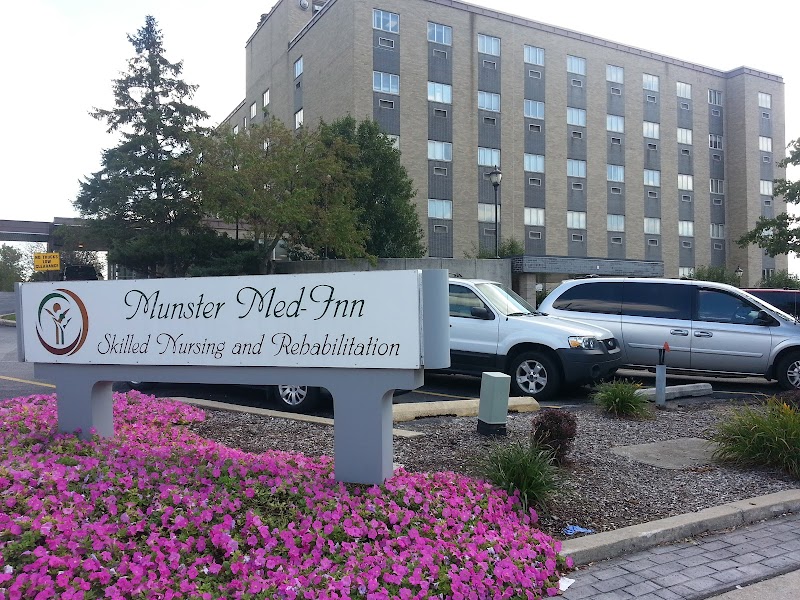
MUNSTER MED-INN

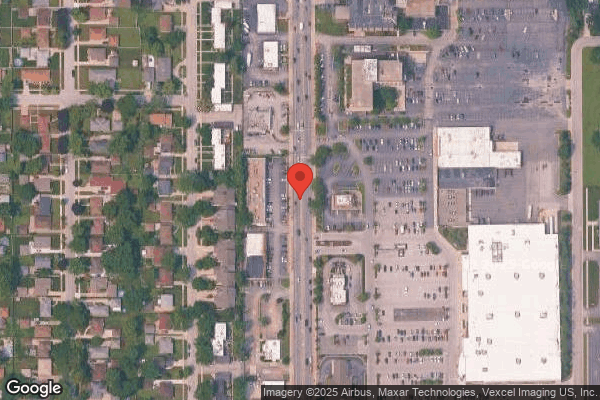
7935 CALUMET AVE, MUNSTER, IN 46321 (219) 836-8300
Government - County 225 Beds CASA CONSULTING Data: November 2025
Trust Grade
10/100
#467 of 505 in IN
Last Inspection: October 2024

Within standard 12-15 month inspection cycle. Federal law requires annual inspections.

Overview

Munster Med-Inn has received a Trust Grade of F, indicating significant concerns about the quality of care provided. With a state rank of #467 out of 505, they are in the bottom half of Indiana facilities, and at #18 of 20 in Lake County, only one local option is worse. The facility's trend is stable, with 17 issues reported in both 2023 and 2024. Staffing is rated 2 out of 5, which is below average, and the turnover rate is around 48%, similar to the state average. Notably, there were serious incidents, including a resident who fell and fractured their femur due to inadequate assistance during repositioning, and issues with kitchen cleanliness that could affect food safety for residents. Overall, while there are some strengths, such as no fines reported, the serious concerns highlighted in the inspection findings are troubling.

Trust Score
F
10/100
In Indiana
#467/505
Bottom 8%
Safety Record
Moderate
Needs review
Inspections
Holding Steady
17 → 17 violations
Staff Stability
⚠ Watch
48% turnover. Above average. Higher turnover means staff may not know residents' routines.
Penalties
✓ Good
No fines on record. Clean compliance history, better than most Indiana facilities.
Skilled Nurses
⚠ Watch
Each resident gets only 23 minutes of Registered Nurse (RN) attention daily — below average for Indiana. Fewer RN minutes means fewer trained eyes watching for problems.
Violations
⚠ Watch
49 deficiencies on record. Higher than average. Multiple issues found across inspections.
★☆☆☆☆
1.0
Overall Rating
★★☆☆☆
2.0
Staff Levels
★★★★☆
4.0
Care Quality
★☆☆☆☆
1.0
Inspection Score
Stable
2023: 17 issues
2024: 17 issues

The Good

  • 4-Star Quality Measures · Strong clinical quality outcomes
  • Full Sprinkler Coverage · Fire safety systems throughout facility
  • No fines on record

Facility shows strength in quality measures, fire safety.

The Bad

1-Star Overall Rating

Below Indiana average (3.1)

Significant quality concerns identified by CMS

Staff Turnover: 48%

Near Indiana avg (46%)

Higher turnover may affect care consistency

Chain: CASA CONSULTING

Part of a multi-facility chain

Ask about local staffing decisions and management

The Ugly 49 deficiencies on record

2 actual harm
Dec 2024 1 deficiency 1 Harm
SERIOUS (G) 📢 Someone Reported This

A family member, employee, or ombudsman was alarmed enough to file a formal complaint

Actual Harm - a resident was hurt due to facility failures

Accident Prevention (Tag F0689)

A resident was harmed · This affected 1 resident

Based on observation, record review, and interview, the facility failed to ensure adequate supervision and assistance were provided to a dependent resident who required total assistance of staff for b...

Read full inspector narrative →
Based on observation, record review, and interview, the facility failed to ensure adequate supervision and assistance were provided to a dependent resident who required total assistance of staff for bed mobility for 1 of 3 residents reviewed for accidents. (Resident B) This deficient practice resulted in a fall and the resident sustained a left femur fracture. Finding includes: A confidential interview indicated Resident B fell out of bed while being repositioned with only one staff member and the resident sustained a leg fracture, the same leg that was fractured during a fall in October 2024. An additional confidential interview indicated the resident was having surgery on 12/4/24 due to re-injuring the left leg. The record for Resident B was reviewed on 12/4/24 at 1:42 p.m. Diagnoses included, but were not limited to, displaced oblique fracture of the shaft of the left femur, vascular dementia with behavior disturbance, type 2 diabetes, protein-calorie malnutrition, and orthopedic aftercare. A Fall Risk Evaluation, dated 10/11/24, indicated the resident was at high risk for falls. The Significant Change Minimum Data Set (MDS) assessment, dated 10/17/24, indicated the resident was cognitively impaired for daily decision making and had range of motion (ROM) impairment to both sides of the lower extremities. The resident was dependent on staff for rolling left and right. Section J - Health Conditions, indicated the resident had a fracture related to a fall in the last six months. The resident was also receiving Physical and Occupational therapies. A Care Plan, dated 9/3/24 and reviewed on 10/17/24, indicated the resident was at risk for falls and injury from falls. Interventions included, but were not limited to, anticipate and meet needs. A Nurse's Note, dated 12/3/24 at 7:45 p.m., indicated LPN 1 was called to the room by a CNA. The CNA stated the resident slid to the floor out of the bed while staff was providing care. The resident was seen sitting on the floor on their buttocks next to their bed near the window. There were no visible injuries and no complaints of pain. The resident was not moved and an ambulance was called. At 7:47 p.m. and 7:50 p.m., attempts were made to reach the resident's family. At 7:52 p.m., ambulance staff arrived, pertinent papers were given, and report was given to the emergency room nurse. A Hospital Note, dated 12/4/24 at 7:40 a.m. and completed by the Case Manager, indicated the resident was admitted from the emergency department on 12/3/24. The resident's chief complaint was for evaluation of left leg pain after a fall or near fall at the nursing home. X-rays were obtained of the resident's left femur upon arrival to the hospital. The hospital Radiology Report pertaining to x-ray results of the left femur, dated 12/3/24, indicated the following: 1. Interval development of acute fracture of the subtrochanteric region and proximal diaphysis of the left femur (a type of hip fracture). Post surgical changes again noted. 2. Distal left femoral fracture was present on the study of 10/5/24. On 12/5/24 at 1:30 p.m., the resident's room was observed. Resident B's bed was closest to the window in the room and the bathroom was right next to the room door. The resident had a low air loss mattress (a mattress to prevent and treat pressure ulcers) and two assist rails were at the head of the bed. The fall investigation completed by the facility was dated 12/3/24 and 12/4/24. A statement obtained from QMA 1, on 12/3/24, indicated she was assisting CNA 1 with the resident. She needed more towels for care, and she went to the bathroom to get more towels. When she came out, the resident was sliding off the side of the bed. The QMA ran over and assisted the CNA in guiding the resident to the floor instead of letting them just fall. The resident complained of their knee hurting. The resident was covered up and their back was supported until the ambulance arrived. The resident was in a sitting position. A statement obtained from CNA 1, on 12/3/24, indicated the following, Myself and another staff member went into the patient's room to provide care for the patient, while I was turning the patient to clean her the other staff member was went [sic] to get more towels while the other staff member was doing that I had the patient already turn on her left side. With her legs crossed her hands were on the side rail (enabler). The patient is on a air mattress and started to slide down. I hollered for the other staff member to come help me. I ran to her left side and with my hands and both arms myself and the other staff member lowered her to the floor slowly. Resident was sitting up next to the bed. Nurse immediately notified vital signs were taken. I asked what hurt she stated everything. (sic) During an interview, on 12/4/24 at 2:30 p.m., the Second Floor Unit Manager indicated she was aware of the resident's fall from the night before. She indicated she was told two staff members went into the room to provide care due to the resident being care in pairs. CNA 1 and QMA 1 entered the room to provide care. During care, the QMA went to the bathroom to obtain some towels and the CNA was left at the bedside with the resident and that was when the resident rolled a little and started to slide out of the bed. The Unit Manager indicated CNA 1 was assigned to the resident and she was a float CNA, however, she indicated QMA 1 was familiar with the resident. During an interview, on 12/4/24 at 3:10 p.m., CNA 1 indicated she had been assigned to the resident on the evening of 12/3/24. She indicated she was a float CNA and worked as needed (PRN). She also indicated that she was not that familiar with the resident but she did know the resident was care in pairs. The CNA indicated she and QMA 1 entered the room to provide care. During care, the QMA went into the bathroom to get more towels. At that time, the resident was positioned on her left side facing the window. The QMA was on the left side of the bed prior to going to the bathroom to get towels. The CNA indicated she was standing between the two beds in the room and the QMA had been standing at the left side of the bed. The CNA indicated the resident's legs were crossed and the resident started to move their leg and was observed sliding out of the bed. The CNA indicated she yelled for help and ran to the other side of the bed and helped ease the resident to the floor. The resident was in a seated position on the floor with their legs extended and staff supporting their back. During an interview, on 12/5/24 at 2:11 p.m., the Director of Nursing (DON) indicated CNA 1 had reenacted what happened and the CNA made it sound like she was on the same side of the bed as the resident. After reading the CNA's statement, she indicated the CNA was indeed on the opposite side of the bed and had to run around to the other side of the bed to assist the resident. The DON indicated the CNA should have moved to the left side of the resident's bed when the QMA went to the bathroom to get more towels. No policy was provided prior to exit. This citation relates to Complaints IN00448523 and IN 00448529. 3.1-45(a)(2)
Oct 2024 13 deficiencies 1 Harm
SERIOUS (G) 📢 Someone Reported This

A family member, employee, or ombudsman was alarmed enough to file a formal complaint

Actual Harm - a resident was hurt due to facility failures

Accident Prevention (Tag F0689)

A resident was harmed · This affected 1 resident

**NOTE- TERMS IN BRACKETS HAVE BEEN EDITED TO PROTECT CONFIDENTIALITY** B2. On 10/16/24 at 11:36 a.m., the hot water temperature in the bathroom of room [ROOM NUMBER] was hot to touch. At 11:40 a.m., ...

Read full inspector narrative →
**NOTE- TERMS IN BRACKETS HAVE BEEN EDITED TO PROTECT CONFIDENTIALITY** B2. On 10/16/24 at 11:36 a.m., the hot water temperature in the bathroom of room [ROOM NUMBER] was hot to touch. At 11:40 a.m., the Second Floor Unit Manager felt the water and agreed it was hot to touch, as she had to pull her hand away from the running water. During an observation, on 10/16/24 between 11:45 a.m. and 11:55 a.m., the Maintenance Director was observed to measure the hot water temperature on the second floor with the following results: - room [ROOM NUMBER]: 136 degrees Fahrenheit. - room [ROOM NUMBER]: 137 degrees Fahrenheit. - room [ROOM NUMBER]: 136 degrees Fahrenheit. - room [ROOM NUMBER]: 137 degrees Fahrenheit. During the Environmental Tour, on 10/22/24 at 10:30 a.m., the Maintenance Supervisor was observed to measure hot water temperatures in random rooms on the second floor. The water temperatures measured 114 degrees Fahrenheit. Water temperatures in random rooms on the fifth floor measured 114.5 degrees Fahrenheit. During an interview, on 10/22/24 at 11:00 a.m., the Maintenance Supervisor indicated a water line was torn, was immediately repaired, the hot water tank temperature was turned down, and the water temperature of the holding tank was 115 degrees Fahrenheit. This citation relates to Complaints IN00444806, IN00444914, and IN00445179. 3.1-45(a)(1) 3.1-45(a)(2) A. Based on observation, record review, and interview, the facility failed to ensure mechanical lift straps were safe for use prior to a transfer of a dependent resident for 1 of 1 resident reviewed for falls. (Resident B) This deficient practice resulted in a strap breaking during a transfer, the resident falling from the lift, and the resident sustaining a left femur fracture. B. Based on observation, record review, and interview, the facility failed to ensure hot water temperatures were below 120 degrees Fahrenheit on 2 of 4 floors throughout the facility. (The 5th and 2nd floors) Findings include: A. A confidential interview indicated Resident B fell from a mechanical lift when the sling straps broke, and the resident sustained a leg fracture. On 10/15/24 at 2:54 p.m., Resident B was observed in bed. A blue leg immobilizer was observed on the resident's left leg. The record for Resident B was reviewed on 10/17/24 at 1:26 p.m. Diagnoses included, but were not limited to, displaced oblique fracture of the shaft of the left femur, vascular dementia with behavior disturbance, type 2 diabetes, protein-calorie malnutrition, and orthopedic aftercare. The Quarterly MDS assessment, dated 8/25/24, indicated the resident was cognitively impaired for daily decision making and used a mechanical lift for transfers. The resident was dependent on staff for bed mobility and transfers. There had been no falls since the last assessment. A Care Plan, dated 9/3/24, indicated the resident was at risk for falls and injury from falls. Nurse's Notes, dated 10/5/24 at 9:00 a.m., indicated the nurse was summoned to the resident's room. The two CNA's who were in the resident's room at that time indicated the resident fell. The CNA's indicated the resident fell during a transfer from the bed to the wheelchair while using the mechanical lift. The mechanical sling strap broke and the resident's left leg fell from the sling. The resident was complaining of pain to the left leg. The Physician was notified, orders were obtained to send the resident to the emergency room for evaluation, and 911 was contacted for transport. Hospital x-ray results of the left knee, dated 10/5/24, indicated the resident had a new left femur fracture. The resident was identified as having severely demineralized bones. The investigation completed by the facility was dated 10/5/24. The investigation documentation indicated two staff members were transferring the resident via the mechanical lift. There were no tears or rips to the mechanical sling prior to starting the transfer. As staff started to lift the resident and move them, the blue strap on the left side broke and the resident's leg hit the floor. The resident was then lowered to the floor. As the resident was being unhooked from the mechanical sling pad, two more blue straps tore. Both employees assisting with the transfer indicated they did not observe any fraying or tears to the mechanical lift sling pad prior to starting the transfer. There was no documentation which indicated the mechanical lift sling straps were checked prior to the transfer. A facility post-incident audit, dated 10/5/24, identified one additional mechanical lift sling was identified to have damage, was taken out of service, and replaced. Starting on 10/5/24, staff were re-educated on the use of the mechanical lift and maintaining slings, such as checking for damage before use. Ongoing audits of the mechanical lift sling pads were initiated. Laundry staff were responsible for inspecting the slings when they would need to be laundered. If the sling was torn or frayed, the sling would be taken out of service. Staff were also to inspect the mechanical lift slings prior to use. A Fall Interdisciplinary Team (IDT) Note, dated 10/8/24 at 10:18 a.m., indicated the resident was transferred by two CNA's via the mechanical lift from the bed to the wheelchair. The resident had a witnessed fall to the floor. Upon assessment, the resident complained of pain to the left hip. The resident was not moved and their position was maintained until EMS arrived. The root cause of the fall was a fall during a transfer from the bed to the wheelchair. The IDT note did not indicate the fall was due to a broken mechanical sling strap. Physician's Orders, dated 10/11/24, indicated the resident was non-weight bearing to the left femur and the left leg immobilizer was to stay in place, but could be removed for hygiene and skin checks. A Care Plan, dated 10/14/24, indicated the resident was at risk for complications, including changes in mobility, secondary to oblique fracture of the left femur status post-roding and surgical aftercare. Interventions included, but were not limited to, anticipate and meet needs, be sure call light was within reach, and respond promptly to all requests for assistance. During an interview on 10/18/24 at 2:55 p.m., CNA 2 indicated the resident was transferred with two staff assistance. The CNA also indicated that the mechanical lift sling was checked prior to transferring the resident and no frays were noted. During an interview, on 10/21/24 at 4:20 p.m., Housekeeper 1 indicated mechanical lift slings were not inspected by laundry staff for damage prior to 10/5/24. Housekeeper 1 indicated, after 10/5/2024, the slings were labeled with a number, and after the slings were washed the laundry staff should inspect the slings for damage then hang them to dry. During the interview, a sheet of paper, dated 10/2024, was observed taped to a dryer. The paper indicated the mechanical lift slings were observed to have no damage on 10/2/24, 10/6/24, 10/13/24, 10/15/24 through 10/17/24, and 10/20/24 through 10/21/24. The paper indicated the slings were not inspected for damage between 10/3/24 and 10/5/24. During an interview, on 10/22/24 at 8:35 a.m., the Laundry Supervisor indicated the laundry staff was responsible for monitoring the mechanical lift sling straps prior to and after 10/5/24. The Laundry Supervisor indicated he was not sure documentation could be provided to show the mechanical lift slings were inspected between January 2024 and 10/5/2024. During an interview, on 10/22/24 at approximately 9:35 a.m., the Laundry Supervisor provided mechanical lift audit sheets, dated January 2024 through April 2024, and May 2025 through October 2025. The October 2024 mechanical lift audit sheets were not provided by the Laundry Supervisor to determine if the lift slings were effectively inspected for damage prior to 10/5/24. During an interview, on 10/22/24 at 3:04 p.m., the Administrator indicated the mechanical lift slings were inspected by laundry staff prior to the incident with the resident on 10/5/24. She indicated when the mechanical lift slings were sent to laundry, the slings were to be inspected after washing. If any fraying or tears were noted, the sling was to be taken out of service and replaced. The Administrator indicated the Laundry Supervisor stated the audits were being completed prior to the incident and she took his word for it, he did not provide her with any audit sheets. During a phone interview on 10/22/24 at 3:20 p.m., the Laundry Supervisor indicated he may have been in a hurry, and he didn't know why the May through October audit sheets were dated 2025. He also indicated he may not have been wearing his glasses and that was why the wrong lines were checked for the month of October, he did not state that he or staff had checked them on those dates. The current facility policy related to the mechanical lift did not specify how often the Hoyer slings were to be inspected. A professional reference, titled Patient Lifts Safety Guide, found at https://www.fda.gov/files/medical%20devices/published/Patient-Lifts-Safety-Guide.pdf, indicated, .Examine sling and attachment areas for tears, holes and frayed seams. DO NOT USE sling with any signs of wear . B1. On 10/16/24 at 11:25 a.m., the hot water temperature in the bathroom of room [ROOM NUMBER] was hot to touch. At 11:34 a.m., the Maintenance Supervisor arrived on the fifth floor, which was the secured memory care unit, and checked the water temperature. The bathroom water temperature in room [ROOM NUMBER] registered 134.5 degrees Fahrenheit. At 11:35 a.m., the Maintenance Supervisor measured the bathroom hot water temperature in room [ROOM NUMBER]. The temperature was 137 degrees Fahrenheit. During an interview, on 10/16/24 at 11:40 a.m., the Maintenance Supervisor indicated the water was usually hotter on the fifth floor and it cooled down on the lower floors due to the boiler being located above the fifth floor. He also indicated he checked the water temperatures daily. Observation of the holding tanks on 10/16/24 at 11:40 a.m., indicated one water tank was holding at 120 degrees Fahrenheit, and the second holding tank was registering 134 degrees Fahrenheit. The electronic temperature gauge was set at 134 degrees Fahrenheit. The temperature was turned down at that time to register between 105- and 110-degrees Fahrenheit. The Maintenance Supervisor indicated it would take some time for the water to cool down and he did not know who set the thermostat to 134 degrees Fahrenheit. The Maintenance Supervisor indicated the thermostats should have been set between 110-115 degrees Fahrenheit to ensure the temperature was maintained between 100-120 degrees Fahrenheit. During an interview on 10/16/24 at 1:30 p.m., the Administrator indicated the water temperatures were being checked hourly on all units and staff had already been inserviced related to checking the water temperatures. The Administrator indicated the Maintenance Supervisor was responsible for checking the water temperature weekly. A Water Temperature Audit Sheet, provided by the Administrator, indicated on 10/16/24 at 1:02 p.m., the bathroom water temperature in room [ROOM NUMBER] registered 120.8 degrees Fahrenheit.
CONCERN (D)

Potential for Harm - no one hurt, but risky conditions existed

Resident Rights (Tag F0550)

Could have caused harm · This affected 1 resident

3. During random observations on 10/16/24 at 10:12 a.m. and 3:41 p.m., on 10/17/24 at 9:35 a.m., 11:25 a.m., and 2:10 p.m., and on 10/18/24 at 9:10 a.m. and 11:40 a.m., Resident 92 was observed lying ...

Read full inspector narrative →
3. During random observations on 10/16/24 at 10:12 a.m. and 3:41 p.m., on 10/17/24 at 9:35 a.m., 11:25 a.m., and 2:10 p.m., and on 10/18/24 at 9:10 a.m. and 11:40 a.m., Resident 92 was observed lying in bed wearing a hospital gown. The record for Resident 92 was reviewed on 10/17/24 at 9:58 a.m. Diagnoses included, but were not limited to, protein calorie malnutrition, intermittent explosive disorder, high blood pressure, post traumatic stress disorder (PTSD), osteoarthritis, bipolar disorder, and intellectual disabilities. The Quarterly Minimum Data Set (MDS) assessment, dated 8/22/24, indicated the resident was not cognitively intact for daily decision making and was dependent on staff for dressing. There was no care plan that the resident preferred to wear a hospital gown during the day time. During an interview on 10/18/24 at 10:30 a.m., CNA 1 indicated she did not dress the resident in street clothes today, but indicated he did have clothes to wear. During an interview on 10/18/24 at 10:35 a.m., the Second Floor Unit Manager indicated Social Service was responsible for updating all of the care plans regarding residents wearing hospital gowns. During an interview on 10/18/24 at 10:37 a.m., the Social Service Director indicated there was no care plan for the resident to be dressed in a hospital gown during the day. 3.1-3(t) Based on observation, record review, and interview, the facility failed to ensure each resident's dignity was maintained related to being exposed from the doorway and wearing a hospital gown while in bed during the day for 3 of 6 residents reviewed for dignity. (Residents 91, 120, and 92) Findings include: 1. On 10/15/24 at 10:36 a.m., 11:10 a.m. and 3:11 p.m., Resident 91 was observed in his room seated in his wheelchair. The resident was wearing a shirt and an incontinence brief. The resident's bed was located near the door and the door to the room was open. The resident was visible from the hallway. On 10/17/24 at 10:10 a.m., the resident was again seated in his wheelchair in his room wearing a shirt and his incontinence brief. The door to the resident's room was open and he was visible from the hallway. The record for Resident 91 was reviewed on 10/17/24 at 10:36 a.m. Diagnoses included, but were not limited to, Parkinson's disease, dementia with behavior disturbance, and major depressive disorder. The Annual Minimum Data Set (MDS) assessment, dated 9/5/24, indicated the resident was moderately impaired for daily decision making and required partial to moderate assistance for lower body dressing. The resident did not have a current care plan related to not wearing pants while in his room. During an interview on 10/18/24 at 11:14 a.m., the Assistant Director of Nursing indicated the resident should have had a care plan noting that he liked to wear a shirt and brief at times. 2. On 10/15/24 at 10:34 a.m., 11:10 a.m. and 3:11 p.m., Resident 120 was observed in his room in bed. The resident was wearing a t-shirt and an incontinence brief. His legs were not covered, the privacy curtain wasn't pulled, and he was visible from the hallway. On 10/16/24 at 11:18 a.m. and 3:59 p.m., the resident was observed in his room in bed. He was wearing a t-shirt and an incontinence brief. His legs were not covered, the privacy curtain wasn't pulled, and he was visible from the hallway. On 10/17/24 at 10:12 a.m., 11:35 a.m. and 2:14 p.m., the resident was observed in his room in bed. He was wearing a t-shirt and an incontinence brief. His legs were not covered, the privacy curtain wasn't pulled, and he was visible from the hallway. On 10/18/24 at 9:25 a.m., the resident was observed in his room in bed. He was wearing a t-shirt and an incontinence brief. His legs were not covered, the privacy curtain wasn't pulled, and he was visible from the hallway. The record for Resident 120 was reviewed on 10/18/24 at 9:30 a.m. Diagnoses included, but were not limited to, dementia with behavior disturbance, psychotic disorder with delusions, chronic obstructive pulmonary disease (COPD), and oxygen dependent. The Quarterly Minimum Data Set (MDS) assessment, dated 7/11/24, indicated the resident was moderately impaired for daily decision making. A Care Plan, dated 5/24/24, indicated the resident preferred to wear only a brief, no other clothing or a gown, while in his room. Interventions included, but were not limited to, resident to be provided with dignity. During an interview on 10/18/24 at 11:14 a.m., the Assistant Director of Nursing indicated he would see if the resident would want the privacy curtain pulled and if not, the care plan would be updated to reflect that.
CONCERN (D)

Potential for Harm - no one hurt, but risky conditions existed

Comprehensive Care Plan (Tag F0656)

Could have caused harm · This affected 1 resident

Based on record review and interview, the facility failed to ensure a comprehensive care plan was developed and in place for anti-anxiety medications for 1 of 33 resident care plans reviewed. (Residen...

Read full inspector narrative →
Based on record review and interview, the facility failed to ensure a comprehensive care plan was developed and in place for anti-anxiety medications for 1 of 33 resident care plans reviewed. (Resident 139) Finding includes: The record for Resident 139 was reviewed on 10/21/24 at 9:28 a.m. Diagnoses included, but were not limited to, type 2 diabetes mellitus, hypertension, and depression. The Quarterly Minimum Data Set (MDS) assessment, dated 8/23/24, indicated the resident was mildly cognitively impaired and received anti-anxiety and antipsychotic medications. A Physician's Order, dated 4/2/24, indicated the resident was to receive ABH (Ativan/Benadryl/Haldol) gel (a hospice medication for agitation) to the wrist topically two times a day for agitation and aggressive behavior. The Medication Administration Record (MAR), dated 10/2024, indicated the resident had received the ABH gel medication twice a day. There was a lack of any current care plan for the anti-anxiety medication, agitation, or aggressive behaviors. During an interview on 10/21/24 at 4:41 p.m., the Director of Nursing (DON) indicated there was an antipsychotic medication use care plan and there was an asthma care plan that mentioned use of anxiety medication as needed. There was no care plan in place related to the anti-anxiety medication's use for agitation or aggressive behaviors. 3.1-35(a)
CONCERN (D)

Potential for Harm - no one hurt, but risky conditions existed

Quality of Care (Tag F0684)

Could have caused harm · This affected 1 resident

3. During random observations on 10/16/24 at 11:32 a.m. and on 10/17/24 at 9:50 a.m., 11:36 a.m., and 2:30 p.m., Resident 6 was observed wearing short sleeves and geri sleeves (protective skin coverin...

Read full inspector narrative →
3. During random observations on 10/16/24 at 11:32 a.m. and on 10/17/24 at 9:50 a.m., 11:36 a.m., and 2:30 p.m., Resident 6 was observed wearing short sleeves and geri sleeves (protective skin coverings) to both arms. At those times, the resident was observed with a red and purple bruised area to the left upper arm above her elbow. The record for Resident 6 was reviewed on 10/17/24 at 10:39 a.m. Diagnoses included, but were not limited to, atrial fibrillation, heart failure, major depressive disorder, reduced mobility, Alzheimer's disease late onset, dementia with behaviors, high blood pressure, and adult failure to thrive. The Quarterly Minimum Data Set (MDS) assessment, dated 10/2/24, indicated the resident was cognitively intact for daily decision making. The resident needed substantial to maximal assistance with personal hygiene and received an anticoagulant (blood thinner) medication. The Care Plan, revised on 6/21/23, indicated the resident had the potential for complications related to anticoagulant therapy use. The approaches were to observe and report adverse reactions such as bruising and do a skin inspection per facility protocol. Physician's Orders, dated 7/3/24, indicated skin assessments were to be completed weekly and new skin issues were to be documented per protocol. Physician's Orders, dated 7/29/24, indicated Xarelto (an anticoagulant medication) 15 milligrams (mg), give 1 tablet by mouth one time a day. The CNA task section under skin observations, indicated there were no areas checked for 10/1 through 10/17/24. A Skin/Wound Note, dated 10/15/24 at 8:31 a.m., indicated the resident was seen by wound care today and bruising to the right arm/hand had resolved. No further recommended monitoring at the time. A Weekly Skin Observation, dated 10/12/24, indicated no new skin issues. There was no documentation of the bruised area to the upper left arm in nursing progress notes. The resident had a shower on 10/15/24 and a complete bed bath on 10/16-10/18/24. During an interview on 10/18/24 at 11:15 a.m., RN 1 indicated she was not made aware the resident had a bruised area to her upper left arm and she would go and assess the area now. During an interview on 10/18/24 at 11:30 a.m., the Second Floor Unit Manager indicated the resident bruised very easily and had the diagnoses of purpura (a condition that causes red or purple spots or patches to appear on the skin or in mucus membranes.), but she would assess the area as well. Nurses' Notes, dated 10/18/24 at 12:01 p.m., indicated the resident had a reddened area to the left arm right above the elbow that measured 2.5 centimeters (cm) by 2.3 cm. The resident was unsure of how she got it and upon assessment the resident was noted to be leaning to one side in the wheelchair. The placement of the bruise matched directly to where the arm rest was on the wheelchair. Physical Therapy was asked to assess the resident's sitting position and wheelchair. Therapy was in agreement that the bruise met the height of the arm rest and padded the arm rests. During an interview on 10/18/24 at 2:45 p.m., the Director of Nursing was informed of the bruise and had no additional information to provide. The current 9/1/20 Skin Condition Assessment and Monitoring policy, indicated each resident would be observed for skin breakdown daily during care and on the assigned bath day by the CNA. Changes should be promptly reported to the charge nurse who would perform the detailed assessment. 3.1-37(a) Based on observation, record review, and interview, the facility failed to ensure areas of bruising and scabbing were assessed and monitored, and treatments were in place for non-pressure skin injuries for 3 of 3 residents reviewed for skin conditions non-pressure related. (Residents 56, 79, and 6) Findings include: 1. On 10/15/24 at 11:07 a.m., Resident 56 was observed in his room in bed. He had an area of reddish/purple discoloration to the top of his left hand. The record for Resident 56 was reviewed on 10/18/24 at 10:30 a.m. Diagnoses included, but were not limited to, Alzheimer's disease, anemia, and type 2 diabetes. The Quarterly Minimum Data Set (MDS) assessment, dated 9/20/24, indicated the resident was cognitively impaired for daily decision making and required substantial to maximum assistance with rolling left and right and for chair to bed transfers. The resident did not have a current care plan related to the bruising to his left hand. A Weekly Skin Observation form, dated 10/17/24, indicated the resident's skin was intact and there was no documentation related to bruising. During an observation on 10/18/24 at 11:17 a.m., the Assistant Director of Nursing confirmed the discoloration to the top of the resident's left hand. He indicated he would get an order to monitor the bruising. A Physician's Order, dated 10/18/24, indicated the bruise to the resident's left hand was to be monitored every shift until resolved. 2. On 10/15/24 at 10:40 a.m., 11:07 a.m. and 3:14 p.m., Resident 79 was observed in his room in bed. The resident had a large open area to his left upper jaw that was not covered. On 10/16/24 at 11:34 a.m., 12:12 p.m., and 3:55 p.m., the resident was seated in his wheelchair propelling himself around the unit. The open area to his left upper jaw was not covered. The record for Resident 79 was reviewed on 10/17/24 at 10:55 a.m. Diagnoses included, but were not limited to, dementia with behavior disturbance, Alzheimer's disease with late onset, anxiety, and major depressive disorder. The 8/17/24 Quarterly Minimum Data Set (MDS) assessment indicated the resident was cognitively impaired for daily decision making. The resident was coded as having an open lesion other than ulcers, rashes, or cuts. A Care Plan, dated 4/26/24, indicated the resident had a scabbed area (history of cancer) to the left jaw. Interventions included, but were not limited to, follow facility protocols for treatment of injury. A Physician's Order, dated 9/12/24, indicated the resident's left face wound was to be cleansed with normal saline and/or wound cleanser and apply Aldara 5% cream (a medication to treat skin cancer) to the wound and cover with a dry dressing every day shift on Monday, Tuesday, Wednesday, Thursday, and Friday for 6 Weeks and as needed (PRN). The October 2024 Treatment Administration Record (TAR), indicated the treatment to the left side of the resident's face was signed out as being completed as ordered. The Wound Physician Progress Note, dated 10/10/24, indicated the resident had a basal cell skin cancer to the left side of his face that measured 3.5 centimeters (cm) by 3.5 cm x 1.0 cm. Nurses' Notes, dated 8/20/24 at 1:10 p.m., indicated the resident continued to pick at the area to the lower jaw after he was reminded not to touch it because of the spread of infection. Nurses' Notes, dated 9/2/24 at 3:52 p.m., indicated the resident was picking at the area to the lower jaw. Nurses' Notes, dated 10/16/24 at 9:15 a.m., indicated the treatment to the side of the resident's face was completed but he refused to keep the dressing on. The resident had been reminded of the importance of keeping the dressing on to help aide with infection but the resident refused to keep it on. During an interview on 10/18/24 at 11:14 a.m., the Assistant Director of Nursing (ADON) indicated the resident did have a history of removing the dressing to his left jaw and he thought a care plan was in place. On 10/18/24 at 11:56 a.m., the ADON presented a care plan that was dated 10/16/24, which indicated the resident displayed anxious behaviors by repetitively scratching at his wound and he was resistant to treatment orders by removing his bandage on a regular basis. There was no care plan prior to 10/16/24 addressing the behavior of the resident removing his dressing on a regular basis.
CONCERN (D)

Potential for Harm - no one hurt, but risky conditions existed

Pressure Ulcer Prevention (Tag F0686)

Could have caused harm · This affected 1 resident

**NOTE- TERMS IN BRACKETS HAVE BEEN EDITED TO PROTECT CONFIDENTIALITY** Based on observation, record review, and interview, the facility failed to ensure preventative measures were in place to prevent...

Read full inspector narrative →
**NOTE- TERMS IN BRACKETS HAVE BEEN EDITED TO PROTECT CONFIDENTIALITY** Based on observation, record review, and interview, the facility failed to ensure preventative measures were in place to prevent pressure ulcers related to the development of a new pressure area behind a resident's ear for 1 of 2 residents reviewed for pressure ulcers. (Resident 129) Finding includes: During a random observation on 10/17/24 at 2:25 p.m., Resident 129 was observed up and dressed wheeling himself down the hallway. The resident was not wearing any shoes and did not have his oxygen on. CNA 1 told the resident she would help him get something on his feet and instructed him to go back to his room. As the resident turned his wheelchair around, his left ear was observed with dried blood behind it. On 10/17/24 at 3:00 p.m., the resident was observed in his room wearing oxygen via a nasal cannula. At that time, he was asked to pull back his right ear lobe so the area behind the ear could be viewed. The area behind the ear was open with both fresh and dried blood. The resident was asked to pull back his left ear lobe and there was dried blood behind that ear as well. The resident indicated both areas were painful and had been there for a while. There were no padded protectors observed over the oxygen tubing to protect his ears. On 10/17/24 at 3:04 p.m., LPN 1 was asked to asses the resident's ears. At that time, she removed the oxygen tubing from behind his ears and both pressure ulcers were observed. The oxygen tubing was so tight around the resident's ears, there were indentations on his face. During an interview at that time, LPN 1 indicated she was unaware the resident had any pressure ulcers behind his ears and she would contact the wound nurse to assess and treat the wounds. The record for Resident 129 was reviewed on 10/17/24 at 2:15 p.m. The resident was admitted to the facility on [DATE] and his diagnoses included, but were not limited to, COPD (chronic obstructive pulmonary disease), chronic respiratory failure, heart failure, heart disease, anxiety, palliative care, dependence on oxygen, and chronic pain. The 9/1/24 admission Minimum Data Set (MDS) assessment indicated the resident was cognitively intact for daily decision making. The resident needed substantial/maximal assist for bathing and personal hygiene. The resident had no pressure ulcers. A Care Plan, dated 8/27/24, indicated the resident had the potential for pressure ulcers. The approaches were to monitor for signs and symptoms of skin breakdown and notify the physician of changes. The last Weekly Skin Review Assessment was dated 10/14/24, and only mentioned the resident had shingles. The resident received a complete bed bath on 9/19, 9/23-9/29, 10/1-10/4, 10/6-10/9, 10/12-10/14, and 10/16-10/17/24. Physician's Orders, dated 8/26/24, indicated the resident was to have weekly skin assessments and new skin issues were to be documented per protocol. There was no order for protective padding for the oxygen tubing. A Wound Assessment by the wound nurse, dated 10/17/24, indicated the following: - Left ear: Stage 3, with 65% of Epithelial (pale pink or red) tissue, serous drainage, and measured 0.3 centimeters (cm) by 1.50 cm by 0.1 cm. - Right ear: Stage 3, with 65% of Epithelial (pale pink or red) tissue, serous drainage, and measured 1.5 cm by 0.3 cm by 0.1 cm. - Left side of nose: Stage 3, with 20% Epithelial (pale pink or red)-20%, and measured 0.8 cm by 0.5 cm by 0.2 cm. A Wound Note, dated 10/17/24 at 6:31 p.m., indicated the resident was seen by wound care today to follow up on new open areas to his bilateral ears as reported by staff. On visualization, wounds were noted to his bilateral ears and left side of the nose from the oxygen tubing. The resident was noted in some minor discomfort from these areas. New treatments were rendered and foam oxygen tubing protectors were placed to the oxygen tubing and education was done with the resident. During an interview on 10/17/24 at 3:12 p.m., the Wound Nurse indicated the Wound Physician had seen him earlier and he did not complain about the areas. She was not aware he had open areas to his ears. During an interview on 10/17/24 at 3:30 p.m., the Second Floor Unit Manager indicated the resident had a skin assessment on 10/14/24 and the pressure ulcers were not there. She had no additional information to provide. The current 9/1/20 Skin Condition Assessment and Monitoring policy, indicated each resident would be observed for skin breakdown daily during care and on the assigned bath day by the CNA. Changes should be promptly reported to the charge nurse who would perform the detailed assessment. 3.1-40(a)(1)
CONCERN (D)

Potential for Harm - no one hurt, but risky conditions existed

Tube Feeding (Tag F0693)

Could have caused harm · This affected 1 resident

Based on observation, record review, and interview, the facility failed to ensure enteral tube feedings were infusing at the correct time through a peg tube (a tube inserted directly into the stomach ...

Read full inspector narrative →
Based on observation, record review, and interview, the facility failed to ensure enteral tube feedings were infusing at the correct time through a peg tube (a tube inserted directly into the stomach for nutrition) for 1 of 1 resident reviewed for tube feeding. (Resident 113) Finding includes: On 10/18/24 at 9:37 a.m., Resident 113 was observed lying in bed with the head of the bed (HOB) elevated. The resident's tube feeding was running at 70 milliliter/hour (ml/hr). The tube feeding bottle was dated 10/17/24. Written on the front of the bottle with pen was a start time of 10:00 a.m., and an end time of 6:00 a.m. At 10:09 a.m., the tube feeding dated 10/17/24 was still running at 70 ml/hr. There was a new tube feeding bottle and tubing on the bedside table that was dated 10/18/24 and indicated a start time of 10:00 a.m. At 10:36 a.m., the tube feeding was shut off by QMA 1 for the resident's medication pass. At 10:47 a.m., the tube feeding bottle dated 10/18/24 was on and running at 70 ml/hr. During an interview at the time, QMA 1 indicated she had started the 10:00 a.m. tube feeding for the day and changed out the tubing. The record for Resident 113 was reviewed on 10/18/24 at 10:00 a.m. Diagnoses included, but were not limited to, hemiplegia (paralysis on one side of the body), stroke, depression, dementia, anxiety, dysphagia (difficulty swallowing), and diabetes. The Quarterly Minimum Data Set (MDS) assessment, dated 7/29/24, indicated the resident was severely impaired for daily decision making and had a feeding tube. A Care Plan, dated 7/29/24, indicated the resident was at risk for malnutrition (poor nutrition) and was reliant on a tube feeding for all nutrition and hydration. Interventions were to provide the tube feeding per physician's order and to monitor tube feeding tolerance. A Physician's Order, dated 2/2/24, indicated the resident had a nothing by mouth (NPO) diet. A Physician's order, dated 2/4/24, indicated to administer the tube feeding by pump via peg tube at 70 cc/hr with on time at 10:00 a.m., and off time at 6:00 a.m. The Medication Administration Record (MAR), dated 10/2024, indicated the tube feeding was signed out as turned off at 6:00 a.m. on 10/18/24. During an interview on 10/18/24 at 3:03 p.m., the Director of Nursing (DON) indicated she understood the tube feeding concern and had no additional information to add. 3.1-44(a)(2)
CONCERN (D)

Potential for Harm - no one hurt, but risky conditions existed

Respiratory Care (Tag F0695)

Could have caused harm · This affected 1 resident

Based on observation, record review, and interview, the facility failed to ensure oxygen was at the correct flow rate for 1 of 1 resident reviewed for oxygen. (Resident 120) Finding includes: On 10/15...

Read full inspector narrative →
Based on observation, record review, and interview, the facility failed to ensure oxygen was at the correct flow rate for 1 of 1 resident reviewed for oxygen. (Resident 120) Finding includes: On 10/15/24 at 10:34 a.m. and 3:11 p.m., Resident 120 was observed in his room in bed with oxygen by the way of a nasal cannula in use. The oxygen concentrator was set at 3 liters. On 10/16/24 at 11:18 a.m., the resident was observed in his room in bed. His oxygen was in use and the oxygen concentrator was set at 3 1/2 liters. At 3:59 p.m., the oxygen concentrator was set at below 4 liters. On 10/17/24 at 10:12 a.m., 11:35 a.m. and 2:14 p.m., the resident was observed in his room in bed. His oxygen was in use and the oxygen concentrator was set at 3 1/2 liters. The record for Resident 120 was reviewed on 10/18/24 at 9:30 a.m. Diagnoses included, but were not limited to, dementia with behavior disturbance, psychotic disorder with delusions, chronic obstructive pulmonary disease (COPD), and oxygen dependent. The Quarterly Minimum Data Set (MDS) assessment, dated 7/11/24, indicated the resident was moderately impaired for daily decision making and he received oxygen therapy while a resident of the facility. A Care Plan, dated 2/6/24 and reviewed on 10/17/24, indicated the resident required oxygen therapy related to congestive heart failure (CHF), COPD, and a recent history of pneumonia. Interventions included, but were not limited to, oxygen via nasal cannula per physician's order. A Physician's Order, dated 4/16/24 and listed as current on the October 2024 Physician's Order Summary (POS), indicated the resident was to receive 4 liters of oxygen per nasal cannula continuously. During an interview on 10/18/24 at 11:14 a.m., the Assistant Director of Nursing indicated he had been checking the resident's oxygen daily and it was set at 4 liters and he was wondering if maybe the resident was adjusting the flow rate. 3.1-47(a)(6)
CONCERN (D)

Potential for Harm - no one hurt, but risky conditions existed

Medical Records (Tag F0842)

Could have caused harm · This affected 1 resident

2. The record for Resident 113 was reviewed on 10/18/24 at 10:00 a.m. Diagnoses included, but were not limited to, hemiplegia (paralysis on one side of the body), stroke, depression, dementia, anxiety...

Read full inspector narrative →
2. The record for Resident 113 was reviewed on 10/18/24 at 10:00 a.m. Diagnoses included, but were not limited to, hemiplegia (paralysis on one side of the body), stroke, depression, dementia, anxiety, dysphagia (difficulty swallowing), and diabetes. The Quarterly Minimum Data Set (MDS) assessment, dated 7/29/24, indicated the resident was severely impaired for daily decision making and had a feeding tube. A Care Plan, dated 7/29/24, indicated the resident was at risk for malnutrition (poor nutrition) and was reliant on a tube feeding for all nutrition and hydration. Interventions were to provide the tube feeding per physician's order and monitor the tube feeding tolerance. A Physician's Order, dated 2/2/24, indicated the resident had a nothing by mouth (NPO) diet. A Physician's Order, dated 5/14/24, indicated to administer Xanax (an anti-anxiety medication) oral tablet 0.25 milligram (mg) by mouth at bedtime. A Physician's Order, dated 5/14/24, indicated to administer Norco (pain pill) an oral tablet 5-325 milligram (mg) by mouth every 12 hours as needed for pain. The Medication Administration Record (MAR), indicated the oral Norco was signed out as given on 6/2/24, 6/8/24, 6/19/24 and 9/17/24. The oral Xanax was signed out as given by mouth from May 2024 through October 2024. During an interview on 10/18/24 at 3:03 p.m., the Director of Nursing indicated the orders would be changed to reflect the resident's NPO status. 3.1-50(a)(2) Based on record review and interview, the facility failed to ensure clinical records were complete and accurately documented related to medication orders for 1 of 6 residents reviewed for unnecessary medications and 1 of 1 resident reviewed for tube feeding. (Residents 139 and 113) Findings include: 1. The record for Resident 139 was reviewed on 10/21/24 at 9:28 a.m. Diagnoses included, but were not limited to, type 2 diabetes mellitus, hypertension, and depression. The Quarterly Minimum Data Set (MDS) assessment, dated 8/23/24, indicated the resident was mildly cognitively impaired and received anti-anxiety and antipsychotic medications. A Physician's Order, dated 4/2/24, indicated the resident was to receive ABH (Ativan/Benadryl/Haldol) gel (a hospice medication for agitation) to the wrist topically two times a day for agitation and aggressive behavior. There was no documented strength, dosage, or amount to give listed in the medication order. The Medication Administration Record (MAR), dated 10/2024, indicated the resident had received the ABH gel medication twice a day. There was a lack of any documentation of the strength, dosage, or amount given. During an interview on 10/21/24 at 4:41 p.m., the Director of Nursing (DON) indicated the label on the ABH gel medication listed the strength, dosage, and amount to give. The staff had been administering it correctly. She indicated she would update the Physician's Order in the computer.
CONCERN (E)

Potential for Harm - no one hurt, but risky conditions existed

Deficiency F0657 (Tag F0657)

Could have caused harm · This affected multiple residents

**NOTE- TERMS IN BRACKETS HAVE BEEN EDITED TO PROTECT CONFIDENTIALITY** 5. The record for Resident 72 was reviewed on 10/18/24 at 9:59 a.m. Diagnoses included, but were not limited to, heart failure, ...

Read full inspector narrative →
**NOTE- TERMS IN BRACKETS HAVE BEEN EDITED TO PROTECT CONFIDENTIALITY** 5. The record for Resident 72 was reviewed on 10/18/24 at 9:59 a.m. Diagnoses included, but were not limited to, heart failure, dementia, diabetes, anemia, and high blood pressure. The Quarterly Minimum Data Set (MDS) assessment, dated 8/28/24, indicated the resident was moderately impaired for daily decision making. A Social Service Progress Note, dated 1/15/24 at 2:29 p.m., indicated the staff member met with the resident to discuss his quarterly assessment. There was no documentation about inviting the resident to his care conference. A Social Service Progress Note, dated 2/13/24 at 11:07 a.m., indicated the staff member met with the resident for a supportive visit. There was no documentation about inviting the resident to his care conference. During an interview on 10/18/24 at 11:25 a.m., the Second Floor Unit Manager indicated the office downstairs sent out the invitations for the care plan meetings to the families and she got an email on when they were scheduled. During an interview on 10/18/24 at 11:30 a.m., the Social Service Director (SSD) indicated she was unaware a care plan meeting needed to be held even if the family did not attend, and the resident was cognitively impaired. During an interview on 10/18/24 at 2:33 p.m., the Director of Nursing (DON) indicated the care plan meetings should have been documented once they were completed, and any invites should have been followed up on. During an interview on 10/21/24 at 11:47 a.m., the SSD indicated the resident did not have a care plan meeting this year because he just received a guardian. 6. The record for Resident 31 was reviewed on 10/18/24 at 1:26 p.m. Diagnoses included, but were not limited to, kidney disease, paraplegia, heart failure, dysphagia (difficulty swallowing), hypertension (high blood pressure), anemia (low iron), and diabetes. The Quarterly Minimum Data Set (MDS) assessment, dated 8/16/24, indicated the resident was cognitively intact for daily decision making. A Social Service Progress Note, dated 1/9/24 at 1:17 p.m., indicated the staff member met with the resident to discuss his quarterly assessment. There was no documentation about inviting the resident to her care conference. There was no documentation of the resident being invited to attend her care conference. During an interview on 10/18/24 at 11:25 a.m., the Second Floor Unit Manager indicated the office downstairs sent out the invitations for the care plan meetings to the families and then she got an email on when they were scheduled. During an interview on 10/18/24 at 2:33 p.m., the Director of Nursing (DON) indicated the care plan meetings should have been documented once they were completed, and invites should have been followed up on. During an interview on 10/21/24 at 11:47 a.m., the Social Service Director indicated Resident 31 had not had a care plan meeting this year. 3.1-35(d)(2)(B) Based on observation, record review and interview, the facility failed to invite and hold care planning conferences for residents and/or their family members. The facility also failed to update a care plan related to preferences of wearing a hospital gown for 6 of 33 residents whose care plans were reviewed. (Residents 1, 9, 129, 141, 72, and 31) Findings include: 1. During random observations on 10/15/24 at 2:32 p.m., on 10/16/24 at 3:57 p.m., and on 10/17/24 at 9:49 a.m., 11:36 a.m., and 2:08 p.m., Resident 1 was observed lying in bed wearing a hospital gown. The record for Resident 1 was reviewed on 10/17/24 at 1:35 p.m. Diagnoses included, but were not limited to, multiple sclerosis, neuromuscular bladder, vascular dementia, major depressive disorder, anemia, high blood pressure, anxiety, and pain. The 8/30/24 Quarterly Minimum Data Set (MDS) assessment indicated the resident was not cognitively intact and was severely impaired for daily decision making. The resident was dependent on staff for dressing. An outdated Care Plan, dated 4/27/21, indicated the resident's family preferred for the resident to wear a facility gown at all times when lying in bed. There was no current care plan indicating the resident wished to be dressed in a hospital gown during the day. During an interview on 10/18/24 at 10:25 a.m., CNA 2 indicated she had never dressed the resident in regular clothes. During an interview on 10/18/24 at 10:35 a.m., the Second Floor Unit Manager indicated Social Service was responsible for updating all of the transitional care plans regarding the residents wearing hospital gowns into the new point click care computer system. During an interview on 10/18/24 at 10:37 a.m., the Social Service Director indicated she had not had time to transfer the resident's care plan into point click care. 2. During a telephone interview on 10/16/24 at 2:28 p.m., Resident 9's son indicated he had received an invitation to maybe 1 or 2 care conferences, but he was working at the time the facility had them scheduled and no one from the facility had ever called him to see if it could be rescheduled. The record for Resident 9 was reviewed on 10/17/24 at 4:00 p.m. Diagnoses included but were not limited to, heart disease, dementia with behaviors, psychotic disorder with delusions, major depressive disorder, chronic pain, high blood pressure, and adult failure to thrive. The 8/29/24 Quarterly Minimum Data Set (MDS) assessment indicated the resident was severely impaired for decision making and was dependent on staff for activities of daily living. There was no documentation indicating the resident had a care planning conference in the last year. During an interview on 10/18/24 at 11:25 a.m., the Second Floor Unit Manager indicated the office downstairs sent out the invitations for the care plan meetings to the families. The unit manager would receive an email when the residents were scheduled. She indicated care plan meetings for the resident were not held when the family didn't show up. During an interview on 10/18/24 on 11:30 a.m., the Social Service Director indicated there had been no care plan meetings for the resident because the family doesn't show up. She was unaware a care plan meeting needed to be held even if the family did not attend and the resident was cognitively impaired. 3. During an interview on 10/15/24 at 11:26 a.m., Resident 129 indicated he had not had a care planning conference since he had been at the facility. The record for Resident 129 was reviewed on 10/17/24 at 2:15 p.m. The resident was admitted to the facility on [DATE]. Diagnoses included, but were not limited to, COPD (chronic obstructive pulmonary disease), chronic respiratory failure, heart failure, heart disease, anxiety, palliative care, dependence on oxygen, and chronic pain. The 9/1/24 admission Minimum Data Set (MDS) assessment indicated the resident was cognitively intact for daily decision making. There was no documentation the resident had a care conference within the first 30 days of admission. During an interview on 10/18/24 at 11:30 a.m., the Second Floor Social Service Director indicated the resident had not had a care plan meeting since admission. 4. During an interview on 10/15/24 at 2:51 p.m., Resident 141 indicated she had not had a care planning conference since she had been at the facility. The record for Resident 141 was reviewed on 10/18/24 at 3:10 p.m. The resident was admitted on [DATE] and had the diagnoses of peripheral venous insufficiency, type 2 diabetes, morbid obesity, high blood pressure, osteoarthritis, and major depressive disorder. The 9/25/24 Quarterly Minimum Data Set (MDS) assessment indicated the resident was cognitively intact for daily decision making. There was no documentation the resident had a care planning conference within the first 30 days of admission and after the first Quarterly MDS assessment. During an interview on 10/21/24 on 12:15 p.m., the Social Service Director indicated there had been no care plan meetings for the resident. During an interview on 10/22/24 at 8:30 a.m., Administrative Assistant 1 indicated she received a list of residents who needed care plan meetings set up from the MDS office around the third week of the month. She then prepared the letters for when their meetings were scheduled and sent them out to the families or gave them to the resident if they were their own responsible party . Social Services was responsible for inviting the residents to the meetings.
CONCERN (E)

Potential for Harm - no one hurt, but risky conditions existed

ADL Care (Tag F0677)

Could have caused harm · This affected multiple residents

**NOTE- TERMS IN BRACKETS HAVE BEEN EDITED TO PROTECT CONFIDENTIALITY** 4. On 10/15/24 at 2:39 p.m., Resident 116 was observed with whiskers on her chin and long fingernails with dark dirty debris und...

Read full inspector narrative →
**NOTE- TERMS IN BRACKETS HAVE BEEN EDITED TO PROTECT CONFIDENTIALITY** 4. On 10/15/24 at 2:39 p.m., Resident 116 was observed with whiskers on her chin and long fingernails with dark dirty debris underneath the nails. On 10/17/24 at 10:03 a.m., the resident had whiskers on her chin and her nails were long and dirty. On 10/18/24 at 9:24 a.m. and 11:33 a.m., the resident was observed in bed and her fingernails were still long and dirty with dark debris beneath the nails. On 10/21/24 at 11:53 a.m., the resident was observed in bed and her fingernails were still long and dirty with dark debris under her nails. The record for Resident 116 was reviewed on 10/18/24 at 9:24 a.m. Diagnoses included, but were not limited to, hyperlipidemia (high cholesterol), hypertension (high blood pressure), dysphagia (difficulty swallowing), and hearing loss in both ears. The Quarterly Minimum Data Set (MDS) assessment, dated 8/26/24, indicated the resident was severely impaired for daily decision making. The resident had range of motion impairment on both sides of her lower extremities and was dependent on staff with all activities of daily living (ADL's). A Care Plan, dated 6/19/24, indicated the resident had a communication problem related to deafness. A Care Plan, dated 6/19/24, indicated the resident had severe cognitive impairment. Interventions were to explain and anticipate care with all ADL's. Nail care was documented as completed on 10/14, 10/16, 10/19, and 10/20/2024. During an interview on 10/18/24 at 4:34 p.m., the Director of Nursing (DON) indicated the resident's nails and beard should have been groomed. During an interview on 10/21/24 at 11:56 a.m., LPN 2 indicated she thought they cut and cleaned the resident's nails on bath days. 3.1-38(a)(3)(D) 3.1-38(a)(3)(E) Based on observation, record review, and interview, the facility failed to ensure dependent residents received ADL (Activities of Daily Living) care related to long and dirty fingernails and facial hair for 4 of 11 residents reviewed for ADL's. (Residents 1, 6, 129, and 116) Findings include: 1. During random observations on 10/15/24 at 2:32 p.m., on 10/16/24 at 3:57 p.m., on 10/17/24 at 9:49 a.m., 11:36 a.m. and 2:08 p.m., and on 10/18/24 at 9:10 a.m., Resident 1 was observed with long fingernails on both hands. The record for Resident 1 was reviewed on 10/17/24 at 1:35 p.m. Diagnoses included, but were not limited to, multiple sclerosis, neuromuscular bladder, vascular dementia, major depressive disorder, anemia, high blood pressure, anxiety, and pain. The 8/30/24 Quarterly Minimum Data Set (MDS) assessment indicated the resident was not cognitively intact and was severely impaired for daily decision making. The resident was dependent on staff for dressing, toileting, eating, personal and oral hygiene. The Care Plan, dated 3/12/24, indicated the resident had an ADL self care deficit. The CNA task section under bathing, indicated nail care was provided to the resident on 10/13-10/17/24. During an interview on 10/18/24 at 10:25 a.m., CNA 2 indicated she had not cut the resident's fingernails. During an interview on 10/18/24 at 10:35 a.m., the Second Floor Unit Manager was not aware the resident's fingernails were that long. 2. During an interview on 10/16/24 at 11:30 a.m., Resident 6 indicated her fingernails were very long and in need of trimming. The nails on both hands were also dirty. The resident had a moderate amount of facial hair on her chin, and wanted that cut as well. During random observations on 10/17/24 at 9:50 a.m., 11:36 a.m., and 2:30 p.m., the resident's fingernails were still long and dirty and her facial hair remained to her chin and neck areas. The record for Resident 6 was reviewed on 10/17/24 at 10:39 a.m. Diagnoses included, but were not limited to, atrial fibrillation, heart failure, major depressive disorder, reduced mobility, Alzheimer's disease late onset, dementia with behaviors, high blood pressure, and adult failure to thrive. The Quarterly Minimum Data Set (MDS) assessment, dated 10/2/24, indicated the resident was cognitively intact for daily decision making. The resident needed substantial to maximal assistance with personal hygiene. A Care Plan, revised on 8/20/24, indicated the resident had an ADL self care deficit. The CNA task section under bathing, indicated nail care had been completed on 9/18, 9/19, 9/24, 9/25, 9/27-9/29, 10/1-10/9, 10/14 and 10/16/24. There was no documentation indicating the resident had been shaved. During an interview on 10/18/24 at 10:20 a.m. CNA 2 indicated the resident did not refuse care and the activity department provided nail care for her once a week. She was unaware the resident's nails were long and dirty and that she had facial hair on her chin. During an interview on 10/18/24 at 11:00 a.m., the Second Floor Unit Manager indicated the activity department was not responsible for cutting and cleaning the resident's nails. 3. During an interview on 10/15/24 at 11:29 a.m., Resident 129 indicated he had long and dirty fingernails that needed to be cut. He also indicated he wanted a shave and liked to be clean shaven. During random observations on 10/16/24 at 3:46 p.m., on 10/17/24 at 11:37 a.m., 2:25 p.m. and 3:00 p.m., and on 10/18/24 at 9:19 a.m., the resident was observed with long and dirty fingernails as well as a large amount of facial hair on his cheeks and neck area. The record for Resident 129 was reviewed on 10/17/24 at 2:15 p.m. The resident was admitted to the facility on [DATE]. Diagnoses included, but were not limited to, COPD (chronic obstructive pulmonary disease), chronic respiratory failure, heart failure, heart disease, anxiety, palliative care, dependence on oxygen, and chronic pain. The 9/1/24 admission Minimum Data Set (MDS) assessment indicated the resident was cognitively intact for daily decision making. The resident needed substantial/maximal assist for bathing and personal hygiene. A Care Plan, dated 8/27/24, indicated the resident had an ADL self care deficit. The CNA task section under bathing, indicated nail care was provided on 9/19, 9/23, 9/25, 9/26, 9/27, 9/28, 9/30-10/4, and 10/16/24. The resident received a complete bed bath on 9/19, 9/23-9/29, 10/1-10/4, 10/6-10/9, 10/12-10/14, and 10/16-10/17/24, however, there was no documentation indicating the resident had been shaved. During an interview on 10/21/24 at 11:55 p.m., the Second Floor Unit Manager indicated nails were to be trimmed and facial hair was to be removed as needed.
CONCERN (E)

Potential for Harm - no one hurt, but risky conditions existed

Deficiency F0805 (Tag F0805)

Could have caused harm · This affected multiple residents

Based on observation and interview, the facility failed to correctly prepare a pureed (blended smooth) diet designed to meet the needs of the residents. This had the potential to affect 10 of 10 resid...

Read full inspector narrative →
Based on observation and interview, the facility failed to correctly prepare a pureed (blended smooth) diet designed to meet the needs of the residents. This had the potential to affect 10 of 10 residents who received a pureed diet. Findings include: 1. During the pureed meal observation on 10/21/24 at 10:05 a.m., Dietary [NAME] 1 was preparing to make pureed bread for the lunch meal. At that time, there was no recipe in front of her to view. She indicated she was making enough for 15 pureed diets, however, there were only 10 residents who had orders for a pureed meal. She removed 7 slices of bread, broke them into little pieces and placed them in the blender. She poured milk from an 8 ounce carton into a measuring cup and indicated it was about 4 ounces and proceeded to pour it into the blender. She continued to add more bread and milk for a total of 27 pieces of bread and 4 (8) ounce cartons of milk to make the pureed bread. The Food Service Manager (FSM) stood by the cook during the preparation. The recipe for pureed bread, provided by the FSM, indicated the following: 10 servings: 10 slices of bread, 3 cups of cold milk and 1/2 cup of melted margarine. 20 servings: 20 slices of bread, 1 quart and 2 cups of milk, and 1 cup of melted margarine. 2. During the pureed observation on 10/21/24 at 10:33 a.m., Dietary [NAME] 1 was preparing to make pureed baked chicken. The cook added 4 cups of water and 1/4 cup of chicken base to a pan on the stove to make chicken broth. She scooped out the diced baked chicken into a measuring cup and filled it up to the 4 cup mark. She added the chicken to the blender and then added 4 cups of chicken broth. She blended the mixture and poured it into a pan. There was no recipe in front of the cook and the Food Service Manager stood by the cook during the preparation. The recipe for pureed baked chicken, provided by the FSM, indicated the following: 10 servings: 2.5 pounds of diced chicken and 1 cup of chicken broth. 20 servings: 5 pounds of diced chicken and 2 cups of chicken broth. During an interview on 10/21/24 at 4:40 p.m., the Administrator indicated the dietary cook was new, however, the dietary manager should have intervened and instructed her to use the recipe. 3.1-21(a)(3)
CONCERN (E) 📢 Someone Reported This

A family member, employee, or ombudsman was alarmed enough to file a formal complaint

Potential for Harm - no one hurt, but risky conditions existed

Safe Environment (Tag F0921)

Could have caused harm · This affected multiple residents

**NOTE- TERMS IN BRACKETS HAVE BEEN EDITED TO PROTECT CONFIDENTIALITY** Based on observation and interview, the facility failed to keep the residents' environment clean and in good repair related to d...

Read full inspector narrative →
**NOTE- TERMS IN BRACKETS HAVE BEEN EDITED TO PROTECT CONFIDENTIALITY** Based on observation and interview, the facility failed to keep the residents' environment clean and in good repair related to dirty floors, toilets, walls, tube feeding poles, ceiling vents, overflowing garbage cans, and debris in light fixtures. The facility also failed to keep the kitchen clean related to food splattered on walls, dirty floors, and dirty piping under the dish machine for 4 of 4 floors and 1 of 1 kitchens. (The 2nd, 3rd, 4th, 5th floors, and the main kitchen) Findings include: 1. During a random observation on 10/15/24 at 11:27 a.m., there was an overflowing garbage can that contained personal protective equipment in room [ROOM NUMBER]. Yellow isolation gowns and gloves were observed on the floor. There was 1 resident who resided in the room. 2. During an interview on 10/15/24 at 2:48 p.m., a family member indicated the room always smelled like urine and the floors were so dirty they have cleaned it themselves. They have noticed housekeeping did not clean the room every day. The resident resided on the 2nd floor. 3. During an observation on 10/16/24 at 11:41 a.m., room [ROOM NUMBER] was observed with dried bowel movement on the raised toilet seat and the toilet bowl had just been cleaned by the housekeeper. The back of the toilet, where the grab bars were nailed down, had dried bowel movement and urine as well as a pink substance. The ceiling vent was dirty and dusty. There were 4 residents who shared the bathroom. During an interview on 10/16/24 at 11:55 a.m., the Director of Housekeeping from a sister facility indicated the toilet and bathroom was dirty. 4. During an interview on 10/16/24 at 2:29 p.m., a family member indicated the floors were sticky and dirty. The resident resided on the 2nd floor. 5. During the Environmental Tour on 10/22/24 at 10:30 a.m., with the Director of Maintenance, the Administrator, and the Director of Housekeeping the following was observed: a. 2nd Floor - room [ROOM NUMBER]: the over bed table and the tube feeding pole had dried enteral feeding on the base. The wall behind the pole and bed was dirty with dried tube feeding spillage. The wall by the heat register had dried spillage and the heat register was dirty. The floor mats were observed with dried food spillage and tube feeding and they were torn and frayed. The entire floor in the room was dirty with black marks and stains. The hot water faucet was observed with just a trickle and not a full stream. There was lime build up around the faucets. The entire room smelled like stale urine. There were 2 residents who resided in the room and 4 shared the bathroom. - room [ROOM NUMBER]: the room door frame was gouged. - room [ROOM NUMBER]: there was debris in the bathroom light fixture. There were 4 residents who shared the bathroom. - room [ROOM NUMBER]: the floor was dirty with black scuff marks and stains. There was adhered dirty in the corners and along the baseboard. The back of the toilet where the grab bars were nailed down had dried urine, dirt, and a dried pink substance. There was 1 resident who resided in the room and 3 residents shared the bathroom. - room [ROOM NUMBER]: the floor was dirty with stains and black scuff marks. There was 1 resident who resided in the room. b. 3rd Floor - room [ROOM NUMBER]: the base of the tube feeding pole had dried enteral feeding. The floor around the pole also had dried tube feeding. c. 4th Floor - room [ROOM NUMBER]: the floor was sticky throughout the room and there was garbage under both beds. d. 5th Floor - The floors located on both halls and dining room were stained, sticky, and dirty. - The chair rail in both halls was marred with black scuff marks. - room [ROOM NUMBER]: there was a urine odor in the bathroom. There were 2 residents who used the bathroom. - room [ROOM NUMBER]: the headboard was loose and the wall behind the bed was gouged with holes. The floor mat was frayed and dirty. There was a urine odor in the room. - room [ROOM NUMBER]: there was an uncontained tooth brush, tooth paste, and an emesis basin on top of mirror. There were 4 residents who shared the bathroom. - room [ROOM NUMBER]: there was paint peeling above the heating unit. There was 1 resident who resided in the room. - room [ROOM NUMBER]: there was strong urine odor in the bathroom and the toilet lift seat was discolored yellow. There was an uncontained gray wash basin on the floor underneath the sink. There were 4 residents who shared the bathroom. 6. During the Kitchen Sanitation Tour on 10/15/24 at 9:44 a.m., with the Food Service Manager (FSM) the following was observed: a. The entire kitchen floor, behind all of the food preparation equipment and under all of the tables, including the dish machine area was dirty with adhered dirt, dried food substances and black scuff marks. b. The walls behind the dish machine were dirty with dried food spillage and a black and orange substances. The white pvc pipes under the dish machine had a heavy accumulation of dried food spillage and dirt. The black rubber board on the back splash was peeling away from the wall. c. The walls and ceiling throughout the kitchen were observed with dried food spillage. d. There were 9 ceiling light covers that were dirty with dried food spillage and/or debris on the inside. e. The floor in the dried food storage room had a heavy accumulation of food debris, crumbs, and papers. During an interview on 10/15/24 at 10:15 a.m., the FSM indicated all of the above was in need of cleaning. This citation relates to Complaint IN00445179. 3.1-19(f)
CONCERN (F)

Potential for Harm - no one hurt, but risky conditions existed

Food Safety (Tag F0812)

Could have caused harm · This affected most or all residents

Based on observation, record review, and interview, the facility failed to keep the kitchen clean and in good repair related to dirty convection ovens, transportation carts, food preparation tables, t...

Read full inspector narrative →
Based on observation, record review, and interview, the facility failed to keep the kitchen clean and in good repair related to dirty convection ovens, transportation carts, food preparation tables, the steam table, and the reach in coolers, as well as stacking clean but wet plates and dome lids on top of each other, and improper glove usage while preparing ready to eat food for 1 of 1 kitchen. (The Main Kitchen) This had the potential to affect 154 of 155 residents who resided in the facility. Findings include: 1. During the Kitchen Sanitation Tour on 10/15/24 at 9:44 a.m., with the Food Service Manager (FSM) the following was observed: a. The sides, doors, and inside of the convection ovens were dirty with a large and heavy accumulation of grease and burned food spillage on the bottom racks. b. There was a large scoop inside the sugar bin laying directly on the sugar. c. The sides of the food preparation table and the steam table were dirty with dried food spillage. d. There were 5 open transportation carts that housed dirty trays and dishes from the units. The carts had dried food spillage all over the sides and racks. e. The freezer floor and ceiling had a large amount of ice build up with large chunks observed. f. Reach in coolers 1, 3, and 4 were dirty on the inside and outside with dried food spillage. The vent inside the coolers were dusty and dirty. During an interview on 10/15/24 at 10:15 a.m., the FSM indicated all of the above was in need of cleaning. During an interview on 10/22/24 at 11:15 a.m., the Maintenance Director indicated the ice build up was probably from the plastic strips getting caught in the door or from staff not shutting the door all the way. 2. During the pureed food prep observation on 10/21/24 at 10:05 a.m., Dietary [NAME] 1 was observed to wash her hands with soap and water and then donned a clean pair of gloves to both hands. Using her gloved hands, she opened the bread wrapper, removed the lid from the blender and opened 2 cartons of milk. She then removed the bread from the wrapper with the same gloved hands and tore it apart and placed it inside the blender. She put the lid back on the blender with the same gloved hands and added milk to the mixture. She repeated these steps using the same gloved hands during the entire pureed bread observation. The FSM stood by the cook and observed the entire procedure. During an interview on 10/21/24 at 10:25 a.m., Dietary [NAME] 1 indicated she was unaware she could not touch other items with her gloved hands and then touch the bread. 3. During a random observation on 10/21/24 at 10:29 a.m., Dietary Aide 1 was observed stacking clean but wet plates, dome lids and trays on top of each other as they exited the dish machine. During an interview with the FSM at the time of the observation, she indicated the plates and dome lids should not be stacked on top of each other. She then instructed the dietary aide not to stack them. During an interview on 10/21/24 at 4:40 p.m., the Administrator indicated she was aware the kitchen was in need of cleaning. She also indicated the dietary cook was new, however, the FSM should have intervened and instructed her to change gloves. The current 9/2020 Infection Control-Storage and Sanitation policy, provided by the Administrator on 10/22/24 at 10:05 a.m., indicated staff would wash hands and arms often with soap and hot water and after handling dirty dishes, utensils, food and before handling clean dishes and food. Staff would avoid contamination by not touching milk, water, soup, butter, ice, desserts, sandwiches, salads, ice cream or any food that would not be processed further. 3.1-21(i)(3)
Jul 2024 2 deficiencies
CONCERN (D) 📢 Someone Reported This

A family member, employee, or ombudsman was alarmed enough to file a formal complaint

Potential for Harm - no one hurt, but risky conditions existed

Pressure Ulcer Prevention (Tag F0686)

Could have caused harm · This affected 1 resident

Based on record review, and interview, the facility failed to ensure each resident received the necessary treatment and services to promote healing for pressure ulcers, related to ensuring wound care ...

Read full inspector narrative →
Based on record review, and interview, the facility failed to ensure each resident received the necessary treatment and services to promote healing for pressure ulcers, related to ensuring wound care orders were updated and implemented for 1 of 3 residents reviewed for pressure ulcers. (Resident D) Finding includes: Resident D's record was reviewed on 7/2/24 at 9:42 a.m. The resident was discharged to the hospital on 5/28/24. Diagnoses included, but were not limited to, heart failure, chronic obstructive pulmonary disease, and peripheral vascular disease. The Discharge Minimum Data Set assessment, dated 5/28/24, indicated the resident was independent for decision making. She had two stage 3 pressure ulcers and two stage 4 pressure ulcers. A Care Plan, dated 3/26/24, indicated the resident had ulcers to her right heel, bilateral buttocks, and coccyx. Interventions included, but were not limited to, administer treatments as ordered and monitor for effectiveness. A Physician's Order, dated 4/11/24, indicated to cleanse right upper heel with normal saline and/or wound cleanser and apply skin prep to surrounding skin. Apply iodosorb to wound bed and cover with a dry dressing every Monday, Wednesday, Friday, and as needed. A Wound Physician Note, dated 4/18/24, indicated the right heel stage 4 full thickness pressure ulcer measured 1 centimeters (cm) by 0.7 cm by 0.2 cm. The current physician's orders were to continue with the iodosorb gel and dry dressing three times a week. An additional treatment order was placed for a daily oil emulsion. There was no documentation in the record of implementation of the updated orders. During an interview on 7/3/24 at 1:16 p.m., the Director of Nursing indicated she was unable to find documentation of an updated treatment order. A policy, titled, Treatment/Services to Prevent/Heal Pressure Ulcers, was provided as current and indicated .1 .b. A resident with pressure ulcers receives necessary treatment and services, consistent with professional standards of practice, to promote healing, prevent infection and prevent new ulcers from developing .5. Interventions will be implemented in the resident's plan of care to prevent deterioration and promote healing of the pressure ulcer. This citation relates to Complaint IN00436912. 3.1-40(a)(2)
CONCERN (D) 📢 Someone Reported This

A family member, employee, or ombudsman was alarmed enough to file a formal complaint

Potential for Harm - no one hurt, but risky conditions existed

Tube Feeding (Tag F0693)

Could have caused harm · This affected 1 resident

Based on record review and interview, the facility failed to ensure gastrostomy tube (peg tube, a tube inserted through the abdomen that allows nutrition to be delivered directly to the stomach) dieta...

Read full inspector narrative →
Based on record review and interview, the facility failed to ensure gastrostomy tube (peg tube, a tube inserted through the abdomen that allows nutrition to be delivered directly to the stomach) dietary recommendations were followed for 1 of 3 residents reviewed for peg tubes. (Resident H) Finding includes: Resident H's record was reviewed on 7/3/24 at 10:04 a.m. Diagnoses included, but were not limited to, dysphagia (difficulty swallowing), presence of gastrostomy, and aphasia (loss of ability to understand or express speech). The Discharge Minimum Data Set assessment, dated 5/16/24, indicated the resident was severely impaired for daily decision making and had a feeding tube while a resident. A Care Plan, dated 3/26/24, indicated the resident required a tube feeding. Interventions included, but were not limited to, Registered Dietician (RD) to evaluate quarterly and as needed, monitor caloric intake, estimate needs, and make recommendations for changes to the tube feeding as needed. The resident was dependent with tube feedings and water flushes. A Physician's Order, dated 5/24/24, indicated enteral feeding of Glucerna 1.2 (type of enteral feeding)at a rate of 55 ml/hr for 20 hours. The order was discontinued on 6/28/24. An RD Note, dated 6/13/24, indicated the resident was currently receiving Glucerna 1.2 at 55 milliliters per hour (ml/hr) for 20 hours a day with 200 milliliter (ml) water flush every 6 hours. The resident weighed 94 pounds (lbs) on 6/12/24, which was an increase from 92.2 lbs on 5/30/24. The resident had a 8.2% weight loss in the past 30 days, but had a recent above the knee amputation (AKA). A recommendation was made to increase the feeding of Glucerna 1.2 to 65 ml/hr for 20 hours with 200 ml water flush every shift. There was no documentation in the record to indicate the 6/13/24 RD recomendation had been addressed. An RD Note, dated 6/27/24, indicated the resident may benefit from increasing the rate of the tube feeding to better meet estimated nutritional needs. The resident was currently receiving Glucerna 1.2 at 55 ml/hr with 200 ml water flush every 6 hours. A Physician's Order, dated 6/29/24, indicated enteral feeding of Glucerna 1.2 at a rate of 65 ml/hr for 20 hours. During an interview on 7/3/24 at 1:24 p.m., the Director of Nursing indicated any new treatment orders or recommendations from the RD were to be implemented within 72 hours. A Policy, received as current and titled, Nutritional Interventions Procedure (NAR), indicated, .2. Residents are considered to be at nutritional risk if they have any of the following conditions: .g. Tube feedings . 5. The Registered Dietician and physician will be notified when nutritional problems are observed and validated, via monthly weights .a. The Charge nurse is responsible for implementing the R.D.'s (Registered Dietician) recommendations after consultation with the attending physician within five (5) working days. This citation relates to Complaint IN00437044. 3.1-44(a)(2)
Feb 2024 1 deficiency
CONCERN (D) 📢 Someone Reported This

A family member, employee, or ombudsman was alarmed enough to file a formal complaint

Potential for Harm - no one hurt, but risky conditions existed

Infection Control (Tag F0880)

Could have caused harm · This affected 1 resident

**NOTE- TERMS IN BRACKETS HAVE BEEN EDITED TO PROTECT CONFIDENTIALITY** Based on record review and interview, the facility failed to properly prevent and /or contain COVID-19, related to lack of asses...

Read full inspector narrative →
**NOTE- TERMS IN BRACKETS HAVE BEEN EDITED TO PROTECT CONFIDENTIALITY** Based on record review and interview, the facility failed to properly prevent and /or contain COVID-19, related to lack of assessment and monitoring of COVID-19 positive residents, for 3 of 3 residents reviewed for infection control (Residents B, D and E). Findings include: 1. The record for Resident B was reviewed on 2/29/24 at 11:30 a.m. Diagnoses included, but were not limited to chronic obstructive pulmonary disease, Diabetes Mellitus and heart failure. The resident tested positive for COVID-19 on 1/30/24. A Physician's Order, dated 1/30/24, indicated the resident was to be placed on isolation for COVID-19 for 10 days. Health Status Notes, dated 2/1/24 and 2/6/24, indicated the resident was in isolation and noted with a cough. No shortness of breath or fever noted, vital signs were in normal limits. However there were no vital signs documented in the note. A Health Status Note, dated 2/3/24, indicated the resident was noted with some coughing and congestion. There were no Health Status Notes for 2/5, 2/7, 2/8 or 2/9/24. Isolation precautions were discontinued on 2/10/24. 2. The record for Resident D was reviewed on 2/29/24 at 1:00 p.m. Diagnoses included, but were not limited to, osteoarthritis and heart disease. The resident tested positive for COVID-19 on 1/30/24. A Physician's Order, dated 1/30/24, indicated the resident was to be placed on isolation for COVID-19 for 10 days and a nursing assessment was to be completed daily. An oxygen saturation rate, temperature and respirations were recorded on 2/4/24. Health Status Notes, dated 2/1/24 and 2/6/24, indicated the resident was noted with a cough, no shortness of breath or fever noted. However, there was no temperatures documented. A Health Status Note, dated 2/2/24, indicated no distress was noted and vital signs were within normal limits. However, there were no vital signs documented. There were no Health Status Notes for 2/4, 2/5, 2/7, 2/8 or 2/9/24. Isolation precautions were discontinued on 2/10/24. 3. The record for Resident E was reviewed on 2/29/24. Diagnoses included, but were not limited to, dementia, emphysema and dysphagia. The resident was hospitalized [DATE] and diagnosed with COVID-19 while there. She returned to the facility on 2/2/24. A Physician's Order, dated 2/2/24, indicated the resident was to be on isolation for COVID-19 and a nursing assessment was to be completed daily until 2/10/24. Temperature and respirations were documented only on 2/2 and 2/9/24. During an interview with the Nurse Consultant, on 2/29/24 at 11:19 a.m., she indicated residents with infections should be monitored daily and abnormal vital signs should be documented and the Physician notified. She indicated they would like all vital signs to be documented, but definitely the abnormal ones. The current policy, Infection Control- Interim COVID-19 Policy, indicated, .If the resident develops symptoms consistent with COVID-19 or tests positive, frequency of monitoring will be at least every shift, including VS (temperature, pulse, respirations, oxygen saturation This citation relates to Complaint IN00428477. 3.1-18(b)
Nov 2023 14 deficiencies
CONCERN (D)

Potential for Harm - no one hurt, but risky conditions existed

Deficiency F0554 (Tag F0554)

Could have caused harm · This affected 1 resident

Based on observation, record review, and interview, the facility failed to ensure residents had Physician's Orders for medications and an assessment to self-administer their own medications for 1 of 1...

Read full inspector narrative →
Based on observation, record review, and interview, the facility failed to ensure residents had Physician's Orders for medications and an assessment to self-administer their own medications for 1 of 1 residents reviewed for self-administration of medication. (Resident 146) Finding includes: On 11/16/23 at 3:10 p.m., Resident 146's room was observed. At that time, there was a box of Ivizia eye drops on the over bed table. The resident was not in her room. On 11/17/23 at 7:46 a.m., the resident was observed in bed eating breakfast. At that time, there was a box of Ivizia eye drops on the over bed table. The resident indicated she put the eye drops in her eyes when she needed them. The record for Resident 146 was reviewed on 11/16/23 at 1:25 p.m. Diagnoses included, but were not limited to, hypertensive chronic kidney disease, type 2 diabetes, end stage renal disease, dependence on renal dialysis, acute kidney failure, repeated falls, and edema. The 9/6/23 Quarterly Minimum Data Set (MDS) assessment indicated the resident was cognitively intact. The resident's vision was adequate with a corrective lens. She had no oral problems, weighed 122 pounds, and has had a significant weight loss. The resident received dialysis as a resident. There was no Physician's Order for the Ivizia eye drops, nor was there a self-administration assessment for the resident to administer her own eye drops. Interview with the Second Floor Unit Manager (UM) on 11/17/23 at 8:45 a.m., indicated she was unaware the resident had eye drops in her room. Interview with the Second Floor UM on 11/17/23 at 3:20 p.m., indicated she asked the resident where she got the eye drops from and she told her at the eye doctor. She used the eye drops when she needed them for her dry eyes. The UM called the eye doctor and asked about the eye drops and they indicated they did give them to her and they were to be used as needed for dry eyes. The current 9/1/2020 Medication Storage policy, provided by the Assistant Director of Nursing on 11/17/23 at 3:23 p.m., indicated the facility should not administer bed side medications without a Physician's Order. The medications should be stored in a locked compartment within the resident's room. 3.1-11(a)
CONCERN (D)

Potential for Harm - no one hurt, but risky conditions existed

Comprehensive Care Plan (Tag F0656)

Could have caused harm · This affected 1 resident

**NOTE- TERMS IN BRACKETS HAVE BEEN EDITED TO PROTECT CONFIDENTIALITY** 2. The record for Resident 12 was reviewed on 11/16/23 at 9:37 a.m. The resident was admitted to the facility on [DATE] from the...

Read full inspector narrative →
**NOTE- TERMS IN BRACKETS HAVE BEEN EDITED TO PROTECT CONFIDENTIALITY** 2. The record for Resident 12 was reviewed on 11/16/23 at 9:37 a.m. The resident was admitted to the facility on [DATE] from the hospital. Diagnoses included, but were not limited to, type 2 diabetes, Parkinson's disease, stroke, dementia with other behavioral disturbance, urinary tract infections, obstructive uropathy, chronic kidney disease, and major depressive disorder. The Quarterly Minimum Data Set (MDS) assessment, dated 10/9/23, indicated the resident was moderately impaired for decision making and had no behaviors. The resident had an indwelling foley catheter and received antipsychotic, antidepressant, and antiplatelet medications. There were no Care Plans for the antipsychotic, antidepressant, and antiplatelet medications. Physician's Orders, dated 10/10/23, indicated Trazodone (an antidepressant medication) 150 milligrams (mg) daily, aspirin (an antiplatelet medication) 81 mg one time a day, and Olanzapine (an antipsychotic medication) 5 mg at bedtime. Interview with the Second Floor Unit Manager on 11/17/23 at 8:40 a.m., indicated she was unaware the resident's Care Plans were not completed as the MDS department was responsible for those. Interview with the Assistant Director of Nursing on 11/17/23 at 10:00 a.m., indicated the medications on the MDS assessments should have had a Care Plan. 3.1-35(a) Based on record review and interview, the facility failed to initiate Care Plans related to pressure ulcers and medication use for 2 of 33 residents whose Care Plans were reviewed. (Residents N and 12) Findings include: 1. The record for Resident N was reviewed on 11/16/23 at 2:23 p.m. Diagnoses included, but were not limited to, palliative care, dementia with behavior disturbance, and peripheral vascular disease (PVD). The Quarterly Minimum Data Set (MDS) assessment, dated 8/15/23, indicated the resident was moderately impaired for daily decision making. The resident required extensive assistance for bed mobility. The Wound Rounds Progress Notes indicated the resident had the following wounds present: - 10/30/23 Unstageable (full-thickness pressure injuries in which the base was obscured by slough and/or eschar) pressure ulcer to the right posterior upper thigh. - 10/31/23 Stage 2 (open wound) pressure ulcer to the left posterior upper thigh. - 11/10/23 Deep Tissue Injury (purple or maroon localized area of discolored intact skin or blood filled blister) to the right heel. - 11/10/23 Deep Tissue Injury to the left upper buttock. The current Care Plan did not address the resident's pressure ulcers. Interview with the Assistant Director of Nursing (ADON) on 11/17/23 at 3:00 p.m., indicated the resident's pressure ulcers should have been addressed on the current Care Plan.
CONCERN (D)

Potential for Harm - no one hurt, but risky conditions existed

Deficiency F0685 (Tag F0685)

Could have caused harm · This affected 1 resident

Based on record review and interview, the facility failed to ensure an Optometrist's recommendation for eye drops was completed in a timely manner for 1 of 4 residents reviewed for communication and s...

Read full inspector narrative →
Based on record review and interview, the facility failed to ensure an Optometrist's recommendation for eye drops was completed in a timely manner for 1 of 4 residents reviewed for communication and sensory. (Resident 146) Finding includes: During an interview on 11/14/23 at 2:49 p.m., Resident 146 indicated she had seen the eye doctor and thought new glasses were ordered, but she had not received them. The record for Resident 146 was reviewed on 11/16/23 at 1:25 p.m. Diagnoses included, but were not limited to, hypertensive chronic kidney disease, type 2 diabetes, end stage renal disease, dependence on renal dialysis, acute kidney failure, repeated falls, and edema. The 9/6/23 Quarterly Minimum Data Set (MDS) assessment, indicated the resident was cognitively intact. The resident's vision was adequate with corrective lens. She had no oral problems, weighed 122 pounds, and has had a significant weight loss. The resident received dialysis as a resident. An Optometry Progress Note, dated 4/13/23, indicated the resident had mild dry eyes for both eyes. Recommend a new medication order of Refresh Plus Ophthalmology Solution apply 1 drop into both eyes twice a day for indefinitely. The order was written and given to Social Service. At that time, new glasses were not recommended. An Optometry Progress Note, dated 5/24/23, indicated the resident now had moderate dry eyes for both eyes. The patient states she never received eye drops from the last visit. A new medication order for Refresh Plus Ophthalmology Solution apply 1 drop into both eyes twice a day for indefinitely was written and given to and discussed with Social Service. Physician's Orders, dated 5/24/23, indicated Eye Drops Advanced Relief Ophthalmic Solution 0.05-0.1-1-1 %, instill 1 drop in both eyes two times a day for dry eyes. Interview with the Second Floor Unit Manager on 11/17/23 at 3:20 p.m., indicated the resident saw the eye doctor in 4/2023 and he did recommend Refresh eye drops for dry eyes. He wrote the script on a Physician's Order form, however, nursing never saw the order because it was given to Social Service. 3.1-39(a)(1)
CONCERN (D) 📢 Someone Reported This

A family member, employee, or ombudsman was alarmed enough to file a formal complaint

Potential for Harm - no one hurt, but risky conditions existed

Pressure Ulcer Prevention (Tag F0686)

Could have caused harm · This affected 1 resident

Based on observation, record review, and interview, the facility failed to ensure pressure ulcers were covered securely with a bandage as ordered by the Physician and treatment orders were obtained ti...

Read full inspector narrative →
Based on observation, record review, and interview, the facility failed to ensure pressure ulcers were covered securely with a bandage as ordered by the Physician and treatment orders were obtained timely for new pressure sores for 2 of 4 residents reviewed for pressure ulcers. (Residents G and J) Findings include: 1. On 11/14/23 at 1:52 p.m., Resident G was observed in bed. At that time, their feet were observed laying directly on the mattress and not suspended or offloaded. The top right foot was observed with bloody scabs and the foot was bright red. There was no dressing observed. On 11/15/23 at 10:48 a.m., and 3:15 p.m., and 11/16/23 at 9:15 a.m., 1:50 p.m., the resident was observed in bed. At those times, their feet were observed laying directly on the mattress and not suspended or offloaded. The top right foot was observed with bloody scabs and the foot was bright red. On 11/17/23 at 8:04 a.m., the resident was observed in bed and their feet were laying directly on the mattress and not suspended or offloaded. There was a white bandage observed to the right foot dated 11/16/23. During a wound treatment observation on 11/17/23 at 9:33 a.m., the wound care nurse was observed completing the treatment for the right foot. She removed the old bandage from the right foot. The area was bright red with multiple scabbed areas, and 2 dark purple sores were observed under the right foot. One area was hard with a black scab and the other area was open. The record for Resident G was reviewed on 11/15/23 at 3:32 p.m. Diagnoses included, but were not limited to, multiple sclerosis, vascular dementia, major depressive disorder, mood disorder, paraplegia, hammer toes for left and right feet, right foot deformity, pain in the toes, fecal impaction, constipation, and anxiety. The 9/14/23 Quarterly Minimum Data Set (MDS) assessment, indicated the resident was severely impaired for decision making and had short and long term memory problems. The resident needed extensive assist with 2 person physical assist for bed mobility and toileting, and an extensive assist with a 1 person physical assist for personal hygiene, dressing and eating. The resident was frequently incontinent of bowel and was not on a bowel toileting program. A Care Plan, revised on 6/30/23, indicated the resident had impaired skin integrity to the right outer ankle. The approaches were to render treatment as per orders. A weekly skin observation, dated 11/14/23 at 12:12 a.m., indicated open lesions on the left and right feet that were not new. Wound care was being provided. A Wound Observation Assessment, dated 11/16/23, indicated the right lateral foot was observed with a deep tissue injury that measured 5 centimeters (cm) by 8 cm. There was 75% of epithelial (pale pink or red tissue. An old deep tissue injury to the right lateral foot was resolved on 8/3/23. Physician's Orders, dated 5/24/23, indicated to suspend or offload heels while in bed. Physician's Orders, dated 11/16/23, indicated cleanse right lateral foot with wound cleanser or normal saline, apply an Adaptic bandage, and cover with dry dressing every day shift on Monday, Wednesday, and Friday. May see the wound doctor. Interview with the Second Floor Unit Manager on 11/17/23 at 8:40 a.m., indicated the resident's heels should be offloaded while in bed. Interview with the Wound Nurse on 11/17/23 at 9:40 a.m., indicated while she was changing the resident's roommate's bandage yesterday and after the Wound Doctor had left, the CNA approached her and indicated she needed to look at Resident G's right foot. The Wound Nurse indicated this was the first time she was made aware the resident's right foot had open areas. The Wound Doctor had just left and did not assess the wound, however, he had treated this foot before. The Wound Doctor will assess the wound and treat next week during his rounds. The resident's heels should be suspended or offloaded while in bed. There were no further orders. 2. On 11/17/23 at 9:11 a.m., Resident J was observed in bed. The resident was just put back to bed at 8:30 a.m. At that time, the Wound Nurse was going to change the resident's bandage to the pressure ulcer on her coccyx. The Wound Nurse removed the resident's incontinent brief which was soaked with urine and there was no bandage covering the pressure ulcer. The pressure ulcer was red in color with white edges. The record for Resident J was reviewed on 11/16/23 at 3:03 p.m Diagnoses included, but were not limited to, stroke, Alzheimer's disease, pressure ulcer of the sacral region, psychotic disorder, major depressive disorder, and osteoarthritis. The 10/22/23 Modification of the Quarterly Minimum Data Set (MDS) assessment, indicated the resident was rarely understood/understands and was severely impaired for decision making. The resident had 1 stage 3 pressure ulcer. The Care Plan, revised on 6/20/23, indicated the resident had a pressure ulcer to the sacral area. The approaches were to administer treatments as ordered and monitor for effectiveness, and monitor dressing to ensure it was intact and adhering. Report loose dressings to the treatment nurse. Physician's Orders, dated 11/16/23, indicated cleanse sacrum with normal saline, apply collagen, and cover with foam dressing every day shift on Monday, Wednesday, and Friday and as needed. The last documented Wound Measurement was on 11/16/23 and the Stage 3 pressure ulcer measured 2.5 centimeters (cm) by 1.4 cm by 1.0 cm. The tissue had 30% slough (necrotic tissue) 40% granulation tissue and 30% other viable tissues) The wound progress was exacerbated due to the patient being non-compliant with wound care and resisting offloading efforts. A Nurses' Note, dated 11/17/23 at 6:54 a.m., indicated the resident was gotten up out of bed per the CNA and their request. The resident was sitting up in the wheelchair by nurses station. Interview with the Wound Nurse on 11/17/23 at 9:20 a.m., indicated she was unaware the pressure ulcer had no bandage over it. The current and 9/1/20 Skin Condition Assessment and Monitoring Pressure and Non Pressure policy, provided by the Assistant Director of Nursing on 11/17/23 at 3:23 p.m., indicated pressure ulcers will be assessed and measured at least weekly by the licensed nurse and documented in the resident's clinical record. Dressings which were applied to pressure ulcers, skin tears, and wounds shall include the date of the licensed nurse who performed the procedure. This citation relates to Complaint IN00420643. 3.1-40(a)(2)
CONCERN (D) 📢 Someone Reported This

A family member, employee, or ombudsman was alarmed enough to file a formal complaint

Potential for Harm - no one hurt, but risky conditions existed

Deficiency F0687 (Tag F0687)

Could have caused harm · This affected 1 resident

Based on observation, record review, and interview, the facility failed to ensure dependent residents received foot care and had routine visits with a podiatrist related to long and thick toenails for...

Read full inspector narrative →
Based on observation, record review, and interview, the facility failed to ensure dependent residents received foot care and had routine visits with a podiatrist related to long and thick toenails for 1 of 11 residents reviewed for ADL's. (Resident G) Finding includes: On 11/14/23 1:52 p.m., on 11/15/23 at 10:48 a.m. and 3:15 p.m., on 11/16/23 at 9:15 a.m. and 1:50 p.m., and on 11/17/23 at 8:04 a.m. and 9:33 a.m., Resident G was observed in bed. At those times the resident had long thick toenails with dry scaly skin on both feet. The record for Resident G was reviewed on 11/15/23 at 3:32 p.m. Diagnoses included, but were not limited to, multiple sclerosis, vascular dementia, major depressive disorder, mood disorder, paraplegia, hammer toes for left and right feet, right foot deformity, pain in the toes, fecal impaction, constipation, and anxiety. The 9/14/23 Quarterly Minimum Data Set (MDS) assessment, indicated the resident was severely impaired for decision making and had short and long term memory problems. The resident needed extensive assist with 2 person physical assist for bed mobility and toileting, and an extensive assist with a 1 person physical assist for personal hygiene, dressing and eating. The resident was frequently incontinent of bowel and was not on a bowel toileting program. A Podiatry Exam note, dated 6/21/23, indicated the resident's toenails were reduced in length and thickness to 3 mm (millimeters). The next exam was to be as medically necessary but no sooner than 60 days. Interview with the Assistant Director of Nursing on 11/17/23 at 3:20 p.m., indicated the resident must have been in the hospital when the podiatrist was here last, as she was on the 60 day recall list to be seen on 11/21/23. Interview with the Second Floor Unit Manager on 11/20/23 at 9:00 a.m., indicated they trimmed the resident's toenails with a pair of large clippers. This citation relates to Complaint IN00418486. 3.1-47(a)(7)
CONCERN (D)

Potential for Harm - no one hurt, but risky conditions existed

Incontinence Care (Tag F0690)

Could have caused harm · This affected 1 resident

**NOTE- TERMS IN BRACKETS HAVE BEEN EDITED TO PROTECT CONFIDENTIALITY** Based on observation, record review, and interview, the facility failed to ensure a suprapubic foley (urinary) catheter bag not ...

Read full inspector narrative →
**NOTE- TERMS IN BRACKETS HAVE BEEN EDITED TO PROTECT CONFIDENTIALITY** Based on observation, record review, and interview, the facility failed to ensure a suprapubic foley (urinary) catheter bag not on the floor and catheter care was completed as ordered by the Physician for 1 of 1 residents reviewed for catheters. (Resident 12) Finding includes: On 11/14/23 at 11:09 a.m. and 2:47 p.m., and on 11/16/23 at 9:25 a.m. and 10:15 a.m., Resident 12 was observed in bed. At those times, the foley catheter was hanging on the side of the bed, however, the bag was touching the floor. On 11/16/23 at 11:30 a.m., the resident was observed in bed. CNA 1 was asked to remove his brief to observe the stoma site of the supra pubic catheter. The area around the catheter was dark brown and crusted over. The catheter bag was observed resting on the floor. On 11/17/23 at 7:45 a.m. and 8:26 a.m., the resident was observed in bed. At that time, the foley catheter bag was observed on floor. On 11/17/23 at 8:43 a.m., RN was asked to observe the resident's supra pubic ostomy site. The RN removed the brief and the same brown crusty tissue was observed around the stoma. Interview with RN 1 at that time, indicated it was the nurses' responsibility to provide catheter care for his suprapubic catheter. The record for Resident 12 was reviewed on 11/16/23 at 9:37 a.m. The resident was admitted to the facility on [DATE] from the hospital. Diagnoses included, but were not limited to, type 2 diabetes, Parkinson's disease, stroke, dementia with other behavioral disturbance, urinary tract infections, obstructive uropathy, chronic kidney disease, and major depressive disorder. The Quarterly Minimum Data Set (MDS) assessment, dated 10/9/23, indicated the resident was moderately impaired for decision making and had no behaviors. The resident had an indwelling foley catheter and received an antipsychotic, antidepressant, and antiplatelet medications. A Care Plan, revised on 11/9/23, indicated the resident had a urinary catheter for neurogenic bladder. Physician's Orders, dated 10/2/23, indicated catheter care every shift. Physician's Orders, dated 11/13/23, indicated Foley catheter, size 16 French, balloon size 10 milliliters (ml). The Treatment Administration Record (TAR) indicated foley cath care was signed out as being completed 11/1-11/16/23. Interview with the Second Floor Unit Manager on 11/17/23 at 8:45 a.m., indicated the foley catheter bag should not be on the floor and the nurses were responsible to provide catheter care. 3.1-41(a)(2)
CONCERN (D)

Potential for Harm - no one hurt, but risky conditions existed

Respiratory Care (Tag F0695)

Could have caused harm · This affected 1 resident

Based on observation, record review, and interview, the facility failed to ensure oxygen was at the correct flow rate for 1 of 2 residents reviewed for oxygen. (Resident M) Finding includes: During an...

Read full inspector narrative →
Based on observation, record review, and interview, the facility failed to ensure oxygen was at the correct flow rate for 1 of 2 residents reviewed for oxygen. (Resident M) Finding includes: During an interview with Resident M on 11/14/23 at 11:48 a.m., the resident indicated they wore oxygen all the time. The oxygen flow rate was set at 2.5 liters per minute. On 11/15/23 at 10:09 a.m., and 2:30 p.m., the resident was observed wearing oxygen via nasal cannula. The oxygen flow rate was set at 3 liters per minute. The record for Resident M was reviewed on 11/16/23 at 11:03 a.m. Diagnoses included, but were not limited to, COPD (chronic obstructive pulmonary disease), anemia, chronic respiratory failure, major depressive disorder, high blood pressure, anxiety, and dependence on supplemental oxygen. The 9/29/23 Quarterly Minimum Data Set (MDS) assessment, indicated the resident was cognitively intact. The resident received oxygen as a resident and in the last 7 days she received an anticoagulant medication 7 times. A Care Plan, revised on 10/23/23, indicated the resident had oxygen therapy due to the diagnosis of COPD. Physician's Orders, dated 4/6/23, indicated oxygen via nasal cannula, administer at 2 liters per minute continuously. Interview with the Second Floor Unit Manager on 11/17/23 at 8:40 a.m., indicated the resident's oxygen should have been set at 2 liters per minute. 3.1-47(a)(6)
CONCERN (D)

Potential for Harm - no one hurt, but risky conditions existed

Deficiency F0698 (Tag F0698)

Could have caused harm · This affected 1 resident

Based on observation, record review, and interview, the facility failed to ensure a dialysis resident received the correct nutritional supplement for 1 of 1 residents reviewed for dialysis. (Resident ...

Read full inspector narrative →
Based on observation, record review, and interview, the facility failed to ensure a dialysis resident received the correct nutritional supplement for 1 of 1 residents reviewed for dialysis. (Resident 146) Finding includes: During random observations on 11/14/23 at 2:50 p.m., 11/15/23 at 2:30 p.m., and 11/16/23 at 3:10 p.m., there was a container of Boost nutritional supplement on Resident 146's over bed table. Interview with the resident on 11/14/23 at 2:50 p.m., indicated she goes to dialysis on Tuesdays, Thursdays, and Saturdays. The Boost supplement was given to her from the nursing staff at the facility. She indicated she gets them two times a day. On 11/17/23 at 7:46 a.m., the resident was observed eating breakfast. At that time, there were 2 containers of the Boost nutritional supplement on her over bed table. The record for Resident 146 was reviewed on 11/16/23 at 1:25 p.m. Diagnoses included, but were not limited to, hypertensive chronic kidney disease, type 2 diabetes, end stage renal disease, dependence on renal dialysis, acute kidney failure, repeated falls, and edema. The 9/6/23 Quarterly Minimum Data Set (MDS) assessment, indicated the resident was cognitively intact. The resident's vision was adequate with corrective lens. She had no oral problems, weighed 122 pounds, and has had a significant weight loss. The resident received dialysis as a resident The Care Plan, revised on 10/27/23, indicated the resident required dialysis related to renal failure. The approaches were to provide a house supplement of Nepro 237 milliliters (ml) two times a day. Physician's Orders, dated 10/10/23, indicated house supplement of Nepro 237 ml two times a day. Physician's Orders, dated 8/29/23, indicated dialysis every Tuesday, Thursday, and Saturday. Interview with the Second Floor Unit Manager on 11/17/23 at 8:45 a.m., indicated the resident was to receive the Nepro supplement due to being a dialysis patient. 3.1-37(a)
CONCERN (D)

Potential for Harm - no one hurt, but risky conditions existed

Deficiency F0757 (Tag F0757)

Could have caused harm · This affected 1 resident

Based on record review and interview, the facility failed to manage medications appropriately related holding blood pressure medications on dialysis days and checking blood pressure and pulse prior to...

Read full inspector narrative →
Based on record review and interview, the facility failed to manage medications appropriately related holding blood pressure medications on dialysis days and checking blood pressure and pulse prior to the administration of blood pressure medications with Physician ordered parameters for 1 of 5 residents reviewed for unnecessary medications. (Resident 146) Finding includes: The record for Resident 146 was reviewed on 11/16/23 at 1:25 p.m. Diagnoses included, but were not limited to, hypertensive chronic kidney disease, type 2 diabetes, end stage renal disease, dependence on renal dialysis, acute kidney failure, repeated falls, and edema. The 9/6/23 Quarterly Minimum Data Set (MDS) assessment, indicated the resident was cognitively intact. The resident's vision was adequate with corrective lens. She had no oral problems, weighed 122 pounds, and has had a significant weight loss. The resident received dialysis as a resident. The Care Plan, revised on 10/27/23, indicated the resident required dialysis related to renal failure. Physician's Orders, dated 8/29/23, indicated dialysis every Tuesday, Thursday, and Saturday. Physician's Orders, dated 5/23/23, indicated Hydralazine (a medication used to lower the blood pressure) 100 milligrams (mg), give 1 tablet three times a day. Physician's Orders, dated 7/6/23, indicated Carvedilol (a medication used to lower the blood pressure and decrease the heart rate) 3.125 mg, give 1 tablet every morning at bedtime for high blood pressure. May hold the morning dose on Tuesdays, Thursdays, and Saturdays for dialysis. Physician's Orders, dated 9/16/23, indicated hold blood pressure medications on Dialysis days in the morning every Tuesday, Thursday, and Saturday. The Medication Administration Record (MAR) for the months of 9/2023, 10/2023 and 11/2023 indicated the Carvedilol was administered on 9/16, 9/19, 9/21, 9/23, 9/26, 9/28, 10/3, 10/5, 10/10, 10/12, 10/17, 10/19, 10/21, 10/26, 10/28, 10/31, 11/2 and 11/4/23, all of which were dialysis days. The Physician's Order for the Carvedilol was changed on 11/7/23. The new order was Carvedilol 6.25 mg one time a day. Hold for heart rate less than 60 and/or systolic blood pressure less than 100. The 11/2023 MAR indicated the Carvedilol was to be administered at 9:00 a.m. There was no heart rate or blood pressure documented before the administration of the medication. Interview with the Second Floor Unit Manager on 11/20/23 at 9:00 a.m., indicated the blood pressure medications should have been held on dialysis days as ordered and the resident's blood pressure and pulse should be checked prior to the administration of the medication. 3.1-48(a)(3)
CONCERN (D)

Potential for Harm - no one hurt, but risky conditions existed

Medication Errors (Tag F0758)

Could have caused harm · This affected 1 resident

Based on record review and interview, the facility failed to ensure there was an indication for the use of a psychotropic medication for 1 of 5 residents reviewed for unnecessary medications. (Residen...

Read full inspector narrative →
Based on record review and interview, the facility failed to ensure there was an indication for the use of a psychotropic medication for 1 of 5 residents reviewed for unnecessary medications. (Resident 23) Finding includes: The record for Resident 23 was reviewed on 11/16/23 at 11:00 a.m. Diagnoses included, but were not limited to, high blood pressure, anemia, dementia, anxiety, behavior disturbance, insomnia and depression. The Quarterly Minimum Data Set (MDS) assessment, dated 9/28/23, indicated the resident was severely impaired for decision making. In the last 7 days the resident had received an antidepressant and an antipsychotic medication. A Care Plan, dated 9/28/23, indicated the resident displayed physical behavioral symptoms related to hitting a peer. Interventions included, but were not limited to, refer to psychologist/psychiatrist for behavior management as needed. A Physician's Order, dated 5/15/23, indicated for Olanzapine (antipsychotic medication) 5 milligrams(mg) be administered at bedtime related to dementia. A Nurse's Note, dated 11/3/23 at 8:18 a.m., indicated the resident's gradual dose reduction (GDR) was contraindicated due to the resident's stable condition on current medication regimen. The resident was not seen by the outside behavioral contracted services. There were no psychologist/psychiatrist progress notes to be reviewed. Interview with the Director of Nursing on 11/16/23 at 12:40 p.m., indicated the resident was on an antipsychotic medication related to a behavior disturbance diagnosis and the resident had not been seen by any other behavioral services. 3.1-48(a)(4)
CONCERN (E) 📢 Someone Reported This

A family member, employee, or ombudsman was alarmed enough to file a formal complaint

Potential for Harm - no one hurt, but risky conditions existed

ADL Care (Tag F0677)

Could have caused harm · This affected multiple residents

3. On 11/15/23 at 10:36 a.m., Resident F was observed with long dirty fingernails. The resident indicated they had been cut once. On 11/16/23 at 10:24 a.m., the resident's fingernails were long and di...

Read full inspector narrative →
3. On 11/15/23 at 10:36 a.m., Resident F was observed with long dirty fingernails. The resident indicated they had been cut once. On 11/16/23 at 10:24 a.m., the resident's fingernails were long and dirty and their shirt had food crumbs and stains on it. Resident F's record was reviewed on 11/15/23 at 11:03 a.m. Diagnoses included, but were not limited to, dementia, Parkinson's , anemia, hypertension (high blood pressure), seizure disorder, malnutrition, and insomnia (difficulty sleeping). The Quarterly Minimum Data Set (MDS) assessment, dated 9/19/23, indicated the resident was moderately impaired for daily decision making. The resident required partial/moderate assistance with toileting, upper and lower body dressing, and bathing. Oral hygiene required supervision or touching and eating required set up/clean up. A Care Plan, dated 9/19/23, indicated the resident had a self care deficit with ADLs including bed mobility, eating, transfers, and toileting. Interventions included, but were not limited to, assist with bed mobility, eating, transfers, and toileting as needed. A Nurse's Note, dated 9/19/23 at 9:04 a.m., indicated the resident required assistance with ADLs related to Parkinson's disease. Nail care was last provided on 10/20/23. Interview with the Assistant Director of Nursing (ADON) on 11/17/23 at 1:44 p.m., indicated the resident needed their nails cut. 4. On 11/15/23 at 2:38 p.m., Resident B was observed with several light gray whiskers on their chin. On 11/16/23 at 10:56 a.m., Resident B was observed laying in bed, and the whiskers were still present on the chin. The resident expressed they didn't like them. Resident B's record was reviewed on 11/17/23 at 3:39 p.m. Diagnoses included, but were not limited to, dementia, heart failure, hypertension (high blood pressure), anxiety and depression. The Quarterly Minimum Data Set (MDS) assessment, dated 10/3/23, indicated the resident was cognitively intact for daily decision making and had no upper and lower body limitations and used a wheelchair. A Care Plan, dated 11/1/23, indicated the resident had a self care performance deficit with ADLs including bed mobility, eating, transfers, and toileting. Interventions included, but were not limited to, assist with bed mobility, eating, transfers, and toileting as needed. Interview with the Assistant Director of Nursing (ADON) on 11/17/23 at 9:35 a.m., indicated she had no further information to provide. This citation relates to Complaint IN00419836. 3.1-38(a)(3)(D) 3.1-38(a)(3)(E) 2. On 11/14/23 1:52 p.m., on 11/15/23 at 10:48 a.m. and 3:15 p.m., on 11/16/23 at 9:15 a.m. and 1:50 p.m., and on 11/17/23 at 8:04 a.m. and 9:33 a.m., Resident G was observed in bed. At those times the resident had long gray facial hair under their chin. The record for Resident G was reviewed on 11/15/23 at 3:32 p.m. Diagnoses included, but were not limited to, multiple sclerosis, vascular dementia, major depressive disorder, mood disorder, paraplegia, hammer toes for left and right feet, right foot deformity, pain in the toes, fecal impaction, constipation, and anxiety. The 9/14/23 Quarterly Minimum Data Set (MDS) assessment, indicated the resident was severely impaired for decision making and had short and long term memory problems. The resident needed extensive assist with 2 person physical assist for bed mobility and toileting, and an extensive assist with a 1 person physical assist for personal hygiene, dressing and eating. The resident was frequently incontinent of bowel and was not on a bowel toileting program. A Care Plan, revised on 9/1/23, indicated the resident had deficits in self care. The approaches were provide assistance to the extent needed for mobility, dressing, eating, toileting, personal hygiene, oral care and bathing. There was no documentation the resident rejected or refused care for personal hygiene. The task documentation indicated the resident received a completed bed bath on 11/9, 11/10, 11/11, 11/12, and 11/14/23. Interview with the Second Floor Unit Manager on 11/17/23 at 8:40 a.m., indicated the resident does not refuse care and their facial hair should have been removed. Based on observation, record review, and interview, the facility failed to ensure dependent residents received assistance with activities of daily living (ADL's) related to nail care and shaving for 4 of 13 residents reviewed for ADL's. (Residents E, G, F, and B) Findings include: 1. On 11/15/23 at 10:15 a.m., Resident E was observed in their room in bed. A brown substance was observed underneath their fingernails on both hands. At 2:45 p.m., the resident was dressed and seated in his wheelchair in their room. The brown substance remained underneath their fingernails. On 11/16/23 at 9:22 a.m., 11:28 a.m., and 1:58 p.m., the brown substance remained underneath the resident's fingernails The record for Resident E was reviewed on 11/16/23 at 9:51 a.m. Diagnoses included, but were not limited to, stroke, dementia with other behavior disturbance, major depressive disorder, and chronic kidney disease Stage 3. The Quarterly Minimum Data Set (MDS) assessment, dated 9/11/23, indicated the resident was moderately impaired for daily decision making, required moderate assistance with personal hygiene, and was dependent on staff for bathing. The resident had received a complete bed bath on 11/4, 11/6, 11/7, 11/8, 11/12, 11/13, and 11/15/23. A partial bed bath was given on 11/10 and 11/14/23. Nail care was documented as being completed on 11/4, 11/6, 11/8, 11/9, 11/12, and 11/13/23. Nail care was also documented as being completed on 11/15/23 at 10:08 a.m. Interview with the Assistant Director of Nursing on 11/17/23 at 2:03 p.m., indicated the resident's nails should have been cleaned during care.
CONCERN (E) 📢 Someone Reported This

A family member, employee, or ombudsman was alarmed enough to file a formal complaint

Potential for Harm - no one hurt, but risky conditions existed

Quality of Care (Tag F0684)

Could have caused harm · This affected multiple residents

**NOTE- TERMS IN BRACKETS HAVE BEEN EDITED TO PROTECT CONFIDENTIALITY** 8. On 11/14/23 at 10:25 a.m., a reddish/ burgundy discoloration was observed on Resident H's bilateral forearms. On 11/16/23 at...

Read full inspector narrative →
**NOTE- TERMS IN BRACKETS HAVE BEEN EDITED TO PROTECT CONFIDENTIALITY** 8. On 11/14/23 at 10:25 a.m., a reddish/ burgundy discoloration was observed on Resident H's bilateral forearms. On 11/16/23 at 10:25 a.m., the fading discoloration remained to the resident's bilateral forearms. The record for Resident H was reviewed on 11/16/23 at 9:30 a.m. Diagnoses included, but were not limited to, chronic obstructive pulmonary disease, hypertension, and type 2 diabetes. The Quarterly Minimum Data Set (MDS) assessment, dated 8/26/23, indicated the resident had cognitive impairment. The resident needed extensive assistance with bed mobility and transfers. The Weekly Skin Observation sheet, dated 11/14/23, indicated the resident's skin was intact and there was no documentation of bruising. Interview with the Assistant Director of Nursing (ADON) on 11/20/23 at 2:53 p.m., indicated she reported the resident's bilateral forearm bruising to the nurse and there was now an order for the bruising to be monitored. A policy titled Skin Condition Assessment & Monitoring Pressure and Non-Pressure received as current from the Assistant Director of Nursing (ADON) on 11/17/23 at 3:23 p.m., indicated: .Non- pressure skin conditions (bruises/contusions, abrasions, lacerations, rashes, skin tears, surgical wounds, etc.) Will be assessed for healing progress and signs of complications or infection weekly This citation relates to Complaints IN00418486 and IN00420643. 3.1-37(a) 5. On 11/14/23 1:52 p.m., on 11/15/23 at 10:48 a.m. and 3:15 p.m., on 11/16/23 at 9:15 a.m. and 1:50 p.m., and on 11/17/23 at 8:04 a.m. and 9:33 a.m., Resident G was observed in bed. At those times the resident had long thick toenails with dry scaly skin on both feet. The record for Resident G was reviewed on 11/15/23 at 3:32 p.m. Diagnoses included, but were not limited to, multiple sclerosis, vascular dementia, major depressive disorder, mood disorder, paraplegia, hammer toes for left and right feet, right foot deformity, pain in the toes, fecal impaction, constipation, and anxiety. The 9/14/23 Quarterly Minimum Data Set (MDS) assessment, indicated the resident was severely impaired for decision making and had short and long term memory problems. The resident needed extensive assist with 2 person physical assist for bed mobility and toileting, and an extensive assist with a 1 person physical assist for personal hygiene, dressing and eating. The resident was frequently incontinent of bowel and was not on a bowel toileting program. A Care Plan, revised on 6/30/23, indicated the resident had impaired skin integrity to the right outer ankle. The approaches were to render treatment as per orders. A Care Plan, initiated on 9/1/23, indicated the resident was at risk for constipation related to immobility. The approaches were to implement the bowel regimen if no bowel movement every 3 days. There were no Physician's Orders for any type of lotion for the resident's dry scaly skin on their feet. A Nurses' Note, dated 8/27/23 at 1:26 a.m., indicated at 12:45 a.m., the resident was observed to be lethargic. Their name was called but they did not open their eyes. The resident's blood pressure was 148/84, temperature was 101.2, and the pulse was 101. The Physician was notified and new orders to send the resident to the emergency room was obtained. The resident left the facility at 1:20 a.m. The History and Physical from the hospital, dated 8/27/23, indicated the assessment of the resident was cholelithiasis (gallstones) with possible cholecystitis (an inflamed gallbladder), abdominal pain, and high grade constipation with massive fecal impaction of sigmoid colon. A Cat Scan (CT) of the pelvis without contrast, dated 8/27/23, indicated high grade constipation with massive fecal impaction of the sigmoid colon in the rectum. The resident returned to the facility on 8/31/23. Physician's Orders, dated 6/9/23, indicated Docusate Sodium 50 milligrams/5 milliliters (ml), give 5 ml two times a day. Polyethylene glycol powder 17 grams every morning for constipation and Lactulose 10 grams/15 ml, give 30 ml at bedtime for constipation. Physician's Orders, dated 8/31/23, indicated Senokot S oral tablet 8.6-50 milligrams (mg) (a stimulant laxative), give 2 tablets via the peg tube every 24 hours as needed for constipation. The Bowel Movement (BM) Record indicated the resident had a small BM on 8/22, 2 small BM's on 8/23, no BM on 8/24 and 8/25 and 1 small BM on 8/26/23. The BM Record indicated the resident had no BM on 9/8, 9/9, and 9/10/23. There was no BM recorded on 10/5, 10/6, 10/7, 10/29, 10/30, 10/31, and 11/1/23. The Medication Administration Record (MAR) for the months of 9/2023,10/2023 and 11/1-11/16/23, indicated the medication of Senokot S oral tablet 8.6-50 mg as needed for constipation had not been administered. Interview with the Second Floor Unit Manager (UM) on 11/17/23 at 8:45 a.m., indicated the resident had a long history of constipation and after 3 days something should be done if there was no bowel movement. She was unaware the resident's feet were dry and scaly. Interview with the UM on 11/17/23 at 3:20 p.m., indicated she put in an order for an extra dose of Lactulose for the resident. She indicated after 3 days of no bowel movement, the as needed medication should have been used. The current 9/20/21, Bowel Elimination Protocol policy, provided by the Assistant Director of Nursing on 11/17/23 at 3:23 p.m., indicated residents who had no BM for 72 hours will be considered for pharmacological intervention or non-pharmacological intervention, such as prune juice, or encourage increased fluids. It should be taken into consideration that some residents may have a normal bowel pattern of greater than 72 hours without constipation. Each resident should be considered on an individual basis. 6. During an interview with Resident M on 11/14/23 at 11:47 a.m., the resident indicated there was a bruise to their right outer hand. At that time, they removed the geri sleeve and the red/purple bruised area was observed. The record for Resident M was reviewed on 11/16/23 at 11:03 a.m. Diagnoses included, but were not limited to, COPD (chronic obstructive pulmonary disease), anemia, chronic respiratory failure, major depressive disorder, high blood pressure, anxiety, and dependence on supplemental oxygen. The 9/29/23 Quarterly Minimum Data Set (MDS) assessment, indicated the resident was cognitively intact. The resident received oxygen as a resident and in the last 7 days and an anticoagulant medication. The Care Plan, revised on 6/13/23, indicated the resident had potential/ actual impairment to skin integrity related to the use and side effects of the anticoagulant medication. The approaches were to document weekly skin observations. Physician's Orders, dated 5/10/23, indicated geri sleeves or long sleeves to be worn at all times for skin protection. Physician's Orders, dated 5/20/23, indicated Eliquis (an anticoagulant medication) 2.5 milligrams (mg) two times a day. The last weekly skin observation was dated 11/10/23 at 1:15 p.m. and there were no bruises or any other skin concerns indicated. There was no documentation in Nurses' Notes from 10/20-11/15/23 regarding any bruising to their right hand area. Interview with the Second Floor Unit Manager (UM) on 11/17/23 at 8:45 a.m., indicated she was unaware the resident had a bruise to the right hand. Interview with the UM on 11/17/23 at 3:20 p.m., indicated the area was new and she asked the resident how they got it and the resident indicated it was from bumping the side rail while in bed. 7. On 11/14/23 at 10:45 a.m., Resident J was observed sitting up in a wheelchair by the Nurses' Station. At that time, there were 2 large scabbed areas on the resident's face. One scab was located above the left eye and the other was on the right side of the cheek. The record for Resident J was reviewed on 11/16/23 at 3:03 p.m Diagnoses included, but were not limited to, stroke, Alzheimer's disease, pressure ulcer of the sacral region, psychotic disorder, major depressive disorder, and osteoarthritis. The 10/22/23 Modification of the Quarterly Minimum Data Set (MDS) assessment, indicated the resident was rarely understood/understands and was severely impaired for decision making. The resident had 1 stage 3 pressure ulcer. A Care Plan, revised on 11/15/23, indicated the resident was at risk for complications related to impaired skin integrity. The approaches were to evaluate the skin and skin integrity. The last Weekly Skin Assessment, completed on 11/15/23, indicated there was no skin breakdown. There was no documentation regarding the scabbed areas on the right cheek and above the left eye. There was no documentation in Nursing Progress Notes from 10/20/23 through 11/16/23 regarding the scabbed areas to the face. Interview with the Second Floor Unit Manager (UM) on 11/17/23 at 8:40 a.m., indicated she had thought the scabbed areas were from their glasses, however there was no documentation in the record to reflect that. Interview with the Second Floor UM on 11/17/23 at 3:20 p.m., indicated there was no documentation or an assessment completed of the scabbed areas to the resident's face. The UN indicated they have been there for so long, however, nothing was documented. Based on observation, record review, and interview, the facility failed to ensure areas of bruising and scabbing were assessed and monitored and lotion was applied to dry scaly feet for 8 of 9 residents reviewed for skin conditions non-pressure related. The facility also failed to ensure residents were monitored for constipation for 1 of 1 resident reviewed for constipation. (Residents N, E, K, C, G, M, J, and H) Findings include: 1. On 11/15/23 at 10:26 a.m. and 3:00 p.m., Resident N was observed in their room in bed. A fading purple bruise was observed on the top of their left hand. On 11/16/23 at 9:26 a.m. and 11:28 a.m., the bruising remained to the resident's left hand. The record for Resident N was reviewed on 11/16/23 at 2:23 p.m. Diagnoses included, but were not limited to, palliative care, dementia with behavior disturbance, and peripheral vascular disease (PVD). The Quarterly Minimum Data Set (MDS) assessment, dated 8/15/23, indicated the resident was moderately impaired for daily decision making. The resident required extensive assistance for bed mobility. There was no Care Plan related to the resident's bruise. The Weekly Skin Observation form, dated 11/14/23, indicated the resident's skin was intact. There was no documentation about the resident's bruise. Interview with the Assistant Director of Nursing on 11/17/23 at 2:03 p.m., indicated there was no additional documentation related to the resident's bruising. 2. On 11/14/23 at 2:13 p.m., Resident E was observed in their room in bed and was wearing a hospital gown. Large areas of reddish/purple bruising were observed to their bilateral forearms and hands. The resident was not wearing geri sleeves (protective arm coverings) at that time. On 11/15/23 at 2:45 p.m., the resident was observed in their room seated in his wheelchair. The resident was dressed and geri sleeves were in use. The record for Resident E was reviewed on 11/16/23 at 9:51 a.m. Diagnoses included, but were not limited to, stroke, dementia with other behavior disturbance, major depressive disorder, and chronic kidney disease Stage 3. The resident did not have a diagnosis of purpura (a rash of purple spots due to small blood vessels leaking blood into the skin). The Quarterly Minimum Data Set (MDS) assessment, dated 9/11/23, indicated the resident was moderately impaired for daily decision making, required extensive assistance with bed mobility and moderate assistance with transfers. A Care Plan, dated 6/26/23 and reviewed on 9/11/23, indicated the resident was at risk for complications related to anticoagulant therapy use. Interventions included, but were not limited to, daily skin inspection per facility protocol and report abnormalities to the nurse. Observe/document/report as needed (PRN) adverse reactions of antiplatelet therapy: blood tinged or red blood in urine, black tarry stools, dark or bright red blood in stools, sudden severe headaches, nausea, vomiting, diarrhea, muscle joint pain, lethargy, bruising, blurred vision, shortness of breath, loss of appetite, sudden changes in mental status, and significant or sudden changes in vital signs. A Physician's Order, dated 11/1/23, indicated the resident was to receive Plavix (an antiplatelet medication) 75 milligrams (mg) one time a day. A Physician's Order, dated 11/15/23, indicated the resident was to wear geri sleeves or long sleeves at all times for skin protection. The geri sleeves could be removed for hygiene. The Weekly Skin Observation form, dated 11/9/23, indicated the resident's skin was intact and no concerns were noted. Interview with the Assistant Director of Nursing (ADON) on 11/17/23 at 2:30 p.m., indicated the resident's bruises should have been monitored. 3. On 11/14/23 at 10:39 a.m., Resident K was observed in their room in bed. A fading green bruise was observed on the left hand. On 11/17/23 at 9:44 a.m., the fading green bruise remained to Resident K's left hand. The record for Resident K was reviewed on 11/17/23 at 9:49 a.m. Diagnoses included, but were not limited to, muscle weakness, malaise, history of lung cancer, bed confinement, and reduced mobility. The resident was admitted to the facility on [DATE]. The admission Minimum Data Set (MDS) assessment was in progress. The admission Nursing assessment, dated 11/9/23, did not identify the bruising to the left hand. A Physician's Order, dated 11/10/23, indicated the resident's skin was to be assessed weekly on Tuesday and Friday evening. The 11/2023 Medication Administration Record (MAR), indicated the skin assessments were signed out as being completed on 11/10 and 11/14/23. There was no documentation indicating the resident had any bruises. Interview with the Assistant Director of Nursing on 11/17/23 at 3:05 p.m., indicated the area of bruising to the resident's left hand was not assessed and monitored. 4. On 11/14/23 at 11:23 a.m., Resident C was observed in their room in bed. The resident's feet were exposed and elevated on a blanket. The resident was observed with dry, scaly skin to the soles of both feet and along the arch. Interview with the resident at that time, indicated on occasion staff would put lotion on their feet and legs. On 11/15/23 at 10:30 a.m., the resident was again observed with dry, scaly skin to her feet. On 11/16/23 at 9:28 a.m., 11:30 a.m., and 1:54 p.m., the resident's feet remained dry and scaly. The record for Resident C was reviewed on 11/16/23 at 11:03 a.m. Diagnoses included, but were not limited to, hemiplegia and hemiparesis (muscle weakness and paralysis) following a stroke, type 2 diabetes, and epilepsy. The Quarterly Minimum Data Set (MDS) assessment, dated 8/16/23, indicated the resident was cognitively intact and required extensive assistance with personal hygiene. The resident had no current order to apply lotion to their feet. The Weekly Skin Observation form, dated 11/15/23, indicated the resident's skin was intact. There was no documentation related to the resident's scaly feet. Interview with the Assistant Director of Nursing (ADON) on 11/20/23 at 1:00 p.m., indicated lotion should have been applied to the resident's feet.
CONCERN (E) 📢 Someone Reported This

A family member, employee, or ombudsman was alarmed enough to file a formal complaint

Potential for Harm - no one hurt, but risky conditions existed

Safe Environment (Tag F0921)

Could have caused harm · This affected multiple residents

**NOTE- TERMS IN BRACKETS HAVE BEEN EDITED TO PROTECT CONFIDENTIALITY** Based on observation and interview, the facility failed to ensure the residents' environment was clean and in good repair relate...

Read full inspector narrative →
**NOTE- TERMS IN BRACKETS HAVE BEEN EDITED TO PROTECT CONFIDENTIALITY** Based on observation and interview, the facility failed to ensure the residents' environment was clean and in good repair related to dirty floors, marred walls, loose baseboards, lime build up, missing tiles, and personal care items not contained for 4 of 5 floors throughout the facility. (The Second, Third, and Fourth floors) Findings include: During the Environmental tour with the Maintenance and Housekeeping Supervisors on 11/20/23 at 9:38 a.m., the following was observed: 1. Second Floor a. On 11/14/23 at 10:52 a.m., room [ROOM NUMBER] was observed. The floor mats were dirty, there was an accumulation of food debris on the floor in between the beds, the raised toilet seat was cracked, and the corners of the bathroom floor were dirty. The resident was currently out on hospital leave. b. The bathroom faucet in room [ROOM NUMBER] had a heavy accumulation of lime build up. There was a missing ceramic wall tile next to the toilet, and the walls were marred in the room. One resident resided in the room and 3 residents shared the bathroom. c. In the bathroom of room [ROOM NUMBER], there was a toothbrush face down on the ledge below the mirror and there was a urinal on the top ledge below the mirror. There was also a pool of water underneath the toilet. Two residents shared the bathroom. d. The tile floor in room [ROOM NUMBER] had an accumulation of dust and dirt and was in need of cleaning. Two residents resided in this room. e. There was dirt and debris on the floor of room [ROOM NUMBER]. The corner night stand also had an accumulation of dried spillage. One resident resided in this room. 2. Third Floor a. The floor tile in room [ROOM NUMBER] was dusty and dirty. The wall by bed 1 was scratched and marred. b. The bedside commode in room [ROOM NUMBER] for bed 2 had bowel movement in the container. 3. Fourth Floor a. The wall behind bed 2 in room [ROOM NUMBER] was scratched and marred. Two residents resided in the room. b. The wall behind bed 1 in room [ROOM NUMBER] was scratched and marred and the baseboard was peeling away from the wall. One resident resided in this room. Interview with the Maintenance and Housekeeping Staff at that time, indicated all of the above were in need of cleaning and/or repair. This citation relates to Complaint IN00420643. 3.1-19(f)
CONCERN (F)

Potential for Harm - no one hurt, but risky conditions existed

Food Safety (Tag F0812)

Could have caused harm · This affected most or all residents

2. During the initial kitchen tour on 11/14/23 at 8:47 a.m. with the Food Service Director, the following was observed: a. The stove top and fire irons had a build up of grease and debris. b. There w...

Read full inspector narrative →
2. During the initial kitchen tour on 11/14/23 at 8:47 a.m. with the Food Service Director, the following was observed: a. The stove top and fire irons had a build up of grease and debris. b. There were cups of food in the cooler without dates. c. There was brown liquid spillage on the walls by the entry door, on the floor, and behind the appliances. d. The convection oven had dried food and a build up of grease on the top and dried food and grease build up on the inside. Interview with the Food Service Director on 11/14/23 at 9:00 a.m., indicated she was working on a cleaning schedule, job assignments and setting up inservices for the staff. 3.1-21(i)(3) Based on observation, record review, and interview, the facility failed to serve food under sanitary conditions related to beverages being uncovered while being transported down the hallway for 1 of 1 meal observations. The facility also failed to store and prepare food under sanitary conditions related to dried spillage on the floor, walls, and door, and a build up of grease and grime on the food preparation equipment for 1 of 1 kitchens. (The Fourth Floor and the Main Kitchen) Findings include: 1. On 11/17/23 at 11:32 a.m., the beverage cart was delivered to the Fourth floor. At 11:50 a.m., a staff member was observed placing 10 styrofoam cups on the ledge of the nurses' station and filling them with juice. At 11:52 a.m., staff members were observed placing the uncovered cups on residents' lunch trays and walking down the hall. Interview with the Assistant Director of Nursing (ADON) on 11/20/23 at 3:18 p.m., indicated the cups should have been covered. The facility policy titled In-Room Dining was provided by the ADON on 11/20/23 at 3:18 p.m. and identified as current. The policy indicated all foods should be covered during transport.
Jun 2023 3 deficiencies
CONCERN (D) 📢 Someone Reported This

A family member, employee, or ombudsman was alarmed enough to file a formal complaint

Potential for Harm - no one hurt, but risky conditions existed

Pressure Ulcer Prevention (Tag F0686)

Could have caused harm · This affected 1 resident

Based on record review and interview, the facility failed to ensure residents with pressure ulcers received the necessary treatment and services to promote healing, related to treatments not updated a...

Read full inspector narrative →
Based on record review and interview, the facility failed to ensure residents with pressure ulcers received the necessary treatment and services to promote healing, related to treatments not updated and completed as ordered for 1 of 3 residents reviewed for pressure ulcers. (Resident C) Finding includes: Resident C's closed record was reviewed on 6/27/23 at 9:39 a.m. Diagnoses included, but were not limited to, protein-calorie malnutrition, high blood pressure, and major depressive disorder. The Significant Change in Status Minimum Data Set (MDS) assessment, dated 9/14/22, indicated the resident was severely cognitively impaired for daily decision making. She required extensive assistance with one person physical assist for bed mobility, dressing, eating, and personal hygiene. She had 1 stage 4 acquired pressure ulcer, 2 acquired unstageable pressure ulcers, and 4 acquired deep tissue injuries (DTI). A Care Plan, dated 6/6/22, indicated the resident had an alteration in skin integrity as evidenced by pressure ulcers. Interventions included, but were not limited to, treatments (application of ointment/medication and/or dressings) to site per Physician's order. A Wound Physician note, dated 6/30/22, indicated the resident had a new unstageable DTI of the left heel. The wound was 3.5 centimeters (cm) by 4.5 cm. The dressing treatment plan was to apply skin prep once daily for 30 days. There was no order or documentation of the treatment being completed for the skin prep application to the left heel. A Wound Physician note, dated 8/25/22, indicated the resident had a DTI to the left heel. The wound measured 5.5 cm by 8.0 cm. The new dressing treatment plan was to apply betadine (a topical disinfectant) once daily with a gauze island border dressing for 30 days. There was no order or documentation of the treatment being completed for the betadine application with a gauze island border dressing to the left heel. A Wound Physician note, dated 9/1/22, indicated the resident had a DTI to the left heel. The wound measured 5.5 cm by 5.5 cm. The new dressing treatment plan was to apply an oil emulsion (a nonstick dressing) and betadine with a gauze island border dressing three times per week. There was no order or documentation of the treatment being completed for the oil emulsion and betadine with a gauze island border dressing to the left heel. A Wound Physician note, dated 9/1/22, indicated the resident had a DTI of the left, medial ankle. The wound measured 2 cm by 1.4 cm. The dressing treatment plan was to apply skin prep once daily for 30 days. There was no order implemented until 9/8/22 for the application of the skin prep to the left, medial ankle. A Wound Physician note, dated 9/1/22, indicated the resident had a DTI to the left, lower, lateral calf. The wound measured 0.9 cm x 1 cm. The dressing treatment plan was to apply skin prep once daily for 30 days. There was no order or documentation of the treatment being completed for the application of skin prep to the left, lower, lateral calf. A Wound Physician note, dated 9/15/22, indicated the resident had an unstageable DTI of the right, dorsal, medial foot. The wound measured 0.3 cm by 0.3 cm. The dressing treatment plan was to apply mupirocin (an antibiotic) ointment once daily for 30 days. There was no order or documentation of the treatment being completed for the mupirocin ointment to the right dorsal, medial foot. A Wound Physician note, dated 9/15/22, indicated the resident had an unstageable pressure ulcer to the left, lateral ankle. The wound measured 1.7 cm by 1.5 cm. The dressing treatment plan was to apply iodosorb gel (an antimicrobial wound gel) with a gauze island border dressing once daily for 30 days. There was no order or documentation of the treatment being completed for the iodosorb gel with a gauze island border dressing. Interview with the Director of Nursing on 6/28/23 at 3:15 p.m., indicated the treatment orders should have been updated and the treatments completed per the Wound Care Physician's orders. This Federal tag relates to Complaint IN00404797. 3.1-40(a)(2)
CONCERN (D) 📢 Someone Reported This

A family member, employee, or ombudsman was alarmed enough to file a formal complaint

Potential for Harm - no one hurt, but risky conditions existed

Respiratory Care (Tag F0695)

Could have caused harm · This affected 1 resident

Based on observation, record review, and interview, the facility failed to ensure orders were obtained for oxygen use and the oxygen was infusing at the correct flow rate for 1 of 1 residents reviewed...

Read full inspector narrative →
Based on observation, record review, and interview, the facility failed to ensure orders were obtained for oxygen use and the oxygen was infusing at the correct flow rate for 1 of 1 residents reviewed for oxygen. (Resident F) Finding includes: On 6/26/23 at 1:08 p.m. and 3:05 p.m., Resident F was observed in her room sleeping. The resident had oxygen by the way of a nasal cannula in use. The oxygen concentrator was set at 1 liter. On 6/27/23 at 10:04 a.m. and 2:25 p.m., oxygen was in use and the resident's oxygen concentrator was set at 1 1/2 liters. On 6/28/23 at 10:45 a.m., the oxygen was in use and the resident's oxygen concentrator was set at 3 liters. The record for Resident F was reviewed on 6/26/23 at 2:15 p.m. Diagnoses included, but were not limited to, heart failure, pneumonia, and acute respiratory distress. The 5 day Medicare Minimum Data Set (MDS) assessment, dated 5/23/23, indicated the resident was moderately impaired for daily decision making. Oxygen use was not coded. The resident had no care plan related to oxygen use. A Physician's Order, dated 6/27/23, indicated the resident was to have oxygen by the way of a nasal cannula at 2 liters per minute continuously. Interview with the Director of Nursing on 6/28/23 at 11:25 a.m., indicated the order for the resident's oxygen was obtained yesterday and the order for was 2 liters. 3.1-47(a)(6)
CONCERN (E) 📢 Someone Reported This

A family member, employee, or ombudsman was alarmed enough to file a formal complaint

Potential for Harm - no one hurt, but risky conditions existed

Incontinence Care (Tag F0690)

Could have caused harm · This affected multiple residents

4. On 6/26/23 at 10:25 a.m., Resident D was observed in her room in bed. The resident had a foley catheter in use that was draining yellow urine and sediment was noted in the tubing. Interview with th...

Read full inspector narrative →
4. On 6/26/23 at 10:25 a.m., Resident D was observed in her room in bed. The resident had a foley catheter in use that was draining yellow urine and sediment was noted in the tubing. Interview with the resident at that time, indicated foley catheter care was hit or miss and it worried her due to her history of urinary tract infections and sepsis. The record for Resident D was reviewed on 6/26/23 at 8:45 a.m. Diagnoses included, but were not limited to, disorder of the kidney and ureter and urinary tract infection (UTI). The Quarterly Minimum Data Set (MDS) assessment, dated 4/11/23, indicated the resident was cognitively intact and had an indwelling catheter. A Care Plan, dated 6/26/23, indicated the resident had an indwelling catheter related to having a sacral pressure ulcer. Interventions included, but were not limited to, observe for signs and symptoms of UTI such as pain, burning, blood tinged urine, cloudiness, no output, deepening of urine color, increased pulse, increased temperature, urinary frequency, foul smelling urine, fever, chills, altered mental status, change in behavior, and change in eating patterns. Nurses' Notes, dated 5/31/23 at 2:04 p.m., indicated the resident's foley catheter was not draining. The foley was irrigated and urine flow was returned. Nurses' Notes, dated 6/10/23 at 11:22 a.m., indicated the resident had a new foley catheter inserted due to her previous one leaking. Physician's Orders, dated 6/26/23, indicated the resident was to have a 22 french foley catheter with a 30 milliliter (ml) balloon. Change as needed and catheter care was to be performed every shift. The May 2023 Medication and Treatment Administration Records had no orders for the foley catheter and catheter care. The June 2023 Treatment Administration Record had no orders for the foley catheter or catheter care until 6/26/23. Interview with the Director of Nursing on 6/28/23 at 11:05 a.m., indicated the orders did not get brought forward from the old computer system and the orders were added on 6/26/23. This Federal tag relates to Complaint IN00407209. 3.1-41(a)(2) 2. Resident J's record was reviewed on 6/26/23 at 1:47 p.m. Diagnoses included, but were not limited to, neuromuscular dysfunction of the bladder and history of urinary tract infection. The Discharge Minimum Data Set (MDS) assessment, dated 6/4/23, indicated the resident was severely impaired for daily decision making. The resident had an indwelling catheter and was frequently incontinent of bowel. She required extensive assistance with toilet use and personal hygiene. A Care Plan, dated 10/21/19, indicated the resident required a suprapubic catheter. Interventions included, but were not limited to, change foley and catheter bag as per orders. A Physician's Order, dated 5/24/23, indicated catheter care every shift. The Treatment Administration Record (TAR) for May 2023, indicated the resident's catheter care was not completed as ordered on the day shift on 5/31/23. It was not completed on the evening shift on 5/25/23, 5/28/23, and 5/31/23. It was not completed on the night shift of 5/29/23. The TAR for June 2023, indicated the resident's catheter care was not completed as ordered on the day shift on 6/3/23, 6/5/23, 6/6/23, 6/7/23, 6/8/23, and 6/9/23. It was not completed on the evening shift on 6/4/23, 6/5/23, 6/6/23, 6/7/23, and 6/8/23. It was not completed on the night shift on 6/1/23, 6/2/23, 6/4/23, 6/5/23, 6/6/23, 6/7/23, 6/8/23, 6/10/23, 6/15/23, and 6/24/23. Interview with the Director of Nursing on 6/27/23 at 3:15 p.m., indicated there were blanks on the Treatment Administration Record, however she thought they were just not signed out due to the facility converting over to a new electronic health record (EHR) system. 3. Resident K's record was reviewed on 6/28/23 at 9:03 a.m. Diagnoses included, but were not limited to, disease of the spinal cord and history of urinary tract infection. A Care Plan, dated 5/3/23, indicated the resident had an indwelling catheter for neurogenic bladder and was at risk for infection. Interventions included, but were not limited to, provide catheter care and monitor/document for pain/discomfort during care to the catheter. A Physician's Order, dated 5/1/23, indicated catheter care every shift. The June 2023 Treatment Administration Record (TAR) indicated the resident's catheter care was not completed on the day shift on 6/3/23, 6/10/23, 6/12/23, 6/18/23, and 6/25/23. The catheter care was not completed on the evening shift on 6/7/23 and 6/15/23. The catheter care was not completed on the night shift on 6/18/23. Based on record review and interview, the facility failed to ensure nursing staff provided foley (urinary) catheter care every shift for 4 of 4 residents reviewed for catheters. (Residents F, J, K, and D) Findings include: 1. On 6/26/23 at 1:08 p.m., Resident F was observed in her room in bed sleeping. She had a foley catheter in use that was draining yellow urine. The record for Resident F was reviewed on 6/26/23 at 2:15 p.m. Diagnoses included, but were not limited to, pressure ulcer of the sacral region and disorders of the kidney and ureter. The 5 day Medicare Minimum Data Set (MDS) assessment, dated 5/23/23, indicated the resident was moderately impaired for daily decision making. She required extensive assistance with toilet use and had an indwelling catheter. A Care Plan, dated 6/7/23, indicated the resident had a urinary catheter due to a stage 4 coccyx wound. Interventions included, but were not limited to, observe for signs and symptoms of a urinary tract infection: pain, burning, blood tinged urine, cloudiness, no output, deepening of urine color, increased pulse, increased temperature, urinary frequency, foul smelling urine, fever, chills, altered mental status, change in behavior, and change in eating patterns. A Physician's Order, dated 4/30/23, indicated the resident was to have a 16 french/10 milliliter (ml) foley catheter. Catheter care was to be completed every shift and as needed. A Physician's Order, dated 6/9/23, indicated the resident was to receive Keflex (an antibiotic) 500 milligrams (mg) twice a day for a urinary tract infection until 6/16/23. The May 2023 Treatment Administration Record (TAR), indicated catheter care had not been signed out all three shifts between 5/18 and 5/21/23. The June 2023 TAR, indicated catheter care had not been signed out as being completed during the day shift on 6/2, 6/5, 6/12, 6/21, and 6/26/23. Catheter care had not been signed out on the evening shift on 6/7, 6/11, 6/12, 6/21, and 6/24/23. Interview with the Director of Nursing on 6/28/23 at 11:25 a.m., indicated a problem was identified last week related to Medication Administration Records (MAR's) and TAR's not being signed out as being completed. The staff were inserviced on Monday 6/26/23.
Nov 2022 15 deficiencies
CONCERN (D)

Potential for Harm - no one hurt, but risky conditions existed

Deficiency F0554 (Tag F0554)

Could have caused harm · This affected 1 resident

2. During random observations on 10/31/22 at 2:01 p.m., 11/1/22 at 10:00 a.m., and 11/2/22 at 11:05 a.m., and 3:04 p.m., Resident 173 was observed in bed. At those times, there were 3 handheld respira...

Read full inspector narrative →
2. During random observations on 10/31/22 at 2:01 p.m., 11/1/22 at 10:00 a.m., and 11/2/22 at 11:05 a.m., and 3:04 p.m., Resident 173 was observed in bed. At those times, there were 3 handheld respiratory inhalers noted on the resident's over bed table and dresser. There were 2 Proventil HFA Albuterol Sulfate inhalers and 1 Trelegy Ellipta inhaler. The record for Resident 173 was reviewed on 11/1/22 at 4:12 p.m. Diagnoses included, but were not limited to, chronic obstructive pulmonary disease (COPD), type 2 diabetes, and weakness. The 10/11/22 admission Minimum Data Set (MDS) assessment, indicated the resident was cognitively intact. There was no Care Plan which indicated the resident could self-administer her own medications. There was no Self-Administration of Medication assessment. Physician's Orders, dated 10/5/22, indicated the resident was to receive Proventil HFA Albuterol Sulfate inhaler, inhale 2 puffs every 4 hours as needed (prn) and Trelegy Ellipta inhaler 100-62.5-25 micrograms, inhale 1 puff daily. Interview with the Director of Nursing on 11/3/22 at 10:30 a.m., indicated the inhalers should not have been left in the resident's room. 3.1-11(a) Based on observation, record review, and interview, the facility failed to ensure residents had Physician's Orders for medications and an assessment to self-administer their own medications for 2 of 2 residents reviewed for self-administration of medication. (Residents 148 and 173) Findings include: 1. During a random observation on 10/31/22 at 10:54 a.m., Resident 148 was observed to have a tube of hydrocortisone cream (an anti-itch cream) on her over bed table. She also had a box containing another tube of hydrocortisone cream and a bottle of Omega XL tablets (a dietary supplement) which was in the plastic bin located on top of another over bed table. Interview with the resident at that time, indicated the top of her left hand itched and she had some redness. She had been applying the hydrocortisone cream and she ordered the Omega XL tablets which had seemed to help. On 11/1/22 at 9:31 a.m., the box of hydrocortisone cream and the bottle of Omega XL tablets remained in the plastic bin on the over bed table. On 11/2/22 at 10:14 a.m., 11:43 a.m., and 1:41 p.m., the hydrocortisone cream and Omega XL tablets remained in the resident's room. The record for Resident 148 was reviewed on 11/2/22 at 1:11 p.m. Diagnoses included, but were not limited to, type 2 diabetes mellitus and dermatitis (skin inflammation). The Annual Minimum Data Set (MDS) assessment, dated 9/7/22, indicated the resident was cognitively intact. The October 2022 Physician's Order Summary (POS), indicated the resident did not have an order for the hydrocortisone cream and the Omega XL tablets. A Self-Administration of Medication assessment had not been completed for the resident. Interview with the Director of Nursing (DON) on 11/3/22 at 10:40 a.m., indicated the resident had a history of ordering items online and she didn't tell staff. The DON also indicated the resident would be assessed for self-administering medications and she would be educated to notify staff when she ordered any medications or treatments.
CONCERN (D)

Potential for Harm - no one hurt, but risky conditions existed

Deficiency F0558 (Tag F0558)

Could have caused harm · This affected 1 resident

Based on observation, record review, and interview, the facility failed to accommodate the needs of a dependent resident related to the call light being out of reach for 1 of 34 residents observed for...

Read full inspector narrative →
Based on observation, record review, and interview, the facility failed to accommodate the needs of a dependent resident related to the call light being out of reach for 1 of 34 residents observed for call light positioning. (Resident 65) Finding includes: On 10/31/22 at 11:20 a.m., Resident 65 was observed awake in her bed visiting with her family. The call light was noted to be wrapped around the right upper bed rail. The call light was out of the resident's reach. Interview with the resident on 10/31/22 at 11:20 a.m., indicated she didn't know where her call light was, but she was able to use it if it were placed under her left hand. On 11/1/22 at 9:08 a.m., the resident was awake in her bed watching television. The call light was still hanging from the right upper bed rail and out of reach. On 11/2/22 at 9:06 a.m., the resident's call light was wrapped around the right upper bed rail and out of reach. The record for Resident 65 was reviewed on 11/2/22 at 2:45 p.m. Diagnoses included, but were not limited to, Multiple Sclerosis and dysphagia (difficulty swallowing). The Quarterly Minimum Data Set (MDS) assessment, dated 8/24/22, indicated the resident was cognitively intact and was dependent on staff for personal hygiene, eating, and mobility. A Care Plan for Activities of Daily Living (ADL's) and functional status, last reviewed and revised on 9/7/22, indicated the resident's call light should be kept within reach. A Care Plan related to falls and safety, last reviewed and revised on 9/7/22, indicated the call light should be kept within the resident's reach at all times while in her room. Interview with the 200 Unit Manager on 11/2/22 at 9:10 a.m., indicated the call light should have been in reach for the resident. 3.1-3(v)(1)
CONCERN (D)

Potential for Harm - no one hurt, but risky conditions existed

Deficiency F0583 (Tag F0583)

Could have caused harm · This affected 1 resident

**NOTE- TERMS IN BRACKETS HAVE BEEN EDITED TO PROTECT CONFIDENTIALITY** 2. During a random observation on 11/1/22 at 9:45 a.m., Resident 102 was observed lying in bed. At that time, there was a sign a...

Read full inspector narrative →
**NOTE- TERMS IN BRACKETS HAVE BEEN EDITED TO PROTECT CONFIDENTIALITY** 2. During a random observation on 11/1/22 at 9:45 a.m., Resident 102 was observed lying in bed. At that time, there was a sign above her bed that stated, Please put all of my items on the right side so I can see. Another sign for the resident's fluid restriction was posted on the outside of the bathroom door, which was in view for visitors to see. There was also a vital sign flow sheet on the outside of her door for everyone to view who walked past the door. All of the signs had personal information regarding the resident. The record for Resident 102 was reviewed on 11/2/22 at 11:47 a.m. The resident was admitted to the facility on [DATE]. Diagnoses included, but were not limited to, stroke, end stage renal disease and dependence on renal dialysis. The admission Minimum Data Set (MDS) assessment, dated 9/26/22, indicated the resident was not cognitively intact and received dialysis as a resident. A Care Plan, dated 9/20/22, indicated the resident had impaired vision. There was no Care Plan indicating the resident wished for her medical information to be displayed on the outside of the bathroom door, on the outside of the room door, or above the bed. Interview with the Director of Nursing on 11/3/22 at 10:30 a.m., indicated the fluid restriction sign should have been on the inside of the bathroom door. There should be no signs above the resident's bed. The vital sign flow sheets had been removed from the resident room doors. 3.1-3(p)(4) Based on observation, record review, and interview, the facility failed to ensure residents had their personal privacy respected related to the posting of medical and personal information for 2 of 2 residents reviewed for privacy. (Residents 72 and 102) Findings include: 1. During a random observation on 10/31/22 at 11:15 a.m., Resident 72 was in her room in bed. Two signs were posted above her bed, one indicating she was NPO (nothing by mouth) and the other indicated essential water provided by the family was to be used for her tube feeding flush. Random observations on 11/1 at 9:43 a.m., 11/2 at 10:08 a.m. and 1:35 p.m., and 11/3/22 at 11:40 a.m., indicated the sign remained above the resident's bed related to using the essential water for her tube feeding flushes. The record for Resident 72 was reviewed on 11/2/22 at 10:21 a.m. Diagnoses included, but were not limited to, stroke and dysphagia (difficulty swallowing). The Quarterly Minimum Data Set (MDS) assessment, dated 9/1/22, indicated the resident was cognitively impaired for daily decision making. There was no current Care Plan related to personal care signs being posted in the resident's room. Interview with the Director of Nursing on 11/3/22 at 10:40 a.m., indicated the family put up the signs and a Care Plan should have been completed.
CONCERN (D)

Potential for Harm - no one hurt, but risky conditions existed

Comprehensive Care Plan (Tag F0656)

Could have caused harm · This affected 1 resident

Based on record review and interview, the facility failed to develop and implement a Care Plan for a diuretic medication for 1 of 37 residents reviewed for care plans. (Resident 110) Finding includes:...

Read full inspector narrative →
Based on record review and interview, the facility failed to develop and implement a Care Plan for a diuretic medication for 1 of 37 residents reviewed for care plans. (Resident 110) Finding includes: Resident 110's record was reviewed on 11/2/22 at 10:51 a.m. Diagnosis included, but were not limited to, dementia with behavioral disturbance, anxiety disorder, and congestive heart failure. The Quarterly Minimum Data Set (MDS) assessment, dated 10/15/22, indicated the resident was cognitively impaired and had received a diuretic medication. The Physician's Order Summary, dated 11/2022, indicated an order for furosemide (Lasix, a diuretic medication) 20 mg (milligrams) three times a day. The Medication Administration Record, dated 10/2022, indicated the resident had received the diuretic medication as ordered. There was a lack of a Care Plan pertaining to the diuretic medication use. Interview with the Director of Nursing (DON) on 11/3/22 at 10:33 a.m., indicated she would review the resident's care plans. 3.1-35(a)
CONCERN (D)

Potential for Harm - no one hurt, but risky conditions existed

Deficiency F0657 (Tag F0657)

Could have caused harm · This affected 1 resident

Based on record review and interview, the facility failed to ensure the residents were involved in making decisions about their care related to informing them of new medications and treatments for 1 o...

Read full inspector narrative →
Based on record review and interview, the facility failed to ensure the residents were involved in making decisions about their care related to informing them of new medications and treatments for 1 of 2 residents reviewed for participation in care planning. (Resident 173) Finding includes: During an interview with Resident 173 on 10/31/22 at 2:01 p.m., she indicated the staff would inform her daughter more than they would tell her what was going on. The resident indicated she was capable of making her own decisions. The record for Resident 173 was reviewed on 11/1/22 at 4:12 p.m. Diagnoses included, but were not limited to, chronic obstructive pulmonary disease (COPD), type 2 diabetes, depressive disorder, protein calorie malnutrition, and weakness. The 10/11/22 admission Minimum Data Set (MDS) assessment, indicated the resident was cognitively intact. The resident had no oral problems and weighed 124 pounds with no significant weight loss noted. A Registered Dietitian's Progress Note, dated 10/10/22 at 8:26 a.m., indicated the resident was admitted from another facility. The resident weighed 124 pounds on 10/5/22. Diagnosis of diabetes, recommend clarify diet order to no concentrated sweets and no added salt, regular texture diet with thin liquids. Due to varied intakes, also recommend to add a house supplement of 120 milliliters (mls) twice a day for additional support. A Nurses' Note, dated 10/10/22 at 3:21 p.m., indicated the resident's Responsible Party was notified of the update of care. A Nurses' Note, dated 10/12/22 at 9:16 a.m., indicated a new order from the doctor was received for the resident to be treated and evaluated by psychiatric services. The Responsible Party was made aware. A Nurse Practitioner Progress Note, dated 10/14/22 at 4:16 p.m., indicated the resident was seen at the bedside. She reported not feeling well and coughing up yellow sputum. The staff indicated the resident was refusing the Lidocaine patch (a patch for pain). A new prescription for Lorazepam (an anti-anxiety medication) 0.5 milligrams (mg) tablet, take 1 tablet by mouth twice a day was received. The resident had a productive cough with complaints of coughing up yellow phlegm, a chest x-ray was ordered. Nurses' Notes, dated 10/14/22 at 2:42 p.m., indicated new orders were received to increase the resident's Ativan (Lorazepam) to twice a day and a chest x-ray was ordered. The resident's daughter was made aware of the new orders . Nurses' Notes, dated 10/14/22 at 5:59 p.m., indicated the chest x-ray was ordered through the facility's contracted source. The resident's Responsible Party was notified. Nurses' Notes, dated 10/15/22 at 12:33 p.m., indicated the Physician was made aware of the chest x-ray results. No new orders were received. Interview with the Director of Nursing on 11/3/22 at 2:00 p.m., indicated the resident was to be informed of all new medications, treatments, or services. 3.1-35(d)(2)(B)
CONCERN (D)

Potential for Harm - no one hurt, but risky conditions existed

ADL Care (Tag F0677)

Could have caused harm · This affected 1 resident

Based on observation, record review, and interview, the facility failed to ensure dependent residents were provided assistance with activities of daily living (ADL's) related to nail care for 2 of 10 ...

Read full inspector narrative →
Based on observation, record review, and interview, the facility failed to ensure dependent residents were provided assistance with activities of daily living (ADL's) related to nail care for 2 of 10 residents reviewed for ADL's. (Residents 71 and 73) Findings include: 1. On 11/1/22 at 9:58 a.m., Resident 71 was observed in her room in bed sleeping. The fingernails on both of her hands were long and in need of trimming. On 11/3/22 at 11:45 a.m. and 2:40 p.m., the resident was in her room in bed. The fingernails on both of her hands were long and in need of trimming. Interview with the resident on 11/3/22 at 2:40 p.m., indicated she needed her fingernails trimmed. The record for Resident 71 was reviewed on 11/3/22 at 12:07 p.m. Diagnoses included, but were not limited to, stroke, rheumatoid arthritis, and weakness. The Quarterly Minimum Data Set (MDS) assessment, dated 8/30/22, indicated the resident was cognitively intact and she required extensive assistance with personal hygiene. There was no current Care Plan related to activities of daily living (ADL's). Nurses' Notes, dated 8/3/22 at 5:11 p.m., indicated the resident was alert and oriented x 2-3. Staff anticipated most of her needs. She required moderate assist in bathing and she could wash her face and hands if she was offered a towel. The Bath and Skin Report sheet, dated 10/2022, indicated the resident's nails were trimmed on 10/2, 10/5, 10/9, 10/16, 10/19, 10/23, and 10/30/22. Interview with the Director of Nursing on 11/3/22 at 2:30 p.m., indicated the resident's nails would be trimmed. 2. On 10/31/22 at 11:16 a.m. and 2:05 p.m., Resident 73 was observed in her room in bed. The resident's left hand was closed in a fist. No anti-contracture device was in use. On 11/1/22 at 11:10 a.m., the resident was observed in her broda chair in her room. The resident's left hand was closed in a fist. No anti-contracture device was in use. On 11/2/22 at 10:12 a.m., 11:43 a.m., and 1:41 p.m., the resident's left hand was closed in a fist. No anti-contracture device was in use. At 2:55 p.m., CNA 1 was observed entering the resident's room with a hand splint. The CNA removed a fleece palm protector from the resident's left hand and extended her fingers to apply the hand splint. The resident's finger nails were approximately an inch to an inch and a half long and yellow in color. There was an odor from the resident's palm as well as indentations from her fingernails. The 300 Unit Manager entered the resident's room and indicated the resident's nails would be cut. She left the room and returned with a basin of soapy water. CNA 1 attempted to soak the resident's left hand and trim her nails. She indicated she needed different nail clippers due to the resident's fingernails were not fitting in the mouth of the nail clippers. The record for Resident 73 was reviewed on 11/1/22 at 4:21 p.m. Diagnoses included, but were not limited to, hemiplegia and hemiparesis (muscle weakness or partial paralysis) following a stroke, dementia with behavior disturbance, and weakness. The Quarterly Minimum Data Set (MDS) assessment, dated 8/31/22, indicated the resident was moderately impaired for daily decision making and she required extensive assistance with personal hygiene. She also had a functional limitation in range of motion (ROM) on both sides of the upper and lower extremities. A Care Plan, reviewed on 9/9/22, indicated the resident had hemiplegia/hemiparesis and was at risk for a decline in functional ability. Interventions included, but were not limited to, provide assistance with activities of daily living (ADL's) as needed. The Bath and Skin Report sheet, dated 10/2022, indicated the resident was to be bathed on Monday and Thursday on the day shift. Documentation on 10/6, 10/13, 10/20, 10/24, 10/27, and 10/31/22 indicated the resident's nails had been trimmed. Interview with the Director of Nursing on 11/3/22 at 10:40 a.m., indicated the resident's hand should have been washed and her fingernails trimmed. 3.1-38(a)(3)(E)
CONCERN (D)

Potential for Harm - no one hurt, but risky conditions existed

Deficiency F0679 (Tag F0679)

Could have caused harm · This affected 1 resident

**NOTE- TERMS IN BRACKETS HAVE BEEN EDITED TO PROTECT CONFIDENTIALITY** 2. On 10/31/22 at 11:05 a.m. and 1:54 p.m., Resident 116 was observed sitting in a wheelchair with an over bed table in front of...

Read full inspector narrative →
**NOTE- TERMS IN BRACKETS HAVE BEEN EDITED TO PROTECT CONFIDENTIALITY** 2. On 10/31/22 at 11:05 a.m. and 1:54 p.m., Resident 116 was observed sitting in a wheelchair with an over bed table in front of her. The room was dark and there was no light on. There was no television nor a radio in the room. The resident was observed staring at the wall. On 11/1/22 at 10:01 a.m., the resident was observed in bed wearing a hospital gown. She was awake and staring out the window. A television was now noted on the wall and was turned on. On 11/2/22 at 11:01 a.m., the resident was observed sitting in a wheelchair in her room. The room was dark and the television was turned on, however, the volume was very low. On 11/2/22 from 3:00 p.m. to 3:45 p.m., the resident was observed sitting in a wheelchair in front of the nurses' station. She was doing nothing but sitting and staring. There was no stimulation or activity given to the resident. At times, the resident was heard talking to herself. Staff were observed walking by the resident and repositioning the face mask if needed, however, there was no staff interaction or an activity for the resident. On 11/3/22 at 11:20 a.m. and 11:45 a.m., the resident was observed in bed wearing a hospital gown. The television was turned on. The record for Resident 116 was reviewed on 11/2/22 at 1:13 p.m. The resident was admitted to the facility on [DATE]. Diagnoses included, but were not limited to, major depressive disorder, anxiety disorder, reduced mobility, and vascular dementia without behaviors. The admission Minimum Data Set (MDS) assessment, dated 9/29/22, indicated the resident was not cognitively intact. She needed extensive assist with 2 person assist for bed mobility and extensive assist with 1 person physical assist for transfers. A Care Plan, dated 9/30/22, indicated the resident was admitted for short term rehabilitation and was able to self-initiate daily leisure needs. The resident would receive daily visits for socialization and conversation and would engage in daily self-directed activities of her interest. An Activity Assessment, dated 9/24/22, indicated the resident's preferred style of activity was 1 to 1 visits in the morning. A Recreational Progress Note, dated 9/24/22 at 3:52 p.m., indicated the resident was alert and extremely confused. A copy of the resident rights was placed on the board along with a weekly food menu and activity calendar. A Recreational Progress Note, dated 11/3/22 at 9:40 a.m., indicated the resident was unable to voice her leisure needs. The resident was highly confused at times as evidenced by staff. The writer continued to greet the resident daily. The October 2022 1 to 1 individual activity program flow sheet, indicated conversation, socialization, nail care, hand and arm massage, touch therapy, and turn on radio or television were listed as activities. Activities documented by staff were conversation, touch therapy, and turning on radio or television. There were no documented 1 to 1 visits on 10/1, 10/2, 10/4, 10/6, 10/8, 10/10, 10/15, 10/16, 10/20, 10/24, 10/29 and 10/30/22. The October Activity Calendar indicated the resident attended therapy, had radio/television, hydration, greetings, and socialization. Interview with the Director of Nursing on 11/3/22 at 2:00 p.m., indicated the resident had dementia and was temporality placed on the rehabilitation floor for therapy. During the current COVID-19 outbreak, they did not like to move residents around, so since the resident would be staying on a long term basis, she would reside on the first floor and be moved to another floor when therapy was completed. 3.1-33(a) Based on observation, record review, and interview, the facility failed to ensure an ongoing activity program was implemented for cognitively impaired and dependent residents for 2 of 3 residents reviewed for activities. (Residents 42 and 116) Findings include: 1. On 10/31/22 at 11:16 a.m., Resident 42 was observed in his room seated in his wheel chair. He was facing the wall and the room was dark. His television was turned off. At 2:05 p.m., the resident remained in his room in his wheel chair with the television off. The resident was not doing any self-directed activities. On 11/1/22 at 9:34 a.m., the resident was seated in his wheel chair next to his bed. The resident's television was not turned on. On 11/2/22 at 10:13 a.m., the resident was seated in his wheel chair in his room. His eyes were closed and he was facing the wall. The resident's television was not turned on. At 11:43 a.m., the resident remained in his room in his wheel chair with the television turned off. The record for Resident 42 was reviewed on 11/2/22 at 10:51 a.m. Diagnoses included, but were not limited to, hemiplegia and hemiparesis (muscle weakness/partial paralysis) following a stroke, dementia with behavior disturbance, and anxiety. The Quarterly Minimum Data Set (MDS) assessment, dated 8/12/22, indicated the resident was moderately impaired for daily decision making and needed supervision for locomotion on the unit. Locomotion off of the unit had not occurred during the assessment reference period. The Annual MDS assessment, dated 2/16/22, indicated the resident was moderately impaired for daily decision making. It was very important for him to have something to read, listen to music, animal visits, keep up with the news, do things with groups of people, his favorite activities, going outside, and religious services. A Care Plan, reviewed and revised on 8/23/22, indicated the resident engaged in daily self directed activities at his personal leisure. His interests were watching television, reading books, and visits with staff. The resident would attend some small group activities such as bingo and spa day. Interventions included, but were not limited to, staff would visit daily to make sure that his television and radio were in good working condition. The October 2022 Activity Calendar indicated the resident had participated in radio/tv, hydration, greetings, and wheeling/walking on 10/31/22. Interview with the Director of Nursing on 11/3/22 at 10:40 a.m., indicated the resident's television should have been turned on while he was in his room. She also indicated she would follow up with activity staff since the previous Activity Director had retired.
CONCERN (D)

Potential for Harm - no one hurt, but risky conditions existed

Quality of Care (Tag F0684)

Could have caused harm · This affected 1 resident

2. On 10/31/22 at 10:30 a.m., Resident 139 was observed sitting in a wheelchair wearing short sleeves. There were many bruises observed on his right arm. On 11/3/22 at 12:30 p.m., the Second Floor Uni...

Read full inspector narrative →
2. On 10/31/22 at 10:30 a.m., Resident 139 was observed sitting in a wheelchair wearing short sleeves. There were many bruises observed on his right arm. On 11/3/22 at 12:30 p.m., the Second Floor Unit Manager was observed performing a skin assessment. The resident was noted to have many red/purple bruises to his right arm. Interview with the Second Floor Unit Manager at that time, indicated she was unaware of the bruises. The floor nurse observed the resident's skin two times a week during showers. The record for Resident 139 was reviewed on 11/2/22 at 10:00 a.m. Diagnoses included, but were not limited to, type 2 diabetes, anemia, and chronic kidney disease. The Quarterly Minimum Data Set (MDS) assessment, dated 9/27/22, indicated the resident was cognitively intact. In the last 7 days the resident received an anticoagulant medication 7 times. A Care Plan, dated 7/20/22, indicated the resident was prescribed aspirin therapy and was at risk for excessive bleeding and bruising due to the medication. The approaches were to observe for signs of active bleeding (nosebleeds, bleeding gums, petechiae, purpura, ecchymotic areas, hematoma, blood in urine, blood in stools, elevated temperature, pain in joints, and abdominal pain.). A Care Plan, dated 1/7/22, indicated there was a potential for complications related to anticoagulant therapy. The approaches were to observe for signs of active bleeding (nosebleeds, bleeding gums, petechiae, purpura, ecchymotic areas, hematoma, blood in urine, blood in stools, elevated temperature, pain in joints, and abdominal pain.). Physician's Orders, dated 8/24/22, indicated Xarelto (an anticoagulant medication) 15 milligrams (mg) 1 tablet daily and Aspirin 81 mg, 1 tablet daily. Nurses' Notes, dated 11/2/22 at 9:00 a.m., indicated the resident was observed with a scab on the right medial ankle measuring 0.5 centimeters (cm) by 0.8 cm. There was no documentation or indication the resident had bruising to his right arm. The October 2022 bath skin report sheet, indicated there were no concerns with bruises checked for the resident on 10/4, 10/7, 10/11, 10/14, 10/18, 10/21, 10/25, and 10/28/22 during his baths or showers. Interview with the Director of Nursing on 11/3/22 at 2:00 p.m., indicated bruises were to be identified and monitored two times a week during showers and/or baths. 3.1-37(a) Based on observation, record review, and interview, the facility failed to ensure geri sleeves were applied as ordered and areas of bruising were assessed and monitored for 2 of 4 residents reviewed for skin conditions, non-pressure related. (Residents 73 and 139) Findings include: 1. On 10/31/22 at 11:16 a.m. and 2:05 p.m., Resident 73 was observed in her room in bed wearing a short sleeve hospital gown. No geri sleeves were in use. On 11/2/22 at 10:12 a.m., 11:43 a.m., and 1:41 p.m., the resident was observed in her room in bed wearing a short sleeve hospital gown. No geri sleeves were in use. The record for Resident 73 was reviewed on 11/1/22 at 4:21 p.m. Diagnoses included, but were not limited to, hemiplegia and hemiparesis (muscle weakness or partial paralysis) following a stroke, dementia with behavior disturbance, and weakness. The Quarterly Minimum Data Set (MDS) assessment, dated 8/31/22, indicated the resident was moderately impaired for daily decision making and she required extensive assistance with dressing and personal hygiene. A Physician's Order, dated 4/12/22, indicated the resident was to wear geri sleeves or long sleeves at all times. They may be removed for hygiene. The 10/2022 and 11/2022 Treatment Administration Records (TAR's), indicated the order had been listed as an FYI (for your information) and there was nowhere on the TAR to document the geri sleeves or long sleeves had been applied as ordered. Interview with the Director of Nursing on 11/3/22 at 10:40 a.m., indicated the resident should have been wearing her geri sleeves or a long sleeve shirt.
CONCERN (D)

Potential for Harm - no one hurt, but risky conditions existed

Deficiency F0688 (Tag F0688)

Could have caused harm · This affected 1 resident

Based on observation, record review, and interview, the facility failed to ensure splints were applied as ordered for 2 of 3 residents reviewed for limited range of motion (ROM). (Residents 42 and 73)...

Read full inspector narrative →
Based on observation, record review, and interview, the facility failed to ensure splints were applied as ordered for 2 of 3 residents reviewed for limited range of motion (ROM). (Residents 42 and 73) Findings include: 1. On 10/31/22 at 2:05 p.m., Resident 42 was observed in his room in a wheel chair. A left hand splint was in use, however, his fingers had not been extended over the length of the splint. On 11/1/22 at 9:34 a.m., the resident was observed in his room with the left hand splint in use. Again, his fingers had not been extended over the length of the splint. On 11/2/22 at 10:13 a.m. and 11:43 a.m., the left hand splint was not in use. The resident was observed in his room at those times. The record for Resident 42 was reviewed on 11/2/22 at 10:51 a.m. Diagnoses included, but were not limited to, hemiplegia and hemiparesis (muscle weakness/partial paralysis) following a stroke, dementia with behavior disturbance, and anxiety. The Quarterly Minimum Data Set (MDS) assessment, dated 8/12/22, indicated the resident was moderately impaired for daily decision making. The resident also had a functional limitation in range of motion (ROM) on both sides of the upper and lower extremities. A Care Plan, reviewed on 8/24/22, indicated the resident had a splint to his left upper extremity and was at risk for complications. Interventions included, but were not limited to, apply splint during day time hours and remove at bed time and provide assistance with splint application and removal as needed. The October 2022 Physician's Order Summary (POS), indicated the resident was to wear a functional position hand/wrist splint to the left upper extremity during day time hours and it was to be removed at bedtime for hygiene and skin check. Interview with the Director of Nursing on 11/3/22 at 10:40 a.m., indicated the resident's fingers should have been extended over the splint and the splint should have been applied as ordered. 2. On 10/31/22 at 11:16 a.m. and 2:05 p.m., Resident 73 was observed in her room in bed. The resident's left hand was closed in a fist. No anti-contracture device was in use. On 11/1/22 at 11:10 a.m., the resident was observed in her broda chair in her room. The resident's left hand was closed in a fist. No anti-contracture device was in use. On 11/2/22 at 10:12 a.m., 11:43 a.m., and 1:41 p.m., the resident's left hand was closed in a fist. No anti-contracture device was in use. At 2:55 p.m., CNA 1 was observed entering the resident's room with a hand splint. The CNA removed a fleece palm protector from the resident's left hand and extended her fingers to apply the hand splint. The resident's hand needed to be cleaned and her nails trimmed before the splint could be applied. The record for Resident 73 was reviewed on 11/1/22 at 4:21 p.m. Diagnoses included, but were not limited to, hemiplegia and hemiparesis (muscle weakness or partial paralysis) following a stroke, dementia with behavior disturbance, and weakness. The Quarterly Minimum Data Set (MDS) assessment, dated 8/31/22, indicated the resident was moderately impaired for daily decision making. She also had a functional limitation in range of motion (ROM) on both sides of the upper and lower extremities. A Care Plan, reviewed on 9/9/22, indicated the resident had a splint to the left hand/wrist and was at risk for complications. Interventions included, but were not limited to, provide verbal and physical guidance and direction to instruct the resident and/or caregiver on how to apply and remove the splint as needed. The October 2022 Physician's Order Summary (POS), indicated the resident was to wear a left upper extremity functional position hand/wrist splint during waking hours following AM hygiene. The splint was to be removed at bedtime with a skin check completed following the removal of the splint. The October 2022 Treatment Administration Record (TAR), indicated the splint had been signed out as being applied on 10/31/22. The November 2022 TAR, indicated the splint had been signed out as being applied on 11/1/22. Interview with the Director of Nursing on 11/3/22 at 10:40 a.m., indicated the resident's splint should have been applied as ordered. 3.1-42(a)(2)
CONCERN (D)

Potential for Harm - no one hurt, but risky conditions existed

Deficiency F0692 (Tag F0692)

Could have caused harm · This affected 1 resident

**NOTE- TERMS IN BRACKETS HAVE BEEN EDITED TO PROTECT CONFIDENTIALITY** Based on observation, record review, and interview, the facility failed to document meal consumption and ensure supplements were...

Read full inspector narrative →
**NOTE- TERMS IN BRACKETS HAVE BEEN EDITED TO PROTECT CONFIDENTIALITY** Based on observation, record review, and interview, the facility failed to document meal consumption and ensure supplements were monitored for residents with a history of weight loss and/or were a nutritional risk for 3 of 7 residents reviewed for nutrition. (Residents 116, 173 and 75) Findings include: 1. On 11/3/22 at 11:45 a.m., the speech therapist was observed feeding Resident 116. The resident was served a pureed diet with thin liquids. The record for Resident 116 was reviewed on 11/2/22 at 1:13 p.m. The resident was admitted to the facility on [DATE]. Diagnoses included, but were not limited to, major depressive disorder, anxiety disorder, reduced mobility and vascular dementia without behaviors. The admission Minimum Data Set (MDS) assessment, dated 9/29/22, indicated the resident was not cognitively intact. The resident weighed 205 pounds with no significant weight loss. A Care Plan, dated 10/3/22, indicated the resident required a therapeutic and mechanically altered diet. The approaches were to monitor and record by mouth intake of food and weights. The resident's weights were as follows: - 9/23 205 pounds - 9/30 202 pounds - 10/7 202 pounds - 10/14 195 pounds - 10/27 190 pounds - 11/2/22 187 pounds Physician's Orders, dated 10/26/22, indicated the resident was to receive a regular puree texture diet with thin liquids. No added salt, extra gravy/sauces, and a frozen nutritional treat with lunch and dinner. A Registered Dietitian's Progress (RD) Note, dated 10/25/22, indicated the resident had a 12.8 pound weight loss and a 6.2% significant loss in 1 month. The meal consumption logs indicated breakfast was not documented on 10/1, 10/3, 10/5, 10/6, 10/22, and 10/29/22. Lunch was not documented on 9/24, 10/1, 10/3, 10/5, 10/6, 10/22, and 10/29/22 and dinner was not documented on 9/25, 10/7, and 10/9/22. The Medication Administration Record (MAR) for 10/2022, indicated the med pass (a nutritional supplement) 120 milliliters (ml) was signed out at as being administered 10/1-10/31/22, however, there was no amount documented of how much the resident consumed. Interview with the First Floor Unit Manager on 11/3/22 at 11:30 a.m., indicated meal intakes should be completed after every meal. She was not aware the amount consumed of the house supplement was not displayed on the MAR. Interview with the Director of Nursing on 11/3/22 at 2:00 p.m., indicated the meal consumption were to be completed after every meal. The house supplement was to be completed on the MAR with the amount consumed. 2. During an interview with Resident 173 on 10/31/22 at 2:03 p.m., she indicated she had lost weight. The record for Resident 173 was reviewed on 11/1/22 at 4:12 p.m. Diagnoses included, but were not limited to, type 2 diabetes, depressive disorder, protein calorie malnutrition, and weakness. The 10/11/22 admission Minimum Data Set (MDS) assessment, indicated the resident was cognitively intact. The resident had no oral problems and weighed 124 pounds with no significant weight loss noted. A Care Plan, dated 10/19/22, indicated the resident was at risk for decreased food and fluid intake related to symptoms/side effects of active COVID-19 infection including loss of taste and smell and flu like symptoms. The weights for the resident were as follows: - 10/5 124 pounds - 10/12 115 pounds - 10/19 115 pounds - 10/26 113 pounds - 11/2/22 111 pounds Physician's Orders, dated 10/10/22, indicated the resident was to receive a house supplement 120 milliliters (ml) twice a day at 9:00 a.m. and 5:00 p.m., and a regular no concentrated sweets, no added salt, regular texture and liquids diet. A Registered Dietitian's Progress (RD) Note, dated 11/2/22, indicated the resident's current weight was 110.8 pounds which showed a significant weight loss of 10.4% in 1 month. The meal consumption logs indicated breakfast was not documented on 10/17,10/21,10/23,10/24, 10/25, and 10/27/22. Lunch was not documented on 10/17,10/21,10/23, 10/24, 10/25, and 10/27/22, and dinner was not documented on 10/5, 10/6, 10/8, 10/9, 10/10, 10/13, 10/15, 10/19, 10/20, 10/23,10/25, and 10/28/22. The Medication Administration Record (MAR) for 10/2022, indicated the house supplement 120 ml was signed out at being administered 10/10-10/31/22, however, there was no amount documented of how much the resident consumed. Interview with the Director of Nursing on 11/3/22 at 2:00 p.m., indicated the meal consumptions were to be completed after every meal. The house supplement was to be completed on the MAR with the amount consumed. 3. During an interview with Resident 75 on 10/31/22 at 10:09 a.m., she indicated she did not always get her supplements. The record for Resident 75 was reviewed on 11/3/22 at 10:13 a.m. Diagnoses included, but were not limited to, major depressive disorder, dementia with other behaviors, osteoporosis, and anemia. The Quarterly Minimum Data Set (MDS) assessment, dated 9/2/22, indicated the resident was cognitively intact, she weighed 131 pounds and had a significant weight loss. The resident needed supervision with set up for eating. A Care Plan, revised 9/13/22, indicated the resident had the potential for alteration in nutrition status related to a weight loss trend. The approaches were to monitor and record intake of food and weight. The resident's weights were as follows: - 8/5 143 pounds - 9/2 131 pounds - 10/3 123 pounds - 10/18 126 pounds - 10/25 124 pounds - 11/1/22 126 pounds Physician's Orders, dated 8/22/22, indicated the resident was to receive house supplement 4 ounces twice a day. Physician's Orders, dated 10/20/22, indicated the resident was to receive a general diet with no added salt and a frozen nutritional treat at dinner. A Registered Dietitian's Progress (RD) Note, dated 10/20/22, indicated the resident's current weight on 10/3 was 123 pounds which was a 8.6 pound and 6.6% significant loss in one month, as well as a 25 pound or 16.9% significant weight loss times 3 months, and 30.6 pounds or 20% significant weight loss times 6 months. The meal consumption logs indicated breakfast was not documented on 9/7, 9/10, 9/17, 9/18, 9/20, 9/21, 9/29, 10/1, 10/2, 10/4, 10/11, 10/15, 10/20, 10/24, 10/25, and 10/29/22. Lunch was not documented on 9/7, 9/11, 9/17, 9/18, 9/19, 9/20, 9/21, 9/28, 9/29, 10/1, 10/2, 10/4, 10/11, 10/5, 10/20, 10/24, 10/25, and 10/29/22 Dinner was not documented on 9/27, 9/29, 10/2, 10/10, 10/15, 10/16, 10/28, 10/29, and 10/30/22. The Medication Administration Record (MAR) for 10/2022, indicated the house supplement 4 ounces was signed out at being administered 10/1-10/31/22, however, there was no amount documented of how much the resident consumed. Interview with the Second Floor Unit Manager on 11/3/22 at 12:30 p.m., indicated the resident was on the 4th floor for some of her stay because she had COVID-19. The food consumption intakes were to be documented after every meal. 3.1-46(a)(1)
CONCERN (D)

Potential for Harm - no one hurt, but risky conditions existed

Deficiency F0694 (Tag F0694)

Could have caused harm · This affected 1 resident

Based on observation, record review, and interview, the facility failed to ensure peripherally inserted central catheter (PICC) dressings were completed as ordered for 1 of 1 residents reviewed for pa...

Read full inspector narrative →
Based on observation, record review, and interview, the facility failed to ensure peripherally inserted central catheter (PICC) dressings were completed as ordered for 1 of 1 residents reviewed for parenteral fluids. (Resident 148) Finding includes: On 10/31/22 at 10:54 a.m., Resident 148 was observed with a peripherally inserted central catheter (PICC) line to her upper left arm. The dressing to the PICC line was dated 10/19/22. On 11/1/22 at 9:31 a.m., the dressing to the resident's PICC line was dated 10/19/22. On 11/2/22 at 10:14 a.m., 11:43 a.m., and 1:41 p.m., the dressing to the resident's PICC line was dated 10/19/22. On 11/3/22 at 11:37 a.m. and 2:44 p.m., the dressing to the resident's PICC line was dated 10/19/22. The record for Resident 148 was reviewed on 11/2/22 at 1:11 p.m. Diagnoses included, but were not limited to, type 2 diabetes mellitus and urinary tract infection. The Annual Minimum Data Set (MDS) assessment, dated 9/7/22, indicated the resident was cognitively intact. A Care Plan, dated 10/21/22, indicated the resident required intravenous (IV medication) and had a peripherally inserted central catheter (PICC). Potential for catheter related bloodstream infection, phlebitis, deep vein thrombosis, catheter occlusion, and catheter migration. Approaches indicated to maintain asepsis during PICC site care, maintenance, and infusion. A Physician's Order, dated 10/21/22, indicated the left upper arm single lumen PICC port dressing was to be changed weekly and as needed (prn) with transparent tape on Sunday night. The 10/2022 Treatment Administration Record (TAR), indicated the dressing change had not been signed out on 10/23, however, it was signed out as being completed on 10/30/22. Interview with the Nurse Consultant on 11/3/22 at 3:00 p.m., indicated the PICC line dressing should have been completed weekly. 3.1-47(a)(2)
CONCERN (D)

Potential for Harm - no one hurt, but risky conditions existed

Deficiency F0698 (Tag F0698)

Could have caused harm · This affected 1 resident

Based on record review and interview, the facility failed to ensure a fluid restriction was monitored for 1 of 1 residents reviewed for dialysis. (Resident 154) Finding includes: The record for Reside...

Read full inspector narrative →
Based on record review and interview, the facility failed to ensure a fluid restriction was monitored for 1 of 1 residents reviewed for dialysis. (Resident 154) Finding includes: The record for Resident 154 was reviewed on 11/3/22 at 12:38 p.m. Diagnoses included, but were not limited to, end stage renal disease and dependence on renal dialysis. The admission Minimum Data Set (MDS) assessment, dated 9/16/22, indicated the resident was cognitively intact and he received dialysis. A Care Plan, dated 9/10/22, indicated the resident was dependent on dialysis and was at risk for complications of the disease process and dialysis due to the diagnosis of end stage renal disease. A Physician's Order, dated 9/13/22, indicated the resident had a fluid restriction of a total daily amount of 1500 cubic centimeters (cc). The 9/2022 and 10/2022 Medication Administration Records (MAR's) had no documentation of the resident's fluid intake. A Physician's Order, dated 11/2/22, indicated the resident had a fluid restriction with the total daily amount of 1500 milliliters (ml). Nursing 423 ml, dietary 1077 ml. Nursing 1st Shift 188 ml. Nursing 2nd Shift 188 ml. Nursing 3rd Shift 47 ml. Interview with the First Floor Unit Manager on 11/7/22 at 10:00 a.m., indicated the fluid restriction order had been clarified and documentation as of now should be completed on the MAR. The previous fluid restriction should have been documented on the MAR or in the fluid consumption section of the vitals. 3.1-37(a)
CONCERN (D)

Potential for Harm - no one hurt, but risky conditions existed

Deficiency F0744 (Tag F0744)

Could have caused harm · This affected 1 resident

Based on observation, record review, and interview, the facility failed to ensure a resident with dementia received appropriate treatment and services related to individualized interventions for behav...

Read full inspector narrative →
Based on observation, record review, and interview, the facility failed to ensure a resident with dementia received appropriate treatment and services related to individualized interventions for behaviors and activities for 1 of 4 sampled residents reviewed for dementia care. (Resident 110) Finding includes: On 11/1/22 at 9:05 a.m., Resident 110 was observed sitting up in bed crying. She was unable to say what was upsetting her. The television was not on and there were no other activity or behavioral interventions observed in place at the time. A staff member was observed in the doorway next to the room and had not entered the room to check on the resident. On 11/1/22 from 11:35 a.m. to 11:45 a.m., the resident was observed seated in her wheelchair in the hallway. The resident was tearful and crying. She was unable to express what was upsetting her but indicated she wanted to be near someone. No staff approached the resident or attempted to implement any activity or behavioral interventions. On 11/3/22 at 11:38 a.m., the resident was observed seated in her wheelchair in the unit dining room. She was participating in a singing/video activity. The resident then became tearful and was crying. Staff approached the resident and sat by her and reminded her that lunch would be served soon. The resident continued to be tearful. Resident 110's record was reviewed on 11/2/22 at 10:51 a.m. Diagnosis included, but were not limited to, dementia with behavioral disturbance, anxiety disorder, and congestive heart failure. The Quarterly Minimum Data Set (MDS) assessment, dated 10/15/22, indicated the resident was cognitively impaired and had a diagnosis of dementia. A Care Plan, dated 9/26/22, indicated the resident experienced crying and tearfulness. There was a lack of individualized interventions related to the resident's behaviors. A Care Plan, dated 9/20/22, indicated the resident had a cognitive deficit. The interventions included to assist the resident with structured activities, however, there was a lack of individualized activity interventions related to dementia. An admission Recreational Observation, dated 9/20/22, lacked documentation of the resident's activity interests. Interview with the Director of Nursing (DON) on 11/3/22 at 10:33 a.m., indicated she would review the resident's care plans. 3.1-37(a)
CONCERN (D)

Potential for Harm - no one hurt, but risky conditions existed

Medication Errors (Tag F0758)

Could have caused harm · This affected 1 resident

**NOTE- TERMS IN BRACKETS HAVE BEEN EDITED TO PROTECT CONFIDENTIALITY** Based on observation, record review, and interview, the facility failed to ensure a resident was free from unnecessary medicatio...

Read full inspector narrative →
**NOTE- TERMS IN BRACKETS HAVE BEEN EDITED TO PROTECT CONFIDENTIALITY** Based on observation, record review, and interview, the facility failed to ensure a resident was free from unnecessary medications related to adequate indications for the use of an antipsychotic medication for 1 of 5 residents reviewed for unnecessary medications. (Resident 116) Finding includes: On 10/31/22 at 11:05 a.m. and 1:54 p.m., Resident 116 was observed sitting in a wheelchair with an over bed table in front of her. The room was dark and there was no light on. There was no television nor a radio in the room. The resident was observed staring at the wall. The resident was not displaying any behaviors. On 11/1/22 at 10:01 a.m., the resident was observed in bed wearing a hospital gown. She was awake and staring out the window. The resident was not displaying any behaviors. On 11/2/22 at 11:01 a.m., the resident was observed sitting in a wheelchair in her room. The room was dark and the resident was not displaying any behaviors. On 11/2/22 from 3:00 p.m. to 3:45 p.m., the resident was observed sitting in a wheelchair in front of the nurses' station. She was doing nothing but sitting and staring. At times, the resident was heard talking to herself. Staff were observed walking by the resident and repositioning the face mask if needed. The resident was not displaying any behaviors. On 11/3/22 at 11:20 a.m. and 11:45 a.m., the resident was observed in bed wearing a hospital gown. The resident was not displaying any behaviors. The record for Resident 116 was reviewed on 11/2/22 at 1:13 p.m. The resident was admitted to the facility on [DATE]. Diagnoses included, but were not limited to, major depressive disorder, anxiety disorder, and vascular dementia without behaviors. The admission Minimum Data Set (MDS) assessment, dated 9/29/22, indicated the resident was not cognitively intact. In the last 7 days, the resident received an antipsychotic medication 6 times, and an antidepressant medication 6 times. The Care Plan, dated 9/29/22, indicated the resident was at risk for adverse consequence related to receiving antipsychotic/antidepressant medications routinely. Physician's Orders, dated 9/24/22, included the following: - Memantine (Namenda, a medication used for dementia) 10 milligrams (mg) daily - Quetiapine (Seroquel, an antipsychotic medication) 25 mg twice a day - Sertraline (Zoloft, an antidepressant medication) 100 mg daily An initial Psychiatric consultation by the Nurse Practitioner (NP), dated 9/30/22, indicated the resident was alert and disoriented with no signs of agitation or restlessness. There were no psychotic symptoms or anxiety noted or reported. There was no documentation of the antipsychotic medication or why it was being administered. Another NP Psychiatric Progress Note, dated 10/14/22, indicated the resident had a past history use of psychotropic medications. The plan was to treat the dementia with other behaviors by continuing the Aricept at bedtime. Continue Zoloft for major depressive disorder and continue Ativan as needed (prn) for the general anxiety disorder. There was no documentation for the use of the antipsychotic medication the resident was receiving. The resident was not receiving Aricept or Ativan. A Social Service (SS) Progress Note, dated 10/3/22 at 2:52 p.m., indicated the resident was pleasantly confused with clear and nonsensical speech. A Social Service Progress Note, dated 11/2/22 at 11:01 a.m., indicated the resident was alert with confusion. There were no mood or behaviors observed. Interview with the First Floor Unit Manager on 11/3/22 at 11:30 a.m., indicated the resident has had no behaviors since admission. Interview with the Director of Nursing on 11/3/22 at 2:00 p.m., indicated the facility's SS Consultant indicated vascular dementia without behaviors was an acceptable diagnosis for Seroquel. She also indicated the NP from the behavioral health consult was probably looking at someone else's medication list and the antipsychotic medication was not addressed. 3.1-48(a)(4)
CONCERN (D)

Potential for Harm - no one hurt, but risky conditions existed

Infection Control (Tag F0880)

Could have caused harm · This affected 1 resident

**NOTE- TERMS IN BRACKETS HAVE BEEN EDITED TO PROTECT CONFIDENTIALITY** Based on record review and interview, the facility failed to ensure infection control guidelines were in place and implemented, ...

Read full inspector narrative →
**NOTE- TERMS IN BRACKETS HAVE BEEN EDITED TO PROTECT CONFIDENTIALITY** Based on record review and interview, the facility failed to ensure infection control guidelines were in place and implemented, including those to prevent and/or contain COVID-19, related to monitoring for COVID-19 signs and symptoms while COVID positive for 1 of 1 residents. The facility also failed to ensure a resident who was exhibiting signs and symptoms of COVID-19 was tested immediately and monitored for signs and symptoms for 1 of 1 residents who had exhibited signs and symptoms of COVID-19. (Residents 150 and 154) Findings include: 1. The record for Resident 150 was reviewed on 11/2/22 at 2:13 p.m. The resident was admitted to the facility on [DATE]. Diagnoses included, but were not limited to stroke, respiratory failure, high blood pressure, COVID-19, chronic kidney disease, altered mental status, and dementia. The resident was admitted to the hospital on [DATE] and returned to the facility on [DATE]. The Quarterly Minimum Data Set (MDS) assessment, dated 9/29/22 indicated the resident was not cognitively intact. Nurses' Notes, dated 10/18/22 at 3:22 p.m., indicated the resident's appetite was poor for breakfast and lunch. Upon assessment of the resident, his lung sounds were noted with crackles and rhonchi throughout. The resident had some congestion. The resident was alert, and responsive to verbal and tactile stimuli. The head of the bed was elevated and the resident indicated he was not short of breath, however, the oxygen saturation was 86%. Vital signs were checked: temperature was 98.5, heart rate was 102, and respirations were 20. The Nurse Practitioner (NP) was notified and new orders were obtained for a STAT chest x-ray, oxygen at 2 liters per nasal cannula, and droplet/contact isolation due to symptoms of COVID-19. Nurses' Notes, dated 10/18/22 at 3:30 p.m., indicated oxygen was placed on the resident and the saturation went up to 90%. Nurses' Notes, dated 10/18/22 at 8:54 p.m., indicated the chest X-ray results were negative for pneumonia, pneumothorax, and no infiltrates. The resident was coughing up sputum that was opaque in color, and was less congested than earlier in the afternoon. The resident's temperature was 97.6 with an oxygen saturation of 95%. Nurses' Notes, dated 10/19/22 at 9:34 a.m., indicated the resident had excessive tracheal secretions. New orders were received for suction as needed. The resident was suctioned for a moderate amount of secretions times 3. Speech therapy was to evaluate the resident. A Speech Therapist Note, dated 10/19/22 at 2:08 p.m., indicated the resident had increased secretions and had to be suctioned. In addition, the resident had a decreased oxygen level, resulting in the need to be placed on 2 liters of oxygen. Upon the therapist's arrival, the resident was lying in bed and appeared distressed. The resident had an increased heart rate and presented with increased groans and was warm to touch. The Speech Therapist spoke with nursing and recommended the resident seek further treatment and be sent to the hospital. Nurses' Notes, dated 10/19/22 at 2:27 p.m., indicated the resident was sent to the emergency room. Nurses' Notes, dated 10/19/22 at 9:07 p.m., indicated the hospital was notified and informed the facility the resident was positive for COVID-19. The resident was tested for COVID-19 on 10/18/22 in the early morning as part of an outbreak testing. He tested negative. There were no other COVID-19 rapid or point of care tests performed on the resident after he began exhibiting signs and symptoms of COVID-19. Interview with the Second Floor Unit Manager on 11/2/22 at 2:35 p.m., indicated she tested the resident in the morning during the weekly testing of the residents. She indicated the resident was not retested after exhibiting signs and symptoms of COVID-19. The facility's protocol was to place the resident in isolation and make them a PUI (Person Under Investigation) for COVID-19. There was no assessment of the resident's lung sounds for the midnight shift on 10/19/22. A full set of vital signs was taken one time on 10/18/22. A COVID-19 symptom assessment was completed on 10/19/22 (no time). The current 5/11/21, Testing for COVID-19 policy, provided by the Director of Nursing (DON) on 11/3/22 at 12:00 p.m., indicated Residents who have signs or symptoms of COVID-19, vaccinated or not vaccinated, must be tested immediately. Interview with the DON on 11/3/22 at 2:00 p.m., indicated they did not perform another rapid COVID-19 test on the resident. 2. The record for Resident 154 was reviewed on 11/3/22 at 2:56 p.m. The resident was admitted on [DATE]. The resident tested positive for COVID-19 on 10/25/22. A full set of vital signs were completed every 4 hours for the resident. There was no assessment of the resident's respiratory status or lung sounds on 10/26 midnight shift, day shift, and evening shift, 10/29 day shift and evening shift, 10/30 day shift and evening shift,10/31 day shift and evening shift, and on 11/1/22 for the day shift. The current and updated 2/8/22 Long-term Care COVID-19 Clinical Guidance policy, indicated Increase monitoring of residents with known COVID-19 including assessment of symptoms, vital signs, oxygen saturation via pulse oximetry, and respiratory exam to identify and quickly manage serious infection. Interview with the Infection Preventionist (IP) on 11/9/22 at 10:15 a.m., indicated when a resident was COVID-19 positive, vitals were completed every 4 hours and a respiratory assessment was to be completed every shift. 3.1-18(b)
Understanding Severity Codes (click to expand)
Life-Threatening (Immediate Jeopardy)
J - Isolated K - Pattern L - Widespread
Actual Harm
G - Isolated H - Pattern I - Widespread
Potential for Harm
D - Isolated E - Pattern F - Widespread
No Harm (Minor)
A - Isolated B - Pattern C - Widespread

Questions to Ask on Your Visit

  • "Can I speak with families of current residents?"
  • "What's your RN coverage like on weekends and overnight?"

Our Honest Assessment

Strengths
  • • No fines on record. Clean compliance history, better than most Indiana facilities.
Concerns
  • • Multiple safety concerns identified: Special Focus Facility, 2 harm violation(s), Payment denial on record. Review inspection reports carefully.
  • • 49 deficiencies on record, including 2 serious (caused harm) violations. Ask about corrective actions taken.
  • • Grade F (10/100). Below average facility with significant concerns.
Bottom line: This facility is on CMS's Special Focus list for poor performance. Consider alternatives strongly.

About This Facility

What is Munster Med-Inn's CMS Rating?

CMS assigns MUNSTER MED-INN an overall rating of 1 out of 5 stars, which is considered much below average nationally. Within Indiana, this rating places the facility higher than 0% of the state's 100 nursing homes. A rating at this level reflects concerns identified through health inspections, staffing assessments, or quality measures that families should carefully consider.

How is Munster Med-Inn Staffed?

CMS rates MUNSTER MED-INN's staffing level at 2 out of 5 stars, which is below average compared to other nursing homes. Staff turnover is 48%, compared to the Indiana average of 46%.

What Have Inspectors Found at Munster Med-Inn?

State health inspectors documented 49 deficiencies at MUNSTER MED-INN during 2022 to 2024. These included: 2 that caused actual resident harm and 47 with potential for harm. Deficiencies causing actual harm indicate documented cases where residents experienced negative health consequences.

Who Owns and Operates Munster Med-Inn?

MUNSTER MED-INN is owned by a government entity. Government-operated facilities are typically run by state, county, or municipal agencies. The facility is operated by CASA CONSULTING, a chain that manages multiple nursing homes. With 225 certified beds and approximately 153 residents (about 68% occupancy), it is a large facility located in MUNSTER, Indiana.

How Does Munster Med-Inn Compare to Other Indiana Nursing Homes?

Compared to the 100 nursing homes in Indiana, MUNSTER MED-INN's overall rating (1 stars) is below the state average of 3.1, staff turnover (48%) is near the state average of 46%, and health inspection rating (1 stars) is much below the national benchmark.

What Should Families Ask When Visiting Munster Med-Inn?

Based on this facility's data, families visiting should ask: "Can you walk me through typical staffing levels on day, evening, and night shifts?" "Can I visit during a mealtime to observe dining assistance and food quality?" "How do you handle medical emergencies, and what is your hospital transfer rate?" "Can I speak with family members of current residents about their experience?" These questions are particularly relevant given the below-average staffing rating.

Is Munster Med-Inn Safe?

Based on CMS inspection data, MUNSTER MED-INN has documented safety concerns. The facility is currently on the Special Focus Facility watch list (a federal program monitoring the lowest-performing 1% of nursing homes nationwide). The facility has a 1-star overall rating and ranks #100 of 100 nursing homes in Indiana. Families considering this facility should ask detailed questions about what corrective actions have been taken since these incidents.

Do Nurses at Munster Med-Inn Stick Around?

MUNSTER MED-INN has a staff turnover rate of 48%, which is about average for Indiana nursing homes (state average: 46%). Moderate turnover is common in nursing homes, but families should still ask about staff tenure and how the facility maintains care continuity when employees leave.

Was Munster Med-Inn Ever Fined?

MUNSTER MED-INN has no federal fines on record. CMS issues fines when nursing homes fail to meet care standards or don't correct problems found during inspections. The absence of fines suggests the facility has either maintained compliance or corrected any issues before penalties were assessed. This is a positive indicator, though families should still review recent inspection reports for the full picture.

Is Munster Med-Inn on Any Federal Watch List?

MUNSTER MED-INN is currently an SFF Candidate, meaning CMS has identified it as potentially qualifying for the Special Focus Facility watch list. SFF Candidates have a history of serious deficiencies but haven't yet reached the threshold for full SFF designation. The facility is being monitored more closely — if problems continue, it may be added to the official watch list. Families should ask what the facility is doing to address the issues that led to this status.