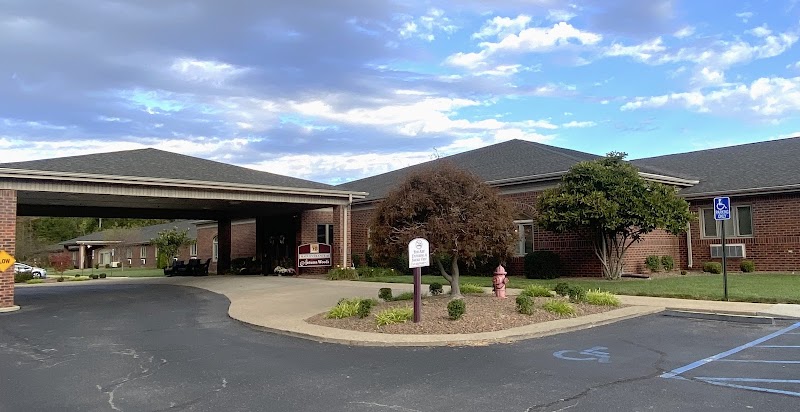
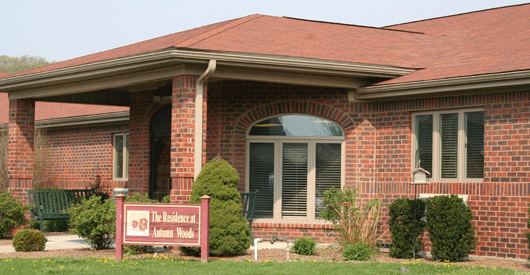
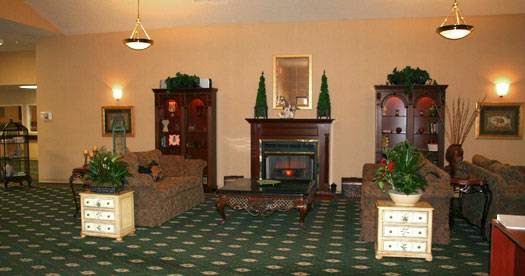
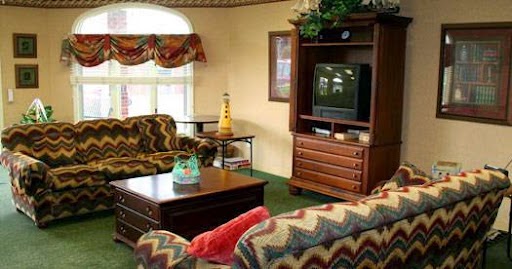
AUTUMN WOODS HEALTH CAMPUS

2911 GREEN VALLEY RD, NEW ALBANY, IN 47150 (812) 941-9893
Government - State 91 Beds TRILOGY HEALTH SERVICES Data: November 2025 1 Immediate Jeopardy citation
Trust Grade
56/100
#119 of 505 in IN
Last Inspection: April 2025

Within standard 12-15 month inspection cycle. Federal law requires annual inspections.

Overview

Autumn Woods Health Campus has a Trust Grade of C, which means it is average among nursing homes, neither excelling nor failing significantly. It ranks #119 out of 505 facilities in Indiana, placing it in the top half, and #1 out of 7 in Floyd County, indicating it is the best option locally. The facility is improving, having reduced its issues from 7 in 2024 to 4 in 2025. Staffing is rated 2 out of 5 stars, which is below average, but the turnover rate of 37% is better than the state average of 47%, suggesting some staff stability. However, the facility has incurred $11,921 in fines, which is concerning as it exceeds the fines of 85% of Indiana facilities, suggesting ongoing compliance issues. Specific incidents include a critical failure where a resident exited the secured dementia unit unsupervised, creating a significant safety risk, and a situation where a resident fell during a transfer due to improper procedures. Additionally, there were instances where residents did not receive their scheduled showers, highlighting gaps in daily care. Overall, while there are strengths in the facility's local ranking and improvement trend, the concerns regarding safety incidents and fines should be carefully considered by families.

Trust Score
C
56/100
In Indiana
#119/505
Top 23%
Safety Record
High Risk
Review needed
Inspections
Getting Better
7 → 4 violations
Staff Stability
○ Average
37% turnover. Near Indiana's 48% average. Typical for the industry.
Penalties
○ Average
$11,921 in fines. Higher than 70% of Indiana facilities. Some compliance issues.
Skilled Nurses
○ Average
Each resident gets 37 minutes of Registered Nurse (RN) attention daily — about average for Indiana. RNs are the most trained staff who monitor for health changes.
Violations
⚠ Watch
23 deficiencies on record. Higher than average. Multiple issues found across inspections.
★★★★☆
4.0
Overall Rating
★★☆☆☆
2.0
Staff Levels
★★★★★
5.0
Care Quality
★★★☆☆
3.0
Inspection Score
Stable
2024: 7 issues
2025: 4 issues

The Good

  • 5-Star Quality Measures · Strong clinical quality outcomes
  • Full Sprinkler Coverage · Fire safety systems throughout facility
  • No fines on record
  • Staff turnover below average (37%)

    11 points below Indiana average of 48%

Facility shows strength in quality measures, fire safety.

The Bad

Staff Turnover: 37%

Near Indiana avg (46%)

Typical for the industry

Federal Fines: $11,921

Below median ($33,413)

Minor penalties assessed

Chain: TRILOGY HEALTH SERVICES

Part of a multi-facility chain

Ask about local staffing decisions and management

The Ugly 23 deficiencies on record

1 life-threatening
Apr 2025 4 deficiencies
CONCERN (D)

Potential for Harm - no one hurt, but risky conditions existed

Notification of Changes (Tag F0580)

Could have caused harm · This affected 1 resident

Based on record review and interview, the facility failed to ensure the physician was notified in a timely manner for 1 of 5 residents reviewed for a significant change in condition. (Resident 35) Fin...

Read full inspector narrative →
Based on record review and interview, the facility failed to ensure the physician was notified in a timely manner for 1 of 5 residents reviewed for a significant change in condition. (Resident 35) Findings include: The record for Resident 35 was reviewed on 4/3/25 at 11:23 a.m. The residents's diagnoses included, but were not limited to, pleural effusion, acute respiratory syncytial virus, hypertensive heart disease with heart failure, endocarditis, dementia, cardiomegaly, and edema. The physician's order, dated 12/30/24, indicated the resident was prescribed furosemide 20 milligrams (mg) once a day for bilateral lower extremity edema. The Quarterly Minimal Data Set (MDS) assessment, dated 3/3/25, indicated the resident was moderately cognitively intact. The nurse's note, dated 12/25/24 at 3:07 p.m., indicated Resident 35 presented with pitting edema to the bilateral lower extremities. The left leg was observed to be worse with 2+ edema (4mm of depression rebounding in 15 seconds or less) and the right lower extremity had +1 edema. The resident complained of mild pain to the lower legs, and indicated the pain was worse on palpation. The resident was observed to be short of breath with some expiratory wheezes. The bilateral lower extremities were elevated. The record lacked documentation the physician was notified in a timely manner when the resident had a change in condition. During an interview, on 4/3/25 at 11:00 a.m., RN 3 indicated if a resident had increased edema in her extremities, shortness of breath, and pain in the extremities, she would do an assessment on the resident that included listening to the lung sounds, oxygen saturation, and vital signs. She would call the physician related to the resident's change in condition. During an interview, on 4/4/25 at 8:30 a.m., RN 4 indicated when the resident had a change in condition, staff should do an assessment and call the doctor immediately. A chest x-ray and labwork could be done. She would monitor the resident's respiratory status and elevate her lower extremities. During an interview, on 4/4/25 at 9:45 a.m., the Director of Nursing (DON) indicated the physician should have been notified when the resident had a change in condition. The review of the facility's current policy on Physician - Provider Notification Guidelines included, but was not limited to, .To ensure the resident's physician or practitioner (may include NP, PA, or clinical nurse specialist) is aware of all diagnostic testing results or change in condition in a timely manner to evaluate condition for need of provision of appropriate interventions for care . 3.1-5 (a)(2)
CONCERN (D)

Potential for Harm - no one hurt, but risky conditions existed

Incontinence Care (Tag F0690)

Could have caused harm · This affected 1 resident

Based on observation, record review, and interview, the facility failed to ensure a resident with a history of Urinary Tract Infection (UTIs) was provided proper management of the urinary catheter dra...

Read full inspector narrative →
Based on observation, record review, and interview, the facility failed to ensure a resident with a history of Urinary Tract Infection (UTIs) was provided proper management of the urinary catheter drainage system by maintaining the drainage system off the floor for 1 of 4 residents reviewed for bowel and bladder. (Resident 51) Findings include: During an observation, on 4/3/25 between 11:45 a.m. and 12:22 p.m., Resident 51 was sitting in the Legacy Lane Dining Room in her wheelchair. Resident 51's urinary catheter bag was two thirds full of urine which was sitting on the floor. The tubing was also lying on the floor with yellow urine and sediment in the tubing. The resident's feet were stepping on the tubing as the resident moved the wheelchair forward and backward. The resident began rolling away from the table with the catheter bag and tubing dragging the floor. The catheter bag could be heard scrapping the floor as it was dragging on the floor. There were 8 to 10 staff members in the dining room during the observation. During an observation, on 4/4/25 at 8:15 a.m., Resident 51 was sitting in the Legacy Lane Dining Room in her wheelchair. The urinary catheter bag was a quarter full of urine and was sitting on the floor. The tubing was also lying on the floor with yellow urine and sediment in the tubing. The resident had non-skid socks on their feet, which were resting on the tubing. Four staff were present in the dining room during the observation. The record for Resident 51 was reviewed on 4/3/25 at 3:25 p.m. The resident's diagnoses included, but were not limited to, urinary tract infection (UTI), stage 3 chronic kidney disease, dementia, and retention of urine. The Urinalysis (UA) Results, dated 7/28/24, indicated the urine had a 7.5 urine potential of hydrogen (UPH), trace leukocytes, 10-50 cells per high power field (hpf) and occasional bacteria and squamous epithelial cells (SQEPI). The culture result indicated 10,000 to 50,000 Colony Forming Units (CFU) per mL of gram-positive cocci and enterococcus faecalis. The admission Minimum Data Set (MDS) assessment, dated 8/2/24, indicated the resident was severely cognitively impaired. The resident required intermittent catheterization. The nurse's note, dated 9/9/24 at 5:05 a.m., indicated the resident pulled the urinary catheter out and it was on the floor mat beside the bed, with the 30 milliliter (mL) balloon intact. The resident had gotten down on the floor mat and crawled. A new 16 French urinary catheter with a 30 mL balloon was inserted by sterile technique with good urine return to the bedside drain. The UA results, dated 9/9/24, indicated 2 plus urobilinogen (UBLO), 2 plus leukocytes, 10 to 50 #/HPF, 1 plus bacteria and occasional SQEPI. The culture results indicated 50,000 to 100,000 CFU/mL gram negative bacilli and Enterobacter cloacae. The Interdisciplinary Team (IDT) note, dated 9/12/24 at 8:58 a.m., indicated the physician reviewed the urine culture and gave new orders for 250 milligrams (mg) of Tetracycline three times daily for ten days. The care plan, dated 10/7/24 and revised 1/22/25, indicated the resident had a suprapubic catheter or indwelling catheter for a diagnosis of obstructive uropathy. The interventions, dated 10/7/24, included, but were not limited to, maintain a closed system with the urinary bag below the resident's bladder and keep covered, keep the leg strap in place to prevent the resident's catheter from being pulling out, observe for any signs of complication such as a urinary tract infection, urethral trauma, strictures, bladder calculi or silent hydronephrosis and notify the physician, observe the tubing and avoid any obstructions, record the resident's urinary output, provide assistance with catheter care, and change the indwelling catheter per the physician's orders. The UA results, dated 10/16/24, indicated the urine clarity was cloudy with a trace of blood in the urine, 3 plus leukocytes, 50-100 #/HPF white blood cells, 2 plus bacteria, and few hyaline casts (HYST). The culture result indicated greater than 100,000 CFU/mL gram negative bacilli and Escherichia coli. The IDT note, dated 10/21/24 at 2:40 p.m., indicated the urine culture was reviewed and reported to the nurse practitioner (NP). A new order for 100 mg of Doxycycline twice daily for 7 days was received. The nurse's note, dated 10/31/24 at 6:02 a.m., indicated a 16 French urinary catheter was placed with 30 mL of water with no problems. The resident had no complaints of pain or discomfort through the procedure. Staff were to continue to monitor the resident. The nurse's note, dated 11/21/24 at 6:49 a.m., indicated the resident had been up all night and had pulled the urinary catheter out with the bulb intact. The resident was very restless and did not comprehend to not pull her catheter out, when staff encouraged her not to do so. A 16 French 30 mL urinary catheter was reinserted without difficulty per the physician's order. The nurse's note, dated 11/21/24 at 1:41 p.m., indicated the resident had agitation toward staff and increased confusion during the night. The physician was notified and a new order for a urinalysis was completed. Family was notified and indicated cephalexin had worked best in the past. The physician was notified of this but indicated to wait for the urinalysis results. The UA results, dated 11/21/24, indicated the urine had 7.5 UPH, trace UBLP, 2 plus leukocytes, 10 to 50 #/HPF WBC, and 3 plus bacteria. The culture results indicated greater than 100,000 CFU/mL of gram-negative bacilli and Escherichia coli and 10,000 to 50,000 CFU/mL of gram-positive enterococcus faecalis. The IDT note, dated 11/25/24 at 10:17 a.m., indicated the resident had a UTI and began an antibiotic (ABT) regime of Levaquin. The resident had confusion related to the UTI. Staff were to closely monitor the resident. The nurse's note, dated 11/25/24 at 12:03 p.m., indicated the Levaquin was discontinued at this time. A new order for 250 mg of Tetracycline twice daily for 10 days was received for the diagnoses of a UTI. The nurse's note, dated 12/3/24 at 9:26 p.m., indicated the resident continued to receive an ABT related to the UTI with zero adverse effects. The resident was afebrile and voiced no complaints of pain or discomfort with voiding. The indwelling catheter was anchored per the physician's order. Fluids were encouraged and tolerated well by the resident. The nurse's note, dated 12/14/24 at 2:16 a.m., indicated the resident had pulled on the urinary catheter tubing multiple times. Redirection was provided and was somewhat effective. A Certified Nurse Aide (CNA) assisted the resident to bed at this time and provided incontinence and catheter care. The nurse's note, dated 12/24/24 at 12:02 a.m., indicated the resident had pulled the urinary catheter out. The resident was agitated and refused the new catheter placement. The nurse and two CNAs attempted to calm and educate the resident on the purpose of the urinary catheter. The resident was yelling at staff and demanded to speak with family. The family called the resident, and the resident calmed down. The resident then agreed to the urinary catheter placement. A new 16 French catheter with a 30 mL balloon was placed. The Quarterly MDS assessment, dated 1/15/25, indicated the resident was severely cognitively impaired. The resident required a urinary catheter. The nurse's note, dated 3/22/25 at 7:14 a.m., indicated the resident's urinary catheter was patent. The resident's urine was dark in color with sediment. The physician was notified and a new order to send the urine specimen out for urinalysis was completed. The urine specimen collected was placed in the laboratory refrigerator for pick up, and the lab work was ordered. The UA results, dated 3/22/25, indicated the urine had cloudy clarity urine, 2 plus UBLO, 1 plus protein, positive urinary tract infection (UNIT), 2 plus leukocytes, 10 to 50 #/HPF WBC, 3 plus bacteria, a moderate amount of Baker's Yeast, Immunoglobulin E, Serum (BYST). The culture result indicated greater than 100,000 CFU/mL of mixed growth. The nurse's note, dated 3/24/25 at 4:15 a.m., indicated the resident's urinary catheter was intact and patent and was draining yellow urine with sediment. The urine was sent to the laboratory. The nurse was awaiting the results. The nurse's note, dated 3/24/25 at 6:55 p.m., indicated the urinalysis was complete and indicated a culture would be completed at this time. The physician was notified with no new orders. The nurse was awaiting the final culture and sensitivity. The nurse's note, dated 3/25/25 at 2:14 p.m., indicated the urine culture was back with no growth. The physician was notified, and no new orders were indicated. The nurse's note, dated 3/28/25 at 1:29 p.m., indicated the resident's urinary catheter was intact and patent. The resident had a normal urinary output. No complaints of pain or discomfort were observed at this time. Staff would continue to monitor for further changes. During an interview, on 4/4/15 at 8:29 a.m., the Legacy Lane Supervisor indicated Resident 51's urinary catheter bag should not be on the floor. The resident played with her urinary catheter bag quite a bit. The resident would feel the tubing rubbing on their leg and pull on it. During an interview, on 4/4/25 at 8:55 a.m., CNA 9 indicated that she didn't know Resident 51's catheter was on the floor. It was on the bed attached to the side rail, when the CNA transferred the resident from the bed to the wheelchair. The CNA attached the urinary catheter bag onto the underside of the wheelchair, where it wasn't visible, as she was taught to do 26 years ago. The CNA then brought the resident into the dining room. Upon the CNA observing where the Legacy Lane Supervisor had moved the urinary catheter bag, onto the back underside of the wheelchair, the CNA indicated the urinary catheter bag was not where she had placed it. The urinary catheter bag shouldn't have touched the floor, for sanitary reasons or it could make the resident sick. The Patient with a Foley Catheter policy, revised 8/5/22, included, but was not limited to, . Patient Teaching . 2. Do not let catheter tubing or drainage bag touch floors. (Avoids infection) . 3.1-41(a)
CONCERN (D)

Potential for Harm - no one hurt, but risky conditions existed

Deficiency F0692 (Tag F0692)

Could have caused harm · This affected 1 resident

Based on record review and interview, the facility failed to ensure a resident's weight was verified for 1 of 5 residents reviewed for nutrition and hydration. (Resident 35) Findings include: The reco...

Read full inspector narrative →
Based on record review and interview, the facility failed to ensure a resident's weight was verified for 1 of 5 residents reviewed for nutrition and hydration. (Resident 35) Findings include: The record for Resident 35 was reviewed on 4/3/25 at 11:23 a.m. The resident's diagnoses included, but were not limited to, pleural effusion, acute respiratory syncytial virus, hypertensive heart disease with heart failure, endocarditis, dementia, cardiomegaly, and edema. The physician's orders, dated 12/30/24, indicated the resident was prescribed furosemide 20 milligrams (mg) once a day for bilateral lower extremity edema. The Quarterly Minimal Data Set (MDS) assessment, dated 3/3/25, indicated the resident was moderately cognitively intact. The care plan, dated 3/31/25, indicated the resident had experienced significant weight loss. The interventions included, but were not limited to, offer the resident encouragement and assistance with eating, weights as ordered by the physician, and provide diet, supplements, medications, adaptive equipment, and snacks as ordered. The nurse's note, dated 1/17/25 at 3:29 p.m., indicated the resident was added to Clinically at Risk (CAR) list related to a significant weight change. The resident's current weight was observed to be 189.4 pounds. The resident preferred to sit up in her chair throughout the day and had a history of bilateral lower extremity edema. The resident's weight fluctuations were expected as dependent edema appears and resolves. The nurse's note, dated 2/7/25 at 3:48 a.m., indicated the resident was reviewed in CAR related to a significant weight change. The resident's current weight was observed to be 195.2 pounds. The resident appeared to have adequate nutritional intake. Will continue to monitor weights as ordered and as the residents allowed. The nurse's note, dated 3/5/25 at 11:17 a.m., indicated while the resident was getting a shower the resident's right leg and foot were swollen and red. After getting out of the shower her vitals were taken. The resident's oxygen saturation (02) was at 89 percent. The resident complained of her heart fluttering. While sitting in her chair she was short of breath. After getting the resident in her recliner, an assessment was completed. The resident's 02 levels would fluctuate at rest and when she spoke. The resident's 02 ranged between 86 to 89 percent. The tips of fingers were tinted blue. The resident was given 02 at 2 liters (L) of oxygen. The resident verbalized pain when she lifted her right leg. The Nurse Practitioner (NP) was contacted, and the resident was sent to the hospital. He said the hospital was fine to take her. The NP indicated it could be exacerbated congestive heart failure but needed to rule out a deep vein thrombosis. Review of the resident's weights indicated the following: - On 3/5/25 the resident's weight was 194.5 pounds. - On 3/12/25 the resident's weight was 189.7 pounds. The readmission weight after a hospital stay. - On 3/16/25 the resident's weight was 188.7 pounds. - On 3/23/25 the resident's weight was 145.4 pounds. - On 3/30/25 the resident's weight was 145.4 pounds The record lacked documentation indicating the facility verified the resident's weight loss when changes occurred. During an interview, on 4/3/25 at 9:36 a.m., the Director of Nursing (DON) indicated she did not know why the resident had lost a significant amount of weight. She indicated she knew the resident had diuresis (increased excretion of urine) at the hospital. She thought maybe the resident was weighted in her wheelchair and the nurse did not subtract the weight of the wheelchair. During an interview, on 4/3/25 at 10:00 a.m., the Registered Dietician (RD) indicated the resident's weight loss was being investigated at this time. The resident had a big shift in weight, and she was not sure why. She was working with the DON to try and figure out why. She indicated the resident had diuresis at the hospital, but the weight loss was still unusual. The resident had her diuretic dose increased and the resident was on a low sodium diet. The RD was monitoring the resident's weight weekly. The RD discussed weight loss with the DON today and they were going to recheck the resident's weight and the weight of the wheelchair. The RD indicated she was going to meet with the DON on Monday and discuss the residents weight loss. During an interview, on 4/4/25 at 8:30 a.m., RN 4 indicated the unit used a weight chair to weigh the residents. Staff would transfer the residents from the wheelchair to the weight chair. The weight scale did not require the residents to be weighed in their wheelchair. When there was a discrepancy in the resident's weight staff would reweigh the resident and inform the DON, physician and the family. During an interview, on 4/4/25 at 9:45 a.m., the DON indicated the resident should have been reweighed to make sure the weight was accurate and verify the weight. The physician should have been notified. The review of the facility's current policy on Guidelines for Hydration Management dated 12/17/24, included, but was not limited to, .To identify residents at risk from dehydration and implement individualized interventions which promote sufficient fluid intake to maintain proper hydration . 2. Review assesment and analyze data. Criteria respresenting risk factors may include, but are not limited to: b. Diuretic medications . 3.1-46(a)(1)
CONCERN (E)

Potential for Harm - no one hurt, but risky conditions existed

Accident Prevention (Tag F0689)

Could have caused harm · This affected multiple residents

**NOTE- TERMS IN BRACKETS HAVE BEEN EDITED TO PROTECT CONFIDENTIALITY** Based on observation, record review, and interview, the facility failed to ensure appropriate interventions were implemented to ...

Read full inspector narrative →
**NOTE- TERMS IN BRACKETS HAVE BEEN EDITED TO PROTECT CONFIDENTIALITY** Based on observation, record review, and interview, the facility failed to ensure appropriate interventions were implemented to prevent falls for 5 of 7 residents reviewed for accidents. (Residents 73, 57, 51, 55, and 12) Findings include: 1. During an interview, on 4/1/25 at 10:17 a.m., Resident 73's family member indicated when the resident was in a room on the Legacy Lane Unit, while being transferred from the wheelchair to the bed, a fall occurred. A lift chair was supposed to have been used and the Certified Nurse Aides (CNAs) decided to transfer Resident 73 from the shower to the bed in a wheelchair. There were no peddles on the wheelchair and the resident's feet dropped to the floor. When the resident's feet hit the floor, the resident fell forward from the wheelchair and the resident's face hit the floor. The wheelchair had pedals available since admission, but they were taken off by the staff. During an observation of the resident, on 4/3/25 at 10:54 a.m., the resident was sitting in a wheelchair in their room. There were foot pedals on the wheelchair and the resident had both feet resting on the pedals. During an observation, on 4/3/25 at 1:02 p.m., CNA 6 and Licensed Practical Nurse (LPN) 7 transferred the resident from the wheelchair into the recliner with a sit to stand lift. The resident indicated a fear of standing at that time. The record for Resident 73 was reviewed on 4/1/25 at 1:52 p.m. The resident's diagnoses included, but were not limited to, a mechanical complication of an internal fixation device to the left femur, presence of a left artificial hip joint, localized edema, encephalopathy, dementia without behavioral disturbance, psychotic disturbance, mood disturbance, or anxiety. The Social Service note, dated 1/20/25 at 2:35 p.m., indicated the resident required a full body mechanical lift and had several family members visiting on the Legacy Lane room. The Legacy Lane Leader offered a larger accommodation to meet the resident's needs better. The resident's family agreed to change rooms. The nurse's note, dated 1/20/25 at 5:44 p.m., indicated the resident required total care. The family had been at the resident's bedside with the resident since 7:30 a.m. The resident required a full body mechanical lift for transfers. She could not change positioning in the high back wheelchair. The resident had required staff to reposition over six times on this date with no safety awareness. The care plan, dated 1/29/25, indicated the resident was at risk for falling related to decreased mobility, a history of falls, left total hip arthroplasty (THA), and dementia. The interventions, dated 3/6/25, included, but were not limited to, apply foot pedals to the wheelchair when being used for mobility. The nurse's note, dated 3/5/25 at 9:55 p.m., indicated the resident had fallen in the room. The resident had been given a shower this evening. The CNA was propelling the resident in a wheelchair to the bed, when the resident put both feet down and fell forward. The resident landed on both knees and appeared to have abrasions to the forehead and upper lip, and a skin tear to the nasal bridge. The skin tear was superficial and measured 0.2 centimeters (cm) long by 0.2 cm wide. The wounds were cleaned with wound cleanser and a triple antibiotic ointment (TAO) was applied to the abrasions. Steri strips were applied to the nasal bridge. The resident complained of pain only to the facial wounds at this time. Neurological checks were initiated. The Interdisciplinary Team (IDT) note, dated 3/6/25 at 9:49 a.m., indicated on 3/5/25 around 9:55 p.m., the resident sustained a fall. The resident was being assisted from the bathroom to the bed by wheelchair, when the resident's feet fell to the floor, causing the resident to fall forward out of the wheelchair. The resident received an abrasion to the forehead, abrasion to the upper lip, and a skin tear to the nasal bridge. A therapy referral was completed. The resident sustained a fall, with new measures to be initiated. The nurse's note, dated 3/8/25 at 1:22 p.m., indicated the resident's family brought in outside assistance to work with the resident. The assistant placed the resident on the toilet. Staff were called in for assistance to help provide peri care for the resident. The resident was only able to stand for about 30 seconds before getting too weak to stand. The resident was assisted to the wheelchair and was sitting with family. The resident's family was educated on the use of a wheelchair as well. The resident kept sliding down in the wheelchair. The wheelchair was too small, and the resident needed a high back chair due to height. The resident's family continued to want to use a regular sized wheelchair. A Pommel cushion was in place. The resident continued to have scabbing and bruising to the face from the previous fall. The resident had no complaints of pain related to the fall. Staff would continue to monitor the resident. The nurse's note, dated 3/9/25 at 7:23 p.m., indicated the resident was transferred with a full body mechanical lift that shift. The outside Physical Therapist came out this shift, educated the family on lifting the resident with a mechanical lift, and indicated, if the resident could not bear weight on at least one foot, a lift must be used, and the family was in agreeance. During an interview, on 4/3/25 at 1:10 p.m., CNA 6 indicated the resident had the full body mechanical lift for transfers since 1/17/25. Two staff were always used to transfer the resident. During an interviewon 4/4/15 at 8:29 a.m., the Legacy Lane Supervisor indicated Resident 73 was ordered a full body mechanical lift in February 2025 and the order was changed to a stand-up lift on 3/7/25. When the resident got out of the shower chair, the foot pedals should have been on the wheelchair. The lift should have been used to transfer the resident at the time of the fall. During an interview, on 4/4/25 at, 8:45 a.m., Legacy Lane Leader indicated Resident 73's family called her and talked to her about the incident. The family witnessed it, and she reported it to the Director of Nursing (DON). The family indicated the resident had gotten a shower completed before the transfer. The Legacy Lane Leader didn't do the investigation into the fall. The staff were taking the resident back to bed and the foot pedals weren't on the wheelchair. The resident required a full body mechanical lift and staff should have been using the full body mechanical lift to transfer the resident back out to the bed or wheelchair. If the resident was in a wheelchair, the resident should have had the foot pedals on the wheelchair. During an interview on 4/4/25 at 9:42 a.m., the DON indicated the foot pedals were encouraged, but if the resident didn't want the bilateral foot pedals to be used for transport, then they wouldn't be applied. The resident required more extensive assistance on admission. The resident was a total mechanical lift at the time of the fall. That intervention was reviewed on 3/7/25 after the fall. The resident would have been transferred by wheelchair, but the lift should have been used for wheelchair to bed or recliner transfers. If the resident was in a wheelchair, the foot pedals should have been in place. The resident did not sustain fractures but had abrasions. 2. The record for Resident 57 was reviewed on 4/1/25 at 1:21 p.m. The resident's diagnoses included, but were not limited to, progressive supranuclear ophthalmoplegia (Steele-[NAME]-[NAME] syndrome), presence of a right artificial shoulder joint, fibromyalgia, rheumatoid arthritis, severe morbid obesity due to excess calories, low back pain, pain in the left knee and right shoulder, arthritis, muscle weakness, and difficulty in walking. The care plan, dated 7/9/24 and revised 2/25/25, indicated the resident had a diagnosis of osteoporosis and was at risk for fractures and increased weakness. The interventions, dated 7/9/24, included, but were not limited to, administer medications per the physician's orders, and assist as needed with mobility. The care plan, dated 7/9/24 and revised 2/25/25, indicated the resident was at risk for falling related to altered balance and mobility. The resident needed assistance of one staff member for transfers and ambulation attempts. The interventions, dated 2/26/25, included, but were not limited to, the resident was to utilize the wheelchair for mobility. On 2/17/25 the resident was to utilize a gait belt with staff while ambulating. On 2/3/25 educate the family on the importance of safe wheelchair mobility. On 7/9/24 encourage the resident to assume standing position slowly, ensure the floor was free of liquids and foreign objects, keep the call light within reach, keep personal items and frequently used items within reach, provide non-skid footwear, staff were to assist the resident with transfers as needed, and therapy was to evaluate and treat the resident as needed. The nurse's note, dated 2/13/25 at 9:13 p.m., indicated Resident 57 was in their room ambulating with a walker, going from the bathroom to the bed with CNA assistance. The CNA stepped away to straighten linens on the resident's bed and the resident became weak and fell backwards. The fall was witnessed by the CNA and the resident did not hit their head upon the fall. The hospice company and the physician were notified. The resident complained of pain to the mid back. Urgent x-rays were ordered. The nurse was notified by the x-ray company, which indicated they would not be able to do x-rays until the following day. The IDT note, dated 2/17/25 at 7:22 a.m., indicated the fall on 2/15/25 was reviewed. The new measures taken to prevent the recurrence of the fall were for the resident to be taken to the bed. The root cause was bilateral lower extremity (BLE) weakness. The intervention put into place to address root cause of the fall was for the resident to utilize a gait belt with staff while ambulating. The nurse's note, dated 2/25/25 at 5:59 p.m., indicated the resident was ambulating from the recliner to the bathroom with the assistance of one CNA. The resident was in the bathroom doorway, going in the direction of the toilet and fell backwards towards the wall and landed sitting upright on the floor. The fall was witnessed by the CNA and the resident did not hit their head on the floor. The IDT note, dated 2/26/25 at 5:58 p.m., indicated the fall on 2/25/25 was reviewed. The resident was ambulating to the bathroom with a CNA, utilizing a walker. The new measures taken to prevent recurrence at the time of the fall was to encourage the resident to use a wheelchair for mobility. The root cause of the fall was bilateral lower extremity weakness related to the disease process progression. The intervention put in place was to utilize a wheelchair for mobility During an interview, on 4/4/25 at 9:49 a.m., DON indicated on 2/13/25 the intervention after the fall was to use the gait belt while ambulating. The nurse's note didn't say if the CNA tried to intervene with the fall on 2/13/25. The CNA should have been walking with the resident at an angle behind them. A different CNA was present on the 2/25/25 fall. The policy was that if a resident was going to fall staff would try to lower the resident slowly. She indicated the CNA present on the 2/13/25 fall was working at this time. The CNA for the 2/25/25 fall was not working at this time, but she would try to call them. Later in the day, the DON indicated she was not able to speak with the CNA. During an interview, on 4/4/25 at 10:02 a.m., CNA 8 indicated the resident was ready for bed and was ambulating back from the bathroom on 2/13/25. The resident used the walker and had a gait belt around her waist. The CNA realized the covers weren't pulled back, so she went to pull the covers back, leaving the resident standing alone. The resident had still been walking well, and the CNA went back to the resident as the resident fell but couldn't catch her. The resident hit her back, and the CNA reported the fall to the nurse. She felt that she should have stayed with the resident. 3. During an observation and interview, on 4/4/25 at 8:30 a.m., the Legacy Lane Supervisor entered Resident 51's room, where the resident was looking in the wardrobe. The Legacy Lane Supervisor pulled the resident away from the wardrobe, without the foot pedals on the wheelchair and the resident's feet were dragging as she pulled. The Legacy Lane Supervisor indicated it was more dangerous for the resident to have foot pedals on the wheelchair. The Legacy Lane Supervisor obtained the foot pedals and when the Legacy Lane Supervisor placed the foot pedals on the wheelchair, the resident asked, What are those. The Legacy Lane Supervisor was then able to push the resident in the wheelchair down to the dining room. The record for Resident 51 was reviewed on 4/4/25 at 9:45 a.m. The resident's diagnoses included, but were not limited to, multiple fractures of ribs on the left side, dementia, and tachycardia. The care plan, dated 8/7/24 and last revised on 1/22/25, indicated the resident was at risk for falling related to weakness, decreased mobility, and recent fractures. The intervention, dated 12/26/24, included, but was not limited to encourage the resident to use foot pedals when up in wheelchair. The Quarterly MDS assessment, dated 1/15/25, indicated the resident was severely cognitively impaired. She required substantial to maximal assistance with transfers from chair to bed or chair. 4. During an observation, on 4/4/25 at 8:23 a.m., RN 4 was pushing Resident 55 up to the dining room table for breakfast. There were no pedals on the wheelchair and the resident's right foot turned inward as the RN pushed the resident. The RN tried pushing harder, until she saw the resident's foot turned and she leaned down to turn the resident's foot into a straight position. The resident was tall, and his feet had to be placed forward away from the wheelchair. The record for Resident 55 was reviewed on 4/4/25 at 10:00 a.m. The resident's diagnoses included, but were not limited to, dementia and fractures. The Quarterly MDS assessment, dated 11/22/24, indicated the resident was severely cognitively impaired. He required total assistance for chair to bed or chair transfer. He was dependent on staff to propel the wheelchair over 150 feet. During an interview on 4/4/25 at 8:45 a.m., Legacy Lane Leader indicated Resident 55 walked in his wheelchair and he didn't need the foot pedals. His foot should not be bent back, but he could be resistant with care at times. He should have been talked through the move in his wheelchair. He liked to push backward and, in his wheelchair, and move away from the table. 5. The record for Resident 12 was reviewed on 4/3/25 at 8:30 a.m. The resident's diagnoses included, but were not limited to, dementia, altered mental status, weakness, repeated falls, assistance with personal care, muscle weakness, and difficulty in walking. The care plan, dated 1/29/24 and revised on 3/20/25, indicated Resident 12 was at risk for falls. The interventions included, but were not limited to, foot pedals to the wheelchair while transporting the resident in a wheelchair, dycem cushion to the wheelchair, and staff were to help with transfers as needed. The Quarterly MDS assessment, dated 12/13/24, indicated the resident was severely cognitively impaired. Resident 12 required maximal assistance with transfers and mobility. The nurse's notes, dated 7/11/24 at 10:24 a.m., indicated the resident had a decline in mobility causing the resident to be an extensive assistance of two staff members with transfers. The resident could not maintain a standing position without staff assistance when being toileted, getting out of the shower and transferring from her bed to her wheelchair. The nurse's note, dated 9/8/24 at 2:08 p.m., indicated the resident was being transported to church down Cherry Hill hallway in a wheelchair. The resident could no longer hold her feet up, and her feet hit the floor while the wheelchair was moving. The wheelchair stopped brisk, and Resident 12 slid out of the wheelchair onto the floor. During an interview, on 4/4/25 at 8:30 a.m., RN 4 indicated some of the residents thought they could still get up and care for themselves. Fall interventions included,the staff should toilet the residents every two hours or more if needed, nonskid footware, fall mats beside the bed, touch pad call lights, anti-tippers on the wheelchairs, anti-roll backs on the wheelchairs, snacks, activities and education when possible. During an interview, on 4/4/25 at 9:45 a.m., the DON indicated the staff were encouraged to use foot pedals when transporting a resident. The review of the facility's current policy on Fall Management Program included, but was not limited to, .Trilogy health Services (THS) strives to maintain a hazard free environment, mitigate fall risk factors and implement preventative measures. THS recognizes even the most vigilant efforts may not prevent all falls and injuries. In those cases, intensive efforts will be directed toward minimizing or preventing injury . 3.1-45(a)(1)
Feb 2024 7 deficiencies
CONCERN (D)

Potential for Harm - no one hurt, but risky conditions existed

Deficiency F0698 (Tag F0698)

Could have caused harm · This affected 1 resident

Based on record review and interview, the facility failed to ensure post-dialysis monitoring of a dialysis access site for 1 of 1 resident's reviewed for dialysis. (Resident D) Findings include: The ...

Read full inspector narrative →
Based on record review and interview, the facility failed to ensure post-dialysis monitoring of a dialysis access site for 1 of 1 resident's reviewed for dialysis. (Resident D) Findings include: The clinical record for Resident D was reviewed on 2/21/24 at 08:46 a.m. The diagnoses included, but were not limited to, infection and inflammatory reaction due to other cardiac and vascular devices, implants and grafts, hypertensive chronic kidney disease with stage 5 chronic kidney disease or end stage renal disease, and dependence on renal dialysis. The Quarterly MDS (Minimum Data Set) assessment, dated 12/19/23, indicated the resident was cognitively intact. The care plan, initiated on 9/8/21, indicated the resident had renal failure resulting in a need for dialysis. The interventions included, but were not limited to, assess access site for signs of localized infection such as swelling, redness, pain or tenderness, heat at the area, purulent drainage, bloody/malodorous dialysate and observe catheter site per orders. The Registered Dietician dialysis note, dated 2/13/24 at 3:49 p.m., indicated the resident attended hemodialysis three times per week and he was on a 1200 cc (cubic centimeter) fluid restriction. The post dialysis observation forms, dated 1/10/24 through 2/16/24, lacked documentation which indicated staff monitored the resident's shunt site for signs and symptoms of complications. During an interview on 2/22/24 at 8:47 a.m., the ED (Executive Director) indicated staff should be monitoring the resident post dialysis. During an interview on 2/22/24 at 10:24 a.m., the DON (Director of Nursing) indicated the dialysis resident would be monitored for complications. The shunt would be monitored for complications and documented in the post dialysis section. During an interview on 2/22/24 at 10:39 a.m., RN 14 indicated when a resident returned from dialysis, staff would monitor the shunt for edema, bleeding, pain, and vital signs. The post dialysis would be documented in the clinical record under observations. During an interview on 2/22/24 at 1:45 p.m., RN 15 indicated when a resident returned from dialysis, she would do an assessment and monitor the resident's shunt for bleeding, infection, redness, edema, and pain. She would also check the residents vital signs. The facility's current policy on Guidelines for Dialysis included, but was not limited to, .5. Upon return from the Dialysis Provider the campus shall: a. Provide ongoing monitoring of the shunt site for signs of complication b. Review the Dialysis Provider paperwork for any necessary follow up requirements . 7. Monitor the AV fistula/graft/central venous catheter daily and document in resident medical record. a. If abnormal bleeding is noted apply pressure to area and call 911 for transfer to the hospital . 3.1-37(a)
CONCERN (D) 📢 Someone Reported This

A family member, employee, or ombudsman was alarmed enough to file a formal complaint

Potential for Harm - no one hurt, but risky conditions existed

Deficiency F0744 (Tag F0744)

Could have caused harm · This affected 1 resident

Based on observation, record review, and interview, the facility failed to ensure the monitoring and safety of residents with dementia for 2 of 5 residents reviewed for falls. (Residents B and J). Fi...

Read full inspector narrative →
Based on observation, record review, and interview, the facility failed to ensure the monitoring and safety of residents with dementia for 2 of 5 residents reviewed for falls. (Residents B and J). Findings include: 1. The record for Resident B was reviewed on 2/20/24 at 1:40 p.m. The diagnoses included, but were not limited to, a traumatic subdural hemorrhage without loss of consciousness, injury of the face, second degree atrioventricular block, epilepsy, dementia, contusion of part of the head, and repeated falls. The care plan, dated 9/28/22 and revised on 12/29/23, indicated the resident had a traumatic brain injury with a subdural hematoma related to a fall. The interventions included, but were not limited to; dated 9/28/22, allow sufficient time to complete self-care, encourage maximum participation of the resident during self-care activities, monitor for the presence of pain or intolerance during self-care activities, praise the resident for efforts, provide adequate rest periods between self-care activities, provide a private, non-distracting environment for self-care activities. The care plan, dated 9/28/22 and revised 12/29/23, indicated the resident had impaired cognition with associated short term memory impairment and a risk for confusion, disorientation, altered mood, impaired or reduced safety awareness related to dementia. The interventions included, but were not limited to; dated 9/28/22, assess the degree of hearing ability, impulsive behavior and a decrease in visual perception, calm the resident if signs of distress developed during the decision-making process. Determine if decisions made by the resident endanger the resident or others and intervene, if necessary, pay attention to basic needs and provide ADL (activities of daily living) care as required. Provide cues and supervision for decision making, re-direct the resident when agitated behaviors were present or potential for injury was evident. The care plan, dated 9/28/22 and revised 12/29/23, indicated the resident required staff assistance to complete ADL tasks completely and safely. The interventions included, but were not limited to; dated 9/28/22, allow the resident sufficient time to complete all or parts of the task. Do not rush the resident, encourage the resident to do as much as safely possible for self, observe for deterioration in ADL abilities and report if this occurred, provide adequate rest periods between activities, and therapy was to evaluate and treat as needed and ordered. The care plan, dated 9/28/2022 and revised 12/29/23, indicated the resident was at risk for falling related to a history of falls, age, weakness, impaired cognition, and incontinence. The interventions included, but were not limited to; dated 2/16/24, place a pommel cushion to the wheelchair for positioning; dated 8/14/23, provide a touch pad call light; dated 12/9/22 pressure relieving mattress to the bed, apply a mattress on the floor to the bedside. 9/28/22 encourage the resident to assume a standing position slowly, ensure the floor was free of liquids and foreign objects, keep the call light within reach, keep personal items and frequently used items within reach, provide non-skid footwear, staff were to assist the resident with transfers as needed. The Quarterly MDS (Minimum Data Set) assessment, dated 12/20/23, indicated the resident was severely cognitively impaired and was rarely or never understood. She was dependent for most mobility and ADLs (Activities of Daily Living). The physician's order, dated 2/17/24, indicated to apply a pommel cushion to the wheelchair and check three times a day. The IDT (Interdisciplinary Team) note, dated 8/14/23 at 11:42 a.m., indicated the resident had an unwitnessed fall while transferring herself out of the bed. The resident denied pain, but she had some bruising to the right knee. The resident was severely cognitively impaired. The current interventions included the pressure reducing cushion, already in place. The new fall intervention was to place a touch pad call light. The nurse's noted, dated 2/15/24 at 8:00 a.m., a CNA (Certified Nurse Aide) indicated the resident had fallen from her wheelchair. The assessment indicated the resident received a hematoma to the left eye, and a laceration to the chin. The resident was awake and responsive, the bleeding was controlled, and her pupils were equal and reactive. The resident's family and the doctor were notified. A new order was received to send the resident to the ER (Emergency Room) for treatment and evaluation of the laceration to the resident's chin. 911 was called and staff remained with the resident until emergency medical services arrived. The nurse's note, dated 2/15/24 at 9:43 p.m., indicated the resident was admitted to the local hospital for 24-hour observation post fall on this day. The IDT note, dated 2/16/24 at 11:52 a.m., indicated the resident had a fall with minor injury on 2/15/24 around 8:30 a.m. The resident was in her wheelchair, leaning forward, when she fell out of her chair. The resident had a hematoma to the left eye and a laceration to her chin. The resident was sent to a local hospital ER for evaluation and treatment for the laceration to her chin. The resident had cognitive impairment. The current fall interventions were reviewed. The new fall intervention was for a pommel cushion to be placed in the wheelchair for positioning. The nurse's note, dated 2/17/24 at 10:54 a.m., indicated the resident's bruising continued to be dark purple in all areas. The resident had some swelling to her left eye. The resident wasn't complaining of any pain to the area. Staff were to continue to monitor the areas until they healed. The nurse's note, dated 2/20/24 at 12:08 a.m., indicated the sutures were intact to the chin. Bruises and edema remained on the chin, the neck, the left eye, and the left upper arm and elbow. During an interview on 2/21/24 at 9:29 a.m., Clinical Supervisor 7 indicated Resident B's condition was not any different. She had previous falls. When the fall occurred, the aide had put the resident in the high back wheelchair and Resident B's roommate was in the bathroom, so the CNA 12 assisted the roommate. The resident fell forward out of her chair. The Clinical Supervisor wasn't sure when the Dycem was added. The resident required extensive assistance for everything. The CNA should generally have gotten the resident up and sat her up to a table in the dining room. The resident shouldn't have been left upright by herself, but the resident was left sitting in the high back wheelchair, upright instead of reclining. The resident had the pommel cushion in the high back wheelchair since 2/16/24. During an observation on 2/21/24 at 9:33 a.m., of the high back wheelchair, the pommel cushion was in the chair with a Dycem on the cushion. During an interview on 2/22/24 at 1:24 p.m., LPN (Licensed Practical Nurse) 11 indicated the resident was not capable of doing anything for herself. When she fell, she was in her room and the aide turned around and the resident fell. The resident had always leaned to one side and was contracted, but the resident went forward in her fall. The interventions prior to the fall were to not let the resident sit upright or alone. The new interventions were for the pommel cushion, and on 2/21/24 the Dycem was to be placed in the wheelchair. The resident had a laceration with sutures on her chin and bruising to the left side of her face. She was not sure if the resident had any other bruising. During an observation of the resident's bruising on 2/22/24 at 1:27 p.m., the resident had a cut to the chin with sutures still in place, bruising to the face, left elbow, upper arm, and to her left breast. During an interview on 2/22/24 at 2:52 p.m., CNA 12 indicated the resident was transferred from her bed to her wheelchair by her. The CNA heard the resident's roommate in the bathroom yelling that she had a bowel movement and had stool on her. The CNA left Resident B sitting in an upright position to go into the bathroom to clean up the roommate. She thought about taking Resident B to the dining room to place her at a table for breakfast, but decided that it wouldn't take long to clean up the roommate. When the CNA finished cleaning up the roommate and opened the bathroom door, she found Resident B on the floor. Resident B was bleeding from her chin and had bruising on her face. The resident was assessed by the nurse. Resident B required one person assistance for transfers and required two staff assistance for toileting. She felt Resident B looked okay alone in her wheelchair when she assisted the roommate. 2. The record for Resident J was reviewed on 2/22/24 at 9:52 a.m. The diagnoses included, but were not limited to, dementia, hypertensive urgency, Stage 3 chronic kidney disease, longstanding persistent atrial fibrillation, old myocardial infarction, low back pain, altered mental status, dysuria, weakness, osteoarthritis, repeated falls, and difficulty in walking. The admission MDS assessment, dated 9/12/23, indicated the resident was severely cognitively impaired. She required substantial to maximum assistance for mobility and ADLs. The nurse's notes, dated 9/13/23 at 8:30 p.m., indicated the resident was found sitting on the floor in front of her wheelchair in her room. She indicated that she was trying to go to the restroom and slid out of her chair onto the floor. She did not hit her head and was not in any pain. No injuries were noted by this nurse. The nurse and CNA assisted the resident off of the floor to a standing position, then sat her back into her wheelchair and helped her to the restroom. The nurse's note, dated 9/22/23 at 11:59 p.m., indicated the resident was found at 10:00 p.m., on the floor, on her bottom, in front of the bedside dresser, beside the left side of her bed with her walker to her left side. The resident had no injuries and indicated that she was walking to her bed and could not reach her walker and did not make it to her bed. The IDT note, dated 9/25/23 at 11:37 a.m., indicated the resident had a fall during the night. The resident indicated she was attempting to get into bed, but her walker was out of reach. The previous interventions were reviewed, and a new intervention was to keep the walker within reach. The nurse's note, dated 10/13/23 at 6:45 p.m., indicated the resident was found sitting on the floor by a CNA at 6:40 p.m. The resident indicated that she was attempting to hang up clothing in the closet cabinet and when she stood up from her wheelchair to do so. When she went to sit back down, the wheelchair moved to one side due to one wheel being locked and the other wheel not being locked. The resident indicated she slid down to the floor in a sitting position. The resident did not hit her head or injure herself in any way. No injuries or symptoms of pain or discomfort were observed by the nurse at this time. The resident was helped up and put into her wheelchair by the CNA and the nurse. The IDT note, dated 10/16/23 at 11:19 a.m., indicated the resident's unwitnessed non injury fall in her room was reviewed. The resident's wheelchair wasn't locked on one side when she went to sit down, and she fell on her buttocks to the floor. The resident did not hit her head or lose consciousness. The root cause of the fall was that the wheelchair was not locked on one side. The resident was severely cognitively impaired. The new fall intervention was to add anti rollbacks to the wheelchair. The nurse's note, dated 10/20/23 at 11:01 a.m., indicated a member of therapy was walking by the resident's room and noticed the resident sitting on the floor with her back against the frame of the door. Her knees were bent and she was facing the door. The nurse obtained the resident's vital signs. The resident had not yet had her medication on this day and her blood sugar was elevated. The IDT note, dated 10/20/23 at 12:14 p.m., indicated the resident's non injury unwitnessed fall was reviewed. The resident was in her room ambulating to the restroom when she fell. The resident was severely cognitively impairment. The current fall interventions were reviewed. The new fall intervention was to toilet the resident before and after meals. The nurse's note, dated 10/22/23 at 10:12 p.m., indicated the nurse was walking by the resident's room and noticed the resident on the floor, in front of her wheelchair in the doorway of the bathroom. The resident had no injury. Her old yellow bruises, from previous falls, were observed. The nurse and CNA lifted the resident back into her wheelchair. The nurse educated the resident on using her call light. The IDT note, dated 10/23/23 at 11:38 a.m., indicated the resident's fall was reviewed. The root cause of the fall was because the resident needed to go to the bathroom. The resident was severely cognitively impaired. The current fall interventions were reviewed. The new fall intervention was to provide a touch pad call light. The nurse's note, dated 10/25/23 at 2:58 a.m., indicated the resident was monitored related to her recent fall. Staff monitored the resident frequently related to the wheelchair placement. The resident was often observed sitting on the edge of her wheelchair, chair, or the side of her bed. The resident was also often observed reaching for objects across from her. Staff encouraged the resident to call for assistance or to be closer to the objects she needed, in place of reaching for them. The nurse's note, dated 10/28/23 at 10:22 p.m., indicated the resident was observed sitting on the floor, beside her bed, with her wheelchair beside her. The resident was sitting upright on her bottom, with her legs stretched out in front of her. The resident denied falling, hitting her head, arms, or legs. The resident indicated she was going to close her blinds but started to fix her blankets on her bed. Her legs gave out and she sat on the floor. Two staff assisted the resident back into her wheelchair. The resident had removed her shoes but had non-skid socks in place to her bilateral feet. The resident indicated her legs felt like pins and needles at times, but no other pain. The IDT note, dated 10/30/23 at 11:20 a.m., indicated the resident's non-injury fall was reviewed. The resident was found on her buttocks on the floor, after she indicated her legs gave out. The root cause of the fall was due to the resident doing things in her room without assistance. The resident was severely cognitively impaired. The new fall intervention was to utilize a call don't fall sign in the resident's room. The nurse's note, dated 11/10/23 at 8:15 p.m., indicated the resident was found sitting on the floor in her bathroom between her wheelchair and the toilet. She indicated that she had used the restroom and was attempting to transfer back to the wheelchair, and it rolled out from underneath her, and she slid down to the floor. The nurse and CNA helped the resident up off the floor and back into her wheelchair. The IDT note, dated 11/13/23 at 12:02 p.m., indicated the resident's fall while transferring herself from the toilet to her wheelchair was reviewed. The wheelchair rolled from underneath her. The root cause of the fall was that the resident toileted herself without assistance. The resident was severely cognitively impaired. The new fall intervention was to toilet the resident before bedtime. The nurse's note, dated 11/13/23 at 8:30 p.m., indicated the resident was found sitting on the floor in her bathroom, between the wheelchair and the toilet. She indicated that she had to use the restroom and was attempting to transfer from the wheelchair to the toilet. She slid out of the wheelchair and down to the floor. The nurse and the CNA helped the resident up off the floor and back into her wheelchair. The IDT note, dated 11/14/23 at 9:32 a.m., indicated the resident's unwitnessed non injury fall on 11/13/23 around 8:30 p.m. was reviewed. The resident was in her bathroom without staff assistance, transferring herself from the commode to the wheelchair, when the fall occurred. The resident was severely cognitively impaired. The new fall intervention was to place a magnetic stop sign across the bathroom door to deter the resident from going into the bathroom unassisted. The nurse's note, dated 11/14/23 at 8:00 p.m., indicated a CNA entered the resident's room and found her sitting on the floor, in the middle of the room, with her wheelchair behind her. The resident indicated she was leaning forward trying to open the dresser drawer to get her pajamas out and she slid out of the wheelchair and onto the floor. The nurse and CNA helped the resident up off the floor and back into the wheelchair. While assessing the resident for injuries, the nurse observed the existing 4-inch by 4-inch bruised area on the right buttock. The resident was reminded to use her call light to alert staff of her need for help. The IDT note, dated 11/15/23 at 11:31 a.m., indicated the resident sustained a minor injury during the unwitnessed fall on 11/14/23 around 8:00 p.m. The resident was in her room attempting to get clothes out of her dresser when she leaned forward to get in her dresser. The resident's bed was prohibiting some space for her to be able to get into her dresser fully. The resident was severely cognitively impaired. The new fall intervention was to move the bed against the wall. The nurse's note, dated 1/23/24 at 6:15 p.m., indicated a meeting with the resident, resident representative, Social Service Director, and the MDS Coordinator. They discussed the resident needing increased assistance with transfers and therapy was to evaluate and pick up three times weekly for physical therapy services. The care plan, dated 1/29/24, indicated the resident was at risk for falling related to decreased mobility and cognitive impairment. The interventions included, but were not limited to, 1/29/24 encourage or assist the resident to assume a standing position slowly, keep the call light within reach, complete a lift evaluation, staff were to assist the resident with transfers as needed, therapy was to evaluate and treat as needed, transfers with a sit-to-stand lift, wheelchair with a cushion for mobility. During an interview on 2/22/24 at 1:50 p.m., LPN 11 indicated on 1/27/24 the resident had a fall. She was assisted to her knees after toileting. The resident required assistance of one staff member. A lift was now being used. The interventions were to remind her not to go to the bathroom by herself. She could understand being told to let staff assist. The Fall Management Program Guidelines, reviewed 12/31/23, included, but was not limited to, . 2 . This included an investigation of the circumstance surrounding the fall to determine the cause of the episode, a reassessment to identify possible contributing factors, interventions to reduce risk of repeat episodes and a review by the IDT to evaluate thoroughness of the investigation and appropriateness of the interventions . 6. Nursing staff will monitor and document continued resident response and effectiveness of interventions for 72 hours. 7. Discuss risks and interventions with resident and/or responsible party and communicate interventions during shift report. Cross Reference with F725. This citation relates to Complaint IN00428620 3.1-37(a)
CONCERN (D)

Potential for Harm - no one hurt, but risky conditions existed

Deficiency F0757 (Tag F0757)

Could have caused harm · This affected 1 resident

Based on record review and interview, the facility failed to ensure a resident did not receive a psychotropic medication in an excessive dosage without adequate documentation for its use for 1 of 5 re...

Read full inspector narrative →
Based on record review and interview, the facility failed to ensure a resident did not receive a psychotropic medication in an excessive dosage without adequate documentation for its use for 1 of 5 residents reviewed for unnecessary medications. (Resident 30) Finding includes: The record for Resident 30 was reviewed on 2/20/24 at 1:55 p.m. The diagnoses included, but were not limited to, Alzheimer's disease; dementia in other diseases classified elsewhere without behavioral disturbance, psychotic disturbance, mood disturbance, and anxiety; depression; and psychotic disorder with delusions due to known physiological condition. The Quarterly Minimum Data Set (MDS) assessment, dated 9/28/23, indicated the resident had severe cognitive impairment with frequent trouble sleeping and concentrating and wandered frequently but not daily. No hallucinations or delusion were present. A care plan, dated 8/2/22 with a last review date of 12/28/23, indicated the resident was at risk for adverse consequences related to receiving antipsychotic medication for psychotic disorder with delusions due to known physiological condition. The interventions included, but were not limited to, administer medications per physician order; attempt Gradual Dose Reduction (GDR) in two separate quarters (with at least one month between attempts) during the first year the resident received the medication, then yearly, unless clinically contraindicated; attempt to give the lowest dose possible; pharmacy consultant review as needed; and review for continued need at least quarterly. The physician's order, dated 2/17/23, indicated the resident was to be monitored three times a day for target behaviors of aggression towards others and being tearful/withdrawn. The physician's order, dated 3/6/23, indicated the resident was to be monitored three times a day for a target behavior of exit-seeking. On 3/3/23, the physician gave an order for the resident to have Zyprexa 7.5 mg (milligrams) to be given at bedtime for psychotic disorder with delusions due to known physiological condition On 9/19/23, a recommendation was given for a Gradual Dose Reduction (GDR) of the Zyprexa from 7.5 mg to 5 mg at bedtime to begin 9/20/23. On 10/3/23, the Psychiatric Nurse Practitioner (NP) visited the resident and indicated the resident had failed the GDR and increased the Zyprexa back to 7.5 mg from 5 mg. She indicated a nurse reported the resident was having periods of agitation and paranoid thinking towards staff and was beating on doors to get out of the memory care unit. The NP indicated that she felt this should be considered as a failed GDR as he was also slightly irritable compared to last visit. No delusions or hallucinations were observed during this visit. The IDT (Interdisciplinary Team) progress notes, dated between 9/1/23 and 10/31/23, indicated the resident experienced no adverse reactions or visible side effects to the GDR; had no increase in behaviors; continued to be pleasant with staff and others; and enjoyed going outside for the weather. The Medication Administration Records (MAR) Target Behaviors completed by the nursing staff and the Behavior Analysis Reports completed by the CNAs (Certified Nurse Aides) on any behaviors the resident was experiencing, dated between 9/1/23 and 10/31/23, failed to list any type of behaviors by the resident. During an interview with the Director of Nursing (DON) on 2/22/24 at 10:25 a.m., she indicated if the Behavioral Analysis Report had a N/A (not applicable) in the boxes, then the resident did not have any behaviors. During an interview with LPN 13 on 2/22/24 at 1:15 p.m., she indicated the resident was a pretty calm guy, but can be grumpy when people try to talk to him. He had no real behaviors that she saw. During an interview with the DON on 2/22/24 at 2:15 p.m., she indicated she looked through the resident's record to determine why the Psychiatric NP felt the GDR failed. She indicated she spoke with the NP and that although he was not having any behavior issues, he was more irritable on the day she saw him so she increased the Zyprexa back to 7.5 mg and considered the GDR a failure. The facility's current policy, titled Psychotropic Medication Usage and Gradual Dose Reduction, included, but was not limited to, Purpose: To ensure every effort is made for residents receiving psychoactive medications to obtain the maximum benefits with minimal unwanted side effects through appropriate use, evaluation and monitoring by the interdisciplinary team. Procedures: 1. Residents shall receive psychotropic medications only if designated medically necessary by the prescriber, with appropriate diagnosis or documentation to support its usage. The medical necessity will be documented in the resident's medical record and in the care planning process. 2. Regular monthly review of antipsychotics in CAR (Clinically At Risk) for continued need, appropriate dosage, side effects, risks and/or benefits will be conducted, to ensure the use of polypharmacologic medications are therapeutic and remain beneficial to the resident. 3. Efforts to reduce dosage or discontinue psychotropic medications will be ongoing, as appropriate. 4. A gradual dose reduction (GDR) will be attempted for two (2) separate quarters (with at least one month between attempts) per the physician's recommendation. Gradual dose reduction must be attempted annually thereafter, unless medically contraindicated . 3.1-48(b)(2)
CONCERN (D)

Potential for Harm - no one hurt, but risky conditions existed

Infection Control (Tag F0880)

Could have caused harm · This affected 1 resident

Based on observation, record review, and interview, the facility failed to ensure a staff member with COVID-19 and symptoms was isolated and tested prior to working with the residents for 1 of 5 staff...

Read full inspector narrative →
Based on observation, record review, and interview, the facility failed to ensure a staff member with COVID-19 and symptoms was isolated and tested prior to working with the residents for 1 of 5 staff observed for infection control. Findings include: During an observation on 2/22/24 at 8:15 a.m. LPN (Licensed Practical Nurse) 4 began to prepare medications for Resident 14. During the observation, the LPN had audible congestion, was sniffling, and appeared generally unwell. He began to have perspiration during the medication administration of medications to Resident 14. During an interview on 2/22/24 at 8:38 a.m., after completing the medication administration as he drew up insulin for Resident 14, he indicated he had started with sinus pressure on 2/21/24. On 2/22/24, he was a little warm and had body aches. He probably needed to test himself for COVID-19, but had not done so yet. He had not let anyone know he wasn't feeling well. He had just come in and went straight to work. He then went into Resident 14's room and administered her insulin to her. During an observation on 02/22/24 at 8:56 a.m., LPN 4 reported to his Director of Nursing he needed to COVID test himself. The DON provided him with a mask and took him down the Cherry Hill Hall to a treatment cart and provided him with a COVID-19 test and told him to test himself per the manufacturer's guidelines. LPN 4 tested himself, utilizing a COVID-19 self-testing kit. At 9:00 a.m., the test was observed to result positive for COVID-19. He reported the results to his DON and did subsequently leave the facility. The LTC Respiratory Surveillance Line List, indicated the facility had several residents currently positive for COVID-19. The outbreak began on 2/18/24 when a staff member tested positive for COVID-19. Since that time, 1 additional staff member and 4 residents had tested positive. Three of the residents which had tested positive resided on the Harvest Place hallway. The as worked schedule for LPN 4 indicated he had worked on the Harvest Place hallway on February 17, 18, 19, 21, and 22, 2024. During an interview 2/22/24 at 4:23 p.m., the Director of Nursing indicated they would test staff and residents for COVID-19 based on symptoms and would test for any one single symptom. The most current COVID-19 Identification and Management policy included, but was not limited to, . Testing for COVID-19 . Residents and staff, with even mild symptoms of COVID-19, regardless of vaccination status, should receive a viral test (POC) [point-of-care] for COVID-19 as soon as possible . 3.1-18(b)(1)
CONCERN (E)

Potential for Harm - no one hurt, but risky conditions existed

ADL Care (Tag F0677)

Could have caused harm · This affected multiple residents

**NOTE- TERMS IN BRACKETS HAVE BEEN EDITED TO PROTECT CONFIDENTIALITY** Based on record review and interview, the facility failed to ensure showers were provided consistently for 4 of 4 residents revi...

Read full inspector narrative →
**NOTE- TERMS IN BRACKETS HAVE BEEN EDITED TO PROTECT CONFIDENTIALITY** Based on record review and interview, the facility failed to ensure showers were provided consistently for 4 of 4 residents reviewed for ADL (Activities of Daily Living) care. (Residents F, C, D, K) 1. The record for Resident F was reviewed on 2/21/24 at 11:03 a.m. The diagnoses included, but were not limited to, chronic obstructive pulmonary disease, immobility syndrome, morbid obesity, muscle weakness, abnormalities of gait and mobility, difficulty walking, and spinal stenosis. The care plan, dated 5/16/22, indicated the resident required staff assistance to complete ADL tasks completely. The Profile Care Guide care plan, dated 5/20/22, indicated the resident received showers on Tuesdays and Fridays and used a full body mechanical lift for transfers. The Quarterly MDS (Minimum Data Set) assessment, dated 1/26/24, indicated the resident was moderately cognitively impaired, had limited range of motion in both of his lower extremities, and was dependent on a helper for showering and bathing. The shower documentation for January 2024 indicated the resident only received one shower that month on 1/2/24. He received a complete bed bath on 1/5/24, 1/23/24, and 1/29/24. He refused a shower on 1/26/24. There was no further documentation of the resident receiving any showers or supplemental complete bed baths for the rest of the month. The shower documentation for February 2024 indicated the resident received a shower on 2/5/24. He received complete bed baths on 2/6/24, 2/9/24, 2/13/24, and 2/18/24. There was no further documentation of the resident receiving any showers or supplemental complete bed baths for the rest of the month. During an interview on 2/19/24 at 10:45 a.m., Resident F indicated on 2/16/24 he did not get a bath. He was told staff didn't have time to give him one because they were too short staffed. He had gotten a bath on 2/13/24, but hadn't received one since then. During an interview on 2/22/24 at 3:42 p.m., CNA (Certified Nurse Aide) 1 indicated the resident's shower days were on Tuesday and Friday. They filled out the shower sheets and documented it in the computer system. During an interview on 2/22/24 at 3:53 p.m., CNA 2 indicated they needed more help. Some of the staff got attitudes when they were short staffed and wouldn't do the showers. Residents had reported several times they did not receive their showers. They usually gave Resident F complete bed baths. They didn't usually give showers to residents who were full body mechanical lift lifts because it was kind of dangerous to get them into the showers. She had never given him an actual shower. During an interview on 2/22/24 at 4:00 p.m., CNA 3 indicated she was working on Legacy Lane that day and was the only CNA. That was a typical day for her. She did not feel like there was enough staff because she had 30 dependent residents to care for. They had 2 nurses on the hall as well but no other staff to give care. Sometimes the nurses would help, but not all the time. Sometimes she didn't have time to get all her tasks done. Showers might not get completed. Sometimes toileting wasn't done. She would get to it when she could. They did not have enough staff to supervise the residents. There was usually a couple of times a week she could not get her showers completed. On Mondays she could count on being by herself. She talked to the Director of Nursing about it and was told they didn't have the staff, and nobody wanted to work. During an interview on 2/22/24 at 4:19 p.m., the Regional Director of Clinical Operations (RDCO) indicated showers were given per resident preference. Resident F's preference was to have showers and there was no reason why he couldn't have a shower. Requiring a full body mechanical lift lift did not mean he could not have a shower. During an interview on 2/22/24 at 4:37 p.m., the RDCO indicated the resident's shower in his room had a very high lip to get over and she could see where it could possibly not work with a lift. They were going to see what they could do about the issue. They had it in capital budget to remodel all of the showers, but had not completed it yet. 2. During an interview on 2/19/24 at 9:30 a.m., Resident C indicated she was not receiving her showers on the days she was supposed to. Either she didn't get her shower at all or once a week and not on the day she was supposed to get her showers. The record for Resident C was reviewed on 2/22/24 at 3:45 p.m. The diagnoses included, but were not limited to, bilateral primary osteoarthritis of knee, idiopathic gout, unspecified osteoarthritis, spinal stenosis, lumbar region without neurogenic, and difficulty in walking. The Quarterly MDS, dated [DATE], indicated the resident was moderately cognitively intact. She was totally dependent on staff for her showers. The care plan, dated 2/15/24, indicated Resident C had the potential for decline in her ADLs related to decreased mobility. The interventions included, but were not limited to, encourage the resident to do as much for herself as safely possible and observe for a decline and report as needed. The review of the shower record indicated the following: January 2024 - On 1/2/24 the resident received a shower. - On 1/5/24 the resident received a shower. - On 1/29/24 the resident received a shower. The resident was scheduled to receive a shower every Tuesday and Thursday. February 2024 The shower record lacked documentation which indicated the resident had received a shower. 3. During an interview on 2/20/24 at 10:00 a.m., Resident D indicated he was unable to take a shower due to his driveline pump and his dialysis catheter. He was supposed to get a complete bed bath on Wednesday evening and a partial bath the other days, but sometimes it was hard to get a bath because there wasn't enough staff. When he did get his bed bath, it was usually late and that was his dialysis day and he usually went to bed early because he was tired. The record for Resident D was reviewed on 2/22/24 at 4:14 p.m. The diagnoses included, but were not limited to, infection and inflammatory reaction due to other cardiac and vascular devices, implants and grafts, methicillin resistant staphylococcus aureus infection, cutaneous abscess, acute respiratory failure with hypoxia, atrial fibrillation, hypertensive chronic kidney disease with stage 5 chronic kidney disease or end stage renal disease, chronic pulmonary edema, type 2 diabetes mellitus with diabetic, insomnia, unsteadiness on feet, difficulty in walking, acquired absence of left leg below knee, presence of heart assist device, dependence on renal dialysis, chronic respiratory failure with hypoxia, and cardiogenic shock. The Quarterly MDS, dated [DATE], indicated the resident was cognitively intact. He required supervision while bathing. The care plan dated 3/27/23, indicated Resident D had the potential for a decline in ADLs. The interventions included, but were not limited to, provide nail care on shower days and as needed, offer facial shaving on shower days, as needed, or as requested. Notify nursing of refusals. The shower record, indicated the following: January 2024 - On 1/21/24 no documentation of a bath - On 1/22/23 the activity did not occur - On 1/23/24 the activity did not occur - On 1/25/24 the activity did not occur - On 1/26 24 the activity did not occur - On 1/28/24 the activity did not occur - On 1/30/24 the activity did not occur - On 1/31/24 the activity did not occur February 2024 - On 2/1/24 the activity did not occur - On 2/2/24 the activity did not occur - On 2/5/24 the activity did not occur - On 2/6/24 the activity did not occur - On 2/7/24 the activity did not occur - On 2/8/24 the activity did not occur - On 2/9/24 the activity did not occur - On 2/11/24 the activity did not occur - On 2/13/24 the activity did not occur - On 2/16/24 the activity did not occur - On 2/18/24 the activity did not occur - On 2/19/24 the activity did not occur - On 2/22/24 the activity did not occur 4. During an interview on 2/20/24 at 10:05 a.m., Resident K indicated she was not getting her showers. The record for Resident K was reviewed on 2/23/24 at 9:39 a.m. The diagnoses included, but were not limited to, a lesion at T11-T12 level of the thoracic spinal cord, concussion and edema of the thoracic spinal cord, spinal stenosis, spondylosis, wedge compression fracture of the first lumbar vertebra, dementia, anxiety, and the need for assistance with personal care. The Quarterly MDS assessment, dated 10/24/23, indicated the resident was cognitively intact. She was dependent on staff for showers and partial baths. The care plan, dated 2/22/24, indicated Resident K had the potential for a decline in ADLs. The interventions included, but were not limited to, provide nail care on shower days. The shower records indicated the following: December 2023 - On 12/7/23 the resident received a shower - On 12/9/23 the resident received a shower - On 12/14/23 the resident received a shower - On 12/18/23 the resident received a shower - On 12/21/23 the resident received a shower - 19 days were bed baths January 2024 Documentation indicated the resident did not have a shower in January The resident had 16 partial baths Nine days where the activity did not occur One day the bath was not recorded February 2024 - On 2/1/24 the resident received a shower - On 2/5/24 the resident received a shower - On 2/8/24 the resident received a shower - On 2/15/24 the resident received a shower - On 2/20/24 the resident received a shower The resident had 9 partial baths Review of the facility's current policy on Guidelines for Bathing Preference included, but was not limited to, .4. Bathing shall occur at least twice a week unless resident preference states otherwise . Cross Reference with F725 and F744 This citation relates to Complaint IN00428620 3.1-38(a)(3)
CONCERN (E)

Potential for Harm - no one hurt, but risky conditions existed

Deficiency F0725 (Tag F0725)

Could have caused harm · This affected multiple residents

The facility failed to provide showers consistently on scheduled and care planned shower days per the resident's preference for Resident F for the months of January and February. During an interview ...

Read full inspector narrative →
The facility failed to provide showers consistently on scheduled and care planned shower days per the resident's preference for Resident F for the months of January and February. During an interview on 2/19/24 at 10:45 a.m., Resident F indicated on 2/16/24 he did not get a bath. He was told staff didn't have time to give him one because they were too short staffed. He had gotten a bath on 2/13/24 but hadn't received one since then. During an interview on 2/22/24 at 3:53 p.m., CNA 2 indicated they needed more help. Some of the staff got attitudes when they were short staffed and wouldn't do the showers. Residents had reported several times they did not receive their showers. They usually gave Resident F complete bed baths. She had not ever given him an actual shower. During an interview on 2/22/24 at 4:00 p.m., CNA 3 indicated she was working on Legacy Lane that day and was the only CNA. That was a typical day for her. She did not feel like it was enough staff because she had 30 dependent residents to care for. They had 2 nurses on the hall as well, but no other staff to give care. Sometimes the nurses would help, but not all the time. Sometimes she didn't have time to get all her tasks done. Showers might not get completed. Sometimes toileting wasn't done. She would get to it when she could. They did not have enough staff to supervise the residents. That was why they had so many falls on the unit. There was usually a couple of times a week she could not get her showers completed. On Mondays she could count on being by herself. She talked to the Director of Nursing about it and was told they didn't have the staff, and nobody wanted to work. The Facility Assessment Tool, reviewed on 1/12/24, indicated the facility was licensed to provide care for 91 beds. The average daily census was 81 residents. The average budgeted number of full time LPNs was 13. The average budgeted number of full time nurse aides was 21. The average budgeted number of full time nursing personnel was 5. Campus considers census, resident acuity, resident preferences, and staff competencies to determine the number and competency requirements of staff in order to meet each resident's needs . Review of some areas include but not exclusive list: 1. The facility assessment to monitor for resident's needs. 2. The number of residents assigned to each staff member. 3. Acuity of the resident on assignment . 5. Patterns of resident care needs being met: Bathing, toileting needs, call lights response time, resident assisted timely, etc [et cetera]. 6. Staff having to stay late, come in early, or work overtime to complete assigned task. 7. Monitoring for staff appearing rushed during care. 8. Monitor resident for skin tears, bruises, number of incidents, etc . Cross Reference with F677 and F744 This citation relates to Complaint IN00428620 3.1-17(a) During an interview on 2/19/24 at 9:30 a.m., Resident C indicated she was not receiving her showers on the days she was supposed to. Either she didn't get her shower at all once a week and not on the day she was supposed to get her showers. During an interview on 2/20/24 at 10:00 a.m., Resident D indicated he was unable to take a shower due to his driveline pump and his dialysis catheter. He was supposed to get a bed bath on Wednesday evening but sometimes it was hard to get because there wasn't enough staff. When he did get his bed bath it was usually late and that was his dialysis day and he usually went to bed early because he was tired. During an interview on 2/20/24 at 10:05 a.m., Resident K indicated she was not getting her showers. During an interview on 2/20/24 at 10:30 a.m., Resident E indicated she felt like there was not enough staff. She has had to wait up to 45 minutes for her light to be answered. She has had accidents in her pants because staff would not answer her light. Based on observation, interview, and record review, the facility failed to ensure there were enough staff to assist residents with activities of daily living in a timely manner related to bathing, incontinence care, and falls related to sufficient staffing. This deficient practice had the potential to affect 79 of 79 residents residing in the facility. Findings include: During an interview on 2/20/24 at 9:30 a.m., the DON (Director of Nursing) indicated staffing was based on the budget and acuity. They would then adjust as needed. If there were call-ins, they attempted to get coverage, but if they were not able to fill the shift, then leadership management would cover the shift, even if it was the CNA (Certified Nurse Aide) position. They haven't had any more than the usual call outs by staff. She indicated the following staff were scheduled: - Legacy Lane (200 and 300 Halls), were staffed with two nurses and three CNAs for both day and night shifts. They usually staffed twelve-hour shifts, but some staff worked eight-hour shifts. - The 100 Hall was staffed with one nurse and one CNA for all three shifts. The hall usually held 14 residents, but was rarely full and with the semi-private rooms, they only put one resident in those rooms. - The 400/500 Halls were staffed with two nurses and four CNAs for all shifts. During an interview on 2/20/24 at 4:22 p.m., RN 5 indicated nursing staff had to do laundry at times. Both the CNAs and nurses were short staffed in the facility. There was at times one CNA for 40 residents and residents who needed assistance with eating were not receiving help. During an observation of the Legacy Hall on 2/21/24 at 9:22 a.m., Resident M assisted female Resident L to stand up from her recliner to her walker. Six residents joined in the raising and swinging their arms to exercise with music playing at 9:38 a.m. There were sixteen residents in the common area. Five residents were awake and watching. The rest were asleep. At 9:40 a.m., Resident M stood up and grabbed Activities Aide 6 on the side of her left breast. Resident M indicated he saw another spot to grab. The Activities Aide laughed at him without saying it was inappropriate behavior. One resident sat by herself in the dining room with a cup of coffee in front of her. The Activities Aide 6 kept watching for Resident M to make sure when she raised her arms, he was not by her. Resident M was in the hall talking to the staff at 9:52 a.m. Three staff were standing in the hall talking to each other and a family member, on the 200 Hall at 9:54 a.m. The Activities Aide 6 brought up 4 times to residents that she was watching Resident M to the other residents. The exercise ended at 9:57 a.m. All other staff were in resident rooms at this time. At 10:13 a.m., Resident G was assisted by LPN (Licensed Practical Nurse) 11 to go to her room to the bathroom. There were no CNAs on the halls to assist the residents. Seven residents had fallen asleep in their wheelchairs or recliners. Two nurses were working with the medications and residents. During an interview on 2/21/24 at 9:23 a.m., a family member of Resident N indicated the facility needed more staff. The former activities person kept the resident busy. The residents had not been taken outside for about two years. The type of activities provided wasn't entertaining for the residents. During an interview on 2/21/24 at 9:29 a.m., the Clinical Supervisor 7 indicated there could be call-ins at times. The facility did the best they could to replace the call-ins. They had on-call staff to fill in. She felt that most days they had enough staff to do the one-on-one feedings for residents in their rooms. They always had family available to assist with feeding the residents. No residents were double briefed, but it had been an issue on the night shift in the past. When they were double briefing residents, they were told that they couldn't do that. It was done to make the next rounding easier, so that there was another brief there. If a resident had a quick decline in their health, the resident could develop MASD (Moisture Associated Skin Damage). The Clinical Supervisor and the Activities Coordinator were observed to be going on and off the unit. During an interview on 2/21/24 at 10:00 a.m., LPN 8 indicated she could finish her work most of the time, but there were times when they were short of staff, and she couldn't complete her ADL (Activities of Daily Living) care. They would have call-ins or staff would not be scheduled to work. She had started her shift to find wet residents. She had not found double briefing of residents recently, but that had been an issue in the past. She had not been asked to work in other halls, but the third shift had to work on the unit and other halls. Harvest Hall had three to four CNAs, Cherry Hall had one CNA, and two CNAs in the unit, but there was usually only one CNA. An upset CNA on the unit would call CNAs who were not on the schedule to work, asking them to come in to help her with resident care. She indicated falls had occurred due to low staffing, because it was hard to keep an eye on all of the residents. During a follow up interview on 2/21/24 at 1:00 p.m., the family member of Resident N indicated at night there were two aides and one nurse and the residents on the unit needed more help than other residents in the building. There seemed to be confusion with residents sometimes in the unit. The facility expected too much out of the staff. During an observation on 2/21/24 at 1:46 p.m., the Scheduler was working on the 400 Hall as a CNA. She indicated she was just helping out. During an interview on 2/21/24 at 1:47 p.m., CNA 10 indicated she had worked short staffed. It wasn't normal for the Scheduler to be working on the hall. Falls had occurred on the hall, due to the facility being short staffed. The staff needed more eyeballs on the residents. When there was a hole in the staff schedule, management would only work when there wasn't any other option. Residents had told the CNA that they took themselves to the bathroom, because they knew it would take too long for staff to answer call lights. The CNA informed them that it wasn't a safe thing to do. Four CNAs worked the 400/500 Halls one to two days a week. The rest of the week they worked short staffed. She had to work two halls on occasion. She had also worked in the laundry room, because of short staffing in laundry. Residents would need clothing or sheets and the CNA would go into the laundry room and do the laundry. The call lights went unanswered due to staffing issues. During an observation of the dementia unit on 2/22/24 at 1:15 p.m., there was one nurse and one CNA working on the unit. Three family members were feeding their residents. During an interview on 2/22/24 at 1:53 p.m., LPN 11 indicated the day shift had an aide, the Clinical Supervisor, and herself. This was the usual number of staff. One activities person was also on the hall. She felt work could be completed, but it was tough with one nurse. She felt that falls occurred when staffing was low. Management tried to fill in, but staff called in a lot. It was seldom that beds or residents were wet, but it did occur. The unit did not have to do laundry, but the environmental staff would step in to do the laundry. There just wasn't enough staff. During an interview on 2/22/24 at 2:09 p.m., CNA 1 indicated she worked her whole shift to get her work completed. She felt sometimes she couldn't spend the time with residents that she should. The residents did have wet or soiled beds at times. There were times of call-ins when illness was in the building. They were sometimes short of staff.
CONCERN (E)

Potential for Harm - no one hurt, but risky conditions existed

Food Safety (Tag F0812)

Could have caused harm · This affected multiple residents

Based on observation, record review and interview, the facility failed to ensure the kitchen was maintained in a sanitary manner for 5 of 5 observations. This deficient practice had the potential to a...

Read full inspector narrative →
Based on observation, record review and interview, the facility failed to ensure the kitchen was maintained in a sanitary manner for 5 of 5 observations. This deficient practice had the potential to affect all 79 of 79 residents currently residing at the facility. Findings include: 1. During the initial tour of the kitchen on 2/19/24 between 9:25 a.m. and 10:00 a.m., while in the presence of the Assistant Director of Food Service, the following concerns were observed: - The knife holder next to the stove had a film of moderate dust across the top where the knives entered. - The reach in freezer in the dry storage - inside the door frame at the bottom corner there were large yellow food particles; the bottom shelf of the 3 door unit had a heavy soil of tan and yellow food crumbs and green beans. - The reach-in freezer in the kitchen - the bottom shelf of both sides had a moderate amount of crumbs on it. - Both of the reach in freezers and reach in refrigerator had moderate smears and streaks down the stainless steel doors. - The tilt skillet - both sides, edges and floor on both sides had a heavy grease build up with food particles in it. - The backsplash of the stove had a moderate amount of brown and black splatters. - The right side of the convection oven had a heavy build up of grease and splatters and streaks running down the side with a moderate amount of crumbs around the base. - The shelf under the steam table and around the edges and corners had yellow crumbs and white water spots. - The edges around the inside of the sandwich station had a moderate amount of white and yellow crumbs; the entire outside of the station had heavy streaks which ran down the length of the station. - The wall behind the grill and stove had a light coating of grease on it. - 4 of 4 trash cans had brown and white streaks which ran down the outsides. 2. During the meal service observation on 2/22/24 at 11:30 a.m., the same concerns observed at 9:25 a.m. remained. 3. During a kitchen observation on 2/21/24 at 10:35 a.m., while the Director and Assistant Director of Food Services were working on food prep, the following concerns were observed: - The knife holder next to the stove had a film of moderate dust across the top where the knives entered. - The reach in freezer in the dry storage - inside the door frame at the bottom corner there were large yellow food particles; the bottom shelf of the 3 door unit had a heavy soil of tan and yellow food crumbs and green beans. - The reach-in freezer in the kitchen - the bottom shelf on both sides had a moderate amount of crumbs on it. - Both the reach in freezers an reach in refrigerator had a moderate amount of smears and streaks which ran down the length of the doors. - The tilt skillet - both sides, edges and floor on both sides had a heavy grease build up with food particles. - The backsplash of the stove had splatters of brown and black on it. - The right side of the convection oven had a heavy build up of grease with splatters and streaks running down the side with a moderate amount of crumbs around the base. - The wall behind the grill and stove had a light coating of grease on it. - The shelf under the steam table and around the edges and corners had yellow crumbs and white water spots - The edges around the inside of the sandwich station had a moderate amount of white and yellow crumbs; the entire outside of the station had heavy streaks which ran down it. - 4 of 4 trash cans had brown and white streaks running down the outsides. - Under the condiment shelf by the door to the dining room were 3 sugar and 1 sweet and low packets and a plastic bottle cap on the floor under the shelf. - There was a heavy amount of food particles in the dishwasher side drain and pieces of plastic and paper in the water in the machine. Pans and cooking utensils had just be run through the machine. - There was a scoop on the floor under the rack where the utensil bins were. - Inside the sandwich station, a bag of lettuce was open and spilled inside on the shelf. - The fryer had a moderate amount of brown food particles inside the oil and around the inner ledge, 2 fries were in the oil and 1 tator round was on the inside ledge. - There was a heavy coating of brown batter on the fry baskets. - The stove was currently in the process of being repaired as the burner flames were too high. When the edges in front, top and back of the stove in front of the backsplash were removed, the foil underneath the burners was heavily soiled with burnt spills of black and brown in color along with multiple food particles and heavy grease build up. In an interview with the Corporate Executive Director on 2/21/24 at 11:25 a.m., she indicated the Corporate Dietary Manager had noticed the knife holder was not as clean as it should have been. During a random observation of the dishwasher on 2/21/24 at 3:00 p.m., the same pieces of paper and plastic as well as a piece of aluminum foil seen at 10:35 a.m. was still in the machine water. The side drain remained with a heavy accumulation of food particles. A dietary aide was observed running aluminum baking pans, plastic pitcher and aluminum bowls through the machine. 5. During a kitchen observation on 2/22/24 at 2:20 p.m., the following concerns were observed: - The reach in freezer in the dry storage - inside the door frame at the bottom corner there were large yellow food particles; the bottom shelf of the 3 door unit had a heavy soil of tan and yellow food crumbs and green beans. - The reach-in freezer in the kitchen - the bottom shelf on both sides had a moderate amount of crumbs on it. - Both of the reach in freezers and reach in refrigerator had a moderate amount of smears and streaks which ran down the length of the doors. - The tilt skillet - both sides, edges and floor on both sides had a heavy grease build up with food particles. - The backsplash of the stove had splatters of brown and black on it. - The right side of the convection oven had a heavy build up of grease with splatters and streaks running down the side with a moderate amount of crumbs around the base. - The wall behind the grill and stove had a light coating of grease on it. - The shelf under the steam table and around the edges and corners had yellow crumbs and white water spots - The edges around the inside of the sandwich station had a moderate amount of white and yellow crumbs; the entire outside of the station had heavy streaks which ran down it. - 4 of 4 trash cans had brown and white streaks running down the outsides. - There was a heavy coating of brown batter on the fry baskets. - There were 3 sweet and low packets, 3 sugar packets and a plastic bottle cap on the floor under the condiment shelf by door to the dining room. During an interview with the Corporate Dietary Manager at this time, she indicated the dish machine was emptied after every meal and then refilled. It was de-scaled weekly. 3.1-21(i)(3)
Jul 2023 1 deficiency 1 IJ
CRITICAL (J) 📢 Someone Reported This

A family member, employee, or ombudsman was alarmed enough to file a formal complaint

Immediate Jeopardy (IJ) - the most serious Medicare violation

Accident Prevention (Tag F0689)

Someone could have died · This affected 1 resident

Based on observation, interview and record review, the facility failed to ensure a resident (Resident B) on the secured dementia unit with exit seeking behaviors did not exit the facility without supe...

Read full inspector narrative →
Based on observation, interview and record review, the facility failed to ensure a resident (Resident B) on the secured dementia unit with exit seeking behaviors did not exit the facility without supervision for 1 of 3 residents reviewed for supervision. This deficient practice resulted in an Immediate Jeopardy. The Immediate Jeopardy began on 7/17/23 when a resident exited the 300 Hall door on the dementia unit by pressing on the egress bar which sounded the alarm and opened after 15 seconds. After the resident exited the facility, he turned left and ambulated in a straight line up a small hill then down a hill which led to the apartments adjacent from the facility. The resident was off the facility property. Had the resident ambulated left rather than straight, he could have reached a heavy traffic flow roadway. The resident was found trying to enter and use a key into an unknown person's vehicle located in the parking lot of the apartment building. The Executive Director, Director of Nursing, Area [NAME] President of Clinical, and the Division [NAME] President were notified of the Immediate Jeopardy on 7/19/23 at 3:30 p.m. The Immediate Jeopardy was removed on 7/21/23. Findings include: The clinical record for Resident B was reviewed on 7/19/23 at 12:40 p.m. The diagnosis included, but was not limited to, dementia without behavioral disturbance. The admission MDS (Minimum Data Set) assessment, dated 6/8/23, indicated the resident had moderately impaired cognition. The incident report, dated 7/17/23 at 10:01 a.m., indicated Resident B exited the building causing the door alarm to sound. Staff responded to the alarm and checked the area outside. Staff completed a head count and found that Resident B was not present in the unit. A search was initiated to include the campus and the perimeter of the campus. The resident was found in the parking lot of the apartment building directly adjacent to the campus, with his car keys in hand and attempting to enter a person's vehicle. The owner of the vehicle lived in the apartment complex and was attempting to redirect the resident. Staff were able to redirect the resident and returned him safely to the campus. The time of exit was approximately 10:00 a.m. The resident was located at 10:15 a.m. No injuries were noted. On 7/19/23 at 1:15 p.m., the Executive Director provided a security video snapshot of the resident outside the facility\, reviewed after the resident had eloped, dated 7/17/23 at 9:58 a.m. The resident was observed to be ambulating up the hill adjacent to the facility with the use of his cane. The admission elopement risk assessment, completed on 6/2/23, indicated the resident had no exit seeking behaviors. The care plan, dated 6/7/23, indicated the resident demonstrated exit seeking behaviors and the family declined the wander guard. The interventions included, but were not limited to, monitor for wandering triggers, provide a daily structured routine, encourage regular family contact and/or visits with others, offer diversional activities as needed and redirect resident away from doors/exits as needed. The progress note, dated 6/3/23 at 10:41 a.m., indicated the resident had been exit seeking, he tried to open every door, and needs constant redirection. A wander guard was placed on his right ankle. The progress note, dated 6/4/23 at 12:53 a.m., indicated the resident had been restless and wanted to find his other room. He had gone to the doors and pushed on them; however, he did not try to open them. The IDT (Interdisciplinary) note, dated 6/5/23 at 12:08 p.m., indicated the resident admitted to facility and observed with exit seeking/wandering behaviors. A wander guard was put in place, but the resident was able to remove the wander guard. The staff will attempt to replace the wander guard and review the informed consent and non-compliance with resident representatives. The progress note, dated 6/5/23 at 8:33 p.m., indicated the resident had been ambulating in the hallway with his cane and had verbalized that he wanted to return home. The progress note, dated 6/6/23 at 10:51 p.m., indicated at approximately 8:15 p.m., the nurse prevented the resident from exiting the facility. The resident had been pacing, wandering, and pushing on the doors. He was able to be redirected but needed redirection frequently. The nurse was alerted to a door alarm sounding down the hallway. The resident was found pushing the exit door in the living room area. As soon as the nurse placed her hand on the resident to redirect him, the door opened, and the resident took two steps out. He was redirected back into the facility and 15-minute checks were initiated. The progress note, dated 6/11/23 at 8:02 p.m., indicated the resident demonstrated exit seeking behaviors on this shift. The resident was observed by staff setting off the alarms on the hallway. He had self-removed his wander guard and was looking for his keys. When he was not in direct observation, staff checked on him frequently. The progress note, dated 6/28/23 at 9:27 p.m., indicated the resident had gone to every door and tried to open them. The resident stated he knows that he has been out of one of these doors before. He needs to get outside to his car and get out of here. He is not staying here. He had a key that he tried to stick in the door to open it. He was difficult to redirect at first but did finally go to his room and settle down. The progress note, dated 7/17/23 at 10:10 a.m., indicated it was reported by the housekeeper that the back door was alarming, and the staff needed to do a head count. After the head count it was determined Resident B was missing. Staff immediately looked in all the resident rooms, bathrooms, and looked out the windows. During this time three other staff members used their cars to search for the resident. The resident was found at the apartments next door to the facility and was immediately brought back to the facility. The resident was not hurt and appeared to be fine. During an interview on 7/19/23 at 12:19 p.m., the Executive Director indicated the resident exited through the doors at the end of the 300 Hall of the dementia unit. He pushed the regress bar, and the door opened after 15 seconds. The door alarms sound right when the bar was pushed. At the time of the incident, they were having a music activity. There was one nurse was at the nurses' desk and the other nurse was at the medication cart. During an interview on 7/19/23 at 1:36 p.m., Housekeeper 3 indicated he had worked on the dementia unit on 7/17/23. A little before 10:00 a.m., he took his cart down the 300 Hall. He was about 20 to 25 feet from the door when he heard the alarm sounding. There was a TV activity going on at the time and the alarm could not be heard in the common area where the activity was taking place. He was not sure why, but the alarm was usually louder. He never observed the resident. He checked outside and did not see anyone. He reset the alarm, went to the nurses' station to have the nurse do a head count, because the door was open. A head count was completed, and the missing resident was identified (Resident B). He reported the missing resident to the Administrator and he, along with two other staff members, began searching for the resident outside. During an interview on 7/19/23 at 1:54 p.m., the Director of Plan Operations indicated after the last elopement in March 2022, a new feature was added which he called the screamer. It was very loud. He checked all the alarms daily, Monday through Friday, but had not yet check the alarms prior to this last incident. The screamer did not go off this last time due to a possible power surge. The safety and security company invoice, dated 7/17/23, indicated upon arrival, the facility wanted a door (300 Hall) checked because it did not alarm. The hallway (300 hall) had a space age annunciator. The annunciator was not hooked to the door and the wire was disconnected. The door was wired into a horn strobe that would go off when forced open. A power surge had reset the keypad which caused the strobe not to trigger. During a telephone interview on 7/21/23 at 11:21 a.m., Representative 15 with the safety and security company indicated they were at the building on 7/17/23 between 2:37 p.m. and 5:46 p.m. The witness statement, dated 7/17/23 and untimed, for CNA (Certified Nursing Aide) 5 indicated she was not on the unit at the time of the incident. The witness statement, dated 7/17/23 and untimed, for CNA 6 indicated she was on break with CNA 5 and she was not on the unit at the time of the incident. The witness statement, dated 7/17/23 and untimed, for CNA 8 indicated she was giving a shower to a resident on the 200 Hall during the time of the elopement. Prior to CNA 8 entering the resident's room on the 200 Hall for a resident's shower, she had observed Resident B heading in the direction of the main living room. She was unsure of the time. During an interview on 7/20/23 at 1:56 p.m., RN 9 indicated she had worked the dementia unit on 7/17/23. It had been her first day on her own since she completed orientation. She knew who Resident B was because she had administered his medications. The medication cart was around the corner of the 300 Hall, and she could not see down the 300 Hall. She did not hear an alarm sound. She did hear the resident call lights sounding. There was a lot of background noise because of where the medication cart was located, and an activity was taking place. She was focused on the accuracy of pulling medications and did not see the resident pass by prior to the incident. She had since moved the medication cart to the 300 Hall where she could now see down the hall. During an interview on 7/20/23 at 2:21 p.m., LPN (Licensed Practical Nurse) 10 indicated she was sitting at the nurses' station charting. She could not hear the alarm sounding since there was a loud activity going on. She did not see the resident go by nor could she see the end of the 300 Hall from where the desk was situated. During an observation of the facility video footage, on 7/21/23 at 9:48 a.m., the footage indicated on 7/17/23 at 9:55 a.m. Resident B was observed to ambulate slowly, with his cane, down the 300 Hall towards the exit door. The resident was observed to push the egress bar. The door opened 15 seconds later, and the resident exited out of the facility at 9:56 a.m. At 9:57 a.m., the resident was observed from the front parking lot security camera. He ambulated slowly up the hill with his cane towards the apartment complex. Once over the hill, the camera lost view of the resident. At 10:05 a.m., the housekeeper was observed to walk quickly down the 300 Hall towards the exit door. He looked out the door window and then turned off the alarm. He then walked quickly up towards the 300 Hall nurse's station and the camera lost view of the housekeeper. Review of the security camera footage from the parking lot entrance, indicated the resident was observed to be back on facility grounds at 10:18 a.m. He was with the facility staff who had been out searching for the resident. After reviewing the timeline of the resident from exit to return, the resident was out of the facility for a total of 22 minutes and unsupervised for 19 of those 22 minutes. During an interview, on 7/21/23 at 9:53 a.m., the ED indicated staff had texted him, on 7/17/23 at 10:15 a.m., to indicate the resident was found in the apartment complex. On 7/19/23 at 1:10 p.m., a current copy of the document titled Elopement Risk Assessment and Prevention was provided and dated 9/28/16. It included, but was not limited to, Purpose .The campus strives to promote resident safety and protect the rights and dignity of the residents .Elopements occur when a resident leaves the premises or a safe area with authorization .and/or any necessary supervision to do so. A resident who leaves a safe area may be at risk of .heat or cold exposure, dehydration and/or other medical complications, drowning, or being struck by a motor vehicle .A check will be completed of alarmed doors .to ensure proper functioning The Past noncompliance Immediate Jeopardy began on 7/17/23. The Immediate Jeopardy was removed, and the deficient practice corrected by 7/18/23 after the facility implemented a systemic plan that included the following actions: The facility completed staff education on supervision and elopement/missing resident policy (7/18/23), facility wide resident re-assessment completed for elopement risk (7/17/23), care plans reviewed on residents at risk for elopement (7/17/23), elopement drill conducted (7/18/23), and facility managers were educated on how to check door alarms with alarm checks to include the weekends (7/18/23), and the door alarm was fixed and checked (7/17/23). This Federal tag relates to Complaint IN00413173 3.1-45(a)(2)
May 2023 1 deficiency
CONCERN (D) 📢 Someone Reported This

A family member, employee, or ombudsman was alarmed enough to file a formal complaint

Potential for Harm - no one hurt, but risky conditions existed

Notification of Changes (Tag F0580)

Could have caused harm · This affected 1 resident

Based on interview and record review, the facility failed to ensure the physician was notified, in a timely manner of a resident's (Resident D) abnormal labs for 1 of 3 residents reviewed for physicia...

Read full inspector narrative →
Based on interview and record review, the facility failed to ensure the physician was notified, in a timely manner of a resident's (Resident D) abnormal labs for 1 of 3 residents reviewed for physician notification. Findings include: The record for Resident D was reviewed on 5/11/23 at 4:02 p.m. The diagnoses included, but were not limited to, acute pulmonary edema, chronic obstructive pulmonary disease and atrial fibrillation. The CMP (comprehensive metabolic panel) lab results, obtained on 4/19/23 at 3:45 p.m. and reported to the facility on 4/20/23 at 8:10 a.m., indicated the following results: - BUN (blood urea nitrogen) - 49 (normal range, 6 to 21) - Creatinine - 1.6 (normal range, 0.5 to 0.9) - Sodium - 127 (normal range, 136 to 145) - Chloride - 81 (normal range, 98 to 107) The record lacked documentation of the physician notification until 4/21/23 at 6:08 p.m., per the family request. During an interview on 5/12/23 at 2:24 p.m., LPN (Licensed Practical Nurse) 6 indicated if a resident had an elevated BUN of 49, the physician should be notified immediately. Any critical lab or changes in labs should be reported immediately to the physician and family. On 5/12/23 at 11:30 a.m., the Director of Nursing provided a current copy of the document titled Notification of Change in Condition dated 5/10/2016. It included, but was not limited to, Purpose .To ensure appropriate individuals are notified of change in condition. The facility must .consult with the resident's physician .when .A significant change in the resident's physical .condition .reasons to notify the physician immediately .A critical lab value which requires an immediate intervention .Documentation of notification .should be recorded in the resident electronic health record The deficient practice was corrected by 5/3/23, prior to the start of the survey, and was therefore past noncompliance. The facility identified, educated staff, monitored the lab process, and audited the lab results weekly\. This Federal tag relates to Complaint IN00407318 3.1-5(a)(2)
Feb 2023 10 deficiencies
CONCERN (D)

Potential for Harm - no one hurt, but risky conditions existed

Deficiency F0582 (Tag F0582)

Could have caused harm · This affected 1 resident

Based on record review and interview, the facility failed to issue Notice to Medicare Provider Non-coverage (NOMNC) for 2 of 3 residents reviewed for Medicare end of services. (Residents 300 and 301) ...

Read full inspector narrative →
Based on record review and interview, the facility failed to issue Notice to Medicare Provider Non-coverage (NOMNC) for 2 of 3 residents reviewed for Medicare end of services. (Residents 300 and 301) Findings include: 1. Resident 300 was admitted to the facility for rehabilitative services under Medicare Part A on 12/2/22. Her last day of coverage was 12/20/22. No NOMNC letter could be located which indicated the resident was made aware her Medicare coverage was ending. 2. Resident 301 was admitted to the facility for rehabilitative services under Medicare Part A on 12/27/22. Her last day of coverage was 1/8/23 . No NOMNC letter could be located which indicated the resident/responsible party was made aware her Medicare coverage was ending. During an interview on 1/31/23 at 10:45 a.m., the Social Worker indicated she was unable to locate the signed letters and she did not document her conversations with the families. 3.1-4(f)(3)
CONCERN (D)

Potential for Harm - no one hurt, but risky conditions existed

Assessment Accuracy (Tag F0641)

Could have caused harm · This affected 1 resident

Based on record review and interview, the facility failed to ensure weekly skin assessments accurately reflected the resident's skin status for 1 of 6 residents reviewed for skin impairments. (Residen...

Read full inspector narrative →
Based on record review and interview, the facility failed to ensure weekly skin assessments accurately reflected the resident's skin status for 1 of 6 residents reviewed for skin impairments. (Resident 17) Finding included: The clinical record for Resident 17 was reviewed on 1/31/23 at 1:57 p.m. The diagnoses included, but were not limited to, Alzheimer's disease, dementia, iron deficiency anemia, peripheral vascular disease, shortness of breath, chronic kidney disease, stage 3, and weakness. The Quarterly MDS (Minimum Data Set) assessment, dated 11/7/22, indicated the resident was moderately cognitively impaired. The physician's order, dated 9/5/22, indicated staff were to cleanse the resident's wound with cleanser or normal saline, apply skin prep, and cover with a foam dressing as needed. Change the dressing as needed when the dressing becomes dislodged or soiled. On 9/8/22, the physician's order was updated to cleanse the coccyx with normal saline, pat dry, apply skin prep, allow to dry, and apply a foam dressing. Change every 5 days and as needed if soiled. Observe dressing to coccyx every shift. May peel back and view the area to monitor if the area had opened. The care plan dated 8/1/22 and revised on 11/8/22, indicated the resident was at risk for skin breakdown related to impaired mobility, incontinence, and the need for assistance with activities of daily living. The interventions included, but were not limited to, float heels as needed, pressure reducing cushion to chair, use moisture barrier product to perinea area as needed, pressure reducing mattress to bed, avoid shearing skin during positioning, turning, and transferring, encourage and assist the resident to turn and reposition for comfort and as needed, conduct weekly skin assessments, and pay particular attention to bony prominence's and keep linens clean and dry. Staff were to keep the resident as clean and dry as possible. Minimize skin exposure to moisture, and use a lifting device as needed for bed mobility. The Treatment Administration History for the weekly skin assessments, dated 9/1/22 to 9/30/22, indicated the resident had no skin impairments. The nurse's note, dated 9/5/22 at 3:55 p.m., indicated the resident had an open area to her right inner middle right buttock. The length was 0.75 cm (centimeters), and the width was 1 cm. The resident's sacral area and left buttock was red. No bleeding observed. The wound was cleaned with normal saline, patted dry and skin prep was applied followed by a form dressing which covers both the sacral area and left and right buttock. The IDT (Interdisciplinary Team) note, dated 9/6/22 at 8:37 a.m., indicated a new skin impairment was noted to the resident's right buttock. The nurse's note, dated 9/24/22 at 12:52 p.m., indicated the resident's dressing to the sacral area was observed to be wrinkled and was dated 9/17/22. The dressing was removed, and the wound was cleansed with wound cleanser patted dry then applied skin prep and covered with a foam dressing. The wound had declined in size and appearance. The nurse's note, dated 10/29/22 at 10:19 p.m., indicated the resident did not have a dressing to sacral area as ordered. The nurse completed the treatment to the area as open, and the area was on the verge of opening. The nurse's note, dated 11/5/22 at 12:16 p.m., indicated the resident's dressing was changed due to the resident complained of discomfort. The sacral area was not open today, and the treatment was completed as ordered. The resident's skin was over bone, and she had several bony areas. During an interview on 2/1/23 at 2:30 p.m., LPN 5 (Licensed Practical Nurse) indicated pressure ulcer prevention included, repositioning every 2 hours, elevate the heels off the bed, keep the resident clean and dry, monitor for infection, low air mattress, cushion in the resident's wheelchair and treatment as ordered by the physician. During an interview on 2/2/23 at 9:15 a.m., the DON (Director of Nursing) indicated when a wound was identified the nurse should assess the wound immediately. An event would be filled out and the physician would be called to seek treatment. During an interview on 2/2/23 at 2:15 p.m., the DON indicated the resident's skin impairment had healed on 9/8/22 according to the wound event documentation. She indicated she did not know why the nurse's notes indicated the resident had a wound and continued with treatment. She was unsure why the documentation did not match on the weekly skin assessment record. The Weekly Skin Observation policy dated 8/1/21, and revised on 3/16/22 was provided by the DON on 2/2/22 at 10:00 a.m. The policy included, but was not limited to, .To monitor the effectiveness of interventions for pressure reduction, identify areas of skin impairment in the early development stage and implement preventative and/or treatment as indicated . 3.1-31(d)
CONCERN (D)

Potential for Harm - no one hurt, but risky conditions existed

Pressure Ulcer Prevention (Tag F0686)

Could have caused harm · This affected 1 resident

Based on observation, record review, and interview, the facility failed to ensure clarification of a physician's order related to the skin assessment under a walking boot and accurate documentation of...

Read full inspector narrative →
Based on observation, record review, and interview, the facility failed to ensure clarification of a physician's order related to the skin assessment under a walking boot and accurate documentation of a weekly skin assessment for the presence of pressure ulcers for 1 of 6 residents reviewed for pressure ulcers. (Resident 29) Finding included: The clinical record for Resident 29 was reviewed on 1/31/23 at 7:10 a.m. The diagnoses included, but were not limited to, nondisplaced fracture of the medial malleolus of the left tibia, toxic encephalopathy, paroxysmal atrial fibrillation, congestive heart failure, chronic kidney disease, peripheral vascular disease, atherosclerotic heart disease, hypotension, chronic obstructive pulmonary disease, diverticulosis of intestine, hypokalemia, hypocalcemia, hypothyroidism, atrophy of thyroid, hyperlipidemia, anemia, asthma, disorientation, repeated falls, and the presence of a cardiac pacemaker. The admission Scheduled 5 Day MDS (Minimum Data Set) assessment, dated 12/14/22, indicated the resident was cognitively intact. She required extensive assistance for bed mobility, transfer, locomotion on and off unit, toileting, and personal hygiene. She received oxygen therapy. The care plan, dated 12/21/22, indicated the resident was at risk for skin breakdown related to decreased mobility, left ankle fracture, neuropathy, and peripheral vascular disease. The interventions included, but were not limited to, conduct weekly skin assessments, pay particular attention to the bony prominences, float the heels as needed, pressure reducing cushion to the chair, pressure reducing mattress to the bed. The care plan, dated 12/15/22, indicated the resident had a pressure ulcer. The interventions indicated to assess and record the condition of the skin surrounding the pressure ulcer, observe and report signs of infection, pressure reducing cushion to the chair, pressure reducing mattress, treatment per physician's order, conduct weekly skin assessments, with measurement, and observation of the pressure ulcer and record. The nurse's note, dated 12/7/22 at 8:41 p.m., indicated the resident arrived to the facility by private vehicle. The resident had an air cast (boot) to the left lower extremity (ankle). She was unsure if the cast could be removed for inspection at this time. The physician's order, dated 12/7/22, indicated to perform weekly skin assessments on Monday. The clinical record lacked documentation of the physician being contacted for verification for continual use of the CAM (controlled ankle motion) boot. The IDT (Interdisciplinary team's) note, dated 12/14/22 at 4:55 p.m., indicated the top of the left foot was assessed. The area measured 1.5 cm (centimeters) long by 3 cm wide by 0.2 cm deep. The left foot was examined and a DTI (deep tissue injury) to the left medial metatarsal was observed. The area measured 1.5 cm long by 1 cm wide. The Wound Management note, dated 12/14/22, indicated the pressure ulcer to the top of the left foot was a stage 2. The physician's order, dated 12/14/22, indicated to observe the left medial metatarsal dressing to the open area(s) every shift for draining on the dressing and dislodgement, three times a day. The physician's order, dated 12/14/22, indicated to observe the top of the left foot dressing to the open area(s) every shift for draining on dressing and dislodgement, three times a day. The nurse's note, dated 12/15/22 at 10:00 a.m., indicated the wound care center was called. The first available appointment was 1/3/22 at 8:00 a.m. The Weekly Skin assessment, dated 12/19/22, indicated the resident had no skin impairments. The nurse's note, dated 12/20/22 at 3:37 p.m., indicated the physician's office was called regarding the CAM boot. The physician's office indicated the resident could remove CAM boot at night and reapply in the morning. The Wound Management note, dated 12/20/22, indicated the resident had a stage 2 pressure ulcer to the second toe of the left foot measuring 1 cm long by 1 cm wide. There was light serous exudate. The Wound Management note, dated 12/20/22, indicated the resident had a stage 2 pressure ulcer to the third toe of the left foot measuring 0.8 cm long by 0.8 cm wide, with 100% granulation tissue. The Wound Management note, dated 12/20/22, indicated the resident had a stage one pressure ulcer to the second metatarsal head at the bottom of the left foot measuring 0.4 cm long by 1 cm wide and 100% covered with non granulation tissue. The nurse's note, dated 12/21/22 at 4:40 a.m., indicated the boot to the left lower extremity was removed after the shower and the foot was elevated as directed by the physician. The treatments to the toes and the bottom of foot were applied and left open to air to promote healing. The staff would reapply the boot when the resident was up and using the boot for protection from friction. The IDT note, dated 12/21/22 at 11:12 a.m., indicated the wound tracking was opened in wound management. The Wound Management note, dated 12/28/22, indicated the resident had a stage 2 wound to the left medial metatarsal was stage 2 and measured 0.7 cm long by 0.5 cm wide. There was light serous exudate and 100% slough. The Wound Management note, dated 12/28/22, indicated the resident had a stage 2 wound to the top of the left foot measured 0.7 cm long by 1.5 cm wide by 0.1 cm deep. There was light serous exudate with 100% granulation tissue. The Wound Management note, dated 12/28/22, indicated the resident had a stage 2 wound to the second toe on the left foot measured 0.2 cm long by 0.2 cm wide, with 100% granulation tissue. The Wound Management note, dated 1/4/23, indicated the wound to the second toe of the left foot had healed. The physician's order, dated 1/4/23, indicated to observe the dressing to the top of the left foot every shift for drainage on dressing or dislodgement, three times a day. The physician's order, dated 1/4/23 to 1/12/23, indicated to cleanse the wound to the top of the left foot with wound cleanser, pat dry with a clean gauze, apply thin layer of medihoney to wound bed, apply skin prep to peri wound, and cover with a dry dressing daily until resolved. The physician's order, dated 1/4/23 to 1/12/23, indicated to cleanse the wound to the top of the left foot with wound cleanser, pat dry with a clean gauze, apply thin layer of medihoney to wound bed, apply skin prep to peri wound, and cover with a dry dressing daily prn (as needed) dislodgement or strike through was present. The Wound Management note, dated 1/11/23, indicated the wound to the second toe of the left foot measured 0.3 cm long by 0.5 cm wide with 100% slough. The nurse's note, dated 1/11/23 at 9:18 a.m., indicated the area to the second toe of the left foot was from the walking boot, which was applying pressure and rubbing. The boot had to be worn during the day related to a recent ankle fracture. The boot was removed at night. The Wound Management note, dated 1/11/23, indicated the stage 2 wound to the medial side of the big toe of the left foot measured 1 cm long by 0.6 cm wide with 100% of non-granulation tissue. It was calloused and firm. The IDT note, dated 1/11/23 at 10:54 a.m., indicated the area to the great toe of the left foot was observed from the walking boot. The physician's order, dated 1/11/23 to 1/12/23, indicated to cleanse the area to the medial aspect of the left great toe with wound cleanser, pat dry with a clean gauze, paint with skin prep, cover with a dry dressing twice daily until resolved twice a day. The IDT note, dated 1/11/23 at 10:55 a.m., indicated the area to the left second toe was observed from the walking boot. The Wound Management note, dated 1/11/23, indicated the resident had a stage 2 facility acquired pressure ulcer to the medial side of the left foot. The wound measured 1 cm long by 0.6 cm wide. The physician's order, dated 1/11/23 to 1/18/23, indicated to cleanse the area to the top of the left second toe with wound cleanser, pat dry with a clean gauze, paint with skin prep, cover with a dry dressing twice daily until resolved. The physician's order, dated 1/12/23 to 1/18/23, indicated to cleanse the area to the medial aspect of the left great toe with wound cleanser, pat dry with a clean gauze, apply silver foam dressing on Monday, Wednesday, and Friday. The physician's order, dated 1/12/23 to 1/18/23, indicated to cleanse the wound to the top of the left foot with wound cleanser, pat dry with a clean gauze, apply silver foam dressing on Monday, Wednesday, and Friday, weekly. The Wound Management note, dated 1/18/23, indicated the wound to the top of the left foot measured 0.5 cm long by 1 cm wide. There was light exudate and 100% granulation tissue. The physician's order, dated 1/18/23 to 1/25/23, indicated to cleanse the area to the medial aspect of the left great toe with wound cleanser, pat dry with a clean gauze, apply silver foam dressing on Monday, Wednesday and Friday weekly. The physician's order, dated 1/18/23 to 1/30/23, indicated to cleanse the wound to the top of the left foot with wound cleanser, pat dry with a clean gauze, apply silver foam dressing on Monday, Wednesday and Friday weekly. The Wound Management note, dated 1/25/23, indicated the stage 2 pressure ulcer to the medial side of the left foot measured 0.5 cm long by 0.3 cm wide by 0.1 cm deep. There was light serosanguineous exudate present. The wound was covered by 90% epithelialization tissue and 10% granulation tissue. The Wound Management note, dated 1/25/23, indicated the wound to the big toe of the left foot had healed. The Wound Management note, dated 1/25/23, indicated the wound the the medial side of the big toe on the left foot measured 0.5 cm long by 0.3 cm wide by 0.1 cm deep with light serosanguineous exudate. There was 90% epithelial tissue and 10% granulation tissue. The nurse's note, dated 1/25/23 at 5:30 p.m., indicated the resident returned from the follow up at the wound care center with new orders. Dressing changes to the medial side of the left great toe to be 2 times weekly. The physician's order, dated 1/30/23, indicated to cleanse the area to the medial aspect of the left great toe with wound cleanser, pat dry with a clean gauze, apply silver foam dressing and secure with a dry dressing, once a day on Monday and Thursday. The physician's order, dated 1/30/23, indicated to cleanse the wound to the top of the left foot on Monday, Wednesday, and Friday with wound cleanser, pat dry with a clean gauze, apply silver foam dressing and secure with a dry dressing. The physician's order, dated 2/2/23, indicated to cleanse the top of the left foot and with wound cleanser, pat dry, and apply skin prep twice daily preventatively. The physician's order, dated 2/2/23, indicated to monitor the top of the left foot twice daily. During an interview on 2/2/23 at 10:40 a.m., LPN (Licensed Practical Nurse) 1 and LPN 2. LPN 1 indicated the Cam boot caused the pressure ulcers. Weekly skin assessments were conducted. The Cam boot was worn, by the resident, all of the time except for showers. They should have taken it off for a skin assessment. No hospital discharge orders could be found by the LPNs. The nurse should have called the doctor or the hospital for verification that the Cam boot could come off for skin assessments. The staff should have noticed the wounds earlier. LPN 2 indicated the second time the wounds were documented in Wound Management, it was for preventive care. During an observation of the wound on 2/2/23 at 10:49 a.m., LPN 1 and LPN 2 entered the room. The resident was wearing socks. LPN 2 pulled the sock to the left foot off and the wound to the top of the left foot was observed to be healing with epithelial tissue surrounding. The wound to the bottom of the left foot had healed with scarring. The wounds to the toes, of the left foot, had healed. LPN 2 indicated skin prep was ordered preventatively for the wound to the top of the left foot. The Guidelines for Weekly Skin Observation policy, dated 3/16/22, was provided by the DON on 2/1/23 at 1:50 p.m The policy included, but was not limited to, Purpose To monitor the effectiveness of intervention for pressure reduction, identify areas of skin impairment in the early development stage and implement other preventative and/or treatment measures as indicated . 4. The nurse completing the weekly skin check shall indicate the appropriate number (0,1,2) medication note . The current Guidelines for General Skin and Wound Care policy, provided by the DON on 2/1/23 at 1:50 p.m., included, but was not limited to, . 5. Evaluate the need for a pressure reduction surface for bed/chair and the need for elbow protection and/or heel floats/boots . 3.1-40(a)(1)
CONCERN (D) 📢 Someone Reported This

A family member, employee, or ombudsman was alarmed enough to file a formal complaint

Potential for Harm - no one hurt, but risky conditions existed

Accident Prevention (Tag F0689)

Could have caused harm · This affected 1 resident

Based on observation, record review, and interview, the facility failed to ensure appropriate interventions to prevent falls were implemented for 1 of 7 residents reviewed for accidents. (Resident B) ...

Read full inspector narrative →
Based on observation, record review, and interview, the facility failed to ensure appropriate interventions to prevent falls were implemented for 1 of 7 residents reviewed for accidents. (Resident B) Finding included: The clinical record for Resident B was reviewed on 1/30/23 at 1:46 p.m. The diagnoses included, but were not limited to, Parkinson's disease, dementia, pain in right shoulder, pain in right hip, osteoporosis, weakness, convulsions, unspecified fall, and difficulty in walking. The Annual MDS (Minimum Data Set) assessment, dated 2/28/22, indicated the resident was severely cognitively impaired and had 2 falls with injury since his last assessment. The care plan, initiated on 3/9/20 and last revised on 11/8/22, indicated the resident was at risk for falling related to decreased mobility, medications, non-compliance with interventions, and a history of falls. The care plan was updated with a new intervention to give the resident a weighted blanket while in bed. The IDT (Interdisciplinary Team) note, dated 3/4/22 at 9:55 a.m., indicated the resident fell on 3/3/22 at 10:15 p.m. The root cause was restlessness and anxiety. The new intervention was to give the resident a weighted blanket while in bed. The nurse's note, dated 9/14/22 at 2:40 p.m., indicated the resident was transferred to a recliner after lunch for a nap. The resident attempted to transfer himself out of the recliner and fell. The resident was placed in bed and had no further attempts at transferring himself. The IDT note, dated 9/15/22 at 10:02 a.m., indicated the resident was in the recliner in the dayroom in the reclining position. The resident was attempting to get out of the recliner and failed to put the recliner in a non-reclining position prior to attempting to transfer. The resident had cognitive impairment and stated he was attempting to go to bed. The new intervention was to encourage the resident to utilize the reclining position of his high back wheelchair. The nurse's note, dated 9/16/22 at 4:37 p.m., indicated the resident was sitting in his wheelchair in the living room when the nurse found him on the floor in front of his wheelchair face down on his stomach. He had an abrasion on his nose and a hematoma to his forehead. The nurse's note, dated 9/19/22 at 10:26 a.m., indicated the resident was in his wheelchair and was leaning forward reaching for an object when he fell forward out of the wheelchair. The resident had Parkinson's disease and at times had poor upper body control. He had a cognitive impairment. The new intervention identified was to to give the resident a lap weighted blanket while he was up in his wheelchair. The resident's fall care plan was updated on 9/19/22 with a new intervention to encourage a weighted blanket while he was in his wheelchair. The 5-day MDS (Minimum Data Set) assessment, dated 11/28/22, indicated the resident was moderately cognitively impaired and had falls prior to his admission. During an observation on 1/30/23 at 12:30 p.m., the resident was in his wheelchair at the dining table. Staff were assisting him to eat. He did not have a weighted blanket in place. During an observation on 1/30/23 at 1:47 p.m., the resident was lying abed with his eyes closed. His gray weighted blanket was lying over the back of his recliner. He did not have a weighted blanket provided for him in the bed. During an observation on 1/31/23 at 1:58 p.m., the resident was lying abed with his eyes closed. His gray weighted blanket was lying over the back of his recliner. He did not have a weighted blanket provided for him in the bed. During an observation on 1/31/23 at 2:54 p.m., the resident was lying abed with his eyes closed. His gray weighted blanket was lying over the back of his recliner with a pillow on top of it. He did not have a weighted blanket provided for him in the bed. During an observation on 2/1/23 at 8:18 a.m., the resident was sitting in his wheelchair at the dining table. He was wearing a gray sweatsuit and black shoes with brown socks. He did not have a weighted blanket on his lap. During an interview on 2/1/23 at 2:30 p.m., LPN (Licensed Practical Nurse) 10 indicated when a resident fell they tried to make new interventions and made sure all interventions were in place. For Resident B, they used a weighted blanket. He might be capable of recalling or following simple direction but remembering education or encouragement would not be appropriate interventions for him. During an interview on 2/1/23 at 2:33 p.m., CNA (Certified Nurse Aide) 11 indicated Resident B's care plan included an intervention of giving the resident a lap blanket. He was to use it when he was up in his wheelchair and also if he was in the bed. The most current Fall Management Program Guidelines policy, last reviewed on 3/16/22, provided on 2/1/23 at 2:45 p.m. by the Clinical Support Nurse, included, but was not limited to, . 2. Should the resident experience a fall the attending nurse shall complete the 'Fall Event' This includes an investigation of the circumstances surrounding the fall to determine the cause of the episode, a reassessment yo identify possible contributing factors, interventions to reduce the risk of repeat episode, and a review by the IDT to evaluate thoroughness of the investigation and appropriateness of the interventions . 5. The resident care plan should be updated to reflect any new or change in interventions . This Federal tag relates to Complaint IN00397631 3.1-45(a)(1)
CONCERN (D)

Potential for Harm - no one hurt, but risky conditions existed

Incontinence Care (Tag F0690)

Could have caused harm · This affected 1 resident

Based on observation, record review and interview, the facility failed to maintain a resident's catheter bag at the proper height to prevent urine from draining back in to the bladder and potential Ur...

Read full inspector narrative →
Based on observation, record review and interview, the facility failed to maintain a resident's catheter bag at the proper height to prevent urine from draining back in to the bladder and potential Urinary Tract Infections (UTIs) for 1 of 4 residents reviewed for UTI. (Resident 19) Finding included: The clinical record for Resident 19 was reviewed on 2/1/23 at 9:00 a.m. The diagnoses included, but were not limited to, Alzheimer's disease, hydronephrosis with renal and urethral calculous obstruction, personal history of malignant neoplasm of prostate and obstructive and reflux uropathy. The Quarterly Minimum Data Set assessment, dated 11/22/22, indicated the resident was severely cognitively impaired and utilized a supra-pubic catheter. The Interdisciplinary Team (IDT) note, dated 7/27/22 at 12:09 p.m., indicated there was brown drainage, redness and mild pain was observed to suprapubic cath (catheter) site. The physician was notified and gave orders for UA (urinalysis) and to start Cipro 500 mg (milligrams) BID (twice daily) for 10 days starting 7/28/22. The nursing note, dated 8/15/22 at 6:26 p.m., indicated the resident had a suprapubic cath which was red and had consistent clear drainage around placement area. The resident complained of discomfort at this area when touched. The physician was notified and a new order was received for Keflex 500 mg (milligrams) TID (3 times daily) for 10 days. The IDT note, dated 9/12/22 at 9:57 a.m., indicated the resident refused his medications on 9/10/22. A new order was obtained to check for a UTI as the resident had chronic urinary complications. The nursing note, dated 9/13/22 at 3:59 a.m., indicated the resident had complaints of nausea this shift. When the nurse attempted to administer the Zofran as ordered, the resident declined to take medication. A urine sample was sent to lab for urinalysis and were awaiting the results. The IDT note, dated 9/15/22 at 9:51 a.m., indicated the urinalysis was completed and reviewed and a culture was indicated. The urine culture, dated 9/16/22, was determined to be abnormal. The physician was notified and indicated no new orders due to the resident being asymptomatic and since the urine was collected 2 weeks ago, it was likely colonized. He indicated for staff to continue to observe without treatment. A urinalysis, dated 2/12/22, indicated the following results: - 10,000 - 50,000 CFU/ml (colony forming units per milliliter) mixed path - probable contaminant The physician was notified on 2/14/22 and ordered Augmentin 875 mg BID pending culture. A urinalysis, dated 6/29/22, indicated the following results: - Enterococcus faecalis greater than 100,000 cfu/ML and candida albicans. The physician was notified and a new order for Amoxicillin 500 mg TID times 10 days and when the antibiotic was completed, give Diflucan 200 mg QD (every day) times 4 days. A urinalysis, dated 7/27/22, was performed and indicated the following results: - urine clarity was turbid, had 3+ blood and 2+ protein, was positive for nitrates, had 3+ leukocytes and bacteria; and white blood count was 100+. The physician was notified and gave new orders for Cipro 500 mg BID until 8/7/22. A care plan, dated 3/31/22, indicated the resident used a suprapubic catheter for DX (diagnosis) of obstructive uropathy. Approaches included, but were not limited to, lab work completed per physician orders. Maintain a closed system with urinary bag below the residents bladder and cover. Observe tubing and avoid any obstructions. Observe for any signs of complication such as UTI, urethral trauma, strictures, bladder calculi or silent hydronephrosis and notify the doctor. A care plan, dated 11/22/22 indicated the resident demonstrated non-compliance with physician orders and/or plan of care as evidenced by: placing Foley catheter on floor, holding above bladder, manipulating bag, placing resident at higher risk for infection. Approaches included, but were not limited to, assess for need for a guardian or other legal oversight as needed. Monitor resident's ability to give informed consent and fluctuations in decision making. Encourage resident to participate in decision making by offering choices and discussion of advance directives. Educate resident regarding physician orders and risk and benefits of compliance. On 1/29/23 at 10:05 a.m., the catheter bag was hanging from the top rung of the enabler bar and there was urine in the catheter tubing from the resident's abdomen to the bag. The resident was laying down in bed at the time and his body was almost one (1) foot below the catheter bag. On 1/30/23 at 8:40 a.m.,the catheter bag was in the same place as observed on 1/29/23 at 10:05 a.m. and the resident was laying down in bed. There was urine in the tubing going from the resident's abdomen to the bag. On 2/2/23 at 8:20 a.m., the resident was sitting up on the edge of his bed with his catheter bag hanging on the top rail of enabler above the resident's bladder, urine was in the tubing just before going into the bag. During an observation of the staff putting the resident to bed from his wheelchair on 1/31/23 at 1:40 p.m., Certified Resident Care Assistant (CRCA) 9 placed the resident's catheter bag on the lower frame of the bed below the resident's bladder even when lying down. She indicated that the catheter bag should be below the resident's bladder so the urine would not drain back into the resident. During an interview with the resident on 1/29/23 at 10:05 a.m., he indicated he had no idea why he had a catheter, what it was or why it was hanging on his enabler rail. During an interview with the Director of Health Services (DHS) on 2/2/23 at 10:00 a.m., she indicated a resident's catheter should be placed below the resident's bladder, such as on the lower part of the bed frame, in order to prevent the urine from draining back into the bladder and possibly causing an infection. On 2/1/23 at 1:58 p.m., the DHS presented a copy of the facility's current policy on Urinary Catheter Care dated effective 3/16/22. The review of this policy at this time included, but was not limited to, Overview: To prevent infection of the resident's urinary tract. SOP (Standard Operating Procedure) Details: .4. The urinary drainage bag should be held or positioned lower than the bladder to prevent the urine in the tubing and drainage bag from flowing back into the urinary bladder . 3.1-41(a)(2)
CONCERN (D)

Potential for Harm - no one hurt, but risky conditions existed

Respiratory Care (Tag F0695)

Could have caused harm · This affected 1 resident

Based on record review and interview, the facility failed to appropriately assess and monitor respiratory symptoms for a resident displaying signs and symptoms of pneumonia and an upper respiratory in...

Read full inspector narrative →
Based on record review and interview, the facility failed to appropriately assess and monitor respiratory symptoms for a resident displaying signs and symptoms of pneumonia and an upper respiratory infection (URI) for 1 of 7 residents reviewed for respiratory care. (Resident 39) Finding included: The clinical record for Resident 39 was reviewed on 1/30/23 at 12:42 p.m. The diagnoses included, but were not limited to, COVID-19 acute respiratory disease, contact with and (suspected) exposure to COVID-19, Alzheimer's disease with late onset, dementia, COPD (chronic obstructive pulmonary disease), seasonal allergic rhinitis, and personal history of other malignant neoplasm of bronchus and lung. The care plan, initiated on 12/7/22, indicated the resident had a potential for complications, functional and cognitive status decline related to respiratory disease and COPD. The interventions included, but were not limited to, assess for change in level of consciousness and coherency, and report changes, monitor lung sounds per orders or as needed, monitor oxygen saturation via pulse oximetry as ordered, and observe for and report signs of respiratory distress, including but not limited to restlessness, wheezing, dyspnea, difficulty with expectoration, diaphoresis, crackles, bubbling, tachycardia, cyanosis, decreased breath sounds. The physician's orders, dated 11/18/22, indicated to provide COVID-19 testing per State and Federal regulations, and to monitor for new onset of signs or symptoms of COVID-19 including chills, cough, nausea, vomiting, diarrhea, shortness of breath, fatigue, headache, muscle/body aches, congestions, runny nose, sore throat, and/loss of taste or smell three times daily. The nurse's note, dated 12/11/22 at 10:45 a.m., indicated a radiology company called and indicated they needed insurance information before they were able to come out and perform a chest X-ray for the resident. The information was sent to the provider to proceed with the test. The clinical record lacked documentation of any respiratory symptoms or indications for the chest x-ray. The nurse's note, dated 12/11/22 at 11:28 p.m., indicated the resident's family member was refusing to let the resident go to the hospital. The resident's family member requested she be suctioned and she had been giving the resident over the counter Mucinex that she had brought in herself and the CNAs (Certified Nurse Aides) spotted her giving it to the resident. The nurse attempted to explain the effects of expectorants and suctioning with little verbalized understanding. The physician was made aware. The note lacked documentation of any respiratory assessment or symptoms. The nurse's note, dated 12/12/22 at 2:30 p.m., indicated the resident had a chest x-ray report that showed patchy infiltrates in the right lower lobe. The resident was started on Doxycycline 100 mg for 10 days on 12/09/22. The IDT note, dated 12/13/2022 at 11:04 a.m., indicated the resident had a cough and congestion. A chest x-ray was obtained and reported the resident had infiltrates. An antibiotic and steroid were ordered. The nurse's note, dated 12/23/22 at 11:53 p.m., indicated the resident was tested for COVID-19 due to congestion and COVID exposure and had positive results. The 5-Day MDS (Minimum Data Set) Assessment, dated 12/28/22, indicated the resident was severely cognitively impaired and experienced shortness of breath when lying flat. The nurse's note, dated 1/16/23 at 5:01 p.m., indicated the resident was presenting with a productive cough and green sputum. The physician was contacted and gave orders for Mucinex 600 mg twice daily for 7 days and a chest x-ray. The nurse's note, dated 1/17/23 at 5:13 p.m., indicated the resident returned to the facility with her family member. The resident required the assist of two staff to get her into the building. Upon assessment, it was observed that the resident was very short of air, and lethargic. Her O2 (oxygen) saturation was 56% (percent, normal range greater than 90%) on room air, and her temperature was 99.1 F (Fahrenheit). O2 per nasal cannula was placed at 2 lpm (liters per minute) and the resident's family member set next to her to help keep her calm. The clinical record lacked documentation of any assessment of lung sounds or respiratory rate, or notification to the physician. The nurse's note, dated 1/18/23 at 2:21 a.m., indicated the resident was removing oxygen from her nose and complaining of difficulty breathing. When the oxygen was in place resident's O2 saturations were 95% to 96%, when removed her saturations dropped into the 80's, The resident also had increased respirations and congestion. The clinical record lacked documentation of any notification to the physician of the resident's respiratory status. The physician's note, dated 1/19/23 at 5:57 a.m., indicated the resident had been having a lot of cough and congestion over the last 3 to 4 days. She was tested for COVID-19 and was negative. She would not always leave the oxygen in place and her saturations would decrease when she took it off. Her chest x-ray showed no evidence of pneumonia. The physician indicated the resident had COPD with acute exacerbation and ordered decadron 6 mg IM (intramuscular), doxycycline 100 mg twice daily for 10 days, and prednisone 10 mg 1 four times daily for 3 days, then three times daily for 3 days, twice daily for 3 days and finally daily for 3 days. During an interview on 2/1/23 at 2:30 p.m., LPN (Licensed Practical Nurse) 10 indicated for a resident exhibiting any respiratory symptoms the first thing they would do would be to test for COVID, and test for flu. She would then check their vitals and call the doctor. They would document on an event and whatever the order reads. Every shift she would assess their lungs. If a resident's oxygen saturation dropped she would administer oxygen and call the doctor and notify them of the desaturation, even if the oxygen saturation went back up. During an interview on 2/2/23 at 8:39 a.m., the DON (Director of Nursing) indicated she would absolutely expect the physician to be notified via a phone call if the resident experienced a desaturation and they were experiencing respiratory symptoms. During an interview on 2/2/23 at 8:58 a.m., the DON indicated when a resident was having respiratory symptoms, there should be documentation of the respiratory assessments, and an event should be opened so they could monitor the resident's symptoms until they resolved. The most current but undated Notification of Change in Condition policy and procedure was provided on 2/1/23 at 2:45 p.m. by the Clinical Support Nurse. The policy included, but was not limited to, . The facility must . consult with the resident's physician . when . 2. a significant change in the resident's physical, mental or psychosocial status. 3. A need to alter treatment significantly . Sample reasons to notify the physician immediately but not limited to: 1. A deterioration in health, metal or psychosocial status in either life threatening conditions or clinical complications . 2. Need to alter treatment significantly . 3.1-47(a)(6)
CONCERN (D)

Potential for Harm - no one hurt, but risky conditions existed

Deficiency F0744 (Tag F0744)

Could have caused harm · This affected 1 resident

**NOTE- TERMS IN BRACKETS HAVE BEEN EDITED TO PROTECT CONFIDENTIALITY** Based on observation, record review, and interview, the facility failed to ensure prompt intervention for a resident with dement...

Read full inspector narrative →
**NOTE- TERMS IN BRACKETS HAVE BEEN EDITED TO PROTECT CONFIDENTIALITY** Based on observation, record review, and interview, the facility failed to ensure prompt intervention for a resident with dementia who was experiencing psychiatric delusions including suicidal and homicidal ideation for 1 of 4 resident's reviewed for Dementia Care. (Resident 40) Finding Included: The clinical record for Resident 40 was reviewed on 1/30/23 at 1:20 p.m. The diagnoses included, but were not limited to, Alzheimer's disease, dementia in other diseases classified elsewhere, unspecified severity, with other behavioral disturbance, psychotic disorder with delusions due to known physiological condition, adjustment disorder with other symptoms, and symptoms and signs involving appearance and behavior including but not limited to combative behavior. The care plan, initiated on 9/7/21 and last revised on 1/4/23, indicated the resident demonstrated signs and symptoms of depression as evidenced by score on the PHQ-9. The interventions included, but were not limited to, if resident voices suicidal thoughts or ideations, with or without a plan, refer to clinical team and implement measures to keep resident safe, provide medications per orders, monitor effects of anti-depressant and titrate to the lowest effective dose, observe mood, affect, and behaviors with all hands on care and contacts offer supportive contacts as needed, and refer to psychiatric services as needed. The care plan, initiated on 3/9/22 and last revised on 1/4/23, indicated the resident had impaired cognition and communication with associated short term memory impairment and risk for confusion, disorientation, altered mood, impaired or reduced safety awareness related to Alzheimer's dementia. The goal for the resident was to remain safe and not injure self secondary to impaired decision making. The interventions included, but were not limited to, calm resident if signs of distress develop during the decision making process, determine if decisions made by the resident endanger the resident or others and intervene if necessary, and re-direct resident when agitated behaviors are present or potential for injury is evident. The care plan, initiated on 10/3/22, indicated the resident inappropriate behaviors including displaying aggression, mimicking, kicking the nurse, and pulling away. The goal was for the resident's behaviors not to result in the disruption of others environment. The interventions included, but were not limited to, assess for unmet needs such as need for toileting, rest, food, companionship, etc., assist the resident to away from other residents as needed, determine the cause for inappropriate behavior and refer to physician as needed for intervention, encourage participation in structured activities as appropriate, observe for triggers of inappropriate behaviors and alter environment as needed. The care plan, initiated on 12/31/22 and last revised 1/4/23, indicated the resident demonstrated altered behaviors including delusions. The goal included the resident's delusions would not result in injury to self or others. The interventions included, but were not limited to, administer medications per order, the resident's behaviors with all hands on care and contacts, observe for behavioral triggers and causal relationships to medical changes with all hands on care and contacts, and psychiatric services as needed. The Social Services Annual Review, dated 7/21/22 at 11:07 a.m., indicated the resident was alert and oriented with a diagnoses of dementia and required cueing at times. The resident had somewhat of a flat affect. He was quiet, usually only spoke if spoken to and stayed to himself. Resident did come out of his room and would passively participate in activities and will go outside with group. The resident sat with peers during meals. Staff would to continue to offer emotional and spiritual support. The nurse's note, dated 1/9/23 at 1:09 a.m., indicated the resident had not slept during the 12 hour shift or the prior 12 hours shift. The resident whistled at staff for 4 hours straight and talked and yelled at self and had conversations with himself all night long. He had a snack, a soda, and the CNA (Certified Nurse Aide) changed his linens after providing incontinence care. He received all routine medications including his trazodone with no effectiveness. The physician was notified and asked to review the resident's medications. The IDT note, dated 1/9/23 at 11:28 a.m., indicated the resident was having delusions. A new order was obtained for a urinalysis, CBC, and BMP. Social services was to notify the psychiatric nurse practitioner (NP). The nurse's note, dated 1/10/23 at 3:51 a.m., indicated the physician ordered to increase the resident's trazodone to 50 mg daily. The nurse's note, dated 1/10/23 at 10:14 a.m., indicated the trazodone was changed back to 25 mg daily until blood work, urinalysis, and the nurse practitioner addressed the concerns of insomnia. If the lab results were within normal limited the physician agreed with the psychiatric NP following. The nurse's note, dated 1/11/23 at 3:14 a.m., indicated the resident had been awake all night. He had been awake in bed whistling randomly and got up for snacks. Staff had been unable to obtain the urinalysis due to the resident being incontinent. The nurse's note, dated 1/12/2023 at 12:05 p.m., indicated the resident was started on Macrobid 100 mg twice daily for 7 days related to his urinalysis results. The nurse's note, dated 1/19/23 at 6:53 a.m., indicated the physician ordered to continue the resident's Macrobid until a full 10 days and recheck the urinalysis. The nurse's note, dated 1/28/23 at 3:45 a.m., indicated the resident had been yelling out all shift and was doing it when the nurse received report before her shift. The yelling had lasted all night and had increased in volume. The resident was having violent hallucinations and delusions. The resident indicated he was yelling because he had to kill some people because some people had to die. He then asked the nurse to kill him. He was having disorganized religious [NAME] and was whistling in between yelling out. He had not slept at all and was refusing incontinence care and was even becoming physically violent to staff and his self when staff members attempted to provide incontinence care throughout the night. Staff had been unable to change him and his brief, pants, pad, and sheets were saturated. The resident had dementia and several psych diagnosis and was on psychiatric medications routinely. An event was completed and a note was put into the physicians folder. The nurse would pass the information along to the day shift nurse to continue to monitor and if needed call the on call physician. The clinical record lacked documentation of any assessment of the resident having a plan for suicide, any ability to carry out a plan, removal of any items which could be harmful to the resident from the room, implementation of any increased monitoring or 1 on 1 supervision, or notification to the physician of the resident's statements and behaviors at the onset of the behaviors. The nurse's note, dated 1/28/23 at 7:04 p.m., indicated the resident was having delusions and was yelling at people who were not in his room. He was whistling loudly and frequently. The nurse's note, dated 1/29/23 at 4:56 a.m., indicated the resident had been yelling for staff to help him. When the nurse tried to apply his oxygen for saturations of 87% to 90%, he got angry and refused. The nurse would give the information to the first shift nurse and monitor the resident. The IDT note, dated 1/29/23 at 9:19 p.m., indicated the resident had refusal of care and hallucinations. The SSD (Social Services Director) was aware and the psychiatric NP was notified as well. The resident continued with orders for anti-psychotic medication as ordered and staff would continue to monitor the resident. The physician's note, dated 1/30/22 at 6:22 a.m., indicated the resident was back from hospital where he was admitted with RSV and pneumonia. He had finished his antibiotics, but still had some wheezes and some 02 requirement and would not leave his oxygen in place. The physician's note lacked documentation of any reference to the resident's behaviors. The nurse's note, dated 1/30/23 at 3:57 p.m., indicated the Psychiatric NP gave new orders for Ativan 0.5 mg every 6 hours as needed for anxiety. During an observation on 2/1/23 at 8:19 a.m., Resident 40 was lying in bed. He was yelling out, Shut up! when no one was in the room. A CNA entered the room and spoke to him for a moment and offered to dim the lights. The staff member dimmed the lights and left the room. The resident continued to mumble in his room. During an interview on 2/1/23 at 2:30 p.m., LPN (Licensed Practical Nurse) 10 indicated if they had a resident expressing suicidal or homicidal ideations they would put the resident on 15 minute checks, place them in one on one care, notify the doctor, and make a new event. She would notify the doctor by phone. It would be an immediate notification, and it would not be appropriate to leave the physician a note. During an interview on 2/2/23 at 8:40 a.m., the DON (Director of Nursing) indicated she did not know the physician was not called. She contacted the employee on Sunday when she was reviewing notes and had no response and had not received any return phone calls. When a resident made suicidal or homicidal statements she would expect 1 on 1 care to be implemented, and for staff to call the physician immediately. Putting a note in the physician's folder was not appropriate. On 2/2/23 at 2:24 p.m., the DON provided a copy of email document sent to psychiatric provider. The email was dated 1/29/23 at 9:10 p.m. The DON emailed the provider informing them of the resident's behavior. The DON indicated at this time the resident was not seen by the psychiatric provider until the following Monday, 1/30/23. During an interview on 2/2/23 at 2:33 p.m., LPN 10 indicated the resident did have behaviors, but she did not believe the nurse told her about the incident. She did not receive the information in report. He was having some delusions. He was talking to someone but there wasn't any one in the room. If she had known about his prior behavior she would have been more active in doing stuff. She would have been documenting more frequently on him, made a new or worsening event, and would have called the doctor immediately. The undated, but most current Guideline for Mental Health Wellness Program policy, provided on 2/1/23 at 2:45 p.m. by the Clinical Support Nurse, included, but was not limited to, Procedures . Behaviors that required interventions shall be defined as . a. A behavior that jeopardizes or has the potential to jeopardize the health and safety of a resident or others including residents, visitors, or staff . 6. Nursing staff shall document new or exacerbated behaviors on the 24 hour report . and nursing progress notes . 10. The Mental Health Wellness/Behavior Management Program shall consist of . b. Communication to Social Service Director and Physician alerting them to new, exacerbated behaviors, current status, intervention effectiveness . The Guidelines for Suicide Threats Policy and Procedure, last revised 12/1/21, was provided on 2/2/23 at 3:20 p.m. by the Clinical Support Nurse. The policy included, but was not limited to, . Procedures 1. Resident threats of suicide should be taken seriously and must be reported immediately to the charge nurse. 2. The charge nurse shall notify the resident's attending physician, Director of Health Services, Director of Social Service and resident representative of such threats. 3. A staff member shall remain with the resident until the charge nurse arrives to examine the resident. a. The nurse should determine if the resident has a plan formulated. b. The nurse should determine if the resident is physically able to carry out a plan. c. The nurse shall determine if the resident need immediate transfer via 911. 4. Based on the resident assessment the charge nurse may assign 1:1 supervision . or 15 minute checks . to ensure the resident's safety until further instructions are received from the resident's attending physician. 5. Nursing service personnel will be informed of the suicide threat and to report changes in the resident's behavior immediately. 6. Items that pose a danger to the resident should be removed from the room. 7. Documentation of the incident will be recorded in the resident's medical record . 3.1-37(a)
CONCERN (D)

Potential for Harm - no one hurt, but risky conditions existed

Medication Errors (Tag F0758)

Could have caused harm · This affected 1 resident

Based on record review and interview, the facility failed to ensure residents were free of unnecessary psychotropic medications for 1 of 5 residents reviewed for unnecessary psychotropic medications. ...

Read full inspector narrative →
Based on record review and interview, the facility failed to ensure residents were free of unnecessary psychotropic medications for 1 of 5 residents reviewed for unnecessary psychotropic medications. (Resident 39) Finding included: The clinical record for Resident 39 was reviewed on 1/30/23 at 12:42 p.m. The diagnoses included, but were not limited to, Alzheimer's disease with late onset, dementia in other diseases classified elsewhere, unspecified severity, without behavioral disturbance, psychotic disturbance, mood disturbance; anxiety; depression; and generalized anxiety disorder. The nurse's note, dated 11/17/22 at 11:59 a.m., indicated the resident arrived to the facility via a private family vehicle. The resident walked to unit with no assistance needed. She was extremely restless and staff were attempting to redirect the resident to lunch. The clinical record lacked documentation of any further behaviors or interventions for behaviors. The physician's order, dated 11/21/22 through 11/22/22, indicated the resident could receive Klonopin 0.5 (milligrams) mg four times daily as needed for anxiety. The nurse's note, dated 11/18/22 at 11:19 a.m., indicated behavioral health services were notified of the resident having behavioral issues. The Nurse Practitioner (NP) would be in to evaluate the resident and a one time order for Seroquel 25 mg was given. The care plan, initiated on 11/22/22, indicated the resident was at risk for adverse consequences related to receiving antianxiety medication. The interventions included, but were not limited to, administer medication per physician order, attempt non-pharmacological interventions prior to administering as needed anxiolytic, and provide the lowest effective dose possible. The physician's order, dated 11/22/22 through 11/29/22, indicated the resident could receive Klonopin 0.5 mg administer 0.25 mg three times daily as needed for anxiety. The nurse's note, dated 11/23/22 at 8:20 p.m., indicated the resident was very restless, agitated, exit seeking, was resisting care and needing one on one care for most of the shift. She defecated in a waste can and then put all her clothes in the waste can. The resident was given Klonopin but it did not help for long. The nurse's note, dated 11/27/22 at 2:01 p.m., indicated the resident had been restless for the entire shift. She had multiple attempts at getting out the double doors in the common area. She repeatedly stated that mother was in that car in the parking lot and I have to get out there to her before she freezes to death. The resident was administered PRN (as needed) medication which little to no effect. The note lacked documentation of prior interventions attempted. Staff had to place the resident on 1 on 1 care to keep her from setting the door alarms off. The nurse's note, dated 11/28/22 at 9:04 a.m., indicated a new order was received for Risperdal 0.5 mg at bedtime and to discontinue the resident's Depakote per her family member's request. The nurse's note, dated 11/28/22 at 5:05 p.m., indicated the resident was very restless, very hard to redirect, and at times she started running toward doors and was almost falling. She removed her pants in the dining room at times and tried to totally disrobe in the common area. Klonopin was administered but did not help much. The note lacked documentation of specific interventions prior to the PRN medication administration. The resident required one on one care. The physician's order, dated 11/29/22 through 12/6/22, indicated the resident could receive Klonopin 0.5 mg three times daily as needed for anxiety. The nurse's note, dated 11/30/22 at 6:00 p.m., indicated the resident's Risperdal was increased to 0.5 mg in the morning and 1 mg at bedtime due to increased behaviors. The November MAR (Medication Record Review) indicated the resident received doses of her as needed Klonopin on 11/21/22 at 7:07 p.m., 11/25/22 at 10:00 p.m., 11/28/22 at 3:58 p.m., and 11/30/22 at 7:44 a.m., 10:26 a.m., and 3:12 p.m. for behaviors without documentation of prior intervention. The Resident's Controlled Drug Use Record sheet, indicated the resident received doses of her as needed Klonopin on 11/21/22 at 5:00 p.m., 11/22/22 at 7:00 p.m., 11/23/22 at 8:00 a.m. and 12:00 p.m., 11/25/22 at 8:00 a.m. and 12:00 p.m., and 11/29/22 at 8:00 a.m. and 12:00 p.m. without documentation on the resident's MAR of the medication administration or any prior intervention. The physician's order, dated 12/7/22 through 12/21/22, indicated the resident could receive Klonopin 0.5 mg three times daily as needed for anxiety. The nurse's note, dated 12/11/22 at 10:26 p.m., indicated the resident had continued to have increased behaviors and French kissed a male and female resident after dinnertime. The resident's were separated and the resident's family was made aware. The nurse attempted to keep the resident's clothing on her with no success. The physician was made aware. The note lacked documentation of specific interventions for the resident's behaviors. The nurse's note, dated 12/14/22 at 2:02 p.m., indicated the resident was difficult to redirect. She was into many different things and was safe and monitored by staff. The note lacked documentation of any specific interventions for the resident's behaviors. The nurse's note, dated 12/20/22 at 8:36 p.m., indicated the resident was wandering about the unit. She was easily redirected. As needed clonazepam was administered to the resident. The nurse's note, dated 12/21/22 at 4:05 a.m., indicated the resident awoke at 2:00 a.m. and was aimlessly searching for someone. The resident was redirected back to bed twice. No further non-pharmacological interventions were documented. The resident was given as needed Klonopin. The physician's order, dated 12/21/22 through 12/24/22, indicated the resident could receive Klonopin 0.5 mg three times daily as needed for anxiety. The physician's order, dated 12/24/22 through 1/4/23, indicated the resident could receive Klonopin 0.5 mg three times daily as needed for anxiety. The nurse's note, dated 12/26/22 at 8:30 p.m., indicated the resident had been in and out of all the rooms on the unit. Staff redirected the resident and replaced her mask several times. She had been very difficult to redirect. The resident was administered as needed medication. The note lacked documentation of specific interventions attempted. The 5-day MDS (Minimum Data Set) Assessment, dated 12/28/22, indicated the resident was severely cognitively impaired, had delusions, behaviors directed towards others, behaviors of wandering on a daily basis, and received anti-anxiety, anti-psychotic, and anti-depressant medications. The nurse's note, dated 12/29/22 at 4:41 p.m., indicated the resident had been all over the unit that day. She was very difficult to redirect. She grabbed things from the nursing carts and the desk, and removed tablecloths from the dining room tables. She received as needed medications per order. The note lacked documentation of specific interventions for the resident's behaviors. The nurse's note, dated 12/29/22 at 5:05 p.m., indicated the resident continued to be restless at all times. She continued to have impulsive behaviors and refused to comply with any redirection. She was invasive to others on unit, was grabbing others belongings, and continued to go into others room. She was difficult to redirect. The note lacked documentation of specific interventions. The December 2022 MAR indicated the resident's order for Klonopin 0.5 mg four times daily was administered on 12/3/22 at 2:40 p.m., 12/5/22 at 12:58 p.m., 12/6/22 at 12:06 p.m.,12/9/22 at 6:18 p.m., 12/10/22 at 12:49 p.m., 12/10/22 at 10:27 p.m., 12/12/22 at 4:55 p.m., 12/13/22 at 8:49 a.m., 12/13/22 at 4:12 p.m., 12/14/22 at 3:17 p.m., 12/15/22 at 1:24 p.m., 12/16/22 at 6:36 p.m., 12/17/22 at 2:22 p.m., 12/19/22 at 12:42 p.m., 12/20/22 at 11:56 a.m., 3:19 p.m., and 7:04 p.m., 12/21/22 at 3:08 p.m., 12/25/22 at 7:13 p.m., and 12/31/22 at 8:10 a.m. for behaviors without documentation of prior intervention. The Resident's Controlled Drug Use Record sheet, indicated the Klonopin 0.5 mg was administered on 12/1/22 at 3:00 p.m., 12/3/22 at 7:30 a.m., 12/4/22 at 6:30 a.m. and 2:45 p.m., 12/5/22 at 7:00 a.m., 12/6/22 at 6:15 p.m. and 11:50 p.m., 12/7/22 at 4:30 p.m. and 2:30 p.m., 12/11/22 at 6:30 a.m., 12/12/22 at 12:00 p.m., 12/16/22 at 1:30 p.m., 12/19/22 at 4:00 p.m., 12/21/22 at 8:00 a.m., 12/21/22 at 8:00 a.m. and another untimed administration, 12/22 at 8:00 a.m., 2:30 p.m., and 8:00 p.m., 12/23/22 at 8:00 a.m., 3:00 p.m., and 6:00 p.m., 12/24/22 at 8:00 a.m., 12:00 p.m., and 3:30 p.m., 12/26/22 at 12:30 p.m., 12/28/22 at 8:00 a.m., 12/29/22 at 8:00 a.m. and 12:00 p.m., 12/30/22 at 7:00 a.m. and 12:00 p.m., and 12/31/22 at 2:30 p.m., without documentation on the resident's MAR of the medication administration or any prior intervention. The nurse's note, dated 1/3/23 at 9:09 a.m., indicated the resident had been awake and all over the place that morning. She was pleasant, but getting into everything on the unit. She was given PRN medications per order, without positive results. The note lacked documentation of specific interventions attempted. The physician's order, dated 1/6/23 through 1/20/23, indicated the resident could receive 0.5 mg of Klonopin three times daily as needed. The physician's order, dated 1/21/23 through 2/4/23, indicated the resident could receive 0.5 mg of Klonopin three times daily as needed. The January 2023 MAR indicated the resident's Klonopin 0.5 mg three times daily as needed for anxiety was administered on 1/1/23 at 1:16 p.m., 1/ 3/23 at 6:21 a.m., 1/6/23 at 7:32 a.m., 1/8/23 at 9:25 p.m., 1/11/23 at 7:23 a.m. and 10:45 a.m., 1/13/23 at 4:07 p.m., 1/17/23 at 7:17 p.m., 1/18/23 at 4:20 p.m., 1/19/23 at 9:31 a.m., 1/22/23 a.m. at 1:00 a.m., 1/24/23 at 5:06 p.m., 12/27/23 at 7:08 p.m., an 1/29/23 at 3:15 p.m., for behaviors without documentation of prior interventions on the MAR. The Resident's Controlled Drug Use Record sheet, indicated the Klonopin 0.5 mg was administered on 1/3/23 at 12:00 p.m., 1/4/23 at 7:00 a.m. and 1:30 p.m., 1/5/23 at 1:00 p.m. and 7:00 p.m., 1/7/23 at 7:30 a.m. and 12:00 p.m., 1/86/23 at 7:00 a.m. and 12:00 p.m., 1/9/23 at 7:00 a.m. and 12:00 p.m., 1/10/23 at 7:00 a.m., 1:30 p.m., and 6:30 p.m., 1/11/23 at 8:00 p.m., 1/12/23 at 8:00 a.m. and 12:00 p.m., 1/14/23 at 7:30 a.m. and 1:30 p.m., 1/15/23 at 7:00 a.m., 12:30 p.m., and 7:00 p.m., 1/16/23 at 8:00 a.m. and 12:00 p.m., 1/17/23 at 8:00 a.m. and 12:00 p.m., 1/18/23 at 8:00 a.m. and 12:00 p.m., 1/20/23 at 4:45 p.m., 1/21/23 at 8:00 a.m., 1/22/23 at 8:00 a.m. and 6:00 p.m., 1/23/22 at 7:00 a.m. and 4:30 p.m., 1/24/23 at 5:00 p.m., 1/25/23 at 1:00 p.m., 5:00 p.m., and 9:00 p.m., 1/26/23 at 8:00 a.m., 12:00 p.m., and 4:00 p.m., 1/27/23 at 8:00 a.m., 1/28/23 at 6:30 a.m., 1/29/23 at 6:30 a.m., 1/30/23 at 8:00 a.m., and 1/31/23 at 8:00 a.m. and 12:00 p.m. without documentation on the resident's MAR of the medication administration or any prior intervention. During an interview on 2/1/23 at 2:30 p.m., LPN (Licensed Practical Nurse) 10 indicated how they handled resident behaviors depended on what the type of behavior was. With dementia, a lot of times they got distracted in a crowd, and she would move the resident to a quieter area, if needed she would provide 1 on 1 care, and try to realize what their needs were. She would see if they needed to use the bathroom or get a drink, and she would check for incontinence. They would document it under a new or worsening event. They also did the nurse's notes for behaviors. She would document how many times it happened, what it was, and what interventions were provided. She would document if interventions were effective. If they had a medication it would be given after they had exhausted all interventions and they didn't help. They did not use a lot of PRN medications and they did not pursue psychotropic medication use. During an interview on 2/2/23 at 2:29 p.m., LPN 10 indicated the resident's typically did not have as needed psychotropic medication, but if they did it would be the same as any as needed medication. They usually discouraged the use of as needed psychotropic medications, but if she did give one, she would document why it was given, what behavior was occurring, what intervention they attempted before giving the medication, and if it was effective. The documentation would be in the progress notes and on the MAR for the PRN administration. Narcotic medications would be signed out on both the controlled substance record and the MAR. Every time they administered a PRN medication they would document the administration on the resident's MAR. During an interview on 2/2/23 at 2:44 p.m., the DON indicated her expectation for the administration of PRN medications, would be for staff to monitor the resident for signs and symptoms of anxiety. Shortness of breath and anxiousness Resident 39's big signs of anxiety. They tried to use non-pharmacological interventions, such as diversional activities, 1 on 1 care, and crocheting. The resident liked to paint and draw as well and when all of the non-pharmacological interventions were ineffective they would use the klonopin as a last resort. She would expect to see a progress note and then on the order it should indicate what prior intervention staff had tried. The documentation on the MAR should include prior interventions, and was to be completed every time they administered the PRN medication. The Psychotropic Medication Usage and Gradual Dose Reductions policy, last revised 11/7/22, provided on 2/1/23 at 2:45 p.m. by the Clinical Support Nurse, included, but was not limited to, . 1. Residents shall receive psychotropic medications only if designated medically necessary by the prescriber, with appropriate diagnosis or documentation to support its usage . 7. Orders for PRN medications will have designated purpose for use. Administration of PRN medications will be documented in the eMAR and indicate prior interventions to include non-pharmacological interventions . The Controlled Substances policy, last revised 11/18, provided on 2/2/23 at 3:00 p.m., by the Clinical Support Nurse, included, but was not limited to, . E. Accurate accountability of the inventory of all controlled drugs is maintained at all times. When a controlled substance is administered, the licensed staff administering the medication immediately enters the following information on the accountability record and the medication administration record 1. Date and time of administration . 2. Amount administered . 3. Remaining quantity . Initials of the staff member administering the dose . 3.1-48(a)(4)
CONCERN (D)

Potential for Harm - no one hurt, but risky conditions existed

Deficiency F0886 (Tag F0886)

Could have caused harm · This affected 1 resident

Based on record review and interview, the facility failed to ensure the residents were COVID-19 tested in accordance with their policy for 3 of 3 residents reviewed. (Residents 39, 23, and 29) Finding...

Read full inspector narrative →
Based on record review and interview, the facility failed to ensure the residents were COVID-19 tested in accordance with their policy for 3 of 3 residents reviewed. (Residents 39, 23, and 29) Findings include: 1. The clinical record for Resident 39 was reviewed on 1/30/23 at 12:42 p.m. The diagnoses included, but were not limited to, COVID-19 acute respiratory disease, contact with and (suspected) exposure to COVID-19, Alzheimer's disease with late onset, dementia, COPD (chronic obstructive pulmonary disease), seasonal allergic rhinitis, and personal history of other malignant neoplasm of bronchus and lung. The care plan, initiated on 12/7/22, indicated the resident had a potential for complications, functional and cognitive status decline related to respiratory disease and COPD. The interventions included, but were not limited to, assess for change in level of consciousness and coherency; and report changes, monitor lung sounds per orders or as needed, monitor oxygen saturation via pulse oximetry as ordered, and observe for and report signs of respiratory distress, including but not limited to restlessness, wheezing, dyspnea, difficulty with expectoration, diaphoresis, crackles, bubbling, tachycardia, cyanosis, decreased breath sounds. The physician's orders, dated 11/18/22, indicated to provide COVID-19 testing per State and Federal regulations, and to monitor for new onset of signs or symptoms of COVID-19 including chills, cough, nausea, vomiting, diarrhea, shortness of breath, fatigue, headache, muscle/body aches, congestions, runny nose, sore throat, and/loss of taste or smell three times daily. The nurse's note, dated 12/11/22 at 10:45 a.m., indicated a radiology company was called and indicated they needed more insurance information before they were able to come out and perform the resident's chest X-ray. The nurse's note, dated 12/11/22 at 11:28 p.m., indicated the resident's family member requested staff to suction the resident. The note lacked documentation of any respiratory assessment or symptoms. The nurse's note, dated 12/12/22 at 2:30 p.m., indicated the resident had a chest x-ray report that showed patchy infiltrates in the right lower lobe. The resident was started on Doxycycline 100 mg (milligrams) for 10 days on 12/09/22. The IDT (Interdisciplinary Team) note, dated 12/13/22 at 11:04 a.m., indicated the resident had a cough and congestion. A chest x-ray was obtained and reported the resident had infiltrates. An antibiotic and steroid were ordered. The clinical record lacked documentation of any COVID testing prior to 12/23/22. The nurse's note, dated 12/23/22 at 11:53 p.m., indicated the resident was tested for COVID-19 due to congestion and COVID exposure and had positive results. During an interview on 2/1/23 at 2:30 p.m., LPN (Licensed Practical Nurse) 10 indicated if a resident had respiratory symptoms the first thing they would do would be to test for COVID-19 and influenza. 3. The clinical record for Resident 29 was reviewed on 1/31/23 at 7:10 a.m. The diagnoses included, but were not limited to, pneumonia due to pseudomonas, paroxysmal atrial fibrillation, heart failure, chronic kidney disease, peripheral vascular disease, atherosclerotic heart disease, hypotension, chronic obstructive pulmonary disease, asthma, and the presence of a cardiac pacemaker. The admission Scheduled 5 Day MDS assessment, dated 12/14/22, indicated the resident was cognitively intact. She required extensive assistance for bed mobility, transfer, locomotion on and off unit, toileting, and personal hygiene. She received oxygen therapy. The care plan, dated 12/21/22, indicated the resident had potential for complications, functional and cognitive status decline related to respiratory disease related to COPD (chronic obstructive pulmonary disease). The interventions indicated to administer oxygen per orders, assess for a change in the level of consciousness and coherency, labs as ordered, monitor lung sounds per orders or as needed, monitor oxygen saturation by pulse oximetry as ordered, observe and report signs of respiratory distress, and respiratory therapy per orders. The nurse's note, dated 12/7/22 at 8:41 p.m., indicated the resident arrived to the facility by private vehicle. The physician's order, dated 12/7/22, indicated COVID testing per current State and Federal requirements. Provider approved testing per current requirements. The nurse's note, dated 1/9/23 at 8:54 a.m., indicated a note was left for the physician related to wheezing. A new order was received for a chest x-ray and to increase duo nebs to every 6 hours. The nurse's note, dated 1/9/23 at 2:21 p.m., indicated the lungs were clear on the chest x-ray. The clinical record lacked documentation of a Covid-19 test being performed at that time. The nurse's note, dated 1/11/23 at 11:43 p.m., indicated the periodic non-productive cough continued. Every 6 hour duo-nebulizers were administered as ordered. The PRN Mucinex was also administered as directed and upon request this shift. The lung sounds were diminished in the bases. The oxygen saturation was 100% (percent) with supplemental oxygen. The nurse's note, dated 1/14/23 at 9:30 p.m., indicated the non-productive cough continued. The resident's temperature was 99.4 degrees Fahrenheit. The nurse's note, dated 1/15/23 at 5:30 p.m., indicated the breathing treatments were continued as ordered. The resident had a slight non-productive cough. Oxygen was administered by nasal cannula as ordered. The nurse's note, dated 1/17/23 at 3:04 a.m., indicated the resident remained afebrile. Routine breathing treatments were administered as ordered every 6 hours. The resident had a minimal cough and congestion which was reported. The PRN Mucinex was also given upon request from the resident. Oxygen was in place by nasal cannula with saturations of 96% on 2 lpm (liters per minute). The nurse's note, dated 1/21/23 at 11:44 p.m., indicated the resident refused the midnight and 6:00 a.m., nebulizer treatments for sleep. The nurse contacted the physician with a new order to schedule the duo nebulizer treatments to twice daily and as needed. The orders were changed to better accommodate the resident's sleeping hours. The physician's order, dated 1/21/23, indicated ipratropium-albuterol solution for nebulization, 0.5 mg (milligrams)-3 mg(2.5 mg base)/3 mL (milliliters) inhaled twice daily. The physician's order, dated 1/21/23, indicated ipratropium-albuterol solution for nebulization, 0.5 mg (milligrams)-3 mg(2.5 mg base)/3 mL inhaled twice daily PRN. During an interview on 2/2/23 at 8:17 a.m., the DON (Director of Nursing) indicated when a resident had signs or symptoms of an illness, a POC (rapid) test would be performed. The symptoms for testing were a fever, a cough, diarrhea, runny nose, and congestion, which was what started the last outbreak. If they had only one of those symptoms, they would be tested. During an interview on 2/2/23 at 10:15 a.m., LPN 3, indicated the symptoms of Covid-19 she would monitor a resident for a fever, a cough, crackling lung sound, shortness of breath, fatigue, malaise, any change from their usual. She would test a resident if they had one or more of these symptoms. During an interview on 2/2/23 at 10:20 a.m., LPN 4, indicated the symptoms she would monitor a resident monitor for fatigue, a fever, respiratory issues, or a cough. She would test them if they had respiratory issues or a fever. The current COVID-19 Mandatory Staff & Resident Testing policy was provided by the DON on 1/30/23 at 1:00 p.m. The policy included, but was not limited to, Residents and staff, with even mild symptoms of COVID-19, should receive a viral test (POC) for COVID-19 as soon as possible . 2. The clinical record for Resident 23 was reviewed on 1/30/23 at 1:25 p.m. The diagnosis included, but was not limited to, allergic rhinitis, unspecified. A physician's note. dated 12/14/22 at 6:50 a.m., indicated the resident had a bit of cough with some yellow like sputum. She was not really having any shortness of breath that was worse than it had been. No fevers per the staff. An examination indicated the lung sounds were decreased but no rales were heard and had some cough. He diagnosed her as having bronchitis and ordered a chest X-ray (CXR) and started her on an antibiotic. A nursing note. dated 12/14/22 at 2:43 p.m., indicated the resident continued with a nonproductive cough and noted the new orders. An Interdisciplinary Team note, dated 12/14/22 at 10:19 p.m., indicated the resident was noted with an antibiotic ordered for bronchitis and was afebrile at this time. Will continue to monitor. The review of the Respiratory Line Surveillance and the Tests section of the clinical record lacked documentation to indicate the resident was tested for possible COVID infection. A care plan, dated 4/23/21, indicated the resident was at risk for exposure to the COVID-19 virus. Approaches included, but were not limited to, medications as ordered. Labs as ordered. Place on droplet/contact precautions when required, per policy. Observe and report signs of respiratory distress (restlessness, wheezing, dyspnea, difficulty with expectoration, diaphoresis, crackles, bubbling, tachycardia, cyanosis, decreased breath sounds). Monitor lung sounds as ordered or as needed.
CONCERN (E)

Potential for Harm - no one hurt, but risky conditions existed

Notification of Changes (Tag F0580)

Could have caused harm · This affected multiple residents

**NOTE- TERMS IN BRACKETS HAVE BEEN EDITED TO PROTECT CONFIDENTIALITY** 2. The clinical record for Resident 39 was reviewed on 1/30/23 at 12:42 p.m. The diagnoses included, but were not limited to, CO...

Read full inspector narrative →
**NOTE- TERMS IN BRACKETS HAVE BEEN EDITED TO PROTECT CONFIDENTIALITY** 2. The clinical record for Resident 39 was reviewed on 1/30/23 at 12:42 p.m. The diagnoses included, but were not limited to, COVID-19 acute respiratory disease, contact with and (suspected) exposure to COVID-19, Alzheimer's disease with late onset, dementia, COPD (chronic obstructive pulmonary disease), seasonal allergic rhinitis, and personal history of other malignant neoplasm of bronchus and lung. The care plan, initiated on 12/7/22, indicated the resident had a potential for complications, functional and cognitive status decline related to respiratory disease and COPD. The interventions included, but were not limited to, assess for change in level of consciousness and coherency, and report changes, monitor lung sounds per orders or as needed, monitor oxygen saturation via pulse oximetry as ordered, and observe for and report signs of respiratory distress, including but not limited to restlessness, wheezing, dyspnea, difficulty with expectoration, diaphoresis, crackles, bubbling, tachycardia, cyanosis, and decreased breath sounds. The 5-Day MDS Assessment, dated 12/28/22, indicated the resident was severely cognitively impaired and experienced shortness of breath when lying flat. The nurse's note, dated 1/17/23 at 5:13 p.m., indicated the resident returned to the facility with her family member. The resident required the assist of two staff to get her into the building. Upon assessment, it was observed that the resident was very short of air, and lethargic. Her O2 saturation was 56% (percent, normal range greater than 90%) on room air, and her temperature was 99.1 F (Fahrenheit). O2 per nasal cannula was placed at 2 lpm (liters per minute) and the resident's family member set next to her to help keep her calm. The clinical record lacked documentation of any notification to the physician of the resident's change in condition. The nurse's note, dated 1/18/23 at 2:21 a.m., indicated the resident was removing oxygen from her nose and complaining of difficulty breathing. When the oxygen was in place resident's O2 saturations were 95% to 96%, when removed her saturation dropped into the 80's, The resident also had increased respirations and congestion. The clinical record lacked documentation of any notification to the physician of the resident's respiratory status. The physician's note, dated 1/19/23 at 5:57 a.m., indicated the resident had been having a lot of cough and congestion over the last 3 to 4 days. She was tested for COVID-19 and was negative. She would not always leave the oxygen in place and her saturations would decrease when she took it off. Her chest x-ray showed no evidence of pneumonia. The physician indicated the resident had COPD with acute exacerbation and ordered decadron 6 mg IM (intramuscular), doxycycline 100 mg twice daily for 10 days, and prednisone 10 mg 1 four times daily for 3 days, then three times daily for 3 days, twice daily for 3 days and finally daily for 3 days. During an interview on 2/1/23 at 2:30 p.m., LPN 10 indicated for a resident exhibiting any respiratory symptoms the first thing they would do would be to test for COVID, and test for flu. She would then check their vitals and call the doctor. If a resident's oxygen saturation dropped she would administer oxygen and call the doctor and notify them of the desaturation, even if the oxygen saturation went back up. During an interview on 2/2/23 at 8:39 a.m., the DON indicated she would absolutely expect the physician to be notified via a phone call if the resident experienced a desaturation and they were experiencing respiratory symptoms. 3. The clinical record for Resident 40 was reviewed on 1/30/23 at 1:20 p.m. The diagnoses included, but were not limited to, Alzheimer's disease, dementia in other diseases classified elsewhere, unspecified severity, with other behavioral disturbance, psychotic disorder with delusions due to known physiological condition, adjustment disorder with other symptoms, and symptoms and signs involving appearance and behavior including but not limited to combative behavior. The care plan, initiated on 9/7/21 and last revised on 1/4/23, indicated the resident demonstrated signs and symptoms of depression as evidenced by score on the PHQ-9 (depression assessment). The interventions included, but were not limited to, if resident voices suicidal thoughts or ideations, with or without a plan, refer to clinical team and refer to psychiatric services as needed. The care plan, initiated on 10/3/22, indicated the resident had inappropriate behaviors including displaying aggression, mimicking, kicking the nurse, and pulling away. The goal was for the resident's behaviors not to result in the disruption of others environment. The interventions included, but were not limited to, determine the cause for inappropriate behavior and refer to physician as needed for intervention. The Quarterly MDS assessment, dated 12/28/22, indicated the resident was severely cognitively impaired, was moderately to severely depressed, but experienced no psychosis, hallucinations, delusions, or behaviors. The nurse's note, dated 1/28/23 at 3:45 a.m., indicated the resident had been yelling out all shift and was doing it when the nurse received report before her shift. The yelling had lasted all night and had increased in volume. The resident was having violent hallucinations and delusions. The resident indicated he was yelling because he had to kill some people because some people had to die. He then asked the nurse to kill him. He was having disorganized religious [NAME] and was whistling in between yelling out. He had not slept at all and was refusing incontinence care and was even becoming physically violent to staff and his self when staff members attempted to provide incontinence care throughout the night. Staff had been unable to change him and his brief, pants, pad, and sheets were saturated. The resident had dementia and several psych diagnosis and was on psychiatric medications routinely. An event was completed and a note was put into the physicians folder. The nurse would pass the information along to the day shift nurse to continue to monitor and if needed call the on call physician. The nurse's note, dated 1/28/23 at 7:04 p.m., indicated the resident was having delusions and was yelling at people who were not in his room. He was whistling loudly and frequently. The nurse's note, dated 1/29/23 at 4:56 a.m., indicated the resident had been yelling for staff to help him. When the nurse tried to apply his oxygen for saturations of 87% to 90%, he got angry and refused. The nurse would give the information to the first shift nurse and monitor the resident. The clinical record lacked documentation of any notification to the physician from the onset of the resident's increased behaviors on 1/28/23 at 3:45 a.m. until the psychiatric NP was contacted on 1/29/23 at 9:19 p.m. The IDT (Interdisciplinary Team) note, dated 1/29/23 at 9:19 p.m., indicated the resident had refusal of care and hallucinations. The SSD was aware and the psychiatric NP was notified as well. The resident continued with orders for anti-psychotic medication as ordered and staff would continued to monitor. The nurse's note, dated 1/30/23 at 5:12 a.m., indicated the resident had completed his antibiotic for RSV. He continued with a congested cough and shortness of air with exertion and his saturations were 87% to 94% on room air. The resident was refusing his oxygen. He said he didn't feel good and felt like he was going to die soon. He was weak and could not sit up and had a very poor appetite. A note was placed in the physician's folder for him to evaluate the resident. The nurse's note, dated 1/30/23 at 3:57 p.m., indicated the psychiatric NP gave new orders for Ativan 0.5 mg every 6 hours as needed for anxiety. During an interview on 2/1/23 at 2:30 p.m., LPN (Licensed Practical Nurse) 10 indicated if they had a resident expressing suicidal or homicidal ideations they would notify the doctor by phone. It would be an immediate notification, and it would not be appropriate to leave the physician a note. During an interview on 2/2/23 at 8:40 a.m., the DON indicated she did not know why the physician was not called when the resident expressed suicidal and homicidal ideations. She contacted the employee when she was reviewing notes and had no response. When exhibiting those behaviors she would expect staff to call the physician immediately. Putting a note in the physician's folder was not appropriate. On 2/2/23 at 2:24 p.m., the DON provided a copy of an email document she sent to psychiatric provider. The email was dated 1/29/23 at 9:10 p.m. The DON indicated she emailed the provider informing them of the resident's behavior but the resident was not seen by the psychiatric provider until the following Monday which was 1/30/23. During an interview on 2/2/23 at 2:29 p.m., LPN 10 indicated the resident did have behaviors, but she did not believe the nurse told her about the incident of him expressing suicidal and homicidal ideations. She did not receive the information in report. She could recall from her shift the next day, that he was having some delusions. He was talking to someone but there wasn't any one in the room with him. She would have been more active in doing stuff if she'd known exhibiting the behaviors. She would be documenting more frequently on him and would have made a new or worsening behavior event. She would have called the physician immediately. The most current but undated Notification of Change in Condition policy and procedure was provided on 2/1/23 at 2:45 p.m. by the Clinical Support Nurse. The policy included, but was not limited to, . The facility must . consult with the resident's physician . when . 2. a significant change in the resident's physical, mental or psychosocial status. 3. A need to alter treatment significantly . Sample reasons to notify the physician immediately but not limited to: 1. A deterioration in health, metal or psychosocial status in either life threatening conditions or clinical complications . 2. Need to alter treatment significantly . 6. Clinical complications such as development of a pressure area, onset of delirium or recurrent urinary tract infections . 3.1-5(a)(2) Based on record review and interview, the facility failed to notify the physician for 3 of 20 residents reviewed for Notification of Change. (Residents 47, 39 and 40). Findings include: 1. The clinical record for Resident 47 was reviewed on 1/30/23 at 1:30 p.m. The diagnoses included, but were not limited to, dementia, exposure to COVID-19, and a communication deficit. The Quarterly MDS (Minimum Data Set) assessment, dated 12/2/22, indicated the resident was severely cognitively impaired. The physician's orders, dated 3/20/22, indicated the resident received furosemide 40 mg (milligram) tablet, twice a day for edema and Levsin (hyoscyamine sulfate) 0.125 mg tablet sublingual every 2 hours as needed for secretions. The nurse's note, dated 10/25/22 at 2:24 a.m., indicated the resident was crying tears and was unable to sleep all night. The resident was currently on antibiotics for a red like rash to abdomen however, her skin all over body was fire engine red and warm to touch. There was edema all over her body especially to the abdomen which was hard, distended, and tender. Her bowel sounds were positive, and the G tube (gastrostomy tube) had signs and symptoms of being in place. The tube feeding was turned off at that time. The resident's ble (Bilateral Lower Extremities) had swelling with +1 pitting edema and mild tenderness to touch. Her lung sounds were clear with mild expiratory rhonchi. The resident was having notable moments of holding her breath and her O2 (oxygen)would go down to lower 90's and her heart rate was increased. Staff requested the physician to assess the resident in the morning. A note along with a change of condition was placed in the physician's folder at that time. The clinical record lacked immediate notification to the physician. The nurse's note, dated 11/18/22 at 7:39 a.m., indicated a Hospice referral was made to a Hospice company. During an interview on 2/1/23 at 2:20 p.m., LPN (Licensed Practical Nurse) 5 indicated she would monitor for signs and symptoms that included, respiratory rate, listening to lung sounds, 02 saturation, functioning 02 concentrator, skin color, vital signs or any change in the resident's condition. She would immediately notify the doctor for a change in condition. During an interview on 2/2/23 at 9:06 a.m., the DON indicated when a resident had a change in condition, she would expect the physician to be called immediately or if the resident was on Hospice, they would be called first.
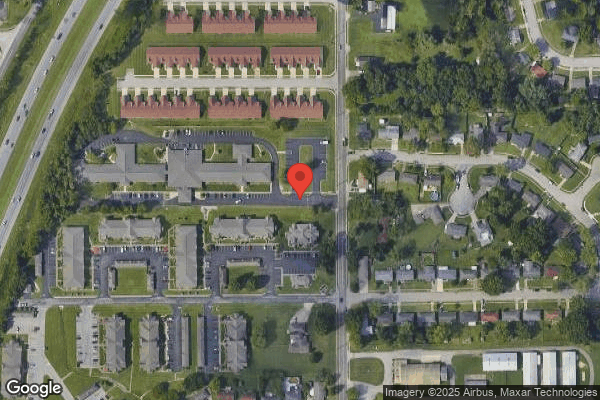
Understanding Severity Codes (click to expand)
Life-Threatening (Immediate Jeopardy)
J - Isolated K - Pattern L - Widespread
Actual Harm
G - Isolated H - Pattern I - Widespread
Potential for Harm
D - Isolated E - Pattern F - Widespread
No Harm (Minor)
A - Isolated B - Pattern C - Widespread

Questions to Ask on Your Visit

  • "What changes have you made since the serious inspection findings?"
  • "Can I speak with families of current residents?"
  • "What's your RN coverage like on weekends and overnight?"

Our Honest Assessment

Strengths
  • • 37% turnover. Below Indiana's 48% average. Good staff retention means consistent care.
Concerns
  • • Multiple safety concerns identified: 1 life-threatening violation(s). Review inspection reports carefully.
  • • 23 deficiencies on record, including 1 critical (life-threatening) violation. These warrant careful review before choosing this facility.
  • • $11,921 in fines. Above average for Indiana. Some compliance problems on record.
  • • Grade C (56/100). Below average facility with significant concerns.
Bottom line: Mixed indicators with Trust Score of 56/100. Visit in person and ask pointed questions.

About This Facility

What is Autumn Woods Health Campus's CMS Rating?

CMS assigns AUTUMN WOODS HEALTH CAMPUS an overall rating of 4 out of 5 stars, which is considered above average nationally. Within Indiana, this rating places the facility higher than 99% of the state's 100 nursing homes. This rating reflects solid performance across the metrics CMS uses to evaluate nursing home quality.

How is Autumn Woods Health Campus Staffed?

CMS rates AUTUMN WOODS HEALTH CAMPUS's staffing level at 2 out of 5 stars, which is below average compared to other nursing homes. Staff turnover is 37%, compared to the Indiana average of 46%. This relatively stable workforce can support continuity of care. RN turnover specifically is 55%, which is notably high. RNs provide skilled clinical oversight, so turnover in this role can affect medical care quality.

What Have Inspectors Found at Autumn Woods Health Campus?

State health inspectors documented 23 deficiencies at AUTUMN WOODS HEALTH CAMPUS during 2023 to 2025. These included: 1 Immediate Jeopardy (the most serious level, indicating potential for serious harm or death) and 22 with potential for harm. Immediate Jeopardy findings are rare and represent the most serious regulatory concerns. They require immediate corrective action.

Who Owns and Operates Autumn Woods Health Campus?

AUTUMN WOODS HEALTH CAMPUS is owned by a government entity. Government-operated facilities are typically run by state, county, or municipal agencies. The facility is operated by TRILOGY HEALTH SERVICES, a chain that manages multiple nursing homes. With 91 certified beds and approximately 77 residents (about 85% occupancy), it is a smaller facility located in NEW ALBANY, Indiana.

How Does Autumn Woods Health Campus Compare to Other Indiana Nursing Homes?

Compared to the 100 nursing homes in Indiana, AUTUMN WOODS HEALTH CAMPUS's overall rating (4 stars) is above the state average of 3.1, staff turnover (37%) is near the state average of 46%, and health inspection rating (3 stars) is at the national benchmark.

What Should Families Ask When Visiting Autumn Woods Health Campus?

Based on this facility's data, families visiting should ask: "What changes have been made since the serious inspection findings, and how are you preventing similar issues?" "Can you walk me through typical staffing levels on day, evening, and night shifts?" "Can I visit during a mealtime to observe dining assistance and food quality?" "How do you handle medical emergencies, and what is your hospital transfer rate?" These questions are particularly relevant given the facility's Immediate Jeopardy citations and the below-average staffing rating.

Is Autumn Woods Health Campus Safe?

Based on CMS inspection data, AUTUMN WOODS HEALTH CAMPUS has documented safety concerns. Inspectors have issued 1 Immediate Jeopardy citation (the most serious violation level indicating risk of serious injury or death). The facility has a 4-star overall rating and ranks #1 of 100 nursing homes in Indiana. Families considering this facility should ask detailed questions about what corrective actions have been taken since these incidents.

Do Nurses at Autumn Woods Health Campus Stick Around?

AUTUMN WOODS HEALTH CAMPUS has a staff turnover rate of 37%, which is about average for Indiana nursing homes (state average: 46%). Moderate turnover is common in nursing homes, but families should still ask about staff tenure and how the facility maintains care continuity when employees leave.

Was Autumn Woods Health Campus Ever Fined?

AUTUMN WOODS HEALTH CAMPUS has been fined $11,921 across 1 penalty action. This is below the Indiana average of $33,198. While any fine indicates a compliance issue, fines under $50,000 are relatively common and typically reflect isolated problems that were subsequently corrected. Families should ask what specific issues led to these fines and confirm they've been resolved.

Is Autumn Woods Health Campus on Any Federal Watch List?

AUTUMN WOODS HEALTH CAMPUS is not on any federal watch list. The most significant is the Special Focus Facility (SFF) program, which identifies the bottom 1% of nursing homes nationally based on persistent, serious quality problems. Not being on this list means the facility has avoided the pattern of deficiencies that triggers enhanced federal oversight. This is a positive indicator, though families should still review the facility's inspection history directly.