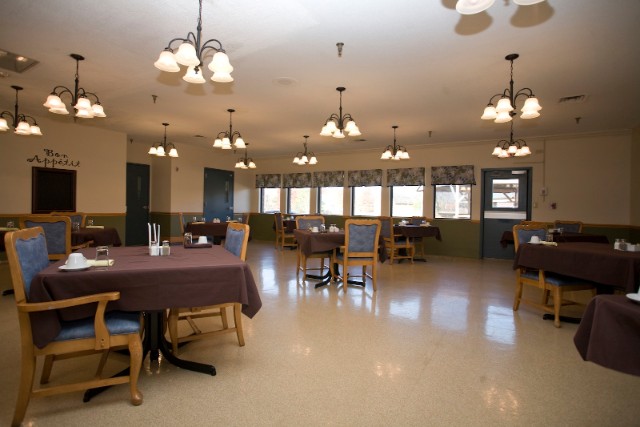
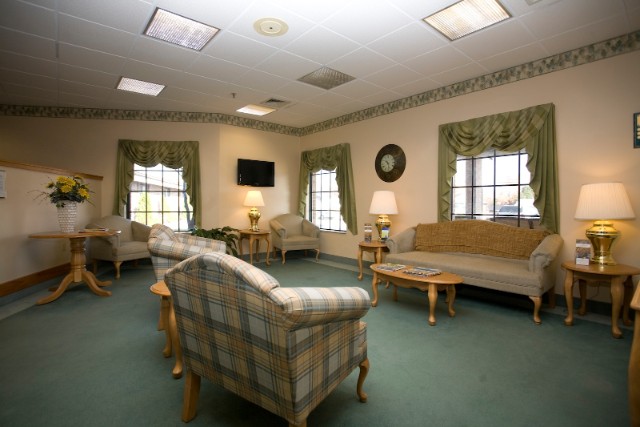
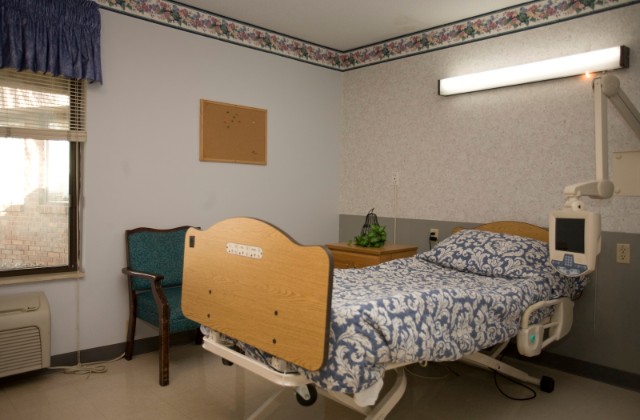
ROLLING HILLS HEALTHCARE CENTER

3625 ST JOSEPH RD, NEW ALBANY, IN 47150 (812) 948-0670
Non profit - Corporation 115 Beds COMMUNICARE HEALTH Data: November 2025
Trust Grade
48/100
#384 of 505 in IN
Last Inspection: May 2025

Inspected within the last 6 months. Data reflects current conditions.

Overview

Rolling Hills Healthcare Center has a Trust Grade of D, which means it is below average and raises some concerns about the care provided. It ranks #384 out of 505 facilities in Indiana, placing it in the bottom half, and #6 out of 7 in Floyd County, indicating that there is only one local option that performs better. The facility's performance has been stable, with 10 issues reported in both 2024 and 2025. Staffing is a relative strength, with a turnover rate of 34%, which is better than the state average of 47%, but the overall staffing rating is only 2 out of 5 stars. However, there are significant concerns as the facility has incurred $9,750 in fines, which is higher than 81% of Indiana facilities. RN coverage is average, meaning residents receive a standard level of nursing care. Specific incidents reported include unclean resident rooms, with housekeeping struggling to keep up due to insufficient staffing, and complaints about unappetizing meals that fail to meet residents' dietary needs. Overall, while there are strengths in staffing stability, the facility faces serious challenges in cleanliness and meal quality that families should consider.

Trust Score
D
48/100
In Indiana
#384/505
Bottom 24%
Safety Record
Low Risk
No red flags
Inspections
Holding Steady
10 → 10 violations
Staff Stability
○ Average
34% turnover. Near Indiana's 48% average. Typical for the industry.
Penalties
✓ Good
$9,750 in fines. Lower than most Indiana facilities. Relatively clean record.
Skilled Nurses
○ Average
Each resident gets 31 minutes of Registered Nurse (RN) attention daily — about average for Indiana. RNs are the most trained staff who monitor for health changes.
Violations
⚠ Watch
42 deficiencies on record. Higher than average. Multiple issues found across inspections.
★★☆☆☆
2.0
Overall Rating
★★☆☆☆
2.0
Staff Levels
★★★★★
5.0
Care Quality
★☆☆☆☆
1.0
Inspection Score
Stable
2024: 10 issues
2025: 10 issues

The Good

  • 5-Star Quality Measures · Strong clinical quality outcomes
  • Full Sprinkler Coverage · Fire safety systems throughout facility
  • No fines on record
  • Staff turnover below average (34%)

    14 points below Indiana average of 48%

Facility shows strength in quality measures, fire safety.

The Bad

2-Star Overall Rating

Below Indiana average (3.1)

Below average - review inspection findings carefully

Staff Turnover: 34%

12pts below Indiana avg (46%)

Typical for the industry

Federal Fines: $9,750

Below median ($33,413)

Minor penalties assessed

Chain: COMMUNICARE HEALTH

Part of a multi-facility chain

Ask about local staffing decisions and management

The Ugly 42 deficiencies on record

Sept 2025 1 deficiency
CONCERN (D) 📢 Someone Reported This

A family member, employee, or ombudsman was alarmed enough to file a formal complaint

Potential for Harm - no one hurt, but risky conditions existed

Pharmacy Services (Tag F0755)

Could have caused harm · This affected 1 resident

Based on record review and interview, the facility failed to document medication administration for 1 of 5 residents reviewed for pharmacy services. (Resident B) Findings include: The clinical record ...

Read full inspector narrative →
Based on record review and interview, the facility failed to document medication administration for 1 of 5 residents reviewed for pharmacy services. (Resident B) Findings include: The clinical record for Resident B was reviewed on 09/08/25 at 11:36 AM. A Quarterly Minimum Data Set (MDS) assessment, dated 07/09/25, indicated the resident was moderately cognitively impaired . The resident's diagnoses included, but were not limited to, diabetes, hypertension, non-Alzheimer's dementia, anxiety, and depression.A current, open-ended physician's order, with a start date of 03/24/25, indicated the staff were to administer the resident's Lantus (insulin), 30 units, twice a day , in the morning and at bedtime. The August and September 2025, Electronic Medication Administration Record (EMAR) lacked documentation that the resident had received the Lantus medication on the following dates and times: 08/02/25 in the morning; 08/03/25 in the morning; 08/09/25 in the morning; 08/10/25 in the morning, 08/23/25 in the morning; 08/30/25 in the morning; 08/31/25 in the morning; and 09/07/25 in the morning.The clinical record lacked documentation that the resident was out of the building when the resident's medication administration was not documented. During an interview, on 09/08/25 at 2:56 P.M., RN 2 indicated all medications should be initialed in the EMAR. If the medication was not administered there should have been a progress note as to why it wasn't administered. During an interview, on 09/08/25 at 3:05 P.M., Clinical Support Nurse indicated a blank in the EMAR could mean that the medication was not signed out or the medication order had changed. The current facility policy titled, Medication Administration, was provided by the Clinical Support Nurse on 09/08/25 at 3:41 P.M. The policy indicated, .Medications will be charted when given .Medications that are refused or withheld or not given will be documented .Documentation of medication will be current for medication administration .Documentation of medications will follow accepted standards of nursing practice .This citation related to Intake 2609439.3.1-25(b)(3)
Jun 2025 1 deficiency
CONCERN (D) 📢 Someone Reported This

A family member, employee, or ombudsman was alarmed enough to file a formal complaint

Potential for Harm - no one hurt, but risky conditions existed

Pharmacy Services (Tag F0755)

Could have caused harm · This affected 1 resident

Based on record review and interview, the facility failed to ensure an intravenous ( IV) antibiotic was given in a timely manner for 2 of 3 residents reviewed for pharmacy services. (Residents 2 and 4...

Read full inspector narrative →
Based on record review and interview, the facility failed to ensure an intravenous ( IV) antibiotic was given in a timely manner for 2 of 3 residents reviewed for pharmacy services. (Residents 2 and 4) Findings include: 1. The record for Resident 2 was reviewed on 7/2/25 at 11:17 a.m. The resident's diagnoses included, but were not limited to, dehiscence of the surgical wound and infection following a surgical procedure. The physician's order, dated 5/8/25, indicated the resident was to receive Ceftriaxone Sodium 2 gram intravenously two times a day for post-op craniotomy for 10 Days and use 2 gram intravenously at bedtime for post-op craniotomy for 28 days. The care plan, dated 5/8/25, indicated Resident 2 was currently on intravenous antibiotic therapy for a surgical wound infection. The interventions included, but were not limited to, the resident would be free of signs and symptoms of infection at IV insertion site, administer the IV medications and flushes per the medical provider's orders, and enhanced barrier precautions. The review of the residents' Medication Administration Record (MAR) indicated the resident's p.m. dose was to be administered at 9:00 p.m. The resident MAR indicated the IV antibiotic was given late on the following dates: - On 5/8/25 the resident's p.m. IV antibiotic dose was documented as given late, at 11:48 p.m. - On 5/9/25 the resident's p.m. IV antibiotic dose was documented as given late, at 11:19 p.m. - On 5/19/25 the resident's p.m. IV antibiotic dose was documented as given late, at 11:48 p.m. - On 5/22/25 the resident's p.m. IV antibiotic dose was documented as given late, on 5/23/25 at 12:28 a.m. - On 5/25/25 the resident's p.m. IV antibiotic dose was documented as given late, on 5/26/25 at 12:50 a.m. The resident's clinical record lacked any documented comments to indicate a reason why the resident's medication was administered or why the medication was documented late. 2. The record for Resident 4 was reviewed on 7/2/25 at 12:00 p.m. The resident's diagnoses included, but were not limited to, infection and inflammatory reaction due to the right hip prosthesis. The physician's order, dated 3/14/25, indicated the resident was to receive Ceftriaxone Sodium Solution Reconstituted 2 gm intravenously at bedtime for infection for 35 administrations. The physician's order, dated 4/16/25, indicated the resident was to receive Ceftriaxone Sodium Solution Reconstituted 2 gm intravenously at bedtime for a surgical site infection for 35 administrations. The review of the residents' MAR indicated the resident's p.m. dose was to be administered at 9:00 p.m. The resident MAR indicated the IV antibiotic was given late on the following dates: - On 4/17/25 the resident's p.m. IV antibiotic dose was documented as given late, on 4/18/25 at 4:01 a.m. - On 4/18/25 the resident's p.m. IV antibiotic dose was documented as given late, at 11:25 p.m. - On 4/22/25 the resident's p.m. IV antibiotic dose was documented as given late, at 10:28 p.m. The resident's clinical record lacked any documented comments to indicate a reason why the resident's medication was administered or why the medication was documented late. During an interview, on 6/2/25 at 11:30 a.m., the Director of Nursing (DON) indicated staff should give the medication on time and document correctly if charted late. During an interview, on 6/2/25 at 12:05 p.m., RN 5 indicated the residents' IV medications could be given an hour before and an hour after the medication was due. The IV antibiotics were supposed to be given at a specific time. If a medication was documented as being administered late, she thought it was due to when the nurse documented in the MAR. If a nurse had something come up and could not document the medication as being given on time the nurse could document a comment indicating the medication was given and a reason why the documentation was late. The current Medication Administration policy, included, but was not limited to, .f. Observe the [five rights] in giving each medication: .i. the right resident .ii. the right time .iii. the right medicine .iv. the right dose .v. the right route .ff. Medications will be administered within the time frame of one hour before up to one hour after time ordered This Citation relates to Complaint IN00459358. 3.1-25(a) 3.1-50(a)(2)
May 2025 5 deficiencies
CONCERN (D)

Potential for Harm - no one hurt, but risky conditions existed

Notification of Changes (Tag F0580)

Could have caused harm · This affected 1 resident

Based on record review and interview, the facility failed to ensure the Physician was notified when long acting insulin was held and when blood pressure, cardiac and blood thinner medications were ref...

Read full inspector narrative →
Based on record review and interview, the facility failed to ensure the Physician was notified when long acting insulin was held and when blood pressure, cardiac and blood thinner medications were refused for 1 of 3 residents reviewed for notification. (Resident 49) Findings include: The record for Resident 49 was reviewed on 5/5/25 at 1:12 p.m. The resident's diagnoses included, but were not limited to, type 2 diabetes mellitus with diabetic chronic kidney disease, other sequel of nontraumatic untraceable hemorrhage, cerebral edema with right hemicraniectomy, paroxysmal atrial fibrillation, congestive heart failure, hemiplegia and hemiparesis following cerebral infarction, history of venous thrombosis and embolism, and essential hypertension. The Quarterly Minimum Data Set (MDS) assessment, dated 4/9/25, indicated the resident had severe cognitive impairment. On 9/29/23, the physician's order indicated for the resident to receive Metoprolol Tartrate tablet 50 MG (milligram). One tablet by mouth every morning and at bedtime for hypertension. On 9/30/24, the physician's order indicated for the resident to receive Xarelto Oral tablet 20 MG (Rivaroxaban) - give one tablet by mouth in the morning for cerebral vascular accident, hemiplegia and atrial fibrillation. On 6/12/24, the physician's order indicated for the resident to receive Lisinopril tablet - give one tablet by mouth in the morning for hypertension. On 10/4/24, the physician's order indicated for the resident to receive Dilitazem HCI (hydrochloride) tablet 50 MG - give 1 tablet by mouth three times a day for atrial fibrillation. On 2/18/25, the physician's order indicated for the resident to receive Digoxin tablet 62.5 MCG (micrograms) - give one tablet by mouth in the morning for heart failure. The nurse's note, dated 1/21/25 between 12:48 p.m. and 1:02 p.m., indicated the resident refused to take all of his morning medications: Xarelto, Metoprolol Tartrate, Metformin, Lisinopril, Keppra, Dilitazem, and Digoxin, because he did not want his medications crushed. The record lacked documentation of the physician being notified of the resident had refused all his medications, and did not want to have them crushed. On 8/7/24, the physician order indicated to monitor the resident for (s/s) signs and symptoms hypoglycemia/hyperglycemia (IE: sweating, tremor, pallor, tachychardia, palpitations, nervousness, h/a (headache), confusion, light headedness, slurred speech, lack of concentration, irritability, staggering gait etc.) every shift. Although the blood sugars were being monitored, The record lacked documentation of set parameters for when to hold the insulin. On 3/7/25, the physician order indicated to administer Tresiba FlexTouch 100 UNIT/(ML) milliter solution pen-injector - inject 50 unit subcutaneously at bedtime for diabetes. On 5/5/25, the physician order indicated to administer Tresiba FlexTouch 100 UNIT/ML Solution pen-injector - inject 45 units subcutaneously once daily. The review of the nurse's notes, between December 2024 and April 2025, indicated the following: - On 12/2/24 at 8:37 p.m., the Medication Administration Record (eMar): indicated staff were to administerTresiba FlexTouch 100 UNIT/ML Solution pen-injector of 45 units subcutaneously to the resident at bedtime for diabetes. The insulin administration was held due to the resident's blood glucose being 147 (mg/dL) milligram/deciliter. No insulin coverage was required. - On 12/13/24 at 5:01 a.m., the eMar indicated staff were to administer Tresiba FlexTouch 100 UNIT/ML Solution pen-injector of 45 units subcutaneously to the resident at bedtime for diabetes. The insulin administration was held due to to the resident's blood glucose being 109. - On 12/16/24 at 9:17 p.m., the eMar indicated staff were to administer Tresiba FlexTouch 100 UNIT/ML Solution pen-injector of 45 units subcutaneously to the resident's at bedtime for diabetes. The insulin administration was held due to the resident's blood sugar being 97 mg/dL. - On 12/26/24 at 10:25 p.m., the eMar indicated staff were to administer Tresiba FlexTouch 100 UNIT/ML Solution pen-injector of 45 units subcutaneously to the resident at bedtime for diabetes. The insulin administration was held due to the resident's blood glucose being 119. No insulin coverage was required. - On 1/22/25 at 5:08 p.m., the eMar indicated staff were to administer Tresiba FlexTouch 100 UNIT/ML Solution pen-injector of 45 units subcutaneously to the resident at bedtime for diabetes. The insulin administration was held due to the resident's blood glucose being 115. No insulin coverage was required. - On 4/22/25 at 11:19 p.m., the eMar indicated staff were to administer Tresiba FlexTouch 100 UNIT/ML Solution pen-injector of 50 units subcutaneously to the resident at bedtime for diabetes. The insulin administration was held due to the resident's blood glucose being 89 and the resident indicated he did not eat supper. - On 4/25/25 at 11:33 p.m., the eMar indicated staff were to administer Tresiba FlexTouch 100 UNIT/ML Solution pen-injector of 50 units subcutaneously to the resident at bedtime for diabetes. The insulin Administration was held due to the resident's blood glucose being 84. - On 4/27/25 9:33 p.m., the eMar indicated staff were to administer Tresiba FlexTouch 100 UNIT/ML Solution pen-injector of 50 units subcutaneously to the resident at bedtime for Diabetes. The insulin Administration was held due to the resident's blood glucose being 111. The record lacked documentation as to why the long lasting insulin was held and the physician being notified it was being held. The care plan, dated 10/25/21 and reviewed on 4/25/23, indicated the resident had a potential for alteration in mood and behavior related to diagnoses of depression and anxiety. Potential for yelling out, resisting care, hallucinations and refusing medications. The interventions included, but were not limited to, administer medications as ordered. Observe and document signs and symptoms of effectiveness and side effects. Educate the resident or the resident representative of the medication effectiveness and side effects. · The care plan, dated 3/1/22, indicated the resident had altered cardiovascular status related to atrial fibrillation, chronic systolic heart failure and hypertension. The goal was for the resident to be free of signs and symptoms of complications of cardiac problems. The interventions included, but were not limited to, administer medications per medical provider's orders. Observe for side effects and effectiveness. Report abnormal findings to medical provider, resident and the resident representative. Provide Digoxin as ordered. Check the pulse prior to administration, do not give if pulse was below 60 beats per minutes. Observe for s/sx of medication side effects: lack of appetite, vomiting, diarrhea, visual disturbances, fast heart rate, elevated Digoxin levels, fatigue, muscle weakness, anorexia, yellow halos around objects. Report any abnormal findings to the medical provider, resident or resident representative. A care plan, dated 3/1/22, indicated the resident had diabetic chronic kidney disease. The interventions included, but were not limited to, administer insulin injections per orders. Administer medications per medical provider's orders. Observe for side effects and effectiveness. Report abnormal findings to the medical provider, resident or the resident representative. Observe for signs and symptoms of hyperglycemia: increased thirst and appetite, frequent urination, weight loss, fatigue, dry skin, poor wound healing, muscle cramps, abdominal pain, kussmaul breathing, acetone breath, stupor, coma. Report any abnormal findings to medical provider, educate resident or the resident representative. Observe for signs and symptoms of hypoglycemia: sweating, tremor, increased heart rate, pallor, nervousness, confusion, blurred speech, lack of coordination, staggering gait. Report any abnormal findings to medical provider, resident or the resident representative. Obtain blood sugars per orders. Report abnormal findings to the medical provider, resident or the resident representative. A care plan, dated 3/1/22, indicated the resident was at risk for abnormal bleeding or hemorrhage due to the anticoagulant related to the cerebral vascular accident; history of noncompliance with use of anticoagulant, atrial fibrillation. The interventions included, but were not limited to, educate the resident and the resident representative on the benefits and potential risks of the anticoagulant drug. Provide the anticoagulant and the antiplatelet medication per medical provider's order. Monitor for effectiveness, and side effects (bleeding, embolism). Report abnormal findings to the medical provider, resident or the resident representative. During an interview with the Regional Director of Clinical Operations (RDCO), dated 5/8/25 at 9:15 a.m., she indicated there should be parameters for when to hold insulin, blood pressure and cardiac medications. At 9:24 a.m., the RDCO indicated because the resident had a long lasting insulin, there would be no set parameters. The resident should not have had his insulin medication held due to it being a long lasting insulin was not usually held except for a specific reason. The physician should have been notified of the resident's insulin being held and the resident's refusal of morning medications due to them being crushed. The review of the facility's current policy Notification of Change in Condition, included, but was not limited to, Policy: It is the policy of this facility to provide resident centered care that meets the psychosocial, physical, and emotional needs of the residents .Compliance Guidelines: The center must inform the resident, consult with the resident's medical practitioner and/or notify the residents' representative, .when there is a change requiring such notification. Circumstances requiring notification included, but not limited to, .3. Circumstances that require a need to alter treatment which may include: a. new treatment; b. discontinuation of current treatment . 3.1-5(a)(3)
CONCERN (D)

Potential for Harm - no one hurt, but risky conditions existed

Quality of Care (Tag F0684)

Could have caused harm · This affected 1 resident

Based on record review and interview, the facility failed to ensure a resident received treatment and care in a timely manner for 1 of 5 residents reviewed for quality of care. (Resident 243) Findings...

Read full inspector narrative →
Based on record review and interview, the facility failed to ensure a resident received treatment and care in a timely manner for 1 of 5 residents reviewed for quality of care. (Resident 243) Findings Include: The record for Resident 243 was reviewed on 5/5/25 at 11:17 a.m. The resident's diagnoses included, but were not limited to, type 2 diabetes mellitus with diabetic peripheral angiopathy without gangrene, and sepsis due to methicillin susceptible staphylococcus aureus, and hyperglycemia. The physician's order, dated 4/9/25, indicated the resident was to receive Lispro 100 units per mg before meals for diabeties. The staff were to administer the rsident's insulin based on a sliding scale. The staff were to notifiy the physician if the resident's blood surgar level was less the 70 or grater than 400. If the resident's blood sugar level was 151 to 200 staff were to administer 2 units; 201 to 250 administer 4 units; 251 to 300 administer 6 units; 301 to 350 administer 8 units; 351 to 400 administer 10 units, and if the resident's blood sugar was greater than 400 administer 10 units, then recheck the resident's blood sugar in 30 minutes, and notify the physician. The physician's order, dated 4/29/25, indicated the resident was to receive Metformin extended release tablet 500 milligram (mg). Staff were to administer one tablet in the morning. The physician's order, dated 5/2/25, indicated the resident was to receive Tresiba FlexTouch Subcutaneous Solution Pen-injector 100 units/ml (Insulin Degludec). Staff were to administer 25 units subcutaneously to the resident every morning and at bedtime. The review of the residents' blood sugar indicated the following: - On 4/30/25 at 10:38 a.m., the residents' blood sugar was 400.0 (mg/dL) milligrams/deciliters - On 4/30/25 at 4:59 p.m., the residents' blood sugar was 502.0 mg/dL - On 4/30/25 at 5:31 p.m., the residents' blood sugar was 502.0 mg/dL - On 5/1/25 at 7:41 a.m., the residents' blood sugar was 430.0 mg/dL - On 5/1/25 at 9:13 a.m., the residents' blood sugar was 494.0 mg/dL - On 5/1/25 at 9:28 a.m., the residents' blood sugar was 494.0 mg/dL - On 5/1/25 at 12:06 p.m., the residents' blood sugar was 277.0 mg/dL - On 5/1/25 at 3:10 p.m., the resident's blood sugar was 400.0 mg/dL - On 5/2/25 at 10:58 a.m., the resident's blood sugar was 408.0 mg/dL - On 5/2/25 at 4:25 p.m., the resident's blood sugar was 279.0 mg/dL The nurse's note, dated 4/30/25 at 5:31 p.m., indicated the resident's blood sugar was 502 mg/dL at dinner time. The nurse tried to call the physician and left a message. The resident's blood sugar had been high all day. The nurse called the Director of Nursing (DON) and documented she was told by the DON to give 10 units of the sliding scale insulin and recheck the blood sugar in 30 minutes. The review of the resident's blood sugars, dated 4/30/25 at 5:31 p.m., indicated the resident's blood sugar was 502 mg/dL. The record indicated the resident's blood sugar wasn't rechecked again until 5/1/25 at 7:41 a.m., and his blood sugar was 430 mg/dL. The review of the resident's blood sugar, dated 5/1/25 at 3:10 p.m., indicated the resident's blood sugar was 400.0 mg/dL. The resident's blood sugar wasn't rechecked again until 5/2/25 at 10:58 a.m. The nurse's note, dated 5/2/25 at 10:58 a.m., indicated the resident's blood sugar was 408 mg/dL. The Nurse Practitioner (NP) was notified and gave orders to administer 10 units of sliding scale insulin and recheck. The resident's blood sugar wasn't rechecked again until 4:25 p.m. During an interview, on 5/7/25 at 10:15 a.m., the Regional Director of Clinical Operations (RDCO) indicated the DON told the RN to give the 10 units of the sliding scale insulin and call the NP. She indicated she had talked to the NP this morning and the NP indicated she was made aware of the resident's high blood sugars. The RDCO agreed the clinical record lacked documentation the NP was notified and the blood sugar was rechecked. During an interview, on 5/7/25 at 10:25 a.m., the DON indicated the RN called her and she instructed her to give the 10 units according to the sliding scale and call the NP. She indicated the night shift nurse called her later and told her the resident's blood sugar was down to 300 mg/dL. During an interview, on 5/8/25 at 8:37 a.m., the NP indicated she was made aware the resident's blood sugars were high on 4/30/25. She added a note on 5/1/25 that indicated she increased the resident's insulin. The NP contacted the pharmacy on 5/7/25 and requested the resident's (IV) intravenous antibiotics to be mixed with normal saline instead of dextrose (sugar) due to elevated blood sugars. The clinical documentation standards policy, dated 2014, included, but was not limited to, .Nurses will follow the basic standard of practice for documentation including but not limited to providing a timely and accurate account of resident information in the medical record . Cross reference F842 3.1-37
CONCERN (D) 📢 Someone Reported This

A family member, employee, or ombudsman was alarmed enough to file a formal complaint

Potential for Harm - no one hurt, but risky conditions existed

Pressure Ulcer Prevention (Tag F0686)

Could have caused harm · This affected 1 resident

Based on observation, interview and record review the facility failed to ensure interventions and treatments were completed for 1 of 4 residents reviewed for pressure ulcers. (Resident 53). Findings i...

Read full inspector narrative →
Based on observation, interview and record review the facility failed to ensure interventions and treatments were completed for 1 of 4 residents reviewed for pressure ulcers. (Resident 53). Findings included: The record for Resident 53 was reviewed on 5/7/25 at 12:29 p.m. The resident's diagnoses included, but were not limited to, type 2 diabetes mellitus, morbid obesity, osteomyelitis of vertebra, sacral and sacrococcygeal region, and chronic embolism and thrombosis. A physician's order, dated 1/13/25, indicated staff were to obtain the resident vitals every shift for 72 hours and then daily to establish baselines. The record lacked documentation to indicate the resident's vital signs were being completed. The last recorded blood pressure was on 1/28/25 at 95/66 (mm/hg) millimeters of mercury. Vital sign monitoring was an intervention in the care plans of actual skin impairment and osteomyelitis. The care plan, dated 1/14/25, indicated the resident had actual impaired skin integrity that included, a Stage 4 pressure ulcer to the sacrum and unstageable wound to right hip. On 3/17/25, the area to the right hip was classified as stage 4 pressure ulcer. The interventions included, but were not limited to, low air loss mattress to bed per manufacturer guidelines, monitor the area for signs of infection, monitor the area for signs of progression, encourage turning and repositioning, and provide wound care per treatment orders. The Wound Assessment report, dated 1/14/25, indicated the resident had a stage 4 pressure injury to the sacrum, measuring 5 cm (centimeters) in length, by 2 cm in width by 3 cm in depth with serosanguineous drainage with subcutaneous tissue, bone and adipose tissue present. The wound was not acquired in house. The treatment was to cleanse the wound with NS (Normal Saline) cleanser, then apply NS wet to moist rolled gauze to the wound bed, and cover with a bordered gauze dressing every 12 hours and as needed until resolved On 2/4/25, the wound assessment indicated the sacrum wound measured 5 cm in length, by 1 cm in width by 2.7 cm in depth. On 3/6/25, the wound assessment indicated the wound measured 4.8 cm in length, by 1 cm in width, by 2 cm in depth. On 4/22/25, the wound assessment indicate wound measured 4.6 cm in length, by 1.2 cm in width by 2 cm in depth. The resident was on antibiotics to treat a wound infection, and the status indicated the wound was improving with complications. On 5/6/25, the wound assessment indicated the wound measured 4.5 cm in length, by 1.2 cm in width by 2 cm in depth. A physician's order, dated 1/14/25, indicated that a low air loss mattress should be applied, which should be checked every shift for proper placement and function. The care plan, dated 1/22/25, indicated that the resident had a history of osteomyelitis. The interventions included, but were not limited to, observe the resident for any signs of infection, monitoring of vital signs, and administer antibiotics per the medical provider's orders. A nurse's note, dated 2/28/25, indicated during wound care on the sacrum the resident alerted the nurse that a previously scabbed area to the side of her right thigh was bothering her. The nurse observed the right thigh had an open area with a small amount of drainage. The nurse notified the provider and received an order for wound care. The resident was encouraged not to sit in her wheelchair as frequently to promote healing of both wounds. The Wound Assessment report, dated 3/6/25, indicated the resident had an unstageable pressure injury to the right hip, measuring 3 cm in length, by 2.5 cm in width by 0.1 cm in depth with no drainage and subcutaneous tissue exposed. The wound was in house acquired. Treatment included to cleanse the wound with NS cleanser, apply medical grade honey to the wound bed, and cover with a bordered gauze dressing until resolved daily and as needed. On 3/13/25, the wound assessment indicated the resident had an unstageable pressure injury to the right hip, measuring 2.8 cm in length, by 2.2 cm in width by 0.1 cm in depth with no drainage and subcutaneous tissue was exposed. On 4/1/25, the wound assessment indicated that the resident had a Stage 3 pressure injury to the right hip, measured 2 cm in length, by 1.7 cm in width by 2.4 cm in depth with a moderate amount of serosanguineous drainage and subcutaneous tissue and the dermis were exposed. On 4/22/25, the wound assessment indicated the resident had a Stage 3 pressure injury to the right hip measured 1.1 cm in length, by 1.6 cm in width by 2.4 cm in depth with a moderate amount of serosanguineous drainage and subcutaneous tissue and dermis were exposed. On 5/6/25, the wound assessment indicated the resident had a Stage 3 pressure injury to the right hip measured 1.1 cm in length, by 1.6 cm in width by 1.7 cm in depth with a moderate amount of serosanguineous drainage and subcutaneous tissue and dermis were exposed. The peri-wound was intact, but fragile. A skin note, dated 3/6/25, indicated that the resident was seen for wound rounds. The sacrum was stable at that time. The wound to the right hip was noted to be a pressure ulcer. The area was suspected of being caused by the resident's previous wheelchair, and the wheelchair had been replaced. A physician's order, dated 3/6/25, indicated to cleanse the area to the side of the right thigh with wound cleanser and pat dry. The order read to apply silver collagen to the wound bed and place saline wet to moist gauze over the wound and cover it with a dry dressing daily and as needed. A nurse's note, dated 4/2/25, indicated that during a dressing change the nurse observed the wound to resident's sacrum had green drainage along with a very strong foul odor. Neither drainage or odor was documentated previously during the dressing changes. The NP was notified and gave orders for Doxycycline 100 mg twice daily for 7 days, probiotic twice daily for 10 days and for a wound culture to be obtained on next dressing change. A nurse's note, dated 4/7/25, the resident was seen by the wound care center. The wound center obtained a wound culture during the visit. The nurse then called the wound center to notify the physician that the resident was currently on an antibiotic for wound infection. A nurse's note, dated 4/14/25, indicated the wound center ordered amoxicillin for 10 days and for the resident to return to the wound center on 4/28/25. A nurse's note, dated 4/22/25, indicated that the resident had refused further use the low air loss mattress, and the resident was encouraged to turn and reposition while in bed. The intervention was not removed from the resident care plans. The May 25 (EMAR/ETAR) Electronic Administration Record/Electronic Treatment Administration Record indicated that the order was still on the EMAR/ETAR and was to be checked every shift for proper placement and function. This was completed by nursing staff every shift despite the removal of the mattress on 4/22/25. A physician's order, dated 4/29/25, indicated to cleanse the area to the sacrum with wound cleanser and pat dry, apply silver collagen to the wound bed, place a fluffed normal saline, wringing out the excess saline, collagen in place, and cover the area with a bordered gauze daily for wound care. The April and May 25 EMAR/ETAR indicated the resident record lacked documentation of the daily wound assessment to the right thigh wound on 4/7/25, 4/11/25, 4/23/25, 5/2/25, and 5/3/25. The record lacked documentation of wound care and dressing changes on the right thigh on 4/9/25 and 5/2/25. The record lacked docunentation of wound care and dressing changes to the sacrum on 4/9/25, 4/28/25, and 5/2/25. The record lacked documentation of a daily assessments to the sacral wound on 5/2/29. The Braden Assessment scores completed for the resident included a low-risk score for skin breakdown 1/27/25, 2/3/25, and 5/4/25. For the month of May 2025, the resident consistently rated her pain at 4 to 5 out of 10. The pain scale indicated 10 being severe. The resident received pain medication twice daily. During an observation, 5/8/25 at 10:00 a.m., Licensed Practical Nurse (LPN) 10 performed hand hygiene. The resident stood up with assistance and bent over the chair for completion of the wound care. The right hip wound had redness on the tissue surrounding the wound, The wound was tunneling with a small amount of slough and a moderate amount of serosanguineous exudate. The wound was cleaned with wound cleanser, packed with prism collagen, a wrung out 4 x 4 was placed on top of the wound and covered with bordered gauze. The nurse removed her gloves and performed hand hygiene. The nurse completed wound care to the sacrum. A dressing was then removed, cleaned with wound cleanser, packed the prism collagen and packed a normal saline soaked gauze. The wound was then covered with bordered gauze. Neither dressing to the right hip or sacrum was dated. During an interview, 5/8/25 at 10:15 a.m., the resident indicated that she does not have any pain due to having routine pain medication. She had a pressure cushion on the wheelchair. The pressure reducing mattress was removed due to the resident was not comfortable on the mattress. She went to bed 2 to 3 times per day, and turned and repositioned herself while in bed. She reported that she was finished with the antibiotics for a sacrum wound infection. During an interview, on 5/8/25 at 10:20 a.m., LPN 10 indicated the resident was not comfortable on the air loss mattress, so it was removed. The resident did have an air loss cushion on her wheelchair. The resident was good at turning and repositioning herself every 2 hours while in bed. If a resident refused any intervention, the physician or the NP would be notified. A wound care policy was not received from the facility. 3.1-40
CONCERN (D)

Potential for Harm - no one hurt, but risky conditions existed

Medical Records (Tag F0842)

Could have caused harm · This affected 1 resident

Based on record review and interview, the facility failed to ensure sufficient information related to a resident's blood sugar was rechecked; and physician notification and verbal orders were document...

Read full inspector narrative →
Based on record review and interview, the facility failed to ensure sufficient information related to a resident's blood sugar was rechecked; and physician notification and verbal orders were documented in the resident's clinical record for 1 of 21 residents reviewed for Documentation. (Resident 243) Findings include: The record for Resident 243 was reviewed on 5/5/25 at 11:17 a.m. The resident's diagnoses included, but were not limited to, type 2 diabetes mellitus with diabetic peripheral angiopathy without gangrene, and sepsis due to methicillin susceptible staphylococcus aureus, and hyperglycemia. The physician's order, dated 4/9/25, indicated the resident was to receive Lispro 100 units per mg before meals for diabeties. The staff were to administer the rsident's insulin based on a sliding scale. The staff were to notifiy the physician if the resident's blood surgar level was less the 70 or grater than 400. If the resident's blood sugar level was 151 to 200 staff were to administer 2 units; 201 to 250 administer 4 units; 251 to 300 administer 6 units; 301 to 350 administer 8 units; 351 to 400 administer 10 units, and if the resident's blood sugar was greater than 400 administer 10 units, then recheck the resident's blood sugar in 30 minutes, and notify the physician. The review of the residents' blood sugar indicated the following: - On 4/30/25 at 10:38 a.m., the residents' blood sugar was 400.0 mg/dL(milligrams/deciliters) - On 4/30/25 at 4:59 p.m., the residents' blood sugar was 502.0 mg/dL - On 4/30/25 at 5:31 p.m., the residents' blood sugar was 502.0 mg/dL - On 5/1/25 at 7:41 a.m., the residents' blood sugar was 430.0 mg/dL - On 5/1/25 at 9:13 a.m., the residents' blood sugar was 494.0 mg/dL - On 5/1/25 at 9:28 a.m., the residents' blood sugar was 494.0 mg/dL - On 5/1/25 at 12:06 p.m., the residents' blood sugar was 277.0 mg/dL - On 5/1/25 at 3:10 p.m., the resident's blood sugar was 400.0 mg/dL The nurse's note, dated 4/30/25, at 4:59 p.m., indicated the physician was called for a blood sugar of 502 mg/dL. The nurse's note, dated 4/30/25, at 5:31 p.m., indicated the resident's blood sugar was 502 mg/dL at dinner time. The nurse tried to call the physician and left a message. The resident's blood sugar had been high all day. The nurse called the Director of Nursing (DON) and documented she was told by the DON to give 10 units of the sliding scale insulin and recheck the blood sugar in 30 minutes. The record lacked documentation indicating the physiucian/Nurse Practitioner (NP) received the left message, a recheck of the resident's blood sugar was completed, or any verbal NP orders were received. During an interview, on 5/7/25 at 9:55 a.m., RN 8 indicated the resident's blood sugar was 502 mg/dL and she tried to call the physician without success. She called the DON and was told to call the NP on call because she would probably order 10 units of insulin. She indicated she took a verbal order from the NP to give the insulin. The RN was unable to locate a verbal order from the NP in the resident's medical record. During an interview, on 5/7/25 at 10:15 a.m., the Regional Director of Clinical Operations (RDCO) indicated the DON told the RN to give the 10 units of the sliding scale insulin and call the NP. She indicated she had talked to the NP this morning and the NP indicated she was made aware of the resident's high blood sugars. The RDCO agreed that the record lacked documentation the NP was notified, and the blood sugar was rechecked. During an interview, on 5/7/25 at 10:25 a.m., the DON indicated the RN called her and she instructed her to give the 10 units according to the sliding scale and call the NP. She indicated the night shift nurse called her later and told her the resident's blood sugar was down to 300 mg/dL. During an interview, on 5/8/25 at 8:37 a.m., NP indicated she was made aware the resident's blood sugars were high. She added a note on 5/1/25 that indicated she increased the resident's insulin. The NP indicated on 5/7/25 she called the pharmacy and requested the resident's Intravenous (IV) antibiotics be mixed with normal saline instead of dextrose (sugar). During an interview, on 5/8/25 at 8:50 a.m., the RDCO indicated the nurse had given the 10 units according to the sliding scale and his blood sugar came down to 300 mg/dL. She indicated there should have been documentation the nurse called the NP and documented the blood sugar and what time it was taken. The clinical documentation standards policy dated 2014, included, but was not limited to, .a. The primary purpose of the medical record (s) is to provide continuity of care 1. Clinical evidence of care and treatment records as evidence of care iv. Document the status of the resident including changes i. The medical record will reflect the current status of the resident a. Chart in [real time] when an event is occurring or shortly thereafter, as is practicable . 3.1-3(o)(r)
CONCERN (E)

Potential for Harm - no one hurt, but risky conditions existed

Food Safety (Tag F0812)

Could have caused harm · This affected multiple residents

Based on observation, record review, and interview, the facility failed to ensure the food was disposed of once expired, the vents were cleaned and repaired, the refrigerator thermostat and drip pan u...

Read full inspector narrative →
Based on observation, record review, and interview, the facility failed to ensure the food was disposed of once expired, the vents were cleaned and repaired, the refrigerator thermostat and drip pan under the stove top were repaired. This had the potential to affect 93 of 95 residents who consume meals from the facility. Findings include: During the initial tour of the kitchen on 5/4/25 at 9:10 a.m., the following concerns were observed: - On a stand-alone refrigerator, the external temperature was at 38 degrees Fahrenheit (F). No internal thermometer was located. A gallon container of whole milk, which was 1/3 full, had an expiration date of 5/2/25. - The second stand-alone refrigerator, had an external temperature of 37 degrees F. No internal thermometer was located. There was a container of leftover fish, with a use by date of 5/2/25. There was another container of tuna, with a use by date of 5/3/25. There was a container of lettuce with brown edges, but no serve date or use by date. - The third stand-alone refrigerator, the external temperature read 50 degrees F. There was no internal thermometer. There were 16 prepared glasses of cranberry juice and lemonade on the trays. There were 9 glasses of lemonade and tea on the other side of the stand-alone refrigerator. There were 5 pitchers of orange juice, tea, lemonade, water and cranberry juice, which were half full. [NAME] 3 indicated the drinks were still in use. - Dust was observed on the two vents over the serving counter. The vent over the preparation table had 3 screws holding the vent to the ceiling. The fourth corner of the vent was hanging loose. [NAME] 3 indicated when it rained, the vent would hang down. - The Dietary Manager was observed placing a tray of dessert bars into the trash can from the freezer. The same dessert bars were also on a tray in the stand-alone refrigerator with no date. - One of the 3 drip pans under the cook top had a drip pan stuck with food debris and grease build up, almost up to the underside of the cook top panel, visible through the opening of the pan. The review of the Menu, indicated the fish had last been served on 4/22/25 for dinner and 5/2/25 for lunch. During a second kitchen observation, on 5/4/25 at 10:45 a.m., the instant mashed potatoes were being prepared. [NAME] 3 obtained the gallon container of whole milk, which was 1/3 full, with a use by date of 5/2/25, and began pouring it into the instant mashed potatoes. When asked about the date, [NAME] 3 stopped pouring, checked the date and indicated the milk was bad and that it was her fault that she hadn't looked at the use by date. She thought she had grabbed the whole milk with the use by date of 5/14/25. She would discard the mashed potatoes and she took it away. [NAME] 3 indicated that the gallon containers were used for cooking and the small containers were for the residents to drink. During a third observation in the kitchen, on 5/5/25 at 9:18 a.m., the same fish in the container had been re-dated to read a serve date of 5/2/25 and use by date of 5/5/25. The vent over the serving table still had a coating of dust. The vent over the preparation table was still pulled away from the ceiling. The lettuce with the brown edges had been removed from the refrigerator. The tuna in a container had been removed. During an interview, on 5/5/25 at 9:19 a.m., the Dietary Regional Director of Operation (RDCO) indicated the fish would have been on the menu, on Friday, 5/2/25. The Dietary RDCO checked the refrigerators bi-weekly for expired dates. During an interview, on 5/5/25 at 9:24 a.m., the Dietary Manager indicated she was responsible for monitoring the expiration dates on food items, but all staff should monitor the dates. The Maintenance Director was responsible for cleaning the vents and doing repairs in the kitchen, such as repairing the drip pan and the vent being attached to the ceiling. The current Food Storage and Retention Guide, included, but was not limited to, . Raw Meat/Poultry/Seafood Fish, seafood, ground meat and all poultry Once thawed 1-2 days . The current Labeling and Dating Inservice, included, but was not limited to, . Purpose: To educate all new hires and current employees on the importance of and guidelines for proper labeling and dating . Guidelines for Labeling and Dating . The use by date as outlined in the attached guidelines . Leftovers must be labeled and dated with the date they are prepared and the use by date . The Maintenance Supervisor Position Description, dated June 2019, included, but was not limited to, . Plan, develop and schedule preventive maintenance for the center. Establish standards for preventive maintenance and cleaning . 3.1-21(i)(3)
Jan 2025 3 deficiencies
CONCERN (D) 📢 Someone Reported This

A family member, employee, or ombudsman was alarmed enough to file a formal complaint

Potential for Harm - no one hurt, but risky conditions existed

Incontinence Care (Tag F0690)

Could have caused harm · This affected 1 resident

Based on observation, interview and record review, the facility failed to ensure Indwelling catheter care orders were implemented for 1 of 3 residents reviewed for Indwelling catheters. (Resident M) ...

Read full inspector narrative →
Based on observation, interview and record review, the facility failed to ensure Indwelling catheter care orders were implemented for 1 of 3 residents reviewed for Indwelling catheters. (Resident M) Findings include: On 1/28/25 at 11:29 a.m., the resident was observed sitting in a chair in her room with an Indwelling catheter in place. The clinical record for Resident M was reviewed on 1/28/25 at 11:04 a.m. The resident's diagnosis included, but was not limited to, stage 4 sacral pressure ulcer (wound that extends through all layers of the skin, reaching the underlying muscle, tendon or bone). The care plan, dated 1/13/25, indicated the resident had an Indwelling catheter and to provide catheter care every shift. The clinical record lacked documentation of any Indwelling catheter care for Resident M. During an interview on 1/28/25 at 9:55 a.m., Staff Member 11 indicated Indwelling catheter care orders should be implemented upon admission. On 1/28/25 at 2:44 p.m., the Regional Director of Clinical Operations provided a current, undated copy of the document titled Catheter Care. It included, but was not limited to, Policy .It is the policy of this facility to provide resident centered care .Catheter care is performed twice daily on residents that have indwelling catheters, for as long as the catheter is in place 3.1-41(a)(2)
CONCERN (E) 📢 Someone Reported This

A family member, employee, or ombudsman was alarmed enough to file a formal complaint

Potential for Harm - no one hurt, but risky conditions existed

Deficiency F0761 (Tag F0761)

Could have caused harm · This affected multiple residents

Based on observation, interview and record review, the facility failed to ensure narcotic medications were not signed out prior to administration times for 7 of 11 residents reviewed for medication st...

Read full inspector narrative →
Based on observation, interview and record review, the facility failed to ensure narcotic medications were not signed out prior to administration times for 7 of 11 residents reviewed for medication storage. (Resident E, Resident M, Resident N, Resident R, Resident S, Resident T and Resident U) Findings include: On 1/27/25 at 11:24 a.m., during an observation of the 400 hall controlled drug administration records with LPN (Licensed Practical Nurse) 6, the following narcotic medications had been signed out but not administered: -Resident E - Hydrocodone-APAP 5-325 mg (milligrams) signed out on 1/27/25 at 1:00 p.m. -Resident M - Oxycodone IR 5 mg (2 tabs to equal 10 mg) signed out on 1/27/25 at 2:00 p.m. -Resident N - Oxycodone IR 10 mg signed out on 1/27/25 at 2:00 p.m. -Resident R - Oxycodone IR 10 mg signed out on 1/27/25 at 1:00 p.m. -Resident S - Hydrocodone-APAP 5-325 mg signed out on 1/27/25 at 1:00 p.m. -Resident T - Oxycodone-APAP 5-325 mg signed out on 1/27/25 at 1:00 p.m. -Resident U - Hydrocodone-APAP 10-325 mg signed out on 1/27/25 at 1:00 p.m. During an interview on 1/27/25 at 11:24 p.m., LPN 6 indicated she had already signed out her 1:00 p.m. and 2:00 p.m. medications but had not given them yet. She was aware that she should not sign the medications out ahead of time. 1. The clinical record for Resident E was reviewed on 1/27/25 at 12:09 p.m. The diagnoses included, but were not limited to, major depressive disorder, right above the knee amputation and left hand contracture. The physician's order, dated 1/7/25, indicated the resident was to receive Hydrocodone-Acetaminophen 5-325 mg three times a day for pain. During an interview on 1/28/25 at 9:55 a.m., Staff Member 11 indicated the controlled drug administration record should be signed when pulled from the card to administer. On 1/28/25 at 12:30 p.m., the Regional Director of Clinical Operations provided a current, undated copy of the document titled Chain of Custody for Controlled Substances. It included, but was not limited to, Policy .It is the policy of this facility to provide resident centered care .Safety of residents .is a top priority .Nurses will sign both the MAR (medication administration record) and the Drug Count sheet when administering a controlled substance to a resident On 1/28/25 at 12:30 p.m., the Regional Director of Clinical Operations provided a current, undated copy of the document titled Medication Administration. It included, but was not limited to, MAR: Medication Administration Record - the legal documentation for medication administration .Policy .It is the policy of this facility to provide resident centered care .Procedure .Narcotic will be signed out when given 2. The clinical record for Resident M was reviewed on 1/28/25 at 11:04 a.m. The diagnosis included, but was not limited to, stage 4 sacral pressure ulcer (wound that extends through all layers of the skin, reaching the underlying muscle, tendon or bone). The physician's order, dated 1/14/25 indicated the resident was to receive Oxycodone HCl 10 mg every 4 hours as needed for pain. 3. The clinical record for Resident N was reviewed on 1/28/25 at 11:24 a.m. The diagnoses included, but were not limited to, diabetes with neuropathy and rheumatoid arthritis. The physician's order, dated 1/22/25, indicated the resident was to receive Oxycodone HCl 10 mg every 8 hours as needed for pain. 4. The clinical record for Resident R was reviewed on 1/28/25 at 2:01 p.m. The diagnoses included, but were not limited to, malignant neoplasm of the laryngeal cartilage and recurrent depressive disorder. The physician's order, dated 1/2/25, indicated the resident was to receive Oxycodone HCl 10 mg three times a day for pain. 5. The clinical record for Resident S was reviewed on 1/28/25 at 1:40 p.m. The diagnosis included, but was not limited to, depression. The physician's order, dated 1/15/25, indicated the resident was to receive Hydrocodone-Acetaminophen 5-325 mg three times a day for pain. 6. The clinical record for Resident T was reviewed on 1/28/25 at 2:10 p.m. The diagnoses included, but were not limited to, depression, anxiety and congestive heart failure. The physician's order, dated 12/30/24, indicated the resident was to receive Oxycodone-Acetaminophen 7.5-325 mg three times a day for pain. 7. The clinical record for Resident U was reviewed on 1/28/25 at 2:17 p.m. The diagnoses included, but were not limited to, peripheral vascular disease, diabetes and depression. The physician's order, dated 1/1/25, indicated the resident was to receive Hydrocodone-Acetaminophen 10-325 mg three times a day for pain. This Citation relates to Complaint IN00450462 3.1-25(a)
CONCERN (E) 📢 Someone Reported This

A family member, employee, or ombudsman was alarmed enough to file a formal complaint

Potential for Harm - no one hurt, but risky conditions existed

Medical Records (Tag F0842)

Could have caused harm · This affected multiple residents

Based on interview and record review, the facility failed to ensure medication administration records reflected the administration of narcotic medications for 4 of 11 residents reviewed for medical re...

Read full inspector narrative →
Based on interview and record review, the facility failed to ensure medication administration records reflected the administration of narcotic medications for 4 of 11 residents reviewed for medical records. (Resident M, Resident N, Resident O and Resident V) Findings include: 1. The clinical record for Resident M was reviewed on 1/28/25 at 11:04 a.m. The diagnosis included, but was not limited to, stage 4 sacral pressure ulcer (wound that extends through all layers of the skin, reaching the underlying muscle, tendon or bone). The physician's order, dated 1/14/25, indicated the resident was to receive Oxycodone (narcotic pain medication) HCl (hydrochloride) 10 mg (milligrams) every 4 hours as needed for pain. The January 2025 controlled drug administration record indicated the resident received the medication on the following dates and times: - 1/20/25 at 6:00 a.m., 10:00 a.m. and 2:00 p.m. - 1/21/25 at 6:00 a.m., 10:00 a.m., 2:00 p.m. and 8:00 p.m. - 1/22/25 at 6:00 a.m., 10:00 a.m., 3:00 p.m. and 8:00 p.m. - 1/23/25 at 1:00 a.m., 6:00 a.m., 10:00 a.m. and 2:00 p.m. - 1/24/25 at 8:00 a.m. and 5:00 p.m. The January 2025 medication administration record (MAR) lacked documentation of the administration of the medication. During an interview on 1/28/25 at 9:55 a.m., Staff Member 11 indicated when as needed medications are administered, the MAR should be signed to show the medication was administered. 2. The clinical record Resident N was reviewed on 1/28/25 at 11:24 a.m. The diagnoses included, but were not limited to, diabetes with neuropathy, osteoarthritis and rheumatoid arthritis. The physician's order, dated 1/22/25, indicated the resident was to receive Oxycodone HCl 10 mg every 8 hours as needed for pain. The January 2025 controlled drug administration record indicated the resident received the medication on the following dates and times: - 1/22/25 at 9:00 p.m. - 1/23/25 at 6:00 a.m. and 2:00 p.m. - 1/25/25 at 8:00 a.m. The January 2025 MAR lacked documentation of the administration of the medication. 3. The clinical record for Resident O was reviewed on 1/28/25 at 11:44 a.m. The diagnosis included, but was not limited to, depression. The physician's order, dated 1/20/25, indicated the resident was to receive Morphine Sulfate (narcotic pain medication) 0.25 ml (milliliters) every 4 hours as needed for pain or shortness of air. The January 2025 controlled drug administration record indicated the resident received the medication on the following dates and times: - 1/22/25 at 8:45 a.m. and 12:45 p.m. - 1/23/25 at 6:00 a.m., 11:00 a.m. and 3:00 p.m. - 1/26/25 at 12:00 p.m. The January 2025 MAR lacked documentation of the administration of the medication. 4. The clinical record for Resident V was reviewed on 1/28/25 at 2:28 p.m. The diagnoses included, but were not limited to, left femur fracture, diabetes and depression. The physician's order, dated 12/19/24, indicated the resident was to receive Norco (narcotic pain medication) 7.5-325 mg every 6 hours as needed for pain. The January 2025 controlled drug administration record indicated the resident received the medication on the following dates and times: - 1/20/25 at 7:00 a.m., 1:00 p.m. and 8:00 p.m. - 1/21/25 at 7:00 a.m., 1:00 p.m. and 8:00 p.m. - 1/22/25 at 7:00 a.m., 1:00 p.m. and 8:00 p.m. - 1/23/25 at 7:00 a.m., 1:00 p.m. and 8:00 p.m. - 1/26/25 at 5:00 p.m. The January 2025 MAR lacked documentation of the administration of the medication. On 1/28/25 at 12:30 p.m., the Regional Director of Clinical Operations provided a current, undated copy of the document titled Medication Administration. It included, but was not limited to, MAR: Medication Administration Record - the legal documentation for medication administration .Policy .It is the policy of this facility to provide resident centered care .Procedure .Medications will be charted when given This Citation relates to Complaint IN00450462 3.1-50(a)(2)
Dec 2024 3 deficiencies
CONCERN (D) 📢 Someone Reported This

A family member, employee, or ombudsman was alarmed enough to file a formal complaint

Potential for Harm - no one hurt, but risky conditions existed

Deficiency F0742 (Tag F0742)

Could have caused harm · This affected 1 resident

Based on interview and record review, the facility failed to ensure behaviors were care planned and monitored for 3 of 4 residents reviewed for behavior management. (Residents B, D, and G) Findings in...

Read full inspector narrative →
Based on interview and record review, the facility failed to ensure behaviors were care planned and monitored for 3 of 4 residents reviewed for behavior management. (Residents B, D, and G) Findings include: 1. The clinical record for Resident B was reviewed on 12/19/24 at 1:24 p.m. The resident's diagnoses included, but were not limited to, dementia with agitation and schizoaffective disorder. During an interview on 12/19/24 at 10:15 a.m., the Memory Care unit manager indicated Resident B would actively seek out Resident C and had done so for a couple of months. She did not know if the resident had been care planned for the behavior. During an interview on 12/19/24 at 10:24 a.m., the Director of Nursing indicated she and the Executive Director had went back to the unit. As they were going down the hallway, there were two females (Residents B and D) in Resident C's room. One was standing up and the other was sitting on the bed. She inquired about the two females in the male resident's room and the staff reported that there was nothing going on. It was not appropriate for females to be in a male residents room and she had the staff remove them and told the staff that visiting needed to be done in a social areas of the unit. Review of Resident B's care plan lacked documentation related to the behavior of the resident seeking out Resident C. 2. The clinical record for Resident D was reviewed 12/19/24 at 1:41 p.m. The resident's diagnoses included, but were not limited to, dementia with behavioral disturbance and vascular dementia with psychotic disturbance. During an interview on 12/19/24 at 10:15 a.m., the Memory Care unit manager indicated Resident D would actively seek out Resident C and had done so for a couple of months. She did not know if the resident had been care planned for the behavior. Review of Resident D's care plan lacked documentation related to the behavior of the resident seeking out Resident C. 3. The clinical record for Resident C was reviewed on 12/18/24 at 2:15 p.m. The resident's diagnosis included, but was not limited to, dementia with agitation. The care plan, dated 10/6/20, indicated Resident C had a potential behavior related to sexually acting out. The interventions included, but were not limited to, anticipate and meet resident's needs, assist in developing more appropriate methods of coping and interacting such as encouraging more male friends in group/public areas with male/female setting; observe and discourage resident wanting to focus continually on one female; encourage to be in eye sight of staff when out of room. 4. The clinical record for Resident G was reviewed on 12/18/24 at 3:00 p.m. The resident's diagnoses included, but were not limited to, alcohol induced persisting dementia and dementia with behavioral disturbance. The care plan, dated 10/14/24, indicated the resident had a behavior problem as follows: known to have bowel movements in inappropriate places, yelling/demanding food at all times, verbal aggression towards staff and sexual comments towards others and to monitor behavioral episodes. Review of the November 2024 behavior tracking log lacked documentation of behavior monitoring for day shift on the following days: 11/7/24, 11/8/24, 11/10/24, 11/16/24, 11/22/24, 11/23/24, 11/28/24 and 11/29/24. Review of the December 2024 behavior tracking log lacked documentation of behavior monitoring for day shift on the following days: 12/2/24, 12/8/24, 12/11/24 and 12/18/24. During an interview on 12/20/24 at 12:39 p.m., Qualified Medication Aide (QMA) 13 indicated all behaviors should be documented on the behavior log in the medication demonstration record regardless of whether they have those behaviors or no behaviors. The medication administration record will bring up a list of behaviors for the residents and we click on the behavior if any and, if no behaviors, click a zero to show no behaviors. On 12/20/24 at 11:36 a.m., the Regional Director of Clinical Operations provided a current, undated copy of the document titled 'Behavior Management General. It included, but was not limited to, Policy .It is the policy of the facility to identify and safely manage residents who are exhibiting behaviors .Residents will be provided with a resident centered behavior management care plan to safely manage the residents and others .Document the assessment of the behavior in electronic medical record .Complete a care plan This Citation relates to Complaint IN00448446 3.1-43(a)(1)
CONCERN (D) 📢 Someone Reported This

A family member, employee, or ombudsman was alarmed enough to file a formal complaint

Potential for Harm - no one hurt, but risky conditions existed

Deficiency F0744 (Tag F0744)

Could have caused harm · This affected 1 resident

Based on observation, interview and record review, the facility failed to ensure affective interventions were in place for a resident with increased sexually inappropriate behaviors for 1 of 8 residen...

Read full inspector narrative →
Based on observation, interview and record review, the facility failed to ensure affective interventions were in place for a resident with increased sexually inappropriate behaviors for 1 of 8 residents reviewed for dementia care. (Resident C) Findings include: 1. The clinical record for Resident C was reviewed on 12/18/24 at 2:15 p.m. The resident's diagnosis included, but was not limited to, dementia with agitation. The care plan, dated 10/6/24, indicated the potential for behavior problem related to a history of sexually acting out. The interventions included, but were not limited to, assist in developing more appropriate methods of coping and interacting and to encourage more male friends and group/public areas with male and female setting; discourage resident wanting to focus continually on one female per family recommendation; encourage the resident be in in eye sight of staff when out of room and if reasonable, discuss behaviors; intervene as necessary to protect the rights and safety of others. The progress note, dated 10/27/24 at 8:42 p.m., indicated the resident continued to be on one-on-one supervision (one staff to one resident supervision) due to inappropriate behaviors observed. The psychiatric note, dated 10/28/24 at 8:10 a.m., indicated the resident had attempted sexually inappropriate behaviors with another female resident with staff intervention. The progress note, dated 10/20/24 at 6:36 a.m. indicated the resident continued to be on one-on-one supervision. The progress note, dated 11/3/24 at 8:19 p.m., indicated the resident continued to be on one-on-one supervision. The progress note, dated 11/4/24 at 5:44 p.m., indicated the resident had attempted to be inappropriate to a female resident in the dining area. The resident waved a staff member away and told the staff member to mind their own business when the staff member attempted to intervene. The female resident had to be taken to a different area. The resident was then observed next to another female resident with his hand located on her lap. Staff immediately approached the two residents and relocated the female resident to her room. The staff had observed that the resident expressed increased behaviors when met with authority or correction pertaining to the female residents. The resident continued to seek female company when exiting his room or in the dining room. One on one supervision continued as needed while the resident was out of his room. During an interview on 12/19/24 at 9:20 a.m., Staff Member 5 indicated Resident C would always get close to Resident B and try to put his hand down her brief. She had witnessed Resident C kiss Resident D. She would always report incidents and was just told to separate the residents and that was what she did. During an interview on 12/19/24 at 9:28 a.m., Staff Member 7 indicated she had witnessed Resident C kiss Resident B. She removed Resident C away from Resident D and reported the incident to her nurse. During an interview on 12/19/24 at 9:31 a.m., Staff Member 6 indicated Resident C was a toucher, would rub the ladies back and things like that. He was a ladies man. During an interview on 12/19/24 at 10:09 a.m., the Social Services on the Memory Care unit indicated Resident C did have inappropriate behaviors, although not consistently. He talked to the ladies a lot. During an interview on 12/19/24 at 10:15 a.m., the Memory Care Unit Manager indicated Resident C was very friendly with the men and women. He liked to sit beside them, comfort them, give them a kiss and we would separate. He was just a little too loving at times. During an interview on 12/20/24 at 10:40 a.m., Staff Member 12 indicated she had witnessed Resident C rub Resident B's thighs and kiss the following residents: Resident B, Resident D, Resident F, Resident H and Resident L. Staff member 12 would intervene and separate, however, Resident C would be right back at it. Once the resident was placed on one on one supervisor she had not observed the behaviors. The clinical record for Resident B was reviewed on 12/19/24 at 1:24 p.m. The resident's diagnosis included, but was not limited to, dementia with agitation. The clinical record for Resident D was reviewed on 12/19/24 at 1:41 p.m. The resident's diagnoses included, but were not limited to, dementia with behavioral disturbance and vascular dementia with psychotic disturbance. The clinical record for Resident F was reviewed on 12/19/24 at 2:11 p.m. The resident's diagnoses included, but were not limited to, dementia and cognitive communication deficit. The clinical record for Resident H was reviewed on 12/19/24 at 2:24 p.m. The resident's diagnoses included, but were not limited to, Alzheimer's with early onset, dementia with agitation and bipolar. The clinical record for Resident L was reviewed on 12/20/24 at 12:10 p.m. The resident's diagnoses included, but were not limited to, disorganized schizophrenia, schizoaffective disorder of the bipolar type and dementia with agitation. On 12/19/24 and 12/20/24, Residents B, D, F, H, and L were all observed on the unit. The residents were pleasantly confused and showed no signs of any psychosocial distress. On 12/20/24 at 11:41 a.m., the Regional Director of Clinical Operations provided a current, undated copy of the document titled Dementia Care Resident Rights and Privileges. It included, but was not limited to, Policy .It is the policy of this facility to provide resident centered care .Safety is a primary concerns .Residents with dementia and/or dementia-related diagnosis will be treated with the same respect and dignity and afforded the same resident rights regardless This Citation relates to Complaint IN00448446 3.1-37(a)
CONCERN (E) 📢 Someone Reported This

A family member, employee, or ombudsman was alarmed enough to file a formal complaint

Potential for Harm - no one hurt, but risky conditions existed

Medical Records (Tag F0842)

Could have caused harm · This affected multiple residents

Based on interview and record review, the facility failed to ensure the anti-psychotic medication was documented as administered (Resident G) and failed to ensure resident's (Resident C and Resident E...

Read full inspector narrative →
Based on interview and record review, the facility failed to ensure the anti-psychotic medication was documented as administered (Resident G) and failed to ensure resident's (Resident C and Resident E) medication administration records reflected the administration of narcotic medication for 3 of 5 residents reviewed for medical records. Findings include: 1. The clinical record for Resident G was reviewed on 12/18/24 at 3:00 p.m. The resident's diagnosis included, but was not limited to, dementia with behavioral disturbance. The physician's order, dated 10/28/24, indicated the resident was to receive Divalproex Sodium (mood stabilizer) delayed release, 125 mg (milligrams) three times a day in the morning, afternoon and at bedtime. The November 2024 medication administration record (MAR) indicated the medication was not signed out as given on the following scheduled administration times: - On 11/12/24 in the morning - On 11/18/24 in the morning On 11/25/24, the Divalproex Sodium was discontinued and a new order was implemented for Divalproex Sodium 500 mg three times a day in the morning, afternoon and at bedtime. The November 2024 and December 2024 MAR indicated the medication was not signed out as given on the following scheduled administration times: - On 11/25/24 at bedtime - On 11/28/24 at bedtime - On 11/29/24 at bedtime - On 12/06/24 at bedtime - On 12/08/24 at bedtime - On 12/11/24 in the afternoon and bedtime 2. The clinical record for Resident C was reviewed on 12/18/24 at 2:15 p.m. The resident diagnosis included, but was not limited to, pain. The physician's order, dated 10/4/24, indicated the resident was to receive Hydrocodone-Acetaminophen (narcotic pain medication) 5-325 mg in the morning, afternoon and at bedtime. The October 2024 controlled drug record indicated the medication was administered on 10/26/24 in the afternoon. The October 2024 MAR lacked documentation of the administration of the resident's medication. 3. The clinical record for Resident E was reviewed on 12/19/24 at 2:03 p.m. The resident's diagnoses included, but were not limited to, pain and anxiety. The physician's order, dated 5/29/24, indicated the resident was to receive Lorazepam (narcotic anxiety medication) 0.75 ml (milliliters) every 4 hours for anxiety at 12:00 a.m., 4:00 a.m., 8:00 a.m., 12:00 p.m., 4:00 p.m. and 8:00 p.m. The November 2024 controlled drug record and the November 2024 MAR lacked documentation of the administration of the narcotic medication at 4:00 p.m. on 11/12/24. The December 2024 controlled drug record indicated on 12/8/24 at 4:00 p.m., the medication was administered to the resident. The December 2024 MAR lacked documentation of the administration of the resident's medication on 12/8/24 at 4:00 p.m. The physician's order, dated 6/18/24, indicated the resident was to receive Morphine Sulfated (narcotic pain medication) 0/25 ml every 4 hours for pain at 12:00 a.m., 4:00 a.m., 8:00 a.m., 12:00 p.m., 4:00 p.m. and 8:00 p.m. The November 2024 controlled drug record and the November 2024 MAR lacked documentation of the administration of the narcotic medication at 4:00 p.m. on 11/12/24. The December 2024 controlled drug record indicated on 12/8/24 at 4:00 p.m., the medication was administered to the resident. The December 2024 MAR lacked documentation of the administration of the resident's medication on 12/8/24 at 4:00 p.m. During an interview on 12/20/24 at 12:39 p.m., Qualified Medication Aide (QMA) 13 indicated the MAR and controlled drug record should be signed off to show the medications and narcotics were administered. On 12/20/24 at 11:36 p.m., the Regional Director of Clinical Operations provided a current, undated copy of the document titled Medication Administration. It included, but was not limited to, MAR: Medication Administration Record - the legal documentation for medications administration .Policy .It is the policy of this facility to provide resident centered care .Procedure .Medications will be charted when given This Citation relates to Complaint IN00448446 3.1-50(a)(2)
Aug 2024 1 deficiency
CONCERN (D) 📢 Someone Reported This

A family member, employee, or ombudsman was alarmed enough to file a formal complaint

Potential for Harm - no one hurt, but risky conditions existed

Accident Prevention (Tag F0689)

Could have caused harm · This affected 1 resident

Based on observation, interview and record review, the facility failed to ensure fall interventions were in place for 1 of 3 residents reviewed for accident hazards. (Resident C) Findings include: The...

Read full inspector narrative →
Based on observation, interview and record review, the facility failed to ensure fall interventions were in place for 1 of 3 residents reviewed for accident hazards. (Resident C) Findings include: The clinical record for Resident C was reviewed on 8/28/24 at 12:50 p.m. The resident's diagnoses included, but were not limited to, Parkinson's disease and epilepsy. The care plan, dated 3/4/22, indicated the resident was at risk for falls and to apply non-skid strips to the left side of the bed. During an observation with the DON (Director of Nursing) on 8/28/24 at 2:53 p.m., the care planned intervention of non-skid strips to the left side of Resident C's bed were not in place. During an interview on 8/28/24 at 2:43 p.m., the DON indicated if the intervention was on the resident's plan of care, they should be in place. On 8/29/24 at 10:10 a.m., the Executive Director provided a current, undated copy of the document titled Fall Prevention and Management. It included, but was not limited to, It is the policy of this facility to provide resident centered care that meets the .needs .of the residents. Fall prevention .is the process of identifying risk factors that can minimize the potential for falls and also a process to manage a resident's care if a fall occurs This Citation relates to Complaint IN00440995 3.1-45(a)(2)
May 2024 6 deficiencies
CONCERN (D)

Potential for Harm - no one hurt, but risky conditions existed

Pressure Ulcer Prevention (Tag F0686)

Could have caused harm · This affected 1 resident

Based on interview and record review, the facility failed to identify a resident's right heel pressure ulcer prior to the wound being first identified as an open blister, no longer holding fluid for 1...

Read full inspector narrative →
Based on interview and record review, the facility failed to identify a resident's right heel pressure ulcer prior to the wound being first identified as an open blister, no longer holding fluid for 1 of 3 residents reviewed for pressure ulcers. (Resident 8) Findings include: The record for Resident 8 was reviewed on 5/14/24 at 2:10 p.m. The resident's diagnoses included, but were not limited to, non-traumatic intracerebral hemorrhage, hemiplegia (partial paralysis on one side of the body) and hemiparesis, dementia, anxiety disorder, unsteadiness on feet, assistance with personal care, difficulty walking, and cognitive communication disorder. The Quarterly MDS (Minimum Data Set) assessment, dated 2/29/24, indicated the resident's cognition was moderately impaired. The resident required substantial or maximal staff assistance with his ADL's (Activities of Daily Living). The care plan, dated 3/23/23, indicated Resident 8 had impaired skin integrity or altered skin integrity related to immobility. The interventions included, but were not limited to, apply barrier creams post incontinent episodes, complete skin at risk assessment upon admission, readmission, quarterly, and as needed, weekly skin checks, ensure the resident was turned and repositioned, and provide an appropriate off-loading mattress. The review of the CNA (Certified Nursing Aide) shower records, dated 4/29/24, 5/2/24, and 5/7/24 indicated Resident 8 did not have any current or new skin issues. The skin/wound note, dated 5/7/24 at 2:27 p.m., indicated Resident 8 was seen for wound rounds related to a skin area to the right plantar foot. The resident was observed to have a pressure wound of a blister to the right heel. The blister was observed to no longer be holding fluid, the outer skin of the blister remained intact. The new orders were received for a betadine-soaked gauze to be applied daily and to be secured with kerlix. The physician's order, dated 5/7/24, indicated staff were to complete a daily wound assessment and to document the abnormalities in the progress notes every day shift and every night shift for the area to the right heel. The NP (Nurse Practitioner) Wound Evaluation, dated 5/7/24, indicated the resident had a new pressure wound to the right heel. The wound length was 5.0 cm (centimeter) long by 4.0 cm wide and the depth was 0.1 cm. The pressure wound was acquired in the facility on 5/7/24. The pressure wound was a new wound. The epithelium dermis and subcutaneous tissue was exposed, the wound edges were attached, and the peri wound was fragile. The wound had a moderate amount of serosanguineous drainage. The treatment included cleansing the wound with wound cleanser, applying a betadine-soaked gauze, applying an abdominal pad and wrap with gauze. Daily dressing and as needed dressing changes were ordered. The physician's order, dated 5/9/24, indicated to cleanse the right heel with wound cleanser, betadine-soaked gauze, abdominal pad and rolled gauze as needed for soilage of the wound. During an interview on 5/15/24 at 1:00 p.m., the CNA 3 indicated that when the CNAs gave the residents a shower or a complete bed bath, they would be looking at the resident's skin for any pressure areas. She would report back to the nurse and the wound care nurse. She would document her findings on the resident's shower sheet and on the computer. During an interview on 5/15/24 at 1:25 p.m., the LPN (Licensed Practical Nurse) 5 indicated the nurses did weekly skin assessments and observed daily while providing care. During an interview on 5/15/24 at 2:20 p.m., Wound Care Nurse indicated Resident 8 had a Stage 3 pressure ulcer (Full-thickness loss of skin, in which subcutaneous fat may be visible in the ulcer and granulation tissue and epibole [rolled wound edges] are often present). She indicated that the wound started out as a blister, and it popped. The blister was pulled away enough to see the wound bed. The resident required extensive staff assistance with his lower body mobility. The most current Skin Care and Wound management policy, included, but was not limited to, . Each resident/patient is evaluated upon admission and weekly thereafter for changes in skin condition. Resident/patient skin condition is also re-evaluated with change in clinical condition, prior to the hospital and upon return from the hospital. Daily monitoring of existing wounds . 3.1-37(a)
CONCERN (E)

Potential for Harm - no one hurt, but risky conditions existed

Deficiency F0558 (Tag F0558)

Could have caused harm · This affected multiple residents

**NOTE- TERMS IN BRACKETS HAVE BEEN EDITED TO PROTECT CONFIDENTIALITY** Based on observation, record review, and interview, the facility failed to ensure the resident's call lights were within reach f...

Read full inspector narrative →
**NOTE- TERMS IN BRACKETS HAVE BEEN EDITED TO PROTECT CONFIDENTIALITY** Based on observation, record review, and interview, the facility failed to ensure the resident's call lights were within reach for 10 of 108 residents observed for call light placement. (Residents 20, 77, 256, 60, 47, 91, 11, 38, 46 and 94) Findings include: 1. During an observation on 5/10/24 at 8:15 a.m., Resident 20's call light was laying on the floor underneath the resident's bed. No staff were present in the resident's room. The record for Resident 20 was reviewed on 5/16/24 at 9:18 a.m. The resident's diagnoses included, but were not limited to, COPD (chronic obstructive pulmonary disease), major depressive disorder, difficulty walking, muscle wasting and atrophy, the need for assistance with personal care, cognitive communication deficit, dysphagia and dementia. The Quarterly MDS (Minimum Data Set) assessment, dated 3/18/24, indicated the resident was rarely or never understood. The resident required the use of a wheelchair for mobility. 2. During an observation on 5/9/24 at 8:30 a.m., Resident 77's call light was laying on the floor underneath the resident's bed. No staff were present in the resident's room. During an observation and interview on 5/10/24 at 8:15 a.m., Resident 77's call light was laying underneath the resident's pillows out of reach from the resident. No staff were present in the resident's room. The record for Resident 77 was reviewed on 5/16/24 at 9:20 a.m. The resident's diagnoses included, but were not limited to, the need for assistance with personal care, unsteadiness on her feet, muscle weakness, difficulty walking, the need for assistance with personal care, and cognitive communication deficit. The Quarterly MDS assessment, dated 2/27/24, indicated the resident was severely cognitively impaired. The resident required the use of a wheelchair for mobility. 3. During an observation on 5/9/24 at 9:40 a.m., Resident 256's call light was at the foot of his bed between the mattress and the foot board. No staff were present in the resident's room. The record for Resident 256 was reviewed on 5/16/24 at 9:00 a.m. The resident's diagnoses included, but were not limited to, type 2 diabetes mellitus with neuropathy, cardiac implants and grafts, atrial fibrillation, the use of anticoagulants, a history of transient ischemic attach and cerebral infarction, pulmonary emboli, and cognitive communication disorder. The Quarterly MDS (Minimum Data Set) assessment, dated 2/6/24, indicated the resident was cognitively intact. The resident required the use of a wheelchair for mobility. The resident had upper and lower extremity functional limitations on one side. 4. During an observation on 5/9/24 at 9:30 a.m., Resident 60's call light was at the head of his bed out of reach from the resident. No staff were present in the resident's room. The record for Resident 60 was reviewed on 5/16/24 at 9:00 a.m. The resident's diagnoses included, but were not limited to, nontraumatic intracerebral hemorrhage, acute respiratory failure, cerebral edema, hemiplegia (partial paralysis on one side of the body) and hemiparesis following a cerebral infarction affecting the left non- dominant side, the need for assistance for personal care, and dementia. The Quarterly MDS assessment, dated 2/6/24, indicated the resident was cognitively intact. The resident required the use of a wheelchair for mobility. The resident had upper and lower extremity functional limitations on one side. 5. During an observation and interview on 5/9/24 at 9:30 a.m., Resident 47's call light was clipped to the privacy curtain and hid behind the curtain. The resident indicated he was in a lot of pain. He was waiting for someone to come into his room so he could tell them he needed pain medication. No staff were present in the resident's room. During an observation and interview on 5/10/24 at 8:16 a.m., the call light for Resident 47 was underneath his bed laying on the floor. He indicated a call light would come in handy. Right now he just yells out if he needs anything. The resident wasn't aware he had a call light. No staff were present in the resident's room. The record for Resident 47 was reviewed on 5/16/24 at 9:00 a.m. The resident's diagnoses included, but were not limited to, hemiplegia and hemiparesis following a cerebral infarction, acquired absence of the right leg below the knee, type 2 diabetes mellitus, the need for assistance with personal care, dysphagia, and cognitive communication disorder. The Quarterly MDS assessment, dated 3/27/24 indicated the resident was moderately cognitively intact. The resident required the use of a wheelchair for mobility. The resident had upper and lower extremity functional limitations on one side. During an interview on 5/16/24 at 12:00 p.m., CNA (Certified Nursing Aide) 3 indicated the residents' call lights should always be within the residents reach. If a resident could not use their call light, staff would still put the call light within their reach and check on the resident frequently. During an interview on 5/16/24 at 12:15 p.m., CNA 6 indicated the residents' call lights should always be within the residents reach. The call light should never be clipped to the privacy curtains or on the floor out of reach. 6. During an observation of resident call light placement on 5/9/24 between 9:30 a.m. and 10:15 a.m., Resident 91 was sitting in his wheelchair with his upper legs propped up his on bed. The resident's call light was hanging on the wall across from his bed out of reach. No staff were present in the resident's room. The record for Resident 91 was reviewed on 5/10/24 at 1:00 p.m. The resident's diagnoses included, but were not limited to, bilateral below the knee amputations, peripheral vascular disease, amputation of right index finger to knuckle, depression and anxiety. The Quarterly MDS assessment, dated 3/29/24, indicated the resident was alert and oriented. The resident required the use of a wheelchair for mobility. 7. During an observation of resident call light placement on 5/9/24 between 9:30 a.m. and 10:15 a.m., Resident 11 was asleep in her bed. The resident's call light was underneath the top of the mattress at the head of the bed out of the resident's reach. No staff were present in the resident's room. During an observation of resident call light placement on 5/9/24 between 1:45 p.m. and 2:10 p.m., Resident 11 was asleep in her bed. There was no call light in sight or staff present in the resident's room. During an observation of resident call light placement on 5/16/24 between 8:30 a.m. and 8:45 a.m., Resident 11 was laying in her bed with her eyes open and at times looking around. The resident's call light was on the floor under the bed. No staff were present in the resident's room. The record for Resident 11 was reviewed on 5/10/24 at 12:30 p.m. The resident's diagnoses included, but were not limited to, Parkinson's disease without dyskinesia, bipolar disorder, Alzheimer's disease, and major depressive disorder. The Quarterly MDS assessment, dated 3/7/24, indicated the resident had severe cognitive impairment. The resident had lower extremity functional limitations on both sides. 8. During an observation of resident call light placement on 5/9/24 between 9:30 a.m. and 10:15 a.m., Resident 38 was observed asleep in her bed. The resident's call light was hanging off the side of the bed towards the floor. The resident's call light was out of the reach of the resident. No staff were present in the resident's room. During an observation of resident call light placement on 5/9/24 between 1:45 p.m. and 2:10 p.m., Resident 38 was asleep in her bed. the resident's call light was on the side rail below the level of the mattress out of the resident's reach. No staff were present in the resident's room. The record for Resident 38 was reviewed on 5/9/24 at 2:00 p.m. The resident's diagnoses included, but were not limited to, Alzheimer's disease, dementia, anxiety, depression, and chronic obstructive pulmonary disease. The Significant Change MDS assessment, dated 2/17/24, indicated the resident had severe cognitive impairment. The resident required the use of a wheelchair for mobility. 9. During an observation of resident call light placement on 5/9/24 between 9:30 a.m. and 10:15 a.m., Resident 94 was observed lying on his bed looking around. The resident's call light was on the floor behind his bed. No staff were present in the resident's room. During an observation of resident call light placement on 5/9/24 between 1:45 p.m. and 2:10 p.m., Resident 94 was lying awake in his bed. The resident's call light was laying across the nightstand out of reach of the resident. No staff were present in the resident's room. During an observation of resident call light placement on 5/16/24 between 8:30 a.m. and 8:45 a.m., Resident 94 was laying in his bed with his eyes open. The resident's call light was on the floor by the bed. No staff were present in the resident's room. The record for Resident 94 was reviewed on 5/13/24 at 9:15 a.m. The resident's diagnoses included, but were not limited to, diabetes mellitus, dementia and depression. The admission MDS assessment, dated 1/31/24, indicated the resident had moderate cognitive impairment. The resident had upper extremity functional limitations on one side. 10. During an observation of resident call light placement on 5/9/24 between 1:45 p.m. and 2:10 p.m., Resident 46's was asleep in her bed. the resident's call light was on the floor under her roommate's bed. No staff were present in the resident's room. During an observation of resident call light placement on 5/16/24 between 8:30 a.m. and 8:45 a.m., Resident 46 was asleep in her bed. The resident's call light was under the roommate's bed. No staff were present in the resident's room. The clinical record for Resident 46 was reviewed on 5/15/24 at 1:22 p.m. The resident's diagnoses included, but were not limited to, Alzheimer's disease. mood disorder, chronic obstructive pulmonary disease, major depression and cognitive communication deficit. The Significant Change MDS, dated [DATE], indicated the resident had severe cognitive impairment. The resident had lower extremity functional limitations on one side. On 5/14/24 at 1:06 p.m., the Executive Director (ED) presented a copy of the facility's current policy titled Resident Rights. The policy included, but was not limited to, Policy: It is the policy of this facility to provide resident centered care that meets the psychosocial, physical and emotional needs and concerns of the residents. Safety of residents, .is a top priority. The purpose of this policy is to guide employees in the general principles of dignity and respect of caring for residents, including the .safety of other residents, visitors and staff .Procedure: 1. The residents will be treated with dignity and respect including but not limited to: .c. To have a method to communicate needs to staff: i. Call light or bell access will be within reach of the resident as one method to communicate needs to staff . Cross Reference F565 3.1-19(u)(1)
CONCERN (E)

Potential for Harm - no one hurt, but risky conditions existed

Deficiency F0565 (Tag F0565)

Could have caused harm · This affected multiple residents

During an interview on 5/9/24 at 12:42 p.m., Resident 66 indicated she did not have any of her clothes. Laundry and staff had not been able to find them, and she didn't have any more clothes to wear t...

Read full inspector narrative →
During an interview on 5/9/24 at 12:42 p.m., Resident 66 indicated she did not have any of her clothes. Laundry and staff had not been able to find them, and she didn't have any more clothes to wear that fit. She indicated her name was inside her clothing and she needed her clothes. During an observation and interview, on 5/14/24 at 8:30 a.m., Resident 66 had 3 pairs of pants and 3 shirts in her closet. The resident indicated she had 8 short sleeve shirts missing, 3 outfits she received for Christmas, and 3 pairs of pants were missing. Her name was on her clothing and the laundry had not found them. During an interview on 5/14/24 at 8:45 a.m., the Housekeeping Supervisor indicated they had been looking for Resident 66's clothing. At that time she was unable to find them. The resident told her she was missing pants and shirts. She had a lost and found and she was going to go through it to see if the resident had any clothing in it. Laundry would take the clothing and see if the resident could identify them. She indicated the facility would replace her clothing if they could not be found. The review of the Grievance/complaint Log, dated 5/14/24 at 11:00 a.m., indicated Resident 66's missing clothing were found and staff took them to the resident. During an interview 5/15/24 at 9:23 a.m., Resident 66 indicated she was told yesterday the staff had found her clothing and they were going to bring them to her. She indicated no one had found or brought her clothes to her. On 5/14/24 at 1:06 p.m., the Executive Director (ED) presented a copy of the facility's current policy titled Resident Council, dated effective 4/22/21. The policy included, but was not limited to, Policy: .2. Duties of the Resident Council include: .c. Helping identify concerns; .e Helping individuals speak out about what's bothering them and helping to overcome fear of retaliation; f. Improving the atmosphere of the facility .4 .Any concerns voiced at the meeting should be documented on the Concern Form and distributed to the appropriate Department Head. 5. Facility should follow the Resident Grievance Procedure for any concerns identified. The ED also presented a copy of the facility's current policy titled Resident Grievance Indiana, dated effective 6/19/18. The policy included, but was not limited to, : .Policy: It is the policy of this facility to provide resident centered care that meets the psychosocial, physical and emotional needs and concerns of residents. This facility will provide a venue for residents .to voice concerns, complaints, or grievances to facility leadership and external parties .Procedure: 1. Prevent Ongoing Violations: a. Upon receipt of an oral, written or anonymous grievance submitted by a resident, the Grievance Official will take immediate action to prevent further potential violations of any resident right while the alleged violation is being investigated, if indicated .3. Investigation: a. The Grievance Official will complete an investigation of the resident's grievance .4. Time Frame: a. The grievance review will be completed in a reasonable time frame consistent with the type of grievance but not to exceed 30 days. 5. Grievance Decision: a. Upon completion of the review, the Grievance Official will complete a written grievance decision that includes the following: i. The date the grievance was received. ii. A summary of the statement of the resident's grievance. iii. The steps taken to investigate the grievance .vi. Whether any corrective action was or will be taken. vii. If corrective action was or will be taken, a summary of the corrective action. If corrective action will not be taken, then an explanation of why such action is not necessary .6. Resident Notification: a. The Grievance Official will meet with the resident and inform the resident of the results of the investigation and how the resident's grievance was resolved or will be resolved, if applicable . Cross reference F804 and F558 3.1-3(l) Based on interview and record review, the facility failed ensure Administration was taking resident concerns seriously or being visible to the residents for 11 of 13 Resident Council meetings (3/23, 4/23, 5/23, 6/23, 7/23, 9/23, 10/23, 1/24, 3/24. 4/24, and 5/24). This deficient practice had the potential to affect 108 of 108 residents currently residing in the facility. Findings include: 1. The Resident Council meeting held on 3/21/23, the residents indicated their concerns were not resolved or acted upon for the following: - There was no improvement in Administration taking the resident's concerns seriously. The residents heard the same excuse over and over. - Nothing was being done about the lack of staff. - The resident's indicated they saw nursing staff walking past the resident's rooms who needed assistance. It was hard to get a nurse to come and see what residents needed at night. - The meals were not being balanced out with the residents' diet. When the ticket said double portions, they were not getting it every meal. The residents were still hungry. The residents were receiving the same meals over and over. - The laundry was not putting the clothes in the right closet and they were not getting their clothes back. The documentation lacked a response from the responsible department heads. 2. The Resident Council meeting held on 4/18/23, the resident concerns indicated the following were not resolved or acted upon: - Issues continued with the nursing staff. - The nurses were telling the residents they did not have time to make appointments for them. - Housekeeping was not mopping the floor or cleaning the restroom. - The clothes were missing and had bleach marks on them. The response given to the nursing concerns indicated a daily 10:00 a.m. meeting would be held to discuss issues. The documentation lacked a response from Laundry or Housekeeping related to the other concerns. 3. The Resident Council meeting held on 5/23/23, the residents indicated the following concerns were not resolved or acted upon: - Nursing shortage. - The food was cold and if someone ordered an alternate, it was not served. - The resident's clothes were missing. The Dietary Manager responded to the food concern on 5/24/23. She indicated food temperatures were taken at every meal, but the food carts were seen sitting in the hallway for 30 minutes, which meant the heat bases had stopped working. The nursing staff were to come to the kitchen instead of sending the resident to get the requested items. The Director of Nursing (DON) was present in this Resident Council meeting, but no response was given to address the staff shortage. The documentation lacked a response from Laundry on the missing clothes. 4. The Resident Council meeting held on 6/20/23, the residents indicated the following concerns were not resolved or acted upon: - The CNAs (Certified Nurse Aides) and nursing talked bad to the residents. - There was a nursing shortage. - Housekeeping would not empty the trash cans. - The clothes were not being put back into the right closets. The documentation lacked a response from the department heads. 5. The Resident Council meeting held on 7/11/23, the resident's indicated the following concerns were not resolved or acted upon: - The residents felt that Administration needed to get to know the residents needs. - The residents felt that dietary needed to go around and ask what the residents wanted to eat, because they were not getting what they ordered. The documentation lacked a response from the department heads. 6. The Resident Council meeting held on 9/19/23, the residents indicated the following concerns were not resolved or acted upon: - There was too much turnover of nursing staff; some of the CNAs were lazy. - The food was nasty; they were served too much fish. - The laundry never brought the clothes back, they lost the clothing, and they mixed the clothing up. - The nurses and CNAs were talking nasty. - The night shift was not answering the call lights. - The nursing staff were talking while standing by the 100 Hall doors, which bothered the residents who were trying to sleep. The documentation lacked a response from the department heads. 7. The Resident Council meeting held on 10/18/23, the resident's indicated the following concerns were not resolved or acted upon: - The CNAs and nurses were yelling down the halls at each other and it woke the residents up. - A nurse was giving the residents the wrong medication. - The food was cold and tasted awful. The DON responded to the concern on 10/18/23 and indicated a staff inservice had been completed. The Dietary Manager responded to the concern on 10/18/23 and indicated the manager will do audits daily on meal service to ensure proper food temperatures and taste. 8. The Resident Council meeting held on 1/16/24, the residents indicated the following concerns were not resolved or acted upon: - The kitchen served whatever they wanted. - The resident's clothes were missing. The Activity Director responded during the meeting that the kitchen had to go by a menu and that if the residents did not want what was on the menu, there were alternatives they could have. The residents were asked what clothes were missing and that the facility would replace the items for them. 9. The Resident Council meeting held on 3/19/24, the residents indicated the following concerns were not resolved or acted upon: - The resident's clothes were missing and the residents were receiving other people's clothes. The Activity Director responded to the residents during the meeting that the facility was checking on the missing clothes to see if they could find them. She further indicated all of Administration were going to be invited to the next meeting so the residents could know who they were and be able to answer any questions they may have. 10. The Resident Council meeting held on 4/24/24, the residents indicated the following concerns were not resolved or acted upon: - The resident's clothes were missing. The Activity Director responded during the meeting that she spoke with Laundry about the missing clothes and the facility would replace them. Some of the clothing was found. Activities and Laundry were going to take the residents' down to Laundry and look through the items to see if any of the clothing was theirs. The residents invited members of the Administration to attend the meeting and they failed to do so. 11. The Resident Council meeting held on 5/12/24, the residents indicated the following concerns were not resolved or acted upon: - A night shift aide could be verbally abusive. The aide was often found sleeping on the job or off their assigned hall looking in resident rooms on other halls. Administration was spoken to about the aide, but it was just brushed aside. - Resident 31 was supposed to be one on one at all times, but on several occasions had been left to roam the halls by himself. The resident was physically aggressive with both staff and other residents, including Resident 71. Administration was aware of the problems, but nothing was done about it. - No satisfaction from Management when concerns were voiced. A bunch of nonsense was given and the issue was not resolved. - The nursing staff told the residents they had to pass all the trays and feed all the residents who needed assistance before they would go to the kitchen to obtain a substitute meal and heat the food up for them. - The food was cold, tasted poorly, and was not very appealing when served. Bread was soggy from the vegetable juice on the same plate. Resident 71 showed a picture he took of a meal, which showed the baked beans and tomatoes and okra on the same plate with the juices surrounding the sloppy joe bun. - There was not enough snacks for everyone to have, they were not always offered, or the tray of snacks went to one particular hall and was never seen again. - They sometimes ran out of food. The didn't always get the substitutes the residents asked for because they were out of the item. - The nursing staff were not always making appointments for the residents. - The nurses were not assisting the residents when they need to be changed. They would tell the residents it was not their job and they would have to find an aide to help. - The call lights were not being answered timely. It took 1/2 hour to 2 hours to be answered. The staff would come in and turn off the light and indicated they would be right back, but did not return. The Activity Director indicated the 12 residents who attended this Resident Council meeting were alert and oriented. The review of the individual resident Grievance Logs between March 2023 and May 2024 indicated missing clothes, bleach on clothes, and not answering call lights were reported.
CONCERN (E) 📢 Someone Reported This

A family member, employee, or ombudsman was alarmed enough to file a formal complaint

Potential for Harm - no one hurt, but risky conditions existed

Deficiency F0728 (Tag F0728)

Could have caused harm · This affected multiple residents

Based on record review and interview, the facility failed to ensure the CNAs (Certified Nurse Aides) tested for their licensure, prior to 120 days after of employment and worked past the 120 days for ...

Read full inspector narrative →
Based on record review and interview, the facility failed to ensure the CNAs (Certified Nurse Aides) tested for their licensure, prior to 120 days after of employment and worked past the 120 days for 6 of 33 CNAs reviewed. (CNAs 13, 14, 16, 15, 19, and 17) Findings include: During the review of the employee records on 5/15/24 at 11:10 a.m., the following was identified: -CNA 14 was hired on 9/6/23. -CNA 13 was hired on 8/2/23. Date of hire on the employee records indicate 5/3/23. -CNA 16 was hired on 2/10/20. -CNA 15 was hired on 8/2/23. -CNA 19 was hired on 3/29/23. -CNA 17 was hired on 6/29/23. -CNA 20 was hired on 6/21/23. During an interview on 5/15/24 at 1:25 p.m., the ED (Executive Director) indicated there wasn't a HR (Human Resources) person up to 4/5/24 and the ED looked at all staff for licenses. She found that 8 facility staff who were licensed in Kentucky had not taken their CNA licensure test in the 120 days required in Indiana. All 8 staff were taken off of the work schedule until they passed their CNA licensure test. -CNA 13's 120th day was 11/29/23. She worked 70 days past her 120th day between 11/30/23 and 4/2/24. -CNA 14's 120th day was 1/3/24. She worked 21 days past her 120th day between 11/13/23 and 2/5/24. -CNA 16's 120th day was 7/26/23. She worked 137 days past her 120th day between 7/26/23 and 3/30/24. -CNA 15's 120th day was 11/29/23. She worked 51 days past her 120th day between 11/29/23 and 4/4/24. -CNA 19's 120th day was 7/26/23. She worked 102 days past her 120th day between 7/29/23 and 4/4/24. -CNA 17's 120th day was 10/26/23. She had worked 10/27/23. During an interview on 5/16/24 at 9:15 a.m., the ED indicated the facility had mobile HR 12, who came in 2 times weekly. On 5/16/24 at 9:32 a.m., the ED provided the last staff which was HR 11. Her hire date was 1/8/24 and she left the position on 2/6/24. The Frequently Asked Questions: Certified Nurse Aides, included, but was not limited to, . 5. What steps area needed to certify an out-of-state certified nurse aide in Indiana? . Aide is allowed to work in Indiana for 120 days until they are on the Indiana registry . The Past noncompliance began on the hire date of each CNA and the deficient practice was corrected by 4/5/24 after the facility implemented a systemic plan that included the following actions: The facility changed the process for monitoring staff for licensure, by placing the CNAs license on monthly planners. This citation relates to Complaint IN00432743 3.1-14(c)(1)
CONCERN (E)

Potential for Harm - no one hurt, but risky conditions existed

Deficiency F0804 (Tag F0804)

Could have caused harm · This affected multiple residents

Based on observation and interview, the facility failed to ensure meals were at appropriate temperatures and palatable for residents, during 3 of 3 meal test trays. This had the potential to affect 10...

Read full inspector narrative →
Based on observation and interview, the facility failed to ensure meals were at appropriate temperatures and palatable for residents, during 3 of 3 meal test trays. This had the potential to affect 106 of 108 residents who ate meals at the facility. (100, 400, and 200 Hall Test Trays) Findings include: 1. During an observation of the 100 Hall lunch test tray on 5/14/24 at 12:00 p.m., the following temperatures were obtained: -The baked ziti had a temperature of 145 degrees F (Fahrenheit). The appearance was palatable. The flavor was bland and salt was applied for more flavor. -The Caesar salad had a temperature of 65.6 degrees F. The appearance and flavor were appetizing. 2. During an observation of the 400 Hall lunch test tray on 5/14/24 at 12:25 p.m., the following temperatures were obtained: -The baked ziti had a temperature of 135 degrees F. -The Caesar salad had a temperature of 63.5 degrees F. 3. During an observation of the 200 Hall lunch test tray on 5/16/24 at 11:52 a.m., the following temperatures were obtained: The pepperoni pizza had a temperature of 168.8 degrees F. The pizza was appetizing and palatable in flavor. The baked ziti had a temperature of 131.5 degrees F. The dish had a lot of oregano and was palatable. The side salad with mushrooms had a temperature of 48.7 degrees F. The salad was appealing and had a good flavor with salad dressing. The mixed fruit had a temperature of 74.7 degrees F. The fruit was at room temperature per taste and was at a good consistency. At this time, the Dietary Manager, indicated the salad and fruit were pulled from the cooler, one cup at a time. During an interview on 5/10/24 at 9:12 a.m., Resident 49 indicated the food could be better. He asked for a cheeseburger usually due to the quality of the food being an issue. During an interview on 5/10/24 at 10:01 a.m., Resident 69 indicated the facility didn't provide a hamburger to him. The breakfast was cold and the quality of the food was bad. During an interview on 5/10/24 at 10:10 a.m., Resident 21 indicated the food stinks here. They didn't know his likes and dislikes. He felt he had a weight loss due to not eating well. The facility had substitutes if he asked and if they had it. During an interview on 5/14/24 at 10:00 a.m., Resident 81 indicated the food was not good. There were many concerns about the food. During an interview on 5/14/24 at 10:02 a.m., Resident 44 indicated that staff told them, they had to pass all of the trays and feed all the residents before they would go to the kitchen to see about a substitute for them or to heat food up when it arrived cold. The food was always cold. It was very nasty in taste and the way it looked. During an interview on 5/14/24 at 10:04 a.m., Resident 71 indicated when they had sloppy joe with creamed corn. They were put right on the plate together. They put the vegetables on the tray and it always made the bread soggy and then he couldn't eat it. The resident showed a picture of the meal plate in which there was a sloppy joe on a bun, baked beans and what appeared to be tomatoes and okra. The baked beans and the tomatoes were juicy and had surrounded the sloppy joe bun on the plate. During an interview on 5/15/24 at 12:59 p.m., the Dietary Manager indicated this was nursing home week and that was why the menu changed. The dietician approved any changes made to the menu. A meeting was held 3 weeks ago for nursing home week and nurse's week and a decision was made to change the menu on 5/14/24 and 5/15/24. Tomorrow's menu would be what was on the resident menu list, which was pizza, salad, and garlic bread. The Food: Quality and Palatability policy, revised last on February 2023, included, but was not limited to, Food will be prepared by methods that conserve nutritive value, flavor and appearance. Food will be palatable, attractive and served at a safe and appetizing temperature .4. The Cook(s) prepare food in accordance with the recipes, and season for region . Cross Reference 565 3.1-21(a)(2)
CONCERN (E)

Potential for Harm - no one hurt, but risky conditions existed

Food Safety (Tag F0812)

Could have caused harm · This affected multiple residents

Based on observation and interview, the facility failed to ensure the kitchen was cleaned and in good repair 2 of 2 observations. This had the potential to affect 106 of 108 residents who consumed mea...

Read full inspector narrative →
Based on observation and interview, the facility failed to ensure the kitchen was cleaned and in good repair 2 of 2 observations. This had the potential to affect 106 of 108 residents who consumed meals at the facility. Findings include: 1. During an interview and observation of the kitchen on 5/9/24 at 9:25 a.m., Server/Dishwasher 10 indicated the dishwasher was currently working, but it had not been previously. When it was checked, she indicated, oh good it is working. The dishwasher was observed running. The wash cycle temperature was 145 degrees F (Fahrenheit) and the rinse cycle had a temperature of 170 degrees F. At 11:15 a.m., during observation of the kitchen ceiling the ceiling plaster around the vent had flaked off. The vent was over the preparation table and the flaked off areas were at each corner of the vent. The ceiling was brown stained along the left side of the vent. The two vents over the serving table at the end of the steamer were brown and grease covered. The back metal panel of the burners on the stove had brown streaks of grease. The ceiling around the vent in front of the stove and steam oven had been re-plastered with a bump and was cracked two feet, from the right corner of the vent to the light fixture. 2. During an interview and observation on 5/10/24 at 8:55 a.m., the dishwater indicated a wash temperature of 150 degrees F and a rinse temperature of 187 degrees F. [NAME] 9 indicated it had been a couple of months since the dishwasher was repaired. There was a leak in the dishwasher and they fixed it. Grease (black dotted areas) was observed on the wall behind the dishwasher. The dishwasher read 152 degrees F on the second washing and 192 degrees F on the rinse cycle. [NAME] 9 indicated the problem was with the garbage disposal currently. The wall behind the disposal was opened up through to the outside wall panel. The opening was 9 inches wide and open from the sink down to the floor trim. Water was dripping from the soiled dish sink. [NAME] 9 indicated they had not had any problems lately, since a month ago. Maintenance did clean out the grease traps and the garbage disposal. At 9:02 a.m., the Dietary Manager indicated it was an old kitchen. It needed replacing. Then she indicated the ceiling just needed painting. Grease (black dotted areas) was around the small vent by the larger vent over the serving area. The ceiling panel over the produce sink had a black area in the corner of the wall. There was a plastic bag over the panel to prevent water from dripping down onto the produce counter. The Dietary Manager indicated the drip pan on the right side of the stove was stuck and had been this way since she started working at the facility. She felt it was probably loaded with food debris. She couldn't go behind the dishwasher to clean the grease, and it was a water leak that caused the wall opening behind the garbage disposal. During an interview on 5/13/24 at 12:46 p.m., the Dietary Manager indicated the dishwasher had grease still behind the dishwasher. There were maintenance issues and it needed painted. The temperature of the dishwasher wash cycle and rinse cycle- should be 160 degrees F and the rinse cycle should be 180 degrees F. Her logs of the dishwasher temperatures indicated 160 degrees F on the wash cycle and 180 degrees F on the rinse cycle every day. Once the dishes ran through the dishwasher, they were then set to air dry and then were ready for use. The temperatures fluctuated and the cooks had knowledge of the dishwasher temperatures. It was replaced within the last year. During an interview on 5/15/24 at 1:25 p.m., the ED (Executive Director) presented the quote from a roofing company. The quote indicated the existing roof shingles would be removed down to the deck around the flashing areas. If the wood needed to be replaced, the cost was indicated for the plywood and 1 inch by 8 inch roofing joists. The roofing company indicated they would lay down the ice and water guard around the leaking areas, and reflash the penetrations. The quote was obtained on 5/6/24. No repair date was indicated on the quote. The ED was unsure of the date for the roof replacement and indicated she would check with her corporate office. She returned and indicated the closest repair date would be 5/24/24. The kitchen ceiling was not in the quote for replacement and that would have to be replaced in house. The roof would have to be repaired first though. The Ware washing policy, revised February 2023, included, but was not limited to, .1. The Dining Services staff will be knowledgeable in the proper technique for processing dirty dishware through the dish machine, and proper handling of sanitized dishware. 2. All dish machine water temperatures will be maintained in accordance with manufacturer recommendations for high temperature or low temperature machines . The Environment policy, revised on September 2017, included, but was not limited to, All food preparation areas, food service areas, and dining areas will be maintained in a clean and sanitary condition. 1. The Dining Services Director will ensure that the kitchen is maintained in a clean and sanitary manner, including floors, walls, ceilings, lighting, and ventilation . 4. The Dining Services Director will ensure that a routine cleaning schedule is in place for all cooking equipment, food storage areas, and surfaces . 3.1-21(i)(3)
Jul 2023 4 deficiencies
CONCERN (D) 📢 Someone Reported This

A family member, employee, or ombudsman was alarmed enough to file a formal complaint

Potential for Harm - no one hurt, but risky conditions existed

Notification of Changes (Tag F0580)

Could have caused harm · This affected 1 resident

Based on record review and interview, the facility failed to ensure prompt physician and family notification of a new area of skin impairment for 1 of 4 residents reviewed for notification. (Resident ...

Read full inspector narrative →
Based on record review and interview, the facility failed to ensure prompt physician and family notification of a new area of skin impairment for 1 of 4 residents reviewed for notification. (Resident B) Findings include: The record for Resident B was reviewed on 7/17/23 at 11:03 a.m. The diagnoses included but were not limited to, Alzheimer's disease, memory deficit following cerebrovascular disease, osteoarthritis of right shoulder, unsteadiness on feet, muscle weakness, need for assistance with personal care, cognitive communication deficit, and difficulty walking. The care plan, dated 5/28/21 and last revised 3/23/23, indicated the resident was at risk for altered skin integrity related to immobility and poor vascularity. The interventions included, but were not limited to, complete weekly skin checks. The physician's order, dated 3/15/22, indicated staff were to conduct the resident's weekly skin assessments. The weekly skin assessment, dated 4/17/23, indicated the resident had no areas of skin impairment. The nurse's note, dated 4/22/23 at 4:38 a.m., indicated the resident had a large red-purple bruise to her right rear shoulder observed when the CNA (Certified Nurse Aide) was getting her ready that morning. The record lacked documentation of any notification to the physician or the resident's family of the resident's bruising on 4/22/23. The skin-grid non-pressure assessment, dated 4/23/23 at 7:05 p.m., indicated the resident had a new area of dark purple discoloration to the right rear shoulder. The nurse's note, dated 4/23/23 at 7:41 p.m., indicated the resident was observed to have a large discoloration to the right shoulder. The physician was notified and gave new orders to obtain an x-ray. The resident's family member was at the bedside and was aware. The care plan, initiated on 4/24/23, indicated the resident had an actual impaired skin integrity that included discoloration to the right shoulder. The interventions included, but were not limited to, notify provider if no signs of improvement on current wound regimen. During an interview on 7/19/23 at 12:15 p.m., Resident B's family member indicated she was in the facility on 4/23/23 and found a bruise on the resident's shoulder. No one knew how it happened and no one called her. Then a day or so later, she spoke with the Executive Director, and they told her they thought she may have fallen, but again no one informed her until she came in and saw it herself. She was the one who found the bruise. She took a photo of it and asked the nurse on duty about it but didn't know how or when it happened. She asked the Executive Director to come down and she didn't come, but she got a call from her on the following Monday, and she did apologize for staff not notifying her. The bruise was so big there was no way they could have missed it. During an interview on 7/18/23 at 12:45 p.m., the DON (Director of Nursing) indicated her expectation would be for the staff to do a change in condition and to notify the physician and family when an area was observed. She would expect family and the physician to be notified the day it was identified. She was not aware of the note on 4/22/23, and she would have expected notification to be documented on 4/22/23. They did notify the family and physician, but did not do so timely. During an interview on 7/19/23 at 9:59 a.m., the RDCO (Regional Director of Clinical Operations) indicated she would expect nurses to notify the physician when new areas of impairment were identified. During an interview on 7/19/23 at 11:13 a.m., the Wound Nurse indicated she was the wound nurse for the past year and a half. She tried to follow up on bruising. The resident's bruise happened on a weekend and she assessed it when she came back to work. She felt it was larger than palm-sized, and was probably hand sized. During an interview on 7/19/23 at 11:22 a.m., Unit Manager 8 indicated the bruise was located on Resident B's right shoulder. The resident's family member brought it to their attention and they checked it out. The family member was in the room and noticed the resident's bedside table was broken and had called the aide in to see it. She was not sure if the family member found it or the nurse found it. The bruise was pretty big, approximately palm-sized. It was probably about 3 inches in length by 3 inches in width if she had to remember. She reviewed the record and indicated there was no documentation of physician notification or family notification when the bruise was documented on 4/22/23. There should have been physician and family notification immediately. She wouldn't have waited 24 hours. Notifications were supposed to be documented in the nurses note. The facility was unable to determine who the nurse was that first documented the bruise on 4/22/23. It was an agency staff member and had no name on their electronic signature. The nurse who documented the bruise on 4/23/23 was unavailable for interview. The most current, but undated, Monitoring A Wound policy, provided on 7/19/23 at 11:00 a.m., included, but was not limited to, . Resident/patient skin condition is also re-evaluated with change in clinical condition . 5. Report any new skin impairments to supervisor . 8. Communicate any changes to care giving staff . This Federal tag relates to Complaint IN00407159. 3.1-5(a)(2) 3.1-5(a)(3)
CONCERN (D) 📢 Someone Reported This

A family member, employee, or ombudsman was alarmed enough to file a formal complaint

Potential for Harm - no one hurt, but risky conditions existed

Deficiency F0602 (Tag F0602)

Could have caused harm · This affected 1 resident

Based on interview and record review, the facility failed to ensure residents were free from misappropriation and exploitation of personal property for 3 of 4 residents reviewed for misappropriation o...

Read full inspector narrative →
Based on interview and record review, the facility failed to ensure residents were free from misappropriation and exploitation of personal property for 3 of 4 residents reviewed for misappropriation of property. (Residents L, M, and N) Findings include: 1. The record for Resident L was reviewed on 7/17/23 at 10:37 a.m. The diagnoses included, but were not limited to, chronic obstructive pulmonary disease, anemia, heart disease, hypertension, type 2 diabetes, stage 3 chronic kidney diseases, and protein-calorie malnutrition. The Annual MDS (Minimum Data Set) Assessment, dated 5/18/23, indicated the resident was cognitively intact. The review of the incident report, dated 7/9/23, indicated the resident had made allegations that an employee had borrowed money from him and had not paid it back. The staff member involved was a housekeeper. During an interview on 7/18/23 at 10:30 a.m., Resident L indicated he loaned an employee twenty dollars three weeks ago. The employee was a housekeeper. She asked the resident for the money because she wanted to buy tobacco. The Housekeeper indicated to the resident she would pay him back and she never did. During an interview on 7/18/23 at 11:32 a.m., the DON (Director of Nursing) indicated that the employee no longer worked at the facility. When she was interviewed, she adamantly denied taking money from the residents. The residents making the allegations were alert and oriented. She unsubstantiated the allegations because she had no solid proof the employee took the money. During the investigation she indicated they identified another resident. The resident indicated she gave the employee five dollars because she did not have lunch money that day. The resident indicated the employee did not ask for the money, she just gave it to her so she could get something to eat. 2. The record for Resident M was reviewed on 7/17/23 at 11:00 a.m. The diagnoses included, but were not limited to, major depressive disorder, muscle weakness, anxiety disorder, absence of the right leg below the knee, and heart disease. The Quarterly MDS assessment, dated 3/23/23, indicated the resident was cognitively intact. During an interview on 7/18/23 at 10:20 a.m., Resident M indicated an employee asked him for twenty dollars, but he only gave her ten dollars. She asked the resident for the money because she was hungry and she did not have any lunch money. He thought that was a little fishy, but he gave her the money. The employee did not pay back the money and he had not seen her since. During an interview on 7/18/23 at 11:45 a.m., the ED (Executive Director) indicated the incident was unsubstantiated because there was no solid proof the employee took money from the residents. The employee denied taking the money. Even though three residents indicated they gave her money, she did not have solid proof the incident took place. 3. The record for Resident N was reviewed on 7/17/23 at 11:30 a.m. The diagnoses included, but were not limited to, type 2 diabetes, chronic respiratory failure with hypoxia, and cellulitis of the left and right lower extremities. The admission MDS assessment, dated 6/9/23, indicated the resident was cognitively intact. During an interview on 7/18/23 at 12:15 p.m., Resident N indicated she did give the employee five dollars so she could get something to eat. The employee said she was hungry and didn't have any money to buy lunch. She didn't want the staff member to go hungry, so she gave her five dollars to buy food. She did not expect to get the money back. She didn't know it was wrong to give the employee money until the DON came in and talked to her. The Abuse & Neglect & Misappropriation policy, provided on 7/17/23 at 1:00 p.m. by the RDCO (Regional Director of Clinical Operations) included, but was not limited to, .It is the intent of this facility to prevent the abuse, mistreatment, or neglect of residents or the misappropriation of their property, corporal punishment and/or involuntary seclusion and to provide guidance to direct staff to manage any concerns or allegations of abuse, neglect or misappropriation of their property . Mistreatement: In Indiana is defined as staff treating a resident inappropriately or exploiting a resident . Examples . acceptance from a resident or attempts to gain from a resident personal items money through persuasion, coercion, or solicitation . The deficiency cited was past non-compliance when the facility completed staff education dated 7/10/23 related to abuse and misappropriation of funds. A resident council meeting was conducted on 7/11/23. The Executive Director educated the residents on not giving money or loaning money to staff prior to the entrance of the survey. 3.1-28(a)
CONCERN (D) 📢 Someone Reported This

A family member, employee, or ombudsman was alarmed enough to file a formal complaint

Potential for Harm - no one hurt, but risky conditions existed

Quality of Care (Tag F0684)

Could have caused harm · This affected 1 resident

Based on record review and interview, the facility failed to ensure appropriate assessment and documentation of measurements and characteristics for a new area of skin impairment for 1 of 4 residents ...

Read full inspector narrative →
Based on record review and interview, the facility failed to ensure appropriate assessment and documentation of measurements and characteristics for a new area of skin impairment for 1 of 4 residents reviewed for skin impairments. (Resident B) Findings include: The record for Resident B was reviewed on 7/17/23 at 11:03 a.m. The diagnoses included but were not limited to, Alzheimer's disease, memory deficit following cerebrovascular disease, osteoarthritis of right shoulder, unsteadiness on feet, muscle weakness, need for assistance with personal care, cognitive communication deficit, and difficulty walking. The care plan, dated 5/28/21 and last revised 3/23/23, indicated the resident had a risk for altered skin integrity related to immobility, and poor vascularity. The interventions included, but were not limited to, complete weekly skin checks. The physician's order, dated 3/15/22, indicated staff were to conduct the resident's weekly skin assessments. The weekly skin assessment, dated 4/17/23, indicated the resident had no areas of skin impairment. The nurse's note, dated 4/22/23 at 4:38 a.m., indicated the resident had a large red-purple bruise to her right rear shoulder was observed when the CNA (Certified Nurse Aide) was getting her ready that morning. The clinical record lacked documentation of any measurements or further description of the bruising. The skin-grid non-pressure assessment, dated 4/23/23 at 7:05 p.m., indicated the resident had a new area of dark purple discoloration to the right rear shoulder. Under the measurements, the nurse documented na (meaning not applicable). The nurse's note, dated 4/23/23 at 7:41 p.m., indicated the resident was observed to have a large discoloration to the right shoulder. The physician was notified and gave new orders to obtain an x-ray. The resident's family member was at the bedside and was aware. The care plan, initiated on 4/24/23, indicated the resident had an actual impaired skin integrity that included discoloration to the right shoulder. The interventions included, but were not limited to, evaluate area characteristics, measure area at regular intervals, monitor areas for signs of progression or declination, and notify provider if no signs of improvement on current wound regimen. The clinical record lacked documentation of any initial subsequent follow-up measurements of the size of the bruise. During an interview on 7/19/23 at 12:15 p.m., Resident B's family member indicated she was in the facility on 4/23/23 and found a bruise on the resident's shoulder. No knew how it happened and no one called her. Then a day or so later, she spoke with the Executive Director, and they told her they thought she may have fallen, but again no one informed her until she came in and saw it herself. She was the one who found the bruise. The family member took a picture of the resident's bruise. She asked the Executive Director to come down and she didn't come, but she got a call from her on the following Monday, and she did apologize for staff not notifying her. The bruise was so big there was no way they could have missed it. The photograph showed a large area of discoloration to the resident's posterior shoulder. There was diffuse red-purple bruising which started at the top of the resident's shoulder, and grew more concentrated at the middle portion of her shoulder blade. The bruising extended from the top of her shoulder to below her right shoulder blade in length, and in width extended from the middle of the resident's back to the resident's right shoulder blade. During an interview on 7/18/23 at 12:45 p.m., the DON (Director of Nursing) indicated her expectation would be for the assessment to include a description of the area. She would expect the wound nurse to follow-up and conduct measurements. If the wound was larger than quarter or dime sized she would expect to see measurements. During an interview on 7/19/23 at 9:59 a.m., the RDCO (Regional Director of Clinical Operations) indicated she would expect nurses to document measurements of areas of new skin impairments. During an interview on 7/19/23 at 11:13 a.m., the Wound Nurse indicated she was the wound nurse for the past year and a half. She tried to follow up on bruising. She could not recall how large it was, but it was larger than quarter size. Dark purple, as documented, would be an accurate reflection of the color of the bruise. It happened on a weekend and she assessed it when she came back to work. She felt it was larger than palm-sized, and was probably hand sized. It was something that she would have measured. She could not recall if they measured it. She would document the measurements in a skin grid. During an interview on 7/19/23 at 11:22 a.m., Unit Manager 8 indicated the bruise was located on Resident B's right shoulder. The resident's family member brought it to their attention and they checked it out. She had measured the bruise and the measurements should be in the computer. She put a note in she thought. Anytime they found something they would measure it and document the measurements on the skin grid. Measurements were obtained for the purpose of seeing if the area was healing, if it got bigger, or if the resident got re-injured. They would conduct follow-up measurements. The bruise was pretty big, approximately palm-sized. It was probably about 3 inches in length by 3 inches in width if she had to remember. There was no documented any measurements of the bruise in the record when the bruise was documented on 4/22/23. The facility was unable to determine who the nurse was that first documented the bruise on 4/22/23. It was an agency staff member and had no name on their electronic signature. The nurse who documented the bruise on 4/23/23 was unavailable for interview. The most current, but undated, Monitoring A Wound policy, provided on 7/19/23 at 11:00 a.m., included, but was not limited to, . Resident/patient skin condition is also re-evaluated with change in clinical condition . 10. Document daily monitoring on the treatment administration record (TAR). Document any complications/changes, as indicated, in the progress notes . This Federal tag relates to Complaint IN00407159. 3.1-47(a)
CONCERN (E) 📢 Someone Reported This

A family member, employee, or ombudsman was alarmed enough to file a formal complaint

Potential for Harm - no one hurt, but risky conditions existed

Safe Environment (Tag F0584)

Could have caused harm · This affected multiple residents

**NOTE- TERMS IN BRACKETS HAVE BEEN EDITED TO PROTECT CONFIDENTIALITY** Based on observation and interview, the facility failed to ensure a safe and sanitary environment for 3 of 4 halls observed for ...

Read full inspector narrative →
**NOTE- TERMS IN BRACKETS HAVE BEEN EDITED TO PROTECT CONFIDENTIALITY** Based on observation and interview, the facility failed to ensure a safe and sanitary environment for 3 of 4 halls observed for environment. (100 Hall, 300 Hall, and 400 Hall) Findings include: 1. During a tour of the facility on 7/17/23 at 9:48 a.m., the following concerns were observed: - In room [ROOM NUMBER] the bathroom was observed to have a very strong odor of urine. The toilet had no bolt covers and both bolts were rusted. There was a large brown stain surrounding the toilet and a puddle of water leaking out around the wax ring of the toilet. There were 43 gnats observed all over the walls and on the light fixture, the mirror, and in the sink. There was no trash bag in the can, and it had a brown substance dripping down the inside of the trashcan. The resident's blinds were missing several slats, with multiple portions where the parking lot was visible through the closed blinds due to missing slats. There were several gnats flying in the room, on the wall, and crawling up the TV cord. - In room [ROOM NUMBER] the toilet had rusted floor bolts with a brown substance built up around the base of the toilet. An area of linoleum, approximately 2 feet long by 2 inches wide, was missing at the doorway to the bathroom. - In room [ROOM NUMBER] the toilet was offset with rusted floor bolts. There was liquid around the base of the toilet with heavy brown staining to the floor. - In room [ROOM NUMBER] the floors throughout the room were sticky and covered in debris. The toilet had no bolts and there was brown matter spotted on floor throughout the restroom. - In room [ROOM NUMBER] there was a very large hole in the drywall behind the toilet which was approximately 1 foot tall by 8 inches wide, with the internal plumbing and wood exposed. The dry wall sheeting was peeling and exposing the wall board and the white dry wall substance. The toilet red staining appearing to be drops of blood to the back of seat. There was thick brown substance smeared on the toilet seat, inside toilet, and on the external surface of the toilet. There was a brown ring around toilet base. The floor bolts were exposed, and approximately 2 to 3 inch long exposed screws which bent and [NAME] up from the toilet were exposed. There were three gnats in the room. - In room [ROOM NUMBER] the toilet was off set from the visible wax ring. The bolts were rusted with brown staining. - In room [ROOM NUMBER] the blinds in the window had several missing slats and there was urine in the toilet. - The floors throughout the entire 100 Hall were sticky, with shoes observed of staff and residents to be sticking to the floor. Wet floor signs were in place, but the floor was dry and there were visible shoe tread prints on the floors. - In room [ROOM NUMBER], currently unoccupied, there was a strong musty odor in bathroom. The base board in bathroom was missing with the wall board exposed and crumbling. The paint was bubbling up and away exposing the underlying wall board and baseboard missing on both sides of the bathroom door. There was a bowel movement in the toilet. 2. During a follow-up tour of the 100 Hall with the Housekeeping Supervisor, on 7/18/23 at 9:10 a.m., the following concerns were observed: - The floors throughout the unit were sticky and the Housekeeping Supervisor indicated he could see the floors were sticky throughout the unit. He had not noticed it before, he indicated he could actually see the foot tracks on the floor. - In room [ROOM NUMBER], currently unoccupied, the toilet had a bowel movement and paint bubbling. The Housekeeping Supervisor indicated the paint bubbling up was from water damage, but he didn't know where it would be from. During a follow-up tour of the facility on 7/19/23 at 8:40 a.m. The following concerns were observed: - In the hallway there was a very strong odor of urine, from about midway. The odor got stronger the closer to room [ROOM NUMBER]. - In room [ROOM NUMBER] there was a puddle of liquid and brown ring remained around the toilet. The blinds remained broken and a visitor in the parking lot was able to be seen through the closed blinds. There were 10 gnats flying around in the bathroom. - In room [ROOM NUMBER] the toilet had rusted floor bolts with a brown substance built up around base of the toilet. An area of linoleum, approximately 2 feet long by 2 inches wide, was missing at the doorway to the bathroom. - In room [ROOM NUMBER] the toilet was offset with rusted floor bolts. There was liquid around base with heavy brown staining to the floor. - In room [ROOM NUMBER] the floors throughout the room were sticky and covered in debris. The toilet had no bolts and brown matter spotted on floor throughout the restroom. - In room [ROOM NUMBER] there was a very large hole in the drywall behind the toilet which was approximately 1 foot tall by 8 inches wide, with the internal plumbing and wood exposed. The dry wall sheeting was peeling and exposing the wall board and the white dry wall substance. The toilet red staining appearing to be drops of blood to the back of seat. There was thick brown substance smeared on the toilet seat, inside toilet, and on the external surface of the toilet. There was a brown ring around toilet. The floor bolts were exposed, and approximately 2 to 3 inch long exposed screws which bent and [NAME] up from the toilet were exposed. There were two gnats in the room. There were streaks of a brown substance smeared on the wall behind the resident's bed. - In room [ROOM NUMBER] the toilet was off set from the visible wax ring. The bolts were rusted with brown staining. - In room [ROOM NUMBER] the blinds in the window had several missing slats and there was urine in the toilet. - The floors throughout the entire 100 Hall were sticky, with shoes observed of staff and residents to be sticking to the floor. Wet floor signs were in place, but the floor was dry and there were visible shoe tread prints were on the floors. - In room [ROOM NUMBER], currently unoccupied, there was a strong musty odor in bathroom. The base board in bathroom was missing with the wall board exposed and crumbling. The paint was bubbling up and away exposing the underlying wall board and baseboard missing on both sides of the bathroom door. During a confidential interview, from 7/17/23 to 7/19/23, Resident K indicated her toilet was not bolted down. It was nasty and not cleaned. The blinds were missing for a long time and the gnats had been going on for a while and she wished the facility would get rid of them. During a confidential interview, from 7/17/23 to 7/19/23, Resident R indicated his family member was the last person to clean the restroom and it had been quite a while ago. During a confidential interview, from 7/17/23 to 7/19/23, Resident U indicated the bathroom had been leaking and with a brown stain for a long while. During an interview on 7/18/23 at 9:15 a.m., the Housekeeping Supervisor indicated the Housekeeping Services did not have access to the system to report maintenance concerns, so they would report it to the nurses or the aides. They did not have a paper trail to show their requests. He had noticed it in some of the rooms. They had issues with gnats on the 100 Hall. Some of the residents liked to urinate on the floor and in garbage cans. He went to one room to empty the trash and there was gnats everywhere and it was just full of urine. The aides and all administrative staff know the housekeepers could not mess with bodily fluids. They had reported concerns with gnats. They sprayed, but it was recurring in certain rooms where they had urination problems. It was mainly on the 100 Hall. The staining to the tiles for the most part came up when they stripped and waxed, but he felt it would be better if it was replaced. A lot of them were stained with rust, some were so bad the tile would start to ripple. For room [ROOM NUMBER] they stripped and waxed her floor and it was still smelling the same way. The resident would urinate in her clothes and she dried them over the window unit and it would blow out in the hallway. Nursing needed to be cleaning up the urine and stool, and the blood. He hadn't noticed the floors on the 100 Halls being sticky. He had seen the air conditioner unit cover off in one resident's room but he hadn't reported it. He thought the sticky floors were due to the resident's back on the 100 Hall. Sometimes they would urinate on their socks and would walk around on the hall in the dirty socks. The offset toilets were contributing to the housekeeping struggles. They only had one maintenance worker, and he was not able to catch up on everything or even survey the building. He was supposed to have a helper. During an interview on 7/19/23 at 11:38 a.m., the Maintenance Director indicated he had gotten multiple work orders on toilets. He had noticed pretty much every toilet in the facility needed replaced. He had only been there for three months but he planned on replacing all of them. He hadn't noticed any issues with the tiles, but all of it would be replaced as he worked on the toilets. He did not have an assistant at the moment. The one he had quit 2 weeks prior. They had ordered blinds but they were the wrong size and had to be sent back. He had asked for them to go to a home improvement store and buy the pull down blinds, but they said they were too expensive. He had addressed it multiple times with the prior and current Executive Directors. The blinds had been an issue since he had started at the facility in April. He had been aware of concerns with the toilets since he started, but he had been going through and fixing them. There were so many of them he had not been able to get to them all. It was something he guessed they could contract out. He was not aware of the air conditioner unit cover being off at that time. He was aware someone kept pulling it off and setting it next to the bed. The cover would be upright and standing next to the bed. He had talked to the nurses and aides on the hall and made sure to tell them to be conscientious that the resident was taking it off and to put it back. The baseboards needed a lot of attention. He was not aware of any large gaping holes in the wall. He was running thin and had been since he started. Staff had not been putting things in the reporting system or in the binder he had started for those who didn't have access to the reporting system. He had in-serviced staff on the reporting system and binder but they still were not doing it. He wasn't going behind his former assistant and checking his work. He found out he was just checking them off and not doing them. 3. During an observation on 7/17/23 at 9:48 a.m., the following concerns were observed: - In room [ROOM NUMBER] there were several missing slats in the blind. - In room [ROOM NUMBER] there were several missing slats in the blind. - In room [ROOM NUMBER] the air conditioning unit's front cover was missing, and the inside of the air conditioner was exposed including the coated wires. - In room [ROOM NUMBER] the lower bottom half of the resident's bed was lower than the head of the bed. The nurse attempted to raise the lower half of the bed to make it level with the head of the bed. The lower half of the bed would not raise. - In room [ROOM NUMBER] there were several missing slats in the blinds. - In room [ROOM NUMBER] the toilet and floor tiles had brown substances and had a foul odor. The bathroom sink leaked, and the drain would not drain the water out. Seven gnats were observed on the walls in the resident's bathroom. - In room [ROOM NUMBER] there was a large brown substance which appeared to be feces observed on the side of the toilet. - In room [ROOM NUMBER] there were several brown substances observed on the bathroom walls and around the toilet. The floor tiles were stained with a brown substance. The bathrooms had a foul odor of urine. - In room [ROOM NUMBER] there were several brown substances observed on the bathroom walls and around the toilet. The floor tiles were stained with a brown substance. The bathroom had a foul odor of urine. - In room [ROOM NUMBER] the sink was leaking with a steady stream of water. - In room [ROOM NUMBER] the trash was observed on the bathroom floor. There was a wet and foul-smelling brief laying on the floor in the corner of the bathroom. The toilet had a large bowel movement in the stool and the toilet had not been flushed. The odor was strong and foul smelling. - In room [ROOM NUMBER] there were four large areas of missing slats in the blinds. During a confidential interview, from 7/17/23 to 7/19/23, Resident VV indicated the sink had been leaking for about 2 years and he had told maintenance, but nothing had been done. During a confidential interview, from 7/17/23 to 7/19/23, Resident O indicated housekeeping cleaned his room and bathroom once a week. He could not use the bathroom sink because the water would not drain properly. He told the maintenance man, but nothing had been done to fix it. During a confidential interview, from 7/17/23 to 7/19/23, Resident Q indicated in the evening the sun came through the holes in the blinds. The sun shined right on his feet and it felt like his feet were burning. The room got hot and then it was difficult to cool it back down. He had made the facility aware. During a confidential interview, from 7/17/23 to 7/19/23, Resident P indicated when the sun came through the broken blinds, he was unable to use his computer due to the glare. He was unable to position his computer so he could observe the screen so he had to turn the volume on and listen. The room got hot when the sun was shining through the blinds. During an interview on 7/18/23 at 8:50 a.m., the Housekeeping Supervisor indicated there were five housekeepers for the facility. There would be one housekeeper on each hall. One housekeeper would be there from 6:00 a.m. to 2:00 p.m., and four housekeepers from 8:00 a.m. to 4:00 p.m. The facility was trying to schedule a housekeeper from 11:00 a.m. to 7:00 p.m., but due to the budget he wasn't sure that was going to happen. At that time no one from housekeeping was responsible for the cleaning after 4:00 p.m. The nursing staff had their own cart, and they were responsible to clean up. The cart would be fully stocked. The bathrooms would be cleaned daily. If there was a mess the housekeeper would inform the CNAs (Certified Nurse Aides), and they were responsible for cleaning the toilet. Certain rooms would be deep cleaned on a five to seven step cleaning plan, which included bathrooms. He had noticed problems with the maintenance in the bathrooms. They did not have a reporting system to inform maintenance. They would inform nursing and they were supposed to file a report to the maintenance department. He had noticed leaking, rusty tiles around the toilets and odors in the bathrooms. Having one shift of housekeepers made it difficult to keep up with the cleaning. This Federal tag relates to Complaint IN00409810. 3.1-19(a)(4)
Apr 2023 3 deficiencies
CONCERN (D) 📢 Someone Reported This

A family member, employee, or ombudsman was alarmed enough to file a formal complaint

Potential for Harm - no one hurt, but risky conditions existed

Comprehensive Care Plan (Tag F0656)

Could have caused harm · This affected 1 resident

Based on interview and record review, the facility failed to implement a plan of care for a resident (Resident E) who received pain medication for 1 of 3 residents reviewed for care plans. Findings in...

Read full inspector narrative →
Based on interview and record review, the facility failed to implement a plan of care for a resident (Resident E) who received pain medication for 1 of 3 residents reviewed for care plans. Findings include: The clinical record for Resident E was reviewed on 4/13/23 at 10:45 a.m. The diagnoses included, but were not limited to, displaced fracture of the first cervical vertebra and fracture of the right tibia/fibula. The physician's order, dated 3/10/23, indicated the resident was to receive Hydrocodone (narcotic pain medication) 5-325 mg (milligrams) every 6 hours for pain. The physician's order, dated 3/10/23, indicated to monitor the resident for pain every shift. The clinical record lacked documentation of a comprehensive care plan for pain. During an interview on 4/13/23 at 1:45 p.m., the interim DON (Director of Nursing) indicated if a resident was on pain medication, there should be a care plan in place for pain. On 4/13/23 at 1:45 p.m., the interim DON provided a current, undated copy of the document titled Plan of Care Overview. It included, but was not limited to, PoC .for the purpose of this policy the Plan of Care, also Care Plan is the written treatment provided for a resident that is resident-focused and provides for optimal personalized care .It is the policy of this facility to provide resident centered care .The purpose of this policy is to provide guidance to the facility to support the inclusion of the resident .in all aspects of person-centered care planning This Federal tag relates to Complaint IN00406167. 3.1-35(a)(c)(1)
CONCERN (D) 📢 Someone Reported This

A family member, employee, or ombudsman was alarmed enough to file a formal complaint

Potential for Harm - no one hurt, but risky conditions existed

Medical Records (Tag F0842)

Could have caused harm · This affected 1 resident

Based on interview and record review, the facility failed to ensure residents' (Residents B and E) records accurately reflected the administration of routine and as needed narcotic medications for 2 o...

Read full inspector narrative →
Based on interview and record review, the facility failed to ensure residents' (Residents B and E) records accurately reflected the administration of routine and as needed narcotic medications for 2 of 3 residents reviewed for medical records. Findings include: 1. The clinical record for Resident B was reviewed on 4/12/23 at 2:18 p.m. The diagnoses included, but were not limited to, anxiety and chronic obstructive pulmonary disease. The physician's order, dated 1/5/23, indicated the resident was to receive Ativan (narcotic antianxiety medication) 1 mg (milligram) by mouth four times a day for anxiety at 5:00 a.m., 11:00 a.m., 5:00 p.m. and 11:00 p.m. Review of the March 2023 and April 2023 medication administration record lacked documentation of the administration of the medication on the following dates and times: - 3/17/23 at 5:00 p.m. - 3/22/22 at 5:00 p.m. - 3/24/23 at 5:00 a.m. - 4/03/23 at 5:00 p.m. - 4/05/23 at 5:00 p.m. - 4/11/23 at 5:00 a.m. The physician's order, dated 12/12/22, indicated the resident was to receive Morphine (narcotic pain medication) 0.5 ml (milliliters) four times a day for pain/shortness of breath at 5:00 a.m., 11:00 a.m., 5:00 p.m. and 11:00 p.m. Review of the March 2023 and April 2023 medication administration record lacked documentation of the administration of the medication on the following dates and times: - 3/17/23 at 5:00 p.m. - 3/22/22 at 5:00 p.m. - 3/24/23 at 5:00 a.m. - 4/03/23 at 5:00 p.m. - 4/05/23 at 5:00 p.m. - 4/11/23 at 5:00 a.m. During an interview on 4/12/23 at 4:08 p.m., LPN (Licensed Practical Nurse) 6 indicated when narcotics are administered, they should be signed off on the narcotic count sheet and the medication administration record. 2. The clinical record for Resident E was reviewed on 4/13/23 at 10:45 a.m. The diagnoses included, but were not limited to, displaced fracture of the first cervical vertebra and fracture of the right tibia/fibula. The physician's order, dated 3/10/23, indicated the resident was to receive Hydrocodone (narcotic pain medication) 5-325 mg every 6 hours as needed for pain. The controlled drug administration record for March 2023 and April 2023 indicated the narcotic pain medication was administered on the following dates and times: - 3/26/23 at 6:00 a.m. - 3/26/23 at 12:00 p.m. - 3/26/23 at 6:00 p.m. - 3/27/23 at 2:00 p.m. - 3/29/23 at 5:39 p.m. - 3/29/23 at 11:00 p.m. - 3/30/23 at 8:00 p.m. - 3/31/23 at 5:00 p.m. - 4/01/23 at 9:00 p.m. - 4/02/23 at 8:00 p.m. - 4/03/23 at 9:30 a.m. - 4/03/23 at 3:30 p.m. - 4/03/23 at 8:00 p.m. - 4/05/23 at 3:00 p.m. - 4/05/23 at 8:00 p.m. - 4/06/23 at 8:00 p.m. - 4/07/23 at 5:15 a.m. - 4/07/23 at 8:00 p.m. - 4/10/23 at 10:00 a.m. - 4/12/23 at 9:00 a.m. - 4/12/23 at 8:00 p.m. The medication administration record for March 2023 and April 2023 lacked documentation of the administration of the medication. On 4/13/23 at 2:35 p.m., the Regional Director of Clinical Operations provided a current copy of the document titled Medication Administration dated 8/3/2010. It included, but was not limited to, MAR: Medication Administration Record - legal documentation for medication administration .It is the policy of this facility to provide resident centered care .Medications will be charted when given Documentation of medication will be current for medication administration This Federal tag relates to Complaint IN00406167. 3.1-50(a)(1)(2)
CONCERN (D) 📢 Someone Reported This

A family member, employee, or ombudsman was alarmed enough to file a formal complaint

Potential for Harm - no one hurt, but risky conditions existed

Deficiency F0925 (Tag F0925)

Could have caused harm · This affected 1 resident

**NOTE- TERMS IN BRACKETS HAVE BEEN EDITED TO PROTECT CONFIDENTIALITY** Based on observation, interview and record review, the facility failed to ensure an effective pest control was in place on the 1...

Read full inspector narrative →
**NOTE- TERMS IN BRACKETS HAVE BEEN EDITED TO PROTECT CONFIDENTIALITY** Based on observation, interview and record review, the facility failed to ensure an effective pest control was in place on the 100 hall related gnats for 3 of observations on the dementia unit. Findings include: On 4/12/23 at 12:45 p.m., there was a gnat observed flying in the hallway on the back of the 100 Hall. On 4/13/23 at 10:20 a.m., the following was observed in the shower room in the back of the 100 Hall: - Multiple gnats were flying around. - There were 2 fly traps hanging that were covered in gnats. -There were a multitude of dead gnats on the shower floor and the floor around the toilet . On 4/13/23, between 2:10 p.m. and 2:25 p.m., the following was observed: - There were 2 gnats observed in room [ROOM NUMBER]. One gnat was crawling on the foot board and one crawling on the blanket of the the 2nd bed. -A gnat was observed crawling on the desk at the nurse's station. Review of the pest control logs lacked any documentation related to gnats on the 100 Hall. During an interview on 4/13/23 at 10:22 a.m., the Unit Manager indicated pest control had been in to spray a couple of times. They do not use the shower room as the water did not stay warm and it was a mess. During an interview on 4/13/23 at 12:58 p.m., the RDCO (Regional Director of Clinical Operations) and interim ED (Executive Director) indicated they were just made aware of the issue with the shower room on the unit this morning. The RDCO was told that there was an issue with warm water. Neither were sure how long there had been an issue as they were just told today. During an interview on 4/13/23 at 12:55 p.m., the Maintenance Director indicated there should be a pest control log at each of the nurse's stations where issues could be documented. During an interview on 4/13/23 at 1:58 p.m., LPN (Licensed Practical Nurse) 6 indicated the shower room in the back had not been used since she had worked at the facility, which was about 6 months ago. The gnat issue started about 3 months ago. Pest control did come in one time and said it may take a while to see a change. The water in the shower room had low pressure and the water did not get warm enough so they had been given all showers in the shower room at the front of the hall. During an interview on 4/13/23 at 3:02 p.m., the ED indicated the pest log at the front desk was all they had. If there was an issue, staff would write it down and give to front desk to put in the log. On 4/13/23 at 2:35 p.m., the RDCO provided a current copy of the document titled Pest Control dated 9/15/21. It included, but was not limited to, Procedure .If a problem should develop, the Environmental Services Director will contact .Pest Control for an additional visit .A problem list is hung at the nurse's station fro .Pest Control personnel to review before starting so special attention can be given to this area This Federal tag relates to Complaint IN00406167. 3.1-19(f)(4)
Mar 2023 13 deficiencies
CONCERN (D) 📢 Someone Reported This

A family member, employee, or ombudsman was alarmed enough to file a formal complaint

Potential for Harm - no one hurt, but risky conditions existed

Free from Abuse/Neglect (Tag F0600)

Could have caused harm · This affected 1 resident

Based on observation, record review, and interview, the facility failed to protect the resident's right to be free from physical abuse by another resident for 3 of 4 residents reviewed for abuse. (Res...

Read full inspector narrative →
Based on observation, record review, and interview, the facility failed to protect the resident's right to be free from physical abuse by another resident for 3 of 4 residents reviewed for abuse. (Residents B, H, and J) Findings include: 1. The clinical record for Resident B was reviewed on 2/28/23 at 1:42 p.m. The diagnoses included, but were not limited to, schizoaffective disorder, dementia with agitation, paranoid personality disorder, anxiety disorder, depression, and cognitive communication deficit. The social services note, dated 8/10/22 at 2:40 p.m., indicated the resident's cognition assessment indicated her cognition was severely impaired. There were no behaviors at that time. The incident note, dated 10/21/22 at 9:12 a.m., indicated Resident B was observed with abrasions or scratches on her chest and below her right eye area. Upon investigation, the resident indicated another resident allegedly made contact with her, causing the areas. This was not witnessed by any staff members. The resident was assessed by a licensed nurse with no other areas identified. The family and nurse practitioner were notified with treatment orders in place and the care plan was updated. The resident would have a follow up with psychiatric, social service, and the nurse practitioner as indicated. The incident report, dated 10/21/22, indicated Resident B informed the facility of an altercation between her and Resident G after Resident B entered Resident G's room. Resident B had abrasions to her face and neck. An assessment was completed on both residents and they were both separated. Resident B was placed on one-on-one (one staff to one resident) observation until a psychologist could assess the resident. Resident G had no injuries. The care plan, dated 10/21/22, indicated the resident's psychosocial well-being was at risk for decline due to alleged negative interaction with a peer on 10/21/22, 1/2/23, and 2/13/23. The interventions, dated 10/21/22, indicated to allow the resident time to answer questions and to verbalize feelings, perceptions, and fears, assist, encourage, and support the resident to set realistic self-initiated goals, consult with pastoral care, psychiatric services, and or support groups, when a conflict arose, and to remove the residents to a calm safe environment and allow them to vent or share their feelings. The care plan lacked documentation of new or altered interventions after each incident of negative interactions with a peer or behaviors after 10/21/22. The social service note, dated 10/21/22 at 9:18 a.m., indicated the resident had no recollection of the event. The skin and wound note by the wound nurse practitioner, dated 10/22/22 at 11:17 a.m., indicated the skin and wound were evaluated for the scratch marks to the resident's face and chest. The resident was scratched by another resident in the facility. The behavior note, dated 1/5/23 at 5:36 p.m., indicated the resident had continued behaviors of opening the back door and exit seeking. She was wandering the hallways restlessly. The nurse's note, dated 1/23/23 at 5:30 p.m., indicated while the nurse was in the hallway, Resident B randomly came out of her room yelling at staff. She was indicating that staff always do this to her and that it's always their fault. When the resident was asked what's wrong, she indicated it's always their fault and they blame everything on her. The resident then went into her room and slammed the door. The resident was very tearful and agitated for no apparent reason. No one else was in the hallway or in her room. 2. The incident report, dated 11/2/22, indicated Resident B was observed making contact with Resident H and showing an inappropriate hand gesture. The residents were separated immediately. Resident B was sent out for a psychiatric evaluation. During the investigation, Housekeeper 6, indicated she witnessed Resident B make contact with Resident H with her hand to the right side of Resident H's neck. Resident B indicated she hit her. Resident B indicated it felt good and she would do it again. Resident H had a 3-centimeter-long scratch to the right side of her neck. The nurse's note, dated 11/2/22 at 2:30 p.m., indicated Resident B was observed by a housekeeper, walking towards her roommate. Resident B then came in contact with Resident H on the right side of their neck. No injuries were observed to either party. Neither resident could recall any additional details of the altercation. Resident B was sent to a local hospital ER (emergency room) for psychiatric evaluation and clearance. 3. The incident report, dated 1/31/23, indicated Resident B had a physical altercation with Resident J. The residents were separated, and Resident B was placed on one one one observation. LPN 7's statement, dated 2/1/23, indicated she was walking down the hall on the unit, when Resident K waved her into his room. Resident B was standing with her back to the door. Resident J was kneeling on her knees and Resident B was pulling her. The two were immediately separated and escorted out of Resident K's room. A head-to-toe assessment was completed. The Behavior note, dated 1/31/23 at 5:30 p.m., indicated Resident B made physical contact with Resident J, causing Resident J to fall on the floor. No injuries were observed upon assessment. The MD was notified and a new order to send the resident to the ER for evaluation and treatment and one-on-one supervision immediately was received. The nurse's note, dated 1/31/23 at 10:53 p.m., indicated Resident B returned from the local hospital ER. No distress was observed, and the resident was not at risk for harm to herself or others. The nurse's note, dated 1/31/23 at 11:08 p.m., indicated the psychiatric nurse practitioner was notified of Resident B's return and that she was no longer at risk for harm to others or herself at this time. A new order to discontinue the one-on-one supervision was received. The nurse's note, dated 2/15/23 at 3:18 p.m., indicated Resident B was moved to another room. Resident L and her new roommate asked for the move. During an observation of the resident on 2/28/23 at 9:27 a.m., the resident was walking in her room. She had her pajamas laid on her bed and was waiting for her shower. During an observation on 3/1/23 at 2:11 p.m., the residents were outside sitting under the shelter. Resident B was sitting with the other residents. The staff were going in and out of the exit doors to bring other residents outside. During a confidential interview between 2/27/23 and 3/3/23, Staff C indicated there had been one episode of abuse between Resident B and Resident H. The two were separated by a room change. Resident B did not like loud people. She needed calm people to be around. The new roommate, Resident L, had been good for her to be around. The interventions to prevent altercations with other residents was to bring Resident B to activities. She especially liked prayer. Resident B would buddy up with Resident L to go to activities. Staff explained to Resident B they were fine and everything was alright. Resident B's hand was swollen one time, but Staff C was unsure how the resident's right hand became swollen. During a confidential interview between 2/27/23 and 3/3/23, Staff K indicated the first altercation for Resident B was with Resident H. Resident H and Resident B were not compatible. Resident B reacted to Resident H being in her face. The second incident was with Resident J. Their rooms were diagonal from each other. Resident B liked a male resident and was jealous that Resident J had gone into his room. Resident B tried to get Resident J out of the male resident's room by pulling Resident J by her hair. The third altercation the staff could not remember. The interventions were to redirect Resident B. The resident liked to keep to herself and liked a calm environment. Things were less hectic on the front of the hall. The current Indiana Abuse & Neglect & Misappropriation of property policy, was provided by the ED (Executive Director) on 2/27/23 at 9:30 a.m. The policy included, but was not limited to, . Cases of physical or sexual abuse, for example by facility staff or other residents, always require corrective action . This coordinated effort would allow the QAA Committee to determine . Whether the resident is protected . Increased training on specific components of identifying and reporting that staff may not be aware of or are confused about .Measures to verify the implementation of corrective actions and timeframes, and tracking patterns of similar occurrences. This Federal tag relates to Complaint IN00400647 3.1-27(a)(1)
CONCERN (D)

Potential for Harm - no one hurt, but risky conditions existed

Deficiency F0602 (Tag F0602)

Could have caused harm · This affected 1 resident

Based on record review, interview, and observation, the facility failed to ensure misappropriation of a resident's property had not occurred, related to a missing narcotic card for 1 of 3 residents re...

Read full inspector narrative →
Based on record review, interview, and observation, the facility failed to ensure misappropriation of a resident's property had not occurred, related to a missing narcotic card for 1 of 3 residents reviewed for misappropriation. (Resident 71) Findings include: The review of the Incident Report, dated 1/29/23, indicated the facility discovered Resident 71's card of Hydrocodone-APAP, 10-325 mg, was missing. A pain assessment was completed, and the resident denied pain. RN 8 indicated he worked Friday, 1/27/23, on the 200-Hall from 6:00 p.m. to 6:30 a.m. The RN received a card of Hydrocodone 10-325 mg, containing 30 tablets, from the pharmacy delivery at approximately 8:00 p.m. It was the only narcotic card he had received. The card was for Resident 71. He locked the card in the narcotic cart. Then he put the sheet in the narcotic book and added the narcotic to the Control/Shift change count book. LPN 9 (Licensed Practical Nurse) was scheduled to work the 6:00 a.m. to 6:00 p.m. on the 400- Hall. The LPN arrived at the facility at 6:07 a.m. Another nurse came to LPN 9 and handed her the narcotic keys to the 200-Hall cart. LPN 10 indicated, between 7:30 a.m. and 8:00 a.m., she clocked in and went to the 200-Hall. There was a note on the cart which indicated LPN 9 had the keys to the narcotic medication cart. She went to the 400-Hall and LPN 9 gave her the keys. She started passing her morning medications. RN 11 came to work at 6:00 p.m. and they started counting the narcotics. LPN 10 indicated she noticed the Control/Shift change book was not in the narcotic book. She informed RN 11 she did not know what to do so when she returned in the a.m. she would inform the supervisor the book was missing. She wrote on a piece of paper the number of cards, then she dated and initialed the paper. RN 11 initialed and signed the paper and then she left the building. The nurse's note, dated 2/7/23, indicated an investigation was completed and the medication card was not located. An audit was conducted on all residents with narcotic medication and no other concerns were observed. The other residents were interviewed and did not voice any concerns about not getting medications when they requested pain medication. The resident's medication was replaced at the facilities expense. During an observation on 3/2/23 at 10:30 a.m., a narcotic count was completed on the 200-Hall, 300-Hall, and the 400-Hall. There were no missing narcotics, narcotic sheets and pharmacy card sheets. During an interview on 3/2/23 at 10:35 a.m., LPN 4 indicated if a narcotic was missing, she would inform the DON immediately and then the pharmacy would be notified. Management would look at the narcotic sheets cards and do a narcotic count. They would call whoever was on that shift and start an investigation. The narcotics should be counted at the beginning and end of every shifts. If she passed her keys to another nurse, due to leaving the building, she would do a narcotic count when she returned to the floor. Anytime the keys were passed from one nurse to another nurse a narcotic should have been done. During an interview on 3/2/23 at 1:00 p.m., the RDCO (Regional Director of Clinical Operations) indicated if a narcotic was missing the incident would be reported to the DON and then she would report to the Executive Director. The RDCO, police, physician, pharmacy, and the resident's family would be notified. An investigation would be initiated. Anytime anyone leaving or returning to the building, a narcotic count should have been done. The Abuse and Neglect and Misappropriation of Property Policy and Procedure, last revised 7/25/18, included, but was not limited to, .Misappropriation of resident funds or property: In Indiana, the deliberate misplacement, exploitation, or wrongful, temporary or permanent us of a resident's property or money without the resident's consent. Resident's property included all resident's possessions, regardless of their apparent value since it may hold intrinsic value to the resident. This includes any medication dispensed in the name of the resident. This does include medications from an EDK [Emergency Drug Kit] that have not been charged to the resident . 3.1-28(a)
CONCERN (D)

Potential for Harm - no one hurt, but risky conditions existed

Pressure Ulcer Prevention (Tag F0686)

Could have caused harm · This affected 1 resident

**NOTE- TERMS IN BRACKETS HAVE BEEN EDITED TO PROTECT CONFIDENTIALITY** Based on record review and interview, the facility failed to ensure preventative interventions were implemented for 3 of 4 resid...

Read full inspector narrative →
**NOTE- TERMS IN BRACKETS HAVE BEEN EDITED TO PROTECT CONFIDENTIALITY** Based on record review and interview, the facility failed to ensure preventative interventions were implemented for 3 of 4 residents reviewed for pressure ulcers. (Residents E, O, and F) Findings include: 1. The clinical record for Resident E was reviewed on 2/28/23 at 12:00 p.m. The diagnoses included, but were not limited to, hemiplegia and hemiparesis following cerebral infarction affecting left non-dominant side and homonymous bilateral field defects of left side. The admission assessment, dated 2/2/22, indicated the resident had no skin areas observed. The Braden scale indicated the resident was chairfast, had slightly limited mobility, adequate nutrition, had a potential problem with friction and shearing, and was identified as a potential risk for skin breakdown. Suggested interventions included explain risk versus benefits to resident/family and the importance of changing positions for prevention of pressure ulcers, encourage small frequent position changes, turning and repositioning at least every 2 hours when in bed as resident will allow, use of pillow to separate pressure areas, with special attention of off-loading contracted joints, elevation of heels off bed, and use of wedges to help maintain positioning. The baseline care plan, dated 2/2/22, indicated the resident required extensive assistance of two staff members with bed mobility, was totally dependent for transfers. Bowel and bladder interventions included to check and change every 2 hours and provide frequent positional changes. He was provided a pressure relieving mattress. The baseline care plan did not include any indication of interventions to float or offload the resident's heels. The care plan, initiated on 2/9/22 and last revised 5/18/22, indicated the resident was at risk for altered skin integrity related to CVA (Cerebral Vascular Accident), decreased mobility, and poor vascularity. The interventions included, but were not limited to, administer medications as ordered, complete weekly skin checks, encourage the resident to allow staff to turn and reposition every 2 hours, ensure residents are turned and repositioned, float heels while in bed, monitor vital signs, provide off-loading mattress, diet as ordered, and provide peri-care as needed to avoid skin breakdown during incontinence. The NP (Nurse Practitioner) note, dated 1/5/23 at 12:15 p.m., indicated the resident had left sided hemiplegia and hemiparesis. He was unable to transfer without maximum assistance and a Hoyer lift. He was fully dependent upon others for functioning. He had difficulty moving his extremities, left lower and upper extremity weakness. The January 2023 MAR (Medication Administration Record) indicated the resident had no behaviors of resisting care. The clinical record lacked documentation of encouraging the resident to turn and reposition and floating his heals on 1/25/23, day shift. The Annual MDS (Minimum Data Set) assessment, dated 2/1/23, indicated the resident was severely cognitively impaired, he exhibited no rejection of care behaviors, required extensive assistance of 2 staff members with bed mobility, and had no current pressure ulcers, but was at risk for developing pressure ulcers. The February TAR (Treatment Administration Record), on 2/23/23, lacked documentation of any behaviors of refusal of care or daily wound assessment completion. The clinical record lacked documentation of encouragement to reposition and float his heels on 2/23/23, day shift. The February 2023 CNA (Certified Nurse Aide) Documentation lacked documentation of turning and repositioning (T&R) the resident on the following dates: - On 2/1/23 there was no documentation of T&R from midnight to 4:00 a.m. - On 2/2/23 there was no documentation of T&R from 6:00 p.m. until 6:00 a.m. on 2/3/23. - On 2/3/23 there was no documentation of T&R from 2:00 p.m. until 6:00 p.m. - On 2/4/23 there was no documentation of T&R from 6:00 a.m. until 6:00 p.m. - On 2/5/23 there was no documentation of T&R from 6:00 a.m. until 4:00 p.m. - On 2/6/23 there was no documentation of T&R from 6:00 p.m. until 6:00 a.m. on 2/7/23. The only documented resident refusal on the CNA documentation for February 2023 was on 2/1/23 from 6:00 a.m. to 6:00 p.m. The clinical record lacked documentation of any attempts to address the resident's refusal on that date. The NP note, dated 2/1/23 at 1:06 p.m., indicated the resident did not get out of bed. He had contractions to his hands and feet from his stroke. The weekly skin assessment, dated 2/7/23, indicated the resident had no skin impairment. The skin grid pressure assessment, dated 2/8/23 at 1:11 p.m., indicated the resident had a new pressure area to the right outer ankle, which measured 1.7 cm (centimeters) in length by 1.7 cm in width. It was classified as unstageable and had no depth listed. The edges were distinct, attached, clearly visible and even with the wound base. There was no description of the color or appearance of the wound bed. There was no exudate. The peri-wound was dark red or purple and non-blanchable. There was no pain associated with the wound and the care plan was reviewed and revised. The skin/wound note, dated 2/8/23 at 1:20 p.m., indicated the resident had a new unstageable pressure area to the left outer ankle measuring 1.7 cm by 1.7 cm. The wound base was sloughy (necrotic tissue). There was no drainage or odor observed. The peri-wound was red but blanchable. The wound nurse, dietician, Director of Nursing, and Executive Director were notified of the wound with treatment orders given cleanse the area with normal saline and pat dry, apply medihoney to the wound bed and cover with a dry dressing daily. New orders also given to start resident on a multivitamin along with zinc and vitamin C for 60 days. Pressure reduction boot were provided to elevate the resident heels and ankles from the bed. The resident stated to nursing staff that he did not like to be turned and re-positioned and preferred to keep his feet crossed at the ankles causing the left outer ankle to rest against the bed majority of the time. The dietary progress note, dated 2/8/23 at 2:02 p.m., indicated the resident had frequent refusals of care and crossed his legs routinely as well. The care plan, initiated on 2/8/23 and last revised 2/27/23, indicated the resident had actual impaired skin integrity that included an unstageable to the left outer ankle. The interventions included, but were not limited to, enhanced barrier precautions when providing care to the wound, evaluate area characteristics, wound care to evaluate and treat, measure area at regular intervals, monitor area for signs of infection, monitor area for signs of progression or declination, moon boots to bilateral feet while in bed, notify provider if no signs of improvement on current wound regimen, and provide wound care per treatment orders. The clinical record lacked documentation of any non-compliance with turning and repositioning or any intervention to address non-compliance with pressure reducing interventions prior to the wounds development. The IDT (Interdisciplinary Team) note, dated 2/9/23 at 9:39 a.m., indicated the resident had a new unstageable pressure area to the left outer ankle. The resident kept his feet crossed and his left left ankle resting against bed frequently. He refused to be turned and repositioned. Pressure reducing boots were provided. The Wound Assessment, dated 2/28/23, indicated the resident continued with an unstageable pressure ulcer to the left lateral ankle. The wound measured 2.14 cm in length, 1.87 cm in width, and did not have a depth measurement. There was 40% granulation tissue and 60% slough tissue. Treatment continued the same. During an interview on 3/2/23 at 1:59 p.m., LPN (Licensed Practical Nurse) 12 indicated the resident had developed the wound a couple weeks prior. He had been refusing to get up and take his bed baths for quite some time. The crossing of his legs and refusing to turn and reposition had been going on as long as she could remember and she admitted him. He had been crossing his legs and refusing to turn and reposition since he admitted . When a resident was refusing preventative measures it was supposed to be charted on. CNAs could chart on the refusal. If the resident was refusing she would let the Nurse Practitioner and the family know. During an interview on 3/3/23 at 11:44 a.m., the Regional Director of Clinical Operations (RDCO) indicated there were a couple of refusals of care charted on the resident by the CNAs on 2/1/23 and 1/20/23. Some of the CNAs were charting No on turning and repositioning for the resident because they thought that was what they were supposed to chart when a resident refused. If there was a blank spot on the CNA documentation it was where documentation of turning and repositioning was lacking. During an interview on 3/3/23 at 8:53 a.m., the Wound NP indicated on her first assessment of the wound it was an unstageable pressure injury. All she could see was slough. It measured 1.95 cm in length, 1.64 cm in width, and 0.2 cm in depth when she first saw it on 2/10/23. On 2/14/23 at 9:04 a.m., the wound slough was starting to soften up for removal, the measurements were 1.71 cm in length, 1.81 cm in width, and 0.1 cm in depth. On 2/21/23 she debrided the wound and it was 1.54 cm in length, 1.89 cm in width, and 0.2 cm in depth. It was still unstageable because she couldn't see enough to stage it. On 2/28/23 the wound was 2.14 cm in length and 1.87 cm in width. The resident was in a different position and that could change the measurement. The wound was improving. The last assessment it was still unstageable but there was 40% granulation with 60% slough. She was told that he was a leg [NAME] and was constantly crossing his legs over the ankles and that was what they had said was the cause of it. He still did it even now. She would hope they had some kind of pillow or something to off load it. They were supposed to document refusals and education. There should be some form of documentation when a resident is refusing to turn and reposition. 2. The clinical record for Resident O was reviewed on 2/27/23 at 1:58 p.m. The diagnoses included, but were not limited to, Alzheimer's, dementia, diabetes mellitus, weakness, and schizoaffective bipolar disorder. The care plan, dated 8/17/22 and revised on 9/6/22, indicated the resident was at risk for altered skin integrity. The interventions included, but were not limited to, complete a skin at risk assessment upon admission/readmission, quarterly, and as needed, complete weekly skin checks, encourage and assist the resident to turn and reposition, nutritional consult on admission, quarterly, and PRN, obtain laboratory and diagnostic testing as ordered by medical provider, provide an appropriate off- loading mattress, and provide a diet as ordered. The care plan, dated 1/10/23 and revised on 2/13/23, indicated the resident had actual impaired skin integrity that included a Stage 3 (full thickness tissue loss) to the right outer ankle. The interventions included , but were not limited to, enhanced barrier precautions when dressing/bathing/showering/transferring/personal hygiene, changing linens, toileting, peri-care and providing wound care, evaluate area characteristics, float heels as resident allows, wound care agency to evaluate and treat, measure areas at regular intervals, monitor area for signs of progression or decline, monitor areas for signs of infection, notify the provider if no signs of improvement on the current wound regimen and provide wound care per treatment orders. The nurse's note, dated 1/10/2023 at 2:33 p.m., indicated the resident stated that she was blind, could not feed herself and was asking for assistance with eating. She had scattered bruising to her bilateral arms and to her left leg. The resident's right leg had a bruise with a knot. She had an open area on outside of right ankle and the wound nurse would assess the right ankle wound. The skin/wound care note, dated 1/10/23 at 3:51 p.m., indicated the wound care nurse was called to resident's room by the floor nurse to evaluate the bruising and area to the resident's right outer ankle. The bruising to the RLE (right lower extremity) was observed to be a purple/blue area with a knot observed. The resident reported no pain at the site of bruising. An open area was observed to the right outer ankle. The peri wound was observed to be red, but blanchable, the area appears to be a blister that had popped. A cushion was provided to elevate the heels and feet off the bed. The NP was notified of both new areas, orders given to monitor bruising, area to ankle to be cleaned with normal saline and patted dry, apply Medi honey to the wound bed and cover with a dry dressing daily. The Skin Grid Pressure Wound note, dated 1/10/23 at 4:09 p.m., indicated the pressure wound to the right ankle was a facility acquired wound. The right outer ankle pressure wound measured 2.1 cm in length, and 2.3 cm in width and unstageable. The resident was to receive a MVI (multivitamin) daily to aid in wound healing. If weight loss became excessive, the resident would be reassessed for additional nutritional supplementation at that time. She would continue to be monitored weekly in NAR (nutritional at risk) as well. The dietary progress note, dated 1/11/23 at 8:08 a.m., indicated the resident had a new unstageable pressure wound to her right ankle. The wound nurse assessed the wound on 1/10/23 and the wound NP would assess the wound on the next visit. The IDT follow up note, dated 1/11/23 at 2:58 p.m., indicated a new pressure and non-pressure area was observed to the right ankle and right lower extremity. Care was being performed on the resident when the areas were observed. The resident preferred to lay on her back with her right leg pulled up and resulted in the right ankle to lying flat on her mattress. Staff would reposition her leg, but the resident would move it back. The wound care NP note, dated 1/13/23 at 10:12 p.m., indicated the resident had a right lateral pressure wound to the ankle. The measurements were 2.4 cm in length, 2.13 cm in width and depth was 0.29 cm. There was 10 percent granulation tissue and 90 percent slough and eschar. The pressure wound was acquired in house and was unstageable. There was a moderate amount of serosanguinous drainage, no odor and the peri-wound had erythema. The interventions included, change the dressing, cleanse with normal saline Medi-honey, float heels and secure with a bordered foam dressing. The Quarterly MDS assessment, dated 1/30/23, indicated the resident was moderately cognitively impaired. The resident was at risk for developing pressure wounds. The physician orders, dated 2/16/23, indicated skin prep to the bilateral heels and elbows every shift for skin preventative maintenance, a pressure reducing and relieving cushion the her wheelchair, barrier cream to the buttocks and peri-area every shift and PRN after incontinent episodes, and may keep at the bedside, encourage the resident to allow staff to turn and reposition every 2 hours as tolerated and every shift for preventative measure. Encourage the resident to float her heels while in bed as tolerated and every shift for preventative measure, dated 2/16/23. Cleanse the area to the outer right ankle with normal saline and pat dry, collagen particles to wound bed, cover with a bordered foam daily and PRN for soilage or dislodgment every day shift and as needed, dated 2/14/23. The resident was on a pressure reducing and relieving cushion to wheelchair every shift, dated 2/16/23. Skin prep to the bilateral heels and elbows every shift for skin preventative maintenance, dated 2/16/23. The Wound Measurement for the resident's Right outer ankle were as followed: - On 1/17/23 the resident's right outer ankle wound measured 1.78 cm in length, 2.48 cm in width and depth was 0.98 cm. - On 1/24/23 the resident's right outer ankle wound measured 2.11 cm in length, 1.28 cm in width, and 0.4 cm in depth. The wound was unstagable (wound covered with slough or eschar). - On 1/31/23 the resident's right outer ankle wound measured 1.31 cm in length, 1.22 cm in width, and 0.3 cm in depth. The wound was a Stage 3. - On 2/14/23 the resident's right outer ankle wound measured 1.62 cm in length, 0.74 cm in width, and 0.03 cm in depth. The wound remained a stage 3. Treatment included collagen particles with a secondary dressing border foam. - On 2/28/23 the resident's right outer ankle wound measured 1.3 cm in length, 1.2 cm in width and 0.01 in depth. The wound was a Stage 3. During an interview on 2/28/23 at 8:49 a.m., the Wound Care NP indicated the resident acquired her wound in the facility. She was not compliant with repositioning her ankles. She tended to keep her legs crossed at the ankles. While up in her chair she did wear her boots. The wound was an unstageable and developed to a Stage 3. She was unsure if it was unavoidable. The resident's wound had been debrided and it was healing out well. The resident's treatment included Collagen particles with a foam dressing daily. During an interview 3/3/23 at 9:03 a.m., the Wound Care Nurse indicated the resident would tuck her ankles underneath her. She was noncompliant with wearing boots while she was in bed. Her heels would be floated on pillows, and she was compliant with using the pillows. She would be turned and repositioned every 2 hours. She would monitor the wound for increase in size, drainage, odor, fever, redness, and edema. The peri wound had hard tissue approximately half the size of the wound. The NP would debride the wound next week. The center of the wound was soft and red in color. No drainage or foul odor was noted. The wound measured 1.5 cm x 1 cm. The treatment included collagen particles and a foam dressing daily. The wound was healing well and decreased in size. During an interview on 3/3/23 at 1:35 p.m., CNA 13 indicated the resident wasn't always compliant with turning and repositioning. She was noncompliant with wearing her pressure relieving boots while in bed. The clinical record lacked documentation of any non-compliance with turning and repositioning or any intervention to address non-compliance with pressure reducing interventions prior to the wounds development. 3. The clinical record for Resident F was reviewed on 3/2/23 at 9:07 a.m. The diagnoses included, but were not limited to, Parkinson's disease, bipolar disorder, type 2 diabetes mellitus with diabetic polyneuropathy, peripheral vascular disease, Alzheimer's disease, right and left above the knee amputation, and schizoaffective disorder of bipolar type. The nurse's note, dated 8/31/22 at 11:15 a.m., indicated the resident was admitted to facility from a rehabilitation center. Her skin was intact and the healed wound to the coccyx was intact. No open areas were observed on the skin. The care plan lacked documentation for being at risk for skin breakdown. The nurse practitioner note, dated 9/9/22 at 10:15 a.m., indicated during the inspection of the skin overall, there was redness to the buttocks with no open area. The orders indicated to apply a barrier cream to the coccyx twice daily, and as needed for soilage, to prevent skin breakdown. The care plan, dated 9/20/22, indicated the resident was at risk for altered skin integrity related to Parkinson's, diabetes mellitus, peripheral vascular disease, and bilateral below the knee amputation. The interventions, dated 9/20/22, indicated to complete the weekly skin checks, ensure the residents were turned and repositioned. The weekly skin assessments, dated 9/21/22 and 9/28/21, indicated no skin conditions or change, ulcer, or injuries. The skin wound note, dated 10/4/22 at 1:35 p.m., indicated during the wound rounds this morning, a CNA asked the nurse and wound nurse practitioner to look at the residents bottom. Upon assessment, the area to the sacrum, that was previously scabbed over, was observed to be open along with trauma areas to the left buttock. The staff reported that the resident had been attempting to scoot around in bed and also scooted while sitting in her wheelchair. Treatment orders were currently in place. The skin wound note, dated 10/4/22 at 5:47 p.m., indicated during the comprehensive skin and wound evaluation for the area to the sacrum ulcer was indicated to be a moisture acquired skin damage ulcer and she had left buttock multiple trauma wounds. The wound nurse practitioner ordered to continue the current management with a recommendation of an air mattress for pressure reduction. The care plan, dated 10/4/22 and last revised on 12/19/22, indicated the resident had actual impaired skin integrity that included a stage III to the sacrum and trauma to the left buttock, which healed on 11/1/22. The interventions, dated 10/4/22, indicated to apply enhanced barrier precautions when dressing, bathing, showering, transferring, personal hygiene, changing linens, toileting and peri-care, to providing care to the wound, a wound company would follow, apply a pressure redistribution mattress to the bed per manufacture guidelines, measure areas at regular intervals, monitor the areas for signs of infection, monitor areas for signs of progression or declination, provide wound care per treatment orders, PT (Physical Therapy) to screen for wheelchair cushion, and on 2/12/23, to evaluate the area characteristics. The care plan lacked documentation of non-compliance with turning and repositioning. The wound evaluation note, dated 10/5/22, indicated the shearing trauma wound to the left buttock measured 11.28 cm long by 3.14 cm wide. The dressing change was three times daily. The wound evaluation note, dated 10/5/22, indicated the unstageable wound to the sacrum measured 0.82 cm long by 0.77 cm wide by 0.1 cm deep. There was a moderate amount of serosanguinous drainage and 100% slough. The order was to cleanse with normal saline, an apply medihoney and a bordered foam dressing. The non-pressure skin grid, dated 10/18/22 at 1:26 p.m., indicated the left buttock wound had improved. The skin grid, dated 10/18/22 at 1:28 p.m., indicated the pressure ulcer to the sacrum, measured 0.6 cm long by 0.9 cm wide and was unstageable. The weekly skin check, dated 10/19/22, indicated there were no skin conditions or changes, ulcer, or injuries. In the skin wound note, dated 10/25/22 at 6:35 p.m., the wound nurse practitioner indicated the pressure ulcer to the sacrum was now stage III which was the normal and was an expected progression of the wound. The wound evaluation note, dated 10/25/22, indicated the pressure ulcer to the sacrum was now a stage III and measured 0.55 cm long by 0.85 cm wide by 0.10 cm deep with 100% slough. No change to the drainage or the treatment order. The weekly skin assessment, date 10/26/22, indicated no skin conditions or change, ulcer, or injuries. The wound evaluation note, dated 11/1/22, indicated the trauma to the left buttock healed. The nurse practitioner note, dated 11/3/22 at 9:01 a.m., indicated during the inspection of the skin overall, there was no redness to the buttocks and no open area. The wound nurse practitioner note, dated 11/8/22 at 1:28 p.m., indicated the stage III to the sacrum was improving. The skin wound note, dated 11/15/22 at 11:25 a.m., the wound nurse practitioner indicated the area to the sacrum was improving with the current treatment orders. No new orders were given. The resident was continued on a pressure redistribution mattress and was encouraged to allow staff to turn and reposition. The skin wound note, dated 11/22/22 at 1:04 p.m., indicated the wound nurse practitioner had not assessed the resident due to the resident just getting out of bed and refusing to lay back down for evaluation. The nurse would obtain measurements when the resident returned to bed this shift. The wound evaluation note, dated 11/29/22, indicated the stage III pressure ulcer to the sacrum measured 0.9 cm long by 1.04 cm wide by 0.1 cm deep with a moderate amount of serosanguineous drainage and 100% slough. No change in the treatment order. The wound evaluation note, dated 12/13/22, indicated the stage III pressure ulcer to the sacrum measured 0.84 cm long by 1.09 cm wide by 0.1 cm deep. The order indicated to cleanse with normal saline, apply collagen and a bordered foam dressing. The nurse's note, dated 12/13/22 at 11:13 a.m., indicated the resident was seen by the wound nurse practitioner with new orders to change the treatment from medihoney to collagen for the sacrum. The clinical record lacked documentation of a weekly skin assessment for 12/14/22. The Quarterly MDS assessment, dated 12/29/22, indicated the resident was severely cognitively impaired. She required extensive assistance of 2 staff for transfer, locomotion on unit, dressing, toilet use, eating, and personal hygiene. The weekly skin assessment, dated 12/31/22, indicated no skin conditions or change, ulcers, or injuries. The skin grid pressure note, dated 1/3/23 at 1:48 p.m., indicated a new stage III pressure area to the sacrum. The wound measured 0.3 cm long by 0.5 cm wide by 0.1 cm deep. The nurse practitioner note, dated 1/6/23 at 1:46 p.m., indicated redness to the buttocks with no open area. The wound care treatment was to cleanse the area to the sacrum with normal saline and pat dry, apply collagen to the wound bed and cover with a border foam daily, and as needed for soilage or dislodgment. The weekly skin assessment, dated 1/7/23, indicated no skin conditions or changes, ulcers or injuries. The wound evaluation note, dated 1/10/23, indicated the stage III pressure ulcer to the sacrum measured 0.44 cm long by 0.41 cm wide by 0.1 cm deep. The order change to cleanse the wound with normal saline and apply hydrocolloid every Tuesday and Friday. The wound nurse practitioner note, dated 1/10/23 at 9:25 a.m., indicated hospice had given a recommendation to change the treatment from collagen to a hydrocolloid two days a week. The wound nurse practitioner agreed to the new treatment order. The area to the sacrum was cleaned with normal saline and patted dry, a hydrocolloid was placed onto the sacrum. The wound evaluation note, dated 1/31/23, indicated the stage III pressure ulcer to the sacrum measured 0.41 cm long by 0.51 cm wide by 0.1 cm deep. The wound was stalled and there were no order change. The nurse practitioner note, dated 2/10/23 at 9:53 p.m., indicated the wound treatment was to cleanse the area with normal saline and pat dry, apply a hydrocolloid bandage to the sacrum on Tuesdays and Fridays and as needed for soilage or dislodgement. The wound evaluation note, dated 2/21/23, indicated the stage III pressure ulcer to the sacrum measured 0.37 cm long by 0.5 cm wide by 0.1 cm deep. The wound was improving and no changes to the orders were indicated. The weekly skin assessment, dated 2/21/23, indicated no skin conditions or changes, ulcers or injuries. During an interview on 2/28/23 at 8:48 a.m., the Wound Nurse Practitioner indicated Resident F currently had a stage III pressure ulcer to the coccyx, which developed at the facility. The resident followed commands, but she didn't like to be turned. She was unsure if the resident had an air mattress prior to the development of the pressure ulcer. She was on hospice care. The pressure ulcer was open before. It had healed and then reopened as a stage III. She had declined in health, had a bilateral amputation, and refused to turn. When a resident refused to turn and reposition, there wasn't anything that could be done. The wound evaluation note, dated 2/28/23, indicated the stage III pressure ulcer to the sacrum measured 0.26 cm long by 0.28 cm wide by 0.10 cm deep and was improving. No changes to the orders were indicated. During an observation on 3/3/23, at 9:03 a.m., the resident's wound was approximately the size of a nickel. The peri wound had hard tissue approximately half the size of the wound along the lower edge of the wound. The Wound Care nurse indicated the NP would debride the wound next week. The center of the wound was soft and red in color. No drainage or foul odor was observed. The wound nurse indicated the wound was 1.5 cm x 1.0 cm in size. The treatment included collagen and a foam dressing daily. She indicated the wound was healing well and had decreased in size. During a confidential interview between 2/27/23 and 3/3/23., Staff member B indicated it depended on the resident's mood as to whether she would allow the staff to turn and reposition her. Yesterday, 3/2/23, she was not cooperative with care. She had not seen the wound, but was told it was doing better. During an observation of the wound on 3/3/23 at 9:40 a.m., the Wound Nurse indicated the dressing was changed yesterday, but she would pull it back for an observation. She applied gloves and entered the resident's room. The resident was rolled onto her right side. Upon removing the brief, the dressing was not present. It was not in the brief. The wound was closed with slough around the wound. The center of the wound was pink in color and approximately one eighth of an inch long. During an interview on 3/3/23 at 9:43 a.m., the Wound Nurse, indicated it was a toss up on her cooperation with turning and repositioning. During an interview on 3/3/23 at 1:35 p.m., the Wound Nurse, indicated the CNAs knew she was going to do an observation of the wound and they probably left the dressing off for that. If the dressing fell of during care, the staff should let the nurse know. During a confidential interview between 2/27/23 and 3/3/23, Staff member B indicated CNA 14 had not mentioned removing the dressing from the resident's wound. If it fell off they would have told her. The Plan of Care Overview policy, revised on 7/26/18, was provided by the RDCO (Regional Director of Clinical Operations) on 3/3/23 at 2:45 p.m. The policy included, but was not limited to, . a. An interdisciplinary care team that participates in the planning and implementation of care may include but is not limited to . The 'MDS Coordinator' will oversee and coordinate the care team and PoC [plan of care] 2. Nurses are expected to participate in the resident plan of care for reviewing and revising the care plan of residents they provide care for as the resident's condition warrants . The Skin & Wound Management Overview policy, effective 7/11/26, was provided by the RDCO on 3/3/23 at 2:45 p.m. The policy included, but was not limited to, . Each resident/patient is evaluated upon admission and weekly thereafter for changes in skin condition. Resident/patient skin condition is also re-evaluated with change in clinical condition, prior to transfer to the hospital and upon return from the hospital . Implementation of preventions strategies to decrease the potential for developing pressure ulcers and/or . 4. Develop a care plan with individualized interventions to address risk factors . This Federal tag relates to Complaint IN00400647. 3.1-40(a)(1)
CONCERN (D) 📢 Someone Reported This

A family member, employee, or ombudsman was alarmed enough to file a formal complaint

Potential for Harm - no one hurt, but risky conditions existed

Incontinence Care (Tag F0690)

Could have caused harm · This affected 1 resident

2. The clinical record for Resident D was reviewed on 2/28/23 at 1:50 p.m. The resident's diagnoses included, but were not limited to, urinary tract infections, need for assistance with personal care,...

Read full inspector narrative →
2. The clinical record for Resident D was reviewed on 2/28/23 at 1:50 p.m. The resident's diagnoses included, but were not limited to, urinary tract infections, need for assistance with personal care, and benign prostatic hyperplasia. The nurse's note, dated 6/7/22 at 5:42 p.m., indicated the resident was a new admission and had an indwelling urinary catheter. The nurse's note, dated 6/16/22 at 12:57 a.m., indicated the resident's catheter was draining dark yellow urine to his bedside drainage bag. The urinalysis report, dated 6/27/22, indicated the resident had greater than 100,000 CFU/mL (colony forming units per milliliter) pseudomonas fluorescens/putida and greater than 100,000 CFU/mL of Escherichia Coli (E. Coli) The NP's (Nurse Practitioner's) note, dated 6/28/22, indicated the resident was seen for a UTI follow-up. A u/a (urinalysis) was collected and was positive for E. Coli. The resident was started on Levaquin for 5 days. The nurse's note, dated 7/3/22 at 10:25 p.m., indicated the resident had completed his antibiotic for the UTI. His Foley catheter was draining dark yellow urine. The behavior note, dated 7/18/2022 at 6:09 p.m., indicated the resident was having behaviors of demanding to be sent home, he was unable to answer where he was or what year it was. The NP's note, dated 7/19/22, indicated the resident had increased confusion. His catheter was draining dark yellow urine. Orders were given to obtain a urinalysis with culture and sensitivity if indicated. The urinalysis report, dated 7/23/22, indicated the resident had greater than 100,000 CFU/mL of E. Coli. The nurse's note, dated 7/23/22 at 4:58 p.m., indicated the resident had blood-tinged urine and small clots in his catheter bag. He appeared to be pale. His u/a culture was still pending. New orders were received to irrigate the catheter and monitor for excessive bleeding and to notify hospice when the culture was finalized. The nurse's note, dated 7/23/22 at 7:14 p.m., indicated staff informed hospice of the positive results of the u/a and received new orders for Macrobid 100 mg. The hospice nurse would be out to change the catheter. The nurse's note, dated 7/23/22 at 8:20 p.m., indicated the hospice nurse changed the resident's catheter. The nurse's note, dated 9/19/22 at 11:00 a.m., indicated the resident's catheter had been removed while he was at the hospital. Supporting diagnoses was obtained from his urologist to obtain an indwelling urinary catheter to be placed to ensure comfort and decrease incontinent episodes. The nurse's note, dated 11/1/22 at 10:36 a.m., indicated the resident had increased confusion and agitation as well as refusal of care. The resident's POA (Power of Attorney) indicated he got this way sometimes when he had a UTI. The NP gave orders for a u/a with culture and sensitivity if indicated via straight catheter if necessary. The nurse's note, dated 11/2/22 at 4:31 p.m., indicated the nurse attempted to straight catheterize the resident for his u/a with no urine return. Staff would attempt again later in the shift. The nurse's note, dated 11/3/22 at 2:56 p.m., indicated the resident continued with behaviors. The u/a sample was successfully obtained and ready for lab pick up. The urinalysis report, dated 11/6/22, indicated the resident had greater than 100,000 CFU/mL of E. Coli) The NP note, dated 11/8/22 at 11:24 a.m., indicated had a history of UTIs and had a positive urine culture for E. Coli. He was started on Augmentin 875/125 mg twice daily for 7 days for a UTI. The nurse's note, dated 11/16/22 at 3:48 p.m., indicated a new order was given for a urinalysis. May straight catheterize if needed. The nurse's note, dated 11/16/22 at 5:08 p.m., indicated the resident had increased behaviors and hallucinations. The resident's urine was obtained, and he had labs to be drawn in the morning. The urinalysis report, dated 11/19/22, indicated the resident had greater than 100,000 CFU/mL of proteus mirabilis. The NP's note, dated 11/22/22, indicated the resident's urinalysis was positive for proteus mirabilis and he was started on Bactrim 160 mg twice daily for a UTI. The care plan, initiated on 2/13/23, indicated the resident had an indwelling urinary catheter related to obstructive uropathy. The interventions included, but were not limited to, position the catheter bag and tubing below the level of the bladder and provide privacy bag, observe, record and report to physician any signs of a UTI, including but not limited pain, burning, blood tinged urine, cloudiness, no output, deepening of urine color, increased pulse, increased temp, urinary frequency, foul smelling urine, fever, chills, altered mental status, change in behavior, or change in eating patterns, and provide catheter care every shift and as needed. During an interview on 2/27/23 at 1:22 p.m., Resident D indicated he'd had several urinary tract infections. He got hallucinations when he had them. Staff did not perform catheter care on him. They were not cleansing the perineal area or the catheter insertion site. It was always full when they emptied it. During an observation on 3/2/23 at 8:20 a.m., Resident D was lying abed wearing a brief. He indicated he had soiled himself. He had pushed his call light around 8:00 a.m., someone answered it and indicated they'd be back to change him but had not yet been back. He was afraid he was going to get a UTI. He pushed his call light again. During an observation on 3/2/23 at 8:28 a.m., the Wound Nurse entered the resident's room to change him. She donned an N95, gown, and gloves, but was not observed to wash her hands prior. As she was gathering supplies, she knocked the resident's cup off his table. She picked the cup up off the floor and placed it on the resident's nightstand per his request. She then grabbed the wipes and a clean brief from his bed side table. She removed his blanket and opened his brief. She picked up the resident's catheter with her gloved hand and repositioned it. She informed the resident she was going to clean his catheter. She cleansed the resident's penis and catheter tubing with disposable wipes. She then rolled the resident to his side. The resident had a small, formed bowel movement. She cleansed the rectal area and buttocks using disposable wipes. She then cleansed the remaining barrier cream from the resident's sacral area and indicated she was going to apply fresh cream. The skin was not broken down but had scarring from previously healed wounds. She applied a fresh layer of barrier cream. The cream remained on her gloves. She then grabbed the resident's leg and rolled him back onto his back. Barrier cream was observed to transfer to the resident's leg in the shape of her fingers where she had touched him. She repositioned his catheter tubing once more for the resident's comfort. She then covered the resident with a blanket and indicated she would be going to get assistance to lift him up in the bed. She did not at any point during the observation change her gloves or wash her hands. During an observation on 3/2/23 at 8:30 a.m., the Wound Nurse and LPN 12 re-entered the room and donned PPE (personal protective equipment). They rolled the resident to his right side and tucked his draw sheet under him. They then rolled him to his back and lifted his catheter bag in the air approximately 2 feet above the resident's body and passed it to the other side. Urine was observed to flow backwards in the tubing back towards the resident's body. They rolled the resident to his right side and the Wound Nurse repositioned his draw sheet. They then rolled the resident on his back and again passed the catheter back over the resident in the same manner with the bag being lifted in the air approximately 1 foot this time above the level of the resident's bladder. Urine was again observed to flow backwards in the tubing towards the resident's body. The bag was replaced on the bedside hook below the level of the bladder. LPN 12 indicated the resident's catheter bag was full and needed to be emptied. During an interview on 3/3/23 at 1:56 p.m., the IP (Infection Preventionist) indicated when performing catheter care and perineal care, staff should wash their hands prior to care. They should also change their gloves and wash their hands after performing the perineal care, before moving to the rectal area, and again after cleansing the rectal area prior to applying any creams and new briefs. They should change gloves and wash hands any time the gloves are soiled. They should maintain the catheter bag below the level of the kidneys and ensure no urine backwashes into the tubing. Urine flowing back into the tubing and into the resident's bladder could lead to a urinary tract infection. During an interview on 3/3/23 at 2:27 p.m., the Wound Nurse indicated she performed care, on 3/2/23, for Resident D. She indicated she should have washed her hands between going from dirty to clean. She should have washed her hands after performing his catheter care, when she cleaned his bowel movement, and then again after applying cream prior to repositioning him. She didn't realize they lifted the bag as high as they did. She understood the risk of lifting it that high, it should be kept barely above the resident to keep it at a good level. Guidance for E. Coli Prevention was obtained on 3/3/23 from the CDC (Centers for Disease Control) website. The guidance included, but was not limited to, . Escherichia coli (abbreviated as E. coli) are bacteria found in the environment, foods, and intestines of people and animals . Most E. coli are harmless and are actually an important part of a healthy human intestinal tract. However, some E. coli can cause diarrhea, urinary tract infections . Practice proper hygiene, especially good handwashing. Wash your hands thoroughly after using the bathroom and changing diapers . Guidance on Proteus Mirabilis infections was obtained on 3/3/23 from the National Center for Biotechnology Information Library of Medicine branch website. The guidance included, but was not limited to, . Proteus mirabilis, part of the Enterobacteriaceae family of bacilli, is a gram-negative, facultative anaerobe with an ability to ferment maltose and inability to ferment lactose . Proteus is found abundantly in soil and water, and although it is part of the normal human intestinal flora (along with Klebsiella species, and Escherichia coli), it has been known to cause serious infections in humans . Urinary tract infections (UTIs) occur as a result of bacterial migration along the mucosal sheath of the catheter or up the catheter lumen from contaminated urine . Proteus infection can be avoided with proper sanitation and hygiene, such as adequate sterilization of medical equipment and surfaces . This Federal tag is related to Complaint IN00400647 3.1-41(a)(2) Based on observation, record review, and interview, the facility failed to provide proper perineal and catheter care for 2 of 3 residents reviewed for bowel and bladder. (Residents M and D) Findings include: 1. The clinical record for Resident M was reviewed on 3/1/23 at 11:31 a.m. The diagnoses included, but were not limited to, Alzheimer's disease, hyperosmolality and hypernatremia. The Annual MDS (Minimum Data Set) assessment, dated 2/2/23, indicated the resident was severely cognitively impaired. The infection note, dated 12/5/22 at 2:09 p.m., indicated the hospice company called and a new order was received to start Ciprofloxacin 500 mg (milligrams) twice daily for 7 days related to a UTI (urinary tract infection). The nurse's note, dated 12/9/22 at 1:27 p.m., indicated the resident continued to receive Ciprofloxacin for a UTI. No signs or symptoms of urinary issues were observed. His temperature was 98.3 degrees. During a confidential interview between 2/7/23 and 3/3/23, Staff B indicated it had been a while since the resident has had a UTI. He was not cooperative with perineal care at times. During an observation of perineal care on 3/3/23 at 9:00 a.m., with CNA 16 and the Social Service Director, CNA 16 applied hand sanitizer and then gloves. She obtained 4 wipes and laid them on the clean brief while she unfastened the brief. She applied peri cleanser and swiped down the creases and across the groin, folding the wipe with each swipe. She obtained 2 wipes, applied peri cleanser and cleaned the shaft, folded the wipe and with 5 swipes of the same area of the wipe, and cleaned around the penis. She obtained wipes, pulled back the foreskin and cleaned the tip of the penis with 2 swipes of the same area of the wipe. The resident was rolled onto his left side. His scrotum was cleaned with 2 swipes of the same area of the wipe. She obtained wipes and with a back and forth motion cleaned the resident's rectum. She folded the wipe and with a back and forth motion she swiped over the reddened area of the coccyx with 4 swipes of the same area of the wipe. She exited the room and requested a barrier cream to apply to the reddened area of the coccyx. She returned with zinc oxide and applied it. The brief was applied and fastened. During an interview on 3/3/23 at 9:15 a.m., CNA 16 indicated for perineal care she would use hand sanitizer or perform hand washing. She would obtain supplies and apply gloves. She would then provide privacy, obtain wipes and de-brief the resident. She would obtain wipes and clean down the creases, on top of the penis and then clean down the shaft of the penis. She would clean around the head of the penis, folding the wipe or washcloth or obtaining a fresh wipe. She would use a circular motion around the penis. She would clean the scrotum, then the rectum and clean the whole back side of the cheeks. She would then pat dry, not that the wipes were that wet and apply a clean brief, fastening it. She would use a front to back motion.
CONCERN (D)

Potential for Harm - no one hurt, but risky conditions existed

Deficiency F0692 (Tag F0692)

Could have caused harm · This affected 1 resident

**NOTE- TERMS IN BRACKETS HAVE BEEN EDITED TO PROTECT CONFIDENTIALITY** 3. The clinical record for Resident 70 was reviewed on 2/27/23, at 1:14 p.m. The diagnoses included bur were not limited to, dys...

Read full inspector narrative →
**NOTE- TERMS IN BRACKETS HAVE BEEN EDITED TO PROTECT CONFIDENTIALITY** 3. The clinical record for Resident 70 was reviewed on 2/27/23, at 1:14 p.m. The diagnoses included bur were not limited to, dysphagia following a cerebral infarction, diabetes mellitus, major depressive disorder, weakness, dementia, and Alzheimer's. The care plan, dated 1/6/20 and revised on 8/25/21, indicated the resident had a swallowing problem due to dysphagia following cerebral infarction. The interventions included, but were not limited to, the resident would have no choking episodes when eating, check the resident's mouth after meals for pocketed food and debris, diet to be followed as prescribed, instruct the resident to eat in an upright position, to eat slowly, and to chew each bite thoroughly, and the resident was to eat only with supervision. The care plan, dated 10/6/20 and revised on 1/31/23, indicated the resident was at risk for nutritional decline related to dementia, diabetes mellitus, and heart failure. The interventions included, but were not limited to, receive a dysphagia mechanical soft diet with a history of weight changes, consume adequate energy to maintain weight, consume an average of 75 percent of food and beverages at meals, maintain hydration status, encourage snacks, and monitor and evaluate meal percentage intake via meal intake records and observations, provide and encourage feeding and dining assistance as needed, monitor and evaluate weight changes, notify the Registered dietician, and physician of significant weight changes. Resident Council Minutes were reviewed on 3/3/23 at 2:07 p.m., indicated on 7/19/22 residents had concerns related to the Dietary not following select menus and food portions were too small. Dated 12/20/22, the residents concerns were the residents' felt like they were not getting the care they needed. Some residents were not getting fed their meals that needed to be fed and small portions of food. The clinical record lacked documentation indicating the resident was monitored and interventions were implemented to prevent weight loss. The review of the resident's weights indicated the following: - 2/2/2022 148.2 - 3/9/2022 150.4 - 4/1/2022 150.8 - 6/2/2022 144.8 - 8/12/2022 145.0 - 9/7/2022 142.0 - 10/4/2022 140.6 - 11/5/2022 143.1 - 12/7/2022 136.4 - 1/5/2023 137.6 - 2/9/2023 135.0 The Quarterly MDS assessment, dated 2/7/23, indicated the resident was severely cognitively impaired. He required extensive assistance of one staff member with eating. During an observation on 2/27/23 at 1:15 p.m., the resident was observed sitting in the dining room in his wheelchair. The resident indicated he was hungry and did not receive a lunch tray. A CNA was informed, and she indicated she was not aware the resident did not receive a lunch tray. During an observation on 3/3/23 at 8:30 a.m., the resident was sitting at bedside eating his breakfast. No supervision or assistance from staff was observed. During an interview on 3/3/23 at 10:38 a.m., the RD indicated the resident was on a regular diet and he was changed to a dysphagia diet. He was able to feed himself and had a good BMI. She indicated he did not need to be on NAR at this time. He received no supplements, and the staff should offer him snacks. The Regional Director of Clinical Operations provided a current copy of the policy titled, Resident Height and Weight on 3/3/23, at 3:29 p.m., included, but was not limited to, .d) Unstable residents will be reviewed by IDT team to determine weekly or other i) Update Interdisciplinary Care Plan as needed . 9) Reweight Parameters: a) A plus or minus of 5 pounds of weight in one week will result in: (1) Validation with nurse for accurate weight (2) Notify IDT team/doctor/family, if indicated 10) Reporting Weights. a) Weight loss concerns will be discussed at the weekly clinical meetings i) Reweight within 24 hours . 3.1-46(a)(1) Based on observations, record review, and interview, the facility failed to ensure residents were monitored for weight loss and provided with assistance for eating for 3 of 6 residents reviewed for nutrition (Residents 89, 59, and 70) Findings include: 1. The clinical record for Resident 89 was reviewed on 3/1/23 at 11:31 a.m. The diagnoses included, but were not limited to, Alzheimer's disease, celiac disease, depression, anxiety disorder, hyperlipidemia, hyperosmolality, and hypernatremia. The resident was admitted on [DATE] with a weight of 182.4 pounds. The care plan, dated 11/29/21 and last revised on 1/26/23, indicated the resident was at risk for nutritional decline related to dementia, hyperlipidemia, weight loss, and gluten allergy. The interventions, dated 11/29/21, included but were not limited to, staff were to ensure dentures were utilized for meals; establish a baseline weight; identify the resident's food and beverage preferences; monitor his meal intake; notify the medical provider and resident representative of unplanned weight changes; observe for signs and symptoms of aspiration or dysphagia; obtain weekly weights if unplanned weight loss is identified, offer substitutions if the provided meal was declined; position the resident properly for eating and swallowing; provide assistance with meals as needed; provide meals per the diet order and provide snacks per facility protocol. The weight change note, dated 8/30/22 at 6:03 a.m., indicated a weight warning of 133 pounds with a body mass index at 19. This was a 10% (percent) weight loss over 180 days and a 3% weight loss since the last weight. A weight loss was observed for 6 months. The resident received a gluten-free, dysphagia mechanical soft diet with thin liquids. His intake averaged less than 50% of meals. Hospice was notified of the weight changes and did not wish to initiate weekly weights at this time. Hospice continued to provide snacks for the resident. Staff were educated to continue to offer additional meals, snacks, and supplements as desired and tolerated by the resident. An order was received to begin ensure+ twice daily at 10:00 a.m. and at night. The weight change note, dated 10/7/22 at 5:50 a.m., indicated a weight warning of 130.8 pounds with a body mass index at 19. This was a 10% weight loss. The resident's weight was now stable over two months. A weight loss was observed for 6 months. The weight change note, dated 12/7/22 at 6:17 a.m., indicated a weight warning of 125.5 pounds with a body mass index at 18. This was a 10% weight loss over 180 days and was a 3% weight loss over 180 days. A weight loss was observed over 6 months. The Annual Nutritional Assessment, dated 1/27/23, indicated the weight was now stable over a six month period. The current weight was 130 pounds with a body mass index at 19. The resident received a gluten free, dysphagia mechanical soft diet with thin liquids. Ensure plus was ordered twice daily. The care plan, dated 2/7/22, indicated the resident was at risk for aspiration related to dysphagia. The interventions, dated 2/7/22, included, but were not limited to, observe for signs or symptoms of aspiration and dysphagia, such as coughing or choking, during meals or when swallowing medications, holding food in mouth or cheeks or residual food in his mouth after meals, loss of liquids or solids from his mouth when eating or drinking, complaints of difficulty or pain when swallowing, position the resident properly for eating and swallowing, provide assistance with meals as needed, and provide sufficient time to chew and swallow. The monitoring of the resident's weight indicated the following: - 3/2/22 at 3:20 p.m. 155.8 Lbs (pounds) - 5/5/22 at 9:01 a.m. 146.2 Lbs - 6/3/22 at 2:41 p.m. 144.5 Lbs - 8/29/22 at 3:17 p.m. 133.0 Lbs - 9/8/22 at 8:00 p.m. 127.5 Lbs - 10/6/22 at 11:57 p.m. 130.8 Lbs - 11/16/22 at 1:46 p.m. 130.6 Lbs - 12/6/22 at 12:40 p.m. 125.5 Lbs - 1/5/23 at 1:48 p.m. 130.0 Lbs - 2/8/23 at 3:02 p.m. 124.5 Lbs During an interview on 2/27/23 at 12:01 p.m., Resident 89's family indicated that sometimes the meal portions were small. Sometimes the food was pureed, and sometimes it wasn't. It was mechanical soft most of the time. The resident was put on hospice care, because the social worker felt he needed more help with care. He was losing weight, so the family had started coming in recently for every meal to help feed him. During an interview on 3/3/23 at 10:20 a.m., the Registered Dietician indicated the resident had gained weight recently. He was admitted on hospice care. He was dependent for assistance with eating. The staff had helped him to eat since admission. 2. The clinical record for Resident 59 was reviewed on 3/2/23 at 2:00 p.m. The diagnoses included cerebral infarction, Alzheimer's disease, vascular dementia with agitation, cognitive communication deficit, need for assistance with personal care, iron deficiency anemia, hyperlipidemia, adult neglect or abandonment, and deficiency of the B group of vitamins. The care plan, dated 6/26/19 and last revised on 2/24/23, indicated the resident was at risk for nutritional decline related to dysphagia, weight loss, and dementia; received a pureed diet with double portions. The resident was followed by palliative care with a decline anticipated. The interventions, dated 11/3/21, indicated to provide double portions, 10/6/20 to monitor for signs and symptoms of dysphagia, provide nectar thick liquids as ordered, no ice cream, sherbet, jello or thin liquids, 10/6/20 provide nectar thick liquids, 2/24/32 palliative care was to follow, 10/6/20 provide meals per physician diet orders, 10/6/20 monitor and evaluate the energy intake and or food and beverage intake via meal intake records and observations, 10/6/20 to encourage and provide intake of fluids throughout the day, 10/6/20 encourage family and significant others to visit at meal times, 10/6/20 provide feeding and dining assistance as needed, 10/6/20 monitor and evaluate his weight and weight changes, 10/6/20 notify the Registered Dietician, family, and physician of significant weight changes, 10/6/20 obtain biochemical data per the physician orders and evaluate. The weight change note, dated 8/30/22 at 2:05 p.m., indicated a weight warning of 135 pounds with a body mass index at 19. There was a 10% loss over 180 days and 3% loss since the last weight. There was a weight loss documented over the last two months. The resident would continue on a regular diet with double portions ordered. The intake continued to average greater than 50% of meals. An order was received to begin ensure plus twice daily and weekly weights to be obtained. The physician's order, dated 8/30/22, indicated to administer Ensure Plus two times a day 237 mL (milliters) as a supplement. The nurse's note, dated 9/5/22 at 12:56 a.m., indicated the resident refused meals and refused bedtime snacks and health shake that were offered tonight. The resident required staff assistance. The weight change note, dated 9/7/22 at 6:08 a.m., indicated a weight warning of 132.4 pounds. The resident was continued on a dysphagia mechanical soft diet with double portions ordered. Ensure plus was added twice daily on 8/30/22. The nurse's note, dated 9/7/22 at 1:59 p.m., indicated the resident was discussed at NAR (nutrition at risk) today. His weight was lacking at this time related to the recent weight loss. Ensures were added to promote weight gain. The nurse's note, dated 9/28/22 at 1:46 p.m., indicated the resident was discussed at NAR today. His weight was stable at this time. Will weigh the resident weekly and continue to monitor. The weight change note, dated 10/3/22 at 5:05 a.m., indicated a weight at 131.6 pounds. There were no additional recommendations at this time due to the weight stabilization. The weight change note, dated 11/1/22 at 6:21 p.m., indicated a weight at 134.3 pounds. A recommendation to discontinue the weekly weights due to weight stabilization was made. Monthly weights would continue for monitoring. The nurse's note, dated 11/2/22 at 10:04 a.m., indicated the resident was to be discontinued from NAR. The weight change note, dated 12/7/22 at 12:18 p.m., indicated a weight at 130.6 pounds. The weight change note, dated 1/6/23 at 6:41 a.m., indicated a weight at 127 pounds. The nurse practitioner's note, dated 1/6/23 at 9:33 a.m., indicated the resident had another 3 lb weight loss that month, with monthly weights ordered. He was on double portions, and Ensure supplements. The weight change note, dated 2/8/23 at 11:11 a.m., indicated a weight at 121.9 pounds. Nursing did report increased difficulty with the current meal textures. The resident was referred to speech therapy per the Registered Dietician. An order was received to begin weekly weights, obtain reweight, and begin weekly monitoring in NAR. Staff were educated to continue to offer additional fluids and snacks between meals. The nurse's note, dated 2/9/23 at 1:55 p.m., indicated the resident had a weight loss after the monthly weight was obtained for February. The Registered Dietician was aware of the weight loss with recommendations for speech therapy to evaluate, and for the resident to be added to NAR. The nurse practitioner was aware of the weight loss and had referred resident to palliative care. The physician's order, dated 2/28/23, indicated the resident was admitted to hospice for palliative care. The monitoring of weights indicated the following: 8/30/22 135 pounds 1/4/23 127 pounds 2/20/23 120.7 pounds During an interview on 3/2/23 at 1:20 p.m., the Dietary Manager indicated the cook had a problem with the portion sizes to begin with, but the Dietary Manager worked with her and felt it had gotten better. During a confidential interview between 2/27/23 and 3/3/23, Staff B indicated the resident received assistance with feeding, due to his weight loss. He ate well when he was assisted to eat. During an interview on 3/3/23 at 10:22 a.m., the Registered Dietician indicated the resident gained weight last week. He had been provided palliative care since last week. He was changed to a pureed diet and staff assisted him to eat now. It had helped the resident to be provided staff assistance to eat. He was on NAR up until last week when he went palliative.
CONCERN (D)

Potential for Harm - no one hurt, but risky conditions existed

Deficiency F0740 (Tag F0740)

Could have caused harm · This affected 1 resident

Based on record review and interview, the facility failed to ensure appropriate interventions were implemented to prevent recurrent resident to resident aggressive behaviors for 1 of 3 residents revie...

Read full inspector narrative →
Based on record review and interview, the facility failed to ensure appropriate interventions were implemented to prevent recurrent resident to resident aggressive behaviors for 1 of 3 residents reviewed for behaviors. (Resident 45) Findings include: The clinical record for Resident 45 was reviewed on 2/28/23 at 1:00 p.m. The diagnoses included, but were not limited to, dementia with agitation, major depressive disorder, and anxiety disorder. The care plan, dated 8/11/21, indicated the resident had a potential for alteration in mood and behavior related to dementia, depression, previous homelessness causing fight or flight behaviors, and previous inpatient stays. His behaviors included being verbally aggressive with staff. He had altercations with other residents on 12/7/18, 8/4/21,12/8/21, 9/15/22, and 12/22/22. The interventions included, but were not limited to, allow personal space and quiet time, anticipate and meet the resident's needs, assist the resident to his room as preferred, assist the resident to develop more appropriate methods of coping and interacting with others, have positive conversation with him, encourage him to express feelings appropriately, give time to talk, offer support, provide opportunity for positive interaction, attention, stop and talk with him as passing by, counsel and/or offer alternatives if refusal of care or referral, explain all procedures to the resident before starting and allow time to adjust to changes, intervene as necessary to protect the rights and safety of others, approach/speak in a calm manner, divert attention, remove from situation and take to alternate location as needed, non-pharmacological interventions, allow resident to direct care as much as possible, change caregiver as needed, encourage activities, praise any indication of the resident's progress/improvement in behavior, provide a program of activities that is of interest and accommodates residents status, provide the resident an opportunity for involvement in his/her plan of care, psychiatric service to evaluate the resident next visit, and the resident enjoyed watching television in his room. The nurse's note, dated 7/11/22 at 11:38 a.m., indicated the resident was screaming and yelling at the nurse that he did not want any medication. The behavior note, dated 7/31/22 at 6:40 p.m., indicated the resident had been refusing care and being aggressive towards staff. If staff asked the resident a question the resident would raise his hand, tried to hit someone, and yelled at them. Staff attempted to call the resident's POA (Power of Attorney), as she would like to be notified of these behaviors, and the calls would not go through. The nurse's note, dated 8/6/22 at 5:30 p.m., indicated the nurse overheard the resident yelling in the dining room. Upon entering the dining room staff observed another resident yelling at Resident 45 that if he ever touched him again he would kick his a**. The first resident explained Resident 45 had kicked at him. The residents were separated. No contact was made between the two residents. No injuries were observed to either resident. Staff assisted Resident 45 to his room and helped him to bed. The NP was notified with no new orders given. A message was left for the POA. The IDT (Interdisciplinary Team) follow-up note, dated 8/8/22 at 8:04 a.m., indicated the resident had a negative interaction with another resident. The new intervention was for psychiatric services to see the resident on 8/8/22. The psychiatric evaluation note, dated 8/8/22, indicated no new orders or interventions were given. The plan of care indicated to continue to monitor the resident. The clinical record lacked documentation of any further new interventions related to the resident's behaviors towards other residents. The nurse's note, dated 9/14/22 at 1:58 p.m., indicated the resident was heard yelling from common area. Upon entering the common area, the nurse observed the resident grabbing another resident's arm. The resident had increased agitation but staff were able to redirect him. The resident was removed from the area and was able to be calmed down but talking with the resident. The NP (Nurse Practitioner) was made aware. Staff left a voice the message for the resident's POA. The NP's note, dated 9/30/22 at 11:35 a.m., indicated the resident was seen for his monthly evaluation and had no new issues. Staff reported no complaints. The resident was stable and the plan of care would be continued. The clinical record lacked documentation of any new intervention related to the incident on 9/14/22 with another resident. The nurse's note, dated 10/3/22 at 1:11 p.m., indicated the resident was seen by the psychiatric NP. Orders were given to decrease the resident's buspirone to 5 mg three times daily related to a gradual dose reduction. The resident's family was notified of new orders and voiced understanding. Nursing staff would continue to monitor and treat the resident. The nurse's note, dated 12/5/22 at 9:30 a.m., indicated the nurse attempted to administer medications to the resident. The resident screamed and tried to get out of bed refusing his medication and becoming very agitated. The nurse was not able to administer the morning medications. The NP note, dated 12/6/22 at 10:08 a.m., indicated the resident was refusing his medications. He was on buspar 5 mg three times daily and Depakote 250 mg (milligram) twice daily and Risperdal 0.5 mg daily. New orders were given to decrease the resident's buspirone to twice daily to limit medication passes and decrease refusals. The behavior note, dated 12/15/22 at 10:39 a.m., indicated the nurse attempted to administer morning medications and the resident got very agitated stated he was not taking his medication and to get out of his room. Staff were monitoring for behaviors. The nurse's note, dated 12/17/22 at 9:55 a.m., indicated the resident became very agitated when the CNA (Certified Nurse Aide) tried to change the sheets on the bed. After talking to the resident, he calmed down and took his morning medicine. The nurse's note, dated 12/22/22 at 4:24 p.m., indicated the resident was wheeling himself up to the common area in his wheelchair when another resident backed into his wheelchair by accident. The resident made contact with said resident. The residents were immediately separated. Resident 45 was placed on one-on-one care (one staff to one resident observation). A full head to toe assessment was completed with no injury noted. The NP, ED (Executive Director), DON (Director of Nursing), and family were notified. The nurse's note, dated 12/23/22 at 3:18 p.m., indicated a telehealth visit was completed with the psychiatric nurse practitioner. New orders were given to clear the resident of one-on-one and increase the resident's Depakote to 250 mg three times daily from twice daily. The nurse's note, dated 12/24/22 at 8:07 p.m., indicated the resident had an explosive incident where he was screaming at the staff and trying to grab staff. He was calm the rest of the day. The nurse's note, dated 12/28/23 4:14 p.m., indicated new orders were received from the psychiatric NP to increase the resident's buspirone to 7.5 mg twice daily. The behavior note, dated 1/18/23 at 3:08 p.m., indicated the resident had increased behaviors and was easily agitated. He was verbalizing to staff that he would hit other residents. Staff intervened and attempted to redirect the resident. The resident was given the chance to smoke and allowed one-on-one conversation with staff. All attempts had failed at the time. Staff took the resident to his room to reduce environmental stimuli, and asked the resident if he would like to lay down. The resident was agreeable at the time to lay down. Staff assisted the resident to bed where he continued to verbalize the desire to hit other residents. CNAs on the hall were to conduct frequent checks on the resident. The psychiatric NP was notified and staff were awaiting call back for new orders. They attempted to contact the POA with no answer. The behavior note, dated 1/18/23 at 4:43 p.m., indicated the psychiatric NP gave new orders to increase the resident's Depakote to 350 mg three times daily and to look for a short term psychiatric facility to accept the resident due to behaviors. The SSD (Social Service Director) was notified and staff were awaiting a call back from a behavioral facility for a bedside visit. The nurse's note, dated 1/23/23 at 1:38 p.m., indicated the resident was seen by the psychiatric NP. New order was received to increase the resident's buspirone to 10 mg three times daily. The clinical record lacked any new interventions when the resident's medication pass times were increased to three times a day from twice a day, related to the prior NP order to limiting medication passes to decrease refusals. During an interview on 3/3/23 at 11:48 a.m., the Regional Director of Clinical Operations (RDCO) indicated on 8/6/22 when the resident made contact with another resident they had him seen by psychiatric services, but there were no new orders related to the incident. The only intervention was to have him seen by psychiatric services. On 9/14/22 when he grabbed the resident, it was the same thing. They had him seen by psychiatric services and there were no new orders listed. There were no new interventions. They had him seen by psychiatric services and they didn't recommend anything. On 12/22/22 he got the medication increase of the Depakote and the buspar. On 1/18/23, when he verbalized wanting to hit another resident, the Depakote was increased and they had an order to send him out to a behavioral facility. During an interview on 3/3/23 at 11:52 a.m., the Infection Preventionist indicated she had called the behavioral facility and they had called back and said since the resident was not aggressive and had not made any contact with another person they would not conduct the bedside evaluation. They had staff conducting frequent checks on him. Psychiatric services followed up the next day and increased his medication and he had been stable since. During an interview on 3/3/23 at 4:32 p.m., the RDCO indicated when a resident had behaviors they would notify the doctor, the representative, the social worker, psychiatric services, and the NP. Then they would come together as an IDT and look at the incident and develop an intervention pertaining to the behavior that occurred and update the plan of care according to the behavior that they had and then they would update the intervention as well. They should create interventions specific to the incident. The Behavior Management General Policy, last reviewed 6/2/21, provided on 3/3/23 at 1:30 p.m. by the RDCO, included, but was not limited to, . 2. Residents will be provided with a resident centered behavior management plan to safely manage the resident and others . 1. Assess for problematic/dangerous behaviors . 7. Complete a Care Plan a. Update with changes and/or new behaviors . d. Include resident specific interventions . 3.1-37(a)
CONCERN (D)

Potential for Harm - no one hurt, but risky conditions existed

Infection Control (Tag F0880)

Could have caused harm · This affected 1 resident

Based on observation, record review, and interview, the facility failed to ensure appropriate Infection Control practices related to transmission-based precautions (TBP) were implemented related to Ae...

Read full inspector narrative →
Based on observation, record review, and interview, the facility failed to ensure appropriate Infection Control practices related to transmission-based precautions (TBP) were implemented related to Aerosol-Generating Procedures (AGP's) for 2 of 2 random observations of care. (Resident 87) Findings include: 1. During an observation on 3/3/23 at 8:31 a.m., Resident 87 was observed in her bed in her room utilizing a nebulizer treatment. There was fine aerosol mist observed exiting the end of the nebulizer mouthpiece which she was utilizing. The resident's room door was open. The sign on the resident's door indicated she was in aerosol contact precautions. The sign indicated every one must wear a N95 or higher respirator, eye protection, gown, and gloves when entering and keep the door closed. During an interview and observation on 3/3/23 at 8:33 a.m., LPN (Licensed Practical Nurse) 20 indicated Resident 87 was receiving a breathing treatment which she had set up for her. She was not aware of the sign to keep the door closed. She thought since the resident was in the second bed it was ok. She then entered the room and closed the curtain in the room. She did not don a gown, or gloves. She then sat with the resident as her nebulizer was running. During an observation and interview on 3/3/23 at 8:35 a.m., CNA (Certified Nurse Aide) 21 indicated she was not aware of any PPE (Personal Protective Equipment) requirements during a breathing treatment. She was going in to change Resident 87's room mate. She entered the room without a gown and closed the door. During an interview on 3/3/23 at 8:38 a.m., The Divisional Nurse indicated if an AGP was going on and staff were in the room they needed to be gowned and masked. The door should be closed regardless of which bed it was. If the resident refused to close the door they would pull the curtain. 2. During an observation on 3/3/23 at 12:10 p.m., Resident 87 was in her room on her bed. Her nebulizer was running and she was holding the nebulizer mouthpiece in her mouth and fine mist could be seen flowing out the other end of the mouth piece. There were no staff in the room. During an interview on 3/3/23 at 12:13 p.m., CNA 21 indicated resident's roommate had come out of the room and left the door open. CNA 21 then proceeded down the hall without attempting to close the resident's door or the curtain. The clinical record for Resident 87 was reviewed on 3/3/23 at 9:00 a.m. The diagnosis included, but was not limited to, COPD (chronic obstructive pulmonary disease). The physician's orders, dated 1/23/23, indicated the resident received albuterol sulfate 2.5 mg/3mL (milligrams per milliliters) every 8 hours as needed for wheezing, ipratropium-albuterol 0.5-2.5 mg/3 mL three times daily for COPD, and to don full PPE, which included the N95 mask with aerosolized treatments. The Guidance for Aerosol Generating Procedures policy, last revised 2/3/22, provided on 3/3/23 at 11:01 a.m. by the RDCO (Regional Director of Clinical Operations) included, but was not limited to, . The following steps are necessary when providing care during an aerosol generating procedure. An N95 mask, and full PPE must be worn with all aerosol generating procedures . 3. If removing a room mate for 1 hour is not feasible, keep privacy curtain drawn around the resident receiving the treatment for duration of procedure and best practice is to keep the curtain closed for 1 hour after completion of treatment if it is safe to do so . 4. Close the door to the resident room before performing the treatment. 5. Keep privacy curtain drawn around the resident receiving the treatment for duration of procedure . 3.1-18(b)
CONCERN (E)

Potential for Harm - no one hurt, but risky conditions existed

Safe Environment (Tag F0584)

Could have caused harm · This affected multiple residents

Based on observation and interview, the facility failed to ensure residents' rooms were clean and free of debris for 4 of 5 random observations of the facility environment and for 5 of 104 residents t...

Read full inspector narrative →
Based on observation and interview, the facility failed to ensure residents' rooms were clean and free of debris for 4 of 5 random observations of the facility environment and for 5 of 104 residents that reside in the facility. (Residents 81, 105, 67, 20, and 33) Findings include: During an observation of Residents 81's and 105's room on 2/28/23 at 2:25 p.m., there was a heavy soiled area of food particles under and around both beds. During an observation of the 200 Hall on 3/1/22 between 2:30 p.m. and 2:45 p.m., in Resident 67's room there were three strips of bacon, a sausage patty, and a heavy accumulation of other unidentifiable food debris on the floor under the resident's night stand. In Resident 20 and 33's room there was a heavy buildup of food debris under the bed and a heavy buildup of brown debris built up on the floor near the walls throughout the room. During an observation of the 200 Hall on 3/2/22 at 2:50 p.m., in Resident 67's room there were three strips of bacon, a sausage patty, and a heavy accumulation of other unidentifiable food debris on the floor under the resident's night stand. In Residents 20's and 33's room there was a heavy buildup of food debris under the bed and a heavy buildup of brown debris built up on the floor near the walls throughout the room. During an observation on 3/3/23 at 10:50 a.m., in Resident 67's room there were three strips of bacon, a sausage patty, and a heavy accumulation of other unidentifiable food debris on the floor under the resident's night stand. In Residents 20's and 33's room there was a heavy buildup of food debris under the bed and a heavy buildup of brown debris built up on the floor near the walls throughout the room. During a confidential interview, between 2/27/23 and 3/3/23, a resident's family member indicated. The room was so dirty they took everything out and cleaned it themselves. They did the mopping and pulled out the furniture. The facility was never clean. During an interview on 3/3/23 at 10:55 a.m., the Housekeeping Supervisor indicated all rooms were swept and mopped daily. They only had one shift of housekeeping services. A lot of days they would come in to work and have to play catch up, because there were two shifts where they did not have housekeeping. When the maintenance and house-keeping were not staffed, the task fell onto nursing staff. The Housekeeping Supervisor entered Resident 67's room and indicated he observed the food debris under the bed and it would need to be cleaned immediately. During an interview on 3/3/23 at 11:00 a.m., Housekeeper 5 indicated Resident 67's room was cleaned on 3/2/23, but they did not pull everything out and clean under it daily. They should have swept under the night stand. 3.1-19(a)
CONCERN (E)

Potential for Harm - no one hurt, but risky conditions existed

Accident Prevention (Tag F0689)

Could have caused harm · This affected multiple residents

2. During an interview on 3/1/23 at 1:31 p.m., a resident's family member indicated she had made multiple complaints to the facility about findings pills on the resident's floor. During an observatio...

Read full inspector narrative →
2. During an interview on 3/1/23 at 1:31 p.m., a resident's family member indicated she had made multiple complaints to the facility about findings pills on the resident's floor. During an observation and interview on 3/1/23 at 2:26 p.m., the family member indicated she had found a pill just then on the resident's floor. The pill was a small, round, white tablet with an imprint of EP 904 on one side and no imprint the other side. The family member indicated it had been on the floor just inside the door of the resident's room. Information was obtained, on 3/1/23 at 2:30 p.m., from medicine.com and drugs.com pill identifier resources. The information from both sites identified the tablet as lorazepam 0.5 mg. The clinical record for Resident 20 was reviewed on 3/2/23 at 2:31 p.m. The diagnoses included, but were not limited to, schizophrenia, anxiety disorder, bipolar disorder and major depressive disorder. The physician's order, dated 1/31/23, indicated the resident received lorazepam 0.5 mg tablet, one tablet by mouth, four times daily for anxiety. 3. During an observation on 3/1/23 at 2:35 p.m., a white pill was observed on the floor in Resident 97's and 86's room. The pill was imprinted on one side with 91, and an F on the other side. Information was obtained on 3/1/23 at 2:50 p.m., from medicine.com and drugs.com pill identifier resources. The information from both sites identified the tablet, found on the floor, in Resident 97's and 86's room, as ondansetron hcl 4 mg (an antinausea medication). The clinical record for Residents 97 and 86, lacked documentation of either of the resident's being prescribed ondansetron hcl 4 mg. 4. During an observation on 3/1/23 at 2:40 p.m., there were two blue oblong tablets on the floor under Resident 32's room labeled with an A on one side and 17 on the other side. Information was obtained on 3/1/23 at 2:55 p.m., from medicine.com and drugs.com pill identifier resources. The information from both sites identified the tablet as Zoloft 50 mg. During an interview on 3/1/23 at 2:45 p.m., LPN 15 indicated there were two pills on the floor behind resident 32's bed. There should not be any medications on the floor. Staff should stay with the resident until the medication was taken and if dropped they should pick it up and dispose of it. The clinical record for Resident 32 was reviewed on 3/1/23 at 3:00 p.m. The diagnoses included, but were not limited to, dementia with agitation, major depressive disorder, and impulse disorder. The physician's order, dated 11/23/22, indicated the resident received sertraline 75 mg tablet, 1 tablet by mouth in the morning for depression. The Medication Controlled Drugs and Security policy was provided on 3/2/23 at 1:00 p.m. by the RCDO (Regional Clinical Director of Operations). The policy included, but was not limited to, . Safety is a primary concern for our residents . For this reason narcotics will be kept under double lock . On 3/3/23 at 11:45 a.m., the RCDO presented a copy of the facility's current policy titled Storage of Medications with a revision date of 8/2020. Review of this policy included, but was not limited to, Policy: Medications and biologicals are stored safely, securely and properly, following manufacture's recommendations or those of the supplier. The medication supply is accessible only to licensed nursing personnel, .or staff members lawfully authorized to administer medications . 3.1-45(a)(1) Based on observation, record review, and interview, the facility failed to ensure the residents' rooms were free of hazards related to multiple medications, including controlled substances, were found on the bedroom floors in 5 of 61 resident rooms. (Residents 15, 32, 86, 20, and 97) Findings include: 1. The clinical record for Resident 15 was reviewed on 3/2/23 at 8:19 a.m. The diagnoses included, but were not limited to, dementia with agitation and cognitive communication deficit, generalized anxiety disorder and major depressive disorder. The Quarterly Minimum Data Set (MDS) assessment, dated 12/7/22, indicated the resident was cognitively intact, had no mood or behavior issues, no hallucinations or delusions, had no swallowing issues, and was mobile in a wheelchair with no impairments in functional range of motion. During a random environmental observation of Resident 15's room on 3/1/23 at 2:40 p.m., on the floor in front of her nightstand there were 2 small white pills observed. During an interview on 3/1/23 at 2:45 p.m., LPN (Licensed Practical Nurse) 4 was shown both white pills and identified them as probably Resident 15's water pill and blood pressure pill. She indicated that she did not understand how they got on the floor as she had stood right there when the resident took her medication. LPN 4 then took the medications up to medication cart and identified the pills as buspar (an antidepressant) 5 mg (milligrams) and hydroxyzine (for itching) 25 mg. She indicated the resident did not like to take those medications and was surprised the resident's potassium pill was also not found. The March 2023 monthly physician orders indicated the resident had orders for busPIRone HCl (hydrochlorizide) Tablet 5 mg - 1 tablet by mouth three times a day for anxiety and for hydrOXYzine HCl Tablet 25 mg - 1 tablet by mouth in the morning for itching.
CONCERN (E)

Potential for Harm - no one hurt, but risky conditions existed

Food Safety (Tag F0812)

Could have caused harm · This affected multiple residents

Based on observation and interview, the facility failed to ensure the kitchen equipment was cleaned and in good repair, and food was stored properly in the dry goods room and refrigerator. This had th...

Read full inspector narrative →
Based on observation and interview, the facility failed to ensure the kitchen equipment was cleaned and in good repair, and food was stored properly in the dry goods room and refrigerator. This had the potential to affect all 104 residents who consumed meals at the facility. Findings include: During a tour of the kitchen on 2/27/23 at 9:12 a.m., the following concerns were observed: -There was a black loose charcoal substance on the bottom of the oven. -There was a black burned greasy area on the metal panel and plaster wall above the metal panel, to the left of the stove top burners. -There was a black greasy area to the right of the burners on the metal panel. -There was food debris and a build-up of a black charcoal substance on three of the aluminum lined drip pans under the burners. The drip pan on the left had grease under the aluminum. The fourth drip pan would not open. -In the dry goods storage room, the lid on the storage container, which had an open bag of dry milk, was ajar over half of the top. -the stand alone refrigerator had an internal temperature of 54 degrees Fahrenheit. Inside there was moldy greens in a box and a foul odor was observed. Also in the refrigerator was a box of cabbages and a box of apples. During an interview on 2/27/23 at 9:17 a.m., [NAME] 19 indicated the refrigerator would sometimes read 30 degrees and sometimes read 50 degrees. The cook removed the box of moldy greens from the refrigerator. During an observation on 2/27/23 at 11:03 a.m., two vents above the serving counter were fully covered in a brown dust. The Dietary Manager indicated she had not noticed the dust on the vents. The Weekly Cleaning Schedule for the Cooks during the week of February 20, 2023 was provided by the Dietary Manager on 2/27/23 at 11:05 a.m. The daily equipment cleaned was initialed by the staff, indicating its completion. On Saturday night (2/25/23), the stove drip pans were initialed as cleaned. During an interview on 3/2/23 at 8:49 a.m., the Dietary Manager, indicated the kitchen stand alone refrigerator, has had problems for 3 months, and had food stored in it prior to the repair. The food had not been used, and was thrown out. During an interview on 3/2/23 at 11:10 a.m., the Dietary Manager indicated the Maintenance Director cleaned the equipment monthly. The review of the current Storage of Resident Food policy, included, but was not limited to, . Unsafe foods . This may also include food that is expired, outdate or food that has been exposed to incorrect temperatures or other environmental contaminants . The review of the Equipment policy, included, but was not limited to, .All equipment will be routinely cleaned and maintained in accordance with manufacturer's directions and training materials .All non-food contact equipment will be clean and free of debris . 3.1-21(j)(3)
CONCERN (E)

Potential for Harm - no one hurt, but risky conditions existed

Deficiency F0886 (Tag F0886)

Could have caused harm · This affected multiple residents

6. The clinical record for Resident 92 was reviewed on 3/1/23 at 11:31 a.m. The diagnoses included, but were not limited to congestive heart failure and personal history of pulmonary embolism. The An...

Read full inspector narrative →
6. The clinical record for Resident 92 was reviewed on 3/1/23 at 11:31 a.m. The diagnoses included, but were not limited to congestive heart failure and personal history of pulmonary embolism. The Annual MDS assessment, dated 2/1/23, indicated the resident was severely cognitively impaired. The nurse's note, dated 2/26/23 at 7:13 p.m., indicated the resident had been repositioned frequently and complained and cried out that his muscles burned. The February TAR (Treatment Administration Record) lacked documentation of any symptoms of COVID-19. During an observation, on 2/28/23 at 11:17 a.m., Resident 92 was observed to be visibly coughing. He indicated it had been going on for two days. He could be heard to be audibly wheezing. The resident could not stop coughing. His eyes were bloodshot. He indicated he had been up all night, his stomach muscles were sore from coughing. Staff had not said or done anything yet and he had not been covid tested. The resident was struggling to talk through the coughing and wheezing. During an interview on 2/28/23 at 11:19 a.m., Resident 61 (Resident 92's roommate) indicated Resident 92 had been coughing for a couple of days. The night prior he had gotten a nurse for his roommate because of his coughing. The clinical record lacked documentation of any assessment of respiratory symptoms including coughing or any COVID testing prior to 2/28/23. The nurse's note, dated 2/28/23 at 11:33 a.m., indicated the resident had a cough and congestion. The NP assessed him and gave new orders for albuterol nebulizer treatments as needed every 4 hours for SOB, Mucinex 600 mg twice daily for 10 days and a chest x-ray two view for cough and congestion. The nurse's note, dated 2/28/23 at 12:40 p.m., indicated the resident had a fever, cough, and congestion. Orders were received from the NP to perform a COVID test. The resident's COVID test was positive. The resident was placed into droplet precautions. During an interview, on 3/2/23 at 2:32 p.m., LPN 22 indicated the resident had been sitting up in his bed the night before he tested positive for COVID-19. They were watching a movie and she didn't see him in any distress. He wasn't coughing that much. She did recall him coughing a time or two like one would with allergies. She herself was coughing because of allergies, but it wasn't really bad enough to notice. On 2/27/23 at 9:30 a.m., the Interim Executive Director presented a copy of the facility's current policy titled Facility Testing Requirements dated 3/24/22. Review of this policy included, but was not limited to: .Definitions: .Swift identification of confirmed COVID-19 cases allows the facility to take immediate action to remove exposure risks to nursing home residents .Policy: The LTC facility must test residents .for COVID-19. At a minimum, for all residents ., the LTC facility must: 1. Conduct testing based on parameters set forth by the Secretary, including but not limited to: .1c. The identification of any individuals specified in this paragraph with symptoms consistent with COVID-19 or with known or suspected exposure to COVID-19: .3. Conduct testing in a manner that is consistent with current standards of practice for conducting COVID-19 tests; 4. For each instance of testing: .Document in the resident's record that testing was offered, completed (as appropriate to the resident's testing status), and the results of each test. resident and/or Resident Representative are notified of positive results in a timely manner .12. Regardless of the frequency of testing being performed or the facility's COVID-19 status, the facility should continue to screen .each resident (daily) .for signs and symptoms of COVID-19 . On 3/2/23 at 1:55 p.m., the Regional Clinical Director of Operations (RCDO) presented a copy of the facility's current policy titled Criteria for COVID-19 Requirements dated 9/23/22. Review of this policy included, but was not limited to, .Policy: This policy is to assist with the guidance on how to manage .resident surveillance, a COVID-19 isolation room, .the criteria for admission into an isolation room .covid testing .The facility will isolate the resident in place and utilize Transmission-Based Precautions Facility criteria including COVID-19 testing, .will follow the CDC and CMS requirements. Additionally, the facility will follow each state or local health department guidance .Residents: .b. Residents with symptoms of COVID-19 require the completion of the Respiratory/COVID Symptoms Evaluation at least daily .g. Residents who have symptoms of COVID-19 will be placed in quarantine and will be tested immediately. If the test is negative, the test is repeated in 48 hours. If the test is negative, quarantine can be discontinued .Consideration for COVID-19 Isolation Room: If symptoms are identified, place resident in isolation, obtain orders to test for COVID. Signs and symptoms of COVID-19: Fever greater or equal to 100.0, cough, shortness of breath, chest pain or pressure, Change in mental status, congestion, nausea and vomiting, increased care needs or increased fatigue . 4. The clinical record for Resident 70 was reviewed on 2/27/23, at 1:14 p.m. The diagnoses included bur were not limited to, dysphagia following a cerebral infarction, diabetes mellitus, major depressive disorder, weakness, dementia, and Alzheimer's. The physician orders, dated 10/24/22, indicated staff were to observe for any of the following signs and symptoms for respiratory and Covid: fever/chills, shortness of breath, body aches, cough either dry/productive, diarrhea, nausea/vomiting, congestion, headache, loss of appetite/smell/taste, fatigue, sore throat. If any of the signs and symptoms were observed, complete the Respiratory/COVID Symptoms Evaluation every shift. The care plan, dated 8/25/20 and revised on 10/16/21, indicated Resident 70 was at risk for COVID-19. The interventions included, but were not limited to, the resident would remain free of complications of communicable disease, administer oxygen per physician's order, administer pharmacological interventions per physician's order, monitor for side effects and notify medical provider if occurs, confirm code status of the resident, respecting the resident's choice, educate the resident on proper and frequent hand washing, encourage fluids, Encourage the resident to report any new or worsening signs or symptoms as soon as possible, encourage the resident to cover his mouth and nose when coughing, give IV (intravenous) medications as ordered, hypodermoclysis per physician's order, isolation precautions as needed and as ordered, laboratory/diagnostic testing per physician's orders and report results, monitor for elevated temperature, monitor lung sounds, observe for signs and symptoms of respiratory distress, notify the physician if symptoms occurred, and remind the resident to avoid touching their face, eyes, and mouth when possible. The clinical record lacked documentation the resident was COVID-19 tested due to nausea and vomiting and shortness of breath. The Quarterly MDS assessment, dated 2/7/23, indicated the resident was severely cognitively impaired. He required extensive assistance with eating with one-person physical assistance. During an observation on 2/27/23 at 12:25 p.m., Resident 70 complained of not being able to breath. The resident was moaning and was breathing through his mouth. The resident's family member indicated she informed a nurse the resident was complaining of shortness of breath and the nurse indicated she would bring the resident medication. She indicated the nurse did not come back. Approximately 20 minutes later a CNA came into the room to pick up the lunch tray. She observed the resident short of air and checked his vital signs. At that time, she indicated the resident's 02 saturation was a little low and she would inform the resident's nurse. The nurse's note, dated 2/28/23, at 9:16 a.m., indicated the follow up from yesterday's nausea and complaints of shortness of breath. No nausea or shortness of breath observed. During an interview on 3/2/23 at 11:36 a.m., RN 17 indicated staff would monitor for signs and symptoms like cough, shortness of air, congestion, loss of smell or taste and fever. The resident would be tested for Covid if they had these symptoms. She would inform her Unit Manager and test the resident. She indicated the facility had an enough testing kits and PPE's. 5. The clinical record for Resident 87 was reviewed on 3/1/23, at 1:52 p.m. The diagnoses included, but were not limited to, COPD and muscle weakness. The Quarterly MDS assessment, dated 2/3/23, indicated the resident was alert and oriented. The nurse's note, dated 1/6/23, at 10:54 a.m., indicated the resident complained of shortness of air and wheezing. A new order received to obtain CXR (chest x-ray)2 view. The nurse's note, dated 1/18/23, at 6:19 p.m., indicated the resident called the DON (Director of Nursing) into her room and complained of SOA (Shortness of Air). The resident was assessed and her lungs were CTA (clear to auscultation) bilaterally, Her 02 (oxygen) was observed to be 92 to 95% on NC (nasal cannula). No signs and symptoms of distress observed until the resident stated that she was terrified to be alone, and that something might happen to her. A small amount of yellow colored mucus was observed when the resident coughed. A CXR was ordered, but canceled due to her insurance, since her last CXR was less than 3 weeks ago. The resident stated itss all her anxiety that stems from not being able to breathe. The resident got very tearful when staff tried to exit the room. Staff encouraged the resident to drink fluids to help thin mucus at that time. The nurse's note, dated 1/19/23 a 4:24 a.m., indicated the resident requested to be sent to the hospital via ambulance. The medical company was contacted for permission to send her to the hospital. The physician orders, dated 1/23/23, indicated staff were to observe for any of the following signs and symptoms for respiratory and Covid: fever/chills, shortness of breath, body aches, cough either dry/productive, diarrhea, nausea/vomiting, congestion, headache, loss of appetite/smell/taste, fatigue, sore throat. If any of the signs and symptoms were observed, complete the Respiratory/COVID Symptoms Evaluation every shift. COVID-19 testing as needed and may use PCR or POC testing as needed for COVID 19 testing. The care plan, dated 1/23/23, indicated the Resident was at risk for COVID-19. The interventions included, but were not limited to, the resident would not exhibit signs and symptoms of COVID infection or a positive test result, laboratory and diagnostic testing per physician's orders and report the results, observe for an elevated temperature, signs and symptoms of respiratory distress, and signs and symptoms of COVID infection, document and notify medical provider if occurs. The clinical record lacked documentation indicating the resident was Covid-19 tested. Based on record review and interview, the facility failed to ensure the residents were COVID-19 tested in accordance with their policy for 6 of 12 residents reviewed for COVID testing. (Residents 80, 76, 89, 70, 87 and 92). Findings included: 1. The clinical record for Resident 76 was reviewed on 3/1/23 at 11:01 a.m. The diagnoses included, but were not limited to, COPD (Chronic Obstructive Pulmonary Disease) and large-B-cell lymphoma. The Quarterly MDS (Minimum Data Set) assessment, dated 12/15/22, indicated the resident was severely cognitively impaired. On 6/9/22, the resident received new physician orders for Respiratory/COVID Screener: Any of the following S/Sx (signs/symptoms) of COVID-19 observed: If any S/Sx noted; complete the Respiratory/COVID Symptoms Evaluation, every shift, and for COVID-19 testing as needed; may use PCR (polymerase chain reaction) or POC (rapid viral test) testing as needed. A care plan, dated 6/13/22, indicated the resident had COPD with shortness of breath. The interventions included, but were not limited to, administer medications per medical provider's orders; observe for side effects and effectiveness; report abnormal findings to medical provider; monitor vitals and report abnormal findings to medical provider; observe for s/sx of COPD: increased shortness of breath, frequent coughing with and without mucus, wheezing, tightness in the chest and report any abnormal findings to medical provider; and monitor lab/diagnostic studies as ordered and report abnormal findings to medical provider. A care plan, dated 6/13/22, indicated the resident was at risk for COVID-19. The interventions included, but were not limited to, lab/diagnostic testing per physician's orders, report results; observe for elevated temperature, s/s of respiratory distress, and s/s of COVID infection, and document and notify medical provider if occurs. The NP (Nurse Practitioner) progress note, dated 12/15/2022 at 11:31 a.m., indicated the resident complained of chest congestion, shortness of breath (SOB) and cough. Lung sounds were coarse throughout with diminished air movement and wet rales/crackles. Therapy reported the resident's O2 (oxygen level) was low in rehab and when put on 2 liters of oxygen via a nasal cannula, his O2 saturation levels went up to greater than 93% (percent). He also had complained of nausea. New orders were obtained for Azithromycin pak times 4 days and a chest X-ray for chronic cough and SOB. The SBAR (Situation Background Assessment Recommendation) Summary for Providers, dated 12/15/2022 at 1:34 p.m., indicated the resident was having shortness of breath, productive cough and new onset congestion. The Primary Care Provider responded with an order for a chest X-ray two views. The nurses note, dated 12/16/2022 at 9:19 a.m., indicated the chest X-ray obtained on 12/15/22 was negative. The results indicated the lungs were clear with no evidence of acute pulmonary disease. The Infection Surveillance Criteria Report, dated 12/16/22, indicated the resident had a respiratory infection, stuffy nose/nasal congestion and SOB. The Respiratory Surveillance Line List lacked documentation of the facility having performed a Rapid COVID Test on the resident when he experienced SOB, congestion and nausea. 2. The clinical record for Resident 80 was reviewed on 3/1/23 at 1:36 p.m. The diagnosis included, but was not limited to, COPD. The Quarterly Minimum Data Set assessment, dated 2/7/23, indicated the resident was cognitively intact. On 5/10/22, the resident received new physician orders for Respiratory/COVID Screener: Any of the following S/Sx of COVID-19 observed: If any S/Sx noted; complete the Respiratory/COVID Symptoms Evaluation, every shift, and for COVID-19 testing as needed; and may use PCR or POC testing as needed. New physician orders were obtained for Respiratory/COVID Screener. A care plan, dated 8/22/22, indicated the resident had COPD with shortness of breath. The interventions included, but were not limited to, administer medications per medical provider's orders; observe for side effects and effectiveness; report abnormal findings to medical provider; monitor vitals and report abnormal findings to medical provider; observe for s/sx of COPD, increased shortness of breath, frequent coughing with and without mucus, wheezing, tightness in the chest and report any abnormal findings to medical provider; and monitor lab/diagnostic studies as ordered and report abnormal findings to medical provider. A care plan, dated 8/22/22, indicated the resident was at risk for COVID-19. The interventions included, but were not limited to, lab/diagnostic testing per physician's orders; report results; observe for elevated temperature; s/s of respiratory distress; and s/s of COVID infection; and document and notify medical provider if occurs. The Nurse Practitioner's progress note, dated 1/26/23 indicated the resident complained of cough and shortness of breath but denied wheezing and difficulty breathing. Lung sounds had overall diminished air movement and expiratory wheezing. New orders were given for Mucinex 600 mg(milligrams) po (by mouth) BID (three times daily) for 10 days and a Chest X-ray for cough. A nurses note, dated 1/27/23 at 5:03 p.m., indicated the chest X-ray results were reviewed by the NP with new orders received to start Amoxicillin 875mg every morning and QHS (every night) times 7 days r/t (related to) a bacterial infection. The Respiratory Surveillance Line List lacked documentation to indicate the resident had been Rapid Tested for COVID when he experienced the shortness of breath and congestion. During an interview with LPN (Licensed Practical Nurse) 1 on 3/2/23 at 10:55 a.m., she indicated she would monitor the resident for fever, nausea, cough, respiratory issues as signs of COVID and would notify the NP/physician regarding the symptoms to see they wanted to order a COVID test. During an interview with QMA (Qualified Medication Aide) 2 on 3/2/23 at 11:20 a.m., she indicated that if she noticed any symptoms of possible COVID, she would immediately inform the LPN/RN who would then monitor for cough, respiratory issues, vitals, fever or vomiting. If symptoms were present, then nurse would call the NP/physician to inform them of the symptoms and obtain new orders. Resident would also be immediately placed into isolation and probably COVID tested. During an interview with the Infection Preventionist on 3/2/23 at 11:30 a.m., she indicated that she would monitor the resident for cough, congestion, fever, malaise, or change in mental status/condition, report the symptoms to the NP, and get orders for a chest X-ray and Rapid COVID test. 3. The clinical record for Resident M was reviewed on 3/3/23 at 9:12 a.m. The diagnoses included, but were not limited to, Asthma/COPD and Alzheimer's disease. The Quarterly MDS assessment, dated 11/3/22, indicated the resident had severe cognitive impairment. A care plan, dated 11/29/22, indicated the resident had Asthma/COPD with shortness of breath. Interventions included, but were not limited to, administer medications per medical provider's orders; observe for side effects and effectiveness; report abnormal findings to medical provider; monitor vitals and report abnormal findings to medical provider; observe for s/sx (signs/symptoms) of COPD, increased shortness of breath, frequent coughing with and without mucus, wheezing, tightness in the chest and report any abnormal findings to medical provider; oxygen therapy as ordered; and monitor lab/diagnostic studies as ordered and report abnormal findings to medical provider. A care plan, dated 11/29/22, indicated the resident was at risk for COVID-19 related to potential exposure with recent hospitalization. Interventions included, but were not limited to, lab/diagnostic testing per physician's orders, report results; observe for elevated temperature, s/s of respiratory distress, and s/s of COVID infection, document and notify medical provider if occurs. On 11/27/22, the resident received new physician orders for Respiratory/COVID Screener: Any of the following S/Sx of COVID-19 observed: If any S/Sx noted, complete the Respiratory/COVID Symptoms Evaluation - every shift and for COVID-19 testing as needed, may use PCR or POC testing as needed. The SBAR Summary for Providers, dated 12/10/2022 at 11:06 a.m. indicated the resident had a change in condition due to symptoms of nausea and vomiting and a temperature 100.0 Fahrenheit. Hospice was notified and gave new orders for Zofran PRN (as needed). The Respiratory Surveillance Line List lacked documentation to indicate the resident had been tested for COVID after presenting with symptoms of nausea and vomiting and a fever.
CONCERN (F) 📢 Someone Reported This

A family member, employee, or ombudsman was alarmed enough to file a formal complaint

Potential for Harm - no one hurt, but risky conditions existed

Deficiency F0725 (Tag F0725)

Could have caused harm · This affected most or all residents

Cross Reference F584 Clean Environment: Based on observation and interview, the facility failed to ensure residents' rooms were clean and free of debris for 4 of 5 random observations of the facility ...

Read full inspector narrative →
Cross Reference F584 Clean Environment: Based on observation and interview, the facility failed to ensure residents' rooms were clean and free of debris for 4 of 5 random observations of the facility environment and for 5 of 104 residents that reside in the facility The facility failed to ensure cleanliness of resident rooms on multiple observations. Housekeeping staff indicated a lack of housekeeping staffing contributed to having to play catch-up on housekeeping duties. During an interview on 3/3/23 at 10:55 a.m., the Housekeeping Supervisor indicated they only had one shift of housekeeping services so a lot of times they would come in to work and have to play catch up. There were two shifts a day where they did not have housekeeping. When the maintenance and housekeeping were not staffed, the task fell onto nursing staff. During a confidential interview between 2/27/23 and 3/3/23, Staff E indicated the staffing had not been great. There were not enough staff. When she got to work she would be the only one on the hall. One day she had no aide. She was an agency staff member and she had no in person physical orientation to the facility. She had no education with the facility prior to onboarding with the facility. During a confidential interview between 2/27/23 and 3/3/23, a resident's family member indicated the facility could not keep staff. One night she called for two and a half hours straight and got no answer. No one ever answered the phone because no one was there. The room was so dirty they took everything out and cleaned it themselves. They did the mopping and pulled out the furniture. There were times when there were no aides, or only one aide. The Facility Assessment Tool dated 10/2/22 to 9/30/23, provided by the ED (Executive Director) on 2/27/23 at 9:30 a.m., included, but was not limited to, . Staffing plan 3.2 Based on your resident population and their needs for care and support, describe your general approach to staffing to ensure that you have sufficient staff to meet the needs of their residents at any given time . Staff training/education and competencies 3.4 . Abuse, neglect, and exploitation - training that at a minimum educates staff on Activities that constitute abuse, neglect, exploitation and misappropriation of resident property . Infection control - a facility must include as part of its infection prevention and control program mandatory training that included the written standards policies, and procedures for the program . Include dementia management training and resident abuse prevention training . Required training of feeding assistance . Activities of daily living . This Federal tag is related to Complaint IN00400647 3.1-17(a) During an observation on 2/27/23 at 12:25 p.m., Resident 70 was complaining of not being able to breath. The resident was moaning and indicated he could not stand much more. The resident's family member indicated she told the nurse the resident complained of shortness of breath and the nurse indicated she would bring the resident's medication. She never returned with the medication or to check on the resident, and that had been some time ago. Approximately 20 minutes later a CNA came into the resident's room to pick up lunch trays, but the resident did not have a lunch tray in his room. She observed the resident was short of air and checked his vital signs. At that time, she indicated the resident's 02 (oxygen) saturation was a little low and she would inform the nurse. The Resident Council Minutes were reviewed on 3/3/23 at 2:07 p.m. The minutes indicated the following: - Dated 7/19/22, resident concerns indicated due to the staff shortage it was causing fear in the residents. The call lights were not being answered. The nurses were working 2 floors during a shift. Dietary was not following select menus and food portions were too small. - Dated 10/18/22, the residents concern was the CNAs did not answer the call light. The CNAs were on their cell phones a lot. - Dated 12/20/22, the residents concerns were nursing and CNAs were on their cell phones. The residents' felt like they were not getting the care they needed. Some residents were not getting fed their meals that needed to be fed and small portions of food. During a confidential interview between 2/27/23 and 3/3/23., a resident's family member indicated due to low staffing the staff do not have time to feed the resident. He was losing weight so the family came in and fed him for all his meals. During the weekend, the unit only had one CNA. During an interview on 2/28/23 at 10:30 a.m., Resident 71 indicated she did not get a bedtime snack and she was a diabetic. Her roommate had to go get her a snack because she could not get one. She felt like there wasn't enough staff to pass the bedtime snacks. During an interview on 3/3/23 at 8:30 a.m., CNA 18 indicated she was the only CNA on the floor. Usually there would be two CNAs but today they were short one. Based on observation, record review, and interview, the facility failed to ensure adequate staffing which contributed to the lack of resident care, the distribution of fluids, and supervision. This deficient practice had the potential to affect 104 of 104 residents residing in the facility. Findings include: During an interview on 2/27/23 at 11:45 a.m., Resident N's family member indicated the resident did not get the help and care needed without having to wait a long time. The family member indicated in the morning, the resident would have brown rings from urine on the sheets. It took bleach to launder them. The night shift would just let the residents lay in bed unchanged. Family felt the need to stay with the resident from 10:30 p.m. to 2:00 a.m., to provide care for the resident. The family had to start feeding the resident at every meal, because of the resident's weight loss. During an interview on 2/27/23 at 11:45 a.m., Resident M's family member indicated she felt the staff wouldn't pay attention to call lights at times. The facility recommended hospice care for the resident to provide more help with ADL (activities of daily living). The resident had lost weight, so the family decided to provide assistance with feeding the resident during meals. During an interview on 2/27/23 at 12:04 p.m., the resident's family indicated that he was provided water sometimes. During a confidential interview between 2/27/23 and 3/3/23., Staff D indicated there was one CNA (certified nurse aide) and one nurse on the hall. The number of staff varied. On the night shift there was one CNA. The staff would call off or would no show often. The 200 Hall was the worst. The nurses had to pass the trays during the shift due to a lack of help. During the weekends, it was terrible. No one wanted to work and they would call in or no show. During a confidential interview between 2/27/23 and 3/3/23, Confident 7 indicated there was one CNA and one nurse for the 24 residents on the hall. During a confidential interview between 2/27/23 and 3/3/23., Staff H indicated there was no CNA since the beginning of the shift, but one was supposed to show up later in the day. There was usually one CNA and one nurse residing on the hall. During a confidential interview between 2/27/23 and 3/3/23., Staff E indicated it was normal for them to have one CNA and one nurse on the halls. During an observation on 3/2/23 at 8:38 a.m., there were one CNA and one restorative aide, who assisted to pass the trays on the 200 Hall. During a confidential interview between 2/27/23 and 3/3/23, Staff G indicated there was only one CNA on the hall and she had been pulled from another hall, because they had no one on this hall. During a confidential interview between 2/27/23 and 3/3/23., Staff B indicated there was two CNAs and one Activities Director on the hall. One of the CNAs was going to leave during the shift. During a confidential interview between 2/27/23 and 3/3/23, Staff F indicated work was done alone, due to call ins. From 2:00 p.m. to 6:00 p.m., work would have to be performed alone due to a staff requesting to leave then. The management tried to fill the openings, but that didn't always happen. The Facility Assessment Tool, dated 10/2/22 to 9/30/23, indicated the facility required one licensed nursing staff for up to every 26 residents and two CNAs for up to every 20 residents for an average range of care. Review of the current facility census and resident room location indicated the following number of resident resided on each hall: - The 100 Hall had 37 residents. - The 200 Hall had 22 residents. - The 300 Hall had 21 residents. - The 400 Hall had 24 residents. Cross Reference F692 Nutrition/Hydration: Based on observations, record review, and interview, the facility failed to ensure residents were monitored for weight loss and provided with assistance for eating.
CONCERN (F)

Potential for Harm - no one hurt, but risky conditions existed

Deficiency F0804 (Tag F0804)

Could have caused harm · This affected most or all residents

During an interview on 3/2/23 at 1:10 p.m., Resident 11 indicated she did not eat her lunch today, because she did not want to eat it. During an interview on 3/2/23 at 1:20 p.m., a resident's family m...

Read full inspector narrative →
During an interview on 3/2/23 at 1:10 p.m., Resident 11 indicated she did not eat her lunch today, because she did not want to eat it. During an interview on 3/2/23 at 1:20 p.m., a resident's family member indicated the pureed texture was better, but she was wondering why the lunch meal was 3 different salads with each salad containing a lot of mayonnaise. During an interview on 3/2/23 at 1:40 p.m., Resident 87 indicated she ate her lunch, but she wasn't fond about having 3 different types of salad with mayonnaise. She felt like the meal could have been better. 3.1-21(a)(1) 3.1-21(a)(2) Based on observation and interview, the facility failed to ensure meals were healthy and appetizing for residents, during 1 of 2 meal test trays. This had the potential to affect all 104 residents who ate meals at the facility. Findings include: During an interview on 2/27/23 at 9:38 a.m., Resident 63 indicated the food was bad and it was cold sometimes. During an interview on 2/27/23 at 9:40 a.m., Resident 211 indicated the food was not good. During a lunch meal test tray observation and tasting on 3/2/23 at 11:26 a.m., the residents were served chicken salad sandwiches, broccoli salad, and potato salad. All 3 of the salads had mayonnaise in the recipe. The potatoes and the broccoli were undercooked. During an interview on 3/2/23 at 12:45 p.m., Resident 15 indicated the food was terrible today. The potatoes and broccoli were hard. If there was only one salad dish, it wouldn't have been so bad, but it was too many salads. The menu repeated all of the time. During an interview on 3/2/23 at 12:46 p.m., Resident 96 indicated she didn't like the potato salad. There was too many salad dishes on the tray. During an interview on 3/2/23 at 12:50 p.m., Resident 66 indicated he just had whatever soup they had, because he didn't like the usual meals. During an interview on 3/2/23 at 1:20 p.m., the Dietary Manager indicated she found the first batch of potatoes to be undercooked, so she had the cook prepare another batch of potatoes. She felt the test tray had the first batch of potatoes in the potato salad. She used both batches of potatoes for the residents. The salad dishes were only on the one menu. She indicated 4 jars of mayonnaise were used to prepare the lunch dishes. The menu repeated every 5 weeks. The resident council food committee meeting indicated the residents felt there was too much fish and ham dishes, so those would be removed from the menu for a while.
Nov 2022 2 deficiencies
CONCERN (D) 📢 Someone Reported This

A family member, employee, or ombudsman was alarmed enough to file a formal complaint

Potential for Harm - no one hurt, but risky conditions existed

Respiratory Care (Tag F0695)

Could have caused harm · This affected 1 resident

Based on observation, interview and record review, the facility failed to ensure a physician's order was in place for a resident (Resident D) with a BiPAP (bi-level positive airway pressure) machine a...

Read full inspector narrative →
Based on observation, interview and record review, the facility failed to ensure a physician's order was in place for a resident (Resident D) with a BiPAP (bi-level positive airway pressure) machine and to ensure physician orders were in place for supplemental oxygen (Resident D, G and H) for 3 of 4 residents reviewed for respiratory therapy. Findings include: 1. The clinical record for Resident D was reviewed on 11/18/22 at 11:43 a.m. The diagnoses included, but were not limited to, chronic respiratory failure with hypoxia and chronic obstructive pulmonary disease. The care plan, dated 10/11/22, indicated the resident had chronic respiratory failure and to provide oxygen per physician order. The progress note, dated 10/7/22 at 9:53 p.m., indicated the resident was a new admission, awake with oxygen in place a 3 LPM (liters per minute), and that the he would notify staff when he was ready for bed so staff could assist with placement of his BiPAP. The clinical record lacked documentation of a physician's order for the oxygen and the BiPAP. During an interview on 11/18/22 at 3:50 p.m., the interim Director of Nursing indicated the resident did have a BiPAP machine and continuous oxygen, however, she could not find orders for those. 2. The clinical record for Resident G was reviewed on 11/18/22 at 3:37 p.m. The diagnoses included, but were not limited to, chronic obstructive pulmonary disease and anxiety. On 11/18/22 at 3:45 p.m., the resident was observed resting in bed with her eyes open. Oxygen was in place at 3 LPM. The resident's oxygen tubing was dated 9/25/22 and verified by LPN (Licensed Practical Nurse) 3. LPN 3 indicated the oxygen tubing should be changed every Sunday on night shift. The care plan, dated 7/22/21, indicated the resident received oxygen therapy due to ineffective gas exchange and was to receive oxygen via nasal cannula at 3 to 4 LPM. The clinical record lacked documentation of any physician orders for the supplemental oxygen. On 11/18/22 at 3:50 p.m., the interim Director of Nursing indicated there was not an order for the supplemental oxygen. 3. The clinical record for Resident H was reviewed on 11/18/22 at 4:03 p.m. Diagnoses included, but were not limited to, chronic obstructive pulmonary disease and chronic respiratory failure. On 11/18/22 at 4:30 p.m., the resident was observed resting in bed with her eyes open. She had oxygen in place at 4 LPM and her oxygen tubing was dated 11/13/22. The care plan, dated 9/20/21, indicated the resident received oxygen therapy due to chronic obstructive pulmonary disease and chronic respiratory failure. Oxygen was to be provided per nasal cannula per physician order. The clinical record lacked a physician's order for supplemental oxygen. During an interview on 11/21/22 at 2:45 p.m., the interim Director of Nursing indicated per their audit on 11/18/22, the resident was found not to have oxygen orders in place. On 11/18/22 at 3:50 p.m., the interim Director of Nursing provided a current copy of the document titled Supplemental Oxygen using Nasal Cannula and undated. It included, but was not limited to, Policy .It is the policy of this facility to provide resident centered care .Supplemental oxygen may be administered to residents via various routes including through the use of a nasal cannula at the order of physician On 11/18/22 at 3:30 p.m., the interim Director of Nursing provided a current copy of the document titled CPAP/BiPAP and undated. It included, but was not limited to, Policy .PURPOSE .To improve oxygenation .Procedure .Obtain the physician's order .Verify the correct order of the .BiPAP settings This Federal tag relates to Complaint IN00393332 3.1-47(a)(6)
CONCERN (D) 📢 Someone Reported This

A family member, employee, or ombudsman was alarmed enough to file a formal complaint

Potential for Harm - no one hurt, but risky conditions existed

Deficiency F0757 (Tag F0757)

Could have caused harm · This affected 1 resident

Based on interview and record review, the facility failed to ensure a physician's order was in place prior to the administration of narcotic medications for 2 of 3 residents reviewed for unnecessary m...

Read full inspector narrative →
Based on interview and record review, the facility failed to ensure a physician's order was in place prior to the administration of narcotic medications for 2 of 3 residents reviewed for unnecessary medications. (Resident D and G) Findings include: 1. The clinical record for Resident D was reviewed on 11/18/22 at 11:43 a.m. The diagnosis included, but was not limited to, chronic obstructive pulmonary disease. The admission order, dated 10/7/22, indicated the resident was to receive Lorazepam (narcotic anti-anxiety medication) 0.5 mg (milligrams) every 8 hours as needed for anxiety. The physician's order, dated 10/10/22, indicated to discontinue the Lorazepam 0.5 mg every 8 hours as needed for anxiety. Review of the October 2022 controlled drug administration record indicated the resident was administered the Lorazepam, without a physician's order, on 10/11/22 at 8:00 a.m. and 8:00 p.m., 10/12/22 at 7:00 a.m., 3:00 p.m. and and 7:30 p.m., 10/13/22 at 7:30 a.m., 2:30 p.m. and 10:30 a.m., and 10/14/22 at 7:00 a.m. During an interview on 11/18/22 at 3:50 p.m., the interim Director of Nursing indicated Resident D's Lorazepam was discontinued on 10/10/22 and the resident continued to receive the medication until discharge. If a medication was not on the medication administration record, it should not be given. 2. The clinical record for Resident G was reviewed on 11/18/22 at 3:37 p.m. The diagnosis included, but was not limited to, rheumatoid arthritis. The physician's order, dated 9/8/22, indicated to discontinue the Hydrocodone-Acetaminophen (narcotic pain medication) 5-325 mg every 6 hours as needed for pain. The physician's order, dated 9/8/22, indicated the resident was to received Hydrocodone-Acetaminophen 5-325 mg, one tablet in the morning and one tablet in the evening. Review of the September 2022 and October 2022 controlled drug record indicated the resident received the narcotic pain medication, without a physician's order, on the following dates and times: -09/10/22 at 2:00 p.m. -09/18/22 at 2:00 p.m. -09/24/22 at 1:00 a.m. and 6:30 a.m. -09/26/22 at 12:30 p.m. and 6:00 p.m. -10/30/22 at 12:00 p.m. -10/31/22 at 12:00 a.m. During an interview on 11/21/22 at 2:45 p.m., the interim Director of Nursing indicated she did not have an answer as to why the resident was given the Hydrocodone other that twice daily as ordered. On 11/18/22 at 4:16 p.m., the Director of Nursing provided a current copy of the document titled Medication Administration dated 8/3/2010. It included, but was not limited to, Policy .It is the policy of this facility to provide resident centered care .Safety of residents .is a top priority of care .Procedure .Administer medication only as prescribed by the provider This Federal tag relates to Complaint IN00393332 3.1-48(a)(1)
Understanding Severity Codes (click to expand)
Life-Threatening (Immediate Jeopardy)
J - Isolated K - Pattern L - Widespread
Actual Harm
G - Isolated H - Pattern I - Widespread
Potential for Harm
D - Isolated E - Pattern F - Widespread
No Harm (Minor)
A - Isolated B - Pattern C - Widespread

Questions to Ask on Your Visit

  • "Can I speak with families of current residents?"
  • "What's your RN coverage like on weekends and overnight?"

Our Honest Assessment

Strengths
  • • No major safety red flags. No abuse findings, life-threatening violations, or SFF status.
  • • 34% turnover. Below Indiana's 48% average. Good staff retention means consistent care.
Concerns
  • • 42 deficiencies on record. Higher than average. Multiple issues found across inspections.
  • • Grade D (48/100). Below average facility with significant concerns.
Bottom line: Trust Score of 48/100 indicates significant concerns. Thoroughly evaluate alternatives.

About This Facility

What is Rolling Hills Healthcare Center's CMS Rating?

CMS assigns ROLLING HILLS HEALTHCARE CENTER an overall rating of 2 out of 5 stars, which is considered below average nationally. Within Indiana, this rating places the facility higher than 0% of the state's 100 nursing homes. A rating at this level reflects concerns identified through health inspections, staffing assessments, or quality measures that families should carefully consider.

How is Rolling Hills Healthcare Center Staffed?

CMS rates ROLLING HILLS HEALTHCARE CENTER's staffing level at 2 out of 5 stars, which is below average compared to other nursing homes. Staff turnover is 34%, compared to the Indiana average of 46%. This relatively stable workforce can support continuity of care.

What Have Inspectors Found at Rolling Hills Healthcare Center?

State health inspectors documented 42 deficiencies at ROLLING HILLS HEALTHCARE CENTER during 2022 to 2025. These included: 42 with potential for harm.

Who Owns and Operates Rolling Hills Healthcare Center?

ROLLING HILLS HEALTHCARE CENTER is owned by a non-profit organization. Non-profit facilities reinvest revenue into operations rather than distributing to shareholders. The facility is operated by COMMUNICARE HEALTH, a chain that manages multiple nursing homes. With 115 certified beds and approximately 95 residents (about 83% occupancy), it is a mid-sized facility located in NEW ALBANY, Indiana.

How Does Rolling Hills Healthcare Center Compare to Other Indiana Nursing Homes?

Compared to the 100 nursing homes in Indiana, ROLLING HILLS HEALTHCARE CENTER's overall rating (2 stars) is below the state average of 3.1, staff turnover (34%) is significantly lower than the state average of 46%, and health inspection rating (1 stars) is much below the national benchmark.

What Should Families Ask When Visiting Rolling Hills Healthcare Center?

Based on this facility's data, families visiting should ask: "Can you walk me through typical staffing levels on day, evening, and night shifts?" "Can I visit during a mealtime to observe dining assistance and food quality?" "How do you handle medical emergencies, and what is your hospital transfer rate?" "Can I speak with family members of current residents about their experience?" These questions are particularly relevant given the below-average staffing rating.

Is Rolling Hills Healthcare Center Safe?

Based on CMS inspection data, ROLLING HILLS HEALTHCARE CENTER has a clean safety record: no substantiated abuse findings (meaning no confirmed cases of resident harm), no Immediate Jeopardy citations (the most serious violation level indicating risk of serious injury or death), and is not on the Special Focus Facility watch list (a federal program monitoring the lowest-performing 1% of nursing homes). The facility has a 2-star overall rating and ranks #100 of 100 nursing homes in Indiana. While no facility is perfect, families should still ask about staff-to-resident ratios and recent inspection results during their visit.

Do Nurses at Rolling Hills Healthcare Center Stick Around?

ROLLING HILLS HEALTHCARE CENTER has a staff turnover rate of 34%, which is about average for Indiana nursing homes (state average: 46%). Moderate turnover is common in nursing homes, but families should still ask about staff tenure and how the facility maintains care continuity when employees leave.

Was Rolling Hills Healthcare Center Ever Fined?

ROLLING HILLS HEALTHCARE CENTER has been fined $9,750 across 1 penalty action. This is below the Indiana average of $33,176. While any fine indicates a compliance issue, fines under $50,000 are relatively common and typically reflect isolated problems that were subsequently corrected. Families should ask what specific issues led to these fines and confirm they've been resolved.

Is Rolling Hills Healthcare Center on Any Federal Watch List?

ROLLING HILLS HEALTHCARE CENTER is not on any federal watch list. The most significant is the Special Focus Facility (SFF) program, which identifies the bottom 1% of nursing homes nationally based on persistent, serious quality problems. Not being on this list means the facility has avoided the pattern of deficiencies that triggers enhanced federal oversight. This is a positive indicator, though families should still review the facility's inspection history directly.