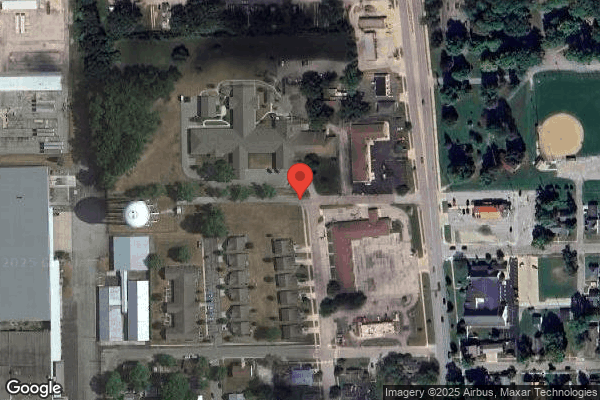

PILGRIM MANOR

222 PARKVIEW ST, PLYMOUTH, IN 46563 (574) 936-9943
Government - County 78 Beds Independent Data: November 2025
Trust Grade
35/100
#472 of 505 in IN
Last Inspection: November 2024

Within standard 12-15 month inspection cycle. Federal law requires annual inspections.

Overview

Pilgrim Manor in Plymouth, Indiana has received a Trust Grade of F, indicating significant concerns about the quality of care provided. With a state rank of #472 out of 505, this places them in the bottom half of facilities in Indiana, and they are ranked #3 out of 4 in Marshall County, meaning only one local option is better. The facility is experiencing a worsening trend, with issues increasing from 10 in 2023 to 16 in 2024. Staffing is a relative strength, with a rating of 2 out of 5 and a turnover rate of 0%, which is significantly better than the Indiana average of 47%. Although they have no fines on record and good RN coverage, recent inspections revealed serious concerns, such as a resident suffering from a painful intestinal obstruction due to improper bowel movement protocols and food being stored unsafely, affecting the potential health of all residents. This combination of strengths in staffing and weaknesses in care quality should be carefully considered by families.

Trust Score
F
35/100
In Indiana
#472/505
Bottom 7%
Safety Record
Moderate
Needs review
Inspections
Getting Worse
10 → 16 violations
Staff Stability
○ Average
Turnover data not reported for this facility.
Penalties
✓ Good
No fines on record. Clean compliance history, better than most Indiana facilities.
Skilled Nurses
○ Average
Each resident gets 41 minutes of Registered Nurse (RN) attention daily — about average for Indiana. RNs are the most trained staff who monitor for health changes.
Violations
⚠ Watch
26 deficiencies on record. Higher than average. Multiple issues found across inspections.
★☆☆☆☆
1.0
Overall Rating
★★☆☆☆
2.0
Staff Levels
★★★★☆
4.0
Care Quality
★☆☆☆☆
1.0
Inspection Score
Stable
2023: 10 issues
2024: 16 issues

The Good

  • 4-Star Quality Measures · Strong clinical quality outcomes
  • Full Sprinkler Coverage · Fire safety systems throughout facility
  • No fines on record

Facility shows strength in quality measures, fire safety.

The Bad

1-Star Overall Rating

Below Indiana average (3.1)

Significant quality concerns identified by CMS

The Ugly 26 deficiencies on record

1 actual harm
Nov 2024 11 deficiencies 1 Harm
SERIOUS (G) 📢 Someone Reported This

A family member, employee, or ombudsman was alarmed enough to file a formal complaint

Actual Harm - a resident was hurt due to facility failures

Quality of Care (Tag F0684)

A resident was harmed · This affected 1 resident

Based on record review and interview, the facility failed to follow bowel movement protocols. This resulted in the resident obtaining an ileus (a painful obstruction of the ileum or other part of the ...

Read full inspector narrative →
Based on record review and interview, the facility failed to follow bowel movement protocols. This resulted in the resident obtaining an ileus (a painful obstruction of the ileum or other part of the intestine) for 1 of 3 residents reviewed for quality of care. (Resident K) Finding includes: A record review for Resident K was completed on 11/26/2024 at 10:16 A.M. Diagnoses included, but were not limited to: Alzheimer's disease and constipation. The Quarterly Minimum Data Set (MDS) assessment, completed on 6/25/24 indicated the resident was severely cogntively impaired, was incontinent of her bladder and continent of her bowels and required some partial staff assistance for personal hygiene needs. A current Care Plan, initiated on 7/30/2024, indicated Resident K had the potential for constipation related to decreased mobility. The goal was for the resident to have a soft formed bowel movement at least every 3 days. Interventions included, but were not limited to: administer medications as ordered, check how often bowel movements occur, encourage fluid intake, give routine medications as ordered, check for bowel sounds, abdominal pain or swelling as needed, three times per week and report complaints of bowel problems to the nurse. The August 2024 physician's order recapitulation did not include orders for any as needed medications to soften stools and/or promote regular bowel movements (laxatives). The August 2024 bowel record forms indicated Resident K had a large bowel movement on 8/16/2024 during the day shift. There was no documentation of any bowel movements for Resident K in the nurse's notes or in the daily nursing bowel record form on 8/17/2024 and 8/18/2024. There was no documentation in assessments or nursing progress notes that the resident was assessed due to having gone two days without a bowel movement per the facility bowel protocol policy. On 8/19/2024 the bowel record form indicated Resident K had a small bowel movement on the evening shift. There was no documentation of any bowel movements for Resident K in the nurse's notes or in the daily nursing bowel record form from 8/20/2024 through 8/25/2024. There was no documentation in assessments or nursing progress notes that the resident was assessed due to having gone 5 days without a bowel movement. The physician was not notified and there were no PRN (as needed) medications to promote bowel movements administered to Resident K per the facility's bowel protocol policy. On 8/26/2024 during the night shift, the resident was documented as having a small bowel movement. A Physician's Progress Note, on 8/26/2024 at 10:17 P.M., indicated the family was concerned about Resident K due to abdominal swelling. An order was obtained for a 2-view abdominal x-ray. Physician Orders for Resident K, dated 8/26/2024, indicated the following medications were ordered: bisacodyl (medication to treat constipation) 5 milligrams daily, bisacodyl 10 milligram suppository (medication to treat constipation) as needed, docusate sodium (stool softener) 100 milligrams twice daily for 3 days and Milk of Magnesia (laxative) 30 milliliters as needed. A Nursing Progress Note, on 8/27/2024 at 12:29 P.M., indicated the results of the abdominal x-ray were received. The results indicated, .5.4 centimeter dilated air-filled large bowel loops within the abdomen and pelvis in keeping with ileus in the appropriate clinical setting A Nursing Progress Note, on 8/28/2024 at 12:35 A.M., indicated Resident K had no regular bowel movements after 8/16/2024. An order was received from the nurse practitioner for a bisacodyl suppository if no bowel movement after 4 hours. A Nursing Progress Note, on 8/28/2024 at 2:39 P.M., indicated new orders were obtained from the physician including: absolutely no enema, 2 doses of MiraLAX 2-3 hours apart then continue as needed for constipation, Senna Plus 50 milligrams/8.6 milligrams 2 tablets a day for 7 days then 2 tablets at night, and if no bowel movement give another suppository tonight at bedtime. The August 2024 Medication Administration Record indicated although biscodyl 5 milligram tab was ordered on 8/26/2024 to be administered twice daily until 8/29/2024, the resident did not receive any tablets until 8/29/24. Resident K was also not administered the bisacodyl suppository, docusate sodium or Milk of Magnesia from 8/26/2024 through 8/29/2024. The August bowel record indicated the resident had a small bowel movement on the evening shift of 8/26/2024 and 8/28/2024. There was no bowel movement documented on 8/27/2024 for Resident K. A Nursing Progress Note, on 8/29/2024 at 5:01 P.M., indicated Resident K has not had a bowel movement since the last orders were received and administered. A new physician's order was received to give another dose of MiraLAX if no bowel movement happened and to give MiraLAX 17 grams three times a day for 4 days. There was no bowel movement documented for Resident K on 8/29/2024 and 8/30/2024. A Nursing Progress Note, on 8/30/2024 at 11:23 A.M., indicated a physician's order was received to repeat an abdominal x-ray on 8/30/2024. A medium bowel movement on the evening shift was documented for Resident K on 8/31/2024. A Nursing Progress Note, on 9/2/2024 at 4:26 P.M., indicated Resident K's bowel sounds were present in all quadrants of the resident's abdomen. The resident's abdomen was firm and distended with discomfort noted on gentle palpation. An extra-large bowel movement was also noted. A Nursing Progress Note, on 9/2/2024 at 6:48 P.M., indicated the following results of the abdominal x-ray.dilated large bowel loops noted in the central abdomen, maximum transverse diameter of 5.5 centimeters .No significant interval change A new order was received to repeat the abdominal x-ray on 9/4/2024 and to continue with the current orders. A Nursing Progress Note, on 9/5/2024 at 1:04 P.M., indicated bowel sounds were present with slight abdominal distention noted. The resident's last bowel movement charted, on 9/5/2024, was a medium size. The physician reviewed the abdominal x-ray and gave orders to continue the currently ordered plan of care. During an interview, on 11/27/2024 at 8:53 A.M., CNA 8 indicated Resident K was a one person assist and was incontinent of bowels at times. During an interview, on 11/27/2024 at 12:53 P.M., LPN 20 indicated the facility's bowel movement regimen included the following: two days of no bowel movement to give prune juice, three days of no bowel movement to give oral laxative, four day of no bowel movement to give suppository or enema and 5 days of no bowel movement or result to call the physician. A policy was provided, on 11/27/2024 at 3:30 P.M., by the Director of Nursing. The policy titled, Bowel Protocol, indicated, .To provide effective interventions for signs and symptoms of constipation that are consistent with current standards of practice .1. Nursing staff document the resident's bowel movements each shift .2. The evening shift nurses assesses the bowel movement data daily and responds according to the protocol and/or physician orders. 3. If no bowel movement is recorded for two days: a. Assess for signs and symptoms of constipation. b. If the resident is alert and oriented, ask about any unrecorded bowel movements and assess for constipation. c. If acute abdominal symptoms are present, contact the physician immediately. 4. If no bowel movement is recorded for 3 days: a. In the absence of acute abdominal symptoms, administer a PRN [as needed] laxative or enema as ordered by the physician. b. If no PRN is ordered, contact the physician and relay the resident's status and request a laxative and/or enema. c. If acute abdominal symptoms are present, contact the physician immediately. 5. After 4 days with no bowel movement or inadequate response to previous interventions, contact the physician This citation is related to complaint investigation IN00447285. 3.1-37(a)
CONCERN (D)

Potential for Harm - no one hurt, but risky conditions existed

Resident Rights (Tag F0550)

Could have caused harm · This affected 1 resident

**NOTE- TERMS IN BRACKETS HAVE BEEN EDITED TO PROTECT CONFIDENTIALITY** Based on interview and record review, the facility failed to allow residents to exercise their rights when choosing where to eat...

Read full inspector narrative →
**NOTE- TERMS IN BRACKETS HAVE BEEN EDITED TO PROTECT CONFIDENTIALITY** Based on interview and record review, the facility failed to allow residents to exercise their rights when choosing where to eat for 3 of 3 resident reviewed for resident rights. (Resident C, D and N) Findings include: 1. During an interview on 11/22/2024 at 10:27 A.M., Resident C indicated she was not allowed to eat in her room and all meals were to be eaten in the dining room. A record review for Resident C was completed on 11/25/2024 at 8:27 A.M. Diagnosis included, but were not limited to: schizoaffective disorder (bi-polar type), depression, anxiety, extrapyramidal and movement disorder. The current diet order for Resident C indicated she was on a regular diet with thin consistency. A Quarterly Minimum Data Set (MDS) Assessment. dated 11/01/2024, indicated Resident C was cognitively intact and only required set-up assistance for eating. During an interview, on 11/26/2024 at 1:35 P.M., Resident C indicated that if you were feeling bad or just did not want to eat in the dining room, staff would not bring a tray to your room. If you were hungry, you would have to go to the dining room. She indicated she was allowed to eat in her room once, but only because staff felt she was too sick to go to the dining room. During an interview on 11/26/24 at 03:28 P.M., RN #14 indicated that the North Hall residents were more independent and could go down to the dining room and they were not allowed to get their meals in their rooms. He indicated that was the way he understood the facility's policy. RN #14 indicated he had been instructed to encourage the residents to go down to the dining room for meals, otherwise the resident would not receive a meal. During an interview on 11/27/24 at 10:58 A.M. CNA #13 indicated residents could not eat in their rooms because they were able to get up and go to the dining room. CNA #13 indicated staff were to encourage residents to go to the dining room and if they still did not want to eat in the dining room, they were not to receive a meal. 2. A record review for Resident N was completed on 11/25/2024 at 3:15 P.M. Diagnosis included, but were not limited to: vascular dementia without disturbances, depression, fibromyalgia, and anxiety. The current diet order for Resident C indicated she was on a regular diet with thin consistency. A Quarterly Minimum Data Set (MDS) Assessment, dated 11/08/2024, indicated Resident N was cognitively intact and required set-up assistance for eating. A current Care Plan, dated 7/28/2024, indicated the resident needed help with self-care related to: lack of motivation. Interventions included but were not limited to: -Eats meals in west dining room, had food in her room if she chose not to eat in the dining room. Independent with transfer, bed mobility, toileting, toileting hygiene, eating. During an interview, on 11/26/2024 at 2:50 P.M., Resident N indicated that North Hall were independent and if they did not go down to the dining room they were on their own for that meal. The resident indicated she kept food in the fridge in her room in case she did not feel like going down to the dining room because staff would not bring a tray to her room. 3. During an interview on 11/26/24 2:40 P.M., Resident D indicated that if she was not feeling good, she would have to go to the dining room for meals. She also indicated there were a couple times she did not want to go down but had to go because staff would not bring any food to her room. She indicated she was allowed to eat in her room once, but only because staff felt she was too sick to go to the dining room. A record review for Resident D was completed on 11/27/2024 at 11:20 A.M. Diagnosis included, but were not limited to: depression, anxiety, CKD, unspecified dementia without disturbances. A current care plan dated 8/9/2024 indicated the resident needed little help with self care Interventions included but were not limited to: independent in eating, eats all meals in the west dining room. The current diet order for Resident D indicated she was on a regular diet with thin consistency. A Quarterly Minimum Data Set (MDS) assessment dated [DATE], indicated Resident C was cognitively intact and only required set-up assistance for eating. During an interview on 11/27/24 at 1:22 PM., the Dietary Manager indicated she did not recall anyone on North Hall ever receiving a room tray and she did not know if resdients were allowed to eat in their rooms. She indicated she would expect staff to have asked for a room tray if a resident stayed in their room for the meal. A current policy was provided on 11/27/2024 at 3:20 P.M. by the DON, titled, Quality of Life-Residents Self Determination and Participation. The policy included the following: Each resident is allowed to choose activities, schedules and health care that are consistent with his or her interests, values, assessments and plans of care, including: daily routine, such as sleeping and waking, eating . 3.1-3(u)(1) 3.1-3(u)(3)
CONCERN (D)

Potential for Harm - no one hurt, but risky conditions existed

Deficiency F0558 (Tag F0558)

Could have caused harm · This affected 1 resident

Based on record review and interview, the facility failed to provide quarterly statements for 2 of 2 residents reviewed for personal funds. (Residents 5 & E) Findings include: 1. During an interview, ...

Read full inspector narrative →
Based on record review and interview, the facility failed to provide quarterly statements for 2 of 2 residents reviewed for personal funds. (Residents 5 & E) Findings include: 1. During an interview, on 11/22/2024 at 10:46 A.M., Resident 5 indicated she had not received quarterly statements for her personal funds account at the facility. She indicated if she needed to know her account's balance, the Business Office Manager (BOM) would verbally tell her the balance of the account. A record review for Resident 5 was completed on 11/25/2024 at 9:32 A.M. Diagnoses included, but were not limited to: dementia with psychotic disturbance, psychotic disorder with delusions, bipolar disorder, generalized anxiety disorder and depressive disorder. An Annual Minimum Data Set (MDS) assessment, dated 11/13/2024, indicated Resident 5 was cognitively intact. 2. During an interview, on 11/21/2024 at 2:38 P.M., Resident E indicated he had only received one quarterly statement since his admission to the facility, on 7/28/2023. A record review for Resident E was completed on 11/25/2024 at 10:53 A.M. Diagnoses included, but were not limited to: heart failure, atrial fibrillation, and hypertensive heart with heart failure. A Quarterly Minimum Data Set (MDS) assessment, dated 11/6/2024, indicated Resident E was cognitively intact. During an interview, on 11/27/2024 at 12:59 P.M., the BOM indicated the residents received personal fund statements whenever they asked for a statement. She indicated she tried to give the residents a statement anytime they withdrew money. The statement included the beginning and ending balances of their account. She indicated there were no specific time frames for personal fund statements to be provided to the residents. The Business Office Manager was unable to provide any documentation the residents and/or their representatives had received quarterly resident fund account statements. A policy was provided on 11/27/2024 at 3:30 P.M. by the Director of Nursing. The policy titled, Accounting and Records, indicated, .2. The individual financial record will be available through quarterly statements and on request to the resident or his or her legal representative 3.1-6(g)
CONCERN (D)

Potential for Harm - no one hurt, but risky conditions existed

Assessment Accuracy (Tag F0641)

Could have caused harm · This affected 1 resident

Based on interview and record review, the facility failed to complete a self administration of medication assessment timely for 1 of 1 resident reviewed for self administration of medications. (Reside...

Read full inspector narrative →
Based on interview and record review, the facility failed to complete a self administration of medication assessment timely for 1 of 1 resident reviewed for self administration of medications. (Resident N) Finding includes: During an interview, on 11/26/2024 at 9:11 A.M., Resident N indicated the nurse left her medications in her room and she took her medications herself. During an interview, on 11/26/2024 at 9:13 A.M., QMA 16 indicted it was okay to leave Resident N's medications in her room because she was alert and oriented. A current Care Plan, initiated on 7/28/2024, indicated the resident had requested to administer his/her own medications. Interventions included: The nurse was to bring medications to her room, all medications may be left with resident to take without assistance except for narcotics. A current physician order, dated 8/18/2024, indicated the following: may leave medications at bedside every shift. A Self Administration of Medications Assessment, dated 5/28/2024, was provided by the Director of Nursing and indicated Resident N was able to self administer medications. The Director of Nursing indicated the last Self Administration of Medication Assessment was completed on 5/2024 and she was unable to provide more recent assessments for August or November. On 11/27/2024 at 12:41 P.M.,the Director of Nursing provided the policy titled, Self Administration of Medications, dated 5/20/2020, and indicated the policy was the one currently use by the facility. The policy indicated . 3. The interdisciplinary team determines the resident's ability to self-administer medications by means of a skill assessment conducted on a quarterly basis 3.1-50(a)(1)
CONCERN (D)

Potential for Harm - no one hurt, but risky conditions existed

Comprehensive Care Plan (Tag F0656)

Could have caused harm · This affected 1 resident

2. During an observation, on 11/21/2024 at 11:39 A.M., Resident 22 had her right pinky finger splinted with two flat, wooden sticks and secured with paper tape. During an observation, on 11/25/2024 a...

Read full inspector narrative →
2. During an observation, on 11/21/2024 at 11:39 A.M., Resident 22 had her right pinky finger splinted with two flat, wooden sticks and secured with paper tape. During an observation, on 11/25/2024 at 12:26 P.M., Resident 22 wore a firm black, cloth splint on her right wrist and 5th digit. The medical record for Resident 22 was reviewed on 11/25/2024 at 8:41 A.M. Diagnoses included, but were not limited to: resistant hypertension, Alzheimer's disease, depression, diabetes mellitus, chronic obstructive pulmonary disease, heart failure, dementia, chronic fatigue syndrome and unsteadiness on feet. A Quarterly Minimum Data Set (MDS) assessment, dated 10/24/2024, indicated the resident was mildly cognitively impaired with no hallucinations or delusions. The MDS indicated the resident had no falls since the last assessment. The current Physician's Orders included an order for an x-ray of the right wrist one time only for pain, dated and completed on 11/16/2024. An Occupational Therapy Evaluation, dated 11/21/2024, indicated Resident 22's recommendations included wearing a splint full-time with skin checks and hygiene after every meal and prior to bedtime. There was no care plan for Resident 22 regarding the use of splints. During an interview, on 11/26/2024 at 11:31 A.M., the Director of Nursing (DON) was unable to provide Resident 22's care plan for the splint use and verbalized there was not a care plan for the splint. Based on record review and interview, the facility failed to ensure a comprehensive plan of care was created for a resident with medical conditions of antiplatelet use, seizure disorder, gastroesophageal reflux disease (GERD) and glaucoma (Resident 39), a resident with splints to the wrist and fifth finger (Resident 22), and a resident with a pacemaker (Resident 29) for 3 of 19 residents reviewed for comprehensive care plans. Findings include: 1. A record review for Resident 39 was completed on 11/25/2024 at 10:19 A.M. Diagnoses included, but were not limited to: hemiplegia, seizure disorder, GERD and glaucoma. A Quarterly Minimum Data Set (MDS) assessment indicated Resident 39 received an antiplatelet medication, had range of motion limitations to one upper and lower extremity and had moderate impairment of her vision. A Physician's Order, dated 8/20/3034, indicated Resident 39 received clopidogrel (antiplatelet medication) 75 milligrams daily related to hemiplegia, levetiracetam (antiseizure medication) 750 milligrams twice daily for seizures, carbamazepine (antiseizure medication) 200 milligrams twice daily for seizures, pantoprazole (proton pump inhibitor) 40 milligrams daily for GERD and dorzolamide-timolol (topical beta blocker) 2 percent one drop in both eyes twice daily for glaucoma. A review of Resident 39's comprehensive plan of care indicated Resident 39 did not have a plan of care for antiplatelet use, seizure disorder, GERD or glaucoma. During an interview, on 11/27/2024 at 1:15 P.M., the Director of Nursing indicated Resident 39 should have had a plan of care for antiplatelet use, seizure disorder, GERD and glaucoma. 3. The record for Resident 29 was reviewed on 11/27/2024 at 9:47 A.M. Diagnoses included, but were not limited to: obesity, chronic ischemic heart disease, pacemaker, spinal stenosis, chronic pain syndrome,and hypertension. An admission Nursing Assessment, dated 10/31/2024, indicated the resident had a pacemaker. Under the comments section was documented: resident stated that she hasn't had her pacemaker checked since last year. The History and Physical form from the hospital dated, 10/31/2024, indicated under surgical history was documented as Pacemaker/Defibrillator 2020. The clinical record lacked a care plan for the use and care of the pacemaker. During an interview, on 11/27/2024 at 10:39 A.M., the Director of Nursing indicated there should have been a care plan for the pacemaker on the chart. On 11/27/2024 at 12:42 P.M., the Director of Nursing provided the policy titled, Care Plans, Comprehensive Person -Centered, dated 9/2022, and indicated the policy was the one currently used by the facility. The policy indicated . 1. The Interdisciplinary Team (IDT), in conjunction with the resident and his/her family or legal representative, develop and implements a comprehensive, person-centered care plan for each resident . Assessments of residents are ongoing and care plans are revised as information about the residents and the residents' conditions change 3.1-35(a)
CONCERN (D)

Potential for Harm - no one hurt, but risky conditions existed

Accident Prevention (Tag F0689)

Could have caused harm · This affected 1 resident

Based on record review and interview, the facility failed to prevent a burn for 1 of 1 resident reviewed for accident hazards. (Resident M) Finding includes: A review of a facility reported incident w...

Read full inspector narrative →
Based on record review and interview, the facility failed to prevent a burn for 1 of 1 resident reviewed for accident hazards. (Resident M) Finding includes: A review of a facility reported incident was reviewed on 11/25/2024 at 11:12 A.M. The facility reported, on 11/20/2024 at 9:50 P.M., during skin rounds a nurse discovered an area on the bilateral inner legs of Resident M to be blistered. It was believed Resident M spilt soup on her lap. An investigation was initiated. The follow-up investigation indicated after interviewing staff, there were no witnesses to determine whether a hot liquid had spilt on Resident M's lap. Resident M required staff assistance to eat. The physician had examined the wounds and determined the wounds to be nonthermal. The resident's care plan was reviewed and updated. A Witness Statement from CNA 16, dated 11/19/2024, indicated, .Around supper time at 6:10 P.M., she has her dinner in front of her. I got up to give [another resident name] his dinner. Start [sic] to feed [Resident M] when I seen she was missing her soup. I said to my co-worker, ok, you got no soup -n- [Resident M] said yes I did. I said were [sic, where] is it. She on my lap. I said omg [oh my god]. It was hot. So [I] put a cold wash cloth on her but I seen it was red. So I got her to bed. Check her again still red. N- on-11/20/2024 went to get her cleaned up I saw it has got red again. But yesterday I did tell the nurse, because it te [tell] my co/work [coworker] it was red. So tonight it still red to [so] told the nurse to check again. A Witness Statement written by LPN 17, dated 11/20/2024, indicated, on 11/19/2024, CNA 16 let her know Resident M had some redness on her leg. LPN 17 indicated observation of Resident M's legs indicated they were light pink in color. LPN 17 inquired to CNA 16 what happened and CNA 16 indicated she thought Resident M spilt soup on herself, but mentioned it happening a different day. LPN 17 indicated during Resident M's skin assessment; Resident M had blisters. A Witness Statement written by RN 18, dated 11/20/2024, indicated LPN 17 asked for a second opinion on Resident M's skin. RN 18 indicated upon observation there were small blisters between her thighs. LPN 17 indicated CNA 16 reported soup had fallen on Resident M's lap. CNA 16 had indicated she believed the incident happened on Sunday (11/17/2024) when she was working with CNA 19. A Witness Statement written by CNA 19, dated 11/20/2024, indicated Resident M did not have any soup. As CNA 19 had observed the situation she noticed Resident M had spilt her soup onto her lap. CNA 16 and CNA 19 took Resident M's lap blanket off and witnessed a red area on her left inner thigh. CNA 19 indicated LPN 17 observed the area and the incident occurred on 11/19/2024. A record review for Resident M was completed on 11/26/2024 at 2:18 P.M. Diagnoses included, but were not limited to: Alzheimer's disease, contracture of right hand and physical debility. A Quarterly Minimum Data Set (MDS) assessment, dated 9/20/2024, indicated Resident M had severe cognitive deficiency, no impairment of the extremities, and required maximal/substantial assistance for eating. A Nursing Progress Note, on 11/20/2024 at 9:49 P.M., indicated during a skin assessment Resident M was noted to have blisters on her right and left thigh. A Hot Liquid Safety Evaluation, on 11/21/2024 at 10:05 A.M., for Resident M was completed. The evaluation indicated Resident M had cognitive impairment or drowsiness that impacted the resident's perception and awareness to hot liquids and safety measures including, but not limited to: altered comprehension and/or memory impairment, altered muscle strength of the arms, hands, and fingers, tremors or abnormal muscle movements of the arms, altered range of motion or contractures of the joints(s) to the dominant side of the wrist, fingers and hand, episodes of behavior which could cause injury if occurred while Resident M was handling hot liquids, and a history of spilling liquids. The interventions included a cup with lid or other adaptive cup, staff assistance and to drink hot liquids at the dining table. A Nursing Progress Note, on 11/21/2024 at 12:18 P.M., indicated Resident M was seen by the nurse practitioner and orders were received for Silvadene cream twice daily with nonadherent dressing. A Physician History and Physical, dated 11/21/2024, indicated Resident M had the diagnoses of non-thermal blister and contact with hot food. A Weekly Non-Pressure Other Injury Evaluation, on 11/21/2024 at 1:23 P.M., indicated an initial facility acquired right thigh toward the back blister measuring 7 centimeters by 1 centimeter. A Weekly Non-Pressure Other Injury Evaluation, on 11/21/2024 at 1:24 P.M., indicated an initial facility acquired left lower leg blister from a burn measuring 4 centimeters by 2 centimeters. A Care Plan for prevention for burns was not developed. During an interview, on 11/27/2024 at 12:55 P.M., LPN 20 indicated a Hot Liquid Safety Evaluation would be completed on admission and quarterly to determine risk of burns. During an interview, on 11/27/2024 at 3:32 P.M., the Regional Director of Nursing Services indicated that the blisters were determined nonthermal from the physician, so further action was not needed. A policy was provided, on 11/27/2024 at 3:30 P.M., by the Director of Nursing. The policy titled, Safety of Hot Liquids, indicated, .Residents will be evaluated for safety concerns and potential for injury from hot liquids. Appropriate precautions will be implemented to maximize choice of beverage while minimizing the potential for injury .1. The potential for burns from hot liquids is considered an ongoing concern among residents with weakened motor skills, balance issues, impaired cognition, and nerve or musculoskeletal conditions. 2. Residents with these or other conditions may suffer from accidental burns and related complications stemming from thinner, more fragile skin that may burn more quickly and severely and take longer to heal. 3. Residents who prefer hot beverages with meals [i.e., coffee, tea, soup, etc.] will not be restricted from these options. Instead, staff will conduct regular Hot Liquid Safety Evaluation as indicated, and document the risk factor for scalding and burns in the care plan This citation is related to complaint investigation IN00447285. 3.1-45(a)(2)
CONCERN (D)

Potential for Harm - no one hurt, but risky conditions existed

Respiratory Care (Tag F0695)

Could have caused harm · This affected 1 resident

Based on observation, record review and interview the facility failed to ensure nebulizer equipment and nasal cannula tubing were stored and dated properly (Resident 16), failed to ensure nasal cannul...

Read full inspector narrative →
Based on observation, record review and interview the facility failed to ensure nebulizer equipment and nasal cannula tubing were stored and dated properly (Resident 16), failed to ensure nasal cannula tubing was changed per physician orders and oxygen concentrator filters were cleaned as needed (Resident 16) and failed to provide oxygen hydration equipment (Resident F) for 3 of 3 residents reviewed for respiratory therapy. Findings include: 1. During an observation, on 11/21/2024 10:13 A.M., the handheld aerosol nebulizer for Resident 53 was lying on the bedside table. There was no date on the oxygen tubing or on the nasal cannula. During an interview, on 11/21/2024 at 11:25 A.M., Resident 53 indicated the staff did not normally store the handheld aerosol nebulizer in bags. During an interview, on 11/21/2024 at 2:54 P.M., Resident 53 indicated the staff had placed a dated paper tape label on her nasal cannula about an hour ago. She indicated the nasal cannula was not changed. A date of 11/21/2024 was observed written on paper tape attached to the nasal cannula. During an observation, on 11/22/2024 at 9:57 A.M., the handheld aerosol nebulizer was observed lying on the over-the-bed table. During an observation, on 11/27/2024 at 8:48 A.M., the handheld aerosol nebulizer was observed attached to the nebulizer machine without a covering. A record review for Resident 53 was completed on 11/25/2024 at 12:16 P.M. Diagnoses included, but were not limited to: pneumonia, acute and chronic respiratory failure, obstructive sleep apnea and chronic obstructive pulmonary disease (COPD). A Quarterly Minimum Data Set (MDS) assessment, dated 10/1/2024, indicated Resident 53 was cognitively intact and received oxygen therapy. A Physician's Order, dated 8/18/2024, included the following: -oxygen at 2 liters per minute via nasal cannula for shortness of breath and change oxygen tubing every night shift on Sundays. A Physician's Order, dated 9/8/2024, indicated Albuterol Sulfate nebulization solution 2.5 milligrams per 3 milliliters inhale 3 milligrams via nebulizer two times a day for COPD. There was not an order to change or store the handheld aerosol nebulizer equipment. A current Care Plan, intiated on 7/27/2024, indicated Resident 53 had the potential for ineffective breathing related to chronic lung disease, pneumonia, acute and chronic respiratory failure with hypoxia, obstructive sleep apnea and COPD. The interventions included, but were not limited to, administer oxygen as ordered, change oxygen tubing weekly and to give breathing treatments as ordered. During an interview, on 11/27/2024 at 8:49 A.M., LPN 2 indicated nebulizer equipment should be stored in a bag with the resident's name on the bag and the oxygen and nebulizer tubing should be dated. 2. The record for Resident 16 was reviewed on 11/25/2024 at 9:42 A.M. Diagnoses include, but were not limited to: chronic diastolic congestive heart failure, pacemaker, chronic obstructive pulmonary disease, and chronic kidney disease stage 3. During an observation, on 11/21/2024 at 3:25 P.M., Resident 16's oxygen tubing was dated 11/12/2024, and the filter to the back of the concentrator was covered with dust. During an observation, on 11/22/2024 at 9:47 A.M., the filter to the back of the oxygen concentrator was covered with dust. During an observation. on 11/26/2024 at 9:48 A.M., the filter to the back of the oxygen concentrator was covered with dust. Current Physician Orders included: Change O2 tubing and/or updraft tubing, including oxy ear to tubing every night shift on Thursday for Equipment change date and initial tubing. A current Care Plan, initiated on 10/17/2024, indicated the resident has Oxygen Therapy related to chronic obstructive pulmonary disease (COPD). Interventions included, but were not limited to: Give medications as ordered by physician. Monitor/document side effects and effectiveness. The resident has O2 at 2L (liters) via nasal prongs continuously to keep saturations above or equal to 90% as ordered. During an interview, on 11/26/2024 at 10:05 A.M., LPN 5 indicated the filter should have been cleaned and was not. 3. The record for Resident F was reviewed on 11/25/2024 at 12:08 P.M. Diagnoses included, but were not limited to: retention of urine, neuromuscular dysfunction of the bladder, dementia, and Legionnaires disease. During an observation, on 11/22/2024 at 9:30 A.M., Resident F's oxygen tubing was applied straight into the machine with no humidification water bottle. During an observation, on 11/25/2024 at 9:12 A.M., Resident F's oxygen tubing was applied straight into the machine with no humidification water bottle. During an observation, on 11/26/2024 at 9:45 A.M., Resident F's oxygen tubing was applied straight into the machine with no humidification water bottle. A current Physician Order, initiated on 10/24/2024, indicated the following: Change oxygen tubing, and humidification bottle, clean oxygen filter, inspect easy foam wraps (replace if soiled or missing) every night shift every Thursday and as needed. During an interview, on 11/26/2024 at 10:03 A.M., LPN 5 indicated there should be a humidification bottle on the concentrator. On 11/27/2024 at 12:40 P.M. the Director of Nursing provided the policy titled, Oxygen Administration, dated 2010, and indicated the policy was the one currently used by the facility. The policy indicated . Equipment and Supplies: The following equipment and supplies will be necessary when performing this procedure . 3. Humidifier bottle . 12. Check the mask, tank, humidifying jar, ect., to be sure they are in good working order and area securely fastened. Be sure there is water in the humidifying jar and the the water level is high enough that the water bubbles as oxygen flows through 3.1-47(a)(6)
CONCERN (D) 📢 Someone Reported This

A family member, employee, or ombudsman was alarmed enough to file a formal complaint

Potential for Harm - no one hurt, but risky conditions existed

Pharmacy Services (Tag F0755)

Could have caused harm · This affected 1 resident

Based on observation, record review and interview, the facility failed to ensure physician ordered medications were given and available for 1 of 9 residents whose medications were reviewed. In additio...

Read full inspector narrative →
Based on observation, record review and interview, the facility failed to ensure physician ordered medications were given and available for 1 of 9 residents whose medications were reviewed. In addition, the facility failed to ensure narcotics were counted and documented every shift for 1 of 4 narcotic count logbooks reviewed. (Residents K and North narcotic count sheets) Findings include: 1. A record review for Resident K was completed on 11/26/2024 at 10:16 A.M. Diagnoses included, but were not limited to: Alzheimer's disease and constipation. A Significant Change Minimum Data Set (MDS) assessment, dated 9/13/2024, indicated Resident K had significant cognitive impairment and was frequently incontinent of bowel. Physician Orders for Resident K, dated 8/26/2024, indicated the following medications: bisacodyl 5 milligrams daily, bisacodyl 10 milligram suppository as needed, docusate sodium 100 milligrams twice daily for 3 days and Milk of Magnesia 30 milliliters as needed. (medications to soften stools and/or promote regular bowel movements) The August 2024 Medication Administration Record indicated although biscodyl 5 milligram tab was ordered on 8/26/2024, the resident did not receive any tablets until 8/29/24. There was no documentation in Nursing Progress notes or the facility's bowel tracking system to indicate Resident K had had regular bowel movments from 8/26/2024 through 8/29/2024. The August 2024 Medication Administration Record indicated although docusate sodium 100 milligrams capsule twice daily was ordered on 8/26/2024 to be given through 8/29/2024, the resident did not received any capsules. The August 2024 Medication Administration Record indicated although milk of magnesia 30 milliliters as needed was ordered on 8/26/2024, the resident had not received any doses. The August 2024 Medication Administration Record indicated although bisacodyl 10 milligram suppository as needed was ordered on 8/26/2024, the resident had not received any doses. 2. A Medication Storage observation of the 400 hall medication cart was completed, on 11/25/2024 at 11:03 A.M., with LPN 2. The the narcotic log book lacked 24 signatures to show a narcotic count was completed. During an interview, on 8/9/2024 at 11:04 A.M., LPN 2 indicated the narcotic log sheets should have been signed every shift. On 11/27/2024 at 12:41 P.M., the Director of Nursing provided the policy titled, Ordering and Receiving Medications, dated 5/20/2020, and indicated the policy was the one currently used by the facility. The policy indicated .Medications and related products are received from the pharmacy in a timely manner. The facility maintains accurate records of medications ordered and received . b. If not automatically refilled by the pharmacy, refills are ordered as follows: i. Reorder medication when a four day supply remains, in advance of need, to assure an adequate supply is on hand. When reordering medication that requires special processing, please contact the pharmacy for special processing On 11/27/2024 at 12:45 P.M., the Director of Nursing provided the policy titled, Controlled Medication Storage, dated 5/20/2020, and indicated the policy was the one currently used by the facility. The policy indicated . 1. Regulations required that the facility have a system to account for the receipt, usage, disposition, and reconciliation of all controlled medication(s). The system includes but is not limited to: .7. At each shift change, a physical inventory of all controlled medication(s), including the emergency supply, is conducted by two (2) licensed nurses and is documented on the controlled medication accountability record per facility procedure This citation relates to Complaint IN00442061. 3.1-25(a) 3.1-25(e)(2) 3.1-25(e)(3) 3.1-25(g)(3)
CONCERN (D) 📢 Someone Reported This

A family member, employee, or ombudsman was alarmed enough to file a formal complaint

Potential for Harm - no one hurt, but risky conditions existed

Deficiency F0761 (Tag F0761)

Could have caused harm · This affected 1 resident

**NOTE- TERMS IN BRACKETS HAVE BEEN EDITED TO PROTECT CONFIDENTIALITY** Based on observation, interview and record review, the facility failed to ensure medications were stored appropriately and medic...

Read full inspector narrative →
**NOTE- TERMS IN BRACKETS HAVE BEEN EDITED TO PROTECT CONFIDENTIALITY** Based on observation, interview and record review, the facility failed to ensure medications were stored appropriately and medication carts were free of loose pills for 2 of 2 medication carts observed. (400 hall medication cart and 100 hall medication cart) Findings include: 1. During a medication storage observation, on [DATE] at 11:03 A.M., with LPN 2 on the 400 hall med cart, the following was observed: 6 loose pills in 3 of the 4 main drawers. During an interview, on [DATE] at 11:09 A.M., LPN 2 indicated the loose pills should not be in the medication cart. 2. During a medication storage observation, on [DATE] at 11:16 A.M., with R.N. 15 on the 100 hall medication cart, the following was observed: - a box of glucose test strips that had expired on [DATE]. - 3 loose pills in 2 drawers. - a opened container of Miralax (laxative) with no opened date. During an interview, on [DATE] at 11:18 A.M., R.N. 15 indicated the loose pills should not be in the medication cart and the laxative should have a date opened in it. On [DATE] at 12:45 P.M., the Director of Nursing provided the policy titled, Medication Cart Disinfecting , undated and indicated the policy was the one currently used by the facility. The policy indicated .It is the policy of this facility that the medication cart will be maintained in a clean and orderly manner at all times 3.1-25(j)
CONCERN (D)

Potential for Harm - no one hurt, but risky conditions existed

Infection Control (Tag F0880)

Could have caused harm · This affected 1 resident

Based on observation, record review and interview, the facility failed to ensure enhanced barrier precautions were in place for 1 of 1 residents observed during wound care. (Resident 60) and failed to...

Read full inspector narrative →
Based on observation, record review and interview, the facility failed to ensure enhanced barrier precautions were in place for 1 of 1 residents observed during wound care. (Resident 60) and failed to store catheter tubing and drainage bags appropriately for 1 of 2 residents reviewed for catheters (Resident F). Findings include: 1. The medical record for Resident 60 was reviewed on 11/25/2024 at 9:04 A.M. Diagnoses included, but were not limited to: rhabdomyolysis, paroxysmal atrial fibrillation, depression, anxiety, neuromuscular dysfunction of bladder, pressure ulcer of left buttock, dementia and diabetes mellitus. A Quarterly Minimum Data Set (MDS) assessment, dated 8/14/2024, indicated Resident 60 was severely cognitively impaired. The MDS indicated Resident 60 was dependent for eating, oral hygiene, toileting, showering/bathing, upper and lower body dressing, footwear and personal hygiene. Resident had an indwelling urinary catheter and was always incontinent of bowel. Resident 60 had one pressure ulcer that was present upon admission. A Physician's Order for Resident 60, dated 8/26/2024, indicated to maintain enhanced barrier precautions every shift for precautions. A current Care Plan, reviewed on 11/13/2024, indicated Resident 60 had an unstageable pressure ulcer to the coccyx. Interventions included but were not limited to: apply treatments as ordered. During an observation, on 11/25/2024 at 9:27 A.M., an Enhanced Barrier Precaution instruction sign was present and visible next to Resident 60's television on the wall. During an observation of care, on 11/25/2024 at 2:02 P.M., Employee 10, Employee 12 and Employee 4 gathered in Resident 60's room and performed hand hygiene. Employee 10 placed a barrier on the bedside table and placed wound care supplies on top of barrier. Employee 10, 12, and 4 all wore clean gloves but none of the employees wore gowns or face masks. Both Employee 12 and 4 handled Resident 60's body while Employee 10 performed the dressing change. During an interview, on 11/27/2024 at 10:56 A.M., Employee 11 indicated the term Enhanced Barrier Precautions (EBP) meant staff were required to wear gowns, gloves, and sometimes a mask, depending on the task performed in the resident room. Employee 11 indicated EBP was indicated for staff when a resident required urinary catheter care and/or wound care. During an interview, on 11/27/2024 at 11:05 A.M., Employee 3 indicated Enhanced Barrier Precautions meant staff were required to wear a gown and gloves when the staff gave residents Foley care and wound care. 2. The record for Resident F was reviewed on 11/25/2024 at 12:08 P.M. Diagnoses included, but were not limited to: retention of urine, neuromuscular dysfunction of the bladder, dementia, and Legionnaires disease. Current Physician Orders for Resident F included the following: 16 French Foley catheter with 10 cc balloon with drainage bag to gravity. May change as needed for leakage, dislodgement or occlusion. A current Care Plan, dated 8/12/2024, indicated the resident had the potential for a urinary tract infection related to indwelling catheter due to urine retention manifested by fever, increase in confusion. Interventions included but were not limited to: Change and maintain 16 FR Foley catheter with 10 cc in balloon, with drainage bag to gravity as ordered. Empty catheter every shift and record output. Keep catheter drainage bag inside an outer bag for covering- Keep tubing kink free. Watch for blocked or encrusted catheter, drainage tubing or bag and change as needed. Watch for complications of catheter use: urine leakage, pink or blood tinged urine, bladder pain or spasms. During an observation, on 11/25/2024 at 12:22 P.M., Resident F's urinary catheter drainage bag was resting on the floor. The urinary drainage bag had a hard plastic box attached to the outside with numbers of ml's (milliliter) documented on the plastic box. The box contained over 400 ml's of dark orange colored urine. The Foley urinary drainage tube was filled with urine and was not able to drain into the drainage bag. During an observation, on 11/26/2024 at 9:53 A.M., the urinary drainage tube was on the floor. The box on the outside of the drainage bag was filled with over 400 ml of dark urine. The drainage tube had urine in it and was unable to drain into the drainage bag. During an interview, on 11/26/24 at 10:12 A. M., LPN 5 indicated the drainage bag was the one the resident had when she was admitted from the hospital and we don't use those and indicated the urinary drainage tubing should not be on the floor. On 11/21/2024 at 2:30 P.M., the Administrator provided a policy titled, Enhanced Barrier Precautions, dated 4/12/2024 and indicated the policy was the one currently used by the facility. The policy indicated .Enhanced Barrier Precautions are to be implemented in addition to Standard Precautions .when facility identifies any resident with .chronic wounds . On 11/27/2024 at 12:41 P.M., the Director of Nursing provided the policy titled, Catheter Care, Urinary, dated 2014, and indicated the policy was the one currently used by the facility. The policy indicated . Infection Control: . b. Be sure the catheter tubing an drainage bag are kept off the floor. c. Empty the drainage bag regularly 3.1-18(a)
CONCERN (E)

Potential for Harm - no one hurt, but risky conditions existed

Food Safety (Tag F0812)

Could have caused harm · This affected multiple residents

Based on observation, record review and interview, the facility failed to ensure food was stored and prepared in a sanitary manner for 1 of 1 kitchens observed. This deficient practice had the potenti...

Read full inspector narrative →
Based on observation, record review and interview, the facility failed to ensure food was stored and prepared in a sanitary manner for 1 of 1 kitchens observed. This deficient practice had the potential to affect 71 of 73 residents who consumed food from the kitchen. Findings include: During initial kitchen observations, on 11/21/2024 from 9:30 A.M. through 9:48 A.M. with the Dietary Manager (DM), the following was observed: - Opened cream base soup without an open date and stored unsealed. - Opened old fashioned biscuit gravy mix without an open date and stored unsealed. - Opened bag of coconut stored unsealed. - Opened pasta with no open date. - Opened chopped garlic sitting on a shelf with directions of to be refrigerate. - Spices of garlic herb seasoning, granulated garlic, granulated onion, parsley flakes and onion powder with no documented open date. - Mini freezer with heavy ice buildup. During an interview, on 11/21/2024 at 9:49 A.M., the Dietary Manager indicated the opened bags of food in the dry storage should have been sealed and/or in a baggie and have an open date documented on them, the minced garlic should have been refrigerated and the spices should have open dates on the containers. During an observation, on 11/26/2024 at10:30 A.M., the cream-based soup mix was still opened and not sealed. The mini freezer had heavy ice buildup. During an observation, on 11/26/2024 at 10:47 A.M., the sanitation bucket at the prep counter and at the dishwashing machine was tested for proper concentration. The test strip indicated a concentration of zero sanitation chemicals. During an interview, on 11/26/2024 at 10:49 A.M., the Dietary Manager indicated the concentration on the strip should have been between 200-400. During an interview, on 11/26/2024 at 2:12 P.M., the Dietary Manager indicated after changing the sanitation buckets, the buckets were tested again for concentration. The test strip indicated zero concentration. She indicated she had the maintenance department look at the automated sanitation disbursement system and the sanitation solution was not flowing through the tubing. It was unclear how long the chemical had not been mixing properly. During an interview, on 11/27/2024 10:35 A.M., the Dietary Manager indicated the mini freezer was not on a defrosting schedule, but the mini freezer was usually unplugged about every month and set outside to defrost. A policy was provided, on 11/27/2024 at 3:30 P.M., by the Director of Nursing. The policy titled, Dietary Stock Procedure, indicated, .To be sure all stock is properly put away as soon as possible after delivery .4. Bulk items must be properly dated, with date received, expiration date, open date and new expiration date if needed .5. All food needs to have open date on them once opened & expiration date, if it changes A policy was provided, on 11/27/2024 at 3:30 P.M., by the Director of Nursing. The policy titled, Freezer Cleaning, indicated, .Freezers will be defrosted as needed [when frost is ½ inch thick, the freezer should be defrosted], or per the manufacturer's instructions A policy was provided, on 11/27/2024 at 3:30 P.M., by the Director of Nursing. The policy titled, Cleaning cloths, Pads, Mops & Buckets, indicated, .Cleaning cloths should be kept in a container of clean sanitizing solution between use .Periodically test the sanitizing solution to assure that it maintains the correct concentration 3.1-21(h)(2) 3.1-21(h)(3)
Aug 2024 5 deficiencies
CONCERN (D) 📢 Someone Reported This

A family member, employee, or ombudsman was alarmed enough to file a formal complaint

Potential for Harm - no one hurt, but risky conditions existed

Deficiency F0604 (Tag F0604)

Could have caused harm · This affected 1 resident

**NOTE- TERMS IN BRACKETS HAVE BEEN EDITED TO PROTECT CONFIDENTIALITY** Based on interviews and record review, the facility failed to ensure 1 of 1 residents reviewed for restraints were free from phy...

Read full inspector narrative →
**NOTE- TERMS IN BRACKETS HAVE BEEN EDITED TO PROTECT CONFIDENTIALITY** Based on interviews and record review, the facility failed to ensure 1 of 1 residents reviewed for restraints were free from physical restraints, (Resident C). Finding includes: During an interview on 8/22/24 at 8:45 A.M., Employee 16 indicated Resident C, had been secured to his wheelchair with a sheet by two staff members. Employee 16 indicated on the evening of 8/13/24, Employees 4 and 5 placed a sheet around the Resident C while he was in his wheelchair and Employee 4 tied the sheet around the back of the chair, while the resident was on their wing (West Wing) for supervision. Employee 16 indicated when Employee 14 took the resident back to his room on the East Wing, it was discovered the sheet was tied around the back of the chair. Employee 14 then reported the incident to Employees 15 and 16. Employee 16 indicated Employee 15 reported the incident to the Administrator immediately, but neither Employee 4 nor Employee 5 were sent home pending an investigation. During an interview, on 8/22/24 at 1:00 P.M., Employee 5 indicated she had worked the day shift on 8/13/24 when Resident C was being supervised on the west hall. Employee 5 indicated Resident C was reaching for things, was very active in his wheelchair, and he kept trying to stand up from the wheelchair. Employee 5 indicated she was giving shift report to Employee 4 while supervising Resident C, who was very active in his chair. Employee 5 indicated Employee 4 got a bed sheet from the linen closet and she and Employee 4 folded the sheet in a triangle shape and put it over the resident's lap while he was in his wheelchair. Employee 5 indicated Employee 4 then tied the ends of the sheet together around the back of the resident's wheelchair. Employee 5 demonstrated folding a flat bed sheet into an elongated triangle, then demonstrated how she and Employee 4 placed it over the Resident C's lap and how Employee 4 tied the sheet together behind the back of the wheelchair. Employee 5 indicated the resident was secured to the chair to keep the resident from falling forward and from getting up out of the wheelchair. During a telephone interview, on 8/22/24 at 4:06 P.M., Employee 4 indicated she and Employee 5 had placed a bed sheet over Resident C's lap to give him dignity. Employee 4 indicated she tied the ends of the sheet together at the back of the wheelchair to secure the sheet and it was not intended to keep the resident from moving or from getting up out of the chair. Employee 4 indicated the resident was able to move around while seated in his chair with the sheet in place. Employee 4 indicated even though the sheet was over him and tied together at the back of his wheelchair, it was not meant to keep him from moving in the wheelchair and indicated it (the use of the tied bed sheet) was, all in how you perceive it. During an interview, on 8/22/24 at 3:40 P.M., the Director of Nursing indicated if Resident C had been secured to the wheelchair utilizing a bed sheet, the intervention was inappropriate and should have been reported to management. During an interview on 8/23/24 at 5:00 P.M., Employee 13 indicated, on 8/14/24, it was reported to her that on 8/13/24, Employee 4 had tied Resident C to his wheelchair with a sheet. During an interview on 8/26/24 at 8:45 A.M., the Administrator, indicated the incident involving Resident C being tied to his wheelchair was reported to her around 8/13/24. She indicated it was reported Employee 5 had used a bed sheet to secure Resident C to his wheelchair. The Administrator indicated she believed on 8/7/24, Employee 16 had reported that Employee 4 had placed a sheet over Resident C's lap and tied the sheet behind his wheelchair. The Administrator indicated the Director of Nursing did interview Employee 4. The Administrator indicated the facility failed to investigate the allegations any further. The clinical record for Resident C was reviewed on 8/26/24 at 11:18 A.M. Diagnoses included, dementia, encephalopathy, seizure disorder, anxiety, and obstructive uropathy. An admission Minimum Data Set (MDS) assessment dated [DATE], indicated Resident C was severely cognitively impaired, displayed behavioral symptoms not directed toward others and the behaviors did not put the resident at risk nor interfere with the resident's care, but did interfere with the resident's participation in social interactions. Resident C's behaviors did disrupt the living environment and the activities of others. Resident C demonstrated rejection of care, wandering, and significantly intruded on the privacy of others. Resident C was dependent on others for most activities of daily living, including eating, bathing, and toileting. The resident was dependent on a wheelchair and staff assistance for locomotion needs. A review of the, American Psychiatric Nurses Association (APNA), APNA Standards of Practice: Seclusion and Restraint, dated 5/20 and revised 3/22, indicated, .a restraint is initiated by qualified staff authorized by the organization to initiate seclusion or restraint in a behavioral emergency and must be followed by an order from a physician or Licensed Practitioner (LP) who is responsible for the care and treatment of the person . This citation relates to Complaint IN00441555. 3.1-26(b)
CONCERN (D) 📢 Someone Reported This

A family member, employee, or ombudsman was alarmed enough to file a formal complaint

Potential for Harm - no one hurt, but risky conditions existed

Abuse Prevention Policies (Tag F0607)

Could have caused harm · This affected 1 resident

**NOTE- TERMS IN BRACKETS HAVE BEEN EDITED TO PROTECT CONFIDENTIALITY** Based on interviews, record review, and facility policy review, the facility failed to ensure their abuse policy was implemented...

Read full inspector narrative →
**NOTE- TERMS IN BRACKETS HAVE BEEN EDITED TO PROTECT CONFIDENTIALITY** Based on interviews, record review, and facility policy review, the facility failed to ensure their abuse policy was implemented when staff failed to report an allegation of abuse regarding an alleged use of a physical restraint, to the State Agency, for 1 of 3 residents reviewed for abuse, (Resident C). Finding includes: During an interview on 8/22/24 at 8:45 A.M., Employee 16 indicated Resident C, had been secured to his wheelchair with a sheet by two staff members. Employee 16 indicated on the evening of 8/13/24, Employees 4 and 5 placed a sheet around the Resident C while he was in his wheelchair and Employee 4 tied the sheet around the back of the chair, while the resident was on their wing (West Wing) for supervision. Employee 16 indicated when Employee 14 took the resident back to his room on the East Wing, it was discovered the sheet was tied around the back of the chair. Employee 14 then reported the incident to Employees 15 and 16. Employee 16 indicated Employee 15 reported the incident to the Administrator immediately, but neither Employee 4 nor Employee 5 were sent home pending an investigation. During an interview, on 8/22/24 at 1:00 P.M., Employee 5 indicated she had worked the day shift on 8/13/24 when Resident C was being supervised on the west hall. Employee 5 indicated Resident C was reaching for things, was very active in his wheelchair, and he kept trying to stand up from the wheelchair. Employee 5 indicated she was giving shift report to Employee 4 while supervising Resident C, who was very active in his chair. Employee 5 indicated Employee 4 got a bed sheet from the linen closet and she and Employee 4 folded the sheet in a triangle shape and put it over the resident's lap while he was in his wheelchair. Employee 5 indicated Employee 4 then tied the ends of the sheet together around the back of the resident's wheelchair. Employee 5 demonstrated folding a flat bed sheet into an elongated triangle, then demonstrated how she and Employee 4 placed it over the Resident C's lap and how Employee 4 tied the sheet together behind the back of the wheelchair. Employee 5 indicated the resident was secured to the chair to keep the resident from falling forward and from getting up out of the wheelchair. Employee 5 indicated it was Employee 4 who had tied the resident to his wheelchair. Employee 5 indicated she had not reported the incident to the Director of Nursing or the Administrator because she would have gotten in trouble and feared for her job. Employee 5 indicated she had never been interviewed by management regarding the incident since it had occurred on 8/13/2024. During a telephone interview, on 8/22/24 at 4:06 P.M., Employee 4 indicated she and Employee 5 had placed a bed sheet over Resident C's lap to give him dignity. Employee 4 indicated she tied the ends of the sheet together at the back of the wheelchair to secure the sheet and it was not intended to keep the resident from moving or from getting up out of the chair. Employee 4 indicated the resident was able to move around in his chair with the sheet in place. Employee 4 indicated even though the sheet was over him and tied together at the back of his wheelchair, it was not meant to keep him from moving in the wheelchair and indicated it (the use of the tied bed sheet) was, all in how you perceive it. During an interview, on 8/22/24 at 3:40 P.M., the Director of Nursing indicated she had no prior knowledge of the incident involving Resident C until the suvey. She indicated if Resident C had been secured to the wheelchair utilizing a bed sheet, the intervention was inappropriate and should have been reported to management. During an interview on 8/23/24 at 5:00 P.M., Employee 13 indicated, on 8/14/24, it was reported to her that on 8/13/24, Employee 4 had tied Resident C to his wheelchair with a sheet. Employee 13 indicated the Director of Nursing was aware of the incident because on 8/14/24, the Director of Nursing had discussed suspending Employee 4. Employee 13 indicated she did not report the incident to the Administrator because the Director of Nursing was aware of the incident. During an interview on 8/26/24 at 8:45 A.M., the Administrator, indicated the incident involving Resident C being tied to his wheelchair was reported to her around 8/1324. She indicated it was reported Employee 5 had used a bed sheet to secure Resident C to his wheelchair. The Administrator indicated she reviewed video footage of Employee 5 and observed her placing a bed sheet over Resident C's lap and tucking it in around his lap, but at no time did she observe on the video, Employee 5 tying the sheet or restraining Resident C to his wheelchair. The Administrator indicated she believed on 8/7/24, Employee 16 reported that Employee 4 put a sheet over Resident C's lap and tied the sheet behind the wheelchair. The Administrator indicated the Director of Nursing did interview Employee 4. The Administrator indicated the facility failed to investigate the allegation any further. The clinical record for Resident C was reviewed on 8/26/24 at 11:18 A.M. Diagnoses included, dementia, encephalopathy, seizure disorder, anxiety, and obstructive uropathy. An admission Minimum Data Set (MDS) assessment dated [DATE], indicated Resident C was severely cognitively impaired, displayed behavioral symptoms not directed toward others and the behaviors did not put the resident at risk nor interfere with the resident's care, but did interfere with the resident's participation in social interactions. Resident C's behaviors did disrupt the living environment and the activities of others. Resident C demonstrated rejection of care, wandering, and significantly intruded on the privacy of others. Resident C was dependent on others for most activities of daily living, including eating, bathing, and toileting. The resident was dependent on a wheelchair and staff assistance for locomotion needs. On 8/22/24 at 9:00 A.M., the Administrator provided a policy titled, Abuse Prevention Policy & Procedure, dated 3/20/24 and indicated it was the current facility policy. The policy indicated, .Abuse is the willful infliction of .unreasonable confinement .Investigation .Once an allegation is made .the employee will immediately be suspended, pending the investigation .Reporting/Response It is essential that all staff recognize the importance of allegations of abuse .and report immediately to the Administrator .Once the allegation has been made the facility is responsible to notify the appropriate officials . This citation relates to Complaint IN00441555. 3.1-28(a) 3.1-28(c) 3.1-28(d) 3.1-28(e)
CONCERN (D) 📢 Someone Reported This

A family member, employee, or ombudsman was alarmed enough to file a formal complaint

Potential for Harm - no one hurt, but risky conditions existed

Report Alleged Abuse (Tag F0609)

Could have caused harm · This affected 1 resident

Based on interviews and record review, the facility failed to report to the State Agency an allegation of abuse for 1 of 3 resident's reviewed for abuse, (Residents C). Finding includes: During an in...

Read full inspector narrative →
Based on interviews and record review, the facility failed to report to the State Agency an allegation of abuse for 1 of 3 resident's reviewed for abuse, (Residents C). Finding includes: During an interview on 8/22/24 at 8:45 A.M., Employee 16 indicated Resident C, had been secured to his wheelchair with a sheet by two staff members. Employee 16 indicated on the evening of 8/13/24, Employees 4 and 5 placed a sheet around the Resident C while he was in his wheelchair and Employee 4 tied the sheet around the back of the chair, while the resident was on their wing (West Wing) for supervision. Employee 16 indicated when Employee 14 took the resident back to his room on the East Wing, it was discovered the sheet was tied around the back of the chair. Employee 14 then reported the incident to Employees 15 and 16. Employee 16 indicated Employee 15 reported the incident to the Administrator immediately, but neither Employee 4 nor Employee 5 were sent home pending an investigation. During an interview, on 8/22/24 at 1:00 P.M., Employee 5 indicated she had worked the day shift on 8/13/24 when Resident C was being supervised on the west hall. Employee 5 indicated Resident C was reaching for things, was very active in his wheelchair, and he kept trying to stand up from the wheelchair. Employee 5 indicated she was giving shift report to Employee 4 while supervising Resident C, who was very active in his chair. Employee 5 indicated Employee 4 got a bed sheet from the linen closet and she and Employee 4 folded the sheet in a triangle shape and put it over the resident's lap while he was in his wheelchair. Employee 5 indicated Employee 4 then tied the ends of the sheet together around the back of the resident's wheelchair. Employee 5 demonstrated folding a flat bed sheet into an elongated triangle, then demonstrated how she and Employee 4 placed it over the Resident C's lap and how Employee 4 tied the sheet together behind the back of the wheelchair. Employee 5 indicated the resident was secured to the chair to keep the resident from falling forward and from getting up out of the wheelchair. Employee 5 indicated it was Employee 4 who had tied the resident to his wheelchair. Employee 5 indicated she had not reported the incident to the Director of Nursing or the Administrator because she would have gotten in trouble and feared for her job. Employee 5 indicated she had never been interviewed by management regarding the incident since it had occurred on 8/13/2024. During a telephone interview, on 8/22/24 at 4:06 P.M., Employee 4 indicated she and Employee 5 had placed a bed sheet over Resident C's lap to give him dignity. Employee 4 indicated she tied the ends of the sheet together at the back of the wheelchair to secure the sheet and it was not intended to keep the resident from moving or from getting up out of the chair. Employee 4 indicated the resident was able to move around in his chair with the sheet in place. Employee 4 indicated even though the sheet was over him and tied together at the back of his wheelchair, it was not meant to keep him from moving in the wheelchair and indicated it (the use of the tied bed sheet) was, all in how you perceive it. During an interview, on 8/22/24 at 3:40 P.M., the Director of Nursing indicated she had no prior knowledge of the incident involving Resident C until the suvey. She indicated if Resident C had been secured to the wheelchair utilizing a bed sheet, the intervention was inappropriate and should have been reported to management. During an interview on 8/23/24 at 5:00 P.M., with Employee 13 indicated, on 8/14/24, it was reported to her that on 8/13/24, Employee 4 had tied Resident C to his wheelchair with a sheet. Employee 13 indicated the Director of Nursing was aware of the incident because on 8/14/24, the Director of Nursing had discussed suspending Employee 4. Employee 13 indicated she did not report the incident to the Administrator because the Director of Nursing was aware of the incident. During an interview, on 8/26/24 at 8:45 A.M., the Administrator, indicated the incident involving Resident C being tied to his wheelchair was reported to her around 8/13/24. She indicated it was reported Employee 5 had used a bed sheet to secure Resident C to his wheelchair. The Administrator indicated she reviewed video footage of Employee 5 and observed her placing a bed sheet over Resident C's lap and tucking it in around his lap, but at no time did she observe. on the video, Employee 5 tying the sheet or restraining Resident C to his wheelchair. The Administrator indicated she believed on 8/7/24, Employee 16 had reported that Employee 4 had placed a sheet over Resident C's lap and tied the sheet behind his wheelchair. The Administrator indicated the Director of Nursing did interview Employee 4 regarding the incident. The Administrator indicated the facility failed to investigate the allegation any further and had not reported the allegation of abuse to the State. The clinical record for Resident C was reviewed on 8/26/24 at 11:18 A.M. Diagnoses included, but were not limited to, dementia, encephalopathy, seizure disorder, anxiety, and obstructive uropathy. An admission Minimum Data Set (MDS) assessment, dated 7/17/24, indicated Resident C was severely cognitively impaired, displayed behavioral symptoms not directed toward others and the behaviors did not put the resident at risk nor interfere with the resident's care, but did interfere with the resident's participation in social interactions. Resident C's behaviors did disrupt the living environment and the activities of others. Resident C demonstrated rejection of care, wandering, and significantly intruded on the privacy of others. Resident C was dependent on others for most activities of daily living, including eating, bathing, and toileting. The resident was dependent on a wheelchair and staff assistance for locomotion needs. On 8/22/24 at 9:00 A.M., the Administrator provided a policy titled, Abuse Prevention Policy & Procedure, dated 3/20/24 and indicated it was the current facility policy. The policy indicated, .Abuse is the willful infliction of .unreasonable confinement .Investigation .Reporting/Response It is essential that all staff recognize the importance of allegations of abuse .and report immediately to the Administrator .Once the allegation has been made the facility is responsible to notify the appropriate officials . This citation relates to Complaint IN00441555. 3.1-28(c)
CONCERN (D) 📢 Someone Reported This

A family member, employee, or ombudsman was alarmed enough to file a formal complaint

Potential for Harm - no one hurt, but risky conditions existed

Investigate Abuse (Tag F0610)

Could have caused harm · This affected 1 resident

**NOTE- TERMS IN BRACKETS HAVE BEEN EDITED TO PROTECT CONFIDENTIALITY** Based interviews, and record review, the facility failed to ensure a thorough investigation was completed for an allegation of a...

Read full inspector narrative →
**NOTE- TERMS IN BRACKETS HAVE BEEN EDITED TO PROTECT CONFIDENTIALITY** Based interviews, and record review, the facility failed to ensure a thorough investigation was completed for an allegation of abuse for 1 of 3 residents reviewed for abuse, (Resident C). Finding includes: During an interview on 8/22/24 at 8:45 A.M., Employee 16 indicated Resident C, had been secured to his wheelchair with a sheet by two staff members. Employee 16 indicated on the evening of 8/13/24, Employees 4 and 5 placed a sheet around the Resident C while he was in his wheelchair and Employee 4 tied the sheet around the back of the chair, while the resident was on their wing (West Wing) for supervision. Employee 16 indicated when Employee 14 took the resident back to his room on the East Wing, it was discovered the sheet was tied around the back of the chair. Employee 14 then reported the incident to Employees 15 and 16. Employee 16 indicated Employee 15 reported the incident to the Administrator immediately, but neither Employee 4 nor Employee 5 were sent home pending an investigation. During an interview, on 8/22/24 at 1:00 P.M., Employee 5 indicated she had worked the day shift on 8/13/24 when Resident C was being supervised on the west hall. Employee 5 indicated Resident C was reaching for things, was very active in his wheelchair, and he kept trying to stand up from the wheelchair. Employee 5 indicated she was giving shift report to Employee 4 while supervising Resident C, who was very active in his chair. Employee 5 indicated Employee 4 got a bed sheet from the linen closet and she and Employee 4 folded the sheet in a triangle shape and put it over the resident's lap while he was in his wheelchair. Employee 5 indicated Employee 4 then tied the ends of the sheet together around the back of the resident's wheelchair. Employee 5 demonstrated folding a flat bed sheet into an elongated triangle, then demonstrated how she and Employee 4 placed it over the Resident C's lap and how Employee 4 tied the sheet together behind the back of the wheelchair. Employee 5 indicated the resident was secured to the chair to keep the resident from falling forward and from getting up out of the wheelchair. Employee 5 indicated it was Employee 4 who had tied the resident to his wheelchair. Employee 5 indicated she had not reported the incident to the Director of Nursing or the Administrator because she would have gotten in trouble and feared for her job. Employee 5 indicated she had never been interviewed by management regarding the incident since it had occurred on 8/13/2024. During a telephone interview, on 8/22/24 at 4:06 P.M., Employee 4 indicated she and Employee 5 had placed a bed sheet over Resident C's lap to give him dignity. Employee 4 indicated she tied the ends of the sheet together at the back of the wheelchair to secure the sheet and it was not intended to keep the resident from moving or from getting up out of the chair. Employee 4 indicated the resident was able to move around in his chair with the sheet in place. Employee 4 indicated even though the sheet was over him and tied together at the back of his wheelchair, it was not meant to keep him from moving in the wheelchair and indicated it (the use of the tied bed sheet) was, all in how you perceive it. During an interview, on 8/22/24 at 3:40 P.M., the Director of Nursing indicated she had no prior knowledge of the incident involving Resident C until the suvey. She indicated if Resident C had been secured to the wheelchair utilizing a bed sheet, the intervention was inappropriate and should have been reported to management. During an interview on 8/23/24 at 5:00 P.M., Employee 13 indicated, on 8/14/24, it was reported to her that on 8/13/24, Employee 4 had tied Resident C to his wheelchair with a sheet. Employee 13 indicated the Director of Nursing was aware of the incident because on 8/14/24, the Director of Nursing had discussed suspending Employee 4. Employee 13 indicated she did not report the incident to the Administrator because the Director of Nursing was aware of the incident. During an interview on 8/26/24 at 8:45 A.M., the Administrator, indicated the incident involving Resident C being tied to his wheelchair was reported to her around 8/1324. She indicated it was reported Employee 5 had used a bed sheet to secure Resident C to his wheelchair. The Administrator indicated she reviewed video footage of Employee 5 and observed her placing a bed sheet over Resident C's lap and tucking it in around his lap, but at no time did she observe on the video, Employee 5 tying the sheet or restraining Resident C to his wheelchair. The Administrator indicated she believed on 8/7/24, Employee 16 reported that Employee 4 put a sheet over Resident C's lap and tied the sheet behind the wheelchair. The Administrator indicated the Director of Nursing did interview Employee 4. The Administrator indicated the facility failed to investigate the allegation any further. The clinical record for Resident C was reviewed on 8/26/24 at 11:18 A.M. Diagnoses included, dementia, encephalopathy, seizure disorder, anxiety, and obstructive uropathy. An admission Minimum Data Set (MDS) assessment dated [DATE], indicated Resident C was severely cognitively impaired, displayed behavioral symptoms not directed toward others and the behaviors did not put the resident at risk nor interfere with the resident's care, but did interfere with the resident's participation in social interactions. Resident C's behaviors did disrupt the living environment and the activities of others. Resident C demonstrated rejection of care, wandering, and significantly intruded on the privacy of others. Resident C was dependent on others for most activities of daily living, including eating, bathing, and toileting. The resident was dependent on a wheelchair and staff assistance for locomotion needs. On 8/22/24 at 9:00 A.M., the Administrator provided a policy titled, Abuse Prevention Policy & Procedure, dated 3/20/24 and indicated it was the current facility policy. The policy indicated, .Abuse is the willful infliction of .unreasonable confinement .Investigation .Once an allegation is made .the employee will immediately be suspended, pending the investigation . This citation relates to Complaint IN00441555. 3.1-28(d)
CONCERN (D) 📢 Someone Reported This

A family member, employee, or ombudsman was alarmed enough to file a formal complaint

Potential for Harm - no one hurt, but risky conditions existed

Accident Prevention (Tag F0689)

Could have caused harm · This affected 1 resident

Based on observation, interview, and record review, the facility failed to monitor the temperatures of coffee and hot water before serving the fluids to residents and failed to assess a resident for h...

Read full inspector narrative →
Based on observation, interview, and record review, the facility failed to monitor the temperatures of coffee and hot water before serving the fluids to residents and failed to assess a resident for hot fluid safety for 1 of 3 residents reviewed for accidents. (Resident B) This deficient practice resulted in a resident spilling hot liquid onto her lap and sustaining ;second degree burns on her legs. (Resident B) Finding includes: During an observation on 8/22/24 at 2:00 P.M., with Employee 5, Resident B was laying in her bed with her eyes open but she did not respond to vocal stimuli. Employee 5 pulled the covers back to expose burned areas on both of Resident B's thighs. The upper left thigh had a reddened area approximately 10 cm x 5 cm that covered the top of the thigh and into the inner thigh. A fluid filled blister approximately 6 cm x 6 cm was noted to the top and inner part of the thigh. The tissue surrounding the blister was red and raw. The right thigh had an open area approximately 10 cm x 5 cm. During an interview, on 8/23/24 at 5:00 P.M., Employee 13 indicated on 8/18/24, Resident B was having breakfast in the dining room when she spilled her mug containing hot tea and burned her lap area. Employee 13 indicated the resident enjoyed using her personal, large mug for coffee, and required only minimal assistance to set up her meal. During an interview on 8/26/24 at 2:00 P.M., Employee 23 indicated she takes care of Resident B frequently. Employee 23 indicated Resident B was capable of holding her own cup without difficulty. Employee 23 indicated the mug must have been too hot for the resident to hold, so she had spilt the hot tea in her lap. During an interview on 8/26/24 at 2:14 P.M., Employee 22 indicated he had been employed in the kitchen for six years. Employee 22 indicated the kitchen and dining staff had never checked the temperatures of the hot liquids accessed from the hot water and coffee dispensers in the kitchen. Employee 22 indicated kitchen staff began checking and logging hot beverage temperatures from the kitchen dispenser approximately 2 weeks ago. During an interview on 8/26/24 at 3:04 P.M., the Dietary Manager indicated on 8/18/24 Resident B was having breakfast in the main dining room by the kitchen. The Dietary Manager indicated Resident B had a mug of hot tea and she had spilled the tea onto her lap. The Dietary Manager indicated a local food service provider maintained the hot fluid machines and regulated the temperatures. The Dietary Manager indicated the kitchen routinely filled two carafes at meal time from the hot liquid dispensers, one with coffee the other with hot water. Resident were then served coffee and hot water from the carafes but the temperature of the liquids in the carafes had not been checked. The Dietary Manager indicated after Resident B sustained burns, they began monitoring the temperature of the liquids in the carafes to ensure the temperature of the fluid was under 180 degrees, which was the facility's acceptable serving temperature for hot fluids. The Dietary Manager indicated on 8/20/24, she requested the local food service provider check the facility's coffee maker and hot water dispenser but was informed the local food service provider was short handed so a technician had not come to the facility until 8/26/24. Facility temperatture logs of the hot liquids for July 2024 through August 18, 2024 were requested on 8/26/24 at 3:00 P.M. There were no temperature logs provided. During an interview with the Administrator, on 8/26/24 at 3:32 P.M., she indicated there were no temperature logs completed prior to Resident B sustaining burns on 8/18/24. The Admiistrator indicated the facility should have been monitoring and assessinig the temperatures of hot liquids from the dispensers and the carafes to ensure they were safe. During an interview, on 8/26/24 at 3:32 P.M., the Administrator indicated a hot liquid safely evaluation assessment had not been completed for Resident B until after the resident had spilled her tea and burned her lap. The Administrator indicated the facility staff had not checked the temperatures of hot liquids until after Resident B sustained burns on 8/18/24. The Administrator indicated the local food service was not responsible for the monitoring of hot liquid temperatures. The Administrator indicated Resident B utilized her own personal mug that held 2.5 cups of liquids Resident B's clinical record was reviewed on 8/21/24 at 4:00 P.M. Diagnosis included, but were not limited to, dementia, delusional disorder, anxiety, and mild cognitive impairment. A Quarterly Minimum Data Set (MDS) assessment, dated 7/12/24, indicated Resident C was rarely or never understood and her cognitive skills for daily decision making was impaired, decision making ability was poor, and had disorganized thinking. The resident had impaired vision and was unable to see regular book print and required corrective lenses. Resident B required set-up assistance for eating and required moderate assistance for most activities of daily living. Review of Resident B's Hot Liquid Safety Evaluation, dated 8/22/24, indicated the resident had cognitive impairment or drowsiness that impacted the resident's perception and awareness to hot liquids and safety measures including but not limited to; altered comprehension and/or memory impairment. The resident had episodes of behavior which could cause injury if occurring while the resident was handling hot liquids. Measures put in place were a cup with lid or other adaptive cup. Review of a Physician History and Physical, dated 8/22/24 at 7:40 P.M., indicated Resident B had second degree burns to both thighs above the knees with blistering, inflammation, redness with the surrounding skin non-blanchable with drainage. On 8/26/24 at 3:11 P.M., the Administrator provided a policy titled, Safety of Hot Liquids, dated 3/4/21, indicating it was the current facility policy. The policy indicated residents would be evaluated for safety concerns and potential for injury from hot liquids and appropriate precautions would be implemented too maximize choice of beverage while minimizing the potential for injury. The potential for burns from hot liquids was an ongoing concern among residents with impaired cognition and musculoskeletal conditions. Residents who preferred hot beverages with meals would not be restricted form the options. Instead, staff would conduct regular Hot Liquids Safety Evaluations as indicated, and document the risk factors for scalding and burns in the care plan. Food service staff was to monitor and maintain food temperatures that complied with food safety requirements but did not exceed recommended temperatures to prevent scalding. This citation relates to Complaint IN00441511. 3.1-45(a)(1)(2)
Dec 2023 3 deficiencies
CONCERN (D)

Potential for Harm - no one hurt, but risky conditions existed

Comprehensive Care Plan (Tag F0656)

Could have caused harm · This affected 1 resident

2. During an interview on 12/19/2023 at 1:57 P.M., Resident 154 and her daughter indicated the resident had a sore on her butt cheek. A record review was conducted on 12/19/23 at 2:57 P.M. The admissi...

Read full inspector narrative →
2. During an interview on 12/19/2023 at 1:57 P.M., Resident 154 and her daughter indicated the resident had a sore on her butt cheek. A record review was conducted on 12/19/23 at 2:57 P.M. The admission Minimum Data Set (MDS) assessment indicated Resident 154's cognition was intact, was always continent of bowel and bladder and had one stage 2 pressure ulcer and was receiving treatment. Resident 154's diagnoses included, but were not limited to, displaced subtrochanteric fracture of the femur. Current Physician's Orders included, but were not limited to, zinc oxide topical 20% to open area on coccyx twice a day, ordered on 12/4/2023. A Care Plan, dated 12/2/2023, indicated broken or damaged skin related to limited ability to move around. The goal was for the resident to have no skin breakdown for 3 weeks. Interventions included, but were not limited to: encourage good nutritional intake, consult with physician/nurse practitioner as needed, reposition hourly when in the wheelchair, and a pressure relieving cushion in the wheelchair. The Care Plan problem did not indicate the type of wound or where it was located. There were no other problems regarding skin noted in the record. A Weekly Skin Assessment, done 12/19/2023, indicated a stage 2 pressure ulcer on the resident's coccyx which had worsened and become larger in width. During an interview on 12/20/2023 at 10:25 A.M., RN 3 indicated on the care plan, there was a problem for broken or damaged skin, but the problem did not include specifics about the wound location, type, or stage. She would have to ask if the care plan should have had that information. During an interview on 12/22/2023 at 10:23 A.M., the Director of Nursing (DON) indicated the care plan was not personalized for the resident's stage 2 wound and should have been. On 12/22/2023, the DON provided a current policy titled, Interdisciplinary Care Plan effective as of 3/24/2020. The policy indicated, .To initiate and maintain a confidential resident centered written plan of care on which each resident's problems, needs, preferences and concerns are addressed to demonstrate that the plans of care of all services are integrated in order to meet the needs of the resident 3.1-35(d)(1) 3.1-35(d)(2)(A) Based on observation, record review, and interview, the facility failed to develop a care plan for a resident with aspiration/choking risk and a resident with a pressure ulcer for 2 of 19 residents reviewed for comprehensive care plans. (Residents 42 & 154) Findings include: 1. A record review for Resident 42 was completed on 12/21/2023 at 9:48 A.M. Diagnoses included, but were not limited to: dementia and history of transient ischemic attack/cerebral infarction. A Quarterly Minimum Data Set (MDS) assessment, dated 8/11/2023, indicated Resident 42 required setup or clean-up assistance with eating. A Nurse's Note, dated 10/2/2023 at 8:09 P.M., indicated Resident 42 was sent to the hospital for evaluation due to coughing, gurgling, and keeping secretions in her mouth. The resident was suctioned with a moderate amount of secretions and bits of food particles. She felt better after the suctioning, but the episode started again in 15 minutes. She was suctioned again and swallowed a sip of water. She stated that something was stuck. The Heimlich maneuver was attempted, but the resident started screaming, Stop!! It hurts!! Ah!! Stop!! The Heimlich maneuver was held immediately, and suctioning was continued. The physician was contacted, and an order was received to send Resident 42 to the emergency room due to risk of aspiration. A Nurse's Note, dated 10/2/2023 at 10:30 P.M., indicated a call was placed to the physician, and he was informed that Resident 42 appeared to have a food bolus somewhere in her esophagus. The nurse informed the physician of her prior attempts of treatment for the coughing and gurgling when talking. An emergency room Note, dated 10/2/2023, indicated Resident 42 came by EMS (Emergency Medical Services) with a history of aspiration. She apparently choked on dinner and then the facility staff suctioned food chunks out of her hypopharynx. Resident 42 had gurgling respirations, although no desaturations (drop in oxygen level). Resident 42 was complaining of increased respiratory secretions and shortness of breath. The emergency room physician's respiratory assessment indicated respirations were labored with gurgling tubular hypopharyngeal sounds, and she was unable to cough out her secretions. The Hospital admission History and Physical, dated 10/2/2023, indicated Resident 42 presented with aspiration. Resident 42, with a history of aspiration, was brought to the emergency room after choking on dinner. The facility staff had to suction food stuff out of hypopharynx after a choking episode. Resident 42 then developed gurgling respirations. A diagnosis of aspiration pneumonia was given. An addendum to the history and physical indicated the physician was called due to increased respiratory distress. Vital signs reported included blood pressure 192/99, pulse 110-120, oxygen saturations in the eighties on five liters of oxygen. On examination Resident 42 had increased shortness of breath, and coarse breath sounds throughout. At 5:00 A.M., Resident 42 had improved some with oxygen saturations at 91 percent on fifteen liters of oxygen. A Nurse's Note, dated 10/4/2023 at 2:09 P.M., indicated Resident 42 was readmitted to the facility with aspiration pneumonia, and she can resume her normal diet. A Physician's Order, on 10/4/2023, indicated Resident 42's diet changed from a regular diet to a mechanical soft diet. During an interview on 12/22/2023 at 10:15 A.M., the Director of Nursing indicated she could not find a care plan in place for the risk of aspiration and choking for Resident 42.
CONCERN (D)

Potential for Harm - no one hurt, but risky conditions existed

Pressure Ulcer Prevention (Tag F0686)

Could have caused harm · This affected 1 resident

Based on record review and interview, the facility failed to prevent the development of a pressure ulcer from a medical device for 1 of 3 residents reviewed for pressure ulcers. (Resident 20) Finding ...

Read full inspector narrative →
Based on record review and interview, the facility failed to prevent the development of a pressure ulcer from a medical device for 1 of 3 residents reviewed for pressure ulcers. (Resident 20) Finding includes: During an interview with Resident 20 on 12/18/2023 at 11:13 A.M., he indicated he had a sore on his left leg. He was supposed to wear an orthotic device, and the device had caused the problem. He indicated the strap was too tight and caused the issue. A record review was completed on 12/20/2023 at 9:14 A.M. Diagnoses included, but were not limited to: peripheral vascular disease, left foot drop, and venous insufficiency. A Physician's Order, dated 9/30/2022, indicated to apply splint/brace daily in the morning, and was only allowed on for 2-3 hours a day. A Quarterly Minimum Data Set (MDS) assessment, dated 8/8/2023, indicated Resident 20 was cognitively intact, and was dependent with lower body dressing and required substantial/maximal assistance with transfer and bed mobility. Resident 20 had no pressure ulcers. A Braden Scale (pressure ulcer risk assessment) was completed on 8/8/2023. The assessment indicated Resident 20 was at mild risk for development of a pressure ulcer. A Weekly Head to Toe Skin Assessment, dated 8/29/2023, indicated Resident 20 had no new skin issues besides those identified, which had not included the pressure ulcer to the left outer leg. A Nurse's Note, dated 8/30/2023 at 9:23 A.M., indicated Resident 20 had complaints that the leg brace was not fitting correctly, and had an area of pressure to the left outer leg. New orders were received to not wear the brace and an associate from the prosthetic company would be at the facility on September 14. A Restorative Care Note, dated 8/30/2023 at 4:52 P.M., indicated, .will discontinue ambulation restorative program at this time r/t [related to] resident having pressure ulcer from shoe brace, required to use to safely ambulate. Brace sent in for adjustments. Resident unable to safely walk with [without] shoe braces A New Ulcer Investigation, dated 8/31/2023 at 2:43 P.M., indicated a stage 2 pressure ulcer, measuring 2.5 centimeters by 3.5 centimeters, was identified. A predisposing factor included immobility, and the brace for the left leg. The probable cause was the medical device. The brace was to be held until the prosthetic company could come and assess. A Nurse's Note, dated 9/14/2023 at 3:28 P.M., indicated personnel from the prosthetic company came to the facility to assess Resident 20's left leg and the brace. They indicated the brace would need to be adjusted and the metal on the side fixed. During an interview on 12/22/2023 at 10:08 P.M., the Director of Nursing indicated the medical record should have had a physician's order to check the medical device for pressure ulcers, and she was unable to find a physician's order. On 12/22/2023 at 11:18 A.M., a policy titled, Pressure Ulcer-Prevention was provided by the Director of Nursing as current. The policy indicated, .Precautions & Interventions .If a medical device is in use (i.e., splints, braces, oxygen tubing, c-pap mask, and head gear) a nurse will check and document weekly if any signs of pressure caused by the device< These checks will be identified on the TAR [Treatment Administration Record]. Documentation will be done in the skin/feet folder in [electronic medical record] 3.1-40(a)
CONCERN (F)

Potential for Harm - no one hurt, but risky conditions existed

Food Safety (Tag F0812)

Could have caused harm · This affected most or all residents

Based on observation, interview, and record review, the facility failed to store and serve food under sanitary conditions related to open and undated dry goods in 1 of 1 kitchen and touching the eatin...

Read full inspector narrative →
Based on observation, interview, and record review, the facility failed to store and serve food under sanitary conditions related to open and undated dry goods in 1 of 1 kitchen and touching the eating surface of salad bowls with bare hands in 2 of 2 dining halls observed. This had the potential to affect all 57 residents who resided in the facility and received food from these dietary areas. Findings include: 1. On 12/18/2023 at 9:45 A.M., the following was observed on the initial kitchen tour with the Director of Nursing (DON): a. A spice cart had opened and undated onion powder, paprika, rosemary, and basil. b. In the dry storage room, Chex, Cheerios, [NAME] Krispies, and Raisin Bran cereals had been opened and transferred into clear covered bins, but did not have an opened-on date. During an interview on 12/18/2023 at 9:53 A.M., the DON indicated the spices and cereal were open and didn't have an opened-on date, but the spices and cereal should have been labeled with the opened-on date. 2. On 12/18/2023 at 12:25 P.M., a dining observation of the main dining hall was completed. Activities Assistant (AA) 2 was observed with her thumb over the rim of the bowl and on the eating surface of 4 out of 4 salad bowls that were served to residents. On 12/21/2023 at 12:01 P.M., a dining observation of the west dining hall was completed. AA 2 was observed with her thumb over the rim of the bowl and on the eating surface of 4 out of 4 salad bowls that were served to residents. During an interview, on 12/21/2023 at 12:06 P.M., AA 2 indicated she had touched the inside of the resident's salad bowl and that she shouldn't have touched the salad bowl's eating surface. On 12/19/2023 at 11:30 A.M., the DON provided a policy, dated 8/1/2022 and titled, Dietary Stock Procedure, and indicated it was the policy currently used by the facility. The policy indicated, .5. All food needs to have open dates on them once opened On 12/22/2023 at 9:45 A.M., the DON provided a policy, dated 10/26/2012 and titled, Pre-Meal Dining, and indicated it was the policy currently used by the facility. The policy indicated, .Lunch Pre-Meal . 3. Do not touch inside of soup bowls, eating surface of soup spoon or eating surface of salad plate when serving resident food item of choice 3.1-21(i)(3)
Feb 2023 7 deficiencies
CONCERN (D)

Potential for Harm - no one hurt, but risky conditions existed

Comprehensive Care Plan (Tag F0656)

Could have caused harm · This affected 1 resident

Based on observation, interview and record review, the facility failed to follow care plans for range of motion for 2 of 23 residents whose care plans were reviewed. (Residents B and 12 ) Finding incl...

Read full inspector narrative →
Based on observation, interview and record review, the facility failed to follow care plans for range of motion for 2 of 23 residents whose care plans were reviewed. (Residents B and 12 ) Finding includes: 1. During an interview, on 2/8/2023 at 2:41 P.M., Resident B indicated the staff do range of motion when they put her hand splints on. A clinical record review was completed on 2/10/2023 at 3:49 P.M. Resident B's diagnoses included, but were not limited to: arthritis, osteoporosis, Parkinson's disease, malnutrition, dysphagia, and Barretts esophagus. A Significant Change MDS (Minimum Data Set) Assessment, dated 12/2/2022, indicated the resident had a BIMS (Brief Interview for Mental Status) score of 15 cognition intact. She required extensive assist of 2 staff for bed mobility, transfers, dressing, total assist for toilet use and supervision for eating. Ambulation activity itself did not occur during the entire period. Had impaired range of motion to both upper and lower extremities. A current care plan, dated 9/16/2022, indicated the resident had the potential for decreased ability to move related to weakness, discomfort and pain. Interventions included, but were not limited to: Gentle passive ROM (range of motion) to all 4 extremities 10 reps x 2 (or until her tolerance), ROM every morning and afternoon. Review handout with pictures and instructions left in residents room. Nurses: perform passive ROM exercises 2 x/day and encourage participation and praise for effort. Administer pain meds as needed. Consult with provider as needed. A January TAR (Treatment Administration Record) included an order with the entry date of 9/16/2022 for Nursing Restorative: Gentle Passive Range of Motion all four extremities 10 reps X 2 (or to her tolerance) am and pm. Resident B received the ROM 20 times out of 40 times the entire month. A February TAR included an order with the entry date of 9/16/2022 for Nursing Restorative: Gentle Passive Range of Motion all four extremities 10 reps X 2 (or to her tolerance) am and pm. Resident B received the ROM 5 times from 2/1/2023 through 2/14/2023. During an interview, on 2/15/2023 at 3:28 P.M. CNA 17 indicated Resident B did not have a restorative program and no active ROM. 2. During an interview, on 2/8/2023 at 10:55 A.M., Resident 12 indicated she had fallen and was not walking and wanted to. A clinical record review was completed on 2/13/2023 at 6:48 A.M. Resident 12's diagnoses included, but were not limited to: heart failure, hypertension, anxiety, and bipolar. A Quarterly MDS (Minimum Data Set), dated 11/25/2022, indicated she had a BIMS (Brief Interview for Mental Status) score of 15, cognitive intact. Required extensive staff assist of 1 staff for bed mobility, transfers, dressing, toilet use and supervision for eating. A current care plan, dated 8/17/2022, indicated the resident had the potential for decreased mobility related to weakness. Will participate in nursing restorative Active ROM (range of motion) exercises twice a day. Interventions included, but were not limited to: Both legs using 2 lb. weights, encourage participation in exercises, set up coach and cue resident to complete AROM twice a day. A current care plan, dated 8/17/2022, indicated the resident had the potential for decreased ability to move related to weakness and pain/discomfort. Goal was the resident will participate in nursing restorative walking program twice a day with goal of 60 feet twice a day. Interventions included, but were not limited to: Monitor and help cna's with walking program, teach resident the importance of doing exercise, and praise and encourage participation. Walk in hallway twice a day. A TAR (Treatment Administration Record) dated January 2023, indicated Resident 12 received AROM 8 times from January 1 to January 31, 2023, and lacked the documentation to show when she had been ambulated in the month of January. A TAR dated February 1st through the 15th, lacked the documentation to show when the resident received AROM and or was ambulated. During an interview, on 2/15/2023 at 2:14 P.M., CNA 17 indicated Resident 12 had an order for the range of motion and restorative walking and was on the care plan also. She indicated the Resident had not been walked. On 2/15/2023 at 10:22 A.M., the Administrator provided the policy titled, Interdisciplinary Care Plan, dated 3/24/2020. The policy indicated . This facility maintains written plans of care. Plan of cares will be written in layman's language (7th grade level). Contents of the individualized care plan will be: 1. To assist the interdisciplinary team, resident, resident's family or resident representative in developing quantifiable objectives for the highest level of functioning the resident may be expected to attain. 2. To be utilized as one communication tool between disciplines and staff members. 3. To document the resident's progress or status toward established objectives. 4. To guide All Departments in Safety Issues . Additionally, information from the care plan is disseminated to staff members responsible for carrying out the plan 3.1-35(a)
CONCERN (D)

Potential for Harm - no one hurt, but risky conditions existed

Quality of Care (Tag F0684)

Could have caused harm · This affected 1 resident

Based on record review, observation and interview, the facility failed to follow Physician's Orders for administration of morphine for 1 of 1 residents reviewed for pain management. (Resident 52) Find...

Read full inspector narrative →
Based on record review, observation and interview, the facility failed to follow Physician's Orders for administration of morphine for 1 of 1 residents reviewed for pain management. (Resident 52) Finding includes: During an interview, on 2/9/2023 at 12:13 P.M., the daughter of Resident 52 indicated she has pain all the time. A clinical record review was completed on 2/14/2023 at 11:13 A.M. Resident 52's diagnose included, but were not limited to: hypertension, hypothyroidism, dementia and depression. A Quarterly MDS (Minimum Data Set) Assessment, dated 1/10/2023, indicated Resident 52 had a BIMS (Brief Interview of Mental Status) score of 6, severely cognitive impaired. Required extensive assist of 2 staff for bed mobility, total assist of 2 staff for transfers, extensive of 1 staff for dressing, and total assist of 1 staff for eating and bathing. Received antidepressant and opiod medications. Current physician orders for Resident 52 included, acetaminophen suppository 650 mg (milligrams) every 6 hours PRN (as needed) for pain or fever. Muscle rub liniment-10-15 % topically to back twice a day for pain. Hydrocodone/Acetaminophen 5/325 mg 1 tablet twice a day at 8 A.M. and 8 P.M. for moderate to moderately severe pain, and Morphine 20 mg/ml give 5 mg every 8 hours as needed for severe pain. A current care plan, dated 1/11/2023, indicated the resident had the potential for pain related to complaints of pain. Intervention included, but were not limited to: asses physical symptoms and assess complaints of pain, use scale of 1-10, try non drug approach before giving pain med, back rub, offer activity, food or fluids. The February MAR (Medication Administration Record) indicated Resident 52 received Morphine on the following dates: 2/6/2023 at 2:18 A.M., with no pain assessment documented. 2/7/2023 at 7:11 P.M. with a documented pain scale of 5--moderate. 2/11/2023 at 3:03 A.M. with a documented pain scale 6--moderate. 2/12/2023 at 11:55 P.M. with a documented pain scale of 6--moderate. On 2/15/2023 at 10:25 A.M., the Administrator provided the policy titled, Pain Assessment and Management, dated 5/8/2015, and indicated the policy is the one currently use by the facility. The policy indicated . e. If the resident is not able to rate their pain, their nurse will use the USA pain rating scale to assess the residents pain. After completing the pain assessment based on th total score the pain level will be determined and the appropriate medication will be administered. 4. After rating the pain the following will be used to determine the pain level with the corresponding number: Residents able to verbal or use face scale: Mild pain -- level 1-3. Moderate pain --Level 4-6. Severe pain --Level 7-10 . 6. Document the Level of Pain which the resident is experiencing, using a 1 to 10 scale (1 being the least, and 10 being the most pain) for residents able to assess pain or use the 0-14+ scale for residents unable to assess pain, along with the reason for administration and the resident's response to the medication. Document other non-medication interventions tried before medication given During an interview, on 2/15/2023 at 3:15 P.M., the Director of Nursing indicated that they did not follow the pain scale for the medication administration and should have tried the other medications before the Morphine. 3.1-37
CONCERN (D) 📢 Someone Reported This

A family member, employee, or ombudsman was alarmed enough to file a formal complaint

Potential for Harm - no one hurt, but risky conditions existed

Pressure Ulcer Prevention (Tag F0686)

Could have caused harm · This affected 1 resident

Based on observation, interview and record review, the facility failed to ensure physician orders and care plan interventions for pressure ulcer were followed for 1 of 4 residents reviewed for pressur...

Read full inspector narrative →
Based on observation, interview and record review, the facility failed to ensure physician orders and care plan interventions for pressure ulcer were followed for 1 of 4 residents reviewed for pressure ulcers. (Residents B) Finding includes: During an interview, on 2/8/2023 at 2:41 P.M., Resident B indicated she had an area to her bottom and the staff put salve on it. A clinical record review was completed, on 2/10/2023 at 3:49 P.M. Resident B's diagnoses included, but were not limited to: arthritis, osteoporosis, Parkinson's disease, malnutrition and Barrettes esophagus. A Significant Change MDS (Minimum Data Set) Assessment, dated 9/12/2022, indicated Resident B's had had a BIMS (Brief Interview for Mental Status) score of 15, cognition intact. She required extensive assist of 2 staff for bed mobility, transfers, dressing, total assist for toilet use and supervision for eating. Had an unhealed stage III pressure ulcer. A Significant Change MDS (Minimum Data Set) Assessment, dated 12/2/2022, indicated the resident had a BIMS (Brief Interview for Mental Status) score of 15, cognition intact. She required extensive assist of 2 staff for bed mobility, dressing, total assist for transfers, toilet use and eating. Had an unstageable pressure ulcer. Resident B's current Physician Orders included: 2/2/2023 Check placement of boots on both feet, every shift NOC (night) AM and PM. A current care plan, dated 09/7/2022, and updated on 11/1/2022, indicated the resident was at risk for broken or damaged skin, related to limited ability to move around, had an unstageable pressure ulcer on her sacrum. Interventions included, but were not limited to: weekly skin check, teach resident to shift weight in wheelchair. Nutritional supplements as ordered. Check every shift for gel cushion in wheelchair. Check areas related to knee abductor and palm protectors for pressure. Ensure placement of knee abductor, palm protectors and boot eve shift. Keep heels elevated off bed, reposition hourly when in recliner and do not turn on right side. Use a wedge when turning and follow turning schedule. Roho (pressure relieving cushion) to wheel chair and move cushion to what ever chair she in sitting in. During an observation, on 2/13/2023 at 5:28 A.M., Resident B was lying in bed on her left side with no boots on. One (1) blue spongy boot was observed on the another bed in the room. During an observation, on 2/13/2023 at 7:45 A.M., Resident B was lying on her back in bed with no boots on. The Roho cushion was not observed in the wheel chair. During an observation of wound care, on 2/13/2023 at 9:00 A.M., RN 5 complete the dressing change to the wound on the residents sacral area. Observed a quarter size open red area with the skin off and other smaller areas of a light brownish color, with a darker brown color to the surrounding area. No odor or drainage observed. No pain noted from the resident. RN 5 indicated the area was unstageable and had the area for a long time. During an observation, on 2/14/2023 at 2:22 P.M., observed Resident B sitting in her recliner with no Roho cushion, and 2 blue spongy booties laying on her bed. Resident B indicated, they found another bootie. During an observation, on 2/15/2023 at 3:28 P.M., with CNA 17, Resident B was sitting in the recliner with no Roho cushion and was positioned on her right side. During an interview, on 2/15/2023 at 3:29 P.M., CNA 17 indicated the resident should not be on her right side. Stated they even had a turn/position change schedule on the wall above her bed, and there should have been a Roho cushion on the chair. On 2/15/2023 a policy was requested for Pressure Ulcer Prevention, but one was not provided. On 2/15/2023 at 10:25 A.M., the Administrator provided the policy titled,Pressure Ulcer Risk Assessment. dated 2/22/2022. The policy indicated .5. Appropriate nursing interventions are initiated and outlined on the resident's Care Plan based on each resident's risk rating (Moderate Risk, High Risk or Severe Risk) This Federal tag relates to Compliant IN00397354 3.1-40
CONCERN (D) 📢 Someone Reported This

A family member, employee, or ombudsman was alarmed enough to file a formal complaint

Potential for Harm - no one hurt, but risky conditions existed

Deficiency F0692 (Tag F0692)

Could have caused harm · This affected 1 resident

Based on record review, observations, and interview, the facility failed to ensure a resident who is fed by a tube, receive the physicians' ordered tube feeding to maintain her weight for 1 of 3 resid...

Read full inspector narrative →
Based on record review, observations, and interview, the facility failed to ensure a resident who is fed by a tube, receive the physicians' ordered tube feeding to maintain her weight for 1 of 3 residents reviewed for nutrition. (Resident B) Finding includes: During an interview, on 2/08/2023 at 2:38 P.M., Resident B indicated she had lost 20 Lbs and the staff do her feeding three times a day. Observed the feeding pump not currently running. A clinical record review was completed on 2/10/2023 at 3:49 P.M. Resident B's diagnoses included, but were not limited to: arthritis, osteoporosis, Parkinson's disease, malnutrition, dysphagia, and Barretts esophagus. A Significant Change MDS (Minimum Data Set) Assessment, dated 12/2/2022, indicated the resident had a BIMS (Brief Interview for Mental Status) score of 15 cognition intact. She required extensive assist of 2 staff for bed mobility, transfers, dressing, total assist for toilet use and supervision for eating. Weight was 100. Resident B's current Physician Orders included: Osmolite 1.2 x 12 hours on at 9 P.M. and off at 9 A.M., run at 80 ml (milliliters) per hour. During an observation, on 2/13/2023 at 4:30 A.M., the tube feeding was running at 80 ml hour with the number of 530 on the pump, indicating the amount infused. During an observation, on 2/13/2023 at 5:17 A.M.,the tube feeding was running at 80 ml hour with the number of 591 on the pump, indicating the amount infused. During an observation, on 2/13/2023 at 6:15 A.M., the tube feeding was running at 80 ml hour with the number of 666 on the pump, indicating the amount infused. During an observation, on 2/13/2023 at 7:21 A.M., the tube feeding was running at 80 ml hour with the number of 720 on the pump, indicating the amount infused. During an observation, on 2/13/2024 at 9:15 A.M., RN 6 administered medications to Resident B. RN 6 turned off the feeding, flushed the tube, administered the medications, flushed the tube and then hooked up the feeding tube to the machine and turned it on at 80 ml an hour. During an interview, on 2/13/2023 at 9:25 A.M., RN 6 indicated she was unsure when the feeding had been started but would find out. On 2/13/2023 at 9:30 A.M., RN 6 indicated the feeding was started at 9:30 P.M. and had just turned it off at 9:33 A.M. The Medication Administration Record, dated January 1st to January 31st indicated the tube feeding start and stop times were documented as: 1/1/23 on at 9:17 P.M. off at 9:00 A.M. running at 70 ml per hour 1/2/23 on at 9:51 P.M. off at 9:00 A.M. running at 70 ml per hour. 1/4/23 on at 9:43 P.M. of at 9:00 A.M. running at 70 ml per hour. 1/5/23 on at 9:25 P.M. off at 9:00 A.M. running at 70 ml per hour. 1/6/23 on at 9:45 P.M. off at 9:00 A.M. running at 70 ml per hour. 1/8/23 no time when started was documented. 1/9/23 on at 9:39 P.M. off at 9:00 A.M. running at 70 ml per hour. 1/11/23 on at 9:33 P.M. off at 9:00 A.M. running at 70 ml per hour. 1/12/23 on at 9:43 P.M. off at 9:00 A.M. running at 70 ml per hour. 1/13/23 on at 9:41 P.M. off at 9:00 A.M. running at 70 ml per hour. 1/14/23 on at 9:30 P.M. off at 9:00 A.M. running at 70 ml per hour. 1/16/23 on at 9:45 P.M. off at 9:00 A.M. running at 70 ml per hour. A Physician's Order, dated 1/17/20223 indicated to run the tube feeding at 75 ml per hour on at 9:00 P.M. and off at 9:00 A.M. 1/17/23 on at 10:08 P.M. off at 9:00 A.M. running at 75 ml per hour. 1/19/23 on at 9:45 P.M. off at 9:00 A.M. running at 75 ml per hour. 1/20/23 on at 9:29 P.M. off at 9:00 A.M. running at 75 ml per hour. 1/21/23 on at 9:42 P.M. off at 7:37 A.M. running at 75 ml per hour. 1/24/23 on at 9:45 P.M. off at 9:00 A.M. running at 75 ml per hour. 1/25/23 on at 9:27 P.M. off at 9:00 A.M. running at 75 ml per hour. 1/26/23 on at 9:21 P.M. off at 9:00 A.M. running at 75 ml per hour. 1/27/23 no documentation of start time and or stop time. A Physician's Order, dated 1/27/2023, indicated to run the tube feeding at 45 ml per hour on at 9:00 P.M. and off at 9:00 A.M. 1/28/23 on at 9:55 P.M. off at 9:00 A.M. running at 45 ml hour. 1/29/23 on at 9:39 P.M. off at 9:00 A.M. running at 45 ml hour. 1/30/23 on at 9:43 P.M. off at 9:00 A.M. running at 45 ml hour. 1/31/23 on at 9:34 P.M. off at 9:00 A.M. running at 45 ml hour. Resident B did not receive 922.68 ml of her tube feedings from 1/2/2023 to 1/31/2023. A Physician's Order, dated 2/1/2023, indicated to run the tube feeding at 75 ml per hour on at 9:00 P.M. off at 9:00 A.M. The Medication Administration Record, dated February 1 to February 15 indicated the tube feeding start and stop times were documented as: 2/1/23 on at 9:45 P.M. off at 9:00 A.M. running at 75 ml hour. 2/2/23 on at 9:36 P.M. off at 9:00 A.M. running at 75 ml hour. A Physician's Order, dated 2/3/2023, indicated to run the tube feeding at 80 ml per hour on at 9:00 P.M. and off at 9:00 A.M. 2/3/23 on at 9:18 P.M. off at 9:00 A.M. running at 80 ml hour. 2/8/23 on at 9:25 P.M. off at 9:00 A.M. running at 80 ml hour. 2/9/23 no documentation of a start time. Running at 80 ml hour. 2/10/23 on at 9:41 P.M. off at 9:00 A.M. running at 80 ml hour. 2/11/23 on at 9:26 P.M. off at 9:00 A.M. running at 80 ml hour. 2/12/23 on at 9:30 P.M. off at 9:30 A.M. running at 80 ml hour. 2/13/23 on at 9:45 P.M. off at 9:00 A.M. running at 80 ml hour. 2/14/23 on at 9:33 P.M. off at 9:00 A.M. running at 80 ml hour. A Physician's Order, dated 2/7/2023, indicated to give a bolus of 250 ml of Osmolite 1.2 ml three times a day at 12:00 P.M., 3:00 P.M., and 6:00 P.M. Must be up at 60 degree angle during the bolus and 1 hour after. Resident B did not receive 393.75 ml of her tube feedings from 2/1/2023 to 2/14/2023. A current care plan, dated 9/7/2022, indicated the resident had a feeding tube in place. Goal for the resident to tolerate the tube feeding with no vomiting/diarrhea. Interventions included nothing by mouth, Osmolite 1.2 at 80 ml/hour continuously from 9:00 P.M. to 9:00 A.M. A current care plan, dated 9/15/2022, indicated the resident had a tube feeding. Goal was for no evidence of weight loss and no chocking episodes. Interventions included, but were not limited to: monitor weights, abdominal assessment as needed, and give feedings as ordered. Resident B's weights from 10/2023 to 2/8/20223: On 10/4/2022 it was 94. On 11/2/2022 it was 95.2. On 12/2/2022 it was 99.8. On 1/4/2023 it was 100.4 On 2/2/2023 it was 94.8. On 2/8/2023 it was 94.4 Resident B had a significant weight loss of 5.6 Lbs from 1/4/2023 to 2/2/20232 which equaled a 5.58 % total body weight loss. A Nurse Note, dated 2/3/2023, indicated the physician had been notified of the significant weight loss and received a new order to increase the tube feeding to 80 ml an hour. During an interview, on 2/15/2023 at 10:34 A.M., the Director of Nursing indicated the tube feedings should have been turned on at 9:00 P.M. and they were not. On 2/145/2023 at 10:25 A.M. the Administrator provided the policy titled,Gastrostomy Tube Feedings, dated 11/14/2019, and indicated the policy was the one currently used by the facility. The policy indicated .2. For Continuous Feeding: a. Type and rate of feeding established by physician order and administered via feeding pump with appropriate tubing/bag set .c. Follow manufacturer's instructions as to length of time feeding can hand unrefrigerated This Federal tag relates to Complaint IN00397354. 3.1-46(a)(1)
CONCERN (D) 📢 Someone Reported This

A family member, employee, or ombudsman was alarmed enough to file a formal complaint

Potential for Harm - no one hurt, but risky conditions existed

Tube Feeding (Tag F0693)

Could have caused harm · This affected 1 resident

Based on record review, observation and interview, the facility failed to provide the appropriate amount of enteral formula to prevent adverse complications of weight loss for 1 of 1 residents reviewe...

Read full inspector narrative →
Based on record review, observation and interview, the facility failed to provide the appropriate amount of enteral formula to prevent adverse complications of weight loss for 1 of 1 residents reviewed for enteral feeding. (Resident B) Finding includes: During an interview, on 2/08/2023 at 2:38 P.M., Resident B indicated they do the feeding three times a day. Observed the feeding pump not currently running. A clinical record review was completed on 2/10/2023 at 3:49 P.M. Resident B's diagnoses included, but were not limited to: arthritis, osteoporosis, Parkinson's disease, malnutrition, dysphagia, and Barretts esophagus. A Significant Change MDS (Minimum Data Set) Assessment, dated 12/2/2022, indicated the resident had a BIMS (Brief Interview for Mental Status) score of 15 cognition intact. She required extensive assist of 2 staff for bed mobility, transfers, dressing, total assist for toilet use and supervision for eating. Weight was 100. Resident B's current Physician Orders included: Osmolite 1.2 x 12 hours on at 9 P.M. and off at 9 A.M., run at 80 ml (milliliters) per hour. During an observation, on 2/13/2023 at 4:30 A.M., the tube feeding was running at 80 ml hour with the number of 530 on the pump, indicating the amount infused. During an observation, on 2/13/2023 at 5:17 A.M.,the tube feeding was running at 80 ml hour with the number of 591 on the pump, indicating the amount infused. During an observation, on 2/13/2023 at 6:15 A.M., the tube feeding was running at 80 ml hour with the number of 666 on the pump, indicating the amount infused. During an observation, on 2/13/2023 at 7:21 A.M., the tube feeding was running at 80 ml hour with the number of 720 on the pump, indicating the amount infused. During an observation, on 2/13/2024 at 9:15 A.M., RN 6 administered medications to Resident B. RN 6 turned off the feeding, flushed the tube, administered the medications, flushed the tube and then hooked up the feeding tube to the machine and turned it on at 80 ml an hour. During an interview, on 2/13/2023 at 9:25 A.M., RN 6 indicated she was unsure when the feeding had been started but would find out. On 2/13/2023 at 9:30 A.M., RN 6 indicated the feeding was started at 9:30 P.M. and had just turned it off at 9:33 A.M. The Medication Administration Record, dated January 1st to January 31st indicated the tube feeding start and stop times were documented as: 1/1/23 on at 9:17 P.M. off at 9:00 A.M. running at 70 ml per hour 1/2/23 on at 9:51 P.M. off at 9:00 A.M. running at 70 ml per hour. 1/4/23 on at 9:43 P.M. of at 9:00 A.M. running at 70 ml per hour. 1/5/23 on at 9:25 P.M. off at 9:00 A.M. running at 70 ml per hour. 1/6/23 on at 9:45 P.M. off at 9:00 A.M. running at 70 ml per hour. 1/8/23 no time when started was documented. 1/9/23 on at 9:39 P.M. off at 9:00 A.M. running at 70 ml per hour. 1/11/23 on at 9:33 P.M. off at 9:00 A.M. running at 70 ml per hour. 1/12/23 on at 9:43 P.M. off at 9:00 A.M. running at 70 ml per hour. 1/13/23 on at 9:41 P.M. off at 9:00 A.M. running at 70 ml per hour. 1/14/23 on at 9:30 P.M. off at 9:00 A.M. running at 70 ml per hour. 1/16/23 on at 9:45 P.M. off at 9:00 A.M. running at 70 ml per hour. A Physician's Order, dated 1/17/20223 indicated to run the tube feeding at 75 ml per hour on at 9:00 P.M. and off at 9:00 A.M. 1/17/23 on at 10:08 P.M. off at 9:00 A.M. running at 75 ml per hour. 1/19/23 on at 9:45 P.M. off at 9:00 A.M. running at 75 ml per hour. 1/20/23 on at 9:29 P.M. off at 9:00 A.M. running at 75 ml per hour. 1/21/23 on at 9:42 P.M. off at 7:37 A.M. running at 75 ml per hour. 1/24/23 on at 9:45 P.M. off at 9:00 A.M. running at 75 ml per hour. 1/25/23 on at 9:27 P.M. off at 9:00 A.M. running at 75 ml per hour. 1/26/23 on at 9:21 P.M. off at 9:00 A.M. running at 75 ml per hour. 1/27/23 no documentation of start time and or stop time. A Physician's Order, dated 1/27/2023, indicated to run the tube feeding at 45 ml per hour on at 9:00 P.M. and off at 9:00 A.M. 1/28/23 on at 9:55 P.M. off at 9:00 A.M. running at 45 ml hour. 1/29/23 on at 9:39 P.M. off at 9:00 A.M. running at 45 ml hour. 1/30/23 on at 9:43 P.M. off at 9:00 A.M. running at 45 ml hour. 1/31/23 on at 9:34 P.M. off at 9:00 A.M. running at 45 ml hour. The Medication Administration Record, dated February 1 to February 15 indicated the tube feeding start and stop times were documented as: A Physician's Order, dated 2/1/2023, indicated to run the tube feeding at 75 ml per hour on at 9:00 P.M. off at 9:00 A.M. 2/1/23 on at 9:45 P.M. off at 9:00 A.M. running at 75 ml hour. 2/2/23 on at 9:36 P.M. off at 9:00 A.M. running at 75 ml hour. A Physician's Order, dated 2/3/2023, indicated to run the tube feeding at 80 ml per hour on at 9:00 P.M. and off at 9:00 A.M. 2/3/23 on at 9:18 P.M. off at 9:00 A.M. running at 80 ml hour. 2/8/23 on at 9:25 P.M. off at 9:00 A.M. running at 80 ml hour. 2/9/23 no documentation of a start time. Running at 80 ml hour. 2/10/23 on at 9:41 P.M. off at 9:00 A.M. running at 80 ml hour. 2/11/23 on at 9:26 P.M. off at 9:00 A.M. running at 80 ml hour. 2/12/23 on at 9:30 P.M. off at 9:30 A.M. running at 80 ml hour. 2/13/23 on at 9:45 P.M. off at 9:00 A.M. running at 80 ml hour. 2/14/23 on at 9:33 P.M. off at 9:00 A.M. running at 80 ml hour. A current care plan, dated 9/15/2022, indicated the resident had a tube feeding. Goal was for no evidence of weight loss and no chocking episodes. Interventions included, but were not limited to: monitor weights, abdominal assessment as needed, and give feedings as ordered. A current care plan, dated 9/7/2022, indicated the resident had a feeding tube in place. Goal for the resident to tolerate the tube feeding with no vomiting/diarrhea. Interventions included nothing by mouth, Osmolite 1.2 at 80 ml/hour continuously from 9:00 P.M. to 9:00 A.M. Resident B's weights from 10/2023 to 2/8/20223: On 10/4/2022 it was 94. On 11/2/2022 it was 95.2. On 12/2/2022 it was 99.8. On 1/4/2023 it was 100.4 On 2/2/2023 it was 94.8. On 2/8/2023 it was 94.4 Resident B had a significant weight loss of 5.6 Lbs from 1/4/2023 to 2/2/20232 which equaled a 5.58 % total body weight loss. During an interview, on 2/15/2023 at 10:34 A.M., the Director of Nursing indicated the tube feedings should have been turned on at 9:00 P.M. and they were not. On 2/145/2023 at 10:25 A.M. the Administrator provided the policy titled,Gastrostomy Tube Feedings, dated 11/14/2019, and indicated the policy was the one currently used by the facility. The policy indicated .2. For Continuous Feeding: a. Type and rate of feeding established by physician order and administered via feeding pump with appropriate tubing/bag set .c. Follow manufacturer's instructions as to length of time feeding can hand unrefrigerated This Federal tag relates to Complaint IN00397354. 3.1-44(a)(2)
CONCERN (D)

Potential for Harm - no one hurt, but risky conditions existed

Medication Errors (Tag F0758)

Could have caused harm · This affected 1 resident

**NOTE- TERMS IN BRACKETS HAVE BEEN EDITED TO PROTECT CONFIDENTIALITY** Based on observations, interviews, and record review, the facility failed to adequately monitor side effects and behaviors for 3...

Read full inspector narrative →
**NOTE- TERMS IN BRACKETS HAVE BEEN EDITED TO PROTECT CONFIDENTIALITY** Based on observations, interviews, and record review, the facility failed to adequately monitor side effects and behaviors for 3 out of 5 residents that took psychotropic medications (Residents 3, 40, and 50.) Findings include: 1. During an observation on 2/08/2023 11:33 A.M., Resident 3 was noted to have severe tongue thrust when speaking and at rest. A clinical record review on 2/13/2023 at 10:35 A.M., indicated Resident 3's diagnoses included, but were not limited to, schizoaffective disorder, bipolar type; Alzheimer's; general anxiety disorder; drug induced subacute dyskinesia; extra pyramidal movement; and depression. A Quarterly MDS (Minimum Data Set) assessment dated [DATE] for Resident 3 included, but was not limited to, a BIMS (Brief Interview for Mental Status) of 14 which indicated no impairment. Mood concerns indicated feeling bad about himself 7 out of 11 days, trouble concentrating 6 out of 10 days, and fidgeting 7 out of 11 days. He was independent for all activities of daily living. Active diagnoses were non-traumatic brain dysfunction, Alzheimer's, depression, bipolar disorder, schizophrenia, and extra pyramidal movements. The medication section included antipsychotic, antidepressant, hypnotic, and he received an antipsychotic on a regular basis. A GDR (Gradual Dose Reduction) was last attempted on 9/19/2022. Physician orders for Resident 3 included, but were not limited to, fluoxetine 40 mg (milligram) on 4/11/2018; benztropine 1mg on 3/14/2022; Seroquel 100 mg, and 300 mg on 3/30/2022; austedo 12 mg on 12/1/2021; and lithium 300 mg. Resident 3's care plan indicated, but was not limited to, a problem, dated 2/12/2018, for a potential for disruptive interaction. Interventions included, but were not limited to, behavior tracking every shift, monitor for side effects, and meds as ordered. A problem, dated 1/25/2018, for potential for depression with interventions that included, but were not limited to, monitor for side effects and watch every shift for signs of depression/sadness. Medication administration records for Resident 3 indicated, but were not limited to, missing behavior monitoring for 7 shifts in January 2023, and 7 shifts between February 1 and 13, 2023. Monitoring for signs of depression was missing for 6 shifts in January 2023 and 7 shifts between February 1 and 13, 2023. Side effect monitoring was missing documentation for 6 shifts in January 2023 and 6 shifts between February 1 and 13, 2023. During an interview, on 2/14/2023 at 9:34 A.M., the unit manager indicated that they should be monitoring behaviors and side effects for Resident 3, but she wasn't sure how often. 2. A clinical record review for Resident 40, on 2/10/2023 at 11:04 A.M., indicated a Quarterly MDS dated [DATE] included, but was not limited to, a BIMS of 15, which indicated no impairment; trouble falling or staying asleep 7-11 days, tired with little energy 2-6 days, and poor appetite or overeating 2-6 days; no behaviors were noted; limited assist of 1 staff member for bed mobility, transfers, dressing, eating, and toileting, independent for personal hygiene; Non-Alzheimer's dementia, and depression; scheduled pain meds, no falls; antidepressant 7 out of 7 days; and no psychotherapy. Resident 40's diagnoses included, but were not limited to, depression, unspecified, and anxiety disorder. Physician orders for Resident 40 included, but were not limited to, Cymbalta 20 mg. A GDR was done 11/29/2022. Resident 40's care plan included, but was not limited to, a problem dated 2/18/2019 for a potential for depression. Interventions included, but were not limited to, watch for signs of depression and monitor for signs of increased depression. Medication administration records for Resident 40 included, but were not limited to, missing behavior monitoring documentation for signs and symptoms of depression for 6 shifts in January 2023 and 7 shifts between February 1 and 13, 2023. Side effect monitoring documentation was missing for 6 shifts in January 2023 and 6 shifts between February 1 and 13, 2023. During an interview, on 2/14/2023 at 9:34 A.M., the unit manager indicated that they should be monitoring behaviors and side effects for Resident 40, but she wasn't sure how often. 3. During a clinical record review for Resident 50 done, on 2/14/2023 at 1:14 P.M., the Quarterly MDS, dated [DATE], included, but was not limited to, BIMS of 15, which indicated no impairment; independent for all activities of daily living; active diagnoses of depression, bipolar disorder; antipsychotic on a routine basis, and antidepressant. Physician orders for Resident 50 included, but was not limited to, duloxetine 30 mg on 6/1/22 and Seroquel 25 mg on 1/27/2023. A care plan, dated 7/7/2022, for Resident 50 included, but was not limited to, a problem indicating a potential for disruptive interaction. An intervention included, but was not limited to, behavior tracking every shift. Another problem indicated a potential for depression. An intervention included, but was not limited to, watch for signs of depression. Medication administration records for Resident 50 included, but were not limited to, missing behavior monitoring documentation for 5 shifts in January 2023 and 4 shifts between February 1 and 13, 2023. Side effect monitoring was missing for 5 shifts in January 2023 and 9 shifts between February 1 and 13, 2023. During an interview, on 2/14/2023 at 9:34 A.M., the unit manager indicated that they should be monitoring behaviors and side effects for Resident 50, but she wasn't sure how often. A policy provided by the DON (Director of Nursing), on 2/14/2023 at 10:03 A.M., titled, Behavioral Monthly Meeting and dated 5/1/2022, included, but was not limited to, .An interdisciplinary team consisting of Nursing, Social Services, Administrator, Pharmacy, and NP psychiatric nurse, as she can, will meet monthly to review all of the previous monthly behavioral documentation A policy provided by the DON, on 2/14/2023 at 10:03 A.M., titled, .Antipsychotic Drugs, dated 4/1/2006, included, but was not limited to, .We will assure that residents who are undergoing antipsychotic drug therapy receive adequate monitoring, on a daily basis, for significant side effects of such therapy with emphasis on the following: Tardive dyskinesia, Postural (orthostatic) hypotension, Cognitive behavior impairment, Akathesia, and Parkinsonism 3.1-48(a)(3)(5)
CONCERN (D)

Potential for Harm - no one hurt, but risky conditions existed

Deficiency F0761 (Tag F0761)

Could have caused harm · This affected 1 resident

**NOTE- TERMS IN BRACKETS HAVE BEEN EDITED TO PROTECT CONFIDENTIALITY** Based on observation and interview, the facility failed to ensure medication storage areas were free from medications with no re...

Read full inspector narrative →
**NOTE- TERMS IN BRACKETS HAVE BEEN EDITED TO PROTECT CONFIDENTIALITY** Based on observation and interview, the facility failed to ensure medication storage areas were free from medications with no resident identifiers, free from expired glucose control solutions, medications were dated when opened, and intravenous supplies did not remain in the facility after the resident had expired during medication storage reviews. (West Medication Cart, Central Medication Cart, and East Medication Room) Findings include: 1. During a medication storage review, on [DATE] at 2:14 P.M., of the [NAME] medication cart with QMA 18, the following was observed: An opened bottle of turmeric (dietary supplement) unlabeled and an opened box of Even Care G2 glucose solution that had expired on [DATE]. During an interview, on [DATE] at 2:18 P.M., QMA 17 indicated the turmeric should have been labeled and the glucose control solution should not be in the cart. 2. During a medication storage review, on [DATE] at 2:22 P.M., of the Central medication cart with QMA 15, the following was observed: An opened, undated when opened bottle of Morphine Sulfate (opioid) with an issue date of [DATE] for Resident 54. The bottle had a label stating discard 90 days after opening. During an interview, on [DATE] at 2:23 P.M., QMA 15 indicated the bottle should have had an opened dated and should have been thrown out. 3. During a medication storage review, on [DATE] at 2:37 P.M., of the East medication room, with LPN 19, the following was observed: 4-6 bags of intravenous tubing's, filled syringes of saline, and IV dressing kits for a resident who does not currently reside in the facility. During an interview, on [DATE] at 2:38 P.M., LPN 19 indicated the IV supplies should have been returned to the pharmacy. On [DATE] at 10:23 A.M., the Administrator provided the policy titled,Medication Labeling and Storage, dated [DATE], and indicated the policy was the one currently used by the facility. The policy indicated . I. Labeling of the Medication Container . F. Open dates on container of applicable . NOTE* If the medication is an over- the-counter medication which was not delivered by the pharmacy, a handwritten legible label with the resident's name and physician's name must be present On [DATE] at 10:25 A.M., the Administrator provided the policy titled, Medication Disposition/Destruction, dated [DATE], and indicated the policy was the one currently used by the facility. The policy indicated . Purpose: 1. To dispose of all outdated or unwanted medications safely, legally and properly and/or treatments. 2. To ensure that controlled substances are not diverted . Process: * Return meds/treatments to {Name of Pharmacy} as per their policy .1. Non-Controlled Medications/Treatments: b. Any medications/or treatments that are no longer needed (i.e., have been discontinued) shall be destroyed on the premises 3.1-25(j) 3.1-25(n)
Understanding Severity Codes (click to expand)
Life-Threatening (Immediate Jeopardy)
J - Isolated K - Pattern L - Widespread
Actual Harm
G - Isolated H - Pattern I - Widespread
Potential for Harm
D - Isolated E - Pattern F - Widespread
No Harm (Minor)
A - Isolated B - Pattern C - Widespread

Questions to Ask on Your Visit

  • "Can I speak with families of current residents?"
  • "What's your RN coverage like on weekends and overnight?"

Our Honest Assessment

Strengths
  • • No fines on record. Clean compliance history, better than most Indiana facilities.
Concerns
  • • 26 deficiencies on record, including 1 serious (caused harm) violation. Ask about corrective actions taken.
  • • Grade F (35/100). Below average facility with significant concerns.
Bottom line: Trust Score of 35/100 indicates significant concerns. Thoroughly evaluate alternatives.

About This Facility

What is Pilgrim Manor's CMS Rating?

CMS assigns PILGRIM MANOR an overall rating of 1 out of 5 stars, which is considered much below average nationally. Within Indiana, this rating places the facility higher than 0% of the state's 100 nursing homes. A rating at this level reflects concerns identified through health inspections, staffing assessments, or quality measures that families should carefully consider.

How is Pilgrim Manor Staffed?

CMS rates PILGRIM MANOR's staffing level at 2 out of 5 stars, which is below average compared to other nursing homes.

What Have Inspectors Found at Pilgrim Manor?

State health inspectors documented 26 deficiencies at PILGRIM MANOR during 2023 to 2024. These included: 1 that caused actual resident harm and 25 with potential for harm. Deficiencies causing actual harm indicate documented cases where residents experienced negative health consequences.

Who Owns and Operates Pilgrim Manor?

PILGRIM MANOR is owned by a government entity. Government-operated facilities are typically run by state, county, or municipal agencies. The facility operates independently rather than as part of a larger chain. With 78 certified beds and approximately 65 residents (about 83% occupancy), it is a smaller facility located in PLYMOUTH, Indiana.

How Does Pilgrim Manor Compare to Other Indiana Nursing Homes?

Compared to the 100 nursing homes in Indiana, PILGRIM MANOR's overall rating (1 stars) is below the state average of 3.1 and health inspection rating (1 stars) is much below the national benchmark.

What Should Families Ask When Visiting Pilgrim Manor?

Based on this facility's data, families visiting should ask: "Can you walk me through typical staffing levels on day, evening, and night shifts?" "Can I visit during a mealtime to observe dining assistance and food quality?" "How do you handle medical emergencies, and what is your hospital transfer rate?" "Can I speak with family members of current residents about their experience?" These questions are particularly relevant given the below-average staffing rating.

Is Pilgrim Manor Safe?

Based on CMS inspection data, PILGRIM MANOR has a clean safety record: no substantiated abuse findings (meaning no confirmed cases of resident harm), no Immediate Jeopardy citations (the most serious violation level indicating risk of serious injury or death), and is not on the Special Focus Facility watch list (a federal program monitoring the lowest-performing 1% of nursing homes). The facility has a 1-star overall rating and ranks #100 of 100 nursing homes in Indiana. While no facility is perfect, families should still ask about staff-to-resident ratios and recent inspection results during their visit.

Do Nurses at Pilgrim Manor Stick Around?

PILGRIM MANOR has not reported staff turnover data to CMS. Staff turnover matters because consistent caregivers learn residents' individual needs, medications, and preferences. When staff frequently change, this institutional knowledge is lost. Families should ask the facility directly about their staff retention rates and average employee tenure.

Was Pilgrim Manor Ever Fined?

PILGRIM MANOR has no federal fines on record. CMS issues fines when nursing homes fail to meet care standards or don't correct problems found during inspections. The absence of fines suggests the facility has either maintained compliance or corrected any issues before penalties were assessed. This is a positive indicator, though families should still review recent inspection reports for the full picture.

Is Pilgrim Manor on Any Federal Watch List?

PILGRIM MANOR is not on any federal watch list. The most significant is the Special Focus Facility (SFF) program, which identifies the bottom 1% of nursing homes nationally based on persistent, serious quality problems. Not being on this list means the facility has avoided the pattern of deficiencies that triggers enhanced federal oversight. This is a positive indicator, though families should still review the facility's inspection history directly.