LUTHERAN COMMUNITY HOME
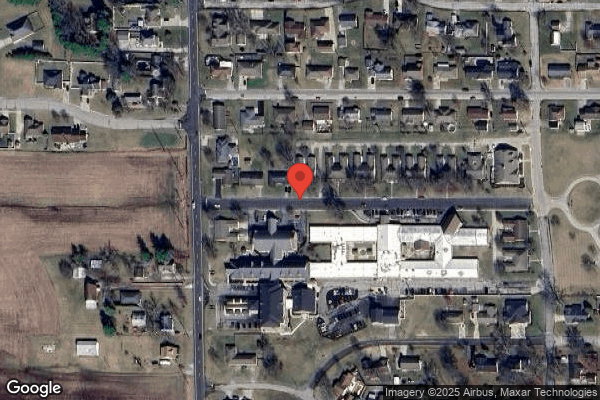
111 W CHURCH AVE, SEYMOUR, IN 47274 (812) 522-5927
Non profit - Corporation 95 Beds Independent Data: November 2025
Trust Grade
85/100
#62 of 505 in IN
Last Inspection: September 2024

Within standard 12-15 month inspection cycle. Federal law requires annual inspections.

Overview

Lutheran Community Home in Seymour, Indiana, has a Trust Grade of B+, indicating it is above average and recommended for families considering care options. It ranks #62 out of 505 facilities in Indiana, placing it in the top half, and #2 out of 4 in Jackson County, meaning only one other local facility is rated higher. The facility is improving, with issues decreasing from 6 in 2023 to 2 in 2024. Staffing is a strong point, with a 5/5 star rating and a turnover rate of 33%, which is well below the state average of 47%. Notably, there have been no fines, but recent inspections revealed concerns, including inadequate perineal care for a resident with a history of UTIs and failure to administer medications as ordered for a resident with serious health conditions. Overall, while there are strengths in staffing and a good reputation, these specific incidents highlight areas needing attention.

Trust Score
B+
85/100
In Indiana
#62/505
Top 12%
Safety Record
Low Risk
No red flags
Inspections
Getting Better
6 → 2 violations
Staff Stability
○ Average
33% turnover. Near Indiana's 48% average. Typical for the industry.
Penalties
✓ Good
No fines on record. Clean compliance history, better than most Indiana facilities.
Skilled Nurses
✓ Good
Each resident gets 45 minutes of Registered Nurse (RN) attention daily — more than average for Indiana. RNs are trained to catch health problems early.
Violations
⚠ Watch
15 deficiencies on record. Higher than average. Multiple issues found across inspections.
★★★★★
5.0
Overall Rating
★★★★★
5.0
Staff Levels
★★★★☆
4.0
Care Quality
★★★★☆
4.0
Inspection Score
Stable
2023: 6 issues
2024: 2 issues

The Good

  • 5-Star Staffing Rating · Excellent nurse staffing levels
  • 4-Star Quality Measures · Strong clinical quality outcomes
  • Full Sprinkler Coverage · Fire safety systems throughout facility
  • No fines on record
  • Staff turnover below average (33%)

    15 points below Indiana average of 48%

Facility shows strength in staffing levels, quality measures, fire safety.

The Bad

Staff Turnover: 33%

13pts below Indiana avg (46%)

Typical for the industry

The Ugly 15 deficiencies on record

Sept 2024 2 deficiencies
CONCERN (D)

Potential for Harm - no one hurt, but risky conditions existed

Incontinence Care (Tag F0690)

Could have caused harm · This affected 1 resident

Based on interview, observation, and record review, the facility failed to provide perineal care in an appropriate manner for a resident with a history of UTIs (Urinary Tract Infections) for 1 of 3 re...

Read full inspector narrative →
Based on interview, observation, and record review, the facility failed to provide perineal care in an appropriate manner for a resident with a history of UTIs (Urinary Tract Infections) for 1 of 3 residents reviewed for UTIs. ( Resident 55) Findings include: During an interview on 09/05/24 at 12:55 P.M., Resident 55 indicated she had recently been tested for a UTI and was unsure if the facility had started them on an antibiotic. When being toileted, the resident indicated some of the staff members cleaned them well, and some did not. Morning care for the resident was observed on 09/12/24 at 9:39 A.M. CNA (Certified Nurse Aide) 2 gathered clean linens from a linen closet in a common hallway and entered the resident's room. The CNA assisted the resident from her bed to the bathroom, donned gloves, removed their brief, helped the resident to sit on the toilet, removed her gloves, and gave the resident a moment to use the toilet. The CNA used hand sanitizer then went out into the resident's room to gather clothes for the day and reentered the bathroom. The CNA donned gloves, wet a couple of washcloths and left them lying in the bathroom sink bowl. She applied soap to one cloth, handed it to the resident to wash her face, put the soapy cloth back in the sink, picked a wet cloth out of the sink, handed it to the resident to rinse her face, rinsed the cloths with water, leaving them both lying in the sink, and handed the resident a small towel to dry her face. The CNA added soap to one cloth, handed it to the resident to wash under her breasts and arms, put the soapy cloth back in the sink bowl, picked a wet cloth out of the sink, handed it to the resident to rinse the soap off, placed the cloth back in the sink, handed the resident the towel to dry with, then assisted her with her shirt. The CNA removed her gloves, wrapped a clean brief around the resident's legs, put the resident's glasses on, removed the resident's shoes, assisted her with her pants, pulling them up to her knees, used hand sanitizer, put the resident's shoes back on her feet, and donned clean gloves. The CNA assisted the resident to a standing position, rinsed the two washcloths in water, put soap on one, wiped the resident's buttocks, wiped the buttocks with the other wet cloth, left the two cloths in the sink, and dried the resident's backside. The CNA rinsed the cloths, left them lying in sink, added soap to one cloth, briefly wiped at the front of the resident's private area, wiped with the rinsing cloth, then wiped with the towel. The CNA removed her gloves, adjusted the resident's brief, then assisted the resident to wash her hands and move to her wheelchair in the resident's room. During an interview and observation, in the resident's bathroom, the CNA indicated she used two washcloths, a soapy one, one to rinse, and a small towel to dry. The washcloths used were observed on the side of the sink. The soapy washcloth was marked with a two-inch wide streak of brown feces. There were only the two washcloths and one small towel in the bathroom that had been used for the procedure. During an interview on 09/12/24 at 10:02 A.M., when toileting a resident, CNA 2 indicated you should wash the front of the peri area first, and she had not done it that way with Resident 55. During an interview on 09/12/24 at 1:55 P.M., RN 3 indicated Resident 55 had a lot of UTIs. Usually when she had a UTI she would complain of burning. The resident had received antibiotics through an IV (Intravenous) line and IM (Intramuscularly) at times due to having a lot of allergies to antibiotics. The resident currently received the antibiotic Linezolid for a UTI. Other than IV antibiotics, the Linezolid was the only one the resident was not allergic too and it came in pill form. The clinical record was reviewed on 09/12/24 at 2:10 P.M. An Annual MDS (Minimum Data Set) assessment, dated 09/03/24, indicated the resident was cognitively intact. The resident's diagnoses included, but were not limited to, peripheral vascular disease, hypertension, and glaucoma. The recent physician's orders for antibiotics for UTIs were provided by the ADON (Assistant Director of Nursing) on 09/13/24 at 11:12 A.M., and indicated the resident had received the following: - Daptomycin 700 mg (milligrams) IV, once a day, with a start date of 02/01/24, and an end date of 02/08/24, - Cephalexin 125 mg, by mouth, as a preventative due to frequent UTIs, once a day, with a start date of 04/11/23, and an end date of 09/10/24, - Ertapenem 1 gram, IM, once a day, with a start date of 08/02/24, and an end date of 08/06/24, and - Linezolid 600 mg, by mouth, twice a day, for seven days, with a start date of 09/09/24, that the resident was currently receiving. The current Perineal Care policy, dated 02/2018, was provided by the DON (Director of Nursing) on 09/12/24 at 2:33 P.M. The policy indicated, .It is the practice of this facility to provide perineal care to all incontinent residents during routine bath and as needed in order to promote cleanliness and comfort, prevent infection to the extent possible .Gather supplies needed .Basin .If perineum is grossly soiled .Cleanse buttocks and anus, front to back; vagina to anus . 3.1-41(a)(2)
CONCERN (D)

Potential for Harm - no one hurt, but risky conditions existed

Deficiency F0760 (Tag F0760)

Could have caused harm · This affected 1 resident

Based on record review and interview, the facility failed to ensure medications were administered as ordered to prevent significant medication errors for 1 of 5 residents reviewed for medications. (Re...

Read full inspector narrative →
Based on record review and interview, the facility failed to ensure medications were administered as ordered to prevent significant medication errors for 1 of 5 residents reviewed for medications. (Resident 10) Findings include: Resident 10's clinical record was reviewed on 09/13/24 at 10:38 A.M. An Annual MDS (Minimum Data Set) assessment, dated 07/12/24, indicated the resident was cognitively intact. The resident's diagnoses included, but were not limited to, Parkinson's disease, psychotic disorder, epilepsy, and dementia. The resident's February 2024 EMAR (Electronic Medication Administration Record) included, but was not limited to, the following medication orders: - A physician's order, with a start date of 09/28/22 and an end date of 04/29/24, to administer two 50 mg (milligram) chewable phenytoin (an anti-seizure medication) tablets twice a day (once between 7:00 A.M. and 10:00 A.M., and then again between 7:00 P.M. and 10:00 P.M.). - A physician's order, with a start date of 09/28/22 that was discontinued on 02/16/24, to administer one half (25 mg) of a 50 mg chewable phenytoin tablet at bedtime. The resident would have received 100 mg of the phenytoin medication in the morning and 125 mg of the medication at bedtime. A Progress Note, dated 02/16/24 at 1:30 P.M., indicated there was a new order from the Nurse Practitioner to increase the resident's bedtime dose of phenytoin to 150 mg due to low levels of the medication identified in the resident's recent bloodwork. - A new physician's order, with a start date of 02/16/24 and an end date of 03/08/24, indicated staff were to administer 1.5 (one and a half) of a 50 mg chewable phenytoin tablet at bedtime. The February and March 2024 EMAR documentation indicated the 100 mg of the phenytoin medication continued to be administered twice a day as ordered and the additional 1.5 tablet dose of the medication (75 mg) was administered every evening until the order was discontinued on 03/08/24. A pharmacy recommendation, dated 03/07/24, indicated the resident had been receiving 100 mg of the phenytoin medication in the morning and 125 mg of the medication in the evening. The medication order was changed and now the resident was receiving 100 mg in the morning and 175 mg in the evening. The order from the Nurse Practitioner was to increase the dose to 150 mg in the evening. The pharmacist indicated they thought the staff put the order in computer incorrectly and the medication dose should have only gone from 125 mg to 150 mg in the evening. Please evaluate and change the order. During an interview on 09/13/24 at 12:50 P.M., the ADON (Assistant Director of Nursing) indicated she thought the order was clarified when it was originally received. She thought the pharmacy put a sticker on the medication card that would have ensured staff administered the appropriate dose of the medication (50 mg not 75 mg) but was unable to provide any supportive documentation. There was no indication in the resident's record the medication order was clarified. Nursing staff initialed the EMAR each time the medication was administered, and the EMAR indicated the amount of the medication administered was 75 mg. The facility didn't have a policy related to ensuring physician's orders were input correctly or regarding obtaining clarification if there were questions. It was just standard nursing practice to ensure orders were implemented accurately. 3.1-48(c)(2)
Jul 2023 5 deficiencies
CONCERN (D)

Potential for Harm - no one hurt, but risky conditions existed

Deficiency F0688 (Tag F0688)

Could have caused harm · This affected 1 resident

2. The clinical record for Resident 64 was reviewed on 07/20/23 at 10:25 A.M. A Quarterly MDS assessment, dated 06/07/23, indicated the resident was severely cognitively impaired. The diagnoses includ...

Read full inspector narrative →
2. The clinical record for Resident 64 was reviewed on 07/20/23 at 10:25 A.M. A Quarterly MDS assessment, dated 06/07/23, indicated the resident was severely cognitively impaired. The diagnoses included, but were not limited to, hypertension, obstructive uropathy, Alzheimer's disease, depression. A suggested program, dated 06/13/23, indicated Resident 64 was to participate in a transfer and an active range of motion restorative program with staff. His goal was to pull up to a standing position using the handrail with limited assistance three to five times and to participate in active range of motion exercises to the bilateral upper and lower extremities, completing two sets for 10 to 15 repetitions The programs were added to the restorative list. The Point of Care for Transfers, dated July 2023 lacked documenting for the following dates: - 07/01/23, - 07/04/23, - 07/08/23, - 07/15/23, - 07/16/23, and - 07/20/23. The Point of Care for Active Range of Motion, dated June and July 2023 lacked documentation for the following dates: - 06/23/23, - 06/27/23, - 07/01/23, - 07/04/23, - 07/08/23, - 07/15/23, - 07/16/23, - 07/20/23, - 07/21/23, and - 07/22/23. 3. The clinical record for Resident 60 was reviewed on 07/20/23 at 10:42 A.M. A Quarterly MDS assessment, dated 05/30/23, indicated the resident was severely cognitively impaired. The diagnoses included, but were not limited to, hypertension and dementia. A suggested program, dated 04/25/23, indicated Resident 60 was to participate in an eating and a passive range of motion restorative program with staff. Her goal was to self-feed with supervision with 25% to 50% verbal cues and participate in passive range of motion to the bilateral upper extremities with extensive assistance for two sets with 10 repetitions each. The programs were added to the restorative list. The Point of Care for Eating, dated July 2023 lacked documentation the following dates: - 07/02/23, and - 07/16/23. The Point of Care for Passive Range of Motion, dated June and July 2023 lacked documentation the following dates: - 06/03/23, - 06/04/23, - 07/02/23, and - 07/16/23. During an interview on 07/25/23 at 9:57 A.M., the MDS Coordinator indicated she would receive a therapy recommendation for a restorative program and then she would add the resident to the restorative list. The residents' restorative programs were completed daily and documented in the point of care. The current facility policy titled, Restorative Nursing Programs and updated January 2021, was provided by the DON on 07/25/23 at 11:49 A.M. The policy indicated, .It is the policy of this facility to provide maintenance and restorative services designed to maintain or improve a resident's abilities to the highest practicable level .The Restorative Nurse is responsible for maintaining a current list of residents who require restorative nursing services, and for ensuring that all elements of each resident's program are implemented .Restorative aides will implement the plan for a designated length of time, performing the activities, and document the plan .The Restorative Nurse, or designated licensed nurse, will provide oversight of the restorative aide activities, review the documentation at least weekly, and evaluate the effectiveness of the plan monthly . 3.1-42(a)(2) Based on observation, interview, and record review, the facility failed to ensure the proper application of an orthotic device for a resident with a contracture (Resident 16) and failed to provide restorative nursing services for residents with limited range of motion (Residents 60 and 64) for 3 of 4 residents reviewed for limited range of motion. Findings include: 1. Resident 16 was observed on 07/18/23 at 11:31 A.M. The resident was in her wheelchair in front of the television. A neck pillow was in place. The resident's right hand was closed as though it was contracted. There was no splint or brace device in use. The resident was observed in her room in bed on 07/18/23 at 2:10 P.M. The resident was awake and moving her thumb and fingers on her left hand. The resident's right hand was closed and there was no splint device in place. The resident was observed in the common area in front of the television on 07/20/23 at 10:30 A.M. A neck pillow was in place. The resident's right hand was closed. The index and middle fingers of the resident's left hand were extended. There was no splint device in place. A nursing staff member approached the resident on 07/20/23 at 10:32 A.M. and applied a splint device to the resident's left hand. The resident was observed in the common area near the television on 07/25/23 at 10:30 A.M. The resident was wearing a splint device in their left hand. CNA (Certified Nurse Aide) 11 approached the resident and offered her a drink. The resident did not take the drink. The resident's record was reviewed on 07/20/23 at 2:59 P.M. A Quarterly MDS (Minimum Data Set) assessment, dated 06/02/23, indicated the resident was severely cognitively impaired. The diagnoses included, but were not limited to, cerebral palsy, malnutrition, and severe intellectual disabilities. The resident's range of motion was impaired in their arms and legs, and they required extensive staff assistance for all ADLs (Activities of Daily Living). The assessment indicated the resident did not participate in therapy or restorative programs, including splint or brace assistance during the assessment review period. An Occupational Therapy Plan of Treatment for the certification period of 04/24/23 through 07/22/23 was provided by the DON (Director of Nursing) on 07/25/23 at 2:41 P.M. The treatment plan indicated the resident was left handed. The resident used sign language and managed her drinking cup with her left hand. The resident's guardian reported the resident only used her left hand to do most things. The assessment summary indicated that skilled occupational therapy was indicated to reduce the risk of skin breakdown and contracture in the resident's right palm and to develop a restorative nursing program for contracture prevention. The resident's current MD orders included, but were not limited to, an open ended order, with a start date of 05/04/23, that indicated a Soft Orthosis Roylan Palm Guard with finger separators was to be worn on the resident's right hand during daytime waking hours. Instructions for wear were posted in resident's room and in the therapy book at nurses' station. Instructions for the resident's orthotic device were provided by RN 10 on 07/25/23 at 10:45 A.M. The document, dated 05/01/23, and titled [Resident 16's] Orthosis Wear and Schedule indicated the resident was to wear the palm guard during daytime waking hours. Staff were to clean and dry the resident's right hand/palm prior to application of the device then perform PROM (Passive Range of Motion) to the right digits as tolerated then place palm protector onto the resident's right hand. During an interview on 07/25/23 at 10:33 A.M., CNA 11 indicated the restorative nursing aides documented the application of orthotic devices in the residents' EHR (Electronic Health Record), regular CNAs did not. During an observation and interview on 07/25/23 at 10:41 A.M., CNA 11 indicated the resident's device was currently on the resident's left hand and it was supposed to be on the right hand. The resident used her left hand to hold her drink cup. The resident's right hand was more contracted than the left. The device should have been on the resident's right hand. During an interview on 07/25/23 at 10:45 A.M., RN 10 indicated she hadn't worked on the resident's hall for very long and was not sure which hand the orthotic device was supposed to be in. The current facility policy, titled NURSING POLICY ASSISTIVE DEVICES POLICY, updated January 2021, was provided by the DON on 07/25/23 at 11:47 A.M. The policy indicated, .The purpose of this policy is to provide a reliable process for the proper and consistent use of assistive devices .to maintain or improve function .direct care staff will be trained on the use of the devices as needed .A nurse with responsibility for the resident will monitor for the consistent use of the device .
CONCERN (D)

Potential for Harm - no one hurt, but risky conditions existed

Accident Prevention (Tag F0689)

Could have caused harm · This affected 1 resident

2. The clinical record for Resident 64 was reviewed on 07/20/23 at 10:25 A.M. A Quarterly MDS assessment, dated 06/07/23, indicated the resident was severely cognitively impaired. The diagnoses includ...

Read full inspector narrative →
2. The clinical record for Resident 64 was reviewed on 07/20/23 at 10:25 A.M. A Quarterly MDS assessment, dated 06/07/23, indicated the resident was severely cognitively impaired. The diagnoses included, but were not limited to, hypertension, obstructive uropathy, Alzheimer's disease, depression. A Fall Event, dated 06/06/23, indicated the resident had an unwitnessed fall in his room. The resident was sitting on the side of his bed with his breakfast. The resident's legs were wrapped in his blanket, and he was sitting on the floor with his back against the bed. He denied hitting his head and was able to move all extremities. No injuries were noted. An IDT Note, dated 06/06/23 at 4:55 P.M., indicated the resident had a fall on 06/06/23 at 8:30 A.M. An intervention to prevent further falls was to place non-skid strips to the floor of the right side of the bed. The Complete Care Plan was provided by the DON on 07/21/23 at 3:13 P.M. The care plan included, but was not limited to, falls with a start date of 10/24/22. The intervention, with a start date of 06/06/23, indicated the resident was to have non-skid strips on the floor of the right side of the bed. During an observation on 07/21/23 at 2:15 P.M., the resident's room was observed and there were no non-skid strips by the bed. During an observation and interview on 07/21/23 at 2:17 P.M., the resident's room did not have non-skid strips present. CNA 15 indicated the resident had frequent falls. The resident had been in the same room for a while. The resident used to have non-skid strips by his bed, but they were coming up and no longer there. She wasn't sure how long the strips had been gone. The clinical record lacked any indication the non-skid strips had been removed or discontinued. The current facility policy titled, Fall Prevention Program, with a revised date of 01/01/23 was provided by the DON on 07/21/23 at 3:13 P.M. The policy indicated, .Each resident will be assessed for fall risk and will receive care and services in accordance with their individualized level of risk to minimize the likelihood of falls .Each resident's risk factors, and environmental hazards will be evaluated when developing the resident's comprehensive plan of care. Interventions will be monitored for effectiveness. The plan of care will be revised as needed . The current, undated, facility policy titled, Care Plans- Comprehensive, was provided by the DON on 07/21/23 at 3:13 P.M. The policy indicated, .An individualized comprehensive care plan that includes measurable objectives and timetable to meet the resident's medical, nursing, mental, and psychological needs is developed for each resident. The care plan is based on the understanding of the resident's strength, goals, life history, and preferences .The care plan is accessible to any person involved in the implementation of the care plan . 3.1-45(a)(2) Based on record review, interview, and observation, the facility failed to follow Care Plan interventions related to falls for 2 of 5 residents reviewed for accidents. (Residents 66 and 64) Findings include: 1. The clinical record for Resident 66 was reviewed on 07/21/23 at 11:16 A.M. A Significant Change MDS (Minimum Data Set) assessment, dated 07/07/23, indicated the resident was severely cognitively impaired. The diagnoses included, but were not limited to, Neurocognitive disorder with Lewy bodies, hypertension, depression, and insomnia. The resident received scheduled and as needed pain medications. He had no falls since the last assessment. A Quarterly MDS assessment, dated 06/01/23, indicated the resident had 2 or more falls since the previous assessment, dated 03/01/23, one with an injury that was not major. The Care Plan for falls was provided by the DON (Director of Nursing) on 07/21/23 at 3:13 P.M. The record indicated the resident was at risk for falls related to a Neurocognitive disorder with Lewy Bodies. An intervention, with a start date of 04/11/2023, indicated the resident was to have non-skid strips placed in front of the resident's toilet. A Fall Event report, dated 04/08/23, indicated the resident had a fall in his bathroom, the resident had had three or more falls in the last three months and was disoriented with diminished safety awareness. The IDT (Interdisciplinary Team) note indicated the resident was to have non-skid strips placed in front of the toilet. During an interview, record review, and observation, on 07/21/23 at 1:57 P.M., LPN (Licensed Practical Nurse) 7 indicated staff knew what the Care Plan interventions were by using the paper pocket sheets that were printed off for each staff at the beginning of each shift. A copy of the current pocket sheet was provided at that time and lacked the intervention of having non-skid strips in front of the resident's toilet. The resident's bathroom was observed with LPN 7 and non-skid strips were not in place in front of the resident's toilet.
CONCERN (D)

Potential for Harm - no one hurt, but risky conditions existed

Incontinence Care (Tag F0690)

Could have caused harm · This affected 1 resident

Based on observation, interview, and record review, the facility failed to follow appropriate infection control guidelines related to indwelling urinary catheter care for 2 of 3 residents reviewed for...

Read full inspector narrative →
Based on observation, interview, and record review, the facility failed to follow appropriate infection control guidelines related to indwelling urinary catheter care for 2 of 3 residents reviewed for urinary catheters and Urinary Tract Infections. (Residents 64 and 76) Findings include: 1. During an observation on 07/19/23 at 10:12 A.M., Resident 64 was at the end of a hallway, sitting in his wheelchair. His indwelling urinary catheter tubing was dragging the floor. During an observation on 07/19/23 at 1:38 P.M., the resident was sitting at the dining room table. The resident's indwelling urinary catheter tubing was resting on the floor. During an observation on 07/20/23 at 1:57 P.M., QMA (Qualified Medication Aide) 12 propelled the resident from the dining room to the common area in front of the TV. The indwelling urinary catheter tubing was dragging the floor. During an observation and interview on 07/24/23 at 11:36 A.M., the resident was sitting in the common area with his indwelling urinary catheter tubing resting on the floor under the resident's foot. QMA 8 indicated the resident's indwelling urinary catheter tubing should not touch the floor. The clinical record was reviewed on 07/20/23 at 10:25 A.M. A Quarterly MDS (Minimum Data Set) assessment, dated 06/07/23, indicated the resident was severely cognitively impaired. The diagnoses included, but were not limited to, hypertension, obstructive uropathy, Alzheimer's disease, and depression. A Progress Note, dated 05/04/23, indicated the resident had received a 1 gram Rocephin (an antibiotic) IM (intramuscular) injection in the buttock, for a UTI (Urinary Tract Infection). 2. On 07/18/23 at 1:54 P.M., an isolation cart was observed sitting in the hallway outside of Resident 76's room. A passing staff member indicated the resident had ESBL (Extended Spectrum Beta-Lactamase, an enzyme found in some strains of bacteria) in his urine. During an observation and interview on 07/18/23 at 1:41 P.M., Resident 76 indicated he had an indwelling urinary catheter because he had an infection. He had been on an antibiotic for the infection. During an observation on 07/20/23 at 1:29 P.M., the resident was sitting in his wheelchair in his room. One to two inches of his indwelling urinary catheter tubing was touching the floor. An isolation cart was still sitting in the hall outside the resident's room door. During an observation on 07/20/23 at 2:32 P.M., the resident was sitting in his wheelchair in his room. His indwelling urinary catheter tubing was touching the floor. A facility staff member was sitting in the room reviewing the meal menus with the resident. During an observation on 07/20/23 at 2:59 P.M., the resident was sitting in his wheelchair in his room. Over an inch of his indwelling urinary catheter tubing was touching the floor. Two staff members, RN 5 and CNA (Certified Nurse Aide) 4, donned PPE (Personal Protective Equipment) before assisting the resident to bed using a mechanical lift. While the CNA pushed the wheelchair into place, the tubing was dragging on the floor making a scraping sound. The staff attached the resident's harness to the lift, moved the resident over the recliner, and lowered the resident into the seat. The nurse pulled a small trash can up next to the resident's recliner, hung the indwelling urinary catheter bag to the side of the trash can, then picked a piece of trash up off the floor and tossed it in the trash can. During an observation on 07/24/23 at 11:22 A.M., the resident was sitting in his recliner in his room. His indwelling urinary catheter bag was covered with a dignity bag with two to three inches of the bag laying on the floor at the side of his recliner. The floor was wet in the immediate area. During an observation and interview with RN 5 on 07/24/23 at 11:28 A.M., the resident was still sitting in his recliner with his indwelling urinary catheter bag laying on the floor. RN 5 indicated staff had hooked the catheter bag to the side of the resident's recliner. They normally hung it on the trash can. The facility policy did not say anything about where they should hang the catheter bags, they just needed to be off the floor. The resident was still in isolation for ESBL in his urine. During an interview on 07/24/23 at 12:33 P.M., LPN 7 indicated indwelling urinary catheters should be kept off the floor and hanging below the bladder. Urinary catheters should not be hung on a trash can. The clinical record was reviewed on 07/20/23 11:24 AM. An admission MDS assessment, dated 07/06/23, indicated the resident was cognitively intact. The diagnoses included, but were not limited to, fracture of left fibula, renal insufficiency, obstructive uropathy, and UTI in the last 30 days. The resident had an indwelling urinary catheter in place and was frequently incontinent of bowel. The Progress Notes for June and July 2023 were provided by the Administrator on 07/24/23 at 12:36 P.M., and included, but were not limited to, the following: - A note, dated 06/29/23 at 8:40 P.M., indicated the resident was on IV (Intravenous) antibiotics for a UTI with ESBL. The physician's orders were provided by the Administrator on 07/24/23 at 1:54 P.M., and included, but were not limited to, the following: - The resident received Meropenem (an antibiotic) one gram intravenous, every 12 hours with a start date of 06/29/23, and a discontinued date of 07/03/23, and - a current open-ended order to keep catheter and tubing as free of kinks as possible. Maintain catheter bag below level of the bladder but do not allow to rest on the floor, every shift, with a start date of 06/29/23. The Care Plan indicating the resident had an indwelling urinary catheter for a diagnosis of obstructive uropathy, with a start date of 06/29/23, was provided by the Administrator on 07/24/23 at 12:36 P.M. The interventions included, but were not limited to, .Keep catheter and tubing as free of kinks as possible. Maintain catheter bag below level of the bladder but do not allow to rest on the floor . The current Catheters - Catheter Care policy, updated in January 2021, was provided by the Administrator on 07/24/23 at 12:36 P.M. The policy indicated, .It is the policy of this facility to provide catheter care to all residents that have an indwelling catheter to assist in reducing bladder and kidney infections . 3.1-41(a)(2)
CONCERN (D)

Potential for Harm - no one hurt, but risky conditions existed

Deficiency F0761 (Tag F0761)

Could have caused harm · This affected 1 resident

Based on observation, interview, and record review, the facility failed to store medications appropriately related following manufacturer's guidelines, labeling medication, and having unsecured loose ...

Read full inspector narrative →
Based on observation, interview, and record review, the facility failed to store medications appropriately related following manufacturer's guidelines, labeling medication, and having unsecured loose tablets in the medication carts for 4 of 5 medication carts reviewed. (Medication Carts One and Two on the 100 Hall, and Medication Carts One and Two on the 200 Hall) Findings include: 1. The 100 Hall Medication Carts were observed on 07/18/23 at 10:20 A.M., with RN 2. Cart One contained the following items and loose pills laying in the bottom of drawers: - an Albuterol inhaler with a spacer attached, laying on its side in the bottom drawer for Resident 11, - three small white oval tablets, - one medium white oval tablet, - one small white round tablet, and - one medium pink round tablet. Cart Two contained the following items and loose pills laying in the bottom of drawers: - a Fluticasone inhaler laying on its side in a box for Resident 65, - a box of cornstarch with the top of the box open, the powder cornstarch visible, with a plastic spoon sticking up out of the cornstarch powder that RN 2 indicated was for Resident 18 who used it under her breasts, - one small white oval tablet, - one medium white oval tablet, - two medium white round tablets, and - one large white round tablet. RN 2 indicated inhalers were normally kept upright. Flonase had to be stored upright. 2. The 200 Hall Medication carts were observed on 07/18/23 at 10:37 A.M., with QMA (Qualified Medication Aided) 3. Cart One contained the following items and loose pills laying in the bottom of drawers: - one opened tube of Nystatin ointment with no resident name or label, - one small tube of Erythromycin eye ointment for Resident 16 with no open date, - a Symbicort inhaler for Resident 21 laying on its side in the third drawer, - four small white oval tablet halves, - one small white rectangular tablet, and - one small pink oval tablet half. Cart two contained the following loose pills laying in the bottom of drawers: - one medium orange round tablet, - one small white oval tablet half, and - one large red round tablet was laying on the floor under the cart. During an interview on 07/18/23 at 11:02 A.M., QMA 3 indicated inhalers should be stored upright and at room temperature. During an interview on 07/25/23 at 10:30 A.M., the ADON (Assistant Director of Nursing) indicated they had had a staff member, QMA 13, doing the medication cart audits weekly but that staff member had gone back to working the floor. The current Medication Storage Policy, updated in January of 2021, was provided by the Administrator on 07/25/23 at 11:01 A.M. The policy indicated, .It is the policy of this facility to ensure all medications housed on our premises will be stored .according to the manufacturer's recommendations and sufficient to ensure proper sanitation, temperature, light, ventilation, moisture control, segregation, and security . 3.1-25j) 3.1-25(k)(1) 3.1-25(k)(2) 3.1-25(k)(3) 3.1-25(k)(4) 3.1-25(k)(5) 3.1-25(k)(6) 3.1-25(k)(7)
CONCERN (D)

Potential for Harm - no one hurt, but risky conditions existed

Laboratory Services (Tag F0770)

Could have caused harm · This affected 1 resident

Based on record review and interview, the facility failed to follow a physician's recommendation related to a urinalysis for 1 of 19 residents reviewed for laboratory services. Findings include: The ...

Read full inspector narrative →
Based on record review and interview, the facility failed to follow a physician's recommendation related to a urinalysis for 1 of 19 residents reviewed for laboratory services. Findings include: The clinical record for Resident 64 was reviewed on 07/20/23 at 10:25 A.M. A Quarterly MDS (Minimum Data Set) assessment, dated 06/07/23, indicated the resident was severely cognitively impaired. The diagnoses included, but were not limited to, hypertension, obstructive uropathy, Alzheimer's disease, and depression. A Psychiatry Progress Note, dated 06/06/23, indicated the resident was sitting in his room. Per the nursing staff, the resident had not displayed any sadness or tearfulness. He had decreased agitation but continued to to be restless and had multiple falls trying to get up unassisted. The resident had some nights where he was awake and not sleeping. His appetite seemed fair. He was having increased aggression and inappropriate sexual behaviors. The assessment and plan, included but was not limited to, .Recent UTI (Urinary Tract Infection): Recommend rechecking a Urinalysis [UA] to make sure it is cleared. Reviewed recent UA and was positive with Proteus mirabilis and pseudomonas aeruginosa . The resident laboratory results from May to current were provided by the DON (Director of Nursing) on 07/25/23 at 11:04 A.M. The results lacked a urinalysis. The clinical record lacked any indication that the recommendation was acknowledged. During an interview on 07/25/23 at 10:55 A.M., the DON indicated when the psychiatry physician came to the facility, she would make recommendations and the facility Nurse Practitioner would either agree or disagree with the recommendations. The Social Service Director would review the psychiatry notes that were available, see if there were any additional recommendations, and send them to the Nurse Practitioner. If the Nurse Practitioner agreed with the recommendation, she would input the orders or a nurse on the floor would input them. She believed the urinalysis wasn't put on the list for the Nurse Practitioners review. There should have been a note that the Nurse Practitioner agreed or disagreed with the recommendation. The current, undated, facility policy tilted, Physician Orders was provided by the DON on 07/25/23 at 11:49 A.M. The policy indicated, .Physician orders must be given and managed in accordance with applicable laws and regulations . 3.1-49(a)
Mar 2023 1 deficiency
CONCERN (D) 📢 Someone Reported This

A family member, employee, or ombudsman was alarmed enough to file a formal complaint

Potential for Harm - no one hurt, but risky conditions existed

Incontinence Care (Tag F0690)

Could have caused harm · This affected 1 resident

Based on observation, interview, and record review, the facility failed to provide appropriate care and services related to perineal care for incontinence and the use of a bedpan, and hand hygiene for...

Read full inspector narrative →
Based on observation, interview, and record review, the facility failed to provide appropriate care and services related to perineal care for incontinence and the use of a bedpan, and hand hygiene for 2 of 6 residents reviewed for bowel and bladder related to Urinary Tract Infections. (Residents J and H) Findings include: 1. During an observation and interview on 3/21/23 at 2:10 p.m., CNA (Certified Nursing Aide) 2 assisted Resident H to the bathroom. The CNA propelled the resident's wheelchair into the bathroom and used a gait belt to assist the resident to the toilet. The CNA donned gloves with no hand hygiene observed. She removed the residents' urine-soaked brief, doffed the gloves, washed her hands with soap and water, and donned clean gloves. CNA 2 moved the wheelchair twice, touching both the hand grips and arm rests with both gloved hands. When the resident indicated she was finished, the CNA had her stand with her legs apart. CNA 2 picked up a package of wipes, used one wet wipe to clean the peri area by wiping from front to back, folding the same wet wipe for a total of eight wipes. She placed a clean brief on the resident, pulled up the resident's pants, and moved the wheelchair around to the sink by holding the handles with her gloved hands so the resident could her wash hands. CNA 2 doffed her gloves, washed her hands with soap and water, used her left hand to turn off the water, and then used two paper towels to dry her hands. The CNA indicated hand hygiene should be done before and after providing care, and during if the gloves needed to be changed. She did not remove her gloves after wiping the resident's peri area and should have. She acknowledged she also touched the gait belt and wheelchair with those same dirty gloves. 2. During an observation and interview on 3/21/23 at 2:43 p.m., QMA (Qualified Medication Assistant) 3 indicated Resident J was on the bedpan and the staff were about to get her cleaned up. QMA 3 and RN (Registered Nurse) 4 entered the room and donned gloves, no hand hygiene was observed. QMA 3 went into the bathroom and with her gloved right hand, turned on the water in the bathroom sink, and wetted several wash clothes. The QMA had brought the wash clothes, a package of wet wipes, and peri wash into the resident's room. QMA 3 moved the over the bed tray table to the bedside, laid a towel on the table, laid the wet wash clothes on the towel, and readjusted the height of the table. QMA 3 and RN 4 pulled back the resident's blanket. The RN assisted the resident to roll to the right side, while the QMA removed the bedpan. The QMA then opened the wet wipes placing the package on the bed next to the resident. The QMA used a wet wipe to wipe the resident's anus, folded the wipe three additional times and continued to clean stool from the rectum area. During the cleaning of the rectal area the QMA had stool on her right glove, on the thumb pad area. She used a wet wipe to remove the stool from the glove. The QMA then started to place a clean chuck and brief under the resident. The surveyor requested the QMA to lift the resident's left buttock and stool was observed in the vaginal area. The QMA had the resident roll to her back, bend her knees, and spread her legs. QMA 3 used a wet washcloth and peri wash to clean first, the left side of the labia, she folded the cloth and wiped the right side of the labia, she did not separate the labia but wiped over the top from the pubic area down toward the vagina. The QMA bagged the dirty linens, gathered the trash, and doffed gloves. QMA 3 went to the bathroom, used her bare right hand to turn on the water, used soap and water to wash her hands. She indicated the water was way too hot. She used the wrist area of her right arm to try and turn the water to a cooler setting but was unable to. She rinsed the palm and back of her right hand, rinsed the palm of her left hand, and with soap still visible on the back of her left hand she used a paper towel to dry her hands. She indicated hand hygiene should be performed before and after care. During an interview on 3/21/23 at 1:53 p.m., the ADON (Assistant Director of Nursing) indicated a total of six residents recently had UTIs (Urinary Tract Infections). On 3/21/23 at 2:07 p.m., the ADON provided the lab reports for all six resident with recent UTI's. On review of the laboratory reports indicated 4 of the 6 residents' culture reports were positive for Escherichia coli (E-coli - a type of UTI usually caused by bacteria commonly found in the gastrointestinal tract.). Resident H's laboratory report, dated 3/13/23, indicated the resident's urine culture was positive for e-coli. The current facility policy titled Perineal Care and with a revised date of January 2021, was provided by the Director of Nursing on 33/21/23 at 2:59 p.m. The Policy indicated, .It is the practice of this facility to provide perineal care to .prevent infection .Policy Explanation and Compliance Guidelines .2. Gather supplies needed. 6. Perform hand hygiene and don gloves .9. a. Cleanse buttock and anus .vagina to anus .using a separate washcloth or wipes .b. Thoroughly dry .10. Re-position resident in supine position. Change gloves if soiled .11. Females: c. Separate the resident's labia with one hand, cleanse perineum with the other hand .e. Clean urethral meatus and vaginal orifice .f. Pat dry with towel .16. Removed gloves and discard. Perform hand hygiene . This Federal tag relates to Complaints IN00403708. 3.1-41(a)(2)
Jul 2022 7 deficiencies
CONCERN (D)

Potential for Harm - no one hurt, but risky conditions existed

Resident Rights (Tag F0550)

Could have caused harm · This affected 1 resident

Based on observation, record review, and interview, the facility failed to provide meals to residents needing assistance in a dignified manner for 2 of 5 residents dining observations. (Residents 36 a...

Read full inspector narrative →
Based on observation, record review, and interview, the facility failed to provide meals to residents needing assistance in a dignified manner for 2 of 5 residents dining observations. (Residents 36 and 34) Findings include: 1. The dining room on the locked dementia unit was observed on 07/18/22 at 1:04 P.M. Resident 36 was sitting in a wheelchair at a table. Her meal was on the table on a plate with a plastic dome covering the plate. The resident's silverware was still wrapped in a napkin and laying on top of the cover over her plate. The resident's pop can was unopened. No staff were helping the resident to eat. Some of the residents in the locked unit's dining room were already finished with their meals. Two staff members were assisting other resident's with their meals. At 1:09 P.M., RN 7 asked the resident if she wanted to eat, took the cover off of her plate, and poured her pop into a cup of ice. The staff member stood on her feet and fed the resident her meal using a spoon. The staff member remained standing. There was a chair available for the staff member to sit down on. At 1:22 P.M., the two residents on either side of Resident 36 were finished with their meals and one had been taken to his room. RN 7 continued to stand over the resident and assist them with their meal until 1:37 P.M. The clinical record was reviewed on 07/20/22 at 10:08 A.M. A Quarterly MDS (Minimum Data Set) assessment, dated 07/08/22, indicated the resident was severely cognitively impaired. The diagnoses included, but were not limited to, dementia and depression. The resident required extensive assistance of two staff members for bed mobility, dressing, toilet use, and personal hygiene. The resident required extensive assistance of one staff member for eating. 2. The dining room on the locked dementia unit was observed on 07/20/22 at 9:16 A.M. RN 8 was standing and assisting Resident 34 with their breakfast meal. The dining room on the locked dementia unit was observed on 07/22/22 at 9:13 A.M. RN 7 was standing over the resident as she assisted her with her meal. At 9:16 A.M., RN 7 asked the resident if she wanted to eat, covered the resident's plate, and returned it to the kitchen cart. Little of the pureed meal had been eaten. During an interview at 9:18 A.M., RN 7 indicated she had offered the resident food and drinks a few times and the resident had shaken her head no and clenched her mouth shut. A second staff member attempted to assist the resident with her meal, sitting down to assist the resident in an available chair. At 9:26 A.M., the resident continued to eat while being assisted by the new staff member, CNA (Certified Nurse Aide) 9, who was speaking softly to the resident. The resident finished eating at 9:29 A.M., having consumed 25% of her meal. The clinical record was reviewed on 07/25/22 at 11:16 A.M. A Quarterly MDS assessment, dated 05/26/22, indicated the resident was severely cognitively impaired. The diagnoses included, but were not limited to, dementia with behavioral disturbance, hypertension, and depression. The resident required extensive assistance of one staff member for eating and was on a mechanically altered diet. During an interview on 07/22/22 at 2:33 P.M., CNA 9 indicated when assisting residents with their meals she talked to the resident as she was working with them. Sometimes she would set the residents' food to the side if they had refused to eat and came back a little later and tried again. She explained to the residents the importance of eating. She helped new hires in training to assist residents with their meals. Staff should sit down at eye level with a resident and ensure they are sitting up straight when assisting them with their meals. It was a choking hazard if they were laying back. The current Meal Supervision and Assistance Policy was provided by the DON (Director of Nursing) on 07/22/22 at 3:53 P.M. The policy indicated, .The resident will be prepared for a well-balanced meal in a calm environment .with adequate supervision and assistance to .provide adequate nutrition, and ensure an enjoyable event .This includes .Monitoring for effectiveness and modifying interventions when necessary .Provide a relaxing, enjoyable environment during the mealtime . 3.1-3(v)(1)
CONCERN (D)

Potential for Harm - no one hurt, but risky conditions existed

Pressure Ulcer Prevention (Tag F0686)

Could have caused harm · This affected 1 resident

Based on observation, record review, and interview, the facility failed to implement interventions to prevent pressure ulcers for 2 of 6 residents reviewed for pressure ulcers. (Residents 56 and 28) F...

Read full inspector narrative →
Based on observation, record review, and interview, the facility failed to implement interventions to prevent pressure ulcers for 2 of 6 residents reviewed for pressure ulcers. (Residents 56 and 28) Findings include: 1. During an observation and interview on 07/22/22 at 10:30 A.M., Resident 58 was lying in bed on his left side. His left foot was lying on the bed and resting on the mattress. RN 11 had indicated the resident had a healed pressure ulcer to the left foot close to the pinky toe where the foot was currently pink/red in color. The clinical record for Resident 56 was reviewed on 07/20/22 at 2:00 P.M. An Annual MDS (Minimum Data Set) assessment, dated 02/07/22, indicated the resident was rarely/never understood. The diagnoses included, but were not limited to, traumatic brain dysfunction, neurogenic bladder, aphasia, quadriplegia, and seizure disorder. The resident was at risk for pressure ulcers and required two or more total staff assistance with bed mobility, transfers, dressing, toilet use, personal hygiene, and bathing. The complete Care Plans was provided by the DON (Director of Nursing) on 07/22/22 at 3:17 P.M. The Care Plan included, but were not limited to, A Care Plan for skin related to the resident's high risk for pressure injury/ulcer with a start date of 06/23/20 that included the following interventions: - Apply pressure relieving mattress to the bed, check for bottoming out to ensure appropriateness of the mattress choice, - consult provider for appropriateness of using topical medication and gently apply to promote absorption, - encourage and assist with routine changes in position, - inspect skin over bony prominences and dependent areas with position changes, - keep linens free of wrinkles and foreign matter, - keep skin clean and dry. Use a skin lubricant/lotion on all areas, blot the skin dry, and never rub, - notify dietary of risks, - observe fluid intake daily, - protect skin from mechanical injury via slide board, turn sheet, trapeze, and/or lubricant use, - reposition at least every 2 hours or more frequently depending on resident's condition and tolerance of pressure. Reduce pressure over bony prominences and avoid positioning directly on the greater trochanter, and A Care Plan for skin related to the resident's risk for pressure ulcers and risk for development of non-pressure skin conditions due to intracranial injury, quadriplegia, contractures, benign prostatic hyperplasia, convulsions, chronic pain, dysphagia, aphasia, gastroesophageal reflux, anemia, and history of pressure ulcers with a start date of 04/05/16, included the following interventions: - geri sleeves to the bilateral upper extremities at all times, - use caution when removing/placing clothing to avoid skin tears, - assist resident to turn and reposition every two hours and as needed, - assure proper application of any splints/braces, - avoid friction of the skin with bed linens, bed, or chair, - keep bed linens as wrinkle free as possible and free of foreign matter, - leave carelift sling under resident. Limit creasing and tucking as much as possible, - observe for and report any signs of skin breakdown to the MD, - pressure reducing cushion in the wheelchair, - pressure reducing mattress to the bed, - provide heel and elbow protectors if applicable. Keep padding under resident's elbow on wheelchair table. Pad foot pedal pegs on wheelchair if foot pedals are not attached, - provide incontinence care after each incontinent episode, - provide showering per schedule. Place bath blanket between resident and shower gurney for protection of skin, - refer to dietician as necessary to evaluate nutritional needs, - resident to wear socks at night, - siderails to aid in improved mobility and transfers, and - use lotion to maintain skin hydration. Thoroughly was and rinse resident's skin and blot dry rather than rubbing. The Point of Care bathing documentation indicated the resident had received either a bed bath or partial bed bath the following dates: - 02/05/22 a partial bed bath, - 02/07/22 a partial bed bath, - 02/08/22 a partial bed bath, - 02/09/22 a shower and partial bed bath, and - 02/12/22 a partial bed bath. A Wound Management Detail Report, dated 02/13/22 at 9:59 A.M., indicated there was a fluid filled purple blister to the left foot found during the A.M., care. There was redness surrounding the area that measured 5.7 cm (centimeters). There was 2+ edema on the whole top half of the foot and it was warm to touch. A Wound Management Detail Report, dated 02/13/22 at 7:18 P.M., indicated the resident had an unstageable- deep tissue injury (Persistent non-blanchable deep red, maroon or purple discoloration) to the left foot that measured 5.5 cm (centimeters) X (by) 3.5 cm. The wound was a dark, fluid filled blister and skin prep was applied. A Wound Management Detail Report, dated 02/23/22 at 1:10 P.M., indicated the resident had an unstageable wound with slough (yellow or white) /eschar (dry, adherent, intact without erythema or fluctuance) to the left foot. The blood filled blister had reabsorbed and was an intact area of eschar/scabbing. A Wound Management Detail report, dated 03/11/22 at 11:37 P.M., indicated the resident had gone to a wound care center and had the eschar removed from the left foot. The skin was pink/red and healed. A Weekly Skin Sweep, dated 02/05/22, indicated the resident had no new skin areas. The February 2022 EMAR/ETAR (Electronic Medication Administration Record/Electronic Treatment Administration Record) indicated the following: - An open ended physician order, dated 02/14/22, to keep the left foot propped up to keep pressure off of it as much as possible, every shift, - An open ended physician order, dated 02/14/22, for nursing to apply skin prep to the left foot pressure area by the 5th metatarsal, every shift - An open ended physician order, dated 05/29/20, to assure the resident's shoes were on in the A.M., once a day The EMAR/ETAR orders were signed out per the physician's orders. The clinical record lacked any indication the resident's feet had been elevated or that there was any redness or skin impairment to the left foot prior to the finding on 02/13/22 of a purple fluid filled blister. During an interview on 07/21/22 at 10:19 A.M., QMA (Qualified Medication Aide) 12 indicated she would alert the nurse of any new skin conditions. The residents were offered showers twice a week and the nurse assessed the skin once a week. During an interview on 07/21/22 at 2:21 P.M., RN 11 indicated the resident had a feeding tube and took nothing by mouth. The resident was unable to move around in the bed on his own, so the staff had to reposition him. He had pressure ulcer to his left foot that had since healed, and she was unsure how it developed. During an interview on 07/22/22 at 2:18 P.M., the DON indicated the resident had a blister that was a deep tissue pressure injury. The resident had contractures and with the resident having fragile skin the deep tissue injury could have developed quickly and the resident had some edema as well. The resident's left foot should be propped up to keep pressure off of it, and skin prep should continue to be applied to the left foot as a preventative. 2. The clinical record for Resident 28 was reviewed on 07/20/22 at 1:23 P.M. A Quarterly MDS assessment, dated 02/25/22, indicated the resident was cognitively intact. The diagnosis included, but was not limited to, Parkinson's Disease. The resident was at risk for pressure ulcers and required two or more staff assistance with bed mobility, dressing, toilet use, personal hygiene, and bathing. The complete Care Plan was provided but the ADON on 07/22/22 at 3:20 P.M., the Care Plans included but were not limited to, A Care Plan for skin related to the resident's moderate risk for pressure injury/ulcer with a start date of 06/23/21, included the following interventions: - check bony prominences for redness, - encourage ambulation as much as the resident is able, - encourage changes in position at least every two hours and assist as required, - keep bed linens free of wrinkles and foreign matter, - keep skin clean and dry. Thoroughly wash and rinse all soap, blot dry and never rub, - report/record skin condition each week or more frequently if problem exists, - use skin lubricant/lotion during A.M. and evening care, - when lifting the resident, avoid friction the skin with linens, bed, or chair, and - when moisture is found, change the linens, gown, and pads, as soon as possible. If moisture is from urine or feces, the area should be washed and dried, and A Care Plan for skin related to the resident's risk for pressure ulcers and risk for development of non-pressure skin conditions due to decreased mobility related to Parkinson's, and personal history of pressure ulcers and incontinence with a start date of 05/27/21, included the following interventions: - air mattress, - apply skin prep to bilateral heels every three days for thirty days after admission/re-admission, then discontinue, - assist resident to turn and reposition every 2 hours, - avoid friction of the skin with bed linens, bed, or chair, - encourage adequate food and fluid intake to maintain optimal nutrition, - encourage resident to get out of bed daily as tolerated and encourage to ambulate if able, - encourage resident to turn and reposition every two hours and as needed, - keep linens as wrinkle free as possible and free of foreign matter, - monitor lab values as ordered, - observe for and report any signs of skin breakdown to MD, - pressure reducing cushion in wheelchair, - provide medications as ordered, - provide showering per schedule, - refer to dietician as necessary to evaluate nutritional needs, - siderails to aid in improved mobility and transfers, - use lotion to maintain skin hydration. Thoroughly wash and rinse resident's skin and blot dry rather than rubbing, and - weekly skin sweeps. A Weekly Skin Sweep, dated 03/30/22, indicated the resident had no new skin concerns. A Wound Management Detail Report, dated 04/01/22 at 2:45 P.M., indicated the resident had a darkened area to the tip on the right great toe that measured 0.9 cm X 0.7 cm. A Wound Management Detail Report, dated 05/04/22 at 2:35 P.M. indicated the resident had an unstageable-deep tissue injury to the right great toe that measured 0.5 cm X 0.7 cm. The wound was closed. The treatment was for skin prep, three times a day and a bed cradle to the end of the bed to relieve pressure from the blankets, and offloading boots. A Wound Management Detail Report, dated 06/01/22 at 6:49 A.M., indicated the resident had an unstageable-deep tissue injury to the right great toe that measured 0.8 cm X 0.7 cm. The wound was improving. A Wound Management Detail Report, dated 07/20/22 at 7:46 A.M., indicated the wound to the right great toe had healed. A Wound Management Detail Report, dated 05/04/22 at 2:32 P.M., indicated the resident had an unstageable-deep tissue injury to the left great toe that measured 0.1 cm X 0.2 cm. A Wound Management Detail Report, dated 06/16/22 at 1:27 P.M., indicated the wound to the left great toe had healed. The March, April, and May 2022 EMAR/ETAR included the following: - an open ended physician's order, with a start date of 03/16/22, indicated the resident was to wear offloading boots when in bed, every shift, - a physician order dated 05/05/22 through 07/20/22, for skin prep to the right and left big toe due to pressure area, every shift, and - an open ended physician's order, with a start date of 05/06/22, indicated an air mattress due to resident not getting up out of bed and refusing to turn and reposition, every shift. The EMAR/ETAR orders were signed out per the physician's orders. A Progress Note, dated 03/16/22 at 2:15 P.M., indicated the resident was refusing to use a pillow to keep her heels floated off the bed. A fax was sent to the NP (Nurse Practitioner) to ask for waffle boots to apply to the resident's feet to avoid pressure areas, with the resident choosing to stay in bed frequently. A Progress Note, dated 03/16/22 at 2:55 P.M., indicated waffle boots could be used. A Progress Note, dated 03/24/22 at 12:04 P.M., indicated the resident had been compliant with all orders including the recent order for offloading boots while in bed. A Progress Note, dated 03/30/22 at 12:57 P.M., indicated the resident had no behaviors that shift and had stayed in bed. A Progress Note, dated 04/01/22 at 2:43 P.M., indicated the resident had 2+ edema noted to her left calf. The NP was notified and ordered to prop the left leg up and change position. An area had been found on the resident's right great toe that measured 0.7 cm X 0.9 cm, blanchable and skin prep was applied. A Progress Note, dated 04/06/22 at 10:56 A.M., indicated the facility wound nurse was contacted to look at the resident's pressure areas and buttocks. She had stated she would come look at them that day and awaiting new orders from the facility wound nurse. A Progress Note, dated 04/08/22 at 10:31 A.M., indicated the facility wound nurse was contacted to update regarding the redness on the resident's right great toe worsening. The wound nurse was to look at the area and would look for a bed cradle to help keep the blankets off the resident's toes. A Progress Note, dated 05/04/22 at 3:04 P.M., indicated a new area was noted to the resident's left great toe. There were no Progress Notes in the clinical record from 04/30/22 through 05/04/22. The clinical record lacked a physician order for skin prep to the right great toe or a bed cradle until 05/04/22. The clinical record lacked any indication the resident's toes had redness or impairment prior to the deep tissue injuries on 04/01/22 and 05/04/22. During an interview on 07/21/22 at 2:18 P.M., RN 11 indicated the resident didn't get out of bed often. She had an air mattress, a bed cradle, and protective boots for her heels. They would turn and reposition the resident as she would allow. The resident had pressure injuries to the tops of her toes that she believed started from the blankets resting on her feet. The resident was tiny and fragile. During an interview on 07/22/22 at 2:13 P.M., the DON indicated the resident had been refusing a lot of care and turning and repositioning. She believed the pressure wounds on her toes had started from the bed covers because she was refusing to wear her boots. They had started using a bed cradle since then, They had started the skin prep on 04/01/22. The resident had no redness prior to the pinpoint areas starting on the top of her toes. During an observation on 07/21/22 at 10:49 A.M., the resident's toes were observed with no areas noted. Offloading boots and a bed cradle were in place. The current facility policy, titled Pressure Injury Prevention and Management updated January 2021 was provided by the DON on 07/22/22 at 3:17 P.M. The policy indicated, .This facility is committed to the prevention of avoidable pressure injuries and the promotion of healing of existing pressure injuries .The facility shall established and utilize a systemic approach for pressure injury prevention and management, including assessment and treatment; intervening to stabilize, reduce or remove underlying risk factors; monitoring the impact of the interventions; and modifying the interventions as appropriate . 3.1-40(a)(1)
CONCERN (D)

Potential for Harm - no one hurt, but risky conditions existed

Incontinence Care (Tag F0690)

Could have caused harm · This affected 1 resident

Based on observation, interview, and record review, the facility failed to provide consistent urinary catheter care for 1 of 4 residents reviewed for UTIs (Urinary Tract Infections). (Resident 14) Fin...

Read full inspector narrative →
Based on observation, interview, and record review, the facility failed to provide consistent urinary catheter care for 1 of 4 residents reviewed for UTIs (Urinary Tract Infections). (Resident 14) Findings include: During an interview on 07/18/22 at 2:14 P.M., RN 7 indicated Resident 14 had a urinalysis completed and had ESBL (Extended Spectrum Beta-Lactamase, an enzyme found in some strains of bacteria) in her urine. The resident had completed a series of antibiotics. The staff wore a gown and gloves when in contact with the resident's urine. The resident had an indwelling urinary catheter. During a family interview on 07/18/22 at 2:29 P.M., the family indicated the resident had a UTI that was resistant to antibiotics. The resident had no signs or symptoms currently and had recently been on antibiotics for seven days. The clinical record was reviewed on 07/20/22 at 3:02 P.M. A Significant Change MDS (Minimum Data Set) assessment, dated 05/05/22, indicated the resident was rarely understood. The diagnoses included, but were not limited to, Alzheimer's disease, arthritis, and hypertension. The resident was totally dependent on two or more staff members for bed mobility, dressing, toilet use, and personal hygiene. The urinalysis culture results record was provided by the ADON (Assistant Director of Nursing) on 07/25/22 at 3:12 P.M. The results, dated 07/03/22, indicated the resident had ESBL in her urine and the antibiotic Bactrim was order for seven days. The June 2022 EMAR/ETAR (Electronic Medication Administration Record / Electronic Treatment Administration Record) was provided by the ADON on 07/25/22 at 10:00 A.M. The record contained the following orders: - An open ended order, with a start date of 04/18/22, to anchor an indwelling urinary catheter for a diagnoses of a stage 3 (full-thickness skin loss potentially extending into the subcutaneous tissue layer) pressure area on the coccyx. - An open ended order, with a start date of 04/19/22, to empty the urinary catheter bag and record the amount every shift, three times a day, - An open ended order, with a start date of 04/19/22, to keep the catheter and tubing as free of kinks as possible, maintain the catheter bag below the level of the bladder, but do not allow to rest on the floor, every shift, days, evenings, and nights, and - An open ended order, with start date of 05/11/22, to irrigate the urinary catheter with normal saline as needed for sediment / blockage. The record lacked an order for catheter care to be completed. The progress notes for June 2022 were provided by the ADON on 07/25/22 at 10:00 A.M., and contained the following: - A note, dated 06/04/22 at 10:12 P.M., indicated good peri care had been provided by the staff. - A note, dated 06/29/22 at 3:36 P.M., indicated a CNA (Certified Nurse Aide) had reported to LPN (Licensed Practical Nurse) 5 the resident's urinary catheter was not intact and urine had leaked out all over the bed. The LPN replaced the catheter and the urine was thick, yellow, mucousy, and had a strong odor. No other notes indicated urinary catheter care had been provided. The July EMAR/ETAR was provided by the ADON on 07/22/22 at 10:25 A.M. The record contained the following orders: - An order, with a start date of 07/03/22 and an end date of 07/10/22, for Bactrim (antibiotic) twice a day for a diagnosis of a UTI with ESBL, - An open ended order, with a start date of 04/19/22, to empty the urinary catheter bag and record the amount every shift, three times a day, - An open ended order, with a start date of 04/19/22, to keep the catheter and tubing as free of kinks as possible, maintain the catheter bag below the level of the bladder, but do not allow to rest on the floor, every shift, days, evenings, and nights, and - An open ended order, with start date of 05/11/22, to irrigate the urinary catheter with normal saline as needed for sediment / blockage. The record lacked an order for catheter care to be completed. The July 2022 progress notes were provided by the Admissions Nurse on 07/22/22 at 12:05 P.M. and contained the following: - A note, dated 07/01/22 at 11:00 A.M., indicated the hospice CNA (Certified Nurse Aide) had provided am care and shampooed the resident's hair. The hospice nurse had obtained urine from the catheter for a urinalysis, culture, and sensitivity, - A note, dated 07/03/22 at 2:51 P.M., indicated the resident's urine culture results confirmed ESBL in the resident's urine, the resident was placed in contact isolation, staff were to wear PPE (Personal Protective Equipment) when in direct contact with the resident's urine, and there was a new order for the antibiotic Bactrim, twice a day, for seven days, - A note, dated 07/08/22 at 11:27 A.M., indicated a hospice CNA had been in to complete ADLs (Activities of Daily Living) for the resident, and - A note, dated 07/18/22 at 2:10 P.M., indicated a CNA alerted RN 7 to the residents pad on her bed being wet with urine. The RN changed the resident's indwelling urinary catheter and had thick, amber urine with sediment returned. The CNA indicated the resident had vomited during her afternoon meal. No other notes indicated urinary catheter care had been provided. The Care Plan was provided by the ADON on 0725/22 at 10:00 A.M. A bowel and bladder care plan, with a start date of 04/20/22, indicated the resident had an indwelling urinary catheter to promote healing of a sacral ulcer. An approach, with a start date of 04/20/22, indicated to provide catheter care daily. During an interview on 07/21/22 at 2:07 P.M., on the 400 Hall, LPN 3 and QMA (Qualified Medication Aide) 2 indicated the CNAs completed catheter care for the residents. They checked it through out the shift and emptied the drainage bag once a shift. The staff on the 400 hall worked eight hour shifts. The CNAs documented the output in the EHR (Electronic Health Record). The QMA offered to demonstrate urinary catheter care. Urinary catheter care was observed on 07/21/22 at 2:25 P.M. QMA 2 used hand sanitizer and donned a gown and face shield. She was already wearing a surgical mask. She entered the resident's room, washed her hands with soap and water, donned gloves, got paper towels, placed the paper towels on the floor next to the resident's urinary catheter bag, placed a graduated cylinder on the paper towels, then placed a package of aloe wipes directly on the floor next to the paper towels, not on the paper towels. She removed her gloves, washed her hands, donned clean gloves, took the spout out of the receptacle on the catheter bag, unclamped the spout, drained the urine into the graduated cylinder, reclamped the spout, cleaned the end of the spout with an aloe wipe, and replaced it in the receptacle on the urinary catheter bag. She put the package of aloe wipes back on the lid of the soiled linen receptacle, picked up the cylinder of urine and paper towels, and emptied the cylinder in the toilet. She threw the paper towels away and rinsed out the cylinder and placed it back in a plastic bag. She removed her gloves and gown and exited the resident's room. She used hand sanitizer and cleaned her face shield. She charted the amount emptied on the catheter order that indicated to empty and document the amount. The results of her documentation of the amount was visible under the vitals records. The QMA failed to clean around the insertion site of the catheter and she did not document that she had provided that type of care. During an interview on 07/22/22 at 11:43 A.M., CNA 6 indicated the CNAs emptied the catheters and cleaned around the insertion site, one time per shift, three times a day, and documented on the resident's record. During an interview on 07/22/22 at 11:47 A.M., the ADON indicated each resident had an order for the staff to complete catheter care daily. The order for catheter care daily was under the nursing orders. The nurses should have been signing off on it on the EMAR/ETAR. It was a nursing order to provide catheter care daily. Catheter care consists of washing around the catheter insertion site. The nurses did not have to be the ones to complete the care. They put catheter care in the residents' orders to ensure it was completed daily. The nurse would have to observe the catheter care being done by another staff member or complete the care themselves in order to sign off that it had been completed. All residents who had an indwelling catheter should have a physician's order for catheter care daily. The resident should have had an order for catheter care daily to ensure it was getting completed. The staff should have clicked on the order when they were putting in the other catheter orders for monitoring. They had urinary catheter orders that included several different orders. There was a list of orders that the staff clicked on to include them in the EMAR/ETAR and the nurses signed off on them indicating the care was provided. The current Catheters - Catheter Care policy, with an updated date of January 2021, was provided by the Administrator on 07/22/22 at 10:51 A.M. The policy indicated, .Catheter care is to be performed every shift and as needed .Provide privacy .Assist resident to a lying position .Drape resident to expose only the perineal area. Expose insertion site .starting at the urinary meatus moving out, wipe the catheter making sure to hold the catheter in place as to not pull on the catheter . 3.1-41(a)(2)
CONCERN (D)

Potential for Harm - no one hurt, but risky conditions existed

Deficiency F0692 (Tag F0692)

Could have caused harm · This affected 1 resident

Based on record review and interview, the facility failed to accurately monitor a resident's meal intake for 1 of 3 residents reviewed for nutrition. (Resident 10) Findings include: The clinical reco...

Read full inspector narrative →
Based on record review and interview, the facility failed to accurately monitor a resident's meal intake for 1 of 3 residents reviewed for nutrition. (Resident 10) Findings include: The clinical record for Resident 10 was reviewed on 07/20/22 at 10:29 A.M. A Significant Change MDS (Minimum Data Set) assessment, dated 04/29/22, indicated the resident was moderately cognitively impaired. The diagnoses included, but were not limited to, heart failure, hypertension, and non- Alzheimer's dementia. The current Care Plan titled, Nutritional Status, with a start date of 07/19/19, included, but was not limited to, an intervention with a start date of 07/19/19 that indicated staff were to observe and record the resident's intake of food. The July 2022 Vitals Report for breakfast, lunch, dinner, and supplements was provided by the DON (Director of Nursing) on 07/22/22 at 1:37 P.M. The report lacked documentation of the dinner meal for the following dates: - 07/01/22, - 07/02/22, - 07/03/22, - 07/08/22, - 07/13/22, - 07/15/22, - 07/16/22, - 07/17/22, and - 07/21/22. During an interview on 07/21/22 at 10:19 A.M., QMA (Qualified Medication Aide) 12 indicated staff were to monitor resident's fluid and food intake and document in the resident's clinical record. During an interview on 07/22/22 at 11:43 A.M., CNA (Certified Nurse Aide) 6 indicated the resident's meal consumption was documented in the resident's clinical record. The current facility policy titled, Assist Nutrition and Hydration, updated January 2021 was provided by the DON (Director of Nursing) on 07/22/22 at 3:54 P.M. The policy indicated, .Residents within the facility will maintain adequate parameters of nutritional and hydration status, to the extent possible, to ensure each resident is able to maintain the highest practicable level of well-being . 3.1-46(a)(1)
CONCERN (D)

Potential for Harm - no one hurt, but risky conditions existed

Pharmacy Services (Tag F0755)

Could have caused harm · This affected 1 resident

Based on record review and interview, the facility failed to ensure wound healing medications/supplements were available for 1 of 6 residents reviewed for pharmacy services. (Resident 56) Findings inc...

Read full inspector narrative →
Based on record review and interview, the facility failed to ensure wound healing medications/supplements were available for 1 of 6 residents reviewed for pharmacy services. (Resident 56) Findings include: The clinical record for Resident 56 was reviewed on 07/20/22 at 2:00 P.M. A Quarterly MDS (Minimum Data Set) assessment, dated 06/22/22, indicated the resident was rarely/never understood. The diagnoses included, but were not limited to, traumatic brain dysfunction, neurogenic bladder, aphasia, quadriplegia, and seizure disorder. The resident had an unhealed pressure ulcer. A current physician's order, with a start date of 07/01/22, indicated Pro-Stat Sugar Free, 30 ml (milliliters) twice a day, for wound healing. The July 2022 EMAR (Electronic Medication Administration Record) indicated the resident had not received the Pro-Stat for the following dates and times due to the medication being unavailable: - 07/06/22 7:00 A.M. to 10:00 A.M., and 7:00 P.M. to 10:00 P.M., - 07/07/22 7:00 A.M. to 10:00 A.M., and 7:00 P.M. to 10:00 P.M., - 07/08/22 7:00 A.M. to 10:00 A.M., and 7:00 P.M. to 10:00 P.M., - 07/09/22 7:00 P.M. to 10:00 P.M., - 07/10/22 7:00 P.M. to 10:00 P.M., and - 07/11/22 7:00 A.M. to 10:00 A.M., and 7:00 P.M. to 10:00 P.M. The clinical record lacked documentation the pharmacy or physician had been notified of the medication/supplement not being available. During an interview on 07/22/22 at 3:04 P.M., LPN 10 indicated the Pro-Stat for residents was supplied by the dietary department. If it was unavailable from dietary and there was a physician's order the pharmacy would be contacted, and it would be ordered through them. If the medication/supplement was unavailable to administer the pharmacy should have been contacted and a progress note documented in the clinical record. During an interview on 07/22/22 at 3:08 P.M., the ADON (Assistant Director of Nursing) indicated the Pro-Stat was provided by dietary and if they could not get it in a timely manner then it would be ordered from the pharmacy. The current facility policy titled, Medication Reordering updated January 2021, was provided by the DON (Director of Nursing) on 07/25/22 at 11:53 A.M. The policy indicated, .It is the policy of the facility to accurately and safely provide or obtain pharmaceutical services including the provision of routine and emergency medications and biologicals in a timely manner to meet the needs of each resident . 3.1-25(a)
CONCERN (D)

Potential for Harm - no one hurt, but risky conditions existed

Deficiency F0761 (Tag F0761)

Could have caused harm · This affected 1 resident

Based on observation, interview, and record review, the facility failed to store medications appropriately related to labeling medications and having unsecured, loose capsules and tablets in the medic...

Read full inspector narrative →
Based on observation, interview, and record review, the facility failed to store medications appropriately related to labeling medications and having unsecured, loose capsules and tablets in the medication carts for 2 of 4 medication carts reviewed. (200 Hall Medication Cart and 100 Hall Medication Cart) Findings include: 1. A medication cart on the 200 hall was observed on 07/18/22 at 11:03 A.M., with QMA (Qualified Medication Aide) 4, and contained the following medications: - Debrox ear drops with no open date for Resident 54, the bottle was not transparent, - Erythromycin eye drops with no open date for Resident 70, - Symbicort inhaler with no open date for Resident 48, and - Diclofenac tube of ointment, 1/4 full, with no open date for Resident 44. The cart contained the following loose pills laying in the bottom of the drawers: - four pills in small single bubble packs, the QMA indicated they were Zofran tablets, - eight whole white tablets of various shapes and sizes, - one oval lavender tablet, - one oval green tablet, - one round red tablet, and - one red capsule. The QMA indicated the medication carts were to be cleaned daily on night shift. She disposed of the loose pills in the sharps container. 2. A medication cart on the 100 hall was observed on 07/18/22 at 11:23 A.M., with LPN (Licensed Practical Nurse) 5, and contained the following medications: - Sustane eye drops with no open date for Resident 25, - Fluticasone propionate nasal spray, 3/4 full, with no open date, for Resident 73, - Albuterol inhaler with no open date for Resident 73, - A bottle of chewable Ocuvite vitamins, less than half full, with no open date for Resident 67, and - A Victoza insulin pen, over 3/4 full, with no open date, resident name, or pharmacy label. The cart contained the following loose pills laying in the bottom of the drawers: - three small round white tablets, - one large round white tablet, - one small oval white tablet, - one small peach 1/2 tablet, and - an open roll of Rolaids, 3/4 full, with no resident name or label. The LPN indicated the staff generally dated all items when they were opened. She did not know how long insulin pens were good for once they were removed from the refrigerator. The Victoza insulin pen package insert was provided by the DON (Director of Nursing) on 07/22/22 at 3:17 P.M. The insert indicated, .Recommended Storage .After initial use of the Victoza pen, the pen can be stored for 30 days at controlled room temperature .This will reduce the potential for contamination, infection and leakage while also ensuring dosing accuracy . The current Medication Storage Policy, updated in January of 2021, was provided by the DON on 07/22/22 at 3:53 P.M. The policy indicated, .It is the policy of this facility to ensure all medications housed on our premises will be stored .according to the manufacturer's recommendations and sufficient to ensure proper sanitation, temperature, light, ventilation, moisture control, segregation, and security . 3.1-25j) 3.1-25(k)(1) 3.1-25(k)(2) 3.1-25(k)(3) 3.1-25(k)(4) 3.1-25(k)(5) 3.1-25(k)(6) 3.1-25(k)(7)
CONCERN (D)

Potential for Harm - no one hurt, but risky conditions existed

Infection Control (Tag F0880)

Could have caused harm · This affected 1 resident

Based on observation, interview, and record review, the facility failed to ensure appropriate infection control guidelines were followed related to TBP (Transmission Based Precautions) for 1 of 3 resi...

Read full inspector narrative →
Based on observation, interview, and record review, the facility failed to ensure appropriate infection control guidelines were followed related to TBP (Transmission Based Precautions) for 1 of 3 residents reviewed for isolation precautions. (Resident 48) Findings include: Resident 48 was observed and interviewed in her room on 07/18/22 at 1:25 P.M. The resident indicated she was resting because she had not been feeling well. She was currently receiving an antibiotic for a UTI (Urinary Tract Infection). The antibiotic had recently been changed from an oral medication to an injectable medication. She was glad she did not need to be in isolation because of the infection. There was no PPE (Personal Protective Equipment), isolation cart, or signage outside the resident's room that indicated the resident was in isolation or on TBP. On 07/20/22 at 2:33 P.M., the resident was observed in her room in bed. The resident was not on TBP or in any type of isolation. The resident's clinical record was reviewed on 07/20/22 at 2:45 P.M. A Quarterly MDS (Minimum Data Set) assessment, dated 06/10/22, indicated the resident was cognitively intact. The diagnoses included, but were not limited to, COPD (Chronic Obstructive Pulmonary Disease), hypertension, heart failure, diabetes, and bipolar disorder. The resident was always incontinent of bowel and bladder and required extensive staff assistance with toileting and personal hygiene. An Established Patient Acute Visit Nurse Practitioner note, dated 07/18/22, regarding the resident's UTI indicated the urine sample was growing Klebsiella Pneumoniae ESBL (Extended Spectrum Beta Lactamase) and Escherichia Coli ESBL. The plan was to discontinue the current antibiotic (Bactrim), and begin Invanz antibiotic, 1 gram, as an IM (Intramuscular) injection for 5 days. On 07/20/22 at 2:32 P.M., the DON (Director of Nursing) provided the culture and sensitivity report for the urinalysis obtained on 07/14/22. The final culture indicated Klebsiella Pneumoniae ESBL and E. Coli ESBL were present in the resident's urine. During an interview on 07/20/22 at 3:33 P.M., the DON indicated the resident should have been placed in EBP (Enhanced Barrier Precautions) if she had ESBL in her urine. EBP meant that staff should wear a gown and gloves if they were going to come into contact with the bacteria. They had another resident in the facility with ESBL in their urine and that resident was in isolation. During an interview on 07/21/22 at 9:40 A.M., the DON indicated she checked with the facility Infection Preventionist, and the resident did not need to be in EBP due to the ESBL in her urine because she had a private room with a private bathroom. The current facility policy related to infection control had not yet been updated to reflect current practices and procedures for EBP. On 07/21/22 at 10:26 A.M., the outside of Resident 48's room was observed. The resident's door was closed. An isolation cart with PPE was outside the resident's room and a sign on the door indicated the resident was in Contact Precautions. The sign indicated staff were to wear gloves whenever touching the resident's skin or surfaces and items near the resident, and a gown whenever anticipating that clothing will have direct contact with the resident or potentially contaminated environmental surfaces or equipment near the resident. During an interview on 07/21/22 at 10:48 A.M., the ADON (Assistant Director of Nursing) indicated the resident was in EBP for ESBL in her urine. Their facility policy had not yet been updated to reflect EBP, the sign on the resident's door indicated she was in Contact Precautions. With Contact Precautions, staff would need to wear a gown and gloves any time they entered the resident's room. With Enhanced Barrier Precautions, staff would only need to wear a gown and gloves if they were likely to come into contact with the bacteria. This resident had ESBL in her urine. The resident was incontinent and wore briefs. Staff were to wear a gown and gloves when providing incontinence care. The current facility policy, titled Infection Control Policies, Isolation Precautions, dated March 2020, was provided by the DON on 07/21/22 at 9:40 A.M. The policy indicated, .It is our policy to take appropriate precautions, including isolation, to prevent transmission of infectious agents . 3.1-18(b)
Understanding Severity Codes (click to expand)
Life-Threatening (Immediate Jeopardy)
J - Isolated K - Pattern L - Widespread
Actual Harm
G - Isolated H - Pattern I - Widespread
Potential for Harm
D - Isolated E - Pattern F - Widespread
No Harm (Minor)
A - Isolated B - Pattern C - Widespread

Questions to Ask on Your Visit

  • "Can I speak with families of current residents?"
  • "What's your RN coverage like on weekends and overnight?"

Our Honest Assessment

Strengths
  • • Grade B+ (85/100). Above average facility, better than most options in Indiana.
  • • No major safety red flags. No abuse findings, life-threatening violations, or SFF status.
  • • No fines on record. Clean compliance history, better than most Indiana facilities.
  • • 33% turnover. Below Indiana's 48% average. Good staff retention means consistent care.
Concerns
  • • 15 deficiencies on record. Higher than average. Multiple issues found across inspections.
Bottom line: Generally positive indicators. Standard due diligence and a personal visit recommended.

About This Facility

What is Lutheran Community Home's CMS Rating?

CMS assigns LUTHERAN COMMUNITY HOME an overall rating of 5 out of 5 stars, which is considered much above average nationally. Within Indiana, this rating places the facility higher than 99% of the state's 100 nursing homes. This rating reflects solid performance across the metrics CMS uses to evaluate nursing home quality.

How is Lutheran Community Home Staffed?

CMS rates LUTHERAN COMMUNITY HOME's staffing level at 5 out of 5 stars, which is much above average compared to other nursing homes. Staff turnover is 33%, compared to the Indiana average of 46%. This relatively stable workforce can support continuity of care.

What Have Inspectors Found at Lutheran Community Home?

State health inspectors documented 15 deficiencies at LUTHERAN COMMUNITY HOME during 2022 to 2024. These included: 15 with potential for harm.

Who Owns and Operates Lutheran Community Home?

LUTHERAN COMMUNITY HOME is owned by a non-profit organization. Non-profit facilities reinvest revenue into operations rather than distributing to shareholders. The facility operates independently rather than as part of a larger chain. With 95 certified beds and approximately 75 residents (about 79% occupancy), it is a smaller facility located in SEYMOUR, Indiana.

How Does Lutheran Community Home Compare to Other Indiana Nursing Homes?

Compared to the 100 nursing homes in Indiana, LUTHERAN COMMUNITY HOME's overall rating (5 stars) is above the state average of 3.1, staff turnover (33%) is significantly lower than the state average of 46%, and health inspection rating (4 stars) is above the national benchmark.

What Should Families Ask When Visiting Lutheran Community Home?

Based on this facility's data, families visiting should ask: "Can I visit during a mealtime to observe dining assistance and food quality?" "How do you handle medical emergencies, and what is your hospital transfer rate?" "Can I speak with family members of current residents about their experience?"

Is Lutheran Community Home Safe?

Based on CMS inspection data, LUTHERAN COMMUNITY HOME has a clean safety record: no substantiated abuse findings (meaning no confirmed cases of resident harm), no Immediate Jeopardy citations (the most serious violation level indicating risk of serious injury or death), and is not on the Special Focus Facility watch list (a federal program monitoring the lowest-performing 1% of nursing homes). The facility has a 5-star overall rating and ranks #1 of 100 nursing homes in Indiana. While no facility is perfect, families should still ask about staff-to-resident ratios and recent inspection results during their visit.

Do Nurses at Lutheran Community Home Stick Around?

LUTHERAN COMMUNITY HOME has a staff turnover rate of 33%, which is about average for Indiana nursing homes (state average: 46%). Moderate turnover is common in nursing homes, but families should still ask about staff tenure and how the facility maintains care continuity when employees leave.

Was Lutheran Community Home Ever Fined?

LUTHERAN COMMUNITY HOME has no federal fines on record. CMS issues fines when nursing homes fail to meet care standards or don't correct problems found during inspections. The absence of fines suggests the facility has either maintained compliance or corrected any issues before penalties were assessed. This is a positive indicator, though families should still review recent inspection reports for the full picture.

Is Lutheran Community Home on Any Federal Watch List?

LUTHERAN COMMUNITY HOME is not on any federal watch list. The most significant is the Special Focus Facility (SFF) program, which identifies the bottom 1% of nursing homes nationally based on persistent, serious quality problems. Not being on this list means the facility has avoided the pattern of deficiencies that triggers enhanced federal oversight. This is a positive indicator, though families should still review the facility's inspection history directly.