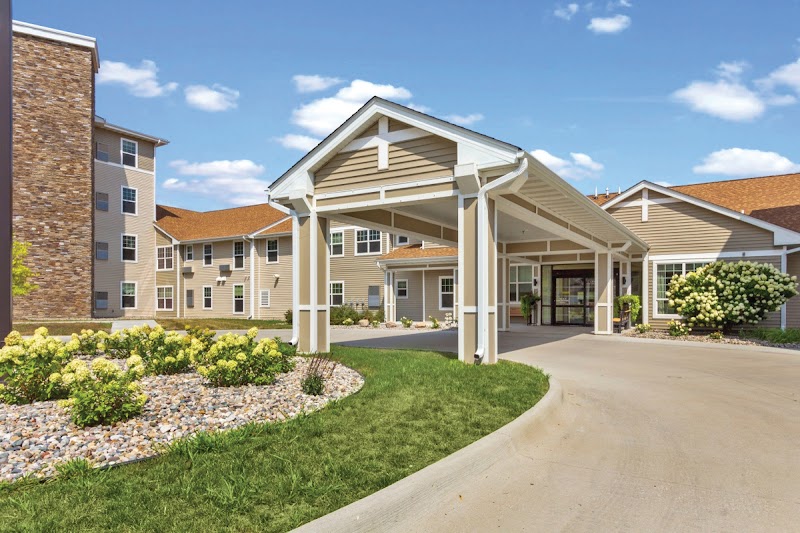
Mill-Pond

1201 SE Mill Pond Court, Ankeny, IA 50021 (515) 964-2273
Non profit - Corporation 60 Beds PRESBYTERIAN HOMES & SERVICES Data: November 2025
Trust Grade
90/100
#52 of 392 in IA
Last Inspection: March 2025

Within standard 12-15 month inspection cycle. Federal law requires annual inspections.

Overview

Mill-Pond in Ankeny, Iowa, has received a Trust Grade of A, indicating it is excellent and highly recommended for care. It ranks #52 out of 392 nursing homes in Iowa, placing it in the top half of facilities statewide, and #4 out of 29 in Polk County, meaning only three local options are better. The facility is improving, with a decrease in reported issues from five in 2024 to two in 2025. Staffing is a strong point, earning a perfect 5/5 stars and a turnover rate of 35%, which is below the Iowa average of 44%, suggesting staff stability and familiarity with residents. There were no fines recorded, which is a positive sign. However, recent inspections revealed concerning incidents, such as not checking cooking temperatures for food prepared in the kitchen and failures in documenting insulin administration for a resident with diabetes. Additionally, there were issues with staff not treating a resident with dignity, highlighting areas needing improvement despite the overall strengths of the facility.

Trust Score
A
90/100
In Iowa
#52/392
Top 13%
Safety Record
Low Risk
No red flags
Inspections
Getting Better
5 → 2 violations
Staff Stability
○ Average
35% turnover. Near Iowa's 48% average. Typical for the industry.
Penalties
✓ Good
No fines on record. Clean compliance history, better than most Iowa facilities.
Skilled Nurses
✓ Good
Each resident gets 52 minutes of Registered Nurse (RN) attention daily — more than average for Iowa. RNs are trained to catch health problems early.
Violations
○ Average
9 deficiencies on record. Average for a facility this size. Mostly minor or procedural issues.
★★★★★
5.0
Overall Rating
★★★★★
5.0
Staff Levels
★★★☆☆
3.0
Care Quality
★★★★☆
4.0
Inspection Score
Stable
2024: 5 issues
2025: 2 issues

The Good

  • 5-Star Staffing Rating · Excellent nurse staffing levels
  • Full Sprinkler Coverage · Fire safety systems throughout facility
  • No fines on record
  • Staff turnover below average (35%)

    13 points below Iowa average of 48%

Facility shows strength in staffing levels, fire safety.

The Bad

Staff Turnover: 35%

11pts below Iowa avg (46%)

Typical for the industry

Chain: PRESBYTERIAN HOMES & SERVICES

Part of a multi-facility chain

Ask about local staffing decisions and management

The Ugly 9 deficiencies on record

Mar 2025 2 deficiencies
CONCERN (D)

Potential for Harm - no one hurt, but risky conditions existed

Deficiency F0800 (Tag F0800)

Could have caused harm · This affected 1 resident

Based on observation, staff interview, and policy review, the facility failed to obtain final cooking food temperatures on alternative menu items prepared in the satellite kitchen. The facility report...

Read full inspector narrative →
Based on observation, staff interview, and policy review, the facility failed to obtain final cooking food temperatures on alternative menu items prepared in the satellite kitchen. The facility reported a census of 59 residents. Findings include: During a continuous lunch service observation on 3/5/25, at 11:45 AM, Staff A, Cook, and Staff B, server, both seen preparing tomato soup for two separate residents. In both instances, a final cooking temperature was not obtained after the soup was removed from the microwave and served to residents. Staff B also observed preparing a microwaveable cup of macaroni and cheese. A final cooking temperature was not obtained. During an interview on 3/5/25, at 12:45 PM, Staff C, Nutrition and Culinary Supervisor, stated final cooking temperatures are normally obtained on items that are prepared in the satellite kitchen. During an interview on 3/6/25, at 8:00 AM, the Certified Dietary Manager, CDM, acknowledged the lack of temperatures for items prepared in the satellite kitchen. With the variety of foods available to residents on the alternative/always available menu (which include hamburgers), the CDM voiced final cooking temperatures should be obtained. This will ensure proper cooking temperature reached for food safety but also to ensure resident safety. The policy Dietary-F812 Regulation-Food Safety Requirements, dated 2020, stated cooking food to the required temperature will either kill dangerous organisms or inactivate them enough so there is little risk to the resident and food is safe to eat. Reheated cooked foods must be reheated to an internal temperature of 165° Fahrenheit. Ready-to-eat foods should be reheated to at least 135° Fahrenheit.
CONCERN (D)

Potential for Harm - no one hurt, but risky conditions existed

Medical Records (Tag F0842)

Could have caused harm · This affected 1 resident

Based on electronic health record review, staff interview, and policy review, the facility failed to ensure documentation of insulin administration for 1 of 4 resident reviewed for medication regimen ...

Read full inspector narrative →
Based on electronic health record review, staff interview, and policy review, the facility failed to ensure documentation of insulin administration for 1 of 4 resident reviewed for medication regimen review (Resident #12). The facility reported a census of 59 residents. Findings include: The Minimum Data Set (MDS) Assessment, dated 1/16/25, listed Resident #12's medical diagnoses, which include diabetes and Parkinson's. The MDS noted the use of insulin. The Order Summary Report, dated 3/6/25, listed an order for Glargine (long acting insulin), which is administered one time a day at night and an order for Lispro or Aspart (both fast-acting insulin), which is administered three times a day with meals. The Medication Administration Record (MAR) revealed the following: a. In September 2024, Glargine was not recorded as administered in 1 out of 30 days b. In October 2024, Aspart was not recorded as administered at noon in 1 out of 31 days c. In December 2024, Glargine was not recorded as administered in 1 of out of 31 days d. In January 2025, Glargine was not recorded as administered in 1 out of 30 days e. In February 2025, Glargine was not recorded as administered in 1 out of 28 days The review of Progress Notes in the electronic health record lacked documentation to address if the insulin had or had not been given to Resident #12. During an interview on 3/5/25, the Director of Nursing (DON) could not verify if the insulin had been administered and staff did not document or if the insulin was not administered at all. The DON would expect staff to document all medication administration. If the medication could not be given, additional documentation should be written to explain why it had not. The policy Medication Administration Policy, modified May 2021, stated medications are documented immediately after administration by the nurse or medication aide. If the resident refuses, staff should indicated this in the electronic MAR as well as the medical record.
Apr 2024 5 deficiencies
CONCERN (D) 📢 Someone Reported This

A family member, employee, or ombudsman was alarmed enough to file a formal complaint

Potential for Harm - no one hurt, but risky conditions existed

Resident Rights (Tag F0550)

Could have caused harm · This affected 1 resident

Based on clinical record review, policy review, and staff and resident interviews, the facility failed to ensure staff treated residents with dignity and respect for 1 of 1 residents reviewed for dign...

Read full inspector narrative →
Based on clinical record review, policy review, and staff and resident interviews, the facility failed to ensure staff treated residents with dignity and respect for 1 of 1 residents reviewed for dignity (Resident #45). The facility reported a census of 57 residents. Findings include: 1. The Annual Minimum Data Set(MDS) assessment tool, dated 1/12/24, listed diagnoses for Resident #45 which included anxiety, heart failure, and post-polio syndrome. The MDS reported he had upper extremity impairment on one side and lower extremity impairment on both sides. The MDS stated he required partial/moderate assistance with upper body dressing and rolling and substantial/maximal assistance with toileting, hygiene, showering, and lower body dressing, and was dependent on staff for taking off foot wear. The MDS listed the resident's Brief Interview for Mental Status(BIMS) score as 15 out of 15, which indicated intact cognition. The facility policy Vulnerable Adult Abuse Prevention Plan, modified January 2023, stated the facility would provide services of the highest quality to promote dignity and holistic well being. 1/11/23 Care Plan entries stated the resident had an activities of daily living(ADL) self-care performance deficit related to weakness, impaired range of motion, and post-polio syndrome. The Care Plan documented the resident required the assistance of 1 staff for dressing, grooming, and hygiene. 7/6/23 Care Plan entries stated the resident had the potential for a psychosocial well being problem related to the need for long term care placement, anxiety and physical limitations. The Care Plan directed staff to allow the resident time to answer questions to verbalize feelings, perceptions, and fears. The 1/17/24 facility Daily Assignment Sheet documented Staff J agency Certified Nursing Assistant(CNA) and Staff K agency CNA worked the evening shift. The 1/18/24 facility Daily Assignment Sheet documented Staff I, CNA worked the day shift. Staff J's name is on the schedule for the evening shift but had a line through it. The 1/19/24 Daily Assignment Sheet documented Staff K worked the evening shift. In a 1/19/24 3:42 p.m. email to the facility from Resident #45, the resident stated he had a very bad experience with two agency CNAs on 1/17/24. He stated that they tried to take his brace off without unlacing first and he yelled and told them to unlace his shoes first and then pull them off but they did not. He stated they kept pulling and yanking until he thought his ankles were going to break. He stated one of the aides looked down at his leg and said eeeooo, what happened to your leg?. He stated they had no respect for him and behaved as if they were extremely hurried. On 4/9/24 at 9:36 a.m., Resident #45 reported he had two agency CNAs that took care of him and were horrible. He stated they were unbelievably rough and he asked them to slow down. He stated they twisted his shoes in order to get them off and stated one of the CNA's looked at his leg and said ew, what happened to your leg?. He said he told them to get out. He stated the next day one of them came back and was swearing and accused Staff B Licensed Practical Nurse(LPN) of pushing her up against the wall and then called the police to report Staff B. In a subsequent interview on 4/10/24 at 10:46 a.m., the resident stated when the two staff members were trying to take his shoes off, it hurt and he even had pain in the left ankle the next day. He stated they hurt both of his feet and continued after he told them to stop. He stated they also hurt his left leg when they were taking his brace off and would not let him explain how to do things. He said he felt scared and frightened and said he did not feel like they hurt him deliberately but they would not listen. He said the next night one of the CNAs came back to the facility to work and the night after that the other came back to the facility to work. He stated he reported his concerns with the care to Staff H CNA on the night the police were called to the facility. On 4/10/24 at 3:26 p.m. Staff H CNA stated the resident reported to her when two female staff members took his shoes off, they were rough. She stated he told her about it the next day and she was pretty sure she told the nurse. On 4/10/24 at 4:07 p.m., Staff I CNA stated that when she came on to her shift on 1/18/24 the resident reported he was treated terribly the night before. He stated he was glad to see her and he had the worst aides who made fun of him, wound not listen to him, and hurt him. Staff I stated the resident described the staff members as African American females who were agency staff. Staff I stated she did not report this but kept the information that he told her in her mind. Staff I stated the resident told her this around 7:30-8:00 a.m. and later in her shift there was an agency staff member(Staff J CNA) who would not assist Staff B LPN with a resident transfer. Staff I stated Staff B and Staff J got into a verbal altercation and Staff J was using profane language. She stated the facility ended up asking Staff J to leave the facility and Staff J ended up calling the police to report Staff B for assault. Staff I stated in the midst of this altercation, the dots all connected and she wondered if Staff J was one of the staff members the resident had complained about to her earlier in the day. Staff I stated prior to Staff J leaving the facility she(Staff I) took her(Staff J's) picture at 5:27 p.m. and then showed it to the resident. Staff I stated the resident confirmed this was one of the staff members who mistreated him the night before. In a phone interview on 4/11/24 at 8:30 a.m., Staff J CNA stated she worked with the resident one night and had no problems with him other than accidentally dropping his leg down on the bed when they tried to take his brace off. She stated nothing was said about the situation until the next day when a resident's call light was going off and she was feeding. She stated a nurse was rude with her and she ended up calling her agency and they told her to leave the facility. In a phone interview on 4/11/24 at 8:42 a.m., Staff K CNA stated she assisted Staff J in helping the resident to bed. She stated as they pulled his leg over, his leg dropped on the bed by accident but stated nothing else occurred during the cares. She stated she did not hear anything else about the situation until 2 days later during her shift when she was feeding dinner when they told her she had to leave the facility. On 4/11/24 at 2:49 p.m., the Clinical Administrator stated the facility would report allegations of abuse within 2 hours and she expected staff to treat residents with kindness. She stated as soon as she received the email from the resident, she acted. She stated she was not aware that the resident reported the allegation to a staff member prior to this. On 4/15/24 at 12:37 p.m., the Clinical Administrator stated alleged perpetrators of abuse should be separated from residents immediately.
CONCERN (D) 📢 Someone Reported This

A family member, employee, or ombudsman was alarmed enough to file a formal complaint

Potential for Harm - no one hurt, but risky conditions existed

Report Alleged Abuse (Tag F0609)

Could have caused harm · This affected 1 resident

Based on clinical record review, policy review, and staff and resident interviews, the facility failed to report an allegation of abuse in a timely manner to the State Agency for 1 of 2 residents revi...

Read full inspector narrative →
Based on clinical record review, policy review, and staff and resident interviews, the facility failed to report an allegation of abuse in a timely manner to the State Agency for 1 of 2 residents reviewed for abuse (Resident #45). The facility reported a census of 57 residents. Findings include: 1. The Annual Minimum Data Set (MDS) assessment tool, dated 1/12/24, listed diagnoses for Resident #45 which included anxiety, heart failure, and post-polio syndrome. The MDS stated he had upper extremity impairment on one side and lower extremity impairment on both sides. The MDS stated he required partial/moderate assistance with upper body dressing and rolling and substantial/maximal assistance with toileting, hygiene, showering, and lower body dressing, and was dependent on staff for taking off foot wear. The MDS listed the resident's Brief Interview for Mental Status(BIMS) score as 15 out of 15, which indicated intact cognition. The facility policy Vulnerable Adult Abuse Prevention Plan, modified January 2023, stated the facility would provide services of the highest quality to promote dignity and holistic well-being. The policy listed an objective as to protect each resident from abuse by care givers. The policy stated residents had the right to be free from abuse and stated in the event of suspected maltreatment residents would be immediately assessed and separated from the alleged perpetrator to ensure safety. The policy stated once abuse was suspected or identified the facility would conduct a thorough investigation of the alleged violation and stated in the event of suspected maltreatment, the needs of the resident would be immediately assessed and separated from the alleged perpetrator to ensure the resident's safety. The policy stated the facility would report instances of maltreatment immediately and initiate an investigation. 1/11/23 Care Plan entries stated the resident had an activities of daily living (ADL) self-care performance deficit related to weakness, impaired range of motion, and post-polio syndrome. The Care Plan documented the resident required the assistance of 1 staff for dressing, grooming, and hygiene. 7/6/23 Care Plan entries stated the resident had the potential for a psychosocial well-being problem related to the need for long term care placement, anxiety, and physical limitations. The Care Plan directed staff to allow the resident time to answer questions to verbalize feelings, perceptions, and fears. The 1/17/24 facility Daily Assignment Sheet documented Staff J agency Certified Nursing Assistant (CNA) and Staff K agency CNA worked the evening shift. The 1/18/24 facility Daily Assignment Sheet documented Staff I CNA worked the day shift. Staff J's name is on the schedule for the evening shift but had a line through it. The 1/19/24 Daily Assignment Sheet documented Staff K worked the evening shift. In a 1/19/24 3:42 p.m. email to the facility from the Resident #45, the resident stated he had a very bad experience with two agency CNAs on 1/17/24. He stated that they tried to take his brace off without unlacing first and he yelled and told them to unlace his shoes first and then pull them off but they did not. He stated they kept pulling and yanking until he thought his ankles were going to break. He stated one of the aides looked down at his leg and said eeeooo, what happened to your leg?. He stated they had no respect for him and behaved as if they were extremely hurried. On 4/9/24 at 9:36 a.m., Resident #45 stated he had two agency CNAs that took care of him and were horrible. He stated they were unbelievably rough and he asked them to slow down. He stated they twisted his shoes in order to get them off and stated one of the CNA's looked at his leg and said ew, what happened to your leg?. He said he told them to get out. He stated the next day one of them came back and was swearing and accused Staff B Licensed Practical Nurse (LPN) of pushing her up against the wall and then called the police to report Staff B. In a subsequent interview on 4/10/24 at 10:46 a.m., the resident stated when the two staff members were trying to take his shoes off, it hurt and he even had pain in the left ankle the next day. He stated they hurt both of his feet and continued after he told them to stop. He stated they also hurt his left leg when they were taking his brace off and would not let him explain how to do things. He said he felt scared and frightened and said he did not feel like they hurt him deliberately but they would not listen. He said the next night one of the CNAs came back to the facility to work and the night after that the other came back to the facility to work. He stated he reported his concerns with the care to Staff H CNA on the night the police were called to the facility. On 4/10/24 at 3:26 p.m. Staff H CNA stated the resident reported to her when two female staff members took his shoes off, they were rough. She stated he told her about it the next day and she was pretty sure she told the nurse. On 4/10/24 at 4:07 p.m., Staff I CNA stated that when she came on to her shift on 1/18/24 the resident reported he was treated terribly the night before. He stated he was glad to see her and he had the worst aides who made fun of him, wound not listen to him, and hurt him. Staff I stated the resident described the staff members as African American females who were agency staff. Staff I stated she did not report this but kept the information that he told her in her mind. Staff I stated the resident told her this around 7:30-8:00 a.m. and later in her shift there was an agency staff member(Staff J CNA) who would not assist Staff B LPN with a resident transfer. Staff I stated Staff B and Staff J got into a verbal altercation and Staff J was using profane language. She stated the facility ended up asking Staff J to leave the facility and Staff J ended up calling the police to report Staff B for assault. Staff I stated in the midst of this altercation, the dots all connected and she wondered if Staff J was one of the staff members the resident had complained about to her earlier in the day. Staff I stated prior to Staff J leaving the facility she Staff I took her (Staff J's) picture at 5:27 p.m. and then showed it to the resident. Staff I stated the resident confirmed this was one of the staff members who mistreated him the night before. In a phone interview on 4/11/24 at 8:30 a.m., Staff J CNA stated she worked with the resident one night and had no problems with him other than accidentally dropping his leg down on the bed when they tried to take his brace off. She stated nothing was said about the situation until the next day when a resident's call light was going off and she was feeding. She stated a nurse was rude with her and she ended up calling her agency and they told her to leave the facility. In a phone interview on 4/11/24 at 8:42 a.m., Staff K CNA stated she assisted Staff J in helping the resident to bed. She stated as they pulled his leg over, his leg dropped on the bed by accident but stated nothing else occurred during the cares. She stated she did not hear anything else about the situation until 2 days later during her shift when she was feeding dinner when they told her she had to leave the facility. On 4/11/24 at 2:49 p.m., the Clinical Administrator stated the facility would report allegations of abuse within 2 hours and she expected staff to treat residents with kindness. She stated as soon as she received the email from the resident, she acted. She stated she was not aware that the resident reported the allegation to a staff member prior to this. On 4/15/24 at 12:37 p.m., the Clinical Administrator stated alleged perpetrators of abuse should be separated from residents immediately. The facility lacked documentation they reported the incident to the State Agency prior to 1/19/24.
CONCERN (D) 📢 Someone Reported This

A family member, employee, or ombudsman was alarmed enough to file a formal complaint

Potential for Harm - no one hurt, but risky conditions existed

Investigate Abuse (Tag F0610)

Could have caused harm · This affected 1 resident

Based on clinical record review, policy review, and staff and resident interviews, the facility failed to initiate an abuse investigation and failed to separate residents from alleged perpetrators of ...

Read full inspector narrative →
Based on clinical record review, policy review, and staff and resident interviews, the facility failed to initiate an abuse investigation and failed to separate residents from alleged perpetrators of abuse in a timely manner after staff became aware of a resident report of maltreatment for 1 of 2 residents reviewed for abuse (Resident #45). The facility reported a census of 57 residents. Findings include: 1. The Annual Minimum Data Set (MDS) assessment tool, dated 1/12/24, listed diagnoses for Resident #45 which included anxiety, heart failure, and post-polio syndrome. The MDS stated he had upper extremity impairment on one side and lower extremity impairment on both sides. The MDS stated he required partial/moderate assistance with upper body dressing and rolling and substantial/maximal assistance with toileting, hygiene, showering, and lower body dressing, and was dependent on staff for taking off foot wear. The MDS listed the resident's Brief Interview for Mental Status (BIMS) score as 15 out of 15, which indicated intact cognition. The facility policy Vulnerable Adult Abuse Prevention Plan, modified January 2023, stated the facility would provide services of the highest quality to promote dignity and holistic well-being. The policy listed an objective as to protect each resident from abuse by care givers. The policy stated residents had the right to be free from abuse and stated in the event of suspected maltreatment residents would be immediately assessed and separated from the alleged perpetrator to ensure safety. The policy stated once abuse was suspected or identified the facility would conduct a thorough investigation of the alleged violation and stated in the event of suspected maltreatment, the needs of the resident would be immediately assessed and separated from the alleged perpetrator to ensure the resident's safety. The policy stated the facility would report instances of maltreatment immediately and initiate an investigation. 1/11/23 Care Plan entries stated the resident had an activities of daily living (ADL) self-care performance deficit related to weakness, impaired range of motion, and post-polio syndrome. The Care Plan documented the resident required the assistance of 1 staff for dressing, grooming, and hygiene. 7/6/23 Care Plan entries stated the resident had the potential for a psychosocial well-being problem related to the need for long term care placement, anxiety, and physical limitations. The Care Plan directed staff to allow the resident time to answer questions to verbalize feelings, perceptions, and fears. The 1/17/24 facility Daily Assignment Sheet documented Staff J agency Certified Nursing Assistant (CNA) and Staff K agency CNA worked the evening shift. The 1/18/24 facility Daily Assignment Sheet documented Staff I CNA worked the day shift. Staff J's name is on the schedule for the evening shift but had a line through it. The 1/19/24 Daily Assignment Sheet documented Staff K worked the evening shift. In a 1/19/24 3:42 p.m. email to the facility from the Resident #45, the resident stated he had a very bad experience with two agency CNAs on 1/17/24. He stated that they tried to take his brace off without unlacing first and he yelled and told them to unlace his shoes first and then pull them off but they did not. He stated they kept pulling and yanking until he thought his ankles were going to break. He stated one of the aides looked down at his leg and said eeeooo, what happened to your leg?. He stated they had no respect for him and behaved as if they were extremely hurried. On 4/9/24 at 9:36 a.m., Resident #45 reported he had two agency CNAs that took care of him and were horrible. He stated they were unbelievably rough and he asked them to slow down. He stated they twisted his shoes in order to get them off and stated one of the CNA's looked at his leg and said ew, what happened to your leg?. He said he told them to get out. He stated the next day one of them came back and was swearing and accused Staff B Licensed Practical Nurse (LPN) of pushing her up against the wall and then called the police to report Staff B. In a subsequent interview on 4/10/24 at 10:46 a.m., the resident stated when the two staff members were trying to take his shoes off, it hurt and he even had pain in the left ankle the next day. He stated they hurt both of his feet and continued after he told them to stop. He stated they also hurt his left leg when they were taking his brace off and would not let him explain how to do things. He said he felt scared and frightened and said he did not feel like they hurt him deliberately but they would not listen. He said the next night one of the CNAs came back to the facility to work and the night after that the other came back to the facility to work. He stated he reported his concerns with the care to Staff H CNA on the night the police were called to the facility. On 4/10/24 at 3:26 p.m. Staff H CNA stated the resident reported to her when two female staff members took his shoes off, they were rough. She stated he told her about it the next day and she was pretty sure she told the nurse. On 4/10/24 at 4:07 p.m., Staff I CNA stated that when she came on to her shift on 1/18/24 the resident reported he was treated terribly the night before. He stated he was glad to see her and he had the worst aides who made fun of him, wound not listen to him, and hurt him. Staff I stated the resident described the staff members as African American females who were agency staff. Staff I stated she did not report this but kept the information that he told her in her mind. Staff I stated the resident told her this around 7:30-8:00 a.m. and later in her shift there was an agency staff member (Staff J CNA) who would not assist Staff B LPN with a resident transfer. Staff I stated Staff B and Staff J got into a verbal altercation and Staff J was using profane language. She stated the facility ended up asking Staff J to leave the facility and Staff J ended up calling the police to report Staff B for assault. Staff I stated in the midst of this altercation, the dots all connected and she wondered if Staff J was one of the staff members the resident had complained about to her earlier in the day. Staff I stated prior to Staff J leaving the facility she (Staff I) took her (Staff J's) picture at 5:27 p.m. and then showed it to the resident. Staff I stated the resident confirmed this was one of the staff members who mistreated him the night before. In a phone interview on 4/11/24 at 8:30 a.m., Staff J CNA stated she worked with the resident one night and had no problems with him other than accidentally dropping his leg down on the bed when they tried to take his brace off. She stated nothing was said about the situation until the next day when a resident's call light was going off and she was feeding. She stated a nurse was rude with her and she ended up calling her agency and they told her to leave the facility. In a phone interview on 4/11/24 at 8:42 a.m., Staff K CNA stated she assisted Staff J in helping the resident to bed. She stated as they pulled his leg over, his leg dropped on the bed by accident but stated nothing else occurred during the cares. She stated she did not hear anything else about the situation until 2 days later during her shift when she was feeding dinner when they told her she had to leave the facility. On 4/11/24 at 2:49 p.m., the Clinical Administrator stated the facility would report allegations of abuse within 2 hours and she expected staff to treat residents with kindness. She stated as soon as she received the email from the resident, she acted. She stated she was not aware that the resident reported the allegation to a staff member prior to this. On 4/15/24 at 12:37 p.m., the Clinical Administrator stated alleged perpetrators of abuse should be separated from residents immediately. The facility lacked documentation they initiated an investigation of the alleged incident immediately after the resident informed Staff I of his concerns on the morning of 1/18/24 and failed to ensure Staff J and Staff K did not return to work after the report.
CONCERN (D)

Potential for Harm - no one hurt, but risky conditions existed

ADL Care (Tag F0677)

Could have caused harm · This affected 1 resident

**NOTE- TERMS IN BRACKETS HAVE BEEN EDITED TO PROTECT CONFIDENTIALITY** Based on observations, family and staff interviews, and record review, the facility failed to provide oral care after meals as d...

Read full inspector narrative →
**NOTE- TERMS IN BRACKETS HAVE BEEN EDITED TO PROTECT CONFIDENTIALITY** Based on observations, family and staff interviews, and record review, the facility failed to provide oral care after meals as directed and incontinent care for 1 of 3 residents reviewed for Activities of Living (Resident #51). The facility reported a census of 57 residents. Findings include: The Quarterly Minimum Data Set (MDS) dated [DATE] for Resident #51 revealed the diagnosis of Alzheimer's disease, dementia, gastroesophageal reflux disease (acid reflux), and dysphagia (partial loss of language). The MDS documented the resident was totally dependent on one staff member for eating, oral care, and assistance of two staff for toileting and personal care. The MDS identified the risk for pressure ulcers. The Brief Interview for Mental Status (BIMS) score of 99 revealed severe impaired mental cognition. The Care Plan identified a focus area with initiated date of 12/29/23 as the resident with a deficit of activities of daily living related to weakness, impaired mobility, dementia with agitation, poor eyesight, and difficulty swallowing. The Care Plan directed staff to care for the resident with the following interventions: a. Oral care, the resident had his own teeth, and required assistance with mouth care b. Follow Speech Therapy (ST) recommendations for oral cares after all meals, oral intake and prior to breakfast or first meal of the day c. Dressing, Grooming, Hygiene required assistance of one staff member d. Provide assistance to check and change for incontinence upon rising, after meals and at bedtime During an interview on 4/8/24 at 10:35 a.m. Family Member stated Resident #51 was not being changed every 2 hours, he was unable to alert staff to needs, and he is in his reclining wheelchair (w/c) in the front living area without attention provided by staff. Observations on 4/9/24 revealed the following for Resident #51: a. At 9:31 a.m. Resident #51 in wheelchair in dining room, staff pushed him to front living room. Returned Resident #51 to the dining room at 11:30 a.m. b. At 1:00 p.m. staff pushed Resident #51 outside for activity. c. At 1:44 p.m. Staff F, CNA assisted Resident #51 to room and provided incontinent care. No oral care provided. During an interview on 4/9/24 at 1:44 p.m. Staff F, Certified Nursing Assistant (CNA) stated this was the first time to care for this resident. During an observation on 4/9/24 at 1:45 p.m. Staff E, CNA gowned in Personal Protective Equipment (PPE) gown and gloves replaced Staff F to provide care. During an interview on 4/9/24 at 1:45 p.m. Staff E, CNA stated she had assisted Staff D, CNA to get Resident #51 out of bed to shower at 6:30 a.m. and not provided care during the morning. During an observation on 4/9/24 at 1:47 p.m., Staff D, CNA entered Resident #51's room wearing PPE gown and gloves, and assisted Staff E, CNA to transfer Resident #51 from w/c to bed by using the mechanical lift. Staff E provided catheter care and assisted Staff D to provide intontinence care for Resident #51. Staff G, Licensed Practical Nurse, (LPN) entered the room and applied ointment to Resident #51's buttocks. Staff E and Staff D used the mechanical lift to assist Resident #51 to his recliner. Neither CNA provided Resident #51 with oral care. During an interview on 4/9/24 at 1:47 p.m. Staff D, CNA stated she gave Resident #51 a bed bath at 6:30 a.m. and checked his skin then and did not provide oral care nor incontinent care after that as she was giving showers. During an interview on 4/9/24 at 1:52 P.M. Staff G, LPN stated she had provided a skin check for Resident #51 this morning during bath and applied ointment and had not seen him after that. During observations on 4/10/24 revealed for Resident #51: a. At 7:15 a.m. Resident #51 was in bed. b. At 8:30 a.m. Resident #51 was in the dining room then was moved to the front living room in the wheelchair. c. At 10:02 a.m. Restorative Aide moved Resident #51 to his room and provided Range of motion to upper and lower extremities then returned resident to the living room. d. At 10:53 a.m. Staff M, CNA and Staff L, CNA removed Resident #51 from the front living room to his room and provided incontinence care. No oral care provided. During an interview on 4/10/24 at 11:19 a.m. Staff M, CNA stated the facility provides a paper care plan for the agency CNA's. The undated and untitled document provided by the facility provided to the CNA's listed Resident #51 and directed staff to provide oral care before the first meal and after all meals/oral intake and to have the assistance of 2 persons for check and change. The Clinical Resident Profile for Resident #51 revealed special instructions to provide oral care after every meal. The Speech Therapy evaluation dated 12/19/23 revealed Res #51 presented with mild-moderate oropharyngeal dysphagia. The Speech Therapy Progress Notes dated 2/21/24 revealed due to the documented physical impairments and associated functional deficits, without skilled therapeutic interventions, the patient is at risk for aspiration (choking). Oral care Point Of Care dated 3/28/24 through 4/8/24 for Resident #51 lacked documentation of oral care after meals. During an interview on 4/11/24 at 11:35 AM The Clinical Administrator stated the staff are to reposition, check and change residents after meals and to provide oral care as recommended by Speech Therapy.
CONCERN (D) 📢 Someone Reported This

A family member, employee, or ombudsman was alarmed enough to file a formal complaint

Potential for Harm - no one hurt, but risky conditions existed

Pressure Ulcer Prevention (Tag F0686)

Could have caused harm · This affected 1 resident

Based on observation, clinical record review, staff interview, and policy review, the facility failed to notify the provider after a change in condition in a pressure ulcer for 1 of 3 residents review...

Read full inspector narrative →
Based on observation, clinical record review, staff interview, and policy review, the facility failed to notify the provider after a change in condition in a pressure ulcer for 1 of 3 residents reviewed for pressure ulcers(Resident #37). The facility reported a census of 37 residents. Findings include: The MDS (Minimum Data Set) assessment identifies the definition of pressure ulcers: Stage I is an intact skin with non-blanchable redness of a localized area usually over a bony prominence. Darkly pigmented skin may not have a visible blanching; in dark skin tones only it may appear with persistent blue or purple hues. Stage II is partial thickness loss of dermis presenting as a shallow open ulcer with a red or pink wound bed, without slough (dead tissue, usually cream or yellow in color). May also present as an intact or open/ruptured blister. Stage III Full thickness tissue loss. Subcutaneous fat may be visible but bone, tendon or muscle is not exposed. Slough may be present but does not obscure the depth of tissue loss. May include undermining and tunneling. Stage IV is full thickness tissue loss with exposed bone, tendon or muscle. Slough or eschar (dry, black, hard necrotic tissue). may be present on some parts of the wound bed. Often includes undermining and tunneling or eschar. Unstageable Ulcer: inability to see the wound bed. Other staging considerations include: Deep Tissue Pressure Injury (DTPI): Persistent non-blanchable deep red, maroon or purple discoloration. Intact skin with localized area of persistent non-blanchable deep red, maroon, purple discoloration due to damage of underlying soft tissue. This area may be preceded by tissue that is painful, firm, mushy, boggy, warmer or cooler as compared to adjacent tissue. These changes often precede skin color changes and discoloration may appear differently in darkly pigmented skin. This injury results from intense and/or prolonged pressure and shear forces at the bone-muscle interface. The Annual MDS assessment tool, dated 9/11/23, listed diagnoses for Resident #37 which included coronary artery disease, diabetes, and non-Alzheimer's dementia. The MDS stated the resident required limited assistance of 1 staff for transfers, and personal hygiene, extensive assistance of 1 staff for bed mobility, dressing, and bathing, and extensive assistance of 2 staff for toileting. The MDS stated the resident was at risk for developing pressure ulcers but had no unhealed pressure ulcers. The MDS stated stated the resident had inattention and disorganized thinking. The facility Skin Integrity Management Policy-Iowa and Wisconsin, modified October 2022, stated the facility would identify, assess, and monitor residents whose clinical condition increased the risk for impaired skin integrity and pressure injuries. The policy directed staff to notify the physician if any evidence of deterioration was noted. An 11/15/23 4:56 p.m. provider Progress Note stated the resident had a corn (a small, tender area of thickened skin) on his left heel and the provider ordered a corn pad. An 11/22/23 Body Audit stated the resident had a dark red scab noted on the left heel. A 11/29/23 Body Audit stated the resident had a scab on the left heel, dark red, and the abrasion measured 6.2 centimeters(cm) x 1.8 cm. A 12/4/24 1:51 p.m. (Late Entry) General Note stated the resident complained that he had pain in his left heel and he had a dark wound. The resident refused to walk to dine as it hurt him to walk. The 12/4/24 at 1:06 p.m. Skin and Wound Evaluation stated the resident had an unstageable(obscured full-thickness skins and tissue loss) pressure area to the rear left malleolus(ankle bone) acquired in house and the area was new. The wound measured 0.3 cm x 0.8 cm x 0.5 cm, and tender to touch. The December Medication Administration Record(MAR) listed a 12/5/23 order for Medihoney Wound/Burn Dressing(a gel which aided in the removal of dead tissue) and directed staff to apply to the left heel every 3 days. The facility lacked documentation of provider notification of the change in condition of the resident's heel from 11/22/23-12/4/23. A 12/4/23 Care Plan entry stated the resident had a pressure ulcer and would remain free from infection in the left heel. A 12/4/23 Care Plan entry directed staff to elevate the heel off the bed surface using pillows/heel elevation products while in bed. On 4/10/24 at 10:36 a.m., Staff A Hospice Nurse measured a wound on the resident's left heel as 3.2 cm x 2.8 cm. The wound bed was covered with brown eschar and the rest of the resident's heel was red. On 4/11/24 at 2:49 p.m., the Clinical Administrator stated if there was a change in a wound, she would want staff to notify the provider and ask for a different treatment. On 4/15/24 at 10:23 a.m., Staff C Clinical Administrator stated she noticed that over the Thanksgiving holiday there was a difference in the wound when she looked through the Body Audits. She stated it was right before a holiday and staff were human and they missed it. She stated she could not find provider notification until 12/4/23. She stated during weekly skin checks if a wound was worse, staff should notify the provider.
Feb 2023 2 deficiencies
CONCERN (D)

Potential for Harm - no one hurt, but risky conditions existed

Deficiency F0692 (Tag F0692)

Could have caused harm · This affected 1 resident

Based on observations, staff interviews, record review and facility policy review, the facility failed to maintain acceptable parameters of nutritional status for 1 of 5 residents (Resident #2). The f...

Read full inspector narrative →
Based on observations, staff interviews, record review and facility policy review, the facility failed to maintain acceptable parameters of nutritional status for 1 of 5 residents (Resident #2). The facility reported a census of 52 residents. Findings include: On 2/21/23, a record review revealed the resident had a 15-pound weight loss in two weeks. On 1/24/23, the documented weight was 195.2 pounds and 180.2 pounds on 2/07/23. On 2/21/2023 at 7:39 AM, Resident #2 was observed in dining room requiring assistance with eating. The Quarterly Minimum Data Set (MDS) for Resident#2 dated 11/29/22 indicated that the resident required extensive assistance with eating. The MDS documented that Resident had diagnoses which included Alzheimer's disease, macular degeneration, and osteoarthritis. The MDS revealed that the Resident weighed 196 pounds. The care plan, revised on 11/28/22, indicated the resident had a nutritional risk and required assistance with eating. It included a goal weight range and directed staff to obtain the resident's weight per physician orders. The physician order entered 10/06/20 states that the resident was to be weighed weekly every Tuesday evening. The progress notes lacked documentation of physician notification of significant weight loss. An interview with Staff A, Registered Nurse (RN) on 02/21/23 at 3:41 PM revealed Resident #2 was required to be weighed on a weekly basis on Tuesday evenings. She verified that his last documented weight was on 2/07/23. She verified that there was no documented weight completed on 2/14/23. She stated that if a weight is not completed as scheduled, a 24-hour reminder is entered into the electronic health record and the on-coming staff is verbally notified that a weight is needed. An interview with Staff B, Certified Nursing Aid (CNA) on 2/21/23 at 3:54 PM revealed resident weights are documented in the shower book. A review of the shower book revealed Resident #2 had a weight entry with no date, time, nor signature noted. Staff B stated that a signature is expected to be present with weight entries. At 4:31 PM, Staff B reweighed Resident #2 twice and obtained a weight of 178.4 pounds. On 2/22/23 at 9:19 AM, Staff C, Licensed Practical Nurse (LPN), stated that a resident's weight is obtained by the on-duty CNA and reported to the nurse, who enters it into the resident's record. The weight should be analyzed and a second weight obtained if a significant change is noted. She stated that if the weight change is accurate, the nurse is to notify the physician and document the notification in the resident's progress notes. She stated that the corresponding Clinical Coordinator is verbally notified so the resident's care plan can be updated. On 2/22/23 at 12:15 PM, the Director of Nursing (DON) stated that staff residents' significant weight changes staff are expected to reweigh the resident and analyze weight method used. If the weight change is accurate, the physician should be notified. She also stated that the dietician checks weights every week. On 2/22/23, a policy review indicates re-weighs are required for a 5-pound loss for residents who weigh over 100 pounds and a 3-pound loss for residents who weigh under 100 pounds. It states that nursing staff is responsible for reviewing the initial weight, documenting the weight, and notifying the physician, involved family member, and the dietician of significant weight changes.
CONCERN (D)

Potential for Harm - no one hurt, but risky conditions existed

Deficiency F0725 (Tag F0725)

Could have caused harm · This affected 1 resident

**NOTE- TERMS IN BRACKETS HAVE BEEN EDITED TO PROTECT CONFIDENTIALITY** Based on clinical record review, observations, residents interviews, policy review, and staff interview, the facility failed to ...

Read full inspector narrative →
**NOTE- TERMS IN BRACKETS HAVE BEEN EDITED TO PROTECT CONFIDENTIALITY** Based on clinical record review, observations, residents interviews, policy review, and staff interview, the facility failed to answer call lights promptly (15 minutes or less) for 3 of 6 residents reviewed (Resident #255, #254, and #10). The facility reported a census of 52 residents. Findings include: 1. The Minimum Data Set (MDS) assessment, dated 2/16/23 for Resident #255, documented a Brief Interview of Mental Status (BIMS) as 12 which indicated the resident had moderately impaired cognition. The MDS documented the need for extensive assistance of one person with bed mobility, transfers, dressing, and toileting. The MDS also documented the resident had a fracture. During an interview with Resident #255 on 2/20/23 at 9:06 AM, reported at times he had waited up to 30 minutes before the call light answered. 2. The MDS assessment dated [DATE] for Resident #254 documented a Brief Interview of Mental Status (BIMS) as 15 which indicated cognition intact. The MDS documented the resident needed extensive assistance of one person for bed mobility, transfers, dressing, and toileting. The MDS also documented the resident had a left femur fracture. During an interview with Resident #254 on 2/20/23 at 10:00 AM, reported she had waited up to 30 minutes for staff assistance after she turned her call light on. 3. The MDS assessment for Resident #10, dated 12/28/22 documented a BIMS as 15 which indicated no cognitive impairment. The MDS documented the resident needed extensive assistance of one person for bed mobility, transfers, dressing, and toileting. During continuous observation on 2/21/23 at 8:37 AM revealed the call light above Resident #10's room doorway on. At 09:01 AM the resident's call light remained on. At 9:05 AM the call light was observed off. The call light was observed on for 28 minutes. Record review of a document titled, Device Activity Report (the facilities call light system logs) dated 2/22/23, for Resident #10, documented on 2/21/23 at 8:30 AM the call light was turned on and at 9:05 AM the call light was turned off revealing a 34 minute wait time. Record review of a policy titled, Call Light Policy, modified November 2022 provided by the facility, lacked instruction to staff on the need to answer call lights within 15 minutes or less. In the interview on 2/22/23 at 10:12 AM, the Administrator stated he expected call lights answered within 15 minutes or less.
Understanding Severity Codes (click to expand)
Life-Threatening (Immediate Jeopardy)
J - Isolated K - Pattern L - Widespread
Actual Harm
G - Isolated H - Pattern I - Widespread
Potential for Harm
D - Isolated E - Pattern F - Widespread
No Harm (Minor)
A - Isolated B - Pattern C - Widespread

Questions to Ask on Your Visit

  • "Can I speak with families of current residents?"
  • "What's your RN coverage like on weekends and overnight?"

Our Honest Assessment

Strengths
  • • Grade A (90/100). Above average facility, better than most options in Iowa.
  • • No major safety red flags. No abuse findings, life-threatening violations, or SFF status.
  • • No fines on record. Clean compliance history, better than most Iowa facilities.
  • • 35% turnover. Below Iowa's 48% average. Good staff retention means consistent care.
Concerns
  • • No significant concerns identified. This facility shows no red flags across CMS ratings, staff turnover, or federal penalties.
Bottom line: Generally positive indicators. Standard due diligence and a personal visit recommended.

About This Facility

What is Mill-Pond's CMS Rating?

CMS assigns Mill-Pond an overall rating of 5 out of 5 stars, which is considered much above average nationally. Within Iowa, this rating places the facility higher than 99% of the state's 100 nursing homes. This rating reflects solid performance across the metrics CMS uses to evaluate nursing home quality.

How is Mill-Pond Staffed?

CMS rates Mill-Pond's staffing level at 5 out of 5 stars, which is much above average compared to other nursing homes. Staff turnover is 35%, compared to the Iowa average of 46%. This relatively stable workforce can support continuity of care.

What Have Inspectors Found at Mill-Pond?

State health inspectors documented 9 deficiencies at Mill-Pond during 2023 to 2025. These included: 9 with potential for harm.

Who Owns and Operates Mill-Pond?

Mill-Pond is owned by a non-profit organization. Non-profit facilities reinvest revenue into operations rather than distributing to shareholders. The facility is operated by PRESBYTERIAN HOMES & SERVICES, a chain that manages multiple nursing homes. With 60 certified beds and approximately 56 residents (about 93% occupancy), it is a smaller facility located in Ankeny, Iowa.

How Does Mill-Pond Compare to Other Iowa Nursing Homes?

Compared to the 100 nursing homes in Iowa, Mill-Pond's overall rating (5 stars) is above the state average of 3.1, staff turnover (35%) is significantly lower than the state average of 46%, and health inspection rating (4 stars) is above the national benchmark.

What Should Families Ask When Visiting Mill-Pond?

Based on this facility's data, families visiting should ask: "Can I visit during a mealtime to observe dining assistance and food quality?" "How do you handle medical emergencies, and what is your hospital transfer rate?" "Can I speak with family members of current residents about their experience?"

Is Mill-Pond Safe?

Based on CMS inspection data, Mill-Pond has a clean safety record: no substantiated abuse findings (meaning no confirmed cases of resident harm), no Immediate Jeopardy citations (the most serious violation level indicating risk of serious injury or death), and is not on the Special Focus Facility watch list (a federal program monitoring the lowest-performing 1% of nursing homes). The facility has a 5-star overall rating and ranks #1 of 100 nursing homes in Iowa. While no facility is perfect, families should still ask about staff-to-resident ratios and recent inspection results during their visit.

Do Nurses at Mill-Pond Stick Around?

Mill-Pond has a staff turnover rate of 35%, which is about average for Iowa nursing homes (state average: 46%). Moderate turnover is common in nursing homes, but families should still ask about staff tenure and how the facility maintains care continuity when employees leave.

Was Mill-Pond Ever Fined?

Mill-Pond has no federal fines on record. CMS issues fines when nursing homes fail to meet care standards or don't correct problems found during inspections. The absence of fines suggests the facility has either maintained compliance or corrected any issues before penalties were assessed. This is a positive indicator, though families should still review recent inspection reports for the full picture.

Is Mill-Pond on Any Federal Watch List?

Mill-Pond is not on any federal watch list. The most significant is the Special Focus Facility (SFF) program, which identifies the bottom 1% of nursing homes nationally based on persistent, serious quality problems. Not being on this list means the facility has avoided the pattern of deficiencies that triggers enhanced federal oversight. This is a positive indicator, though families should still review the facility's inspection history directly.