Clarion Wellness and Rehabilitation Center
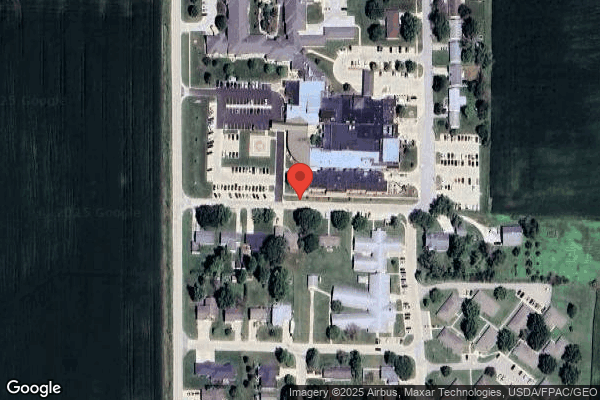
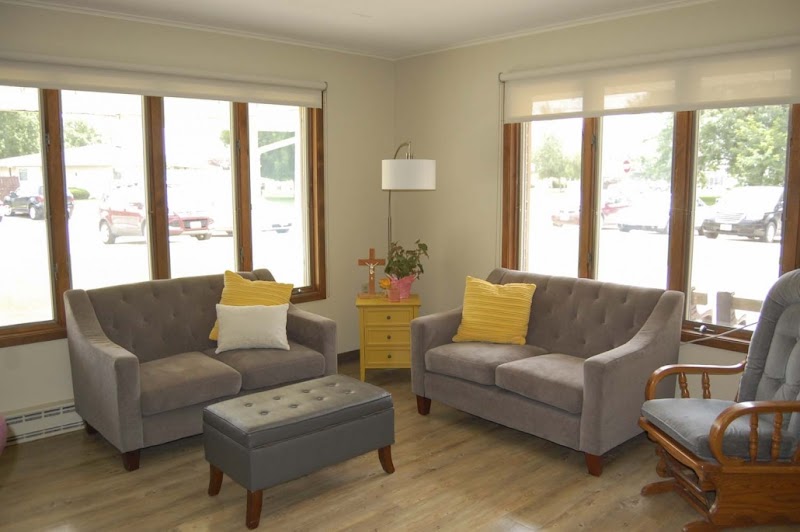
110 13th Avenue SW, Clarion, IA 50525 (515) 532-2893
For profit - Corporation 76 Beds THE ENSIGN GROUP Data: November 2025 5 Immediate Jeopardy citations
Trust Grade
0/100
#337 of 392 in IA
Last Inspection: October 2024

Within standard 12-15 month inspection cycle. Federal law requires annual inspections.

Overview

Clarion Wellness and Rehabilitation Center has received a Trust Grade of F, indicating significant concerns about the facility's care and operations. Ranking #337 out of 392 facilities in Iowa places it in the bottom half, and #3 out of 3 in Wright County means there are no better local options available. The facility is reportedly improving, with issues decreasing from 9 in 2024 to 3 in 2025, but it still has serious deficiencies. Staffing is a mixed bag; while the turnover rate is a relatively low 33%, the overall staffing rating is below average at 2 out of 5 stars, and there is less RN coverage than 79% of other Iowa facilities. Recent inspections revealed critical incidents, including failure to report allegations of physical and verbal abuse in a timely manner, putting residents at risk. Families should weigh these concerns against the strengths in staffing retention and quality measures when considering this facility.
Trust Score
F
0/100
In Iowa
#337/392
Bottom 15%
Safety Record
High Risk
Review needed
Inspections
Getting Better
9 → 3 violations
Staff Stability
○ Average
33% turnover. Near Iowa's 48% average. Typical for the industry.
Penalties
✓ Good
$24,174 in fines. Lower than most Iowa facilities. Relatively clean record.
Skilled Nurses
⚠ Watch
Each resident gets only 25 minutes of Registered Nurse (RN) attention daily — below average for Iowa. Fewer RN minutes means fewer trained eyes watching for problems.
Violations
⚠ Watch
37 deficiencies on record. Higher than average. Multiple issues found across inspections.
★☆☆☆☆
1.0
Overall Rating
★★☆☆☆
2.0
Staff Levels
★★★★☆
4.0
Care Quality
★☆☆☆☆
1.0
Inspection Score
Stable
2024: 9 issues
2025: 3 issues

The Good

  • 4-Star Quality Measures · Strong clinical quality outcomes
  • Full Sprinkler Coverage · Fire safety systems throughout facility
  • No fines on record
  • Staff turnover below average (33%)

    15 points below Iowa average of 48%

Facility shows strength in quality measures, fire safety.

The Bad

1-Star Overall Rating

Below Iowa average (3.0)

Significant quality concerns identified by CMS

Staff Turnover: 33%

13pts below Iowa avg (46%)

Typical for the industry

Federal Fines: $24,174

Below median ($33,413)

Minor penalties assessed

Chain: THE ENSIGN GROUP

Part of a multi-facility chain

Ask about local staffing decisions and management

The Ugly 37 deficiencies on record

5 life-threatening
Jul 2025 2 deficiencies
CONCERN (D) 📢 Someone Reported This

A family member, employee, or ombudsman was alarmed enough to file a formal complaint

Potential for Harm - no one hurt, but risky conditions existed

Pressure Ulcer Prevention (Tag F0686)

Could have caused harm · This affected 1 resident

**NOTE- TERMS IN BRACKETS HAVE BEEN EDITED TO PROTECT CONFIDENTIALITY** Based on clinical record review, hospital record review, policy review, resident and staff interviews, the facility failed to pr...

Read full inspector narrative →
**NOTE- TERMS IN BRACKETS HAVE BEEN EDITED TO PROTECT CONFIDENTIALITY** Based on clinical record review, hospital record review, policy review, resident and staff interviews, the facility failed to provide care and services to promote healing of pressure wounds for 1 of 3 residents reviewed (Resident #1). The facility reported a census of 56 residents.Finding include:The Minimum Data Set (MDS) assessment identifies the definition of pressure ulcers:Stage I is an intact skin with non-blanchable redness of a localized area usually over a bony prominence. Darkly pigmented skin may not have a visible blanching; in dark skin tones only it may appear with persistent blue or purple hues. Stage II is a partial thickness loss of dermis presenting as a shallow open ulcer with a red or pink wound bed, with slough (dead tissue, usually cream or yellow in color). May also present as an intact or open/ruptured blister. Stage III is full thickness tissue loss. Subcutaneous fat may be visible but bone, tendon or muscle is not exposed. Slough may be present but does not obscure the depth of tissue loss. May include undermining and tunneling. Stage IV is full thickness tissue loss with exposed bone, tendon or muscle. Slough or eschar (dry, black, hard necrotic tissue) which may be present on some parts of the wound bed. Often includes undermining and tunneling or eschar.Unstageable Ulcer: inability to see the wound.Other staging considerations include:Deep Tissue Pressure Injury (DTPI): Persistent non-blanchable deep red, maroon or purple discoloration. Intact skin with localized area of persistent non-blanchable deep red, maroon, purple discoloration due to damage of underlying tissue. This area may be preceded by tissue that is painful, firm, mushy, boggy, warmer, or cooler as compared to adjacent skin. These changes often precede skin color changes and discoloration may appear differently in darkly pigmented skin. This injury results from intense and/or prolonged pressure and shear forces at the bone-muscle interface. Resident #1's Minimum Data Set (MDS) assessment dated [DATE] identified a Brief Interview for Mental Status (BIMS) score of 15, indicating intact cognition. Resident #1 required substantial/maximal assistance with bed mobility and depended on staff for transfers. Resident #1's MDS included diagnoses of hypertension (high blood pressure), anemia (low blood iron), diabetes mellitus, malnutrition (not enough nutrition), and orthopedic aftercare following surgical amputation. The MDS documented Resident #1 had a risk for developing pressure ulcers/injuries. The MDS identified Resident #1 had 2 venous/arterial ulcers and surgical wounds. The MDS documented Resident #1 received the following skin and ulcer/injury treatments: pressure reducing device to chair/bed, nutrition or hydration interventions to manage skin problems, pressure ulcer/injury care, applications of nonsurgical dressing, and applications of ointment/medications. The Care Plan with a goal date of 4/22/25 documented Resident #1 had a pressure ulcer to the coccyx (area near the buttocks) and right knee related to disease process, history of ulcers, immobility (lack of movement), peripheral vascular disease (impaired blood vessels in the legs and arms) and diabetes mellitus. The care plan directed the following interventions:- Staff to administer medications/treatments as ordered and monitor/document for side effects and effectiveness.- Staff to assess, record, and monitor wound healing including measuring the wound (length, width, depth), status of the wound perimeter (area around the wound) and wound bed. The intervention directed staff to report improvements and declines to the Physician. - Staff to monitor, document, and report to the Physician as needed changes in the skin status including appearance, color, wound healing, wound size, wound stage, signs and symptoms of infection.- Staff complete a weekly head-to-toe skin at risk assessment. The Braden Scale for Predicting Pressure Sore Risk documented the following scores:1/3/25 - 14 - Moderate Risk3/11/25 - 11 - High Risk4/5/25 - 9 - Very High [NAME] Progress Note dated 1/24/25 documented Resident #1 had a new wound to his coccyx. The note documented the area as open and described the skin around the wound as red/purple in color. The note documented the nurse requested a treatment order for Triad paste (treatment used to keep wound bed moist and facilitate autolytic debridement body does the work) to the area and the Physician responded ok. The progress note lacked documentation of measurements, type and staging of the wound.A Progress Note dated 1/31/25 documented Resident #1 received new orders to discontinue the Triad paste and clean the sacral (tailbone) wound with wound cleanser, pat dry, apply skin prep to peri-wound and apply Allevyn sacrum dressing (foam dressing) every 3 days and as needed. A Skin Pressure Ulcer Weekly assessment dated [DATE] documented Resident #1 had a stage 2 pressure wound to his coccyx that measured 1.0 cm (centimeters/length) x 0.7 cm (width). The assessment documented the wound bed had granulation (new tissue and small blood vessels that develop on a wound as it starts to heal) with no drainage or odor present. A Progress Note dated 2/18/25 at 4:07 PM documented Resident #1 left the facility via ambulance and went to the local hospital. A Progress Note dated 2/18/25 at 8:08 PM documented Resident #1 remained in the emergency room waiting for admission to another hospital. Review of the clinical record lacked documentation of skin assessments for the coccyx wound from 2/6/25 to 2/18/25. The clinical record documented Resident #1 returned to the facility on 3/11/25. The form titled After Visit Summary dated 3/11/25 directed staff to apply hydrophilic wound dressing topical paste (Triad paste) to Resident #1's sacral wound 2 times a day and as needed if soiled (dirty).The form titled Initial admission Record dated 3/11/25 lacked documentation a skin assessment was completed of the coccygeal sacral region upon return from the hospital. Review of the clinical record lacked documentation of skin assessments for the coccygeal sacral (area above the tailbone and the lower back) region from 3/11/25 to 3/26/25.A Progress Note dated 3/26/25 at 11:34 AM documented Resident #1 admitted to the hospital due to low blood pressure and wounds. A Hospital Wound Consultation note dated 3/26/25 documented the hospital evaluated Resident #1 due to pressure ulcer/injury management. The note revealed Resident #1 had known sacral and right knee pressure wounds. The note revealed the following wound assessments for the sacrum and right knee:A. Sacrum Primary wound type: PressureLength: 1.3 cmWidth: 0.8 cmStage: healing full thicknessWound description: clean with granulationWound edges: definedDrainage: serous (thin, watery, clear or pale yellow), scant amount, wound bed moistOdor: absentB. Anterior Right Knee Pressure InjuryPrimary wound type: PressureLength: 6 cmWidth: 5 cmStage: unstageableWound description: eschar, sloughWound edges: definedDrainage: serous Odor: absentThe clinical record documented Resident #1 returned to the facility on 4/4/25. The form titled Initial admission Record dated 4/4/25 documented Resident #1 had a superficial wound to his coccyx area that measured 1.9 cm x 0.8 cm. The assessment lacked documentation regarding the characteristics or staging of the wound to the coccyx. In addition, the readmission assessment documented Resident #1 had a pressure area to the right knee that measured 3.5 cm x 3.8 cm. The assessment documented the right knee wound bed as 100% slough (a form of dead tissue that prevents healthy tissue from developing) and well-defined edges (distinct with a smooth outline).The form titled Discharge summary dated [DATE] directed staff to administer the following wound care/treatments:A. Coccyx - clean the area with soap and water, rinse, pat dry, apply liberal (large amount) layer of Triad paste to entire coccygeal and sacral regions twice a day and as needed for all incontinent episodes. Ensure all of the Triad paste was thoroughly removed from the area at least once daily.B. Right Knee - cleanse the area with soap and water, rinse, pat day, apply a thin layer of Normilgel ag (antimicrobial hydrogel used to assist with debridement and removal of slough in dry necrotic dead tissue wounds) to the wound, ensuring the ointment stay within the wound edges, cover the wound with dry gauze then secure with wrap gauze daily and as needed for soiling or dislodgment. The April 2025 Treatment Administration Records (TAR) revealed the treatment order for Resident #1's right knee was not transcribed to the TAR indicating the treatment was not completed from 4/4/24 to 4/16/24. Review of the Discharge summary dated [DATE] revealed the facility Wound Nurse noted the treatments orders on 4/4/25. Review of the clinical record lacked documentation of skin assessments for the coccygeal sacral region from 4/6/25 to 4/16/25.A Progress Note on 4/16/25 documented the hospital admitted Resident #1. On 7/8/25 at 11:30 AM, Staff A, Licensed Practical Nurse (LPN)/Wound Nurse, verified being present during Resident #1's readmission skin assessment on 4/4/25. She said Resident #1 had a superficial (near the surface) open area on his coccyx that measured 1.9 cm x 0.8 cm with a 3 cm x 3 cm area of redness around the open area. She described the area as an abrasion with the top layer of skin missing. When asked about noting the readmission physician orders on 4/4/25, Staff A reported not being responsible for putting the physician orders in the computer. She said the Director of Nursing (DON) or the MDS Coordinator took care of the orders. She said when she noted the orders, she didn't see the treatment order included the right knee.On 7/8/25 at 11:42 AM, the DON acknowledged the lack of skin assessments for Resident #1 related to the coccygeal sacral region. He verified he couldn't locate documented treatments for Resident #1's right knee from 4/4 to 4/16. He reported he expected the staff to complete at admission or readmission complete a full head-to-toe skin assessment and document any areas of concern. He reported he expected the documentation included the wound measurements and characteristics. In addition, he expected the staff to put treatment orders in place immediately. The DON said he expected the staff to follow the Physician orders and document the completion of the treatments on the TAR. A facility policy titled Skin and Wound Monitoring and Management revised April 2025 directed the following:1. A resident who enters the facility without pressure injury does not develop pressure injury unless the individua's clinical condition or other factors demonstrate that a developed pressure injury was unavoidable; and2. A resident with pressure injury(s) received the necessary treatment and services to promote healing, prevent infection, and prevent new, avoidable pressure injuries from developing.The policy documented that a licensed nurse must assess/evaluate a resident's skin on admission. The policy instructed to document all areas of breakdown, excoriation, or discoloration, or other unusual findings, on the Initial admission Record. The assessment/evaluation should align with the scope of practice and include but not be limited to:1) Measuring the skin injury2) Staging the skin injury (when the cause is pressure)3) Describing the nature of the injury (e.g., pressure, stasis, surgical incision)4) Describing the location of the skin alteration5) Describing the characteristics of the skin alterationIn addition, the policy directed a licensed nurse will assess/evaluate at least weekly each area of alteration/injury, whether present on admission or developed after admission, that existed on the resident. The assessment/evaluation should include but not be limited to:1) Measuring the skin injury2) Staging the skin injury (when the cause is pressure)3) Describing the nature of the injury (e.g., pressure, stasis, surgical incision)4) Describing the location of the skin alteration5) Describing the characteristics of the skin alteration6) Describing the progress with healing, and any barriers to healing which may exist7) Identifying any possible complications or signs/symptoms consistent with the possibility ofinfectionIn addition, the policy instructed to monitor the skin daily via medication and treatment administration records. The policy directed staff to confirm the implementation of all orders as ordered.
CONCERN (D) 📢 Someone Reported This

A family member, employee, or ombudsman was alarmed enough to file a formal complaint

Potential for Harm - no one hurt, but risky conditions existed

Deficiency F0725 (Tag F0725)

Could have caused harm · This affected 1 resident

**NOTE- TERMS IN BRACKETS HAVE BEEN EDITED TO PROTECT CONFIDENTIALITY** Based on observations, resident interview, facility records review, staff interview, and policy review, the facility failed to p...

Read full inspector narrative →
**NOTE- TERMS IN BRACKETS HAVE BEEN EDITED TO PROTECT CONFIDENTIALITY** Based on observations, resident interview, facility records review, staff interview, and policy review, the facility failed to provide sufficient staff to meet the needs of residents who resided in the facility (Residents #6 and #7) for 2 of 5 resident reviewed for call lights. The facility reported a census of 56 residents. Findings include: 1. Resident #6's Minimum Data Set (MDS) assessment dated [DATE] identified a Brief Interview for Mental Status (BIMS) score of 11, indicating moderately impaired cognition. The Census listed Resident #6 resided in private room [ROOM NUMBER]. On 7/8/25 at 3:23 PM, observed Resident #6's call light on. At 3:50 PM observed someone answer the call light. The observation revealed Resident #6 had his call light on for 27 minutes. On 7/9/25 at 8:36 AM, Resident #6 reported his call lights can be on for half an hour or more. He reported the long call lights happened a lot and was his biggest concern. Resident #6 reported he kept track of the call light times with his phone and his clock. He said he planned ahead and pushed the call light early when he has to go to the bathroom as he knew he would have to wait. He said the facility didn't have a specific shift when the call lights were worse. He reported in general the facility had long call lights. Review of Resident #6's Call Light report for room [ROOM NUMBER] from 7/2/25 to 7/9/25 listed call lights on for 15 minutes or more on the following dates and times:7/2 - 5:19 AM - 16 minutes7/2 - 6:55 AM - 17 minutes7/3 - 12:32 AM - 20 minutes7/3 - 6:50 AM - 16 minutes7/4 - 6:19 AM - 21 minutes7/4 - 8:31 AM - 20 minutes7/4 - 9:24 AM - 16 minutes7/4 - 12:36 PM - 17 minutes7/4 - 1:56 PM - 17 minutes7/5 - 8:55 AM - 24 minutes7/5 - 5:45 PM - 28 minutes7/7 - 10:00 PM - 18 minutes7/8 - 2:51 PM - 27 minutes7/8 - 3:23 PM - 26 minutes and 48 seconds7/8 - 6:16 PM - 17 minutes7/8 - 8:42 PM - 18 minutes2. Resident #7's MDS assessment dated [DATE] identified a BIMS score of 5, indicating severe cognitive impairment. The Census revealed Resident #7 resided in private room [ROOM NUMBER]. On 7/8/25 at 3:17 PM, observed Resident #7's call light on. At 3:49 PM witnessed someone answered their call light. The observation revealed Resident #7 had their call light on for 32 minutes. Review of Resident #7's Call Light report for room [ROOM NUMBER] from 7/2/25 to 7/9/25 reflected they had their call light on 15 minutes or more on the following dates and times:7/2 - 4:42 AM - 16 minutes7/2 - 12:54 PM - 23 minutes7/2 - 7:04 PM - 16 minutes7/3 - 12:04 AM - 40 minutes7/3 - 10:44 PM - 16 minutes7/4 - 1:12 AM - 20 minutes7/4 - 5:22 AM - 25 minutes7/4 - 6:04 AM - 27 minutes7/4 - 5:23 PM - 33 minutes7/4 - 6:50 PM - 16 minutes7/4 - 8:46 PM - 21 minutes7/5 - 2:41 AM - 19 minutes7/5 - 8:47 AM - 45 minutes7/5 - 9:51 AM - 16 minutes7/5 - 12:24 PM - 20 minutes7/5 - 1:30 PM - 36 minutes7/5 - 5:53 PM - 17 minutes7/6 - 3:53 AM - 32 minutes7/6 - 5:35 PM - 18 minutes7/6 - 5:56 PM - 17 minutes7/6 - 6:32 PM - 20 minutes7/7 - 3:44 AM - 31 minutes7/7 - 3:32 PM - 20 minutes7/7 - 5:23 PM - 50 minutes7/7 - 8:52 PM - 22 minutes7/8 - 3:17 PM - 31 minutes7/8 - 5:42 PM - 27 minutes7/8 - 10:08 PM - 31 minutes and 34 seconds7/9 - 5:22 AM - 20 minutesOn 7/9/25 at 9:07 AM, the Administrator reported he expected the staff to answer call lights within 15 minutes. He reported the facility had 2 staff members called in the afternoon of 7/8/25. A facility policy titled Call Light/Bell revised May 2007 directed staff to answer the light/bell within a reasonable time of 10 - 15 minutes.
Feb 2025 1 deficiency
CONCERN (D) 📢 Someone Reported This

A family member, employee, or ombudsman was alarmed enough to file a formal complaint

Potential for Harm - no one hurt, but risky conditions existed

Resident Rights (Tag F0550)

Could have caused harm · This affected 1 resident

**NOTE- TERMS IN BRACKETS HAVE BEEN EDITED TO PROTECT CONFIDENTIALITY** Based on clinical record review, facility policy review, residents and staff interviews the facility failed to treat residents w...

Read full inspector narrative →
**NOTE- TERMS IN BRACKETS HAVE BEEN EDITED TO PROTECT CONFIDENTIALITY** Based on clinical record review, facility policy review, residents and staff interviews the facility failed to treat residents with respect and dignity in a manner that promotes maintenance or enhancement of their quality of life for 3 out of 6 residents reviewed. (Residents #1, #2 and #4). The facility identified a census of 66 residents. Findings include: 1. Resident #1's Minimum Data Set (MDS) dated [DATE] identified a Brief Interview for Mental Status (BIMS) score of 13, indicating no memory impairments. able to be understood and understand by others, no behaviors and supervision with all activities of daily living (ADL). The MDS included diagnoses of heart failure, diabetes mellitus, anxiety, bipolar and the need for assistance with personal cares. The MDS reflected Resident #1 received an antianxiety medication in the lookback period. The Care Plan Focus initiated 1/1/25 indicated Resident #1 had a potential for a psychosocial well-being problem related to a verbal abuse incident. The Interventions included: *Allow time to answer questions and to verbalize feelings perceptions, and fears. *Increase communication between resident/family/caregivers about care and living environment: explain all procedures and treatments, medications, results of labs/tests, condition, all changes, rules, options. *Provide emotional support as needed *Provide opportunities for family to participate in care. *Social Services to check on resident periodically to see how she is coping and needs any further assistance/follow up. The Incident Note dated 1/1/25 at 4:00 PM reflected Resident #1 stated she put on her call light to have a Certified Nursing Assistant (CNA) staff make bed. A CNA went into Resident #1's room and turned off light stating, she didn't have any time. Resident #1 watched the CNA staff go up and down the hall for the next two hours, without stopping at her room. After about 2 hours, Resident #1 pressed her call light again. The same CNA returned to Resident #1's room and turned off her light yelling I am answering 'fucking' call lights, I don't have time. When leaving the room, Resident #1 stated she wanted the door left open. The CNA instead slammed the door shut. Immediate Intervention: The facility notified the Director of Nursing (DON) immediately and immediately walked the CNA out of facility. The Social Services Note dated 1/2/25 at 10:31 AM indicated a staff member talked with Resident #1 regarding the Incident on 1/1/25 with the CNA she talked to about making her bed. Resident #1 said, I pulled the call light and asked her to make my bed, the CNA stated she would when she finished answering call lights. Resident #1 said, I had my door opened and I kept seeing her go back and forth. I pulled the light again and she came in stating, 'I told you when I have time, I will make your bed' and then she walked out. Resident #1 stated, When I used the call light for a 3rd time, she came in and yelled at me saying, 'she will get to my bed when she can.' I was scared because she was so angry and yelling at me. Resident #1 said she didn't see her for the rest of the night. This staff person asked her about how long she did the call lights to ask for her bed to be made and resident stated at least 45 minutes. Resident #1 said that she never felt this upset with a staff person and she felt safe at the facility, all the girls there are good to me except this time. The Condition Follow-up Note dated 1/3/25 at 2:44 AM, for the condition that started 1/1/25, regarding the abuse allegation by a CNA to Resident #1. Resident #1 rested quietly with no change in mood or sleep pattern, no tearfulness, and no vocalization regarding incident with the CNA. The Condition Follow-up Note dated 1/3/25 at 2:08 PM for the condition that started 1/1/25, regarding the abuse allegation by a CNA to Resident #1. Resident #1 didn't voice any concerns regarding the abuse allegation with the CNA. Resident #1 rested in the recliner with no distress noted. Call light within reach. The Condition Follow-up Note dated 1/3/25 at 10:41 PM, for the condition that started 1/1/25, regarding the abuse allegation by a CNA to Resident #1. Resident #1 didn't voice any concerns regarding abuse allegation with the CNA. Resident #1 rested in bed with no distress noted, with her call light within reach. The Condition Follow-up Note dated 1/4/25 at 5:44 PM, for the condition that started 1/1/25, regarding the abuse allegation by a CNA to Resident #1. Resident #1 voiced no complaints of the current caregivers and reported, I feel better now that she doesn't work down this hall. Interview on 2/10/25 at 5:15 PM, Resident #1 verified Staff A, CNA, didn't treat her very nice being very rude and disrespectful when she only wanted her bed made. Resident #1 stated she hasn't seen Staff A since the incident and she felt safe at the facility. 2. Resident #2's MDS assessment dated [DATE], identified a BIMS score of 15, indicating intact cognition. The MDS indicated Resident #2 didn't have behaviors. The MDS listed Resident #2 as dependent on staff for toilet use, personal hygiene, and transfers. The MDS included diagnoses of anemia (low blood iron level), hypertension (high blood pressure), diabetes mellitus, arthritis, anxiety, depression, and bipolar. The MDS reflected Resident #2 used antianxiety medication within the lookback period. The Care Plan Focus initiated 1/1/25 identified Resident #2 had a potential for psychosocial well-being problem related to a verbal abuse incident with a CNA. The Interventions include: *Allow time to answer questions and to verbalize feelings perceptions, and fears. *Increase communication between resident/family/caregivers about care and living environment: explain all procedures and treatments, medications, results of labs/tests, condition, all changes, rules, options. *Provide emotional support as needed *Provide opportunities for family to participate in care. *Social services to check on resident periodically to see how she is coping a needs any further assistance/follow up. The Follow-up Condition Note dated 1/1/25 at 8:45 PM, for the condition that started 1/1/25, regarding emesis and the abuse allegation by a CNA to Resident #2. Resident #2 stated her upset stomach went away when she took the as needed Zofran (anti-nausea) medication. Resident #2 verbalized being slightly upset about the CNA staff. The writer made sure to tell Resident #2 she is safe. Resident #2 appeared alert and oriented to person, place, and time with no other concerns or complaints noted. The Incident Note dated 1/1/25 at 10:33 PM, the writer received notification that Resident #2 complained of verbal abuse from a CNA. Resident #2 stated she didn't feel well that morning and throughout the afternoon. She requested to go to bed to a CNA. The CNA yelled at Resident #2 stating nobody told me you didn't feel well, why didn't first shift put you to bed. Resident #2 reported the CNA as very rude to her. The Immediate Intervention indicated the facility notified the DON immediately and management team. The facility walked the CNA out immediately. The Follow-up Condition Note dated 1/2/25 at 5:35 AM, follow-up for the condition that started 1/1/25, regarding emesis and the abuse allegation by a CNA to Resident #2. Resident #2 rested quietly throughout the night with no tearfulness or verbalization regarding the incident the day before. The Social Services Note dated 1/2/25 at 9:36 AM, reflected the writer talked with Resident #2 about the incident on 1/1/2025 with the CNA. Resident #2 stated, I have not been feeling well the last 3-4 days which I know because the last 2 holidays have been hard for me due to the loss of my daughter. I had my bed raised with my 2 pillows next to my head and I laid over the bed with my top half. I had asked to use the bathroom and then go to bed. The CNA told her that she didn't hear that in report and why didn't she tell the staff about being sick. Resident #2 replied it's not my fault if you didn't know. The CNA continued being rude and short tempered with her. A staff person came in and the CNA left, and I didn't see her again. Resident #2 said reported that CNA as the only one that talked to her like that. She gets along with other people there on staff and she felt safe there. The Nursing Note dated 1/5/25 at 8:57 PM, reflected Resident #2 had her call light on. When the agency CNA answered the call light, Resident #2 stated that it's 8:30 PM. The CNA replied yes, it is. Is there something that I can help you with? Resident #2 said I need to be put to bed. Resident #2 was already lying in bed. The same agency staff member stated, you are in bed. Is there a routine you would like me to do? Resident #2 became visibly upset, and repeated Goodnight. Give me my blanket. Goodnight. At the time, the writer helped the roommate in Resident #2's room. The writer nurse stated to agency CNA to reproach at a later time. When Resident #2's light came on again, the writer answered the call light. The writer asked Resident #2 what she could assist her with, and she stated, going to bed. The writer asked her to tell her routine, she became visibly upset again. The writer educated Resident #2 on the importance of communication with staff to ensure the best care. Resident #2 verbalized understanding and had no further complaints that shift. Interview on 2/10/25 at 4:15 PM, Resident #2 reported Staff A as very rude and disrespectful to her. Resident #2 stated the staff treat her with dignity and respect except for Staff A. Since the incident, Resident #2 explained she hasn't seen Staff A at the facility. 3. Resident #4's MDS assessment dated [DATE], identified a BIMS score of 14, indicating intact cognition. The MDS reflected Resident #4 didn't have behaviors. Resident #4 required substantial to maximum assistance with activities of daily living (ADLs). The MDS listed Resident #4 as dependent with transfers. The MDS indicated Resident #4 always had incontinence of bladder and bowel. The MDS included diagnoses of heart failure, depression, muscle weakness, and unsteadiness of gait. The Care Plan Focus initiated 12/4/24, reflected Resident #4 had the potential for a psychosocial well-being problem related to a verbal abuse incident with an agency CNA. The Interventions include: *Allow time to answer questions and to verbalize feelings perceptions, and fears. *Increase communication between resident/family/caregivers about care and living environment: explain all procedures and treatments, medications, results of labs/tests, condition, all changes, rules, options. *Provide emotional support as needed *Provide opportunities for family to participate in care. *Social Services to check on resident periodically to see how he is coping and needs any further assistance/follow up. The Social Services Note dated 12/17/24 at 4:11 PM indicated the write talked with Resident #4 that day. He said he felt safe there and got good care. He voiced no concerns at that time. The clinic record had two progress notes with the same information on 12/19/24 at 10:52 AM one titled Nursing labeled as late entry and one titled Social Services. The notes reflected Resident #4 reported to the staff that morning that during the night, he had an aide larger in size, with dark hair, tall and with glasses come into his room to do care and poked him in the chest. He described the poking as annoying but it didn't really hurt. Resident #4 said he was awake, so he didn't know why she did that. He said, she was frustrated with me because I couldn't roll like she wanted me too. She was rude, and I didn't want her to take care of me again. No noted bruising to his chest noted at that time. Resident #4 verified I like all the caregivers. This one wasn't a regular staff person. The Condition Follow-up Note dated 12/20/24 at 3:48 AM, for the condition that started 12/19/24, regarding an agency CNA verbally aggressive to Resident #4. Resident #4 rested quietly, with no change in mood and sleep pattern. No tearfulness noted. Resident #4 cooperated with positioning changes with some agitation, per his normal. The Condition Follow-up Note dated 12/20/24 at 9:48 PM, for the condition that started 12/19/24, regarding an agency CNA verbally aggressive to Resident #4. Resident #4 reported he is very much over and not bothered any longer about the rude CNA. The Condition Follow-up Note dated 12/21/24 at 5:23 PM, for the condition that started 12/19/24, regarding an agency CNA verbally aggressive to Resident #4 and poked him in the chest. No concerns voiced over reports of CNA being verbally and physically aggressive. The Social Services Note dated 1/9/25 at 8:38 AM indicated the writer visited with Resident #4 that morning and he stated his care has been good, and the staff answer his call light in a timely manner. He added he felt safe there. Interview on 2/10/25 at 2:00 PM, Resident #4 verified that an agency CNA was not happy to do his care, treated him rude, and not with respect. Resident #4 explained the CNA took a finger and poked him in the chest to wake him up, it didn't hurt, it was just annoying because he was already awake. Resident #4 stated he felt safe at the facility. Interview on 2/11/25 at 3:00 PM, the facility administrator and DON, verified they expected all staff to treat residents with dignity and respect per the policy/procedure. The Resident Rights document dated October 2016, instructed as a resident of the nursing facility, they have the right to a dignified existence, self-determination, and communication with access to persons and services inside and outside the facility. They have the right to exercise their rights without interference, coercion, discrimination, or reprisal from the facility as a resident of the facility and as a citizen or resident of the United States. The section regarding Respect and Dignity, indicated they have the right to be treated with respect and dignity.
Oct 2024 9 deficiencies 4 IJ (2 affecting multiple)
CRITICAL (J)

Immediate Jeopardy (IJ) - the most serious Medicare violation

Free from Abuse/Neglect (Tag F0600)

Someone could have died · This affected 1 resident

**NOTE- TERMS IN BRACKETS HAVE BEEN EDITED TO PROTECT CONFIDENTIALITY** Based on observations, resident interviews, staff interviews, clinical record review, facility investigation, police report, and...

Read full inspector narrative →
**NOTE- TERMS IN BRACKETS HAVE BEEN EDITED TO PROTECT CONFIDENTIALITY** Based on observations, resident interviews, staff interviews, clinical record review, facility investigation, police report, and facility policy, the facility failed to provide a safe environment free from physical, verbal, and psychosocial abuse for 2 of 2 residents reviewed (Residents #47 and #316). 1. Despite Resident #47 reported alleged physical abuse on 3/20/24, the alleged abuser continued to work until the Director of Nursing (DON) learned of the allegations and started an investigation on 3/26/24. The facility allowed the alleged abuser to return to work on 4/3/24 and he continued to work at the facility. Resident #47 reported the alleged staff member on multiple occasions entered and stayed in her room alone. Resident #47's Care Plan updated on 3/28/24 instructed the alleged staff member to not enter her room alone. Interviews with CNAs revealed the alleged staff member often came in and out of Resident #47's room throughout the day. Observations revealed the alleged staff member entering and exiting Resident #47's room alone. Resident #47 reported while crying about being afraid of the alleged staff member and being afraid to tell anyone about the situation. 2. A witnessed event on 6/16/24 around 11:30 PM of verbal abuse towards Resident #316 didn't get reported to the DON until 6/20/24 around 3:30 PM. The alleged abuser continued to work with vulnerable residents until the DON learned of the allegations on 6/20/24 around 3:40 PM. The facility's lack of action for multiple days, allowing the alleged perpetrators to continue to work with vulnerable residents resulted in an immediate jeopardy situation to the residents. The Department notified the facility of the immediate jeopardy (IJ) on 10/16/24 of the IJ that began on 3/20/24. The facility removed the immediacy on 10/16/24 after implementing the following: a. The facility educated all staff on 10/16/24 regarding the abuse policy and reporting of alleged abuse to their supervisor immediately. The facility would notify the as needed (PRN) staff prior to them working their next shift. b. The facility terminated the employment of the 2 alleged perpetrators. The facility lowered the scope and severity from a level K to a G prior to the survey exit after ensuring the facility implemented their removal plan. The facility reported a census of 61 residents. Findings include: 1. Resident #47's Minimum Data Set (MDS) assessment dated [DATE] identified a Brief Interview for Mental Status (BIMS) of 12, indicating moderately impaired cognition. The assessment reflected a Resident Mood Interview (PHQ 9) score of 6, indicating mild depression. The MDS reflected Resident #47 didn't have evidence of acute changes in mental status, indicators of psychosis including hallucinations or delusions, no behaviors such as physical, verbal, wandering or rejection of cares. The MDS included diagnoses of heart failure, diabetes mellitus, and depression. Resident #47 received Hospice services during the lookback period. The Care Plan Focus dated 3/28/24 indicated Resident #47 had a potential problem with her psychosocial well being problem related to an incident with a staff member. The Intervention dated 6/4/24 directed Staff B, Dietary, not to enter Resident #47's room alone. The Care Plan lacked documentation of delusions, hallucinations, or making false statements. Review of the facility's investigation reflected Staff C, CNA, completed their employee statement by phone on 3/26/24 at 6:00 PM. Staff C stated she went into Resident #47's room on 3/20/24 with an agency CNA, to put her to bed. While they provided her care, Resident #47 asked them if she told them something, could they promise not to tell anyone? Resident #47 then told them Staff B from dietary brought her meal to her room, visited with her for a little bit, and when he went to leave he kissed her on the neck prior to leaving the room. He also told her his wife didn't understand his sense of humor. Staff C reported she told Resident #47 she needed to tell someone. The facility immediately reeducated Staff C on timely reporting of allegations of abuse and they voiced understanding. Interview on 10/16/24 at 11:50 AM, Staff C explained Resident #47 told her Staff B would bring her meals and always tell her it was nice to have her to talk to because his wife didn't understand. On that day after saying that Staff B, bent down and kissed her before leaving the room. Review of facility's investigation, statement taken by the Director of Nursing (DON), for Resident #47 dated 3/26/24 at 7:00 PM stated The DON asked Resident #47 if she had any problems with her care or treatment by the staff. Resident #47 paused for approximately 30 seconds and then asked if she meant Staff B from the kitchen? The DON asked her if she could tell her what happened. Resident #47 replied, it's no big deal, she didn't want anyone to get in trouble. The DON reassured her that she just needed Resident #47 to tell her what occurred to ensure she is safe and cared for. Resident #47 responded, Oh she is definitely safe and she isn't afraid of anyone there. Resident #47 then stated, one-night last week they brought her the wrong drinks. Staff B brought her the correct one. He visited with her for a few minutes and kissed her on the cheek when he left. Again, adding it wasn't a big deal. Resident #47 remarked she felt perfectly safe with everyone there and not scared of anyone. Review of the facility's investigation statement by Staff B on 3/27/24 reflected he didn't recall the incident with Resident #47. He added he always been nice to her as she reminds him of his grandma. She jokingly called him her boyfriend in front of other staff members a few times that he could recall, while delivering trays. He reported he worked in healthcare for 7 years and never had an accusation such as that. Staff B explained he never kissed a resident even on the cheek and knew it would be inappropriate. He added he tried his best to be nice with all of the residents and go out of his way to help them. Review of the Police Department Report dated 3/26/24 at 8:59 PM, indicated Resident #47 appeared of sound mind. The police officers conducted an interview of the suspect. The interview of Staff B, concluded he was simply trying to be nice, he had no sexual intent or intent to harm. Interview on 10/15/24 at 4:33 PM, Resident #47 revealed she did not want to discuss the incident much. If she knew it would have blown up so much she wouldn't have told the girls (Staff C, CNA). Resident #47 reported the police came there, making it a whole big thing. Resident #47 stated after the incident, Staff B, talked to her but not like before, he just said hi. That lasted for a couple weeks, then Staff B came into her room and checking on her often. It started as Staff B, being nice and pushing her in the wheelchair to the dining room. Resident #47 stated Staff B, now came in her room and sits in her recliner uninvited. He came to Resident #47's room [ROOM NUMBER] 8 times a day and it made her uncomfortable. Resident #47 explained a time in the dining room, Staff B sat by her. He started rubbing her arm and back, Resident #47 asked Staff B to stop. Resident #47, repeatedly stated how uncomfortable Staff B made her when he came in her room so often. Resident #47 explained she made up excuses for him to leave, earlier that day (10/15/24) after lunch Staff B, came and sat in her recliner. When Resident #47 told him she was going to nap, Staff B responded with did that mean he had to leave? Resident #47 became tearful and said she couldn't directly tell Staff B that he made her uncomfortable or to tell him to stop coming to her room. Resident #47 hadn't told him the reason she wanted him to leave and just continued to make excuses. While tearful, Resident #47 stated she denied being afraid or uncomfortable with Staff B to the staff for fear of what would happen. Since the last time she had told Staff C what happened and the police showed up. Resident #47 expressed she had fear of the staff and Administration finding out what she said in the interview. The Hospice Residential Communication Form completed by the Hospice Social Worker on 6/18/24 indicated Resident #47 reported increased feelings of depression. The Hospice Nurse on 6/24/24 left a note that order sent to the primarcy care provider (PCP) to increase/add an antidepressant. The Hospice Physician Orders dated 6/25/24 reflected Resident #47 reported an increase in depression. The Provider replied if history of seizures, begin Wellbutrin XL (antidepressant) 150 MG by mouth everyday for 2 weeks then 300 MG everyday by mouth. On 10/16/24 at 8:28 AM, observed Staff B push a cart from the kitchen to Resident #47's room with a room tray. Staff B entered Resident #47's room delivering a breakfast tray. Interview on 10/16/24 at 11:30 AM, Staff J, Dietary, reported she often saw Staff B go into Resident #47's room. Staff J stated Staff B is part of the kitchen staff and didn't understand why he needed to go in there so often. Interview on 10/16/24 at 11:40 AM, Staff K, CNA, revealed she often saw Staff B go in and out of Resident #47's room. Interview on 10/16/24 at 11:58 AM, Staff L, CNA, revealed Staff B went in Resident #47's room a lot. Staff L explained at times, they had to ask Staff B to leave Resident #47's room to provide cares. Staff L, CNA, stated they didn't know Staff B couldn't be in Resident #47's room alone. Interview on 10/16/24 at 11:12 AM, Staff I, Human Resources (HR), stated she didn't know of Resident #47 making any allegations towards other residents or staff, other than the investigated incident on 3/26/24. Staff I, also denied any knowledge of Resident #47 having any negative feeling towards Staff B that may have led to a false accusation. Interview on 10/16/24 at 11:15 AM, Staff M, Social Services, stated other than the investigated incident with Resident #47 and Staff B, she didn't know of any other accusations towards staff or residents made by her. Staff M, denied knowing of any ill feelings Resident #47 may have towards Staff B that may have led to a false accusation. Staff M, met with Resident #47 routinely after the incident, Resident #47 didn't communicate to Staff M that she felt uncomfortable around Staff B. In an interview on 10/16/24 at 1:55 PM, the DON and Facility Administrator acknowledged the intervention that Staff B was not to enter Resident #47's room alone, on her Care Plan. They stated Resident #47's Care Plan shouldn't have that and they put it there as a precaution. In an interview on 10/17/24 at 1:07 PM, Facility Administrator acknowledged they expected residents' Care Plans get updated appropriately, timely, and followed as indicated. Review of Comprehensive Person Centered Care Planning Policy revised date December 2023 directed the interdisciplinary team (IDT) shall develop a comprehensive person centered Care Plan for each resident that included measurable objective and timeframes to meet a resident's medical, nursing, mental and psychosocial needs that are identified in the comprehensive assessment. 2. Resident #316's MDS assessment dated [DATE] identified a BIMS score of 15, indicating intact cognition. The MDS included diagnoses of neurocognitive disorder with Lewy bodies (disorder that affects memory), cognitive communication deficit (difficulty talking due to memory), anxiety disorder, abnormalities of gait and mobility, muscle weakness, and need for assistance with personal care. Resident #316 used antipsychotic medication, antianxiety medication, and antidepressant medication within the lookback period. The Care Plan Focus dated 6/21/24 indicated Resident #316 had a terminal prognosis related to Lewy body dementia. The Intervention instructed the staff to encourage him to express his feelings and listen with non judgmental acceptance and compassion. The Care Plan Focus dated 4/19/24 reflected Resident #16 had a risk for elopement and wandering related to disorientation to place. The Interventions directed the following: a. Identify patterns of wandering and intervene as appropriate. b. Provide structured activities: toileting, walking inside and outside, reorientation strategies including signs, pictures, and memory boxes. The Change of Condition Note dated 6/16/24 at 6:04 PM indicated Resident #316 received an order to increase his lorazepam (antianxiety medication) due to his increased restlessness and anxiety. The Condition Follow-Up Note dated 6/17/24 at 4:25 AM reflected Resident #316 didn't sleep that night, he moved his feet and legs constantly. He attempted to stand by himself, closes his eyes briefly then has an entire body jerk, waking himself. Resident #316 hallucinated and talked to himself. He occasionally answered questions correctly but frequently had word salad (confused nonsensical speech). He scratched his entire body but mostly his arms and legs. He had hydroxyzine without relief. Resident #316 required one-on-one (1:1) assistance for safety. Resident #316 had neurological checks within his normal limits. He received a recent increase in Aricept and Ativan the day before. Difficult to ascertain if restlessness and itching are medication related. Review of the facility's investigation, Staff I's, CNA, statement indicated on 6/16/24 they each watched Resident #316 for 30 minutes. Staff I sat with Resident #316 while Staff C sat at the other end of the table. When Staff I returned from break, she started answering call lights. Staff C started yelling and screaming at Staff I for not sitting with Resident #316. Staff I told the nurse that if she screamed at her like that again, she would go home. After that Staff C sat with Resident #316. Staff C talked very mean to Resident #316, and told him, he is going to sit his fucking ass down. Then she asked him where do you think you are going? You are not going anywhere. This went on until Staff I sat with Resident #316 again. The night nurse suggested Staff I take Resident #316 to the back desk and chart to keep things mellow for the night. Review of the facility's investigation dated 6/20/24, listed the corrective action as Staff C immediately suspended from working pending investigation. Review of time cards dated 6/16/24 to 6/20/24, Staff C continued to work the rest of her overnight shift on 6/16/24 6/17/24 and an overnight shift on 6/19/24 6/20/24. On 10/17/24 at 1:07 PM the Administrator stated he expected a staff who witnessed any form of abuse to separate the victim and alleged abuser. They need to make sure the victim is safe and immediately report the incident to the administration staff including himself and the DON. Review of facility provided policy Abuse Prevention and Prohibition revised September 2017 indicated that each resident had the right to be free from abuse, neglect, misappropriation of resident property, and exploitation. This included but not limited to freedom from corporal punishment, involuntary seclusion, any physical or chemical restraints not required to treat the resident's medical symptoms. Residents must not be subjected to abuse by anyone, including but not limited to, facility staff, other residents, consultants or volunteers, staff of other agencies serving the resident, resident representatives, families, friends or other individuals. The section labeled Prevention indicated all personnel, residents, visitors etc. are encouraged to report incidents and grievances without the fear of retribution. The facility will provide feedback regarding concerns. The facility employees will take action to protect, prevent abuse, and neglect from occurring within the facility by: Staff having knowledge of the individual residents' care needs. Supervision of staff to identify inappropriate behaviors (i.e. derogatory language, rough handling, ignoring residents while giving care etc.). Assess, Care Plan and monitor residents' rooms, self injurious behaviors, communication disorders, totally dependent on staff. Protection If a resident incident is reported, discovered or suspected, where the health, welfare or safety of the residents is involved, the facility will take the following steps to prevent further potential abuse while the investigation is in progress; if the suspected perpetrator is an employee: Remove employee immediately from the care of any resident; Suspend employee during the investigation. Reporting/Response All alleged violations will be reported via phone or in writing within 24 hours to the State Licensing Agency. The facility shall follow up to the State Licensing Agency in writing the findings and results of the completion of the investigation within 5 days. The Facility will report to the State Nurse Aide Registry or Licensing authorities any knowledge it has of any action by a court of law which would indicate an employee is unfit for service. The facility will analyze occurrences and determine what changes are needed, if any, to the policies and procedures to prevent further occurrences. The Administrator/Designee will inform the resident and his/her representative of the results of the investigation and corrective action taken.
CRITICAL (J) 📢 Someone Reported This

A family member, employee, or ombudsman was alarmed enough to file a formal complaint

Immediate Jeopardy (IJ) - the most serious Medicare violation

Deficiency F0760 (Tag F0760)

Someone could have died · This affected 1 resident

**NOTE- TERMS IN BRACKETS HAVE BEEN EDITED TO PROTECT CONFIDENTIALITY** Based on clinic record review, staff interviews, resident interview, Nurse Practitioner interview, and policy review, the facili...

Read full inspector narrative →
**NOTE- TERMS IN BRACKETS HAVE BEEN EDITED TO PROTECT CONFIDENTIALITY** Based on clinic record review, staff interviews, resident interview, Nurse Practitioner interview, and policy review, the facility failed to administer medications per physician orders for 2 out of 2 residents reviewed (Resident #25 and #2) for significant medication errors. 1. The facility failed to provide Resident #25 their ordered Revlimid (anticancer medication that slows the progression of multiple myeloma and various types of cancer) from 4/25/24 to 6/5/24. 2. Resident #2 received medications not prescribed to her. Resident #2 received her roommates' medications (Resident #10) instead of her own. The facility reported a census of 61 residents. The State Agency informed the facility of the Immediate Jeopardy on 10/16/24 at 2:47 PM that began on 4/25/24. The facility staff removed the Immediate Jeopardy on 10/16/24 through the following actions: a. The facility educated all nurses and certified medication aides (CMAs) on following the physician orders policy on 10/16/24. As needed (PRN) staff members will complete education prior to working the next shift. b. The DNS (Director Nursing Services)/designee will audit all missing/omitted MAR (Medication Administration Records) and TAR (Treatment Administration Record) entries daily for the next 4 weeks. They will educate nursing when needed on following physician orders, correct order entry, and the process for medication errors. c. Two nurses will double note all orders. This is a permanent systemic change. The DNS/designee will run missing entries report in the electronic medical record (EMR) daily for omissions on the MAR/TAR. The scope lowered from a J to a D at the time of the survey after ensuring the facility implemented their removal plan. The facility identified a census of 61 residents. Findings include: 1. Resident #25's Minimum Data Set (MDS) assessment dated [DATE] identified a Brief Interview for Mental Status (BIMs) score of 15, indicating intact cognition. Resident #25 required partial/moderate assistance with bed mobility, transfers, and toileting. The MDS included diagnoses of cancer, anemia (low blood iron), hypertension (high blood pressure), and renal (kidney) disease. The Care Plan Focus dated 2/5/24 reflected Resident #25 had an alteration in hematological (affecting the blood) status related to cancer. Resident #25 received treatments in [NAME] City. The Care Plan directed staff to administer medication as ordered, monitor for side effects, and effectiveness. A Physician order dated 3/27/24 directed staff to restart Revlimid (Lenalidomide) 5 milligrams (mg) by mouth on days 1-21 every 28 days. The Oncology Report dated 3/27/24 indicated Resident #25's care facility wasn't completely sure if he received his Revlimid or not. They believe he last received it February 24 through March 16, which put him due to restart on March 24, 2024. They reported they had a complete cycle worth of Revlimid for him in their facility. Orders placed to restart Revlimid 5 mg that day. A Physician order dated 4/10/24 directed staff to administer Revlimid (Lenalidomide) 5 mg by mouth on days 1-21 followed by 7 days off. The order directed to start the Revlimid on 4/25/24 to 5/15/24 with no dose from 5/16/24 to 5/22/24. The Advance Registered Nurse Practitioner (ARNP) signed the order and the facility faxed the order to the pharmacy on 5/8/24. The Oncology Report dated 4/10/24 indicated Resident #25's care facility wasn't completely sure if he received his Revlimid or not. They believe he last received it February 24 through March 16, which put him due to restart on March 24, 2024. They reported they had a complete cycle worth of Revlimid for him in their facility. Orders placed to restart Revlimid 5 mg on 3/27/24. Next cycle to start 4/25/24. A Physician order dated 6/5/24 directed staff to continue Revlimid 5 mg by mouth on days 1-21, followed by 7 days off. The order directed the staff to start the Revlimid on 6/5/24 to 6/25/24 with no dosing from 6/26/24 to 7/2/24. The order listed the Revlimid order as ongoing. The Oncology Report dated 6/5/24 reflcted Resident #25's care facility wasn't completely sure as to whether he received his Revlimid or not, but they believe he last received it February 24 through March 16, which would have put him due to restart on March 24, 2024. Once again, Resident #25 didn't receive Revlimid since April 17th, 2024. The provider contacted the DON of Resident #25's care facility who advised the nurse believed they discontinued Resident #25's medication, so they didn't give Revlimid to the him. The provider provided information on Revlimid dosing and the importance of proper administration. The DON reported they had a complete cycle worth of Revlimid for him in the facility and could restart Revlimid that day. Review of the March and April 2024 MAR reflected Resident #25 received Revlimid 5 mg from 3/28/24 to 4/17/24. Review of the April, May, and June 2024 MAR lacked documentation of Resident #25 receiving Revlimid as ordered by the physician from 4/25/24 to 5/15/24. In addition, the forms lacked documentation Resident #25 restarted their Revlimid on 5/23/24 as order. A Physician Progress note dated 6/5/24 from the cancer center indicated they restarted Resident #25 on Revlimid 5 mg for 21 days every 28 days in the latter part of February 2024. The note identified Resident #25 didn't receive his Revlimid since 4/17/24. The ARNP contacted the Director of Nursing (DON) who advised the nurse believed they discontinued the medication, so they didn't give Resident #25 the Revlimid. The note documented the ARNP provided information on Revlimid dosing and the importance of proper administration. The note documented the facility reported they had a complete cycle worth of Revlimid for Resident #25 in the facility and would restart his Revlimid on 6/5/24. A Cancer Center note titled Missed Revlimid Cycles dated 6/5/24 documented the facility nurse and the DON reported Resident #25 didn't receive his Revlimid medication since 4/17/24. The note included Resident #25 brought a medication list with him that didn't have Revlimid listed. The note documented Resident #25 missed one complete cycle and a part of the following cycle of the Revlimid medication. The note documented the facility DON verbalized the facility had two cycles of the Revlimid medication on hand. The DON didn't provide an explanation on why Resident #25 didn't receive the Revlimid medication. The note documented written physician orders on 4/10/24 instructed the facility staff to start the next cycle of Revlimid on 4/25/24. The facility didn't administer the medication starting on 5/23/24. The facility received instructions to have Resident #25 start the Revlimid on 6/5/24 for 21 days then off for 7 days per the 28 day cycle and resume next cycle after the 7-day break. A graph labeled M Protein IgG Lambda (a type of paraprotein that is produced by myeloma cells) dated 4/1/24 to 10/28/24 documented elevated M Protein IgG Lambda levels in May 2024 when Resident #25 didn't receive their Revlimid medication. The graph documented the M Protein IgG Lambda levels consistently decreased since June 2024. Review of the clinical record lacked documentation of the facility notifying Resident #25's Primary Care Physician and/or family regarding Resident #25 not receiving the Revlimid medication per the Physician's order. The facility didn't complete an investigation and medication error form regarding the omission of the Revlimid. On 10/14/24 11:40 AM, Resident #25 reported he had his cancer medication screwed up at one time. He stated he thought it happened about a month ago or so. He stated the facility told him about it. When asked if he received the medication now, he reported he didn't know for sure. On 10/15/24 at 3:23 PM, The DON acknowledged she couldn't locate documentation that Resident #25 received the Revlimid medication from 4/25/24 to 5/15/24 and restarted the order on 5/23/24. The DON reported she was still looking into it. She thought maybe a nurse didn't know how to transcribe the medication onto the MAR with 21 days on and 7 days off. She stated the Revlimid came from an outside pharmacy set up by the cancer center. The DON stated the cancer center would contact her regarding medication concerns. On 10/15/24 at 10:10 AM, the Cancer Center Operation Manager, MSN (Master of Science in Nursing), reported the Cancer Center called the facility regarding concerns with the administration of the Revlimid medication. She stated the cancer center nurse talked to a facility nurse and the DON. She reported Revlimid as a medication used to help control Resident #25's multiple myeloma (cancer). She stated not receiving the medication could contribute to the progression of the multiple myeloma and could be potentially fatal. She stated Resident #25's had an elevation in his lab (M spike) (lab to measure the amount of M protein in the blood) in May. She reported the Cancer Center sent the physician orders for the Revlimid to the specialty pharmacy. She reported she didn't know of any issue with the facility receiving the medication. On 10/16/24 at 12:35 PM, the Cancer Center ARNP reported she had concerns with Resident #25 missing cycles of the Revlimid medication. The ARNP reported Resident #25 restarted the Revlimid in February 2024. She sent specific orders on when to dose the medication and when to stop it. She stated to give the Revlimid for 21 days and then stop for 7 days. She stated the treatment was ongoing. She had concerns for Resident #25's health as multiple myeloma could be a life-threatening illness. She reported the facility didn't have to refill his medication as they had so much on hand. The ARNP reported she called the DON on 6/5/24 as she was concerned Resident #25 could relapse and could die. She stated the DON blamed the problem on a new nurse. She stated the cancer center didn't typically call the facility ahead of time to get the resident's MAR but they did for Resident #25, as they wanted to check to see if he received his Revlimid. She reported they had a hard time getting information from the facility. She stated at the last appointment they requested the MAR ahead of time and didn't get the MAR until he came to the appointment. The ARNP stated not administering the Revlimid to Resident #25 consistently could lead to his demise and he could die. She stated if he didn't get the appropriate treatment it could lead to a relapse. She stated Resident #25 already had 2 stem-cell transplants in the past and she didn't want him to have to go through that again. She described Resident #25 as currently stable, with his lab counts improved. On 10/16/24 at 1:04 PM, the DON reported she received a call from a nurse at the Cancer Center at the beginning of the summer. She stated the nurse was checking to ensure Resident #25's Revlimid orders were put in the computer correctly. She stated the cancer center feared Resident #25 missed a cycle of his Revlimid. She stated the Cancer Center ordered to give the Revlimid for 21 days and then off for 7 days. She stated the nurse wanted to make sure they gave it correctly. The DON reported she didn't give the medication, her nurses did. On 10/17/24 at 9:15 AM, the Nurse Consultant reported she expected the staff to follow physician orders and the 6 rights of administering medications. A facility policy titled Physician Orders revised May 2019 instructed all drugs shall be administered only upon the written order of a person duly licensed and authorized to prescribe such drugs. The policy further documented that the charge nurse or DON shall place the order for all prescribed medications. A facility policy titled Medication Errors and Adverse Reactions reviewed May 2023 directed the facility needed to report medication errors and adverse drug reactions the resident's attending physician. The policy directed to complete a medication error form and the nursing service would implement/follow any new physician's orders. The policy instructed to record the resident's condition and response to any ordered treatment. 2. Resident #2's MDS assessment dated [DATE] identified a BIMs score of 15, indicating intact cognition. Resident #2 required partial/moderate assistance with bed mobility, transfers, and toileting. The MDS included diagnoses of coronary artery disease (impaired blood circulation), hypertension (high blood pressure), hyperlipidemia (elevated cholesterol), thyroid disorder, anxiety disorder, depression, schizophrenia (mental health disorder that can cause hallucinations and delusions), and cognitive communication deficit. The clinical census report identified Resident #2 and Resident #10 resided in room [ROOM NUMBER]. An incident reported titled Medication Error dated 10/13/24 documented a CMA gave Resident #2 Resident #10's medications by accident. The incident report identified Resident #2 received the following unprescribed medications: Oxycodone (opioid) 5 mg (milligrams), Baclofen (muscle relaxer) 10 mg, Gabapentin (anticonvulsant) 100 mg, Lexapro (antidepressant) 10 mg, Melatonin (hormone to help with sleep) 6 mg and Topamax (anticonvulsant) 100 mg. The incident report documented immediate action taken included notifying the Physician, monitoring Resident #2 throughout the night, and reviewing the 6 rights of giving medications with the CMA. The incident report documented the facility notified Resident #10's family of the error. On 10/16/24 at 11:52 AM, Staff G, RN (Registered Nurse), verified she worked the evening of 10/13/24. Staff G reported Resident #10 called for a nurse. Staff G reported Resident #10 showed her a cup of pills and stated they weren't hers. Staff G looked at the cups of pills and verified they weren't Resident #10's medications. Staff G stated she took the cup of pills to Staff H, CMA, and asked her whose pills they were. Staff G stated Staff H reported she mixed up the pills and gave Resident #2's pills to Resident #10 and Resident #10 pills to Resident #2. Staff G reported she destroyed the cups of pills that Resident #10 gave her in the drug buster and dispensed the correct medications to Resident #10. Staff G stated she notified the doctor of Resident #2's medication error. She stated she checked on Resident #2 every hour throughout the night to make sure she was alert and would wake up. Staff G stated she educated Staff H on never taking two medication cups in the room at the same time, as she was asking for trouble. Staff G reported she educated Staff H regarding leaving medications in the room unattended. Staff G reported Staff H took both residents' medication cups in the same room at the same time and got them mixed up. On 10/17/24 at 9:15 AM, the Nurse Consultant reported she expected the staff to follow the 6 rights of administering medications. A facility policy titled Medication Administration reviewed May 2021 instructed to accurately prepare, administer, and document oral medications. The policy directed staff to identify the resident when administering medications by the photo on the MAR or by asking their name. The policy documented they must identify the resident before administering medications. The person administering the medication must remain with the resident until all they swallowed all of their medications.
CRITICAL (K)

Immediate Jeopardy (IJ) - the most serious Medicare violation

Report Alleged Abuse (Tag F0609)

Someone could have died · This affected multiple residents

**NOTE- TERMS IN BRACKETS HAVE BEEN EDITED TO PROTECT CONFIDENTIALITY** Based on clinical records review, staff interview, facility investigation review, and policy review, the facility failed to noti...

Read full inspector narrative →
**NOTE- TERMS IN BRACKETS HAVE BEEN EDITED TO PROTECT CONFIDENTIALITY** Based on clinical records review, staff interview, facility investigation review, and policy review, the facility failed to notify the Department of Inspections, Appeals, and Licensing (DIAL) of 2 of 2 allegations of physical and verbal abuse within 24-hours of staff learning of the incidents. 1. On 3/20/24 around 11:30 PM, Resident #47 notified a Certified Nursing Aide (CNA) of alleged physical abuse. On 3/26/24 around 5:50 AM a Dietary Aide learned of Resident #47's allegation of physical abuse by a second CNA. No one reported the allegation of abuse until the Dietary Aide reported it to the Director of Nursing (DON) on 3/26/24 around 6:00 PM. The facility began their investigation of the alleged abuse on 3/26/24 and reported the incident to that evening at 10:08 PM. 2. On 6/16/24 around 11:30 PM a CNA documented they witnessed alleged verbal abuse towards Resident #316. The CNA reported the alleged verbal abuse to the DON on 6/20/24 around 3:30 PM. The DON called the DIAL abuse hotline on 6/20/24 around 3:40 PM to report the alleged abuse. The facility failed to provide the completed investigation findings and results within 5 days to the DIAL. The Facility filed their Self-Report with the DIAL on 7/1/24 at 9:14 PM. The Department notified the facility of the immediate jeopardy (IJ) on 10/16/24 of the IJ that began on 3/20/24. The facility removed the immediacy on 10/16/24 after implementing the following: a. The facility educated all staff on 10/16/24 regarding the abuse policy and reporting of alleged abuse to their supervisor immediately. The facility would notify the as needed (PRN) staff prior to them working their next shift. b. The facility terminated the employment of the 2 alleged perpetrators. The facility lowered the scope and severity from a level K to an E prior to the survey exit. The facility reported a census of 61 residents. Findings include: 1. Resident #47's Minimum Data Set (MDS) assessment dated [DATE] identified a Brief Interview for Mental Status (BIMS) of 12, indicating moderately impaired cognition. The assessment reflected a Resident Mood Interview (PHQ 9) score of 6, indicating mild depression. The MDS reflected Resident #47 didn't have evidence of acute changes in mental status, indicators of psychosis including hallucinations or delusions, no behaviors such as physical, verbal, wandering or rejection of cares. The MDS included diagnoses of heart failure, diabetes mellitus, and depression. Resident #47 received Hospice services during the lookback period. The Care Plan Focus dated 3/28/24 indicated Resident #47 had a potential problem with her psychosocial well being problem related to an incident with a staff member. The Intervention dated 6/4/24 directed Staff B, Dietary, not to enter Resident #47's room alone. The Care Plan lacked documentation of delusions, hallucinations, or making false statements. The Nursing Note dated 3/26/24 at 6:40 PM identified Staff C, CNA, reported Resident #47 told her as she provided care of an incident on 3/20/24 at approximately 11:30 PM. Resident #47 reported that previous to 3/20/24, as Staff B, Dietary, brought a meal to her room, he visited with her for a while, and then kissed her on the neck prior to leaving her room. The Director of Nursing (DON) interviewed Resident #47 immediately, she reported Staff B kissed her on the cheek prior to leaving the room. She didn't remember exactly which day it occurred but stated she knew it happened prior to the day she said something to the girls. She denied feeling unsafe or afraid of Staff B and stated he's a nice man. The DON continued the investigation. Resident #47 had a BIMS score of 13, indicating intact cognition. Review of facility Self-Report indicated the incident approximately occurred on 3/20/24 at 11:30 PM. The facility submitted the report on 3/26/24 at 10:08 PM. Review of the facility's investigation reflected Staff C, CNA, completed their employee statement by phone on 3/26/24 at 6:00 PM. Staff C stated she went into Resident #47's room on 3/20/24 with an agency CNA, to put her to bed. While they provided her care, Resident #47 asked them if she told them something, could they promise not to tell anyone? Resident #47 then told them Staff B from dietary brought her meal to her room, visited with her for a little bit, and when he went to leave he kissed her on the neck prior to leaving the room. He also told her his wife didn't understand his sense of humor. Staff C reported she told Resident #47 she needed to tell someone. The facility immediately reeducated Staff C on timely reporting of allegations of abuse and they voiced understanding. Staff D's, Dietary Aide, statement on 3/26/24 at 6:00 PM, reflected Staff E, CNA, notified her around 5:50 AM that Staff C mentioned Resident #47 let her know when Staff B took her room tray, he set it down on the table, and then gave her a kiss on the neck. No one mention what day it happened. In an interview on 10/15/24 at 1:32 PM, Staff D reported on 3/26/24 at 5:50 AM, Staff E told her that Staff C told her about the incident with Resident #47 and Staff B. Staff D stated she reported it to the Administration at approximately 6:00 PM on 3/26/24. Review of the facility's investigation dated 3/26/24, listed the facility's corrective action as suspending Staff B pending the outcome of the investigation. The facility re-educated all staff on the current procedure for reporting any suspected adult abuse. 2. Resident #316's MDS assessment dated [DATE] identified a BIMS score of 15, indicating intact cognition. The MDS included diagnoses of neurocognitive disorder with Lewy bodies (disorder that affects memory), cognitive communication deficit (difficulty talking due to memory), anxiety disorder, abnormalities of gait and mobility, muscle weakness, and need for assistance with personal care. Resident #316 used antipsychotic medication, antianxiety medication, and antidepressant medication within the lookback period. The Care Plan Focus dated 6/21/24 indicated Resident #316 had a terminal prognosis related to Lewy body dementia. The Intervention instructed the staff to encourage him to express his feelings and listen with non judgmental acceptance and compassion. The Care Plan Focus dated 4/19/24 reflected Resident #16 had a risk for elopement and wandering related to disorientation to place. The Interventions directed the following: a. Identify patterns of wandering and intervene as appropriate. b. Provide structured activities: toileting, walking inside and outside, reorientation strategies including signs, pictures, and memory boxes. The Change of Condition Note dated 6/16/24 at 6:04 PM indicated Resident #316 received an order to increase his lorazepam (antianxiety medication) due to his increased restlessness and anxiety. Review of the facility's Self-Report indicated an allegation of abuse occurred on 6/16/24 at 12:30 AM. The report listed the date knew as 6/20/24, with the Self-Report filed 7/1/14 at 9:14 PM. Review of facility's investigation, the DON's statement dated 6/20/24, reflected they received a phone call from Staff I, Human Resources (HR), reporting Staff F, CNA, told her Staff C, CNA, used profanity when caring for Resident #316. The event occurred on 6/16/24 during the graveyard shift and Staff F didn't report it until 6/20/24, her next scheduled day to work. Review of the facility's investigation, Staff I's, CNA, statement indicated on 6/16/24 they each watched Resident #316 for 30 minutes. Staff I sat with Resident #316 while Staff C sat at the other end of the table. When Staff I returned from break, she started answering call lights. Staff C started yelling and screaming at Staff I for not sitting with Resident #316. Staff I told the nurse that if she screamed at her like that again, she would go home. After that Staff C sat with Resident #316. Staff C talked very mean to Resident #316, and told him, he is going to sit his fucking ass down. Then she asked him where do you think you are going? You are not going anywhere. This went on until Staff I sat with Resident #316 again. The night nurse suggested Staff I take Resident #316 to the back desk and chart to keep things mellow for the night. Review of the facility's investigation dated 6/20/24, listed the corrective action as Staff C immediately suspended from working pending investigation. On 10/17/24 at 1:07 PM the Administrator stated they expected any staff who witness any form of abuse is to separate the victim and alleged abuser, making sure the victim is safe. Then immediately report the allegation to administration staff including the Administrator and the DON. Review of facility provided policy, Reporting Alleged Violations of Abuse, Neglect, Exploitation or Mistreatment revised 11/28/17 indicated in response to allegations of abuse, neglect, exploitation, or mistreatment, the facility will: ensure all alleged violations involving abuse, neglect, exploitation, or mistreatment, including injuries of unknown source, and misappropriation of resident property, are reported immediately but not later than 2-hours after the allegation is made if the events that cause the allegation involve abuse or resulted in serious bodily injury. Not later than 24-hours if the events that cause the allegation didn't involve abuse and didn't result in serious bodily injury. Ensure all alleged violations involving abuse, neglect, exploitation or mistreatment including injuries of unknown source and misappropriation of resident property, are reported to the Administrator of the facility, the State Survey Agency, and the Adult Protective Services (as appropriate). Ensure that after receipt of a report of possible abuse, neglect, mistreatment, exploitation, or misappropriation of resident property, steps are immediately taken to protect the identified resident(s). Review of facility provided policy Abuse Prevention and Prohibition revised September 2017 instructed the following: a. Training Orientation program will include review of facility's policy on: i. What constitutes abuse, neglect, exploitation and misappropriation of resident property. ii. Care of the cognitively impaired/appropriate interventions to deal with aggressive and/or catastrophic reactions of resting; iii. Dementia Management and Resident Abuse Prevention; iv. How staff should report their knowledge related to allegations without fear of reprisal. v. How to recognize signs of burnout, frustration and stress that may lead to abuse. The Department of Justice information regarding Your Legal Duty . Reporting Elder and Dependent Adult Abuse. Elder Justice Act Reporting Reporting/Response All alleged violations will be reported via phone or in writing within 24 hours to the State Licensing Agency. The facility shall follow up to the State Licensing Agency in writing the findings and results of the completion of the investigation within 5 days.
CRITICAL (K)

Immediate Jeopardy (IJ) - the most serious Medicare violation

Investigate Abuse (Tag F0610)

Someone could have died · This affected multiple residents

**NOTE- TERMS IN BRACKETS HAVE BEEN EDITED TO PROTECT CONFIDENTIALITY** Based on resident's record review, staff interviews, facility investigation review, time card detail, employee files, and policy...

Read full inspector narrative →
**NOTE- TERMS IN BRACKETS HAVE BEEN EDITED TO PROTECT CONFIDENTIALITY** Based on resident's record review, staff interviews, facility investigation review, time card detail, employee files, and policy review, the facility failed to separate staff members accused of alleged physical and verbal abuse from dependent residents in a timely manner for 2 of 2 residents reviewed (Residents #47 and #316). 1. Resident #47 reported an allegation of physical abuse on 3/20/24 to a Certified Nurse Aide (CNA). The CNA failed to report the allegation to Administration, which allowed the alleged abuser to work multiple days after the allegation. In addition, one dietary staff member learned of the allegation in the morning of 3/26/24, but failed to report the allegation until 5:00 PM that evening. This allowed the staff member to continue to work their entire shift on 3/26/24. 2. A CNA witnessed another CNA swear at a behavioral resident on 6/16/24. The CNA didn't report the incident to Administration until 6/20/24, their next scheduled day to work. Due to the lack of the CNA reporting the incident to Administration, the alleged abuser continued to work multiple days until 6/20/24. The Department notified the facility of the immediate jeopardy (IJ) on 10/16/24 of the IJ that began on 3/20/24. The facility removed the immediacy on 10/16/24 after implementing the following: a. The facility educated all staff on 10/16/24 regarding the abuse policy and reporting of alleged abuse to their supervisor immediately. The facility would notify the as needed (PRN) staff prior to them working their next shift. b. The facility terminated the employment of the 2 alleged perpetrators. The facility lowered the scope and severity from a level K to an E prior to the survey exit after ensuring the facility implemented their removal plan. The facility reported a census of 61 residents. Findings include: 1. Resident #47's Minimum Data Set (MDS) assessment dated [DATE] identified a Brief Interview for Mental Status (BIMS) of 12, indicating moderately impaired cognition. The assessment reflected a Resident Mood Interview (PHQ 9) score of 6, indicating mild depression. The MDS reflected Resident #47 didn't have evidence of acute changes in mental status, indicators of psychosis including hallucinations or delusions, no behaviors such as physical, verbal, wandering or rejection of cares. The MDS included diagnoses of heart failure, diabetes mellitus, and depression. Resident #47 received Hospice services during the lookback period. The Care Plan Focus dated 3/28/24 indicated Resident #47 had a potential problem with her psychosocial well being problem related to an incident with a staff member. The Intervention dated 6/4/24 directed Staff B, Dietary, not to enter Resident #47's room alone. The Care Plan lacked documentation of delusions, hallucinations, or making false statements. Review of the facility's investigation reflected Staff C, CNA, completed their employee statement by phone on 3/26/24 at 6:00 PM. Staff C stated she went into Resident #47's room on 3/20/24 with an agency CNA, to put her to bed. While they provided her care, Resident #47 asked them if she told them something, could they promise not to tell anyone? Resident #47 then told them Staff B from dietary brought her meal to her room, visited with her for a little bit, and when he went to leave he kissed her on the neck prior to leaving the room. He also told her his wife didn't understand his sense of humor. Staff C reported she told Resident #47 she needed to tell someone. The facility immediately reeducated Staff C on timely reporting of allegations of abuse and they voiced understanding. Review of the facility's investigation dated 3/26/24, listed the facility's corrective action as suspending Staff B pending the outcome of the investigation. The facility re-educated all staff on the current procedure for reporting any suspected adult abuse. Review of Staff B's time cards dated 3/20/24 to 4/10/24, reflected he continued to work on 3/20/24, 3/22/24, 3/23/24, 3/25/24, and 3/26/24 with access to vulnerable residents. The facility placed Staff B, on suspension during the investigation process and allowed him to return to work on 4/4/24. On 10/16/24 at 8:28 AM, observed Staff B push a cart from the kitchen to Resident #47's room with a room tray. Staff B entered Resident #47's room delivering a breakfast tray. Interview on 10/16/24 at 11:30 AM, Staff J, Dietary, reported she often saw Staff B go into Resident #47's room. Staff J stated Staff B is part of the kitchen staff and didn't understand why he needed to go in there so often. Interview on 10/16/24 at 11:40 AM, Staff K, CNA, revealed she often saw Staff B go in and out of Resident #47's room. Interview on 10/16/24 at 11:50 AM, Staff C explained Resident #47 told her Staff B would bring her meals and always tell her it was nice to have her to talk to because his wife didn't understand. On that day after saying that Staff B, bent down and kissed her before leaving the room. Interview on 10/16/24 at 11:58 AM, Staff L, CNA, revealed Staff B went in Resident #47's room a lot. Staff L explained at times, they had to ask Staff B to leave Resident #47's room to provide cares. Staff L, CNA, stated they didn't know Staff B couldn't be in Resident #47's room alone. 2. Resident #316's MDS assessment dated [DATE] identified a BIMS score of 15, indicating intact cognition. The MDS included diagnoses of neurocognitive disorder with Lewy bodies (disorder that affects memory), cognitive communication deficit (difficulty talking due to memory), anxiety disorder, abnormalities of gait and mobility, muscle weakness, and need for assistance with personal care. Resident #316 used antipsychotic medication, antianxiety medication, and antidepressant medication within the lookback period. The Care Plan Focus dated 6/21/24 indicated Resident #316 had a terminal prognosis related to Lewy body dementia. The Intervention instructed the staff to encourage him to express his feelings and listen with non judgmental acceptance and compassion. Review of facility's investigation, the DON's statement dated 6/20/24, reflected they received a phone call from Staff I, Human Resources (HR), reporting Staff F, CNA, told her Staff C, CNA, used profanity when caring for Resident #316. The event occurred on 6/16/24 during the graveyard shift and Staff F didn't report it until 6/20/24, her next scheduled day to work. Review of the facility's investigation, Staff I's, CNA, statement indicated on 6/16/24 they each watched Resident #316 for 30 minutes. Staff I sat with Resident #316 while Staff C sat at the other end of the table. When Staff I returned from break, she started answering call lights. Staff C started yelling and screaming at Staff I for not sitting with Resident #316. Staff I told the nurse that if she screamed at her like that again, she would go home. After that Staff C sat with Resident #316. Staff C talked very mean to Resident #316, and told him, he is going to sit his fucking ass down. Then she asked him where do you think you are going? You are not going anywhere. This went on until Staff I sat with Resident #316 again. The night nurse suggested Staff I take Resident #316 to the back desk and chart to keep things mellow for the night. Review of the facility's investigation dated 6/20/24, listed the corrective action as Staff C immediately suspended from working pending investigation. Review of time cards dated 6/16/24 to 6/20/24, Staff C continued to work the rest of her overnight shift on 6/16/24 6/17/24 and an overnight shift on 6/19/24 6/20/24. Review of a disciplinary notice dated 7/2/24 for Staff C identified due to gross misconduct - suspicion of verbal or emotional abuse of a resident. On 6/20/24 a staff member reported that Staff C spoke to Resident #316 on 6/16/24 using profanity. The facility immediately placed Staff C on leave until 7/2/24. Following the completion and outcome of the investigation, the facility terminated Staff C's employment immediately. On 10/17/24 at 1:07 PM the Administrator stated they expected any staff who witness any form of abuse is to separate the victim and alleged abuser, making sure the victim is safe. Then immediately report the allegation to administration staff including the Administrator and the DON. Review of facility provided policy Abuse Prevention and Prohibition revised September 2017 indicated that each resident had the right to be free from abuse, neglect, misappropriation of resident property, and exploitation. This included but not limited to freedom from corporal punishment, involuntary seclusion, any physical or chemical restraints not required to treat the resident's medical symptoms. Residents must not be subjected to abuse by anyone, including but not limited to, facility staff, other residents, consultants or volunteers, staff of other agencies serving the resident, resident representatives, families, friends or other individuals. The section labeled Prevention indicated all personnel, residents, visitors etc. are encouraged to report incidents and grievances without the fear of retribution. The facility will provide feedback regarding concerns. The facility employees will take action to protect, prevent abuse, and neglect from occurring within the facility by: Staff having knowledge of the individual residents' care needs. Supervision of staff to identify inappropriate behaviors (i.e. derogatory language, rough handling, ignoring residents while giving care etc.). Assess, Care Plan and monitor residents' rooms, self injurious behaviors, communication disorders, totally dependent on staff. Protection If a resident incident is reported, discovered or suspected, where the health, welfare or safety of the residents is involved, the facility will take the following steps to prevent further potential abuse while the investigation is in progress; if the suspected perpetrator is an employee: Remove employee immediately from the care of any resident; suspend the employee during the investigation.
CONCERN (D)

Potential for Harm - no one hurt, but risky conditions existed

Deficiency F0578 (Tag F0578)

Could have caused harm · This affected 1 resident

**NOTE- TERMS IN BRACKETS HAVE BEEN EDITED TO PROTECT CONFIDENTIALITY** Based on clinical record review, policy review and staff interview, the facility failed to ensure a consistent code status betwe...

Read full inspector narrative →
**NOTE- TERMS IN BRACKETS HAVE BEEN EDITED TO PROTECT CONFIDENTIALITY** Based on clinical record review, policy review and staff interview, the facility failed to ensure a consistent code status between the Iowa Physician's for Scope of Treatment (IPOST), Care Plan, and the Electronic Health Record (EHR) for 1 of 1 resident reviewed for advanced directives (Resident #16). The facility reported a census of 61 residents. Findings include: The Care Plan Focus dated [DATE] indicated Resident #16 desired to have cardiopulmonary resuscitation (CPR) per his IPOST. The Goal reflected the staff would honor his advanced directive. The Intervention directed the staff to review the IPOST document with each care conference and update as needed (PRN). The Clinical Physician Orders reviewed on [DATE] included an order dated [DATE] for Resident #16 to have cardiopulmonary resuscitation (CPR)/Full Code. Resident #16's IPOST dated [DATE] reflected he desired a do not resuscitate (DNR) status. The Advanced Directives policy, revised [DATE] instructed changes or revocations of a directive must be submitted to the facility, in writing. The Care Plan team will be informed of such changes and/or revocations so that appropriate changes can be made in the resident assessment, Care Plan, or elsewhere in the clinical record. During an interview [DATE] at 1:10 PM the Director of Nursing (DON) acknowledged Resident #16's IPOST didn't match his Care Plan or his orders in the EHR. The DON added they expected the advanced directives match between the IPOST, the Care Plan and the orders in the EHR.
CONCERN (D)

Potential for Harm - no one hurt, but risky conditions existed

Menu Adequacy (Tag F0803)

Could have caused harm · This affected 1 resident

Based on observation and staff interviews, the facility's Dietary Staff failed to perform the proper functions of food and nutrition services for the pureed food process for 3 of 3 residents requiring...

Read full inspector narrative →
Based on observation and staff interviews, the facility's Dietary Staff failed to perform the proper functions of food and nutrition services for the pureed food process for 3 of 3 residents requiring a pureed diet. The facility reported a census of 61 residents. Findings include: During an observation 10/16/24 at 11:20 AM, Staff D, Cook, began the puree process for turkey and wild rice casserole for 3 residents on a puree diet. Staff D used the 5 1/3-ounce scoop to scoop out 3 servings of the casserole. Staff D placed the servings in the Robot Coupe (brand name machine used to puree food). Staff D added an unmeasured amount of thickener and chicken broth to the Robot Coupe. Staff D pureed this in the Robot Coupe, and added more unmeasured chicken broth. Without measuring the puree or using the graph to determine what size to use, Staff D placed the total pureed casserole into a container. Staff D used the 5 1/3-ounce scoop to plate the food for the 3 residents with a puree diet. During an interview 10/16/24 at 11:35 AM, Staff D stated she pureed the food for approximately a year and had no training on the process. Staff D stated she googled and asked the Dietitian how to puree. She didn't receive training on the texture pureed servings. Some have told her the texture is a little too thick, which she will thin it out. She never received training on the consistency for pureed food. Staff D stated she didn't know how to use the puree graph (on the wall in the kitchen), she stated she never used the graph. Staff D looked at the book and menu from the food distributor for the food served for that day, and used the scoop size listed in the book. Staff D stated she never measured the pureed food after pureeing to determine the scoop size using the graph. She has added thickener and liquid to the mixture, altering the original volume. During an interview 10/16/24 at 1:56 PM, the Administrator stated they expected the staff to measure the pureed food after it is pureed and use the graph to determine the scoop size to use. The Administrator stated the facility didn't have a specific puree policy, however the Administrator stated they expected staff to follow the therapeutic diets and use the graph to determine the scoop size for pureed food, to ensure the residents received the appropriate portion size.
CONCERN (E)

Potential for Harm - no one hurt, but risky conditions existed

Food Safety (Tag F0812)

Could have caused harm · This affected multiple residents

Based on observation and staff interviews, the facility failed to ensure staff used proper food handling procedures to prevent possible contamination of food during lunch service with food uncovered. ...

Read full inspector narrative →
Based on observation and staff interviews, the facility failed to ensure staff used proper food handling procedures to prevent possible contamination of food during lunch service with food uncovered. The facility reported a census of 61 residents. Findings include: During an observation on 10/16/24 at 12:30 PM, the facility delivered the room trays to residents in the 100 hallway, 200 hallway, 300 hallway and 400 hallways. The trays contained uncovered food of the desserts on all of the room trays brought to residents, a bowl of chips, and a bowl of crackers. During an interview 10/16/24 at 12:50 PM, Staff D, Cook, reported they should cover all food when transported down the hallways. Staff D acknowledged they didn't cover the dessert placed in bowls for residents eating in their rooms, as well as a bowl of chips, and a bowl of crackers. Staff D stated they expected food be covered. During an interview 10/16/24 at 2:04 PM, the Administrator stated they expected the staff to cover all food when food is transported in hallways when serving residents their meals, for infection control purposes. The Administrator stated the facility didn't have a policy specific to food service, stated the facility followed professional standards for food service safety and infection control.
CONCERN (E)

Potential for Harm - no one hurt, but risky conditions existed

Infection Control (Tag F0880)

Could have caused harm · This affected multiple residents

**NOTE- TERMS IN BRACKETS HAVE BEEN EDITED TO PROTECT CONFIDENTIALITY** Based on observations, clinical record review, staff interviews, and policy review, the facility failed to provide a safe and sa...

Read full inspector narrative →
**NOTE- TERMS IN BRACKETS HAVE BEEN EDITED TO PROTECT CONFIDENTIALITY** Based on observations, clinical record review, staff interviews, and policy review, the facility failed to provide a safe and sanitary environment to help prevent the development and transmission of communicable diseases and infections for 1 of 2 resident reviewed for catheter care (Resident #363). The facility reported a census of 61 residents. Findings include: Resident #363 lacked a completed Minimum Data Set (MDS) assessment due to recent admission to the facility on [DATE]. The Care Plan Focus dated 10/2/24 reflected Resident #363 had an indwelling urinary catheter related to urinary retention and benign prostatic hyperplasia (BPH enlarged prostate that blocks the passage of urine). The Care Plan directed staff to position the catheter bag and tubing below the level of the bladder and away from the entrance room door. On 10/14/24 at 12:12 PM, observed Resident #363's catheter drainage bag lying on the floor without a privacy cover next to the low bed behind the fall mat. Observed Staff A, CNA (certified nursing assistant), pick up the uncovered catheter bag off the floor and hanged it on the side of the bed, visible from the entrance door of the room. On 10/15/24 at 3:31 PM, observed Resident #363's catheter drainage bag with a privacy cover hanging on the side of a trash can containing garbage. On 10/16/24 at 8:30 AM, observed Resident #363's catheter drainage bag hanging on the side of a trash can containing garbage. On 10/16/24 at 8:55 AM, observed Resident #363's catheter drainage bag continuing to hang on the side of the trash can. The ADON (Assistant Director of Nursing) completed a wound treatment to the right heel and threw garbage in the trash can while the catheter drainage bag hanged on the side. On 10/17/24 at 9:15 AM, the Nurse Consultant verified the catheter drainage bag shouldn't hang on the side of a dirty trash can. A facility policy titled Indwelling Urinary Catheter revised December 2023 instructed to provide each resident with an indwelling catheter daily and as needed catheter care to prompt hygiene, comfort, and decrease the risk of infection. The policy directed staff to cover the drainage bag with a privacy bag to maintain dignity.
CONCERN (E)

Potential for Harm - no one hurt, but risky conditions existed

Deficiency F0943 (Tag F0943)

Could have caused harm · This affected multiple residents

Based on review of employee file, facility policy, and staff interview, the facility failed to provide a valid Dependent Adult Abuse Mandatory Reporter Certificate, for the time of an alleged abuse (3...

Read full inspector narrative →
Based on review of employee file, facility policy, and staff interview, the facility failed to provide a valid Dependent Adult Abuse Mandatory Reporter Certificate, for the time of an alleged abuse (3/20/24) for Staff C, Certified Nursing Assistant (CNA). The facility reported a census of 61 residents. Findings include: Review of the facility's abuse investigation dated 3/26/24, identified Resident #47 told Staff C, CNA, of an alleged abuse incident that happened to her. Staff C failed to report this to the Administrative Staff in the facility. On 10/15/24, the review of Staff C's employee file included a current completed Dependent Adult Abuse Mandatory Reporter Certificate dated 3/27/24. An Email date 10/16/24 at 1:57 PM, Staff I, Human Resources, indicated she couldn't find a Dependent Adult Abuse Mandatory Reporter Certificate with a date prior to 3/27/24. On 10/17/24 at 3:15 PM, the Director of Nursing (DON) stated, Staff C was obtaining a copy of this certification and bringing it to the facility. The facility failed to provide the document prior to exit of the facility on 10/17/24 at 5:00 PM. The Reporting Alleged Violations of Abuse, Neglect, Exploitation or Mistreatment policy revised 11/28/17 instructed in response to allegations of abuse, neglect, exploitation, or mistreatment, the facility would ensure all alleged violations involving abuse, neglect, exploitation or mistreatment including injuries of unknown source and misappropriation of resident property, are reported immediately but: not later than 2 hours after the allegation is made if the events that cause the allegation involved abuse or resulted in serious bodily injury. The facility wouldn't report later than 24-hours if the events related to the allegation didn't involve abuse and didn't result in serious bodily injury. The facility would ensure all alleged violations involving abuse, neglect, exploitation or mistreatment including injuries of unknown source and misappropriation of resident property, are reported to the Administrator of the facility, the State Survey Agency, and the Adult Protective Services (as appropriate). The facility would make sure to take immediate steps after receipt of a report of possible abuse, neglect, mistreatment, exploitation, or misappropriation of resident property, to protect the identified resident(s). The Abuse Prevention and Prohibition policy revised September 2017 directed the facility to provide a training orientation program. The program would include a review of the facility's policy on: a. What constitutes abuse, neglect, exploitation and misappropriation of resident property. b. Care of the cognitively impaired/appropriate interventions to deal with aggressive and/or catastrophic reactions of resting. c. Dementia Management and Resident Abuse Prevention. d. How staff should report their knowledge related to allegations without fear of reprisal. e. How to recognize signs of burnout, frustration and stress that may lead to abuse. f. Department of Justice information regarding Your Legal Duty . Reporting Elder and Dependent Adult Abuse. g. Elder Justice Act Reporting Reporting/Response All alleged violations will be reported via phone or in writing within 24-hours to the State Licensing Agency. h. The facility shall follow up to the State Licensing Agency in writing the findings and results of the completion of the investigation within 5 days.
Jul 2023 17 deficiencies
CONCERN (D) 📢 Someone Reported This

A family member, employee, or ombudsman was alarmed enough to file a formal complaint

Potential for Harm - no one hurt, but risky conditions existed

Resident Rights (Tag F0550)

Could have caused harm · This affected 1 resident

Based on observation and interviews, the facility failed to enhance or maintain a resident's dignity while eating for four of four random residents reviewed for assisted dining. While assisting the fo...

Read full inspector narrative →
Based on observation and interviews, the facility failed to enhance or maintain a resident's dignity while eating for four of four random residents reviewed for assisted dining. While assisting the four residents who required help with eating, the facility staff stood over the residents to provide them with bites of their meal. Findings include: On 7/17/23 at 12:34 PM watched Staff D, Certified Nurse Aide (CNA), and Staff C, CNA, assist residents who required help with their lunch. Staff D stood next to a resident while assisting him with his lunch. After she gave him a bite of his food, she wandered around the dining room. Staff C, remained at the dining room table assisting the two residents. While she assisted them with their meal, she stood over the residents. On 7/17/23 at 12:44 PM witnessed Staff D, CNA, sanitize her hands and then assisted the female resident at the table. Staff D gave the resident a bite of her food, then walked away from the resident around the dining room. Once Staff D returned to the table with the resident who required assistance, she stood next to the first resident with her hands on her hip as she helped him eat his meal. On 7/20/23 at 1:13 PM the Minimum Data Set (MDS) Coordinator reported that she would not expect staff to stand over residents while helping them eat. She said that she noticed this on the first day and educated the staff. She did not know why they were standing over them.
CONCERN (D)

Potential for Harm - no one hurt, but risky conditions existed

Deficiency F0561 (Tag F0561)

Could have caused harm · This affected 1 resident

Based on observation and interviews, the facility failed to cue or assist a resident who required assistance with meals for one of four random residents reviewed. Findings include: On 7/17/23 at 12:34...

Read full inspector narrative →
Based on observation and interviews, the facility failed to cue or assist a resident who required assistance with meals for one of four random residents reviewed. Findings include: On 7/17/23 at 12:34 PM witnessed Staff D, Certified Nurse Aide (CNA), and Staff C, CNA, stand at the table with four residents who required assistance with meals. Staff D assisted a male resident with his food and Staff C assisted two other male residents at the end of the table. A female resident sat at the table with a plate of food and her drink next to the resident that Staff D assisted. On 7/17/23 at 12:40 PM observed a female resident continue to sit at table with a full plate of food. No observations of either staff member attempting to cue or assist her with her meal. Staff D assisted the resident next to the female resident with her meal. Staff C assisted the other two residents at the other end of the table. Watched the female resident drink her fluids without attempting to eat anything on her plate. On 7/17/23 at 12:44 PM noted Staff D sanitize her hands and then assisted the female resident with one bite of food and then walked away. After Staff D returned to the table she stood next to the first resident with her hands on her hip. On 7/20/23 at 1:13 PM the Minimum Data Set (MDS) Coordinator reported she expected the staff to cue a resident to eat and help them if they weren't eating.
CONCERN (D)

Potential for Harm - no one hurt, but risky conditions existed

Deficiency F0567 (Tag F0567)

Could have caused harm · This affected 1 resident

**NOTE- TERMS IN BRACKETS HAVE BEEN EDITED TO PROTECT CONFIDENTIALITY** Based on interviews, the facility failed to provide ready access to their money as requested. The facility did not allow residen...

Read full inspector narrative →
**NOTE- TERMS IN BRACKETS HAVE BEEN EDITED TO PROTECT CONFIDENTIALITY** Based on interviews, the facility failed to provide ready access to their money as requested. The facility did not allow residents access to their money stored in the resident's trust account for two of two residents reviewed (Residents #62 and #6) for personal funds. Findings include: 1. Resident #62's Minimum Data Set (MDS) assessment identified a Brief Interview for Mental Status (BIMS) score of 15, indicating intact cognition. On 7/17/23 at 3:42 PM Resident #62 said that he can't get his money unless the Human Resources (HR) is in the office. If they are gone or take the day off, he can't get his money. 2. The Minimum Data Set (MDS) dated [DATE] documented Resident #6 entered the facility on 3/16/23. The MDS also documented a Brief Interview of Mental status (BIMS) of 14 indicating no cognitive impairment. Interview on 7/17/23 at 1:38 PM Resident #6 revealed the facility manages her personal funds. Resident #6 further revealed she has to get money from the Human Resources (HR) Manager and it can take a couple days to receive the funds. Resident #6 also indicated that if she wants money she had better ask for it before the weekend. Interview on 7/19/23 at 8:26 AM with the HR manager revealed it can take a couple days sometimes to get the funds residents ask for. Interview on 7/19/23 at 10:57 AM with the Executive Director (ED) revealed his expectations are for residents to be able to access their money when they want it at any time.
CONCERN (D)

Potential for Harm - no one hurt, but risky conditions existed

Notification of Changes (Tag F0580)

Could have caused harm · This affected 1 resident

**NOTE- TERMS IN BRACKETS HAVE BEEN EDITED TO PROTECT CONFIDENTIALITY** Based on clinical record review, policy review, and staff interviews, the facility failed to notify the physician in a timely ma...

Read full inspector narrative →
**NOTE- TERMS IN BRACKETS HAVE BEEN EDITED TO PROTECT CONFIDENTIALITY** Based on clinical record review, policy review, and staff interviews, the facility failed to notify the physician in a timely manner of the significant weight loss of 1 of 1 resident reviewed (Resident #38). The facility reported a census of 59 residents. Findings include: The Minimum Data Set (MDS) dated [DATE] for Resident #38 revealed diagnoses of Alzheimer ' s disease, and cancer. The MDS documented a Brief Interview for Mental Status (BIMS) identified the presence of both long and short term memory impairment. Residents' functional status documented in the MDS indicated the resident needed extensive assistance of 2 or more staff for bed mobility, transfers, dressing, toileting, and personal hygiene. Clinical record review of resident weights revealed the following: On 2/19/23 the resident weighed 201.4 pounds. The resident was not weighed in March. On 4/30/23 the resident weighed 195.8 pounds, a -2.78% weight loss. The resident was not weighed in May. On 6/13/23 the resident weighed 174 pounds, a -11.13% weight loss in two months. Clinical record review of Progress Notes lack documentation of physician notification until 7/7/23 when the Weight Committee met and identified a -10% weight loss in four months. At that time 4 ounces of house supplement twice daily was added, and family and primary care physician were notified. On 7/20/23 at 3:55 PM the Administrator stated his expectation was that the Certified Nursing Aide (CNA) would notify the nurse of the weight loss and that the nurse would notify the physician as soon as she was able to do so.
CONCERN (D)

Potential for Harm - no one hurt, but risky conditions existed

Comprehensive Care Plan (Tag F0656)

Could have caused harm · This affected 1 resident

Based on clinical record review, policy review, and staff interview, that facility failed to develop and implement a comprehensive care plan that included all of the resident ' s medical needs for 1 o...

Read full inspector narrative →
Based on clinical record review, policy review, and staff interview, that facility failed to develop and implement a comprehensive care plan that included all of the resident ' s medical needs for 1 of 21 residents reviewed (Resident #32). The facility reported a census of 59 residents. Findings include: The Minimum Data Set (MDS) assessment tool with the assessment reference date of 4/20/23 for Resident #32 documented a Brief Interview for Mental Status (BIMS) score of 07 which identified the presence of short and long-term memory impairment. Residents' functional status documented in the MDS indicated the resident required extensive assistance of one staff member for bed mobility, transfers, dressing, toileting, and personal hygiene. The MDS documented diagnoses of heart failure, Park inson ' s disease and mild intellectual disability. Review of Clinical Orders revealed an order dated 2/13/23, the same date as the resident was admitted to the facility, for compression socks to be placed on every morning and removed every evening. Review of the Treatment Administration Record (TAR) revealed check marks every morning and evening indicating that resident ' s compression stockings were being put on and taken off. Review of the Progress Notes revealed the following: On 2/22/23 resident is to be weighed daily due to edema. On 3/16/23 change in condition with new or worsening edema. On 3/20/23 legs continue with increased edema. Will continue to monitor. On 4/5/23 legs too swollen, unable to put compression socks on at this time. On 4/11/23 compression socks on in am off in pm every morning and at bedtime resident has a sore on big toe. On 4/21/23 compression socks on in am off in pm every morning and at bedtime for edema. Unable to apply at this time due to increased edema. This nurse spoke with therapy regarding situation. They stated they would discuss the possibility of lymphedema wrap therapy with uncertainty due to resident incontinent of bladder and that someone would update nursing when they have a recommendation. On 6/21/23 edema socks are missing and we do not currently have similar socks. On 622/23 compression socks still missing, will check with laundry. On 6/27/23 not available at this time, seeing if therapy is able to order correct compression socks. On 6/28/23 compression socks on order. On 6/29/23 waiting for delivery from therapy. On 6/30/23 waiting for delivery. On 7/5/23 waiting for delivery. Observations on 7/17, 7/18, 7/19, and 7/20/23 resident with grossly swollen and red lower extremities and no compression stockings on. Review of resident ' s Care Plan, initiated on admit, 2/13/23 lacked documentation of resident having lower extremity edema or orders for edema management. Reveiw of facility document titled Policy/Procedure - Nursing Administration, with a Subject line of Comprehensive Person-Centered Care Planning, revised August 2017, documented that it is the policy of the facility that the Interdisciplinary (IDT) Team shall develop a comprehensive person-centered care plan for each resident that includes measurable objectives and timeframes to meet a resident's medical needs identified in the comprehnsive assessment. On 7/20/23 at 3:55 PM interview with the Administrator who stated his expectation was that on admission the care plan would include all pertinent information to care for the resident.
CONCERN (D) 📢 Someone Reported This

A family member, employee, or ombudsman was alarmed enough to file a formal complaint

Potential for Harm - no one hurt, but risky conditions existed

Deficiency F0658 (Tag F0658)

Could have caused harm · This affected 1 resident

**NOTE- TERMS IN BRACKETS HAVE BEEN EDITED TO PROTECT CONFIDENTIALITY** Based on interviews and clinical record reviews, the facility failed to follow physician orders as written for three of four res...

Read full inspector narrative →
**NOTE- TERMS IN BRACKETS HAVE BEEN EDITED TO PROTECT CONFIDENTIALITY** Based on interviews and clinical record reviews, the facility failed to follow physician orders as written for three of four residents reviewed (Residents #17, #32, and #47). Findings include: 1. Resident #17's Minimum Data Set (MDS) assessment dated [DATE] identified a Brief Interview for Mental Status (BIMS) score of 15, indicating intact cognition. The MDS included diagnoses of depression and schizophrenia. Resident #17 received an antipsychotic and an antidepressant for seven out of seven days in the lookback period. On 7/18/23 at 11:22 AM Resident #17 reported that he kind of felt sad lately would like therapy. He denied working with anyone about the situation or telling anyone that he was sad. The Nursing Note dated 2/22/23 at 10:45 PM indicated that Resident #17 received a new order by fax to see psychiatry, decrease Paxil (antidepressant) to 30 milligrams (MG) daily, routine labs, discontinue spironolactone (water pill), and Losartan (heart and blood pressure medication) 25 MG daily. An Order received on 2/22/23 instructed for Resident #17 to see psychiatry and decrease his Paxil to 30 MG daily, including other nonmental health orders. The Care Plan Focus revised 3/9/23 indicated that the preadmission screening and record review (PASRR) identified that Resident #17 needed specialized services due to (Specify: mental illness (MI), Intellectual disability (ID), and MI and ID, or related conditions). Specialized Services would assist him to achieve his optimal functioning and recovery. The Intervention revised 3/9/23 indicated that Resident #17 would see a provider from psychiatric telehealth services to receive psychological testing on [exact date of appointment] in order to help him reach his recovery goals and maintain his optimal level of stability and recovery. Resident #17 would attend psychological testing [anticipated frequency, such as one-time, weekly, or monthly] for [entire length of nursing facility] from psychiatry telehealth at the facility through telehealth. Resident #17's clinical record lacked documentation of him seeing someone from psychiatry. On 7/19/23 at 1:01 PM the Director of Nursing reported that Resident #17 would not start his psychiatry visits until the next week. On 7/20/23 at 2:12 PM the MDS Coordinator said that she would expect if a resident had an order to see psychiatry that she would expect them to see them before now. 2. Resident #47's MDS assessment dated [DATE] identified a Brief Interview for Mental Status (BIMS) score of 10, indicating moderately impaired cognition. Resident #47 required extensive assistance from one person with transfers, walking in his room, and walking in the corridor (hall). Her balance during transitions and walking listed not steady, only able to stabilize with staff assistance for moving from seated to standing position, walking, turning around, surface-to-surface transfer, moving on the toilet, and moving off the toilet. She used a walker for mobility. The MDS included diagnoses of secondary parkinsonism, unsteadiness on feet, lack of coordination, repeated falls, and the need for assistance with personal cares. Resident #47 fell since the previous assessment for two or more times without injury and with injury. Resident #47 used antianxiety medications, antidepressant medications, and diuretic (used to remove excess fluids out of the body) medications for seven out of seven days in the lookback period. On 7/17/23 at 3:52 PM observed Resident #47 sitting in her recliner with walker in front of her. The Incident Report dated 4/7/23 at 3:30 PM reflected that Resident #47 fell, she reported that she forgot to call for help. The Immediate Action included an intervention of PT eval. The section labeled Mobility indicated Resident #47 was ambulatory without assistance. The Mental Status indicated listed Resident #47 oriented only to person. The Predisposing Physiological Factors recorded confusion, gait imbalance, and impaired memory. The Predisposing Situation Factors listed ambulating without assistance and recent room change. The Nursing Note dated 4/11/23 at 6:35 PM indicated that Resident #47 received a new order for a PT evaluation for falls. The Social Service Summary dated 5/10/23 at 5:38 PM reported a decrease in falls. Resident #47 ambulated throughout the building with assist of one and her front wheeled walker and she participates in therapy. Resident #47's clinical record lacked therapy documents to indicate she received therapy. On 7/20/23 at 1:21 PM Staff I, Physical Therapy Assistant (PTA), reported that Resident #47 is not on caseload as she doesn't believe her insurance allows her to have therapy. On 7/20/23 at 1:13 PM the MDS Coordinator explained that she expected interventions to be put into place following a fall and for it to be a new intervention. With Resident #47 she said they did get an order for a PT eval but her insurance would not pay for it. She couldn't remember if they did something different instead. Resident #47's clinical record lacked documentation of notification that Resident #47's insurance would not pay for her therapy. The clinical record lacked a request to cancel the order or requests for additional orders related to interventions for her fall. 3. The Minimum Data Set (MDS) assessment tool with the assessment reference date of 4/20/23 for Resident #32 documented a Brief Interview for Mental Status (BIMS) score of 07 which identified the presence of short and long-term memory impairment. Residents' functional status documented in the MDS indicated that the resident required extensive assistance of one staff member for bed mobility, transfers, dressing, toileting, and personal hygiene. The MDS documented diagnoses of heart failure, Parkinson ' s disease and mild intellectual disability. Review of Clinical Orders revealed an order dated 2/13/23, the same date as the resident was admitted to the facility, for compression socks to be placed on every morning and removed every evening. Review of the Treatment Administration Record (TAR) revealed check marks every morning and evening indicating that resident ' s compression stockings were being put on and taken off. Review of the Progress Notes revealed the following: On 3/16/23 change in condition with new or worsening edema. On 3/20/23 legs continue with increased edema. Will continue to monitor. On 4/5/23 legs too swollen, unable to put compression socks on at this time. On 4/11/23 compression socks on in am off in pm every morning and at bedtime resident has a sore on big toe. On 4/21/23 compression socks on in am off in pm every morning and at bedtime for edema Unable to apply at this time due to increased edema. This nurse spoke with therapy regarding situation. They stated they would discuss the possibility of lymphedema wrap therapy with uncertainty due to resident incontinent of bladder and that someone would update nursing when they have a recommendation. On 6/21/23 edema socks are missing and we do not currently have similar socks. On 622/23 compression socks still missing, will check with laundry. On 6/27/23 not available at this time, seeing if therapy is able to order correct compression socks. On 6/28/23 compression socks on order. On 6/29/23 waiting for delivery from therapy. On 6/30/23 waiting for delivery. On 7/5/23 waiting for delivery. Observations on 7/17, 7/18, 7/19, and 7/20/23 resident with grossly swollen and red lower extremities and no compression stockings on.
CONCERN (D) 📢 Someone Reported This

A family member, employee, or ombudsman was alarmed enough to file a formal complaint

Potential for Harm - no one hurt, but risky conditions existed

Deficiency F0676 (Tag F0676)

Could have caused harm · This affected 1 resident

**NOTE- TERMS IN BRACKETS HAVE BEEN EDITED TO PROTECT CONFIDENTIALITY** Based on observations, interviews, and clinical reviews the facility failed to have a restorative program to prevent the develop...

Read full inspector narrative →
**NOTE- TERMS IN BRACKETS HAVE BEEN EDITED TO PROTECT CONFIDENTIALITY** Based on observations, interviews, and clinical reviews the facility failed to have a restorative program to prevent the development or worsening of movement disorders and maintain joint mobility for two of two residents reviewed for impaired mobility (Resident #21 and #47). Findings include: 1. Resident #21's Minimum Data Set (MDS) assessment dated [DATE] identified a staff assessment for mental status. The assessment reflected that he had short and long-term memory problems with severely impaired cognitive skills for daily decision making. Resident #21 required extensive assistance from two persons with bed mobility and transfers. Resident #21 had functional limitation in his range of motion (ROM) for both of his upper and lower extremities. The MDS included diagnoses of Friedreich ataxia (a genetic condition that affects the nervous system and causes movement problems), need for personal care, and other abnormalities of gait and mobility. The MDS reflected that Resident #26 did not receive 15 minutes or more of a Restorative Nursing Program during the lookback period. On 7/18/23 at 11:54 AM observed Resident #21 lying in bed sleeping in the fetal position. The Care Plan Focus revised 4/13/22 indicated that Resident #21 had an alteration in musculoskeletal status related to contract of his bilateral hands. The Intervention revised 4/13/22 directed to anticipate and meet his needs. An additional Intervention dated 9/19/22 instructed to clean the right hand/palm, pat dry, and apply triple antibiotic ointment. The Nursing Note dated 6/15/23 at 8:00 PM documented that a CNA called the Nurse to Resident #21's room and found him lying on his back on the fall mat next to his bed. Resident #21 had his head at foot of his bed with his legs bent. His arms and legs remained at baseline with contractures. The Nursing Note dated 6/16/23 at 4:30 AM indicated that the CNA called to the Nurse to Resident #21's room due to him lying on the floor mat. The Nurse found Resident #21 lying on his right side on the floor mat with his arms contracted towards his chest and his legs contracted up to his abdomen, which was normal for him. The Nursing Note dated 6/24/23 at 1:23 AM recorded the CNA called the nurse to Resident #21's room due to him him being on the floor mattress next to his bed. The Nurse found him lying on his left side with his arms contracted towards his chest and legs bent up towards his stomach, which is normal for this resident. The Nursing Note dated 6/26/23 at 5:19 AM listed that the CNA called the Nurse to Resident #21's room as they found him lying on his big mattress next to his bed. Resident #21 appeared comfortable with his head at the foot of the mattress and his feet towards the end of the mattress. Resident #21 appeared as usual with his arms contracted towards his chest and legs contracted upwards. Resident #21's clinical record lacked information related to a restorative program. On 7/20/23 at 2:35 PM Staff G, Human Resources (HR) Manager, said they don't have a restorative aide or nurse. They don't have a restorative program but thought that maybe the therapy had a restorative program. Staff F, Licensed Practical Nurse (LPN), added that she knew that they did not have a restorative nurse or aide but she would need to check with the MDS Coordinator and the Director of Nursing to see about a program. On 7/20/23 at 2:41 PM the Administrator reported that the facility did not have an official restorative program. He knew that they did walk to dine with some of the residents and maybe some range of motion but no actual program. 2. Resident #47's MDS assessment dated [DATE] identified a Brief Interview for Mental Status (BIMS) score of 10, indicating moderately impaired cognition. Resident #47 required extensive assistance from one person with transfers, walking in his room, and walking in the corridor (hall). Her balance during transitions and walking listed not steady, only able to stabilize with staff assistance for moving from seated to standing position, walking, turning around, surface-to-surface transfer, moving on the toilet, and moving off the toilet. She used a walker for mobility. The MDS included diagnoses of secondary parkinsonism, unsteadiness on feet, lack of coordination, repeated falls, and the need for assistance with personal cares. Resident #47 fell since the previous assessment for two or more times without injury and with injury. Resident #47 used antianxiety medications, antidepressant medications, and diuretic (used to remove excess fluids out of the body) medications for seven out of seven days in the lookback period. On 7/17/23 at 3:52 PM observed Resident #47 sitting in her recliner with walker in front of her. The Incident Report dated 4/7/23 at 3:30 PM reflected that Resident #47 fell, she reported that she forgot to call for help. The Immediate Action included an intervention of PT eval. The section labeled Mobility indicated Resident #47 was ambulatory without assistance. The Mental Status indicated listed Resident #47 oriented only to person. The Predisposing Physiological Factors recorded confusion, gait imbalance, and impaired memory. The Predisposing Situation Factors listed ambulating without assistance and recent room change. The Nursing Note dated 4/11/23 at 6:35 PM indicated that Resident #47 received a new order for a PT evaluation for falls. The Social Service Summary dated 5/10/23 at 5:38 PM reported a decrease in falls. Resident #47 ambulated throughout the building with assist of one and her front wheeled walker and she participates in therapy. Resident #47's clinical record lacked therapy documents to indicate she received therapy. Resident #47's clinical record lacked documentation related to restorative or a Restorative Nursing program. On 7/20/23 at 1:21 PM Staff I, Physical Therapy Assistant (PTA), reported that Resident #47 is not on caseload as she doesn't believe her insurance allows her to have therapy. On 7/20/23 at 1:13 PM the MDS Coordinator explained that she expected interventions to be put into place following a fall and for it to be a new intervention. With Resident #47 she said they did get an order for a PT eval but her insurance would not pay for it. She couldn't remember if they did something different instead. On 7/20/23 at 9:11 AM Staff J, CNA/Certified Medication Aide (CMA), said the facility doesn't have restorative, only the therapists but they do help out with restorative. On 7/20/23 at 10:45 AM when inquired if the therapy team assisted with restorative, Staff H, PT, responded a firm no.
CONCERN (D) 📢 Someone Reported This

A family member, employee, or ombudsman was alarmed enough to file a formal complaint

Potential for Harm - no one hurt, but risky conditions existed

Quality of Care (Tag F0684)

Could have caused harm · This affected 1 resident

**NOTE- TERMS IN BRACKETS HAVE BEEN EDITED TO PROTECT CONFIDENTIALITY** Based on interviews, clinical record reviews, and facility policy review, the facility failed to assess and intervene for a resi...

Read full inspector narrative →
**NOTE- TERMS IN BRACKETS HAVE BEEN EDITED TO PROTECT CONFIDENTIALITY** Based on interviews, clinical record reviews, and facility policy review, the facility failed to assess and intervene for a resident with constipation for one of one reviewed (Resident #5) for bowel and bladder. Findings include: Resident #5's Minimum Data Set (MDS) assessment dated [DATE] listed an admission date of 2/15/23. The MDS identified a Brief Interview for Mental Status (BIMS) score of 9, indicating moderately impaired cognition. Resident #5 required extensive assistance of two persons for toilet use. The MDS identified Resident #5 as always continent (ability to control the need to have a bowel movement BM). On 7/17/23 at 3:09 PM Resident #5 reported that he had stools that are large and hard as a damn rock. The Care Plan lacked documentation that Resident #5 had constipation. The Care Plan included to monitor for constipation in multiple Interventions for multiple Focuses. a. Focus Revised 3/17/23: Psychotropic medication (antipsychotic) use due to disease process and post-traumatic stress disorder. i. Goal dated 3/17/23 listed that Resident #5 would remain free of drug related complications including constipation or impaction. b. Focus Revised 3/17/23: Antidepressant medication use related to diagnosis of major depressive disorder. i. Intervention dated 3/17/23: Monitor and document for side effects and effectiveness. Antidepressant side effects include constipation. c. Focus dated 2/20/23: Resident #5 had the potential for pain. i. Intervention dated 2/20/23: Monitor and document for side effects of pain medications such as constipation. d. Focus revised 4/19/23: Resident #5 had a risk for adverse reactions to polypharmacy (use of multiple medications) and the use of black box medications (increased risk with use). i. Intervention dated 4/19/23: Monitor for possible signs and symptoms of adverse drug reactions such as constipation. e. Focus revised 4/14/23: Resident #5 had bowel and bladder incontinence. He is not a candidate for a bowel and/or bladder program related to his indifference. i. Intervention dated 4/14/23: Monitor, document, and report to the doctor as possible medical causes of incontinence such as constipation. f. Focus revised 4/19/23: Resident #5 had a potential for psychosocial well-being problem as he reported that he had little interest or pleasure in doing things. i. Intervention dated 4/19/23: Observe for side effects of anti-depressant medication such as constipation. Resident #5's July 2023 Documentation Survey Report v2 listed that Resident #5 had a bowel movement on the following dates: a. 7/1/23 - Medium sized, formed b. 7/3/23 - Large sized, constipated/hard c. 7/8/23 - Medium sized, constipated/hard d. 7/12/23 - Large sized, formed e. 7/16/23 - Large sized, constipated hard Resident #5's July 2023 Medication Administration Record (MAR) included the following medications: a. Methadone HCL (pain medication with side effect of constipation) oral tablet 5 MG dated 7/24/23, give one tablet by mouth every morning and at bedtime for pain. b. Polyethylene glycol 3350 powder (Miralax, used in management of constipation) dated 4/12/23, give 17 grams (GM) by mouth once a day every other day for constipation. c. Bisacodyl rectal suppository (medication used to stimulate a BM due to constipation) 10 MG dated 4/12/23, insert one suppository rectally every 24 hours as needed (PRN) for constipation. i. Documented as administered on 7/8/23, 7/12/23, and 7/16/23. d. Milk of Magnesia (MOM, Oral medication used to stimulate a BM due to constipation) Oral Suspension dated 4/12/23, give 30 milliliters (ML) by mouth every 24 hours PRN constipation. i. Documented as administered on 7/8/23 and 7/12/23. The eMAR-Medication Administration Note dated 7/8/23 at 10:47 AM indicated that Resident #5 requested and received MOM due to constipation. The The eMAR-Medication Administration Note dated 7/8/23 at 2:12 PM indicated that Resident #5 received a Bisacodyl suppository for constipation due to the nurse's request. The eMAR-Medication Administration Note dated 7/8/23 at 9:42 PM listed the administration of the Bisacodyl suppository as effective. The eMAR-Medication Administration Note dated 7/8/23 at 9:43 PM reflected the administration of MOM was effective. The eMAR-Medication Administration Note dated 7/12/23 at 7:51 AM indicated that Resident #5 requested and received MOM and a Bisacodyl suppository due to constipation. The eMAR-Medication Administration Note dated 7/12/23 at 9:20 AM listed the administration of the Bisacodyl suppository and MOM as effective. The The eMAR-Medication Administration Note dated 7/16/23 at 8:54 AM indicated that Resident #5 received a Bisacodyl suppository for constipation due to active bowel sounds in four quadrants (indicating the stool is moving through the intestines), he had a firm abdomen with a large amount of hard stool felt in the rectal vault (buttocks). The The eMAR-Medication Administration Note dated 7/8/23 at 10:55 AM listed the administration of the Bisacodyl suppository for constipation as effective. The clinical record review lacked additional interventions completed prior to the administration of the MOM and the bisacodyl suppository given on the same day. On 7/20/23 at 1:13 PM The MDS Coordinator explained that she expected someone to review Resident #5's medications if he had large hard stools and constipation. The Bowel Care Management policy revised May 2021 directed the facility to follow physician orders and implement bowel care interventions. The Procedure section instructed to administer bowel care as ordered and if no BM in three days, the implement PRN bowel care orders per physician orders.
CONCERN (D) 📢 Someone Reported This

A family member, employee, or ombudsman was alarmed enough to file a formal complaint

Potential for Harm - no one hurt, but risky conditions existed

Accident Prevention (Tag F0689)

Could have caused harm · This affected 1 resident

**NOTE- TERMS IN BRACKETS HAVE BEEN EDITED TO PROTECT CONFIDENTIALITY** Based on interviews, clinical record reviews, facility policy review, and interviews, the facility failed to ensure the safety o...

Read full inspector narrative →
**NOTE- TERMS IN BRACKETS HAVE BEEN EDITED TO PROTECT CONFIDENTIALITY** Based on interviews, clinical record reviews, facility policy review, and interviews, the facility failed to ensure the safety of two of nine residents reviewed for accidents and hazards (Residents #21, and #47). After each resident fell, the facility failed to complete a thorough investigation and then implement new, and unique interventions for multiple of their falls to prevent future falls for Residents #21 and #47. Findings include: 1. Resident #21's Minimum Data Set (MDS) assessment dated [DATE] identified a staff assessment for mental status. The assessment reflected that he had short and long-term memory problems with severely impaired cognitive skills for daily decision making. Resident #21 required extensive assistance from two persons with bed mobility and transfers. The MDS included diagnoses of Friedreich ataxia (a genetic condition that affects the nervous system and causes movement problems), need for personal care, and other abnormalities of gait and mobility. He received an antianxiety medication for six of seven days and an opioid (pain medication) for five of seven days in the lookback period. The Care Area Assessment (CAA) dated 5/6/23 triggered the condition of falls due to Resident #26's risk of falls with the history of an actual fall in the facility. On 7/18/23 at 11:54 AM observed Resident #21 lying in bed sleeping in the fetal position. The Care Plan Focus revised 1/19/15 indicated that Resident #21 had an actual fall with no injury related to his unsteady gait and poor balance. He had a diagnosis of ataxia (issues with muscle control). Resident #21 had the potential for falls. The Care Plan included the following interventions: a. 7/9/15: Bed in lower position. b. 7/9/15: Anti-tippers to wheelchair. c. 11/11/17: Ensure the bed is locked when Resident #21 laid down. d. 4/22/19: Concave mattress. e. 3/13/22: Keep bed in lowest position to floor. f. 5/11/22: Position Resident #21 towards the back of the bed, away from the edge. g. 5/15/22: Place a regular mattress next to Resident #21's bed at his hour of sleep for his safety. h. 6/16/23: Use a regular sized mattress next to Resident #21's bed instead of a floor mat. (same as 5/15/22 Intervention) i. 6/24/23: Check Resident #21 on 9:00 PM rounds by the Certified Nurse Aide (CNA). Resident #26's Care Plan lacked Interventions following 5/15/23 until 6/16/23 related to falls that occurred in his room. The Nursing Note dated 6/15/23 at 8:00 PM documented a CNA called the Nurse to Resident #21's room and found him lying on his back on the fall mat next to his bed. Resident #21 had his head at foot of his bed with his legs bent. His arms and legs remained at baseline with contractures. Resident #21 had his sheets and bedspread intertwined between his legs. The Nurse gave Resident #21 his as needed (PRN) liquid morphine for pain. The Incident Report dated 6/15/23 at 8:00 PM indicated that Resident #21 fell. The Nurse initiated the immediate action of med review for pain management and started a neurological (neuro) assessment. Resident #21 had pain rating of 4 out of 10, indicating moderate pain. The Incident Report listed Predisposing Physiological Factors as incontinent, gait imbalance, and impaired memory. The Other Info section list that Resident #21 received hospice comfort cares and used a curved mattress. The Nursing Note dated 6/16/23 at 4:30 AM indicated that the CNA called to the Nurse to Resident #21's room due to him lying on the floor mat. The Nurse found Resident #21 lying on his right side on the floor mat with his arms contracted towards his chest and his legs contracted up to his abdomen, which was normal for him. Resident #21 could not say what happened. When asked if he had pain, Resident #21 nodded his head yes. The Nurse gave him some PRN morphine as ordered. New intervention: normal sized mattress next to bed. The Incident Report dated 6/16/23 at 4:30 AM listed that Resident #21 fell. The Incident Report included Immediate Action Taken section with a new intervention of a normal sized mattress next to his bed. The Predisposing Physiological Factors section indicated Resident #21 as incontinent and impaired memory. The Other Info section indicated that Resident #21 had gripper socks (socks to prevent slips) and a concave mattress in place (raised edges to give barriers). The Nursing Note dated 6/24/23 at 1:23 AM recorded that the CNA called the Nurse to Resident #21's room due to him him being on the floor mattress next to his bed. The Nurse found him lying on his left side with his arms contracted towards his chest and legs bent up towards his stomach, which is normal for this resident. Resident #21 could not say what happened. New intervention: make sure resident is checked and changed at 9:00 PM rounds. The Incident Report dated 6/24/23 at 1:00 AM indicated that Resident #21 fell. The Immediate Action Taken section included a new intervention that directed the staff to make sure Resident #21 is checked and changed at 9:00 PM rounds. The Predisposing Physiological Factors reflected incontinence and impaired memory. The Nursing Note dated 6/26/23 at 5:19 AM listed that the CNA called the Nurse to Resident #21's room as they found him lying on his big mattress next to his bed. Resident #21 appeared comfortable with his head at the foot of the mattress and his feet towards the end of the mattress. Resident #21 appeared as usual with his arms contracted towards his chest and legs contracted upwards. Resident #21 could not say what happened. When inquired if he had pain, Resident #21 shook his head no. The Incident Report dated 6/26/23 at 5:06 AM reflected that Resident #21 fell. The Predisposing Environmental Factors listed Resident #21 as incontinent with impaired memory. The Incident Report lacked an intervention to prevent future falls. The Incident Report dated 6/30/23 at 2:45 PM reflected that Resident #21 fell. The Immediate Action Taken section listed an intervention for Resident #21's primary care provider review his pain medications. The Predisposing Physiological Factors listed confusion and impaired memory. The Incident Note dated 7/1/23 at 2:20 PM indicated that Resident #21 rolled out of bed. Upon entering his room, the nurse observed Resident #21 lying on a mattress on the floor. He scooted himself under bed frame with his head resting on the bedside table. No new skin concerns noted such as bruising or skin tear. Resident #21 received hospice services and is non-verbal most of the time. He can not explain events in a chronological order or verbalize his feelings effectively. Roommate called for staff with his call light and reported that he saw his roommate sliding out of bed to floor but did not know if Resident #21 hit his head. The Nurse attempted to do his vitals and neurological checks initiated and attempted several times without success. Resident #21 hit the Nurse and staff when they attempted to assist him back to bed. The Nurse and staff assisted Resident #21 to bed without difficulties. When the Nurse positioned Resident #21, he looked at the Nurse and yelled FUCK YOU! The Nurse asked him if he had pain, resident replied I DON'T GIVE A FUCK! The immediate intervention indicated that the Nurse administered as needed (PRN) Ativan and morphine for pain management. Resident #21 had a history of sliding out of his bed and is care planned to do so. 2. Resident #47's MDS assessment dated [DATE] identified a Brief Interview for Mental Status (BIMS) score of 10, indicating moderately impaired cognition. Resident #47 required extensive assistance from one person with transfers, walking in his room, and walking in the corridor (hall). Her balance during transitions and walking listed not steady, only able to stabilize with staff assistance for moving from seated to standing position, walking, turning around, surface-to-surface transfer, moving on the toilet, and moving off the toilet. She used a walker for mobility. The MDS included diagnoses of secondary parkinsonism, unsteadiness on feet, lack of coordination, repeated falls, and the need for assistance with personal cares. Resident #47 fell since the previous assessment for two or more times without injury and with injury. Resident #47 used antianxiety medications, antidepressant medications, and diuretic (used to remove excess fluids out of the body) medications for seven out of seven days in the lookback period. On 7/17/23 at 3:52 PM observed Resident #47 sitting in her recliner with walker in front of her. The Care Plan Focus dated 1/4/23 listed Resident #47 had a risk for falls related to Parkinson's and a history of falls. The Care Plan included the following interventions: a. Created 1/4/23: Ensure Resident #47 wore appropriate footwear when ambulating or wheeling in her wheelchair. b. Created 1/4/23: Keep needed items, water, etcetera (etc.) in reach. c. Created 1/4/23: Maintain a clear pathway, free of obstacles. d. Created 1/4/23: Avoid rearranging furniture. e. Created 1/4/23: Be sure the call light is within reach and encourage her to call for assistance as needed. f. Created 1/4/23: Needs a safe environment: floors free from spills and/or clutter; adequate, glare-free light; a working and reachable call light, the bed in low position at night; Side rails as ordered, handrails on walls, personal items within reach. g. Created 1/17/23: Continue to encourage Resident #47 to utilize call light and wait for staff assistance. (duplicate). h. Created 1/18/23: Make sure slippers have gripper dots. Family to provide. i. Created 1/19/23: 1/15/23 Bring Resident #47 to the lobby or the nurses' station for increased supervision when anxious. j. Created 1/19/23: 1/17/23 Resident #47 moved to room [ROOM NUMBER] to be closer to the nurses' station for increased supervision. k. Created 1/19/23: 1/18/23 A note placed on Resident #47's walker with a reminder to use walker and wait for staff assist for ambulation. l. Dated 1/24/23: Resident #47 to wear incontinent briefs at night. m. Created 1/25/23: Bring to nurses station for one-to-one (1:1) supervision until resident is ready for bed. n. Created 2/4/23: Post a sign in room that says: Push your call light for help. o. Revised 2/22/23: Ensure Resident #47 and caregivers utilize safety reminders and know what to do if a fall occurs. p. Revised 2/22/23: Occupational, Physical, Speech-Language Therapy evaluation and treatment per physician orders. q. Created 3/8/23: Res is to be in dining room for all meals. The Condition Follow-up note from 3/8/23 indicated that Resident #47 was being monitored for a fall. Resident #47's current condition reflected that Resident #47 continued to have neuro checks after a fall. Resident #47 continued to complain of tenderness to her left hip when touched. No indications of discomfort at rest. Her left hip and buttocks continued to have bruising. Resident #47's upper extremities appeared with scattered bruising related to an earlier fall. She had an X-ray that revealed no fractures or broken bones. The Nursing Note dated 3/8/23 at 6:45 PM indicated that Resident #47 sat in a recliner in the hallway near the nurses' station. As she reached for her phone, she fell over the side of the recliner and landed on the floor. Resident #47 stated that she needed the phone to call her daughter, she did have her personal phone on her. The new intervention: Resident #47 to be in the dining room during all meals. The Nurse completed an assessment and started neuro checks. She denied pain at first but then she complained of left hip pain. The Nurse sent Resident #47 to the emergency room for an evaluation per her PCP's request. The Incident Report dated 3/8/23 at 5:59 PM listed that Resident #47 fell. At first after her fall, she declined pain but complained of pain later. The Nurse sent Resident #47 to the emergency room as requested by her PCP for an evaluation. The Predisposing Physiological Factors listed impaired memory. The Predisposing Situation Factors indicated Resident #47 walked with assistance. The Mental Status section indicated she was oriented to person, place, and situation. The Nursing Note dated 3/8/23 at 9:00 PM reflected that the facility received a phone call from the emergency room (ER) nurse that resident is ready to return to facility. She had an X-rays of left hip and pelvis that revealed a contusion to her left hip. The Nursing Note dated 3/11/23 at 7:30 PM recorded that the staff called the Nurse to the front lobby due to Resident #47 sitting in the recliner. The CNA reported that they found Resident #47 on her knees facing the recliner. She attempted to get up by herself, so the CNA assisted her to sit in the recliner. Per Resident #47 she did not fall but put herself on the floor to look under her chair for her phone. She denied hitting her head, but complained of some mild discomfort to her left hip which has contusion from an earlier fall. The Nurse initiated neuro checks due to the unwitnessed fall. The assessment revealed active range of motion (AROM) intact with no shortening or rotation observed to her lower extremities. No new alterations to skin noted. The new intervention directed all staff to ensure resident is either holding her phone or it is within her reach anytime she is in their sight. The Incident Report dated 3/11/23 at 7:30 PM indicated that Resident #47 fell and a CNA assisted her in her recliner. The Immediate Action Taken section included an Intervention directing all staff to ensure Resident #47 either held her phone or had it within her reach anytime she was in their sight. The Mobility section listed ambulatory with assistance. The Mental Status section listed Resident #47 oriented to only person and situation. The Predisposing Physiological Factors listed confusion. The Predisposing Situation Factors reflected other, Resident #47 was frequently fixed on her phone. She attempted to stand to pick it up when dropped. Intervention: anyone passing by Resident #47 should ensure she is either holding her phone or it is within her reach. The Change in Condition note dated 3/16/23 at 5:48 PM listed the symptoms or signs of the noted change of condition change as falls. The Nursing Note dated 3/16/23 at 5:59 PM indicated that the staff called the Nurse to Resident #47's room as she rolled out of bed and landed on her left side. Resident #47 got herself up off the floor and sat on the side of the bed when the Nurse arrived to her room. The assessment revealed no rotation, lengthening, or shortening of her extremities with no injuries noted. Resident #47 denied hitting her head. The Incident Report dated 3/16/23 at 5:54 PM reflected that the Nurse arrived to Resident #47's room with her sitting on the edge of the bed. The assessment revealed full ROM to all of her extremities with no shortening, lengthening, or rotation noted to her limbs. No injuries noted. The Resident's Description indicated that she reached for her drink on her bedside table and rolled to the floor. Resident #47 denied hitting her head and explained that she got herself back into bed without assistance. The Mental Status listed Resident #47 oriented only to person. The Predisposing Factors indicated impaired memory. The Predisposing Situation Physiological Factors listed other, drink not within Resident #47's reach. The Incident Report date 3/16/23 lacked an intervention to prevent future falls. The Nursing Note dated 4/7/23 at 5:37 PM requested an order for Physical Therapy (PT) due to a fall. The Nursing Note dated 4/7/23 at 6:12 PM indicated the staff called the Nurse to Resident #47's room. When they entered they found Resident #47 sitting on the floor with her legs extended towards the bed with her back towards the bathroom door. Resident #47 reported that she forgot to call for help. The assessment revealed two skin tear to her right antecubital. The Nurse initiated neuro checks. The Incident Report dated 4/7/23 at 3:30 PM reflected that Resident #47 fell, she reported that she forgot to call for help. The Immediate Action included an intervention of PT eval. The section labeled Mobility indicated Resident #47 was ambulatory without assistance. The Mental Status indicated listed Resident #47 oriented only to person. The Predisposing Physiological Factors recorded confusion, gait imbalance, and impaired memory. The Predisposing Situation Factors listed ambulating without assistance and recent room change. The Nursing Note dated 4/11/23 at 6:35 PM indicated that Resident #47 received a new order for a PT evaluation for falls. The Social Service Summary dated 5/10/23 at 5:38 PM reported a decrease in falls. Resident #47 ambulated throughout the building with assist of one and her front wheeled walker and she participates in therapy. The Incident Report dated 6/7/23 at 8:49 PM indicated that Resident #47 walked unassisted down the hall to report that she fell in her room. The section labeled Mobility indicated Resident #47 was ambulatory without assistance. The Mental Status listed Resident #47 as oriented to person, place, time, and situation. The Predisposing Physiological and Situation Factors listed none. The Incident Report dated 6/7/23 lacked an intervention to prevent future falls. The Nursing Note dated 6/7/23 at 8:57 PM reflected that Resident #47 walked in the hallway without a walker, the Nurse attempted to take her to get her walker before she fell. Resident #47 responded that she was walking to find someone to report that she fell on the floor in her room. When getting Resident #47 back to her room safely the Nurse found her walker tipped upside down in front of the recliner. Resident #47 explained that as got up to go to the bathroom and she caught her foot on the walker, she fell to the floor. and hip back and ribs, no red marks or bruises noted at the time. Resident states she hit her head, no lumps or red marks noted to head. Full assessment completed, neuros initiated. PERRL, moves all extremities per residents normal, et ambulates independently without concern. The Care Plan lacked revisions since 3/8/23 related to falls. On 7/20/23 at 1:21 PM Staff I, Physical Therapy Assistant (PTA), reported that Resident #47 is not on caseload as she doesn't believe her insurance allows her to have therapy. On 7/20/23 at 1:13 PM the MDS Coordinator explained that she expected interventions to be put into place following a fall and for it to be a new intervention. With Resident #47 she said they did get an order for a PT eval but her insurance would not pay for it. She couldn't remember if they did something different instead.
CONCERN (D)

Potential for Harm - no one hurt, but risky conditions existed

Respiratory Care (Tag F0695)

Could have caused harm · This affected 1 resident

**NOTE- TERMS IN BRACKETS HAVE BEEN EDITED TO PROTECT CONFIDENTIALITY** Based on observations, interviews, and clinical record reviews, the facility failed to ensure a resident received oxygen as orde...

Read full inspector narrative →
**NOTE- TERMS IN BRACKETS HAVE BEEN EDITED TO PROTECT CONFIDENTIALITY** Based on observations, interviews, and clinical record reviews, the facility failed to ensure a resident received oxygen as ordered by the physician for one of three residents reviewed (Resident #26). In addition, the facility failed to change and/or date the oxygen tubing for residents who used oxygen for one of three residents reviewed (Resident #6). Findings include: Resident #26's Minimum Data Set (MDS) assessment dated [DATE] identified a Brief Interview for Mental Status (BIMS) score of 10, indicating moderately impaired cognition. The MDS included diagnoses of chronic obstructive pulmonary disease (COPD, a chronic lung disease that affects breathing), and respiratory failure. Resident #26 used oxygen while a resident during the lookback period. Resident #26's July 2023 Treatment Administration Record (TAR) included an order dated 12/15/22 for oxygen at 2 liters per nasal cannula (L/NC) at all times for COPD. The MAR included oxygen saturations and documentation to indicate Resident #26 received oxygen. On 7/17/23 at 3:21 PM observed Resident #26 sitting in his wheelchair without oxygen. On 7/20/23 at 1:00 PM witnessed Resident #26 sitting at the dining room table without oxygen. On 7/20/23 at 1:13 PM the MDS Coordinator said that he does have an order for oxygen but that he will only wear it when he chooses to wear it. She added that she would expect the Care Plan to include this and that she would look into it. Resident #26's clinical record and Care Plan lacked documentation that he refused to wear oxygen. 2. The Minimum Data Set (MDS) for Resident #6 dated 4/5/23 documented a Brief Interview of Mental Status (BIMS) of 14 indicating no cognitive impairment. The MDS revealed diagnosis of chronic obstructive pulmonary disease (COPD), acute respiratory failure with hypercapnia, and morbid obesity. The MDS further revealed Resident #6 ' s need for oxygen therapy in the last 14 days. Observation on 7/17/23 at 1:45 PM and 7/18/23 at 2:51 PM revealed oxygen tubing and bubble humidifier was not dated. Interview on 7/17/23 at 1:45 PM Resident #6 revealed oxygen tubing and bubble humidifier is not changed out like it should be. Interview on 7/19/23 at 8:20 AM with Staff A, LPN, revealed oxygen tubing should be changed weekly and dated. Staff A further revealed she can not say every nurse does date them. Interview on 7/19/23 at 8:22 AM with Staff B, LPN, revealed bubble humidifier is changed when empty. Staff B further revealed oxygen tubing is changed weekly and should be dated. Staff B looked at medication administration records (MARS) and treatment administration records (TARS) which revealed no documentation of changes or orders. Interview on 7/19/23 at 8:37 AM with the Director of Nursing (DON) revealed her expectation was for oxygen tubing and bubble humidifiers to be changed weekly and dated.
CONCERN (D) 📢 Someone Reported This

A family member, employee, or ombudsman was alarmed enough to file a formal complaint

Potential for Harm - no one hurt, but risky conditions existed

Deficiency F0725 (Tag F0725)

Could have caused harm · This affected 1 resident

**NOTE- TERMS IN BRACKETS HAVE BEEN EDITED TO PROTECT CONFIDENTIALITY** Based on facility record review, resident, and staff interviews, the facility failed to provide nursing staff to assure resident...

Read full inspector narrative →
**NOTE- TERMS IN BRACKETS HAVE BEEN EDITED TO PROTECT CONFIDENTIALITY** Based on facility record review, resident, and staff interviews, the facility failed to provide nursing staff to assure resident safety by not responding to call lights in a timely manner to 4 of 21 residents reviewed (Resident #6, #26, #29, and #31). Findings include 1. The Minimum Data Set (MDS) for Resident #6 dated 4/5/23 revealed a Brief Interview of Mental Status (BIMS) of 14 indicating no cognitive impairment. The MDS further documented Resident #6 required two plus physical assistance with transfers, bed mobility, and toilet use. Interview on 7/17/23 at 1:40 PM Resident #6 revealed call light was not answered for up to 25 minutes sometimes. Resident #6 further revealed she watches the clock. 2. The MDS for Resident #31 dated 6/26/23 revealed a BIMS of 15 indicating no cognitive impairment. The MDS further documented Resident #6 required two plus physical assistance with bed mobility, and transfers. Resident #6 also required one person physical assistance with toileting, and dressing. Interview on 7/17/23 at 1:22 PM Resident #31 revealed call lights are answered in 20 minutes on average. Resident #31 further revealed she reads her clock in her room. 3. The MDS for Resident #29 dated 5/26/23 documented a Brief Interview for Mental Status (BIMS) score of 15 which indicated the resident had an intact cognition. Residents' functional status documented in the MDS indicated that she needed extensive assistance of 2 or more staff for bed mobility, transfers, and toileting. The MDS documented diagnoses of Parkinson ' s disease and rib fracture. During an interview on 7/17/23 at 4:10 PM with the resident and her husband, he stated that he spends the majority of the day with his wife and she has had to wait up to 45 minutes for her call light to be answered. Both stated it was mostly during the afternoon/evening shifts. Review of facility call light report titled Resident Incident List with a run date from 7/15/23 - 7/19/23 revealed 106 call lights were answered between 20 minutes, 2 seconds and 1 hour, 6 minutes, 42 seconds. During an interview on 7/20/23 at 3:55 PM, the Administrator stated his expectation was that call lights would be answered in less than 15 minutes. 4. Resident #26's MDS assessment dated [DATE] identified a BIMS score of 10, indicating moderately impaired cognition. Resident #26 required extensive assistance of two persons with transfers and toilet use. The MDS included diagnoses of chronic obstructive pulmonary disease (COPD, a chronic lung disease that affects breathing), and respiratory failure. Resident #26 used oxygen while a resident during the lookback period. On 7/17/23 at 3:21 PM Resident #26 reported that he has long wait times. He added that he has sat on the pot for 30-40 minutes. On 7/18/23 at 11:12 AM Resident #26 explained that he wished they'd do something so he did not have to sit on the to pot so long. .
CONCERN (D)

Potential for Harm - no one hurt, but risky conditions existed

Deficiency F0740 (Tag F0740)

Could have caused harm · This affected 1 resident

**NOTE- TERMS IN BRACKETS HAVE BEEN EDITED TO PROTECT CONFIDENTIALITY** Based on observations, interviews, and clinical record reviews, the facility failed to ensure a resident received psychotherapy ...

Read full inspector narrative →
**NOTE- TERMS IN BRACKETS HAVE BEEN EDITED TO PROTECT CONFIDENTIALITY** Based on observations, interviews, and clinical record reviews, the facility failed to ensure a resident received psychotherapy or psychiatry services for two of two residents reviewed for mood and behavior (Residents #5 and #17). Findings include: Resident #5's Minimum Data Set (MDS) assessment dated [DATE] listed an admission date of 2/15/23. The MDS identified a Brief Interview for Mental Status (BIMS) score of 9, indicating moderately impaired cognition. Resident #5 experience physical and verbal behavioral symptoms directed towards others for one to three days in the lookback period. In addition, he rejected care for one to three days in the lookback period. The MDS included diagnoses of post traumatic stress disorder (PTSD), depression, and anxiety. Resident #5 received an antidepressant for one day of seven days in the lookback period. On 7/17/23 at 2:50 PM Resident #5 reported that he wanted to return to town he came from and that he does not like it at the facility. The Social Service Summary dated 5/25/23 at 11:44 AM indicated that Resident #5 appeared alert with cognitive deficits. He received sertraline (antidepressant) and Depakote (seizure medication that is used in the treatment of depression) for depression and PTSD. Resident #5 has displayed verbal aggression at times. Due to his mental illness, Resident #5 had a level II Preadmission Screening and Record Review (PASRR, an assessment used to determine if a nursing home is appropriate placement of a resident). The facility sent a referral for psych services to address Resident #5's medication needs. The Care Plan Focus revised 3/1/23 listed that PASRR identified that Resident #5 required specialized services as they will assist him to achieve optimal functioning and recovery. The Goal revised 3/1/23 included documentation that Resident #5 received ongoing psychiatric services by a psychiatrist to evaluate his response and effectiveness of psychotropic medications on target symptoms, modify medication orders, and to evaluate ongoing need for additional behavioral services. The Intervention revised 3/1/23 instructed that a provider from telehealth would provide his medication management starting on a monthly basis once every four weeks in order for him to reach his recovery goals and maintain an optimal level of stability and recovery. The Care Plan Focus revised 3/7/23 indicated that PASRR identified the following rehabilitative services and other supports that must be implemented to address his rehabilitation. The Intervention dated 3/7/23 directed that Resident #5 would receive services from the facility on an as needed basis. He will attend telehealth for his medication management and talk therapy on a monthly basis while in the facility. Resident #5's July 2023 Medication Administration Record (MAR) included the following medications: a. Depakote Oral Tablet delayed release 500 MG dated 4/22/23, give one tablet by mouth twice a day for behaviors. b. Sertraline HCL dated 4/25/23, give 50 milligrams (MG) by mouth once time a day for anxiety and agitation. Resident #5's clinical record lacked additional documentation that the facility offered psychiatric services, scheduled psychiatric appointments, or that he refused to receive therapy. On 7/19/23 at 1:01 PM the Director of Nursing reported that Resident #5 refused to attend therapy. 2. Resident #17's MDS assessment dated [DATE] identified a BIMS score of 15, indicating intact cognition. The MDS included diagnoses of depression and schizophrenia. Resident #17 received an antipsychotic and an antidepressant for seven out of seven days in the lookback period. On 7/18/23 at 11:22 AM Resident #17 reported that he kind of felt sad lately would like therapy. He denied working with anyone about the situation or telling anyone that he was sad. The Social Service Summary dated 6/1/23 at 8:03 AM described Resident #17 as a alert and oriented, able to make his wants and needs known but at times could be too shy to ask for help. The staff needs to initiate the conversation to get him more comfortable. Resident works well with therapies. Will attend activities of choice. Utilizes wheelchair self propelled throughout the facility for ambulation. Will see encounter telehealth for med management and talk therapy. The Nursing note dated 2/22/23 at 10:45 PM indicated that Resident #17 received a new order by fax to see psychiatry, decrease Paxil (antidepressant) to 30 milligrams (MG) daily, routine labs, discontinue spironolactone (water pill), and Losartan (heart and blood pressure medication) 25 MG daily. An order received on 2/22/23 instructed for Resident #17 to see psychiatry and decrease his Paxil to 30 MG daily, including other nonmental health orders. The Care Plan Focus revised 3/9/23 indicated that the preadmission screening and record review (PASRR) identified that Resident #17 needed specialized services due to (Specify: mental illness (MI), Intellectual disability (ID), and MI and ID, or related conditions). Specialized Services would assist him to achieve his optimal functioning and recovery. The Intervention revised 3/9/23 indicated that Resident #17 would see a provider from psychiatric telehealth services to receive psychological testing on [exact date of appointment] in order to help him reach his recovery goals and maintain his optimal level of stability and recovery. Resident #17 would attend psychological testing [anticipated frequency, such as one-time, weekly, or monthly] for [entire length of nursing facility] from psychiatry telehealth at the facility through telehealth. The Care Plan Focus revised 3/9/23 reflected that PASRR identified that he needed specialized services due to (Specify: mental illness (MI), Intellectual disability (ID), and MI and ID, or related conditions). Specialized services would assist him to achieve optimal functioning and recovery. Resident #17 required psychiatry services by a psychiatrist to evaluate response to psychotropic medications, modify medication orders, and to evaluate response for need for ancillary therapy services. The Intervention revised 3/9/23 listed that Resident #17 would see a provider from psychiatry telehealth for individual therapy starting every four weeks in order for him to reach his recovery goals and maintain his level of stability and recovery. The Care Plan Focus created 2/21/23 indicated that Resident #17 had a risk for impaired cognitive function, dementia, or impaired thought processes related to a diagnosis of schizophrenia. The Interventions dated 2/21/22 directed the following: a. PASRR level II Recommendations: (Specify). b. Social services to provide psychosocial support as needed. Resident #17's clinical record lacks documentation of him seeing someone from psychiatry. On 7/19/23 at 1:01 PM the Director of Nursing reported that Resident #17 would not start his psychiatry visits until the next week.
CONCERN (D)

Potential for Harm - no one hurt, but risky conditions existed

Deficiency F0761 (Tag F0761)

Could have caused harm · This affected 1 resident

Based on observations and interviews observed the medication cart unlocked and unattended with random staff and a resident walk by the cart. The facility reported a census of 59 residents. Findings in...

Read full inspector narrative →
Based on observations and interviews observed the medication cart unlocked and unattended with random staff and a resident walk by the cart. The facility reported a census of 59 residents. Findings include: On 7/17/23 at 4:34 PM observed the medication cart unattended and unlocked. During the observation watched three Certified Nurse Aides (CNAs) walk passed the cart. On 7/17/23 at 4:37 PM the Director of Nursing (DON) visited with the surveyors. After talking to the surveyors, the DON continued her walk across the facility, leaving the medication cart unlocked and unnoticed. On 7/17/23 at 4:40 PM observed a resident walk by the unattended and unlocked medication cart. On 7/17/23 at 4:42 PM watched multiple staff walked passed the unlocked medication cart. The last staff member who passed the cart noticed it unlocked, moved between the staff and locked the medication cart, before continuing on her destination. On 7/20/23 at 1:13 PM the Minimum Data Set (MDS) Coordinator explained that she expected the staff to lock the medication cart when unattended.
CONCERN (D)

Potential for Harm - no one hurt, but risky conditions existed

Food Safety (Tag F0812)

Could have caused harm · This affected 1 resident

Based on observations and interviews, the facility failed to ensure sanitary conditions while assisting a resident with eating for two of four random residents reviewed for assisted dining. Findings i...

Read full inspector narrative →
Based on observations and interviews, the facility failed to ensure sanitary conditions while assisting a resident with eating for two of four random residents reviewed for assisted dining. Findings include: On 7/17/23 at 12:42 PM observed Staff D, Certified Nurse Aide (CNA), assisted a resident with lunch. Staff D picked up a hotdog in a bun with her bare hands and assists the resident to eat a bite of the hot dog. On 7/17/23 at 12:34 PM Staff C, CNA, stands over a resident while helping him eat, then rubs hands together to remove crumbs from hand. Then Staff C adjusts another resident's feet then assists another resident to eat without completing hand hygiene. On 7/20/23 at 1:13 PM the Minimum Data Set (MDS) Coordinator reported that she would not expect a staff to help a resident eat with the staff's bare hands. She would expect them to not feed a resident after moving another resident's feet.
CONCERN (D) 📢 Someone Reported This

A family member, employee, or ombudsman was alarmed enough to file a formal complaint

Potential for Harm - no one hurt, but risky conditions existed

Infection Control (Tag F0880)

Could have caused harm · This affected 1 resident

Based on observations, interviews, and clinical record reviews the facility failed to not touch additional items with soiled gloves after emptying a urinary catheter for one of one residents reviewed ...

Read full inspector narrative →
Based on observations, interviews, and clinical record reviews the facility failed to not touch additional items with soiled gloves after emptying a urinary catheter for one of one residents reviewed (Resident #55) for catheter care. Findings include: On 7/18/23 at 8:04 AM observed catheter leg bag with urine attached to Resident #55's right leg. The Care Plan Focus revised 6/26/23 indicated that Resident #62 had bilateral nephrostomy tubes. The Intervention revised 6/26/23 directed the staff that he had bilateral nephrostomy tubes and provide care every shift and as needed. On 7/19/23 at 3:09 PM watched Staff E, Certified Nurse Aide (CNA), empty Resident #62's right nephrostomy bag then with the same gloves on cleaned the drainage tube, put on the cap, and picked up the graduate. With the same gloves and no hand hygiene Staff E, picked up an alcohol wipe from the bedside table and went to the left nephrostomy bag and emptied it. After cleaning the drainage tube, Staff E went into the bathroom and dumped the graduate into the toilet. After emptying the graduate, Staff E placed it in a bag on the back of toilet without rinsing it out, then she removed her gloves and washed her hands. On 7/19/23 at 3:13 PM the Minimum Data Set (MDS) Coordinator said she saw the concerns. When questioned if the facility had something to rinse the graduate after use, she replied that they did not.
CONCERN (E)

Potential for Harm - no one hurt, but risky conditions existed

Safe Environment (Tag F0584)

Could have caused harm · This affected multiple residents

Based on observations, facility record review, and staff interviews, the facility failed to provide a comfortable home-like environment that was free from foul odors for 1 of 1 residents reviewed (Res...

Read full inspector narrative →
Based on observations, facility record review, and staff interviews, the facility failed to provide a comfortable home-like environment that was free from foul odors for 1 of 1 residents reviewed (Resident #24). The facility reported a census of 59 residents. Findings include: The Minimum Data Set (MDS) assessment tool with the assessment reference date of 6/28/23 for Resident #24, documented a Brief Interview for Mental Status (BIMS) score of 15 which indicated the resident had an intact cognition. Residents' functional status documented in the MDS indicated that he needed total care for bed mobility, transfers, and toileting. The resident also required extensive assistance of two or more staff for personal hygiene and dressing. The MDS documented diagnoses of paraplegia, multiple sclerosis, and need for assistance with personal cares. Resident #24 ' s Care Plan with a revision date of 5/16/23 documented that the resident had pressure ulcers to both buttocks. Review of facility record of skin assessments documented that on 7/11/23 there was moderate odor when performing wound cares. Observation on 7/17/23 at 11:15 AM upon entrance to the facility, an intense foul odor was noted in the first dining room extending past the intersection of hall 3 and into the second dining room. Observation on 7/17/23 at 3:30 PM noted a continued intense foul odor from dining room through the west end of hallway 3. Observation on 7/18/23 at 3:05 PM noted foul odor in dining room and hallway less intense than yesterday. Observation on 7/19/23 at 8:23 AM noted foul odor from beginning of hallway; more intense than yesterday During interview on 7/19/23 at 3:10 PM, Staff C, Certified Nursing Aide (CNA) stated the foul odor had been an issue for a while. She stated they used an odor eater spray in resident ' s room and hallway. She stated she thinks things are in the works for an automatic air freshener to be put in the resident ' s room. Review of Resident #24 ' s Progress Notes lack documentation of the foul odor or any interventions being put in place to counteract the odor. On 7/20/23 at 3:55 PM interview with the Administrator who stated that there were things that could be used to absorb odors, and his expectation was that they would be utilized.
CONCERN (E) 📢 Someone Reported This

A family member, employee, or ombudsman was alarmed enough to file a formal complaint

Potential for Harm - no one hurt, but risky conditions existed

Deficiency F0657 (Tag F0657)

Could have caused harm · This affected multiple residents

**NOTE- TERMS IN BRACKETS HAVE BEEN EDITED TO PROTECT CONFIDENTIALITY** Based on interviews, clinical record review, and facility document review the facility failed to update a Resident's Care Plan w...

Read full inspector narrative →
**NOTE- TERMS IN BRACKETS HAVE BEEN EDITED TO PROTECT CONFIDENTIALITY** Based on interviews, clinical record review, and facility document review the facility failed to update a Resident's Care Plan with Interventions implemented after a resident fell for three of nine residents reviewed for accidents and hazards (Residents #21, 38, and #47). Findings include: 1. Resident #21's Minimum Data Set (MDS) assessment dated [DATE] identified a staff assessment for mental status. The assessment reflected that he had short and long-term memory problems with severely impaired cognitive skills for daily decision making. Resident #21 required extensive assistance from two persons with bed mobility and transfers. The MDS included diagnoses of Friedreich ataxia (a genetic condition that affects the nervous system and causes movement problems), need for personal care, and other abnormalities of gait and mobility. He received an antianxiety medication for six of seven days and an opioid (pain medication) for five of seven days in the lookback period. The Care Area Assessment (CAA) dated 5/6/23 triggered the condition of falls due to Resident #26's risk of falls with the history of an actual fall in the facility. On 7/18/23 at 11:54 AM observed Resident #21 lying in bed sleeping in the fetal position. The Care Plan Focus revised 1/19/15 indicated that Resident #21 had an actual fall with no injury related to his unsteady gait and poor balance. He had a diagnosis of ataxia (issues with muscle control). Resident #21 had the potential for falls. The Care Plan included the following interventions: a. On 7/9/15: Bed in lower position. b. On 7/9/15: Anti-tippers to wheelchair. c. On 11/11/17: Ensure the bed is locked when Resident #21 laid down. d. On 4/22/19: Concave mattress. e. On 3/13/22: Keep bed in lowest position to floor. f. On 5/11/22: Position Resident #21 towards the back of the bed, away from the edge. g. On 5/15/22: Place a regular mattress next to Resident #21's bed at his hour of sleep for his safety. h. On 6/16/23: Use a regular sized mattress next to Resident #21's bed instead of a floor mat. (same as 5/15/22 intervention) i. On 6/24/23: Check Resident #21 on 9:00 PM rounds by the Certified Nurse Aide (CNA). The Nursing Note dated 6/15/23 at 8:00 PM documented that a CNA called the Nurse to Resident #21's room and found him lying on his back on the fall mat next to his bed. Resident #21 had his head at foot of his bed with his legs bent. His arms and legs remained at baseline with contractures. Resident #21 had his sheets and bedspread intertwined between his legs. The Nurse gave Resident #21 his as needed (PRN) liquid morphine for pain. The Incident Report dated 6/15/23 at 8:00 PM indicated that Resident #21 fell. The Nurse initiated the immediate action of med review for pain management and started a neurological (neuro) assessment. Resident #21 had pain rating of 4 out of 10, indicating moderate pain. The Incident Report listed Predisposing Physiological Factors as incontinent, gait imbalance, and impaired memory. The Other Info section list that Resident #21 received hospice comfort cares and used a curved mattress. The Care Plan lacked an intervention related to the fall on 6/15/23. The Nursing Note dated 6/16/23 at 4:30 AM indicated the CNA called the Nurse to Resident #21's room due to him lying on the floor mat. The nurse found Resident #21 lying on his right side on the floor mat with his arms contracted towards his chest and his legs contracted up to his abdomen, which was normal for him. Resident #21 could not say what happened. When asked if he had pain, Resident #21 nodded his head yes. The nurse gave him some PRN morphine as ordered. New intervention: normal sized mattress next to bed. The Incident Report dated 6/16/23 at 4:30 AM listed that Resident #21 fell. The Incident Report included Immediate Action Taken section with a new intervention of a normal sized mattress next to his bed. The Predisposing Physiological Factors section indicated Resident #21 as incontinent and impaired memory. The Other Info section indicated that Resident #21 had gripper socks (socks to prevent slips) and a concave mattress in place (raised edges to give barriers). The Incident Report dated 6/26/23 at 5:06 AM reflected that Resident #21 fell. The Predisposing Environmental Factors listed Resident #21 as incontinent with impaired memory. The Incident Report lacked an intervention to prevent future falls. The Nursing Note dated 6/26/23 at 5:19 AM listed that the CNA called the Nurse to Resident #21's room as they found him lying on his big mattress next to his bed. Resident #21 appeared comfortable with his head at the foot of the mattress and his feet towards the end of the mattress. Resident #21 appeared as usual with his arms contracted towards his chest and legs contracted upwards. Resident #21 could not say what happened. When inquired if he had pain, Resident #21 shook his head no. The Care Plan lacked an intervention related to the fall that occurred on 6/26/23. The Incident Report dated 6/30/23 at 2:45 PM reflected that Resident #21 fell. The Immediate Action Taken section listed an intervention for Resident #21's primary care provider review his pain medications. The Predisposing Physiological Factors listed confusion and impaired memory. The Incident Note dated 7/1/23 at 2:20 PM indicated that Resident #21 rolled out of bed. Upon entering his room, the Nurse observed Resident #21 lying on a mattress on the floor. He scooted himself under bed frame with his head resting on the bedside table. No new skin concerns noted such as bruising or skin tear. Resident #21 received hospice services and is non-verbal most of the time. He can not explain events in a chronological order or verbalize his feelings effectively. Roommate called for staff with his call light and reported that he saw his roommate sliding out of bed to floor but did not know if Resident #21 hit his head. The Nurse attempted to do his vitals and neurological checks initiated and attempted several times without success. Resident #21 hit the Nurse and staff when they attempted to assist him back to bed. The Nurse and staff assisted Resident #21 to bed without difficulties. When the Nurse positioned Resident #21, he looked at the Nurse and yelled FUCK YOU! The Nurse asked him if he had pain, resident replied I DON'T GIVE A FUCK! The immediate intervention indicated that the Nurse administered as needed (PRN) Ativan and morphine for pain management. Resident #21 had a history of sliding out of his bed and is care planned to do so. The Care Plan lacked interventions related to medication reviews. 2. Resident #47's MDS assessment dated [DATE] identified a Brief Interview for Mental Status (BIMS) score of 10, indicating moderately impaired cognition. Resident #47 required extensive assistance from one person with transfers, walking in his room, and walking in the corridor (hall). Her balance during transitions and walking listed not steady, only able to stabilize with staff assistance for moving from seated to standing position, walking, turning around, surface-to-surface transfer, moving on the toilet, and moving off the toilet. She used a walker for mobility. The MDS included diagnoses of secondary parkinsonism, unsteadiness on feet, lack of coordination, repeated falls, and the need for assistance with personal cares. Resident #47 fell since the previous assessment for two or more times without injury and with injury. Resident #47 used antianxiety medications, antidepressant medications, and diuretic (used to remove excess fluids out of the body) medications for seven out of seven days in the lookback period. On 7/17/23 at 3:52 PM observed Resident #47 sitting in her recliner with walker in front of her. The Care Plan Focus dated 1/4/23 listed Resident #47 had a risk for falls related to Parkinson's and a history of falls. The Care Plan included the following interventions: a. Created 1/4/23: Ensure Resident #47 wore appropriate footwear when ambulating or wheeling in her wheelchair. b. Created 1/4/23: Keep needed items, water, etcetera (etc.) in reach. c. Created 1/4/23: Maintain a clear pathway, free of obstacles. d. Created 1/4/23: Avoid rearranging furniture. e. Created 1/4/23: Be sure the call light is within reach and encourage her to call for assistance as needed. f. Created 1/4/23: Needs a safe environment: floors free from spills and/or clutter; adequate, glare-free light; a working and reachable call light, the bed in low position at night; Side rails as ordered, handrails on walls, personal items within reach g. Created 1/17/23: Continue to encourage Resident #47 to utilize call light and wait for staff assistance. (duplicate) h. Created 1/18/23: Make sure slippers have gripper dots. Family to provide i. Created 1/19/23: 1/15/23 Bring Resident #47 to the lobby or the nurses' station for increased supervision when anxious. j. Created 1/19/23: 1/17/23 Resident #47 moved to room [ROOM NUMBER] to be closer to the nurses' station for increased supervision. k. Created 1/19/23: 1/18/23 A note placed on Resident #47's walker with a reminder to use walker and wait for staff assist for ambulation. l. Dated 1/24/23: Resident #47 to wear incontinent briefs at night. m. Created 1/25/23: Bring to nurses station for one-to-one (1:1) supervision until resident is ready for bed. n. Created 2/4/23: Post a sign in room that says: Push your call light for help. o. Revised 2/22/23: Ensure Resident #47 and caregivers utilize safety reminders and know what to do if a fall occurs. p. Revised 2/22/23: Occupational, Physical, Speech-Language Therapy evaluation and treatment per physician orders. q. Created 3/8/23: Res is to be in dining room for all meals. The Incident Report dated 3/8/23 at 5:59 PM listed that Resident #47 fell. At first after her fall, she declined pain but complained of pain later. The Nurse sent Resident #47 to the emergency room as requested by her PCP for an evaluation. The Predisposing Physiological Factors listed impaired memory. The Predisposing Situation Factors indicated Resident #47 walked with assistance. The Mental Status section indicated she was oriented to person, place, and situation. The Nursing Note dated 3/11/23 at 7:30 PM recorded that the staff called the Nurse to the front lobby due to Resident #47 sitting in the recliner. The CNA reported that they found Resident #47 on her knees facing the recliner. She attempted to get up by herself, so the CNA assisted her to sit in the recliner. Per Resident #47 she did not fall but put herself on the floor to look under her chair for her phone. She denied hitting her head, but complained of some mild discomfort to her left hip which has contusion from an earlier fall. The Nurse initiated neuro checks due to the unwitnessed fall. The assessment revealed active range of motion (AROM) intact with no shortening or rotation observed to her lower extremities. No new alterations to skin noted. The new intervention directed all staff to ensure resident is either holding her phone or it is within her reach anytime she is in their sight. The Incident Report dated 3/11/23 at 7:30 PM indicated that Resident #47 fell and a CNA assisted her in her recliner. The Immediate Action Taken section included an Intervention directing all staff to ensure Resident #47 either held her phone or had it within her reach anytime she was in their sight. The Mobility section listed ambulatory with assistance. The Mental Status section listed Resident #47 oriented to only person and situation. The Predisposing Physiological Factors listed confusion. The Predisposing Situation Factors reflected other, Resident #47 was frequently fixed on her phone. She attempted to stand to pick it up when dropped. Intervention: anyone passing by Resident #47 should ensure she is either holding her phone or it is within her reach. The Incident Report dated 4/7/23 at 3:30 PM reflected that Resident #47 fell, she reported that she forgot to call for help. The Immediate Action included an intervention of PT eval. The section labeled Mobility indicated Resident #47 was ambulatory without assistance. The Mental Status indicated listed Resident #47 oriented only to person. The Predisposing Physiological Factors recorded confusion, gait imbalance, and impaired memory. The Predisposing Situation Factors listed ambulating without assistance and recent room change. The Nursing Note dated 4/7/23 at 5:37 PM requested an order for Physical Therapy (PT) due to a fall. The Nursing Note dated 4/11/23 at 6:35 PM indicated Resident #47 received a new order for a PT evaluation for falls. The Social Service Summary dated 5/10/23 at 5:38 PM reported a decrease in falls. Resident #47 ambulated throughout the building with assist of one and her front wheeled walker and she participates in therapy. The Care Plan lacked revisions since 3/8/23 related to falls. On 7/20/23 at 1:13 PM the MDS Coordinator explained that she expected interventions to be put into place following a fall and for it to be a new intervention. She said that she would expect the Care Plan to be updated to include the correct interventions. 3. The Minimum Data Set (MDS) dated [DATE] for Resident #38 revealed diagnoses of Alzheimer ' s disease, and cancer. The same MDS documented a Brief Interview for Mental Status (BIMS) identified the presence of both long and short term memory impairment. Residents' functional status documented in the MDS indicated that the resident needed extensive assistance of 2 or more staff for bed mobility, transfers, dressing, toileting, and personal hygiene. Clinical record review of resident weights revealed the following: On 2/19/23 the resident weighed 201.4 pounds. The resident was not weighed in March. On 4/30/23 the resident weighed 195.8 pounds, a -2.78% weight loss. The resident was not weighed in May. On 6/13/23 the resident weighed 174 pounds, a -11.13% weight loss in two months. Clinical record review of Progress Notes lack documentation of physician notification until 7/7/23 when the Weight Committee met and identified a -10% weight loss in four months. At that time 4 ounces of house supplement twice daily was added, and family and primary care physician were notified. Resident #13's Care Plan did not include the significant weight loss. Facility document titled Policy/Procedure - Nursing Administration, subject of Comprehensive Person-Centered Care Planning, with a revision date of 8/2017 lacked documentation of updating the care plan.
Sept 2022 8 deficiencies 1 IJ
CRITICAL (J)

Immediate Jeopardy (IJ) - the most serious Medicare violation

Deficiency F0700 (Tag F0700)

Someone could have died · This affected 1 resident

**NOTE- TERMS IN BRACKETS HAVE BEEN EDITED TO PROTECT CONFIDENTIALITY** Based on interviews, record review, policy review, and review of manufacturer recommendations, the facility failed to assess th...

Read full inspector narrative →
**NOTE- TERMS IN BRACKETS HAVE BEEN EDITED TO PROTECT CONFIDENTIALITY** Based on interviews, record review, policy review, and review of manufacturer recommendations, the facility failed to assess the risk of resident entrapment and/or obtain informed consent for the use of bed rails/grab bars for one (Resident #148) of two residents reviewed for entrapment from bed rails. In addition, the facility failed to conduct ongoing evaluations of risks and ongoing assessments to ensure a grab bar was meeting Resident #148's needs. Staff placed a grab bar (also known as an assistance handle, bed bar, and transfer aide) on Resident #148's bed on [DATE] without assessing the risks/benefits of the grab bar for the resident and without obtaining the resident/resident responsible party's consent. When Resident #148 began climbing out of bed, the facility failed to evaluate the risks of ongoing usage of the grab bar. On [DATE], Resident #148 was found with his/her upper body between the headboard and grab bar, hanging off the side of the bed. According to the Medical Examiner, Resident #148 died from positional asphyxiation (a form of asphyxia or deficient supply of oxygen to the body arising from abnormal breathing which occurred when someone's position prevented them from breathing adequately). This had the potential to affect 22 residents in the facility with bed rails. It was determined the facility's noncompliance with one or more requirements of participation caused, or was likely to cause, serious injury, harm, impairment, or death to residents. The Immediate Jeopardy (IJ) was related to State Operations Manual, Appendix PP, §483.25(n)(1)(2) Bedrails at a scope and severity of J. The IJ began on [DATE] when Resident #148 was found to be entrapped between the headboard and bed bar and died from positional asphyxiation. The Administrator and Staff V, MDS Resource, were notified of the IJ on [DATE] at 6:52 PM and were provided the IJ template at that time. A Removal Plan was requested. The Removal Plan was accepted by the State Survey Agency (SSA) on [DATE] at 4:17 PM. The IJ was removed on [DATE] after the survey team performed onsite verification that the Removal Plans had been implemented. Noncompliance remained at the lower scope and severity of isolated harm that was not immediate jeopardy for F700. Findings included: A review of the facility's policy titled, Bedrail Assessment, last revised 08/2017, indicated, If a bed or side rail is used, the facility must ensure correct installation, use, and maintenance of bed rails. 1. After the facility has attempted alternatives to bed rails and determined that these alternatives failed to meet the resident's assessed needs, the facility IDT [Interdisciplinary Team] will assess the resident for risks of entrapment and possible benefits of using bed rail. The risks and benefits of side rails will be considered for each resident. 2. If the use of bedrail is recommended by the IDT, the facility must obtain informed consent from the resident or if applicable, the resident representative for the use of bed rails prior to installation. Further review of the policy revealed 6. Assuring the correct use of an installed bed rail, and maintenance of bed rails is an essential component in reducing the risk of injury. After the installation of bed rails, it is expected that the facility will continue to provide necessary treatment and care, in accordance with professional standards of practice and the resident's choices. This should be evidenced in the resident's record, and include the following components, but are not limited to: a.The type of specific direct monitoring and supervision provided during the use of the bed rails, including documentation of the monitoring; b.The identification of how needs will be met during use of the bed rails, such as for repositioning, hydration, meals, use of the bathroom and hygiene; c.Ongoing assessment to assure that the bed rail is used to meet the resident's needs; d.Ongoing evaluation of risks; e.The identification of who may determine when the bed rail will be discontinued; and f.The identification and interventions to address any residual effects of the bed rail (e.g., generalized weakness, skin breakdown). 7. If the side rail is associated with symptoms of distress, such as screaming or agitation, the resident's needs and use of side rails will be reassessed. A review of a User-Service Manual Joerns Deluxe Assist Handle [grab bar/bed bar/transfer aide] dated 2012, indicated Warning: An optimal bed system assessment should be conducted on each resident by a qualified clinician or medical provider to ensure maximum safety of the resident. The assessment should be conducted within the context of, and in compliance with, the state and federal guidelines related to the use of restraint and bed system entrapment guidance. Entrapment zones involve the relationship of components often directly assembled by the healthcare facility rather that the manufacturer. Therefore, compliance is the responsibility of the facility. While the guidelines apply to all healthcare settings, long term care facilities have particular exposure since serious entrapment events typically involve frail, elderly or dementia patients. A review of the facility's Bed Safety Evaluation dated [DATE] revealed the facility was required to measure the distance of the Headboard/footboard to mattress, horizontal measurement and the Rail to bed end (board), both ends. The evaluation indicated a. Place bed in flat position, elevate side rails b. With tape measure, measure the minimum and maximum distance between the side rail and bed end at the head and foot end of the bed. The Definition of Pass was if the Distance is less than 2-1/3 inches or greater than 12-1/2 inches. According to the evaluation, If measurement does not meet criteria, bed with side rails should not be used. There was no documented evidence the facility completed a Bed Safety Evaluation for Resident #148. A review of the admission Record indicated Resident #148 had diagnoses which included schizophrenia, bipolar disorder, and repeated falls. A review of Resident #148's 5-day Prospective Payment System (PPS) Minimum Data Set (MDS) assessment, dated [DATE], indicated the resident had no cognitive impairment as evidenced by a Brief Interview for Mental Status (BIMS) score of 15. Per the MDS, the resident had behaviors of rejecting of care and wandering that occurred one to three days during the assessment period. The MDS noted the resident required extensive assistance of one person with bed mobility, transfers, dressing, toilet use, and bathing, limited assistance of one person for walking in the corridor and personal hygiene, and supervision with walking in their room, locomotion on and off the unit, and eating. The resident's height was noted to be 62 inches and weight was 226 pounds. According to the assessment, a bed rail was not being utilized as a restraint. A review of Resident #148's Care Plan, dated [DATE], indicated the resident had sustained falls and was at risk for further falls related to polypharmacy (multiple medications to treat a condition). The care plan's stated goal was for the resident not to sustain serious injury. Further review of the care plan revealed the facility developed interventions that included the following: - On [DATE], the facility revised Resident #148's Care Plan to include Resident has a history of placing self on the floor. Per the plan, if the resident wanted to sit on the floor, the resident should request assistance to sit on the floor and staff should stay with the resident to ensure safety and to ultimately assist the resident off the floor. - On [DATE], a floor mat was placed beside the resident's bed and the bed was lowered to its lowest position. - On [DATE], the facility revised the resident's care plan indicating Resident #148 had a tendency to rock to the side of bed and roll onto his/her hands/knees at the side of the bed. Staff were directed to provide the resident support and assist the resident to an upright position and to the safety of the bed, if allowed. The care plan revealed a floor mat was in place at the resident's bedside. - On [DATE], the facility developed an intervention to place Resident #148's bed to the right side of the door by a closet with a half rail/grab bar applied to both sides of the bed to establish boundaries. - On [DATE], the facility developed an intervention for a half rail/transfer aid (grab bar) applied to the outer edge of the bed to establish boundaries and to aid in transferring. - On [DATE], an intervention to place a mat/mattress between the wall and bed to help protect the resident from being on the floor was added to the care plan. A review of Resident #148's medical record revealed no documented evidence the facility's Interdisciplinary Team (IDT) assessed the resident for risk of entrapment or the risks and benefits of side rail/grab bar usage, as required by the facility's policy, prior to placing side rails on the resident's bed on [DATE]. In addition, there was no documented evidence the facility reviewed the risks and benefits of bed rails and obtained informed consent from the resident/resident's representative for the use of bed rails prior to their installation. Further, there was no documented evidence the facility ensured the bed's dimensions were appropriate for the resident or confirmed that the bed rails installed were appropriate for the size and weight of the resident. Further review of the Care Plan revealed the facility developed a care plan for Resident #148's psychosocial well-being related to a history of purposefully leaning or appearing as though the resident was fainting. The facility revised the care plan on [DATE] to include an intervention to conduct visual checks on the third shift every hour and converse with the resident to prevent behaviors. However, there was no documented evidence staff conducted visual checks of Resident #148 hourly on the third shift. A review of Resident #148's Progress Notes dated [DATE] at 5:30 AM, [DATE] at 5:30 AM, [DATE] at 5:30 AM, and [DATE] at 5:30 AM revealed the resident has a history of falls and falls are a behavior for this resident. Further review of Progress Notes dated [DATE] at 12:11 PM revealed Resident #148 was noted to have behaviors today with trying to roll onto the floor. During an interview on [DATE] at 10:52 AM, Staff G, Certified Nurse Aide (CNA), revealed the type of grab bar Resident #148 had on his/her bed was part of the bed and could be moved from side to side, but not up and down. Staff G stated Resident #148 used the grab bar sometimes to sit up on the side of the bed. Further interview revealed the resident would crawl into and out of bed (on all sides of the bed) onto his/her hands and knees. Staff G stated Resident #148 had a mattress behind the bed leaning against the wall to keep the resident from falling between the bed and the wall. During an interview on [DATE] at 8:43 AM, Staff I, Licensed Practical Nurse (LPN), revealed Resident #148 barrel-rolled out of the side of the bed, then used the grab bar to pull him/herself up. She stated Resident #148 was able to get up from a kneeling position. During an interview on [DATE] at 10:00 AM, the MDS Coordinator revealed Resident #148 would roll or flop him/herself off the side of the bed. According to the MDS Coordinator, Resident #148 exhibited this behavior and others for attention. During an interview on [DATE] at 6:07 PM, Staff B, Registered Nurse (RN), stated Resident #148 had severe mental illness and had behaviors that included being combative and coming out of his/her room with no pants on. Staff B noted staff were also monitoring the resident for putting him/herself on the floor. A review of nursing Progress Notes dated [DATE] at 11:46 PM revealed Staff B documented, After repeated episodes of staff observing resident putting [him/herself] on the floor, a safety intervention has been put into place. Mattress lowered to the floor and metal bedframe removed from the room. DON [Director of Nursing] notified. Continued review of Resident #148's care plan revealed that, on [DATE], staff revised the care plan to include After repeated episodes of staff observing the resident putting [him/herself] on the floor intentionally, along with additional multiple behaviors noted, safety intervention of lowering mattress to the floor and removing the bedframe to prevent injury, has been put in place. An interview with the Director of Nursing (DON) on [DATE] at 2:31 PM revealed the intervention of putting Resident #148's mattress on the floor was never implemented and should have been removed from the care plan. She stated a night nurse initiated it and when the interdisciplinary team (IDT) reviewed it the following morning, they did not believe it was appropriate. The DON stated she had stated she was not going to put the mattress on the floor and make the resident sleep on the floor like a dog. There was no documented evidence provided by the facility denoting the facility assessed the safety of the resident's bed or implemented interventions to keep Resident #148 safe. There was no documented evidence the facility conducted an ongoing assessment to assure that the bed rail was meeting Resident #148's needs, conducted an ongoing evaluation of risks, or identified who could determine when the bed rail could be discontinued as required per the facility's Bedrail Assessment policy/procedure. A review of the facility's Logbook Documentation dated [DATE] revealed staff should Inspect Bed and Rails and Mattresses for damage and repair or replace as necessary. Further review of the log revealed no documented evidence Resident #148's bed/side rails were inspected for areas of possible entrapment or proper fit. During an interview on [DATE] at 11:48 AM with the Maintenance Supervisor, he stated he had been working at the facility for two months and had never worked in a long-term care facility before. He stated he had been given paperwork with instructions on how to check mattresses and bed rails but had only looked at a few beds. He also stated the computer system that the facility used to keep track of work orders issued a monthly reminder to do bed checks, but he had not been doing them. He stated he was scheduled to do his first checks on all the beds during the current month. He stated he had marked the task as being completed because he did quick visual checks on the beds to make sure they were safe but did not realize there was more to the inspection and paperwork to be completed. A review of a nurse's Progress Notes, authored by Staff B and dated [DATE] at 5:25 AM, indicated a CNA notified her that Resident #148 was on the floor. The note indicated that upon entering the room, Staff B observed the resident face down, hanging off the side of the bed between the bed and a dresser. The resident's lower body from the hips down was on the mattress with the resident's shins and feet suspended slightly above the surface of the bed. The note indicated the resident's torso was between the headboard and the grab bar. According to the note, Resident #148's head was tucked towards the chest and right shoulder, and the right side of the resident's head was resting on the floor. The note indicated the resident's right arm was tucked under the resident and the left arm was beside the resident bent at the elbow and wrist. Further review of the note revealed that, after moving the dresser, the resident's legs had to be lifted over the half side rail (grab bar) and rolled onto his/her back for assessment by the nurse. The note indicated the resident had lividity to his/her entire face (reddish to bluish-purple discoloration of the skin due to the settling and pooling of blood following death) and rigor mortis had started (rigor mortis was stiffening of the joints and muscles of a body a few hours after death). According to the note, Resident #148 had no pulse and no respirations. Cardiopulmonary resuscitation (CPR) was not performed related to lividity and rigor mortis. The note indicated the resident was last seen during rounds at 2:00 AM when the resident refused to be toileted but was given a chicken salad sandwich. The note indicated the bed was 16 inches from the floor and the nightstand was 18 inches from the bed. The distance between the headboard and the grab bar was not documented. According to the note, a medical examiner, physician, and Director of Nursing (DON) were notified and the DON and physician came to the facility. During an interview with the County Medical Examiner on [DATE] at 4:09 PM, he stated Resident #148 died from positional asphyxiation. A review of Resident #148's electronic medical record (EMR) revealed the last time staff documented any interaction with the resident was on [DATE] at 11:23 PM, when a CNA documented the resident was independent with walking in the room with no help or staff oversight at any time. During an interview on [DATE] at 6:07 PM with Staff B, the RN on duty at the time of the incident, revealed Staff C, CNA, came to her and warned Staff B to be prepared when she entered Resident #148's room. Staff B entered Resident #148's room and stated the resident's legs were on the bed and the rest of his/her body was hanging off the side of the bed. She stated the resident's legs were partially elevated off the bed from being stiff from rigor mortis. Staff B stated Resident #148's left shoulder and cheek were on the floor with their left arm out beside him/her, facing the wall. Staff B stated full lividity had set in and the resident's color was completely purple and black. Staff B stated it was a horrible sight. Staff B stated the bed was up approximately 18 inches off the floor, but she could not remember if the floor mat was down or not. She stated she had to have one of the CNAs move the nightstand and move the bottom part of the resident's body off the bed over the grab bar so she could assess the resident. Staff B stated Resident #148 was known to crawl around the bed and off the bed. She stated the resident broke his/her ankle several months prior and had started climbing out of bed and crawling on the floor and had continued to do it. She stated she felt the resident did it for attention. Staff B stated the resident used the positioning (grab) bar when in bed to assist him/her to sit up on the side of the bed. She said she had not thought of the positioning (grab) bar as a hazard since it was positioned far enough down that the resident's head could not get trapped, but the resident obviously got caught between the headboard and the grab bar. She stated she had completed bed rail assessments before because the facility had night shift staff complete them, but she could not recall if she had done a side rail assessment for Resident #148. Staff B stated she could not recall exactly the last time she saw the resident during the night in question but stated staff checked to make sure the resident was in their room and not trying to go out one of the facility doors. She stated the CNA saw Resident #148 during 2:00 AM rounds and gave the resident a chicken salad sandwich to eat. Staff B stated the CNAs found the resident when they were doing their final rounds that started at 4:00 AM. During a follow-up interview with Staff B on [DATE] at 8:20 AM, she stated she was not aware of the care plan intervention to check on the resident hourly and had not been monitoring the resident hourly. Staff B stated Resident #148 was independent in his/her room, and staff monitored when the resident came out of his/her room to make sure he/she was dressed and not going to other resident doors. During an interview on [DATE] at 8:48 AM, Staff C stated that on the night of the incident, she came into work at 2:00 AM. She stated if Resident #148 was asleep, she would usually not wake the resident, but on the night of the incident, during 4:00 AM rounds, for some reason she felt like she needed to wake Resident #148. She stated when she entered the room, she pulled the curtain back and the resident's legs were on the bed and his/her head was between the bed and the nightstand. Staff C stated she immediately went out of the room, told another CNA (Staff E), and went to get the nurse. She stated she walked back in the room when Staff E turned the resident over, and the resident was purple and black. Staff C stated she knew she could not go back in the room after that because she was close with the resident. Staff C stated she did not remember the grab bar or the floor mat and did not remember the height of the bed. She stated Resident #148 only needed assistance occasionally and had often put him/herself on the floor intentionally. During an interview on [DATE] at 9:53 AM with Staff E, she stated she was an agency CNA, and at the time of the incident she was working with Staff C. She stated when she started the shift at 6:00 PM the previous evening, she did a walk through with the CNA from the previous shift who told her that Resident #148 was independent and continent of urine. She stated she interpreted that to mean she should check on the resident but not wake them to check for incontinence. She stated she was down the hall answering a call light from approximately 3:45 AM to 4:00 AM and poked her head in Resident #148's room and the resident was lying in bed. She stated at approximately 4:30 AM, she and the other CNA started doing rounds and passing ice water. She stated Staff C went in to check on Resident #148 and came out of the room stating the resident had fallen. She stated when she went into the room, the resident's body was hanging off the side of the bed. Staff E stated she touched the resident, and the resident was cold. Staff E stated the nurse asked her to move the resident so the resident could be assessed. She stated the nurse moved the nightstand and she pulled the resident's legs over the bed rail. She stated the resident's face was completely purple, and the nurse stated the resident had passed. She stated she left the resident and finished rounds with Staff C. She stated she heard Staff B on the phone with the Director of Nursing (DON), and Staff B asked her and Staff C if the resident was in a low bed and if the bed was in a low position. Staff E stated she did not know Resident #148 was occasionally incontinent and would crawl out of bed. During an interview on [DATE] at 10:39 AM with Staff F, CNA, revealed she came in at 6:00 PM on [DATE] and worked until 2:00 AM on [DATE], noting she was not at the facility when the incident in question occurred. Staff F stated Resident #148 wandered and did what he/she wanted. She stated the resident asked her for a sandwich around midnight, though she was not sure of the stated time. Staff F stated Resident #148 was in bed lying down at 2:00 AM when she did rounds with Staff C at the shift change. She stated the resident's bed was at a normal height, but she did not remember a fall mat. Staff F stated the resident had a grab bar on one side of the bed. She stated she did not think the resident used the grab bar but may have used it to get up from a lying position. During an interview on [DATE] at 9:28 AM, Staff D, Physical Therapy Assistant (PTA), stated he had worked at the facility for ten years. He stated therapy staff should assess residents to see if side rails/grab bars were appropriate for the resident and make sure paperwork was in place. He stated if a grab bar/side rail needed to be replaced, he had been replacing them due to the facility not having a maintenance person for a couple of months. Staff D stated when he visited with Resident #148, he tried to make sure the resident was using the grab bar to get to the edge of the bed. He stated Resident #148 was a good-sized person and used to be able to get themself up once they were on the floor, but their ability had declined. Staff D stated he was not aware Resident #148 was crawling off the bed. Staff D stated if he had known Resident #148 was crawling off the bed, he would have recommended to have the grab bar removed and developed other interventions to keep the resident safe. During an interview on [DATE] at 2:53 PM, the Rehabilitation Director stated he had been at the facility for three to four years. He stated the facility tried not to use side rails, but when a resident was admitted to the facility for therapy and was assessed to have difficulty with bed mobility, then a positioning bar/grab bar would be appropriate. He stated therapy's involvement with side rails/bed rails was to work with residents on how to use them appropriately. He stated if therapy did not see a functional need for a side rail/bed bar, they would bring it to the team for discussion. He stated a resident crawling in and out of bed would need an individualized assessment to determine the risks and benefits of the grab bar device. However, the Rehabilitation Director then stated he was aware Resident #148 was putting themself on the floor and stated that, depending on the reason for the action, which was usually for attention, he felt that checking on the resident more frequently was an appropriate intervention to keep the resident safe. During an interview on [DATE] at 12:12 PM, the DON revealed when she was doing an investigation for Resident #148's incident, she realized the resident did not have a consent or an assessment for grab bar usage. She stated the facility did not use bed or side rails, only grab bars, which were used for positioning or identifying boundaries. The DON stated Resident #148 had a grab bar to identify boundaries because the resident would get too close to the edge of the mattress, and the bar let the resident know to scoot over. She stated the resident would also use the grab bar to push themself away from the edge of the bed. A follow-up interview with the DON on [DATE] at 2:31 PM revealed at the time of the incident, Resident #148 was independent and needed to be able to get out of bed; otherwise, the bed would have been considered a restraint for the resident. She stated it looked like the resident got up and was trying to crawl out the top of the bed between the headboard and bed/grab bar. The DON stated it looked like the resident put his/her hand on the nightstand, and either the resident's hand slipped, or the nightstand moved, and the resident fell to the floor. She stated it appeared that the resident tucked his/her head to roll but the nightstand kept the resident from going all the way over. The DON further stated the resident had small legs and a larger torso/upper body with extra skin under their chin, so when the resident fell forward, the resident was caught between the bed and the nightstand. The DON stated the resident crawled into bed like a child on his/her hands and knees onto the mattress and then laid flat on his/her stomach or rolled on his/her side. She stated the resident used the bed/grab bar to sit up on the side of the bed or to reposition. According to the DON, she did not believe the bed/grab bar was a danger because there was plenty of room between the headboard and the grab bar so that the resident's head would not get stuck. The DON stated she did not feel that the bed/grab bar impeded the resident from being able to move when the incident occurred. However, the DON was unable to answer how the facility was keeping the resident safe when they were crawling in and out of bed. She stated she believed if the resident had a roommate or if there had been a resident room on the other side of the wall where the resident was (there was a shower room next door), then someone might have heard the resident. She stated she could not remember if there was a mat beside or behind the bed against the wall. During an interview on [DATE] at 1:57 PM with the Administrator, he stated he was aware Resident #148 had fainting behaviors and put him/herself on the floor, noting he believed it was for attention. The Administrator stated he did not know what interventions were in place to keep the resident safe related to crawling in and out of bed. He stated the DON would know the safety interventions for Resident #148. According to the Administrator, the nurse should complete a side rail assessment and then have maintenance staff put the rail in place. He stated consents for the bed/grab bars should be obtained upon admission. Further interview with the Administrator revealed the facility's maintenance director left abruptly in April of 2022, and they were in the process of training a new maintenance director. In the meantime, he stated a maintenance person from one of the other facilities was supposed to be completing necessary bed/grab bar checks. Removal Plan: Removal of Immediacy Plan F700 Date/Time Presented to Surveyors: [DATE] at 9:30 AM Identified here are the steps and immediate action(s) the facility will take to address the reported non-compliance, keep residents safe and free from serious harm or death, and prevent serious harm from occurring or recurring. STEPS/IMMEDIATE ACTION: 1. Medical Director was notified on [DATE] of IJ. 2. On [DATE] all residents with grab bar/positioning enabling devices in use were evaluated by the Director of Nursing (DON)/designee for continued need utilizing the Point Click Care Electronic Medical Record Bed Rail Safety Evaluation UDA (user defined assessment) prior to implementation and at least quarterly for continued use. The Bed Rail Safety Evaluation is an Interdisciplinary Team (IDT) evaluation that assesses the residents physical and mental characteristics and abilities, the type and appropriateness of bed being utilized, documentation of resident/resident representative education of risk factors, education on use of equipment, and the risk factors involved in utilizing the equipment, as well as documentation of equipment safety via inspection by Maintenance Director/Designee prior to use. Nursing staff/designee assessed residents bed mobility to determine appropriate alternative devices needed for resident bed mobility. Nursing staff evaluated 100% of the beds with grab bar/positioning enabling devices and found no concerns. 3. Medical Director notified of resident requiring continued use of grab bars. 4. Recommendations reviewed with the resident/and or representative and implemented as ordered including revisions to care plans as indicated by Minimum Data Set/IDT nursing staff. Continued compliance will be audited as outlined below. 5. As of [DATE], all residents with grab bars have the appropriate consents in place as verified through electronic and hard copy medical record review. Consents must be in place prior to implementation of side rail use and will be a part of each residents nursing admission packet and implemented before any side rails are placed for a resident. Continued compliance will be audited as outlined below. 6. All staff will be in-serviced by the Director of Nursing/designee regarding the facility's process for evaluating side rail need and implementing side rails, including assessing the resident for risk of entrapment prior to installation, review of risk/benefits & obtaining consent prior to installation, and ensuring that the bed dimensions are appropriate for the resident's size and weight Staff education initiated [DATE] with all IDT staff recalled to the building to assist in completing this education. Individuals present on the evening and night shifts of [DATE] and the AM shift of [DATE] were educated by the DON/IDT. Policy sent to multiple staff members not present in the building with DON/IDT educating and receiving verbal verifica
CONCERN (D)

Potential for Harm - no one hurt, but risky conditions existed

Report Alleged Abuse (Tag F0609)

Could have caused harm · This affected 1 resident

**NOTE- TERMS IN BRACKETS HAVE BEEN EDITED TO PROTECT CONFIDENTIALITY** Based on record review, interviews, and facility policy review, the facility failed to ensure an incident resulting in a residen...

Read full inspector narrative →
**NOTE- TERMS IN BRACKETS HAVE BEEN EDITED TO PROTECT CONFIDENTIALITY** Based on record review, interviews, and facility policy review, the facility failed to ensure an incident resulting in a resident's death was reported to the State Survey Agency (SSA) for possible neglect within two hours for 1 (Resident #148) of 1 sampled resident reviewed for abuse/neglect reporting requirements. Specifically, the facility failed to immediately report an event that resulted in the death of Resident #148. Findings included: Review of a facility policy titled, Reporting Alleged Violations of Abuse, Exploitation or Mistreatment, revealed the following: - Adverse event - is an untoward, undesirable, and usually unanticipated event that causes death or serious injury, or the risk thereof. - Neglect - is the failure of the Facility, its employees or service providers to provide goods and services to a resident that are necessary to avoid physical harm, pain, mental anguish, or emotional distress. - In response to allegations of abuse, neglect, exploitation, or mistreatment, the Facility will: Ensure that all alleged violations involving abuse, neglect, exploitation, or mistreatment, including injuries of unknown source and misappropriation of resident property, are reported immediately but: Not later than two (2) hours after the allegation is made if the events that cause the allegation involves [sic] abuse or results in serious bodily injury. Not later than twenty-four (24) hours if the events that cause the allegation does [sic] not involve abuse and does not result in serious bodily injury. Ensure that all alleged violations involving abuse, neglect, exploitation or mistreatment, including injuries of unknown source and misappropriation of resident property, are reported to: The Administrator of the Facility. The State Survey Agency. Adult Protective Services (as appropriate). Review of a 5-day Minimum Data set (MDS) dated [DATE], revealed Resident #148 had a Brief Interview for Mental Status (BIMS) score of 15, which indicated the resident was cognitively intact. The MDS indicated the resident exhibited behavioral symptoms including rejecting care and wandering that occurred on one to three days during the assessment period. The resident required extensive assistance with bed mobility and transfer. The MDS did not indicate the resident used bed rails. Review of a Care Plan, dated as initiated [DATE], revealed a potential for a psychosocial well-being problem related to Resident #148's family discord, ineffective coping, and a history of purposefully leaning or appearing as though he/she was fainting. A planned intervention for this care plan problem was for staff to conduct visual checks every hour during the third shift and to converse with the resident to prevent behaviors. Review of a Care Plan, dated as initiated [DATE], revealed the resident had experienced falls and was at risk for further falls related to polypharmacy (simultaneous use of multiple drugs). The planned interventions included that the resident had a history of placing him/herself on the floor and directed staff to have the resident ask for assistance and to stay with the resident and assist him/her back off the floor. An intervention dated as initiated [DATE] indicated a half rail was initiated to add with transfers and establish boundaries. Additionally, an intervention dated as initiated [DATE] indicated that after repeated episodes of staff observing the resident putting him/herself on the floor intentionally, and additional multiple behaviors noted, a safety intervention of lowering the mattress to the floor and removing the bedframe was initiated to prevent injury. Review of a nursing Progress Note, dated [DATE] at 5:25 AM and electronically signed by Licensed Practical Nurse (LPN) Staff A, revealed a Certified Nursing Assistant (CNA) came to the nurses' station to report Resident #148 was on the floor. The note indicated that upon entering the room, the nurse noted the resident's lower body was on the bed, from the hips down, with the shins and feet suspended slightly above the surface of the bed. The resident's torso was hanging down from the bed with the resident's head tucked forward toward his/her chest and the right shoulder and right side of the head resting on the floor. The resident's torso at the waist was between the headboard and the positioning grab bar. The note indicated that after moving the dresser, the resident's legs had to be lifted over the half rail on the bed in order for the resident to be rolled over onto his/her back for an assessment by the nurse. The note indicated the resident had lividity (reddish-to bluish-purple discoloration of the skin due to the settling and pooling of blood following death) to the entire face, and rigor mortis (stiffening of the joints and muscles of the body that usually begins two to three hours after death) had started. Further review of the note revealed the resident was last seen on 2:00 AM rounds, at which time the resident refused toileting and requested/ate a chicken salad sandwich. During an interview with the County Medical Examiner on [DATE] at 4:09 PM, he stated Resident #148 died from positional asphyxiation (a state of being deprived of oxygen due to the body being in a position that prevents a person from breathing adequately). A review of the facility-reported incident revealed the facility submitted the incident report to the SSA on [DATE] at 9:55 PM, 16.5 hours after the resident was found deceased . During an interview on [DATE] at 12:12 PM, the Administrator stated he was not at the facility or in town at the time of the incident involving Resident #148. He stated the Director of Nursing (DON) was at the facility and reported the incident. He stated he did not know why it was reported late. During an interview on [DATE] at 12:14 PM, the DON she stated she did not remember reporting the incident so late. She stated she was at the facility right after the incident to investigate and that she investigated for hours with staff and the medical examiner. She stated if the report indicated she reported it at 9:55 PM, then that must be what time it was. During a follow-up interview on [DATE] at 12:33 PM, the DON stated the date of the incident was around the time the state changed to a different reporting system, and for a little while, at the beginning, when they would hit submit, the report would not submit, but they did not realize this until later. She stated she thought that may be what happened in this situation. During an interview on [DATE] at 11:37 AM, the Administrator stated abuse and misappropriation were to be reported immediately if there was harm, but within 24 hours for all other injuries. He stated all staff were responsible and could report, but it was usually the responsibility of the DON and Administrator.
CONCERN (D)

Potential for Harm - no one hurt, but risky conditions existed

Comprehensive Care Plan (Tag F0656)

Could have caused harm · This affected 1 resident

**NOTE- TERMS IN BRACKETS HAVE BEEN EDITED TO PROTECT CONFIDENTIALITY** Based on interviews, record review, and facility policy review, the facility failed to ensure staff implemented a care plan for ...

Read full inspector narrative →
**NOTE- TERMS IN BRACKETS HAVE BEEN EDITED TO PROTECT CONFIDENTIALITY** Based on interviews, record review, and facility policy review, the facility failed to ensure staff implemented a care plan for one of three (Resident #31) sampled residents reviewed. Specifically, the facility failed to ensure a care plan was developed for side/adverse effects related to blood thinners (anticoagulants). Findings included: A review of policy/procedure titled, Care and Treatment; Comprehensive Person-Centered Care Planning, revised August 2017, revealed, It is the policy of this facility that the interdisciplinary team (IDT) shall develop a comprehensive person-centered care plan for each resident that includes measurable objectives and timeframes to meet a resident's medical, nursing, mental and psychosocial needs that are identified in the comprehensive assessment. In addition, the policy indicated, The resident's comprehensive plan of care will be reviewed and/or revised by the IDT after each assessment. On 09/01/22 at 10:51 AM, an interview with the Director or Nursing (DON) revealed the facility had no policy related to anticoagulant medication usage. A review of Resident #31's admission Record revealed the resident had diagnoses including aphasia (loss of ability to understand or express speech), chronic pulmonary embolism, vascular dementia without behavioral disturbances, and Alzheimer's disease. A review of a significant change in status Minimum Data Set (MDS) dated [DATE], revealed Resident #31's Brief Interview for Mental Status (BIMS) score was three, which indicated severe cognitive impairment. Additionally, the MDS revealed Resident #31 received anticoagulants (also known as blood thinner) during the last seven days of the assessment. A review of Nursing Facility admission Orders dated 07/06/2022 revealed Resident #31 had a physician's order for Apixaban (name brand Eliquis used to treat and prevent blood clots and to prevent stroke) one 2.5 milligrams (mg) tablet by mouth two times a day for vascular dementia without behavioral disturbances. A review of Resident #31's Care Plan dated 04/26/2021 revealed the facility developed a care plan for impaired thought processes related to a diagnosis of dementia and tendency to sun down. However, there was no documented evidence a care plan was developed related to the use of an anticoagulant medication to treat vascular dementia. An interview with the MDS Coordinator on 09/03/2022 at 10:03 AM revealed MDS Care Area Assessments (CAA) and any medication changes triggered care plan development. The MDS Coordinator stated any nursing staff member could develop or revise a care plan; however, she stated she was the only person who ever developed/revised care plans. A follow-up interview with the MDS Coordinator on 09/04/2022 at 10:30 AM revealed high risk medications should be care planned to include monitoring for side/adverse effects and again stated that any clinical staff member could develop a care plan. An interview with the DON on 09/02/2022 at 12:48 PM revealed the facility should have been monitoring Resident #31 for signs and symptoms of adverse effects of Eliquis and confirmed the resident was not being monitored. An interview with the Administrator on 09/02/2022 at 1:20 PM revealed all blood thinners needed to be monitored for adverse signs and symptoms.
CONCERN (D)

Potential for Harm - no one hurt, but risky conditions existed

Deficiency F0657 (Tag F0657)

Could have caused harm · This affected 1 resident

**NOTE- TERMS IN BRACKETS HAVE BEEN EDITED TO PROTECT CONFIDENTIALITY** Based on observations, record review, and interviews, the facility failed to ensure the care plan was revised for 1 (Resident #3...

Read full inspector narrative →
**NOTE- TERMS IN BRACKETS HAVE BEEN EDITED TO PROTECT CONFIDENTIALITY** Based on observations, record review, and interviews, the facility failed to ensure the care plan was revised for 1 (Resident #35) of 21 residents whose care plans were reviewed. Specifically, the facility failed to update Resident #35's care plan with the current location of the wander guard code alert bracelet to facilitate appropriate monitoring of the bracelet by staff. Findings included: Review of a facility policy titled, Comprehensive Person-Centered Care Planning, dated August 2017, revealed, The resident's comprehensive plan of care will be reviewed and/or revised by the IDT [Interdisciplinary Team] after each assessment. Review of a quarterly Minimum Data Set (MDS), dated [DATE], revealed Resident #35 had severely impaired cognitive skills for daily decision-making per a staff assessment of mental status and exhibited behavioral symptoms including rejecting care and wandering on one to three days during the seven-day assessment period. The resident required extensive assistance with activities of daily living (ADLs), including walking and locomotion, and had a wander / elopement alarm in use daily. Review of a Care Plan, dated 10/16/2020, revealed Resident #35 was an elopement risk / wanderer related to dementia. A planned intervention for this care plan problem indicated, Monitor Wander Guard placement and function to left wrist. Expires 05/09/22. Review of Resident #35's [NAME], used by the Certified Nursing Assistants (CNAs) as a quick reference care guide for the resident, revealed an intervention to, Monitor Wander Guard placement and function to left wrist. Expires on 05/09/22. Review of an Order Summary Report revealed Resident #35 had a physician's order dated 08/23/2022 to check the resident's code alert (Wander Guard bracelet) function and placement to the right ankle every shift. Review of a September 2022 Treatment Administration Record (TAR) revealed staff had documented that they checked the placement of Resident #35's code alert bracelet to the right ankle every shift. Observation of on 08/31/2022 at 11:15 AM revealed Resident #35 was wearing a wander guard bracelet to the right ankle, which was covered with a sock. On 09/01/2022 at 10:41 AM, Resident #35 came out of his/her room and was wandering down the hallway towards the dining room. A CNA saw the resident and escorted the resident back to his/her room to toilet, then offered to take the resident to the activity room. During an interview on 09/03/2022 at 3:37 PM, Staff M, a Certified Medication Aide (CMA) and CNA, revealed she referred to residents' care plans for care guides and thought it was important for them to be accurate. During an interview on 09/03/2022 at 3:03 PM, Staff I, a Licensed Practical Nurse (LPN), stated she was able to edit a care plan when she was filling out a risk assessment, and she could customize an intervention if it was not already done. She stated the use of a wander guard bracelet should be on a resident's care plan, and the care plan should be updated if the location of the wander guard was moved. However, Staff I stated she would not remove an intervention and would only revise the care plan with the position of the wander guard if she was told to do so. During an interview on 09/03/2022 at 3:30 PM, Staff L, a Registered Nurse (RN), revealed if she was completing a risk management (incident report), she would revise the care plan with a new intervention, but not at any other time. During an interview on 09/04/2022 at 10:00 AM, the MDS Coordinator stated the person identifying a change should update the resident's care plan to ensure the care plan was individualized. She stated any staff could update the care plan, but the interdisciplinary team was responsible for ensuring the care plan was accurate. During an interview on 09/04/2022 at 10:26 AM, Staff V, the MDS Resource staff stated the use of a wander guard should be included on the care plan. She stated interventions that were no longer needed should be removed. She stated the care plan could be updated by basically anyone, clinical staff, the Interdisciplinary Team (IDT), or social services staff. Staff V stated accuracy of the care plan was ultimately the MDS Coordinator's responsibility, but everyone needed to be accountable. During an interview on 09/04/2022 at 11:37 AM, the Administrator stated nurses should be updating the care plans to make them real-time as much as possible. He stated care plans were reviewed and updated during the morning meetings to ensure the interventions were appropriate. He stated the care plans should be reviewed quarterly and with any changes, and the accuracy of the care plans was the responsibility of the MDS Coordinator.
CONCERN (D)

Potential for Harm - no one hurt, but risky conditions existed

ADL Care (Tag F0677)

Could have caused harm · This affected 1 resident

**NOTE- TERMS IN BRACKETS HAVE BEEN EDITED TO PROTECT CONFIDENTIALITY** Based on observations, record review, interviews, and facility policy review, the facility failed to promptly assist a resident ...

Read full inspector narrative →
**NOTE- TERMS IN BRACKETS HAVE BEEN EDITED TO PROTECT CONFIDENTIALITY** Based on observations, record review, interviews, and facility policy review, the facility failed to promptly assist a resident with activities of daily living (ADLs) for 1 (Resident #24) of 1 sampled resident reviewed for ADL care. Specifically, the facility failed to ensure prompt incontinent care and a clothing change were provided when Resident #24's incontinence brief and pants were visibly wet while the resident ambulated in the hallway. Findings included: Review of a facility policy/procedure titled, Perineal Care, revised May 2007, indicated, It is the policy of this facility to: 1. Cleanse perineum 2. Eliminate odor 3. Prevent irritation or infection 4. Enhance resident's self-esteem. The policy/procedure did not specify how often a resident should be checked for incontinence and provided with perineal care. Review of a quarterly Minimum Data Set (MDS), dated [DATE], revealed Resident #24 had a Brief Interview for Mental Status (BIMS) score of 15, indicating the resident was cognitively intact. The MDS indicated the resident was frequently incontinent of bowel and bladder and was not on a toileting program. According to the MDS, Resident #24 required extensive assistance of one person for toileting and personal hygiene. Review of a Care Plan, dated as initiated 07/03/2017, revealed Resident #24 had a self-care performance deficit for activities of daily living (ADLs) related to autism, schizophrenia, incontinence, and cognitive impairment. Interventions included for staff to assist with toileting and changing the resident's incontinence brief as needed; assist the resident with transfer on and off the toilet; and clean the resident, adjust the resident's clothing, and assist the resident with washing his/her hands. Review of a Care Plan dated as initiated 07/18/2017 revealed the resident had bowel/bladder incontinence related to confusion, dementia, diuretic use, and drinking several cups of caffeine with meals. Interventions included: - Utilize disposable briefs for the resident. - Frequently remind the resident to use the restroom. - Check the resident for incontinence; wash, rinse, and dry the perineum; and change the resident's clothing as needed after incontinent episodes. - Assist the resident to the bathroom/assist with changing incontinent products. - Provide perineal care before and after meals/activities and per self-schedule as needed. Observations on 08/30/2022 at 10:42 AM revealed Resident #24 was ambulating down the hallway to the dining room. The resident's incontinence brief was hanging down/sagging, obviously saturated, and was leaking onto the resident's sweatpants. An unidentified staff member in the dining room assisted the resident to sit down and looked at the resident's pants. The staff member asked the resident if staff had assisted the resident to the bathroom; however, the resident did not answer. She asked the resident again if the resident had gone to the bathroom. Two other identified staff came into the dining room and stated they were going to take the resident to the bathroom; however, at 10:46 AM, Resident #24 was still sitting at a table in the dining room, and there were no staff present near the resident. Resident #24 got up and started walking toward his/her room. The resident passed his/her room and went down the 100 Hall to a room on the other side, where a medication cart was positioned. Staff Q, a Certified Medication Aide (CMA), was standing next to the cart. The resident attempted to open a closed door, and Staff Q told the resident he/she needed to knock. The resident turned around and started going back down the hallway toward his/her room. Staff Q asked Staff F, a Certified Nursing Assistant (CNA), to assist the resident. The resident told staff that he/she needed help with his/her pants. Staff F pulled up the resident's pants, stated the resident needed to be changed, and started walking with the resident. Another CNA, Staff W, joined Staff F. Staff F turned around when she realized the resident's adult brief was coming out the bottom of the resident's pant leg. The resident kept walking while the brief lay open on the floor, visibly saturated with urine. Staff W stopped, got the brief, and threw it away while the other CNA assisted the resident to his/her room. Continuous observations on 09/01/2022 from 10:02 AM until 12:32 PM revealed the following: - At 10:02 AM, Resident #24 was sitting in a recliner in his/her room. - At 10:36 AM, Resident#24 came out of his/her room and walked to the dining room with a walker. - At 10:40 AM, Resident #24 sat at a table in the dining room. Several staff reminded the resident that it was not time for lunch. - At 10:44 AM, Resident #24 walked back to his/her room and sat in a recliner with the door open. - At 11:46 AM, Resident #24 ambulated to the dining room with a walker. - At 12:08 PM, Resident #24 ambulated to his/her room from the dining room after eating lunch and closed the door. - At 12:32 PM, the door to Resident #24's room remained closed, and no one had entered the room. During the above observations from 10:02 AM through 12:32 PM (two hours and 20 minutes), no staff member reminded the resident to use the restroom, checked the resident for incontinence, assisted the resident to the bathroom, or provided incontinent care. The resident was not provided with toileting or incontinence care prior to or after the lunch meal, as per the care plan. During an interview on 09/03/2022 at 3:03 PM, Staff I, a Licensed Practical Nurse (LPN), stated residents should be toileted every two hours and as needed or requested. She stated if a resident was incontinent, they should be checked every one to two hours. She stated her goal was to get Resident #24 to use the restroom to prevent incontinence. Staff I stated Resident #24 required maximum assistance and frequent reminders for toileting. She stated the resident could toilet him/herself but could not clean him/herself appropriately. She stated the resident voided a lot and required frequent bed changes at night. Staff I stated the resident knew when he/she was wet but would not ask to be changed. She stated Resident #24 needed to be checked for incontinence and encouraged to toilet every hour and a half to two hours. She stated she was unsure if the resident was on a toileting program. During an interview on 09/03/2022 at 3:21 PM, Staff J, a CNA, stated residents needed to be toileted every couple of hours and as needed, but residents who were incontinent should be checked every two hours. She stated Resident #24 needed cueing and assistance with changing and a lot of encouragement. She stated she was unsure if the resident was on a toileting program but stated staff went in every couple of hours to see if the resident was wet. Staff J stated if the resident came out of his/her room soiled, staff would redirect him/her back to the room. Staff J stated staff tried to catch Resident #24 before and after meals, but they were not always able to get to the resident right away because the residents on the 100 Hall required a lot of care and they had to answer call lights. During an interview on 09/03/2022 at 3:26 PM, Staff K, a CNA, stated residents were toileted or checked for incontinence every two hours. She stated Resident #24 needed encouragement to use the restroom. She stated the resident would come out of his/her room wet or soiled and staff had to take the resident back to his/her room to the toilet. She stated Resident #24 may resist at first but had never refused care. During an interview on 09/03/2022 at 3:37 PM, Staff M, a Certified Medication Aide (CMA), stated staff toileted residents every two hours except at night, when they might go longer to allow the resident to get adequate sleep. She stated Resident #24 needed limited assistance, with direction, for toileting. She stated the resident could get on and off the toilet but needed assistance with cleaning up. She stated the resident did not know when he/she was wet and would not tell them if he/she needed to be changed. She stated staff tried to take the resident to the bathroom before and after meals. During an interview on 09/03/2022 at 3:30 PM, Staff L, a Registered Nurse (RN), stated residents should be toileted consistently before and after meals, but two hours was the standard. She stated Resident #24 needed cueing and monitoring and would need someone to stay with them to assist with clean up after toileting. During an interview on 09/04/2022 at 10:00 AM, the MDS Coordinator revealed the standard was to toilet residents before and after meals/activities and as needed. She stated Resident #24 required complete staff assistance because the resident was incontinent and should be checked before all meals and activities. During an interview on 09/04/2022 at 11:37 AM, the Administrator stated residents should be toileted according to what was defined on their care plan and what they were able to do for themselves. He stated he was not familiar with Resident #24's specific toileting needs and could not comment.
CONCERN (D)

Potential for Harm - no one hurt, but risky conditions existed

Unnecessary Medications (Tag F0759)

Could have caused harm · This affected 1 resident

Based on observations, record review, interviews, document review, and review of the facility's policy titled, Medication Administration Standards and Principles, the facility failed to ensure a medic...

Read full inspector narrative →
Based on observations, record review, interviews, document review, and review of the facility's policy titled, Medication Administration Standards and Principles, the facility failed to ensure a medication administration error rate of less than five percent. The facility had two errors out of 35 opportunities for error, which resulted in a medication error rate of 5.71%. Specifically, Resident #4 received the wrong dose of a medication and a nurse did not have Resident #4 rinse their mouth out after receiving a steroid inhaler. Findings included: A review of the facility's policy/procedure titled, Medication Administration Standards and Principles, revised April 2016, indicated, Medications will be administered based on the 'Eight Rights:' 1. Right resident - resident is identified prior to medication administration 2. Right time - medications are administered within prescribed time frames 3. Right medication - medication prescription labels are checked against the MD [medical doctor or physician] order 4. Right dose - medications are administered according to the prescribed dose 5. Right route - medications are administered according to the right route 6. Right reason - medications are administered according to the indication for use 7. Right response - medication led to the desired effect 8. Right documentation - document administration or refusal of the mediation after the administration or attempt and note any concerns. Further review of the policy/procedure revealed Use the correct procedure for giving eye, ear, inhalants, topical and rectal medications (see below). The policy did not address dry powder/steroid inhalation. A review of the Instructions for Use [for] Advair Diskus, dated August 2020, indicated, Advair Diskus can cause serious side effects, including fungal infection in the mouth or throat (thrush). Rinse your mouth with water without swallowing after using Advair Diskus to help reduce your chances of getting thrush. A review of Resident #4's physician Order Summary Report for active orders as of 09/03/2022 revealed the following orders: - On 12/14/2021, an order was started for docusate sodium (a stool softener) 100 milligram (mg) tablet, one tablet by mouth every morning and at bedtime for constipation; - On 12/20/2018, an order for senna (a laxative) 8.6 mg give one tablet by mouth two times a day for bowel care; and - On 08/31/2018, Advair Diskus Aerosol (corticosteroid dry powder inhalant) 250-50 micrograms (mcg)/dose give one inhalation orally every 12 hours. The order indicated the resident should rinse the mouth after use to avoid thrush. On 09/01/2022 at 9:54 AM, Staff O, Licensed Practical Nurse (LPN), was observed preparing and administering medications for Resident #4. Staff O prepared medications including senna 8.6 milligrams (mg) that also contained 50 mg of docusate sodium (instead of regular senna 8.6 mg) and one docusate sodium 100 mg tablet. Staff O crushed the medications along with other ordered medications and attempted to administer them to Resident #4; however, Resident #4 refused the medications. Further observation revealed Staff O was able to administer Resident #4's Advair inhaler but did not have the resident rinse their mouth as directed in the physician order. During an interview on 09/03/2022 at 3:03 PM, Staff I, LPN, revealed senna was a laxative and senna s (or plus) also contained docusate sodium, which was a stool softener. She stated Resident #4 had orders for regular senna and a docusate sodium tablet and should not have received the senna with docusate sodium added. Staff I stated administering both of those medications would result in the resident receiving more docusate sodium than ordered. Staff I stated when administering inhalers, including Advair, she would have the resident rinse and spit to prevent thrush. She stated if they refused, she would try and get another staff member to assist, and if they still refused, then it should be documented. During an interview on 09/03/2022 at 3:30 PM, Staff L, Registered Nurse (RN), stated senna was a laxative but also came with an added stool softener, docusate sodium. She stated the dose of docusate sodium was different when it was combined with senna as compared to giving it alone. She stated when administering inhalers for residents, she would have them rinse afterward because there was a potential for thrush. She stated she would do the inhaler first and then the oral medication in case they tried to refuse to swish and spit then at least they would be rinsing their mouths. She stated if they refused it should be documented. During an interview on 09/03/2022 at 3:37 PM, Staff M, Certified Medication Aide, also stated senna was a laxative and some brands of the medication contained docusate sodium, which was a stool softener. She stated she did not think the senna with docusate sodium would be given if the resident was already taking a docusate sodium pill. She stated if regular senna was not available she would ask the nurse what to do. According to Staff M, she always had residents swish and spit after using an Advair inhaler because it could cause thrush. She stated if the resident refused to rinse afterward, she would encourage them to at least take a drink and document in progress note if they continued to refuse. During an interview on 09/04/2022 at 10:00 AM, the MDS Coordinator stated if a senna tablet that contained docusate sodium was given instead of a regular senna tablet, the physician's orders were not being followed. Further, the MDS Coordinator stated the resident must rinse after using an Advair inhaler as to not leave any residue that could cause a fungal infection. During an interview on 09/04/2022 at 11:37 AM, the Administrator stated a medication should not be given if it was not ordered and residents should be assisted to rinse after using a steroid inhaler.
CONCERN (E)

Potential for Harm - no one hurt, but risky conditions existed

Quality of Care (Tag F0684)

Could have caused harm · This affected multiple residents

**NOTE- TERMS IN BRACKETS HAVE BEEN EDITED TO PROTECT CONFIDENTIALITY** Based on interviews, record review, and facility policy review, it was determined the facility failed to ensure residents were p...

Read full inspector narrative →
**NOTE- TERMS IN BRACKETS HAVE BEEN EDITED TO PROTECT CONFIDENTIALITY** Based on interviews, record review, and facility policy review, it was determined the facility failed to ensure residents were promptly provided with care/services upon request for 2 (Resident #198 and Resident #19) of 3 sampled residents reviewed for call light concerns. Specifically, the facility failed to ensure staff promptly responded to call lights for Resident #198 and Resident #19 to meet the residents' needs and assist them in achieving or maintaining their highest practical level of physical, mental, and psychosocial well-being. Findings included: Review of a facility policy titled, Call Light/Bell, revised 05/2007, revealed, It is the policy of this facility to provide the resident a means of communication with nursing staff. Procedures: 1. Answer the light/bell within a reasonable time (10-15 minutes). Review of a facility policy titled, Resident Rights, revised 11/23/2016, revealed, As a resident of this nursing facility, you have the right to a dignified existence, self-determination, and communication with and access to persons and services inside and outside the facility. 1. Review of an admission Record revealed Resident #198 had diagnoses including difficulty in walking, need for assistance with personal care, other lack of coordination, cognitive communication deficit, and other reduced mobility. Review of a quarterly Minimum Data Set (MDS) dated [DATE] revealed Resident #198 had a Brief Interview for Mental Status (BIMS) score of 15, which indicated intact cognition. The MDS indicated the resident used a walker or wheelchair as a mobility device and required extensive assistance with toilet use. Per the MDS, the resident was frequently incontinent of bladder and always continent of bowel. Review of a Care Plan, dated as initiated 05/16/2022, revealed Resident #198 had an activities of daily living (ADL) self-care deficit. Interventions included: - Toilet use: requires assistance to wash hands, adjust clothing, clean self, transfer onto toilet, transfer off toilet, to use toilet. - Transfer: requires one staff participation with transfers. Review of Progress Notes, dated 08/19/2022, revealed a care conference was held with the resident and power of attorney (POA). Resident #198 stated he/she was, sitting on the toilet and waiting for staff. The resident agreed to put a sign on the door to alert the staff the resident did not want to be left alone. Review of an email dated 08/23/2022 at 10:41 AM, from Resident #198's family member to Social Services Staff A, revealed the family member had spoken to the Administrator (ADM) several times regarding call light wait times and was assured the call lights would be answered timely; however, this continued to be an issue. During an interview on 08/30/2022 at 10:36 AM in Resident #198's room, Resident #198 revealed he/she was left on the toilet for 40 minutes recently. The resident stated after pulling the call light, no one came to assist. The resident indicated his/her roommate (Resident #15) heard Resident #198 yelling for someone and pressed the call light. Eventually, Resident #15 went into the hallway to find a staff member to assist Resident #198. During a follow-up interview on 09/01/2022 at 9:53 AM, Resident #198 stated there was an incident that occurred when he/she first arrived at the facility, in which the resident was left on the toilet for 25 minutes. During an interview on 08/30/2022 at 10:36 AM, Resident #15 revealed his/her roommate (Resident #198) was left on the toilet. Resident #15 stated he/she could not remember the exact date, but it happened sometime around the end of July or in early August. Resident #15 indicated Resident #198 did pull the call light and started yelling. Resident #15 then pulled the call light to see if a staff member would come to assist. When no one answered the call light, Resident #15 went into the hall to find a staff member for assistance. Eventually, someone did come in and help. Review of a Resident Incident List, dated as generated on 09/01/2022 for the period of 08/23/2022 through 09/01/2022, revealed call light response times greater than 15 minutes for Resident #198 as follows: - On 08/26/2022 at 5:31 PM, the response time was 23 minutes and 53 seconds. - On 08/27/2022 at 7:49 AM, the response time was 27 minutes and 27 seconds. - On 08/28/2022 at 9:25 AM, the response time was 20 minutes and 23 seconds. - On 08/31/2022 at 4:50 PM, the response time was 26 minutes and 54 seconds. During an interview on 08/30/2022 at 10:16 AM, Certified Medication Aide/Certified Nursing Assistant (CNA) Staff Q revealed the CNAs carried pagers, and when a call light was activated, the assigned CNA's pager would alert the CNA. Staff Q stated an alert would also flash on the screen of the nurse's computer. During an interview on 09/01/2022 at 8:46 AM, the Administrator revealed the call system lights (above resident doors) were removed years prior and not everyone could visually determine that a resident was requesting help. The Administrator explained that any call light activation resulted in a page to a CNA or CNAs and a notification across the screen on a nurse's computer. During an interview on 09/01/2022 at 3:12 PM, Human Resources/Social Services Staff A revealed she had received an email from Resident #198's family that mentioned issues with Resident #198's call light not being answered in a timely manner but that this situation was resolved that day. During an interview on 09/02/2022 at 10:01 AM, CNA Staff U revealed Resident #198 had complained of being left on the toilet a few weeks ago. The CNA denied being aware of any further details. During an interview on 09/02/2022 at 12:48 PM, the Director of Nursing (DON) revealed the only time she had heard there was an issue related to Resident #198's was recently. During an interview on 09/02/2022 at 1:20 PM, the Administrator revealed he had talked to Resident #198's family twice recently and previously, maybe around June. According to the Administrator, he checked with the family member and thought everything was fine, noting when he spoke to the family, he usually took care of any issue right then and there and did not fill out a grievance form. During an interview on 09/03/2022 at 3:08 PM, with Licensed Practical Nurse (LPN) Staff I revealed the only time she had heard about any issue with Resident #198's call light response was during the recent care conference. Additionally, she stated toileting should be done every two hours or as needed. 2. Review of an admission Record revealed the facility admitted Resident #19 on 12/11/2020 with diagnoses including muscle weakness, other reduced mobility, need for assistance with personal care, unsteadiness on feet, and hemiplegia (paralysis on one side of the body) and hemiparesis (weakness on one side of the body) following a cerebral infarction (stroke) affecting the left dominant side. Review of a quarterly MDS, dated [DATE], revealed Resident #19 scored 15 on a BIMS, which indicated intact cognition. The MDS indicated the resident required extensive assistance with transfer and was frequently incontinent of bowel and bladder. Review of a Care Plan, dated 06/29/2022, revealed Resident #19 had an ADL self-care performance deficit and was at risk for falls. Review of a Care Plan, dated 07/21/2022, revealed Resident #19 was incontinent of bowel and bladder and was dependent on staff for all aspects of toileting. During an interview on 08/30/2022 at 12:08 PM, Resident #19 revealed he/she had been incontinent before due to having to wait so long for staff to respond to the call light. During a follow-up interview on 09/02/2022 at 11:29 AM in Resident #19's room, Resident #19 revealed he/she had issues with the call light not being answered timely. He/she could not remember when this happened, but it had happened a couple times. Review of a Resident Incident List, dated as generated on 09/01/2022 for the period of 08/23/2022 through 09/01/2022, revealed call light response times greater than 15 minutes for Resident #19 as follows: - On 08/25/2022 at 8:50 PM, the response time was 19 minutes and 23 seconds. - On 08/26/2022 at 5:18 PM, the response time was 39 minutes and 44 seconds. - On 08/26/2022 at 6:45 PM, the response time was 17 minutes and 5 seconds. - On 08/27/2022 at 9:18 AM, the response time was 20 minutes and 13 seconds. - On 08/27/2022 at 12:30 PM, the response time was 19 minutes and 17 seconds. - On 08/28/2022 at 6:03 AM, the response time was 25 minutes and 1 second. - On 08/29/2022 at 5:26 PM, the response time was 17 minutes and 34 seconds. - On 08/30/2022 at 7:33 PM, the response time was 37 minutes and 25 seconds. - On 08/31/2022 at 12:33 PM, the response time was 22 minutes and 17 seconds. - On 08/31/2022 at 5:46 PM, the response time was 37 minutes and 3 seconds. Further review of the Resident Incident List revealed there were 43 occasions from 08/25/2022 through 08/31/2022 where it took staff greater than 20 minutes to respond to residents' call lights throughout the facility. Review of Resident Council meeting minutes revealed call light response times were discussed as a resident concern in July and August 2022. During an interview on 09/03/2022 at 9:22 AM, CNA Staff F stated she tried to answer the call lights as soon as possible. If there were issues with answering the call lights, she would ask for assistance. During an interview on 09/03/2022 at 9:33 AM, CNA Staff R revealed she answered call lights as fast as possible. She added if she could not get to a call light, she would ask for assistance. During an interview on 09/01/2022 at 8:46 AM, the Administrator revealed the call system lights (above resident doors) were removed years prior and not everyone could visually determine that a resident was requesting help. The Administrator explained that any call light activation resulted in a page to a CNA or CNAs and a notification across the screen on a nurse's computer. During an interview on 09/02/2022 at 12:48 PM, the Director of Nursing (DON) stated call lights should be answered within 15 minutes. During an interview on 09/02/2022 at 1:20 PM, the Administrator stated call lights should be answered within 15 minutes.
CONCERN (F)

Potential for Harm - no one hurt, but risky conditions existed

Garbage Disposal (Tag F0814)

Could have caused harm · This affected most or all residents

Based on observations and staff interviews, the facility failed to dispose of garbage and refuse properly and maintain one of one dumpster area. This deficient practice had the potential to affect all...

Read full inspector narrative →
Based on observations and staff interviews, the facility failed to dispose of garbage and refuse properly and maintain one of one dumpster area. This deficient practice had the potential to affect all residents of the facility. Findings included: A copy of the policy for garbage/dumpster was requested, but not received by the end of the survey. On 08/30/2022 at 11:02 AM, the Maintenance Supervisor accompanied the surveyor to observe the dumpster, which was surrounded by a wooden fence with latching doors on the front. One of the doors was off the hinges and was on the ground inside the dumpster area. There was also garbage on the ground, including facemasks, gloves, paper, cardboard, and a container, approximately 10-12 inches across and 3 inches tall, that was filled with dirty water. There were two dumpsters in the enclosure. The smaller one contained cardboard and had two lids, one of which was open. The larger one contained bags of garbage, and two of the four lids were open. During the observation of the dumpster with the Maintenance Supervisor on 08/30/2022 at 11:02 AM, the Maintenance Supervisor stated he had not been out to the dumpster area often since he had recently been hired, but everything should be cleaned up and the lids needed to be closed. On 09/01/2022 at 2:35 PM, the Certified Dietary Manager (CDM) and the Registered Dietitian (RD) were interviewed. The CDM stated kitchen staff took the trash out twice daily and she had told the staff to always put trash in the dumpster and be sure to not leave the lids open. On 09/04/2022 at 7:55 AM, two surveyors observed the dumpster and found one bag of garbage on the ground in front of the dumpster and one bag of garbage on top of the large dumpster over an open lid. The bag on the ground was opaque and contained food trays and medicine bags used for crushing medications visible in the bag. The small dumpster had one box not broken down, causing the other boxes to be higher than the top of the dumpster. Although most of the trash from earlier in the week was gone, there were still some bits of trash on the ground, including a glove and a facemask. There was a partially smoked cigarette lying on top of the edge of the dumpster beside a bag of garbage. The surveyor observed the dumpster again on 09/04/2022 at 8:17 AM with the Administrator. The Administrator stated trash should not be on the ground and the lids to the dumpsters should always be closed. He further stated the cigarette was a fire hazard and should not be there. He stated lazy employees were responsible for the garbage not being put in the dumpsters correctly.
Understanding Severity Codes (click to expand)
Life-Threatening (Immediate Jeopardy)
J - Isolated K - Pattern L - Widespread
Actual Harm
G - Isolated H - Pattern I - Widespread
Potential for Harm
D - Isolated E - Pattern F - Widespread
No Harm (Minor)
A - Isolated B - Pattern C - Widespread

Questions to Ask on Your Visit

  • "What changes have you made since the serious inspection findings?"
  • "What safeguards are in place to prevent abuse and neglect?"
  • "Can I speak with families of current residents?"
  • "What's your RN coverage like on weekends and overnight?"

Our Honest Assessment

Strengths
  • • 33% turnover. Below Iowa's 48% average. Good staff retention means consistent care.
Concerns
  • • Multiple safety concerns identified: Federal abuse finding, 5 life-threatening violation(s), Special Focus Facility. Review inspection reports carefully.
  • • 37 deficiencies on record, including 5 critical (life-threatening) violations. These warrant careful review before choosing this facility.
  • • $24,174 in fines. Higher than 94% of Iowa facilities, suggesting repeated compliance issues.
  • • Grade F (0/100). Below average facility with significant concerns.
Bottom line: This facility has a substantiated abuse finding. Extreme caution advised. Explore alternatives.

About This Facility

What is Clarion Wellness And Rehabilitation Center's CMS Rating?

CMS assigns Clarion Wellness and Rehabilitation Center an overall rating of 1 out of 5 stars, which is considered much below average nationally. Within Iowa, this rating places the facility higher than 0% of the state's 100 nursing homes. A rating at this level reflects concerns identified through health inspections, staffing assessments, or quality measures that families should carefully consider.
How is Clarion Wellness And Rehabilitation Center Staffed?

CMS rates Clarion Wellness and Rehabilitation Center's staffing level at 2 out of 5 stars, which is below average compared to other nursing homes. Staff turnover is 33%, compared to the Iowa average of 46%. This relatively stable workforce can support continuity of care.

What Have Inspectors Found at Clarion Wellness And Rehabilitation Center?

State health inspectors documented 37 deficiencies at Clarion Wellness and Rehabilitation Center during 2022 to 2025. These included: 5 Immediate Jeopardy (the most serious level, indicating potential for serious harm or death) and 32 with potential for harm. Immediate Jeopardy findings are rare and represent the most serious regulatory concerns. They require immediate corrective action.
Who Owns and Operates Clarion Wellness And Rehabilitation Center?

Clarion Wellness and Rehabilitation Center is owned by a for-profit company. For-profit facilities operate as businesses with obligations to shareholders or private owners. The facility is operated by THE ENSIGN GROUP, a chain that manages multiple nursing homes. With 76 certified beds and approximately 59 residents (about 78% occupancy), it is a smaller facility located in Clarion, Iowa.

How Does Clarion Wellness And Rehabilitation Center Compare to Other Iowa Nursing Homes?

Compared to the 100 nursing homes in Iowa, Clarion Wellness and Rehabilitation Center's overall rating (1 stars) is below the state average of 3.0, staff turnover (33%) is significantly lower than the state average of 46%, and health inspection rating (1 stars) is much below the national benchmark.

What Should Families Ask When Visiting Clarion Wellness And Rehabilitation Center?

Based on this facility's data, families visiting should ask: "What changes have been made since the serious inspection findings, and how are you preventing similar issues?" "What safeguards and monitoring systems are in place to protect residents from abuse or neglect?" "Can you walk me through typical staffing levels on day, evening, and night shifts?" "Can I visit during a mealtime to observe dining assistance and food quality?" These questions are particularly relevant given the facility's Immediate Jeopardy citations, the substantiated abuse finding on record, and the below-average staffing rating.

Is Clarion Wellness And Rehabilitation Center Safe?

Based on CMS inspection data, Clarion Wellness and Rehabilitation Center has documented safety concerns. The facility has 1 substantiated abuse finding (meaning confirmed case of resident harm by staff or other residents). Inspectors have issued 5 Immediate Jeopardy citations (the most serious violation level indicating risk of serious injury or death). The facility is currently on the Special Focus Facility watch list (a federal program monitoring the lowest-performing 1% of nursing homes nationwide). The facility has a 1-star overall rating and ranks #100 of 100 nursing homes in Iowa. Families considering this facility should ask detailed questions about what corrective actions have been taken since these incidents.

Do Nurses at Clarion Wellness And Rehabilitation Center Stick Around?

Clarion Wellness and Rehabilitation Center has a staff turnover rate of 33%, which is about average for Iowa nursing homes (state average: 46%). Moderate turnover is common in nursing homes, but families should still ask about staff tenure and how the facility maintains care continuity when employees leave.

Was Clarion Wellness And Rehabilitation Center Ever Fined?

Clarion Wellness and Rehabilitation Center has been fined $24,174 across 1 penalty action. This is below the Iowa average of $33,321. While any fine indicates a compliance issue, fines under $50,000 are relatively common and typically reflect isolated problems that were subsequently corrected. Families should ask what specific issues led to these fines and confirm they've been resolved.

Is Clarion Wellness And Rehabilitation Center on Any Federal Watch List?

Clarion Wellness and Rehabilitation Center is currently an SFF Candidate, meaning CMS has identified it as potentially qualifying for the Special Focus Facility watch list. SFF Candidates have a history of serious deficiencies but haven't yet reached the threshold for full SFF designation. The facility is being monitored more closely — if problems continue, it may be added to the official watch list. Families should ask what the facility is doing to address the issues that led to this status.