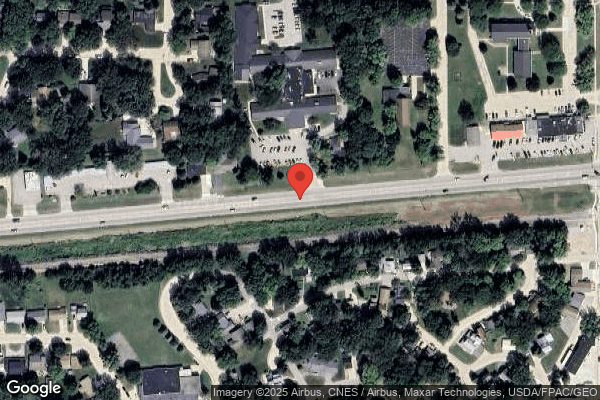

Oakwood Care Center

400 Highway 18 West, Clear Lake, IA 50428 (641) 357-5244
For profit - Corporation 80 Beds LEGACY HEALTHCARE Data: November 2025
Trust Grade
70/100
#217 of 392 in IA
Last Inspection: November 2024

Within standard 12-15 month inspection cycle. Federal law requires annual inspections.

Overview

Oakwood Care Center has a Trust Grade of B, indicating it is a good choice but not among the very best facilities. It ranks #217 out of 392 nursing homes in Iowa, placing it in the bottom half, and #4 out of 6 in Cerro Gordo County, meaning only two local options are rated better. The facility is worsening, with issues increasing from 2 in 2023 to 6 in 2024. Staffing is a concern, with a 2/5 star rating and turnover matching the state average at 44%, indicating challenges in staff retention. While the center has no fines, which is a positive sign, it has less RN coverage than 83% of other Iowa facilities, which could affect quality of care. Specific incidents of concern include a failure to maintain proper chlorine levels in the dishwasher, risking sanitation for dishes served to residents, and discrepancies in advanced directives for a resident, leading to potential confusion about their resuscitation preferences. Additionally, the facility did not properly document a resident's transfer to the hospital, which raises questions about communication and record-keeping. Overall, while there are some strengths, such as no fines and a good trust grade, families should be aware of the facility's staffing issues and recent compliance violations.

Trust Score
B
70/100
In Iowa
#217/392
Bottom 45%
Safety Record
Low Risk
No red flags
Inspections
Getting Worse
2 → 6 violations
Staff Stability
○ Average
44% turnover. Near Iowa's 48% average. Typical for the industry.
Penalties
✓ Good
No fines on record. Clean compliance history, better than most Iowa facilities.
Skilled Nurses
⚠ Watch
Each resident gets only 27 minutes of Registered Nurse (RN) attention daily — below average for Iowa. Fewer RN minutes means fewer trained eyes watching for problems.
Violations
⚠ Watch
12 deficiencies on record. Higher than average. Multiple issues found across inspections.
★★★☆☆
3.0
Overall Rating
★★☆☆☆
2.0
Staff Levels
★★★☆☆
3.0
Care Quality
★★★☆☆
3.0
Inspection Score
Stable
2023: 2 issues
2024: 6 issues

The Good

  • Full Sprinkler Coverage · Fire safety systems throughout facility
  • No fines on record
  • Staff turnover below average (44%)

    4 points below Iowa average of 48%

Facility shows strength in fire safety.

The Bad

3-Star Overall Rating

Near Iowa average (3.1)

Meets federal standards, typical of most facilities

Staff Turnover: 44%

Near Iowa avg (46%)

Typical for the industry

Chain: LEGACY HEALTHCARE

Part of a multi-facility chain

Ask about local staffing decisions and management

The Ugly 12 deficiencies on record

Nov 2024 6 deficiencies
CONCERN (D)

Potential for Harm - no one hurt, but risky conditions existed

Deficiency F0578 (Tag F0578)

Could have caused harm · This affected 1 resident

**NOTE- TERMS IN BRACKETS HAVE BEEN EDITED TO PROTECT CONFIDENTIALITY** Based on clinical record review, policy review and staff interviews, the facility failed to ensure code status between, the Iowa...

Read full inspector narrative →
**NOTE- TERMS IN BRACKETS HAVE BEEN EDITED TO PROTECT CONFIDENTIALITY** Based on clinical record review, policy review and staff interviews, the facility failed to ensure code status between, the Iowa Physician Orders for Scope of Treatment (IPOST), the electronic health record (EHR) and the Care Plan were congruent for 1 of 1 residents reviewed for advanced directives (Resident #3). The facility reported a census of 60 residents. Findings include The Care Plan for Resident #3 with a revised date of [DATE] had a focus area for Advanced Directives with a goal for the Advanced Directives to be Full Code. The Iowa Physician Orders for Scope of Treatment (IPOST) dated [DATE] for Resident #3 indicated the resident desired to be Do Not resuscitate (DNR) status in the event his heart stopped beating and was signed by the resident and physician. A review of the Resident #3's Electronic Health Record (EHR) profile tab and Orders tab documented code status as Full Code (cardiopulmonary resuscitation (CPR) status). During an interview on [DATE] at 10:41 AM Staff A, Registered Nurse (RN) reported she finds code status on the main part of the profile in the EHR. During an interview on [DATE] at 10:45 AM Staff B, Licensed Practical Nurse (LPN) reports he finds code status on the main part of the profile in the EHR under code status. In an interview on [DATE] at 11:47 AM Staff C, LPN/Care Plan Nurse reported staff should look at the IPOST book for code status. She reported Resident #3's status should have been changed in the EHR to match the IPOST. The facility policy titled Resuscitation for SNF and ICF Setting with a revised date of 9/2024 directs staff the code status election from the IPOST shall match the code status designation in the PointClickCare (EHR) Orders tab of the medical record.
CONCERN (D)

Potential for Harm - no one hurt, but risky conditions existed

Transfer Notice (Tag F0623)

Could have caused harm · This affected 1 resident

Based on clinical record review and staff interview the facility failed to notify the state ombudsman for 1 of 2 residents (Residents #9) reviewed. The facility reported a census of 60 residents. Fin...

Read full inspector narrative →
Based on clinical record review and staff interview the facility failed to notify the state ombudsman for 1 of 2 residents (Residents #9) reviewed. The facility reported a census of 60 residents. Findings include: Resident #9 Emergency Care (ED) Physician Notes 4/17/24 document the resident arrived at the ED by ambulance at 4:31 PM and was admitted to the hospital after evaluation in the ED. The Progress Note written on 4/22/24 at 3:41 PM for Resident #9 documented the resident readmitted from the hospital. Review of the facility's Ombudsman report for April 2024 lacked documentation of Resident #9 transferring to the hospital on 4/17/24. On 11/06/24 at 09:46 AM the Administrator confirmed Resident #9 should have been on the Ombudsman report.
CONCERN (D)

Potential for Harm - no one hurt, but risky conditions existed

Assessment Accuracy (Tag F0641)

Could have caused harm · This affected 1 resident

Based on clinical record review, staff interviews and the Resident Assessment Instrument (RAI) manual, the facility failed to accurately document and submit accurate resident Minimum Data Set (MDS) As...

Read full inspector narrative →
Based on clinical record review, staff interviews and the Resident Assessment Instrument (RAI) manual, the facility failed to accurately document and submit accurate resident Minimum Data Set (MDS) Assessments for 2 of 15 residents reviewed (Resident #50 and #62). The facility reported a census of 60 residents. Findings include: 1. The MDS for Resident #50 dated 10/06/24 documented a Brief Interview for Mental State (BIMS) score of 8 indicating moderate cognitive impairment. The MDS further documented the resident had a 5 percent or more weight loss in the past month or 10 percent or more in the last six months. Review of Resident #50's weights revealed the weight on 9/29/24 of 137 pounds and weight on 10/08/24 of 169.2 pounds was struck out documenting it was incorrect documentation. Review of the other weights lack documentation of a weight loss. During an interview on 11/05/24 at 1:45 PM the Dietician reported she most likely recorded it on the MDS due to the weights at the time but documented in the notes that she was unsure of weight loss at the time due to possible inaccurate weights. If the weight was inaccurate the MDS should have been modified. She reported after speaking with the nursing staff Resident #50's weights were inaccurate and that is why they were crossed out and she should have modified the MDS. During an interview 11/05/24 at 2:45 PM the Administrator reported the facility had moved the weight stand and so they had issues with weights during that time and staff should have reweighed the resident. 2. The MDS for Resident #62 dated 8/31/24 documented a BIMS score of 14 indicating intact cognition. The MDS further documented the resident discharged to a short-term general hospital. The Progress Note for Resident #62 dated 8/31/24 at 12:45 PM documented the resident being discharged to home with family. During an interview on 11/05/24 at 2:48 PM Staff D, MDS coordinator reported the MDS was coded incorrectly. It should have been coded Resident #62 discharged to home. Record review of the current RAI Manual dated 10/2023 on page 1-4 instructed the assessment accurately reflects the resident's status.
CONCERN (D)

Potential for Harm - no one hurt, but risky conditions existed

Deficiency F0692 (Tag F0692)

Could have caused harm · This affected 1 resident

**NOTE- TERMS IN BRACKETS HAVE BEEN EDITED TO PROTECT CONFIDENTIALITY** Based on observation, record review, family and staff interview the facility failed to assess and follow up on a significant wei...

Read full inspector narrative →
**NOTE- TERMS IN BRACKETS HAVE BEEN EDITED TO PROTECT CONFIDENTIALITY** Based on observation, record review, family and staff interview the facility failed to assess and follow up on a significant weight loss for 1 of 2 residents (Resident #21) reviewed. The facility reported a census of 60 residents. Findings include: Resident #21 Minimum Data Set (MDS) assessment dated [DATE] identified a Brief Interview for Mental Status (BIMS) score of 5 out of 15 indicating severe cognitive impairment. The MDS documented Resident #21 as needing supervision or touching assistance (Helper provides verbal cues and/or touching/steadying and/or contact guard assistance as resident completes activity. Assistance may be provided throughout the activity or intermittently.) with eating. The MDS further documented diagnoses anemia, atrial fibrillation, coronary artery disease, diabetes mellitus and non-Alzheimer's dementia. The Nutrition assessment dated [DATE] revealed Resident #21 received a general diet with cut meat and regular portion sizes. It documented the resident receives supervision at meals in the north dining room and is able to feed himself. A nutrition goal to avoid significant weight changes with diet and interventions in place. The Care Plan initiated on 9/29/2023 identified a focus area for nutritional risk due to diabetes mellitus, fragile skin, dementia and heart disease. The goal in place is to not have a significant weight change in the next 90 days. The Resident Assessment Instrument (RAI) manual states weight loss can result in debility and adversely affect health, safety and quality of life. Weight loss is defined as a 5% or greater weight loss within 30 days. Resident #21 weight records revealed a 12 pound or 6.03% weight loss in a 30-day time frame. The record documented a weight of 199.0 pounds on 10/6/2024 at 10:24 AM for Resident #21. On 11/3/2024 at 1:54 PM the record documented a weight of 187.0 for resident #21. During an interview on 11/5/2024 at 2:12 PM Staff E, Certified Nursing Assistant (CNA) reported Resident #21 eats independently and he does not eat much. Staff E, did not recall how often Resident #21 is weighed. In an interview on 11/6/2024 at 10:36 AM Staff F, CNA reported Resident #21 is able to feed himself and is weighed weekly. Staff F acknowledged if there is a 5 pound difference from the previous weight to the current weight the nurse will instruct the resident to be reweighed. On 11/6/2024 at 12:15 PM Resident #21 was observed in the dining room. The facility provided Resident #21 with a cup of coffee, one 8-ounce glass of orange juice, two 8-ounce glasses of milk, a hot beef sandwich with mashed potatoes with gravy, and peaches. Observed Resident #21's spouse sitting at the table beside him. Following the meal, Resident #21 spouse verbalized Resident #21 consumed his milk and orange juice, and ate only his peaches and meat. Resident #21's spouse stated he has not had a tremendous appetite lately and she had not been notified of any fluctuation in his weight this week. On 11/06/2024 at 12:43 PM, Staff A, Registered Nurse (RN) verbalized residents are weighed weekly on Saturdays unless ordered differently by the physician. She reported the nurse reviews the weights for discrepancies and if more then 3 pounds, the resident is reweighed. Staff A, RN verbalized that the physician and family are to be notified when significant weight loss/gain occur. Staff A, RN reported she was unaware of any significant weight loss for Resident #21. On 11/06/2024 at 1:46 PM Staff A, RN recorded a weight of 203.5 pounds for Resident #21. This is an increase of 16.5 pounds or 8.82% in weight gain from the most recent recorded weight. The Electronic Health Record lacked any further documentation. During an interview on 11/6/2024 at 2:28 PM Staff C, Care Plan Nurse/Licensed Practical Nurse (LPN) revealed the Care Coordinators, MDS Coordinator and the consultant dietitian review the 24-hour reports on Monday for significant weight changes. Staff C, LPN verbalized she is unaware of the significant weight loss recorded for Resident #21. A review of the Food/Fluid Intake record for Resident #21 for the past 30 days revealed the following: 10/9/2024 1:03 PM lunch meal - 25% of meal consumed 10/12/2024 evening meal - no record of meal consumed or refused 10/14/2024 6:26 PM evening meal - 10% of meal consumed 10/15/2024 12:50 PM lunch meal - 50% of meal consumed 10/16/2024 12:48 PM lunch meal - 25% of meal consumed 10/19/2024 evening meal - no record of meal consumed or refused 10/20/2024 13:52 PM lunch meal - 0% of meal consumed 10/22/2024 13:47 PM lunch meal - 0% of meal consumed 10/22/2024 7:00 PM evening meal - 0-25% of meal consumed 10/26/2024 1:54 PM lunch meal - 26%-50% of meal consumed 10/26/2024 evening meal - no record of meal consumed or refused 10/27/2024 evening meal - no record of meal consumed or refused 10/30/2024 12:35 PM lunch meal - 0-25% of meal consumed 10/30/2024 evening meal no record of meal consumed or refused 10/31/2024 9:10 breakfast meal - 0-25% of meal consumed 10/31/2024 12:53 PM lunch meal - 26%-50% of meal consumed 11/2/2024 1:00 PM lunch meal - 26%-50% of meal consumed 11/4/2024 12:48 PM lunch meal - 0%-25% of meal consumed 11/5/2024 12:15 PM lunch meal -26%-50% of meal consumed 11/5/2024 evening meal - no record of meal consumed or refused The facility Weight Monitoring Policy undated revealed weights will be communicated to the physician and family immediately as significant changes occur. The policy designates the Director of Nursing (DON) or designee in the facility will determine significant weekly and monthly weight changes (5% or greater in 30 days and 10% or greater in 180 days) and communicate this information to pertinent staff. Residents weighed weekly will need to have their 30-day and 180-day weights calculated weekly. For example, week 1 will be compared to week 1 of the subsequent month and that same week 6 months ago. The medical records computer program or spreadsheet may be used to calculate this if completed in a timely manner. Weekly weights are to be reviewed by the DON or designee and Consultant Registered Dietitian to identify weight change trends that need to be acted upon quickly. Residents weighed monthly will be weighed at approximately the same week of each month to ensure weights can be compared with previous 30 day and 180 day periods. A significant unintentional weight change is one of two factors that can trigger the need to complete a full MDS and update the care plan. Weight changes attributed to flu or changes in a diuretic be will be documented to indicate cause and whether this is an acute or chronic problem. The physician and family are both to be notified immediately of any significant unintentional weight changes, whether expected or not. Documentation of this notification must be present in the medical record within 24 hours of documenting the weight change and be kept in the medical record. Notification should include a brief assessment of the resident ' s condition and factors that may be contributing to the weight change, as well as proposed or implemented interventions for MD review. A review of the Nurse Progress Notes revealed the facility lacked assessment of Resident #21 for the significant weight change and failed to notify the physician and failed to notify the family.
CONCERN (D)

Potential for Harm - no one hurt, but risky conditions existed

Infection Control (Tag F0880)

Could have caused harm · This affected 1 resident

Based on observations, staff interviews and the Assure Prism Manual, the facility failed to perform proper hand hygiene, appropriately sanitize the blood sugar meter and use barrier when doing blood s...

Read full inspector narrative →
Based on observations, staff interviews and the Assure Prism Manual, the facility failed to perform proper hand hygiene, appropriately sanitize the blood sugar meter and use barrier when doing blood sugar checks and insulin for 2 of 2 residents reviewed (Resident #21 and #53). The facility reported a census of 60. Findings include: 1. The Minimum Data Set (MDS) for Resident #21 dated 9/06/24 documented a Brief Interview for Mental Status (BIMS) score of 5 indicating severe cognitive impairment. The MDS documented Resident #21 has a diagnosis of diabetes and received insulin injections. During an observation on 11/05/24 at 7:52AM, Staff B, Licensed Practical Nurse (LPN) reported he was checking Resident #21's blood sugar. Staff B had already gathered the Assure Prism blood sugar meter (a device for measuring the concentration of glucose in the blood, typically using a small drop of blood placed on a disposable test strip) and supplies in a basket and went into his room. Staff B set supplies down on the bed, applied gloves, and cleansed Resident #21's finger with alcohol and poked the finger with the lancet. Staff B picked up the meter and got the blood on the test strip. The resident's blood sugar was 252. Staff B then took out the test strip and placed the blood sugar meter in the basket. After Staff B performed the blood sugar check, then returned to the medication cart. Staff B then placed the blood sugar meter in the basket back in the cart without cleaning the meter or the outside of the plastic basket. Staff B then looked up what amount of Novolog to give to the resident. Staff B then gathered the Novolog pen and alcohol, wiped the tip and applied a needle cap. Staff B then measured up 26 units of Novolog and went into the residents room. He then cleansed the right lower quadrant on Resident #21's abdomen and gave the Novolog injection without applying gloves. Staff B left the room, took the secure needle cap off and put it in the sharps container. Staff B went on the computer and signed out the medications. He then started to gather for the next resident he was going to pass medication for without doing any post hand hygiene from working with Resident #21. During an interview on 11/06/24 at 11:18 AM, Staff A, Registered Nurse (RN) reported staff are to clean the blood sugar machines between each resident. She reported the staff use Sani-cloth (it is a brand of germicidal wipes). During an interview on 11/06/24 11:25 AM Staff B, LPN reported Sani-cloth wipes are to be used to clean the blood sugar meter between residents. He reported he also should wear gloves when giving insulin. He further reported hand hygiene should be done between residents, with glove changes and if his hands get soiled. In an interview on 11/07/24 at 7:25 AM the Director of Nursing reported staff are to use Sani-cloths to clean the blood sugar meter between residents and a barrier should be under supplies. Staff are to wear gloves when giving insulin and should be doing proper hand hygiene before, with gloves changes and after working with residents for care. 2. The MDS for Resident #53 dated 7/29/24 documented she has severely impaired cognitive skills and memory problems. The MDS documented Resident #53 has a diagnosis of diabetes and received insulin injections. During an observation on 11/05/24 at 7:52AM, Staff B, Licensed Practical Nurse (LPN) reported he was checking Resident #21's blood sugar. Staff B had already gathered the blood sugar meter and supplies in a basket and went into his room. Staff B set supplies down on the bed, applied gloves, and cleansed Resident #21's finger with alcohol and poked the finger with the lancet. Staff B picked up the meter and got the blood on the test strip. The resident's blood sugar was 252. Staff B then took out the test strip and placed the blood sugar meter in the basket. Staff B returned to the medication cart, and placed the blood sugar meter in the basket back in the cart without cleaning the meter or the outside of the plastic basket. Staff B then looked up what amount of Novolog to give to the resident. Staff B then gathered the Novolog pen and alcohol, wiped the tip and applied a needle cap. Staff B then measured up 26 units of Novolog and went into the residents room. He cleansed the right lower quadrant on Resident #21's abdomen and gave Novolog injection without applying gloves. Staff B left the room and took the secure needle cap off and put it in the sharps container. Staff B then went on the computer and signed out the medications. He then started to gather for the next resident he was going to pass medication for without doing any post hand hygiene from working with Resident #21. On 11/05/24 at 8:05 AM observed Staff B, LPN gather supplies and get the medications ready for Resident #53. Staff B reported he was going to check Resident #53's blood sugar and she will get 18 units of Lantus which he also gathered the supplies with the medications. Staff B set the glucometer in the basket with the insulin down on the nightstand with no barrier under the basket. Staff B gave Resident #53's the medications crushed in applesauce and went to the sink in the room to wash his hands. Staff B put soap on his hands and washed for 20 seconds and rinsed the soap off. Staff B then with his right hand shut the sink off with his clean hand. Staff B noticed no paper towels in the room so he grabbed a wash cloth hanging on the towel rack by the sink and dried his hands with the wash cloth then hung the wash cloth back up. Staff B then applied gloves and checked the blood sugar on Resident #53. The blood sugar was 225. Staff B then gave Lantus (long acting insulin) after alcohol swabbing the area. Staff B removed his gloves and went out of the room taking the Lantus pen and basket with the blood sugar meter. Staff B put the basket with the meter in the cart without sanitizing either. Staff B removed the secured needle cap and put it in the sharps container and placed the lid on the insulin pen and put it back in the plastic bag with the pharmacy label in the med cart. Staff B gathered Novolog sliding scale 4 units for the resident after comparing it with the Medication Administration Record. Staff B then went back into the room and applied gloves and used an alcohol wipe to cleanse the area. Staff B gave the Novolog and then removed his gloves and left the room. Staff B then threw the gloves in the garbage, took the secure needle cap off the insulin and put it in the sharps container. Staff B recapped the Novolog and placed it back in a plastic pharmacy labeled bag and put it in the medication cart. Staff B then signed off on the medications on the computers without completing hand hygiene. Staff B then proceeded with the med cart down the hallway to the next room. The undated Assure Prism Glucose Manufacturer's Quality Assurance/ Quality Control Reference Manual for use documented the following: Before performing a blood glucose test, observe the following safety precautions: ·All components that come into contact with blood samples should be considered to be biohazards capable of transmitting viral diseases between patients and healthcare professionals. · Before testing each patient, a new pair of clean gloves should be worn by the user. · Wash hands thoroughly with soap and water before putting on a new pair of gloves and performing the next patient test. · Use only an auto-disabling, single-use lancing device for each patient. ·After use on each patient, the meter should be cleaned and disinfected. CLEANING AND DISINFECTING THE METER: To minimize the risk of transmitting blood-borne pathogens, the cleaning and disinfection procedure should be performed as recommended in the instructions below. The meter should be cleaned and disinfected after use on each patient. The Assure Prism multi Blood Glucose Monitoring System may only be used for testing multiple patients when standard precautions and the manufacturer's disinfection procedures are followed. Cleaning and Disinfection The cleaning procedure is needed to clean dirt, blood and other bodily fluids off the exterior of the meter before performing the disinfection procedure. The disinfection procedure is needed to prevent the transmission of blood-borne pathogens. A variety of the most commonly used EPA-registered wipes have been tested and approved for cleaning and disinfecting of the Assure Prism multi Blood Glucose Monitoring System. Cleaning : Step 1: Wear appropriate protective gear such as disposable gloves. Step 2: Open the towelette container and pull out 1 towelette and close the lid. Step 3: Wipe the entire surface of the meter 3 times horizontally and 3 times vertically using 1 towelette to clean blood and other body fluids. Step 4: Dispose of the used towelette in a trash bin. Disinfecting (The meter should be cleaned prior to disinfection.): Step 5: Open the towelette container and pull out 1 towelette and close the lid. Step 6: Wipe the entire surface of the meter 3 times horizontally and 3 times vertically to remove blood-borne pathogens. Step 7: Dispose of the used towelette in a trash bin. Step 8: Allow exteriors to remain wet for the appropriate contact time and then wipe the meter using a dry cloth. Step 9: After disinfection, the user's gloves should be removed and thrown away. Wash hands before proceeding to the next patient. The CDC has become increasingly concerned about the risks for transmitting hepatitis B virus (HBV- a serious liver infection) and other infectious diseases during assisted blood glucose (blood sugar) monitoring and insulin administration. The CDC is alerting all persons who assist others with blood glucose monitoring and/or insulin administration of the following infection control requirements: a. Fingerstick devices should never be used for more than one person b. Whenever possible, blood glucose meters should not be shared. If they must be shared, the device should be cleaned and disinfected after every use, per manufacturer's instructions. Unsafe practices during assisted monitoring of blood glucose and insulin administration that have contributed to transmission of HBV or have put persons at risk for infection include: a. Using a blood glucose meter for more than one person without cleaning and disinfecting it in between uses. Blood glucose meters are devices that measure blood glucose levels. a. Whenever possible, blood glucose meters should be assigned to an individual person and not be shared. b. If blood glucose meters must be shared, the device should be cleaned and disinfected after every use, per manufacturer's instructions, to prevent carry-over of blood and infectious agents. If the manufacturer does not specify how the device should be cleaned and disinfected then it should not be shared.
CONCERN (E)

Potential for Harm - no one hurt, but risky conditions existed

Food Safety (Tag F0812)

Could have caused harm · This affected multiple residents

Based on observation, interviews and record review, the facility failed to ensure the chlorine in their dishwasher was at the correct level for sanitizing dishes. The facility reported a censure of 60...

Read full inspector narrative →
Based on observation, interviews and record review, the facility failed to ensure the chlorine in their dishwasher was at the correct level for sanitizing dishes. The facility reported a censure of 60 residents. Findings include: On 11/4/24 at 10:20 AM, the dishwasher was tested with a strip. The strip read between 25 Points Per Million (ppm) and 50 ppm. The kitchen staff stated they were going to look into this more. On 11/5/24 at 1:40 PM, the Housekeeping/Laundry Supervisor tested a new dishwasher strip. She stated it was between 50 ppm and 100 ppm. When the surveyor pointed out that the strip read between 25 ppm and 50 ppm, the supervisor concurred that it read between 25 ppm and 50 ppm. On 11/5/24 at 1:45 PM, the facility's Dietitian stated they have a new dishwasher which was probably placed in the last 2-3 weeks. The Dietitian stated that all of the corporation's facilities changed over to new dishwashers. The Dietitian stated she would need to check with their corporation to see what they are doing to ensure the dishes are getting sanitized. On 11/5/24 at 2:49 PM, the Housekeeping/Laundry Supervisor ran the dishwasher again. Observed steam to be coming out of the dishwasher. The temperature gauge revealed a temperature of 134 degrees Fahrenheit (F). She then tested a new strip and it still read between 25 ppm to 50 ppm. She acknowledged that the strip was showing that the chlorine level was not high enough. The Supervisor was using a different strip on this day that was made by the same manufacturer of the dishwasher. On 11/5/24 at 2:53 PM, the Sales Technician for the dishwasher and it's chemicals, stated that the dishwasher is a low temperature dish machine. The Technician stated that the temperature for the dishwasher should be between 120 degrees Fahrenheit (F) and 150 degrees F. He stated that the temperature of the dishwasher should go no higher than 150 degrees F because it would burn the sanitizer. The Sales Technician stated he did not install the dishwasher at this facility. He stated that maybe the guys that did install the dishwasher ran it a few times and then left. He stated maybe the water is getting too hot and if so, it could burn off the sanitizer, he stated this was just speculation. He stated that there was a sticker right on the top panel of the dishwasher with what parts per million the chemical strips should read. He stated the parts per million (ppm) should be at least 50. The Sales Technician stated they could turn the dishwasher up to be sure it reaches at least 50 ppm. He stated someone would come to the facility in 2 days to adjust the dishwasher. When told the facility stated they were using the wrong chemical strip, this technician said that wouldn't matter, either strip could be used. The Sales Technician called back and stated that they would send a technician out to the facility on this night. The sticker on top of the dishwasher reads required 50 ppm available chlorine rinse. On 11/06/24 at 10:46 AM, the corporate dietitian stated that the kitchen staff were using the wrong strips and now they have the right strips. This Dietitian tested the dishwasher and the strip read between 50 ppm and 100 ppm. When told the technician stated that it didn't make a difference what strip was used, this dietitian acknowledged this. The dietitian acknowledged that the strips ran yesterday were the strips that should be used. A Service Manual dated 5/2008; for the facility dishwasher directed: Sanitizer should be 6% solution of sodium hypochlorite. The initial setting is 5cc (cubic centimeters) and this should be checked regularly with a Chlorine Test Kit. Free chlorine in the final rinse should be 50 ppm or more. However, high concentrations can cause deterioration of metal.
Sept 2023 2 deficiencies
CONCERN (D)

Potential for Harm - no one hurt, but risky conditions existed

PASARR Coordination (Tag F0644)

Could have caused harm · This affected 1 resident

**NOTE- TERMS IN BRACKETS HAVE BEEN EDITED TO PROTECT CONFIDENTIALITY** In an interview on 9/26/23 at 3:28 PM, the Social Worker stated a new PASSR evaluation should be submitted with each new mental ...

Read full inspector narrative →
**NOTE- TERMS IN BRACKETS HAVE BEEN EDITED TO PROTECT CONFIDENTIALITY** In an interview on 9/26/23 at 3:28 PM, the Social Worker stated a new PASSR evaluation should be submitted with each new mental health diagnosis. She further stated she was to submit the evaluation after being notified by nursing staff or reading the physician progress notes. On 9/26/23 at 3:57 PM via email the Administrator stated if notified of a new diagnosis during a resident's stay, the facility would complete a new PASSR if the diagnosis required it to be done. The Social Worker was to review the progress notes and complete updates from that information. The facility lacked a policy related to Level 2 PASSR evaluation submissions with new mental health diagnosis. Based on clinical record review and staff interview, the facility failed to submit a Level 2 Preadmission Screening and Resident Review (PASRR) evaluation for 1 of 2 residents reviewed for a Level 2 PASRR evaluation, (Residents #5). The facility reported a census of 58 residents. Findings include: 1.The Minimum Data Set (MDS) dated [DATE] documented Resident #5 had a Brief Interview for Mental Status (BIMS) of 15 indicating intact cognition. The MDS further documented the resident had diagnoses including bipolar disorder and obsessive-compulsive disorder and the residents behavior compared to his last assessment had worsened. Review of the Medication Administration Record (MAR) dated September 2023 for Resident #5 revealed the resident received Lamotrigine (antiseizure) 125 milligrams (MG) two times daily related to bipolar disorder and Fluvoxamine Maleate (antidepressant) 50 MG at bedtime for mood disorder and obsessive-compulsive disorder. The Care Plan for Resident #5 revised 9/13/2018 revealed Resident #5 had mental illnesses including bipolar disorder and directed staff to always approach the resident with positive, kind and patient mannerisms and the resident responded best to that approach. Clinical record review in the Electronic Health Record (EHR) revealed Resident #5 had a Level 2 PASRR completed 3/18/2014 and documented diagnoses including schizoaffective disorder, pervasive developmental disorder, psychotic disorders and mild intellectual disability. Review of Resident #5's diagnoses in the EHR documented the resident had diagnoses of bipolar disorder dated 4/3/15 and obsessive-compulsive disorder dated 12/13/18.
CONCERN (D)

Potential for Harm - no one hurt, but risky conditions existed

Accident Prevention (Tag F0689)

Could have caused harm · This affected 1 resident

**NOTE- TERMS IN BRACKETS HAVE BEEN EDITED TO PROTECT CONFIDENTIALITY** Based on clinical record review, resident and staff interviews, the facility failed to ensure each resident received adequate su...

Read full inspector narrative →
**NOTE- TERMS IN BRACKETS HAVE BEEN EDITED TO PROTECT CONFIDENTIALITY** Based on clinical record review, resident and staff interviews, the facility failed to ensure each resident received adequate supervision to prevent accidents for 1 of 2 residents reviewed (Resident #21). The facility reported a census of 58 residents. Findings include: The Minimum Data Set (MDS) dated [DATE] documented Resident #21 had a Brief Interview for Mental Status (BIMS) score of 15 indicating intact cognition. The MDS further documented the resident had diagnoses of muscle weakness, difficulty in walking, pain, hypertension, and muscle spasms. The Care Plan for Resident #21 with a focus area of risk for falls documented Resident #21 had a history of falls and transferred with assistance of one with a front wheeled walker to ambulate to/from the bathroom. The Care Plan further documented the resident had a focus area for Activities of Daily Living (ADL) and directed one staff to assist the resident with toileting and peri care as needed. During an interview on 9/25/23 at 10:45 AM, Resident #21 reported she had to have assistance to the restroom due frequent falls. The resident further revealed she had come from assisted living to the facility due to falling frequently. Review of Resident #21's Electronic Health Record (EHR) revealed an Incident Report (IR) dated 8/24/23 at 4:10 PM documented the resident was found on the floor in the bathroom doorway due to self-transferring. It further documented the Certified Nursing Assistant (CNA) reported 5 minutes prior to the fall the resident was seen and the CNA assisted the resident to the bathroom and gave the resident the call string to pull. The IR documented the resident reported that she didn't want to wait for staff to assist her. Further review of the EHR revealed Resident #21 fell on 6/4/23 and 7/14/23 not using her call-light for staff to assist her. Incident on 6/3/23 the resident fell when getting up from the toilet to come out of the bathroom. During an interview on 9/26/23 at 12:17 PM, the Director of Nursing (DON) and Administrator reported they expect staff to follow resident's plan of care on the Care Plan. The Administrator further revealed the facility had documentation of education to the CNA in regards to leaving Resident #21 unsupervised in the bathroom. On 9/26/23 at 12:45 PM, the Administrator and Staff B, Licensed Practical Nurse (LPN)/ Unit Manager reported the facility did not have documentation of education in regards to leaving Resident #21 unsupervised in the bathroom. Staff B, LPN/Unit Manager verbalized she verbally educated the CNA but did not have documentation of completing the education. During an interview on 9/26/23 at 1:30 PM, Staff C, Occupational Therapist (OT) reported she assisted Resident #21 when she admitted to the facility with toileting. Staff C further reported that due to the resident's impulsiveness and poor safety awareness the resident needed to have assistance of one staff with toileting at all times. During an interview on 9/26/23 at 1:46 PM, Staff D, CNA reported if a resident was assistance of one staff then the resident cannot be left unattended in the restroom.
Jun 2022 4 deficiencies
CONCERN (D)

Potential for Harm - no one hurt, but risky conditions existed

Comprehensive Care Plan (Tag F0656)

Could have caused harm · This affected 1 resident

**NOTE- TERMS IN BRACKETS HAVE BEEN EDITED TO PROTECT CONFIDENTIALITY** 2. The Minimum Data Set (MDS) dated [DATE], for Resident #58, revealed a BIMS score of 3, indicating severe cognitive impairment...

Read full inspector narrative →
**NOTE- TERMS IN BRACKETS HAVE BEEN EDITED TO PROTECT CONFIDENTIALITY** 2. The Minimum Data Set (MDS) dated [DATE], for Resident #58, revealed a BIMS score of 3, indicating severe cognitive impairment. The MDS documented extensive assistance of 1 person physical assistance required in toileting, and limited assistance required with walking and personal hygiene. Mobility aides of a walker or wheelchair utilized. The resident was assessed as frequently incontinent of bowel and bladder. The MDS identified the resident utilized a diuretic medication (increases production of urine and rids body of fluids). The MDS listed diagnoses including congestive heart failure (heart does not pump or circulate blood effectively), diabetes mellitus, with a history of sepsis, disseminated intravascular coagulation(DIC) (affects blood's ability to clot) and leukemia. A Physician's Order, dated 5/14/22, prescribed Torsemide 20 Mg tablet,(diuretic), administer 2 tablets daily, for congestive heart failure. Diuretics can produce side effects including electrolyte and metabolic abnormalities, hypotension, and worsening kidney function. A review of the clinical record revealed Daily Skilled Assessments dated 5/16/22 through 5/30/22 consecutively, with daily documentation of a swollen right lower extremity, with 4 to 3+ pitting edema (5-6 cm depression, with a rebound of 10-30 seconds) and indentation remaining for a long time. On 6/2/22 at 9:22 AM, in an interview and joint review of the Care Plan, dated 5/14/22, with Staff A, revealed the lack of a focus, goal or interventions for the resident's use of a diuretic medication and lower extremity edema. Staff A stated the use of a diuretic medication and the resident's edema should be included in the resident's Care Plan. Based on clinical record review and resident and staff interview the facility failed to develop a person-centered care plan that addressed the resident's comprehensive medical needs for 2 of 16 residents reviewed, (Resident #29 and #58). The facility reported a census of 59. Findings included: 1.The Medicare Part A stay Minimum Data Set, dated [DATE] for Resident #29 reported a Brief Interview for Mental Status (BIMS) score of 15, indicated intact cognition for daily decision making and had diagnoses of renal insufficiency, depression and cardiomegaly. The MDS document she received dialysis as a resident. Resident #29's Care Plan dated 4/21/22 and reviewed on 6/1/22 at 1:00PM lacked a focus area related to dialysis and lacked interventions to provide care to a resident that received dialysis. Resident #29's Care Plan updated and reviewed on 6/1/22 at 1:45PM, update with date of 5/31/22 included a focus area she received hemodialysis treatments related to renal failure. The updated Care Plan included interventions she received dialysis on Monday, Wednesday and Fridays at an outside facility and she had port in her right upper chest that is used for dialysis and mapping to be completed for a fistula. The Care Plan directed staff to do the following; Monitor labs and report to doctor. Monitor her for dry skin and apply lotion as needed. Monitor for effects and side effects related to dialysis treatment. Monitor and document sign and symptoms of depression and obtain and order mental health consult if needed. Monitor and document any signs and symptoms of infection to access cite (redness, swelling, warmth or drainage). Monitor, document and report signs and symptoms of renal insufficiency (changes in consciousness, changes in skin turgor, oral mucosa, changes in heart and lung sounds). Monitor, document and report signs and symptoms of bleeding, hemorrhage, bacteremia, septic shock. Monitor, document and report new or worsening peripheral edema. The document titled Clinical Summary dated 4/1/22 included the following information: First dialysis appointment 4/4/22 at 12:10 PM. Dialysis port right chest inserted 3/29/22. During an interview on 6/1/22 at 3:09 PM the Director of Nursing (DON) stated she expected the Care Plan to have been updated or things added within 24 hours of a change. During an interview on 6/2/22 at 8:02 AM the DON stated she talked to the Administrator and she wanted to let me know they had until the next review to update the Care Plan. The Administrator joined the conversation and stated they were talking about the dialysis policy and they go by the pathway and they do have the dash board they follow for appointments.
CONCERN (D)

Potential for Harm - no one hurt, but risky conditions existed

Respiratory Care (Tag F0695)

Could have caused harm · This affected 1 resident

**NOTE- TERMS IN BRACKETS HAVE BEEN EDITED TO PROTECT CONFIDENTIALITY** Based on record reviews, observation and staff interview, the facility failed to provide respiratory care and services that is i...

Read full inspector narrative →
**NOTE- TERMS IN BRACKETS HAVE BEEN EDITED TO PROTECT CONFIDENTIALITY** Based on record reviews, observation and staff interview, the facility failed to provide respiratory care and services that is in accordance with professional standards of practice, as reflected in the absence documentation for oxygen tubing change, for 1 of 1 residents reviewed for oxygen tubing changes (Resident #5). The facility reported a census of 59 residents. Findings include: 1. The Minimum Data Set (MDS) dated [DATE], for Resident #5, documented primary medical diagnoses including acute respiratory failure with hypoxia, heart failure, coronary artery disease (impaired blood flow to heart muscle), renal insufficiency (kidney disease), diabetes mellitus, and chronic lung disease. The MDS documented the resident was receiving oxygen as a special treatment. A Physician's Order, dated 11/19/21, directed staff to administer Oxygen at 2.5 L (liters) while at rest and 4L with activity, humidified, per nasal cannula. The Care Plan dated 5/11/22, identified a focus of respiratory illness, with a goal of not showing poor oxygen absorption, and directed staff to maintain humidified oxygen administration continuous, per nasal prongs. On 6/1/22 at 3:13 PM, in a joint inspection, with Staff A, of the resident's oxygen equipment, revealed the absence of any date on the oxygen tubing or humidification, attached to the room and portable oxygen concentrators, (filter and concentrate room air). Staff A confirmed the resident's Treatment Administration Record (TAR), lacked any orders and documentation of tubing changes. On 6/1/22 at 3:30 PM, in an interview with the DON and Administrator, stated the facility practice is to change oxygen tubing every week on Sunday evenings and mark the tubing with tape, initials and date changed. The DON stated she expected the tubing changes to occur and be documented on the resident's TAR. The Administrator stated the facility had no policy directing oxygen tubing changes and expected best practice to be followed.
CONCERN (D)

Potential for Harm - no one hurt, but risky conditions existed

Deficiency F0698 (Tag F0698)

Could have caused harm · This affected 1 resident

**NOTE- TERMS IN BRACKETS HAVE BEEN EDITED TO PROTECT CONFIDENTIALITY** Based on clinical record review, facility guidance, resident and staff interviews the facility failed to complete the required a...

Read full inspector narrative →
**NOTE- TERMS IN BRACKETS HAVE BEEN EDITED TO PROTECT CONFIDENTIALITY** Based on clinical record review, facility guidance, resident and staff interviews the facility failed to complete the required assessments to communicate the information of the residents status to the dialysis facility prior and post dialysis for 1of 1 residents (Resident # 29). The facility reported a census of 59. Findings included: The Medicare Part A stay Minimum Data Set, dated [DATE] for Resident #29 reported a Brief Interview for Mental Status (BIMS) score of 15, indicated intact cognition for daily decision making and had diagnoses of renal insufficiency, depression and cardiomegaly. The MDS document she received dialysis as a resident. Resident #29's Care Plan dated 4/21/22 and reviewed on 6/1/22 at 1:00PM lacked a focus area related to dialysis and lacked interventions to provide care to a resident that received dialysis. Resident #29's Care Plan updated and reviewed 6/1/22 at 1:45PM, updated with date of 5/31/22 included a focus area she received hemodialysis treatments related to renal failure. The updated Care Plan included interventions she received dialysis on Monday, Wednesday and Fridays at an outside facility and she had port in her right upper chest that is used for dialysis and mapping to be completed for a fistula. The Care Plan directed staff to do the following; Monitor labs and report to doctor. Monitor her for dry skin and apply lotion as needed. Monitor for effects and side effects related to dialysis treatment. Monitor and document sign and symptoms of depression and obtain and order mental health consult if needed. Monitor and document any signs and symptoms of infection to access cite (redness, swelling, warmth or drainage). Monitor, document and report signs and symptoms of renal insufficiency (changes in consciousness, changes in skin turgor, oral mucosa, changes in heart and lung sounds). Monitor, document and report signs and symptoms of bleeding, hemorrhage, bacteremia, septic shock. Monitor, document and report new or worsening peripheral edema. The document titled Clinical Summary dated 4/1/22 included the following information: First dialysis appointment 4/4/22 at 12:10 PM. Dialysis port right chest inserted 3/29/22. The facility document Clinical Assessment printed 6/1/22 at 12:57 PM lacked 2 assessments done prior and/or post dialysis for the following dates: 4/4/22, 4/15/22, 4/20/22, 4/25/22, 4/27/22 and 5/13/22. The Facility used the Dialysis Critical Element Pathway dated 5/2017 for their Dialysis policy and procedure that included the following: For a resident receiving dialysis at a certified dialysis facility, did the nursing home: Assess and document vital signs, including the blood pressure in the arm where the access site is not located, weights if ordered and communicate the information including the resident's status with the dialysis facility prior to and post dialysis; Provide assistance and safe transportation to and from dialysis; Administer meds or meals before or after dialysis as ordered; Provide direct visual monitoring of the access site before and after dialysis; and Provide ongoing monitoring and care of the resident's vascular access (fistula, graft, or central venous catheter) for HD, catheter for PD as ordered, and provide ongoing monitoring for dialysis related complications (e.g., bleeding, access site infection, or hypotension). During an interview on 6/1/22 at 2:55 PM with the Administrator she provided the dialysis pathway and stated they do not have a policy or procedure they follow the pathway. During an interview on 6/1/22 at 3:09 PM the Director of Nursing (DON) stated she expected the Care Plan to have been updated or things added within 24 hours of a change. During an interview on 6/2/22 at 7:55 AM with Staff B License Practical Nurse (LPN) when asked about dialysis process she explained the facility had a print out at the desk that shows the appointments for the day. When asked how you know what to do with a dialysis appointment, she stated she had worked for the company for years and new what assessments needed to be done prior and post dialysis, we get weights and vital signs. During an interview on 6/2/22 at 8:02 AM the DON stated she talked to the Administrator and she wanted to let me know they had until the next review to update the Care Plan. The Administrator joined the conversation and stated they were talking about the dialysis policy and they go by the pathway and they do have the dash board they follow for appointments. During an interview on 6/2/22 at 10:27 AM the DON brought in items the Administrator asked her to, they included the following: Skilled assessments done 4/4/22. The Emergency Diet for People on Dialysis dated 2019. Skilled assessment 4/15/22.
CONCERN (D)

Potential for Harm - no one hurt, but risky conditions existed

Deficiency F0760 (Tag F0760)

Could have caused harm · This affected 1 resident

**NOTE- TERMS IN BRACKETS HAVE BEEN EDITED TO PROTECT CONFIDENTIALITY** Based on record review and staff interview, the facility failed to assure 1 resident was free of significant medication error, (...

Read full inspector narrative →
**NOTE- TERMS IN BRACKETS HAVE BEEN EDITED TO PROTECT CONFIDENTIALITY** Based on record review and staff interview, the facility failed to assure 1 resident was free of significant medication error, (Resident #36). The facility reported a census of 59 residents. Findings include: According to the Minimum Data Set (MDS) assessment dated [DATE] Resident #36 scored 15 on the Brief Interview for Mental Status (BIMS) indicating no cognitive impairment. Diagnoses included pneumonia, respiratory failure, and dysphagia. The resident had a feeding tube. The current Care Plan identified the resident had been admitted to skilled level of care for aspiration pneumonia. The resident had symptoms of shortness of breath related to respiratory failure. The interventions included maintaining a clear airway by encouraging him to clear own secretions with effective coughing. If secretions could not be cleared, suction as needed to clear secretions. Monitor /document changes in orientation, increased restlessness, anxiety, and air hunger. The Progress Notes dated 5/20/22 at 8:45 p.m. documented the resident requested his Albuterol as needed (PRN) inhaler before going to bed and the nurse brought the inhaler for resident to self administer 2 puffs. The nurse stood and watched the resident, and offered the resident 30 ml to rinse his mouth following inhaler use. The resident started to cough following rinse and stated he thought he may have swallowed some. Crackles were heard throughout bilateral upper lung lobes, lower lobes diminished. Call made to the Primary Care Provider (PCP) on call. The resident stated he did not want to go to the hospital. The Progress Notes on 5/20/22 at 9 p.m. documented speaking with the Advanced Registered Nurse Practitioner (ARNP), and updated on recent vital signs, chief complaint, recent hospitalizations where resident was intubated in the past year. Received verbal orders to continue to monitor oxygen saturations, complaints of shortness of breath (SOB), and lung sounds. Also received verbal order to start Z-pack (Azithromycin) the following day in the a.m. prophylactically. The Progress Notes dated 5/21/22 at 12:33 a.m. documented no concerns noted with possible aspiration, lung sounds clear at this time. The Progress Notes dated 5/21/22 at 9:18 p.m. documented the Azithromycin 250 mg give 500 mg via J-Tube one time a day for possible aspiration did not arrive from pharmacy. The Progress Notes dated 5/22/22 at 12:57 p.m. documented new order for Z-pack given last night. No signs of an adverse reaction. Would continue to monitor. The Progress Notes dated 5/24/22 at 10:37 p.m. documented Azithromycin 250 mg via J-Tube one time a day for possible aspiration, not available, no signs or symptoms of aspiration noted. The Progress Notes dated 5/25/22 at 3:54 p.m. documented on 5/20/22, the resident had a coughing fit and was concerned about possible aspiration. The ARNP on call ordered Z-pack antibiotic for prophylaxis. It appeared the medication was never received from the pharmacy. The resident had no concerns since the incident. Oxygen saturation averages 95% plus on room air, lung sounds clear throughout, no SOB reported, and afebrile. They questioned if they could discontinue the order or if they should continue and start as soon as they received this. The communication with the ARNP returned 5/27/22 with direction to discontinue the order. On 6/2/22 at 8:12 a.m. the Administrator and Director of Nursing (DON) were unaware of the issue with the residents recent antibiotic orders. They did not know why they didn't receive the antibiotic or why they didn't do something sooner. On 6/2/22 at 1:28 p.m. the DON stated the pharmacy did not send the medication out. The staff should have called the pharmacy to find out why they had not received the medication after the 1st day.
Understanding Severity Codes (click to expand)
Life-Threatening (Immediate Jeopardy)
J - Isolated K - Pattern L - Widespread
Actual Harm
G - Isolated H - Pattern I - Widespread
Potential for Harm
D - Isolated E - Pattern F - Widespread
No Harm (Minor)
A - Isolated B - Pattern C - Widespread

Questions to Ask on Your Visit

  • "Can I speak with families of current residents?"
  • "What's your RN coverage like on weekends and overnight?"

Our Honest Assessment

Strengths
  • • No major safety red flags. No abuse findings, life-threatening violations, or SFF status.
  • • No fines on record. Clean compliance history, better than most Iowa facilities.
  • • 44% turnover. Below Iowa's 48% average. Good staff retention means consistent care.
Concerns
  • • 12 deficiencies on record. Higher than average. Multiple issues found across inspections.
Bottom line: Mixed indicators with Trust Score of 70/100. Visit in person and ask pointed questions.

About This Facility

What is Oakwood Care Center's CMS Rating?

CMS assigns Oakwood Care Center an overall rating of 3 out of 5 stars, which is considered average nationally. Within Iowa, this rating places the facility higher than 0% of the state's 100 nursing homes. This mid-range rating indicates the facility meets federal standards but may have areas for improvement.

How is Oakwood Care Center Staffed?

CMS rates Oakwood Care Center's staffing level at 2 out of 5 stars, which is below average compared to other nursing homes. Staff turnover is 44%, compared to the Iowa average of 46%. This relatively stable workforce can support continuity of care.

What Have Inspectors Found at Oakwood Care Center?

State health inspectors documented 12 deficiencies at Oakwood Care Center during 2022 to 2024. These included: 12 with potential for harm.

Who Owns and Operates Oakwood Care Center?

Oakwood Care Center is owned by a for-profit company. For-profit facilities operate as businesses with obligations to shareholders or private owners. The facility is operated by LEGACY HEALTHCARE, a chain that manages multiple nursing homes. With 80 certified beds and approximately 60 residents (about 75% occupancy), it is a smaller facility located in Clear Lake, Iowa.

How Does Oakwood Care Center Compare to Other Iowa Nursing Homes?

Compared to the 100 nursing homes in Iowa, Oakwood Care Center's overall rating (3 stars) is below the state average of 3.1, staff turnover (44%) is near the state average of 46%, and health inspection rating (3 stars) is at the national benchmark.

What Should Families Ask When Visiting Oakwood Care Center?

Based on this facility's data, families visiting should ask: "Can you walk me through typical staffing levels on day, evening, and night shifts?" "Can I visit during a mealtime to observe dining assistance and food quality?" "How do you handle medical emergencies, and what is your hospital transfer rate?" "Can I speak with family members of current residents about their experience?" These questions are particularly relevant given the below-average staffing rating.

Is Oakwood Care Center Safe?

Based on CMS inspection data, Oakwood Care Center has a clean safety record: no substantiated abuse findings (meaning no confirmed cases of resident harm), no Immediate Jeopardy citations (the most serious violation level indicating risk of serious injury or death), and is not on the Special Focus Facility watch list (a federal program monitoring the lowest-performing 1% of nursing homes). The facility has a 3-star overall rating and ranks #100 of 100 nursing homes in Iowa. While no facility is perfect, families should still ask about staff-to-resident ratios and recent inspection results during their visit.

Do Nurses at Oakwood Care Center Stick Around?

Oakwood Care Center has a staff turnover rate of 44%, which is about average for Iowa nursing homes (state average: 46%). Moderate turnover is common in nursing homes, but families should still ask about staff tenure and how the facility maintains care continuity when employees leave.

Was Oakwood Care Center Ever Fined?

Oakwood Care Center has no federal fines on record. CMS issues fines when nursing homes fail to meet care standards or don't correct problems found during inspections. The absence of fines suggests the facility has either maintained compliance or corrected any issues before penalties were assessed. This is a positive indicator, though families should still review recent inspection reports for the full picture.

Is Oakwood Care Center on Any Federal Watch List?

Oakwood Care Center is not on any federal watch list. The most significant is the Special Focus Facility (SFF) program, which identifies the bottom 1% of nursing homes nationally based on persistent, serious quality problems. Not being on this list means the facility has avoided the pattern of deficiencies that triggers enhanced federal oversight. This is a positive indicator, though families should still review the facility's inspection history directly.