Azria Health Park Place
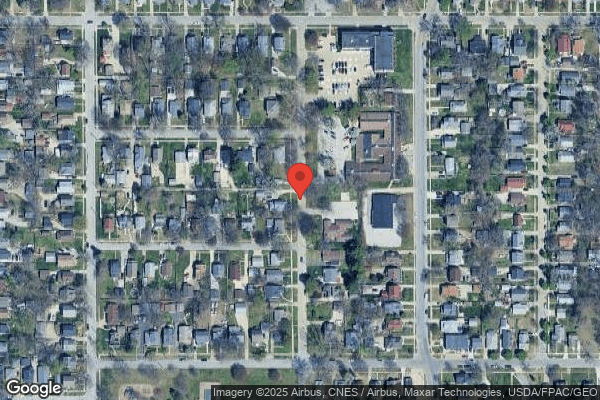
2401 East Eighth Street, Des Moines, IA 50316 (515) 262-9303
For profit - Limited Liability company 70 Beds AZRIA HEALTH Data: November 2025 1 Immediate Jeopardy citation
Trust Grade
0/100
#330 of 392 in IA
Last Inspection: November 2024

Within standard 12-15 month inspection cycle. Federal law requires annual inspections.

Overview

Azria Health Park Place has received a Trust Grade of F, indicating significant concerns about the facility's care and operations. With a state rank of #330 out of 392 in Iowa and a county rank of #25 out of 29 in Polk County, it is in the bottom half of all local nursing homes, suggesting limited options for better care nearby. While the facility is trending towards improvement, reducing issues from 20 to 7 over the past year, it still reported a staggering 69 total issues, including critical concerns about kitchen hygiene and serious care failures leading to pressure ulcers. Staffing remains a challenge with a turnover rate of 70%, above the state average, and a below-average staffing rating of 2/5 stars, indicating instability among caregivers. On a positive note, the facility has not incurred any fines, and it maintains average RN coverage, which is vital for catching potential health issues that other staff may overlook.

Trust Score
F
0/100
In Iowa
#330/392
Bottom 16%
Safety Record
High Risk
Review needed
Inspections
Getting Better
20 → 7 violations
Staff Stability
⚠ Watch
70% turnover. Above average. Higher turnover means staff may not know residents' routines.
Penalties
✓ Good
No fines on record. Clean compliance history, better than most Iowa facilities.
Skilled Nurses
○ Average
Each resident gets 38 minutes of Registered Nurse (RN) attention daily — about average for Iowa. RNs are the most trained staff who monitor for health changes.
Violations
⚠ Watch
69 deficiencies on record. Higher than average. Multiple issues found across inspections.
★☆☆☆☆
1.0
Overall Rating
★★☆☆☆
2.0
Staff Levels
★☆☆☆☆
1.0
Care Quality
★☆☆☆☆
1.0
Inspection Score
Stable
2024: 20 issues
2025: 7 issues

The Good

  • Full Sprinkler Coverage · Fire safety systems throughout facility
  • No fines on record

Facility shows strength in fire safety.

The Bad

1-Star Overall Rating

Below Iowa average (3.0)

Significant quality concerns identified by CMS

Staff Turnover: 70%

23pts above Iowa avg (46%)

Frequent staff changes - ask about care continuity

Chain: AZRIA HEALTH

Part of a multi-facility chain

Ask about local staffing decisions and management

Staff turnover is elevated (70%)

22 points above Iowa average of 48%

The Ugly 69 deficiencies on record

1 life-threatening 1 actual harm
Sept 2025 7 deficiencies 1 IJ (1 facility-wide)
CRITICAL (L) 📢 Someone Reported This

A family member, employee, or ombudsman was alarmed enough to file a formal complaint

Immediate Jeopardy (IJ) - the most serious Medicare violation

Food Safety (Tag F0812)

Someone could have died · This affected most or all residents

⚠️ Facility-wide issue

Based on direct observation, clinical record review, resident and staff interview, and facility policy review, the facility failed to maintain the kitchen in a safe and hygienic manner that is free fr...

Read full inspector narrative →
Based on direct observation, clinical record review, resident and staff interview, and facility policy review, the facility failed to maintain the kitchen in a safe and hygienic manner that is free from pests and protects food safety and prevents food borne illness. It further failed to maintain regular kitchen and dietary cleaning logs to maintain and ensure cleanliness in the kitchen. The facility reported a census of 59. The Stage Agency informed the facility of the Immediate Jeopardy (IJ) on 09/03/2025 at 03:55 PM. The IJ began on at least 04/29/2025. Facility Staff removed the Immediate Jeopardy on 09/04/2025. The facility staff removed the IJ by implementing the following actions:1. Facility ceased operations of food service from the kitchen on 9/3/25 at 3:55pm. Facility will order outside meals, and ensure diet orders are followed.2. No residents will be impacted as kitchen operations ceased on 9/3/25.3. CDM was educated on kitchen sanitation policy on 9/3/25 at 4:00pm. Facility staff to clean/sanitize kitchen on 9/3/25. Dietary staff will be educated on 9/3/25 or prior to the start of their next shift worked.4. A contract service was brought in at 4:30 PM on 09/03/2025 to implement pest control plan. They confirmed mitigation efforts and confirmed that control measures had been effective. 5. Ceiling Repairs were completed on 09/03/2025. 6. A monitoring system was put into place with the following details; Administrator will monitor kitchen sanitation, pest control, and ceiling tiles weekly x/3 weeks, then monthly x 3/months. Kitchen sanitation audits will be completed and reviewed by administrator weekly x/3 weeks then monthly x/3 months.The scope lowered from a L to a F at the time of the survey after ensuring the facility implemented education and their policy and procedures.Findings include: The initial kitchen observation on 09/03/2025 at 12:30 PM revealed the following:1. The kitchen and basement area appeared to have significant water damage, revealing numerous missing ceiling tiles, collapsing ceiling tiles, and ceiling tiles that showed significant signs of water damage. One tile, near the food preparation area, was moist and drops of water were observed beading on the tile. 2. Several strong smells permeated the kitchen, one smelled of spoilage and the other smelled damp. 3. The entire floor of the kitchen appeared caked in sticky substances and food particles. The grout appeared black in color in areas of use and was a light grey color in areas that were inaccessible to staff. 4. Numerous sticky traps were found, with one of them showing what appeared to be rodent droppings, light grey fur, and numerous insects near the kitchen dry storage area. 5. Peaches with an expiration date of 08/24/2025 were found in one of the refrigerators, the Director of Food Services confirmed they had been served for breakfast the morning of 09/03/2025. 6. What appeared to be small, worm-like insects in the floor drain were found near the HVAC Unit. What appeared to be insect eggs were found on the floor near the drain. The drains had food debris inside of them.7. What appeared to be rodent droppings were also found under and in front of the oven. 8. What appeared to be a collection of coffee creamers and sponges behind a dish washing sink with what appeared to be a mold-like-substance with a strong smell growing on it. This mold-like substance was also found in all of the kitchen floor drains. 9. The equipment throughout the kitchen appeared to be covered in a layer of grime, the flattop cooking surface was visibly blackened and appeared to not have been cleaned in some time. 10. There were two unlabeled bags of food in one of the freezer units, one of which was open to the air of the freezer. A direct observation on 09/03/2025 at 04:44 PM revealed what appeared to have been fresh rodent droppings near the stove and in the dry storage area of the kitchen, as they were not present during the initial kitchen observation at these locations. Staff L, Cook, confirmed she had swept the floor already and was seen actively cleaning at the time. She confirmed at this time to the surveyor that she had seen a mouse in the kitchen just minutes before the observation. Review of pest control documents from the facility contracting service dated 02/28/2025, 04/14/2025, 05/23/2025, 06/17/2025, 08/21/2025, and 09/04/2025 revealed pest control measures had been in place since the first date, but also documented facility sanitation issues. They included; Excess water pooled in the downstairs hallway and kitchen with large standing pools of water were noted on 05/23/2025, easy access to garbage with unlocked and unclosed dumpster was found on 4 of 6 service dates. The service records do not document pest activity. This finding is discrepant from staff and resident interviews. Review of kitchen cleaning logs since January of 2025 documented the last kitchen cleaning log for cooks was filled out on 05/31/2025. The last documented dietary aide cleaning log was dated 04/29/2025. In an email from the Regional Director of Operations (RDO), sent on 09/08/2025 at 09:56 AM she stated the dietary manager and herself were unable to find additional cleaning log documentation. In an interview on 09/03/2025 at 12:39 PM with Staff M, Dietary Aide, he stated that he has seen mice or rodents in the kitchen every single day since he started, and revealed he believed he started around January 2025. He stated he had brought this up with management staff on a number of occasions, but nothing had been done. He stated it is extremely hard to clean the kitchen, and pointed out the years of what he described as “crusted gunk” covering the floor. He stated the kitchen floods, and last seriously flooded in August, though he did not know the exact date. He stated he has seen what he believes to be cockroaches in the kitchen for a long time as well, though he's been told by other staff they are crickets. He also sees a significant number of flies, and that has been an ongoing issue. In an interview on 09/03/2025 at 01:01 PM with Staff L, Cook, she stated she is seeing one to two mice a day in the kitchen. She stated this has been ongoing for months now, and that she has told at least two different managers about the pest issue. She says that management has done nothing about the issues in the kitchen. She further stated the kitchen has also had issues with ants, what she has been told are crickets, and flies. She stated she has been directed by the previous dietary manager to push food debris and mop water down the floor drains, and confirmed at this time the drains appeared to have fly larvae in them. She expressed frustration with the situation, and stated she is unsure what more she can do. She had been considering quitting her job because of the pest situation and the general state of the kitchen. She stated the kitchen is too much to deal with, as it is too dirty to properly clean. She also revealed the kitchen floods during periods of heavy rain. She stated it last flooded in early August, and at one point had standing water in the entire kitchen. She stated that issue has also been going on for years. She stated the ceiling had been leaking for some time as well, though the facility attempted to fix that recently. She was unable to state how or where the staff members document kitchen cleaning logs, but stated they used to use paper cleaning sheets. In an interview on 09/03/2025 at 02:23 PM with The Housekeeping Supervisor, she stated she has also seen mice frequently near the kitchen, though she noted she rarely goes into the kitchen, she said the entire basement smells of mildew. In an interview on 09/03/2025 at 12:43 PM with the Dietary Manager, he stated he had started recently, and felt the kitchen was in extremely poor shape. He stated the kitchen has known issues with flies, cockroaches, and rodents that he believes to be mice. He stated the mice infestation is so bad they are catching 1-2 mice a day on glue traps since he started. He stated he has no idea how the kitchen got that bad, and stated it was a mess. He confirmed that he believed the black tapered specks near the food preparation station were rodent droppings. He shared the week before surveyors entered the building he picked up a box of foodstuffs from the floor in the dry storage area and it contained a mouse nest chewed into the side of the box. He stated the entire downstairs smelled strongly of what he believed to be mold. In an initial interview with the Acting Administrator and Regional Director of Operations on 09/03/2025 at 03:53 PM, she stated she had only just been informed of rodent activity and her staff are reporting it has been ongoing for at least two weeks. She was aware of previous rodent activity in March of 2025, but had not heard about it since. She stated they had contacted pest control about rodents at that time. In an interview on 09/08/2025 at 10:40 AM with Staff O, dietary Aide, she stated the kitchen has been in bad shape since she started with the facility, which was in Spring of 2025. She stated the facility leadership knew how unclean the kitchen was and shut it down for a deep cleaning in the summer before they were allowed to use the kitchen again. She stated it helped for a while, but that they have fallen behind on cleaning again. In an interview on 09/08/2025 at 11:03 AM with Staff P, Dietary Aide, she stated she has seen mice in the kitchen, and has been told by other staff there are mice in the kitchen. She was unable to recall when the problem started. In an interview on 09/08/2025 at 08:41 AM with a pest services contractor who serviced the facility. He stated he did not see pests while he was serving the building as part of the IJ removal plan on 09/04/2025. He stated he was shown a picture of a glue board that did not show evidence of pest infestation, and did not see signs of pests at the time of his inspection. The surveyor shared pictures of the glue boards that were present in the kitchen on 09/03/2025 and he confirmed that the pictures showed what he called significant evidence of infestation. He said he could clearly see mouse droppings, what appeared to be mouse fur attached to a glue board. He further stated he could see what appeared to be a cockroach. He confirmed he was not shown this glue board by the facility, and if he had his report would have indicated signs of pest activity. He stated the facility has had past issues with mice, and he visits the facility once a month. He revealed he was last in the facility on 08/21/2025 for a targeted cockroach inspection. He does not believe he saw evidence of cockroaches at that time, but did not look for signs of rodent infestation. When he comes monthly for his inspection he looks for any products that have been chewed on, and droppings on the floor. He stated that droppings in high human traffic areas are a sign of significant infestation. He stated that typically when he visits the facility the kitchen has been recently cleaned, but even on his most recent visit was in poor condition. He stated when he arrived in the kitchen on 09/04/2025 it was the best shape he had ever seen the kitchen in. He stated the kitchen often smells of mildew, but on 09/04/2025 smelled like a bleaching agent had been used recently. In a subsequent interview on 09/08/2025 at 09:53 AM with the Dietary Manager, he confirmed his hire date as 08/07/2025 and stated his first date on the floor was either 08/18/2025 or 08/25/2025. He stated he has personally found at least 8+ mice on sticky traps within the facility with other mice seen free roaming the facility since he started. He stated he asks maintenance to dispose of the mice on the sticky traps, and asked maintenance to dispose of the mouse nest that he found. He acknowledged that his expectations on kitchen sanitation are not being followed, and he feels it is a result of “years of neglect”. In an interview on 09/08/2025 at 11:43 AM with the Registered Dietician, she stated that she rarely goes into the kitchen but it has been disorganized in the past few months. She stated she knew the kitchen was in need of significant cleaning. In an interview on 09/08/2025 at 02:46 PM with the Director of Maintenance, with the RDO present, he confirmed he has been disposing of mice on sticky traps, and he was aware that mice were a problem in the kitchen. He stated personally disposed of 4 baby mice and 3 adult mice in the week before surveyors entered the building, but that count might be off by one, give or take. In an interview on 09/08/2025 at 03:11 PM with Staff E, Certified Nurse Aide (CNA), they stated they have seen cockroaches and mice in the basement and kitchen for months now. They stated they had talked to the facility management several times in the past but management downplayed the issue and told them the cockroaches were just water bugs and the mice weren't a problem. They stated they had noticed an increase in emesis (vomiting) and loose stools (diarrhea) in the resident population they served in the last month. They had been reporting this to their charge nurse. They also noted numerous residents have complained about the quality of their meals in the last month. In an interview on 09/08/2025 at 12:00 PM with Resident #8, he stated that while he has not seen mice in his room he sees flies all the time. He stated the food is “gross” sometimes. In an interview on 09/09/2025 at 03:20 PM with Resident #11, she stated the food does not taste good. In a subsequent interview on 09/10/2025 at 03:40 PM with the Housekeeping Supervisor, she stated again she has seen mice for months downstairs and in the kitchen. She also stated she had seen mice droppings in the laundry room downstairs, and had seen mice personally while cleaning at least two resident rooms in their dressers in the recent past. In an interview on 09/10/2025 at 09:51 AM with Staff B, Licensed Practical Nurse (LPN), she stated she was asked to remove a mouse in a mouse trap on 09/07/2025 from the kitchen. She stated she has also heard staff and residents talking about mice. She also reported a bout of diarrhea and emesis that impacted multiple residents in the month of August, though she did not know the source. On 9/8/25 at 10:16AM the Infection Preventionist (IP) stated she tracks nausea/diarrhea if it's multiple days, if it's one day episode they don't typically track it. The IP reported not track any increase in gastrointestinal symptoms last month. A Mcgeer Criteria for Gastrointestinal Tract Infection Surveillance dated 6/3/25 documented Resident#22 had diarrhea and vomiting. A Mcgeer Criteria for Gastrointestinal Tract Infection Surveillance dated 6/4/25 documented Resident#23 had vomiting with nausea, and abdominal pain or tenderness. A Mcgeer Criteria for Gastrointestinal Tract Infection Surveillance dated 6/6/25 documented Resident#22 had abdominal pain or tenderness, and diarrhea and was admitted to the hospital with colitiis (can be caused by infections).Review of a facility provided document titled “Sanitation”, with a last revised date of November 2022, stated all kitchens, kitchen areas, and dining areas are kept clean, free from garbage and debris, and protected from rodents and insects. An article from the National Parks Service (NPS), last updated 05/10/2023, warns that rodents transmit a number of pathogens that can cause human disease in the United States. These diseases are noted to be hantavirus, leptospirosis, rat bite fever, and salmonellosis. It noted that humans can become infected through various routes, including contact with food contaminated with rodent feces, urine, or saliva. It further warned rodents also serve as hosts for ectoparasites such as ticks and fleas which can transmit further diseases. It instructs the public to properly store of food and properly dispose of trash. The website cdc.gov/health-pets/rodent-control/index.html included a topic titled Controlling Wild Rodent Infestations dated April 8, 2024 included the following key facts; Rodents can carry many diseases that can spread directly or indirectly to people. Rodent droppings, urine, and saliva can spread by breathing in air or eating food that is contaminated with rodent waste. Rodents can also carry ticks, mites, or fleas that can spread disease. Many disease do not cause any apparent illness in rodents. This means you cannot tell if a rodent is carrying a disease just by looking at it Rodents can spread both bacterial and viral diseases some of which can cause death. A tour of the main kitchen (located in the facility's basement) on 9/4/25 starting at 7:40 AM revealed the following: a. The shelves across from the food prep table had peeled and chipped paint and a scuffed appearance. b. The shelves by the food prep table and across from the food prep table had a blackened and scuffed appearance, as well as what appeared to be worn, rusty, exposed metal. c. The bottom drawer by the food prep counter had particles and crumbs of food debride and what appeared to be dead maggots and mouse droppings. d. Large bulk containers labeled “sugar” and “thickener” had contents inside and had black specks of what appeared to be mouse droppings on the top. e. The steam oven had a brown, sticky residue on the door and wall of the oven inside. f. The bottom and inside of the oven had a black charred appearance and a heavy build-up of liquid drippings/debride. g. The shelves in the dry storage area were empty. h. The dry storage area had two sticky rodent traps lying on a plastic crate. i. The Arctic Air freezer had an unlabeled bag of what appeared to be frozen eggs. The bag was open and not sealed. In an interview 9/3/25 at 5:10 PM, Staff B, LPN, reported there had been 1 to 2 weeks when residents at the facility had an illness. It was the week leading up to the Labor Day weekend. They ran out of briefs that weekend. In an interview 9/3/25 at 5:25 PM, Staff A, CNA, reported she could not eat the food at the facility. She had diarrhea all day when she ate the food at the facility. Staff A stated over the past weekend and Monday (8/30/25 to 9/1/25), there were several residents that had diarrhea and vomiting. On 9/4/25 at 7:50 AM, the DM reported they replaced the ceiling tile in the kitchen, pulled everything out and cleaned behind the refrigerators and freezers. He was at the facility until 9:30 PM on 9/3/25 with management cleaning the kitchen. The DM reported they had Service Master coming to clean the floors. In an interview on 9/4/25 at 8:05 AM, the RDO reported she had worked as the RDO since 3/2025, then became the acting Administrator on 4/11/25. When the surveyor asked when the last time she had been to the kitchen, the RDO stated she had not been to the kitchen in a while. The facility had hired a DM who had been at the facility for two weeks. The RDO reported there had been a lot of staff turnover. She had a Kitchen Cleaning Party on 7/17/25. Staff came in and helped clean the kitchen for 4 ½ hours, but she thought they needed to have another cleaning event to do the rest of the kitchen. The RDO reported she left the facility at 10:45 PM on 9/3/25 and came back to the facility at 3:30 AM on 9/4/25 to continue cleaning the kitchen. The RDO reported since 9/3/25 after the IJ, the ceiling tiles got replaced, everything was pulled out of the kitchen and they sanitized the kitchen. All of the dishes got washed, the freezers and shelves got pulled out and cleaned, everything was thrown out in dry storage area, and the floor had been swept and mopped several times. The Surveyor told the RDO the kitchen cleaning logs were requested 9/3/25 but no cleaning logs were received. The RDO said she would look for the cleaning logs and get them to the surveyor. In an interview on 9/4/25 at 10:05 AM, Resident #1 reported she had diarrhea all of the time. She didn't have diarrhea until she came to the facility. On 9/4/25 at 11:25 AM, the RDO asked if the surveyors needed anything. The surveyor advised the RDO we were still waiting on the kitchen cleaning logs, as these were requested twice on 9/3/25 and again on 9/4/25 AM. The RDO reported they were still working on it. At this time, the surveyor told the RDO to provide whatever cleaning logs they had found. On 9/3/25 at 11:35 AM, the RDO sent an email with the cleaning logs attached. The most recent [NAME] Cleaning Log was dated 5/31/25 and the Dietary Aide Cleaning Log was last completed on 4/29/25. In an interview 9/4/25 at 12:24 PM, Resident #6 reported he had projectile vomiting for three weeks. In an interview on 9/8/25 at 3:20 PM, Resident #14 reported the food at the facility was not that great. She could not eat the tomato soup at the facility because it made her have diarrhea. She ate tomato soup at home without having diarrhea but that was not the case at the facility.
CONCERN (D) 📢 Someone Reported This

A family member, employee, or ombudsman was alarmed enough to file a formal complaint

Potential for Harm - no one hurt, but risky conditions existed

Accident Prevention (Tag F0689)

Could have caused harm · This affected 1 resident

**NOTE- TERMS IN BRACKETS HAVE BEEN EDITED TO PROTECT CONFIDENTIALITY** Based on observation, resident and staff interviews, manufacturer instructions, and policy review the facility failed to lock br...

Read full inspector narrative →
**NOTE- TERMS IN BRACKETS HAVE BEEN EDITED TO PROTECT CONFIDENTIALITY** Based on observation, resident and staff interviews, manufacturer instructions, and policy review the facility failed to lock brakes on a bed when staff repositioned and provided cares for 1 of 3 residents observed (Resident #12), and failed to operate a mechanical lift safely for 2 of 3 residents observed for transfers (Resident #12 and #1). The facility reported a census 59 residents. Findings include: 1.The Minimum Data Set (MDS) assessment dated [DATE] revealed Resident #12 had diagnoses of left above the knee amputation, fracture, muscle weakness, morbid obesity, and anxiety disorder. The MDS recorded the resident had no falls since re-entry to the facility on 3/14/25. The MDS documented the resident had dependence on staff for transfers. The Care Plan revised 1/24/25 revealed the resident had a risk for injury related to falls. The Care Plan revealed staff directives to use a mechanical lift and two staff for transfers. The care plan documented the resident had a fall out of bed 12/30/24 and diagnosed with a left distal fracture. The resident verbalizes she thought she was too close to the edge of her mattress when she repositioned. On 9/8/25 at 11:42 AM, the Regional Nurse reported to surveyor she would be observing staff when the surveyor was in the room. During observation on 9/8/25 at 11:45 AM, Staff E, certified nursing assistant (CNA), used a mechanical lift to lift Resident #12 from a wheelchair. Staff E and Staff F, agency CNA, transferred the resident from the wheelchair and lowered the resident into bed. As Staff E and Staff F provided incontinence care for the resident, the bed kept moving. The surveyor observed the brakes on the bed were not locked. Resident #12 voiced concern she was going to fall. Staff F reassured the resident she had her and she would not let her fall. The resident's right leg and left stump were near the edge of the bed. The Regional Nurse, who was observing staff in the room at the time, walked over and stood in front of the resident lying in the bed. Staff E continued to cleanse the resident's buttocks with disposable wipes. At 12:01 PM, Staff E attempted to lock the bed. Staff E and Staff F continued to roll the resident back and forth on the bed to get her pants on. In an interview 9/10/25 at 10:45 AM, the Regional Nurse reported on the day she observed staff perform cares on Resident #12, she went and stood by the bedside in front of the resident because she was scared for her. The resident was so close to the edge of the bed and she did not want her to fall. The Regional Nurse confirmed the brakes were not on the bed and there were a number of things that didn't go well while she observed staff provide cares for Resident #12. She spoke with the management team afterward and told them they needed to do something different. They ended up getting Resident #12 a bari (bariatric) (large) bed and moved the resident to another room. The Regional Nurse reported she expected staff to lock the brakes on the bed whenever a resident in bed. In an interview on 9/10/25 at 11:55 AM, Resident #12 reported she got a bigger bed and staff moved her to a different room this week. The resident confirmed she sometimes felt like she was going to fall out of bed when staff performed cares on her but she felt safe since she got the new bed.2.The MDS assessment dated [DATE] revealed Resident #1 had diagnoses of dementia, a fractured right lower leg, and morbid obesity. The MDS indicated the resident had dependence on staff for transfers. The Care Plan revised on 8/21/25 revealed the resident had a self-care deficit in ADL's (activities of daily living) related to a fractured right lower leg (ankle). The Care Plan directed staff to use a mechanical lift and assistance of two staff for transfers. During observation on 9/8/25 at 2:18 PM, Staff E, CNA, and Staff G, CNA, attached a sling under Resident #1 to a mechanical lift as the resident sat in a wheelchair. Staff E took the remote for the lift and raised the resident up in the mechanical lift. The sling strap was looped around the armrest of the wheelchair. Staff E, CNA, stopped raising the resident in the lift, adjusted the strap, then continued to raise the resident up from the wheelchair. The mechanical lift leg bar remained together as the resident was raised up and transferred toward the bed. As Staff E pushed the mechanical lift under the bed, the lift hit the cords under the bed. Staff E instructed Staff F, CNA, to pull the cords back. Staff E pushed the lift under bed and lowered the resident into bed. In an interview on 9/10/25 at 10:45 AM, the Regional Nurse reported the spread bar needed to be out whenever a resident transferred in a mechanical lift from one surface to another. The Regional Nurse reported they were going to do survey preparation but had not done any kind of competency audits such as transfers with the staff. In an interview 9/11/25 at 11:40 AM, the Director of Nursing (DON) reported their policy did not have information on whether the bars on the mechanical lift should be in or out when a resident transferred in a mechanical lift. The DON reported she thought it depended on where the lift was used and where the resident was being transferred to. The resident rooms were small and the mechanical lift needed to fit in the space that the staff were going. The DON reported she expected staff to follow the manufacturer instructions for use of the mechanical lift. On 9/11/25 at 4:20 PM during exit conference, the [NAME] President of Operations reported the mechanical lifts they have at the facility did not require the legs to be out when transferred a resident, the spreader bar should be opened to get around furniture or a wheelchair. A Safe Lifting and Movement of Residents policy revised 7/2017 revealed staff responsible for direct resident care would be trained in the safe and proper use of mechanical lifting devices. An undated Resident Lift/Transfer Safety Observation Form revealed wheelchair/bed locked prior to transfer. The Form lacked the steps for using a mechanical liftThe Protekt(R) 600 Lift Operation Manual revealed the lift allowed a person to be lifted and transferred safely with minimum physical effort provided by the caregiver. During lifting or lowering, whenever possible, always keep the base of the lift in the widest position. Do not roll casters over any object while the resident is in the sling.The Hoyer HPL500 revealed the lift used for safe lifting and transfer of an individual from one resting surface to another such as a bed to a wheelchair. The lift leg bar can be opened to enable access around armchairs, wheelchairs and other furniture. For transferring and negotiating narrow doorways and passages, the lift legs should be in the closed position.The Linak Medline-Careline Lift User Manual revealed do not open the closing device on the twindrive during operation. Assure free space for movement of the application in both directions to avoid a blockade.
CONCERN (E) 📢 Someone Reported This

A family member, employee, or ombudsman was alarmed enough to file a formal complaint

Potential for Harm - no one hurt, but risky conditions existed

Infection Control (Tag F0880)

Could have caused harm · This affected multiple residents

**NOTE- TERMS IN BRACKETS HAVE BEEN EDITED TO PROTECT CONFIDENTIALITY** Based on direct observation, clinical record review, resident and staff interview, and facility policy review, the facility fail...

Read full inspector narrative →
**NOTE- TERMS IN BRACKETS HAVE BEEN EDITED TO PROTECT CONFIDENTIALITY** Based on direct observation, clinical record review, resident and staff interview, and facility policy review, the facility failed to provide incontinence care and transfers in a manner that promotes hygiene and protects residents from the spread of disease when they failed to change contaminated gloves and used another residents mechanical lift sling without sanitizing it first for 3 of 4 residents reviewed. (Resident #1, #8, and #12). In addition, the facility failed to utilize Enhanced Barrier Precautions (EBP) when providing care to a resident with an indwelling catheter (Resident #8). The facility reported a census of 59.Findings include: 1. The significant change Minimum Data Set (MDS) for Resident #8, dated 10/15/2024, documented the residents Brief Interview for Mental Status (BIMS) Score as 14, indicating intact cognition. It documented the following relevant diagnosis of indwelling catheter. It also documented the residents dependency on staff for transfers and the use of a wheelchair for mobility. The care plan for Resident #8, last revised on 07/03/2025, documented the resident required two-person assistance with a mechanical lift for transfers. A direct observation on 09/08/2025 at 03:21 PM revealed Staff G, Certified Nurse Aide (CNA), and Staff E, CNA, transferring Resident #8 via a mechanical lift. Before Staff E arrived to assist, Staff G attempted to place Resident #8 on a mechanical lift sling. This was discovered to be the wrong size, and Staff G pulled a mechanical lift sling from the resident's neighbor's room. No sanitation of the sling was witnessed. During the transfer neither Staff G nor Staff E wore enhanced barrier precautions. In an interview on 09/08/2025 at 02:27 PM with Staff R, Registered Nurse (RN), she stated if she is transferring a resident with an indwelling medical device, such as a catheter, she is required to wear enhanced barrier precautions. In an interview on 09/10/2025 at 09:51 AM with Staff B, Licensed Practical Nurse (LPN), she stated staff are required to wear enhanced barrier precautions while transferring a qualifying resident. She stated qualifying residents include those with catheters, but also wounds of any kind. She acknowledged that a transfer is considered a high contact activity because of the direct contact staff members make during assisted transfers. In an interview on 09/10/2025 at 11:23 AM with the Infection Preventionist, she stated each resident should have their own clean mechanical lift sling. She stated her expectation is for staff to not grab a lift sling from another residents room. She acknowledged staff should have been wearing enhanced barrier precautions when they transferred Resident #8. In an interview on 09/10/2025 at 11:41 PM with the Director of Nursing (DON) she stated her expectation is for staff members to use clean slings from bulk storage, and not take slings from another resident's room. She stated slings must be sanitized before being used between residents. She confirmed staff should be wearing enhanced barrier precautions during transfers as it is considered a high contact activity. 2. The Minimum Data Set (MDS) assessment dated [DATE] revealed Resident #12 had diagnoses of chronic obstructive pulmonary disease, left above the knee amputation, and moisture associated skin disorder (MASD). The MDS documented the resident had incontinence and had dependence on staff for toileting hygiene and dressing. The Care Plan revised 4/29/25 revealed the resident had bowel and bladder incontinence. The care plan directed staff to clean the peri-area with each incontinence episode. During observation on 9/8/25 at 11:45 AM, Staff E, certified nursing assistant (CNA), and Staff F, CNA, used a mechanical lift to move Resident #12 from a wheelchair to the bed. The resident and the air in the room reeked of urine. Staff rolled the resident onto the left side and removed her pants. Staff E changed gloves then removed the brief tabs and proceeded to spray peri-wash over the resident's periarea. Staff E took disposable wipes and cleansed the periarea. Staff rolled the resident onto her right side. Staff F, agency CNA, wiped the resident's left buttock in a downward manner from the upper buttock toward the leg. Staff F touched and opened the drawers on a bedside table, then opened a cabinet door and obtained a clean brief. Staff F then changed her gloves and sanitized her hands. Staff F rolled the resident onto her left side. Staff E removed the soiled brief and sling, then took disposable wipes and cleansed the resident's lower back and buttocks. A large amount of liquid stool was present. Staff E continued to cleanse the resident's buttocks with disposable wipes. Staff E placed the soiled linens into a plastic bag, then placed the bag of soiled linens on top of a trashcan. Staff rolled the resident onto her right side then onto her back and attached the tabs on the brief. Staff F removed gloves and sanitized his hands. At 12:08 PM Staff E bagged up the trash and wheeled the mechanical lift to the common area by the nurse's station. 3.The MDS assessment dated [DATE] revealed Resident #1 had diagnoses of dementia, a fractured right lower leg and morbid obesity. The MDS recorded the resident had incontinence. The Care Plan revised 8/21/25 revealed the resident had incontinence and required assistance of two staff for toileting. During observation on 9/8/25 at 2:18 PM, Staff E, CNA, removed Resident #1's brief and sprayed cleansing foam onto the resident's abdominal fold and periarea. Staff E provided pericare, then rolled the resident onto her left side. Staff E removed the sling and soiled brief under the resident. Staff E took the bottle of foam cleanser and sprayed the cleanser to the resident's buttocks area. Staff E took disposable wipes and cleansed the buttocks area. Staff G, CNA, rolled the resident, placed a clean brief on the resident then removed her gloves. Staff E did not change gloves or sanitize hands during cares. In an interview 9/10/25 at 10:45 AM, the Regional Nurse reported she expected staff to change gloves whenever the gloves were dirty. In an interview 9/10/25 at 3:40 PM, with the Infection Preventionist (IP), the Regional Nurse sat in the room as the surveyor interviewed the IP and stated she was present to observe. The IP reported gloves needed to be changed in-between contact with residents, whenever staff did a check and change, and during cares. The IP stated gloves needed changed especially if the gloves were soiled. She expected staff to sanitize their hands every time gloves were taken off and staff could use hand sanitizer up to 3-5 times then hands needed to be washed. The IP reported staff should disinfect equipment in-between each use. In an interview 9/11/25 at 11:40 AM, the Director of Nursing reported she expected gloves changed if soiled or in-between going from a dirty to clean area or task. The facility's Infection Control Policies and Practices revised 7/2014 revealed the infection control policies were intended to facilitate maintaining a safe, sanitary and comfortable environment and to help prevent and manage transmission of diseases and infections. A Standard Precautions policy revised 9/2022 revealed standard precautions presume that all blood, body fluids and excretions may contain transmissible infectious agents. Hand hygiene performed with alcohol-based hand rub or soap and water before and after contact with a resident, before moving from work on a soiled body site to a clean body site on the same resident, and after removing gloves. Gloves changed as necessary during the care of a resident to prevent cross-contamination from one body site to another such as when moving from a dirty site to a clean site. Resident care equipment are handled in a manner to prevent transfer of microorganisms to other residents and the environment.
CONCERN (F) 📢 Someone Reported This

A family member, employee, or ombudsman was alarmed enough to file a formal complaint

Potential for Harm - no one hurt, but risky conditions existed

Safe Environment (Tag F0584)

Could have caused harm · This affected most or all residents

**NOTE- TERMS IN BRACKETS HAVE BEEN EDITED TO PROTECT CONFIDENTIALITY** Based on observations, resident and staff interviews, and policy review, the facility failed to provide a clean, comfortable and...

Read full inspector narrative →
**NOTE- TERMS IN BRACKETS HAVE BEEN EDITED TO PROTECT CONFIDENTIALITY** Based on observations, resident and staff interviews, and policy review, the facility failed to provide a clean, comfortable and homelike environment. The facility also failed to maintain and ensure adequate supplies of the appropriate sized briefs to meet the needs of all residents who used briefs and pull-ups, and failed to ensure an adequate supply of resident care supplies and linens for two of two units. The facility identified a census of 59 residents.Findings include: Observations on the North Hall on 9/3/25 starting at 12:34 PM revealed the following: a. The window air conditioner (AC) vent in room [ROOM NUMBER] had a black substance that appeared to be mold and dirt inside the vents. The AC was on during this time. b. The window AC unit in room [ROOM NUMBER] had a black substance that appeared to be mold in the vents. The room smelled musty. c. room [ROOM NUMBER]- the bathroom floor in front of the toilet had a black non-skid strip missing and particles of old glue on the floor. The wall base was missing by the bathroom door entrance exposing the drywall. d. room [ROOM NUMBER] - the wall base was missing in the bathroom. e. room [ROOM NUMBER]- the bathroom ceiling had heavy patches of spackling.f. room [ROOM NUMBER]- the air mattress had stains and what appeared to be dried fluids on the surface. g. room [ROOM NUMBER] -the sheets on the bed (by the door) had a wet yellow and brown stain in the middle of the bed. The sheets along the side of the bed (by the window) had brownish stains. A urinal filled with urine hung on the trashcan of each resident assigned to this room. The North Hallway had a strong smell of ammonia resembling an odor of urine on 9/3/25 at 12:49 PM and 3:40 PM, and again on 9/4/25 at 12:20 PM and 9/8/25 at 10:00 AM. Observations on 9/4/25 at 7:35 AM revealed: a. The hallway in the basement had carts and equipment lined up along the wall. The air smelled musty. b. The ceiling tiles and the drop ceiling apparatus had fallen down in the activity supply room and housekeeping office. A dry, brown liquid streamed down the wall from the ceiling toward the floor. c. The laundry room had a pail of what appeared to be soiled rags or washcloth and black specks of what appeared to be mouse droppings on the soiled cloths. d. The laundry room had a black/brown liquid substance running down the wall near the clean clothes rack.e. The Exit door near the kitchen had open cracks on the side and under the door. Observations on the South Hall on 9/4/25 starting at 8:30 AM revealed heavily soiled and stained mattresses on beds in rooms 7, 8, 10, and 21The South Shower room had the following: a. The ceiling had peeling paint and two areas of the ceiling falling down. b. The shower stall area had a grayish and brown mud-like debride on the shower tiles and the floor. The wall tiles in the shower area were cracked. c. The shower chair strap appeared worn and had strands of hair on it.On 9/8/25 at 3:20 PM, the top of the headboard in room C2 was dusty. The stand-up fan had a heavy build-up of dust.On 9/11/25 at 8:35 AM, Staff E, certified nursing assistant (CNA), lifted up the mats on the floor in room [ROOM NUMBER]. Crumbs, dirt, and debride were observed under the mats lying on the floor. The mats surrounded a resident lying on a mattress on the floor in this room.Observations of the North Shower Room on 9/11/25 at 8:44 AM revealed:a. Cracked and missing floor tile just outside the shower area and by the toilet.b. The shower drain cover was partially off and the drain had an excessive amount of biofilm. c. Parts of non-skid strips in the shower were missing and areas of the nonskid strips had curled up edges.d. The cabinet under the sink had a black substance that appeared to be mold. e. The wall behind the entrance door to the shower room had a large open hole in the dry wall. Observations of supplies revealed the following: a. On 9/3/25 at 12:36 PM, the North Hall clean utility room had one XL (extra large) package of briefs and three packages of cleansing wipes. The clean utility room lacked other sizes of briefs or pull-ups or boxes of gloves. At 12:38 PM, a staff person pushed a cart to the North clean utility room.At 12:50 PM, the surveyor checked the North Hall clean utility room after the staff person had stocked the room. Observation revealed only 6 boxes of large (L) gloves, 2 boxes of medium (M) gloves, 3 packages of XL briefs, and 4 packages of cleansing wipes on the shelves. The matrix provided by the facility on 9/3/25 after the surveyor's entrance revealed 28 residents resided on the North Hall. The North Hall had no residents on hospice services. b. On 9/3/25 at 5:35 PM, the Central Supply room (by the therapy room) with Staff A, certified nursing assistant (CNA), revealed a pile of cardboard boxes broken down and lying on the floor. The shelf had 4-5 packages of briefs in various sizes (3XL 2XL, XL, L, M) and boxes of gloves with 10 boxes of gloves in each box in sizes XL, L and M. Two boxes of cleansing wipes were located on the lower shelf. c. On 9/4/25 at 8:20 AM, the North Clean Utility Supply room had the following: 6 boxes of L gloves2 boxes of M gloves1- package of XL and 1 package of L briefs 2 packages of wipes 21 washcloths8 towels9 sheets6 fitted sheets d. On 9/8/25 at 10:40 AM, the North Clean Utility Supply room had no packages of briefs or boxes of gloves on the shelves. In an interview on 9/3/25 at 4:05 PM, Resident #17 reported the facility did not give the person who did the showers enough linens. The resident reported he saw a lot of flies, but no mice or other insects. The resident thought the flies came in through the cracks by the window where the hose for the AC unit went out. The resident reported the bathroom ceiling in his room caved in and it flooded the entire room, then it flooded into the whole hallway this past summer. In an interview 9/3/25 at 4:10 PM, Staff H, CNA, reported the facility management thought staff were double briefing the residents. Staff H said she told them that briefs came with 20 in a bag, and when staff changed a resident at least three times a shift the briefs were going to be gone before long. Staff H reported the nurses didn't have enough wound supplies either. Staff J, Central Supply, ordered the supplies. Staff H reported Resident #5 and Resident #10 didn't have big enough briefs. One resident sat in a pool of urine because they did not have big enough briefs or pads for her. Staff H reported a couple of nights ago staff had to staple two briefs together to put on the resident so the brief would fit. Staff H reported she had to stash briefs so she would have some to use on the residents. In an interview 9/3/25 at 5:02 PM, Resident #19 reported housekeeping did not come into her room as often as she thinks they should. She had been at other facilities where the rooms were cleaned more often, but her room got cleaned once a week at this facility. The facility also had a lot of flies because the door to the outside was left open for residents to go out to smoke. Resident #19 reported the facility ran short on diapers (briefs) toward the end of the week. She stated she thought it all came down to the money and why the facility did not have adequate supplies.In an interview 9/3/25 at 5:10 PM, Staff B, Licensed Practical Nurse (LPN), reported there had been 1 to 2 weeks when residents at the facility had an illness. It was the week leading up to Labor Day weekend. They ran out of briefs that weekend but she called the on-call person and was told where to look for more. Staff B reported the facility used a lot of agency and supplies were not organized. She put together a list of treatment and dressing supplies needed for residents so supplies could get ordered. In an interview 9/3/25 at 5:25 PM, Staff A, CNA, reported the facility did not have enough supplies such as gloves, wipes, and briefs. If the facility ran out of supplies, she used whatever was available, such as a washcloth. If a resident used a 3 XL brief but the facility did not have those, then they had to use a 2XL brief or whatever they had available. She sometimes used a pull-up and tied up the sides of the pullup to make it work when they did not have briefs. Staff A stated the facility did not always have enough linens. They ran out of clean linens all of the time. She let the nurse know whenever supplies or linens ran low or out. The nurse could call whoever was on-call but staff did not always get what was needed right away, and the on-call person did not always come in. Running out of briefs and linens happened all of the time when she worked. She just did the best she could to make it work. In an interview 9/4/25 at 8:45 AM, Staff D, Housekeeper, reported she was the only housekeeper in the facility on that day. She was responsible to clean the central and North Halls. The cleaning entailed cleaning resident rooms, including the bathroom, and the hallway. Staff D reported she does not strip the linens off the bed or clean the mattresses. She was not sure who cleaned the mattresses on the beds. In an interview 9/4/25 at 10:05 AM, Resident #1 reported staff get her dressed in a wet bed, and she smelled like pee. Staff put a diaper on her at night but they don't clean her up. She had been lying in pee and she doesn't like feeling or smelling like pee. Staff don't clean the bed or her mattress. Resident #1 also stated she saw mice in her room last week. Resident #1 reported she did not think the facility was very clean. It smelled like pee all of the time in the facility. In an interview 9/4/25 at 12:45 PM, Resident #20 reported she could hear mice running above her ceiling. The facility was getting the ceiling fixed and putting on a roof. The resident stated the water dripped outside her door when it rained hard. There are so many places in facility where it dripped water. Resident #20 stated the supply of briefs got skimpy sometimes. She wore a large brief but the facility ran out of her size so staff were using XL pull-ups.In an interview 9/4/25 at 12:55 PM, Staff J, Central Supply, reported she ordered supplies based off of demand. She explained that once a month, she printed a list of residents that were in the facility at that time and she ordered supplies based off of the resident size and the type of brief the resident wore. She also asked staff about if a resident was a wetter and then incorporated this into what she ordered. She placed an order on Thursday and the shipment of supplies got delivered to the facility on Mondays. When the holiday fell on a Monday, the shipment of supplies got delivered on Tuesday. Staff J reported the facility had a total of three supply rooms, that entailed a small supply room on the North and South Halls, and one large central supply room by the Therapy room. The two smaller supply rooms are used for stocking items such as soaps, toothbrushes, linens, and gloves. The CNA's are supposed to stock the two smaller supply rooms but staff know supplies are in the main supply room get what they need from the main supply room a lot of the time. Staff J reported she kept some supplies for emergency stock so they don't run out. Staff J reported there had been issues with staff double and triple briefing residents. She talked to the DON (Director of Nursing) when she found out about the double and triple briefing and the DON put a stop to it. Staff J reported she is making sure there is enough briefs and supplies for the night and weekend shifts. She just got shipments to restock her emergency supply. Staff J reported there had been a lot of use of the briefs due to days when residents had a lot of BM's (bowel movements) and they went through a lot more briefs.In a follow-up interview 9/10/25 at 12:00 PM, Staff J reported she marked things off on the supply invoice as she went through the supplies that were delivered. She put a star on the invoice when everything had been received. She highlighted things on the invoice such as the packages of briefs so she can find it easier on the form. Staff J reported she sent an email to the supplier when supplies on the invoice were not delivered. The items got overnight shipped and she typically received those items the following day. In an interview 9/8/25 at 10:05 AM, Resident #10 reported staff almost ran out of briefs last week. She was sent the wrong size brief, it was a size smaller than what she wore. Staff had to lay one brief and then pieced another brief to it. The staff made it work, it held the urine.In an interview 9/8/25 at 3:20 PM, Resident #14 reported she thought her room needed to be dusted more often then it was being done. The facility always ran out of supplies, then the facility tells the staff they are using too much or wasting it. In an interview on 9/10/25 at 3:40 AM, the Infection Preventionist (IP) reported she would need to get back to the surveyor about who was responsible for cleaning the mattresses on the resident beds. She would also need to get back to the surveyor about who was responsible for cleaning resident equipment, such as fans. The IP reported Staff J ordered the supplies. Staff told Staff J what they needed. On 9/11/25 at 11:20 AM, the IP reported she checked on who cleaned the mattresses and equipment. Housekeeping routinely cleaned the mattresses and fans in the rooms. If a mattress is visually soiled then anyone could wipe down the mattresses. When asked what staff would clean mattresses with, she said she would have to get back to the surveyor on what cleaning product is used to clean the mattresses. In an interview 9/11/25 at 11:40 AM, the DON reported Staff J ordered supplies. The DON stated she felt the staff always had adequate supplies and linens. The DON acknowledged there had been a time when she got a call they were running low on some supplies but they never ran out. The DON stated she couldn't recall when this occurred, she did not want to speak on the wrong date. The DON reported linens were stocked by housekeeping, and staff were to obtain supplies from the bigger supply room to stock the hall supply rooms. In an interview 9/11/25 at 12:05 PM, the Regional Director of Operations (RDO) reported she was in the shower rooms within the past two weeks. She had maintenance adjust the doors so they latched. The RDO reported she didn't notice any concerns or issues when she was in the shower rooms. The RDO reported she did not know how long the ceiling in the housekeeper office / activity supply room had been falling down or how long the water stained walls in the laundry room or housekeeper office had been there. She doesn't spend time in the basement. The RDO reported she was aware of mice in the facility about two weeks ago, otherwise she was last aware of mice activity in 1/2025 or 2/2025. She believed the outside door (exit door by the kitchen) contributed to the mice coming into the kitchen. The RDO confirmed she had never seen a mouse at the facility, thank goodness. She does not do critters. A tour of the facility with the RDO on 9/11/25 at 12:50 PM to observe some environmental areas of concern with the AC units in resident rooms, missing wall base, and concerns in the shower rooms. The RDO confirmed the AC units in resident rooms needed to be cleaned.A Homelike Environment policy revised 2/2021 revealed residents are provided with a safe, clean, comfortable and homelike environment. The facility staff and management maximizes, to the extent possible, the characteristics of the facility that reflect a personalized, homelike setting. These characteristics include a clean, sanitary and orderly environment, clean bed and bath linens that are in good condition, and pleasant, neutral scents. The facility staff and management minimized, to the extent possible, the characteristics of the facility that reflect a depersonalized, institutional setting, including institutional odors. A Standard Precautions policy revised 9/2022 revealed standard precautions presume that all blood, body fluids and excretions may contain transmissible infectious agents. Resident Care Equipment soiled with blood, body fluids, secretions and excretions are handled in a manner to prevent cross-contamination and transfer of microorganisms to other residents and environments. Environmental surfaces and beds are appropriately cleaned.
CONCERN (F) 📢 Someone Reported This

A family member, employee, or ombudsman was alarmed enough to file a formal complaint

Potential for Harm - no one hurt, but risky conditions existed

Deficiency F0725 (Tag F0725)

Could have caused harm · This affected most or all residents

**NOTE- TERMS IN BRACKETS HAVE BEEN EDITED TO PROTECT CONFIDENTIALITY** Based on observations, record review, resident and staff interviews, call light reports, resident council meeting notes, and pol...

Read full inspector narrative →
**NOTE- TERMS IN BRACKETS HAVE BEEN EDITED TO PROTECT CONFIDENTIALITY** Based on observations, record review, resident and staff interviews, call light reports, resident council meeting notes, and policy review the facility failed to provide sufficient staff to meet resident needs with toileting assistance and answering call lights (within 15 minutes) for 2 of 2 units. The facility reported a census of 59 residents. Findings include:1.The Quarterly MDS assessment dated [DATE] revealed Resident #15 had diagnoses of a hip fracture, cerebrovascular accident (CVA) (Stroke), muscle weakness and a history of falls. The MDS revealed the resident had a Brief Interview for Mental Status score of 12 out of 15 indicating moderately impaired cognition. The resident had dependence on staff for transfers. The Care Plan revised 8/21/25 revealed Resident #15 had an ADL impairment related to impaired mobility and a recent surgical repair of her hip fracture. The resident had a fall with major injury on 8/21/25. The Care Plan directed staff to be sure to respond promptly to all requests for assistance. During continuous observation on 9/9/25 at 11:38 AM, a resident was heard hollering as the surveyor walked down the hall. Resident #16 (Resident #15's roommate), yelled she needs help. Surveyor entered the room to find Resident #15 sitting on the toilet with her catheter bag hung above the level of the bladder. Resident #15 reported she needed help. She had been sitting on the toilet for 1/2 hour and she couldn't sit there any longer. The emergency call light was flashing (on), and the call light was lit in the room. Resident #16 reported she pushed the call light too because nobody was coming. No staff were observed in the area. At 11:42 AM, Resident #10 hollered out to the surveyor. Resident #10's room was next to Resident #15's room. Resident #10 pointed to the bathroom and told the surveyor somebody needed to help the little boy in there. The boy had been hollering to get out for over 20 minutes. At the time of the observation, the bathroom doors were partially open on both sides leading to each of these residents' room At 11:43 AM, Staff C, CNA, stood by the desk and looked at the monitor screen with activated call lights and stated she needed to figure out where to go next. Staff C reported she was floating between the halls and assisting. At 11:44 AM Staff C, CNA, entered Resident #15's room. Staff C asked Resident #15 who helped her to the bathroom. Resident #15 reported she couldn't wait any longer and got up to go to the bathroom. Staff C donned a pair of gloves and began looking for supplies. At 11:47 AM, Staff C placed a gaitbelt and assisted the resident to stand up. Staff C then provided pericare and transferred the resident to a wheelchair. A large indentation and redness was noted to the resident's outer buttocks from sitting on the toiletseat for an extended time.2.Observations revealed the following: On 9/8/25 on 11:15 AM, Resident #12 sat in a motorized wheelchair outside her room in the North hallway. At 11:20 AM, another resident walked down the hall and asked Resident #12 what she was doing. Resident #12 responded I am waiting to get changed. Resident #12 then said they (staff) are always doing something. She thought maybe the staff would help her if she sat in the hall. At 11:22 AM, Resident #12 drove her motorized wheelchair back into her room. At 11:26 AM, Resident #12 maneuvered herself in the motorized wheelchair back into the hall outside her room and parked the wheelchair along the railing. At 11:35 AM, Staff E, certified nursing assistant (CNA), and Staff F, agency CNA entered Resident #12's room. At 11:37 AM, the Regional Nurse entered Resident #12's room and reported she planned to observe staff. Staff F then left the room and talked with the Regional Nurse who now stood in the hallway. At 11:38 AM, Staff E reported he was waiting for Staff F. At 11:39 AM, Staff F stood at the end of the hall and was observed talking with the DON. At 11:43 AM, Staff F entered the room and washed her hands as Staff E connected the sling straps to the mechanical lift. Staff E then left the room to get a towel. At 11:44 AM, Staff E returned to the room. At 11:45 AM, Staff E began to raise the resident up with a mechanical lift and transferred the resident from the wheelchair to the bed. The resident and the air in the room reeked of urine. Staff E removed the resident's brief and provided pericare. Resident #12's brief was notably wet and soiled with liquid stool. 3. On 9/9/25 at 1:51 PM, Resident #1 reported she put her call light on but staff came in and shut it off and said it would be awhile. Review of the call light report revealed the resident's call light was activated on 9/9/25 at 1:16 PM and turned off within 49 seconds. On 9/9/25 at 2:01 PM, Resident #1 reached behind her and pushed the call light located in the recliner chair behind her. 4. During an interview on 9/4/25 at 10:05 AM, Resident #1 reported it took a long time for someone to come when she pushed her call light. Her roommate yells help, help but staff still do not come to help. During an interview on 9/4/25 at 12:24 PM, Resident #6 reported he had to have two staff to transfer and change him. It took up to two hours before staff came and helped him. He did not get changed right away and he got upset because he did not get sufficient cares from people to take care of him. The staff put two briefs on him during the day and sometimes at night so they do not have to change him as often. He would rather have the staff use one brief because it hurt when he had two briefs on. During an interview on 9/8/25 at 10:05 AM, Resident #10 reported it took a while for staff to respond. It's longer than she would like it to be. During an interview on 9/8/25 at 3:20 PM, Resident #14 reported it took forever to get staff assistance. On the average, it took 30 minutes or longer for staff to respond to her call light. Response times depended upon the shift and the staff who worked at the time. Call light response times were terrible on the 10 PM - 6 AM shift and on the weekends but it just depended on the staff who were working and the number of staff that were scheduled to work. During an interview on 9/9/25 at 1:45 PM, Staff E, CNA, reported they were supposed to have two CNA's on each hall and one float. The facility did not have enough stable employees. Agency and management staff were filling in to work. When there were call-ins or staff did not show up as scheduled it made it hard to fill the open shift. During an interview on 9/9/25 at 2:40 PM, Staff A, CNA, reported the facility did not have many staff that were employed at the facility on the day and evening shift. The facility used a lot of agency to help out. Staff A stated she got called to work extra hours all of the time. In an interview on 9/9/25 at 3:10 PM, the Unit Manager reported she is not involved with scheduling or staffing. The Unit Manager told the surveyor she would need to talk to the Staffing Coordinator about the number of staff scheduled each shift. In an interview on 9/9/25 at 3:27 PM, Staff I, CNA, reported most of the residents required the assistance of two staff and needed to use the hoyer (mechanical lift) which required two staff assistance. She sometimes got called to work extra hours, and picked up shifts a few days a week depending upon the needs. In an interview 9/10/25 at 3:40 AM, the Unit Manager reported everybody was responsible for answering the call lights. She expected call lights to be answered within 15 minutes as set by the Federal and State guidelines. In an interview 9/11/25 at 11:40 AM, the DON reported staffing entailed the following: 2 nurses on each shift (6 AM - 6 PM and 6 PM to 6 AM)1 CMA 6 AM-6 PM 2 CNA on the North Hall, 2 CNA's on the South Hall, and 1 CNA to float 2 shower aides Monday through Friday1 shower aid on Saturday/Sunday who also performed restorative functions1 Restorative CNA on Monday through FridayThe shower aide sometimes got pulled to work on the floor as a CNA until coverage was found. The Staffing Coordinator was good about getting the shifts covered, the Unit Manager also picked up numerous hours so the DON did not have to work the floor. Human Resources, maintenance, and the scheduler also worked as a CNA and picked up shifts. They also offered staff a triple bonus to work extra. The DON reported she had worked as a CNA once in the past month. In an interview 9/11/25 at 11:40 AM, the DON reported on the day the agency CNA went in to help Resident #12, the agency CNA was freaking out, she said she had never had State watch her before. The DON told her to relax, it was fine, she knew how to do the job. In an interview on 9/11/25 at 12:05 PM, the Regional Director of Operations (RDO) reported the Regional Staffing Coordinator determined the staffing levels at the facility and the facility also had a staffing coordinator on-site who was responsible for scheduling staff. The RDO reported she updated the facility assessment. The RDO reported she expected the resident's call lights answered within 15 minutes. All staff were responsible to answer the call light. If the staff person could not address what was needed then the staff person needed to let the appropriate staff know they needed to help the resident. Review of the Past Calls Report dated 8/27/25 to 9/9/25 revealed call light response times greater than 15 minutes for the following rooms: N14 bed 2 - 3 times. The longest response time was 23 minutes, 24 seconds.N16 bed 2 - 4 times. The longest response times was 23 minutes, 22 seconds.S5 bed 1 - 47 times. The longest response time was 1 hour and 51 minutes.S5 bed 2 - 3 times. The longest response time was 27 minutes. S6 - 44 times, with the longest response times of 1 hour and 23 minutes and 2 hours and 2 minutesS8 bed 1 - 17 times. The longest response time was 1 hour and 25 minutes. S8 bed 2 - 9 times. The longest response times was 1 hour and 27 minutes. C2 bed 2 - 23 times. The longest response time was 1 hour and 34 minutes and 2 hours and 8 minutes. Resident Council Notes revealed under New Business an issue of concern to continue with call light audit. The section directed that for each concern raised, ask for a show of hands and how many residents shared the same concern. The following was recorded as the concern and the number of residents who shared the concern for call light audit: 12/26/24: 8 of 8 1/23/25: 7 of 8 2/27/25: 11 of 11 3/26/25: 11 of 114/24/25: 11 of 115/22/25: 10 of 10 The Resident Grievance/Complaint Log dated 1/1/25 - 9/2/25 revealed call light concerns 1/21/25 and 5/27/25. The facility assessment updated 5/29/25 revealed a facility assessment utilized to determine theresources necessary to care for the resident population served during day to day operations. The facility assessment included the average daily census of 47-50 residents, the care required by the population in consideration of the types of diseases, conditions, physical and cognitive abilities, and overall acuity of the residents. The facility assessment also revealed staff competency necessary to provide the level and types of cares needed for the population. The Facility Assessment revealed the number of residents who required assistance with ADL's and needed the assistance of 1-2 staff: Dressing - 31Bathing- 46Transfers- 29Eating -6Toileting -31The Facility Assessment also revealed the number of residents who had dependence on staff for ADL's: Dressing - 9Bathing- 4Transfers-3Eating -1Toileting -9The Facility Assessment revealed staffing plans are based off resident volume. to evaluate the overall number of facility staff needed to ensure enough qualified staff are available to meet each resident's needs 7 days a week and 24 hours per day. The Facility Assessment listed the total number of staff needed in a 24-hour period, including 3-4 licensed nurses providing direct care, 13-16 CNA/CMA's, and 2-4 housekeeping/laundry/maintenance staff. The resident matrix provided by the facility on 9/3/25 at 12:04 PM revealed the following:28 residents on the North Hall25 residents on the South Hall6 residents on the Center Hall4 residents had pressure ulcers5 residents were on hospice care1 resident required enteral tube feedings4 residents had a catheterAn Answering the Call Light policy revised 9/2022 revealed ensure timely response to resident's requests and needs. Ensure the call light is accessible to the resident. Answer the call system timely. If you cannot fulfill the resident's request, ask the nurse supervisor for assistance.
CONCERN (F) 📢 Someone Reported This

A family member, employee, or ombudsman was alarmed enough to file a formal complaint

Potential for Harm - no one hurt, but risky conditions existed

Administration (Tag F0835)

Could have caused harm · This affected most or all residents

Based on observations, resident, and staff interviews, Centers for Disease Control (CDC) website data, and resident council meeting notes the leadership of the facility failed to provide adequate mana...

Read full inspector narrative →
Based on observations, resident, and staff interviews, Centers for Disease Control (CDC) website data, and resident council meeting notes the leadership of the facility failed to provide adequate management of the facility. The Administrative team failed to provide adequate incontinent supplies, linen supplies and a comfortable homelike environment free of vermin. In addition, the facility failed to provide the residents with a clean kitchen. The facility identified a census of 59 residents. Findings include:Observations conducted on 9/3/25 at 12:34 PM revealed the following concerns during a walk through the North hallway; black like substances on vents of two air conditioners in two resident rooms, missing wall base in two resident rooms, minimal incontinent supplies in the North Clean Utility room (1 package XL briefs, 3 packages of wipes), room22 bathroom ceiling with spackling /heavy patches. Also, during the initial walk through the building resident mattresses were noted to been stained, a strong foul smell was noted in different areas of the building, stained linen on beds, and several beds were unmade. Observation of the south end supply room conducted on 9/3/25 at 5:35PM revealed the following; carboard boxes broken down on the floor, 4 to 5 packages of incontinent briefs in various sizes (3XL, 2XL, XL, L, and M) 10 boxes of gloves in sizes XL, L, and M, and a couple boxes of cleansing wipes. In an interview 9/3/25 at 5:25 PM, Staff A, CNA, reported the facility did not have enough supplies such as gloves, wipes, and briefs. If the facility ran out of supplies, she used whatever was available, such as a washcloth. If a resident used a 3 XL brief but the facility did not have those, then they had to use a 2XL brief or whatever they had available. She sometimes used a pull-up and tied up the sides of the pullup to make it work when they did not have briefs. Staff A stated the facility did not always have enough linens. They ran out of clean linens all of the time. She let the nurse know whenever supplies or linens ran low or out. The nurse could call whoever was on-call but staff did not always get what was needed right away, and the on-call person did not always come in. Running out of briefs and linens happened all of the time when she worked. She just did the best she could to make it work. On 9/8/25 at 3:11PM Staff E, C.N.A stated that there have definitely been times where once or twice a week they run out of supplies. On 9/9/25 at 3:20PM Resident#11 reported that staff told her that they were running out of clean linens. On 9/3/25 a 4:05PM Resident#17 reported the staff that does showers runs out of linen. On9/3/25 at 5:02PM Resident#19 reported that towards the end of the week incontinent supplies get short, and her room only gets cleaned once a week. On 9/3/25 at 4:10PM Staff H, C.N.A reported told management about the backup on the ice machine, mice, ants and water bugs. Staff H stated that there is a resident that does not have big enough incontinent briefs, the resident is a bigger person she sits in urine since the briefs are not big enough. Staff H reported she stapled 2 incontinent briefs together to put on the resident. In an interview on 09/03/2025 at 02:23 PM with The Housekeeping Supervisor (HS), stated she has also seen mice frequently near the kitchen, though she noted she rarely goes into the kitchen, she said the entire basement smells of mildew. The HS further reported that she knew of the issue with the linens in the building, Certified Nurses' Aides (CNA) have used folded up linens as incontinence pads for residents, because they report to her that they don't have enough supplies. The HS showed the surveyor a bin filled with soiled linens with deep brown stains and stated those couldn't be cleaned and have to be disposed of, that's a why they're short on linens. On 9/3/25 at 12:43PM the smell and general state of the kitchen was enough to nauseate the surveyor. In an interview on 09/03/2025 at 12:39 PM with Staff M, Dietary Aide, he stated that he has seen mice or rodents in the kitchen every single day since he started, and revealed he believed he started around January 2025. He stated he had brought this up with management staff on a number of occasions, but nothing had been done. He stated it is extremely hard to clean the kitchen, and pointed out the years of what he described as crusted gunk covering the floor. He stated the kitchen floods, and seriously flooded in August, though he did not know the exact date. He stated he has seen what he believes to be cockroaches in the kitchen for a long time as well, though he's been told by other staff they are crickets. He also sees a significant number of flies, and that has been an ongoing issue. In an interview on 09/03/2025 at 1:01 PM with Staff L, Cook, she stated she had seen one to two mice a day in the kitchen. She stated this has been ongoing for months now, and that she has told at least two different managers about the pest issue. She says that management has done nothing about the issues in the kitchen. She further stated the kitchen has also had issues with ants, and what she has been told are crickets. She stated she has been directed by the previous dietary manager to push food debris and mop water down the floor drains, and confirmed at this time the drains appeared to have fly larvae in them. She expressed frustration with the situation, and stated she is unsure what more she can do. She had been considering quitting her job because of the pest situation and the general state of the kitchen. She stated the kitchen is too much to deal with, as it is too dirty to properly clean. She also revealed the kitchen floods during periods of heavy rain. She stated it last flooded in early August, and at one point had standing water in the entire kitchen. She stated that issue has also been going on for years. She stated the ceiling had been leaking for some time as well, though the facility attempted to fix that recently. She was unable to state how or where the staff members document kitchen cleaning logs, but stated they used to use paper cleaning sheets. In an interview on 09/03/2025 at 12:43 PM with the Dietary Manager, he stated he had started recently, and felt the kitchen was in extremely poor shape. He stated the kitchen had known issues with flies, cockroaches, and rodents that he believes to be mice. He stated the mice infestation is so bad they are catching 1-2 mice a day on glue traps since he started (8/7/25). He stated he had no idea how the kitchen got that bad, and stated it was a mess. He confirmed that he believed the black tapered specks near the food preparation station were rodent droppings. He shared the week before surveyors entered the building he picked up a box of foodstuffs from the floor in the dry storage area and it contained a mouse nest chewed into the side of the box. He stated the entire downstairs smelled strongly of what he believed to be mold. On 9/8/25 at 11:15AM Staff S, Previous Dietary Manager reported he was employed at the facility from 1/29/25 to 7/17/25. Staff S stated saw 2 to 3 mice in the kitchen in January to when he was terminated in July. The kitchen was in extreme disrepair, as it had ongoing problems with years of mismanagement to get the kitchen into the state that it is in today. Staff S confirmed that during storms the sump pumps on at least on occasion shut down and began to flood the lower level of the basement, there was standing water in the kitchen and throughout the downstairs in general. The facility had to call a company to vacuum the water from the basement. Staff S confirmed there had been ceiling leaks in the past. Staff reported issues with pests as well mostly mice. In an interview on 09/08/2025 at 11:43 AM with the Registered Dietician, she stated that she rarely goes into the kitchen but it had been disorganized in the past few months. She stated she knew the kitchen needed significant cleaning. On 9/8/25 at 3:11PM Staff E, C.N.A reported for months now, the staff member saw mice in resident rooms, and roaches in the basement, also two and a half weeks ago ceilings were leaking. Staff E, had approached management about the roaches, and they down played it saying they were water bugs. Staff E reported that the toilets flood the rooms all the time, and walls are leaking from the roof. Staff E, stated that the housekeepers are not doing their jobs the beds are often soiled, disgusting, and the C.N. A's don't have time to do deep cleaning. Resident Council Minutes dated 1/23/25 at 2:00PM documented the following; talked about recent water leaks. In an interview 9/3/25 at 5:02 PM, Resident #19 reported housekeeping did not come into her room as often as she thinks they should. She had been at other facilities where the rooms were cleaned more often, but her room got cleaned once a week at this facility. The facility also had a lot of flies because the door to the outside was left open for residents to go out to smoke. Resident #19 reported the facility ran short on diapers (briefs) toward the end of the week. She stated she thought it all came down to the money and why the facility did not have adequate supplies. On 9/10/25 at 3:40PM the Housekeeping Supervisor (HS) reported her room had the broken and leaking ceiling for over a year, and she started reporting it before the last survey 11/2024, the leak has gotten worse since then. The HS stated the corporate had come out and viewed the leaks because she reported it to them, and they say it's terrible but nothing gets done. HS further reported the laundry room is the same it hasn't been repaired yet, it's leaking directly down to a drain. The HS confirmed seeing mice downstairs, and knows there had been mice droppings on laundry as well. The HS reported seeing mice in resident rooms as well a few months ago, and the residents were asked to put their snacks in plastic containers. The Housekeeping Supervisor, stated had seen mice personally while cleaning at least two resident rooms in their dressers in the recent past. In an initial interview with the Acting Administrator and Regional Director of Operations on 09/03/2025 at 3:53 PM, she stated she had only just been informed of rodent activity and her staff are reporting it has been ongoing for at least two weeks. She was aware of previous rodent activity in March of 2025, but had not heard about it since. She stated they had contacted pest control about rodents at that time. On 9/11/25 at 12:35PM the Regional Director of Operations (RD0) reported she was unaware that there was no kitchen sanitation documentation completed, until the survey team requested it. The RDO further stated she was told there had been an issue with mice in the kitchen dating back to the last survey, but staff had not been reporting things to her. She also reported not being aware of mice in resident rooms, the Maintenance Director should have reported that to her. In an interview 9/11/25 at 12:05 PM, the Regional Director of Operations (RDO) reported she did not know how long the ceiling in the housekeeper office/activity supply room had been falling down or how long the water stained walls in the laundry room or housekeeper office had been there. She doesn't spend time in the basement. The RDO reported she was aware of mice in the facility about two weeks ago, otherwise she was last aware of mice activity in 1/2025 or 2/2025. She believed the outside door (exit door by the kitchen) contributed to the mice coming into the kitchen. The RDO confirmed she had never seen a mouse at the facility. In an interview on 09/11/2025 at 1:12 PM the Regional Director of Operations (RDO), acknowledged the previous facility leadership had not followed through with the QAPI plan created due to the results of the last standard survey
CONCERN (F) 📢 Someone Reported This

A family member, employee, or ombudsman was alarmed enough to file a formal complaint

Potential for Harm - no one hurt, but risky conditions existed

Deficiency F0865 (Tag F0865)

Could have caused harm · This affected most or all residents

Based on review of Certification and Survey Provider Enhanced Report (CASPER) from the Centers for Medicare & Medicaid Services (CMS), staff interview, and review of the facility QAPI (Quality Assuran...

Read full inspector narrative →
Based on review of Certification and Survey Provider Enhanced Report (CASPER) from the Centers for Medicare & Medicaid Services (CMS), staff interview, and review of the facility QAPI (Quality Assurance Performance Improvement) plan, the facility failed to ensure an effective process to address previously identified quality deficiencies. The facility reported a census of 59 residents.Findings Include:The CASPER Report for the facility identified the facility had previously received an Infection control deficiency in 2023 and 2024. A Safe, clean, and homelike environment deficiency in 2023 and 2024. At the conclusion of the complaints survey on 09/11/2025 the facility was cited again for Infection control and Homelike environment. The Facility's QAPI Plan, revised 2/05/2025, identified a monitoring process which included multiple sources of data. The QAPI Plan failed to identify a process to address previously identified quality deficiencies.Review of the QAPI minutes since 11/27/2024 identified repeat deficiencies and deficient practices from the last standard survey, but did not document follow through and showed numerous repeated issues addressed during QAPI meetings. In an interview on 09/11/2025 at 01:12 PM with the Director of Nursing (DON), the acting QAPI designee, she could not explain why there are repeated issues documented in the QAPI meetings, and could not explain where the follow through was documented. She stated her expectation is for the follow through to be documented and for issues to not be repeated. In that same interview, the Regional Director of Operations (RDO), she acknowledged the previous facility leadership had not followed through with the QAPI plan created due to the results of the last standard survey.
Nov 2024 9 deficiencies
CONCERN (D)

Potential for Harm - no one hurt, but risky conditions existed

Deficiency F0582 (Tag F0582)

Could have caused harm · This affected 1 resident

Based on facility record review, staff interview, and policy review, the facility failed to provide three of three sampled residents the required properly filled out forms for Medicare Liability Notic...

Read full inspector narrative →
Based on facility record review, staff interview, and policy review, the facility failed to provide three of three sampled residents the required properly filled out forms for Medicare Liability Notices and Beneficiary Appeals within 48 hours of when skilled services ending (Resident # 26, # 204, # 205). The facility reported a census of 49 residents. Findings include: Record review of Resident #26 revealed last day of skilled coverage was dated 10/29/24. The facility issued a Notice of Medicare Non-Coverage (NOMNC) Centers for Medicare Services (CMS) Form #10123 and the form was signed before the 48 hour required window. However, the Skilled Nursing Facility Advance Beneficiary Notice of Non-Coverage (SNFABN) CMS form #10055 was not present. Record review showed Resident #26 was a current resident of the facility at the time of the survey. Record review of Resident #204 revealed last day of skilled coverage was dated 06/27/24. The facility issued a NOMNC CMS Form #10123 that was signed by the power of attorney (POA) on 06/24/24, well within the 48-hour required window. However, SNFABN CMS form #10055 was not present. Record review showed Resident #204 remained a resident of the facility after the NOMNC was provided. Record review of Resident #205 revealed last day of skilled coverage was dated 07/03/24. The facility issued a NOMNC CMS Form #10123 and SNFABN CMS from #10055 that was signed by the POA on 07/01/24, within the 48-hour required window. The forms did not contain the required disclosure of the cost of services should the resident have decided to pay out of pocket. In an interview on 11/20/24 at 09:54 AM with the Regional Director of Operations and the [NAME] President of Clinical Reimbursement, they were unsure as to why SNFABNs had not been issued for Resident #26 and Resident #204. The [NAME] President of Clinical Reimbursement confirmed that Resident #205 should have had the cost of services disclosed on the SNFABN. In an interview on 11/20/24 at 10:11 AM with the [NAME] President of Clinical Reimbursement, she confirmed both Resident #26 and Resident #204 should have been provided SNFABNs. Review of a facility provided document titled Medicare Advanced Beneficiary Notice - Policy Statement, under section 1, subsection B, reads SNFABNs are provided if the beneficiary intends to continue services and the Skilled Nursing Facility (SNF) believes the services may not be covered under Medicare.
CONCERN (D)

Potential for Harm - no one hurt, but risky conditions existed

Assessment Accuracy (Tag F0641)

Could have caused harm · This affected 1 resident

**NOTE- TERMS IN BRACKETS HAVE BEEN EDITED TO PROTECT CONFIDENTIALITY** Based on record review, staff interviews and facility policy review the facility failed to accurately complete 1 of 30 resident'...

Read full inspector narrative →
**NOTE- TERMS IN BRACKETS HAVE BEEN EDITED TO PROTECT CONFIDENTIALITY** Based on record review, staff interviews and facility policy review the facility failed to accurately complete 1 of 30 resident's (Resident #47) MDS assessment tools. The facility reported a census of 49 residents. Findings include: According to the Discharge Return Not Anticipated Minimum Data Set (MDS) assessment tool with a reference date of 8/23/24. The MDS documented Resident #47 was admitted to the facility on [DATE] from a short-term general hospital. The MDS indicated he was discharged from the facility on 8/23/24 to a short-term general hospital. The Care Plan focus area with an initiation date of 8/12/24 documented Resident #47 wished to returned to prior living arrangement at his group home. Review of a document titled Discharge Plan, Instructions and Summary dated 8/21/24 with a lock date of 9/3/24, documented Resident #47's goals of care and treatment preferences were to return to group managed facility. Resident #47 was discharged on 8/23/24 to a waiver-based housing with home health. Review of a document titled Notice of Transfer Form to Long Term Care Ombudsman, documented Resident #47 had a transfer date of 8/23/24 and was discharged home. On 11/21/24 at 3:23 PM the [NAME] President of Clinical Services indicated she signs off on the MDS assessments. When asked why Resident #47's discharge MDS documented he was sent to the hospital but his discharge summary documented he went to a waiver-based housing. She looked at the discharge MDS assessment and discharge summary, verified the MDS had documented he was sent to the hospital. She was unsure why it was documented like that and thought maybe the Social Worker that had completed the section clicked on the wrong option. On 11/21/24 at 3:30 PM the Social Worker acknowledged Resident #47 was not discharged to the hospital and may have marked that he did because that was where he was admitted from. The Social Worker acknowledged he should have documented Resident #47 was discharged to a community setting on his discharge MDS.
CONCERN (D)

Potential for Harm - no one hurt, but risky conditions existed

Deficiency F0646 (Tag F0646)

Could have caused harm · This affected 1 resident

Based on clinical record review, facility policy, and staff interview, the facility failed to submit a new preadmission screening and resident review (PASRR) level 1 screening as required for 1 of 20 ...

Read full inspector narrative →
Based on clinical record review, facility policy, and staff interview, the facility failed to submit a new preadmission screening and resident review (PASRR) level 1 screening as required for 1 of 20 residents screened (Resident #32). The facility reported a census of 49. Findings include: The Annual Minimum data set (MDS) for Resident #32, dated 08/02/2024, documented a brief interview for mental status score (BIMS) score of 11, indicating moderate cognitive impairment. It recorded the following relevant diagnoses: stroke, non-Alzheimer's dementia, hemiparesis, seizure disorder, depression, and psychotic disorder. The Care Plan for Resident #32, last revised 11/14/2024, documented a delusional disorder and the antipsychotic and antidepressant therapy currently used by the resident to manage symptoms. The Medication Administration Record (MAR), dated 11/2024, documented use of Olanzapine, an antipsychotic, every day in the month. It further documented the use of Venlafaxine, a selective Serotonin and Norepinephrine Reuptake Inhibitor (SNRI) used to treat depression, every day in the month. Review of the original PASRR level 1 screening, dated 08/12/2022, did not document a delusional or psychotic disorder, and while it documented mood disturbance it did not document depression or a seizure disorder. It documented the current treatment as Olanzapine, an antipsychotic. The PASRR states No further level 1 screening is required unless you are known to have or are suspected of having a serious mental illness or an intellectual disability or developmental disability or exhibit a significant change in treatment needs. In an email received on 11/21/2024, at 02:38 PM from Staff Q, Regional Nurse Consultant, she stated the facility did not have an updated PASRR. She further noted she had resubmitted. In an interview on 11/26/24 at 11:19 AM with the Social Worker, he stated the change in both treatment and diagnosis for Resident #32 required a resubmission of the level 1 PASRR screening. He stated Resident #32 underwent a period of abrupt changes and the resubmission was overlooked as they reevaluated the resident. Review of a facility provided document titled admission Criteria, last revised in March of 2019, it documented all new admissions and readmissions are screened for mental disorders, intellectual disabilities, or related disorders per the Medicaid Pre-admission Screening and Resident Review (PASRR) process. It further documented the facility social worker is responsible for making the referral to the state appointed authority.
CONCERN (D)

Potential for Harm - no one hurt, but risky conditions existed

Medication Errors (Tag F0758)

Could have caused harm · This affected 1 resident

Based on clinical record review, staff interview, and facility policy review, the facility failed to track and document behaviors for residents taking psychiatric medication for 3 of 3 residents scree...

Read full inspector narrative →
Based on clinical record review, staff interview, and facility policy review, the facility failed to track and document behaviors for residents taking psychiatric medication for 3 of 3 residents screened (Resident #32, #11, and #24). The facility reported a census of 49. Findings include: 1. The Annual Minimum data set (MDS) for Resident #32, dated 08/02/2024, documented a brief interview for mental status score (BIMS) score of 11, indicating moderate cognitive impairment. It recorded the following relevant diagnoses: stroke, non-Alzheimer's dementia, hemiparesis, seizure disorder, depression, and psychotic disorder. The Care Plan for Resident #32, last revised 11/14/2024, documented the resident had alterations in mood and behavioral symptoms and was receiving antipsychotic and antidepressant therapy to manage symptoms. It directed staff to attempt non-drug approaches to redirect behavior as appropriate, but did not document what behaviors the resident had nor what non-drug approaches should be used. Review of the Medication Administration Record (MAR), dated 11/2024, documented the following medications; olanzapine 2.5mg once per day, and venlafaxine 75mg once per day. It also documented behaviors occurred on the following dates: 11/01/2024 11/03/2024 11/05/2024 11/07/2024 11/08/2024 11/09/2024 11/10/2024 11/11/2024 11/12/2024 It did not document what behaviors were occurring at these times. Review of nursing progress notes dated from 11/01/2024 to 11/26/2024 document behaviors were observed on: 11/02/2024 11/04/2024 11/05/2024 11/08/2024 11/10/2024 11/11/2024 11/12/2024 11/14/2024 11/16/2024 11/17/2024 11/18/2024 11/19/2024 11/21/2024 11/23/2024 11/25/2024 The progress notes did not document what behaviors were observed. Review of the electronic health record (EHR) behavioral monitoring and interventions sheet for Resident #32, dated from 11/01/2024 through 11/26/2024 documented No Behaviors observed for all dates. This finding is discrepant from the MAR and Nursing Progress notes. 2. The Quarterly MDS for Resident #11, dated 11/01/2024, documented a BIMS score of 12, indicating moderate cognitive impairment. It documented the following relevant diagnoses, Non-Alzheimer's dementia, anxiety disorder, depression, bipolar disorder, and schizophrenia. The Care Plan for Resident #11, last revised on 11/14/2024, revealed the resident had specialized psychiatric services with medication management that included psychotropic medication. It directed staff to attempt non-drug approaches as appropriate, but did not document what non-drug approaches to attempt. The MAR, dated 11/2024, documented the following medications; Clonazepam 1mg tablet once a day, olanzapine 10mg once a day, Sertraline 75mg once a day, Clonazepam .5mg twice a day. It contained non-pharmacological interventions for pain management, but not for management of behavioral issues. Review of the nursing progress notes dated 11/01/2024 to 11/26/2024 documented no behaviors occurred during the lookback period. Review of the EHR documentation titled Behavior monitoring and interventions lacked documentation for all days in the 30 day lookback period except for 11/20/2024, where it documented no behaviors observed. 3. The Annual MDS for Resident #24, dated 08/29/2024, documented a BIMS score of 13, indicating intact cognition. It further documented relevant diagnoses of; stroke, Non-Alzheimer's dementia, anxiety disorder, and depression. The Care Plan for Resident #24, last revised on 11/19/2024, documented the resident received psychotropic medication therapy. It documented manipulative behavior as a behavior to watch for. It further advised the reader to attempt non-drug interventions but did not document what non-drug interventions to attempt. The MAR, dated 11/2024, documented the following medications; Duloxetine sprinkles 60mg twice per day (for treatment of anxiety, and depression), Levetiracetam 750mg twice per day (treatment for seizures), Buspirone 10mg three times per day, Buspirone 5mg three times per day (treatment for anxiety). It documented behaviors to watch for as anxiousness, tearfulness, self isolation, It documented anxious behaviors on one day, 11/09/2024. The Nursing Progress Notes, dated 11/01/2024 through 11/26/2024, documented behaviors on the following days; 11/02/2024 11/04/2024 11/06/2024 11/07/2024 11/08/2024 11/09/2024 11/10/2024 11/11/2024 11/13/2024 11/14/2024 11/16/2024 11/17/2024 11/18/2024 11/19/2024 11/21/2024 11/22/2024 11/23/2024 11/25/2024 It only contained specific behaviors on 11/22/2024, where it was documented the resident was experiencing hallucinations. The EHR behavior symptoms monitoring page contained no documentation of any kind within the 30 day lookback period. This finding is discrepant from the nursing progress notes. In an interview on 11/21/24 at 10:30 AM with Staff S, Certified Nurses Aide, she stated she was unaware that Resident #11, #24, and #32 had behaviors she should be monitoring. She stated behavior tracking is done in the electronic health record, and they are also to report any behaviors to the nurse on call who is responsible for putting in a nursing progress note. In an interview on 11/21/24 at 10:12 with Staff T, CNA, she stated she was not as familiar with resident #24, but was familiar with Resident #11 and #32. She stated residents have their behaviors listed in the electronic health record, and when they observe behaviors they are required to document them in the EHR and report the behaviors to the nurse. She was unaware that Resident #11 and Resident #32 had behaviors. In an interview on 11/26/24 at 11:48 AM with the Director of Nursing (DON) she stated behaviors are tracked in the electronic health record, and specific behaviors to watch for are documented in the EHR. Her expectation is for the behavioral documentation task to be performed every shift for residents who have the task. The facility did not provide policies for behavioral tracking .
CONCERN (D)

Potential for Harm - no one hurt, but risky conditions existed

Deficiency F0760 (Tag F0760)

Could have caused harm · This affected 1 resident

**NOTE- TERMS IN BRACKETS HAVE BEEN EDITED TO PROTECT CONFIDENTIALITY** Based on clinical record review, observation, staff interview and manufacturer's instructions, the facility failed to administer...

Read full inspector narrative →
**NOTE- TERMS IN BRACKETS HAVE BEEN EDITED TO PROTECT CONFIDENTIALITY** Based on clinical record review, observation, staff interview and manufacturer's instructions, the facility failed to administer insulin flexpen to ensure the proper amount of insulin administered for one resident observed who received insulin during medication pass (Resident #28). The facility reported a census of 49 residents. Findings include: The Minimum Data Set (MDS) assessment dated [DATE] revealed Resident #28 had a diagnosis of Diabetes Mellitus, and had received insulin injections seven of the seven days during the lookback period. The Medication administration record (MAR) dated 11/01/24 through 11/30/24 revealed insulin Lispro subcutaneous solution 8 units injected subcutaneously three times a day. During an observation on 11/20/24 at 01:14 PM, Staff P, Licensed Practical Nurse (LPN), prepared to administer the Lispro pen-injector to Resident #28. She was observed taking the medication out of the box, checking the MAR, and then administering the medication to Resident #28. She was not observed to have performed hand hygiene before preparing to administer the medication. She was not observed to prime the pen and then purge 2 units of insulin, ensuring the pen was in working order. During the administration of the medication, she held the pen to the skin for just two and a half seconds, and was not observed to check the pen to ensure all insulin had been administered. During the observation on 11/20/24 at 01:14 PM, the surveyor asked Staff P, LPN, if she had primed the pen before administering insulin. She stated she had already done so. In an interview on 11/20/24 at 01:56 PM with Staff Q, Regional Corporate Nurse Consultant, she stated she had not seen Staff P wash or sanitize her hands before administering the medication. She was unsure if Staff P had primed the insulin pen, as she did not see. She did not see Staff P check the insulin pen to ensure all units of insulin had been administered. She was unsure how long the nurse should have held the insulin pen to the arm to ensure complete administration of the medication. In an interview on 11/26/24 at 11:48 AM with the Director of Nursing (DON), she stated her expectation is for staff members to hold insulin pens to the skin for a minimum of five seconds, though she advised staff members to hold for ten seconds as a matter of best practice. She stated some pens recommend more than five seconds. She stated her expectation is for nurses to abide by manufacturer recommendations when using insulin pens, which typically includes the priming and purging of two units of insulin to ensure the pen is in proper working order, and for nurses to always check the pen after administration to ensure the pen functioned properly and administered the full dose of medication. In an interview on 11/26/24 at 02:14 PM with Staff R, Licensed Pharmacist, she stated the Lispro Pen injector requires the priming and purging of two units of insulin to ensure the pen is functioning as intended. It ensures the resident gets the full dose of medication. You should also hold the pen to the skin for at least 5 seconds, the Lispro Pen injector manufacturer's guidelines state 5 seconds at minimum, but she stated best practice is 10 seconds. Failure to perform these two steps could result in the resident not having received the full dose of medication as ordered and could have negative health outcomes associated with high blood sugars. Review of the Lispro pen injector manufacturer's insert, last revised in July of 2023, documented the following steps to ensure safe and effective usage of the Lispro Kwikpen Injector System: Step 6: To Prime your Pen, turn the Dose Knob to select 2 units. - It advised users that failure to perform this step may cause the recipient to receive too much or too little medicine. Step 7: Hold your Pen with the Needle pointing up. Tap the Cartridge holder gently to collect air bubbles at the top. Step 8: Continue holding your pen with needle pointing up. Push the dose knob until it stops and 0 is seen in the dose window. Hold the dose knob in and count to 5 slowly. You should see insulin at the tip of the needle. - It advised the user that if they should not see insulin at the tip of the needle they should priming steps 6-8 no more than four times. Step 11: Insert the needle into your skin. Push the dose knob all the way in. Continue to hold the dose knob in and slowly count to 5 before removing the needle. - A diagram on the same page suggested a 5 second hold to the skin.
CONCERN (E) 📢 Someone Reported This

A family member, employee, or ombudsman was alarmed enough to file a formal complaint

Potential for Harm - no one hurt, but risky conditions existed

Report Alleged Abuse (Tag F0609)

Could have caused harm · This affected multiple residents

**NOTE- TERMS IN BRACKETS HAVE BEEN EDITED TO PROTECT CONFIDENTIALITY** Based on record review, facility investigation file review, resident and staff interviews, and facility policy review, the facil...

Read full inspector narrative →
**NOTE- TERMS IN BRACKETS HAVE BEEN EDITED TO PROTECT CONFIDENTIALITY** Based on record review, facility investigation file review, resident and staff interviews, and facility policy review, the facility failed to ensure all allegations of abuse including allegations of staff to resident verbal threats and rough treatment, and inappropriate touching of a resident's buttocks by Staff A were reported timely to the facility administration for three of four residents reviewed for abuse (Resident #10, #38, and #28). The incident of alleged abuse that occurred on 8/8/24 was not reported to the Department of Inspections, and Appeals and Licensing (DIAL) until 8/30/24. The allegation of abuse on 10/21/24 was not reported to DIAL until 10/23/24. The facility reported a census of 49 residents. Findings include: 1. The Annual Minimum Data Set (MDS) assessment dated [DATE] revealed Resident #10 had diagnoses of cerebral vascular disease (CVA) (stroke), hemiplegia, anxiety disorder, and chronic pain. The MDS recorded the resident had a Brief Interview for Mental Status (BIMS) of 13 indicating intact cognition. The MDS documented the resident had no behaviors, able to express her wants, understood others and made herself understood. The resident had dependence on staff for dressing, hygiene, and bed mobility. Resident #10's Care Plan revised 6/17/24 revealed the resident had limitations in her ability to perform activities of daily living (ADLs) related to contractures, hemiplegia, and pain. The resident also presented with fear/anxiety related to lack of understanding of treatments. The Care Plan recorded the resident made false allegations at times (initiated 5/21/18). The care plan directed staff to implement measures to reduce fear and anxiety (initiated 11/10/17), notify the charge nurse of any allegations made right away (added to care plan 5/21/18), explain all procedures to the resident before starting and allow the resident time to adjust to changes (added 8/14/24), re-approach the resident and have alternative staff assist the resident if needed (added 8/14/24). The facility's investigation file contained the following: a. Incident Summary: Resident #10 admitted to the facility on [DATE]. Resident requires assistance of two for bed mobility and ADL care, assistance of one for check and change, and assistance of two for transfers. BIMS on 6/7/24 was 13. On 8/8/24, sometime between 8 PM- 10 PM, the nurse was notified Resident #10 experienced pain after completion of pericare. Resident #10 stated she felt the aide was rough with her and as they were doing pericare, the aide went deep in her buttock, and she felt like she was bruised. The nurse assessed the resident's periarea with no signs of bruising or bleeding observed. The resident denied pain. The nurse immediately provided pericare education to the CNA's (certified nursing assistant) on the evening shift. The Director of Nursing (DON) and Administrator completed an interview with the resident who stated she had no concerns about pericare or the care she was receiving. Interviews also completed with staff who were in the room. The CNA performing the care stated that the bowel movement (BM) was dried on the resident's buttock and when she attempted to wipe it off, the resident said ouch. The other CNA in the room stated she was assisting the other resident in the room when she heard Resident #10 say ouch. She heard the CNA say I am sorry and continued with the pericare. The DON completed competencies with Staff A related to pericare, with no concerns. Skin assessments were completed with no concerns notes. The resident denied pain. Administrator initiated staff re-education on abuse and neglect standards and reporting completed by 9/6/24, and ongoing education provided through annual in-service. Residents with BIMS 12 or higher were interviewed and asked if they had been mistreated and if they felt safe. No concerns were noted. Social Services will follow up with Resident # 10 to assure she had no further concerns and felt safe. b. A written statement by Staff A, CNA, dated 8/8/24, revealed on 8/8/24, Staff O and I were doing Resident #10's care. Resident #10 was like you are hurting me. I told her you have dry BM and I have to clean you up. The resident said ok, can you use the cream after you are done cleaning me? I said yes and I did but she (Resident #10) was so abusive. Resident #10 told the nurse. The nurses and the other CNA on that day checked her to see if she was hurt. There were no marks on her. I took a snack to the resident and forgot to open it. Because of that she (Resident #10) called me a black niga. I reported it to the nurse. c. A typed statement by Staff G, Licensed Practical Nurse (LPN), dated 8/31/24 revealed the CNA told me a resident was complaining of pain after pericare. I went to get the other nurse on duty and went into the resident's room to assess the situation. I evaluated the resident's skin and her pain but noted no concerns. I spoke with the CNAs about pericare. Later that evening, the CNA told me that the same resident called her a racial name. I went to talk to the resident and she stated it was because the aide was rough with her during pericare. Again, I asked the resident about pain and she denied having pain. d. A typed statement by Staff O, CNA, dated 8/31/24 revealed I was in the room with Staff A and Resident #10 while I performed cares on the other resident (in the room). I heard Resident #10 say ouch during pericare. I stopped what I was doing and I heard Staff A apologize to Resident #10 while pericare completed. I asked Staff A why Resident #10 said ouch. Staff A said she was wiping the BM. When I finished my cares I went and told the nurse immediately. The nurse went into the room to talk to the resident. After that, the nurse talked to me and the other CNA's about pericare. e. An undated written statement by the former Administrator and DON revealed when interviewing the resident, the resident denied any roughness during pericare and stated she had no concerns with the pericare that was provided. She denied using any racial slur. She stated she felt safe and doesn't have any further concerns. f. Staff meeting dated 8/3/24 about abuse and neglect presented by the former Administrator. A Progress Note documented by Staff G, LPN, on 8/9/24 at 2:42 AM revealed the resident reported to staff that a caregiver was rough with her. Resident stated that as staff were doing pericare, the aide went deep in her buttock and she felt like she was bruised from staff cleaning her. This nurse called other staff on duty to do a proper assessment focusing on the periarea. No bruising or bleeding noted. The resident denied pain at the time of assessment. Staff reported to this writer that resident was very mean to her while doing pericare with another staff. As staff returned to pass snacks, the resident called staff attention by using an N word You black Nigger, open my snack. Staff reported that she opened the snack and decided to let this writer know. During an interview 11/21/24 at 12:05 PM, Staff G, LPN, reported she had worked at the facility since the beginning of 2024, and worked the 6 PM - 6 AM shift. Staff G reported Resident #10 could be very needy, and constantly called for things, even though the nurses went in to see what she needed. The resident sometimes refused things. Staff G reported she had received mandatory reporter training. Staff G stated she would notify her supervisor or the Administrator immediately if she had a concern about abuse. On the day Resident #10 reported a concern regarding her cares, Resident #10 told Staff G a staff person was being mean to her since the staff CNA's came in at 2:00 PM that day. The concern had not been reported to Staff G until around 8 PM when staff passed snacks (to the resident). Staff G reported she went and talked to the resident. She called the nurse from the opposite hall and did a full assessment with the other nurse present. She did not see any bruising. Resident #10 said her bottom was hurting. Staff G stated she had not witnessed Staff A being mean or rough with a resident at any time. Staff G acknowledged she did not report the incident to her supervisor or the Administrator. It slipped her mind to call the Administrator or DON right away. She wrote a note and put it in the mailbox for the Administrator and placed a copy of what she wrote in the unit manager's mailbox that night. The DON, Administrator, or Unit Manager did not call her until 8/26. The DON asked her about the incident and why she did not call right away. The Administrator at that time also called her and asked about the incident. Staff G apologized to the Administrator and said there was a lot going on that night, and she just didn't call. During an interview on 11/21/24 at 1:04 PM, Staff A, CNA, reported she had worked at the facility for 4 months. Staff A reported she received one week of orientation at the facility. Orientation entailed learning about the residents, what the residents needed, and how to take care of them. Staff A reported she had a problem with Resident #10 because the resident didn't like or want her. Resident #10 only wanted certain staff taking care of her. Staff A reported Resident #10 was always abusive to her. She let the nurse know about it. Staff A reported she took snacks to Resident #10 that day (8/8/24). Resident #10 told her she didn't bring her crackers and called Staff A a black niger. Staff A reported this made her cry and she told the nurse. Staff also stated some staff didn't like her but she came to work and did her job. Some staff took 5-6 breaks a shift or took an hour break, and then she didn't get a break, and she was the only person left on the unit to do the work. She reported to the Administrator the other CNA took an hour break and Staff A didn't get a break. This was reported the week just prior to her getting suspended when she was accused of being rough with Resident #10. During an interview 11/21/24 at 1:55 PM, the DON reported she had worked at the facility since 6/15/24. The DON acknowledged she had observed Staff A when she did a pericare audit otherwise she had not seen Staff A perform cares on Resident #10. The Unit Manager reported she got a statement from Staff A. The DON helped with the investigation regarding Resident #10 when the incident was reported. Resident #10 had reported staff wiped her too hard. The nurse on duty talked to Resident #10. Resident #10 said she wanted staff to wipe her more gently. The DON reported she did an audit and went over the pericare competency with Staff A. Resident #10 stated at the time she had no concerns with Staff A taking care of her. The DON stated she didn't know the exact date when the incident was reported to the State. Education provided to staff on abuse and neglect, and any concerns needed to be reported right away to the Administrator or DON. The DON reported staff educated about abuse at the time of hire and as needed. During an interview 11/21/24 at 2:25 PM, the Unit Manager reported she had worked at the facility since 11/26/23. The unit manager acknowledged she had watched Staff A do cares and had not witnessed her coming across as rough. Staff A was good with residents and had good interactions. Nothing that made her step back and think she needed to do re-education. The unit manager reported when she became aware of a concern, she talked to Resident #10 and asked her to explain what happened. Resident #10 told her she didn't like how staff rolled her and thought staff wiped her too hard. The unit manager thought the resident had BM stuck to her bottom and perhaps some pubic hair got pulled as staff cleaned the area. In an interview on 11/21/24 at 4:03 PM. Staff J, LPN, reported she had worked at the facility since 4/18/24, and worked the 6 PM to 6 AM shift. Staff J confirmed she had taken the mandatory reporter abuse training and received information about abuse in meetings. Staff J acknowledged she had not witnessed any staff being unkind or rough, but she would report to the DON or on-call manager right away if she did. On the day, Resident #10 voiced concern about a CNA doing cares, Staff J stated she was not working on that side of the building, but the nurse working the North Hall came and got her and told her Resident #10 had told her Staff A was rough with her when the CNA performed pericare. Staff J and Staff G performed a skin assessment on the resident. They didn't observe any scratches, redness, or bruising. The incident took place about 2-3 months ago. During an interview 11/25/24 at 12:41 PM, the interim Administrator reported she had worked at the facility from 7/2024 to the end of 9/2024. The interim Administrator reported toward the end on 8/2024, she saw a progress note about an alleged abuse that happened 2-3 weeks prior to that. She reported to DIAL, notified the police and the resident's physician, and started an investigation. Resident #10 had a history of false allegations. It was listed on her care plan. The interim Administrator confirmed Staff A never told her a resident called her a derogatory name or N word until she was investigating this incident. The facility's Abuse, Neglect, Exploitation and Misappropriation-Prevention Program revised 4/2021 residents had the right to be free from abuse, neglect, and exploitation. This includes freedom from corporal punishment, verbal, mental, and sexual or physical abuse. Abuse allegations reported and investigated within timeframes required by federal requirements. A facility's Abuse, Neglect, Exploitation or Misappropriation -Reporting and Investigation Policy revised 9/2022 revealed all reports of resident abuse reported to local, state and federal agencies as required by current regulations. Any suspicion of resident abuse must be reported immediately to the Administrator and other officials according to state laws. The Administrator or individual making the abuse allegation must report suspicion of abuse to the state licensing/certification agency responsible for surveying and licensing the facility immediately within two hours of an allegation involving abuse or serious bodily injury or within 24 hours of an allegation that does not involve abuse 2. The MDS assessment dated [DATE] revealed Resident #38 had diagnoses of stroke, hemiplegia, aphasia, and schizophrenia. The resident had impaired short term and long-term memory but able to recall the current season, location of room, and staff names and faces. The MDS indicated the resident had no behaviors. The MDS recorded the resident had dependence on staff for dressing and hygiene, and required substantial to maximum assistance for bed mobility. The Care Plan revised 2/29/24 revealed Resident #38 had a CVA affecting the right side of her body and the ability to speak. The resident had limited range of motion due to contractures to her arms and legs. The resident had impaired cognitive function, communications and impaired thought processes and difficulty communicating and understanding others. The Care Plan directed staff to provide assistance of two for bed mobility and dressing, cue as needed, and ask yes/no questions in order to determine the resident's needs. The Facility's Investigation File revealed the following: a. A summary of events: On Wednesday, 10/23/24 at 2:17 PM, Staff B, CNA, came to the DON and reported an allegation of abuse. Staff B reported Staff A was rough and used more than necessary strength to turn and reposition a resident when she provided cares on 10/21/24 evening. Staff B stated Staff A said to Resident #38 during care If you punch me, I'll punch you and if you pinch me, I'll pinch you. DON educated Staff B that suspected abuse and neglect must be reported immediately to ensure the resident's safety. Staff B was suspended and immediately received education about reporting abuse and neglect both suspected and actual. Staff B returned to work on 10/24/24 after abuse education provided. An investigation was initiated immediately. The DON interviewed Resident #38. Yes and No questions asked due to the residents communication deficits. The resident nodded her head yes when asked if someone was rough with her on Monday night and if she felt safe in the facility. Resident #38 then refused further questioning. The alleged incident was reported to DIAL. Physician, police, and POA notified on 10/23/24. The Unit Manager completed a skin assessment on Resident #38 on 10/23/24. No new skin concerns noted. No pain concerns noted. The unit manager obtained a statement from Staff A. Staff A was immediately suspended pending investigation. Staff A stated she provided care to Resident #38 prior to and after supper. She stated Staff B assisted in lift transfer into chair prior to supper and out of chair after supper. Staff A stated no concerns were voiced during or after cares. Residents with BIMS 12 or higher were interviewed, and no concerns voiced regarding mistreatment and they felt safe in the facility. Staff education provided on abuse, neglect and exploitation policy and timely reporting of abuse. Education regarding when, where, and who to report suspected, confirmed or alleged abuse. b. A written staff statement by Staff B, CNA, dated 10/23/24 revealed on Monday 10/21/24 while working with Staff A CNA, on the South Hall. We were getting Resident #38 up for dinner and Staff A appeared to use excessive force while turning Resident #38 to put the sling under her. Resident #38 yelled Hey! and began swinging her elbow at Staff A. Staff A told Resident #38 if you punch me, I will punch you, if you pinch me, I will pinch you. After we got the sling under Resident #38, we got her up into a chair and I told Staff A I'll finish up with her, you can go. c. A typed statement by the Unit Manager dated 10/23/24 revealed the unit manager spoke with Staff A, CNA, regarding reporting abuse. Staff A stated she had no issue with the resident. Staff A stated she had gotten the resident ready for supper by herself and asked for help with the hoyer (mechanical lift) transfer. Staff A stated Staff B helped her with the transfer. Staff A transferred the resident back to the room via wheelchair and assist of one after supper. Staff B assisted resident back to bed via the mechanical lift. Staff A stated the resident had no complaints with the transfer. Staff B helped her with evenings cares. Staff A stated she did the pericare and resident had no complaints of pain, discomfort or signs of fear. d. Staff H, CNA, was interviewed on 10/24/24 at 2:10 PM and stated there were no complaints from Resident #38 throughout the shift and she did not hear of anything else occurring throughout the shift. e. Staff I, CNA, was interviewed on 10/24/24 at 2:15 PM and stated there were no complaints from Resident #38 throughout the shift. She worked with Staff H on the North hall all night and she did not hear of anything else occurring throughout the shift. f. Staff J, LPN, was interviewed on 10/24/24 at 6:15 PM. Staff J stated there was nothing reported to her when she came on for her shift or throughout the rest of the evening shift. She was not told of any complaints from Resident #38 and stated she did not notice any behavior differences following administering her evening medications. An Incident Report dated 10/23/24 revealed a CNA came to the DON's office and reported on 10/21 around supper time another CNA was rough with the resident when repositioning the resident and made the statement If you punch me, I will punch you, if you pinch me, I will pinch you. Resident nodded yes that a staff member was rough with her and nodded no that she does not feel unsafe when asked about the event. Interviews completed with the staff and the resident involved. CNA suspended pending investigation and due to delay in reporting despite having received dependent adult abuse reporting education. Staff re-educated on needing to report any suspected and/or actual abuse and neglect immediately. No resident injuries observed at the time of the incident. In an interview on 11/20/24 at 1:24 PM, Resident # 38 stated yea when asked if staff treated her well. The resident denied staff had threatened to pinch or punch her, and no staff had been unkind or rough with her. In an interview on 11/20/24 at 2:47 PM, Staff B, CNA, reported she had worked at the facility since 9/2024 but had been a CNA for 13 years. She had mandatory reporter training prior to being hired at the facility. Staff B reported Resident # 38 didn't have any behaviors but could get a little tempermental. The resident was contracted and stiff on her right side, and she could be in a lot of pain. Staff B reported on the day of the incident, she went into the resident's room with Staff A, CNA, to get Resident #38 up for dinner. Resident #38 required assistance of two staff and a mechanical lift. When getting the resident up, she could exhibit being a little stiff from lying in bed. The resident threw her elbow up when Staff A moved the resident to pull the sling under her. Staff B reported whenever Resident #38 moved her right elbow up, it meant you're hurting me. Staff B thought Staff A turned the resident in an aggressive way. Staff A told the resident if you punch me, I will punch you, if you pinch me, I will pinch you. Staff B told Staff A we're not going to do that. Staff A and Staff B transferred Resident #38 from the bed to her wheelchair, and Staff B finished getting the resident dressed. Staff B told Staff A she would take care of Resident #38 the rest of the evening. Staff B stated she did not contact the DON or Administrator at the time to report the incident. She told the nurse that was working on that hall she would need her assistance with Resident #38 the rest of the evening. The nurse asked why and she told the nurse she was not comfortable with the way Staff A spoke with the resident. Staff B acknowledged she was not familiar with the process and what she needed to do when the incident happened. Staff B stated she spoke with the DON on 10/23 about what happened. The DON had her write a statement and then asked her to go home. She returned to the facility the next day. Staff B reported Staff A was also sent home on 10/23 but she doesn't know what happened to her after that. The DON gave her phone number and told her to call right away if this came up in the future, because she needed to report it right away. Staff B confirmed Staff A continued to work on the same hall with assigned residents on the evening of the alleged incident with Resident #38. Staff B reported Resident #38 did not seem to be in more pain than usual or appear more tearful or upset during the rest of the shift. Staff B demonstrated with the surveyor how Resident #38 was in bed and how Staff A yanked on resident's arm to roll her. Staff A placed her hands on resident's upper arm and another hand on her leg to roll the resident onto her side to get the sling under her. When Staff A grabbed the resident's arm and yanked her, the resident's elbow went up and the resident yelled out. After they got the resident transferred into the wheelchair, Staff B told Staff A she (Staff B) would take care of the resident the rest of the evening. In an interview 11/20/24 at 4:17 PM, Staff K, Registered Nurse (RN) reported she had worked at the facility since 7/2024 as an agency nurse. She worked the 6 AM to 6 PM shift. Staff K stated she noticed Resident #38 had a behavior once while Staff K applied lotion to her feet and the resident almost kicked her. Sometimes the resident refused to [NAME] down or get changed. Staff K confirmed she oversaw staff when she worked. Staff are kind to the residents but sometimes the CNA laughed at the resident whenever a resident tried to express themselves, and it agitated the resident. Staff K stated she pulled staff aside and talked to the CNA and explains to them not to do that because it could agitate the resident and escalated the resident's behaviors. Staff K stated she didn't recall a time when a CNA came and asked her to help with Resident #38 the rest of the evening. There were times when she had to help the CNAs because the resident wouldn't let them put a sling under her. Staff K confirmed she had training for dependent adult abuse in the past year. Staff K reported if she witnessed staff being unkind or rough with a resident she would immediately separate the resident from staff, talk to the resident to see what happened, ensure the resident's safety, and let the Administrator know. Staff K acknowledged she had not received any hands on training or education about abuse while she worked at the facility as agency. Staff K reported if someone reported to her a staff person said to a resident, If you punch me, I will punch you, if you pinch me, I will pinch you, she would consider this a concern for abuse and she would report it immediately to the Administrator or DON right away. She is not aware of any staff person saying to a resident if you punch me, I will punch you. If you pinch me, I will pinch you. She doesn't recall any CNA asking her to help with Resident #38 during the rest of her shift in the past month because didn't feel comfortable with another CNA helping this resident. In an interview on 11/20/24 at 4:50 PM, Staff B confirmed she told Staff J, LPN, to help her with cares or things needed for Resident #38 on 10/21/24. Staff H, CNA, failed to respond back to voice and text messages sent on 11/21/24 at 9:26 AM by the surveyor. In an interview 11/21/24 at 9:30 AM, Staff I, CNA, reported she had worked at the facility since 9/2024. She works the 2-10 PM shift. Staff I reported she had computer-based training on abuse. Staff I stated she helped Resident #38 get up. The resident didn't like putting her arm into her shirt but she helped pull her arm through the shirt for her. Sometimes the resident wouldn't let her change her, but she would just ask her and Resident #38 allowed her to change her. Staff I reported she had not witnessed staff being rough or unkind to residents when she had worked, but if she did, she would report it to the DON right away. During an interview 11/21/24 at 12:05 PM, Staff G, LPN, stated she would notify her supervisor or the Administrator immediately if she had a concern about abuse. Staff G reported she witnessed Resident #38 being combative when she first came to the facility, especially when staff changed her but otherwise she had not observed any behaviors. In an interview 11/21/24 at 1:04 PM, Staff A reported she took care of Resident #38 like she was her grandmother. Staff A stated she talked to Resident #38 and asked her why she didn't smile. She tried to make her smile. She treated residents like they were her own parents. Staff A confirmed she had not witnessed staff being rough toward other residents. Staff A stated staff don't like her. She came to work and did her job. Staff A reported some staff wanted to take 5-6 breaks a shift, or took an hour break, then she didn't get a break. She was left to do the work. Staff A reported she talked to the Administrator about not getting a break because the other CNA's took an hour break. She reported it the week before they accused her of this incident. After she reported her concern, the facility suspended her. Staff A denied saying to a resident: if you punch me I will punch you, if you pinch me, I will pinch you. Staff A reported Resident #38 required assistance of two staff. The resident held Staff A's arm as she helped turn the resident. The resident's nails were sharp. Staff A reported Resident #38 doesn't talk, nor did she abuse or fight staff. Staff A acknowledged she had not worked at the facility since 10/23/24. In an interview 11/21/24 at 1:55 PM, the DON reported she had worked at the facility since 6/15/24. The DON reported Staff B came to the DON's office on 10/23 and told her Staff A handled Resident #38 in a rough way, and told her she would punch or pinch her. The DON reported she spoke with Resident #38. The resident shook her head yes when she asked her if someone had been rough with her. The resident said she felt safe though. The DON reported she talked to the Administrator. Staff B was suspended because she needed to report the incident when it happened. Staff A was also suspended. The DON reported Staff A had good rapport with residents when she worked her, so she was surprised by the statement from Staff B. The DON stated she had observed Staff A during a pericare audit, but otherwise she had observed Staff A perform cares on a resident. The DON reported the Unit Manager obtained a statement from Staff A. Staff education provided on abuse and neglect and that concerns for abuse needed to be reported right away to the Administrator or DON. Abuse education provided at the time of hire and as needed. During an interview 11/21/24 at 2:25 PM, the Unit Manager reported she had worked at the facility since 11/26/23. The unit manager acknowledged she had watched Staff A do cares and had not witnessed her coming across as rough. Staff A was good with residents and had good interactions. Nothing that made her step back and think she needed to do re-education. The unit manager reported she was not called on the day of the incident in 8/2024, but she thought she read something in Resident #38's progress note. The unit manager reported she was out of the building during the week of the state fair, and off for 10 days. If something such as a note was put in her mailbox she would not have gotten it until she came back to work 10 days later. In an interview on 11/21/24 at 4:03 PM. Staff J, LPN, reported she had worked at the facility since 4/18/24, and worked the 6 PM to 6 AM shift. Staff J confirmed she had taken the mandatory reporter abuse training and received information about abuse in meetings. Staff J acknowledged she had not witnessed any staff being unkind or rough, but she would report to the DON or on-call manager right away if she did. Staff J reported Resident #38 sometimes resisted care. She tells the resident they are there to help her, or she will leave and go back and help her. Resident # 38 liked staff to hold her hand. Her legs were stiff and it could be hard to move her. Staff J stated she always helped the aide when they asked. The CNA did not tell her about the incident with Resident #38 and a CNA. Staff J stated a couple of residents had concerns about a certain staff person taking care of them. When a resident voiced a concern, she switched out the assignment. 3. On 11/25/24 at 10:00 AM while reviewing the facility's removal plan, it was discovered a report was made by Resident #28 that a staff person was unkind to her. On 11/25/24 at 10:13 AM, the surveyor advised the Regional Director of Operations an issue where Resident # 28 had reported staff being unkind. The concern was noted during interview for the IJ F600 and F 609. The surveyor inquired if a report made to DIAL. The Regional Director of Operations confirmed no report made to DIAL, no follow up on the allegation completed, and the concern had not been investigated by the facility. The Regional Director of Operations brought paperwork back to the surveyors and informed them that it would be reported at that time because it had not been reported to DIAL yet. She was reminded that it would not be possible to remove the IJ until all potential abuse issues have been reported to the state agency. The facility made an allegation of abuse report to DIAL on 11/25/2024 at 10:31 AM regarding Resident # 28. The incident occurred on 11/22/24. Resident #28 reported during the interview that a staff member stated they did not have time for her. Resident #28 could not recall staff members or dates when the event happened. Upon re-interviews, Resident #28 rolled her eyes and was irritated that the administration asked her questions. She stated she had no concerns to report at this time and that she is the Queen of this place. Resident #28 reported in the past there had been someone who had been rude or mean to her but she was unable to describe in any detail including any identifying details. Resident #28 had not seen the staff person. She was unable to say when or who at that time. Re-education on [TRUNCATED]
CONCERN (E) 📢 Someone Reported This

A family member, employee, or ombudsman was alarmed enough to file a formal complaint

Potential for Harm - no one hurt, but risky conditions existed

Deficiency F0725 (Tag F0725)

Could have caused harm · This affected multiple residents

3. A Past Calls report dated 9/20/24 to 11/19/24 revealed call light response greater than 15 minutes for the following: a. Room Central (C) 4: 09/20-09/30/2024: 6 times. With the longest call light ...

Read full inspector narrative →
3. A Past Calls report dated 9/20/24 to 11/19/24 revealed call light response greater than 15 minutes for the following: a. Room Central (C) 4: 09/20-09/30/2024: 6 times. With the longest call light on 09/29/2024 being 1 hour 48 minutes and 17 seconds. 10/01-10/31/2024: 11 times. With the longest call light on 10/17/2024 being 1 hour 15 minutes and 48 seconds. 11/01-11/18/2024: 2 times. With the longest call light on 11/12/2024 being 37 minutes and 29 seconds. b. Room North (N) 5: 09/20-09/30/2024: 0 Times. 10/01-10/31/2024: 3 times. With the longest call light on 10/09/2024 being 24 minutes and 24 seconds. 11/01-11/18/2024: 5 times. With the longest call light on 11/14/2024 being 39 minutes and 34 seconds. c. Room South (S) 18: 09/20-09/30/2024: 6 times. With the longest call light on 09/23/2024 being 48 minutes and 32 seconds. 10/01-10/31/2024: 27 times. With the longest call light on 10/12/2024 being 38 minutes and 46 seconds. 11/01-11/18/2024: 10 times. With the longest call light on 11/12/2024 being 31 minutes and 11 seconds. In an interview on 11/26/24 at 11:48 AM with the Director of Nursing (DON), she stated it is her expectation that call lights are answered in a reasonable time frame. When asked directly what she felt was a reasonable time frame meant, she stated it means as fast as possible, then clarified the expectation is within 15 minutes. Based on record review, resident council notes, employee file review, staff and resident interviews and facility policy review the facility failed to answer call lights in a timely manner. The facility reported a census of 49 residents. Findings include: Review of the resident council minutes revealed the following notes: a) meeting date 8/29/24 at 2:00 PM documented 11 of the 11 residents that attended the meeting stated call light times are getting better, staff will continue with call light audits. b) meeting date 9/26/24 at 2:00 PM documented 6 of the 6 residents that attended the meeting stated call light times are getting better, staff will continue with call light audits. c) meeting date 10/23/24 at 2:00 PM documented 10-10 residents shared the concerns with call lights, staff will continue with call light audits. Review of Staff A's Certified Nursing Assistant (CNA) employee file revealed a disciplinary action form that documented seven call lights were on over 20 minutes on her assigned hall throughout the shift. The form was signed and dated by Staff A on 8/22/24. A document titled Past Calls on 8/21/24 documented the following call light response times: 23 minutes, 27 minutes, 26 minutes, 23 minutes, 21 minutes, 18 minutes, 19 minutes, 21 minutes, 28 minutes, 24 minutes, 18 minutes and 32 minutes. A second disciplinary action form documented extended call lights on her assigned hall on 10/14/24. They have discussed about extended call lights in the past as well. The form was signed and dated by Staff A on 10/15/24. A document titled Past Calls on 10/14/24 documented the following call light response times: 23 minutes, 31 minutes, 21 minutes, 22 minutes, 32 minutes, 39 minutes, 36 minutes, 19 minutes, 22 minutes, 19 minutes, 16 minutes, 35 minutes, 16 minutes, 17 minutes, 19 minutes, 46 minutes, and 37 minutes. Review of Staff B's CNA employee file revealed a disciplinary action record form dated 10/4/24 that stated see attached. The attached form titled Past Calls dated 10/2/24 documented the following call light response times: 28 minutes, 18 minutes, 59 minutes, 26 minutes, 1 hour and 54 minutes, 20 minutes, 22 minutes, 24 minutes, and 31 minutes. On 11/18/24 at 11:38 AM Resident # 202 reported it took staff at least 20 minutes to respond to her call light and provide assistance. On 11/19/24 at 8:12 AM Resident #10 reported sometimes it takes a while for them to come to clean me up, it makes me angry. On 11/19/24 at 9:06 AM Resident #40 stated that the weekends are horrible for staffing, they are very slow to answer the call lights on the weekends. She just doesn't feel they have enough staff, though it has been getting better. The facility provided a policy titled Answer the Call Light, with a revision date of September 2022, documented the purpose of this procedure is to ensure timely responses to the resident's requests and needs. Staff are to answer the resident call system timely. 2. A Past Calls report dated 9/20/24 to 11/19/24 revealed call light response greater than 15 minutes for the following: a. Room North (N) 10: 9/20 - 9/30/24: 16 times, with the longest response time 2 hours and 33 minutes 10/1 - 10/31/24: 35 times, with the longest response time 2 hours and 12 minutes 11/1 - 11/18/24: 5 times, with the longest response time 33 minutes The majority of call light response times greater than 15 minutes occurred on the evening (2 PM - 10 PM) and night (10 PM - 6 AM) shifts. b. Room N20 9/20 -9/30/24: 6 times with the longest response time 2 hours and 17 minutes 10/1 - 10/31/24: 42 times with the longest response time 3 hours and 3 minutes 11/1 - 11/18/24: 17 times with the longest response time 1 hour and 1 minute. The majority of call light response times greater than 15 minutes occurred on the night (10 PM - 6 AM) and evening (2 PM - 10 PM) shifts. During an interview 11/26/24 at 8:40 AM, the Regional Director of Operations reported call light response times were part of the facility's Quality Assurance Performance Improvement (QAPI) process. The Regional Director of Operations reported the call light report was reviewed daily. Residents and staff are interviewed about any extended call light times to determine what happened. She wrote a note on the call light report about why staff response time was greater than 15 minutes. The Regional Director of Operations stated staff sometimes forgot to turn the call light off. The Regional Director of Operations explained in 9/2024, the average call light response that was greater that 15 minutes was 12 %, but now the response times were 10-11%. This didn't quantify how long call lights were on, but it gave her a metric to look at. She had seen significant improvement in call light response since 3/2024. The call light policy included an expectation for call lights answered within a reasonable timeframe. The benchmark was for staff to respond to call lights within 15 minutes but sometimes a resident required more than 15 minutes of care from staff. During an interview 11/26/24 at 9:30 AM, the Regional Director reported staff provided education about reasonable timeframes on call lights, and staff disciplinary done whenever they had concerns about call light response times. Answering the Call Light policy revised 9/2022 revealed call lights answered timely. The Facility Assessment updated 8/8/2024 revealed the facility made a good faith effort to ensure sufficient staffing to meet the needs of residents at any given time based on the resident population and their needs. The facility retained enough staff to maintain a 24-hour licensed facility 7 days a week. The day and evening shifts staffed with 2 nurses and 6 aides, and the overnight shift staffed with 2 nurses and 3 aides.
CONCERN (F)

Potential for Harm - no one hurt, but risky conditions existed

Accident Prevention (Tag F0689)

Could have caused harm · This affected most or all residents

Based on observations, staff interviews, and policy review, the facility failed to ensure a homelike environment and reduce clutter in the hallway for 2 or 2 units (North and South Halls). The facilit...

Read full inspector narrative →
Based on observations, staff interviews, and policy review, the facility failed to ensure a homelike environment and reduce clutter in the hallway for 2 or 2 units (North and South Halls). The facility reported a census of 49 residents. Findings include: Observations revealed the following: a. On 11/19/24 at 10:45 AM, the North hall had equipment parked in the hallway by the handrails including a mechanical lift, a shower chair, a stand mechanical lift, a plastic bin with drawers containing Personal Protective Equipment (PPE), carts for trash and soiled laundry, two medication carts, a treatment cart, and a wheelchair. At the same time, the North/Central hall had equipment parked along the hallway and handrails including a mechanical lift, a stand mechanical lift, and a large motorized wheelchair. At 10:55 AM, the staff on the North hall had to move to the side of the hallway in order to allow a male resident to propel his wheelchair down the hall to his room. At 12:45 PM, a wheelchair sat by the exit door in the North hall. The North hall had a stand mechanical lift, a plastic bin with drawers with PPE inside, trash cart and soiled laundry carts, two medication carts, and a treatment cart parked along the hallway and handrails. The North/Central hall had a wheeled cart with a cooler on it, a mechanical lift, a medication cart, a cart with food trays, a stand mechanical lift, and a large motorized wheelchair parked in the hallway by the handrail. At 12:55 PM, Resident #22 sat in a wheelchair and yelled I told you to quit following me. Resident #3 sat in a motorized wheelchair heading in the opposite direction of Resident #22 but unable to get through due to the equipment parked in the hallways. The Administrator approached the residents and requested Resident #22 to backup so Resident #3 could get his wheelchair through. At 4:30 PM, a large bariatric sized wheelchair and another wheelchair sat by the North hall exit door. Equipment continued to line the hallway including a mechanical lift, a stand mechanical lift, trash and soiled laundry carts, two medication carts, a treatment cart, and a plastic bin with PPE inside. b. On 11/20/24 at 7:46 AM, the North hall had a medication cart, a treatment cart, soiled laundry and trash carts, a stand mechanical lift, and a mechanical lift parked along the handrail. A large bariatric wheelchair and a wheelchair were parked by the North Hall exit door. The North/Central hall had a mechanical lift, a medication cart, and a wheelchair parked along the handrail. At 9:14 AM, Resident # 22 wheeled herself in a wheelchair down the North/Central hallway toward the nurse's station as Resident #7 propelled his wheelchair down the same hallway in the opposite direction toward Resident #22. Resident #7 and Resident #22 hollered at each other regarding the need to move out of the way. The residents were unable to get through the hallway due to the equipment parked along the hallway at the time. Staff M, Licensed Practical Nurse (LPN), approached the residents to break up the argument and provided directive to Resident #22 to move over so Resident #7 could get through. c. On 11/19/24 at 11:41 AM. the South Hall was cluttered with equipment including two mechanical lifts, a medication cart, and several wheelchairs. The surveyor had to wait for a resident to pass through the hallway before the surveyor could proceed to walk down the hallway. d. On 11/20/24 at 7:16 AM, the South hall was cluttered with equipment, including two mechanical lifts, a medication cart, and two wheelchairs. One of the mechanical lifts had the stability legs open. As the surveyor pushed a bedside table down the hall, the bedside table clipped the side of the lift causing the surveyor to trip over the open mechanical lift leg. e. Observation on 11/21/24 at 6:00 PM, Staff B, certified nursing assistant (CNA) quickly pushed Resident #22 in a wheelchair without foot pedals on from the dining room down the hallway 40 feet as the resident's feet quickly shuffled along the floor. During an interview on 11/26/24 at 10:15 AM, the Regional Corporate Nurse Consultant reported the facility didn't have a policy for transporting residents in a wheelchair. She expected staff to follow the standards of practice with using wheelchair pedals whenever staff pushed a resident in the wheelchair. During an interview on 11/26/24 at 12:45 PM, the Regional Director of Operations reported the facility did not have a policy for equipment storage. A Homelike Environment policy revised 2/2021 revealed residents are provided with a safe, clean, comfortable and homelike environment. The characteristics of a clean and orderly environment reflected a personalized, homelike setting.
CONCERN (F)

Potential for Harm - no one hurt, but risky conditions existed

Food Safety (Tag F0812)

Could have caused harm · This affected most or all residents

3. Subsequent walkthrough on 11/21/24 at 02:22 PM of the kitchen revealed Staff E, dietary cook, was observed wearing a hair net covering the pony tail of his hair, but did not cover hair on the top o...

Read full inspector narrative →
3. Subsequent walkthrough on 11/21/24 at 02:22 PM of the kitchen revealed Staff E, dietary cook, was observed wearing a hair net covering the pony tail of his hair, but did not cover hair on the top of his hair. Staff E was also not seen wearing a beard net. The walkthrough further revealed a white commercial preparation refrigerator contained a thermometer which was visibly damaged, with a crack dividing the thermometer in two. It was partially functional, but documented a temperature of 48 degrees. Also contained within the preparation refrigerator were three individual servings of a brown sauce Staff E identified as barbeque sauce. It was unlabeled, and had a desiccated appearance. Staff E was unsure when they had been prepared, but stated he believed it had been from a dinner service the week of the survey. Inspection of an industrial standup freezer in the dry storage area of the kitchen revealed a sealed container of unlabeled white meat which Staff E identified as turkey breast. He believed it was last used earlier in the day, but did not know when it was opened. Inspection of an industrial standup refrigerator in the dry storage area revealed a container of strawberries in syrup with an open date of 10/30/24. The container was visibly bulging, with a rounded top and bottom that prevented the container from standing flat in the cooler. Upon opening the container, pressure was released and a foul, alcoholic smell permeated the air. Visual inspection of the strawberries showed black and green growth, and the mixture was visibly bubbling as if it had been carbonated. Staff E said that it was rotten and that he knew it needed to be thrown away. He further stated the container had been opened nearly a month ago. He stated protocol was to dispose of products like the strawberries five to seven days after opening. A direct observation on 11/18/24 at 12:16 PM revealed Staff X, Certified Nursed Aide (CNA), serving meals to residents with her thumb on the inside of the pudding bowls on multiple occasions. A direct observation on 11/18/24 at 12:18 PM revealed Staff T, CNA, serving meals to residents with her thumb on the inside of the bowls used to serve pudding. A direct observation on 11/18/24 at 12:23 PM showed Staff X, CNA, grabbed a residents dinner roll with bare hands, tore it open for them, and buttered and jellied the roll. A direct observation on 11/18/24 at 12:24 PM revealed Staff L, CNA, used her bare hands to grab, open, and apply butter and jelly to a residents dinner roll. In an interview on 11/26/24 at 12:02 PM with the Registered dietician, she stated fruits preserved in sugar, such as the strawberries in syrup, should be discarded seven days after opening. She agreed staff members are never to directly touch a residents food or place their fingers on eating surfaces such as the inside of a bowl without gloves and hand sanitation. In an interview on 11/26/24 at 11:48 AM with the Director of Nursing (DON), she agreed staff members should never have direct contact with a residents food without fresh gloves and hand sanitation. Based on observations, staff interviews and facility policy review the facility failed to store and serve food in a sanitary manner. The facility reported a census of 49 residents. Findings include: 1. Observation of dinner service on 11/20/24 at 5:20 PM revealed Staff C [NAME] was serving dinner in the dining room. Staff C placed tin pans in the steam table then licked her right index finger. Staff C continued with food service without washing her hands after licking her finger. At 5:45 PM in between plating resident's food, Staff C placed her right hand on her mouth, touching her lips with her finger tips and hand. Staff C continued with dinner service without washing her hands. On 11/21/24 at 1:00 PM Staff D Dietary Aide and Staff E [NAME] were in the kitchen. Staff E had a hair net up with his long hair hanging out the bottom of the hair net, resting on his shoulders. Staff D had his hair in braids and pulled back in a pony tail with the hair net only covering the hair in the pony tail. The hair net was not covering his hair his pony tail at the center of the back of his head to his hair line. 2. Initial tour of the kitchen on 11/18/24 starting at 9:35 AM, revealed the following: a. The hallway by the ice machine and outside of the kitchen had dried leaves and dirt on the floor. b. The dry storage area had a brown stained ceiling tile that bulged down over cereal stored on shelves. c. The Troulsen refrigerator had unlabeled and undated items including: One square container of orange-colored juice Three carafes filled with a clear beverage One pitcher of red juice One pitcher of yellow colored juice d. The Avantco refrigerator cooler had no thermometer inside. The cooler contained an open gallon of 2 % white milk and an open gallon of 2% chocolate milk but had no open date listed. One gallon of white milk had a brown sticky substance over the cap and container. The bottom of the cooler had a brown, sticky substance. e. The Troulsen freezer had: One unlabeled and undated container of diced chicken. One opened box of chicken tenderloins (open date 11/14) exposed to air. f. The Frigidaire refrigerator had a broken thermometer and contained unlabeled and undated food: One container of green beans One container with ham slices g. A bulk container of sugar had a handled scoop immersed in the sugar. h. A bulk container labeled thickener had a plastic container lying in the thickener i. A large fan sat on a black cart facing toward the clean dishes and food prep counter. The fan had a buildup of gray, dusty debride. j. On 11/26/24 at 8:15 AM, the Frigidaire refrigerator and milk coolers had a working thermometer inside. The Frigidaire refrigerator had an unlabeled and undated container of boiled eggs. On 11/18/24 at 9:45 AM, Staff C, dietary cook, attempted to locate the thermometer in the milk cooler. Staff C moved the milk crates in the milk cooler but reported no thermometer found. In an interview 11/18/24 at 10:17 AM, the Administrator reported the current Dietary Manager only worked PRN (as needed), but still supported the building with ordering things. In an interview 11/26/24 at 12:00 PM, the Dietician reported she came to the facility once a week, typically on Tuesdays. The dietician reported all foods needed to be labeled including the open date, the use by date, and the initials of the staff person. Fruit entrees should be discarded within 7 days if not used. Scoops for the bulk storage should be stored in a holder on the exterior of the storage bin. The dietician reported the dietary staff had a daily cleaning schedule that included wiping down areas and sweeping the floors. Any juice spillage needed wiped up as soon as possible. The cook on duty was responsible to ensure cleaning completed before staff left at the end of the shift. The dietician reported she didn't know who cleaned the fan in the kitchen, but maintenance staff cleaned and maintained some areas in the kitchen. The dietician reported she expected staff wore gloves whenever they handled ready to eat food, including buttering bread or dinner rolls. Gloves should be changed between tasks. A Refrigerators and Freezers policy revised 11/2022 revealed the facility ensured safe refrigeration and freezer maintenance, temperatures and sanitization, and observed food expiration guidelines. Food kept at or below 41 degrees Fahrenheit (F) in the refrigerator. All foods dated to ensure proper rotation by expiration dates. Use by dates are completed on all prepared food in the refrigerators, and a use by indicated whenever food opened. Foods stored according to the Food Receiving and Storage policy. The supervisors are responsible for ensuing food items are not past the use by of expiration dates, as well as inspection of needed maintenance. Refrigerators and freezers are kept clean, free of debris, and disinfected as necessary. A Food Receiving and Storage policy revised 10/2017 revealed all foods stored in the refrigerator or freezer need to be covered, labeled, and dated (use by date). Frozen food wrappers must stay intact until thawing. Beverages must be dated when opened and discarded after 24 hours. Open containers must be dated when opened and sealed or covered during storage. A Sanitization policy revised 11/2022 revealed the food service area is maintained in a clean and sanitary manner. All utensils and equipment kept clean, maintained in good repair and free from break or cracks that may affect their use of proper cleaning. A Food Preparation and Service policy revised 4/2019 revealed food prepared and served in a manner that complies with safe food handling practices. Staff adhere to proper hygiene and sanitary practices to prevent the spread of foodborne illness. Bare hand contact with food is prohibited. Gloves worn whenever food handled directly and changed between tasks. A Preventing Foodborne Illness-Employee Hygiene and Sanitary Practices policy revised 11/2022 revealed appropriate hygiene and sanitary procedures followed to prevent the spread of foodborne illness. Employees must wash their hands during food preparation as often as necessary to prevent cross contamination when changing tasks or after engaging in other activities that contaminated their hands. Hair restraints such as hairnet, beard restraint worn when preparing or assembling food to keep hair from contacting exposed food, utensils, and equipment.
Mar 2024 11 deficiencies 1 Harm
SERIOUS (G) 📢 Someone Reported This

A family member, employee, or ombudsman was alarmed enough to file a formal complaint

Actual Harm - a resident was hurt due to facility failures

Pressure Ulcer Prevention (Tag F0686)

A resident was harmed · This affected 1 resident

**NOTE- TERMS IN BRACKETS HAVE BEEN EDITED TO PROTECT CONFIDENTIALITY** Based on observations, resident and staff interviews, record review, facility policy and procedure, the facility failed to provi...

Read full inspector narrative →
**NOTE- TERMS IN BRACKETS HAVE BEEN EDITED TO PROTECT CONFIDENTIALITY** Based on observations, resident and staff interviews, record review, facility policy and procedure, the facility failed to provide care consistent with professional standards of practice to prevent pressure ulcers from developing on residents with history of pressure ulcers for two of two residents reviewed (Resident #1 and #2). The facility reported a census of 48 residents. Findings include: The Minimum Data Set (MDS) assessment identifies the definition of pressure ulcers: Stage I is an intact skin with non-blanchable redness of a localized area usually over a bony prominence. Darkly pigmented skin may not have a visible blanching; in dark skin tones only it may appear with persistent blue or purple hues. Stage II is partial thickness loss of dermis presenting as a shallow open ulcer with a red or pink wound bed, without slough (dead tissue, usually cream or yellow in color). May also present as an intact or open/ruptured blister. Stage III Full thickness tissue loss. Subcutaneous fat may be visible but bone, tendon or muscle is not exposed. Slough may be present but does not obscure the depth of tissue loss. May include undermining and tunneling. Stage IV is full thickness tissue loss with exposed bone, tendon or muscle. Slough or eschar (dry, black, hard necrotic tissue). may be present on some parts of the wound bed. Often includes undermining and tunneling or eschar. Unstageable Ulcer: inability to see the wound bed. Other staging considerations include: Deep Tissue Pressure Injury (DTPI): Persistent non-blanchable deep red, maroon or purple discoloration. Intact skin with localized area of persistent non-blanchable deep red, maroon, purple discoloration due to damage of underlying soft tissue. This area may be preceded by tissue that is painful, firm, mushy, boggy, warmer or cooler as compared to adjacent tissue. These changes often precede skin color changes and discoloration may appear differently in darkly pigmented skin. This injury results from intense and/or prolonged pressure and shear forces at the bone-muscle interface. 1. A Quarterly Minimum Data Set (MDS) completed for Resident #1 with an Assessment Reference Date (ARD) of 12/8/23, documented diagnosis for which included peripheral vascular disease, diabetes mellitus, non-Alzheimer dementia and depression. The MDS documented the resident had a Brief Interview for Mental Status (BIMS) score of 13 which indicated no impaired cognitive decisions and no impairments for hearing or the ability to be understood and understand others and does not resist cares. The resident required partial to substantial assistance from staff for dressing, toilet use and personal hygiene and dependent with transfers. The MDS also documented a wheelchair as prior mode of transportation. The MDS documented the resident with 1 stage 4 pressure ulcer and pressure reducing device for chair, bed and pressure ulcer/injury care and no turning or repositioning program. The Braden scale for predicting pressure sores, dated 2/13/24, failed to document a score. The mobility portion of the Braden scale documented that the resident is slightly limited, makes frequent though slight changes in body or extremity position. Friction and Shear, potential problem, moves feebly or requires minimum assistance. The Careplan with a focus area initiated 6/12/18, the resident has potential impairment to skin integrity related to immobility, incontinence, lymphedema, history of pressure ulcers and colostomy, wounds to bilateral feet and bilateral shins (9/22/23). Sees wound care consult, Stage 3 pressure wound to the left plantar foot (2/23/24). Interventions include: *Assist with repositioning throughout shift *(11/14/23) Currently has a stage 4 pressure wound to the right foot, plantar. Will be follow by wound care nurse weekly. Will follow treatment order as prescribe by provider. *(10/6/23) Deep pressure injury bilateral lower extremity lateral. Resident was ordered new foot rests for wheel chair d/t impaired skin integrity on his plantar. Revision on: 01/22/2024 *Occupational Therapy educated [NAME] on the importance of repositioning while sitting up in wheelchair. *Referral sent to wound physician. *(1/25/24) Unstageable Pressure Ulcer to Right Lateral foot *Off load heels *Wheel chair cushion *Follow facility procedures for treatment of injury. A Metro Geriatric Services dated and signed by the, Advanced Registered Nurse Practitioner (ARNP) 1/9/24, documented: A bed extender has been added to bed due to resident typically sliding down in bed. *Order and Requisitions: consult therapy to evaluate and treat as indicated for bed positioning; feet against foot board despite bed extender. A Metro Geriatric Services Encounter Note dated and signed by the ARNP on 1/26/24, A bed extender has been added to bed due to resident typically sliding down in bed. Therapy has been consulted to evaluate bed positioning, no update on consult yet. Discussed with nursing padding footboard edge. They will explore this idea. *Order and Requisitions: consult therapy to evaluate and treat as indicated for bed positioning; feet against footboard despite bed extender. A Metro Geriatric Services Encounter Note dated and signed by the ARNP on 2/2/24, A bed extender has been added due to resident typically sliding down in bed. Therapy has been consulted to evaluate bed positioning. A Metro Geriatric Services Encounter Note dated and signed by the ARNP on 2/9/24, A bed extender has been added to bed due to resident typically sliding down in bed. Therapy has been consulted to evaluate bed positioning, resident states that nobody has evaluated him yet. Nursing aware and will look into this. A Metro Geriatric Services Encounter Note dated and signed by the ARNP on 2/16/24, A bed extender has been added to bed due to resident typically sliding down in bed. Therapy ha been consulted to evaluate bed positioning, resident reports nobody has evaluated him. Nursing aware of recommendation to pad footboard edges due to resident sliding down in bed and resting feet on edges. The clinical record lacked documentation of the therapy consult being completed for bed positioning and feet against the footboard. The Progress notes dated 2/23/2024 at 1:10 p.m., documented: This nurse and wound care provider enter resident's room to follow up on wound care for resident current wounds. Resident advised this nurse and provider that they had new area to the left foot. Upon assessment of the left foot, wound care provider noted area to the left plantar. Area to be noted stage 3 pressure wound. Full skin assessment to the wound site, treatment put in place and TAR was updated. Weekly skin assessment completed. A Metro Geriatric Services Encounter Note dated and signed by the ARNP on 2/23/24, documented, resident reports he has new area to left foot that requires assessment today. There is gauze wrap to left foot. A bed extender has been added to bed due to resident typically sliding down in bed. Dressing to foot dated 2/21/24. Location: left foot plantar, etiology=pressure ulcer, Stage 3 Measurement= 4.2 centimeters (cm) by 2.7 cm by 0.1 cm Wound status= new tissue 50% deep tissue injury, 15 % red granulation. Observation on 2/27/24 at 9:00 a.m., resident lying in bed watching television, resident with foot board on his bed, no padding along the edges of the foot board. Resident with bilateral heels on the top of the footboard. Observation on 2/28/24 at 9:00 a.m., Staff J, Registered Nurse (RN), and facility interim director of nursing, and this surveyor walked into residents room to do treatment and dressing to resident open areas on plantar of feet. foot board off end of bed. resident with no heel protectors, dressing to the plantar portion of both feet. An open area was noted on residents left heel. Resident winced when dressing was placed on the left heel. Interview on 2/28/24 at 9:22 a.m., Staff J, confirmed and verified that the residents foot board was just removed from the end of the bed and that there was no dressing to the left heel open area. Interview on 2/28/24 at 9:42 a.m., resident stated that the treatment to the bottom of his right foot was not completed last week for 4 days and that the foot board was just removed today, and that the resident does slide down in bed and that the plantar (ball) of foot does hit the foot board when he slides down. The Progress note dated 2/28/2024 at 7:00 a.m., documented: This nurse went to residents room to put his sweatshirt in his closet. While in the room, it was noted that the foam border to top of footboard for pressure prevention had slipped up partially. This nurse asked resident if I could fix it for him while in his room. Resident stated, yeah, that's fine, I think they were removing that today anyway. This nurse asked resident if it was okay with him if it was removed now. Resident agreeable. Footboard removed and placed in N13 for storage. Fax sent to PCP to update. The Progress notes dated 2/28/2024 at 11:54 a.m., documented: Completed treatment to left heel, left plantar/right plantar foot, no drainage or door noted at this time, resident did have some pain when completing dressing to left heel. The Progress notes dated 2/28/2024 at 5:01 p.m., documented: This nurse was notified by the north charge nurse that resident has new area to the left heel. This nurse went into the resident room and asked resident if it is ok to do skin assessment. This nurse got verbalized ok for assessment. Full skin assessment with measurements lengthens 6.0 cm x width 7.2 cm x depth 0.1 cm to the wounds, no noted drainage, area around site blanchable, wound bed tissue noted red granulated tissues, call placed to Doctor and got verbalized orders for treatment to wound, Resident is aware of this new order. Resident will be followed by wound care weekly. A Metro Geriatric Services Encounter Note dated and signed by the ARNP on 3/1/24 documented, resident is currently on Bactrim, DS for infection to lower leg extremity foot wound, wound culture pending. An arterial study has been ordered, awaiting portable x-ray for testing. Location: left foot plantar, etiology=pressure ulcer, Stage 3 Measurement= 5.2 cm by 5.4 cm by 0.2 cm Wound status=20% slough, 10% red granulation, 30% epithelial, 40% serous blister. Location left heel, etiology; pressure ulcer, Stage 2 Measurements= 5.5 cm by 6.9 cm by 0.1 Wound status= 45% epithelial flap, 15% dark epitheal, 40% partial thickness A New Skin Alteration Evaluation dated 2/28/24 at 4:24 p.m., documented: Shearing on left heel, for which measures width 7.5 cm by 6.0 cm by 0.1 cm. 2. A Quarterly MDS completed for Resident #2 with an ARD of 1/30/24, documented diagnosis for which included non-Alzheimer dementia, Parkinson disease, multiple sclerosis, malnutrition and abnormal posture. The MDS documented the resident had a BIMS score of 9 which indicated moderately impaired cognitive decisions and minimum difficulty for hearing and usually is able to be understood and understand others and does not resist cares. The resident required dependence with all activities of daily living. The MDS also documented a wheelchair as prior mode of transportation. The MDS documented the resident with 1 stage 2 pressure ulcer, 2 Stage 3 pressure ulcers and pressure reducing device for chair, bed and pressure ulcer/injury care and no turning or repositioning program. The Braden scale for predicting pressure sores, dated 1/30/24, failed to document a score. The moisture portion of the Braden scale documented that the resident is very moist, skin is often but not always moist. Linen must be changed at least once a shift. The mobility portion of the Braden scale documented that the resident is very limited, makes occasional slight changes in body or extremity position but unable to make frequent or significant changes. Friction and Shear, problem, requires moderate to maximum assistance in moving. Complete lifting without sliding against sheets is impossible The Plan of Care with an initiated dated 11/19/20, stated the resident has potential impairment to skin integrity. Interventions include: *02/09/24: Trauma to the lumbar spine: will be followed by the Wound care Doctor weekly, will follow all treatment orders as prescribed. *10/16/23 Stage 3 pressure wound to the Sacrum, Apply tx per physician orders *10/21/23: Unstageable pressure wound to the right heel. Area is dark purple and Non-blanchable, Apply tx per physician orders, pressure reliving boots. *RESOLVED: 12/29/23: Stage 2 pressure ulcer wound to the thoracic back, monitor weekly, followed Wound care, follow any treatment orders as prescribed. *2/23/2024: Unstageable pressure wound to right lateral foot. Wound care rounds with doctor weekly until healed *Assist in repositioning frequently as resident allows. *Check and change frequently, keep skin clean and dry as able. *Currently has stage 3 pressure wound to the sacrum, will be followed by wound care nurse weekly, will follow current treatment order by MD or ARNP. *Heel suspension/protection device applied while in bed as resident allows. *Moisture barrier to be applied as needed as resident allows *Pressure reducing mattress *Roho cushion to w/c *CANCELED: Utilize duoderm to mid spine for prophylaxis *Use a draw sheet or lifting device to move resident. The Progress notes dated 2/9/24 at 2:58 p.m., documented resident was seen by doctor, new area to the lumbar spine noted trauma, area is blanachable. Weekly skin assessment completed. The Metro Geriatric Services Encounter Note signed and dated on 2/9/24 by the ARNP, documented that the resident requires Hoyer for transfers, does require staff assistance with bed mobility. Location=lumbar spine, etiology: trauma Measurement= 0.8 cm by 0.5 cm by 0.1 cm. Wound tissue= new tissue, 100% red granulation. Observation on 2/28/24 at 12:10 p.m., resident was sitting up in a broda chair in the main dining room, no cushion behind the resident back, Hoyer lift sling under [NAME] the resident while in the broda chair. Observation on 2/29/24 at 12:45 p.m., resident sitting in broda chair in room feet on foot plate, Hoyer sling behind resident and no cushion behind resident back. Observation 3/5/24 at 12:35 p.m., resident sitting in the broda chair with a Hoyer sling behind her back, no pressure reduction cushion to the back of the broda chair. Interview on 3/12/24 at 9:00 a.m., the facility Interim Director of Nursing, came in and explained that the facility failed to look into another pressure cushion device for the broda chair, and that the broda chair came with the cushion and that the facility had no other interventions prior to the open area.
CONCERN (D) 📢 Someone Reported This

A family member, employee, or ombudsman was alarmed enough to file a formal complaint

Potential for Harm - no one hurt, but risky conditions existed

Resident Rights (Tag F0550)

Could have caused harm · This affected 1 resident

Based on clinical record review, resident and staff interview along with facility policy and procedure the facility failed to treat residents with respect and dignity in a manner that promotes mainten...

Read full inspector narrative →
Based on clinical record review, resident and staff interview along with facility policy and procedure the facility failed to treat residents with respect and dignity in a manner that promotes maintenance or enhancement of his or her quality of life for 2 out of 5 resident reviewed. (Resident #6 and #17). The facility identified a census of 48 residents. Findings include: 1. The Quarterly Minimum Data Set (MDS) for Resident #6, with an assessment reference dated 1/25/24, documented diagnosis for which included Renal insufficiency, renal failure, diabetes mellitus, cerebrovascular accident, anxiety and depression. The MDS revealed the resident with a Brief Interview for Mental Status (BIMS) score of 13, for which indicated no impairments with decision making or memory problems, has adequate hearing and is able to make self understood and has the ability to understand others. The MDS document that the resident required total assistance with the toilet, personal hygiene, and is always incontinent of bowel and bladder and received a diuretic in the last 7 days. The Plan of Care with a initiated date 8/4/23, documented that the resident had increased risks for actual limitations in my ability to perform my activities of daily living, have bowel and bladder incontinence due to overactive bladder and immobility. Interventions include: *TOILET USE/HYGIENE: Provide staff 1 assist - dependent *Clean peri-area with each incontinence episode. *Monitor fluid intake to determine if natural diuretics such as coffee, tea, or cola is contributing to increased urination and incontinence. *Monitor/document for s/symptoms urinary tract infection: pain, burning, blood tinged urine, cloudiness, no output, deepening of urine color, increased pulse,increased temp, Urinary frequency, foul smelling urine, fever, chills, altered mental status, change in behavior, change in eating patterns. *Monitor/document/report PRN any possible causes of incontinence: bladder infection, constipation, loss of bladder tone, weakening of control muscles, decreased bladder capacity, diabetes, Stroke, medication side effects. An Incident Summary Report Dated 3/7/24, at 1:16 p.m., with an incident occurred dated 3/5/2025, Resident #6 stated she felt unsafe around Staff G, Certified Nurses Assistant (CNA). According to Resident #6 at both 4:00 p.m., and 7:00 p.m., on 3/5/2024, Staff G left Resident #6 in stool and urine upon answering the call light leaving Resident #6 undressed. Staff G stated I did one care with Resident #6 once for urine only. (March 5th). Witness statement Staff H, CNA, stated: The only thing I saw Resident #6 was not changed Staff G, said no I'll do it at 6:00 p.m. directed to Staff H, CNA, around 4:30 p.m.-5:00 p.m. Staff H, changed Resident #6 at 5:40 p.m., when finished with the current resident Staff H was assisting. Interview on 3/11/24 at 1:30 p.m., Resident #6 explained that on 3/6/24 about 4:30 p.m., Staff G, CNA, and Staff H, CNA, came in to change Resident #6 brief due to being soiled with urine, around 5:00 p.m.,. Resident #6 put the call light on again due to the resident urinating in the brief. Staff G came in and answered the call light and explained to Resident #6, that they were changed at 4:30 p.m., and Staff G would not be back in until 6:00 p.m., or later to change the resident. Resident #6 put the call light on again at 5:15 p.m., Staff H came in and asked the resident what the call light was on for, Resident #6 explained that they don't like to be in a soiled brief for supper and that Resident #6 had a urinary tract infection and every time that I urinate it hurts. Staff H proceeded to change and do incontinent cares of Resident #6. Resident #6 stated that they laid in urine for 45 minutes and felt that it was a dignity issue and needed to be taken care of. Interview on 3/11/24 at 2:45 p.m., Staff H, CNA, confirmed and verified that Resident #6 had been changed at 4:30 p.m., and overheard Staff G explain to Resident #6 at 5:00 p.m., that Staff G would not be back to the residents room until after 6:00 p.m., to change the resident again. Staff H confirmed and verified that Resident #6 put on the call light at 5:15 p.m., and Staff H proceeded to change the soiled brief. Staff H stated that the expectation of the staff are to make sure that the residents are clean and dry, and that it was a dignity issue for Resident #6. Interview on 3/11/24 at 3:21 p.m., Staff G, CNA, confirmed and verified that Resident #6 was told at 5:00 p.m., that Staff G would not be back until after 6:00 p.m., to change the resident again. Staff G, stated that the expectation of the staff are to make sure that the residents are clean and dry and it was a dignity issue for Resident #6. Interview on 3/11/24 at 4:00 p.m., the facility Administrator confirmed and verified that it is the expectation of staff to treat all resident with dignity and respect. 2. The Quarterly MDS for Resident #17, with an assessment reference dated 2/20/24, documented diagnosis for which included viral hepatitis, seizure disorder and anxiety. The MDS revealed the resident with short and long term memory impairments and severely impaired for decision making abilities, has rarely never understood and has the ability to understand others and vision is highly impaired. The MDS documented that the resident required total assistance with all activities of daily living and is always incontinent of bowel and bladder. The Plan of Care with a initiated date 12/4/17, stated the resident had increased risks for actual/potential limitations in my ability to perform my activities of daily living, have bowel and bladder incontinence, and inability to understand surroundings. Interventions include: *Check/change often throughout shift and prn *Provide peri cares with every episode of incontinence as able. *Will get upset when needing changed. 2 Assist for changing depend briefs *No privacy curtain d/t safety, resident will pull and hang on privacy curtains. *At times will stand in room and remove clothing/pulls up when voiding. Ensure privacy at those times *Can become restless and yelling out when too hot or too cold *Double brief d/t resident pulling and removing briefs at times. During these dates and times, Resident #17, was observed lying on low bed with only a brief present: *2/27/24 at 3:30 p.m. *2/28/24 at 3:30 p.m. *2/29/24 at 12:45 p.m. *3/5/24 at 4:00 p.m. *3/7/24 at 10:48 a.m. Interview on 3/7/24 at 10:50 a.m., Staff A, CNA, confirmed and verified that the expectation of the staff are to treat resident with dignity and respect and that Resident #17 needed to have some sort of clothing on. Interview on 3/7/24 at 10:55 a.m., Staff F, Certified Medication Aide (CMA), confirmed and verified that the expectation of the staff are to treat the resident with dignity and respect and to keep Resident #17 covered. Interview on 3/12/24 at 1:00 p.m., the facility interim Director of Nursing, confirmed and verified that the expectation of the facility staff are to treat residents in a dignified manner and to keep Resident #17 dressed appropriately. The Resident Right policy dated 12/2016, has a statement that employees shall treat all resident with kindness, respect and dignity. *be treated with respect, kindness and dignity *privacy and confidentiality
CONCERN (D) 📢 Someone Reported This

A family member, employee, or ombudsman was alarmed enough to file a formal complaint

Potential for Harm - no one hurt, but risky conditions existed

ADL Care (Tag F0677)

Could have caused harm · This affected 1 resident

Based on observations, resident and staff interview, clinical record review and policy review the facility failed to provide appropriate incontinence care by failing to ensure all stool was removed fr...

Read full inspector narrative →
Based on observations, resident and staff interview, clinical record review and policy review the facility failed to provide appropriate incontinence care by failing to ensure all stool was removed from the resident's skin for 1 of 1 resident reviewed (Resident #8) and failed to assist a resident with incontinency (Resident #6) and failed to assist a resident with supervision at meals (Resident #15). The facility reported a census of 48 residents. Findings include: 1. On 2/28/24 at 11:07 AM, Staff A, Certified Nursing Assistant (CNA) and Staff B, CNA, provided peri-care to Resident #8 following a incontinent bowel movement. Staff B cleaned the resident's intergluteal cleft and the posterior portion of his scrotum. A round area of stool remained on Resident #8's left hamstring after Staff B helped the resident dress. At 11:20 am, Staff B stated she was not certain she cleaned the resident's skin completely and noted the stool on his hamstring upon rechecking his skin. Staff B cleaned the resident's skin and helped him dress. The Quarterly MDS for Resident #8 dated 1/31/24 identified a Brief Interview for Mental Status (BIMS) score of 12 out of 15, which indicated moderate cognitive impairment. The MDS identified Resident #8 was dependent with toileting, bathing, and personal hygiene. It also included the resident's indwelling urinary catheter. Resident #8's MDS included diagnoses of bladder neck obstruction, need for assistance with personal care, and mild intellectual disabilities. The Care Plan initiated 4/20/23 indicated Resident #8 had bowel incontinence and risk for impaired skin integrity and established goals that the resident would maintain or develop clean and intact skin by the review date (4/28/24) and would have decreased risks for developing complications associated with a catheter. The Care Plan also directed staff to provide peri care after each incontinent episode. On 2/29/24 at 1:00 pm, the Interim Director of Nursing stated staff should recheck residents ' skin to ensure it is clean after incontinence care. A policy titled Perineal Care revised February 2018 directed staff to wash the rectal area thoroughly and rinse and dry thoroughly while performing perineal care. 2. The Quarterly MDS for Resident #6, with an assessment reference dated 1/25/24, documented diagnosis for which included Renal insufficiency, renal failure, diabetes mellitus, cerebrovascular accident, anxiety and depression. The MDS revealed the resident with a BIMS score of 13, for which indicated no impairments with decision making or memory problems, has adequate hearing and is able to make self understood and has the ability to understand others, needs total dependence on toilet and personal hygiene and is always incontinent of bowel and bladder and receives a diuretic in the last 7 days. The Plan of Care with a initiated date 8/4/23, stated the resident has increased risks for actual limitations in my ability to perform my activities of daily living, have bowel and bladder incontinence due to overactive bladder and immobility. Interventions include: *TOILET USE/HYGIENE: Provide staff 1 assist - dependent *Clean peri-area with each incontinence episode. *Monitor fluid intake to determine if natural diuretics such as coffee, tea, or cola is contributing to increased urination and incontinence. *Monitor/document for s/symptoms urinary tract infection: pain, burning, blood tinged urine, cloudiness, no output, deepening of urine color, increased pulse,increased temp, Urinary frequency, foul smelling urine, fever, chills, altered mental status, change in behavior, change in eating patterns. *Monitor/document/report PRN any possible causes of incontinence: bladder infection, constipation, loss of bladder tone, weakening of control muscles, decreased bladder capacity, diabetes, Stroke, medication side effects. An Incident Summary Report Dated 3/7/24, at 1:16 p.m., with an incident occurred dated 3/5/2025, Resident #6 stated she felt unsafe around Staff G, CNA. According to Resident #6 at both 4:00 p.m., and 7:00 p.m., on 3/5/2024, Staff G left Resident #6 in stool and urine upon answering the call light leaving Resident #6 undressed. Staff G stated I did one care with Resident #6 once for urine only. (March 5th). Witness statement Staff H, CNA, stated: The only thing I saw Resident #6 was not changed Staff G, said no I'll do it at 6:00 p.m. directed to Staff H, CNA, around 4:30 p.m.-5:00 p.m. Staff H, changed Resident #6 at 5:40 p.m., when finished with the current resident Staff H was assisting. Interview on 3/11/24 at 1:30 p.m., Resident #6 explained that on 3/6/24 about 4:30 p.m., Staff G, CNA and Staff H, CNA, came in to change Resident #6 brief due to being soiled with urine, around 5:00 p.m.,. Resident #6 put the call light on again due to the resident urinating in the brief. Staff G came in and answered the call light and explained to Resident #6, that they were changed at 4:30 p.m., and Staff G would not be back in until 6:00 p.m., or later to put a change the resident. Resident #6 put the call light on again at 5:15 p.m., Staff H came in and asked the resident what the call light was on for, Resident #6 explained that they don't like to be in a soiled brief for supper and that Resident #6 has a urinary tract infection and every time that I urinate it hurts. Staff H proceeded to change and do incontinent cares of Resident #6. Resident #6 stated that they laid in urine for 45 minutes and felt that it was a dignity issue and needed to be taken care of. Interview on 3/11/24 at 2:45 p.m., Staff H, CNA, confirmed and verified that Resident #6 had been changed at 4:30 p.m., and overheard Staff G explain to Resident #6 at 5:00 p.m., that Staff G would not be back to the residents room until after 6:00 p.m., to change the resident again. Staff H confirmed and verified that Resident #6 put on the call light at 5:15 p.m., and Staff H proceeded to change the soiled brief. Staff H stated that the expectation of the staff are to make sure that the residents are clean and dry, and that it was a dignity issue for Resident #6. Interview on 3/11/24 at 3:21 p.m., Staff G, CNA, confirmed and verified that Resident #6 was told at 5:00 p.m., that Staff G would not be back until after 6:00 p.m., to change the resident again. Staff G, stated that the expectation of the staff are to make sure that the residents are clean and dry and it was a dignity issue for Resident #6. Interview on 3/11/24 at 4:00 p.m., the facility administrator confirmed and verified that it is the expectation of staff to treat all resident with dignity and respect. 3. The MDS for Resident #15, with an assessment reference dated 2/22/24, documented diagnosis for which included neurogenic bladder, non-Alzheimer dementia, multiple scerolosis, seizure disorder and anxiety. The MDS revealed the resident with a BIMS score of 7, for which indicated impairments with decision making has adequate hearing and is able to make self understood and has the ability to understand others, needs total dependence on toilet and personal hygiene and is always incontinent of bowel and bladder and required assistance with eating due to choking or coughing during meals The Careplan with an initiated date 6/2/23, identified that I am at nutritional risk related to my diagnoses of multiple sclerosis, dementia, history of adult failure to thrive, and epilepsy. Interventions include: *Do not give me cold foods. Cold foods cause me pain due to my trigeminal neuralgia. *Encourage me to come to dining room for meals. *Instruct resident to eat in an upright position, to eat slowly, and to chew each bite thoroughly *Monitor for shortness of breath, choking, labored respirations, lung congestion *My meals are to be supervised Observation on the following dates and times, revealed resident not being supervised while eating and leaning on the left side of the high back wheelchair: *2/27/24 at 8:30 a.m., resident sitting in high back wheelchair at the dining room table with head leaning on the left arm rest attempting to eat the breakfast meal, no staff around to assist. *2/29/24 at 12:10 p.m., resident sitting in the main dining room parallel to the dining room table, with her head leaning to the left and her left arm leaning on the table trying to eat, no pillow underneath her neck or head, or left arm. resident spilling food. no staff around her for supervision, resident attempting to hold her food with her right hand with her left arm on the arm rest of her wheelchair. The Progress Notes dated 2/28/24 at 5:59 p.m., documented, patient had difficulty swallowing food. CNA reported that she had to perform a finger sweep to remove food from resident mouth because the patient could not swallow. No Heimlich was needed. On assessment, patient was alert and oriented, no distress noted. Interview on 3/12/24 at 9:10 a.m., the facility IDON confirmed and verified that Resident #15 needed to be supervised at meals and it is the expectation that staff follow the care plan. The Activities of Daily Living Supporting policy dated 3/2018, policy statement that resident will be provided with care, treatment and services as appropriate to maintain or improve their ability to carry out activities of daily living. Residents who are unable to carry out activities of daily living independently will receive the services necessary to maintain good nutrition, grooming and personal and oral hygiene. 1. Resident will be provided with care, treatment and services to ensure that their activities of daily living do not diminish unless the circumstances of their clinical conditions demonstrate that diminishing ADS are unavoidable. 2. Appropriate care and services will be provide for resident who are unable to carry out ADL independently with the consent of the resident and in accordance with the plan of care, including appropriate support and assistance with: *dining (meals and snacks)
CONCERN (D) 📢 Someone Reported This

A family member, employee, or ombudsman was alarmed enough to file a formal complaint

Potential for Harm - no one hurt, but risky conditions existed

Quality of Care (Tag F0684)

Could have caused harm · This affected 1 resident

**NOTE- TERMS IN BRACKETS HAVE BEEN EDITED TO PROTECT CONFIDENTIALITY** Based on observation, clinical record review, staff and resident interview at the time of the investigation, the facility failed...

Read full inspector narrative →
**NOTE- TERMS IN BRACKETS HAVE BEEN EDITED TO PROTECT CONFIDENTIALITY** Based on observation, clinical record review, staff and resident interview at the time of the investigation, the facility failed to promptly identify and intervene for two residents that were at risk for pressure ulcers for 2 of 2 residents reviewed. (Resident #1 and #2). The facility identified a census of 48 residents. Findings include: 1. A Quarterly Minimum Data Set (MDS) completed for Resident #1 with an Assessment Reference Date (ARD) of 12/8/23, documented diagnosis for which included peripheral vascular disease, diabetes mellitus, non-Alzheimer dementia and depression. The MDS documented the resident had a Brief Interview for Mental Status (BIMS) score of 13 which indicated no impaired cognitive decisions and no impairments for hearing or the ability to be understood and understand others and does not resist cares. The resident required partial to substantial assistance from staff for dressing, toilet use and personal hygiene and dependent with transfers. The MDS also documented a wheelchair as prior mode of transportation. The MDS documented the resident with 1 stage 4 pressure ulcer and pressure reducing device for chair, bed and pressure ulcer/injury care and no turning or repositioning program. The Braden scale for predicting pressure sores, dated 2/13/24, failed to document a score. The mobility portion of the Braden scale documented that the resident is slightly limited, makes frequent though slight changes in body or extremity position. Friction and Shear, potential problem, moves feebly or requires minimum assistance. The Careplan with a focus area initiated 6/12/18, the resident has potential impairment to skin integrity related to immobility, incontinence, lymphedema, history of pressure ulcers and colostomy, wounds to bilateral feet and bilateral shins (9/22/23). Sees wound care consult, Stage 3 pressure wound to the left plantar foot (2/23/24). Interventions include: *Assist with repositioning throughout shift *(11/14/23) Currently has a stage 4 pressure wound to the right foot, plantar. Will be follow by wound care nurse weekly. Will follow treatment order as prescribe by provider. *(10/6/23) Deep pressure injury bilateral lower extremity lateral. Resident was ordered new foot rests for wheel chair d/t impaired skin integrity on his plantar. Revision on: 01/22/2024 *Occupational Therapy educated [NAME] on the importance of repositioning while sitting up in wheelchair. *Referral sent to wound physician. *(1/25/24) Unstageable Pressure Ulcer to Right Lateral foot *Off load heels *Wheel chair cushion *Follow facility procedures for treatment of injury. A Metro Geriatric Services Encounter Note dated and signed by the Advanced Registered Nurse Practitioner (ARNP) 1/9/24, documented: A bed extender has been added to bed due to resident typically sliding down in bed. *Order and Requisitions: consult therapy to evaluate and treat as indicated for bed positioning; feet against foot board despite bed extender. A Metro Geriatric Services Encounter Note dated and signed by the ARNP on 1/26/24, A bed extender has been added to bed due to resident typically sliding down in bed. Therapy has been consulted to evaluate bed positioning, no update on consult yet. Discussed with nursing padding footboard edge. They will explore this idea. *Order and Requisitions: consult therapy to evaluate and treat as indicated for bed positioning; feet against footboard despite bed extender. A Metro Geriatric Services Encounter Note dated and signed by the ARNP on 2/2/24, A bed extender has been added due to resident typically sliding down in bed. Therapy has been consulted to evaluate bed positioning. A Metro Geriatric Services Encounter Note dated and signed by the ARNP on 2/9/24, A bed extender has been added to bed due to resident typically sliding down in bed. Therapy has been consulted to evaluate bed positioning, resident states that nobody has evaluated him yet. Nursing aware and will look into this. A Metro Geriatric Services Encounter Note dated and signed by the ARNP on 2/16/24, A bed extender has been added to bed due to resident typically sliding down in bed. Therapy ha been consulted to evaluate bed positioning, resident reports nobody has evaluated him. Nursing aware of recommendation to pad footboard edges due to resident sliding down in bed and resting feet on edges. The clinical record lacked documentation of the therapy consult being completed for bed positioning and feet against the footboard. The Progress notes dated 2/23/2024 at 1:10 p.m., documented: This nurse and wound care provider enter resident's room to follow up on wound care for resident current wounds. Resident advised this nurse and provider that they had new area to the left foot. Upon assessment of the left foot, wound care provider noted area to the left plantar. Area to be noted stage 3 pressure wound. Full skin assessment to the wound site, treatment put in place and Treatment Administration Record (TAR) was updated. Weekly skin assessment completed. A Metro Geriatric Services Encounter Note dated and signed by the ARNP on 2/23/24, documented, resident reports he has new area to left foot that requires assessment today. There is gauze wrap to left foot. A bed extender has been added to bed due to resident typically sliding down in bed. Dressing to foot dated 2/21/24. Location: left foot plantar, etiology=pressure ulcer, Stage 3 Measurement= 4.2 centimeters (cm) by 2.7 cm by 0.1 cm Wound status= new tissue 50% deep tissue injury, 15 % red granulation. Observation on 2/27/24 at 9:00 a.m., resident lying in bed watching television, resident with foot board on his bed, no padding along the edges of the foot board. Resident with bilateral heels on the top of the footboard. Observation on 2/28/24 at 9:00 a.m., Staff J, Registered Nurse (RN), and facility Interim Director of Nursing (IDON), and this surveyor walked into residents room to do treatment and dressing to resident open areas on plantar of feet. foot board off end of bed. resident with no heel protectors, dressing to the plantar portion of both feet. An open area was noted on residents left heel. Resident winced when dressing was placed on the left heel. Interview on 2/28/24 at 9:22 a.m., Staff J, confirmed and verified that the residents foot board was just removed from the end of the bed and that there was no dressing to the left heel open area. On 2/28/24 at 9:42 a.m., the Resident stated that the treatment to the bottom of his right foot was not completed last week for 4 days, and that the foot board was just removed today, and that the resident does slide down in bed and that the plantar (ball) of foot does hit the foot board when he slides down. The Progress note dated 2/28/2024 at 7:00 a.m., documented as follows; This nurse went to residents room to put his sweatshirt in his closet. While in the room, it was noted that the foam border to top of footboard for pressure prevention had slipped up partially. This nurse asked resident if I could fix it for him while in his room. Resident stated, yeah, that's fine, I think they were removing that today anyway. This nurse asked resident if it was okay with him if it was removed now. Resident agreeable. Footboard removed and placed in N13 for storage. Fax sent to Primary Care Physician (PCP) to update. The Progress notes dated 2/28/2024 at 11:54 a.m., documented: Completed treatment to left heel, left plantar/right plantar foot, no drainage or door noted at this time, resident did have some pain when completing dressing to left heel. The Progress notes dated 2/28/2024 at 5:01 p.m., documented: This nurse was notified by the north charge nurse that resident has new area to the left heel. This nurse went into the resident room and asked resident if it is ok to do skin assessment. This nurse got verbalized ok for assessment. Full skin assessment with measurements lengthens 6.0 centimeter (cm) x width 7.2 cm x depth 0.1 cm to the wounds, no noted drainage, area around site blanchable, wound bed tissue noted red granulated tissues, call placed to Doctor and got verbalized orders for treatment to wound, Resident is aware of this new order. Resident will be followed by wound care weekly. A Metro Geriatric Services Encounter Note dated and signed by the ARNP on 3/1/24 documented, resident is currently on Bactrim, DS (antibiotic) for infection to lower leg extremity foot wound, wound culture pending. An arterial study has been ordered, awaiting portable x-ray for testing. Location: left foot plantar, etiology=pressure ulcer, Stage 3 Measurement= 5.2 cm by 5.4 cm by 0.2 cm Wound status=20% slough, 10% red granulation, 30% epithelial, 40% serous blister. Location left heel, etiology; pressure ulcer, Stage 2 Measurements= 5.5 cm by 6.9 cm by 0.1 Wound status= 45% epithelial flap, 15% dark epitheal, 40% partial thickness A New Skin Alteration Evaluation dated 2/28/24 at 4:24 p.m., documented: Shearing on left heel, for which measures width 7.5 cm by 6.0 cm by 0.1 cm. 2. A Quarterly MDS completed for Resident #2 with an ARD of 1/30/24, documented diagnosis for which included non-Alzheimer dementia, Parkinson disease, multiple sclerosis, malnutrition and abnormal posture. The MDS documented the resident had a BIMS score of 9 which indicated moderately impaired cognitive decisions and minimum difficulty for hearing and usually is able to be understood and understand others and does not resist cares. The resident required dependence with all activities of daily living. The MDS also documented a wheelchair as prior mode of transportation. The MDS documented the resident with 1 stage 2 pressure ulcer, 2 Stage 3 pressure ulcers and pressure reducing device for chair, bed and pressure ulcer/injury care and no turning or repositioning program. The Braden scale for predicting pressure sores, dated 1/30/24, failed to document a score. The moisture portion of the Braden scale documented that the resident is very moist, skin is often but not always moist. Linen must be changed at least once a shift. The mobility portion of the Braden scale documented that the resident is very limited, makes occasional slight changes in body or extremity position but unable to make frequent or significant changes. Friction and Shear, problem, requires moderate to maximum assistance in moving. Complete lifting without sliding against sheets is impossible The Plan of Care with an initiated dated 11/19/20, stated the resident has potential impairment to skin integrity. Interventions include: *02/09/24: Trauma to the lumbar spine: will be followed by the Wound care Doctor weekly, will follow all treatment orders as prescribed. *10/16/23 Stage 3 pressure wound to the Sacrum, Apply tx per physician orders *10/21/23: Unstageable pressure wound to the right heel. Area is dark purple and Non-blanchable, Apply tx per physician orders, pressure reliving boots. *RESOLVED: 12/29/23: Stage 2 pressure ulcer wound to the thoracic back, monitor weekly, followed Wound care, follow any treatment orders as prescribed. *2/23/2024: Unstageable pressure wound to right lateral foot. Wound care rounds with doctor weekly until healed *Assist in repositioning frequently as resident allows. *Check and change frequently, keep skin clean and dry as able. *Currently has stage 3 pressure wound to the sacrum, will be followed by wound care nurse weekly, will follow current treatment order by MD or ARNP. *Heel suspension/protection device applied while in bed as resident allows. *Moisture barrier to be applied as needed as resident allows *Pressure reducing mattress *Roho cushion to w/c *CANCELED: Utilize duoderm to mid spine for prophylaxis *Use a draw sheet or lifting device to move resident. The Progress notes dated 2/9/24 at 2:58 p.m., documented resident was seen by doctor, new area to the lumbar spine noted trauma, area is blanachable. Weekly skin assessment completed. The Metro Geriatric Services signed and dated on 2/9/24 by the ARNP, documented that the resident requires Hoyer for transfers, does require staff assistance with bed mobility. Location=lumbar spine, etiology: trauma Measurement= 0.8 cm by 0.5 cm by 0.1 cm. Wound tissue= new tissue, 100% red granulation. Observation on 2/28/24 at 12:10 p.m., resident was sitting up in a broda chair in the main dining room, no cushion behind the resident back, Hoyer lift sling under [NAME] the resident while in the broda chair. Observation on 2/29/24 at 12:45 p.m., resident sitting in broda chair in room feet on foot plate, Hoyer sling behind resident and no cushion behind resident back. Observation 3/5/24 at 12:35 p.m., resident sitting in the broda chair with a Hoyer sling behind her back, no pressure reduction cushion to the back of the broda chair. Interview on 3/12/24 at 9:00 a.m., the facility interim director of nursing, came in and explained that the facility failed to look into another pressure cushion device for the broda chair, and that the broda chair came with the cushion and that the facility had no other interventions prior to the open area.
CONCERN (D) 📢 Someone Reported This

A family member, employee, or ombudsman was alarmed enough to file a formal complaint

Potential for Harm - no one hurt, but risky conditions existed

Accident Prevention (Tag F0689)

Could have caused harm · This affected 1 resident

**NOTE- TERMS IN BRACKETS HAVE BEEN EDITED TO PROTECT CONFIDENTIALITY** Based on observation, clinical record review, staff interviews, and facility policy review, the facility failed to ensure a door...

Read full inspector narrative →
**NOTE- TERMS IN BRACKETS HAVE BEEN EDITED TO PROTECT CONFIDENTIALITY** Based on observation, clinical record review, staff interviews, and facility policy review, the facility failed to ensure a door was alarmed in the basement for which one (1) resident who was seen getting onto the elevator with staff supervision and went down to the basement (Resident #16) and failed to supervise two (2) residents who were not suppose to be in left in rooms unsupervised (Resident #15 and #16) and also failed to keep medication carts locked at all times on two (2) incidents. The facility census was 48 residents. Findings include: 1. The Minimum Data Set (MDS) assessment dated [DATE] for Resident #16 documented diagnosis for which included hypertension, non-Alzheimer dementia and low back pain. The MDS documented the resident with a Brief Interview for Mental Status (BIMS) score of 9 for which indicated moderately impaired decision making abilities, adequate hearing and has the ability to be understood and understand others, no wandering observed, a walker used for mobility and independent with transfer and ambulation. Risk for Wandering / Elopement Identified with initiated date of 11/09/2023. Interventions include: *Clearly identify Resident's room & bathroom *Engage Resident in purposeful activity *Identify if there are triggers for wandering / eloping *Wanderguard to left wrist, Check functioning every shift and change per manufacturer's recommendations and PRN if found off or non-functioning. *Ambulates with walker A Timeline Regarding Resident #16 Incident with no date, documented, On 12/20/23 around 7:00 a.m.- 10:00 a.m., the facility Administrator and prior Director of Nursing (DON) were notified about Resident #16 being found downstairs. No other employee or person I can recall informed me of the situation. We discussed Resident #16 s' intentions at the time of occurrence (only wanting juice around the meal time, not exit seeking), door alarm security was discussed. It's not clear if nursing (CNA, CMA or nurse) walked him upstairs of dietary in my recollection. We discussed how this was not an elopement reportable concern. I requested on the call with the former director of nursing to have a staff member on site make sure that basement kitchen exit door alarm worked (door alarm/wanderguard) as I was 100% sure the rest of the alarmed doors were on checks, I do not remember if the former director of nursing shared which staff member did this check but assure me it was done and functioning. On 1/2/24, upon my return to the facility, I checked the basement door myself (wanderguard and door alarm). We had stand up discussion at 9:00 a.m., on 1/2/24 with the interdisciplinary department team about this issue that occurred over the weekend. We did discuss interventions for anyone with a wandergaurd related to getting down stairs, (stop signed 8.5 by 11), Velcro stop sign, getting a wanderguard system in place. The Velcro stop sign was discussed as impractical given the staff flow on the elevator as a group however the current MDS coordinator at the time suggested a stop sign. I verbally expressed moving forward with that and requested to hang this posting on the front elevator doors that day. This stop sign intervention was not placed to my knowledge. On 3/2/24, I was made aware of the 2nd incident by the Interim Director of Nursing (IDON) call another staff member in which Resident #16 got downstairs with staffs supervision. Signed by the facility administrator. The Progress notes dated 12/2/2023 at 3:03 a.m., documented: Resident came out of room, without walker, wandering throughout the building. Resident stated he was tired of laying in bed. Resident set off multiple door alarms before deciding to go home. Resident is now safely back in bed, call light within reach. Plan of care continues. The Progress notes dated 2/28/2024 at 8:57 p.m., documented: Behavior x 1. After supper resident was wandering the halls and setting off the door alarms, this caused disturbance to other residents. Resident got agitated when staff try to redirect him. He started swearing at staff and swinging his walker at one of the staff members. This writer was able to calm resident down and he is now sitting quietly in his room. Will follow up as needed. The Progress notes dated 3/13/24, at 2:21 a.m., documented: Resident up in room and halls nonstop. Unable to redirect resident at this time. He is uncooperative, talking about going home. Resident told this writer that he does not live here, his home is in Des Moines. Continuing to monitor. Observation on 3/7/24 at 11:05 a.m., during an environmental tour revealed a door on the north side of the basement for which the facility Administrator opened the door, for which led to stairwell to the first floor of the facility with 16 cement steps. The door had no alarms. The facility Administrator confirmed and verified that the door needed to be alarmed at all times and will put an alarm on the door. Interview on 3/7/24 at 1:30 p.m., the facility Regional Maintenance Director confirmed and verified that the basement door that lead to the stairwell needed to be alarmed and currently there is a staff member sitting by the door until the facility gets an alarm on the door. Interview on 3/7/24 at 4:15 p.m., the facility Administrator confirmed and verified that the basement is not a safe area for any resident. 2. The MDS for Resident #15, with an assessment reference dated 2/22/24, documented diagnosis for which included neurogenic bladder, non-Alzheimer dementia, multiple scerolosis, seizure disorder and anxiety. The MDS revealed the resident with a BIMS score of 7, for which indicated impairments with decision making, has adequate hearing and is able to make self understood and has the ability to understand others, needs total dependence on transfers, and a wheelchair is used for mobility. The Plan of Care with an initiated date 3/7/24 identified that I prefer to have an intimate relationship with another resident in the facility. My Power Of Attorney is aware of my preferences. Interventions include: *I am able to hug, kiss and hold hands with my companion. *I am able to use the south lounge as a private area *I understand that I am able to call/ask for help at any time if I am feeling uncomfortable. I will express these concerns to staff as needed. *I will ask staff any questions and bring any concerns to their attention. The Progress notes 2/15/2024 at 10:44 a.m., documented: This nurse had conversation with resident as she has acquired feelings for a male resident. Resident states she is in love with him and will be marrying him. She states that any affections are consensual. Sexual consent evaluation completed. The Progress notes dated 2/23/2024 at 12:45 p.m., documented: Primary Care Provider reviewed sexual consent evaluation. Response: Power of Attorney (POA) will not consent for resident to have sexual relationship. The Progress notes dated 2/23/2024 at 4:15 p.m., documented: POA present in facility today. Spoke with POA about resident's sexual consent. POA stated she is not okay with any type of sexual relationship but she is fine with Resident #15 holding hands, kissing, any little high school like stuff. The Progress notes dated 3/1/2024 at 5:38 p.m., documented: Per DON resident and male peer may visit in south lodge, not in rooms resident rooms d/t roommates are complaining they are uncomfortable. Observation on these dates and times revealed Resident #15 and Resident #16 in room with no supervision: *2/28/24 at 3:30 p.m. *2/29/24 at 3:45 p.m. *3/4/24 at 1:44 p.m. *3/7/24 at 10:10 a.m. Interview on 3/12/24 at 9:15 a.m., the facility IDON confirmed and verified that the two resident needed to be supervised at all times by staff. 3. The Minimum Data Set (MDS) assessment dated [DATE] for Resident #16 documented diagnosis for which included hypertension, non-Alzheimer dementia and low back pain. The MDS documented the resident with a Brief Interview for Mental Status (BIMS) score of 9 for which indicated moderately impaired decision making abilities, adequate hearing and has the ability to be understood and understand others, a walker used for mobility and independent with transfer and ambulation. The Plan of Care with an initiated date 3/7/24 identified that I prefer to have an intimate relationship with another resident in the facility. My Power Of Attorney is aware of my preferences. Interventions include: *I am able to hug, kiss and hold hands with my companion. *I am able to use the south lounge as a private area *I understand that I am able to call/ask for help at any time if I am feeling uncomfortable. I will express these concerns to staff as needed. *I will ask staff any questions and bring any concerns to their attention. The Progress notes dated 2/23/2024 at 4:20 p.m., documented: Spoke at length with POA today concerning Resident #16 relationship with another resident and the sexual consent form. Sister provided POA paperwork that deemed her POA active at the time of signature. POA is okay with resident having companionship with another resident, being alone in the room with her, holding hands, kissing, appropriate touching however is not comfortable with resident having any type of sexual relationship. Resident made aware and agreeable with situation. The Progress notes dated 3/1/2024 at 5:40 p.m., documented: Per DON resident and female peer may visit in south lodge, not in resident rooms d/t roommates are complaining they are uncomfortable. Observation on these dates and times revealed Resident #15 and Resident #16 in room with no supervision: *2/28/24 at 3:30 p.m. *2/29/24 at 3:45 p.m. *3/4/24 at 1:44 p.m. *3/7/24 at 10:10 a.m. 4. Observation on the following dates and times, revealed the north hall medication unlocked and unattended with resident oral medications, insulin's, lancets, stock supplies and wound care supplies: *2/28/24 at 7:20 a.m. *3/4/24 at 3:40 p.m.- 3:50 p.m. Interview on 2/28/24 at 7:22 a.m., and on 3/4/24 at 3:50 p.m., Staff J, Registered Nurse (RN) confirmed and verified that the medication cart needed to be locked at all times. The Administering Medications policy dated 4/2019, stated that medications are administered in a safe and timely manner, and as prescribed: 18. During administration of medications, the medication cart is kept closed and locked when out of sight of the medication nurse or aide. It may be kept in the doorway of the resident room, with open drawers facing inward and all other sides closed. No medications are kept to top of the cart. The cart must be clearly visible to the personnel administering medications, and all outward sides must be inaccessible to residents or others passing by.
CONCERN (D) 📢 Someone Reported This

A family member, employee, or ombudsman was alarmed enough to file a formal complaint

Potential for Harm - no one hurt, but risky conditions existed

Deficiency F0712 (Tag F0712)

Could have caused harm · This affected 1 resident

Based on record review, staff interview and facility policy the facility failed to have 1 of 3 residents seen at least once every 60 days by the physician. (Resident #6) The facility census was 48 res...

Read full inspector narrative →
Based on record review, staff interview and facility policy the facility failed to have 1 of 3 residents seen at least once every 60 days by the physician. (Resident #6) The facility census was 48 residents. Finding include: 1. The Quarterly Minimum Data Set (MDS) for Resident #6, with an assessment reference dated 1/25/24, documented diagnosis for which included Renal insufficiency, renal failure, diabetes mellitus, cerebrovascular accident, anxiety and depression. The MDS revealed the resident with a Brief Interview for Mental Status (BIMS) score of 13, for which indicated no impairments with decision making or memory problems, has adequate hearing and is able to make self understood and has the ability to understand others, needs total dependence on toilet and personal hygiene and is always incontinent of bowel and bladder and receives a diuretic in the last 7 days. The Clinical Record for Resident #6 documented that the Advanced Registered Nurse Practitioner seen the patient on these dates: *11/2/2023 *11/16/23 *12/7/23 *12/14/23 *2/1/24 *2/15/24 *2/19/24 *3/5/24 The clinical record lacked documentation of the Primary Care Physician seeing the resident. Interview on 3/12/24 at 9:10 a.m., the Interim Director of Nursing, confirmed and verified that the residents primary care physician failed to see the resident at least every 60 days and it is the expectation that the resident is seen at least every other visit by the primary care physician per policy and regulations and that the clinical record lacked documentation of the physician visits. Review of the Physicians Visits policy dated 4/2013, documented that the attending physician must make visits in accordance with applicable state and federal regulations. 1. The attending physician must visit his/her patient at least once every thirty (30) days for the first ninety days following the residents admission and then at least every 60 days there after.
CONCERN (D) 📢 Someone Reported This

A family member, employee, or ombudsman was alarmed enough to file a formal complaint

Potential for Harm - no one hurt, but risky conditions existed

Deficiency F0725 (Tag F0725)

Could have caused harm · This affected 1 resident

Based on resident and staff interviews, along with the facility policy, the facility staff failed to answer resident call lights in a timely manner (no longer than 15 minutes) for 3 of 3 residents rev...

Read full inspector narrative →
Based on resident and staff interviews, along with the facility policy, the facility staff failed to answer resident call lights in a timely manner (no longer than 15 minutes) for 3 of 3 residents reviewed . (Resident #2, #14 and #15). The facility identified a census of 48 residents. Findings include: 1. A Minimum Data Set (MDS) assessment form dated 2/22/24 documented Resident #2 had diagnosis that included orthostatic hypotension, neurogenic bladder, . The assessment documented the resident with a Brief Interview for Mental Status (BIMS) score of 15 for which indicated no impaired decision making abilities. The assessment documented the resident as dependent on two (2) staff members with bed mobility, toilet use and personal hygiene and total assistance of one person physical assist with bathing. During an interview on 1/19/22 at 2:44 p.m., Resident #2 stated that it will take the staff over an hour an a half to answer the call light. During an interview on 2/10/22 at 10:00 a.m., Staff C, Certified Nurses Aide (CNA) confirmed and verified that it will take over 15 minutes to answer a call light and that the expectation is to answer the call light with in 15 minutes. During an interview on 2/15/22 at 3:00 p.m., Staff A, Registered Nurse (RN), confirmed and verified that the expectation of the staff are to answer the call lights with in the 15 minutes per regulation. During an interview on 2/22/22 at 1:30 p.m. Staff B, Licensed Practical Nurse (LPN) confirmed and verified that the expectation of the staff are to answer the residents call light with in 15 minutes per the State and Federal requirements and guidelines. Review of the Past Calls log dated 2/29/24-3/4/24, revealed 1 call light response time documented on 3/2/24 as 21:55 minutes. 2. The MDS assessment form dated 12/23/23 documented Resident #14 had diagnosis that included anemia, heart failure, urinary tract infection, non-Alzheimer dementia, depression and respiratory failure. The assessment documented the resident with a BIMS score of 11 for which indicated impaired decision making abilities. The assessment documented the resident as required set up with activities of daily living. Interview on 3/5/24 at 4:00 p.m., Resident #14 confirmed and verified that the call light is on for longer than 15 minutes. Review of the Past Calls log dated 2/29/24-3/4/24, revealed the call light response time documented on these dates and times: *3/1/24 for 19:30 minutes *3/2/24 for 16:40 minutes *3/2/24 for 17:35 minutes *3/3/24 for 1 hour and 13:40 minutes *3/3/24 for 19:17 minutes 3. The MDS for Resident #15, with an assessment reference dated 2/22/24, documented diagnosis for which included neurogenic bladder, non-Alzheimer dementia, multiple scerolosis, seizure disorder and anxiety. The MDS revealed the resident with a BIMS score of 7, for which indicated impairments with decision making has adequate hearing and is able to make self understood and has the ability to understand others, needs total dependence on toilet and personal hygiene and is always incontinent of bowel and bladder. Review of the Past Calls log dated 3/1/24-3/5/24, revealed the call light response time on 3/2/24 of 22:40 minutes. Interview on 3/5/24 at 2:22 p.m., the facility Administrator confirmed and verified that the staff are expected to answer the resident call light with in 15 minutes. The Answering the Call Light policy dated 9/22, stated the purpose of this procedure is to ensure timely response to the residents requests and needs. 4. Be sure that the call light is plugged in and functioning at all times. *Answer the resident call light timely. *If assistance is needed when you enter the room, summon help by using the call signal.
CONCERN (D) 📢 Someone Reported This

A family member, employee, or ombudsman was alarmed enough to file a formal complaint

Potential for Harm - no one hurt, but risky conditions existed

Infection Control (Tag F0880)

Could have caused harm · This affected 1 resident

Based on observations, staff interview, clinical record review and policy review the facility failed to provide appropriate catheter care to prevent urinary tract infections for 1 of 1 residents revie...

Read full inspector narrative →
Based on observations, staff interview, clinical record review and policy review the facility failed to provide appropriate catheter care to prevent urinary tract infections for 1 of 1 residents reviewed (Resident #8) and failed to provide hand hygiene supplies to prevent cross contamination for 3 of 3 residents (#8, #9, and #10). The facility reported a census of 48 residents. Findings include: On 2/28/24 at 11:07 AM, Staff A, Certified Nursing Assistant (CNA) and Staff B, CNA, provided peri-care to Resident #8 following a incontinent bowel movement. Staff B cleaned the resident's intergluteal cleft and the posterior portion of his scrotum. A round area of stool remained on Resident #8's left hamstring after Staff B helped the resident dress. (677) On 2/28/24 at 11:15 am, Staff B helped the resident get dressed and raised the urinary catheter collection bag above the resident's bladder and allowed the urine in the catheter tubing to flow back toward the resident's bladder. She guided the collection bag through the left leg opening of the resident's shorts and released the collection bag which fell and landed on the floor. There was not a dignity bag or cover over the collection bag. On 2/28/24 at 11:17 am, Staff A entered the shared restroom for residents #8, #9, and #10 to perform hand hygiene. There were no hand hygiene supplies in the restroom. On 2/28/24 at 11:20 am, Staff B stated she was not certain she cleaned the resident's skin completely and noted the stool on his hamstring upon rechecking his skin. Staff B cleaned the resident's skin and helped him dress. The Quarterly Minimum Data Set (MDS) for Resident #8 dated 1/31/24 identified a Brief Interview for Mental Status (BIMS) score of 12 out of 15, indicating moderate cognitive impairment. The MDS identified Resident #8 was dependent with toileting, bathing, and personal hygiene. It also included the resident's indwelling urinary catheter. Resident #8's MDS included diagnoses of bladder neck obstruction, need for assistance with personal care, and mild intellectual disabilities. The Care Plan initiated 4/20/23 indicated Resident #8 had bowel incontinence, risk for impaired skin integrity, and impaired urinary elimination and established goals that the resident would maintain or develop clean and intact skin by the review date (4/28/24) and would have decreased risks for developing complications associated with a catheter. The Care Plan also directed staff to provide peri care after each incontinent episode. On 2/28/24 at 12:15 pm, Staff C, Housekeeper, stated he was responsible for sweeping; emptying trash; replacing toilet paper; stocking paper towels; wiping the toilets, sinks, and walls (if soiled), and replacing the soap for residents' rooms. He stated the facility was transitioning to hand-pump soap dispensers and he was to notify maintenance to replace the dispenser when the automatic dispensers were empty. He stated the last maintenance notification was before 2/24/24 and was not for the aforementioned residents. On 2/28/24 at 2:40 pm, the Housekeeping and Laundry Supervisor stated she was unaware of the missing hand hygiene supplies but added the housekeeping staff should have caught it and stocked the napkins and soap dispensers. On 2/28/24 at 2:55 am, Staff D, Regional Maintenance Director stated work requests should be submitted electronically and the facility did not have a work order request for the soap dispenser change in the aforementioned residents ' restroom. On 2/29/24 at 1:00 pm, the Interim Director of Nursing (IDON) stated foley catheter collection bags should not come in contact with the floor nor be raised higher than the resident ' s bladder. She also stated each resident ' s restroom should be stocked with soap and towels for hand hygiene. A policy titled Catheter Care, Urinary revised August 2022 directed staff to be sure the catheter tubing and drainage bag were kept off the floor and to position the drainage bag lower than the bladder at all times to prevent urine from flowing back into the urinary bladder. A policy titled Handwashing/Hand Hygiene revised August 2019 indicated hand hygiene products and supplies (sinks, soap, towels, alcohol-based hand rub, etc.) shall be readily accessible and convenient for staff use to encourage compliance with hand hygiene policies.
CONCERN (E) 📢 Someone Reported This

A family member, employee, or ombudsman was alarmed enough to file a formal complaint

Potential for Harm - no one hurt, but risky conditions existed

Safe Environment (Tag F0584)

Could have caused harm · This affected multiple residents

**NOTE- TERMS IN BRACKETS HAVE BEEN EDITED TO PROTECT CONFIDENTIALITY** Based on observations, environmental tour, resident, staff and laundry personnel interviews, the facility failed to provide clea...

Read full inspector narrative →
**NOTE- TERMS IN BRACKETS HAVE BEEN EDITED TO PROTECT CONFIDENTIALITY** Based on observations, environmental tour, resident, staff and laundry personnel interviews, the facility failed to provide clean, available linen draw-pads for resident care and failed to keep a clean, safe, and comfortable homelike environment. The facility reported a census of 48 residents. Findings include: On 2/28/24 at 10:50 am, Staff E, Certified Nursing Assistant (CNA) stated the facility did not have enough facility linen in the mornings. He stated if the night shift used a lot of linen (i.e. wash clothes, draw pads, etc.), the morning staff had to wait until the laundry was washed, restocked and available. He stated linen would not be available until 10:30 am one to two times per week. Observation on 2/28/24 at 10:57 am revealed the South nursing hall linen supply closet revealed no draw pads were stocked. Staff F, Certified Medication Aide (CMA) toured the supply closet and confirmed no draw pads were available. On 2/28/24 at 11:00 am, Staff A, CNA stated there wasn't enough linen (pads, chucks, wipes, wash clothes) to provide care to the residents. She stated the night shift CNA was supposed to stock these items in the supply closet; however, day shift staff had to wait for the day shift laundry staff to wash them and restock the nursing units' linen supply closets. On 2/28/24 at 2:40 p.m., the Housekeeping and Laundry supervisor stated the facility did not have enough draw pads for the CNAs to do their patient care in the AM. She stated she does not order draw pads and notified the administrator last week of the need for more pads. On 2/29/24 at 1:00 p.m., the Interim Director of Nursing (IDON) stated the facility should have enough linen supply for the residents. She also stated the facility was transitioning to disposable Chux pads to reduce resident pressure ulcers and had ordered replacement Chux pads. On 2/29/24 at 3:28 p.m., the IDON stated the facility did not have a policy regarding linen supplies. On 2/26/24 at 3:30 p.m., observed: *room [ROOM NUMBER] the door way with plastic cover off exposing wood splinters, *room [ROOM NUMBER], observed the door with plastic covering removed and exposing wood splinters *room [ROOM NUMBER], a bag labeled sour pickle on the dresser with a dried up pickle in the package, leaves underneath the bed * multiple tiles that are gone from the ceiling in the north hallway, surrounded by masking tape, *vents above the nurses station with multiple brownish debris coming down from the vents, *multiple brown substance on the ceiling tiles by the nurses station at the north side of the facility, *multiple brown stains on the ceiling tiles on the north and south side of the facility. Interview on 2/26/24 at 3:30 p.m., Resident #18, stated that the room is not very homelike and it would be nice to have the floor boards fixed and repaired. On 3/5/24 at 9:30 p.m., Staff C, Housekeeper, said that he is an agency employee, contracted to do the housekeeping here at the facility, and works 6:00 a.m. - 2:00 p.m., stated that his job duties include, mopping the floors, emptying trash cans, replacing toilet paper, paper towels, and will clean the bathrooms twice a day, if the bathrooms are dirty then it is up to the floor staff to keep them clean, if there is stool on the toilet or floor then the facility has to clean the toilets, or leave a note. Interview on 3/11/24 at 10:23 a.m., the facility Administrator, came in and explained that the housekeeper quit last week on 3/6/24, and that they don't clean toilets and that they just check off on the sheet that they are cleaned. The facility administrator confirmed and verified that the expectation of the staff are to clean the toilets when they are soiled and to make sure that the bathrooms are clean with out stool or urine. On 3/13/24 at 1:30 p.m., the Regional Maintenance Supervisor, and this surveyor went around and looked at the areas of concern, the Regional Supervisor confirmed and verified that the resident rooms are not homelike and that the ceilings need to be cleaned and vents need to be cleaned as well and it is the expectation of the housekeeping and maintenance to make sure that the rooms are in good working order and clean. The Maintenance Director reported that he did not think that the facility had a policy for housekeeping, or for homelike environment but the expectation is that the facility is like home and staff are to treat like it is the resident home, with spills wiped up, stains on ceilings removed, vents cleaned, doors and door frames in good repair and is working with the new maintenance guy to get everything cleaned up.
CONCERN (E) 📢 Someone Reported This

A family member, employee, or ombudsman was alarmed enough to file a formal complaint

Potential for Harm - no one hurt, but risky conditions existed

Deficiency F0658 (Tag F0658)

Could have caused harm · This affected multiple residents

**NOTE- TERMS IN BRACKETS HAVE BEEN EDITED TO PROTECT CONFIDENTIALITY** Based on observation, clinical record review, staff interviews, and facility policy and procedure review, the facility failed to...

Read full inspector narrative →
**NOTE- TERMS IN BRACKETS HAVE BEEN EDITED TO PROTECT CONFIDENTIALITY** Based on observation, clinical record review, staff interviews, and facility policy and procedure review, the facility failed to give medications as directed per the physicians orders during medication pass for (Resident #13), and failed to draw labs as ordered for (Resident #7) failed to follow physician orders for 3 of 3 residents reviewed (Resident #16, #19, and #20). The facility reported a census of 48 residents. Findings include: 1. The Minimum Data Set (MDS) assessment dated [DATE], documented Resident #13 with diagnosis for which included hypertension, ulcerative colitis, chrones disease, diabetes mellitus, arthritis and restless leg syndrome. The resident had a Brief Interview for Mental Status (BIMS) score of 13 for which indicated no impaired cognition, and required dependence with activities of daily living. The Clinical Physicians Orders on the Point Click Care Program dated 2/2/23, instructed to take Rivaroxaban (Xarelto)(medication to treat and prevent blood clots) oral tablet 20 milligrams by mouth daily *take one tablet by mouth daily take with food. Observation on 3/4/24 at 3:05 p.m., Staff F, Certified Medication Aide (CMA) proceeded to give Resident #13 the Rivaroxaban with no food per the physician orders and only gave the resident water to drink. 2. The admission MDS assessment dated [DATE], documented Resident #7 the diagnoses including anemia, atrial fibrillation and aphasia. The indicated the resident had short and long term memory impairments and modified decision making abilities. The MDS documented that the resident required assistance with activities of daily living, and took a anticoagulant in the last 7 days. The Clinical Physicians Orders with start date of 1/2/24, International Normalized Ratio (INR)(blood test tells you how long it takes for your blood to clot) to be drawn on 1/3/24. The residents clinical record lacked documentation that the lab was drawn. The Progress Notes dated 1/2/24 at 5:41 p.m., documented resident is on Coumadin and will required INR checks on Wednesday. Labs needed Complete Blood Count test (CBC)(used to look at over all health), Completed Metabolic Panel (CMP)(test that measures 14 different substances in the blood), Lipid (blood test that can measure the amount of cholesterol and triglycerides in your blood), A1C (a blood test that measures your average blood sugar levels over the past 3 months), and a Thyroid-Stimulating Hormoe (TSH) for tomorrow 1/3/24. The Progress Notes dated 1/12/24 at 10:10 a.m., documented received new orders for PT/INR and digoxin level to be drawn tomorrow Review of the Progress notes dated 1/3/24, no labs were completed as ordered. 3. The Quarterly MDS assessment dated [DATE], documented Resident #16 had diagnoses including hypertension and non-Alzheimer dementia. The MDS documented the resident with a BIMS score of 9, for which indicated impaired decision making abilities and required set-up for activities of daily living. A Physician Order form dated 3/1/2 at 4:00 p.m., documented the following; resident complains of right ear pain. Staff I, RN (registered nurse) visualized large amount of wax build up to bilateral ears. Please advise. On 3/4/24, Advanced Registered Nurse Practitioner (ARNP) wrote orders to start debrox drops. Instill 5 drops into each ear twice a day times 5 days, Flush with warm water on day 6. The Progress Notes dated 3/8/24 at 11:00 a.m., documented orders received dated 3/4/24 for Debrox 5 drops to bilateral ears twice a day times 5 days. Flush bilateral ears with warm water on day 6. Electronic Medication Record updated. Review of the Electronic Medication Record (EMAR), instructed staff to instill debrox 5 drops to bilateral ears, started on 3/8/24. 4. The admission MDS assessment dated [DATE], documented Resident #19 with diagnosis for which included respiratory failure and dependent on supplemental oxygen. The resident with a BIMS score of 13, for which indicated no impaired decision making abilities and independent in the facility with activities of daily living. A Metro Geriatric Services Encounter Note visit dated 3/4/24, had orders for Lorazepam 0.5 milligrams twice daily and every 6 hours as needed, and documented as noted on 3/5/24. A Progress Notes dated 3/8/24 at 10:24 a.m., documented, primary care provider encounter dated 3/4/24 with written orders for Lorazepam 0.5 milligrams twice daily and every 6 hours as needed. EMAR corrected with new orders and resident aware of new orders. 5. The MDS assessment dated [DATE], documented Resident #20 with diagnosis for which included non-Alzheimer dementia, depression, anxiety, schizophrenia and bipolar disease. The resident with a BIMS score of 10 for which indicated moderately impaired with decision making abilities and dependent with staff for activities of daily living. A Metro-Geriatric Services Encounter Note dated 3/4/24, signed by the ARNP, had orders to increase Clonazepam 1 milligram in the morning and continue 0.5 milligram twice daily, and noted on 3/5/24. A Physician Order form dated 3/8/24 at 11:00 a.m., documented that order for Clonazepam 1 milligram in morning and 0.5 milligram twice daily was entered incorrectly. Resident was given Clonazepam 1 milligram twice daily on 3/5/24 to present. EMAR corrected with orders as written at this time. ARNP responded as noted. The Progress notes dated 3/8/24 at 3:20 p.m., documented primary care provider notified of cConazepam entered into point click care incorrectly. Clonazepam order corrected. Clonazepam 1 milligram in the morning and 0.5 milligrams twice daily. Interview on 3/13/24 at 9:11 a.m., the facility Interim Director of Nursing (IDON), confirmed and verified that the orders were not noted on 3/4/24 as written and that the expectation of the nursing staff is to make sure that the orders received get noted on that day, then put in a folder for the night nurse to double check the orders, then note them, then they get put in another folder get the orders triple checked and the above orders did not get completed. The Medication and Treatment Orders policy dated 7/2016, had a policy statement that orders for medications and treatments will be consistent with principles of safe and effective order writing: 1. Medication and Treatments shall be administered only upon the written order of a person duly licensed and authorized to prescribe such medication in this state. 5. The signing of orders shall be by signature or a personal computer key. 15. Physicians orders shall be followed, if unable to follow physicians orders, notify the Director of Nursing Services and physician as appropriate. The Administering Medications policy dated 4/2019, had a policy stated that medications administered in a safe and timely manner, and as prescribed. 4. Medications are administered in accordance with prescribed orders, including any required time frame. 10. The individual administering the medication checks the label to verify the right resident, right medication, right dosage, right time and right method of administration before giving the medication. 11. The following in formation is check/verified for each resident prior to administering medications: *allegeries to medications *vital signs if necessary.
CONCERN (E) 📢 Someone Reported This

A family member, employee, or ombudsman was alarmed enough to file a formal complaint

Potential for Harm - no one hurt, but risky conditions existed

Medical Records (Tag F0842)

Could have caused harm · This affected multiple residents

**NOTE- TERMS IN BRACKETS HAVE BEEN EDITED TO PROTECT CONFIDENTIALITY** Based on observation, and staff interview, the facility failed to maintain accurate resident records for 4 of 4 residents review...

Read full inspector narrative →
**NOTE- TERMS IN BRACKETS HAVE BEEN EDITED TO PROTECT CONFIDENTIALITY** Based on observation, and staff interview, the facility failed to maintain accurate resident records for 4 of 4 residents reviewed, (Resident #7, #16, #19 and #20). The facility census was 48 residents. Finding include: 1. The Minimum Data Set (MDS) assessment dated [DATE], documented Resident #7 with diagnosis for which included anemia, atrial fibrillation and aphasia. The resident had short and long term memory impairments and modified decision making abilities and required assistance with activities of daily living. The MDS also documented the use of anticoagulant in the last 7 days. The Progress Notes dated 1/2/24 at 5:41 p.m., documented resident is on Coumadin and will required INR checks on Wednesday. Labs needed CBC (complete blood test)(used to look at over all health), CMP (comprehensive metabolic panel)(test that measures 14 different substances in the blood), Lipid (blood test that can measure the amount of cholesterol and triglycerides in your blood), A1C (a blood test that measures your average blood sugar levels over the past 3 months), and TSH (thyroid-stimulating hormone)for tomorrow 1/3/24. Review of the Point Click Care system, lacked any documentation of records in the resident electronic chart. 2. The MDS assessment dated [DATE], documented Resident #16 with diagnosis for which included hypertension and non-Alzheimer dementia. The resident with a Brief Interview for Mental Status (BIMS) score of 9, for which indicated impaired decision making abilities and required set-up for activities of daily living. The Progress Notes dated 3/8/24 at 11:00 a.m., documented orders received dated 3/4/24 for Debrox 5 drops to bilateral ears twice a day times 5 days. Flush bilateral ears with warm water on day 6. Electronic Medication Record updated. Review of the Point Click Care system, lacked any documentation of records in the resident electronic chart. 3. The MDS assessment dated [DATE], documented Resident #19 with diagnosis for which included respiratory failure and dependent on supplemental oxygen. The resident with a BIMS score of 13, for which indicated no impaired decision making abilities and independent in the facility with activities of daily living. A Progress Notes dated 3/8/24 at 10:24 a.m., documented, Primary Care Provider encounter dated 3/4/24 with written orders for Lorazepam 0.5 milligrams twice daily and every 6 hours as needed. Electronic Medication Record (EMAR) corrected with new orders and resident aware of new orders. Review of the Point Click Care system, lacked any documentation of records in the resident electronic chart. 4. The MDS assessment dated [DATE], documented Resident #20 with diagnosis for which included non-Alzheimer dementia, depression, anxiety, schizophrenia and bipolar disease. The resident with a BIMS score of 10 for which indicated moderately impaired with decision making abilities and dependent with staff for activities of daily living. The Progress notes dated 3/8/24 at 3:20 p.m., documented Primary Care Provider notified of Clonazepam entered into point click care incorrectly. Clonazepam order corrected. Clonazepam 1 milligram in the morning and 0.5 milligrams twice daily. Review of the Point Click Care system, lacked any documentation of resident records in their electronic chart. Interview on 3/14/24 at 9:11 a.m., the facility Interim Director of Nursing, confirmed and verified that the Point Click Care system lacked any records for the resident and that the business office manager is out and is the one that usually scans all the documents up to the system.
Nov 2023 27 deficiencies
CONCERN (D) 📢 Someone Reported This

A family member, employee, or ombudsman was alarmed enough to file a formal complaint

Potential for Harm - no one hurt, but risky conditions existed

Resident Rights (Tag F0550)

Could have caused harm · This affected 1 resident

Based on observation, staff interview, and policy review the facility failed to complete activities of daily living on a resident requiring assistance with gown change and hygiene. The facility furthe...

Read full inspector narrative →
Based on observation, staff interview, and policy review the facility failed to complete activities of daily living on a resident requiring assistance with gown change and hygiene. The facility further failed to provide privacy to a resident requiring enteral feeding for 2 of 8 residents reviewed (Residents #21 & #32). Findings include: 1. Record review of the Minimum Data Set (MDS) for Resident #21, dated 9/3/23 revealed diagnoses of cysticercosis (a parasitic tissue infection caused by larval cysts of the tapeworm), dysphagia, thrombocytopenia, and gastrostomy status. During an observation 11/14/23 at 12:15 PM Staff B Licensed Practical Nurse (LPN) entered Resident #21's room and announced to Resident #21 who she was and what she was doing. Staff B then did not check placement of Resident #21's gastrostomy tube before completing water flushes and enteral feeding. During this observation it was noted that Staff B did not have the door shut with Resident #21's shirt up exposing the abdomen. Halfway through this observation Staff P (LPN - Unit Manager) was in Resident #21's room and closed the door. During an interview 11/14/23 at 12:26 PM Staff P revealed the door should be shut for privacy and dignity. During an interview 11/14/23 at 1:22 PM the Director of Nursing (DON) revealed her expectation is for doors to be shut when giving tube feedings for privacy/dignity for the resident. 2. Review of the MDS for Resident #32 dated 9/6/23 revealed a BIMS score of 12 indicating moderate cognitive impairment. The MDS further documented Resident #32 needed extensive assistance with 2 plus persons physical assistance while dressing, toilet use, and personal hygiene. During an observation 11/13/23 at 2:10 PM Resident #32 was observed to have dried food debris on her face and on her gown. During an observation 11/14/23 at 8:19 AM Resident #32 was observed to have dried food debris on their face and gown. During an observation 11/14/23 at 2:39 PM Resident #32 was observed laying in bed with their gown on and food debris and stains on them. Resident #32 revealed she had not had her gown changed today. During an interview 11/14/23 at 3:12 PM the Director of Nursing (DON) revealed that her expectation is for Residents to be clean and well groomed. During an interview 11/14/23 at 3:15 PM Staff P revealed her expectation is for Residents to be clean and well groomed. Review of a facility provided policy titled, Resident Rights with a revision date of February 2021 documented: Federal and state laws guarantee certain basic rights to all residents of this facility. These rights include the resident's right to: a. a dignified existence; b. be treated with respect, kindness, and dignity;
CONCERN (D) 📢 Someone Reported This

A family member, employee, or ombudsman was alarmed enough to file a formal complaint

Potential for Harm - no one hurt, but risky conditions existed

Safe Environment (Tag F0584)

Could have caused harm · This affected 1 resident

**NOTE- TERMS IN BRACKETS HAVE BEEN EDITED TO PROTECT CONFIDENTIALITY** 2. An observation of Resident #41 room on 11/13/23 01:38 PM revealed a beige wall above the dresser covered in white spackle, ap...

Read full inspector narrative →
**NOTE- TERMS IN BRACKETS HAVE BEEN EDITED TO PROTECT CONFIDENTIALITY** 2. An observation of Resident #41 room on 11/13/23 01:38 PM revealed a beige wall above the dresser covered in white spackle, approximately 1 x 2 feet in size. The MDS for Resident #41 dated 11/8/23 documented a BIMS of 11 indicating a moderate cognitive impairment. The MDS documented admission to the facility on 6/20/22. In an interview on 11/20/23 10:35 AM Resident #41 stated the spackle on the wall has been there for a long time and became a part of the room decor. Previous Maintenance staff member who was no longer employed at the facility told her he didn't have a matching paint color to cover the spackle. She also stated that the heater in her room hasn't worked this fall yet and she used a blanket to cover herself to stay warm. She further stated that the maintenance staff had been to her room to check on the heat but no improvements have been made. On 11/16/23 11:45 AM during an interview Staff V, Regional Maintenance Supervisor, confirmed Resident #41 room [ROOM NUMBER] did not appear homelike. His expectations were to have the wall painted in 1-2 days after repairs. 3. The MDS for Resident #15 dated 8/31/23 documented a BIMS of 10 indicating a moderate cognitive impairment. The MDS documented admission to the facility on 8/31/23. On 11/20/23 10:35 AM during an interview Resident #15 stated the heater was not working in her room and that she had to sleep under multiple blankets at night. On 11/20/23 10:50 AM during an interview Staff V, Regional Maintenance Supervisor, stated he wasn't aware of heaters not working in Resident #41 and Resident #15 rooms. Based on observations, resident and staff interviews and the facility policy review, the facility failed to keep a clean, safe, and comfortable homelike environment. The facility reported a census of 49 residents. Findings include: 1. An observation during the facility's environmental tour on 11/13/23 from 1:50 PM to 2:30 PM revealed the following concerns: a. The primary wall in room [ROOM NUMBER] South had an area of spackle that was unpainted. b. The wall in room [ROOM NUMBER] South had peeled paint above the bed's headboard. c. The wall in room [ROOM NUMBER] South had unpainted spackle above the bed's headboard. There was also a large puddle of water on the floor in the center of the room slightly closer to the entry door. d. The door magnet used to hold the door open in room [ROOM NUMBER] South was misaligned and had to be manually adjusted to function properly. e. The wall across from the South unit nurses' station had a dried, brown liquid stain that resembled splashed beverage. On 11/20/23 at 9:30 AM, an environmental tour of the facility revealed continued observations of prior concerns: a. The primary wall in room [ROOM NUMBER] South had an area of spackle that was unpainted. b. The wall in room [ROOM NUMBER] South had peeled paint above the bed's headboard. c. The wall in room [ROOM NUMBER] South had unpainted spackle above the bed's headboard. There was also a large puddle of water on the floor in the center of the room slightly closer to the entry door. d. The door magnet used to hold the door open in room [ROOM NUMBER] South was misaligned and had to be manually adjusted to function properly. e. The wall across from the South unit nurses' station had a dried, brown liquid stain that resembled splashed beverage. On 11/20/23 at 10:13 AM, the Director of Maintenance stated he performs maintenance surveillance 1-2 times per month to ensure all resident and staff repair concerns are identified. He also stated repair notifications are entered into the facility TELLS system but not all staff used the TELLS system to report needed repairs. He stated he is not behind for TELLS system repair requests but is behind on building repairs. He stated the spackling was done prior to the start of his employment two months ago and the hall walls were painted but the residents' rooms were not painted yet. He confirmed the facility had remaining paint supply stored in the maintenance department. A review of the facility provided policy titled Homelike Environment revised 2/2021 indicated the facility staff and management maximizes, to the extent possible, the characteristics of the facility that reflect a personalized, homelike setting. These characteristics include a clean, sanitary and orderly environment and inviting colors and décor.
CONCERN (D)

Potential for Harm - no one hurt, but risky conditions existed

Transfer Notice (Tag F0623)

Could have caused harm · This affected 1 resident

**NOTE- TERMS IN BRACKETS HAVE BEEN EDITED TO PROTECT CONFIDENTIALITY** Based on record review, policy review, and staff interview the facility failed to notify the Long-Term Care Ombudsman of a trans...

Read full inspector narrative →
**NOTE- TERMS IN BRACKETS HAVE BEEN EDITED TO PROTECT CONFIDENTIALITY** Based on record review, policy review, and staff interview the facility failed to notify the Long-Term Care Ombudsman of a transfer to the hospital for 2 of 3 residents reviewed (Resident #24, and #34). The facility reported a census of 49 residents. Findings include: 1. Review of Resident #24's Electronic Health Record (EHR) revealed that Resident #24 was hospitalized from [DATE] through 6/2/23. 2. Review of Resident #34's EHR revealed that Resident #34 was hospitalized from [DATE] through 4/13/23. Review of the facility policy for notifying the Long-Term Care Ombudsman revealed there was no policy. During an Interview 11/15/23 at 10:54 AM with Staff A and the Administrator revealed the facility had no ombudsman notification for these hospitalizations. Staff A and the Administrator revealed their expectation is for notification of the ombudsman when a Resident is sent to the hospital.
CONCERN (D)

Potential for Harm - no one hurt, but risky conditions existed

Deficiency F0625 (Tag F0625)

Could have caused harm · This affected 1 resident

**NOTE- TERMS IN BRACKETS HAVE BEEN EDITED TO PROTECT CONFIDENTIALITY** Based on clinical record review, staff interview, and policy review the facility failed to obtain bed hold notifications for 2 o...

Read full inspector narrative →
**NOTE- TERMS IN BRACKETS HAVE BEEN EDITED TO PROTECT CONFIDENTIALITY** Based on clinical record review, staff interview, and policy review the facility failed to obtain bed hold notifications for 2 of 2 residents reviewed (Residents #24, #34). The facility reported a census of 49 residents. Findings Include: 1. Review of Resident #24's Minimum Data Set (MDS) dated [DATE] revealed a most recent admit date from an acute hospital stay dated 4/13/23. Review of Resident #24's Electronic Health Record (EHR) revealed that Resident #24 was hospitalized from [DATE] through 4/13/23. 2. Review of Resident #34's MDS dated [DATE] revealed a most recent admit date from an acute hospital stay dated 6/2/23. Review of Resident #34's EHR revealed that Resident #34 was hospitalized from [DATE] through 6/2/23. During an Interview 11/15/23 at 10:54 AM with Staff A and the Administrator revealed the facility did not have bed hold notifications for these hospitalizations. Staff A and the Administrator revealed their expectation is for a bed hold to be completed when a Resident is sent to the hospital. Review of the facility provided policy titled, Bed-Holds and Returns with a revised date of October 2022 documented: All residents/representatives are provided written information regarding the facility and state bed-hold policies, which address holding or reserving a resident's bed during periods of absence (hospitalization or therapeutic leave). Residents, regardless of payer source, are provided written notice about these policies at least twice: a. notice 1: well in advance of any transfer (e.g., in the admission packet); and b. notice 2: at the time of transfer (or, if the transfer was an emergency, within 24 hours).
CONCERN (D) 📢 Someone Reported This

A family member, employee, or ombudsman was alarmed enough to file a formal complaint

Potential for Harm - no one hurt, but risky conditions existed

Comprehensive Care Plan (Tag F0656)

Could have caused harm · This affected 1 resident

**NOTE- TERMS IN BRACKETS HAVE BEEN EDITED TO PROTECT CONFIDENTIALITY** Based on observation, clinical record review, staff interviews, and policy review, the facility failed to implement a comprehens...

Read full inspector narrative →
**NOTE- TERMS IN BRACKETS HAVE BEEN EDITED TO PROTECT CONFIDENTIALITY** Based on observation, clinical record review, staff interviews, and policy review, the facility failed to implement a comprehensive care plan for 3 of 3 residents reviewed (Residents #1, #4, & #25). The facility reported a census of 49 residents. Findings include: 1. On 11/13/23 at 1:54 PM, a post-it note was observed on Resident #4's dresser directing staff to weigh the resident daily before breakfast. The quarterly Minimum Data Set (MDS) dated [DATE] revealed the resident had a Brief Interview for Mental Status (BIMS) score of 11 out of 15, indicating moderately impaired cognition. It also indicated the resident required extensive, one-person assistance with all Activities of Daily Living (ADLs) except eating. The Electronic Health Record (EHR) included diagnoses of Morbid Obesity, Chronic Atrial Fibrillation (irregular heart rhythm), Chronic Kidney Disease (CKD), urine retention, and Congestive Heart Failure (CHF). The EHR Weight and Vitals section revealed multiple days with no documented weight. The Physician's Order dated 2/03/23 directed staff to monitor the resident's weight daily before breakfast and to notify the Medical Doctor (MD) of a 3-pound (lb.) weight gain in one day or 5 lb. weight gain in one week. The Care Plan (CP) dated 2/09/23 included a focus of daily weights for CHF and directed staff to weigh the resident daily and record per facility protocol. The Progress Notes lacked documentation of the resident's weight between 9/26/23 to 10/02/23. 2. On 11/14/23 at 8:46 AM, resident #1 stated the Supra-Pubic Catheter (SPC) was not always addressed appropriately. The quarterly Minimum Data Set (MDS) dated [DATE] indicated the resident had BIMS score of 15 out of 15, indicating intact cognition. It included diagnoses of anemia, quadriplegia, and neurogenic bladder (the inability to control the bladder due to nerve damage). It also indicated the resident was dependent in all Activities of Daily Living (ADLs) except eating and oral hygiene. The Electronic Health Record (EHR) included a Physician Order directing staff to cleanse the suprapubic catheter site with Normal Saline (NS) and cover with a split 4 X 4 or equivalent dressing. The Care Plan directed staff to maintain gravity to drain and position the catheter bag and tubing below the level of the bladder and to change the catheter and equipment as ordered. On 11/16/23 at 8:08 AM Staff T, Certified Nurse Aide (CNA) and Staff U, CNA performed perineal and catheter care on Resident #1. During the procedure Staff T lifted the catheter drain tubing above the level of the resident's bladder and urine with sediment flowed back toward the resident's bladder. Upon completion of the procedure, no dressing was applied to the suprapubic catheter (SPC) entry site. The Progress Notes lacked documentation of an applied SPC dressing. On 11/16/23 at 11:58 AM, Staff T revealed there was still no dressing on the resident's SPC entry site. On 11/16/23 at 1:10 PM, the Director of Nursing (DON) stated indwelling catheter tubing should not be raised above the level of the resident's bladder and the Care Plan should be followed by all staff. 3. On 11/14/23 at 11:54 AM, Resident #25 stated she receives hemodialysis every Monday, Wednesday, and Friday and the facility staff does not always take her vital signs before she leaves and never checks her vital signs or dialysis port when she returns. The quarterly Minimum Data Set (MDS) dated [DATE] indicated Resident #25 had a BIMS score of 14 out of 15, indicating intact cognition. It included diagnoses of Coronary Artery Disease (CAD), Heart Failure, Diabetes Mellitus, and End-Stage Renal Disease (ESRD). It also indicated she was receiving hemodialysis. The Electronic Health Record (EHR) included an order dated 10/12/23 directing staff to complete vital signs, weight, and an evaluation before and after dialysis. It also directed staff to obtain the resident's weight before and after dialysis two times per day every Monday and Friday. The EHR Weights and Vitals section revealed intermittent weight and vital sign documentation on dialysis days. The Care Plan dated 7/06/23 included a dialysis focus and directed staff to monitor and document every shift and report as needed (PRN) if any signs or symptoms of access site infection are present, such as redness, swelling, warmth, coolness or drainage. It also directed staff to check the access site dressing every shift for placement, condition of skin around shunt for warmth, and the site dressing changed PRN, and as ordered. The Treatment Administration Records (TAR), Progress Notes, and Pre/Post Dialysis Evaluation sections revealed completed weight and vital sign documentation on 10/09/23, 10/11/23, 10/23/23, and 11/13/23. All other dialysis days revealed incomplete pre and post dialysis documentation. They also lacked documentation of access site assessments each shift per the Care Plan directive. On 11/16/23 at 1:10 PM, the Director of Nursing (DON) stated the Care Plan should be followed by all staff. A policy titled Care Plans, Comprehensive Person-Centered revised 3/2022 indicated a comprehensive, person-centered care plan that includes measurable objectives and timetables to meet the resident's physical, psychosocial and functional needs is developed and implemented for each resident. It also indicated the resident has a right to receive the services and/or items included in the plan of care.
CONCERN (D)

Potential for Harm - no one hurt, but risky conditions existed

ADL Care (Tag F0677)

Could have caused harm · This affected 1 resident

**NOTE- TERMS IN BRACKETS HAVE BEEN EDITED TO PROTECT CONFIDENTIALITY** Based on observation, clinical record review, policy review, and staff interview, the facility failed to provide staff assistanc...

Read full inspector narrative →
**NOTE- TERMS IN BRACKETS HAVE BEEN EDITED TO PROTECT CONFIDENTIALITY** Based on observation, clinical record review, policy review, and staff interview, the facility failed to provide staff assistance for activities of daily living by not offering an opportunity to complete oral hygiene for 1 of 4 residents reviewed (Residents #29). The facility reported a census of 49 residents. Findings include: The Minimum Data Set (MDS) dated [DATE] documented Resident #29 entered the facility on 12/1/22. MDS documented diagnoses of Non-Alzheimer's Dementia, Anemia, Unsteadiness on feet, and History of falling. The MDS further revealed that Resident #29 needed partial/moderate staff assistance with oral hygiene. During an observation of Resident #29 room on 11/13/23 at 01:38 PM revealed no oral hygiene supplies in the private bathroom. During a subsequent observation of Resident #29 room on 11/14/23 at 12:30 PM, no oral hygiene supplies were present in the private bathroom. During an interview with the Director of Nursing (DON) on 11/14/23 at 2:58 PM, stated her expectations were for the staff to complete oral hygiene assistance for Resident #29 at least daily or as the resident allows and staff had to replace oral hygiene products in case they had run out. A review of the facility provided policy on 11/20/23 at 11:15 AM titled Mouth Care revised on February, 2018, documented the following: The following equipment and supplies will be necessary when performing this procedure. 1. Toothbrush (soft bristles); 2. Toothpaste; 3. Emesis basin; 4. Towel; 5. Fresh water; 6. Mouthwash, if permitted; 7. Disposable cup; 8. Straw (flexible); 9. Applicators or gauze sponges;* 10. Lubricants (petroleum jelly, etc.) as indicated;* and 11. Personal protective equipment (e.g., gowns, gloves, mask, etc., as needed). * These items are available in a disposable mouth care kit.
CONCERN (D) 📢 Someone Reported This

A family member, employee, or ombudsman was alarmed enough to file a formal complaint

Potential for Harm - no one hurt, but risky conditions existed

Quality of Care (Tag F0684)

Could have caused harm · This affected 1 resident

**NOTE- TERMS IN BRACKETS HAVE BEEN EDITED TO PROTECT CONFIDENTIALITY** Based on clinical document review, staff interview, and policy review the facility failed to provide needed services in accordan...

Read full inspector narrative →
**NOTE- TERMS IN BRACKETS HAVE BEEN EDITED TO PROTECT CONFIDENTIALITY** Based on clinical document review, staff interview, and policy review the facility failed to provide needed services in accordance with professional standards by not providing medical services related to inadequate dental health and by not following physicians orders for 2 of 2 residents reviewed (Resident #34 & Resident #4). The facility reported a census of 49 residents. Findings include: Review of the Minimum Data Set (MDS) for Resident #34 dated 9/4/23 revealed a Brief Interview of Mental Status (BIMS) score of 13 out of 15, indicating intact cognition. During an observation on 11/13/23 at 1:50 PM with Resident #34 revealed the Resident was missing teeth and had broken teeth. During an interview 11/13/23 at 1:50 PM with Resident #34 revealed he has been trying to get into a dentist for 6 months and hasn't been yet. Review of a facility provided document titled Patient History, from an outside dental clinic revealed Resident #34 had seen a dental provider 3/21/22 for pulp vitality tests, limited oral evaluation, x-ray, and 3 teeth being extracted. This document further revealed that Resident #34 was seen by this clinic 12/2/22 for pulp vitality tests, limited oral evaluation, and x-ray. This document further detailed Appointments were missed 12/21/22, 1/17/23, 2/15/23, 8/23/23, and 11/15/23. Review of the Electronic Healthcare Record (EHR) documented: a. 11/15/2022 at 2:56 PM an order received for Orajel for complaints of tooth pain. This entry further revealed a call was placed for a dental appointment. b. 11/18/2022 at 8:20 AM a social work note documented that Resident #34 was unable to be seen at his walk-in dental appointment on 11/17/22 and the social worker was instructed to call on the 11/18/22 to make another appointment. This entry further documented that this was completed and an appointment was scheduled for 12/2/22. c. 12/2/2022 at 10:59 AM a nursing note documented that Resident #34 had returned from a dental appointment with no new orders and to follow up for a denture exam 12/21/22 for extractions and an exam. d. 12/5/2022 at 4:02 PM a health status note documented there was an order received for Amoxicillin 1 hour before Resident #34's next dental appointment. e. 12/21/22 at 4:25 PM a nursing note documented that Resident #34 refused to go to his dental appointment related to an upset stomach. This note further documented that the appointment was rescheduled. f. 6/24/23 at 4:52 PM an alert note documented that Resident #34 is requesting to see a dentist as soon as he can. This note further documented that it is hard to eat anything due to mouth pain. g. 10/31/2023 at 12:32 PM a nursing note documented multiple dental facilities had been contacted, but haven't accepted Resident #34 due to his health insurance. Further review of EHR revealed no documentation of missed appointments 1/17/23, 2/15/23, 8/23/23, and 11/15/23. During an interview 11/15/23 at 9:34 AM Staff P Licensed Practical Nurse (LPN) revealed that her expectation is to follow up with dental issues and chart refusals, problems, and attempts with scheduling. During an interview 11/15/23 at 10:06 AM the Director of Nursing (DON) revealed her expectation is for dental issues to be followed up in a more timely manner. During an interview 11/15/23 at 11:06 AM the Administrator and Staff A revealed their expectations are for dental issues to be addressed in a more timely manner. During an interview 11/20/23 at 9:26 AM the outside dental clinic staff confirmed that the resident has not been seen since 12/22. This outside facility staff further confirmed that Resident # 34 was supposed to be seen and the facility would cancel without further follow up visits. Review of the facility dental policy revealed there was no dental policy to be reviewed. 2. On 11/13/23 at 1:54 PM, a post-it note was observed on Resident #4's dresser directing staff to weigh the resident daily before breakfast. The quarterly Minimum Data Set (MDS) dated [DATE] revealed the resident had a Brief Interview for Mental Status (BIMS) score of 11 out of 15, indicating moderately impaired cognition. It also indicated the resident required extensive, one-person assistance with all Activities of Daily Living (ADLs) except eating. The Electronic Health Record (EHR) included diagnoses of Morbid Obesity, Chronic Atrial Fibrillation (irregular heart rhythm), Chronic Kidney Disease (CKD), urine retention, and Congestive Heart Failure (CHF). The EHR Weight and Vitals section revealed multiple days with no documented weight. The physician's order dated 2/03/23 directed staff to monitor the resident's weight daily before breakfast and to notify the Medical Doctor (MD) of a 3-pound (lb.) weight gain in one day or 5-lb. weight gain in one week. The Care Plan (CP) dated 2/09/23 included a focus of daily weights for CHF and directed staff to weigh the resident daily and record per facility protocol. The Progress Notes lacked documention of physician notification for a 3-lb weight gain on 6/27/23.
CONCERN (D)

Potential for Harm - no one hurt, but risky conditions existed

Deficiency F0688 (Tag F0688)

Could have caused harm · This affected 1 resident

**NOTE- TERMS IN BRACKETS HAVE BEEN EDITED TO PROTECT CONFIDENTIALITY** Based on clinical record review, resident and staff interview, and policy review, the facility failed to provide restorative ser...

Read full inspector narrative →
**NOTE- TERMS IN BRACKETS HAVE BEEN EDITED TO PROTECT CONFIDENTIALITY** Based on clinical record review, resident and staff interview, and policy review, the facility failed to provide restorative services to prevent decline in range of motion and mobility for 2 of 2 resident (Resident #1 & #25). The facility reported a census of 49. Findings include: 1. On 11/14/23 at 8:30 AM, Resident #25 stated she was not receiving restorative therapy. The quarterly Minimum Data Set (MDS) dated [DATE] indicated the resident had a Brief Interview for Mental Status (BIMS) score of 14 out of 15, indicating intact cognition. It included diagnoses of Coronary Artery Disease (CAD), Heart Failure, Diabetes Mellitus, and End-Stage Renal Disease (ESRD). It also indicated the resident was dependent with repositioning, transferring, and showering/bathing and required maximal assistance with personal hygiene and dressing. The Physician Orders directed Physical and Occupational Therapy to evaluate and treat the resident. The Care Plan did not include restorative therapy as a focus or intervention. The Electronic Health Record (EHR) and the paper Restorative Therapy documents indicated the resident did not receive restorative therapy as scheduled. The Progress Notes lacked restorative therapy documentation. 2. On 11/14/23 at 8:46 AM, Resident #1 stated he had not received restorative therapy for three (3) weeks since the RA injured her back. The quarterly Minimum Data Set (MDS) dated [DATE] indicated the resident had a BIMS score of 15 out of 15, indicating intact cognition. It included diagnoses of anemia, quadriplegia, and neurogenic bladder (the inability to control the bladder due to nerve damage). It also indicated the resident was dependent in all Activities of Daily Living (ADLs) except eating and oral hygiene. The Care Plan revised 7/27/22 indicated the resident would participate with the restorative program. The Electronic Health Record (EHR) and the paper Restorative Therapy documents indicated the resident did not receive restorative therapy as scheduled. The Restorative Therapy Progress Notes lacked restorative therapy documentation after 9/24/23. On 11/15/23 at 2:49 PM, Staff U, Restorative Aide (RA) stated the Director of Therapy Services designs residents' individualized Restorative Therapy programs and submits them to the restorative nurse. They are then implemented through the RA. She stated restorative therapy was provided for two (2) weeks prior to 10/11/23 unless she was reassigned to function as a Certified Nurse Aide (CNA). She stated she was routinely reassigned 3-4 times per week and restorative therapy was not done on those days. She stated she could not perform restorative aid duties and restorative therapy was not done after she was placed on light duty on 10/17/23. On 11/16/23 at 1:10 PM, the Director of Nursing (DON) stated restorative therapy was expected to be provided for the residents as ordered. On 11/20/23 at 8:37 AM, the Director of Therapy Services stated Resident #25 had a designed restorative therapy program. A policy titled Restorative Nursing Services revised 7/2017 indicated residents would receive restorative nursing care as needed to help promote optimal safety and independence. It also indicated restorative goals included supporting and assisting the resident in adjusting or adapting to changing abilities; developing, maintaining or strengthening his/her physiological and psychological resources; and maintaining his/her dignity, independence and self-esteem.
CONCERN (D)

Potential for Harm - no one hurt, but risky conditions existed

Tube Feeding (Tag F0693)

Could have caused harm · This affected 1 resident

**NOTE- TERMS IN BRACKETS HAVE BEEN EDITED TO PROTECT CONFIDENTIALITY** Based on observation, staff interview, and policy review the facility failed to implement policies and procedures regarding the ...

Read full inspector narrative →
**NOTE- TERMS IN BRACKETS HAVE BEEN EDITED TO PROTECT CONFIDENTIALITY** Based on observation, staff interview, and policy review the facility failed to implement policies and procedures regarding the technical aspect of feeding tubes by not applying initials to formula bottles. The facility further failed to verify the gastrostomy tube (feeding tube) was functioning properly before beginning a feeding for 3 of 3 residents reviewed (Resident #21, #45, and #47). The facility reported a census of 49 residents. Findings include: 1. Record review of the Minimum Data Set (MDS) for Resident #21, dated 9/3/23 revealed diagnoses of cysticercosis (a parasitic tissue infection caused by larval cysts of the tapeworm), dysphagia, thrombocytopenia, and gastrostomy status. During an observation 11/14/23 at 12:15 PM Staff B Licensed Practical Nurse (LPN) entered Resident #21's room and announced to Resident #21 who she was and what she was doing. Staff B then did not check placement of Resident #21's gastrostomy tube before completing water flushes and enteral feeding. During an interview 11/14/23 at 12:24 PM Staff B revealed that residuals are not set up in the Medication Administration Record (MAR), but should be related to Resident #21's condition. During an interview 11/14/23 at 1:22 PM the Director of Nursing (DON) revealed her expectation is for placement to be checked prior to tube feedings. 2. Record review of the MDS for Resident #45, dated 9/25/23 revealed diagnoses of cerebrovascular accident (CVA), malnutrition, dysphagia, and encounter for attention to gastrostomy. During an observation on 11/14/23 at 8:16 AM Resident #45 had an open bottle of formula with a water bag attached to a feeding pump that was shut off. The formula bottle and water bag were both labeled with the prior days date and Resident #45's full first name. This formula bag did not have a time the bottle was spiked and set up or the nurses initials. During an interview 11/14/23 at 2:58 PM the DON revealed her expectation was for feeding setups to be dated, timed, initialed by the nurse setting them up, and rate written when the setup is spiked and prepared. Review of a facility provided policy titled, Enteral Tube Feeding via Gravity Bag with a revision date of November 2018 documented: 1. Check the enteral nutrition label against the order before administration. Check the following information: a. Resident name, ID and room number; b. Type of formula; c. Date and time formula was prepared; d. Route of delivery; e. Access site; f. Method (pump, gravity, syringe); and g. Rate of administration (mL/hour) This policy further documented: 1. Verify placement of feeding tube. 3. The MDS for Resident #47 dated 11/14/23 documented diagnoses including Cancer, Malnutrition, and Chronic Obstructive Pulmonary Disease (COPD) . The MDS documented admission to the facility on [DATE]. Resident #47 had orders for enteral (tube) feeding every shift. An observation of Resident #47 room on 11/13/23 01:38 PM revealed Tube Feeding/Enteral Feeding container in use was not labeled with open/start time, date, or initials of the staff responsible for initiating the procedure.
CONCERN (D)

Potential for Harm - no one hurt, but risky conditions existed

Deficiency F0698 (Tag F0698)

Could have caused harm · This affected 1 resident

**NOTE- TERMS IN BRACKETS HAVE BEEN EDITED TO PROTECT CONFIDENTIALITY** Based on clinical record review, staff interview, and policy review, the facility failed to complete pre and post dialysis asses...

Read full inspector narrative →
**NOTE- TERMS IN BRACKETS HAVE BEEN EDITED TO PROTECT CONFIDENTIALITY** Based on clinical record review, staff interview, and policy review, the facility failed to complete pre and post dialysis assessments for 1 of 1 resident reviewed for dialysis treatment (#25). The facility reported a census of 49 residents. Findings include: On 11/14/23 at 11:54 AM, Resident #25 stated she receives hemodialysis every Monday, Wednesday, and Friday and the facility staff does not always take her vital signs before she leaves and never checks her vital signs or dialysis port when she returns. The quarterly Minimum Data Set (MDS) dated [DATE] indicated the resident had a BIMS score of 14 out of 15, indicating intact cognition. It included diagnoses of Coronary Artery Disease (CAD), Heart Failure, Diabetes Mellitus, and End-Stage Renal Disease (ESRD). It also indicated she was receiving dialysis. The Electronic Health Record (EHR) included an order dated 10/12/23 directing staff to complete vital signs, weight, and an evaluation before and after dialysis. It also directed staff to obtain the resident's weight before and after dialysis two times per day every Monday and Friday. The EHR Weights and Vitals section revealed intermittent weight and vital sign documentation on dialysis days. The Care Plan dated 7/6/23 included a dialysis focus and directed staff to monitor and document every shift and report as needed (PRN) if any signs or symptoms of access site infection are present, such as redness, swelling, warmth, coolness or drainage. It also directed staff to check the access site dressing every shift for placement, condition of skin around shunt for warmth, and the site dressing changed PRN, and as ordered. The Treatment Administration Records (TAR), Progress Notes, and Pre/Post Dialysis Evaluation sections revealed completed weight and vital sign documentation on 10/9/23, 10/11/23, 10/23/23, and 11/13/23. All other dialysis days revealed incomplete pre and post dialysis documentation. They also lacked documentation of access site assessments each shift per the Care Plan directive. On 11/16/23 at 1:10 PM, the Director of Nursing (DON) stated the Care Plan should be followed by all staff. A policy titled Hemodialysis Access Care revised 9/2010 directed staff to document post-dialysis observations every shift.
CONCERN (D) 📢 Someone Reported This

A family member, employee, or ombudsman was alarmed enough to file a formal complaint

Potential for Harm - no one hurt, but risky conditions existed

Deficiency F0725 (Tag F0725)

Could have caused harm · This affected 1 resident

**NOTE- TERMS IN BRACKETS HAVE BEEN EDITED TO PROTECT CONFIDENTIALITY** Based on observation, record review, staff interview, and policy review, the facility failed to respond to residents' call light...

Read full inspector narrative →
**NOTE- TERMS IN BRACKETS HAVE BEEN EDITED TO PROTECT CONFIDENTIALITY** Based on observation, record review, staff interview, and policy review, the facility failed to respond to residents' call light within 15 minutes for 2 residents reviewed (Residents #14 & #28). The facility reported a census of 49. Findings included 1. On 11/13/23 at 3:19 PM, Resident #14 stated her resident call bell system did not function properly. The resident pressed and activated her call light system. A red light was noted on the resident's wall outlet. At 3:40 PM, an observation of the call light monitor screen at the South nurses' station revealed the resident's call bell notification didn't register as would be indicated by the listing of the resident's room number. A staff member entered the resident's room at 3:40 PM when the surveyor exited. The quarterly Minimum Data Set (MDS) dated [DATE] revealed a Brief Interview for Mental Status (BIMS) score of 12 out of 15, indicating moderately impaired cognition. It included diagnoses of hypertension, Diabetes Mellitus, Parkinson's Disease, anxiety disorder, depression, Bipolar disorder, Schizophrenia, and drug induced tremors. It revealed the resident was independent with Activities of Daily Living (ADLs) but required set-up assistance for eating and moderate assistance for bathing. The Physician Orders included routinely scheduled Clonazepam for anxiety, Olanzapine for Schizophrenia, Tramadol HCL for pain, and Lamotrigine for bipolar disorder. The Care Plan dated 2/22/19 revealed the resident was a fall risk due to altered mental status (AMS) and tremors and previously fell. It also directed caregivers to remind the resident to use the call light for assistance. The Progress Notes indicated the resident had fallen on 6/29/23 and 11/17/23. On 11/20/23 at 10:13 AM, the Director of Maintenance stated the resident's call light system was repaired on Thursday or Friday. A policy titled Resident Rights revised 2/2021 indicated the resident had a right to equal access to quality care. 2. On 11/15/23 at 8:14 AM, the call light notification system screen at the South nurses' station indicated Resident #29 initiated her call light. At 8:39 AM, Staff W was observed in the resident's doorway and offered the resident assistance. The quarterly MDS dated [DATE] revealed an undocumented BIMS score. It included diagnoses of hypertension, anemia, renal disease, Alzheimer's Disease, non-Alzheimer's dementia, depression, and a history of falls. It revealed the resident was dependent with ADLs but required set-up assistance for eating and moderate assistance for oral hygiene. She also required maximum assistance with mobility. The Care Plan dated 1/09/23 directed staff to be sure the resident's call light is within reach and encourage the resident to use it for assistance as needed. A document titled Past Calls dated 11/12/23 - 11/15/23 revealed 120 call light responses that exceeded 15 minutes; 13 of those exceeded an hour. A policy titled Answering the Call Light revised 9/2022 directed staff to answer the resident call light timely and report all defective call lights to the nurse supervisor promptly.
CONCERN (D)

Potential for Harm - no one hurt, but risky conditions existed

Medication Errors (Tag F0758)

Could have caused harm · This affected 1 resident

Based on clinical record review, policy review, and staff interviews the facility failed to implement gradual dose reductions (GDR) instead continued psychotropic medications without review and failed...

Read full inspector narrative →
Based on clinical record review, policy review, and staff interviews the facility failed to implement gradual dose reductions (GDR) instead continued psychotropic medications without review and failed to ensure as needed (PRN) orders for psychotropic medications did not exceed 14 days without physician review for 1 of 5 residents reviewed (Resident #34). The facility reported a census of 49 residents. Findings include: Review of the Minimum Data Set (MDS) for Resident #34 dated 9/24/23 documented a Brief Interview for Mental Status (BIMS) score of 13 indicating intact cognition. The MDS further documented diagnosis of anxiety, depression, and schizophrenia. Review of the Electronic Healthcare Record (EHR) page title Physician Orders revealed Resident #34 had active orders for Ativan/Lorazepam 0.5 mg oral tablet as necessary (PRN) give one tablet every 6 hours for anxiety/restlessness. Review of a facility provided document titled, Noted to Attending Physician/Prescriber with a Medication Regimen Review date of 8/10/23 documented: CMS regulations require that all PRN psychotropic medication be evaluated after 14 days by the physician or prescribing practitioner to determine the appropriateness of continued use. This resident currently has an order for Lorazepam 0.5 mg every 6 hours PRN. This document further documented a signature from the physician with a date of 9/11/23. During an interview 11/20/23 at 10:00 AM the Director of Nursing (DON) revealed that the facility had only reviewed the Lorazepam/Ativan PRN orders once per the documentation given. The DON further revealed that her expectation is for PRN medications to be reviewed per CMS guidelines. Review of a facility provided document titled, Tapering Medications and Gradual Drug Dose Reduction with a revision date of July 2022 documented: The physician will review periodically whether current medications are still necessary in their current doses; for example, whether an individual's conditions or risk factors are sufficiently prominent or enduring that they require medication therapy to continue in the current dose, or whether those conditions and risks could potentially be equally well managed or controlled without certain medications, or with a lower dose.
CONCERN (D) 📢 Someone Reported This

A family member, employee, or ombudsman was alarmed enough to file a formal complaint

Potential for Harm - no one hurt, but risky conditions existed

Deficiency F0761 (Tag F0761)

Could have caused harm · This affected 1 resident

Based on observation, staff interview, and facility policy review the facility failed to keep all medications in a locked medication cart, inaccessible to unauthorized staff and residents. The facilit...

Read full inspector narrative →
Based on observation, staff interview, and facility policy review the facility failed to keep all medications in a locked medication cart, inaccessible to unauthorized staff and residents. The facility reported a census of 49 residents. Findings include: A continuous observation on 11/13/23 from 04:49 PM to 04:52 PM near the nurses station on North Hall revealed a medication cart left unattended while medications were stored on top of the cart, a total of 5 pre-filled insulin pens/syringes. Four residents had passed by the cart. In an interview with Staff R, Regional Director of Operations on 11/13/23 at 04: 53 PM she stated her expectation was for the staff to lock medications in the medication cart if staff stepped away from the cart. A facility provided policy titled Administering Medications revised on 4/2019 documented the medication cart had to be closed and locked when out of sight of the medication nurse or aide and no medications were to be kept on top of the medication cart.
CONCERN (D)

Potential for Harm - no one hurt, but risky conditions existed

Dental Services (Tag F0791)

Could have caused harm · This affected 1 resident

Based on observation, record review, resident interview, staff interview, and policy review the facility failed to provide needed assistance in making appointments for dental services for 1 of 1 resid...

Read full inspector narrative →
Based on observation, record review, resident interview, staff interview, and policy review the facility failed to provide needed assistance in making appointments for dental services for 1 of 1 residents (Resident #34). The facility reported a census of 49 residents. Findings include: Review of the Minimum Data Set (MDS) for Resident #34 dated 9/4/23 revealed a Brief Interview of Mental Status (BIMS) score of 13 indicating intact cognition. During an observation on 11/13/23 at 1:50 PM, Resident #34 noted to be missing teeth and had broken teeth. During an interview 11/13/23 at 1:50 PM Resident #34 revealed he had been trying to get into a dentist for 6 months and hasn't been yet. Review of a facility provided document titled Patient History, from an outside dental clinic, revealed Resident #34 had seen a dental provider 3/21/22 for pulp vitality tests, limited oral evaluation, x-ray, and 3 teeth being extracted. This document further revealed that Resident #34 was seen by this clinic 12/2/22 for pulp vitality tests, limited oral evaluation, and x-ray. This document further detailed Appointments were missed 12/21/22, 1/17/23, 2/15/23, 8/23/23, and 11/15/23. Review of the Electronic Healthcare Record (EHR) documented: a. 11/15/2022 at 2:56 PM an order received for Orajel for complaints of tooth pain. This entry further revealed a call was placed for a dental appointment. b. 11/18/2022 at 8:20 AM a social work note documented that Resident #34 was unable to be seen at his walk-in dental appointment on 11/17/22 and the social worker was instructed to call on the 11/18/22 to make another appointment. This entry further documented that this was completed and an appointment was scheduled for 12/2/22. c. 12/2/2022 at 10:59 AM a nursing note documented that Resident #34 had returned from a dental appointment with no new orders and to follow up for a denture exam 12/21/22 for extractions and an exam. d. 12/5/2022 at 4:02 PM a health status note documented there was an order received for Amoxicillin 1 hour before Resident #34's next dental appointment. e. 12/21/22 at 4:25 PM a nursing note documented that Resident #34 refused to go to his dental appointment related to an upset stomach. This note further documented that the appointment was rescheduled. f. 6/24/23 at 4:52 PM an alert note documented that Resident #34 is requesting to see a dentist as soon as he can. This note further documented that it is hard to eat anything due to mouth pain. g. 10/31/2023 at 12:32 PM a nursing note documented multiple dental facilities had been contacted, but haven't accepted Resident #34 due to his health insurance. Further review of EHR revealed no documentation of missed appointments 1/17/23, 2/15/23, 8/23/23, and 11/15/23. During an interview 11/15/23 at 9:34 AM Staff P Licensed Practical Nurse (LPN) revealed that her expectation is to follow up with dental issues and chart refusals, problems, and attempts with scheduling. During an interview 11/15/23 at 10:06 AM the Director of Nursing (DON) revealed her expectation is for dental issues to be followed up in a more timely manner. During an interview 11/15/23 at 11:06 AM the Administrator and Staff A revealed their expectations are for dental issues to be addressed in a more timely manner. During an interview 11/20/23 at 9:26 AM the outside dental clinic staff confirmed that the resident had not been seen since 12/22. This outside facility staff further confirmed that Resident # 34 was supposed to be seen and the facility would cancel without further follow up visits. Review of the facility dental policy revealed there was no dental policy to be reviewed.
CONCERN (D) 📢 Someone Reported This

A family member, employee, or ombudsman was alarmed enough to file a formal complaint

Potential for Harm - no one hurt, but risky conditions existed

Deficiency F0804 (Tag F0804)

Could have caused harm · This affected 1 resident

**NOTE- TERMS IN BRACKETS HAVE BEEN EDITED TO PROTECT CONFIDENTIALITY** 1. Review of Resident #6's Minimum Data Set (MDS) dated [DATE] revealed a Brief Interview for Mental Status (BIMS) score of 15 i...

Read full inspector narrative →
**NOTE- TERMS IN BRACKETS HAVE BEEN EDITED TO PROTECT CONFIDENTIALITY** 1. Review of Resident #6's Minimum Data Set (MDS) dated [DATE] revealed a Brief Interview for Mental Status (BIMS) score of 15 indicating intact cognition. During an interview 11/14/23 at 9:46 AM Resident #6 revealed food can be cold sometimes when it is supposed to be hot. 2. Review of Resident #32's MDS dated [DATE] revealed a BIMS score of 12 indicating mild cognitive impairment. During an interview 11/13/23 at 2:18 PM Resident #32 stated the food is terrible. Resident #32 further revealed the food is cold and should be hot. 3. Review of Resident #34's MDS dated [DATE] revealed a BIMS score of 13 indicating intact cognition. During an interview 11/13/23 at 1:50 PM Resident #34 revealed the food was cold a lot when it should be hot. Based on observations, resident interview, staff interview, and policy review the facility failed to provide food at an appetizing temperature to 3 of 8 residents reviewed (Residents #6, #32, and #34) The facility reported a census of 49 residents. Findings include: An observation of supper meal service on 11/13/23 at 5:10 PM revealed the temperature of the pureed grilled cheese sandwich was 119 degrees Fahrenheit and the temperature of the pureed beets were 119 degrees Fahrenheit. Review of a document dated 2001 titled Food Preparation and Service revealed mechanically altered hot foods prepared for a modified consistency diet remain above 135 degrees Fahrenheit during preparation or they reheat to 165 degrees Fahrenheit for at least 15 seconds. On 11/13/23 at 4:15 PM Staff I, Cook, stated he never checks the temperatures on the pureed food prior to serving. On 11/15/23 at 11:05 AM the Administrator stated the facility's expectation was that the temperatures of pureed and mechanical soft food would be served at or above 135 degrees.
CONCERN (D)

Potential for Harm - no one hurt, but risky conditions existed

Deficiency F0865 (Tag F0865)

Could have caused harm · This affected 1 resident

Based on staff interviews and facility policy review the facility failed to produce Quality Assurance Performance Improvement (QAPI) documentation that demonstrated the implementation and effectivenes...

Read full inspector narrative →
Based on staff interviews and facility policy review the facility failed to produce Quality Assurance Performance Improvement (QAPI) documentation that demonstrated the implementation and effectiveness of a comprehensive QAPI program that addressed the full range of services the facility provided. The facility reported a census of 49 residents. Findings include: In an interview on 11/20/23 at 02:28 PM the Administrator and Staff R, Regional Director of Operations, revealed they were aware that the QAPI program needed improvement and due to high turnover of the administrators in the previous year, they lacked consistency of the QAPI program. A review of the facility provided policy titled Quality Assurance and Performance Improvement (QAPI) Program revised 2/2020 documented: 1. This facility shall develop, implement, and maintain an ongoing, facility-wide, data-driven QAPI program that is focused on indicators of the outcomes of care and quality of life for our residents. 2. The QAPI plan describes the process for identifying and correcting quality deficiencies. Key components of this process include: tracking and measuring performance; establishing goals and thresholds for performance measurement; identifying and prioritizing quality deficiencies; systematically analyzing underlying causes of systemic quality deficiencies; developing and implementing corrective action or performance improvement activities; and monitoring or evaluating the effectiveness of corrective action/performance improvement activities, and revising as needed.
CONCERN (D)

Potential for Harm - no one hurt, but risky conditions existed

Deficiency F0868 (Tag F0868)

Could have caused harm · This affected 1 resident

Based on record review and staff interviews the facility failed to have an Infection Preventionist in attendance during the facilities quarterly meetings from December 2022 to November 2023 for 2 out ...

Read full inspector narrative →
Based on record review and staff interviews the facility failed to have an Infection Preventionist in attendance during the facilities quarterly meetings from December 2022 to November 2023 for 2 out of 4 quarters. The facility reported a census of 49 residents. Findings include: Record review of the facilities last 12 months of Quality Assessment and Assurance (QAA) committee meeting agenda/minutes revealed an Infection Preventionist was not in attendance during the facilities quarterly meetings for Quarter 1 & Quarter 2 of 2023 (from February through June). A review of the facility provided policy titled Quality Assurance and Performance Improvement (QAPI) Program revised 2/2020 documented the committee meets monthly to review reports, evaluate data, and monitor QAPI-related activities and makes adjustments to the plan. In an interview on 11/20/23 at 02:28 PM the Administrator and Staff R, Regional Director of Operations, revealed they were aware that QAA meetings lacked consistency of required attendees.
CONCERN (D)

Potential for Harm - no one hurt, but risky conditions existed

Deficiency F0919 (Tag F0919)

Could have caused harm · This affected 1 resident

**NOTE- TERMS IN BRACKETS HAVE BEEN EDITED TO PROTECT CONFIDENTIALITY** Based on record review, staff interview, and policy review, the facility failed to ensure the resident call system functioned pr...

Read full inspector narrative →
**NOTE- TERMS IN BRACKETS HAVE BEEN EDITED TO PROTECT CONFIDENTIALITY** Based on record review, staff interview, and policy review, the facility failed to ensure the resident call system functioned properly for 1 of 1 resident (Resident #14). The facility reported a census of 49. Findings included On 11/13/23 at 3:19 PM, Resident #14 stated her resident call bell system did not function properly. The resident pressed and activated her call light system. A red light was noted on the resident's wall outlet. At 3:40 PM, an observation of the call light monitor screen at the South nurses' station revealed the resident's call bell notification didn't register as would be indicated by the listing of the resident's room number. The quarterly Minimum Data Set (MDS) dated [DATE] revealed a Brief Interview for Mental Status (BIMS) score of 12 out of 15, indicating moderately impaired cognition. It included diagnoses of hypertension, Diabetes Mellitus, Parkinson's Disease, anxiety disorder, depression, Bipolar disorder, Schizophrenia, and drug induced tremors. It revealed the resident was independent with Activities of Daily Living (ADLs) but required set-up assistance for eating and moderate assistance for bathing. The Physician Orders included routinely scheduled Clonazepam for anxiety, Olanzapine for Schizophrenia, Tramadol HCL for pain, and Lamotrigine for bipolar disorder. The Care Plan dated 2/22/19 revealed the resident was a fall risk due to altered mental status (AMS) and tremors and previously fell. It also directed caregivers to remind the resident to use the call light for assistance. The Progress Notes indicated the resident had fallen on 6/29/23 and 11/17/23. On 11/20/23 at 9:30 AM, the resident's call bell was observed functioning properly. On 11/20/23 at 10:13 AM, the Director of Maintenance stated the resident's call light system was repaired on Thursday or Friday. A policy titled Resident Rights revised 2/2021 indicated the resident had a right to equal access to quality care. A policy titled Answering the Call Light revised 9/2022 directed staff to answer the resident call light timely and report all defective call lights to the nurse supervisor promptly.
CONCERN (E)

Potential for Harm - no one hurt, but risky conditions existed

Abuse Prevention Policies (Tag F0607)

Could have caused harm · This affected multiple residents

Based on policy review, document review, and staff interview the facility failed to implement the abuse and neglect policy by not completing background checks prior to staff employment. The facility r...

Read full inspector narrative →
Based on policy review, document review, and staff interview the facility failed to implement the abuse and neglect policy by not completing background checks prior to staff employment. The facility reported a census of 49 residents. Findings include: Review of document with effective date of 9/1/18 titled, Abuse, Neglect, and Exploitation Prohibition and Prevention Program Policy revealed. a. All prospective employees undergo a background-screening process in accordance with Human Resource policies and procedures and applicable law. Review of background check for Staff C revealed the background check was completed 3/2/11. Review of an untitled document with staff phone number and hire dates provided by the facility revealed a hire date for Staff C of 8/7/23. On 11/15/23 at 2:24 PM Staff D stated Staff C had been hired at least 3 times in the past. Staff D stated the facility's expectation was that the background check would have been resubmitted and received prior to rehiring Staff C. On 11/15/23 at 2:54 PM the Administrator stated staff would have resident direct care training including Dependent Adult Abuse prior to working the floor. The Administrator stated staff background checks must be completed prior to staff being hired. The Administrator stated the facility would take Staff C off the floor until the background check was completed.
CONCERN (E)

Potential for Harm - no one hurt, but risky conditions existed

Staffing Information (Tag F0732)

Could have caused harm · This affected multiple residents

Based on policy review, observation, document review, and staff interview the facility failed to make nursing staff information readily available in a readable format to residents and visitors at any ...

Read full inspector narrative →
Based on policy review, observation, document review, and staff interview the facility failed to make nursing staff information readily available in a readable format to residents and visitors at any given time. The facility failed to post the nurse staffing data. The facility reported a census of 49 residents. Findings include: An observation on 11/15/23 at 2:30 PM revealed nursing staff information posted outside of the DON's office on a bulletin board had staffing from 11/9/23 posted. Review of an untitled document on 11/15/23 with nursing staff information revealed nursing staff information for the date of 11/9/23. On 11/15/23 at 2:54 PM the Administrator stated the facility's expectation was that the nursing staff information would be posted readily available to residents at any given time. The Administrator stated he had designated a staff to post the information but was not being completed as required.
CONCERN (E)

Potential for Harm - no one hurt, but risky conditions existed

Drug Regimen Review (Tag F0756)

Could have caused harm · This affected multiple residents

**NOTE- TERMS IN BRACKETS HAVE BEEN EDITED TO PROTECT CONFIDENTIALITY** Based on record review, policy review, and staff interviews the facility failed to complete Monthly Medication Regimen Review (M...

Read full inspector narrative →
**NOTE- TERMS IN BRACKETS HAVE BEEN EDITED TO PROTECT CONFIDENTIALITY** Based on record review, policy review, and staff interviews the facility failed to complete Monthly Medication Regimen Review (MRR) by a licensed pharmacist for 4 of 5 residents reviewed (#14, #18, #31, & #37). The facility reported a census of 49. Findings include: 1. Review of a facility binder titled, Pharmacy Monthly Regimen Review revealed it was completed by a licensed pharmacist for the months of February, March, May, June, and July 2023, but not reviewed by the pharmacist for the months April, September, & October. During an interview 11/15/23 at 4:33 PM Staff H revealed that MRR's could not be proven that they were completed and sent to the Primary Care Physician (PCP). Staff H further revealed her expectation is for MRR's to be completed and sent to the physician for review every month. Review of a facility provided policy titled, Medication Regimen Reviews with a revision date of May 2019 documented: 1. Within 24 hours of the MRR, the consultant pharmacist provides a written report to the attending physicians for each resident identified as having a non-life threatening medication irregularity. The report contains: a. the resident's name; b. the name of the medication; c. the identified irregularity; and d. the pharmacist's recommendation. 2. A review of The Pharmacy Progress Notes for Resident #37 lacked documentation of Monthly Regimen Review (MRR) for the months of April, September, and October of 2023. 3. A review of The Pharmacy Progress Notes for Resident #31 lacked documentation of Monthly Regimen Review (MRR) for the months of April, September, and October of 2023. 4. On 11/13/23 at 3:19 PM, Resident #14 stated she was prescribed and currently took medication for anxiety and pain. The quarterly Minimum Data Set (MDS) dated [DATE] revealed a Brief Interview for Mental Status (BIMS) score of 12 out of 15, indicating moderately impaired cognition. It included diagnoses of hypertension, Diabetes Mellitus, Parkinson's Disease, anxiety disorder, depression, Bipolar disorder, Schizophrenia, and drug induced tremors. It revealed the resident was independent with Activities of Daily Living (ADLs) but required set-up assistance for eating and moderate assistance for bathing. The Physician Orders included routinely scheduled Clonazepam for anxiety, Olanzapine for Schizophrenia, Tramadol HCL for pain, and Lamotrigine for bipolar disorder. The Care Plan dated 2/22/19 included anti-anxiety and antipsychotic medications and directed staff to monitor for adverse reactions. The Pharmacy Progress Notes indicated Medication Regimen Reviews were not completed for 10/22, 11/22, 12/22, 2/23, 3/23, 4/23, 5/23, 6/23, 9/23, and 10/23. 5. On 11/13/23 at 3:25 PM, Resident #18 stated she was prescribed and currently took medication for anxiety and pain. The quarterly Minimum Data Set (MDS) dated [DATE] revealed a BIMS score of 14 out of 15, indicating intact cognition. It included diagnoses of hypertension, Diabetes Mellitus, Parkinson's Disease, anxiety disorder, depression, Bipolar disorder, Schizophrenia, and drug induced tremors. It revealed the resident required substantial or moderate assistance with ADLs except set-up assistance for eating but was dependent for oral hygiene. The Physician Orders included routinely scheduled Clonazepam and Buspirone HCL for anxiety, Hydrocodone for pain, and Fluoxetine HCL for depression. The Care Plan dated 4/17/19 included anti-anxiety and antidepressant medications and directed staff to monitor for adverse reactions. The Pharmacy Progress Notes indicated Medication Regimen Reviews were not completed for 10/22, 11/22, 12/22, 1/23, 2/23, 3/23, 4/23, 5/23, 6/23, and 10/23.
CONCERN (E)

Potential for Harm - no one hurt, but risky conditions existed

Deficiency F0800 (Tag F0800)

Could have caused harm · This affected multiple residents

Based on observation, document review, staff interview, and policy review the facility failed to provide a well balanced diet that meets nutritional and special dietary needs by use of incorrect servi...

Read full inspector narrative →
Based on observation, document review, staff interview, and policy review the facility failed to provide a well balanced diet that meets nutritional and special dietary needs by use of incorrect serving size portions for meals for 18 of 49 residents reviewed. The facility reported a census of 49 residents. Findings include: Review of an undated document titled Consistency List revealed 4 residents required a pureed diet, 2 residents requested pureed meat diet, and 12 residents required a mechanical soft diet. On 11/13/23 at 4:15 PM Staff I, Cook, stated the serving size scoop for the pureed sandwich would be either a green #12 or blue #16. Staff I stated he would use the blue #16. Staff I stated he did not know what the serving size was for beets because the week one menu was in the dietary managers office. Staff I stated he did not know how many mechanical soft diets were ordered. An observation of the supper meal service on 11/13/23 at 5:10 PM revealed Staff I used a blue handled scoop #16 for pureed sandwich and a red handled scoop #24 for pureed beets. Review of document titled Pureed Diet Portion Sizes/Scoops revealed for the scoop serving size for 2.5 cups with 4 residents would be a #12 scoop and a #16 scoop, both. Review of an undated document titled Week At A Glance revealed Monday supper meal pureed grilled cheese scoop size #6 and beet scoop size #12. On 11/14/23 at 12:15 PM Staff J, Cook, stated there are 4 pureed diets. Staff J stated she did not know how many mechanical soft diets were ordered. Staff J stated she does not know where to find the appropriate scoop size on the menu. Staff J stated she knows that the pureed and mechanical diets use the blue #16 scoops for all their meat portions. An observation of lunch meal service on 11/14/23 at 12:15 PM revealed Staff J used a blue handled scoop #16 for pureed onion sage chicken and a blue handled scoop #16 for the mechanical soft onion sage chicken. Review of document titled Week At A Glance revealed Monday supper meal pureed onion sage chicken scoop size #8 and mechanical soft onion sage chicken scoop size #8. On 11/14/23 on 1:12 PM Staff K, Dietitian, stated she would expect staff to use the correct scoop sizes as designated on the menu. On 11/15/23 at 11:05 AM the Administrator stated the facility's expectation was that appropriate portions would be served according to the menu and diets. The Administrator stated the facility had no policy on food portions.
CONCERN (E)

Potential for Harm - no one hurt, but risky conditions existed

Deficiency F0801 (Tag F0801)

Could have caused harm · This affected multiple residents

Based on document review and staff interview the facility failed to employ a clinically qualified nutrition professional by not having a certified dietary manager. The facility reported a census of 49...

Read full inspector narrative →
Based on document review and staff interview the facility failed to employ a clinically qualified nutrition professional by not having a certified dietary manager. The facility reported a census of 49 residents. Findings include: Request for documentation from Staff L of qualifications for dietary manager revealed no certification or documentation. On 11/15/23 at 3:00 PM Staff A, Senior [NAME] President of Clinical Services, stated the dietary manager is not certified as a dietary manager and does not have a certificate. Staff A stated the facility does not have a policy on employment of a dietary manager. On 11/15/23 at 11:05 AM the Administrator stated the facility's expectation was that the facility would employ a full time dietitian or a certified dietary manager. The Administrator stated the facility did not employ either at that time.
CONCERN (E)

Potential for Harm - no one hurt, but risky conditions existed

Food Safety (Tag F0812)

Could have caused harm · This affected multiple residents

Based on observation, staff interview, and policy review the facility failed to store food in accordance with professional standards by not labeling foods that were open with open dates, did not maint...

Read full inspector narrative →
Based on observation, staff interview, and policy review the facility failed to store food in accordance with professional standards by not labeling foods that were open with open dates, did not maintain chemical solution at the correct concentration in a low temperature dish machine, ensure kitchen staff wear hair restraints appropriately, and did not practice appropriate hand hygiene by touching food and contaminated objects. The facility reported a census of 49 residents. Findings include: An observation of supper meal service on 11/13/23 at 5:10 PM revealed Staff I completed hand hygiene prior to meal service. Staff I then picked up a grilled cheese sandwich with his bare right hand and placed the sandwich on a plate. Staff I then used a scoop with his right hand to serve soup into a bowl with left hand holding the bowl. Staff I then used tongs in his right hand to serve beets into a bowl held in left hand. Staff I then picked up the next sandwich with his right hand and placed it on the next plate. This service continued without hand hygiene through the entire meal service. An observation on 11/13/23 at 1:30 PM revealed Staff M without a hair restraint covering the back half of her hair and Staff I without a hair restraint covering the front half of his hair. An observation on 11/13/23 at 11:23 AM revealed Staff L checked chlorine level in the low temperature dish machine three times with no reaction to the test strip indicating no chlorine present during the wash cycle. On 11/13/23 at 11:23 AM Staff L stated she would call the business that services the dish machine and have them come out to the facility. Staff L stated she would have staff wash dishes by hand. On 11/13/23 at 12:40 PM Staff N, Dietary Aide, stated he does not know how to test the low temp dish machine for chlorine. Staff N stated he does not know what PPM (Parts Per Million) stands for. Staff N stated he just writes 100 on the dish machine log because everyone else does. Staff N stated he is the staff that signed the dish machine log for the last 2 weeks for checking PPM. On 11/13/23 at 1:20 PM Senior Territory Representative for the business that services the low temperature dish machine stated they had serviced the dish machine for the last 2 years. Senior Territory Representative for business that services the low temperature dish machine stated the hose for the dish machine was curled out of the chlorine container. An initial kitchen tour on 11/13/23 at 12:30 PM revealed: a. A two door freezer had items open without open dates that included a box of hamburger patties, a large bag of fish sticks, a box of dinner rolls, garlic breadsticks, and frozen cookie dough. b. Dry storage had items open without open dates that included a bag of brown sugar, a bag of rice cereal, 2 bags of dry noodles, a container of dry noodles, 2 large containers of dry cereal, and potato flakes. On 11/14/23 at 1:12 PM Staff K, Dietitian stated her expectations were when touching ready to eat food staff should have completed hand hygiene and utilized tongs. Staff K stated she would expect the open items of food would be labeled with open dates. Staff K stated she would expect the dish machine to be checked and appropriate levels of chemical solution would be maintained. Staff K stated she would have expected hair restraints to be worn appropriately in the kitchen by staff. Review of a document dated 2001 titled Food Preparation and Service revealed: a. Bare hand contact with food is prohibited. b. Food and nutrition service staff, including nursing services personnel, wash their hands before serving food to residents. Employees also wash their hands after collecting soiled plates and food waste prior to handling trays. c. Food and nutrition services staff wear hair restraints so that hair does not contact food. Review of a document dated 2001 titled Sanitization revealed in a low temperature dishwasher the chemical solution is maintained at the correct concentration, based on periodic testing at least once per shift, and for the effective contact time according to the manufacturer guidelines. On 11/15/23 at 11:05 AM the Administrator stated the facility's expectation was hair nets would be worn in the kitchen by all staff, hand hygiene would be completed prior to touching any ready to eat food, the chemical solution in the dish machine would be maintained at the appropriate concentration, and opened items of food would be labeled appropriately with open date. The administrator stated the facility has no policy on food storage or labeling of open food items.
CONCERN (E)

Potential for Harm - no one hurt, but risky conditions existed

Infection Control (Tag F0880)

Could have caused harm · This affected multiple residents

**NOTE- TERMS IN BRACKETS HAVE BEEN EDITED TO PROTECT CONFIDENTIALITY** 4. Review of the Minimum Data Set (MDS) for Resident #24 dated 7/16/23 documented a Brief Interview for Mental Status (BIMS) sco...

Read full inspector narrative →
**NOTE- TERMS IN BRACKETS HAVE BEEN EDITED TO PROTECT CONFIDENTIALITY** 4. Review of the Minimum Data Set (MDS) for Resident #24 dated 7/16/23 documented a Brief Interview for Mental Status (BIMS) score of 13 indicating intact cognition. During a continuous observation 11/16/23 at 9:49 AM Staff Q, Registered Nurse (RN) washed her hands and then applied gloves. Staff Q then removed an old dressing from Resident #24's right foot. Staff Q then washed the area with saline. Staff Q then with the same gloves grabbed the medication out of a ziplock bag and applied the medication to the wound bed and placed the dressing over the area. Staff Q then removed her gloves and wrapped the area with gauze. Staff Q then gathered the wound supplies and took them back to the medication cart and sanitized her hands. During an interview 11/16/23 at 10:02 AM the Director of Nursing (DON) revealed her expectation is for hand hygiene and gloves to be changed at appropriate times during wound cares. Review of a facility policy titled, Handwashing/Hand Hygiene with a revision date of August 2019 documented: Use an alcohol-based hand rub containing at least 62% alcohol;or, alternatively, soap (antimicrobial or non-antimicrobial) and water for the following situations: 1. Before handling clean or soiled dressings, gauze pads, etc.; Based on observation, record review, policy review, and staff interview the facility failed to provide appropriate infection prevention practices when providing catheter cares, enteral tube feedings, wound care and personal care for residents, and failed to review the infection control policy annually with appropriate staff. The facility reported a census of 49 residents. Findings include: 1. On 11/13/23 at 1:40 PM an observation revealed Staff O, CNA standing in front of the administrators office door with a COVID test in hand. Staff O was not wearing a mask. Staff O was discussing symptoms and the COVID test with the used COVID test in hand without a mask. Staff O walked back down to the DON's office with the test in hand. DON present in office with Staff O while not wearing a mask. Staff O applied her mask prior to leaving the facility. A resident was present in DON's office while Staff O was present. Staff O walked down 2 resident halls with residents present in the hallways and rooms to obtain the COVID-19 test and return to the administrators office and back to the DON's office. On 11/13/23 at 2:10 PM Staff H, RN and Infection Preventionist stated the facility's expectation was for staff to call the building if symptoms of COVID are present. Staff H stated staff with any kind of illness would have been requested to stay off for 24 hours. Staff H stated if staff complained of feeling ill at work she would have them immediately mask and leave the facility and test them. Staff H stated a nurse should administer the test with PPE on and have staff wait in their car for the result. Staff H stated the staff positive or negative would be off work for 48 hours. Staff H stated nursing staff are aware of the procedure. Staff H stated Staff O should have called prior to entering the building. Staff H stated Staff O shouldn't have been walking through the building. Staff H stated Staff O should have been wearing a mask. Staff H stated Staff O tested positive for COVID-19 at that time. On 11/13/23 at 2:13 PM Staff S, DON stated the facility's expectation was that if a staff member was not feeling well and had signs and symptoms of COVID she would encourage the staff to test. Staff S stated if the staff were positive they will not return to work. Staff S stated Staff O completed the COVID test on her own in the bathroom at the facility. Staff S stated Staff O obtained her own test behind the north hall nursing station. Staff S stated the facility's expectation was a nurse wearing proper PPE would administer the test. Staff S stated if the staff tested positive a nurse would complete a 2nd test to ensure positive was not a false positive. On 11/13/23 at 2:00 PM Staff B, LPN stated she was the charge nurse on north hall when Staff O entered the facility. Staff B stated Staff O went to the nurses station, obtained the COVID test, and completed the test herself. Staff B stated Staff O stated that she felt ill when she entered the facility and staff regularly tested themselves. On 11/14/23 at 10:41 AM Staff O stated she tested positive yesterday. Staff O stated she arrived at the facility at 1:37 PM and was looking for DON. Staff O stated normally if staff were not feeling well they would call hours prior to walking into the facility. Staff O stated she thought she would be fine to work but once she arrived at work she did not feel better. Staff O stated she started feeling worse on the way to work and while sitting at home prior to working. Staff O stated normally staff would administer the COVID test themselves then go home if positive. Staff O stated she forgot to have the DON come out to the car and test her. Staff O stated she walked to the nurses station on the North hall to get the COVID-19 test. Staff O stated she tested herself and did not know if she was supposed to or not. Staff O stated she tested in front of the administrator and unit manager. Staff O stated she was told to put a mask on by the AM shift CNA's. Staff O stated there were no masks at the entry to the facility. Staff O stated the DON did not ask her to put a mask on. Staff O stated there was a resident in the DON's office when she entered. Review of policy revised 9/22 titled Azria Coronavirus Disease Identification and Management Practices revealed anyone with fever, signs, symptoms of illness, or who has been advised to self-quarantine due to exposure was not allowed to enter the facility. 2. Review of document titled Infection Control Policy revealed last reviewed 10/23. No titles, names, or signatures of staff that reviewed policy present on document. On 11/14/23 at 4:00 PM Staff A stated the facility's expectation was the infection control policy was reviewed annually by the appropriate staff. Staff A stated the infection control policy was not reviewed with the medical director. On 11/15/23 at 11:03 AM the Administrator stated the facility's expectation was that a mask would be worn while in the building if staff had symptoms of illness. Administrator stated the facility's expectation was that the infection control policy was reviewed annually by the appropriate staff. 3. The Minimum Data Set (MDS) for Resident #47 dated 11/14/23 documented diagnoses that included Cancer, Malnutrition, and Chronic Obstructive Pulmonary Disease (COPD) . The MDS documented admission to the facility on [DATE]. Resident #47 was prescribed order for enteral feed every shift. An observation of Resident #47 room on 11/13/23 01:38 PM revealed Tube Feeding/Enteral Feeding pump in use. Next to the Tube Feeding/Enteral Feeding container a container of water used for flushing did not have a lid closed and was left open to air. The water container was not labeled with open/start time, date, or initials of the staff responsible for initiating the procedure. In an interview with the DON on 11/14/23 02:58 PM, she stated her expectations for the procedure was that staff close the lid on the water container, staff initials, document date/time of administration. 5. On 11/14/23 at 8:46 AM, resident #1 stated the Supra-Pubic Catheter (SPC) was not always addressed appropriately. The quarterly Minimum Data Set (MDS) dated [DATE] indicated the resident had a Brief Interview for Mental Status (BIMS) score of 15 out of 15, indicating intact cognition. It included diagnoses of anemia, quadriplegia, and neurogenic bladder (the inability to control the bladder due to nerve damage). It also indicated the resident was dependent in all Activities of Daily Living (ADLs) except eating and oral hygiene. The Electronic Health Record (EHR) included a physician order directing staff to cleanse the supra-pubic catheter site with Normal Saline (NS) and cover with a split 4X4 or equivalent dressing. The Care Plan directed staff to maintain gravity to drain and position the catheter bag and tubing below the level of the bladder and to change the catheter and equipment as ordered. On 11/16/23 at 8:08 AM Staff T, Certified Nurse Aide (CNA) and Staff U, CNA performed perineal and catheter care on Resident #1. While preparing the resident for perineal and catheter care, Staff T lifted the catheter drain tubing above the level of the resident's bladder and urine with sediment flowed back toward the resident's bladder. During the procedure, Staff T got a hygiene wipe and wiped the resident's scrotum and around the penis. She got another hygiene wipe and wiped the resident's suprapubic catheter site without changing gloves or performing hand hygiene. She doffed her gloves, performed hand hygiene, and cleaned the catheter tubing with a separate hygiene wipe. Upon completion of the procedure, no dressing was applied to the SPC entry site. Staff T acknowledged the aforementioned technique errors. On 11/16/23 at 10:02 AM, the Director of Nursing (DON) stated the expectation was for hand hygiene and gloves to be changed at appropriate times during resident cares. She also stated indwelling catheter tubing should not be raised above the level of the resident's bladder. 6. On 11/14/23 at 11:54 AM, Resident #25 stated she had a sacral wound caused by sheering motion from improper Hoyer lift sling use. The quarterly Minimum Data Set (MDS) dated [DATE] indicated the resident had a BIMS score of 14 out of 15, indicating intact cognition. It included diagnoses of Coronary Artery Disease (CAD), Heart Failure, Diabetes Mellitus, and End-Stage Renal Disease (ESRD). It also indicated she had a pressure ulcer. The Care Plan dated 8/10/23 included a stage 2 pressure ulcer and directed staff to follow facility protocols for treatment of injury. The Electronic Health Record (EHR) included an order dated 11/10/23 directing staff to apply TRIAD paste and a foam boarder dressing to left buttock twice daily. On 11/20/23 at 9:35 AM, Staff W, Registered Nurse (RN) performed sacral wound care on Resident #25. During the procedure, she was observed on three occasions using hygiene wipes to perform hand hygiene when she changed gloves. On 11/20/23 at 2:38 PM, the DON stated hygiene wipes was not an acceptable hand hygiene resource while performing wound care dressing changes. A policy titled Handwashing/Hang Hygiene revised 8/2019 directed staff to use an alcohol-based hand rub or soap and water before and after handling invasive devices, such as urinary catheters and before handling clean or soiled dressings, before moving from a contaminated body site to a clean body site during resident care, and after removing gloves.
CONCERN (E)

Potential for Harm - no one hurt, but risky conditions existed

Deficiency F0943 (Tag F0943)

Could have caused harm · This affected multiple residents

Based on policy review, document review, and staff interview the facility failed to provide training to their staff that at a minimum educates staff on activities that constitute abuse, neglect, explo...

Read full inspector narrative →
Based on policy review, document review, and staff interview the facility failed to provide training to their staff that at a minimum educates staff on activities that constitute abuse, neglect, exploitation, and misappropriation of resident property and procedures for reporting incidents of abuse, neglect, exploitation, or the misappropriation of resident property when 3 employees reviewed did not have current training for Dependent Adult Abuse. The facility reported a census of 49 residents. Findings include: Review of document with effective date of 9/1/18 titled, Abuse, Neglect, and Exploitation Prohibition and Prevention Program Policy revealed: a. The facility maintains an abuse-prevention training program for all new hires and existing staff that is consistent with their expected roles. b. Resident rights and abuse-prevention training is conducted during orientation and at least annually for all employees. Request for documentation of Dependent Adult Abuse training from the Administrator for Staff E, Staff F, and Staff G revealed no documentation or certificate for Staff E and Staff G. Review of document titled Dependent Adult Abuse training for Staff F revealed an expiration date of 6/21/21. On 11/15/23 at 2:24 PM Staff D stated there was no current documentation for completion of Dependent Adult Abuse training for Staff E, Staff F, and Staff G. Staff D stated the facility's expectation was that an employee completed Dependent Adult Abuse training prior to being employed for 6 months. On 11/15/23 at 2:54 PM the Administrator stated staff would have resident direct care training including Dependent Adult Abuse prior to working the floor.
CONCERN (E)

Potential for Harm - no one hurt, but risky conditions existed

Deficiency F0947 (Tag F0947)

Could have caused harm · This affected multiple residents

Based on policy review, document review, and staff interview the facility failed to ensure continued competence of nurse aides by failing to provide the required in-service training at a minimum of 12...

Read full inspector narrative →
Based on policy review, document review, and staff interview the facility failed to ensure continued competence of nurse aides by failing to provide the required in-service training at a minimum of 12 hours per year for 5 of 5 employees reviewed. The facility reported a census of 49 residents. Findings include: Review of the last 12 months of nursing aide in-service revealed 2.5 hours completed for the month of January 2023 and 1 hour for the month of August 2023. Review of document revised 8/22 titled In-Service Training, Nurse Aide revealed annual in-services are no less than 12 hours per employment year. On 11/15/23 at 2:19 PM the Administrator stated the facility's expectation was nursing aides would have completed at least 12 hours of in-service training a year. The Administrator stated the in-service training documents provided were all that could be found for the last year of in-services.
Jul 2023 4 deficiencies
CONCERN (D) 📢 Someone Reported This

A family member, employee, or ombudsman was alarmed enough to file a formal complaint

Potential for Harm - no one hurt, but risky conditions existed

Report Alleged Abuse (Tag F0609)

Could have caused harm · This affected 1 resident

**NOTE- TERMS IN BRACKETS HAVE BEEN EDITED TO PROTECT CONFIDENTIALITY** Based on clinical record review, facility investigation file review, staff interviews, and policy review, the facility failed to...

Read full inspector narrative →
**NOTE- TERMS IN BRACKETS HAVE BEEN EDITED TO PROTECT CONFIDENTIALITY** Based on clinical record review, facility investigation file review, staff interviews, and policy review, the facility failed to report an allegation of abuse to the Iowa Department of Inspections & Appeals (DIA) within 24 hours for 1 of 2 residents reviewed for abuse (Resident #1). The facility reported a census of 47 residents. Findings include: The Quarterly Minimum Data Set (MDS) assessment dated [DATE] revealed Resident #1 had diagnoses of Schizophrenia, anxiety disorder, and bipolar disorder. The MDS identified the resident had impaired short-term and long-term memory and severely impaired decision-making skills. The MDS documented the resident also exhibited hallucinations, delusions, and had physical behaviors such as grabbing and scratching others, and rejected care 1 to 3 days during the look-back period. The Care Plan revised 3/20/23 revealed Resident #1 had diagnosis of bipolar disorder, Schizoaffective disorder, and posttraumatic stress disorder (PTSD). The Care Plan also revealed the resident had alteration in mood and behaviors such as refusing medications due to paranoid delusions, and hit, pinched, and grabbed staff. The Care Plan staff directives included to provide clear, simple instructions, utilize diversion techniques as needed, reapproach the resident if she had behaviors, and administer medications as ordered. The Care Plan also indicated the resident refused medications often and could become combative and agitated. Staff directives included to have another staff member offer the medication, and crush the medications and place medications in pudding or applesauce. The Physician's Progress Note dated 2/16/23 revealed Resident #1 had Schizophrenia, paranoia, and delusional behaviors. The resident refused medications most of the time due to the resident belief she was being poisoned. The resident was pleasantly confused, able to make her needs known, and more redirectable when she took her medications. The Medication Administration Record dated 4/2023 revealed Morphine Sulfate 0.25 milliliters (ml) by mouth/sublingually (SL) every 8 hours (at 6:00 AM, 2:00 PM, and 10:00 PM). A Health Status Progress Note dated 4/20/23 at 2:07 PM, but created on 4/22/23 at 2:15 PM by Staff A, agency Registered Nurse (RN), revealed: At 10:00 AM it was reported to Staff A Resident #1 was restless and combative. The Certified Nurses Aide (CNA) laid the resident down in bed. Assessment performed by Staff A. Staff A attempted to give the resident 0.25 ml of morphine for restlessness. The resident swatted the nurse and knocked the bottle of Morphine out of Staff A's hand. The Morphine spilled on the bed and the floor. Staff A documented she took the bottle to the Certified Medication Aide (CMA) and told her what happened. There was 0.5 ml left in the bottle and bottle placed back into the medication cart, and destroyed by Staff A and the oncoming nurse at 6:00 PM. A facility investigation file revealed the following: On 4/22/23 at approximately 6:45 AM, the Human Resources (HR) Director received a phone call from Staff B, CMA, and Staff C, Licensed Practical Nurse (LPN) who reported a concern about Staff A's method of administering medication to Resident #1 during 4/20/23 in the late afternoon. Staff B reported Staff A held Resident #1's nose until the resident opened her mouth to breath, forcing the resident to open her mouth. Resident #1 held Staff B's hands with a grip that could not be immediately released. At approximately 7:00 AM, the HR Director notified the Administrator. The Administrator notified Staff G, interim Director of Nursing (DON). Staffing agency notified of incident and Staff A placed on suspension pending investigation. On 4/22/23 at approximately 12:42 AM, the Administrator called the Department of Health and Human Services hotline and reported the incident. Statements gathered from Staff A and Staff B. Staff B was the only employee present while Staff A administered medication to Resident #1. Staff A's interview and phone statement on 4/22/23 revealed how she administered medication to Resident #1. Staff A stated she had the CMA distract the resident and held the resident's hands while she put the medication inside the resident's cheek. Resident #1 had a history of combative behaviors and refused medication at times. Staff B stated she didn't report the incident sooner because she had to administer time sensitive medications and when she was able to visit with leadership, they had all left for the day. Staff B stated she was also off on Friday 4/21/23 and reported the incident immediately upon starting her shift on Saturday, 4/22/23. Staff B stated she didn't feel it was abuse at the time due to witnessing this method of administration at a previous job. The DON re-educated Staff B on abuse types and reporting guidelines. Staff B's written statement dated 4/22/23, revealed on Thursday, 4/20/23, Staff A told Staff B she was going to give a PRN (as needed) dose of Morphine to Resident #1. Staff A removed the Morphine from the medication cart and headed to Resident #1's room. Staff B documented she quickly completed her current task and then went to Resident #1's room to assist. Staff A had the Morphine bottle in her hand as Staff B entered the room. Staff B asked Staff A why she had the bottle in the room as they normally drew medication up at the medication cart. Staff A then went into the bathroom in the resident's room and said she would draw the dose from the bottle. Staff A came out of the bathroom with the medication. Staff B knelt by the resident's bed. Resident #1 grabbed Staff B's hands with a very tight grip. Staff A reached down and held the resident's nose until the resident had to swallow and in order to breathe through her mouth. Staff B told Staff A her actions were unnecessary and the Morphine could've been given subligually and did not have to be swallowed. Staff A responded It will?. Holding Resident #1's nose was unnecessary and wrong. These actions were witnessed mid to late afternoon on 4/20/23 between 3:00 to 5:00 PM. Staff B then returned to passing medications for other residents as they were very time sensitive medications and she needed to complete resident cares. Staff B wrote by the time she had a moment to consult management it appeared everyone had left for the day. Staff B documented she was off the following day (on 4/21/23), and returned to work on 4/22/23 at approximately 6:00 AM, at which time she consulted the night nurse on duty with concerns about a nurse holding a resident's nose to force the resident to swallow the medication was in fact inappropriate and abuse. The night nurse (Staff C) called the HR Director to report Staff A's actions. On 4/26/23 at approximately 5:21 PM, Staff I, acting DON, contacted DIA and left a voicemail to verify the facility's notification of abuse allegation to DIA received on 4/22/23. A conclusion in the facility's investigation included the following: Staff A remained on suspension. Current staff re-educated on abuse and neglect including reporting guidelines. Abuse written education completed with the Administrator on the correct hotline phone number and reporting to DIA on all abuse allegations within 2 hours. In an interview on 7/5/23 at 9:50 AM, the Regional Director of Operations (RDO), who was also the acting Administrator during 3/2023 to 4/2023 stated she received a phone call from the HR Director on the weekend, on 4/22/23. The HR Director told her when Staff A, agency RN, administered medication to Resident #1 she held the resident's nose. She believed in order for the resident not to have any behaviors. The RDO reported she started a mini-investigation to find out what happened. She contacted Staff B and interviewed her. She also called the State 800 number, but later found out it wasn't the 800 number for the DIA. She was from another state and didn't know what number to call. She told the person on the phone she needed to do a self-report. The person told her to give her the information over the phone. She realized it wasn't DIA's number when she received a letter from Iowa Department of Human Services. The RDO reported after the facility conducted their investigation, she contacted the staffing agency, and requested not to have Staff A return to the facility. The RDO reported Staff A refused to return to the facility to talk to the HR Director or any administrative staff, and Staff A said she would not talk to the facility without a lawyer present. During an interview 7/5/23 at 12:48 PM, the HR Director reported she received a call from Staff C and filtered the call to Staff G, former DON, and the acting Administrator. Staff had called to let her know a nurse was running late, and Staff C and Staff B started to tell her what happened when she requested to call the DON and Administrator so they could talk to them. She let staff know they need to report concerns right away. During an interview 7/5/23 at 1:05 PM, Staff B, CMA, reported she worked at the facility from 3/2023- 4/2023. Staff B reported she had completed abuse training on-line and attended in-service related to abuse training, and kept abreast on the different forms of abuse, the things to look for, and what to do. Staff B reported if she saw concerns for abuse she would report to her charge nurse right away depending upon who was available. Staff B reported Resident #1 could go from being sweet as pie to throwing things or kicking staff. If Resident #1 got ahold of staff, she rubbed the top of the resident's hand and then slipped her thumb under the resident's thumb to loosen her grip. On the day of the incident, Staff A was the nurse on duty but not assigned to a medication cart. The CMA's were assigned to the medication carts. Staff A came to her and wanted to give Morphine. Staff A told her she would give PRNs as that's how she liked to do things. Staff B reported she was in the middle of something and Staff A got into another medication cart. Resident #1's medications were on the opposite cart of the one Staff B used that day. Staff A got Morphine out of the cart then went into Resident #1's room. Staff B reported when she finished what she was doing, she went to Resident #1's room. Staff A was in the room and had a full bottle of Morphine in the room. She told Staff A they usually drew up medication at the medication cart. Staff A said she would go into the bathroom. Staff A went into the bathroom, then came out and started to give Resident #1 the medication. Staff A grabbed the resident's nose and syringed the Morphine into Resident #1's mouth. Staff B reported she knelt down by the resident and held her hand. She told Staff A it wasn't necessary to give the medication orally, the Morphine medication could be given sublingually. Staff B stated she had never seen anyone hold a resident's nose so they couldn't breathe, and force the resident to swallow. Staff B stated earlier on the same day, Staff A told her she took the stopper out of a bottle of Morphine and reported to Staff B she had spilled the Morphine when Resident #1 flailed her hand and knocked the bottle out of her hand. Staff A never showed her the empty bottle or the spillage, but wanted Staff B to chart the waste on the resident. Later, Staff B told Staff C, LPN, about the Morphine being spilled. Staff A sat at the nurse's station and looked nervous. Staff A said she didn't know how to chart the wastage. Staff B verified the incident when Staff A held Resident #1's nose while she administered medication to the resident was on the same day but after the supposed Morphine spill. Staff B reported she couldn't say if the Morphine spill happened because she didn't see it. Staff B acknowledged she didn't report the incident to management because management had left the facility and she didn't see anyone in the office. She later told Staff C. When Staff C said there were other things that had happened he called the HR Director to make her aware. If a resident refused medication or she had trouble getting a resident to take medication, she reapproached the resident or tried to crush the medication, or give medication with something such as a shake. Staff B reported narcotic medication signed out as medication removed from the cart and whenever they gave the medication. During an interview on 7/6/23 at 9:45 AM, Staff C, LPN, reported he worked the 6 PM to 6 AM shift. Staff C reported Resident #1 hit and kicked staff, and threw medication at staff or refused to take her medication. Staff C reported a nurse from the prior shift reported a small amount of Morphine wasted and asked for him to sign the wastage. The nurse told him she spilled the medication when the resident knocked it out of her hand. The nurse said it was witnessed by a staff supervisor. A new bottle of Morphine had been started after that. He signed the controlled substance sheet on the resident and made a note he didn't see it being wasted. The supervisor was coming in the AM. Later on when he got information from Staff B he reported it to his supervisor. Staff C reported there wasn't much left in the bottle, only about 2.5 to 3.0 ml remaining. They couldn't get the medication out. It was just droplets left in the bottle when they wasted the remaining amount. The nurse had written on the form the amount wasted. He was told Staff A had to remove the stopper to get the medication out, Resident #1 hit the bottle, and the medication spilled onto the bed and the floor. He had worked the night before, and recalled there wasn't much in the morphine bottle at that time, and suspected not that much medication had been spilled. Attempts to reach Staff G, former DON, on 7/5/23 at 10:40 AM, and 7/6/23 at 7:45 AM were unsuccessful. Staff G did not return phone calls to the surveyor. During an interview on 7/5/23 at 10:55 AM, Staff F, CNA, reported she had worked as agency CNA for 5 months at the facility. Resident #1 fought and hit staff during cares. Staff F stated she tried to explain things to the resident. Staff F reported medications prepared from the medication cart. Staff F reported she had never seen staff pinch a resident's nose when they administered medication. Staff F reported she would report to the charge nurse if she ever observed staff being rough or unkind, or held a resident's nose to make the person swallow. During an interview 7/5/23 at 2:30 PM, Staff E, CNA, reported Resident #1's mood changed from being really nice and sweet to combative and mean. Staff E reported she had not witnessed any staff holding a resident's nose to administer medication. Staff E reported if she had observed a concern with staff being unkind or rough, or signs of abuse, she would report to the nurse or go up the chain of command to report her concerns. During an interview 7/5/23 at 9:15 AM Staff A, agency RN, reported Resident #1 extremely confused, very combative, and would hit and swing at staff whenever medications administered. Staff A reported she backed away from the resident and reapproached the resident later. Management would tell her she needed to give the resident something because the resident very combative and her behaviors were out of control. Staff A reported she obtained a bottle of morphine from the medication cart. Only 0.4 ml of morphine left in the bottom of the bottle, and couldn't draw up from the bottle so she took the top off of the bottle and as she drew the medication up, the resident knocked the bottle out of her hand and the medication went on the bed and the floor. Since CMA's not allowed to waste narcotic medication she locked the bottle up and later wasted it with the oncoming nurse. There was 0.5 ml still left in the bottle when she wasted it with the oncoming nurse. Staff A stated she had not witnessed staff being rough or unkind to residents, or witnessed anyone holding a resident's nose to administer medication. Staff A denied holding a resident's nose while she gave medications. During an interview 7/6/23 at 11:30 AM Staff H, LPN, Unit Manager, reported she found out about narcotic medication spill during the AM meeting. Staff H reported she had not ever witnessed staff holding a resident's nose to administer medication. If she saw this, she would report it right away. A facility's Abuse, Neglect, Exploitation or Misappropriation- Reporting and Investigation Policy revised 9/2022 revealed all reports of resident abuse reported to local, state and federal agencies as required by current regulations. Any suspicion of resident abuse must be reported immediately to the Administrator and other officials according to state laws. The Administrator or individual making the abuse allegation must report suspicion of abuse to the state licensing/certification agency responsible for surveying and licensing the facility immediately within two hours of an allegation involving abuse or serious bodily injury or within 24 hours of an allegation that does not involve abuse.
CONCERN (D) 📢 Someone Reported This

A family member, employee, or ombudsman was alarmed enough to file a formal complaint

Potential for Harm - no one hurt, but risky conditions existed

Comprehensive Care Plan (Tag F0656)

Could have caused harm · This affected 1 resident

Based on clinical record review, staff interviews, direction for the Resident Assessment Instrument and policy review, the facility failed to fully develop a comprehensive care plan within the require...

Read full inspector narrative →
Based on clinical record review, staff interviews, direction for the Resident Assessment Instrument and policy review, the facility failed to fully develop a comprehensive care plan within the required time frame for two of four residents (Resident #7 & Resident #8) reviewed for care plans. Findings include: 1. The Significant Change Minimum Data Set (MDS) of Resident #7 dated 3/17/23 documented the resident had a re-entry date to the facility from an acute care hospital on 3/14/23. The MDS triggered Care Areas included cognitive loss, Activity of Daily Living (ADL) function, urinary incontinence, falls, pressure ulcers and psychotropic drug use. The MDS revealed all of these items would be included on the Care Plan. The Comprehensive Care Plan for Resident #7, initiated on 11/4/22, failed to reveal any documentation of cognitive loss, falls or psychotropic drug use. The Care Plan focus area of Activities of Daily Living (ADLs) revealed minimal documentation of only the transfer status of the resident listed and no other ADL areas such as bathing, bed mobility, walking, eating, etc. 2. The admission MDS of Resident #8 dated 2/8/23 documented the resident had an admission date of 2/2/23. The MDS triggered Care Areas included ADL function, urinary incontinence, falls, nutritional status, dehydration, pressure ulcers and psychotropic drug use. The MDS revealed all of these items would be included on the Care Plan. The Comprehensive Care Plan for Resident #8, initiated on 2/9/23, failed to reveal any documentation of ADLs, dehydration of psychotropic drug use. The MDS 3.0 RAI (Resident Assessment Instrument) Manual v1.17.1_October 2019, page 4-11 documents facilities have 7 days after the completing the assessment to develop or revise the resident's care plan. Pages V-5 and V-6 direct the Care Planning Decision column of the MDS must be completed within 7 days of completing the assessment, which is the date the care plan is completed. The Care Plan must be completed within 7 days of the completion of the comprehensive assessment. On 7/6/23 at 1:40 pm the Regional MDS Travel Nurse stated that any Care Areas that trigger for care planning needs to be written as soon as the Care Area Assessment (CAA) portion of the MDS are completed. She stated her expection is for those items to be done within the 7 days of the MDS and kept up to date. The Policy Azria Care Plans, Comprehensive, Person Centered, revision date of March, 2022, directs: • The comprehensive, person centered care plan is developed within 7 days of the completion of the required MDS assessment and no more than 21 days after admission.
CONCERN (D) 📢 Someone Reported This

A family member, employee, or ombudsman was alarmed enough to file a formal complaint

Potential for Harm - no one hurt, but risky conditions existed

ADL Care (Tag F0677)

Could have caused harm · This affected 1 resident

Based on resident interviews, staff interviews and record review, the facility failed to provide showers on a routine basis for 2 of 3 residents reviewed (Resident #2 and #4). Findings include: 1. The...

Read full inspector narrative →
Based on resident interviews, staff interviews and record review, the facility failed to provide showers on a routine basis for 2 of 3 residents reviewed (Resident #2 and #4). Findings include: 1. The Quarterly Minimum Data Set (MDS) for Resident #2, dated 5/8//23, identified a Brief Interview for Mental Status (BIMS) score of 13 which indicated intact cognition. The MDS documented the resident was completely dependent for bathing and needed the assistance of 2 staff members for bathing. The Comprehensive Care Plan for Resident #2 failed to reveal any direction to staff for providing bathing for Resident #2. The Look Back report for the month of June of 2023 for Resident #2 revealed the resident only received one bath for the entire month of June, given on June 27th. On 7/5/23 at 10:25 am, the State Surveyor was in the room of Resident #2 conducting an interview. During the interview, Staff J, Certified Nurse Aide (CNA), entered the room and offered Resident #2 a bed bath. Resident #2 stated she did not want a bed bath as she prefers showers. Staff J asked Resident #2 to sign a form stating she was refusing a bath that day. Staff J did tell Resident #2 she would complete resident bed baths and if she had time she would come back and provide a shower. The Behavior Note dated 7/5/23 documented Resident #2 refused her shower. The Behavior Note documented the time as 10:00 am. 2. The Annual MDS assessment for Resident #4 dated 6/4/23 revealed Resident #4 had a BIMS score of 13, which indicated cognition intact. The MDS revealed the activity of bathing did not occur during the 7-day look back period. The Care Plan for Resident #4 revealed a focus area dated 9/14/21 documenting staff having ongoing conversations with the resident regarding maintaining personal hygiene to include cleanliness and necessity of bathing or showering. No updates to this area of the care plan were documented since 2021. The Look Back report for the month of June of 2023 for Resident #4 revealed the resident only received two baths for the entire of June, given on June 6th and June 8th. On 7/3/23 at 4:38 pm, Resident #4 stated he gets short of breath in a shower so he prefers bed baths rather than showers. He stated he is lucky if he gets a bed bath every few weeks and his preference is at least once a week or at least every two weeks. He stated going a month or longer without a bath is ridiculous. On 7/5/23 at 1:46 pm, Staff K, CNA, stated baths are documented in Point Click Care (PCC, Electronic Health Record) and additionally on a form given to the Human Resources director. She stated if no baths are documented in PCC she would consider that to be accurate. On 7/5/23 at 3:49 PM the Human Resources Director stated all baths that are given are documented in PCC. She uses the forms turned in to her to double check all are documented in PCC then disposes of the forms.
CONCERN (D) 📢 Someone Reported This

A family member, employee, or ombudsman was alarmed enough to file a formal complaint

Potential for Harm - no one hurt, but risky conditions existed

Deficiency F0725 (Tag F0725)

Could have caused harm · This affected 1 resident

Based on facility record review, resident and staff interviews, and facility policy, the facility failed to answer the residents' call light in less than 15 minutes for 3 of 3 residents reviewed (Resi...

Read full inspector narrative →
Based on facility record review, resident and staff interviews, and facility policy, the facility failed to answer the residents' call light in less than 15 minutes for 3 of 3 residents reviewed (Resident #3, 4 & 5 ) for call light response time. Findings include: 1. The Quarterly Minimum Data Set (MDS) assessment for Resident #3 dated 4/17/23 revealed Resident #3 had a brief interview for mental status (BIMS) score of 13, which indicated cognition intact. The MDS revealed the resident totally dependent upon 2 person physical assistance for bed mobility, and transfers. The MDS revealed the resident required extensive assistance of two staff for toileting. The Care Plan focus area initiated 8/9/22 revealed social service provided the resident education on call light utilization, and informed the call light an essential means of communication in the facility. The call light sent alerts to the nursing station to indicate when a resident may have a perceived need and required the attention of the nurses on duty. The call light served as a lifeline linking resident to immediate assistance. Call lights had a direct effect on adverse events such as falling, and other general health outcomes. A better understanding of the interactions with the call light system could help to improve patient safety and increase the quality of care. On 7/5/23 at 10:04 am, Resident #3 stated call lights are slow to be answered. Record review of facility provided call light reports for 6/1/23-6/30/23 revealed Resident #3 had utilized his call light 55 times during the 30 day period. The longest response time documented was one hour, 22 minutes and 15 seconds. Of the 55 times the resident used his call light, 14 of the times had a response time of greater than 15 minutes. 2. The Annual MDS assessment for Resident #4 dated 6/4/23 revealed Resident #4 had a brief interview for mental status (BIMS) score of 13, which indicated cognition intact. The MDS revealed the resident independent with no setup help needed for bed mobility, transfers and toileting. The Care Plan focus area Falls revised on 9/12/22 revealed an intervention of caregivers will remind the Resident to use his call device for assistance. On 7/3/23 at 4:38 pm, Resident #4 stated it takes forever for call lights to be answered. He stated he doesn't feel the facility has enough staff. If there is only 1 CNA for the hall and that person is at the other end it can take 20-30 minutes for a call light to be answered. Record review of facility provided call light reports for 6/1/23-6/30/23 revealed Resident #4 had utilized his call light 48 times during the 30 day period. The longest response time documented was 52 minutes and 56 seconds. Of the 48 times the resident used his call light, 8 of the times had a response time of greater than 15 minutes. 3. The Annual Minimum Data Set (MDS) assessment for Resident #5 dated 5/18/23 revealed Resident #5 had a brief interview for mental status (BIMS) score of 13, which indicated cognition intact. The MDS revealed the resident required extensive physical assistance of 1 person for bed mobility, transfers and toilet use. The Care Plan focus area Falls revised on 5/21/18 revealed an intervention of be sure the resident's call light is within reach and encourage the resident to use it for assistance as needed. Record review of facility provided call light reports for 6/1/23-6/30/23 revealed Resident #5 had utilized his call light 86 times during the 30 day period. The longest response time documented was one hour, 9 minutes and 37 seconds. Of the 86 times the resident used his call light, 23 of the times had a response time of greater than 15 minutes. On 7/5/23 at 3:03 pm, the Administrator stated the facility has been working on providing staff education regarding call light response times. He stated he feels the primary times call lights are an issue are on the weekends, and the facility is staffing higher on weekend to assist in improving this process. The facility additionally has had a Quality Assurance Performance Improvement ( QAPI) meeting addressing call light response times. The document titled Azria Answering the Call light dated 10/2022 directs staff to answer the resident call system timely.
Nov 2022 11 deficiencies
CONCERN (D) 📢 Someone Reported This

A family member, employee, or ombudsman was alarmed enough to file a formal complaint

Potential for Harm - no one hurt, but risky conditions existed

Resident Rights (Tag F0550)

Could have caused harm · This affected 1 resident

**NOTE- TERMS IN BRACKETS HAVE BEEN EDITED TO PROTECT CONFIDENTIALITY** Based on clinical record review, resident interview, observations and facility personnel file, the facility failed to treat each...

Read full inspector narrative →
**NOTE- TERMS IN BRACKETS HAVE BEEN EDITED TO PROTECT CONFIDENTIALITY** Based on clinical record review, resident interview, observations and facility personnel file, the facility failed to treat each resident with respect and dignity and care for each resident in a manner and in an environment that promotes quality of life, for 1 of 1 residents reviewed (Resident #5) for dignity. The facility reported a census of 46. Findings include: The Minimum Data Set (MDS) assessment dated [DATE] for Resident # 5 documented the resident had Brief Interview of Mental Status (BIMS) score of 15 which indicated intact cognition. The MDS recorded the resident experienced no mood symptoms of feeling down, depressed, or hopeless or feeling bad about themselves during the prior 2-week look back period. The MDS recorded the resident required extensive assistance from 2 staff members for bed mobility and toilet use, and as totally dependent upon 2 person physical assistance for transfers. The MDS also revealed the resident required extensive assistance with help of 1 staff member for dressing and to be independent with setup help from staff to eat. The MDS coded the use of a wheelchair, with limited assistance from 1 staff member for locomotion. The MDS reflected the resident experienced occasional episodes of urinary and bowel incontinence. The MDS documented diagnoses that included: left leg above the knee amputation, heart failure, peripheral vascular disease, anxiety and depression. The comprehensive care plan for the resident, reviewed 9/27/22, included a focus area of meeting emotional, intellectual, physical, spiritual and social needs. This directs the staff to converse with the resident while providing care. The care plan further states a focus area of increased need for limitations in her ability to perform her Activities of Daily Living. This directed staff the resident required 2 staff assist for bathing and is totally dependent on 2 staff assist for transferring with the use of a Hoyer lift (a mechanical lift used to transfer a patient from one surface to another). During interview on 11/02/22 at 10:31 am, Resident # 5 stated that some of the employees are rude to her and speak to her in a demeaning way. When asked how these occurrences make her feel, she stated they are rude and some of them just should not work here. Resident #5 recalled an instance of Staff F (certified nursing assistant or CNA) wearing ear buds while in the room providing cares. She stated Staff F talked on the phone in her room and had a conversation with the person on her phone and was not listening to her. She further cited times that Staff F and Staff E, CNA would only speak to each other and not listen to her during cares and ignore her requests during cares. Resident #5 also stated that she was frequently told she needs to wait to get her shower and at times waits 2-3 hours beyond her desired shower time. During an observation on 11/07/22 at 1:30 pm, Resident #5 had her call light on. Her lunch tray sat on her bedside table. Staff B, CNA entered the room and stated You done? and took the tray and left the room. The resident nodded her head in acknowledgement of being done. No further interaction was noted between Staff B and the resident. During further observation completed in the hallway, Staff B entered rooms of other residents and could be heard to state Did you need something? The observations revealed Staff B did not know on residents' doors prior to entering. Review of a document titled disciplinary action record, dated 10/19/22, revealed that Staff F received disciplinary action for several reports of being on the phone while in resident rooms and of other staff not being able to find Staff F when they needed help. The goals for follow-up were listed as using a walkie talkie when at work, not having ear buds or her cell phone on at work except on breaks.
CONCERN (D)

Potential for Harm - no one hurt, but risky conditions existed

Deficiency F0578 (Tag F0578)

Could have caused harm · This affected 1 resident

**NOTE- TERMS IN BRACKETS HAVE BEEN EDITED TO PROTECT CONFIDENTIALITY** Based on clinical record review, staff interview, and facility policy review, the failed to document an accurate code status for...

Read full inspector narrative →
**NOTE- TERMS IN BRACKETS HAVE BEEN EDITED TO PROTECT CONFIDENTIALITY** Based on clinical record review, staff interview, and facility policy review, the failed to document an accurate code status for one of 16 current residents reviewed for advanced directives (Resident #50). The facility reported a census of 46 current residents. Findings include: The admission Record revealed Resident #50 had diagnoses of right artificial knee joint, hypertension (high blood pressure), and osteoarthritis. The resident admitted to the facility on [DATE] and had a CPR (cardiopulmonary resuscitation) full code status listed under the advanced directive section. The resident's baseline care plan initiated on [DATE], and signed by the resident and staff on [DATE] indicated the she had an advanced directive and listed CPR full code status. The Iowa Physician Orders for Scope of Treatment (IPOST), a medical order sheet based on the person's current medical condition and treatment preferences, signed by the resident on [DATE], and signed by the physician on [DATE] recorded the resident wanted do not resuscitate (DNR) status and no CPR initiated in the event her heart stopped beating or she stopped breathing. The Medication Administration Records dated 10/1 - [DATE] and 11/1 - [DATE] documented Resident #50 had a full code status. The electronic health record order screen revised on [DATE] documented an order for CPR full code status. In an interview [DATE] at 4:10 PM, Staff H, Licensed Practical Nurse (LPN) reported she looked at the IPOST for the resident's code status. In an interview [DATE] at 1:45 PM, Staff G, LPN, reported an IPOST book was kept at each nurse's station. Staff G reported she checked the IPOST for a resident's advanced directive and code status. Staff G reported if the resident had no advanced directive, then she treated the resident as a full code status. The facility's Advanced Directives policy reviewed 1/22 recorded that residents provided information to formulate an advance directive upon admission. The plan of care for each resident will be consistent with his/her documented treatment preferences and /or advanced directive.
CONCERN (D)

Potential for Harm - no one hurt, but risky conditions existed

Abuse Prevention Policies (Tag F0607)

Could have caused harm · This affected 1 resident

Based on employee file review, staff interview, and facility policy review, the facility failed to complete a Single Contact Repository (SING) background checks prior to hire on two of six staff membe...

Read full inspector narrative →
Based on employee file review, staff interview, and facility policy review, the facility failed to complete a Single Contact Repository (SING) background checks prior to hire on two of six staff members (Staff D and F). Additionally, the facility failed to ensure one of six staff member (Staff L) completed the two hour Dependent Adult Abuse training within 6 months of their hire date. The facility reported a census of 46 current residents. Findings include: 1. Staff D's employee file documented hire date of 10/22/19 to work as a Certified Nursing Assistant (CNA) in the facility. Staff D's file contained a SING background check completed 11/02/22. In an interview on 11/03/22 at 3:41 pm, the Administrator verified Staff D's SING check was completed 11/02/22, and that no prior background check had been completed prior to Staff D's hire date. 2. Staff F's employee file documented hire date of 7/8/22 to work as a CNA in the facility. Staff F's employee file contained a SING background check containing only Child Abuse, Dependent Adult Abuse and Sex Offender Registry Check and a date of 11/03/22. The facility completed the SING check after the employee's hire date and also lacked documentation of a criminal history background check being completed. 3. Review of an employee hire list provided by the facility, revealed Staff L, Dietary Aide, had a documented hire date of 11/30/21 and no documentation that Staff L completed Iowa Department of Public Health (IDPH) approved Dependent Adult Abuse Mandatory Reporter training. The facility's Abuse, Neglect and Exploitation Prevention Program policy, effective 9/1/18, directed: Section IV. A. 2. Employment. a. The Community does not knowingly employ or other wise engage any individual convicted of abuse, neglect or exploitation of a vulnerable adult, as reported by or to licensure boards or registries. b. All prospective employees undergo a background-screening process in accordance with Human Resources policies and procedures and applicable law. Section IV. A. 2. Training. a. The Community maintains an abuse-prevention training/Elder Justice Act program for all new and existing staff and volunteers that is consistent with their expected roles. Resident rights and abuse-prevention training is conducted during orientation and at least annually (the instruction did not document use of IDPH approved Dependent Adult Abuse Mandatory Reporter training).
CONCERN (D)

Potential for Harm - no one hurt, but risky conditions existed

PASARR Coordination (Tag F0644)

Could have caused harm · This affected 1 resident

**NOTE- TERMS IN BRACKETS HAVE BEEN EDITED TO PROTECT CONFIDENTIALITY** Based on clinical record review, staff interview, and facility policy review, the facility failed to refer one of one sampled re...

Read full inspector narrative →
**NOTE- TERMS IN BRACKETS HAVE BEEN EDITED TO PROTECT CONFIDENTIALITY** Based on clinical record review, staff interview, and facility policy review, the facility failed to refer one of one sampled residents (#39) with a negative Level I result for the Pre-admission Screening and Resident Review (PASRR), who had a possible serious Mental Disorder, Intellectual Disability, or other related condition, to the appropriate state-designated authority for Level II PASRR evaluation and determination. The facility reported a census of 46 current residents. Findings include: The initial comprehensive Minimum Data Set (MDS) assessment dated [DATE] indicated Resident #39 had no serious mental illness diagnoses. The assessment documented Resident #39 entered the facility on 5/05/21. The MDS revealed the resident had little energy, little interest in doing things, decreased appetite, and appeared depressed. The Brief Interview for Mental Status (BIMS) summary score was documented as 11 indicating cognitive impairment with memory recall and orientation. The MDS indicated Resident #39 did not take any antipsychotic, antidepressant, or antianxiety medications for 7 of 7 days during the look-back period. The quarterly MDS assessment dated [DATE] recorded Resident #39 had diagnoses that included schizoaffective disorders, anxiety disorder, and major depressive disorder and Resident #39 took antipsychotic and antidepressant medication but no antianxiety medication for 7 of 7 days during the look-back period. The PASRR Level I dated 5/04/21 indicated Resident #39 had no known or suspected mental health diagnosis nor mental health medications and had not met criteria for a Level 2 PASRR. Review of Resident #39 active diagnoses list from the resident's electronic health record revealed the diagnosis of other schizoaffective disorder, placed on the resident chart on 3/2/22. A review of the MDS assessment for Resident #39 dated 3/07/22, 6/03/22, and 6/29/22 revealed documentation of an active diagnosis of schizophrenia, documented in Section I6000 and signed by Staff M on 3/20/22. The care plan revised on 9/23/21 revealed Resident #39 had ineffective coping, delusional disorder, and depression, and received an antipsychotic medication. The care plan directives for staff included monitor the resident for involvement in leisure activities, encourage participation in socialization, and monitor for side effects of antidepressant and antipsychotic medications. The resident's Medication Administration Records (MARs) dated 5/21 through 11/21 recorded he received the following medications: a. Sertraline HCL for depression b. Seroquel for anxiety (medication discontinued on 11/11/21) The MARs dated 1/22 through 11/22 revealed the resident took the following medications: a. Sertraline HCL for depression b. Seroquel for other schizoaffective disorder Progress notes revealed the following: a. 6/3/21: Resident #39 started on Zoloft and Seroquel in the hospital and documented a diagnosis of acute encephalopathy. The progress note indicated Resident #39 appeared anxious and included an order to stop the Seroquel and begin lorazepam for 14 days. The physician documented diagnoses of anxiety and depression. b. 8/27/21: A diagnosis of anxiety was included in the progress note for Resident #39. A review of systems indicated no psychiatric issues during assessment. c. 12/15/21: Resident #39 progress note included delusional disorder with flat affect and delusions noted in the assessment. d. 1/6/22: Resident #39's progress note documented delusional behavior with flat affect, anhedonia, and delusions with impaired judgement noted in the assessment. Review of medication review from the facility's pharmacy dated 3/02/22 revealed pharmacy staff sated the Medical Director provided Seroquel documentation but no documentation was located. The diagnosis of other schizoaffective disorder was documented to the resident order summary record on 7/6/22. In an interview on 11/07/22 at 1:10 PM, the [NAME] President of Clinical Service Lines, Staff M, Nurse Consultant and the facility's Social Worker confirmed no PASRR 2 was completed as they were unaware that it was required with the changing medical diagnosis. All staff stated a PASRR re-evaluation would be updated on 11/7/22. The three confirmed the only current policy that addressed the PASRR is an admission Criteria policy (revised March 2019) and a Change of Resident's Condition policy (revised February 2021) section 7 which documented the state mental health agency was to be notified whenever a resident with a mental health disorder had a change in condition. The resident's clinical record lacked documentation of notification to the state mental health agency.
CONCERN (D)

Potential for Harm - no one hurt, but risky conditions existed

Comprehensive Care Plan (Tag F0656)

Could have caused harm · This affected 1 resident

**NOTE- TERMS IN BRACKETS HAVE BEEN EDITED TO PROTECT CONFIDENTIALITY** 2. The MDS assessment dated [DATE] documented Resident #25 had a Brief Interview for Mental Status score of 12 out of 15, which ...

Read full inspector narrative →
**NOTE- TERMS IN BRACKETS HAVE BEEN EDITED TO PROTECT CONFIDENTIALITY** 2. The MDS assessment dated [DATE] documented Resident #25 had a Brief Interview for Mental Status score of 12 out of 15, which indicated moderate cognitive and memory impairment. The resident's diagnoses included multiple sclerosis, Parkinson's disease and depression. The resident required oversight, encouragement or cueing for meals. The resident's care plan initiated on 11/19/20 documented a focus of the potential risk for sustaining injury while consuming foods/fluids due to her functional limitations to balance or grip steadily cups, utensils and/or plates. The care plan instructed Resident #25 needed close observation and supervision while consuming her meals. An observation on 11/7/22 at 8:30 AM revealed the resident sat in her wheelchair next to the bed in her room with curtain pulled for privacy. Her meal sat on the bedside table in front of the resident and no staff were in sight. An observation on 11/7/22 at 12:40 PM revealed Resident #25 sat in a wheelchair next to her bed in the room with curtain pulled for privacy. Her meal sat on the bedside table in front of the resident with no staff in sight. A facility assessment dated [DATE] labeled Mini Nutritional Assessment Screening documented Resident 25 as at risk for malnutrition. During interview on 11/07/22 at 3:11 PM Staff A, RN (Registered Nurse) stated that all residents have a right to eat in the dining area or their room. She stated if a resident required supervision for meals they would be encouraged to come to the dining room or a staff member would be assigned to supervise meals in the room. Staff A reported meal assistance was indicated on the careplans. An interview on 11/07/22 at 3:40 PM with the Director of Nursing revealed resident care plans indicated the dining assistance needed. She stated the care plan should reflect the current needs of the residents. Based on clinical record review, observation, and staff interviews, the facility failed to follow and implement interventions on a comprehensive care plan for 2 of 16 residents reviewed (Residents #16 and #25) in order to prevent skin breakdown. The facility reported a census of 46 residents. Findings include: 1. The annual Minimum Data Set (MDS) assessment dated [DATE] revealed Resident #16 had diagnoses of anemia, diabetes, chronic obstructive pulmonary disease (COPD) and a history of COVID-19. The MDS documented the resident required extensive assistance of one for bed mobility and extensive assistance of two for transfers. The MDS indicated the resident had a risk for pressure ulcer but had no skin issues. The MDS assessment dated [DATE] revealed the resident had a Stage 2 pressure ulcer. The care plan revised 8/5/22 documented the resident had potential for impaired skin integrity related to immobility and incontinence. The care plan listed a stage 2 pressure ulcer to the left heel on 8/4/22. The staff directives included assist with repositioning throughout the shift (initiated 3/14/18), pressure reducing mattress on the bed (initiated 6/14/22), protective boots while in the recliner and bed (initiated 8/9/22), and follow facility protocols for treatment of injury. A Braden scale assessment dated [DATE] revealed the resident had a moderate risk for pressure ulcer development. A Braden scale assessment dated [DATE] revealed the resident at risk for pressure ulcer development. Skin Evaluations identified a Stage 2 pressure area to the resident's left heel and revealed the following: a. On 8/4/22, onset of pressure area. Area measured 1.0 (centimeter) cm x 0.7 cm x 0.1 cm. The resident reported shoes rubbed on her heel. Dressing applied to prevent shoes from rubbing the area. Woundbed light pink in color with no surrounding redness, no warmth, and no foul odor noted. A fax sent to the physician. b. On 8/17/22, area measured 2.2 cm x 3.0 cm x 0.1 cm c. On 8/24/22, area measured 2.2 cm x 3.0 cm x 0.1 cm d. On 9/14/22, area measured 0.0 cm x 0.0 cm x 0.0 cm. Pressure area remained, heel light purple in color. Skin intact and not blanchable. Area tender to touch. The treatment administration record (TAR) documented orders for Allevyn border dressing to the left heel daily until healed related to a nonpressure chronic ulcer, and protective boots to bilateral (both) feet daily whenever in the chair or bed was ordered on 8/8/22. The TAR lacked documentation protective boots applied on the PM shift on 10/10, 10/11, 10/14, 10/18, 10/23, 10/24, 10/25, 10/26, 10/28, and 10/29/22, and on the AM shift on 10/16/22. Observations revealed the following: a. On 11/2/22 at 9:59 AM, the resident lying in bed and she had no protective boots on her feet. b. On 11/2/22 at 10:29 AM, Resident #16 sat in a chair in her room with her feet elevated. No protective boots observed on feet. c. On 11/3/22 at 11:25 AM, resident lying in bed on her back. Staff H, Licensed Practical Nurse (LPN) washed her hands, donned a pair of gloves, and uncovered the resident's feet. No foam boots were on the resident's feet. At the time, a blue foam boot laid in the recliner. Staff H removed a dressing dated 11/2 from the resident's left heel. The resident's left heel skin appeared intact with light purple discoloration. Staff H applied a new foam dressing over the left heel. d. On 11/3/22 at 11:30 AM, Staff O, temporary nurse aid (TNA) and Staff P, certified nursing assistant (CNA) entered the resident's room. The resident told staff she wanted to get up. Staff O and Staff P assisted the resident from the bed to a wheelchair. After providing cares, Staff P placed a pair of shoes on the resident's feet and wheeled the resident in a wheelchair to the dining room. e. On 11/7/22 at 8:30 AM, Resident #16 lay in bed with no boots on her feet. In an interview 11/3/22 at 11:25 AM, Staff H, LPN, reported Resident #16's sore had healed on her left heel. Staff placed a dressing to prevent the skin from opening up. In an interview 11/3/22 at 11:55 AM, Staff P reported she had worked at the facility two weeks and worked as a bath aide. Staff P stated she checked the electronic health record POC (point of care) to know what cares or treatments needed to be done on the residents. In an interview 11/8/22 at 1:00 PM, Staff M, Nurse Consultant, stated the resident's care plan is updated by the MDS Coordinator and nurse managers whenever needed, and care plans were discussed during daily stand up meetings. Staff M reported staff checked the [NAME] or care plan to know what resident cares were needed for each resident. Staff M stated she expected staff follow the care plan and implement interventions listed on the care plan.
CONCERN (D) 📢 Someone Reported This

A family member, employee, or ombudsman was alarmed enough to file a formal complaint

Potential for Harm - no one hurt, but risky conditions existed

Deficiency F0658 (Tag F0658)

Could have caused harm · This affected 1 resident

**NOTE- TERMS IN BRACKETS HAVE BEEN EDITED TO PROTECT CONFIDENTIALITY** Based on clinical record review, resident and staff interviews and facility policy review, the facility failed to follow physici...

Read full inspector narrative →
**NOTE- TERMS IN BRACKETS HAVE BEEN EDITED TO PROTECT CONFIDENTIALITY** Based on clinical record review, resident and staff interviews and facility policy review, the facility failed to follow physician orders according to professional standards for one resident reviewed (Resident #12). Facility staff failed to implement orders for new medications in a timely manner and failed to administer diabetic medications as ordered for this resident. The facility identified a census of 46 current residents. Findings include: The Minimum Data Set (MDS) assessment dated [DATE] recorded Resident #12 had diagnoses that included type 2 diabetes and chronic kidney disease. The MDS documented the resident had a brief interview for mental status (BIMS) score of 13, indicating intact memory and cognition. The MDS section N revealed the box next to insulin injection and orders for insulin left blank. Review of the care plan updated 6/22/21 revealed the resident had diabetes controlled with an oral medication metformin. The care plan documented the resident had a risk for alteration in blood sugar levels, hypoglycemia (low blood sugar) and/or hyperglycemia (high blood sugar). The care plan directives included check blood sugar and labs as ordered, administer medication as ordered, monitor and document side effects and effectiveness of medication, and notify the healthcare practitioner of lab results and any adverse drug reactions. The physician's orders dated 9/29/22 instructed administration of metformin 500 milligrams (mg) twice a day (BID). A physician's order dated 10/21/2022 at 12:45 PM listed glucagon kit 1 mg injected intramuscularly (IM) (into the muscle) as needed for hypoglycemia. A physician's Resident Encounter Note dated 10/7/22 documented the resident had ongoing chronic pain in her back and bilateral lower extremities and peripheral neuropathy to her lower extremities. Nursing staff reported the resident was frequently tearful due to pain. The resident rated her pain at 1000/10 (normal pain scale 0-10 with 0 rated as no pain and 10 rated as the worst pain). The resident took norco (a narcotic pain medication) 7.5 / 325 mg four times a day, Tylenol TID, and gabapentin 200 mg BID. The physician ordered her gabapentin (for neurological pain) increased to 200 mg TID for low back pain. Review of a fax (facsimile) sent to the physician 10/11/22 at 5:00 PM revealed an order written to increase gabapentin from 200 mg BID to TID on 10/7/22 but not transcribed by staff until 10/11/22. Resident #12 had not received the increased dose of medication. Staff updated the MAR (medication administration record), pharmacy and family made aware. The MAR dated 10/1/22 to 10/31/22 listed the following: a. metformin 500 mg by mouth BID for diabetes type 2 started on 9/28/22. b. gabapentin 200 mg by mouth BID for leg pain related to gout started on 8/25/22 and discontinued on 10/11/22. c. gabapentin 200 mg by mouth TID for leg pain had an order date 10/11/22, and discontinued on 10/28/22. d. gabapentin 300 mg by mouth TID for leg pain started on 10/28/22. e. glucagon 1 mg injected IM as needed for hypoglycemia started on 10/21/22 at 12:40 PM. The treatment administration record (TAR) listed an accu-check every two hours for 24 hours for hypoglycemia started on 10/21/22 at 12:43 PM and discontinued 10/22/22 at 1:00 PM. The resident's Blood Sugars (BS) recorded on the TAR revealed the following: On 10/21/22: 1:00 PM BS 125 3:00 PM BS 199 5: 00 PM BS 172 7:00 PM BS 91 9:00 PM BS 94 11:00 PM BS 112 On 10/22/22: 1:00 AM BS 107 3:00 AM BS 99 5:00 AM BS 81 7:00 AM BS 96 9:00 AM BS 98 11:00 AM BS 108 Progress Notes recorded the following: a. An incident note on 10/21/22 at 12:47 PM, provider contacted and received new orders for: Glucagon 1 mg once PRN. Monitor resident for 24 hours and blood sugar checks every 2 hours. Check on patient hourly. b. On 10/21/22 at 1:12 PM, resident eating lunch. BS within normal limits. No signs or symptoms of hypoglycemia noted. The resident reported she felt fine. c. On 10/22/22 at 7:59 PM, the resident had no signs or symptoms of hypoglycemia. Staff checked the resident on every hour during the shift. d. On 10/23/22 at 6:01 PM, hot charting note: resident checked every hour during the shift. Resident #12 reported she felt fine but her legs hurt. BS normal each time BS checked. e. On 11/2/22 at 1:57 PM resident assessed. At 9:11 AM, blood pressure (B/P) 114/77, pulse (P) 68, temperature (T) 98.6, respirations (R) 16, pulse oximeter (Pox) 95%, At 12:23 PM, B/P 89/56, P 76, T 97.2, R 16, Pox 91%. Staff notified the resident's provider and the resident transferred to the hospital at 2:41 PM. Review of Resident #12'S Medication Error reports revealed: a. On 10/11/22 at 4:54 PM, an order received to increase gabapentin 200 mg BID to TID on 10/7/22. Order added to electronic MAR in 10/11/22. Resident #12 did not receive the medication. Immediate action included electronic MAR updated, order faxed to pharmacy, and provider, DON (Director of Nursing), Administrator, and family notified. b. On 10/21/22 at 12:44 PM report prepared by Staff M, Registered Nurse (RN) Consultant. Staff I, RN confirmed she gave Resident #12 levemir insulin 49 units and novolog insulin 6 units on 10/21/22 AM. Resident #12 denied any signs or symptoms of hypoglycemia and reported she felt fine. Resident reported to Staff J, certified medication aide (CMA), at approximately 11:30 AM she received two insulin shots and nobody took her blood sugar prior to her getting the insulin. Immediate actions included blood sugar obtained; BS 127. Orange juice and several crackers provided, and staff contacted the physician. New order received to obtain BS every 2 hours, administer PRN glucagon, and check on the resident hourly. No injuries observed post incident. In an interview 11/02/22 at 12:45 PM, Resident #12 reported a staff member gave her insulin approximately a couple of weeks ago. The resident stated she told the nurse she never took insulin but the staff person gave it to her anyway. Resident #12 reported that another resident who resided down the hall was supposed to get the insulin injection. After the incident, she had to get her blood sugar checked and eat candy every hour and all night. In an interview 11/3/22 at 4:10 PM, Staff H, Licensed Practical Nurse (LPN), reported she had worked at the facility 1 ½ months, and had worked as a LPN since 2019. Staff H stated she checked the resident's name and picture on the electronic health record, asked the resident their name, and ensured she had the correct medication, dose, and route before she administered medication. Staff H reported CMA's are not able to administer insulin medication at the facility. Staff H reported on 10/21/22, she worked the 6-10 PM shift, but left work at 11 PM. During report she was told she needed to check Resident #12's BS every hour during her shift. She checked the resident's BS every hour. Her BS's were normal, meaning they were in range 80-120. Staff H had the resident eat a piece of candy after she checked her BS each time. Resident #12 doesn't get insulin; she gets metformin and is a diabetic. Staff H reported a CMA usually covered the medication cart on T hall, where Resident #12 resided. The resident didn't have any negative reaction as a result of the insulin being administered to her. The nurse who gave the insulin was a contracted nurse, and thinks it was one of her first shifts that she worked at the facility. In an interview 11/3/22 at 4:50 PM, Staff J, CMA, reported she had worked as a CMA for 5 years and worked at the facility for 10 years. Staff J stated she worked the 6 AM - 6 PM shift and assigned on the center hall (T hall). As a CMA, she administered oral medications, eye drops, and nasal spray, and performed BS's. Staff J reported she usually gave Resident #12 AM, noon, and 3 PM-4 PM medications. One day, when she went and gave resident her noon pills, the resident told her the nurse gave her insulin. The resident said she told the nurse she didn't take insulin but the nurse gave it to her anyway. She went and told the nurse what the resident told her. The nurse told her to check the resident's BS. She let Staff Q, LPN, and the DON know. The nurse who gave the insulin was an agency nurse. She thought it was the agency nurse's first day. In an interview 11/3/22 at 5:35 PM, Staff K, agency RN, stated he had worked at the facility since 9/28/22 on the 6 PM- 6 AM shift. Staff K reported whenever he worked at the facility, he worked on the North Hall, but sometimes had to cover part of another hall depending upon staffing. During report at 6 PM (on 10/21/22), the nurse reported an incident that occurred when a nurse gave Resident #12 insulin, but the resident doesn't usually get insulin. The nurse reported the doctor was called and they needed to check the resident's BS every hour. The resident's BS was ok during the 10 PM-6 AM shift. He gave the resident a snack at 12 AM and again at 2 AM; her BS was 88. An hour later her BS was ok. The resident didn't have any problems when he took care of her and monitored her during his shift. Staff K acknowledged he checked the resident's name and date of birth (DOB), MAR, and medication prior to administration of medications. If a resident told him they did not get a medication, such as insulin, he would stop and check the MAR and doctor's order again. Sometimes residents say they don't get a medication or question what medications are being given, and he tells the resident he needs to double check, and clarify the order. Then he re-checked the medication cart, MAR, and doctor's order. Often times he has had to check on medications, and verify what the resident had said. Staff K reported Resident #12 very alert and knows what's going on; she is diabetic and gets metformin. In an interview 11/3/22 at 9:48 AM, Staff I, agency RN, reported she graduated from nursing school 5/22, and became a RN 7/22. Staff I stated she had just started working at the facility as an agency nurse in 10/22. Staff I acknowledged she made a medication error and administered insulin to Resident #12. After the incident happened, she called the doctor and performed BS checks every 2 hours. When Staff M, RN, asked her if insulin administered to Resident #12, she owned up to what happened and filled out a medication error sheet. Staff I stated she received little to no training when she began to work at the facility. She asked for training but never got it, other than showing her where the supply closets were. Staff I stated she was thrown in on the floor completely on her own. On the day of the incident it was her first day on the South Hall. A CMA passed some medications. Staff I had just sent a resident to the hospital and it was really busy. Staff I acknowledged she was not familiar with residents or how to do things and had never used the facility's electronic health record (EHR) before. Staff I reported she was taught in nursing school to do checks whenever she administered medications. She had checked the MAR and had the right medication and right resident, but went into the wrong resident's room. After she gave the insulin, the resident told her she didn't get insulin. That is when she realized her error. She had to give all of the insulins on the South Side and had never seen the residents before. Staff I stated she learned from her mistake and will look at the MAR do a double check with the MAR, and triple check the resident's name on the room. In an interview 11/7/22 at 1:45 PM, Staff G, LPN, reported she worked at the facility for 12 years. Staff G reported whenever physician's orders received, she documented in the progress notes, entered the order in the EHR order screen, then printed two copies of the order, and faxed the order to pharmacy. One copy of the order placed in the Doctor's folder for their signature, and another copy of the order placed in the nurse's box for review and the nurse to double note the order. Staff G reported the facility recently implemented a double and triple check system on doctor's orders due to no regular staff or continuity with their process, and orders got missed. They had a system in place before, but it fell apart due to staffing changes. Staff G stated whenever medication administered, she checked the MAR, checked the medication against the MAR, ensured she had the right resident, right medication, right dose, and right route. After medication administered she signed off on the medication in the EHR. In an interview 11/8/22 at 1:00 PM, Staff M, Nurse Consultant, reported she expected staff check the resident, medication, dose, and route of medication prior to medication administration. Staff M acknowledged awareness of an incident when a resident received insulin in error and she provided education to the nurse (Staff I) involved. The nurse told her she went by the resident's picture in the EHR. Staff M stated Resident #12 cognizant and could tell the nurse her name if the nurse would have asked her. Staff M reported she went over steps on what to do whenever medication administered, included checking the EHR, MAR, and physician orders. She also instructed staff on ensuring the right resident, right medication, right route, and right dose. Staff M reported she also had medical records update pictures of residents in the EHR since the incident. The facility's Administering Medications policy revised 4/2019 revealed medications administered in a safe and timely manner, and as prescribed. The individual who administered medications verified the resident's identity before a medication administered. Methods of identifying the resident include checking identification band, checking photograph attached to the medical record, and resident identification verified with other facility personnel if necessary. Before a medication administered, the label on the medication checked to verify the right resident, right medication, right dosage, right time, and right method (route) of administration. The Insulin Administration policy revised 9/2014 revealed guideline for safe administration of insulin to residents with diabetes. The policy included the type of insulin, dosage, strength, and method of administration must be verified before medication administered to assure it corresponded with the order on the medication sheet and physician's order.
CONCERN (D)

Potential for Harm - no one hurt, but risky conditions existed

Deficiency F0697 (Tag F0697)

Could have caused harm · This affected 1 resident

**NOTE- TERMS IN BRACKETS HAVE BEEN EDITED TO PROTECT CONFIDENTIALITY** Based on clinical record review, resident and staff interviews and facility policy review, the facility failed to provide adequa...

Read full inspector narrative →
**NOTE- TERMS IN BRACKETS HAVE BEEN EDITED TO PROTECT CONFIDENTIALITY** Based on clinical record review, resident and staff interviews and facility policy review, the facility failed to provide adequate pain management for 1 of 2 residents reviewed (Resident #19). The facility reported a census of 46. Findings include: The Minimum Data Set (MDS) assessment dated [DATE] for Resident # 19 documented the resident had Brief Interview of Mental Status (BIMS) score of 13 which indicated intact cognition. The MDS recorded the resident required extensive assistance with help from 1 staff members for bed mobility, dressing and toilet use. The MDS also revealed the resident required limited assistance with help of 1 staff member for transferring and walking. The assessment documented diagnoses that included congestive heart failure, hemiplegia (paralysis on one side of the body), arthritis and migraines. Staff did not conduct assessment of the resident's pain on the MDS. The comprehensive care plan for Resident #19, reviewed 10/06/22, documented a focus area of alteration in comfort due to arthritis, carpal tunnel syndrome, back pain. the care plan directed staff to provide ongoing evaluation to determine the the effectiveness of pain regimen. The care plan further directed staff to report to the medical doctor, physician assistant or nurse practitioner if the current pain regimen was not meeting the resident's needs. Review of the active orders for Resident # 19 revealed the resident had orders for topical diclofenac (a nonsteroidal anti-inflammatory gel used for pain relief), Celebrex (a drug used for rheumatoid arthritis, osteoarthritis, and acute pain) and gabapentin (a drug that is an anticonvulsant but is also used for pain control). Additionally, the resident had as-needed orders for Tylenol extra strength. Review of transfer order report dated 9/07/22 revealed the order from the hospital read as Acetaminophen 500 mg tablet, take 2 tablets by mouth 3 times daily as needed for pain. Review of the Medication Administration Summary for the month of November revealed that despite the resident rating his pain greater than a 5 on a 1-10 scale 7 times in the first week of 11/22, no doses of the as needed Tylenol were administered. Further facility record review of nursing progress notes revealed a lack of documentation of any physician notification of frequent pain related to joint pain the resident reports. Progress Notes from the facility Medical Director dated 10/11/22 documented a diagnosis of osteoarthritis and a statement of the resident experiencing chronic pain. Medical history from this note documented diagnoses that included osteoarthritis of the left knee with total knee replacement, bilateral carpal tunnel syndrome, migraine, bilateral (both) osteoarthritis of the hips, osteoarthritis of left ankle/foot, pain of left hip and right wrist, lumbar disc degeneration, impingement syndrome (shoulder pain) of the left shoulder. On 11/01/22 at 3:08 pm, Resident # 19 reported he was experiencing back, bilateral hip, and bilateral knee pain. The resident stated he took pain medication but it did not help his pain. He further commented that he gets some relief but the medications never take the pain away. He stated he has had knee surgery as well as a recent bladder infection which caused pain. On 11/07/22 at 7:30 am, Resident # 19 stated he was having pain in his hips this morning. On 11/07/22 at 1:12 pm, the [NAME] President of Clinical Services, stated the expectation for PRN pain medication is if a resident states pain during a pain assessment, pain medication or a non pharmacological intervention should be offered. On 11/07/22 at 9:44 pm, Staff H, Licensed Practical Nurse (LPN) stated that Resident # 19 always received Celebrex and Diclofenac gel. She further stated that he regularly reported hip and knee pain and that she was aware he had additional orders for Tylenol as needed (PRN) but she normally just used the gel. She stated she would follow up with the resident after the administration of the gel and he would normally tell her that he had his pain that was always there. She stated it was not unusual for him to rate his pain at 7 or higher. When asked if she ever documented a high level of pain in any progress notes or notified a physician or physician representative of this pain, she stated that she was unaware she was supposed to do that. She further stated she was unaware of what any policies for the facility were. A review of facility policy titled Administering Pain Medications, revision date of March 2020, revealed the guideline that pain management is a multidisciplinary care process that includes the following: a. Assessing the potential for pain; b. Recognizing the presence of pain; c. Identifying the characteristics of pain; d. Addressing the underlying causes of pain; e. Developing and implementing approaches to pain management; f. Identifying and using specific strategies for different levels and sources of pain; g. Monitoring for effectiveness of interventions; and h. Modifying approaches as necessary. The policy also instructed that staff is to document the following in the resident's medical record: 1. Results of the pain assessment 2. Medication 3. Dose 4. Route of administration; and 5. Results of the medication (adverse or desired).
CONCERN (D)

Potential for Harm - no one hurt, but risky conditions existed

Deficiency F0725 (Tag F0725)

Could have caused harm · This affected 1 resident

**NOTE- TERMS IN BRACKETS HAVE BEEN EDITED TO PROTECT CONFIDENTIALITY** Based on clinical record review, observation, resident and staff interviews, and facility policy review, facility staff failed t...

Read full inspector narrative →
**NOTE- TERMS IN BRACKETS HAVE BEEN EDITED TO PROTECT CONFIDENTIALITY** Based on clinical record review, observation, resident and staff interviews, and facility policy review, facility staff failed to answer the residents' call light in less than 15 minutes for 5 of 6 residents reviewed (Residents #12, #32, and #49). The facility reported a census of 46 residents. Findings include: 1. The Minimum Data Set (MDS) assessment dated [DATE] recorded Resident #12 had a Brief Interview for Mental Status (BIMS) score of 13, indicating cognition intact. The MDS revealed the resident required extensive assistance of one staff for toileting, and limited assistance of one staff for transfers and hygiene. The care plan initiated on 8/9/22 revealed social service provided the resident education on call light utilization, and informed the call light an essential means of communication in the facility. The call light sent alerts to the nursing station to indicate when a resident may have a perceived need and required the attention of the nurses on duty. The call light served as a lifeline linking resident to immediate assistance. Call lights had a direct effect on adverse events such as falling, and other general health outcomes. A better understanding of the interactions with the call light system could help to improve patient safety and increase the quality of care. In an interview 11/02/22 at 12:52 PM, Resident #12 reported it took up to an hour before staff answered her call light and provided assistance. The resident reported she wet the bed all of the time because she couldn't wait for staff that long, and it upset her because she didn't want to wet the bed. Record review of the Visionlink Call Data for 10/1/22 to 10/31/22 revealed Resident #12 waited longer than 15 minutes for her call light to be answered 8 times during this timeframe, with the longest wait time 1 hour and 1 minute on 10/23/22 at 8:14 AM. 2. The MDS assessment dated [DATE] revealed Resident #32 had a BIMS of 15, indicating cogntion intact. The MDS revealed the resident required supervision for toilet use, transfers, and personal hygiene. In an interview 11/02/22 at 10:07 AM, Resident #32 reported it took longer for staff to respond to call light on the weekends. The resident reported the facility had staff turnover and had staff call ins. The resident reported the facility had less staff on the weekend and thought those reasons were related to an increased call light response times. Record review of the Visionlink Call Data for 10/1/22 to 10/31/22 revealed Resident #32 waited longer than 15 minutes for her call light to be answered 15 times during this timeframe with the longest wait time 1 hour and 35 minutes on 10/28/22 at 2:12 PM. 3. Observations revealed the following: On 11/03/22 at 9:10 AM, Resident #49 activated his call light when the alarm on his tube feeding pump sounded. On 11/03/22 at 9:27 AM, tube feeding pump continued to alarm and no staff responded to the resident's call light. In an interview 11/08/22 at 1:00 PM, Staff M, Nurse Consultant, reported she expected that staff answered call lights within 15 minutes. Staff M reported they had identified an increased call light response time on the weekend and evening shifts, and had worked to address the concern. Staff M reported a manager came in on the weekend and evening shift to ensure staff carried a pager and a walkie. An Answering Call Light Policy dated 3/21 revealed the facility ensured a timely response to resident requests and needs.
CONCERN (D)

Potential for Harm - no one hurt, but risky conditions existed

Deficiency F0947 (Tag F0947)

Could have caused harm · This affected 1 resident

Based on personnel file review and staff interview, the facility failed to provide a minimum of 12 hours of regular in-service education for a certified nursing assistant (CNA) sampled who had worked ...

Read full inspector narrative →
Based on personnel file review and staff interview, the facility failed to provide a minimum of 12 hours of regular in-service education for a certified nursing assistant (CNA) sampled who had worked at the facility greater than one year (Staff D). The facility identified a census of 46. Findings include: 1. The personnel file for Staff D documented a hire date of 10/22/19. The personnel file failed to contain documentation of any provided in-service education. During interview on 11/03/22 at 2:00 pm, the Administrator reported no staff education/inservices have been completed prior to October 2022 since January of 2021
CONCERN (E)

Potential for Harm - no one hurt, but risky conditions existed

Deficiency F0678 (Tag F0678)

Could have caused harm · This affected multiple residents

**NOTE- TERMS IN BRACKETS HAVE BEEN EDITED TO PROTECT CONFIDENTIALITY** Based on daily staff assignment sheets, facility staff cardiopulmonary resuscitation certification record review, and staff inte...

Read full inspector narrative →
**NOTE- TERMS IN BRACKETS HAVE BEEN EDITED TO PROTECT CONFIDENTIALITY** Based on daily staff assignment sheets, facility staff cardiopulmonary resuscitation certification record review, and staff interview, the facility failed to ensure staff on duty for each shift had current certification and trained in CPR for seven of 31 days reviewed. The facility identified a census of 46 residents. Findings include: Review of the daily assignment sheets reviewed [DATE] to [DATE] revealed no current cardiopulmonary resuscitation (CPR) certified staff were on duty for the following dates and shifts: a. [DATE] 6 PM-10 PM b. [DATE] 6 AM-1 PM and 5 PM-8 PM c. [DATE] 7 PM-10 PM d. [DATE] 6 PM-10 PM e. [DATE] 6 PM-10 PM f. [DATE] 6 PM-10 PM g. [DATE] 6 PM -10 PM The facility identified 24 of 46 residents who requested CPR be initiated if resuscitation measures indicated. In an interview [DATE] at 1:00 PM, Staff M, Nurse Consultant, reported she expected nurses maintained current CPR certification.
CONCERN (E)

Potential for Harm - no one hurt, but risky conditions existed

Deficiency F0868 (Tag F0868)

Could have caused harm · This affected multiple residents

Based on record review and staff interview, the facility failed to ensure the Quality Assessment and Assurance committee (QA) was attended by the required members to include the Administrator, the Dir...

Read full inspector narrative →
Based on record review and staff interview, the facility failed to ensure the Quality Assessment and Assurance committee (QA) was attended by the required members to include the Administrator, the Director of Nursing (DON), the Medical Director and two other members of the facility's staff present on a minimum of a quarterly basis. The facility reported a census of 46. Findings include: The facility's QA Committee Agenda/Minutes dated 7/22 revealed attendance of required QA members. The facility lacked additional QA meeting minutes or sign-in sheets demonstrating required members attended QA meetings between the dates of the last recertification date of 8/21 - 11/1/22. The facility policy on its Quality Assurance and Performance Improvement (QAPI) Program, dated 2/20 documented the Administrator is responsible for assuring that this facility's QAPI program complies with federal, state and local regulatory agency requirements. The committee meets monthly to review reports, evaluate data, and monitor QAPI-related activities and adjust the plan. During an interview on 11/7/22 at 4:05 p.m. Staff N, Clinical Services, stated that QAPI team members met twice since the last survey 8/21. Staff N stated the committee is required to meet monthly and the Medical Director, Dietician, and Pharmacist are required to attend quarterly.
Understanding Severity Codes (click to expand)
Life-Threatening (Immediate Jeopardy)
J - Isolated K - Pattern L - Widespread
Actual Harm
G - Isolated H - Pattern I - Widespread
Potential for Harm
D - Isolated E - Pattern F - Widespread
No Harm (Minor)
A - Isolated B - Pattern C - Widespread

Questions to Ask on Your Visit

  • "What changes have you made since the serious inspection findings?"
  • "Why is there high staff turnover? How do you retain staff?"
  • "Can I speak with families of current residents?"
  • "What's your RN coverage like on weekends and overnight?"

Our Honest Assessment

Strengths
  • • No fines on record. Clean compliance history, better than most Iowa facilities.
Concerns
  • • Multiple safety concerns identified: 1 life-threatening violation(s), Special Focus Facility, 1 harm violation(s). Review inspection reports carefully.
  • • 69 deficiencies on record, including 1 critical (life-threatening) violation. These warrant careful review before choosing this facility.
  • • Grade F (0/100). Below average facility with significant concerns.
  • • 70% turnover. Above average. Higher turnover means staff may not know residents' routines.
Bottom line: This facility is on CMS's Special Focus list for poor performance. Consider alternatives strongly.

About This Facility

What is Azria Health Park Place's CMS Rating?

CMS assigns Azria Health Park Place an overall rating of 1 out of 5 stars, which is considered much below average nationally. Within Iowa, this rating places the facility higher than 0% of the state's 100 nursing homes. A rating at this level reflects concerns identified through health inspections, staffing assessments, or quality measures that families should carefully consider.

How is Azria Health Park Place Staffed?

CMS rates Azria Health Park Place's staffing level at 2 out of 5 stars, which is below average compared to other nursing homes. Staff turnover is 70%, which is 23 percentage points above the Iowa average of 46%. High turnover can affect care consistency as new staff learn residents' individual needs. RN turnover specifically is 75%, which is notably high. RNs provide skilled clinical oversight, so turnover in this role can affect medical care quality.

What Have Inspectors Found at Azria Health Park Place?

State health inspectors documented 69 deficiencies at Azria Health Park Place during 2022 to 2025. These included: 1 Immediate Jeopardy (the most serious level, indicating potential for serious harm or death), 1 that caused actual resident harm, and 67 with potential for harm. Immediate Jeopardy findings are rare and represent the most serious regulatory concerns. They require immediate corrective action.

Who Owns and Operates Azria Health Park Place?

Azria Health Park Place is owned by a for-profit company. For-profit facilities operate as businesses with obligations to shareholders or private owners. The facility is operated by AZRIA HEALTH, a chain that manages multiple nursing homes. With 70 certified beds and approximately 56 residents (about 80% occupancy), it is a smaller facility located in Des Moines, Iowa.

How Does Azria Health Park Place Compare to Other Iowa Nursing Homes?

Compared to the 100 nursing homes in Iowa, Azria Health Park Place's overall rating (1 stars) is below the state average of 3.0, staff turnover (70%) is significantly higher than the state average of 46%, and health inspection rating (1 stars) is much below the national benchmark.

What Should Families Ask When Visiting Azria Health Park Place?

Based on this facility's data, families visiting should ask: "What changes have been made since the serious inspection findings, and how are you preventing similar issues?" "How do you ensure continuity of care given staff turnover, and what is your staff retention strategy?" "Can you walk me through typical staffing levels on day, evening, and night shifts?" "Can I visit during a mealtime to observe dining assistance and food quality?" These questions are particularly relevant given the facility's Immediate Jeopardy citations, the facility's high staff turnover rate, and the below-average staffing rating.

Is Azria Health Park Place Safe?

Based on CMS inspection data, Azria Health Park Place has documented safety concerns. Inspectors have issued 1 Immediate Jeopardy citation (the most serious violation level indicating risk of serious injury or death). The facility is currently on the Special Focus Facility watch list (a federal program monitoring the lowest-performing 1% of nursing homes nationwide). The facility has a 1-star overall rating and ranks #100 of 100 nursing homes in Iowa. Families considering this facility should ask detailed questions about what corrective actions have been taken since these incidents.

Do Nurses at Azria Health Park Place Stick Around?

Staff turnover at Azria Health Park Place is high. At 70%, the facility is 23 percentage points above the Iowa average of 46%. Registered Nurse turnover is particularly concerning at 75%. RNs handle complex medical decisions and coordinate care — frequent RN changes can directly impact care quality. High turnover means new staff may not know residents' individual needs, medications, or preferences. It can also be disorienting for residents, especially those with dementia who rely on familiar faces. Families should ask: What is causing the turnover? What retention programs are in place? How do you ensure care continuity during staff transitions?

Was Azria Health Park Place Ever Fined?

Azria Health Park Place has no federal fines on record. CMS issues fines when nursing homes fail to meet care standards or don't correct problems found during inspections. The absence of fines suggests the facility has either maintained compliance or corrected any issues before penalties were assessed. This is a positive indicator, though families should still review recent inspection reports for the full picture.

Is Azria Health Park Place on Any Federal Watch List?

Azria Health Park Place is currently an SFF Candidate, meaning CMS has identified it as potentially qualifying for the Special Focus Facility watch list. SFF Candidates have a history of serious deficiencies but haven't yet reached the threshold for full SFF designation. The facility is being monitored more closely — if problems continue, it may be added to the official watch list. Families should ask what the facility is doing to address the issues that led to this status.