Iowa Jewish Senior Life Center
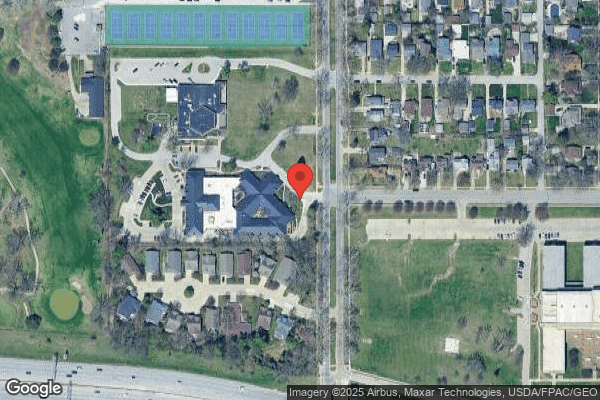
900 Polk Boulevard, Des Moines, IA 50312 (515) 255-5433
Non profit - Other 46 Beds Independent Data: November 2025
Trust Grade
65/100
#120 of 392 in IA
Last Inspection: March 2025

Within standard 12-15 month inspection cycle. Federal law requires annual inspections.

Overview

Iowa Jewish Senior Life Center has a Trust Grade of C+, indicating it's slightly above average but not exceptional among nursing homes. It ranks #120 out of 392 facilities in Iowa, placing it in the top half of the state, and #11 out of 29 in Polk County, meaning only ten local options are rated higher. Unfortunately, the facility's trend is worsening, with issues increasing from three in 2024 to five in 2025. Staffing is a concern, with a 66% turnover rate, significantly higher than the state average, and while RN coverage is average, the facility has faced $63,849 in fines, which is higher than 93% of Iowa facilities. Specific incidents include staff not following proper infection control practices during meal service, leading to potential contamination risks, and failing to meet dietary requirements for residents, which may affect their health and well-being. Overall, while the facility has some strengths, such as good ratings in overall care, its staffing challenges and recent compliance issues raise concerns for families considering this option.

Trust Score
C+
65/100
In Iowa
#120/392
Top 30%
Safety Record
Moderate
Needs review
Inspections
Getting Worse
3 → 5 violations
Staff Stability
⚠ Watch
66% turnover. Above average. Higher turnover means staff may not know residents' routines.
Penalties
✓ Good
$63,849 in fines. Lower than most Iowa facilities. Relatively clean record.
Skilled Nurses
✓ Good
Each resident gets 47 minutes of Registered Nurse (RN) attention daily — more than average for Iowa. RNs are trained to catch health problems early.
Violations
○ Average
10 deficiencies on record. Average for a facility this size. Mostly minor or procedural issues.
★★★★☆
4.0
Overall Rating
★★★★☆
4.0
Staff Levels
★★★★☆
4.0
Care Quality
★★★★☆
4.0
Inspection Score
Stable
2024: 3 issues
2025: 5 issues

The Good

  • 4-Star Staffing Rating · Above-average nurse staffing levels
  • 4-Star Quality Measures · Strong clinical quality outcomes
  • Full Sprinkler Coverage · Fire safety systems throughout facility
  • No fines on record

Facility shows strength in staffing levels, quality measures, fire safety.

The Bad

Staff Turnover: 66%

20pts above Iowa avg (46%)

Frequent staff changes - ask about care continuity

Federal Fines: $63,849

Above median ($33,413)

Moderate penalties - review what triggered them

Staff turnover is elevated (66%)

18 points above Iowa average of 48%

The Ugly 10 deficiencies on record

Mar 2025 5 deficiencies
CONCERN (D)

Potential for Harm - no one hurt, but risky conditions existed

Comprehensive Care Plan (Tag F0656)

Could have caused harm · This affected 1 resident

**NOTE- TERMS IN BRACKETS HAVE BEEN EDITED TO PROTECT CONFIDENTIALITY** Based on clinical record review, observations, staff interviews, and policy review the facility failed to develop and implement ...

Read full inspector narrative →
**NOTE- TERMS IN BRACKETS HAVE BEEN EDITED TO PROTECT CONFIDENTIALITY** Based on clinical record review, observations, staff interviews, and policy review the facility failed to develop and implement a comprehensive person-centered care plan for 2 of 16 residents sampled (Residents #3 and #32). The facility reported a census of 40 residents. Findings include: 1. The Minimum Data Set (MDS) Assessment tool dated 1/23/25 revealed Resident #3 had diagnoses of Alzheimer's Disease and diabetes. The MDS recorded the resident took an antibiotic. The Order Summary revealed Resident #3 on droplet precautions since 3/5/25. The Progress Notes revealed the following: a. On 3/5/25 at 10:59 AM, the resident tested positive for RSV (respiratory syncytial virus) (infection of the lungs and respiratory tract) on 3/5/25 and placed on droplet isolation. b. On 3/12/25 at 10:41 AM, resident continues on droplet precautions. The Care Plan lacked information or directives for staff to follow current policy and protocol guidelines related to RSV and droplet precautions. 2. The MDS assessment dated [DATE] revealed Resident #32 had diagnoses of dementia and diabetes. The Care Plan revised 3/5/25 revealed the resident had a risk for ineffective airway clearance. The Care Plan directed staff to encourage participation in coughing, deep breathing and forced expiratory techniques. The Care Plan lacked information the resident had a RSV infection, and lacked interventions such as droplet precautions. The Order Summary revealed droplet isolation ordered on 3/5/25. The Progress Notes revealed the following: a. On 3/5/25 at 12:38 PM, an order to obtain a nasal swab for RSV due to the resident's runny nose, loose nonproductive cough, and hoarse voice. b. On 3/5/25 at 1:26 PM, resident placed on droplet isolation pending RSV test result. c. On 3/5/25 at 10:36 PM, resident diagnosed with RSV and on droplet precautions. d. On 3/12/25 at 9:02 AM, resident continues on droplet precautions for RSV. Observations revealed on 3/10/25 at 11:00 AM, a droplet precautions sign hung on the door to Resident #3 and #32's room. A plastic bin with drawers had gowns inside, and a box of masks and box of gloves sat on top of the bin in the hallway. During an interview on 3/13/25 at 11:35 AM, the Director of Nursing (DON) reported the nurses updated the residents' Care Plans. The DON reported she tried to keep an eye on the Care Plans because the nurses didn't always have time to review and update them. During an interview on 3/13/25 at 11:55 AM, Staff A, Licensed Practical Nurse, reported the MDS nurse, the DON, and the Assistant Director of Nursing (ADON) updated the residents' Care Plan. Staff A confirmed Resident #3 and Resident #32 currently on droplet precautions. Staff A reported a mask, gloves, and a gown worn when staff cared for a resident on droplet precautions. In an interview 3/13/25 at 12:05 PM, the MDS Coordinator reported she updated the Care Plans whenever there was a significant change such as a resident had an infection. She added the infection and the related interventions to the Care Plan. The MDS Coordinator acknowledged droplet precautions should be on the Care Plan so staff knew what was expected. An Isolation #34 policy revised 7/9/24 revealed residents with transmittable diseases will be isolated to the degree necessary to assure resident safety. Isolation is necessary at times to prevent the spread of disease between residents and staff. The type of precautions and reason for the isolation documented in the nurse's notes, and the care plan updated as needed. A Comprehensive Resident Plan of Care policy dated 7/9/24 revealed an interdisciplinary team developed and updated the resident's comprehensive care plan including any medical and nursing needs. The RN Assessment Coordinator collaborated on the resident's plan of care with staff.
CONCERN (D)

Potential for Harm - no one hurt, but risky conditions existed

Quality of Care (Tag F0684)

Could have caused harm · This affected 1 resident

**NOTE- TERMS IN BRACKETS HAVE BEEN EDITED TO PROTECT CONFIDENTIALITY** Based on clinical record review, staff interviews, and policy review the facility staff failed to assess and document an injury ...

Read full inspector narrative →
**NOTE- TERMS IN BRACKETS HAVE BEEN EDITED TO PROTECT CONFIDENTIALITY** Based on clinical record review, staff interviews, and policy review the facility staff failed to assess and document an injury of unknown origin and perform a skin assessment for 1 of 3 residents reviewed for skin injuries (Resident #33). The facility reported a census of 40 residents. Findings include: The Minimum Data Set (MDS) assessment dated [DATE] reveals Resident #33 had diagnoses of Alzheimer's disease, dementia, and muscle weakness. The MDS recorded the resident had a Brief Interview for Mental Status (BIMS) score of 0, indicating severely impaired cognition. The resident also had inattention, disorganized thinking, and wandered daily. The MDS documented the resident had no falls and no skin issues. The MDS indicated the resident had dependence on staff for toileting, bathing, and transfers, and required substantial to maximum assistance for bed mobility. The Care Plan revised 2/9/25 revealed the resident required assistance with activities of daily living (ADL's) related to dementia and confusion. The resident used a wheelchair as her primary mode of transportation. The Care Plan directed staff to use an EZ stand mechanical lift and the assistance of two staff for transfers, and provide assistance of one staff to turn and reposition her in bed. The Care Plan also revealed the resident had occasional agitation and combativeness, and had a risk for impaired skin integrity. The Care Plan revised on 2/22/25 revealed the resident had a bruise on her left arm. The Care Plan directed staff to use caution during transfers and bed mobility to prevent her from striking arms, legs, and hands against any sharp or hard surface, and perform a weekly skin sweep to include measurements and any other notable changes or observations. A Weekly Skin Sweep dated 2/18/25 revealed the resident's skin clean and intact. The Skin and Wound Evaluations revealed the following: a. On 2/21/25, a bruise on the left outer forearm measured 6.3 centimeters (cm) by 4.0 cm. Education provided on bumping the resident's arm. Family and physician notified. b. On 2/25/25, the bruise measured 7.9 cm by 4.4 cm and turning yellow in color. The POC (Plan of Care) Response history for behavior monitoring revealed the resident had behaviors of grabbing and hitting others on 2/17/25, and no behaviors documented on 2/18/25 to 2/21/25. Incident Reports revealed the following: a. On 11/17/24 at 9:36 PM, a skin tear sustained on the posterior left forearm during cares. Steri-strips applied to the area. Staff educated on the importance of making sure the resident's elbows are in prior to moving through the door (during transfers). b. On 2/22/25 at 3:13 PM, the resident had a dark purple bruise to her left arm measuring 6.31 cm by 3.98 cm. The resident was confused due to dementia and does not know how she obtained the bruise. The resident propels herself in a wheelchair throughout the building. Staff education to use extra care whenever they transferred the resident with an EZ stand mechanical lift and during bed mobility due to her fragile skin. The Progress Notes revealed: a. On 2/18/25 at 2:50 PM, Staff A performed a weekly skin observation. No skin concerns noted. b. On 2/21/25 at 3:47 PM, a new bruise on left forearm appeared black and blue. Physician notified. The Facility's Investigation File revealed: a. A Grievance Report Form filled out by Staff M, Registered Nurse (RN) revealed the resident's family were concerned and upset about the protective sleeves over the resident's arms. The family thinks staff are hiding injuries and think baby powder was applied to the bruise on her left arm. Family wants to know what staff member applied the protective sleeves. There are no orders for protective sleeves. b. Written Staff Statement by Staff E, certified nursing assistant (CNA), dated 2/24/25 revealed Staff E came to work on Thursday night around midnight. During rounds he noticed the resident had a bruise on her left forearm. At the time, the resident was not wearing sleeves on her arms. Staff E reported the bruise to the nurse immediately. Resident #33 is a check and change at night but the night the bruise was discovered, the resident was not incontinent throughout the entire night. Staff E made sure she was ok and in bed. Staff E did not have any issue of the resident resisting cares that night. c. An undated written staff statement by Staff F, Licensed Practical Nurse (LPN), revealed on the night of Wednesday 2/19/25, I did not notice any bruise on the resident's forearms when I worked. d. A typed statement dated 2/25/25 by the MDS Coordinator revealed she was unaware of the resident's bruise until family pointed it out on Friday 2/21/25. I saw no protective sleeves on her until family was asking about them on Friday 2/21/25. The resident got a little feisty when I attempted to take her blood pressure and pulse in the AM but I quickly backed away and it did not become physical. That is the only contact I had with her that day other than taking off the protective sleeves in the afternoon. Family stated I was too rough pulling one of the protective sleeves off. I immediately apologized and became gentler in removing the other sleeve. d. A written statement dated 2/25/25 by Staff A, LPN, revealed Staff A was not aware of any bruise on the resident until Saturday, 2/22/25 (when Staff A came to work). e. A text message at 10:32 AM from Staff G, RN, revealed Staff G worked the last three night shifts and didn't get the message until leaving for work last night. I really don't know anything about the resident in 108. I am not sure what happened or when. I was told it was 109, so that is who I looked at. I was told at 4:15 AM that 109 had a bruise. I checked at 4:30 AM, but did not see anything. I ran off report sheets, did AM medications, gave report, and left. That is all I did, and that is all I was told. I have no further information. Not sure what happened or when. Not sure if it's from a previous blood draw site? Might be worth checking when her last blood draw was. The DON responded back to Staff G at 12:02 PM: I just want to know if you placed the geri-sleeve on Resident #33 or not. Staff G responded to the Director of Nursing (DON) at 6:14 PM: No The DON documented a summary about the incident investigation: a. On 2/21/25 at approximately 12:00 AM, Staff E, CNA, reported a bruise on the resident's left outer forearm to Staff G, RN. When questioned, Staff G denied getting the report about the resident in room [ROOM NUMBER]. On 2/21/25, the MDS Coordinator reported concerns from the resident's spouse. He was concerned the resident had geri-sleeves in place. The resident had never had the geri-sleeves placed previously. A bruise on the left outer forearm was visualized when the geri-sleeves were pulled up. The MDS Coordinator notified the Assistant Director of Nursing (ADON). The ADON went to the resident's room immediately and assessed the resident. The resident had a BIMS of 0 and unable to recall how she got the bruise. A skin evaluation was completed. The Administrator, physician, and DON were made aware of the incident. An investigation was initiated immediately. Upon completion of the investigation, the facility was unable to substantiate that abuse had occurred but recognized areas that could be improved when reporting a bruise of unknown origin. Interventions included to continue to observe and assess bruising until healed, staff education on the abuse policy and reporting to leadership. b. A Termination Report revealed a self-report was submitted on 2/24/25 due to a suspected abuse case on the resident on 2/21/25 and an investigation was initiated. Staff M reported to the ADON that Resident #33 had a bruise of unknown cause. The bruise was originally found by a resident's spouse and he expressed a concern to Staff M. The spouse wanted to know what caused the bruise and why the area was covered. Staff previously assigned to resident was interviewed. Staff E made a statement that he saw the bruise that AM prior to the end of shift and notified Staff G. Several attempts made to call Staff G but no answer. Days later, Staff G confirmed she did not know anything about the bruise and denied applying the geri-sleeves. Geri-sleeves could only be accessed by a nurse who had a key. Several other staff who took care of residents were interviewed and all denied seeing a bruise. No order found for geri-sleeves and no charting found about a bruise on the resident. Due to the suspected abuse allegation and Staff G not being cooperative with the investigation, Staff G was terminated effective 2/24/25. Observation on 3/11/25 at 9:20 AM revealed Resident #33 sat in a wheelchair in the dining area. The resident had a long sleeve shirt on. At the time, Staff A rolled the resident's sleeve up and showed the surveyor the resident's left arm. The resident's left forearm had a darkened faded bruise. On 3/12/25 at 10:45 AM, the resident propelled herself in a wheelchair in the dining room. On 3/11/25 at 9:20 AM, the surveyor asked Resident #33 how she got the bruise on her left arm. The resident looked at the surveyor and voiced some words but did not make sense. The resident was unable to tell the surveyor what happened. In an interview on 3/11/25 at 9:25 AM, Staff A, LPN, reported she was not working on the day the resident got the bruise. She was told about the bruise on the resident's arm during shift report when she came in to work on the weekend. In an interview 3/11/25 at 2:35 PM, the MDS Coordinator reported she was in the DON's office when the resident's husband came and told her and the ADON the resident had a bruise on her arm. Nobody knew how the bruise got there. She started to question staff that were working that day, as well as texted the staff that took care of her over those few days. Staff E said he notified Staff G about the bruise. The resident didn't have geri-sleeves on and that is how he noticed the bruise. Resident #33 didn't normally wear geri-sleeves but the resident had geri-sleeves on the day the husband came to talk to the MDS Coordinator. The MDS Coordinator reported geri-sleeves are locked in the medication room and only a nurse could get them. The MDS Coordinator stated she spoke with Staff G. Staff G said Staff E told her the resident had a bruise but she wrote down the wrong room number. She checked the resident in the room number she wrote down. When Staff G checked the resident and didn't see a bruise or anything but Staff G didn't follow up after that. The MDS Coordinator reported she had not noticed the resident wearing geri-sleeves prior to the incident of finding the bruise on her arm. The MDS Coordinator reported the resident had a solid bruise the size of an orange on her left arm. She did not see any finger marks on the resident's arm. The MDS Coordinator reported she talked to Staff D, CNA, who worked the 2 PM - 10 PM shift, Staff H, CNA, had worked the day prior to staff finding the bruise, and Staff I, CNA, who worked on Friday during the day and none of the staff noticed a bruise on the resident. Staff A also reported Staff H, CNA, had given the resident a shower the day before and had not noticed any bruises at that time. The MDS Coordinator stated they narrowed it down to the night nurse knowing something about the bruise but did not do any follow-up after Staff E reported the skin concern to Staff G. The MDS Coordinator reported the resident flailed her arm and staff had to remind her to hold on tight to the EZ Stand (mechanical lift). The resident was very forgetful and had frail, thin skin. She didn't take an anticoagulant or other medications that caused bruises. In an interview 3/11/25 at 5:55 PM, Staff E, CNA, reported he worked 12 AM -6 AM on the night when he found a bruise on Resident #33's arm. He made rounds on residents. When he turned on the light, he noticed a bruise right away on Resident #33's left arm. The resident was in bed sleeping and had her left arm on her abdomen. There were no geri-sleeves on her arms. He let Staff G know right away. Staff E reported Resident #33 is a check and change and she was dry all night. The prior shift lets him know if a resident had behaviors, but there was no mention about Resident #33 having any behaviors that night. Staff sometimes reported she could be difficult. Staff E reported he had not witnessed coworkers being rough or unkind to any of the residents. He would report this immediately to the charge nurse or Administrator if he had witnessed any concerns. In an interview 3/12/25 at 1:40 PM, the DON reported she had worked at the facility since 1/2025 but had worked part-time while she transitioned from her previous job to the DON position. The DON reported the MDS Coordinator found out Resident #33 had a bruise on her arm. The ADON talked to the resident's family member on Friday, 2/21/25. The resident's husband noticed the sleeve on the resident's arm and came to the office. The MDS Coordinator and the ADON went to the resident's room, and removed a sleeve on the resident's arm and did a skin assessment. The DON was told about the bruised area on Monday, 2/24/25, when she came to work. A self-report to DIAL (the Department of Inspections, Appeals, and Licensing) was submitted on 2/24/25. The DON stated she started calling staff on Monday 2/24/25, and provided staff education to notify her when they had concerns, and made staff aware of the process. During the investigations, Staff E, CNA, was the one who found the bruise on the resident's arm on Thursday night when he worked. Staff E said he reported it to Staff G. None of the nurses or CNA's knew anything about a bruise on Thursday 2/20/24. She narrowed it down to when the bruise was discovered but didn't find any documentation about the bruise. There was no skin assessment or progress note documented, and no incident report filled out. Nobody said anything about a skin concern in report. She talked to the resident's husband. She made several attempts to contact Staff G but did not receive a call back. She finally sent a text to Staff G about the incident. Staff G denied getting a notice from Staff E, denied seeing a bruise on Resident #33, and also denied putting geri-sleeves on the resident. The DON stated the nurses are the only ones had access to the room where geri-sleeves are kept. A key is required to get into the room. Staff M worked days and filled out the grievance form. In an interview on 3/12/25 at 1:50 PM, the ADON reported Resident #33's family member came to the office and said I want you to come and look at something. The ADON saw the resident had a geri-sleeve on her left arm. The family member wanted to know why the resident had the sleeve on and wondered if the facility staff were trying to cover something up. The ADON looked under the sleeve and discovered a fairly large round purple bruise on the resident's left forearm. She did not see any finger marks on the area. The ADON stated she asked Staff M if there were any notes about a skin concern. There were no notes or skin assessment documented. Resident #33 was not able to tell them what happened. The resident had dementia. The ADON reported staff used an EZ stand mechanical lift to transfer the resident. The resident didn't like the EZ stand lift, and sometimes fought staff. Resident #33 was mobile in her wheelchair and she thought maybe the resident bumped her arm on something, but she was not sure how the resident got the bruise. The surveyor attempted to contact Staff G, RN, on 3/12/25 at 9:25 AM, 3/12/25 at 6:25 PM, and 3/13/25 at 8:35 AM. Staff G failed to respond to voice and text messages. During an interview on 3/13/25 at 11:55 AM, Staff A, LPN, reported skin assessments completed by the nurses. Skin assessments documented under the skin assessments. In an interview 3/13/25 at 12:05 PM, the MDS Coordinator reported a skin sweep performed on all of the residents weekly. A Weekly Skin Assessments policy dated 7/9/24 revealed the nurse who finds a new skin issue completed the initial skin assessment in the electronic health record, including a risk management (incident report) and notified the physician and family. The skin assessment is printed and placed in the skin book located at the nurse's station for continued monitoring and follow up. The facility's Abuse Prevention Policy and Procedure revised 7/9/24 revealed employees must report any suspicious event that may constitute abuse. Any events of unknown origin are investigated. An allegation of abuse reported to the state agency as soon as possible, but not to exceed 24 hours.
CONCERN (D)

Potential for Harm - no one hurt, but risky conditions existed

Infection Control (Tag F0880)

Could have caused harm · This affected 1 resident

**NOTE- TERMS IN BRACKETS HAVE BEEN EDITED TO PROTECT CONFIDENTIALITY** Based on clinical record review, observation, staff interview, facility policy review, and the Center for Disease Control (CDC) ...

Read full inspector narrative →
**NOTE- TERMS IN BRACKETS HAVE BEEN EDITED TO PROTECT CONFIDENTIALITY** Based on clinical record review, observation, staff interview, facility policy review, and the Center for Disease Control (CDC) guidelines, the facility failed to follow infection control practices for three of three residents on droplet precautions (Resident # 3, #30, and #32) and prevent the potential spread of infection to other residents and staff. The facility staff also failed to handle soiled linens to prevent the potential spread of infection for 1 of 2 nursing units. The facility reported a census of 40 residents. Findings include: 1. The Minimum Data Set (MDS) Assessment tool dated 1/23/25 revealed Resident #3 had diagnoses of Alzheimer's Disease and diabetes. The MDS indicated the resident required supervision and touching assistance for eating. The MDS recorded the resident took an antibiotic. The Care Plan lacked information or directives for staff to follow current policy and protocol guidelines related to respiratory syncytial virus (RSV) (a respiratory infection) and droplet precautions. The Order Summary revealed Resident #3 on droplet precautions since 3/5/25. The Progress Notes revealed the following: a. On 3/5/25 at 10:59 AM, the resident tested positive for RSV on 3/5/25 and had an order for droplet isolation. b. On 3/10/25 at 3:26 PM, resident continued on droplet precautions for RSV. The resident continued to have a loose cough and nasal drainage. c. On 3/12/25 at 10:41 AM, resident continued on droplet precautions. He continued to have a loose productive cough and occasional runny nose. Lungs remained diminished after coughing. 2. The MDS assessment dated [DATE] revealed Resident #30 had diagnoses of Alzheimer's Disease and dementia. The resident required substantial to maximum assistance for eating. The Care Plan revised 3/7/25 revealed the resident had a risk for altered respiratory status and difficulty breathing related to RSV. The resident required assistance with feeding at mealtime. The Care Plan lacked staff directives regarding interventions for droplet precautions. The Order Summary lacked an order for droplet precautions. The Progress Notes revealed the following: a. On 3/5/25 at 4:39 PM, resident placed on droplet precautions because she had an occasional cough and hoarse voice. b. On 3/6/25 at 8:50 AM, resident had a cough and runny nose. Viral nasal swab obtained. c. On 3/6/25 at 10:45 PM, lab results revealed the resident tested positive for RSV. Droplet precautions continued. d. On 3/12/25 at 9:16 AM, resident continued on droplet precautions. 3. The MDS assessment dated [DATE] revealed Resident #32 had diagnoses of dementia and diabetes. The resident required set-up assistance for eating. The Care Plan revised 3/5/25 revealed the resident had a risk for ineffective airway clearance. The Care Plan directed staff to encourage participation in coughing, deep breathing, and forced expiratory techniques. The Care Plan lacked information the resident had a RSV infection and lacked interventions such as droplet precautions. The Order Summary revealed a viral nose swab for cough, runny nose, and hoarse voice completed on 3/5/25, and droplet isolation ordered on 3/5/25. The Progress Notes revealed the following: a. On 3/5/25 at 12:38 PM, nasal swab for RSV due to runny nose, loose nonproductive cough, and a hoarse voice. b. On 3/5/25 at 1:26 PM, resident placed on droplet isolation pending RSV test result. c. On 3/5/25 at 10:36 PM, resident diagnosed with RSV and on droplet precautions. d. On 3/12/25 at 9:02 AM, resident continued on droplet precautions for RSV. Resident had loose cough, occasional nasal drainage, and diminished lung sounds. Observations revealed the following: a. On 3/10/25 at 11:00 AM, a droplet precautions sign hung on the door to Resident #3, #30, and #32's room. A plastic bin with drawers had gowns inside, and a box of masks and box of gloves sat on top of the bin in the hallway. b. On 3/10/25 at 12:10 PM, Staff A, Licensed Practical Nurse (LPN), sat in front of Resident #3 in the common area and fed the resident food from a styrofoam bowl. Staff A wore a mask but no gown worn while she fed the resident. c. On 3/10/25 at 12:10 PM, Staff C, certified nursing assistant (CNA), sat next to Resident #30 and fed the resident food from a styrofoam containers. Staff C wore a mask but no gown worn while she fed the resident. Resident #32 sat in a recliner next to Resident #30. d. On 3/11/25 at 10:50 AM, Resident #3, #30, and #32 sat in recliners in the common area. e. On 3/11/25 at 11:30 AM, Staff A sat by Resident #3 and fed the resident food from a styrofoam container. Staff A wore a mask but no gown or gloves worn. Staff D, CNA, sat by Resident #30 and fed the resident food from a styrofoam container. Staff D did not wear a gown while she fed the resident. During an interview on 3/13/25 at 11:55 AM, Staff A, LPN, stated staff needed to wear a mask, gloves, and a gown before entrance to the resident's room whenever a resident was on droplet precautions. Staff A confirmed Resident #3, #30, and Resident #32 on droplet precautions. Staff A reported the residents on droplet precautions were difficult to confine to their rooms due to their diagnoses so the staff tried to keep the residents on droplet precautions separate from the other residents. In an interview 3/13/25 at 12:05 PM, the MDS Coordinator reported she was not in the facility when the residents were diagnosed with RSV. The MDS Coordinator acknowledged droplet precautions should be on the Care Plan so staff knew what was expected. A droplet precautions sign posted on the resident's room door, and gown, gloves, and mask worn during cares and whenever staff entered the room. An Infection Control policy revised 7/9/24 revealed procedures were necessary to decrease and prevent the spread of infections in both resident and staff populations. The facility assisted staff in creating an environment to contain infections and to keep negative outcomes at a minimum. Policies and procedures defined the indications for isolation and were based on CDC disease guidelines and criteria. An Isolation #34 policy revised 7/9/24 revealed residents with transmittable diseases will be isolated to the degree necessary to assure resident safety to prevent the spread of disease between residents and staff. Isolation precautions were based on the CDC guidelines. An isolation precautions sign is placed on the resident's room number and specified the protective equipment needed (such as a gown, gloves, and mask). The type of isolation precautions and the reason for isolation are documented in the nurse's notes. Droplet precautions prevented the transmission of diseases spread by respiratory droplets through coughing, sneezing, or talking. PPE for droplet precautions included a face mask. A CDC Guideline for Isolation Precautions: Preventing Transmission of Infectious Agents in Healthcare Settings updated 9/2024 revealed respiratory droplets are generated when an infected person coughs, sneezes, or talks. The CDC recommended healthcare personnel to don personal protective equipment (gowns, gloves, mask) upon entry into the patient's room for patients who are on droplet precautions since the nature of the interaction with the patient cannot be predicted with certainty and contaminated environmental surfaces are important sources for transmission of pathogens. Isolation gowns are used to protect the healthcare worker's arms and exposed body areas and prevent contamination of clothing with body fluids and other potentially infectious material. 4. During observation on 3/12/25 at 08:00 AM, Staff B, housekeeper, walked down the 200 hall carrying bed linens under her arm and against her uniform. Staff B opened the lid on the soiled linen cart in the hallway and placed the soiled linens inside the cart, pushing the linens down with her gloved hands and closed the lid. Staff B then pushed the soiled linen cart down the hall to a soiled utility room in the 300 hall. In an interview on 3/13/25 at 12:30 PM, the Infection Preventionist reported she expected staff placed soiled linens in a bag and into the soiled linen cart. Soiled linens should not be carried against the staff's uniform. A Linens policy dated 6/15/24 revealed linens maintained in a manner to ensure infection prevention and control. Proper linen management is crucial to breaking the chain of infection. Pathogen transmission can occur through direct contact with contaminated linens. Handling of used linens should be minimized including not holding linens close to the body. Used linens shall be placed in designated bags or other containers for transport at the point of use.
CONCERN (E)

Potential for Harm - no one hurt, but risky conditions existed

Food Safety (Tag F0812)

Could have caused harm · This affected multiple residents

Based on observation, staff interview, and policy review, the facility failed to ensure proper infection control practices to reduce the risk of contamination and food-borne illness during meal servic...

Read full inspector narrative →
Based on observation, staff interview, and policy review, the facility failed to ensure proper infection control practices to reduce the risk of contamination and food-borne illness during meal service. The facility reported a census of 40 residents. Findings include: On 3/11/25 the facility lunch menu included the following: lemon scallopini with pasta seasoned peas breadstick fresh fruit cup funfetti blondie In an observation on 3/11/25 starting at 11:45 AM during the lunch meal service, Staff J, Cook, used gloved hands to serve the meal and only changed his gloves and performed hand hygiene one time throughout the entire meal service. Staff J touched plates, utensils, refrigerators, lids, and transportation carts with gloved hands during the service. He further touched the seasoned peas on each plate he prepared with gloved hands to keep them from rolling around the plate, used his gloved hands to get parsley from a bowl to sprinkle on top of the scallopini, and touched the spaghetti with his gloved hands to remove dark overcooked pasta from the residents plates or pasta that was hanging over the edge of the plate and put it back on the residents plates. Staff J touched sandwiches being served to residents with his gloved hands, held toaster waffles in his gloved hands after toasted, retrieved a piece of lettuce from a refrigerator and carried it with his gloved hands to rinse it in the sink and placed it on a sandwich, touched a grilled cheese sandwich with his gloved hands to turn it in the frying pan and held on to breadsticks with his gloved hands when cutting them up for the residents with a knife. In an interview on 3/13/25 at 12:27 PM, the Administrator stated it was the expectation that kitchen staff not wear gloves unless used for ready-to-eat foods. She stated gloves gave the staff a false sense of security. A facility provided policy titled Food Preparation and Service, with no date noted, stated: Food preparation staff will adhere to proper hygiene and sanitary practices to prevent the spread of foodborne illness. Gloves can become contaminated and/or soiled and must be changed between tasks. Disposable gloves are single-use items and shall be discarded after each use.
MINOR (B)

Minor Issue - procedural, no safety impact

Transfer Notice (Tag F0623)

Minor procedural issue · This affected multiple residents

**NOTE- TERMS IN BRACKETS HAVE BEEN EDITED TO PROTECT CONFIDENTIALITY** Based on clinical record review and staff interview, the facility failed to notify the State Long Term Care (LTC) Ombudsman for ...

Read full inspector narrative →
**NOTE- TERMS IN BRACKETS HAVE BEEN EDITED TO PROTECT CONFIDENTIALITY** Based on clinical record review and staff interview, the facility failed to notify the State Long Term Care (LTC) Ombudsman for 1 of 2 residents reviewed for transfer out of the facility (Resident #19). The facility reported a census of 40 residents. Findings include: Review of the Census list for Resident #19 revealed the resident's status as on hospital leave on 11/6/24 and returned to the facility on [DATE]. Review of the Minimum Data Set (MDS) assessment dated [DATE] revealed Resident #19 re-admitted to the facility on this date from the hospital. The Notice of Transfer Form to LTC Ombudsman for the facility for November 2024 lacked documentation of Resident #19 being sent to the hospital on [DATE]. In an interview on 3/12/25 at 11:25 AM, Staff K, Accounting Manager and Staff L, admission Coordinator, reported they had been running the report to send to the LTC Ombudsman monthly off of a report generated from their electronic health records (PCC) and it appeared it had not been capturing the hospitalizations. In an interview on 3/13/25 at 11:37 AM, the Administrator stated the facility did not have a policy related to notification of the LTC Ombudsman with transfers or hospitalizations. In an interview on 3/13/25 at 12:30 PM, the Administrator stated it was the expectation that any resident being sent out of the facility be placed on the Notice of Transfer Form to the LTC Ombudsman list.
Apr 2024 3 deficiencies
CONCERN (D) 📢 Someone Reported This

A family member, employee, or ombudsman was alarmed enough to file a formal complaint

Potential for Harm - no one hurt, but risky conditions existed

Deficiency F0658 (Tag F0658)

Could have caused harm · This affected 1 resident

Based on observation, record review and staff interview, the facility failed to meet professional standards by not observing a resident take their medications for 1of 8 residents (Resident #18) review...

Read full inspector narrative →
Based on observation, record review and staff interview, the facility failed to meet professional standards by not observing a resident take their medications for 1of 8 residents (Resident #18) reviewed. The facility reported a census of 51 residents. Findings include: A Minimum Data Set (MDS) for Resident #18, dated 3/12/24, included diagnoses of heart failure, anxiety, and depression. The MDS documented the resident had a Brief Interview for Mental Status score of 15, indicating no cognitive impairment. Observation on 4/15/24 at 12:05 PM, resident in room and holding medication cup with several pills in the cup. Resident stated they always leave them for me, they know I will take them as they are good for me. Review of the resident's Medication Administration Record dated 4/1/24 - 4/30/24, documented the following medications ordered and administered at noon: a. ascorbic acid (supplement) b. aspirin c. buspirone (anti-anxiety) d. cholecalciferol (supplement) e. ditiazem (high blood pressure) f. duloxetine (anti-depressant) g. ferrous gluconate (iron supplement) h. furosemide (diuretic for fluid retention) i. L-Lysine (canker sore) j. metoprolol (high blood pressure) k. Tylenol l. Zyrtec (allergies) Interview on 4/17/24 at 11:36 AM, Staff B, Licensed Practical Nurse (LPN) stated she always stays with residents until they take their medication and does not leave medications with any residents. Interview on 4/17/24 at 12:08 PM, Staff C, LPN stated she always stays with residents until they take and swallow their medication, the protocol is to stay with the resident and no residents are able to self-administer their medications. Facility policy titled Administration of Medication, dated 6/28/2023, directed staff to remain with the resident to ensure that the medication is swallowed. Interview on 4/17/24 at 2:47 PM, the Director of Nursing stated she expects staff to remain with the residents until the medication is swallowed and recently provided education to the staff regarding this.
CONCERN (D) 📢 Someone Reported This

A family member, employee, or ombudsman was alarmed enough to file a formal complaint

Potential for Harm - no one hurt, but risky conditions existed

Deficiency F0760 (Tag F0760)

Could have caused harm · This affected 1 resident

**NOTE- TERMS IN BRACKETS HAVE BEEN EDITED TO PROTECT CONFIDENTIALITY** Based on clinical record review, family and staff interview and policy review, the facility failed to prevent a significant medi...

Read full inspector narrative →
**NOTE- TERMS IN BRACKETS HAVE BEEN EDITED TO PROTECT CONFIDENTIALITY** Based on clinical record review, family and staff interview and policy review, the facility failed to prevent a significant medication error for 1 of 11 residents reviewed (Resident #155). The facility reported a census of 51 residents. Findings Include: The Baseline Care Plan of Resident #155 reflected a date of 4/10/24. The Care Plan documented the resident unable to easily communicate with staff, and to be vision and hearing impaired. The Admit/Readmit Summary, dated 4/10/24 at 7:35 pm, documented the resident admitted to the facility on [DATE], was oriented to self and to place, not to time. The Summary also documented the resident to have moderately impaired vision and moderate difficulty hearing. The Health Status Note, dated 4/13/24 at 7:20 am, documented the resident to be very confused and anxious and not able to follow direction. The Health Status Note, dated 4/13/24 at 11:22 am, documented Resident #155 was in a wheelchair in the dining room when approached by a medication aide and called by a name other than her own. Per the note, the resident responded to the other name and then given 650 mg of Tylenol and 0.25 milliliters of morphine intended for the other resident. After administering the medication, per the note, the medication aide then went to Resident #155's room for medication pass and then realized her error and notified the nurse on duty. The physician, family member of the resident, and nurse manager were informed of the error and the resident monitored. The Order Note, dated 4/13/24 at 5:56 pm, documented the resident's daughter chose to send the resident to the emergency room for evaluation. On 4/15/24 at 4:26 pm, a family member of Resident #155 stated the resident had blood work done upon arrival to the facility, prior to the medication error, which showed high potassium and high creatinine levels. She stated the medical director had made some medication changes due to the abnormal laboratory values. She stated when the resident arrived at the hospital, she had a CT scan (computed tomography, a test to obtain internal images of the body) which showed no concerns and she tested negative for having a urinary tract infection. She stated the hospital did not appear concerned the mental status change was related to the morphine error. The lab work collected on 4/13/24 at 5:45 pm reflected a potassium level of 5.9 (normal values 3.5-5.1). and a Creatinine of 1.6 (normal values 0.6-1.1). The History and Physical from the hospital also noted the resident was abruptly taken off of tramadol after 4 years of chronic use and documented may need to add back tramadol and slowly taper off if necessary to avoid acute detox. Hospital notes reflected mental status change likely related to hyperkalemia (high potassium) which was present prior to morphine administration. On 4/17/24 at 12:56 pm, Staff D, Certified Medication Aide stated she had been employed at the facility since 2018. She stated when she arrived to work on 4/13/24, she was scheduled to work the floor in the memory care unit, which is not where resident #155 resided. She stated the nurse in the part of the facility where Resident #155 resided had been busy and the nurse needed assistance to complete the morning medications. She voiced once she got all of her residents up and dressed on the memory care unit, she was asked to go help in the other portion of the building. She said she always works in the memory care unit and had never met either of the residents who she got mixed up with the medication error. She stated she pulled up Electronic Health Record of Resident #157, looked at her photo, looked at Resident #155 sitting in the dining room and thought that Resident #155 was actually Resident #157. She stated she walked over to Resident #155 and asked her if she was (first name of Resident #157) and the resident replied yes. She said she told her she had pills for her and Resident #155 said ok and she took them. She stated again she had never met either resident. The Medication Error/Omission Report, dated 4/13/24, documented How this error could have been prevented Have identification on any wheelchair used by residents out of room. Ask resident name and date of birth before giving meds - 5 rights (The five rights of medication administration) The facility form Medication Error Process documented Why did this occur? Resident was not ID'd correctly. She answered to (other resident's name) and was in a wheelchair with no ID. Was not asked her name. The facility policy Administration of Medication, revision date of 6/28/23 documented the Standard of: All medications are administered safely and appropriately to aid residents to overcome illness, relieve and prevent symptoms, and help in diagnosis.
CONCERN (D)

Potential for Harm - no one hurt, but risky conditions existed

Infection Control (Tag F0880)

Could have caused harm · This affected 1 resident

Based on observations, clinical record review, staff interview and policy review, the facility failed to maintain infection control standards due to lack of hand hygiene when providing cares and assis...

Read full inspector narrative →
Based on observations, clinical record review, staff interview and policy review, the facility failed to maintain infection control standards due to lack of hand hygiene when providing cares and assisting residents to dine for 2 of 23 residents (Resident #15, and Resident #24). The facility reported a census of 51 residents. Findings include: 1. On 4/15/24 at 12:18 pm, dining room observation began for the 200 and 300 hallway of the facility. On 4/15/24 at 12:26 pm, Staff A, Certified Medication Aide (CMA) sat down at a table wearing single use disposable gloves. Resident #15 was to her right and Resident #24 was to her left. Staff A provided set up assistance to Resident #24, removing covers from food and cutting up food. On 4/15/24 at 12:33 pm, Staff A stood up, keeping her gloves on, walked across the dining room to speak to a dietary staff member and then returned to the table. Using her left hand, she picked up the built up silverware for Resident #15 and began to feed him. She alternated, using her right hand to offer assistance to Resident #24. After alternating between feeding the two residents, Staff A picked up the dinner roll off of Resident #15's plate using her hands, still wearing the same gloves, breaking the dinner roll into two pieces. With her gloves remaining in place, she continued offering both food and fluids to both residents. On 4/15/24 at 12:38 pm, Resident #15 had small pieces of food falling from his mouth. Staff A reached up and removed the food from the resident's chin with her gloved hand. On 4/15/24 at 12:39 pm, Staff A reached and picked up the menu of Resident #24, read it and then placed it back on the table. On 4/15/24 at 12:40 pm, Staff A stood up, and offered a drink of fluid to Resident #24, then alternated to offering foods and fluids to Resident #15 while standing. On 4/15/24 at 12:41 pm, Staff A sat back down, and offered more bites of food to Resident #15. She then placed both of her arms on the dining table, with her right hand seen touching her shirt sleeve of her left arm. On 4/15/24 at 12:44 pm, Staff A stood up, placing her gloved hands on the arm rest of the chair to stand. She adjusted the position of Resident #15 who was leaning to one side. She then removed her gloves and threw them in the trash, performed hand hygiene and donned new gloves. On 4/15/24 at 12:45 pm, dietary staff delivered a peanut butter and jelly sandwich for Resident #15 due to him not eating very much of the planned menu. Staff A picked up the sandwich with her gloved hands and cut the sandwich into four pieces. She offered a bite to Resident #15, kept the same gloves on, and turned to offer a bite of food to Resident #24. She used both hands to pick up silverware of Resident #24 and cut some more of his food. She offered sips of fluid to Resident #24. After giving verbal cues to Resident #15 to continue eating, she picked up a portion of the sandwich and brought it to his mouth. Resident #15 then took the sandwich from her and took a couple of more bites. On 4/15/24 at 12:50 pm, Staff A was again observed touching Resident #15's sandwich with her gloved hands. On 4/15/24 at 12:50 pm, a dietary aide began to distribute Thrive ice cream (a nutritional supplement) to residents with orders for nutritional supplements. Staff A, still wearing the same gloves, picked up the ice cream to remove the cover from the top. She then picked up the sandwich again. Staff A used both hands to hold the sandwich, trying to get Resident #15 to eat. She then placed her left hand on the tablecloth before using that hand to again pick up the sandwich. On 4/15/24 at 12:53 pm, Staff A was observed changing her gloves but no hand hygiene was observed. She picked up the silverware of Resident #24 to offer him bites of food as she was standing. She then sat and placed her right hand on the arm of the chair to scoot herself closer to resident #15 to continue to offer him food. On 4/15/24 at 12:57 pm, she again alternated to feeding Resident #24. During the observation, Staff A was seen repeatedly alternating between touching the silverware and the cups of both residents, touching the table, touching the chair and touching the food of the resident, failing to maintain infection control standards. On 4/18/24 at 12:24 pm, The Director of Nursing stated if staff need to wear gloves due to assisting a resident who drools or has secretions, her expectation would be to feed just the one resident to avoid cross contamination. She also stated her expectation is for staff not to touch other surfaces or to complete hand hygiene in between. The facility policy Feeding Residents, revision date 6/28/23 directs: Gloves should be worn anytime you may come in contact with contaminated objects or when feeding a resident who spits or drools. If you are going to come in contact with the resident's food, don gloves, complete task, then remove gloves and perform hand hygiene. 2. A Minimum Data Set (MDS) for Resident #24, dated 3/12/24, included diagnoses of renal insufficiency and Alzheimer's. The MDS documented the resident had an indwelling catheter, and a Brief Interview for Mental Status score of 5 out of 15, indicating severe cognitive impairment. Observation on 4/16/24 1:40 PM, with Director of Nursing (DON) in attendance, Staff E, Certified Nursing Aide (CNA) entered Resident #24's room and washed her hands, applied gown and gloves. Staff E then, with her gloved hands, picked up a floor mat, touched a cabinet door and touched a dirty garbage bag. Staff E, with the same gloves on, proceeded to place a barrier and graduated cylinder on the bed beside the resident and with the same gloved hands cleansed the tip of the catheter tube, drained urine from the bag, and cleansed tubing again with an alcohol swab. Staff E emptied and rinsed the cylinder, gathered the trash and placed in red bag, and removed gloves and gown and then washed hands. Facility policy titled Emptying Catheter Drainage Bag, dated 6/28/23, directed if you soil your gloves, or touch objects while gathering supplies to perform cares, remove gloves and perform hand hygiene and don new gloves and continue with completing cares. Interview on 4/16/24 at 3:10 PM, the DON confirmed she observed Staff E touch the floor mat, garbage bag, and other items and with the same gloves emptied the catheter. DON stated the expectation is to perform hand hygiene and put on new gloves after touching items and before performing catheter care.
Feb 2023 2 deficiencies
CONCERN (D)

Potential for Harm - no one hurt, but risky conditions existed

Assessment Accuracy (Tag F0641)

Could have caused harm · This affected 1 resident

**NOTE- TERMS IN BRACKETS HAVE BEEN EDITED TO PROTECT CONFIDENTIALITY** Based on clinical record review, staff interviews, and review of the Resident Assessment Instrument (RAI) Manual volume October ...

Read full inspector narrative →
**NOTE- TERMS IN BRACKETS HAVE BEEN EDITED TO PROTECT CONFIDENTIALITY** Based on clinical record review, staff interviews, and review of the Resident Assessment Instrument (RAI) Manual volume October 2019, the facility failed to assure each resident received an accurate Minimum Data Set (MDS) Assessment, reflective of the residents' status at the time of the assessment for 1 of 14 residents (Resident 41) reviewed for Accuracy of Assessment. The facility reported a census of 49. Findings include: The end of Medicare stay Minimum Data Set (MDS) dated [DATE] for Resident #41 documented the resident experienced no falls since the most recent assessment (dated 10/28/22). The Quarterly MDS dated [DATE] identified a Brief Interview for Mental Status (BIMS) score of 5 which indicated significant cognitive impairment. The MDS documented the resident required extensive assistance of 1 staff member for bed mobility, transfer, walking, dressing and toileting. The MDS indicated diagnoses which included right femur fracture, anemia and high blood pressure. The Comprehensive Care Plan revealed a focus area of fall risk. The Care Plan directed staff to assist the resident to a chair in main lobby as needed, dated 11/5/22. The Incident Report dated 11/5/22 documented Resident #41 found on the floor with an injury to her face. A Progress Note authored by Staff A, Registered Nurse (RN), dated 11/5/22 at 6:48 pm, reported Resident #41 had an unwitnessed fall at approximately 4:30 pm. The note further documented the resident was found lying on an alarmed mat with her head on the floor with a hematoma (a pool of clotted blood) present on the right side of her forehead. Review of the RAI, Chapter 3, beginning of page J-31 directs for question J1800: Has the resident had any falls since the prior assessment to code 0, no, if the resident has experienced no falls and to code 1, yes, if the resident has experienced falls. Page J-32 defines an injury from a fall as: Any documented injury that occurred as a result of, or was recognized within a short period of time after the fall and attributed to the fall. An injury includes skin tears, abrasions, lacerations, superficial bruises,hematomas, and sprains; or any fall-related injury that causes the resident to complain of pain. On 2/8/23 at 11:06 am, Staff A, RN, former MDS Coordinator explained the facility is currently using a consultant company to complete MDS Assessments and care planning. She also said the process for this is to send reports to the consulting company for any information needed to be placed on the MDS. She added that if a resident has a fall, the Incident Report is completed, a Nurse Manager reviews the fall and an appropriate intervention and the information is sent to the consulting company. All orders, Incident Reports or other information is scanned to the consulting company. On 2/8/23 at 12:03 pm, Staff B, MDS Consultant, stated the procedure for reviewing falls for MDS documentation is to look through risk management (a program within the Electronic Health Record for documenting incidents such as falls, skin injuries, etc.) and Progress Notes regarding falls for the resident and to appropriately document any falls on the MDS. She voiced her expectation as all falls to be documented accurately on the MDS assessment and stated she would make a modification to correctly reflect the fall for Resident #41.
CONCERN (E)

Potential for Harm - no one hurt, but risky conditions existed

Menu Adequacy (Tag F0803)

Could have caused harm · This affected multiple residents

Based on observation, record review, and staff and resident interviews the facility failed to provide 6 ounces (oz). of beef tips and mushrooms in gravy to approximately 40 of 49 residents as the menu...

Read full inspector narrative →
Based on observation, record review, and staff and resident interviews the facility failed to provide 6 ounces (oz). of beef tips and mushrooms in gravy to approximately 40 of 49 residents as the menu directed during the noon meal observation on 02/08/2023. The facility reported a census of 49 residents. Findings include: Record review of a undated document titled, Week 3 Wednesday, Diet Spreadsheets instructed staff to serve, 6 oz. of beef tips and mushrooms in gravy to regular diets. Record review of a document titled, Diet Roster, dated 2/06/23 documented the facility has 50 residents to serve meals too and all but one resident received a regular diet. During an observation of meal service on 02/08/2023 from 11:45 AM to 12:25 PM, Staff C, served Week 3 Wednesday, Diet Spreadsheets noon meal to the residents, however he served all regular and mechanical soft diets 3 oz. of beef tips and mushroom's in gravy instead of 6 oz. as the menu instructed. During an interview with Staff C, [NAME] on 02/08/2023 at 12:23 PM, reported he used the wrong scoops and informed he only used a 3 oz. scoop of the beef tips and mushrooms in gravy to all residents except the pureed diet resident or ones that did not take it. After the meal, on 02/08/23 at 12:47 PM, Resident #41 reported she ate all her food and it was very good. She denied needing more food and stated she had the pasta with beef tips and mushroom gravy. During an interview with the Dietary Manager on 02/09/23 at 7:55 AM, he acknowledged he would expect the correct scoop size to be used.
Understanding Severity Codes (click to expand)
Life-Threatening (Immediate Jeopardy)
J - Isolated K - Pattern L - Widespread
Actual Harm
G - Isolated H - Pattern I - Widespread
Potential for Harm
D - Isolated E - Pattern F - Widespread
No Harm (Minor)
A - Isolated B - Pattern C - Widespread

Questions to Ask on Your Visit

  • "Why is there high staff turnover? How do you retain staff?"
  • "Can I speak with families of current residents?"
  • "What's your RN coverage like on weekends and overnight?"

Our Honest Assessment

Strengths
  • • Licensed and certified facility. Meets minimum state requirements.
Concerns
  • • $63,849 in fines. Extremely high, among the most fined facilities in Iowa. Major compliance failures.
  • • 66% turnover. Above average. Higher turnover means staff may not know residents' routines.
Bottom line: Mixed indicators with Trust Score of 65/100. Visit in person and ask pointed questions.

About This Facility

What is Iowa Jewish Senior Life Center's CMS Rating?

CMS assigns Iowa Jewish Senior Life Center an overall rating of 4 out of 5 stars, which is considered above average nationally. Within Iowa, this rating places the facility higher than 99% of the state's 100 nursing homes. This rating reflects solid performance across the metrics CMS uses to evaluate nursing home quality.

How is Iowa Jewish Senior Life Center Staffed?

CMS rates Iowa Jewish Senior Life Center's staffing level at 4 out of 5 stars, which is above average compared to other nursing homes. Staff turnover is 66%, which is 20 percentage points above the Iowa average of 46%. High turnover can affect care consistency as new staff learn residents' individual needs. RN turnover specifically is 86%, which is notably high. RNs provide skilled clinical oversight, so turnover in this role can affect medical care quality.

What Have Inspectors Found at Iowa Jewish Senior Life Center?

State health inspectors documented 10 deficiencies at Iowa Jewish Senior Life Center during 2023 to 2025. These included: 9 with potential for harm and 1 minor or isolated issues.

Who Owns and Operates Iowa Jewish Senior Life Center?

Iowa Jewish Senior Life Center is owned by a non-profit organization. Non-profit facilities reinvest revenue into operations rather than distributing to shareholders. The facility operates independently rather than as part of a larger chain. With 46 certified beds and approximately 43 residents (about 93% occupancy), it is a smaller facility located in Des Moines, Iowa.

How Does Iowa Jewish Senior Life Center Compare to Other Iowa Nursing Homes?

Compared to the 100 nursing homes in Iowa, Iowa Jewish Senior Life Center's overall rating (4 stars) is above the state average of 3.1, staff turnover (66%) is significantly higher than the state average of 46%, and health inspection rating (4 stars) is above the national benchmark.

What Should Families Ask When Visiting Iowa Jewish Senior Life Center?

Based on this facility's data, families visiting should ask: "How do you ensure continuity of care given staff turnover, and what is your staff retention strategy?" "Can I visit during a mealtime to observe dining assistance and food quality?" "How do you handle medical emergencies, and what is your hospital transfer rate?" "Can I speak with family members of current residents about their experience?" These questions are particularly relevant given the facility's high staff turnover rate.

Is Iowa Jewish Senior Life Center Safe?

Based on CMS inspection data, Iowa Jewish Senior Life Center has a clean safety record: no substantiated abuse findings (meaning no confirmed cases of resident harm), no Immediate Jeopardy citations (the most serious violation level indicating risk of serious injury or death), and is not on the Special Focus Facility watch list (a federal program monitoring the lowest-performing 1% of nursing homes). The facility has a 4-star overall rating and ranks #1 of 100 nursing homes in Iowa. While no facility is perfect, families should still ask about staff-to-resident ratios and recent inspection results during their visit.

Do Nurses at Iowa Jewish Senior Life Center Stick Around?

Staff turnover at Iowa Jewish Senior Life Center is high. At 66%, the facility is 20 percentage points above the Iowa average of 46%. Registered Nurse turnover is particularly concerning at 86%. RNs handle complex medical decisions and coordinate care — frequent RN changes can directly impact care quality. High turnover means new staff may not know residents' individual needs, medications, or preferences. It can also be disorienting for residents, especially those with dementia who rely on familiar faces. Families should ask: What is causing the turnover? What retention programs are in place? How do you ensure care continuity during staff transitions?

Was Iowa Jewish Senior Life Center Ever Fined?

Iowa Jewish Senior Life Center has been fined $63,849 across 13 penalty actions. This is above the Iowa average of $33,717. Fines in this range indicate compliance issues significant enough for CMS to impose meaningful financial consequences. Common causes include delayed correction of deficiencies, repeat violations, or care failures affecting resident safety. Families should ask facility leadership what changes have been made since these penalties.

Is Iowa Jewish Senior Life Center on Any Federal Watch List?

Iowa Jewish Senior Life Center is not on any federal watch list. The most significant is the Special Focus Facility (SFF) program, which identifies the bottom 1% of nursing homes nationally based on persistent, serious quality problems. Not being on this list means the facility has avoided the pattern of deficiencies that triggers enhanced federal oversight. This is a positive indicator, though families should still review the facility's inspection history directly.