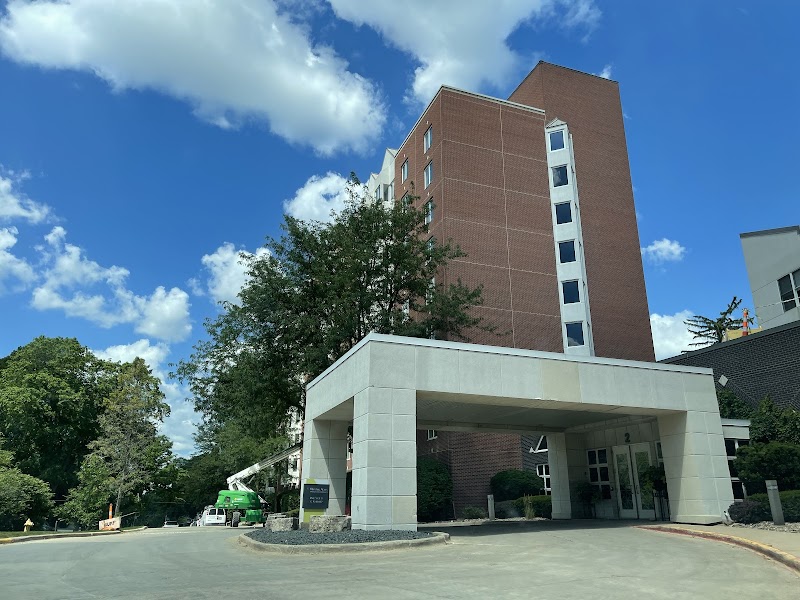

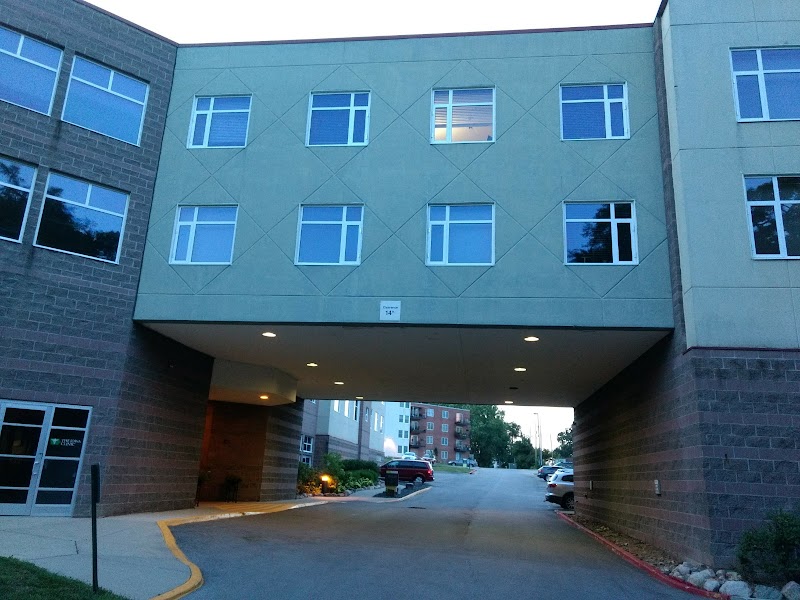

Wesley on Grand

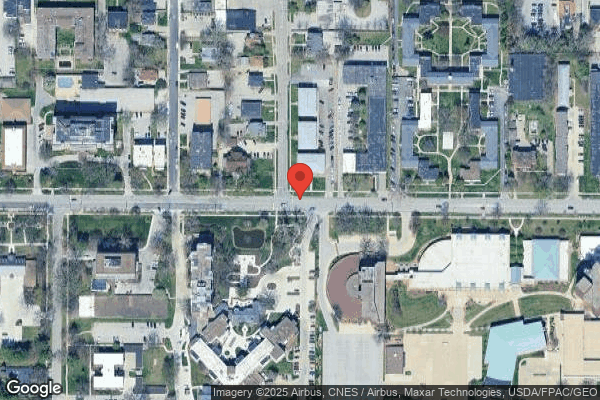
3520 GRAND AVENUE, DES MOINES, IA 50312 (515) 271-6500
Non profit - Corporation 80 Beds WESLEYLIFE Data: November 2025
Trust Grade
90/100
#82 of 392 in IA
Last Inspection: June 2025

Inspected within the last 6 months. Data reflects current conditions.

Overview

Wesley on Grand in Des Moines, Iowa, has received a Trust Grade of A, indicating that it is an excellent facility and highly recommended. It ranks #82 out of 392 nursing homes in Iowa, placing it in the top half, and is #8 out of 29 in Polk County, meaning only seven local facilities are rated higher. The facility is showing improvement, having reduced its issues from four in 2023 to just one in 2025. Staffing is a strong point, with a perfect 5-star rating and a turnover rate of 42%, which is slightly below the state average. However, there are some concerns; recent inspections revealed that staff failed to follow proper hygiene protocols, such as not performing hand hygiene after handling soiled linens and serving food without ensuring sanitary conditions. Additionally, there was an incident involving a resident's care plan not being followed regarding a gastrostomy tube, which could have serious implications for their health. Overall, while there are notable strengths in staffing and improvement trends, families should be aware of the recent compliance issues.

Trust Score
A
90/100
In Iowa
#82/392
Top 20%
Safety Record
Low Risk
No red flags
Inspections
Getting Better
4 → 1 violations
Staff Stability
○ Average
42% turnover. Near Iowa's 48% average. Typical for the industry.
Penalties
✓ Good
No fines on record. Clean compliance history, better than most Iowa facilities.
Skilled Nurses
✓ Good
Each resident gets 55 minutes of Registered Nurse (RN) attention daily — more than average for Iowa. RNs are trained to catch health problems early.
Violations
✓ Good
Only 5 deficiencies on record. Cleaner than most facilities. Minor issues only.
★★★★★
5.0
Overall Rating
★★★★★
5.0
Staff Levels
★★★☆☆
3.0
Care Quality
★★★★☆
4.0
Inspection Score
Stable
2023: 4 issues
2025: 1 issues

The Good

  • 5-Star Staffing Rating · Excellent nurse staffing levels
  • Full Sprinkler Coverage · Fire safety systems throughout facility
  • No fines on record
  • Staff turnover below average (42%)

    6 points below Iowa average of 48%

Facility shows strength in staffing levels, fire safety.

The Bad

Staff Turnover: 42%

Near Iowa avg (46%)

Typical for the industry

Chain: WESLEYLIFE

Part of a multi-facility chain

Ask about local staffing decisions and management

The Ugly 5 deficiencies on record

Jun 2025 1 deficiency
CONCERN (E)

Potential for Harm - no one hurt, but risky conditions existed

Food Safety (Tag F0812)

Could have caused harm · This affected multiple residents

Based on observations, staff interview, and policy review the facility failed to serve food under sanitary conditions to prevent foodborne illness during one of one meal observed. Facility staff also ...

Read full inspector narrative →
Based on observations, staff interview, and policy review the facility failed to serve food under sanitary conditions to prevent foodborne illness during one of one meal observed. Facility staff also failed to conceal hair completely in a hairnet to prevent foodborne illness. The facility reported a census of 73 residents. Findings include: Observations revealed the following: a. On 6/11/25 with lunch service starting at 11:25 AM, Staff A, Dietary Aide (DA) carried a glass of juice with her hand over the top of the glass, her fingers touching the rim of the glass and served the juice to a resident. Staff A continued to carry and serve glasses of fluids to the residents with her hand over the top of the glass. b. On 6/11/25 with lunch service starting at 11:25 AM, Staff B, DA carried a glass of milk with her hand over the top of the glass, her fingers touching the rim of the glass and served the milk to a resident. Staff B continued to carry and serve glasses of fluids to the residents with her hand over the top of the glass. c. On 6/11/25 during the lunch service, the Hospitality Manager, without a hair net on, was in the food service area behind the service line, and stood beside the steam table above the food and assisted Staff C, DA with checking the meat temperature with a thermometer. d. On 6/11/25 with lunch service starting at 11:25 AM, Staff C applied gloves, opened a package of buns, touching the outside of the package with her gloved hands, removed a bun from the package, and proceeded to touch tongs with her gloved hands and then touch the bun again with the same gloved hands. Staff C then proceeded with the same gloves on and touched a paper menu slip and then proceeded to remove another bun from the package, applied meat, lettuce, onion, tomato to the bun with tongs, touched a scoop, the counter top, paper, and then held the bun with the same gloved hands to cut the sandwich in half. Staff C continued throughout meal service to remove gloves, apply new gloves, remove a bun from the package, touch scoop and ladle handles, papers, plates, microwave handle, and then touch the bun with the same gloves. e. On 6/11/25 during the lunch meal service, Staff C removed a bun from the package with her bare hand and placed the bun on a plate. Staff C then proceeded to apply gloves, opened and poured a can of soup into a bowl, placed the bowl in the microwave, and continued with same the gloves to get a slice of bread and cheese and place them on the griddle. On 6/12/25 at 11:00 AM, the Director of Dining stated his expectations for staff included the following; 1. Staff are to wear hairnets in food prep areas of the kitchen and behind the service line 2. Staff are to not touch the tops of glasses when serving the residents 3. Staff are to use gloves for a one time use when serving ready to eat food. Facility policy Hair Restraint and [NAME] Guard Policy revised 10/24, directed staff as follows; hairnets are to be worn by all cooks and anyone handling food in our kitchens, household kitchens and healthcare, and any pony tails need to be tied back and contained in the hairnet. Facility policy Disposable Glove Usage undated, revealed when serving in the Health Center use utensils in place of gloves and food handlers must change gloves when moving from one task to another and before handling ready-to-eat food.
Apr 2023 3 deficiencies
CONCERN (D)

Potential for Harm - no one hurt, but risky conditions existed

Deficiency F0658 (Tag F0658)

Could have caused harm · This affected 1 resident

**NOTE- TERMS IN BRACKETS HAVE BEEN EDITED TO PROTECT CONFIDENTIALITY** Based on observation, clinical record review, policy review, and staff interview the facility failed to follow physician orders ...

Read full inspector narrative →
**NOTE- TERMS IN BRACKETS HAVE BEEN EDITED TO PROTECT CONFIDENTIALITY** Based on observation, clinical record review, policy review, and staff interview the facility failed to follow physician orders for a gastrostomy tube (g-tube)(a g-tube is an opening into the stomach from the abdominal wall, made surgically for a tube for the introduction of food via a feeding tube) flush for 1 of 1 residents reviewed for care of a g-tube (Resident #71). The Facility identified a census of 75 residents. Findings include: The Minimum Data Set (MDS) assessment dated [DATE] for Resident #71 showed a Brief Interview for Mental Status (BIMS) score of 9 indicating moderate cognitive loss. The MDS included diagnoses of cancer, diabetes mellitus, cerebrovascular accident (stroke) with hemiplegia (paralysis on one side of the body), and malnutrition. The Resident exhibited coughing/choking during meals and utilized a feeding tube requiring 51 percent (%) or more of total calories through the tube and 501 cubic centimeters (cc's) of fluids through the feeding tube. A Physician Order signed by the provider on 4/12/23 documented Resident #71 had recent urinary tract infection and a very dry oral cavity. The Registered Dietician recommended to increase water flushes (per the feeding tube) to 180 milliliters (ml's) pre and post bolus (a way to send fluid through the g-tube using a syringe) six times a day total to provide 2200 ml of fluid daily. The physician agreed and ordered the increased fluid bolus. On 4/19/23 at 12:36 p.m. Staff A, Registered Nurse RN reported he planned to disconnect Resident #71's g-tube and flush the g-tube with 30 cc of water since the Resident had completed the feeding. During an observation on 4/18/23 at 12:44 p.m. Staff A filled a graduate dated 4/18/23 with water and placed two large syringes in the graduate. Staff A took the graduate of water to the bedside and disconnected the feeding tube with 3/4 of the tubing still full of Osmolite formula. Staff A drew up 30 cubic centimeters (cc's) of water into the syringe, connected the syringe to the feeding tube and flushed the g-tube with the 30 cc's of water. Staff A returned to the medication cart at 12:51 p.m. He reported Resident #71 did not receive any medication and the water flush had been the post feeding flush. Staff A pulled up the current electronic health record to review the order. The April 2023 Electronic Medication Administration Record (EMAR) showed the following physician orders: a. Flush the g-tube with 180 ml water before and after each feeding three times a day for nutrition. Start date 4/13/23. b. Flush the g-tube with 30 ml of water before and after each medication administration. Start date 3/22/23. four times a day for g-tube care On 4/19/23 at 10:25 a.m. Staff A reported the EMAR had populated the 30 cc flush regarding g-tube care when he checked the EMAR prior to going in to disconnect Resident #71's g-tube feeding. He had pulled up the EMAR to check the orders and reported he should have administered the 180 cc of water down the g-tube after the feeding. He stated the physician orders should be separated on the EMAR. It could result in a potential medication error. During an interview on 4/19/23 at 10:30 a.m. Staff B Assistant Director of Nursing (ADON) reported the 30 cc water flush for the g-tube is before and after each medication pass. The 180 cc water flush for the g-tube should be done before and after the g-tube feeding. An interview completed on 4/19/23 at 10:34 a.m. with the Corporate Clinical Quality Specialist revealed Resident #71 should have gotten 180 cc's of water before and after the g-tube feeding. She stated the physician order is not entered into the EMAR system correctly. She reported they would get it fixed. On 4/19/23 at 1:45 p.m. the Corporate Clinical Quality Specialist reported the facility did not have a policy on following physician orders. The facility had policies pertaining to navigating physician orders in the electronic health record. During an interview on 4/19/23 at 3:04 p.m. the Director of Nursing (DON) reported he expected the nurses to follow the physician orders. He stated they need to address how physician orders are put into the Electronic Health Record (E.H.R.) computer system.
CONCERN (D)

Potential for Harm - no one hurt, but risky conditions existed

Deficiency F0807 (Tag F0807)

Could have caused harm · This affected 1 resident

Based on Clinical record review, observation, resident and staff interview, the facility failed to provide fresh water to meet resident needs and preferences for 1 of 1 residents reviewed for hydratio...

Read full inspector narrative →
Based on Clinical record review, observation, resident and staff interview, the facility failed to provide fresh water to meet resident needs and preferences for 1 of 1 residents reviewed for hydration (Resident #19). The facility reported a census of 75 residents. Findings include: Physician order on 4/17/23 documented a diet change for Resident #19 to honey thick liquids. During an interview on 4/17/23 at 3:42 p.m. Resident #19 reported that he doesn't always get fresh water passed to him in his room. Resident currently had no glass of water his room. Observation on 4/18/23 at 8:22 a.m. revealed a glass of thickened water 1/4 full on Resident #19 bedside table. On 4/18/23 at 11:56 a.m. Resident #19 reported that the water on the bedside table is the water that staff brought in last night. Staff had not delivered water to his room yet this morning. The Resident reported he had asked staff to bring in fresh water but had not received any. Observation revealed the glass of thickened water 1/4 full remained on the bedside table. Observation on 4/18/23 at 2:37 p.m. showed staff passed ice water to resident rooms but did not pass water in Resident #19 room. During an interview on 4/18/23 at 3:30 p.m. with Staff C, Certified Nurse Assistant (CNA) reported that the water had been passed for the shift. Resident #19 reported on 4/19/23 at 7:57 a.m. that he did not get fresh water passed to him in his room. Third shift had brought in water during the night. Observed a full glass of thickened water on the bedside table. An interview on 4/19/23 at 10:08 a.m. with the Director of Nursing (DON) reported that the expectation of staff is to pass water at least once each shift to resident rooms. The DON reported that the facility did not have a policy for hydration or water pass. On 4/19/23 at 10:18 a.m. the Administrator reported that the expectation of staff is to pass water at least once a shift to all residents.
CONCERN (E)

Potential for Harm - no one hurt, but risky conditions existed

Infection Control (Tag F0880)

Could have caused harm · This affected multiple residents

**NOTE- TERMS IN BRACKETS HAVE BEEN EDITED TO PROTECT CONFIDENTIALITY** Based on clinical record review, observation, facility policy review, Center for Disease Control and Prevention (CDC) guidance, ...

Read full inspector narrative →
**NOTE- TERMS IN BRACKETS HAVE BEEN EDITED TO PROTECT CONFIDENTIALITY** Based on clinical record review, observation, facility policy review, Center for Disease Control and Prevention (CDC) guidance, and staff interview the facility staff failed to remove gloves and perform hand hygiene after handling soiled linens resulting in potential cross contamination; failed to apply and remove personal protective equipment (PPE) before and after entering a COVID positive room to prevent the spread of COVID-19 for 1 of 1 residents reviewed for COVID 19 care (Resident # 59); failed to correctly wear face masks as required for community transmission rate of COVID 19; failed to appropriately sanitize blood sugar meters for 1 of 2 residents (Resident #71) observed and failed to utilize clean barriers during dressing changes of 1 of 3 resident reviewed for wound care to prevent potential cross contamination of infection (Resident #70). The facility identified a census of 75 residents. Findings include: 1. During an observation on 4/18/23 at 8:12 a.m. Staff D, Housekeeping, observed going from room to room down the hallway wearing the same gloves to collect dirty laundry. Staff D wearing the same soiled gloves then punched in the code on the door to get into the [NAME] center. On 4/19/23 at 12:22 p.m. observation revealed Staff E, certified Nurse assistant (CNA) delivered a lunch meal into Resident #59's COVID isolation room. Staff E applied clean gloves and proceeded into the room wearing a medical mask and goggles. Staff E failed to don a gown and change to a National Institute for Occupational Safety and Health (NIOSH) 95 (N95) mask (a type of disposable respirator that forms a tight seal to the face, removing particles from the air) before entering the COVID isolation room. At 12:24 p.m. Staff E came out of the room, sanitized hands and failed to sanitize his goggles and remove the medical mask before proceeding down the hallway. Staff E reported that they follow the signs posted on the resident room door that defines donning and doffing of PPE. Staff E reported he didn ' t change his mask or sanitize the goggles he had been wearing when he left Resident #59's room. Staff E reported he had been trained to sanitize the goggles using an alcohol wipe. During an interview on 4/19/23 at 2:12 p.m. the Director of Nursing (DON) reported no shortage of PPE supplies for the building. He verbalized cloth mask are not to be worn by staff. The masks provided by facility are the masks staff should be wearing. Interview with Staff B, Assisted Director of Nursing (ADON) on 4/19/23 at 2:24 p.m. reported the facility did not have a shortage of PPE supply and cloth masks should not be worn by the staff. On 4/19/23 at 3:45 p.m. Staff F, CNA, reported the staff would follow the instructions on the door for using PPE entering in and out of an isolation room. Staff F verbalized she had received PPE training in her first month of working. Staff G, LPN reported on 4/19/23 at 3:49 PM that staff received on-line training and several audits throughout the past year on PPE for isolation rooms. The CDC Use of PPE When Caring for Patients with Confirmed or Suspected COVID-19 directed the following: a. PPE must be donned correctly before entering the patient area (e.g., isolation room). b. PPE must remain in place and be worn correctly for the duration of work in potentially contaminated areas. PPE should not be adjusted during patient care. c. PPE must be removed slowly and deliberately in a sequence that prevents self-contamination. A step-by-step process should be developed and used during training and patient care. Preferred PPE use includes: a. Face shield or goggles b. N95 mask or higher respirator c. One pair of clean, non-sterile gloves d. Isolation gown. The Guidance directs under Donning (putting on the gear): a. Perform hand hygiene b. Put on an isolation gown. c. Put on a NIOSH-approved N95 facepiece or respirator. d. Put on face shield or goggles. e. Put on gloves. The CDC Guidance directs under Doffing (taking off the gear): a. Remove gloves. b. Remove gown c. HCP may exit the patient room. d. Perform hand hygiene e. Remove the face shield or goggles. f. Remove or discard the N95 mask. g. Perform hand hygiene after removing the N95 mask. The CDC Interim Infection Prevention and Control Recommendations for Healthcare Personnel During the Coronavirus Disease 2019 (COVID-19) Pandemic, dated September 27, 2022, provided the following guidance under Personal Protective Equipment: 1. Health Care Personnel (HCP) who enter the room of a patient with suspected or confirmed Severe Acute Respiratory Syndrome (SARS)-COVID 19 infection should adhere to Standard Precautions (Universal Precautions) and use a NIOSH-approved particulate respirator with N95 filters or higher, gown, gloves, and eye protection (i.e., goggles or a face shield that covers the front and sides of the face). 2. Universal precautions are intended to prevent parenteral, mucous membrane, and non-intact skin exposures of health-care workers to blood-borne pathogens. 2. During an observation on 4/19/23 from 11:10 AM to 12:51 PM Staff H, Food and Beverage Assistant, Staff I, Food and Beverage Assistant, and Staff K, Food and Beverage Assistant were wearing surgical masks below their nose. Each person was taking food from the serving table to residents at the dining table. During the same observation, Staff J, Food and Beverage Assistant, was wearing a cloth mask while plating resident meals. Further observation revealed 1 set of mask strings for the cloth mask. There was no evidence she was wearing an additional mask under the cloth mask. During an interview at 12:51 PM, Staff J confirmed she was wearing a cloth mask. She confirmed she was not wearing an addition mask under the cloth mask. 3. The MDS assessment dated [DATE] for Resident #71 showed a Brief Interview for Mental Status (BIMS) score of 09 indicating moderate cognitive loss. The Minimum Data Set (MDS) listed diagnosis of diabetes mellitus and documented the Resident received insulin injections. During an observation on 4/18/23 at 12:37 p.m. Staff A Registered Nurse (RN) reported he planned to check Resident #71's blood sugar and give his insulin. Staff A performed hand hygiene, gathered the Premier Proview blood sugar meter (a device for measuring the concentration of glucose in the blood, typically using a small drop of blood placed on a disposable test strip) and supplies and entered the Resident's room. Staff A cleansed the Resident's finger with alcohol, then switched positions and laid the blood glucose meter down on the bedside table without a barrier. The bedside table had a box of Kleenex, television remote, eyeglasses, CPAP (continuous positive airway pressure - is a machine that uses mild air pressure to keep breathing airways open during sleep) and a bottle of orange soda pop. The table had a 1 inch by approximately 0.5 inch sticky substance toward the middle of the table. After Staff A performed the blood sugar check, then returned to the medication cart. He applied Spectrum 70% alcohol hand sanitizer to a piece of 2 inch by 2 inch gauze and wiped the blood sugar meter with the gauze to clean then placed the meter back in the case and placed it into the medication cart. On 4/18/23 at 12:51 P.M. Staff A reported the facility had one blood sugar meter that is used for all residents on skilled care. They sanitize the meter between residents. If the resident is a long stay resident, then the resident has their own blood sugar meter. The residents on short term skilled care all use the same blood sugar meter. A review of the Electronic Health Record (E.H.R.) Census on 4/18/23 showed Resident #71 on Medicare A skilled services. During an observation on 4/19/23 at 8:05 a.m. Staff A completed a blood sugar check for Resident #71. Staff A returned to the medication cart carrying the blood sugar meter in his left gloved hand. He placed Spectrum 70% alcohol hand sanitizer on a 2 x 2 inch gauze and proceed to wipe the meter with the gauze using the same gloves that he performed the blood sugar check with. He then placed the meter into the storage case and into the medication cart. On 4/19/23 at 10:22 a.m. Staff A verbalized he did not receive any instruction on cleaning the blood glucose meter. Generally, they use whatever disinfecting wipe or cleaning agent they have available. He reported he had cleaned the meter with the hand sanitizer. During an interview on 4/19/23 at 1:45 p.m. the Corporate Clinical Nurse Specialist reported the expectation is nurses would disinfect the blood glucose meter using an approved disinfectant. During an interview on 4/19/23 at 3:04 p.m. the Director of Nursing (DON) reported he would expect the staff to follow the facility policy for disinfecting the blood sugar meter. The Blood Sugar Monitoring Policy, revised 6/2016, provided by the facility, directed the staff to follow the manufacturer's directions for the equipment used in the facility. The EvenCare Proview Manufacturer's Directions for use documented the following: 1. Glucose meters used in a clinical setting for testing multiple persons must be cleaned and disinfected between patients. 2. Cleaning is the removal of visible dirt and debris. Whenever the glucose meter is dirty, clean the outside of the meter with a new Cavi Wipes Towelette or an Environmental Protection Agency (EPA) registered disinfecting wipe. The Cleaning process does not reduce the risk of transmission of infectious diseases. 3. The meter must be disinfected between patient uses by wiping it with a Cavi Wipe towelette or an EPA registered disinfecting wipe between tests and be cleaned prior to disinfecting. The disinfection process reduces the risk of transmitting infectious diseases if it is performed properly. 4. Disinfection Instructions: a. Before disinfecting, clean the meter. b. Wash hands with soap and water. Put on single-use medical protective gloves. c. Prepare the Cavi Wipes towelette or other EPA registered disinfecting wipe. d. Wipe the glucose meter thoroughly including the front, back and sides, taking care not to get any liquid in the test strip port and serial port. Do not wrap the meter in a wipe. e. If using the Cavi Wipes Towelette, allow to remain wet for two minutes. For other EPA registered disinfecting wipes, allow the surface of the meter to remain wet for the contact time listed on the disinfecting wipe's instructions for use. Dispose of the wipe when finished. f. After disinfection, the user should take off the gloves and wash their hands thoroughly with soap and water before proceeding to the next patient. The Center for Disease Control and Prevention (CDC) Infection Prevention during Blood Glucose Monitoring and Insulin Administration. (2011 March 2) retrieved from https://www.cdc.gov/injectionsafety/blood-glucose-monitoring.html documented the following: 1. The CDC has become increasingly concerned about the risks for transmitting Hepatitis B Virus (HBV- a serious liver infection) and other infectious diseases during assisted blood glucose (blood sugar) monitoring and insulin administration. The CDC is alerting all persons who assist others with blood glucose monitoring and/or insulin administration of the following infection control requirements: a. Fingerstick devices should never be used for more than one person b. Whenever possible, blood glucose meters should not be shared. If they must be shared, the device should be cleaned and disinfected after every use, per manufacturer's instructions. Unsafe practices during assisted monitoring of blood glucose and insulin administration that have contributed to transmission of HBV or have put persons at risk for infection include: a. Using a blood glucose meter for more than one person without cleaning and disinfecting it in between uses. Blood glucose meters are devices that measure blood glucose levels. a. Whenever possible, blood glucose meters should be assigned to an individual person and not be shared. b. If blood glucose meters must be shared, the device should be cleaned and disinfected after every use, per manufacturer's instructions, to prevent carry-over of blood and infectious agents. If the manufacturer does not specify how the device should be cleaned and disinfected then it should not be shared. 4. The MDS assessment dated [DATE] for Resident #70 showed BIMS score of 13 indicating intact cognition. The Resident required extensive assistance with transfer, bed mobility, toilet use, dressing, and personal hygiene. The MDS listed a diagnosis of stroke with hemiplegia (paralysis on one side of the body). The Resident exhibited a stage 3 pressure ulcer (a wound that develops from pressure to the skin and has a crater-like appearance due to damage below the skin's surface) and utilized a pressure reducing mattress for bed, pressure reducing cushion for the chair, nutrition/hydration interventions, and received pressure ulcer care. The Wound Treatment Plan Note dated 4/13/23 signed by the provider documented a physician order to continue the current treatment to cleanse the wound with normal saline, skin prep to the periwound, apply Santyl ointment to the wound bed (nickel thick layer), apply calcium alginate over Santyl, cover with a silicone super absorbent dressing. Change the dressing daily on Monday thru Friday and as needed. The April 2023 Treatment Administration Record (TAR) documented the following physician ordered treatments: a. Santyl ointment 250 grams apply a nickel thick layer topically to the wound bed of the pressure ulcer on the right foot daily on Mondays, Tuesdays, Wednesdays, Thursdays and Fridays. Start date 3/30/23. b. Treatment to the right lateral foot: 1. Cleanse the wound with normal saline 2. Apply skin prep around the peri wound (skin edge surrounding the wound) 3. Apply Santyl ointment to the wound bed in a nickel thick layer 4. Apply a calcium alginate dressing over the Santyl ointment 5. Cover with super a silicone absorbent dressing. Change dressing daily Monday thru Friday and as needed. Start date 4/07/2023 c. Apply compression stockings on in morning, off at bedtime two times a day for fluid retention -Start date 12/08/2022 On 4/18/23 at 12:35 p.m. Resident #70 sat in the wheelchair with his right leg supported wearing gripper booties and leg wraps on the lower right leg and foot per the physician orders. On 4/19/23 at 7:48 a.m. Resident #70 sat in the wheelchair wearing gripper socks to bilateral feet and compression wraps to the right lower leg and foot per the physician orders. The Resident exhibited moderate edema to the right lower extremity. During an observation on 4/19/23 at 11:06 a.m. Staff A gathered wound dressing supplies in a plastic zip lock bag and placed the bag of dressing on top of the laptop keyboard and proceeded carrying the dressing on top of the laptop keyboard down to Resident #70's room. Once in the room Staff A sat the laptop, bag of dressing supplies, and scissors directly onto the seat of the room chair without a barrier. Staff A proceeded to remove the leg wraps from the Resident's lower right leg and foot. He placed the wraps on the lower end of the resident's bed. Staff A washed his hands, donned gloves, then moved the dressing supplies and scissors over on top of the Resident's bed without a clean barrier underneath the supplies. Staff A cleansed the small circular pressure injury wound to the right outer foot with normal saline in a circular motion, then repeated the process a second time. Staff A washed his hands, donned gloves and touched the plastic bag to open the bag and remove a tube of Santyl ointment. He then opened the Santyl ointment and using the same gloves placed a dime size of the ointment onto the fingertip of the glove and applied the Santyl ointment from the glove directly into the wound bed. Staff A cleansed the scissors with an alcohol prep pad, opened the calcium alginate dressing and cut to size. He then laid the scissors down on top of the leg wraps. He applied the skin prep to the outer peri wound edge, then placed the calcium alginate dressing over the Santyl ointment in the wound. Staff A then picked up the scissors and trimmed the edge of the calcium alginate dressing that lay directly in the wound. Staff A finished dressing the wound, doffed his gloves and washed his hands. During an interview on 4/19/23 at 11:30 a.m. Staff A reported he had not received any special training on performing wound care dressings by the facility. During an interview on 4/19/23 at 3:13 p.m. the DON reported he expects the nurses to use a barrier under dressing supplies and expects the nurses to change gloves appropriately to apply the medication into the wound. He stated the nurses should not potentially cross contaminate a wound. The Dressing Change (Clean) Policy, revised 7/2016, provided by the facility, defined a purpose to protect the wound, prevent irritation, prevent infection and spread of infection, and to promote healing. The Procedure under #2 directed to create a clean field with paper towels or a paper towel drape. The Procedure under #12 directed to apply the prescribed medication, if ordered, with a no touch technique (cotton swab, gauze, or tongue depressor). The CDC Core Infection Prevention and Control Practices for Safe Healthcare Delivery in All Settings (2022 November 29). Retrieved from https://www.cdc.gov/infectioncontrol/guidelines/core-practices/index.html?CDC_AA_refVal=https%3A%2F%2Fwww.cdc.gov%2Fhicpac%2Fcore-practices.html provided the following guidance under Reprocessing of Reusable Medical Equipment: a. Maintain separation between clean and soiled equipment to prevent cross contamination.
Jan 2023 1 deficiency
CONCERN (D) 📢 Someone Reported This

A family member, employee, or ombudsman was alarmed enough to file a formal complaint

Potential for Harm - no one hurt, but risky conditions existed

Accident Prevention (Tag F0689)

Could have caused harm · This affected 1 resident

**NOTE- TERMS IN BRACKETS HAVE BEEN EDITED TO PROTECT CONFIDENTIALITY** Based on clinical record review, observation and staff interviews, the facility failed to provide sufficient nursing supervision...

Read full inspector narrative →
**NOTE- TERMS IN BRACKETS HAVE BEEN EDITED TO PROTECT CONFIDENTIALITY** Based on clinical record review, observation and staff interviews, the facility failed to provide sufficient nursing supervision to prevent a resident from falling out of bed during the provision of incontinence care for one of six residents reviewed (Resident #1). The facility reported a census of 73 current residents. Findings include: According to the Minimum Data Set (MDS) assessment dated [DATE], Resident #1 ' s diagnoses included high blood pressure, malnutrition, arthropathy, osteoporosis, and anticoagulant use. The assessment recorded that she had a Brief Interview for Mental Status (BIMS) score of two, indicating severe memory and cognitive impairment. The MDS documented that Resident #1 required the assistance of two staff with bed mobility, transfers, dressing, and personal hygiene. The resident always experienced incontinence of both bowel and bladder. Resident #1's Care Plan, revised on 5/18/22, documented that she required assistance with activities of daily living (ADLs) due to osteoarthritis, reduced mobility, dysphagia (difficulty swallowing), incontinence and confusion. The Care Plan instructed staff to provide the assistance of two staff with bed mobility and the assistance of one to two with personal hygiene. The Witnessed Fall Incident Report dated 7/29/22 at 2 PM and authored by Staff A, Licensed Practical Nurse (LPN) documented that while being changed in bed by a Certified Nursing Assistant (CNA), Resident #1 rolled out of bed and onto the floor. The CNA identifiedthat the resident fell to the floor head first. Staff A noted Resident #1 laid on her right side and screamed to be back in her bed. Staff A assessed the resident who did not complain of pain to her right leg or hip and had full range of motion to her leg. Staff A documented a hematoma (bruise) started to form on the resident's right forehead. Staff A initiated neurological checks, the resident acted like her normal self and staff assisted her back to bed with a Hoyer (total body) lift. Resident #1 had been incontinent of a bowel movement. The CNA then finished completing peri([NAME]) care with another staff member on the other side of the resident this time. The incident report documented that Staff B, CNA, witnessed the incident. An Incident Noted dated 7/29/22 at 2:47 PM and authored by Staff A documented the information in the Incident Report and also that she placed a call to the physician and the resident's daughter, who requested that Resident #1 be sent to the emergency room (ER) for evaluation. At 4 PM, Resident #1 left the facility and at 4:16 PM, the physician okayed the resident to be evaluated in the ER. The ER Provider Note dated 7/29/22 documented Resident #1 presented by ambulance for a fall. She presented with an abrasion to her head. The ER Summary of Care dated 7/30/22 at 4:28 AM documented X-rays and CT (computerized tomography) diagnostic testing did not reveal an acute injury. The Incident Report post follow up dated 7/30/22 at 4:34 AM documented that Resident #1 returned from the ER accompanied by paramedics. She had an abrasion from the fall on her forehead. Interview on 1/3/23 at noon with Staff B revealed she'd worked as a CNA at the facility a little over a year; her first job as a CNA. Staff B stated Resident #1 could be difficult to take care of and would fight when she needed to be changed. If Resident #1 fights during care, Staff B stated she'd pause and wait until the resident calmed down and then she resumed care. Staff B stated if they make cares short, it goes better. Staff B stated that on 7/29/22, the resident's bed was against the window and there was a gap for a second CNA to go to. Now, her bed is against the wall. At the end of the shift, she and another CNA assisted Resident #1 by a Hoyer lift into bed. The helping CNA left the room and Staff B changed the resident after incontinence per her normal. That day, Resident #1 was wide awake and fighting. At one point she hit Staff B, so she paused and stepped back a bit. The resident calmed so she resumed care. Then Resident #1 pushed against Staff B (which was very unusual) and fell out of bed. The resident fell head first and then her body followed; she was lying on her right side. During a re-enactment of the incident, Staff B described that the resident had her head to the right of the bed with the bed in front of the window and a gap between the bed and window measuring approximately 12 - 18 inches. The resident fell into the gap by the window while the bed was raised about 36 inches off the floor. The resident swung her arm back repeatedly during care, hitting at her. Staff B stated the resident can roll with one, but they should use two (then and now). Sometimes there's a lot of work to be done and not enough staff, so the staff use one to roll her instead. Interview on 1/3/23 at 1:23 PM with Staff C, CNA, revealed she worked often with Resident #1. The resident doesn't like incontinence care, or washing her hands or face. The resident will fight the staff. If there's a second aide on the hall, they use two staff to work with Resident #1 but she still fights. Staff C stated she'd been doing this job for awhile, so she works with the resident alone and that's hard. Two staff members are better. Interview on 1/3/23 at 2:36 PM with Staff D, CNA, revealed that she worked with Resident #1. Some days the resident is manic and up all night, trying to climb out of bed. Then she'll sleep for a few days. Resident #1 is combative with peri care and that's challenging because she has frequent bowel movements and is prone to urinary tract infections. If the resident was feisty, Staff D stated she gets another staff member to help. Staff D stated the resident's bed mobility requires the assistance of one. If the resident was in a good mood, staff can help her with one. They definitely should use two staff if she's fighting. Interview on 1/4/23 at 10:53 AM with Staff A revealed that in the afternoon on 7/29/22, Staff B came to get her and reported she was changing Resident #1 and the resident rolled out of bed and onto the floor. The resident was screaming when they got there, not in pain but saying 'get me up'. The bed was near the window, Resident #1 was in between the bed and window on her right side. The resident had no complaints of pain, so they used the Hoyer to get her back to bed, called her family, the doctor then she transferred out. The resident had a bruise but no other injury. Staff B recalled checking the resident's Care Plan and she could roll with one. If the resident was combative during care, staff should get another staff member to help.
Understanding Severity Codes (click to expand)
Life-Threatening (Immediate Jeopardy)
J - Isolated K - Pattern L - Widespread
Actual Harm
G - Isolated H - Pattern I - Widespread
Potential for Harm
D - Isolated E - Pattern F - Widespread
No Harm (Minor)
A - Isolated B - Pattern C - Widespread

Questions to Ask on Your Visit

  • "Can I speak with families of current residents?"
  • "What's your RN coverage like on weekends and overnight?"

Our Honest Assessment

Strengths
  • • Grade A (90/100). Above average facility, better than most options in Iowa.
  • • No major safety red flags. No abuse findings, life-threatening violations, or SFF status.
  • • No fines on record. Clean compliance history, better than most Iowa facilities.
  • • Only 5 deficiencies on record. Cleaner than most facilities. Minor issues only.
Concerns
  • • No significant concerns identified. This facility shows no red flags across CMS ratings, staff turnover, or federal penalties.
Bottom line: Generally positive indicators. Standard due diligence and a personal visit recommended.

About This Facility

What is Wesley On Grand's CMS Rating?

CMS assigns Wesley on Grand an overall rating of 5 out of 5 stars, which is considered much above average nationally. Within Iowa, this rating places the facility higher than 99% of the state's 100 nursing homes. This rating reflects solid performance across the metrics CMS uses to evaluate nursing home quality.

How is Wesley On Grand Staffed?

CMS rates Wesley on Grand's staffing level at 5 out of 5 stars, which is much above average compared to other nursing homes. Staff turnover is 42%, compared to the Iowa average of 46%. This relatively stable workforce can support continuity of care.

What Have Inspectors Found at Wesley On Grand?

State health inspectors documented 5 deficiencies at Wesley on Grand during 2023 to 2025. These included: 5 with potential for harm.

Who Owns and Operates Wesley On Grand?

Wesley on Grand is owned by a non-profit organization. Non-profit facilities reinvest revenue into operations rather than distributing to shareholders. The facility is operated by WESLEYLIFE, a chain that manages multiple nursing homes. With 80 certified beds and approximately 74 residents (about 92% occupancy), it is a smaller facility located in DES MOINES, Iowa.

How Does Wesley On Grand Compare to Other Iowa Nursing Homes?

Compared to the 100 nursing homes in Iowa, Wesley on Grand's overall rating (5 stars) is above the state average of 3.1, staff turnover (42%) is near the state average of 46%, and health inspection rating (4 stars) is above the national benchmark.

What Should Families Ask When Visiting Wesley On Grand?

Based on this facility's data, families visiting should ask: "Can I visit during a mealtime to observe dining assistance and food quality?" "How do you handle medical emergencies, and what is your hospital transfer rate?" "Can I speak with family members of current residents about their experience?"

Is Wesley On Grand Safe?

Based on CMS inspection data, Wesley on Grand has a clean safety record: no substantiated abuse findings (meaning no confirmed cases of resident harm), no Immediate Jeopardy citations (the most serious violation level indicating risk of serious injury or death), and is not on the Special Focus Facility watch list (a federal program monitoring the lowest-performing 1% of nursing homes). The facility has a 5-star overall rating and ranks #1 of 100 nursing homes in Iowa. While no facility is perfect, families should still ask about staff-to-resident ratios and recent inspection results during their visit.

Do Nurses at Wesley On Grand Stick Around?

Wesley on Grand has a staff turnover rate of 42%, which is about average for Iowa nursing homes (state average: 46%). Moderate turnover is common in nursing homes, but families should still ask about staff tenure and how the facility maintains care continuity when employees leave.

Was Wesley On Grand Ever Fined?

Wesley on Grand has no federal fines on record. CMS issues fines when nursing homes fail to meet care standards or don't correct problems found during inspections. The absence of fines suggests the facility has either maintained compliance or corrected any issues before penalties were assessed. This is a positive indicator, though families should still review recent inspection reports for the full picture.

Is Wesley On Grand on Any Federal Watch List?

Wesley on Grand is not on any federal watch list. The most significant is the Special Focus Facility (SFF) program, which identifies the bottom 1% of nursing homes nationally based on persistent, serious quality problems. Not being on this list means the facility has avoided the pattern of deficiencies that triggers enhanced federal oversight. This is a positive indicator, though families should still review the facility's inspection history directly.