MercyOne Dyersville Senior Care
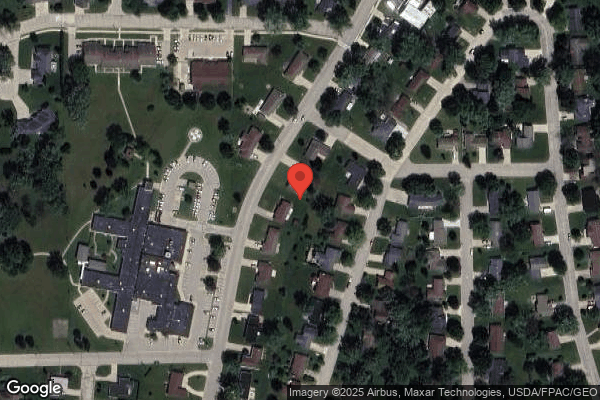
1111 THIRD STREET SW, DYERSVILLE, IA 52040 (563) 875-2921
Non profit - Corporation 40 Beds Independent Data: November 2025
Trust Grade
90/100
#47 of 392 in IA
Last Inspection: November 2024

Within standard 12-15 month inspection cycle. Federal law requires annual inspections.

Overview

MercyOne Dyersville Senior Care has received an A Trust Grade, indicating it is an excellent choice for families seeking care, as it is highly recommended. It ranks #47 out of 392 nursing homes in Iowa, placing it in the top half of facilities statewide, and #5 out of 12 in Dubuque County, meaning only four local homes are rated higher. However, the facility's trend is worsening, with the number of issues reported increasing from 2 in 2022 to 6 in 2024. Staffing is a strong point, achieving a perfect 5-star rating with a turnover rate of 38%, which is below the state average, and it has more RN coverage than 91% of Iowa facilities. While there have been no fines, recent inspections revealed concerns such as staff failing to maintain sanitary conditions during meal service and not wearing appropriate personal protective equipment when handling soiled laundry, indicating areas for improvement.

Trust Score
A
90/100
In Iowa
#47/392
Top 11%
Safety Record
Low Risk
No red flags
Inspections
Getting Worse
2 → 6 violations
Staff Stability
○ Average
38% turnover. Near Iowa's 48% average. Typical for the industry.
Penalties
✓ Good
No fines on record. Clean compliance history, better than most Iowa facilities.
Skilled Nurses
✓ Good
Each resident gets 72 minutes of Registered Nurse (RN) attention daily — more than 97% of Iowa nursing homes. RNs are the most trained staff who catch health problems before they become serious.
Violations
○ Average
8 deficiencies on record. Average for a facility this size. Mostly minor or procedural issues.
★★★★★
5.0
Overall Rating
★★★★★
5.0
Staff Levels
★★★☆☆
3.0
Care Quality
★★★★☆
4.0
Inspection Score
Stable
2022: 2 issues
2024: 6 issues

The Good

  • 5-Star Staffing Rating · Excellent nurse staffing levels
  • Full Sprinkler Coverage · Fire safety systems throughout facility
  • No fines on record
  • Staff turnover below average (38%)

    10 points below Iowa average of 48%

Facility shows strength in staffing levels, fire safety.

The Bad

Staff Turnover: 38%

Near Iowa avg (46%)

Typical for the industry

The Ugly 8 deficiencies on record

Nov 2024 1 deficiency
CONCERN (D)

Potential for Harm - no one hurt, but risky conditions existed

Infection Control (Tag F0880)

Could have caused harm · This affected 1 resident

Based on observation, staff interview, and policy review the facility failed to wear appropriate Personal Protective Equipment (PPE) when handling soiled laundry. The facility reported a census of 33 ...

Read full inspector narrative →
Based on observation, staff interview, and policy review the facility failed to wear appropriate Personal Protective Equipment (PPE) when handling soiled laundry. The facility reported a census of 33 residents. Findings include: In an observation on 11/04/24 at 11:18 AM the Environmental Services (EVS) Coordinator donned a pair of gloves and failed to put on a gown before she took soiled clothes out of the bin and placed them into the washer. The soiled clothes came into contact with her scrubs. Chemicals were placed in the tub and the washer was started. She then removed and discarded her gloves. In an interview on 11/04/24 at 11:08 AM the EVS Coordinator explained soiled laundry comes in from Senior Care in clear linen bags. They do personal items and all the curtains/room dividers here at the facility. Clothing gets sorted into the washing machines directly. She noted she wears only gloves when sorting, unless she has to rinse feces out. Then she wears a gown. In an interview on 11/06/24 at 10:24 AM the EVS Coordinator explained whenever they hire a new person she does three days of laundry training. She instructs staff to wear only gloves to grab soiled linens. She acknowledged she was not aware of the guidelines for PPE when handling dirty laundry, and noted the laundry policy was not thorough. The facility policy titled Laundry, undated failed to specify the appropriate PPE to be worn when sorting soiled laundry.
Jan 2024 5 deficiencies
CONCERN (D)

Potential for Harm - no one hurt, but risky conditions existed

MDS Data Transmission (Tag F0640)

Could have caused harm · This affected 1 resident

**NOTE- TERMS IN BRACKETS HAVE BEEN EDITED TO PROTECT CONFIDENTIALITY** Based on clinical record review, Center for Medicare and Medicaid Long-Term Care Facility Resident Assessment Instrument (RAI) 3...

Read full inspector narrative →
**NOTE- TERMS IN BRACKETS HAVE BEEN EDITED TO PROTECT CONFIDENTIALITY** Based on clinical record review, Center for Medicare and Medicaid Long-Term Care Facility Resident Assessment Instrument (RAI) 3.0 User's Manual review, and staff interview the facility failed to submit a MDS assessment within 14 days of the MDS completion date for 1 of 1 residents sampled for submission (Resident #28). The facility identified a census of 30 residents. Findings include: Resident #28's Minimum Data Set (MDS) assessment dated [DATE] showed a completion date of 11/06/23. An Electronic File Batch Report dated 1/09/23 provided by the MDS Coordinator documented Resident #28's quarterly 10/30/23 MDS as accepted into the data base on 1/09/24 at 9:53 AM. An Internet Quality Improvement and Evaluation System (iQIES) (an internet-based system that includes survey and certification functions) Report, MDS 3.0 Nursing Home (NH) Final Validation Report dated 11/13/23 9:30 AM documented 18 MDS records accepted to the data base with 2 rejected records. Resident #28's 10/30/23 quarterly MDS record was not included in the 20 records processed. An iQIES Report MDS 3.0 NH Final Validation Report dated 11/13/23 at 9:51 AM documented two records submitted into the data base. Resident #25's 10/30/23 quarterly MDS record was not included in the 2 records processed. An iQIES MDS 3.0 NH Validation Report dated 11/15/23 at 2:37 PM documented four records accepted into the data base and report on 11/28/23 at 6:02 AM documented 1 record accepted into the data base. Resident #25's 10/30/23 quarterly MDS was not included in the records. On 1/09/23 at 9:36 AM the MDS Coordinator reported she had not submitted Resident #28's MDS assessment until 1/09/24. She reported they had issues with submitting the assessments back in October 2023 for about three weeks, so the MDS was missed. The normal process is to completed the MDS, then lock and submit the MDS within a week of the MDS being completed. She reported she follows the RAI manual. During an interview on 1/09/23 at 1:44 PM the Director of Senior Care reported she expected the MDS Coordinator to follow the RAI manual and submit the MDS timely. The CMS Long-Term Care Facility Resident Assessment Instrument (RAI) 3.0 User's manual revised on October 2023 instructs MDS assessments must be submitted within 14 days of the MDS Completion Date.
CONCERN (D)

Potential for Harm - no one hurt, but risky conditions existed

Assessment Accuracy (Tag F0641)

Could have caused harm · This affected 1 resident

**NOTE- TERMS IN BRACKETS HAVE BEEN EDITED TO PROTECT CONFIDENTIALITY** 3. The MDS dated [DATE] documented Resident #29 received an antipsychotic medication and had an indication for use of the medica...

Read full inspector narrative →
**NOTE- TERMS IN BRACKETS HAVE BEEN EDITED TO PROTECT CONFIDENTIALITY** 3. The MDS dated [DATE] documented Resident #29 received an antipsychotic medication and had an indication for use of the medication. The MDS also documented the resident had not received an antianxiety medication. Review of the Physician Order Sheet and the MAR reveal the resident was not receiving an antipsychotic medication. The MDS did not have antianxiety medication or indication of use documented. Review of the Physician Order Sheet and MAR revealed Resident #29 was receiving an antianxiety medication and had an indication for its use. Based on clinical record review, Center for Medicare and Medicaid (CMS) Long-Term Care (LTC) Facility Resident Assessment Instrument (RAI) 3.0 User's Manual review, and staff interview, the facility failed to accurately code the Minimum Data Set (MDS) Assessment with diagnosis and medication classification for 3 of 3 residents sampled (Resident #5, #21 and #29). The facility identified a census of 30 residents. Finding include: 1. Resident #5's Urology Consultation Note dated 5/31/23 documented long-term use of an indwelling catheter (a catheter which is inserted into the bladder, via the urethra and remains in place to drain urine from the bladder) due to incomplete bladder emptying, likely secondary to neurogenic bladder. A Physician Order Sheet dated 10/23/23 documented a physician order for a 16 French, 5 cubic centimeter (cc) balloon, change monthly. The order had been on file since 6/16/23. The MDS assessment dated [DATE] showed a Brief Interview for Mental Status (BIMS) Score of 9 indicating moderate cognitive loss. The MDS documented the use of an indwelling catheter and total dependence upon staff for toileting. The MDS lacked a documented diagnosis for the use of the catheter. The December 2023 Medication Administration Record (MAR) documented Resident #5's indwelling urinary catheter had been changed on 12/20/23 per the physician order. On 1/09/24 at 9:46 AM the MDS Coordinator confirmed Resident #5 was utilizing an indwelling catheter and a diagnosis for the catheter had not been documented on the MDS. The MDS Coordinator reported she utilized the RAI (Resident Assessment Instrument Manual) for coding the MDS. The CMS LTC Facility RAI 3.0 User's Manual Version 1.18.11, Chapter 1, page 1-4 documents the RAI process has multiple regulatory requirements. Federal regulations at 42 Code of Federal Regulations 483.20 (b)(1)(xviii), (g), and (h) require that the assessment accurately reflects the resident's status. Chapter 3, Page I-1 documents to code diseases that have a direct relationship to the resident's current functional status, cognitive status, mood or behavior status, medical treatments, nursing monitoring, or risk of death. One of the important functions of the MDS assessment is to generate an updated, accurate picture of the resident's current health status. 2. Resident #21's Physician Order Sheet dated 10/09/23 documented a diagnosis of atrial fibrillation and the following physician orders: a. Continue Warfarin 4 milligrams (mg), give one tablet by mouth on Mondays and Fridays. b. Warfarin 5 mg, give one tablet by mouth on all other days. A Review of the October 2023 MAR revealed no use of antiplatelet medication. Resident #21's MDS assessment dated [DATE] showed a BIMS score of 6 indicating severe cognitive loss. The MDS documented a diagnosis of atrial fibrillation and use of anti-platelet medication. On 1/09/24 at 9:47 AM the MDS Coordinator verbalized if the resident is on an aspirin, she codes the use of an antiplatelet medication. She didn't know why she did not code the use of an anticoagulant medication correctly. She must have missed it. During an interview on 1/09/24 at 1:44 PM the Director of Senior Services reported she expected the MDS Coordinator to utilize the RAI manual to accurately code the MDS. The CMS LTC Facility RAI 3.0 User's Manual Version 1.18.11 October 2023, Chapter 3, page N-7 instructs to code all high-risk drug class medications according to their pharmacological classification which includes N0415E1 Anticoagulant (e.g., warfarin, heparin, or low-molecular weight heparin).
CONCERN (D)

Potential for Harm - no one hurt, but risky conditions existed

Deficiency F0757 (Tag F0757)

Could have caused harm · This affected 1 resident

**NOTE- TERMS IN BRACKETS HAVE BEEN EDITED TO PROTECT CONFIDENTIALITY** Based on clinical record review, document review, and staff interview, the facility failed to stop the use of unnecessary medica...

Read full inspector narrative →
**NOTE- TERMS IN BRACKETS HAVE BEEN EDITED TO PROTECT CONFIDENTIALITY** Based on clinical record review, document review, and staff interview, the facility failed to stop the use of unnecessary medication as ordered by the physician for 1 of 5 residents reviewed (Resident #21). The facility reported a census of 30 residents. Findings include: Resident #21's Face Sheet documented admission to the facility on 7/13/22. The Minimum Data Set (MDS) assessment dated [DATE] showed a Brief Interview for Mental Status (BIMS) score of 6 indicating severe cognitive loss. The MDS documented the use of an antibiotic with no active diagnosis of infection on the MDS. A Physician Order Sheet dated 7/13/22 documented admission to the facility with listed diagnoses which did not include any history of chronic urinary tract infections (UTI's). Review of the Physician Order Sheet and the discharge orders dated 7/13/22 revealed no physician orders for Cephalexin antibiotic for prophylactic use. A review of the Pharmacy Consultation notes from January 2023 to November 2023 documented Resident #21 taking the Cephalexin medication with no recommendations regarding the antibiotic length of use. Physician Order Sheets signed by the provider on 6/17/23, 8/25/23 and 10/23/23 documented an order for Cephalexin 500 milligrams (mg), give one capsule by mouth daily. A Nurses Note dated 11/17/23 documented Resident #21 returned from a cardiology appointment with orders for the following: a. Furosemide 20 mg on Mondays, Wednesdays and Fridays to see if improves difficulty breathing, if not may discontinue; b. Lab work in two weeks; c. Weights at least twice weekly, call with weights in 1-2 weeks; d. Continue TED hose as previous; e. Check BP three times a week; f. Follow-up with cardiology in six month. An After Visit Summary Note from Cardiology dated 11/17/23 documented antibiotic use and resistance: if antibiotics are used too often, they may not work on infections or illnesses. Your health care team is here to provide you with the best care. Medicines will only be given when needed. To learn more, visit the Centers for Disease Control and Prevention (CDC) website: www.cdc.gov/getsmart. The After Visit Summary Note listed the current medications to continue for Resident #21 as of 11/17/23. The list of medications did not include a physician order for Cephalexin 500 mg one tablet daily. The After Visit Summary identified a current allergy to the antibiotic Azithromycin. The November 2023 Medication Administration Record (MAR) documented the nursing staff administered Cephalexin 500 mg 1 capsule by mouth daily at hour of sleep from 11/01/23 - 11/30/23. The December 2023 MAR showed Cephalexin 500 mg 1 capsule by mouth daily administered daily at hour of sleep from 12/01/23 - 12/31/23. On 1/07/24 at 2:37 PM Staff A Registered Nurse (RN) reported Resident #21 is on the Cephalexin for frequent urinary tract infection (UTI's). The family had been concerned about her frequent UTI's and wanted her on the medication. They were looking at taking her off of the antibiotic, but the family and the physician talked and decided to continue the medication a while back. She reported there was probably no documentation of it in the chart. Resident #21 had taken the antibiotic prior to her admission to the facility and the family wanted it to continue. A Review of the Nurses Notes on 1/09/23 revealed no documentation of any order clarification regarding the Cephalexin antibiotic after 11/17/23. On 1/09/24 at 11:18 AM Staff A reported it is the responsibility of the charge nurse to review the paperwork that is returned with residents after physician appointments. The paperwork is usually reviewed by the day shift nurses, but sometimes when residents go out to the university, they come back late. She reported she signs the paperwork as noted with her name and date after she checks the paperwork. She confirmed Resident #21 After Visit Summary from the physician appointment on 11/17/23 had not been noted by the nurse and verified the Cephalexin had not been ordered. Staff A reviewed the nurses notes and physician orders in the chart and stated there had been no follow-up with the physician to clarify the Cephalexin antibiotic medication. A review of the physician orders on 1/09/24 at 11:30 AM revealed no physician orders written for antibiotic treatment for UTI from July 2023 to present. Resident #21 did have antibiotic treatment ordered 7/24/23 for pneumonia. During an interview on 1/09/24 at 1:44 PM the Director of Senior Care verbalized she expected the nurses to follow the physician orders and clarify the physician orders when needed. The Drug Regimen Review Policy directed drug regimen review consists of a review and analysis of prescribed medication therapy, medication use review, including nursing documentation of medication ordering and administration. The Policy did not address time limits on the use of antibiotics. The Physician's Orders Accepting, Transcribing and Noting Policy directed to ensure accuracy of transcription and followed as written, all orders will be checked and noted by a nurse; verification will be designated by bracket, date, time and signature. The Antimicrobial Stewardship Program Policy included to reduce the expenditures for antibiotics.
CONCERN (E)

Potential for Harm - no one hurt, but risky conditions existed

Food Safety (Tag F0812)

Could have caused harm · This affected multiple residents

Based on observation, policy review, and staff interview the facility failed to serve and distribute meals under sanitary conditions. The facility reported a census of 30 residents. Findings include:...

Read full inspector narrative →
Based on observation, policy review, and staff interview the facility failed to serve and distribute meals under sanitary conditions. The facility reported a census of 30 residents. Findings include: During an observation on 1/7/24 at 10:21 AM the 2 garbage cans at the end of the prep table were uncovered and approximately ½ full. There was baked chicken on the prep table. During an observation on 1/7/24 at 12:11 PM Staff C served 13 cups to 11 residents handling the cups with her palm over the open beverage and fingers on the drinking rim surface. During an observation on 1/8/24 at 4:49 PM the 2 garbage cans at the end of the prep table remained uncovered and approximately 1/3 full. There was bacon, lettuce, tomatoes, toast, and a bin of assembled BLT sandwiches on the table. Sandwiches were being assembled during the observation. During an observation of the evening meal on 1/8/24 from 5:15 PM to 5:52 PM Staff D, cook, wheeled the steam table to the dining room. She donned gloves. She then plugged in the steam table, removed all the lids from the steam table pans, lifted the plate tray on the steam table and snapped it into place and placed all the serving utensils in the pans on the steam table. Several BLTs were removed from the steam table pan with Staff D's right hand lifting the edge of the sandwich and then using tongs grab the sandwich with left hand and placed on the plates. Several sandwiches were cut with the knife in Staff D's left hand and her right hand on top of the sandwich. The ground chicken was served from the steam table using a soup spoon. The chicken was scooped up using the spoon in the left hand and using the right hand to hold the meat on the spoon to the plate. During the entirety of the meal service the left glove was changed twice. The right glove was not changed. Facility policy titled Resident Meal Service with an effective date of 8/23 directed staff to handle food with gloves or appropriate utensils. The policy lacked direction on when to change gloves. During an interview on 1/9/24 at 12:12 PM the Dietary Manager explained she would expect staff to hold cups below the drinking surface and she would not expect food to be handled with dirty gloves. She explained she would expect food to be served with serving utensils and not a soup spoon. She further explained she would expect the garbage cans to be covered.
CONCERN (E)

Potential for Harm - no one hurt, but risky conditions existed

Deficiency F0882 (Tag F0882)

Could have caused harm · This affected multiple residents

**NOTE- TERMS IN BRACKETS HAVE BEEN EDITED TO PROTECT CONFIDENTIALITY** Based on policy review and staff interview the facility failed to have an Infection Preventionist that worked at the facility at...

Read full inspector narrative →
**NOTE- TERMS IN BRACKETS HAVE BEEN EDITED TO PROTECT CONFIDENTIALITY** Based on policy review and staff interview the facility failed to have an Infection Preventionist that worked at the facility at least part time. The identified Infection Preventionist worked at a location in a different city. The facility reported a census of 30 residents. Findings include: The undated MercyOne [NAME] Medical Center policy titled Infection Prevention Surveillance Program DB documents the Infection Preventionist services are provided at 96 hours per pay period as identified needs and functions of the hospital. During an interview on 1/9/24 at 2:15 PM Staff B, RN identified herself as the Infection Preventionist. She explained her office was in [NAME] and the facility was treated as a unit of [NAME] even thought the location was in a different city. She further explained she is onsite at the facility quarterly. She is not in the facility weekly and does not work at this location.
Nov 2022 2 deficiencies
CONCERN (D)

Potential for Harm - no one hurt, but risky conditions existed

Notification of Changes (Tag F0580)

Could have caused harm · This affected 1 resident

**NOTE- TERMS IN BRACKETS HAVE BEEN EDITED TO PROTECT CONFIDENTIALITY** Based on clinical record review, staff interview and facility document review the facility failed to notify a physician after a ...

Read full inspector narrative →
**NOTE- TERMS IN BRACKETS HAVE BEEN EDITED TO PROTECT CONFIDENTIALITY** Based on clinical record review, staff interview and facility document review the facility failed to notify a physician after a resident reported suicidal thoughts for 1 out of 1 resident reviewed (Resident # 25). The facility reported a census of 34 residents. Findings included: The Minimum Data Set (MDS) assessment dated [DATE], listed the Brief Interview for Mental Status (BIMS) score of 5 (sever cognitive impairment). The MDS read Resident # 25 is independent with ambulation and transfers. The Psych Note dated 8/11/22, listed diagnoses of depressive disorder and generalized anxiety. The Note directed they can call with any concern for a sooner appointment. The Care Plan dated 3/16/2020, directed staff to assess and screen for social isolation, depression, and concerns, will notify family and physician of mental health status. The Care Plan continued to reflect will see psychiatrist as needed. Nurses Notes dated 10/19/22, reflected Resident # 25 reported she just wants to die, said she wants to get a gun and kill herself. The Nurse notified the son and the Deacon. The nurse failed to notify the Physician. The Nurses Notes for Resident # 25 failed to reflect further follow up regarding her suicidal comments. On 11/15/22 at 1:53 PM, Social Services (S.S.), reported she failed to know Resident # 25 verbalized the wish to kill herself. She stated the facility has an Advance Registered Nurse Practitioner (ARNP ) who comes in and addresses the mental health needs of the residents. She stated she is not sure if Resident # 25 is on her list. The S.S. staff revealed she expected the nursing staff to communicate suicidal talk to the the S.S. staff. On 11/17/22 at 9:55 AM, the Registered Nurse (RN) Director, reported the facility failed to have a policy for family notification. The RN Orientation Pathway, undated, reflected in the phase 2, use of the SBAR (situation, background, assessment and recommendation) with the physician.
CONCERN (D)

Potential for Harm - no one hurt, but risky conditions existed

Deficiency F0657 (Tag F0657)

Could have caused harm · This affected 1 resident

**NOTE- TERMS IN BRACKETS HAVE BEEN EDITED TO PROTECT CONFIDENTIALITY** Based on clinical record review, staff interview and facility policy review the facility failed to address resident's high risk ...

Read full inspector narrative →
**NOTE- TERMS IN BRACKETS HAVE BEEN EDITED TO PROTECT CONFIDENTIALITY** Based on clinical record review, staff interview and facility policy review the facility failed to address resident's high risk medications for 1 out of 5 residents reviewed (Resident # 31). The facility reported a census of 34 resident. Findings included: The Minimum Data Set (MDS) assessment dated [DATE], listed diagnoses of atrial fibrillation (afib) and dementia. The Medication Administration Record (MAR) dated 11/22, directed Warfarin (coumadin) (blood thinning medication) 5 milligram (mg) and cephalexin (antibiotic) 500 mg. The Doctor's Order dated 8/2/22, documented the cephalexin 500 mg as a prophylactic medication. The order continued to read Warfarin 5 mg for afib. The Care Plan for Resident # 31 dated 7/26/22, failed to identify Resident # 31's use of a blood thinning medication and failed to address Resident # 31's long term use of an antibiotic medication. On 11/17/22 at 8:05 AM, the MDS/Care Plan Coordinator reported she expected blood thinning medications and antibiotic medication addressed on the Care Plan. She said, she failed to have a guide to follow for developing the Care Plan she used the trigger for the Care Area Assessment (CAA). On 11/17/22 at 8:53 AM, the Registered Nurse (RN) Director, reported she expected the blood thinning medication addressed on the Care Plan, but not the antibiotic medication, because it is on the MAR with the diagnoses. The facility provided a policy titled Patient-Resident Care Plans undated, it directed at point # 1. The admitting nurse shall initiate interim care plan of the resident based on the initial assessment of the resident and physician ' s orders. The Care Plan will be developed by the multidisciplinary team, with the participation of the physician, resident, family, or legal representative within 7 days after completion of the comprehensive assessment (MDS).
Understanding Severity Codes (click to expand)
Life-Threatening (Immediate Jeopardy)
J - Isolated K - Pattern L - Widespread
Actual Harm
G - Isolated H - Pattern I - Widespread
Potential for Harm
D - Isolated E - Pattern F - Widespread
No Harm (Minor)
A - Isolated B - Pattern C - Widespread

Questions to Ask on Your Visit

  • "Can I speak with families of current residents?"
  • "What's your RN coverage like on weekends and overnight?"

Our Honest Assessment

Strengths
  • • Grade A (90/100). Above average facility, better than most options in Iowa.
  • • No major safety red flags. No abuse findings, life-threatening violations, or SFF status.
  • • No fines on record. Clean compliance history, better than most Iowa facilities.
  • • 38% turnover. Below Iowa's 48% average. Good staff retention means consistent care.
Concerns
  • • No significant concerns identified. This facility shows no red flags across CMS ratings, staff turnover, or federal penalties.
Bottom line: Generally positive indicators. Standard due diligence and a personal visit recommended.

About This Facility

What is Mercyone Dyersville Senior Care's CMS Rating?

CMS assigns MercyOne Dyersville Senior Care an overall rating of 5 out of 5 stars, which is considered much above average nationally. Within Iowa, this rating places the facility higher than 99% of the state's 100 nursing homes. This rating reflects solid performance across the metrics CMS uses to evaluate nursing home quality.

How is Mercyone Dyersville Senior Care Staffed?

CMS rates MercyOne Dyersville Senior Care's staffing level at 5 out of 5 stars, which is much above average compared to other nursing homes. Staff turnover is 38%, compared to the Iowa average of 46%. This relatively stable workforce can support continuity of care.

What Have Inspectors Found at Mercyone Dyersville Senior Care?

State health inspectors documented 8 deficiencies at MercyOne Dyersville Senior Care during 2022 to 2024. These included: 8 with potential for harm.

Who Owns and Operates Mercyone Dyersville Senior Care?

MercyOne Dyersville Senior Care is owned by a non-profit organization. Non-profit facilities reinvest revenue into operations rather than distributing to shareholders. The facility operates independently rather than as part of a larger chain. With 40 certified beds and approximately 26 residents (about 65% occupancy), it is a smaller facility located in DYERSVILLE, Iowa.

How Does Mercyone Dyersville Senior Care Compare to Other Iowa Nursing Homes?

Compared to the 100 nursing homes in Iowa, MercyOne Dyersville Senior Care's overall rating (5 stars) is above the state average of 3.1, staff turnover (38%) is near the state average of 46%, and health inspection rating (4 stars) is above the national benchmark.

What Should Families Ask When Visiting Mercyone Dyersville Senior Care?

Based on this facility's data, families visiting should ask: "Can I visit during a mealtime to observe dining assistance and food quality?" "How do you handle medical emergencies, and what is your hospital transfer rate?" "Can I speak with family members of current residents about their experience?"

Is Mercyone Dyersville Senior Care Safe?

Based on CMS inspection data, MercyOne Dyersville Senior Care has a clean safety record: no substantiated abuse findings (meaning no confirmed cases of resident harm), no Immediate Jeopardy citations (the most serious violation level indicating risk of serious injury or death), and is not on the Special Focus Facility watch list (a federal program monitoring the lowest-performing 1% of nursing homes). The facility has a 5-star overall rating and ranks #1 of 100 nursing homes in Iowa. While no facility is perfect, families should still ask about staff-to-resident ratios and recent inspection results during their visit.

Do Nurses at Mercyone Dyersville Senior Care Stick Around?

MercyOne Dyersville Senior Care has a staff turnover rate of 38%, which is about average for Iowa nursing homes (state average: 46%). Moderate turnover is common in nursing homes, but families should still ask about staff tenure and how the facility maintains care continuity when employees leave.

Was Mercyone Dyersville Senior Care Ever Fined?

MercyOne Dyersville Senior Care has no federal fines on record. CMS issues fines when nursing homes fail to meet care standards or don't correct problems found during inspections. The absence of fines suggests the facility has either maintained compliance or corrected any issues before penalties were assessed. This is a positive indicator, though families should still review recent inspection reports for the full picture.

Is Mercyone Dyersville Senior Care on Any Federal Watch List?

MercyOne Dyersville Senior Care is not on any federal watch list. The most significant is the Special Focus Facility (SFF) program, which identifies the bottom 1% of nursing homes nationally based on persistent, serious quality problems. Not being on this list means the facility has avoided the pattern of deficiencies that triggers enhanced federal oversight. This is a positive indicator, though families should still review the facility's inspection history directly.