Edgewood Convalescent Home
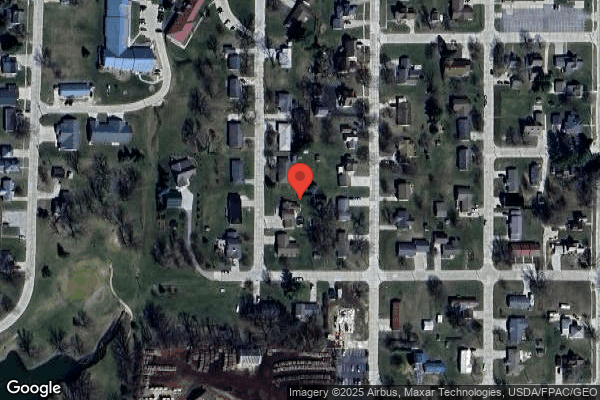
513 Bell Street, Edgewood, IA 52042 (563) 928-6461
For profit - Corporation 56 Beds Independent Data: November 2025
Trust Grade
90/100
#18 of 392 in IA
Last Inspection: October 2024

Within standard 12-15 month inspection cycle. Federal law requires annual inspections.

Overview

Edgewood Convalescent Home has a Trust Grade of A, which indicates it is excellent and highly recommended for families seeking care for their loved ones. It ranks #18 out of 392 facilities in Iowa, placing it in the top half, and is the top facility out of five in Clayton County. The facility's trend is stable, with only one issue reported in both 2023 and 2024, and they have no fines on record, which is a positive sign. Staffing is also a strength, with a 5/5 rating and a turnover rate of 42%, slightly below the state average, although there have been concerns about low staffing levels on weekends that residents have expressed. However, the facility does provide more RN coverage than 85% of Iowa facilities, ensuring better oversight of resident care, even though there have been some procedural issues, such as not adequately preparing insulin pens for administration and lacking sufficient staff during peak times.

Trust Score
A
90/100
In Iowa
#18/392
Top 4%
Safety Record
Low Risk
No red flags
Inspections
Holding Steady
1 → 1 violations
Staff Stability
○ Average
42% turnover. Near Iowa's 48% average. Typical for the industry.
Penalties
✓ Good
No fines on record. Clean compliance history, better than most Iowa facilities.
Skilled Nurses
✓ Good
Each resident gets 54 minutes of Registered Nurse (RN) attention daily — more than average for Iowa. RNs are trained to catch health problems early.
Violations
✓ Good
Only 4 deficiencies on record. Cleaner than most facilities. Minor issues only.
★★★★★
5.0
Overall Rating
★★★★★
5.0
Staff Levels
★★★★★
5.0
Care Quality
★★★★☆
4.0
Inspection Score
Stable
2023: 1 issues
2024: 1 issues

The Good

  • 5-Star Staffing Rating · Excellent nurse staffing levels
  • 5-Star Quality Measures · Strong clinical quality outcomes
  • Full Sprinkler Coverage · Fire safety systems throughout facility
  • No fines on record
  • Staff turnover below average (42%)

    6 points below Iowa average of 48%

Facility shows strength in staffing levels, quality measures, fire safety.

The Bad

Staff Turnover: 42%

Near Iowa avg (46%)

Typical for the industry

The Ugly 4 deficiencies on record

Oct 2024 1 deficiency
CONCERN (F) 📢 Someone Reported This

A family member, employee, or ombudsman was alarmed enough to file a formal complaint

Potential for Harm - no one hurt, but risky conditions existed

Deficiency F0725 (Tag F0725)

Could have caused harm · This affected most or all residents

Based on record review, Facility Assessment review, and resident and staff interviews the facility failed to employ sufficient numbers of staff on the weekends to meet resident needs. The facility rep...

Read full inspector narrative →
Based on record review, Facility Assessment review, and resident and staff interviews the facility failed to employ sufficient numbers of staff on the weekends to meet resident needs. The facility reported a census of 43 residents. Findings include: A review of the Centers for Medicare & Medicaid Services (CMS) PBJ Staffing Data Report revealed the facility triggered for excessively low weekend staffing for Quarter 3, 2024 (April 1-June 30). A review of the Edgewood Convalescent Home Shift assignment sheets from April 1st through June 30th, 2024 revealed required staff were absent for either partial or whole shifts as follows: First shift- Certified Nursing Aides (CNA) 23 days Second shift- CNA 19 days, Nurse 3 days Third shift- CNA 1 day In an interview on 10/30/24 at 9:25 AM Resident #2 expressed the facility needed more staff, especially CNA's on weekends. She noted there just didn't seem to be enough. In an interview on 10/30/24 at 9:32 AM Resident #21 verbalized they [the facility] needed more staff on the weekends. They treated her well but she has had several episodes of incontinence because she had to wait too long for them to come and help. They just run short on the weekends. In an interview on 10/30/24 at 10:13 AM Staff A, CNA reported she did not feel like they had enough staff during the weekend, and noted they can't get their normal tasks done during the day because of this. In an interview on 10/30/24 at 11:25 AM Staff B, CNA explained she did not feel they had enough staff on the weekends. When the facility was full, or even now, it was not enough. They did not have enough time to get everything done during the shift and didn't have the extra staff around like during the week. Toileting got missed the most. In an interview on 10/30/24 at 12:59 PM the Administrator explained the facility receives a sheet from Corporate that tells them how many staff they should have per resident. It is a document based off of the census, not acuity. Corporate utilizes the Facility Assessment to create the sheets that inform the staffing numbers. In an interview on 10/30/24 at 1:04 PM the Director of Nursing (DON) explained Corporate decided what staffing ratios should be, based on census, not acuity. The facility goes off of the staffing sheets sent to the Administrator. The Facility Assessment Tool, undated expressed the following: The purpose of the assessment is to determine what resources are necessary to care for residents competently during both day-to-day operations and emergencies. Use this assessment to make decisions about your direct care staff needs, as well as your capabilities to provide services to the residents in your facility. Using a competency-based approach focuses on ensuring that each resident is provided care that allows the resident to maintain or attain their highest practicable physical, mental, and psychosocial well-being. The intent of the Facility Assessment is for the facility to evaluate its resident population and identify the resources needed to provide the necessary person-centered care and services the residents require. The facility assessment is used to inform staffing decisions to ensure that there are a sufficient number of staff with the appropriate competencies and skill set necessary to care for residents' needs as identified through resident assessments and plans of care. Staffing needs for each shift and each unit area adjusted as necessary based on changes to the resident population. It instructed staff ratios to be the following: First shift- 2 nurses, 5 CNA's Second shift- 2 nurses, 5 CNA's Third shift- 1 nurse, 2 CNA's
Oct 2023 1 deficiency
CONCERN (D)

Potential for Harm - no one hurt, but risky conditions existed

Deficiency F0658 (Tag F0658)

Could have caused harm · This affected 1 resident

**NOTE- TERMS IN BRACKETS HAVE BEEN EDITED TO PROTECT CONFIDENTIALITY** Based on observation, clinical record review, insulin pen competency review, Novolog highlights of prescribing information (manu...

Read full inspector narrative →
**NOTE- TERMS IN BRACKETS HAVE BEEN EDITED TO PROTECT CONFIDENTIALITY** Based on observation, clinical record review, insulin pen competency review, Novolog highlights of prescribing information (manufacturer's directions for use), and staff interview, the facility failed to prime the insulin pen with 2 units of insulin prior to the administration of the physician ordered dose of insulin for 1 of 1 residents observed for insulin administration (Resident #5). The facility identified a census of 48 residents. Findings include: Resident #5 Minimum Data Set (MDS) assessment dated [DATE] showed a Brief Interview for Mental Status score of 14 indicating intact cognition. The MDS listed a diagnosis of diabetes mellitus and documented Resident #5 received insulin injections 7 days per week. The Care Plan revised 8/25/23 noted a diagnosis of diabetes and directed the staff to check blood sugars and administer diabetic medications as physician ordered. The October 2023 Medication Administration Record (MAR) detailed the following physician orders: a. Novolog Solution 100 Units (u) per Milliliter (ml) inject 14 units subcutaneously (under the skin) before meals related to type 2 diabetes mellitus without complications. b. Novolog Injection Solution 100 u/ml inject as per sliding scale insulin (SSI): if 151 - 200 = 1 unit; 201 - 250 = 2 units; 251 - 300 = 3 units; 301 - 350 = 4 units; 351 - 400 = 5 units ; 401 - 450 = 6 units. Call the medical doctor if the blood sugar is greater than 400, subcutaneously before meals and at bedtime related to type 2 diabetes mellitus without complications. An Order Summary Report signed by the Provider on 10/03/23 listed the following physician orders: a. Novolog Solution 100 u/ml inject 14 units subcutaneously before meals related to type 2 diabetes mellitus without complications. b. Novolog Injection Solution 100 u/ml inject as per sliding scale insulin (SSI): if 151 - 200 = 1 unit; 201 - 250 = 2 units; 251 - 300 = 3 units; 301 - 350 = 4 units; 351 - 400 = 5 units; 401 - 450 = 6 units. Call the medical doctor if the blood sugar is greater than 400, subcutaneously before meals and at bedtime related to type 2 diabetes mellitus without complications. During an observation on 10/03/23 at 11:17 AM Staff A, Registered Nurse (RN) verbalized she would administer 14 units of Novolog insulin and 1 unit of Novolog SSI for a blood sugar of 167. Staff A reviewed the MAR orders and set the Novolog insulin pen to a total of 15 units and prepared to administer the insulin. At 11:24 AM the Surveyor stopped Staff A from administering the Novolog insulin flex pen. Staff A verbalized she didn't know what she had done wrong. Staff A referred to the Director of Nursing (DON) and asked what she had done wrong. The DON stated she needed to prime the pen with 1-2 units of insulin prior to setting the dose on the insulin pen. At 11:26 AM Staff A administered the correct amount of insulin to Resident #5. On 10/04/23 at 9:04 AM Staff B RN reported she received training by the facility on administration of insulin per pen. She explained the pen should be set to 2 units to prime the pen prior to setting the dial to the amount of insulin ordered by the physician. During an interview on 10/05/23 at 8:50 AM the DON reported she expected the nurses to follow the Insulin Pen Competency for proper priming of the pen. The undated Insulin Pen Competency provided by the facility directed the nurses in the following procedure: a. Prime the pen by dialing up 2 units of insulin. Hold the pen with the needle pointing up and lightly tap the insulin reservoir so the air bubbles rise to the top of the needle. b. Press the injection button all the way in and check to see that insulin comes out of the needle. The dial will automatically go back to zero. c. If no insulin comes out, repeat the test 2 more times. If there is still no insulin coming out, use a new needle and perform the test again. d. Make sure the window says 0 and then select the dose. The Novolog Highlights of Prescribing Information under priming the Novolog Flex Touch Pen instructed the following: a. Turn the pen dose selector to select 2 units. b. Hold the pen with the needle pointing up. Tap the top of the pen gently a few times to let any air bubbles rise to the top. c. Hold the pen with the needle pointing up. Press and hold in the dose button until the dose counter shows 0. The 0 must line up with the dose pointer. d. A drop of insulin should be seen at needle tip. If you do not see a drop of insulin repeat the priming steps, no more than 6 times. e. If you still do not see a drop of insulin, change the needle and repeat the priming steps. f. Turn the dose selector to select the number of units you need to inject.
Jun 2022 2 deficiencies
CONCERN (D)

Potential for Harm - no one hurt, but risky conditions existed

Deficiency F0868 (Tag F0868)

Could have caused harm · This affected 1 resident

Based on Continuous Quality Improvement Attendance sheets, policy review, and staff interviews the facility failed to have routine quarterly Quality Assurance and Performance Improvement (QAPI) meetin...

Read full inspector narrative →
Based on Continuous Quality Improvement Attendance sheets, policy review, and staff interviews the facility failed to have routine quarterly Quality Assurance and Performance Improvement (QAPI) meetings in the years of 2021 and 2022. In addition the facility failed to have the Medical Director attend 1 of 2 QAPI meetings held in 2021. The facility identified a census of 42 residents. Findings include: A review of the facility Continuous Quality Improvement (CQI) Attendance sheets completed on 6/8/22 revealed the facility held two QAPI meetings in the year 2021 on 8/31/21 and 9/30/21. The facility lacked documentation of a QAPI meeting held in the year 2022. The CQI Attendance sign-in sheet dated 8/31/21 documented that the facility held a QAPI meeting at 8:00 a.m. with the Medical Director, the Director of Nursing (DON), and two additional staff members as required. The CQI Attendance sign-in sheet for the QAPI meeting held on 9/30/21 lacked documentation of the Medical Directors signature for attendance. On 6/8/22 at 2:12 p.m. the Administrator reported that she started working at the facility in January (2022). The facility had a quality meeting in January with the Medical Director, but she didn't know that they needed to keep notes and have a sign-in sheet. The Administrator explained that they did miss the April 2022 quality meeting. She stated they developed an action plan and the Medical Director would come to the facility that week to get a quality meeting completed. The undated QAPI Plan Policy provided by the facility, documented the Administrator responsible and accountable to the board of directors and/or executive leadership for ensuring that QAPI is implemented throughout the organization. The Administrator is responsible for assuring that all QAPI activities and required documentation is provided to the governing body. All department managers, the Administrator, the Director of Nursing, infection control and prevention office, medical director, consulting pharmacist and up to three additional staff will provide QAPI leadership as the Quality Assessment and Assurance (QAA) committee. The QAA committee will meet monthly.
MINOR (B)

Minor Issue - procedural, no safety impact

Deficiency F0625 (Tag F0625)

Minor procedural issue · This affected multiple residents

**NOTE- TERMS IN BRACKETS HAVE BEEN EDITED TO PROTECT CONFIDENTIALITY** Based on clinical record reviews, staff interviews, and facility policy review the facility failed to offer Bed Hold agreements ...

Read full inspector narrative →
**NOTE- TERMS IN BRACKETS HAVE BEEN EDITED TO PROTECT CONFIDENTIALITY** Based on clinical record reviews, staff interviews, and facility policy review the facility failed to offer Bed Hold agreements to 2 of 2 residents reviewed who transferred to the hospital (Residents #7 and #23). The facility reported a census of 42 residents. Findings include: 1. Resident #7's Minimum Data Set (MDS) assessment dated [DATE] documented a reentry date as 3/9/22 from an acute hospital stay. The electronic health record's (EHR) section reviewed on 6/9/22 indicated the following discharges with return anticipated to the facility on [DATE], 2/11/22, and 3/6/22. The MDS discharge assessment - return anticipated dated 12/29/21 indicated that Resident #7 discharged to an acute hospital. The MDS discharge assessment - return anticipated dated 2/11/22 indicated that Resident #7 discharged to an acute hospital. The MDS discharge assessment - return anticipated dated 3/6/22 indicated that Resident #7 discharged to an acute hospital. Resident #7's clinical record lacked documentation that she got offered a Bed Hold agreement to her or her family on any of the three discharges that resulted in an admission to the hospital. 2. Resident #23's MDS assessment dated [DATE] documented a reentry date of 4/6/22 from an acute hospital. The EHR section reviewed on 6/9/22 indicated the following discharges with return anticipated to the facility on 2/22/22 and 4/3/22. The MDS discharge assessment - return anticipated dated 2/22/22 indicated that Resident #23 discharged to an acute hospital. The MDS discharge assessment - return anticipated dated 4/3/22 indicated that Resident #23 discharged to an acute hospital. Resident #23's clinical record lacked documentation that she got offered a Bed Hold agreement to her or her family on any of the three discharges that resulted in an admission to the hospital. On 6/8/22 at 1:15 PM the Facility's Corporate Consultant reported that the facility had staff turnover in their office. The person in the office now didn't know of the requirement that all residents who transferred out of the facility due to an admission to the hospital must be offered a Bed Hold agreement to ensure their bed is held for their planned return to the facility after their hospitalization. The Facility Corporate Consultant acknowledged that neither Resident #7 or Resident #23 got offered a Bed Hold agreement for any of their hospitalizations. The undated Bed Hold Notice form provided by the facility informed residents and/or their families of their right to pay to have the residents bed held during their absence to ensure the resident had a bed for them at the facility after they returned from the hospital, or they could waive their right to pay to have a bed held.
Understanding Severity Codes (click to expand)
Life-Threatening (Immediate Jeopardy)
J - Isolated K - Pattern L - Widespread
Actual Harm
G - Isolated H - Pattern I - Widespread
Potential for Harm
D - Isolated E - Pattern F - Widespread
No Harm (Minor)
A - Isolated B - Pattern C - Widespread

Questions to Ask on Your Visit

  • "Can I speak with families of current residents?"
  • "What's your RN coverage like on weekends and overnight?"

Our Honest Assessment

Strengths
  • • Grade A (90/100). Above average facility, better than most options in Iowa.
  • • No major safety red flags. No abuse findings, life-threatening violations, or SFF status.
  • • No fines on record. Clean compliance history, better than most Iowa facilities.
  • • Only 4 deficiencies on record. Cleaner than most facilities. Minor issues only.
Concerns
  • • No significant concerns identified. This facility shows no red flags across CMS ratings, staff turnover, or federal penalties.
Bottom line: Generally positive indicators. Standard due diligence and a personal visit recommended.

About This Facility

What is Edgewood Convalescent Home's CMS Rating?

CMS assigns Edgewood Convalescent Home an overall rating of 5 out of 5 stars, which is considered much above average nationally. Within Iowa, this rating places the facility higher than 99% of the state's 100 nursing homes. This rating reflects solid performance across the metrics CMS uses to evaluate nursing home quality.

How is Edgewood Convalescent Home Staffed?

CMS rates Edgewood Convalescent Home's staffing level at 5 out of 5 stars, which is much above average compared to other nursing homes. Staff turnover is 42%, compared to the Iowa average of 46%. This relatively stable workforce can support continuity of care.

What Have Inspectors Found at Edgewood Convalescent Home?

State health inspectors documented 4 deficiencies at Edgewood Convalescent Home during 2022 to 2024. These included: 3 with potential for harm and 1 minor or isolated issues.

Who Owns and Operates Edgewood Convalescent Home?

Edgewood Convalescent Home is owned by a for-profit company. For-profit facilities operate as businesses with obligations to shareholders or private owners. The facility operates independently rather than as part of a larger chain. With 56 certified beds and approximately 43 residents (about 77% occupancy), it is a smaller facility located in Edgewood, Iowa.

How Does Edgewood Convalescent Home Compare to Other Iowa Nursing Homes?

Compared to the 100 nursing homes in Iowa, Edgewood Convalescent Home's overall rating (5 stars) is above the state average of 3.1, staff turnover (42%) is near the state average of 46%, and health inspection rating (4 stars) is above the national benchmark.

What Should Families Ask When Visiting Edgewood Convalescent Home?

Based on this facility's data, families visiting should ask: "Can I visit during a mealtime to observe dining assistance and food quality?" "How do you handle medical emergencies, and what is your hospital transfer rate?" "Can I speak with family members of current residents about their experience?"

Is Edgewood Convalescent Home Safe?

Based on CMS inspection data, Edgewood Convalescent Home has a clean safety record: no substantiated abuse findings (meaning no confirmed cases of resident harm), no Immediate Jeopardy citations (the most serious violation level indicating risk of serious injury or death), and is not on the Special Focus Facility watch list (a federal program monitoring the lowest-performing 1% of nursing homes). The facility has a 5-star overall rating and ranks #1 of 100 nursing homes in Iowa. While no facility is perfect, families should still ask about staff-to-resident ratios and recent inspection results during their visit.

Do Nurses at Edgewood Convalescent Home Stick Around?

Edgewood Convalescent Home has a staff turnover rate of 42%, which is about average for Iowa nursing homes (state average: 46%). Moderate turnover is common in nursing homes, but families should still ask about staff tenure and how the facility maintains care continuity when employees leave.

Was Edgewood Convalescent Home Ever Fined?

Edgewood Convalescent Home has no federal fines on record. CMS issues fines when nursing homes fail to meet care standards or don't correct problems found during inspections. The absence of fines suggests the facility has either maintained compliance or corrected any issues before penalties were assessed. This is a positive indicator, though families should still review recent inspection reports for the full picture.

Is Edgewood Convalescent Home on Any Federal Watch List?

Edgewood Convalescent Home is not on any federal watch list. The most significant is the Special Focus Facility (SFF) program, which identifies the bottom 1% of nursing homes nationally based on persistent, serious quality problems. Not being on this list means the facility has avoided the pattern of deficiencies that triggers enhanced federal oversight. This is a positive indicator, though families should still review the facility's inspection history directly.