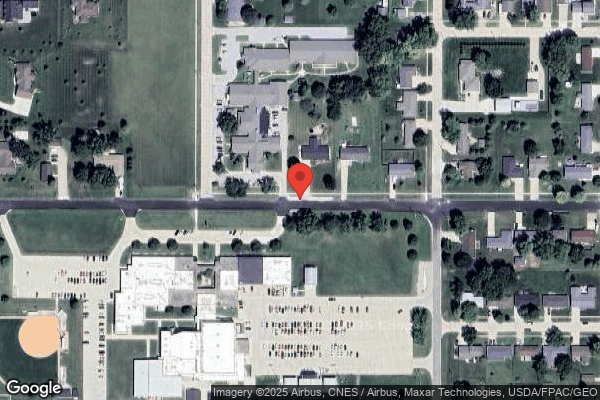
Concord Care Center

490 West Lyons Street, Garner, IA 50438 (641) 923-2677
For profit - Limited Liability company 46 Beds LEGACY HEALTHCARE Data: November 2025
Trust Grade
80/100
#102 of 392 in IA
Last Inspection: October 2024

Within standard 12-15 month inspection cycle. Federal law requires annual inspections.

Overview

Concord Care Center in Garner, Iowa has a Trust Grade of B+, which indicates it is above average and recommended for families considering long-term care options. It ranks #102 out of 392 facilities in Iowa, placing it in the top half, but it is the third choice out of three in Hancock County, meaning there is limited competition locally. Unfortunately, the facility is showing a worsening trend, with issues increasing from 1 in 2023 to 5 in 2024. Staffing is rated well at 4 out of 5 stars, with a turnover rate of 44%, which is on par with the state average, but the facility has less RN coverage than 81% of Iowa facilities, meaning fewer registered nurses are available to catch potential problems. There have been no fines, which is a positive sign. However, there are specific concerns: one resident's care plan was not followed properly, leading to falls, and another resident reported delayed response times to call lights, which can affect their comfort and safety. Overall, while there are strengths in staffing and no fines, the increasing number of concerns and specific incidents warrant careful consideration.

Trust Score
B+
80/100
In Iowa
#102/392
Top 26%
Safety Record
Low Risk
No red flags
Inspections
Getting Worse
1 → 5 violations
Staff Stability
○ Average
44% turnover. Near Iowa's 48% average. Typical for the industry.
Penalties
✓ Good
No fines on record. Clean compliance history, better than most Iowa facilities.
Skilled Nurses
○ Average
Each resident gets 31 minutes of Registered Nurse (RN) attention daily — about average for Iowa. RNs are the most trained staff who monitor for health changes.
Violations
○ Average
6 deficiencies on record. Average for a facility this size. Mostly minor or procedural issues.
★★★★☆
4.0
Overall Rating
★★★★☆
4.0
Staff Levels
★★★☆☆
3.0
Care Quality
★★★★☆
4.0
Inspection Score
Stable
2023: 1 issues
2024: 5 issues

The Good

  • 4-Star Staffing Rating · Above-average nurse staffing levels
  • Full Sprinkler Coverage · Fire safety systems throughout facility
  • No fines on record
  • Staff turnover below average (44%)

    4 points below Iowa average of 48%

Facility shows strength in staffing levels, fire safety.

The Bad

Staff Turnover: 44%

Near Iowa avg (46%)

Typical for the industry

Chain: LEGACY HEALTHCARE

Part of a multi-facility chain

Ask about local staffing decisions and management

The Ugly 6 deficiencies on record

Oct 2024 5 deficiencies
CONCERN (D)

Potential for Harm - no one hurt, but risky conditions existed

Deficiency F0645 (Tag F0645)

Could have caused harm · This affected 1 resident

**NOTE- TERMS IN BRACKETS HAVE BEEN EDITED TO PROTECT CONFIDENTIALITY** Based on clinical record review and staff interviews the facility failed to complete a follow-up PASRR and resubmit to ASCEND fo...

Read full inspector narrative →
**NOTE- TERMS IN BRACKETS HAVE BEEN EDITED TO PROTECT CONFIDENTIALITY** Based on clinical record review and staff interviews the facility failed to complete a follow-up PASRR and resubmit to ASCEND for reevaluation according to the Preadmission Screening and Resident Review (PASRR) for 1 out of 1 resident reviewed, (Resident #11). The facility reported a census of 36 residents. Findings include: The Minimum Data Set (MDS) assessment dated [DATE] for Resident #11 documented diagnoses of anxiety disorder, depression, bipolar disorder and schizophrenia. The MDS showed a Brief Interview for Mental Status (BIMS) score of 10, indicating moderate cognitive impairment. Review of the medical record revealed Resident #11 was admitted to the facility on [DATE]. Review of Resident #11's clinical record revealed that a Level 1 PASRR was completed on [DATE] with an approval period for 60 days that expired on [DATE]. Review of Resident #11's clinical record revealed that a Level 1 PASRR was completed on [DATE] with a Level 1 Outcome to refer for Level II onsite. Review of PASRR dated [DATE] revealed that the Level 1 screen was submitted on [DATE] over 4 months after the prior PASRR expired thus causing a compliance issue for the nursing facility. Review of Resident #11's clinical record revealed that a Level II PASRR was completed on [DATE] with a determination of short term approval ending [DATE]. Review of Resident #11's clinical record revealed that a Level 1 PASRR was completed on [DATE], after the ending date of [DATE]. Review of the Maximus PASRR and Level of Care Screening Procedures for Long Term Care Services revised on [DATE] revealed the purpose of the Level I screen is to identify individuals intended for evaluation through the PASRR Level II process, those individuals with known or suspected mental illness (MI) and intellectual disability (ID) or related condition (RC). The purpose of the Level I screen is to identify individuals intended for evaluation through the PASRR Level II process - those individuals with known or suspected MI and ID/RC. Effective [DATE], the Level I screen must be electronically submitted to Maximus; ·Before admission to a Medicaid-certified nursing facility (regardless of the applicant ' s method of payment) For residents of Medicaid certified nursing facility (NF) ' s experiencing changes in status that suggests the need for a first-time or updated PASRR LevelII evaluation as described in Section I.f of this document; · Prior to the conclusion of an assigned time-limited stay for individuals with MI and/or ID/RC whose stay is expected to exceed a time-limited approval. Interview on [DATE] at 10:12 AM, with the Administrator revealed that the PASRR ' s were late when being resubmitted because she has been doing the Administrator position and Social Worker position since [DATE] until about 3 weeks ago.
CONCERN (D) 📢 Someone Reported This

A family member, employee, or ombudsman was alarmed enough to file a formal complaint

Potential for Harm - no one hurt, but risky conditions existed

Accident Prevention (Tag F0689)

Could have caused harm · This affected 1 resident

**NOTE- TERMS IN BRACKETS HAVE BEEN EDITED TO PROTECT CONFIDENTIALITY** Based on clinical record reviews, staff interviews and policy review, the facility failed to put effective interventions in plac...

Read full inspector narrative →
**NOTE- TERMS IN BRACKETS HAVE BEEN EDITED TO PROTECT CONFIDENTIALITY** Based on clinical record reviews, staff interviews and policy review, the facility failed to put effective interventions in place, and provide levels of assistance as directed by the Care Plan for Resident for 1 of 3 residents reviewed, (Resident #21). The facility reported a census of 36 residents. Findings include: The Minimum Data Set (MDS) assessment dated [DATE] for Resident # 21 documented diagnoses of Alzheimer ' s Disease, depression, heart failure (inability for the heart to pump), and hypertension (high blood pressure). The MDS showed the Brief Interview for Mental Status (BIMS) score a 4 indicating severe cognitive impairment.The MDS listed Resident #21 as partial or moderate assistance for transfers, ambulation and toilet transfers. The Facility Incident Reports (IR) documented from November 2023 - October 2024 revealed Resident #21 fell on [DATE], 1/17/24, 1/30/24, 7/2/24, 8/2/24, and 10/15/24. The Care Plan with a target date of 11/11/24 revealed Resident #21 is at risk for falls related to gait, balance problems and dizziness. The interventions directed the following: Attach call sensitive call light to resident ' s blanket so that staff can be alerted when the resident attempts to self transfer. Do not leave me in the dining room unattended. Ensure that I am wearing appropriate footwear when I am ambulating, transferring, or mobilizing in a wheelchair. Frequent visual checks for her safety. I am on a diuretic in the AM which puts me at risk for falls. I am to wear slip-on shoes so I am not at risk tying lace shoes. I am unable to use my call light/pendant. Please anticipate and meet all my needs. I have an easy touch call light. Ensure my touch paddle call light is on top of my bed when I am in bed so if I choose to get up on my own, it will alert staff to come help me. I have been screened by occupational therapy (OT) and they have deemed it unsafe for me to have a lift chair. My lift chair in my room has been unplugged for my safety d/t my dementia, I cannot run my lift chair on my own. I often choose to self-transfer and not wait for staff to help me. I have a sign on my walker reminding me to take my walker with me wherever I go due to my memory. I forget to take my walker with me at times, this sign reminds me not to forget. Educate me on the need to use a walker for ambulation if I am not using it. I also have a sign on my wall and in my bathroom reminding me to keep my walker with me. I will sit at the nurse station when it is close to meal times. Review information on my past falls and attempt to determine the cause of falls. Record possible root causes. Alter or remove any potential causes if possible. Educate me, my family, caregivers, and the interdisciplinary team as to potential causes. Staff are to assist me with making my bed when assisting me with AM cares. The Progress Notes dated 8/2/24 at 9:52 PM revealed Resident #21 had an unwitnessed fall in the dining room and received a superficial laceration to the left side of her head with a hematoma above it. Resident #21 also received a skin tear to the left elbow. The Progress Notes revealed they will discuss further interventions with the care team at a later date. The Progress Notes dated 10/15/24 revealed Resident #21 was found on the floor beside the wheelchair by staff walking into the dining room. Upon approaching Resident #21 revealed she was attempting to get up to go to the bathroom. The intervention for the fall was staff education provided on current fall interventions related to Resident #21 in the dining room. Review of the facility Care Plan History revealed the intervention of do not leave me in the dining room unattended was put into place as of 6/30/23. The facility policy named Fall Risk Assessment and Intervention with a revision date of 6/25/12 revealed residents will be assessed upon admission, re-admission, and change in condition for potential risk factors associated with falls. Initial interventions specific to the resident will be implemented at the time of the assessment. The assigned nurse will complete the tool on new admission, readmissions, and residents experiencing a significant change in condition. Determine the risk factors placing the resident at risk for falls by highlighting or circling those factors. Determine what interventions could be used, specific to the resident, and highlight or circle the appropriate interventions and or write additional interventions. The nurse completing the fall assessment will be responsible to communicate interventions to appropriate staff. Risk factors and interventions identified on the fall assessment tool should be carried over and used to facilitate development of the resident ' s plan of care. Elicit ideas to reduce the likelihood of falls from the resident family members, therapies, physician and interdisciplinary staff. Orthostatic blood pressure should be taken, if possible, following a fall to determine whether the fall could be related to dizziness associated with sudden drop in blood pressure with position changes. Should the resident experience a fall, an Incident Report and Quality Assurance Investigation form will be completed. Each fall will be assessed to try to determine the cause of the fall. The care plan must be reviewed with each occurrence and new or different approaches added relative to the assessed cause of the fall. Each addition to the care plan will be initialed by the person who added the new intervention followed by the date the new measure was initiated. Should a fall occur, the nurse will be responsible to assess the resident for injuries, notify the family and physician of the occurrence, and document results of findings in the Interdisciplinary notes of the residents medical record.
CONCERN (D)

Potential for Harm - no one hurt, but risky conditions existed

Deficiency F0725 (Tag F0725)

Could have caused harm · This affected 1 resident

**NOTE- TERMS IN BRACKETS HAVE BEEN EDITED TO PROTECT CONFIDENTIALITY** 3. Resident #3 ' s MDS assessment dated [DATE] identified a BIMS score of 13, indicating intact cognition. Resident #3 required ...

Read full inspector narrative →
**NOTE- TERMS IN BRACKETS HAVE BEEN EDITED TO PROTECT CONFIDENTIALITY** 3. Resident #3 ' s MDS assessment dated [DATE] identified a BIMS score of 13, indicating intact cognition. Resident #3 required partial/moderate assistance for transfers, personal hygiene. Resident #3 required substantial/maximal assistance for toilet use. The MDS included diagnoses of hypertension (high blood pressure), cancer, heart failure and renal insufficiency. During interview on 10/21/24 at 12:37 PM Resident #3 reported call light times are terrible. Resident #3 reported that sometimes the call light works well and sometimes the staff are not aware it is on. Resident #3 reported they forgot about her for 1/2 hour. Resident #3 reported that she watched the clock and had a terrible time. Resident #3 reported that she has been incontinent of bowel at times. Review of facility call light reports dated from 9/23/24 to 10/20/24 for Resident #3 revealed: a duration of 26 minutes on 9/23/24 at 5:05 PM a duration of 22 minutes on 9/24/24 at 11:31 AM a duration of 36 minutes on 9/25/24 at 9:09 AM a duration of 24 minutes on 9/25/24 at 11:12 AM a duration of 22 minutes on 9/27/24 at 12:36 PM a duration of 26 minutes on 9/27/24 at 9:41 PM a duration of 33 minutes on 9/28/24 at 1:13 PM a duration of 21 minutes on 9/29/24 at 10:59 AM a duration of 25 minutes on 9/30/24 at 7:54 AM a duration of 23 minutes on 9/30/24 at 8:57 PM a duration of 24 minutes on 10/1/24 at 7:37 AM a duration of 23 minutes on 10/1/24 at 6:41 PM a duration of 26 minutes on 10/3/24 at 1:35 PM a duration of 27 minutes on 10/7/24 at 4:54 PM a duration of 26 minutes on 10/9/24 at 11:13 AM a duration of 28 minutes on 10/10/24 at 11:39 AM a duration of 24 minutes on 10/11/24 at 9:16 PM a duration of 29 minutes on 10/14/24 at 1:15 PM a duration of 25 minutes on 10/15/24 at 12:19 PM a duration of 25 minutes on 10/17/24 at 11:14 PM a duration of 26 minutes on 10/18/24 at 2:10 PM a duration of 21 minutes on 10/19/24 at 6:56 AM a duration of 22 minutes on 10/19/24 at 11:00 AM. Based on clinical record review, resident interview, family interview, staff interviews, facility records and facility policy review the facility failed to provide sufficient staff to meet the needs of residents who resided in the facility for 3 of 3 residents reviewed ( Resident #24, #22 and #3). The facility reported a census of 36 residents. Findings include: 1. The Minimum Data Set (MDS) for Resident #24 dated 9/20/24 assessment identified a Brief Interview for Mental Status (BIMS) score of 12, indicating intact cognition. The Clinical Census revealed Resident #24 resided in room [ROOM NUMBER]-1. On 10/21/24 at 11:38 AM, Resident #24 reported she has waited for her call light to be answered for up to 45 minutes. She stated it has happened on several occasions but could not remember what time of day. She reported she used her phone to time the call light response. She stated she almost had a bowel and bladder accident from waiting for the call light to be answered. She stated she has gotten good at holding her bladder/bowel. A facility call light report for 9/23/24 to 10/23/24 revealed Resident #23 had the following call lights over 15 minutes: 9/24/24 at 7:03 PM= 27 minutes 9/25/24 at 6:58 PM= 19 minutes 9/26/24 at 4:34 PM= 21 minutes 9/26/24 at 7:08 PM= 18 minutes 9/27/24 at 6:33 AM = 19 minutes 9/28/25 at 7:32 AM= 18 minutes 9/28/24 at 9:04 PM= 21 minutes 9/29/24 at 4:52 AM= 21 minutes 9/29/24 at 1:02 PM = 25 minutes 10/1/24 at 4:49 PM= 17 minutes 10/2/24 at 8:34 AM= 20 minutes 10/2/24 at 12:56 PM =18 minutes 10/2/24 at 4:34 PM =33 minutes 10/2/24 at 8:32 PM= 17 minutes 10/3/24 at 12:08 AM= 17 minutes 10/3/24 at 4:43 AM= 17 minutes 10/3/24 at 6:51 AM= 18 minutes 10/3/24 at 2:00 PM= 19 minutes 10/3/24 at 7:22 PM= 34 minutes 10/5/24 at 6:52 AM= 32 minutes 10/7/24 at 8:52 AM= 18 minutes 10/9/24 at 10:40 AM= 20 minutes 10/11/24 at 6:34 AM= 19 minutes 10/12/24 at 6:56 PM= 29 minutes 10/13/24 at 7:10 AM= 45 minutes 10/13/24 at 3:26 PM= 21 minutes 10/14/24 at 3:05 AM= 26 minutes 10/14/24 at 6:52 AM= 20 minutes 10/14/24 at 10:14 AM= 20 minutes 10/15/24 at 6:25 PM= 22 minutes 10/16/24 at 7:29 PM=21 minutes 10/17/24 at 6:37 PM= 20 minutes 10/18/24 at 6:41 AM= 23 minutes 10/19/24 at 12:48 PM=21 minutes 10/19/24 at 6:32 PM= 20 minutes 10/21/24 at 9:42 PM= 17 minutes 10/22/24 at 10:21 AM= 23 minutes 10/23/24 at 7:12 AM= 42 minutes 2. The MDS for Resident #22 dated 9/18/24 assessment identified a Brief Interview for Mental Status (BIMS) score of 10, indicating moderately impaired cognition. The Clinical Census revealed Resident #22 resided in room [ROOM NUMBER]-2 Triple. On 10/21/24 at 3:01 PM, Resident #22 ' s Niece/POA reported she had a concern at the facility related to staffing and call light response times. She stated Resident #22 complained of long call lights (20 minutes) on the weekend. She stated the facility had provided call light reports to her in the past. She stated Resident #22 can get anxious and upset quickly regarding her call light. She reported Resident #22 ' s anxiety feeds on itself. Resident #22 ' s niece/POA requested that the surveyor look at a recent call light report while at the facility. A facility call light report for 9/23/24 to 10/23/24 for room [ROOM NUMBER] bed #2, #3 and #4 revealed Resident #22 had the following call lights over 15 minutes: 9/23/24 at 7:23 AM= 22 minutes 9/23/24 at 12:53 PM= 19 minutes 9/23/24 at 7:28 PM= 20 minutes 9/24/24 at 10:44 AM= 20 minutes 9/24/24 at 6:29 PM= 21 minutes 9/25/24 at 6:59 PM= 21 minutes 9/26/24 at 8:25 AM= 19 minutes 9/26/24 at 4:17 PM= 24 minutes 9/26/24 at 5:33 PM= 19 minutes 9/27/24 at 8:09 AM= 33 minutes 9/27/24 at 6:56 PM =21 minutes 9/28/24 at 8:15 AM= 21 minutes 9/28/24 at 9:25 AM= 19 minutes 9/28/24 at 7:07 PM= 24 minutes 9/29/24 at 8:26 AM= 19 minutes 9/29/24 at 8:59 AM= 18 minutes 9/29/24 at 7:52 AM= 28 minutes 9/30/24 at 9:12 AM= 34 minutes 9/20/24 at 4:26 PM= 20 minutes 10/1/24 at 4:51 PM= 41 minutes 10/1/24 at 7:44 AM= 48 minutes 10/1/24 at 12:00 PM= 20 minutes 10/1/24 at 2:27 PM= 21 minutes 10/2/24 at 8:42 AM= 23 minutes 10/3/24 at 7:03 AM=19 minutes 10/3/24 at 11:28 AM= 20 minutes 10/3/24 at 6:44 PM= 29 minutes 10/4/24 at 6:34 AM= 20 minutes 10/4/24 at 7:31 AM= 19 minutes 10/4/24 at 12:48 PM= 34 minutes 10/4/24 at 6:13 PM= 20 minutes 10/5/24 at 7:35 AM= 25 minutes 10/5/24 at 7:43 PM= 22 minutes 10/6/24 at 7:40 AM= 27 minutes 10/7/24 at 9:12 PM= 22 minutes 10/8/24 at 6:14 AM= 31 minutes 10/9/24 at 5:26 AM= 22 minutes 10/10/24 at 6:12 AM= 23 minutes 10/10/24 at 8:09 AM= 22 minutes 10/10/24 at 6:57 PM= 21 minutes 10/10/24 at 7:23 PM= 22 minutes 10/12/24 at 8:08 PM= 19 minutes 10/13/24 at 8:35 AM= 33 minutes 10/14/24 at 8:27 AM= 23 minutes 10/15/24 at 11:26 AM= 19 minutes 10/15/24 at 6:35 PM= 20 minutes 10/16/24 at 6:41 AM= 49 minutes 10/17/24 at 12:37 PM= 23 minutes On 10/23/24 at 3:01 PM, the Administrator reported the facility had started a PIP (Process Improvement Plan) team in September related to an increase in call light times for various reasons. On 10/23/24 at 3:43 PM, the Administrator reported her expectation was for all call lights to be answered within 15 minutes or less. She stated that the goal of the PIP team was for call lights to be answered in under 15 minutes. On 10/24/24 at 8:30 AM, the Administrator acknowledged Resident #22 long call light times. She reported Resident #22 had anxiety and used her call light frequently. She reported Resident #22 was admitted to Hospice level of care this week. She reported the call light PIP team was working on getting back to consistent staff assignments and establishing resident routines to help decrease call light response time. The Administrator also reported there had been some malfunctions with the call light application and she had been working with IT to get the concerns addressed. On 10/24/24 at 9:15 AM, Staff A, LPN (Licensed Practical Nurse) reported call light response time can vary depending on the residents and staffing. She stated call lights can go over 15 minutes at times but usually it was because the staff member forgot to turn the light off. On 10/24/24 at 10:23 AM, Staff B, CNA (Certified Nursing Assistant) reported for the most part, she felt the facility was staffed appropriately. She stated there were times when the call lights would go over 15 minutes. She stated she felt the facility was trying to work on staffing and call light response times. On 10/24/24 at 10:26 AM, Staff C, CNA reported staffing and the ability to answer call lights depends on the day and what you walk in to. She reported there was a meeting recently and long call lights (over 15 minutes) were discussed. She stated the Administration told the staff they could ask for help with the call lights when needed. She reported she really has not gotten the help when she has asked for it. She verified call lights go over 15 minutes at times. The facility policy titled Call Light Policy revised 7/26/24 documented it was the policy of the facility to ensure that there was prompt response to the resident's call for assistance. The facility to ensure the call light system was in proper working order. The policy documented the facility shall answer call lights in a timely manner.
CONCERN (D)

Potential for Harm - no one hurt, but risky conditions existed

Deficiency F0868 (Tag F0868)

Could have caused harm · This affected 1 resident

Based on record review, interview, and facility policy the facility failed to have the minimum number of required members for their quarterly Quality Assessment and Assurance (QAA) meetings. The facil...

Read full inspector narrative →
Based on record review, interview, and facility policy the facility failed to have the minimum number of required members for their quarterly Quality Assessment and Assurance (QAA) meetings. The facility reported a census of 36. Findings include: On 10/24/24 at 11:24 AM, review of the facility documents titled QAPI meeting revealed: Document dated 5/7/24 lacked the signature of the Infection Preventionist (IP). Document dated 6/2024 lacked the signature of the IP. Document dated 7/2024 lacked the signature of the IP. Document dated 9/10/24 lacked the signature of the IP. Document dated 10/8/24 lacked the signature of the IP. Review of the facility provided document titled Quality Assurance Performance Improvement (QAPI) Plan with an effective date of March 1, 2024 revealed the QA meetings are held at minimum on a quarterly basis; more frequently, if necessary with Medical Director, Director of Nursing, Administrator, Infection Preventionist and additional members including social services, therapy, housekeeping, laundry, maintenance, dietary manager and pharmacy consultant. During interview on 10/24/24 at 12:10 PM, the Administrator acknowledged and verified the IP was not at the QAPI meetings. The Administrator stated that the IP was probably working the floor during the QAPI meetings. The Administrator revealed that they went over the IP ' s information during the meetings.
CONCERN (D)

Potential for Harm - no one hurt, but risky conditions existed

Infection Control (Tag F0880)

Could have caused harm · This affected 1 resident

**NOTE- TERMS IN BRACKETS HAVE BEEN EDITED TO PROTECT CONFIDENTIALITY** Based on observations, clinical record review, staff interviews, and policy review, the facility failed to provide a safe and sa...

Read full inspector narrative →
**NOTE- TERMS IN BRACKETS HAVE BEEN EDITED TO PROTECT CONFIDENTIALITY** Based on observations, clinical record review, staff interviews, and policy review, the facility failed to provide a safe and sanitary environment to help prevent the development and transmission of communicable diseases and infections for 1 of 2 residents reviewed for pressure ulcers, (Resident #33). The facility reported a census of 36 residents. Findings include: Resident #33's Minimum Data Set (MDS) dated [DATE] assessment identified a Brief Interview for Mental Status (BIMS) score of 05, indicating severely impaired cognition. The MDS identified Resident #33 required partial/moderate assistance with transfers including to the toilet. The MDS documented Resident #33 was occasionally incontinent of urine. Resident #33 ' s MDS included diagnoses of hypertension (high blood pressure), legally blind, and anxiety disorder. The MDS documented Resident #33 had one stage two pressure ulcer (partial thickness loss of dermis presenting as a shallow open ulcer with red or pink wound bed). The Care Plan with target date of 9/11/24 revealed Resident #33 had a pressure ulcer on the coccyx related to immobility. The care plan documented Resident #33 required staff assistance for her toileting needs. On 10/21/24 and 10/22/24, observation revealed a enhanced barrier precaution sign was not on Resident #33's door. On 10/22/24 at 3:28 PM, observed Staff D, CNA (certified nursing assistant) and Staff E, CNA transfer Resident #33 to the commode using a gait belt and a pivot disk. Staff E reported Resident #33 ' s incontinent brief was a little wet. Staff E removed the dirty brief and threw it in the garbage. Staff E removed his gloves and sanitized his hands. Staff D applied a new brief, removed his gloves and washed his hands. The DON (Director of Nursing) offered to pull back the wound dressing on the buttocks so the surveyor could see the pressure ulcer when Resident #33 stood up. Staff E reapplied the gait belt. Staff D applied gloves. Staff E stood Resident #33 up using the gait belt and a pivot disk. Staff D cleansed the front perineal area. While Resident #33 was standing, the DON partially removed the wound dressing on the buttocks enough to visualize the wound and then replaced the dressing. Staff D then completed peri care in the back. Staff D removed his gloves. Staff D did not complete hand hygiene after completing peri care and removing the gloves. Staff D then pulled up Resident #33 brief, pants and assisted Staff E with transferring Resident #33 to the recliner. Staff D moved the table next to the recliner and assisted Staff E with scooting Resident #33 back in the recliner. Staff D then put on a pair of gloves without completing hand hygiene and handed a blanket to Staff E to place on Resident #33. Staff E gathered up the trash with his gloved hands and took it to the bathroom. Staff E then removed his gloves and washed his hands. During observations both the CNA's and the DON did not wear a gown during high contact resident care activities. On 10/22/24 at 3:45 PM, the DON acknowledged and verified enhanced barrier precautions were not in place related to Resident #33 ' s chronic pressure ulcer. She reported that the staff should have worn gowns.The DON also acknowledged hand hygiene should have been completed after peri care was completed and the gloves removed. A facility policy titled Infection Prevention and Control Program Guidelines reviewed 1/5/24 documented hand hygiene should be performed before and after assisting a resident with toileting (hand washing with soap and water) and after removing gloves. The policy reported Enhanced Barrier Precautions was an approach of targeted gown and glove use during his contact resident care activities, designed to reduce transmission of staphylococcus aureus and multi drug resistant organisms. The policy documented enhanced barrier precautions may be applied to residents with chronic wounds. The policy further documented high contact resident care activities that required a gown and gloves for enhanced barrier precautions included: dressing, bathing/showering, transferring, providing hygiene, changing linens, changing briefs or assisting with toileting, device care or use and wound care.
Dec 2023 1 deficiency
CONCERN (D) 📢 Someone Reported This

A family member, employee, or ombudsman was alarmed enough to file a formal complaint

Potential for Harm - no one hurt, but risky conditions existed

Accident Prevention (Tag F0689)

Could have caused harm · This affected 1 resident

Based on observation, clinical record review and staff interview, the facility failed to ensure staff maintained a safe and secure environment for 1 of 3 residents reviewed, (Resident #1). The facilit...

Read full inspector narrative →
Based on observation, clinical record review and staff interview, the facility failed to ensure staff maintained a safe and secure environment for 1 of 3 residents reviewed, (Resident #1). The facility identified a census of 38 residents. Findings include: A Minimum Data Set (MDS) assessment form dated 9/22/23 indicated Resident #1 had diagnosis that included cancer, anemia, coronary artery disease (CAD), diabetes mellitus (DM), non-alzheimer's dementia and parkinson's disease. The assessment indicated the resident as rarely/never understood others, had a Brief Interview for Mental Status (BIMS) score of 4 out of 15 (severely impaired cognitive skills), transferred and required locomotion assistance of staff on and off the unit with extensive assistance of two (2) staff and non-ambulatory. A Fall Risk Assessment form dated 6/15/23 at 5:35 a.m. identified the resident as at a moderate risk for falls. According to the facilities internal investigation form (not dated) the resident transferred with a standing lift device and 2 staff assistance and self propelled his wheel chair. On 9/25/23 at 12:30 p.m. the resident had been found as he laid in the entry way of his room on the floor with his feet towards the door and his head towards the foot of his bed, on his right side with his right arm pinned underneath him where his hands/fingers were visible by his right buttock area. Staff A, Certified Nursing Assistant (CNA) stated the resident had been close to his doorway to his room as he attempted to propel himself off the carpet to the hardwood floor without success. The CNA assisted the resident over the area as the resident leaned forward too far and caught his feet under the wheel chair, which caused him to fall forward onto the floor, face first. Immediately Staff B, Registered Nurse (RN) assessed the resident with limited range of motion (ROM) performed due to the position on the floor and the staff inablity to have repositioned him up off the floor. The resident remained alert and talked most of the time. The resident sustained a laceration on his right eye that measured 2.0 centimeters (cm) by (x) 0.5 cm, a scraped right knee that measured 5.0 cm x 5.0 cm and a right knee laceration that measured 2.0 cm x 5.0 cm. The staff transferred the resident to a local emergency room (ER/ED) who then transferred the resident to another hospital where then neurologist determined there had been no evidence of a brain hemorrhage or spinal fractures. Upon discharge the resident returned to the facility at his prior level of function. During an interview on 12/7/23 at 1:33 p.m. Staff A, Certified Medication Aide (CMA) and (CNA) indicated the resident had been positioned in the hallway about 10 feet away from the doorway of his room as he propelled himself in his wheel chair. As the staff member came down the hallway with another resident the 2 could not get around the resident so the staff member directed resident #1 to have picked up his feet which enabled her assistance through his doorway to the room. As the staff member attempted to propel the resident into his room he placed his feet on the floor. The staff member then felt resistance and the resident fell forward straight onto his face while she tried to grab him. The staff member described the resident as without capability to have placed his hands out in front of him as a means to have broken the fall. The staff member immediately called for assistance. Staff B, RN responded right away. The staff member completed an assessment which included ROM and vital signs. Following the assessment the staff members placed a sling device and transferred him from the floor to his bed with five (5) staff members present and eventually transferred him to the local hospital. The staff member confirmed she failed to have placed the resident's foot rests on his wheel chair prior having propelled the resident into his room. During an interview on 12/7/23 12:31 p.m. Staff C, CNA confirmed when staff propelled residents in a wheel chair, at any time, even over a door stoop, foot rests had been required on the wheel chair. During an interview on 12/7/23 at 12:54 p.m. Staff D, licensed practical nurse (LPN) confirmed if staff propel residents in their wheel chairs foot pedals had been required, even through a doorway.
Understanding Severity Codes (click to expand)
Life-Threatening (Immediate Jeopardy)
J - Isolated K - Pattern L - Widespread
Actual Harm
G - Isolated H - Pattern I - Widespread
Potential for Harm
D - Isolated E - Pattern F - Widespread
No Harm (Minor)
A - Isolated B - Pattern C - Widespread

Questions to Ask on Your Visit

  • "Can I speak with families of current residents?"
  • "What's your RN coverage like on weekends and overnight?"

Our Honest Assessment

Strengths
  • • Grade B+ (80/100). Above average facility, better than most options in Iowa.
  • • No major safety red flags. No abuse findings, life-threatening violations, or SFF status.
  • • No fines on record. Clean compliance history, better than most Iowa facilities.
  • • 44% turnover. Below Iowa's 48% average. Good staff retention means consistent care.
Concerns
  • • No significant concerns identified. This facility shows no red flags across CMS ratings, staff turnover, or federal penalties.
Bottom line: Generally positive indicators. Standard due diligence and a personal visit recommended.

About This Facility

What is Concord Care Center's CMS Rating?

CMS assigns Concord Care Center an overall rating of 4 out of 5 stars, which is considered above average nationally. Within Iowa, this rating places the facility higher than 99% of the state's 100 nursing homes. This rating reflects solid performance across the metrics CMS uses to evaluate nursing home quality.

How is Concord Care Center Staffed?

CMS rates Concord Care Center's staffing level at 4 out of 5 stars, which is above average compared to other nursing homes. Staff turnover is 44%, compared to the Iowa average of 46%. This relatively stable workforce can support continuity of care.

What Have Inspectors Found at Concord Care Center?

State health inspectors documented 6 deficiencies at Concord Care Center during 2023 to 2024. These included: 6 with potential for harm.

Who Owns and Operates Concord Care Center?

Concord Care Center is owned by a for-profit company. For-profit facilities operate as businesses with obligations to shareholders or private owners. The facility is operated by LEGACY HEALTHCARE, a chain that manages multiple nursing homes. With 46 certified beds and approximately 37 residents (about 80% occupancy), it is a smaller facility located in Garner, Iowa.

How Does Concord Care Center Compare to Other Iowa Nursing Homes?

Compared to the 100 nursing homes in Iowa, Concord Care Center's overall rating (4 stars) is above the state average of 3.1, staff turnover (44%) is near the state average of 46%, and health inspection rating (4 stars) is above the national benchmark.

What Should Families Ask When Visiting Concord Care Center?

Based on this facility's data, families visiting should ask: "Can I visit during a mealtime to observe dining assistance and food quality?" "How do you handle medical emergencies, and what is your hospital transfer rate?" "Can I speak with family members of current residents about their experience?"

Is Concord Care Center Safe?

Based on CMS inspection data, Concord Care Center has a clean safety record: no substantiated abuse findings (meaning no confirmed cases of resident harm), no Immediate Jeopardy citations (the most serious violation level indicating risk of serious injury or death), and is not on the Special Focus Facility watch list (a federal program monitoring the lowest-performing 1% of nursing homes). The facility has a 4-star overall rating and ranks #1 of 100 nursing homes in Iowa. While no facility is perfect, families should still ask about staff-to-resident ratios and recent inspection results during their visit.

Do Nurses at Concord Care Center Stick Around?

Concord Care Center has a staff turnover rate of 44%, which is about average for Iowa nursing homes (state average: 46%). Moderate turnover is common in nursing homes, but families should still ask about staff tenure and how the facility maintains care continuity when employees leave.

Was Concord Care Center Ever Fined?

Concord Care Center has no federal fines on record. CMS issues fines when nursing homes fail to meet care standards or don't correct problems found during inspections. The absence of fines suggests the facility has either maintained compliance or corrected any issues before penalties were assessed. This is a positive indicator, though families should still review recent inspection reports for the full picture.

Is Concord Care Center on Any Federal Watch List?

Concord Care Center is not on any federal watch list. The most significant is the Special Focus Facility (SFF) program, which identifies the bottom 1% of nursing homes nationally based on persistent, serious quality problems. Not being on this list means the facility has avoided the pattern of deficiencies that triggers enhanced federal oversight. This is a positive indicator, though families should still review the facility's inspection history directly.