Franklin General Hospital

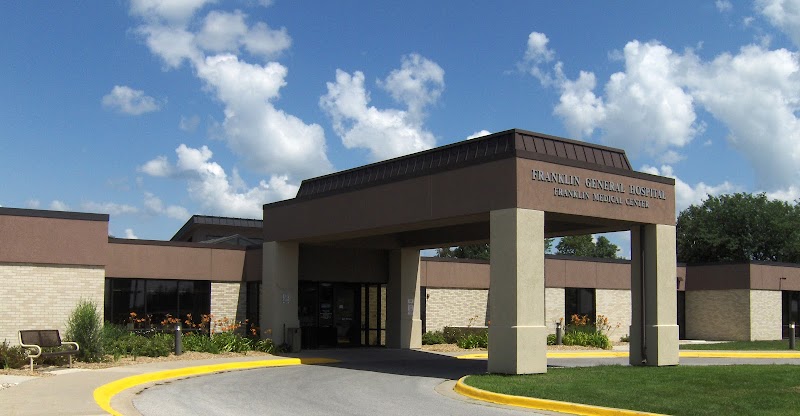
1720 Central Avenue East, Hampton, IA 50441 (641) 456-5000
Government - County 52 Beds Independent Data: November 2025
Trust Grade
93/100
#26 of 392 in IA
Last Inspection: May 2025

Inspected within the last 6 months. Data reflects current conditions.

Overview

Franklin General Hospital in Hampton, Iowa has an excellent Trust Grade of A, indicating a high level of care and reliability. Ranking #26 out of 392 facilities in Iowa places it in the top half, and as #1 of 3 in Franklin County, it is the best local option available. The facility is improving, with a reduction in reported issues from 3 in 2024 to 2 in 2025. Staffing is a major strength, earning a 5/5 star rating with a turnover rate of only 26%, well below the state average, indicating that staff are stable and familiar with the residents. However, inspector findings revealed concerns such as improper food handling and a lack of proper hand hygiene, which could lead to health risks, alongside issues with documenting residents' Do Not Resuscitate (DNR) orders appropriately. Overall, while there are clear strengths in staffing and care quality, families should be aware of these procedural concerns.
Trust Score
A
93/100
In Iowa
#26/392
Top 6%
Safety Record
Low Risk
No red flags
Inspections
Getting Better
3 → 2 violations
Staff Stability
✓ Good
26% annual turnover. Excellent stability, 22 points below Iowa's 48% average. Staff who stay learn residents' needs.
Penalties
✓ Good
No fines on record. Clean compliance history, better than most Iowa facilities.
Skilled Nurses
✓ Good
Each resident gets 47 minutes of Registered Nurse (RN) attention daily — more than average for Iowa. RNs are trained to catch health problems early.
Violations
○ Average
8 deficiencies on record. Average for a facility this size. Mostly minor or procedural issues.
★★★★★
5.0
Overall Rating
★★★★★
5.0
Staff Levels
★★★★★
5.0
Care Quality
★★★★☆
4.0
Inspection Score
Stable
2024: 3 issues
2025: 2 issues

The Good

  • 5-Star Staffing Rating · Excellent nurse staffing levels
  • 5-Star Quality Measures · Strong clinical quality outcomes
  • Low Staff Turnover (26%) · Staff stability means consistent care
  • Full Sprinkler Coverage · Fire safety systems throughout facility
  • No fines on record
  • Staff turnover is low (26%)

    22 points below Iowa average of 48%

Facility shows strength in staffing levels, quality measures, staff retention, fire safety.

The Bad

No Significant Concerns Identified

This facility shows no red flags. Among Iowa's 100 nursing homes, only 1% achieve this.

The Ugly 8 deficiencies on record

May 2025 2 deficiencies
CONCERN (D)

Potential for Harm - no one hurt, but risky conditions existed

Abuse Prevention Policies (Tag F0607)

Could have caused harm · This affected 1 resident

Based on personnel record review, policy review and staff interview, the facility failed to complete the required Abuse and Criminal History check within the required 30 days of the hire date for 2 of...

Read full inspector narrative →
Based on personnel record review, policy review and staff interview, the facility failed to complete the required Abuse and Criminal History check within the required 30 days of the hire date for 2 of 5 staff reviewed (Staff A, Licensed Practical Nurse LPN, and Staff B, Registered Nurse RN). The facility reported a census of 30 residents. Findings include: 1. Staff A's Personnel File record review listed a hire date of 10/28/24. The record review included the Single Contact License and Background Check (SING) with a completion date of 9/23/24, 35 days prior to hire. 2. Staff B's Personnel File record review listed a hire date of 12/16/24. The record review include a SING completed 11/15/24, 31 days prior to hire. The facility policy titled, Abuse Prevention, Identification, Investigation, and Reporting Policy, revised August 2023 instructed the facility to conduct an Iowa criminal record check and dependent adult/child abuse registry check on all prospective employees and other individuals engaged to provide services to residents, prior to hire, in the manner prescribed under 481 Iowa Administrative Code and 58.11(3). During an interview on 5/7/25 at 11:15 AM, Staff C, Manager, acknowledged Staff A and Staff B began employment more than 30 days after the facility completed their background checks.
CONCERN (E)

Potential for Harm - no one hurt, but risky conditions existed

Food Safety (Tag F0812)

Could have caused harm · This affected multiple residents

Based on observation, staff interviews, and policy review, the facility failed to date, cover, and label open items were dated, covered and labeled. In addition, the facility failed to ensure staff us...

Read full inspector narrative →
Based on observation, staff interviews, and policy review, the facility failed to date, cover, and label open items were dated, covered and labeled. In addition, the facility failed to ensure staff used proper hand hygiene practices during lunch services while preparing food to serve residents. The facility reported a census of 30 residents. Findings include: On 5/5/25 at 9:30 AM in the main kitchen with the Dietary Manager (DM), observed the following: a. An open, undated bag of brown sugar. b. An open bag of cereal, with an open date of January 2025, not fully closed. c. 3 open undated bags of cereal. d. An open, undated bag of onion bits. e. Expired, opened container of honey garlic in the refrigerator, expired 4/2/25. f. An open, undated bag of frozen chicken patties. g. An open, undated bag of frozen chicken cubes. h. An open, undated bag of frozen fish patties. i. An open, undated bag of frozen corn. j. An open, undated bag of frozen cookie dough pieces. During an interview on 5/5/25 at 9:50 AM, the DM stated the expected open food items have an open date clearly marked on the product and are securely sealed. If they had expired food, they should throw it out and not use or serve it to the residents. During an interview on 5/6/25 at 10:00 AM, the Administrator stated they expected a consistent process of ensuring food items once opened are dated and secure, then thrown out by the expiration date. During the lunch service on 5/7/25 at 11:20 AM, observed Staff D, Dietary staff, serve lunch for residents in the main dining room. Staff D washed their hands, prepared surfaces by getting tongs, scoops, and opening containers of food. Staff D then put a glove on just her left hand. Staff D prepared a cheeseburger by getting a bun out of a bag with her left gloved hand and removed a cheese slice from a stack of cheese with her left gloved hand. Staff D prepared approximately five more cheeseburgers/hamburgers with this same method (removed the bun from the bag with the gloved hand, removed a slice of cheese with her gloved hand). However, Staff D also touched other surfaces with her gloved hand prior to touching the bun and cheese, such as the steam table surface, plates, tongs and bowls. Staff D changed the glove on her left hand 4 times, however in between these times, she touched surfaces with her gloved hand, including the refrigerator, steam table, a bottle of ketchup, bowls and lettuce. Then she touched the bun and cheese, completing the cheeseburgers with the same gloved hand. During an interview on 5/7/25 at 3:00 PM, the Administrator stated they expected the staff to change gloves after touching a surface area and before touching food again with the same gloved hand. Review of the facility Storage Food/Nonfood/Chemicals policy, revised August 2021, directed to store food appropriately to ensure safety and freshness. Label and date all items when opened for proper rotation. Review of the facility Basic Sanitation Procedures, revised August 2021, documented when preparing foods, use spoons, forks and tongs as much as possible to minimize hand contact. Use plastic gloves as directed, change them as appropriate. When handling food directly change after touching a dirty item.
May 2024 3 deficiencies
CONCERN (D) 📢 Someone Reported This

A family member, employee, or ombudsman was alarmed enough to file a formal complaint

Potential for Harm - no one hurt, but risky conditions existed

Report Alleged Abuse (Tag F0609)

Could have caused harm · This affected 1 resident

Based on clinical record review, facility policy review, staff, and family interview the facility failed to report within the required time frame an allegation of abuse to Iowa Department of Inspectio...

Read full inspector narrative →
Based on clinical record review, facility policy review, staff, and family interview the facility failed to report within the required time frame an allegation of abuse to Iowa Department of Inspection and Appeals and Licensing (DIAL) for 1 of 1 resident reviewed (Resident #22). The facility reported a census of 30 residents. Findings include: Review of the facility intake information reported to DIAL documented the facility reported an allegation of missing money on 4/23/24 at 4:05 PM for Resident #22 after the facility staff learned of the incident on 4/19/24 at 6:33 PM. During an interview on 5/23/24 at 3:20 PM, Staff D, Registered Nurse (RN), reported Resident #22's family reported missing money on 4/19/24. He added that he reported the allegation right away to the Administrator and Director of Nursing. During an interview on 5/22/24 at 10:00 AM, the Administrator reported the facility didn't feel Resident #22 had any missing money so they did an investigation then reported it on 4/23/24. She reported Staff D reported to her on 4/19/23 that the family reported Resident #22 had missing money. The Administrator acknowledged she should have reported it to DIAL within the 24 hours required time frame and not waited until 4/23/24. The Abuse Prevention, Identification, Investigation, and Reporting policy revised August 2023 directed staff must report allegations of abuse within 24 hours of the event that caused the allegation involving neglect, exploitation, mistreatment, injuries of unknown origin and misappropriation, but didn't result in serious bodily injury.
CONCERN (D)

Potential for Harm - no one hurt, but risky conditions existed

Deficiency F0868 (Tag F0868)

Could have caused harm · This affected 1 resident

Based on record review and interview, the facility failed to have the minimal required members at its quarterly QA meeting. The facility reported a census of 30 residents. Findings include: Review of ...

Read full inspector narrative →
Based on record review and interview, the facility failed to have the minimal required members at its quarterly QA meeting. The facility reported a census of 30 residents. Findings include: Review of the quarterly QA minutes dated 5/7/24, revealed the Director of Nursing (DON) who is also the Infection Preventionist (IP), did not attend. On 5/22/24 at 10:04 AM, the Licensed Nursing Home Administrator (LNHA), stated they had a clinical nurse sit in for the DON on the 5/7/24 meeting. When asked if the clinical nurse sat in as the IP, the LNHA acknowledged she didn't sit in as the IP. A Quality Assurance and Process Improvement policy dated May 2017, directed the Nursing Facility Quality Assurance and Process Improvement (QAPI) Plan is part of the overall Quality Assessment Program. The staff will appoint a core group of individuals to the performance improvement project (PIP) team. The facility would determine the PIP Team based on opportunity. Individuals directly involved with initial root cause analysis will be encouraged to participate. PIP teams will average 2 5 people. A PIP team will utilize QAPI tools to further investigate opportunity and plan course of action. Managers and Supervisors will provide time for PIP team to meet on a weekly or as needed basis.
CONCERN (E)

Potential for Harm - no one hurt, but risky conditions existed

Deficiency F0578 (Tag F0578)

Could have caused harm · This affected multiple residents

**NOTE- TERMS IN BRACKETS HAVE BEEN EDITED TO PROTECT CONFIDENTIALITY** 3. Resident #15's IPOST dated [DATE], listed her as a DNR in the event her heart stopped beating and cessation of breathing. A p...

Read full inspector narrative →
**NOTE- TERMS IN BRACKETS HAVE BEEN EDITED TO PROTECT CONFIDENTIALITY** 3. Resident #15's IPOST dated [DATE], listed her as a DNR in the event her heart stopped beating and cessation of breathing. A provider's order dated [DATE], directed Resident #15 did not want CPR. An observation on [DATE] at 2:35 PM, revealed Resident #15's chart didn't have a DNR sticker on the outside. The chart didn't have any stickers on the outside. During an interview on [DATE] at 2:20 PM Staff C, Licensed Practical Nurse, explained she looked a resident's code status sticker on either the outside of the door to the resident's room or on the outside of the chart, During an interview on [DATE] at 2:25 PM, the DON acknowledged the chart needed a sticker on the outside of the chart. 4. Resident #27's IPOST date [DATE], listed her as a Full Code in the event her heart stopped and cessation of breathing. A provider's order dated [DATE], directed Resident #27 did want CPR. An observation on [DATE] at 2:55 PM, witnessed Resident #27's outside of his room by his name didn't have stickers. During an interview on [DATE] at 2:27 PM, the DON acknowledged the outside of Resident #27's room by his name should have a heart sticker due to being a full code. Based on observations, interviews, and record reviews, the facility failed to have accurate code status directives available to their staff for 4 of 16 residents reviewed (Residents #13, #15, #26 and #27). Resident #15 and #26 didn't have DNR (Do Not Resuscitate in the event of no respirations and no pulse) stickers on the outside of their charts. Resident #13 had a provider's order and an IPOST (Iowa Physician's Orders for Scope of Treatment) indicating them as a DNR. Resident #13 had a heart sticker on the outside of his doorway, indicating he desired to be a full code (have Cardiopulmonary Resuscitation (CPR) performed in the event of no respirations and no pulse). Resident #27 had an order for full code, but didn't have a heart sticker on the outside of his doorway. The facility reported a census of 30 residents. Findings include: 1. Resident #13's IPOST dated [DATE], indicated DNR in the event of his heart stopping and cessation (stop) of breathing. A provider's order dated [DATE], directed Resident #13 didn't want CPR. On [DATE] at 2:18 p.m. observed Resident #13 had a DNR sticker on the outside of his chart. The outside of Resident #13's room door had a heart sticker. 2. An IPOST dated [DATE], listed Resident #27 as a DNR in the event of his heart stopping and cessation of breathing. A provider's order dated [DATE], reflected Resident #27 as a DNR/do not attempt resuscitation. On [DATE] at 2:07 PM, witnessed no DNR sticker on the outside of Resident #27's chart. On [DATE] at 11:02 AM, the Director of Nursing (DON) stated they had several different ways to look at code status for residents. If they are to have CPR performed the outside of their door would have a heart and a heart sticker on their charts. She stated the electronic health record had the code status provider order for either full code or for DNR as would the IPOST which is right inside the hard chart in a red sleeve. The DON said she expected the staff keep all of the areas mentioned up to date. The DON acknowledged the heart sticker outside of Resident #13's door. She stated his code status changed recently when he went on hospice care. She removed the heart sticker off of Resident #13's door at the time. The DON confirmed Resident #27 didn't have a DNR sticker on the outside of their chart, but they should have one. The DON instructed a staff member to apply the DNR sticker. On [DATE] at 11:18 AM, Staff A, Licensed Practical Nurse (LPN), stated to find the code status she would go directly to the electronic health record and check the provider's order. She said she worked at the facility for less than a year, and the code status could change. Staff A stated she felt confident in checking the doctor's (providers) orders. She stated she didn't trust someone to update the stickers. She says she's pretty sure that other nurses check the electronic health record too but couldn't say for sure. She stated she didn't receive education regarding which area to go to find a resident's code status. On [DATE] at 2:03 PM, Staff B, Certified Nurse Aide (CNA), stated she would call her nurse right away if she found a resident not breathing. She stated if someone asked her to look at a code status she thought it was on each residents' door. When asked what is on each resident's door she said she thought it was like a red dot, a yellow dot, and a green dot. She said there is also a red book at the nurses' station that lists all of the residents' code statuses. The DON failed to mention a red book at the nurses' station with resident code status as a place to look for code status.
Mar 2023 3 deficiencies
CONCERN (D)

Potential for Harm - no one hurt, but risky conditions existed

Comprehensive Care Plan (Tag F0656)

Could have caused harm · This affected 1 resident

**NOTE- TERMS IN BRACKETS HAVE BEEN EDITED TO PROTECT CONFIDENTIALITY** Based on clinical record review and staff interview, the facility failed to develop a comprehensive care plan that included the ...

Read full inspector narrative →
**NOTE- TERMS IN BRACKETS HAVE BEEN EDITED TO PROTECT CONFIDENTIALITY** Based on clinical record review and staff interview, the facility failed to develop a comprehensive care plan that included the use and monitoring of an anticoagulant (blood thinner medication) for one of three residents reviewed, (Resident #35). The facility reported a census of 36 residents. Findings include: A Minimum Data Set (MDS) assessment dated [DATE] for Resident #35, included diagnoses of atrial fibrillation (irregular/rapid heart rhythm that can lead to blood clots) and heart failure. The MDS documented the resident received an anticoagulant medication. A Brief Interview for Mental Status (BIMS) score of 15 indicated no cognitive impairment for decision-making. Resident #35's Medication Administration Record dated 3/1/2023 - 3/31/2023, documented a physician's order for Warfarin Sodium (anticoagulant medication), give 3.5 milligrams by mouth in the evening, start date 1/31/23. Review of Resident #35's comprehensive Care Plan with target date 5/1/2023, revealed the care plan lacked documentation/interventions for anticoagulant medication. During an interview on 3/8/23 at 11:16 AM, the Director of Nursing stated expectation for anticoagulant and monitoring for side effects to be included in a resident's care plan.
CONCERN (D)

Potential for Harm - no one hurt, but risky conditions existed

ADL Care (Tag F0677)

Could have caused harm · This affected 1 resident

**NOTE- TERMS IN BRACKETS HAVE BEEN EDITED TO PROTECT CONFIDENTIALITY** Based on clinical record review, family interview and staff interview the facility failed to provide bathing assistance twice we...

Read full inspector narrative →
**NOTE- TERMS IN BRACKETS HAVE BEEN EDITED TO PROTECT CONFIDENTIALITY** Based on clinical record review, family interview and staff interview the facility failed to provide bathing assistance twice weekly for 1 of 16 residents reviewed for bathing (Resident #8). The facility reported a census of 40 residents. Findings included: The Minimum Data Set (MDS) assessment dated [DATE] for Resident #8 documented the Brief Interview for Mental Status (BIMS) score of 01 which indicated severe cognitive impairment. The MDS showed Resident #8 required extensive assistance of 1-2 persons for assistance with personal hygiene, transfers and dressing. The MDS Diagnosis showed dementia, adult failure to thrive, and polyneuropathy. In an interview on 3/7/23 at 11:48 PM, Resident #8's son reported during a visit on 3/4/22 he noted Resident #8 smelled strongly of urine and her hair appeared uncombed. The Care Plan dated 3/2/23 showed Resident #8 goals included the resident would receive at least one full bath or shower though the next review scheduled for 5/13/23. The Bathing Performance dated 3/08/23 showed Resident #8 received one whirlpool bath on 3/5/23 during the dates of 2/6/23 and 3/23/23. The last column read, the activity itself did not occur or family and/or non-facility staff provided care 100% of the time for that activity. The facility staff select that answer on the following days which indicated the facility staff did not provide a bath: a. 2/6/23 b. 2/7/23 c. 2/8/23 d. 2/9/23 e. 2/10/23 f. 2/12/23 g. 2/13/23 h. 2/14/23 i. 2/15/23 j. 2/16/23 k. 2/18/23 l. 2/19/23 m. 2/20/23 n. 2/21/23 o. 2/22/23 p. 2/23/23 q. 2/27/23 r. 3/1/23 s. 3/2/23 t. 3/4/23 u. 3/6/23 v. 3/7/23 The Follow Up Bath documentation dated 3/7/23 showed Resident #8 received a whirlpool bath on 3/5/23. The facility staff selected, Not Applicable (NA), for the same dates as listed on the Bath Performance document. In an interview on 3/8/23 at 7:23 AM, Staff A, Certified Nurses Assistant (CNA), reported not applicable on the bath documentation meant the resident did not receive a bath. In an interview on 3/8/23 at 7:24 AM, Staff B, CNA, reported not applicable on the bath documentation meant the resident did not receive a bath. The Resident Care policy last revised in June 2023 documented that all residents will receive a shampoo and bath twice a week. In an interview on 3/8/23 at 2:59 PM, the Director of Nursing (DON), stated that she expected staff to assist Resident #8 twice a week with bathing. The DON explained that she knew Resident #8 received more baths than documented because the bathing room is on the other side of her office and she can hear Resident # 8 be uncooperative. The DON stated, but you know how that goes. If you didn't document then you didn't do it.
CONCERN (E)

Potential for Harm - no one hurt, but risky conditions existed

Food Safety (Tag F0812)

Could have caused harm · This affected multiple residents

Based on observation, policy review, and staff interview, staff failed to prepare and serve food under sanitary conditions, in order to reduce the risk of contamination and foodborne illness. The faci...

Read full inspector narrative →
Based on observation, policy review, and staff interview, staff failed to prepare and serve food under sanitary conditions, in order to reduce the risk of contamination and foodborne illness. The facility reported a census of 36 residents. Findings include: 1. During an observation of the lunch meal on 3/6/23 at 12:15 PM, Staff D, Universal Worker with gloved hands served 5 different residents' lunch trays, and with the same gloves, cleaned spilled fluid off a table with towels, then proceeded to wash her gloved hands. Staff D, with the same gloves on, touched a trashcan lid, a resident's drinking glass, served another resident a cup of coffee, touched a resident's back, and continued with the same gloved hands and touched silverware wrapped in a napkin and gave to a resident. During an interview on 3/8/23 at 1 PM, the Director of Nursing stated expectation was to not wash gloves, discard gloves, and complete hand hygiene. 2. During an observation on 3/8/23 at 10:24 AM, Staff E, Dietary Aide washed hands, applied gloves, and with his gloved hands touched the handle and lid of the food processor, placed 6 scoops of tater tot casserole in the processor, pureed the casserole, and then with his gloved hand touched the pureed food in the processor. Staff E removed gloves, washed hands, applied new gloves, and with gloved hands touched the pan of vegetables, scoop, handle and lid of processor, spatula, and proceeded to place 4 scoops of vegetables in the food processor, pureed the vegetables, and with same gloved hand touched the pureed food in the processor. During an interview immediately after the observation, Staff E stated he touched the pureed food to see if the pureed was okay. Review of facility policy, Food Handling Techniques, effective 8/2021, documented dietary employees will follow sanitary practices when handling food. During an interview on 3/8/23 at 1:15 PM, the Dietary Manager stated expectation was to not touch pureed food with bare or gloved hand, as not a sanitary practice. The 2013 Food Code, published by the Food and Drug Administration and considered a standard of practice for the food service industry, includes the following requirements: 1) Single-use gloves are to be used for only one task, such as working with ready-to-eat food and for no other purpose, and discarded when damaged or soiled, or when interruptions occur in the operation, 2) prohibits food employees from bare hand contact with ready-to-eat food (unless washing fruits and vegetables) and requires food employees to wash their hands immediately before engaging in food preparation, including before donning gloves for working with food, in order to prevent cross contamination when changing tasks.
Understanding Severity Codes (click to expand)
Life-Threatening (Immediate Jeopardy)
J - Isolated K - Pattern L - Widespread
Actual Harm
G - Isolated H - Pattern I - Widespread
Potential for Harm
D - Isolated E - Pattern F - Widespread
No Harm (Minor)
A - Isolated B - Pattern C - Widespread

Questions to Ask on Your Visit

  • "Can I speak with families of current residents?"
  • "What's your RN coverage like on weekends and overnight?"

Our Honest Assessment

Strengths
  • • Grade A (93/100). Above average facility, better than most options in Iowa.
  • • No major safety red flags. No abuse findings, life-threatening violations, or SFF status.
  • • No fines on record. Clean compliance history, better than most Iowa facilities.
  • • 26% annual turnover. Excellent stability, 22 points below Iowa's 48% average. Staff who stay learn residents' needs.
Concerns
  • • No significant concerns identified. This facility shows no red flags across CMS ratings, staff turnover, or federal penalties.
Bottom line: Generally positive indicators. Standard due diligence and a personal visit recommended.

About This Facility

What is Franklin General Hospital's CMS Rating?

CMS assigns Franklin General Hospital an overall rating of 5 out of 5 stars, which is considered much above average nationally. Within Iowa, this rating places the facility higher than 99% of the state's 100 nursing homes. This rating reflects solid performance across the metrics CMS uses to evaluate nursing home quality.

How is Franklin General Hospital Staffed?
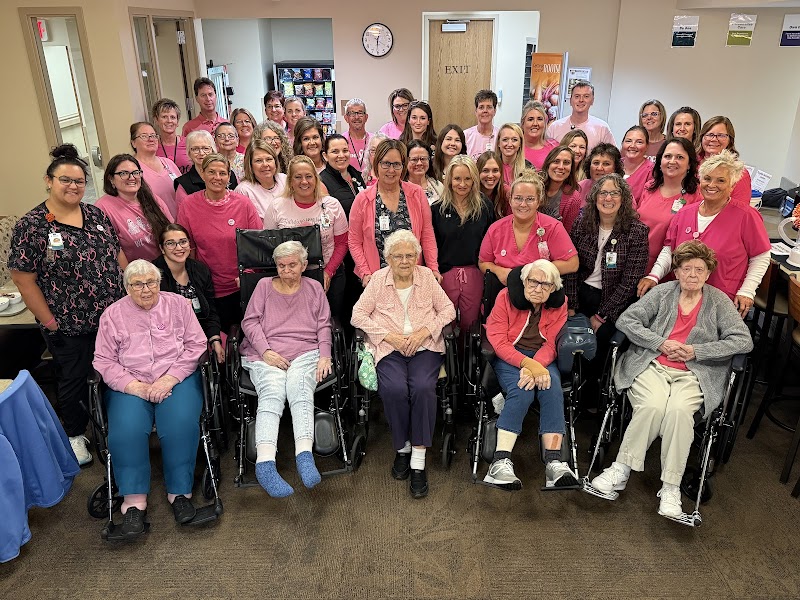
CMS rates Franklin General Hospital's staffing level at 5 out of 5 stars, which is much above average compared to other nursing homes. Staff turnover is 26%, compared to the Iowa average of 46%. This relatively stable workforce can support continuity of care.

What Have Inspectors Found at Franklin General Hospital?

State health inspectors documented 8 deficiencies at Franklin General Hospital during 2023 to 2025. These included: 8 with potential for harm.

Who Owns and Operates Franklin General Hospital?

Franklin General Hospital is owned by a government entity. Government-operated facilities are typically run by state, county, or municipal agencies. The facility operates independently rather than as part of a larger chain. With 52 certified beds and approximately 32 residents (about 62% occupancy), it is a smaller facility located in Hampton, Iowa.

How Does Franklin General Hospital Compare to Other Iowa Nursing Homes?

Compared to the 100 nursing homes in Iowa, Franklin General Hospital's overall rating (5 stars) is above the state average of 3.1, staff turnover (26%) is significantly lower than the state average of 46%, and health inspection rating (4 stars) is above the national benchmark.

What Should Families Ask When Visiting Franklin General Hospital?

Based on this facility's data, families visiting should ask: "Can I visit during a mealtime to observe dining assistance and food quality?" "How do you handle medical emergencies, and what is your hospital transfer rate?" "Can I speak with family members of current residents about their experience?"

Is Franklin General Hospital Safe?

Based on CMS inspection data, Franklin General Hospital has a clean safety record: no substantiated abuse findings (meaning no confirmed cases of resident harm), no Immediate Jeopardy citations (the most serious violation level indicating risk of serious injury or death), and is not on the Special Focus Facility watch list (a federal program monitoring the lowest-performing 1% of nursing homes). The facility has a 5-star overall rating and ranks #1 of 100 nursing homes in Iowa. While no facility is perfect, families should still ask about staff-to-resident ratios and recent inspection results during their visit.

Do Nurses at Franklin General Hospital Stick Around?

Staff at Franklin General Hospital tend to stick around. With a turnover rate of 26%, the facility is 19 percentage points below the Iowa average of 46%. Low turnover is a positive sign. It means caregivers have time to learn each resident's needs, medications, and personal preferences. Consistent staff also notice subtle changes in a resident's condition more quickly. Registered Nurse turnover is also low at 29%, meaning experienced RNs are available to handle complex medical needs.

Was Franklin General Hospital Ever Fined?

Franklin General Hospital has no federal fines on record. CMS issues fines when nursing homes fail to meet care standards or don't correct problems found during inspections. The absence of fines suggests the facility has either maintained compliance or corrected any issues before penalties were assessed. This is a positive indicator, though families should still review recent inspection reports for the full picture.

Is Franklin General Hospital on Any Federal Watch List?

Franklin General Hospital is not on any federal watch list. The most significant is the Special Focus Facility (SFF) program, which identifies the bottom 1% of nursing homes nationally based on persistent, serious quality problems. Not being on this list means the facility has avoided the pattern of deficiencies that triggers enhanced federal oversight. This is a positive indicator, though families should still review the facility's inspection history directly.