Good Samaritan Society - Indianola
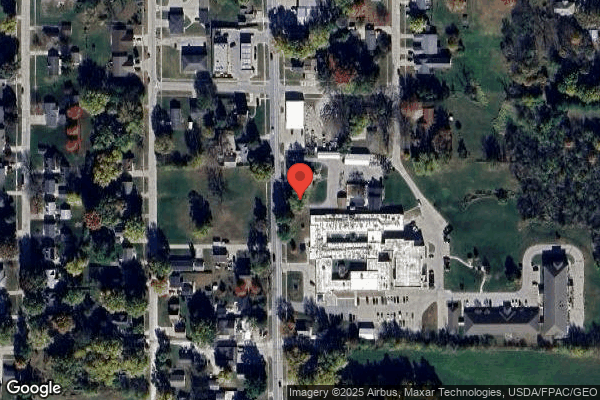
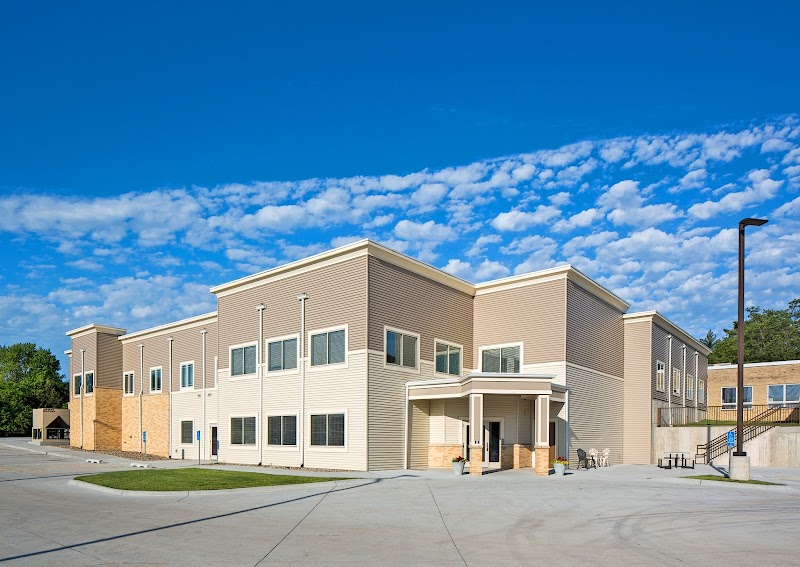
708 South Jefferson, Indianola, IA 50125 (515) 961-2596
Non profit - Corporation 115 Beds GOOD SAMARITAN SOCIETY Data: November 2025 1 Immediate Jeopardy citation
Trust Grade
0/100
#346 of 392 in IA
Last Inspection: April 2025

Within standard 12-15 month inspection cycle. Federal law requires annual inspections.

Overview

Good Samaritan Society - Indianola has received a Trust Grade of F, indicating significant concerns and a poor overall quality of care. They rank #346 out of 392 nursing homes in Iowa, placing them in the bottom half of facilities statewide, and #4 out of 6 in Warren County, meaning only two local options are worse. The facility's performance has been stable, with 15 reported issues in both 2024 and 2025. Staffing is rated at 2 out of 5 stars, which is below average, with a turnover rate of 49%, close to the state average. In terms of fines, they have accumulated $27,013, which is average for the state, but they have serious deficiencies in care. For instance, residents suffered from worsening pressure ulcers due to inadequate skin assessments and treatment, leading to hospitalization for surgical intervention. Additionally, there was a failure to protect a resident from abuse, and another resident did not receive necessary medical treatments, which may have resulted in hospitalization. While the facility does have average RN coverage, the significant issues raise serious concerns about the quality of care provided.

Trust Score
F
0/100
In Iowa
#346/392
Bottom 12%
Safety Record
High Risk
Review needed
Inspections
Holding Steady
15 → 15 violations
Staff Stability
⚠ Watch
49% turnover. Above average. Higher turnover means staff may not know residents' routines.
Penalties
✓ Good
$27,013 in fines. Lower than most Iowa facilities. Relatively clean record.
Skilled Nurses
○ Average
Each resident gets 35 minutes of Registered Nurse (RN) attention daily — about average for Iowa. RNs are the most trained staff who monitor for health changes.
Violations
⚠ Watch
33 deficiencies on record. Higher than average. Multiple issues found across inspections.
★☆☆☆☆
1.0
Overall Rating
★★☆☆☆
2.0
Staff Levels
★★☆☆☆
2.0
Care Quality
★☆☆☆☆
1.0
Inspection Score
Stable
2024: 15 issues
2025: 15 issues

The Good

  • Full Sprinkler Coverage · Fire safety systems throughout facility
  • No fines on record

Facility shows strength in fire safety.

The Bad

1-Star Overall Rating

Below Iowa average (3.0)

Significant quality concerns identified by CMS

Staff Turnover: 49%

Near Iowa avg (46%)

Higher turnover may affect care consistency

Federal Fines: $27,013

Below median ($33,413)

Moderate penalties - review what triggered them

Chain: GOOD SAMARITAN SOCIETY

Part of a multi-facility chain

Ask about local staffing decisions and management

The Ugly 33 deficiencies on record

1 life-threatening 4 actual harm
Jul 2025 4 deficiencies
CONCERN (D) 📢 Someone Reported This

A family member, employee, or ombudsman was alarmed enough to file a formal complaint

Potential for Harm - no one hurt, but risky conditions existed

Resident Rights (Tag F0550)

Could have caused harm · This affected 1 resident

Based on observations, record review, resident and staff interview, and policy review, the facility failed to speak to the resident in a manner that maintained dignity, failed to change a resident's s...

Read full inspector narrative →
Based on observations, record review, resident and staff interview, and policy review, the facility failed to speak to the resident in a manner that maintained dignity, failed to change a resident's stained shirt after putting the resident in bed (#4), and delayed feeding a dependent resident (#3). The facility reported a census of 88 residents. Findings include: 1. The Minimum Data Set (MDS) assessment for Resident #4 dated 6/5/25 revealed a Brief Interview for Mental Status (BIMS) score of 14 out of 15 which indicated completely intact cognition. It included diagnoses of cerebrovascular accident (stroke), hemiplegia (one-sided weakness), and chronic obstructive pulmonary disease (COPD). It also indicated the resident required setup assistance for eating and oral hygiene, maximal assistance with upper and lower body dressing and personal hygiene, and was dependent with all other aspects of Activities of Daily Living (ADLs) and mobility. The undated Care Plan revealed the resident had an ADL self-care performance deficit related to a stroke and indicated she required one (1) person assistance with getting dressed. On 7/29/25 at 8:35 am, Resident #4 asked Staff E, Maintenance Mechanic (MM) to take her out to smoke. Staff E abruptly replied “No, it's not my time. My time is 2:30” and walked away. At 8:38 am, Resident #4 was observed sitting in a wheelchair across from the nurses’ station wearing a shirt with a food stain down the center. She stated it happened during breakfast but stated it bothered her to be out in the hall in front of everyone with it stained. She said she would've liked to have had her shirt changed after breakfast. At 8:43 am, Staff A, Certified Nurse Aide (CNA) approached Resident #4 if she'd worn that shirt the previous day. Resident #4 replied it was the same color but was a different shirt. Staff A stated if it was the same shirt, she'd have to take her down to her room to change her. At 8:52 am, Staff A stated she asked Resident #4 about her shirt because of the stain on it. She also stated staff changes Resident #4’s shirt when they lay her down after she goes outside to smoke. She confirmed the scheduled smoking time was 9:00 am. At 9:16 am, Staff A transferred Resident #4 to bed and exited the resident’s room. At 9:18 am, Resident #4 was still wearing the stained shirt. At 9:55 am, Resident #4 stated she felt small and like she didn't matter when Staff E responded to her request to be taken outside to smoke. Resident #4 was still wearing the stained shirt. The facility policy titled Resident Dignity-Rehab/skilled revised 12/11/2024 indicated the purpose of the policy was: a. To maintain the dignity of all residents b. To promote, encourage, support and enhance the residents’ self-esteem c. To promote a sense of self-worth d. To assist with respecting and ensuring resident rights On 7/29/25 at 3:30 pm, the Director of Nursing (DON) stated the staff should have said the designated department will take you out to smoke at 9:00 am. She also stated staff should have changed her shirt after putting her in bed. 2. The MDS of Resident #3 dated 4/24/25 identified a BIMS score of 15, which indicated intact cognition. The MDS coded the resident required maximal assistance for eating. The MDS documented diagnoses which included multiple sclerosis and quadriplegia. The Care Plan of Resident #3 identified an undated Focus area of Activities of Daily Living (ADL) self care performance deficit related to quadriplegic, multiple sclerosis. The Care Plan directed the resident was dependent upon 1 staff assist for eating and must be at a 90 degree angle. On 7/29/25 at 11:50 am, Resident #3 arrived at the dining room with a large number of other residents having already received their meals. At 11:55 am a staff member arrived and took the resident's order for lunch. Her food arrived at 12:05 pm. Within one minute, the Administrator sat down to assist the resident with her meal and stayed with her for the approximate 30 minutes it took for her to finish her meal. On 7/29/25 at 12:39 pm, Resident #3 stated that it was unusual that the Administrator was the one to assist her with her meals. She stated other staff members are supposed to help her with her meals but they don't make it to the dining room on time. She stated she is normally the last person to get served because she does not get served until someone is available to help her eat. She stated she had raised concerns about this in the past. She stated she felt the staff cared about the other residents more than they did her and it was only their job to take care of the gray haired people and felt because she is a younger resident she does not get as much help. She stated she had reported this to the Registered Dietitian (RD) who spoke to the Administrator about her concerns. On 7/29/25 at 1:08 pm, the Administrator stated she was not typically the one to feed Resident #3 but if there is nobody else available she will assist her. She stated the Restorative Aide frequently helps. The Administrator stated Resident #3 had not directly ever stated any concerns to her about her meal service. She stated she has brought other concerns to her and tends to be very vocal. The Administrator stated she was not aware of concerns with meals. On 7/29/25 at 1:23 pm, the RD stated Resident #3 had brought concerns to her about eating assistance. She stated the former Activities Director used to assist her a lot and she is no longer employed at the facility. She stated Resident #3 had known the Activities Director a long time and they spent much time together. She stated Resident #3 prefers to skip breakfast but eats lunch in the dining room daily. She stated she often prefers the evening meal in her room which has been problematic with which staff member was responsible for getting her tray from the dining room and bringing it to her to feed her. Trays are not served to residents who need feeding assistance unless a staff member is available to assist so the food stays warm. She stated the resident had brought concerns to her more than once and she offered to discuss it with the facility management which Resident #3 agreed to. She stated she reported the concern to both the Administrator and the Director of Nursing. She stated the resident is unable to feed herself so the facility must provide that service regardless of if she eats in the dining room or her room. Due to her diagnosis of multiple sclerosis, she will always need the assistance. On 7/29/25 at 1:34 pm, the Certified Dietary Manager (CDM) stated Resident #3 typically does not receive her meal until someone is available to assist her with feeding. She explained that the resident chooses not to sit at the feeding assistance table, and staff feed the residents at that table before assisting Resident #3. The CDM further stated that if Resident #3 opts to eat in her room, this causes an additional delay. She explained that the resident must wait until a CNA is available to leave the floor, retrieve her meal from the dining room, and then feed her. The CDM confirmed that on the day of the observation, Resident #3 was the last resident to be served lunch and stated this occurs fairly often. The CDM reported that she had previously discussed this concern with facility management, which led to the intervention of Resident #3's meal not being served to her until a staff member was available to assist in feeding her, in an effort to ensure the food remained fresh and at an appropriate temperature. On 7/29/25 at 1:50 pm, the RD stated she had located an email she had sent to the Administrator and the Director of Nursing regarding Resident #3's concerns about meal service. The email, dated 6/10/25, documented that Resident #3 was experiencing long wait times to be fed since the departure of the Activity Director. The email noted that the RD had spoken directly with Resident #3, who had expressed a preference for the RD to advocate on her behalf. Resident #3 conveyed that she felt forgotten during meals. The RD explained that the resident required total assistance with eating and drinking and preferred to sit at a specific table. However, the RD noted that even relocating her to the front of the dining room would not resolve the issue as the Restorative Aide was often responsible for feeding, assisting and monitoring 8-10 other residents during meals. She concluded by asking the leadership team to collaborate to reach potential solutions to improve Resident #3's dining experience. The Director of Nursing replied to the email the same day stating she had just had a discussion in huddle regarding staff being present in the dining room for meals and would keep working on it. The Administrator also replied to the email stating she had checked on the presence of staff in the dining room the prior evening.
CONCERN (D) 📢 Someone Reported This

A family member, employee, or ombudsman was alarmed enough to file a formal complaint

Potential for Harm - no one hurt, but risky conditions existed

Deficiency F0761 (Tag F0761)

Could have caused harm · This affected 1 resident

Based on observations, staff interviews and policy review, the facility failed to secure prescribed medications from the possibility of unauthorized access. The facility reported a census of 88 reside...

Read full inspector narrative →
Based on observations, staff interviews and policy review, the facility failed to secure prescribed medications from the possibility of unauthorized access. The facility reported a census of 88 residents.Findings included: On 7/29/25 at 9:44 AM, Staff D, Certified Medication Aide (CMA) was observed administering resident's medications. She locked the medication cart and walked into the resident's room. An opaque medication cup was observed on the medication cart with an orange, round pill. A resident who self-propelled in his wheel-chair was observed 3 doors away.At 9:46 AM, Staff D returned to the medication cart, poured water into a cup and returned to the resident's room. The orange, round pill was observed still in the opaque medication cup on the medication cart.At 9:47 AM, Staff D returned to the medication cart. She stated the facility's medication handling and storage process was narcotics were locked in the lock box in the medication cart and all other medications were to be secured in the medication cart and not left accessible when staff leaves the cart unattended. At 9:49 AM, Staff D identified the orange, round pill as Senna (stool softener) and confirmed it should have been disposed of and not left unattended on the medication cart.A policy titled Medications: Acquisition Receiving Dispensing and Storage - R/S, LTC revised 03/04/2025 indicated:3. an employee will be responsible for signing for receipt of medication and obtaining the signature of the delivery person. It is preferred that a licensed nurse receive and verify the medications. Once medications are received, they will be secured in the appropriate storage area (i.e., medication cart or medication room). Licensed nurses and medication aides (when allowed by state law) are responsible for reconciling medications received.5. Medications will be stored in a locked medication cart, drawer or cupboard. Only the person passing medications and the director of nursing services and/or designee will be permitted to have access to the keys to the medication storage areas.On 7/29/25 at 4:19 PM, the Director of Nursing (DON) stated medications should be secured in the medication cart of appropriately disposed of not left unattended.
CONCERN (D) 📢 Someone Reported This

A family member, employee, or ombudsman was alarmed enough to file a formal complaint

Potential for Harm - no one hurt, but risky conditions existed

Infection Control (Tag F0880)

Could have caused harm · This affected 1 resident

Based on observations, staff interview, and policy review the facility failed to implement the infection control policy as staff failed to disinfect a mechanical lift between two residents' use (#4, #...

Read full inspector narrative →
Based on observations, staff interview, and policy review the facility failed to implement the infection control policy as staff failed to disinfect a mechanical lift between two residents' use (#4, #11). The facility reported a census of 88 residents.Findings include:On 7/29/25 at 9:16 AM, Staff A, Certified Nurse Aide (CNA) and Staff B, CNA transferred Resident #4 from her wheelchair to her bed. Staff A brought the mechanical lift out of Resident #4's room and placed it against the wall outside, beside Resident #4's door. The mechanical lift was not disinfected. At 9:41 AM, Staff B, CNA and Staff C, CNA took the mechanical lift into Resident #11's room to get Resident #11 out of bed. The mechanical lift was not disinfected prior to use. At 9:49 AM, Staff B, CNA brought the mechanical lift out of Resident #11's room and placed it against the wall between rooms 212 & 214. It was not disinfected. At 9:51 AM, Staff D, Certified Medication Aide (CMA) and Resident #11 stated there was no disinfectants (Saniwipes) kept in the resident's room. Staff D also stated disinfectants were not stored in any residents' rooms but were located at the nurses' station. At 9:57 AM, Staff C, CNA stated the Saniwipes were in the storage pouches on the back of the reusable equipment. At 9:58 AM, there was no Saniwipes observed in the storage pouch on the back of the mechanical lift. At 9:59 AM, Staff C, CNA stated staff wipes down the reusable equipment in the hallway after each use and during the night. She added that reusable equipment is not wiped down before being used. She stated the mechanical lift should have been wiped down after being used in Resident #4's room. On 7/29/25 at 3:30 PM, the Director of Nursing (DON) stated staff should have found the Saniwipes and disinfected the equipment. At 5:43 PM, the Administrator provided an email that the facility did not have a policy specific to disinfecting reusable equipment but indicated staff was expected to wipe down the lifts between use.
CONCERN (E) 📢 Someone Reported This

A family member, employee, or ombudsman was alarmed enough to file a formal complaint

Potential for Harm - no one hurt, but risky conditions existed

Deficiency F0725 (Tag F0725)

Could have caused harm · This affected multiple residents

Based on observation, resident and staff interview, and policy review, the facility failed to respond to resident call lights within 15 minutes for 3 of 6 residents reviewed (#7, #8, #9). The facility...

Read full inspector narrative →
Based on observation, resident and staff interview, and policy review, the facility failed to respond to resident call lights within 15 minutes for 3 of 6 residents reviewed (#7, #8, #9). The facility also failed to document 15-minute resident checks for Resident #12. The facility reported a census of 88 residents. Findings include: On 7/26/25 at 8:20 PM, State Surveyors entered the facility and observed activated resident call lights (#1, #4, #7, and #8). At 8:23 PM, the State Surveyor was near the nurse's station but without a direct line-of-sight. Staff was overheard having personal conversations while visiting amongst themselves. At 8:25 PM, Resident #9's call light was activated. At 8:26 PM, two (2) staff members passed Residents #1, #4, and #7's rooms and left the unit. At 8:29 PM, a staff member turned off Resident #13's call light and entered Resident #11's room with a mechanical lift. At 8:32 PM, the resident call light notification device at the nurses' station revealed Resident #7's call light had been activated for 20 minutes. At 8:42 PM, a staff member was observed entering Resident #9's room. The resident call light notification device revealed her call light had been activated for 16 1/2 minutes. At 8:43 PM, the resident call light notification device at the nurses' station revealed Resident #8's call light had been activated for 29 minutes. At 8:48 PM, Resident #4 stated evening shift is always short staffed in her opinion. At 9:02 PM, Staff F, Certified Medication Aide (CMA) and Staff G, Certified Nurse Aide (CNA) stated Resident #13 complained that evening about long call light response times. At 9:16 PM, Resident #13 confirmed she complained to staff about long call light response times on 7/26/25. She also stated it happens all the time and on 7/26/25, it took staff 45 minutes to respond to her call light. She stated staff has previously entered her room, turned off the call light, and left. At 9:28 pm, a staff member was observed walking past Resident #8's activated call light and responded to Resident #9's call light. On 7/28/25 at 3:14 PM, Resident #1 stated, she had to wait more than 15 minutes on 7/27/25 to get bathroom assistance after lunch because of lack of staff. 2. The Minimum Data Set (MDS) assessment for Resident #1 dated 7/10/25 revealed a Brief Interview for Mental Status (BIMS) score of 15 out of 15 which indicated completely intact cognition. It included diagnoses of hypertension, chronic obstructive pulmonary disease (COPD), difficulty walking, and abnormalities of gait and mobility. It indicated she was independent with eating and oral hygiene, required setup assistance with bathing and personal hygiene, supervision with toileting, upper body dressing and sitting-to-lying mobility, and moderate assistance with all other Activities of Daily Living (ADLs) and mobility. The undated Care Plan indicated the resident was non-ambulatory and preferred to use the commode for urinary elimination. It directed staff to encourage and assist the resident with repositioning frequently in bed and wheelchair. On 7/28/25 at 3:31 PM, Resident #4 stated it took staff so long to respond to her call light on 7/27/25 around 4:00 PM, she urinated on herself because she couldn't hold it any longer. 3.The Quarterly Minimum Data Set (MDS) assessment for Resident #4 dated 6/25/25 revealed a Brief Interview for Mental Status (BIMS) score of 14 out of 15 which indicated completely intact cognition. It included diagnoses of cerebrovascular accident (stroke), hemiplegia (one-sided weakness), and chronic obstructive pulmonary disease (COPD). It also indicated the resident required setup assistance for eating and oral hygiene, maximal assistance with upper and lower body dressing and personal hygiene, and was dependent with all other aspects of Activities of Daily Living (ADLs) and mobility. It also revealed she was incontinent or bladder and bowel. The undated Care Plan revealed the resident had bladder incontinence and directed staff to check and change her frequently. 4 4. The Quarterly MDS assessment for Resident #12 dated 7/17/25 revealed a Brief Interview for Mental Status (BIMS) score of 07 out of 15, which indicated severely impaired cognition. It included diagnoses of cancer, coronary artery disease (narrowed heart arteries), diabetes mellitus, Alzheimer's disease, and non-Alzheimer's dementia with other behavioral disturbances. It indicated he was independent with eating and toileting, required setup assistance with oral and personal hygiene, and dressing, and supervision bathing. It also indicated he was independent with mobility. It further revealed the resident experienced hallucinations and delusions.The Care Plan dated 11/07/24 indicated the resident displayed inappropriate sexual advances towards another resident related to Fondling, Grabbing, Touching. A Care Plan revision dated 4/16/25 directed staff to perform 15-minute checks on resident while using monitor at nurses' station which room. is in line of site, and when outside of room resident is to be a 1:1.On 7/26/25 at 8:56 pm, a form titled 15-minute checks was observed at the nurses' station. It was filled out through 8:30 PM. An observation started at 8:58 pm and at 9:11 pm, a staff member was observed checking on the resident. A room sensor beeped when anyone entered or exited the room. On 7/29/25 at 12:56 PM, a record review revealed missing 15-minute checks documentation for the following dates:a. 7/19/25 at 2:45 PM and 3:00 PMb. 7/20/25 at 2:30 PM and 2:45 PMc. 7/22/25 from 2:30 PM through 5:45 PMd. 7/24/25 from 6:15 PM through 11:45 PMe. 7/25/25 from 12:00 AM (midnight) through 5:45 AMf. 7/27/25 from 6:30 AM through 9:45 AMg. 7/28/25 at 12:15 PMStaff H, Registered Nurse (RN) stated the missing documentation could be due to the 15-minute checks being documented on a different sheet and not transferred over to the current papers. He also stated missing documentation could be it just wasn't done. He stated he felt the resident could be put on hourly checks due to current physical limitations but is currently still on 15-minute checks.A policy titled Call Light-R/S, LTC, Therapy & Rehab revised 07/08/2025 indicated the purpose of the policy was:a. To ensure residents always have a method of calling for assistanceb. To promptly answer resident's call light It also indicated the procedure as:1. New admission - explain and demonstrate the use of call light system.2. When resident's call light is observed/heard, go to resident's room promptly.3. Respond to request as soon as possible. Turn call light off and inquire about resident's request.4. When leaving the room, place call light within easy reach of resident.5. For residents unable to use call light, care plan appropriate interventions and provide an adaptive call light if applicable.6. Each facility is responsible for having an alternate method of communication during a loss of power or call light system failure. On 7/29/25 at 3:30 PM, the Administrator stated staff should walkie-talkie for staff assistance with call lights and/or transfers. On 7/29/25 at 1:31 PM, the Director of Nursing (DON) stated the 15-minute checks form is the only place staff should document checking on the resident.
Apr 2025 7 deficiencies 1 Harm
SERIOUS (G) 📢 Someone Reported This

A family member, employee, or ombudsman was alarmed enough to file a formal complaint

Actual Harm - a resident was hurt due to facility failures

Free from Abuse/Neglect (Tag F0600)

A resident was harmed · This affected 1 resident

**NOTE- TERMS IN BRACKETS HAVE BEEN EDITED TO PROTECT CONFIDENTIALITY** Based on record review, observations, resident and staff interview, and policy review the facility failed to protect residents f...

Read full inspector narrative →
**NOTE- TERMS IN BRACKETS HAVE BEEN EDITED TO PROTECT CONFIDENTIALITY** Based on record review, observations, resident and staff interview, and policy review the facility failed to protect residents from abuse for 1 of 2 residents reviewed for abuse (Residents #69). The facility reported a census of 81 residents. Findings include: The Quarterly Minimum Data Set (MDS) assessment dated [DATE] revealed Resident #50 had diagnoses of cancer, Alzheimer's Disease, dementia, and diabetes. The MDS recorded the resident had impaired short-term and long-term memory, severely impaired decision-making skills, and inattention. The MDS revealed the resident had a wanderguard alarm, and had independence with transfers. The MDS assessment dated [DATE] revealed Resident #50 had diagnoses of sexual dysfunction not due to a substance or known physiological condition, dementia, and malignant neoplasm of the pancreatic duct. The MDS documented the resident had a Brief Interview for Mental Status (BIMS) score of 6, indicating severely impaired cognition. The MDS recorded the resident had no behaviors, and did not have an alarm or wanderguard. The MDS indicated the resident independent for transfers and had the ability to ambulate at least 150 feet independently. The Care Plan initiated 11/7/24 and revised on 2/28/25 revealed the resident had impaired cognition and thought processes related to dementia. The resident ambulated and transferred independently with and without a cane. The Care Plan revealed the resident displayed inappropriate sexual advances towards another resident related to fondling, grabbing and touching the resident (initiated 11/7/24). The Care Plan directed staff to monitor the involved residents and know the resident's whereabouts, specifically while the resident was in the hallway (added on 11/7/24). A motion detector sensor was placed on the resident's door (added on 2/27/25), and 15-minute checks utilizing a monitor at the nurse's station and 1:1 whenever the resident was outside of his room (added to the care plan on 4/16/25). The Order Summary revealed the following orders: 11/7/24 - Medroxyprogesterone Acetate (a hormone) 20 milligrams (mg) daily for hypersexual behavior 2/24/25 - send Resident #50 to the Emergency Department (ED) for complaints of chest pain, shortness of breath (SOB), and elevated blood pressure. 2/24/25 - Sertraline (an antidepressant) increased to 75 mg by mouth (PO) daily 2/25/25 - obtain a UA (urinalysis) for increased behaviors for 2 days. 2/26/25 - Doxycycline (antibiotic) 100 mg BID (twice a day) for 10 days and Prednisone 20 mg daily for 7 days for pneumonia. 4/24/25 - increase Medroxyprogesterone to 40 mg PO daily for hypersexual behavior Incident reports revealed the following: a. On 11/5/24 at 4:42 PM, Staff H, certified nursing assistant (CNA), heard a female resident state no, no, no and turned to see Resident #50 cupping the female resident's vagina through her clothing while the resident stood in the hallway. Resident #50 was told to stop. Resident #50 stopped and walked away from the female resident. Resident #50 was placed on medication for sexual behavior. Resident #50 ambulatory without assistance and oriented to person. Resident #50 snickered when staff asked him what happened. Resident #50 said no when staff asked him if he touched the lady. Resident #50 educated is was inappropriate to touch other residents. A medication review was completed. b. On 2/23/25 at 11:00 AM, Registered Nurse (RN) paged to a resident's room STAT (immediately). CNA notified the nurse a male resident was in a female resident's room touching the resident inappropriately. CNA immediately told male resident to stop, do not touch her, get out, that is not ok. Male resident was directed back to his room. A full assessment was completed. Female resident was lying in bed sleeping with her brief pulled down. She stated not remembering what happened. Female resident notified of what occurred and became tearful. Resident #69 said she did not say Resident #50 could do that. Male resident placed on 1:1 observations. Resident #50 stated I know what I was doing, I needed to please her and that is what I was going to do. Resident #50 notified he could not to go into (resident) rooms that aren't his. The Director of Nursing (DON), Nurse Practitioner (NP), Assistant Director of Nursing (ADON), Administrator, and family were notified. The Quarterly MDS dated [DATE] documented Resident#69 had diagnoses including, Stroke, difficulty swallowing, left sided weakness, slurred speech, and muscle weakness. The MDS revealed the resident required total assistance of staff for transfers, and dressing. The MDS did not reveal any mood or behavior concerns. The Annual Assessment MDS dated [DATE] documented Resident#69 had the following symptoms present nearly every day over the last two weeks; trouble falling or staying asleep, or sleeping too much, feeling tired or having little energy. The MDS revealed the resident had the following symptoms present 2-6 days in a 14 day look-back period, trouble concentrating on things, such as reading the newspaper or watching TV, moving or speaking so slowly that other people could have noticed, to the opposite- being so fidgety or restless that you have been moving around a lot more than usual. The Facility's Investigation File revealed a summary of the incident that occurred on 2/23/25: Staff G, RN, paged to Resident #69's room STAT. Staff F, Certified Medication Aide (CMA), notified Staff G she walked in on Resident #50 in Resident #69's room and found him touching Resident #69 inappropriately. The residents were separated immediately. Staff F stated to the Administrator she saw Resident #50 within the last 5 minutes and at that time he was not in Resident #69's room. Resident #50 had not had previous inappropriate sexual behaviors with Resident #69. The staff noted Resident #50 was not at baseline on this day. He spoke non-stop and something just seemed off. It was noted later that he had an infection (pneumonia). A UA was obtained on 2/28/25. Resident #69 had a BIMS of 13, indicating intact cognition. Resident #69 stated to Staff G she was confused about what was going on and she was alarmed by all of the yelling by staff as she had been relaxing in her bed half asleep when Resident #50 came into the room. She told the nurse she was not traumatized by the event. A full body assessment revealed no concerns. Social Services (SS) followed up with both residents for 3 days. Resident #50 had a BIMS of 3. He was unable to sign a statement due to his cognition and functional conditions. Resident #50 had expressed his preference to spend most of the time in his room but he came out of his room at times. Resident #50 moved to a different room away from Resident #69, by all male residents and nearby the nurse's station in order to keep an eye on him. Staff stated they felt the root cause of the resident's behavior may have been related to an infection. The police were contacted. A Psychiatry (Psych) visit occurred on 2/27/25. The physician reviewed the resident's medication and increased Sertraline to 75 mg for sexual behavior on 2/23/25 at 4:04 PM. An order for Prednisone 20 mg daily for pneumonia started on 2/26/25. The Ombudsman visited the facility on 2/27/25. Resident #69 had no concerns regarding the event and felt the facility addressed everything accordingly. A room change was offered to her but she declined. A motion detector monitor and baby monitor placed to ensure staff got alerted if Resident #50 was awake and to monitor if he came out of his room. Other female residents in the facility that had the potential to be impacted stated they felt safe and had no issues with the male resident. A typed statement dated 2/23/25 revealed Staff F, CMA, went to get a blood sugar on Resident #50's roommate. Resident #50 was not in the room. Staff F went to look for Resident #50 throughout the building where he normally went. Staff F started opening doors and checked other residents' rooms and found Resident #50 in Resident #69's room. Staff F saw Resident #50 sitting at the foot of Resident #69's bed with her brief all the way undone and his hand between her legs. Staff F was unsure if Resident #50 penetrated Resident #69. Staff F told Resident #50 to stop, don't touch Resident #69, that is not ok, this is not his room. Resident #69 woke up and looked like what is going on? Resident #50 got out of Resident #69's room. Staff F called for Staff G to get there STAT. Staff then met up at the nurse's station to call the people that needed notified. Resident #50 came out of his room looking for Resident #69 again. The police came ten minutes later. Staff F showed the police officer what happened and what she walked into. Resident #50 was placed on 1:1 watch while staff figured out what to do. An undated typed statement from the Administrator revealed the Administrator spoke with Staff F again on 2/28/25. Staff F witnessed the female resident's brief located to the side and the male resident by the bed next to her in a wheelchair with his hand by her legs. Staff F had just seen Resident #50 less than five minutes before. Staff F went to administer medications to Resident #50's roommate, then Staff F went to administer Resident #50's medications and found Resident #50 in Resident #69's room. Staff F screamed at Resident #50 because she assumed he was touching Resident #69 because her brief had been pulled to the side. Staff F said that startled Resident #69. She again told the Administrator she immediately separated the two residents and got the nurse. A written statement by Staff G, RN, revealed: RN was paged to Resident #69's room STAT. The CNA notified the nurse that the male resident was in the female resident's room touching the resident inappropriately. The CNA told the male resident to stop, do not touch her, get out, that is not ok. The male resident was directed back to his room. A full assessment was completed. The female resident was lying in bed with her brief pulled down. Resident #69 stated not remembering what happened. Resident #69 was notified about the incident and she was tearful. Resident #69 stated she did not say he could do that. Resident #69 stated she is ok at that time. Resident #50 in his room on 1:1 observation. Resident #50 stated he knew what he was doing. He needed to please her and that is what he was going to do. Resident #50 was notified he could not go into rooms that are not his. The DON, NP, ADON, Administrator and families of both residents notified. A typed statement signed by Resident #69 on 2/23/25 revealed the resident stated she did not remember what happened. Resident #69 said she did not say that Resident #50 could do that. Police Reports revealed: a. On 11/04/2024 at approximately 3:35 PM, an officer responded to the facility for a report of sexual abuse between residents. The officer met with the staff who witnessed to event. Staff O stated that at approximately 5:00 PM, Resident #50 and Resident #37 walked down opposite sides of the hallway. Staff O stated she saw Resident #50 grab Resident #37 vagina over her clothing and stated there it is. Staff O escorted Resident #50 back to his room and he was giggly but that is his normal demeanor. Staff O stated that Resident #50 had dementia and did not understand what he had done due to his mental status. Staff O also stated that Resident #37 was autistic and unable to comprehend what had happened. Staff at the facility stated they contacted the family members of both individuals regarding plans moving forward. It was reported that Resident #50 would have another psych evaluation and medication review to help treat his condition and for the safety of others in the facility. Staff reported they would make sure Resident #50 kept separate from Resident #37 in the future. b. On 2/23/2025 around 10:56 AM, a police officer was dispatched to the facility for a report of sexually inappropriate activity. Staff G stated that earlier that AM, a nurse walked into a female resident's room and observed her diaper around her ankles while a male was performing a sex act on her. The female victim, Resident #69, was sleeping during the assault. Resident #69 suffers heavily from dementia. She stated that she did not remember anything that happened. Resident #69 stated that she was told a man was in her room that AM. Resident #69 stated that she did not remember anything about the incident. She stated that her legs were in some pain, but that she had leg pain daily. Resident #69 stated that she had no knowledge of who the male was. The Officer then spoke with Resident #50. Resident #50 stated that he went into Resident #69's room and asked her if he could try what I wanted to try and she agreed. Resident #50 then began rambling incoherently about sexual things that happened in his past. Resident #50 stated that he knew what he was doing and also acknowledged that it was wrong. Resident #50 began rambling incoherently about people unrelated to the incident. The police officer asked Resident #50 if he knew he was supposed to stay in his room and not visit Resident #69 anymore and Resident #50 acknowledged. The officer then spoke with staff who witnessed the incident. Staff F stated that when she walked into Resident #69's room, Resident #50 was sitting at the foot of Resident #69's bed. Resident #69's undergarments were around her knees/ankles and Resident #50 appeared to be touching Resident #69's vagina. Staff F then confronted Resident #50 and he exited the room. Resident #50's Progress Notes revealed the following: a. On 10/24/24 at 5:17 PM, resident inappropriately touched a CNA while she gave him medication. Resident educated and hand removed (from the area). b. On 11/4/24 at 5:44 PM, resident touched another resident in the private area as he passed by her in the hallway. CNA present at this time and separated the residents. Resident #50 snickered when he was asked what happened. Resident #50 asked if he touched the lady resident. He said no. Resident educated not to touch other residents. Medications reviewed. c. On 11/6/24 at 1:15 PM (late entry), around 7:45 AM, Resident #50 asked the housekeeper to get into bed with him. He then stated, your pants are baggy. Your ass would look better if your pants were off. d. On 11/6/24 at 1:49 PM, attempted to call the resident's representative to inform of the resident's behaviors. New orders received from the NP to start hormone and antidepressant medications for hypersexual behaviors. NP declined to refer the resident to psych because the resident had declined to see psych in the past. e. On 11/8/24 at 3:10 PM, information added to the Care Plan to include monitoring the resident in the hallways because he most frequently exhibited behaviors with other residents in this area, and to monitor the resident during meal times when he was outside of his room as well as in the dining room. f. On 11/21/24 at 8:32 AM, CMA tried to administer Medroxyprogesterone medication for hypersexual behavior but the resident refused the medication three times. g. On 1/29/25 at 5:35 PM, resident came up behind dietary aide and tried to get handsy with her. Resident was asked to leave the dining room. h. On 2/23/25 at 11:00 AM, RN paged to Resident #69's room STAT. The CNA notified the RN that Resident #50 found in Resident #69's room touching a female resident inappropriately. CNA immediately told Resident #50 to Stop, do not touch her, get out, and that his actions were not okay. Resident #50 was directed back to his room and placed on 1:1 observations. Resident #50 stated I know what I was doing, I needed to please her and that is what I was going to do. Resident #50 notified he was not to go into any rooms that are not his. i. On 2/23/25 at 12:58 PM, Resident #50 moved to another room away from the female resident, closer to the nurse's station, and by other male residents. A motion sensor was placed on the door. j. On 2/23/25 at 4:04 PM, order obtained to increase Sertraline to 75 mg PO once a day for hypersexual behaviors. k. On 2/24/25 at 12:01 AM, resident on 1:1 for sexual behaviors. At 12:15 AM, resident sent to the ED for complaints of chest pain and shortness of breath. At 5:55 AM, the ED nurse advised the facility that the resident would be returning to the facility. l. On 2/24/25 at 3:35 PM, psych referral for sexual aggression and medication management. Hope Harbor was called to look for a locked male unit. m. On 2/25/25 at 2:39, resident talked to the aide in his room and stated he and his buddy used to go looking for 5-year olds and used to molest/please the little girls. n. On 2/25/25 at 5:42 PM, order for UA collected due to resident increased behaviors. o. On 2/26/25 at 2:58 PM, visual monitor in resident's room and at the nurses station to monitor Resident #50's activity. Resident room is insight of the nurse's station. p. On 2/27/25 at 1:16 AM, resident noted to be playing with his penis upon check and change. Resident advised to stop but not easily redirected. q. On 2/27/25 at 7:31 AM, SS Coordinator attempted to talk to Resident #50 over the past two days about the incident but he was sleeping. r. On 3/13/25 at 12:56 AM, resident yelling at staff for not letting him go to his old room. s. On 3/26/25 at 2:11 AM, resident not been sleeping at night. He requested all night long to go to the dining room. He was not easily redirected because within a few minutes he was back up and tried to go to the dining room again. A message was sent to the physician. t. On 4/9/25 at 1:45 AM, resident asked staff about people being up and down the hall having sex. Resident talked about his penis and how big or small his penis was and he talked about having sex. Resident not easily redirected. u. On 4/16/25 at 9:48 PM, per the Administrator on 4/16/25 at 9:41 PM, the resident is supposed to be on routine 15-minute checks for being outside of his room without supervision due to an allegation incident that was unwitnessed earlier in the day. v. On 4/24/25 at 9:04 AM, SS Coordinator left a message for Hope Harbor to see if the resident would qualify for placement. A NP Visit Note dated 2/24/25 revealed Resident #50 had increased sexual aggressive behaviors and a fall over the weekend. The resident was evaluated in ED but had no new diagnosis or change in the plan of care. He is on Sertraline and Medroxyprogesterone for hypersexual behavior. The NP recommended a psych consult for sexual aggression and medication management. Resident #50 was moved closer to the nurse's station and the plan of care was reviewed. Medications reviewed with no changes. The Plan of Care included to observe for change in condition and notify the provider with any questions or concerns. Continue prevention, and practice proactive medical treatment to allow the resident to remain in the home. The Physician's Encounter Note dated 3/3/25 revealed Resident #50 was evaluated in the ED for an atypical infection. Resident #50 started on doxycycline and Prednisone. A UA was negative. Pulse oximetry 96% on RA (room air). A previous visit on 2/26/25, it was reported Resident #50 had an inappropriate altercation with a fellow resident as he had entered the resident's room and grabbed the genital area. The action was unprovoked. He was with recall and stated he was talked to and he had told the staff he would not do again. He was placed in another room and required 1:1. Resident #50 sustained a fall and was transported to the ED. The CT findings revealed suspected pneumonia. Resident #50 had decreased appetite and slept more than fifteen hours a day. Reported the resident had increased sexual behaviors and inappropriate verbalization and physical contact. Sertraline and Medroxyprogesterone was initiated. The resident also had diagnosis of progressive dementia and pancreatic cancer. A Psychiatric assessment dated [DATE] revealed Resident #50 referred for sexually inappropriate behavior. The resident had diagnoses of adjustment disorder with mixed disturbance of emotions, Alzheimer's Disease, and dementia with behavioral disturbance. No new orders. A Fax communication dated 3/26/25 revealed the resident antsy, not sleeping at night, and came out of his room at night. Observations revealed the following: a. On 4/22/25 at 9:58 AM, Resident #50 smiled and laughed as he spoke to the surveyor. An alarm sounded while the resident was lying in bed. Staff A, RN, responded to the resident's room. Staff A adjusted the alarm pad under the resident and reset the alarm but the alarm continued to sound. Staff A stated he thought maybe the batteries needed to be replaced. b. On 4/23/25 at 7:43 AM, Resident #50 sat in bed looking toward the doorway of the room and smiled. The door to the DON's office was closed and locked. Staff A, RN, stood by the nurse's desk. c. On 4/23/25 at 11:10 AM, Resident #50 sat on the bed in his room. The DON's office door was open but no staff observed in the office. A staff person walked with another resident down the 200 hall. d. On 4/23/25 at 12:14 PM, Resident #69 sat in a wheelchair by the nurse's station (2 doors from Resident #50). e. On 4/23/25 at 2:54 PM, Resident #69 propelled her wheelchair down the 200 hall until Staff A offered to push the resident in the wheelchair to her room. f. On 4/23/25 at 3:00 PM, Resident #50 sat in a chair in his room approximately 5 feet from the doorway of his room. The resident smiled and talked to himself. 2. The MDS assessment dated [DATE] revealed Resident #69 had diagnoses of cerebrovascular accident (CVA)(stroke), hemiplegia, and muscle weakness. The MDS documented the resident had a BIMS of 13, indicating intact cognition. The MDS recorded the resident had impaired range of motion on one side of her body. She required partial to moderate assistance for bed mobility, and had dependence on staff for lower body dressing and transfers. The MDS documented the resident had no behaviors. The Care Plan revised on 6/11/24 revealed Resident #69 had limited physical mobility related to a stroke and hemiplegia that affected the left side of her body. The resident was non-ambulatory and required assistance with activities of daily living (ADL's) such as dressing and bed mobility. The Care Plan lacked information about a resident-to-resident incident. An Incident Report completed on Resident #69 revealed a staff statement entered on 2/23/25. Staff F found Resident #50 wandering the halls going in and out of female resident rooms. Staff redirected Resident #50 to his room. Staff F took him back to his room where he told Staff F he was going to pleasure her, she needed to be pleasured. Resident #50 then went into his room and went into the bathroom. Staff F then went and did blood sugars on the [NAME] Hall. Staff D and Staff E shut all of the female doors. When Staff F went to get a blood sugar on Resident #50's roommate, Resident #50 was not in the room. Staff F then looked for Resident #50. Staff F checked the building on where Resident #50 normally went. Staff F began to open the doors to the female rooms and found Resident #50 and Resident #69. Staff F saw Resident #50 sitting at the foot of Resident #69's bed with her brief all the way undone and Resident #50's hand between Resident #69's legs. Resident #50 was touching Resident #69. Staff F told Resident #50 to stop, don't touch her, that is not ok, this is not your room. That is when Resident #69 woke up and looked at Staff F like what is going on? Resident #50 got out of the room and Staff F called for the RN STAT. When staff met at the nurse's station to call people, Resident #50 came out of his room looking for Resident #69's room again. The police arrived 10 minutes later. Staff F told the police what happened and what she walked into. Resident #50 placed on 1:1 while staff figured out what to do next. The physician, Administrator, police, and family were notified. The Weekly Skin Observation dated 2/21/25 at 9:27 PM revealed no skin conditions observed. On 2/28/25 at 4:14 PM, no skin concerns noted. Barrier cream continued to her groin. A Progress Note dated 2/23/25 at 11:45 AM but created on 2/27/25 at 12:57 PM revealed a complete RN assessment completed on Resident #69. No signs of physical trauma noted to the resident's body. The resident denied pain. Staff stayed with the resident and assisted with cares and ADL's, then assisted the resident into the wheelchair per her request. Staff continued to monitor the resident. Progress Notes revealed the following: a. On 2/23/25 at 12:46 PM, Staff G stated to the Administrator that she had spoken with Resident #69 right after the incident with the male resident. At first Resident #69 was tearful because she was not sure what was going on initially but stated that it was not traumatic to her. Social Services to follow up for 3 days. b. On 2/24/25 at 12:16 AM, Resident #69 spoke with the nurse about the incident this morning and resident very sad that it happened. Encouraged her to seek out staff if she needs to talk. c. On 2/24/25 at 3:49 PM, SS Coordinator asked Resident #69 what happened over the weekend. Resident #69 advised she was awakened by screaming and it scared her as she thought she was hurt. A male resident was removed from her room. She later stated she noticed hand marks where the male resident apparently held her down. She was upset and stated she had reached out to have her therapist work with her. She was more upset from the commotion rather than the actual situation. d. On 2/25/25 at 3:04 AM, resident does not remember any of the incident that happened. Resident states she only knew what people had told her what happened. She stated she knew he was not supposed to be around her. She stated she didn't even know what he looked like. e. On 2/25/25 at 12:10 PM, SS Coordinator spoke to resident regarding the incident over the weekend. She stated she was not traumatized by the issue. She just wanted to know why it happened. She thought she did something. Resident was reassured it was not her. In an interview on 4/22/25 at 9:45 AM, Resident #69 reported a male resident lived down the hall from her. He came into her room and raped her a month or so ago. She was lying in bed. He took her brief off. She doesn't think he penetrated her but she doesn't know for sure. Staff yelled at him and asked him what he was doing, and got him away from her. Resident #69 stated the male resident had come and stood at her door but staff had caught him in time. Resident #69 reported she had a stroke and unable to move her left arm or leg. Resident #50 got moved to another room down the hall from her. The facility staff put a motion detector on him to keep track of him. Resident #69 stated she was concerned if he would come into her room at night. Resident #69 was tearful as she spoke with the surveyor about the incident. During confidential interviews with three other interviewable residents on 4/24/25, the female residents reported they had not had any staff or residents touch them inappropriately. The female residents reported they would yell if that happened to them. One female resident reported the staff don't like it when she spoke up about something that was not right. Staff told her to mind her own business and worry about herself. Resident #69 told one female resident what happened. One female resident didn't think the facility did enough to keep the male resident from going into other people's rooms. The female resident had asked the facility staff to move her bed to face the door so she could see if someone was coming into her room but they never moved her bed to face the door. One female resident recalled Resident #69's bed faced the window at the time of the incident but now her head of the bed faced the door. The female residents voiced concern the facility could retaliate for talking with the surveyor. Another female resident reported a male resident came into her room uninvited one time looking for his wife. When asked if she would feel uncomfortable with a male resident coming into her room, she said it would depend if the resident was with it. Some people had dementia or another diagnoses and that made people sometimes do things. Another female resident reported Resident #50, a male resident, walked into her room uninvited but she yelled at him and scared him off. She was fortunate. Resident #50 is wacko. The female resident reported an alarm goes off now if Resident #50 went out of his room. She had worked with therapy and built up her strength. She thought she would be able to flatten him if he tried to do anything to her. On the day Resident #50 came into her room she turned on her call light. Staff were busy with other residents at the time. When the CNA came in, she told the CNA she saw Resident #50 going in and out of the resident rooms. Staff got him to his room. The next thing she heard was a big commotion going on next door to her and he was found in Resident #69's room. The resident stated staff can't always come right away but she wanted to feel safe in her home. She is able to stand up for herself and she could talk or yell but not all residents could. In an interview 4/24/25 at 9:00 AM, Resident #69 reported she talked with another female resident about the incident that occurred with a male resident. A staff member came up to her and the resident and told her not to say anything about the incident. In an interview 4/22/25 at 2:45 PM, Staff A, RN, reported Resident #50 tended to be a lot more mobile at night and he slept during the day. He shared a bathroom with another male resident. Resident #50 had some behaviors. The resident's door had a motion sensor and the bathroom door had a doorbell chime. The chime was plugged into an outlet and sounded at the nurse's station. The alarms had distinct sounds. Staff A reported he kept Resident #50 in his line of site and listened for the doorbells. An alarm also went off if Resident #50 tried to get up without assistance. The resident mainly came out of his room for a shower and some meals. Resident #50 was 1:1 after the incident with Resident #69, but he had been on 15-minute checks for the past week due to him being more mobile. His room was located right across from the DON's office. Staff A reported Resident #50 came out of his room at night, walked to the nurse's station to get a snack or talked to staff, then went back to his room. He was not a group social person but he would talk 1:1 and had a conversation with people. Staff A reported he was not aware of other incidents when Resident #50 had been inappropriate with other residents. Staff A reported Resident #69 was alert and oriented x 4. She could be dramatic and get things blown out of proportion. She had nightmares or vivid dreams and said things happened but in reality things had not happened. In an interview 4/22/25 at 2:55 PM, Staff G, RN/Clinical Care Coordinator reported on the day of the incident with Resident #50 and Resident #69, Staff G got called to Resident #69's room. Resident #69 was in her room sleeping. Resident #50 went into Resident #69's room. Staff F told Staff G she found Resident #69's brief undone. Staff F told Resident #50 he needed to leave. Resident #69 was ok. Social Services came and talked with her. Resident #50 was placed on 1:1. Staff G called activities in to sit with him and called the physician. The police came in. Resident #50 had made sexual remarks in the past. He randomly said things to staff that made them feel uncomfortable. There was a note in the computer for staff to be aware of him and monitor for any behaviors. Resident #50 had some medication changes as he had had a mental health diagnosis in the past. Staff G reported when she first started working at the facility she worked in another unit but she observed residents in the dining room. She saw Resident #50 and his interactions with staff and the residents. He was more reserved. He would get up and go out of the dining room or the area. He was not a big communicator. He walked independently. He would come out of his room and ask for snacks. Staff G reported she paid more attention to him after the incident. Staff G stated she had seen a decline
CONCERN (D)

Potential for Harm - no one hurt, but risky conditions existed

Deficiency F0578 (Tag F0578)

Could have caused harm · This affected 1 resident

**NOTE- TERMS IN BRACKETS HAVE BEEN EDITED TO PROTECT CONFIDENTIALITY** Based on clinical record review, policy review, and staff interview, the facility failed to ensure staff had access to an accura...

Read full inspector narrative →
**NOTE- TERMS IN BRACKETS HAVE BEEN EDITED TO PROTECT CONFIDENTIALITY** Based on clinical record review, policy review, and staff interview, the facility failed to ensure staff had access to an accurate code status for 1 of 24 residents reviewed for advance directives (Resident #16). The facility reported a census of 81 residents. Findings include: The Quarterly Minimum Data Set(MDS) assessment tool, dated [DATE], listed diagnoses for Resident #16 which included mild intellectual disabilities, heart failure, and depression. The MDS listed a Brief Interview for Mental Status(BIMS) score as 12 out of 15, indicating moderately impaired cognition. The facility policy Advance Directives including Cardiopulmonary Resuscitation(CPR) and Automated External Defibrillator(AED), revised [DATE], stated the facility would keep advance directive orders in a binder easily accessible to the nursing staff. On [DATE] at 11:42 a.m., Staff A Registered Nurse(RN) stated he would look in the computer first for code statuses and then would look in the binder at the nursing station next. On [DATE] at 11:42 a.m., a binder at the 100 Hall nursing station contained Resident #16's Iowa Physician Orders for Scope of Treatment(IPOST), dated [DATE]. The IPOST directed staff to carry out CPR if the resident had no pulse and was not breathing. On [DATE] at 11:42 a.m., the resident's electronic health record(EHR) face sheet stated the resident wished to be a Do Not Resuscitate(DNR) status. Resident #16's Iowa Physician Orders for Scope of Treatment (IPOST), dated [DATE], stated the resident wished to be a DNR status. On [DATE] at 12:31 p.m., the Director of Nursing(DON) stated she expected the IPOSTs in the binders at the nursing station to be accurate.
CONCERN (D) 📢 Someone Reported This

A family member, employee, or ombudsman was alarmed enough to file a formal complaint

Potential for Harm - no one hurt, but risky conditions existed

Safe Environment (Tag F0584)

Could have caused harm · This affected 1 resident

Based on observation, policy review, and staff interview, the facility failed to ensure floors were clean and non-sticky for 1 of 24 resident rooms reviewed (Resident #16). The facility reported a cen...

Read full inspector narrative →
Based on observation, policy review, and staff interview, the facility failed to ensure floors were clean and non-sticky for 1 of 24 resident rooms reviewed (Resident #16). The facility reported a census of 81 residents. Findings include: The facility policy Housekeeping, Resource Packet, revised 10/2/24, stated the facility would keep a daily schedule for cleaning floors that included more thorough cleaning on a routine schedule. On 4/22/25 at 9:15 a.m., the floor of Resident #16's bathroom was very sticky throughout. While walking, shoes noticeably stuck to the floor. Subsequent observations on 4/23/25 at approximately 8:15 a.m. and 4/24/25 at 9:48 a.m., revealed the floor remained sticky. On 4/24/25 at 1:02 p.m., the Ancillary Services Manager stated he was informed of Resident #16's bathroom floor stickiness today and contacted the floor cleaner company to make sure the cleaning solution dilution ratio was correct. On 4/24/25 at 3:01 p.m., the Administrator stated she had a conversation with the Ancillary Services Manager last week about the solution being too concentrated. She stated the cleaner company was coming next week to remedy the situation.
CONCERN (D)

Potential for Harm - no one hurt, but risky conditions existed

Deficiency F0657 (Tag F0657)

Could have caused harm · This affected 1 resident

**NOTE- TERMS IN BRACKETS HAVE BEEN EDITED TO PROTECT CONFIDENTIALITY** Based on record review, resident and staff interview, and policy review, the facility failed to update and revise the Care Plan ...

Read full inspector narrative →
**NOTE- TERMS IN BRACKETS HAVE BEEN EDITED TO PROTECT CONFIDENTIALITY** Based on record review, resident and staff interview, and policy review, the facility failed to update and revise the Care Plan to reflect a resident-to-resident incident and interventions for one of two sampled residents in order to maintain a resident's mental and psychosocial well-being (Resident # 69). The facility reported a census of 81 residents. Findings include: The Annual Minimum Data Set (MDS) assessment dated [DATE] revealed Resident #69 had diagnoses of cerebrovascular accident (stroke), hemiplegia, and muscle weakness. The MDS documented the resident had a Brief Interview for Mental Status (BIMS) score of 5, which indicated impaired cognition. The MDS recorded the resident had little interest or pleasure in doing things and felt down and depressed 12-14 days during the look-back period. The resident had impaired range of motion on one side of her body, required partial to moderate assistance for bed mobility, and had dependence on staff for lower body dressing and transfers. The Care Plan revised on 6/11/24 revealed Resident #69 had limited physical mobility related to a stroke and hemiplegia that affected the left side of her body. The resident was non-ambulatory and required assistance with activities of daily living (ADL's) such as bed mobility and dressing. The Care Plan lacked information about a resident-to-resident incident that took place on 2/23/25, and interventions to address her psychosocial and mental health needs. An Incident Report completed on Resident #69 revealed a staff statement entered on 2/23/25. Staff F, certified medication aide (CMA) found Resident #50 (male) wandering the halls going in and out of female resident rooms. Staff redirected Resident #50 to his room. Staff F then went and did blood sugars on the [NAME] Hall. Staff D, CMA, and Staff E, CMA, shut all of the female doors. When Staff F went to get a blood sugar on Resident #50's roommate, Resident #50 was not in the room. Staff F then looked for Resident #50. Staff F checked the building on where Resident #50 normally went. Staff F began to open the doors to the female rooms and found Resident #50 and Resident #69. Staff F saw Resident #50 sitting at the foot of Resident #69's bed with her brief all the way undone and Resident #50's hand between Resident #69's legs. Resident #50 was touching Resident #69. Staff F told Resident #50 to stop, don't touch her, that is not ok, this is not your room. Resident #69 woke up and looked at Staff F like what is going on? Resident #69 notified of what occurred and became tearful. Resident #69 said she did not say Resident #50 could do that. In an interview on 4/22/25 at 9:45 AM, Resident #69 reported a male resident lived down the hall from her. He came into her room and raped her a month or so ago. She was lying in bed. He took her brief off. She doesn't think he penetrated her but she doesn't know for sure. Staff yelled at him and asked him what he was doing and got him away from her. Resident #69 stated the male resident had come and stood at her door but staff had caught him in time. Resident #69 reported she had a stroke and unable to move her left arm or leg. She was concerned if he would come into her room at night. Resident #69 was tearful as she spoke with the surveyor about the incident. In an interview 4/24/25 at 2:00 PM, the MDS Coordinator reported she began to work at the facility on 3/5/25. The MDS Coordinator reported she updated the resident's care plan whenever the care plan needed updated or revised. She looked at the resident's chart, notes from other departments, orders, and the progress notes to develop and update the care plans. She also entered a progress note or summary regarding the care plan review. The MDS Coordinator reported she wasn't involved or working at the facility when the Resident-to-Resident incident occurred between Resident #50 and Resident #69. She would expect a resident-to-resident incident and resident behaviors would be on the care plan along with any related interventions for the situation. The facility's Comprehensive Care Plan Policy reviewed 1/31/25 a person-centered Care Plan is developed for each resident that included measurable objectives and timetables to meet the resident's physical, mental, spiritual and psychosocial well-being. The resident's care plan updated and included trauma informed care. The care plan became a powerful and practical tool to represent the best approach to providing quality of care and quality of life. If a resident has specific behavioral interventions, they needed to be reflected on the care plan. Care plans must be revised as the resident's needs and/or status changed.
CONCERN (D) 📢 Someone Reported This

A family member, employee, or ombudsman was alarmed enough to file a formal complaint

Potential for Harm - no one hurt, but risky conditions existed

ADL Care (Tag F0677)

Could have caused harm · This affected 1 resident

Based on observation, clinical record review, policy review, and staff interview, the facility failed to ensure a resident received assistance with incontinence care and nail care for 1 of 4 residents...

Read full inspector narrative →
Based on observation, clinical record review, policy review, and staff interview, the facility failed to ensure a resident received assistance with incontinence care and nail care for 1 of 4 residents reviewed for activities of daily living(Resident #16). The facility reported a census of 81 residents. Findings include: The Quarterly Minimum Data Set(MDS) assessment tool, dated 2/12/25, listed diagnoses for Resident #16 which included mild intellectual disabilities, heart failure, depression. The MDS stated the resident required partial to moderate assistance with toileting hygiene and listed a Brief Interview for Mental Status(BIMS) score as 12 out of 15, indicating moderately impaired cognition. Care Plan entries, dated 1/15/24, stated the resident used adult disposable briefs and directed staff to check the resident approximately every two hours and assist with toileting as needed. The facility policy Incontinence Care, revised 5/20/24, stated the facility would identify the proper care for residents who needed assistance managing their incontinence and stated all residents needed thorough and routine perineal area skin care when incontinence occurred. A 10/22/24 Care Plan entry stated the resident was incontinent of bowel and bladder. The facility policy Nail Care, revised 4/6/25, directed staff to keep nails clean and trimmed to promote well-being. On 4/22/25 at 9:15 a.m., Resident #16's nails were untrimmed and a black substance was present under several nails. On 4/23/25 at approximately 8:15 a.m., the resident laid in bed. On 4/23/25 at 9:45 a.m., the resident laid in bed. Continuous observation until 11:32 a.m. revealed no staff entered the room to offer him toileting or incontinence care assistance. At 11:32 a.m., the resident wheeled himself out of his room in his wheelchair. The resident's shorts were not pulled all the way up in back and one side of his incontinent brief stuck out of the front of his shorts. At 11:33 a.m., the resident sat in his wheelchair outside of his room and asked Staff M Certified Nursing Assistant(CNA) if it was lunch time and she said it was. Staff M did not attempt to assist the resident with incontinent cares and the resident propelled himself down to the dining room. At 11:46 a.m., the resident sat at the dining room table. One side of his incontinent brief still protruded from his pants and was visible. At 12:26 p.m., the resident wheeled himself out of the dining room to his room and transferred himself into bed. At 12:34 p.m., the State Agency(SA) queried Staff A Registered Nurse(RN) with regard to when staff assisted the resident with incontinence cares. Staff A stated they checked him before meals. He stated he would inform Staff M that the resident needed changed after she finished with another resident. At 12:40 p.m., Staff A and Staff M rolled the resident over on his left side in bed and his incontinence brief was heavily saturated with urine and a urine odor was noted. Staff M cleansed the resident's perineal area and placed him in a clean brief. Staff did not offer to assist the resident with toileting or incontinence cares from 9:45 a.m. until 12:40 p.m., after the SA inquired. On 4/23/25 at 12:49 p.m., Staff M stated she did not assist Resident #16 to get up for lunch as she helped other residents. Staff M stated she was the only one working on the hall. On 4/23/25 at 12:50 p.m. Staff A stated staff should check residents (incontinent briefs) every two hours. On 4/23/25 at 3:12 p.m., the resident's nails remained untrimmed and a black substance was present under three nails on his right hand and two on his left hand. On 4/24/25 at 11:22 a.m., when queried with regard to Resident' #16's regular incontinence care routine, Staff N CNA stated when she cared for him, she attempted to change him prior to lunch and supper. On 4/24/25 at 12:31 p.m., the Director of Nursing(DON) stated staff should offer to check and change residents every two hours. She stated nails should be kept clean and trimmed.
CONCERN (D) 📢 Someone Reported This

A family member, employee, or ombudsman was alarmed enough to file a formal complaint

Potential for Harm - no one hurt, but risky conditions existed

Deficiency F0725 (Tag F0725)

Could have caused harm · This affected 1 resident

Based on observation, record review, resident and staff interviews, and policy review the facility failed to answer resident call lights in a timely manner, within 15 minutes for one of two nursing un...

Read full inspector narrative →
Based on observation, record review, resident and staff interviews, and policy review the facility failed to answer resident call lights in a timely manner, within 15 minutes for one of two nursing units (Lilac/Daisy). The facility staff also failed to address one of four residents needs for incontinence care (Resident # 16). The facility reported a census of 81 residents. Findings include: 1. Observations revealed the following: On 4/22/25 at 11:35 AM, the light above a resident's door in the 100 hall observed to be on. The resident reported her call light had been on for at least 10 minutes. The resident had a clock on the wall in her room to know what time it was and how long it took staff to answer the call light. The resident reported she wanted staff to get her up. At 11:44 AM Staff C, Certified Nursing Assistant (CNA) entered the resident's room. Staff C turned the call light off and told the resident she would be back. At 11:46 AM, the resident pushed her call light again. The resident stated staff always shut her call light off and told her they would be back. This action made her so mad. At 11:55 AM, Staff D, Certified Medication Aide (CMA) entered the resident's room and administered medication to the resident. Staff D turned the resident's call light off and left the room. At 11:56 AM, the resident turned the call light back on. At 12:01 PM, Staff B, CNA, entered the resident's room and began to assist the resident. In an interview 4/23/25 at 8:21 AM, the Administrator reported the facility's call light system did not record call light times, and therefore she was not able to obtain any call light reports. In an interview 4/24/25 at 2:09 PM, the Director of Nursing reported she expected staff answered the resident's call light within 15 minutes. 2. Interviews conducted during the survey week with 5 of 15 residents who wished to remain anonymous revealed all had concerns with the timeliness of staff responses to call lights. Residents had clocks in their rooms and reported they had to wait up to an hour for staff to respond. Residents stated the facility did not have enough staff and staff ignored call lights. Residents also reported that staff turned off call lights without assisting them and left the room stating they would return. Residents reported they had to wait on the toilet up to 20 minutes for staff to assist. 3. The Quarterly Minimum Data Set(MDS) assessment tool, dated 2/12/25, listed diagnoses for Resident #16 which included mild intellectual disabilities, heart failure, depression. The MDS stated the resident required partial to moderate assistance with toileting hygiene and listed a Brief Interview for Mental Status(BIMS) score as 12 out of 15, which indicated moderately impaired cognition. Care Plan entries, dated 1/15/24, stated the resident used adult disposable briefs and directed staff to check the resident approximately every two hours and assist with toileting as needed. The facility policy Incontinence Care, revised 5/20/24, stated the facility would identify the proper care for residents who needed assistance managing their incontinence and stated all residents needed thorough and routine perineal area skin care when incontinence occurred. The facility policy Call Light, reviewed 7/29/24, stated the facility would promptly answer resident call lights. A 10/22/24 Care Plan entry stated the resident was incontinent of bowel and bladder. On 4/23/25 at approximately 8:15 a.m., the resident laid in bed. On 4/23/25 at 9:45 a.m., the resident laid in bed. Continuous observation until 11:32 a.m. revealed no staff entered the room to offer him toileting or incontinence care assistance. At 11:32 a.m., the resident wheeled himself out of his room in his wheelchair. The resident's shorts were not pulled all the way up in back and one side of his incontinent brief stuck out of the front of his shorts. At 11:33 a.m., the resident sat in his wheelchair outside of his room and asked Staff M Certified Nursing Assistant(CNA) if it was lunch time and she said it was. Staff M did not attempt to assist the resident with incontinent cares and the resident propelled himself down to the dining room. At 11:46 a.m., the resident sat at the dining room table. One side of his incontinent brief still protruded from his pants and was visible. At 12:26 p.m., the resident wheeled himself out of the dining room to his room and transferred himself into bed. At 12:34 p.m., the State Agency(SA) queried Staff A Registered Nurse(RN) with regard to when staff assisted the resident with incontinence cares. Staff A stated they checked him before meals. He stated he would inform Staff M that the resident needed changed after she finished with another resident. At 12:40 p.m., Staff A and Staff M rolled the resident over on his left side in bed and his incontinence brief was heavily saturated with urine and a urine odor was noted. Staff M cleansed the resident's perineal area and placed him in a clean brief. Staff did not offer to assist the resident with toileting or incontinence cares from 9:45 a.m. until 12:40 p.m., after the SA inquired. On 4/23/25 at 12:49 p.m., Staff M stated she did not assist Resident #16 to get up for lunch as she helped other residents. Staff M stated she was the only one working on the hall. On 4/23/25 at 12:50 p.m. Staff A stated staff should check residents (incontinent briefs) every two hours. On 4/24/25 at 11:22 a.m., when queried with regard to Resident' #16's regular incontinence care routine, Staff N CNA stated when she cared for him, she attempted to change him prior to lunch and supper. On 4/24/25 at 12:31 a.m., the Director of Nursing(DON) stated staff should offer to check and change residents every two hours.
CONCERN (D)

Potential for Harm - no one hurt, but risky conditions existed

Infection Control (Tag F0880)

Could have caused harm · This affected 1 resident

**NOTE- TERMS IN BRACKETS HAVE BEEN EDITED TO PROTECT CONFIDENTIALITY** Based on observation, clinical record review, policy review, and staff interview, the facility failed to carry out adequate infe...

Read full inspector narrative →
**NOTE- TERMS IN BRACKETS HAVE BEEN EDITED TO PROTECT CONFIDENTIALITY** Based on observation, clinical record review, policy review, and staff interview, the facility failed to carry out adequate infection control practices to prevent the spread of infection for 1 of 4 residents reviewed for incontinence cares(Resident #16) and failed to carry out enhanced barrier precautions(EPB) for 1 of 4 residents who required EPB. The facility reported a census of 81 residents. Findings included: 1. The Minimum Data Set(MDS) assessment tool, dated 2/12/25, listed diagnoses for Resident #16 which included mild intellectual disabilities, heart failure, depression. The MDS stated the resident required partial to moderate assistance with toileting hygiene and listed a Brief Interview for Mental Status(BIMS) score as 12 out of 15, indicating moderately impaired cognition. The facility policy Laundry, Resource Packet, revised 8/30/24, stated staff would collect soiled laundry to prevent the spread of potential infectious disease and would treat all soiled clothes and linens soiled with bodily material as potentially infectious. A 10/22/24 Care Plan entry stated the resident was incontinent of bowel and bladder. On 4/23/25 at 12:40 p.m., the resident laid in bed on a fitted sheet and a bed pad. Staff A Certified Nursing Assistant(CNA) and Staff M Registered Nurse(RN) rolled the resident over on his left side in bed and his incontinence brief was heavily saturated with urine and a urine odor was noted. Staff M cleansed the resident's perineal area and placed him in a clean brief. The resident's clean brief was in contact with the bed pad. Staff M then stated she needed to change his sheets and she rolled the resident over and tucked the soiled sheets and pad under the resident. Staff M then tucked a clean sheet under the resident and rolled him over to the other side to pull out the clean sheets. On 4/24/25 at 11:46 a.m., Staff M stated during cares on 4/23/25, the resident's pad and bottom sheet were soiled with urine. She agreed since they changed the sheets after they changed the resident's incontinent brief that his clean brief was in contact with the soiled sheets. On 4/24/25 at 12:31 p.m., the Director of Nursing(DON) stated a resident's clean brief should not be in contact with sheets/pads soiled with urine. 2. The Significant Change Minimum Data Set (MDS) assessment dated [DATE] revealed Resident # 9 had diagnoses of multiple sclerosis, neurogenic bladder, septicemia, and a urinary tract infection (UTI). The MDS recorded the resident had an indwelling catheter and had dependence on staff for transfers. The MDS documented the resident had a Brief Interview for Mental Status score of 15, indicating intact cognition. The Care Plan revised 1/16/25 revealed the resident had a suprapubic catheter related to neurogenic bladder and multiple sclerosis, and also had reoccurring UTI's. The resident requires Enhanced Barrier Precautions (EBP's) related to an indwelling catheter. The Care Plan directed staff to empty the catheter drainage bag and perform catheter care every shift. The Care Plan also directed staff to don a gown and gloves whenever they performed high contact care activities such as a check and change, dressing, transfers, and care or use of a device (such as a catheter). The Care Plan also revealed the resident was quadriplegic and required assistance with activities of daily living (ADL's). The Care Plan directed staff to use a mechanical lift and two staff for transfers. Observations revealed the following: a. On 4/22/25 at 11:50 AM, Resident #9 [NAME] in bed and had a catheter bag inside a dignity bag hung on the bedframe but the bottom of the bag touched the floor. An EBP sign was located on the doorframe to the room. A plastic bin with three drawers sat on the floor outside the resident's room. The drawer contained personal protective equipment including gowns and gloves. b. On 4/22/25 at 12:01 PM, Staff B, Certified Nursing Assistant (CNA), entered the resident's room with a mechanical lift. Staff B stated the resident's catheter bag was full and she needed to empty the catheter bag. At 12:07 PM, Staff B donned a pair of gloves and placed a graduate container on a paper towel on the floor next to the resident's bed. Staff B proceeded to empty the contents from the catheter bag into the graduate, clamped the catheter, and replaced the catheter port into the holder. Staff B took the graduate full of urine to the bathroom and emptied the contents in the toilet, then placed the container in the bathroom. Staff B removed her gloves and washed her hands. Staff B did not wear a gown when she handled and emptied the catheter. At 12:09 PM, Staff B donned a pair of gloves and changed the resident's brief, then assisted the resident to don a pair of shorts. At 12:14 PM, Staff C, CNA, and Staff B placed a sling under the resident and changed the resident's shirt. Staff B and Staff C used a mechanical lift to transfer the resident from the bed to a wheelchair. Staff B took the catheter bag and placed it under the wheelchair. Staff B and Staff C did not wear a gown when they transferred the resident or handled the catheter bag. During an interview 4/24/25 at 9:30 AM, Staff K, CNA, reported the resident's door had a sticker indicating the need for EBP's. A resident would be on EBP's if they had a catheter. A gown and gloves should be worn whenever staff took care of a resident with a catheter as well as when staff transferred a resident on EBP's. In an interview 4/24/25 at 12:27 PM, Staff D, certified medication aide, reported an EBP sign on the door whenever a resident required EBP's. EBP's required whenever a resident had a catheter. Staff D reported a gown and gloves worn for EBP's. In an interview 4/24/25 at 2:09 PM, the Director of Nursing reported EBP's used if a resident had a catheter. She expected staff to wear a gown and gloves whenever staff transferred a resident with a catheter and whenever staff performed catheter care or emptied a catheter. An Enhanced Barrier and Transmission-Based Precautions policy reviewed/revised 4/6/25 revealed EBP's used to prevent the spread of infection and communicable diseases to residents, employees, and visitors through infection prevention and control practices. EBP's used for residents with an indwelling urinary catheters and during high-contact resident care activities include transfers, dressing, changing briefs, and catheter device care. Gown and gloves worn during high-contact resident care activities.
Jan 2025 4 deficiencies
CONCERN (D) 📢 Someone Reported This

A family member, employee, or ombudsman was alarmed enough to file a formal complaint

Potential for Harm - no one hurt, but risky conditions existed

Accident Prevention (Tag F0689)

Could have caused harm · This affected 1 resident

**NOTE- TERMS IN BRACKETS HAVE BEEN EDITED TO PROTECT CONFIDENTIALITY** Based on record review, staff interviews and policy review the facility failed to provide adequate nursing supervision for one o...

Read full inspector narrative →
**NOTE- TERMS IN BRACKETS HAVE BEEN EDITED TO PROTECT CONFIDENTIALITY** Based on record review, staff interviews and policy review the facility failed to provide adequate nursing supervision for one of three residents reviewed who had high fall risk. The facility also failed to perform and document findings of root cause analysis after a resident had a fall to help determine the reasons for a resident's fall, and in order to prevent further falls for one of three residents reviewed for falls (Resident #7). The facility also failed to ensure fall interventions were added to the resident's Care Plan for one of three residents reviewed for falls. The facility reported a census of 78 residents. Findings include: The admission Minimum Data Set (MDS) assessment dated [DATE] revealed Resident #7 had diagnoses of anemia, atrial fibrillation, cardiac pacemaker, muscle weakness and repeated falls. The MDS assessment revealed the resident had a Brief Interview for Mental Status score of 3, which indicated severely impaired cognition. The MDS recorded the resident required partial to moderate assistance for transfers and supervision for bed mobility. The MDS indicated the resident had a fall without injury since admission. The Care Plan initiated 12/6/24 revealed the resident had a risk for falls related to history of falls prior to admission. The Care Plan directed staff to educate the resident and family about causes of falls, safety reminders, and what to do if a fall occurs, consult physical therapy for strength and mobility, and review medications that could predispose him to falls. The Care Plan lacked fall interventions put in place after the resident had falls. The Fall Tools assessment dated [DATE] revealed the resident had a high risk for falls. The Progress Notes revealed the following: a. On 11/22/24 at 5:35 PM, resident admitted [DATE] post fall. Resident had more than four falls in the past year, and a history of anxiety. He is pleasantly confused but alert and oriented x 2 (person and place). Resident reoriented to room and call light system. He verbally stated he will use the call light with transfers. b. On 11/22/24 at 11:00 PM, nurse found the resident on the floor. He was kneeling to the left of his recliner facing the back wall. He had a skin tear to his scalp. He wasn't using his walker. This nurse had shown him how to use his call light an hour earlier but he didn't remember. He stated, Well I needed the bathroom. He also stated he hit his head. Neuro checks and range of motion (ROM) within normal limits (WNL'S). Immediate intervention will be to check on resident every two hours. c. On 12/4/24 at 1:00 PM, resident fell in his room. Staff heard loud sound and found resident on floor positioned on his left side, slightly on his abdomen. Feet facing recliner with top of head facing wall and back facing the dresser. Resident states he fell and hit his head on the wall while trying to walk himself. He complained of neck pain and upper back pain. The resident had no obvious sign of injury. Resident is on a blood thinner. Family requested resident to be evaluated at the hospital. Family notified the resident's shoes needed replaced. Rubber on bottom of right shoe was coming off. EMS transported resident to the hospital. d. On 12/4/24 at 11:04 PM, resident admitted to hospital for a head injury and on Coumadin. e. On 12/12/24 at 3:11 PM, resident admitted to the facility. Resident is a fall risk. Moved to a room closer to the nurse's station. f. On 12/13/24 at 9:15 PM, resident was transferring himself from the chair to the bed. The resident fell on the ground as the nurse ran to the room to assist. He did not hit his head. No new areas of injury noted. g. On 12/14/24 at 2:06 PM, resident slid out of bed to the floor with blankets wrapped around him. Bed lowered to the floor. Resident had no injuries. h. On 12/14/24 at 7:39 PM, resident was sliding off of the recliner when the nurse went to check on him. Resident assisted to the floor. Assisted resident into a wheelchair and sat him at the nurse's desk. Resident did not fall or try to get up while directly with staff. i. On 12/16/24 at 1:49 PM, housekeeping alerted the nurse the resident was lying on the floor. Resident lying on the floor in front of the bed. Resident stated he was trying to go to the bathroom. Resident reported hitting head on the mattress/bed. Neuro checks initiated. Family does not want resident sent out unless it's an emergency or resident is not stable. Resident is stable at this time. Will continue to monitor. j. On 12/16/24 at 9:50 PM, Certified Nursing Assistant (CNA) called nurse because the resident had fallen and hit his head. Blood observed on the floor coming from the resident's arms and head. Family wanted resident sent to the hospital. k. On 12/17/24 at 3:35 AM, resident admitted to the hospital with a brain bleed. Incident Reports revealed the following: a. 11/22/24 at 8:15 PM, resident found on the floor kneeling to the left of his recliner facing the back wall. He had a skin tear to his scalp. He wasn't using his walker. Nurse had shown him how to use his call light an hour earlier but he didn't remember. He stated, Well I needed the bathroom. He also stated he hit his head. Immediate intervention included to check on the resident every two hours. b. 12/13/24 at 9:15 PM, heard a noise coming from the resident's room. Found resident transferring himself from the chair to the bed. Resident fell before the nurse could get to him. He did not hit his head. No additional injuries noted. Immediate action taken: Resident wearing traction socks. [NAME] across the room from him. Requested CNA to find a floor mat but unable to find a mat. Hourly rounding. Resident close to the nurse's station. Call light remains at bedside next to the resident. c. 12/16/24 at 1:54 PM, resident found lying on floor in front of recliner chair and the bed. He was trying to go to the bathroom. Immediate action taken included a body pillow placed in bed on the right side for barrier. A typed email dated 12/23/24 at 4:37 PM from Staff B, CNA, to the Administrator revealed the resident fell from sitting. He tried to get up, stood real fast, then fell sideways. He said he felt really dizzy and couldn't see good. The resident refused to use the call light. He said he didn't need it. Staff B placed the call light in reach. That night the resident wasn't getting up or down until that very moment. He was asleep or watching tv. His blood pressure was low. The nurse called family and 911. The ambulance took him to the hospital for trauma to the head. A Facility Investigation File revealed Resident #7 admitted to the facility and had a history of falls. The resident had a fall on 11/22/24 and 12/4/24. The fall on 12/4/24 was unwitnessed and he had no signs or symptoms of injury. He was sent back to the hospital related to Coumadin order. CT scan was negative and no fracture found. He returned to the facility on [DATE]. He had another fall on 12/13/24 and two falls on 12/14/24, and two falls on 12/16/24. Family refused transfer to the hospital for the falls reported to him on 12/13, 12/14 and 12/16 until the last fall. Staff report resident was very impulsive and would try to get out of bed. Resident could not be educated. BIMS was 0. Staff reported they would try to keep him at the nurse's station when possible. Resident #7 had a fall with injury on 12/16/24 at around 9:50 PM. On 12/17/24, the Administrator instructed the Director of Nursing (DON) to educate Staff A, Registered Nurse (RN), regarding creating a risk as staff had only entered a progress note regarding the fall with brain bleed. The Administrator approached the DON on 12/18/24 letting her know the nurse still did not enter the risk and if she wanted the Administrator to contact Staff A she would. The DON stated she would contact the nurse. The risk was still not created and the staff member had quit. Staff A's last day was 12/18/24. The DON never entered the risk as instructed by the administrator and then the DON quit on 12/19/24. On 12/16/24, CNA called Staff A because the resident had fallen and hit his head. Upon entering the room, Staff A saw the resident had blood on the floor coming from his arms and head. The resident fell twice before on 12/16 with no injuries. The son refused transport to the hospital after the other falls. Nurse called to get status of resident and was informed he was admitted with a brain bleed. Notes from the hospital revealed he was admitted with a subdural hematoma. During the investigation it was noted the resident care plan and root cause analysis were not completed timely. Education provided to staff nurses to complete an incident report for all falls. In an interview on 1/29/25 at 12:30 PM, the Director of Clinical Services (DCS) reported a PIP (Performance Improvement Plan) put in place for falls. She identified a concern because of the number of resident falls. The DCS reported some nurses entered a progress note but did not fill out an incident report. The DCS reported she was looking for incident reports but there may not be an incident report for each fall incident. In an interview 1/29/25 at 1:35 PM, Staff C, RN, reported the facility could use more staff. Staff C reported there had been too many resident falls. She thought when they didn't have enough staff to watch the residents, she had seen more residents with falls and residents sent to the hospital. In an interview 1/29/25 at 3:30 PM, the DCS reported no other incident reports found for Resident #7 besides the ones provided earlier on 1/29/25 (incident reports dated 11/22/24, 12/13/24, 12/16/24 at 1:54 PM). In an interview 1/29/25 at 4:00 PM, the DCS reported Staff D, RN, was frazzled and documented a note about Resident #7's fall twice on 12/16/24. The resident had a fall on 12/16/24 in the evening and went to the hospital. Staff A was called to come in and fill out a risk report the following day but Staff A said she quit. There was no incident report filled out for the fall on 12/16/24 at 9:50 PM. In an interview 1/30/25 at 9:00 AM, Staff F, CNA, reported Resident #7 had a risk for falls. He was close to the nurse's station and she did rounds every two hours. She would constantly check on him throughout her shift and made sure he had his call light. He would try to get up on his own especially if he was in the recliner. Staff F stated she would put him in a wheelchair by the nurse's station when she noticed he was getting anxious. The resident went to the hospital and had a head bleed. In an interview 1/30/25 at 9:10 AM, Staff E, RN, reported an incident report filled out whenever a resident had a fall. She filled out a neuro check assessment in the computer. Neuro checks completed every 30 minutes for two hours, then every eight hours for the next three days if the resident hit their head or had unwitnessed fall. A Change in Condition form also filled out on the computer. Interventions for falls are written down, and the care plans are updated by the nurses. In an interview 1/30/25 at 9:45 AM, Staff D, RN, reported a head to toe assessment done and an incident report filled out whenever a resident had a fall. An intervention entered on the incident report. Neuro checks completed every ½ hour after the initial fall, and then every 8 hours for the next 3 days. Neuro checks are signed off on paper with his initials, and he entered the vital signs in the computer. Staff D reported Resident #7 was confused but oriented to person and place. He had a lot of anxiety. He had falls. He was moved to a room closer to the nurse's station and he was working with therapy. Staff D stated he heard the resident get up and fall (on 12/16/24 afternoon). The CNA had just came out of his room ½ hour before that. They changed out his gripper socks and put a body pillow in his bed for a boundary. Resident #7 would try to self transfer, and they frequently checked on him. Staff D reported Resident #7 was on the floor by the bed on 12/16/24. This was the first fall on 12/16/24. He was trying to go to the bathroom. The bruise on the side of his head was old. The family member touched the spot on his head and asked if it hurt and he said no that doesn't hurt. Family did not want him sent to the hospital at that time. In an interview 1/30/25 at 12:55 PM, the Director of Clinical Services (DCS) stated she was not at the facility when Resident #7 had a fall. He had a fall earlier in the day, and then fell after 9:00 PM and was sent to the hospital. Earlier in the day, the family did not want the resident sent to the hospital. After the second fall he was sent to the hospital. Resident #7 was admitted to the hospital for a brain bleed. There was no Risk Report filled out. The DCS stated she asked Staff A to come in and fill out the report. Staff A wouldn't come in. Then the Administrator told her Staff A was done. The DCS reported she knew they had issues with the number of resident falls. There was a period of time when they didn't have enough staff. She used a Fall tracker to check if a Risk Report was filled out and if fall interventions were put in place, She went through a root cause analysis for falls and tried to identify the times of day when falls had occurred. Resident #7 returned to the facility on hospice. He was close to the nurse's station so staff could keep an eye on him and watch him closely. The DCS reported she expected a Risk Report filled out on the computer for all resident falls. She had been training staff on filling out the Risk Report and attaching the progress note to the risk report. The Clinical Care Leader and the MDS nurse updated the Care Plans. The DCS reported resident falls reviewed in the AM meeting and the interdisciplinary team looked at the intervention implemented. She expected the MDS Coordinator check the intervention and add the intervention to the care plan. A Fall Prevention and Management policy reviewed 7/29/24 revealed a resident's fall risk factors reviewed upon admission and a Falls Tool UDA assessment completed for screening and identifying the resident's fall risk factors. The resident's care plan reviewed and updated with appropriate interventions. If the fall was not witnessed, neurological checks are required and must be documented in the medical record. Fall incidents documented in an incident report, and additional documentation recorded in a progress note if needed. A Nurse Risk and Care Planning Education on 12/16/24 revealed when an incident occurs, specifically after a fall, the charge nurse completed an incident by the end of the shift. An unwitnessed fall will include neuro checks for 72 hours, and the charge nurse working at the time of the fall will complete a head to toe along with the incident report.
CONCERN (E) 📢 Someone Reported This

A family member, employee, or ombudsman was alarmed enough to file a formal complaint

Potential for Harm - no one hurt, but risky conditions existed

Deficiency F0804 (Tag F0804)

Could have caused harm · This affected multiple residents

Based on observations, food temperatures during food services, resident interview, and facility policy review, the facility failed to serve food within appropriate temperature ranges during 1 of 1 mea...

Read full inspector narrative →
Based on observations, food temperatures during food services, resident interview, and facility policy review, the facility failed to serve food within appropriate temperature ranges during 1 of 1 meal observed. The facility reported a census of 78. Findings include: In an interview on 01/28/2025 at 08:15 PM with Resident #13, she stated that while she typically enjoys the food it is often served to her cold and she has to microwave it to make it warm. She stated that while she is ambulatory and can heat food herself, she worries that it is not as easy for other residents in the facility. She typically requests a room tray. Her brief interview for mental status (BIMS) is noted as 15, indicating intact cognition. In an interview on 01/28/2025 at 07:36 PM with Resident #10, she stated the food is often cold and not to her liking. As a result, she has requested her husband take her home for dinner during most evenings. Her BIMS score is noted as 15, indicating intact cognition. In an interview on 01/27/2025 at 12:40 PM with Resident #16 she stated the food is often bland and not always hot. She noted she usually eats in the dining hall. In an interview on 01/28/2025 at 02:00 PM with Resident #12 he stated that his pork patty during meal service for the day was not hot. He noted at the time he had gotten a room tray. In an interview on 01/28/2025 at 11:13 AM with Staff F, Dietary Cook, she stated they have had trouble with their steam table that has been reported within the last month to the maintenance department as well as her supervisor, the Certified Dietary Aide who runs the kitchen. She stated the steam table has been having trouble maintaining food temperatures. A direct observation on 01/28/2025 at 10:28 AM of the initial kitchen prep documented temperatures at the time of transfer to the steam table as 173 degrees Fahrenheit for the main dish, a BBQ pork patty. It also documented temperature for the mixed vegetables as 199 degrees, and the temperature for the Potato salad as 38 degrees. During the continuous kitchen observation, the steam table could be seen only weakly emitting steam during food service, with all steaming of the main dish station ceasing to steam at 11:22 AM. The plate warmer was cold, and not emitting any heat while the kitchen prepared room trays to residents. At the end of at 12:27 PM on 01/28/2025 the main dish temperature on the steam table was 149.8 degrees Fahrenheit, with the mixed vegetables not having enough remaining to take an accurate end temperature with. The potato salad continued to read 38 degrees. A sample tray was prepared and sent to surveyors, with temperatures at the time of service to the surveyor being only 113.8 degrees. The mixed vegetables read 136.7 degrees, and the potato salad read 38 degrees. The BBQ pork patty felt lukewarm to the touch, and the plate was cool to the touch. In an interview on 01/29/2025 at 09:15 AM with the Certified Dietary Manager (CDM), she stated she was unaware the plate warmer was not properly warming plates. She confirmed she had been previously advised the steam table was having trouble holding temperatures, losing significant heat over the course of service. She showed documentation that confirmed the steam table had been reported for failure to maintain temperatures on December 13th, 2024, and had been looked at by maintenance. She noted the steam table should maintain foods at 160 degrees Fahrenheit at least, and confirmed that foods such as meat and warm dairy should be served to residents at no less than 135 degrees Fahrenheit. In an interview on 01/30/2025 at 12:21 PM with the Regional Dietary Director, she acknowledged that food temps were low and confirmed the plate warmer was not operational. Review of a facility provided document titled Food Temperature Monitoring, last revised 12/16/2024, documents that a proper serving temperature is one that minimizes the risk of scalding but remains appetizing to residents. It did not specify a target temperature for service to residents.
CONCERN (F) 📢 Someone Reported This

A family member, employee, or ombudsman was alarmed enough to file a formal complaint

Potential for Harm - no one hurt, but risky conditions existed

Deficiency F0725 (Tag F0725)

Could have caused harm · This affected most or all residents

Based on resident interview, staff interview, and facility document review, the facility failed to provide sufficient staff to provide needed care. The facility reported a census of 78. Findings inclu...

Read full inspector narrative →
Based on resident interview, staff interview, and facility document review, the facility failed to provide sufficient staff to provide needed care. The facility reported a census of 78. Findings include: The Quarterly Minimum Data Set (MDS) for Resident #13, dated 12/14/2024, which documented her Brief Interview for Mental Status (BIMS) score as 15, which indicated intact cognition. An interview on 01/28/2025 at 08:15 PM with Resident #13 reporte she doesn't feel the facility had enough staff to provide care for all residents in a timely manner. She noted that she is ambulatory, and can transfer herself, but that her roommate can't and she has had to resort to leaving her room to track down staff members to assist her roommate. She further stated there are occasions in which staff answer the call light but don't provide assistance before leaving, requiring her to press her call button again and wait for someone to respond. The Annual MDS for Resident #10, dated 01/08/2025, which documented her BIMS score as 15, indicating intact cognition. An interview on 01/28/2025 at 07:36 PM with Resident #10 in which she stated cares take an extremely long time, with night time being the worst. She stated she does not feel the facility has enough staff members to care for everyone and stated she has had staff members tell her how overworked they are. She stated her call lights at night take in excess of 30 minutes at least once a week, with some weeks being worse than others. Resident #10 stated she remembered the survey team from the prior recertification visit, and stated that while staffing concerns got better for a while after the last survey, it had been getting worse since approximately November 2024. The Quarterly MDS for Resident #5, dated 12/18/2024, documented her BIMS as 15, indicating intact cognition. It documented Resident #5 is frequently incontinence, and that she requires partial or moderate assistance with toileting and personal hygiene. A direct observation on 01/27/2025 at 01:03 PM, revealed medicine cups containing what appeared to be barrier cream left on Resident #5's nightstand. The Care Plan for Resident #5, last revised on 01/05/2025, documented Resident #5 is at risk for skin breakdown due to incontinence and ordered staff to provide incontinence care as needed. An interview on 01/27/2025 at 01:03 PM with Resident #5 in which she stated the cream in the medicine cups was barrier cream and was dosed earlier in the day. She further stated despite multiple requests from staff to help her apply the cream she was told they did not have time to assist her, and the barrier cream was never applied. She stated she felt staffing had been better after the results of the last annual survey, but noted the facility was having trouble maintaining staff. She stated she is often not provided with incontinence care when requested, and noted she is unable to perform toileting hygiene on her own. An interview on 01/27/2025 at 01:38 PM with Staff G, Registered Nurse (RN), in which she stated she does not believe the facility has the staff to adequately care for all of the residents in the facility. She stated falls and urinary tract infections (UTIs) had increased significantly as a result of not having the staff to adequately care for those in the facility, and told surveyors to ask about the performance improvement plans regarding both falls and UTIs. An interview on 01/29/2025 at 02:37 PM with Staff H, RN, in which she stated the facility did not have enough staff to care for everyone. She stated during a period of time from late November until mid December staff were being written up for failing to take meals, but there were not enough staff in the building for staff members to take breaks and still assist residents. She noted staff were burning out quickly, leading to a high turnover rate. An interview on 01/30/2025 at 08:27 AM with Staff I, Certified Nurses Aide (CNA), in which he stated he does not feel the facility has enough staff to care for everyone in the facility. He stated he had not felt that he was able to take a break while at work, and noted he had spoken to the Director of Nursing previously about this issue. He noted that he did not feel there was adequate training due to low staffing either, staff were just expected to figure it out. In an interview on 01/30/2025 at 09:27 AM with Staff C, RN, she stated staffing could be better. She had seen staff members struggle to take breaks because there were not enough staff members to relieve them. She noted she is often expected to cover two or more wings of the building for nursing services at a time. In an interview on 01/30/2025 at 10:01 AM with Staff J, CNA, she stated the facility does not have enough staff. She noted she struggles to take breaks because of lack of staffing and she has been written up within the last month for a failure to take breaks, which she didn't feel was fair. After being spoken to a second time about her breaks she started marking that she had taken her break, but then not actually taking a break because she felt it was unsafe to leave a unit unstaffed. She stated she felt she didn't have a choice because she had already been spoken to twice about not taking breaks. In an interview on 01/30/2025 at 10:20 AM with Staff K, CNA, she stated she believes the facility needs more CNAs and Nurses. She stated it felt like they just threw her into her role and hoped for the best because they needed staff so desperately, she does not feel that she was properly prepared for her role. She stated it was a 50/50 chance if she would get a break or not. In an interview on 01/30/2025 at 09:48 AM with the Advanced Registered Nurse Practitioner (ARNP), she stated she doesn't believe the facility has enough nurses to meet residents needs. She believed this had contributed to the increase in falls that residents had experienced, and noted the facility was now on a performance improvement plan (PIP) to decrease falls. She stated she does not believe the layout of the building allows two nurses to cover the four halls. In an interview on 01/28/2025 at 04:15 PM with the Staffing Coordinator, she stated minimum staffing in the facility requires two CNAs on each of the main hallways and 1 CNA on the smaller skilled care hallway. In addition, it required two nurses and two Certified Medication Aides (CMAs), with an additional aide from 2 pm-6 pm. She stated ideally, they would have three nurses on day shift. She noted the overnight she required fewer staff, with four total CNAs, one Medication Aide, and one Nurse required during the overnight shift. A review of facility staffing sheets from 12/01/2024 to 12/26/2024 showed the facility worked short staffed on 13/26 days reviewed, and on at least one occasion during the review period had the Director of Nursing Services (DNS) working the floor to cover open nursing shifts. Review of facility staffing files revealed write-ups for failures to take breaks as assigned for 2 of the 6 staffing files reviewed.
CONCERN (F) 📢 Someone Reported This

A family member, employee, or ombudsman was alarmed enough to file a formal complaint

Potential for Harm - no one hurt, but risky conditions existed

Deficiency F0727 (Tag F0727)

Could have caused harm · This affected most or all residents

Based on staff interview, staffing file review, and facility document review the facility failed to have adequate nursing staff and had the Director of Nursing (DON) working the floor in a facility wi...

Read full inspector narrative →
Based on staff interview, staffing file review, and facility document review the facility failed to have adequate nursing staff and had the Director of Nursing (DON) working the floor in a facility with a census greater than 60. The facility reported a census of 78. Findings include: Review of staffing files dated 12/01/2024 to 12/26/2024 revealed the Director of Nursing (DON) and Assistant Director of Nursing (ADON) scheduled to work the nursing floor on 10 occasions during the reviewed period. In an interview on 01/29/2025 at 02:37 PM with the former Director of Nursing (DON), she noted she was working the floor three times a week or more from a period of time lasting from November 2024 until December 2024 when she quit. She cited working full time as a PM nurse as the reason she ultimately left the facility. She noted she experienced burnout due to the high demands placed on her, and began to worry about her license. She originally gave notice but left early after the facility continued to ask she work as a full time PM nurse in addition to her DON duties. She was unaware that the facility had agency staffing available during the month of December. She stated she was unsure it was even allowable under code to have the DON work the floor as a charge nurse for a facility of this size. She noted staff members were being written up for not taking breaks, but she felt it was unfair to staff to write them up when it was the facilities fault for not having enough staff. In an interview on 01/29/2025 at 12:30 PM with the Regional Director of Clinical Services and the current assistant Director of Nursing, they stated administrative issues in December lead to a failure in staffing that frequently required the DON and ADON to work the floor. They noted they did have a staffing contract with Grapetree, which the facility failed to utilize to ensure staffing levels. They acknowledged the DON should not have been working the floor in a facility with a census above 60. Review of a facility provided job description for the Director of Nursing, with a last revised date of 09/11/2024, states the DON should perform care to residents on an as needed basis, but did not clarify how much floor work could be expected of the DON. Review of Federal regulation 483.35(b)(3) states the director of nursing may only serve as a charge nurse when the facility had an average daily occupancy of 60 or fewer residents.
Jun 2024 12 deficiencies 2 Harm
SERIOUS (G) 📢 Someone Reported This

A family member, employee, or ombudsman was alarmed enough to file a formal complaint

Actual Harm - a resident was hurt due to facility failures

Quality of Care (Tag F0684)

A resident was harmed · This affected 1 resident

**NOTE- TERMS IN BRACKETS HAVE BEEN EDITED TO PROTECT CONFIDENTIALITY** Based on observation, record review, and staff, interviews the facility failed to provide treatments as ordered for one of three...

Read full inspector narrative →
**NOTE- TERMS IN BRACKETS HAVE BEEN EDITED TO PROTECT CONFIDENTIALITY** Based on observation, record review, and staff, interviews the facility failed to provide treatments as ordered for one of three residents reviewed for treatment. The lack of treatment for (R#33) may have lead to a hospitalization. The facility reported a census of 86. Findings include: 1. The Quarterly Minimum Data Set (MDS) assessment dated [DATE] revealed Resident #33 has Brief Interview for Mental Status (BIMS) of 00, which indicated severe cognitive impairment, and diagnosis of Non-Alzheimer's Dementia, Atrial Fibrillation (A-fib), Congestive Heart Failure (CHF), muscle weakness, lymphedema, and cognitive communication deficit. MDS documented admission to care facility began 11/15/2023. The Care Plan dated 4/17/24 revealed Resident #33 is non-verbal, shakes and nods head to respond. Resident #33 is non-ambulatory and totally dependent on staff for transfers and cares. Receives anticoagulant (blood thinners) medication, diuretics for A-fib and CHF. Hospital Discharge summary dated [DATE] documented as follows; Review of resident #33's records revealed he was admitted to the facility on [DATE] for long term care after a hospitalization for pubic fracture. Hospital discharge documents revealed resident #33 had chronic lymphedema (swelling caused by buildup of lymph fluid in the body between the skin and muscle) treated with Lasix (diuretic) and use of lymphedema pumps (a device that treats chronic edema and venous disease with the use of air and compression into a stocking), peripheral venous insufficiency (circulation disorder), A-fib, stage 3 chronic kidney disease, a history of blood clotting disorder with deep vein thrombosis (DVT, blood clots in the veins), intellectual disability. Hospital discharge orders included medication list and use of lymphedema pumps from home, one hour in the morning and one hour in the afternoon. Plan of Care Note from Hospital Social Worker dated 11/14/23 at 9:20 AM documented Group Home to bring Lymphedema pumps to bedside to go with the resident for the admission to the nursing home. Skilled Nursing Facility/Nursing Facility to Hospital Transfer Form dated 2/11/24 documented the following; Resident#33 was transferred to the hospital on 2/11/24 for shortness of breath and admitted to the ICU (intensive care unit) and diagnosed with urosepsis, septic shock, DVT in both legs with cellulitis in the right lower leg. Resident #33 was discharged from the hospital returning to the facility on 2/21/24 with continued medications including an anticoagulant medication and to restart lymphedema pumps the day of discharge. Hospital Progress Note dated 2/13/24 at 8:31 AM documented that the resident previously had one year ago DVT's and PE (pulmonary embolism (blood clot)). The resident's bilateral lower extremities are swollen, and his right leg is very painful. The lower extremity swelling and pain may be due to the DVT's, but can't rule out necrotizing fasciitis with the organism in his blood. Physicians Order dated 2/26/24 for the resident documented lymphedema pump to bilateral lower extremities once daily. The Medication Administration Record (MAR) and Treatment Administration Record (TAR) dated 11/1/23-6/1/24 failed to reveal order for lymphedema pump and documentation of administration. On 6/13/24 at 2:20 PM revealed the resident laid in bed with no lymphedema pump in the room. On 6/17/24 at 12:17 PM Staff C, Registered Nurse (RN) reported the resident did not have a lymphedema pump in his room, and had not received this treatment. Staff C recalled this being discussed after hospital discharge on [DATE] but could not recall why this had not been initiated. On 6/17/24 at 2:21 PM the Director of Nursing (DON) stated the lymphedema pump order had not been sent with the original admission in November, and should have been clarified by the nurse at that time. An order was received from a physician on 3/3/24, that was not processed accurately to TAR, and had not been administered as ordered. The DON did confirm the lymphedema pump is in the facility, and the TAR had been corrected and treatments will be started. On 6/17/24 at 4:30 PM the DON was presented with the orders for the lymphedema pump that were received on initial admission documentation on 11/15/23. DON acknowledged the orders and identified the facility failed to accurately review, process and implement the orders for the lymphedema pump. Physician Orders Policy dated 4/1/24 directed staff as follows, Purpose to provide care to each resident by obtaining appropriate, accurate and timely physician/practitioner orders. Following hospitalization when a resident returns from the hospital, physician/practitioner orders must be updated to reflect the resident's current needs. admission orders and orders received throughout the resident's stay are processed and transcribed into PCC-Clinical-orders (electronic health record), immediately upon receipt of the order. The orders must be noted by the licensed nurse who has processed the order and filed in the central supervised location for scanning/indexing.
SERIOUS (G) 📢 Someone Reported This

A family member, employee, or ombudsman was alarmed enough to file a formal complaint

Actual Harm - a resident was hurt due to facility failures

Deficiency F0760 (Tag F0760)

A resident was harmed · This affected 1 resident

**NOTE- TERMS IN BRACKETS HAVE BEEN EDITED TO PROTECT CONFIDENTIALITY** 3. The Quarterly Minimum Data Set (MDS) assessment dated [DATE] documented Resident #3 had diagnoses including of Multiple Scler...

Read full inspector narrative →
**NOTE- TERMS IN BRACKETS HAVE BEEN EDITED TO PROTECT CONFIDENTIALITY** 3. The Quarterly Minimum Data Set (MDS) assessment dated [DATE] documented Resident #3 had diagnoses including of Multiple Sclerosis (MS), Malnutrition, Stage 4 pressure ulcers, anxiety, depression, and diabetes. The MDS documented that the resident received scheduled pain medication.The MDS documented the residents pain as follows; pain experienced almost constatly, pain frequently made it difficult for the resident to sleep, pain frequently limited the residents day-to-day activities. The MDS documented the resident described her pain as a 7 on a scale of 0 to 10. The Care Plan dated 3/11/24 revealed Resident #3 had unclear speech, slurred or mumbled words, receives pain medication due to chronic pain, is immobile and needs total assistance for all transfers and cares. Review of resident #3's physicians orders revealed the following orders: 3/21/24 Fentanyl Patch 72 hour 25 MCG/HR, Apply one patch transdermally every 72 hours for pain and remove per schedule. Discontinued on 3/25/24 3/25/24 Fentanyl Patch 72 hour 50 MCG/HR, Apply one patch transdermally every 72 hours and remove per schedule. Review of resident #3's Medication Administration Records (MAR) for 3/1/24-6/12/24, revealed on 4/9/24 no nurse's signature was noted, indicating no Fentanyl patch had been administered. Review of Controlled Drug Receipt/Record/Disposition Form (form used to document dispensed and inventoried controlled medications) revealed the following: On 4/10/24 at 1600, two 25 MCG/HR Fentanyl patches were signed out. Indicating these patches were administered late. (scheduled to be administered on 4/9/24) On 5/18/24 at 7:45 PM, one 25 MCG/HR Fentanyl patch was signed out, indicating the wrong dose was administered. 5/21/24 at 7:45 PM, one 25 MCG/HR Fentanyl patch was signed out, indicating the wrong dose was administered. 5/24/24 at 7:45 PM, one 25 MCG/HR Fentanyl patch was signed out, indicating the wrong dose was administered. 5/27/24 at 7:45 PM, one 25 MCG/HR Fentanyl patch was signed out, indicating the wrong dose was administered. 5/30/24 at 7:45 PM, one 25 MCG/HR Fentanyl patch was signed out, indicating the wrong dose was administered. 6/8/24 at 7:45 PM, one 25 MCG/HR Fentanyl patch was signed out, indicating the wrong dose was administered. Review of resident #3 ' s nurses progress notes revealed, on 4/9/24 the nursing staff failed to document the scheduled Fentanyl 50 MCG/HR patch had not been administered, reason for not being administered, and notification to family and physician. On 4/10/24 nursing staff failed to document two 25 MCG/HR Fentanyl patches had been administered late and notification to family and physician was made. Review of the controlled medication receipts, provided by the pharmacy, verified the quantity of Fentanyl patches, date, time and signature of staff who received the delivery from the pharmacy. Interview on 6/12/24 at 9:27 AM, A Pharmacy Technician with the Facility ' s contracted pharmacy revealed the process of receiving new and discontinued orders. The order is faxed from the facility to the pharmacy. When it is a controlled substance, the pharmacy will contact the writing physician for signature of ordered medication. When a controlled substance is discontinued by the physician, the pharmacy is to be notified by a faxed discontinuation order from the facility. The facility is responsible for disposing of the discontinued controlled medications by destroying them in a pharmacy provided, DEA approved, Rx destroyer. This is a container that contains a formula that neutralizes the substances placed inside. The Pharmacy Technician confirmed the facility has been provided a Rx destroyer. During an interview on 6/17/24 at 3:35 PM, the facility Administrator acknowledged administering the 25 MCG/HR Fentanyl patch was not following physicians orders, indicated a significant medication error. Review of Medication Administration policy dated 5/21/24 revealed: 1. Medications are administered to the resident according to the Six Rights. (Right medication, right dose, right resident, right route, right time and right documentation). 2. Perform three checks: Read the label on the medication container and compare with the MAR when removing the container from the supply drawer, when placing the medication in an administration cup/syringe and just before administering the medication. Document that the medication was given as soon as possible after administration. 3. Do not leave medications at the bedside or at the table unless there is a specific physician order to do so, and the resident has been evaluated for self-administration. If the resident has not been assessed for safety of self-administration and there is not a physician order to leave the medication with the resident, stay with the resident until the medication is taken and you observe the resident swallow. 4. An incident report will be completed for all medication errors. If a medication is not available for 24 hours, the provider must be notified. Review of Maintenance of Active Medical Records dated 5/11/23 revealed, the location will maintain medical records on each resident in accordance with accepted professional standards and practices that are complete, accurately documented, readily accessible and systematically organized. Based on observation, clinical record review, interviews, and policy review, the facility failed to administer medications to the correct resident (Resident#87) and, administer the correct dose of a pain medication to (Resident#3). Resident#87 was taken to the emergency room, and treated for the overdose of medications as a result of the incident when the resident experienced low blood pressure, and low pulse rate. The facility staff also left medication unattended. Seven residents were reviewed for medications. The facility reported a census of 86 residents. Findings include: 1. The Minimum Data Set (MDS) admission assessment for Resident #87 dated 4/23/24 documented a Brief Interview for Mental Status (BIMS) score of 13 out of 15 indicated intact cognition for decision making. The MDS revealed he had diagnoses of cerebral infarction referring to a recent stroke, renal disease, urinary tract infection, diabetes, depression and age-related cognitive decline. The Care Plan initiated 4/19/23 documented Resident #87 resident will be free from discomfort of preventable adverse reactions related to medication. A Progress Note dated 4/29/24 12:51 PM by Staff A, Registered Nurse (RN), late entry documented Resident#87 spouse medications sitting on bedside, waiting for blood pressure to be obtained, Resident #87 reached and took spouses medication. Provider, Nurse Practitioner (NP) at the facility notified, family aware, monitored per order and sent to ER for evaluations. A Progress Note 4/29/24 9:35 AM documented by Staff B, revealed provider, NP in facility notified took own medication as well as spouses who takes several blood pressure medications. Received new order to monitor blood pressure and pulse every two hours for 8 hours. A Progress Note dated 4/29/24 by Staff B, effective time 11:50 AM documented family notified took spouses medication this morning and blood pressure 82/46 at 11:30 AM. Resident # 87 on way to hospital. A Progress Note dated 4/29/24 by Staff B, created 12:18 PM documented, called and informed the hospital, resident took the wrong medications and has allergies to Atrovastatin and Simvastatin and the resident did take Pravastatin. Informed the Emergency Department (ED) that the medications and recent blood pressures were provided to the paramedics for the ED to review. A statement signed by the Director of Nursing (DON) on 4/29/24 documented on the morning of 4/29/24 at 9:20 AM received a message, Resident #87 received incorrect medications. An investigation revealed, the Registered Nurse (RN), Staff A placed the medication cup of Resident #188 on the bedside table of spouse, Resident #87. The RN left to obtain a forgotten alcohol wipe, when RN Staff A returned the medication cup was empty. Resident #188 and RN Staff A realized Resident #87 had taken the pills. The provider, Nurse Practitioner (NP) was in the facility, was notified along with family. Resident #87 was sent to ER for evaluation, was treated with calcium gluconate and fluids and returned to the NF, no other new orders. Nurse interviewed revealed no other residents affected, no other residents were left with medication unsupervised. A Facility Incident Report dated 4/29/24 documented, Resident #87 reached over and took Resident #188 medications, not remembering he had already taken his medication. Noted medication error, wrong medication and indicated Resident #87 blood pressure was monitored, resulted in hospital, ED visit. Hospital ED Physician Notes dated 4/29/24 documented inadvertent overdose on medication, diagnosis of beta blocker overdose (refers to mediations to lower blood pressure. Documented inability of Resident #87 to provide clear information, some confusion, undetermined if is baseline. Resident #87 blood pressure dropped to 80/40 after the incident, resident was bradycardic (low pulse rate) and hypotensive (low blood pressure) was treated with intravenous (IV) fluids and IV calcium, observed for seven hours post ingestion until blood pressure and heart rate improved. Coded complexity of problem, high an illness or injury that posed life threat or bodily function threat. The Medication Administration Record (MAR) April 2024 for Resident #87 documented took as directed on 4/29/24. a. Calcium-Vitamin D3 600-10, 1 capsule by mouth in the morning b. Apixaban oral tablet 5 MG, two times a day for anticoagulant c. Atenolol oral tablet 25 MG two times a day for hypertension d. Cetirizine HCl oral tablet 10 MG 1 tablet daily for allergies e. Docusate Sodium oral tablet 100 MG 2 tablet daily, constipation f. Escitalopram oral tablet 10 MG 1 tablet daily for depression g. Ferrous sulfate oral tablet 325 (65 Fe) MG two times a day h. Fish Oil, one oral capsule in the morning i. Magnesium Ox oral tablet 400 MG supplement, two times a day j. Metformin HCl oral tablet 500 MG two times a day for diabetes k. Multivitamin Men 50+ tab daily, ensure no Vitamin K additive l. Oxybutynin oral tablet 5 MG, two times a day for urinary spasms m. Pantoprazole Sodium oral delay release 40 MG daily, heart burn n. Theophylline ER oral extended release, 400 MG daily for asthma o. Macrobid oral capsule 100 MG two times a day for urinary tract infection (UTI) for 7 days beginning 4/27/24 The MAR, April 2024 for Resident #188 documented the following morning medications, reported was taken by Resident #87 accidentally. a. Calcium, Vitamin D Oral Tablet 600-3.125, supplement, daily b. Cholecalciferol Oral Capsule 50 MCG (2000 UT) supplement, daily c. Docusate Sodium Oral Tablet 100 MG daily for colon health d. Famotidine oral Tablet 20 MG daily for stomach upset/acid reflux e. Ferrous Sulfate Oral Tablet 325 supplement one, Monday & Friday f. Levothyroxine Sodium Oral Tablet 75 MCG one daily for thyroid g. Methylcobalamin Oral Lozenge 1000 MCG supplement daily h. Multivitamin Oral Tablet one time a day for supplement i. Pravastatin Sodium Oral Tablet 20 MG one daily for hyperlipidemia j. Valacyclovir Oral Tablet 500 MG daily for preventative k. Vitamin B12 Oral Tablet 500 MCG one supplement daily in AM l. Amlodipine Besylate Oral Tab 5 MG twice daily for hypertension m. Buspirone HCl Oral Tablet 10 MG twice daily for anxiety n. Labetalol HCl Oral Tablet 200 MG twice a day for hypertension o. Verapamil HCl Oral Tablet 120 MG three times a day for hypertension In an Interview on 06/13/24 at 09:34 AM, RN Staff A reported she did prepare medications for Resident #188 set them on the table per resident requested, went out of the room and came back, Resident #188 said you didn't set my pills there. Was determined Resident #87 took the pills, was evident as blood pressure assessed and it continued to go down, Resident #87 sent out to the hospital In an interview on 6/13/24 01:44 PM, RN Staff B recapped events of 4/29/24 relayed was the charge nurse, other RN, Staff A was working to administer medications relayed, can't believe what happened, relayed had put Resident #188 pills on the table left to get an alcohol wipe and came back the pills were gone. Staff A asked where are pills went, Resident #188 replied, Resident #87 took them. Staff B also relayed she alerted the ED what medications were taken by printing off both resident MAR's and highlighting the AM medications taken, from Resident MAR's # 188 and 188. Staff B recalled hospital report of treatment included calcium gluconate and fluids and thought a Beta blocker reversal was indicated medications to reverse the low blood pressure in regards to the extra medications taken. In an interview on 06/13/24 at 07:57 AM the DON relayed medication should not be left unattended. Facility Electronic file dated 4/29/24 revealed hospital visit summary dated 4/29/24, diagnosis noted, Poisoning by beta-adrenoreceptor antagonists, accidental (unintentional toxicology problem). Medication Policy with revised date 5/21/24 directed staff as follows; *To administer medications correctly and in a timely manner *Once medication pass has begun, interruptions should be avoided. Unless emergent, no one should interrupt the nurse/medication aid during the medication pass. *Medications are administered to the resident according to the Six Rights. -Right resident -Right medication -Right dose -Right time -Right route -Right documentation *Do not leave medications at the bedside or at the table unless there is a specific physician order to do so, and the resident has been evaluated for self-administration. 2. Observation on 6/11/24 from 7:20 AM to 8:25 AM of medication administration by Registered Nurse (RN) Staff C, prepared med's and went to residents' room to give medication, cart unattended, prepared med's for another resident, left cart to go to resident room and repeated leaving cart unattended while entering rooms of five (5) residents to administer medications. On top of the medication cart a plastic container with individual boxes labeled for residents, translucently viewed various insulin medication pens in the individual boxes, the container also contained diabetic supplies a glucometer, cotton, cleansing wipes, a cup of insulin pen needles was also observed on the top of the cart. On 6/11/24 at 8:25 AM, Staff B, RN queried regarding diabetic supplies and insulin left on the cart unattended. Staff B relayed in the morning took diabetic medications and supplies from the med room and is usual to leave it on the cart, generally they sit out when actively used in the mornings. Staff C, RN reported, she felt the pens need a needle added to inject so felt it was not a concern. A separate cup of insulin needles observed remained accessible on the top of the cart. Staff C in addition relayed, was not told not to do this. In an interview on 06/13/24 at 7:57 AM with the Director of Nursing (DON) acknowledged medication should not have been left unattended.
CONCERN (D) 📢 Someone Reported This

A family member, employee, or ombudsman was alarmed enough to file a formal complaint

Potential for Harm - no one hurt, but risky conditions existed

Grievances (Tag F0585)

Could have caused harm · This affected 1 resident

Based on record review, resident and staff interviews, review of the facility's grievance/concern forms, and policy review, the facility failed to make efforts to investigate and follow up on the resi...

Read full inspector narrative →
Based on record review, resident and staff interviews, review of the facility's grievance/concern forms, and policy review, the facility failed to make efforts to investigate and follow up on the residents' concerns regarding missing cigarettes for 3 of 4 residents reviewed for missing belongings. The facility reported a census of 86 residents. Findings include: In a confidential resident interview 06/10/24 at 2:15 PM, one resident reported concerns about her cigarettes getting taken. She bought a carton of cigarettes 3-4 months ago and the carton came up missing. The resident stated the cigarettes are kept at the Lilac nurse's station in a locked room requiring a keycode to enter. The resident stated she reported the cigarettes missing but no cigarettes were found. The resident reported the problem (of cigarettes missing) had gotten worse because other residents had their cigarettes taken too. She reported her concern to the social worker (SW) and other staff at the facility. In an interview 06/10/24 at 03:30 PM, another resident reported a concern for missing cigarettes. The resident reported that other residents had voiced concern about cigarettes getting taken. The resident reported he was missing 6 packs of Marlboro Red cigarettes. He labeled each pack of cigarettes with his name. The resident stated he was aware of a couple other residents who had missing cigarettes. One resident had 8 packs of cigarettes when he went to the hospital, but only had 6 packs of cigarettes left when he returned from the hospital. He told a couple of staff about the missing cigarettes. The nurse looked in his room. The resident voiced concern if he said anything, the facility would take away the option for smoking. In an interview 06/10/24 at 03:45 PM, a third resident reported he had cigarettes missing. He told staff about the missing cigarettes but they hadn't figured out where they went. On 06/11/24 at 07:45 AM, a resident approached the surveyor and reported he talked to the Director of Nursing (DON) about missing cigarettes. She said she was going to figure out a solution, and if not able to figure something out, they would do away with the smoking. The resident stated he didn't want their smoking privileges taken away. The Minimum Data Set (MDS) assessments dated 12/7/23, 7/2/23, and 10/23/23 documented these residents had a Brief Interview for Mental Status (BIMS) of 14 or 15 which indicated cognition intact. The MDS assessments indicated the residents used tobacco. Two of the resident's MDS documented the resident deemed the care of his/her personal belongings or things were very important to him/her, and having a place to lock things to keep them safe was somewhat important. One resident's preferences was not assessed. The Care Plan for each resident revealed the resident used tobacco products (cigarettes). The staff directives included to store cigarettes and lighter at the nurse's station, and monitor the resident during use of cigarettes. One of the resident's care plan directed for staff to give the resident one cigarette at a time during smoking sessions to prevent the resident from taking cigarettes back to his room. On 06/11/24 at 2:00 PM, the SW provided an unlabeled white binder to the surveyors. The SW reported the binder contained grievance information for 2/2024 to 5/2024. The binder contained resident Suggestions or Concern Forms that had been filled out. Review of the Concern/Grievance Forms inside the binder revealed only one Concern / Grievance Form about a resident's missing cigarettes. The form revealed the following: On 6/11/24, Resident #71 reported someone stole a carton of someone else's cigarettes. Family called on 6/11/24. Family reported they had not brought a carton of cigarettes for the resident recently so they couldn't have been stolen. It was determined, the resident was out of cigarettes and family planned to send more. Review of the facility's Suggestion or Concern forms lacked documentation of suggestion or concern forms for the other residents who reported missing cigarettes. In an interview 06/12/24 at 07:47 AM, Staff H, Certified Nursing Assistant (CNA) stated if someone reported something missing, she let the nurse know. Staff H also stated she looked in laundry to see if they had the missing item. In an interview 06/12/24 at 10:26 AM, Staff F, CNA, reported if a resident reported something missing, she checked with laundry and also tried to look for the item herself. Staff F stated each week the activities staff showed the residents the clothing found without names. Staff F acknowledged she didn't fill out a grievance form whenever someone reported something missing. In an interview 06/12/24 at 11:50 AM, Staff D, Social Worker (SW), reported she had worked at the facility for two months. The SW reported whenever someone reported missing items, she filled out a resident grievance form, and let the maintenance director and management know about the concern. The Maintenance Director let the laundry team know to look for the item. She was not sure what happened if an item could not be found but she would check with the Administrator to see what to do next. In an interview 06/13/24 at 02:30 PM, Staff D reported she was not aware of any residents missing cigarettes except Resident #71 told her about another resident who had missing cigarettes. She filled out a grievance form and called the resident's family. The family denied bringing a carton or packs of cigarettes in for the resident. In an interview 06/17/24 at 12:15 PM, Staff C, Registered Nurse (RN) reported she let the Administrator and/or DON know if a resident reported something missing. She also searched for the missing item and let laundry know to look for the item. She didn't fill out a grievance/concern form, she just let management know and they do what they do for that. In an interview 06/17/24 at 03:00 PM, the Administrator reported the residents sometimes reported cigarettes missing and she followed up on asking questions about how many times the resident went out to smoke and the number of cigarettes the resident smoked, and sometimes determined their cigarettes weren't missing. The Administrator reported they needed to come up with a way to track the residents' cigarettes. In an interview 06/18/24 at 07:30 AM, the DON reported she planned to look at the process for tracking the residents' cigarettes. She was aware of one resident missing cigarettes but when they called the resident's family member, the family had not brought a carton of cigarettes for the resident. The DON stated she was unaware of any other resident missing cigarettes. A Grievances, Suggestions, or Concerns policy reviewed 11/14/23 revealed a resident has the right to voice grievances orally, in writing and anonymously without discrimination or reprisal. The policy revealed the following: a. A grievance will be documented on the Suggestion or Concern form whenever a resident, family member, visitor or employee expressed a concern or grievance and submitted to the grievance official. b. The grievance official will route the concern form to the appropriate department manager as soon as reasonably possible. An investigation must be completed for all grievances. c. The grievance official is responsible for posting this procedure in an area accessible to residents/families and visitors. This responsibility also includes educating employees, residents, family and visitors on the use of this form, as well as where visitors, employees, patients and residents can obtain the concern forms. d. The Suggestion and Concern form will be maintained for three years from the issuance of the grievance decision.
CONCERN (D)

Potential for Harm - no one hurt, but risky conditions existed

Assessment Accuracy (Tag F0641)

Could have caused harm · This affected 1 resident

**NOTE- TERMS IN BRACKETS HAVE BEEN EDITED TO PROTECT CONFIDENTIALITY** Based on clinical record review, staff interview, and policy review, the facility failed to accurately complete a Minimum Data S...

Read full inspector narrative →
**NOTE- TERMS IN BRACKETS HAVE BEEN EDITED TO PROTECT CONFIDENTIALITY** Based on clinical record review, staff interview, and policy review, the facility failed to accurately complete a Minimum Data Set (MDS) assessment for one of eighteen resident's reviewed in the sample (Residents 64). The facility reported a census of 86 residents. Findings include: The admission Minimum Data Set (MDS) assessment dated [DATE] revealed Resident #64 had diagnoses of adjustment disorder with anxiety, mood disorder, bipolar disorder, and depression. The MDS indicated the resident not currently considered by the state level II PASRR process to have a serious mental illness and/or intellectual disability or a related condition. The MDS documented the resident admitted to the facility on [DATE]. The Care Plan revised 4/1/24 revealed Resident #64 had diagnoses of adjustment disorder, anxiety, depression, bipolar disorder, and dementia. The resident had behaviors such as yelling at staff, non-compliance with cares, stealing cigarettes and lighters, and took antipsychotic and antidepressant medication. The care plan lacked information about a PASRR completion and the PASRR recommended resources. Resident #64's PASRR dated 7/3/23 revealed a PASRR level II determination and the resources recommended, including support services such as but not limited to psychiatric evaluation, medication management by a psychiatrist, individual therapy, and development of a crisis intervention/safety plan. In an interview 06/17/24 at 03:00 PM, the Administrator reported the social worked filled out Section A of the MDS. A facility PASRR policy revised 11/6/22 revealed upon admission, the facility will include the PASRR determinations and evaluation report into the resident's assessment, comprehensive care plan and transitions of care plan. A MDS 3.0 / RAI (Resident Assessment Instrument) policy reviewed 6/13/23 revealed social services completed Section A of the MDS assessment. The resident's electronic medical record reviewed to determine accuracy of documentation in order to support the coding for the MDS.
CONCERN (D)

Potential for Harm - no one hurt, but risky conditions existed

PASARR Coordination (Tag F0644)

Could have caused harm · This affected 1 resident

**NOTE- TERMS IN BRACKETS HAVE BEEN EDITED TO PROTECT CONFIDENTIALITY** Based on facility record review, staff interview, and policy review, the facility failed to maintain a valid Pre-admission Scree...

Read full inspector narrative →
**NOTE- TERMS IN BRACKETS HAVE BEEN EDITED TO PROTECT CONFIDENTIALITY** Based on facility record review, staff interview, and policy review, the facility failed to maintain a valid Pre-admission Screening and Resident Review (PASRR) for 1 of 5 residents screened (Resident #37). The facility also failed to develop a resident's comprehensive care plan and ensure Pre-admission Screening and Resident Review II service recommendations added to the resident's comprehensive care plan for 1 of 5 residents reviewed (Residents #64). The facility reported a census of 86 residents. Findings Include: 1. The Minimum Data Sample (MDS) for Resident #37, dated 06/11/24, indicated a brief interview for mental status (BIMS) interview could not be completed as the resident is rarely or never understood. The MDS revealed relevant diagnoses of aphasia, non-Alzheimer's dementia, Parkinson's disease, depression, psychotic disorder, schizophrenia, post traumatic stress disorder. Review of a PASRR for Resident #37, dated 10/09/2019, did not include the diagnoses of schizophrenia, or depression. In an email forwarded by the Administrator, originally authored by the Social Services director on 06/12/24 at 11:49 AM stated the facility did not have an updated PASRR. In an interview with the Social Services Director on 06/17/24 at 12:36 PM, she acknowledged the PASRR should have been updated. She further noted PASRR had not been updated under previous staff who were in her role. Review of a facility document titled Pre-admission Screening and Annual Resident Review (PASRR) states the facility will participate in the Pre-admission Screening and Annual Resident Review screening process for all new and readmissions per requirement to determine if the individual meets the criterion for mental disorder, intellectual disability, or related condition. It further states provider is responsible for following the guidelines listed in the long term care facility resident assessment instrument (RAI) for determining when a significant change in status should be completed. It notes that if there were new medications or diagnoses that could change the outcome of a PASRR determination, a new form would be completed and submitted within 14 days. 2. The MDS assessment dated [DATE] revealed Resident #64 had diagnoses of adjustment disorder with anxiety, mood disorder, bipolar disorder, and depression. The MDS indicated the resident not currently considered by the state level II PASRR process to have a serious mental illness and/or intellectual disability or a related condition. The MDS assessment revealed the resident took antipsychotic, antianxiety, and antidepressant medications, and had no psychological therapy during the look-back period. The MDS documented the resident admitted to the facility on [DATE]. The MDS assessment dated [DATE] revealed Resident #64 had diagnoses of depression, bipolar disorder, adjustment disorder, and dementia. The MDS indicated the resident had a Brief Interview for Mental Status (BIMS) score of 15, indicated cognition intact. The MDS documented the resident had little interest or pleasure in doing things 12-14 days during the look-back period, felt down and depressed 7-11 days, and had no behaviors. The MDS revealed the resident took antipsychotic and antidepressant medication during the 7-day look-back period. The Care Plan revised 4/1/24 revealed Resident #64 had diagnoses of adjustment disorder, anxiety, depression, bipolar disorder, and dementia. The resident had behaviors such as yelling at staff, non-compliance with cares, stealing cigarettes and lighters, and took antipsychotic and antidepressant medication. The care plan directives included to attempt non-pharmacological interventions to calm him down, provide medications per physician's orders, and consult with pharmacy and his health care provider to consider dosage reduction when clinically appropriate. The care plan lacked information about a PASRR completion and the PASRR recommended resources. The facility's electronic health records and software program containing medical record documents lacked a PASRR documentation for Resident #64. An email sent to the Administrator on 6/12/24 at 8:50 AM, the surveyor requested Resident #64's PASRR due to the surveyor unable to locate the document in the resident's records. On 6/12/24 at 9:00 AM, the Administrator reported no PASRR for Resident # 64, but the facility staff was in the process of fixing this. In an email on 6/12/24 at 11:00 AM, the Administrator advised a PASRR request was submitted for Resident #64. On 6/13/24 at 8:45 AM, the Social Worker (SW) reported their PASRR vendor had record of a PASRR completion on Resident #64 in 7/2023. The SW provided a copy of the PASRR notice dated 7/3/23 completed on Resident #64. Resident #64's PASRR revealed a PASRR level II determination and the resources recommended, including support services such as but not limited to psychiatric evaluation, medication management by a psychiatrist, individual therapy, and development of a crisis intervention/safety plan. A Notice of PASRR Level II Outcome dated 7/3/23 revealed the admitting nursing facility must incorporate PASRR findings as part of the individual's plan of care. The services and supports nursing facility staff required to provide for the resident included but not limited to psychiatric evaluation, medication management by psychiatrist, individual therapy, and rehabilitation services. A facility PASRR policy revised 11/6/22 revealed upon admission, the facility will include the PASRR determinations and evaluation report into the resident's assessment, comprehensive care plan and transitions of care plan.
CONCERN (D)

Potential for Harm - no one hurt, but risky conditions existed

ADL Care (Tag F0677)

Could have caused harm · This affected 1 resident

**NOTE- TERMS IN BRACKETS HAVE BEEN EDITED TO PROTECT CONFIDENTIALITY** Based on clinical record review, review of facility bath records, resident and staff interviews, and policy review, the facility...

Read full inspector narrative →
**NOTE- TERMS IN BRACKETS HAVE BEEN EDITED TO PROTECT CONFIDENTIALITY** Based on clinical record review, review of facility bath records, resident and staff interviews, and policy review, the facility failed to ensure residents' groomed and received their scheduled baths for two of eight residents reviewed for bathing (Resident #50 and #64). The facility reported a census of 86 residents. Findings include: 1. The Quarterly Minimum Data Set (MDS) assessment dated [DATE] revealed Resident # 50 had diagnoses of Parkinson's Disease, diabetes, and dementia. The MDS documented the resident required substantial to maximum assistance for bathing and personal hygiene. The Care Plan revised 3/27/24 revealed the resident had a self- care deficit in activities of daily living (ADL's) related to Parkinson's Disease, vascular dementia, and Tourette's disorder. The care plan directed staff to provide extensive assistance of one for bathing and limited assistance of one for personal hygiene. During observations 6/10/24 at 11:30 AM, Resident#50 sat in a wheelchair across from the nurse's station. The resident's fingernails were uneven and jagged and had brown debride under the nails. The resident had a long white facial hair present, and appeared unshaven. Review of facility's Skin Monitoring Comprehensive CNA shower review forms (on paper) dated 5/2024 to 6/10/24 revealed a body map and skin assessment documented 5/7/24, 5/10/24, 5/14/24, 5/19/24, 5/21/24, 5/28/24, 6/3/24, 6/6/24, and 6/10/24. The skin monitoring CNA shower review forms lacked the type of bath (shower, bath, bedbath, whirlpool, etc.) provided. The form had an area regarding if toenails needed cut, but no section for if fingernails needed cut. Review of the EHR bathing POC response history 5/14/24 to 6/10/24 revealed showers documented on the following dates: 5/14/24, 5/19/24, 5/21/24, 6/6/24, and 6/10/24 (surveyor entrance date). The record lacked documentation for shower/bath provided 5/21/24 to 6/6/24. In an interview 06/17/24 at 12:15 PM, Staff C, Registered Nurse (RN) reported the nurses documented skin assessments in the electronic health record (EHR). They also had a shower sheet staff filled out about a resident's skin and indicated if the resident had any skin issues. A bath aide gave resident showers/baths typically Monday through Saturday. Staff C confirmed the paper skin sheet doesn't show the kind of bath/shower a resident received. In an interview 06/17/24 at 12:20 PM, Staff G, Certified Nursing Assistant (CNA) and bath aide reported she gave the residents' baths whenever she worked on Monday through Thursdays. Staff G reported she sometimes got pulled to work the floor as a CNA depending upon their staffing needs. She filled out a skin sheet (paper) and made a note of any skin concerns on the resident, and gave the form to the nurse to review. Whenever she gave the resident a bath, she documented the type of bath provided in POC (EHR point of care). Staff G stated the paper skin sheet only had skin information on it, it doesn't show the kind of bath/shower she gave. Staff G reported she often times had to document under PRN bath due to a change with the resident's regular bath day. In an interview 06/18/24 at 07:30 AM, the Director of Nursing (DON) reported shower skin sheets implemented for the CNA/nurse to fill out, and the nurse signed off on the form whenever the resident had their bath/shower. The DON confirmed no area on the form to indicate the type of shower/bath/bedbath given, or if a resident refused, an optional date/time when staff offered the resident a bath/shower. The facility's Bathing Policy revised 8/29/23 revealed bathing done to promote cleanliness and hygiene. The bath/shower is documented in the electronic health record in Point of Care. 2. The MDS assessment dated [DATE] revealed Resident #64 had diagnoses of cerebrovascular accident (CVA) (stroke), dementia, a chronic left foot ulcer, and an unstageable pressure ulcer to his right heel. The resident had a BIMS of 15, which indicated cognition intact. The MDS indicated the resident required partial to moderate assistance for bathing. The Care Plan revised 3/25/24 revealed the resident had a self-care deficit in activities of daily living (ADL's) related to weakness and dementia. The staff directives included provide assistance of one staff for bathing, and a licensed nurse to perform skin observations and provide foot and nail care. In an interview on 6/10/24 at 3:08 PM, Resident #64 reported he hadn't had a bath in 10 days, not even a bedbath. The resident reported he was supposed to get a bath on Mondays, Wednesdays, and Fridays. He had a bath on Wednesday, 6/5/24. The resident stated he didn't think the facility had enough staff to care for all of the residents at the facility. Review of facility's Skin Monitoring Comprehensive CNA shower review forms (on paper) dated 5/2024 to 6/09/24 revealed a body map and skin assessment documented 5/6/24, 5/8/24, 5/15/24, 5/18/24, 5/24/24, 5/27/24, 5/29/24, 5/31/24, 6/3/24. The skin monitoring CNA shower review forms lacked the type of bath (shower, bedbath, whirlpool, etc) provided. The form also lacked skin measurements. Review of the EHR bathing POC response history 5/15/24 to 6/9/24 revealed a whirlpool documented on the following dates: 5/18, 5/24 5/27, 5/29, 5/31/24 and bedbath (spongebath) documented on 6/5.
CONCERN (D) 📢 Someone Reported This

A family member, employee, or ombudsman was alarmed enough to file a formal complaint

Potential for Harm - no one hurt, but risky conditions existed

Pressure Ulcer Prevention (Tag F0686)

Could have caused harm · This affected 1 resident

**NOTE- TERMS IN BRACKETS HAVE BEEN EDITED TO PROTECT CONFIDENTIALITY** Based on record review, resident, and staff interviews and facility policy the facility failed to document assessments, interven...

Read full inspector narrative →
**NOTE- TERMS IN BRACKETS HAVE BEEN EDITED TO PROTECT CONFIDENTIALITY** Based on record review, resident, and staff interviews and facility policy the facility failed to document assessments, interventions, and treatments for 1 of 3 residents reviewed for skin management concerns. The facility reported a resident census of 86. Findings include: 1. The MDS assessment dated [DATE] revealed Resident #64 had diagnoses of sepsis (infection), diabetes, Stage 2 pressure ulcer to the left heel, chronic ulcer to the left foot, and an unstageable pressure ulcer to the right heel. The MDS documented the resident had a Brief Interview for Mental Status (BIMS) of 15 indicating cognition intact. The MDS indicated the resident took an antibiotic during the 7-day look-back period. The Care Plan revealed the resident had a left heel ulcer and a pressure ulcer to the right plantar foot. The resident required Enhanced Barrier Precautions (EBP). The staff directives included perform treatments per the physician's orders. Review of the treatment record (TAR) 4/1/24 to 6/10/24 revealed treatments not documented for the following: a. To the left toes on 4/12 (day shift), 4/16 (day shift), 4/18 (evening shift), 4/19 (day shift), 4/29 (evening shift), and 5/12 (day shift) b. To the right plantar foot and right plantar hallux on 4/12, 4/16, 4/19, 4/23, 5/12, and 5/16 c. To the right plantar foot on 5/31 and 6/6 d. To the left heel wound on 5/16, 5/31, and 6/6 Health Status Note dated 5/16/24 at 1:15 PM documented that the resident refused to go to a wound clinic appointment. Documentation for the remainder of the day lacked the reapproach of the resident to offer to complete the dressing changes for the resident. Medication and Treatment Order dated 6/6/2024 from the residents foot doctor documented treatment had been provided to the right foot and left heel. The facility staff failed to document completion of this treatment on the residents treatment administration record, or the progress notes. Progress Notes dated 4/1/24 to 6/10/24 lacked documentation of the resident's refusal for wound care. In an interview 6/10/24 at 3:08 PM, Resident #64 stated he had a pressure sore on his left heel and a sore on his right mid-foot (plantar) that is not consistently getting cleaned. The left foot had seepage (drainage) so bad, it drained through the bandage, his sock, and onto the floor when staff didn't change the dressing like it should be. The resident stated it depended upon the nurse on duty and if the treatment got done. His podiatrist told him the wounds were serious. At the time, a dressing over the left heel had no date on it, and the dressing on the right mid-foot had 6/10 listed on it. In an interview 06/13/24 at 09:33 AM, Staff A, Registered Nurse, reported Resident #64 had a wound on his right plantar foot for a long time and a wound on his left heel for about 6 weeks. Staff A stated Resident #64 noncompliant and refused wound care, medications, and cares a lot. Staff A stated they changed or altered the time they did things for the resident to help make him more compliant. She knows not to ask him about performing his wound assessment/care until after he has had his cigarette break. In an interview 06/18/24 at 07:30 AM, the Director of Nursing (DON) reported she expected staff documented treatments and dressing changes on the treatment record. If a treatment not documented it wasn't done. Skin Assessment Pressure Ulcer Prevention and Documentation Requirements with revised date of 4/26/24 directed facility staff as follows: *To systematically assess residents regarding risk of skin breakdown *Accurately document observations and assessments of residents *To appropriately use prevention techniques and pressure redistribution surfaces on those residents at risk for pressure ulcers Maintenance of Active Medical Records Policy dated 5/11/23 coached staff as follows; the location will maintain medical records on each resident in accordance with accepted professional standards and practices that are complete, accurately documented, readily accessible and systematically organized.
CONCERN (D) 📢 Someone Reported This

A family member, employee, or ombudsman was alarmed enough to file a formal complaint

Potential for Harm - no one hurt, but risky conditions existed

Deficiency F0757 (Tag F0757)

Could have caused harm · This affected 1 resident

**NOTE- TERMS IN BRACKETS HAVE BEEN EDITED TO PROTECT CONFIDENTIALITY** Based on clinical record review, staff interview, and policy review, the facility failed to attempt non-pharmacological and beha...

Read full inspector narrative →
**NOTE- TERMS IN BRACKETS HAVE BEEN EDITED TO PROTECT CONFIDENTIALITY** Based on clinical record review, staff interview, and policy review, the facility failed to attempt non-pharmacological and behavioral interventions prior to the use of or in conjunction with antipsychotic medication use for one of four residents reviewed for unnecessary medications (Resident #50). The facility reported a census of 86 residents. Findings include: The Annual Minimum Data Set (MDS) assessment dated [DATE] revealed Resident # 50 had diagnoses of Parkinson's Disease, dementia, Tourette's syndrome, and repeated falls. The MDS documented the resident had no hallucinations, delusions, or behaviors. The MDS documented the resident took antidepressant and had no psychological therapy during the 7-day look-back period. The Care Plan revised 3/27/24 revealed the resident had vascular dementia, Tourette's disorder, and a mood disorder. The resident took a psychotropic medication. The care plan directed staff to monitor resident condition and medication side effects. The Care Plan documented a focus area that the resident had behavior symptoms related to non compliance, aggressive comments, and yelling at staff. Interventions for this focus area included interventions for staff to carry out are to provide opportunity for positive interaction, and attention, as well as minimize potential of resident behavior problems by modifying environmental factors and daily routine. The Medication Administration Record (MAR) dated 5/2024 to 6/12/24 revealed Hydroxyzine 10 milligrams (mg) by mouth every 6 hours as needed (PRN) for anxiousness, restlessness, and irritability administered on 5/16/24, 5/24/24, 5/27/24, 5/31/24, 6/1/24, 6/8/24, and 6/12/24. The Progress Notes lacked non-pharmacological interventions attempted and documented prior to administration of Hydroxyzine medication for Resident #64 on the following: 05/31/24 at 10:57 PM 06/1/24 at 11:05 PM 06/8/24 at 7:22 PM 06/12/24 at 7:42 PM The MAR also revealed Lorazepam 2 milligrams (mg) per 1 milliliter (ml) injected intramuscularly (IM) on 06/12/24 at 11:00 PM for psychotic disturbance, mood disturbance, and anxiety. The progress notes lacked non-pharmacological interventions attempted and documented prior to administration of the medication. In an interview 06/17/24 at 12:15 PM, Staff C, Registered Nurse (RN) reported she documented on the MAR whenever she gave a PRN antianxiety or antipsychotic medication, and also wrote a progress note as to why she gave the medication and if any non-pharmacological interventions were done. In an interview on 06/17/24 at 1:20 PM, Staff A, RN, reported whenever she gave a PRN medication such as antianxiety or pain medication, she documented the medication administration on the MAR and listed the non-pharmacological interventions attempted in the progress notes. In an interview 06/18/24 at 07:30 AM, the Director of Nursing (DON) reported she expected staff documented three non-pharmacological interventions attempted in the resident's progress notes whenever a PRN medication administered. A Psychotropic Medication policy reviewed 12/6/23 revealed alternatives behavioral interventions evaluated before psychotropic medication administered. Under Section 3c: non-pharmacological interventions attempted should be documented in the resident care record.
CONCERN (D)

Potential for Harm - no one hurt, but risky conditions existed

Infection Control (Tag F0880)

Could have caused harm · This affected 1 resident

**NOTE- TERMS IN BRACKETS HAVE BEEN EDITED TO PROTECT CONFIDENTIALITY** Based on clinical record review, observations, staff interview, and policy review. The facility failed to ensure staff changed g...

Read full inspector narrative →
**NOTE- TERMS IN BRACKETS HAVE BEEN EDITED TO PROTECT CONFIDENTIALITY** Based on clinical record review, observations, staff interview, and policy review. The facility failed to ensure staff changed gloves and sanitized hands in accordance with proper infection control techniques when contaminated to protect against cross contamination and potential infection for one of five residents observed for treatments/dressing changes (Resident #64). The facility reported a census of 86 residents. Findings include: The Minimum Data Set (MDS) assessment dated [DATE] revealed Resident #64 had diagnoses of sepsis, diabetes, chronic left foot ulcer, and an unstageable pressure ulcer on the right heel. The MDS indicated the resident took an antibiotic during the look-back period. The Care Plan updated on 4/29/24 revealed the resident had a left heel pressure ulcer and impaired skin integrity. The resident required Enhanced Barrier Precautions (EBP). The staff directives included a weekly skin observation by a licensed nurse and treatments as ordered. The Physician's Order Summary report revealed the following orders: Cleanse left heel wound and right plantar foot wound with cleanser of choice, apply betadine to wounds, and cover with a bordered foam dressing daily and as needed for wound care (start date of 6/7/2024). During observation on 6/12/24 at 9:55 AM, Resident #64 sat in a wheelchair. Staff E, Licensed Practical Nurse, donned a gown and pair of gloves, and obtained supplies from a dresser drawer in the resident's room. Staff E removed the resident's socks, then removed the soiled dressings on the left heel and right lateral/plantar foot. Staff E opened the door to the room with her gloved hand, and obtained gloves from a box of gloves located inside the isolation door pocket that hung on the outside of the resident's room. Staff E donned a glove, opened the top dresser drawer, and pulled additional supplies from the drawer. Staff E placed the dressing supplies on a chux on the floor in front of the resident. Staff E removed the glove on her left hand and donned another glove. Staff E sprayed wound cleanser on a piece of gauze and cleansed the wound on the resident's right foot, then took additional gauze and wound cleanser and cleansed the wound on his left heel. Staff E used another gauze to dry the areas. Staff E changed her gloves, opened a package of betadine and applied the betadine around and over the wound, then applied skin prep around the perimeter of the wound. Staff E waved a dressing package containing a silicone dressing near the wound site to dry the area, then placed the silicone dressing over the left heel wound. Staff E applied betadine to the right plantar foot wound, applied skin prep to the perimeter of the wound, then applied a silicone dressing to the right plantar/side of the foot. Staff E removed her gloves, donned another pair of gloves, and applied skin prep to the resident's right great toe. Staff E removed her gloves and gown, and sanitized her hands. In an interview 06/18/24 at 07:30 AM, the Director of Nursing (DON) reported she expected staff changed gloves whenever going from a dirty to a clean area, and washed their hands before and after a treatment performed or dressing changed, and hand sanitize whenever they change their gloves. An infection control policy reviewed/revised 9/19/22 revealed gloves removed and hands washed after handling soiled dressings. Apply clean gloves before proceeded with treatment or reapplication of dressings. Re-gloving and handwashing may be necessary between treatments that involve more than one body site. A wound dressing change policy reviewed 12/4/23 revealed a wound dressing change done to help wounds remain free of infection and to promote wound healing. The procedural steps included: a. [NAME] gloves. b. Remove soiled dressing c. Remove gloves d. Perform hand hygiene e. [NAME] gloves f. Cleanse wound thoroughly with gauze and wound cleanser g. Remove gloves and perform hand hygiene h. Apply treatment /dressing
CONCERN (E)

Potential for Harm - no one hurt, but risky conditions existed

Transfer Notice (Tag F0623)

Could have caused harm · This affected multiple residents

**NOTE- TERMS IN BRACKETS HAVE BEEN EDITED TO PROTECT CONFIDENTIALITY** Based on record review, staff interview, and facility policy review, the facility failed to notify the Ombudsman of a resident t...

Read full inspector narrative →
**NOTE- TERMS IN BRACKETS HAVE BEEN EDITED TO PROTECT CONFIDENTIALITY** Based on record review, staff interview, and facility policy review, the facility failed to notify the Ombudsman of a resident transfer to the hospital for 5 of 5 residents reviewed. Resident #29, #9, #57, #50, and #85. The facility reported a census of 86. Findings include: 1. A facility census report for Resident #29 documented he was hospitalized on [DATE] and was readmitted to the facility on [DATE]. The facility progress notes for Resident #29 dated from 01/14/24 to 01/16/24 which indicated the resident was sent to the emergency room (ER) on 01/14/24, admitted to the hospital, and readmitted to the facility on [DATE]. The facility did not provide proof of ombudsman notification. 2. A facility census report for Resident #9 which revealed he was hospitalized on [DATE] and was readmitted to the facility on [DATE]. The facility progress notes for Resident #9 dated from 01/11/24 to 01/18/24 which indicated the resident was sent to the ER on [DATE], admitted to the hospital, and readmitted to the facility on [DATE]. The facility did not provide proof of ombudsman notification. 3. A facility census report for Resident #57 which revealed she was hospitalized on [DATE] and was readmitted to the facility on [DATE], and was hospitalized again on 12/16/23 with a date of readmittance noted as 12/20/23. The facility progress notes for Resident #57 dated from 10/21/23 to 10/31/23 which revealed the resident was sent to the ER on [DATE], admitted to the hospital, and readmitted to the facility on [DATE]. The facility could not provide proof of ombudsman notification. The facility progress notes for Resident #57 dated from 12/16/23 to 12/20/23 which revealed the resident was sent to the ER on [DATE], admitted to the hospital, and readmitted to the facility on [DATE]. The facility did not provide proof of ombudsman notification. A facility census report for Resident #50 which revealed he was hospitalized on [DATE] and was readmitted to the facility on [DATE]. 4. The facility progress notes for Resident #50 dated from 03/17/24 to 03/19/24 which revealed the resident was sent to the ER on [DATE], admitted to the hospital, and readmitted to the facility on [DATE]. The facility did not provide proof of ombudsman notification. 5. A facility census report and facility progress notes for Resident #85 which revealed he was admitted to the facility on [DATE] and discharged against medical advice (AMA) on 03/25/24. The facility did not provide proof of ombudsman notification. In an interview on 06/12/24 at 09:00 AM with the Administrator, she informed the surveyor she had been made aware of staff not following the ombudsman notification process due to a mock survey. As a result, ombudsman notifications hadn't been done from at least December of 2023 until the end of March 2024. In an interview on 06/17/24 at 12:36 PM with Staff D, Social Services Director, she indicated she was aware prior staff members had not submitted ombudsman notifications from a period start in at least December of 2023 and lasting until March of 2024 when it was found during a mock survey. Review of facility policy titled Ombudsman - Rehab/Skilled last reviewed on 12/06/23 does not indicate that ombudsman notifications are required when a resident is discharged or transferred.
CONCERN (E) 📢 Someone Reported This

A family member, employee, or ombudsman was alarmed enough to file a formal complaint

Potential for Harm - no one hurt, but risky conditions existed

Deficiency F0725 (Tag F0725)

Could have caused harm · This affected multiple residents

Based on resident interview, direct observation, staff interview, family interview, and facility document review, the facility failed to provide sufficient staff to provide needed cares and supervisio...

Read full inspector narrative →
Based on resident interview, direct observation, staff interview, family interview, and facility document review, the facility failed to provide sufficient staff to provide needed cares and supervision to ensure safety of residents at the facility. The facility reported a census of 86. Findings include: 1. A direct observation on 06/11/24 at 08:41 PM revealed Resident #9 wandering the hallway of the facility without staff in sight. Resident #9 wheeled himself into the activities room and was unobserved by facility staff for a period of time from 08:41 PM until staff checked on him at 09:37 PM. Review of Resident #9's care plan at the time of the incident indicated that Resident #9 was on 15-minute checks. In an interview on 06/12/24 at 03:00 PM the Director of Nursing (DON) acknowledged the resident had not had staff eyes on for a period of 56 minutes. In an interview on 06/13/24 at 03:02 PM with the Administrator, she stated that the only staff members who have access to internal security camera footage are herself, the DON, and the Director of Maintenance. On 06/13/24 at 03:15 PM the DON provided signed resident check forms for the incident on 06/11/24 in which the resident was unobserved for a period of 56 minutes. The resident check forms indicated the resident was checked every 30 minutes despite contradictory evidence. In interviews with nine residents who wished to remain anonymous, it was stated the residents do not feel the facility has adequate staffing to support all of their needs. The residents detailed long call lights, especially during the second shift after dinner and the overnight shift. Several residents stated the call lights had resulted in them being incontinent on more than one occasion. They stated they had missed baths several days in a row. In an interview on 06/10/24 at 10:38 AM, one resident reported she had not received a shower since 6/4/24, and now she had a yeast infection. She is supposed to get a shower on Tuesdays and Fridays. Staff said they didn't have time to give her a shower. In an interview on 6/10/24 at 3:08 PM, one resident reported he hadn't had a bath in 10 days, not even a bed bath. The resident reported he was supposed to get a bath on Mondays, Wednesdays, and Fridays. The last bath he had was on Wednesday, 6/5/24. The resident reported the facility didn't have enough staff to care for all of the residents at the facility. The facility continued to use the same number of staff even though more residents had moved into the same hall he resided. The facility couldn't keep staff for some reason. Staff called in all of the time, and staff worked double shifts. One resident reported wounds not consistently getting cleaned. The seepage (drainage) is so bad from his foot it drained through the bandage, through his sock, and onto the floor when the dressing was not changed like it should. He stated it depended on who the nurse was if treatments got done. In an interview on 06/10/24 at 03:08 PM, one resident reported she had been incontinent due to slow help after pressing her call light on more than half of the occasions. She reported second shift times were significantly worse than first shift times. In an interview on 06/10/24 02:01 PM with a resident family member, he stated he does not feel the facility has adequate staff to care for all of the residents. He noted meal times don't always have enough staff, it is worse during the evening meal. In an interview on 06/11/24 at 09:14 PM with Staff K, Certified Medication Aide (CMA), it was stated the facility did not have enough staff on the evening shift to adequately care for all of the residents. She detailed being repeatedly forced to perform certified nursing aide (CNA) duties during medication pass times due to an inadequate number of staff to handle mechanical lift transfers requiring two staff to be present during the transfer. She has previously spoken to the DON about staffing considerations, and fears that further attempts to address the situation would result in retribution. In an interview on 06/10/24 at 09:24 PM with Staff L, Licensed Practical Nurse (LPN), it was stated she does not believe the facility has enough staff to care for the residents in a safe and timely manner. She has voiced this on prior occasions to the DON and fears that further attempts to communicate this point would result in retribution. In an interview on 06/11/24 at 07:48 PM with Staff M, CNA, she stated she feels they don't have enough staff to care for everyone in a timely manner. She noted the care requirements of residents in the 200 hallway were significant and require two CNAs or other nursing personnel. In an interview on 06/17/24 at 12:17 PM Staff N stated she knows that staffing on the evening shift, from 2 pm-10 pm is rough. She noted she does not work nights and weekends, but has been told by her coworkers nights and weekends need more staff members. In an interview on 06/17/24 at 12:20 PM Staff O, CMA, stated the evening shift struggles with staffing. She acknowledged she is pulled from CMA duties during medication pass times to help with CNA duties on more than 50% of occasions. She feels her medication passes are rushed as a result. In a review of facility documents, it was reported by the facility that on two occasions, 02/19/24 and 02/20/24, two residents were left unsupervised for a period of 55 minutes on 02/19/24 and a period of 63 minutes on 02/20/24 which resulted in a resident to resident sexual encounter that required investigation by the Iowa Department of Inspections, Appeals, and Licensing. In an interview on 06/13/24 at 12:01 PM with the Administrator and DON, they stated they base staffing off of their facility assessment, as well as input from their staff, residents, and resident families. The Administrator noted she looks to grievance logs as well as resident council notes to look for patterns of low staffing. It was acknowledged by the DON that the facility may need to buff up staff requirements on 2p-10pm. Review of a facility document titled Facility Assessment, completed on 05/04/24, states staffing requirements are based off of feedback, amount of care required for residents, and nurse consultant recommendations. Pool staff and agency staff are to be utilized as needed.
CONCERN (E) 📢 Someone Reported This

A family member, employee, or ombudsman was alarmed enough to file a formal complaint

Potential for Harm - no one hurt, but risky conditions existed

Medical Records (Tag F0842)

Could have caused harm · This affected multiple residents

Based on observations, record review, staff interview, and facility policy review, the facility failed to ensure complete and accurate records kept, and failed to provide access to electronic health r...

Read full inspector narrative →
Based on observations, record review, staff interview, and facility policy review, the facility failed to ensure complete and accurate records kept, and failed to provide access to electronic health records in a timely manner in order to facilitate an efficient survey process. The facility reported a census of 86 residents. Findings include: 1. On 06/10/24 at 08:40 AM, the Director of Nursing (DON) stated they used the On-Base software system for storing resident documents. At the time, the DON stated she would get facility computers set up for the surveyors. On 06/10/24 at 9:17 AM, the surveyor sent an email to the Administrator with survey documents and items needed for survey, including access to all resident medical records (paper, electronic health records (EHR), etc.) On 06/10/24 at 10:15 AM, the surveyor met with the Administrator and requested access to the EHR's, which included access to On-Base resident records/documents. The Administrator stated she needed to get a couple of computers set-up so the surveyors could access the residents' medical records and documents. On 06/10/24 at 4:40 PM, the Administrator reported she was in the process of getting the facility's computers for surveyors and would have them first thing the following day when the surveyors entered the facility on 6/11/24. Due to security concerns, the On-Base could only be accessed by the company's wifi connection. On 6/11/24 at 7:30 AM, no facility computers were available in the conference room for the surveyors. On 06/11/24 at 8:35 AM, the surveyor inquired about the facility's computers for surveyors to use to access resident record documents such as advanced directives, etc. The Administrator apologized to the surveyor and stated the computers she designated for the surveyors were taken home by staff. She was in the process of calling the staff to bring the computers back to the facility. She planned to check around and see what she could do in the interim. On 6/11/24 at 9:30 AM, the Therapy Director provided two laptop computers for surveyors to use. The Therapy Director advised the wifi connection and user name were different and in addition to the wifi connection, as well as the previous EHR username, prefix and password provided for the other EHR software program accessed by the surveyor's computers. 2. During the survey week, on 6/11/24 at 5:20 PM the DON sat in her office with a stack of papers on her desk. The DON reported she was entering information from the skin monitoring forms because the nurses didn't have time to enter the information. A box of papers sat on the floor in the DON's office. The DON reported if there were certain residents the surveyors needed information on, to let her know and she would dig through the pile of papers to find what was needed. Not all of the resident's paper records were scanned. 3. The electronic health record entrance conference worksheet provided by the facility to the surveyors listed items such as advanced directives, PASRR information, etc. and where or how to locate the information in the records. The step by step list for finding the information was incorrect. 4. On 6/11/24 at 10:54 AM, review of the facility's electronic health records and software program containing medical records documents lacked a Pre-admission screening and resident review (PASRR) documentation for Resident #64. An email sent to the Administrator on 6/12/24 at 8:50 AM from the surveyor requested the PASRR for Resident #64 due to surveyor unable to locate the documents in the resident's records. On 6/12/24 at 9:00 AM, the Administrator reported they did not have a PASRR on Resident # 64 and facility staff were in the process of fixing this. In an email on 6/12/24 at 11:00 AM, the Administrator advised a PASRR request was submitted to their vendor for Resident #64. On 6/13/24 at 8:45 AM, the Social Worker (SW) reported their PASRR vendor had record that a PASRR had been previously completed on Resident # 64 on 7/3/23. The vendor forwarded a copy of the PASRR to the facility. The SW stated she didn't know why the PASRR wasn't in the resident's EHR or paper record. 5. A direct observation on 06/11/24 at 08:41 PM revealed Resident #9 wandering the hallway of the facility without staff in sight. Resident #9 wheeled himself into the activities room and was unobserved by facility staff for a period of time from 08:41 PM until staff checked on him at 09:37 PM. Review of Resident #9's care plan at the time of the incident indicated that Resident #9 was on 15-minute checks. In an interview on 06/12/24 at 03:00 PM the DON acknowledged the resident had not had staff eyes on for a period of 56 minutes. On 06/13/24 at 03:15 PM the DON provided signed resident check forms for the incident on 06/11/24 in which the resident was unobserved for a period of 56 minutes. The resident check forms indicated the resident was checked every 30 minutes despite contradictory evidence. In an interview 06/17/24 at 12:10 PM, the Health Information Management (HIM) Manager reported she had worked at the facility since 3/2024. The HIM stated she collected the paper medical records/documents from each nurse's stations folder. She prepped the papers and scanned them. Currently someone else indexed the documents until she got trained on how to do this part. She also kept track of physician visits, and followed up on documents from the physician to scan into the EHR. In an interview 06/17/24 at 03:00 PM, the Administrator reported resident medical record documents were supposed to be uploaded into the On-base chart but she found out some documents had not been uploaded. A personnel change was made in the Health Information Management (HIM) department. The facility's Maintenance of Active Medical Records policy revised 5/11/23 revealed medical records maintained on each resident in accordance with accepted professional standards and practices that are complete, accurately documented, readily accessible, and systematically organized. Electronic documentation maintained in Point Click Care (PCC) and OnBase systems, and paper documentation maintained in folders or record holders sufficient in size for the volume of the record. All current documentation documented in PCC, and paper clinical documents scanned and indexed into OnBase. Paper medical records shall be arranged in an orderly fashion and stored in an overflow file area for current residents.
Jan 2024 3 deficiencies 1 IJ
CRITICAL (J) 📢 Someone Reported This

A family member, employee, or ombudsman was alarmed enough to file a formal complaint

Immediate Jeopardy (IJ) - the most serious Medicare violation

Pressure Ulcer Prevention (Tag F0686)

Someone could have died · This affected 1 resident

**NOTE- TERMS IN BRACKETS HAVE BEEN EDITED TO PROTECT CONFIDENTIALITY** Based on clinical record review, facility record review, facility policy review, resident interview (Resident #9), provider inte...

Read full inspector narrative →
**NOTE- TERMS IN BRACKETS HAVE BEEN EDITED TO PROTECT CONFIDENTIALITY** Based on clinical record review, facility record review, facility policy review, resident interview (Resident #9), provider interview and staff interviews, the facility failed to provide skin assessments per policy, failed to implement interventions and provide treatments per physician orders which resulted in the deterioration of pressure ulcers for 2 of 4 (Res #2, #8) residents reviewed. Both residents had ulcers which worsened to Stage IV pressure ulcers, became infected and subsequently were hospitalized for the treatment of the pressure ulcers and need for surgical intervention. There was an immediate need for the facility to take steps to ensure residents were protected from the risk of development or worsening of wounds. The facility reported a census of 73 residents. On January 8th, 2024 at 3:00 pm, the State Survey Agency informed the facility the staff''s failure to assess and document skin assessments, implement interventions and failure to provide treatment orders per recommendations created an Immediate Jeopardy situation resulting in deterioration of wounds, which began on September 4, 2023. The facility staff removed the immediacy on January 9th, 2024 when facility staff implemented the following Corrective Actions: a. Braden Assessments and Skin Assessments of all current residents. b. All staff education regarding all aspects of skin and wound care. c. Steps to ensure timely completion of Assessments. d. Audits for skin treatments. e. Procedures for follow up of Registered Dietian recommendations. f. Care Plan intervention education. g. Audits of wound recommendations and skin assessments and brought to Quality Review. The scope lowered from a J to a D at the time of the survey after ensuring the facility implemented education and their policy and procedures. Findings include: Determining the Stage of Pressure Injury: Stage 1 Pressure Injury: Non-blanchable erythema of intact skin Intact skin with a localized area of non-blanchable erythema, which may appear differently in darkly pigmented skin. Presence of blanchable erythema or changes in sensation, temperature, or firmness may precede visual changes. Color changes do not include purple or maroon discoloration; these may indicate deep tissue pressure injury. Stage 2 Pressure Injury: Partial-thickness skin loss with exposed dermis Partial-thickness loss of skin with exposed dermis. The wound bed is viable, pink or red, moist, and may also present as an intact or ruptured serum-filled blister. Adipose (fat) is not visible and deeper tissues are not visible. Granulation tissue, slough and eschar are not present. These injuries commonly result from adverse microclimate and shear in the skin over the pelvis and shear in the heel. This stage should not be used to describe moisture associated skin damage (MASD) including incontinence associated dermatitis (IAD), intertriginous dermatitis (ITD), medical adhesive related skin injury (MARSI), or traumatic wounds (skin tears, burns, abrasions). Stage 3 Pressure Injury: Full-thickness skin loss Full-thickness loss of skin, in which adipose (fat) is visible in the ulcer and granulation tissue and epibole (rolled wound edges) are often present. Slough and/or eschar may be visible. The depth of tissue damage varies by anatomical location; areas of significant adiposity can develop deep wounds. Undermining and tunneling may occur. Fascia, muscle, tendon, ligament, cartilage and/or bone are not exposed. If slough or eschar obscures the extent of tissue loss this is an Unstageable Pressure Injury. Stage 4 Pressure Injury: Full-thickness skin and tissue loss Full-thickness skin and tissue loss with exposed or directly palpable fascia, muscle, tendon, ligament, cartilage or bone in the ulcer. Slough and/or eschar may be visible. Epibole (rolled edges), undermining and/or tunneling often occur. Depth varies by anatomical location. If slough or eschar obscures the extent of tissue loss this is an Unstageable Pressure Injury. Unstageable Pressure Injury: Obscured full-thickness skin and tissue loss Full-thickness skin and tissue loss in which the extent of tissue damage within the ulcer cannot be confirmed because it is obscured by slough or eschar. If slough or eschar is removed, a Stage 3 or Stage 4 pressure injury will be revealed. Stable eschar (i.e. dry, adherent, intact without erythema or fluctuant) on the heel or ischemic limb should not be softened or removed. Deep Tissue Pressure Injury: Persistent non-blanchable deep red, maroon or purple discoloration Intact or non-intact skin with localized area of persistent non-blanchable deep red, maroon, purple discoloration or epidermal separation revealing a dark wound bed or blood filled blister. Pain and temperature change often precede skin color changes. Discoloration may appear differently in darkly pigmented skin. This injury results from intense and/or prolonged pressure and shear forces at the bone-muscle interface. The wound may evolve rapidly to reveal the actual extent of tissue injury, or may resolve without tissue loss. If necrotic tissue, subcutaneous tissue, granulation tissue, fascia, muscle or other underlying structures are visible, this indicates a full thickness pressure injury (Unstageable, Stage 3 or Stage 4). Do not use DTPI to describe vascular, traumatic, neuropathic, or dermatologic conditions. 1. The Minimum Data Set (MDS) dated [DATE] of Resident #2 reflected that the resident sometimes was able to make herself understood and able to understand others. The MDS identified the presence of short and long-term memory impairment. The MDS documented the resident is at risk of developing pressure ulcers but does not have any pressure ulcers. The MDS documented the use of pressure reducing device for bed and chair and a turning/repositioning program. The MDS dated [DATE] revealed the resident required extensive staff assistance for bed mobility and was totally dependent on staff for transfers. The MDS reflected the resident always incontinent of bowel and the resident had a urinary catheter. The MDS documented the resident did not have any pressure ulcers/injuries. The active diagnoses portion of the Electronic Health Record (EHR) of Resident #2 documented diagnoses of quadriplegia (paralysis of all four limbs), anoxic brain damage (brain injury resulting from complete lack of oxygen to the brain), epilepsy (a condition affecting the brain and causing seizures), and dysphagia (swallowing difficulty). The Comprehensive Care Plan of Resident #2, initiated 7/6/23, identified a Focus Area of an Activities of Daily Living (ADL) performance deficit related to quadriplegia. The Care Plan directed staff the resident required 2 staff assistance for bed mobility and transfers. The Care Plan identified a Focus Area, revised on 9/25/23, identifying the resident to be at risk of skin alterations and pressure injury. The Care Plan documented the following interventions: -Inform resident/family of any new area of skin breakdown, husband takes resident out of facility for several hours at times, education on skin repair provided. Date initiated 9/25/23. -Resident is to be positioned side to side while in bed. Date initiated 9/25/23. -Provide pressure relieving mattress on bed and cushion on wheelchair. Prevalon boots on at all times when allows. May remove for skin checks and bathing. Date initiated 7/27/23. The Care Plan lacked a repositioning schedule for Resident #2 and lacked documentation of education to the spouse on interventions he needed to provide while resident home to prevent skin breakdown. The Progress Notes for the resident documented the following: On 9/2/23 at 5:59 pm the resident left the facility earlier in the day with her spouse and would be gone overnight. On 9/3/23 at at 6:21 pm resident returned to the facility at 4:30 pm. On 9/4/23 at 1:46 pm resident noted to have an open area on the sacrum, noted to be a deep tissue injury with biofilm (a thick, slimy barrier on a wound) to the wound bed. The record lacked a full skin assessment for 9/3/23 or 9/4/23 after returning from the pass with family. The Wound RN assessment dated [DATE] is the first assessment noted to document the sacral wound and the first full assessment performed after the resident returned to the facility on 9/3/23. The lock date on the assessment was documented as 9/13/23. This documented the wound as a Stage 3 pressure ulcer measuring 4.5 x 3.0 x 0.1 centimeters. The Nutritional Status note, dated 9/7/23 at 4:02 by the Registered Dietitian documented a recommendation to begin 30 milliliters (mL) of ProStat (a protein liquid for wound healing support) twice a day for wound healing. The record lacked progress notes that documented the physician being notified of this recommendation. The Medication Administration Record (MAR) and the Treatment Administration (TAR) record failed to document the ProStat as being administered anytime in the month of September, 2023. The Wound RN assessment dated [DATE] documented the wound as 4.0 x 3.0 x 0.1 cm. The Progress Note dated 9/16/23 at 10:19 am documented the resident left the building for the day with her husband. No skin assessment was documented upon return to the facility. The Wound Data Collection assessment dated [DATE] at 2:07 pm documented no dressing present, no presence of possible complications to the wound and no complaints of pain. The TAR for 9/16/23 and 9/19/23 failed to reveal documentation of the ordered wound care as being completed. The Wound RN assessment dated [DATE] documented the wound as 3.0 x 2.0 x 0.1 cm. The Progress Note dated 9/23/23 documented the resident left the facility for the day with her spouse. A Wound Data Collection Assessment was signed on 9/24/23 at 4:35 am. Review of the Assessment revealed documentation of a dressing being present and intact with no drainage present on the dressing. The Assessment also documented no presence of possible complications and no complaints of pain. The Nutritional Status note, dated 9/27/23 at 1:09 pm by the Registered Dietitian documented Per last RD note on 9/7/23 - recommended adding ProStat 30 mls for wound healing. Recommend ensuring recommendation is following to encourage wound healing. The Wound RN assessment dated [DATE] documented a significant decline with wound measurements of 6.9 x 5.5 x 0.8 cm. Resident #2 was transferred to an acute care hospital for wound care at 12:51 pm. The Documentation Survey Report for the month of September, 2023 failed to reveal repositioning charting every shift. For the first 27 days of the month, 3 shifts per day, documentation of repositioning left blank 49 shifts out of 81 shifts. The Emergency Department Note from an acute care hospital dated 9/28/23 at 1:37 pm documented Resident #2 as having a decubitus ulcer of the sacral region, Stage 4. On 9/29/23 at 2:45 am resident noted to be discharged from the Emergency Department to the Intensive Care Unit (ICU) of the hospital. The Integumentary Assessment completed upon arrival to the ICU on 9/29/23 at 2:42 am noted the sacrum skin ulcer to be complex - includes bone. The wound was documented as 8 x 4 x 2 cm during this assessment, with a moderate amount of warm, tan drainage and a foul odor. On 9/29/23 at 1:23 pm the laboratory at the acute care hospital documented the resident had Methicillan resistant staphylococcus aureus (MRSA, a bacteria which is resistant to antibiotics). The Internal Med Progress Note dated 10/9/23 documented the assessment and plan for Resident #2 for 6 weeks of intravenous (IV) Vancomycin (an antibiotic) to be completed on 11/10/23; twice daily wound care, frequent repositioning, pain management and plastic surgery debridement and biopsy for the following day. The Operative Note dated 10/10/23 documented a surgical debridement of the Stage IV sacral pressure ulcer completed at the hospital. On 10/10/23 the Surgical Pathology Report documented a diagnosis of the coccyx bone biopsy as abundant acute osteomyelitis (an infection of the bone). Resident #2 returned to the facility on [DATE] and was discharged back to the hospital for an unrelated concern on 10/19/23. Resident #2 had no Positioning Assessment and Evaluation on record and the record failed to have a positioning schedule documented in the [NAME]. On 1/2/24 at 9:26 am, a nurse at an acute care hospital stated Resident #2 is currently hospitalized for the continued treatment of her pressure wound. On 1/3/24 at 4:20 pm, the DON stated her expectation is all charting for the cares given needs to be completed. She stated there were a lot of agency staff working at the facility and they were not good about charting. On 1/4/23 at 2:05 pm the Director of Nursing (DON) stated the Registered Dietitians are contracted and they email their notes and recommendations into the Assistant DON. She stated she would follow up regarding the ProStat for Resident #2 not being followed up on at the original recommendation. The DON also stated her expectation is for all skin interventions to be care planned and followed such as air mattresses, dietary supplements, and a repositioning schedule. On 1/4/23 at 2:56 pm, the DON stated she was unable to locate any information as to why the ProStat order for Resident #2 was not followed up on at the first recommendation. She confirmed the order was not put into place until it was recommended a second time on 9/27/23. 2. The MDS dated [DATE] of Resident #8 identified the resident to be in a persistent vegetative state. The MDS revealed the resident required extensive physical assistance of 2 people for bed mobility and revealed the resident totally dependent upon 2 person physical assistance for transferring, toileting, dressing and personal hygiene. The MDS documented diagnoses that included anoxic brain damage(brain injury resulting from complete lack of oxygen to the brain), aphasia (the loss of ability to understand or express speech, caused by brain damage), quadriplegia (paralysis of all four limbs), and seizure disorder. The MDS documented the resident had a pressure ulcer and was at risk of developing pressure ulcers/injuries. The MDS documented the pressure ulcer at a Stage I pressure injury. The Comprehensive Care Plan of Resident #8, review date 4/14/23, revealed the resident to have an Activities of Daily Living (ADL) self care deficit due to brain injury and quadriplegia. The Care Plan directed staff the resident required 2 staff assist for bed mobility and transferring. The Care Plan further directed 2 staff assist to check and change the resident for incontinence cares and emphasized to do so often as the resident was a great risk for pressure and skin issues. The Focus Area of the Care Plan of skin integrity revealed the resident to have acquired a Stage 3 pressure ulcer to the sacrum, dated 4/20/23. It directed staff to provide wound care as ordered and to notify the nurse of any new areas of skin breakdown noted during bathing or daily care. The care plan failed to direct staff of the need to turn the resident side to side in bed or to keep the resident off of his back. The census line of Resident #8 Electronic Health Record (EHR) reflected the resident was hospitalized from [DATE] to 4/15/23. The Flowsheet Note from the Acute Care Hospital dated 4/12/23 at 10:46 am documented the resident to have an open area on the left side of his buttocks and a wound consult ordered. The Nursing Admit Re-Admit assessment tool, dated 4/15/23 for Resident #8 reflected the resident to have two wounds upon returning to the facility from the hospital. A deep tissue injury to the forehead and an area on the 5th digit of the left foot were noted. Additionally the assessment noted the resident to have a history of healed pressure ulcers and to have the potential for pressure ulcer development. The assessment lacked any other documentation of skin impairment. The Progress Notes failed to reveal any entries dated 4/15/23 reflecting any skin assessment or skin injury noted upon re-admission. The General Surgery Consult dated 5/16/23 noted an attending addendum that previous medical records were reviewed. It stated Patient was admitted to (hospital) for about a week from 4/8/23 through 4/15/23 with respiratory infection. Note from Wound and Ostomy care RN on April 12 described patient as having shearing blisters to bilateral sides of his buttock. The Wound RN assessment dated [DATE] for Resident #8, 5 days following his return from the hospital, documented a Stage 3 pressure ulcer measuring 6.5 x 6.5 x 0.1 centimeters (cm) on the sacrum (bony structure connected to the pelvis). The Wound Treatment Plan dated 4/20/23 documented the resident recently returned from an acute care setting with an open area on his buttock. The skin inspection documented a sacrum pressure ulcer stage 3 which the physician mechanically debrided during the assessment (removing dead or unhealthy tissue from a wound). The physician recommended discontinuing the current treatment of zinc paste topically and begin cleaning the wound with cleanser of choice, mix 15 milliliters of Desitin 40% zinc with one package of collagen powder, apply the mixture topically, cover with silicone super absorbent dressing daily and as needed. Review of the Treatment Administration Record of Resident #8 for April of 2023 revealed the treatment not documented as being completed on Monday, April 24, 2023. The Wound Physician continued to assess the resident weekly. On the following visit on April 27, 2024, the Physician documented upon her entry into the resident's room, his air mattress was found to be unplugged. The Physician plugged the mattress back in and properly inflated it. On this visit the wound was noted to be 7.8 x 7.5 x 0.1 cm and was mechanically debrided during the assessment. The following two visits the wound was documented as continuing to be larger but was noted to be improving in status. May 4th visit, documented as 9.0 x 11.6 x 0.1 cm. May 11th visit, documented at 9.0 x 10.5 x 0.1 cm with mechanical debridement performed with each assessment. The Health Status note dated 5/16/23 documented the nurse was called to assess the resident's buttocks wound. The note stated there was a copious amount of red, gelatinous fluid noted in the resident's brief and saturating an incontinence pad underneath him. The note documented the wound was unable to be assessed due to the amount of blood obscuring the wound. The resident was then sent to the hospital for evaluation. The Documentation Survey Report for the month of April, 2023 failed to reveal repositioning charting every shift. For the 63 shifts of opportunity to chart (excluding the days the resident was hospitalized ) documentation of repositioning was left blank 32 times out of those 63 shifts. The Emergency Department (ED) Provider Notes dated 5/16/23 documented a large sacral ulcer that is foul smelling and leaking bloody and purulent discharge. The labs that were drawn at the Emergency Department documented a white blood cell count of 19.34 (normal reference range 4.00-11.00, indicating infection) and a Procalcitonin level of 0.66 (normal reference range <.10, indicating the resident to be at risk of developing severe sepsis or septic shock. ) The Clinical Impression documented in the ED provider note included: • Subcutaneous emphysema (an infiltration of air underneath the layers of skin) • Wound of the sacral region • Sepsis (the body's extreme response to an infection, a life threatening emergency) The Computed Tomography (CT) scan of the abdomen and pelvis done on 5/16/23 revealed extensive edematous changes overlying the sacrum. Necrotizing fasciitis (a rapidly progressive infection that destroys deep soft tissues including muscle fascia and overlying subcutaneous fat) was a clinical diagnosis of concern. The History & Physical (H&P) Notes dated 5/16/23 revealed the Principal Problem for the Resident's admission to the hospital to be Severe Sepsis. Active problems were listed as Acute respiratory failure with hypoxia (absence of enough oxygen in the tissue to sustain bodily functions) and hypercapnia (high levels of carbon dioxide in the blood) and the sacral ulcer. The Assessment and Plan within the H&P documented Severe Sepsis - appears due to infection of his sacral and buttocks wound. The General Surgery Consult dated 5/16/23 stated in the Assessment & Plan the wound to be most likely a deep large diameter infected wound that started as a sacral decubitus ulcer and may have penetrated to the bone. The Surgical Attending Note dated 5/16/23 stated the doctor did not believe the resident had Necrotizing fasciitis. The resident had a worsening sacral decubitus ulcer and it was prudent for the surgical team to assess and debrided the wound in the operating room. The note further stated the best case scenario would require careful and prolonged wound care with diligent bed positioning changes over a period of many months. The Operative Note dated 5/16/23 documented the procedure of debridement of sacral decubitus ulcer measuring 9 long x 8 wide x 3 cm deep. The ICD Procedures documented the resident ultimately had wound procedures completed on 5/16/23, 5/21/23, 5/23/23, 5/26/23 and 6/1/23. He was discharged to an alternate long term care facility on 6/13/23. The Internal Medicine Discharge Summary following debridement of the wound, the MRI is now concerning for osteomyelitis. Plastic surgery noted the resident was not a candidate for wound closure. The resident was planned for a 6 week course of antibiotics and was to have follow up appointment with Infectious Disease physician. On 1/3/24 at 4:20 pm, the DON stated her expectation is all charting for the cares given needs to be completed. She stated there were a lot of agency staff working at the facility and they were not good about charting. On 1/4/23 at 9:05 am the facility's Wound care Physician stated she first assessed Resident #8 after his hospitalization on 4/20/23 and his wound was significantly worse than the hospital photo dated 4/12/23. She stated the resident had an alternating air mattress in place and was a check and change for incontinence and his time spent out of bed was limited. On 1/4/23 at 12:30 pm Staff L, Licensed Practical Nurse, stated the wound on Resident #8 was a small open area with discoloration around it when she provided treatments prior to his hospitalization. She stated the area grew larger and they did dressing changes and kept it covered. She stated the discoloration area was the size of both of her fists. On 1/4/23 at 1:43 pm, Staff E, CNA stated the staff use the [NAME] to know how to care for the residents. When shown the [NAME] of Resident #8, without his name being shown, Staff E was asked how this resident would be cared for. She stated it would take 2 staff members for bed mobility and Hoyer lift transfers. She stated this resident would be able to be laid on his back, left or right side as there was no indication of not lying in any particular position. She stated if someone should be turned side to side only, that needs to be listed on the [NAME]. On 1/7/23 at 1:30 pm, Staff M, CNA was shown the [NAME] of Resident #8. She stated that because it read to keep the foot of the bed elevated to stop the resident from sliding down, she felt he should be positioned on his back most often but that any resident who needs turned should be turned every two hours. On 1/7/23 at 7:15 pm, Staff N, Registered Nurse (RN) stated Resident #8 had a deep tissue injury upon returning from the first hospitalization. She stated the wound was not open when she provided dressing changes prior to his hospitalization. She stated when the wound became open is when he was sent back to the hospital. The policy Skin Assessment Pressure Ulcer Prevention and Documentation, review date 4/26/23, directed: • A systemic skin inspection will be made daily by the nursing assistant assigned to those residents at risk for skin breakdown. The nurse assistant responsible for this will report any abnormal findings or signs of skin impairment to the licensed nurse. • All residents will have a comprehensive skin inspection done by the licensed nurse on admission/readmission to identify any skin issues present including, but not limited to, pressure ulcers, and the results will be documented in the legal medical record. • Residents who are unable to reposition themselves independently, as indicated on the Sit-Stand-Walk Data Collection Tool UDA, should be repositioned as often as directed by the care plan approaches. Developing an individualized repositioning schedule is required for those residents unable to position themselves and is based on nutrition, hydration, incontinence, diagnosis, mobility and observation of the resident's skin over a period of time. The Positioning Assessment and Evaluation UDA is a required tool that is used to determine and individualized repositioning plan. The positioning schedule should be communicated to the nursing assistants using the [NAME]. Resident #8 had a Positioning Assessment and Evaluation last done on 9/14/2020. Resident #8 failed to have a positioning schedule documented in the [NAME]. 3. During an interview with Resident #9 (a current facility resident) on 12/28/23 at 11:39 am, she stated that her wound care is supposed to be done twice a day, the staff provides it most days but not all. The MDS of Resident #9 dated 12/7/23 indicated a BIMS score of 14, indicating cognition intact. A review of Resident #9's TAR for December of 2023 revealed 11 treatments out of 34 which were not documented as being complete for multiple wounds which the resident is being treated for.
CONCERN (D) 📢 Someone Reported This

A family member, employee, or ombudsman was alarmed enough to file a formal complaint

Potential for Harm - no one hurt, but risky conditions existed

Quality of Care (Tag F0684)

Could have caused harm · This affected 1 resident

**NOTE- TERMS IN BRACKETS HAVE BEEN EDITED TO PROTECT CONFIDENTIALITY** Based on clinical record review, facility investigation file, staff interviews, and policy review, the facility failed to ensure...

Read full inspector narrative →
**NOTE- TERMS IN BRACKETS HAVE BEEN EDITED TO PROTECT CONFIDENTIALITY** Based on clinical record review, facility investigation file, staff interviews, and policy review, the facility failed to ensure staff appropriately completed a resident assessment and provide timely intervention when a resident exhibited signs and symptoms of a stroke for 1 of 4 residents (Resident #6) who had a change in condition. The facility reported a census of 73 residents. Findings include: The Minimum Data Set (MDS) assessment dated [DATE] revealed Resident #6 had diagnoses of chronic obstructive pulmonary disease (COPD), heart failure, atrial fibrillation (irregular heart beat), and respiratory failure. The MDS dated [DATE] revealed the resident had an unplanned discharge to the hospital on [DATE]. The Care Plan initiated and revised on 12/12/23 revealed the resident had a communication problem related to a hearing deficit, and resisted cares at times. The Progress Notes revealed the following: a. On 12/1/23 at 5:44 PM, Resident #6 admitted to the facility from the hospital. Resident alert and oriented x 4, and denied pain. Resident used call light to make her needs known. b. On 12/10/23 at 9:02 PM, a daily skilled note revealed resident alert, oriented, and able to make needs known. c. On 12/11/23 at 12:38 PM, resident alert, oriented, and able to make needs known. d. On 12/11/23 at 5:54 PM, emergency services (EMS) arrived to the facility. A family member had called the ambulance to take the resident to the hospital. The family member reported the resident had slurred speech while speaking on the phone. The family member tried to call the facility but unable to get through. The family member wanted the resident to go to the emergency department (ED). Nurse practitioner (NP) glanced at the resident before EMS transported her to the ED. Resident assessed earlier on 12/11/23 and vital signs were within normal limits, and she denied pain at that time. The Discharge summary dated [DATE] at 2:00 PM revealed Resident #6 had a brainstem stroke (CVA). The facility's investigation file revealed the following: a. In a typed document the NP wrote: on 12/11/23 at approximately 2:00 PM, NP at the nurse's station when paramedics arrived at Resident #6's room. Nursing staff unaware of why paramedics at the facility. The paramedics told the NP they received a phone call from a family member the resident was disoriented and the staff had disregarded this. The NP reviewed the resident's medical diagnoses and medications. The resident's most recent vital signs were within normal limits within the last hour. The resident experienced word salad and garbled inability to vocalize. The resident was disoriented, had left side droop, and weakness in her extremities. At baseline, resident is alert and oriented without speech deficits. It was apparent she needed to be expedited to the nearest hospital for a stroke work-up. b. In a typed document, the Director of Nursing (DON) wrote: an ambulance pulled up to the facility. EMS stated they were at the facility for a resident. The DON had just left the unit 10 minutes prior to EMS arrival and was unaware of any concerns. The DON returned to the unit to find the resident sitting on the side of her bed, unable to communicate, and had facial drooping. EMS stated the family called EMS for transport because the resident had called the family member. The DON spoke to two nurses and three certified nursing assistants (CNA) on the unit. No staff were aware of any concerns for this resident. The resident had been up for meals and gone to therapy, and had no concerns until EMS showed up. A few minutes after EMS left, staff reported family called and were upset. The family member stated the resident had called and the call went to voicemail due to the family member was unavailable. The voicemail revealed Staff H, Registered Nurse (RN)/ MDS nurse, was in the room with the resident asking her questions. The resident was unable to form words to verbally answer Staff H's questions. Staff H was heard saying Are you having a bad day? The resident responded with word salad garbled voice. Staff H continued to ask questions. Do you want something to eat? Staff H told the resident she would go get someone. No staff returned to the room. The DON interviewed staff on the unit to see if Staff H had reported anything to them. Nothing was reported to the nurses. Staff E, CNA, reported Staff H asked her if the resident could answer questions and she told her yes, the resident was cognitive. Staff E reported the resident upset about the food. Staff H said Resident #6 would not talk to her. Staff E reported nothing reported to her about the resident in distress. Staff G, CNA, reported Staff H came out of the resident's room and said the resident wouldn't talk to her. The DON reviewed cameras. Staff H observed leaving the resident's room and walked past Staff D, Licensed Practical Nurse (LPN), at the medication cart but did not report anything to the nurse. The camera footage revealed Staff H left the room at 1:48 PM, and EMS arrived at 2 PM. Resident #6 taken to the ED and admitted for diagnoses of CVA. Staff H suspended pending investigation. Staff education initiated immediately. During an interview on 1/3/24 at 9:45 AM, Staff D, LPN, confirmed she worked on the unit on 12/11/23. Resident #6 was fine that AM, but was upset about her breakfast. She said she didn't get what she ordered. She offered to get her something else but the resident said no. Staff D reported she obtained the resident's vital signs that morning. Resident #6 was fine. The only interaction she had with Resident #6 was between 8 - 10 AM. Staff D reported she walked by the resident's room a couple of times and she was lying in bed. Later, the NP was at the nurse's desk and Staff D went to another unit for about 10 minutes. Staff D stated when she returned to the unit, the NP told her the ambulance took the resident to the hospital. She later heard the resident had a stroke. The resident had called family and left a message, and the family member called the ambulance. During an interview on 1/3/24 at 10:15 AM, Staff E, CNA, reported Resident #6 was alert, could answer questions, and able to tell you what she needed. She was hard of hearing, and blind. Staff E recalled the day the resident went to the hospital in 12/2023. She worked earlier in the day, but the resident had left the facility between 1:30-2:30 PM, but not sure of the exact time. Staff E reported the resident went to therapy that day, after she came back from therapy, she let her know what she was having for lunch. Resident #6 was eating lunch the last time she saw her. Staff E reported the resident able to talk and she did not notice anything unusual about the resident that day. During an interview on 1/3/24 at 10:25 AM Staff F, CNA, reported Resident #6 didn't have any problems speaking. Staff F brought the resident her breakfast on the day she went to the hospital. The resident was not happy about the meal that day. Staff F reported he was on break when the ambulance came and took the resident to the hospital. During an interview on 1/3/24 at 10:35 AM, Staff G, CNA, confirmed she worked on 12/11/23. Resident #6 was blind but pretty independent. The resident had a hair appointment that day and wanted to make sure she got to her hair appointment on time. She went to therapy after her hair appointment, then came back to her room, and had lunch. She recalled the resident was upset about the food that day. Staff G reported Staff H came to the nurse's station and asked if it was normal for this resident to not answer questions. Staff E told her the resident didn't like the food that day. Staff H didn't say anything about the resident having difficulty. Staff G stated she had gone to the front office. She noticed the ambulance showed up, and asked where the resident's room was, so she took them to the area. She didn't know why the ambulance had been called. When she left the unit, the resident didn't have her call light on and was sitting up in bed when she last saw her. When the ambulance staff entered the resident's room she was lying in her bed, so not sure who helped her lie down in bed. During an interview on 1/3/24 at 11:30 AM, the DON reported Resident #6 was hard of hearing, and had trouble seeing. The resident could tell staff what she needed. She answered questions as long as she could hear. The DON stated on the day of the incident, the ambulance pulled up in the parking lot. The DON stated she had just left the unit 10-15 minutes prior to the ambulance arrival. She was talking to the Administrator and the Administrator asked her why the ambulance was at the facility. The front office staff told her the ambulance staff was going to Resident #6's room. The DON reported she went to see what was going on. Upon the DON's arrival to the unit, the resident was lying on the cot and looked like she had a stroke. She had facial drooping and not able to verbalize a sentence. Staff H had been in the resident's room and interviewed her for the MDS assessment. She received a recording from the resident's family member of Staff H asking the resident questions. The resident wasn't able to verbalize a response. Staff H walked out of the room and asked if the resident was able to answer questions, then left the unit and didn't say anything to the staff nurse or NP. The resident had tried to call family, but got a voicemail. On the voicemail, she heard Staff H asking questions, but the resident couldn't verbalize. The ambulance just showed up but none of the staff had called the ambulance. The family member called the ambulance. The staff in the unit didn't know anything was wrong. The DON reported she had concerns Staff H was a RN and had not noticed signs that something was wrong with the resident that the resident was having a stroke. During an interview on 1/3/24 at 1:20 PM, Staff H, RN, reported she had been a nurse since 1990. She worked at the facility since 6/2023 and had only met Resident #6 one time. She interviewed Resident #6 to complete the MDS assessment but the resident was unable to speak to her. The resident tried to mouth words but couldn't get the words out. She stated she went to the nurse's station and there was a nurse, a certified medication aide (CMA), 2 CNA's, and NP in the unit. The nurse was talking with the NP about another resident's record so she went to Staff E and asked her if Resident #6 could speak. Staff E told her the resident spoke but didn't talk whenever she got upset. Staff E told her the resident was upset about her breakfast that day. She went back into the resident's room. She asked the resident a question. The resident sat on the edge of the bed with her bedside table in front of her. She had a glass of water and her phone on the overbed table. She asked the resident if she wanted some water. The resident shook her head no. She started to say something to the resident and the resident dialed a number on her phone. She tried to talk to the resident but she didn't talk to her. Staff H reported she went back out and asked Staff E again about the resident. She told her the resident doesn't speak whenever she is mad. She saw the therapy person and asked her if the resident could speak and she said yes. Staff H reported she left to go interview another resident. A half hour later, the Administrator came to her office and told her Resident #6 had to go to the hospital. She had a phone recording with her talking to the resident. The Administrator told her the resident was moaning and Staff H didn't do anything to help the resident. Staff H stated she didn't feel she could've done anything different. She didn't know the resident and it was the first time she had met her. She didn't know she had a change in her condition. She didn't have any facial drooping when she saw her. The resident held her phone in her hand, dialed a number, and tried to form words. It sounded like the resident was moaning over the phone. Staff H reported she didn't know the resident and took the CNA's word that the resident didn't talk because she was upset. Looking back, Staff H stated she should've talked to the nurse about the resident, and would do things differently now. During an interview on 1/3/24 at 3:25 PM, Staff I, Physical Therapy (PT) reported she worked with Resident #6 in therapy on 12/11/23 between 11:20 AM - 12:10 PM. She recalled the resident struggled with her oxygen that day. Her pulse ox reading was in the 80's. Staff I stated she increased the resident's oxygen to 3 liters, and the pulse ox reading improved. Resident #6 talked during therapy and was very vocal about the food that day. Staff J, speech therapy (ST) was on the unit when the resident went to the hospital. During an interview on 1/3/4 at 3:35 PM, Staff J, ST, reported Staff H came out of Resident #6's room and asked her if the resident could talk. Staff J told Staff H she didn't work with the resident in therapy that day but had observed the resident in PT with Staff I. Therapy took the resident back to her room after therapy. Staff J helped get the resident seated on the edge of her bed and set up for lunch. Staff J reported she went to a care conference for 30 minutes, then returned to the unit to obtain oxygen tubing for another resident. As she walked through the unit between 1:40-1:45 PM, Staff H asked her if the resident could talk and she responded yes. During an interview on 1/3/24 at 4:20 PM, the Administrator provided information regarding the incident that occurred on 12/11/23 with Resident #6. The Administrator stated the ambulance pulled up to the building just before 2:00 PM. She went to the room next to her office and asked the DON why the ambulance was there. The DON didn't know why the ambulance was at the facility either. The ambulance staff told them they were there to see this resident. A little while later, a family member showed up at the facility and said she had called the ambulance. The family member had received a call and voicemail from Resident #6. The Administrator listened to the voicemail. The Administrator spoke with Staff H. Staff H because she was the last person to see Resident #6 in her room. Staff H told the Administrator the resident wasn't talking to her when she asked the resident questions. Staff H said she didn't know the resident and asked the CNA and therapist about her. The Administrator told Staff H she was a nurse and should've known to talk to the nurse or NP about what she was seeing, and the facility staff should've been the ones calling the ambulance. During an interview on 1/4/24 at 6:30 PM, the NP stated on the day Resident #6 went to the hospital she had just arrived in the unit and was reviewing some notes. She heard the CNA's give report but didn't hear anything going on with Resident #6. Approximately 20 minutes after she got to the unit, she saw the paramedics enter Resident 6's room. One of the CNA's walked by the resident's room and asked the NP what was going on, and why EMS was there. The nurse didn't know why EMS was there. The NP stated she went into the room and asked the paramedics what was going on. The paramedic said a family member had called them. The resident wasn't able to talk and one side was weak. The NP stated she only knew some baseline information on the resident and just heard during shift report the resident had therapy. Resident #6's vital signs were fine an hour before this. She told staff to get what the EMS needed so they could get the resident to the hospital. A facility policy for Notification of Change revised 12/4/23 revealed a facility must inform the resident's physician or authority and resident's representative when there is a significant change in the resident's physical condition.
CONCERN (D) 📢 Someone Reported This

A family member, employee, or ombudsman was alarmed enough to file a formal complaint

Potential for Harm - no one hurt, but risky conditions existed

Pharmacy Services (Tag F0755)

Could have caused harm · This affected 1 resident

**NOTE- TERMS IN BRACKETS HAVE BEEN EDITED TO PROTECT CONFIDENTIALITY** Based on clinical record review, staff interview, and facility policy review, the facility failed to ensure staff maintained acc...

Read full inspector narrative →
**NOTE- TERMS IN BRACKETS HAVE BEEN EDITED TO PROTECT CONFIDENTIALITY** Based on clinical record review, staff interview, and facility policy review, the facility failed to ensure staff maintained accurate records for the administration of controlled substance medications for 1 of 3 residents (Resident #4) reviewed for use of controlled substances. The facility reported a census of 73 residents. Findings include: A self-report from the facility to the Department of Inspections, Appeals and Licensing (DIAL) submitted on 10/18/23 at 8:02 AM, revealed the facility staff unable to account for two doses of Oxycodone 10 milligrams (mg). The doses were signed out by an agency nurse on 10/12/23 at 6:55 PM and 11:45 PM. The resident was in the hospital at the time, and later discharged home to hospice. The discrepancy was noticed on 10/16/23 when the nurses destroyed the resident's narcotics. The facility initiated an investigation and notified the police. The Minimum Data Set (MDS) assessment dated [DATE] revealed Resident #4 admitted to the facility on [DATE] and had diagnoses of non-Hodgkin's lymphoma, cancer, renal calculi (kidney stones), and pain in his joints. The MDS revealed the resident had frequent pain, rated at 7 on a 1-10 scale, and took an opioid pain medication during the 7-day look-back period. The Care Plan dated 11/2/23 revealed the resident had chronic pain related to lymphoma. The staff directives included to administer pain medication and monitor for side effects of the medications. Review of the Controlled Drug Receipt Record for Resident #4 revealed Oxycodone 10 mg every 4 hours as needed (PRN) for pain. The record revealed Oxycodone 6 tablets dispensed on 9/29/23, and 30 tablets of Oxycodone dispensed on 9/30/23. The record revealed Oxycodone 1 tablet signed out on the following: 9/30 at 1:39 PM 9/30 at 6:56 PM 10/1 at 4:22 PM 10/1 at 8:46 PM 10/2 (1 tab removed and signed out by Staff B, certified medication aide (CMA), but no time listed). 10/2 at 4:30 PM 10/2 at 10:29 PM 10/3 at 3:05 PM 10/4 at 12:10 PM 10/6 at 10:20 AM 10/7 at 12:00 PM 10/8 at 10:40 AM 10/12 at 6:55 PM and 11:45 PM (doses initialed by Staff A, Licensed Practical Nurse (LPN)) On 10/16/23, two staff witnessed the destruction of Oxycodone 22 tablets. Resident #4's medication administration record (MAR) dated 9/1/23 -9/30/23 and 10/1/23 - 10/31/23 revealed Oxycodone 1 tablet administered on: 9/30 at 1:39 PM 9/30 at 6:55 PM 10/1 at 4:23 PM 10/1 at 8:46 PM 10/2 at 4:26 PM 10/2 at 10:29 PM 10/3 at 3:08 PM 10/4 at 12:07 PM 10/6 at 10:18 AM 10/7 at 12:19 PM 10/8 at 10:41 AM The MAR lacked documentation of Oxycodone administered on 10/12 at 6:55 PM and 11:45 PM. Review of the census revealed Resident #4 transferred to the hospital on [DATE]. Review of the Controlled Drug Record for Resident #16 revealed Oxycodone 5 mg by mouth signed out by Staff A, LPN, on the following: 10/12/23 at 7:13 PM 10/13/23 at 12:25 AM 10/13/23 at 4:30 AM Resident #16's MAR dated 10/1- 10/31/23 revealed Staff A, LPN, documented Oxycodone administered on the following: 10/12 at 6:53 PM and 7:13 PM (documented as given only 20 minutes apart) 10/13 at 12:25 AM 10/13 at 4:25 AM An Incident Report dated 10/12/23 at 6:30 PM revealed on 10/16/23 at 3:00 PM, Staff B, CMA, requested the Director of Nursing (DON) to speak with Staff C, Registered Nurse (RN). Staff C had destroyed Resident #4's card of Oxycodone because he had discharged home. Staff C noticed the Oxycodone signed out on the count sheet as given on 10/12/23 at 6:55 PM and 11:45 PM by Staff A, agency LPN. Resident #4 was in the hospital at that time so the drug could not have been administered to this resident. An investigation was initiated and police notified. The Administrator and DON interviewed Staff A. Staff A stated she had never taken care of Resident #4 that night and did not even know who he was. Staff A stated she must have given the medication to the wrong resident. She named another resident on the unit who she administered pain medication to. The MAR and nurse's notes were reviewed. Resident #16 had received Oxycodone three times during that shift however the dose was different than the unaccounted doses. Staff A stated she was pretty sure that is what she did. The room numbers for the residents were next to each other and the medications were right next to each other in the medication cart. Staff A completed medication error reports, and notified the primary care physician and family. Staff A was instructed she must complete an education course related to the rights of medication administration. At that time, the DON and Administrator felt they had discovered what caused the count to be off. Upon review of the other resident's narcotic count sheet a second time, it was noted the resident Staff A gave pain medication to them and had drugs signed out for all three doses on his own count sheet so the two unaccounted doses were not given to him unless the resident received five doses in a 12-hour period. Staff A was re-interviewed. Staff A stated she did not give the other resident five doses in a 12-hour period, she only gave three doses. She stated she knew she gave the medication to someone but she just couldn't remember who. The Administrator and DON went through medications on each resident on the unit with Staff A on the phone and she had no explanation as to who the medications were given to. The DON and Administrator reviewed the cameras from the night in question. Staff A entered the room of the other resident close to the times she stated however unable to tell if she had any medications with her. The medication cart was out of view of the cameras the rest of the shift. At the completion of the investigation, facility staff still not able to determine what happened to the pills. During an interview on 12/28/23 at 1:45 PM, Staff B, CMA, reported narcotic medication is to be signed out on the controlled drug record and recorded on the resident's MAR on the computer whenever narcotic medications administered. Narcotics to be counted at the end of the shift with the oncoming nurse. She stated only the CMA and nurses had access to the keys for the medication cart and narcotics. On the day of the incident, Staff C found a discrepancy for Oxycodone and asked Staff B what she thought. Staff B told Staff C to talk to the DON. During an interview on 1/2/24 at 9:55 AM, Staff C, RN, reported she worked at the facility for 3 years but she no longer worked at the facility. On the day of the incident, she counted narcotics with another staff person. She was looking at the controlled drug record form, while the other staff person counted the quantity of medications left in the cards. She noticed Oxycodone given on the date 10/12/23 but the narcotic count took place a few days after that date. She checked the computer and noticed Resident #4 was in the hospital. She told Staff B, CMA, about it then talked to the DON. Staff A was the nurse who had worked on 10/12/23. Staff C stated she didn't want to bring Staff A down but other staff had a hunch she was taking narcotics. They had no evidence of her actually taking any narcotics though. When the DON talked with Staff A, Staff A told them she took Oxycodone for another resident, and it was a medication error. When she checked Resident #16's paper, there were three Oxycodone given that night. She checked the documented times when Oxycodone dispensed on the controlled drug record. The times were too close for him to have the Oxycodone. Staff A documented she took one from Resident #16's card and one from Resident #4's card. Staff C stated she didn't think Staff A gave Oxycodone medication from Resident #4's card because it was too close to the time she documented the administration of medication to Resident #16. The Oxycodone dose was also a different dose than Resident #4's. She spoke with the DON again and told her she didn't think it was right. Staff C stated she had not worked with Staff A before. Staff A was an agency nurse and only worked PRN. Staff C explained the process for controlled substances. She stated narcotics to be counted at shift change with the offgoing nurse and oncoming nurse. If the count was incorrect, she let the DON know and corrected the count. Staff C reported a narcotic medication had to be signed out on the controlled drug form and on the MAR whenever narcotics administered. During an interview on 1/2/24 at 11:15 AM, the DON, reported she couldn't recall the exact date, but Staff C came to her and said it looked like Resident #4 had been given Oxycodone but Resident #4 was in the hospital during that time. The DON stated she called Staff A and inquired about who she gave Oxycodone to. Staff A at first said she gave the Oxycodone to Resident #16. The DON said she then looked at the dates Staff A told her she had given Resident #16 the narcotics. At first she thought it looked ok but later when she got to looking at things, the medications were accounted for after midnight, so Staff A could not have given the Oxycodone to Resident #16. She called Staff A in and had her fill out an incident report. She gave Staff A an opportunity to explain what happened. Staff A had no logical explanation as to why she signed out the Oxycodone or who she gave the medication to. She said I don't know who I gave it to. She interviewed Resident #16 to ensure he got his pain medications. Resident #16 did not appear to have received too much Oxycodone. Resident #4 and Resident #16's room were right next to each other and the narcotic cards were next to each other in the medication cart. She questioned Staff A if she gave Resident #16 five Oxycodone pills during her shift and Staff A denied it. Staff A said she didn't know who she gave the Oxycodone to but stated she gave them to someone and she just didn't know who. The DON reported she checked the cameras. She could see Staff A going in and out of Resident #16's room, but couldn't see if she had medications in hand when she went into the room. The medication cart was parked out of view of the camera. Staff A worked at the facility 1 - 1 ½ months as agency staff. She worked all areas but wanted to mainly work on the skilled unit where the more acute residents were located. The residents on the skilled unit received scheduled and PRN narcotic medications. During an interview on 1/3/24 at 2:05 PM, Staff A, LPN, reported she had worked at the facility for 4-5 months, until 11/2023. She stated she has worked as a nurse since 2015. Staff A reported she had no training or orientation at the facility other than being showed around the facility and given a log-in for the computer. The surveyor asked Staff A about the process for controlled substances. Staff A stated she didn't know what the facility's policy was for controlled substances. In general, whenever she administered a controlled substance, she matched up the medication to the order, popped out the medication, signed the medication out on the controlled drug record, gave the resident the medication, and signed out the medication on the MAR. She stated narcotic counts to be done at the beginning and end of the shift. Staff A stated she didn't recall if they signed off on narcotic counts, she couldn't remember what she did at this facility. Staff A reported if a discrepancy in the narcotic count, she tried to figure it out, and called the DON. Staff A acknowledged the DON called her regarding the alleged incident about Oxycodone. Staff A stated they never figured out what she did wrong or why the medication got popped out from Resident #4's card because the resident wasn't even at the facility. Staff A stated she had no prior incidents with controlled substances /narcotics missing, or problems with the narcotic counts. Reviewed Resident #4's controlled drug record form with Staff A and the Oxycodone signed out on 10/12/23 at 6:55 PM and 11:45 PM by KB. Staff A verified these were her initials. Also reviewed Resident #16's Oxycodone signed out by her on 10/12/23 at 7:13 PM and 10/13/23 at 12:25 AM and 4:30 AM. Staff A stated she didn't know why she signed out Oxycodone for Resident #4. Staff A stated she gave Resident #16 Oxycodone. Staff A stated they never figured out what happened. When she counted narcotics at shift change, the narcotic count was correct. During an interview on 1/4/23 at 2:00 PM, the DON observed the controlled drug record form for Resident #4 for 10/2/23 and no time listed. The DON stated she believed the nurse signed out the Oxycodone on 10/2/23 but didn't document the time on the form. She stated she will check the resident's MAR to see what time Staff B gave the medication. At 2:30 PM, the DON reported she talked with Staff B about the Oxycodone on Resident #4. Staff B told her she gave the medication but she must have forgotten to document the time she administered the medication and also forgot to document the medication administration on the MAR. During an interview on 1/4/24 at 2:40 PM, Staff B, CMA, reported she is not sure why she didn't document the time she gave the Oxycodone to Resident #4 on 10/2/23 but she is pretty sure she gave him the medication. She is surprised the nurse who gave him the Oxycodone at 4:30 PM that day didn't catch it and let her know she left the time blank. Review of the facility's controlled medication policy revised 6/13/23 revealed controlled medications (Scheduled II-IV) had a potential for abuse and may lead to physical or psychological dependence. A record keeping system established that ensured an accurate inventory of medications by accounting for controlled medications received, dispensed, and administered. All controlled drug records needed sufficient detail to enable an accurate reconciliation and to account for all controlled drugs. Review of an Abuse and Neglect policy revised 11/17/23 revealed policies and procedures designed to protect residents from abuse, neglect, and misappropriation of resident property.
Jul 2023 1 deficiency
CONCERN (E) 📢 Someone Reported This

A family member, employee, or ombudsman was alarmed enough to file a formal complaint

Potential for Harm - no one hurt, but risky conditions existed

Safe Environment (Tag F0584)

Could have caused harm · This affected multiple residents

Based on observations, staff interviews, facility record review, and facility policy review the facility failed to maintain a clean environment throughout the length of resident room accessed hallways...

Read full inspector narrative →
Based on observations, staff interviews, facility record review, and facility policy review the facility failed to maintain a clean environment throughout the length of resident room accessed hallways, when multiple areas of an unknown gray and black discoloration were observed on all 7 of 7 hallways that accessed resident rooms. The facility reported a census of 66 residents. Findings include: On 7/24/23 at 12:00 PM observation of carpeted hallways used by residents and visitors revealed excessive stains of various sizes and colors. On 7/26/23 at 9:30 AM in an interview, Staff A stated she felt bad, and it looked like a housekeeping problem when asked about the appearance of carpeted areas. She further stated that the Administration is aware of the problem and she had visitors and residents complain about it. On 7/26/23 at 9:45 AM in an interview with the Environment Services Supervisor, she stated the carpets look depressing and need to be updated. She revealed some stains are caused by the air conditioner condensation dripping from the ceiling vents onto the carpet. On 7/26/23 at 10:00 AM during an interview with the Ancillary Services Manager, he acknowledged the carpets had been in this shape since he started working at the facility about a year ago. He further stated that he doesn't think the carpets are salvageable and need to be replaced. He revealed the facility recently acquired a contract with a professional carpet cleaning company but they failed to appear for the scheduled visit this week and it has been rescheduled to the next month. On 7/26/23 at 10:15 AM during an interview with the Administrator, she stated the expectation is for the carpet to be stain-free, vacuumed daily, and spot-cleaned as needed. She acknowledged that the ultimate goal is to replace the carpet in the facility. On 7/26/23 at 3:30 PM record review of invoices for professional carpet cleaning revealed most recent services were completed on June 21st and 22nd of 2023. On 7/26/23 at 10:15 AM review of facility provided policy Floor Covering Care updated/revised on 4/14/23, documented to visually inspect the carpet area for spills/stains and to perform a spot cleaning as soon as possible from the onset of the spot.
May 2023 2 deficiencies 1 Harm
SERIOUS (G) 📢 Someone Reported This

A family member, employee, or ombudsman was alarmed enough to file a formal complaint

Actual Harm - a resident was hurt due to facility failures

Accident Prevention (Tag F0689)

A resident was harmed · This affected 1 resident

**NOTE- TERMS IN BRACKETS HAVE BEEN EDITED TO PROTECT CONFIDENTIALITY** Based on clinical record review, observation, staff interview, and policy review the facility failed to ensure staff used a gait...

Read full inspector narrative →
**NOTE- TERMS IN BRACKETS HAVE BEEN EDITED TO PROTECT CONFIDENTIALITY** Based on clinical record review, observation, staff interview, and policy review the facility failed to ensure staff used a gait belt to safely transfer a resident for 1 of 4 residents reviewed for transfers who fell resulting in significant pain and swelling (Resident #4). The facility also failed to ensure a resident's bed was placed in a low position for resident's safety while the resident was lying in bed (Resident #5), and failed to utilize a fall mat and body pillow as care planned for 1 of 7 residents reviewed in the sample who fell from their bed resulting in an eye laceration that required sutures and caused significant facial pain and bruising (Resident #5). The facility reported a census of 55 residents. Findings include: 1. The Minimum Data Set (MDS) assessment dated [DATE] revealed Resident # 4 had a brief interview for mental status (BIMS) score of 10, indicating cognition moderately impaired. The MDS revealed the resident had diagnoses including dementia and heart failure. The MDS revealed the resident required extensive assistance of one for bed mobility and limited assistance of one for transfers, toilet use, and ambulation in the room. The MDS dated [DATE] revealed Resident # 4 had a BIMS score of 10, indicating cognition moderately impaired. The MDS revealed the resident required extensive assistance of one person for bed mobility, toilet use, and ambulation in her room, and extensive assistance of two staff for transfers. The Care Plan revised on 8/24/22, revealed Resident #4 had a risk for falls related to medication side effects, weakness, cognition, and a left lower extremity (LLE) fracture. The Care Plan directed staff to ensure the resident wore appropriate non-slip footwear when ambulated, use a gait belt, walker, and assistance of one staff for ambulation and transfers (added 8/24/22). The care plan intervention added 2/10/23 for physical therapy evaluation upon return from the hospital. A fall tool assessment completed on 8/19/22 due to a fall revealed the resident had a medium risk for falls. A fall tool assessment completed 8/23/22 and 2/10/23 after the resident returned from the hospital revealed the resident at high risk for falls and referred to therapy. An E-interact transfer form revealed the following: a. On 8/19/22, resident transferred to the hospital at 10:50 PM after the resident had a fall. b. On 2/10/23, resident transferred to the hospital at 3:29 PM after trauma related to a fall. An x-ray completed revealed an obvious fracture to the left fibula (long bone in the lower leg). The left ankle/foot swollen and the inner left foot had bruising. The Progress Notes revealed the following: a. On 8/19/22 at 10:50 PM, CNA (certified nursing assistant) called a nurse to the resident's room. The Resident was lying supine in the bathroom doorway. CNA reported she ambulated the resident to the bathroom using a walker when the resident stated I'm falling. The CNA stated she assisted the resident to the floor and then heard a popping sound. Resident very tearful during assessment and complained of feeling dizzy. The resident had removed oxygen after she changed into a gown and prior to ambulating. Gripper socks were on. Vital signs revealed oxygen saturation 80% without oxygen. Oxygen replaced and oxygen saturation then 92%. The resident complained of left hip and leg pain. Slight external rotation noted to the left leg. Physician notified of fall. Order received to send resident to the emergency department (ED) for evaluation and treatment. b. On 8/20/22 at 5:06 AM, ED nurse reported the resident broke her ankle in two places, they planned to admit the resident (to the hospital), and awaited a surgical consult. c. On 8/22/22 at 10:06 AM, social service documented a follow up fall note for therapy to evaluate the resident upon return from the hospital. d. On 8/23/22 at 11:15 AM, an admission/readmission note revealed resident hospitalized post fall and had a left ankle fracture and contusion to her left hip. Resident treated with pain medications and wore a boot due to the fracture. Physical therapy, occupational therapy, and nursing to provide services due to a fall with fracture. e. On 8/29/2022 at 12:43 PM, MDS note revealed the resident had a recent hospitalization after resident lower to the ground during a transfer. Resident diagnosed with a left tibia/fibula fracture and UTI. No surgical intervention for the fracture. Ortho boot worn to the left lower extremity at all times except during hygiene and clothing changes, and Ortho boot worn for stability and for comfort. The resident took Gabapentin and Tramadol routinely, and used Tylenol for breakthrough pain. Required assistance of one staff for all ADL's. Currently receiving skilled services with PT/OT for balance, gait, strengthening, and ADL re-training with a goal of resuming prior functional ability. Plan of Care updated to reflect acute injury and pain. f. On 2/10/23 at 8:00 AM in a communication to the physician revealed a CNA reported to the nurse resident yelled out when she attempted to lift the resident's left leg up while getting resident ready to get up. Upon assessment, the resident's left outer ankle/foot noted as extremely swollen and very tender to touch. The resident had some light purple bruising to her inner left foot. Scheduled pain medication administered for the pain, then wrapped left ankle/foot up to her left knee per an existing order. Physician notified. Order received for a left ankle and foot x-ray. g. On 2/10/23 at 1:36 PM, portable x-ray done. Awaiting results. h. On 2/10/23 at 2:46 PM, physician notified of probable fracture to the resident's left fibula. Order obtained to send the resident to the ED for evaluation and treatment. i. On 2/10/23 at 3:54 PM ambulance service refusing to take resident to the hospital at this time due to not in critical condition. DON (director of nursing) aware. j. On 2/10/23 at 4:17 PM, the nurse practitioner ordered to change Tramadol (an anti-inflammatory pain medication) to every 6 hours PRN (as needed), start hydrocodone 7.5/325 milligrams (mg) every 6 hours for 7 days, Tylenol three times a day, and a cam boot to left leg. k. On 2/10/23 at 4:27 PM, EMS services and non-emergent transports unable to transport resident to hospital Ambulance transport arranged for 2/11/23. l. An incident Progress Note on 2/10/23 at 6:12 PM revealed resident ambulated with assistance using walker from bathroom when her knees became weak and CNA lowered the resident gently to the floor. Resident sat on her bottom when the nurse entered the room. No injuries observed and resident able to move all extremities without pain or discomfort m. On 2/10/23 at 6:37 PM, a new intervention put into place for physical therapy evaluation. n. On 2/11/23 1:41 PM, resident seen in the ED during 7 AM - 7 PM shift. X-ray confirmed the resident had a fracture to the left lower extremity distal fibula. Orders include a CAM boot at all times except for skin and circulation checks each shift, and non-weight bearing status to LLE. o. On 2/16/23 at 4:06 PM, hospital called facility with pre-op instructions. Nothing to eat or drink after midnight and arrive at the hospital ED entrance on 2/17/23 at 5:30 AM. Surgery for an ORIF (open reduction and internal fixation) on the left ankle with plates and screws scheduled. A facility investigation file revealed the following: a. On 2/9/23 at approximately 10:58 PM, Staff A, Registered Nurse, was summoned to the resident's room by Staff B, certified nursing assistant. Resident sat on her buttocks in the bathroom doorway. Staff B stated she attempted to ambulate from the bathroom to her bed when the resident's knees became weak, and bilateral lower extremities criss-crossed. Staff B gently lowered the resident to the floor. Staff A reported she assessed the resident while on the floor. The resident denied pain. Range of motion (ROM) within normal limits and vital signs stable. Two staff assisted the resident back to bed. On 2/10/23 at approximately 8:00 AM, the day shift CNA notified the nurse the resident complained of pain and tenderness to her LLE. The nurse assessed the area and observed area swollen and had discoloration. Physician notified and order received for x-ray. Portable x-ray obtained at 1:36 PM. X-ray results received at 3:30 PM and revealed a probable fracture to the left distal fibula. Nurse practitioner notified of results and ordered to send the resident to the hospital. EMS contacted but upon arrival EMS refused to transport the resident because resident's condition not an emergency and resident in stable condition. Non-emergent transportation services contacted but not able to transport the resident, but agreed to transport the resident to the ED the following AM (on 2/11/23). ARNP and family aware. An addendum added on 2/11/23 revealed the resident sent to the ED by ambulance. At approximately 12:00 PM, call received from the hospital nurse that the resident had a nondisplaced fibula ankle fracture. Resident had a previous fracture to the LLE on 8/19/22 resulting in two fractures to the left ankle. New orders to follow up with orthopedic physician, wear a CAM boot to LLE at all times, and non-weight bearing status to LLE. DIA report submitted on-line. b. An undated written statement by Staff A revealed Staff B called Staff A into the residents bathroom. Staff B stated she transferred the resident from the bathroom. The resident became weak and began to fall. Staff B stated she gently lowered the resident to the floor onto her bottom. Resident assessed for injuries. The resident had no non-verbal signs or symptoms of pain or discomfort and moved all extremities. Resident assisted from the floor by Staff A and Staff B without difficulty, and the resident ambulated with a walker and assistance of one to bed. c. An Incident Report dated 2/9/23 revealed a CNA called the nurse into the residents room. The CNA reported she transferred the resident from the bathroom. The resident became weak and she gently lowered her to the floor. Resident assessed for injuries, and able to move all extremities. Resident assisted from the floor without difficulty, then used a walker and assistance of one back to bed. No injuries observed and no apparent unsafe condition observed. d. In a learning opportunity for employees provided to Staff A on 2/10/23 by the DON revealed on 2/9/23 resident fell in the bathroom. Nurse assessed the resident and then two staff assisted the resident up and ambulated the resident to bed without a gaitbelt. Facility policy after all falls, include resident assisted up with a mechanical lift and assistance of two staff. Staff A aware of policy but policy not followed. Staff A reported the bathroom very small, resident sat up and easily assisted to her feet. Staff education on 2/10/23 revealed: a. Anytime a resident had a fall, a mechanical lift used for assisting resident off the floor. It doesn't matter if the resident was independent, used a stand aid, EZ stand. Do not manually lift a resident off the floor. b. A gait belt must be used at all times whenever a resident ambulated or transferred. All residents had a gait belt in their room. Let the DON know if no gait belt in the resident's room. c. Always check the resident's Care Plan if not sure of their plan of care, or ask another staff member. Never transfer a resident without confirmation on transfer status. The education document was signed by Staff A and Staff B on 2/13/23. A Major Injury Determination Form dated 2/15/23 signed by the ARNP revealed incident causing injury of probable fracture to the resident's left distal fibula was confirmed by x-ray on 2/11/23. The x-ray showed a nondisplaced fibula ankle fracture. The resident required assistance of one staff and front wheeled walker for ambulation prior to the fall. The injury deemed as a major injury pursuant to IA Code. During observation on 5/1/23 at 9:40 AM, Staff G, CNA, and Staff H, CNA, used a mechanical hoyer lift and transferred the resident from a wheelchair to her bed. At 1:50 PM resident lying in bed on her back with bed in high position. At 2:50 PM resident lying in bed on her back. The resident's bed continued to be in a high position. In an interview 5/2/23 at 11:05 AM Staff A, RN, reported she worked at the facility until 2/2023. Staff A stated an assessment completed to determine if a resident had any injuries whenever a resident had a fall. An Incident Report filled out, and information pertaining to the fall documented the EHR. Staff A reported she looked at the resident's Care Plan to know how the resident transferred and the number of staff needed for transfers. The CNA's looked at the [NAME] in the EHR. The [NAME] is a shortened version of the Care Plan and showed how a resident transferred and the number of staff needed for transfers. Staff A reported Resident #4 had a fall in 2/2023, and fractured her ankle. Staff A stated she was called to the resident's room. The resident was lying in the bathroom doorway. CNA ambulated resident to the bathroom using a walker and said the resident's left leg buckled under her. The CNA told her she lowered the resident to the floor. During an interview 5/2/23 at 12:45 PM, Staff C, RN and former DON, reported she worked at the facility for 3 years but left on 3/9/23. Staff C reported a head to toe assessment completed whenever a resident had a fall, then resident moved off the floor. Staff C acknowledged it was the facility's policy and procedure for staff to utilize a hoyer lift and two staff to move a resident after a fall. Staff C reported an incident report filled out under the risk management section in the EHR and the note in the incident report linked to the nursing Progress Notes. Staff C reported Resident #4 required assistance of one staff and used a walker for transfers and ambulation. After the resident had a fall with a fracture, she was non-weight bearing to lower extremity and needed a hoyer lift for transfers. On the day of the incident (2/9/23), Staff B, CNA, ambulated the resident to the bathroom. Staff B told her the resident legs got weak and criss-crossed, and the resident went down as she walked the resident with a walker back into her room. Staff B didn't use a gait belt when she ambulated the resident to the bathroom or on the way back to the room. Staff C reported a gait belt should be used for any resident that was ambulatory and required staff assistance. Staff C stated the nurse assessed Resident #4 after the fall but neither staff used a hoyer lift when they transferred the resident from the floor. Staff just got the resident up off the floor. The facility's policy required staff use a hoyer and two staff to transfer a resident after a fall. During an interview 5/2/23 at 2:55 PM, Staff D, CNA, reported she looked at the resident's Care Plan to know what cares were needed and how each resident transferred. Staff D reported a hoyer lift used to transfer a resident after the resident had a fall. During an interview 5/3/23 at 10:00 AM, Staff E, LPN, reported she worked at the facility 1/2023 - mid-2/2023. Staff E reported a resident assessment performed and neuro checks completed whenever a resident had a fall. Staff E stated she completed an assessment whenever a resident had a fall, then resident moved with a hoyer and two staff if the resident was able to be moved. Staff E reported during the time she worked at the facility, she spoke with staff who knew about the residents and winged it to know how to transfer a resident and the number of staff required. The facility had no papers to show if a resident required 1 or 2 staff assistance. The DON told her the resident status changed all of the time and she didn't have time to update a pocket care plan or similar type of cheat sheet. Staff E reported the facility was short staffed and several residents required assistance of at least two staff for transfers. During an interview 5/3/23 at 10:50 AM Staff I, LPN, reported she worked the 6 AM - 6 PM shift the day after Resident #4 had fallen in the night. During shift report it was reported the CNA had to lower the resident to the floor during the night but the resident had no injuries. Around 6:30 AM, after report, the resident complained of her foot hurting. The foot/ankle was purple and really swollen, so she requested an x-ray. She called an ambulance but when the ambulance showed up, emergency medical services (EMS) staff said it wasn't an emergency, and since they were short-staffed, EMS wouldn't transport the resident to the hospital. She called a non-emergency transport but they couldn't transport the resident either so they sent the resident to the hospital the next day. Resident able to tell you want she wanted or needed, but not fully cognitive. The resident could stand /pivot / transfer or use EZ stand prior to fall. It depended on the day and her strength. She used an EZ stand and 2 staff for transfers, then had to use hoyer after she had a fracture. When she fell, she doesn't think the CNA used the EZ stand because she was told the resident was lowered to the floor. Staff L stated the [NAME] would state how a resident transferred and the number of staff needed for transfers and cares. During an interview 5/3/23 at 6:05 PM, Staff B, CNA, reported she worked at the facility 2 months from 2/6/23 to 4/3/23 on the 2-10 PM shift. Staff B reported her orientation at the facility entailed being shown around facility and how to use a hoyer and [NAME]-lift. The facility didn't explain when to use a gait belt or where gait belts kept. She asked other staff for a gait belt and someone would get a gait belt for her to use on a resident but nobody told her where to get a gait belt if she needed one. The gait belts weren't kept in every resident room until after an incident occurred with a resident falling. Staff B stated staffing at the facility was horrible. Staff B stated the facility often had 3 CNA's working in 2 halls when she worked. Lilac and [NAME] halls were the busiest and most of the residents needed two staff assistance for transfers and cares. There were a couple of times she had to use one person because it was so busy and nobody was able to assist her. Staff B stated on the day Resident #4 fell it was the first time she had worked on the hall where the resident resided, and she worked with a brand new agency nurse and another agency CNA. It was the first time the other agency CNA had worked at the facility. Staff B reported the day shift CNA told her the resident used a walker and didn't have to wear oxygen when she took the resident to the bathroom because the oxygen tubing was a tripping hazard. On the day the resident fell, she assisted the resident to the bathroom. The resident ambulated well to the bathroom. After she changed the resident into pajamas and cleaned the resident up, the resident seemed shaky so she asked the resident if she needed to sit down. The resident ambulated fine but then her leg buckled and her legs criss-crossed. It took 5-10 minutes to get someone to come help her after the resident fell. She believed the resident's oxygen level dropped and the resident went down. The cheat sheet provided by the day CNA showed this resident as a stand by assist and used a walker. Staff B reported she placed the cheat sheet into a shred box at the end of her shift. She didn't use a gait belt because she couldn't find one. She looked in the resident's drawer but no gait belt found. She asked the nurse but the nurse was new and didn't know if Resident #4 needed a gait belt. She didn't put a gait belt on the resident when she transferred or ambulated with the resident to or from the bathroom. During an interview 5/4/23 at 10:30 AM Staff J, CNA, reported gait belt use required if resident required staff assistance during transfers and/or ambulation. Gait belts hung behind the door in the resident rooms. The staff use to carry a gait belt but after COVID-19, gait belts kept in each resident room due to infection control reasons. Staff J reported she looked at the [NAME] or asked staff that know how a resident transferred. Staff J reported Resident #4 ambulated by evening shift CNA from the bed to the bathroom and broke her ankle. The resident used a gait belt and walker for ambulation. After the resident fell and fractured her ankle, staff used a hoyer lift. A gait belt Policy revised 4/26/23 revealed gait belts used during an assisted ambulation unless medically contraindicated to safely stabilize a transfer and aid residents in maintaining balance. A fall prevention and management policy revised 3/29/23 revealed the facility had an obligation to provide the safest environment possible for residents trusted in their care. The purpose of a fall prevention program included to identify risk factors and implement interventions before a fall occurred. The proactive approach included communication about fall risks and interventions during 24 hour report, information placed on the Care Plan and [NAME], and discussion during a daily stand-up meeting. If a resident had a fall, the nurse must observe the resident and a full body exam completed to determine if any suspected injury, then direct the staff on whether to move the resident. A total lift used to transfer the resident off the floor when the resident had no suspected serious injury. 2. The MDS assessment dated [DATE] revealed Resident # 5 had impaired short-term and long-term memory. The MDS revealed the resident had diagnoses of Alzheimer's Disease, dementia, and anxiety disorder. The MDS revealed the resident required extensive assistance of two for bed mobility, and had total dependence on two staff for transfers and toilet use. The Care Plan revised on 2/24/23 revealed the resident had a risk for falls related to weakness and a recent history of falls. The resident also had an ADL self-care deficit related to unsteady gait and weakness. The staff directives included the following: a. Use a hoyer and assistance of two staff for transfers. b. Refer to physical therapy and occupational therapy as needed for weakness, c. Keep bed in low position (added 3/4/19) d. Place body pillow to outside edge of bed as boundary identifier (added 12/16/22) e. Instruct staff on proper usage of full mechanical lift (added 2/14/22) f. Body pillow to side of resident that is not against the wall (added 2/27/23) g. Fall mat in place next to the bed (added 2/27/23) An order summary revealed an order to transfer the resident to the hospital 2/24/23 and an order to cleanse the right eyebrow laceration and apply bacitracin twice a day for wound care. The Progress Notes revealed the following: a. On 12/7/22 at 4:03 PM, MDS review for resident with comorbidities of Alzheimer's dementia and anxiety. Dependent for hoyer lift transfers. b. On 12/16/22 at 1:13 PM, at approximately 6:05 AM, the CNA alerted nurse that resident lying on the floor. Resident observed lying on her back on the floor on top of her bed covers. Resident assessed but no injuries observed. Resident assisted back to bed using a mechanical lift and assistance of four staff. Neuro checks initiated. c. On 12/28/22 at 10:29 AM, IDT (interdisciplinary team) note indicated resident found on floor. Pillow to be placed for boundary identification. d. On 2/24/23 at 2:01 PM, Staff E, LPN, called to resident's room by the laundry aide. Resident's roommate stood at the doorway and reported she heard her roommate (Resident #5) fall out of bed. Upon entering the room, resident lying on her stomach parallel to her bed with her hands tucked up under her abdomen and her head turned to the left. A large pool of blood under the resident's head. Resident assisted onto her back by two staff ensuring resident's joints and neck protected due to concern for resident aspirating on her blood. The resident had a laceration above her right eyebrow, and right orbital bruised and swollen. ROM WNLs to all extremities. ROM was not attempted to neck due to facial injury. Physician contacted and ordered to send resident to the ED. e. On 2/24/23 at 6:16 PM, resident returned to facility via EMS. f. On 2/24/23 at 6:59 PM, staff educated on proper placement of body pillow. g. On 2/28/23 at 10:01 AM, IDT note, fall mat to be placed once available. h. On 3/1/23 at 2:31 PM, new wound care orders received for right brow laceration. Cleanse area with cleanser of choice and apply bacitracin twice a day. Incident Reports revealed the following: a. On 12/16/22 at 6:05 AM, resident found lying on the floor in her room. Resident lying on back on the floor on top of her bed covers. Resident assessed for injury. Full ROM ascertained and skin intact. Resident unable to verbalize what happened. Resident assisted back to bed using a mechanical lift and four assist. Neuro checks initiated. b. On 2/24/23 at 2:00 PM, nurse called to the resident's room by the laundry aide. The resident's roommate stood at the doorway and reported she heard her roommate (Resident #5) fall out of bed. Resident lying on her stomach parallel to the bed with her hands tucked up under her abdomen and her head turned to her left side. A large pool of blood observed under the resident's face. Resident assisted onto her back by two staff making sure to protect her joints and neck due to a concern the resident would aspirate on blood. The right eyebrow had a laceration and right orbital area bruised and swollen. Physician notified and ordered to send the resident to the ED. 911 called to transport the resident. Resident confused and incontinent at the time of the incident. During observations on 5/2/23 at 1:22 PM, resident observed lying in bed slightly on her left side. The resident's bed was in high position, no mat on floor by the bed, and no body pillow in place by the resident. At 1:23 PM, Staff D, CNA, denied putting Resident #5 in bed after lunch. Staff D entered the resident's room with the surveyor and reported concerns with the resident's bed left in high position, no mat on the floor by the bed, and no body pillow placed by edge of bed while the resident in bed. At 1:25 PM, Staff F, RN, entered Resident # 5s room with the surveyor. Staff D remained in the room with the resident. At the time, the surveyor advised Staff F of concerns related to Resident #5's bed left in high position, no mat on the floor by the bed, and no body pillow placed by the resident as directed in the resident's care plan. During an interview 4/27/23 at 6:50 PM, a family member reported the resident had a fall in 12/2022 without injury, and another fall in 2/2023. The resident was sent to the ED to get checked out because staff thought she had a concussion or a skull fracture. The resident's roommate told them the resident had slid out of bed. The resident had slid out of bed twice since 12/2022. The facility staff placed a mat by her bed, and got her a body pillow. During an interview 5/2/23 at 12:45 PM, Staff C, RN and former DON, reported she worked at the facility for 3 years but left on 3/9/23. Staff C reported she filled out a report to the DIA when the resident had bruising, and noticed the resident had fallen out of bed before but unsure what intervention put in place. The resident had a recent fall out of bed in 2/2023, so a fall mat placed and a body pillow implemented. During an interview on 5/2/23 at 1:27 PM, Staff K, CNA, reported she helped Staff L, CNA, put Resident #5 into bed after lunch on 5/2/23 but then she left the resident's room to go do something else. During an interview 5/2/23 at 1:30 PM, Staff F, RN, reported she expected staff lower the resident's bed into a low position whenever a resident lying in bed. Staff F reported even when staff had to leave Resident #5's room, they should've lowered the bed toward the floor, placed a fall mat on the floor by the bed, and put the body pillow in place, then return and change the resident when able. Staff F reported she expected staff follow the Care Plan and ensure interventions into place. During an interview 5/3/23 at 10:00 AM, Staff E, LPN, reported she worked at the facility 1/2023 - mid-2/2023. Staff E reported a housekeeper called her to Resident #5's room because the resident was on the floor. The resident's roommate yelled out Resident #5 had slid out of bed. She assessed the resident, then staff helped roll the resident onto her back while she supported her neck, and got her face out of the blood on the floor. The resident had two black eyes. She called the ambulance and sent the resident to the ED. Staff E reported she found out later the body pillow was not in place when the resident slid out of bed. At that time, a CNA trained a brand new CNA. The CNA had left the room and left the brand new CNA with the resident. The brand new CNA tucked the resident into bed but didn't know she needed to place the bed in low position or ensure a body pillow placed. Staff E reported the facility was short staffed. Staff E reported a resident assessment performed and neuro checks completed whenever a resident had a fall. Resident moved with a hoyer and two staff assistance if resident can be moved. Staff E reported during the time she worked at the facility, she spoke with other staff who knew about the residents and winged it to know how many staff required and how to transfer a resident. The facility had no papers to show if a resident required 1 or 2 staff assistance. During an interview, 5/3/23 at 6:05 PM, Staff B, CNA, reported she worked at the facility 2 months for 2/6 - 4/3/23 on the 2-10 PM shift. Staff B stated it's common sense to lower the bed whenever a resident lying in bed. If resident non-verbal and total care, the bed should be lowered after care provided. Staff B reported Resident #5 had a fall from her bed. Staff B reported she was aware a facility CNA trained a new CNA and didn't tell the new CNA she needed to place a mat on the floor and place a body pillow by the resident's side. During an interview 5/4/23 at 10:30 AM Staff J, CNA, reported a resident is a fall risk if the resident tried to climb out of bed or seemed really anxious. Staff J reported bed lowered to the ground after resident placed in bed, and a mat placed on the floor by the bed if care planned for a mat by the bed. Staff J reported resident # 5 had a fall recently when she fell out of bed. Staff J reported she wasn't working on the day the resident fell. But the resident would not be one to move around in bed on her own. During an interview 5/4/23 at 12:45 PM, Staff F, RN, reported a fall tool assessment filled out in the EHR to determine a resident's risk for falls and if the resident attempted to self transfer. Staff F reported fall interventions are individualized for residents.
CONCERN (D) 📢 Someone Reported This

A family member, employee, or ombudsman was alarmed enough to file a formal complaint

Potential for Harm - no one hurt, but risky conditions existed

ADL Care (Tag F0677)

Could have caused harm · This affected 1 resident

**NOTE- TERMS IN BRACKETS HAVE BEEN EDITED TO PROTECT CONFIDENTIALITY** Based on clinical record review, and resident and staff interview, the facility failed to ensure residents received adequate fre...

Read full inspector narrative →
**NOTE- TERMS IN BRACKETS HAVE BEEN EDITED TO PROTECT CONFIDENTIALITY** Based on clinical record review, and resident and staff interview, the facility failed to ensure residents received adequate frequency of baths/showers for 3 of 3 residents reviewed for baths/showers (Residents #2, #3, and #6). The facility reported a census of 55 residents. Findings include: 1. The Minimum Data Set (MDS) assessment tool dated 2/22/23 revealed Resident #2 had diagnoses of multiple sclerosis (MS) and stage 3 pressure ulcers to the left heel and right hip. The MDS documented the resident had a Brief Interview for Mental Status (BIMS) score of 15, indicating intact cognition. The MDS documented the resident had total dependence on two staff for bathing. The Care Plan revised 1/12/23 revealed the resident had an ADL (activities of daily living) self-care deficit related to MS and muscular weakness. The Care Plan also revealed the resident had a potential for impaired skin integrity exhibited by a history of and risk of skin excoriation. The Care Plan listed the resident preferred at least one shower(bath) per week. Staff directives included provide assistance of one staff for bathing. The Documentation Survey Report dated 3/1 - 4/30/23 revealed a bath/shower did not occur or no bath/shower documented on 3/3/23, 3/17/23, 3/28/23, 4/4/23, 4/7/23, 4/11/23, 4/18/23, 4/21/23, and 4/28/23. A focus audit for bathing 3/1-4/30/23 revealed the resident refused a bath on 3/28/23, 4/4/23, and 4/18/23. The facility lacked further documentation of bathing provided for the resident or a bath/shower offered on an alternate date or time whenever the resident had refused a bath/shower during the period of 3/1 - 4/30/23. 2. A MDS assessment dated [DATE] revealed Resident #3 had diagnoses of Alzheimer's disease and renal insufficiency. The MDS documented the resident required total dependence of two staff for bathing. The Care Plan revised 3/6/23 revealed the resident had an ADL self-care deficit related to weakness and memory deficits. Staff directives included provide assistance of one for bathing. The Documentation Survey Report dated 3/1 - 4/30/23 revealed no bath or shower documented on the following dates: 3/3/23, 3/14/23, 3/17/23, 4/7/23, and 4/25/23. The facility lacked a focus audit for bathing for Resident #3 for the following dates: 3/3/23, 3/17/23, 4/7/23, 4/11/23, and 4/28/23. The facility lacked further documentation of bathing provided for the resident or offered to provide a bath on an alternate date or time whenever the resident refused a bath or shower during the period of 3/1 - 4/30/23. 3. An MDS assessment dated [DATE] revealed Resident #6 had diagnoses of diabetes, chronic obstructive pulmonary disease (COPD), and cerebrovascular accident (CVA) (stroke). The MDS documented the resident's daily preference for choosing a bath or shower as important. The MDS indicated the resident required assistance of one for bathing. The Care Plan revised 4/17/21 revealed the resident had an ADL self-care deficit related to a CVA. The Care Plan directives for staff included: assistance of one staff for shower/whirlpool, and have another staff member approach the resident or refer to the floor nurse if the resident refused a shower or whirlpool. The Documentation Survey Report dated 3/1 - 4/30/23 revealed no bath or shower occurred or documented on the following dates: 3/4/23, 3/8/23, 3/11/23, 3/17/23, 4/25/23. A focus audit revealed the resident refused a bath/shower on 3/10/23 but the record lacked any documentation a bath/shower was offered or provided on an alternate date or time. The facility lacked a focus audit for bathing for Resident #6 for the following dates: 3/4/23, 3/8/23, 3/11/23, 3/17/23, and 4/25/23. During confidential resident interviews on 4/27/23 starting at 9:50 AM, one of three interviewable residents reported he/she received one bath and had hair washed once in 5 weeks. The resident reported the facility was short-staffed and had a lot of staff turnover as the reason no bath or shower was provided. The resident reported skin sores developed because he/she not bathed for an extended period of time. During an interview 5/2/23 at 12:45 PM, Staff C, Registered Nurse (RN), reported she had worked at the facility as the Director of Nursing (DON) until 3/9/23. Staff C reported she expected staff to document in the electronic health record (EHR) whenever a bath or shower provided. Staff C also stated a bath audit form included the residents' name and room number and staff marked off the boxes whenever resident baths/showers completed. During an interview 5/2/23 at 2:55 PM, Staff D, certified nursing assistant (CNA), reported CNA's assigned to complete resident bath/showers, and baths/showers documented on a paper audit form and the EHR. Staff D reported if a resident refused a bath, they added the resident's name on the audit form for the following day, and offered the resident a bath/shower at another time. Staff D stated she documented on the bath audit form and the EHR if a resident refused a bath or shower. During an interview 5/3/23 at 10:00 AM, Staff E, Licensed Practical Nurse (LPN), reported she worked at the facility 1/2023 - 2/2023. Staff E reported the facility had a bath aide but they were so short staffed the bath aide got pulled to work the floor and staff didn't have time to do baths. Staff E stated some residents didn't receive a shower for 2 weeks. During an interview 5/3/23 at 3:20 PM, Staff F, RN and Interim DON reported bath audit forms provided to the surveyor were all she could find. Staff F reported she was uncertain when bath audits had been implemented. During an interview 5/3/23 at 6:05 PM, Staff B, CNA, reported the bath aide was pulled whenever the facility was short staffed, and the residents went days without baths. The residents got frustrated and some residents refused to leave their room if they didn't get a bath. Residents had a bed sores and skin irritations because they weren't getting bathed. During an interview 5/4/23 at 10:30 AM, Staff J, CNA, reported the scheduler assigned staff to complete baths/showers for residents, but when they were short staffed, the bath aide got pulled to help do resident cares on the units.
Understanding Severity Codes (click to expand)
Life-Threatening (Immediate Jeopardy)
J - Isolated K - Pattern L - Widespread
Actual Harm
G - Isolated H - Pattern I - Widespread
Potential for Harm
D - Isolated E - Pattern F - Widespread
No Harm (Minor)
A - Isolated B - Pattern C - Widespread

Questions to Ask on Your Visit

  • "What changes have you made since the serious inspection findings?"
  • "What safeguards are in place to prevent abuse and neglect?"
  • "Can I speak with families of current residents?"
  • "What's your RN coverage like on weekends and overnight?"

Our Honest Assessment

Strengths
  • • Licensed and certified facility. Meets minimum state requirements.
Concerns
  • • Multiple safety concerns identified: Federal abuse finding, 1 life-threatening violation(s), 4 harm violation(s), $27,013 in fines. Review inspection reports carefully.
  • • 33 deficiencies on record, including 1 critical (life-threatening) violation. These warrant careful review before choosing this facility.
  • • $27,013 in fines. Higher than 94% of Iowa facilities, suggesting repeated compliance issues.
  • • Grade F (0/100). Below average facility with significant concerns.
Bottom line: This facility has a substantiated abuse finding. Extreme caution advised. Explore alternatives.

About This Facility

What is Good Samaritan Society - Indianola's CMS Rating?

CMS assigns Good Samaritan Society - Indianola an overall rating of 1 out of 5 stars, which is considered much below average nationally. Within Iowa, this rating places the facility higher than 0% of the state's 100 nursing homes. A rating at this level reflects concerns identified through health inspections, staffing assessments, or quality measures that families should carefully consider.

How is Good Samaritan Society - Indianola Staffed?

CMS rates Good Samaritan Society - Indianola's staffing level at 2 out of 5 stars, which is below average compared to other nursing homes. Staff turnover is 49%, compared to the Iowa average of 46%. RN turnover specifically is 69%, which is notably high. RNs provide skilled clinical oversight, so turnover in this role can affect medical care quality.

What Have Inspectors Found at Good Samaritan Society - Indianola?

State health inspectors documented 33 deficiencies at Good Samaritan Society - Indianola during 2023 to 2025. These included: 1 Immediate Jeopardy (the most serious level, indicating potential for serious harm or death), 4 that caused actual resident harm, and 28 with potential for harm. Immediate Jeopardy findings are rare and represent the most serious regulatory concerns. They require immediate corrective action.

Who Owns and Operates Good Samaritan Society - Indianola?

Good Samaritan Society - Indianola is owned by a non-profit organization. Non-profit facilities reinvest revenue into operations rather than distributing to shareholders. The facility is operated by GOOD SAMARITAN SOCIETY, a chain that manages multiple nursing homes. With 115 certified beds and approximately 83 residents (about 72% occupancy), it is a mid-sized facility located in Indianola, Iowa.

How Does Good Samaritan Society - Indianola Compare to Other Iowa Nursing Homes?

Compared to the 100 nursing homes in Iowa, Good Samaritan Society - Indianola's overall rating (1 stars) is below the state average of 3.0, staff turnover (49%) is near the state average of 46%, and health inspection rating (1 stars) is much below the national benchmark.

What Should Families Ask When Visiting Good Samaritan Society - Indianola?

Based on this facility's data, families visiting should ask: "What changes have been made since the serious inspection findings, and how are you preventing similar issues?" "What safeguards and monitoring systems are in place to protect residents from abuse or neglect?" "Can you walk me through typical staffing levels on day, evening, and night shifts?" "Can I visit during a mealtime to observe dining assistance and food quality?" These questions are particularly relevant given the facility's Immediate Jeopardy citations, the substantiated abuse finding on record, and the below-average staffing rating.

Is Good Samaritan Society - Indianola Safe?

Based on CMS inspection data, Good Samaritan Society - Indianola has documented safety concerns. The facility has 1 substantiated abuse finding (meaning confirmed case of resident harm by staff or other residents). Inspectors have issued 1 Immediate Jeopardy citation (the most serious violation level indicating risk of serious injury or death). The facility has a 1-star overall rating and ranks #100 of 100 nursing homes in Iowa. Families considering this facility should ask detailed questions about what corrective actions have been taken since these incidents.

Do Nurses at Good Samaritan Society - Indianola Stick Around?

Good Samaritan Society - Indianola has a staff turnover rate of 49%, which is about average for Iowa nursing homes (state average: 46%). Moderate turnover is common in nursing homes, but families should still ask about staff tenure and how the facility maintains care continuity when employees leave.

Was Good Samaritan Society - Indianola Ever Fined?

Good Samaritan Society - Indianola has been fined $27,013 across 2 penalty actions. This is below the Iowa average of $33,349. While any fine indicates a compliance issue, fines under $50,000 are relatively common and typically reflect isolated problems that were subsequently corrected. Families should ask what specific issues led to these fines and confirm they've been resolved.

Is Good Samaritan Society - Indianola on Any Federal Watch List?

Good Samaritan Society - Indianola is not on any federal watch list. The most significant is the Special Focus Facility (SFF) program, which identifies the bottom 1% of nursing homes nationally based on persistent, serious quality problems. Not being on this list means the facility has avoided the pattern of deficiencies that triggers enhanced federal oversight. This is a positive indicator, though families should still review the facility's inspection history directly.