River Hills Village in Keokuk

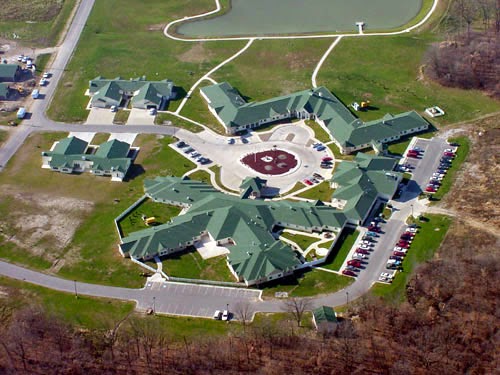
20 VILLAGE CIRCLE, KEOKUK, IA 52632 (319) 524-5772
For profit - Limited Liability company 84 Beds UNLIMITED DEVELOPMENT, INC. Data: November 2025
Trust Grade
75/100
#143 of 392 in IA
Last Inspection: September 2024

Within standard 12-15 month inspection cycle. Federal law requires annual inspections.

Overview

River Hills Village in Keokuk has a Trust Grade of B, indicating it is a good choice among nursing homes, being solid but not at the top tier. It ranks #143 out of 392 facilities in Iowa, placing it in the top half, and #4 out of 6 in Lee County, meaning there are only three other options available in the area. The facility's performance trend is stable, with three issues reported in both 2022 and 2024. Staffing is rated at 3 out of 5 stars, with a turnover rate of 40%, which is slightly better than the state average, suggesting that staff generally stay longer and build relationships with residents. A concerning aspect is that there is less RN coverage than 97% of Iowa facilities, which may impact the quality of care. While there have been no fines reported, which is positive, there are specific incidents of concern. For example, a resident suffered a lower leg fracture because the staff failed to use the required transfer equipment during assistance. Additionally, the facility did not have a proper system in place to handle resident grievances, which could affect the overall resident experience. There was also an issue with administering insulin, where an insulin pen was not primed properly before use, which could lead to medication errors. These incidents highlight the importance of careful oversight in certain areas despite the overall positive ratings.

Trust Score
B
75/100
In Iowa
#143/392
Top 36%
Safety Record
Moderate
Needs review
Inspections
Holding Steady
3 → 3 violations
Staff Stability
○ Average
40% turnover. Near Iowa's 48% average. Typical for the industry.
Penalties
✓ Good
No fines on record. Clean compliance history, better than most Iowa facilities.
Skilled Nurses
⚠ Watch
Each resident gets only 24 minutes of Registered Nurse (RN) attention daily — below average for Iowa. Fewer RN minutes means fewer trained eyes watching for problems.
Violations
○ Average
6 deficiencies on record. Average for a facility this size. Mostly minor or procedural issues.
★★★★☆
4.0
Overall Rating
★★★☆☆
3.0
Staff Levels
★★★★☆
4.0
Care Quality
★★★★☆
4.0
Inspection Score
Stable
2022: 3 issues
2024: 3 issues

The Good

  • 4-Star Quality Measures · Strong clinical quality outcomes
  • Full Sprinkler Coverage · Fire safety systems throughout facility
  • No fines on record
  • Staff turnover below average (40%)

    8 points below Iowa average of 48%

Facility shows strength in quality measures, fire safety.

The Bad

Staff Turnover: 40%

Near Iowa avg (46%)

Typical for the industry

Chain: UNLIMITED DEVELOPMENT, INC.

Part of a multi-facility chain

Ask about local staffing decisions and management

The Ugly 6 deficiencies on record

1 actual harm
Sept 2024 1 deficiency
CONCERN (D)

Potential for Harm - no one hurt, but risky conditions existed

Deficiency F0658 (Tag F0658)

Could have caused harm · This affected 1 resident

**NOTE- TERMS IN BRACKETS HAVE BEEN EDITED TO PROTECT CONFIDENTIALITY** Based on observation, interview, and record review the facility failed to ensure an insulin pen was primed prior to insulin admi...

Read full inspector narrative →
**NOTE- TERMS IN BRACKETS HAVE BEEN EDITED TO PROTECT CONFIDENTIALITY** Based on observation, interview, and record review the facility failed to ensure an insulin pen was primed prior to insulin administration for one of two residents reviewed for insulin during the medication administration task (Resident #26). The facility reported a census of 65 residents. Findings include: Review of the Minimum Data Set (MDS) assessment dated [DATE] revealed the resident scored 4 out of 15 on a Brief Interview for Mental Status exam, which indicated severely impaired cognition. Per this assessment, the resident took insulin for seven of the last seven days. The Care Plan dated 8/22/23 revealed, Problem: [Resident #26] has diabetes. The intervention also dated 8/22/23 revealed, Approach: Administer insulin as ordered. Monitor for side effects. Observation conducted 9/11/24 at 11:20 AM revealed Staff A, Licensed Practical Nurse (LPN) prepared insulin via a Novalog Flexpen to administer to Resident #26. During preparation of the insulin pen to administer insulin to the resident, Staff A was not observed to prime the insulin pen prior to then administering insulin to the resident. On 9/11/24 at 11:30 AM when queried about priming, Staff A explained if the bubble was at specific place in the pen, it was sufficient. Staff A explained this was what she had been told. When queried who told her that, Staff A responded the Assistant Director of Nursing (ADON). On 9/12/24 at 9:57 AM during an interview with the ADON about how staff instructed to prime, the ADON responded that would be with [DON name redacted], and [DON name redacted] did clinical with all the nurses. When queried if she gave it what would do, the ADON responded prime. On 9/12/24 at 12:26 PM when queried about priming a Novalog Flexpen, the Director of Nursing (DON) explained to prime with two units, inject that, and dial the dose. The DON acknowledged from prior experience always had to inject 2 units. The Facility Policy titled Insulin Administration Procedure dated 2/04 did not address insulin administration via pen. Review of additional documentation provided by the DON titled Novalog Flexpen (insulin apart injection) 100 units/mL (milliliter) revealed the following: Step 3 Perform An air shot. For each injection: 1. Select a dose of 2 units. 2. Take off the outer needle cap (save it) and inner needle cap (throw it away) 3. With the pen pointing up, tap the insulin to move the air bubbles to the top. 4. Press the button all the way in and make sure insulin comes out of the needle. a. Repeat up to two more times with the same needle if needed. b. If insulin does not come out after three times, change the needle and try again. c. If insulin still does not come out after changing the needle, the pen may be broken.
Jul 2024 1 deficiency 1 Harm
SERIOUS (G) 📢 Someone Reported This

A family member, employee, or ombudsman was alarmed enough to file a formal complaint

Actual Harm - a resident was hurt due to facility failures

Accident Prevention (Tag F0689)

A resident was harmed · This affected 1 resident

**NOTE- TERMS IN BRACKETS HAVE BEEN EDITED TO PROTECT CONFIDENTIALITY** Based on clinical record review, facility policy, resident and staff interviews, and facility investigation documentation the fa...

Read full inspector narrative →
**NOTE- TERMS IN BRACKETS HAVE BEEN EDITED TO PROTECT CONFIDENTIALITY** Based on clinical record review, facility policy, resident and staff interviews, and facility investigation documentation the facility failed to use the necessary transfer equipment when assisting a resident in the bathroom, resulting in a lower leg fracture for 1 of 3 residents (Resident #2) reviewed. The facility reported a census of 64 residents. Findings include: The Minimum Data Set (MDS) dated [DATE] revealed Resident #2 scored a 13 out of 15 on the Brief Interview for Mental Status (BIMS), indicating intact cognition. The MDS assessed the resident as dependent on staff for toileting hygiene and chair/bed to chair transfers. The MDS listed diagnoses included: stroke, arthritis, and hemiplegia and hemiparesis (paralysis on one side of the body) affecting the right side. The Electronic Health Record (EHR) revealed Resident #2 admitted to the facility on [DATE] after a hospitalization for a stroke. The Care Plan, dated 4/26/24, included a Problem area related to Resident Care. An Approach, dated 5/1/24, specified Safe Resident Handling Procedures - Transfer Method: Manual STAND AID Level of assistance; assist of 1; Must be wearing shoes for transfers. The Care Plan, also identified a Problem area for Risk of falling R/T (related to) recent illness/hospitalization and new environment, impaired mobility, generalized weakness, CVA (cerebrovascular accident, or stroke) with right sided hemiplegia, Anemia, COPD (chronic obstructive pulmonary disease), CKD (chronic kidney disease), HTN (hypertension, or high blood pressure), Arthritis, Neuropathy (pain related to nerve damage), incontinence, and possible side effects of medication. An Approach, dated 5/1/24, specified Assist x1 (of one staff) with Manual Stand Aid for transfers. A Progress Note, dated 5/1/24 at 10:46 AM, communicated Therapy recommendation: Assist x1 with Manual Stand Aid for transfers. A Progress Note dated 5/7/24 at 12:16 PM, revealed the resident complained of pain in right hip and leg. She stated her leg got caught under the wheel chair and behind her other leg when the CNA did a stand pivot transfer from the toilet to her wheelchair. Resident #2 stated she had pain in her hip like her socket is hurting on the right side. The Progress Note dated 5/7/24 at 12:27 PM, revealed nurse spoke with daughter about incident . NP (Nurse Practitioner) here and gave order to send to ER to rule out FX (fracture). Notified daughter, that we would be sending to [name redacted] ER (emergency room) for x ray to rule possible fracture. Impressions for a X-Ray of the right knee due to injury, pain from the hospital Final Report dated 5/7/24: a. Obliquely oriented comminuted fracture through the proximal fibula. b. Increased density projects over the joint space interval which can be seen with CPPD (calcium pyrophosphate dihydrate) arthropathy (crystal build up in joint). A Progress Note dated 5/7/24 at 5:33 PM from nursing staff documented will utilize Assist x2 with Full Mechanical Lift for transfers, until therapy can re-evaluate transfer status. The Facility Investigation Witness Statements, dated 5/7/24, revealed: a. Staff A, Registered Nurse (RN): Staff A approached at 12:15 PM by Staff C, OTA (Occupational Therapy Assistant) and asked what happened to Resident #2. Staff A was unsure of any incident. Staff C pointed out that Resident #2 had an ice pack on her leg and the family told her they were concerned that she been injured during a transfer in her bathroom. Staff A immediately asked Resident #2 what happened and she stated her leg got caught under the wheelchair and behind her other leg when the CNA (Certified Nursing Assistant) took her off the toilet and put her in her wheelchair. Resident #2 stated she had pain in her hip like her socket and it hurt on the right side. Staff A then approached Staff B, CNA and asked what happened. She said her right leg got twisted up when she transferred her to the toilet. b. Staff B, CNA: Staff B took Resident #2 to the restroom and put her on the toilet with a stand pivot transfer. On the transfer back into the wheelchair Resident #2 leg was close to the wheelchair leg and it twisted. Resident #2 said ow [ouch] but did not yell out. Resident #2 said my knee kind of hurt so Staff B got an ice pack for her. Staff B did not let the nurse know right away because Staff B had not found her yet. But the resident saw her before me and told her. Afterwards, a fellow CNA said Resident #2 was a stand aid. Staff B got her confused with another resident. c. Staff C, OTA: Staff C attempted to see Resident #2 for her OT therapy session. Upon entering Resident #2 room Staff C noticed that Resident #2 had an ice pack on her right knee. Staff C questioned what the ice pack was for and Resident #2 stated that her knee felt a little sore since going to the bathroom with the CNA earlier. Resident #2 stated it was a little sore but did not have any abnormal facial grimacing and was able to carry conversation and smile. Staff C spoke with Staff A and asked about the ice pack .Staff A stated she was unsure of an incident and would see what she could find out. Staff A returned to the gym around 12:30 PM with Resident #2 and asked if Staff C would assist in completing a sit to stand with the stand aid, as per care planned, to assess if there were any concerns with the current transfer recommendation. Staff C applied a gait belt around Resident #2 and instructed Resident #2 to perform a sit to stand transfer within the stand aid but to let me know if she was having any increased pain during the process. Resident #2 was able to set her feet on the platform of the stand aid without any additional difficulty or facial grimacing and was able to pull herself to a standing position with contact guard, very minimal, assist as per her normal. During weight bearing within the stand aid, Resident #2 reported having increased discomfort in her right hip. d. Assistant Director of Nursing (ADON): At approximately 12:00 PM to 12:30 PM, Staff A came to ADON office, and stated she needed to talk with me. Staff A then informed the ADON .an aide had come in to toilet [Resident #2] and now she complained of pain in her right leg. The ADON asked Staff A to go speak with the aides and find out who did the transfer and bring them back to the ADON office to discuss what occurred. At this time, Resident #2 sat in her wheelchair in the dining room, eating and having conversation with her table mate. No signs of distress noted asked how she felt. Resident #2 stated not bad, she had discomfort in her right leg .Staff B stated she transferred Resident #2 from the wheelchair to the toilet and then from the toilet to the wheelchair with an assist x 1 with pivot transfer. Staff B stated that Resident #2 right leg got twisted during the transfer from the toilet to wheelchair. The ADON asked Staff B if that was care planned transfer status of Resident #2 and she stated no, it wasn't, but at the time she got Resident #2 confused with another resident and didn't realize it at that time. Staff B reeducated on where to find the resident ' s transfer statuses. Staff B able to state all areas where it was posted. e. Resident #2: The girl took me to the toilet, got me up from the toilet and my bad leg caught on the wheelchair leg and twisted in. The CNA got me in the chair and it hurt and she got me an ice pack. During an observation on 7/15/24 at 12:48 PM- Staff D, CNA (Certified Nurse Aide) placed gait belt around Resident #2 waist and brought her wheeled walker to her and turned the chair to face the walker. Staff D helped Resident #2 up and escorted her out of the dining room holding on to the gait belt and walked beside her. During an interview on 7/15/24 at 1:06 PM, Resident #2 stated she been at the facility since April after she had a stroke and stated she hoped to go home in the beginning of August. She stated she wore a boot for a while because a girl kind of dropped her and busted her leg up. Resident #2 stated she never broke a bone before this and the fracture below her right knee. Resident #2 asked about the incident that caused her leg fracture, and she stated she remembered she wanted to go to the bathroom and then somehow started to fall. She stated it happened not long after she had her stroke. Resident #2 stated she cried out when it happened and the nurse came and checked on her soon after it happened. During an interview on 7/15/24 at 1:39 PM, Staff A, RN stated Resident #2 moved to a stand aid with an assist of 1 transfer status on 5/1/24. [On 5/7/24] Staff C asked her what happened to Resident #2 leg because she had an ice pack on it. Staff A stated Staff C told her, Resident #2 got hurt when a CNA transferred her to the bathroom . Staff A stated she approached the CNA [Staff B] and asked her if she used the stand aid for the transfer and at first she said yes .with the ADON . the CNA [Staff B] stated she didn't use the stand aid, she used a pivot transfer with Resident #2. Staff A stated the residents' transfer status were placed on the white board in the nurse's station for everyone to see and they kept it up to date. During an interview on 7/16/24 at 9:43 AM, Staff B, CNA stated she hadn't worked that hall very often. Staff B stated she remembered the incident with Resident #2 and she made a mistake and got two residents wrong. Staff B stated she did a stand pivot instead of using the stand aid. Staff B stated Resident #2 foot got caught and twisted when they did the stand pivot to the wheelchair. Staff B stated she told Resident #2 she would get a nurse and grabbed her an ice pack. Staff B stated she saw call lights going off and wanted to make sure all her residents safe before she spoke with the nurse. Staff B stated the incident was her fault and she didn't do it intentionally at all. Staff B stated Resident #2 said she felt a little bit of pain after it happened. During an interview on 7/16/24 at 10:51 AM, Staff D, CNA stated if anyone questioned the transfer status of a resident, they could look at the computer for the resident's care plan and look at the white board in the nurse's station. During an interview on 7/16/24 at 11:22 AM, Staff C,OTA stated the day of the incident she saw Resident #2 in the morning and Staff C noticed an ice pad on her knee. Staff C stated Resident #2 laughed about it and said she would let me know later. Staff C then asked Resident #2 if she wanted her to come back later for therapy since Resident #2 family present and she said yes. Staff C stated she asked the nurse if she knew what the ice pack was for and she said she didn't, but would find out. Staff C stated she wanted to make sure the stand aid transfers went okay. Staff C stated the nurse brought Resident #2 to her and they stood Resident #2 up and her hip didn't hurt and Staff C didn't think anything going on, but Staff A wanted to send her out to make sure nothing was wrong and the hospital found out, Resident #2 had a fracture. Staff C stated Ortho gave Resident #2 a choice between a boot or an immobilizer and she choose the immobilizer at first so they used the mechanical lift for transfers to prevent bending. Staff C stated a week after the incident Resident #2 moved to a boot and then transferred with the stand aid. During an interview on 7/16/24 at 3:12 PM, the DON (Director of Nursing) stated the CNA didn't transfer her properly and it was an unfortunate situation that happened. The DON states she would of expected the CNA know the correct transfer for Resident #2 and if she felt uncertain, she should have checked the care plan. During an interview on 7/16/24 at 3:53 PM, the Administrator stated she felt disappointed about the incident and she felt the CNA got Resident #2 mixed up with another resident and staff knew where to look for the resident's transfers. The Facility Safe Resident Handling Policy dated 11/12 revealed the following information: a. All residents assessed for safe resident handling and moving. The assessment will consider: 1. The resident's needs/rights and ability to participate with transfers or lifts 2. The variability in resident behaviors and cognition 3. Staff and resident safety. b. Lift assignment and strategy: 1. Residents evaluated for the type of lift necessary for their needs and the evaluation incorporated into the care plan. The lifting strategy may change during the day or the shift according to the resident's condition. These instructions were care planned and communicated to the staff.
Mar 2024 1 deficiency
CONCERN (D)

Potential for Harm - no one hurt, but risky conditions existed

Medical Records (Tag F0842)

Could have caused harm · This affected 1 resident

**NOTE- TERMS IN BRACKETS HAVE BEEN EDITED TO PROTECT CONFIDENTIALITY** Based on interviews, record review, and the facility policy review the facility failed to ensure accurate records for residents'...

Read full inspector narrative →
**NOTE- TERMS IN BRACKETS HAVE BEEN EDITED TO PROTECT CONFIDENTIALITY** Based on interviews, record review, and the facility policy review the facility failed to ensure accurate records for residents' code status for 2 of 24 residents reviewed for records (Resident #54 and Resident #121). The facility reported a census of 68 residents. Findings include: 1. The Minimum Data Set (MDS) assessment dated [DATE] revealed Resident #54 scored a 15 out of 15 on the Brief Interview for Mental Status (BIMS), which indicated cognition intact. Resident #54 Face Sheet revealed Do not resuscitate (DNR)/Do Not Intubate (DNI). Resident #54 Iowa Physician Orders for Scope of Treatment (IPOST) revealed the resident's representative signed the IPOST on 1/8/24 indicating DNR and the Advanced Registered Nurse Practitioner (ARNP) signed on 1/9/24. The Physician Orders dated 1/8/24 revealed an order for full code status. The Physician Orders signed on 1/9/24 by the ARNP revealed an order for full code status. The Physician Orders revealed Resident #54 full code order discontinued on 3/5/24 and the DNR order ordered on 3/5/24. During an interview on 3/5/24 at 3:37 PM, Staff A, Licensed Practical Nurse (LPN) queried on where the advanced directives found and she stated on the resident's face page. Staff A asked if she ever looked under the orders for code status and she stated yes, it they questioned it. Staff A stated she also looked under the resident documents for the resident's IPOST and they had a binder that contained the resident's IPOST. Staff A stated they had multiple places to look for the advanced directives. Staff A informed Resident #54 orders revealed a full code order and she stated the full code placed on the same day the resident admitted and they signed an IPOST on the day the resident admitted . Staff A stated she would ask the DON about it and get the order changed. The Facility Policy titled Advance Directives, dated 2/18, revealed, Documentation of the resident's advanced directives shall be present within the medical record and specified on the individual's Face Sheet. All Advance Directives shall be uploaded into [Electronic Health Record] and stored in the resident's clinical record. 2. The Minimum Data Set (MDS) assessment for Resident #121 dated 3/5/24 revealed the resident scored 15 out of 15 on a BIMS exam, which indicated intact cognition. The Physician Order dated 2/28/24 documented, Full Code. The End Date for the Physician Order revealed, Open Ended. The Signed Physician Order Report dated 1/28/24-2/28/24 revealed, Full Code, with Start Date 2/28/24-Open Ended. Review of the Iowa Physician Orders for Scope of Treatment (IPOST) for Resident #121, signed by the Advanced Registered Nurse Practitioner on 2/28/24, signed on the Patient/Resident line on 2/28/24, and signed by Social Services 2/28/24, revealed the option for Do Not Resuscitate (DNR)/Do Not Attempt Resuscitation selected. Review of the Resident Face Sheet for Resident #121 revealed Do Not Resuscitate (DNR) and Do Not Intubate (DNI) present. Continued review of Physician Orders for Resident #121 revealed Full Code order discontinued 3/5/24, and DNR Order present in Resident #121's record on 3/5/24. On 3/5/24 at approximately 4:27 PM during an interview conducted with the facility's Administrator and Director of Nursing (DON), it was explained residents were always entered as a full code until the IPOST signed by the Physician.
Oct 2022 3 deficiencies
CONCERN (D)

Potential for Harm - no one hurt, but risky conditions existed

Respiratory Care (Tag F0695)

Could have caused harm · This affected 1 resident

Based on observations, record review, interviews, and facility policy review, the facility failed to ensure an oxygen nasal cannula and updraft nebulizer mask were contained when not in use for one (R...

Read full inspector narrative →
Based on observations, record review, interviews, and facility policy review, the facility failed to ensure an oxygen nasal cannula and updraft nebulizer mask were contained when not in use for one (Resident #26) of three sampled residents who received oxygen therapy. Findings included: A review of a facility policy, revised 03/16/2017, titled, Oxygen Therapy, revealed, Objective: 1. To provide a source of oxygen to persons experiencing an insufficient supply of same. Procedure: 7. Oxygen set-up (cannula/mask, tubing) must be exchanged every 7 days. Safety Factors: 7. Be sure to prevent contamination of the oxygen equipment due to its presence in locations such as: Dining Room; Bathroom. A review of a Face Sheet revealed Resident #26 had diagnoses which included bacterial pneumonia and chronic obstructive pulmonary disease (COPD). A review of Resident #26's annual Minimum Data Set (MDS) assessment, dated 08/31/2022, revealed the resident had severe cognitive impairment as evidenced by a Brief Interview for Mental Status (BIMS) score of 6. Per the MDS, the resident received oxygen therapy. A review of Resident #26's Care Plan, reviewed on 05/19/2022, revealed the resident had a history of hospitalization for COPD exacerbation. The care plan intervention directed staff to administer a handheld nebulizer treatment as ordered, monitor for side effects, change oxygen tubing weekly, and to administer oxygen as ordered. A review of Resident #26's October 2022 Physician Orders revealed an order dated 05/27/2022 that directed staff to administer an ipratropium-albuterol solution for nebulization 0.5 milligrams-3 milligrams as needed for shortness of breath and an order dated 08/25/2022 directing staff to change the oxygen and nebulizer tubing every week. On 10/10/2022 at 2:40 PM, an observation was made of Resident #26's nasal cannula prongs for oxygen delivery to the nose resting on the resident's bed next to his/her head. The oxygen updraft nebulizer mask was lying on top of a bedside table and was not bagged or dated. On 10/11/2022 at 8:34 AM, an observation was made of Resident #26's nasal cannula lying on the floor next to the head of the resident's bed. The resident's oxygen updraft nebulizer mask was lying on top of a bedside table and was not bagged or dated. Resident #26 was not in the room at the time of the observation. On 10/12/2022 at 8:14 AM, an observation was made of Resident #26's nasal cannula lying on the resident's bed near the head of the bed underneath a top sheet. The updraft nebulizer mask remained on top of the bedside table and was not bagged or dated. Resident #26 was not in the room at the time of the observation. On 10/12/2022 at 8:27 AM, an observation was made of Resident #26 being pushed in his/her wheelchair from the dining room by Staff E, Human Resources (HR) Manager, to the resident's room. Resident #26's nasal cannula, which was connected to a portable oxygen tank attached to the back of the wheelchair, was draped over the left handle, touching the back of the resident's wheelchair. After Resident #26 was pushed into his/her room, Staff A, Licensed Practical Nurse (LPN), and Staff E were observed transferring Resident #26 using a mechanical lift from the wheelchair onto the bed. The nasal cannula connected to the oxygen concentrator was lying on top of the resident's bed and the updraft nebulizer mask was lying on top of a bedside table. As Resident #26 was lowered down onto the bed, the nasal cannula dropped onto the floor, and Staff E picked it up off the floor and placed it on top of the bedside table next to the resident's updraft nebulizer mask. During an interview on 10/12/2022 at 8:47 AM with Staff A (LPN), she indicated Resident #26's updraft nebulizer treatments were administered as needed, and she was not certain when the resident last received one. Staff A further confirmed the mask should be bagged and dated when not in use and should not be lying on top of the bedside table. She also confirmed that the resident's nasal cannula connected to the portable oxygen tank and to the concentrator should be bagged and dated when not in use, noting it all should be changed out weekly. During an interview on 10/12/2022 at 8:53 AM with the Director of Nursing (DON), she confirmed Resident #26's nasal cannula and updraft nebulizer mask should be bagged and dated when not in use. She indicated her expectation was for staff to place the cannula and mask in a dated bag anytime staff took off the resident's nasal cannula or updraft mask, noting the equipment should be changed out at least weekly according to standards of practice to prevent the potential of spread of infection, even though their policy and procedure currently did not specifically address this issue. During an interview on 10/12/2022 at 3:00 PM, the Administrator revealed she expected staff to place a resident's oxygen tubing and/or updraft nebulizer mask in a bag when not in use to prevent the spread of infection.
CONCERN (D)

Potential for Harm - no one hurt, but risky conditions existed

Medical Records (Tag F0842)

Could have caused harm · This affected 1 resident

Based on interviews, record review, and facility policy review, the facility failed to ensure medical records were accurate and complete for one (Resident #23) of three sampled residents reviewed for ...

Read full inspector narrative →
Based on interviews, record review, and facility policy review, the facility failed to ensure medical records were accurate and complete for one (Resident #23) of three sampled residents reviewed for accurate and complete medical records. Specifically, the facility failed to ensure Proof of Use forms were maintained for residents who utilized controlled substances. Findings included: A review of a facility policy, revised 06/01/2022, titled, Medical Records, revealed, Policy: It is the policy of the facility that an active or inactive record shall be kept for each resident as outlined. This record shall be kept current, dated, signed, complete, legible, and available at all times to the personnel of the facility and any other entities as needed. A review of a facility policy, revised 04/12/2022, titled, Pharmaceutical Procedures, revealed a listed purpose of the policy was To provide the appropriate control of procurement, distribution, administration, and utilization of drugs to the facility. Further review of the policy revealed a Drug Administration and Documentation procedure for Controlled Substances denoting that, For all schedule II substances, a controlled substances record shall be maintained which lists on separate sheets, for each type and strength of schedule II substance, the following information: date, time administered, name of resident, dose, physician's name, signature of person administering dose, and number of doses remaining. A review of a Face Sheet revealed Resident #23 had diagnoses which included spinal stenosis and pain in the left and right knees and right shoulder and arm. A review of Resident #23's quarterly Minimum Data Set (MDS) assessment, dated 08/24/2022, revealed the resident had moderate cognitive impairment as evidenced by a Brief Interview for Mental Status (BIMS) score of 10, received routine and pro re nata (PRN; as needed) pain medication, and received opioid medication one day of the seven-day look back period. A review of Resident #23's Care Plan, last reviewed by staff on 08/29/2022, revealed a problem onset regarding pain related to bilateral lower extremity (BLE) weakness, spinal stenosis, bilateral shoulder pain, Crohn's disease, and bursitis to the left knee. The care plan intervention directed staff to administer pain medication as ordered. A review of Resident #23's October 2022 Physician Orders revealed staff were directed to administer hydrocodone-acetaminophen (scheduled II narcotic pain medication) 5-325 milligrams, one to two tablets, by mouth every four hours as needed for pain, which was initiated on 04/28/2022. A review of Resident #23's November 2021 Medication Administration Record revealed the resident received hydrocodone-acetaminophen - schedule II tablet: 5-325 milligrams (mg) on 11/11/2021 at 8:12 AM, 11/14/2021 at 7:10 AM, 11/16/2021 at 10:53 PM, 11/17/2021 at 8:20 AM, at 1:08 PM, and at 10:20 PM, 11/18/2021 at 12:10 PM, 11/22/2021 at 11:56 PM, and 11/03/2021 at 11:06 PM. A further review of the record revealed no evidence of a Proof of Use (narcotic sign out) form for the narcotics documented as administered in the resident's record. During an interview on 10/12/2022 at 12:27 PM, Staff B, Medical Records, indicated she had no record of Resident #23's Proof of Use forms for the administration of hydrocodone-acetaminophen medication in November of 2021. Staff B confirmed she only maintained a resident's Proof of Use forms in her office for 30 days and then shredded the forms after 30 days. Staff B indicated she only scanned a Proof of Use form into a resident's electronic health record when it was attached to a controlled substance inventory form. An interview with the Director of Nursing (DON) on 10/12/2022 at 1:29 PM revealed Resident 23's Proof of Use form for the hydrocodone-acetaminophen that was administered to the resident in November of 2021 had been destroyed. The DON stated her expectation was for Staff B to scan and save controlled substance Proof of Use forms into the resident's electronic health record and to save the originals as well in the Medical Record office. During a phone interview on 10/12/2022 at 1:43 PM with the Pharmacist, he stated he was not aware the facility had not been keeping the resident's narcotic Proof of Use forms. During an interview on 10/12/2022 at 1:50 PM with the Administrator, she stated she was not aware staff were shredding the narcotic Proof of Use forms until the previous day, 10/11/2022, when the DON brought it to her attention. She said that her expectation concerning this issue was for staff to immediately start scanning the forms into the resident's electronic health record and to keep the original in a file cabinet in the Medical Record office.
CONCERN (E)

Potential for Harm - no one hurt, but risky conditions existed

Grievances (Tag F0585)

Could have caused harm · This affected multiple residents

**NOTE- TERMS IN BRACKETS HAVE BEEN EDITED TO PROTECT CONFIDENTIALITY** Based on interviews, record review, document review, and facility policy review, the facility failed to implement a system for f...

Read full inspector narrative →
**NOTE- TERMS IN BRACKETS HAVE BEEN EDITED TO PROTECT CONFIDENTIALITY** Based on interviews, record review, document review, and facility policy review, the facility failed to implement a system for filing and responding to grievances for 3 (Resident #22, Resident #38, and Resident #8) of 3 residents interviewed who were members of Resident Council. The deficient practice had the potential to affect all residents of the facility. Findings included: A review of a facility policy and procedure titled, Grievances, revised on 06/01/2022, revealed, The Facility shall ensure that the resident has the right to voice grievances to the facility without discrimination or reprisal and without fear of discrimination or reprisal. Grievances shall be addressed by the facility and resolved in a timely manner. The procedure portion of the policy indicated, 1. Residents shall be notified, at the time of admission, of their right to file a grievances orally, or in writing, and of their right to file grievances anonymously; 4. Upon receipt of the grievance, the Grievance Officer or designee shall complete an investigation of the concern as soon as possible and provide appropriate follow through as required; 5. A written decision regarding the grievance shall be made available to the resident upon request; 9. The Grievance Log (NH-352) shall be maintained for 3 years. A review of an admission packet provided to residents or representatives upon admission revealed no evidence of information that explained the grievance process to the resident or representative. A review of Resident Council minutes, dated 04/2022 and recorded by the Activities Director, indicated residents had concerns regarding staff working on the second shift who were not helping with dinner and residents not receiving their food in a timely manner. Resident Council minutes, dated 06/07/2022, indicated residents continued to complain of second shift staff not assisting with meals in a timely manner. The minutes indicated the Activities Director notified management of the concern. Resident Council minutes, dated 07/13/2022, indicated residents had concerns regarding a mailbox looking crooked and ugly. Resident Council minutes, dated 08/10/2022, indicated a resident wanted a door to their room evaluated and another resident wanted old curtains removed. Neither resident was identified in the minutes. Resident Council minutes, dated 09/14/2022, indicated a resident had an issue with a chair in their room. The resident was not identified in the minutes. A review of Resident #22's quarterly Minimum Data Set (MDS), dated [DATE], revealed a Brief Interview for Mental Status (BIMS) score of 15, indicating intact cognition. During an interview on 10/12/2022 at 9:23 AM, Resident #22 stated they had multiple concerns with laundry over the last few months and had notified laundry staff and the Administrator, though nothing had been done. Resident #22, who was the president of Resident Council, stated laundry staff had ruined several shirts and pants, most of which started out as dark in color and now had what looked like bleach stains on them. Resident #22 stated the grievance procedure was never brought up in Resident Council meetings. Resident #22 stated the Activities Director took note of any concerns brought up during Resident Council, and the resident confirmed residents were not made aware if their complaint had been addressed by the facility. A review of Resident #38's quarterly MDS, dated [DATE], revealed a BIMS score of 15, indicating intact cognition. During an interview on 10/12/2022 at 3:40 PM, Resident #38 stated they had no idea how to file a grievance or where the forms were kept. Resident #38 stated no one had ever told them how to file a grievance. Resident #38 stated they had many concerns over laundry bleaching their clothes. Resident #38 stated all their black clothing items were now brown and many of their lighter items were rust colored. The resident stated they had notified laundry staff and was told that laundry staff did not use bleach in the laundry process. A review of Resident #8's admission MDS, dated [DATE], revealed a BIMS score of 13, indicating intact cognition. During an interview on 10/12/2022 at 3:55 PM, Resident #8 stated they had never been told how to file a grievance or where associated forms were kept. Resident #8 stated their family took care of their laundry and they had no concerns or complaints. During a phone interview on 10/13/2022 at 9:30 AM, the Activities Director confirmed he did not utilize a grievance form during Resident Council meetings to record residents' concerns. The Activities Director stated he dealt with all concerns brought up in Resident Council meetings and reported the concerns to the proper department head, such as directing food issues to the dietary department head. The Activities Director stated he reviewed Resident Council concerns from the previous month with the residents to see if any issues were still a concern and confirmed he did not know if residents were made aware by department heads if the grievance had been addressed or resolved. The Activities Director stated he had never used the facility's grievance form in the past but was using it now. An interview was conducted on 10/11/2022 at 9:11 AM with the Director of Nursing (DON). The DON stated the facility did not have a formal grievance procedure, noting the facility simply addressed issues as they arose. The DON asserted the concerns about meals being served late was really about residents arriving to the dining room [ROOM NUMBER] minutes before meal service and then wanting to be served first. The DON stated the facility made a few adjustments in change of shift procedures, but confirmed there was no documentation regarding these changes. The DON stated the facility did not maintain any written documents of reported grievances or the facility's response to the grievances. During an interview on 10/11/2022 at 10:57 AM, the Administrator confirmed she was the Grievance Officer and noted the facility had no grievances from 07/2021 through 10/12/2022. The Administrator stated she attended most Resident Council meetings and was aware of resident concerns. The Administrator stated she addressed concerns as they arose and confirmed grievances and the facility's response to grievances were not documented anywhere. During a follow-up interview on 10/12/2022 at 12:19 PM, the Administrator stated the facility did not use a grievance form to record concerns deriving from Resident Council meetings. The Administrator confirmed the facility had an issue with a washing machine in the laundry department, noting the company who managed the laundry chemicals came to inspect the washer and made some adjustments. The Administrator confirmed that a grievance form with a documented resolution regarding laundry concerns was not filled out and the resolution was not discussed with residents. The Administrator stated she thought concerns about a door brought up during the 08/10/2022 Resident Council meeting was regarding a closet door but could not be sure and thought a concern about a chair brought up during the 09/14/2022 Resident Council meeting was regarding a battery on an electric chair, though she was not sure. The Administrator stated there was no written documentation to denote these issues had been resolved. The Administrator confirmed there was nothing in the admission packet explaining to residents the procedure for filing a grievance. The Administrator stated the grievance process was important, as it identified concerns and trends that could be used in Quality Assurance Performance Improvement (QAPI) meetings, and not addressing concerns could cause distress for residents.
Understanding Severity Codes (click to expand)
Life-Threatening (Immediate Jeopardy)
J - Isolated K - Pattern L - Widespread
Actual Harm
G - Isolated H - Pattern I - Widespread
Potential for Harm
D - Isolated E - Pattern F - Widespread
No Harm (Minor)
A - Isolated B - Pattern C - Widespread

Questions to Ask on Your Visit

  • "Can I speak with families of current residents?"
  • "What's your RN coverage like on weekends and overnight?"

Our Honest Assessment

Strengths
  • • No fines on record. Clean compliance history, better than most Iowa facilities.
  • • 40% turnover. Below Iowa's 48% average. Good staff retention means consistent care.
Concerns
  • • 6 deficiencies on record, including 1 serious (caused harm) violation. Ask about corrective actions taken.
Bottom line: Generally positive indicators. Standard due diligence and a personal visit recommended.

About This Facility

What is River Hills Village In Keokuk's CMS Rating?

CMS assigns River Hills Village in Keokuk an overall rating of 4 out of 5 stars, which is considered above average nationally. Within Iowa, this rating places the facility higher than 99% of the state's 100 nursing homes. This rating reflects solid performance across the metrics CMS uses to evaluate nursing home quality.

How is River Hills Village In Keokuk Staffed?

CMS rates River Hills Village in Keokuk's staffing level at 3 out of 5 stars, which is average compared to other nursing homes. Staff turnover is 40%, compared to the Iowa average of 46%. This relatively stable workforce can support continuity of care.

What Have Inspectors Found at River Hills Village In Keokuk?

State health inspectors documented 6 deficiencies at River Hills Village in Keokuk during 2022 to 2024. These included: 1 that caused actual resident harm and 5 with potential for harm. Deficiencies causing actual harm indicate documented cases where residents experienced negative health consequences.

Who Owns and Operates River Hills Village In Keokuk?

River Hills Village in Keokuk is owned by a for-profit company. For-profit facilities operate as businesses with obligations to shareholders or private owners. The facility is operated by UNLIMITED DEVELOPMENT, INC., a chain that manages multiple nursing homes. With 84 certified beds and approximately 63 residents (about 75% occupancy), it is a smaller facility located in KEOKUK, Iowa.

How Does River Hills Village In Keokuk Compare to Other Iowa Nursing Homes?

Compared to the 100 nursing homes in Iowa, River Hills Village in Keokuk's overall rating (4 stars) is above the state average of 3.1, staff turnover (40%) is near the state average of 46%, and health inspection rating (4 stars) is above the national benchmark.

What Should Families Ask When Visiting River Hills Village In Keokuk?

Based on this facility's data, families visiting should ask: "Can I visit during a mealtime to observe dining assistance and food quality?" "How do you handle medical emergencies, and what is your hospital transfer rate?" "Can I speak with family members of current residents about their experience?"

Is River Hills Village In Keokuk Safe?

Based on CMS inspection data, River Hills Village in Keokuk has a clean safety record: no substantiated abuse findings (meaning no confirmed cases of resident harm), no Immediate Jeopardy citations (the most serious violation level indicating risk of serious injury or death), and is not on the Special Focus Facility watch list (a federal program monitoring the lowest-performing 1% of nursing homes). The facility has a 4-star overall rating and ranks #1 of 100 nursing homes in Iowa. While no facility is perfect, families should still ask about staff-to-resident ratios and recent inspection results during their visit.

Do Nurses at River Hills Village In Keokuk Stick Around?

River Hills Village in Keokuk has a staff turnover rate of 40%, which is about average for Iowa nursing homes (state average: 46%). Moderate turnover is common in nursing homes, but families should still ask about staff tenure and how the facility maintains care continuity when employees leave.

Was River Hills Village In Keokuk Ever Fined?

River Hills Village in Keokuk has no federal fines on record. CMS issues fines when nursing homes fail to meet care standards or don't correct problems found during inspections. The absence of fines suggests the facility has either maintained compliance or corrected any issues before penalties were assessed. This is a positive indicator, though families should still review recent inspection reports for the full picture.

Is River Hills Village In Keokuk on Any Federal Watch List?

River Hills Village in Keokuk is not on any federal watch list. The most significant is the Special Focus Facility (SFF) program, which identifies the bottom 1% of nursing homes nationally based on persistent, serious quality problems. Not being on this list means the facility has avoided the pattern of deficiencies that triggers enhanced federal oversight. This is a positive indicator, though families should still review the facility's inspection history directly.